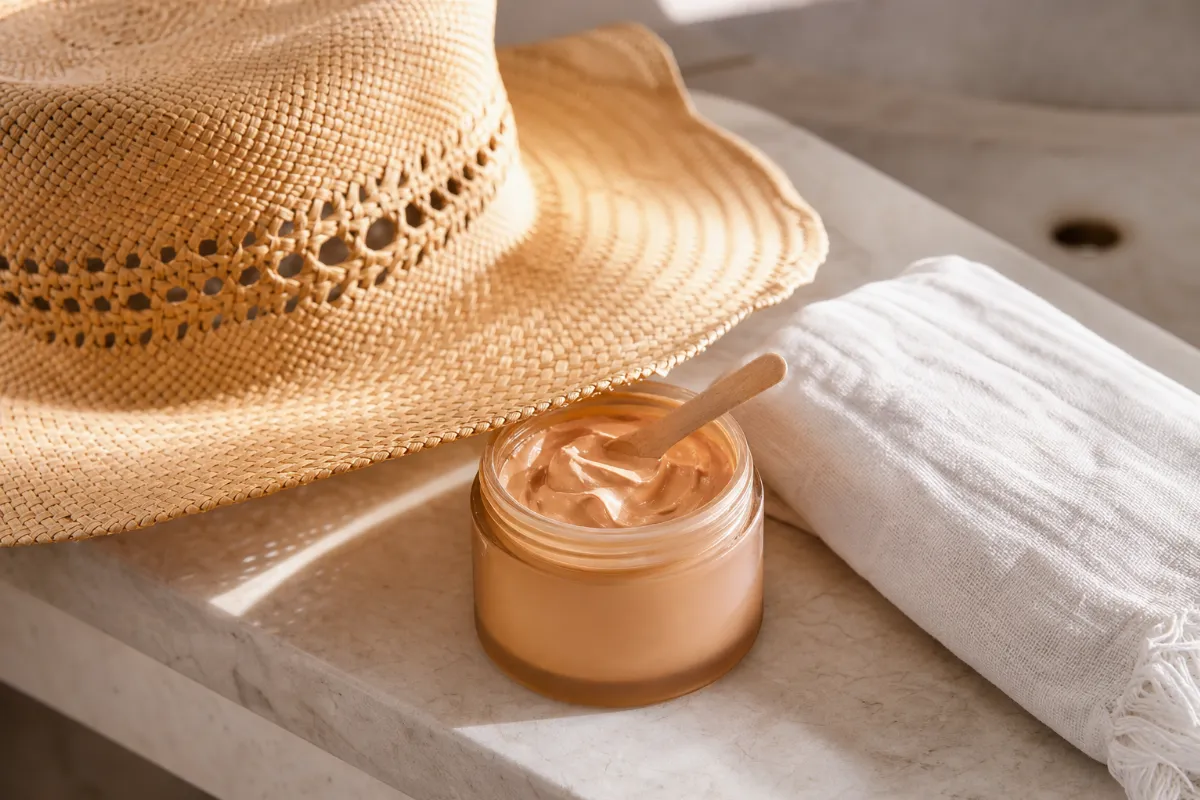
Skin & Hair
Improve Uneven Skin Tone
Dark patches, sun spots and marks left after breakouts are common, and for most people they are harmless and can be softened with steady sun protection and a few well-studied ingredients. This page covers what is known about evening out skin colour, what to avoid (especially skin-lightening products that contain hidden mercury or steroids), and when a spot needs a doctor's eyes.
General information, not medical advice. Last updated October 31, 2026. Written by the AlternativeMed editorial team. Not medically reviewed.
Start here
- Protect your skin from the sun every day, because sun exposure darkens existing patches and can bring melasma back (American Academy of Dermatology): broad-spectrum sunscreen, a wide-brimmed hat and shade at midday.
- Treat your skin gently. Irritation, picking and harsh scrubs can leave their own dark marks, so keep the routine simple and introduce one new product at a time.
- Have any new, changing, bleeding, itchy or irregular spot examined by a doctor before you try to lighten it, and have long-lasting patches confirmed as melasma or something else by a dermatologist.
Be careful with
- Do not use skin-lightening creams, soaps or injections that are unlabelled, imported without an English label, or promise fast results. Some contain mercury or strong steroids that can harm the skin, kidneys and nervous system, and mercury can affect other people in the household.
- Natural does not mean safe for skin. Kitchen and essential-oil 'lightening' mixes can irritate, and irritation can darken skin. Patch test any new product on a small area first.
- Pregnancy and breastfeeding: melasma often appears or worsens in pregnancy and may fade after birth, so the American Academy of Dermatology advises waiting until after delivery to treat it. Ask a clinician before using any lightening product while pregnant or breastfeeding.
- Never stop a prescribed medicine or skin treatment on your own because of skin colour changes; ask the prescriber.
Get help when
- A new spot or mole, or one that has changed size, shape or colour, is painful, itchy, inflamed, bleeding or crusty; or a new or unusual mark that has not gone away after a few weeks (NHS).
- A mole with uneven edges or more than two colours (NHS lists these as features of melanoma).
- Dark patches that appeared suddenly, are spreading quickly, or came with a rash, fever, or after starting a new medicine.
- Any product reaction: swelling of the lips or face, trouble breathing (emergency care now), or blistering, spreading redness, pus or heat.
- Symptoms that could mean mercury exposure from a lightening product: tremor, numbness or tingling, vision or hearing changes, memory problems or mood changes. Stop the product and contact a health professional or poison centre (FDA).
- Patches that have not improved after three to six months of non-prescription care, or that you simply want confirmed and treated (American Academy of Dermatology).
About Improve Uneven Skin Tone
What this goal means
Uneven skin tone means patches of skin that are darker than the skin around them, or colour that looks blotchy. The most common causes are sun-related spots (sun spots or lentigines), melasma, and the dark marks that can follow acne, eczema or other skin inflammation (post-inflammatory hyperpigmentation).
This page is about evening out colour. Wrinkles and general ageing are covered in Support Skin as It Ages, texture in Improve Skin Texture, and sun protection in detail in Protect Your Skin From Sun Damage.
1,2What it can feel like
Many people notice brownish or grey-brown patches on the cheeks, forehead, upper lip or nose, or flat darker marks where a pimple or rash used to be. Patches are usually painless. They can still affect confidence, and melasma in particular can affect quality of life and self-esteem.
3What can make it worse
Sun exposure is the best-documented trigger: melasma often looks worse in summer and fades in winter, and unprotected sun can bring it back. Pregnancy and starting birth control pills are common times for melasma to first appear. A narrative review also describes visible light and long-wave UVA as involved in melasma, which is why ordinary sunscreen that only blocks UVB may not be enough.
Inflammation and irritation can leave dark marks, especially in darker skin tones.
4,5,1Conditions that can be behind it
Melasma, sun spots, and post-inflammatory marks after acne, eczema or contact reactions are the usual causes; see our pages on acne, eczema and contact dermatitis. Rarely, a dark area is a changing mole or other lesion that needs a doctor. A dermatologist can tell these apart, which matters because the treatments differ.
We did not find a source we read that supports diagnosing the cause of a patch from a photo or a product quiz.
4,6Realistic expectations
Creams can fade discoloration but cannot permanently cure melasma, and it can return. A systematic review of treatments reported mixed results, small studies and a lack of long-term follow-up. For post-inflammatory hyperpigmentation, a systematic review found that complete clearing was uncommon with the treatments studied, while partial improvement was frequent.
Expect weeks to months, not days. Without daily sun protection, results tend not to last.
4,3,1Who this applies to
Melasma is most common in women and in people with medium to dark skin tones, but anyone can have uneven tone. Post-inflammatory marks are more common in darker skin. People with darker skin tones may need a different treatment approach and more time, so a dermatologist's plan is especially useful.
4,1Related conditions and symptoms
Acne → Eczema → Rosacea → Contact dermatitis and skin allergy →
A manageable starting plan
An educational starting point, not a personal prescription. Adjust it to your own situation and any advice from your clinician.
Your first actions
- Use broad-spectrum sunscreen (SPF 30+, UVA 4 stars or more per NHS label guidance) every day, with shade and a hat.
- Get long-lasting or changing patches checked and named by a dermatologist.
- Use a gentle routine; add one active (azelaic acid, niacinamide or vitamin C) at a time after a patch test.
Optional additions
- Switch to a tinted sunscreen that matches your skin tone for added visible-light protection.
- Ask your dermatologist about stronger options if three to six months of non-prescription care has not helped.
What to track
- A dated photo in the same light every 4 weeks.
- Any irritation, stinging or new darkening after a product.
- New, changing or itchy spots to show a doctor.
When to reassess
Give a new routine 3 to 6 months. If there is little change, or any spot is changing, see a dermatologist; do not escalate to stronger or unregulated products on your own.
When to seek professional support
- A dermatologist or pharmacist for product choice
- Skin and hair safety guidance on this site
What helps
Ordered by how well the research supports each step. Evidence strength is shown on every card; precautions sit next to the advice.
Start here
Daily broad-spectrum sunscreen, shade and a wide-brimmed hat
Moderate certaintyAddresses: Helps stop patches darkening and coming back
Why it may help: The American Academy of Dermatology says unprotected sun can bring melasma back and that daily sun protection is needed to see treatment results and prevent recurrence. A narrative review concluded that intensive use of a broad-spectrum sunscreen can lessen melasma severity and reduce relapses.
How to apply it: Follow the NHS label guidance: SPF 30 or higher and a UVA star rating of at least 4, applied about 30 minutes before going out and reapplied every 2 hours and after swimming or sweating. Add shade at midday, a wide-brimmed hat and sunglasses.
Who it may suit: Anyone with dark spots or melasma.
Precautions: Babies under 6 months should be kept out of direct sun (NHS). Sunscreen is a supplement to shade and clothing, not a reason to stay out longer.
4,5,7A tinted sunscreen with iron oxides
Low certaintyAddresses: Adds protection against visible light, which ordinary mineral and chemical sunscreens may not block
Why it may help: A review in the Journal of the American Academy of Dermatology notes that broad-spectrum sunscreens protect against UV but do not adequately protect against visible light, and that tinted sunscreens (iron oxides and pigmentary titanium dioxide) are beneficial in melasma and post-inflammatory hyperpigmentation. Another review recommends tinted sunscreens with shades matching the user's skin tone.
How to apply it: Choose a tinted product that matches your skin tone, apply generously and reapply as for any sunscreen.
Who it may suit: People with melasma or sun-triggered darkening, especially medium to dark skin tones.
Precautions: Evidence is from reviews and expert opinion rather than large trials. Check the label for broad-spectrum protection.
8,5Get the patch looked at and named
Moderate certaintyAddresses: Makes sure you are treating the right thing
Why it may help: The American Academy of Dermatology suggests seeing a dermatologist to confirm whether melasma or another condition causes the discoloration, and if non-prescription care has not worked after three to six months. Moles and new marks have separate warning signs (NHS).
How to apply it: Book a skin check for long-lasting, spreading or changing patches. Take a dated photo so you can track change.
Who it may suit: Anyone unsure what is causing a patch, or with a darker skin tone, where approaches and timelines differ.
Precautions: Do not treat a changing, bleeding or irregular spot yourself.
4,6A gentle routine that avoids irritation and picking
Low certaintyAddresses: Helps prevent new dark marks after breakouts and rashes
Why it may help: Post-inflammatory hyperpigmentation follows skin inflammation, and a systematic review found that even with treatment complete clearing was uncommon, so preventing inflammation in the first place is sensible. We did not find a trial testing 'gentle routine' as a treatment, so this is a reasoned step rather than a proven one.
How to apply it: Keep cleansing mild, avoid scrubbing and picking, and treat the underlying acne or eczema (see linked pages). Introduce actives one at a time.
Who it may suit: People who tend to get dark marks after spots, rashes or scratching.
Precautions: If acne is severe or scarring, see a clinician instead of managing it at home.
1Build a Simple Skin-Care Routine → Acne → Reduce Skin Irritation →
Additional options
Azelaic acid (topical)
Moderate certaintyAddresses: May lighten melasma and other dark patches over weeks to months
Why it may help: A systematic review of 43 randomised trials found that azelaic acid (20%) was significantly better than vehicle for melasma severity and global improvement across seven melasma studies, and better than 2% hydroquinone for global improvement. A meta-analysis of six trials (673 people) found azelaic acid had a lower mean melasma severity score than hydroquinone, but larger long-term studies are needed. In a topical-agent meta-analysis, azelaic acid had a lower reported rate of skin irritation than hydroquinone-containing combinations.
How to apply it: Ask a pharmacist or dermatologist which strength and product suit you, and follow the label. Use with daily sunscreen.
Who it may suit: Adults with melasma or similar dark patches.
Precautions: Can cause stinging or dryness. Ask a clinician before using in pregnancy or breastfeeding; we did not find pregnancy safety data in the sources we read.
9,10,11Niacinamide (topical, vitamin B3)
Low certaintyAddresses: May modestly lighten hyperpigmentation and sun-related darkening
Why it may help: In a 2002 study, 5% niacinamide moisturiser reduced hyperpigmentation and increased skin lightness compared with vehicle after 4 weeks in 18 Japanese women, and a 120-person tanning study used 2% niacinamide with sunscreen. The study was done by manufacturer researchers, was small, and used mostly Japanese participants, so the findings are preliminary.
How to apply it: Choose a gentle niacinamide moisturiser and use it with daily sunscreen. Patch test first.
Who it may suit: Adults who want a low-irritation option for mild darkening.
Precautions: Small trials; may cause redness or stinging in sensitive skin. Not studied here in pregnancy.
12Topical vitamin C
Low certaintyAddresses: May lighten darker patches and smooth skin over longer use
Why it may help: A systematic review of seven randomised trials (139 volunteers) found significant lightening of treated skin and smoother, less wrinkled skin, and said long-term use may be needed and that more studies are needed to confirm results and the best concentration.
How to apply it: Pick a stable, labelled product, patch test, and use with daily sunscreen.
Who it may suit: Adults with mild uneven tone or photoaging.
Precautions: Can sting; the review could not identify the best strength. Not studied here in pregnancy.
2Still being studied
Kojic acid (topical)
Low certaintyAddresses: May lighten melasma, with less irritation than some options
Why it may help: A meta-analysis of topical melasma agents (45 studies, 2,359 patients) found kojic acid gave a smaller improvement than hydroquinone but a low rate of irritation (5.3%). Kojic acid is a natural metabolite made by fungi, but 'natural' does not mean allergy-free.
How to apply it: Only products with clear labelling from a pharmacy or clinician; patch test.
Who it may suit: Adults after a dermatologist's advice.
Precautions: Allergic contact reactions are possible. Ask a clinician in pregnancy or breastfeeding.
11Clinician-directed treatments (prescription creams, tranexamic acid, peels, lasers)
Moderate certaintyAddresses: Stronger options for stubborn melasma or post-inflammatory marks
Why it may help: A review of 113 studies (6,897 people) found the prescription triple combination cream and hydroquinone alone the most effective and best studied for melasma; oral tranexamic acid showed promise but needs more long-term safety data; peels and light devices gave mixed results and a higher risk of adverse effects. These are decided by a clinician and have a limited home role. Recurrence is high in all groups.
How to apply it: Discuss with a dermatologist, who can match the treatment to the type of pigment, skin tone and pregnancy plans.
Who it may suit: People whose patches have not improved with sun protection and gentle options.
Precautions: Prescription products are not for home use without advice. Hydroquinone above 4% or for more than 3 months has been associated with a blue-black skin discoloration (ochronosis) in case reports. Light devices can worsen pigmentation in some people.
3,13,14,1Food & nutrition
Does food or drink even out skin tone?
We did not find a source we read showing that a particular food or drink lightens dark patches or melasma. Eating well supports general health, and sun protection remains the step with the best evidence.
The topical forms of vitamin C and niacinamide in this page are studied on the skin, not as foods. Do not assume eating more of them has the same effect.
2,12Remedies & supplements
Traditional use, laboratory findings and human trials are kept apart. "Natural" does not mean safe.
Azelaic acid
Moderate certaintyStudied form and route: Topical cream or gel
Intended outcome: Lighter melasma and dark patches
Human evidence: A systematic review of 43 randomised trials found azelaic acid 20% better than vehicle for melasma and better than 2% hydroquinone for global improvement; a six-trial meta-analysis (673 people) favoured it on melasma severity score.
Traditional use: Not a traditional remedy.
Laboratory findings: Not assessed in the sources we read.
Limits: Trials vary in length and design; longer follow-up is needed.
Interactions and precautions: Stinging and dryness are possible. Ask a clinician in pregnancy or breastfeeding.
9,10Niacinamide
Low certaintyStudied form and route: Topical moisturiser
Intended outcome: Reduced hyperpigmentation
Human evidence: A 4-week study in 18 women found 5% niacinamide moisturiser reduced hyperpigmentation and increased lightness compared with vehicle.
Traditional use: Not a traditional remedy.
Laboratory findings: In laboratory skin models niacinamide reduced melanosome transfer (35 to 68%) but did not change melanin production in cultured melanocytes.
Limits: Small trial by manufacturer researchers.
Interactions and precautions: Patch test; may cause redness or stinging.
12Vitamin C
Low certaintyStudied form and route: Topical serum or cream
Intended outcome: Lighter treated skin and smoother texture
Human evidence: Seven randomised trials with 139 volunteers reported significant lightening of treated skin.
Traditional use: Not a traditional remedy.
Laboratory findings: Reviewed as a vitamin present in high concentrations in normal skin that is thought to regulate pigmentation and collagen.
Limits: Best concentration not established; small studies.
Interactions and precautions: Patch test; may sting.
2Kojic acid
Low certaintyStudied form and route: Topical cream
Intended outcome: Lighter melasma
Human evidence: A meta-analysis of topical melasma agents found kojic acid comparable but with a smaller effect than hydroquinone and a low irritation rate (5.3%).
Traditional use: Made by fungi as a natural metabolite; traditional use not described in our sources.
Laboratory findings: Not assessed in the sources we read.
Limits: Fewer high-quality trials.
Interactions and precautions: Allergic contact reactions possible; ask a clinician in pregnancy.
11Therapies & care
Established professional care for stubborn uneven skin tone is led by a dermatologist, who confirms the cause and chooses among prescription creams, procedures and sun-protection plans. We describe these in general terms only and do not recommend products or doses.
Dermatology assessment
Moderate certaintyClinical care A dermatologist can confirm melasma versus another condition and check marks that need a closer look. Combination therapies gave the best results compared with single treatments in a review.
Who it may suit: Long-lasting, spreading, changing or worrying patches; darker skin tones.
Precautions: Treatment choice depends on pregnancy plans and skin tone.
4,13Chemical peels and light-based devices
Mixed findingsClinic procedures Results were mixed in a large review and risks were higher than for topical agents; one review of post-inflammatory marks noted that some patients worsened after laser treatment.
Who it may suit: Selected cases after clinician advice.
Precautions: Can cause irritation or new dark marks, especially in darker skin.
3,1What to avoid
Habits, products and claims that can get in the way. Never stop a prescribed medicine without talking to the professional who prescribed it.
Risks that apply to most people
Unregulated skin-lightening creams, soaps and injections
High certaintyWhy: Lightening cosmetics often contain unknown substances. A review reports that most include topical corticosteroids, hydroquinone or mercury salts, with irreversible skin harm (patchy dark or pale spots, thinning, stretch marks), masked infections and possible systemic effects such as adrenal problems, kidney damage and nervous system effects. Mercury-containing products are banned in many countries but may still be sold online.
Who it applies to: Anyone tempted by fast-lightening products, especially unlabelled or non-English-label ones.
Try instead: Use sun protection and the evidence-based options on this page, with a pharmacist or dermatologist.
15,16,17,18Skin-lightening products that list mercury
High certaintyWhy: Mercury poisoning from lightening creams has caused kidney problems (nephrotic syndrome) and neurotoxicity, and household contacts, including children, can be exposed. The FDA says to look for 'mercurous chloride', 'calomel', 'mercuric', 'mercurio' or 'mercury' on the label and to stop using the product.
Who it applies to: Anyone with a product that lists these words or has no label.
Try instead: Stop use, wash your hands and any skin that touched it, seal the product in a leak-proof container and contact a health professional or poison centre. The FDA lists 1-800-222-1222 in the US.
18,16,17Unsupervised long-term hydroquinone or steroid-containing 'lightening' creams
Moderate certaintyWhy: Hydroquinone is an effective ingredient under supervision, but a systematic review linked concentrations above 4% and courses longer than 3 months to ochronosis, a blue-black discoloration that is hard to treat. Strong steroid creams used on the face for lightening can thin the skin.
Who it applies to: Anyone buying lightening creams without medical advice.
Try instead: Ask a dermatologist or pharmacist; non-prescription products should be used only for the period advised (the American Academy of Dermatology gives no more than three to six months).
14,15,4Personal triggers to check
Unprotected sun, tanning and sunbeds
High certaintyWhy: Sun exposure can bring melasma back and deepen sun spots, and the NHS says there is no safe or healthy way to get a tan.
Who it applies to: Everyone with dark spots or melasma.
Try instead: Daily sun protection, shade and a hat.
4,7Picking, scrubbing and over-exfoliating
Moderate certaintyWhy: Skin inflammation can leave dark marks (post-inflammatory hyperpigmentation), which are more common in darker skin and can be slow to fade.
Who it applies to: People who pick spots or use harsh scrubs.
Try instead: Hands off, gentle cleansing and treating the acne or eczema underneath.
1Starting several new actives at once
Low certaintyWhy: If a reaction occurs you cannot tell which product caused it, and irritation can darken skin. We did not find a trial of staged introduction, so this is cautious practice rather than a proven rule.
Who it applies to: Anyone building a pigment routine.
Try instead: Add one product at a time with a patch test.
1Products that need caution
Imported or online 'whitening' products with no English label
Moderate certaintyWhy: The FDA says products with no label or non-English labels without translation may be marketed illegally, and mercury has been found in imported skin products.
Who it applies to: Online shoppers.
Try instead: Buy from licensed pharmacies and read full ingredient lists.
18,17Homemade 'lightening' mixes (citrus, essential oils, kitchen pastes)
Not enough evidenceWhy: We did not find trial evidence in the sources we read that these even out skin tone. Strong or undiluted ingredients can irritate, and irritation can darken skin. Some citrus and herbal oils can also make skin more sensitive to sun; ask a pharmacist about any product you plan to use on the face.
Who it applies to: People wanting a 'natural' fix.
Try instead: Patch test and prefer the options with trial evidence above.
1Unsupported claims
'Fades dark spots in days' or 'permanent cure'
High certaintyWhy: Creams can fade discoloration but cannot permanently cure melasma, and it can return; reviews describe high recurrence even after treatment.
Who it applies to: Product marketing.
Try instead: Aim for steady improvement with ongoing sun protection.
4,13'Detox' or oral 'beauty' supplements that fade pigment
Not enough evidenceWhy: We did not find a source we read showing that detoxes or beauty supplements even out skin tone. See our collagen and beauty-supplement claim check for what is known.
Who it applies to: Supplement ads.
Try instead: Spend effort on sun protection and clinician-checked topical options.
Common mistakes
Treating a dark spot without having it checked
High certaintyWhy: Melanoma can look like a dark mark. The NHS lists changing size, shape or colour, bleeding, itching, crusting, uneven edges or more than two colours as reasons to see a doctor.
Who it applies to: Anyone with a new or changing spot.
Try instead: Have it examined first.
6Stopping sunscreen once the patch fades
Moderate certaintyWhy: The American Academy of Dermatology says daily protection is needed to prevent recurrence.
Who it applies to: Anyone who has improved.
Try instead: Keep daily protection as a long-term habit.
4Self-treating during pregnancy
Moderate certaintyWhy: Melasma may improve after birth, and the American Academy of Dermatology advises waiting to treat it until after delivery. Some lightening cosmetics contain substances that can harm the unborn child.
Who it applies to: Pregnant or breastfeeding people.
Try instead: Use sun protection and ask a clinician before any lightening product.
4,15Evidence & safety
What the research shows
Daily sun protection is the best-supported step, and dermatology bodies treat it as essential to results and to preventing recurrence. For topical options, systematic reviews give the most support to hydroquinone-containing treatments (a clinician decision), with azelaic acid, kojic acid and tranexamic acid showing comparable results in one meta-analysis. Niacinamide and vitamin C have smaller or earlier-stage human evidence. Skin-lightening products from unregulated sources carry real risks, including mercury and steroid exposure.
Limits of the evidence
- Many trials are small, short and vary in design; long-term follow-up is limited.
- Recurrence of melasma is common after any treatment.
- Most evidence comes from melasma; findings may not transfer to every cause of dark marks, and the post-inflammatory hyperpigmentation review was mostly in acne.
- Several pigment studies are by product makers, and results in different skin tones are not always reported.
Precautions and interactions
- Do not use products with mercury, unlabelled steroids or unknown ingredients.
- Patch test every new product.
- Pregnancy: melasma may improve after birth, and treatment is best discussed with a clinician.
- Never stop prescribed medicine or treatment without asking the prescriber.
Life-stage considerations
- Pregnancy and breastfeeding: wait to treat melasma until after delivery unless a clinician advises (American Academy of Dermatology); mercury exposure is a particular risk to the unborn child and nursing infants (WHO, FDA).
- Children and babies: mercury from household lightening creams has affected young children; babies under 6 months should be kept out of direct sun (NHS).
- Older adults: new or changing spots should be checked promptly.
- Darker skin tones: melasma and post-inflammatory marks are more common and may need a dermatologist's tailored plan.
Warning signs
- A new or changing mole or spot, bleeding, crusting, itching or pain.
- Swelling of the lips or face or trouble breathing after a product (emergency care).
- Tremor, numbness, tingling, vision or hearing change or memory problems after using a lightening product.
- Spreading redness, pus, heat or blistering.
Claim checks
A skin-lightening cream can safely give quick results
High certaintyReviews describe frequent, sometimes irreversible adverse effects from lightening cosmetics, which often contain steroids, hydroquinone or mercury salts. Quick results are a warning sign.
15,16Melasma can be cured permanently with a cream
High certaintyCreams can fade it but not cure it, and it can return.
4,13Sunscreen is optional once the patch has faded
Moderate certaintyDaily protection is needed to prevent recurrence; visible light and UVA1 are involved in melasma, so tinted, broad-spectrum products are suggested.
4,5,8Niacinamide works as well as prescription lightening treatments
Low certaintyWe did not find a head-to-head comparison in the sources we read; the human evidence is small and preliminary.
12Lemon juice and kitchen masks even out skin tone
Not enough evidenceWe did not find trial evidence in the sources we read; irritation can itself darken skin.
1Questions people ask
What causes uneven skin tone?
The usual causes are sun exposure (sun spots), melasma, and dark marks after inflammation such as acne or eczema. Pregnancy and birth control pills are common times for melasma to first appear (American Academy of Dermatology).
Can sunscreen alone improve dark spots?
Sunscreen mainly prevents new darkening and recurrence. A review concluded that intensive broad-spectrum sunscreen use can lessen melasma severity and reduce relapses, often alongside other treatments. Tinted products add visible-light protection.
Does vitamin C serum work?
A systematic review of seven trials (139 volunteers) found significant lightening of treated skin, but studies were small and the best strength is not known.
Is azelaic acid or hydroquinone better for melasma?
A meta-analysis of six trials found azelaic acid had a lower mean melasma severity score, while other reviews rate hydroquinone-containing treatment as very effective. Both are best chosen with a clinician, and hydroquinone has specific long-term cautions.
How long until I see a difference?
Plan on months. The American Academy of Dermatology suggests seeing a dermatologist if non-prescription care has not worked after three to six months.
Are skin-lightening products from other countries safe?
Not necessarily. The FDA says mercury has been found in imported skin products and advises avoiding unlabelled or non-English-label products. Mercury-containing lightening products are hazardous and banned in many countries (WHO).
What are the signs of mercury exposure?
The FDA lists irritability, tremors, changes in vision or hearing, memory problems, depression and numbness or tingling. Stop the product and contact a health professional or poison centre.
Will melasma go away after pregnancy?
It may improve after birth, and the American Academy of Dermatology advises waiting until after delivery to treat it. It can also last for years.
How do I tell a dark patch from something serious?
You cannot reliably tell by looking. The NHS lists changes in size, shape or colour, itching, pain, bleeding, crusting or a mark that has not gone after a few weeks as reasons to see a GP.
Do dark marks after acne fade by themselves?
They often fade slowly, but a systematic review found complete clearing was uncommon with treatment, so patience, sun protection and treating the acne itself are important.
References
- Kashetsky N, Feschuk A, Pratt ME. Post-inflammatory hyperpigmentation: A systematic review of treatment outcomes. J Eur Acad Dermatol Venereol. 2024. Read 2026-10-31. source
- Correia G, Magina S. Efficacy of topical vitamin C in melasma and photoaging: A systematic review. J Cosmet Dermatol. 2023. Read 2026-10-31. source
- McKesey J, Tovar-Garza A, Pandya AG. Melasma Treatment: An Evidence-Based Review. Am J Clin Dermatol. 2020. Read 2026-10-31. source
- American Academy of Dermatology. Melasma: Overview. Read 2026-10-31. source
- Morgado-Carrasco D, et al. Melasma: The need for tailored photoprotection to improve clinical outcomes. Photodermatol Photoimmunol Photomed. 2022. Read 2026-10-31. source
- NHS. Moles. Read 2026-10-31. source
- NHS. Sunscreen and sun safety. Read 2026-10-31. source
- Lyons AB, et al. Photoprotection beyond ultraviolet radiation: A review of tinted sunscreens. J Am Acad Dermatol. 2021. Read 2026-10-31. source
- King S, et al. A systematic review to evaluate the efficacy of azelaic acid in the management of acne, rosacea, melasma and skin aging. J Cosmet Dermatol. 2023. Read 2026-10-31. source
- Albzea W, et al. Azelaic Acid Versus Hydroquinone for Managing Patients With Melasma: Systematic Review and Meta-Analysis of Randomized Controlled Trials. Cureus. 2023. Read 2026-10-31. source
- Chang YF, et al. Efficacy and safety of topical agents in the treatment of melasma: What's evidence? A systematic review and meta-analysis. J Cosmet Dermatol. 2023. Read 2026-10-31. source
- Hakozaki T, et al. The effect of niacinamide on reducing cutaneous pigmentation and suppression of melanosome transfer. Br J Dermatol. 2002. Read 2026-10-31. source
- Neagu N, et al. Melasma treatment: a systematic review. J Dermatolog Treat. 2022. Read 2026-10-31. source
- Ishack S, Lipner SR. Exogenous ochronosis associated with hydroquinone: a systematic review. Int J Dermatol. 2022. Read 2026-10-31. source
- Skin-lightening cosmetics: frequent, potentially severe adverse effects. Prescrire Int. 2011. Read 2026-10-31. source
- Chan TY. Inorganic mercury poisoning associated with skin-lightening cosmetic products. Clin Toxicol (Phila). 2011. Read 2026-10-31. source
- World Health Organization. Mercury and health (fact sheet). Read 2026-10-31. source
- US Food and Drug Administration. Mercury Poisoning Linked to Skin Products (content current as of 12/21/2022). Read 2026-10-31. source
Related on AlternativeMed
Related goals
Protect Your Skin From Sun Damage → Support Skin as It Ages → Improve Skin Texture → Build a Simple Skin-Care Routine → Manage Breakouts & Support Clearer Skin → Reduce Skin Irritation →
Ingredients, foods and supplements
Natural skin-care ingredients → Collagen, biotin and beauty supplements →
Research, safety and claim-check resources
Skin and hair safety: when to see a doctor → Skin and hair research and evidence → Skin & Hair →