Start in the kitchen: what each spice tastes and smells like, how it is used in cooking and how much is normal in food. Then see what research says about health, and where concentrated supplements are different from the spice on your shelf.
Aroma: Fresh, citrusy and spicy when raw; warmer and sweeter when dried.
In the kitchen: curries, baking, tea and drinks, soups and stews, vegetables
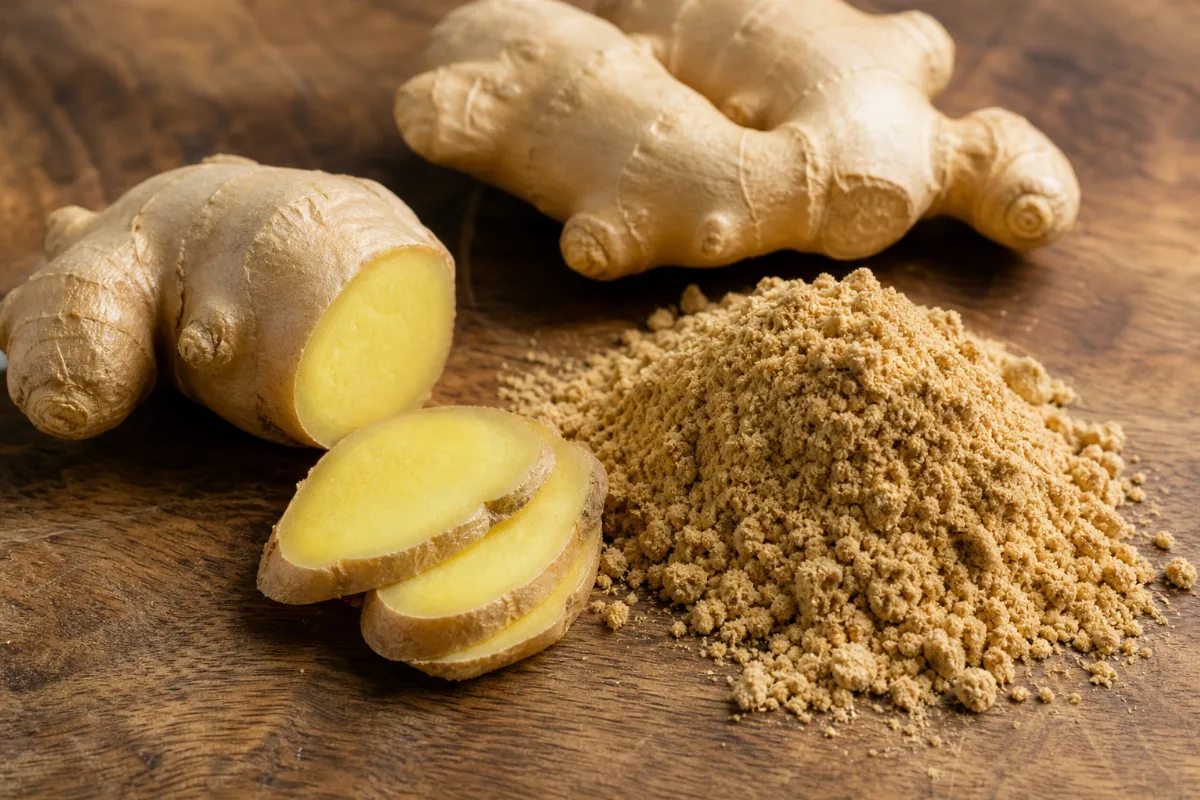
Ginger is hot, sweet-spicy and fresh-smelling and used in curries, baking and drinks; research on nausea is promising in pregnancy but mixed elsewhere, and supplements have blood-thinner cautions.
Aroma: Earthy and a little like mustard, with a peppery warmth.
In the kitchen: curries, rice and grains, soups and stews, tea and drinks, vegetables
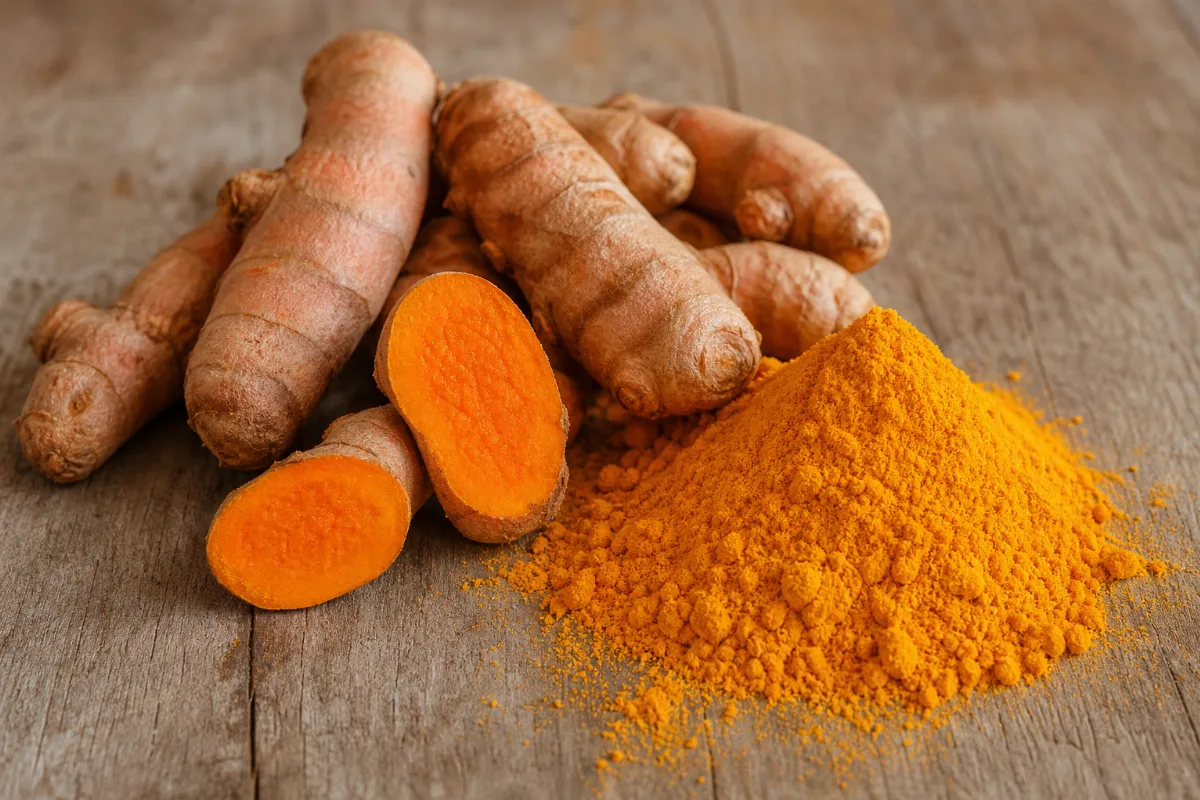
Turmeric is earthy, warm and slightly bitter and gives curries their yellow color; research on health uses is early, and concentrated curcumin products have been linked to liver injury.
Aframomum melegueta, Amomum melegueta (older name used in US regulations)
Seed
Hot / pungentCitrusyWarm / woody
Aroma: Peppery and warm, with a hint of citrus and cardamom.
In the kitchen: soups and stews, grilling and rubs, vegetables, tea and drinks, curries
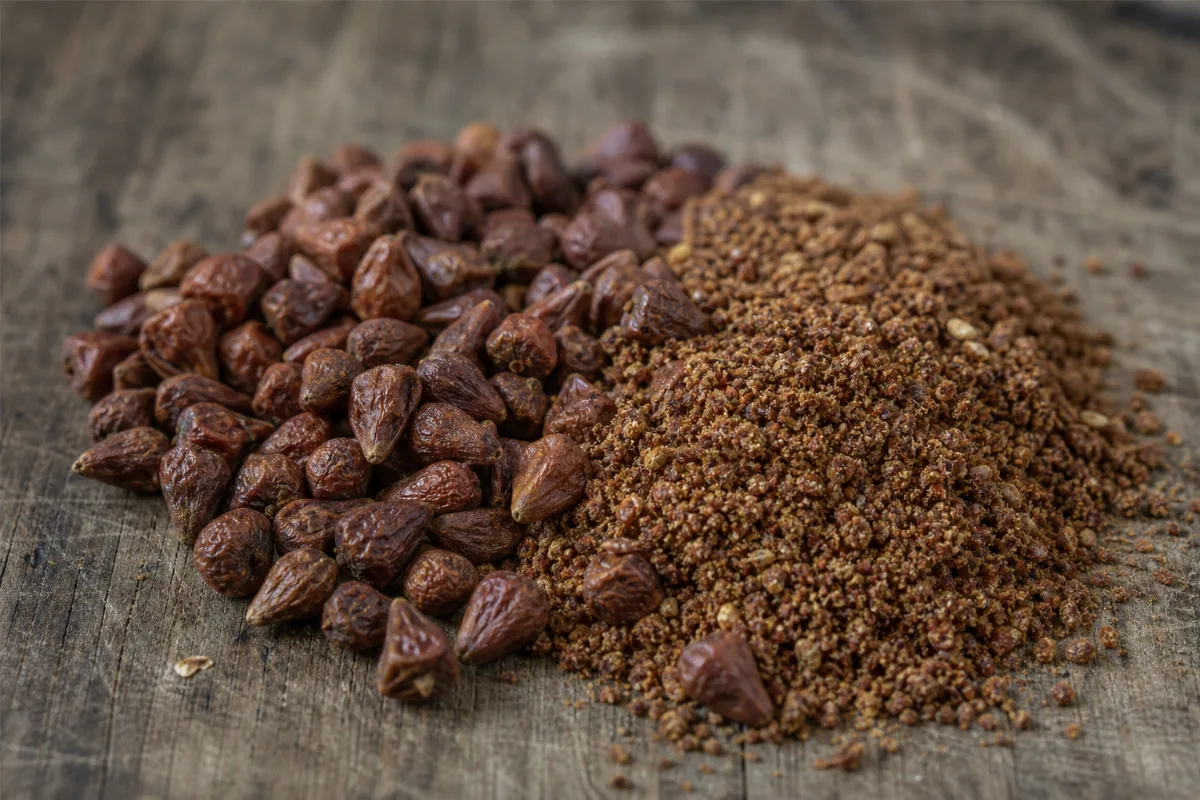
Grains of paradise taste peppery with citrus and a touch of cardamom and are used in stews, rubs and drinks; trials of extracts are small and mostly company-linked, and we found no food-amount studies.
Aroma: Almost none whole; a sharp, nose-tingling pungency once crushed and wetted.
In the kitchen: curries, pickling, grilling and rubs
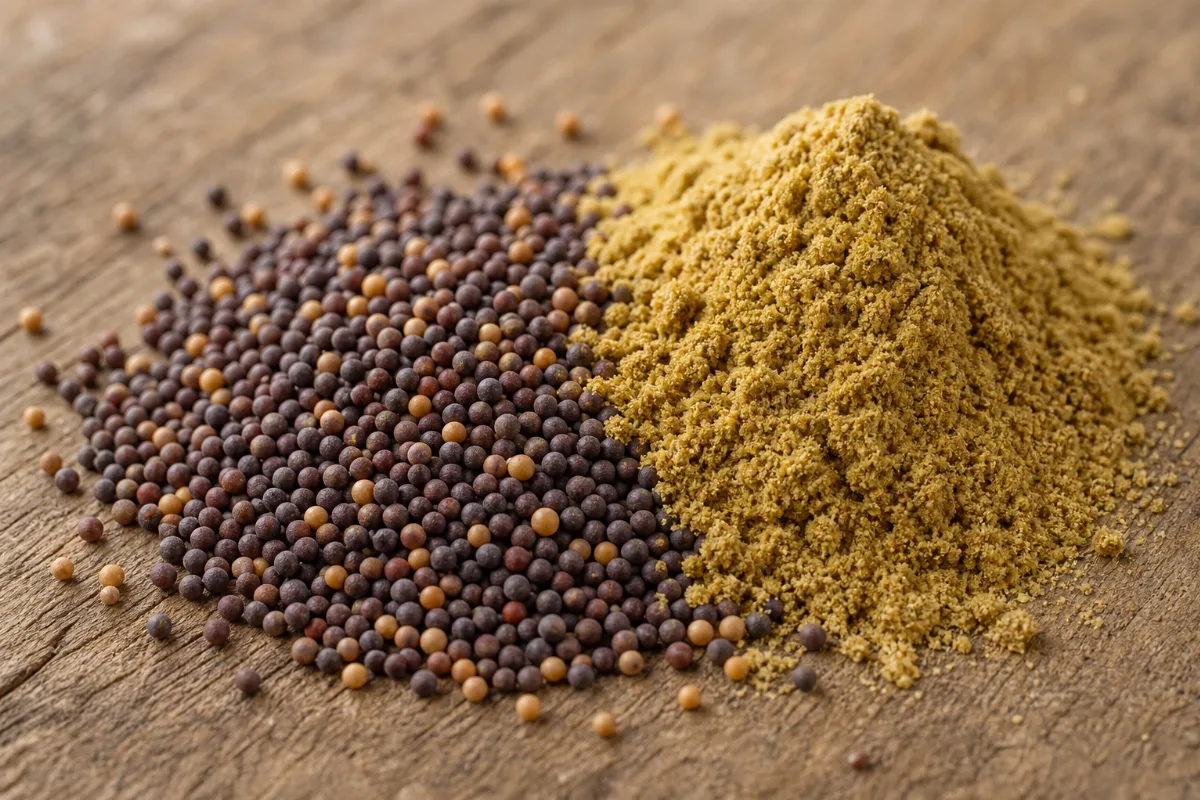
Mustard seed is mild whole and sharply hot once crushed with liquid, used in curries, pickles and condiments; it is a strong allergen, and human research on health uses is very small.
Early cell-damage markers and cholesterol
Blood pressure, blood fats and blood sugar (glucosinolate foods)
Gum health (white mustard toothpaste)
Antimicrobial and anti-inflammatory activity in the lab
Aroma: Almost no smell until cut, then a sharp, sinus-clearing sting.
In the kitchen: rice and grains, soups and stews, tea and drinks
Horseradish and wasabi are sharp, nose-clearing roots eaten fresh or as a paste; the heat fades fast, and the health research is thin, with one small memory trial on a wasabi extract.
Aroma: Sharp, woody and a little citrusy, with floral notes.
In the kitchen: grilling and rubs, soups and stews, vegetables
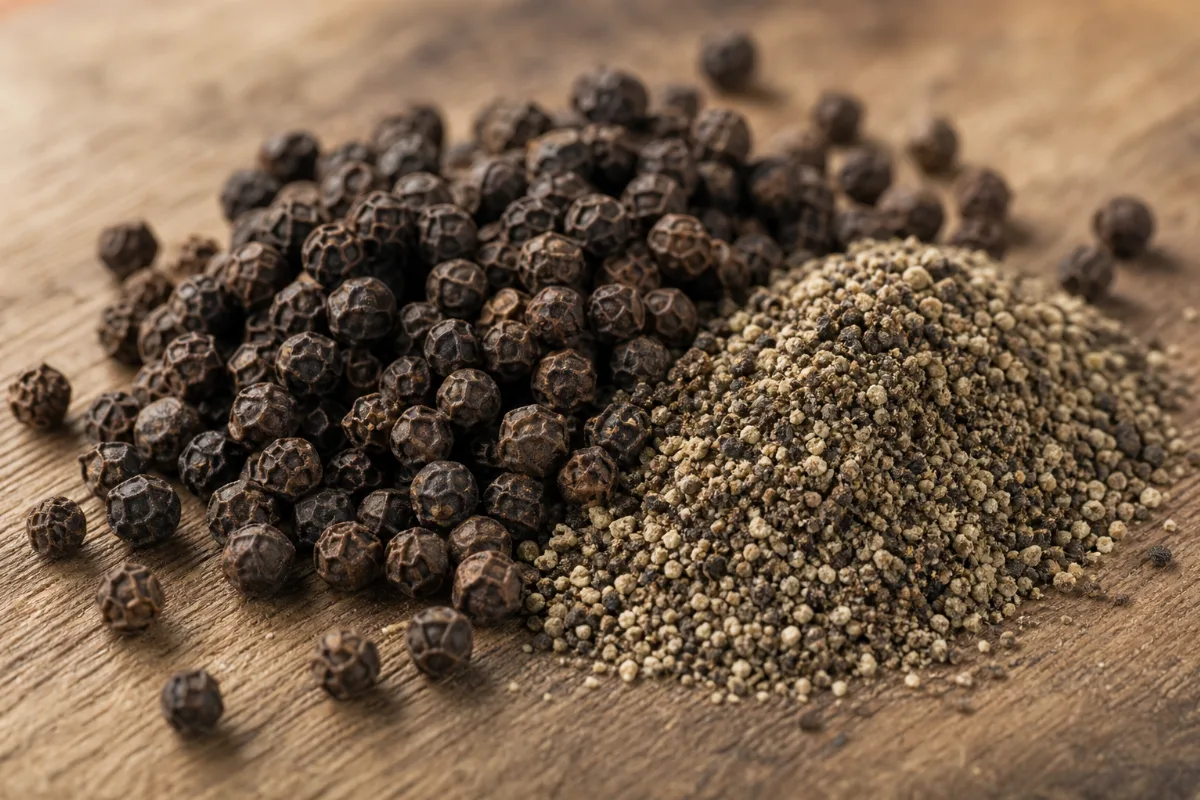
Black pepper is hot, warm and citrusy and goes in almost any savory dish; pepper on food is not a concern in the sources we read, but isolated piperine in supplements can change how medicines are absorbed.
Raises blood levels of curcumin
Cholesterol with curcumin (curcumin plus piperine)
Blood sugar, inflammation, nerves and cancer cells (lab work)
Aroma: Earthy and a little musty, with less of the citrus and pine of black pepper.
In the kitchen: soups and stews, vegetables, rice and grains, grilling and rubs
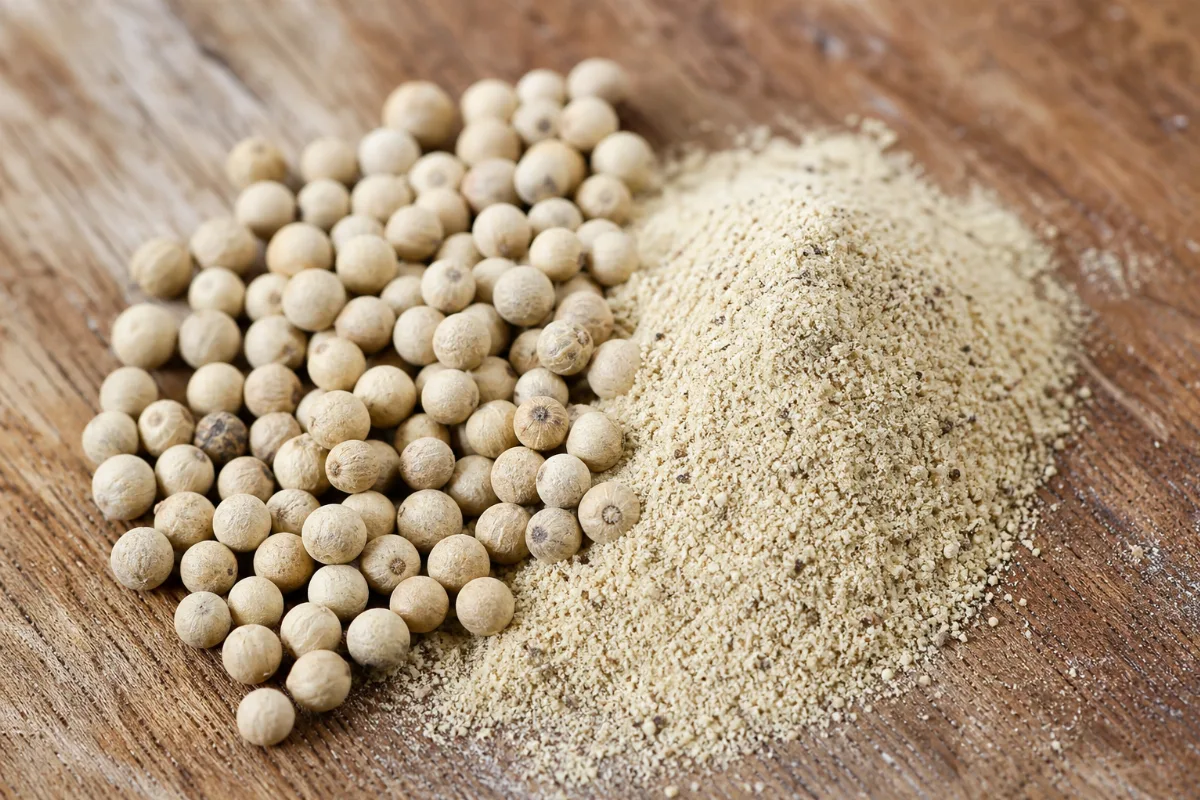
White pepper is hot, earthy and a little musty, used where black specks would show; no good human trials exist for food amounts, and isolated piperine supplements can change how medicines work.
Aroma: Slightly resinous, somewhere between black pepper and juniper, with no real heat.
In the kitchen: desserts, tea and drinks, pickling
Pink peppercorn is mild, nearly sweet and resinous and used in sauces, desserts and drinks; it comes from the cashew family, so people with cashew or pistachio allergy should check first, and no human trials of its health effects were found.
Blood sugar enzymes (lab and animal work)
Antioxidant activity of leaf extracts (lab only)
Antimicrobial and antiparasite activity of oils and extracts (lab only)
Aroma: Peppery and a little sweet, with hints of clove, nutmeg and pine, and a musky note when heated.
In the kitchen: curries, pickling, soups and stews
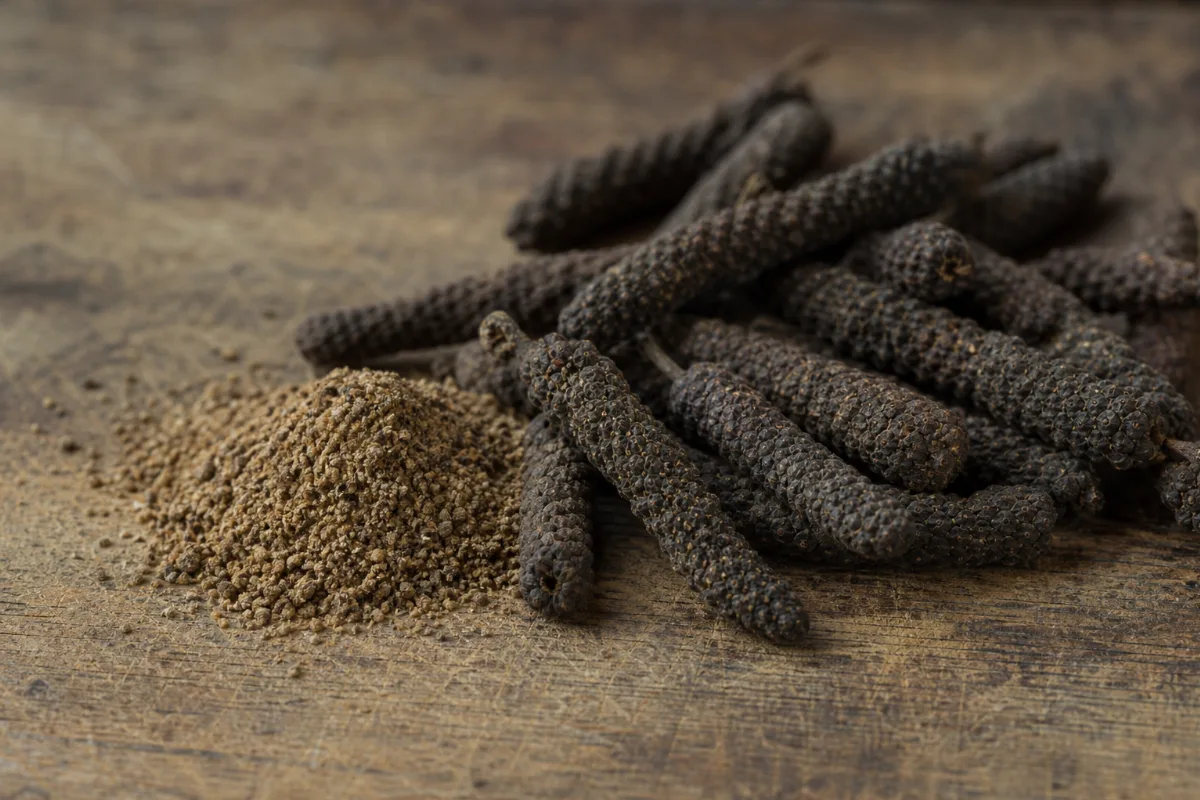
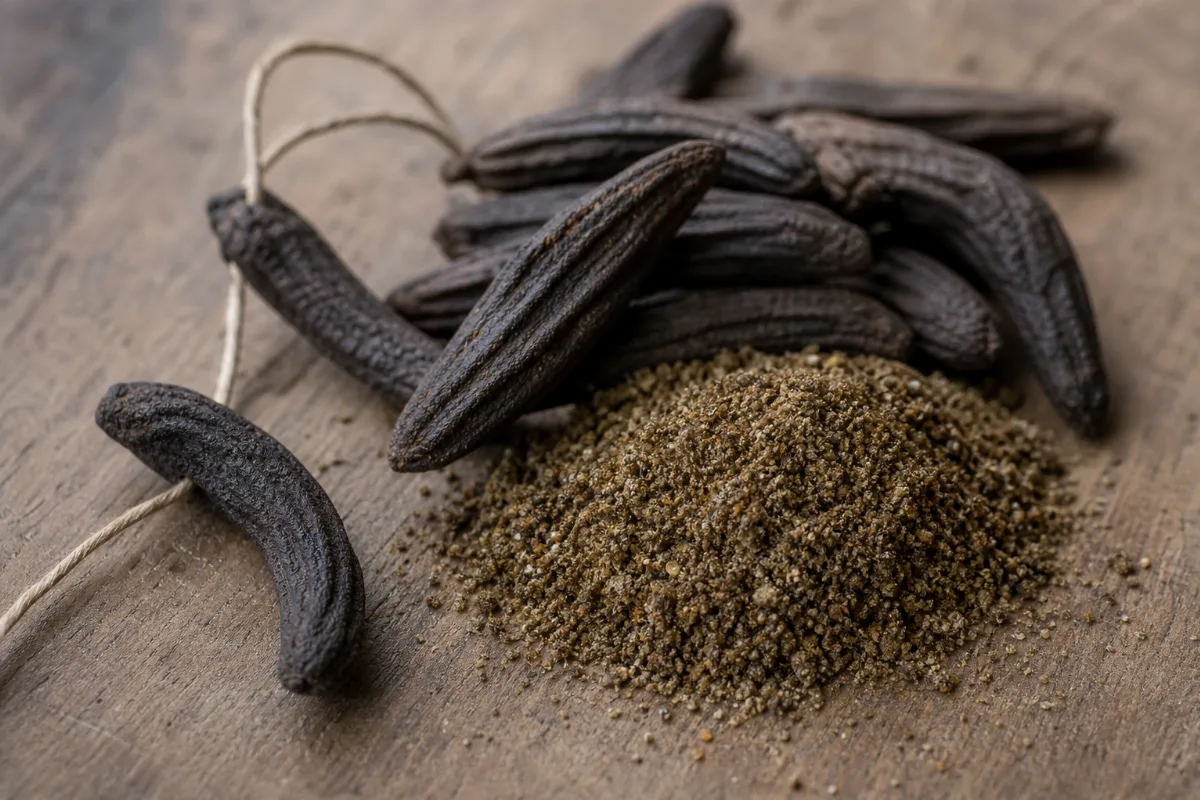
Long pepper is a peppery, slightly sweet spice used in pickles, lentil dishes and stews; its piperine can change how some medicines act, and there are no human trials of the spice itself.
Trikatu mix lowering a painkiller in animals
Liver-cell injury markers in a cell study
Traditional use in the Ayurvedic mix trikatu
Antimicrobial, antioxidant, anti-inflammatory and other lab activities
Aroma: Bright and floral, with citrus peel and a hint of pine.
In the kitchen: grilling and rubs, curries, soups and stews, vegetables
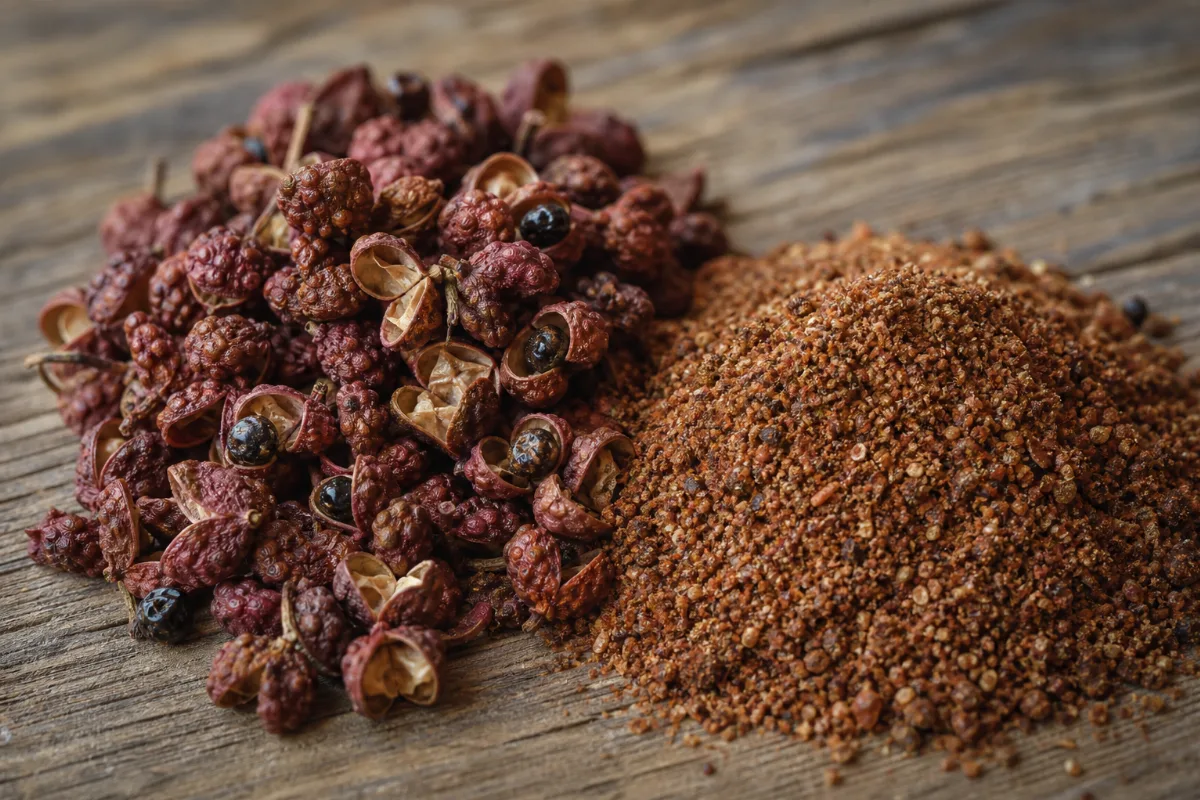
Sichuan pepper is citrusy and floral with a tingling, numbing feel and is used in Chinese cooking; human research on health is almost absent, and a few people are allergic.
Numbing and local pain relief (lab findings)
Cancer-related cell effects (lab and animal)
Anti-inflammatory, blood sugar and blood fat activity (genus review)
Aroma: Sharp and peppery, with a mild fruity or earthy note that changes by variety.
In the kitchen: curries, soups and stews, grilling and rubs, vegetables
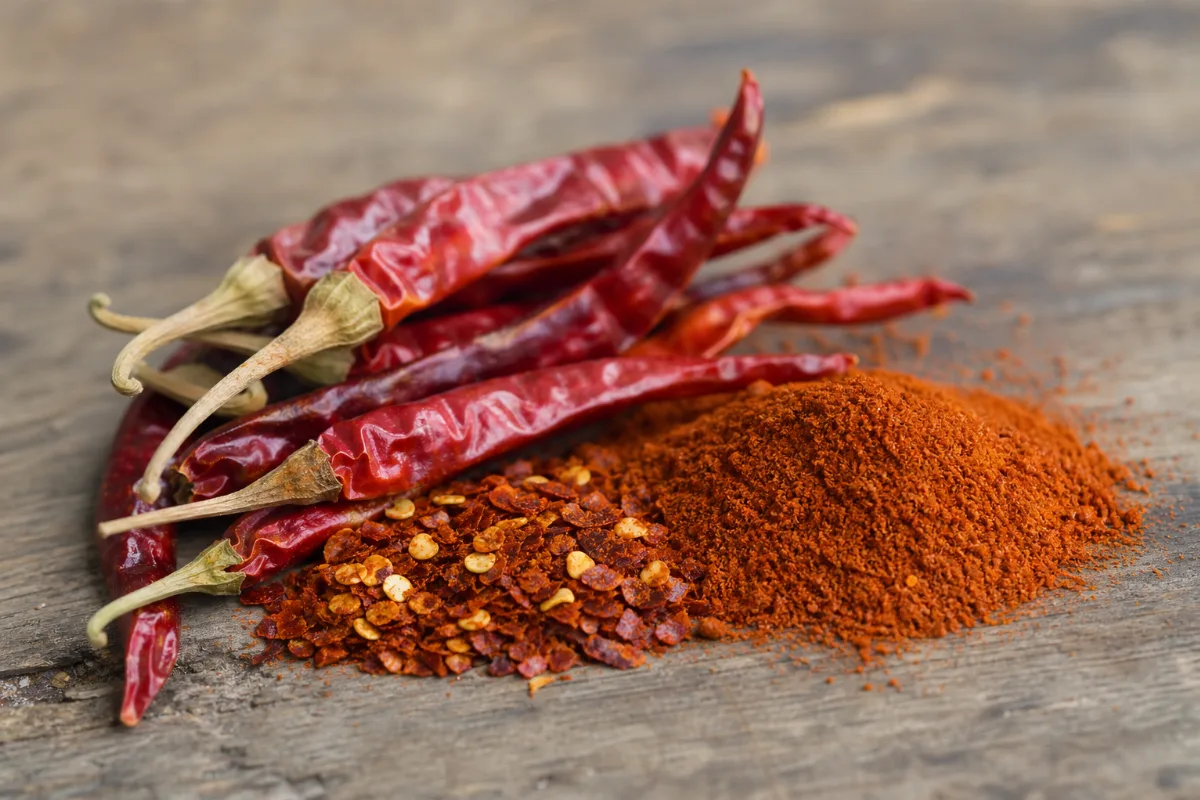
Cayenne and chili pepper are hot and used in sauces, stews and curries; big studies of people who eat spicy food are observational, and chili can burn the gut, skin and eyes.
Aroma: Warm, strong and spicy-sweet, with a medicinal edge.
In the kitchen: baking, curries, rice and grains, tea and drinks, pickling
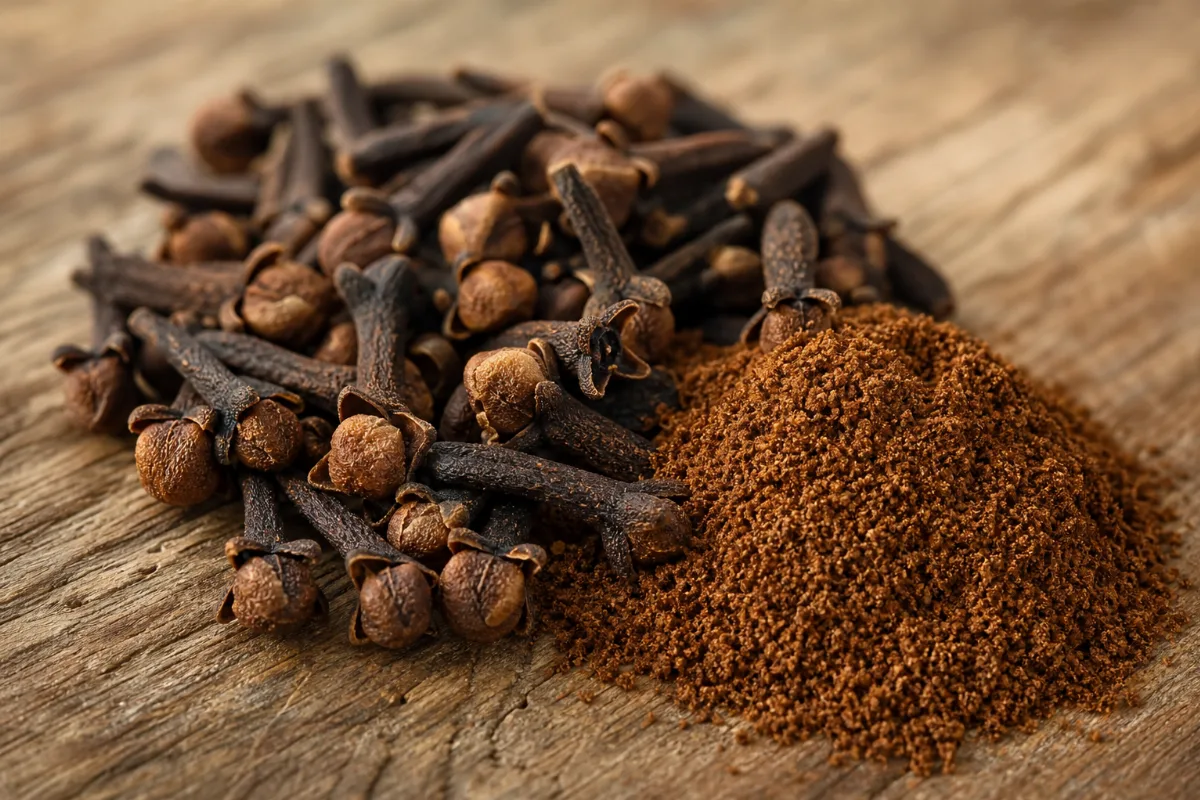
Cloves are warm, pungent and a little sweet and are used whole in rice, braises and drinks and ground in baking; research is mostly on clove oil, and the oil can poison young children.
Toothache and dental pain
Surface numbing before a needle in the mouth
Dry socket after tooth removal
Effects in cells and animals (infection, inflammation, cancer, others)
Aroma: Warm, sweet and woody, with a pungent edge.
In the kitchen: baking, desserts, soups and stews, tea and drinks, vegetables
Nutmeg is warm, slightly sweet and used in baking, sauces and drinks; large amounts can poison people, and no trial supports a health benefit when eaten.
Painful diabetic nerve symptoms (skin product)
Antioxidant, antidiabetic and anticancer effects in cells and animals
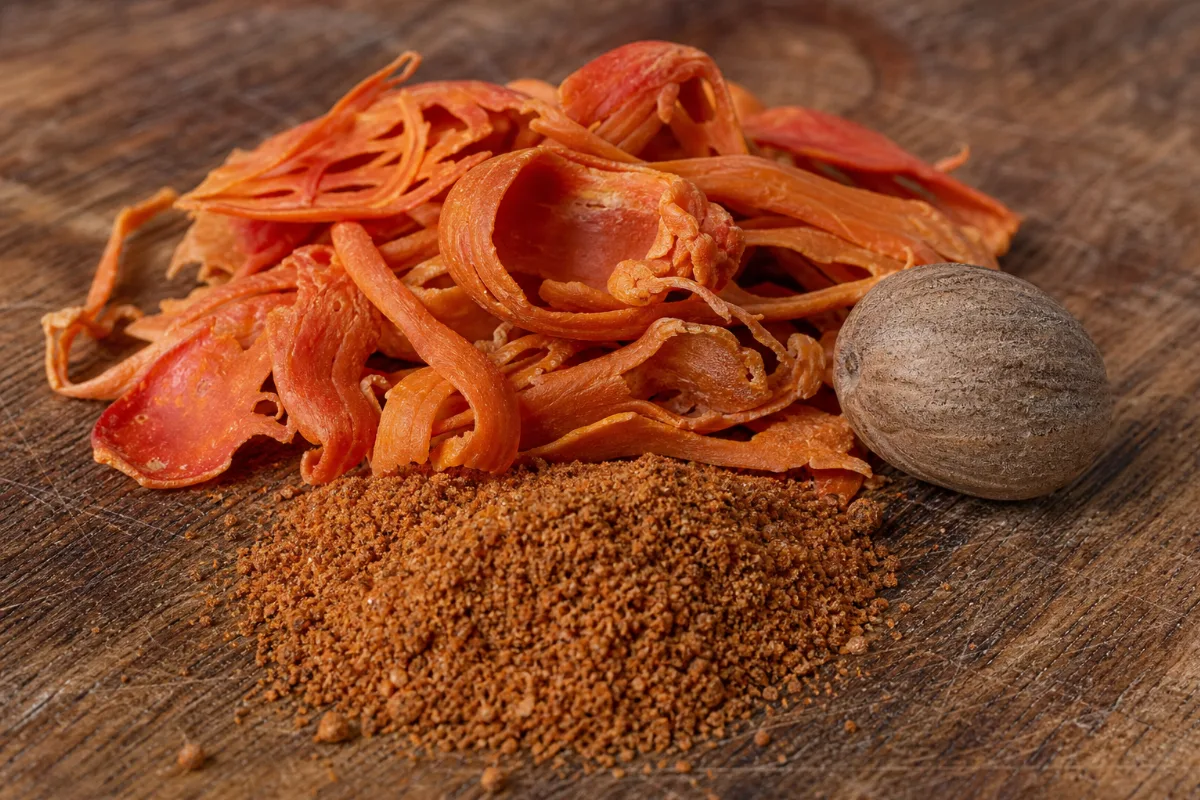
Aroma: Warm, sweet and lightly peppery, like nutmeg but sharper and more delicate.
In the kitchen: baking, desserts, curries, soups and stews
Mace is warm, sweet and a little peppery, used in baking, curries and pâtés; a pinch in food is normal, but large amounts of mace or nutmeg can poison.
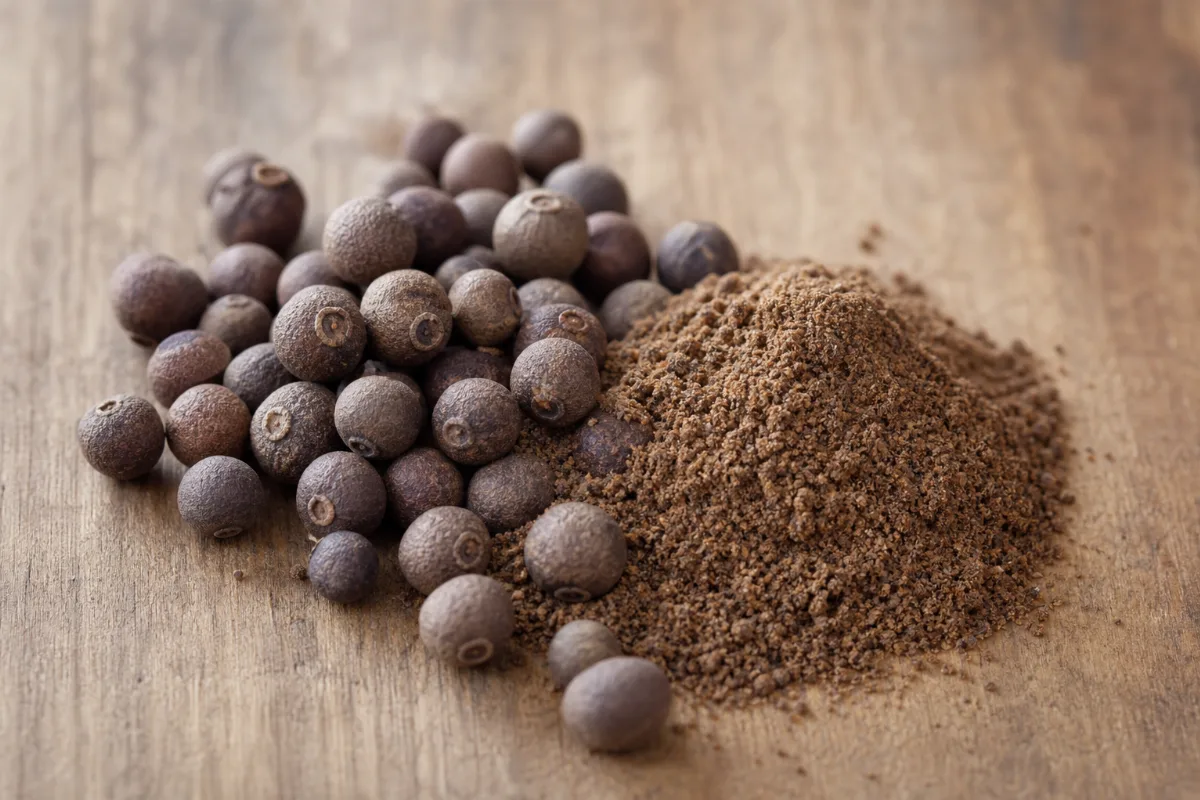
Aroma: Warm and sweet, a bit like clove, cinnamon and nutmeg together.
In the kitchen: baking, desserts, soups and stews, grilling and rubs, pickling
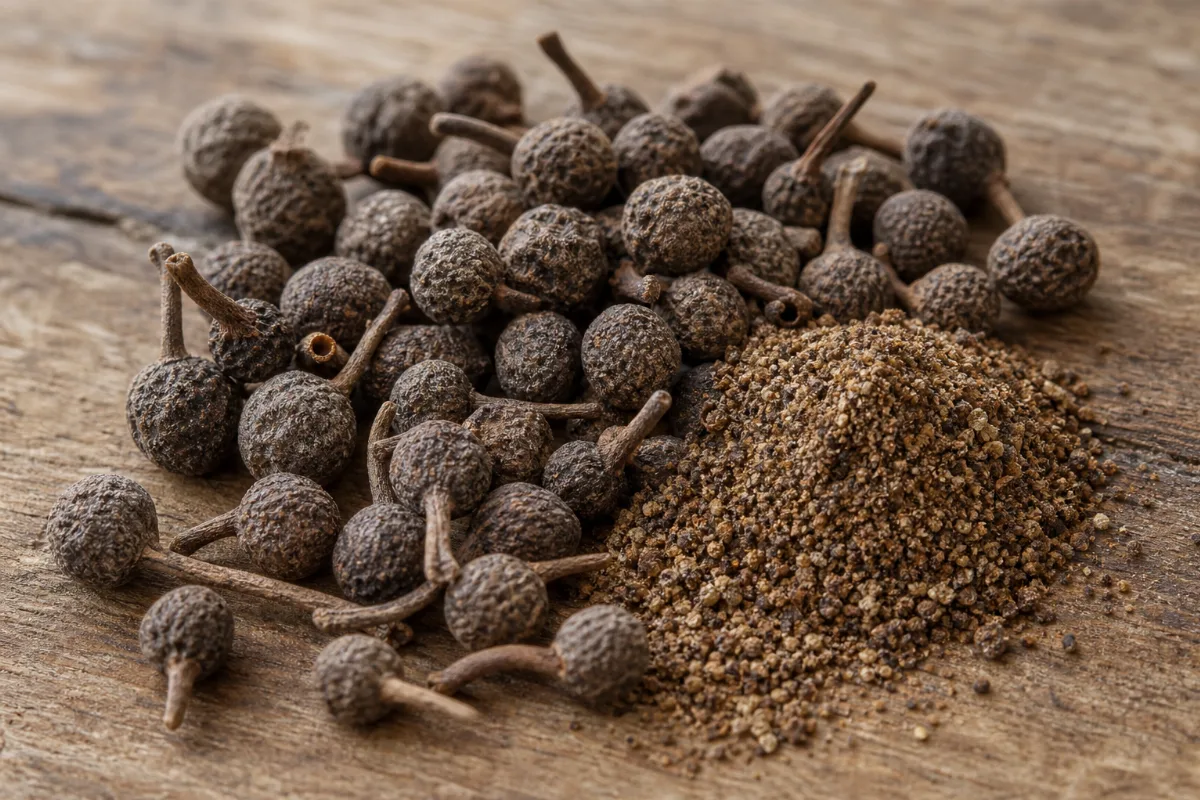
Allspice is warm and sweet, like cinnamon, clove and nutmeg in one berry, and is used in jerk, pickling and baking; human research on health is lacking, and the main caution is bleeding with large medicinal amounts.
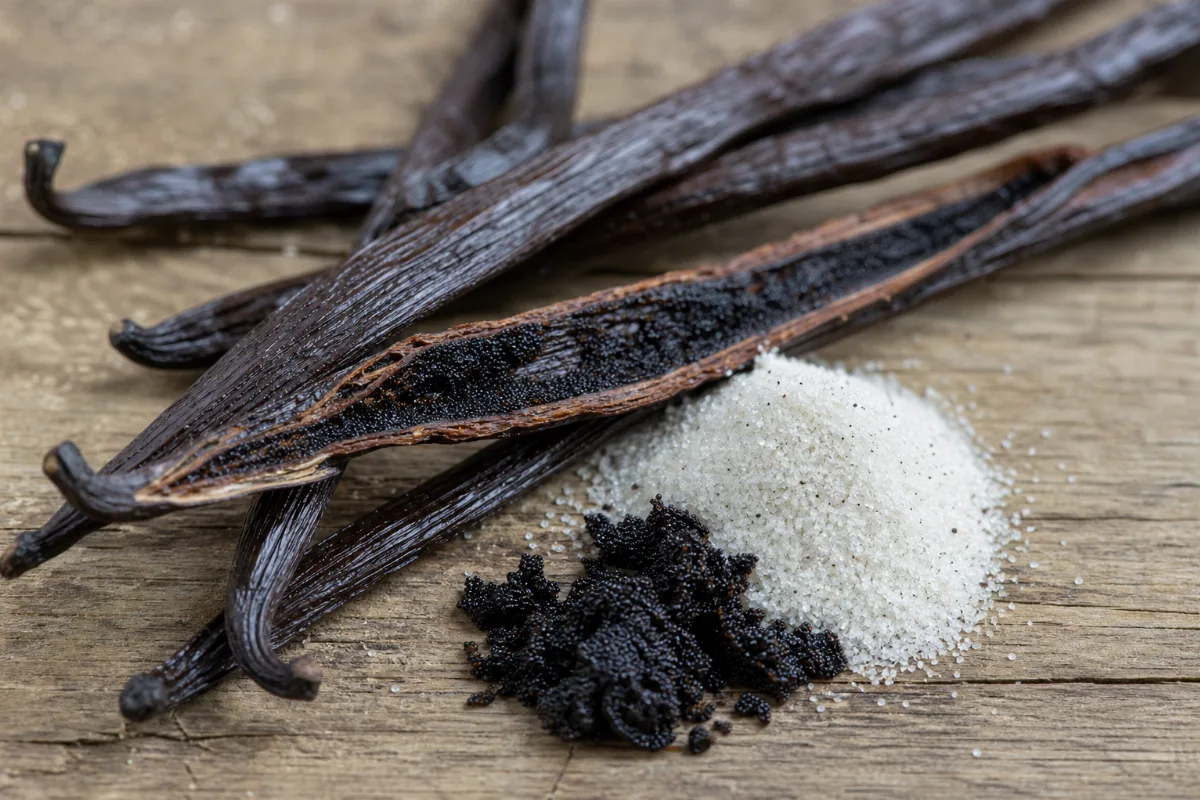
Aroma: Sweet, creamy and warm, with floral, rum-like and slightly woody notes.
In the kitchen: baking, desserts, tea and drinks
Vanilla is sweet, creamy and floral and is used in baking, desserts and drinks; research on health benefits is thin and mostly from labs, and some cheap "vanilla" has been found to contain coumarin.
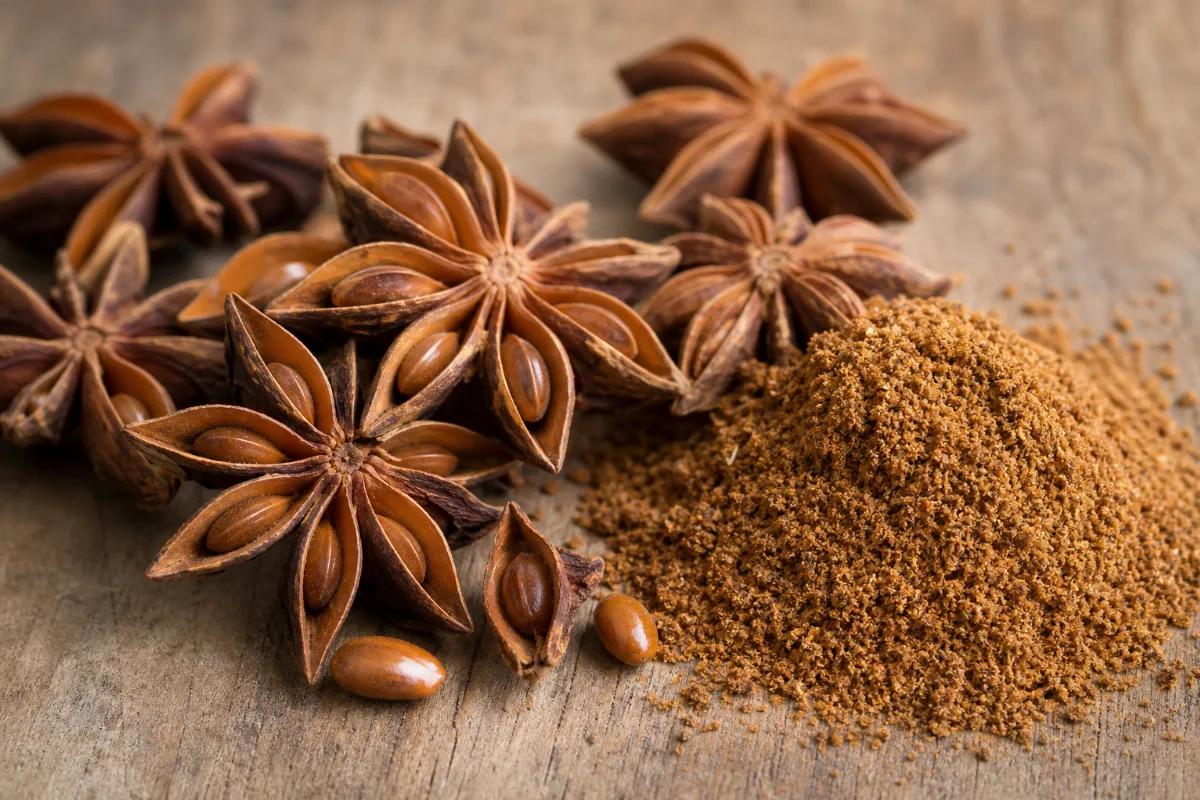
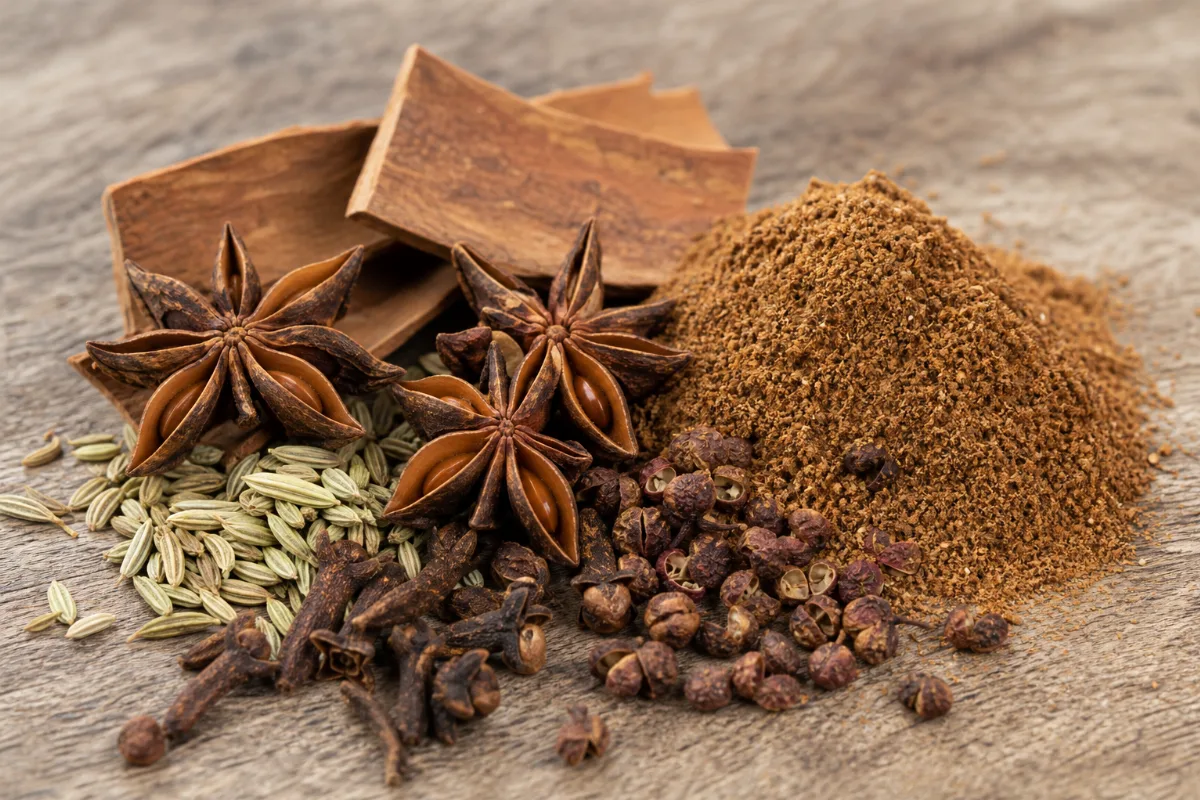
Aroma: Strong licorice scent, warm and a little sweet, like anise with a touch of clove.
In the kitchen: soups and stews, curries, baking, tea and drinks
Star anise tastes of licorice, warm and slightly sweet, and flavors soups, braises and baking; it must never be given to babies as tea, and one toxic look-alike has contaminated supplies.
Gum inflammation and mouth bacteria (mouthwash)
Source of shikimic acid for an antiviral flu medicine
Infant colic (traditional tea use)
Antimicrobial, antioxidant, pain-relief and sedative effects
Aroma: Warm, earthy and slightly musky, and stronger after toasting.
In the kitchen: curries, soups and stews, pickling
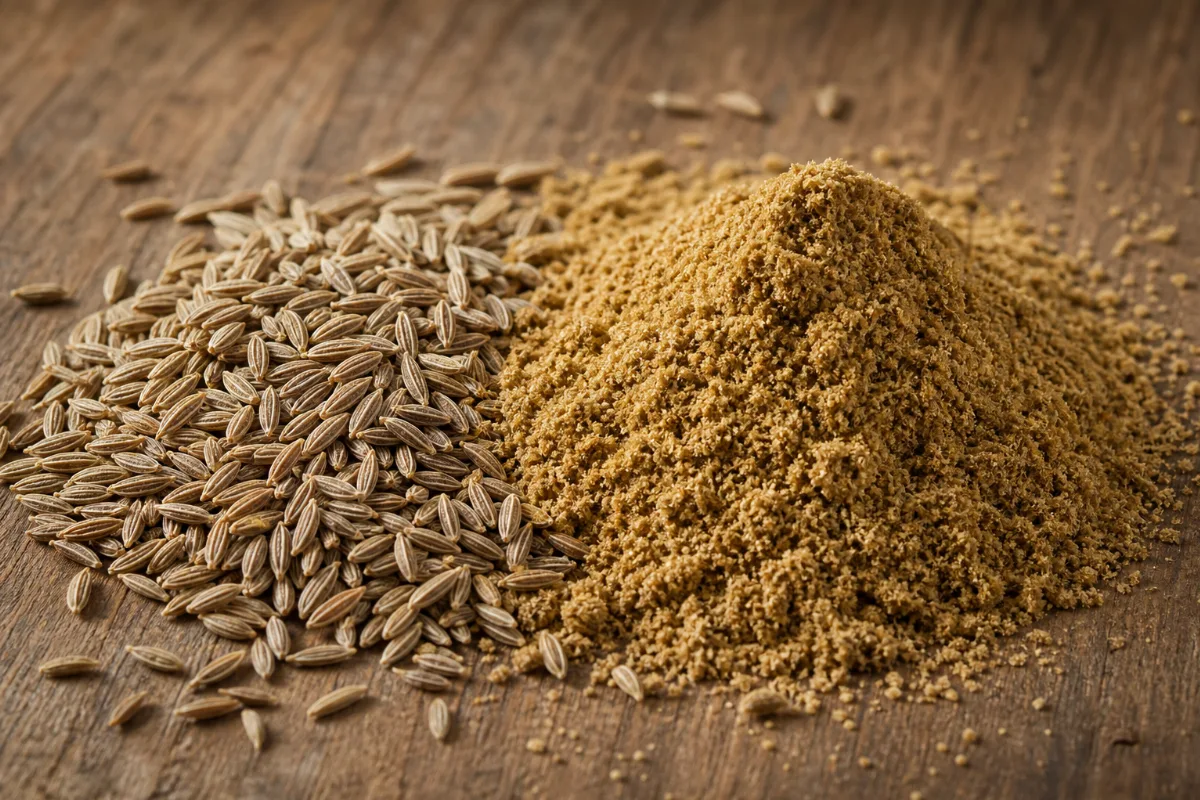
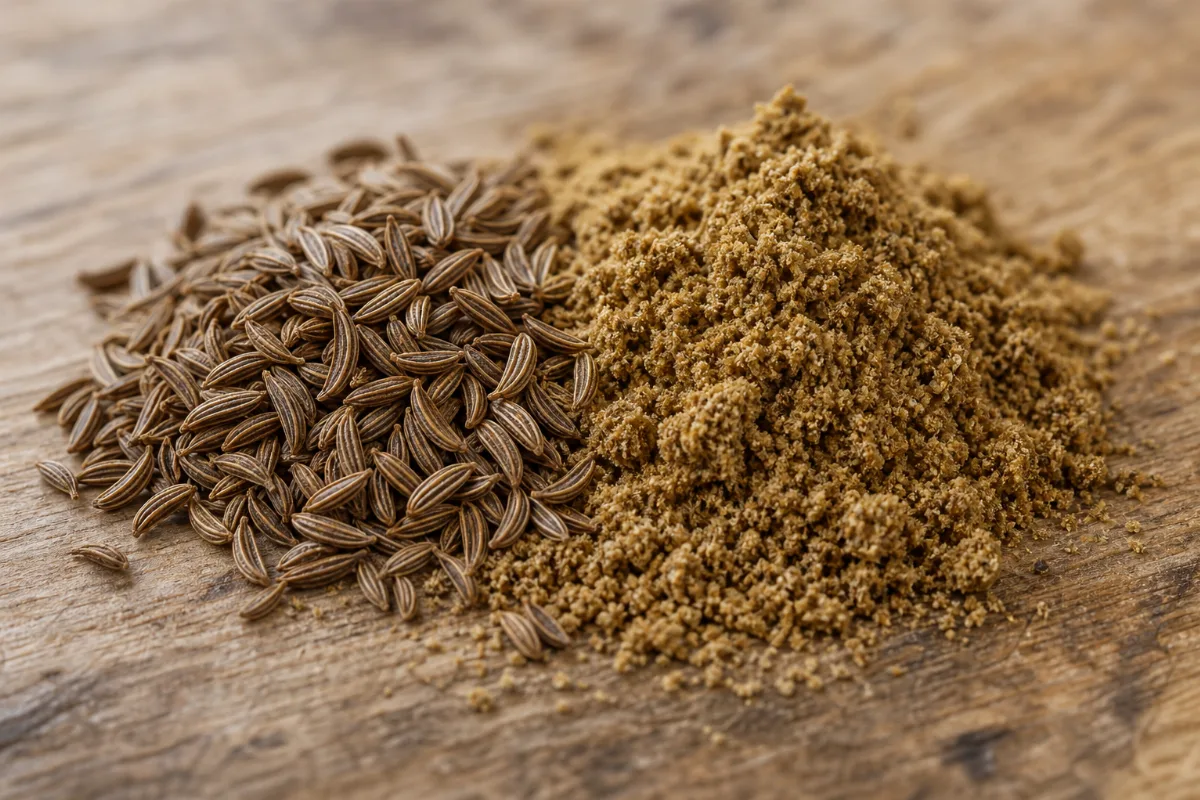
Cumin is earthy and warm and a base of curries, chili and stews; trials of cumin supplements on blood sugar are mixed, and some people are allergic to it.
Aroma: Warm and sweet like maple syrup or caramel, with a curry-like note when strong.
In the kitchen: curries, pickling, vegetables, soups and stews, rice and grains
Fenugreek seed tastes bitter, earthy and a little like maple syrup and is used in curries, pickles and spice blends; it is not safe in pregnancy above food amounts, and blood sugar research is limited.
Aroma: Harsh and sulfurous in the jar, like onion and garlic; it turns mellow once cooked in hot oil.
In the kitchen: curries, soups and stews, rice and grains, pickling, vegetables
Asafoetida (hing) smells strong and sulfurous in the jar but cooks into a mellow onion-and-garlic flavor; it is unsafe for infants and discouraged in pregnancy, and human evidence for health uses is thin.
Irritable bowel symptoms
Irritable colon (1979 trial)
Gas, colic, blood pressure and other traditional uses
Aroma: Faint and earthy, with a light peppery note.
In the kitchen: grilling and rubs, soups and stews
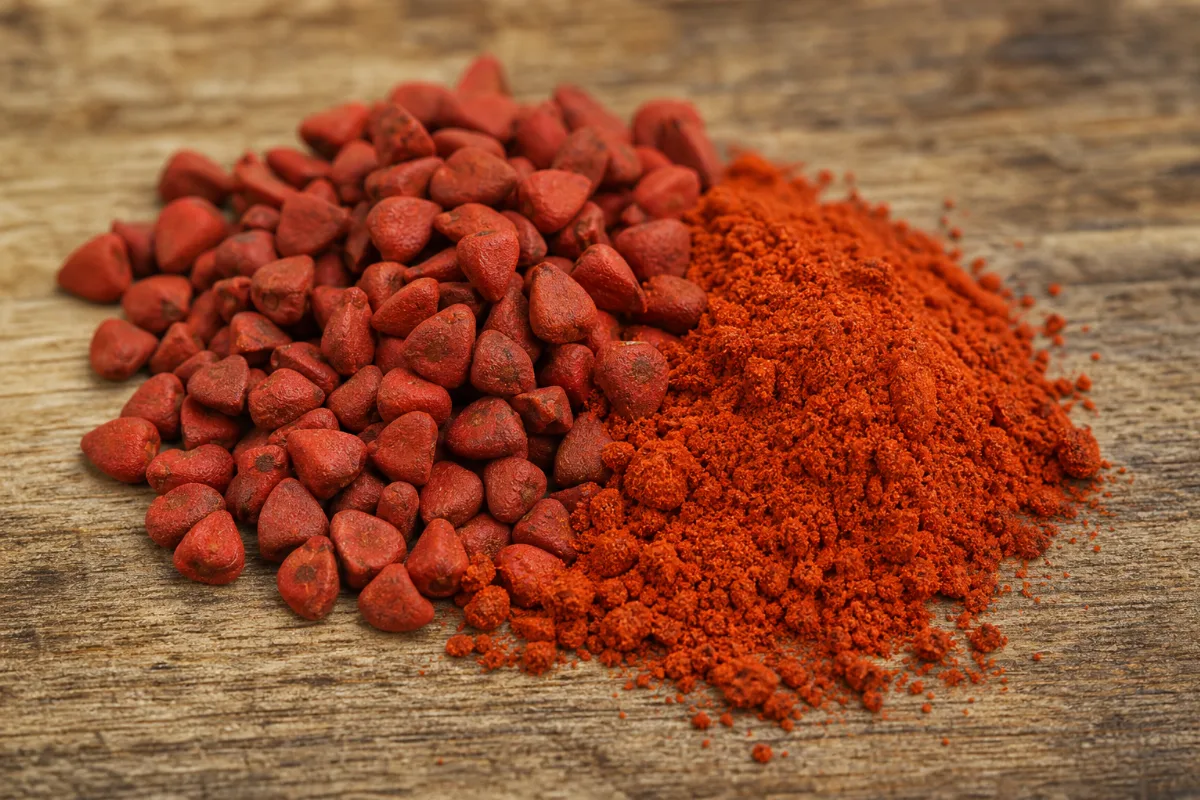
Annatto is mild, earthy and a little peppery and is used mostly to turn food orange-red; allergy to it is rare but documented, and there is no good evidence of a health benefit from eating it.
Murraya koenigii, Bergera koenigii (current name in some sources)
Leaf
CitrusyEarthyBitter
Aroma: Bright and citrusy with a savory, slightly sulfury note when fried in oil.
In the kitchen: curries, soups and stews, rice and grains, vegetables
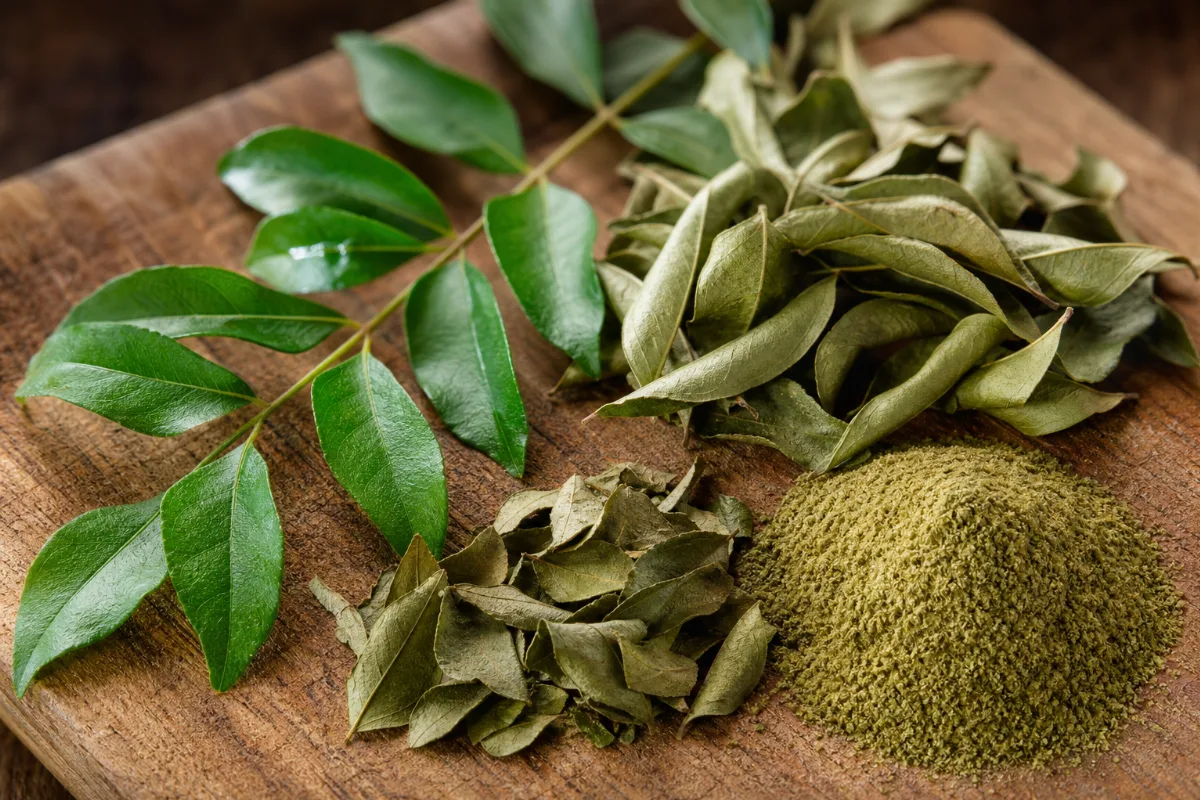
Curry leaf is citrusy, slightly bitter and savory and is fried in oil at the start of South Indian dishes; human research on blood sugar is one small 1990 study, and the rest is lab and animal work.
Blood sugar in type 2 diabetes
Blood sugar and blood fats in animals
Antioxidant and anti-inflammatory activity in the lab
Aroma: Herbal and slightly floral, a little like oregano and thyme.
In the kitchen: soups and stews, curries, rice and grains, desserts, tea and drinks
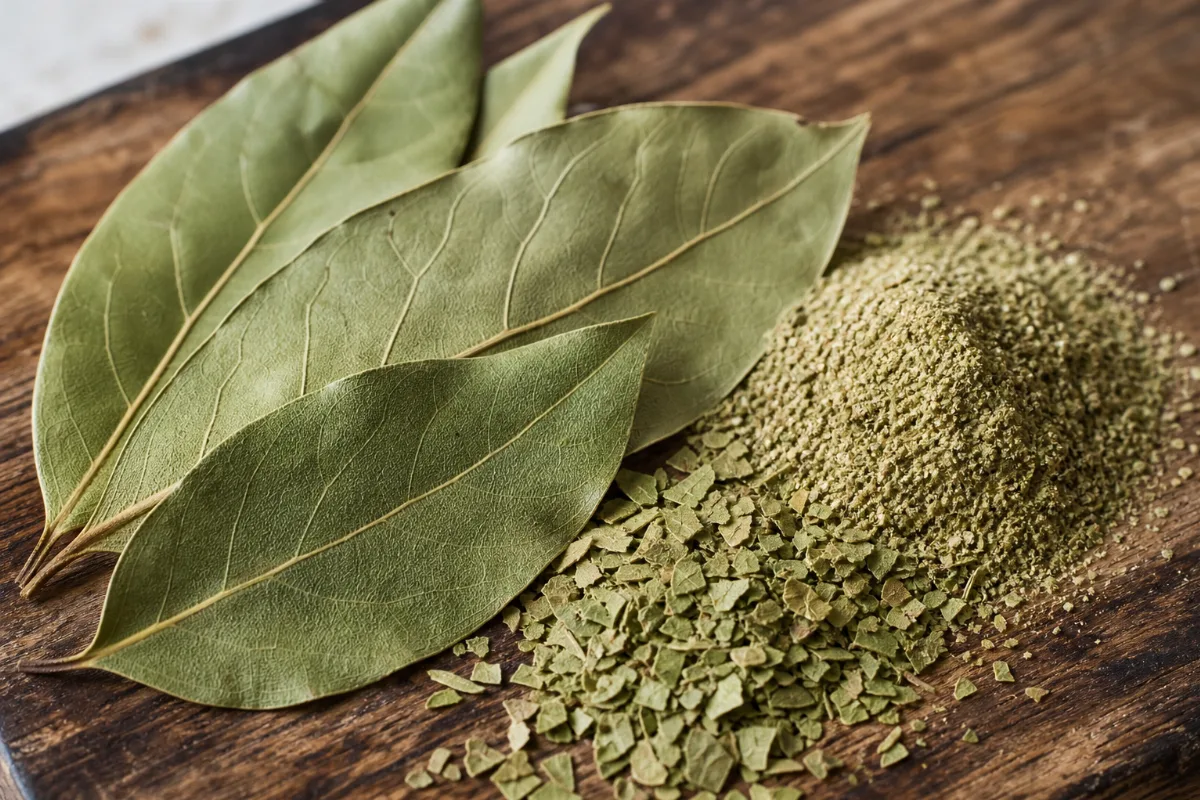
Bay leaf is herbal and slightly floral and simmered whole in soups, stews and curries, then removed; one small trial of capsules and one liver case report exist, so supplement use is unproven.
Aroma: Faintly herbal when raw; nutty, peppery and a little like onion and oregano once heated.
In the kitchen: baking, curries, pickling, vegetables, soups and stews
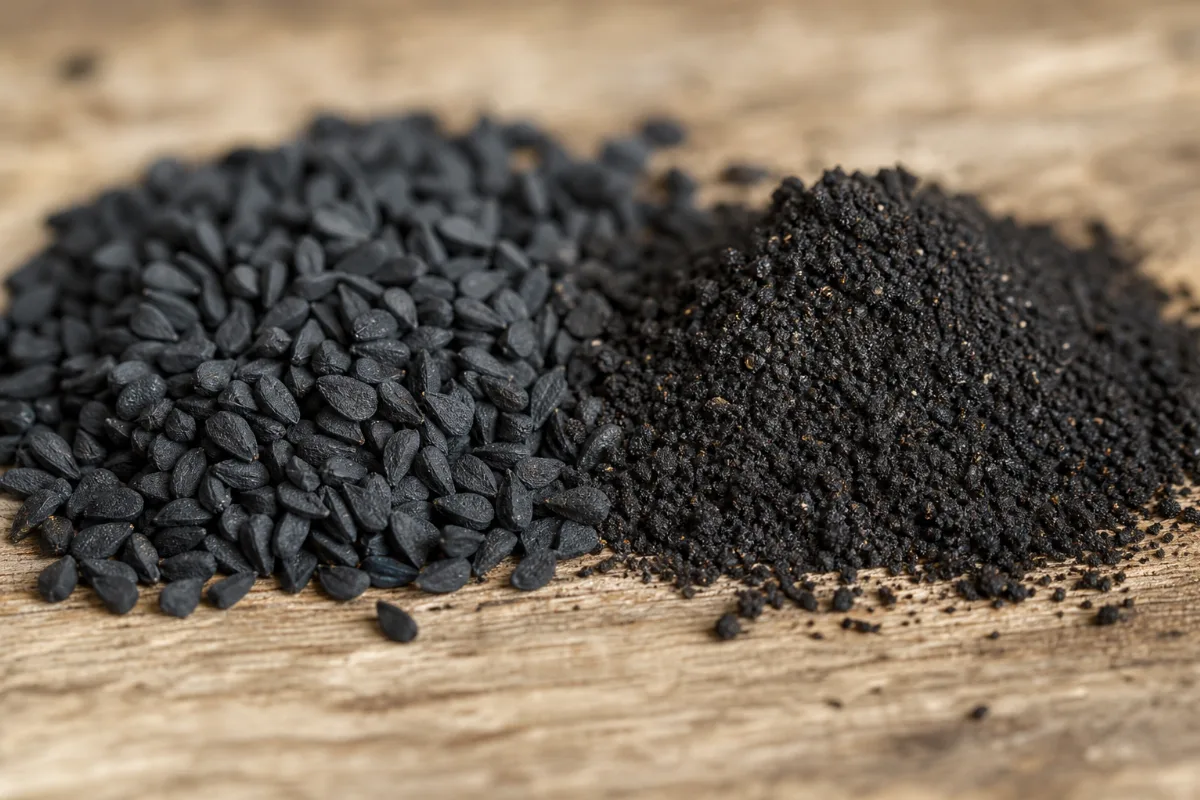
Black seed (nigella, kalonji) is peppery, bitter and a little onion-like, sprinkled on breads and tempered in oil for curries and pickles; blood pressure and blood sugar trials used supplements, and it may affect some medicines.
Aroma: Warm and lemony, with a hint of orange peel.
In the kitchen: curries, pickling, grilling and rubs, soups and stews, baking
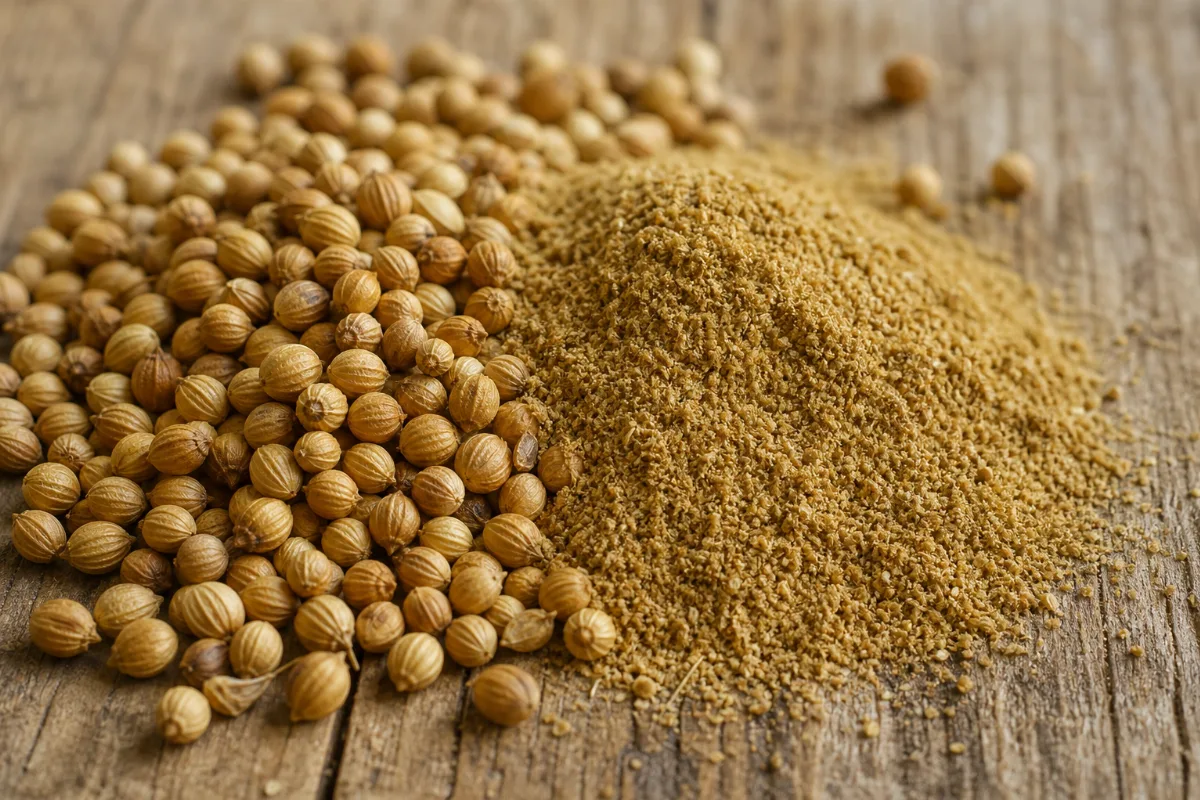
Coriander seed tastes warm and lemony and is used in curries, pickles and spice blends; one small diabetes trial is the main human evidence, and allergy is the main caution.
Aroma: Warm, sharp and slightly sweet, a bit like anise.
In the kitchen: baking, soups and stews, vegetables, tea and drinks
Caraway is warm, gently sweet and a little like anise, and is used in rye bread, sauerkraut and stews; a peppermint-and-caraway oil capsule helped indigestion in trials, and people allergic to birch, mugwort or celery may react to it.
Aroma: Sweet and strongly licorice-like, a little like fennel.
In the kitchen: baking, desserts, tea and drinks, soups and stews
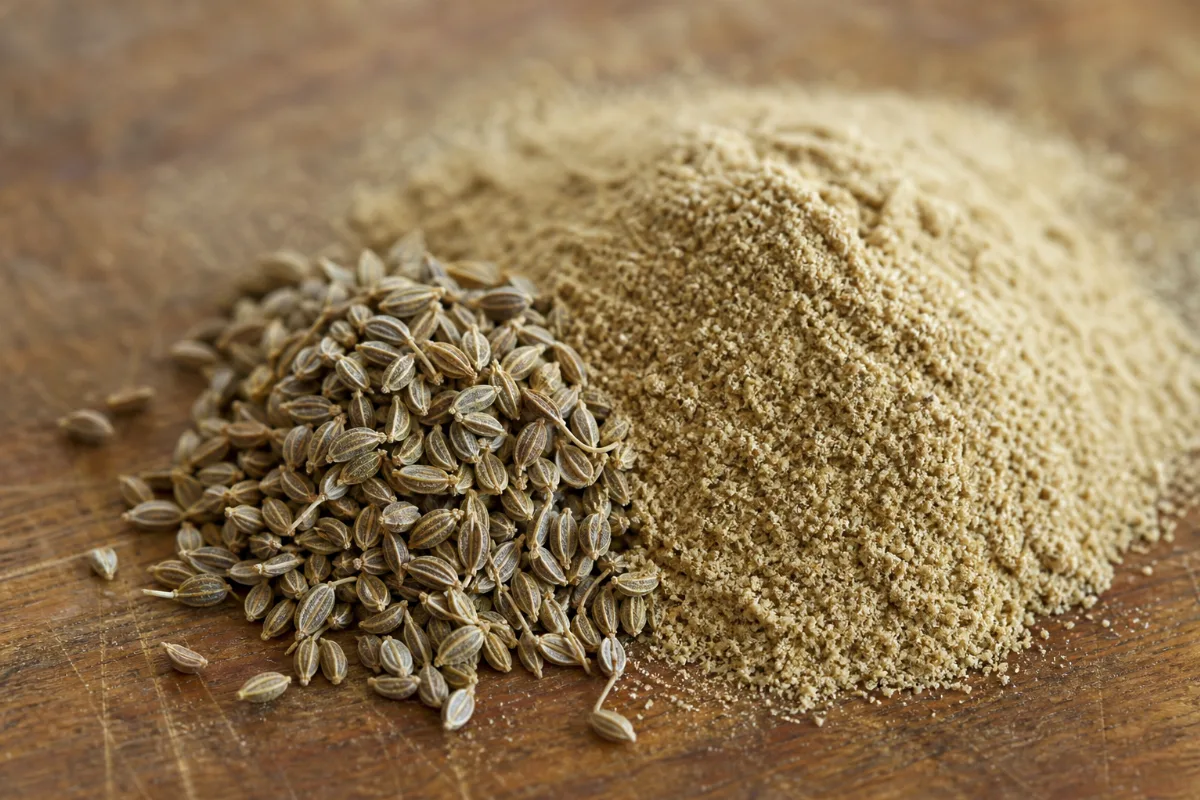
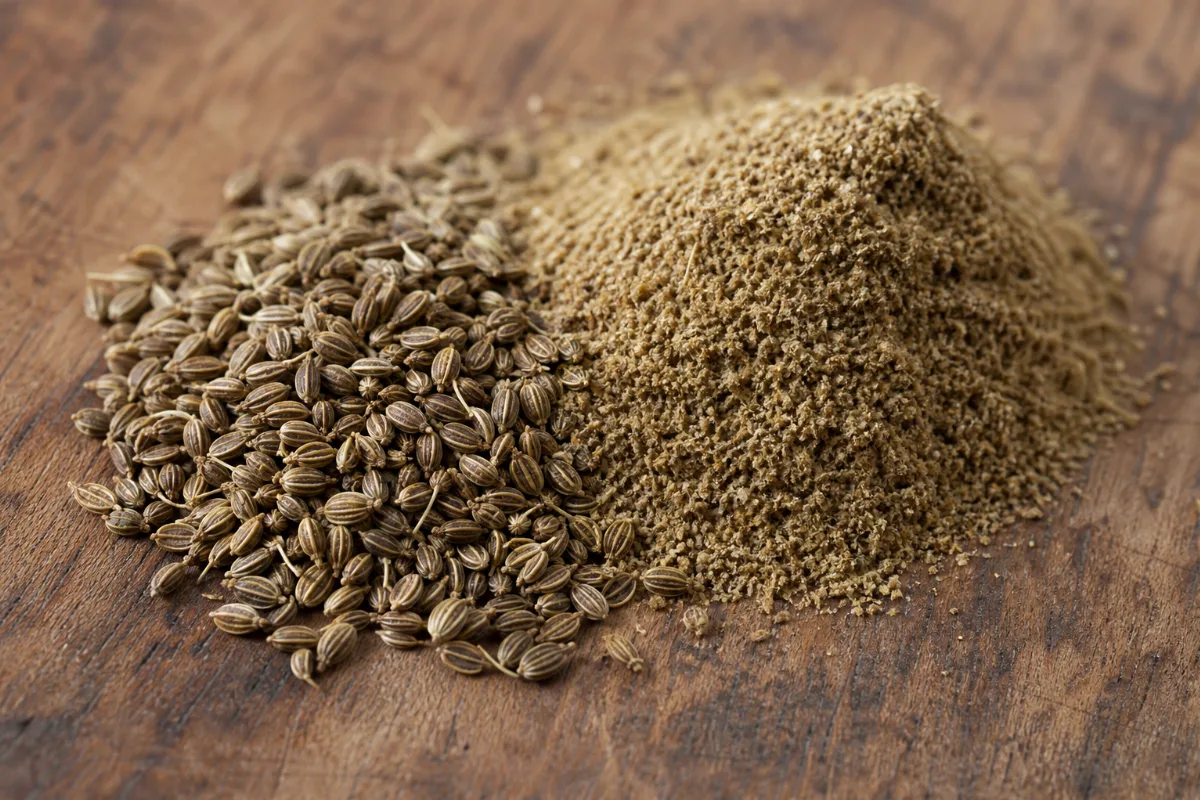
Anise (aniseed) is sweet with a clear licorice taste and is used in baking, sweets and drinks; research on digestion and IBS comes from small trials of anise oil, and it is not star anise.
Mild indigestion, bloating and gas (traditional tea use)
Aroma: Sweet and fresh, like anise or licorice but milder.
In the kitchen: curries, baking, tea and drinks
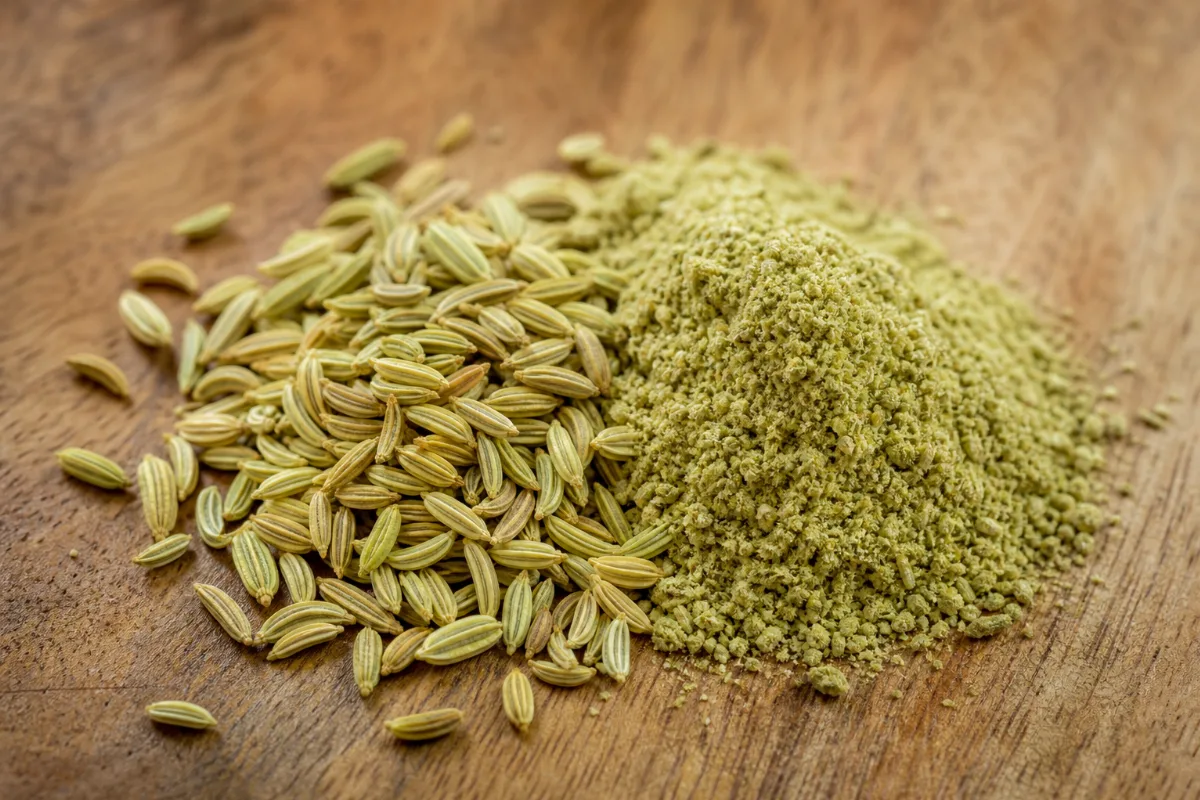
Fennel seed is sweet and anise-like and used in sausages, breads, curries and spice blends; infant colic trials look promising but limited, and EU regulators set estragole limits for children and pregnancy.
Aroma: Strong, green and celery-like, with a slightly citrusy edge.
In the kitchen: pickling, vegetables, soups and stews, grilling and rubs, tea and drinks
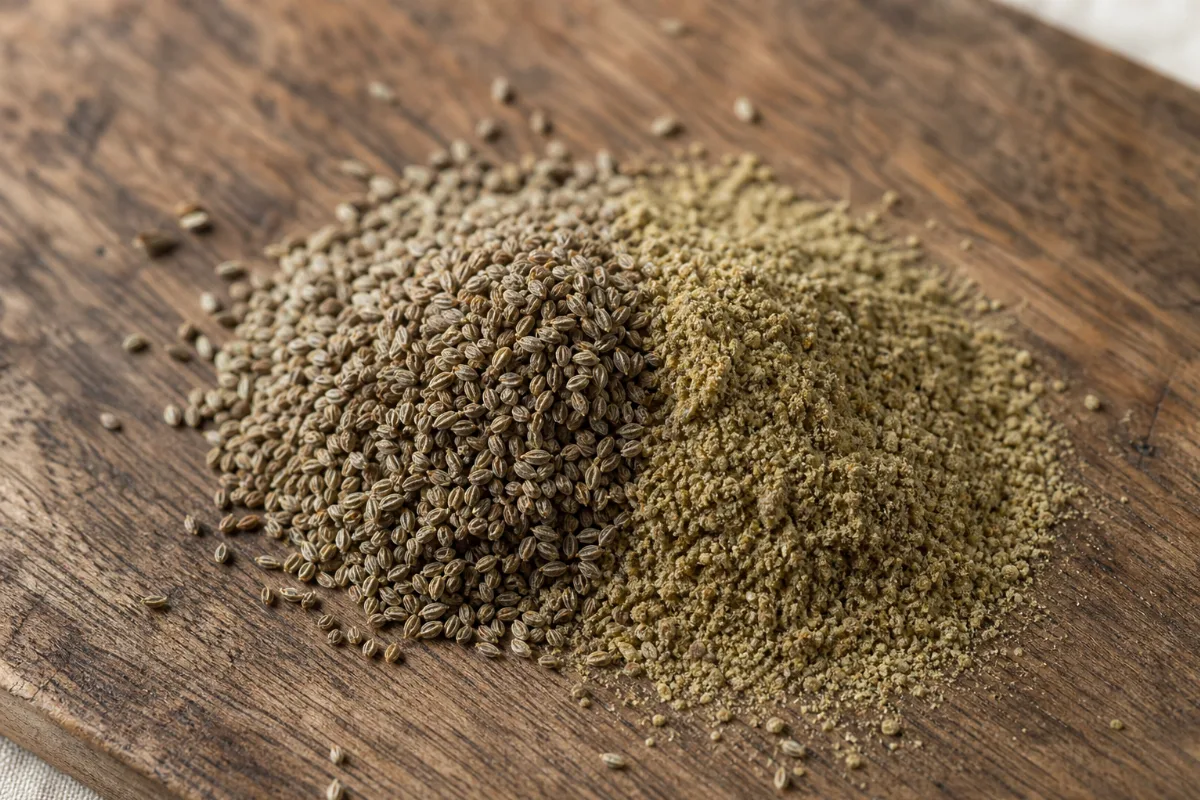
Celery seed is earthy and slightly bitter and used in pickles, slaws and celery salt; small trials suggest blood pressure effects from supplements, and celery allergy can be severe.
Aroma: Fresh, a little citrusy and like caraway, stronger than the leafy herb.
In the kitchen: pickling, baking, soups and stews, vegetables
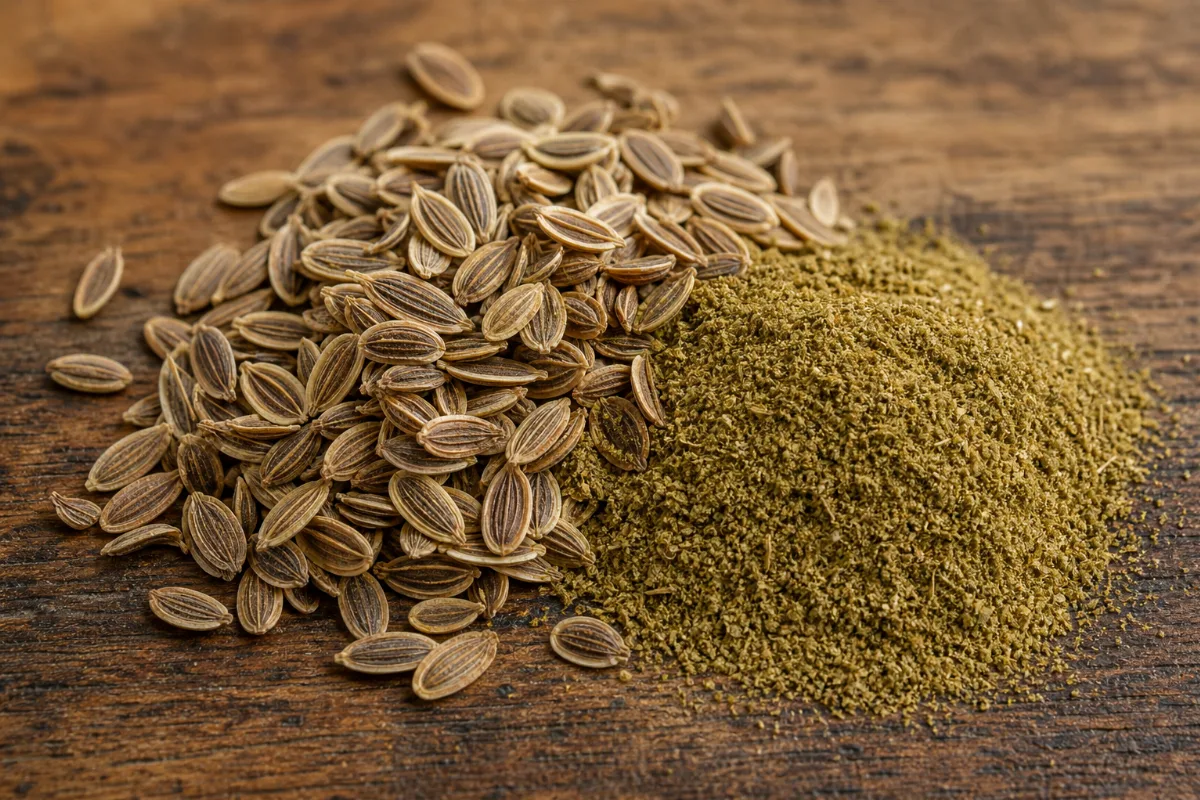
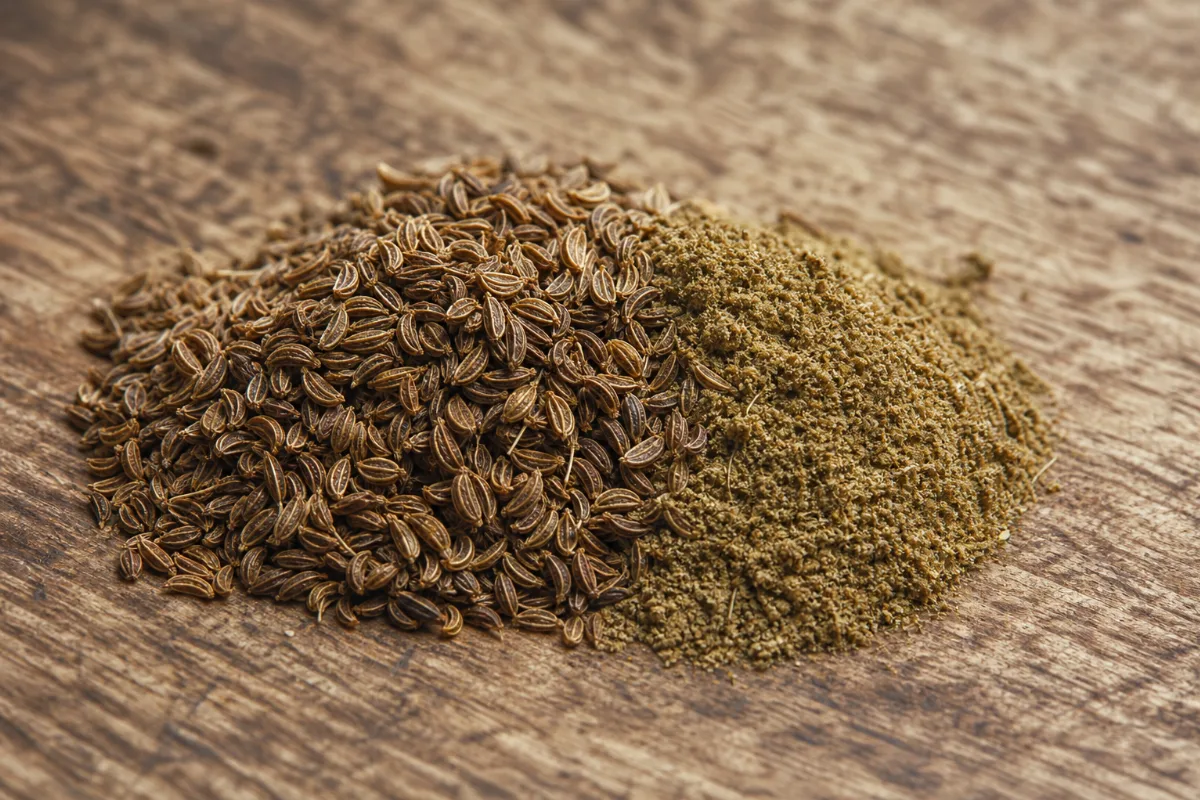
Dill seed tastes like a stronger, warmer cousin of caraway and is used in pickles and breads; small supplement trials on cholesterol are mixed, and food amounts have not been tested.
Aroma: Strongly thyme-like, with an oregano and anise edge.
In the kitchen: baking, curries, tea and drinks
Ajwain (carom seed) is sharp, bitter and thyme-like and is fried in oil for breads and tarka; research is limited, and its oil is strong and not for swallowing.
Aroma: Hay-like and honeyed, floral, with a faint medicinal edge.
In the kitchen: rice and grains, soups and stews, desserts, tea and drinks, baking
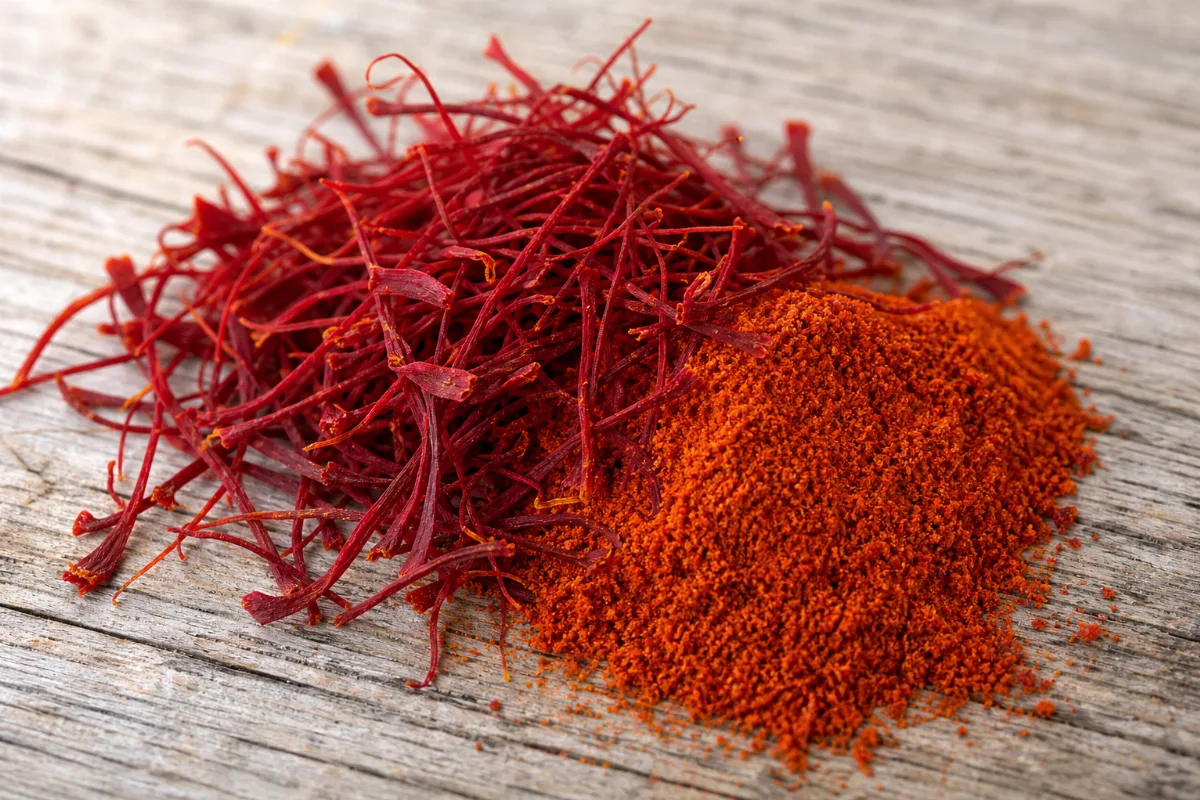
Saffron is floral, honey-like and slightly bitter and gives rice and stews a golden color; trials of supplements suggest lower self-rated low mood, but cooking amounts are not studied and fakes are common.
Self-rated depression and anxiety scores
Compared with SSRI antidepressants
Blood sugar, blood pressure and cholesterol markers
Aroma: Sweet, resinous and perfumed, with a cool eucalyptus note.
In the kitchen: baking, desserts, tea and drinks, rice and grains, curries
Cardamom is sweet, floral and a little cooling and used in chai, baking and rice; trials of supplements show small changes in blood fats, and people with gallstones should keep to food amounts.
In the kitchen: grilling and rubs, vegetables, rice and grains, tea and drinks
Sumac is a tart, lemony red spice sprinkled on salads, dips and grilled meat; trials on blood sugar are mixed, and people with a cashew allergy should check first.
In the kitchen: curries, soups and stews, tea and drinks, pickling, rice and grains
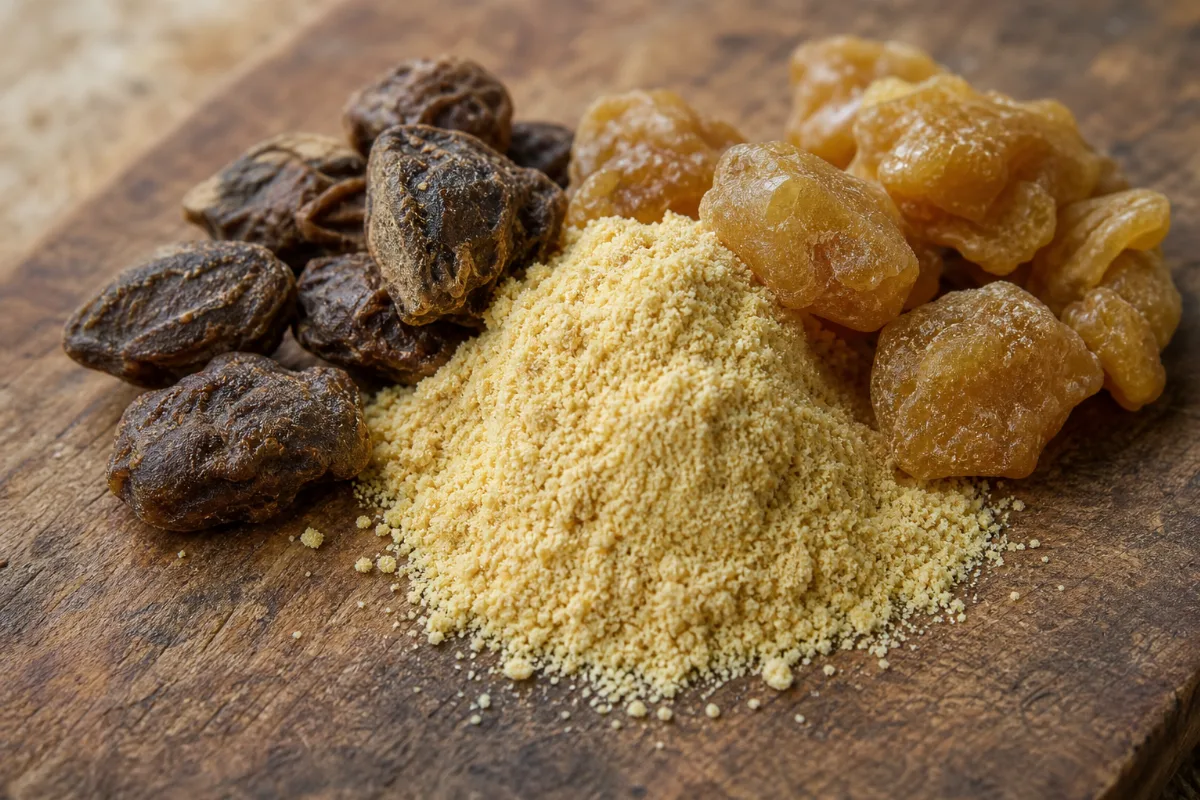
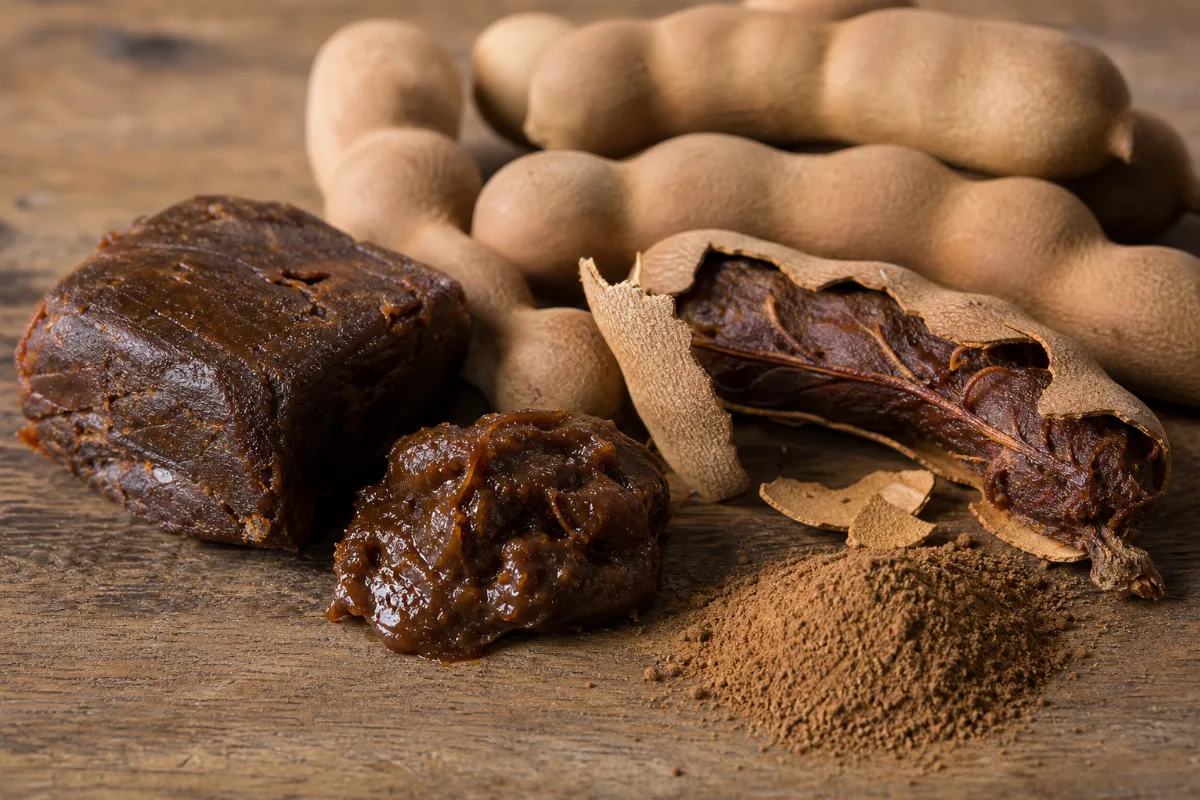
Tamarind is sweet and sour and is used in curries, chutneys, soups and drinks; the one trial we read found no effect on weight or blood sugar, and one small study found it raised aspirin absorption.
Weight, blood fats, blood sugar and blood pressure
Blood sugar in diabetes
Traditional laxative use
Other folk uses (fever, sore throat, dysentery, parasites)
Aroma: Fresh and resinous like pine needles, with a lift of citrus.
In the kitchen: soups and stews, grilling and rubs, pickling, tea and drinks
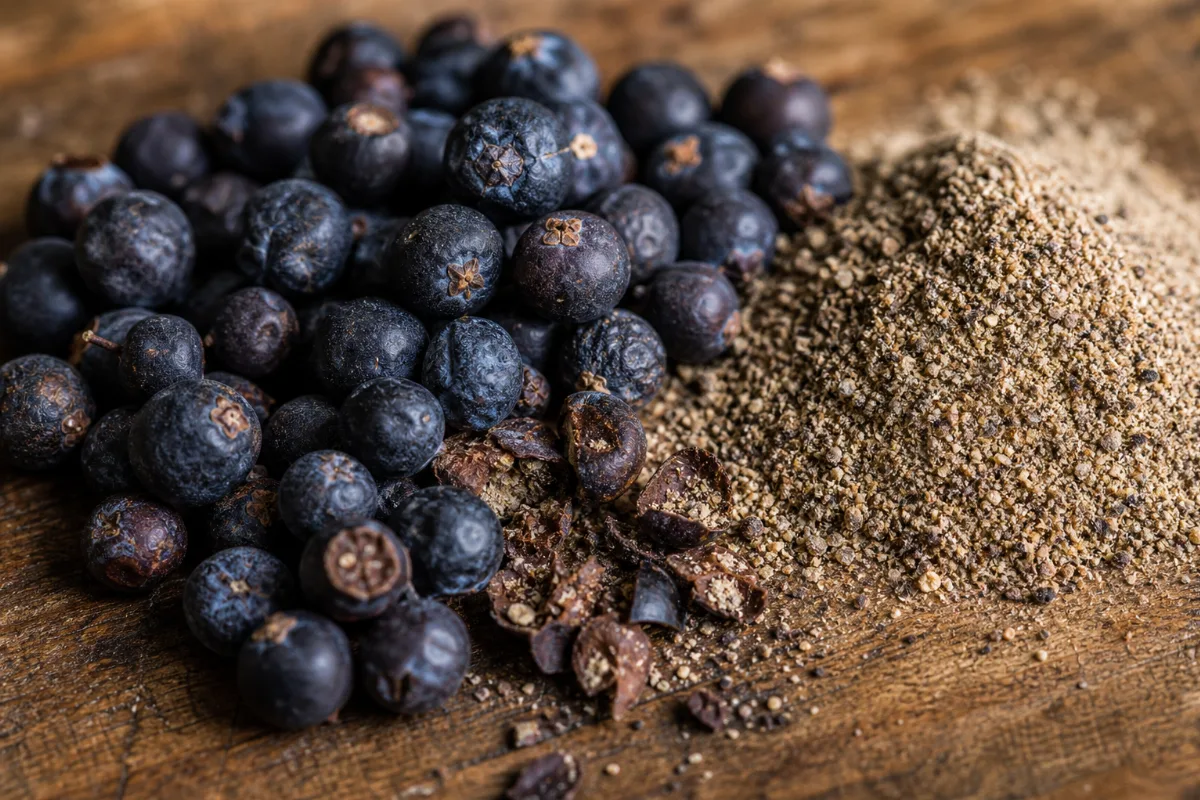
Juniper berry tastes piney and resinous with a citrus note and is used with game, pork and cabbage; the EU accepts it only for traditional use, and it is not advised in pregnancy or severe kidney disease.
Aroma: Mild and sweet, a little like dried red pepper; smoked types smell of wood smoke.
In the kitchen: soups and stews, grilling and rubs, rice and grains, vegetables
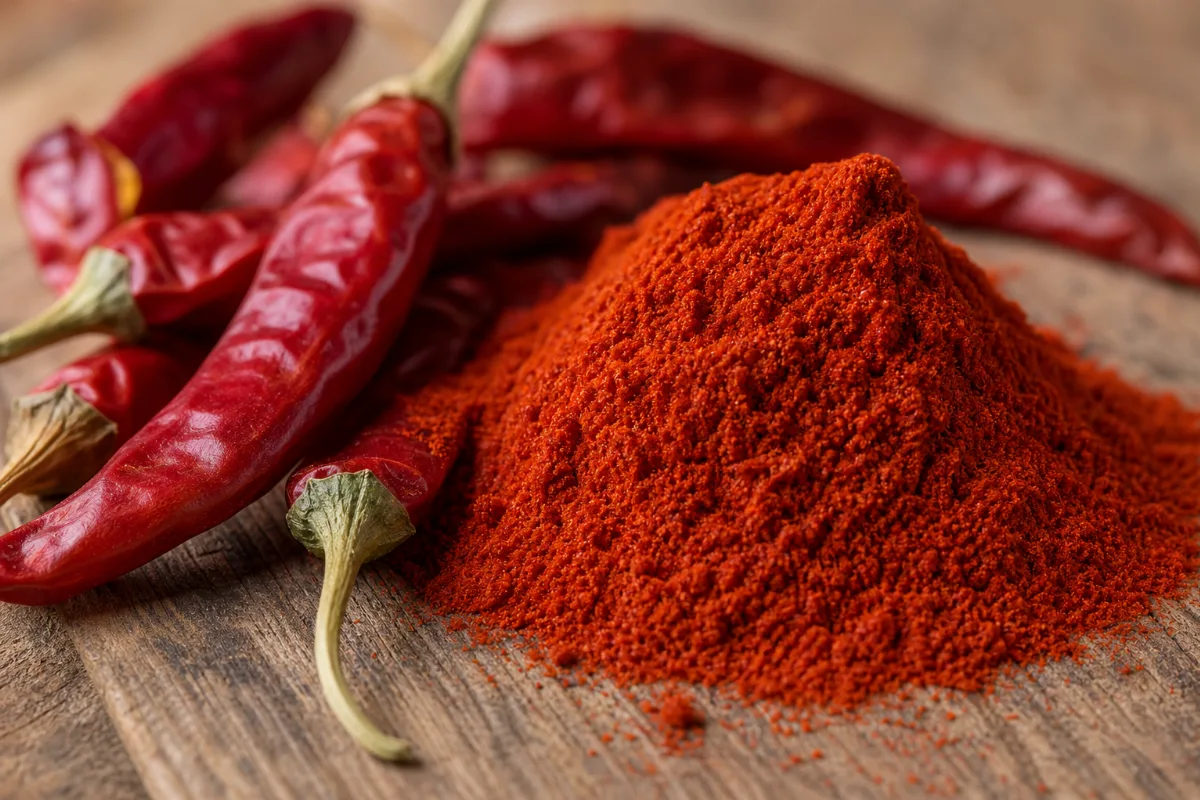
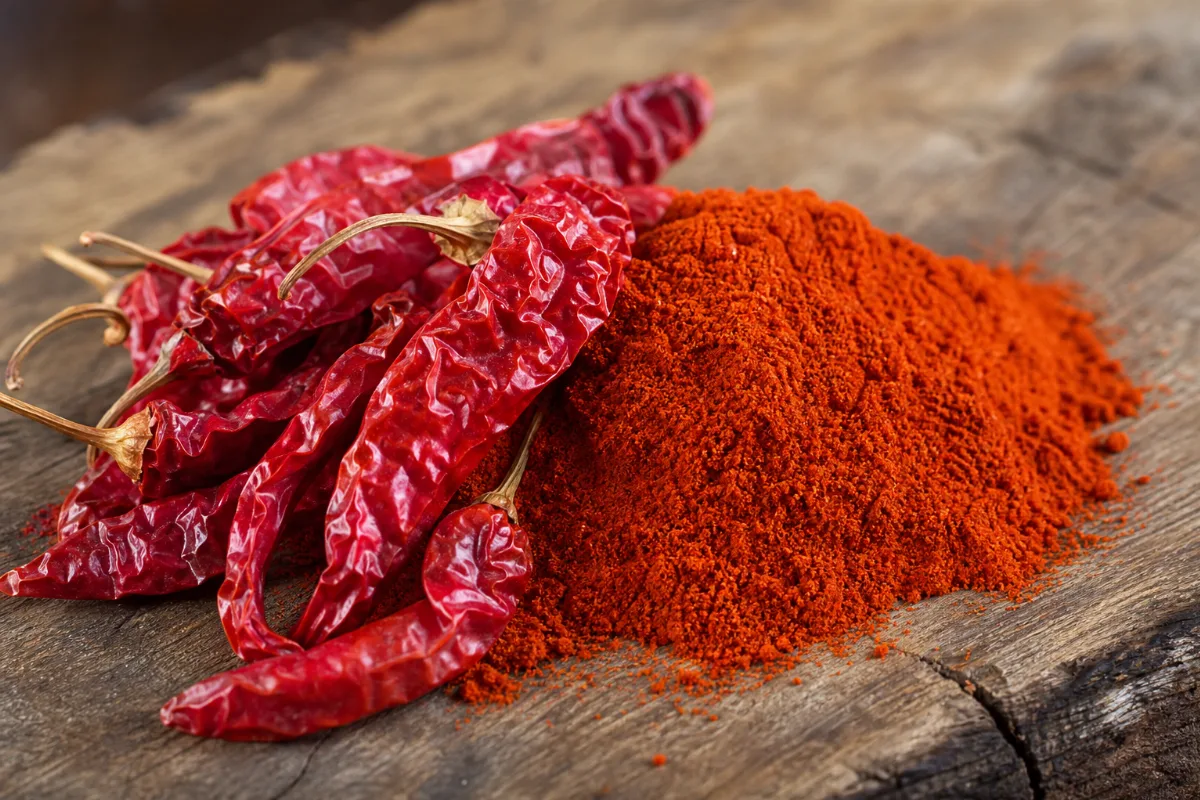
Paprika is a mild, sweet, red spice from dried peppers that colors and gently flavors stews, rice and rubs; research on it is thin, and some imported powders have had contamination problems.
Source of red carotenoid pigments (capsanthin)
Exercise efficiency and thinking tests (pigment extract)
Heart and vessel disease in spicy-food eaters
Colour additive intake and diabetes risk (association)
Aroma: Wood smoke over mild, sweet dried red pepper.
In the kitchen: soups and stews, rice and grains, grilling and rubs
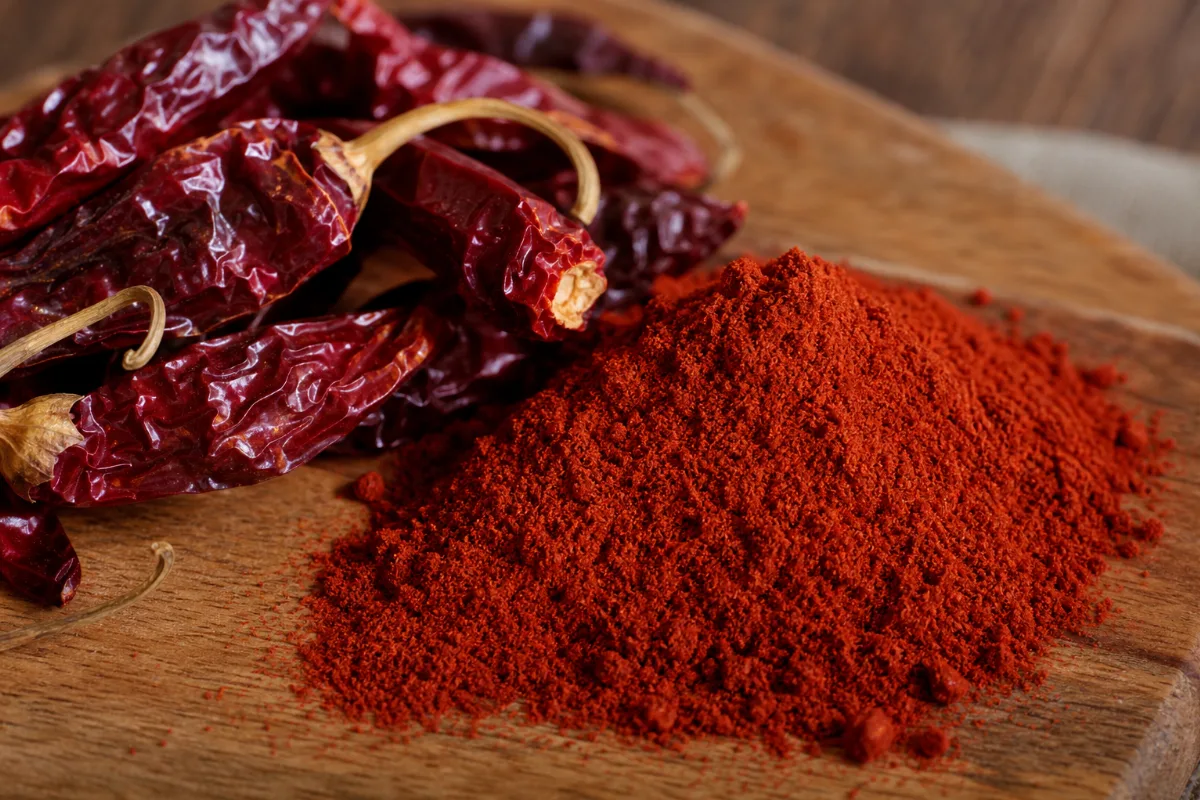
Smoked paprika (pimentón) tastes of wood smoke with mild pepper sweetness and is used in stews, rice and rubs; smoking leaves PAH residues that vary a lot, and research on health benefits is very thin.
Blend of spices; no single species (typically includes Elettaria cardamomum, Cuminum cyminum, Coriandrum sativum, Cinnamomum spp., Syzygium aromaticum, Piper nigrum, Myristica fragrans)
Warm / woodySweetEarthyHot / pungent
Aroma: Warm and sweet, with floral cardamom, earthy cumin and a gentle peppery bite.
In the kitchen: curries, soups and stews, grilling and rubs, vegetables, rice and grains
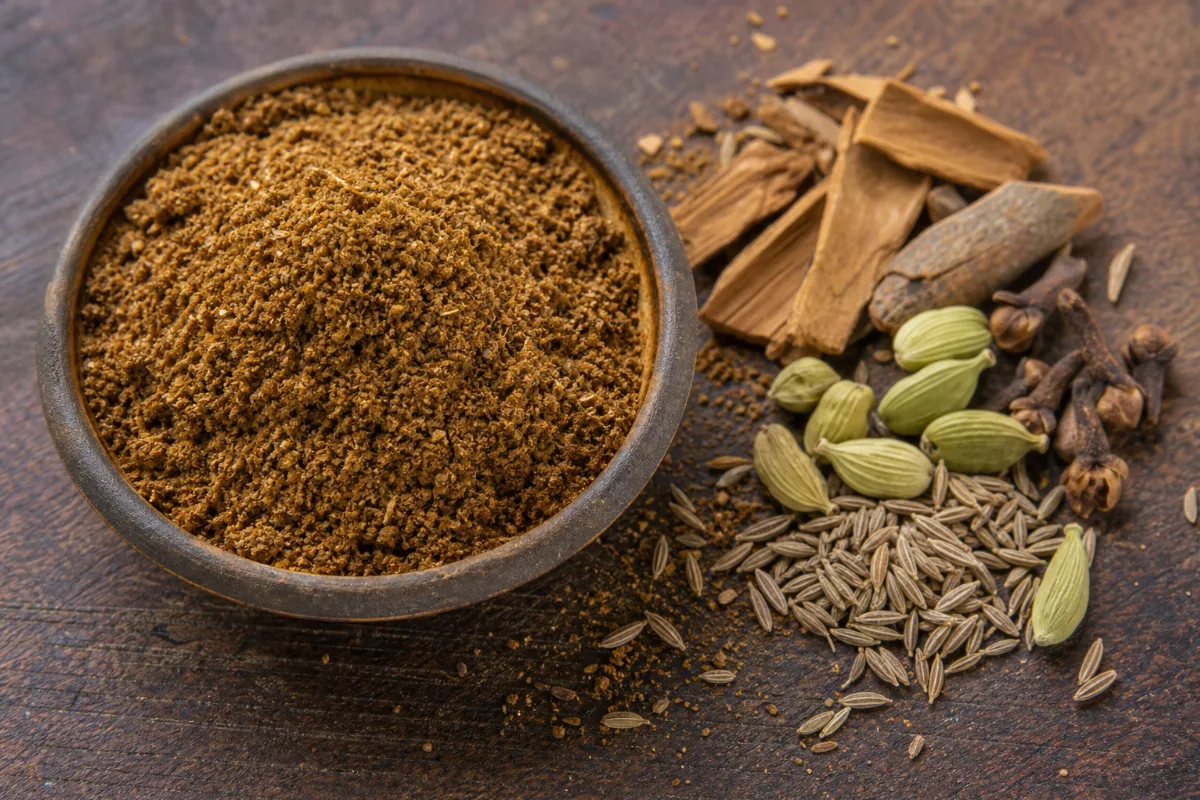
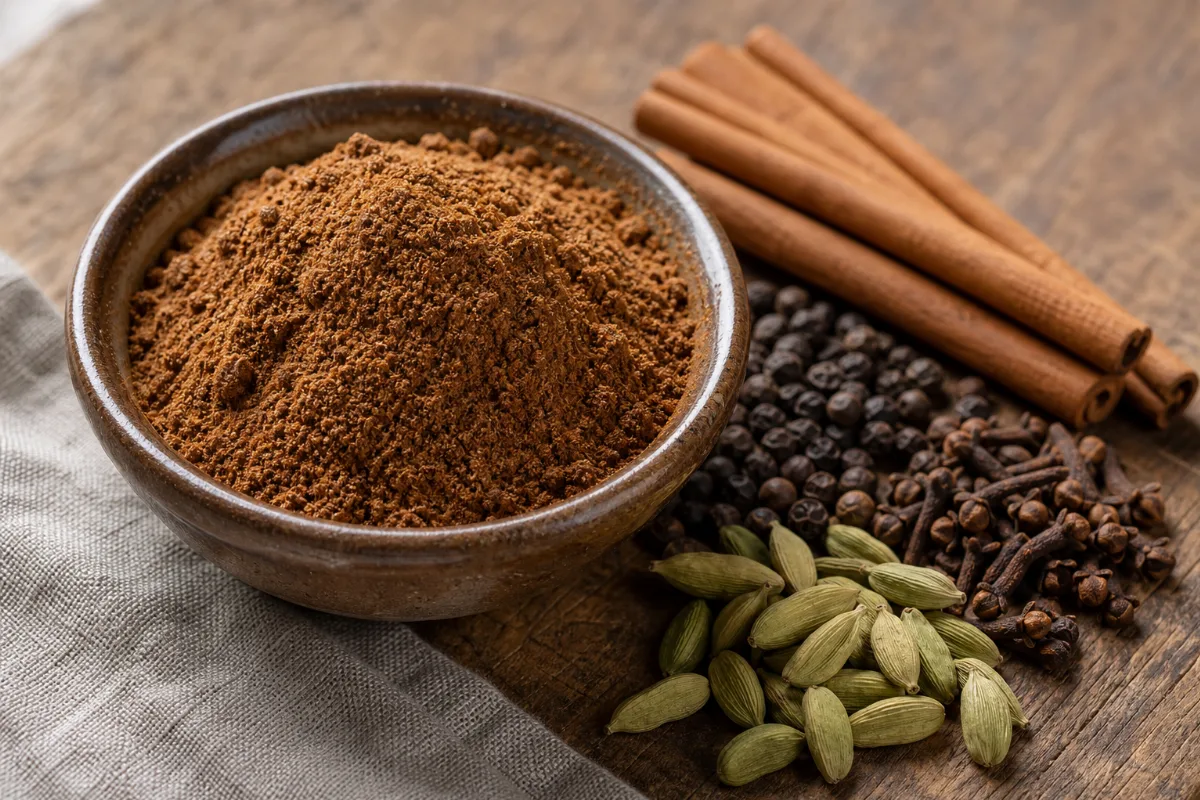
Garam masala is a warm, sweet and earthy Indian spice blend added late to curries and stews; it is rarely studied as a blend, and its health points come from the spices in it.
Aroma: Warm, earthy and savory, with a little heat.
In the kitchen: curries, soups and stews, rice and grains, vegetables
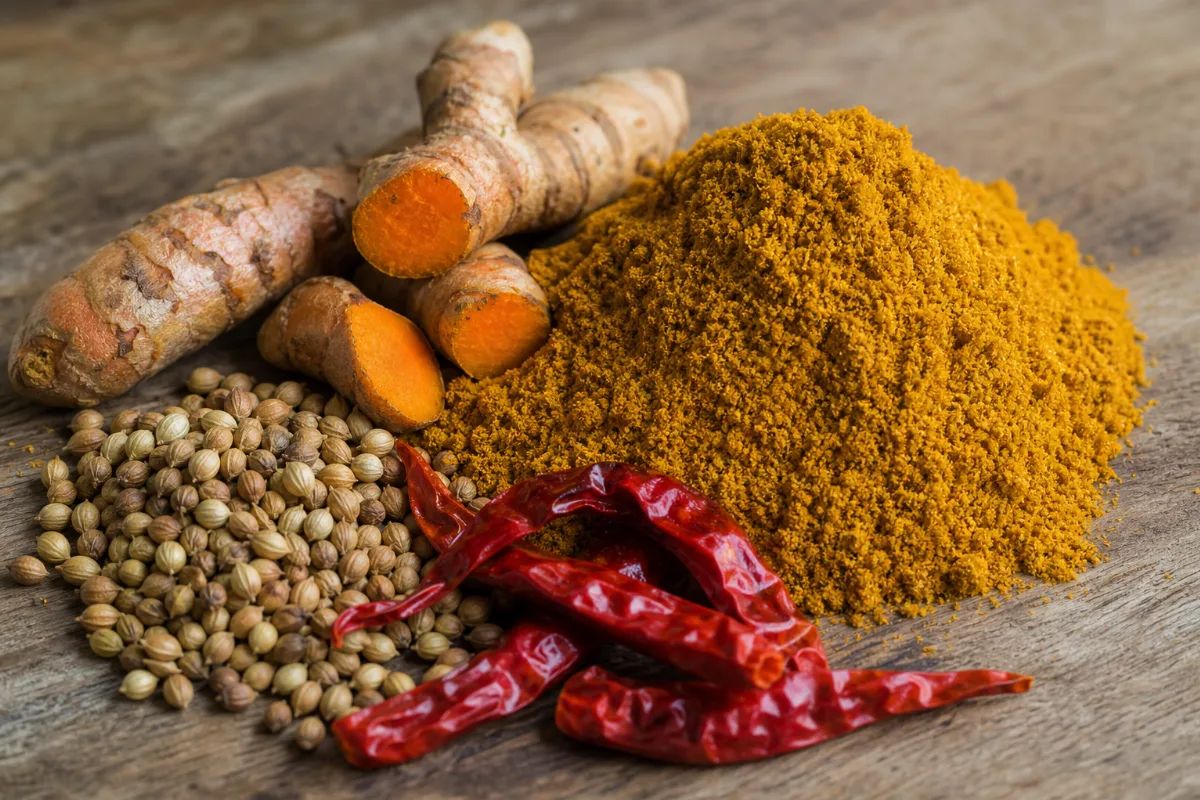
Curry powder is a warm, earthy, golden blend for curries and stews; blends are rarely studied as a whole, so check the label for salt and allergens such as mustard, celery or sesame.
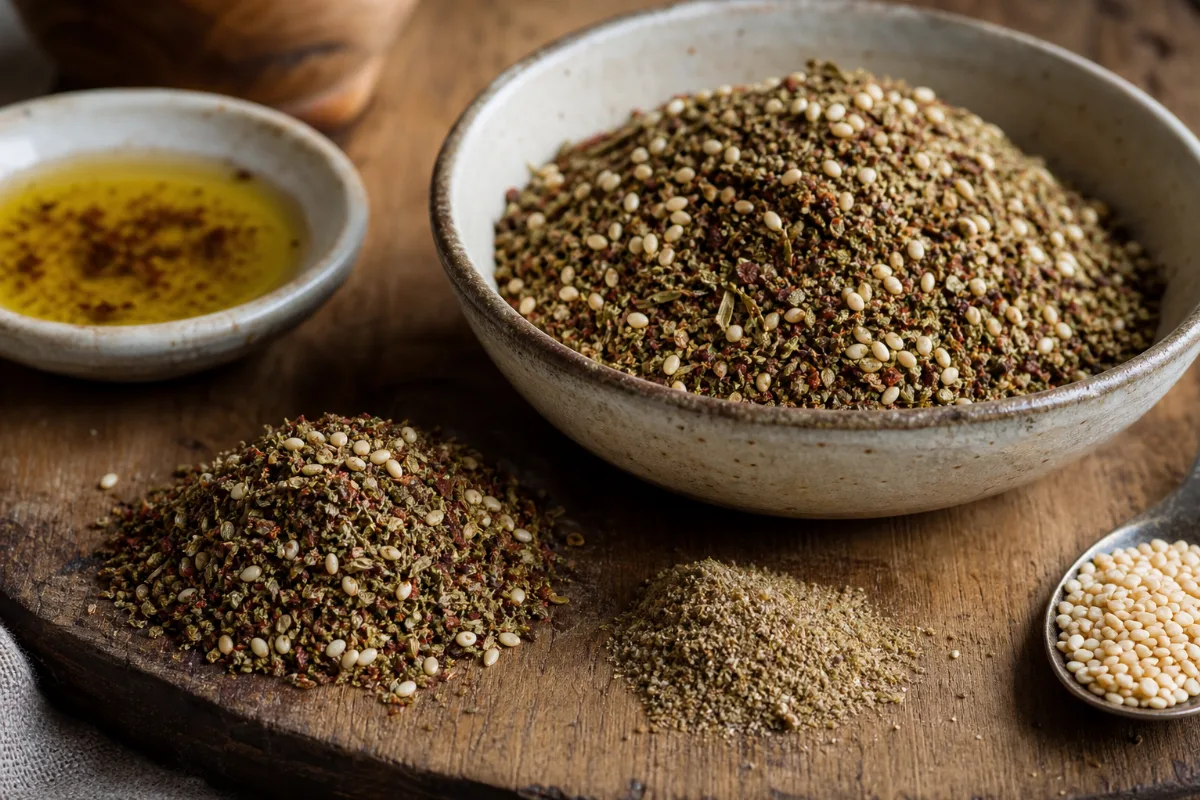
Aroma: Herby and earthy like thyme and oregano, with a toasted, nutty note from sesame and a lemony hint.
In the kitchen: baking, grilling and rubs, vegetables, rice and grains
Za'atar is a tangy, herby, nutty Middle Eastern blend of thyme or oregano, sumac, sesame and salt; it is rarely studied as a blend, and sesame is a major allergen.
Thyme medicines for chesty cough (traditional use)
Antioxidant and antimicrobial activity of Origanum syriacum
Aroma: Sweet and warm, with a strong anise-licorice note and a little clove.
In the kitchen: grilling and rubs, soups and stews
Chinese five-spice is a sweet, warm, anise-scented blend used on duck, pork and in braises; it is rarely studied as a blend, and its cassia and star anise parts carry specific cautions.
Antioxidant capacity in a laboratory measure
Traditional use for indigestion and as an antiseptic
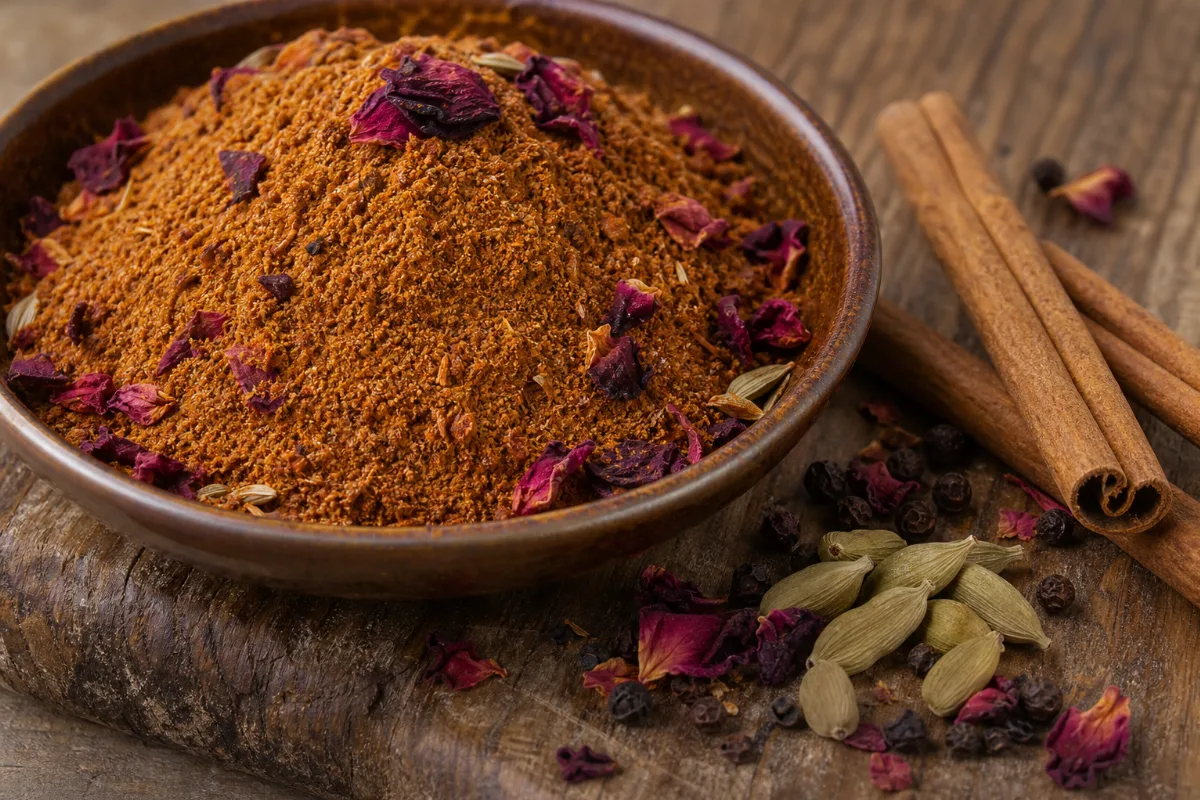
Aroma: Intensely fragrant, warm and complex, with sweet spice and a hint of flowers.
In the kitchen: soups and stews, grilling and rubs, rice and grains, desserts
Ras el hanout is a warm, sweet and earthy North African blend of a dozen or more spices for stews, rubs and couscous; it is rarely studied as a blend, and labels are worth reading for allergens.
Blend of Thymus vulgaris, Satureja species, Salvia rosmarinus, Origanum vulgare and O. majorana; sometimes Lavandula angustifolia
EarthyWarm / woodyFloral
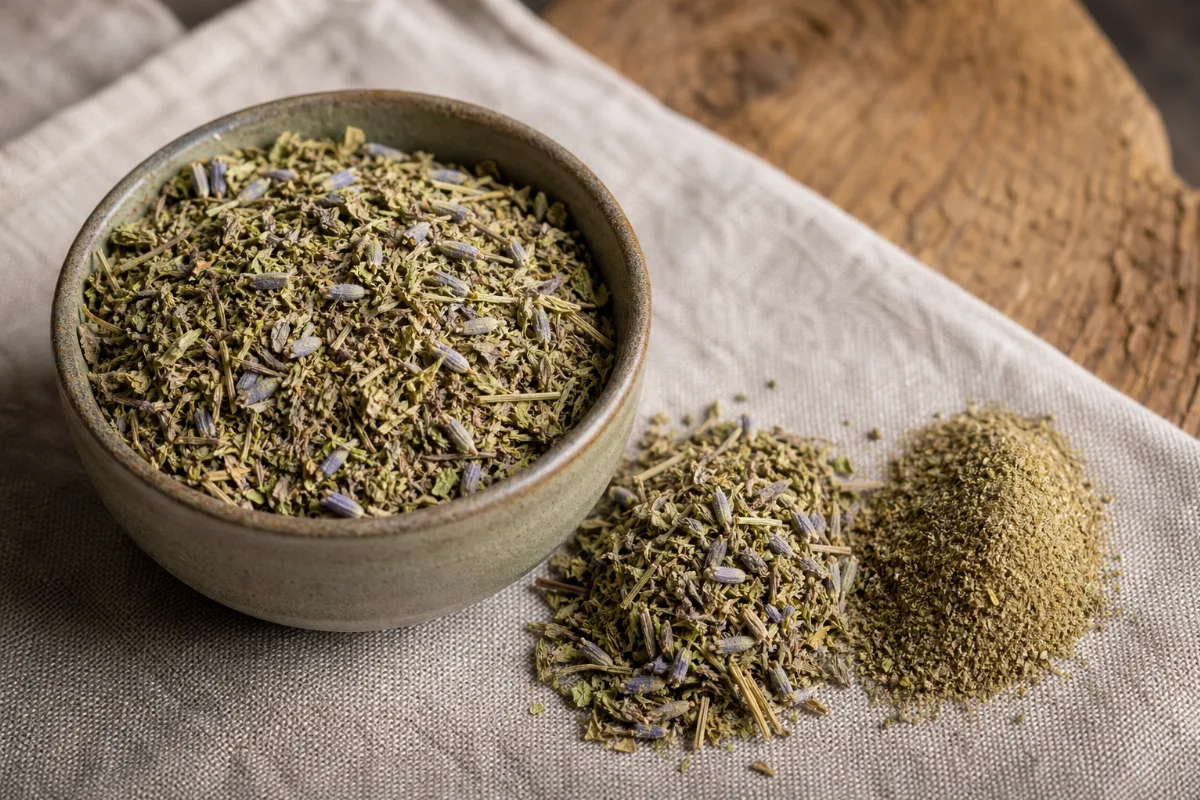
Aroma: Piney and herbal, with warm, resinous notes and sometimes a soft floral hint from lavender.
In the kitchen: grilling and rubs, vegetables, soups and stews
Herbes de Provence is an earthy, piney dried-herb blend for grilled meat, fish and vegetable stews; it is rarely studied as a blend, and the herbs in it carry mint-family allergy and medicine cautions at supplement level.
Thyme for chesty coughs with colds (traditional use)
Blend of spices; no single species (often Piper nigrum, Cinnamomum spp., Syzygium aromaticum, Pimenta dioica, Cuminum cyminum, Coriandrum sativum)
Warm / woodySweetHot / pungent
Aroma: Warm and sweet like cinnamon and cloves, with a peppery edge.
In the kitchen: grilling and rubs, soups and stews, vegetables
Baharat is a warm, sweet and peppery Middle Eastern spice blend for meat, soups and vegetables; it is rarely studied as a blend, so health facts come from its single spices.
Spice blend (no single species), Capsicum spp. (chili base), Trigonella foenum-graecum (fenugreek), Aframomum corrorima (korarima)
Hot / pungentWarm / woodyEarthy
Aroma: Fiery and warm, with sweet spice and a hint of maple from fenugreek.
In the kitchen: soups and stews, grilling and rubs, vegetables
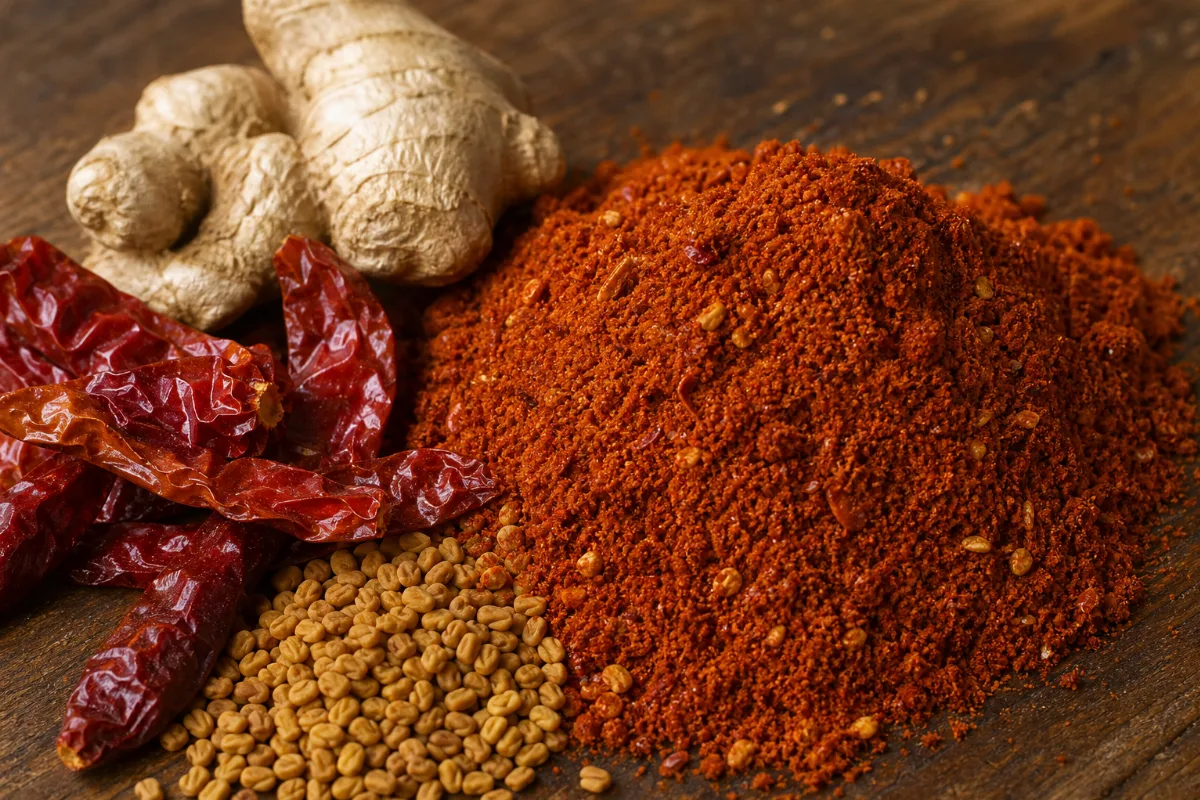
Berbere is a hot, warm and earthy Ethiopian and Eritrean chili blend used in stews and rubs; it has not been studied as a blend, and its fenugreek brings a legume-allergy and pregnancy caution.
Chili intake and health outcomes (main ingredient)
Blend of nuts, seeds and spices; no single species
EarthyWarm / woodyCitrusy
Aroma: Toasty and nutty, with earthy cumin and a light citrus note from coriander.
In the kitchen: vegetables, grilling and rubs, soups and stews
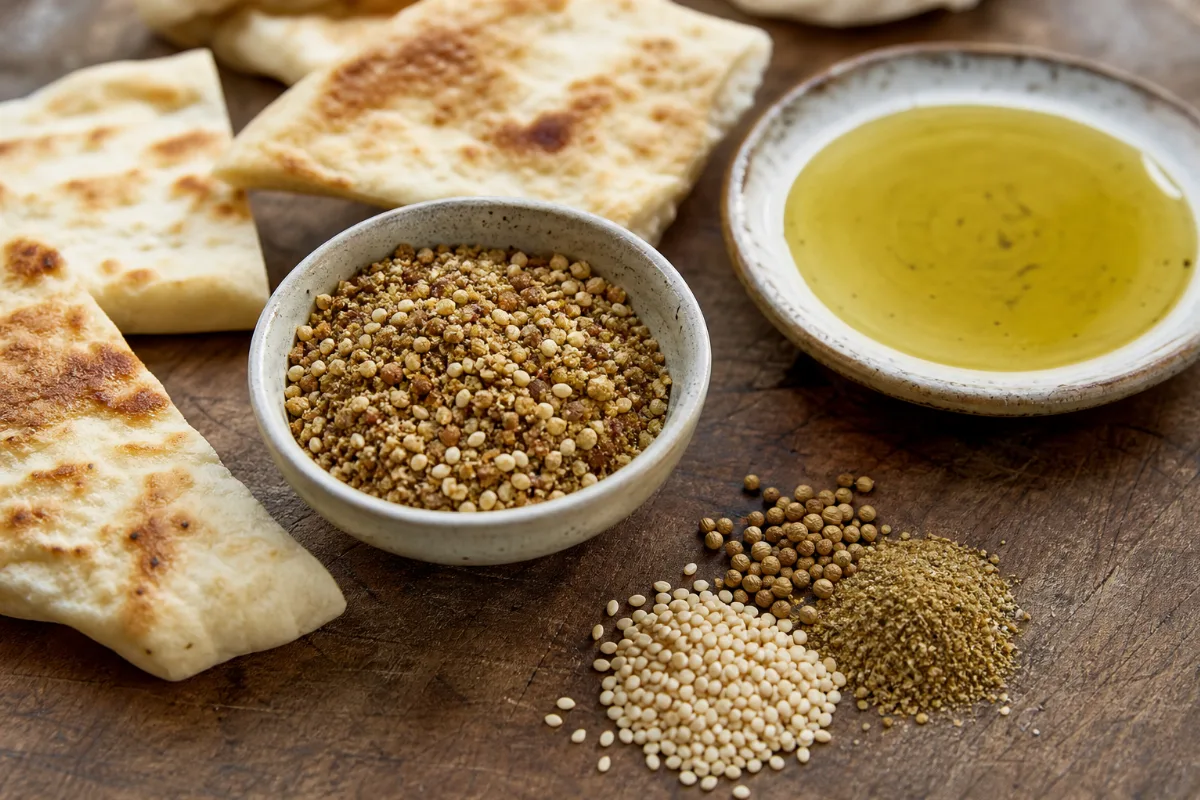
Dukkah is a crunchy, nutty, toasty Egyptian blend of nuts, sesame, cumin and coriander for dipping with bread and oil; it is rarely studied as a blend, and nuts and sesame make it an allergy food.
Spice blend (no single species); chile is Capsicum spp.
EarthyWarm / woodyHot / pungent
Aroma: Earthy and savory, with a garlic note and a little warmth from the chile.
In the kitchen: soups and stews, grilling and rubs, curries
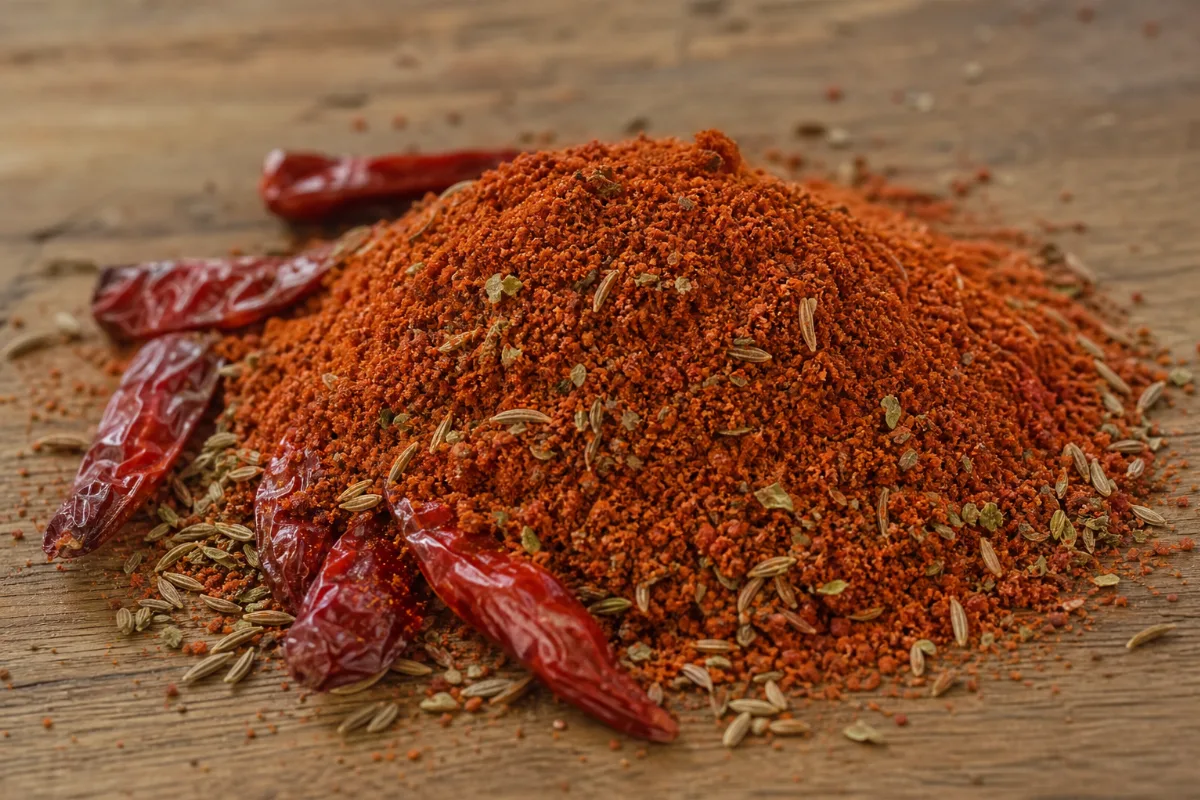
Chili powder is an earthy, savory, mildly hot blend for chili, tacos and rubs; the blend itself is not studied for health, but check the label for salt and allergens, and note that some ground chili has tested high in lead.
Aroma: Warm and sweet, led by cinnamon, with sharp clove and a soft nutty note from nutmeg.
In the kitchen: baking, desserts, tea and drinks
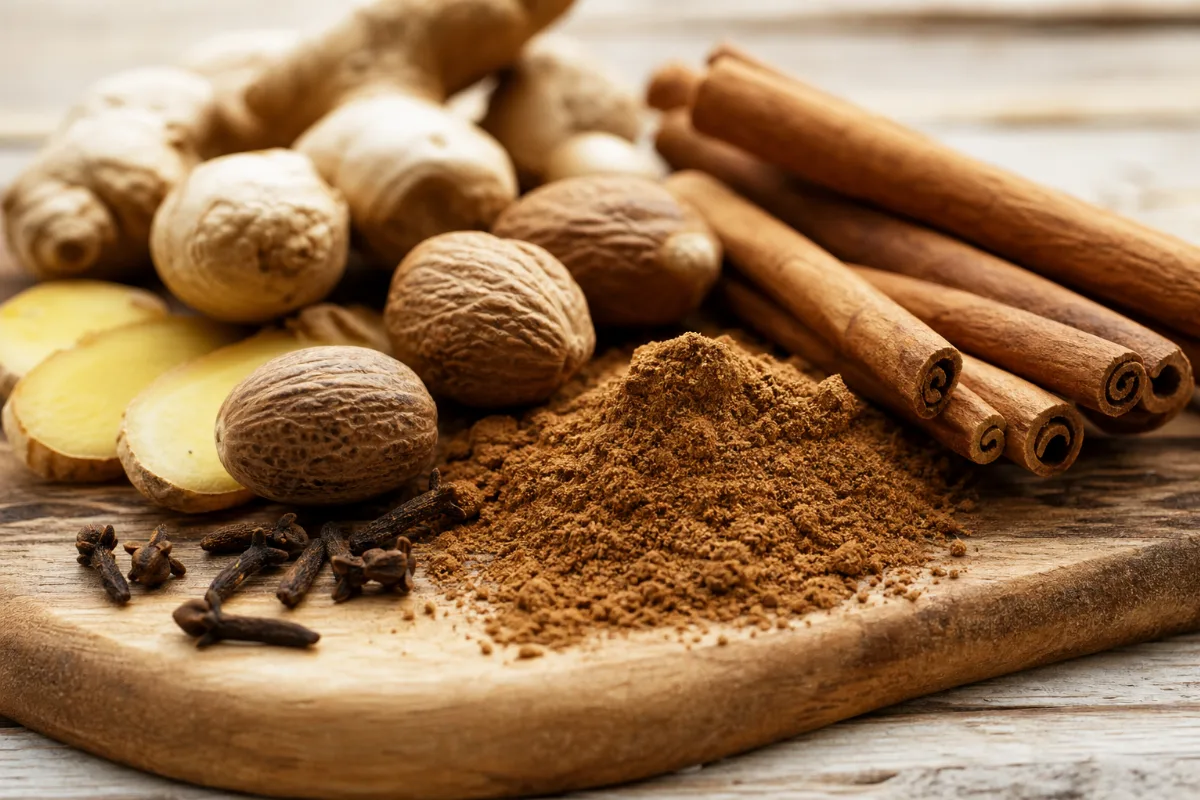
Pumpkin pie spice is a warm, sweet blend of cinnamon, ginger, nutmeg and cloves used in pies, baking and coffee drinks; it is not studied as a blend, and its cautions come from cassia coumarin, large amounts of nutmeg and lead in some ground spices.
Aroma: Savory and peppery, with garlic, paprika and a little heat.
In the kitchen: grilling and rubs, soups and stews, rice and grains, vegetables
Cajun and Creole seasoning is a salty, peppery, garlicky blend with cayenne heat for meat, seafood and rice; the blend itself is not studied for health, and salt content varies widely by brand.
Aroma: Warm and spicy like allspice and thyme, with a fruity chili edge.
In the kitchen: grilling and rubs, vegetables
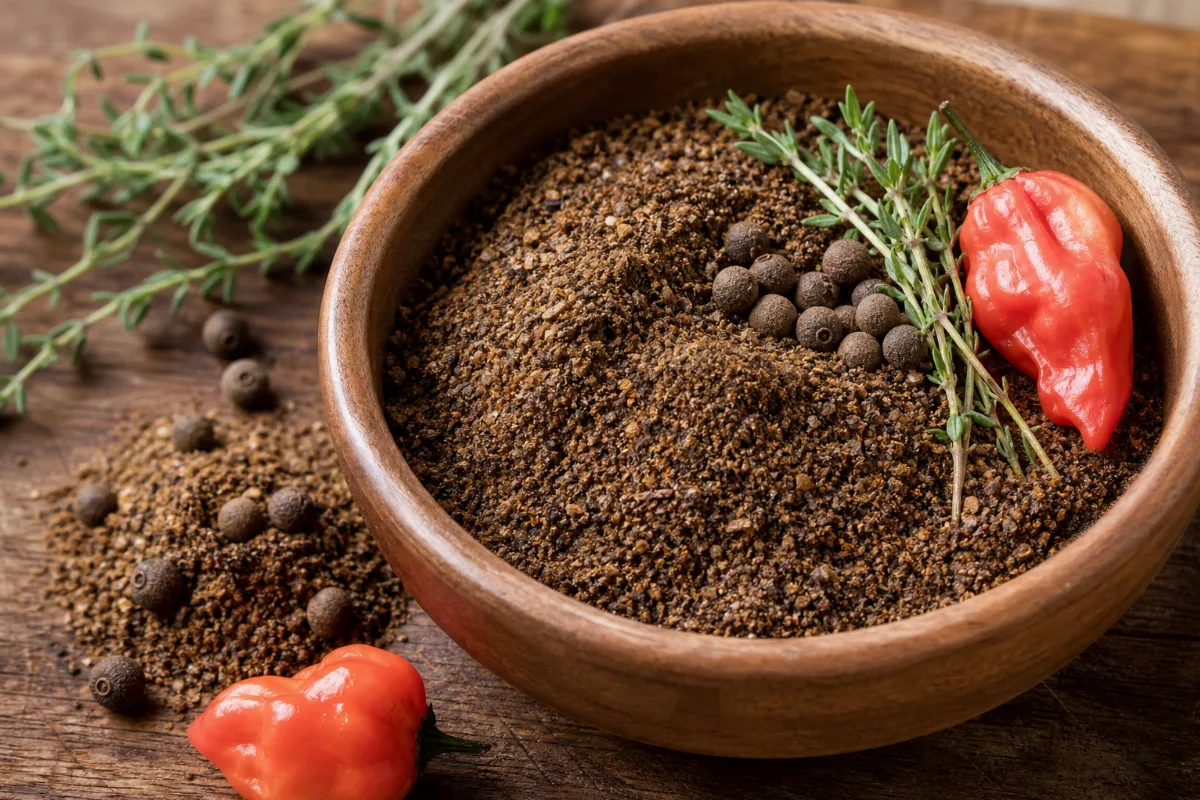
Jamaican jerk seasoning is hot, warm and sweet, built on allspice and scotch bonnet chili for grilled meat; the blend itself is not studied for health, so check the label for salt and allergens and handle the chilies with care.
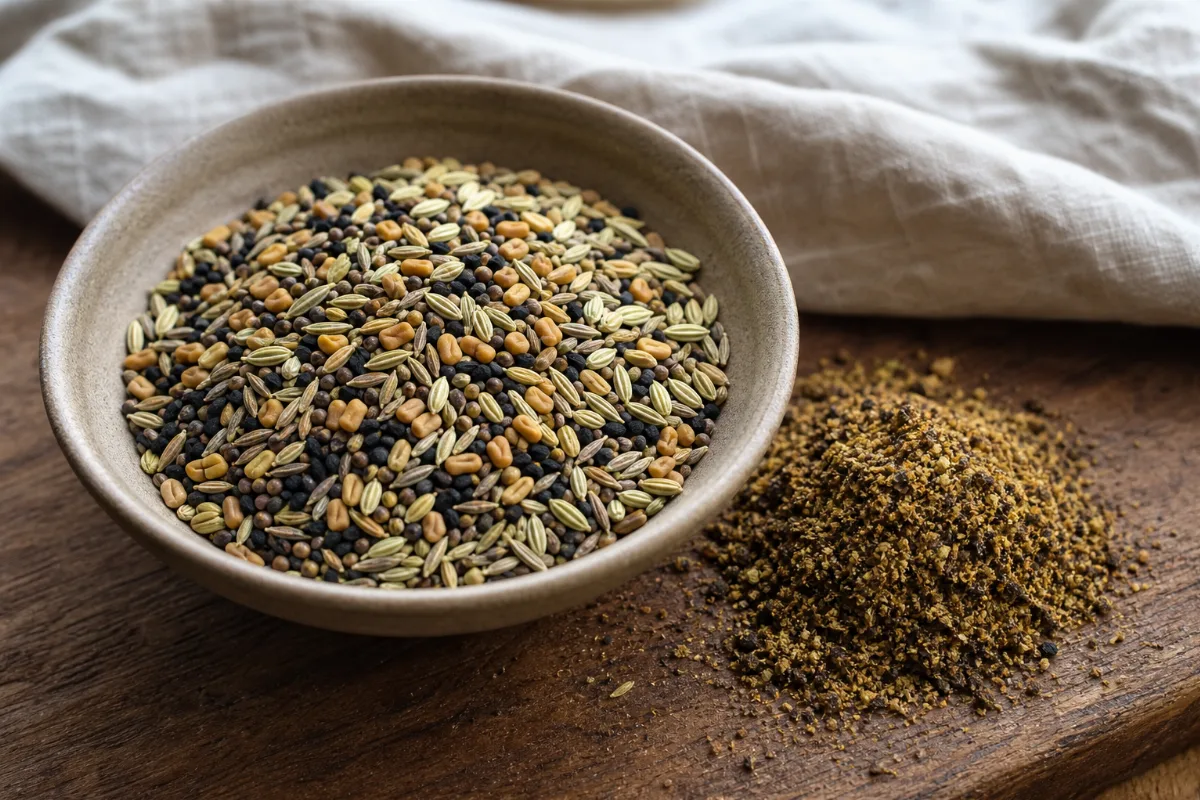
Blend of five seeds, no single species (Trigonella foenum-graecum, Cuminum cyminum, Nigella sativa, Brassica nigra, Foeniculum vulgare)
EarthyBitterLicorice / anise
Aroma: A mixed seed smell that turns toasty and fragrant when the seeds sizzle in oil.
In the kitchen: curries, pickling, vegetables, soups and stews
Panch phoron is a Bengali blend of five whole seeds, fried in hot oil at the start of a dish; it is not studied as a blend, so health facts come from its seeds, and mustard and fenugreek can cause allergy.
Blend: Mangifera indica (amchoor), Cuminum cyminum, Coriandrum sativum, Piper nigrum, Zingiber officinale, Ferula assa-foetida, plus salt
Sour / tangyEarthyHot / pungent
Aroma: Sharp and savory, with a sulfur note from black salt and a fruity tang from dried mango.
In the kitchen: vegetables, tea and drinks, rice and grains
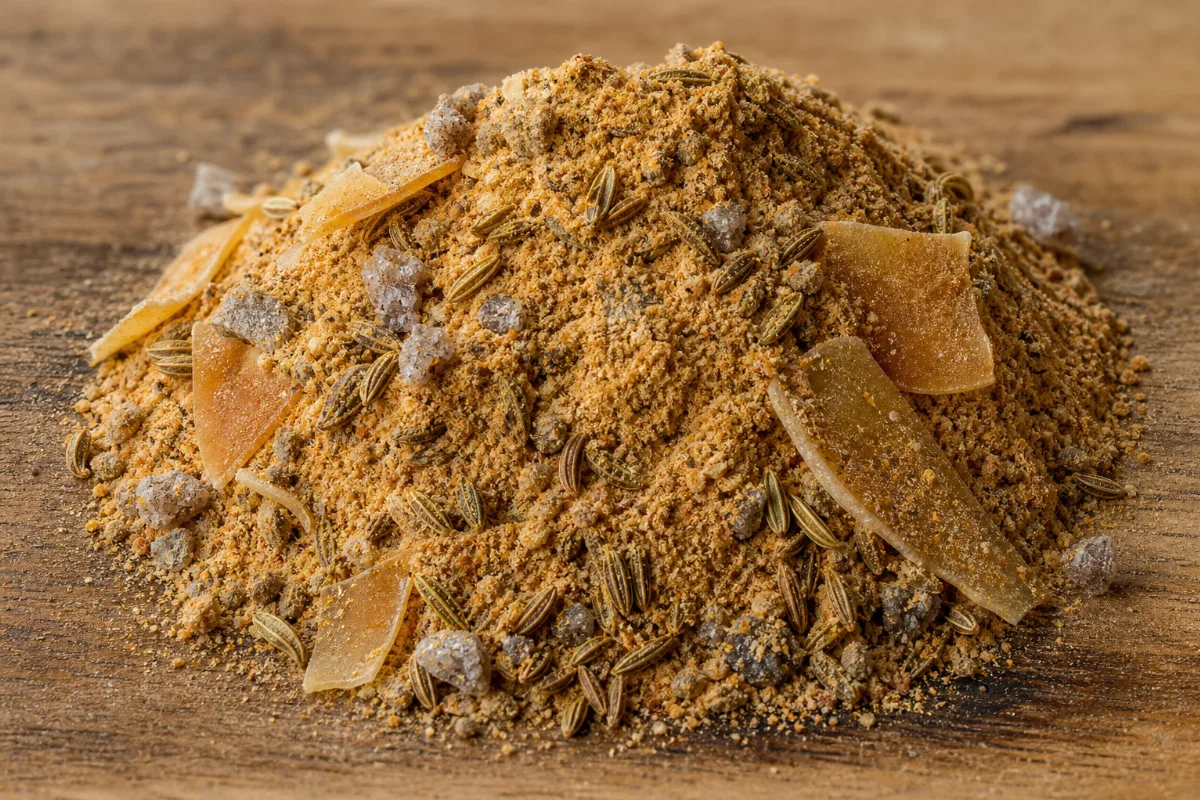
Chaat masala is a tangy, salty, savory blend sprinkled on street snacks, fruit and yogurt; it is rarely studied as a blend, and its main limits are the salt it contains and the allergens on the label.
Blend of spices; no single species (typically Capsicum annuum, Zanthoxylum piperitum, Sesamum indicum, Zingiber officinale)
Hot / pungentCitrusyEarthy
Aroma: Chili heat with a bright orange-peel note and a toasted, nutty background.
In the kitchen: soups and stews, rice and grains, grilling and rubs, vegetables
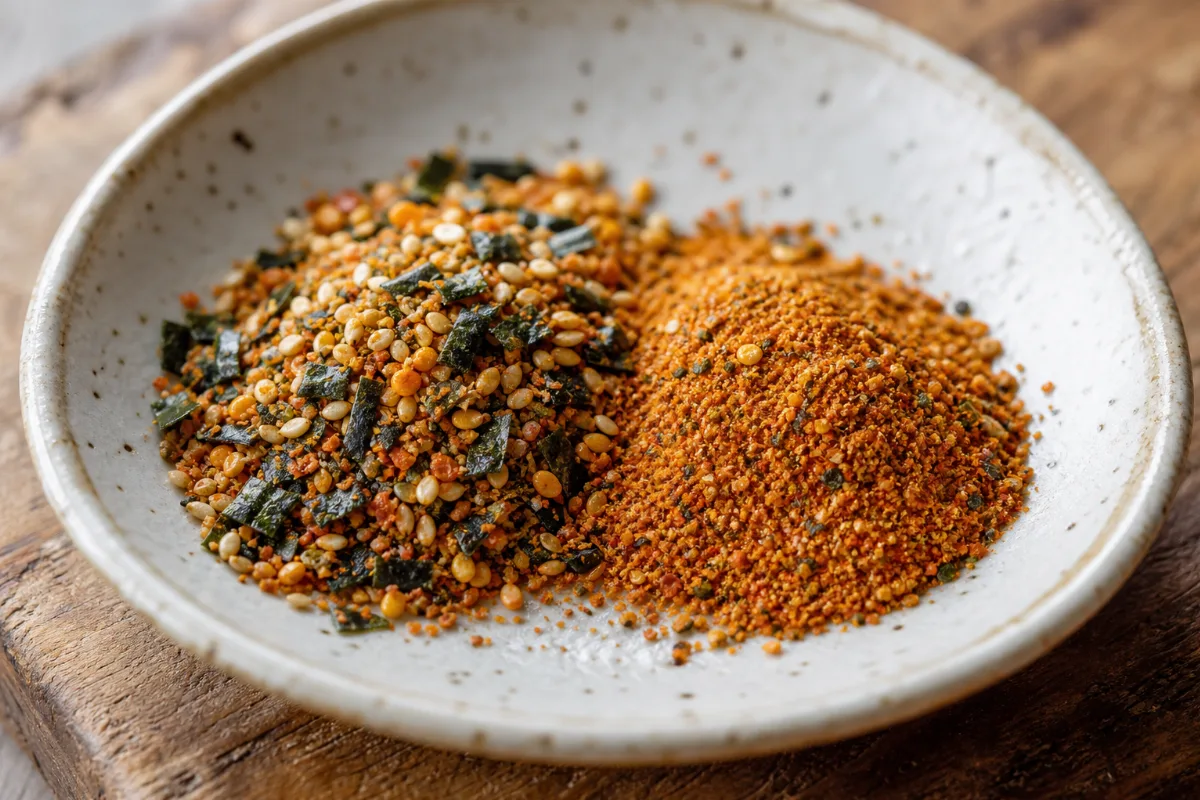
Shichimi togarashi is a Japanese chili blend that is hot, citrusy and nutty, sprinkled on noodles and rice at the table; it has not been studied as a blend, and it can contain sesame and poppy seed.
Aroma: Fruity and a little honey-like, with a sharp tang.
In the kitchen: curries, vegetables, soups and stews, grilling and rubs, pickling
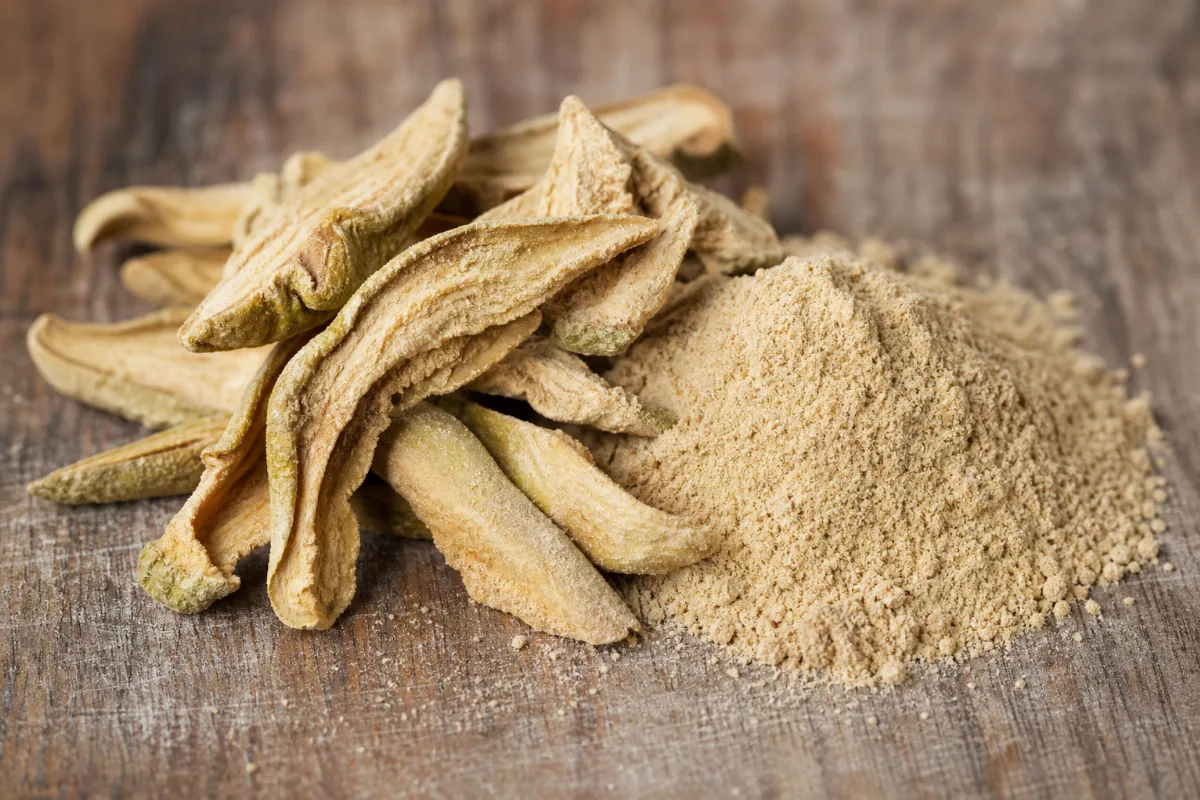
Amchur is a tart, fruity powder from dried green mango used to sour curries and vegetables; there are no human trials on it, and mango allergy or sulfite sensitivity are the main cautions.
Aroma: Mainly sour and tangy; we found no source that describes its smell.
In the kitchen: curries, soups and stews, tea and drinks, rice and grains
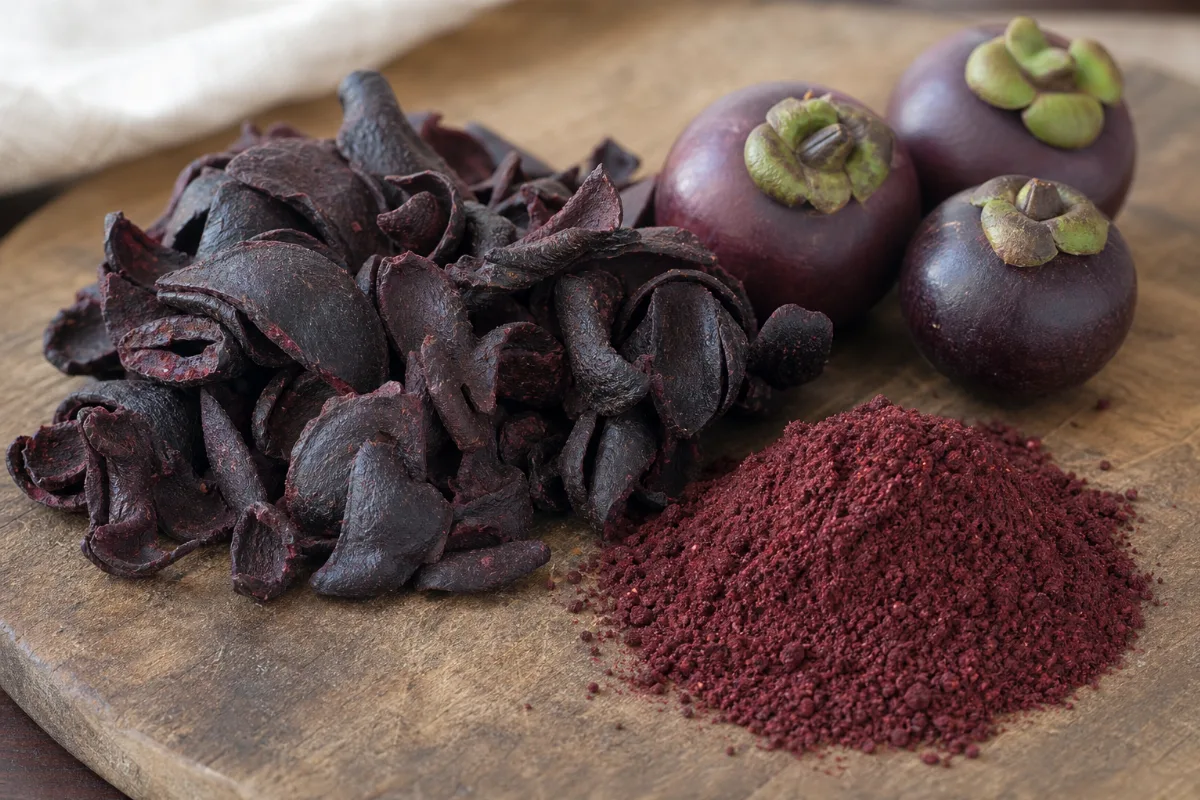
Kokum is a very sour dried fruit rind used in place of tamarind in Indian curries and drinks; nearly all health research is in labs and animals, and its cousin Garcinia cambogia supplements have liver-injury reports.
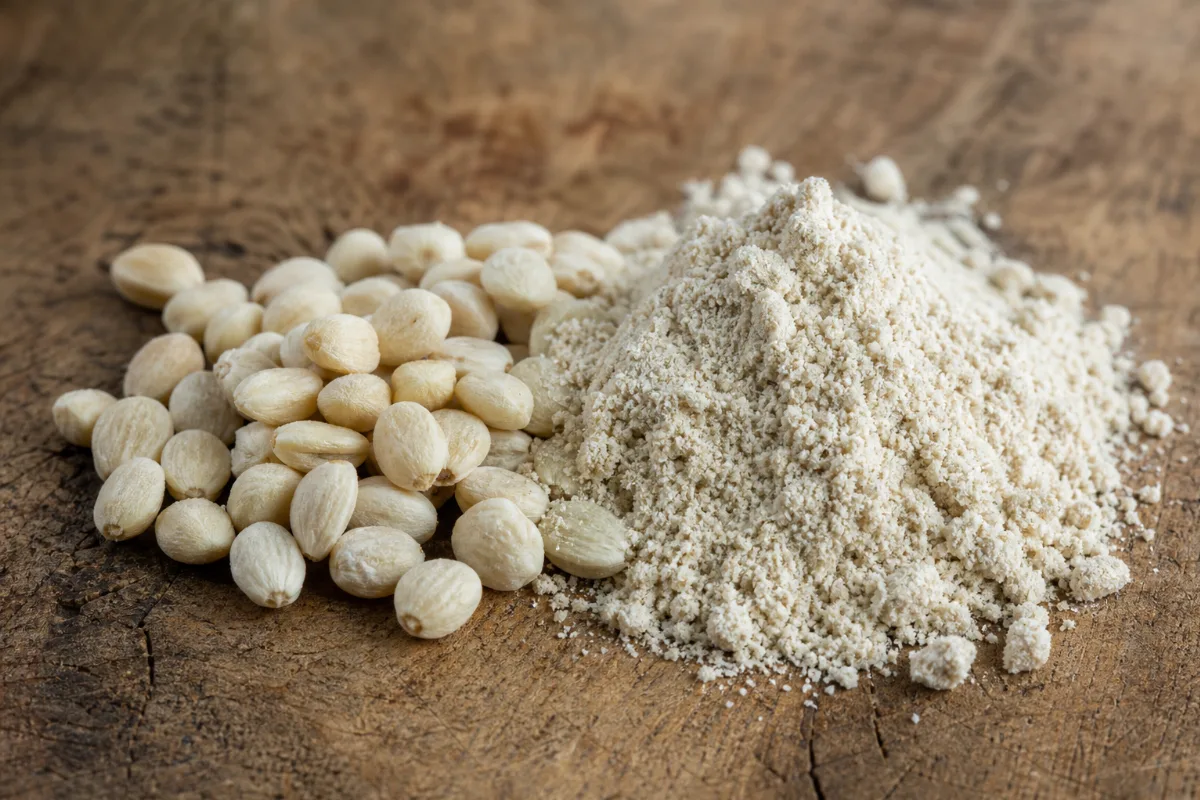
Mahlab is a cherry-stone spice that tastes of bitter almond and cherry and is used in sweet breads and pastries; it contains coumarin, and no study of it as a food or supplement was found.
No human trial found
Antioxidant and anti-inflammatory effects (reported, untested)
Other uses in people (pregnancy, medicines, allergy)
Aroma: Resinous and woody, often compared to cubeb pepper mixed with nutmeg, with a smoky note when dried over fire.
In the kitchen: soups and stews, grilling and rubs, tea and drinks, rice and grains
Grains of Selim are peppery, resinous and a little bitter and used in West African soups, sauces and coffee; we found no human studies, and rat studies hint at lower platelet counts with long, high use.
Aroma: Dried-fruit, raisin-like and a little tobacco-like when fresh; it fades as the pod ages.
In the kitchen: soups and stews, grilling and rubs
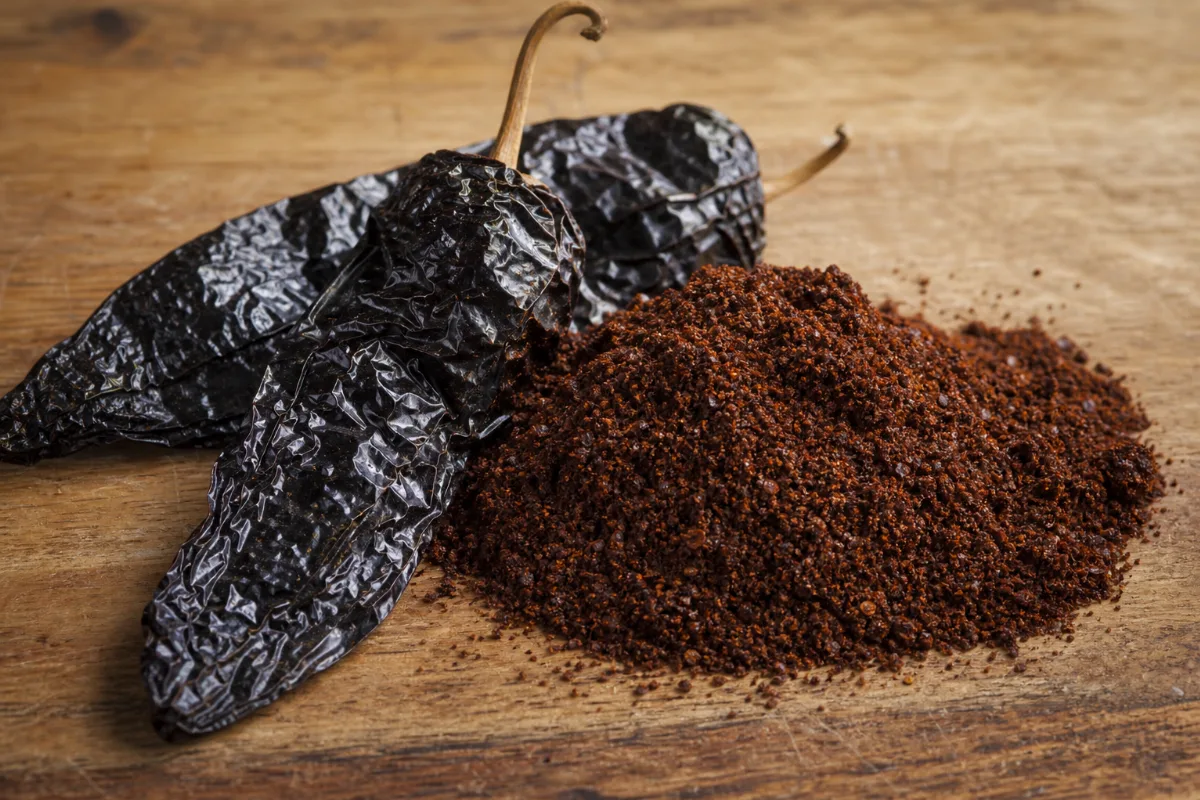
Ancho chile is mild, fruity and earthy and the base of many Mexican sauces; research on chili is mixed, and the evidence mostly covers hotter chilies and extracts.
Muscle pain (skin plaster or gel)
Heart and all-cause death in people who eat spicy food
Aroma: Smoky and woody, with an earthy depth behind the heat.
In the kitchen: grilling and rubs, soups and stews, vegetables, rice and grains
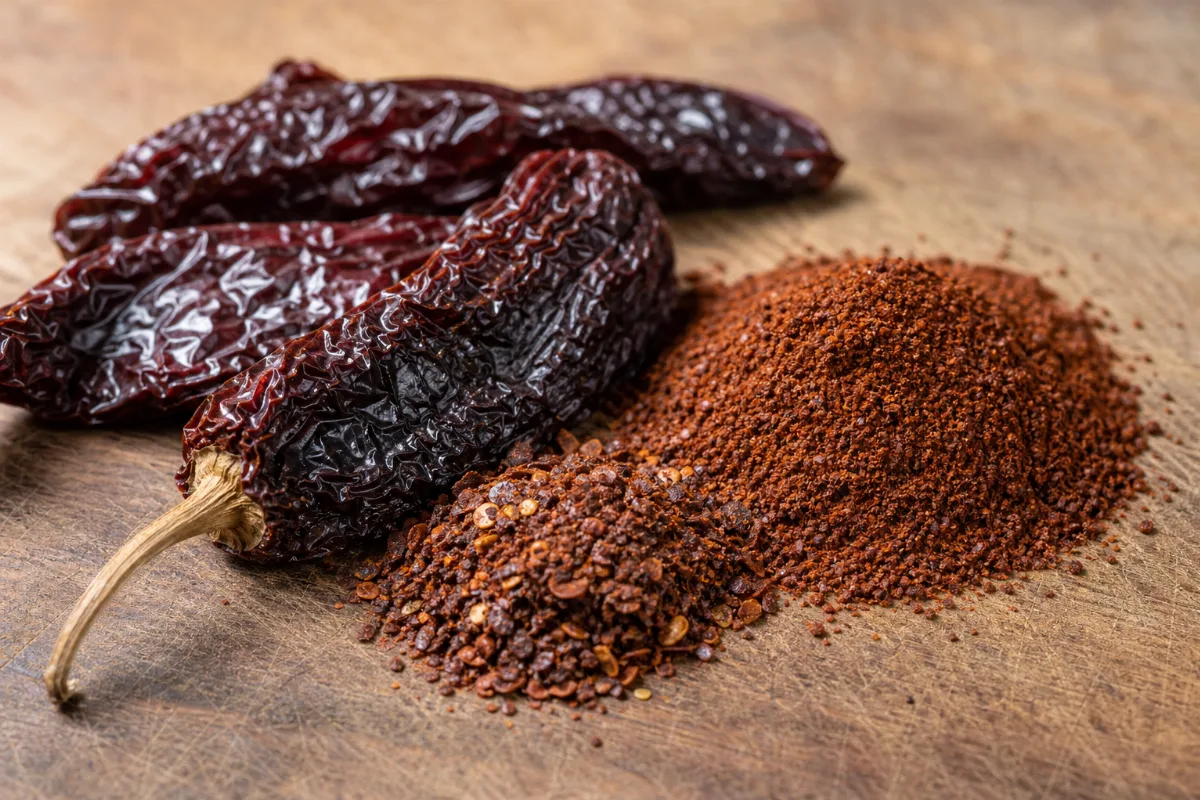
Chipotle is smoky, earthy and medium-hot and used in salsas, marinades and stews; research on chili food is mostly observational, and the heat can irritate the gut and skin.
Death from any cause and heart disease (spicy food)
Nerve pain (high-strength skin patch)
Stomach symptoms (dyspepsia, reflux, IBS)
Digestive-tract cancer risk (chili food, case-control)
Aroma: Fruity and raisin-like, with a faint cumin note.
In the kitchen: vegetables, soups and stews, grilling and rubs
Aleppo pepper is mildly hot, fruity and slightly salty and used as a flake in Turkish and Middle Eastern cooking; studies of chili eaters are observational, and chili can burn the gut, skin and eyes.
Aroma: Fruity and a little smoky, like a mild dried red pepper.
In the kitchen: curries, grilling and rubs, pickling
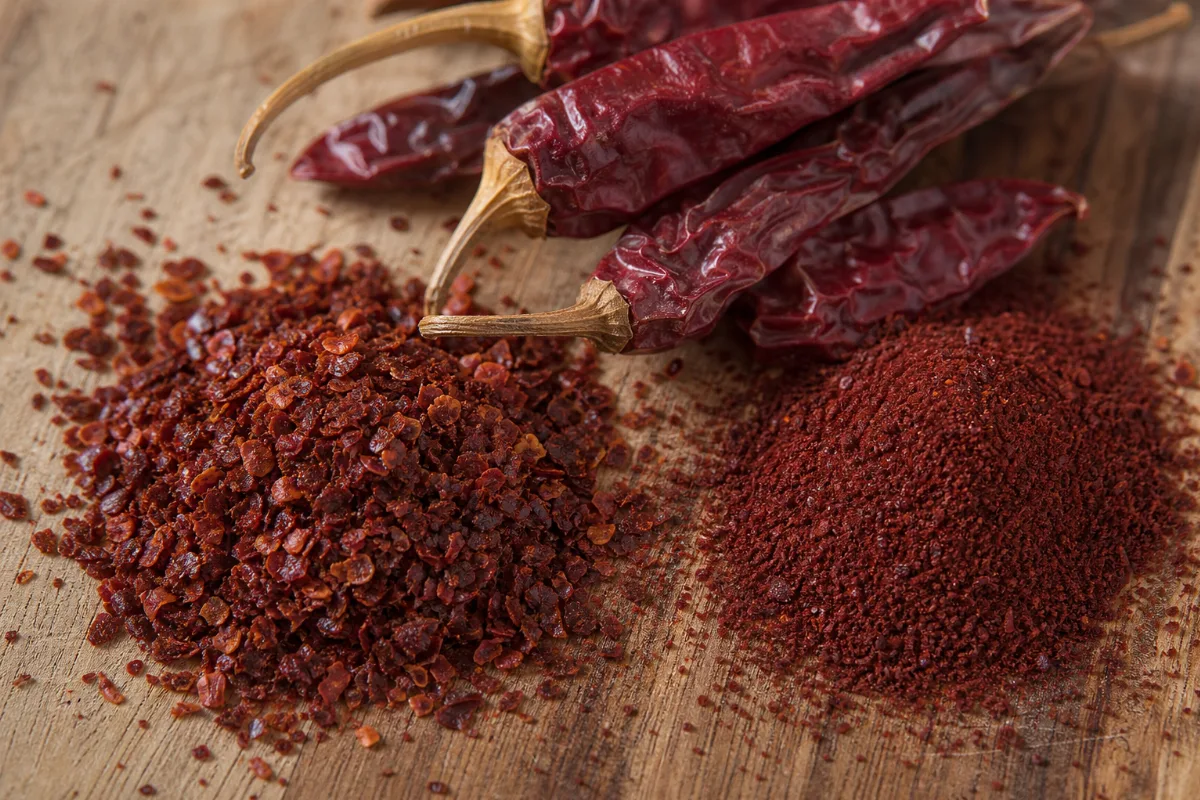
Kashmiri chili is a mild, fruity, deep-red chili used mostly for colour in Indian curries and tandoori dishes; research on chili in general is mixed, and cheap red powders are sometimes dyed.
Heart-related and all-cause death in spicy-food eaters
Nerve pain from the skin (prescription 8% capsaicin patch)
Overall health outcomes of spicy food
Blood sugar, appetite and blood pressure (capsaicin)
Aroma: Dry, woody and warm, with a camphor-like, peppery edge.
In the kitchen: curries, soups and stews, baking, tea and drinks
Cubeb pepper is pungent, warm and a little bitter and used in North African and Indonesian cooking; almost nothing is known about its health effects in people, and lab work hints at drug interactions.
Anti-inflammatory and antioxidant effects (cells and animals)
Aroma: Bright, floral and lemony, like perfumed lime.
In the kitchen: curries, soups and stews
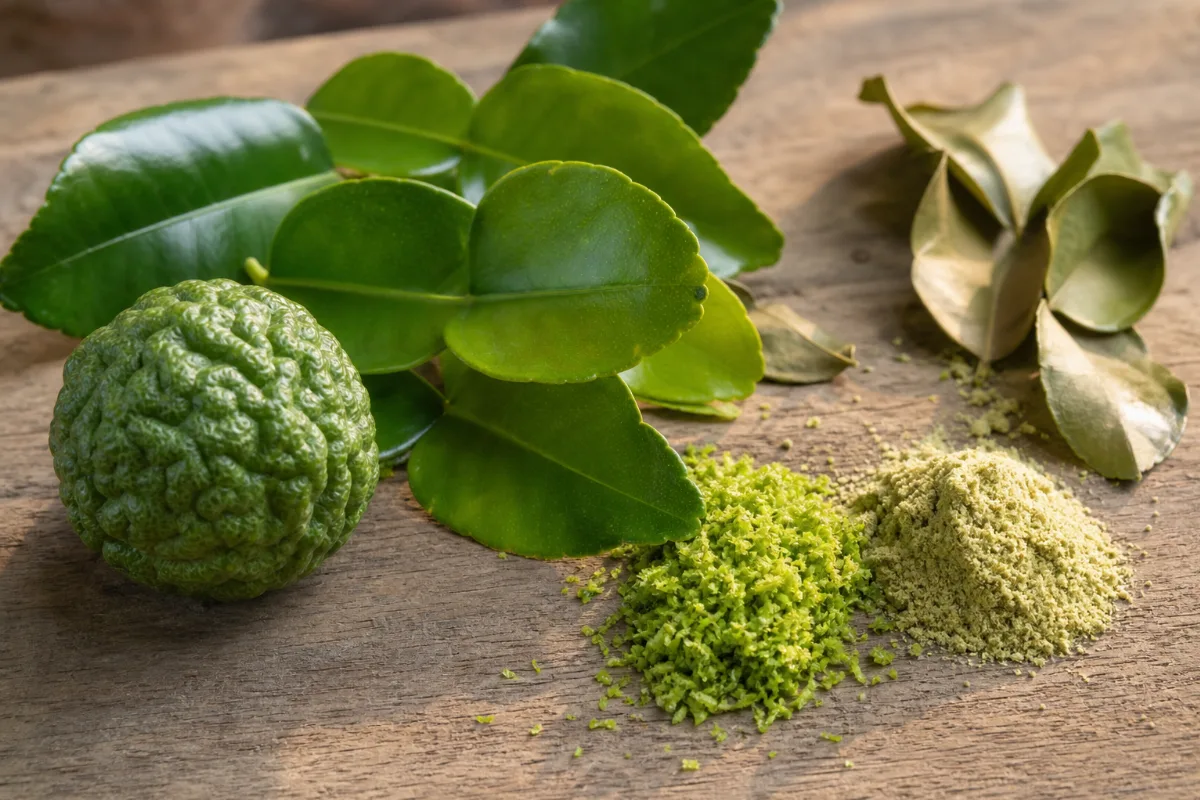
Makrut (kaffir) lime leaf is floral, lemony and fragrant and flavors Thai and Southeast Asian curries and soups; human health research on the leaf is missing, and the fruit's juice and peel can cause skin reactions in sunlight.
Aroma: Mild cinnamon-like and clove-like, warm, with a faint peppery note.
In the kitchen: curries, rice and grains, soups and stews
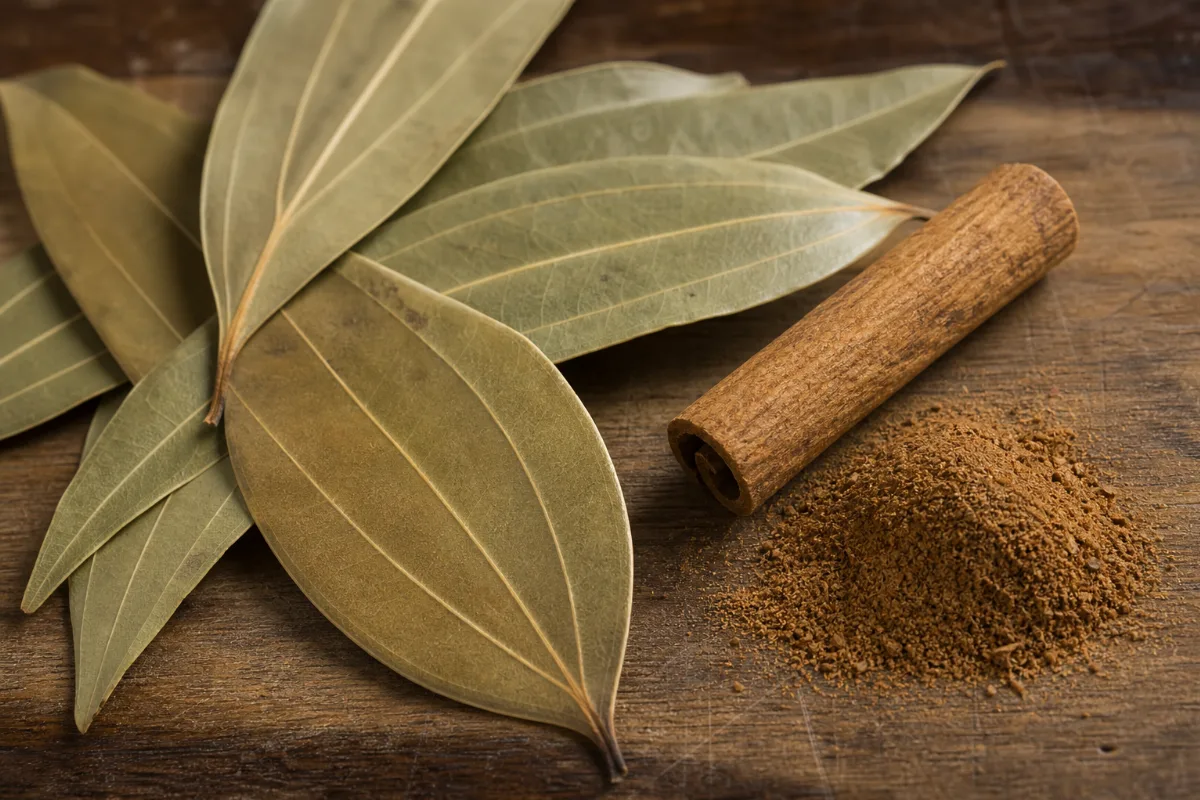
Indian bay leaf (tej patta) tastes like mild cinnamon with a clove-like edge and is used in North Indian and Mughal-style cooking; we found no human trials, so health claims rest on lab and animal work.
Aroma: Smoky and resinous, with a cool camphor note.
In the kitchen: curries, rice and grains, soups and stews
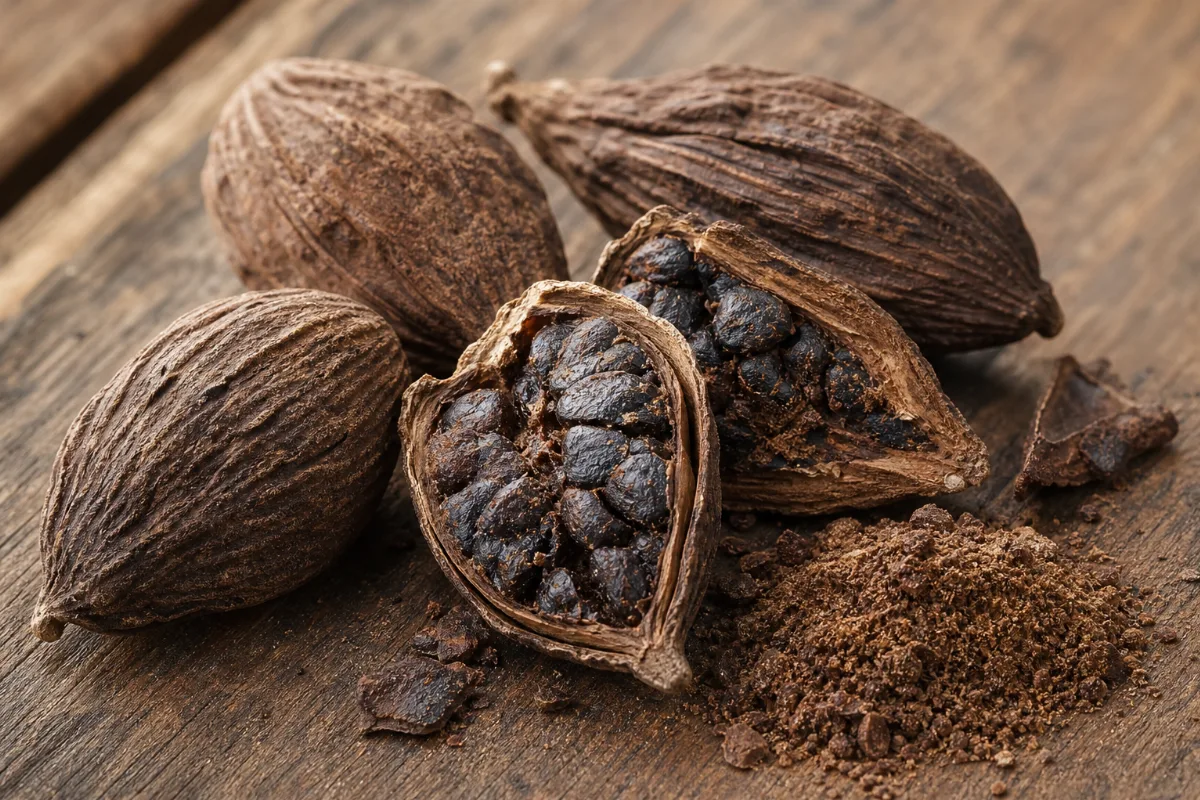
Black cardamom is smoky, camphor-like and earthy and used in rice, curries and stews; research on it is almost all lab or animal work, with no human trials found.
Stomach lining protection (rats)
Blood fats (animals)
Antioxidant, anti-inflammatory and germ-fighting effects (lab)
Aroma: Mild, earthy and musty when whole; ground seeds smell smoky and sweet.
In the kitchen: baking, desserts, curries, rice and grains
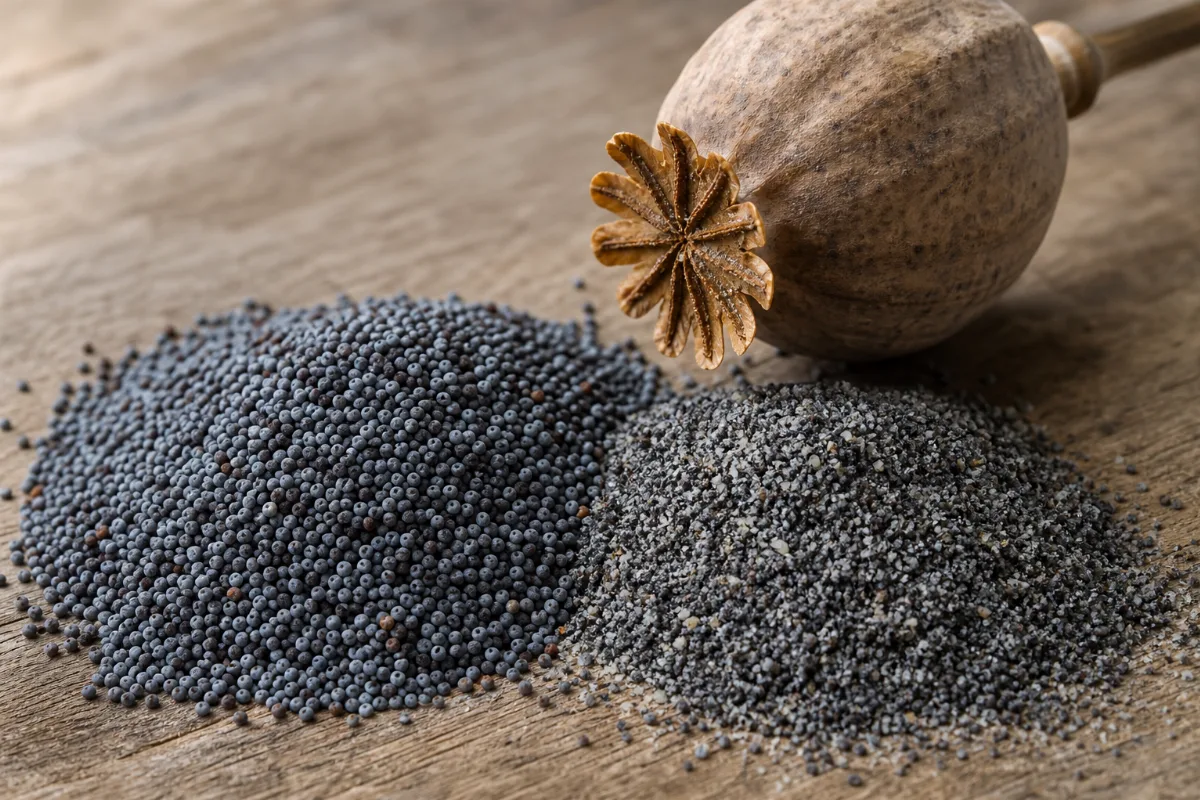
Poppy seed is nutty, earthy and slightly bitter and used in baking, fillings and curries; the seeds can carry traces of opium alkaloids, which matters for drug tests, poppy seed tea and young children.
Aroma: Mild and nutty when raw; toasting brings out a deeper, roasted smell.
In the kitchen: baking, desserts, rice and grains, vegetables
Sesame seed is nutty and rich, especially when toasted, and used in breads, sweets, tahini and stir-fries; it is a major allergen, and the small blood pressure and cholesterol trials are weak.
Aroma: Sharp lime scent with a dark, smoky, slightly fermented edge.
In the kitchen: soups and stews, rice and grains, tea and drinks
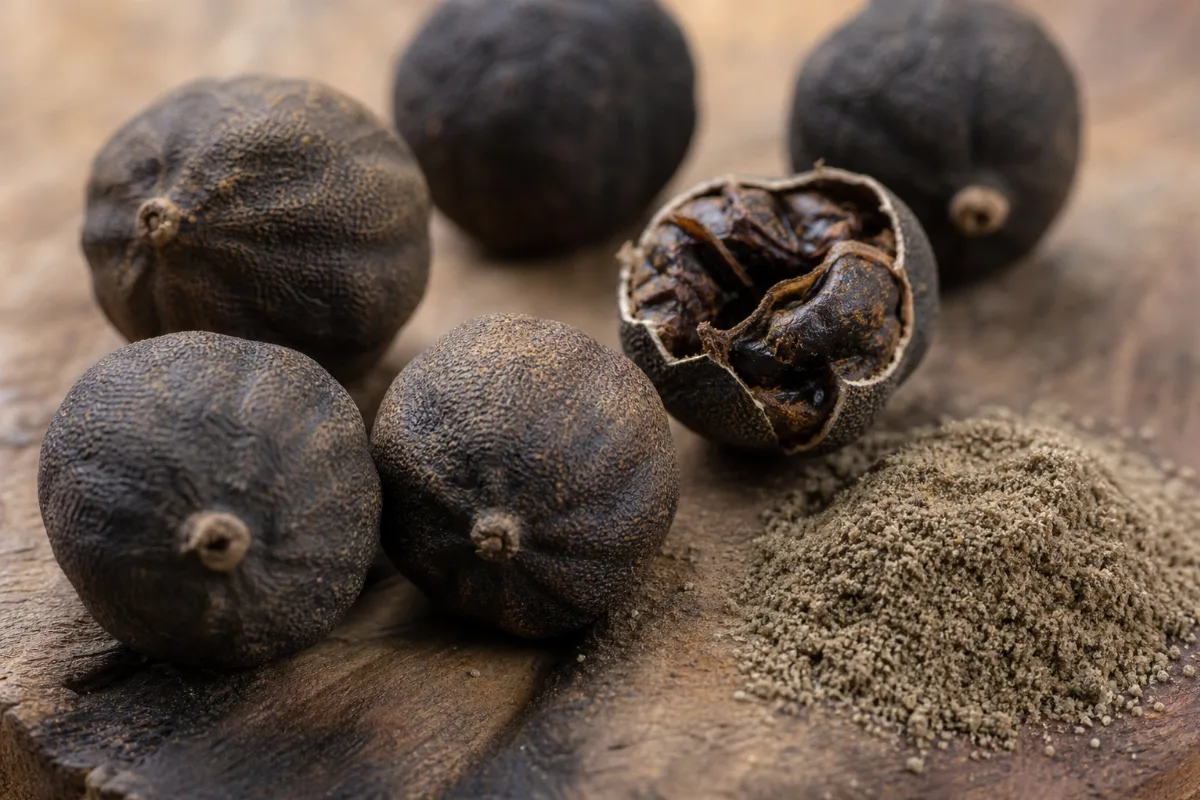
Dried black lime (loomi) is sour, earthy and smoky and used to sour stews, soups and rice; research is lab-only, and lime juice has a lab link to medicine-processing enzymes.
Antioxidant activity in the lab
Starch-digesting enzyme blocked in the lab
Traditional tea for upset stomach, nausea, diarrhea
Aroma: Strong and pungent in the jar, with a nutty, maple-like sweetness that softens in the pot.
In the kitchen: curries, soups and stews, baking, vegetables
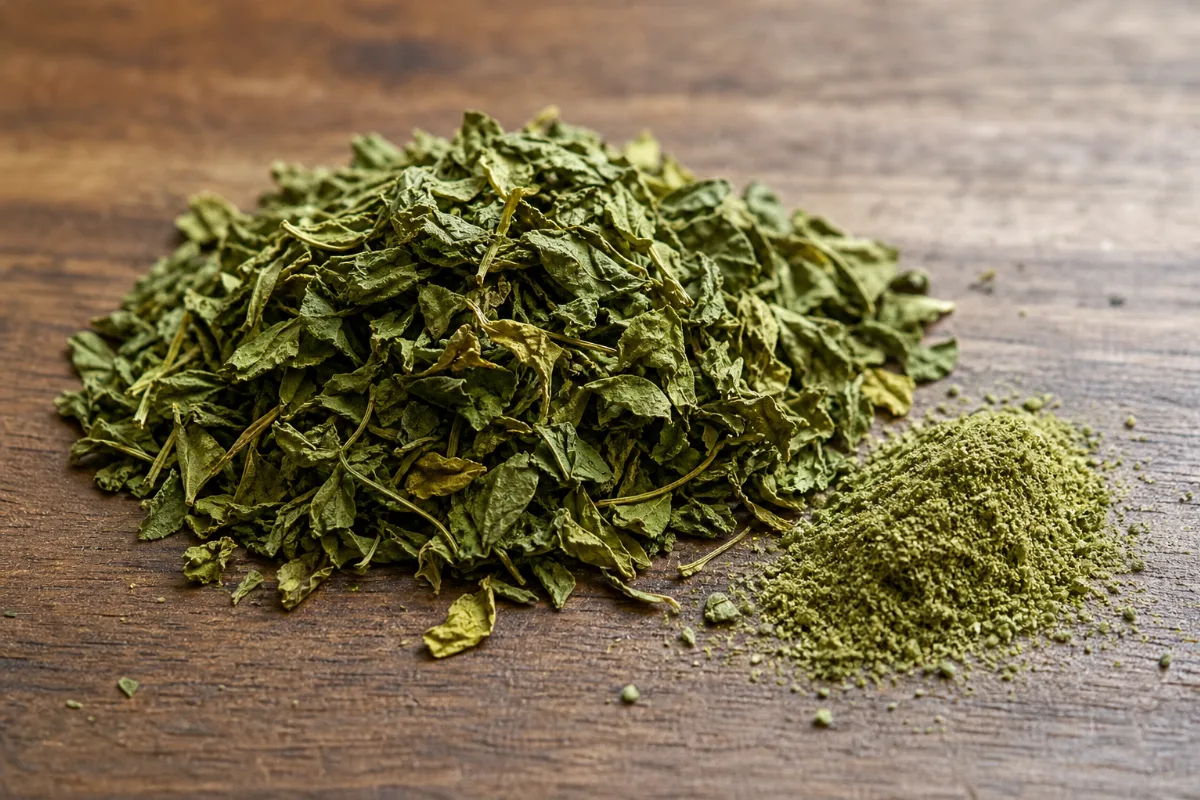
Dried fenugreek leaf (kasuri methi) tastes earthy, nutty and slightly bitter and finishes curries and breads; the research is mostly on the seed, and larger medicinal amounts are not advised in pregnancy.
Aroma: Savory and sulfury, like cooked garlic but flatter and drier.
In the kitchen: grilling and rubs, soups and stews, vegetables, rice and grains
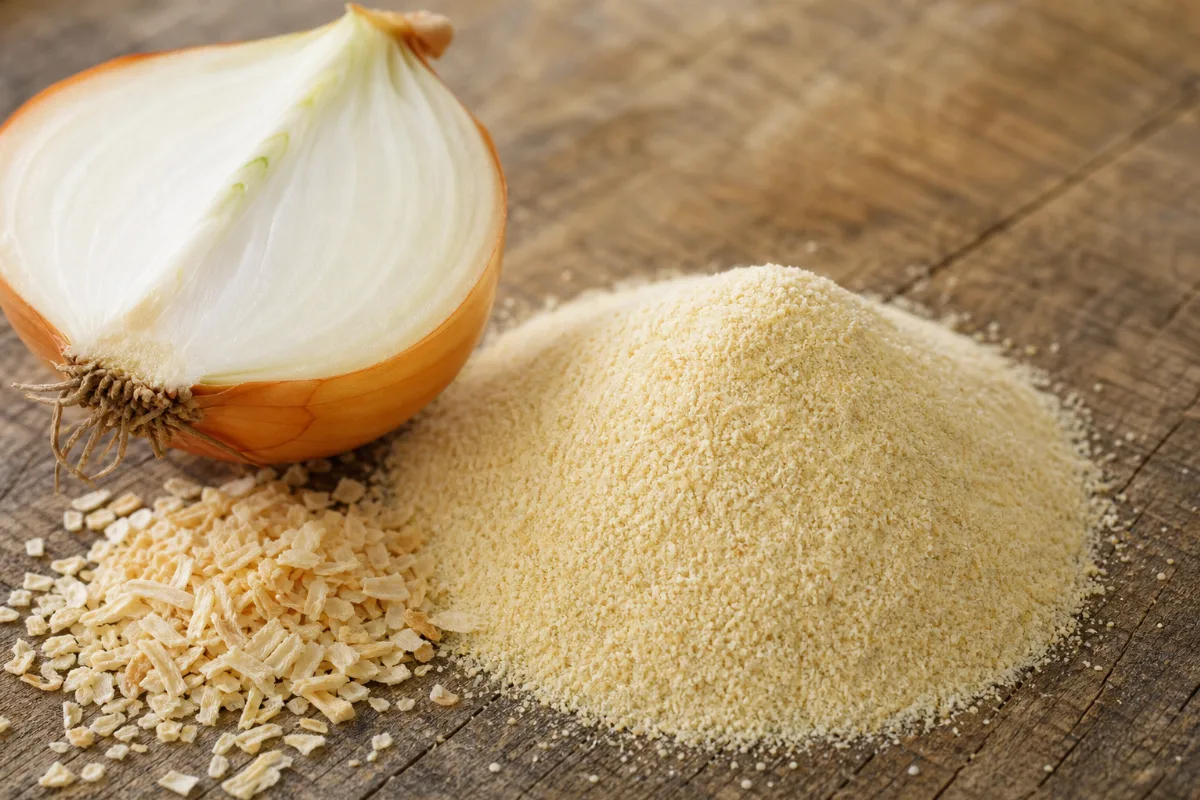
Garlic powder is savory, pungent and mellow and used in rubs, sauces and spice blends; research on cholesterol and blood pressure is for supplements, not for a pinch in food, and supplements may raise bleeding risk.
Aroma: Very little; the petals have almost no smell of their own.
In the kitchen: rice and grains, soups and stews, tea and drinks
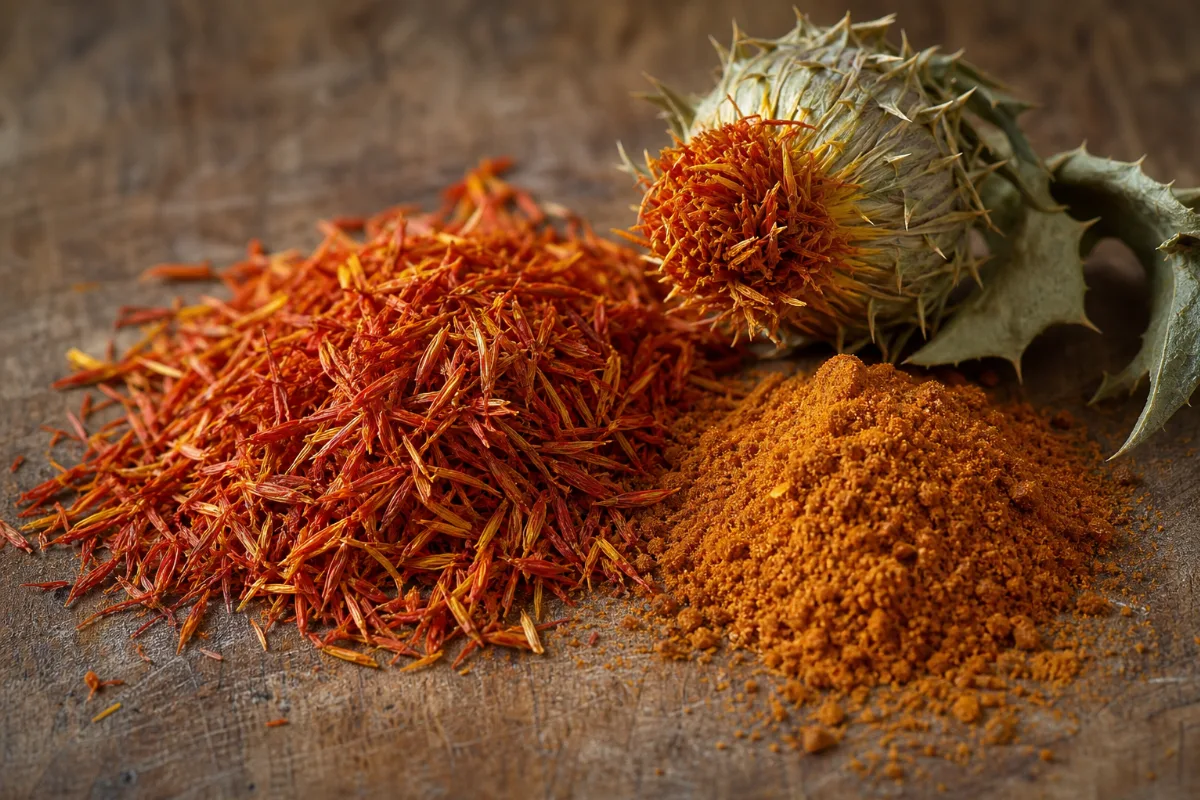
Safflower petals ("false saffron") give food a golden color but almost no saffron flavor; human research on the flower is thin, and bleeding, pregnancy and daisy-family allergy are the cautions.
Citrus sinensis, Citrus × aurantium, Citrus reticulata, Citrus limon
Berry / fruit
CitrusyBitterSweet
Aroma: Fresh and zesty like orange oil, turning deeper and richer in aged peel.
In the kitchen: baking, desserts, tea and drinks, soups and stews
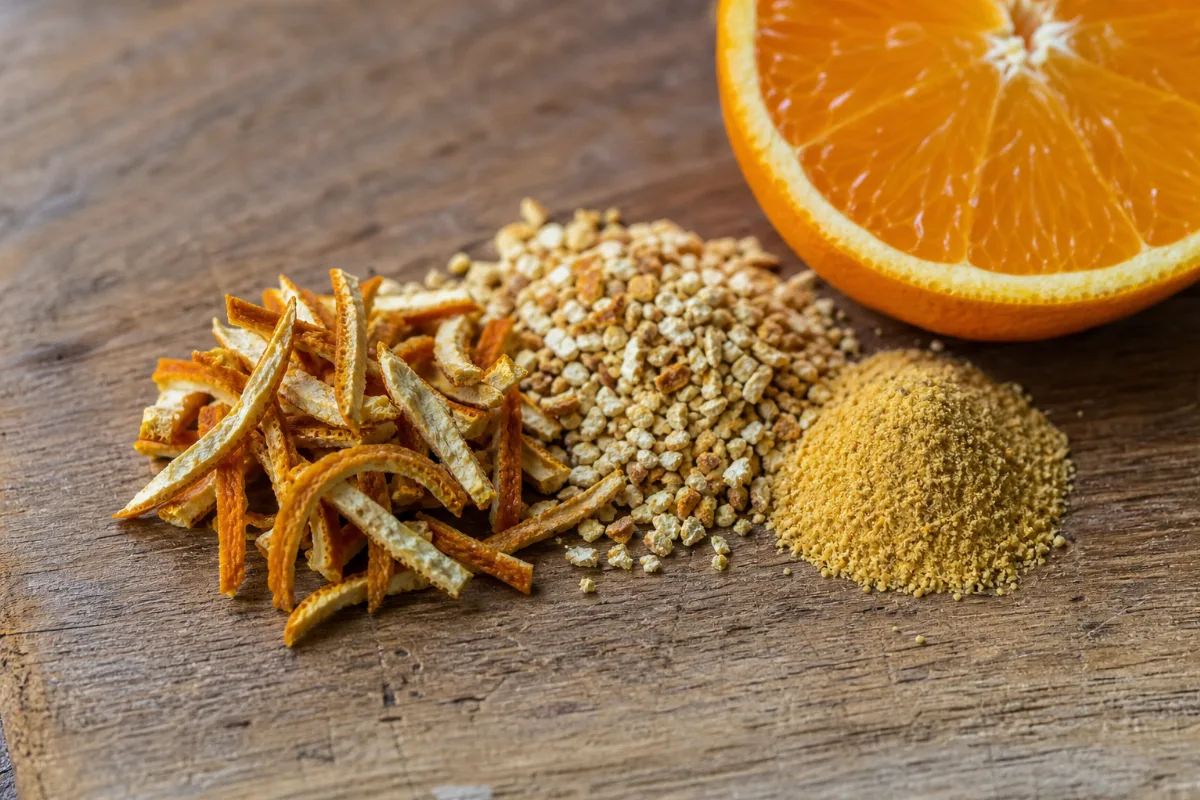
Dried citrus peel is bright, aromatic and a little bitter and is used in baking, drinks, stews and teas; the peel itself is little studied, and Seville orange peel can affect some medicines like grapefruit does.
Blood fats and blood pressure (hesperidin)
Gut and metabolic health (orange peel ingredients)
Aroma: Sweet and hay-like, with notes of vanilla, almond, cherry and a little clove.
In the kitchen: desserts, baking, tea and drinks
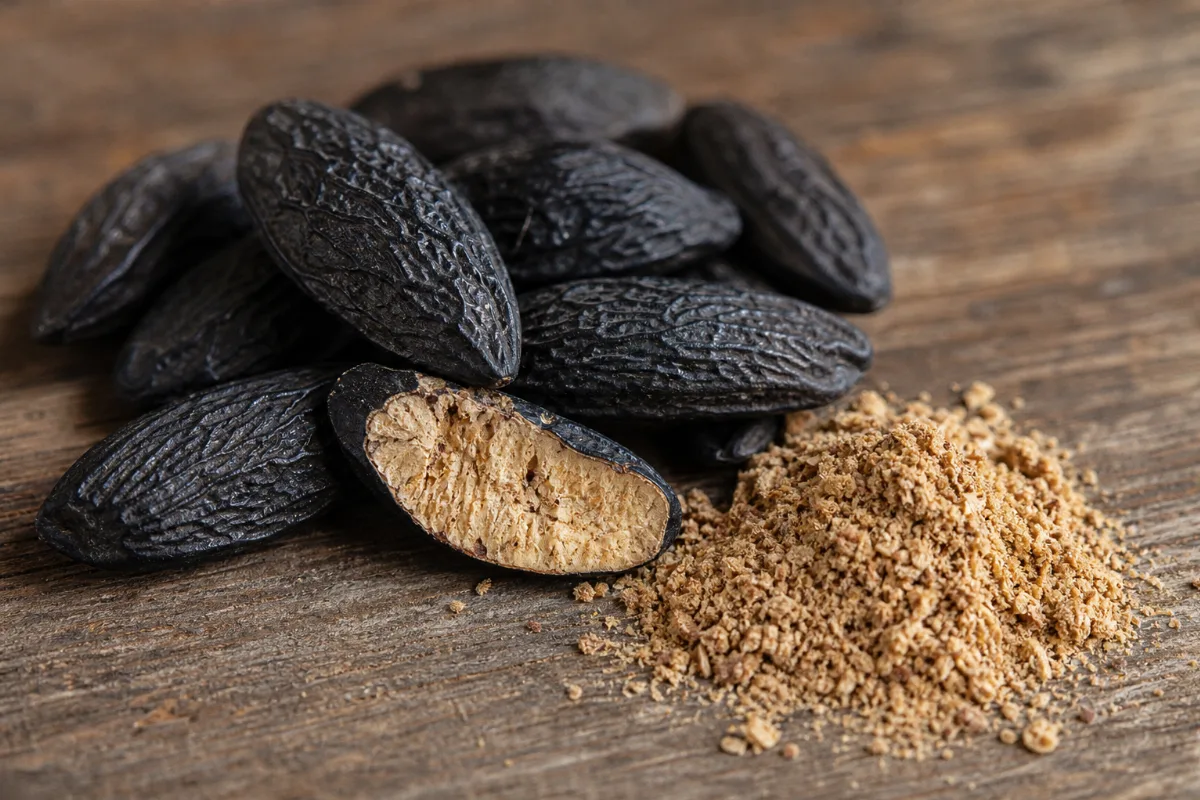
Tonka bean is sweet, warm and vanilla-like and is grated into desserts; no health benefit has been shown, and in the US it is not allowed in food because of its coumarin.
Aroma: Fresh and resinous, like pine, with a woody, slightly musky and vanilla-like depth.
In the kitchen: desserts, baking, tea and drinks
Mastic is a pine-like, slightly sweet resin used in Greek and Middle Eastern sweets, breads and drinks; small trials on indigestion are promising but limited, and it is not advised in pregnancy.
Indigestion without a known cause
H. pylori infection
Total cholesterol and fasting glucose markers
Traditional use for mild indigestion and minor skin problems
Aroma: Earthy and herbal, with a faint spicy note.
In the kitchen: soups and stews
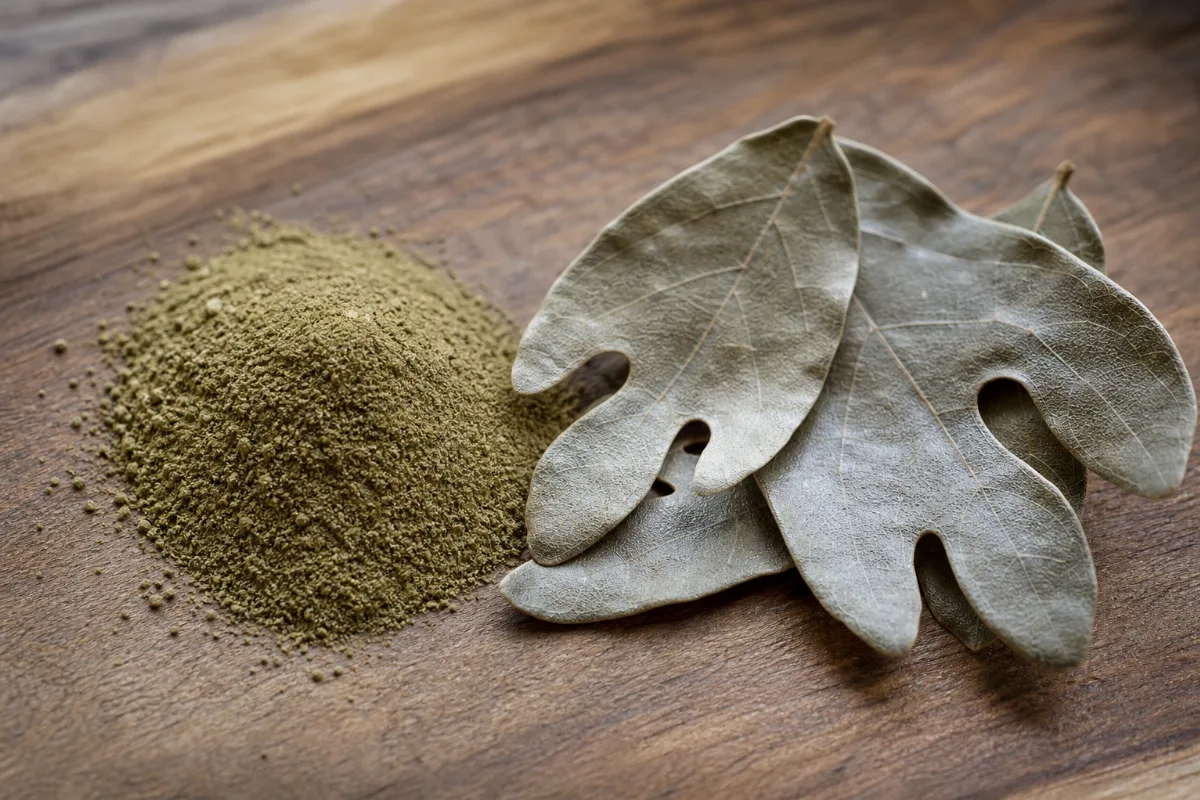
Filé powder is earthy and slightly herbal and is stirred into gumbo at the end to thicken it; sassafras root and oil carry a safrole warning, and the one lab test we found found little or none in the leaves.
Aroma: Celery-like and herbal, with a faint anise note.
In the kitchen: pickling, soups and stews, vegetables
Lovage seed tastes like celery and parsley with a hint of anise and is used like fennel seed in pickles and breads; almost no research exists on the seed, and the root has sun-sensitivity and kidney cautions.
No spice matches all of these filters. Try removing one. Some topics (for example most herbs) are not spices and live elsewhere on the site.
A link between a spice and a topic means the body needs the spice for that job, or that low intake is linked to it. It does not mean extra supplements help if your intake is already adequate. See each page’s evidence label.
Browse by spice flavor family
Sweet and aromatic
Cinnamon, cloves, nutmeg, vanilla and relatives: the warm, sweet smells of baking, mulled drinks and festive dishes.
Garam masala, curry powder, za’atar, five-spice and more: mixes of several spices. Contents vary by maker, so health findings for one spice do not carry over to a blend.
Understanding Spices(6)What spices are, how to read flavor and aroma, how to buy and store them, how blends work, and how food amounts differ from supplements.
A plain guide to what counts as a spice, how spices differ from herbs, seasonings, blends and supplements, and how the 40 spices on this site are grouped and explained.
How to buy spices, tell whether they are still fresh, store them, toast and grind them at home, and what to know about contamination and fake or unsafe additions.
A spice blend is several spices mixed for one style of cooking; makers and regions vary, and blends can add salt, allergens and contamination that single-spice studies d…
A spice in your cooking and a capsule, extract or oil made from the same plant are different products, with different amounts, different research and different rules.
Cloves are warm, pungent and a little sweet and are used whole in rice, braises and drinks and ground in baking; research is mostly on clove oil, and the oil can poison …
Nutmeg is warm, slightly sweet and used in baking, sauces and drinks; large amounts can poison people, and no trial supports a health benefit when eaten.
Mace is warm, sweet and a little peppery, used in baking, curries and pâtés; a pinch in food is normal, but large amounts of mace or nutmeg can poison.
Allspice is warm and sweet, like cinnamon, clove and nutmeg in one berry, and is used in jerk, pickling and baking; human research on health is lacking, and the main cau…
Vanilla is sweet, creamy and floral and is used in baking, desserts and drinks; research on health benefits is thin and mostly from labs, and some cheap "vanilla" has be…
Star anise tastes of licorice, warm and slightly sweet, and flavors soups, braises and baking; it must never be given to babies as tea, and one toxic look-alike has cont…
Mahlab is a cherry-stone spice that tastes of bitter almond and cherry and is used in sweet breads and pastries; it contains coumarin, and no study of it as a food or su…
Tonka bean is sweet, warm and vanilla-like and is grated into desserts; no health benefit has been shown, and in the US it is not allowed in food because of its coumarin.
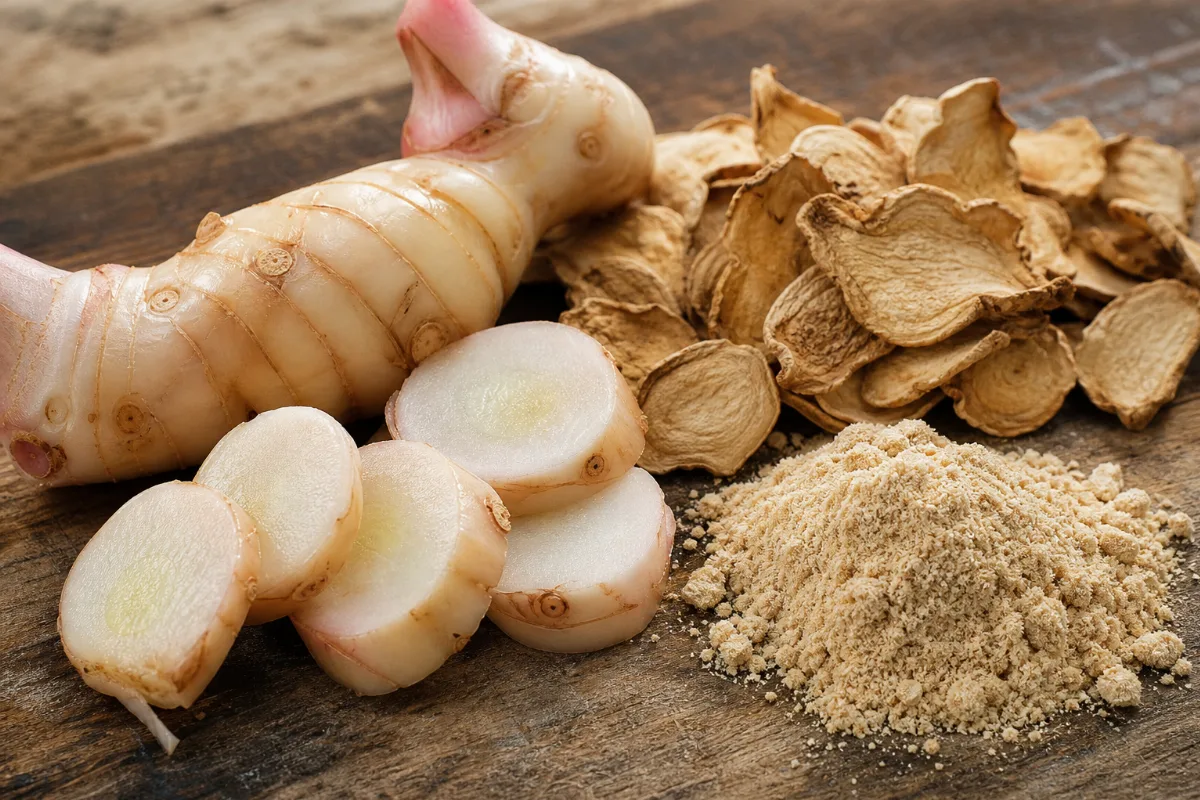
Warming & Pungent Spices(8)Ginger, turmeric, galangal, grains of paradise, grains of Selim, black cardamom, mustard and horseradish: roots, pods and seeds with a warm bite.
Ginger is hot, sweet-spicy and fresh-smelling and used in curries, baking and drinks; research on nausea is promising in pregnancy but mixed elsewhere, and supplements h…
Turmeric is earthy, warm and slightly bitter and gives curries their yellow color; research on health uses is early, and concentrated curcumin products have been linked …
Grains of paradise taste peppery with citrus and a touch of cardamom and are used in stews, rubs and drinks; trials of extracts are small and mostly company-linked, and …
Mustard seed is mild whole and sharply hot once crushed with liquid, used in curries, pickles and condiments; it is a strong allergen, and human research on health uses …
Horseradish and wasabi are sharp, nose-clearing roots eaten fresh or as a paste; the heat fades fast, and the health research is thin, with one small memory trial on a w…
Grains of Selim are peppery, resinous and a little bitter and used in West African soups, sauces and coffee; we found no human studies, and rat studies hint at lower pla…
Black cardamom is smoky, camphor-like and earthy and used in rice, curries and stews; research on it is almost all lab or animal work, with no human trials found.
Hot Peppers & Peppercorns(7)Black, white, pink, long, cubeb and Sichuan pepper, plus cayenne and chili: from gentle to fiery.
Black pepper is hot, warm and citrusy and goes in almost any savory dish; pepper on food is not a concern in the sources we read, but isolated piperine in supplements ca…
White pepper is hot, earthy and a little musty, used where black specks would show; no good human trials exist for food amounts, and isolated piperine supplements can ch…
Pink peppercorn is mild, nearly sweet and resinous and used in sauces, desserts and drinks; it comes from the cashew family, so people with cashew or pistachio allergy s…
Long pepper is a peppery, slightly sweet spice used in pickles, lentil dishes and stews; its piperine can change how some medicines act, and there are no human trials of…
Sichuan pepper is citrusy and floral with a tingling, numbing feel and is used in Chinese cooking; human research on health is almost absent, and a few people are allerg…
Cayenne and chili pepper are hot and used in sauces, stews and curries; big studies of people who eat spicy food are observational, and chili can burn the gut, skin and …
Cubeb pepper is pungent, warm and a little bitter and used in North African and Indonesian cooking; almost nothing is known about its health effects in people, and lab w…
Earthy & Savory Spices(13)Cumin, fenugreek, asafoetida, annatto, curry leaf, bay leaf, black seed, garlic and onion powder and more: deep notes for curries, stews and beans.
Cumin is earthy and warm and a base of curries, chili and stews; trials of cumin supplements on blood sugar are mixed, and some people are allergic to it.
Fenugreek seed tastes bitter, earthy and a little like maple syrup and is used in curries, pickles and spice blends; it is not safe in pregnancy above food amounts, and …
Asafoetida (hing) smells strong and sulfurous in the jar but cooks into a mellow onion-and-garlic flavor; it is unsafe for infants and discouraged in pregnancy, and huma…
Annatto is mild, earthy and a little peppery and is used mostly to turn food orange-red; allergy to it is rare but documented, and there is no good evidence of a health …
Curry leaf is citrusy, slightly bitter and savory and is fried in oil at the start of South Indian dishes; human research on blood sugar is one small 1990 study, and the…
Bay leaf is herbal and slightly floral and simmered whole in soups, stews and curries, then removed; one small trial of capsules and one liver case report exist, so supp…
Black seed (nigella, kalonji) is peppery, bitter and a little onion-like, sprinkled on breads and tempered in oil for curries and pickles; blood pressure and blood sugar…
Indian bay leaf (tej patta) tastes like mild cinnamon with a clove-like edge and is used in North Indian and Mughal-style cooking; we found no human trials, so health cl…
Dried fenugreek leaf (kasuri methi) tastes earthy, nutty and slightly bitter and finishes curries and breads; the research is mostly on the seed, and larger medicinal am…
Garlic powder is savory, pungent and mellow and used in rubs, sauces and spice blends; research on cholesterol and blood pressure is for supplements, not for a pinch in …
Safflower petals ("false saffron") give food a golden color but almost no saffron flavor; human research on the flower is thin, and bleeding, pregnancy and daisy-family …
Filé powder is earthy and slightly herbal and is stirred into gumbo at the end to thicken it; sassafras root and oil carry a safrole warning, and the one lab test we fou…
Seed Spices(10)Coriander, caraway, anise, fennel, celery, dill, ajwain, poppy, sesame and lovage seed: small seeds with fresh, anise-like, nutty or citrusy aromas.
Coriander seed tastes warm and lemony and is used in curries, pickles and spice blends; one small diabetes trial is the main human evidence, and allergy is the main caut…
Caraway is warm, gently sweet and a little like anise, and is used in rye bread, sauerkraut and stews; a peppermint-and-caraway oil capsule helped indigestion in trials,…
Anise (aniseed) is sweet with a clear licorice taste and is used in baking, sweets and drinks; research on digestion and IBS comes from small trials of anise oil, and it…
Fennel seed is sweet and anise-like and used in sausages, breads, curries and spice blends; infant colic trials look promising but limited, and EU regulators set estrago…
Celery seed is earthy and slightly bitter and used in pickles, slaws and celery salt; small trials suggest blood pressure effects from supplements, and celery allergy ca…
Dill seed tastes like a stronger, warmer cousin of caraway and is used in pickles and breads; small supplement trials on cholesterol are mixed, and food amounts have not…
Ajwain (carom seed) is sharp, bitter and thyme-like and is fried in oil for breads and tarka; research is limited, and its oil is strong and not for swallowing.
Poppy seed is nutty, earthy and slightly bitter and used in baking, fillings and curries; the seeds can carry traces of opium alkaloids, which matters for drug tests, po…
Sesame seed is nutty and rich, especially when toasted, and used in breads, sweets, tahini and stir-fries; it is a major allergen, and the small blood pressure and chole…
Lovage seed tastes like celery and parsley with a hint of anise and is used like fennel seed in pickles and breads; almost no research exists on the seed, and the root h…
Saffron is floral, honey-like and slightly bitter and gives rice and stews a golden color; trials of supplements suggest lower self-rated low mood, but cooking amounts a…
Cardamom is sweet, floral and a little cooling and used in chai, baking and rice; trials of supplements show small changes in blood fats, and people with gallstones shou…
Sumac is a tart, lemony red spice sprinkled on salads, dips and grilled meat; trials on blood sugar are mixed, and people with a cashew allergy should check first.
Tamarind is sweet and sour and is used in curries, chutneys, soups and drinks; the one trial we read found no effect on weight or blood sugar, and one small study found …
Juniper berry tastes piney and resinous with a citrus note and is used with game, pork and cabbage; the EU accepts it only for traditional use, and it is not advised in …
Amchur is a tart, fruity powder from dried green mango used to sour curries and vegetables; there are no human trials on it, and mango allergy or sulfite sensitivity are…
Kokum is a very sour dried fruit rind used in place of tamarind in Indian curries and drinks; nearly all health research is in labs and animals, and its cousin Garcinia …
Makrut (kaffir) lime leaf is floral, lemony and fragrant and flavors Thai and Southeast Asian curries and soups; human health research on the leaf is missing, and the fr…
Dried black lime (loomi) is sour, earthy and smoky and used to sour stews, soups and rice; research is lab-only, and lime juice has a lab link to medicine-processing enz…
Dried citrus peel is bright, aromatic and a little bitter and is used in baking, drinks, stews and teas; the peel itself is little studied, and Seville orange peel can a…
Mastic is a pine-like, slightly sweet resin used in Greek and Middle Eastern sweets, breads and drinks; small trials on indigestion are promising but limited, and it is …
Paprika, Chili & Smoky Spices(6)Sweet, hot and smoked paprika, ancho, chipotle, Aleppo and Kashmiri chili: red peppers that color and flavor food.
Paprika is a mild, sweet, red spice from dried peppers that colors and gently flavors stews, rice and rubs; research on it is thin, and some imported powders have had co…
Smoked paprika (pimentón) tastes of wood smoke with mild pepper sweetness and is used in stews, rice and rubs; smoking leaves PAH residues that vary a lot, and research …
Ancho chile is mild, fruity and earthy and the base of many Mexican sauces; research on chili is mixed, and the evidence mostly covers hotter chilies and extracts.
Chipotle is smoky, earthy and medium-hot and used in salsas, marinades and stews; research on chili food is mostly observational, and the heat can irritate the gut and s…
Aleppo pepper is mildly hot, fruity and slightly salty and used as a flake in Turkish and Middle Eastern cooking; studies of chili eaters are observational, and chili ca…
Kashmiri chili is a mild, fruity, deep-red chili used mostly for colour in Indian curries and tandoori dishes; research on chili in general is mixed, and cheap red powde…
Spice Blends(16)Garam masala, curry powder, za'atar, five-spice, ras el hanout and other blends: what is usually in them, how they are used, and what a blend means for health.
Garam masala is a warm, sweet and earthy Indian spice blend added late to curries and stews; it is rarely studied as a blend, and its health points come from the spices …
Curry powder is a warm, earthy, golden blend for curries and stews; blends are rarely studied as a whole, so check the label for salt and allergens such as mustard, cele…
Za'atar is a tangy, herby, nutty Middle Eastern blend of thyme or oregano, sumac, sesame and salt; it is rarely studied as a blend, and sesame is a major allergen.
Chinese five-spice is a sweet, warm, anise-scented blend used on duck, pork and in braises; it is rarely studied as a blend, and its cassia and star anise parts carry sp…
Ras el hanout is a warm, sweet and earthy North African blend of a dozen or more spices for stews, rubs and couscous; it is rarely studied as a blend, and labels are wor…
Herbes de Provence is an earthy, piney dried-herb blend for grilled meat, fish and vegetable stews; it is rarely studied as a blend, and the herbs in it carry mint-famil…
Baharat is a warm, sweet and peppery Middle Eastern spice blend for meat, soups and vegetables; it is rarely studied as a blend, so health facts come from its single spi…
Berbere is a hot, warm and earthy Ethiopian and Eritrean chili blend used in stews and rubs; it has not been studied as a blend, and its fenugreek brings a legume-allerg…
Dukkah is a crunchy, nutty, toasty Egyptian blend of nuts, sesame, cumin and coriander for dipping with bread and oil; it is rarely studied as a blend, and nuts and sesa…
Chili powder is an earthy, savory, mildly hot blend for chili, tacos and rubs; the blend itself is not studied for health, but check the label for salt and allergens, an…
Pumpkin pie spice is a warm, sweet blend of cinnamon, ginger, nutmeg and cloves used in pies, baking and coffee drinks; it is not studied as a blend, and its cautions co…
Cajun and Creole seasoning is a salty, peppery, garlicky blend with cayenne heat for meat, seafood and rice; the blend itself is not studied for health, and salt content…
Jamaican jerk seasoning is hot, warm and sweet, built on allspice and scotch bonnet chili for grilled meat; the blend itself is not studied for health, so check the labe…
Panch phoron is a Bengali blend of five whole seeds, fried in hot oil at the start of a dish; it is not studied as a blend, so health facts come from its seeds, and must…
Chaat masala is a tangy, salty, savory blend sprinkled on street snacks, fruit and yogurt; it is rarely studied as a blend, and its main limits are the salt it contains …
Shichimi togarashi is a Japanese chili blend that is hot, citrusy and nutty, sprinkled on noodles and rice at the table; it has not been studied as a blend, and it can c…
Search spices: popular spices, A to Z, search with filters, more ways
Well-studied spices to start with
These spices have the most human research summarized in our guides (counted from the evidence ratings on each profile). More research does not mean the spice works or is safe for you: open the guide to see what was found, including negative and mixed results.
Every published spice guide (80), with its names and what it is made of. Each name opens one guide that brings together identity, traditional use, research, safety, forms and sources.
Grains of paradiseAframomum melegueta, Amomum melegueta (older name used in US regulations)Also: alligator pepper, melegueta pepper, Guinea pepper
Grains of SelimXylopia aethiopicaAlso: Selim pepper, Senegal pepper, Ethiopian pepper
H (2)
Herbes de ProvenceBlend of Thymus vulgaris, Satureja species, Salvia rosmarinus, Origanum vulgare and O. majorana; sometimes Lavandula angustifoliaAlso: Provencal spice blend
Horseradish and wasabiArmoracia rusticana, Eutrema japonicumAlso: horseradish, wasabi, Japanese horseradish
Panch phoronBlend of five seeds, no single species (Trigonella foenum-graecum, Cuminum cyminum, Nigella sativa, Brassica nigra, Foeniculum vulgare)Also: Bengali five-seed blend, Five spices, panch phoran
Sesame seedSesamum indicumAlso: sesame, benne, til
Shichimi togarashiBlend of spices; no single species (typically Capsicum annuum, Zanthoxylum piperitum, Sesamum indicum, Zingiber officinale)Also: Japanese seven-spice, seven-flavor chili pepper, nanami togarashi
BaharatBlend of spices; no single species (often Piper nigrum, Cinnamomum spp., Syzygium aromaticum, Pimenta dioica, Cuminum cyminum, Coriandrum sativum)
Garam masalaBlend of spices; no single species (typically includes Elettaria cardamomum, Cuminum cyminum, Coriandrum sativum, Cinnamomum spp., Syzygium aromaticum, Piper nigrum, Myristica fragrans)
BaharatBlend of spices; no single species (often Piper nigrum, Cinnamomum spp., Syzygium aromaticum, Pimenta dioica, Cuminum cyminum, Coriandrum sativum)
BaharatBlend of spices; no single species (often Piper nigrum, Cinnamomum spp., Syzygium aromaticum, Pimenta dioica, Cuminum cyminum, Coriandrum sativum)
Garam masalaBlend of spices; no single species (typically includes Elettaria cardamomum, Cuminum cyminum, Coriandrum sativum, Cinnamomum spp., Syzygium aromaticum, Piper nigrum, Myristica fragrans)
Spices whose guide documents a point to check for this concern. Being listed does not mean the spice is unsafe for everyone. Open the guide to read the details.
BaharatBlend of spices; no single species (often Piper nigrum, Cinnamomum spp., Syzygium aromaticum, Pimenta dioica, Cuminum cyminum, Coriandrum sativum)
BerbereSpice blend (no single species), Capsicum spp. (chili base)
Garam masalaBlend of spices; no single species (typically includes Elettaria cardamomum, Cuminum cyminum, Coriandrum sativum, Cinnamomum spp., Syzygium aromaticum, Piper nigrum, Myristica fragrans)
Garam masalaBlend of spices; no single species (typically includes Elettaria cardamomum, Cuminum cyminum, Coriandrum sativum, Cinnamomum spp., Syzygium aromaticum, Piper nigrum, Myristica fragrans)
BaharatBlend of spices; no single species (often Piper nigrum, Cinnamomum spp., Syzygium aromaticum, Pimenta dioica, Cuminum cyminum, Coriandrum sativum)
BerbereSpice blend (no single species), Capsicum spp. (chili base)
BaharatBlend of spices; no single species (often Piper nigrum, Cinnamomum spp., Syzygium aromaticum, Pimenta dioica, Cuminum cyminum, Coriandrum sativum)
BerbereSpice blend (no single species), Capsicum spp. (chili base)
Garam masalaBlend of spices; no single species (typically includes Elettaria cardamomum, Cuminum cyminum, Coriandrum sativum, Cinnamomum spp., Syzygium aromaticum, Piper nigrum, Myristica fragrans)
BaharatBlend of spices; no single species (often Piper nigrum, Cinnamomum spp., Syzygium aromaticum, Pimenta dioica, Cuminum cyminum, Coriandrum sativum)
Garam masalaBlend of spices; no single species (typically includes Elettaria cardamomum, Cuminum cyminum, Coriandrum sativum, Cinnamomum spp., Syzygium aromaticum, Piper nigrum, Myristica fragrans)
Herbes de ProvenceBlend of Thymus vulgaris, Satureja species, Salvia rosmarinus, Origanum vulgare and O. majorana; sometimes Lavandula angustifolia
Spices have been used for health in many cultures for centuries. A traditional use tells you what people have done, not that it works. Here every spice is listed under the goals, body systems and actions its guide connects it to, and each link carries the strength of the evidence behind it.
Strongest
6 spices
Clinical trials support a benefit
Promising
47 spices
Early or mixed human evidence
Early science
16 spices
Lab or animal research only
Unknown
11 spices
Too little evidence to say
Each spice is counted once, at the strongest level its guide documents for any use. A strong label for one use says nothing about its other uses or its safety. "Traditional use" alone is not one of these labels: where a guide only reports history, the link is rated "Too little evidence to say". Read the guide on traditional use and research evidence.
Spices by wellness goal
Each card shows how many spices are linked to a goal and how strong the evidence is. Green means clinical trials support a benefit; grey means too little evidence. These are links the guides document, not recommendations. For the wider picture, see the Wellness Goals section.
The same links, organized the way anatomy and physiology textbooks do. "Action" describes what a spice is said to do (for example calming or digestive support); it names the claim, not the proof.
Side-by-side guides for spices that people confuse or choose between. They explain differences; they do not rank the spices.
What research shows, by health concern
Each guide below looks at one concern, from sleep to skin, and separates spices that were tested in people from spices that are only traditional or lab-tested.
People have used spices for health for many centuries. A traditional use tells you what people have done, not that it works. For what research found, see the Health Benefits and Scientific Evidence tabs.
Traditional spice medicine
Ayurveda, Traditional Chinese Medicine and other traditions each use natural remedies in their own systems. The spices below are the ones whose guide mentions the tradition in its own text. That a tradition uses a spice is history, not clinical evidence. Each guide says separately what trials found.
Spices are active substances. Some interact with prescription medicines, some are unsafe in pregnancy or with certain conditions, and some have been linked to serious harm. This tab brings together what the individual spice guides document, plus the general rules. Medicine interactions have their own tab.
If someone may have been poisoned or is seriously unwell
▸Collapse, seizure, trouble breathing, swelling of the face or throat, chest pain or a fast irregular heartbeat: call your local emergency number now (911 in the United States and Canada, 999 in the UK, 112 in the European Union).
▸Swallowed too much of a spice, or a child or pet got into a product, and the person seems well: in the United States call Poison Help, 1-800-222-1222 (free, 24 hours). Elsewhere, call your national poison centre or local emergency number.
▸Yellow skin or eyes, dark urine, severe belly pain, or a new rash after starting a spice: stop it and contact a clinician the same day.
A spice in normal cooking amounts is a food. Concentrated spice extracts and capsules are a different thing and can interact with medicines, for example blood thinners.
Some spices need extra care in pregnancy, with allergies (mustard, celery, sesame-family seeds) or with certain medicines. Each spice page lists what its sources say.
Tell your pharmacist or clinician about spice supplements, especially before surgery.
"Natural" does not mean safe. Natural products can contain strong substances; some are harmful. Natural Does Not Mean Safe
Tell your pharmacist and clinician about every spice product you use, and ask before combining one with prescription or over-the-counter medicines.
Be extra careful with narrow-margin medicines such as warfarin, antidepressants, immunosuppressants, diabetes and blood pressure medicines.
Tell the surgical team about every spice before an operation. Many teams ask people to stop spice products ahead of surgery; ask yours how long.
Pregnancy, breastfeeding, children and older adults are groups where good safety data are often missing, so official sources usually advise asking first.
Start one product at a time, at the label amount, so a reaction can be traced. Stop and get advice if you feel unwell.
Products vary. Contamination, substitution and mislabelling are documented problems; third-party testing can reduce but not remove the risk.
Each line comes from a spice's own guide, where it is backed by cited sources: 321 documented risks across 80 of the 80 spices. A spice missing from a list is not proven safe: it may simply not have been studied. Open the spice's guide for the full wording and sources.
Liver injury with daily tea (documented risk). A 2026 case report describes probable liver injury after regular bay leaf tea in one woman, who improved after stopping.
Medicine interactions (liver enzymes, warfarin). MSK says it inhibits CYP2D6 and CYP3A4 and may raise levels of drugs cleared by them; thymoquinone weakened warfarin's action in …
Liver and bile-duct disease caution. The EU committee does not recommend caraway medicines in liver disease, cholangitis, gallstones or other bile-duct disorders.
Coumarin in cassia and the liver. Cassia contains coumarin, linked to liver effects in some sensitive people. BfR sets a tolerable intake of 0.1 mg per kg of body …
Liver toxicity reports. LactMed says liver toxicity has been reported, alone and in spice blends containing fenugreek. The 2023 pooling of trials saw no…
Liver toxicity reports. LactMed says liver toxicity has been reported, alone and in spice blends containing fenugreek. The 2023 pooling of trials saw no…
Safrole and liver cancer in animals. Safrole, found mostly in sassafras root bark and oil, caused liver cancer in lab animals; MSK lists it as reasonably anticipated …
Liver enzymes and organ weights in an animal study. One animal study of galangal extracts reported higher liver enzymes and organ weights; a 90-day rat study of a standardized extra…
Liver weight increase in rats. In a 28-day rat study of a strong extract, liver weight and alkaline phosphatase rose with dose; authors said liver toxicity shou…
Liver effects need more study. A review says no research directly links kokum to acute liver injury, but its liver effects deserve more study because it contain…
Coumarin content of the kernel (liver limit). Kernels measured about 0.87 mg coumarin per gram and pitted berries about 0.63 mg per gram in one Italian study; white seeds had …
Liver and kidney changes at very high amounts (rats). Rats given nutmeg powder for 90 days at very high amounts had liver and spleen changes, and kidney damage at the higher amount.
Liver effects of some component products. NCCIH links highly absorbable curcumin supplements to liver harm and says cassia coumarin has been linked to liver effects. These…
Coumarin and the liver. Coumarin harmed the liver of dogs and rats at high doses, and a small share of people taking it as a drug had liver enzyme rises …
Liver injury with turmeric and curcumin supplements. Liver damage has been reported, especially with highly absorbable curcumin products. A US network described ten cases (2004 to 20…
Not recommended in severe kidney disease or when fluids are limited. The EU says it is not recommended in severe kidney disease, including kidney infections, or for people told to limit fluids.
Kidney inflammation and fluid medicines (documented risk). Root preparations are not advised in acute kidney inflammation or heart- or kidney-related swelling, and a consumer reference say…
Liver and kidney changes at very high amounts (rats). Rats given nutmeg powder for 90 days at very high amounts had liver and spleen changes, and kidney damage at the higher amount.
Kidney stones and oxalate. MSK advises people prone to kidney stones to check with a doctor before turmeric supplements; one case of oxalate nephropathy wit…
Bitter orange supplements and the heart. NCCIH says bitter orange is likely safe in food amounts, but serious heart events have been reported with supplements, mostly mul…
Pregnancy: uterine stimulation and miscarriage risk. A 2026 review linked higher doses or occupational exposure to uterine stimulation and increased miscarriage risk.
Possible effect on blood clotting (reported, not verified). Wikipedia says an anti-clotting action may matter for people taking anti-inflammatory pain medicines or antiplatelet drugs. We co…
Burning and skin or eye injury. Capsaicin causes the burning feel; it irritates skin and eyes and washing does not remove it well. Very hot peppers can cause sto…
May slow blood clotting. A reference monograph says allspice might slow clotting, and may add to bleeding risk with blood thinners, antiplatelet drugs and…
Eugenol intake figure. WHO/JECFA gives an acceptable daily intake of 0 to 2.5 mg per kg body weight for eugenol, the main compound in allspice oil. This…
Sulfites in some dried mango products. Ireland's food safety body warned in 2022 about a dried mango batch with sulphites missing from the label, which may be unsafe fo…
Anethole genetic safety signal. Non-clinical studies showed a weak mutagenic potential of anethole, per the EU monograph as summarized in our spice guide.
Salmonella in imported spices. FDA import testing found Salmonella in about 6.6 percent of spice shipments over three years, according to a news report on the 2…
Look-alike plants (documented risk). California bay contains umbellulone, which can cause methemoglobinemia; other plants called bay or laurel are not true bay.
Name confusion between plants. Two plants are called black cardamom (Amomum subulatum and Lanxangia tsaoko), and the green kind is a third plant; labels and ref…
Gallstones (cardamom in general). A consumer reference advises people with gallstones to keep to food amounts of cardamom because the seed can trigger gallstone co…
Doses and risks of concentrated forms not studied. A review says optimal doses, forms and possible health risks of cardamom compounds still need thorough investigation.
Sodium from salted blends. Many Cajun and Creole blends contain salt. WHO advises adults to keep sodium under 2,000 mg (under 5 g salt) a day and to flavor …
Salmonella in dried spices. FDA found less Salmonella in retail spices than in imports for 9 of 11 spice types (dehydrated garlic and basil were exceptions) …
Burning and skin or eye injury. Capsaicin burns eyes, broken skin and mucous membranes; skin products must not be used on broken skin, wounds, eczema, or near th…
Seed oil irritation and sensitization (documented risk). An EFSA panel concluded celery seed oil should be treated as an irritant to skin and eyes and as a skin and respiratory sensitize…
Sodium in salted blends. USDA's chili powder entry has about 77 mg sodium per teaspoon and about 230 mg per tablespoon (about 10% of the 2,300 mg daily va…
Synthetic dyes added to some chili products. Wikipedia reports that unscrupulous traders have added harmful synthetic dyes (such as Sudan dyes and Rhodamine B) to chili produ…
Salmonella in dried spices. FDA found lower Salmonella prevalence in retail packaged spices than in imports for 9 of 11 spice types and says makers often tre…
Coumarin from cassia cinnamon. Cassia cinnamon contains coumarin. BfR sets a tolerable intake of 0.1 mg per kg body weight per day, reached by about 2 g of aver…
Burning and skin or eye irritation. MSK reports contact dermatitis in a woman after preparing a meal with red chilies, and eye or nose irritation as a patient-report…
Pesticide residues on fresh leaves. An Indian monitoring study found curry leaf among the commodities with the highest residues; chlorpyrifos, profenophos and ethion…
Salmonella in dried spices. FDA found lower Salmonella prevalence in retail packaged spices than in imports for 9 of 11 spice types, and says makers often tr…
Safe as a food (US FDA GRAS). LactMed reports dill is generally recognized as safe as a food by the US FDA and generally well tolerated; nursing mothers given …
Mold and aflatoxin in stored peel. A review of chenpi says moisture and polysaccharides allow mold in storage and that Aspergillus can make aflatoxins.
Sesame must be declared; recipes may have changed. Since January 1, 2023 sesame must be declared on packaged US foods, and FDA warns that some recipes now include small amounts of …
Salmonella in dried spices. FDA found Salmonella less often in retail dried spices than in imported shipments and linked this to treatment after import. No d…
Higher safrole in root bark tea and tinctures. Brewed root bark teas held 0.09 to 4.66 mg of safrole per cup in the 1997 FDA test; one oil reached 92.4%.
Salmonella in imported spices. FDA's 2013 draft found spice shipments had about twice the Salmonella contamination of other imported foods. It covers spices in …
Salmonella and filth in imported spices. FDA's spice risk profile found Salmonella in imported spice shipments; a 2018 update found significantly lower rates in retail pa…
Thyroid: iodine uptake and cruciferous thiocyanates. The review says thiocyanates from cruciferous vegetables can reduce iodine uptake; it gives no data specific to horseradish or wa…
Coumarin and other cinnamon-genus cautions (not measured for this leaf). A review says coumarin in some cinnamon species may harm the liver and lists possible drug interactions for cinnamon in general; …
Chili heat and skin or eye irritation. Capsaicin from hot chilies such as scotch bonnet irritates skin and eyes on contact; plain water is generally ineffective at remo…
Salt in dry jerk blends. One maker's dry blend lists 176 mg of sodium per teaspoon, and recipes often add salt or soy sauce. USDA SR Legacy has no jerk en…
Possible link with gastrointestinal cancers. A 2022 pooling of 14 case-control studies linked high chili intake with higher risk of GI cancers (OR 1.64, 1.00 to 2.70), mainly…
Garcinia cambogia product safety (related species). NCCIH says Garcinia cambogia products may be unsafe, with reports of liver damage, and may interact with drugs that affect the li…
Monitoring with phenytoin. A 2025 review suggests monitoring when piperine is taken with the seizure medicine phenytoin, because blood levels may rise.
Reproductive and embryo effects of isolated piperine (animals). BfR reviewers noted that animal studies with high daily doses of isolated piperine showed disturbed sperm production and harm to …
Cyanide-forming compounds in cherry-family seeds. One 2023 analysis found an amygdalin compound only in red and roasted red seeds; a spice reference says earlier literature did no…
Product authenticity. Mastic is one of the most expensive food items after saffron, so quality and labelling can matter; we could not verify adulterati…
Skin burns from mustard plasters. Case reports describe second-degree burns when mustard powder was applied to skin as a plaster; lesions appear within hours.
Cross-reactivity with other Brassicaceae seeds. Health Canada says mustard proteins resemble those in other cabbage-family seeds; allergic people should avoid their seeds and sp…
Fructan content and IBS symptoms. A 2024 study found onion had the highest fructan of 40 foods (1.97 g per 100 g fresh weight); fructans ferment quickly and can wo…
Salmonella in imported spices. FDA import testing found Salmonella in about 6.6 percent of spice shipments, per a news report on the 2013 draft risk profile.
Possible added dye or removed oleoresin (authenticity). A Slovenian study of 45 paprika samples saw signs consistent with possible added dye or removed oleoresin in some, and said this …
Regulatory status in the US. Neither Schinus species has FDA generally-recognized-as-safe status according to Wikipedia; FDA banned imports of Brazilian peppe…
Poppy seed tea hazard. Home-brewed tea from online-bought seeds could yield potentially lethal amounts of morphine; seed levels ranged from under 1 to 2…
Opium alkaloid exposure from food. EFSA set an acute reference dose of 10 micrograms of morphine per kg of body weight in 2011 and said big eaters of seeds are like…
Cassia coumarin limit. If the blend uses cassia, coumarin adds to the daily total; BfR sets 0.1 mg per kg body weight per day and says about 2 g of aver…
Old formulas with cantharides. Some older Moroccan formulas included cantharides, a notoriously dangerous beetle; the source says they are irrelevant to flavori…
Mood changes and mania. Reported side effects included nervousness, irritability, hypomania and restlessness; people with psychiatric conditions are flag…
Cross-reaction with peanut and tree nuts. Wikipedia says sesame cross-reacts with peanuts, hazelnuts and almonds, and that allergy is far more common in Middle Eastern cou…
Rancidity of the oil-rich seed. The seeds are very oil-rich and can go rancid; an extension service advises airtight, cold or cool dark storage and checking by s…
Poppy seed opium alkaloids. EFSA keeps a safe level of 10 micrograms per kg body weight for morphine and codeine combined and says large amounts of unprocess…
Salmonella in imported spices. FDA import testing found Salmonella in about 6.6 percent of spice shipments in fiscal years 2007 to 2009, according to a news rep…
Smoke leaves PAH residues in the powder. Drying peppers over wood smoke adds PAHs, including benzo[a]pyrene. Measured levels range from about 6 to 97 micrograms per kg in…
Modelled PAH risk from smoked spices. A 2025 risk model found most commercial spice samples acceptable but said smoked paprika and black pepper need monitoring, and th…
Mold and mycotoxins during drying and storage. In six La Vera dryers, mold was found but mycotoxins were not detected in the dried peppers. In the lab, damp storage let aflatox…
Tolerable daily intake of coumarin. EFSA set 0.1 mg per kg body weight per day and BfR confirmed it in 2012; children reach it more easily than adults.
Fake vanilla containing tonka bean. FDA warned that some cheap Mexican vanilla contained coumarin from tonka bean and advised buying only products labelled vanilla b…
Fake vanilla containing coumarin. Some cheap Mexican 'vanilla' has been found to contain coumarin from tonka bean. Coumarin is related to warfarin, so the FDA warn…
Reproductive effects in animals (high-dose piperine). In animals, higher daily piperine doses than human interaction studies caused signs of disturbed sperm formation and maternal and…
Salmonella in spices. FDA found Salmonella less common in retail packaged spices than in imported shipments for 9 of 11 spice types studied. Sesame and…
Spice and medicine interactions
Some spices change how a medicine works, or add to its effect. This matters most for narrow-margin medicines such as blood thinners, antidepressants, immunosuppressants, and diabetes and blood pressure medicines. Always tell your pharmacist and clinician about every spice you take. Ask before starting, stopping or combining anything.
Each line comes from a spice's own guide and its cited sources. A spice missing from a list is not proven free of interactions: it may simply not have been studied. Open the spice's guide for the full wording.
Medicine interactions (prescription and over the counter) · 34 spices
Medicine interactions (supplement level). MSK says capsaicin may change blood pressure medicines, may add to ACE-inhibitor cough, and should be avoided with cyclosporin af…
Possible medicine interactions (capsicum supplements). MSK lists possible interactions with cyclosporine, ACE inhibitors, antiplatelet drugs and some drugs handled by liver enzymes, mo…
Black pepper (piperine) and medicines. Piperine can change how the body handles some medicines, with helpful or harmful effects depending on dose, schedule and duration.
Chili irritation and medicine interactions. MSK lists sweating, eye, nose and stomach irritation as common effects, and says cayenne supplements may affect blood pressure me…
Medicine interactions with isolated piperine. German risk assessors found that isolated piperine taken in one dose interacted with several medicines, in most cases raising dru…
Medicine interactions (liver enzymes, warfarin). MSK says it inhibits CYP2D6 and CYP3A4 and may raise levels of drugs cleared by them; thymoquinone weakened warfarin's action in …
Possible medicine interactions (diabetes drugs). The umbrella review urges monitoring for low blood sugar when spice medicines are used with diabetes drugs, noting a lack of her…
Medicine interactions (supplement level). MSK says capsaicin may affect blood pressure medicines, increase ACE-inhibitor cough, and should be avoided with cyclosporin; ani…
Medicine interactions (supplement level). MSK says capsaicin may affect blood pressure medicines, raise ACE-inhibitor cough and should be avoided with cyclosporine; other …
Possible bleeding effect with blood thinners. Clove oil reduced platelet clumping in laboratory tests; the EU assessor called a blood-thinner interaction theoretical for short…
Possible change in how medicines are processed (lab only). In test-tube assays, several compounds from cubeb blocked CYP3A4, a liver enzyme that processes many medicines, about as strongly…
Lime juice and medicine-processing enzymes. Lime juice had more bergamottin than grapefruit juice and blocked CYP3A4 in the lab; in a crossover trial quarter-strength lime j…
Medicine interaction with Seville orange peel. A trial found Seville orange juice raised felodipine levels by 76% versus common orange juice; FDA says Seville oranges might act…
Low blood sugar with diabetes medicines. Large doses may cause a harmful drop in blood sugar (NCCIH). EMA says blood glucose should be monitored closely in people with di…
Low blood sugar with diabetes medicines. Large doses may cause a harmful drop in blood sugar (NCCIH). EMA says blood glucose should be monitored closely in people with di…
Piperine and medicines. Isolated piperine as a bolus raised levels of some drugs in studies; animal studies at higher doses showed reproductive effects.
Bleeding risk with blood thinners and NSAIDs. Memorial Sloan Kettering advises against ginger supplements with warfarin, other blood thinners, NSAIDs or bleeding disorders; di…
Other medicine interactions. Memorial Sloan Kettering notes possible larger blood sugar drops with diabetes medicines, higher tacrolimus and lower cyclosporin…
Interaction with antidepressants in mice. In mice, the extract and xylopic acid acted together with three antidepressants and lowered the blood level of imipramine.
Thyme medicines in pregnancy and under 12. EMA says most thyme preparations should only be used by adults and adolescents over 12. Its summary page does not mention pregnan…
Medicine interactions (capsaicin). MSK lists possible effects on blood pressure drugs, ACE inhibitor cough, theophylline absorption and cyclosporine levels; some cl…
Possible change in how medicines are absorbed. Piperine, the pungent compound in long pepper and black pepper, blocks a medicine transporter and a liver enzyme in lab tests; re…
Probable warfarin interaction (case report). A 2026 case report judged an interaction between warfarin and a toothache solution containing long pepper as probable, with unsta…
Kidney inflammation and fluid medicines (documented risk). Root preparations are not advised in acute kidney inflammation or heart- or kidney-related swelling, and a consumer reference say…
Possible effect on mood medicines (monoamine oxidase). Myristicin moderately inhibits monoamine oxidase, an enzyme that some mood medicines also act on.
Possible link to mood medicines. A case report notes myristicin moderately inhibits monoamine oxidase; a man on fluoxetine and quetiapine had a mild course after …
Opiate urine drug test positives. In 12 volunteers, urine morphine reached 155 to 1,408 ng/mL after a poppy seed roll and 294 to 4,213 ng/mL after raw seeds. In a …
Bleeding risk and blood-thinner medicines. A consumer drug reference lists blood thinners and antiplatelet drugs as medicines to discuss before using safflower flower; inte…
Chili: irritation and medicine effects. Memorial Sloan Kettering lists stomach, eye and nose irritation for chili, case reports of rash in nursing infants and of anaphyl…
Allergy: anaphylaxis after flu medicine in a sensitized patient. A case report links sensitization to star anise, with celery-carrot-mugwort-spice syndrome, to anaphylaxis after oseltamivir.
Raised aspirin absorption. In six healthy adults in 1991, 600 mg of aspirin taken with a water extract of tamarind was absorbed more than aspirin alone.
Blood thinners and coumarin in fake vanilla. FDA warned in 2008 that coumarin is related to warfarin and may raise bleeding risk; a 2022 review says coumarin itself has no an…
Bleeding and medicine interactions. MSK says turmeric may raise bleeding risk with warfarin and other blood thinners (lab data and one case report), and may weaken a…
Medicine interactions with piperine. Piperine may raise blood levels of several drugs and so their effects; the effect can help or harm depending on dose and timing.
Possible bleeding effect with blood thinners. Clove oil reduced platelet clumping in laboratory tests; the EU assessor called a blood-thinner interaction theoretical for short…
Bleeding risk and surgery. Garlic supplements may increase the risk of bleeding, so tell your providers, especially before surgery or if you take anticoagul…
Bleeding risk with blood thinners and NSAIDs. Memorial Sloan Kettering advises against ginger supplements with warfarin, other blood thinners, NSAIDs or bleeding disorders; di…
Oregano tea and a blood-thinner test. A 2025 case report describes a 77-year-old woman on acenocoumarol whose clotting test (INR) rose to 6.42 after about a week of on…
Bleeding risk and blood-thinner medicines. A consumer drug reference lists blood thinners and antiplatelet drugs as medicines to discuss before using safflower flower; inte…
Blood thinners and coumarin in fake vanilla. FDA warned in 2008 that coumarin is related to warfarin and may raise bleeding risk; a 2022 review says coumarin itself has no an…
Bleeding and medicine interactions. MSK says turmeric may raise bleeding risk with warfarin and other blood thinners (lab data and one case report), and may weaken a…
Possible medicine interactions (diabetes drugs). The umbrella review urges monitoring for low blood sugar when spice medicines are used with diabetes drugs, noting a lack of her…
Low blood sugar with diabetes medicines. Large doses may cause a harmful drop in blood sugar (NCCIH). EMA says blood glucose should be monitored closely in people with di…
Low blood sugar with diabetes medicines. Large doses may cause a harmful drop in blood sugar (NCCIH). EMA says blood glucose should be monitored closely in people with di…
Scientific evidence and research on spices
For most spices, good human evidence is limited. Every outcome in our spice guides is rated for how strong the evidence is, and the rating is shown next to it. Across the 80 guides, 74 spices have no outcome rated "clinical trials support a benefit".
What the evidence ratings add up to
6Clinical trials support a benefitTrials in people support a defined effect, usually a narrow one.
124Early or mixed human evidenceSmall, short or disagreeing studies. Positive and negative findings both count here.
83Lab or animal research onlySeen in cells or animals. This does not show a benefit in people.
95Too little evidence to sayPopular claims for which we found no usable human trials.
321Documented risksSafety findings, shown in the Safety tab.
How to read spice research
Lab, animal and human studies answer different questions. A chemical that kills cells in a dish, or helps mice, may do nothing in people.
A mechanism is not proof of benefit. Knowing which compounds a spice contains, or which pathway they touch, explains how an effect might happen, not that it does.
A study that mentions a spice does not show the spice works. Many records only name the spice, test it in animals, or find no effect.
Product and form matter. A result for one extract, dose or tea does not carry over to another product.
Look at size, length and who paid. Small, short or industry-funded trials are more likely to overstate effects; a single trial is rarely enough.
These are the outcomes our guides rate "clinical trials support a benefit", each with the sources the guide cites. Even here, the effect is usually for one preparation, one group of people and one outcome.
A 2023 Cochrane review said fixed peppermint-plus-caraway oil capsules probably give a large improvement in overall indigestion symptoms at four weeks, with little or no difference in side effects.
Nerve pain from the skin (prescription 8% capsaicin patch)
Cochrane found about 10% more people improved with the 8% patch than with a low-dose control in postherpetic neuralgia, with evidence of moderate to very low quality.
How many outcomes each guide rates in each evidence group. Open a guide for the individual outcomes, what was found (including negative results) and the sources.
Many spice trials are small, short, and test a specific extract that is not what most people buy.
Natural products vary with source, growing or mining conditions and processing, so two products with the same name can differ in what they contain.
Safety is studied less than benefit: long-term use, children, pregnancy and combinations with medicines are often unstudied.
Positive trials are published more often than negative ones, and many reviews pool trials of very different quality.
Spice forms, preparations and quality
The same material can be sold as a powder, capsule, liquid or concentrated extract, and these are not interchangeable. A study of one preparation does not tell you what another does. This tab shows which forms each guide describes, and how to judge product quality.
Parts used
Different parts can contain different compounds, so the part named on the label matters.
Teas, tinctures, capsules, powders and topical products
For each kind of preparation, the spices whose guides describe it. The guides say which form was actually studied. Detailed preparation instructions are in Herbal Teas & Extracts, so they are not repeated here.
Teas, infusions and decoctions · 24 guides describe it
Whole spice, standardized extract, and what the numbers mean
A whole spice (fresh, dried or powdered) contains everything in the raw material, in amounts that vary. A standardized extract is made to contain a stated amount of one or more marker compounds, which makes batches more consistent but is not the same as the whole spice.
An extraction ratio such as 4:1 says how much raw material was used per unit of extract. It does not by itself say how much active compound a capsule holds or whether the product works. A marker compound is something measured for quality control; it is not always the compound that causes any effect.
Amounts and duration. We do not give universal dose recommendations. Where a source reports the amount and length of use tested for a named preparation, the spice's guide gives it in that context; an amount studied in one product does not carry over to another, or to food-level use.
Absorption. Some active constituents are poorly absorbed, which is why concentrated or specially formulated products exist (curcumin is the best-known case). Better absorption can also raise the risk of side effects.
Comparison guides
Identification, labels and product quality
A good label names the species by its scientific name, says which part is used, and states the amount and form. Third-party testing can check identity, strength and contamination, but a seal is not a guarantee of safety or benefit.
Content last updated . The tabs from Health Benefits onward are compiled automatically from the evidence ratings and sources in each spice's guide (last data update November 14, 2026). This section has not been medically reviewed.
Education, not medical advice. This section is for general information. It does not diagnose or treat any condition and is not a substitute for care from a qualified health professional. Natural does not automatically mean safe.