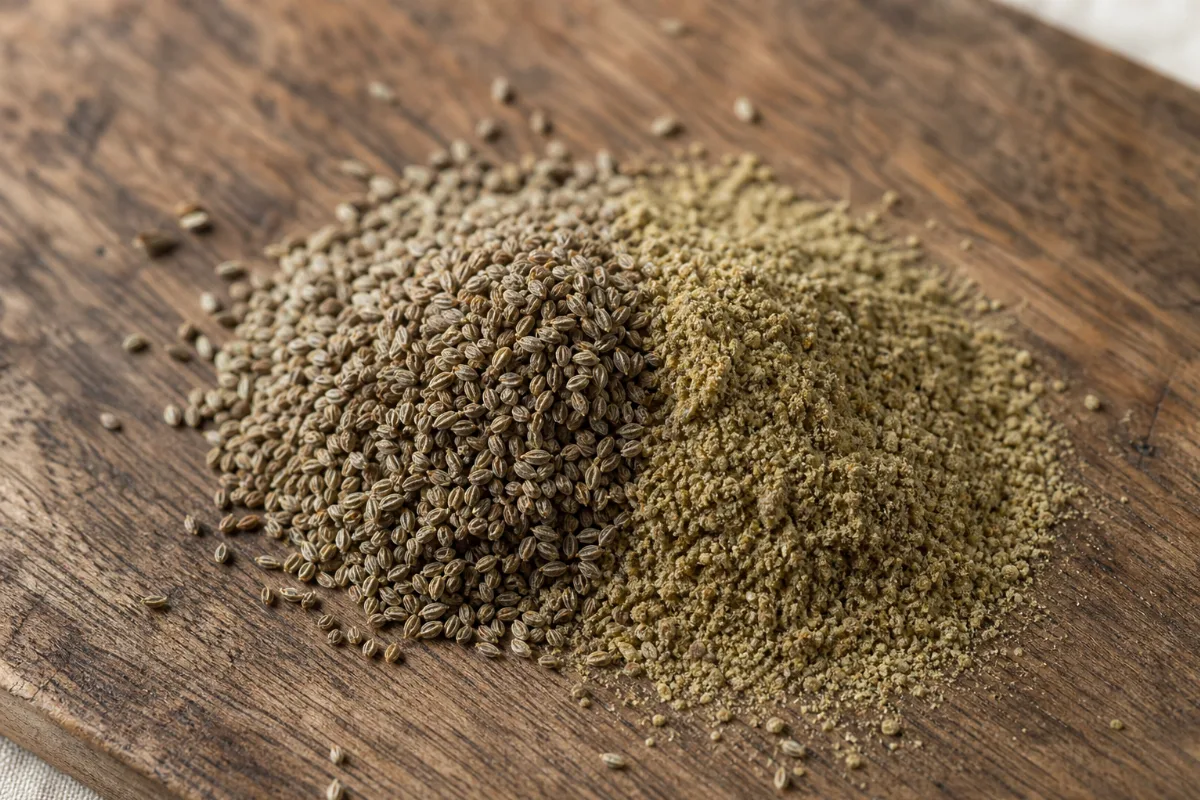
Spices · Traditional digestive seed spice
Ajwain
Trachyspermum ammi (family Apiaceae) · also called Carom seed, ajowan, omum
Ajwain is a small, pungent seed used in Indian cooking and traditional remedies for gas, stomach pain and cough. Human research is thin: a few small trials of a skin cream or oil, with mixed results, and no trial of eating it for digestion. The seed oil is mostly thymol, which is harsh in concentrated form, so keep strong oil away from children. Pregnancy, breastfeeding and medicine safety are not well studied.
General information, not medical advice. Last substantive update · Not medically reviewed. A named clinician has not signed off on this page. How this page is made
About Ajwain
Ajwain is a seed spice with a long tradition for the stomach and breathing. Modern research is mostly lab and animal work, plus three small trials of creams or oil on the skin or gum. Its oil is rich in thymol, which is hazardous in concentrated form, so food use differs a lot from oil or supplement use.
What it is
Ajwain (Trachyspermum ammi) is a plant in the carrot family. The small fruits, called seeds in the kitchen, have a pungent smell. Many research papers call the plant Carum copticum, an older name. GBIF lists that name separately, so we note the difference.
Reviews list traditional uses for bloating, diarrhoea, stomach pain, loss of appetite, breathing problems, piles and menstrual complaints. Tradition is not proof that it works or is safe.
How it may work
The seed oil is mostly thymol, with smaller amounts of p-cymene, gamma-terpinene and carvacrol. In one study of seeds from 14 Iranian populations, thymol ranged from about 60% to 96% of the oil, so oil strength varies a lot.
In animals and tissue, a seed extract relaxed muscle and lowered blood pressure by blocking calcium channels, and carvacrol-rich parts of the oil relaxed windpipe tissue. In rats the extract raised stomach acid. None of this has been shown to help or harm people in the same way.
What the human trials found
A 4-week trial in 92 adults found a 10% ajwain cream reduced burning, numbness and tingling in the feet more than placebo. A pilot trial of 60 people with chemotherapy nerve symptoms found no significant difference, and a 2026 review of five herbal-cream trials found no significant benefit for ajwain cream. A trial of 52 children found ajwain oil on the gum was rated less painful than a lidocaine spray, but it had no placebo group.
We found no trial of eating ajwain for digestion, cough, cholesterol, blood pressure or blood sugar.
At a glance
Traditional uses history, not proof
- Bloating, diarrhoea, stomach pain and poor appetite
- Breathing problems and cough
- Piles and menstrual complaints (as listed in modern reviews)
Studied for research
- Burning-foot nerve pain (10% cream): low (one small trial, positive)
- Nerve symptoms after chemotherapy (cream): insufficient (null pilot trial and review)
- Dental injection pain in children (oil): insufficient (no placebo)
- Digestion, cough, blood pressure, liver, swelling: lab, animal or tradition only
Main compounds
- Thymol, PubChem CID 6989 (about 60-96% of the oil in one study)
- p-Cymene, CID 7463
- gamma-Terpinene, CID 7461
- Carvacrol, CID 10364
Common forms
- Whole seed (spice)
- Essential oil (strong, thymol-rich)
- Creams made from the oil (used in trials)
- Extracts (lab and animal work only)
Research links: Petramfar 2016: ajwain 10% cream for burning feet (PubMed) · Heydarirad 2024: ajwain cream, chemotherapy nerve symptoms (PubMed) · Shao 2026: topical herbal creams for chemotherapy nerve symptoms (PubMed) · Takuli 2025: ajwain oil for dental injection pain in children (PubMed) · Boskabady 2014: Carum copticum (ajwain) review (PubMed) · Tennessee Poison Center: toxic essential oils (thymol) · Research Library · Genes & Biomarkers Library
What it is and its history
- Accepted scientific name
- Trachyspermum ammi (L.) Sprague
- Naming authority
- (L.) Sprague, as listed by GBIF (key 3034241).
- Synonyms
- Carum copticum (older name used in many research papers)
- Common names
- Ajwain (English / Hindi); Ajowan (English); Carom seed (English); Omum (English (used in a 2000 rat study))
- Family or group
- Apiaceae (carrot or parsley family)
- Classification
- Plantae > Tracheophyta > Magnoliopsida > Apiales > Apiaceae > Trachyspermum > Trachyspermum ammi
- Native range
- Not found in the sources read. Reviews describe it as widely cultivated, including in Iran and India (Gujarat and Rajasthan).
- Habitat
- Not described in the sources read.
- What it looks like
- Roots: Not described in sources read.; Stems: Not described in sources read.; Leaves: Not described in sources read.; Flowers: Not described in sources read.; Fruit: Small seed-like fruits with a pungent smell and characteristic odour; microscopy shows warty hairs, a striped outer layer and oil canals (Saraswat 2021).
- Cultivation
- Widely cultivated (Boskabady 2014).
- Harvest and processing
- Not covered in the sources read. Seeds were collected at ripening in the Iranian study.
- Look-alikes and adulterants
- Name: Other carrot-family seed spices (caraway, cumin, fennel, anise, celery seed); Note: Similar-looking seeds in the same family; the cross-reaction concern for allergy applies by family, and ajwain is rich in thymol, which sets it apart from many of them.
- Sustainability and conservation
- Not assessed in the sources read.
Photographs
Traditional use and history history, not clinical proof
| Tradition or era | Documented use | Source |
|---|---|---|
| Traditional medicine of India and the Middle East (as summarised by modern reviews) | Bloating, diarrhoea, abdominal pain, loss of appetite, fatigue, breathing problems, piles and menstrual problems. | p25089273 |
| Ayurveda and Unani (as described in a rat toxicity paper) | Fruit prescribed raw and as a main part of powdered formulas. | p32957888 |
| Traditional postpartum use | Often stated on commercial and encyclopedia pages. NOT verified: no study or historical source for it was read. | s-regulators-not-found-ajwain |
Traditional use shows how it was used. It does not show that it works or is safe today.
What is inside, and how it may work
What it contains and how those compounds act in cells and animals. Laboratory and animal mechanisms are not proven effects in people.
Main compounds
| Compound | Family | Where it is concentrated | Activity studied | Level of evidence |
|---|---|---|---|---|
| Thymol PubChem 6989 | Monoterpene phenol | Fruit (seed) essential oil 59.92% to 96.4% of the oil in 14 Iranian populations (oil yield 3.16-5% of seed). | Antibacterial and antioxidant in the lab; corrosive in concentrated form. 10 12 15 20 | Lab |
| p-Cymene PubChem 7463 | Monoterpene | Fruit (seed) essential oil 0.55% to 21.15% of the oil in the Iranian study. | A chemical-type marker (thymol/p-cymene/gamma-terpinene type). 10 15 | Lab |
| gamma-Terpinene PubChem 7461 | Monoterpene | Fruit (seed) essential oil 0.23% to 17.78% of the oil in the Iranian study. | Part of the oil profile; separate effects not established. 10 15 | Lab |
| Carvacrol PubChem 10364 | Monoterpene phenol | Fruit (seed) essential oil 0.41% to 2.77% of the oil in the Iranian study. | Relaxed guinea-pig windpipe tissue as strongly as theophylline in a tissue bath. 10 3 15 | Lab |
Mechanisms, receptors and pathways
| Target or pathway | Gene or receptor | What was found | Level |
|---|---|---|---|
| Calcium channels in muscle and blood vessels | Not specified | A seed extract shifted calcium response curves like verapamil in rabbit gut and aorta and in guinea-pig windpipe, and lowered rat blood pressure. 7 | Animal research |
| Stomach acid secretion (cholinergic route) | Muscarinic acetylcholine receptors (atropine reduced the effect) | Omum extract raised acid secretion in rats; atropine significantly reduced the omum effect. 21 | Animal research |
| Airway muscle relaxation | Not through beta-adrenergic or classic anticholinergic routes in this study | Carvacrol-rich oil fractions relaxed pre-contracted windpipe tissue comparably to theophylline. 3 | Lab |
| Inflammation and oxidative stress | Cytokine and antioxidant systems (thymol, review) | Thymol is reported to be anti-inflammatory and antioxidant in lab and animal work; a standardised fruit extract reduced rat paw swelling. 12 16 | Animal research |
| Bacteria | Not specified | The oil slowed E. coli and S. aureus in the lab. 10 | Laboratory research |
Absorption, metabolism and elimination
- Absorption
- No ajwain-specific human data. A poison-centre page says thymol is absorbed through the body after swallowing and skin contact. The authors of a 2025 rat study say ajwain seed extract has poor water solubility and low absorption.
- Distribution
- Not found.
- Metabolism
- Not found.
- Elimination
- Not found.
- Bioavailability
- Not found for humans.
Isolated compounds versus whole extracts
Four different things carry the name: the whole seed in food, a water or alcohol extract, the concentrated essential oil (mostly thymol), and isolated thymol. Human trials tested only a 10% cream and an oil on the gum. Lab results on thymol or one extract cannot be assumed for the spice in cooking, and the oil's make-up varies a lot by seed source.
Nutritional composition
Reviews list ajwain seeds as containing carbohydrates, fat, protein, fibre and minerals including calcium, phosphorus, iron and niacin (Boskabady 2014). Amounts per serving were not read, and ajwain is used in small pinches.
1 low certainty8 not enough evidence
What was looked at
The 9 benefits and uses checked for Ajwain, each with how strong the evidence is. Tap one to open it.
- Burning-foot nerve pain (10% ajwain cream on the skin)Low certainty
- Nerve symptoms after taxane chemotherapy (ajwain cream)Not enough evidence
- Pain from dental injections in children (ajwain oil on the gum)Not enough evidence
- Digestive upset, stomach pain and diarrhoea (traditional use)Not enough evidence
- Cough and breathing trouble (traditional use)Not enough evidence
- Blood pressure (rat and tissue studies)Not enough evidence
- Liver and kidney protection (rat studies)Not enough evidence
- Swelling and inflammation (rat study)Not enough evidence
- Germ-fighting and antioxidant activity of the oil (lab only)Not enough evidence
Lab markers tracked in the studies
Feet burning intensity (0-10 scale)Chemotherapy nerve symptom score (CIPNAT)Injection pain in children (visual and faces scales)Blood pressure (anaesthetised rats)Liver enzymes ALT, AST and ALP (rats given liver toxins)Stomach acid output (anaesthetised rats)
What is Ajwain good for?
The studied uses and how strong the human evidence is. For ajwain it is weak: a few small skin-product trials, and for everything else only tradition and lab or animal work.
Benefits, one by one
Each card is a research question, not a promise. Tap a goal to filter. Open a card to see the studies, doses and limits.
Burning-foot nerve pain (10% ajwain cream on the skin)
Low certaintyOne small trial of a 10% ajwain cream found less burning, numbness, tingling and touch pain in the feet than a placebo cream over 4 weeks. It is a skin cream made from the seed oil, not food or tea, and it has not been repeated in the sources we read.
2 studies10% cream made from ajwain essential oil (trial only). Amount and how…
Studies, doses and limits
What the trials found
Petramfar 2016: 92 adults with daily and night-time burning feet were randomly given a 10% ajwain cream or placebo cream for 4 weeks. The main measure was feet burning on a 0-10 scale, final week against baseline week.
Results
Burning, numbness, tingling and touch pain all fell significantly more with ajwain cream than with placebo. The abstract gives no numbers and does not describe side effects.
Effect sizes as reported
Not given in the abstract (full text not read).
Why this rating
One small trial from one centre, no numbers or side-effect data in the abstract, and no repeat trial. The only other ajwain cream trial (below) found no benefit.
Form and dose studied
10% cream made from ajwain essential oil (trial only). Amount and how often it was applied are not in the abstract.
Who was studied
Adults with burning feet (neuropathic pain), Iran.
Limits
Single trial; abstract has no effect sizes or adverse events; the cause of the nerve pain is not stated in the abstract.
Why researchers looked
Ajwain seed oil is rich in thymol, which a poison-centre page says has local numbing properties. Researchers in Iran tried a cream for people with burning feet.
Traditional use
Ajwain seeds are traditionally used mainly for the gut and breathing, not for nerve pain; the cream trial is a modern test.
Proposed mechanism Pharmacological theory
Not established. Not established; the trial did not test how the cream works.
A proposed mechanism does not show that the effect happens in people.
Skin cream only. Concentrated ajwain oil is strong; see the safety file. Adverse events were not described in the abstract.
Nerve symptoms after taxane chemotherapy (ajwain cream)
Not enough evidenceA 60-person pilot trial found no real difference from placebo cream after 4 weeks, and a 2026 review of five herbal-cream trials also found no significant benefit from ajwain cream.
2 studiesAjwain cream, 4 weeks (strength not in the abstract).
Studies, doses and limits
What the trials found
Heydarirad 2024: 60 people with breast, lung, gut or prostate cancer and nerve symptoms (30 per group) used ajwain or placebo cream for 4 weeks. Shao 2026 reviewed 5 trials of herbal creams (201 people) for this problem.
Results
The average difference in symptom score between groups was 0.83 (P = 0.372), not significant. The review says ajwain cream, Citrullus colocynthis oil and a multi-oil blend did not significantly improve severity, pain or quality of life compared with placebo, while henna and Costus oil each helped in single trials. Only mild skin reactions were reported across the creams.
Effect sizes as reported
Mean difference in CIPNAT score 0.83, P = 0.372 (confidence interval not in the abstract).
Why this rating
A small null pilot trial and a review that found no benefit for ajwain. Underpowered, so a small effect cannot be ruled out.
Form and dose studied
Ajwain cream, 4 weeks (strength not in the abstract).
Who was studied
Adults with cancer who developed nerve symptoms after taxane drugs.
Limits
Pilot size; the authors call larger multi-centre trials essential.
Why researchers looked
After the burning-feet result, a team in Tehran tested the cream on nerve symptoms caused by taxane cancer drugs.
Traditional use
Not a traditional use.
Proposed mechanism Pharmacological theory
Not tested.
A proposed mechanism does not show that the effect happens in people.
The authors call the safety profile promising; the review reports only mild local skin reactions for the creams as a group.
Pain from dental injections in children (ajwain oil on the gum)
Not enough evidenceIn one trial of 52 children, ajwain oil on the gum before a numbing injection was rated less painful than a lidocaine spray. There was no placebo group, and strength and side effects were not reported in the abstract.
2 studiesAjwain oil on the gum (strength and amount not in the abstract).
Studies, doses and limits
What the trials found
Takuli 2025: 52 children aged 6-10 were randomly given ajwain oil or a 15% lidocaine spray on the gum before a local anaesthetic injection. Pain was rated on two scales.
Results
Pain scores were significantly lower with ajwain oil on both scales (P = 0.001 each). Exact scores are not in the abstract.
Effect sizes as reported
Not given in the abstract.
Why this rating
One small trial against an active spray, no placebo, no safety data. A better score than an active comparator is not proof of a numbing effect.
Form and dose studied
Ajwain oil on the gum (strength and amount not in the abstract).
Who was studied
Healthy children aged 6-10 at a dental clinic in India.
Limits
No placebo; no adverse-event data; unclear how the oil was diluted. Thymol-rich oils are corrosive when strong, so use in children is a safety question this trial does not answer.
Why researchers looked
Researchers wondered if a thymol-rich oil could replace the usual numbing gum spray.
Traditional use
Not documented as a traditional use in the sources read.
Proposed mechanism Pharmacological theory
Not tested in the trial; not tested in the trial.
A proposed mechanism does not show that the effect happens in people.
Do not copy this at home. Strong essential oil should be kept away from children's mouths unless a dentist directs it.
Digestive upset, stomach pain and diarrhoea (traditional use)
Not enough evidenceAjwain seeds are a classic household remedy for gas, stomach pain and diarrhoea. No human trial of ajwain on its own for digestion was found. A rat study actually found that ajwain extract increased stomach acid.
4 studiesSeed or crushed seed in cooking; extracts in lab work. No dose can be…
Studies, doses and limits
What the trials found
No human result. The animal data point both ways: gut muscle relaxing (could soothe cramps) and more stomach acid (could irritate).
Results
Tradition only for humans; the lab and animal findings do not show effects on digestion in people.
Why this rating
No human trial; only tradition plus animal and tissue work.
Form and dose studied
Seed or crushed seed in cooking; extracts in lab work. No dose can be taken from this evidence.
Who was studied
No human population studied.
Limits
No human trial found; animal work is a perfusion and tissue study, not eating.
Why researchers looked
It is a kitchen spice with a long reputation for the stomach; the research is lab and animal work.
Traditional use
Reviews list bloating, diarrhoea, abdominal pain and loss of appetite as traditional uses (Boskabady 2014; Prakash 2026).
Proposed mechanism Animal research
In anaesthetised rats a 10% water extract of omum (ajwain) raised stomach acid output (0.09 to 0.33 mL of 0.1N acid, p < 0.01) partly through a nerve (cholinergic) route. In isolated animal gut tissue a seed extract relaxed contractions through calcium-channel blocking.
A proposed mechanism does not show that the effect happens in people.
Higher acid output in rats suggests caution with reflux or ulcers (theory only).
Cough and breathing trouble (traditional use)
Not enough evidenceAjwain is traditionally used for breathing problems and cough. The only support is from isolated guinea-pig windpipe tissue, where parts of the oil relaxed the muscle. No human trial was found.
4 studiesSeed extract or oil fractions in the lab.
Studies, doses and limits
What the trials found
No human result.
Results
Tissue-bath results say nothing about whether ajwain eases cough or asthma in people.
Why this rating
Isolated animal tissue only.
Form and dose studied
Seed extract or oil fractions in the lab.
Who was studied
No human population studied.
Limits
Tissue-bath study, not a living animal or a person.
Why researchers looked
Carvacrol, a compound in the oil, relaxes airway muscle in the lab, which fits the traditional use.
Traditional use
Breathing problems and respiratory distress are listed as traditional uses (Prakash 2026; Boskabady 2014).
Proposed mechanism Laboratory research
Two oil fractions (presumably carvacrol-rich) relaxed windpipe tissue as strongly as theophylline in a tissue bath; a seed extract also blocked calcium channels in windpipe tissue.
A proposed mechanism does not show that the effect happens in people.
Breathing in strong oil can irritate airways; swallowing essential oils can injure the lungs (poison-centre warning).
Blood pressure (rat and tissue studies)
Not enough evidenceA seed extract lowered blood pressure in anaesthetised rats and relaxed isolated blood vessel tissue in a way that resembles the drug verapamil. No human blood-pressure trial was found.
1 studiesSeed extract (lab).
Studies, doses and limits
What the trials found
No human result.
Results
The finding comes from a concentrated aqueous-methanolic extract given to anaesthetised rats and from isolated rabbit aorta. The spice in cooking has not been tested.
Why this rating
One group, animals and tissue only.
Form and dose studied
Seed extract (lab).
Who was studied
No human population studied.
Limits
Cannot be applied to people.
Why researchers looked
Researchers wanted to explain traditional uses and found a calcium-blocking effect.
Traditional use
Not a traditional blood-pressure remedy in the sources read.
Proposed mechanism Animal research
Calcium-channel blocking (like verapamil) in tissue; a dose-dependent fall in rat blood pressure at 3-100 mg/kg.
A proposed mechanism does not show that the effect happens in people.
Theoretical additive effect with blood pressure medicines; see interactions.
Liver and kidney protection (rat studies)
Not enough evidenceIn rats, ajwain seed extracts lowered liver and kidney blood markers after poisoning with cisplatin, paracetamol or carbon tetrachloride. No human data.
2 studiesSeed extract and a lab formulation.
Studies, doses and limits
What the trials found
No human result.
Results
Seed extract at 500 mg/kg prevented rises of ALP, AST and ALT after liver toxins in rats (Gilani 2005); a special formulation lowered ALT, AST, ALP, creatinine and BUN in cisplatin-injured rats (Halder 2025).
Why this rating
Rat studies of concentrated extracts.
Form and dose studied
Seed extract and a lab formulation.
Who was studied
No human population studied.
Limits
Rat models; one study used a drug-delivery formulation not found in foods.
Why researchers looked
Antioxidant and anti-inflammatory activity suggested a protective effect.
Traditional use
Not a documented traditional use in the sources read.
Proposed mechanism Animal research
Antioxidant and anti-inflammatory activity in rats is the proposed explanation.
A proposed mechanism does not show that the effect happens in people.
This is NOT proof of safety for the human liver.
Swelling and inflammation (rat study)
Not enough evidenceA standardised fruit extract reduced chemically induced paw swelling in rats and showed no toxicity in acute and sub-acute tests. No human trial.
2 studiesStandardised fruit extract (rat).
Studies, doses and limits
What the trials found
No human result.
Results
Significant anti-inflammatory action in carrageenan and formalin swelling models; no toxicity signs and LD50 beyond 3000 mg/kg in rats (Saraswat 2021).
Why this rating
Animal study of a standardised extract.
Form and dose studied
Standardised fruit extract (rat).
Who was studied
No human population studied.
Limits
Rat swelling models are far from human conditions.
Why researchers looked
Thymol and related compounds are anti-inflammatory in the lab.
Traditional use
Not documented as a traditional use in the sources read.
Proposed mechanism Animal research
Thymol is reported to reduce inflammatory signals in lab and animal work (Nagoor Meeran 2017, a review of thymol itself).
A proposed mechanism does not show that the effect happens in people.
No toxicity signs in rats at the doses tested.
Germ-fighting and antioxidant activity of the oil (lab only)
Not enough evidenceAjwain seed oil and its main compound thymol kill some bacteria and mop up free radicals in test tubes. This has not been shown to help people.
2 studiesEssential oil and extracts (lab).
Studies, doses and limits
What the trials found
No human result.
Results
Oil from 14 Iranian seed populations had thymol 59.92-96.4% and showed antibacterial (against E. coli and S. aureus) and antioxidant activity in lab tests (Modareskia 2022).
Why this rating
Test-tube only.
Form and dose studied
Essential oil and extracts (lab).
Who was studied
No human population studied.
Limits
Test tube results often do not carry over to the body; the oil's make-up varies by seed source.
Why researchers looked
The oil is rich in thymol, a well known antiseptic compound.
Proposed mechanism Laboratory research
Thymol and carvacrol damage microbes and scavenge free radicals in the lab.
A proposed mechanism does not show that the effect happens in people.
Strong oil is corrosive; do not apply undiluted.
Connections to the rest of health
How Ajwain connects to the rest of our health knowledge graph. Every link says what kind of connection it is. A safety link (for example to the liver) is a warning, not a benefit. A study that merely mentions a topic never creates a benefit link.
Explore every connection: goals, body systems, organs, symptoms, genes
A. Wellness goals
| Connected to | Kind of connection | Evidence status | Context | Studies |
|---|---|---|---|---|
| Digestive Support | Traditional use | Not enough evidence | Digestive upset, stomach pain and diarrhoea (traditional use): Ajwain seeds are a classic household remedy for gas, stomach pain and diarrhoea. No human trial of ajwain on its own for digestion was found. A rat study actually found that ajwain extract increased stomach acid. | 4 14 21 7 |
| Lung Support | Traditional use | Not enough evidence | Cough and breathing trouble (traditional use): Ajwain is traditionally used for breathing problems and cough. The only support is from isolated guinea-pig windpipe tissue, where parts of the oil relaxed the muscle. No human trial was found. | 3 7 14 20 |
| Blood Pressure Support | Preliminary mechanism | Not enough evidence | Blood pressure (rat and tissue studies): A seed extract lowered blood pressure in anaesthetised rats and relaxed isolated blood vessel tissue in a way that resembles the drug verapamil. No human blood-pressure trial was found. | 7 |
| Liver Support | Preliminary mechanism | Not enough evidence | Liver and kidney protection (rat studies): In rats, ajwain seed extracts lowered liver and kidney blood markers after poisoning with cisplatin, paracetamol or carbon tetrachloride. No human data. | 7 8 |
| Inflammation Balance | Preliminary mechanism | Not enough evidence | Swelling and inflammation (rat study): A standardised fruit extract reduced chemically induced paw swelling in rats and showed no toxicity in acute and sub-acute tests. No human trial. | 16 12 |
| Immune Support | Preliminary mechanism | Not enough evidence | Germ-fighting and antioxidant activity of the oil (lab only): Ajwain seed oil and its main compound thymol kill some bacteria and mop up free radicals in test tubes. This has not been shown to help people. | 10 12 |
B. Body systems
| Connected to | Kind of connection | Evidence status | Context | Studies |
|---|---|---|---|---|
| Nervous System | Biological association | Low certainty | Studied for: Burning-foot nerve pain (10% ajwain cream on the skin) Studied for: Nerve symptoms after taxane chemotherapy (ajwain cream) | 13 14 9 18 19 20 |
| Digestive System | Biological association | Not enough evidence | Studied for: Digestive upset, stomach pain and diarrhoea (traditional use) | 4 14 21 7 |
| Respiratory System | Biological association | Not enough evidence | Studied for: Cough and breathing trouble (traditional use) | 3 7 14 20 |
| Cardiovascular System | Biological association | Not enough evidence | Studied for: Blood pressure (rat and tissue studies) | 7 |
| Hepatic System | Biological association | Not enough evidence | Studied for: Liver and kidney protection (rat studies) | 7 8 |
| Immune System | Biological association | Not enough evidence | Studied for: Swelling and inflammation (rat study) Studied for: Germ-fighting and antioxidant activity of the oil (lab only) | 16 12 10 |
E. Health conditions
| Connected to | Kind of connection | Evidence status | Context | Studies |
|---|---|---|---|---|
| Pregnancy | Contraindication | Not enough evidence | No safety data; womb-stimulating and postpartum-use claims NOT verified. Preparation or compound: Ajwain oil, extracts and supplements |
17 |
| Blood pressure medicines | Drug or supplement interaction | Not enough evidence | Lowered blood pressure in rats through calcium-channel blocking; no human data. Preparation or compound: Carum copticum seed extract |
7 |
| Peripheral neuropathy | Potential benefit | Not enough evidence | One trial of a 10% cream eased burning feet; a chemotherapy nerve symptom pilot found no benefit. Preparation or compound: Ajwain cream |
13 9 18 |
I. Biomarkers
| Connected to | Kind of connection | Evidence status | Context | Studies |
|---|---|---|---|---|
| Feet burning intensity (0-10 scale) | Biological association | Low certainty | Measured in trials: lowered. A lab change is not the same as a health benefit. | 13 |
| Chemotherapy nerve symptom score (CIPNAT) | Biological association | Not enough evidence | Measured in trials: no-change. A lab change is not the same as a health benefit. | 9 18 |
| Injection pain in children (visual and faces scales) | Biological association | Not enough evidence | Measured in trials: lowered. A lab change is not the same as a health benefit. | 19 |
| Blood pressure (anaesthetised rats) | Biological association | Not enough evidence | Measured in trials: lowered. A lab change is not the same as a health benefit. | 7 |
| Liver enzymes ALT, AST and ALP (rats given liver toxins) | Biological association | Not enough evidence | Measured in trials: lowered. A lab change is not the same as a health benefit. | 7 8 |
| Stomach acid output (anaesthetised rats) | Biological association | Not enough evidence | Measured in trials: raised. A lab change is not the same as a health benefit. | 21 |
J. Genes, receptors and enzymes
| Connected to | Kind of connection | Evidence status | Context | Studies |
|---|---|---|---|---|
| Muscarinic acetylcholine receptors | Preliminary mechanism | Animal | Atropine reduced the acid-raising effect of omum extract in rat stomach. | 21 |
K. Biological pathways
| Connected to | Kind of connection | Evidence status | Context | Studies |
|---|---|---|---|---|
| Calcium-channel signalling | Preliminary mechanism | Animal | Verapamil-like effects of the seed extract in tissue and rats. | 7 |
L. Active compounds
| Connected to | Kind of connection | Evidence status | Context | Studies |
|---|---|---|---|---|
| Thymol | Adverse effect or risk | Low certainty | Corrosive in concentrated form; poisoning signs described for thyme oil. Preparation or compound: Thymol-rich essential oil |
20 |
| Thymol | Biological association | Lab | Antibacterial and antioxidant in the lab; corrosive in concentrated form. Preparation or compound: Fruit (seed) essential oil |
10 12 15 20 |
| p-Cymene | Biological association | Lab | A chemical-type marker (thymol/p-cymene/gamma-terpinene type). Preparation or compound: Fruit (seed) essential oil |
10 15 |
| gamma-Terpinene | Biological association | Lab | Part of the oil profile; separate effects not established. Preparation or compound: Fruit (seed) essential oil |
10 15 |
| Carvacrol | Biological association | Lab | Relaxed guinea-pig windpipe tissue as strongly as theophylline in a tissue bath. Preparation or compound: Fruit (seed) essential oil |
10 3 15 |
Each connection is stored with the ingredient, the connected record, the kind of connection, the evidence status, the supporting studies, the preparation or compound involved, and a review date (last reviewed October 25, 2026).
Evidence at a glance: what changed in 6 lab markers
Tap a number to show only those markers. Counts are markers, not people.
The evidence
The research centre for Ajwain. Every record here was checked against PubMed or the publisher's page; we never list a study we have not verified.
Evidence by outcome
Bars show how many studies we found for each outcome, not how well it works. People are added up across trials only (reviews are not added, to avoid double counting).
How we rate evidence
High certainty
Several well-run trials or reviews agree; further research is unlikely to change the picture much.
Moderate certainty
Good trials point the same way, but some doubt remains.
Low certainty
Small, short or inconsistent trials. The finding could change with better research.
Very low certainty
Very little or very weak human data. Treat as a possibility only.
Mixed findings
Trials or reviews disagree with each other.
Not enough evidence
Not enough human research to say either way.
Evidence against
Good research found no benefit, or found harm.
We take the reviewers' own risk-of-bias and GRADE statements where they exist, and otherwise judge from study size, design, consistency, directness and whether a product matches what is sold. Many publications do not make evidence high. Method note: We started from our existing ajwain summary, read the abstract of every PubMed study cited, read the poison-centre page, and checked the plant name in GBIF and NCBI Taxonomy and the compounds in PubChem. NCCIH, EMA, LiverTox, LactMed, WHO and Commission E entries for ajwain were not found or could not be read.
Study library: every study we checked 22
| Study | Design | People | Product, dose, length | Result |
|---|---|---|---|---|
| Alawadhi 2024 Heavy metals in spices and herbs from worldwide markets: A systematic review and health risk assessment. Environmental Pollution · PMID 39306065 · DOI |
Systematic review review |
50 studies of heavy metals in culinary spices and herbs | Culinary spices and herbs including ajwain seeds various |
Metal levels varied by country and spice; some spices exceeded lead and cadmium limits. Ajwain is mentioned only for iron and calcium content in Indian samples. No ajwain-specific risk was reported in the abstract. Contamination varies by source Methods, limits and fundingOutcomes: Heavy metal levels and health risk Limitations: Abstract gives no ajwain-specific metal results. Funding and conflicts: Not stated in abstract Read: abstract |
| Ballmer-Weber 2024 New light on an old syndrome: Role of Api g 7 in mugwort pollen-related celery allergy. Journal of Allergy and Clinical Immunology · PMID 38763171 · DOI |
Observational |
79 79 people with celery allergy (30 mild oral symptoms, 49 systemic reactions) |
Celery (another Apiaceae plant); not ajwain celery root |
Celery is known to cause severe reactions in people sensitised to mugwort pollen. IgE to Api g 7 was found in 52% and linked to a roughly six-fold higher odds of a severe reaction (OR 5.87, CI 1.08-32.0). Carrot-family cross-allergy can be severe (1.08-32.0) Methods, limits and fundingOutcomes: IgE to celery and mugwort allergens; severity Limitations: About celery, not ajwain. Cited only to show that carrot-family allergy can be serious. Funding and conflicts: Not stated in abstract Read: abstract |
| Boskabady 2003 Relaxant effects of different fractions of essential oil from Carum copticum on guinea pig tracheal chains. Phytotherapy Research · PMID 14669246 · DOI |
Animal research animal |
Isolated guinea-pig windpipe tissue | Fractions of Carum copticum essential oil; carvacrol seed oil · vs Ethanol; theophylline |
Two oil fractions (presumably carvacrol-rich) relaxed windpipe tissue as strongly as theophylline; carvacrol alone did too. Tissue only Methods, limits and fundingOutcomes: Relaxation of pre-contracted windpipe muscle Limitations: Isolated animal tissue; says nothing about cough or asthma in people. Funding and conflicts: Not stated in abstract Read: abstract |
| Boskabady 2014 Carum copticum L.: a herbal medicine with various pharmacological effects. BioMed Research International · PMID 25089273 · DOI |
Narrative review review |
Literature on Carum copticum (ajwain) | Ajwain (Carum copticum / Trachyspermum ammi) seed |
Lists traditional use for bloating, fatigue, diarrhoea, abdominal pain, respiratory distress and loss of appetite; names thymol, carvacrol, p-cymene and beta-pinene among components; reviews mostly lab and animal pharmacology. Narrative review Methods, limits and fundingOutcomes: Traditional uses and pharmacology Limitations: 2014 review of mostly lab and animal work; the abstract gives no human trial results. Funding and conflicts: Not stated in abstract Read: abstract |
| Devi 2025 Single-quad gas chromatography estimation of a few selected pesticides as residues in spices of the National Capital Region of Delhi. Environmental Monitoring and Assessment · PMID 40106022 · DOI |
Observational survey |
21 21 spice samples from Delhi-NCR markets (8 spices) |
Spice samples including ajwain seed (market samples) |
Ajwain samples contained gamma-HCH, hexaconazole and lambda-cyhalothrin; all residues found across spices were below the Indian food-safety (FSSAI) limits. Residues present but within limits in this small survey Methods, limits and fundingOutcomes: Pesticide residues Limitations: 21 samples, one region; the number of ajwain samples is not in the abstract. Funding and conflicts: Authors declare no competing interests Read: abstract |
| GBIF 2026 GBIF Backbone Taxonomy: Trachyspermum ammi (L.) Sprague (key 3034241) GBIF API · Source |
Authoritative guidance n/a |
Taxonomic record | Plant identity |
Read 2026-10-25 via the GBIF species match API: ACCEPTED, exact match, confidence 98, family Apiaceae, order Apiales. The same API lists Carum copticum H.Karst., 1882 (key 7741980) as a separate accepted name, so the older name used in many research papers is not shown as a synonym there. Name check Methods, limits and fundingOutcomes: Accepted name and family Limitations: GBIF treats Carum copticum as its own accepted name; whether papers using it mean the same plant as T. ammi was not settled in the sources read. Funding and conflicts: Not applicable Read: api |
| Gilani 2005 Studies on the antihypertensive, antispasmodic, bronchodilator and hepatoprotective activities of the Carum copticum seed extract. Journal of Ethnopharmacology · PMID 15763373 · DOI |
Animal research animal |
Anaesthetised rats; isolated rabbit, guinea-pig and mouse tissues | Aqueous-methanolic extract of Carum copticum seeds seed 3-100 mg/kg (blood pressure, rats); 500 mg/kg by mouth for 2 days (liver protection, rats) Acute / 2 days · vs Verapamil comparison; controls |
The extract lowered blood pressure in rats in a dose-dependent way, relaxed isolated gut and windpipe tissue (calcium-channel-blocking action like verapamil), and prevented rises in ALP, AST and ALT after paracetamol or CCl4 in rats. Animal and tissue only Methods, limits and fundingOutcomes: Blood pressure; muscle contraction in gut, windpipe and aorta; liver enzymes after toxin Limitations: Anaesthetised rats and isolated tissue; no human data. Concentrated extract, not the spice. Funding and conflicts: Not stated in abstract Read: abstract |
| Halder 2025 Biopharmaceutical characterization of Ajwain (Carum copticum) seed extract-loaded self-microemulsifying drug delivery system for enhanced hepatoprotective and nephroprotective activity. Scientific Reports · PMID 41083705 · DOI |
Animal research animal |
Rats with cisplatin-induced liver and kidney injury | Ajwain seed extract in a special delivery formulation (SMEDDS) seed 75 and 150 mg/kg by mouth (rats) · vs Plain seed extract and controls |
The formulation lowered ALT, AST, ALP (p < 0.01) and creatinine and BUN (p < 0.05) in a dose-dependent way versus the plain extract. Animal only Methods, limits and fundingOutcomes: Serum ALT, AST, ALP, creatinine, BUN; histology Limitations: Rats; a drug-delivery formulation, not a food or ordinary extract; says nothing about human liver safety. Funding and conflicts: No competing interests declared Read: abstract |
| Heydarirad 2024 Exploring the Effectiveness of Ajwain Cream in Treating Taxane-induced Peripheral Neuropathy in Cancer Patients: A Pilot, Randomised and Double-blind Clinical Trial. Indian Journal of Palliative Care · PMID 38633679 · DOI |
Controlled trial |
60 Adults with nerve symptoms after taxane chemotherapy (breast, lung, gastro-intestinal or prostate cancer), Tehran |
Ajwain (Trachyspermum ammi) cream fruit (seed), per the abstract 4 weeks · vs Placebo cream |
Mean difference in CIPNAT score between groups 0.83 (P = 0.372): no significant benefit over placebo. The authors say the safety profile showed promising outcomes. No significant difference from placebo Methods, limits and fundingOutcomes: Chemotherapy-induced peripheral neuropathy assessment tool (CIPNAT) score; side effects Limitations: Pilot trial; 30 per group; underpowered by the authors' own account; cream strength not in the abstract. Funding and conflicts: Authors declare no conflict of interest Read: abstract |
| Modareskia 2022 Thymol screening, phenolic contents, antioxidant and antibacterial activities of Iranian populations of Trachyspermum ammi (L.) Sprague (Apiaceae). Scientific Reports · PMID 36123425 · DOI |
Laboratory research in-vitro |
Seeds of 14 Iranian populations | Ajwain seed essential oil and extracts fruit (seed) |
Oil yield 3.16-5%. Thymol 59.92-96.4%, p-cymene 0.55-21.15%, gamma-terpinene 0.23-17.78% and carvacrol 0.41-2.77% of the oil. Two chemical types (thymol/p-cymene/gamma-terpinene and thymol/carvacrol). Antioxidant and antibacterial activity in the lab. Lab chemistry and activity only Methods, limits and fundingOutcomes: Oil yield, composition, antioxidant and antibacterial activity Limitations: Seeds from one country; lab tests only. The very wide thymol range should be checked against the full paper before being treated as typical. Funding and conflicts: Authors declare no competing interests Read: abstract |
| NCBI 2026 NCBI Taxonomy: Trachyspermum ammi (taxid 52570) NCBI Taxonomy · Source |
Authoritative guidance n/a |
Taxonomic record | Plant identity |
Read 2026-10-25 via NCBI Entrez: search for Trachyspermum ammi returns taxonomy ID 52570. Name check Methods, limits and fundingOutcomes: Taxonomy ID Limitations: Only the ID was retrieved. Funding and conflicts: Not applicable Read: api |
| Nagoor Meeran 2017 Pharmacological Properties and Molecular Mechanisms of Thymol: Prospects for Its Therapeutic Potential and Pharmaceutical Development. Frontiers in Pharmacology · PMID 28694777 · DOI |
Narrative review review |
Literature on thymol (lab and animal data) | Thymol (isolated compound) isolated compound |
Reviews lab and animal data for anti-inflammatory, antioxidant, antimicrobial, cholesterol-lowering and other actions of thymol, and notes challenges for therapeutic use. Narrative review of lab and animal data Methods, limits and fundingOutcomes: Pharmacology and mechanisms of thymol Limitations: Not about ajwain itself; thymol alone is not the same as the whole seed. Funding and conflicts: Not stated in abstract Read: abstract |
| Petramfar 2016 Trachyspermum ammi 10 % topical cream versus placebo on neuropathic pain, a randomized, double-blind, placebo-controlled trial. Neurological Sciences · PMID 27166709 · DOI |
Controlled trial |
92 Adults with daily and night-time burning feet (neuropathic pain), Shiraz, Iran |
Ajwain (Trachyspermum ammi) 10% topical cream (essential oil cream) fruit (seed) essential oil, per the abstract 10% cream on the skin; amount and frequency not in the abstract 4 weeks · vs Placebo cream |
Feet burning, numbness, tingling and allodynia fell significantly more in the ajwain group than in the placebo group. Adverse events are not described in the abstract. Benefit over placebo for burning feet; size of the difference not in the abstract Methods, limits and fundingOutcomes: Feet burning intensity (0-10 visual analogue scale, final week vs baseline week); numbness, tingling, touch pain (allodynia) Limitations: Single small trial from one centre, no numbers in the abstract, side effects not reported in the abstract, never repeated in the sources read. A skin cream, not food or tea. Funding and conflicts: Not stated in abstract Read: abstract |
| Prakash 2026 Biomedical and industrial applications of Trachyspermum ammi-derived nanoparticles: a comprehensive review. Discover Nano · PMID 41547697 · DOI |
Narrative review review |
Literature on ajwain (nanoparticle focus) | Ajwain (Trachyspermum ammi) seeds and nanoparticles made with them fruit (seed) |
Lists traditional uses (menstrual problems, diarrhoea, abdominal tumours, abdominal pain, piles, breathing problems). Names thymol, gamma-terpinene and carvacrol as key compounds. States that lab and animal studies show activity but clinical investigations remain limited and safety and efficacy need more research. Narrative review Methods, limits and fundingOutcomes: Traditional use, chemistry, pharmacology, toxicology Limitations: A nanotechnology-focused review, not a clinical review. Traditional uses are listed without evidence of benefit. Funding and conflicts: Authors declare no conflict of interest Read: abstract |
| PubChem (NIH) 2026 PubChem: thymol (CID 6989), carvacrol (CID 10364), p-cymene (CID 7463), gamma-terpinene (CID 7461) PubChem · Source |
Authoritative guidance n/a |
Compound records | Main oil compounds |
Read 2026-10-25 via the PubChem PUG REST API: thymol C10H14O (CID 6989); carvacrol C10H14O (CID 10364); p-cymene C10H14 (CID 7463); gamma-terpinene C10H16 (CID 7461). Identity check Methods, limits and fundingOutcomes: Compound identity Limitations: Names looked up by name; ajwain content comes from the papers cited, not from PubChem. Funding and conflicts: Not applicable Read: api |
| Saraswat 2021 Acute and Sub-Acute Toxicity Studies and Pharmacodynamic Studies of Standardized Extract of Trachyspermum ammi (L.) Sprague (Fruits) Against Chemically Induced Inflammation in Rats. Current Drug Discovery Technologies · PMID 32957888 · DOI |
Animal research animal |
Rats | Standardised ajwain fruit extract fruit Acute and sub-acute · vs Control animals |
No signs of toxicity in acute and sub-acute tests; LD50 beyond 3000 mg/kg; significant anti-inflammatory effect on chemically induced swelling. Animal only; no toxicity seen at the doses tested in rats Methods, limits and fundingOutcomes: Toxicity (relative organ weights, ALT, AST, ALP, histology); swelling in carrageenan and formalin models Limitations: Rat study of a standardised extract; does not show human safety or benefit. Funding and conflicts: Not stated in abstract Read: abstract |
| Search record 2026 Regulator and database check for ajwain (not found / not readable) Not applicable |
Authoritative guidance n/a |
Record of searches | n/a |
2026-10-25: nccih.nih.gov/health/ajwain returned 404 (no NCCIH page found). A NCBI Bookshelf search for ajwain/ajowan/Trachyspermum found no LiverTox or LactMed ajwain entry (the hits were unrelated chapters). The EMA site returned 401 to a plain request, so no EMA/HMPC monograph was read; none was found. WHO and Commission E were not located. Earlier checks in our own summary also could not open MedlinePlus, MSK, NHS or Natural Medicines. No agency statement on ajwain was found; absence is not evidence of safety Methods, limits and fundingOutcomes: Whether EMA/HMPC, NCCIH, LiverTox, LactMed, WHO or Commission E cover ajwain Limitations: Not an exhaustive search; several sites were blocked or not readable. Funding and conflicts: Not applicable Read: search |
| Shao 2026 Topical herbal medicine as treatment for chemotherapy-induced peripheral neuropathy: a systematic review of randomized controlled trials. Frontiers in Oncology · PMID 42865382 · DOI |
Systematic review |
201 Adults with chemotherapy-induced peripheral neuropathy; 5 trials, 201 participants |
Topical herbal formulations (henna, Costus oil, ajwain cream, Citrullus colocynthis oil, a multi-oil blend) various · vs Placebo or standard care |
Ajwain cream, Citrullus colocynthis oil and a multi-compound essential oil blend did not show statistically significant improvement over placebo. Henna and Costus oil did in single trials. Only mild local skin reactions were reported. Overall moderate risk of bias; small, underpowered trials. Ajwain cream: no significant benefit over placebo Methods, limits and fundingOutcomes: Pain, overall severity, sensory function, adverse events Limitations: Small trials, mixed methods, no objective sensory testing. Ajwain was a minor part of this review. Funding and conflicts: Authors declare no commercial conflict relevant to the work (one consulting role with Nestle is disclosed) Read: abstract |
| Takuli 2025 Effectiveness of topical ajwain oil in reducing pain during local anaesthesia administration in paediatric dental patients: A randomized controlled trial. Journal of Oral Biology and Craniofacial Research · PMID 40989143 · DOI |
Controlled trial |
52 Children aged 6-10 years having a dental local-anaesthetic injection, India |
Ajwain (Trachyspermum ammi) oil applied to the gum fruit (seed) oil, per the abstract Oil strength and amount not in the abstract Single application · vs 15% lidocaine topical spray (no placebo group) |
Pain scores were significantly lower in the ajwain oil group than in the lidocaine spray group (P = 0.001 on both scales). No side-effect data in the abstract. Lower pain scores than lidocaine spray; size not in the abstract Methods, limits and fundingOutcomes: Pain by visual analogue scale and Wong-Baker faces scale Limitations: No placebo group; strength and safety data missing from the abstract; small single trial in children. Applying concentrated thymol-rich oil to children is a safety concern the trial does not address. Funding and conflicts: Authors state no known competing interests (a patent-pending entry reads "Nil") Read: abstract |
| Tennessee Poison Center (Vanderbilt University Medical Center) 2016 What are the commonly used but potentially toxic essential oils? Tennessee Poison Center · Source |
Authoritative guidance guidance |
Poison-centre explainer on essential oils | Thyme oil (thymol), not ajwain oil essential oil |
Says thymol has a strong corrosive effect on body tissue and can cause severe chemical burns, which may be painless because of its local anaesthetic action. It is absorbed through the body after swallowing or skin contact. Systemic effects listed: agitation, confusion, seizures, coma, low blood pressure, heart rhythm problems, methaemoglobinaemia, haemolytic anaemia and acid-base disturbance. Authoritative poison-centre guidance about thyme oil / thymol Methods, limits and fundingOutcomes: Poisoning features of essential oils Limitations: Written for thyme oil, not ajwain. Used because thymol is the main compound in ajwain oil in the seeds studied. No frequency or dose data. Funding and conflicts: Not applicable Read: page |
| Vasudevan 2000 Influence of intragastric perfusion of aqueous spice extracts on acid secretion in anesthetized albino rats. Indian Journal of Gastroenterology · PMID 10812814 |
Animal research animal |
Anaesthetised rats | 10% aqueous extract of omum/ajwan (Carum copticum) among seven spices seed 10% w/v extract perfused into the stomach Single experiment · vs Saline perfusion |
All seven spices increased acid secretion. Omum rose from 0.09 (0.02) to 0.33 (0.05) mL of 0.1N HCl (p < 0.01); atropine significantly reduced the omum effect, pointing to a nerve-driven (cholinergic) route. Animal only: increased stomach acid output Methods, limits and fundingOutcomes: Gastric acid secretion Limitations: Rat stomach perfusion, not eating; effect in people unknown. Funding and conflicts: Not stated in abstract Read: abstract |
| Wagner 2022 Higher Risk for Sensitization to Commonly Consumed Herbs among Adults and Youngsters Suffering from Birch, Mugwort or Grass Pollinosis. International Journal of Environmental Research and Public Health · PMID 36612355 · DOI |
Observational |
180 180 adults and children with suspected pollen allergy, Poland |
Fresh herb extracts including Apiaceae herbs (anise, caraway); ajwain was not tested fresh herbs |
29% had positive skin tests to both herbs and pollen. Pollen allergy raised the risk of reacting to herbs (OR 2.15-7.35 adults, 5.3-28 children). Reactions to Lamiaceae plus Apiaceae herbs tracked pollen reactions in children. Cross-reaction between pollen and carrot-family herbs is common Methods, limits and fundingOutcomes: Skin prick test reactions to herbs Limitations: Ajwain was not among the herbs tested; skin tests do not prove symptoms; applies by family. Funding and conflicts: Authors declare no conflict of interest Read: abstract |
What we do not know yet
- No trial of ajwain taken by mouth for digestion, cough, cholesterol, blood pressure or blood sugar.
- Only three small human skin trials, none with full side-effect reporting in the abstract.
- No pregnancy, breastfeeding or children safety data; postpartum and womb-stimulant claims are not verified.
- No human interaction study with blood pressure, diabetes or blood-thinning medicines.
- Oil strength varies widely between seed sources.
- EMA/HMPC, NCCIH, LiverTox and LactMed entries were not found or not readable.
How new research is added
New studies are found by a saved PubMed search and placed in a review queue. A person reads each one before it changes any rating or safety wording.
Lab markers
What changed in blood or saliva tests during trials. A changed number is not the same as feeling or being healthier, and we give no "normal ranges".
Organ function 1
Liver enzymes ALT, AST and ALP (rats given liver toxins)
Lowered in trials
Blood enzymes that rise when liver cells are damaged.
Not enough evidenceResults and what it means
Why it was measured
To test protection against liver injury.
Statistical vs. clinical meaning
Protective in rats given toxins. Not evidence about liver safety or benefit in people.
Safety implication
No human liver data; no LiverTox entry found.
Other 5
Feet burning intensity (0-10 scale)
Lowered in trials
A self-rated score of how strongly the feet burn, from 0 (none) to 10 (worst pain).
Low certaintyResults and what it means
Why it was measured
It is the main symptom in burning-foot neuropathic pain.
Statistical vs. clinical meaning
A symptom score from one small trial; the size of the change and whether it matters to patients are unknown from the abstract.
Safety implication
None reported in the abstract.
| Study | Result | People | Product |
|---|---|---|---|
| 13 | Burning scores fell significantly more with ajwain cream than placebo; numbers not in the abstract | 92 adults with burning feet | Ajwain 10% cream, 4 weeks |
Chemotherapy nerve symptom score (CIPNAT)
No clear change in trials
A questionnaire score of nerve symptoms caused by chemotherapy.
Not enough evidenceResults and what it means
Why it was measured
It shows whether a cream eases chemotherapy nerve symptoms.
Statistical vs. clinical meaning
Not statistically significant in a pilot trial; the review of herbal creams agrees for ajwain.
Safety implication
Authors report a promising safety profile; mild skin reactions were the only issue across creams in the review.
| Study | Result | People | Product |
|---|---|---|---|
| 9 | Mean difference between groups 0.83 (P = 0.372): not significant | 60 people with taxane nerve symptoms | Ajwain cream vs placebo cream, 4 weeks |
Injection pain in children (visual and faces scales)
Lowered in trials
A child's rating of pain during a dental injection on a visual analogue scale and a faces scale.
Not enough evidenceResults and what it means
Why it was measured
It shows whether the surface treatment reduces pain at the needle.
Statistical vs. clinical meaning
Self-rated by children, no placebo group; size not given.
Safety implication
Not reported in the abstract.
| Study | Result | People | Product |
|---|---|---|---|
| 19 | Lower scores with ajwain oil than lidocaine spray on both scales (P = 0.001 each); scores not in the abstract | 52 children aged 6-10 | Ajwain oil vs 15% lidocaine spray on the gum |
Blood pressure (anaesthetised rats)
Lowered in trials
Pressure of blood in the arteries, measured in rats under anaesthesia.
Not enough evidenceResults and what it means
Why it was measured
To test whether a traditional plant could lower blood pressure.
Statistical vs. clinical meaning
Animal result; no human blood-pressure data.
Safety implication
Possible additive effect with blood pressure medicines (theory).
| Study | Result | People | Product |
|---|---|---|---|
| 7 | Dose-dependent fall in rat arterial blood pressure at 3-100 mg/kg of seed extract | Anaesthetised rats | Aqueous-methanolic Carum copticum seed extract |
Stomach acid output (anaesthetised rats)
Raised in trials
Amount of acid secreted by the stomach.
Not enough evidenceResults and what it means
Why it was measured
Spices can change stomach acid, which matters for reflux and ulcers.
Statistical vs. clinical meaning
Animal result of unknown meaning for people eating ajwain; all seven spices tested raised acid.
Safety implication
Possible irritation if you have reflux or ulcers (theory).
| Study | Result | People | Product |
|---|---|---|---|
| 21 | Omum (ajwain) extract raised acid from 0.09 (0.02) to 0.33 (0.05) mL of 0.1N HCl (p < 0.01); atropine significantly reduced the rise | Anaesthetised rats | 10% aqueous omum extract perfused into the stomach |
Safety
What studies and official sources say about side effects, medicines and who should check first. Each point shows what kind of evidence it comes from.
Main points to know 5
- Strong ajwain oil is thymol-rich and can burn and poison. In the seed populations studied, thymol made up roughly 60% to 96% of the essential oil. A poison-centre page about thyme oil says thymol is corrosive to tissue, can cause chemical burns that may feel painless, and is absorbed into the body after swallowing or skin contact. That page is not about ajwain, so it shows the chemical hazard and not a measured ajwain risk. Keep concentrated oil away from children and do not swallow it. Authoritative guidance 20 10
- May raise stomach acid and irritate the stomach. In anaesthetised rats a water extract of ajwain increased stomach acid output. Whether eating ajwain does this in people is unknown. Be careful if you have reflux, gastritis or ulcers. Animal research 21
- Pregnancy and breastfeeding: no safety data. No pregnancy, breastfeeding or infant study was found. Web pages repeat both traditional postpartum use and a warning that ajwain could stimulate the womb, but no study behind either claim was found, so both are NOT verified. Cooking amounts of the spice are not covered by any study we read. Avoid medicinal amounts, oil and supplements unless your midwife or doctor agrees. Traditional use 17 14
- Allergy: it is a carrot-family (Apiaceae) plant. People with allergy to celery, carrot, fennel, caraway or mugwort pollen may react to related spices. A Polish skin-test study found pollen allergy raised the risk of reacting to Apiaceae herbs (caraway, anise) several-fold, and celery allergy can be severe. Ajwain itself was not tested in these studies, so this is a family-level warning. Pharmacological theory 22 2
- Very little human safety research. A 2026 review says clinical investigations of ajwain remain limited and safety must still be established. Human data are three small skin-application trials (cream, oil on the gum), none with full side-effect reporting in the abstract. Systematic review 14 13 9 19
Side effects 4
| Effect | How often | Severity and recovery | Evidence |
|---|---|---|---|
| Mild skin reaction at the application site (herbal creams as a group) The 2026 review reports only mild local skin reactions across five topical herbal trials; the ajwain pilot authors call its safety profile promising. Ajwain-specific numbers are not in the abstracts. | Not established | Mild Not stated | Systematic review 18 9 |
| More stomach acid and possible stomach irritation Rat stomach study only. | Not established | Not known Not known | Animal research 21 |
| Chemical burns, drowsiness, confusion and other body-wide poisoning signs from swallowed or undiluted thymol-rich oil Described for thyme oil/thymol; not measured for ajwain oil. | Not established | Potentially severe Not stated | Authoritative guidance 20 |
| Allergic reaction (hives, itching, swelling, breathing trouble) Family-level risk; no ajwain case report was read. | Not established | Can be severe in sensitised people (celery data) Not stated | Pharmacological theory 22 2 |
Liver
No human liver injury case or trial was found for ajwain. In rats, seed extracts lowered liver enzymes after liver toxins, and a standardised fruit extract showed no organ toxicity or liver-enzyme change in acute and sub-acute tests. Rat results are not proof of liver safety in people. The LiverTox database has no ajwain entry that we could find. 16 7 8 17
How often. No frequency data exist.
Monitoring. No monitoring advice was found. Stop and seek care for yellow eyes or skin, dark urine, pale stools or severe stomach pain.
This is a safety connection. It is not evidence that Ajwain supports liver health.
Medicines and supplements 5
| With | Why it matters | Importance | Evidence | What to do |
|---|---|---|---|---|
| Blood pressure medicines prescription | A seed extract lowered blood pressure in anaesthetised rats and relaxed isolated tissue like a calcium-channel blocker (verapamil-like). | Unknown. No human interaction study was found. | Animal research Not enough evidence 7 | If you take blood pressure medicine, tell your pharmacist or doctor before using ajwain beyond normal cooking amounts. |
| Diabetes medicines (blood sugar) prescription | No blood-sugar data for ajwain were found in the sources read. The worry is a general one: a herb whose effect on blood sugar is unstudied could add to medicine effects. | Unknown. Treated as an unstudied theory, not a finding. | Pharmacological theory Not enough evidence 4 | If you use insulin or tablets for diabetes, ask a pharmacist before using ajwain products, and keep checking your blood sugar as usual. |
| Blood thinners (anticoagulants, antiplatelets) prescription | Some web pages claim ajwain thins the blood, but no study behind the claim was found. | NOT verified. | Pharmacological theory Not enough evidence 17 | Ask your pharmacist if you take warfarin or similar medicines, mostly for medicinal amounts or oil. |
| Acid-reducing medicines (antacids, proton-pump inhibitors, H2 blockers) prescription | Ajwain extract raised stomach acid in rats, so it could work against acid-reducing treatment in theory. | Unknown; rat data only. | Animal research Not enough evidence 21 | If your reflux or ulcer is not controlled, mention ajwain to your doctor. |
| Other herbs or products containing thymol (thyme oil, mouthwashes, chest rubs) herb-supplement | Adding thymol-rich products could raise total thymol exposure. | No ajwain-specific data. | Authoritative guidance Not enough evidence 20 | Do not stack several thymol-rich oils. |
Who should check first 6
| Situation | Advice | Evidence |
|---|---|---|
| Children: concentrated ajwain or thymol-rich oil (swallowed or put on skin or gums without clear medical advice) | Avoid. A poison-centre page warns thymol is corrosive and absorbed into the body. One small dental trial used ajwain oil on children's gums, but its strength and safety were not reported. | Authoritative guidance 20 19 |
| Pregnancy (medicinal amounts, oil, supplements) | Avoid unless a midwife or doctor agrees. No safety data; womb-stimulating claims are NOT verified. | Traditional use 17 |
| Breastfeeding (medicinal amounts, oil) | No LactMed or other lactation data were found. Stay with normal food use unless a clinician agrees. | Traditional use 17 |
| Reflux, gastritis or stomach ulcer | Be careful; stomach acid rose in rats. Theory only. | Animal research 21 |
| Allergy to celery, carrot, fennel, caraway, anise or mugwort pollen | Take care; related plants can cross-react. Stop if you get itching, swelling or breathing trouble. | Pharmacological theory 22 2 |
| Broken, sensitive or inflamed skin (cream or oil) | Do not put strong oil on it; thymol is corrosive when concentrated. | Authoritative guidance 20 |
Overdose, product quality and regulators
Summary. Rat tests of a standardised fruit extract found no toxicity signs, but the strong essential oil is thymol-rich and thymol is a recognised poison in concentrated form.
Animal. A standardised fruit extract showed no toxicity in acute and sub-acute tests in rats, with no signs of toxicity in organ weights, liver blood tests or tissue exams, and an LD50 beyond 3000 mg/kg (Saraswat 2021).
Human doses studied. Only skin applications (10% cream, oil on the gum) in three small trials; no human oral toxicity study was found.
High dose or long term signals. No long-term human data. Thymol poisoning features listed by a poison centre include burns, confusion, seizures, low blood pressure, heart rhythm problems, methaemoglobinaemia and haemolytic anaemia.
Overdose response. Treat swallowed concentrated oil as an emergency (see urgent signs).
Genotoxicity. Not found in the sources read.
Toxic or hazardous parts. Not named in the sources read. The fruit (called 'seed') is the part used; the oil is the concentrated, most hazardous form.
Ajwain is a market spice. Small surveys found pesticide residues within limits, and heavy-metal reviews cover spices in general. Essential oil strength varies a lot between seed sources.
Pesticide residues. In 21 spice samples from Delhi markets, ajwain contained gamma-HCH, hexaconazole and lambda-cyhalothrin; all detected residues across spices were below the Indian food-safety (FSSAI) limits. The number of ajwain samples is not in the abstract. 5
Heavy metals. A review of 50 studies found some spices exceeded lead and cadmium limits depending on country; ajwain was named only for iron and calcium content, so no ajwain-specific metal risk is stated. 1
Variable make-up. Across 14 Iranian seed populations the thymol share of the oil ranged from 59.92% to 96.4%, and two chemical types were found. Oil strength cannot be judged from the label alone. 10
Adulteration. No report on adulterated or fake ajwain products was found in the sources read. 17
| Body | Action | Date |
|---|
When to get medical help
- Swallowed concentrated ajwain, thyme or other essential oil, especially by a child: call poison control or emergency services right away.
- Burning pain or white or blistered skin or mouth after strong oil.
- Hives, swelling of lips or throat, wheezing or trouble breathing after eating or touching ajwain.
- Confusion, fits, fainting, a very slow or irregular heartbeat, or blue-grey lips or skin.
- Yellow eyes or skin, dark urine, pale stools or severe stomach pain.
Stop using the product and contact a clinician or emergency service. In the US, Poison Control is 1-800-222-1222.
General information only, not medical advice. Ask a clinician or pharmacist before use, especially with medicines, in pregnancy or with a health condition. See the Natural Remedy Safety guide.
Frequently asked questions
What is ajwain good for?
Does ajwain help digestion?
Does ajwain help with cough or asthma?
Can an ajwain cream help nerve pain?
Is ajwain oil safe for children?
Be cautious. Thymol, the main compound in the oil, is corrosive in concentrated form and absorbed through the skin and gut, according to a poison-centre page about thyme oil. One small trial put ajwain oil on children's gums, but strength and side effects were not reported. Keep strong oils away from children.
Can ajwain upset the stomach?
Possibly. A rat study found it increased stomach acid output. If you have reflux, gastritis or ulcers, be careful. Human data are missing.
Is ajwain safe in pregnancy or breastfeeding?
Can I be allergic to ajwain?
Does ajwain interact with medicines?
No human interaction study was found. In theory it could add to blood pressure medicine (rat data show verapamil-like action) or work against acid-reducing medicine (rat acid data). A blood-sugar or blood-thinning effect is unstudied, and web claims about it are not verified. Ask a pharmacist.
Is ajwain bad for the liver?
Has any health agency approved ajwain?
No agency statement was found. NCCIH has no ajwain page (404), and we found no EMA/HMPC monograph, LiverTox or LactMed entry. EMA could not be read. That is a gap in the record, not a sign it is safe.
Explore by health goal
Digestive SupportLung SupportBlood Pressure SupportLiver SupportInflammation BalanceImmune Support
Editorial transparency
- Written by
- AlternativeMed editorial team. Research compiled with AI assistance, then checked against PubMed records.
- Medical review
- None. This page has not been reviewed by a physician or pharmacist.
- First published
- 2026-10-25
- Last substantive update
- 2026-10-25
- How we research
- We started from our existing ajwain summary, read the abstract of every PubMed study cited, read the poison-centre page, and checked the plant name in GBIF and NCBI Taxonomy and the compounds in PubChem. NCCIH, EMA, LiverTox, LactMed, WHO and Commission E entries for ajwain were not found or could not be read.
- How we rate evidence
- See "How we rate evidence" in the Evidence tab.
- Independence
- No product is promoted on this page. Industry links were not stated in the abstracts read.
Sources 22
Each source was opened and checked. Where we read only the abstract, it says so. The small numbers in the text point here.
- Alawadhi N, Abass K, Khaled R, et al.. Heavy metals in spices and herbs from worldwide markets: A systematic review and health risk assessment.. Environmental Pollution. 2024. PMID 39306065. DOI 10.1016/j.envpol.2024.124999. (abstract)
- Ballmer-Weber BK, Wangorsch A, Bures P, et al.. New light on an old syndrome: Role of Api g 7 in mugwort pollen-related celery allergy.. Journal of Allergy and Clinical Immunology. 2024. PMID 38763171. DOI 10.1016/j.jaci.2024.04.030. (abstract)
- Boskabady MH, Ramazani M, Tabei T.. Relaxant effects of different fractions of essential oil from Carum copticum on guinea pig tracheal chains.. Phytotherapy Research. 2003. PMID 14669246. DOI 10.1002/ptr.1238. (abstract)
- Boskabady MH, Alitaneh S, Alavinezhad A.. Carum copticum L.: a herbal medicine with various pharmacological effects.. BioMed Research International. 2014. PMID 25089273. DOI 10.1155/2014/569087. (abstract)
- Devi OZ, Mishra S, Alam S, et al.. Single-quad gas chromatography estimation of a few selected pesticides as residues in spices of the National Capital Region of Delhi.. Environmental Monitoring and Assessment. 2025. PMID 40106022. DOI 10.1007/s10661-025-13895-w. (abstract)
- GBIF. GBIF Backbone Taxonomy: Trachyspermum ammi (L.) Sprague (key 3034241). GBIF API. 2026. (api)
- Gilani AH, Jabeen Q, Ghayur MN, et al.. Studies on the antihypertensive, antispasmodic, bronchodilator and hepatoprotective activities of the Carum copticum seed extract.. Journal of Ethnopharmacology. 2005. PMID 15763373. DOI 10.1016/j.jep.2005.01.017. (abstract)
- Halder S, Fatema-Tuz-Zohora, Chowdhury TA, et al.. Biopharmaceutical characterization of Ajwain (Carum copticum) seed extract-loaded self-microemulsifying drug delivery system for enhanced hepatoprotective and nephroprotective activity.. Scientific Reports. 2025. PMID 41083705. DOI 10.1038/s41598-025-20894-x. (abstract)
- Heydarirad G, Mirzaei HR, Gharehgozlou R, et al.. Exploring the Effectiveness of Ajwain Cream in Treating Taxane-induced Peripheral Neuropathy in Cancer Patients: A Pilot, Randomised and Double-blind Clinical Trial.. Indian Journal of Palliative Care. 2024. PMID 38633679. DOI 10.25259/IJPC_32_2023. (abstract)
- Modareskia M, Fattahi M, Mirjalili MH.. Thymol screening, phenolic contents, antioxidant and antibacterial activities of Iranian populations of Trachyspermum ammi (L.) Sprague (Apiaceae).. Scientific Reports. 2022. PMID 36123425. DOI 10.1038/s41598-022-19594-7. (abstract)
- NCBI. NCBI Taxonomy: Trachyspermum ammi (taxid 52570). NCBI Taxonomy. 2026. (api)
- Nagoor Meeran MF, Javed H, Al Taee H, et al.. Pharmacological Properties and Molecular Mechanisms of Thymol: Prospects for Its Therapeutic Potential and Pharmaceutical Development.. Frontiers in Pharmacology. 2017. PMID 28694777. DOI 10.3389/fphar.2017.00380. (abstract)
- Petramfar P, Moein M, Samani SM, et al.. Trachyspermum ammi 10 % topical cream versus placebo on neuropathic pain, a randomized, double-blind, placebo-controlled trial.. Neurological Sciences. 2016. PMID 27166709. DOI 10.1007/s10072-016-2600-3. (abstract)
- Prakash R, Gupta N, Sharma N, et al.. Biomedical and industrial applications of Trachyspermum ammi-derived nanoparticles: a comprehensive review.. Discover Nano. 2026. PMID 41547697. DOI 10.1186/s11671-026-04436-6. (abstract)
- PubChem (NIH). PubChem: thymol (CID 6989), carvacrol (CID 10364), p-cymene (CID 7463), gamma-terpinene (CID 7461). PubChem. 2026. (api)
- Saraswat N, Sachan N, Chandra P.. Acute and Sub-Acute Toxicity Studies and Pharmacodynamic Studies of Standardized Extract of Trachyspermum ammi (L.) Sprague (Fruits) Against Chemically Induced Inflammation in Rats.. Current Drug Discovery Technologies. 2021. PMID 32957888. DOI 10.2174/1570163817999200918103041. (abstract)
- Search record. Regulator and database check for ajwain (not found / not readable). Not applicable. 2026. (search)
- Shao C, Shao C, Haggarty A, et al.. Topical herbal medicine as treatment for chemotherapy-induced peripheral neuropathy: a systematic review of randomized controlled trials.. Frontiers in Oncology. 2026. PMID 42865382. DOI 10.3389/fonc.2026.1920042. (abstract)
- Takuli A, Bhatnagar A, Rikhari P.. Effectiveness of topical ajwain oil in reducing pain during local anaesthesia administration in paediatric dental patients: A randomized controlled trial.. Journal of Oral Biology and Craniofacial Research. 2025. PMID 40989143. DOI 10.1016/j.jobcr.2025.09.008. (abstract)
- Tennessee Poison Center (Vanderbilt University Medical Center). What are the commonly used but potentially toxic essential oils?. Tennessee Poison Center. 2016. (page)
- Vasudevan K, Vembar S, Veeraraghavan K, et al.. Influence of intragastric perfusion of aqueous spice extracts on acid secretion in anesthetized albino rats.. Indian Journal of Gastroenterology. 2000. PMID 10812814. (abstract)
- Wagner W, Buczylko K, Wagner A, et al.. Higher Risk for Sensitization to Commonly Consumed Herbs among Adults and Youngsters Suffering from Birch, Mugwort or Grass Pollinosis.. International Journal of Environmental Research and Public Health. 2022. PMID 36612355. DOI 10.3390/ijerph20010033. (abstract)
Where to buy
Check the label first. Whatever you buy, look for these:
- Whole or ground: whole spices keep their flavor longer
- The origin and a packed-on or best-by date for freshness
- Organic or non-irradiated labeling if that matters to you
- A resealable, airtight container
Talk to a pharmacist or doctor before you start any supplement, especially if you take medicines. See the Safety tab for interactions.
Support our free guides: as an Amazon Associate we earn from qualifying purchases. Full disclosure.


