Water, Coffee, Milks, Juices & More: What Research Shows & What to Check.
What you drink counts. Explore each drink: what is in it (measured by USDA), how much caffeine and sugar a cup has, what research in people has and has not found, and what to check before you drink it: caffeine, added sugar, alcohol, pregnancy, children, medicines and very hot drinks.
Plain tap and bottled water: USDA values, what the National Academies say about daily fluid, fluoride, lead, low blood sodium, and findings on weight and kidney stones.
Mineral and sparkling water as drinks: what the labels mean, USDA values, teeth and acidity, small trials on bowels and bones, sodium in club soda, and what is not proven.
Calories, sugar and sodium in plain sparkling water
Plain carbonated water and tooth enamel
Mineral water and constipation
Calcium- and magnesium-rich mineral water for bones, muscle and falls
Coconut water as a drink: USDA sugar, potassium and sodium per cup, small rehydration trials versus sports drinks, claims checked, and a kidney and potassium caution.
Sports and electrolyte drinks: USDA sugar, sodium and potassium, when research and the ACSM say they help, what the AAP says for children, teeth, and over-drinking.
Normal serving (USDA): 1 cup (8 fl oz, 237 g) brewed coffee
What umbrella reviews and cohort studies found about coffee and health, why most of it is observational, and what to know about caffeine, pregnancy and fracture risk.
Coffee and overall health outcomes (observational)
Normal serving (USDA): 1 cup (8 fl oz, 237 g) brewed decaf coffee
Decaf coffee as a drink: how much caffeine is left, USDA values, what cohort studies found, the decaffeination solvent question, pregnancy and who should still check labels.
Decaf coffee and deaths from any cause (observational)
Decaf coffee and type 2 diabetes risk
Decaf coffee and cancer risk (Nurses' Health Study cohorts)
Energy drinks: caffeine, sugar and added B vitamins from USDA data, what trials found on blood pressure and performance, and cautions for teens, pregnancy and alcohol.
Normal serving (USDA): 1 tablespoon (5.4 g) unsweetened cocoa powder; or 1 envelope (15 g) cocoa mix
Cocoa and hot chocolate as drinks: USDA values, what trials found on blood pressure and cholesterol, caffeine, sugar, cadmium and lead, milk allergy and how mixes differ.
Cocoa flavanols and blood pressure
Cocoa flavanols and normal blood vessel widening (EFSA)
Normal serving (USDA): 1 cup (244 g), whole milk with added vitamin D
Cow's milk as a drink: USDA nutrients per cup, what studies found on heart disease, blood pressure and bones, plus allergy, lactose, raw milk and medicine cautions.
Milk as a source of calcium, protein and vitamin B12
Milk and heart disease or early death (observational)
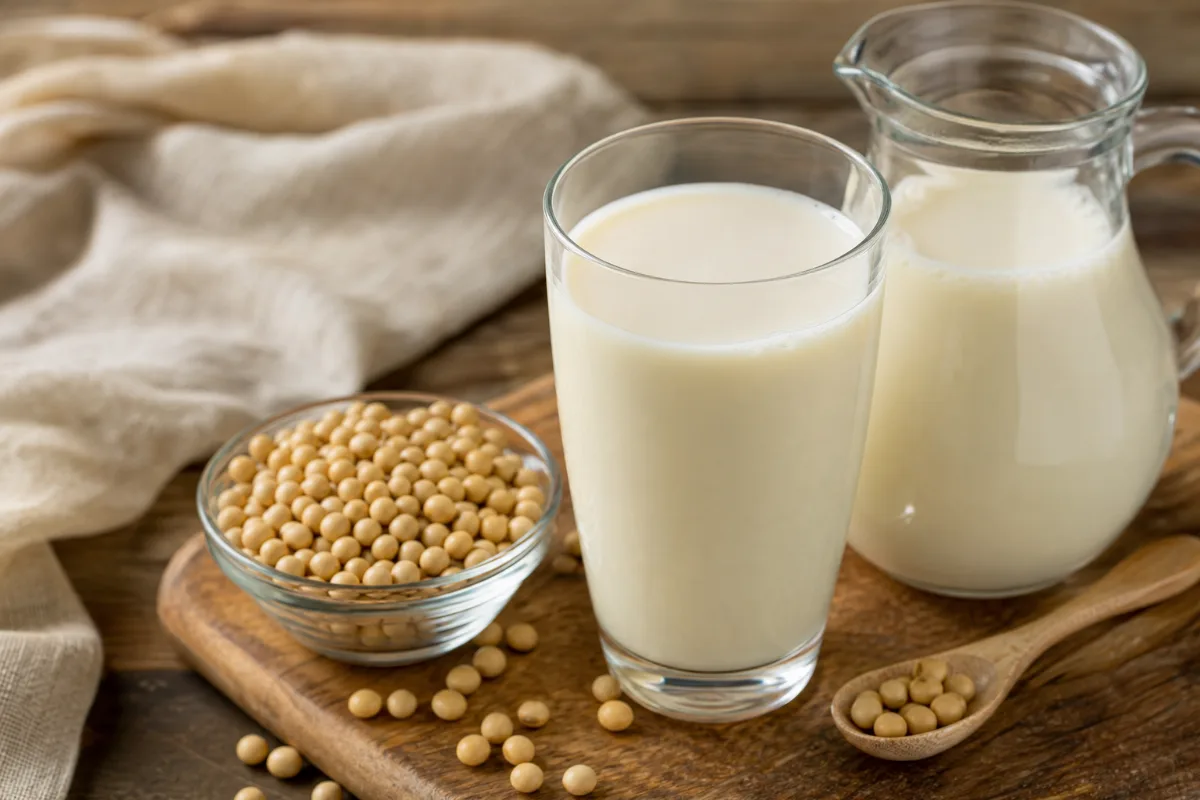
Normal serving (USDA): 1 cup (243 g), unsweetened calcium-fortified soy milk
Soy milk as a drink: USDA nutrients for fortified and unfortified types, what trials found on cholesterol and hot flashes, plus allergy, thyroid medicine and baby cautions.
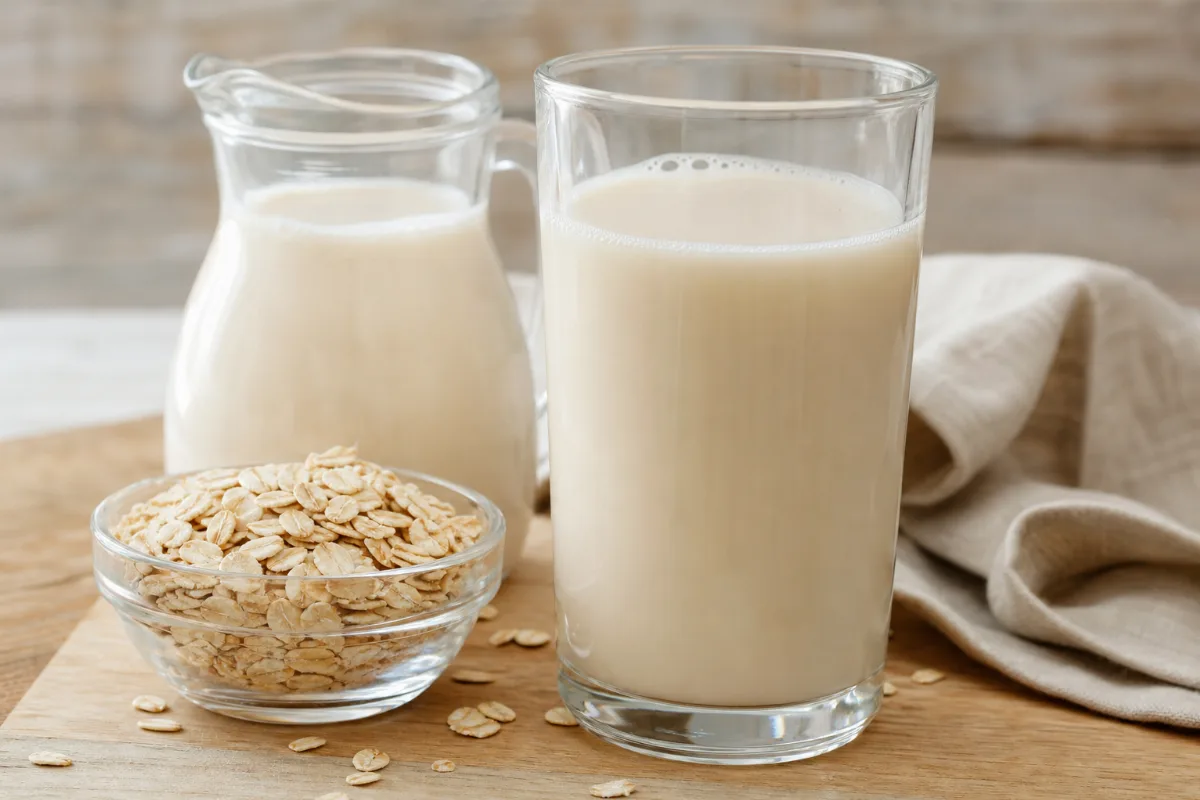
Normal serving (USDA): 1 cup (240 mL), average of 12 labels
Oat milk as a drink: label nutrient data, what trials of oat beta-glucan drinks found on LDL cholesterol, gluten and celiac cautions, and why babies should not have it.
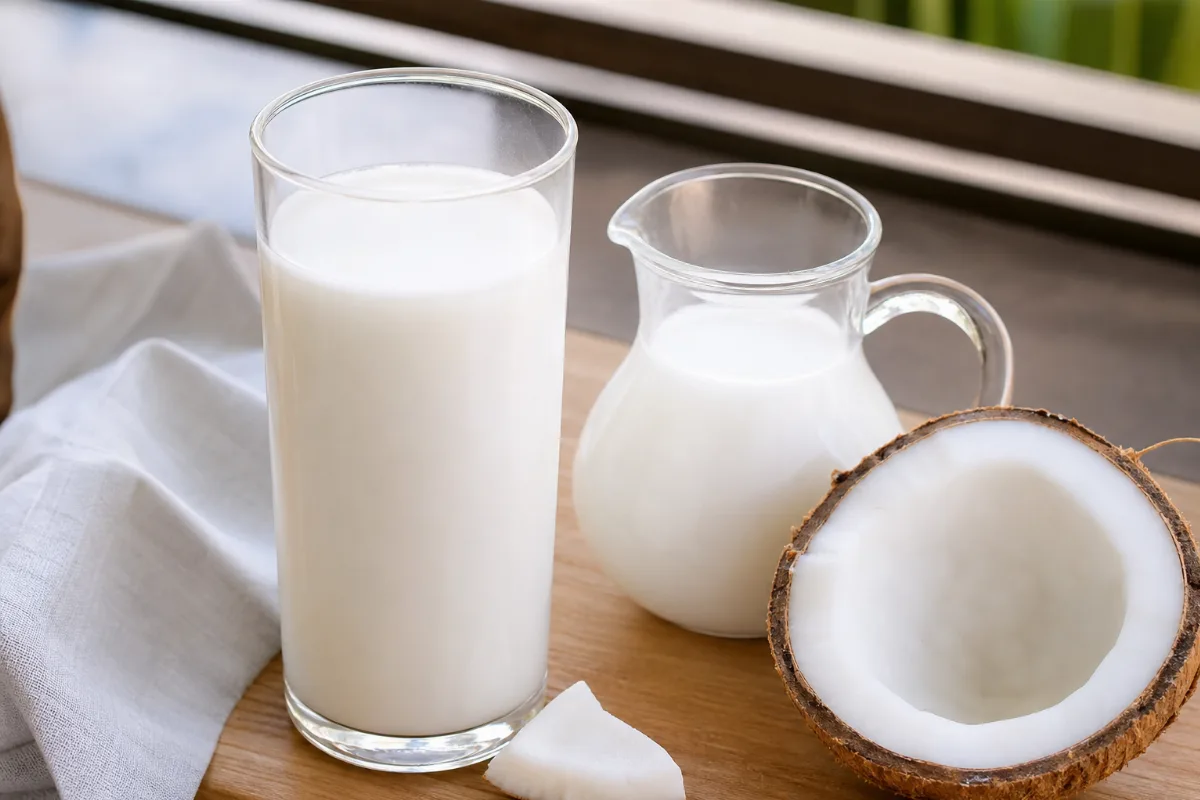
Normal serving (USDA): 1 cup (240 g), sweetened and fortified coconut milk beverage
Coconut milk beverage from the carton: USDA nutrients per cup, saturated fat and sugar, what coconut oil trials show, coconut allergy labeling and baby cautions.
Coconut milk drink compared with cow's milk
Calcium and vitamin B12 in fortified coconut drinks
Normal serving (USDA): 1 cup (249 g), about 8 fl oz
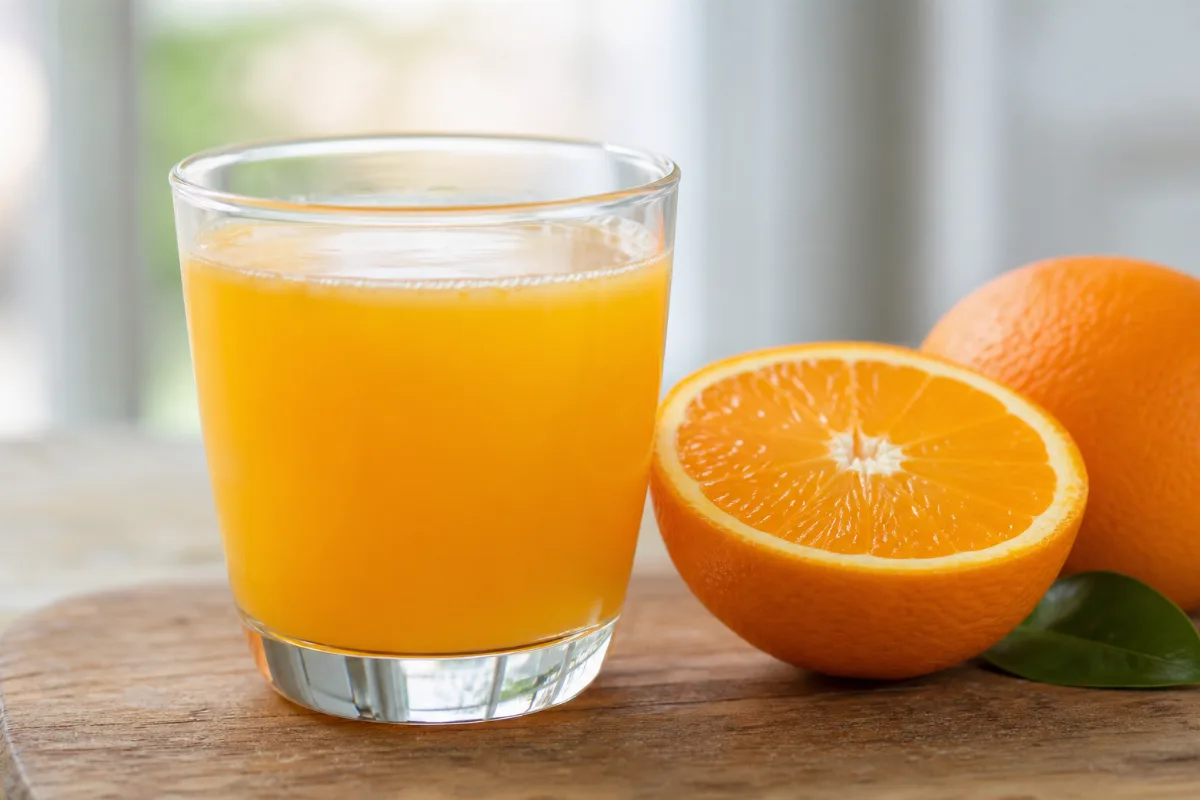
Orange juice as a drink: USDA vitamin C, sugar and potassium per cup, trial results on cholesterol, and cautions on sugar, kidney disease, medicines and raw juice.
Normal serving (USDA): 1 cup (248 g), about 8 fl oz
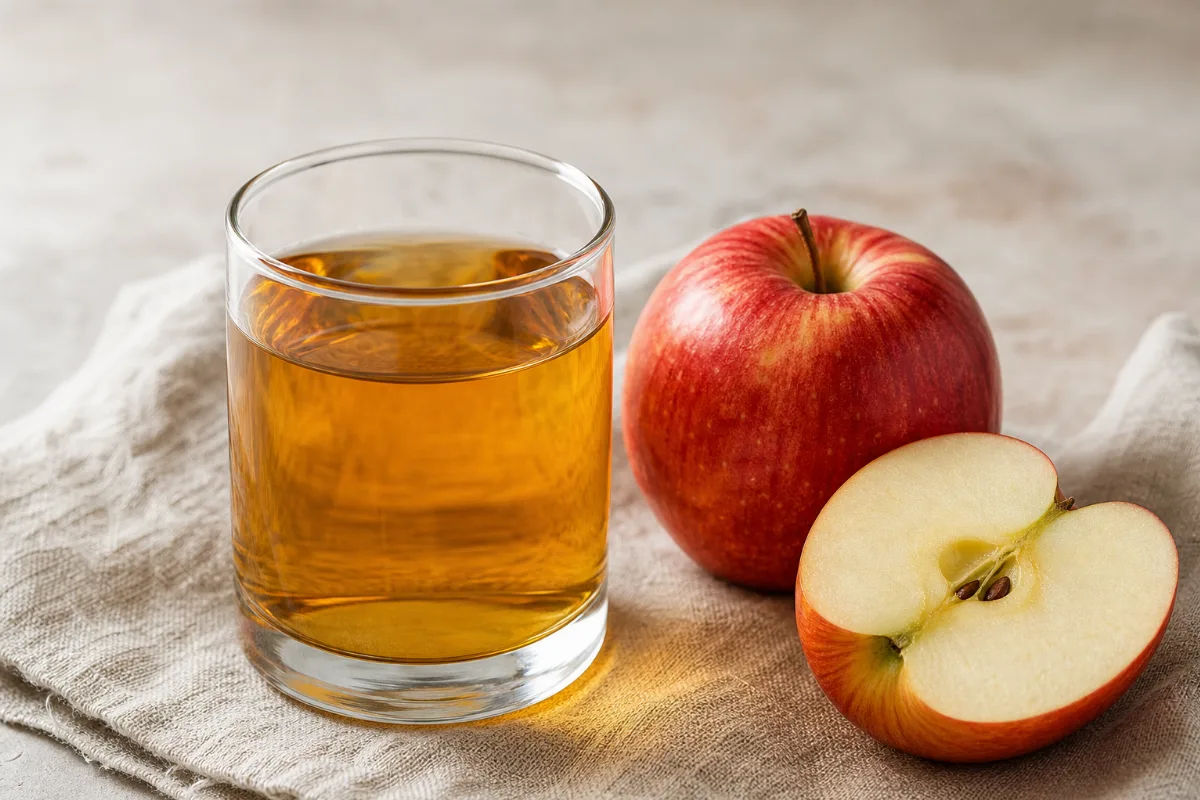
Apple juice as a drink: USDA sugar and calories per cup, FDA limits on arsenic and lead, patulin, a trial in children with stomach flu, and cautions on medicines.
Dilute apple juice for children with mild stomach flu
Normal serving (USDA): 1 cup (243 g), about 8 fl oz
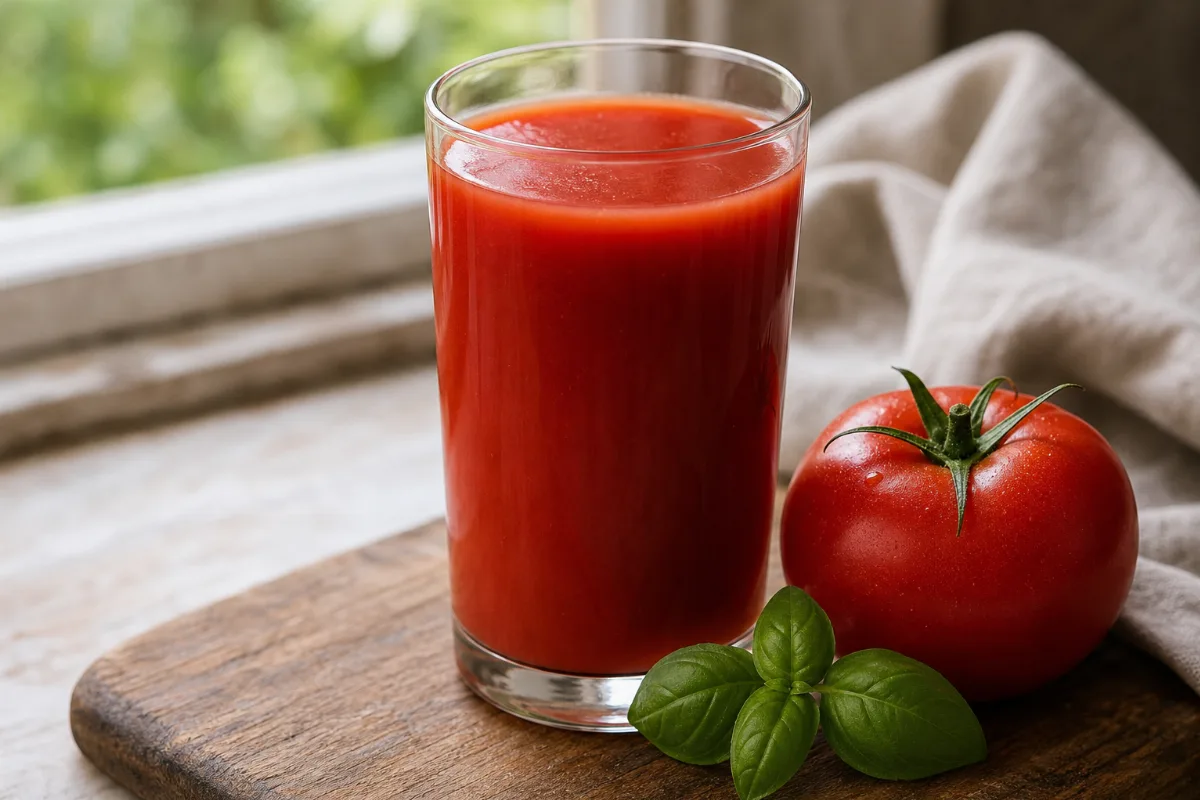
Tomato juice as a drink: USDA vitamin C, potassium and sodium per cup (salted or not), small trials on cholesterol, and cautions on sodium, kidney disease and reflux.
Normal serving (USDA): 1 cup (about 240 ml); no USDA household portion is available in our data
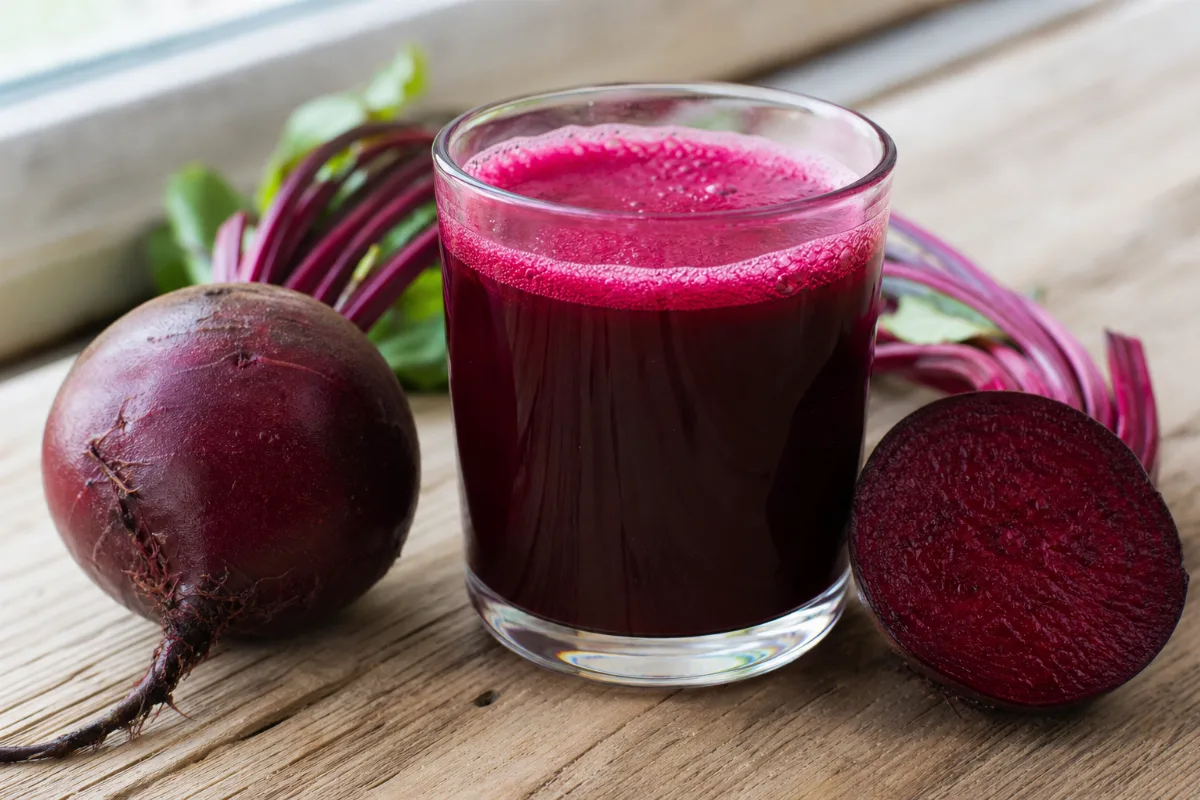
Beet juice as a drink: composition from one study, pooled trials on blood pressure and exercise, red urine, oxalate and kidney cautions, and why USDA values are missing.
Normal serving (USDA): 1 cup (249 g), about 8 fl oz
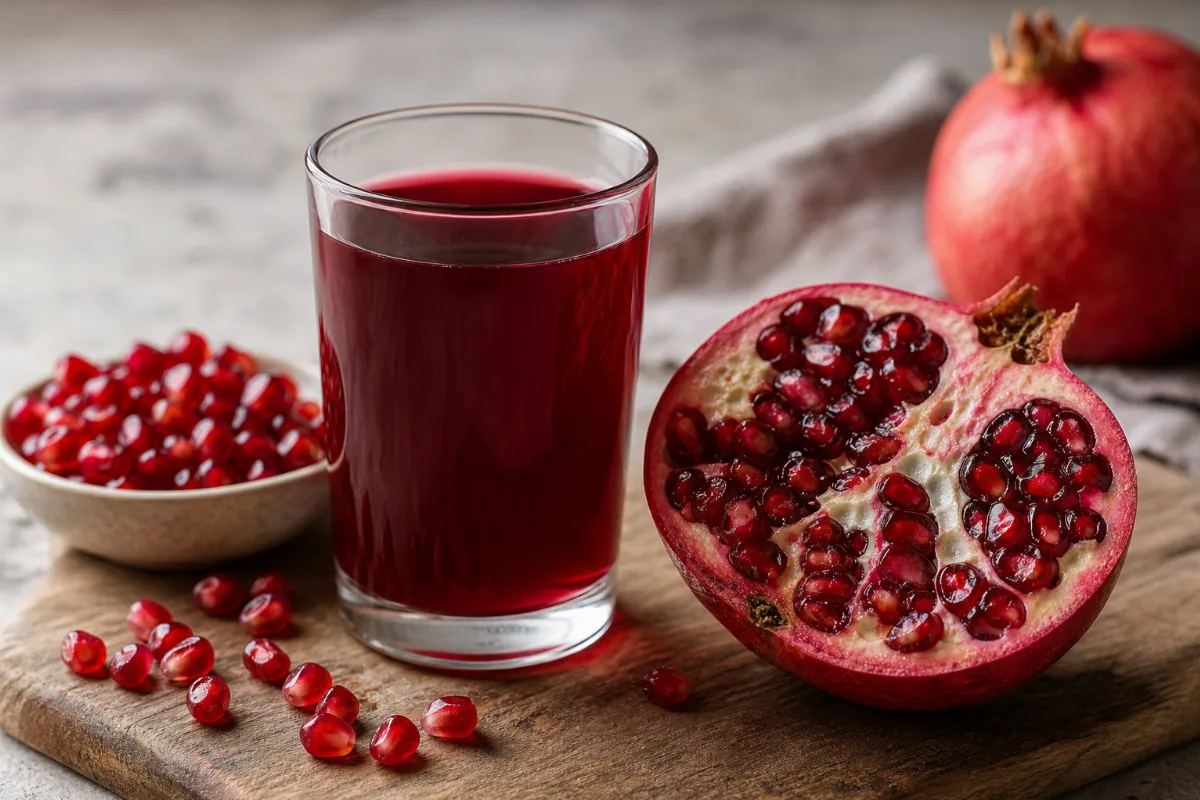
Pomegranate juice as a drink: USDA sugar and vitamin K per cup, trials on blood pressure, blood sugar and cholesterol, prostate trials, and warfarin and drug cautions.
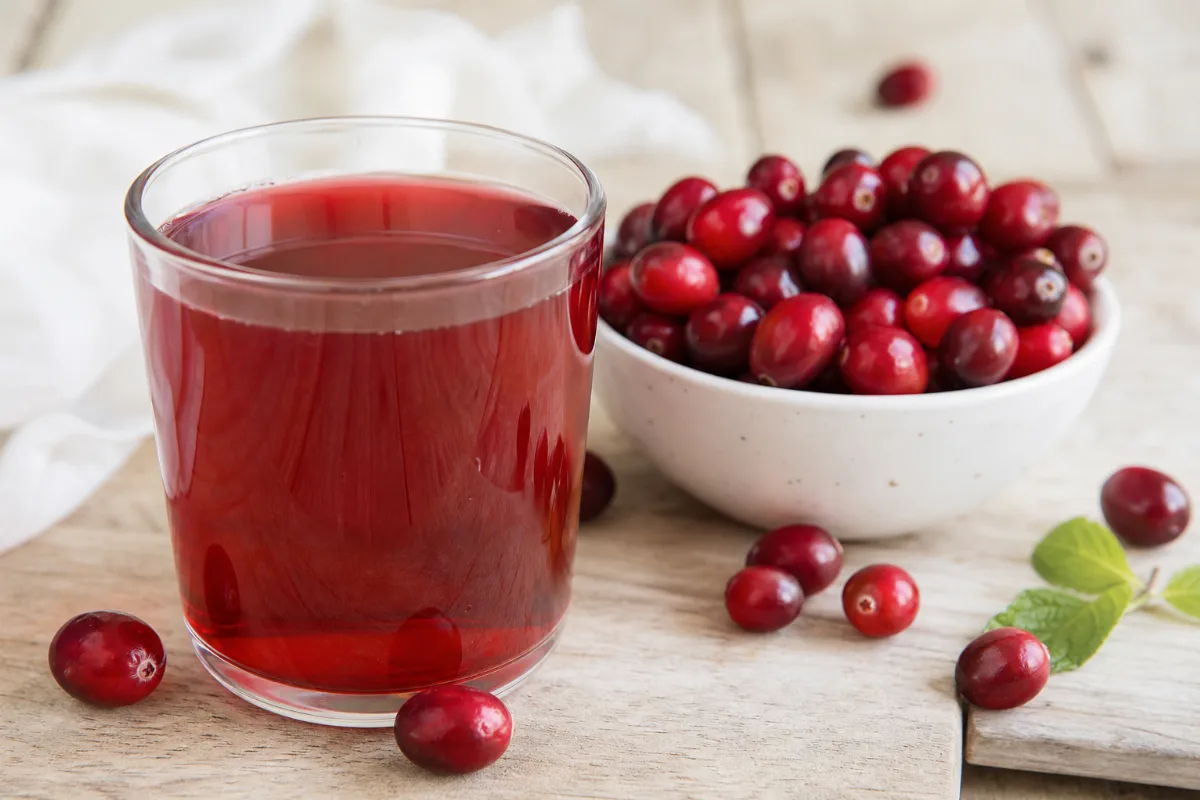
Cranberry juice as a drink: USDA sugar and vitamin values, what Cochrane and juice trials found on urinary infections, and the warfarin, kidney stone and sugar cautions.
Cranberry products and preventing urinary tract infections
Cranberry juice trials on their own
Treating a UTI that has already started
Vitamin C and vitamin E in a cup of unsweetened juice
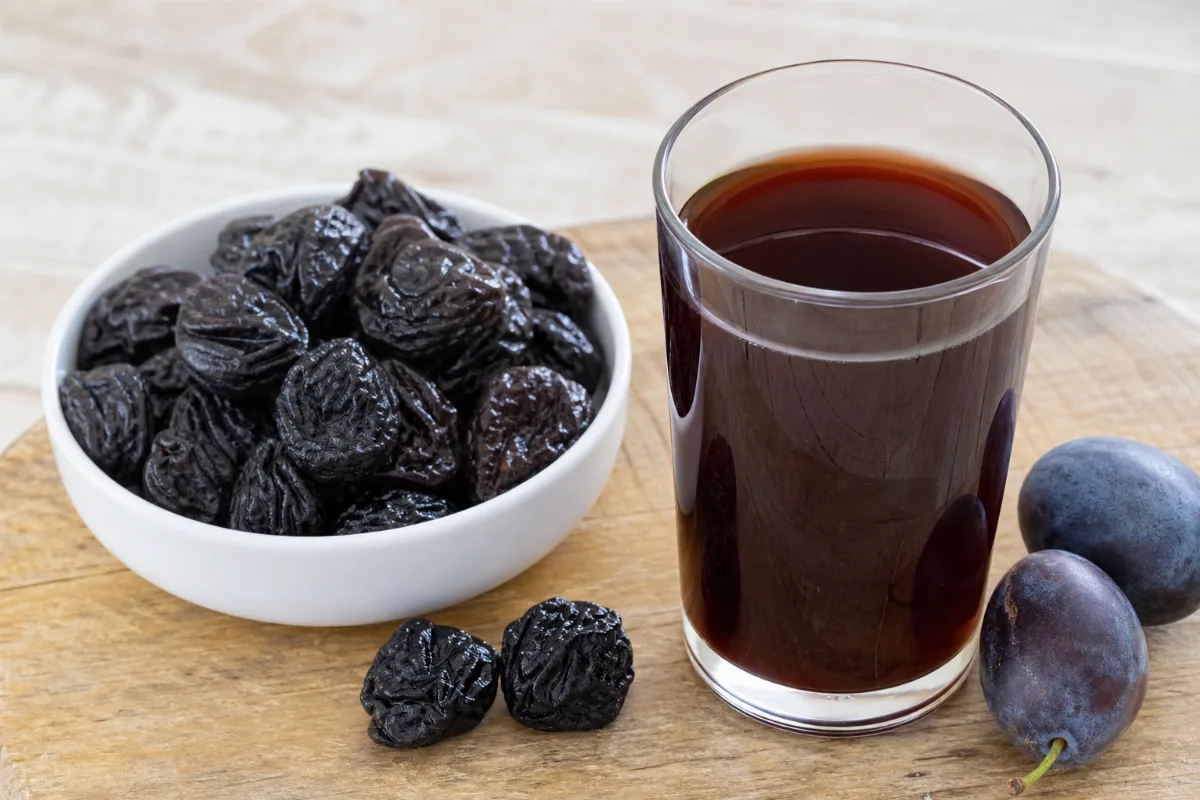
Prune juice as a drink: USDA sugar, potassium and vitamin values, the trial on constipation, how it differs from whole prunes, plus sorbitol, potassium and child cautions.
Prune juice and chronic constipation
Whole prunes and constipation
Vitamins and minerals in a cup of prune juice
Prune juice phenolics and antioxidant activity (laboratory)
Normal serving (USDA): 12 fl oz (347 g), fast-food strawberry-banana smoothie with low-fat yogurt
Smoothies as a drink: USDA values for two store-style smoothies, sugar and calories, blended-vs-whole-fruit studies, and food safety with juice, frozen berries and pregnancy.
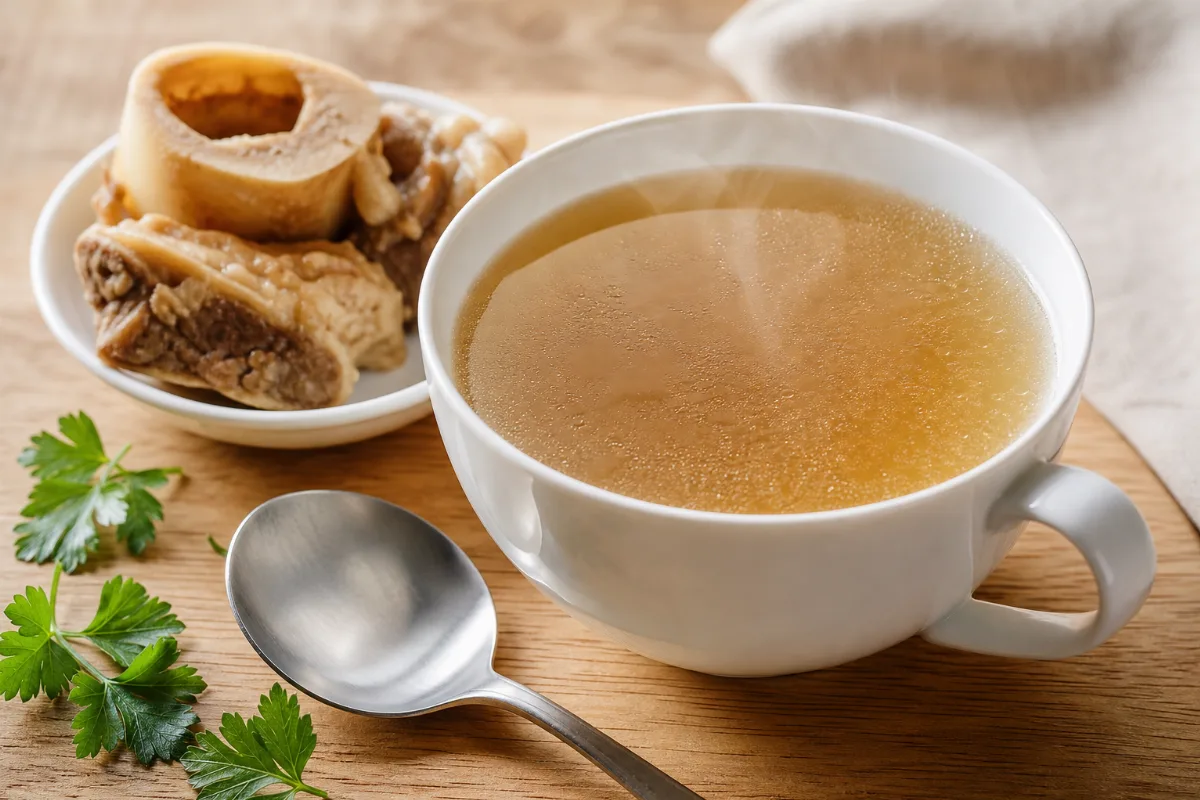
Normal serving (USDA): 1 cup (240 g), home-prepared chicken stock
Bone broth claims about gut lining, collagen, joints and bones checked against laboratory analyses, animal studies and small contamination tests, with sodium and label notes.
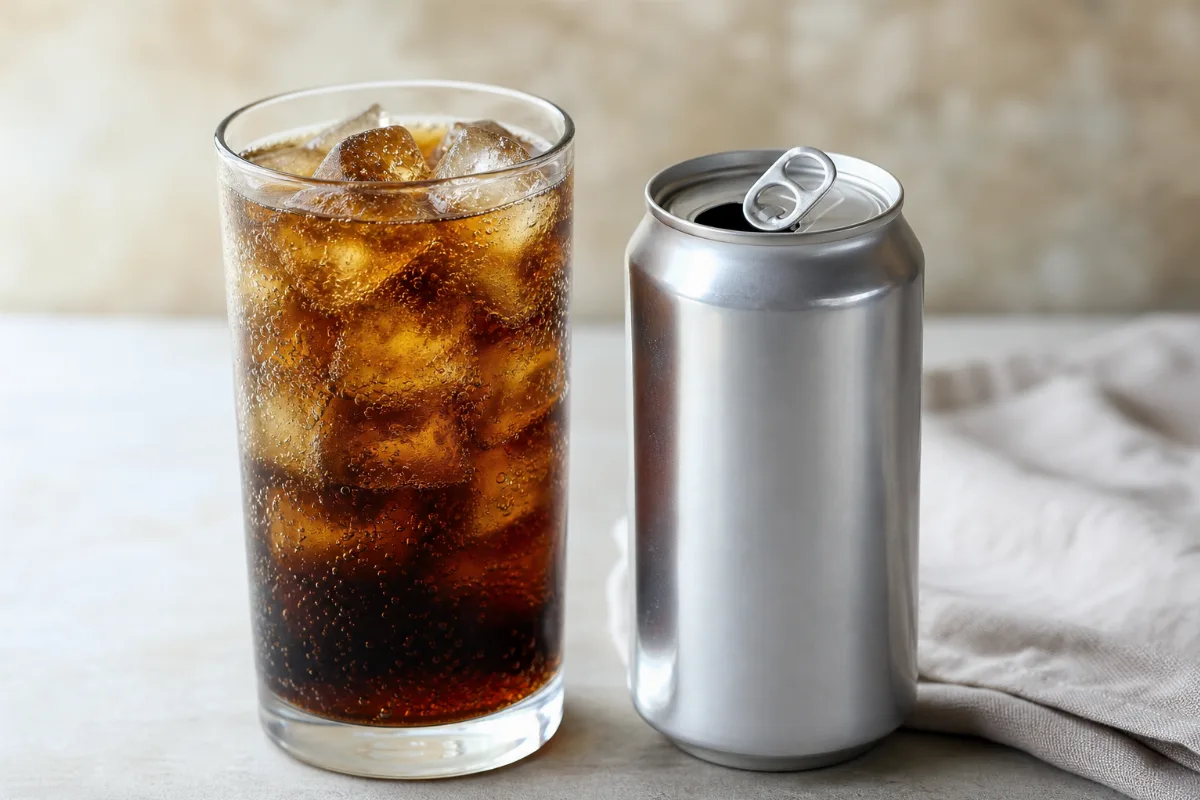
Normal serving (USDA): 1 can or bottle, 12 fl oz (368 g, regular item; 355 g, diet item)
Sugar-sweetened soda and diet soda compared: USDA calories and caffeine, what pooled studies found on weight, diabetes, teeth and bones, sweetener reviews, and pregnancy.
Sugar-sweetened soda and type 2 diabetes risk
Diet soda and weight control
Diet soda and diabetes or heart disease associations
Normal serving (USDA): No USDA household portion; use the serving size on the label
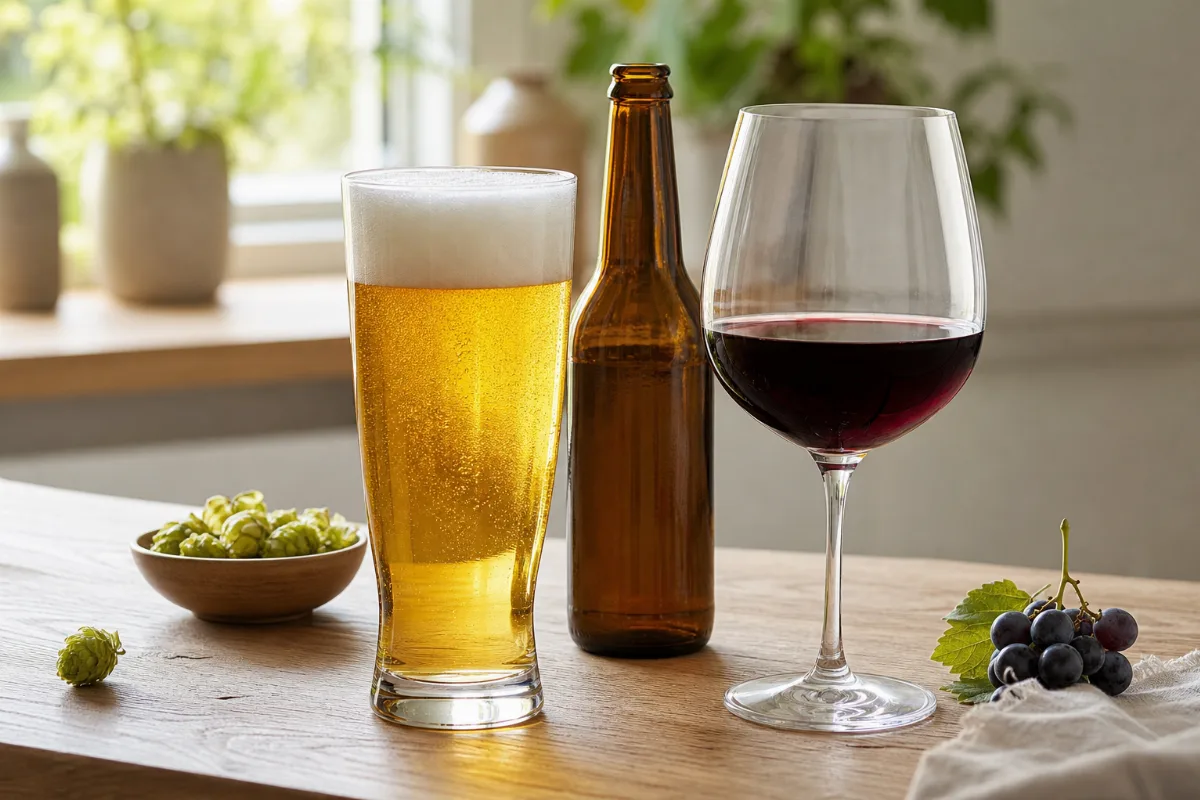
Alcohol-free beer and wine: label meanings, trace alcohol, small trials on blood pressure and hydration, purines, pregnancy and recovery, and what is unproven.
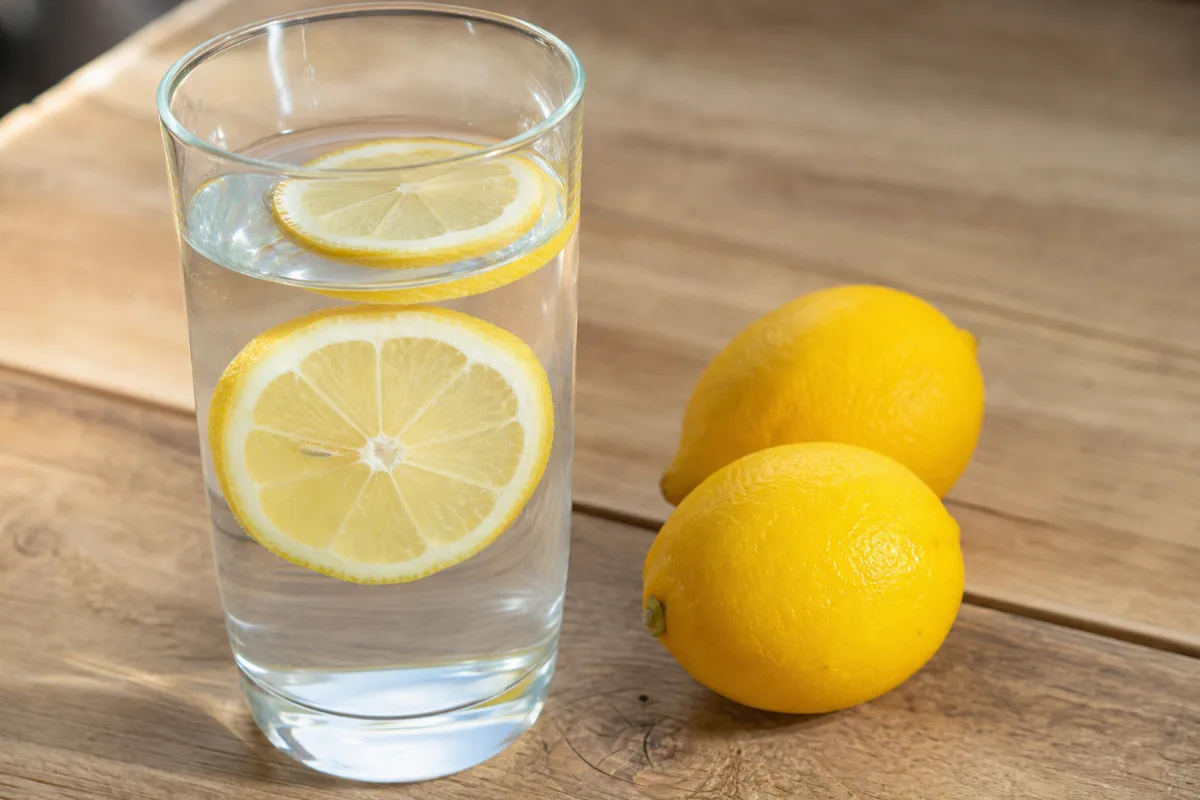
Normal serving (USDA): Juice of 1 lemon (48 g) stirred into a glass of water
Lemon water and infused water: USDA values for lemon juice and vitamin C, small studies on kidney stones and gout, teeth and acidity, and the claims that lack proof.
Almond, cashew and other nut milks: how little nut they contain, what fortification and added sugar add, USDA values, and cautions for allergy and for babies and toddlers.
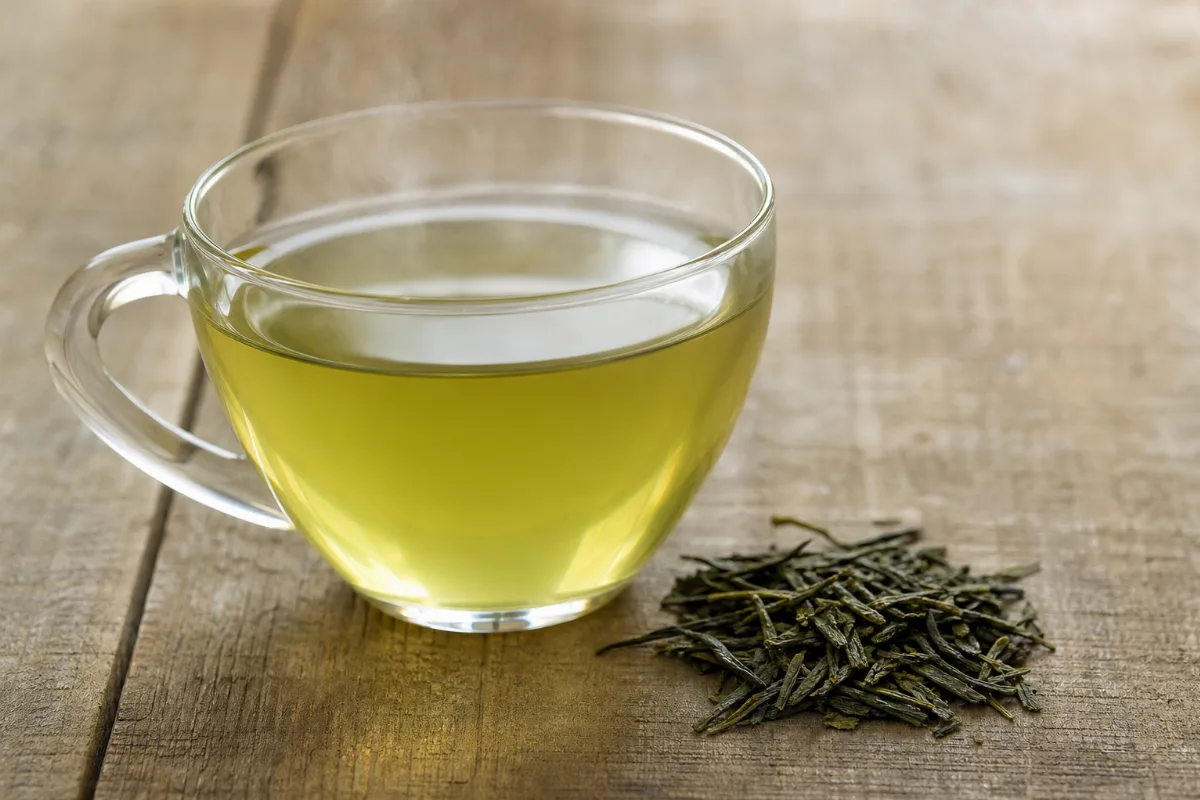
Green tea as a drink: caffeine, what Cochrane reviews found, and the cautions (caffeine in pregnancy, iron, warfarin, very hot cups), kept apart from extract capsules.
Green tea and heart disease risk factors (cholesterol, blood pressure)
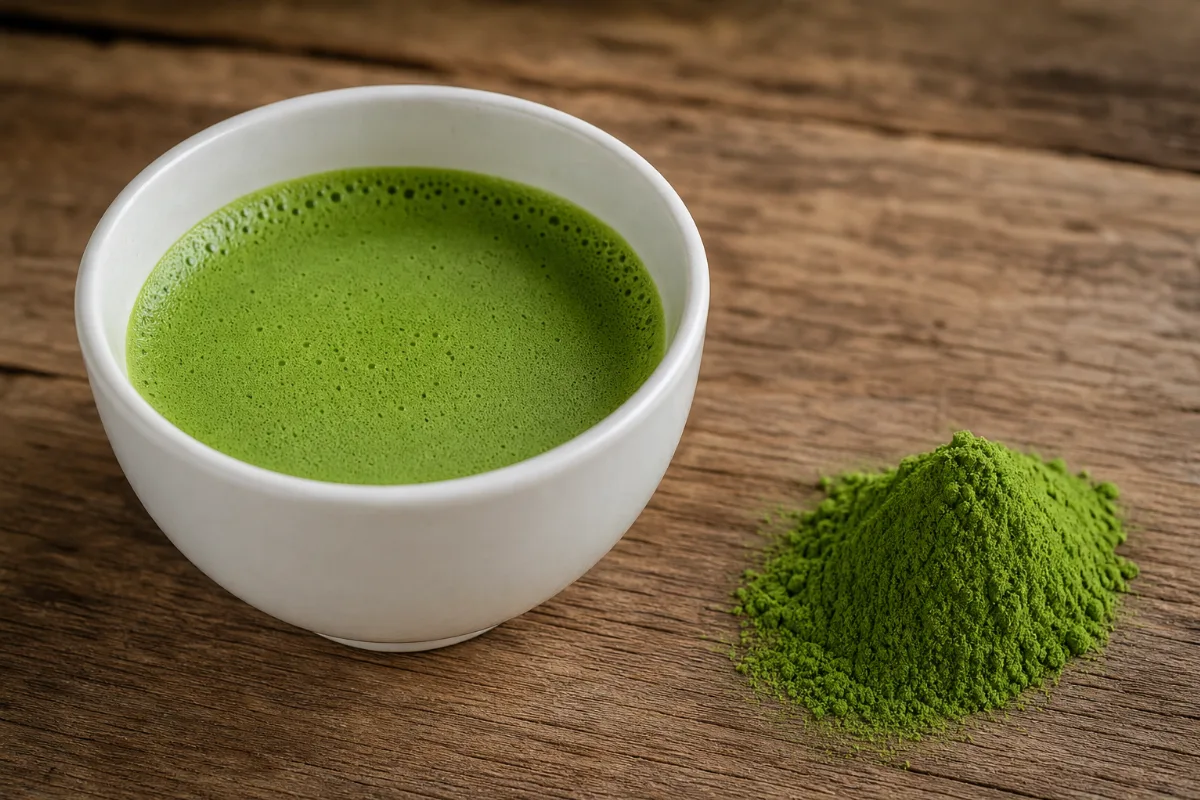
Matcha, the powdered whole-leaf green tea: its caffeine, what small trials found, and the cautions (caffeine in pregnancy, iron, medicines), apart from extract capsules.
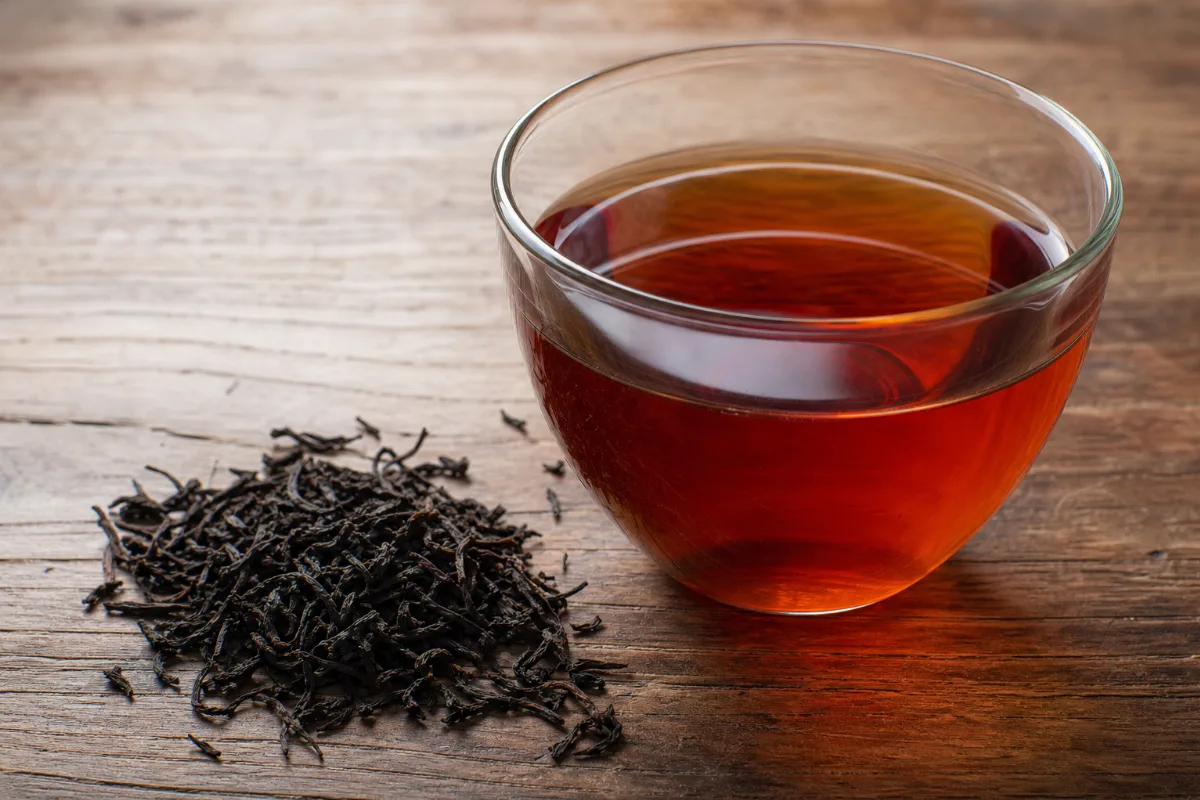
Black tea as a drink: caffeine, brewing, what studies of the tea found, and cautions on iron absorption, kidney stones with very large amounts, pregnancy and very hot cups.
Black tea and LDL cholesterol
Black tea and blood pressure (trials versus cohort studies)
Black tea, heart disease and deaths (observational)
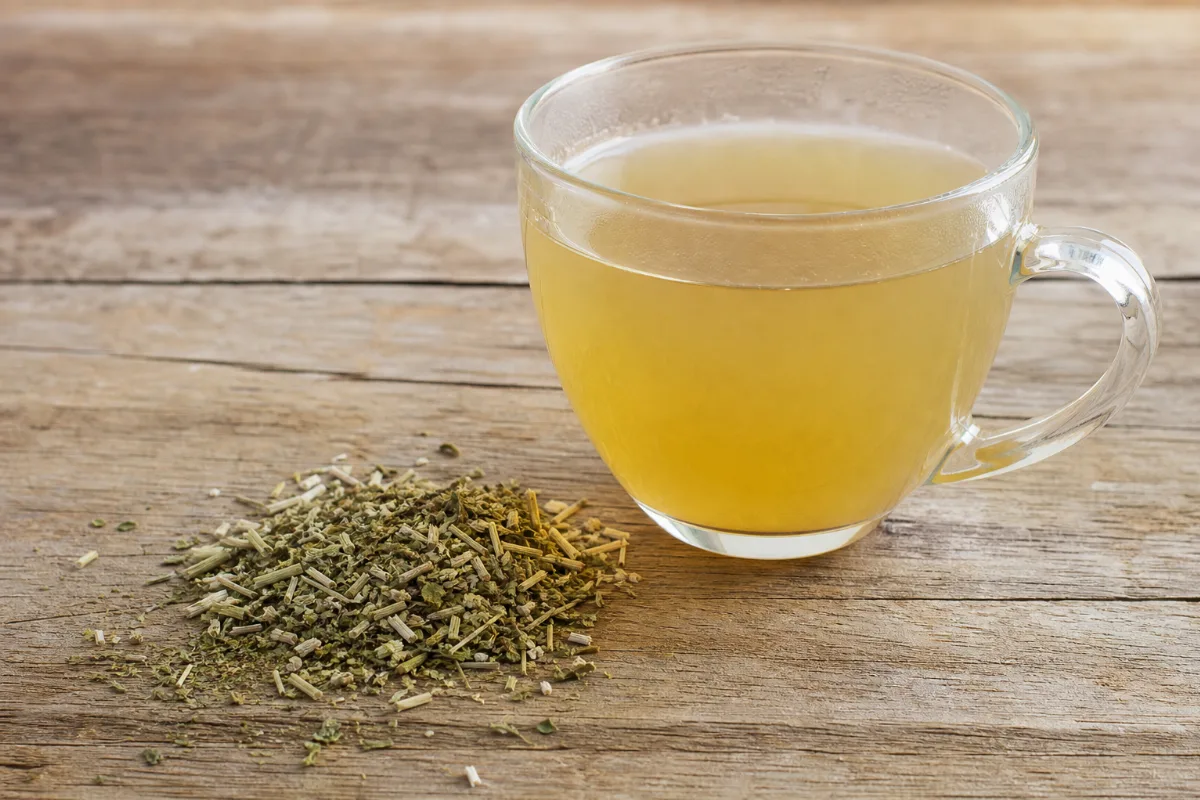
Yerba mate is a caffeinated South American infusion of holly leaves. What IARC found about very hot drinks, what reviews of maté show, and the cautions that matter.
Mate tea, blood pressure and blood fats (tea trials)
Mate and blood sugar
Traditional use for tiredness (EU regulatory category)
Kombucha is fermented sweet tea. What the few human trials show, and the cautions: home-brew contamination, lead from ceramic pots, alcohol, caffeine, pregnancy and weak immunity.
Kombucha and heart/metabolism markers (green tea kombucha trials)
What a 2023 review of 16 human trials found for fermented-milk kefir, why the evidence is limited and often low quality, and cautions for pregnancy and weakened immunity.
No beverage matches all of these filters. Try removing one. Some topics (for example most herbs) are not beverages and live elsewhere on the site.
A link between a beverage and a topic means the body needs the beverage for that job, or that low intake is linked to it. It does not mean extra supplements help if your intake is already adequate. See each page’s evidence label.
Browse by beverage drink group
Water and hydration
Plain, mineral, sparkling and coconut water, and sports drinks.
Plain tap and bottled water: USDA values, what the National Academies say about daily fluid, fluoride, lead, low blood sodium, and findings on weight and kidney stones.
Mineral and sparkling water as drinks: what the labels mean, USDA values, teeth and acidity, small trials on bowels and bones, sodium in club soda, and what is not prove…
Coconut water as a drink: USDA sugar, potassium and sodium per cup, small rehydration trials versus sports drinks, claims checked, and a kidney and potassium caution.
Sports and electrolyte drinks: USDA sugar, sodium and potassium, when research and the ACSM say they help, what the AAP says for children, teeth, and over-drinking.
Coffee, Cocoa & Energy Drinks(3)Coffee, decaf, energy drinks, cocoa and hot chocolate. Tea is listed from Herbal Teas.
Decaf coffee as a drink: how much caffeine is left, USDA values, what cohort studies found, the decaffeination solvent question, pregnancy and who should still check lab…
Energy drinks: caffeine, sugar and added B vitamins from USDA data, what trials found on blood pressure and performance, and cautions for teens, pregnancy and alcohol.
Cocoa and hot chocolate as drinks: USDA values, what trials found on blood pressure and cholesterol, caffeine, sugar, cadmium and lead, milk allergy and how mixes differ.
Milk & Plant Milks(5)Cow's milk, soy, oat, rice and coconut drinks. Nut milks are listed from Nuts & Seeds.
Cow's milk as a drink: USDA nutrients per cup, what studies found on heart disease, blood pressure and bones, plus allergy, lactose, raw milk and medicine cautions.
Soy milk as a drink: USDA nutrients for fortified and unfortified types, what trials found on cholesterol and hot flashes, plus allergy, thyroid medicine and baby cautio…
Oat milk as a drink: label nutrient data, what trials of oat beta-glucan drinks found on LDL cholesterol, gluten and celiac cautions, and why babies should not have it.
Coconut milk beverage from the carton: USDA nutrients per cup, saturated fat and sugar, what coconut oil trials show, coconut allergy labeling and baby cautions.
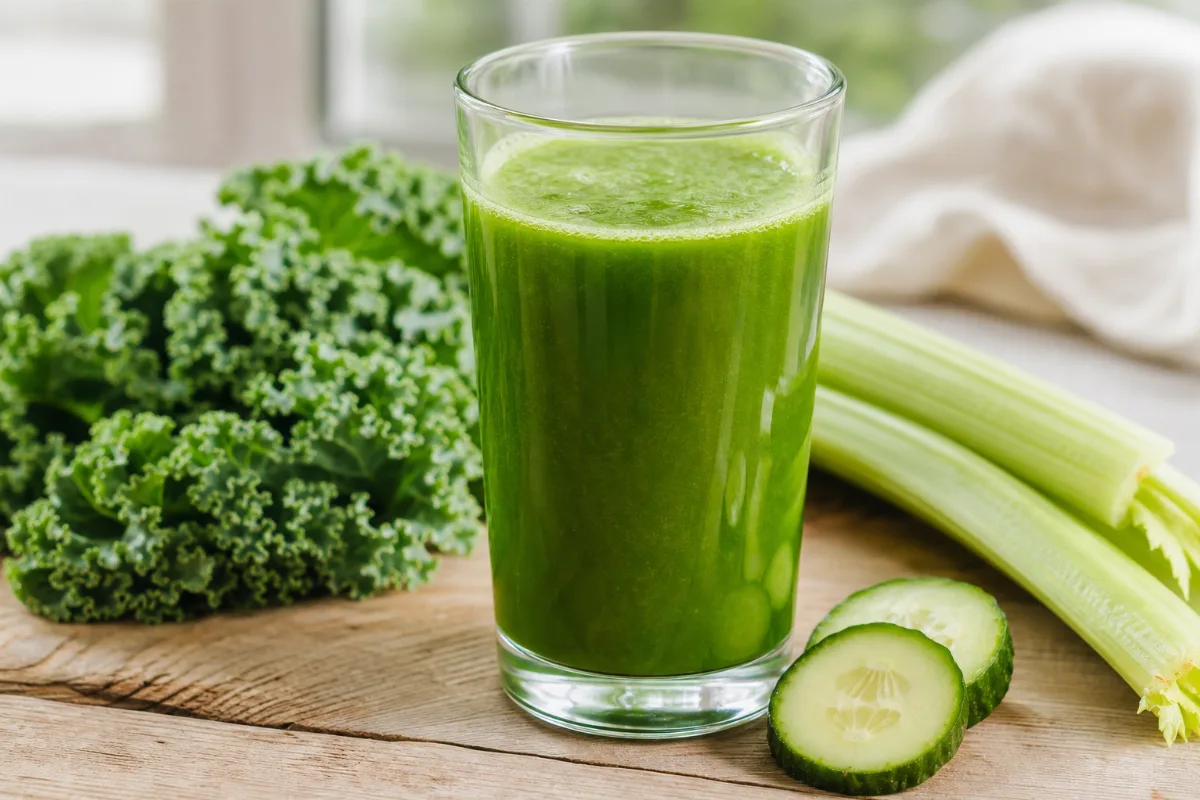
Juices & Smoothies(9)Orange, apple, tomato, beet, pomegranate, cranberry and prune juice, green and vegetable juices, and smoothies.
Orange juice as a drink: USDA vitamin C, sugar and potassium per cup, trial results on cholesterol, and cautions on sugar, kidney disease, medicines and raw juice.
Apple juice as a drink: USDA sugar and calories per cup, FDA limits on arsenic and lead, patulin, a trial in children with stomach flu, and cautions on medicines.
Tomato juice as a drink: USDA vitamin C, potassium and sodium per cup (salted or not), small trials on cholesterol, and cautions on sodium, kidney disease and reflux.
Beet juice as a drink: composition from one study, pooled trials on blood pressure and exercise, red urine, oxalate and kidney cautions, and why USDA values are missing.
Pomegranate juice as a drink: USDA sugar and vitamin K per cup, trials on blood pressure, blood sugar and cholesterol, prostate trials, and warfarin and drug cautions.
Cranberry juice as a drink: USDA sugar and vitamin values, what Cochrane and juice trials found on urinary infections, and the warfarin, kidney stone and sugar cautions.
Prune juice as a drink: USDA sugar, potassium and vitamin values, the trial on constipation, how it differs from whole prunes, plus sorbitol, potassium and child caution…
Smoothies as a drink: USDA values for two store-style smoothies, sugar and calories, blended-vs-whole-fruit studies, and food safety with juice, frozen berries and pregn…
Broth, Soda & Other Drinks(3)Bone broth, soda and diet soda, alcohol-free beer and wine, and lemon water.
Sugar-sweetened soda and diet soda compared: USDA calories and caffeine, what pooled studies found on weight, diabetes, teeth and bones, sweetener reviews, and pregnancy.
Alcohol-free beer and wine: label meanings, trace alcohol, small trials on blood pressure and hydration, purines, pregnancy and recovery, and what is unproven.
Lemon water and infused water: USDA values for lemon juice and vitamin C, small studies on kidney stones and gout, teeth and acidity, and the claims that lack proof.
Safety & Practical Guides(3)Caffeine and sugar compared, how much water you need, and alcohol and health.
Side-by-side USDA numbers for calories, sugar and caffeine in coffee, energy drinks, soda, sports drinks, juice and milk, plus what FDA, WHO and the NHS say about limits.
What the National Academies, the NHS and research say about daily fluid needs, the 8-glasses rule, coffee and hydration, thirst, too little water and too much water.
What the Dietary Guidelines, WHO, NCI and large studies say about alcohol, cancer, heart health, pregnancy and medicines, and where the evidence disagrees.
Search beverages: popular beverages, A to Z, search with filters, more ways
Well-studied beverages to start with
These beverages have the most human research summarized in our guides (counted from the evidence ratings on each profile). More research does not mean the beverage works or is safe for you: open the guide to see what was found, including negative and mixed results.
Every published beverage guide (26), with its names and what it is made of. Each name opens one guide that brings together identity, traditional use, research, safety, forms and sources.
Beverages whose guide documents a point to check for this concern. Being listed does not mean the beverage is unsafe for everyone. Open the guide to read the details.
The best level of evidence in each beverage guide for any listed benefit. A stronger label for one use says nothing about its other uses or its safety.
Beverages have been used for health in many cultures for centuries. A traditional use tells you what people have done, not that it works. Here every beverage is listed under the goals, body systems and actions its guide connects it to, and each link carries the strength of the evidence behind it.
Strongest
7 beverages
Clinical trials support a benefit
Promising
17 beverages
Early or mixed human evidence
Early science
1 beverages
Lab or animal research only
Unknown
1 beverages
Too little evidence to say
Each beverage is counted once, at the strongest level its guide documents for any use. A strong label for one use says nothing about its other uses or its safety. "Traditional use" alone is not one of these labels: where a guide only reports history, the link is rated "Too little evidence to say". Read the guide on traditional use and research evidence.
Beverages by wellness goal
Each card shows how many beverages are linked to a goal and how strong the evidence is. Green means clinical trials support a benefit; grey means too little evidence. These are links the guides document, not recommendations. For the wider picture, see the Wellness Goals section.
The same links, organized the way anatomy and physiology textbooks do. "Action" describes what a beverage is said to do (for example calming or digestive support); it names the claim, not the proof.
Side-by-side guides for beverages that people confuse or choose between. They explain differences; they do not rank the beverages.
What research shows, by health concern
Each guide below looks at one concern, from sleep to skin, and separates beverages that were tested in people from beverages that are only traditional or lab-tested.
People have used beverages for health for many centuries. A traditional use tells you what people have done, not that it works. For what research found, see the Health Benefits and Scientific Evidence tabs.
Traditional beverage medicine
Ayurveda, Traditional Chinese Medicine and other traditions each use natural remedies in their own systems. The beverages below are the ones whose guide mentions the tradition in its own text. That a tradition uses a beverage is history, not clinical evidence. Each guide says separately what trials found.
Beverages are active substances. Some interact with prescription medicines, some are unsafe in pregnancy or with certain conditions, and some have been linked to serious harm. This tab brings together what the individual beverage guides document, plus the general rules. Medicine interactions have their own tab.
If someone may have been poisoned or is seriously unwell
▸Collapse, seizure, trouble breathing, swelling of the face or throat, chest pain or a fast irregular heartbeat: call your local emergency number now (911 in the United States and Canada, 999 in the UK, 112 in the European Union).
▸Swallowed too much of a beverage, or a child or pet got into a product, and the person seems well: in the United States call Poison Help, 1-800-222-1222 (free, 24 hours). Elsewhere, call your national poison centre or local emergency number.
▸Yellow skin or eyes, dark urine, severe belly pain, or a new rash after starting a beverage: stop it and contact a clinician the same day.
"Natural" does not mean safe. Natural products can contain strong substances; some are harmful. Natural Does Not Mean Safe
Tell your pharmacist and clinician about every beverage product you use, and ask before combining one with prescription or over-the-counter medicines.
Be extra careful with narrow-margin medicines such as warfarin, antidepressants, immunosuppressants, diabetes and blood pressure medicines.
Tell the surgical team about every beverage before an operation. Many teams ask people to stop beverage products ahead of surgery; ask yours how long.
Pregnancy, breastfeeding, children and older adults are groups where good safety data are often missing, so official sources usually advise asking first.
Start one product at a time, at the label amount, so a reaction can be traced. Stop and get advice if you feel unwell.
Products vary. Contamination, substitution and mislabelling are documented problems; third-party testing can reduce but not remove the risk.
Each line comes from a beverage's own guide, where it is backed by cited sources: 112 documented risks across 26 of the 26 beverages. A beverage missing from a list is not proven safe: it may simply not have been studied. Open the beverage's guide for the full wording and sources.
Frozen berries and hepatitis A. The FDA and CDC investigated 10 hepatitis A cases (4 hospitalizations) linked to recalled frozen strawberries in 2023; advice was…
Oxalate and kidney stones. Beet juice contains oxalic acid (0.3 to 0.5 g per liter in a composition study). NIDDK advises people with calcium oxalate stones…
Potassium load: kidney disease and medicines. MedlinePlus says people with chronic kidney disease may not clear extra potassium and that some medicines raise potassium. A 2012…
Dairy phosphorus and chronic kidney disease. NIDDK says dairy is a natural source of phosphorus and that people with kidney disease may be told to limit dairy; work with a di…
Cranberry juice and kidney stones. Two small studies point in different directions: 1 liter a day for a week raised urinary oxalate and calcium and increased a calc…
Oxalate-rich green juice and kidney injury. Case reports describe acute oxalate nephropathy after a green juice and smoothie cleanse in a woman with gastric bypass and recen…
Potassium and kidney disease. Raw spinach has 558 mg of potassium per 100 g and kale 348 mg (USDA). The National Kidney Foundation says people with kidney dise…
Potassium in orange juice and kidney disease. NIDDK names orange juice as a fruit juice higher in potassium than apple, grape or cranberry juice, for people with kidney diseas…
Potassium and kidney disease. One cup of USDA's canned prune juice has about 707 mg of potassium (15% of the Daily Value). The National Kidney Foundation lists…
Potassium and kidney disease. One cup has about 527 mg of potassium (11% of the Daily Value) by USDA data. NIDDK says damaged kidneys can struggle to clear pot…
Beet juice and medicines for blood pressure. The beet-juice blood pressure analyses we read measure how much pressure falls but do not report medicine interactions. Because j…
Potassium load: kidney disease and medicines. MedlinePlus says people with chronic kidney disease may not clear extra potassium and that some medicines raise potassium. A 2012…
Caffeine and other stimulants in energy drinks. USDA lists 29 mg of caffeine per 100 g in one energy drink entry (about 75 mg in an 8.4 fl oz can) and 33 mg per 100 g in another…
Energy drinks and blood pressure. A 2024 meta-analysis of 17 randomized trials in healthy adults found energy drinks raised systolic blood pressure by about 4.7 mm…
Energy drinks and heart rhythm (QT interval). A 2025 systematic review of 37 studies (mean age 22.6) found increased heart rate, blood pressure and QTc prolongation in many st…
Potassium and kidney disease. Raw spinach has 558 mg of potassium per 100 g and kale 348 mg (USDA). The National Kidney Foundation says people with kidney dise…
Potassium in orange juice and kidney disease. NIDDK names orange juice as a fruit juice higher in potassium than apple, grape or cranberry juice, for people with kidney diseas…
Potassium and kidney disease. One cup of USDA's canned prune juice has about 707 mg of potassium (15% of the Daily Value). The National Kidney Foundation lists…
Potassium and kidney disease. One cup has about 527 mg of potassium (11% of the Daily Value) by USDA data. NIDDK says damaged kidneys can struggle to clear pot…
Tomato juice and heartburn. NIDDK lists acidic foods such as citrus and tomatoes among foods some people with GERD say trigger symptoms, and advises talking …
Trace alcohol in "non-alcoholic" drinks. In US rules, "non-alcoholic" malt beverages may contain under 0.5% alcohol by volume, while "alcohol free" is for products with n…
Non-alcoholic beer and recovery from alcohol dependence. In a one-year follow-up of 198 Japanese men treated for alcohol dependence, abstinence was 51.2% in non-users of non-alcoholic be…
Purines in non-alcoholic beer and gout. A 2026 lab analysis of 43 beverages found non-alcoholic beers made by membrane dealcoholization kept purines comparable to full-s…
Apple juice, sugar and free sugars. One cup of unsweetened apple juice has about 24 g of sugars and about 114 kcal by USDA data, and almost no fiber. WHO counts suga…
Patulin from moldy apples. WHO names apples and apple juice made from moldy fruit as the main source of patulin, a mold toxin. In humans it can cause nausea…
Unpasteurized apple juice and cider. FDA says untreated juice and cider have been linked to outbreaks, and children, older adults, pregnant women and people with weak…
Red urine and stools (beeturia). Beeturia, pink or red urine after beets, is said to occur in about 10-14% of people and is more common with iron deficiency and m…
Sugar in beet juice. Sugars average about 7.7% in fresh juice (Austrian varieties). Official guidance (WHO) counts sugars in fruit juices and similar …
Beet supplements are not the same as juice. A 2024 study of 37 beetroot supplements found five with significant cadmium contamination (4% to 134% of the provisional tolerabl…
Fresh-pressed beet juice and food safety. FDA says untreated juice can carry harmful bacteria and that children, older adults, pregnant women and people with weakened immu…
Caffeine in cocoa and hot chocolate. USDA lists 230 mg of caffeine per 100 g in unsweetened cocoa powder (about 12 mg per tablespoon) and 19 mg per 100 g in a cocoa m…
Sugar and calories in hot chocolate. Unsweetened cocoa powder has about 1.75 g sugars per 100 g, but a ready cocoa mix has 37.65 g per 100 g (about 5.7 g in a 15 g en…
Saturated fat limit and coconut drinks. A cup has about 5 g saturated fat (25% of the Daily Value); the 2025-2030 Dietary Guidelines say saturated fat should not exceed …
Added sugar in sweetened coconut drinks. The USDA record is sweetened and lists 6 g sugars per cup; the 2025-2030 Dietary Guidelines say no amount of added sugars is reco…
Plant drinks in early life and growth. A 2026 review links partly replacing cow's milk with plant drinks in early life with slightly lower height and BMI in 5-year-olds…
Coffee, caffeine and sleep. A systematic review found caffeine usually lengthened the time to fall asleep, shortened total sleep and worsened perceived sleep…
Caffeine in coffee: the FDA 400 mg figure. FDA cites 400 mg of caffeine a day as an amount not generally associated with negative effects for most adults, and lists 113 to …
Very hot drinks and esophageal cancer. IARC (2016) classified coffee as not classifiable as to cancer risk (Group 3) and drinking very hot beverages as probably carcino…
Coffee and fracture risk in women. The BMJ umbrella review found an association between coffee drinking and fracture in women but not in men, and suggested women at…
Lactose intolerance. Some people cannot digest lactose, the milk sugar, and get belly pain, bloating, gas or diarrhea. Eating less lactose or using la…
Raw (unpasteurized) milk and infection risk. CDC says raw milk can carry germs such as Listeria, Salmonella and E. coli; children under 5, adults over 65, pregnant women and …
Sugar and calories in cranberry juice. One cup of USDA's unsweetened cranberry juice has about 30.6 g of sugars and 116 kcal, and the NHS warns that cranberry products …
Unpasteurized cranberry juice. The FDA says untreated juice must carry a warning label and that children, older adults, pregnant women and people with weakened …
Caffeine left in decaf coffee. USDA lists 1 mg of caffeine per 100 g of brewed decaf (about 2.4 mg per 237 g cup), versus 40 mg per 100 g for regular brewed cof…
Decaf coffee, bladder cancer in men and decaffeination solvents. The 2025 cohort found higher bladder cancer risk in male never-smokers who drank decaf, a result the authors say warrants further…
Sugar and calories in energy drinks. USDA lists about 10.2 g sugars per 100 g, which is 26.4 g (about 6.6 teaspoons) and 111 kcal in an 8.4 fl oz can. WHO advises les…
Energy drinks mixed with alcohol. A 2016 meta-analysis found people who mix alcohol with energy drinks drink more alcohol on a typical occasion than people who dri…
Sodium in canned and bottled vegetable juice. A commercial vegetable juice used in a trial listed 480 mg of sodium per 8 fl oz; USDA's canned tomato juice lists 253 mg per 100…
Unpasteurized green juice. The FDA says untreated juice must carry a warning label and that children, older adults, pregnant women and people with weakened …
Lemon juice acidity and tooth enamel. Lab tests on extracted human teeth found lime juice softened enamel over 10 days of immersion; a 2026 study found tooth-surface p…
Flavored sparkling waters and enamel. Flavored sparkling waters had pH 2.74 to 3.34 and erosive potential similar to or greater than orange juice in a 2007 lab study; …
Sweeteners in flavored sparkling drinks. WHO (2023) conditionally recommends against using non-sugar sweeteners to control body weight; flavored sparkling waters may cont…
Sodium and fluoride limits in bottled water. US rules require 'low mineral content' or 'high mineral content' on mineral waters below 500 or above 1,500 ppm, and cap fluoride…
Oat milk, gluten and celiac disease. Oats do not contain gluten but can pick it up from wheat, barley or rye during growing or processing, and a small number of peopl…
Salt and added sugar in plant drinks. Salt was the most common added ingredient in a review of plant drinks; sodium varied widely. The 2025-2030 Dietary Guidelines say…
Juice versus whole fruit, sugar and free sugars. One cup has about 21 g of sugars by USDA data. WHO counts sugars in fruit juice as free sugars and says most juices, even unsweet…
Fresh-squeezed and unpasteurized juice safety. FDA says untreated juice can carry harmful bacteria, and children, older adults, pregnant women and people with weakened immune s…
Pomegranate juice, sugar and juice versus fruit. One cup has about 134 kcal, 31 g of sugars and almost no fiber by USDA data. WHO counts sugars in fruit juices as free sugars; NH…
Unpasteurized pomegranate juice. FDA says untreated juice can carry harmful bacteria and that children, older adults, pregnant women and people with weakened immu…
Sorbitol, gas and loose stools. Prune juice contains sorbitol. The authors of the juice trial note prunes can cause diarrhea and flatulence, though loose stools …
Sugar and calories in prune juice. One cup has about 42 g of sugars and 182 kcal. WHO counts sugars in fruit juices as free sugars to be kept under 10% of daily ene…
Plant drinks in early life and growth. A 2026 review links partly replacing cow's milk with plant drinks in early life with slightly lower height and BMI in 5-year-olds…
Sugar and calories in smoothies. USDA lists about 12.5 g of sugars per 100 g for a bottled mango smoothie (30 g in 8 fl oz) and a fast-food strawberry-banana smoo…
Blended fruit sugars and teeth. The NHS says crushing fruit releases its sugars, which can damage teeth, that even unsweetened juice and smoothies are sugary, an…
Smoothies made with unpasteurized juice. The FDA says outbreaks have been linked to smoothies made with unpasteurized juice, that pasteurized juice is safe, and that preg…
Sugar-sweetened soda and weight gain. A pooled analysis of cohort studies and trials linked sugar-sweetened drinks to weight gain in adults and children. A can of the …
Added sugar limits and sugary drinks. WHO recommends free sugars under 10% of daily energy and says under 5% may give extra benefit. One regular can has about 38 g of …
Phenylalanine in aspartame and phenylketonuria. People with PKU, a rare inherited condition, should avoid or restrict aspartame; labels must state that the product contains phen…
Carbonated drinks and tooth erosion. A 2026 meta-analysis of 24 studies in adolescents found carbonated drinks went with about twice the odds of dental erosion. The C…
Added sugar in sweetened or flavored soy milk. USDA lists 1 g sugars per cup for the unsweetened record and 9.7 g for original and vanilla; the 2025-2030 Dietary Guidelines say…
Drinking too much and low blood sodium. Large volumes drunk quickly can exceed the kidneys' excretion rate; low blood sodium can be life-threatening. MedlinePlus lists c…
Sodium in canned tomato juice. USDA lists 10 mg sodium per 100 g in juice without salt added and 253 mg per 100 g with salt added. One cup of the salted juice h…
Too much water and low blood sodium. Large volumes drunk quickly can exceed the kidneys' excretion rate of about 0.7 to 1.0 liter an hour. Low blood sodium can be lif…
Beverage and medicine interactions
Some beverages change how a medicine works, or add to its effect. This matters most for narrow-margin medicines such as blood thinners, antidepressants, immunosuppressants, and diabetes and blood pressure medicines. Always tell your pharmacist and clinician about every beverage you take. Ask before starting, stopping or combining anything.
Each line comes from a beverage's own guide and its cited sources. A beverage missing from a list is not proven free of interactions: it may simply not have been studied. Open the beverage's guide for the full wording.
Medicine interactions (prescription and over the counter) · 9 beverages
Apple juice and some medicines. FDA says fexofenadine may work less well with orange or apple juice. A small study found apple juice cut blood levels of the HIV …
Beet juice and medicines for blood pressure. The beet-juice blood pressure analyses we read measure how much pressure falls but do not report medicine interactions. Because j…
Potassium load: kidney disease and medicines. MedlinePlus says people with chronic kidney disease may not clear extra potassium and that some medicines raise potassium. A 2012…
Cranberry juice and warfarin. The NHS says people taking warfarin should avoid cranberry products; NCCIH says the evidence is conflicting. A case report links …
Vitamin K from leafy green juice and warfarin. Kale, spinach, collards, chard and romaine are rich in vitamin K; USDA lists 389.6 mcg per 100 g of raw kale and 482.9 mcg per 10…
Orange juice and some medicines. FDA says the allergy medicine fexofenadine may work less well with orange or apple juice and its label says not to take it with f…
Pomegranate juice and warfarin or other medicines. A case report described a possible interaction between pomegranate juice and warfarin; the authors say it does not definitively p…
Leafy greens in smoothies and warfarin. Leafy greens such as kale and spinach are rich in vitamin K, and MedlinePlus says sudden changes in vitamin K intake can change t…
Soy and levothyroxine (thyroid medicine) absorption. MedlinePlus says foods with soybeans, walnuts and fiber may affect how levothyroxine works. A narrative review found mostly case …
Scientific evidence and research on beverages
For most beverages, good human evidence is limited. Every outcome in our beverage guides is rated for how strong the evidence is, and the rating is shown next to it. Across the 26 guides, 19 beverages have no outcome rated "clinical trials support a benefit".
What the evidence ratings add up to
8Clinical trials support a benefitTrials in people support a defined effect, usually a narrow one.
68Early or mixed human evidenceSmall, short or disagreeing studies. Positive and negative findings both count here.
9Lab or animal research onlySeen in cells or animals. This does not show a benefit in people.
19Too little evidence to sayPopular claims for which we found no usable human trials.
112Documented risksSafety findings, shown in the Safety tab.
How to read beverage research
Lab, animal and human studies answer different questions. A chemical that kills cells in a dish, or helps mice, may do nothing in people.
A mechanism is not proof of benefit. Knowing which compounds a beverage contains, or which pathway they touch, explains how an effect might happen, not that it does.
A study that mentions a beverage does not show the beverage works. Many records only name the beverage, test it in animals, or find no effect.
Product and form matter. A result for one extract, dose or tea does not carry over to another product.
Look at size, length and who paid. Small, short or industry-funded trials are more likely to overstate effects; a single trial is rarely enough.
These are the outcomes our guides rate "clinical trials support a benefit", each with the sources the guide cites. Even here, the effect is usually for one preparation, one group of people and one outcome.
A Cochrane review of 35 randomized trials (1,804 mostly healthy adults, 2 to 18 weeks) found a small drop with flavanol-rich cocoa products: about 1.8 mmHg for both systolic and diastolic pressure. The reviewers rated the evidenc…
Cocoa flavanols and normal blood vessel widening (EFSA)
EFSA (2012) concluded a cause-and-effect link between cocoa flavanols and maintenance of endothelium-dependent vasodilation (normal blood flow), at 200 mg of cocoa flavanols a day. The application came from a chocolate maker. The…
Whole milk has 4.55 g saturated fat per cup (23% of the Daily Value). The American Heart Association advisory says swapping saturated fat for unsaturated fat lowers LDL cholesterol.
Cranberry products and preventing urinary tract infections
A 2023 Cochrane review of 50 trials found cranberry products probably lower the risk of symptomatic, culture-verified urinary tract infections in women with recurrent infections, in children and in people prone to infection after…
A Cochrane review of 29 comparisons (11,306 people) found regular vitamin C supplements did not reduce how many colds people got in the general community, but shortened colds slightly. The review is about supplements, not lemon w…
A double-blind trial of an oat beta-glucan beverage (3 g a day for 4 weeks) lowered LDL by about 6% versus a rice-powder control. This was a beta-glucan drink, not oat milk.
How many outcomes each guide rates in each evidence group. Open a guide for the individual outcomes, what was found (including negative results) and the sources.
Many beverage trials are small, short, and test a specific extract that is not what most people buy.
Natural products vary with source, growing or mining conditions and processing, so two products with the same name can differ in what they contain.
Safety is studied less than benefit: long-term use, children, pregnancy and combinations with medicines are often unstudied.
Positive trials are published more often than negative ones, and many reviews pool trials of very different quality.
Beverage forms, preparations and quality
The same material can be sold as a powder, capsule, liquid or concentrated extract, and these are not interchangeable. A study of one preparation does not tell you what another does. This tab shows which forms each guide describes, and how to judge product quality.
Parts used
Different parts can contain different compounds, so the part named on the label matters.
Teas, tinctures, capsules, powders and topical products
For each kind of preparation, the beverages whose guides describe it. The guides say which form was actually studied. Detailed preparation instructions are in Herbal Teas & Extracts, so they are not repeated here.
Teas, infusions and decoctions · 2 guides describe it
Whole beverage, standardized extract, and what the numbers mean
A whole beverage (fresh, dried or powdered) contains everything in the raw material, in amounts that vary. A standardized extract is made to contain a stated amount of one or more marker compounds, which makes batches more consistent but is not the same as the whole beverage.
An extraction ratio such as 4:1 says how much raw material was used per unit of extract. It does not by itself say how much active compound a capsule holds or whether the product works. A marker compound is something measured for quality control; it is not always the compound that causes any effect.
Amounts and duration. We do not give universal dose recommendations. Where a source reports the amount and length of use tested for a named preparation, the beverage's guide gives it in that context; an amount studied in one product does not carry over to another, or to food-level use.
Absorption. Some active constituents are poorly absorbed, which is why concentrated or specially formulated products exist (curcumin is the best-known case). Better absorption can also raise the risk of side effects.
Comparison guides
Identification, labels and product quality
A good label names the species by its scientific name, says which part is used, and states the amount and form. Third-party testing can check identity, strength and contamination, but a seal is not a guarantee of safety or benefit.
There is no single exact number. EFSA considers 2.0 litres a day adequate for women and 2.5 litres for men. [1] The NHS says 6 to 8 glasses a day, in addition to fluid from food, and counts water, lower-fat milk and lower-sugar drinks including tea and coffee. [2] The CDC says needs vary with age, sex, pregnancy, activity and breastfeeding. [5] See how much water you need.
How much caffeine is okay?
The FDA cites 400 mg a day as an amount not generally associated with negative effects for most adults, roughly two to three 12-ounce cups of coffee, and says people differ widely in sensitivity. [3] In pregnancy the NHS advises no more than 200 mg a day. [4] See caffeine in foods and drinks.
Is juice as good as eating the fruit?
The sources we read do not compare them directly. The CDC says limited amounts of 100 percent fruit juice contain important nutrients, [5] Harvard advises limiting juice to about one small glass a day, [9] and the NHS caps juice, vegetable juice and smoothies together at 150 ml a day. [2] The WHO counts free sugars in juice toward its limit of under 10 percent of energy. [10] See orange juice and smoothies.
Is diet soda safe?
The WHO advises against using non-sugar sweeteners to control weight, a conditional recommendation, because the review found no long-term fat-loss benefit and possible links to type 2 diabetes and heart disease that may be confounded. [6] IARC classed aspartame as "possibly carcinogenic to humans" (Group 2B) on limited evidence, while the joint FAO/WHO expert committee JECFA kept its acceptable daily intake at 40 mg per kg of body weight. [7] See soda and diet soda.
Is alcohol-free beer fine?
The sources we read do not address alcohol-free beer, so we cannot say. The WHO says there is no form of alcohol consumption that is risk-free, and the NHS advises no more than 14 units a week and avoiding alcohol in pregnancy. [8][11][4] Check labels for the stated alcohol percentage. See alcohol-free beer and wine and alcohol and health.
Content last updated . The tabs from Health Benefits onward are compiled automatically from the evidence ratings and sources in each beverage's guide (last data update November 14, 2026). This section has not been medically reviewed.
Education, not medical advice. This section is for general information. It does not diagnose or treat any condition and is not a substitute for care from a qualified health professional. Natural does not automatically mean safe.