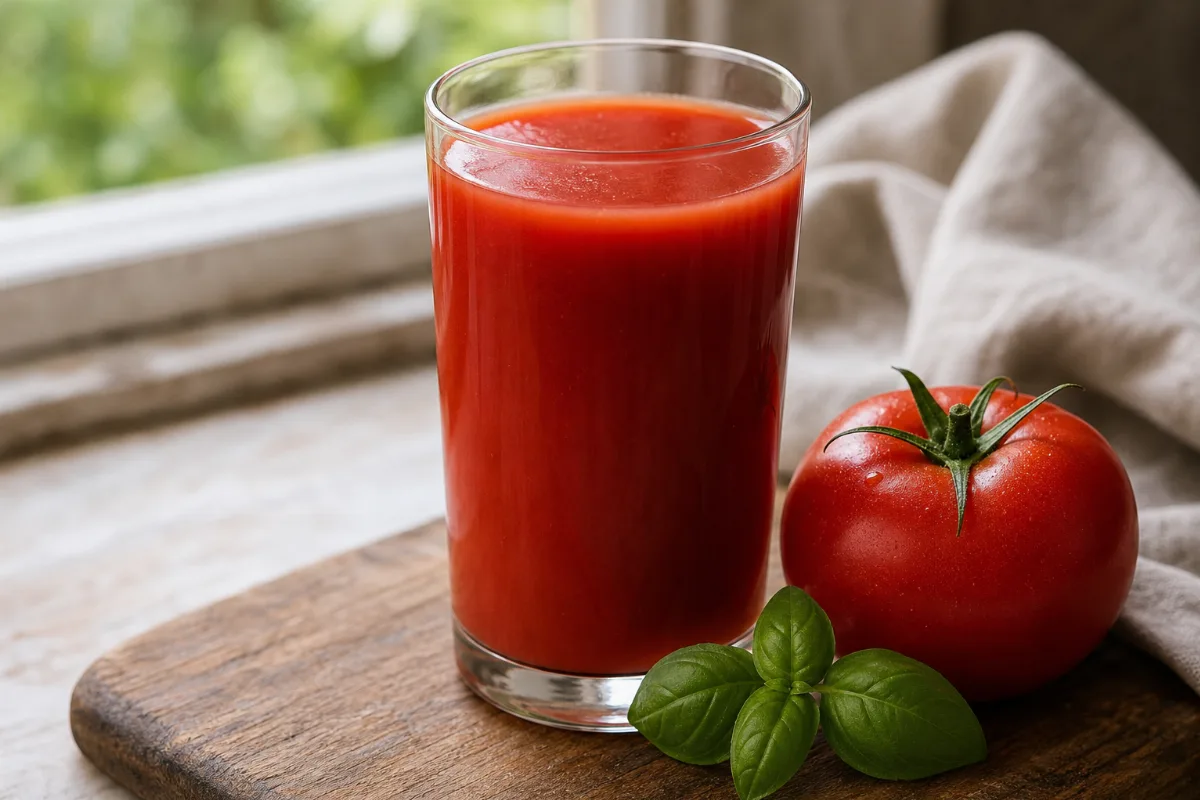
Beverages · Drink
Tomato Juice
Solanum lycopersicum (juice) · also called Jugo de tomate
Tomato juice is the pressed, usually heat-treated juice of tomatoes. It is low in calories and rich in vitamin C. Small studies saw lower LDL cholesterol, but they are small and short, and the blood pressure evidence is thin. The main cautions are sodium in salted juice, potassium for people with kidney disease and reflux.
General information, not medical advice. Last substantive update · Not medically reviewed. A named clinician has not signed off on this page. How this page is made
About Tomato Juice
Tomato juice is the pressed and usually heat-treated juice of tomatoes, sold canned or bottled, plain or with salt added. It is a drink, not a proven remedy: the cholesterol findings come from small, short studies, and the heart disease findings are observational.
What it is
Tomato juice is the juice of tomatoes (Solanum lycopersicum, nightshade family), sold canned or bottled with or without added salt. Tomato juice is a drink; lycopene capsules, tomato extracts, sauces and fresh tomatoes are different products.
USDA data for canned juice without salt added, per cup (243 g): about 41 kcal, 6.3 g sugars, 8.6 g carbohydrate, 1.0 g fibre, 2.1 g protein, 170 mg vitamin C, 49 mcg folate (DFE), 527 mg potassium and 24 mg sodium. USDA gives beta-carotene (270 mcg per 100 g) but no lycopene value for this item.
Salted or not: the label matters
The two USDA canned items differ only in sodium. Juice without salt added has 10 mg per 100 g. Juice with salt added has 253 mg per 100 g, about 615 mg per cup, which is 27% of the 2,300 mg Daily Value. FDA says 20% or more of the Daily Value per serving counts as high.
FDA also says over 70% of the sodium in the US diet comes from packaged and prepared foods. Compare 'no salt added' with regular juice on the Nutrition Facts label.
What the research shows
The studies are few and small. In 21 healthy adults, a 3-week diet with 400 ml of tomato juice plus ketchup a day lowered LDL cholesterol by 12.9% against a low-tomato diet. The abstract does not describe random assignment. A 2017 pooled analysis of 21 trials found LDL about 0.22 mmol/L lower with tomato products, but it mixes foods with lycopene capsules.
For blood pressure, a Japanese study gave 481 residents as much unsalted juice as they wanted for a year. Pressure fell in the 94 people with untreated high readings (141.2 to 137.0 mmHg systolic), but there was no control group and an author received a research grant from Kikkoman. A 2021 pooled analysis of randomised trials found an effect for standardized tomato extract and no consistent effect for other tomato forms.
In 25 healthy young women, juice before white rice gave a lower glucose peak than water. Large observational studies link higher lycopene intake or blood level to lower stroke and cardiovascular disease risk, with no significant link to heart attack or to prostate cancer. These cannot show that the juice is the cause.
Juice versus capsules and extracts
The cholesterol and blood sugar findings are for the juice. The blood pressure effect in the pooled analysis is for a standardized tomato extract, and the pooled cholesterol analysis includes lycopene capsules. The heart and prostate findings are for tomatoes and lycopene in general. Results for one product do not transfer to another.
At a glance
Traditional uses history, not proof
- Drunk as a beverage and used in cooking and cocktails
- Tomato juice is a drink and a food. Long use as food is not proof that it treats any condition.
Studied for research
- Vitamin C and potassium, high certainty for the nutrient content
- LDL cholesterol, low certainty (one small study of the juice plus pooled tomato-product trials)
- Blood pressure, very low certainty for juice (no control group in the juice study)
- Blood sugar after a meal, very low certainty (healthy young women, single meals)
- Heart disease and stroke, low certainty (observational, for lycopene and tomatoes)
- Prostate cancer risk, low certainty (no significant link)
Main compounds
- Vitamin C
- Potassium
- Sodium (added salt in some juices)
- Lycopene
- Beta-carotene
Common forms
- Canned tomato juice without salt added and with salt added (both USDA items read)
- Fresh-pressed, bottled and from-concentrate juices (nutrient values not read)
- Lycopene capsules, tomato extracts, tomato sauce and fresh tomatoes are different products and are not covered
Research links: 2007 study: tomato juice and LDL cholesterol · 2021 review: tomato products and blood pressure · 2017 review: tomato, lycopene and heart risk factors · Research Library · Genes & Biomarkers Library
What it is and its history
- Accepted scientific name
- Solanum lycopersicum L. (the plant whose fruit is pressed for the juice)
- Naming authority
- L. (species name as in the existing nutrient summary; not re-checked against GBIF for this page)
- Common names
- Tomato juice (English); Jugo de tomate (Spanish)
- Family or group
- Solanaceae (the nightshade family), as stated on the earlier tomato juice page. Tomato juice is a processed drink, not a plant.
- Classification
- Plantae > Tracheophyta > Magnoliopsida > Solanales > Solanaceae > Solanum > Solanum lycopersicum
- Native range
- Not verified from a source read.
- Habitat
- Not verified from a source read.
- What it looks like
- Roots: Not verified.; Stems: Not verified.; Leaves: Not verified.; Flowers: Not verified.; Fruit: Tomato juice is the pressed juice of tomato fruit. USDA lists 1 cup (243 g), 6 fl oz (182 g) and 1 fl oz (30.4 g) as household portions for the canned juice.
- Cultivation
- Not verified from a source read.
- Harvest and processing
- USDA lists canned tomato juice with and without salt added. FDA says most juice in the US is pasteurized (heat-treated) and that some juice made on site is untreated. How tomatoes are pressed, concentrated or canned was not read from a source.
- Look-alikes and adulterants
- Name: Fresh tomatoes, tomato sauce and paste; Note: Different foods with their own nutrient values; results for one do not carry over to another.; Name: Lycopene capsules and tomato extracts; Note: Supplements, not the drink. For example the blood pressure result in the pooled analysis is for a standardized tomato extract.; Name: Vegetable juice blends; Note: Often contain several vegetables and more salt; read the label.
Photographs
What is inside, and how it may work
What it contains and how those compounds act in cells and animals. Laboratory and animal mechanisms are not proven effects in people.
Main compounds
| Compound | Family | Where it is concentrated | Activity studied | Level of evidence |
|---|---|---|---|---|
| Vitamin C | vitamin | Juice USDA: 70.1 mg per 100 g; about 170 mg per cup (243 g) | A vitamin supplied by the drink; no trial of correcting a shortfall was read. 14 | Human data |
| Potassium | mineral | Juice USDA: 217 mg per 100 g; about 527 mg per cup | A mineral supplied by the drink; matters for people who must limit potassium. 14 11 | Human data |
| Sodium (added salt) | mineral | Juice USDA: 10 mg per 100 g without salt added; 253 mg per 100 g with salt added | Added salt in some canned juices. 14 13 10 | Human data |
| Lycopene | carotenoid | Fruit and juice Not listed by USDA for this item; the 2015 trial used test meals delivering 10 mg of lycopene | The red pigment of tomatoes. Absorption differs by form; a pooled analysis linked higher blood lycopene to lower stroke risk in observational studies. 4 3 | Human data |
| Beta-carotene | carotenoid | Juice USDA: 270 mcg per 100 g | A pigment the body can convert to vitamin A; in the 2007 study blood beta-carotene rose along with lycopene. 14 8 | Human data |
Mechanisms, receptors and pathways
| Target or pathway | Gene or receptor | What was found | Level |
|---|---|---|---|
| Blood cholesterol and LDL oxidation | Not specified in the sources read | In the 2007 study, drops in total and LDL cholesterol correlated with rises in serum lycopene, beta-carotene and gamma-carotene, and LDL resisted oxidation 13% more. These are correlations in 21 people, not a proven mechanism. 8 | Human data |
| Lycopene absorption | Not specified in the sources read | In the 2015 trial, lycopene in the cis form, in a globular fat-dissolved state in tangerine tomatoes, was absorbed far better than the crystalline form in red tomatoes. The authors link the form to absorption. 4 | Human data |
| Blood pressure | Not specified in the sources read | No mechanism for a blood pressure effect was established in the sources read. 6 | Unknown |
Absorption, metabolism and elimination
- Absorption
- In 11 adults, 47.70% (SD 8.81) of lycopene was absorbed from tangerine tomato juice and 4.98% (SD 1.92) from red tomato juice; there were large differences between people.
- Distribution
- Not found.
- Metabolism
- Not found.
- Elimination
- Not found.
- Bioavailability
- Lycopene bioavailability depends on the form in the tomato. Other nutrients were not studied.
Isolated compounds versus whole extracts
The cholesterol and glucose findings are for tomato juice (one small study each). The pooled cholesterol and endothelial results mix tomato foods with lycopene capsules. The blood pressure result in the pooled analysis is for a standardized tomato extract, a supplement. The observational heart and prostate results are for tomatoes and lycopene in general. Results for one product do not transfer to another.
Nutritional composition
Source: USDA FoodData Central, SR Legacy (April 2018), canned tomato juice, read 2026-10-26 from a saved copy. Without salt added (item 170545), per 1 cup (243 g, the USDA household portion): about 41 kcal, 6.3 g sugars, 8.6 g carbohydrate, 1.0 g fibre, 2.1 g protein, 170 mg vitamin C, 527 mg potassium, 49 mcg folate (DFE) and 24 mg sodium. With salt added (item 170458) the sodium is about 615 mg per cup (253 mg per 100 g); other values are identical. USDA gives 270 mcg of beta-carotene per 100 g and no lycopene value for this item. Per-cup values are the 100 g values multiplied by 2.43. Percent Daily Values are our calculation against the FDA Daily Values (for example 2,300 mg sodium). Brands, fresh-pressed and juice-from-concentrate products vary and were not read.
1 high certainty4 low certainty2 very low certainty
What was looked at
The 7 benefits and uses checked for Tomato Juice, each with how strong the evidence is. Tap one to open it.
- Vitamin C and potassium (nutrient content)High certainty
- LDL cholesterol (tomato juice and tomato products)Low certainty
- Blood pressureVery low certainty
- Blood sugar after a mealVery low certainty
- Heart disease and stroke (observational)Low certainty
- Prostate cancer risk (observational)Low certainty
- Lycopene absorption from the juiceLow certainty
Lab markers tracked in the studies
LDL cholesterolSystolic blood pressureBlood glucose after a mealLDL resistance to oxidationFlow-mediated dilation (blood vessel widening)Interleukin-6 (IL-6)Lycopene absorption
What is Tomato Juice good for?
The main studied uses and how strong the human evidence is for each. Most studies are small, and many are for tomato products or lycopene in general, not for the juice on its own.
Benefits, one by one
Each card is a research question, not a promise. Tap a goal to filter. Open a card to see the studies, doses and limits.
Vitamin C and potassium (nutrient content)
High certaintyCanned tomato juice without salt added has 70.1 mg of vitamin C and 217 mg of potassium per 100 g, by USDA data. One cup (243 g) has about 170 mg of vitamin C and 527 mg of potassium, and 41 kcal. USDA lists no lycopene value for this juice.
2 studiesCanned juice, with and without salt added, from USDA tables. Fresh-pr…
Studies, doses and limits
What the trials found
No trial was read showing that drinking tomato juice corrects low vitamin C or potassium. Values change with brand, tomato variety and processing.
Results
Canned tomato juice is a vitamin C-rich, low-calorie drink on paper. Whether it improves anyone's health through these nutrients was not tested in the sources read.
Effect sizes as reported
USDA, canned, per 100 g: energy 17 kcal, vitamin C 70.1 mg, potassium 217 mg, folate 20 mcg DFE, sugars 2.58 g. Per 1 cup (243 g): 41 kcal, vitamin C 170 mg, potassium 527 mg, folate 49 mcg DFE, sugars 6.3 g.
Why this rating
High that the drink contains these nutrients (USDA data). Not tested as a treatment for any shortfall.
Form and dose studied
Canned juice, with and without salt added, from USDA tables. Fresh-pressed, bottled and juice-from-concentrate products were not read.
Who was studied
General adult diet.
Limits
Nutrient facts, not trials. Brands differ. The salted item has 253 mg of sodium per 100 g compared with 10 mg.
Why researchers looked
People drink tomato juice as a low-calorie drink that supplies vitamin C and potassium.
Traditional use
Tomato juice is a drink and a food. Long use as food is not proof that it treats any condition.
Proposed mechanism Nutrient database
These are nutrient amounts in the drink, taken from USDA tables.
A proposed mechanism does not show that the effect happens in people.
Sodium in salted juice and potassium for people with kidney disease: see the Safety tab.
LDL cholesterol (tomato juice and tomato products)
Low certaintyA small 3-week study of 21 healthy adults found LDL cholesterol 12.9% lower on a high-tomato diet (400 ml of tomato juice plus ketchup a day) than on a low-tomato diet. A pooled analysis of 21 trials of tomato products and lycopene supplements found LDL about 0.22 mmol/L lower. Both are weak evidence for juice.
2 studiesJuice plus ketchup (single study); mixed tomato products and lycopene…
Studies, doses and limits
What the trials found
The juice study had 21 healthy people with normal cholesterol and compared two 3-week diets. The abstract does not describe random assignment, and the diet also had ketchup. The 2017 pooled analysis mixes tomato foods with lycopene capsules.
Results
LDL went down in a small, short juice-and-ketchup diet study and in pooled tomato-product trials. No long trial of tomato juice alone was read.
Effect sizes as reported
21 adults: LDL -12.9%, total cholesterol -5.9%, LDL oxidation resistance +13% (high-tomato versus low-tomato diet). Pooled 21 trials: LDL -0.22 mmol/L with tomato products (P = 0.006).
Why this rating
Low: one very small, short study of the juice with a design that may not have been randomised, plus a pooled analysis that mixes foods and capsules.
Form and dose studied
Juice plus ketchup (single study); mixed tomato products and lycopene capsules (pooled).
Who was studied
Healthy adults in the juice study.
Limits
Small, short, healthy volunteers, a juice and ketchup diet, markers rather than heart attacks. Lycopene capsules are a different product.
Why researchers looked
High tomato intake is linked to less heart disease in observational studies, so researchers tested whether it changes blood fats.
Traditional use
Tomato juice is a drink and a food. Long use as food is not proof that it treats any condition.
Proposed mechanism Human correlation
Not established. The 2007 study found that changes in cholesterol went with changes in blood lycopene, beta-carotene and gamma-carotene, which is a correlation, not a proven mechanism.
A proposed mechanism does not show that the effect happens in people.
Salted juice adds sodium; see the Safety tab.
Blood pressure
Very low certaintyA year-long Japanese study of unsalted tomato juice saw blood pressure fall in people with untreated high readings, but it had no control group and was partly funded by Kikkoman. A 2021 pooled analysis found a blood pressure effect for standardized tomato extract, not for other tomato forms.
2 studiesUnsalted tomato juice (Japan); standardized tomato extract, tomato di…
Studies, doses and limits
What the trials found
The Japanese study gave 481 residents as much unsalted juice as they wanted for a year and compared them with their own starting values. The pooled analysis of 11 randomised trials found no consistent effect from tomato-containing diets or synthetic lycopene.
Results
The best-designed evidence (randomised trials) shows an effect only for a standardized extract. The juice result is uncontrolled.
Effect sizes as reported
Japanese study, 94 people with untreated prehypertension or hypertension: systolic 141.2 to 137.0 mmHg, diastolic 83.3 to 80.9 mmHg. Pooled: standardized tomato extract systolic -5.89 mmHg (95% CI -9.13 to -2.64).
Why this rating
Very low for juice: an uncontrolled study with an industry-linked grant. The pooled randomised result is for an extract.
Form and dose studied
Unsalted tomato juice (Japan); standardized tomato extract, tomato diets, lycopene (pooled).
Who was studied
Japanese residents at cardiovascular risk; mixed healthy and hypertensive adults in the pooled analysis.
Limits
No control group, subgroup chosen by starting values, industry-linked grant. The extract is a supplement.
Why researchers looked
Tomatoes contain potassium and lycopene, and researchers asked whether tomato products lower blood pressure.
Traditional use
Tomato juice is a drink and a food. Long use as food is not proof that it treats any condition.
Proposed mechanism None
Not established.
A proposed mechanism does not show that the effect happens in people.
Do not change blood pressure medicines. Salted juice adds sodium.
Blood sugar after a meal
Very low certaintyIn 25 healthy young women, 200 g of tomato juice 30 minutes before white rice gave a smaller rise in blood glucose than water did.
1 studiesTomato juice, single servings.
Studies, doses and limits
What the trials found
A randomised crossover study: each woman had juice, whole tomato and water on different days before the same rice. Lunch results did not differ.
Results
The glucose peak after rice was lower after juice than after water in healthy young women.
Effect sizes as reported
Incremental peak 2.77 versus 3.68 mmol/L (juice versus water, P < 0.001); at 60 min 2.32 versus 2.97 mmol/L.
Why this rating
Very low: one small study of healthy young women, single meals, finger-prick readings.
Form and dose studied
Tomato juice, single servings.
Who was studied
Healthy women, about 22 years old.
Limits
Not people with diabetes, not long-term. The juice has more carbohydrate and calories than water.
Why researchers looked
Drinks taken before a carbohydrate meal have been tested for how they change the blood sugar rise.
Traditional use
Tomato juice is a drink and a food. Long use as food is not proof that it treats any condition.
Proposed mechanism None
Not established.
A proposed mechanism does not show that the effect happens in people.
If you have diabetes, ask your care team before changing what you drink.
Heart disease and stroke (observational)
Low certaintyPooled cohort studies linked a higher lycopene intake or blood level to lower stroke risk (HR 0.74) and cardiovascular disease risk (HR 0.86), but not to heart attack. For tomato intake itself, three studies found lower but not statistically significant risks. None is about tomato juice alone.
1 studiesDietary lycopene, blood lycopene and tomato intake.
Studies, doses and limits
What the trials found
A 2019 pooled analysis of 25 studies with data. These look at people who eat more lycopene or tomatoes and cannot show that tomatoes or juice are the cause.
Results
A link to less stroke and cardiovascular disease for lycopene; tomato intake alone was not significantly linked. Juice was not analysed separately.
Effect sizes as reported
Stroke HR 0.74 (95% CI 0.62 to 0.89); cardiovascular disease HR 0.86 (0.77 to 0.95); death HR 0.63 (0.49 to 0.81) for the highest blood lycopene; heart attack not significant.
Why this rating
Low: observational studies, results are for lycopene and tomatoes in general.
Form and dose studied
Dietary lycopene, blood lycopene and tomato intake.
Who was studied
Adults in cohort and cross-sectional studies.
Limits
Observational, cannot prove cause. Not about tomato juice alone.
Why researchers looked
Tomatoes are the main source of lycopene in many diets, and researchers compared people who eat more of them.
Traditional use
Tomato juice is a drink and a food. Long use as food is not proof that it treats any condition.
Proposed mechanism None
Not established.
A proposed mechanism does not show that the effect happens in people.
None specific.
Prostate cancer risk (observational)
Low certaintyA pooled analysis of 17 prospective studies found no statistically significant link between higher tomato or lycopene intake and prostate cancer. The numbers leaned slightly lower but included no effect.
1 studiesRaw and cooked tomato and lycopene; juice not separate.
Studies, doses and limits
What the trials found
Eleven cohort studies and six nested case-control studies compared higher and lower intake of raw tomato, cooked tomato, lycopene and blood lycopene.
Results
No significant link for any comparison. We found no trial showing tomato juice prevents cancer.
Effect sizes as reported
Raw tomato OR 0.81 (0.59 to 1.10); cooked tomato OR 0.85 (0.69 to 1.06); lycopene intake OR 0.93 (0.86 to 1.01); blood lycopene OR 0.97 (0.88 to 1.08).
Why this rating
Low that there is any benefit: observational, with confidence intervals that include no effect. The authors suggest only a modest role.
Form and dose studied
Raw and cooked tomato and lycopene; juice not separate.
Who was studied
Men in prospective studies.
Limits
Observational. Not juice-specific.
Why researchers looked
Lycopene has been discussed in prostate cancer prevention for years.
Traditional use
Tomato juice is a drink and a food. Long use as food is not proof that it treats any condition.
Proposed mechanism None
Not established.
A proposed mechanism does not show that the effect happens in people.
None specific.
Lycopene absorption from the juice
Low certaintyIn 11 adults, lycopene from juice of special orange 'tangerine' tomatoes was absorbed about 8.5 times better than lycopene from red tomato juice, with large differences between people. This is about absorption, not health benefit.
1 studiesTangerine and red tomato juice.
Studies, doses and limits
What the trials found
A randomised crossover trial of 11 adults who had two meals delivering 10 mg of lycopene.
Results
Fractional absorption was about 47.7% from tangerine tomato juice and 4.98% from red tomato juice.
Effect sizes as reported
8.5-fold higher bioavailability (p < 0.001).
Why this rating
Low: 11 people and a single meal; it measures absorption, not health.
Form and dose studied
Tangerine and red tomato juice.
Who was studied
Healthy adults.
Limits
Tangerine tomatoes are a special variety, not typical juice. Higher absorption is not proof of benefit.
Why researchers looked
Lycopene is a fat-soluble red pigment, and the form it takes in the tomato changes how much the body takes up.
Traditional use
Tomato juice is a drink and a food. Long use as food is not proof that it treats any condition.
Proposed mechanism Human and microscopy
The authors tie the difference to the cis form of lycopene in tangerine tomatoes and to its globular, fat-dissolved state in the tomato cells, compared with crystals in red tomatoes.
A proposed mechanism does not show that the effect happens in people.
None specific.
Connections to the rest of health
How Tomato Juice connects to the rest of our health knowledge graph. Every link says what kind of connection it is. A safety link (for example to the liver) is a warning, not a benefit. A study that merely mentions a topic never creates a benefit link.
Explore every connection: goals, body systems, organs, symptoms, genes
A. Wellness goals
| Connected to | Kind of connection | Evidence status | Context | Studies |
|---|---|---|---|---|
| Preventive Wellness | High certainty | Vitamin C and potassium (nutrient content): Canned tomato juice without salt added has 70.1 mg of vitamin C and 217 mg of potassium per 100 g, by USDA data. One cup (243 g) has about 170 mg of vitamin C and 527 mg of potassium, and 41 kcal. USDA lists no lycopene value for this juice. | 14 13 | |
| Cholesterol Balance | Low certainty | LDL cholesterol (tomato juice and tomato products): A small 3-week study of 21 healthy adults found LDL cholesterol 12.9% lower on a high-tomato diet (400 ml of tomato juice plus ketchup a day) than on a low-tomato diet. A pooled analysis of 21 trials of tomato products and lycopene supplements found LDL about 0.22 mmol/L lower. Both are weak evidence for juice. | 8 2 | |
| Heart Health | Low certainty | LDL cholesterol (tomato juice and tomato products): A small 3-week study of 21 healthy adults found LDL cholesterol 12.9% lower on a high-tomato diet (400 ml of tomato juice plus ketchup a day) than on a low-tomato diet. A pooled analysis of 21 trials of tomato products and lycopene supplements found LDL about 0.22 mmol/L lower. Both are weak evidence for juice. Blood pressure: A year-long Japanese study of unsalted tomato juice saw blood pressure fall in people with untreated high readings, but it had no control group and was partly funded by Kikkoman. A 2021 pooled analysis found a blood pressure effect for standardized tomato extract, not for other tomato forms. | 8 2 5 6 | |
| Blood Sugar Balance | Very low certainty | Blood sugar after a meal: In 25 healthy young women, 200 g of tomato juice 30 minutes before white rice gave a smaller rise in blood glucose than water did. | 7 | |
| Heart Health | Low certainty | Heart disease and stroke (observational): Pooled cohort studies linked a higher lycopene intake or blood level to lower stroke risk (HR 0.74) and cardiovascular disease risk (HR 0.86), but not to heart attack. For tomato intake itself, three studies found lower but not statistically significant risks. None is about tomato juice alone. | 3 | |
| Mens Wellness | Low certainty | Prostate cancer risk (observational): A pooled analysis of 17 prospective studies found no statistically significant link between higher tomato or lycopene intake and prostate cancer. The numbers leaned slightly lower but included no effect. | 1 | |
| Preventive Wellness | Low certainty | Lycopene absorption from the juice: In 11 adults, lycopene from juice of special orange 'tangerine' tomatoes was absorbed about 8.5 times better than lycopene from red tomato juice, with large differences between people. This is about absorption, not health benefit. | 4 |
B. Body systems
| Connected to | Kind of connection | Evidence status | Context | Studies |
|---|---|---|---|---|
| Circulatory System | Biological association | High certainty | Studied for: Vitamin C and potassium (nutrient content) Studied for: LDL cholesterol (tomato juice and tomato products) | 14 13 8 2 5 6 3 |
| Endocrine System | Biological association | Very low certainty | Studied for: Blood sugar after a meal | 7 |
| Reproductive System | Biological association | Low certainty | Studied for: Prostate cancer risk (observational) | 1 |
| Digestive System | Biological association | Low certainty | Studied for: Lycopene absorption from the juice | 4 |
C. Body parts and organs
E. Health conditions
| Connected to | Kind of connection | Evidence status | Context | Studies |
|---|---|---|---|---|
| Gastroesophageal reflux disease | Adverse effect or risk | Documented risk | NIDDK lists tomatoes among foods some people with GERD find trigger symptoms. Preparation or compound: Tomatoes (acidic food) |
12 |
| High cholesterol | Preliminary | LDL was lower in a small juice study and in pooled tomato-product trials; not a treatment. Preparation or compound: Tomato juice and tomato products |
8 2 |
I. Biomarkers
| Connected to | Kind of connection | Evidence status | Context | Studies |
|---|---|---|---|---|
| LDL cholesterol | Biological association | Low certainty | Measured in trials: lowered. A lab change is not the same as a health benefit. | 8 2 |
| Systolic blood pressure | Biological association | Very low certainty | Measured in trials: lowered (extract); lowered without a control group (juice). A lab change is not the same as a health benefit. | 5 6 |
| Blood glucose after a meal | Biological association | Very low certainty | Measured in trials: lowered (single meals, healthy women). A lab change is not the same as a health benefit. | 7 |
| LDL resistance to oxidation | Biological association | Very low certainty | Measured in trials: raised. A lab change is not the same as a health benefit. | 8 |
| Flow-mediated dilation (blood vessel widening) | Biological association | Low certainty | Measured in trials: raised. A lab change is not the same as a health benefit. | 2 |
| Interleukin-6 (IL-6) | Biological association | Low certainty | Measured in trials: lowered. A lab change is not the same as a health benefit. | 2 |
| Lycopene absorption | Biological association | Low certainty | Measured in trials: raised (tangerine juice versus red juice). A lab change is not the same as a health benefit. | 4 |
K. Biological pathways
| Connected to | Kind of connection | Evidence status | Context | Studies |
|---|---|---|---|---|
| Lycopene | Preliminary mechanism | Human | Blood lycopene rose with the high-tomato diet and correlated with LDL changes; absorption depends on the form of lycopene. | 8 4 |
| LDL cholesterol | Preliminary mechanism | Human | Lower LDL in a small juice-and-ketchup study and in pooled tomato-product trials. | 8 2 |
| Potassium | Preliminary mechanism | Human | Tomato juice supplies potassium, which matters in kidney disease. | 14 11 |
L. Active compounds
| Connected to | Kind of connection | Evidence status | Context | Studies |
|---|---|---|---|---|
| Vitamin C | Biological association | Human | A vitamin supplied by the drink; no trial of correcting a shortfall was read. Preparation or compound: Juice |
14 |
| Potassium | Biological association | Human | A mineral supplied by the drink; matters for people who must limit potassium. Preparation or compound: Juice |
14 11 |
| Sodium (added salt) | Biological association | Human | Added salt in some canned juices. Preparation or compound: Juice |
14 13 10 |
| Lycopene | Biological association | Human | The red pigment of tomatoes. Absorption differs by form; a pooled analysis linked higher blood lycopene to lower stroke risk in observational studies. Preparation or compound: Fruit and juice |
4 3 |
| Beta-carotene | Biological association | Human | A pigment the body can convert to vitamin A; in the 2007 study blood beta-carotene rose along with lycopene. Preparation or compound: Juice |
14 8 |
Each connection is stored with the ingredient, the connected record, the kind of connection, the evidence status, the supporting studies, the preparation or compound involved, and a review date (last reviewed October 26, 2026).
The evidence
The research centre for Tomato Juice. Every record here was checked against PubMed or the publisher's page; we never list a study we have not verified.
Evidence by outcome
Bars show how many studies we found for each outcome, not how well it works. People are added up across trials only (reviews are not added, to avoid double counting).
How we rate evidence
High certainty
Several well-run trials or reviews agree; further research is unlikely to change the picture much.
Moderate certainty
Good trials point the same way, but some doubt remains.
Low certainty
Small, short or inconsistent trials. The finding could change with better research.
Very low certainty
Very little or very weak human data. Treat as a possibility only.
Mixed findings
Trials or reviews disagree with each other.
Not enough evidence
Not enough human research to say either way.
Evidence against
Good research found no benefit, or found harm.
We take the reviewers' own risk-of-bias and GRADE statements where they exist, and otherwise judge from study size, design, consistency, directness and whether a product matches what is sold. Many publications do not make evidence high. Method note: We started from our existing tomato juice summary, re-read the nutrition values from saved USDA FoodData Central data, re-read the FDA, NIDDK and NHS pages and re-read PubMed abstracts for the trials and reviews. Only abstracts were read for studies. Items we could not verify are flagged in the research gaps.
Study library: every study we checked 14
| Study | Design | People | Product, dose, length | Result |
|---|---|---|---|---|
| Chen 2013 Lycopene/tomato consumption and the risk of prostate cancer: a systematic review and meta-analysis of prospective studies. J Nutr Sci Vitaminol (Tokyo) · PMID 23883692 · DOI |
Systematic review meta analysis observational |
11 cohort studies and 6 nested case-control studies | Raw tomato, cooked tomato, lycopene intake and blood lycopene, as exposure Dietary tomato and lycopene; blood lycopene · vs Lower versus higher intake |
No result reached statistical significance: the confidence intervals of every comparison included 1. The authors suggest tomato may play a modest role and say more research is needed on the type and amount of product. Higher raw tomato OR 0.81; higher cooked tomato OR 0.85; higher lycopene intake OR 0.93; higher serum lycopene OR 0.97 (0.59 to 1.10; 0.69 to 1.06; 0.86 to 1.01; 0.88 to 1.08) Methods, limits and fundingOutcomes: Prostate cancer incidence Limitations: Observational. Tomato juice was not analysed on its own. The authors' wording is more positive than the numbers, which show no significant link. Funding and conflicts: Funding is not stated in the abstract (listed as non-US government research support). Read: abstract |
| Cheng 2017 Tomato and lycopene supplementation and cardiovascular risk factors: A systematic review and meta-analysis. Atherosclerosis · PMID 28129549 · DOI |
Systematic review meta analysis |
21 intervention trials in adults over 18 | Tomato products and lycopene supplements (pooled) Mixed: tomato products and lycopene supplements Varied Varied · vs Varied by trial |
Tomato interventions were linked to lower LDL cholesterol, lower IL-6 and better flow-mediated dilation. Lycopene supplements lowered systolic blood pressure. No other outcome was significantly changed. LDL -0.22 mmol/L (tomato); IL-6 SMD -0.25; flow-mediated dilation +2.53%; systolic BP -5.66 mmHg (lycopene supplements) (P = 0.006 (LDL), P = 0.03 (IL-6), P = 0.01 (FMD), P = 0.002 (systolic BP); confidence intervals not given in the abstract) Methods, limits and fundingOutcomes: Blood lipids, endothelial function (flow-mediated dilation), blood pressure, inflammation markers Limitations: Pools tomato foods with lycopene capsules, so the result is not for tomato juice alone. The measures are markers, not heart attacks or strokes. Funding and conflicts: Funding is not stated in the abstract. Read: abstract |
| Cheng 2019 Lycopene and tomato and risk of cardiovascular diseases: A systematic review and meta-analysis of epidemiological evidence. Crit Rev Food Sci Nutr · PMID 28799780 · DOI |
Systematic review meta analysis observational |
28 publications (25 with numbers for the meta-analysis); adults | Lycopene intake or blood level, and tomato intake, as exposure Dietary lycopene and tomato intake; blood lycopene · vs Lowest versus highest group |
People with the highest lycopene intake or blood level had lower risk of stroke and cardiovascular disease. Those with the highest blood level also had lower risk of death. Lycopene was not significantly linked to heart attack. For tomato intake, three studies found lower but not statistically significant risks. Stroke HR 0.74; cardiovascular disease HR 0.86; mortality HR 0.63 (highest blood lycopene); heart attack not significant (Stroke 0.62 to 0.89; cardiovascular disease 0.77 to 0.95; mortality 0.49 to 0.81) Methods, limits and fundingOutcomes: Stroke, cardiovascular disease, mortality, heart attack Limitations: Observational, so it cannot show cause. The results are for lycopene in general and tomatoes in general, not tomato juice. Tomato intake itself was not significantly linked to the outcomes. Funding and conflicts: Funding is not stated in the abstract. Read: abstract |
| Cooperstone 2015 Enhanced bioavailability of lycopene when consumed as cis-isomers from tangerine compared to red tomato juice, a randomized, cross-over clinical trial. Mol Nutr Food Res · PMID 25620547 · DOI |
Randomised crossover trial |
11 11 adults (6 men, 5 women) |
Juice from tangerine tomatoes and from red tomatoes Juice Two meals each delivering 10 mg lycopene Blood sampled over 12 hours · vs Red tomato juice |
Lycopene was absorbed about 8.5 times better from tangerine tomato juice (94% cis form) than from red tomato juice (10% cis form). Fractional absorption was 47.70% (SD 8.81) from tangerine and 4.98% (SD 1.92) from red tomato juice. There were large differences between people. 8.5-fold higher lycopene bioavailability from tangerine juice (p < 0.001) (Not given in the abstract) Methods, limits and fundingOutcomes: Lycopene absorption (blood fractions over 12 hours) Limitations: Very small (11 people), a single meal, and it measures absorption, not health benefit. Tangerine tomatoes are a special variety, not the usual tomato juice. Funding and conflicts: No conflicts of interest declared; US government (NIH) research grants listed. Read: abstract |
| Odai 2019 Unsalted tomato juice intake improves blood pressure and serum low-density lipoprotein cholesterol level in local Japanese residents at risk of cardiovascular disease. Food Sci Nutr · PMID 31367355 · DOI |
Uncontrolled before after |
481 481 residents of Kuriyama, Japan (mean age about 57); results highlighted for 94 with untreated prehypertension or hypertension and 125 with untreated high LDL |
Unsalted tomato juice, as food Juice, unsalted As much unsalted juice as people wanted 1 year |
In the 94 people with untreated prehypertension or hypertension, systolic pressure fell from 141.2 to 137.0 mmHg and diastolic from 83.3 to 80.9 mmHg. In the 125 people with untreated high LDL, LDL cholesterol fell from 155.0 to 149.9 mg/dl. There was no control group, and no difference in lifestyle was found before and after. Systolic -4.2 mmHg and diastolic -2.4 mmHg (94 people); LDL -5.1 mg/dl (125 people) (P = 0.003 (systolic), 0.012 (diastolic), 0.005 (LDL); confidence intervals not given in the abstract) Methods, limits and fundingOutcomes: Blood pressure, blood lipids, glucose tolerance Limitations: No control group, so changes could come from other causes, such as regression to the mean or the attention of being in a study. Results are for subgroups picked by their starting values. How much juice each person drank is not given in the abstract. Funding and conflicts: Funded in part by Kikkoman Corporation (an unrestricted research grant to an author, per the paper's conflict statement and Europe PMC). Industry-linked. Read: abstract |
| Rattanavipanon 2021 Effect of tomato, lycopene and related products on blood pressure: A systematic review and network meta-analysis. Phytomedicine · PMID 33676812 · DOI |
Systematic review network meta analysis |
617 11 randomised trials; 8 (N = 617) for systolic and 7 (N = 501) for diastolic blood pressure; healthy people and people with high blood pressure |
Six forms of tomato, lycopene and related products, including standardized tomato extract and tomato-containing diets Mixed: extract, whole tomato diets, lycopene Varied by product Varied · vs Placebo |
Standardized tomato extract lowered systolic pressure compared with placebo. The effect on diastolic pressure was not significant overall. In people with high blood pressure the extract lowered both. Other forms of tomato, including tomato-containing diets and synthetic lycopene, showed no consistent effect. Standardized tomato extract: systolic MD -5.89 mmHg; diastolic MD -3.51 mmHg (not significant). In hypertensive patients: systolic -8.09, diastolic -4.25 mmHg (Systolic -9.13 to -2.64; diastolic -7.39 to 0.38; hypertensive systolic -11.52 to -4.67, diastolic -6.97 to -1.53) Methods, limits and fundingOutcomes: Systolic and diastolic blood pressure Limitations: Tomato juice was not reported as a separate form in the abstract. The positive result is for a standardized extract, which is a supplement, not a drink. Few trials per product. Funding and conflicts: Funding is not stated in the abstract. Read: abstract |
| Saito 2020 Tomato juice preload has a significant impact on postprandial glucose concentration in healthy women: A randomized cross-over trial. Asia Pac J Clin Nutr · PMID 32990608 · DOI |
Randomised crossover trial |
25 25 healthy young women (mean age 21.6) |
Tomato juice, as food Juice 200 g of tomato juice 30 minutes before 200 g of boiled white rice Single test meals on separate days · vs 200 g of water 30 minutes before the rice (also a whole-tomato arm) |
Blood glucose rose less after rice when tomato juice came 30 minutes earlier than when water did. At 60 minutes the rise was 2.32 versus 2.97 mmol/L and at 90 minutes 2.36 versus 3.23 mmol/L. The peak rise was 2.77 versus 3.68 mmol/L. No difference was seen after lunch. Incremental peak 2.77 versus 3.68 mmol/L (juice versus water) (P < 0.001 for the peak; confidence intervals not given in the abstract) Methods, limits and fundingOutcomes: Blood glucose after breakfast (incremental glucose at 60 and 90 minutes, incremental peak) and after lunch Limitations: Healthy young women only, single meals, measured with finger-prick self-monitoring. It does not show benefit for people with diabetes or over the long term. The juice has more calories and carbohydrate than water. Funding and conflicts: Funding is not stated in the abstract. Read: abstract |
| Silaste 2007 Tomato juice decreases LDL cholesterol levels and increases LDL resistance to oxidation. Br J Nutr · PMID 17617941 · DOI |
Controlled clinical trial (randomisation not described in the abstract) |
21 21 healthy adults with normal cholesterol |
Tomato juice plus tomato ketchup, as food Juice (heat-processed) and ketchup High-tomato diet: 400 ml tomato juice and 30 mg of tomato ketchup a day, as written in the abstract 3 weeks per diet, after a baseline period · vs 3-week low-tomato diet (no tomato products) |
Total cholesterol fell 5.9% and LDL cholesterol fell 12.9% on the high-tomato diet compared with the low-tomato diet. LDL resistance to forming oxidised phospholipids rose 13%. Changes in cholesterol went with changes in blood lycopene, beta-carotene and gamma-carotene. LDL cholesterol -12.9% (SD 17.0), total cholesterol -5.9% (SD 10) versus the low-tomato diet; LDL oxidation resistance +13% (P = 0.0002 for LDL; confidence intervals not given in the abstract) Methods, limits and fundingOutcomes: Total cholesterol, LDL cholesterol, LDL resistance to oxidation, serum carotenoids Limitations: Small (21 people), short, healthy volunteers with normal cholesterol. The abstract does not say people were randomly assigned. The diet also included ketchup, so the juice alone was not tested. A diet comparison, not a drug-style placebo trial. Funding and conflicts: Funding is not stated in the abstract (listed as non-US government research support). Read: abstract |
| s-fda-juice-safety US FDA: What You Need to Know About Juice Safety · Source |
Health agency n/a |
Methods, limits and fundingRead: full-text | ||
| s-fda-sodium US FDA: Sodium in Your Diet · Source |
Health agency n/a |
Methods, limits and fundingRead: full-text | ||
| s-niddk-ckd NIDDK: Eating, Diet and Nutrition for Chronic Kidney Disease · Source |
Health agency n/a |
Methods, limits and fundingRead: full-text | ||
| s-niddk-gerd NIDDK: Eating, Diet and Nutrition for GER and GERD in Adults · Source |
Health agency n/a |
Methods, limits and fundingRead: full-text | ||
| s-usda-fdc-170458 USDA FoodData Central: Tomato juice, canned, with salt added (FDC 170458, SR Legacy, April 2018) · Source |
Reference database n/a |
Methods, limits and fundingRead: full-text | ||
| s-usda-fdc-170545 USDA FoodData Central: Tomato juice, canned, without salt added (FDC 170545, SR Legacy, April 2018) · Source |
Reference database n/a |
Methods, limits and fundingRead: full-text |
What we do not know yet
- No long, randomised trial of tomato juice alone on cholesterol or blood pressure was found; the juice studies are small, short, or had no control group.
- The heart disease and prostate cancer results are observational and cover tomatoes and lycopene in general.
- Tomato allergy, medicine interactions, safety for babies and young children, oxalate, histamine, vitamin K and warfarin, pesticide and can contamination were not researched.
- Fresh-pressed, bottled, low-sodium and from-concentrate juices have no nutrient values here; only canned juice was read.
- History, native range and cultivation were not read from a source.
How new research is added
New studies are found by a saved PubMed search and placed in a review queue before the page changes.
Lab markers
What changed in blood or saliva tests during trials. A changed number is not the same as feeling or being healthier, and we give no "normal ranges".
Metabolic 1
LDL cholesterol
Lowered in trials
The 'bad' cholesterol carried in the blood. Higher levels are linked to more heart disease.
Low certaintyResults and what it means
Why it was measured
It is the usual blood marker used in diet trials for heart risk.
Statistical vs. clinical meaning
A small fall in short studies. The juice study was small and may not have been randomised.
Safety implication
None specific.
| Study | Result | People | Product |
|---|---|---|---|
| 8 | LDL -12.9% (SD 17.0) on the high-tomato diet versus the low-tomato diet (P = 0.0002) | 21 healthy adults | 400 ml tomato juice plus ketchup a day, 3 weeks |
| 2 | LDL -0.22 mmol/L with tomato products (P = 0.006) | 21 intervention trials in adults | Tomato products and lycopene supplements (pooled) |
Other 6
Systolic blood pressure
Lowered (extract); lowered without a control group (juice) in trials
The top number of a blood pressure reading, the pressure when the heart beats.
Very low certaintyResults and what it means
Why it was measured
High blood pressure raises the risk of stroke and heart disease.
Statistical vs. clinical meaning
The randomised evidence is for an extract. The juice result is uncontrolled.
Safety implication
Salted juice adds sodium.
| Study | Result | People | Product |
|---|---|---|---|
| 5 | 141.2 to 137.0 mmHg (P = 0.003), no control group | 94 Japanese residents with untreated prehypertension or hypertension | Unsalted tomato juice, as much as wanted, 1 year |
| 6 | -5.89 mmHg (95% CI -9.13 to -2.64) for standardized tomato extract; no consistent effect for other tomato forms | 8 randomised trials (N = 617) | Standardized tomato extract versus placebo |
Blood glucose after a meal
Lowered (single meals, healthy women) in trials
How high blood sugar rises in the hours after eating.
Very low certaintyResults and what it means
Why it was measured
Large spikes after meals are of interest in blood sugar control.
Statistical vs. clinical meaning
One small crossover study in healthy women.
Safety implication
None specific.
| Study | Result | People | Product |
|---|---|---|---|
| 7 | Incremental peak 2.77 versus 3.68 mmol/L (P < 0.001) after juice versus water before rice | 25 healthy young women | 200 g tomato juice 30 minutes before 200 g boiled white rice |
LDL resistance to oxidation
Raised in trials
How well LDL particles resist forming oxidised fats in a lab test of blood samples.
Very low certaintyResults and what it means
Why it was measured
Oxidised LDL is thought to play a role in artery plaque, though this lab marker is not a health outcome.
Statistical vs. clinical meaning
A lab marker from one small study; it does not show fewer heart events.
Safety implication
None specific.
| Study | Result | People | Product |
|---|---|---|---|
| 8 | +13% (P = 0.02) on the high-tomato diet | 21 healthy adults | 400 ml tomato juice plus ketchup a day, 3 weeks |
Flow-mediated dilation (blood vessel widening)
Raised in trials
A test of how well an artery widens when blood flow increases, used as a marker of blood vessel health.
Low certaintyResults and what it means
Why it was measured
Poor vessel widening is linked to heart disease risk.
Statistical vs. clinical meaning
A marker; the pooled trials include capsules and not juice alone.
Safety implication
None specific.
| Study | Result | People | Product |
|---|---|---|---|
| 2 | +2.53% (P = 0.01) with tomato interventions | Adults in pooled intervention trials | Tomato products (pooled with lycopene supplements) |
Interleukin-6 (IL-6)
Lowered in trials
A signalling protein in the blood that rises with inflammation.
Low certaintyResults and what it means
Why it was measured
Used as a marker of low-grade inflammation.
Statistical vs. clinical meaning
A small pooled change in an inflammation marker; not a health outcome.
Safety implication
None specific.
| Study | Result | People | Product |
|---|---|---|---|
| 2 | Standardised mean difference -0.25 (P = 0.03) with tomato interventions | Adults in pooled intervention trials | Tomato products (pooled with lycopene supplements) |
Lycopene absorption
Raised (tangerine juice versus red juice) in trials
How much of the lycopene in a meal reaches the blood.
Low certaintyResults and what it means
Why it was measured
Shows how well the body takes up this pigment from different juices.
Statistical vs. clinical meaning
Absorption, not benefit.
Safety implication
None specific.
| Study | Result | People | Product |
|---|---|---|---|
| 4 | Fractional absorption 47.70% (SD 8.81) versus 4.98% (SD 1.92) | 11 adults | Tangerine versus red tomato juice, 10 mg lycopene |
Safety
What studies and official sources say about side effects, medicines and who should check first. Each point shows what kind of evidence it comes from.
Main points to know 4
- Salted canned juice adds sodium. USDA lists 10 mg of sodium per 100 g in canned tomato juice without salt added and 253 mg per 100 g in juice with salt added. One cup of the salted type has about 615 mg, 27% of the 2,300 mg Daily Value. FDA says 20% or more of the Daily Value per serving counts as high, and that over 70% of sodium in the US diet comes from packaged and prepared foods. Check the label. Authoritative guidance 14 13 10
- Potassium and kidney disease. One cup of tomato juice has about 527 mg of potassium (USDA, about 11% of the Daily Value). NIDDK says chronic kidney disease can make it harder to remove potassium, too much can cause heart and muscle problems, and a care team may advise limiting serving sizes of high-potassium foods. NIDDK does not name tomato juice; the figure is from USDA. Authoritative guidance 14 11
- Tomatoes and acid reflux. NIDDK lists acidic foods such as citrus fruits and tomatoes among the foods and drinks commonly linked to GERD symptoms. Triggers differ from person to person, and NIDDK advises talking with a doctor about yours. Authoritative guidance 12
- Untreated fresh-pressed juice. Most juice sold in the US is pasteurized. FDA says children, older adults, pregnant women and people with weakened immune systems risk serious illness from untreated juice. Untreated packaged juice made on site must be refrigerated and carry a warning label, but juice sold by the glass does not need one. Authoritative guidance 9
Side effects 3
| Effect | How often | Severity and recovery | Evidence |
|---|---|---|---|
| High sodium intake from salted tomato juice A nutrient fact. No trial of harm from tomato juice was read. | One cup of salted canned juice has about 615 mg of sodium (27% of the Daily Value) by USDA data. | depends on the rest of the diet and on blood pressure Not described in the sources read. | Nutrient database 13 10 |
| Heartburn or reflux symptoms in some people The source names tomatoes, not tomato juice. | No frequency found. NIDDK says some people with GERD find tomatoes trigger symptoms. | mild to moderate discomfort (not graded by the source) Not described in the sources read. | Authoritative guidance 12 |
| Foodborne illness from untreated juice Applies to unpasteurized juice, not canned or pasteurized juice. | No frequency found. FDA says it can be serious in children, older adults, pregnant women and people with weakened immune systems. | can be serious Not described in the sources read. | Authoritative guidance 9 |
Liver
No liver injury from drinking tomato juice was found in the sources read. A liver-safety source (such as LiverTox) was not searched.
How often. No frequency was found.
Monitoring. No monitoring advice was found.
This is a safety connection. It is not evidence that Tomato Juice supports liver health.
Medicines and supplements 2
| With | Why it matters | Importance | Evidence | What to do |
|---|---|---|---|---|
| Medicines that raise blood potassium, and kidney disease treatments prescription | NIDDK says some medicines, and skipped dialysis treatments, can raise blood potassium in people with kidney disease. Tomato juice supplies potassium (527 mg per cup by USDA). | NIDDK describes the potassium issue for kidney disease in general. It does not name tomato juice or any specific medicine as interacting with it. | General guidance applied to a high potassium drink Low certainty 11 14 | If you have kidney disease or take a medicine that raises potassium, ask your care team or pharmacist about juices. |
| Specific medicines (no drink-to-medicine interaction found) prescription | We did not find a source we could read that reports an interaction between tomato juice as a drink and a specific medicine. | None found Very low certainty | A pharmacist can check your list of medicines. |
Who should check first 4
| Situation | Advice | Evidence |
|---|---|---|
| Kidney disease with a potassium limit | Ask your care team or dietitian whether tomato juice fits your potassium limit. NIDDK says a care team may advise limiting serving sizes of high-potassium foods. | Authoritative guidance 11 14 |
| A low-sodium diet or high blood pressure | Compare 'no salt added' with regular juice on the Nutrition Facts label. FDA says 20% DV or more of sodium per serving is high. | Authoritative guidance 10 13 |
| Reflux (GERD) that tomatoes trigger | Triggers differ. NIDDK advises talking with a doctor about foods and drinks that seem to make your symptoms worse. | Authoritative guidance 12 |
| Pregnancy, young children, older adults, weakened immune system: untreated fresh-pressed juice | FDA says these groups risk serious illness from untreated juice. Check the label for pasteurization, or choose heat-treated juice. | Authoritative guidance 9 |
Overdose, product quality and regulators
Summary. No toxicity from tomato juice as an ordinary drink was found in the sources read. The safety points are sodium, potassium, reflux and untreated juice.
Animal. Not reviewed.
Overdose response. Not found.
Genotoxicity. Not researched.
Pesticide residues, heavy metals and can lining chemicals were not researched. The one food safety point read is the risk from untreated juice.
Untreated juice. FDA says untreated juice can carry harmful bacteria and may cause serious illness in children, older adults, pregnant women and people with weakened immune systems. 9
| Body | Action | Date |
|---|---|---|
| US FDA (United States) | Sodium in Your Diet: Daily Value for sodium is less than 2,300 mg a day; 5% DV or less per serving is low and 20% DV or more is high. source | 2024-03-05 |
| US FDA (United States) | What You Need to Know About Juice Safety: untreated juice is risky for children, older adults, pregnant women and people with weakened immune systems; untreated packaged juice must carry a warning label. source | 2024-03-05 |
| NIDDK (United States) | Eating, Diet and Nutrition for Chronic Kidney Disease: kidney disease can raise blood potassium; a care team may advise limiting high-potassium foods. source | 2025-01 |
| NIDDK (United States) | Eating, Diet and Nutrition for GER and GERD in Adults: lists acidic foods such as citrus fruits and tomatoes among foods linked to symptoms. source | 2020-07 |
When to get medical help
- Trouble breathing, wheezing, swelling of the lips, face, tongue or throat, widespread hives, repeated vomiting, dizziness or collapse after drinking tomato juice (possible severe allergic reaction): use epinephrine if prescribed, then call 911 or your local emergency number
- Chest pain, severe muscle weakness or an irregular heartbeat in someone with kidney disease (high blood potassium can affect the heart and muscles): seek urgent medical help
Stop using the product and contact a clinician or emergency service. In the US, Poison Control is 1-800-222-1222.
General information only, not medical advice. Ask a clinician or pharmacist before use, especially with medicines, in pregnancy or with a health condition. See the Natural Remedy Safety guide.
Frequently asked questions
What is tomato juice?
What nutrients are in tomato juice?
By USDA data, one cup (243 g) of canned juice without salt added has about 41 kcal, 170 mg of vitamin C, 527 mg of potassium, 49 mcg of folate (DFE) and 1.0 g of fibre. USDA lists no lycopene value for this item.
Does tomato juice lower cholesterol?
Does tomato juice lower blood pressure?
Is salted tomato juice a problem?
Is tomato juice OK with kidney disease?
Is tomato juice bad for acid reflux?
NIDDK lists tomatoes among acidic foods some people with reflux say trigger symptoms. Triggers differ, so ask a doctor about yours.
Does tomato juice help with blood sugar?
In 25 healthy young women, 200 g of juice 30 minutes before white rice gave a lower glucose peak than water. It was one small, short study and does not show benefit for people with diabetes.
Does the lycopene in tomato juice prevent heart disease or cancer?
Is tomato juice the same as lycopene capsules?
Is fresh-pressed tomato juice safe in pregnancy and for children?
FDA says pregnant women, children, older adults and people with weakened immune systems risk serious illness from untreated juice. Most US juice is pasteurized, but juice sold by the glass may not be. We read no other advice specific to tomato juice. Ask your midwife or doctor.
Explore by health goal
Heart HealthPreventive WellnessCholesterol BalanceBlood Sugar BalanceMens Wellness
Editorial transparency
- Written by
- AlternativeMed editorial team. Research compiled with AI assistance, then checked against the sources listed.
- Medical review
- None. This page has not been reviewed by a physician or pharmacist.
- First published
- 2026-10-26
- Last substantive update
- 2026-10-26
- How we research
- We started from our existing tomato juice summary, re-read the nutrition values from saved USDA FoodData Central data, re-read the FDA, NIDDK and NHS pages and re-read PubMed abstracts for the trials and reviews. Only abstracts were read for studies. Items we could not verify are flagged in the research gaps.
- How we rate evidence
- See "How we rate evidence" in the Evidence tab.
- Independence
- No product is promoted on this page. No affiliate links are shown. The year-long blood pressure study cited was partly funded by Kikkoman Corporation; this is stated where it is used.
Sources 14
Each source was opened and checked. Where we read only the abstract, it says so. The small numbers in the text point here.
- Chen J, Song Y, Zhang L, et al.. Lycopene/tomato consumption and the risk of prostate cancer: a systematic review and meta-analysis of prospective studies.. J Nutr Sci Vitaminol (Tokyo). 2013. PMID 23883692. DOI 10.3177/jnsv.59.213. (abstract)
- Cheng HM, Koutsidis G, Lodge JK, et al.. Tomato and lycopene supplementation and cardiovascular risk factors: A systematic review and meta-analysis.. Atherosclerosis. 2017. PMID 28129549. DOI 10.1016/j.atherosclerosis.2017.01.009. (abstract)
- Cheng HM, Koutsidis G, Lodge JK, et al.. Lycopene and tomato and risk of cardiovascular diseases: A systematic review and meta-analysis of epidemiological evidence.. Crit Rev Food Sci Nutr. 2019. PMID 28799780. DOI 10.1080/10408398.2017.1362630. (abstract)
- Cooperstone JL, Ralston RA, Riedl KM, et al.. Enhanced bioavailability of lycopene when consumed as cis-isomers from tangerine compared to red tomato juice, a randomized, cross-over clinical trial.. Mol Nutr Food Res. 2015. PMID 25620547. DOI 10.1002/mnfr.201400658. (abstract)
- Odai T, Terauchi M, Okamoto D, et al.. Unsalted tomato juice intake improves blood pressure and serum low-density lipoprotein cholesterol level in local Japanese residents at risk of cardiovascular disease.. Food Sci Nutr. 2019. PMID 31367355. DOI 10.1002/fsn3.1066. (abstract)
- Rattanavipanon W, Nithiphongwarakul C, Sirisuwansith P, et al.. Effect of tomato, lycopene and related products on blood pressure: A systematic review and network meta-analysis.. Phytomedicine. 2021. PMID 33676812. DOI 10.1016/j.phymed.2021.153512. (abstract)
- Saito Y, Nitta A, Imai S, et al.. Tomato juice preload has a significant impact on postprandial glucose concentration in healthy women: A randomized cross-over trial.. Asia Pac J Clin Nutr. 2020. PMID 32990608. DOI 10.6133/apjcn.202009_29(3).0007. (abstract)
- Silaste ML, Alfthan G, Aro A, et al.. Tomato juice decreases LDL cholesterol levels and increases LDL resistance to oxidation.. Br J Nutr. 2007. PMID 17617941. DOI 10.1017/S0007114507787445. (abstract)
- . US FDA: What You Need to Know About Juice Safety. . . (full-text)
- . US FDA: Sodium in Your Diet. . . (full-text)
- . NIDDK: Eating, Diet and Nutrition for Chronic Kidney Disease. . . (full-text)
- . NIDDK: Eating, Diet and Nutrition for GER and GERD in Adults. . . (full-text)
- . USDA FoodData Central: Tomato juice, canned, with salt added (FDC 170458, SR Legacy, April 2018). . . (full-text)
- . USDA FoodData Central: Tomato juice, canned, without salt added (FDC 170545, SR Legacy, April 2018). . . (full-text)


