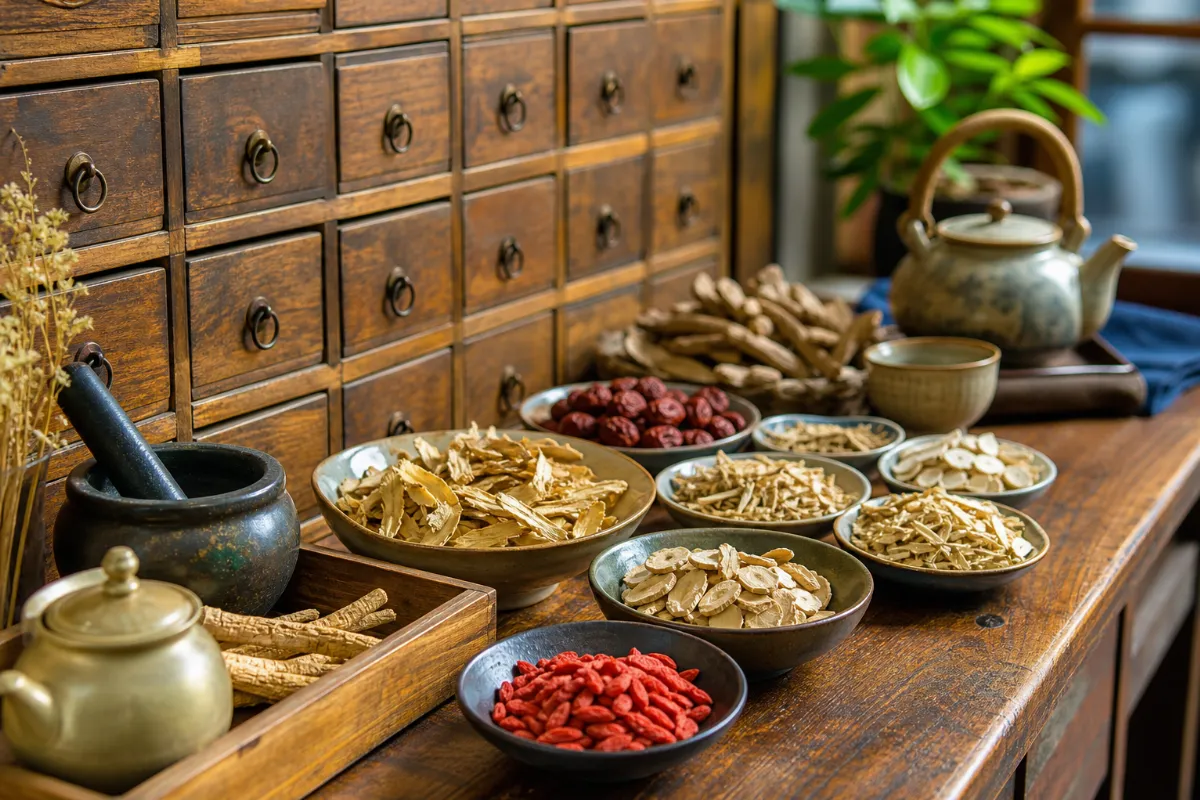
Therapies & Traditions · Traditional medical system
Traditional Chinese Medicine (TCM)
Traditional Chinese medicine (a traditional medical system: pattern diagnosis, herbal formulas, acupuncture and related methods) · also called TCM, Chinese medicine, traditional Chinese medicine system, medicina tradicional china, MTC, medicina china
Traditional Chinese medicine (TCM) is a traditional system that has evolved over thousands of years. It combines herbal formulas with acupuncture, moxibustion, cupping, therapeutic massage (tuina), tai chi, qigong and food advice. Trials give the best support to acupuncture for chronic pain and to tai chi for balance, knee osteoarthritis and fibromyalgia. Most Chinese herbal trials are small or low quality. The main cautions are contaminated or adulterated herbs, kidney and liver injury, and needle or heat injuries.
General information, not medical advice. Last substantive update · Not medically reviewed. A named clinician has not signed off on this page. How this page is made
About Traditional Chinese Medicine (TCM)
TCM is a whole traditional system, not one treatment. Trials test its parts. Acupuncture has the strongest support for chronic pain, and tai chi helps balance and some pain conditions. Chinese herbal formulas have mostly small or low-quality trials, and some herbs and products have caused serious harm. Safety comes first with herbs.
What TCM is
NCCIH says TCM has evolved over thousands of years. Practitioners use psychological and/or physical approaches, such as acupuncture and tai chi, along with herbal products. A treatment plan usually starts with a diagnosis built from the person's signs and symptoms, called a pattern, using questions, the pulse and the tongue.
A review of herb-drug interactions describes the traditional view that the body is divided into Yin and Yang and that disease occurs when their balance is disrupted, and that herbs are used to restore it. Trials do not test ideas like qi or yin-yang. They test treatments such as needling or a herbal formula. In one trial, 38 acupuncturists agreed only weakly on a TCM diagnosis for painful periods (median kappa 0.26), so the pattern system may not always give the same answer from different practitioners.
The parts of TCM
Acupuncture uses thin needles. Chinese herbal medicine uses formulas given as decoctions, pills or capsules. Moxibustion burns mugwort near the skin. Cupping uses suction cups. Tuina is therapeutic massage. Tai chi and qigong are slow movement practices. Dietary therapy gives advice about food. Each has a different evidence picture.
Acupuncture and Chinese herbal medicine have their own deeper pages in this section, with more on techniques, conditions and safety; this page gives the best pooled evidence only. No review of tuina or dietary therapy was read for this page.
What trials found, by part and outcome
Acupuncture: a pooled analysis of 39 trials (20,827 patients) found it better than sham and than no acupuncture for chronic musculoskeletal pain, osteoarthritis, headache and shoulder pain, with only a small gap to sham. NCCIH describes mixed results for irritable bowel syndrome and cancer pain.
Chinese herbs: a Cochrane review in PCOS subfertility found insufficient evidence and no live-birth data. A large placebo-controlled trial of one formula after brain haemorrhage was neutral. For COVID-19, pooled studies from China are of limited quality. NCCIH says many Chinese herbal studies are poor quality and no firm conclusions can be drawn.
Tai chi: about as good as physical therapy for knee osteoarthritis, at least as good as aerobic exercise for fibromyalgia, and probably fewer older people fall. Cupping: very low certainty against placebo cupping. Moxibustion: fewer babies still breech at birth but no fewer caesareans, and a later trial found no effect.
Choosing a practitioner and telling your doctor
NCCIH says practitioner credentials matter: most US states and Washington D.C. regulate acupuncture, and most require certification from the National Certification Commission for Acupuncture and Oriental Medicine. NCCIH also says TCM should not replace or delay conventional care and advises telling all your providers about complementary approaches you use.
At a glance
Traditional uses history, not proof
- NCCIH says TCM has evolved over thousands of years and uses psychological and/or physical approaches, such as acupuncture and tai chi, along with herbal products
- A review describes the traditional view that the body is divided into Yin and Yang and that disease occurs when their balance is disrupted
Studied for research
- Chronic pain with acupuncture: modest gain over sham, larger over no acupuncture, moderate certainty
- Fertility in PCOS with Chinese herbal formulas: insufficient evidence, very low certainty
- One herbal formula after brain haemorrhage: no effect in a large placebo-controlled trial
- Tai chi for knee osteoarthritis and fibromyalgia: comparable to or better than standard exercise, low certainty
- Fall prevention in older people with tai chi: probably fewer people fall, moderate certainty
- Cupping for pain: very low certainty
- Moxibustion for a breech baby: mixed
- Chinese herbal products in COVID-19: low certainty
Main compounds
- Pattern diagnosis (looking, listening, asking, feeling the pulse and examining the tongue)
- Qi and yin-yang (traditional concepts)
- Chinese herbal formulas
- Acupuncture
- Moxibustion
- Cupping
- Tai chi and qigong
- Tuina and dietary therapy
Common forms
- Acupuncture
- Chinese herbal formulas (decoctions, pills, capsules)
- Moxibustion
- Cupping (dry, fire and wet)
- Tuina (therapeutic massage)
- Tai chi
- Qigong
- Dietary therapy
Research links: NCCIH: Traditional Chinese Medicine, What You Need To Know · 2018 IPD meta-analysis: acupuncture for chronic pain (39 trials) · Cochrane 2019: exercise for preventing falls, including tai chi · Cochrane 2021: Chinese herbal medicine for subfertility with PCOS · Lancet 2024: FYTF-919 herbal formula after brain haemorrhage · 2008 review: aristolochic acid nephropathy · Research Library · Genes & Biomarkers Library
What it is and its history
- Accepted scientific name
- Traditional Chinese medicine (TCM)
- Common names
- Traditional Chinese medicine (English); TCM (English); Chinese medicine (English); Medicina tradicional china (MTC) (Spanish)
- Family or group
- A traditional medical system. NCCIH describes TCM as using psychological and/or physical approaches such as acupuncture and tai chi along with herbal products.
- Look-alikes and adulterants
- Name: Kampo (Japan); Note: Japanese herbal medicine derived from Chinese practice; a comparison page is available.; Name: Ayurveda; Note: India's traditional system; a comparison page is available.; Name: Naturopathy; Note: A different modern system; a comparison page is available.; Name: Korean herbal medicine; Note: A related East Asian tradition with its own page.
Traditional use and history history, not clinical proof
| Tradition or era | Documented use | Source |
|---|---|---|
| Origins | NCCIH says TCM has evolved over thousands of years. The sources read give no further dates, texts or persons, so none are stated here. | s-nccih-tcm |
| Core idea of balance | A review of herb-warfarin interactions describes the traditional view that the body is divided into Yin and Yang and that disease occurs when their balance is disrupted, with herbs used to restore it. This is a description of the tradition, not something the trials test. | p25640094 |
| Spread to the West | A review of adverse events says acupuncture, moxibustion and cupping, important in traditional Eastern medicine, are increasingly used in the West. NCCIH notes most US states regulate acupuncture. | p23573135 |
Traditional use shows how it was used. It does not show that it works or is safe today.
What it includes, and how it may work
The parts and styles of the practice, and how researchers think it may act on the body. Proposed mechanisms are not proven effects in people.
Main parts and styles
| Part or style | Kind | Where it is used | Activity studied | Level of evidence |
|---|---|---|---|---|
| Pattern diagnosis (looking, listening, asking, feeling the pulse and examining the tongue) | diagnostic approach | The practitioner builds an individual pattern from signs and symptoms and chooses treatment to fit. | One trial of 38 acupuncturists found low agreement (median kappa 0.26) on diagnosis for painful periods. 14 | Human (low agreement) |
| Qi and yin-yang (traditional concepts) | theory | Traditional ideas of balance and flow described by the tradition. | The reviews read test treatments, not these concepts. The review of herb-warfarin interactions summarises the Yin and Yang view. 4 | Traditional teaching, not tested by trials |
| Chinese herbal formulas | herbal medicine | Multi-ingredient mixtures given as decoctions, powders, pills or capsules. | Large placebo-controlled trial of one formula (FYTF-919) in brain haemorrhage was neutral; Cochrane review in PCOS subfertility found insufficient evidence; COVID-19 pooled studies of limited quality. Safety concerns include aristolochic acid, liver injury and contamination. 9 26 25 6 23 | Human (mixed to very low) |
| Acupuncture | needling | Thin needles inserted at points on the body. | Pooled analysis of 39 trials found benefit over no acupuncture and a small benefit over sham for chronic pain. Has a deeper page in this section. 19 28 | Human (moderate) |
| Moxibustion | heat therapy | Burning mugwort (Artemisia) near the skin, often at acupuncture points. | Cochrane review for breech babies: fewer non-head-down presentations, no fewer caesareans; adverse events include burns and allergy. 5 13 | Human (mixed) |
| Cupping | suction therapy | Cups placed on the skin to create suction; dry, fire and wet types exist. | Very low certainty for pain against placebo cupping; leaves marks and sometimes burns. 10 17 | Human (very low) |
| Tai chi and qigong | movement practice | Slow, flowing movements with breathing and attention. | Tai chi comparable to physical therapy for knee osteoarthritis; at least as good as aerobic exercise for fibromyalgia; probably fewer fallers among older adults. 20 21 15 11 | Human (low to moderate) |
| Tuina and dietary therapy | manual and food-based care | Therapeutic Chinese massage and food-based advice. | No review of either was read for this page. 29 | Not assessed |
Mechanisms, receptors and pathways
| Target or pathway | Gene or receptor | What was found | Level |
|---|---|---|---|
| How acupuncture might work | Not specified in the sources read | The pooled analysis says effects cannot be explained solely by placebo and that factors beyond needling at the right points matter too. How it works is not settled. 19 | Human; mechanism not established |
| Pattern diagnosis | Not specified in the sources read | Practitioners disagreed substantially in one trial, so the pattern system may not give the same answer from different practitioners. 14 | Human data |
| Harms of aristolochic acid | DNA adducts (aristolactam-DNA) and a signature mutation | The Taiwan review reports aristolactam-DNA adducts and a distinctive A:T to T:A mutation signature in many urinary tract cancers linked to these herbs. 7 | Human data |
Isolated compounds versus whole extracts
TCM is a package: diagnosis, herbs, needling, heat, cups, movement and advice. Trials usually test one part at a time, so a result for acupuncture or one herbal formula says nothing about the others, and no trial read has tested the whole system together.
2 moderate certainty1 mixed findings4 low certainty2 very low certainty1 evidence against
What was looked at
The 10 benefits and uses checked for Traditional Chinese Medicine (TCM), each with how strong the evidence is. Tap one to open it.
- Acupuncture for chronic pain (pointer to its own page)Moderate certainty
- Chinese herbal medicine for subfertility with polycystic ovarian syndromeVery low certainty
- A Chinese herbal formula after bleeding in the brain (large placebo-controlled trial)Evidence against
- Tai chi for knee osteoarthritisLow certainty
- Tai chi for fibromyalgiaLow certainty
- Tai chi for preventing falls in older peopleModerate certainty
- Qigong and tai chi: overview of many conditionsLow certainty
- Cupping for musculoskeletal pain and neck painVery low certainty
- Moxibustion for turning a breech babyMixed findings
- Chinese herbal medicines in COVID-19 and long COVIDLow certainty
Lab markers tracked in the studies
Pain and function scores in chronic painWOMAC knee osteoarthritis scoreFibromyalgia impact questionnaire (revised)Pregnancy rate in PCOS-related subfertilityBaby not head-down at birthNumber of older people who fallAgreement between practitioners on a TCM diagnosis
What is Traditional Chinese Medicine (TCM) good for?
The main studied uses of parts of TCM and how strong the human evidence is for each. These describe what trials found in the groups they studied. They are not advice to use TCM for any condition, and each result is for the part tested (acupuncture, one herbal formula, tai chi and so on), not for the whole system.
Benefits, one by one
Each card is a research question, not a promise. Tap a goal to filter. Open a card to see the studies, doses and limits.
Acupuncture for chronic pain (pointer to its own page)
Moderate certaintyA large pooled analysis of 39 trials (20,827 patients) found acupuncture beat no acupuncture clearly and sham acupuncture by a small amount, for back and neck pain, knee osteoarthritis, headache and shoulder pain. This is the best-supported part of TCM. Acupuncture has its own deeper page.
2 studiesNeedling of various styles; the analysis found no clear link between …
Studies, doses and limits
What the trials found
Individual patient data meta-analysis of 39 randomised trials with adequate allocation concealment (20,827 patients), searched to December 2015, in non-specific musculoskeletal pain, osteoarthritis, chronic headache and shoulder pain. NCCIH (page updated October 2022) also describes benefit for back and neck pain, knee osteoarthritis and migraine, mixed results for irritable bowel syndrome and cancer pain, and no benefit of acupuncture at traditional points for myofascial pain.
Results
Acupuncture was better than sham and better than no acupuncture for each pain condition. The gap to sham was small (about 0.2 standard deviations); the gap to no acupuncture was about 0.5. The effect fell by around 15 percent after a year.
Effect sizes as reported
About 0.5 SD vs no acupuncture; about 0.2 SD vs sham; around 15 percent smaller at 1 year
Why this rating
Compiler rating (the review gives no GRADE in its abstract): many trials, patient-level data and only trials with sound concealment, but sham comparisons show small differences, patients cannot be fully blinded, and results depend on what the control group received.
Form and dose studied
Needling of various styles; the analysis found no clear link between trial results and acupuncture characteristics.
Who was studied
Adults with chronic pain from several conditions, mostly from trials in Western and Asian countries.
Limits
The sham-needle effect is small. Part of the benefit may come from context, expectation and care rather than the needle position. Results apply to the four pain conditions studied.
Why researchers looked
Chronic pain is common and often poorly helped by medicines, so acupuncture is among the most studied parts of TCM.
Proposed mechanism Hypothesis
Not settled. The pooled analysis says effects cannot be explained by placebo alone, and that factors beyond needling at the traditional point locations also matter.
A proposed mechanism does not show that the effect happens in people.
NCCIH says serious complications are relatively uncommon but have followed nonsterile needles or improper delivery. See the Safety tab.
Chinese herbal medicine for subfertility with polycystic ovarian syndrome
Very low certaintyA Cochrane review found too little reliable evidence to support Chinese herbal formulas for fertility in women with PCOS. No trial measured live birth.
1 studiesDifferent herbal formulas in each trial.
Studies, doses and limits
What the trials found
Cochrane review (search to June 2020): 8 randomised trials, 609 women with PCOS-related subfertility. Formulas varied between trials and were compared with clomiphene, added to clomiphene, or added to ovulation induction or ovarian drilling.
Results
Herbs versus clomiphene: effect on pregnancy uncertain (OR 1.41, very low certainty). Herbs added to clomiphene: pregnancy rate higher (OR 3.06) but with low certainty. Other comparisons very uncertain. Live birth was not reported by any trial and almost no adverse event data existed.
Effect sizes as reported
Herbs + clomiphene vs clomiphene: OR 3.06 (95% CI 2.05 to 4.55), low certainty; herbs vs clomiphene: OR 1.41 (0.63 to 3.19), very low certainty
Why this rating
The Cochrane authors rate most comparisons as very low certainty and conclude there is insufficient evidence to support the herbs. Methods were poorly described and live birth was not measured.
Form and dose studied
Different herbal formulas in each trial.
Who was studied
Women with subfertility and PCOS.
Limits
Small trials, many in China, no live-birth outcome, and no safety data to say whether the herbs are safe in this setting.
Why researchers looked
Chinese herbal formulas are widely used for fertility problems, so Cochrane reviewers tested them against standard drugs.
Proposed mechanism Not established
Not established. The review does not test how the herbs might work.
A proposed mechanism does not show that the effect happens in people.
The reviewers say there is insufficient evidence on adverse effects to tell whether the herbs are safe.
A Chinese herbal formula after bleeding in the brain (large placebo-controlled trial)
Evidence againstA large, well-run trial of 1,641 people with brain haemorrhage in China found the herbal liquid FYTF-919 did no better than placebo on recovery, survival or quality of life.
1 studiesOne standardised oral liquid made of several herbs, given by mouth or…
Studies, doses and limits
What the trials found
Randomised, double-blind, placebo-controlled trial at 26 Chinese hospitals: 1,648 people randomised, 1,641 analysed, treatment for 28 days, recovery scored at 90 days.
Results
Average recovery scores at 90 days were 0.44 in both groups. There was no significant difference in serious adverse events.
Effect sizes as reported
Difference 0.01 (95% CI -0.02 to 0.04; P = 0.63)
Why this rating
A large, blinded, placebo-controlled trial with a neutral primary result. This is evidence against benefit for this one formula in this condition. It does not speak for other formulas.
Form and dose studied
One standardised oral liquid made of several herbs, given by mouth or tube for 28 days.
Who was studied
Adults with moderate to severe acute intracerebral haemorrhage within 48 hours of onset.
Limits
One formula, one condition. The trial authors say the result shows the need for rigorous trials of TCM already in widespread use.
Why researchers looked
The formula is widely used in China for this condition, but its use had not been tested properly in a large placebo-controlled trial.
Proposed mechanism Hypothesis
Traditionally said to help the body clear blood and reduce inflammation in the brain. The trial found no effect on recovery.
A proposed mechanism does not show that the effect happens in people.
No significant difference in serious adverse events compared with placebo.
Tai chi for knee osteoarthritis
Low certaintyIn a 204-person US trial, tai chi worked about as well as a standard course of physical therapy for knee osteoarthritis, with benefits lasting a year. NCCIH also says research suggests tai chi may reduce knee osteoarthritis pain.
2 studiesTai chi classes; the abstract does not name the style.
Studies, doses and limits
What the trials found
Randomised, single-blind comparative trial in one US hospital: 204 adults (mean age 60, 70 percent women), tai chi twice weekly for 12 weeks versus physical therapy, followed for 52 weeks.
Results
Both groups improved a lot and the difference between them was not significant. Tai chi gave larger gains in depression and in the physical part of quality of life. No serious adverse events.
Effect sizes as reported
WOMAC between-group difference 24 points (95% CI -10 to 58), not significant
Why this rating
One well-designed trial funded by NCCIH, but participants knew their group, there was no non-exercise control, and it was a single hospital.
Form and dose studied
Tai chi classes; the abstract does not name the style.
Who was studied
Adults with symptomatic knee osteoarthritis.
Limits
Because both groups improved, the trial cannot say how much came from the treatments themselves.
Why researchers looked
Few treatments ease long-term knee osteoarthritis pain and disability, and tai chi is a gentle, low-impact exercise.
Proposed mechanism Hypothesis
Not tested in this trial. Proposed: strengthening, balance training and mood effects.
A proposed mechanism does not show that the effect happens in people.
No serious adverse events in the trial. NCCIH calls tai chi and qigong safe, with minor aches possible.
Tai chi for fibromyalgia
Low certaintyA 226-person US trial found tai chi improved fibromyalgia symptoms as much as or more than aerobic exercise, with longer courses doing better than shorter ones.
2 studiesClassic Yang-style tai chi, supervised classes.
Studies, doses and limits
What the trials found
Randomised, single-blind trial in one US hospital: 226 adults with fibromyalgia, four tai chi schedules (12 or 24 weeks, once or twice weekly) versus 24 weeks of supervised aerobic exercise, followed for 52 weeks.
Results
All groups improved. Combined tai chi groups improved more than aerobic exercise at 24 weeks. With matched time and frequency tai chi did better by a larger margin. Twenty-four weeks was better than twelve; twice weekly was no better than once weekly. No serious adverse events related to the interventions.
Effect sizes as reported
Tai chi vs aerobic: 5.5 points on the fibromyalgia questionnaire (95% CI 0.6 to 10.4); matched schedule: 16.2 points (8.7 to 23.6)
Why this rating
One trial; participants knew their group; the comparison was another exercise, not an inactive control.
Form and dose studied
Classic Yang-style tai chi, supervised classes.
Who was studied
Adults meeting American College of Rheumatology criteria for fibromyalgia.
Limits
Single centre; cannot separate tai chi itself from group exercise and attention.
Why researchers looked
Aerobic exercise is a standard non-drug option for fibromyalgia, so researchers asked whether tai chi could match it.
Proposed mechanism Hypothesis
Not tested. Proposed: gentle movement, relaxation, and gains in coping and self-confidence.
A proposed mechanism does not show that the effect happens in people.
No serious adverse events related to the interventions.
Tai chi for preventing falls in older people
Moderate certaintyA Cochrane review of exercise for falls found tai chi probably lowers the number of older people who fall by about a fifth. Balance and multi-type exercise programmes did at least as well.
1 studiesTai chi programmes of various styles; the review did not single out o…
Studies, doses and limits
What the trials found
Cochrane review (search to May 2018): 108 trials, 23,407 community-dwelling people aged 60 and over, of which 7-8 trials tested tai chi.
Results
Tai chi may reduce the rate of falls by 19 percent (low certainty) and the number of people who fall by 20 percent (high certainty). Exercise overall reduced falls by 23 percent. Adverse events were mostly minor aches.
Effect sizes as reported
Tai chi: rate ratio 0.81 (95% CI 0.67 to 0.99); people falling RR 0.80 (0.70 to 0.91)
Why this rating
The reviewers rate the people-who-fall result high and the falls-rate result low for tai chi; compiler summary: moderate. Many trials had unclear or high risk of bias.
Form and dose studied
Tai chi programmes of various styles; the review did not single out one.
Who was studied
Community-living adults aged 60 and over, average age 76.
Limits
Tai chi was one of several exercise types; trials were mostly unblinded.
Why researchers looked
One in three people over 65 fall each year, and falls cause injury and loss of independence.
Proposed mechanism Hypothesis
Proposed: better balance, leg strength and body awareness. The review compares outcomes, not mechanisms.
A proposed mechanism does not show that the effect happens in people.
Mostly non-serious, musculoskeletal adverse events across exercise programmes.
Qigong and tai chi: overview of many conditions
Low certaintyA review of 58 systematic reviews reports benefits of qigong and tai chi for blood pressure, blood lipids, mobility, falls and quality of life. It gives no certainty rating, and most research comes from China.
2 studiesMany forms of qigong and tai chi are pooled.
Studies, doses and limits
What the trials found
Overview of 58 systematic reviews of randomised trials of qigong and tai chi (heart disease, cancer, mobility, quality of life, blood lipids, blood pressure and more).
Results
The authors report beneficial effects in different age groups and health conditions, including lower blood lipids and blood pressure, better mobility, fewer falls and better quality of life.
Effect sizes as reported
Not given in the abstract
Why this rating
An overview of reviews; the abstract gives no GRADE or effect sizes, and the quality of the trials behind the reviews is not summarised there. Compiler rating: low.
Form and dose studied
Many forms of qigong and tai chi are pooled.
Who was studied
Wide range of ages and conditions.
Limits
Most publications come from China, which can bias what gets published; pooled forms differ.
Why researchers looked
Qigong and tai chi are widely practised and studied in many conditions, so an overview was done to bring the reviews together.
Proposed mechanism Not established
Not reported in the abstract.
A proposed mechanism does not show that the effect happens in people.
NCCIH considers tai chi and qigong safe; serious injury is unlikely, though minor aches and pains may occur.
Cupping for musculoskeletal pain and neck pain
Very low certaintyAgainst placebo cupping, dry cupping showed very uncertain results for pain. Compared with other treatments, a 2026 review of chronic neck pain found gains, but several trials were weak.
2 studiesDry cupping in the placebo review; various cupping types in the neck …
Studies, doses and limits
What the trials found
Systematic review of 5 trials (281 adults) of dry cupping versus placebo cupping for musculoskeletal pain; systematic review of 9 trials (401 adults) of cupping for chronic neck pain against various controls.
Results
Dry cupping versus placebo cupping: very uncertain at 1 week, 4 weeks and 6 months, from trivially harmful to meaningfully beneficial; four of five trials at high risk of bias. Chronic neck pain: pain and function improved versus controls, with a wide interval for pain; no serious adverse events reported.
Effect sizes as reported
Dry cupping vs placebo: MD -9.9 at 1 week (95% CI -30.5 to 10.7) on a 0-100 scale; neck pain: Cohen d 1.17 for pain (0.26 to 2.09), 0.77 for function (0.63 to 0.91)
Why this rating
The placebo-controlled review rates all findings very low certainty; the neck pain review notes methodological weaknesses.
Form and dose studied
Dry cupping in the placebo review; various cupping types in the neck pain review.
Who was studied
Adults with musculoskeletal pain; adults with chronic neck pain.
Limits
Few and small trials, cups cannot be blinded well, and the neck pain review compared cupping with many different controls.
Why researchers looked
Cupping is used for muscle and joint pain, and placebo-controlled trials are needed to check whether the cups themselves matter.
Proposed mechanism Hypothesis
Not established; proposed ideas include local blood flow and stimulation of the skin. Not tested in the reviews read.
A proposed mechanism does not show that the effect happens in people.
Bruising is expected; burns and infections are reported with some methods. See the Safety tab.
Moxibustion for turning a breech baby
Mixed findingsA Cochrane review found moxibustion probably leaves fewer babies in breech position at birth, but it did not reduce caesarean births. One later Danish trial found no effect.
3 studiesBurning mugwort (Artemisia) sticks held near the skin at Bladder 67.
Studies, doses and limits
What the trials found
Cochrane review (search to November 2021): 13 trials, 2,181 women. A separate Danish randomised trial of 200 women at 33 weeks compared two weeks of daily moxibustion with no moxibustion.
Results
Moxibustion plus usual care probably reduces non-head-down presentation at birth (RR 0.87; moderate certainty) but probably makes little difference to caesarean section (RR 0.94; moderate certainty). Adverse events (nausea, odour, abdominal pain, contractions) were poorly reported. In the Danish trial there was no significant difference in breech position (RR 1.05).
Effect sizes as reported
Non-cephalic at birth RR 0.87 (95% CI 0.78 to 0.99); caesarean RR 0.94 (0.83 to 1.05); Danish trial RR 1.05 (0.8 to 1.38)
Why this rating
The Cochrane review rates the main finding moderate certainty, but the effect on caesarean births is null, adverse events are unclear and a later trial found no effect.
Form and dose studied
Burning mugwort (Artemisia) sticks held near the skin at Bladder 67.
Who was studied
Pregnant women with a single baby in breech position, usually in the third trimester.
Limits
Women cannot be blinded to moxibustion; adverse events were inadequately reported.
Why researchers looked
A breech baby raises the chance of a caesarean birth, and moxibustion at the little toe (Bladder 67) is a traditional method to turn the baby.
Proposed mechanism Not established
Not established. The review does not test how heat at the toe might change the baby's position.
A proposed mechanism does not show that the effect happens in people.
Moxibustion adverse events in pregnancy include abdominal pain, premature birth and bleeding in case reports and trials. Anyone pregnant should discuss it with their midwife or doctor first.
Chinese herbal medicines in COVID-19 and long COVID
Low certaintyPooled studies from China suggest adding Chinese herbal products to standard care may reduce progression to severe COVID-19, but the studies are of limited quality. For long COVID, the main symptom score did not clearly improve.
3 studiesMarketed Chinese products used in China (named in the reviews) or her…
Studies, doses and limits
What the trials found
Network meta-analysis of 30 studies (4,144 people) of seven Chinese products added to conventional care; network meta-analysis of 21 randomised trials; meta-analysis of 10 randomised trials (2,401 people) in post-COVID-19 syndrome.
Results
Mild-to-moderate COVID-19: Chinese medicine added to standard care was linked with fewer cases becoming severe and better clinical response (efficacy OR 1.81 in one review), with no clear rise in adverse effects, but the authors say the quality is limited. Post-COVID-19: the main symptom score did not reach significance (MD -1.03, high heterogeneity); chest tightness and insomnia improved; fatigue, breathlessness and walking distance did not clearly improve.
Effect sizes as reported
Efficacy OR 1.81 (95% CI 1.59 to 2.06); post-COVID symptom score MD -1.03 (95% CI -2.10 to 0.03); chest tightness RR 1.40 (1.21 to 1.61); insomnia RR 1.23 (1.03 to 1.47)
Why this rating
Compiler rating: one review explicitly says limited quality reduces reliability; others mix randomised trials and retrospective cohorts; the long-COVID result is non-significant with very high heterogeneity.
Form and dose studied
Marketed Chinese products used in China (named in the reviews) or herbal formulas, always added to conventional care.
Who was studied
People with mild or moderate COVID-19 in China; people with post-COVID-19 syndrome.
Limits
Mostly open-label, mostly Chinese trials, mixed designs; these results should not be read as showing that herbs prevent COVID-19.
Why researchers looked
China recommended several Chinese medicines in its COVID-19 treatment guidelines, so reviewers tried to pool the trials.
Proposed mechanism Not established
Not established in the reviews read.
A proposed mechanism does not show that the effect happens in people.
The reviews found adverse events similar to controls, but the data are limited.
Connections to the rest of health
How Traditional Chinese Medicine (TCM) connects to the rest of our health knowledge graph. Every link says what kind of connection it is. A safety link (for example to the liver) is a warning, not a benefit. A study that merely mentions a topic never creates a benefit link.
Explore every connection: goals, body systems, organs, symptoms, genes
A. Wellness goals
| Connected to | Kind of connection | Evidence status | Context | Studies |
|---|---|---|---|---|
| Pain Relief | Moderate certainty | Acupuncture for chronic pain (pointer to its own page): A large pooled analysis of 39 trials (20,827 patients) found acupuncture beat no acupuncture clearly and sham acupuncture by a small amount, for back and neck pain, knee osteoarthritis, headache and shoulder pain. This is the best-supported part of TCM. Acupuncture has its own deeper page. Cupping for musculoskeletal pain and neck pain: Against placebo cupping, dry cupping showed very uncertain results for pain. Compared with other treatments, a 2026 review of chronic neck pain found gains, but several trials were weak. | 19 28 10 17 | |
| Fertility Support | Very low certainty | Chinese herbal medicine for subfertility with polycystic ovarian syndrome: A Cochrane review found too little reliable evidence to support Chinese herbal formulas for fertility in women with PCOS. No trial measured live birth. | 26 | |
| Womens Wellness | Very low certainty | Chinese herbal medicine for subfertility with polycystic ovarian syndrome: A Cochrane review found too little reliable evidence to support Chinese herbal formulas for fertility in women with PCOS. No trial measured live birth. | 26 | |
| Brain Health | Evidence against | A Chinese herbal formula after bleeding in the brain (large placebo-controlled trial): A large, well-run trial of 1,641 people with brain haemorrhage in China found the herbal liquid FYTF-919 did no better than placebo on recovery, survival or quality of life. | 9 | |
| Pain Relief | Low certainty | Tai chi for knee osteoarthritis: In a 204-person US trial, tai chi worked about as well as a standard course of physical therapy for knee osteoarthritis, with benefits lasting a year. NCCIH also says research suggests tai chi may reduce knee osteoarthritis pain. Tai chi for fibromyalgia: A 226-person US trial found tai chi improved fibromyalgia symptoms as much as or more than aerobic exercise, with longer courses doing better than shorter ones. | 20 29 21 | |
| Mobility Support | Low certainty | Tai chi for knee osteoarthritis: In a 204-person US trial, tai chi worked about as well as a standard course of physical therapy for knee osteoarthritis, with benefits lasting a year. NCCIH also says research suggests tai chi may reduce knee osteoarthritis pain. | 20 29 | |
| Reduce Fatigue | Low certainty | Tai chi for fibromyalgia: A 226-person US trial found tai chi improved fibromyalgia symptoms as much as or more than aerobic exercise, with longer courses doing better than shorter ones. | 21 29 | |
| Healthy Aging | Moderate certainty | Tai chi for preventing falls in older people: A Cochrane review of exercise for falls found tai chi probably lowers the number of older people who fall by about a fifth. Balance and multi-type exercise programmes did at least as well. | 15 | |
| Mobility Support | Moderate certainty | Tai chi for preventing falls in older people: A Cochrane review of exercise for falls found tai chi probably lowers the number of older people who fall by about a fifth. Balance and multi-type exercise programmes did at least as well. | 15 | |
| Heart Health | Low certainty | Qigong and tai chi: overview of many conditions: A review of 58 systematic reviews reports benefits of qigong and tai chi for blood pressure, blood lipids, mobility, falls and quality of life. It gives no certainty rating, and most research comes from China. | 11 29 | |
| Healthy Aging | Low certainty | Qigong and tai chi: overview of many conditions: A review of 58 systematic reviews reports benefits of qigong and tai chi for blood pressure, blood lipids, mobility, falls and quality of life. It gives no certainty rating, and most research comes from China. | 11 29 | |
| Pregnancy Health | Mixed findings | Moxibustion for turning a breech baby: A Cochrane review found moxibustion probably leaves fewer babies in breech position at birth, but it did not reduce caesarean births. One later Danish trial found no effect. | 5 1 13 | |
| Immune Support | Low certainty | Chinese herbal medicines in COVID-19 and long COVID: Pooled studies from China suggest adding Chinese herbal products to standard care may reduce progression to severe COVID-19, but the studies are of limited quality. For long COVID, the main symptom score did not clearly improve. | 25 2 22 |
B. Body systems
| Connected to | Kind of connection | Evidence status | Context | Studies |
|---|---|---|---|---|
| Musculoskeletal System | Biological association | Moderate certainty | Studied for: Acupuncture for chronic pain (pointer to its own page) Studied for: Tai chi for knee osteoarthritis | 19 28 20 29 21 15 10 17 |
| Pain Inflammation | Biological association | Moderate certainty | Studied for: Acupuncture for chronic pain (pointer to its own page) Studied for: Cupping for musculoskeletal pain and neck pain | 19 28 10 17 |
| Reproductive System | Biological association | Very low certainty | Studied for: Chinese herbal medicine for subfertility with polycystic ovarian syndrome Studied for: Moxibustion for turning a breech baby | 26 5 1 13 |
| Endocrine System | Biological association | Very low certainty | Studied for: Chinese herbal medicine for subfertility with polycystic ovarian syndrome | 26 |
| Nervous System | Biological association | Evidence against | Studied for: A Chinese herbal formula after bleeding in the brain (large placebo-controlled trial) Studied for: Tai chi for fibromyalgia | 9 21 29 15 |
| Bones Joints Muscles | Biological association | Low certainty | Studied for: Tai chi for knee osteoarthritis | 20 29 |
| Cardiovascular System | Biological association | Low certainty | Studied for: Qigong and tai chi: overview of many conditions | 11 29 |
| Whole Body | Biological association | Low certainty | Studied for: Qigong and tai chi: overview of many conditions | 11 29 |
| Respiratory System | Biological association | Low certainty | Studied for: Chinese herbal medicines in COVID-19 and long COVID | 25 2 22 |
| Immune System | Biological association | Low certainty | Studied for: Chinese herbal medicines in COVID-19 and long COVID | 25 2 22 |
E. Health conditions
| Connected to | Kind of connection | Evidence status | Context | Studies |
|---|---|---|---|---|
| Aristolochic acid nephropathy | Adverse effect or risk | Observational | Progressive kidney scarring, often with urinary tract cancers. Kidney scarring and urinary tract cancer. Preparation or compound: Herbs containing aristolochic acid (for example Aristolochia fangchi) |
18 6 7 |
| Herb-induced liver injury | Adverse effect or risk | Observational | 571 case reports of liver injury in one review. Preparation or compound: Polygonum multiflorum, Psoralea corylifolia, Gynura japonica and others |
23 27 |
| Chronic pain | Moderate certainty | Better than no acupuncture and slightly better than sham in pooled trials. Preparation or compound: Acupuncture |
19 | |
| Knee osteoarthritis | Low certainty | About as good as physical therapy in one trial. Preparation or compound: Tai chi |
20 | |
| Fibromyalgia | Low certainty | At least as good as aerobic exercise in one trial. Preparation or compound: Tai chi |
21 | |
| Falls in older adults | Moderate certainty | Probably fewer people fall. Preparation or compound: Tai chi |
15 | |
| Polycystic ovarian syndrome | Very low | Insufficient evidence for fertility. Preparation or compound: Chinese herbal formulas |
26 | |
| Breech presentation | Mixed findings | Fewer breech at birth, no fewer caesareans; one trial null. Preparation or compound: Moxibustion |
5 1 |
I. Biomarkers
| Connected to | Kind of connection | Evidence status | Context | Studies |
|---|---|---|---|---|
| Pain and function scores in chronic pain | Biological association | Moderate certainty | Measured in trials: lower pain than with no acupuncture (about 0.5 SD) and slightly lower than sham (about 0.2 SD). A lab change is not the same as a health benefit. | 19 |
| WOMAC knee osteoarthritis score | Biological association | Low certainty | Measured in trials: fell a lot in both groups, with no significant difference between tai chi and physical therapy. A lab change is not the same as a health benefit. | 20 |
| Fibromyalgia impact questionnaire (revised) | Biological association | Low certainty | Measured in trials: improved more with tai chi than with aerobic exercise at 24 weeks. A lab change is not the same as a health benefit. | 21 |
| Pregnancy rate in PCOS-related subfertility | Biological association | Very low certainty | Measured in trials: unclear; possibly higher when herbs were added to clomiphene (low certainty). A lab change is not the same as a health benefit. | 26 |
| Baby not head-down at birth | Biological association | Mixed findings | Measured in trials: slightly fewer non-head-down babies in the Cochrane pooled result; none in the Danish trial. A lab change is not the same as a health benefit. | 5 1 |
| Number of older people who fall | Biological association | Moderate certainty | Measured in trials: about 20 percent fewer people fell with tai chi. A lab change is not the same as a health benefit. | 15 |
| Agreement between practitioners on a TCM diagnosis | Biological association | Low certainty | Measured in trials: low agreement; a structured interview and training did not significantly improve it. A lab change is not the same as a health benefit. | 14 |
L. Active compounds
| Connected to | Kind of connection | Evidence status | Context | Studies |
|---|---|---|---|---|
| Pattern diagnosis (looking, listening, asking, feeling the pulse and examining the tongue) | Biological association | Human (low agreement) | One trial of 38 acupuncturists found low agreement (median kappa 0.26) on diagnosis for painful periods. | 14 |
| Qi and yin-yang (traditional concepts) | Biological association | Traditional teaching, not tested by trials | The reviews read test treatments, not these concepts. The review of herb-warfarin interactions summarises the Yin and Yang view. | 4 |
| Chinese herbal formulas | Biological association | Human (mixed to very low) | Large placebo-controlled trial of one formula (FYTF-919) in brain haemorrhage was neutral; Cochrane review in PCOS subfertility found insufficient evidence; COVID-19 pooled studies of limited quality. Safety concerns include aristolochic acid, liver injury and contamination. | 9 26 25 6 23 |
| Acupuncture | Biological association | Human (moderate) | Pooled analysis of 39 trials found benefit over no acupuncture and a small benefit over sham for chronic pain. Has a deeper page in this section. | 19 28 |
| Moxibustion | Biological association | Human (mixed) | Cochrane review for breech babies: fewer non-head-down presentations, no fewer caesareans; adverse events include burns and allergy. | 5 13 |
| Cupping | Biological association | Human (very low) | Very low certainty for pain against placebo cupping; leaves marks and sometimes burns. | 10 17 |
| Tai chi and qigong | Biological association | Human (low to moderate) | Tai chi comparable to physical therapy for knee osteoarthritis; at least as good as aerobic exercise for fibromyalgia; probably fewer fallers among older adults. | 20 21 15 11 |
| Tuina and dietary therapy | Biological association | Not assessed | No review of either was read for this page. | 29 |
Each connection is stored with the ingredient, the connected record, the kind of connection, the evidence status, the supporting studies, the preparation or compound involved, and a review date (last reviewed October 31, 2026).
Evidence at a glance: what the research found for 10 outcomes
Each outcome below is one thing researchers measured. Certainty is how far the evidence can be trusted, not how well it works. The full studies are on the next tab.
The evidence
The research centre for Traditional Chinese Medicine (TCM). Every record here was checked against PubMed or the publisher's page; we never list a study we have not verified.
Evidence by outcome
Bars show how many studies we found for each outcome, not how well it works. People are added up across trials only (reviews are not added, to avoid double counting).
How we rate evidence
High certainty
Several well-run trials or reviews agree; further research is unlikely to change the picture much.
Moderate certainty
Good trials point the same way, but some doubt remains.
Low certainty
Small, short or inconsistent trials. The finding could change with better research.
Very low certainty
Very little or very weak human data. Treat as a possibility only.
Mixed findings
Trials or reviews disagree with each other.
Not enough evidence
Not enough human research to say either way.
Evidence against
Good research found no benefit, or found harm.
We take the reviewers' own risk-of-bias and GRADE statements where they exist, and otherwise judge from study size, design, consistency, directness and whether a product matches what is sold. Many publications do not make evidence high. Method note: We searched PubMed, re-read the abstract of every review and trial cited, and read the NCCIH pages on TCM and acupuncture through a tool that summarises pages. Certainty ratings are the compiler's own reading, except where a review gives its own GRADE (stated in the text). Funding is not stated in most abstracts, and this is noted where relevant.
Study library: every study we checked 29
| Study | Design | People | Product, dose, length | Result |
|---|---|---|---|---|
| Bue 2016 Moxibustion did not have an effect in a randomised clinical trial for version of breech position. Dan Med J · PMID 26836801 |
Randomised controlled trial |
200 200 women at 33 weeks with a baby in breech position (Denmark) |
Moxibustion daily for two weeks Not given in the abstract About 16 days on average (daily for two weeks) · vs Control without moxibustion |
No significant difference in breech position between the moxibustion and control groups (RR 1.05), in first-time mothers or in women who had given birth before. RR 1.05 (0.8 to 1.38) Methods, limits and fundingOutcomes: Breech position after the trial Limitations: Not blinded; single centre. Funding and conflicts: Funding: none. Registration: NCT02251886 Read: abstract |
| Cao 2024 Oral traditional Chinese medicine for mild to moderate cases of COVID-19: a network meta-analysis based on RCTs. J Infect Dev Ctries · PMID 39693161 · DOI |
Systematic review network meta analysis |
21 randomised trials (9 English-language, 12 Chinese-language) in mild to moderate COVID-19 | Oral Chinese medicines plus standard therapy Not given in the abstract Not given in the abstract · vs Standard therapy alone |
Pooled odds ratio for efficacy was 1.81 with standard therapy plus Chinese medicine versus standard therapy alone, with no clear increase in adverse effects (OR 1.28). The authors say the limited quality of the evidence reduces the reliability of the result. Efficacy OR 1.81; adverse effects OR 1.28 (Efficacy 1.59 to 2.06; adverse effects 0.95 to 1.73) Methods, limits and fundingOutcomes: Clinical efficacy and adverse effects Limitations: Authors state limited quality of evidence; the abstract does not give a participant total. Funding and conflicts: No conflict of interest declared. Read: abstract |
| Ching 2012 Adulteration of herbal antidiabetic products with undeclared pharmaceuticals: a case series in Hong Kong. Br J Clin Pharmacol · PMID 22034838 · DOI |
Case series |
27 27 patients in Hong Kong who used 29 herbal antidiabetic products later found to be adulterated (2005-2010) |
Herbal antidiabetic products Not given in the abstract Not given in the abstract · vs No comparison group |
Seventeen patients (63 percent) had toxicity, most often low blood sugar, then lactic acidosis. The products contained undeclared glibenclamide, phenformin, metformin, rosiglitazone and other diabetes drugs; up to four adulterants were found in one product. 63 percent had toxicity (Not given) Methods, limits and fundingOutcomes: Clinical toxicity; drugs found in the products Limitations: Retrospective case series of referred patients; shows the problem exists, not how common it is. Funding and conflicts: No conflict statement in the record read. Read: abstract |
| Chua 2015 Interaction between warfarin and Chinese herbal medicines. Singapore Med J · PMID 25640094 · DOI |
Narrative review |
Review of reported interactions between warfarin (a blood thinner) and Chinese herbal medicines | Common Chinese herbs Not given in the abstract Not given in the abstract · vs Warfarin |
The authors say herb-drug interaction reports are increasing and that warfarin is especially prone to them because of its narrow safe range. The abstract names no specific herb or size of effect. Not given (Not given) Methods, limits and fundingOutcomes: Herb-drug interactions with warfarin Limitations: Review; the abstract gives no individual herb results. The authors also note that trials of TCM are hard to design. Funding and conflicts: No conflict statement in the record read. Read: abstract |
| Coyle 2023 Cephalic version by moxibustion for breech presentation. Cochrane Database Syst Rev · PMID 37158339 · DOI |
Systematic review meta analysis cochrane |
2181 13 trials, 2,181 women with a singleton baby in breech position |
Moxibustion (burning mugwort near the skin) at acupuncture point Bladder 67, with usual care Not given in the abstract Not given in the abstract · vs Usual care alone, sham moxibustion, or other methods |
Moxibustion plus usual care probably reduces the chance of a non-head-down presentation at birth (7 trials, 1,152 women; RR 0.87; moderate certainty) but probably makes little or no difference to caesarean section (RR 0.94; moderate certainty). Effects on the need for external cephalic version were very uncertain. Adverse events (nausea, odour, abdominal pain, uterine contractions) were poorly reported; the authors are very uncertain about them. Non-cephalic at birth RR 0.87; caesarean RR 0.94 (Non-cephalic 0.78 to 0.99; caesarean 0.83 to 1.05) Methods, limits and fundingOutcomes: Baby head-down (cephalic) at birth, need for external cephalic version, caesarean section, adverse events Limitations: Participants could not be blinded to moxibustion; adverse events inadequately reported. Funding and conflicts: One review author is a Chinese medicine researcher who does not see patients; no other conflicts reported. Read: abstract |
| Debelle 2008 Aristolochic acid nephropathy: a worldwide problem. Kidney Int · PMID 18418355 · DOI |
Narrative review |
Review of aristolochic acid nephropathy reports worldwide | Herbs containing aristolochic acid (for example Aristolochia fangchi) Not given in the abstract Not given in the abstract · vs No comparison group |
The authors describe a progressive kidney scarring disease, often with urinary tract cancers, first reported in a Belgian group of more than 100 people who took slimming pills containing Aristolochia fangchi. Cases continue worldwide, especially in Asia and the Balkans, and the authors say botanicals containing the acid are still sold online despite FDA warnings. Not given (Not given) Methods, limits and fundingOutcomes: Kidney fibrosis and urothelial (urinary tract) cancer Limitations: Narrative review; incidence is described as probably much higher than first thought but is not measured. Funding and conflicts: No conflict statement in the record read. Read: abstract |
| Dickman 2023 Aristolochic acid-containing Chinese herbal medicine and upper urinary tract urothelial carcinoma in Taiwan: a narrative review. World J Urol · PMID 35867141 · DOI |
Narrative review |
Review of aristolochic acid and upper urinary tract urothelial cancer (UTUC) in Taiwan | Aristolochia-based herbal medicines Not given in the abstract Not given in the abstract · vs No comparison group |
A nationwide database showed 39 percent of the Taiwanese population had been exposed to aristolochic acid-containing herbs between 1997 and 2003. Exposure carried a significantly higher hazard of kidney failure and UTUC. The authors say there are no preventive measures except prophylactic removal of the kidney for people at risk. 39 percent of Taiwanese population exposed 1997-2003 (Not given) Methods, limits and fundingOutcomes: Kidney failure and UTUC Limitations: Narrative review. Funding and conflicts: No conflict statement in the record read. Read: abstract |
| Ernst 2002 Toxic heavy metals and undeclared drugs in Asian herbal medicines. Trends Pharmacol Sci · PMID 11879681 · DOI |
Narrative review |
Review of reports of toxic heavy metals and undeclared drugs in Asian herbal medicines (Indian and Chinese preparations) | Asian herbal medicines Not given in the abstract Not given in the abstract · vs No comparison group |
Some Asian herbal medicines contain toxic heavy metals or undeclared prescription drugs, which the author says might be a serious health problem. Metals may be added on purpose or be accidental contamination. Most of the data are anecdotal and not enough to give prevalence. Not given (Not given) Methods, limits and fundingOutcomes: Presence of heavy metals or undeclared prescription drugs Limitations: Published in 2002; mostly anecdotal data. Funding and conflicts: No conflict statement in the record read. Read: abstract |
| Guo 2024 Traditional Chinese medicine FYTF-919 (Zhongfeng Xingnao oral prescription) for the treatment of acute intracerebral haemorrhage: a multicentre, randomised, placebo-controlled, double-blind, clinical trial. Lancet · PMID 39547249 · DOI |
Randomised controlled trial |
1641 1,641 adults with moderate to severe acute intracerebral haemorrhage (bleeding in the brain) at 26 hospitals in China |
FYTF-919 (Zhongfeng Xingnao), an oral liquid of several Chinese herbs Not given in the abstract 28 days of treatment, outcome at 90 days · vs Matching placebo |
Mean score at 90 days was 0.44 in both groups (difference 0.01). The neutral result held in adjusted and sensitivity analyses. There was no significant difference in serious adverse events. The authors conclude there was no effect on functional recovery, survival or quality of life. Difference 0.01 (no difference) (-0.02 to 0.04 (P = 0.63)) Methods, limits and fundingOutcomes: Utility-weighted modified Rankin Scale (a recovery score) at 90 days; survival; quality of life; serious adverse events Limitations: One formula in one condition; the result says nothing about other formulas or conditions. Funding and conflicts: Funded by the Key-Area Research and Development Program of Guangdong Province; some authors report research grants from provincial and city science bodies. Registration: NCT05066620 Read: abstract |
| Jenkins 2026 The Efficacy of Dry Cupping Compared to Placebo Cupping for People With Musculoskeletal Complaints: A Systematic Review With Meta-Analysis. JOSPT Open · PMID 42686168 · DOI |
Systematic review meta analysis |
281 5 randomised trials (281 adults) with musculoskeletal pain |
Dry cupping Not given in the abstract Not given in the abstract · vs Placebo (sham) cupping |
Evidence was of very low certainty at every time point: from trivially harmful to meaningfully beneficial at 1 week (MD -9.9 on a 0-100 scale) and 6 months (MD -2.2), and a possibly meaningful benefit at 4 weeks in one trial (MD -17.2). Four of five trials had a high overall risk of bias. The authors suggest options with higher-certainty evidence should be tried before cupping. MD -9.9 (1 week); -17.2 (4 weeks); -2.2 (6 months), 0-100 pain scale (1 week -30.5 to 10.7; 4 weeks -33.0 to -1.4; 6 months -11.8 to 7.4) Methods, limits and fundingOutcomes: Pain intensity at 1 week, 4 weeks and 6 months Limitations: Very small number of trials; high risk of bias in four. Funding and conflicts: No conflict of interest declared. Read: abstract |
| Lee 2022 Qigong and Tai Chi on Human Health: An Overview of Systematic Reviews. Am J Chin Med · PMID 36266755 · DOI |
Overview of systematic reviews |
58 systematic reviews of randomised trials of qigong and tai chi in many health conditions | Qigong and tai chi Not given in the abstract Not given in the abstract · vs Various |
The authors report beneficial effects in different age groups and conditions, including lower blood lipids and blood pressure, better mobility, fewer falls and better overall quality of life. They note most publications come from China and the number is rising. Not given in the abstract (Not given in the abstract) Methods, limits and fundingOutcomes: Blood lipids, blood pressure, mobility, falls, quality of life and other outcomes Limitations: An overview of reviews; the abstract gives no certainty rating or effect sizes, and the quality of the underlying trials is not summarised there. Funding and conflicts: No conflicts declared. Read: abstract |
| Miller 2007 A study of western pharmaceuticals contained within samples of Chinese herbal/patent medicines collected from New York City's Chinatown. Leg Med (Tokyo) · PMID 17652006 · DOI |
Laboratory analysis |
90 90 Chinese herbal/patent medicines bought in New York City Chinatown shops |
Pills, tablets, creams and teas Not given in the abstract Not given in the abstract · vs No comparison group |
Five of 90 samples contained nine different western drugs, including diclofenac, hydrochlorothiazide, sildenafil and chlordiazepoxide. Two contained undeclared or mislabelled substances, and one contained two drugs unsuitable for the people it was meant for. 5 of 90 samples (about 6 percent) (Not given) Methods, limits and fundingOutcomes: Presence of undeclared pharmaceuticals Limitations: Samples from one neighbourhood; may not represent products elsewhere. Funding and conflicts: No conflict statement in the record read. Read: abstract |
| Park 2010 Adverse events of moxibustion: a systematic review. Complement Ther Med · PMID 21056845 · DOI |
Systematic review |
Reports of adverse events from moxibustion in humans (14 databases; trials, case reports, observational studies) | Moxibustion Not given in the abstract Not given in the abstract · vs No comparison group |
The commonest were allergic reactions, burns and infections such as cellulitis and hepatitis C. Trials reported redness, blistering, itching, smoke discomfort, fatigue, stomach upset and burns. In pregnant women, abdominal pain, premature birth, premature rupture of membranes and bleeding were reported. The authors conclude moxibustion is not entirely risk free and the incidence is not known. Not given (Not given) Methods, limits and fundingOutcomes: Types of adverse events Limitations: Incidence unknown; mostly case reports. Funding and conflicts: No conflict statement in the record read. Read: abstract |
| Schnyer 2019 Can Reliability of the Chinese Medicine Diagnostic Process Be Improved? Results of a Prospective Randomized Controlled Trial. J Altern Complement Med · PMID 31730401 · DOI |
Randomised controlled trial reliability |
38 38 acupuncturists assessing 10 women with painful periods from video, tongue photo and pulse description |
TCM structured interview (TEAMSI-TCM) with or without training Not given in the abstract Not given in the abstract · vs Routine clinical TCM questionnaire with or without training |
Overall agreement between practitioners was low (median kappa 0.26). The structured interview and training did not significantly improve agreement. Median kappa 0.26 (Not given in the abstract) Methods, limits and fundingOutcomes: Agreement (Cohen kappa) between two practitioners on TCM diagnostic categories Limitations: Assessments were made from recordings, not live; one condition (painful periods). Funding and conflicts: No competing financial interests; supported by NCCIH. Read: abstract |
| Sherrington 2019 Exercise for preventing falls in older people living in the community. Cochrane Database Syst Rev · PMID 30703272 · DOI |
Systematic review meta analysis cochrane |
23407 108 randomised trials, 23,407 community-dwelling people aged 60 and over (mean 76; 77 percent women) |
Exercise of any type, including tai chi (7-8 tai chi trials) Not given in the abstract Not given in the abstract · vs No-exercise control |
Exercise of all types reduced the rate of falls by 23 percent (high certainty). For tai chi, the review says it may reduce the rate of falls by 19 percent (rate ratio 0.81; low certainty) and the number of people who fall by 20 percent (RR 0.80; 8 trials, 2,677 people; high certainty). Adverse events were mostly minor and musculoskeletal. Tai chi: falls rate RaR 0.81; fallers RR 0.80 (Falls rate 0.67 to 0.99; fallers 0.70 to 0.91) Methods, limits and fundingOutcomes: Rate of falls; number of people falling; fractures; adverse events Limitations: Most trials had unclear or high risk of bias; adverse events closely monitored in only one trial. Funding and conflicts: Several authors run fall-prevention trials; see record. Read: abstract |
| Tan 2024 Safety of herbal medicines used in early gestations among the Chinese population: A population-based cohort study. Phytomedicine · PMID 39515097 · DOI |
Cohort study |
195824 195,824 pregnancies in Xiamen, China; 29,063 (14.8 percent) were prescribed herbal medicines in early pregnancy, 3,024 (1.5 percent) herbal monotherapy |
Herbal medicines prescribed to prevent miscarriage in the first trimester Not given in the abstract Not given in the abstract · vs No drug, or progesterone alone |
Herbal monotherapy was not linked to a higher risk of overall birth defects compared with progesterone (RR 1.28) or no drug (RR 1.25). The authors say larger studies are needed. RR 1.28 vs progesterone; RR 1.25 vs no drug (0.57 to 2.90; 0.69 to 2.29) Methods, limits and fundingOutcomes: Birth defects Limitations: Few women on herbal monotherapy, so the intervals are wide; observational; the prescribed herbs are not named in the abstract and the finding cannot be extended to every herb. Funding and conflicts: No competing interests declared. Read: abstract |
| Torad 2026 Effect of cupping therapy on chronic neck pain: A systematic review and meta-analysis of randomized controlled trials. J Back Musculoskelet Rehabil · PMID 42105092 · DOI |
Systematic review meta analysis |
401 9 randomised trials, 401 adults with chronic neck pain (3 months or more) |
Cupping (various types) Not given in the abstract Not given in the abstract · vs Various control interventions |
Cupping reduced pain intensity (Cohen d 1.17, very wide interval) and improved neck disability (d 0.77, no heterogeneity). No serious adverse events were reported. The authors say the evidence is stronger for function than for pain and is tempered by weaknesses in several trials. Pain d 1.17; function d 0.77 (Pain 0.26 to 2.09; function 0.63 to 0.91) Methods, limits and fundingOutcomes: Pain intensity, neck disability, quality of life, range of motion, adverse events Limitations: Methodological weaknesses in several trials; very wide interval for pain; no certainty rating in the abstract. Funding and conflicts: No conflicts of interest declared. Registration: PROSPERO CRD42025633104 Read: abstract |
| Vanherweghem 1993 Rapidly progressive interstitial renal fibrosis in young women: association with slimming regimen including Chinese herbs. Lancet · PMID 8094166 · DOI |
Case series |
Young women with rapidly progressive kidney scarring (interstitial fibrosis) after a slimming clinic regimen in Brussels, 1990-1992 | Slimming pills that included two Chinese herbs (Stephania tetrandra and Magnolia officinalis) Not given in the abstract Not given in the abstract · vs No comparison group (case series) |
Nine women were in terminal or near-terminal kidney failure after following the same regimen. In a random sample of 25 women who had followed it for at least 3 months, three had impaired kidney function. The capsules had different alkaloid profiles from those expected in the named plants. Later reports (see the 2008 review) traced the damage to aristolochic acid from Aristolochia fangchi. Not given (Not given) Methods, limits and fundingOutcomes: Kidney failure and biopsy findings Limitations: Case series, not a controlled study; the first report did not itself identify aristolochic acid. Funding and conflicts: No conflict statement in the record read. Read: abstract |
| Vickers 2018 Acupuncture for Chronic Pain: Update of an Individual Patient Data Meta-Analysis. J Pain · PMID 29198932 · DOI |
Systematic review individual patient data meta analysis |
20827 39 randomised trials (20,827 patients) of acupuncture needling versus sham acupuncture or no acupuncture for non-specific musculoskeletal pain, osteoarthritis, chronic headache or shoulder pain; only trials with adequate allocation concealment |
Acupuncture needling (various styles) Not given in the abstract Not given in the abstract · vs Sham acupuncture or no acupuncture |
Acupuncture was better than sham and better than no acupuncture for each pain condition (all P < .001). Differences were close to 0.5 standard deviations against no acupuncture and close to 0.2 against sham. The effect fell by about 15 percent at 1 year. Smaller effects were seen in sham-controlled trials that used a penetrating sham needle. About 0.5 SD versus no acupuncture; about 0.2 SD versus sham; roughly 15 percent smaller at 1 year (Not given in the abstract) Methods, limits and fundingOutcomes: Pain and function Limitations: Pooled trials differ in how acupuncture and the control were done; the authors say effects are driven mostly by what the control group received. Blinding of patients to real needling is hard. Funding and conflicts: Funded by the UK Department of Health and US NIH (NCI, NCCIH); no conflict statement in the record read. Read: abstract |
| Wang 2016 Comparative Effectiveness of Tai Chi Versus Physical Therapy for Knee Osteoarthritis: A Randomized Trial. Ann Intern Med · PMID 27183035 · DOI |
Randomised controlled trial |
204 204 adults with symptomatic knee osteoarthritis (mean age 60; 70 percent women), one US hospital |
Tai chi twice a week for 12 weeks Not given in the abstract 12 weeks of treatment, follow-up to 52 weeks · vs Standard physical therapy twice a week for 6 weeks plus 6 weeks of monitored home exercise |
Both groups improved a lot (WOMAC fell by 167 points with tai chi and 143 with physical therapy); the difference between them (24 points) was not significant. Benefits lasted to 52 weeks. Tai chi had larger gains in depression and in the physical part of quality of life. No serious adverse events. Between-group WOMAC difference 24 points (not significant) (-10 to 58) Methods, limits and fundingOutcomes: WOMAC knee symptom score at 12 weeks; function, depression, medication use, quality of life to 52 weeks Limitations: Patients knew which group they were in; generalisability to other settings unknown. No tai chi-free comparison group, so it cannot separate tai chi from time or attention. Funding and conflicts: Funded by NCCIH (NIH); one author reports grants and fees from drug companies unrelated to the study. Registration: NCT01258985 Read: abstract |
| Wang 2018 Effect of tai chi versus aerobic exercise for fibromyalgia: comparative effectiveness randomized controlled trial. BMJ · PMID 29563100 · DOI |
Randomised controlled trial |
226 226 adults with fibromyalgia in one US hospital |
Yang-style tai chi (12 or 24 weeks, once or twice weekly) Not given in the abstract 12 or 24 weeks, follow-up to 52 weeks · vs Supervised aerobic exercise for 24 weeks, twice weekly |
All groups improved, but the combined tai chi groups improved more than aerobic exercise at 24 weeks (5.5 points on the questionnaire). With matched time and frequency, tai chi did better by 16.2 points. 24 weeks was better than 12 weeks; twice weekly was not better than once weekly. No serious adverse events related to the interventions. Tai chi vs aerobic: 5.5 points (all tai chi groups); 16.2 points (matched schedule) (0.6 to 10.4; 8.7 to 23.6) Methods, limits and fundingOutcomes: Fibromyalgia Impact Questionnaire (revised) at 24 weeks; sleep, mood, function, quality of life to 52 weeks Limitations: Single blind (patients knew their group); one hospital; comparison was exercise, not an inactive control. Funding and conflicts: Authors had financial support from NCCIH/NIH; see record for full disclosures. Registration: NCT01420640 Read: abstract |
| Wang 2025 Efficacy and safety of traditional Chinese medicine for post-COVID-19 syndrome: a systematic review and meta-analysis. J Transl Med · PMID 40671020 · DOI |
Systematic review meta analysis |
2401 10 randomised trials, 2,401 people with post-COVID-19 syndrome |
Chinese herbal medicine Not given in the abstract Not given in the abstract · vs Placebo or usual care |
The main symptom score did not reach statistical significance (MD -1.03) and varied a great deal between trials (I2 92 percent). Chest tightness (RR 1.40) and insomnia (RR 1.23) improved; fatigue and breathlessness showed trends that were not significant; walking distance was not different. Adverse event rates were similar. VAS MD -1.03; chest tightness RR 1.40; insomnia RR 1.23 (VAS -2.10 to 0.03; chest tightness 1.21 to 1.61; insomnia 1.03 to 1.47) Methods, limits and fundingOutcomes: Symptom severity (VAS), cough, fatigue, chest tightness, breathlessness, insomnia, 6-minute walk, adverse events Limitations: Very high heterogeneity; the authors advise caution and larger high-quality trials. Funding and conflicts: See record; no certainty rating in the abstract. Registration: PROSPERO CRD420251016442 Read: abstract |
| Wu 2026 Review on traditional Chinese medicine-induced liver injury. J Ethnopharmacol · PMID 41314269 · DOI |
Narrative review of case reports |
481 articles reporting 571 cases of liver injury linked to Chinese medicines (1982-2025) | 265 different Chinese medicines (27 percent single herbs, 73 percent formulas) Not given in the abstract Not given in the abstract · vs No comparison group |
Most injury was hepatocellular. Polygonum multiflorum, Psoralea corylifolia and Gynura japonica were the most often reported herbs. Reported mechanisms include mitochondrial damage, disrupted bile acid handling and immune reactions. The authors say predicting which herbs harm the liver is still imperfect. 571 reported cases (Not given) Methods, limits and fundingOutcomes: Type and causes of liver injury Limitations: Published case reports; cannot give a rate of injury. Funding and conflicts: No competing interests declared. Read: abstract |
| Xu 2013 Adverse events of acupuncture: a systematic review of case reports. Evid Based Complement Alternat Med · PMID 23573135 · DOI |
Systematic review case reports |
117 case reports (2000-2011) of 308 adverse events from 25 countries linked to acupuncture (294), moxibustion (4) or cupping (10) | Acupuncture, moxibustion, cupping Not given in the abstract Not given in the abstract · vs No comparison group |
Infections (mostly bacterial, from skin contact at acupuncture points) were still the main complication of acupuncture. No hepatitis cases were found in this period, unlike the team's earlier review where reused needles had caused hepatitis. The authors say clean needle technique guidelines must be followed. 308 adverse events in 117 reports (Not given) Methods, limits and fundingOutcomes: Types of adverse events Limitations: Case reports show what can go wrong, not how often; English-language reports only. Funding and conflicts: Supported by NCCIH (NIH). Read: abstract |
| Zhang 2024 Effectiveness of seven oral traditional Chinese medicines against mild or moderate COVID-19: An updated systematic review and network meta-analysis. Heliyon · PMID 39170141 · DOI |
Systematic review network meta analysis |
4144 30 studies (randomised trials and retrospective cohorts), 4,144 people with mild or moderate COVID-19 in China |
Seven marketed oral Chinese medicines added to conventional care (e.g. Qingfei Paidu, Lianhua Qingwen, Shufeng Jiedu) Not given in the abstract Not given in the abstract · vs Conventional western medicine alone |
Adding the Chinese medicines reduced conversion to severe illness and improved clinical effective rate, symptoms and some blood markers compared with conventional care alone. The authors call the evidence about each product preliminary. Not given in the abstract (Not given in the abstract) Methods, limits and fundingOutcomes: Conversion to severe illness, clinical effective rate, time to negative viral test, symptoms Limitations: Mixed study designs including retrospective cohorts; mostly Chinese products and trials; no certainty rating in the abstract; results differ by product. Funding and conflicts: No competing interests declared. Read: abstract |
| Zhou 2021 Chinese herbal medicine for subfertile women with polycystic ovarian syndrome. Cochrane Database Syst Rev · PMID 34085287 · DOI |
Systematic review meta analysis cochrane |
609 8 randomised trials, 609 women with subfertility and polycystic ovarian syndrome (PCOS) |
Chinese herbal medicine (various formulas) Not given in the abstract Not given in the abstract · vs Clomiphene, clomiphene plus other drugs, ovulation induction, or laparoscopic ovarian drilling, with or without the herbs added |
No trial reported live birth. Herbs versus clomiphene: pregnancy OR 1.41 (very low certainty). Herbs plus clomiphene versus clomiphene alone: OR 3.06 (6 trials, 470 women; low certainty). Other comparisons were very uncertain. Almost no data on adverse events. The authors conclude there is insufficient evidence to support the herbs for subfertility in PCOS. Herbs plus clomiphene versus clomiphene: pregnancy OR 3.06; herbs versus clomiphene: OR 1.41 (Herbs plus clomiphene 2.05 to 4.55; herbs versus clomiphene 0.63 to 3.19) Methods, limits and fundingOutcomes: Live birth, pregnancy rate, adverse events Limitations: Overall certainty very low for most comparisons; poorly described methods; wide intervals; live birth and adverse events not reported. Funding and conflicts: Review authors report no conflicts of interest. Read: abstract |
| Zhu 2021 Tu-San-Qi (Gynura japonica): the culprit behind pyrrolizidine alkaloid-induced liver injury in China. Acta Pharmacol Sin · PMID 33154553 · DOI |
Narrative review of case reports |
2214 About 2,214 cases of sinusoidal obstruction syndrome (a liver blood-vessel injury) linked to Tu-San-Qi in China, 1980-2019 |
Gynura japonica (Tu-San-Qi), which contains pyrrolizidine alkaloids Not given in the abstract Not given in the abstract · vs No comparison group |
The authors state that herb and supplement liver injury is the leading cause of drug-induced liver injury in China, that over 50 percent of these liver blood-vessel injury cases come from Gynura japonica, and that it is often confused with safer plants (Sedum aizoon) or with San-Qi (Panax notoginseng). 2,214 cases (Not given) Methods, limits and fundingOutcomes: Liver injury and outcomes Limitations: Case reports; mix-ups between plants with similar names are part of the problem. Funding and conflicts: No competing interests declared. Read: abstract |
| s-nccih-acupuncture NCCIH: Acupuncture: What You Need To Know (page marked Last Updated October 2022) · Source |
Health agency n/a |
Methods, limits and fundingRead: full-text | ||
| s-nccih-tcm NCCIH: Traditional Chinese Medicine: What You Need To Know (page marked Last Updated April 2019) · Source |
Health agency n/a |
Methods, limits and fundingRead: full-text |
What we do not know yet
- No trial read tested whole-system TCM (diagnosis, formula, needling and advice together) against a placebo version.
- Most Chinese herbal formulas in use have no large placebo-controlled trial; the ones read are a few conditions only.
- Pattern diagnosis agreement was low in one trial, and the pattern system itself has not been tested against outcomes.
- No review of tuina or dietary therapy was read.
- Present-day rates of contaminated or adulterated products were not found; the studies read are from 2002 to 2012.
- History beyond the NCCIH summary was not read from a source.
- Statements from WHO, FDA, EMA and MHRA were not read.
How new research is added
New studies are found by a saved PubMed search and placed in a review queue before the page changes.
Lab markers
What changed in blood or saliva tests during trials. A changed number is not the same as feeling or being healthier, and we give no "normal ranges".
Other 7
Pain and function scores in chronic pain
Lower pain than with no acupuncture (about 0.5 SD) and slightly lower than sham (about 0.2 SD) in trials
Self-rated pain and daily function, combined across trials into standard deviation units.
Moderate certaintyResults and what it means
Why it was measured
To see how much acupuncture changes the pain people feel and what they can do.
Statistical vs. clinical meaning
A real but modest average difference from sham; the gap to no treatment is larger.
Safety implication
Needling carries infection risk if not sterile.
| Study | Result | People | Product |
|---|---|---|---|
| 19 | Acupuncture was superior to sham and to no acupuncture for each pain condition; the effect fell by about 15 percent at one year. | 20,827 patients in 39 trials | Acupuncture needling |
WOMAC knee osteoarthritis score
Fell a lot in both groups, with no significant difference between tai chi and physical therapy in trials
A questionnaire scoring knee pain, stiffness and difficulty with daily tasks; lower is better.
Low certaintyResults and what it means
Why it was measured
Primary outcome of the tai chi versus physical therapy trial.
Statistical vs. clinical meaning
Both treatments helped; the trial cannot tell which is better.
Safety implication
No serious adverse events.
| Study | Result | People | Product |
|---|---|---|---|
| 20 | WOMAC fell by 167 points with tai chi and 143 with physical therapy at 12 weeks; the 24-point difference was not significant (CI -10 to 58). Benefits held to 52 weeks. | 204 adults with knee osteoarthritis | Tai chi twice weekly for 12 weeks |
Fibromyalgia impact questionnaire (revised)
Improved more with tai chi than with aerobic exercise at 24 weeks in trials
A score of how much fibromyalgia affects function, symptoms and overall impact; lower is better.
Low certaintyResults and what it means
Why it was measured
Primary outcome of the tai chi versus aerobic exercise trial.
Statistical vs. clinical meaning
A modest gap over another exercise, in one trial.
Safety implication
No serious adverse events related to the interventions.
| Study | Result | People | Product |
|---|---|---|---|
| 21 | Combined tai chi groups improved 5.5 points more than aerobic exercise (CI 0.6 to 10.4); with matched schedule the gap was 16.2 points. | 226 adults with fibromyalgia | Yang-style tai chi, 12 or 24 weeks |
Pregnancy rate in PCOS-related subfertility
Unclear; possibly higher when herbs were added to clomiphene (low certainty) in trials
Whether a pregnancy occurred during trial follow-up. Live birth, the outcome that matters most, was not reported.
Very low certaintyResults and what it means
Why it was measured
To see whether herbal formulas help women with PCOS become pregnant.
Statistical vs. clinical meaning
Not enough to support use; no live-birth data.
Safety implication
Almost no adverse event data.
| Study | Result | People | Product |
|---|---|---|---|
| 26 | Herbs plus clomiphene versus clomiphene alone: OR 3.06 (95% CI 2.05 to 4.55), 6 trials, 470 women, low certainty. Herbs versus clomiphene: OR 1.41 (0.63 to 3.19), very low certainty. | 609 women in 8 trials | Chinese herbal formulas |
Baby not head-down at birth
Slightly fewer non-head-down babies in the Cochrane pooled result; none in the Danish trial in trials
Whether a baby is still in breech or another non-head-down position at birth.
Mixed findingsResults and what it means
Why it was measured
To see if moxibustion changes the baby's position.
Statistical vs. clinical meaning
A small pooled change in position that did not lower caesarean births.
Safety implication
Adverse events were poorly reported.
| Study | Result | People | Product |
|---|---|---|---|
| 5 | RR 0.87 (95% CI 0.78 to 0.99), 7 trials, 1,152 women, moderate certainty; caesarean section RR 0.94 (0.83 to 1.05). | 2,181 women in 13 trials (7 trials in this result) | Moxibustion at Bladder 67 plus usual care |
| 1 | RR 1.05 (95% CI 0.8 to 1.38) for breech position after the trial. | 200 women at 33 weeks | Daily moxibustion for two weeks |
Number of older people who fall
About 20 percent fewer people fell with tai chi in trials
The share of participants who had one or more falls during follow-up.
Moderate certaintyResults and what it means
Why it was measured
A direct measure of fall prevention.
Statistical vs. clinical meaning
A meaningful drop in the number of people falling, based on community-living older adults.
Safety implication
Mostly minor musculoskeletal events.
| Study | Result | People | Product |
|---|---|---|---|
| 15 | Tai chi RR 0.80 (95% CI 0.70 to 0.91), 8 trials, 2,677 people, high certainty; rate of falls RaR 0.81 (0.67 to 0.99), low certainty. | 23,407 people in 108 exercise trials (tai chi subset 2,655-2,677) | Tai chi |
Agreement between practitioners on a TCM diagnosis
Low agreement; a structured interview and training did not significantly improve it in trials
Cohen kappa measures how often two practitioners reach the same diagnosis beyond chance; 1 is perfect agreement, 0 is chance.
Low certaintyResults and what it means
Why it was measured
A treatment plan built on a diagnosis only makes sense if practitioners reach similar diagnoses.
Statistical vs. clinical meaning
Suggests TCM pattern diagnosis may not be consistent between practitioners in this setting.
Safety implication
None directly.
| Study | Result | People | Product |
|---|---|---|---|
| 14 | Median kappa 0.26 among 38 acupuncturists rating 10 women with painful periods; no significant improvement from a structured interview or training. | 38 practitioners, 10 patient cases | Structured TCM interview versus routine questionnaire |
Safety
What studies and official sources say about side effects, medicines and who should check first. Each point shows what kind of evidence it comes from.
Main points to know 5
- Some Chinese herbs have caused kidney failure and cancer (aristolochic acid). Herbs containing aristolochic acid, for example Aristolochia fangchi, caused progressive kidney scarring in Belgian women in a slimming clinic in the early 1990s, often followed by urinary tract cancers. A review of Taiwan data found 39 percent of the population had been exposed to aristolochic acid-containing herbs between 1997 and 2003, with a higher hazard of kidney failure and urinary tract cancer. A review says such herbs are still sold online and that look-alike herbs are sometimes substituted. Case series and reviews 18 6 7
- Products can contain metals and hidden drugs. A review found that some Asian herbal medicines, including Chinese ones, contain toxic heavy metals or undeclared prescription drugs, but most data are anecdotal and cannot give how common it is. Lab checks of 90 Chinese medicines from New York shops found 5 with undeclared western drugs; in Hong Kong, 63 percent of 27 patients using adulterated herbal diabetes products had toxicity, mostly low blood sugar. NCCIH also names warfarin, diclofenac and metals such as lead, arsenic and cadmium as contaminants found in some Chinese herbal products. Review, case series, lab analysis, health agency guidance 8 3 12 29
- Herbs can injure the liver. A review collected 571 published cases of liver injury linked to 265 Chinese medicines. Polygonum multiflorum, Psoralea corylifolia and Gynura japonica were reported most. For Tu-San-Qi (Gynura japonica) about 2,214 cases of a serious liver blood-vessel injury have been reported in China, and the plant is often confused with safer plants of similar names. Reviews of case reports 23 27
- Herbs can interact with medicines such as warfarin. A review says reports of interactions between Chinese herbs and warfarin are increasing and that warfarin is especially vulnerable because the safe range is narrow. Always tell your doctor and pharmacist about every herb. Narrative review 4
- Needles, cups and heat carry their own risks. A review of case reports found infection was still the main complication of acupuncture, mostly bacterial from skin contact, and recommends clean needle technique. NCCIH says serious complications from nonsterile needles or improper delivery have included infection, punctured organs, collapsed lungs and central nervous system injury. A review of moxibustion found allergic reactions, burns and infections. Systematic reviews of case reports and health agency guidance 24 13 29 28
Side effects 6
| Effect | How often | Severity and recovery | Evidence |
|---|---|---|---|
| Kidney damage and urinary tract cancer from aristolochic acid herbs The first Belgian report did not itself identify aristolochic acid; later work traced the harm to Aristolochia fangchi. | Not known; the Taiwan review reports 39 percent population exposure and higher hazard of kidney failure and urinary tract cancer | Serious; kidney failure, dialysis and cancer Often progressive; the Taiwan review says no preventive measure exists except removing the kidney for people at risk | Case series and narrative reviews 18 6 7 |
| Liver injury from certain herbs | 571 published cases in one review; true rate unknown | Mostly hepatocellular injury; Tu-San-Qi can cause a serious blood-vessel liver injury Not given in the abstracts | Reviews of case reports 23 27 |
| Low blood sugar and lactic acidosis from adulterated herbal diabetes products | 17 of 27 patients (63 percent) in a Hong Kong case series | Potentially fatal Not given | Case series 3 |
| Infections after acupuncture (bacterial, from skin contact; earlier hepatitis from reused needles) NCCIH says serious complications are relatively uncommon and are linked to nonsterile needles or improper delivery. | Not known; 294 acupuncture adverse event cases in 117 case reports 2000-2011 | Mild to serious Treated with medical care | Systematic review of case reports 24 |
| Burns, blisters, allergic reactions and infections with moxibustion | Incidence unknown | Mild to serious Not given | Systematic review 13 |
| Cupping marks and bruising; burns and infection reported with some methods | 10 cupping adverse events among 117 case reports; no serious adverse events in 9 neck pain trials | Mostly mild; occasionally serious Marks usually fade; infection or burns need care | Case reports and trial reviews 24 17 |
Liver
A 2026 review collected 571 published cases of liver injury linked to 265 Chinese medicines, 27 percent single herbs and 73 percent formulas. Most injury was hepatocellular. Polygonum multiflorum, Psoralea corylifolia and Gynura japonica were the most often reported. Another review attributes more than half of cases of the serious liver blood-vessel injury sinusoidal obstruction syndrome in China to Gynura japonica (Tu-San-Qi), which contains pyrrolizidine alkaloids. 23 27
How often. These are published case reports; they show that harm happens and which herbs are named, not how often.
Monitoring. A line to ask a doctor or pharmacist: tell them about every herb you use, and report dark urine, yellow skin or eyes, or severe tiredness promptly.
This is a safety connection. It is not evidence that Traditional Chinese Medicine (TCM) supports liver health.
Medicines and supplements 3
| With | Why it matters | Importance | Evidence | What to do |
|---|---|---|---|---|
| Warfarin and other blood thinners prescription | Not given in the abstract. | A review says increasing reports of Chinese herb-warfarin interactions exist and that warfarin is especially prone because of its narrow safe range. The abstract names no specific herb or size of effect. | Narrative review Low certainty 4 | Tell your doctor and pharmacist about every herb and product; do not start or stop herbs without asking. |
| Diabetes medicines (hidden in some herbal diabetes products) undeclared drug | Products secretly contained glibenclamide, phenformin, metformin and other diabetes drugs, so users could take extra medicine without knowing. | Low blood sugar was the most common toxicity (17 of 27 patients). | Case series Low certainty 3 | Avoid herbal diabetes products of unclear source and ask your doctor or pharmacist. |
| Other prescription medicines prescription | Not established in sources read. | NCCIH says to tell all providers about complementary approaches you use. No other specific herb-drug interaction was read. | Authoritative guidance Not enough evidence 29 | Tell your doctor and pharmacist about all herbs, teas and products. |
Who should check first 4
| Situation | Advice | Evidence |
|---|---|---|
| Pregnancy and breastfeeding | NCCIH says anyone who is pregnant or nursing should talk with a health care provider before using TCM, and pregnant people should talk with their provider before starting tai chi, qigong or other exercise programs. A moxibustion review reports abdominal pain, premature birth and bleeding in pregnancy case reports and trials. A Chinese cohort of 195,824 pregnancies found herbal monotherapy in early pregnancy was not linked with more birth defects (small numbers, wide intervals), but this does not mean every herb is safe. | Authoritative guidance, systematic review, cohort study 29 13 16 |
| Children | NCCIH says anyone considering TCM for a child should consult a health care provider first. | Authoritative guidance 29 |
| People with a health condition or taking medicines | NCCIH advises talking with your provider before using TCM herbal products and not using TCM to replace or delay conventional care. | Authoritative guidance 29 |
| Kidney or liver disease | Aristolochic acid herbs damage the kidneys and several herbs have injured the liver, so anyone with kidney or liver disease should ask a doctor before any herbal product. This is the compiler's reading of the reviews, not a statement by a regulator. | Compiler reading of reviews 6 23 |
Overdose, product quality and regulators
Summary. TCM is a system, so there is no single toxic dose. The documented harms come from specific herbs (aristolochic acid, pyrrolizidine alkaloids), from contaminated or adulterated products, from mix-ups between look-alike plants, and from procedures done without clean technique.
High dose or long term signals. Reviews do not give a dose-response; aristolochic acid harms were linked to taking particular products over time.
Quality problems are the best-documented risk of Chinese herbal products.
Heavy metals and undeclared drugs. Ernst's 2002 review says Indian and Chinese preparations have been implicated and the problem might be serious, but the data are mostly anecdotal and cannot give prevalence. NCCIH names arsenic, lead and cadmium and drugs such as warfarin and diclofenac. 8 29
Undeclared drugs. In 90 Chinatown samples in New York, 5 contained nine different western drugs (including diclofenac, hydrochlorothiazide and sildenafil); in Hong Kong all 29 adulterated antidiabetic products contained undeclared diabetes drugs. 12 3
Mix-ups between plants. Tu-San-Qi (Gynura japonica) is often confused with safer plants or with San-Qi (Panax notoginseng); and look-alike herbs can be substituted for aristolochic acid-free ones. 27 6
Needle and skin hygiene. NCCIH says the FDA regulates acupuncture needles as medical devices and requires them to be sterile and single use. Infection remains the main complication of acupuncture in case reports. 28 24
| Body | Action | Date |
|---|---|---|
| National Center for Complementary and Integrative Health (NCCIH, part of the US National Institutes of Health) (United States) | Says many Chinese herbal studies are poor quality, products have been contaminated with drugs, metals and undeclared ingredients, incorrect herbs have caused organ damage, serious acupuncture complications are uncommon but follow nonsterile needles, and tai chi and qigong are considered safe. Says TCM should not replace or delay conventional care. source | 2019-04 |
| National Center for Complementary and Integrative Health (NCCIH) (United States) | Acupuncture page: relatively few complications reported; serious ones with nonsterile needles or improper delivery; FDA regulates needles as sterile single-use medical devices. source | 2022-10 |
When to get medical help
- Dark urine, yellow skin or eyes, pale stools, severe tiredness or swelling of the belly after taking a herbal product: stop it and get medical care promptly.
- Passing much less urine, new swelling, or unexplained tiredness and nausea after taking herbs: get medical care promptly (kidney problems).
- Shakiness, sweating, confusion or fainting with a herbal diabetes product: this can be low blood sugar; get urgent help.
- Unusual bleeding or bruising while taking a blood thinner and any herb: contact a doctor.
- Fever, spreading redness, pus or severe pain at a needle, cupping or moxibustion site: seek medical care.
- Sudden chest pain, shortness of breath after acupuncture on the chest or back: seek emergency care (a lung puncture is a reported rare complication).
Stop using the product and contact a clinician or emergency service. In the US, Poison Control is 1-800-222-1222.
General information only, not medical advice. Ask a clinician or pharmacist before use, especially with medicines, in pregnancy or with a health condition. See the Natural Remedy Safety guide.
Frequently asked questions
What is traditional Chinese medicine?
NCCIH says it has evolved over thousands of years and uses approaches such as acupuncture and tai chi along with herbal products. It also includes moxibustion, cupping, tuina massage and food advice.
Does acupuncture work for chronic pain?
Do Chinese herbal medicines work?
Are Chinese herbs safe?
What is aristolochic acid?
Can Chinese herbs interact with medicines?
Does tai chi help with pain or balance?
Does cupping work?
Can moxibustion turn a breech baby?
Did Chinese medicine help against COVID-19?
Is TCM safe in pregnancy?
Can TCM replace my medicines?
No. NCCIH says TCM should not replace or delay conventional care, and to tell your providers about any complementary approach you use.
Explore by health goal
Pain ReliefMobility SupportHealthy AgingFertility SupportWomens WellnessBrain HealthReduce FatigueHeart HealthPregnancy HealthImmune Support
Editorial transparency
- Written by
- AlternativeMed editorial team. Research compiled with AI assistance, then checked against PubMed records.
- Medical review
- None. This page has not been reviewed by a physician or pharmacist.
- First published
- 2026-10-31
- Last substantive update
- 2026-10-31
- How we research
- We searched PubMed, re-read the abstract of every review and trial cited, and read the NCCIH pages on TCM and acupuncture through a tool that summarises pages. Certainty ratings are the compiler's own reading, except where a review gives its own GRADE (stated in the text). Funding is not stated in most abstracts, and this is noted where relevant.
- How we rate evidence
- See "How we rate evidence" in the Evidence tab.
- Independence
- No product is promoted on this page. No affiliate links are shown.
Sources 29
Each source was opened and checked. Where we read only the abstract, it says so. The small numbers in the text point here.
- Bue L, Lauszus FF. Moxibustion did not have an effect in a randomised clinical trial for version of breech position.. Dan Med J. 2016. PMID 26836801. (abstract)
- Cao W, He N, Luo Y et al.. Oral traditional Chinese medicine for mild to moderate cases of COVID-19: a network meta-analysis based on RCTs.. J Infect Dev Ctries. 2024. PMID 39693161. DOI 10.3855/jidc.19398. (abstract)
- Ching CK, Lam YH, Chan AY et al.. Adulteration of herbal antidiabetic products with undeclared pharmaceuticals: a case series in Hong Kong.. Br J Clin Pharmacol. 2012. PMID 22034838. DOI 10.1111/j.1365-2125.2011.04135.x. (abstract)
- Chua YT, Ang XL, Zhong XM et al.. Interaction between warfarin and Chinese herbal medicines.. Singapore Med J. 2015. PMID 25640094. DOI 10.11622/smedj.2015004. (abstract)
- Coyle ME, Smith C, Peat B. Cephalic version by moxibustion for breech presentation.. Cochrane Database Syst Rev. 2023. PMID 37158339. DOI 10.1002/14651858.CD003928.pub4. (abstract)
- Debelle FD, Vanherweghem JL, Nortier JL. Aristolochic acid nephropathy: a worldwide problem.. Kidney Int. 2008. PMID 18418355. DOI 10.1038/ki.2008.129. (abstract)
- Dickman KG, Chen CH, Grollman AP et al.. Aristolochic acid-containing Chinese herbal medicine and upper urinary tract urothelial carcinoma in Taiwan: a narrative review.. World J Urol. 2023. PMID 35867141. DOI 10.1007/s00345-022-04100-5. (abstract)
- Ernst E. Toxic heavy metals and undeclared drugs in Asian herbal medicines.. Trends Pharmacol Sci. 2002. PMID 11879681. DOI 10.1016/S0165-6147(00)01972-6. (abstract)
- Guo J, Chen X, Wu M et al.. Traditional Chinese medicine FYTF-919 (Zhongfeng Xingnao oral prescription) for the treatment of acute intracerebral haemorrhage: a multicentre, randomised, placebo-controlled, double-blind, clinical trial.. Lancet. 2024. PMID 39547249. DOI 10.1016/S0140-6736(24)02261-X. (abstract)
- Jenkins LC, Verhagen AP, Amorim M et al.. The Efficacy of Dry Cupping Compared to Placebo Cupping for People With Musculoskeletal Complaints: A Systematic Review With Meta-Analysis.. JOSPT Open. 2026. PMID 42686168. DOI 10.2519/josptopen.2025.0159. (abstract)
- Lee SH, Jeon Y, Huang CW et al.. Qigong and Tai Chi on Human Health: An Overview of Systematic Reviews.. Am J Chin Med. 2022. PMID 36266755. DOI 10.1142/S0192415X22500859. (abstract)
- Miller GM, Stripp R. A study of western pharmaceuticals contained within samples of Chinese herbal/patent medicines collected from New York City's Chinatown.. Leg Med (Tokyo). 2007. PMID 17652006. DOI 10.1016/j.legalmed.2007.04.001. (abstract)
- Park JE, Lee SS, Lee MS et al.. Adverse events of moxibustion: a systematic review.. Complement Ther Med. 2010. PMID 21056845. DOI 10.1016/j.ctim.2010.07.001. (abstract)
- Schnyer RN, McKnight P, Conboy LA et al.. Can Reliability of the Chinese Medicine Diagnostic Process Be Improved? Results of a Prospective Randomized Controlled Trial.. J Altern Complement Med. 2019. PMID 31730401. DOI 10.1089/acm.2019.0260. (abstract)
- Sherrington C, Fairhall NJ, Wallbank GK et al.. Exercise for preventing falls in older people living in the community.. Cochrane Database Syst Rev. 2019. PMID 30703272. DOI 10.1002/14651858.CD012424.pub2. (abstract)
- Tan J, Xiong Y, Zhao P et al.. Safety of herbal medicines used in early gestations among the Chinese population: A population-based cohort study.. Phytomedicine. 2024. PMID 39515097. DOI 10.1016/j.phymed.2024.156197. (abstract)
- Torad AA, Taha MM, Elbosaty RF et al.. Effect of cupping therapy on chronic neck pain: A systematic review and meta-analysis of randomized controlled trials.. J Back Musculoskelet Rehabil. 2026. PMID 42105092. DOI 10.1177/10538127261446411. (abstract)
- Vanherweghem JL, Depierreux M, Tielemans C et al.. Rapidly progressive interstitial renal fibrosis in young women: association with slimming regimen including Chinese herbs.. Lancet. 1993. PMID 8094166. DOI 10.1016/0140-6736(93)92984-2. (abstract)
- Vickers AJ, Vertosick EA, Lewith G et al.. Acupuncture for Chronic Pain: Update of an Individual Patient Data Meta-Analysis.. J Pain. 2018. PMID 29198932. DOI 10.1016/j.jpain.2017.11.005. (abstract)
- Wang C, Schmid CH, Iversen MD et al.. Comparative Effectiveness of Tai Chi Versus Physical Therapy for Knee Osteoarthritis: A Randomized Trial.. Ann Intern Med. 2016. PMID 27183035. DOI 10.7326/M15-2143. (abstract)
- Wang C, Schmid CH, Fielding RA et al.. Effect of tai chi versus aerobic exercise for fibromyalgia: comparative effectiveness randomized controlled trial.. BMJ. 2018. PMID 29563100. DOI 10.1136/bmj.k851. (abstract)
- Wang Y, Li X, Hui H et al.. Efficacy and safety of traditional Chinese medicine for post-COVID-19 syndrome: a systematic review and meta-analysis.. J Transl Med. 2025. PMID 40671020. DOI 10.1186/s12967-025-06830-7. (abstract)
- Wu J, Zhu Y, Du X et al.. Review on traditional Chinese medicine-induced liver injury.. J Ethnopharmacol. 2026. PMID 41314269. DOI 10.1016/j.jep.2025.120949. (abstract)
- Xu S, Wang L, Cooper E et al.. Adverse events of acupuncture: a systematic review of case reports.. Evid Based Complement Alternat Med. 2013. PMID 23573135. DOI 10.1155/2013/581203. (abstract)
- Zhang T, Li T, Zhao F et al.. Effectiveness of seven oral traditional Chinese medicines against mild or moderate COVID-19: An updated systematic review and network meta-analysis.. Heliyon. 2024. PMID 39170141. DOI 10.1016/j.heliyon.2024.e35081. (abstract)
- Zhou K, Zhang J, Xu L et al.. Chinese herbal medicine for subfertile women with polycystic ovarian syndrome.. Cochrane Database Syst Rev. 2021. PMID 34085287. DOI 10.1002/14651858.CD007535.pub4. (abstract)
- Zhu L, Zhang CY, Li DP et al.. Tu-San-Qi (Gynura japonica): the culprit behind pyrrolizidine alkaloid-induced liver injury in China.. Acta Pharmacol Sin. 2021. PMID 33154553. DOI 10.1038/s41401-020-00553-9. (abstract)
- . NCCIH: Acupuncture: What You Need To Know (page marked Last Updated October 2022). . . (full-text)
- . NCCIH: Traditional Chinese Medicine: What You Need To Know (page marked Last Updated April 2019). . . (full-text)


