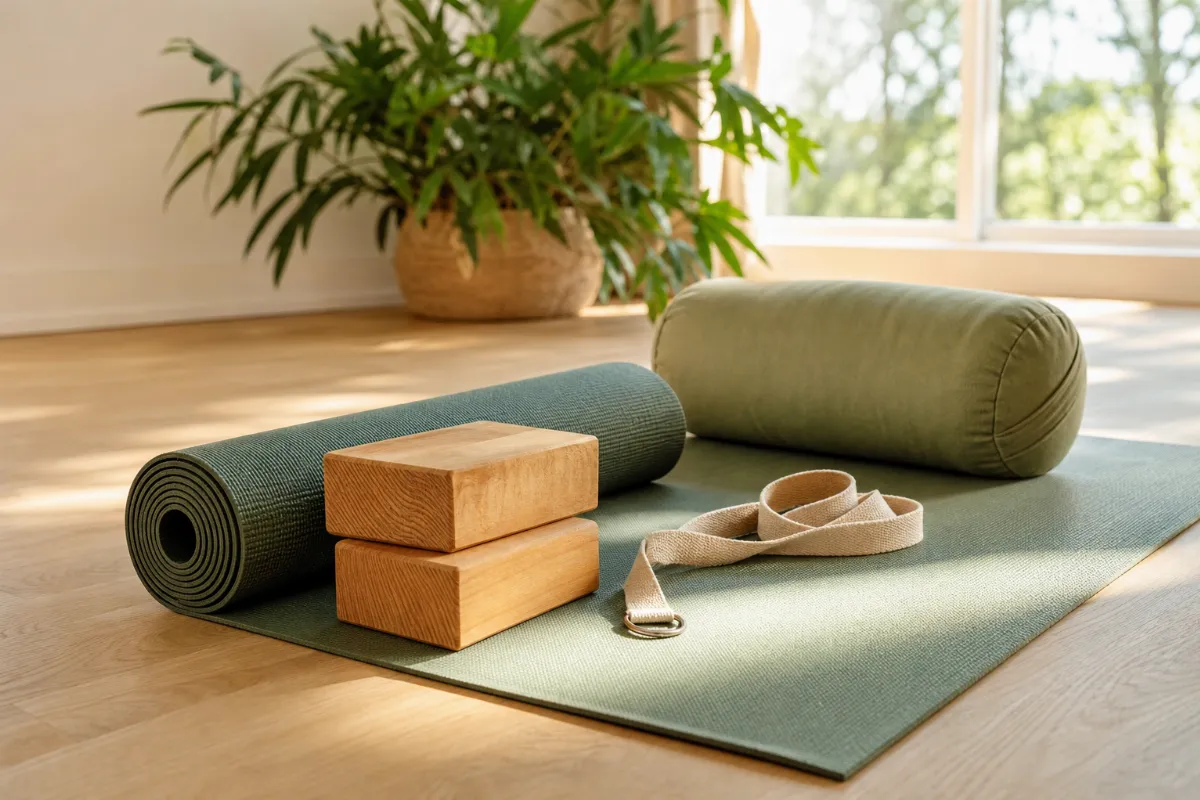
Therapies & Traditions · Movement practice
Yoga
Yoga (a practice of physical postures, breathing techniques and meditation) · also called Yoga practice, hatha yoga, Iyengar yoga, restorative yoga, hot yoga, yoga therapy, yoga como terapia, práctica de yoga
Yoga is an ancient practice, rooted in Indian philosophy, that in the West usually means physical postures, breathing exercises and meditation. In trials it has been studied for back pain, anxiety, depression, blood pressure, sleep and quality of life. Most findings are small, and the quality of the evidence is often low or very low. Injuries are common but mostly mild; pregnancy, glaucoma, osteoporosis, severe high blood pressure and heated rooms call for extra care and a talk with a doctor.
General information, not medical advice. Last substantive update · Not medically reviewed. A named clinician has not signed off on this page. How this page is made
About Yoga
Yoga combines postures, breathing and meditation. In trials it gave small gains for chronic low back pain and neck pain, and possible gains for anxiety, depression, blood pressure and sleep, but most evidence is low or very low quality. Injuries are common and mostly mild, and some conditions and heated rooms call for extra care.
What yoga is
NCCIH calls yoga an ancient and complex practice rooted in Indian philosophy. It began as a spiritual practice and became popular as a way to support physical and mental well-being. As usually practised in the United States, it has three parts: physical postures, breathing techniques and meditation. NCCIH adds that classical yoga includes elements beyond these.
NCCIH reports that the share of US adults who practise yoga rose from 5.0 percent in 2002 to 15.8 percent in 2022, and that in a 2012 survey 94 percent of adult practitioners did so for wellness while 17.5 percent did so to treat a specific health condition.
Styles and forms
Yoga ranges from gentle to physically demanding, and NCCIH says differences between styles can affect study results. The trials read name several: hatha, Iyengar and viniyoga in the back pain trials; Bikram yoga, a hatha series done in a room heated to 40.6 C; restorative yoga, compared with stretching in a metabolic syndrome trial; and, per NCCIH, Kundalini yoga, hot yoga, breathing-focused yoga, pregnancy yoga and school-based programmes.
Most reviews pool many styles together, so a result is rarely tied to one style. The only style-specific review read found no benefit for Hatha or Iyengar yoga for fatigue, depression or quality of life in cancer, with low to very low certainty.
What trials found, by outcome
For chronic low back pain the Cochrane review of 21 trials found small gains in pain and function compared with no exercise. The reviewers call them clinically unimportant, and found little difference from other back exercise. For neck pain, three small trials found short-term gains compared with usual care.
For mental health, pooled trials suggest lower anxiety and depression scores, but the 2023 review rates the certainty very low, and the 2018 review found no effect in formally diagnosed anxiety disorders. Blood pressure was lower than with waiting lists in a 2025 analysis of 30 trials, with very low quality evidence. A review of 19 trials in women with sleep problems found better sleep quality on one scale and no effect on another.
In breast cancer, the Cochrane review found moderate-quality short-term gains in quality of life, fatigue and sleep compared with no therapy, but a later review of Hatha and Iyengar yoga across cancer types found none. In older adults, two of three balance and strength findings did not survive a check for missing small studies. In pregnancy, pooled studies showed lower anxiety, stress and depression and shorter labour, with low to very low quality.
How classes were run in trials, and choosing a teacher
Trials usually used supervised group classes, some with home practice. Examples: a tapering series of 90-minute group classes over 24 weeks in the restorative yoga trial; sessions of more than 60 minutes, 12 or more times, in the pregnancy analysis; and a 1-hour guided session plus 4 weeks of home practice in the nurse trial. Reviews of older adults and of sleep did not settle on an ideal schedule. These describe what was studied, not what any person should do.
NCCIH advises practising under a qualified instructor, asking about their training and experience, and not using yoga to put off seeing a health care provider about a medical problem. It also advises telling your providers about complementary approaches you use.
At a glance
Traditional uses history, not proof
- NCCIH describes yoga as an ancient and complex practice rooted in Indian philosophy, which began as a spiritual practice and became popular as a way to support physical and mental well-being
- NCCIH notes that classical yoga includes elements beyond the physical and meditative ones usually practised in the United States
Studied for research
- Chronic low back pain: small gains over no exercise, low certainty
- Anxiety and depression symptoms, very low certainty
- Blood pressure in prehypertension and hypertension, very low certainty
- Sleep quality in women with sleep problems, low certainty
- Chronic neck pain, short term, low certainty
- Quality of life, fatigue and sleep in breast cancer, mixed
- Balance, leg strength and quality of life in older adults, low certainty
- Anxiety, stress and labour in pregnancy, very low certainty
- Fasting blood sugar and work stress with restorative yoga, very low certainty
Main compounds
- Physical postures (asanas)
- Breathing techniques (pranayama)
- Meditation (dhyana)
Common forms
- Hatha yoga
- Iyengar yoga
- Viniyoga
- Restorative yoga
- Bikram and other hot yoga
- Kundalini yoga
- Pregnancy yoga
- Group classes and home practice
Research links: Cochrane review 2022: yoga for chronic low back pain (21 trials) · 2023 analysis: yoga for anxiety and depression disorders · 2025 analysis: yoga for hypertension (30 trials) · Cochrane review 2017: yoga in breast cancer (24 trials) · 2018 review: injuries and other adverse events (9 studies) · NCCIH: Yoga, What You Need To Know · Research Library · Genes & Biomarkers Library
What it is and its history
- Accepted scientific name
- Yoga (a practice of physical postures, breathing techniques and meditation)
- Common names
- Yoga (English); Yoga (Spanish); Hatha yoga (the posture-based branch most often taught in the West; named in the trials read as a style) (English); Práctica de yoga (Spanish)
- Family or group
- Mind-body or 'meditative movement' practice. NCCIH groups yoga with tai chi and qigong under that heading.
- Look-alikes and adulterants
- Name: Tai chi; Note: Another meditative movement practice with its own page.; Name: Qigong; Note: A related slow-movement and breathing practice.; Name: Pilates; Note: Mat and equipment exercise system, a different tradition.; Name: Meditation; Note: One part of yoga on its own; has its own page.; Name: Stretching classes; Note: Often used as the comparison group in yoga trials.
Traditional use and history history, not clinical proof
| Tradition or era | Documented use | Source |
|---|---|---|
| Origins | NCCIH calls yoga an ancient and complex practice rooted in Indian philosophy. It says yoga began as a spiritual practice and became popular as a way to support physical and mental well-being. It adds that classical yoga includes elements beyond the physical and meditative ones usually practised in the United States. | s-nccih-yoga |
| Yoga in the United States | NCCIH reports that the share of US adults who practised yoga rose from 5.0 percent in 2002 to 15.8 percent in 2022, and that in a 2012 survey 94 percent of adult practitioners did it for wellness and 17.5 percent to treat a specific health condition (some did both). | s-nccih-yoga |
Traditional use shows how it was used. It does not show that it works or is safe today.
What it includes, and how it may work
The parts and styles of the practice, and how researchers think it may act on the body. Proposed mechanisms are not proven effects in people.
Main parts and styles
| Part or style | Kind | Where it is used | Activity studied | Level of evidence |
|---|---|---|---|---|
| Physical postures (asanas) | practice component | NCCIH lists physical postures as one of the three components usually practised in the US. | The part most trials are built around (stretching, strengthening, balance). 22 | Human data |
| Breathing techniques (pranayama) | practice component | NCCIH lists breathing techniques as a component. Forceful breathing is among the things NCCIH says beginners should avoid. | Slow or controlled breathing is part of many classes; trials read did not separate it from the postures. 22 | Human data |
| Meditation (dhyana) | practice component | NCCIH lists meditation as a component. | Attention and relaxation practice, often at the end of a class. 22 | Human data |
| Hatha, Iyengar and viniyoga styles | yoga style | The Cochrane back pain review says most trials used iyengar, hatha or viniyoga styles. | The styles most used in low back pain trials. 21 | Human data |
| Bikram yoga | yoga style | A review describes Bikram yoga as a style of hatha yoga with a standardised series of postures performed to an instructional dialogue in a heated room (40.6 C, 40 percent humidity). | Reviewed for strength, range of motion and balance in healthy adults; mostly non-randomised studies. 11 | Human data |
| Restorative yoga | yoga style | Trials read describe tapering series of 90-minute group classes (PRYSMS) and a 1-hour guided session with home practice (nurses). No source read gives a formal definition. | Compared with stretching in the metabolic syndrome trial. 13 17 | Human data |
| Kundalini yoga, hot yoga, breathing-focused yoga, pregnancy yoga and school-based yoga | yoga formats | Named by NCCIH among the formats studied. NCCIH says differences between styles can affect study results. | Listed so readers can see how varied the practice is. 22 | Human data |
Mechanisms, receptors and pathways
| Target or pathway | Gene or receptor | What was found | Level |
|---|---|---|---|
| How yoga might work | Not specified in the sources read | The reviews read measured symptoms, not mechanisms. Explanations such as lower stress response, stronger muscles or better attention are proposals, not findings of these reviews. 16 | Not established |
Isolated compounds versus whole extracts
Yoga is a package of postures, breathing and attention taught in groups. The trials read did not separate which part gives any benefit, and no trial read compared yoga with a sham version of itself.
1 mixed findings4 low certainty5 very low certainty
What was looked at
The 10 benefits and uses checked for Yoga, each with how strong the evidence is. Tap one to open it.
- Chronic low back painLow certainty
- Anxiety and depression symptomsVery low certainty
- Blood pressure in people with prehypertension or hypertensionVery low certainty
- Sleep quality in women with sleep problemsLow certainty
- Chronic neck painLow certainty
- Quality of life, fatigue and sleep in people with cancerMixed findings
- Balance, leg strength and quality of life in older adultsLow certainty
- Anxiety, stress and labour in pregnancyVery low certainty
- Restorative yoga: blood sugar and work stressVery low certainty
- Balance in women with osteoporosis after menopauseVery low certainty
Lab markers tracked in the studies
Back pain intensity (0 to 100 scale)Back-related disability (Roland-Morris questionnaire, 0 to 24)Systolic blood pressure (the upper number)Sleep quality (Pittsburgh Sleep Quality Index)Fatigue in women with breast cancerNeck pain intensityLength of labour
What is Yoga good for?
The main studied uses and how strong the human evidence is for each. These describe what trials found in the groups they studied. They are not advice to practise yoga for any condition, and each result is for the yoga styles tested.
Benefits, one by one
Each card is a research question, not a promise. Tap a goal to filter. Open a card to see the studies, doses and limits.
Chronic low back pain
Low certaintyThe Cochrane review of 21 trials found yoga gave small improvements in back pain and daily function compared with no exercise, but the authors call them too small to matter much. Compared with other back exercise, there was little or no difference. Yoga also caused more back pain in some people than doing no exercise.
1 studiesMost trials used iyengar, hatha or viniyoga styles. The abstract does…
Studies, doses and limits
What the trials found
Cochrane review (search to August 2021): 21 trials, 2,223 adults with chronic non-specific low back pain, mostly women in their 40s or 50s, mostly iyengar, hatha or viniyoga styles. Ten trials compared yoga with non-exercise controls (waiting list, usual care or education), five with back-focused exercise such as physical therapy, four with both.
Results
Versus no exercise at 3 months: a small improvement in back function (MD -1.69 on a 0 to 24 scale; the authors give 5 points as the smallest change that matters) and a small improvement in pain (MD -4.53 on a 0 to 100 scale; 15 points is the smallest change that matters). Quality of life improved a little. Depression showed little or no improvement. Versus back-focused exercise: little or no difference in function, pain or quality of life.
Effect sizes as reported
Function MD -1.69 (95% CI -2.73 to -0.65); pain MD -4.53 (-6.61 to -2.46); physical quality of life MD 1.80 (0.27 to 3.33); mental quality of life MD 2.38 (0.60 to 4.17). Versus exercise: function MD -0.38 (-1.33 to 0.62).
Why this rating
Low overall. The reviewers rate the pain result moderate and the function result low, but all 21 trials were unblinded and at high risk of bias, and the size of the benefit is below the level the reviewers consider important. They say blinded comparisons are unlikely to find a clinically important benefit.
Form and dose studied
Most trials used iyengar, hatha or viniyoga styles. The abstract does not give session length or number of classes.
Who was studied
Adults with chronic non-specific low back pain, from clinics and the community in the USA, India, the UK, Croatia, Germany, Sweden and Turkey.
Limits
No trial compared yoga with sham yoga. People knew which treatment they had and rated their own pain. Results are mostly short term (3 months).
Why researchers looked
Low back pain is very common and guidelines already recommend exercise, so researchers asked whether yoga, a form of exercise with stretching and strengthening, does as well.
Proposed mechanism Hypothesis
Proposed: stretching and strengthening of the trunk muscles, plus calmer attention to pain. The reviews read did not test this.
A proposed mechanism does not show that the effect happens in people.
Low-certainty evidence from eight trials found more adverse events with yoga than with no exercise, mainly more back pain (RR 4.76, 95% CI 2.08 to 10.89, at 6 to 12 months), and about the same as with other exercise. See the Safety tab.
Anxiety and depression symptoms
Very low certaintyPooled trials suggest yoga may lower anxiety and depression scores, but the certainty is very low. The effect was clearer in people with raised anxiety who had no formal diagnosis than in people diagnosed with an anxiety disorder.
2 studiesMany yoga styles were pooled and the tools used to measure symptoms v…
Studies, doses and limits
What the trials found
A 2023 review in the British Journal of Sports Medicine pooled trials of qigong, tai chi and yoga in adults with anxiety or depressive disorders (23 studies, 1,420 people). A 2018 review of yoga for anxiety pooled 8 trials with 319 people (mean age 30 to 38.5 years).
Results
2023 review: yoga reduced anxiety symptoms in anxiety disorders, and depression symptoms in depressive disorders after sensitivity analyses; other comparisons showed no differences. 2018 review: small short-term anxiety benefit versus no treatment, large versus active comparators, small depression benefit versus no treatment; but no effect in people with anxiety disorders diagnosed by formal criteria, only in people diagnosed by other methods and those with raised anxiety.
Effect sizes as reported
2018 review: anxiety vs no treatment SMD -0.43 (95% CI -0.74 to -0.11); vs active comparators SMD -0.86 (-1.56 to -0.15); depression vs no treatment SMD -0.35 (-0.66 to -0.04). The 2023 review's abstract gives no numbers.
Why this rating
The 2023 reviewers rate the certainty very low for every outcome because of bias, indirect evidence, inconsistent results and small trials. The 2018 review calls the evidence for formally diagnosed anxiety disorders inconclusive.
Form and dose studied
Many yoga styles were pooled and the tools used to measure symptoms varied widely. Session details are not in the abstracts.
Who was studied
Adults with anxiety or depressive disorders, or with raised anxiety without a diagnosis; mostly young to middle-aged adults.
Limits
Self-reported symptom scales, no blinding, small trials, and a mix of waiting-list and active controls.
Why researchers looked
Yoga combines gentle movement, breathing and attention, so researchers asked whether it eases low mood and worry.
Proposed mechanism Hypothesis
Proposed: slow breathing and relaxation may lower the body's stress response, and exercise itself lifts mood. Not tested in these reviews.
A proposed mechanism does not show that the effect happens in people.
Only three of the eight trials in the 2018 review reported safety data; these showed no increase in injuries.
Blood pressure in people with prehypertension or hypertension
Very low certaintyPooled trials found lower blood pressure after yoga compared with waiting lists, but the quality of the evidence is very low and the results vary a lot between trials. Against another form of exercise the difference was small or not clear.
2 studiesThe 2014 review included only yoga programmes of 8 weeks or longer. T…
Studies, doses and limits
What the trials found
A 2025 review in PLoS One pooled 30 trials with 2,283 adults with prehypertension (120 to 139 over 80 to 89 mmHg) or hypertension (140/90 or higher). An earlier 2014 review of 7 trials (452 people) also found very low-quality evidence for lower blood pressure than usual care but no difference from exercise.
Results
2025 review versus waiting list: systolic pressure about 8 mmHg lower and diastolic about 5 mmHg lower, and a lower heart rate. Versus active control: the systolic change was not statistically significant (-4.16 mmHg, CI -10.76 to 2.44) and the diastolic change was small (-1.88 mmHg). The 2014 review found effects in trials of people with hypertension but not in trials mixing prehypertension and hypertension.
Effect sizes as reported
2025: systolic MD -7.95 mmHg (95% CI -10.24 to -5.66, 26 trials); diastolic MD -4.93 mmHg (-6.25 to -3.60, 23 trials); heart rate MD -4.43 (-7.36 to -1.50). 2014: systolic MD -9.65 (-17.23 to -2.06); diastolic MD -7.22 (-12.83 to -1.62).
Why this rating
Both reviews rate the quality of evidence very low and report high heterogeneity between trials (I-squared about 90 percent in 2014). Most comparisons were against waiting lists, which can overstate benefit.
Form and dose studied
The 2014 review included only yoga programmes of 8 weeks or longer. The 2025 abstract does not describe styles or session length.
Who was studied
Adults with prehypertension or hypertension; the 2014 review noted that trials allowing blood pressure medicines found effects while trials that did not allow them did not.
Limits
Very low quality, large differences between trials, and many comparisons against waiting lists rather than another exercise.
Why researchers looked
Stress, breathing and physical activity all affect blood pressure, and yoga includes all three.
Proposed mechanism Hypothesis
Proposed: slow breathing and relaxation may calm the nervous system and relax blood vessels. Not tested in the reviews.
A proposed mechanism does not show that the effect happens in people.
The 2014 review found more adverse events during yoga than during usual care. See the Safety tab for who should take care.
Sleep quality in women with sleep problems
Low certaintyA review of 19 trials found better sleep quality with yoga than with mostly non-active controls in women, but results were mixed: some groups and one scale showed no clear effect.
1 studiesStyles and class lengths are not given in the abstract; the authors r…
Studies, doses and limits
What the trials found
A 2020 review in BMC Psychiatry pooled 19 randomised trials with 1,832 women with sleep problems.
Results
Overall sleep improved. On the Pittsburgh Sleep Quality Index 16 trials favoured yoga, but three trials using the Insomnia Severity Index found no effect. Subgroups of women with breast cancer and of women around or after menopause showed no clear effect. No serious adverse events were reported. The authors found more benefit in women without cancer and not in the menopause transition, and a link between longer total class time and better sleep quality.
Effect sizes as reported
Overall SMD -0.327 (95% CI -0.506 to -0.148); PSQI SMD -0.54 (-0.89 to -0.19); ISI SMD -0.13 (-0.74 to 0.48); breast cancer subgroup SMD -0.15 (-0.31 to 0.01); peri/postmenopausal SMD -0.31 (-0.95 to 0.33).
Why this rating
Low, compiler's rating: the review gives no overall GRADE in its abstract, controls were mostly non-active, and several subgroups and one scale were null.
Form and dose studied
Styles and class lengths are not given in the abstract; the authors report that more total class time went with better sleep quality.
Who was studied
Women only, with sleep problems, including women with breast cancer and women around menopause.
Limits
Women only; results differ by scale and subgroup; control groups mostly did nothing.
Why researchers looked
Poor sleep is common and drug-free approaches are of interest, so researchers asked whether yoga helps.
Proposed mechanism Hypothesis
Proposed: relaxation, physical tiredness and calmer attention before sleep. Not tested in the review.
A proposed mechanism does not show that the effect happens in people.
No serious adverse events reported in the review.
Chronic neck pain
Low certaintyA small pooled analysis of three trials found yoga eased neck pain and neck-related disability in the short term compared with usual care. It is a very small body of evidence.
1 studiesStyles and session length are not in the abstract; the review says ef…
Studies, doses and limits
What the trials found
A 2017 review in Clinical Rehabilitation found only three randomised trials with 188 adults with chronic non-specific neck pain, comparing yoga with usual care. Two trials had low overall risk of bias.
Results
Short-term improvements in neck pain intensity, neck-related disability, quality of life and mood compared with usual care. Safety data came from two studies and showed no serious adverse events.
Effect sizes as reported
Pain SMD -1.28; disability SMD -0.97 (95% CI -1.44 to -0.50); quality of life SMD 0.57 (0.17 to 0.197 as printed); mood SMD -1.02 (-1.38 to -0.65). The pain interval printed in the abstract (-1.18 to -0.75) does not contain the estimate and looks like a misprint.
Why this rating
Low, compiler's rating: only three trials and 188 people, short-term follow-up, compared with usual care rather than another exercise, and a misprinted interval in the abstract.
Form and dose studied
Styles and session length are not in the abstract; the review says effects did not differ between intervention subgroups.
Who was studied
Adults with chronic non-specific neck pain.
Limits
Very few trials; short term only; no comparison with other exercise.
Why researchers looked
Neck pain is common, often linked to posture and tension, and yoga includes neck and shoulder stretching and strengthening.
Proposed mechanism Hypothesis
Proposed: stretching, strengthening and posture awareness. Not tested in the review.
A proposed mechanism does not show that the effect happens in people.
No serious adverse events in the two studies that reported safety. Neck is also a common place for yoga injury; see the Safety tab.
Quality of life, fatigue and sleep in people with cancer
Mixed findingsResults are mixed. A Cochrane review of 24 trials in women with breast cancer found moderate-quality evidence that yoga improved quality of life, fatigue and sleep in the short term compared with no therapy. A 2023 review of Hatha and Iyengar yoga across cancer types found no improvement in fatigue, depression or quality of life.
2 studiesCochrane pooled many yoga types; the 2023 review looked only at Hatha…
Studies, doses and limits
What the trials found
Cochrane review 2017: 24 studies with 2,166 women with breast cancer, during or after treatment; 17 studies compared yoga with no therapy, 4 with psychosocial or educational care, 3 with exercise. A 2023 review in Supportive Care in Cancer included 11 trials with 777 adults with cancer and looked only at Hatha and Iyengar yoga.
Results
Cochrane: versus no therapy, short-term gains in quality of life, fatigue and sleep, but no clear gain for depression or anxiety and no medium-term effect on quality of life or fatigue. Versus psychosocial or educational interventions, yoga reduced depression, anxiety and fatigue in the short term. Versus exercise, very low quality evidence of no difference. 2023 review: Hatha, Iyengar or both did not improve fatigue, depression or quality of life; certainty low to very low.
Effect sizes as reported
Cochrane versus no therapy: quality of life SMD 0.22 (95% CI 0.04 to 0.40); fatigue SMD -0.48 (-0.75 to -0.20); sleep disturbance SMD -0.25 (-0.40 to -0.09); depression SMD -0.13 (-0.31 to 0.05); anxiety SMD -0.53 (-1.10 to 0.04). The 2023 abstract gives no numbers.
Why this rating
The Cochrane review rates several results moderate quality, while the 2023 review of two yoga styles across cancer types found nothing and rates certainty low to very low. The two reviews cover different groups and styles.
Form and dose studied
Cochrane pooled many yoga types; the 2023 review looked only at Hatha and Iyengar styles. Session details are not in either abstract.
Who was studied
Women with breast cancer (Cochrane); adults with cancer of several types (2023).
Limits
Several outcomes rated low or very low; few trials reported safety; different yoga styles pooled.
Why researchers looked
Cancer and its treatment often bring fatigue, poor sleep and low mood, and gentle exercise is of interest as a supportive measure.
Proposed mechanism Hypothesis
Proposed: gentle activity, relaxation and a sense of control. Not tested in the reviews.
A proposed mechanism does not show that the effect happens in people.
Cochrane: investigators reported no serious adverse events in the yoga-versus-no-therapy trials; the other comparisons did not report safety adequately. Anyone in cancer treatment should talk to their care team first.
Balance, leg strength and quality of life in older adults
Low certaintyA 2026 pooled analysis of 21 studies suggested yoga might help dynamic balance, leg strength and quality of life in older adults, but after adjusting for missing small studies the balance result vanished and the strength result became borderline. Only the quality-of-life result held up.
1 studiesThe review looked for best frequency, duration and session length and…
Studies, doses and limits
What the trials found
A 2026 review in Experimental Gerontology: 21 studies, 1,471 older adults of several kinds, searched to December 2025.
Results
Unadjusted: benefits for dynamic balance, leg muscle strength and quality of life, none for static balance. After trim-and-fill adjustment for possible publication bias, dynamic balance was no longer significant, leg strength was borderline, and quality of life was unchanged. The authors could not say what frequency, length or session time works best.
Effect sizes as reported
Not given as numbers in the abstract.
Why this rating
Low, compiler's rating: two of three findings were not robust to a bias check, and the abstract gives no GRADE.
Form and dose studied
The review looked for best frequency, duration and session length and found no basis to recommend one.
Who was studied
Older adults across several groups; the abstract does not list them.
Limits
Abstract-level reading only; possible publication bias; mixed populations and yoga types.
Why researchers looked
Falls are a major risk for older people, and balance and leg strength are the main protective factors.
Proposed mechanism Hypothesis
Proposed: standing poses that load the legs and challenge balance. Not tested in the review.
A proposed mechanism does not show that the effect happens in people.
NCCIH says people aged 65 and older have a higher rate of yoga injuries treated in emergency departments than younger adults; see the Safety tab.
Anxiety, stress and labour in pregnancy
Very low certaintyA pooled analysis of 29 studies found pregnancy yoga programmes were linked to lower anxiety, depression and stress, shorter labour and more normal vaginal births. The reviewers rate the quality as low to very low, so these are early findings.
1 studiesThe session counts and lengths above are from the review's analysis o…
Studies, doses and limits
What the trials found
A 2022 review in BMC Pregnancy and Childbirth: 31 studies in the review, 29 with 2,217 pregnant women in the pooled analysis (randomised and quasi-experimental).
Results
Lower anxiety, depression and perceived stress; shorter labour; higher odds of normal vaginal birth; more tolerance for pain. The authors link 12 or more sessions, weekly or twice weekly, to mode of birth, and 12 or more sessions of more than 60 minutes to lower perceived stress.
Effect sizes as reported
Anxiety SMD -0.91 (95% CI -1.49 to -0.33); depression SMD -0.47 (-0.9 to -0.04); stress SMD -1.03 (-1.55 to -0.52); labour duration MD -117.75 (-153.80 to -81.71, unit not stated in the abstract); normal vaginal birth OR 2.58 (1.46 to 4.56).
Why this rating
The reviewers state the GRADE quality was low to very low for all outcomes; some included studies were not randomised.
Form and dose studied
The session counts and lengths above are from the review's analysis of how programmes were built (this describes trials, not advice).
Who was studied
Pregnant women in studies from several countries.
Limits
Low to very low quality; non-randomised studies included; programmes varied.
Why researchers looked
Pregnancy brings physical change and worry, and gentle exercise and relaxation are often suggested.
Proposed mechanism Hypothesis
Proposed: relaxation, breathing practice and gentle exercise. Not tested in the review.
A proposed mechanism does not show that the effect happens in people.
NCCIH says pregnant women should check with a health care provider first and avoid hot yoga; see the Safety tab.
Restorative yoga: blood sugar and work stress
Very low certaintyRestorative yoga is a slow style done mostly lying or sitting on supports. In a 180-person trial it lowered fasting blood sugar slightly more than stretching but did not beat stretching on other measures. A 20-nurse trial found lower work-stress scores, but it is very small.
2 studiesPRYSMS: a tapering series of 90-minute group classes over 24 weeks, t…
Studies, doses and limits
What the trials found
PRYSMS trial (2014): 180 underactive adults with metabolic syndrome, restorative yoga versus active stretching for 48 weeks. A 2019 Japanese randomised crossover trial: 20 night-shift nurses.
Results
PRYSMS: at 12 months fasting glucose fell by 0.35 mmol/L with yoga against 0.03 with stretching; no other group differences; stretching improved quality of life. Nurses: stress-reaction scores were lower after group yoga and after 4 weeks of home practice than after usual stress relief; vital signs and weight did not change.
Effect sizes as reported
PRYSMS: fasting glucose -0.35 vs -0.03 mmol/L (p=0.002). Nurse trial: numbers not in the abstract.
Why this rating
One moderate trial where only one of many outcomes favoured yoga, and one very small, unblinded trial of 20 people.
Form and dose studied
PRYSMS: a tapering series of 90-minute group classes over 24 weeks, then 24 weeks of maintenance. Nurses: a 1-hour guided session then 4 weeks of at-home practice (as studied, not advice).
Who was studied
Adults with the metabolic syndrome who were underactive; young female night-shift nurses.
Limits
Single trials; one significant result among many; 25 percent dropout in PRYSMS; self-rated stress in the nurse trial.
Why researchers looked
Researchers asked whether a gentle style that people at risk of diabetes can sustain would improve blood sugar, and whether it eases work stress.
Proposed mechanism Hypothesis
Proposed: relaxation may lower stress hormones. Not tested in these trials as read.
A proposed mechanism does not show that the effect happens in people.
The abstracts do not report adverse events.
Balance in women with osteoporosis after menopause
Very low certaintyOne small trial of 32 women found adding a daily two-minute Tree Pose to ordinary exercise did not clearly improve balance more than ordinary exercise alone; both groups improved.
1 studiesTree Pose (Vrksasana) for 2 minutes a day added to 30 minutes of conv…
Studies, doses and limits
What the trials found
A 2022 randomised trial in the American Journal of Physical Medicine and Rehabilitation: 32 women with postmenopausal osteoporosis, 12 weeks, conventional exercise with or without Tree Pose.
Results
Both groups improved on several balance tests. The only between-group difference was single-leg stance at week 6. The authors conclude balance gains can be had by adding Tree Pose to conventional exercise, which goes further than the data shown.
Effect sizes as reported
Not given as numbers in the abstract.
Why this rating
One very small trial with one between-group difference at one time point.
Form and dose studied
Tree Pose (Vrksasana) for 2 minutes a day added to 30 minutes of conventional exercise, for 12 weeks, as studied.
Who was studied
Postmenopausal women with osteoporosis.
Limits
32 people; single centre; the pose was tested as an add-on, not as a practice on its own.
Why researchers looked
Balance matters because falls cause fractures in fragile bones.
Proposed mechanism Hypothesis
Proposed: single-leg standing practice may train balance. Not tested separately.
A proposed mechanism does not show that the effect happens in people.
The abstract does not report adverse events. A review notes that spinal bending can raise the risk of spinal fractures in osteoporosis; see the Safety tab.
Connections to the rest of health
How Yoga connects to the rest of our health knowledge graph. Every link says what kind of connection it is. A safety link (for example to the liver) is a warning, not a benefit. A study that merely mentions a topic never creates a benefit link.
Explore every connection: goals, body systems, organs, symptoms, genes
A. Wellness goals
| Connected to | Kind of connection | Evidence status | Context | Studies |
|---|---|---|---|---|
| Pain Relief | Low certainty | Chronic low back pain: The Cochrane review of 21 trials found yoga gave small improvements in back pain and daily function compared with no exercise, but the authors call them too small to matter much. Compared with other back exercise, there was little or no difference. Yoga also caused more back pain in some people than doing no exercise. Chronic neck pain: A small pooled analysis of three trials found yoga eased neck pain and neck-related disability in the short term compared with usual care. It is a very small body of evidence. | 21 4 | |
| Mobility Support | Low certainty | Chronic low back pain: The Cochrane review of 21 trials found yoga gave small improvements in back pain and daily function compared with no exercise, but the authors call them too small to matter much. Compared with other back exercise, there was little or no difference. Yoga also caused more back pain in some people than doing no exercise. Balance, leg strength and quality of life in older adults: A 2026 pooled analysis of 21 studies suggested yoga might help dynamic balance, leg strength and quality of life in older adults, but after adjusting for missing small studies the balance result vanished and the strength result became borderline. Only the quality-of-life result held up. | 21 10 | |
| Stress Anxiety | Very low certainty | Anxiety and depression symptoms: Pooled trials suggest yoga may lower anxiety and depression scores, but the certainty is very low. The effect was clearer in people with raised anxiety who had no formal diagnosis than in people diagnosed with an anxiety disorder. Anxiety, stress and labour in pregnancy: A pooled analysis of 29 studies found pregnancy yoga programmes were linked to lower anxiety, depression and stress, shorter labour and more normal vaginal births. The reviewers rate the quality as low to very low, so these are early findings. | 16 6 2 | |
| Mood Support | Very low certainty | Anxiety and depression symptoms: Pooled trials suggest yoga may lower anxiety and depression scores, but the certainty is very low. The effect was clearer in people with raised anxiety who had no formal diagnosis than in people diagnosed with an anxiety disorder. | 16 6 | |
| Blood Pressure | Very low certainty | Blood pressure in people with prehypertension or hypertension: Pooled trials found lower blood pressure after yoga compared with waiting lists, but the quality of the evidence is very low and the results vary a lot between trials. Against another form of exercise the difference was small or not clear. | 9 3 | |
| Heart Health | Very low certainty | Blood pressure in people with prehypertension or hypertension: Pooled trials found lower blood pressure after yoga compared with waiting lists, but the quality of the evidence is very low and the results vary a lot between trials. Against another form of exercise the difference was small or not clear. | 9 3 | |
| Sleep Quality | Low certainty | Sleep quality in women with sleep problems: A review of 19 trials found better sleep quality with yoga than with mostly non-active controls in women, but results were mixed: some groups and one scale showed no clear effect. Quality of life, fatigue and sleep in people with cancer: Results are mixed. A Cochrane review of 24 trials in women with breast cancer found moderate-quality evidence that yoga improved quality of life, fatigue and sleep in the short term compared with no therapy. A 2023 review of Hatha and Iyengar yoga across cancer types found no improvement in fatigue, depression or quality of life. | 20 5 8 | |
| Better Sleep | Low certainty | Sleep quality in women with sleep problems: A review of 19 trials found better sleep quality with yoga than with mostly non-active controls in women, but results were mixed: some groups and one scale showed no clear effect. | 20 | |
| Energy Fatigue | Mixed findings | Quality of life, fatigue and sleep in people with cancer: Results are mixed. A Cochrane review of 24 trials in women with breast cancer found moderate-quality evidence that yoga improved quality of life, fatigue and sleep in the short term compared with no therapy. A 2023 review of Hatha and Iyengar yoga across cancer types found no improvement in fatigue, depression or quality of life. | 5 8 | |
| Cancer Support | Mixed findings | Quality of life, fatigue and sleep in people with cancer: Results are mixed. A Cochrane review of 24 trials in women with breast cancer found moderate-quality evidence that yoga improved quality of life, fatigue and sleep in the short term compared with no therapy. A 2023 review of Hatha and Iyengar yoga across cancer types found no improvement in fatigue, depression or quality of life. | 5 8 | |
| Healthy Aging | Low certainty | Balance, leg strength and quality of life in older adults: A 2026 pooled analysis of 21 studies suggested yoga might help dynamic balance, leg strength and quality of life in older adults, but after adjusting for missing small studies the balance result vanished and the strength result became borderline. Only the quality-of-life result held up. | 10 | |
| Pregnancy Health | Very low certainty | Anxiety, stress and labour in pregnancy: A pooled analysis of 29 studies found pregnancy yoga programmes were linked to lower anxiety, depression and stress, shorter labour and more normal vaginal births. The reviewers rate the quality as low to very low, so these are early findings. | 2 | |
| Blood Sugar Balance | Very low certainty | Restorative yoga: blood sugar and work stress: Restorative yoga is a slow style done mostly lying or sitting on supports. In a 180-person trial it lowered fasting blood sugar slightly more than stretching but did not beat stretching on other measures. A 20-nurse trial found lower work-stress scores, but it is very small. | 13 17 | |
| Stress Relief | Very low certainty | Restorative yoga: blood sugar and work stress: Restorative yoga is a slow style done mostly lying or sitting on supports. In a 180-person trial it lowered fasting blood sugar slightly more than stretching but did not beat stretching on other measures. A 20-nurse trial found lower work-stress scores, but it is very small. | 13 17 | |
| Bone Health | Very low certainty | Balance in women with osteoporosis after menopause: One small trial of 32 women found adding a daily two-minute Tree Pose to ordinary exercise did not clearly improve balance more than ordinary exercise alone; both groups improved. | 19 | |
| Healthy Aging | Very low certainty | Balance in women with osteoporosis after menopause: One small trial of 32 women found adding a daily two-minute Tree Pose to ordinary exercise did not clearly improve balance more than ordinary exercise alone; both groups improved. | 19 |
B. Body systems
| Connected to | Kind of connection | Evidence status | Context | Studies |
|---|---|---|---|---|
| Musculoskeletal System | Biological association | Low certainty | Studied for: Chronic low back pain Studied for: Chronic neck pain | 21 4 10 19 |
| Bones Joints Muscles | Biological association | Low certainty | Studied for: Chronic low back pain | 21 |
| Nervous System | Biological association | Very low certainty | Studied for: Anxiety and depression symptoms Studied for: Sleep quality in women with sleep problems | 16 6 20 |
| Stress Mood | Biological association | Very low certainty | Studied for: Anxiety and depression symptoms Studied for: Restorative yoga: blood sugar and work stress | 16 6 13 17 |
| Cardiovascular System | Biological association | Very low certainty | Studied for: Blood pressure in people with prehypertension or hypertension | 9 3 |
| Heart Circulation | Biological association | Very low certainty | Studied for: Blood pressure in people with prehypertension or hypertension | 9 3 |
| Sleep Recovery | Biological association | Low certainty | Studied for: Sleep quality in women with sleep problems | 20 |
| Cancer Oncology | Biological association | Mixed findings | Studied for: Quality of life, fatigue and sleep in people with cancer | 5 8 |
| Whole Body | Biological association | Mixed findings | Studied for: Quality of life, fatigue and sleep in people with cancer | 5 8 |
| Reproductive Health | Biological association | Very low certainty | Studied for: Anxiety, stress and labour in pregnancy | 2 |
| Womens Health | Biological association | Very low certainty | Studied for: Anxiety, stress and labour in pregnancy | 2 |
| Metabolic System | Biological association | Very low certainty | Studied for: Restorative yoga: blood sugar and work stress | 13 17 |
| Skeletal System | Biological association | Very low certainty | Studied for: Balance in women with osteoporosis after menopause | 19 |
E. Health conditions
| Connected to | Kind of connection | Evidence status | Context | Studies |
|---|---|---|---|---|
| Glaucoma | Adverse effect or risk | Observational | Eye pressure rose in head-down poses in glaucoma and healthy eyes. Preparation or compound: Head-down and face-down poses |
12 15 |
| Osteoporosis | Narrative review | Spinal flexion may raise vertebral fracture risk. Preparation or compound: Forward bending of the spine |
18 | |
| Chronic low back pain | Low certainty | Small gains over no exercise; little difference from other back exercise. Preparation or compound: Yoga (mostly Iyengar, hatha, viniyoga) |
21 | |
| High blood pressure | Very low | Lower blood pressure than waiting lists in pooled trials, very low quality. Preparation or compound: Yoga |
9 3 | |
| Anxiety | Very low | Pooled trials suggest benefit; certainty very low. Preparation or compound: Yoga |
16 6 |
I. Biomarkers
| Connected to | Kind of connection | Evidence status | Context | Studies |
|---|---|---|---|---|
| Back pain intensity (0 to 100 scale) | Biological association | Low certainty | Measured in trials: small fall compared with no exercise; no clear difference from other back exercise. A lab change is not the same as a health benefit. | 21 |
| Back-related disability (Roland-Morris questionnaire, 0 to 24) | Biological association | Low certainty | Measured in trials: small fall compared with no exercise; no difference from exercise. A lab change is not the same as a health benefit. | 21 |
| Systolic blood pressure (the upper number) | Biological association | Very low certainty | Measured in trials: lower than waiting list; not clearly lower than active controls. A lab change is not the same as a health benefit. | 9 3 |
| Sleep quality (Pittsburgh Sleep Quality Index) | Biological association | Low certainty | Measured in trials: improved in 16 trials in women versus mostly non-active controls. A lab change is not the same as a health benefit. | 20 |
| Fatigue in women with breast cancer | Biological association | Mixed findings | Measured in trials: lower than no therapy in the short term; no medium-term difference. A lab change is not the same as a health benefit. | 5 8 |
| Neck pain intensity | Biological association | Low certainty | Measured in trials: lower than usual care in the short term. A lab change is not the same as a health benefit. | 4 |
| Length of labour | Biological association | Very low certainty | Measured in trials: shorter in pooled analysis. A lab change is not the same as a health benefit. | 2 |
L. Active compounds
| Connected to | Kind of connection | Evidence status | Context | Studies |
|---|---|---|---|---|
| Physical postures (asanas) | Biological association | Human | The part most trials are built around (stretching, strengthening, balance). | 22 |
| Breathing techniques (pranayama) | Biological association | Human | Slow or controlled breathing is part of many classes; trials read did not separate it from the postures. | 22 |
| Meditation (dhyana) | Biological association | Human | Attention and relaxation practice, often at the end of a class. | 22 |
| Hatha, Iyengar and viniyoga styles | Biological association | Human | The styles most used in low back pain trials. | 21 |
| Bikram yoga | Biological association | Human | Reviewed for strength, range of motion and balance in healthy adults; mostly non-randomised studies. | 11 |
| Restorative yoga | Biological association | Human | Compared with stretching in the metabolic syndrome trial. | 13 17 |
| Kundalini yoga, hot yoga, breathing-focused yoga, pregnancy yoga and school-based yoga | Biological association | Human | Listed so readers can see how varied the practice is. | 22 |
Each connection is stored with the ingredient, the connected record, the kind of connection, the evidence status, the supporting studies, the preparation or compound involved, and a review date (last reviewed October 31, 2026).
Evidence at a glance: what the research found for 10 outcomes
Each outcome below is one thing researchers measured. Certainty is how far the evidence can be trusted, not how well it works. The full studies are on the next tab.
The evidence
The research centre for Yoga. Every record here was checked against PubMed or the publisher's page; we never list a study we have not verified.
Evidence by outcome
Bars show how many studies we found for each outcome, not how well it works. People are added up across trials only (reviews are not added, to avoid double counting).
How we rate evidence
High certainty
Several well-run trials or reviews agree; further research is unlikely to change the picture much.
Moderate certainty
Good trials point the same way, but some doubt remains.
Low certainty
Small, short or inconsistent trials. The finding could change with better research.
Very low certainty
Very little or very weak human data. Treat as a possibility only.
Mixed findings
Trials or reviews disagree with each other.
Not enough evidence
Not enough human research to say either way.
Evidence against
Good research found no benefit, or found harm.
We take the reviewers' own risk-of-bias and GRADE statements where they exist, and otherwise judge from study size, design, consistency, directness and whether a product matches what is sold. Many publications do not make evidence high. Method note: We searched PubMed, re-read the abstract of every review and trial cited, and read the NCCIH page on yoga through a tool that summarises pages. Certainty ratings are the compiler's own reading, except where a review gives its own GRADE (stated in the text). Funding is not stated in most abstracts, and this is noted where relevant.
Study library: every study we checked 22
| Study | Design | People | Product, dose, length | Result |
|---|---|---|---|---|
| Alrefai 2020 Salt and water balance after sweat loss: A study of Bikram yoga Physiol Rep · PMID 33230967 · DOI |
Physiology feasibility study |
5 5 women (mean age 47.4) with about 2.6 years of Bikram yoga practice |
One 90-minute Bikram yoga class in a room heated to 105 F (40.6 C) with 40 percent humidity One 90-minute class One class |
Average sweat loss was 1.54 litres while about 0.38 litres of water was drunk. Blood sodium and osmolality did not change, but the fluid outside the cells fell by 9.7 percent and the hormone aldosterone rose 3.5-fold. The authors describe volume loss rather than dehydration of body fluids. Sweat loss 1.54 L; water drunk 0.38 L; extracellular fluid -9.7 percent; aldosterone x3.5 (Not given in the abstract) Methods, limits and fundingOutcomes: Sweat loss, serum sodium and fluid balance Limitations: Five experienced practitioners; one class; not a safety trial. Funding and conflicts: Record lists research support from a non-US government source; no conflict statement read. Read: abstract |
| Corrigan 2022 The characteristics and effectiveness of pregnancy yoga interventions: a systematic review and meta-analysis BMC Pregnancy Childbirth · PMID 35337282 · DOI |
Systematic review meta analysis |
2217 29 randomised or quasi-experimental studies in pregnant women (31 studies in the review) |
Pregnancy yoga programmes Not given in the abstract 12 or more sessions, weekly or twice weekly, were linked to mode of birth; 12 or more sessions of more than 60 minutes were linked to perceived stress · vs Control groups |
Pregnancy yoga reduced anxiety, depression and perceived stress, shortened labour and raised the odds of normal vaginal birth. The GRADE quality was low to very low for every outcome. Anxiety SMD -0.91; depression SMD -0.47; stress SMD -1.03; labour duration MD -117.75 (minutes assumed; unit not stated in the abstract); normal vaginal birth OR 2.58 (Anxiety -1.49 to -0.33; depression -0.9 to -0.04; stress -1.55 to -0.52; labour -153.80 to -81.71; vaginal birth 1.46 to 4.56) Methods, limits and fundingOutcomes: Anxiety, depression, perceived stress, labour duration, mode of birth, pain tolerance, quality of life Limitations: Quasi-experimental studies included; GRADE low to very low; the unit for labour duration is not given in the abstract. Funding and conflicts: No funding or conflict statement in the record read. Registration: PROSPERO CRD42019119916 Read: abstract |
| Cramer 2014 A systematic review and meta-analysis of yoga for hypertension Am J Hypertens · PMID 24795403 · DOI |
Systematic review meta analysis |
452 7 randomised trials in people with prehypertension or hypertension |
Yoga interventions of 8 weeks or longer Not given in the abstract 8 weeks or longer · vs Usual care or exercise |
Versus usual care, very low quality evidence of lower blood pressure; effects were seen in trials of hypertensive patients but not in trials mixing hypertensive and prehypertensive patients. More adverse events occurred during yoga than during usual care. Compared with exercise, no evidence of an effect on blood pressure. Vs usual care: systolic -9.65 mmHg, diastolic -7.22 mmHg (6 trials, 278 people) (Systolic -17.23 to -2.06; diastolic -12.83 to -1.62) Methods, limits and fundingOutcomes: Systolic and diastolic blood pressure; adverse events Limitations: Very low quality; heterogeneity above 90 percent; small trials. Funding and conflicts: Record lists research support from a non-US government source; no conflict statement read. Read: abstract |
| Cramer 2017 Effects of yoga on chronic neck pain: a systematic review and meta-analysis Clin Rehabil · PMID 29050510 · DOI |
Systematic review meta analysis |
188 3 randomised trials in adults with chronic non-specific neck pain |
Yoga Not given in the abstract Short-term effects · vs Usual care |
Short-term improvements in neck pain intensity, disability, quality of life and mood compared with usual care. No serious adverse events in the two studies that reported safety. Pain SMD -1.28; disability SMD -0.97; quality of life SMD 0.57; mood SMD -1.02 (Pain printed as -1.18 to -0.75 in the abstract (appears to be a typing slip); disability -1.44 to -0.50; quality of life 0.17 to 0.197 as printed; mood -1.38 to -0.65) Methods, limits and fundingOutcomes: Neck pain intensity, neck-pain disability, quality of life, mood; safety Limitations: Only 3 trials and 188 people; short-term only; compared with usual care, not with another exercise; some intervals look misprinted in the abstract. Funding and conflicts: No funding or conflict statement in the record read. Read: abstract |
| Cramer 2017 Yoga for improving health-related quality of life, mental health and cancer-related symptoms in women diagnosed with breast cancer Cochrane Database Syst Rev · PMID 28045199 · DOI |
Systematic review meta analysis |
2166 24 randomised trials in women with breast cancer, during or after treatment |
Yoga (various styles) Not given in the abstract Mostly short-term · vs No therapy, psychosocial or educational interventions, or exercise |
Versus no therapy, moderate-quality evidence that yoga improved quality of life, fatigue and sleep in the short term, but not depression or anxiety, and no medium-term effects. Versus psychosocial or educational interventions it reduced depression, anxiety and fatigue in the short term. Versus exercise, very low quality evidence of no difference. No serious adverse events were reported. Vs no therapy: quality of life SMD 0.22; fatigue SMD -0.48; sleep disturbance SMD -0.25; depression SMD -0.13 (not significant); anxiety SMD -0.53 (not significant) (Quality of life 0.04 to 0.40; fatigue -0.75 to -0.20; sleep -0.40 to -0.09; depression -0.31 to 0.05; anxiety -1.10 to 0.04) Methods, limits and fundingOutcomes: Health-related quality of life, fatigue, sleep, depression, anxiety Limitations: Several outcomes rated low or very low; few trials reported safety; the quality-of-life funnel plot was asymmetrical. Funding and conflicts: Record lists research support from a non-US government source; no conflict statement read. Read: abstract |
| Cramer 2018 Yoga for anxiety: A systematic review and meta-analysis of randomized controlled trials Depress Anxiety · PMID 29697885 · DOI |
Systematic review meta analysis |
319 8 randomised trials in people with anxiety disorders or raised anxiety (mean age 30 to 38.5 years) |
Yoga (styles not summarised in the abstract) Not given in the abstract Short-term effects · vs No treatment or active comparators |
Small short-term effect on anxiety versus no treatment and a large one versus active comparators. No effect in people with anxiety disorders diagnosed by DSM criteria; effects were in people diagnosed by other methods and in people with raised anxiety. Only three trials reported safety, with no increase in injuries. Anxiety vs no treatment SMD -0.43; vs active comparators SMD -0.86; depression vs no treatment SMD -0.35 (Anxiety vs no treatment -0.74 to -0.11; vs active -1.56 to -0.15; depression -0.66 to -0.04) Methods, limits and fundingOutcomes: Anxiety; remission; depression; quality of life; safety Limitations: Small trials; selection bias unclear in most; inconclusive for formally diagnosed anxiety disorders. Funding and conflicts: Record lists research support from a non-US government source; no conflict statement read. Read: abstract |
| Cramer 2018 Injuries and other adverse events associated with yoga practice: A systematic review of epidemiological studies J Sci Med Sport · PMID 28958637 · DOI |
Systematic review observational |
19032 9 observational studies: 9,129 yoga practitioners and 9,903 non-practitioners |
Yoga practice (any style) Not given in the abstract · vs Non-yoga practitioners (in some studies) |
Adverse events during a yoga class: 22.7 percent. Twelve-month prevalence: 4.6 percent. Lifetime prevalence: 21.3 to 61.8 percent. Serious adverse events: 1.9 percent. Most were musculoskeletal; sprains and strains were the most common injuries. Falls and falls-related injuries were no more common than in non-practitioners; meniscus injuries were more common. The authors say most events were mild and temporary. Incidence in a class 22.7 percent; 12-month prevalence 4.6 percent; serious events 1.9 percent; meniscus injury OR 1.72; falls OR 0.90; falls-related injuries OR 1.04 (Class incidence 21.1 to 24.3; 12-month 3.8 to 5.4; serious 1.4 to 2.4; meniscus 1.23 to 2.41; falls 0.76 to 1.08; falls-related injuries 0.83 to 1.29) Methods, limits and fundingOutcomes: Prevalence of injuries and other adverse events; risk of falls and injuries compared with non-practitioners Limitations: Observational studies; self-reported events; the authors advise people with serious acute or chronic illness to seek medical advice first. Funding and conflicts: No funding or conflict statement in the record read. Read: abstract |
| García-Muñoz 2023 No effects were found in favor of Hatha or Iyengar yoga exercises for improving cancer-related fatigue, depression symptoms, or quality of life: a systematic review with meta-analysis and metaregression Support Care Cancer · PMID 38049680 · DOI |
Systematic review meta analysis |
777 11 trials in adults with cancer |
Hatha yoga, Iyengar yoga, or both Not given in the abstract Not summarised in the abstract · vs Control groups |
Hatha, Iyengar and the two combined did not improve any of the three outcomes. The authors could not make sound clinical recommendations. Certainty ranged from low to very low. No improvement in any outcome (Not given in the abstract) Methods, limits and fundingOutcomes: Cancer-related fatigue, depression symptoms, overall quality of life Limitations: Five trials at high risk of bias and six with some concerns; only these two yoga styles were included. Funding and conflicts: No funding or conflict statement in the record read. Read: abstract |
| Geiger 2025 A systematic review and meta-analysis of yoga for arterial hypertension PLoS One · PMID 40367243 · DOI |
Systematic review meta analysis |
2283 30 randomised trials in adults with prehypertension or hypertension |
Yoga (styles pooled) Not given in the abstract Not summarised in the abstract · vs Waiting list, and active control interventions |
Compared with waiting list, yoga lowered systolic and diastolic blood pressure and heart rate; compared with active control the systolic change was not statistically significant and the diastolic change was small. The authors rate the evidence very low quality with high heterogeneity. Vs waiting list: systolic -7.95 mmHg, diastolic -4.93 mmHg; vs active control: systolic -4.16 mmHg (not significant), diastolic -1.88 mmHg (Vs waiting list: systolic -10.24 to -5.66; diastolic -6.25 to -3.60; vs active: systolic -10.76 to 2.44; diastolic -3.41 to -0.36) Methods, limits and fundingOutcomes: Systolic and diastolic blood pressure; heart rate Limitations: Very low quality evidence; high heterogeneity; most comparisons were against waiting lists. Funding and conflicts: Record lists research support from a non-US government source; no conflict statement read. Read: abstract |
| Guo 2026 Effects of yoga on lower-extremity muscle strength, balance, and quality of life across diverse older adult populations: A systematic review and Meta-analysis Exp Gerontol · PMID 42700826 · DOI |
Systematic review meta analysis |
1471 21 studies in older adults of several kinds |
Yoga Not given in the abstract Not summarised in the abstract · vs Not summarised in the abstract |
Unadjusted results suggested benefits for dynamic balance, leg strength and quality of life, but not static balance. After a bias adjustment (trim-and-fill) the dynamic-balance result became non-significant and the strength result borderline; quality of life stayed significant. Not given as numbers in the abstract (Not given in the abstract) Methods, limits and fundingOutcomes: Lower-leg muscle strength, static balance, dynamic balance, quality of life Limitations: Publication-bias adjustment weakened two of three findings; subgroup analyses of frequency, duration and session length were exploratory and gave no basis for an ideal schedule. Funding and conflicts: No funding or conflict statement in the record read. Read: abstract |
| Hewett 2015 The Effects of Bikram Yoga on Health: Critical Review and Clinical Trial Recommendations Evid Based Complement Alternat Med · PMID 26504475 · DOI |
Narrative review |
Critical review of trials of Bikram yoga (a heated, standardised hatha series) | Bikram yoga (standard series in a room at 40.6 C and 40 percent humidity) Not given in the abstract |
Bikram yoga has been shown to improve lower-body strength, range of motion and balance in healthy adults. Non-randomised studies report possible gains in glucose tolerance, bone density, blood lipids, arterial stiffness, mindfulness and stress, but large well-designed randomised trials are lacking. Not given in the abstract (Not given in the abstract) Methods, limits and fundingOutcomes: Strength, flexibility, balance, glucose tolerance, bone density, lipids, arterial stiffness, mindfulness, stress Limitations: Narrative review; mostly non-randomised studies; heat risks are not the focus of the abstract. Funding and conflicts: No funding or conflict statement in the record read. Read: abstract |
| Jasien 2015 Intraocular Pressure Rise in Subjects with and without Glaucoma during Four Common Yoga Positions PLoS One · PMID 26698309 · DOI |
Observational study |
20 10 people with primary open-angle glaucoma and 10 people without |
Four poses held 2 minutes each: Adho Mukha Svanasana (downward dog), Uttanasana (forward fold), Halasana (plough), Viparita Karani (legs up) Not given in the abstract Poses held for 2 minutes · vs Pressure measured at baseline, during and after poses |
Every pose raised eye pressure within one minute, most in downward dog (17 to 28 mmHg in glaucoma, 17 to 29 mmHg in healthy eyes). Pressure returned to baseline within 2 minutes after sitting up. The rise did not differ significantly between glaucoma and healthy eyes. Whether the rises raise the risk of glaucoma getting worse was not tested. Downward dog: 17 to 28 mmHg (glaucoma), 17 to 29 mmHg (normal); forward fold 17 to 27 and 18 to 26; plough 18 to 24 and 18 to 22; legs up 17 to 21 and 17 to 21 (Not given in the abstract) Methods, limits and fundingOutcomes: Eye pressure (intraocular pressure) Limitations: Very small study; short-term measurements only; says nothing about long-term harm. Funding and conflicts: Record lists research support from a non-US government source; no conflict statement read. Registration: ClinicalTrials.gov NCT01915680 Read: abstract |
| Kanaya 2014 Restorative yoga and metabolic risk factors: the Practicing Restorative Yoga vs. Stretching for the Metabolic Syndrome (PRYSMS) randomized trial J Diabetes Complications · PMID 24418351 · DOI |
Randomized controlled trial |
180 180 underactive adults with the metabolic syndrome, in two US universities; 135 (75 percent) finished |
Restorative yoga: tapering series of 90-minute group classes for 24 weeks, then 24 weeks of maintenance, plus lifestyle counselling 90-minute group classes, tapering, over 48 weeks 48 weeks (24 weeks of intervention and 24 weeks of maintenance) · vs Active stretching classes with the same schedule and counselling |
At 12 months fasting glucose fell more with restorative yoga than stretching; no other differences between groups. At 6 months, changes within the yoga group included lower fasting glucose, insulin and HbA1c and higher HDL cholesterol, but only the glucose change lasted to 12 months. Stretching improved quality of life at both time points. The authors call yoga marginally better than stretching for fasting glucose only. Fasting glucose -0.35 mmol/L (yoga) versus -0.03 mmol/L (stretching), p=0.002 (Not given in the abstract) Methods, limits and fundingOutcomes: Fasting and 2-hour glucose, HbA1c, triglycerides, HDL cholesterol, insulin, systolic blood pressure, visceral fat, quality of life Limitations: Active-control design is a strength; one outcome out of many differed; 25 percent dropped out. Funding and conflicts: Record lists U.S. National Institutes of Health extramural support; no conflict statement read. Read: abstract |
| Klifto 2018 Musculoskeletal Injuries in Yoga Bull Hosp Jt Dis (2013) · PMID 31513523 |
Narrative review |
Literature review of yoga-related musculoskeletal injuries | Yoga (various forms and poses) Not given in the abstract |
The authors call yoga generally safe, but say injury can occur in nearly any part of the body, especially the neck, shoulders, lumbar spine, hamstrings and knees. They note little research on the nature of these injuries. Not given in the abstract (Not given in the abstract) Methods, limits and fundingOutcomes: Prevalence, types of injury, forms and poses associated with injury, prevention Limitations: Narrative review; the abstract gives no numbers. Funding and conflicts: No funding or conflict statement in the record read. Read: abstract |
| Mammo 2021 Yoga-induced uveitis glaucoma hyphema syndrome Digit J Ophthalmol · PMID 33867882 · DOI |
Case report |
1 One 74-year-old woman with pseudoexfoliation syndrome and a lens implant |
Yoga sessions with intensive face-down postures Not given in the abstract Repeated episodes after sessions |
Repeated episodes of eye inflammation, a small bleed in the front of the eye and raised pressure occurred after yoga sessions with intensive face-down postures. Surgery on the lens implant resolved the symptoms. One case (Not applicable) Methods, limits and fundingOutcomes: Eye inflammation, bleeding and raised eye pressure Limitations: A single case report; cannot show how common this is. Funding and conflicts: No funding or conflict statement in the record read. Read: abstract |
| Martínez-Calderon 2023 Yoga-based interventions may reduce anxiety symptoms in anxiety disorders and depression symptoms in depressive disorders: a systematic review with meta-analysis and meta-regression Br J Sports Med · PMID 37369553 · DOI |
Systematic review meta analysis |
1420 23 trials (22 samples) of qigong, tai chi or yoga in adults with anxiety or depressive disorders; the yoga results are the ones used on this page |
Yoga-based interventions (many styles pooled) Not given in the abstract Not summarised in the abstract · vs No intervention, waiting list or active controls |
Yoga reduced anxiety symptoms in anxiety disorders, and reduced depression symptoms in depressive disorders after sensitivity analyses. No differences were found in the other comparisons. The authors rate the certainty as very low for every outcome. Not given as numbers in the abstract (Not given in the abstract) Methods, limits and fundingOutcomes: Anxiety symptoms in anxiety disorders; depression symptoms in depressive disorders Limitations: Very low certainty for all outcomes (high risk of bias, indirectness, inconsistency, imprecision); styles and self-report tools varied widely. Funding and conflicts: No funding or conflict statement in the record read. Registration: PROSPERO CRD42022347673 Read: abstract |
| Miyoshi 2019 Restorative yoga for occupational stress among Japanese female nurses working night shift: Randomized crossover trial J Occup Health · PMID 31368154 · DOI |
Randomized crossover trial |
20 20 female night-shift nurses in their 20s and 30s at a Japanese university hospital |
Restorative yoga: one 1-hour guided group session then 4 weeks of at-home practice 1-hour guided group session then at-home practice for 4 weeks (frequency not given in the abstract) 4 weeks of at-home practice after a group session · vs 4 weeks of usual stress relief methods (crossover) |
Stress-reaction scores were lower after the group session and lower again after 4 weeks of home practice than before, after the group session, or after 4 weeks of usual stress relief. Vital signs and weight did not change. The author concludes restorative yoga may help relieve work stress in these nurses. Not given as numbers in the abstract (Not given in the abstract) Methods, limits and fundingOutcomes: Job stress questionnaire (psychological and physical stress reactions), vital signs, weight Limitations: Only 20 people, self-rated stress, not blinded. Funding and conflicts: No funding or conflict statement in the record read. Read: abstract |
| Smith 2013 Yoga, vertebral fractures, and osteoporosis: research and recommendations Int J Yoga Therap · PMID 24016820 |
Narrative review |
Review of published work on osteoporosis, spinal movement and yoga (1966 to 2011) | Spinal movements used in yoga poses Not given in the abstract |
Movements involving spinal flexion can raise the risk of vertebral compression fractures, while mild flexion combined with extension may help. Moderate weight-bearing activity that builds spinal muscles, balance and posture appears most beneficial. The authors say there is not enough data to say which poses are safest and warn against a one-size-fits-all approach. Not given in the abstract (Not given in the abstract) Methods, limits and fundingOutcomes: Risk and benefit of spinal flexion and extension for vertebral fractures Limitations: Narrative review; search ended in 2011; no yoga trial data in the abstract. Funding and conflicts: No funding or conflict statement in the record read. Read: abstract |
| Solakoglu 2022 The Effect of Yoga Asana "Vrksasana (Tree Pose)" on Balance in Patients With Postmenopausal Osteoporosis: A Randomized Controlled Trial Am J Phys Med Rehabil · PMID 33990483 · DOI |
Randomized controlled trial |
32 32 women with postmenopausal osteoporosis |
Tree Pose (Vrksasana), 2 minutes a day added to 30 minutes of conventional exercise 2 minutes a day of the pose, as studied 12 weeks · vs 30 minutes a day of conventional exercise alone |
Both groups improved on several balance tests. The only between-group difference was in single-leg stance at week 6. Not given as numbers in the abstract (Not given in the abstract) Methods, limits and fundingOutcomes: Berg Balance Scale, Timed Up and Go, single-leg stance, tandem walk, tandem stance, computerised balance tests Limitations: Very small trial; the only between-group difference was one test at one time point; the authors conclude that adding the pose can bring balance gains, a stronger claim than this result supports. Funding and conflicts: No funding or conflict statement in the record read. Read: abstract |
| Wang 2020 The effect of yoga on sleep quality and insomnia in women with sleep problems: a systematic review and meta-analysis BMC Psychiatry · PMID 32357858 · DOI |
Systematic review meta analysis |
1832 19 randomised trials in women with sleep problems |
Yoga (styles not summarised in the abstract) Not given in the abstract Class time was linked to sleep quality in the authors discussion; details not in the abstract · vs Control groups (mostly non-active) |
Overall sleep improved. Sleep quality on the PSQI improved in 16 trials, but 3 trials using the insomnia severity scale found no effect, and subgroups of women with breast cancer or in the menopause transition showed no clear effect. No serious adverse events. Overall SMD -0.327; PSQI SMD -0.54; ISI SMD -0.13; breast cancer subgroup SMD -0.15; peri/postmenopausal SMD -0.31 (Overall -0.506 to -0.148; PSQI -0.89 to -0.19; ISI -0.74 to 0.48; breast cancer -0.31 to 0.01; menopause -0.95 to 0.33) Methods, limits and fundingOutcomes: Sleep quality (PSQI), insomnia severity (ISI), objective sleep measures; safety Limitations: Women only; control groups mostly non-active; some subgroups null. Funding and conflicts: Record lists research support from a non-US government source; no conflict statement read. Read: abstract |
| Wieland 2022 Yoga for chronic non-specific low back pain Cochrane Database Syst Rev · PMID 36398843 · DOI |
Systematic review meta analysis |
2223 21 randomised trials in adults with chronic non-specific low back pain; mostly women in their 40s or 50s |
Yoga (mostly iyengar, hatha or viniyoga styles) Not given in the abstract Trial lengths not summarised in the abstract; main results at 3 months and 6 to 12 months · vs No exercise (waiting list, usual care, education), back-focused exercise, or both |
Compared with no exercise at 3 months, yoga gave small improvements in function and pain that the authors call clinically unimportant, and probably small gains in quality of life. Compared with back-focused exercise there was little or no difference in function. Yoga carried more adverse events than no exercise (mainly more back pain) and about the same as other exercise. Function (0 to 24 scale) MD -1.69; pain (0 to 100) MD -4.53; physical quality of life MD 1.80; mental quality of life MD 2.38; adverse events RR 4.76 versus no exercise, RR 0.93 versus exercise (Function -2.73 to -0.65; pain -6.61 to -2.46; physical 0.27 to 3.33; mental 0.60 to 4.17; adverse events (vs no exercise) 2.08 to 10.89; (vs exercise) 0.56 to 1.53) Methods, limits and fundingOutcomes: Back-specific function, pain, clinical improvement, quality of life, depression, adverse events Limitations: All trials were unblinded and at high risk of bias; no trial compared yoga with sham yoga; the authors say blinded comparisons are unlikely to find a clinically important benefit. Funding and conflicts: Record lists U.S. National Institutes of Health extramural research support; no conflict statement read. Read: abstract |
| s-nccih-yoga NCCIH: Yoga: What You Need To Know (page marked Last Updated August 2023) · Source |
Health agency n/a |
Methods, limits and fundingRead: full-text |
What we do not know yet
- No trial read compared yoga with a sham version of yoga, so the share of benefit from movement, breathing, attention or group support is unknown.
- Almost every trial was unblinded and relied on self-rated symptoms.
- Reviews pooled many styles, so which style, how long a class, or how often is not established.
- Follow-up beyond about a year was not found for most outcomes.
- History beyond the NCCIH summary was not read from a source.
- Injury rates by individual pose were not found.
How new research is added
New studies are found by a saved PubMed search and placed in a review queue before the page changes.
Lab markers
What changed in blood or saliva tests during trials. A changed number is not the same as feeling or being healthier, and we give no "normal ranges".
Other 7
Back pain intensity (0 to 100 scale)
Small fall compared with no exercise; no clear difference from other back exercise in trials
A self-rated score where 0 is no pain and 100 is the worst pain.
Low certaintyResults and what it means
Why it was measured
To see whether yoga reduces how much back pain people feel.
Statistical vs. clinical meaning
A real but small average change, well below the size the reviewers say matters to patients.
Safety implication
More back pain was reported as an adverse event with yoga than with no exercise.
| Study | Result | People | Product |
|---|---|---|---|
| 21 | Pain was 4.53 points lower (95% CI 2.46 to 6.61) than with no exercise at 3 months; the review's smallest important change is 15 points. Versus back-focused exercise there was no clear difference (MD 2.68, CI -2.01 to 7.36, very low certainty). | 946 people in 9 trials (vs no exercise) | Yoga (mostly iyengar, hatha, viniyoga) |
Back-related disability (Roland-Morris questionnaire, 0 to 24)
Small fall compared with no exercise; no difference from exercise in trials
A questionnaire on how much back pain limits daily activities; lower is better.
Low certaintyResults and what it means
Why it was measured
To see whether yoga helps people do everyday things with a sore back.
Statistical vs. clinical meaning
Small average gain, below the important threshold.
Safety implication
None beyond the adverse events listed on the Safety tab.
| Study | Result | People | Product |
|---|---|---|---|
| 21 | 1.69 points lower (95% CI 0.65 to 2.73) than no exercise at 3 months, low certainty; the smallest important change is 5 points. Versus exercise, 0.38 points lower (CI -1.33 to 0.62), moderate certainty. | 1,155 people in 11 trials (vs no exercise) | Yoga |
Systolic blood pressure (the upper number)
Lower than waiting list; not clearly lower than active controls in trials
The pressure in the arteries when the heart beats, in millimetres of mercury (mmHg).
Very low certaintyResults and what it means
Why it was measured
High blood pressure raises the risk of heart attack and stroke.
Statistical vs. clinical meaning
Both reviews rate the evidence very low quality. Not shown to replace blood pressure medicines.
Safety implication
Anyone with high blood pressure should check with a doctor about which poses are suitable (see the Safety tab).
| Study | Result | People | Product |
|---|---|---|---|
| 9 | 7.95 mmHg lower than waiting list (95% CI 5.66 to 10.24, 26 trials, 2,007 people); 4.16 mmHg lower than active control but not statistically significant (CI -10.76 to 2.44, 5 trials). | Adults with prehypertension or hypertension | Yoga |
| 3 | 9.65 mmHg lower than usual care (95% CI 2.06 to 17.23, 6 trials, 278 people), very low-quality evidence with I-squared of 90 percent; no effect compared with exercise. | Adults with prehypertension or hypertension | Yoga programmes of 8 weeks or longer |
Sleep quality (Pittsburgh Sleep Quality Index)
Improved in 16 trials in women versus mostly non-active controls in trials
A self-report questionnaire about how well a person has slept over the past month.
Low certaintyResults and what it means
Why it was measured
To see whether yoga improves how people rate their own sleep.
Statistical vs. clinical meaning
A moderate average improvement on one scale and none on another, so the picture is mixed.
Safety implication
No serious adverse events reported.
| Study | Result | People | Product |
|---|---|---|---|
| 20 | Sleep quality improved on this index (SMD -0.54, 95% CI -0.89 to -0.19, 16 trials). On the Insomnia Severity Index there was no clear effect (SMD -0.13, CI -0.74 to 0.48, 3 trials). | Women with sleep problems, 19 trials (1,832 women in total) | Yoga |
Fatigue in women with breast cancer
Lower than no therapy in the short term; no medium-term difference in trials
Self-rated tiredness that does not go away with rest.
Mixed findingsResults and what it means
Why it was measured
Fatigue is one of the most common long-lasting effects of cancer treatment.
Statistical vs. clinical meaning
Reviews disagree, partly because they pooled different yoga styles and groups.
Safety implication
No serious adverse events in the yoga-versus-no-therapy trials.
| Study | Result | People | Product |
|---|---|---|---|
| 5 | Fatigue lower than with no therapy in the short term (SMD -0.48, 95% CI -0.75 to -0.20, 11 studies, 883 people), moderate quality; no difference at the medium term (SMD -0.04, 2 studies, low quality). | Women with breast cancer | Yoga (types pooled) |
| 8 | Hatha, Iyengar or both did not improve cancer-related fatigue in adults with cancer. | 11 trials, 777 adults with cancer | Hatha or Iyengar yoga |
Neck pain intensity
Lower than usual care in the short term in trials
Self-rated pain in the neck.
Low certaintyResults and what it means
Why it was measured
To see whether yoga reduces neck pain.
Statistical vs. clinical meaning
A large-looking effect from very few people; confirm with larger trials.
Safety implication
No serious adverse events in two studies.
| Study | Result | People | Product |
|---|---|---|---|
| 4 | Pain lower than with usual care (SMD -1.28); only three trials, 188 people. | Adults with chronic non-specific neck pain | Yoga |
Length of labour
Shorter in pooled analysis in trials
How long labour lasts, as recorded in each study.
Very low certaintyResults and what it means
Why it was measured
A shorter labour can mean less exhaustion and fewer interventions.
Statistical vs. clinical meaning
GRADE low to very low for all outcomes.
Safety implication
Not reported in the abstract.
| Study | Result | People | Product |
|---|---|---|---|
| 2 | Labour shorter with pregnancy yoga (MD -117.75, 95% CI -153.80 to -81.71; unit not stated in the abstract); odds of normal vaginal birth 2.58 times higher (CI 1.46 to 4.56). | Pregnant women, 29 studies | Pregnancy yoga programmes |
Safety
What studies and official sources say about side effects, medicines and who should check first. Each point shows what kind of evidence it comes from.
Main points to know 4
- Injuries are common but mostly mild. A systematic review of 9 observational studies (9,129 yoga practitioners and 9,903 non-practitioners) found adverse events in 22.7 percent of people during a yoga class period, 4.6 percent over 12 months, and serious adverse events in 1.9 percent. Most were musculoskeletal; sprains and strains were the most common injuries. Falls and fall injuries were no more common than in non-practitioners, but meniscus (knee cartilage) injuries were more common. The authors say most events were mild and temporary and that people with serious acute or chronic illness should seek medical advice before starting. NCCIH calls yoga generally safe for healthy people when practised properly under a qualified instructor, says sprains and strains are most common, and says people aged 65 and older have a higher rate of yoga injuries treated in emergency departments than younger adults. Systematic review of observational studies and health agency guidance 7 22
- Head-down poses raise eye pressure, including in glaucoma. In a 20-person study (10 with glaucoma, 10 without), four common poses held for two minutes each raised eye pressure within a minute, most in downward dog (from 17 to 28 mmHg in glaucoma and 17 to 29 mmHg in healthy eyes). Pressure returned to baseline within two minutes of sitting up. The study did not test whether the rises make glaucoma worse. A case report describes a woman with a lens condition who had repeated eye inflammation, bleeding and raised pressure after sessions with intensive face-down postures. NCCIH lists glaucoma among conditions that may call for modified poses. Observational study, case report and health agency guidance 12 15 22
- Heated rooms add heat and fluid-loss risks. NCCIH says hot yoga carries special risks of overheating and dehydration and that pregnant people should avoid it. In a five-woman study of one 90-minute Bikram class (a room at 105 F or 40.6 C, 40 percent humidity), average sweat loss was 1.54 litres against about 0.38 litres of water drunk; blood sodium did not change, but the fluid outside the cells fell by 9.7 percent. The authors describe volume loss rather than dehydration of body fluids. This was a small feasibility study, not a safety trial. Health agency guidance and small physiology study 22 1
- Back pain can get worse in some people. In the Cochrane review of yoga for chronic low back pain, low-certainty evidence from eight trials found more adverse events with yoga than with no exercise, mainly more back pain (about 43 per 1,000 with yoga against 9 per 1,000 with no exercise at 6 to 12 months), and about the same as with other exercise. Systematic review of randomised trials 21
Side effects 6
| Effect | How often | Severity and recovery | Evidence |
|---|---|---|---|
| Sprains, strains and other musculoskeletal injuries A review of musculoskeletal injuries says injury can occur nearly anywhere, especially the neck, shoulders, lower spine, hamstrings and knees. NCCIH says the knee or lower leg is most often hurt. | Adverse events in 22.7 percent of practitioners during a yoga class period; 4.6 percent over 12 months; lifetime prevalence 21.3 to 61.8 percent; serious events 1.9 percent. | Mostly mild and temporary; some serious Mostly settles; serious injuries need medical care | Systematic review of observational studies 7 14 |
| Meniscus (knee cartilage) injury Falls (OR 0.90) and fall-related injuries (OR 1.04) were no more common than in non-practitioners. | Odds 1.72 times higher than in non-practitioners (95% CI 1.23 to 2.41). | Can need treatment Not stated | Systematic review of observational studies 7 |
| More back pain in people with chronic low back pain Low certainty. About the same rate as with other exercise (RR 0.93). | About 43 per 1,000 with yoga against 9 per 1,000 with no exercise at 6 to 12 months (RR 4.76, 95% CI 2.08 to 10.89). | Not graded Not stated | Systematic review of randomised trials 21 |
| Temporary rise in eye pressure in head-down poses The study did not test whether repeated rises worsen glaucoma. | All poses tested raised pressure significantly within one minute in a 20-person study. | Not shown to cause harm in healthy eyes; unknown in glaucoma Returned to baseline within 2 minutes | Observational study 12 |
| Eye inflammation, bleeding and raised eye pressure after face-down postures (one reported case) A woman aged 74 with pseudoexfoliation syndrome and a lens implant. | One case report; frequency unknown. | Needed eye surgery in that case Resolved after surgery | Case report 15 |
| Fluid and salt loss in heated classes NCCIH separately warns of overheating and dehydration in hot yoga. | Five women, one class: average sweat loss 1.54 L. | Not graded The authors expect fluid volume to be restored over the next 24 hours | Small physiology study 1 |
Liver
No source read links yoga to liver problems. Not applicable to a movement practice.
This is a safety connection. It is not evidence that Yoga supports liver health.
Medicines and supplements 2
| With | Why it matters | Importance | Evidence | What to do |
|---|---|---|---|---|
| Blood pressure medicines prescription | No mechanism found. | No interaction study was found. The 2014 review noted that trials allowing blood pressure medicines found a blood pressure effect of yoga while trials that did not allow them did not; that is not a test of interaction. | Absence of evidence Not enough evidence 3 | Absence of a study is not proof of safety. People who take blood pressure medicines should tell their doctor they are starting yoga. |
| Other medical treatment other-treatments | NCCIH says not to use yoga to put off seeing a health care provider about a medical problem, and to tell providers about any complementary approach used. | Authoritative guidance 22 | Tell your doctor or pharmacist about all treatments you use. |
Who should check first 7
| Situation | Advice | Evidence |
|---|---|---|
| Pregnancy | NCCIH says a pregnant person should be checked by a health care provider first to rule out medical reasons to avoid exercise, that some poses may need changing, that hot yoga should be avoided because of overheating, and that poses with long periods of stillness or lying on the back should be avoided. | Authoritative guidance 22 |
| Glaucoma | NCCIH lists glaucoma among conditions that may call for modified poses. A small study found head-down poses raised eye pressure in glaucoma and healthy eyes, and a case report links face-down postures to eye injury in a person with a lens condition. People with glaucoma can ask their eye doctor which poses to skip. | Authoritative guidance, observational study, case report 22 12 15 |
| Osteoporosis or spinal fracture risk | A review says movements that bend the spine forward can raise the risk of vertebral compression fractures, and that mild bending combined with extension, weight-bearing and balance work appear most beneficial; the authors warn against a one-size-fits-all approach and say there is not enough data to know which poses are safest. NCCIH's safety section does not mention osteoporosis. | Narrative review 18 |
| Severe high blood pressure | NCCIH lists severe high blood pressure among conditions that may call for modified poses. The 2014 review found more adverse events during yoga than during usual care in blood pressure trials. | Authoritative guidance and systematic review 22 3 |
| Pre-existing injury, lumbar spine disease or balance problems | NCCIH lists pre-existing injuries (such as knee or hip), lumbar spine disease and balance problems among situations that may need modified poses. | Authoritative guidance 22 |
| Serious acute or chronic illness | The authors of the injury review say people with serious acute or chronic illness should seek medical advice before practising yoga. | Systematic review of observational studies 7 |
| Beginners and advanced poses | NCCIH says beginners should avoid extreme practices including headstands, shoulder stands, the lotus position and forceful breathing, and should practise under a qualified instructor. | Authoritative guidance 22 |
Overdose, product quality and regulators
Summary. Yoga is a practice, not a substance, so there is no toxic dose. The documented harms are injuries and, in heated rooms, heat and fluid-loss problems.
High dose or long term signals. No source read measured harms of very frequent or very long-term practice.
Instruction and setting. NCCIH advises practising yoga under the guidance of a qualified instructor, says learning without supervision has been linked to higher risk, and advises asking about the instructor's training and experience. 22
| Body | Action | Date |
|---|---|---|
| National Center for Complementary and Integrative Health (NCCIH, part of the US National Institutes of Health) (United States) | Calls yoga generally safe for healthy people when done properly under a qualified instructor; says injuries occur (sprains and strains most common); advises beginners to avoid headstands, shoulder stands, lotus position and forceful breathing; warns of overheating and dehydration in hot yoga; advises pregnant people to see a provider first and avoid hot yoga; lists pre-existing injuries, lumbar spine disease, severe high blood pressure, balance problems and glaucoma as conditions that may need modifications; advises not to use yoga to delay seeing a provider; advises asking about the instructor's training. source | 2023-08 |
When to get medical help
- Sudden severe neck or back pain, or new numbness, tingling or weakness in an arm or leg, during or after a session: stop and get medical advice.
- Eye pain, blurred vision or halos after a head-down or face-down pose, especially with glaucoma or a lens implant: get prompt eye care (a case report describes eye pain and light sensitivity after such sessions).
- Dizziness, fainting, chest pain or trouble breathing during practice: stop and seek medical help.
- Signs of overheating in a hot room (feeling faint, confused, sick or unable to cool down): leave the room and cool down.
- In pregnancy, bleeding, leaking fluid, regular contractions or reduced baby movements: contact your maternity provider.
Stop using the product and contact a clinician or emergency service. In the US, Poison Control is 1-800-222-1222.
General information only, not medical advice. Ask a clinician or pharmacist before use, especially with medicines, in pregnancy or with a health condition. See the Natural Remedy Safety guide.
Frequently asked questions
What is yoga?
NCCIH calls it an ancient and complex practice rooted in Indian philosophy. In the United States it usually means physical postures, breathing techniques and meditation.
Does yoga help chronic low back pain?
A Cochrane review of 21 trials found small gains in pain and function compared with no exercise, which the reviewers call clinically unimportant, and little difference from other back exercise. Yoga also increased back pain as an adverse event in some people compared with no exercise.
Can yoga lower blood pressure?
A 2025 analysis of 30 trials found lower blood pressure than waiting lists, with very low quality evidence and large differences between trials. Against another active comparison the systolic change was not statistically significant. It has not been shown to replace blood pressure medicines; ask a doctor.
Does yoga help anxiety and depression?
Does yoga improve sleep?
A review of 19 trials in women with sleep problems found better sleep quality on one scale, no effect on another, and no clear effect in two subgroups.
Is yoga helpful during cancer treatment?
Which yoga style is best?
Is yoga safe?
Who should take extra care?
Can yoga hurt my eyes?
A small study found head-down poses raised eye pressure within a minute in people with and without glaucoma, falling back within two minutes. Whether this worsens glaucoma was not tested; a case report links face-down postures to eye injury in one person. People with glaucoma can ask their eye doctor.
Is hot yoga more risky?
Is yoga safe in pregnancy?
Can yoga replace medical treatment?
No. NCCIH says not to use yoga to postpone seeing a health care provider about a medical problem, and to tell your providers about any complementary approach you use.
Explore by health goal
Pain ReliefMobility SupportStress AnxietySleep QualityHealthy AgingMood SupportBlood PressureHeart HealthBetter SleepEnergy FatigueCancer SupportPregnancy HealthBlood Sugar BalanceStress ReliefBone Health
Editorial transparency
- Written by
- AlternativeMed editorial team. Research compiled with AI assistance, then checked against PubMed records.
- Medical review
- None. This page has not been reviewed by a physician or pharmacist.
- First published
- 2026-10-31
- Last substantive update
- 2026-10-31
- How we research
- We searched PubMed, re-read the abstract of every review and trial cited, and read the NCCIH page on yoga through a tool that summarises pages. Certainty ratings are the compiler's own reading, except where a review gives its own GRADE (stated in the text). Funding is not stated in most abstracts, and this is noted where relevant.
- How we rate evidence
- See "How we rate evidence" in the Evidence tab.
- Independence
- No product is promoted on this page. No affiliate links are shown.
Sources 22
Each source was opened and checked. Where we read only the abstract, it says so. The small numbers in the text point here.
- Alrefai H, Mathis SL, Hicks SM et al.. Salt and water balance after sweat loss: A study of Bikram yoga. Physiol Rep. 2020. PMID 33230967. DOI 10.14814/phy2.14647. (abstract)
- Corrigan L, Moran P, McGrath N et al.. The characteristics and effectiveness of pregnancy yoga interventions: a systematic review and meta-analysis. BMC Pregnancy Childbirth. 2022. PMID 35337282. DOI 10.1186/s12884-022-04474-9. (abstract)
- Cramer H, Haller H, Lauche R et al.. A systematic review and meta-analysis of yoga for hypertension. Am J Hypertens. 2014. PMID 24795403. DOI 10.1093/ajh/hpu078. (abstract)
- Cramer H, Klose P, Brinkhaus B et al.. Effects of yoga on chronic neck pain: a systematic review and meta-analysis. Clin Rehabil. 2017. PMID 29050510. DOI 10.1177/0269215517698735. (abstract)
- Cramer H, Lauche R, Klose P et al.. Yoga for improving health-related quality of life, mental health and cancer-related symptoms in women diagnosed with breast cancer. Cochrane Database Syst Rev. 2017. PMID 28045199. DOI 10.1002/14651858.CD010802.pub2. (abstract)
- Cramer H, Lauche R, Anheyer D et al.. Yoga for anxiety: A systematic review and meta-analysis of randomized controlled trials. Depress Anxiety. 2018. PMID 29697885. DOI 10.1002/da.22762. (abstract)
- Cramer H, Ostermann T, Dobos G. Injuries and other adverse events associated with yoga practice: A systematic review of epidemiological studies. J Sci Med Sport. 2018. PMID 28958637. DOI 10.1016/j.jsams.2017.08.026. (abstract)
- García-Muñoz C, Villar-Alises O, Rodríguez-Sánchez-Laulhé P et al.. No effects were found in favor of Hatha or Iyengar yoga exercises for improving cancer-related fatigue, depression symptoms, or quality of life: a systematic review with meta-analysis and metaregression. Support Care Cancer. 2023. PMID 38049680. DOI 10.1007/s00520-023-08174-8. (abstract)
- Geiger C, Cramer H, Anheyer D et al.. A systematic review and meta-analysis of yoga for arterial hypertension. PLoS One. 2025. PMID 40367243. DOI 10.1371/journal.pone.0323268. (abstract)
- Guo P, Chen S, Zou J et al.. Effects of yoga on lower-extremity muscle strength, balance, and quality of life across diverse older adult populations: A systematic review and Meta-analysis. Exp Gerontol. 2026. PMID 42700826. DOI 10.1016/j.exger.2026.113292. (abstract)
- Hewett ZL, Cheema BS, Pumpa KL et al.. The Effects of Bikram Yoga on Health: Critical Review and Clinical Trial Recommendations. Evid Based Complement Alternat Med. 2015. PMID 26504475. DOI 10.1155/2015/428427. (abstract)
- Jasien JV, Jonas JB, de Moraes CG et al.. Intraocular Pressure Rise in Subjects with and without Glaucoma during Four Common Yoga Positions. PLoS One. 2015. PMID 26698309. DOI 10.1371/journal.pone.0144505. (abstract)
- Kanaya AM, Araneta MR, Pawlowsky SB et al.. Restorative yoga and metabolic risk factors: the Practicing Restorative Yoga vs. Stretching for the Metabolic Syndrome (PRYSMS) randomized trial. J Diabetes Complications. 2014. PMID 24418351. DOI 10.1016/j.jdiacomp.2013.12.001. (abstract)
- Klifto CS, Bookman JS, Kaplan DJ et al.. Musculoskeletal Injuries in Yoga. Bull Hosp Jt Dis (2013). 2018. PMID 31513523. (abstract)
- Mammo D, Page MA, Olson JH. Yoga-induced uveitis glaucoma hyphema syndrome. Digit J Ophthalmol. 2021. PMID 33867882. DOI 10.5693/djo.02.2020.11.001. (abstract)
- Martínez-Calderon J, Casuso-Holgado MJ, Muñoz-Fernandez MJ et al.. Yoga-based interventions may reduce anxiety symptoms in anxiety disorders and depression symptoms in depressive disorders: a systematic review with meta-analysis and meta-regression. Br J Sports Med. 2023. PMID 37369553. DOI 10.1136/bjsports-2022-106497. (abstract)
- Miyoshi Y. Restorative yoga for occupational stress among Japanese female nurses working night shift: Randomized crossover trial. J Occup Health. 2019. PMID 31368154. DOI 10.1002/1348-9585.12080. (abstract)
- Smith EN, Boser A. Yoga, vertebral fractures, and osteoporosis: research and recommendations. Int J Yoga Therap. 2013. PMID 24016820. (abstract)
- Solakoglu O, Dogruoz Karatekin B, Yumusakhuylu Y et al.. The Effect of Yoga Asana "Vrksasana (Tree Pose)" on Balance in Patients With Postmenopausal Osteoporosis: A Randomized Controlled Trial. Am J Phys Med Rehabil. 2022. PMID 33990483. DOI 10.1097/PHM.0000000000001785. (abstract)
- Wang WL, Chen KH, Pan YC et al.. The effect of yoga on sleep quality and insomnia in women with sleep problems: a systematic review and meta-analysis. BMC Psychiatry. 2020. PMID 32357858. DOI 10.1186/s12888-020-02566-4. (abstract)
- Wieland LS, Skoetz N, Pilkington K et al.. Yoga for chronic non-specific low back pain. Cochrane Database Syst Rev. 2022. PMID 36398843. DOI 10.1002/14651858.CD010671.pub3. (abstract)
- . NCCIH: Yoga: What You Need To Know (page marked Last Updated August 2023). . . (full-text)


