Nuts and seeds are food first. Explore each one: what is in it (measured by USDA), what research in people has and has not found for health goals, a normal serving, and what to check before you eat it: allergy, selenium, medicines, oxalate and choking risk in young children.
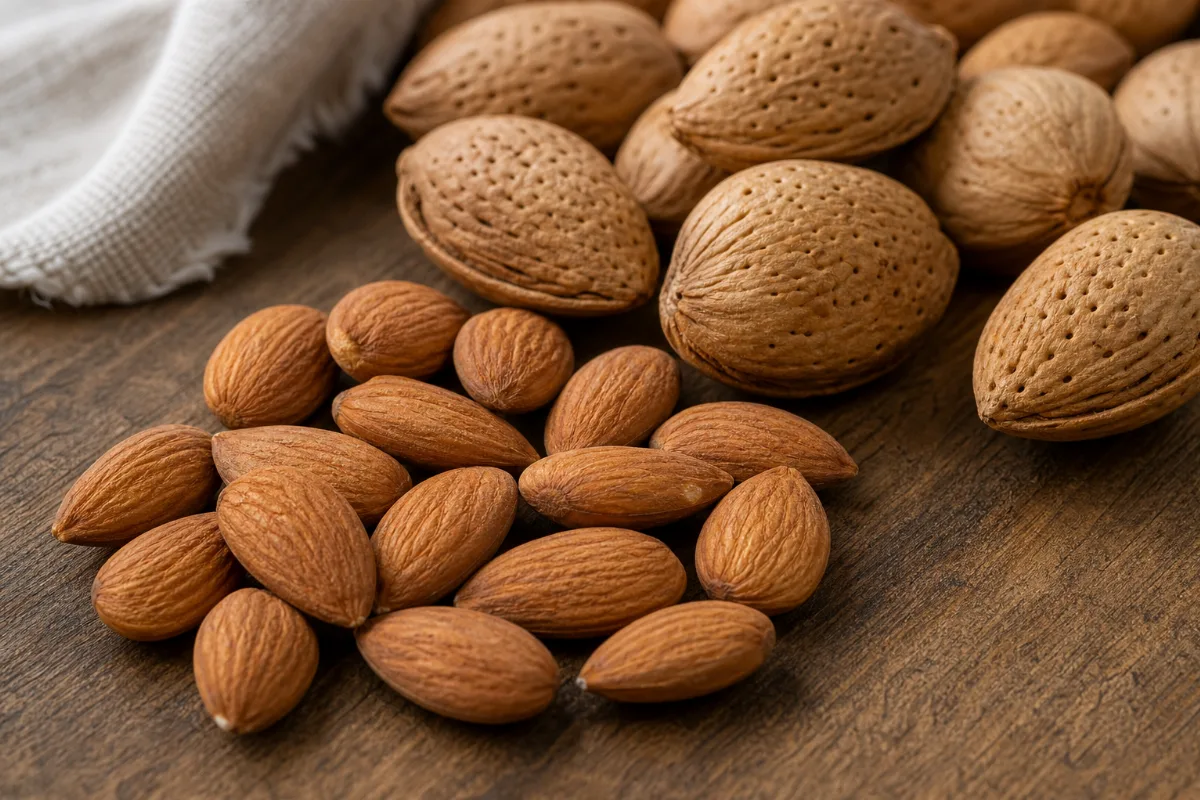
Normal serving (USDA): 1 ounce (28 g), about 23 whole kernels
What meta-analyses of randomized trials found for almonds and cholesterol, blood pressure, body weight and inflammation markers, plus tree nut allergy and almond milk cautions.
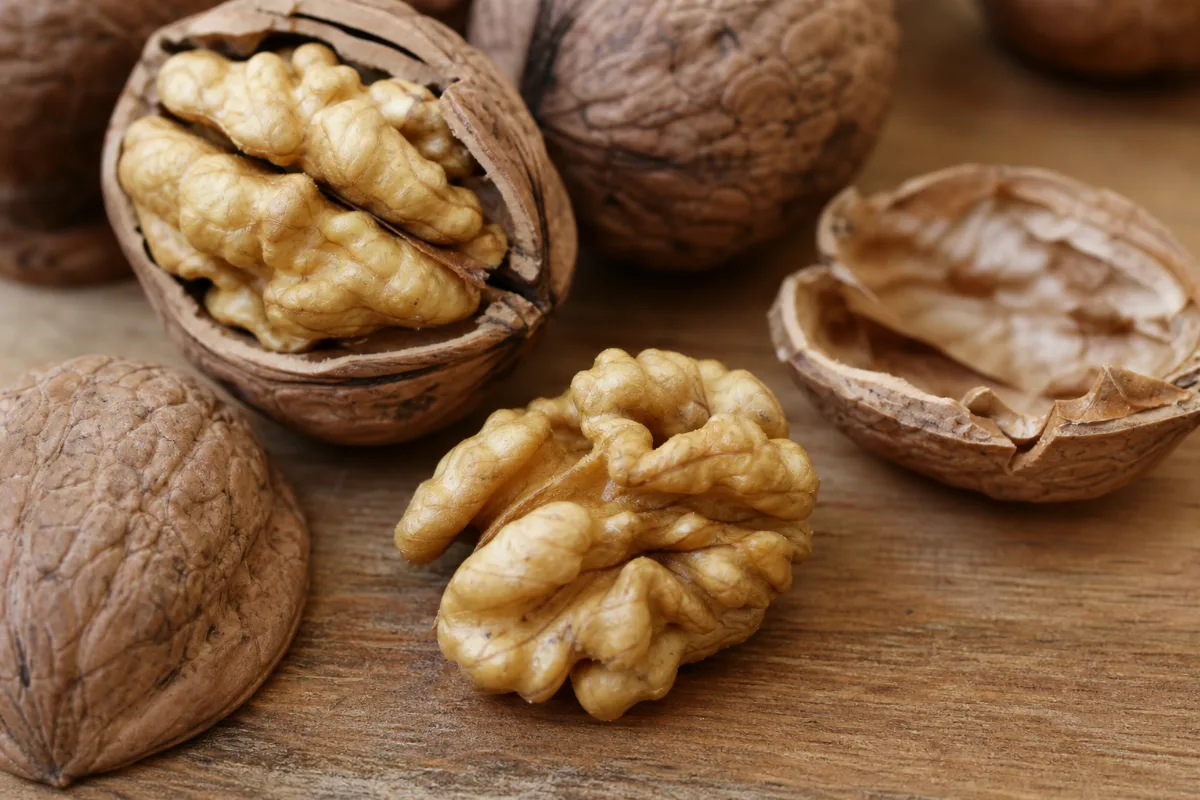
Normal serving (USDA): 1 ounce (28 g), about 14 halves
What meta-analyses of randomized trials found for walnuts and blood cholesterol, triglycerides and blood pressure, what the FDA allows on labels, and tree nut allergy cautions.
Walnuts and blood lipids (LDL, total cholesterol, triglycerides)
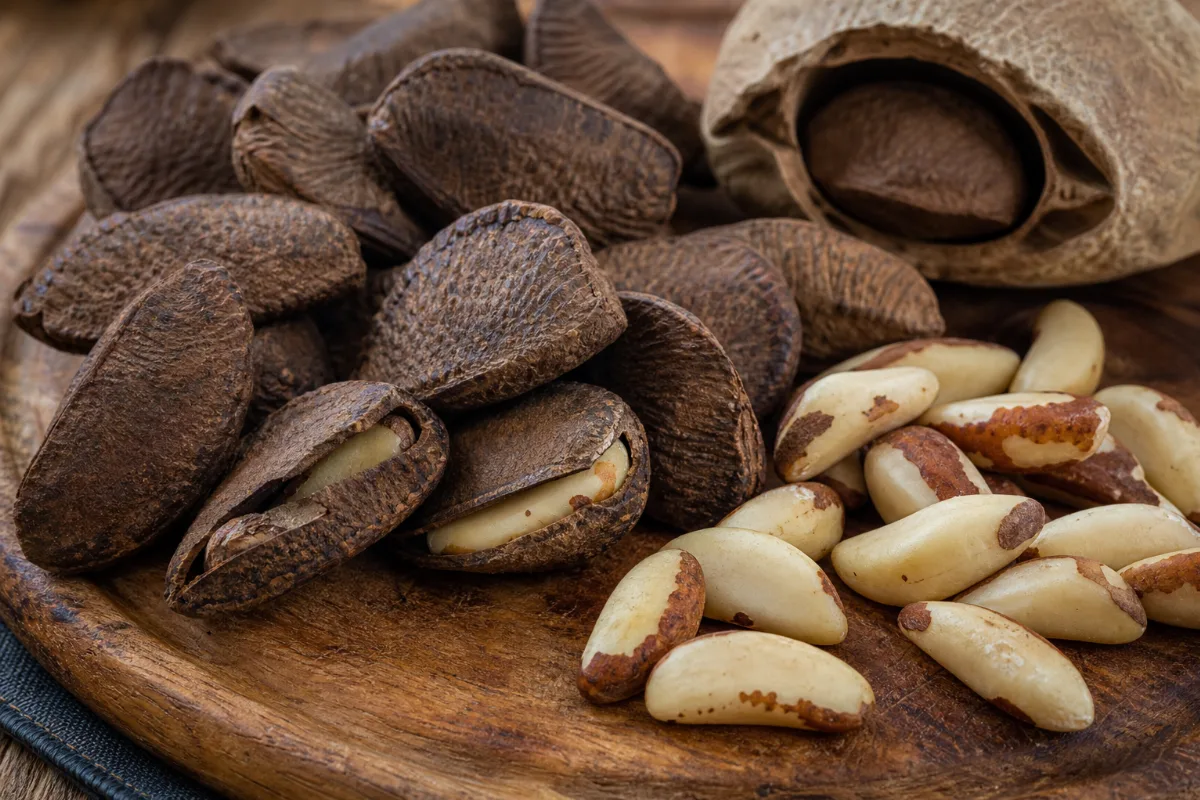
Normal serving (USDA): 1 ounce (28 g), about 6 kernels
Brazil nuts as a food: why their selenium is the main safety point, USDA nutrient values, what trials found on selenium status and cholesterol, allergy, aflatoxin and choking.
Normal serving (USDA): 1 ounce (28 g), about 49 kernels
What meta-analyses of randomized trials found for pistachios and blood sugar, insulin, cholesterol ratios and blood pressure, with limits, tree nut allergy and salt cautions.
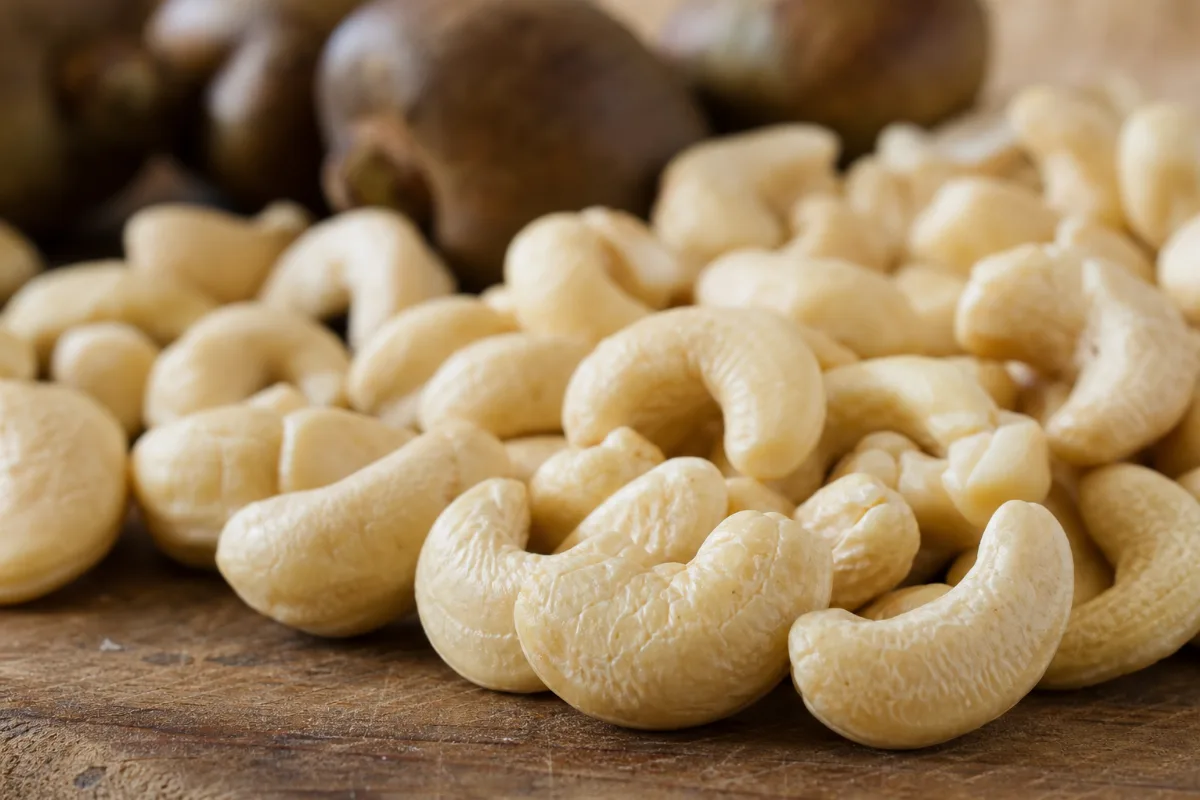
Cashews as a food: USDA nutrients, what trials found on cholesterol, blood pressure and diabetes, plus tree nut allergy, oxalate and choking safety facts.
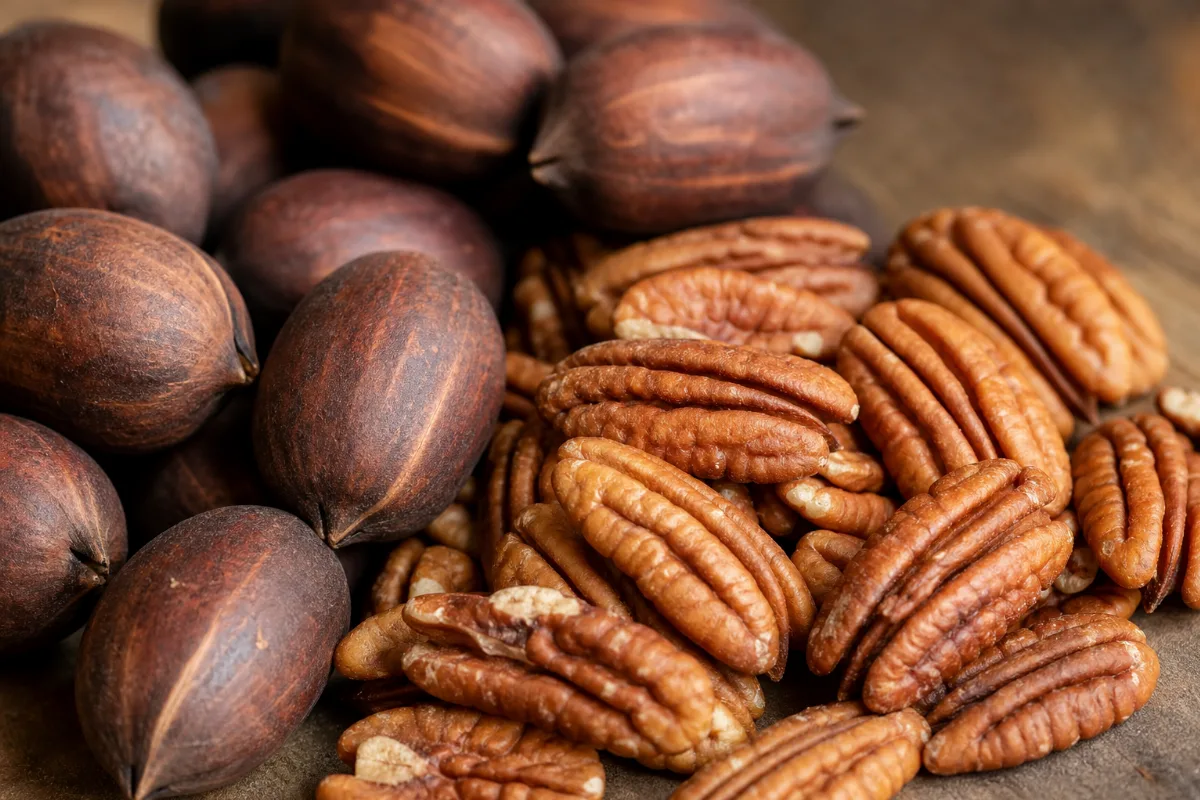
Pecans as a food: USDA nutrients, what trials found on cholesterol, blood sugar and weight, plus tree nut allergy, walnut cross-reactivity and choking safety.
Normal serving (USDA): 1 ounce (28.35 g), about 21 whole kernels
Hazelnuts (filberts) as a food: USDA nutrients, what trials found for LDL cholesterol and weight, tree nut and birch-pollen allergy, choking and storage.
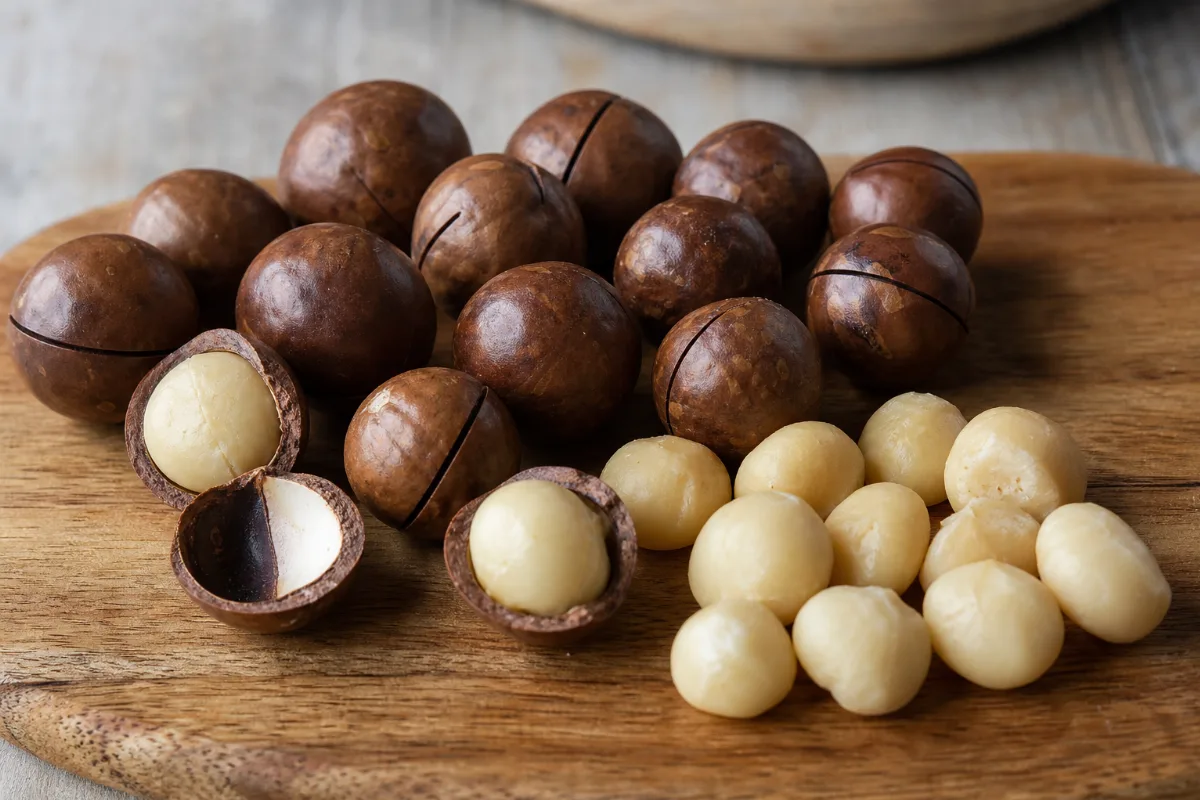
Normal serving (USDA): 1 ounce (28.35 g), about 10-12 kernels
Macadamia nuts as a food: USDA nutrients, the FDA heart claim and what trials found, tree nut allergy, choking, why they are toxic to dogs, and storage.
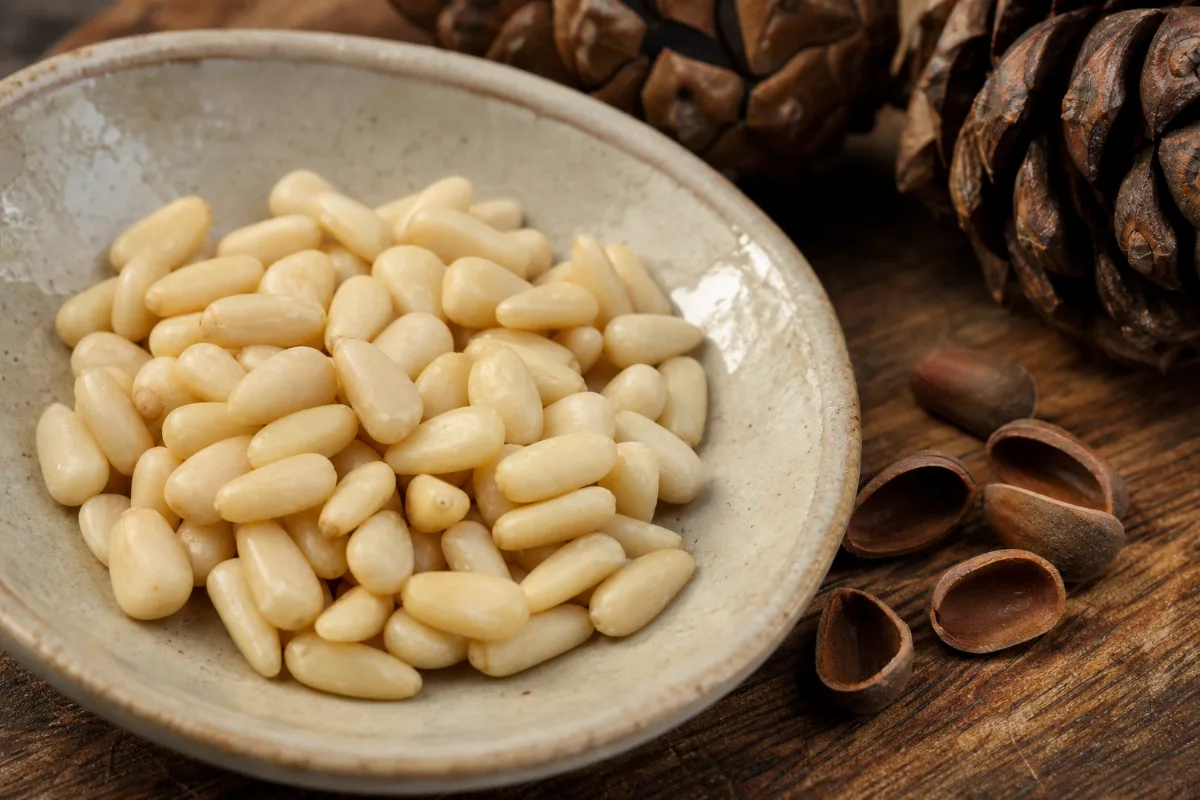
Normal serving (USDA): 1 ounce (28.35 g), about 167 kernels
Pine nuts as a food: what USDA lists in them, the odd bitter-taste problem called pine mouth, allergy and choking cautions, and what research does and does not show.
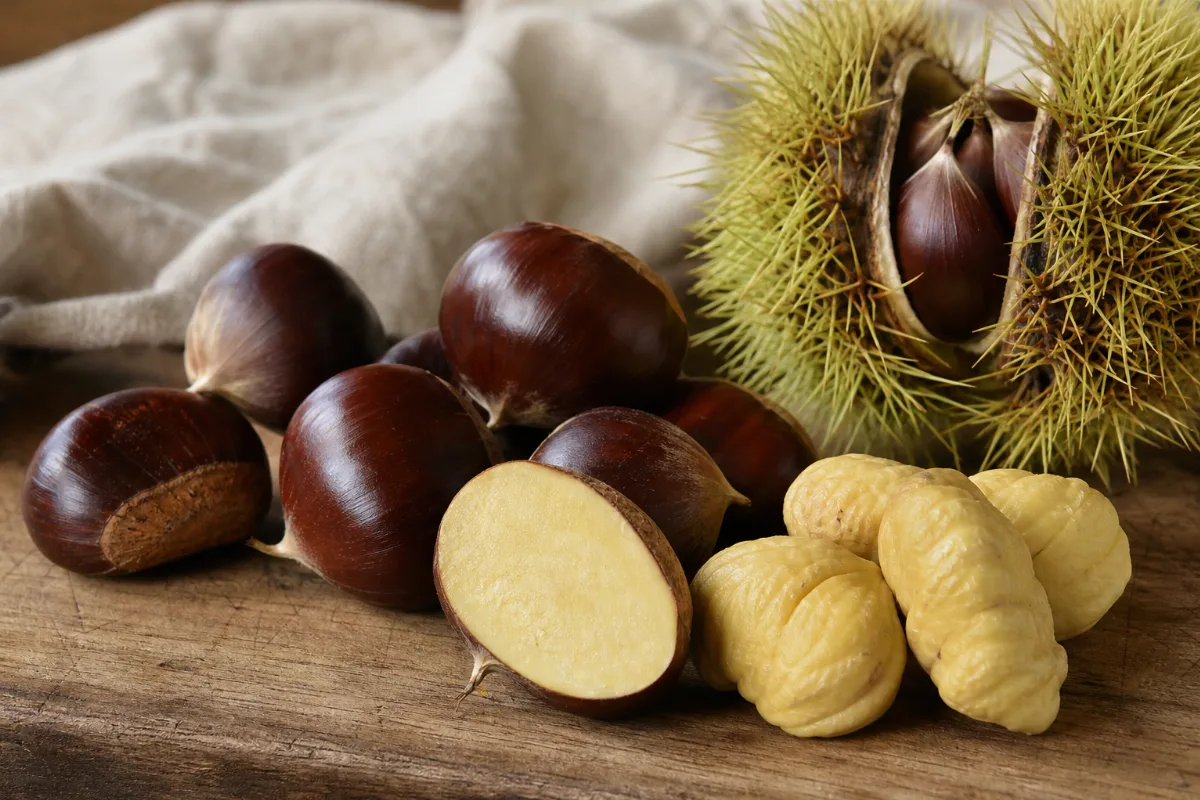
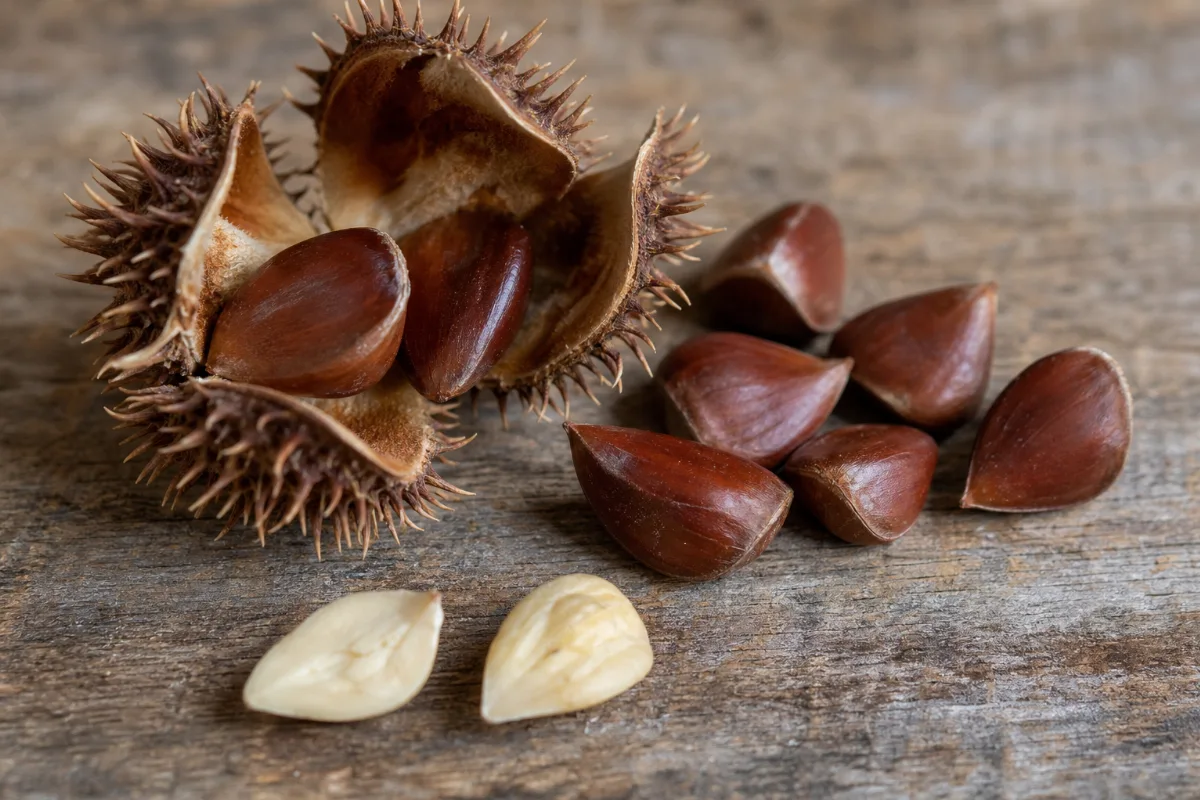
Chestnuts as a food: low-fat and starchy with vitamin C, what research says, latex-fruit allergy links, and why poisonous horse chestnuts are a different plant.
Everyday nutrients: vitamin C, copper and starchy energy
Blood sugar after a meal (chestnut flour bread)
Plant compounds: phenolics and tannins (lab research)
Normal serving (USDA): 1 ounce (28.35 g), about 15 kernels
Pili nuts as a food: USDA nutrient values, how little human research exists, one reported US allergy case, saturated fat, choking cautions and honest limits of the evidence.
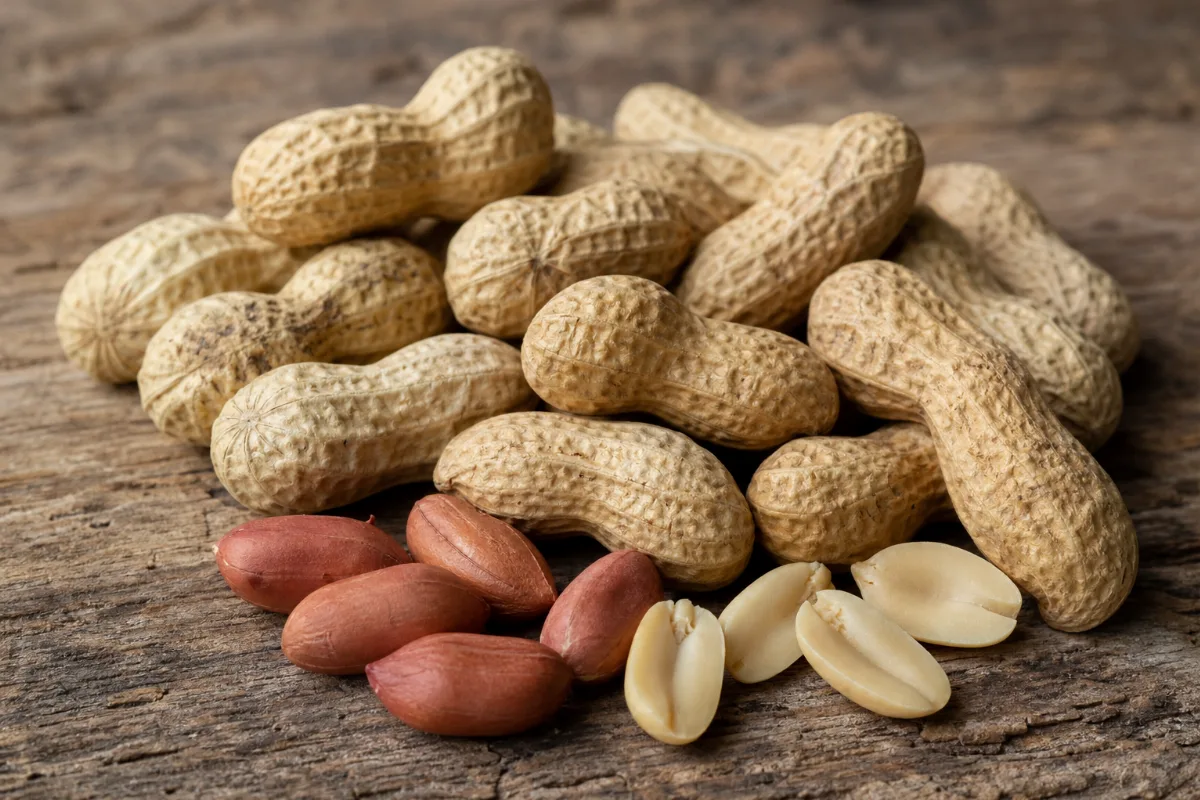
Peanuts as a food: a legume eaten like a nut, peanut vs tree nut allergy, early introduction for babies, aflatoxin, boiled peanuts, heart evidence and calories.
Early peanut introduction and infant peanut allergy
Nut intake and heart disease or death (cohort studies)
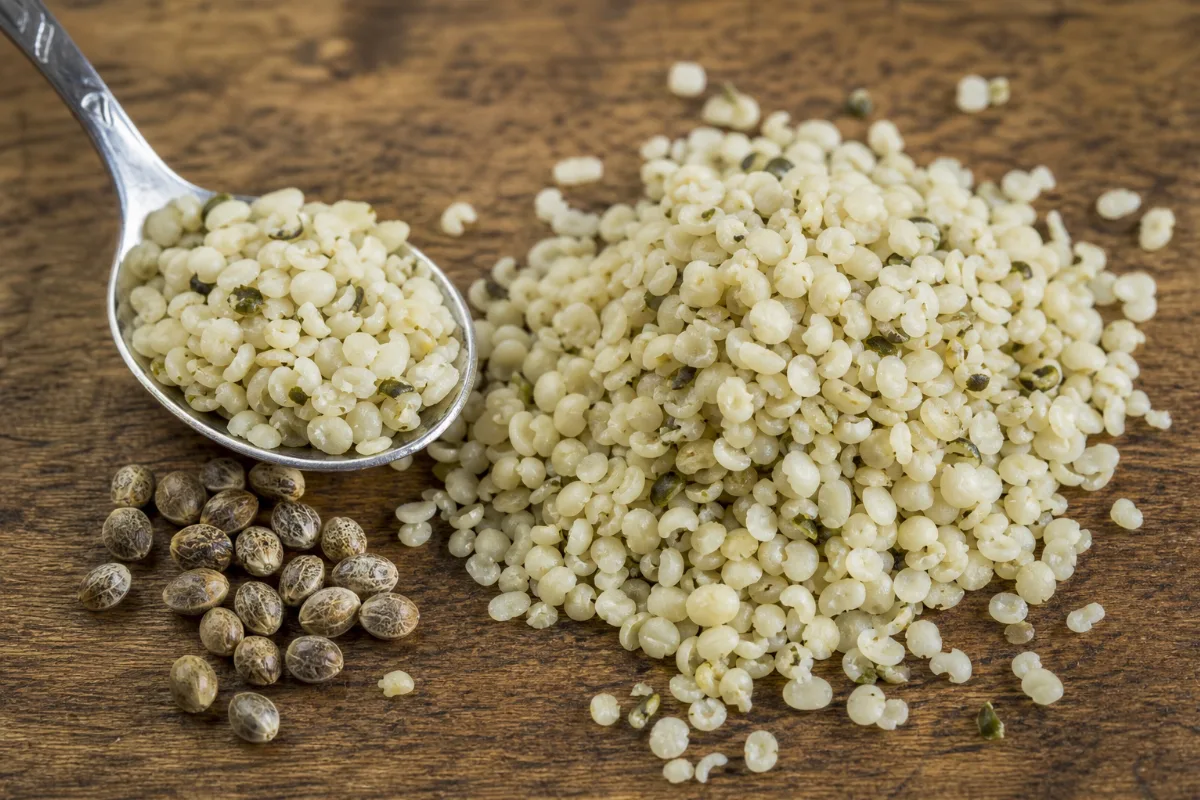
Hulled hemp seeds (hemp hearts) as a food: protein, omega-6 and omega-3 fats, minerals, trace THC, seed allergy, and what the research does and does not show.
Normal serving (USDA): 1 ounce (28 g) shelled kernels
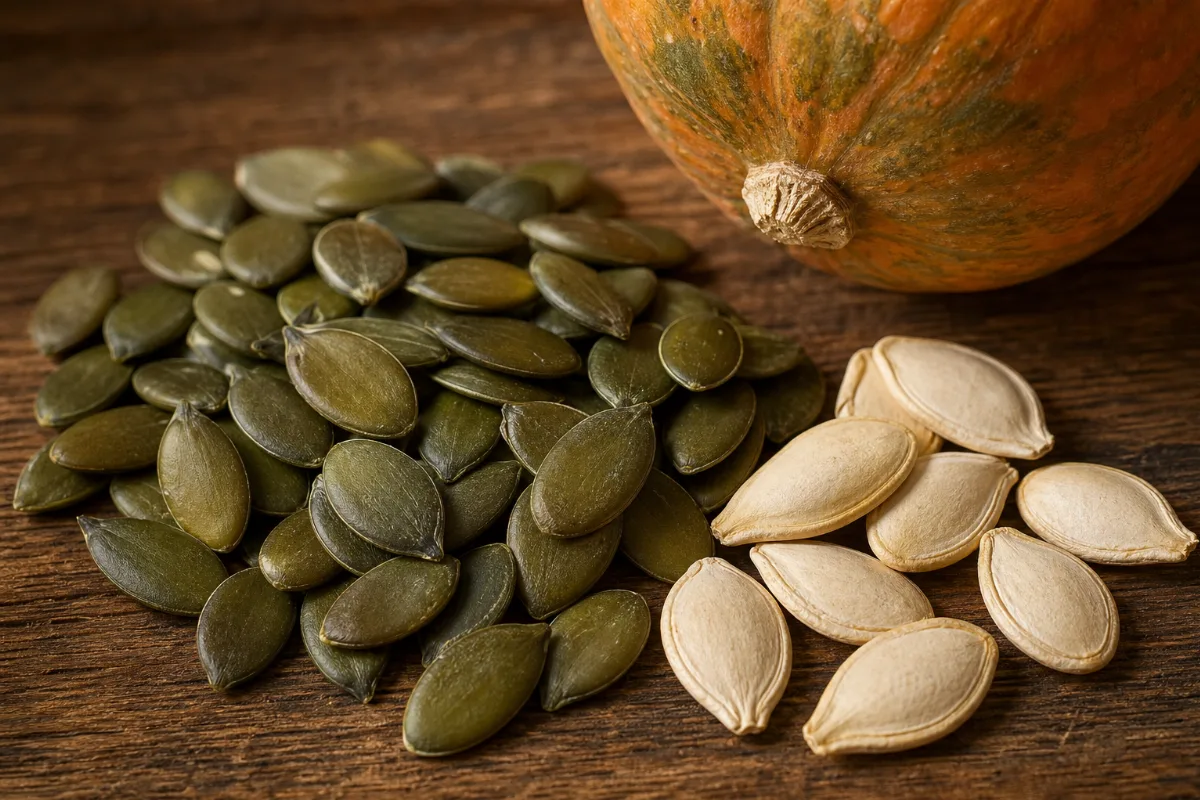
What the few human trials of pumpkin seeds as food found (one small meal study and one prostate trial), why seed oil and extract results differ, and seed cautions.
Pumpkin seeds and blood sugar after a meal
Pumpkin seed and prostate-related urinary symptoms
Normal serving (USDA): 1 ounce (28 g) of shelled kernels (computed from per-100-g values; USDA lists cup portions only)
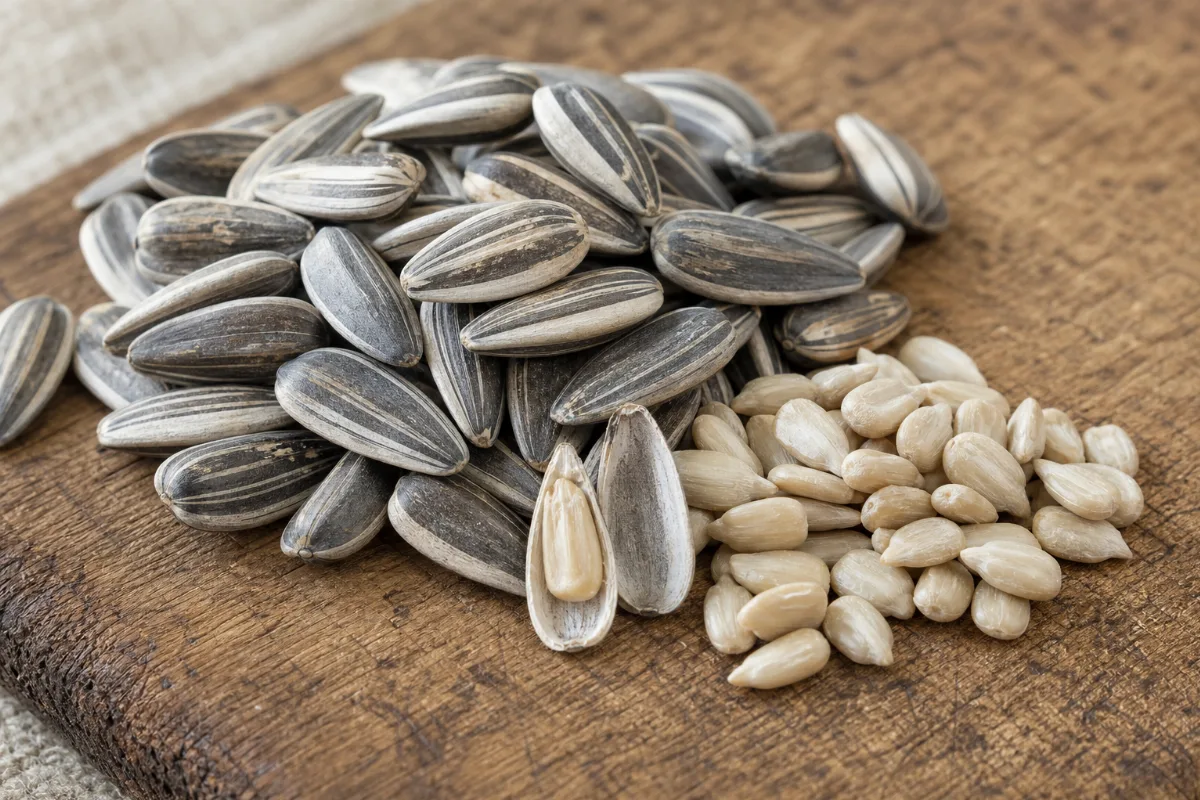
What sunflower seed kernels contain (USDA values), what research does and does not show, and the safety points: allergy, salty in-shell seeds, shells, cadmium and young children.
Normal serving (USDA): 1 tablespoon of whole seeds (9 g)
Sesame seeds and tahini as food: USDA nutrients, sesame allergy (a major US allergen since 2023), small blood pressure and cholesterol trials, and kidney stone cautions.
Blood pressure
Cholesterol and blood fats
Blood sugar (HbA1c) and inflammation markers
Everyday minerals: copper, manganese, magnesium and calcium
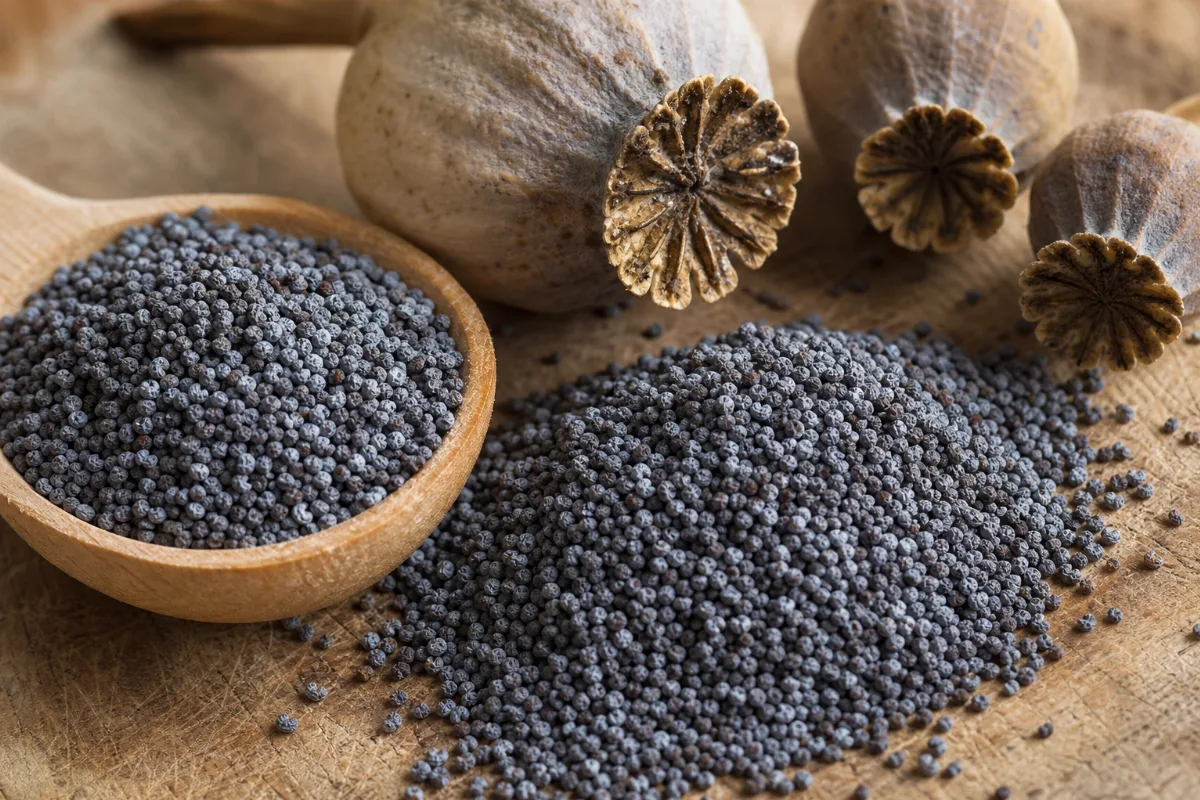
Poppy seeds as food: what is in them, what research does and does not show, and the safety facts on opium alkaloids, drug tests, poppy seed tea and allergy.
Normal serving (USDA): 1 ounce (28.35 g) of dried kernels
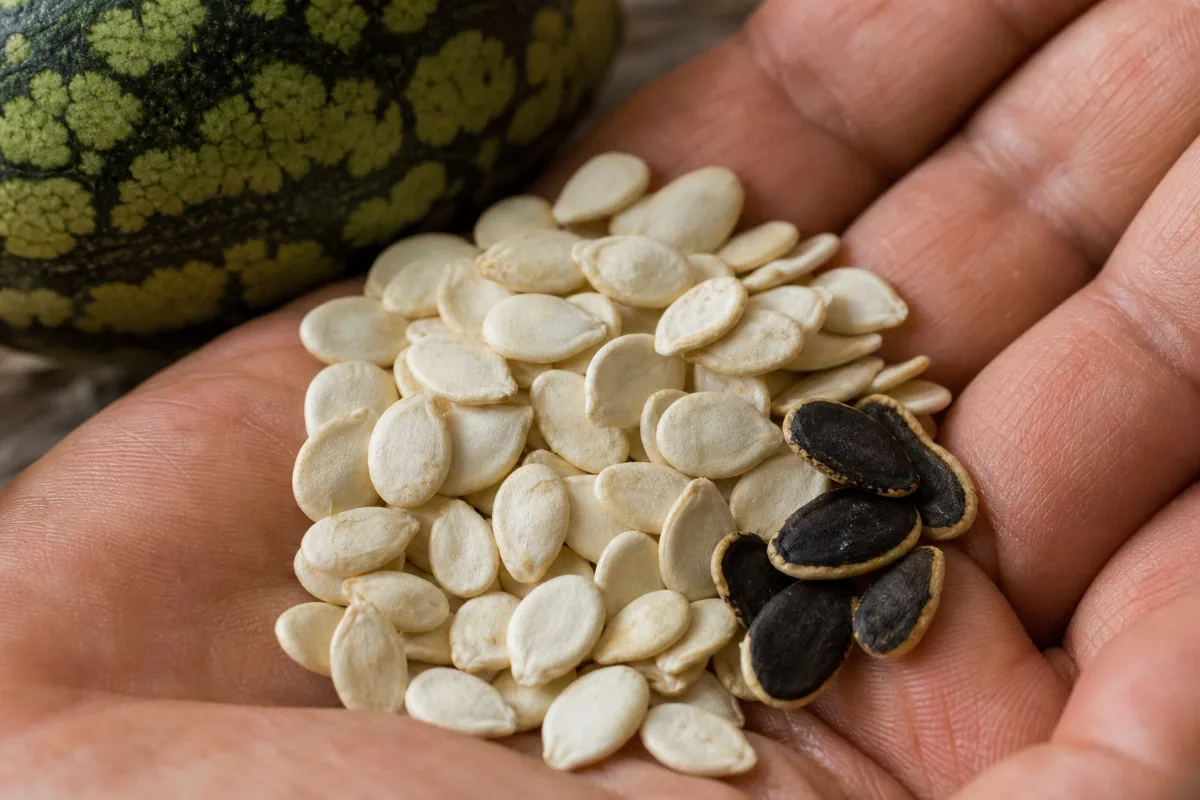
What dried watermelon seed kernels contain (USDA values), how little human research exists, and the safety points: allergy, choking, street-food hygiene and swallowed seeds.
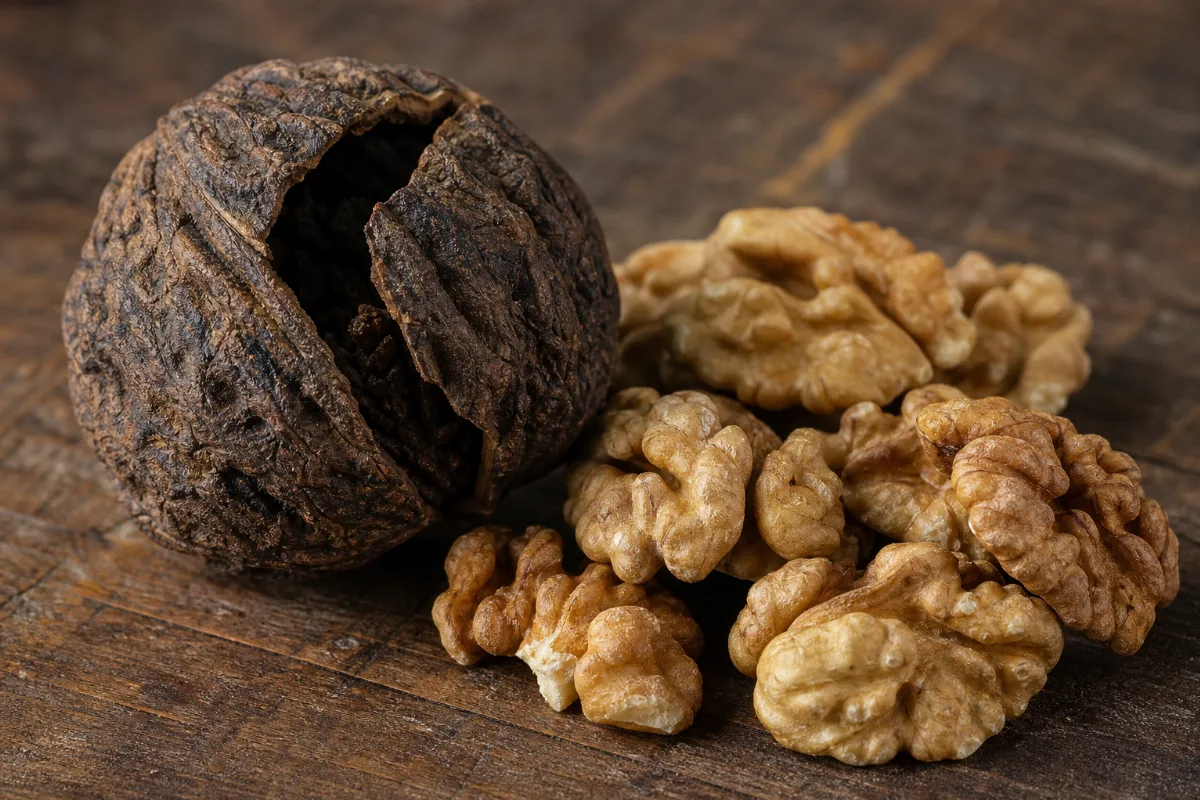
Black walnuts as a food: USDA nutrients, how they compare with English walnuts, tree nut allergy and walnut cross-reactivity, and what research has and has not tested.
Manganese, copper and magnesium
Protein and fat profile
Tree nuts and LDL cholesterol (not tested in black walnuts)
Normal serving (USDA): 1 ounce (28 g), about 9 nuts
Hickory nuts as a food: USDA nutrients, how they relate to pecans, tree nut allergy and choking safety, and an honest note that human research on them is very thin.
Manganese, thiamin and copper
Fat profile
Energy density
Tree nuts and LDL cholesterol (not tested in hickory nuts)
Ginkgo nuts as a food: the ginkgotoxin seizure risk (worst in children), allergy to ginkgo compounds, what USDA lists in them, and how seeds differ from leaf supplements.
Normal serving (USDA): 1 ounce (28 g), about 20 seeds; trials used about 20 g (about 15 seeds)
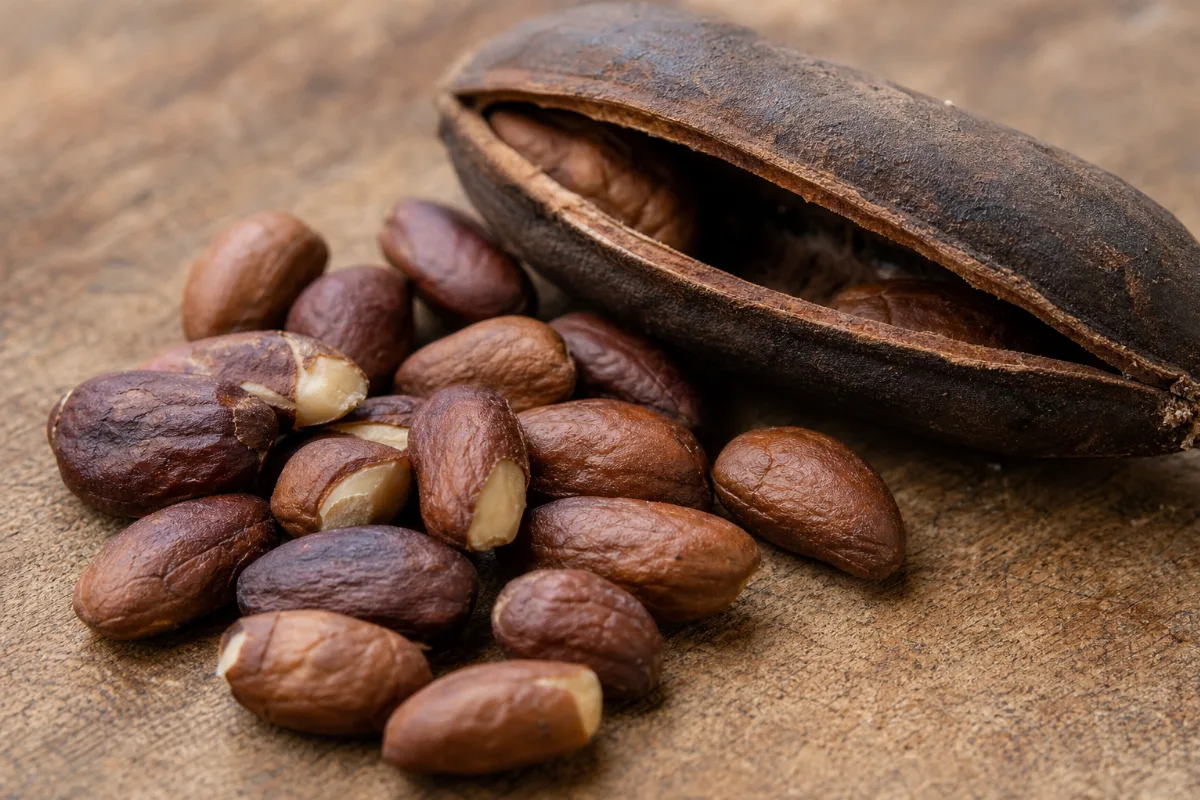
Baru nuts (Dipteryx alata), a Brazilian legume seed sold as a nut: composition from published analyses, small human trials, allergy questions and honest limits.
Normal serving (USDA): 1 ounce (28 g), roasted shelled seeds
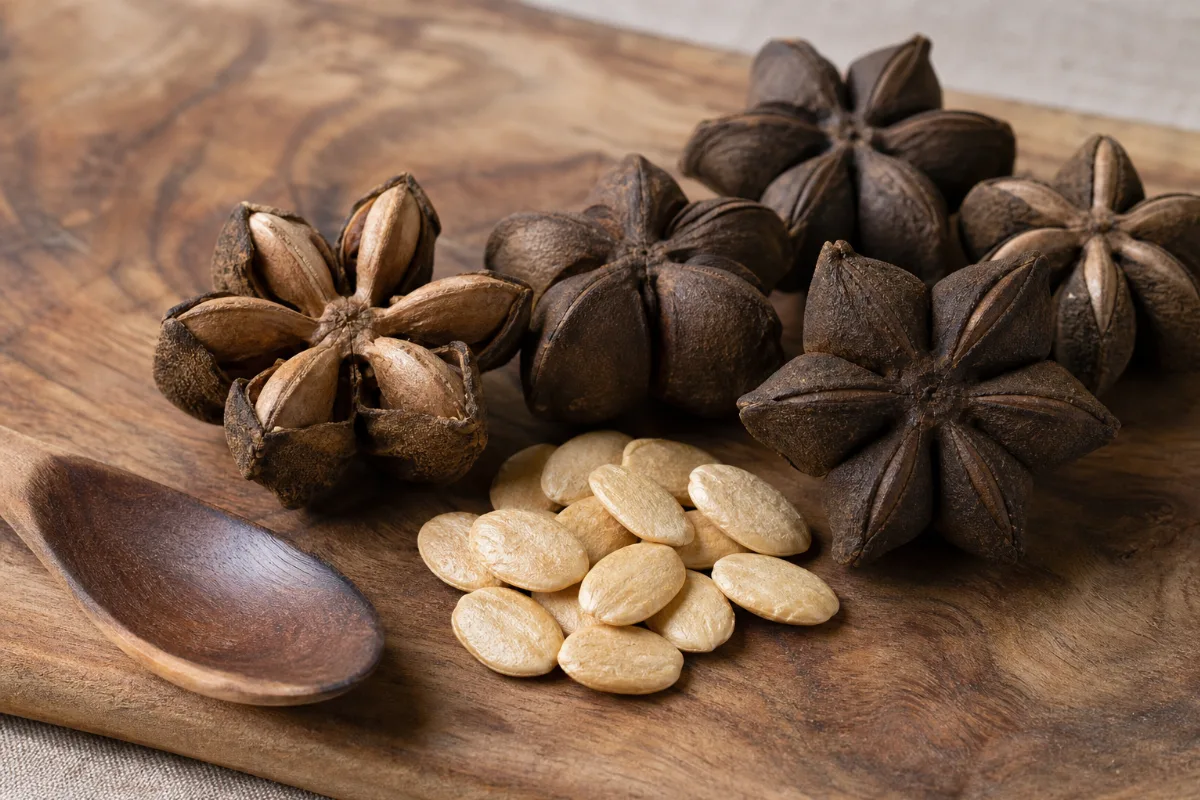
Sacha inchi (Inca peanut) seeds as a food: omega-3 ALA, protein, why raw seeds are roasted, EU status of the oil, small trials of the oil, and what is not known.
Normal serving (USDA): 1 ounce (28 g), about 3 tablespoons
Perilla seeds (deulkkae, egoma) as a food: omega-3 ALA, fiber and minerals, seed allergy reports from Korea, how the seed differs from shiso leaf, and what research shows.
Normal serving (USDA): 1 ounce (28.35 g) of dried kernels
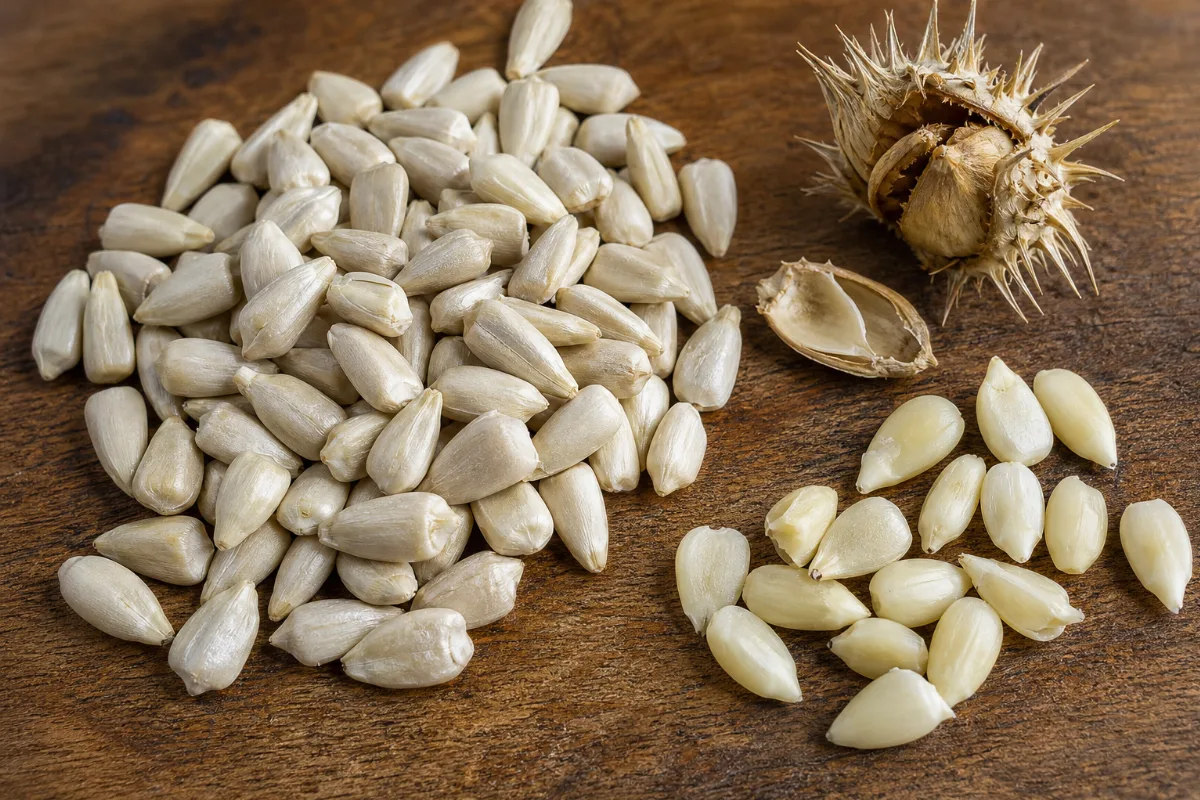
What dried safflower seed kernels contain (USDA values), why the plant is known for its oil, what research does and does not show, and safety points: flower products, allergy and children.
Mineral and thiamin content of the kernels
Whole seed versus oil
Total cholesterol and omega-6 fats
Heart events and deaths with safflower oil and margarine
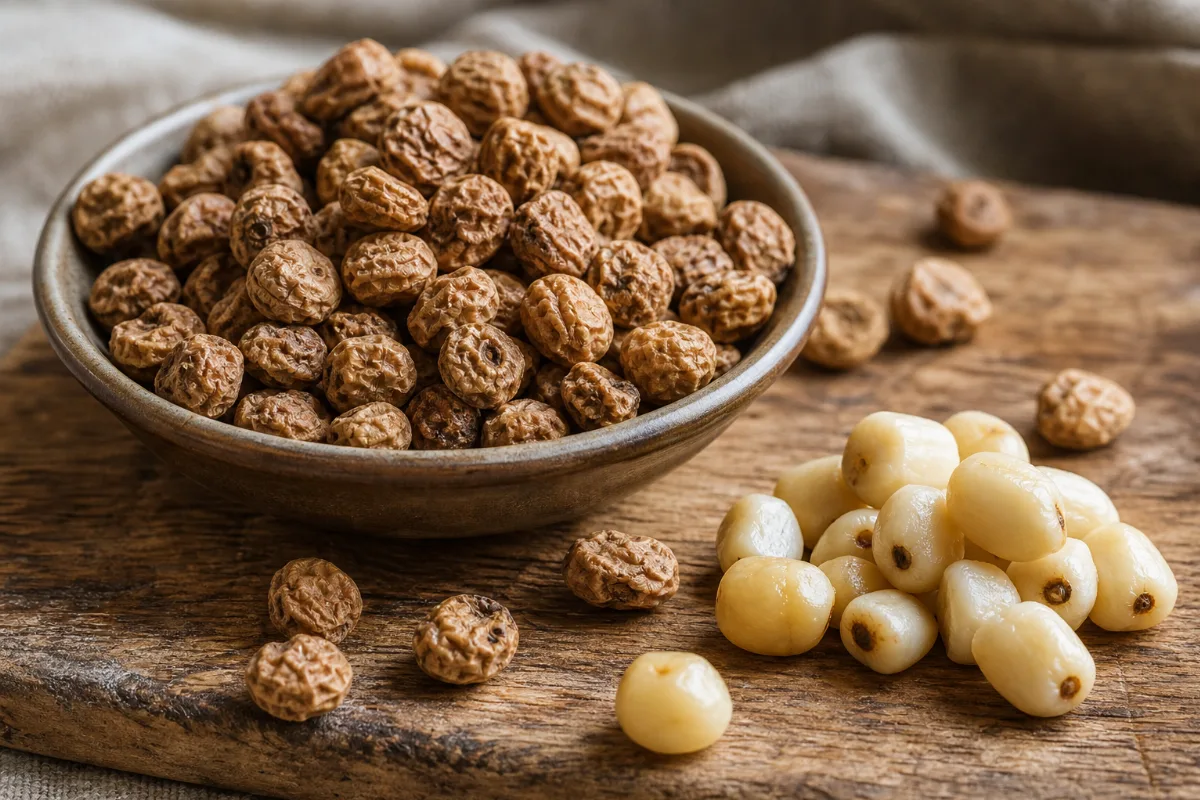
Normal serving (USDA): 1 ounce (28 g) of dried tubers (comparison size; no official serving)
Tigernuts (chufa), small sweet tubers that are not nuts: published composition, fiber and starch, horchata, rare allergy reports, mold toxins and honest limits.
Normal serving (USDA): No official serving (USDA has no entry)
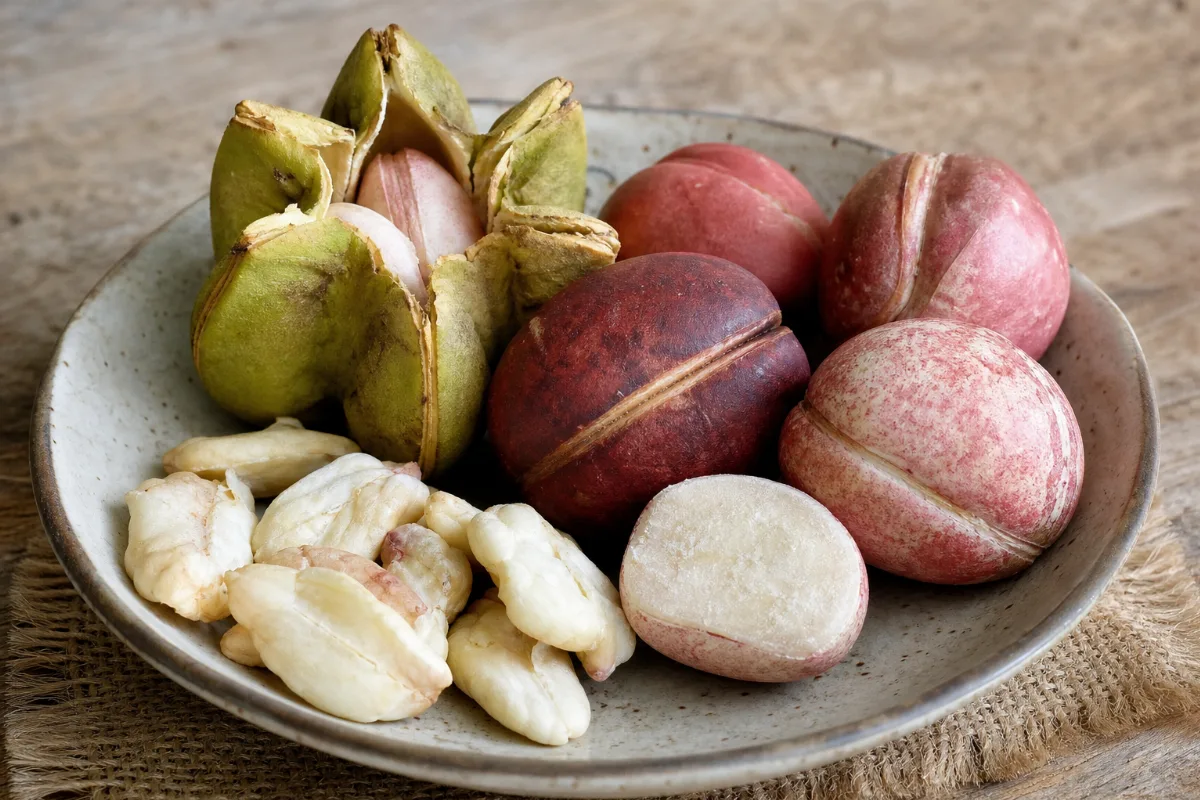
Kola nuts as a food: caffeine content, West African chewing customs, history in cola drinks, cautions for heart, pregnancy and medicines, and why USDA has no entry.
Normal serving (USDA): 1 ounce (28 g) of cacao nibs, our arithmetic from per-100-g values
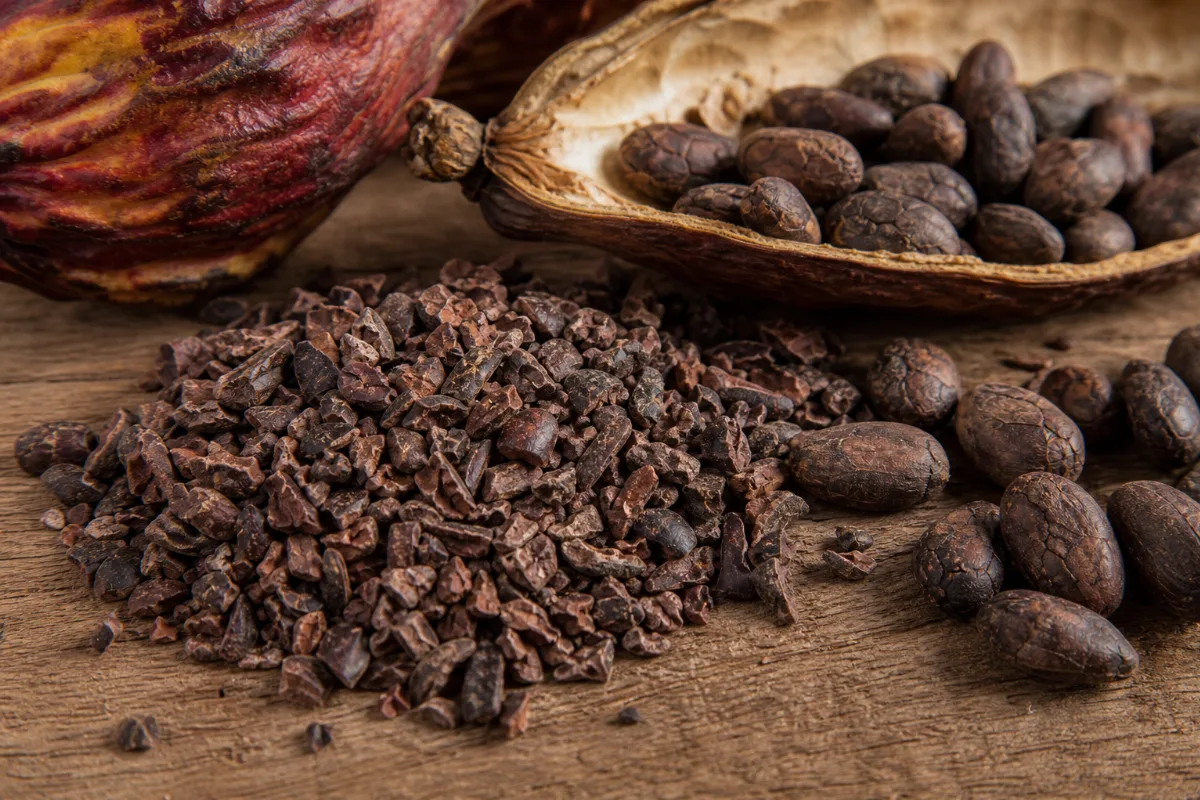
What cacao nibs are, nutrients from peer-reviewed analyses (USDA has no nibs entry), what cocoa research shows, and the cadmium, lead and caffeine points to know.
Normal serving (USDA): 1 cup (262 g, unsweetened shelf stable)
Almond, cashew and other nut milks: how little nut they contain, what fortification and added sugar add, USDA values, and cautions for allergy and for babies and toddlers.
Normal serving (USDA): 1 ounce (28 g) almond paste
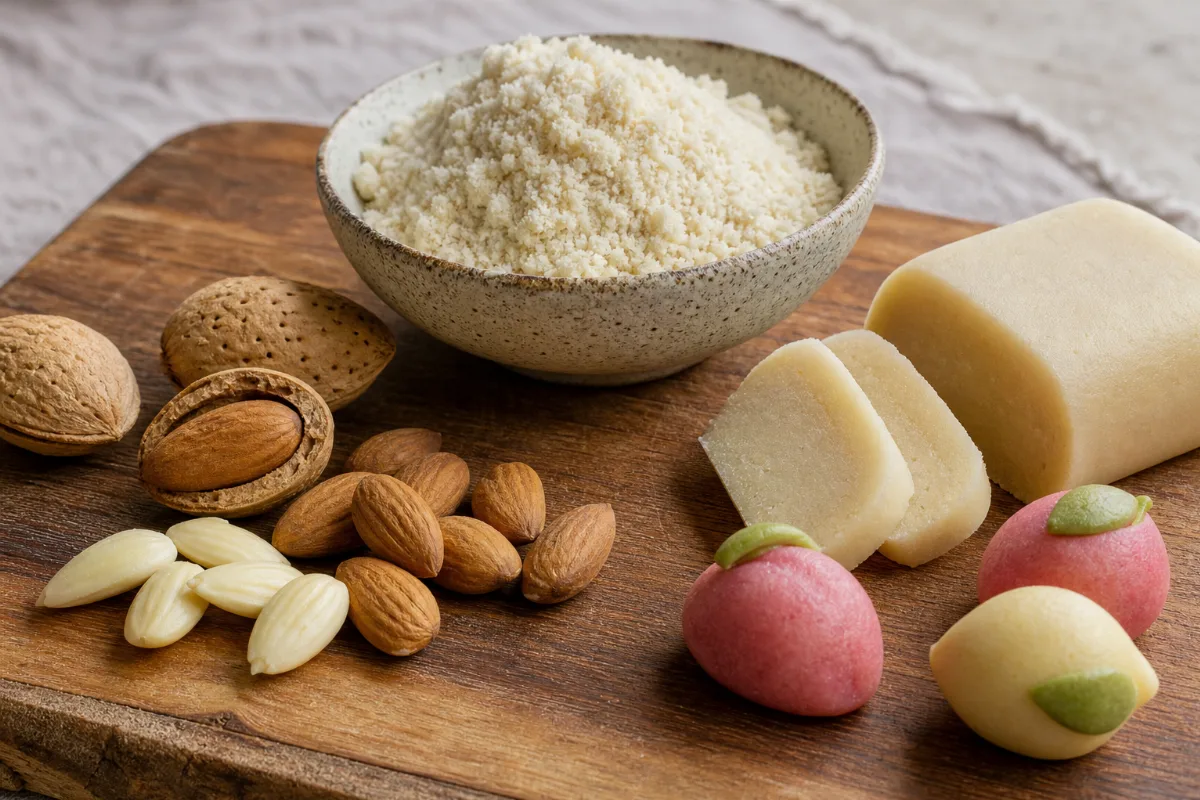
Almond flour, almond paste and marzipan: USDA nutrients, how much sugar they hold, the cyanide question around bitter kernels, allergy, baking and gluten-free labels.
Almond paste versus marzipan: sugar share
Nutrients in almond paste
What 'almond flour' means: blanched, natural, press cake
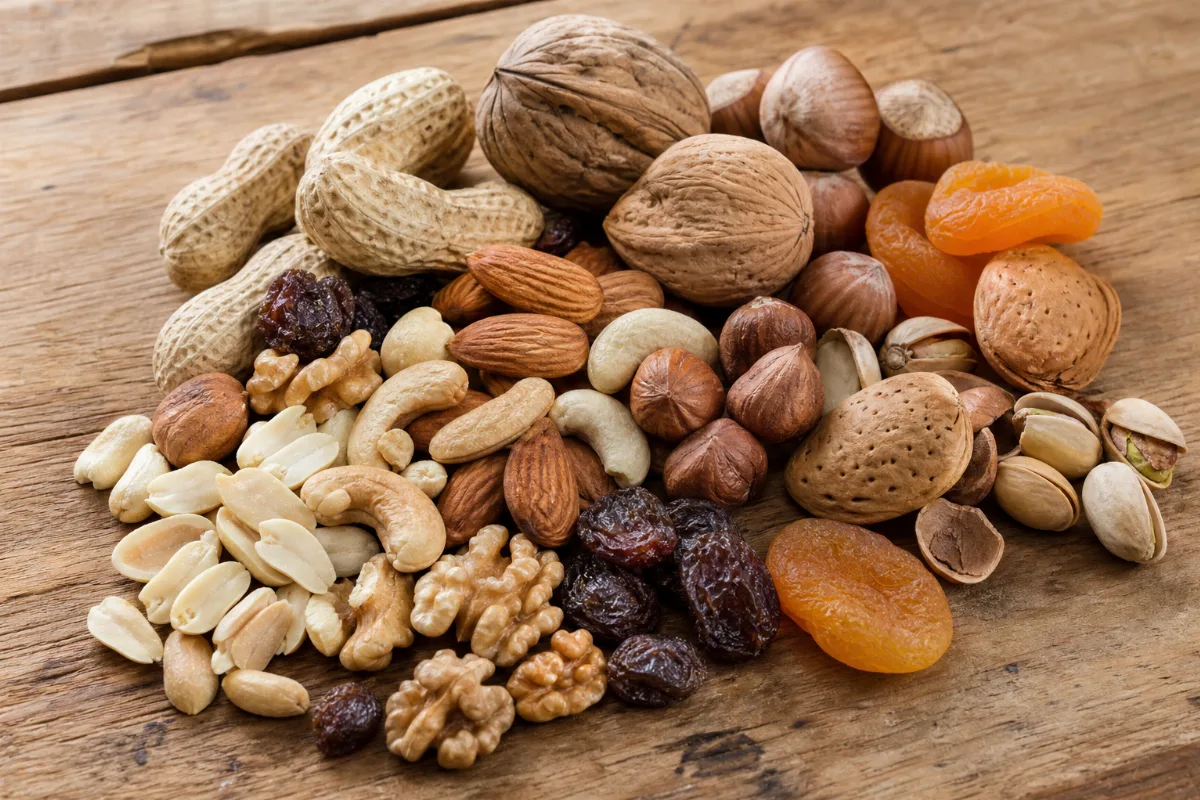
Mixed nuts and trail mix: USDA values, salt, dried fruit and candy, calories and portion creep, many allergens in one bag, choking, and what nut studies show.
No nut or seed matches all of these filters. Try removing one. Some topics (for example most herbs) are not nuts and seeds and live elsewhere on the site.
A link between a nut or seed and a topic means the body needs the nut or seed for that job, or that low intake is linked to it. It does not mean extra supplements help if your intake is already adequate. See each page’s evidence label.
Browse by nut or seed group
Tree nuts
Almonds, walnuts, cashews, pistachios, Brazil nuts and other nuts that grow on trees. Tree nuts are a common cause of serious food allergy.
Tree Nuts(14)Almonds, walnuts, Brazil nuts, pistachios, cashews, pecans, hazelnuts, macadamias, pine nuts, chestnuts, pili nuts, baru, black walnuts, hickory nuts, beechnuts, acorns and ginkgo nuts.
Brazil nuts as a food: why their selenium is the main safety point, USDA nutrient values, what trials found on selenium status and cholesterol, allergy, aflatoxin and ch…
Cashews as a food: USDA nutrients, what trials found on cholesterol, blood pressure and diabetes, plus tree nut allergy, oxalate and choking safety facts.
Pecans as a food: USDA nutrients, what trials found on cholesterol, blood sugar and weight, plus tree nut allergy, walnut cross-reactivity and choking safety.
Hazelnuts (filberts) as a food: USDA nutrients, what trials found for LDL cholesterol and weight, tree nut and birch-pollen allergy, choking and storage.
Macadamia nuts as a food: USDA nutrients, the FDA heart claim and what trials found, tree nut allergy, choking, why they are toxic to dogs, and storage.
Pine nuts as a food: what USDA lists in them, the odd bitter-taste problem called pine mouth, allergy and choking cautions, and what research does and does not show.
Chestnuts as a food: low-fat and starchy with vitamin C, what research says, latex-fruit allergy links, and why poisonous horse chestnuts are a different plant.
Pili nuts as a food: USDA nutrient values, how little human research exists, one reported US allergy case, saturated fat, choking cautions and honest limits of the evide…
Black walnuts as a food: USDA nutrients, how they compare with English walnuts, tree nut allergy and walnut cross-reactivity, and what research has and has not tested.
Hickory nuts as a food: USDA nutrients, how they relate to pecans, tree nut allergy and choking safety, and an honest note that human research on them is very thin.
Ginkgo nuts as a food: the ginkgotoxin seizure risk (worst in children), allergy to ginkgo compounds, what USDA lists in them, and how seeds differ from leaf supplements.
Baru nuts (Dipteryx alata), a Brazilian legume seed sold as a nut: composition from published analyses, small human trials, allergy questions and honest limits.
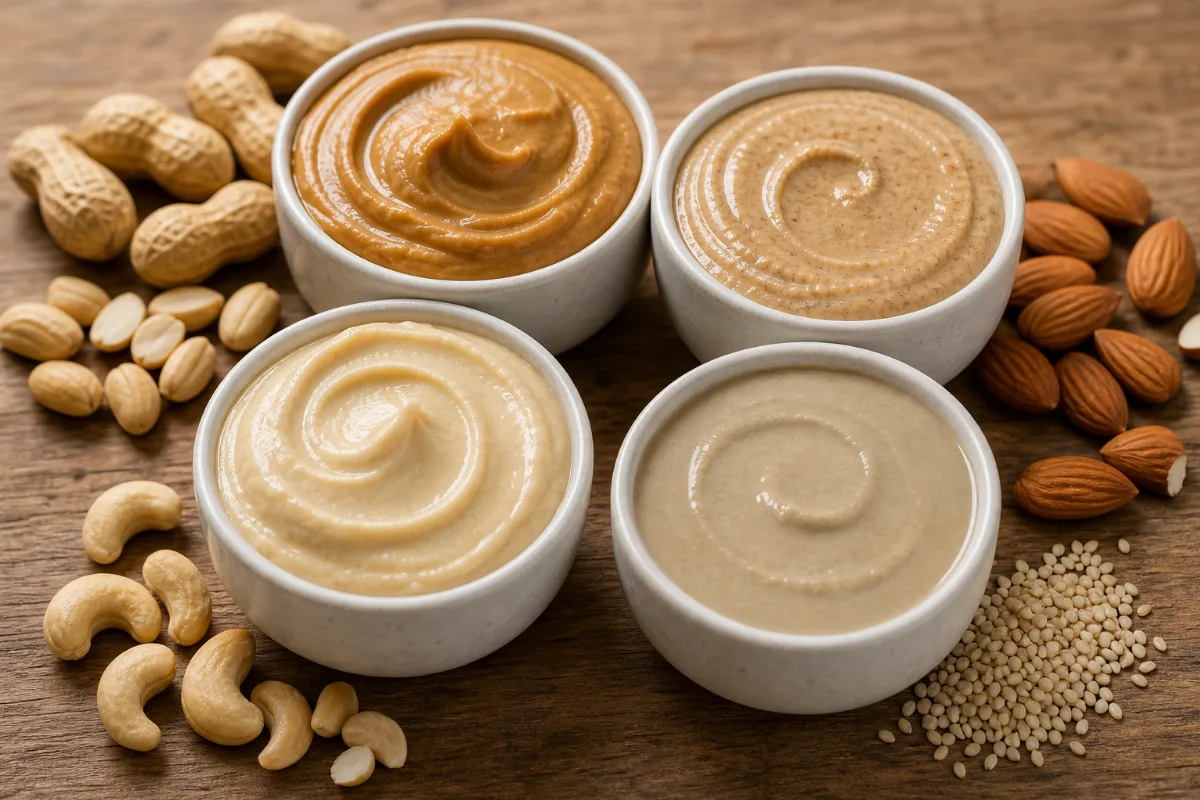
Peanuts & Nut Butters(2)Peanuts (a legume eaten like a nut) and how nut and seed butters compare.
Peanuts as a food: a legume eaten like a nut, peanut vs tree nut allergy, early introduction for babies, aflatoxin, boiled peanuts, heart evidence and calories.
Hulled hemp seeds (hemp hearts) as a food: protein, omega-6 and omega-3 fats, minerals, trace THC, seed allergy, and what the research does and does not show.
What sunflower seed kernels contain (USDA values), what research does and does not show, and the safety points: allergy, salty in-shell seeds, shells, cadmium and young …
Sesame seeds and tahini as food: USDA nutrients, sesame allergy (a major US allergen since 2023), small blood pressure and cholesterol trials, and kidney stone cautions.
Poppy seeds as food: what is in them, what research does and does not show, and the safety facts on opium alkaloids, drug tests, poppy seed tea and allergy.
What dried watermelon seed kernels contain (USDA values), how little human research exists, and the safety points: allergy, choking, street-food hygiene and swallowed se…
Sacha inchi (Inca peanut) seeds as a food: omega-3 ALA, protein, why raw seeds are roasted, EU status of the oil, small trials of the oil, and what is not known.
Perilla seeds (deulkkae, egoma) as a food: omega-3 ALA, fiber and minerals, seed allergy reports from Korea, how the seed differs from shiso leaf, and what research show…
What dried safflower seed kernels contain (USDA values), why the plant is known for its oil, what research does and does not show, and safety points: flower products, al…
Other Nuts, Seeds & Nut-Based Foods(6)Tigernuts, kola nuts, cacao nibs, nut milks, nut flours and marzipan, and mixed nuts and trail mix.
Tigernuts (chufa), small sweet tubers that are not nuts: published composition, fiber and starch, horchata, rare allergy reports, mold toxins and honest limits.
Kola nuts as a food: caffeine content, West African chewing customs, history in cola drinks, cautions for heart, pregnancy and medicines, and why USDA has no entry.
What cacao nibs are, nutrients from peer-reviewed analyses (USDA has no nibs entry), what cocoa research shows, and the cadmium, lead and caffeine points to know.
Almond, cashew and other nut milks: how little nut they contain, what fortification and added sugar add, USDA values, and cautions for allergy and for babies and toddler…
Almond flour, almond paste and marzipan: USDA nutrients, how much sugar they hold, the cyanide question around bitter kernels, allergy, baking and gluten-free labels.
Mixed nuts and trail mix: USDA values, salt, dried fruit and candy, calories and portion creep, many allergens in one bag, choking, and what nut studies show.
Safety & Practical Guides(3)Allergy basics, storing nuts and seeds safely, and what raw, roasted, soaked and sprouted really change.
Peanut, tree nut and sesame allergies are three different allergies. Learn what US labels cover, how cross-reactivity works, the emergency signs, and what testing needs.
What raw, roasted, soaked, sprouted and activated mean for nuts and seeds, and which claims have research behind them and which are mostly marketing.
Search nuts and seeds: popular nuts and seeds, A to Z, search with filters, more ways
Well-studied nuts and seeds to start with
These nuts and seeds have the most human research summarized in our guides (counted from the evidence ratings on each profile). More research does not mean the nut or seed works or is safe for you: open the guide to see what was found, including negative and mixed results.
Every published nut or seed guide (37), with its names and what it is made of. Each name opens one guide that brings together identity, traditional use, research, safety, forms and sources.
A (2)
AcornsQuercus spp., Quercus ilexAlso: oak nuts, acorn nuts, holm oak acorns
AlmondsPrunus dulcisAlso: almond, sweet almond, bitter almond (a different, toxic-when-raw type, not sold as food kernels)
B (4)
Baru NutsDipteryx alataAlso: baru nut, baru almond, cumbaru
BeechnutsFagus grandifolia, Fagus sylvaticaAlso: beech nuts, beechmast, American beechnut
Black WalnutsJuglans nigraAlso: black walnut, eastern black walnut
Brazil NutsBertholletia excelsaAlso: Brazil nut, Para nut, castanha-do-Brasil
Nuts and seeds whose guide documents a point to check for this concern. Being listed does not mean the nut or seed is unsafe for everyone. Open the guide to read the details.
The best level of evidence in each nut or seed guide for any listed benefit. A stronger label for one use says nothing about its other uses or its safety.
Clinical trials support a benefit (6 nuts and seeds)
Nuts and seeds have been used for health in many cultures for centuries. A traditional use tells you what people have done, not that it works. Here every nut or seed is listed under the goals, body systems and actions its guide connects it to, and each link carries the strength of the evidence behind it.
Strongest
6 nuts and seeds
Clinical trials support a benefit
Promising
24 nuts and seeds
Early or mixed human evidence
Early science
6 nuts and seeds
Lab or animal research only
Unknown
1 nuts and seeds
Too little evidence to say
Each nut or seed is counted once, at the strongest level its guide documents for any use. A strong label for one use says nothing about its other uses or its safety. "Traditional use" alone is not one of these labels: where a guide only reports history, the link is rated "Too little evidence to say". Read the guide on traditional use and research evidence.
Nuts and seeds by wellness goal
Each card shows how many nuts and seeds are linked to a goal and how strong the evidence is. Green means clinical trials support a benefit; grey means too little evidence. These are links the guides document, not recommendations. For the wider picture, see the Wellness Goals section.
Nuts and seeds by body system, body part and action
The same links, organized the way anatomy and physiology textbooks do. "Action" describes what a nut or seed is said to do (for example calming or digestive support); it names the claim, not the proof.
Side-by-side guides for nuts and seeds that people confuse or choose between. They explain differences; they do not rank the nuts and seeds.
What research shows, by health concern
Each guide below looks at one concern, from sleep to skin, and separates nuts and seeds that were tested in people from nuts and seeds that are only traditional or lab-tested.
People have used nuts and seeds for health for many centuries. A traditional use tells you what people have done, not that it works. For what research found, see the Health Benefits and Scientific Evidence tabs.
Traditional nut or seed medicine
Ayurveda, Traditional Chinese Medicine and other traditions each use natural remedies in their own systems. The nuts and seeds below are the ones whose guide mentions the tradition in its own text. That a tradition uses a nut or seed is history, not clinical evidence. Each guide says separately what trials found.
African traditional medicine · 1 nuts and seeds mention it
Nuts and seeds are active substances. Some interact with prescription medicines, some are unsafe in pregnancy or with certain conditions, and some have been linked to serious harm. This tab brings together what the individual nut or seed guides document, plus the general rules. Medicine interactions have their own tab.
If someone may have been poisoned or is seriously unwell
▸Collapse, seizure, trouble breathing, swelling of the face or throat, chest pain or a fast irregular heartbeat: call your local emergency number now (911 in the United States and Canada, 999 in the UK, 112 in the European Union).
▸Swallowed too much of a nut or seed, or a child or pet got into a product, and the person seems well: in the United States call Poison Help, 1-800-222-1222 (free, 24 hours). Elsewhere, call your national poison centre or local emergency number.
▸Yellow skin or eyes, dark urine, severe belly pain, or a new rash after starting a nut or seed: stop it and contact a clinician the same day.
Nut, peanut and sesame allergies can be severe. For trouble breathing or swelling of the face or throat, call 911 (or your local emergency number).
Whole nuts and large seeds are a choking risk for children under 5. Brazil nuts carry a lot of selenium, so the amount matters.
Some foods affect medicines, and oils, extracts and powders are not the same as the whole food. Ask a pharmacist or clinician if you take medicines or have a medical condition.
"Natural" does not mean safe. Natural products can contain strong substances; some are harmful. Natural Does Not Mean Safe
Tell your pharmacist and clinician about every nut or seed product you use, and ask before combining one with prescription or over-the-counter medicines.
Be extra careful with narrow-margin medicines such as warfarin, antidepressants, immunosuppressants, diabetes and blood pressure medicines.
Tell the surgical team about every nut or seed before an operation. Many teams ask people to stop nut or seed products ahead of surgery; ask yours how long.
Pregnancy, breastfeeding, children and older adults are groups where good safety data are often missing, so official sources usually advise asking first.
Start one product at a time, at the label amount, so a reaction can be traced. Stop and get advice if you feel unwell.
Products vary. Contamination, substitution and mislabelling are documented problems; third-party testing can reduce but not remove the risk.
Each line comes from a nut or seed's own guide, where it is backed by cited sources: 140 documented risks across 37 of the 37 nuts and seeds. A nut or seed missing from a list is not proven safe: it may simply not have been studied. Open the nut or seed's guide for the full wording and sources.
Oxalate and kidney stones. Almonds are high in oxalate. In a small lab-style study 150 g of almonds raised urine oxalate, and in another study about 6 perce…
Oxalate and kidneys. A 2026 case report describes kidney injury with calcium oxalate crystals in a man with kidney disease who ate 3 to 4 ounces of ca…
Potassium and kidney disease. NIDDK says potassium and phosphorus can build up in the blood in chronic kidney disease and a dietitian should set limits. Chestn…
Potassium and phosphorus in kidney disease. NIDDK says potassium and phosphorus can build up in chronic kidney disease and a dietitian should set limits. Dried lotus seeds h…
Nuts, potassium and phosphorus in kidney disease. The National Kidney Foundation says most people with chronic kidney disease do not need to limit nuts and seeds, but people on he…
Seeds, potassium and phosphorus in kidney disease. The National Kidney Foundation says most people with chronic kidney disease do not need to limit nuts and seeds, but hemodialysis…
Potassium and kidney disease. NIDDK says potassium and phosphorus can build up in the blood in chronic kidney disease and a dietitian should set limits. Chestn…
Blood pressure medicines and other medicines. MSK says chia might add to the effect of blood pressure medicines, and notes high omega-3 intakes could alter bleeding. No specif…
Heart, blood pressure and rhythm cautions. The EMA lists hypertension and heart rhythm problems as reasons for caution, and caffeine can raise heart rate and blood pressure.
Potassium and phosphorus in kidney disease. NIDDK says potassium and phosphorus can build up in chronic kidney disease and a dietitian should set limits. Dried lotus seeds h…
Nuts, potassium and phosphorus in kidney disease. The National Kidney Foundation says most people with chronic kidney disease do not need to limit nuts and seeds, but people on he…
Seeds, potassium and phosphorus in kidney disease. The National Kidney Foundation says most people with chronic kidney disease do not need to limit nuts and seeds, but hemodialysis…
Tannins in raw acorns and why they are leached. A 2026 study says acorns' high tannin content causes bitterness, reduced nutrient absorption and may prevent digestion and cause …
Mold and aflatoxin in stored nuts. Aflatoxin, made by molds, is a recognized contaminant of tree nuts and a potent liver carcinogen; processing and sorting methods …
Microbes and mold toxins in nuts. A 2026 survey of baru nuts found mold counts and identified Salmonella and Cronobacter among isolated bacteria; MedlinePlus says …
Raw beechnuts and the toxin fagin. A German consumer magazine says raw beechnuts contain fagin, that larger amounts can cause poisoning (mainly strong stomach and g…
European versus American beechnuts. A veterinary poison helpline says American beech nuts are much less toxic than European ones and are considered safe in small amo…
Selenium upper limit and too much selenium. Official upper limits are 400 micrograms a day for people 14 and over (Health Canada 2025) and 255 for adults in the EU (EFSA 202…
Selenium content varies by growing place. A study of Amazon trees found a single nut could provide 11% to 288% of a 70 microgram daily requirement, depending on region and…
Caffeine and theobromine. Nibs contain caffeine and theobromine (detected in a Brazilian study; amounts not usable). EFSA: up to 400 mg caffeine a day from…
Rot and mold in stored chestnuts. A 2026 study of Chinese chestnut kernels found six groups of fungi causing fruit rot; 47.71% of a susceptible variety was decayed…
Swallowing dry seeds and food-pipe blockage. One case report: a man with likely eosinophilic esophagitis swallowed dry chia and needed emergency removal. Chia absorbs up to a…
How many seeds and cooking. Hong Kong authorities report poisoning after 10 to 50 cooked seeds at one time, and say there is no health-based guidance value f…
Interference with vitamin B6. In case reports, blood tests showed high toxin levels and low levels of the active form of vitamin B6 (pyridoxal phosphate), and …
Birch pollen cross-reaction (pollen food syndrome). Hazelnut protein Cor a 1 cross-reacts with the main birch pollen protein in laboratory work; the NHS says pollen food syndrome ca…
Trace THC in food hemp seeds. FDA says hemp seed ingredients hold only trace THC and CBD, picked up during harvest and processing, and cannot make consumers hi…
Large caffeine doses. The EMA estimates a lethal adult caffeine dose around 10 g (about 667 g of kola at 1.5% caffeine); death reported after 6.5 g caf…
Tree nut cross-reactivity. Walnut and pecan are highly cross-reactive, as are cashew and pistachio; because other cross-reactivity is unclear, avoiding all …
'May contain' labels are voluntary. FDA says advisory 'may contain' statements are not required and should be used only for unavoidable cross-contact. A 2024 review …
Salt in trail mix and flavored mixes. USDA lists 229 mg sodium per 100 g in regular trail mix versus 4 mg for unsalted dry-roasted mixed nuts. Our data has no salted m…
Sulfites in dried fruit pieces. Sulfites must be declared when 10 ppm or more is in the finished food, including when carried in by ingredients such as dried fru…
Aflatoxin limits in peanut butter (documented risk). Aflatoxins are mold poisons that can grow on peanuts; WHO says evidence links them to liver cancer in humans. FDA's action level …
Added sugar in almond paste and marzipan. USDA lists 36.25 g total sugars per 100 g of almond paste versus 4.35 g in raw almonds. FDA's Daily Value for added sugars is 50 …
Cyanide from bitter kernels and persipan. BfR's human study (12 people) found persipan gave blood cyanide about ten times lower than bitter apricot kernels with the same b…
Gluten-free labeling and cross-contact. FDA's 2013 rule defines the voluntary gluten-free claim; FDA is seeking comment on labeling and preventing cross-contact (comment…
Added sugar in sweetened nut milk. USDA lists about 15 g total sugars per cup of the sweetened vanilla drink versus about 2 g unsweetened. FDA's Daily Value for add…
Walnut and pecan cross-reactivity. Authors of a mouse study say walnut-allergic people are often cross-reactive to pecan (human IgE correlation 0.96; 88% sequence i…
Asthma from roasting smoke. One Korean case report describes occupational asthma in a man who roasted perilla seeds; a test with the roasting smoke produced …
Pine mouth (bitter or metallic taste after some pine nuts). A bitter or metallic taste that begins 1 to 3 days after eating certain pine nuts and usually fades within about 2 weeks. French …
Cashew and pistachio cross-reactivity. Clinical co-allergy is reported most often between cashew and pistachio (and walnut and pecan). Ask an allergist before eating ei…
Morphine and codeine residues on the seeds. Seeds do not naturally contain opium alkaloids but can be contaminated by plant sap during pest damage or harvest. EFSA set an ac…
Poppy seed tea (unwashed seeds). Tea brewed from large amounts of unwashed seeds has been linked to overdose and death, and lethal amounts of morphine can be rins…
Very large raw intake (bowel obstruction). One autopsy case report describes death from a bowel obstruction made of raw poppy seeds, with low blood morphine. One case only.
Raw seeds: natural toxins and the need to roast. A 2022 review says raw seeds may contain alkaloids, lectins and saponins linked to mild-to-severe toxicity, and its authors state…
Hidden sesame and cross-contact on labels. The FDA expects sesame to be named when it is part of a spice mix or natural flavor. Stock made before 2023 did not have to chang…
Calories (energy density). USDA lists 573 kcal per 100 g for whole seeds and 595 kcal for tahini: about 52 kcal in 1 tablespoon of seeds and 89 kcal in 1 ta…
Sodium in salted seeds. USDA lists 655 mg sodium per 100 g for salted shelled kernels and 6,008 mg per 100 g for the from-shell entry; unsalted dried ker…
Cadmium in sunflower seeds. A French field study found whole seeds at 0.76 to 0.88 mg/kg cadmium on soil with about 1 mg/kg, above the 0.5 mg/kg food limit c…
Vitamin E supplements vs seeds. Sources describe bleeding risk and blood-thinner interactions for high-dose vitamin E supplements (upper limit 1,000 mg a day), n…
Street-food hygiene. Parasites (Entamoeba and Giardia) were found on street-vended roasted seeds, including watermelon seeds, in a Sudanese study.
Nut or seed and medicine interactions
Some nuts and seeds change how a medicine works, or add to its effect. This matters most for narrow-margin medicines such as blood thinners, antidepressants, immunosuppressants, and diabetes and blood pressure medicines. Always tell your pharmacist and clinician about every nut or seed you take. Ask before starting, stopping or combining anything.
Each line comes from a nut or seed's own guide and its cited sources. A nut or seed missing from a list is not proven free of interactions: it may simply not have been studied. Open the nut or seed's guide for the full wording.
Medicine interactions (prescription and over the counter) · 5 nuts and seeds
Blood pressure medicines and other medicines. MSK says chia might add to the effect of blood pressure medicines, and notes high omega-3 intakes could alter bleeding. No specif…
Medicines (blood thinners and others). NCCIH says interactions with blood thinners are theoretical. Whether fiber slows oral medicines: proper evidence not found for fl…
Drug test results after hemp oil. One volunteer taking cold-pressed hemp seed oil tested positive on a screening test; a 2026 review found positives mostly tied to…
Medicine interactions. Caffeine interacts with MAO-inhibitor medicines and others; the EMA lists ephedrine, phenelzine, adenosine, clozapine, benzodiaze…
Positive urine drug tests. Dosing studies found opiate-positive urine after poppy seed foods, and levels cannot always separate seed foods from codeine use.
Bleeding, surgery and anesthesia · 2 nuts and seeds
Medicines (blood thinners and others). NCCIH says interactions with blood thinners are theoretical. Whether fiber slows oral medicines: proper evidence not found for fl…
Safflower flower products: bleeding and pregnancy. Our nut or seed page reports that blood thinners are the main medicines flagged for the flower, that pregnancy safety is not known, and …
Scientific evidence and research on nuts and seeds
For most nuts and seeds, good human evidence is limited. Every outcome in our nut or seed guides is rated for how strong the evidence is, and the rating is shown next to it. Across the 37 guides, 31 nuts and seeds have no outcome rated "clinical trials support a benefit".
What the evidence ratings add up to
8Clinical trials support a benefitTrials in people support a defined effect, usually a narrow one.
83Early or mixed human evidenceSmall, short or disagreeing studies. Positive and negative findings both count here.
29Lab or animal research onlySeen in cells or animals. This does not show a benefit in people.
47Too little evidence to sayPopular claims for which we found no usable human trials.
140Documented risksSafety findings, shown in the Safety tab.
How to read nut or seed research
Lab, animal and human studies answer different questions. A chemical that kills cells in a dish, or helps mice, may do nothing in people.
A mechanism is not proof of benefit. Knowing which compounds a nut or seed contains, or which pathway they touch, explains how an effect might happen, not that it does.
A study that mentions a nut or seed does not show the nut or seed works. Many records only name the nut or seed, test it in animals, or find no effect.
Product and form matter. A result for one extract, dose or tea does not carry over to another product.
Look at size, length and who paid. Small, short or industry-funded trials are more likely to overstate effects; a single trial is rarely enough.
These are the outcomes our guides rate "clinical trials support a benefit", each with the sources the guide cites. Even here, the effect is usually for one preparation, one group of people and one outcome.
In pooled randomized trials, eating almonds lowered total cholesterol, LDL and non-HDL cholesterol and triglycerides a little. These are blood-test markers, not heart attacks.
Brazil nuts are a very rich food source of selenium. USDA lists about 543 micrograms in a 1 ounce serving, and trials show eating them raises blood selenium.
A pooled analysis of 3 randomized hazelnut studies found LDL about 0.15 mmol/L lower than on a control diet; a review of 61 tree nut trials found about 4.8 mg/dL lower LDL per ounce a day. These are blood tests, not heart attacks.
NIAID-sponsored 2017 guidelines recommend introducing peanut foods early for most infants, as early as 4 to 6 months for those with severe eczema or egg allergy (often after testing), and suggest thinned smooth peanut butter. To …
Early peanut introduction and infant peanut allergy
In a randomized trial of high-risk infants (severe eczema, egg allergy or both), eating peanut from 4-11 months lowered peanut allergy at age 5 (1.9% vs 13.7% with a negative skin test; 10.6% vs 35.3% with a positive one). This i…
A pooled analysis of 20 trials (2,161 people) found oral immunotherapy raised desensitization but also anaphylaxis (RR 2.27) and epinephrine use (RR 2.05). It is a specialist-supervised treatment, not something to try at home.
Walnuts and blood lipids (LDL, total cholesterol, triglycerides)
Meta-analyses of randomized trials found walnut-enriched diets lowered total cholesterol, LDL and triglycerides compared with control diets, with larger falls against a Western-style diet. These are blood markers, not heart attac…
In 2004 the FDA allowed a qualified health claim for walnuts and coronary heart disease; the FDA calls the evidence supportive but not conclusive. The page we read lists only the title and date.
How many outcomes each guide rates in each evidence group. Open a guide for the individual outcomes, what was found (including negative results) and the sources.
Many nut or seed trials are small, short, and test a specific extract that is not what most people buy.
Natural products vary with source, growing or mining conditions and processing, so two products with the same name can differ in what they contain.
Safety is studied less than benefit: long-term use, children, pregnancy and combinations with medicines are often unstudied.
Positive trials are published more often than negative ones, and many reviews pool trials of very different quality.
Nut or seed forms, preparations and quality
The same material can be sold as a powder, capsule, liquid or concentrated extract, and these are not interchangeable. A study of one preparation does not tell you what another does. This tab shows which forms each guide describes, and how to judge product quality.
Parts used
Different parts can contain different compounds, so the part named on the label matters.
Teas, tinctures, capsules, powders and topical products
For each kind of preparation, the nuts and seeds whose guides describe it. The guides say which form was actually studied. Detailed preparation instructions are in Herbal Teas & Extracts, so they are not repeated here.
Teas, infusions and decoctions · 2 guides describe it
Whole nut or seed, standardized extract, and what the numbers mean
A whole nut or seed (fresh, dried or powdered) contains everything in the raw material, in amounts that vary. A standardized extract is made to contain a stated amount of one or more marker compounds, which makes batches more consistent but is not the same as the whole nut or seed.
An extraction ratio such as 4:1 says how much raw material was used per unit of extract. It does not by itself say how much active compound a capsule holds or whether the product works. A marker compound is something measured for quality control; it is not always the compound that causes any effect.
Amounts and duration. We do not give universal dose recommendations. Where a source reports the amount and length of use tested for a named preparation, the nut or seed's guide gives it in that context; an amount studied in one product does not carry over to another, or to food-level use.
Absorption. Some active constituents are poorly absorbed, which is why concentrated or specially formulated products exist (curcumin is the best-known case). Better absorption can also raise the risk of side effects.
Comparison guides
Identification, labels and product quality
A good label names the species by its scientific name, says which part is used, and states the amount and form. Third-party testing can check identity, strength and contamination, but a seal is not a guarantee of safety or benefit.
There is no single official amount. The US FDA has allowed a qualified health claim saying that scientific evidence "suggests but does not prove" that eating 1.5 ounces a day of most nuts, as part of a diet low in saturated fat and cholesterol, may reduce the risk of heart disease. [1] This is information about a label claim, not a prescription for you. Each page also shows the USDA serving size.
Are peanuts nuts?
Botanically no: peanuts are legumes that grow underground, like beans and lentils. They are eaten like nuts, and peanut allergy is a separate allergy from tree nut allergy, although some people have both. See the allergy basics guide.
Can a nut or seed treat or cure a condition?
No nut or seed on this site is presented as a treatment. Pages say what trials found, what kind of study it was, and how strong the evidence is. Many studies are observational, and some were paid for by nut industry groups, which each page notes where it applies.
Which nuts and seeds need the most care?
Brazil nuts have so much selenium that the amount matters. Sesame, peanut and tree nuts are major food allergens. Whole nuts and large seeds are a choking risk for children under 5. See each page's safety section and the foods and medicine interactions page.
Content last updated . The tabs from Health Benefits onward are compiled automatically from the evidence ratings and sources in each nut or seed's guide (last data update November 13, 2026). This section has not been medically reviewed.
Education, not medical advice. This section is for general information. It does not diagnose or treat any condition and is not a substitute for care from a qualified health professional. Natural does not automatically mean safe.