Kidney & Urinary
Renal and urinary tract health.
Nutrients connected to Kidney & Urinary
A link means the body needs the nutrient for this, or that low intake is linked to it. It does not mean extra supplements help if your intake is already adequate; each link shows how strong the evidence is.
- MagnesiumDocumented risk
Kidneys clear extra magnesium. When kidney function is greatly reduced, magnesium can build up to harmful levels.
- PotassiumDocumented risk
Healthy kidneys keep potassium in balance. In chronic kidney disease they may not clear extra potassium, so intake may need to be limited.
- PhosphorusDocumented risk
Healthy kidneys keep blood phosphorus in balance. In kidney disease phosphorus can build up and harm blood vessels and bones, so intake is often limited.
- CranberryPreliminary or mixed
Cranberry products are used mainly to reduce the risk of recurrent urinary tract infections; a 2023 Cochrane review found moderate-certainty benefit in some groups, but NCCIH calls the findings inconsistent.
- PygeumPreliminary or mixed
Used for urinary symptoms linked to an enlarged prostate. Evidence is limited: small, short trials with varied products.
- ChagaDocumented risk
Case reports link long-term chaga powder to oxalate kidney damage, some needing dialysis. The frequency is not known.
- Yellow dockDocumented risk
Oxalate in the plant is linked to extra urine oxalate and calcium oxalate kidney stones; a 2025 review advises people with kidney stones to avoid Rumex plants. This is a risk, not a benefit.
- RueDocumented risk
Swallowed rue has been linked to kidney impairment and kidney failure needing dialysis. A safety caution, not a benefit.
- Alisma (ze xie)Documented risk
Used traditionally as a diuretic. Animal studies show kidney injury at very high long-term amounts, and a 2025 review urges caution with long-term high amounts in impaired kidneys.
- Yellow foot (funnel chanterelle)Documented risk
Kidney damage comes from the deadly webcap, a look-alike that is mistaken for yellow foot, not from yellow foot itself. Delayed (about 3 to 14 days) kidney failure; no antidote.
- Deadly webcapDocumented risk
The poison acts on the kidneys, with reduced or excess urine, flank pain and thirst in the kidney phase.
- Funeral bellDocumented risk
Amatoxins can injure the kidney tubules; kidney damage was reported with Galerina poisoning in a group case.
- Wild ginger (Canadian)Documented risk
Wild ginger can contain aristolochic acid, which the FDA calls a potent carcinogen and kidney toxin, and which NCI links to kidney damage and urinary tract cancers. This is a documented risk, not a benefit.
- Star Fruit (Carambola)Documented risk
The National Kidney Foundation says people with kidney disease should avoid star fruit; patients on dialysis have died after eating it. Oxalate in the juice has also injured kidneys in people not known to have kidney disease.
- Thunder god vineDocumented risk
NCCIH lists kidney damage as a serious risk; early reports of help in some kidney disorders need specialist care.
- Stephania (fang ji)Documented risk
Aristolochic acid from Aristolochia fangchi, which replaced Stephania tetrandra in Belgian slimming pills, caused kidney scarring and kidney failure; this is a harm, not a benefit, and is not shown for pure Stephania.
- Angel wingDocumented risk
People with chronic kidney failure, many on dialysis, were the group harmed in 2004.
- Brown roll-rimDocumented risk
Little or no urine and acute kidney failure are described.
- Common sorrelDocumented risk
Common sorrel is high in oxalate, which forms most kidney stones; the NIDDK advises people who have had calcium oxalate stones to consider limiting high-oxalate foods. People with kidney disease should ask their kidney team first.
- Amanita smithiana and Amanita proximaDocumented risk
Delayed kidney failure follows the first stomach illness; in published case reports it was reversible with supportive care and temporary dialysis.
- Tender nesting polyporeDocumented risk
Kidney markers rose and the urine turned purple in both people in the case report.
- Salt Substitutes (Potassium Chloride)Documented risk
Kidney disease raises the risk of high potassium from salt substitutes.
- Vitamin DDocumented risk
The kidneys help turn vitamin D into its usable form. Too much vitamin D, almost always from supplements, can raise blood calcium and cause kidney damage and kidney stones.
- CalciumDocumented risk
Higher calcium intake over a long time raises the risk of kidney stones in some people.
- CreatineDocumented risk
Creatine raises blood creatinine, which can make kidney tests look worse without proven harm. People with kidney disease should ask a clinician first.
- Saw palmettoPreliminary or mixed
Used for urinary symptoms from an enlarged prostate. NIH says it is probably not helpful for this when used alone, while the EU regulator recognises a hexane extract for it; the sources disagree.
- NoniDocumented risk
Noni is high in potassium, so people with kidney disease or on a low-potassium diet should check with a clinician first.
- Coleus forskohlii (forskolin)Documented risk
One source advises people with polycystic kidney disease to avoid forskolin because it may contribute to cyst enlargement.
- HorsetailPreliminary or mixed
Horsetail is an EU traditional herbal medicine for increasing urine flow in minor urinary complaints. This is based on long use; one small trial in healthy men showed a diuretic effect, and benefit for urinary conditions is unproven.
- LemongrassDocumented risk
One trial of 30 days of daily infusions found lower kidney-filtering measures. People with kidney disease should ask a clinician first.
- Stinging nettlePreliminary or mixed
Root extract has been studied for urinary symptoms of an enlarged prostate; NCCIH calls the evidence limited. Not established.
- TribulusDocumented risk
Case reports describe acute kidney injury after tribulus products. Case reports cannot show how common this is.
- Pumpkin seedPreliminary or mixed
Pumpkin seed is accepted in the EU as a traditional herbal medicine for urinary symptoms linked to an enlarged prostate or overactive bladder, based only on long use. Trials of seed or oil for prostate symptoms show small or mixed effects.
- WormwoodDocumented risk
A 1997 case report describes acute kidney failure after oil of wormwood bought online. This is a caution, not a benefit.
- SarsaparillaDocumented risk
RxList says sarsaparilla may worsen kidney disease and advises people with kidney problems to avoid it; it also rates evidence for kidney and fluid-retention uses as insufficient.
- Corn silkDocumented risk
Traditionally used for urinary complaints and described as a diuretic. Rat findings on potassium loss and kidney filtering mean people with kidney disease should ask first; no human study was found.
- BladderwrackDocumented risk
The EU assessment reports kidney tubule defects and Fanconi syndrome after bladderwrack and advises caution in kidney disease; MSK warns that contaminated product may harm the kidneys.
- Chanca piedraPreliminary or mixed
Used for kidney stones. Small studies and two systematic reviews suggest a modest effect, but the evidence is limited.
- PennyroyalDocumented risk
MSK lists kidney toxicity and kidney failure among the published poisoning cases.
- Rhubarb rootDocumented risk
Oxalate content and case reports of kidney damage; long-term laxative use can also bring blood or protein in the urine.
- Zhu ling (polyporus)Lab or animal research only
Traditionally used as a diuretic and for urinary complaints; extracts were diuretic and kidney-protective in animals. No controlled human trial found.
- Cicada cordycepsLab or animal research only
Traditionally used for the kidney in China; evidence is rat, cell and computer-model work only, with no human benefit trial.
- Birch leafPreliminary or mixed
In the EU birch leaf is a traditional herbal medicine for flushing the urinary tract in minor urinary complaints, based only on long use. Trials in people were not found and a rat study did not confirm a diuretic effect.
- Xanthium (cang er zi, cocklebur)Documented risk
One human case report included kidney failure needing dialysis.
- Cs-4 and cultured Cordyceps myceliumPreliminary or mixed
Chinese trials of Jinshuibao added to usual care report lower urea, creatinine and urine protein; trials were low quality and the markers are not hard outcomes.
- Chaparral (creosote bush)Documented risk
Kidney failure is listed by Memorial Sloan Kettering and kidney cysts and cancer were reported in tea drinkers; evidence is case-level and animal data.
- Japanese knotweed (hu zhang)Documented risk
Emodin was linked to kidney toxicity in a 2016 review, and a high-dose resveratrol formula trial in myeloma patients was stopped for serious events including renal failure.
- Bitter leafDocumented risk
A Ugandan case series links bitter leaf used to end a pregnancy with fatal kidney failure. One case cannot prove cause.
- OrangesDocumented risk
Oranges and orange juice are on a higher-potassium list for people with kidney disease who must limit potassium.
- Mandarins & TangerinesDocumented risk
Whole mandarins are listed as lower-potassium by the National Kidney Foundation; people with kidney disease should follow their dietitian.
- MayappleDocumented risk
Kidney failure is reported after poisoning (IPCS).
- BananasDocumented risk
People with kidney disease may be told to limit higher-potassium foods, and the NKF lists half a banana among them.
- LovagePreliminary or mixed
Lovage root tea is a traditional EU herbal medicine for urinary flushing in minor complaints; no human trials were found, and it is not for acute kidney inflammation or kidney-related swelling.
- Nasturtium (garden)Preliminary or mixed
Two placebo-controlled trials of a nasturtium-horseradish combination found fewer bladder-infection recurrences; the newer effect faded by one year and the makers were involved. Not tested for nasturtium alone.
- JackfruitDocumented risk
Jackfruit is fairly high in potassium (about 739 mg per cup), which matters for people with chronic kidney disease or on potassium-raising medicines.
- RestharrowLab or animal research only
Used traditionally in the EU as a tea to increase urine and flush the urinary tract in minor complaints. No clinical studies of the root were found, so this rests on long use and limited animal data.
- DatesDocumented risk
Dates are potassium-rich and people with chronic kidney disease may not clear extra potassium.
- RaisinsDocumented risk
Raisins are rich in potassium, which people with chronic kidney disease may not clear; ask the care team.
- Leafy Greens (overview)Documented risk
Oxalate in some greens (spinach is named by NIDDK) matters for people who form calcium oxalate stones.
- SpinachDocumented risk
Spinach is high in oxalate, which matters for people who form calcium oxalate stones, and rich in potassium, which matters in kidney disease.
- Swiss ChardDocumented risk
Chard is a leafy green with potassium and a possible oxalate load; people with kidney stones or kidney disease are advised to ask their care team (NIDDK, MedlinePlus; a 2026 case report).
- Deadly parasolDocumented risk
Same kidney injury reports; amatoxin-poisoned patients can need dialysis if kidney failure is severe.
- KohlrabiDocumented risk
With chronic kidney disease, extra potassium may not be cleared; kohlrabi gives about 10% of the potassium Daily Value per cup.
- PotatoesDocumented risk
Potassium handling depends on the kidneys; ask the kidney team about potatoes if you are on a potassium limit.
- ParsnipsDocumented risk
Parsnip is a source of potassium, which people with chronic kidney disease may need to limit (MedlinePlus).
- PumpkinDocumented risk
Poor kidney function can raise blood potassium, so potassium-rich foods need advice from a clinician.
- Autumn crocus (colchicum)Documented risk
Kidney impairment is described in poisoning cases, and people with kidney impairment are at higher risk of toxicity.
- Butternut SquashDocumented risk
Winter squash is a potassium source; people with kidney disease should ask a clinician about potassium-rich foods.
- OkraDocumented risk
Okra is listed as higher in oxalate in one table (146 mg per 100 g); people with calcium oxalate stones should ask a clinician.
- Poison fire coralDocumented risk
Low urine output and kidney failure were reported in fatal cases.
- Lotus SeedsDocumented risk
High potassium and phosphorus: people with chronic kidney disease may need to limit them.
- Prunes (Dried Plums)Documented risk
Prunes are high in potassium; people with kidney disease may need to limit potassium, per MedlinePlus.
- Juniper Berry OilDocumented risk
The EU monograph lists severe kidney disease as a contraindication for the swallowed form and kidney irritation as an overdose sign; evidence is contested.
- Lemongrass TeaDocumented risk
30 days of daily lemongrass infusions was followed by lower creatinine clearance and eGFR in healthy adults.
- Pennyroyal Tea (Dangers)Documented risk
MSK lists kidney failure in published cases.
- Wheat Bran & Wheat GermDocumented risk
NIDDK names wheat bran for people who form calcium oxalate stones; bran and germ are high in phosphorus and potassium.
- Soy Sauce & TamariDocumented risk
People with chronic kidney disease are often given a lower sodium limit; NIDDK names soy sauce as a high-sodium sauce.
- Coconut WaterDocumented risk
Potassium in coconut water matters for people with kidney disease who need to limit it.
- Orange JuiceDocumented risk
NIDDK names orange juice as higher in potassium, which matters for people with kidney disease who must limit potassium.
- Cranberry JuiceClinically supported
Cochrane found cranberry products probably lower repeat UTIs in women with recurrent UTIs and in children (moderate certainty). Trials of the juice alone disagree, and it is not a treatment for an infection.
- Green & Vegetable JuicesDocumented risk
Case reports link oxalate-rich green juice cleanses to kidney injury in people with risk factors; NIDDK advises people prone to calcium oxalate stones to avoid spinach.
- Lemon Water & Infused WaterPreliminary or mixed
Citrus juices raised urine citrate in small studies, lemonade did not beat potassium citrate; NIDDK stresses fluid.
- Epsom Salt (Magnesium Sulfate)Documented risk
Reduced kidney function is the main group named for magnesium excess.
- Baking Soda (Sodium Bicarbonate)Preliminary or mixed
Trials in chronic kidney disease acidosis raised blood bicarbonate; kidney filtration change not significant.
- Magnesium Oil, Sprays and LotionsDocumented risk
Excess magnesium risk in kidney failure.
- Flaky and Smoked SaltsDocumented risk
MedlinePlus says people with kidney disease may need to eat less sodium.
- Magnesium Chloride Bath FlakesDocumented risk
High magnesium is a risk in significantly reduced kidney function (MedlinePlus).
- Creatine HCl (Hydrochloride)Documented risk
Creatine can raise the kidney blood marker creatinine; people with kidney disease should ask a clinician first.
- Creatine Ethyl Ester (CEE)Documented risk
CEE can raise blood creatinine, a kidney test marker, without proof of kidney harm; ask a clinician if you have kidney disease.
- Creatine NitrateDocumented risk
Creatine can raise kidney blood test values; one trial of a nitrate and creatinine blend lowered eGFR. People with kidney disease should ask a clinician first.
- Magnesium Creatine ChelateDocumented risk
Creatine raises blood creatinine. Rises stayed within reference values in one 16-week trial. People with kidney disease should ask a clinician first.
- Creatine in Food (Meat and Fish)Documented risk
The kidneys help make creatine and clear creatinine; meat can raise blood creatinine, which can affect a kidney blood test.
- Whey Protein PowderDocumented risk
Healthy adults showed no change in kidney filtration on higher-protein diets, but people with kidney disease may need moderate protein and should ask a clinician first.
- Bone Health FormulasDocumented risk
Calcium with vitamin D increased kidney stones in the Women's Health Initiative trial and the task force review.
- Vitamin CDocumented risk
Amounts above 2,000 mg a day are not recommended and can rarely cause kidney stones.
- CopperDocumented risk
Long-term high doses of copper can damage the kidneys, according to the NHS.
- ChromiumDocumented risk
Isolated cases of kidney impairment have been reported with chromium supplements, so people with kidney disease are advised to avoid them unless a clinician agrees.
- GlutamineDocumented risk
A review reported glutamine can raise serum creatinine and cause kidney damage in diabetic kidney disease; no significant harm was seen in healthy athletes.
- Willow barkDocumented risk
EU monograph lists severe kidney dysfunction as a reason not to use it.
- HorseradishPreliminary or mixed
A company-supported trial of the combination found fewer recurrences of uncomplicated cystitis in women; horseradish alone was not tested.
- Sea buckthornDocumented risk
In 45 hemodialysis patients, blood phosphate and sodium rose and iron fell during an oil trial. People with kidney disease should ask their kidney team first.
- Wild yamDocumented risk
In rats fed a wild yam extract for 28 days, kidney scarring (fibrosis) increased. This is animal research; human kidney safety has not been shown either way.
- HorehoundDocumented risk
One case report of kidney injury after a mixture containing horehound; cause not shown.
- Camu camuDocumented risk
Kidney stones are a rare effect of very large vitamin C intakes (MedlinePlus). Ask a clinician if you have had stones.
- PunarnavaLab or animal research only
Traditionally used for kidney and urinary complaints. Rat studies show protection against drug-induced kidney injury; no good human evidence.
- Irvingia (African mango seed)Documented risk
MSK describes one case of kidney failure needing dialysis after about 2.5 months of an African mango product; one case does not prove cause.
- Houttuynia (yu xing cao)Documented risk
The plant contains aristolactams related to kidney-toxic aristolochic acids, and a high-extract rat study showed kidney cell damage. Human harm from teas or food is not shown in the sources read.
- Imperata (bai mao gen)Preliminary or mixed
Traditionally used for urine flow and painful urination. Rat studies found more urine, but a placebo-controlled trial in healthy volunteers found no significant diuretic effect.
- Chitrak (Ceylon leadwort)Documented risk
Kidney was a main organ affected in repeated-dose rat studies of root extracts. Human data were not read.
- NutmegDocumented risk
Kidney damage in rats at the higher very high amount; not shown in people.
- Caterpillar fungusPreliminary or mixed
Small, mostly open-label trials of fungus products (mainly cultured mycelium) added to usual kidney care report better blood markers; certainty is low to very low and the wild fungus was not tested.
- Angelica pubescens (du huo)Documented risk
Animal kidney toxicity finding; human data not found.
- King tuber mushroomLab or animal research only
Extracts reduced kidney damage markers in rats given gentamicin; no human data.
- Alpinia oxyphylla (yi zhi ren)Lab or animal research only
Traditionally used for frequent urination and kidney tonifying. Only animal and cell studies were found; no human trials.
- The princeDocumented risk
In mice, cadmium from dried A. augustus accumulated in the kidney. Animal finding only.
- Java tea (cat's whiskers)Preliminary or mixed
EU lists Java tea as a traditional herbal medicine for flushing the urinary tract in minor complaints, based on long use; human trials are insufficient and the one placebo-controlled stone study showed no difference from placebo.
- EpazoteDocumented risk
Kidney damage is listed among effects of the oil.
- Sophora flavescens (ku shen)Documented risk
A 2026 review lists the kidneys among organs affected by excessive or prolonged matrine exposure; the Hong Kong cases found no acute kidney injury.
- GrapefruitDocumented risk
Potassium matters for people with kidney disease, and studies on grapefruit juice and kidney stones disagree.
- CantaloupeDocumented risk
With chronic kidney disease potassium may need limiting; cantaloupe has 427 mg per cup of cubes (USDA).
- FigsDocumented risk
People with poor kidney function may need to limit potassium-rich foods; figs contain 232 mg per 100 g.
- BeetsDocumented risk
Beets can color urine pink or red (beeturia) in roughly 10 to 14 percent of people; the oxalate question for kidney stones is unresolved in the sources read, so people with past stones should ask a clinician.
- Scotch broomDocumented risk
The reference says some chemicals in the plant might worsen kidney disease.
- Heather (ling)Lab or animal research only
Traditionally used as a urinary antiseptic and diuretic. Only a test-tube study of urinary bacteria was read; no human trials were found.
- Eggplant (Aubergine)Documented risk
Eggplant has moderate potassium; people with kidney problems are advised not to eat too many potassium-rich foods.
- Zucchini (Courgette)Documented risk
People with kidney disease may need to limit potassium-rich foods; zucchini has a moderate potassium content, and no zucchini-specific advice was found.
- Green PeasDocumented risk
Potassium-rich foods need care in kidney disease; peas have 244 mg potassium per 100 g.
- Lovage seedPreliminary or mixed
Regulators accept lovage root only for traditional urinary flushing; a consumer reference says evidence is insufficient to rate. Nothing was found for the seed.
- CashewsDocumented risk
One case report of oxalate kidney injury with very large daily amounts in a man with kidney disease.
- ChestnutsDocumented risk
People with chronic kidney disease may need to limit potassium and phosphorus; chestnuts contain some potassium.
- Pumpkin SeedsPreliminary or mixed
In the GRANU trial men with prostate-related urinary symptoms had more responders on the symptom score with pumpkin seed than placebo (58.5% vs 47.3%); the authors asked for confirmation. Results for oil and extract are separate.
- Wintergreen OilDocumented risk
One case report of interstitial nephritis after topical methyl salicylate and menthol with heat.
- Black TeaPreliminary or mixed
Black tea contains oxalate; studies of tea and kidney stones disagree, with one controlled trial showing no rise in urinary oxalate and one case-control study linking 4 or more glasses a day to more stones.
- Nettle TeaPreliminary or mixed
Traditional use to increase urine flow in minor urinary complaints; not for people told to limit fluid (severe heart or kidney disease).
- Lavender TeaDocumented risk
One case report of acute interstitial nephritis after Spanish lavender tea.
- Horsetail TeaPreliminary or mixed
EU traditional use for flushing the urinary tract in minor complaints; evidence limited.
- Wormwood Tea (Dangers)Documented risk
One case report of kidney failure after a three-plant mixture that included wormwood.
- LentilsDocumented risk
Cooked lentils contain potassium and phosphorus (USDA). Plant phosphorus is absorbed less than animal or additive phosphorus (National Kidney Foundation); ask a kidney dietitian.
- Chickpeas (Garbanzo Beans)Documented risk
Cooked chickpeas contain potassium and phosphorus (USDA). Plant phosphorus is absorbed less than animal or additive phosphorus (National Kidney Foundation); ask a kidney dietitian.
- Split PeasDocumented risk
Cooked split peas contain potassium and phosphorus (USDA). Plant phosphorus is absorbed less than animal or additive phosphorus (National Kidney Foundation); ask a kidney dietitian.
- Pigeon PeasDocumented risk
Cooked pigeon peas are a source of potassium and contain phosphorus (USDA). Plant phosphorus is absorbed less than animal or additive phosphorus (National Kidney Foundation); ask a kidney dietitian.
- Black-Eyed Peas (Cowpeas)Documented risk
Cooked black-eyed peas contain potassium and phosphorus (USDA). Plant phosphorus is absorbed less than animal or additive phosphorus (National Kidney Foundation); ask a kidney dietitian.
- Navy BeansDocumented risk
Most people with kidney disease not on dialysis do not need to limit beans for potassium or phosphorus; dialysis and oxalate-stone history need individual advice.
- White Beans (Cannellini & Great Northern)Documented risk
Most people with kidney disease not on dialysis do not need to limit beans for potassium or phosphorus; dialysis and oxalate-stone history need individual advice.
- Lima BeansDocumented risk
Most people with kidney disease not on dialysis do not need to limit beans for potassium or phosphorus; dialysis and oxalate-stone history need individual advice.
- Mung BeansDocumented risk
Most people with kidney disease not on dialysis do not need to limit beans for potassium or phosphorus; dialysis and oxalate-stone history need individual advice.
- Adzuki BeansDocumented risk
Most people with kidney disease not on dialysis do not need to limit beans for potassium or phosphorus; dialysis and oxalate-stone history need individual advice.
- Horse Gram (Kulthi)Documented risk
Potassium and phosphorus in beans are absorbed less well than from animal foods; most people with chronic kidney disease not on dialysis do not need to limit beans, and dialysis patients should plan with a kidney dietitian. People with a history of calcium oxalate stones are told to ask about oxalates in beans.
- Bambara GroundnutDocumented risk
Potassium and phosphorus in beans are absorbed less well than from animal foods; most people with chronic kidney disease not on dialysis do not need to limit beans, and dialysis patients should plan with a kidney dietitian. People with a history of calcium oxalate stones are told to ask about oxalates in beans.
- MisoDocumented risk
People with chronic kidney disease are often given a lower sodium limit by their care team (NIDDK).
- Hyacinth Beans (Lablab)Documented risk
Potassium and phosphorus in beans are absorbed less well than from animal foods; most people with chronic kidney disease not on dialysis do not need to limit beans, and dialysis patients should plan with a kidney dietitian. People with a history of calcium oxalate stones are told to ask about oxalates in beans.
- Winged BeansDocumented risk
Potassium and phosphorus in beans are absorbed less well than from animal foods; most people with chronic kidney disease not on dialysis do not need to limit beans, and dialysis patients should plan with a kidney dietitian. People with a history of calcium oxalate stones are told to ask about oxalates in beans.
- Jack Beans (Caution)Documented risk
Potassium and phosphorus in beans are absorbed less well than from animal foods; most people with chronic kidney disease not on dialysis do not need to limit beans, and dialysis patients should plan with a kidney dietitian. People with a history of calcium oxalate stones are told to ask about oxalates in beans.
- Fermented Tofu (Sufu)Documented risk
People with chronic kidney disease are often given a lower sodium limit by their care team (NIDDK).
- Gochujang & DoenjangDocumented risk
People with chronic kidney disease are often given a lower sodium limit by their care team (NIDDK).
- Fish SauceDocumented risk
WHO links high sodium intake with kidney disease.
- Water (Tap & Bottled)Preliminary or mixed
One 5-year randomized trial found fewer kidney stone recurrences with higher water intake; single trial.
- Cow's MilkDocumented risk
Dairy is a natural phosphorus source; people with kidney disease may be told to limit it.
- Tomato JuiceDocumented risk
Potassium (527 mg per cup) matters for people with kidney disease who must limit it.
- Prune JuiceDocumented risk
Potassium in prune juice matters for people with kidney disease who are told to limit it.
- Soda & Diet SodaPreliminary or mixed
Sugar-sweetened soda went with higher kidney stone risk in three large cohorts; artificially sweetened cola did not.
- Activated CharcoalPreliminary or mixed
One pilot trial of a bamboo charcoal product in stage 3 chronic kidney disease.
- Bamboo CharcoalPreliminary or mixed
Same pilot trial; larger, longer trials are needed.
- Himalayan Pink SaltDocumented risk
People with kidney disease should ask a clinician about all salt; the sources give no pink-salt allowance.
- Celtic Grey SaltDocumented risk
MedlinePlus says people with kidney disease may need lower sodium and can retain fluid.
- Kosher SaltDocumented risk
MedlinePlus says people with kidney disease may need lower sodium and can retain fluid.
- Iodized Table SaltDocumented risk
WHO lists kidney disease among conditions associated with a high-sodium diet; the sources we read give no detail.
- Potassium AlumDocumented risk
Aluminum poisoning after alum bladder irrigation is documented in hospital case reports.
- Creatine GummiesDocumented risk
A case report linked a vitamin D manufacturing error in a creatine powder to acute kidney injury in two teenagers. People with kidney disease should ask a clinician first.
- Plant Protein PowdersDocumented risk
People with chronic kidney disease may need to limit protein; ask a care team before adding powders.
- Mushroom Blends and Mushroom CoffeeDocumented risk
Chaga oxalate case reports; individual cases only.
Explore all vitamins → · Minerals → · Amino acids → · Omega fatty acids → · Antioxidants → · Gut supplements → · Nootropics → · Herbs →
What This System Does
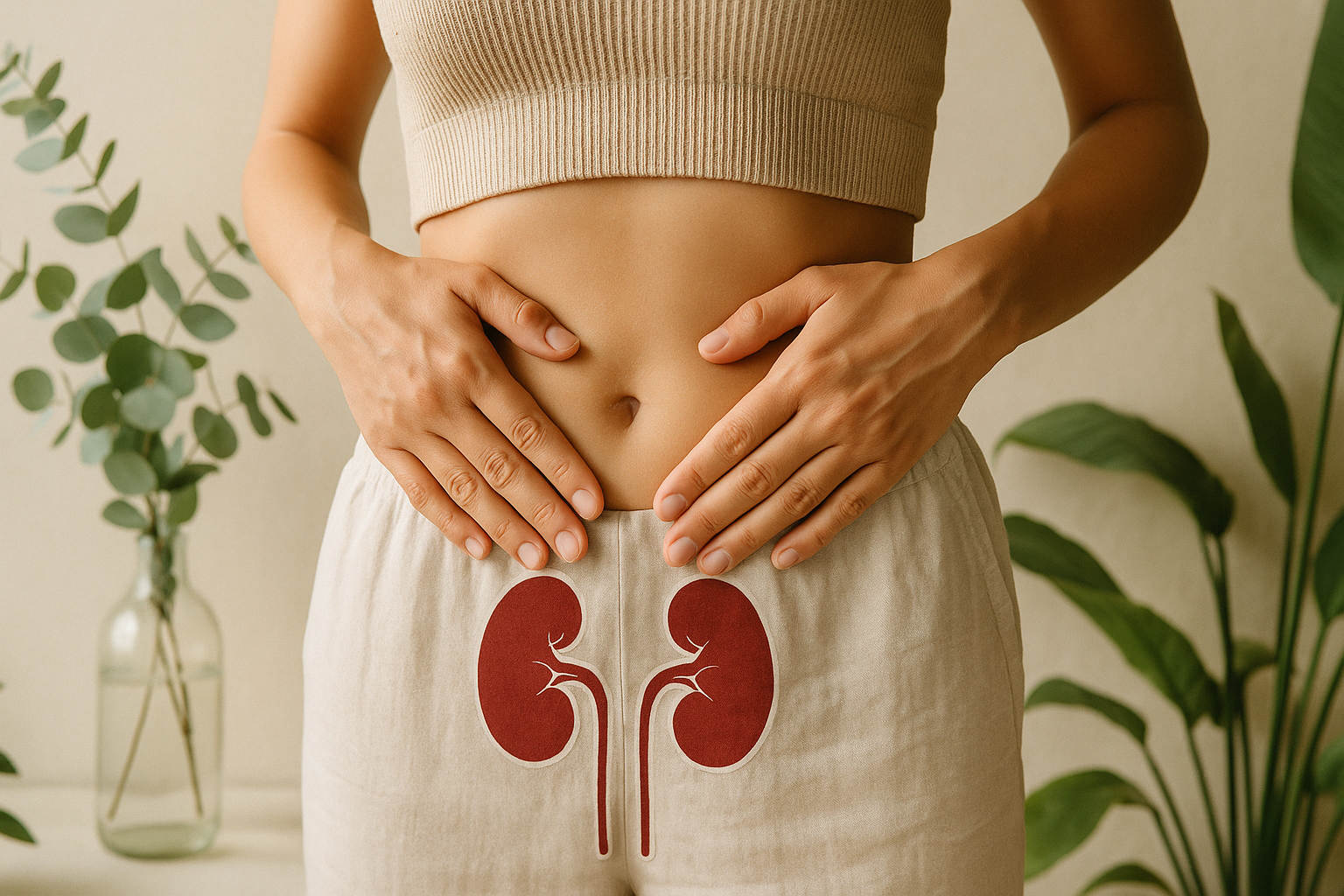
The kidneys and urinary system play a crucial role in maintaining the body's internal balance. The kidneys, two bean-shaped organs located near the middle of the back, filter blood to remove waste products and excess substances, which are then excreted as urine. They also help regulate blood pressure, electrolyte levels, and red blood cell production. The urinary system includes the kidneys, ureters, bladder, and urethra, working together to store and may help with urine, thereby aiding in fluid and electrolyte balance.
Signs This System Is Out of Balance
- Frequent urination, especially at night
- Changes in urine color or odor
- Swelling or puffiness, particularly around the eyes and ankles
- Pain during urination
- Lower back pain
- High blood pressure
- Fatigue or weakness
While experiencing any of these signs may warrant attention, it is essential to approach them with care and to consult a health professional for further evaluation.
Common Contributing Factors
- Lifestyle: Sedentary behavior, excessive alcohol or caffeine consumption, and smoking can negatively affect kidney and urinary health.
- Environment: Exposure to environmental toxins, such as heavy metals and chemicals, may impair kidney function.
- Nutritional: A diet high in sodium, processed foods, and low in fruits and vegetables can lead to kidney strain.
- Hormonal: Hormonal imbalances, such as those seen in diabetes or thyroid disorders, can impact kidney function.
- Structural: Anatomical abnormalities or blockages in the urinary tract can lead to complications and affect overall function.
Natural Approaches Across the Three Pillars
Ancient Wisdom
Traditional practices, such as Ayurveda and Traditional Chinese Medicine, emphasize the importance of maintaining kidney health through diet and lifestyle. In Ayurveda, for instance, foods that are nourishing and hydrating, such as cucumbers and watermelons, are recommended to support kidney function.
Natural Remedies
- Cranberry: Known for its ability to prevent urinary tract infections by preventing bacteria from adhering to the bladder wall.
- Dandelion Root: Often used as a diuretic, it may help in increasing urine flow and supporting kidney function.
- Nettle Leaf: Known for its anti-inflammatory properties, it may support urinary tract health.
- Horsetail: Traditionally used to promote urinary health and act as a diuretic.
- Turmeric: Contains curcumin, which may help reduce inflammation and support kidney health.
Modern Wellness
In today's wellness landscape, maintaining kidney and urinary health involves a multifaceted approach:
- Lifestyle: Regular physical activity, hydration, and a balanced diet rich in whole foods can significantly improve kidney health.
- Biomarkers: Monitoring blood pressure, blood sugar levels, and kidney function tests can provide essential insights into kidney health.
- Protocols: Integrative health practitioners may recommend detoxification protocols that support kidney function, alongside dietary modifications like reducing sodium intake.
Conditions Frequently Involving This System
- Chronic Kidney Disease
- Urinary Tract Infections (UTIs)
- Kidney Stones
- Hypertension
- Interstitial Cystitis
- Glomerulonephritis
Lifestyle & Habit Foundations That Support It
To support kidney and urinary health, consider the following habits:
- Staying adequately hydrated by drinking enough water throughout the day.
- Eating a balanced diet rich in fruits, vegetables, whole grains, and lean proteins.
- Avoiding excessive salt, sugar, and processed foods.
- Engaging in regular physical activity, aiming for at least 150 minutes of moderate exercise each week.
- Managing stress through practices such as yoga, meditation, or deep-breathing exercises.
When to Seek Professional Care
If you experience persistent symptoms such as pain during urination, blood in the urine, or significant changes in urinary habits, it is essential to consult a healthcare professional. Early intervention can be crucial in preventing more serious conditions and maintaining optimal kidney and urinary health.
FAQs
What is the primary function of the kidneys?
The primary function of the kidneys is to filter waste products from the blood and regulate fluid and electrolyte balance.
How can I naturally support my kidney health?
Staying hydrated, eating a balanced diet, and engaging in regular physical activity are effective ways to support kidney health.
What are the signs of a urinary tract infection?
Common signs of a urinary tract infection include pain or burning during urination, frequent urge to urinate, and cloudy or strong-smelling urine.
Can dietary choices affect kidney function?
Yes, dietary choices significantly impact kidney function. A diet low in sodium and rich in antioxidants can promote kidney health.
Are there any supplements that can help with kidney health?
Certain supplements, such as cranberry extract and dandelion root, may support kidney function, but it's important to consult a healthcare provider before starting any new supplement.
When should I see a doctor regarding my urinary health?
Seek medical advice if you experience persistent symptoms such as pain, blood in urine, or changes in urinary frequency and volume.