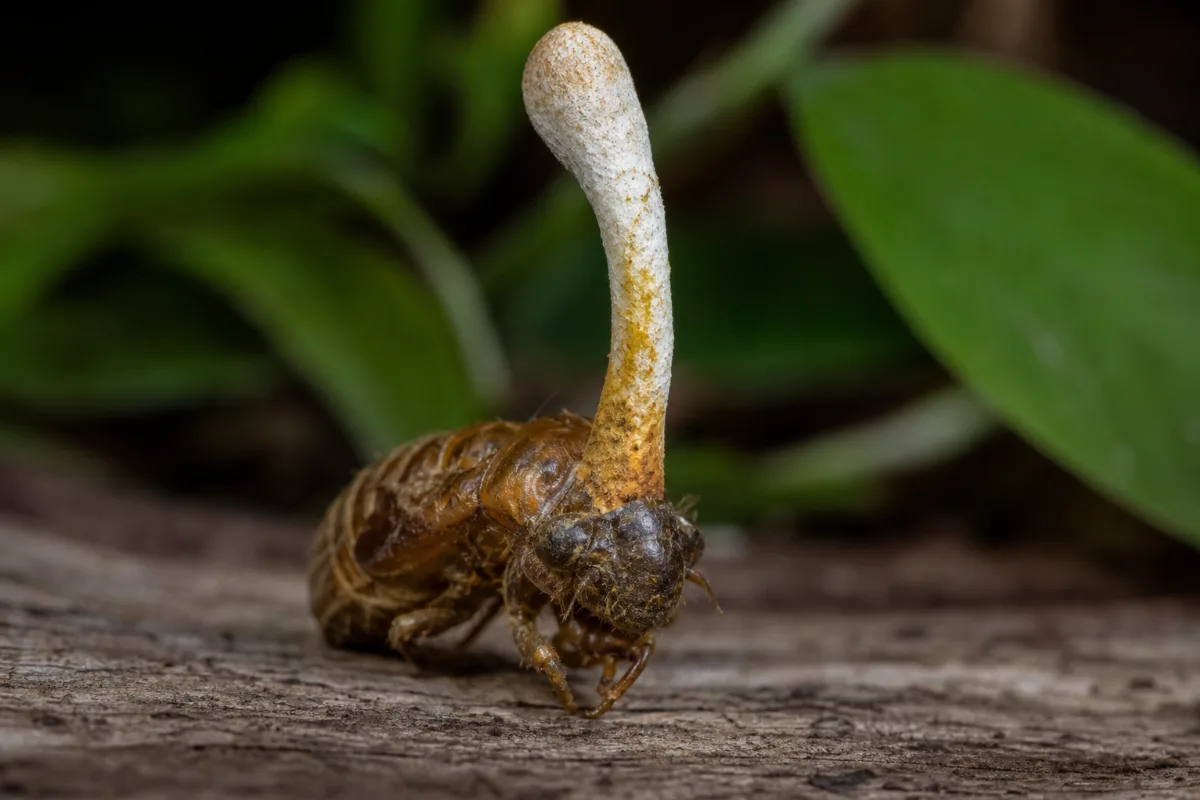
Mushrooms · Medicinal fungus
Cicada cordyceps
Isaria cicadae (also called Cordyceps cicadae and Paecilomyces cicadae) · also called Chan hua, cicada flower, Chanhua
Cicada cordyceps is a fungus that grows on cicada nymphs. It has been used in Chinese medicine for about 1,600 years, especially as a kidney tonic. Today it is sold as grown mycelium powder or capsules. Kidney claims rest on rats, mice and a computer model, not on trials in people, and two small eye studies are the only human benefit research. The main caution is that its safety in longer use, pregnancy and with medicines has barely been studied.
General information, not medical advice. Last substantive update · Not medically reviewed. A named clinician has not signed off on this page. How this page is made
About Cicada cordyceps
Cicada cordyceps is an insect-infecting fungus used in Chinese medicine, mainly for the kidney. Today it is sold as mycelium grown in tanks. All kidney findings come from animals, cells or a computer model. Two small studies of one mycelium product looked at eye comfort, and one small study followed 49 adults for 3 months for safety. Reviews name toxic compounds in the fungus, but nothing shows harm in people; equally, longer-term safety is unknown.
What it is
GBIF lists Isaria cicadae as the accepted name. Cordyceps cicadae and Paecilomyces cicadae are its synonyms; the last name is also used for the cultured, asexual form. All of these names refer to the same fungus, which is not the same as Cordyceps militaris or the caterpillar fungus Ophiocordyceps sinensis.
The traditional material grows on cicada nymphs and is scarce. Supplements are mostly mycelium grown in liquid tanks or on substrate. Products differ by strain and growth medium, and the amount of the marker compound HEA varied with the nitrogen source and fermentation method in a lab study.
Traditional and current uses
A review says it has been recorded in Chinese medicine since the 5th century, as food, tonic and folk medicine for malaria, palpitations, cancer, fever, diabetes, eye diseases, dizziness and chronic kidney diseases. Another review puts its use at about 1,600 years.
Traditional use is not proof that it works or is safe. Today the research clusters around the kidney, the eye, and immune and antioxidant lab work.
What the research shows
Kidney: in rats given cyclosporine, blood urea nitrogen and a cell-stress protein were lower with the mycelium, and magnesium channel proteins were restored. In mice with cisplatin kidney injury, a water extract lowered creatinine, BUN and inflammatory markers and worked better than an ethanol extract. A computer study predicted that myriocin and other compounds might act on diabetic kidney disease targets. None of this was tested in people with kidney disease.
Eye: a pilot in 70 healthy adults found that a fermented mycelium raised tear film breakup time and lowered tear osmolarity versus placebo over 90 days, while tear volume did not change. A second study in 60 healthy volunteers, with no control group, found visual acuity improved in some people. Funding is not stated in either abstract.
Immune, sugar and cancer: purified polysaccharides improved immune measures in mice and blocked a sugar enzyme in test tubes. A review of lab cancer work combines three species. None of these are human results.
At a glance
Traditional uses history, not proof
- Recorded in traditional Chinese medicine since the 5th century, used as food, tonic and folk medicine (Nxumalo 2020).
- Used for malaria, palpitations, cancer, fever, diabetes, eye diseases, dizziness and chronic kidney diseases, as listed by one review (Nxumalo 2020).
- Described by another review as a traditional Chinese medicine for about 1,600 years (Li 2021).
Studied for research
- Kidney protection in rats and mice, insufficient (no human trial)
- Tear quality in a 70-person pilot in healthy adults, low
- Visual acuity and eye strain in a 60-person uncontrolled cohort, very low
- Immune measures from a purified spore polysaccharide in mice, insufficient
- Antioxidant and blood-sugar enzyme findings in test tubes and worms, insufficient
- Cancer cells in the lab (three cordyceps species reviewed together), insufficient
Main compounds
- N6-(2-hydroxyethyl)adenosine (HEA) and adenosine, used as quality markers
- Polysaccharides, mostly studied for immune and antioxidant effects
- Myriocin, beauvericins and oosporein, named as toxic compounds in a review
Common forms
- Mycelium grown in liquid tanks (freeze-dried powder, granules, capsules)
- Mycelium grown on grain or other substrate (may include leftover grain)
- Water or ethanol extracts (lab studies)
- Spore powder
- Natural fungus on the cicada (traditional, scarce)
Research links: PubMed: HEA-enriched mycelium safety study (abstract) · PubMed: dry eye pilot trial (abstract) · PubMed: cyclosporine kidney injury in rats (abstract) · PubMed: secondary metabolites of Isaria cicadae (abstract) · PubMed: Cordyceps cicadae review (abstract) · Memorial Sloan Kettering: Cordyceps (a different species) · Research Library · Genes & Biomarkers Library
What it is and its history
- Accepted scientific name
- Isaria cicadae
- Naming authority
- Miq. (GBIF)
- Synonyms
- Cordyceps cicadae (Miq.) Massee and C. cicadae S.Z.Shing (GBIF synonyms); Paecilomyces cicadae (Miq.) Samson (GBIF synonym; the name also used for the cultured, asexual form)
- Common names
- Cicada cordyceps (English); Chan hua (cicada flower) (Chinese)
- Family or group
- Cordycipitaceae (a fungus family; it is not a plant).
- Classification
- Fungi > Ascomycota > Sordariomycetes > Hypocreales > Cordycipitaceae > Isaria > Isaria cicadae
- Native range
- Not checked in the sources read; one review says it grows in many geographic locations (Nxumalo 2020).
- Habitat
- An insect-infecting fungus. The traditional material grows on cicada nymphs; supplements are mostly grown in tanks or on substrate.
- What it looks like
- Fruiting body: Not described in the sources read.
- Cultivation
- Products come from mycelium grown by liquid fermentation or on solid substrate. One review says it can be cultivated artificially by different methods (Nxumalo 2020); another says natural resources are depleted by overharvesting (Zhu 2024).
- Harvest and processing
- Not checked in the sources read.
- Look-alikes and adulterants
- Name: Cordyceps militaris and Ophiocordyceps sinensis; Note: Other cordyceps products. They are different species, so results and cautions for them do not transfer. See the cordyceps page.
- Sustainability and conservation
- Zhu 2024 says resources are severely depleted by environmental limits and overharvesting (abstract).
Traditional use and history history, not clinical proof
| Tradition or era | Documented use | Source |
|---|---|---|
| China, traditional medicine | A review says the fungus has been recorded in traditional Chinese medicine since the 5th century and used as food, tonic and folk medicine for conditions including malaria, palpitations, cancer, fever, diabetes, eye diseases, dizziness and chronic kidney diseases. | p32305637 |
| China, over 1600 years | A second review says cicada flower has been a traditional Chinese medicine for about 1600 years. | p33822510 |
Traditional use shows how it was used. It does not show that it works or is safe today.
What is inside, and how it may work
What it contains and how those compounds act in cells and animals. Laboratory and animal mechanisms are not proven effects in people.
Main compounds
| Compound | Family | Where it is concentrated | Activity studied | Level of evidence |
|---|---|---|---|---|
| N6-(2-hydroxyethyl)adenosine (HEA) | nucleoside | Mycelium A trial mycelium had 1.5 mg HEA and 0.3 mg adenosine per gram (Chang 2022); one lab strain gave about 2.5 mg per gram under two fermentation methods (Zhu 2024). | Used as a quality marker. A marker level is not a health effect. 2 16 | Laboratory research |
| Polysaccharides | polysaccharide | Spores or mycelium Extraction yield of 3.66% in one lab paper (Tang 2022). | A spore polysaccharide raised immune measures in mice; another fraction blocked alpha-glucosidase in test tubes. 15 11 | Animal research |
| Myriocin | fungal metabolite | Not stated Not measured in any product we read. | Listed among toxic compounds in a review; a computer study predicted it might bind kidney-disease target proteins. 14 9 | In silico |
| Beauvericins and oosporein | fungal metabolites | Not stated Not measured in any product we read. | Described as toxic compounds in a review. 14 | Review |
Mechanisms, receptors and pathways
| Target or pathway | Gene or receptor | What was found | Level |
|---|---|---|---|
| Cyclosporine-linked kidney stress and magnesium loss | GRP78, TRPM6/7 magnesium channels | In rats, the mycelium lowered GRP78 and restored magnesium channel proteins reduced by cyclosporine. 13 | Animal research |
| Inflammation and oxidative stress in injured kidney | TLR4/NF-kB/MAPK, Nrf2/HO-1, SIRT1/AMPK | In mice, a water extract lowered inflammatory and oxidative markers in cisplatin kidney injury. 4 | Animal research |
| Immune cell activity | Macrophages, natural killer cells | A purified spore polysaccharide raised these measures in mice. 15 | Animal research |
| Tear film quality | Not identified | The pilot trial suggests better tear quality; the mechanism is not tested. 2 | Hypothesis |
Absorption, metabolism and elimination
- Absorption
- Not found in the sources read.
- Distribution
- Not found.
- Metabolism
- Not found.
- Elimination
- Not found.
- Bioavailability
- Not established.
Isolated compounds versus whole extracts
Studies use different materials: tank-grown mycelium, mycelium powder, water or ethanol extracts, spore polysaccharides, and natural fungus compared with a cultured form. The water extract worked better than ethanol in one mouse study. Results for one material cannot be assumed for another.
Nutritional composition
Not an everyday food and no nutrition database entry was found. A paper calls it a new food ingredient (Zhu 2024).
1 very low certainty4 not enough evidence
What was looked at
The 5 benefits and uses checked for Cicada cordyceps, each with how strong the evidence is. Tap one to open it.
- Kidney protection (animal and lab findings)Not enough evidence
- Dry eye and eye strainVery low certainty
- Immune activity of a purified spore polysaccharide (mice)Not enough evidence
- Antioxidant and blood-sugar enzyme findings (test tube and worms)Not enough evidence
- Cancer cell studies (lab only)Not enough evidence
Lab markers tracked in the studies
Blood urea nitrogen (BUN) and creatinineTear film breakup time (TBUT)Tear osmolarityVisual acuitySpleen and thymus indices and NK cell activityAlpha-glucosidase inhibition
What is Cicada cordyceps good for?
The uses people ask about and how strong the human evidence is for each. None is proven, and most of it is not from people. Read this together with the Safety tab.
Benefits, one by one
Each card is a research question, not a promise. Tap a goal to filter. Open a card to see the studies, doses and limits.
Kidney protection (animal and lab findings)
Not enough evidenceCicada cordyceps is best known in Chinese tradition as a kidney tonic. Studies in rats and mice found lower kidney injury markers when drug-damaged animals were given the mycelium or extracts. No trial in people has tested it for kidney disease.
6 studiesThe animal work used mycelium from liquid culture, water and ethanol …
Studies, doses and limits
What the trials found
No human trial of kidney benefit was found. The only human study of the mycelium that measured kidney blood tests (a 3-month safety study) found no change, which is a safety result, not a benefit.
Results
Rats given cyclosporine had higher blood urea nitrogen and GRP78 than controls; both were significantly lower when mycelium was given with cyclosporine, though kidney tissue vacuolization improved only slightly (Wu 2023). In mice with cisplatin kidney injury, a water extract and an ethanol extract lowered creatinine, BUN and inflammatory markers, and the water extract worked significantly better (Deng 2020). In rats with adenine-induced chronic kidney failure, both natural C. cicadae and cultured P. cicadae had obvious effects (Li 2019). In spontaneously hypertensive rats and kidney cells, scarring proteins fell (Cai 2021).
Effect sizes as reported
Animal and cell findings; abstracts give few numbers.
Why this rating
All the evidence is from rats, mice, cells and a computer model, using drug-injury models. No human kidney trial exists, so no certainty above insufficient is possible.
Form and dose studied
The animal work used mycelium from liquid culture, water and ethanol extracts, and in one study natural fungus compared with the cultured form. Amounts are not given on this page.
Limits
A drug-injury model in animals is not the same as long-term kidney disease in people. Preparations differ between studies, so results cannot be put together.
Why researchers looked
It has been used in traditional Chinese medicine for chronic kidney problems, so researchers test it in animal models of kidney injury.
Traditional use
A review says it has been recorded in traditional Chinese medicine for over 1600 years, with chronic kidney diseases among its traditional uses (Nxumalo 2020).
Proposed mechanism In vivo
In rats, mycelium eased a stress protein (GRP78) and restored magnesium channel proteins that cyclosporine had lowered. In mice, extracts lowered inflammation and oxidative markers. A computer prediction suggested compounds such as myriocin might act on diabetic kidney disease targets. These are proposed pathways, not shown in people.
A proposed mechanism does not show that the effect happens in people.
Kidney disease or kidney transplant: ask a kidney doctor before using it; do not stop prescribed treatment. One animal study gave it alongside cyclosporine, but whether it changes cyclosporine levels in people is not known.
Dry eye and eye strain
Very low certaintyTwo small human studies of a specific mycelium product looked at eye comfort. One placebo-controlled pilot found better tear film stability after 90 days; a second study with no control group saw better visual acuity in some people. Both used healthy volunteers.
3 studiesFreeze-dried mycelium from liquid fermentation; the trial reports mea…
Studies, doses and limits
What the trials found
One small placebo-controlled pilot and one uncontrolled cohort, both in healthy volunteers and both with one mycelium product.
Results
In the 70-person trial, tear film breakup time rose and tear osmolarity fell, with lower tear sodium and chloride versus placebo; tear volume did not rise significantly (Chang 2022). In the 60-person cohort, there was no change in axial length, corneal curvature or refractive error; visual acuity improved in a subset and eye fatigue reports fell, with no comparison group (Sun 2026).
Effect sizes as reported
Small changes on lab eye measures; the abstracts do not give the numbers.
Why this rating
Only one randomized trial, small, in healthy people rather than patients with dry eye, with unclear funding and a research group that appears on other studies of the same product. The second study has no control group.
Form and dose studied
Freeze-dried mycelium from liquid fermentation; the trial reports measured adenosine and HEA content per gram. Amounts are not given on this page.
Who was studied
Healthy adults (70 and 60).
Limits
Not tested in people with diagnosed dry eye disease. Short (90 and 28 days). The eye questionnaire result of the trial is not reported in the abstract. Funding is not stated in either abstract.
Why researchers looked
Traditional use includes eye disease, and the trial authors cite their own earlier mouse study of dry eye.
Traditional use
The same review lists eye diseases among traditional uses (Nxumalo 2020).
Proposed mechanism Hypothesis
The pilot trial's authors suggest the fungus has anti-inflammatory effects and improves tear quality; this mechanism is not tested in the trial itself.
A proposed mechanism does not show that the effect happens in people.
No side effects were mentioned in the abstracts. Eye symptoms that last or get worse need an eye doctor.
Immune activity of a purified spore polysaccharide (mice)
Not enough evidenceA purified compound from the spores restored immune measures in mice given a chemotherapy drug. No trial in people has tested the whole fungus or its supplements for immune health.
1 studiesA purified spore polysaccharide, not a supplement. Amounts are not gi…
Studies, doses and limits
What the trials found
No human immune trial of cicada cordyceps was found.
Results
CCSP-2, a purified spore polysaccharide, improved spleen and thymus indices, macrophage phagocytosis, NK cytotoxicity, cytokines and antioxidant enzymes in cyclophosphamide-treated mice (Zheng 2022).
Effect sizes as reported
Mouse findings; abstract gives no numbers.
Why this rating
One mouse study of a purified compound from spores; nothing in people.
Form and dose studied
A purified spore polysaccharide, not a supplement. Amounts are not given on this page.
Who was studied
Mice only.
Limits
The result belongs to one purified fraction. It cannot be assumed for powders, teas or extracts.
Why researchers looked
Polysaccharides are the main compounds studied for immune effects in medicinal fungi.
Proposed mechanism In vivo
The purified polysaccharide fraction raised spleen and thymus indices, macrophage and natural killer cell activity in mice; this is a laboratory finding.
A proposed mechanism does not show that the effect happens in people.
Because of the immune findings and the myriocin question on the Safety tab, people on immune-suppressing medicines or with autoimmune disease should ask their doctor first.
Antioxidant and blood-sugar enzyme findings (test tube and worms)
Not enough evidenceA polysaccharide from the fungus showed antioxidant activity and blocked a sugar-digesting enzyme in test tubes, and lengthened the life of tiny worms. This does not show any effect on blood sugar in people.
1 studiesA purified polysaccharide extracted in the laboratory. Amounts are no…
Studies, doses and limits
What the trials found
No human or animal blood sugar test is in the abstract.
Results
JCH-a1 showed strong antioxidant activity, strongly inhibited alpha-glucosidase in vitro and prolonged the lifespan of C. elegans (Tang 2022).
Effect sizes as reported
Test-tube and worm results.
Why this rating
Lab and worm work only; test-tube enzyme results rarely carry over to people.
Form and dose studied
A purified polysaccharide extracted in the laboratory. Amounts are not given on this page.
Limits
No blood sugar measured in animals or people in the abstract.
Why researchers looked
Researchers often screen fungal polysaccharides for antioxidant and enzyme effects.
Proposed mechanism Laboratory research
The fraction JCH-a1 inhibited alpha-glucosidase in vitro; this is a lab observation only.
A proposed mechanism does not show that the effect happens in people.
People who take diabetes medicines should not assume the fungus lowers blood sugar; no data exist for this species. (MSK says the other species O. sinensis may lower blood sugar; this is not known for cicada cordyceps.)
Cancer cell studies (lab only)
Not enough evidenceA 2026 review of laboratory work says cordyceps species, including cicada cordyceps, affect cancer cells in test tubes. This is not evidence that it treats cancer in people.
1 studiesNot applicable.
Studies, doses and limits
What the trials found
No human cancer trial of cicada cordyceps was found.
Results
The review covers three species together and says in vivo efficacy and safety studies are needed (Gunter 2026).
Effect sizes as reported
Lab findings only.
Why this rating
Cell and animal studies of three species combined; nothing in people.
Limits
Findings cannot be assigned to cicada cordyceps alone. The review notes cordycepin is the lead compound, and whether cicada cordyceps makes it is disputed (see Identity).
Why researchers looked
Cordyceps compounds such as cordycepin and polysaccharides are tested on cancer cells.
Proposed mechanism Laboratory research
The review describes apoptosis induction, cell cycle arrest and changes in signalling pathways in cells.
A proposed mechanism does not show that the effect happens in people.
Not a cancer treatment. Anyone in cancer treatment should ask their oncology team before using any cordyceps product.
Connections to the rest of health
How Cicada cordyceps connects to the rest of our health knowledge graph. Every link says what kind of connection it is. A safety link (for example to the liver) is a warning, not a benefit. A study that merely mentions a topic never creates a benefit link.
Explore every connection: goals, body systems, organs, symptoms, genes
A. Wellness goals
| Connected to | Kind of connection | Evidence status | Context | Studies |
|---|---|---|---|---|
| Kidney And Urinary Health | Preliminary mechanism | Not enough evidence | Kidney protection (animal and lab findings): Cicada cordyceps is best known in Chinese tradition as a kidney tonic. Studies in rats and mice found lower kidney injury markers when drug-damaged animals were given the mycelium or extracts. No trial in people has tested it for kidney disease. | 13 4 6 1 9 8 |
| Eye Comfort | Very low certainty | Dry eye and eye strain: Two small human studies of a specific mycelium product looked at eye comfort. One placebo-controlled pilot found better tear film stability after 90 days; a second study with no control group saw better visual acuity in some people. Both used healthy volunteers. | 2 10 8 | |
| Immune Wellness | Preliminary mechanism | Not enough evidence | Immune activity of a purified spore polysaccharide (mice): A purified compound from the spores restored immune measures in mice given a chemotherapy drug. No trial in people has tested the whole fungus or its supplements for immune health. | 15 |
| Blood Sugar Balance | Preliminary mechanism | Not enough evidence | Antioxidant and blood-sugar enzyme findings (test tube and worms): A polysaccharide from the fungus showed antioxidant activity and blocked a sugar-digesting enzyme in test tubes, and lengthened the life of tiny worms. This does not show any effect on blood sugar in people. | 11 |
| Healthy Aging | Preliminary mechanism | Not enough evidence | Antioxidant and blood-sugar enzyme findings (test tube and worms): A polysaccharide from the fungus showed antioxidant activity and blocked a sugar-digesting enzyme in test tubes, and lengthened the life of tiny worms. This does not show any effect on blood sugar in people. | 11 |
| Cancer Research Interest | Preliminary mechanism | Not enough evidence | Cancer cell studies (lab only): A 2026 review of laboratory work says cordyceps species, including cicada cordyceps, affect cancer cells in test tubes. This is not evidence that it treats cancer in people. | 5 |
B. Body systems
| Connected to | Kind of connection | Evidence status | Context | Studies |
|---|---|---|---|---|
| Kidney Urinary | Biological association | Not enough evidence | Studied for: Kidney protection (animal and lab findings) | 13 4 6 1 9 8 |
| Eyes | Biological association | Very low certainty | Studied for: Dry eye and eye strain | 2 10 8 |
| Immune System | Biological association | Not enough evidence | Studied for: Immune activity of a purified spore polysaccharide (mice) | 15 |
| Metabolic | Biological association | Not enough evidence | Studied for: Antioxidant and blood-sugar enzyme findings (test tube and worms) | 11 |
| Cells | Biological association | Not enough evidence | Studied for: Cancer cell studies (lab only) | 5 |
C. Body parts and organs
I. Biomarkers
| Connected to | Kind of connection | Evidence status | Context | Studies |
|---|---|---|---|---|
| Blood urea nitrogen (BUN) and creatinine | Biological association | Not enough evidence | Measured in trials: lowered (animals). A lab change is not the same as a health benefit. | 13 4 12 |
| Tear film breakup time (TBUT) | Biological association | Low certainty | Measured in trials: raised. A lab change is not the same as a health benefit. | 2 |
| Tear osmolarity | Biological association | Low certainty | Measured in trials: lowered. A lab change is not the same as a health benefit. | 2 |
| Visual acuity | Biological association | Very low certainty | Measured in trials: raised in a subset. A lab change is not the same as a health benefit. | 10 |
| Spleen and thymus indices and NK cell activity | Biological association | Not enough evidence | Measured in trials: raised (mice). A lab change is not the same as a health benefit. | 15 |
| Alpha-glucosidase inhibition | Biological association | Not enough evidence | Measured in trials: inhibited in vitro. A lab change is not the same as a health benefit. | 11 |
K. Biological pathways
| Connected to | Kind of connection | Evidence status | Context | Studies |
|---|---|---|---|---|
| NF-kB / Nrf2 / SIRT1 signalling | Preliminary mechanism | Animal | Changed in mouse kidney injury with an extract. | 4 |
L. Active compounds
| Connected to | Kind of connection | Evidence status | Context | Studies |
|---|---|---|---|---|
| N6-(2-hydroxyethyl)adenosine (HEA) | Biological association | In vitro | Used as a quality marker. A marker level is not a health effect. Preparation or compound: Mycelium |
2 16 |
| Polysaccharides | Biological association | Animal | A spore polysaccharide raised immune measures in mice; another fraction blocked alpha-glucosidase in test tubes. Preparation or compound: Spores or mycelium |
15 11 |
| Myriocin | Biological association | In silico | Listed among toxic compounds in a review; a computer study predicted it might bind kidney-disease target proteins. | 14 9 |
| Beauvericins and oosporein | Biological association | Review | Described as toxic compounds in a review. | 14 |
Each connection is stored with the ingredient, the connected record, the kind of connection, the evidence status, the supporting studies, the preparation or compound involved, and a review date (last reviewed October 25, 2026).
Evidence at a glance: what changed in 2 lab markers
Tap a number to show only those markers. Counts are markers, not people.
The evidence
The research centre for Cicada cordyceps. Every record here was checked against PubMed or the publisher's page; we never list a study we have not verified.
Evidence by outcome
Bars show how many studies we found for each outcome, not how well it works. People are added up across trials only (reviews are not added, to avoid double counting).
How we rate evidence
High certainty
Several well-run trials or reviews agree; further research is unlikely to change the picture much.
Moderate certainty
Good trials point the same way, but some doubt remains.
Low certainty
Small, short or inconsistent trials. The finding could change with better research.
Very low certainty
Very little or very weak human data. Treat as a possibility only.
Mixed findings
Trials or reviews disagree with each other.
Not enough evidence
Not enough human research to say either way.
Evidence against
Good research found no benefit, or found harm.
We take the reviewers' own risk-of-bias and GRADE statements where they exist, and otherwise judge from study size, design, consistency, directness and whether a product matches what is sold. Many publications do not make evidence high. Method note: We read PubMed records and abstracts for 16 papers (three human studies, six animal or computer studies, five reviews and two lab papers), the Memorial Sloan Kettering cordyceps page in full (it covers a different species), and checked the species names in GBIF. A few identity details were reused from an earlier summary and are marked summary-only. Only abstracts were read for papers, so numbers come from abstracts. Certainty ratings are the compiler's own reading.
Study library: every study we checked 18
| Study | Design | People | Product, dose, length | Result |
|---|---|---|---|---|
| Cai 2021 Cordyceps cicadae Ameliorates Renal Hypertensive Injury and Fibrosis Through the Regulation of SIRT1-Mediated Autophagy. Frontiers in pharmacology · PMID 35222012 · DOI |
Animal study rat |
Spontaneously hypertensive rats, rat kidney cells; SIRT1/FOXO3a levels also measured in patients with hypertensive kidney injury | Cordyceps cicadae (preparation not described in the abstract) Not shown on this page; see the abstract |
In the rats and cells C. cicadae reduced fibrosis proteins and kidney cell damage and altered autophagy markers. Patients with hypertensive kidney injury had lower SIRT1 and FOXO3a levels; the abstract does not say patients took the fungus. Less kidney scarring markers in rats Methods, limits and fundingOutcomes: Kidney scarring (fibrosis) proteins, autophagy proteins, SIRT1 and FOXO3a Limitations: Animal and cell work. The patient part measured levels only, not a treatment effect. Funding and conflicts: Not stated in the abstract Read: abstract |
| Chang 2022 Efficacy of Cordyceps cicadae (Ascomycota) Mycelium Supplementation for Amelioration of Dry Eye Symptoms: A Randomized, Double-Blind Clinical Pilot Study. International journal of medicinal mushrooms · PMID 36374982 · DOI |
Controlled trial |
70 70 healthy adults (the abstract calls them healthy individuals) |
Fermented Cordyceps cicadae mycelium powder in sachets, with adenosine and HEA in measured amounts per gram Mycelium (freeze-dried) Not shown on this page; see the abstract 90 days · vs Placebo |
Tear film breakup time rose and tear osmolarity fell significantly, with lower tear sodium and chloride. Tear volume did not rise significantly. Better tear quality on two lab measures; no change in tear volume Methods, limits and fundingOutcomes: Dry eye questionnaire, Schirmer tear volume test, tear film breakup time (TBUT), tear osmolarity, tear electrolytes Limitations: Pilot study in people described as healthy, not in patients with diagnosed dry eye. Small, 90 days, one product. The abstract does not give numbers or say whether questionnaire scores changed. Funding and conflicts: Not stated in the abstract; authors overlap with other studies of the same mycelium (possible industry link, not verified) Read: abstract |
| Chen 2020 Bioactive Metabolites and Potential Mycotoxins Produced by Cordyceps Fungi: A Review of Safety. Toxins · PMID 32575649 · DOI |
Narrative review review |
Review of safety information on Cordyceps fungi | Cordyceps fungi including C. militaris, C. cicadae and C. guangdongensis Mycelium and others Not shown on this page; see the abstract |
Says safety of daily use is still debated and that mycotoxin analogs of PR-toxin and trichothecenes might be produced by Cordyceps fungi, based on gene clusters; their products have not been tested. Prediction from genes, not shown harm Methods, limits and fundingOutcomes: Possible toxins and safety concerns Limitations: Review of the genus, not a test of any cicada cordyceps product. Predictions from genomes are not proof of toxins in products. Funding and conflicts: Not stated in the abstract Read: abstract |
| Deng 2020 Cordyceps cicadae Mycelia Ameliorate Cisplatin-Induced Acute Kidney Injury by Suppressing the TLR4/NF-κB/MAPK and Activating the HO-1/Nrf2 and Sirt-1/AMPK Pathways in Mice. Oxidative medicine and cellular longevity · PMID 32089779 · DOI |
Animal study mouse |
Mice with cisplatin-induced kidney injury, and mouse macrophage cells | Water extract and ethanol extract of Cordyceps cicadae mycelia Mycelium Not shown on this page; see the abstract · vs Cisplatin-only mice |
Both extracts eased cisplatin-induced kidney changes and lowered creatinine, BUN and inflammatory markers. The water extract worked significantly better than the ethanol extract. Lower kidney injury markers in mice Methods, limits and fundingOutcomes: Kidney tissue changes, serum creatinine, BUN, inflammation and oxidative markers Limitations: Mice and cells only; a drug-injury model. Numbers are not in the abstract. Funding and conflicts: Not stated in the abstract Read: abstract |
| Gunter 2026 Anti-cancer effects of cordyceps sinensis, C. militaris and C. cicadae and their mechanisms of action. Journal of Asian natural products research · PMID 40372357 · DOI |
Narrative review review |
Review of lab work on cancer cells | Cordyceps sinensis, C. militaris and C. cicadae and their compounds Various Not shown on this page; see the abstract |
The review says these fungi and their compounds (cordycepin, ergosterol, polysaccharides) show anticancer activity in lab work, and calls for in vivo efficacy and safety studies. Lab findings only Methods, limits and fundingOutcomes: Anticancer effects in laboratory studies Limitations: Narrative review of cell and animal work; the mix of three species means findings do not belong to C. cicadae alone. Funding and conflicts: Not stated in the abstract Read: abstract |
| Li 2019 Potential therapeutic effects of Cordyceps cicadae and Paecilomyces cicadae on adenine-induced chronic renal failure in rats and their phytochemical analysis. Drug design, development and therapy · PMID 30587931 · DOI |
Animal study rat |
Rats with adenine-induced chronic kidney failure | Cordyceps cicadae (natural) and Paecilomyces cicadae (cultured, asexual stage), compared Natural fungus and cultured form Not shown on this page; see the abstract 4 weeks · vs Untreated model rats |
Both forms had obvious therapeutic effects in the rats, and the authors suggest the cultured form can substitute for the natural one. Both forms helped rats in a kidney-failure model Methods, limits and fundingOutcomes: Signs of chronic kidney failure and chemical makeup of 10 batches of each Limitations: Rats only. The abstract gives no numbers. The authors' conclusion about market demand is not a clinical finding. Funding and conflicts: Not stated in the abstract Read: abstract |
| Li 2021 Review on Research Progress and Prospects of Cicada Flower, Isaria cicadae (Ascomycetes). International journal of medicinal mushrooms · PMID 33822510 · DOI |
Narrative review review |
Review article | Isaria cicadae (cicada flower) Various Not shown on this page; see the abstract |
Says cicada flower has been a traditional Chinese medicine for about 1600 years and that some inaccuracies and inconsistencies in the literature need clarifying. Background only Methods, limits and fundingOutcomes: Life cycle, taxonomy, cultivation, ingredients, pharmacology Limitations: Narrative review by researchers with long experience of the fungus; abstract has no data. Funding and conflicts: Not stated in the abstract; the authors describe their own long-term research and application Read: abstract |
| Nxumalo 2020 Can Cordyceps cicadae be used as an alternative to Cordyceps militaris and Cordyceps sinensis? - A review. Journal of ethnopharmacology · PMID 32305637 · DOI |
Narrative review review |
Literature review, about 30 years of work | Cordyceps cicadae compared with C. sinensis and C. militaris Various Not shown on this page; see the abstract |
Says the fungus has been recorded in traditional Chinese medicine for over 1600 years (from the 5th century) and used for malaria, palpitations, cancer, fever, diabetes, eye diseases, dizziness and chronic kidney diseases. The authors say it has similar properties to the other two species but more research and standardization are needed. Traditional use record; similarity to other species claimed Methods, limits and fundingOutcomes: History, bioactivity, cultivation Limitations: Narrative review; the authors' view that evidence is sufficient is not supported by human trials of benefit. Funding and conflicts: Not stated in the abstract Read: abstract |
| Qian 2021 Mechanism of Cordyceps Cicadae in Treating Diabetic Nephropathy Based on Network Pharmacology and Molecular Docking Analysis. Journal of diabetes research · PMID 34621904 · DOI |
In silico in-silico |
Computer database analysis (no animals or people) | Cordyceps cicadae compounds (predicted) Not shown on this page; see the abstract |
The analysis listed 36 active compounds, including myriocin, guanosine and inosine, and 378 possible targets, and predicted that myriocin could fit two target proteins. Predictions only Methods, limits and fundingOutcomes: Predicted targets of C. cicadae compounds in diabetic kidney disease Limitations: A computer prediction. It does not test the fungus in cells, animals or people. The authors say it is a basis for drug development, not proof of treatment. Funding and conflicts: Not stated in the abstract Read: abstract |
| Sun 2026 Evaluation of the Impact of Cordyceps cicadae Mycelium on Vision Health: A Cohort Study. International journal of medical sciences · PMID 41799767 · DOI |
Cohort study |
60 60 healthy volunteers |
Cordyceps cicadae mycelium (CCM) supplement Mycelium Not shown on this page; see the abstract 28 days |
No change in axial length, corneal curvature or refractive error. Visual acuity improved in a subset of participants, and eye fatigue scores fell. Visual acuity improved in some people; eye fatigue reported lower Methods, limits and fundingOutcomes: Visual acuity, axial length, corneal curvature, refractive error, OSDI eye-surface questionnaire Limitations: No control group, so the changes may not be due to the supplement. Healthy volunteers. Improvement was in only a subset. Short. Funding and conflicts: Not stated in the abstract; authors overlap with other studies of the same mycelium (possible industry link, not verified) Read: abstract |
| Tang 2022 Extraction, Purification, Physicochemical Properties, and Activity of a New Polysaccharide From Cordyceps cicadae. Frontiers in nutrition · PMID 35757258 · DOI |
Laboratory research in-vitro |
Laboratory chemistry, test-tube assays and the worm C. elegans | A polysaccharide fraction (JCH-a1) from Cordyceps cicadae Not shown on this page; see the abstract |
JCH-a1 showed strong antioxidant activity and inhibited alpha-glucosidase in vitro, and lengthened the lifespan of C. elegans worms. Test-tube and worm findings Methods, limits and fundingOutcomes: Antioxidant activity, alpha-glucosidase inhibition, worm lifespan Limitations: Lab and worm work only. The authors describe it as a basis for further study as an antioxidant and blood-sugar-lowering food or drug; no animal or human blood sugar test is in the abstract. Funding and conflicts: Not stated in the abstract Read: abstract |
| Tsai 2021 Safety Assessment of HEA-Enriched Cordyceps cicadae Mycelium: A Randomized Clinical Trial. Journal of the American College of Nutrition · PMID 32702252 · DOI |
Uncontrolled or unclear |
49 49 adults (health status not described in the abstract) |
HEA-enriched Cordyceps cicadae mycelium granules made by liquid fermentation, freeze-dried Mycelium (not fruiting body) Not shown on this page; see the abstract 3 months |
Kidney and liver function, electrolytes and blood fats did not differ between start and end. Participants reported no side effects. No change in safety blood tests Methods, limits and fundingOutcomes: Kidney and liver blood tests, blood electrolytes, blood fats, side effects Limitations: The title says randomized, but the abstract describes only start and end measurements in one group and no comparison group. Small, 3 months, one product. Safety only; says nothing about benefit. Funding and conflicts: Not stated in the abstract; several authors also appear on the other human mycelium studies (possible industry link, not verified) Read: abstract |
| Wu 2023 Amelioration of Cyclosporine A-Induced Acute Nephrotoxicity by Cordyceps cicadae Mycelia via Mg+2 Reabsorption and the Inhibition of GRP78-IRE1-CHOP Pathway: In Vivo and In Vitro. International journal of molecular sciences · PMID 36614214 · DOI |
Animal study rat |
Male Sprague-Dawley rats (6 groups) and a human kidney cell line (HK-2) | Cordyceps cicadae mycelium (CCM) from submerged liquid culture, with cyclosporine A Mycelium Not shown on this page; see the abstract 8 days · vs Control and cyclosporine-only groups |
Cyclosporine raised BUN and GRP78; both were significantly lower when mycelium was given with cyclosporine. Kidney tissue vacuolization improved only slightly. Magnesium channel proteins that cyclosporine reduced were restored. Lower kidney injury markers in rats given cyclosporine Methods, limits and fundingOutcomes: Blood urea nitrogen (BUN), stress protein GRP78, kidney tissue appearance, magnesium channel proteins Limitations: Rats and cells only, short, a drug-induced injury model. Does not show benefit in people or in long-term kidney disease. Funding and conflicts: Not stated in the abstract Read: abstract |
| Zhang 2018 Secondary metabolites (SMs) of Isaria cicadae and Isaria tenuipes. RSC advances · PMID 35521576 · DOI |
Narrative review review |
Review of chemicals made by two Isaria fungi | Isaria cicadae and Isaria tenuipes secondary metabolites Various Not shown on this page; see the abstract |
Says the metabolites of I. cicadae mainly include nucleosides, amino acids, beauvericins, myriocin and oosporein; beauvericins, myriocin and oosporein are described as toxic compounds. The authors call for residue standards and methods to detect these in products. Toxic compounds exist in the fungus; amounts in products not given Methods, limits and fundingOutcomes: Secondary metabolites and their toxicity Limitations: The abstract says the toxicity of products may be related to these compounds, but does not say how much is in any product or that harm in people was seen. Funding and conflicts: Not stated in the abstract Read: abstract |
| Zheng 2022 Polysaccharides from Spores of Cordyceps cicadae Protect against Cyclophosphamide-Induced Immunosuppression and Oxidative Stress in Mice. Foods (Basel, Switzerland) · PMID 35205991 · DOI |
Animal study mouse |
Mice given the chemotherapy drug cyclophosphamide | Purified spore polysaccharide fraction CCSP-2 from Cordyceps cicadae Spores (purified polysaccharide, not whole product) Not shown on this page; see the abstract · vs Cyclophosphamide-only mice |
CCSP-2 improved several immune measures in immune-suppressed mice, including spleen and thymus indices, macrophage phagocytosis, NK cytotoxicity and antioxidant enzymes. Immune measures restored in mice Methods, limits and fundingOutcomes: Spleen and thymus indices, macrophage activity, NK cell activity, cytokines, antioxidant enzymes Limitations: Mice only, a purified compound rather than a supplement. No human immune trial of this species was found. Funding and conflicts: Not stated in the abstract Read: abstract |
| Zhu 2024 Exploiting the roles of nitrogen sources for HEA increment in Cordyceps cicadae. Frontiers in microbiology · PMID 38803370 · DOI |
Laboratory research fungus |
Laboratory fermentation of strain AH 10-4 | Cordyceps cicadae cultured mycelium Mycelium Not shown on this page; see the abstract · vs Different nitrogen sources |
Describes C. cicadae as a new food ingredient. HEA yield depended on the nitrogen source and fermentation type; with ammonium citrate, stationary fermentation gave 2.535 mg/g and submerged fermentation 2.578 mg/g. Product content varies with how it is grown Methods, limits and fundingOutcomes: N6-(2-hydroxyethyl)adenosine (HEA) and adenosine yield Limitations: Industrial fermentation chemistry, not health research. Funding and conflicts: Not stated in the abstract Read: abstract |
| n/a 2022 Memorial Sloan Kettering Cancer Center: Cordyceps (About Herbs; page covers Ophiocordyceps sinensis, not cicada cordyceps) n/a · Source |
Authoritative guidance n/a |
n/a | Cordyceps (O. sinensis) Not shown on this page |
Patient section: no major side effects reported; talk to a provider if on insulin or blood-sugar medicines because cordyceps can lower blood sugar; talk to a provider if on a blood thinner such as warfarin because cordyceps may increase bleeding risk. The clinician section describes the species as Ophiocordyceps sinensis, not C. cicadae, and lists a case of excessive bleeding after tooth extraction in a daily user. Methods, limits and fundingOutcomes: Patient information and clinician summary on cordyceps Limitations: About a different species; whether the cautions apply to cicada cordyceps is not known. Page last updated 10 February 2022. Funding and conflicts: Independent hospital information source Read: full text |
| n/a 2026 GBIF Backbone Taxonomy: species match for Cordyceps cicadae, Isaria cicadae and Paecilomyces cicadae n/a · Source |
Taxonomy database fungus |
n/a | n/a |
GBIF lists Isaria cicadae Miq. (key 5251108) as ACCEPTED, family Cordycipitaceae, order Hypocreales. Cordyceps cicadae S.Z.Shing (key 3451839) and Paecilomyces cicadae (Miq.) Samson (key 2560531) are listed as synonyms of it. A third Cordyceps cicadae name, (Miq.) Massee (key 7577610), is also a synonym. Methods, limits and fundingOutcomes: Accepted name and synonyms Limitations: One database. Other databases (Index Fungorum) may differ; Index Fungorum was not checked. Funding and conflicts: Open database Read: API response |
What we do not know yet
- No trial in people with kidney disease has tested cicada cordyceps; kidney findings are animal, cell and computer-model work.
- Eye studies were in healthy volunteers, used one mycelium product, and their funding is not stated in the abstracts.
- No safety data in pregnancy, breastfeeding, children, allergy or use beyond 3 months.
- Amounts of myriocin, beauvericin and oosporein in products are unmeasured, and no interaction studies exist.
- Regulator statements (EMA/HMPC, NCCIH, LiverTox, LactMed) for this species were not found; Index Fungorum and PubChem were not checked.
How new research is added
New studies are found by a saved PubMed search and placed in a review queue. A person reads each one before it changes any evidence rating or safety wording. New publications never change ratings automatically.
Lab markers
What changed in blood or saliva tests during trials. A changed number is not the same as feeling or being healthier, and we give no "normal ranges".
Other 6
Blood urea nitrogen (BUN) and creatinine
Lowered (animals) in trials
Waste products measured in blood. Higher levels can mean the kidneys are filtering less well.
Not enough evidenceResults and what it means
Why it was measured
Used as common signs of kidney injury in animal studies.
Statistical vs. clinical meaning
Changes in drug-injury models in animals only; no human BUN or creatinine benefit was tested.
Safety implication
In the human safety study, kidney blood tests did not change; that is a safety finding, not an improvement.
| Study | Result | People | Product |
|---|---|---|---|
Tear film breakup time (TBUT)
Raised in trials
The number of seconds before the tear film on the eye starts to break up after a blink. A longer time suggests a steadier tear film.
Low certaintyResults and what it means
Why it was measured
A routine test of tear quality in dry eye research.
Statistical vs. clinical meaning
Statistically significant in a small pilot in healthy adults; tear volume itself did not change significantly.
Safety implication
No side effects were mentioned in the abstract.
| Study | Result | People | Product |
|---|---|---|---|
Tear osmolarity
Lowered in trials
How salty the tears are. Higher saltiness is linked with dry eye.
Low certaintyResults and what it means
Why it was measured
Used with other tests to judge tear quality.
Statistical vs. clinical meaning
Lab marker change in a small pilot; the link to how people feel was not shown in the abstract.
Safety implication
None described.
| Study | Result | People | Product |
|---|---|---|---|
Visual acuity
Raised in a subset in trials
How clearly a person sees on an eye chart.
Very low certaintyResults and what it means
Why it was measured
A basic eye test used in the cohort study.
Statistical vs. clinical meaning
No control group, so practice or chance may explain the change; only some participants improved.
Safety implication
None described.
| Study | Result | People | Product |
|---|---|---|---|
Spleen and thymus indices and NK cell activity
Raised (mice) in trials
Spleen and thymus weight ratios and natural killer cell killing power are used in mice as signs of immune strength.
Not enough evidenceResults and what it means
Why it was measured
Standard immune measures in mouse studies.
Statistical vs. clinical meaning
Mouse measures that do not show fewer infections or better health in people.
Safety implication
Immune-activating compounds may matter to people on immunosuppressants; see Safety.
| Study | Result | People | Product |
|---|---|---|---|
Alpha-glucosidase inhibition
Inhibited in vitro in trials
A test-tube measure of how strongly a compound blocks an enzyme that digests starch. Some diabetes drugs also act on this enzyme.
Not enough evidenceResults and what it means
Why it was measured
A screening test for possible blood-sugar effects.
Statistical vs. clinical meaning
Test-tube finding only; no blood sugar was measured.
Safety implication
None described.
| Study | Result | People | Product |
|---|---|---|---|
Safety
What studies and official sources say about side effects, medicines and who should check first. Each point shows what kind of evidence it comes from.
Main points to know 4
- Almost nothing is known about long-term safety in people. The only human safety data are two small studies of one mycelium product. One followed 49 adults for 3 months and found no change in kidney, liver, electrolyte or blood fat tests and no reported side effects; it had no clear comparison group. A 90-day placebo-controlled pilot in 70 adults does not mention any safety problem in its abstract. Nothing is known about longer use, other products, pregnancy or children. Clinical trial 12 2
- Reviews name toxic compounds in the fungus, but amounts in products are unknown. A review of the chemicals in Isaria cicadae lists nucleosides, amino acids, beauvericins, myriocin and oosporein, and describes beauvericins, myriocin and oosporein as toxic compounds. The authors say residue standards and detection methods are needed. No source we read measured these compounds in a product or showed harm in people. Review 14
- Do not use it in place of kidney care. Kidney effects come from rat and mouse studies. If you have kidney disease, or take medicines that affect the kidney, ask a kidney doctor before using any cordyceps product and do not stop prescribed treatment. Expert opinion 13 4
- Cautions for other cordyceps may or may not apply. Memorial Sloan Kettering, writing about the different species Ophiocordyceps sinensis, advises people on insulin or blood-sugar medicines and people on blood thinners to talk with their provider. Whether this applies to cicada cordyceps has not been studied. Authoritative guidance 17
Side effects 2
| Effect | How often | Severity and recovery | Evidence |
|---|---|---|---|
| No side effects reported Abstract reports only; small studies cannot detect rare harms. | None reported in 49 adults over 3 months in one study; the abstract of a 70-person placebo-controlled pilot mentions none | not applicable not applicable | Clinical trial 12 2 |
| Unknown for other products and longer use A PubMed search on 2026-10-25 for adverse effects, toxicity, poisoning, allergy and liver injury with this fungus found no case reports (one search; not exhaustive). | Not established | unknown unknown | Gap |
Liver
No liver injury case report for cicada cordyceps was found in one PubMed search on 2026-10-25. The 3-month safety study found no change in liver blood tests in 49 adults. LiverTox was not checked. 12
How often. No rate can be given.
Monitoring. No agency monitoring advice was read. Anyone with liver disease should ask a doctor first, as with any supplement.
This is a safety connection. It is not evidence that Cicada cordyceps supports liver health.
Medicines and supplements 4
| With | Why it matters | Importance | Evidence | What to do |
|---|---|---|---|---|
| Immune-suppressing medicines (for example after a transplant) and autoimmune disease treatment prescription | Theoretical: a review lists myriocin among the fungus's compounds, and a purified spore polysaccharide raised immune measures in mice. | No interaction study exists. The concern is theoretical. | Theoretical Not enough evidence 14 15 9 | Ask your transplant or specialist team before using it. Myriocin's strength as an immune suppressor comes from an earlier full-text read of a review (summary-only here). |
| Cyclosporine (an anti-rejection drug) prescription | In rats the mycelium was given alongside cyclosporine and lowered kidney injury markers. | Whether the fungus changes cyclosporine blood levels or effect in people was not tested in the abstract. | Animal research Not enough evidence 13 | Do not combine without your transplant team knowing. |
| Blood thinners (warfarin-type) and antiplatelet medicines prescription | MSK says cordyceps (O. sinensis) may increase bleeding risk. Nothing about cicada cordyceps was found. | Unknown for this species. | Authoritative guidance Not enough evidence 17 | Tell your prescriber or pharmacist before using it. |
| Insulin and blood-sugar medicines prescription | MSK says cordyceps (O. sinensis) can lower blood sugar. For cicada cordyceps there is only a test-tube enzyme finding. | Unknown for this species. | Authoritative guidance Not enough evidence 17 11 | Talk to your provider before using it if you take diabetes medicines. |
Who should check first 2
| Situation | Advice | Evidence |
|---|---|---|
| Kidney disease, kidney transplant or immune-suppressing treatment | Ask the specialist who looks after you before using it. | Expert opinion 13 |
| Pregnancy, breastfeeding and young children | No safety data were found. Ask a doctor first. | Gap |
Overdose, product quality and regulators
Summary. No poisoning from cicada cordyceps was described in the sources we read. The risk questions are about compounds named in reviews and about product quality, not about reported harm.
Animal. The rat and mouse kidney studies did not report toxicity in their abstracts; toxicity was not their question. A toxicity study in animals was mentioned in the human safety paper as existing, but was not read.
Human doses studied. Studies ran 28 days to 3 months. This page does not give amounts.
High dose or long term signals. Unknown.
Overdose response. No overdose description found. Seek medical help if unwell after any supplement.
Genotoxicity. Not read.
Toxic or hazardous parts. Fungus grown on a cicada or in a tank. Toxic compounds named in the review: beauvericins, myriocin, oosporein. A review of Cordyceps fungi says gene clusters suggest PR-toxin-like and trichothecene-like toxins might be made but their products have not been tested; this is a prediction for the genus.
Products differ in species, part and how they were grown. Quality is not guaranteed by any regulator we read.
Species and name mix-ups. The same fungus is sold as Cordyceps cicadae, Isaria cicadae or Paecilomyces cicadae (GBIF treats the first and third as synonyms). Results for C. militaris or O. sinensis do not transfer. 8
Content varies with growth conditions. HEA yield from the mycelium depended on the nitrogen source and the way it was fermented. 16
Heavy metals and pesticides. No test of heavy metals, pesticides or toxins in cicada cordyceps products was read. Arsenic in wild Ophiocordyceps sinensis and a lead poisoning from a contaminated cordyceps powder are described on the cordyceps page, but those involve other species or products.
| Body | Action | Date |
|---|---|---|
| Memorial Sloan Kettering Cancer Center (United States) | Has no page for cicada cordyceps; its cordyceps page is about O. sinensis and advises talking to a provider about blood thinners and blood-sugar medicines. source | 2022-02-10 |
When to get medical help
- Yellow skin or eyes, dark urine or severe belly pain.
- Hives, swelling of the face or throat, or trouble breathing after taking it.
- Passing much less urine, new swelling or sudden fatigue if you have kidney disease.
- Unusual bleeding or bruising if you take blood thinners.
If someone may be poisoned or in a crisis, contact a clinician or emergency service straight away. In the US, Poison Control is 1-800-222-1222.
General information only, not medical advice. Ask a clinician or pharmacist before use, especially with medicines, in pregnancy or with a health condition. See the Natural Remedy Safety guide.
Frequently asked questions
What is cicada cordyceps?
Is it the same as cordyceps?
Does cicada cordyceps help the kidneys?
Is it safe?
Are there toxic compounds in it?
Does it help dry eyes or eyesight?
Does it boost the immune system?
Not shown in people. A purified spore polysaccharide improved immune measures in mice given a chemotherapy drug. That does not show fewer infections or better health.
Does it lower blood sugar?
Does it interact with medicines?
Is it safe in pregnancy, breastfeeding or for children?
No data were found for pregnancy, breastfeeding or children. Ask a doctor before use.
What is the difference between mycelium, fruiting body and spore products?
The traditional fungus grows on a cicada. Most supplements are mycelium grown in liquid or on substrate, and studies used tank-grown mycelium, extracts or purified spore polysaccharides. The content of marker compounds varied with strain and growth conditions in a lab study, so labels that omit the species, part and strain tell you little.
Has a regulator approved it as a medicine?
We found no medicine approval for this fungus. A paper calls it a new food ingredient in China, but we did not read the regulator's own notice. Supplements are not tested for quality or benefit the way approved medicines are.
Explore by health goal
Kidney And Urinary HealthEye ComfortImmune WellnessBlood Sugar BalanceHealthy AgingCancer Research Interest
Editorial transparency
- Written by
- AlternativeMed editorial team. Research compiled with AI assistance, then checked against PubMed records.
- Medical review
- None. This page has not been reviewed by a physician or pharmacist.
- First published
- 2026-10-25
- Last substantive update
- 2026-10-25
- How we research
- We read PubMed records and abstracts for 16 papers (three human studies, six animal or computer studies, five reviews and two lab papers), the Memorial Sloan Kettering cordyceps page in full (it covers a different species), and checked the species names in GBIF. A few identity details were reused from an earlier summary and are marked summary-only. Only abstracts were read for papers, so numbers come from abstracts. Certainty ratings are the compiler's own reading.
- How we rate evidence
- See "How we rate evidence" in the Evidence tab.
- Independence
- No product is promoted on this page. No affiliate links are shown. This page is information, not a recommendation to use cicada cordyceps.
Sources 18
Each source was opened and checked. Where we read only the abstract, it says so. The small numbers in the text point here.
- Cai Y, Feng Z, Jia Q et al. Cordyceps cicadae Ameliorates Renal Hypertensive Injury and Fibrosis Through the Regulation of SIRT1-Mediated Autophagy.. Frontiers in pharmacology. 2021. PMID 35222012. DOI 10.3389/fphar.2021.801094. (abstract)
- Chang HH, Chang WJ, Jhou BY et al. Efficacy of Cordyceps cicadae (Ascomycota) Mycelium Supplementation for Amelioration of Dry Eye Symptoms: A Randomized, Double-Blind Clinical Pilot Study.. International journal of medicinal mushrooms. 2022. PMID 36374982. DOI 10.1615/IntJMedMushrooms.2022045307. (abstract)
- Chen B, Sun Y, Luo F et al. Bioactive Metabolites and Potential Mycotoxins Produced by Cordyceps Fungi: A Review of Safety.. Toxins. 2020. PMID 32575649. DOI 10.3390/toxins12060410. (abstract)
- Deng JS, Jiang WP, Chen CC et al. Cordyceps cicadae Mycelia Ameliorate Cisplatin-Induced Acute Kidney Injury by Suppressing the TLR4/NF-κB/MAPK and Activating the HO-1/Nrf2 and Sirt-1/AMPK Pathways in Mice.. Oxidative medicine and cellular longevity. 2020. PMID 32089779. DOI 10.1155/2020/7912763. (abstract)
- Gunter NV, Ong YS, Lai ZW et al. Anti-cancer effects of cordyceps sinensis, C. militaris and C. cicadae and their mechanisms of action.. Journal of Asian natural products research. 2026. PMID 40372357. DOI 10.1080/10286020.2025.2497282. (abstract)
- Li L, Zhang T, Li C et al. Potential therapeutic effects of Cordyceps cicadae and Paecilomyces cicadae on adenine-induced chronic renal failure in rats and their phytochemical analysis.. Drug design, development and therapy. 2019. PMID 30587931. DOI 10.2147/DDDT.S180543. (abstract)
- Li CR, Wang YQ, Cheng WM et al. Review on Research Progress and Prospects of Cicada Flower, Isaria cicadae (Ascomycetes).. International journal of medicinal mushrooms. 2021. PMID 33822510. DOI 10.1615/IntJMedMushrooms.2021038085. (abstract)
- Nxumalo W, Elateeq AA, Sun Y. Can Cordyceps cicadae be used as an alternative to Cordyceps militaris and Cordyceps sinensis? - A review.. Journal of ethnopharmacology. 2020. PMID 32305637. DOI 10.1016/j.jep.2020.112879. (abstract)
- Qian Y, Sun X, Wang X et al. Mechanism of Cordyceps Cicadae in Treating Diabetic Nephropathy Based on Network Pharmacology and Molecular Docking Analysis.. Journal of diabetes research. 2021. PMID 34621904. DOI 10.1155/2021/5477941. (abstract)
- Sun L, Hsu JH, Chang YY et al. Evaluation of the Impact of Cordyceps cicadae Mycelium on Vision Health: A Cohort Study.. International journal of medical sciences. 2026. PMID 41799767. DOI 10.7150/ijms.127003. (abstract)
- Tang Z, Lin W, Chen Y et al. Extraction, Purification, Physicochemical Properties, and Activity of a New Polysaccharide From Cordyceps cicadae.. Frontiers in nutrition. 2022. PMID 35757258. DOI 10.3389/fnut.2022.911310. (abstract)
- Tsai YS, Hsu JH, Lin DP et al. Safety Assessment of HEA-Enriched Cordyceps cicadae Mycelium: A Randomized Clinical Trial.. Journal of the American College of Nutrition. 2021. PMID 32702252. DOI 10.1080/07315724.2020.1743211. (abstract)
- Wu ZH, Chiu CH, Chen CC et al. Amelioration of Cyclosporine A-Induced Acute Nephrotoxicity by Cordyceps cicadae Mycelia via Mg+2 Reabsorption and the Inhibition of GRP78-IRE1-CHOP Pathway: In Vivo and In Vitro.. International journal of molecular sciences. 2023. PMID 36614214. DOI 10.3390/ijms24010772. (abstract)
- Zhang X, Hu Q, Weng Q. Secondary metabolites (SMs) of Isaria cicadae and Isaria tenuipes.. RSC advances. 2018. PMID 35521576. DOI 10.1039/c8ra09039d. (abstract)
- Zheng Y, Li S, Li C et al. Polysaccharides from Spores of Cordyceps cicadae Protect against Cyclophosphamide-Induced Immunosuppression and Oxidative Stress in Mice.. Foods (Basel, Switzerland). 2022. PMID 35205991. DOI 10.3390/foods11040515. (abstract)
- Zhu K, Ruan H, Wu T et al. Exploiting the roles of nitrogen sources for HEA increment in Cordyceps cicadae.. Frontiers in microbiology. 2024. PMID 38803370. DOI 10.3389/fmicb.2024.1384027. (abstract)
- n/a. Memorial Sloan Kettering Cancer Center: Cordyceps (About Herbs; page covers Ophiocordyceps sinensis, not cicada cordyceps). n/a. 2022. (full text)
- n/a. GBIF Backbone Taxonomy: species match for Cordyceps cicadae, Isaria cicadae and Paecilomyces cicadae. n/a. 2026. (API response)
Where to buy
Check the label first. Whatever you buy, look for these:
- Fruiting body versus mycelium on grain: the label should say which
- The extract type and the beta-glucan amount, if stated
- A third-party testing mark
- Interactions: ask a pharmacist if you take medicines or blood thinners
Talk to a pharmacist or doctor before you start any supplement, especially if you take medicines. See the Safety tab for interactions.
Support our free guides: as an Amazon Associate we earn from qualifying purchases. Full disclosure.


