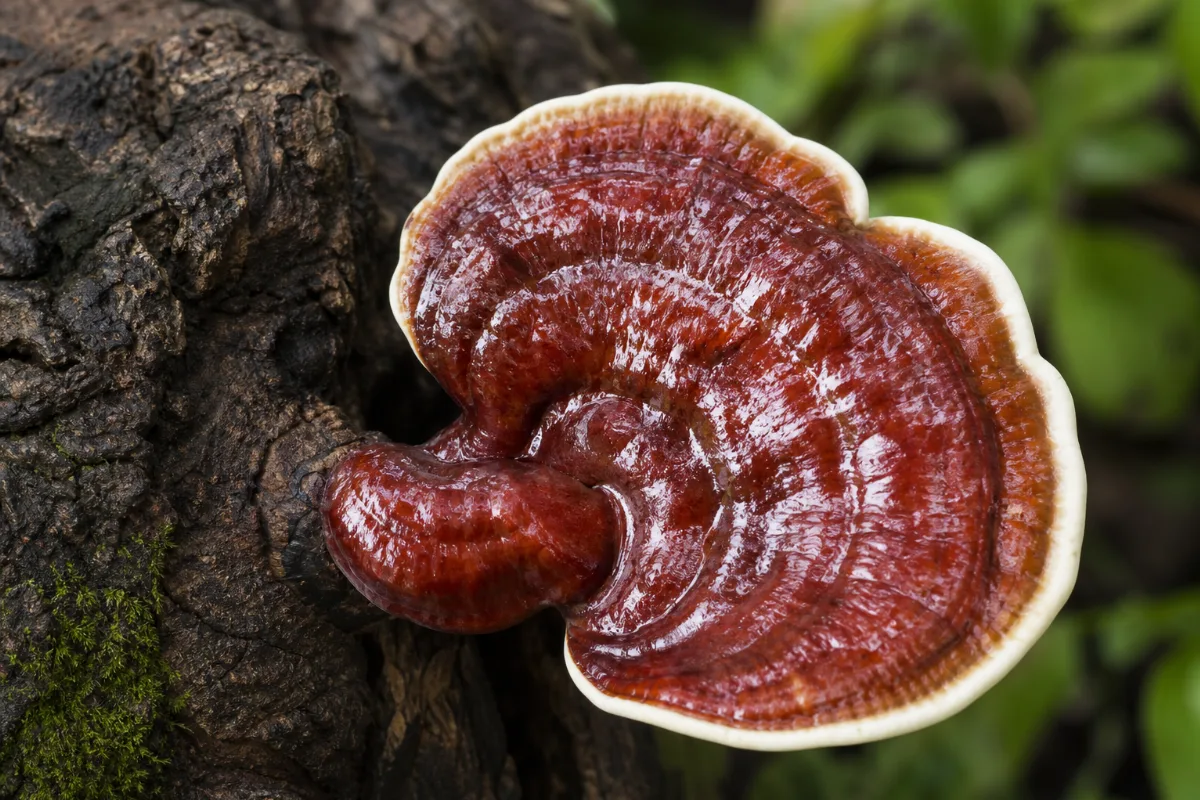
Mushrooms · Medicinal mushroom
Reishi
Ganoderma lucidum, Ganoderma lingzhi, Ganoderma sichuanense (the naming is disputed) · also called Lingzhi, ling zhi, mushroom of immortality (names listed by MSK and NCI)
Reishi, or lingzhi, is a woody mushroom that has been used as a tonic in China and Japan for many centuries. It is sold as powders, extracts, capsules and tea. Trials are mostly small and short, with mixed results: some lab markers move, but blood sugar and cholesterol did not improve in people with diabetes. Liver injury has been reported, mostly with powders, and it may interact with blood thinners and immune medicines.
General information, not medical advice. Last substantive update · Not medically reviewed. A named clinician has not signed off on this page. How this page is made
About Reishi
Reishi (lingzhi) is a woody mushroom used as a tonic in East Asia. Human research is mostly small, short trials with different products, so results are mixed. Immune markers rose slightly in some studies, but no trial shows fewer infections or longer cancer survival, and blood sugar and cholesterol did not improve in people with diabetes. Liver injury has been reported with powders, and there are cautions for blood thinners, immune medicines and pregnancy.
What it is
Reishi is a woody polypore fungus of the genus Ganoderma. The name covers a group of closely related species. NCI says the East Asian medicinal species is now accepted as Ganoderma sichuanense and differs from the European Ganoderma lucidum, though most research is published under G. lucidum. A 2015 genetic study found 13 species in the group, so the word 'reishi' on a label does not say which one is inside.
Products use the fruiting body (the mushroom itself), mycelium grown on grain, spores or spore oil. NCI notes that mycelium on grain can contain large amounts of grain alpha-glucan, unlike fruiting body extracts.
Traditional and current uses
Reishi appears in the Chinese materia medica Shen Nung Ben Cao Jing (206 BC to 8 AD) as a superior tonic, and has long been revered in Japan. Today it is used by some Chinese physicians to support immune function during cancer treatment. Traditional use is not proof that it works or is safe.
MSK says it is taken to boost immunity, increase strength and stamina, lower cholesterol and ease urinary symptoms in men. Our reading of the trials follows below.
What the research shows
Cochrane reviewed five trials of reishi in cancer. Immune-cell percentages rose slightly, quality of life was better in four trials, and no trial measured survival. Cochrane said there was not enough evidence for first-line use. A second Cochrane review and a 16-week trial found no benefit for blood sugar, cholesterol or blood pressure in type 2 diabetes. A pilot of spore powder in Alzheimer disease also found no benefit.
Single trials report less fatigue (132 people with neurasthenia, polysaccharide extract), lower urinary symptom scores (88 men, ethanol extract), better antioxidant and liver blood markers (42 healthy adults) and better blood fats (110 people, spore oil, no figures in the abstract). None has been repeated in the sources we read, and the products differ.
Fruiting body, mycelium, spores and extracts are different
Results from one reishi product cannot be applied to another. Trials tested a polysaccharide extract, a dry extract, an ethanol extract, a triterpenoid-enriched capsule, spore powder, spore oil, a mycelium culture extract and a two-herb formula. One 2024 lab analysis of a retail reishi extract powder found mostly non-beta-glucan, although its maker described it as 35% beta-glucan; that is one product only. NCI says supplement contents may vary from lot to lot with no guarantee that label amounts are present.
Legal and regulatory status
NCI says the FDA has not approved medicinal mushrooms as a treatment for cancer or any other condition, and that supplements do not need FDA approval before sale unless disease claims are made. We did not read EMA, LiverTox, LactMed or WHO statements on reishi, so none is stated here. Rules differ by country and change.
At a glance
Traditional uses history, not proof
- Used in China as a superior tonic to prolong life, prevent aging and boost qi, dating to the Shen Nung Ben Cao Jing (206 BC to 8 AD) (NCI).
- Associated with royalty, perhaps because it was rare in the wild (NCI).
- Revered in Japan, where it is called Reishi (NCI).
- Used today by some Chinese physicians to support immune function during chemotherapy or radiotherapy (NCI).
Studied for research
- Immune-cell markers in people with cancer and older women, very low
- Fatigue in neurasthenia (one trial), low
- Urinary symptoms in men (one trial), low
- Stress and mood, antioxidant and liver markers, blood fats, very low
- Blood sugar, cholesterol and blood pressure in diabetes, against (no benefit shown)
- Alzheimer disease (spore powder pilot), against (no benefit shown)
- Cancer survival, insufficient (not measured)
Main compounds
- Beta-glucans (polysaccharides), the best known immune-active part
- Triterpenoids such as ganoderic acid A
- Proteins such as LZ-8, sterols and nucleosides
Common forms
- Dried fruiting body (tea, decoction, powder)
- Water or alcohol extracts, including dual extracts
- Mycelium grown on grain (different from fruiting body)
- Spore powder and spore oil
- Capsules, tablets and tinctures
Research links: Memorial Sloan Kettering: Reishi mushroom · NCI: Medicinal mushrooms (PDQ) · Cochrane: reishi for cancer (abstract) · Cochrane: reishi for cardiovascular risk factors (abstract) · Fatal hepatitis case report (abstract) · Acute liver injury case report (abstract) · Research Library · Genes & Biomarkers Library
What it is and its history
- Accepted scientific name
- Ganoderma lucidum (a group of related species; see notes)
- Naming authority
- (Curtis) P.Karst. (GBIF)
- Synonyms
- Ganoderma lingzhi Sheng H.Wu, Y.Cao & Y.C.Dai (a synonym of G. sichuanense in GBIF); Ganoderma sichuanense J.D.Zhao & X.Q.Zhang (accepted in GBIF; NCI says it is the newly accepted name for the East Asian medicinal species); Ganoderma sinense (named in the Chinese Pharmacopoeia, per NCI)
- Common names
- Reishi (Japanese); Lingzhi / ling zhi (Chinese); Chizhi (G. lucidum) and zizhi (G. sinense) (Chinese); Mushroom of immortality (English)
- Family or group
- Polyporaceae (a fungus family; shelf and bracket fungi), not a plant
- Classification
- Fungi > Basidiomycota > Agaricomycetes > Polyporales > Polyporaceae > Ganoderma > Ganoderma lucidum
- Native range
- Not checked in the sources read.
- Habitat
- NCI describes Ganoderma as a genus of woody polypore fungi which grow on live trees.
- What it looks like
- Fruiting body: NCI describes Ganoderma as woody polypore fungi. Zhou 2015 tells species apart by the shape of the flesh, pores, cap-skin cells and spores.
- Cultivation
- Commercial products come from cultivated fruiting bodies, mycelium grown on grain, or spores (NCI and trial records). Details were not checked.
- Harvest and processing
- Not checked in the sources read.
- Look-alikes and adulterants
- Name: Other Ganoderma species; Note: NCI says there are many other Ganoderma species which are difficult to distinguish from the medicinal species. A genetic study found 13 species in the G. lucidum complex.; Name: European G. lucidum versus the East Asian medicinal species; Note: NCI says the originally described European species and the East Asian medicinal species are not identical, though most research is published under G. lucidum.
- Sustainability and conservation
- Not checked.
Traditional use and history history, not clinical proof
| Tradition or era | Documented use | Source |
|---|---|---|
| China, ancient materia medica | Ganoderma has a long history in East Asia as a medicinal mushroom dating to the Shen Nung Ben Cao Jing, written between 206 BC and 8 AD. It was considered a superior tonic for prolonging life, preventing aging and boosting qi, and was associated with royalty, perhaps because it was rare in the wild. | s-nci-pdq-mushrooms |
| Japan | Revered in Japanese culture; called Reishi in Japan. | s-nci-pdq-mushrooms |
| Chinese pharmacopoeia | The official species are Ganoderma lucidum and Ganoderma sinense (called chizhi and zizhi). | s-nci-pdq-mushrooms |
| Contemporary China | Used by Chinese physicians to support immune function in people having chemotherapy or radiotherapy for cancer, among other uses. In some places, such as Shanghai, cancer patients commonly use supplements containing G. lucidum. | s-nci-pdq-mushrooms |
Traditional use shows how it was used. It does not show that it works or is safe today.
What is inside, and how it may work
What it contains and how those compounds act in cells and animals. Laboratory and animal mechanisms are not proven effects in people.
Main compounds
| Compound | Family | Where it is concentrated | Activity studied | Level of evidence |
|---|---|---|---|---|
| Beta-glucans (polysaccharides) | polysaccharide | Fruiting body Beta-glucan ranged from 19.5% to 43.5% of dry weight in 19 Australian Ganoderma fruiting bodies (summary-only, species not confirmed). | Bind a receptor on immune cells (complement receptor 3) in lab work; considered immunomodulatory (NCI). 23 24 | Laboratory research |
| Ganoderic acid A (a triterpenoid) PubChem 471002 | lanostane triterpenoid | Fruiting body Amount in products not verified. | Ganoderic acids show anticancer, anti-inflammatory and liver-protecting effects in cells and animals (reviews). 26 18 10 | Laboratory research |
| Other triterpenoids (ganoderenic, lucidenic acids) | triterpenoid | Fruiting body Varies by specimen and product. | NCI says many Ganoderma triterpenes inhibit cancer cell line growth in the lab, though many of the major ones are weak or inactive. 23 1 | Laboratory research |
| Proteins (LZ-8, LZ-9), sterols and nucleosides | protein, sterol, nucleoside | Not stated Not stated | Listed as constituents in a 2021 review; no human effect shown. 1 | Review |
Mechanisms, receptors and pathways
| Target or pathway | Gene or receptor | What was found | Level |
|---|---|---|---|
| Immune cell receptor (complement receptor 3) | CR3 (CD11b/CD18) | Beta-glucans bind this receptor in lab work and are considered immunomodulatory. Polysaccharides also made dendritic cells mature in the lab (NCI). 23 | Laboratory research |
| Cell death pathways in cancer cells | apoptosis (mitochondrial and death-receptor pathways) | Triterpenoids and polysaccharides cause growth arrest and cytotoxicity in cancer cell lines; findings in mice exist (NCI). This is not evidence of an effect in people. 23 25 | Laboratory research |
| T-cell regulation | FOXP3, TGF-beta, IL-10, IL-6, interferon gamma | In older women taking a dry extract for 8 weeks, T-cell genes shifted towards an anti-inflammatory pattern in blood samples. 4 | Human biomarker |
| Ganoderic acid activity | various (reviews) | Reviews describe anti-cancer, anti-inflammatory, anti-aging, liver-protecting and neuroprotective effects of ganoderic acids, mostly in cells and animals. 18 10 | Review of preclinical work |
| Prostate-related enzyme | 5-alpha-reductase | An ethanol extract blocked this enzyme most strongly among 19 mushroom extracts in the lab, which led to the urinary-symptoms trial. 14 | Laboratory research |
| Drug-handling liver enzymes | CYP2E1, CYP1A2, CYP3A | Reishi polysaccharides inhibited these enzymes in the lab; clinical relevance is unknown (MSK). 25 | Laboratory research |
Absorption, metabolism and elimination
- Absorption
- Not found in the sources read.
- Distribution
- Not found in the sources read.
- Metabolism
- NCI says the mammalian metabolism of Ganoderma triterpenes has been studied and numerous sites of metabolism identified; no human detail was read.
- Elimination
- Not found in the sources read.
- Bioavailability
- Not established.
Isolated compounds versus whole extracts
Reishi products differ: fruiting body, hot-water or alcohol extracts, mycelium grown on grain, spore powder, spore oil and purified extracts such as Ganopoly. NCI says most lab studies used mixtures, so activities of individual compounds overlap. Trial results apply only to the product tested. Mycelium on grain can hold large amounts of grain alpha-glucan, unlike fruiting body extracts.
Nutritional composition
Reishi is a woody mushroom, not a food or a nutrient source, and no nutrition claim is made.
2 low certainty7 very low certainty1 not enough evidence2 evidence against
What was looked at
The 12 benefits and uses checked for Reishi, each with how strong the evidence is. Tap one to open it.
- Immune system markersVery low certainty
- Alongside cancer treatment (not a treatment)Very low certainty
- Fatigue and well-being (neurasthenia)Low certainty
- Stress, anxiety and moodVery low certainty
- Blood sugar, cholesterol and blood pressureEvidence against
- Memory and Alzheimer diseaseEvidence against
- Urinary symptoms in menLow certainty
- Antioxidant and liver blood markers in healthy adultsVery low certainty
- Blood fats (cholesterol and triglycerides)Very low certainty
- Rheumatoid arthritisVery low certainty
- FibromyalgiaNot enough evidence
- Colorectal adenomas (pre-cancer polyps)Very low certainty
Lab markers tracked in the studies
CD3, CD4 and CD8 immune-cell percentagesHbA1c (average blood sugar over about 3 months)Fatigue and clinical severity scoresInternational Prostate Symptom Score (IPSS)Oxidative stress markers (TBARS, 8-OH-dG)Liver enzymes (GOT/AST and GPT/ALT)Blood lipids (cholesterol, triglycerides)
What is Reishi good for?
The uses people ask about and how strong the human evidence is for each. None is proven. Read this together with the Safety tab.
Benefits, one by one
Each card is a research question, not a promise. Tap a goal to filter. Open a card to see the studies, doses and limits.
Immune system markers
Very low certaintyLab work and small studies show reishi extracts can change some immune-cell measures. In people with cancer, a Cochrane review found small rises in some immune-cell percentages. Higher test values are not the same as fewer infections or better health, and no trial here measured infections.
5 studiesThe trials used different products: whole-mushroom products, a polysa…
Studies, doses and limits
What the trials found
The Cochrane review pooled five trials in people with cancer and found small rises in CD3, CD4 and CD8 cell percentages, with NK-cell activity and the CD4/CD8 ratio marginally higher. In 39 older women, an 8-week reishi extract changed T-cell behaviour in blood samples towards a more anti-inflammatory pattern. In 16 healthy volunteers over 10 days, the CD56 cell count rose but this was not statistically significant. An open-label NCI-described trial of the Ganopoly polysaccharide extract in 30 people with advanced lung cancer found no significant overall change in immune measures after 12 weeks.
Results
Cochrane: CD3 +3.91% (95% CI 1.92 to 5.90), CD4 +3.05% (1.00 to 5.11), CD8 +2.02% (0.21 to 3.84). Older women: several immune genes more active; no infection outcomes.
Effect sizes as reported
Small rises in some immune-cell percentages
Why this rating
Cochrane judged the underlying trials to be of unsatisfying quality. Other trials are small, measure lab markers only, and results differ by product and group.
Form and dose studied
The trials used different products: whole-mushroom products, a polysaccharide extract, and a dry extract.
Who was studied
People with cancer; older women; healthy adults
Limits
Immune cell counts are surrogate measures. None of these trials measured fewer infections. Product and species differ between trials.
Why researchers looked
Reishi is best known in East Asia as a tonic for the immune system, so most research looks at blood tests of immune cells.
Traditional use
Used in China and Japan as a tonic for many centuries (NCI).
Proposed mechanism Laboratory research
Beta-glucans from the fruiting body are thought to bind a receptor on immune cells (complement receptor 3) in lab work (NCI). This is a laboratory finding, not proof of a health effect.
A proposed mechanism does not show that the effect happens in people.
Reishi may add to immune-suppressing medicines' effects in theory; people on immunosuppressants should ask their doctor first (MSK). Reishi has real safety points: liver injury reports (mostly powders), bleeding and immune-medicine cautions, and no safety data for pregnancy or breastfeeding. See the Safety tab.
Alongside cancer treatment (not a treatment)
Very low certaintyCochrane found not enough evidence to use reishi as a first-line cancer treatment. It may be used alongside usual care only after talking with the cancer team. The best studies are small and of poor quality, and none showed longer survival.
4 studiesDifferent products across trials, including a two-herb combination.
Studies, doses and limits
What the trials found
The Cochrane review of five trials said the evidence did not justify first-line use, and that reishi alongside chemotherapy or radiotherapy might raise tumour response, but the abstract's range (RR 1.50; 95% CI 0.90 to 2.51) includes no effect. Four trials reported better quality of life; no trial reported long-term survival. A 6-week placebo-controlled trial of a reishi-and-privet formula in 82 people with lung cancer found a quality-of-life trend that was not statistically significant (P = .086). NCI says it found no reishi studies in lung cancer with measured cancer outcomes (only immune measures) and describes a Japanese trial of a mycelium extract in colorectal adenomas (see the other benefits). NCI also says the FDA has not approved medicinal mushrooms for treating cancer or any other condition.
Results
Tumour response RR 1.50 (95% CI 0.90 to 2.51); quality of life P = .086 for the combination formula
Effect sizes as reported
No clear effect shown
Why this rating
Cochrane rated the trials' quality as unsatisfying; the formula trial was small and not significant; the Cochrane reviewers could not say whether reishi affects survival.
Form and dose studied
Different products across trials, including a two-herb combination.
Who was studied
Adults with cancer, many on chemotherapy
Limits
Not a replacement for cancer treatment. Tell the cancer team about any mushroom supplement. MSK notes reishi spore powder raised a tumour blood marker (CA72-4) in reports.
Why researchers looked
Many people with cancer in Asia use reishi supplements next to chemotherapy or radiotherapy, so reviewers looked for controlled trials.
Traditional use
Contemporary Chinese physicians use it to support immune function during chemotherapy or radiotherapy (NCI).
Proposed mechanism Laboratory research
Triterpenes and polysaccharides slow or kill cancer cells in dishes and in animals (NCI). Lab and animal findings do not show an effect in people.
A proposed mechanism does not show that the effect happens in people.
Reishi has real safety points: liver injury reports (mostly powders), bleeding and immune-medicine cautions, and no safety data for pregnancy or breastfeeding. See the Safety tab.
Fatigue and well-being (neurasthenia)
Low certaintyOne 8-week trial in 132 people in China with neurasthenia found less fatigue and a better overall rating with a reishi polysaccharide extract than with placebo. It is a single trial of one branded product, and we did not find it repeated.
2 studiesA polysaccharide extract (Ganopoly), not whole mushroom.
Studies, doses and limits
What the trials found
In the trial, the fatigue score fell 28.3% with the extract and 20.1% with placebo, and the clinical severity score fell 15.5% versus 4.9%. 51.6% of those on the extract were rated more than minimally improved, compared with 24.6% on placebo (P = .002).
Results
Fatigue score -28.3% vs -20.1% placebo; improved 51.6% vs 24.6%
Effect sizes as reported
Modest advantage over placebo in one trial
Why this rating
One reasonably sized, placebo-controlled trial with a clear difference, but a single branded extract, self-rated scales, funding not stated, and no repeat trial.
Form and dose studied
A polysaccharide extract (Ganopoly), not whole mushroom.
Who was studied
Adults with neurasthenia in China
Limits
Results apply to this extract. Neurasthenia is rarely diagnosed in many countries today.
Why researchers looked
Reishi is traditionally a tonic for weakness and low energy.
Traditional use
Considered a superior tonic for prolonging life and boosting qi in the Chinese materia medica (NCI).
Proposed mechanism Pharmacological theory
Not established. Authors of the trial do not explain a mechanism in the abstract.
A proposed mechanism does not show that the effect happens in people.
Reishi has real safety points: liver injury reports (mostly powders), bleeding and immune-medicine cautions, and no safety data for pregnancy or breastfeeding. See the Safety tab.
Stress, anxiety and mood
Very low certaintyOne small 30-day trial in young women students reported better stress, anxiety and mood scores at the higher of two supplement amounts. It was short, small and self-rated, so we treat it as an early hint only.
2 studiesA supplement taken at two amounts; product details not given in the a…
Studies, doses and limits
What the trials found
In 78 female students, the higher-amount group had better anxiety, depression, vitality and well-being scores than at the start, and better heart rate, VO2max and grip strength than placebo. MSK lists lowering anxiety among reported clinical findings but we did not read its reference.
Results
Scores improved in one of two supplement groups (P < 0.05); effect sizes not given in the abstract
Effect sizes as reported
Possible small improvement in one short trial
Why this rating
One small, short trial in healthy young women with many outcomes tested and effect sizes missing.
Form and dose studied
A supplement taken at two amounts; product details not given in the abstract.
Who was studied
Healthy young women students in India
Limits
Not tested in people with an anxiety or mood disorder.
Why researchers looked
Reishi is described in traditional texts as calming, so researchers test stress and mood scales.
Traditional use
No traditional use for stress or mood was found in the sources read.
Proposed mechanism Pharmacological theory
Not established in people.
A proposed mechanism does not show that the effect happens in people.
Reishi has real safety points: liver injury reports (mostly powders), bleeding and immune-medicine cautions, and no safety data for pregnancy or breastfeeding. See the Safety tab.
Blood sugar, cholesterol and blood pressure
Evidence againstA Cochrane review and a later placebo-controlled trial found no clear benefit of reishi for blood sugar, cholesterol or blood pressure in people with type 2 diabetes. A newer trial in people with dyslipidemia is covered under blood fats.
4 studiesWhole-mushroom products in the pooled trials; one trial combined reis…
Studies, doses and limits
What the trials found
The Cochrane review of five trials (398 people) found no meaningful change in HbA1c, total cholesterol, LDL, body mass index, blood pressure or triglycerides, and one measure of blood sugar after eating was worse on reishi. A later 16-week trial of 84 people with type 2 diabetes and metabolic syndrome also found no effect on HbA1c or fasting glucose.
Results
HbA1c -0.10% (95% CI -1.05 to 0.85) in the Cochrane pool; 0.13% (-0.35 to 0.60) in the later trial
Effect sizes as reported
No benefit shown
Why this rating
Consistent null results from a Cochrane review and a placebo-controlled trial, though the trials are small and mostly in people with diabetes.
Form and dose studied
Whole-mushroom products in the pooled trials; one trial combined reishi with Cordyceps.
Who was studied
Adults with type 2 diabetes, some with metabolic syndrome
Limits
Does not rule out small effects, and does not cover people without diabetes.
Why researchers looked
Reishi is promoted for diabetes and heart health, so Cochrane reviewers checked whether trials back this up.
Traditional use
Used in traditional medicine for many conditions (Ahmad 2021 review).
Proposed mechanism Animal research
A 2021 review says reishi's possible effects on diabetes are mostly seen in preclinical studies (lab and animals); these have not carried over to the trials in people.
A proposed mechanism does not show that the effect happens in people.
Do not replace diabetes medicines with reishi. Reishi has real safety points: liver injury reports (mostly powders), bleeding and immune-medicine cautions, and no safety data for pregnancy or breastfeeding. See the Safety tab.
Memory and Alzheimer disease
Evidence againstA 6-week pilot trial of reishi spore powder in 42 people with Alzheimer disease found no better results than placebo for thinking, behaviour or quality of life.
2 studiesSpore powder (the spores, not the fruiting body).
Studies, doses and limits
What the trials found
At the end of 6 weeks there was no better score for the spore powder on the ADAS-cog thinking test (P = .31), the Neuropsychiatric Inventory (P = .79) or any quality-of-life domain (P = .62 to .82). MSK also describes this pilot as not helpful.
Results
No difference from placebo
Effect sizes as reported
No benefit shown
Why this rating
One small, short pilot trial with consistently null results.
Form and dose studied
Spore powder (the spores, not the fruiting body).
Who was studied
People with Alzheimer disease
Limits
Only 6 weeks, 42 people; longer trials could differ, but nothing positive has been shown.
Why researchers looked
Memory loss is a common reason people try supplements, so a pilot trial tested spore powder in Alzheimer disease.
Traditional use
No traditional use for Alzheimer disease found in the sources read.
Proposed mechanism Laboratory research
Not established in people.
A proposed mechanism does not show that the effect happens in people.
MSK advises discussing spore powder with a provider. Reishi has real safety points: liver injury reports (mostly powders), bleeding and immune-medicine cautions, and no safety data for pregnancy or breastfeeding. See the Safety tab.
Urinary symptoms in men
Low certaintyOne 12-week trial in 88 older men with mild urinary symptoms found a lower symptom score with a reishi ethanol extract than with placebo. Urine flow and prostate size did not change. It is a single trial.
2 studiesAn ethanol extract tested in one trial.
Studies, doses and limits
What the trials found
In 88 men over 49 with slight-to-moderate symptoms, the symptom score (IPSS) was lower with the extract (mean difference -1.18 points, 95% CI -1.74 to -0.62). Peak and mean urinary flow, residual urine, prostate size, PSA and testosterone did not change. No severe adverse effects.
Results
IPSS mean difference -1.18 points (95% CI -1.74 to -0.62)
Effect sizes as reported
Small improvement in a symptom score
Why this rating
One placebo-controlled trial with a clear score difference, but a single trial, a questionnaire outcome, no change in measured flow, and no repeat.
Form and dose studied
An ethanol extract tested in one trial.
Who was studied
Men over 49 in Japan with slight-to-moderate symptoms
Limits
Does not show reishi treats prostate enlargement. Men with urinary symptoms need a medical check first.
Why researchers looked
The extract was picked for the trial because it blocked an enzyme (5-alpha-reductase) most strongly among 19 edible and medicinal mushroom extracts in the lab (trial abstract).
Traditional use
MSK lists lower urinary tract symptoms in men among purported uses.
Proposed mechanism Laboratory research
The extract was chosen because it blocked 5-alpha-reductase most strongly among 19 mushroom extracts in the lab (trial abstract).
A proposed mechanism does not show that the effect happens in people.
Reishi has real safety points: liver injury reports (mostly powders), bleeding and immune-medicine cautions, and no safety data for pregnancy or breastfeeding. See the Safety tab.
Antioxidant and liver blood markers in healthy adults
Very low certaintyOne 6-month crossover trial in 42 healthy people reported better antioxidant measures and lower liver enzyme results with an enriched reishi capsule. These are lab markers in healthy people, and reishi has also been linked to liver injury.
3 studiesA triterpenoid- and polysaccharide-peptide-enriched capsule.
Studies, doses and limits
What the trials found
In 42 healthy adults, antioxidant capacity (TEAC) rose from 79.33 to 84.04, oxidative damage markers fell (TBARS 3.37 to 2.47; 8-OH-dG 15.99 to 11.98), GOT and GPT fell by 42% and 27%, and mild fatty liver on ultrasound reversed to normal in the reishi group.
Results
TEAC +4.7 units; TBARS -0.9; 8-OH-dG -4.0; GOT -42%, GPT -27%
Effect sizes as reported
Better lab markers in healthy adults
Why this rating
One small trial of a single enriched capsule, lab markers only, healthy volunteers, statistics not given in detail in the abstract.
Form and dose studied
A triterpenoid- and polysaccharide-peptide-enriched capsule.
Who was studied
Healthy adults (Taiwan)
Limits
Lower markers do not show better health. Liver injury case reports exist for reishi powders, so this should not be read as a liver-protection claim.
Why researchers looked
The trial abstract says reishi is used in traditional Chinese medicine for hepatitis and other conditions, so researchers measured oxidative stress and liver markers.
Traditional use
Lab and animal work reports protective effects on the liver (MSK).
Proposed mechanism Laboratory research
Antioxidant activity of triterpenoids and polysaccharide peptides is proposed; shown in lab work, and in this trial only as blood markers.
A proposed mechanism does not show that the effect happens in people.
Case reports link reishi powder to liver injury, including one death (see Safety).
Blood fats (cholesterol and triglycerides)
Very low certaintyA 2025 trial in 110 people with high blood fats reported better results with reishi spore oil than placebo, but the abstract gives no numbers and the product is spore oil, not the mushroom. An earlier review found no cholesterol benefit from whole mushroom in people with diabetes.
2 studiesSpore oil extract (not the fruiting body).
Studies, doses and limits
What the trials found
In the spore-oil trial, total cholesterol, triglycerides and LDL were lower and HDL higher than placebo after 12 weeks, all reported as statistically significant without figures in the abstract. Kidney tests were unaffected and liver tests improved. In the Cochrane review (people with type 2 diabetes), total cholesterol, LDL and triglycerides did not differ from placebo.
Results
Figures not given in the abstract
Effect sizes as reported
Possible improvement in one trial of spore oil
Why this rating
One trial, no numbers available to us, different product (spore oil) from the whole-mushroom trials that found nothing.
Form and dose studied
Spore oil extract (not the fruiting body).
Who was studied
Adults with dyslipidemia
Limits
Do not use in place of cholesterol medicines.
Why researchers looked
Reishi is promoted for cholesterol, and MSK lists high cholesterol among purported uses.
Traditional use
MSK lists high cholesterol among purported uses.
Proposed mechanism Pharmacological theory
Not established.
A proposed mechanism does not show that the effect happens in people.
Reishi has real safety points: liver injury reports (mostly powders), bleeding and immune-medicine cautions, and no safety data for pregnancy or breastfeeding. See the Safety tab.
Rheumatoid arthritis
Very low certaintyA 24-week pilot trial of reishi plus a traditional herbal formula (San Miao San) in 65 people with active rheumatoid arthritis did not meet its main goal. Pain and patient global scores improved only in the herb group.
2 studiesReishi plus San Miao San (two products).
Studies, doses and limits
What the trials found
ACR20 response was 15% on the herbs and 9.1% on placebo (P > 0.05). Pain and patient global scores improved significantly only in the herb group. Immune counts and most inflammation markers did not change. Mild side effects were reported in both groups.
Results
ACR20 15% vs 9.1% (not significant)
Effect sizes as reported
Main goal not reached; pain score better in one group
Why this rating
A 65-person pilot, a combination of two products, main outcome not significant.
Form and dose studied
Reishi plus San Miao San (two products).
Who was studied
People with active rheumatoid arthritis already on drugs
Limits
Not a replacement for arthritis medicines. Reishi may interact with immune-suppressing arthritis drugs (MSK).
Why researchers looked
MSK reports anti-inflammatory effects in lab and animal work, so a pilot trial tested reishi in arthritis.
Traditional use
Not established in the sources read.
Proposed mechanism Pharmacological theory
Not shown: the trial found no antioxidant, anti-inflammatory or immune-system effect.
A proposed mechanism does not show that the effect happens in people.
Reishi has real safety points: liver injury reports (mostly powders), bleeding and immune-medicine cautions, and no safety data for pregnancy or breastfeeding. See the Safety tab.
Fibromyalgia
Not enough evidenceA 6-week pilot found no change in blood sugar, cholesterol, weight or blood pressure in women with fibromyalgia who took reishi powder compared with carob flour. It did not test fibromyalgia symptoms.
2 studiesFruiting body powder.
Studies, doses and limits
What the trials found
There were no statistically significant differences between reishi and carob flour in any measure. MSK reports that reishi did not influence blood or body measures in fibromyalgia.
Results
No difference
Effect sizes as reported
No benefit shown for these measures
Why this rating
Pilot trial with an active comparator (carob), short, symptoms not measured, sizes not given in the abstract.
Form and dose studied
Fruiting body powder.
Who was studied
Women with fibromyalgia
Limits
Does not test pain or fatigue in fibromyalgia.
Why researchers looked
Women with fibromyalgia often have heart and metabolic risks, so researchers checked these measures.
Traditional use
Not established.
Proposed mechanism Pharmacological theory
Not established.
A proposed mechanism does not show that the effect happens in people.
Reishi has real safety points: liver injury reports (mostly powders), bleeding and immune-medicine cautions, and no safety data for pregnancy or breastfeeding. See the Safety tab.
Colorectal adenomas (pre-cancer polyps)
Very low certaintyA Japanese study described by NCI found fewer and smaller adenomas after 12 months of a reishi mycelium extract. The comparison group was not randomised, and it was a mycelium culture extract, so the result is only an early lead.
1 studiesMycelium culture extract (MAK).
Studies, doses and limits
What the trials found
NCI describes a study of 123 patients given a water-soluble extract of reishi mycelium culture medium (called MAK) for 12 months and 102 controls selected from the clinic's patients. The change in adenoma number was +0.66 in controls and -0.42 in the treated group (P < .01); total adenoma size rose 1.73 mm versus fell 1.40 mm (P < .01).
Results
Adenoma number -0.42 vs +0.66 (controls); size -1.40 mm vs +1.73 mm
Effect sizes as reported
Early lead only
Why this rating
Not randomised or blinded; controls chosen from other patients; mycelium culture extract, not fruiting body; summarised second-hand from NCI, original paper not read.
Form and dose studied
Mycelium culture extract (MAK).
Who was studied
Japanese patients with colorectal adenomas
Limits
Anyone with adenomas should follow their gastroenterologist's plan.
Why researchers looked
Colorectal adenomas can become cancer, so a prevention study tested a reishi extract.
Traditional use
Not established.
Proposed mechanism Preclinical
Not established in people.
A proposed mechanism does not show that the effect happens in people.
Reishi has real safety points: liver injury reports (mostly powders), bleeding and immune-medicine cautions, and no safety data for pregnancy or breastfeeding. See the Safety tab.
Connections to the rest of health
How Reishi connects to the rest of our health knowledge graph. Every link says what kind of connection it is. A safety link (for example to the liver) is a warning, not a benefit. A study that merely mentions a topic never creates a benefit link.
Explore every connection: goals, body systems, organs, symptoms, genes
A. Wellness goals
| Connected to | Kind of connection | Evidence status | Context | Studies |
|---|---|---|---|---|
| Immune Support | Preliminary mechanism | Very low certainty | Immune system markers: Lab work and small studies show reishi extracts can change some immune-cell measures. In people with cancer, a Cochrane review found small rises in some immune-cell percentages. Higher test values are not the same as fewer infections or better health, and no trial here measured infections. | 5 4 21 23 25 |
| Reduce Fatigue | Potential benefit | Low certainty | Fatigue and well-being (neurasthenia): One 8-week trial in 132 people in China with neurasthenia found less fatigue and a better overall rating with a reishi polysaccharide extract than with placebo. It is a single trial of one branded product, and we did not find it repeated. | 16 23 |
B. Body systems
| Connected to | Kind of connection | Evidence status | Context | Studies |
|---|---|---|---|---|
| Blood clotting | Drug or supplement interaction | Low certainty | MSK warns of bleeding with blood thinners; a trial in healthy volunteers found no clotting change. Preparation or compound: Reishi extracts |
25 8 |
| Immune system | Drug or supplement interaction | Very low certainty | May enhance immune response; caution with immunosuppressants and autoimmune skin disease (MSK). Preparation or compound: Reishi extracts |
25 |
| Immune system | Biological association | Very low certainty | Small rises in some immune-cell percentages; no infection outcomes. Studied for: Immune system markers Preparation or compound: Whole-mushroom products and extracts |
5 4 21 23 25 11 |
| Nervous System | Biological association | Low certainty | Studied for: Fatigue and well-being (neurasthenia) Studied for: Stress, anxiety and mood | 16 23 13 25 17 |
| Cardiovascular System | Biological association | Evidence against | Studied for: Blood sugar, cholesterol and blood pressure Studied for: Blood fats (cholesterol and triglycerides) | 6 7 25 1 19 |
| Endocrine System | Biological association | Evidence against | Studied for: Blood sugar, cholesterol and blood pressure | 6 7 25 1 |
| Urinary System | Biological association | Low certainty | Studied for: Urinary symptoms in men | 14 25 |
| Hepatic System | Biological association | Very low certainty | Studied for: Antioxidant and liver blood markers in healthy adults | 2 25 20 |
| Musculoskeletal System | Biological association | Very low certainty | Studied for: Rheumatoid arthritis Studied for: Fibromyalgia | 9 25 15 |
| Digestive System | Biological association | Very low certainty | Studied for: Colorectal adenomas (pre-cancer polyps) | 23 |
C. Body parts and organs
E. Health conditions
| Connected to | Kind of connection | Evidence status | Context | Studies |
|---|---|---|---|---|
| Pregnancy and breastfeeding | Contraindication | Not enough evidence | No safety data found. Preparation or compound: All reishi products |
1 |
| Children | Adverse effect or risk | Very low certainty | One child with epilepsy had seizures and hallucinations; recovered after stopping. Preparation or compound: Mixed medicinal fungi supplement with reishi |
12 |
| Neurasthenia | Potential benefit | Low certainty | One 8-week trial of 132 people. Preparation or compound: Ganopoly polysaccharide extract |
16 |
I. Biomarkers
| Connected to | Kind of connection | Evidence status | Context | Studies |
|---|---|---|---|---|
| CD3, CD4 and CD8 immune-cell percentages | Biological association | Very low certainty | Measured in trials: raised. A lab change is not the same as a health benefit. | 5 |
| HbA1c (average blood sugar over about 3 months) | Biological association | Evidence against | Measured in trials: no change. A lab change is not the same as a health benefit. | 6 7 |
| Fatigue and clinical severity scores | Biological association | Low certainty | Measured in trials: lowered. A lab change is not the same as a health benefit. | 16 |
| International Prostate Symptom Score (IPSS) | Biological association | Low certainty | Measured in trials: lowered. A lab change is not the same as a health benefit. | 14 |
| Oxidative stress markers (TBARS, 8-OH-dG) | Biological association | Very low certainty | Measured in trials: lowered. A lab change is not the same as a health benefit. | 2 |
| Liver enzymes (GOT/AST and GPT/ALT) | Biological association | Very low certainty | Measured in trials: lowered. A lab change is not the same as a health benefit. | 2 19 |
| Blood lipids (cholesterol, triglycerides) | Biological association | Mixed findings | Measured in trials: mixed. A lab change is not the same as a health benefit. | 19 6 |
J. Genes, receptors and enzymes
| Connected to | Kind of connection | Evidence status | Context | Studies |
|---|---|---|---|---|
| Complement receptor 3 (CR3) | Preliminary mechanism | In vitro | Bound by beta-glucans in lab work. | 23 |
| FOXP3, TGF-beta, IL-10 | Preliminary mechanism | Human biomarker | More active in blood T cells of older women taking an extract. | 4 |
| CYP2E1, CYP1A2, CYP3A | Preliminary mechanism | In vitro | Inhibited by reishi polysaccharides in the lab. | 25 |
L. Active compounds
| Connected to | Kind of connection | Evidence status | Context | Studies |
|---|---|---|---|---|
| Beta-glucans (polysaccharides) | Biological association | In vitro | Bind a receptor on immune cells (complement receptor 3) in lab work; considered immunomodulatory (NCI). Preparation or compound: Fruiting body |
23 24 |
| Ganoderic acid A (a triterpenoid) | Biological association | In vitro | Ganoderic acids show anticancer, anti-inflammatory and liver-protecting effects in cells and animals (reviews). Preparation or compound: Fruiting body |
26 18 10 |
| Other triterpenoids (ganoderenic, lucidenic acids) | Biological association | In vitro | NCI says many Ganoderma triterpenes inhibit cancer cell line growth in the lab, though many of the major ones are weak or inactive. Preparation or compound: Fruiting body |
23 1 |
| Proteins (LZ-8, LZ-9), sterols and nucleosides | Biological association | Review | Listed as constituents in a 2021 review; no human effect shown. | 1 |
Each connection is stored with the ingredient, the connected record, the kind of connection, the evidence status, the supporting studies, the preparation or compound involved, and a review date (last reviewed October 25, 2026).
Evidence at a glance: what changed in 6 lab markers
Tap a number to show only those markers. Counts are markers, not people.
The evidence
The research centre for Reishi. Every record here was checked against PubMed or the publisher's page; we never list a study we have not verified.
Evidence by outcome
Bars show how many studies we found for each outcome, not how well it works. People are added up across trials only (reviews are not added, to avoid double counting).
How we rate evidence
High certainty
Several well-run trials or reviews agree; further research is unlikely to change the picture much.
Moderate certainty
Good trials point the same way, but some doubt remains.
Low certainty
Small, short or inconsistent trials. The finding could change with better research.
Very low certainty
Very little or very weak human data. Treat as a possibility only.
Mixed findings
Trials or reviews disagree with each other.
Not enough evidence
Not enough human research to say either way.
Evidence against
Good research found no benefit, or found harm.
We take the reviewers' own risk-of-bias and GRADE statements where they exist, and otherwise judge from study size, design, consistency, directness and whether a product matches what is sold. Many publications do not make evidence high. Method note: We read PubMed records and abstracts for 22 papers (two Cochrane reviews, 13 trials including a small safety trial, three case reports, and four narrative reviews or taxonomy studies), the National Cancer Institute and Memorial Sloan Kettering pages in full, checked the species names in GBIF and Ganoderic acid A in PubChem, and reused one 2024 lab analysis from an earlier read (marked summary-only). EMA, LiverTox, LactMed and WHO were not read. Only abstracts were read for papers, so numbers come from abstracts. Certainty ratings are the compiler's own reading.
Study library: every study we checked 27
| Study | Design | People | Product, dose, length | Result |
|---|---|---|---|---|
| Ahmad 2021 Ganoderma lucidum (Reishi) an edible mushroom; a comprehensive and critical review of its nutritional, cosmeceutical, mycochemical, pharmacological, clinical, and toxicological properties. Phytotherapy Research · PMID 34411377 · DOI |
Narrative review review |
Review of preclinical and clinical literature 2015 to 2020 | Ganoderma lucidum Not shown here |
Lists polysaccharides (alpha and beta glucans), triterpenoids (ganoderic, ganoderenic, lucidenic acids), sterols/ergosterol, proteins (LZ-8, LZ-9) and nucleosides. Says most pharmacological studies are preclinical with drawbacks, that quality clinical data are needed, and that clinical studies of safety, interactions, chronic use, teratogenicity, mutagenicity and genotoxicity are missing. Review conclusion: more clinical data needed Methods, limits and fundingOutcomes: Chemistry, pharmacology, clinical and toxicology findings Limitations: Narrative review; not systematic; abstract read only. Funding and conflicts: Not stated in the abstract Read: abstract |
| Chiu 2017 Triterpenoids and polysaccharide peptides-enriched Ganoderma lucidum: a randomized, double-blind placebo-controlled crossover study of its antioxidation and hepatoprotective efficacy in healthy volunteers. Pharmaceutical Biology · PMID 28183232 · DOI |
Controlled trial |
42 42 healthy adults (22 men, 20 women) |
Ganoderma lucidum capsule enriched in triterpenoids and polysaccharide peptides Not shown here 6 months, then crossover after a 1-month washout · vs Placebo capsule |
TEAC rose from 79.33 to 84.04, and total thiols and glutathione rose (6 to 8.05). TBARS fell from 3.37 to 2.47 and 8-OH-dG from 15.99 to 11.98. GOT and GPT fell by 42% and 27%. On ultrasound, mild fatty liver reversed to normal in the reishi group. Better scores on lab markers of oxidative stress and liver enzymes Methods, limits and fundingOutcomes: Antioxidant capacity (TEAC), thiols, glutathione, oxidative stress markers (TBARS, 8-OH-dG), liver enzymes (GOT, GPT), abdominal ultrasound Limitations: Healthy people with normal liver tests; lab markers, not illness; one enriched product; the abstract does not give group sizes by period or statistics for each result. Note that case reports of liver injury exist for reishi powders (see Safety). Funding and conflicts: Funding not stated in the abstract Read: abstract |
| Guedikian 2023 Ganoderma lingzhi (Reishi Mushroom)-Induced Acute Liver Injury in the Setting of Alcohol Use: A Case Report and Review of the Literature. Cureus · PMID 37885515 · DOI |
Case report |
1 A 47-year-old man with headache and abdominal pain after reishi powder and alcohol |
Ganoderma lingzhi powder, together with alcohol Not shown here |
Acute hepatitis with significant transaminase rises, managed conservatively with N-acetylcysteine and IV fluids. Two-week follow-up showed complete resolution of symptoms and lab abnormalities. Acute liver injury that fully resolved Methods, limits and fundingOutcomes: Liver enzymes and symptoms Limitations: Alcohol was also involved, so reishi cannot be named as the sole cause; one case. Funding and conflicts: Not stated in the abstract Read: abstract |
| Iser-Bem 2024 Ganoderma lucidum dry extract supplementation modulates T lymphocyte function in older women. British Journal of Nutrition · PMID 38800991 · DOI |
Controlled trial |
39 Older women; 60 enrolled, 39 finished (23 reishi, 16 placebo) |
Ganoderma lucidum dry extract (food supplement) Not shown here 8 weeks · vs Placebo |
In the reishi group, lymphocyte growth after one stimulant (concanavalin A) rose and several immune-related genes (including FOXP3, TGF-beta, IL-10, IL-6 and interferon gamma) were more active. After other stimulants, Th17 cells fell and Th2 cells rose. The authors read this as a mainly anti-inflammatory pattern, and did not see T-cell growth through the CD28 route. Changes in lab markers of T-cell behaviour; no illness outcomes measured Methods, limits and fundingOutcomes: T-cell function in blood samples (lymphocyte proliferation, gene expression, cell types) Limitations: Small trial that lost about a third of its volunteers; many lab markers tested; the abstract gives no effect sizes; no infection or health outcome measured. Funding and conflicts: Funding not stated in the abstract Read: abstract |
| Jin 2016 Ganoderma lucidum (Reishi mushroom) for cancer treatment. Cochrane Database of Systematic Reviews · PMID 27045603 · DOI |
Systematic review |
Adults with pathology-confirmed cancer of any type or stage; 5 randomised trials | Ganoderma lucidum products (types differ between trials) Not shown here Varied · vs Usual care alone, or placebo or active control |
Added to chemotherapy or radiotherapy, tumour response was more likely than with that treatment alone (RR 1.50; 95% CI 0.90 to 2.51 as printed in the abstract). CD3, CD4 and CD8 percentages rose by 3.91%, 3.05% and 2.02%. Four trials found better quality of life. No trial recorded long-term survival. One study reported minor side effects (nausea, insomnia); no major toxicity. Small average rises in some immune-cell percentages; unclear effect on tumour response; survival not known (RR 1.50 (0.90 to 2.51)) Methods, limits and fundingOutcomes: Tumour response, survival, immune measures (CD3, CD4, CD8, NK cells), quality of life, adverse events Limitations: Cochrane rated the trials' quality generally unsatisfying and reporting poor. The abstract's confidence interval for tumour response includes 1, so we do not treat that result as firm. Mixed products. Funding and conflicts: Cochrane review; funding not stated in the abstract Read: abstract |
| Klupp 2015 Ganoderma lucidum mushroom for the treatment of cardiovascular risk factors. Cochrane Database of Systematic Reviews · PMID 25686270 · DOI |
Systematic review |
398 398 adults in 5 trials; the 3 trials with usable data were all in people with type 2 diabetes |
Ganoderma lucidum Not shown here 12 to 16 weeks in the pooled trials · vs Placebo |
No clear benefit: HbA1c changed by -0.10% (95% CI -1.05% to 0.85%; 130 people), total cholesterol by -0.07 mmol/L (95% CI -0.57 to 0.42), LDL by 0.02 mmol/L (95% CI -0.41 to 0.45), BMI by -0.32 (95% CI -2.67 to 2.03). Blood pressure and triglycerides did not differ. People on reishi were 1.67 times as likely to report an adverse event (95% CI 0.86 to 3.24), none serious. No meaningful difference from placebo (HbA1c WMD -0.10% (-1.05 to 0.85)) Methods, limits and fundingOutcomes: Blood glucose (HbA1c, fasting glucose), blood pressure, cholesterol and triglycerides, body mass index Limitations: Few, small trials; risk of bias unclear in four of five; only people with type 2 diabetes were pooled. Funding and conflicts: Cochrane review; supported by non-US government funds per the record Read: abstract |
| Klupp 2016 A double-blind, randomised, placebo-controlled trial of Ganoderma lucidum for the treatment of cardiovascular risk factors of metabolic syndrome. Scientific Reports · PMID 27511742 · DOI |
Controlled trial |
84 84 adults with type 2 diabetes and metabolic syndrome |
Ganoderma lucidum alone, or with Cordyceps sinensis, versus placebo Not shown here 16 weeks · vs Placebo |
The two active groups were combined. HbA1c differed by 0.13% (95% CI -0.35 to 0.60; p = 0.60) and fasting glucose by 0.03 mmol/L (95% CI -0.90 to 0.96; p = 0.95) from placebo. No effect on the secondary measures and no overall rise in adverse events. No effect on blood sugar or other risk measures (HbA1c 0.13% (-0.35 to 0.60)) Methods, limits and fundingOutcomes: HbA1c and fasting plasma glucose (main); other cardiovascular risk measures Limitations: One group received a reishi and Cordyceps mix; one trial; people on usual diabetes care. Funding and conflicts: Registered trial (ACTRN12606000485538); funding not stated in the abstract Registration: ACTRN12606000485538 Read: abstract |
| Kwok 2005 A prospective, randomized, double-blind, placebo-controlled study of the platelet and global hemostatic effects of Ganoderma lucidum (Ling-Zhi) in healthy volunteers. Anesthesia and Analgesia · PMID 16037156 · DOI |
Controlled trial |
40 40 healthy volunteers (20 reishi, 20 placebo) |
Ganoderma lucidum capsules Not shown here 4 weeks, with checks at 4 and 8 weeks · vs Placebo |
No significant differences between groups and all measurements stayed in the normal range. The authors say reishi for 4 weeks did not impair clotting in healthy volunteers, despite earlier lab reports, and that pre-surgery use is unlikely to raise bleeding risk in otherwise healthy patients. No change in clotting Methods, limits and fundingOutcomes: Clotting tests, fibrinogen, von Willebrand activity, platelet function (PFA-100), thrombelastography Limitations: Healthy volunteers only, one product, 4 weeks; not people on blood thinners or with bleeding disorders. Funding and conflicts: Funding not stated in the abstract Read: abstract |
| Li 2007 Safety and efficacy of Ganoderma lucidum (lingzhi) and San Miao San supplementation in patients with rheumatoid arthritis: a double-blind, randomized, placebo-controlled pilot trial. Arthritis and Rheumatism · PMID 17907228 · DOI |
Controlled trial |
65 65 people with active rheumatoid arthritis despite usual drugs (32 herbs, 33 placebo) |
Ganoderma lucidum plus San Miao San (a traditional herbal formula) Not shown here 24 weeks · vs Placebo, added to current medicines |
ACR20 response was reached by 15% on the herbs versus 9.1% on placebo, not a significant difference (P > 0.05). Pain and patient global scores improved only in the herb group. Immune counts and most inflammation markers were unchanged. Mild side effects were reported by 13 people (22 episodes), 8 in the herb group and 14 in placebo. Main outcome not significant; pain score better in one group Methods, limits and fundingOutcomes: ACR20 response (main), pain, global scores, immune and inflammation blood markers Limitations: Pilot; a mix of two products so reishi alone was not tested; the main outcome was null; the authors found no antioxidant or immune effects. Funding and conflicts: Funding not stated in the abstract Read: abstract |
| Liang 2019 Review of the molecular mechanisms of Ganoderma lucidum triterpenoids: Ganoderic acids A, C2, D, F, DM, X and Y. European Journal of Medicinal Chemistry · PMID 31035236 · DOI |
Narrative review review |
Review of 83 triterpenoids and seven ganoderic acids | Ganoderma lucidum triterpenoids Not shown here |
Describes 83 triterpenoids and seven ganoderic acids (A, C2, D, F, DM, X, Y) at different stages of clinical trials, and their signalling proteins. The authors call the research preliminary in both efficacy and product type. Review; research described as preliminary Methods, limits and fundingOutcomes: Molecular mechanisms of triterpenoids Limitations: Narrative review; abstract read only. Funding and conflicts: Not stated in the abstract Read: abstract |
| Liu 2020 Preliminary Efficacy and Safety of Reishi & Privet Formula on Quality of Life Among Non-Small Cell Lung Cancer Patients Undergoing Chemotherapy: A Randomized Placebo-Controlled Trial. Integrative Cancer Therapies · PMID 32840126 · DOI |
Controlled trial |
82 82 adults in China with non-small cell lung cancer starting chemotherapy (3 to 1 split to formula or placebo) |
Reishi and Privet Formula (a two-herb combination; reishi plus privet) Not shown here 6 weeks · vs Placebo |
Quality of life was higher with the formula but not by a statistically significant margin (P = .086). General health (P = .050) and emotional well-being (P = .090) also leaned better but were not significant. Adverse event rates did not differ between groups. No statistically significant difference; a trend only Methods, limits and fundingOutcomes: Quality of life (FACT-L total score), safety Limitations: Phase II preliminary trial; combination product so reishi alone was not tested; the authors say an adequately powered trial is needed. Funding and conflicts: Research support included a US National Institutes of Health grant (extramural support listed in the record) Read: abstract |
| Melek Arsoy 2026 Acute neurotoxicity in a child following multi-component medicinal fungi supplementation: a case report. BMC Complementary Medicine and Therapies · PMID 42063068 · DOI |
Case report |
1 A 9-year-old boy with prematurity, cerebral palsy and well-controlled epilepsy |
Several medicinal fungi supplements including Ganoderma lucidum and Cordyceps sinensis mixed fungi supplements Not shown here |
Generalised myoclonic seizures, hallucinations and altered mental status. Tests and imaging excluded infection, structure and metabolic causes. Symptoms followed dose escalation and resolved completely when the supplement was stopped. The authors suggest a supplement-related mechanism and call for vigilance in children with neurological disorders. Complete recovery after stopping Methods, limits and fundingOutcomes: Seizures, hallucinations, altered mental state Limitations: One case; several fungi taken together so reishi cannot be singled out; child had underlying neurological disease. Funding and conflicts: Not stated in the abstract Read: abstract |
| Mitra 2024 Efficacy of Lingzhi or Reishi Medicinal Mushroom Ganoderma lucidum (Agaricomycetes) Supplementation on Psychological Stress and Selective Fitness Profile Parameters in Female College Students in West Bengal, India. International Journal of Medicinal Mushrooms · PMID 39241163 · DOI |
Controlled trial |
78 78 sedentary female college students in India, three groups of 26 |
Ganoderma lucidum supplement at two daily amounts, versus placebo Not shown here 30 days · vs Placebo |
In the higher-amount group, heart rate, VO2max, physical work capacity and right-hand grip strength differed from placebo (P < 0.05), and anxiety, depression, vitality and positive well-being scores improved. The lower-amount group was not described as improving in the abstract. Reported improvements in self-rated and fitness measures in one of two supplemented groups Methods, limits and fundingOutcomes: Anxiety, depression, vitality and well-being scores; heart rate, VO2max, physical work capacity, grip strength Limitations: Short, small, in young healthy women; many outcomes; self-rated scores; the abstract gives no effect sizes; published in a specialist mushroom journal. Funding and conflicts: Funding not stated in the abstract Read: abstract |
| Noguchi 2008 Randomized clinical trial of an ethanol extract of Ganoderma lucidum in men with lower urinary tract symptoms. Asian Journal of Andrology · PMID 18097505 · DOI |
Controlled trial |
88 88 men over 49 with slight-to-moderate lower urinary tract symptoms (Japan) |
Ganoderma lucidum ethanol extract Not shown here 12 weeks · vs Placebo |
Total IPSS was lower with the extract than with placebo (abstract: 2.1 points lower at the end; mean difference -1.18 points, 95% CI -1.74 to -0.62, P < 0.0001). Quality-of-life scores, urine flow, residual urine, prostate size, PSA and testosterone did not change. Treatment was well tolerated with no severe adverse effects. Small improvement in a symptom score; no change in urine flow or prostate size (Mean difference -1.18 (-1.74 to -0.62)) Methods, limits and fundingOutcomes: International Prostate Symptom Score (IPSS) and urine-flow tests (main); prostate size, residual urine, blood tests, side effects Limitations: Single 12-week trial; the abstract gives two different figures for the score change; a symptom questionnaire, not measured flow; quality-of-life and flow scores did not move. Funding and conflicts: Funding not stated in the abstract Read: abstract |
| Pazzi 2021 Effects of Ganoderma lucidum and Ceratonia siliqua on blood glucose, lipid profile, and body composition in women with fibromyalgia. Nutricion Hospitalaria · PMID 33319566 · DOI |
Controlled trial |
Women with fibromyalgia (group sizes not given in the abstract) | Micro-milled Ganoderma lucidum fruiting body powder versus carob (Ceratonia siliqua) flour fruiting body (carpophore) Not shown here 6 weeks · vs Carob flour |
No statistically significant differences between reishi and carob flour in any measure. No difference Methods, limits and fundingOutcomes: Fasting glucose, cholesterol, triglycerides, weight, body composition, waist-hip ratio, blood pressure Limitations: Pilot trial; carob is not an inert placebo; short; group sizes not given in the abstract; measured blood and body numbers, not fibromyalgia symptoms. Funding and conflicts: Funding not stated in the abstract Read: abstract |
| Tang 2005 A randomized, double-blind and placebo-controlled study of a Ganoderma lucidum polysaccharide extract in neurasthenia. Journal of Medicinal Food · PMID 15857210 · DOI |
Controlled trial |
132 132 people in China with neurasthenia (ICD-10); 123 assessable |
Ganopoly, a polysaccharide extract of Ganoderma lucidum (a branded product) fruiting body extract (per NCI's description of this branded product; not stated in the abstract) Not shown here 8 weeks · vs Placebo |
Fatigue score fell 28.3% from baseline with the extract versus 20.1% with placebo; the global severity score fell 15.5% versus 4.9%. More than minimal improvement was rated in 51.6% (32 of 62) on the extract versus 24.6% (15 of 61) on placebo (P = .002). The extract was well tolerated. Modestly better symptom ratings than placebo Methods, limits and fundingOutcomes: Clinical Global Impression severity, visual scales for fatigue and well-being Limitations: A single trial of one branded polysaccharide extract; self-rated scales; not repeated in the sources we read. Neurasthenia is an older diagnosis that few clinicians use today. Funding and conflicts: Funding not stated in the abstract; the extract is a commercial brand, so a commercial link is possible Read: abstract |
| Wang 2018 Spore powder of Ganoderma lucidum for the treatment of Alzheimer disease: A pilot study. Medicine (Baltimore) · PMID 29742702 · DOI |
Controlled trial |
42 42 people with Alzheimer disease, split equally |
Ganoderma lucidum spore powder spores Not shown here 6 weeks · vs Placebo |
No better than placebo: ADAS-cog P = .31, Neuropsychiatric Inventory P = .79, and quality-of-life scores P = .62 to .82. All side effects were mild with no group difference. The authors suggest 6 weeks may be too short. No benefit shown Methods, limits and fundingOutcomes: ADAS-cog (thinking test, main), quality of life, Neuropsychiatric Inventory, adverse events Limitations: Pilot trial; short; small; spore powder only. Funding and conflicts: Funding not stated in the abstract Read: abstract |
| Wang 2024 Research Progress on the Biological Activity of Ganoderic Acids in Ganoderma lucidum over the Last Five Years. Life (Basel) · PMID 39459639 · DOI |
Narrative review review |
Review of studies from the last five years | Ganoderic acids from Ganoderma lucidum Not shown here |
Summarises studies of ganoderic acids in anti-cancer, anti-inflammatory, radiation protection, anti-aging, liver protection, anti-microbial and neuroprotection research. Review of mostly lab and animal activity Methods, limits and fundingOutcomes: Biological activity of ganoderic acids Limitations: Narrative review; abstract read only; abstract does not separate human from lab studies. Funding and conflicts: Not stated in the abstract Read: abstract |
| Wang 2025 Clinical Evaluation of Ganoderma lucidum Spore Oil for Triglyceride Reduction: A Randomized, Double-Blind, Crossover Study. Nutrients · PMID 40077714 · DOI |
Controlled trial |
110 110 people with dyslipidemia (high blood fats) |
Ganoderma lucidum spore oil extract spores Not shown here 12 weeks · vs Placebo |
After 12 weeks, the spore-oil group had lower total cholesterol, triglycerides and LDL and higher HDL than placebo (all described as statistically significant in the abstract; the abstract gives no figures). Kidney tests were unaffected and liver tests improved. Better blood-fat results than placebo; size of effect not given in the abstract Methods, limits and fundingOutcomes: Blood lipids (total cholesterol, triglycerides, LDL, HDL), kidney and liver blood tests, safety Limitations: Single trial; abstract gives no numbers; the title says crossover but the abstract describes two parallel groups; spore oil is a different product from the mushroom itself. Funding and conflicts: Funding not stated in the abstract Read: abstract |
| Wanmuang 2007 Fatal fulminant hepatitis associated with Ganoderma lucidum (Lingzhi) mushroom powder. Journal of the Medical Association of Thailand · PMID 17621752 |
Case report |
1 A patient in Thailand (the abstract mentions a second patient from Hong Kong, first described in 2004) |
Ganoderma lucidum mushroom powder Not shown here 1 to 2 months of powder use |
Both patients had taken other therapeutic agents and boiled lingzhi for a time without toxic effect. After switching to powder for 1 to 2 months, hepatotoxicity occurred in both. The Thai case was fatal fulminant hepatitis. The authors say the toxic role of lingzhi powder needs close monitoring, especially with other drugs. Fatal liver failure in one case; liver injury in a second Methods, limits and fundingOutcomes: Liver injury Limitations: Two case reports; other drugs were also taken, so reishi cannot be named as the sole cause; frequency unknown. Funding and conflicts: Not stated in the abstract Read: abstract |
| Wicks 2007 Safety and tolerability of Ganoderma lucidum in healthy subjects: a double-blind randomized placebo-controlled trial. American Journal of Chinese Medicine · PMID 17597499 · DOI |
Controlled trial |
16 16 healthy volunteers |
Ganoderma lucidum extract Not shown here 10 consecutive days · vs Placebo |
No adverse effects were seen compared with placebo. CD4, CD8 and CD19 did not change; CD56 cell counts rose during the study and returned to baseline 10 days after, but this was not statistically significant. No adverse effects in 10 days Methods, limits and fundingOutcomes: Symptom questionnaires, ECG, blood counts, blood chemistry, urinalysis, immune cell counts Limitations: Only 16 people for 10 days; far too small and short to rule out rare harms such as liver injury. Funding and conflicts: Funding not stated in the abstract Read: abstract |
| Zhou 2015 Global diversity of the Ganoderma lucidum complex (Ganodermataceae, Polyporales) inferred from morphology and multilocus phylogeny. Phytochemistry · PMID 25453909 · DOI |
Taxonomy study fungus |
32 collections of the complex from Asia, Europe and North America | Genetic and shape analysis of fungus collections fruiting body collections Not shown here |
13 species were recovered, in three lineages not defined by geography. G. lucidum, G. oregonense and G. tsugae sat in one clade; G. lingzhi, G. sichuanense and others in another. The authors reject the epitypification of G. sichuanense. 13 species in the complex Methods, limits and fundingOutcomes: Number of species in the G. lucidum complex Limitations: The authors' own naming proposals may be revised; this does not say which species any product contains. Funding and conflicts: Non-US government research support per the record Read: abstract |
| n/a 2024 National Cancer Institute (NCI): Medicinal Mushrooms (PDQ), Health Professional Version (summary updated 6 Nov 2024) n/a · Source |
Authoritative guidance n/a |
n/a | n/a |
Says the East Asian medicinal species is now accepted as Ganoderma sichuanense and differs from the European G. lucidum, though most research is published under G. lucidum. Says the FDA has not approved medicinal mushrooms as a treatment for cancer or any other medical condition; supplements do not need FDA approval before sale, and ingredients may vary a lot from lot to lot with no guarantee that label amounts are present. Says mycelium grown on grain contains large amounts of grain alpha-glucan, while fruiting body extracts are entirely beta-glucan. Says clinical trials in cancer patients show G. lucidum products are generally well tolerated. Describes a Japanese study of a reishi mycelium extract (MAK) in colorectal adenomas and an open-label Ganopoly trial in lung cancer with no significant change in immune measures. Methods, limits and fundingOutcomes: Says the East Asian medicinal species is now accepted as Ganoderma sichuanense and differs from the European G. lucidum, though most research is published under G. lucidum. Says the FDA has not approved medicinal mushrooms as a treatment for cancer or any other medical condition; supplements do not need FDA approval before sale, and ingredients may vary a lot from lot to lot with no guarantee that label amounts are present. Says mycelium grown on grain contains large amounts of grain alpha-glucan, while fruiting body extracts are entirely beta-glucan. Says clinical trials in cancer patients show G. lucidum products are generally well tolerated. Describes a Japanese study of a reishi mycelium extract (MAK) in colorectal adenomas and an open-label Ganopoly trial in lung cancer with no significant change in immune measures. Limitations: Summary for health professionals; secondary source for the trials it describes; written about cancer care. Funding and conflicts: Independent public or hospital information source Read: full text |
| n/a 2024 De Oliveira Campos A, et al. Distributions of lanostene-derived triterpenoids and glucan content in the fruiting bodies of the Australian Ganoderma species. Journal of Fungi 2024;10(10):723 n/a · Source |
Lab analysis n/a |
n/a | n/a |
Lab analysis of 19 Australian Ganoderma fruiting bodies (species not confirmed as G. lucidum): beta-glucan ranged from 19.5% to 43.5% of dry weight. One Australian retail reishi dual-extract powder had a total glucan of 619.2 mg per g, of which beta-glucan was 16.1 mg per g (2.6% of total glucan); its maker described it as 35% beta-glucan (as quoted by the authors). Methods, limits and fundingOutcomes: Lab analysis of 19 Australian Ganoderma fruiting bodies (species not confirmed as G. lucidum): beta-glucan ranged from 19.5% to 43.5% of dry weight. One Australian retail reishi dual-extract powder had a total glucan of 619.2 mg per g, of which beta-glucan was 16.1 mg per g (2.6% of total glucan); its maker described it as 35% beta-glucan (as quoted by the authors). Limitations: Summary-only: figures taken from our own earlier read of this paper, not re-opened for this page. One product tested; does not show the whole market is the same. Funding and conflicts: Not re-checked Read: summary-only |
| n/a 2026 Memorial Sloan Kettering Cancer Center: Reishi Mushroom (About Herbs, last updated 5 May 2026) n/a · Source |
Authoritative guidance n/a |
n/a | n/a |
Lists possible side effects: nausea, insomnia and liver injury (also dry mouth, constipation, itching and vertigo have been reported). Advises talking to a provider if on blood thinners such as warfarin (bleeding risk), on immunosuppressants (may not be safe), or taking spore powder (can raise the tumour marker CA72-4). For professionals: liver toxicity case reports with powdered reishi, death in one instance; case reports of pseudoparasitosis or chronic diarrhoea, hypereosinophilia with liver nodules, and acute neurotoxicity in a 9-year-old taking several medicinal fungi; may trigger or worsen autoimmune skin disease (cause not established); extracts may prolong INR, PT and APTT; in vitro reishi polysaccharides inhibited CYP2E1, CYP1A2 and CYP3A (clinical relevance unknown). Does not discuss pregnancy, breastfeeding or allergy. Methods, limits and fundingOutcomes: Lists possible side effects: nausea, insomnia and liver injury (also dry mouth, constipation, itching and vertigo have been reported). Advises talking to a provider if on blood thinners such as warfarin (bleeding risk), on immunosuppressants (may not be safe), or taking spore powder (can raise the tumour marker CA72-4). For professionals: liver toxicity case reports with powdered reishi, death in one instance; case reports of pseudoparasitosis or chronic diarrhoea, hypereosinophilia with liver nodules, and acute neurotoxicity in a 9-year-old taking several medicinal fungi; may trigger or worsen autoimmune skin disease (cause not established); extracts may prolong INR, PT and APTT; in vitro reishi polysaccharides inhibited CYP2E1, CYP1A2 and CYP3A (clinical relevance unknown). Does not discuss pregnancy, breastfeeding or allergy. Limitations: A cancer centre's herb information page. Many statements rest on references we did not read. Funding and conflicts: Independent public or hospital information source Read: full text |
| n/a 2026 PubChem compound record: Ganoderic Acid A (CID 471002), checked by API 2026-10-25 n/a · Source |
Database record n/a |
n/a | n/a |
Ganoderic Acid A, formula C30H44O7, CID 471002. Methods, limits and fundingOutcomes: Ganoderic Acid A, formula C30H44O7, CID 471002. Limitations: Identity record only; says nothing about amounts in products or effects. Funding and conflicts: Independent public or hospital information source Read: full text |
| n/a 2026 GBIF Backbone Taxonomy species match: Ganoderma lucidum, G. lingzhi and G. sichuanense (API checked 2026-10-25) n/a · Source |
Database record n/a |
n/a | n/a |
G. lucidum (Curtis) P.Karst. is ACCEPTED (key 2549730; Fungi, Basidiomycota, Agaricomycetes, Polyporales, Polyporaceae). G. sichuanense J.D.Zhao & X.Q.Zhang is ACCEPTED (key 2549668). G. lingzhi Sheng H.Wu, Y.Cao & Y.C.Dai is listed as a SYNONYM of G. sichuanense (key 7690471). Methods, limits and fundingOutcomes: G. lucidum (Curtis) P.Karst. is ACCEPTED (key 2549730; Fungi, Basidiomycota, Agaricomycetes, Polyporales, Polyporaceae). G. sichuanense J.D.Zhao & X.Q.Zhang is ACCEPTED (key 2549668). G. lingzhi Sheng H.Wu, Y.Cao & Y.C.Dai is listed as a SYNONYM of G. sichuanense (key 7690471). Limitations: A database record; names change as research updates. Zhou 2015 treats G. lingzhi and G. sichuanense as separate species, so databases and papers disagree. Funding and conflicts: Independent public or hospital information source Read: full text |
What we do not know yet
- No trial shows fewer infections or longer survival with reishi; immune results are blood markers only.
- Liver injury frequency, and whether the powder form matters, are unknown; most reports involve other substances.
- No safety data in pregnancy, breastfeeding, allergy or long-term use.
- Trials use different products and rarely name the species, so results cannot be pooled safely.
- EMA/HMPC, LiverTox, LactMed and WHO statements were not read; no heavy-metal or pesticide test was read.
How new research is added
New studies are found by a saved PubMed search and placed in a review queue. A person reads each one before it changes any evidence rating or safety wording. New publications never change ratings automatically.
Lab markers
What changed in blood or saliva tests during trials. A changed number is not the same as feeling or being healthier, and we give no "normal ranges".
Metabolic 1
HbA1c (average blood sugar over about 3 months)
No change in trials
A blood test that reflects average blood sugar over roughly three months.
Evidence againstResults and what it means
Why it was measured
The standard way to judge long-term diabetes control.
Statistical vs. clinical meaning
No difference from placebo in either source.
Safety implication
No sign that reishi lowers blood sugar; do not swap it for diabetes medicines.
| Study | Result | People | Product |
|---|---|---|---|
| 6 | Weighted mean difference -0.10% (95% CI -1.05% to 0.85%), 130 people. | Adults with type 2 diabetes | Ganoderma lucidum versus placebo, 12 to 16 weeks |
| 7 | Difference 0.13% (95% CI -0.35 to 0.60; p = 0.60). | 84 adults with type 2 diabetes and metabolic syndrome | Ganoderma lucidum with or without Cordyceps versus placebo, 16 weeks |
Other 6
CD3, CD4 and CD8 immune-cell percentages
Raised in trials
The share of different white blood cells (T cells) in blood. They show how the immune system is set up, not whether someone is protected from infection.
Very low certaintyResults and what it means
Why it was measured
Often used in studies as a stand-in for immune function.
Statistical vs. clinical meaning
Statistically significant small rises, from trials Cochrane rated as low quality.
Safety implication
A higher percentage does not show better protection. MSK says people on immunosuppressants should ask their doctor first.
| Study | Result | People | Product |
|---|---|---|---|
| 5 | CD3 +3.91% (95% CI 1.92 to 5.90), CD4 +3.05% (1.00 to 5.11), CD8 +2.02% (0.21 to 3.84) with reishi added to usual cancer care. | Adults with cancer in Cochrane-pooled trials | Various Ganoderma lucidum products versus control |
Fatigue and clinical severity scores
Lowered in trials
Questionnaire scores for how tired and unwell a person feels, rated by patient and doctor.
Low certaintyResults and what it means
Why it was measured
Fatigue is the main complaint in neurasthenia.
Statistical vs. clinical meaning
Better than placebo in one trial; self-rated.
Safety implication
Well tolerated in the trial.
| Study | Result | People | Product |
|---|---|---|---|
| 16 | Fatigue fell 28.3% (extract) vs 20.1% (placebo); severity fell 15.5% vs 4.9%. | 123 assessable people with neurasthenia | Ganopoly polysaccharide extract vs placebo, 8 weeks |
International Prostate Symptom Score (IPSS)
Lowered in trials
A questionnaire scoring urinary symptoms such as weak stream and getting up at night; lower is better.
Low certaintyResults and what it means
Why it was measured
The standard way to measure urinary symptoms in men.
Statistical vs. clinical meaning
Statistically significant, small, in one trial; urine flow and prostate size did not change.
Safety implication
Well tolerated, no severe adverse effects.
| Study | Result | People | Product |
|---|---|---|---|
| 14 | Mean difference -1.18 points (95% CI -1.74 to -0.62; P < 0.0001) versus placebo. | 88 men over 49 with slight-to-moderate symptoms | Ethanol extract versus placebo, 12 weeks |
Oxidative stress markers (TBARS, 8-OH-dG)
Lowered in trials
Blood or urine markers of damage caused by oxidation; lower is usually read as less damage.
Very low certaintyResults and what it means
Why it was measured
Used as a stand-in for the body's oxidative stress.
Statistical vs. clinical meaning
Lab values changed; no health outcome measured.
Safety implication
Lower numbers do not show better health.
| Study | Result | People | Product |
|---|---|---|---|
| 2 | TBARS 3.37 to 2.47; 8-OH-dG 15.99 to 11.98 after reishi; antioxidant capacity (TEAC) 79.33 to 84.04. | 42 healthy adults | Enriched capsule versus placebo, crossover |
Liver enzymes (GOT/AST and GPT/ALT)
Lowered in trials
Blood enzymes that rise when liver cells are damaged.
Very low certaintyResults and what it means
Why it was measured
Used to watch liver health.
Statistical vs. clinical meaning
Two trials report lower liver enzymes; separate case reports describe reishi powder-linked liver injury.
Safety implication
Liver injury has been reported with reishi powders despite these trial results.
| Study | Result | People | Product |
|---|---|---|---|
| 2 | GOT and GPT fell by 42% and 27% in healthy adults taking the enriched capsule. | 42 healthy adults | Enriched capsule versus placebo, crossover |
| 19 | Liver function tests improved versus placebo (no figures in the abstract). | 110 people with dyslipidemia | Spore oil versus placebo, 12 weeks |
Blood lipids (cholesterol, triglycerides)
Mixed results in trials
Blood fats that relate to heart risk.
Mixed findingsResults and what it means
Why it was measured
Standard heart-risk measures.
Statistical vs. clinical meaning
Spore oil positive in one trial; whole mushroom null in the Cochrane review.
Safety implication
Do not use instead of cholesterol medicines.
| Study | Result | People | Product |
|---|---|---|---|
| 19 | Total cholesterol, triglycerides and LDL lower, HDL higher than placebo (no figures in the abstract). | 110 people with dyslipidemia | Spore oil, 12 weeks |
| 6 | No meaningful change in total cholesterol or LDL in people with type 2 diabetes (WMD -0.07 and 0.02 mmol/L). | Adults with type 2 diabetes | Whole-mushroom products, 12 to 16 weeks |
Safety
What studies and official sources say about side effects, medicines and who should check first. Each point shows what kind of evidence it comes from.
Main points to know 5
- Liver injury has been reported, mostly with reishi powders. Published case reports describe acute hepatitis after reishi powder. One report from Thailand ended in death, and a second patient from Hong Kong is mentioned in it. A 2023 case of acute hepatitis followed reishi powder with alcohol and fully recovered. MSK lists liver injury as a side effect. How often this happens is not known. Trials found few liver problems, but they were small. Case report 20 3 25
- Blood thinners, immune medicines and some blood tests. MSK advises people on warfarin-type blood thinners or immunosuppressants to talk to their care team, because reishi may raise bleeding risk or may not be safe. Reishi spore powder raised a tumour marker (CA72-4) in reports, which can confuse cancer tests. A trial in 40 healthy volunteers found no change in clotting, so the bleeding concern is unsettled. Mixed 25 8
- No safety data for pregnancy, breastfeeding or most children. None of the sources we read tests reishi in pregnancy or breastfeeding, and a 2021 review says data on teratogenicity (harm to an unborn baby) are missing. A 9-year-old child with epilepsy had seizures and hallucinations after several medicinal fungi supplements that included reishi; he recovered after they were stopped. Insufficient 1 12 25
- Not approved as a medicine, and products vary. NCI says the FDA has not approved medicinal mushrooms as a treatment for any condition, that supplements are not pre-approved, and that ingredients vary from lot to lot with no guarantee the label amounts are present. The name 'reishi' can cover several species, and some products are mycelium grown on grain. Authoritative guidance 23 22 24
- Trials found few side effects, but they were short and small. In a 10-day trial in 16 healthy people no adverse effects were seen. The Cochrane reviews reported minor events such as nausea and insomnia and no major toxicity. In people with type 2 diabetes, adverse events were somewhat more frequent on reishi but not serious (RR 1.67; 95% CI 0.86 to 3.24). Systematic review 21 5 6
Side effects 8
| Effect | How often | Severity and recovery | Evidence |
|---|---|---|---|
| Nausea Listed by MSK among side effects. | Reported in a Cochrane-reviewed cancer trial and listed by MSK; no rate in the abstracts | mild Not described as lasting | Authoritative guidance 25 5 |
| Insomnia Listed by MSK among side effects. | Reported in one cancer trial (Cochrane) and listed by MSK; no rate given | mild Not described as lasting | Authoritative guidance 25 5 |
| Dry mouth, constipation, itching, vertigo MSK lists these as reported. | Reported; no rate | mild Not stated | Authoritative guidance 25 |
| Liver injury Mostly reishi powder; other drugs or alcohol were involved in the cases we read. | Unknown; case reports only | high Recovered in one case after stopping; fatal in another | Case report 20 3 25 |
| Chronic diarrhoea or false parasite findings (pseudoparasitosis) MSK describes reports after long use of powdered extract; we did not read the original reports. | Single reports | low Not stated | Case report 25 |
| Raised eosinophils with liver nodules MSK describes a man who used reishi for liver function; counts, enzymes and nodules resolved after stopping. | Single report | moderate Resolved after stopping, per MSK | Case report 25 |
| Seizures, hallucinations and confusion in a child with epilepsy Several fungi were taken together, including Cordyceps. | Single report | high Complete recovery after stopping | Case report 12 |
| Autoimmune skin disease flare MSK says reishi may trigger or worsen autoimmune skin disease because it stimulates the immune system. | Cause not established | moderate Not stated | Authoritative guidance 25 |
Liver
Case reports link reishi powder to liver injury. The Thai report describes fatal fulminant hepatitis in 2005 after the patient switched to lingzhi powder for 1 to 2 months, and mentions a Hong Kong patient first described in 2004 with a similar course. Both had taken other therapeutic agents, and both had earlier used boiled lingzhi with no toxic effect. A 2023 US case report describes a 47-year-old man who developed acute hepatitis after reishi powder and alcohol; he recovered fully in two weeks with N-acetylcysteine and fluids. MSK lists liver injury as a side effect and mentions death in one instance. On the other side, Cochrane's cancer review found no significant liver toxicity in its trials, and two small trials in healthy or dyslipidemia groups reported improved liver test results. These trials are too small to rule out rare reactions. We could not read the LiverTox entry. 20 3 25 5 2
How often. No rate in users could be found; the cases come from published reports only, so the real frequency is unknown.
Monitoring. No agency monitoring advice was read. Anyone with liver disease, anyone who drinks alcohol heavily or takes other liver-stressing medicines should ask a doctor before using reishi powders. Stop and get medical help for yellow skin or eyes, dark urine, pale stools, itching or severe stomach pain.
- p17621752.
- p37885515.
This is a safety connection. It is not evidence that Reishi supports liver health.
Medicines and supplements 7
| With | Why it matters | Importance | Evidence | What to do |
|---|---|---|---|---|
| Blood thinners (warfarin-type) and antiplatelet medicines prescription | Possible effect on clotting (lab studies); MSK says extracts may lengthen INR, PT and APTT. | MSK says reishi can increase bleeding risk. A placebo-controlled trial in 40 healthy volunteers found no change in clotting tests or platelet function. The trial did not include people on blood thinners. | Authoritative guidance Low certainty 25 8 | Tell your prescriber or pharmacist before using reishi; tests such as INR may need closer watching. |
| Immunosuppressants (for example after a transplant or for autoimmune disease) prescription | Reishi can enhance immune response (MSK); mechanism is immune stimulation. | MSK says reishi may not be safe for people on immunosuppressants. No trial tested this combination. | Pharmacological theory Very low certainty 25 | Ask the prescribing team before using reishi. |
| Chemotherapy drugs that act through free radicals prescription | Reishi can raise antioxidant capacity in small studies, which in theory could oppose such drugs (MSK). | Theoretical only. Cancer trials added reishi to chemotherapy without reported major toxicity (Cochrane), but they did not test this question. | Pharmacological theory Very low certainty 25 5 | Tell the cancer team about any mushroom supplement. |
| Medicines cleared by liver enzymes CYP2E1, CYP1A2 and CYP3A prescription | In the lab, reishi polysaccharides inhibited these enzymes (MSK). | Clinical relevance is not known. | Laboratory research Very low certainty 25 | Ask a pharmacist if you take medicines with narrow safety margins. |
| Alcohol and other liver-stressing substances alcohol | Not established; both can injure the liver. | A case of acute hepatitis followed reishi powder with alcohol; the Thai fatal case also involved other drugs. | Case report Very low certainty 3 20 | Avoid combining reishi powders with heavy alcohol use. |
| Blood sugar and blood pressure medicines prescription | Not established. | Trials in people with type 2 diabetes found no blood-sugar or blood-pressure effect from reishi, and none of the sources we read tested an interaction with diabetes or blood-pressure drugs. | Insufficient Not enough evidence 6 7 25 | No known problem, but not tested; ask a pharmacist. |
| Tumour blood tests (CA72-4) and clotting tests lab test | Reishi spore powder raised CA72-4 in patients with gastrointestinal cancer (MSK); extracts may prolong INR, PT and APTT. | Can confuse test results used in cancer care. | Authoritative guidance Low certainty 25 | Tell the care team if you take reishi, especially spore powder, before tests. |
Who should check first 9
| Situation | Advice | Evidence |
|---|---|---|
| Liver disease or heavy alcohol use | Ask a doctor before using reishi powders; liver injury has been reported and the cause in each case was complicated by other substances. | Case report 20 3 25 |
| Taking blood thinners | Talk to the prescriber before using reishi (MSK). | Authoritative guidance 25 8 |
| Immunosuppressants or autoimmune disease | Ask the care team first. MSK says reishi may not be safe on immunosuppressants and may trigger or worsen autoimmune skin disease. | Authoritative guidance 25 |
| Pregnancy | No safety data were found. A 2021 review says teratogenicity data are missing, so there is no basis to call reishi safe. Ask a clinician. | Insufficient 1 25 |
| Breastfeeding | No data were found in the sources read. Ask a clinician. We could not read the LactMed entry. | Insufficient 25 |
| Children | Safety in children has not been studied. One case report describes seizures and hallucinations in a child with epilepsy after several medicinal fungi supplements that included reishi. | Case report 12 |
| Before surgery | A trial in healthy volunteers found no clotting change, but MSK advises telling the care team if you are on blood thinners. Tell your surgical team about all supplements. | Mixed 8 25 |
| Past allergy to a mushroom product | None of the sources we read describe allergy to reishi. As a general precaution, anyone who has reacted to a mushroom product should ask a doctor first. | Insufficient 25 |
| People having cancer tests or treatment | Reishi spore powder can raise the tumour marker CA72-4; tell the oncology team before using any reishi product. | Authoritative guidance 25 23 |
Overdose, product quality and regulators
Summary. Poisoning from reishi has not been described in the sources we read, apart from liver injury and neurotoxicity case reports. The fruiting body is a hard, woody mushroom used in tea and extracts. Animal toxicity studies were not reviewed in depth.
Animal. Not reviewed in depth for this page. MSK refers to hepatoprotective and renoprotective effects in animals.
Human doses studied. Trials ran from 10 days to 6 months. This page does not give amounts, and none are advised.
High dose or long term signals. Long-term safety beyond 6 months in trials is not known. Case reports of liver injury occurred after 1 to 2 months of powder use in the Thai case. A 2021 review says data on chronic use, mutagenicity and genotoxicity are missing.
Overdose response. No overdose description was found in the sources read. Seek medical help for the urgent signs below.
Genotoxicity. Not read; a 2021 review says data are missing.
Toxic or hazardous parts. Fungus: fruiting body, spores and mycelium are used. No source we read compared toxicity between parts. Reishi look-alikes are not known to be dangerous in the sources we read, but NCI says many Ganoderma species are hard to tell apart.
Reishi products are not covered by the same quality rules as approved medicines. The sources we read describe naming confusion, mycelium grown on grain, and large differences between products. We did not read any test of heavy metals, pesticides or mould toxins in reishi products.
Which species is in the product. A 2015 genetic study found 13 species in the Ganoderma lucidum complex, and NCI says the East Asian medicinal species is now accepted as G. sichuanense. A label that says 'reishi' does not say which species is inside. 22 23
Fruiting body versus mycelium on grain. NCI says mycelium grown on grain can contain large amounts of grain-derived alpha-glucan, whereas fruiting body extracts are entirely beta-glucan. One Australian retail reishi extract powder analysed in 2024 held mostly non-beta-glucan: its beta-glucan was 2.6% of total glucan, though its maker described it as 35% beta-glucan. This is one product and does not show the whole market is the same. 23 24
Label amounts. NCI says supplement ingredients may vary a lot from lot to lot and there is no guarantee that label amounts are present. 23
Wild or home-grown mushrooms. NCI says many Ganoderma species are difficult to distinguish from the medicinal species. Do not use conks you found yourself without an expert's identification. 23
| Body | Action | Date |
|---|---|---|
| US National Cancer Institute (PDQ) (United States) | States that the FDA has not approved the use of medicinal mushrooms as a treatment for cancer or any other medical condition, and that dietary supplements do not need FDA approval before sale unless disease claims are made. source | 2024-11-06 |
| Memorial Sloan Kettering Cancer Center (United States) | Lists liver injury, nausea and insomnia among side effects; advises care for people on blood thinners, immunosuppressants or taking spore powder. Not a regulator; an information page from a cancer centre. source | 2026-05-05 |
When to get medical help
- Yellow skin or eyes, dark urine, pale stools, severe belly pain or heavy itching after using a reishi product: stop it and get medical help now.
- Unusual bleeding, black stools or large bruises, especially if you take blood thinners: get medical help now.
- Swelling of the face or throat, wheeze or trouble breathing after taking a mushroom product: call emergency services.
- Seizures, hallucinations or confusion, especially in a child: call emergency services.
If someone may be poisoned or in a crisis, contact a clinician or emergency service straight away. In the US, Poison Control is 1-800-222-1222.
General information only, not medical advice. Ask a clinician or pharmacist before use, especially with medicines, in pregnancy or with a health condition. See the Natural Remedy Safety guide.
Frequently asked questions
What is reishi?
Reishi, also called lingzhi, is a woody mushroom of the genus Ganoderma. It has been used as a tonic in China and Japan for many centuries and is sold today as powders, extracts, capsules and tea. The name covers several closely related species, so the label does not always say which one is inside.
Is lingzhi the same as reishi?
Is reishi safe?
Trials found few side effects, mostly nausea and insomnia, but they were small and short. Liver injury has been reported, mostly with powders. There are cautions for blood thinners, immunosuppressants and spore powder before cancer tests, and no safety data for pregnancy or breastfeeding. Ask a doctor or pharmacist first.
Can reishi harm the liver?
There are case reports of acute hepatitis after reishi powder, including a fatal case in Thailand. In the cases we read, the people also took other drugs or alcohol, and how often it happens is unknown. Some small trials reported better liver tests in healthy people, which does not cancel the case reports. Get medical help for yellow skin or eyes or dark urine.
Does reishi boost the immune system?
Does reishi help with cancer?
Does reishi lower blood sugar, cholesterol or blood pressure?
Does reishi interact with blood thinners or other medicines?
MSK says reishi can raise bleeding risk with warfarin-type medicines and that it may not be safe with immunosuppressants. A trial in 40 healthy volunteers found no change in clotting, so the bleeding risk is unsettled. In the lab, reishi inhibited some drug-clearing liver enzymes with unknown relevance. Tell your pharmacist.
Is reishi safe in pregnancy or breastfeeding?
Is it safe for children?
Safety in children has not been studied. One case report describes seizures and hallucinations in a 9-year-old with epilepsy after several medicinal fungi supplements that included reishi; he recovered after stopping.
What is the difference between fruiting body, mycelium and spore products?
Has the FDA approved reishi?
No. NCI says the FDA has not approved medicinal mushrooms as a treatment for cancer or any other medical condition, and supplements are not pre-approved. Ingredients may vary between lots.
Explore by health goal
Editorial transparency
- Written by
- AlternativeMed editorial team. Research compiled with AI assistance, then checked against PubMed records.
- Medical review
- None. This page has not been reviewed by a physician or pharmacist.
- First published
- 2026-10-25
- Last substantive update
- 2026-10-25
- How we research
- We read PubMed records and abstracts for 22 papers (two Cochrane reviews, 13 trials including a small safety trial, three case reports, and four narrative reviews or taxonomy studies), the National Cancer Institute and Memorial Sloan Kettering pages in full, checked the species names in GBIF and Ganoderic acid A in PubChem, and reused one 2024 lab analysis from an earlier read (marked summary-only). EMA, LiverTox, LactMed and WHO were not read. Only abstracts were read for papers, so numbers come from abstracts. Certainty ratings are the compiler's own reading.
- How we rate evidence
- See "How we rate evidence" in the Evidence tab.
- Independence
- No product is promoted on this page. No affiliate links are shown. This page is information, not a recommendation to use reishi.
Sources 27
Each source was opened and checked. Where we read only the abstract, it says so. The small numbers in the text point here.
- Ahmad R, Riaz M, Khan A, et al. Ganoderma lucidum (Reishi) an edible mushroom; a comprehensive and critical review of its nutritional, cosmeceutical, mycochemical, pharmacological, clinical, and toxicological properties.. Phytotherapy Research. 2021. PMID 34411377. DOI 10.1002/ptr.7215. (abstract)
- Chiu HF, Fu HY, Lu YY, et al. Triterpenoids and polysaccharide peptides-enriched Ganoderma lucidum: a randomized, double-blind placebo-controlled crossover study of its antioxidation and hepatoprotective efficacy in healthy volunteers.. Pharmaceutical Biology. 2017. PMID 28183232. DOI 10.1080/13880209.2017.1288750. (abstract)
- Guedikian R, Kim B, Singh G, et al. Ganoderma lingzhi (Reishi Mushroom)-Induced Acute Liver Injury in the Setting of Alcohol Use: A Case Report and Review of the Literature.. Cureus. 2023. PMID 37885515. DOI 10.7759/cureus.45953. (abstract)
- Iser-Bem PN, Lobato TB, Alecrim-Zeza AL, et al. Ganoderma lucidum dry extract supplementation modulates T lymphocyte function in older women.. British Journal of Nutrition. 2024. PMID 38800991. DOI 10.1017/S0007114524001144. (abstract)
- Jin X, Ruiz Beguerie J, Sze DM, et al. Ganoderma lucidum (Reishi mushroom) for cancer treatment.. Cochrane Database of Systematic Reviews. 2016. PMID 27045603. DOI 10.1002/14651858.CD007731.pub3. (abstract)
- Klupp NL, Chang D, Hawke F, et al. Ganoderma lucidum mushroom for the treatment of cardiovascular risk factors.. Cochrane Database of Systematic Reviews. 2015. PMID 25686270. DOI 10.1002/14651858.CD007259.pub2. (abstract)
- Klupp NL, Kiat H, Bensoussan A, et al. A double-blind, randomised, placebo-controlled trial of Ganoderma lucidum for the treatment of cardiovascular risk factors of metabolic syndrome.. Scientific Reports. 2016. PMID 27511742. DOI 10.1038/srep29540. (abstract)
- Kwok Y, Ng KFJ, Li CCF, et al. A prospective, randomized, double-blind, placebo-controlled study of the platelet and global hemostatic effects of Ganoderma lucidum (Ling-Zhi) in healthy volunteers.. Anesthesia and Analgesia. 2005. PMID 16037156. DOI 10.1213/01.ANE.0000155286.20467.28. (abstract)
- Li EK, Tam LS, Wong CK, et al. Safety and efficacy of Ganoderma lucidum (lingzhi) and San Miao San supplementation in patients with rheumatoid arthritis: a double-blind, randomized, placebo-controlled pilot trial.. Arthritis and Rheumatism. 2007. PMID 17907228. DOI 10.1002/art.22994. (abstract)
- Liang C, Tian D, Liu Y, et al. Review of the molecular mechanisms of Ganoderma lucidum triterpenoids: Ganoderic acids A, C2, D, F, DM, X and Y.. European Journal of Medicinal Chemistry. 2019. PMID 31035236. DOI 10.1016/j.ejmech.2019.04.039. (abstract)
- Liu J, Mao JJ, Li SQ, et al. Preliminary Efficacy and Safety of Reishi & Privet Formula on Quality of Life Among Non-Small Cell Lung Cancer Patients Undergoing Chemotherapy: A Randomized Placebo-Controlled Trial.. Integrative Cancer Therapies. 2020. PMID 32840126. DOI 10.1177/1534735420944491. (abstract)
- Melek Arsoy HE, Ozdemir O. Acute neurotoxicity in a child following multi-component medicinal fungi supplementation: a case report.. BMC Complementary Medicine and Therapies. 2026. PMID 42063068. DOI 10.1186/s12906-026-05367-6. (abstract)
- Mitra S, Mitra M, Nandi DK, et al. Efficacy of Lingzhi or Reishi Medicinal Mushroom Ganoderma lucidum (Agaricomycetes) Supplementation on Psychological Stress and Selective Fitness Profile Parameters in Female College Students in West Bengal, India.. International Journal of Medicinal Mushrooms. 2024. PMID 39241163. DOI 10.1615/IntJMedMushrooms.2024055300. (abstract)
- Noguchi M, Kakuma T, Tomiyasu K, et al. Randomized clinical trial of an ethanol extract of Ganoderma lucidum in men with lower urinary tract symptoms.. Asian Journal of Andrology. 2008. PMID 18097505. DOI 10.1111/j.1745-7262.2008.00361.x. (abstract)
- Pazzi F, Adsuar JC, Dominguez-Munoz FJ, et al. Effects of Ganoderma lucidum and Ceratonia siliqua on blood glucose, lipid profile, and body composition in women with fibromyalgia.. Nutricion Hospitalaria. 2021. PMID 33319566. DOI 10.20960/nh.03190. (abstract)
- Tang W, Gao Y, Chen G, et al. A randomized, double-blind and placebo-controlled study of a Ganoderma lucidum polysaccharide extract in neurasthenia.. Journal of Medicinal Food. 2005. PMID 15857210. DOI 10.1089/jmf.2005.8.53. (abstract)
- Wang GH, Wang LH, Wang C, et al. Spore powder of Ganoderma lucidum for the treatment of Alzheimer disease: A pilot study.. Medicine (Baltimore). 2018. PMID 29742702. DOI 10.1097/MD.0000000000010636. (abstract)
- Wang S, Wang L, Shangguan J, et al. Research Progress on the Biological Activity of Ganoderic Acids in Ganoderma lucidum over the Last Five Years.. Life (Basel). 2024. PMID 39459639. DOI 10.3390/life14101339. (abstract)
- Wang X, Wang X, Zhao L, et al. Clinical Evaluation of Ganoderma lucidum Spore Oil for Triglyceride Reduction: A Randomized, Double-Blind, Crossover Study.. Nutrients. 2025. PMID 40077714. DOI 10.3390/nu17050844. (abstract)
- Wanmuang H, Leopairut J, Kositchaiwat C, et al. Fatal fulminant hepatitis associated with Ganoderma lucidum (Lingzhi) mushroom powder.. Journal of the Medical Association of Thailand. 2007. PMID 17621752. (abstract)
- Wicks SM, Tong R, Wang CZ, et al. Safety and tolerability of Ganoderma lucidum in healthy subjects: a double-blind randomized placebo-controlled trial.. American Journal of Chinese Medicine. 2007. PMID 17597499. DOI 10.1142/S0192415X07004928. (abstract)
- Zhou LW, Cao Y, Wu SH, et al. Global diversity of the Ganoderma lucidum complex (Ganodermataceae, Polyporales) inferred from morphology and multilocus phylogeny.. Phytochemistry. 2015. PMID 25453909. DOI 10.1016/j.phytochem.2014.09.023. (abstract)
- n/a. National Cancer Institute (NCI): Medicinal Mushrooms (PDQ), Health Professional Version (summary updated 6 Nov 2024). n/a. 2024. (full text)
- n/a. De Oliveira Campos A, et al. Distributions of lanostene-derived triterpenoids and glucan content in the fruiting bodies of the Australian Ganoderma species. Journal of Fungi 2024;10(10):723. n/a. 2024. (summary-only)
- n/a. Memorial Sloan Kettering Cancer Center: Reishi Mushroom (About Herbs, last updated 5 May 2026). n/a. 2026. (full text)
- n/a. PubChem compound record: Ganoderic Acid A (CID 471002), checked by API 2026-10-25. n/a. 2026. (full text)
- n/a. GBIF Backbone Taxonomy species match: Ganoderma lucidum, G. lingzhi and G. sichuanense (API checked 2026-10-25). n/a. 2026. (full text)
Where to buy
Check the label first. Whatever you buy, look for these:
- Fruiting body versus mycelium on grain: the label should say which
- The extract type and the beta-glucan amount, if stated
- A third-party testing mark
- Interactions: ask a pharmacist if you take medicines or blood thinners
Talk to a pharmacist or doctor before you start any supplement, especially if you take medicines. See the Safety tab for interactions.
Support our free guides: as an Amazon Associate we earn from qualifying purchases. Full disclosure.


