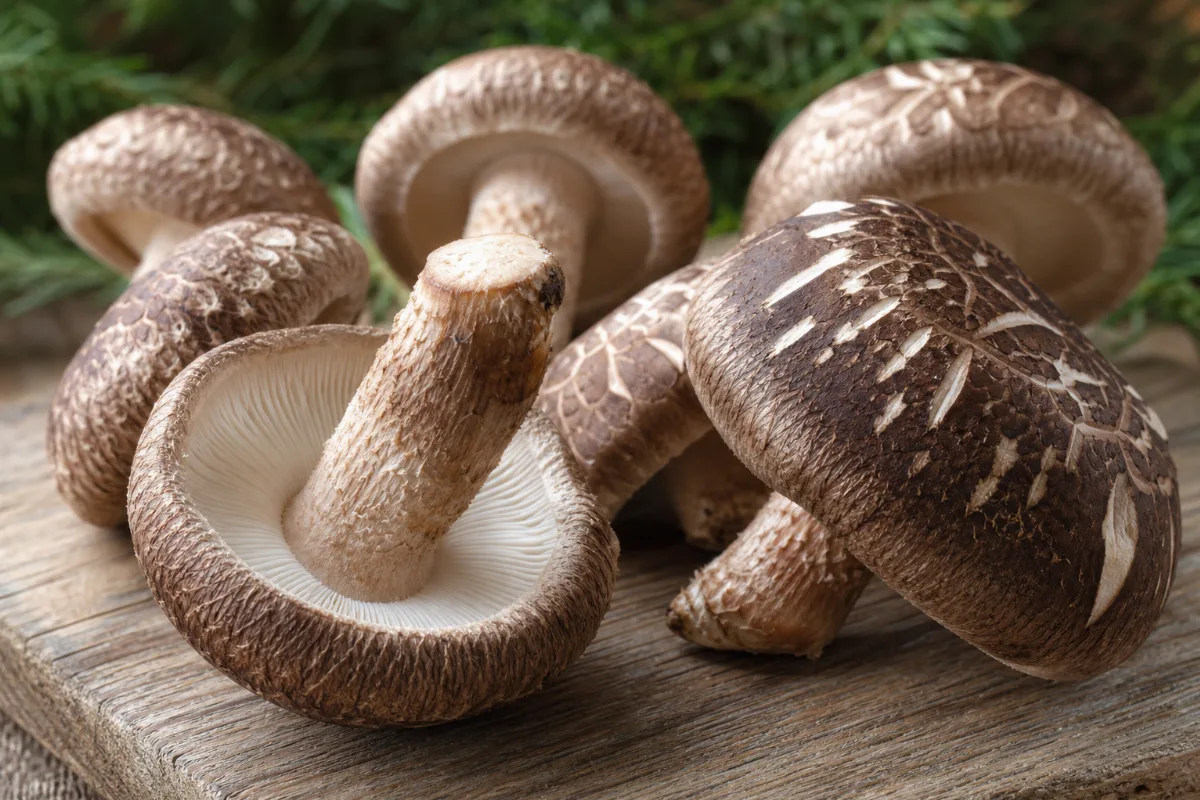
Mushrooms · Culinary and medicinal mushroom
Shiitake
Lentinula edodes · also called Xiang gu, hua gu, forest mushroom, black forest mushroom
Shiitake is a popular food mushroom from East Asia that is also sold as powders and extracts. Small studies suggest it can change some immune lab tests, but none shows it prevents illness. Raw or undercooked shiitake can cause an itchy streaky rash. Lentinan, a purified part of shiitake, is a prescribed injection in Japan and China and is not the same as eating the mushroom.
General information, not medical advice. Last substantive update · Not medically reviewed. A named clinician has not signed off on this page. How this page is made
About Shiitake
Shiitake (Lentinula edodes) is a mushroom eaten and used as a tonic in East Asia. Research on eating shiitake is small: one study of immune lab tests, two small cholesterol trials with different results, and a few short studies. The stronger cancer-care findings are for injected lentinan, a purified medicine, and for extracts the evidence is weak. The most important safety point is the rash from raw or undercooked shiitake. None of this is a cure for any condition.
What it is
Shiitake is a fungus of the family Omphalotaceae, not a plant. The accepted name is Lentinula edodes; the older name Lentinus edodes appears in much of the research. It is grown widely and eaten fresh or dried.
Products include fruiting-body powder, hot-water or dual extracts, and mycelium grown on grain. These can differ a lot from each other and from the cooked mushroom.
Lentinan: a medicine, not the mushroom
Lentinan is a purified beta-glucan taken out of shiitake. In Japan and China it is approved as an injection given with chemotherapy, and reviews say it is used for gastric cancer there. A pooled analysis of 31 gastric cancer trials found better response and quality of life when it was added. A pooled analysis of 17 lung cancer trials with a chest injection looked favourable too, but the reviewers rate those trials low quality.
These findings are about the injection. MSK says most lentinan studies used injections and it is uncertain whether eating shiitake has similar effects. Lentinan injections can cause reactions of their own, and they are given by clinicians only.
What the research shows for eaten shiitake and extracts
In 52 healthy adults, 4 weeks of eating dried shiitake changed some immune-cell lab tests and a saliva antibody, and a blood inflammation marker fell. There was no comparison group. A 2026 review of shiitake extracts alongside cancer treatment found a better response rate but no clear difference in survival and called the evidence insufficient for firm recommendations.
For cholesterol, one small trial of shiitake bars found about 10% lower triglycerides while another, using a beta-glucan extract, found no change. Other uses (well-being, exercise, gut bacteria) rest on one small study each.
At a glance
Traditional uses history, not proof
- Used for thousands of years in Asia to improve general health (Zhang 2019).
- Recorded in Chinese medicine to nourish the blood and qi (Zhou 2024).
- Fresh and dried forms are common in East Asian cooking and the mushroom is valued as an anticancer agent (MSK).
Studied for research
- Immune lab markers when eaten, very low
- Injected lentinan with chemotherapy in gastric cancer (a prescribed medicine), moderate
- Shiitake extracts alongside cancer treatment, low
- Cholesterol and blood fats, mixed
- Well-being, gut bacteria and exercise recovery, very low to insufficient
Main compounds
- Lentinan, a beta-glucan; purified for the injection
- Eritadenine, which lowered cholesterol in animals
- Ergothioneine, an antioxidant amino acid from food
- Ergosterol, which becomes vitamin D2 under UV light
Common forms
- Fresh or dried mushroom, cooked (food)
- Fruiting-body powder
- Hot-water or dual extracts
- Mycelium grown on grain
- Purified lentinan injection (a prescription medicine, given by a care team)
Research links: Memorial Sloan Kettering: Shiitake mushroom · NCI: Medicinal mushrooms (PDQ) · PubMed: Shiitake dermatitis, French poison centres (2022) · PubMed: Injectable lentinan in gastric cancer, meta-analysis (2024) · Research Library · Genes & Biomarkers Library
What it is and its history
- Accepted scientific name
- Lentinula edodes
- Naming authority
- (Berk.) Pegler (GBIF)
- Synonyms
- Lentinus edodes (Berk.) Singer (older name; a synonym in GBIF; used in much of the research); Agaricus edodes Berk. (original name, a synonym in GBIF); Lentinus shiitake (J.Schröt.) Singer (synonym in GBIF); Tricholoma shiitake (J.Schröt.) Lloyd (synonym in GBIF)
- Common names
- Shiitake (Japanese); Xiang gu / Xianggu (Chinese); Hua gu (Chinese (listed by MSK)); Forest mushroom; black forest mushroom (English)
- Family or group
- Omphalotaceae (a fungus family), not a plant
- Classification
- Fungi > Basidiomycota > Agaricomycetes > Agaricales > Omphalotaceae > Lentinula > Lentinula edodes
- Native range
- MSK says it is native to East Asia and cultivated worldwide.
- Habitat
- Not checked in the sources read.
- What it looks like
- Fruiting body: Not checked in the sources read.
- Cultivation
- Zhang 2019 calls it the second largest cultivated and the most popular edible mushroom in the world (abstract wording). Details were not checked.
- Harvest and processing
- Fresh and dried forms are used (MSK). Dried shiitake is more concentrated per 100 g because the water is removed (our nutrient summary).
- Look-alikes and adulterants
- Name: Wild mushrooms in general; Note: The sources we read give no shiitake look-alike list. Shiitake sold in shops is cultivated. Do not pick wild mushrooms without expert identification.
- Sustainability and conservation
- Not checked.
Traditional use and history history, not clinical proof
| Tradition or era | Documented use | Source |
|---|---|---|
| East Asia (China and Japan) | Zhang 2019 says Lentinula edodes has been used to improve general health for thousands of years in Asia. Zhou 2024 says it has been recorded in Chinese medicine to nourish the blood and qi. MSK says the fresh and dried forms are commonly used in East Asian cooking and that it is valued as an anticancer agent. | p31030752 |
| Modern medicine (lentinan) | Zhang 2019 says the antitumour property of lentinan was reported in the 1960s and that it has been approved as an add-on cancer medicine in China and Japan since the 1980s. | p31030752 |
Traditional use shows how it was used. It does not show that it works or is safe today.
What is inside, and how it may work
What it contains and how those compounds act in cells and animals. Laboratory and animal mechanisms are not proven effects in people.
Main compounds
| Compound | Family | Where it is concentrated | Activity studied | Level of evidence |
|---|---|---|---|---|
| Lentinan (beta-1,3-glucan with beta-1,6 branches) | polysaccharide | Fruiting body (purified for the medicine) | Described by MSK as a biological response modifier that does not kill cancer cells directly in lab tests but acts on the immune system. Heat-sensitive; thought to be involved in shiitake dermatitis. 23 3 | Laboratory research |
| Eritadenine | alkaloid (adenosine analog) | Fruiting body Our nutrient summary quotes 3.2 to 6.3 mg per g of dried mushroom second-hand from a paper we did not open (summary-only). | Lowered cholesterol in animals; no human trial of eritadenine itself was found. 17 | Animal research |
| Ergothioneine | amino acid derivative (antioxidant) | Fruiting body Our nutrient summary notes that USDA and a 2026 Canadian survey disagree about five-fold on fresh shiitake (summary-only; not re-opened). | People get it only from food. A shiitake diet raised plasma ergothioneine for more than 48 hours in 10 men. 14 15 | Human lab measure |
| Ergosterol (becomes vitamin D2 under UV light) | sterol | Fruiting body Our nutrient summary says ordinary USDA shiitake records show only small amounts of vitamin D2 unless the mushroom was exposed to UV light (summary-only). | Turns into vitamin D2 when exposed to ultraviolet light or sunshine (lab work). No human study of UV-exposed shiitake was found. 15 | Laboratory research |
Mechanisms, receptors and pathways
| Target or pathway | Gene or receptor | What was found | Level |
|---|---|---|---|
| Immune cell activation by beta-glucans | Lab work; MSK mentions effects on cytokines and immune cells | In human blood cells grown in the lab after 4 weeks of eating dried shiitake, gamma-delta T and NK-T cells grew more and some cytokines changed. Eaten shiitake changed these lab measures in healthy adults, but no health outcome was measured. 4 | Human lab measure |
| Liver cholesterol handling (CYP7A1 gene) | CYP7A1 | In mice on a high-fat diet, shiitake and eritadenine raised activity of CYP7A1, lowered blood fats and reduced liver fat. 17 | Animal research |
| Kidney transporter for gabapentin (OCTN1) | OCTN1 (SLC22A4) | The authors cite lab work in which ergothioneine stimulates the secretion of gabapentin through this transporter; the human study showed a modest rise in gabapentin kidney clearance after a shiitake diet. 14 | Human lab measure |
| Antiviral and antibacterial effects | Not specified | MSK describes effects on virus replication in cell cultures and antibacterial effects in mice. Lab and animal work only. 23 | Laboratory research |
Absorption, metabolism and elimination
- Absorption
- Not found in the sources read, other than that plasma ergothioneine rose after a shiitake meal.
- Distribution
- Not found in the sources read.
- Metabolism
- Not found in the sources read.
- Elimination
- Plasma ergothioneine stayed raised for more than 48 hours (Toh 2014).
- Bioavailability
- Not established for lentinan taken by mouth. MSK says most lentinan studies used injections and that it is uncertain whether eating shiitake has similar effects.
Isolated compounds versus whole extracts
Shiitake comes in several quite different forms: cooked fresh or dried mushroom (a food), fruiting-body powder, hot-water or dual extracts, mycelium grown on grain, and purified lentinan injection (a prescription medicine in Japan and China). Research on one form cannot be carried over to the others. In particular, the cancer-care results for the injection do not apply to the mushroom or to capsules, and the well-being trial used a branded mycelium beta-glucan.
Nutritional composition
Cooked shiitake is an ordinary food. Our nutrient summary lists fibre, potassium, copper, selenium and B vitamins from USDA records and notes dried shiitake is more concentrated per 100 g because the water is removed. This was taken from our own earlier summary and not re-opened for this page (summary-only). It shows what is in the food, not a proven health effect.
1 moderate certainty1 mixed findings2 low certainty3 very low certainty4 not enough evidence
What was looked at
The 11 benefits and uses checked for Shiitake, each with how strong the evidence is. Tap one to open it.
- Immune markers when shiitake is eatenVery low certainty
- Injected lentinan with chemotherapy: gastric cancer (a prescribed medicine)Moderate certainty
- Lentinan with cisplatin chest injection: lung cancer (a prescribed treatment)Low certainty
- Shiitake extracts alongside cancer treatmentLow certainty
- Cholesterol and blood fatsMixed findings
- Gut bacteriaNot enough evidence
- Well-being scoresVery low certainty
- Exercise recovery and inflammationVery low certainty
- Ergothioneine from eating shiitakeNot enough evidence
- Injected lentinan in HIV (small 1998 trials)Not enough evidence
- Antiviral and antibacterial effectsNot enough evidence
Lab markers tracked in the studies
Immune-cell growth in the lab (gamma-delta T and NK-T cells)Saliva secretory IgA and blood C-reactive proteinTumour response rate with add-on shiitake productsCD3+, CD4+, CD4+/CD8+ and NK cells with injected lentinanBlood triglyceridesTotal cholesterol and LDL cholesterolAntioxidant markers (glutathione, thiol status)Blood ergothioneineSelf-rated well-being score
What is Shiitake good for?
The uses people ask about and how strong the human evidence is for each. None is proven for eaten shiitake. The lentinan injection results are for a hospital medicine and do not carry over to the mushroom. Read this together with the Safety tab.
Benefits, one by one
Each card is a research question, not a promise. Tap a goal to filter. Open a card to see the studies, doses and limits.
Immune markers when shiitake is eaten
Very low certaintyIn one small study, healthy young adults who ate dried shiitake every day for 4 weeks had changes in some immune-cell lab tests and in a saliva antibody, and a blood inflammation marker went down. There was no placebo group, and the study did not count infections.
2 studiesWhole dried mushroom, eaten. The trial compared two intake levels wit…
Studies, doses and limits
What the trials found
Fifty-two healthy adults aged 21 to 41 ate whole dried shiitake daily for 4 weeks at one of two intake levels. Immune cells taken from their blood grew more in the lab afterwards (gamma-delta T cells 60% more, NK-T cells about 2-fold more), saliva secretory IgA rose and C-reactive protein fell. The pattern of cytokines changed, with some up and one down. MSK repeats these findings and lists them as a small randomised study.
Results
gamma-delta T cell growth +60%, NK-T cell growth about 2-fold, sIgA up, CRP down (no placebo group)
Effect sizes as reported
Changes in lab markers; no illness outcome
Why this rating
One small trial in healthy young adults, only 4 weeks, with no placebo or untreated group. The measures are lab markers, not fewer infections.
Form and dose studied
Whole dried mushroom, eaten. The trial compared two intake levels with each other. No amounts are advised here.
Who was studied
Healthy adults aged 21 to 41
Limits
No comparison group without mushrooms. Immune markers do not show better protection. Nobody counted colds or infections.
Why researchers looked
Shiitake beta-glucans (the fibre-like sugars in the cell wall) are known to act on immune cells in the lab, and the mushroom is eaten widely, so researchers asked whether eating it changes immune measures.
Traditional use
Used as a food and medicine in East Asia for a very long time. Zhang 2019 says it has been used to improve general health for thousands of years in Asia.
Proposed mechanism Laboratory research
Beta-glucans bind receptors on immune cells in lab work. This is a laboratory finding, not proof of a health effect.
A proposed mechanism does not show that the effect happens in people.
Eat shiitake cooked through: raw or undercooked shiitake can cause a rash (see the Safety tab).
Injected lentinan with chemotherapy: gastric cancer (a prescribed medicine)
Moderate certaintyLentinan is a purified sugar-like substance taken out of shiitake. In Japan and China it is approved as an injection given with chemotherapy. A pooled analysis of 31 trials found better treatment response and quality of life when it was added. This is a hospital medicine, not eating shiitake and not a capsule.
4 studiesPurified lentinan injection given by a care team. Not the same as shi…
Studies, doses and limits
What the trials found
Wang 2024 pooled 31 randomised trials (2,729 people with gastric cancer). Adding injected lentinan to chemotherapy was linked to better treatment response (RR 1.48), better quality of life (RR 1.32), higher CD3+, CD4+, CD4+/CD8+ and NK cells, and less white blood cell and platelet decline than chemotherapy alone. The authors saw no serious adverse effects and graded the evidence for these outcomes high or moderate. Ina 2013 says it is approved in Japan for gastric cancer and that studies suggest longer survival in advanced disease. Zhou 2024 says it is approved as a chemotherapy add-on in China and Japan.
Results
Response RR 1.48 (95% CI 1.36 to 1.61); quality of life RR 1.32 (1.20 to 1.45)
Effect sizes as reported
Better response rate and quality-of-life scores than chemotherapy alone
Why this rating
The authors' own GRADE rating was high or moderate for these outcomes and the pooled trials point the same way. We lowered it to moderate because we read only the abstract, the authors ask for more trials, and survival is mainly described in a review rather than checked by us.
Form and dose studied
Purified lentinan injection given by a care team. Not the same as shiitake food, powder or extract capsules.
Who was studied
People with gastric cancer having chemotherapy
Limits
These results come from the purified injection. They cannot be carried over to eating shiitake or taking supplements. MSK says most lentinan studies used injections and that it is uncertain whether eating shiitake has similar effects.
Why researchers looked
Lentinan was studied as a 'biological response modifier': it does not kill cancer cells directly in the lab but affects immune cells (MSK).
Traditional use
Not a traditional use. Zhang 2019 says the anti-tumour property of lentinan was first reported in the 1960s and that it has been approved as an add-on cancer medicine in China and Japan since the 1980s.
Proposed mechanism Laboratory research
Lentinan is a beta-glucan. MSK says that in the lab it does not kill cancer cells directly but acts on the immune system. Treated as a lab finding.
A proposed mechanism does not show that the effect happens in people.
Injected lentinan has its own reported reactions (see the Safety tab). It is only given by clinicians.
Lentinan with cisplatin chest injection: lung cancer (a prescribed treatment)
Low certaintySeventeen trials tested lentinan injected into the chest together with the chemotherapy drug cisplatin in lung cancer. Pooled results looked favourable, but the reviewers say the trials were of low quality.
2 studiesLentinan injection into the chest with cisplatin (hospital treatment).
Studies, doses and limits
What the trials found
A 2021 review of 17 randomised trials (1,390 people with non-small cell lung cancer) found higher clinical efficacy (RR 1.34) and quality of life (RR 1.48) with lentinan plus cisplatin than cisplatin chest injection alone, with fewer gastrointestinal reactions and less bone marrow suppression. The authors say methodological quality was low and the risk of bias high. A 2019 review of 135 studies from China (about 9,474 cases) also concluded lentinan improved quality of life and the benefit of chemotherapy and radiotherapy, but it gives no study-quality details in the abstract.
Results
Efficacy RR 1.34 (1.21 to 1.48); quality of life RR 1.48 (1.27 to 1.72)
Effect sizes as reported
Higher response and quality-of-life scores in low-quality trials
Why this rating
The reviewers of the lung trials rate the methods low quality with a high risk of bias, so the benefit is uncertain.
Form and dose studied
Lentinan injection into the chest with cisplatin (hospital treatment).
Who was studied
People with non-small cell lung cancer; wider cancer groups in the 2019 review
Limits
Low-quality trials. Does not apply to eaten shiitake or supplements.
Why researchers looked
Lentinan has been used as an add-on in cancer care in China and Japan, and lung cancer is one of the cancers where it has been used most often (Zhang 2019).
Traditional use
Not a traditional use.
Proposed mechanism Laboratory research
Same as above: lab work suggests lentinan acts on immune cells.
A proposed mechanism does not show that the effect happens in people.
Hospital treatment only.
Shiitake extracts alongside cancer treatment
Low certaintyA 2026 review of 22 trials of shiitake extracts added to standard cancer treatment found a better tumour response rate but no clear difference in survival, side effects or quality of life. The authors say the evidence does not support firm recommendations. Extracts are not a cancer treatment.
2 studiesDifferent extract products between trials; not detailed in the abstra…
Studies, doses and limits
What the trials found
In the 13 randomised trials, the response rate was better with the extract (odds ratio 1.45, 95% CI 1.01 to 2.07). Overall survival did not differ (HR 0.66, 95% CI 0.34 to 1.28), and neither did side effects or quality of life. Nine non-randomised trials looked more favourable. MSK adds that a shiitake extract was not effective for prostate cancer in one trial.
Results
Response OR 1.45 (1.01 to 2.07); survival HR 0.66 (0.34 to 1.28)
Effect sizes as reported
Modest tumour response signal; survival unclear
Why this rating
A mixed group of products, a response result that only just excludes 1, no survival difference, and non-randomised trials that look better than randomised ones. The authors say the evidence does not support clear recommendations.
Form and dose studied
Different extract products between trials; not detailed in the abstract.
Who was studied
People with various cancers having standard treatment
Limits
Many different products and cancers. Only the abstract was read.
Why researchers looked
People with cancer often ask about mushroom extracts, so reviewers pooled the trials that tested them alongside standard care.
Traditional use
MSK lists shiitake as valued as an anticancer agent in East Asian traditions.
Proposed mechanism Laboratory research
Not established. Lab work on lentinan and other shiitake compounds suggests effects on immune cells.
A proposed mechanism does not show that the effect happens in people.
People having cancer treatment should tell the oncology team and pharmacist about any shiitake product before using it.
Cholesterol and blood fats
Mixed findingsShiitake lowered blood fats in mice. In people, one small trial of shiitake bars found about 10% lower triglycerides, while another trial of a shiitake beta-glucan extract found no change in cholesterol. MSK says there is no clinical proof that shiitake lowers cholesterol in people.
4 studiesShiitake food bars in one trial and a beta-glucan extract in the othe…
Studies, doses and limits
What the trials found
Spim 2021 (68 people with borderline high cholesterol, placebo-controlled, shiitake bars, about 66 days) found triglycerides 10% lower in the shiitake group (P = 0.0352) and better antioxidant markers; the abstract does not report LDL or total cholesterol change. Morales 2021 (52 adults with mild high cholesterol, 8 weeks, beta-glucan-enriched shiitake extract) found no significant difference in lipid or cholesterol measures versus placebo.
Results
Triglycerides about 10% lower (bars); no lipid change (extract)
Effect sizes as reported
One small lowering of triglycerides; one null trial
Why this rating
Two small human trials point different ways, with different products (bars versus a beta-glucan extract). Mouse results do not carry over to people.
Form and dose studied
Shiitake food bars in one trial and a beta-glucan extract in the other. No amounts are advised here.
Who was studied
Adults with borderline high or mild high cholesterol
Limits
Small trials, different products, short duration. Not a replacement for cholesterol care.
Why researchers looked
Shiitake contains eritadenine, which lowered cholesterol in animals, so researchers tested the mushroom in people with raised blood fats.
Traditional use
No traditional cholesterol use was found in the sources read.
Proposed mechanism Animal research
In mice, shiitake and eritadenine raised activity of the liver gene CYP7A1 and reduced liver fat and artery plaque. Animal finding only.
A proposed mechanism does not show that the effect happens in people.
In the bar trial the abstract reports dermatitis in people who were sensitive to the mushroom.
Gut bacteria
Not enough evidenceIn one trial, a shiitake beta-glucan extract changed the mix of bacteria in the gut compared with placebo. The authors could not say what that change means for health.
1 studiesA shiitake beta-glucan-enriched extract in creams (one trial).
Studies, doses and limits
What the trials found
In 52 adults with mild high cholesterol, 8 weeks of a shiitake beta-glucan extract changed the composition of gut bacteria compared with placebo, with several bacteria groups correlating with cholesterol-related markers. Cholesterol and inflammation markers did not change. The extract was reported safe.
Results
Change in bacterial community composition; no clinical benefit shown
Effect sizes as reported
Not given in the abstract
Why this rating
One small trial; the abstract says the significance of the change was not fully worked out.
Form and dose studied
A shiitake beta-glucan-enriched extract in creams (one trial).
Who was studied
Adults with mild high cholesterol
Limits
One trial, no health outcome.
Why researchers looked
Beta-glucans are fibre-like sugars that gut bacteria can feed on.
Proposed mechanism Human lab measure
Beta-glucans reach the large bowel, where bacteria can use them. The trial linked some bacteria groups to cholesterol-related markers. A change in bacteria is a lab finding, not proof of a benefit.
A proposed mechanism does not show that the effect happens in people.
Reported safe in this trial; trial too small to rule out rare reactions.
Well-being scores
Very low certaintyA 4-week trial of a branded shiitake mycelium beta-glucan product found higher self-rated well-being than placebo, mostly in people who started with lower scores. The product's maker is named in the abstract.
1 studiesA branded mycelium-derived beta-glucan, not the whole mushroom.
Studies, doses and limits
What the trials found
In 63 healthy adults, a branded beta-glucan made from shiitake mycelium gave a statistically significant improvement in a well-being questionnaire compared with placebo after 4 weeks. The improvement was bigger when starting well-being was lower.
Results
Higher questionnaire score than placebo (figures not in the abstract)
Effect sizes as reported
Not given in the abstract
Why this rating
One short trial, self-reported scores, one branded product, possible industry link.
Form and dose studied
A branded mycelium-derived beta-glucan, not the whole mushroom.
Who was studied
Healthy adults
Limits
Questionnaire answers are easily influenced by expectation. Results are for one product only.
Why researchers looked
The product maker wanted to see whether the beta-glucan changed how well healthy adults felt.
Proposed mechanism Unknown
Not established.
A proposed mechanism does not show that the effect happens in people.
None reported in the abstract.
Exercise recovery and inflammation
Very low certaintyA shiitake extract did not reduce inflammation markers after a long, hard run in healthy men, although some antioxidant markers changed.
1 studiesA shiitake extract (one study).
Studies, doses and limits
What the trials found
In a crossover study in healthy men, 10 days of shiitake extract before a 90-minute run with a downhill phase had no effect on immune-cell numbers or inflammatory mediators, except IL-10. Thiol redox status and nitric oxide rose.
Results
No change in most inflammation markers; nitric oxide and thiol status up
Effect sizes as reported
Not given in the abstract
Why this rating
A small crossover study measuring lab markers only; the main inflammation result was null.
Form and dose studied
A shiitake extract (one study).
Who was studied
Healthy men
Limits
Number of participants is not given in the abstract; no performance or recovery outcomes.
Why researchers looked
Shiitake contains ergothioneine, an antioxidant amino acid, so researchers asked whether it would limit the damage after hard exercise.
Proposed mechanism Human lab measure
The authors suggest changes in nitric oxide and thiol (antioxidant) status. Lab-measure finding.
A proposed mechanism does not show that the effect happens in people.
None reported in the abstract.
Ergothioneine from eating shiitake
Not enough evidenceShiitake is a food source of ergothioneine, an antioxidant amino acid. A small study showed that a shiitake meal raised ergothioneine in the blood for more than 48 hours. Whether that does anything for health is not shown.
2 studiesCooked shiitake eaten as part of a diet.
Studies, doses and limits
What the trials found
In 10 healthy men, a diet rich in shiitake raised plasma ergothioneine for more than 48 hours. Our nutrient summary (USDA records and a 2026 survey) notes that measured amounts in fresh shiitake differ about five-fold between sources; we did not re-open those records.
Results
Plasma ergothioneine raised after a shiitake diet
Effect sizes as reported
Not given in the abstract
Why this rating
The raised blood level is shown, but no health outcome was measured.
Form and dose studied
Cooked shiitake eaten as part of a diet.
Who was studied
Ten healthy men
Limits
A blood level is not a benefit.
Why researchers looked
People get ergothioneine only from food, and mushrooms are among the richer sources.
Proposed mechanism Human lab measure
Ergothioneine is taken up into the body and stays in the blood for days. Whether this protects cells is a lab hypothesis here.
A proposed mechanism does not show that the effect happens in people.
See the interaction note for gabapentin on the Safety tab.
Injected lentinan in HIV (small 1998 trials)
Not enough evidenceTwo small trials gave HIV-positive people lentinan by vein. Side effects were mostly mild with a slow infusion, and CD4 cells trended upward without reaching statistical significance. It is not a treatment for HIV.
2 studiesPurified lentinan by injection into a vein (not food, not a supplemen…
Studies, doses and limits
What the trials found
In 98 HIV-positive people with CD4 counts of 200 to 500, lentinan by injection into a vein for 8 to 12 weeks was generally well tolerated, with a trend towards more CD4 cells that was not statistically significant. A quicker 10-minute infusion produced more serious side effects than a 30-minute one.
Results
CD4 trend, not statistically significant
Effect sizes as reported
Trend only
Why this rating
Two small phase I/II trials; no significant effect; no later confirming trial in the sources read.
Form and dose studied
Purified lentinan by injection into a vein (not food, not a supplement).
Who was studied
HIV-positive adults
Limits
Old, small, injection only.
Why researchers looked
Lentinan acts on immune cells in the lab, so it was tried in people with HIV.
Traditional use
Not a traditional use.
Proposed mechanism Laboratory research
Lab work suggests effects on immune cells. MSK says it is unclear whether lentinan or shiitake works for AIDS.
A proposed mechanism does not show that the effect happens in people.
The faster infusion had more serious reactions, including an anaphylactoid reaction. See the Safety tab.
Antiviral and antibacterial effects
Not enough evidenceIn laboratory tests and animal studies, shiitake extracts and lentinan have shown antiviral and antibacterial effects. MSK says clinical data are lacking. Nothing here shows shiitake treats or prevents an infection in people.
1 studiesNot applicable
Studies, doses and limits
Results
No human results
Why this rating
Lab and animal work only.
Limits
Cell and mouse work does not show a benefit in people.
Why researchers looked
Lab and animal findings led to interest.
Proposed mechanism Laboratory research
MSK describes effects on virus replication in cell cultures and antibacterial effects in mice. Lab and animal work only.
A proposed mechanism does not show that the effect happens in people.
Do not use shiitake in place of treatment for an infection.
Connections to the rest of health
How Shiitake connects to the rest of our health knowledge graph. Every link says what kind of connection it is. A safety link (for example to the liver) is a warning, not a benefit. A study that merely mentions a topic never creates a benefit link.
Explore every connection: goals, body systems, organs, symptoms, genes
A. Wellness goals
| Connected to | Kind of connection | Evidence status | Context | Studies |
|---|---|---|---|---|
| Immune Support | Preliminary mechanism | Very low certainty | Immune markers when shiitake is eaten: In one small study, healthy young adults who ate dried shiitake every day for 4 weeks had changes in some immune-cell lab tests and in a saliva antibody, and a blood inflammation marker went down. There was no placebo group, and the study did not count infections. | 4 23 |
| Cholesterol Balance | Preliminary mechanism | Mixed findings | Cholesterol and blood fats: Shiitake lowered blood fats in mice. In people, one small trial of shiitake bars found about 10% lower triglycerides, while another trial of a shiitake beta-glucan extract found no change in cholesterol. MSK says there is no clinical proof that shiitake lowers cholesterol in people. | 13 8 17 23 |
| Gut Health | Preliminary mechanism | Not enough evidence | Gut bacteria: In one trial, a shiitake beta-glucan extract changed the mix of bacteria in the gut compared with placebo. The authors could not say what that change means for health. | 8 |
| Daily Vitality | Preliminary mechanism | Very low certainty | Well-being scores: A 4-week trial of a branded shiitake mycelium beta-glucan product found higher self-rated well-being than placebo, mostly in people who started with lower scores. The product's maker is named in the abstract. | 1 |
| Muscle Recovery | Preliminary mechanism | Very low certainty | Exercise recovery and inflammation: A shiitake extract did not reduce inflammation markers after a long, hard run in healthy men, although some antioxidant markers changed. | 18 |
B. Body systems
| Connected to | Kind of connection | Evidence status | Context | Studies |
|---|---|---|---|---|
| Immune system | Preliminary mechanism | Very low certainty | Lab markers changed in a small study; injected lentinan is an approved add-on in Japan and China. Preparation or compound: Eaten dried shiitake; injected lentinan is separate |
4 16 |
| Immune System | Biological association | Very low certainty | Studied for: Immune markers when shiitake is eaten Studied for: Injected lentinan with chemotherapy: gastric cancer (a prescribed medicine) | 4 23 16 7 21 20 19 12 6 |
| Respiratory System | Biological association | Low certainty | Studied for: Lentinan with cisplatin chest injection: lung cancer (a prescribed treatment) | 20 19 |
| Cardiovascular System | Biological association | Mixed findings | Studied for: Cholesterol and blood fats | 13 8 17 23 |
| Digestive System | Biological association | Not enough evidence | Studied for: Gut bacteria | 8 |
| Musculoskeletal System | Biological association | Very low certainty | Studied for: Exercise recovery and inflammation | 18 |
C. Body parts and organs
| Connected to | Kind of connection | Evidence status | Context | Studies |
|---|---|---|---|---|
| Skin | Adverse effect or risk | Moderate certainty | Flagellate (whip-like) itchy rash; all recovered in a French series of 59 cases. Flagellate rash; all recovered in a French series of 59 cases. Preparation or compound: Raw or undercooked shiitake mushroom |
3 9 |
| Lungs | Adverse effect or risk | Low certainty | Hypersensitivity pneumonitis in mushroom workers (case reports). Preparation or compound: Inhaled shiitake spores |
2 23 |
| Small intestine | Adverse effect or risk | Low certainty | Small bowel obstruction case reports. Preparation or compound: Whole mushroom swallowed |
23 |
I. Biomarkers
| Connected to | Kind of connection | Evidence status | Context | Studies |
|---|---|---|---|---|
| Immune-cell growth in the lab (gamma-delta T and NK-T cells) | Biological association | Very low certainty | Measured in trials: raised. A lab change is not the same as a health benefit. | 4 |
| Saliva secretory IgA and blood C-reactive protein | Biological association | Very low certainty | Measured in trials: raised (IgA) and lowered (CRP). A lab change is not the same as a health benefit. | 4 |
| Tumour response rate with add-on shiitake products | Biological association | Low certainty | Measured in trials: raised. A lab change is not the same as a health benefit. | 16 12 |
| CD3+, CD4+, CD4+/CD8+ and NK cells with injected lentinan | Biological association | Moderate certainty | Measured in trials: raised (CD8+ lowered). A lab change is not the same as a health benefit. | 16 |
| Blood triglycerides | Biological association | Low certainty | Measured in trials: lowered (bars); not studied or unchanged elsewhere. A lab change is not the same as a health benefit. | 13 |
| Total cholesterol and LDL cholesterol | Biological association | Low certainty | Measured in trials: unchanged. A lab change is not the same as a health benefit. | 8 |
| Antioxidant markers (glutathione, thiol status) | Biological association | Very low certainty | Measured in trials: raised. A lab change is not the same as a health benefit. | 13 18 |
| Blood ergothioneine | Biological association | Low certainty | Measured in trials: raised. A lab change is not the same as a health benefit. | 14 |
| Self-rated well-being score | Biological association | Very low certainty | Measured in trials: raised. A lab change is not the same as a health benefit. | 1 |
J. Genes, receptors and enzymes
| Connected to | Kind of connection | Evidence status | Context | Studies |
|---|---|---|---|---|
| CYP7A1 | Preliminary mechanism | Animal | Liver cholesterol-handling gene raised by shiitake in mice. | 17 |
K. Biological pathways
| Connected to | Kind of connection | Evidence status | Context | Studies |
|---|---|---|---|---|
| OCTN1 (SLC22A4) | Preliminary mechanism | Human lab measure | Ergothioneine and gabapentin transporter named by the authors of the gabapentin study. | 14 |
L. Active compounds
| Connected to | Kind of connection | Evidence status | Context | Studies |
|---|---|---|---|---|
| Lentinan (beta-1,3-glucan with beta-1,6 branches) | Biological association | In vitro | Described by MSK as a biological response modifier that does not kill cancer cells directly in lab tests but acts on the immune system. Heat-sensitive; thought to be involved in shiitake dermatitis. Preparation or compound: Fruiting body (purified for the medicine) |
23 3 |
| Eritadenine | Biological association | Animal | Lowered cholesterol in animals; no human trial of eritadenine itself was found. Preparation or compound: Fruiting body |
17 |
| Ergothioneine | Biological association | Human lab measure | People get it only from food. A shiitake diet raised plasma ergothioneine for more than 48 hours in 10 men. Preparation or compound: Fruiting body |
14 15 |
| Ergosterol (becomes vitamin D2 under UV light) | Biological association | In vitro | Turns into vitamin D2 when exposed to ultraviolet light or sunshine (lab work). No human study of UV-exposed shiitake was found. Preparation or compound: Fruiting body |
15 |
Each connection is stored with the ingredient, the connected record, the kind of connection, the evidence status, the supporting studies, the preparation or compound involved, and a review date (last reviewed October 25, 2026).
Evidence at a glance: what changed in 5 lab markers
Tap a number to show only those markers. Counts are markers, not people.
The evidence
The research centre for Shiitake. Every record here was checked against PubMed or the publisher's page; we never list a study we have not verified.
Evidence by outcome
Bars show how many studies we found for each outcome, not how well it works. People are added up across trials only (reviews are not added, to avoid double counting).
How we rate evidence
High certainty
Several well-run trials or reviews agree; further research is unlikely to change the picture much.
Moderate certainty
Good trials point the same way, but some doubt remains.
Low certainty
Small, short or inconsistent trials. The finding could change with better research.
Very low certainty
Very little or very weak human data. Treat as a possibility only.
Mixed findings
Trials or reviews disagree with each other.
Not enough evidence
Not enough human research to say either way.
Evidence against
Good research found no benefit, or found harm.
We take the reviewers' own risk-of-bias and GRADE statements where they exist, and otherwise judge from study size, design, consistency, directness and whether a product matches what is sold. Many publications do not make evidence high. Method note: We read PubMed records and abstracts for 19 papers (five systematic reviews or meta-analyses, seven small randomised or controlled trials, one case series, one case report, two product analyses, one animal study and two narrative reviews), plus the Memorial Sloan Kettering and National Cancer Institute pages in full and the GBIF name record. Nutrient values (USDA) come from our earlier summary and were not re-opened. Most papers were read as abstracts, not full text.
Study library: every study we checked 23
| Study | Design | People | Product, dose, length | Result |
|---|---|---|---|---|
| Aldwinckle 2020 A Quality-of-Life Study in Healthy Adults Supplemented with Lentinex Beta-Glucan of Shiitake Culinary-Medicinal Mushroom, Lentinus edodes (Agaricomycetes). International Journal of Medicinal Mushrooms · PMID 32749096 · DOI |
Controlled trial |
63 63 healthy adults |
Lentinex (a branded beta-glucan made from shiitake mycelium) versus placebo Mycelium-derived beta-glucan product Not shown here 4 weeks · vs Placebo |
The treated group had a statistically significant improvement in well-being compared with placebo. The improvement was bigger in people whose well-being was lower at the start. The abstract gives no scores. Higher self-rated well-being scores than placebo Methods, limits and fundingOutcomes: Self-rated well-being questionnaire Limitations: Questionnaire answers, only 4 weeks, one branded product. The abstract names the maker of the tested product (GlycaNova) and the authors' affiliations were not shown in what we read, so we treat the trial as possibly industry-linked. Funding and conflicts: Possibly industry-linked: the abstract describes the maker's own product; funding not stated. Read: abstract |
| Ampere 2012 Hypersensitivity pneumonitis induced by Shiitake mushroom spores. Medical Mycology · PMID 22329454 · DOI |
Case report |
1 A 37-year-old man involved in mushroom production |
Inhaled shiitake spores at work Spores Not shown here Exposure began in summer 2010; admitted in December 2010 |
After about a month of cough, breathlessness and weight loss, tests showed lung changes, a high proportion of lymphocytes in lung fluid and antibodies to shiitake spores. All symptoms and scan changes improved once he stopped the exposure. The authors say this was the first European case and that more interest in shiitake may raise the risk for mushroom workers. Lung inflammation from breathing in spores that resolved after exposure stopped Methods, limits and fundingOutcomes: Symptoms, lung tests, antibody tests Limitations: One case. Describes a work exposure to spores, not eating shiitake. MSK lists further cases. Funding and conflicts: Not stated in the abstract. Read: abstract |
| Boels 2022 Shiitake dermatitis: experience of the Poison Control Centre Network in France from 2014 to 2019. Clinical Toxicology · PMID 35404185 · DOI |
Case series |
125 125 shiitake exposures reported to French poison centres; 59 had dermatitis (ages 19 to 69, median 39) |
Raw or undercooked shiitake (Lentinus edodes) eaten Fruiting body Not shown here Rash lasted 1 to 40 days (median 10) |
All 59 dermatitis cases followed raw or undercooked shiitake (for example from a wok, in soup, or on pizza). The rash appeared 1 to 168 hours later (median 48 hours) as linear, red, raised itchy streaks on trunk, arms and legs and lasted 1 to 40 days (median 10). More shiitake eaten meant a longer rash (median 4, 7 and 15 days for low, medium and high amounts; P = 0.007). Thirty-eight people had steroids, antihistamines or both, with no demonstrated benefit. Everyone made a complete recovery. The authors say the cause is thought to involve lentinan, a heat-sensitive polysaccharide, and that inadequate cooking seems to drive it. Itchy streaky rash 1 to 168 hours after eating raw or undercooked shiitake; full recovery in all Methods, limits and fundingOutcomes: Rash features, timing, duration, treatment, outcome Limitations: A retrospective poison-centre series: it counts calls, not all people who ate shiitake, so it cannot give how common the rash is. Funding and conflicts: Not stated in the abstract. Read: abstract |
| Dai 2015 Consuming Lentinula edodes (Shiitake) Mushrooms Daily Improves Human Immunity: A Randomized Dietary Intervention in Healthy Young Adults. Journal of the American College of Nutrition · PMID 25866155 · DOI |
Controlled trial |
52 52 healthy men and women aged 21 to 41 |
Whole dried shiitake (Lentinula edodes) mushrooms eaten daily Whole dried fruiting body Not shown here 4 weeks · vs Two intake levels compared with each other. There was no placebo or no-mushroom group. |
After 4 weeks, immune cells taken from blood grew more in the lab: gamma-delta T cells grew 60% more and NK-T cells about 2-fold more. Saliva secretory IgA rose and C-reactive protein fell. Some cytokines rose (IL-4, IL-10, TNF-alpha, IL-1 alpha) and one fell (MIP-1 alpha); IL-6, IL-1 beta, IL-17 and interferon-gamma did not change. Changes in lab measures of immune cells, saliva antibody and a blood inflammation marker Methods, limits and fundingOutcomes: Immune-cell growth and activation (gamma-delta T cells, NK-T cells), saliva secretory IgA, blood C-reactive protein, cytokines Limitations: Healthy young adults, no placebo or untreated comparison group, only 4 weeks. The measures are lab markers: the trial did not count infections or illness. Immune cells were stimulated in the lab, so the result does not show better protection in daily life. Funding and conflicts: Research support from a non-US government source is listed on the record; funding not stated in the abstract. Read: abstract |
| GBIF 2026 GBIF Backbone Taxonomy: Lentinula edodes (Berk.) Pegler (species key 2537743), checked 2026-10-25 GBIF API · Source |
Taxonomy record n/a |
n/a | n/a Not shown here |
Lentinula edodes (Berk.) Pegler is the accepted name (family Omphalotaceae, order Agaricales). Lentinus edodes (Berk.) Singer, Agaricus edodes Berk., Lentinus shiitake and others are listed as synonyms. Methods, limits and fundingOutcomes: Accepted name, family and synonyms Limitations: A database record; it gives names, not health information. Funding and conflicts: Open database Read: full text |
| Gordon 1998 A placebo-controlled trial of the immune modulator, lentinan, in HIV-positive patients: a phase I/II trial. Journal of Medicine · PMID 10503166 |
Controlled trial |
98 98 HIV-positive people with CD4 counts of 200 to 500 and no current opportunistic infections (two small trials) |
Lentinan injected into a vein (a purified shiitake beta-glucan) versus placebo Purified polysaccharide Not shown here 8 to 12 weeks · vs Placebo injection |
Side effects were mostly mild, especially when the infusion ran over 30 minutes. With a 10-minute infusion there were nine side effects serious enough to report to the FDA (one case each of anaphylactoid reaction, back pain, leg pain, depression, rigor, fever, chills, granulocytopenia and raised liver enzymes) and four people stopped because of side effects. With the 30-minute infusion there were no reportable side effects. CD4 cells showed a trend upward that was not statistically significant. Among ten people with raised p24, eight on lentinan and two on placebo had falling levels. The authors called these results provocative and needing confirmation. Trend only; not statistically significant Methods, limits and fundingOutcomes: Tolerability, CD4 cells, neutrophil activity, p24 levels Limitations: Two small phase I/II trials from 1998. Injection, not eaten shiitake. The authors recommended a longer trial; no result of one is given in the abstract. Funding and conflicts: Not stated in the abstract. Read: abstract |
| Ina 2013 The use of lentinan for treating gastric cancer. Anti-Cancer Agents in Medicinal Chemistry · PMID 23092289 · DOI |
Narrative review review |
Review of lentinan in gastric cancer | Lentinan (purified beta-glucan from shiitake) Purified polysaccharide Not shown here |
States that lentinan has been approved as a biological response modifier for gastric cancer in Japan, and that recent clinical studies show chemo-immunotherapy with lentinan prolongs survival in advanced gastric cancer compared with chemotherapy alone. Review statement about Japan approval and survival Methods, limits and fundingOutcomes: Regulatory status and clinical findings in gastric cancer Limitations: A narrative review, abstract only; the survival statement is the authors' summary of other studies and we did not check them. Funding and conflicts: Not stated in the abstract. Read: abstract |
| Morales 2021 Modulation of human intestinal microbiota in a clinical trial by consumption of a beta-D-glucan-enriched extract obtained from Lentinula edodes. European Journal of Nutrition · PMID 33580297 · DOI |
Controlled trial |
52 52 adults aged 18 to 65 with untreated mild high cholesterol |
Beta-glucan-enriched extract made from shiitake (Lentinula edodes), mixed into creams, versus placebo creams Extract Not shown here 8 weeks · vs Placebo |
After 8 weeks there were no significant differences in lipid or cholesterol measures versus placebo. No change in IL-1 beta, IL-6, TNF-alpha or oxidised LDL. The extract was reported safe. The mix of gut bacteria changed differently from placebo, and some bacteria groups correlated with cholesterol-related markers. The authors say the meaning of the bacterial change is not understood. No cholesterol benefit; gut bacteria composition changed Methods, limits and fundingOutcomes: Cholesterol and lipid measures, inflammation markers, gut bacteria Limitations: Small trial; the effect on gut bacteria is a change in a lab measure, not a health benefit. Funding not stated in the abstract. Funding and conflicts: Funding not stated in the abstract. Read: abstract |
| Nguyen 2017 Clinical features of shiitake dermatitis: a systematic review. International Journal of Dermatology · PMID 28054338 · DOI |
Systematic review |
50 50 patients from published case reports and case series (38 men, 12 women; mean age 44.6) |
Shiitake (Lentinula edodes) eaten Fruiting body Not shown here About 12.5 days without treatment |
Most cases followed eating raw mushrooms and 22% followed lightly cooked or undercooked mushrooms. The rash was linear and whip-like ("flagellate") in 98% and itchy in 78%; fever, diarrhoea and mouth or mucosal ulcers also occurred. Tests, skin biopsies and patch or prick tests were nonspecific. The condition cleared by itself in about 12.5 days; treatment may shorten it slightly (to 9 to 11 days). The authors say symptom treatment, reassurance and avoiding re-exposure are enough. Flagellate rash, usually clearing without treatment in about 12 days Methods, limits and fundingOutcomes: Clinical features, course and treatment Limitations: Built on published case reports, which are more likely to describe typical or striking cases. Funding and conflicts: Not stated in the abstract. Read: abstract |
| Risoli 2023 Mushroom-Based Supplements in Italy: Let us Open Pandora's Box. Nutrients · PMID 36771482 · DOI |
Product analysis product-analysis |
19 19 mushroom food supplements sold in Italy |
Powders and extracts labelled as various mushrooms, including Lentinula edodes and Ganoderma lucidum Various Not shown here · vs Label claims |
DNA matched the labelled species in only 6 of 19 samples (four Lentinula edodes and two Ganoderma lucidum). The authors say the other results, including the active ingredients measured, were not all in line with what labels indicate. They also say much medicinal-mushroom production is in places without internationally recognised good manufacturing practice. Only 6 of 19 products matched the species on the label Methods, limits and fundingOutcomes: DNA match to the species on the label; ergosterol, aflatoxins, heavy metals, nicotine and total glucan Limitations: One country, 19 products, a snapshot. It does not show that all shiitake products are the same. Funding and conflicts: Not stated in the abstract. Read: abstract |
| Seyfferth 2016 Arsenic, Lead, and Cadmium in U.S. Mushrooms and Substrate in Relation to Dietary Exposure. Environmental Science & Technology · PMID 27484977 · DOI |
Product analysis product-analysis |
40 40 raw cultivated mushroom samples of 12 types from two US regions, including shiitake |
Raw cultivated mushrooms Fruiting body Not shown here · vs Compared types with each other |
All samples held less than 1 microgram per gram dry weight of arsenic, lead and cadmium and the authors say overall risk from eating them in the US is low. Cremini had more arsenic than shiitake. Percentages of tolerable intake were higher when calculated for single servings or when the growing material contained more metals. Low metal levels in cultivated US mushrooms including shiitake Methods, limits and fundingOutcomes: Total arsenic, lead and cadmium Limitations: Cultivated mushrooms in two US regions only. Wild mushrooms and mushrooms grown on contaminated substrate can contain more. Funding and conflicts: Research support from US government sources is listed on the record. Read: abstract |
| Sohn 2026 Lentinula edodes in Cancer Treatment: A Systematic Review and Meta-Analysis. Integrative Cancer Therapies · PMID 42648714 · DOI |
Meta-analysis |
1723 22 trials in 1,723 people with cancer: 13 randomised and 9 controlled non-randomised |
Lentinula edodes extracts added to standard cancer treatment (products differ between trials) Extracts (parts differ or not stated in the abstract) Not shown here Varied · vs Standard treatment alone |
In the 13 randomised trials, the extract group had a better response rate (odds ratio 1.45, 95% CI 1.01 to 2.07, P = 0.04). Overall survival did not differ (hazard ratio 0.66, 95% CI 0.34 to 1.28). Side effects (blood-related and other) did not differ. Overall quality of life did not differ (standardised mean difference 0.23, 95% CI -0.16 to 0.62). In the 9 non-randomised trials, tumour response and quality of life looked better (P < 0.05). The authors say the results have many limitations and the evidence does not support clear recommendations. Better tumour response, no clear survival or quality-of-life difference (Response OR 1.45 (1.01 to 2.07); survival HR 0.66 (0.34 to 1.28)) Methods, limits and fundingOutcomes: Response rate, overall survival, side effects, quality of life Limitations: Abstract only. A mix of products and cancers. The confidence interval for response only just excludes 1. The review itself calls for better trials. Funding and conflicts: Not stated in the abstract. Read: abstract |
| Spim 2021 Effects of Shiitake Culinary-Medicinal Mushroom, Lentinus edodes (Agaricomycetes), Bars on Lipid and Antioxidant Profiles in Individuals with Borderline High Cholesterol: A Double-Blind Randomized Clinical Trial. International Journal of Medicinal Mushrooms · PMID 34375514 · DOI |
Controlled trial |
68 68 people with borderline high cholesterol, LDL or triglycerides |
Bars made with shiitake (Lentinus edodes) versus placebo bars Not shown here Blood tests at 0, 33 and 66 days · vs Placebo bars |
Triglycerides were 10% lower in the shiitake group after 66 days (P = 0.0352). Reduced glutathione (an antioxidant) rose and lipid peroxidation fell. The abstract does not report a change in total cholesterol or LDL. The abstract also says exposure to shiitake triggered dermatitis in 10% of individuals who were sensitive to the mushroom. About 10% lower triglycerides; antioxidant markers improved (P = 0.0352 for triglycerides) Methods, limits and fundingOutcomes: Triglycerides, total cholesterol, LDL, HDL, glucose, glutathione, catalase, lipid peroxidation Limitations: Small trial; the abstract names triglycerides only and does not report LDL or total cholesterol changes. Food bars, not a plain mushroom. Funding not stated in the abstract. The authors' conclusion calls it a food that can be an adjuvant; that is stronger than one small trial supports. Funding and conflicts: Funding not stated in the abstract. Read: abstract |
| Toh 2014 Effect of mushroom diet on pharmacokinetics of gabapentin in healthy Chinese subjects. British Journal of Clinical Pharmacology · PMID 24168107 · DOI |
Controlled trial |
10 10 healthy men |
A diet rich in shiitake mushrooms versus a diet without mushrooms, the day before one dose of the medicine gabapentin Cooked shiitake in a meal (as a diet) Not shown here 1 day, with a washout of at least 7 days between · vs Diet with no mushrooms |
The shiitake diet raised plasma ergothioneine for more than 48 hours. Kidney clearance of gabapentin was modestly higher (91.1 versus 76.9 ml/min, P = 0.031), but the amount of gabapentin in the blood (AUC) did not change significantly (P = 0.726). The authors say a diet-drug interaction may occur but may not matter clinically. Plasma ergothioneine up; modest change in gabapentin kidney clearance (P = 0.031 (clearance); P = 0.726 (AUC)) Methods, limits and fundingOutcomes: Blood levels of ergothioneine; gabapentin blood levels and kidney clearance Limitations: Ten men, a single day of the diet, a single dose of one medicine. Gabapentin only. Funding and conflicts: Funding not stated in the abstract. Read: abstract |
| US Department of Agriculture 2025 USDA FoodData Central: shiitake records (SR Legacy 169242, 168436, 168437, 168435; Foundation 1999628), as summarised in our earlier nutrient file FoodData Central · Source |
Food composition record n/a |
n/a | n/a Not shown here |
Per our earlier summary: raw shiitake has about 2.5 g fibre and 304 mg potassium per 100 g; ordinary records show small amounts of vitamin D2; an ergothioneine value of about 11 mg per 100 g fresh in a Foundation record differs about five-fold from a Canadian survey. Methods, limits and fundingOutcomes: Nutrient content of shiitake Limitations: We did not re-open the USDA records for this page. It is labelled summary-only. Funding and conflicts: Government database Read: summary-only |
| Wang 2024 Systematic review and meta-analysis on the efficacy and safety of Injectable Lentinan combined with chemotherapy in the treatment of gastric cancer. Phytomedicine · PMID 38100922 · DOI |
Meta-analysis |
2729 People with gastric cancer; 31 randomised trials |
Injectable lentinan (a purified beta-glucan medicine made from shiitake) added to chemotherapy Purified polysaccharide (not the whole mushroom) Not shown here Varied · vs Chemotherapy alone |
Treatment response was better with lentinan plus chemotherapy than with chemotherapy alone (RR 1.48, 95% CI 1.36 to 1.61). Quality of life was better (RR 1.32, 95% CI 1.20 to 1.45). CD3+, CD4+, CD4+/CD8+ and NK cells rose and CD8+ fell. There was less white blood cell decline, fewer gastrointestinal reactions and less platelet decline. The authors saw no serious adverse effects and graded the evidence for these outcomes as high or moderate (GRADE). Better response rate and quality-of-life scores when the injection was added to chemotherapy (Efficacy RR 1.48 (1.36 to 1.61); quality of life RR 1.32 (1.20 to 1.45)) Methods, limits and fundingOutcomes: Treatment efficacy, immune-cell measures, quality of life, side effects Limitations: Only the abstract was read, so we could not check the quality of the 31 trials ourselves. The authors say more trials are needed. This is a prescribed injection given by a care team: it says nothing about eating shiitake or taking capsules. Funding and conflicts: Not stated in the abstract. Read: abstract |
| Yang 2013 Lentinus edodes promotes fat removal in hypercholesterolemic mice. Experimental and Therapeutic Medicine · PMID 24255670 · DOI |
Animal study animal |
Mice fed a high-fat diet | Shiitake (5, 10 or 20% of the diet) or the compound eritadenine Whole mushroom diet or isolated compound Not shown here 4 weeks · vs High-fat diet alone |
In mice, total cholesterol, LDL and triglycerides fell in a dose-dependent way with shiitake. Activity of the CYP7A1 gene in the liver went up, liver fat fell and artery plaque formation was reduced. The authors conclude shiitake may help regulate lipid metabolism in mice. Lower blood fats in mice Methods, limits and fundingOutcomes: Blood cholesterol, LDL, triglycerides, liver gene activity, plaque Limitations: Animal study. It does not show that shiitake lowers cholesterol in people; MSK says there is no clinical proof of this in people. Funding and conflicts: Not stated in the abstract. Read: abstract |
| Zembron-Lacny 2013 Effect of shiitake (Lentinus edodes) extract on antioxidant and inflammatory response to prolonged eccentric exercise. Journal of Physiology and Pharmacology · PMID 23756400 |
Controlled trial |
Healthy men (number not stated in the abstract) | Shiitake extract versus placebo, in a crossover design, before two exercise sessions Extract Not shown here 10 days before each exercise trial · vs Placebo |
The extract had no effect on immune cell numbers or inflammatory mediators, with the exception of IL-10. Thiol redox status and nitric oxide rose after the extract, while H2O2 and 8-isoprostanes did not change. The authors conclude no effect on inflammation markers but an antioxidant action through nitric oxide and thiol status. No effect on inflammation markers; some antioxidant markers changed Methods, limits and fundingOutcomes: Muscle damage, blood cells, inflammation and antioxidant markers after a long run with a downhill phase Limitations: Small crossover study in healthy men; lab markers only. Number of participants not given in the abstract. Funding and conflicts: Research support from a non-US source is listed on the record. Read: abstract |
| Zhang 2019 Mushroom polysaccharide lentinan for treating different types of cancers: A review of 12 years clinical studies in China. Progress in Molecular Biology and Translational Science · PMID 31030752 · DOI |
Systematic review |
9474 About 9,474 reported cancer cases from 135 studies published in China, 2004 to 2016 (lung, gastric and colorectal cancer most common) |
Lentinan (purified polysaccharide from Lentinula edodes) used with chemotherapy or radiotherapy Purified polysaccharide Not shown here Varied · vs Varied |
The authors concluded that overall clinical data show a solid effect on quality of life and on promoting the effect of chemotherapy and radiotherapy. They note that lentinan has been approved as an add-on cancer medicine in China and Japan since the 1980s. Authors report improved quality of life and added benefit alongside standard treatment Methods, limits and fundingOutcomes: Quality of life and effect on the benefit of chemotherapy and radiation Limitations: Only the abstract was read. The studies were mostly Chinese-language reports of mixed design; the abstract does not give effect sizes or study quality. Counting cases from many small reports does not replace well-controlled trials. Funding and conflicts: Research support from a non-US government source is listed on the record. Read: abstract |
| Zhao 2021 Lentinan combined with cisplatin for the treatment of non-small cell lung cancer. Medicine · PMID 33761711 · DOI |
Systematic review |
1390 People with non-small cell lung cancer; 17 randomised trials |
Lentinan injected into the chest (thoracic injection) together with cisplatin Purified polysaccharide Not shown here Varied · vs Cisplatin chest injection alone |
Clinical efficacy was higher with lentinan plus cisplatin (RR 1.34, 95% CI 1.21 to 1.48) and quality of life was higher (RR 1.48, 95% CI 1.27 to 1.72). The group with lentinan had fewer gastrointestinal reactions and less bone marrow suppression. The authors say the trials had low methodological quality and a high risk of bias. Higher response and quality-of-life scores, in trials the authors rate as low quality (Efficacy RR 1.34 (1.21 to 1.48); quality of life RR 1.48 (1.27 to 1.72)) Methods, limits and fundingOutcomes: Clinical efficacy, quality of life, adverse reactions Limitations: The authors themselves point to low methodological quality and high risk of bias. Abstract only. Chest injection with cisplatin is a hospital treatment and has nothing to do with eating shiitake. Funding and conflicts: Not stated in the abstract. Read: abstract |
| Zhou 2024 Lentinan progress in inflammatory diseases and tumor diseases. European Journal of Medical Research · PMID 38172925 · DOI |
Narrative review review |
Review of lentinan research in inflammatory diseases and cancer | Lentinan (purified beta-glucan from shiitake) Purified polysaccharide Not shown here |
States that lentinan has been approved as an add-on to chemotherapy in China and Japan, and that clinical experiments are reported to show benefit with chemotherapy in lung, colorectal and gastric cancer. Much of what it describes is lab and mechanism work. Review statement about approvals; mostly mechanism work Methods, limits and fundingOutcomes: Mechanisms and clinical research Limitations: A narrative review, abstract only. Not a systematic analysis of trials. Funding and conflicts: Not stated in the abstract. Read: abstract |
| n/a 2024 National Cancer Institute (NCI): Medicinal Mushrooms (PDQ), Health Professional Version (summary updated 6 Nov 2024; page read 2026-10-25) n/a · Source |
Authoritative guidance n/a |
n/a | n/a Not shown here |
Says the FDA has not approved the use of medicinal mushrooms as a treatment for cancer or any other medical condition. Says dietary supplements are not formally reviewed for manufacturing consistency every year, so ingredients may vary considerably from lot to lot and there is no guarantee that label ingredients are present in the stated amounts. Lists Lentinus edodes (shiitake) among the medicinal mushrooms covered; the page we read says little else specific to shiitake. Methods, limits and fundingOutcomes: Regulatory status and supplement quality Limitations: A general summary for health professionals; it covers medicinal mushrooms as a group and says little about shiitake itself. Funding and conflicts: Independent public information source Read: full text |
| n/a 2026 Memorial Sloan Kettering Cancer Center: Shiitake Mushroom (About Herbs, page read 2026-10-25) n/a · Source |
Authoritative guidance n/a |
n/a | n/a Not shown here |
Says small studies of shiitake extract have mixed results and that most lentinan studies used injections, so it is uncertain whether eating shiitake gives similar effects. Says one clinical trial showed a shiitake extract was not effective for prostate cancer. Says compounds in shiitake lower cholesterol in lab studies but there is no proof from clinical trials in people. Lists side effects: skin inflammation, more sensitivity to sunlight, a raised level of certain white blood cells, upset stomach, pneumonia from hypersensitivity to spores, and small bowel obstruction from eating a whole mushroom. Case reports include flagellate dermatitis after raw or even cooked shiitake, and esophageal symptoms linked to food allergy. Lab interaction listed: chronic eating may raise eosinophil count. No herb-drug interaction section was found on the page. Methods, limits and fundingOutcomes: Purported uses, side effects and case reports, lab interactions Limitations: Summary for patients and clinicians; secondary source for the cases and trials it cites. The page does not show an update date in the text we read. Funding and conflicts: Independent hospital information source Read: full text |
What we do not know yet
- No trial shows that eating shiitake or taking supplements prevents infections or cancer; the immune results are lab markers.
- Almost all the cancer evidence is for the purified lentinan injection, not the mushroom or capsules.
- How common shiitake dermatitis is among people who eat shiitake is unknown, and cases have been reported after cooked mushroom.
- No studies of shiitake supplements in pregnancy, breastfeeding or children, and only one drug interaction (gabapentin) has been tested.
- Cholesterol results conflict between two small trials with different products.
How new research is added
New studies are found by a saved PubMed search and placed in a review queue. A person reads each one before it changes any evidence rating or safety wording. Newer evidence can change the ratings.
Lab markers
What changed in blood or saliva tests during trials. A changed number is not the same as feeling or being healthier, and we give no "normal ranges".
Metabolic 1
Blood triglycerides
Lowered (bars); not studied or unchanged elsewhere in trials
A type of fat in the blood. High levels are linked to heart and blood vessel disease risk.
Low certaintyResults and what it means
Why it was measured
A standard blood fat test.
Statistical vs. clinical meaning
Statistically significant in one small placebo-controlled trial.
Safety implication
Dermatitis was reported in people sensitive to the mushroom.
| Study | Result | People | Product |
|---|---|---|---|
| 13 | About 10% lower in the shiitake-bar group after 66 days (P = 0.0352). | 68 people with borderline high cholesterol, LDL or triglycerides | Shiitake bars versus placebo bars |
Other 8
Immune-cell growth in the lab (gamma-delta T and NK-T cells)
Raised in trials
Blood cells taken from a person are stimulated in the lab and counted again. It shows how readily some immune cells multiply, not whether the person is protected from infection.
Very low certaintyResults and what it means
Why it was measured
Used in nutrition trials as a stand-in for immune readiness.
Statistical vs. clinical meaning
Large changes in a lab test, but from one trial with no comparison group.
Safety implication
A higher value does not show better protection.
| Study | Result | People | Product |
|---|---|---|---|
| 4 | Gamma-delta T cells grew 60% more and NK-T cells about 2-fold more after 4 weeks of eating dried shiitake. | 52 healthy adults aged 21 to 41 | Whole dried shiitake eaten daily, two intake levels |
Saliva secretory IgA and blood C-reactive protein
Raised (IgA) and lowered (CRP) in trials
Secretory IgA is an antibody found in saliva and on the gut lining. C-reactive protein (CRP) is a blood marker that rises with inflammation.
Very low certaintyResults and what it means
Why it was measured
Used as simple markers of gut immunity (IgA) and general inflammation (CRP).
Statistical vs. clinical meaning
Direction of change reported in the abstract; no placebo group.
Safety implication
None noted; shiitake can cause rash if eaten raw.
| Study | Result | People | Product |
|---|---|---|---|
| 4 | Saliva secretory IgA rose and CRP fell after 4 weeks of eating dried shiitake. The abstract gives no figures for these two. | 52 healthy adults | Whole dried shiitake eaten daily |
Tumour response rate with add-on shiitake products
Raised in trials
The share of people whose tumours shrink or are controlled during treatment, as judged by the trial.
Low certaintyResults and what it means
Why it was measured
A common cancer-trial outcome. It is not the same as living longer.
Statistical vs. clinical meaning
Statistically significant in both reviews. The injection result is the stronger of the two; the extract result only just excludes no effect and did not carry over to survival.
Safety implication
Cancer treatment decisions belong with the care team.
| Study | Result | People | Product |
|---|---|---|---|
| 16 | Injected lentinan plus chemotherapy: efficacy RR 1.48 (95% CI 1.36 to 1.61) versus chemotherapy alone. | People with gastric cancer (31 trials) | Injectable lentinan |
| 12 | Shiitake extracts plus standard treatment: response odds ratio 1.45 (1.01 to 2.07) in randomised trials; survival no clear difference. | People with various cancers (13 randomised trials) | Shiitake extracts |
CD3+, CD4+, CD4+/CD8+ and NK cells with injected lentinan
Raised (CD8+ lowered) in trials
Counts or shares of T cells and natural killer (NK) cells in blood. They describe how the immune system is set up, not whether someone is protected.
Moderate certaintyResults and what it means
Why it was measured
Used in cancer trials to see whether treatment is weakening or supporting immune cells.
Statistical vs. clinical meaning
Reported by the authors as significant, with high or moderate GRADE.
Safety implication
Not a measure of protection from infection.
| Study | Result | People | Product |
|---|---|---|---|
| 16 | CD3+, CD4+, CD4+/CD8+ and NK cells rose and CD8+ fell with injected lentinan plus chemotherapy compared with chemotherapy alone. The abstract gives no figures for these. | People with gastric cancer | Injectable lentinan with chemotherapy |
Total cholesterol and LDL cholesterol
Unchanged in trials
Blood fats measured in standard cholesterol tests. LDL is the type linked most closely to artery disease.
Low certaintyResults and what it means
Why it was measured
Standard heart-risk tests.
Statistical vs. clinical meaning
A null result in one small trial. This is evidence against a cholesterol-lowering effect for this extract.
Safety implication
Reported safe in this trial.
| Study | Result | People | Product |
|---|---|---|---|
| 8 | No significant difference in lipid or cholesterol measures versus placebo after 8 weeks. | 52 adults with mild high cholesterol | Shiitake beta-glucan-enriched extract versus placebo |
Antioxidant markers (glutathione, thiol status)
Raised in trials
Blood measures of the body's antioxidant systems. They show chemistry, not health.
Very low certaintyResults and what it means
Why it was measured
Used to test whether a food changes oxidative stress.
Statistical vs. clinical meaning
Lab markers in two small studies.
Safety implication
None reported.
| Study | Result | People | Product |
|---|---|---|---|
| 13 | Reduced glutathione rose and lipid peroxidation fell with shiitake bars. | 68 people with borderline high cholesterol | Shiitake bars |
| 18 | Thiol redox status and nitric oxide rose with shiitake extract; H2O2 and 8-isoprostanes did not change. | Healthy men around hard exercise | Shiitake extract |
Blood ergothioneine
Raised in trials
The level of ergothioneine, an antioxidant amino acid that comes only from food, in blood plasma.
Low certaintyResults and what it means
Why it was measured
Shows how much of the compound is absorbed from a meal.
Statistical vs. clinical meaning
Clear rise in a small study; the health meaning is not known.
Safety implication
May change gabapentin kidney clearance modestly (see Safety tab).
| Study | Result | People | Product |
|---|---|---|---|
| 14 | Plasma ergothioneine rose for more than 48 hours after a diet rich in shiitake. | 10 healthy men | Shiitake-rich diet |
Self-rated well-being score
Raised in trials
A questionnaire in which people rate how well they feel.
Very low certaintyResults and what it means
Why it was measured
Measures how people feel, but is easily affected by expectation.
Statistical vs. clinical meaning
Statistically significant in one short, possibly industry-linked trial.
Safety implication
None reported in the abstract.
| Study | Result | People | Product |
|---|---|---|---|
| 1 | Higher well-being than placebo after 4 weeks, with larger gains when starting scores were lower. No scores in the abstract. | 63 healthy adults | Branded shiitake mycelium beta-glucan versus placebo |
Safety
What studies and official sources say about side effects, medicines and who should check first. Each point shows what kind of evidence it comes from.
Main points to know 5
- Raw or undercooked shiitake can cause shiitake dermatitis, an itchy rash in whip-like streaks. Shiitake dermatitis (also called flagellate dermatitis) is a rash of linear, red, itchy, raised streaks on the trunk, arms and legs. In a French poison-centre series, 59 of 125 shiitake exposures led to dermatitis. All followed raw or undercooked shiitake (for example from a wok, in soup or on pizza). The rash appeared a median of 48 hours later (anywhere from 1 hour to 7 days) and lasted a median of 10 days (1 to 40). The more that was eaten, the longer it lasted. Steroids and antihistamines showed no clear benefit and everyone recovered. A review of 50 published cases found 98% had the streaky pattern, 78% itch, and some had fever, diarrhoea or mouth ulcers; most cases followed raw mushrooms and 22% followed lightly cooked ones. MSK also lists cases after cooked shiitake. So cooking thoroughly lowers the risk but the sources do not promise it removes it. Case series 3 9 23
- Do not eat shiitake raw. The French authors say the cause is thought to involve lentinan, a heat-sensitive sugar in the cell walls, and that inadequate cooking seems to drive the rash. Raw shiitake (for example in a salad or a smoothie) and lightly cooked shiitake are the usual stories in the case reports. This is a skin reaction, not a food-poisoning illness, and it has a good prognosis, but it can last weeks and be very itchy. Someone who has had it should avoid re-exposure. Case series 3 9
- Lentinan injection is a separate prescribed medicine with its own reactions. Lentinan given into a vein or into the chest by a care team is not the same as eating shiitake or taking a supplement. In two small 1998 trials in people with HIV, a 10-minute infusion caused nine reactions serious enough to report to the FDA (one each of anaphylactoid reaction, back pain, leg pain, depression, rigor, fever, chills, granulocytopenia and raised liver enzymes), and a 30-minute infusion caused none. In the 31-trial gastric cancer analysis the authors saw no serious adverse effects and fewer white blood cell and platelet drops than with chemotherapy alone. Because it is given by clinicians, none of this applies to home use. Controlled trial 6 16
- Breathing in spores, a lung reaction for mushroom workers. A 37-year-old mushroom worker developed hypersensitivity pneumonitis (lung inflammation caused by an allergy-type reaction) from inhaled shiitake spores and recovered after stopping the exposure. MSK lists a second case in a lung cancer patient. People who grow shiitake at home or work with large amounts should take breathlessness or a long-lasting cough seriously. Case report 2 23
- Swallowing a whole shiitake has blocked the bowel. MSK lists small bowel obstruction from eating a whole shiitake mushroom, including a case that needed surgery. Frequency is unknown. Case report 23
Side effects 8
| Effect | How often | Severity and recovery | Evidence |
|---|---|---|---|
| Shiitake dermatitis (flagellate rash) Linked to raw or undercooked mushrooms; MSK also lists cooked cases. | 59 of 125 shiitake exposures reported to French poison centres (2014 to 2019). These were calls to poison centres, so this is not a rate for people who eat shiitake. | moderate (very itchy, can last weeks) Cleared in all patients, median 10 days (1 to 40) | Case series 3 9 |
| Dermatitis in people already sensitive to the mushroom (trial of shiitake bars) Shows the skin reaction can also happen in a trial of a shiitake food product. | The abstract says dermatitis occurred in 10% of individuals who were sensitive to the mushroom | unknown Not described in the abstract | Controlled trial 13 |
| Fever, diarrhoea or mouth ulcers with the rash | Reported in some of the 50 reviewed cases; figures not in the abstract | mild to moderate Self-limiting in the review | Systematic review 9 |
| Sun sensitivity, higher eosinophil count and stomach upset after prolonged use of shiitake powder MSK lists these under side effects and case reports; it also says chronic eating may raise the eosinophil count. | Case reports; frequency unknown | unknown Not described | Authoritative guidance 23 |
| Esophageal symptoms linked to a food allergy Mushroom allergy exists; any food allergy can cause serious reactions. | One reported case (a 37-year-old man) | unknown Not described | Authoritative guidance 23 |
| Lung inflammation from inhaled spores (hypersensitivity pneumonitis) Exposure to spores at work, not from eating. | Case reports (mushroom workers) | moderate to serious Improved after exposure stopped in the case we read | Case report 2 23 |
| Small bowel blockage from swallowing a whole mushroom Whole mushroom swallowed, not chewed. | Case reports; frequency unknown | serious (surgery in some cases) Resolved after surgery or bowel rest in the cases listed | Authoritative guidance 23 |
| Reactions to the lentinan injection (anaphylactoid reaction, rigor, fever, chills, back and leg pain, depression, granulocytopenia, raised liver enzymes) Injection, given by clinicians only. Not related to eating shiitake. | Nine serious reportable reactions among the people on a 10-minute infusion in one small trial; none with a 30-minute infusion | moderate to serious The authors say all were relieved within 24 hours | Controlled trial 6 |
Liver
In the sources we read, no case of liver injury was linked to eating shiitake or taking shiitake supplements. One trial of lentinan by injection in people with HIV listed a raised liver enzyme level as one of nine serious reactions. We could not read LiverTox or other agency records for shiitake, so this is an absence of reports in what we read, not proof of safety. 6 23
How often. No rate could be found.
Monitoring. No agency monitoring advice was read. Anyone with liver disease should ask a doctor or pharmacist before taking shiitake supplements. Yellow skin or eyes, dark urine or pale stools after any supplement need medical advice.
- p10503166.
This is a safety connection. It is not evidence that Shiitake supports liver health.
Medicines and supplements 6
| With | Why it matters | Importance | Evidence | What to do |
|---|---|---|---|---|
| Gabapentin prescription | Ergothioneine from shiitake may stimulate a kidney transporter (OCTN1) that clears gabapentin (lab work cited by the authors). | In 10 healthy men, a shiitake-rich diet modestly raised kidney clearance of gabapentin (91.1 versus 76.9 ml/min, P = 0.031) but did not significantly change the amount of gabapentin in the blood (P = 0.726). The authors say it may not be clinically important. | Controlled trial Low certainty 14 | Tell your prescriber or pharmacist if you eat a lot of shiitake and take gabapentin. |
| Chemotherapy, radiotherapy and other cancer treatment prescription | Injected lentinan and some shiitake extracts have been given together with chemotherapy in trials; reviews did not find more side effects with the extracts (Sohn 2026) and fewer blood-count drops with the injection (Wang 2024). | These were supervised trials of specific products. They do not show that any shiitake supplement is safe with a particular cancer drug. | Systematic review Low certainty 12 16 23 | People having cancer treatment should tell the oncology team and pharmacist about any shiitake product before using it. |
| Immune-suppressing medicines (for example after a transplant or for autoimmune disease) prescription | Shiitake beta-glucans act on immune cells in the lab and changed immune markers in one human study. | No source we read describes an interaction. This is a theoretical concern only, so we cannot say whether it matters. | Theoretical Not enough evidence 4 | Ask the prescriber before using shiitake extracts or powders. |
| Blood thinners (warfarin-type) and antiplatelet medicines prescription | MSK's page has no herb-drug interaction listing for shiitake and we found no report of a bleeding interaction. Absence of reports is not proof of safety. | None found Not enough evidence 23 | Ask a pharmacist before taking shiitake supplements with blood thinners. | |
| Blood tests (eosinophil count) lab test | MSK says chronic consumption of shiitake may increase the eosinophil count, a white blood cell. | A raised eosinophil count can cause confusion in blood tests. Cause is a case-report level source. | Authoritative guidance Low certainty 23 | Tell the clinician who orders blood tests if you take shiitake regularly. |
| Medicines that increase sun sensitivity prescription | MSK lists increased skin sensitivity to sunlight among shiitake side effects after prolonged shiitake powder use. | No source describes a combined effect. Mentioned only because both can affect the skin in sunlight. | Theoretical Not enough evidence 23 | Use sun protection if a rash or sun sensitivity appears and ask a clinician. |
Who should check first 6
| Situation | Advice | Evidence |
|---|---|---|
| A past episode of shiitake dermatitis, or an allergy to mushrooms | Avoid shiitake. The review of 50 cases recommends avoiding re-exposure. | Systematic review 9 23 |
| Pregnancy and breastfeeding | No source we read addresses shiitake supplements in pregnancy or breastfeeding. Cooked shiitake as part of an ordinary meal is a different matter from supplements, but ask a doctor, midwife or pharmacist about supplements, powders and extracts. | No data 23 |
| Children | No source we read tested shiitake supplements in children. Whole mushrooms can cause a bowel blockage if swallowed whole, and small children should not be given whole pieces. | No data 23 |
| People who grow shiitake or work around large amounts of spores | Ask a doctor about a long-lasting cough or breathlessness. Hypersensitivity pneumonitis has been reported. | Case report 2 23 |
| Taking immune-suppressing medicines, having cancer treatment, or having surgery planned | Ask the prescriber or care team before using shiitake extracts or powders. No source we read describes a specific problem, but the research on these products is limited. | No data 23 12 |
| Kidney disease or liver disease | No source we read addresses kidney or liver disease with shiitake. Ask a doctor before using shiitake supplements. | No data 23 |
Overdose, product quality and regulators
Summary. Shiitake is a widely eaten food. The harms documented in the sources we read are the dermatitis after raw or undercooked mushroom, spore-related lung inflammation in workers, rare bowel blockage from swallowing a whole mushroom, and reactions to the lentinan injection. Poisoning by shiitake in the usual sense (like a poisonous wild mushroom) was not described.
Animal. Not reviewed in depth. MSK refers to lab and animal findings on many properties but gives no toxicity figures.
Human doses studied. Trials ran from 10 days to about 66 days and used different products. This page does not give amounts, and none are advised.
High dose or long term signals. In the French series, a larger amount of raw or undercooked shiitake went with a longer rash. MSK says chronic consumption may raise the eosinophil count. Long-term safety of supplements is not known.
Overdose response. No overdose description was found. For a spreading rash, trouble breathing or swelling after eating shiitake, get medical help. Poison centres in France handle shiitake dermatitis calls.
Genotoxicity. Not found in the sources we read.
Toxic or hazardous parts. The cultivated fruiting body is a common food. Spores can cause lung reactions in workers. Wild fungi that look similar are not covered in the sources we read; do not pick wild mushrooms without expert identification.
Mushroom supplements are not held to the rules for approved medicines. NCI says ingredients may vary a lot from lot to lot and label amounts are not guaranteed. A 2023 Italian analysis of 19 mushroom supplements matched the labelled species in only 6.
Species and label accuracy. DNA matched the labelled species in only 6 of 19 mushroom supplements sold in Italy (four were Lentinula edodes). The authors also found that some measured contents did not match what labels indicate. This is one country and a small sample. 10
Label amounts and batch differences. NCI says supplement ingredients may vary considerably from lot to lot and there is no guarantee that label ingredients are present in the stated amounts. 22
Fruiting body versus mycelium on grain. Our nutrient summary notes that mycelium grown on grain carries leftover grain starch and can differ from the fruiting body. We did not re-open the source for shiitake specifically. NCI makes a similar point for reishi products, not for shiitake. 22
Heavy metals in cultivated mushrooms. In 40 raw cultivated US mushrooms (including shiitake), arsenic, lead and cadmium were all under 1 microgram per gram dry weight, and the authors call the overall risk low. Higher percentages of tolerable intake appeared when growing material contained more metals. 11
Wild mushrooms. Wild mushrooms can absorb high quantities of metals, say the authors of the US survey. Do not pick wild mushrooms without expert identification. 11
| Body | Action | Date |
|---|---|---|
| US National Cancer Institute (PDQ) (United States) | States that the FDA has not approved the use of medicinal mushrooms as a treatment for cancer or any other medical condition. Notes that supplements are not formally reviewed for manufacturing consistency every year and that label ingredients are not guaranteed. source | 2024-11-06 |
| Japan and China (lentinan injection) (Japan; China) | Lentinan, a purified polysaccharide from shiitake, is approved as an add-on to chemotherapy (in Japan, for gastric cancer). It is a prescription injection and is a different thing from shiitake food, powder or extract. source | n/a |
When to get medical help
- Trouble breathing, swelling of the face or lips, hives or feeling faint after eating shiitake or a mushroom supplement: call emergency services.
- A spreading, very itchy streaky rash with fever, mouth ulcers or diarrhoea after eating shiitake: get medical advice.
- A cough or breathlessness that lasts after working with mushroom growing or spores: see a doctor.
- Severe belly pain, repeated vomiting or a swollen belly after swallowing a whole mushroom: get urgent medical help (bowel blockage has been reported).
- Yellow skin or eyes, dark urine or pale stools after any supplement: stop it and get medical help.
If someone may be poisoned or in a crisis, contact a clinician or emergency service straight away. In the US, Poison Control is 1-800-222-1222.
General information only, not medical advice. Ask a clinician or pharmacist before use, especially with medicines, in pregnancy or with a health condition. See the Natural Remedy Safety guide.
Frequently asked questions
What is shiitake?
Is shiitake safe to eat?
Cooked shiitake is an ordinary food. The main documented harm is a rash after eating it raw or undercooked, and MSK lists a few cases after cooked mushroom too. Other reports are rare: lung inflammation in mushroom workers who breathe in spores, and bowel blockage from swallowing a whole mushroom.
What is shiitake dermatitis?
It is an itchy rash of red, raised, whip-like streaks, also called flagellate dermatitis. In a French poison-centre series of 59 cases, it appeared a median of 48 hours after raw or undercooked shiitake, lasted a median of 10 days, and every patient recovered. A review of 50 published cases found fever, diarrhoea or mouth ulcers in some people.
Can I eat shiitake raw?
Does shiitake boost the immune system?
What is lentinan, and is it the same as shiitake?
No. Lentinan is a purified beta-glucan taken out of shiitake and given as an injection by a care team, alongside chemotherapy, in Japan and China. Eating shiitake, or taking powder or extract capsules, is not the same. MSK says most lentinan studies used injections and that it is uncertain whether eating shiitake has similar effects.
Does shiitake help against cancer?
Shiitake is not a cancer treatment. Injected lentinan added to chemotherapy was linked to better response and quality of life in a pooled analysis of 31 gastric cancer trials. For shiitake extracts, a 2026 review found a better response rate but no clear difference in survival, and said the evidence does not support firm recommendations.
Does shiitake lower cholesterol?
Does shiitake interact with medicines?
The sources we read show only one tested interaction: a shiitake-rich diet modestly raised kidney clearance of gabapentin, probably not important. MSK says chronic eating may raise the eosinophil count in blood tests. Cancer patients and people on immune-suppressing medicines should tell their team or pharmacist about any shiitake product.
Is shiitake safe in pregnancy, breastfeeding or for children?
The sources we read do not address shiitake supplements in pregnancy, breastfeeding or children. Cooked shiitake in an ordinary meal is a different matter from powders and extracts, so ask a doctor, midwife or pharmacist about supplements. Young children should not be given whole pieces because of the bowel-blockage risk.
How do shiitake supplements differ from the mushroom?
Supplements can be fruiting-body powder, hot-water or dual extracts, or mycelium grown on grain, and they can differ a lot from the cooked mushroom. NCI says supplement ingredients may vary from lot to lot and label amounts are not guaranteed. In a 2023 Italian analysis of 19 mushroom supplements, only 6 matched the species on the label.
Does shiitake contain vitamin D?
Ordinary shiitake contains little, but it holds ergosterol, which turns into vitamin D2 when exposed to ultraviolet light. Our nutrient summary says ordinary USDA records show small amounts. We did not find a human study of UV-exposed shiitake, so we cannot say it is a reliable source.
Explore by health goal
Immune SupportCholesterol BalanceGut HealthDaily VitalityMuscle Recovery
Editorial transparency
- Written by
- AlternativeMed editorial team. Research compiled with AI assistance, then checked against PubMed records.
- Medical review
- None. This page has not been reviewed by a physician or pharmacist.
- First published
- 2026-10-25
- Last substantive update
- 2026-10-25
- How we research
- We read PubMed records and abstracts for 19 papers (five systematic reviews or meta-analyses, seven small randomised or controlled trials, one case series, one case report, two product analyses, one animal study and two narrative reviews), plus the Memorial Sloan Kettering and National Cancer Institute pages in full and the GBIF name record. Nutrient values (USDA) come from our earlier summary and were not re-opened. Most papers were read as abstracts, not full text.
- How we rate evidence
- See "How we rate evidence" in the Evidence tab.
- Independence
- No product is promoted on this page. No affiliate links are shown. This page is information, not a recommendation to use shiitake.
Sources 23
Each source was opened and checked. Where we read only the abstract, it says so. The small numbers in the text point here.
- Aldwinckle J, Kristiansen B. A Quality-of-Life Study in Healthy Adults Supplemented with Lentinex Beta-Glucan of Shiitake Culinary-Medicinal Mushroom, Lentinus edodes (Agaricomycetes).. International Journal of Medicinal Mushrooms. 2020. PMID 32749096. DOI 10.1615/IntJMedMushrooms.2020034208. (abstract)
- Ampere A, Delhaes L, Soots J, et al. Hypersensitivity pneumonitis induced by Shiitake mushroom spores.. Medical Mycology. 2012. PMID 22329454. DOI 10.3109/13693786.2012.658091. (abstract)
- Boels D, Greillet C, Langrand J, et al. Shiitake dermatitis: experience of the Poison Control Centre Network in France from 2014 to 2019.. Clinical Toxicology. 2022. PMID 35404185. DOI 10.1080/15563650.2022.2059496. (abstract)
- Dai X, Stanilka JM, Rowe CA, et al. Consuming Lentinula edodes (Shiitake) Mushrooms Daily Improves Human Immunity: A Randomized Dietary Intervention in Healthy Young Adults.. Journal of the American College of Nutrition. 2015. PMID 25866155. DOI 10.1080/07315724.2014.950391. (abstract)
- GBIF. GBIF Backbone Taxonomy: Lentinula edodes (Berk.) Pegler (species key 2537743), checked 2026-10-25. GBIF API. 2026. (full text)
- Gordon M, Bihari B, Goosby E, et al. A placebo-controlled trial of the immune modulator, lentinan, in HIV-positive patients: a phase I/II trial.. Journal of Medicine. 1998. PMID 10503166. (abstract)
- Ina K, Kataoka T, Ando T. The use of lentinan for treating gastric cancer.. Anti-Cancer Agents in Medicinal Chemistry. 2013. PMID 23092289. DOI 10.2174/1871520611313050002. (abstract)
- Morales D, Shetty SA, Lopez-Plaza B, et al. Modulation of human intestinal microbiota in a clinical trial by consumption of a beta-D-glucan-enriched extract obtained from Lentinula edodes.. European Journal of Nutrition. 2021. PMID 33580297. DOI 10.1007/s00394-021-02504-4. (abstract)
- Nguyen AH, Gonzaga MI, Lim VM, et al. Clinical features of shiitake dermatitis: a systematic review.. International Journal of Dermatology. 2017. PMID 28054338. DOI 10.1111/ijd.13433. (abstract)
- Risoli S, Nali C, Sarrocco S, et al. Mushroom-Based Supplements in Italy: Let us Open Pandora's Box.. Nutrients. 2023. PMID 36771482. DOI 10.3390/nu15030776. (abstract)
- Seyfferth AL, McClatchy C, Paukett M. Arsenic, Lead, and Cadmium in U.S. Mushrooms and Substrate in Relation to Dietary Exposure.. Environmental Science & Technology. 2016. PMID 27484977. DOI 10.1021/acs.est.6b02133. (abstract)
- Sohn BS, Choi IS, Kim SY, et al. Lentinula edodes in Cancer Treatment: A Systematic Review and Meta-Analysis.. Integrative Cancer Therapies. 2026. PMID 42648714. DOI 10.1177/15347354261483632. (abstract)
- Spim SRV, Pistila AMH, Pickler TB, et al. Effects of Shiitake Culinary-Medicinal Mushroom, Lentinus edodes (Agaricomycetes), Bars on Lipid and Antioxidant Profiles in Individuals with Borderline High Cholesterol: A Double-Blind Randomized Clinical Trial.. International Journal of Medicinal Mushrooms. 2021. PMID 34375514. DOI 10.1615/IntJMedMushrooms.2021038773. (abstract)
- Toh DS, Limenta LM, Yee JY, et al. Effect of mushroom diet on pharmacokinetics of gabapentin in healthy Chinese subjects.. British Journal of Clinical Pharmacology. 2014. PMID 24168107. DOI 10.1111/bcp.12273. (abstract)
- US Department of Agriculture. USDA FoodData Central: shiitake records (SR Legacy 169242, 168436, 168437, 168435; Foundation 1999628), as summarised in our earlier nutrient file. FoodData Central. 2025. (summary-only)
- Wang Y, Wang H, Chai K, et al. Systematic review and meta-analysis on the efficacy and safety of Injectable Lentinan combined with chemotherapy in the treatment of gastric cancer.. Phytomedicine. 2024. PMID 38100922. DOI 10.1016/j.phymed.2023.155242. (abstract)
- Yang H, Hwang I, Kim S, et al. Lentinus edodes promotes fat removal in hypercholesterolemic mice.. Experimental and Therapeutic Medicine. 2013. PMID 24255670. DOI 10.3892/etm.2013.1333. (abstract)
- Zembron-Lacny A, Gajewski M, Naczk M, et al. Effect of shiitake (Lentinus edodes) extract on antioxidant and inflammatory response to prolonged eccentric exercise.. Journal of Physiology and Pharmacology. 2013. PMID 23756400. (abstract)
- Zhang M, Zhang Y, Zhang L, et al. Mushroom polysaccharide lentinan for treating different types of cancers: A review of 12 years clinical studies in China.. Progress in Molecular Biology and Translational Science. 2019. PMID 31030752. DOI 10.1016/bs.pmbts.2019.02.013. (abstract)
- Zhao C, Yan H, Pang W, et al. Lentinan combined with cisplatin for the treatment of non-small cell lung cancer.. Medicine. 2021. PMID 33761711. DOI 10.1097/MD.0000000000025220. (abstract)
- Zhou G, Liu H, Yuan Y, et al. Lentinan progress in inflammatory diseases and tumor diseases.. European Journal of Medical Research. 2024. PMID 38172925. DOI 10.1186/s40001-023-01585-7. (abstract)
- n/a. National Cancer Institute (NCI): Medicinal Mushrooms (PDQ), Health Professional Version (summary updated 6 Nov 2024; page read 2026-10-25). n/a. 2024. (full text)
- n/a. Memorial Sloan Kettering Cancer Center: Shiitake Mushroom (About Herbs, page read 2026-10-25). n/a. 2026. (full text)
Where to buy
Check the label first. Whatever you buy, look for these:
- Fruiting body versus mycelium on grain: the label should say which
- The extract type and the beta-glucan amount, if stated
- A third-party testing mark
- Interactions: ask a pharmacist if you take medicines or blood thinners
Talk to a pharmacist or doctor before you start any supplement, especially if you take medicines. See the Safety tab for interactions.
Support our free guides: as an Amazon Associate we earn from qualifying purchases. Full disclosure.


