Urinary System
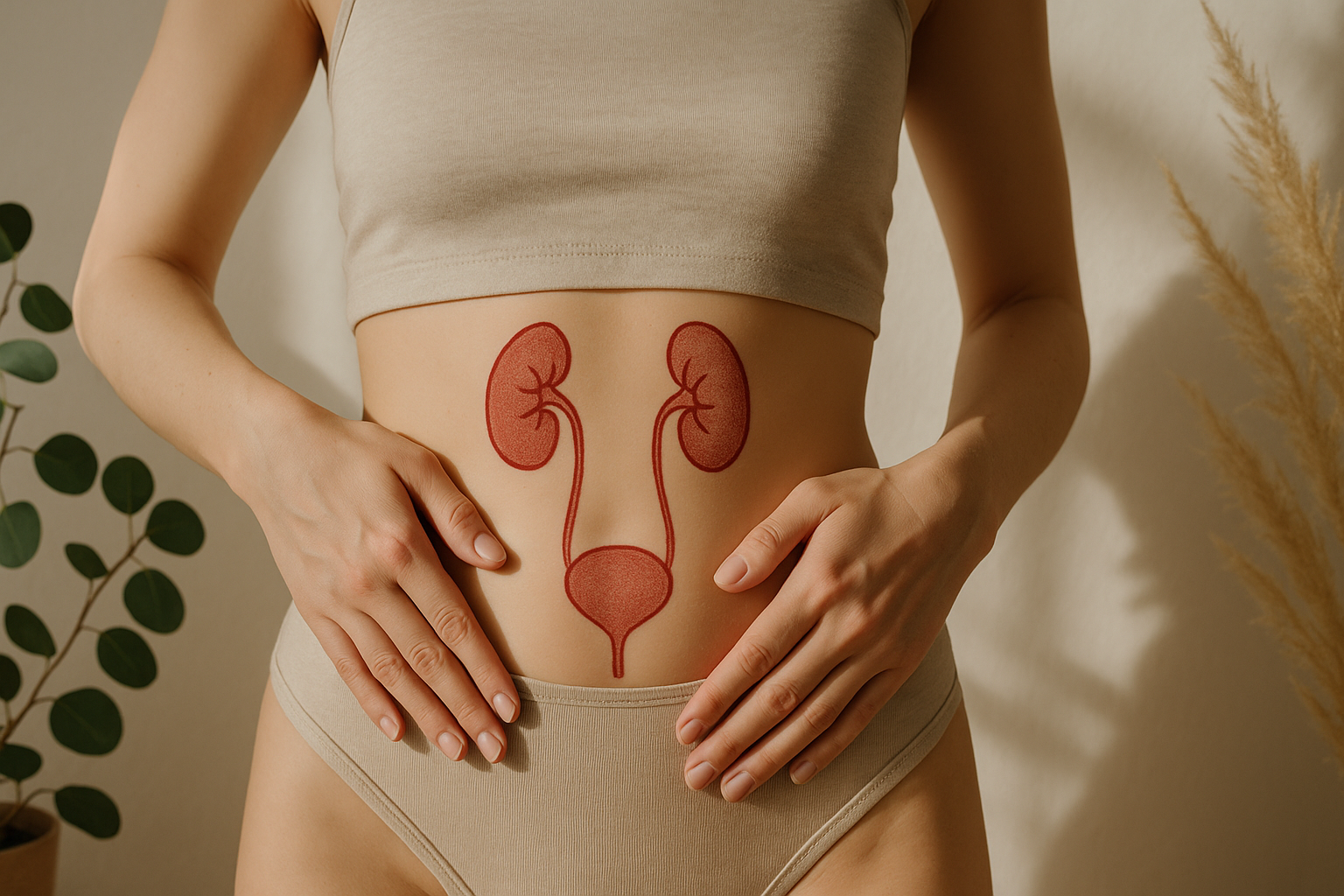
Kidneys and urinary tract.
Nutrients connected to Urinary System
A link means the body needs the nutrient for this, or that low intake is linked to it. It does not mean extra supplements help if your intake is already adequate; each link shows how strong the evidence is.
- MagnesiumDocumented risk
Kidneys clear extra magnesium. When kidney function is greatly reduced, magnesium can build up to harmful levels.
- PhosphorusDocumented risk
The kidneys filter extra phosphate into urine. When they are damaged, phosphorus builds up in the blood.
- CranberryPreliminary or mixed
Studied mainly for lowering the risk of repeat urinary tract infections in women and children; not a treatment for an existing infection.
- PygeumPreliminary or mixed
Used for lower urinary tract symptoms related to BPH. Evidence is limited; see a doctor first to exclude serious causes.
- ChagaDocumented risk
Same documented risk: oxalate crystal damage to the kidneys after long-term chaga powder use (case reports).
- Yellow dockDocumented risk
Oxalate in the plant is linked to extra urine oxalate and calcium oxalate kidney stones; a 2025 review advises people with kidney stones to avoid Rumex plants. This is a risk, not a benefit.
- Alisma (ze xie)Documented risk
Used traditionally to promote urination; kidney toxicity seen in animals at high amounts, so caution in kidney disease.
- Yellow foot (funnel chanterelle)Documented risk
Kidney damage comes from the deadly webcap, a look-alike that is mistaken for yellow foot, not from yellow foot itself. Delayed (about 3 to 14 days) kidney failure; no antidote.
- Deadly webcapDocumented risk
Kidney failure from orellanine is the main outcome described in poisoning reports.
- Funeral bellDocumented risk
Amatoxins can injure the kidney tubules; kidney damage was reported with Galerina poisoning in a group case.
- Wild ginger (Canadian)Documented risk
Wild ginger can contain aristolochic acid, which the FDA calls a potent carcinogen and kidney toxin, and which NCI links to kidney damage and urinary tract cancers. This is a documented risk, not a benefit.
- Star Fruit (Carambola)Documented risk
The National Kidney Foundation says people with kidney disease should avoid star fruit; patients on dialysis have died after eating it. Oxalate in the juice has also injured kidneys in people not known to have kidney disease.
- Thunder god vineDocumented risk
Kidney damage is a listed serious risk.
- Stephania (fang ji)Documented risk
Aristolochic acid from Aristolochia fangchi, which replaced Stephania tetrandra in Belgian slimming pills, caused kidney scarring and kidney failure; this is a harm, not a benefit, and is not shown for pure Stephania.
- Common sorrelDocumented risk
Common sorrel is high in oxalate, which forms most kidney stones; the NIDDK advises people who have had calcium oxalate stones to consider limiting high-oxalate foods. People with kidney disease should ask their kidney team first.
- Amanita smithiana and Amanita proximaDocumented risk
Delayed kidney failure follows the first stomach illness; in published case reports it was reversible with supportive care and temporary dialysis.
- Vitamin DDocumented risk
The kidneys help turn vitamin D into its usable form. Too much vitamin D can raise blood calcium and cause kidney damage and kidney stones.
- CalciumDocumented risk
Higher calcium intake over a long time raises the risk of kidney stones in some people.
- PotassiumDocumented risk
The kidneys regulate blood potassium. When they work less well, potassium can build up.
- CreatineDocumented risk
Supplement use can change creatinine-based kidney readings. Case reports of kidney problems were confounded by other factors, per the 2021 review.
- Saw palmettoPreliminary or mixed
Used for urinary symptoms from an enlarged prostate. NIH says it is probably not helpful for this when used alone, while the EU regulator recognises a hexane extract for it; the sources disagree.
- NoniDocumented risk
Noni is high in potassium, so people with kidney disease or on a low-potassium diet should check with a clinician first.
- Coleus forskohlii (forskolin)Documented risk
One source advises people with polycystic kidney disease to avoid forskolin because it may contribute to cyst enlargement.
- HorsetailPreliminary or mixed
Horsetail is an EU traditional herbal medicine for increasing urine flow in minor urinary complaints. This is based on long use; one small trial in healthy men showed a diuretic effect, and benefit for urinary conditions is unproven.
- LemongrassDocumented risk
One trial of 30 days of daily infusions found lower kidney-filtering measures and increased urine output early on.
- Stinging nettlePreliminary or mixed
Root extract has been studied for urinary symptoms of an enlarged prostate; NCCIH calls the evidence limited. Not established.
- TribulusDocumented risk
Case reports describe kidney injury; traditional use as a diuretic and for kidney stones is not proven.
- Pumpkin seedPreliminary or mixed
Pumpkin seed is accepted in the EU as a traditional herbal medicine for urinary symptoms linked to an enlarged prostate or overactive bladder, based only on long use. Trials of seed or oil for prostate symptoms show small or mixed effects.
- SarsaparillaDocumented risk
RxList says sarsaparilla may worsen kidney disease and advises people with kidney problems to avoid it; it also rates evidence for kidney and fluid-retention uses as insufficient.
- Corn silkDocumented risk
Traditionally used for urinary complaints; the diuretic effect is shown only in rats. The EU review is still a draft.
- Chanca piedraPreliminary or mixed
Used for kidney stones. Small studies and two systematic reviews suggest a modest effect, but the evidence is limited.
- PennyroyalDocumented risk
MSK lists kidney toxicity and kidney failure among the published poisoning cases.
- RueDocumented risk
Swallowed rue has been linked to kidney impairment and kidney failure needing dialysis. A safety caution, not a benefit.
- Birch leafPreliminary or mixed
In the EU birch leaf is a traditional herbal medicine for flushing the urinary tract in minor urinary complaints, based only on long use. Trials in people were not found and a rat study did not confirm a diuretic effect.
- Xanthium (cang er zi, cocklebur)Documented risk
One human case report included kidney failure needing dialysis.
- Cs-4 and cultured Cordyceps myceliumPreliminary or mixed
Chinese trials of Jinshuibao added to usual care report lower urea, creatinine and urine protein; trials were low quality and the markers are not hard outcomes.
- Chaparral (creosote bush)Documented risk
Kidney damage and cysts are reported in animals with high-dose NDGA and in case reports of tea drinkers.
- Japanese knotweed (hu zhang)Documented risk
Emodin was linked to kidney toxicity in a 2016 review, and a high-dose resveratrol formula trial in myeloma patients was stopped for serious events including renal failure.
- Bitter leafDocumented risk
A Ugandan case series links bitter leaf used to end a pregnancy with fatal kidney failure. One case cannot prove cause.
- LovagePreliminary or mixed
Traditional use for increasing urine flow in minor urinary complaints; no trials found.
- Nasturtium (garden)Preliminary or mixed
Two placebo-controlled trials of a nasturtium-horseradish combination found fewer bladder-infection recurrences; the newer effect faded by one year and the makers were involved. Not tested for nasturtium alone.
- RestharrowLab or animal research only
Used traditionally in the EU as a tea to increase urine and flush the urinary tract in minor complaints. No clinical studies of the root were found, so this rests on long use and limited animal data.
- SpinachDocumented risk
NIDDK names spinach among high-oxalate foods to limit after calcium oxalate stones.
- Swiss ChardDocumented risk
Oxalate from leafy greens matters for people who form calcium oxalate stones; the sources we read do not give an oxalate value for chard.
- Angel wingDocumented risk
Same link as for kidneys: kidney failure marks the risk group.
- Brown roll-rimDocumented risk
Haemoglobin in urine and kidney failure.
- ParsnipsDocumented risk
Potassium in parsnip matters for people whose kidneys cannot remove extra potassium (MedlinePlus).
- Autumn crocus (colchicum)Documented risk
Kidney impairment is described in poisoning cases and in drug safety information.
- Tender nesting polyporeDocumented risk
Purple urine, protein and white cells in the urine were reported in both patients.
- Juniper Berry OilDocumented risk
Kidney and urinary cautions in the EU monograph for swallowed medicine forms.
- Cranberry JuiceClinically supported
Cochrane found cranberry products probably lower repeat UTIs in some groups. It is not a treatment, and evidence does not support use in older people in care, pregnancy or poor bladder emptying.
- Green & Vegetable JuicesDocumented risk
Oxalate from large amounts of leafy greens can add to stone risk and, in case reports, kidney injury.
- Borax (Sodium Borate)Documented risk
Greatly reduced urine output and kidney problems are described in severe poisoning; kidney disease may prolong exposure.
- Magnesium Creatine ChelateDocumented risk
Creatinine-based kidney readings can change with creatine; magnesium is also cleared by the kidneys.
- Creatine in Food (Meat and Fish)Documented risk
The kidneys help make creatine and clear creatinine; meat can raise blood creatinine, which can affect a kidney blood test.
- Whey Protein PowderDocumented risk
A systematic review linked reported harm to chronic heavy use, with kidneys named most often. People with kidney disease should ask a clinician first.
- Bone Health FormulasDocumented risk
Kidney stone signal with calcium plus vitamin D supplements.
- Vitamin CDocumented risk
Amounts above 2,000 mg a day are not recommended and can rarely cause kidney stones.
- CopperDocumented risk
Long-term high doses of copper can damage the kidneys, according to the NHS.
- ChromiumDocumented risk
Isolated cases of kidney impairment have been reported with chromium supplements, so people with kidney disease are advised to avoid them unless a clinician agrees.
- GlutamineDocumented risk
A review reported glutamine can raise serum creatinine and cause kidney damage in diabetic kidney disease; no significant harm was seen in healthy athletes.
- HorseradishPreliminary or mixed
A company-supported trial of the combination found fewer recurrences of uncomplicated cystitis in women; horseradish alone was not tested.
- Wild yamDocumented risk
Animal study found kidney scarring after 28 days of a wild yam extract; the authors advise long-term use may be best avoided in people with poor kidney function.
- PunarnavaLab or animal research only
Traditional urinary and diuretic use; the diuretic action was not tested in the studies we read, and human evidence is lacking.
- Imperata (bai mao gen)Preliminary or mixed
Traditionally used for urine flow and painful urination. Rat studies found more urine, but a human trial in healthy volunteers found no significant diuretic effect.
- Cicada cordycepsLab or animal research only
Same kidney findings as above, from animals and cells only.
- Chitrak (Ceylon leadwort)Documented risk
Kidney was a main organ affected in repeated-dose rat studies of root extracts. Human data were not read.
- NutmegDocumented risk
Kidney damage in rats at the higher very high amount; not shown in people.
- Alpinia oxyphylla (yi zhi ren)Lab or animal research only
Traditionally used for frequent urination. Only animal and cell studies were found; no human trials.
- Java tea (cat's whiskers)Preliminary or mixed
EU lists Java tea as a traditional herbal medicine for flushing the urinary tract in minor complaints, based on long use; human trials are insufficient and the one placebo-controlled stone study showed no difference from placebo.
- BananasDocumented risk
Kidney function determines how well extra potassium is removed; people with kidney disease should follow their care team's advice.
- BeetsDocumented risk
Beeturia (pink or red urine) is reported in roughly 10 to 14 percent of people after eating beets; ask a clinician if unsure or if other symptoms occur.
- Heather (ling)Lab or animal research only
Traditional urinary use; only laboratory evidence against urinary bacteria was read.
- AsparagusEstablished role
Asparagus changes the smell of urine in many people; this is a harmless, known effect.
- Lovage seedPreliminary or mixed
Root is accepted for traditional use in mild urinary complaints for up to 2 to 4 weeks; the seed has not been studied.
- Pumpkin SeedsPreliminary or mixed
Same single large trial; EU regulators accept the seed as a traditional herbal medicine based on long use, not trial proof.
- Nettle TeaPreliminary or mixed
Urinary flushing, traditional use; contraindicated where less fluid is advised.
- Horsetail TeaPreliminary or mixed
EU traditional use to increase urine flow; extract trial in 36 healthy men; tea not tested in people.
- Water (Tap & Bottled)Preliminary or mixed
One 5-year randomized trial found fewer kidney stone recurrences with higher water intake; single trial.
- FucoidanPreliminary or mixed
One trial improved BPH symptom scores.
- Creatine GummiesDocumented risk
A case report linked a vitamin D manufacturing error in a creatine powder to acute kidney injury in two teenagers; it was a powder, not a gummy.
- Mushroom Blends and Mushroom CoffeeDocumented risk
Case reports of oxalate kidney injury after large amounts of chaga powder.
Explore all vitamins → · Minerals → · Amino acids → · Omega fatty acids → · Antioxidants → · Gut supplements → · Nootropics → · Herbs →