Herbs & Botanicals · Herbs · Tropical fruit sold as juice; evidence for benefits is weak, with known liver and potassium concerns
Noni
Morinda citrifolia L. · also called Noni, Indian mulberry, French mulberry, nonu (Tongan), mengkudu (Indonesian and Malay), morindier (French), Nonibaum (German), fruta del diablo (Spanish)
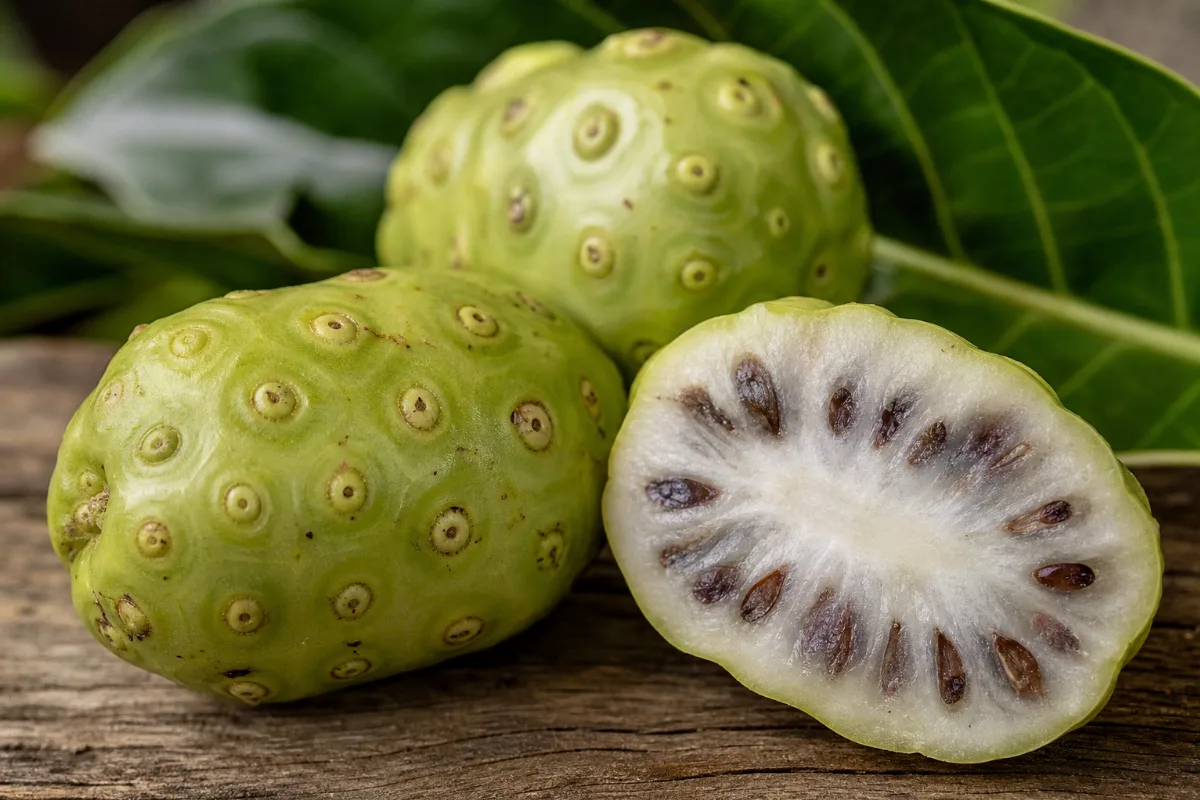
Noni is the fruit of a tropical tree in the coffee family. It is sold as juice, puree, concentrate, capsules, fermented products and leaf tea. Researchers have tested the juice mostly in small studies, and many were done by people linked to juice makers. The best rating any use earns here is low. Noni juice has also been linked to liver injury in case reports and is high in potassium.
General information, not medical advice. Last substantive update · Not medically reviewed. A named clinician has not signed off on this page. How this page is made
About Noni
Noni (Morinda citrifolia) is a tropical fruit tree of the coffee family. Its fruit is sold as juice and other products. Human research is thin: the best-rated uses are low certainty, mostly lab markers in heavy smokers, and many studies come from one brand and from authors linked to the company. Safety is better documented. At least nine case reports link noni juice to liver injury (including one liver transplant), though EFSA found causation unproven; the juice is high in potassium, which matters for kidney disease; and there are case reports of interactions with warfarin and phenytoin. It is an authorised novel food in the EU (juice 2003, leaves 2008, puree and concentrate 2010).
What it is
Noni (Morinda citrifolia) is a tropical fruit tree in the coffee family (Rubiaceae). The fruit is hand-harvested and turned into juice, puree and concentrate. In the EU, the juice assessed by regulators was a blend of 89% noni fruit with 11% grape and blueberry juice concentrates. The ripe fruit is described as unpleasant in taste and smell, and was reported to be eaten mainly in times of famine in Polynesia and Australia.
Noni is also sold as fermented products, capsules, leaf tea and creams. These are not the same: roots, leaves and fruit contain different compounds, and brands differ greatly. Almost all published human trials used one brand from French Polynesia.
Traditional and current uses
Lab papers and the EU safety reviews say Pacific Islanders used the fruit against tiredness and in famine, and used the plant for pain and bruises. LiverTox says the juice, roots, stems, bark, leaves and flowers have been used medicinally in Polynesia for centuries. Some of these statements come from papers written by juice makers and are not independently verified.
Noni juice has been sold in Europe and the US since the 1990s for general health, joints, blood pressure, blood sugar, immunity and, by some sellers, cancer. The research does not support treating or curing any disease with it.
What is in it and how it works
The fruit contains scopoletin, iridoid glycosides, potassium and small amounts of anthraquinones; roots contain more anthraquinones such as lucidin and rubiadin, which damaged DNA in lab tests. The juice and leaf specifications in EU authorisations limit or exclude them.
In the lab and in animals, noni extracts affect immune receptors, blood vessel relaxation, calcium channels and brain enzymes. None of this has been shown to cause a benefit in people. Scopoletin is absorbed quickly but poorly and varies from person to person.
What the research shows
The strongest human results are in heavy smokers: three placebo-controlled trials and a before-and-after study found lower blood markers of oxidative stress and DNA damage, and one trial found lower cholesterol, triglycerides and hs-CRP after one month. These are lab markers, from one research group with company-linked authors, and the placebo was a different juice. One preliminary trial found less nausea in the first 6 hours after surgery at one dose. One trial of noni capsules for period pain found no benefit.
Joint pain, blood pressure, blood sugar, exercise endurance and mood rest on small open-label or pilot studies that we could read only as described in a 2018 review written by employees of a noni juice maker. Immune markers were not clearly improved in the best trial and infections were not reduced. Cancer: a dose-finding study in 51 patients with advanced cancer tracked their own reports of function, pain and fatigue, and cannot show benefit; lab and animal findings are not human evidence. Memory has only mouse studies.
At a glance
Traditional uses history, not proof
- Pacific Islands: the fruit is said to have been used to fight tiredness and as a famine food, and the plant for pain and bruises, according to lab papers and the EU safety reviews.
- Traditional medicine: juice, roots, stems, bark, leaves and flowers are said to have been used for many problems for centuries, per the US liver-injury database LiverTox.
- Modern use: juice sold since the 1990s for general health, joints, blood pressure, blood sugar, immunity and cancer-related claims.
Studied for research
- Blood markers of oxidative damage and blood fats in heavy smokers, low
- Nausea after surgery (one trial) and period pain (one trial, no benefit), low
- Joint pain, blood pressure, blood sugar, immune markers, exercise, mood, hangover, post-COVID symptoms, weight, bone and gum health, very low or insufficient
- Cancer: no human treatment trials; an early dose-finding study only. Memory: mouse studies only
Main compounds
- Scopoletin, a coumarin used as a marker of noni intake in blood and urine
- Iridoid glycosides, which the juice maker's scientists link to lower oxidative markers
- Anthraquinones, mainly in roots (lucidin, rubiadin), limited in EU leaf and puree specifications
- Potassium, high in the juice (56.3 mEq/L in one report)
Common forms
- Noni fruit juice, often blended with other juices
- Noni fruit puree and concentrate (EU authorised food ingredients)
- Fermented noni products and extracts, capsules of dried fruit
- Dried, roasted leaves for tea (EU authorised, infusions only); roots are not a food
- Skin creams containing noni
Research links: EFSA 2006 opinion on the safety of noni juice (liver case reports) · EFSA 2009 opinion on noni fruit puree and concentrate · US National Institutes of Health LiverTox entry for Noni · EU Commission Decision 2008/985/EC on noni leaves · Research Library · Genes & Biomarkers Library
The plant and its history
- Accepted scientific name
- Morinda citrifolia L.
- Naming authority
- L. (Linnaeus), Species Plantarum 176 (1753), per GBIF.
- Synonyms
- Morinda aspera Wight & Arn.; Morinda citrifolia f. potteri (O.Deg.) H.St.John; Morinda citrifolia subsp. elliptica Hook.f.; Morinda citrifolia subsp. potteri (O.Deg.) H.St.John; Morinda citrifolia var. citrifolia; Morinda citrifolia var. potteri O.Deg.; Morinda coreia subsp. stenophylla (Spreng.) Chandrab.; Morinda ligulata Blanco; Morinda littoralis Blanco; Morinda macrophylla Desf.; Morinda mudia Buch.-Ham.; Morinda multiflora Roxb.; Morinda nodosa Buch.-Ham.; Morinda pubescens var. aspera (Wight & Arn.) M.Gangop.; Morinda quadrangularis G.Don; Morinda teysmanniana Miq.; Morinda tinctoria Noronha; Morinda zollingeriana Miq.; Platanocephalus orientalis Crantz; Samama citrifolia (L.) Kuntze; Sarcocephalus leichhardtii F.Muell.
- Common names
- Noni (English); Noni (Spanish); Indian mulberry (English); French mulberry (English); Fruta del diablo (Spanish); Noni asiatico (Spanish); Nonibaum (German); Morindier / mûrier indien (French); Nonu (Tongan); Mengkudu (Indonesian / Malay); Indische moerbei (Dutch)
- Botanical family
- Rubiaceae, the coffee family (order Gentianales), per GBIF.
- Classification
- Plantae > Tracheophyta > Magnoliopsida (dicots) > Gentianales > Rubiaceae > Morinda > Morinda citrifolia
- Native range
- Not assessed in a primary botanical source. A 2010 lab paper describes it as occurring exclusively in the tropics, from India through Southeast Asia and Australia to Eastern Polynesia and Hawaii. LiverTox calls it a tropical fruit tree.
- Habitat
- Tropical. Details of soil, altitude and cultivation were not verified in the sources read.
- What the plant looks like
- Roots: Roots contain anthraquinones such as lucidin and rubiadin (EFSA 2006, which used a Tahiti root extract to validate its test). Root structure was not described in the sources.; Stems: Not described in the sources read. LiverTox lists stems and bark among plant parts used traditionally.; Leaves: Leaves are used for tea in the EU under an authorisation (dried and roasted leaves, infusions only).; Flowers: Not described in the sources read. LiverTox lists flowers among traditional plant parts.; Fruit: A tropical fruit. Per the EU specification it is harvested by hand; seeds and skin are separated mechanically from the pureed fruit. The SCF, as cited by EFSA, noted an unpleasant taste and foul odour when ripe.
- Cultivation
- Not verified in the sources read.
- Harvest and processing
- EU specification (Decision 2010/228/EU): hand-harvested fruit is pureed, seeds and skin removed, pasteurised and packed under cold chain. Concentrate is made from puree with pectin-breaking enzymes, centrifuged, pasteurised and evaporated to about 49-51 degrees Brix. The EU-assessed 'noni juice' blend is 89% noni fruit and 11% grape and blueberry juice concentrates (EFSA 2006). Fermented noni products and noni leaf tea are made differently and are not equivalent.
- Look-alikes and adulterants
- Name: Morinda officinalis; Note: A related species of the same genus. A 2019 chemistry paper compared anthraquinones in M. officinalis and M. citrifolia (title only was read). Products should name the species.; Name: Other Morinda species; Note: A 2020 review covers Indian Morinda species; products sold as 'noni' should name Morinda citrifolia. We did not check species adulteration.; Name: True mulberries (Morus); Note: Not related to noni despite names like Indian mulberry. The families were not checked in the sources read.
- Sustainability and conservation
- Not assessed. It is a widely cultivated and naturalised tropical plant; no conservation status was verified.
Traditional use and history history, not clinical proof
| Tradition or era | Documented use | Source |
|---|---|---|
| Polynesia and the Pacific (as summarised in lab and company papers) | A lab paper says Polynesians traditionally used noni fruit to combat fatigue. A company review says some Pacific Islanders believed ripe fruit invigorated people on long fishing trips and ocean voyages and that topical use for pain and bruising is common. A company paper says noni has been used in Polynesia for over 2,000 years; that figure is not independently verified here. | p17604369 |
| Polynesia, Australia (aboriginal diets), as cited by the EU Scientific Committee on Food | Per EFSA 2006 (citing the SCF), ethnobotanical studies refer to raw or cooked noni fruit as part of the diet of aboriginal populations of Polynesia and Australia. According to some references, consumption was limited to famine times because of the unpleasant taste and foul odour of ripe fruit. Relevant adverse effects were not reported in these studies. | s-efsa-2006-noni |
| Traditional medicine, parts used | LiverTox says the juice, roots, stems, bark, leaves and flowers have been used as medicinal remedies in Polynesia for centuries, and recently in the Western world for a wide range of problems from cancer and diabetes to AIDS. The LiverTox text is a summary and was the only part read. | p31643695 |
| Commercial juice, 1990s onward | Noni products have been commercialised in the United States since the 1990s (Potterat 2007). EFSA 2006 reported the maker's figure of more than 80 million bottles sold since July 1996. | p17286240 |
| EU regulatory history | SCF opinion on Tahitian Noni juice (4 December 2002); Commission Decision authorising noni juice (5 June 2003); Austrian liver case report (20 June 2005); EFSA opinion (1 September 2006); leaf authorisation (15 December 2008); EFSA puree opinion (13 March 2009); puree and concentrate authorisation (21 April 2010). | s-efsa-2006-noni |
Traditional use shows how a plant was used. It does not show that a supplement works or is safe today.
What is inside, and how it may work
What the plant contains and how those compounds act in cells and animals. Laboratory and animal mechanisms are not proven effects in people.
Main compounds
| Compound | Family | Where it is concentrated | Activity studied | Level of evidence |
|---|---|---|---|---|
| Scopoletin PubChem 5280460 | coumarin | Fruit; leaf extract (scopoletin-rich) Plasma 0.5 to 5 ng/mL for at least 8 hours after capsules of 1,500 to 2,500 mg freeze-dried fruit (nine volunteers) | Used as a marker of noni intake in blood and urine. Stimulated contractions of rat stomach tissue through 5-HT4 receptors, about 45% of the full extract response at the equivalent dose. Present in the leaf extract that protected rat knees in a chemical osteoarthritis model. 13 29 41 | Human data |
| Iridoid glycosides (class) | iridoid glycoside | Fruit juice Present in Tahitian Noni Juice; absent from the placebo juice used in the smoker trials | The smoker-trial authors link the lowered oxidative markers to iridoids; this was not tested directly. 44 45 42 | Human data |
| Deacetylasperulosidic acid PubChem 12315350 | iridoid glycoside | Fruit juice Not given in the abstract | Identified as an active compound that raised nitric oxide release in human umbilical vein cells through a GLP-1 receptor pathway; juice lowered blood pressure in hypertensive rats. 54 | Animal research |
| Lucidin PubChem 10163 | anthraquinone | Root (also bound as lucidin primveroside) Not detected in noni juice samples (under 0.01 mg/kg in the Austrian analysis; below 1 mg/kg in the manufacturer's test); EU specifications for leaf and puree list it as not detectable | Root anthraquinones including lucidin are discussed as genotoxic in lab tests; EFSA used root extract to show its test could detect free and bound anthraquinones. 4 53 8 9 | Laboratory research |
| Rubiadin PubChem 124062 | anthraquinone | Root Not detected in juice samples; EU specifications list it as not detectable in leaf and puree | Anthraquinone of concern in the EU assessments; absence is part of the puree and leaf specifications. 4 8 9 | Laboratory research |
| Alizarin PubChem 6293 | anthraquinone | Not specified Not detectable in puree and concentrate per the EU specification | Used as one of the spiked reference anthraquinones in the manufacturer's detection test. 4 9 | Laboratory research |
| 5,15-Dimethylmorindol | anthraquinone | Fruit puree and leaf 0.19 to 0.20 micrograms/mL in puree and 0.11 to 0.77 micrograms/mL in concentrate; under 47 mg/kg in dried roasted leaf (EU specifications) | The anthraquinone that is measured and limited in EU specifications. Its health effects were not described in the sources read. No PubChem record was found by name. 9 8 | Laboratory research |
| 1,4-Dihydroxy-2-methoxy-7-methylanthraquinone | anthraquinone | Fruit Not given | Isolated from noni fruit; raised collagen production in human skin cells and in nude mouse skin. Cited by EFSA as one of the fruit anthraquinone reports. 17 4 | Laboratory research |
| Damnacanthal PubChem 2948 | anthraquinone | Not specified in the title Not given | A title-only source reports damnacanthal and nordamnacanthal, isolated from noni, affect oral cancer cells in culture. Cell work only. 36 3 | Laboratory research |
| Epicatechin PubChem 72276 | flavan-3-ol (flavonoid) | Leaf extract Not given in the abstract | Part of the scopoletin- and epicatechin-rich leaf extract that reduced cartilage-breakdown markers in rats. 41 | Animal research |
| Potassium PubChem 5462222 | mineral | Fruit juice 56.3 mEq/L in juice samples (one report); the most prominent mineral across 177 brands but with large brand variation | Relevant for people with kidney disease or potassium-raising medicines. 27 46 | Human data |
| Polysaccharides (fermented noni) | polysaccharide | Fruit (fermented) 975 mg a day of extract in the 2026 trial | Tablets raised several cytokines and showed a non-significant rise in NK cell activity in the main analysis. 37 | Human data |
Mechanisms, receptors and pathways
| Target or pathway | Gene or receptor | What was found | Level |
|---|---|---|---|
| Cannabinoid receptors CB2 and CB1 | CNR2, CNR1 | Tahitian Noni Juice and concentrate activated CB2 and inhibited CB1 receptors in a concentration-dependent way; in mice, juice lowered IL-4 and raised interferon-gamma. Authors work for the juice maker. 32 | Laboratory research |
| GLP-1 receptor, CaMKK-beta, AMPK and eNOS pathway | GLP1R, CAMKK2, PRKAA1, NOS3 | In human umbilical vein cells, a juice extract raised eNOS phosphorylation and nitric oxide; deacetylasperulosidic acid acted through the same pathway; juice lowered blood pressure in hypertensive rats. 54 | Animal research |
| Voltage-dependent calcium channels | CACNA1C (L-type) | A root extract relaxed isolated gut and vessel tissue and slowed isolated guinea-pig atria, similar to verapamil. This is a root extract, not juice. 11 | Laboratory research |
| 5-HT4 receptor in stomach muscle | HTR4 | A noni fruit extract and scopoletin contracted rat gastric fundus strips through the 5-HT4 receptor; in people the extract increased ranitidine absorption. 29 | Human data |
| Acetylcholinesterase and brain blood flow | ACHE | Noni fruit extracts lowered acetylcholinesterase activity and oxidative stress and improved brain blood flow and memory in scopolamine-treated mice. 30 | Animal research |
| Oxidative stress markers | Not specific | In heavy smokers, noni juice lowered plasma superoxide radicals, lipid hydroperoxides and DNA adducts. The company-linked authors attribute this to iridoids. 42 45 43 | Human data |
| Immune signalling (NK cells and cytokines) | IFNG, IL2, IL4, IL6, IL10 | Fermented noni polysaccharides raised IFN-gamma, IL-2, IL-6, IL-10 and IL-1beta more than placebo and gave a non-significant NK activity rise in the main analysis. 37 | Human data |
| Drug-metabolising enzymes | CYP2C9 (hypothesis), CYP3A4 | CYP3A4 was inhibited only weakly in vitro (IC50 above 10,000 micrograms/mL). The phenytoin case authors suggest CYP2C9 induction; this was not tested. 6 15 | Laboratory research |
| Proposed liver-injury mechanism | Not established | Case-report authors propose anthraquinones (mitochondrial oxidative stress in the 2026 topical case) as the cause; the juice maker disputes this, and EFSA found causation unproven. A mouse study of fruit extract also showed liver damage. This is hypothesis, not demonstrated mechanism. 38 19 47 25 4 | Laboratory research |
| Xanthine oxidase (uric acid enzyme) | XDH | Juice was reported to inhibit xanthine oxidase in a test tube, but the reported percentages exceed 100%, so we do not rely on them. 33 | Laboratory research |
| Cancer cell biology | Various | Reviews report anti-cancer-type activity of noni preparations in cells and animals; a title-only source reports damnacanthal effects on oral cancer cells. No human treatment effect has been shown. 3 36 | Laboratory research |
Absorption, metabolism and elimination
- Absorption
- Scopoletin entered plasma quickly after capsules of whole freeze-dried fruit (1,500 to 2,500 mg) in nine healthy volunteers and stayed between 0.5 and 5 ng/mL for at least 8 hours. Bioavailability looked low and varied a lot between people. A noni extract also increased the absorption of ranitidine in 20 volunteers.
- Distribution
- Not studied in the sources read.
- Metabolism
- Not studied in people. Lab data suggest weak CYP3A4 inhibition; a case report speculates CYP2C9 induction.
- Elimination
- Scopoletin could be measured in urine as a marker of noni intake. No half-life was given in the abstract.
- Bioavailability
- Low and variable for scopoletin. Nothing is known for iridoids, anthraquinones or potassium absorption beyond the case report of raised blood potassium.
Isolated compounds versus whole extracts
'Noni' is not one product. Juice (the EU-assessed version is 89% fruit plus grape and blueberry juice), puree, concentrate, fermented polysaccharide extracts, capsules of dried fruit, leaf tea and root extracts have different chemistry. Anthraquinones concentrate in roots and are limited in EU leaf and puree specifications. A company analysis of 177 brands showed large differences in minerals; the company itself says results from one product cannot be assumed for another. Almost all published human trials used one French Polynesian brand.
Nutritional composition
EU specification (Decision 2010/228/EU), per 100 g: noni puree has 89 to 93% moisture, under 0.6 g protein, under 0.2 g fat, 5 to 10 g total carbohydrates (0.5 to 2 g each of fructose and glucose), 1.5 to 3 g fibre and under 1 g ash. Concentrate has 48 to 53% moisture, 3 to 3.5 g protein, 37 to 45 g carbohydrates and 4.5 to 5 g ash (minerals, including potassium). Measured potassium in noni juice samples was 56.3 mEq/L in one report; brands vary widely. USDA food-composition data were not checked.
4 low certainty8 very low certainty3 not enough evidence
What was looked at
The 15 benefits and uses checked for Noni, each with how strong the evidence is. Tap one to open it.
- Joint and neck pain, including osteoarthritisVery low certainty
- Period pain (dysmenorrhoea)Low certainty
- Quality of life, pain and fatigue in people with advanced cancerNot enough evidence
- Exercise endurance and tirednessVery low certainty
- General wellbeing and moodVery low certainty
- Memory and brain functionNot enough evidence
- Oxidative stress and DNA damage markers in heavy smokersLow certainty
- Cholesterol, triglycerides and inflammation marker (hs-CRP) in heavy smokersLow certainty
- Blood pressureVery low certainty
- Blood sugar and type 2 diabetesVery low certainty
- Immune function and recurrent coldsVery low certainty
- Symptoms after COVID-19 (combination product)Very low certainty
- Nausea after surgeryLow certainty
- Hangover symptomsVery low certainty
- Weight, bone and gum health (very small pilots)Not enough evidence
Lab markers tracked in the studies
Pain scores (self-reported)Time to fatigue on a treadmillCreatine kinase (CK), a muscle-damage markerQuality-of-life questionnaire scoresScopoletin level in blood and urineAromatic DNA adducts in white blood cellsLipid-peroxide-derived DNA adducts (LOOH- and MDA-DNA)Superoxide anion radicals and lipid hydroperoxides in plasmaLDL cholesterol and total cholesterolTriglyceridesHDL cholesterolHigh-sensitivity C-reactive protein (hs-CRP)HomocysteineBlood pressure (systolic / diastolic, mmHg)HbA1c (average blood sugar over about 3 months)Natural killer (NK) cell activityInterleukin-6 (IL-6) and IL-8Blood acetaldehyde after alcohol
What is Noni good for?
The main proposed uses and how strong the human evidence is for each. "Low" means small or inconsistent studies, "very low" means a single small, uncontrolled or second-hand study, and "insufficient" means there is not enough to judge. No use reaches moderate or high. Noni juice research mostly used one brand, and many studies were run or written by people who work for juice makers. Results may not apply to other products. Ask a doctor or pharmacist about amounts.
Benefits, one by one
Each card is a research question, not a promise. Tap a goal to filter. Open a card to see the studies, doses and limits.
Joint and neck pain, including osteoarthritis
Very low certaintyNoni has long been rubbed on or drunk for pain and bruises. The human evidence is two small studies with no comparison group, both summarised in a review written by the juice maker's staff, so we rate it very low. A related trial of noni capsules for period pain found no benefit.
3 studiesTahitian Noni Juice (fruit, French Polynesia) by mouth in both studie…
Studies, doses and limits
What the trials found
The Morinda-authored review (p29641454) describes two open-label studies, where everyone knew they were taking noni. In 90 people with cervical spondylosis (neck joint wear), 15 mL of Tahitian Noni Juice morning and evening for 4 weeks was compared with physiotherapy alone and with both together. Pain intensity in the noni-only group fell from a 5 to 7 range to a 0 to 4 range, with complete relief of neck pain in 60% of that group; neck movement improved in all three groups, and the combined group improved most. In 82 adults aged 40 to 75 with X-ray osteoarthritis of the hip or knee, about 88.5 mL a day for 90 days was linked with 23.7% fewer days of severe pain and 16.4% lower pain severity, plus better mood and mobility; liver, kidney, blood sugar, cholesterol and triglyceride tests did not change significantly. Neither study had a placebo group. We could not read either original paper because neither is on PubMed.
Results
Pain scores improved in both open-label studies. Because there was no placebo or control group in the osteoarthritis study, and the neck study's noni-only group did no better than physiotherapy alone, these results cannot be credited to noni.
Effect sizes as reported
Osteoarthritis (open-label, n=82): severe-pain days -23.7%, pain severity -16.4% at 90 days. Cervical spondylosis (n=90): moderate-to-severe pain range at start fell to none-to-moderate in the noni-only group. Both as reported in the review; no confidence intervals given.
Why this rating
Only open-label studies without a placebo, reported second-hand by a review written by the juice maker's staff; the original papers were not read. Pain is a subjective outcome that is easily changed by expectation.
Form and dose studied
Tahitian Noni Juice (fruit, French Polynesia) by mouth in both studies. Rat work used leaf extract.
Who was studied
Adults with neck joint wear (cervical spondylosis) and adults with hip or knee osteoarthritis not on prescription arthritis medicine.
Limits
No placebo, no blinding, short follow-up, original papers unread, industry-linked. The leaf results are in rats only. The same review says a noni capsule did not improve period pain (see the period pain entry).
Why researchers looked
Noni plant parts are used on skin and by mouth for pain and swelling in Pacific and Caribbean folk medicine, so researchers looked at joint and neck pain.
Traditional use
The Morinda-authored review says treating pain and bruising on the skin is one of the most common traditional uses of noni in the tropics, and that one old Caribbean name for the plant was 'painkiller'. That is that review's account, not an independent source.
Proposed mechanism Animal research
Noni leaf extract rich in scopoletin and epicatechin reduced cartilage-breakdown markers in cartilage cultures and in rats with chemically induced knee osteoarthritis. Nothing like this has been shown in people.
A proposed mechanism does not show that the effect happens in people.
The osteoarthritis study reported no significant change in liver or kidney tests over 90 days, but noni juice has been linked to case reports of liver injury (see the safety file). Noni juice is also high in potassium.
Period pain (dysmenorrhoea)
Low certaintyOne randomised, placebo-controlled trial of noni capsules in women with period pain found no benefit over placebo. This is a negative result for one product.
2 studies400 mg noni capsules of unspecified origin and plant part, for three …
Studies, doses and limits
What the trials found
A randomised, double-blind, placebo-controlled trial in university women (p23431314) gave 400 mg noni capsules or placebo over three menstrual cycles. 100 women were randomised and 80 completed (42 noni, 38 placebo). Pain and bleeding scores improved in both groups over the three cycles, but the improvement was not significantly different from placebo. The Morinda-authored review notes the capsule contained 'noni herb powder' of unclear origin and part, so the result may not apply to other noni products.
Results
No difference from placebo for pain or bleeding.
Effect sizes as reported
No significant difference between groups (numbers not in the abstract).
Why this rating
A single small trial with a notable dropout rate. It points to no benefit for this product, but one trial of one product cannot settle the question for all noni preparations.
Form and dose studied
400 mg noni capsules of unspecified origin and plant part, for three cycles.
Who was studied
University women aged 18 or older with primary dysmenorrhoea in Jamaica.
Limits
Product identity unclear, one trial, 20 of 100 women did not complete.
Why researchers looked
Noni has been used as an anti-inflammatory, and period pain is partly driven by inflammatory chemicals, so researchers in Jamaica tested it.
Traditional use
Noni is used in several folk traditions as an anti-inflammatory; no tradition specific to period pain was found in the sources we read.
Proposed mechanism Pharmacological theory
The idea was that noni's anti-inflammatory activity might lower period pain. The trial did not support it.
A proposed mechanism does not show that the effect happens in people.
The abstract does not report side effects.
Quality of life, pain and fatigue in people with advanced cancer
Not enough evidenceA phase I study in 51 people with advanced cancer tested how much noni fruit extract could be taken safely and tracked their own reports of function, pain and fatigue. It cannot show that noni helps. Noni is not a cancer treatment, and nothing here shows it treats or cures cancer.
3 studiesNoni fruit extract capsules (the marketed product); amounts are from …
Studies, doses and limits
What the trials found
In a phase I trial (p22435516), 51 patients with advanced cancer took noni fruit extract capsules at seven dose levels, starting at 2 g a day. The maximum tolerated dose was 12 g a day (six capsules four times a day) and no dose-limiting toxicity was found, but 7 of 8 patients at the next level (14 g) withdrew because swallowing that many capsules was hard. Patients on 3 or 4 capsules four times a day (6 to 8 g) reported better physical functioning, pain control and fatigue than those on lower or higher doses. A separate small study (p22436097) in nine healthy volunteers found scopoletin, a noni compound, in the blood for at least 8 hours after a single dose, with low and variable absorption.
Results
Self-reported function, pain and fatigue varied by dose in an uncontrolled study. There was no placebo and no measure of tumour response, survival or any cancer outcome.
Effect sizes as reported
Maximum tolerated dose 12 g a day; best self-reported outcomes at 6 to 8 g a day (no numbers or confidence intervals in the abstract).
Why this rating
A phase I dose-finding study with no placebo group is not designed to show benefit. Differences by dose could be chance, expectation or illness changes.
Form and dose studied
Noni fruit extract capsules (the marketed product); amounts are from the trial only and are not advice.
Who was studied
Adults with advanced cancer. Not tested in earlier-stage cancer, in children, or alongside specific chemotherapy regimens.
Limits
Phase I only; no placebo; self-reported outcomes; people who took very high doses dropped out. The lab and animal anticancer research is not human evidence.
Why researchers looked
Noni is heavily marketed to people with cancer. The Hawaii-based research team wanted to find a safe dose and to see whether quality-of-life questionnaires could help pick a dose for a later efficacy trial.
Traditional use
Not a traditional use as such; the marketing is modern.
Proposed mechanism Laboratory research
Laboratory and animal research (not in patients) reports anti-cancer-type effects of noni preparations on cancer cells. A 2022 systematic review of 51 clinical and preclinical studies said more well-designed preclinical efficacy and safety studies are needed before proper clinical testing.
A proposed mechanism does not show that the effect happens in people.
Anyone being treated for cancer should tell their cancer team before taking noni, because liver injury cases and high potassium have been reported with noni juice, and cancer treatments can also affect the liver and kidneys.
Exercise endurance and tiredness
Very low certaintySmall studies described in the juice maker's review report longer time to exhaustion in runners and better oxygen use in cyclists after Tahitian Noni Juice. The evidence is second-hand and industry-linked, so we rate it very low. A mouse study supports the idea in animals only.
2 studiesTahitian Noni Juice, 100 to 120 mL once or twice a day for 14 to 30 d…
Studies, doses and limits
What the trials found
The Morinda-authored review (p29641454) describes three human trials, none of which we could read in the original. In a 21-day placebo-controlled study of 40 highly trained middle- and long-distance runners, 100 mL of Tahitian Noni Juice or a blackberry juice placebo twice a day was followed by a 21% longer average time to fatigue on a treadmill and a 25% lower blood chemiluminescence reading (a lipid-oxidation marker); the placebo group did not change. A second study of 46 university athletes and 14 non-athletes over 30 days reported a fall in serum creatine kinase, a muscle-damage marker, with noni but not with blackberry juice. A third randomised, double-blind, placebo-controlled study of semi-professional cyclists (120 mL a day for 14 days) reported higher maximal oxygen uptake. The mouse study (p17604369) found 36% to 45% longer swim time and 59% to 128% longer rotarod time in aged mice.
Results
Small, short studies reported better endurance measures. None was independently reported in a source we could read, and the main authors work for the juice maker.
Effect sizes as reported
Runners: time to fatigue +21%; chemiluminescence -25%. Mice: swim time +36% to +45%, rotarod +59% to +128%. No confidence intervals.
Why this rating
The human trials are known only through a review written by the manufacturer's staff; originals were published in non-PubMed journals and were not read. Sample sizes are small and the placebo was another fruit juice.
Form and dose studied
Tahitian Noni Juice, 100 to 120 mL once or twice a day for 14 to 30 days in the studies described.
Who was studied
Trained runners, university athletes, semi-professional cyclists. Not studied in older or less fit people.
Limits
Second-hand reporting; industry authors; short trials; no long-term follow-up; blackberry juice is a different drink.
Why researchers looked
The Morinda-authored review says some Pacific Islanders believed ripe noni fruit kept them going on long fishing trips and ocean voyages.
Traditional use
Traditional use to fight tiredness is reported in the sources (p17604369, p29641454), without detail.
Proposed mechanism Animal research
Noni juice is reported to have antioxidant activity in blood tests, and the authors propose it limits exercise-induced muscle damage. In aged mice, juice raised swim time and rotarod time to the level of young mice.
A proposed mechanism does not show that the effect happens in people.
Noni juice is high in potassium, which matters for people with kidney problems (see the safety file).
General wellbeing and mood
Very low certaintyTwo small studies described in the juice maker's review reported better quality-of-life and mental-health scores with Tahitian Noni Juice. These are second-hand, small and industry-linked, so we rate them very low.
2 studiesTahitian Noni Juice.
Studies, doses and limits
What the trials found
The Morinda-authored review (p29641454) says the open-label osteoarthritis study reported improved psychological state and mood, and that patient satisfaction with personal health rose by about 19%. It also describes a three-month placebo-controlled pilot in postmenopausal women (59 mL of Tahitian Noni Juice twice a day) in which several quality-of-life scores, including mental health, improved. The cancer phase I study (p22435516) found dose-related differences in self-reported physical functioning but did not test mood.
Results
Questionnaire scores moved in the right direction in small studies. We could not read the originals.
Effect sizes as reported
About +19% satisfaction with health (open-label osteoarthritis study, as reported in the review). Other changes were described without numbers.
Why this rating
Subjective questionnaires, tiny or uncontrolled studies, second-hand reporting, industry authors.
Form and dose studied
Tahitian Noni Juice.
Who was studied
Adults with osteoarthritis; postmenopausal women.
Limits
No study of depression or anxiety as a condition was found. Original papers unread.
Why researchers looked
Quality-of-life questionnaires such as the SF-36 were added to several small noni juice studies.
Traditional use
Noni juice is widely marketed as a general tonic; the sources do not give a specific traditional mood use.
Proposed mechanism Pharmacological theory
No mechanism for a mood effect in people has been shown.
A proposed mechanism does not show that the effect happens in people.
Noni juice should not be used in place of treatment for depression or anxiety.
Memory and brain function
Not enough evidenceWe found no human trial of noni for memory or thinking. Mouse studies suggest noni fruit extracts protected against drug-induced memory loss; that is a long way from showing a benefit for people.
2 studiesFruit extract and juice in mice only.
Studies, doses and limits
What the trials found
No human study of memory, attention or thinking was found in our search. The mouse studies are p22107832 (ethanol extract of noni fruit, scopolamine amnesia) and p39309823 (noni juice and a commercial product, cyclophosphamide-related memory impairment).
Results
Mouse memory scores improved in both studies.
Effect sizes as reported
Not given as numbers in the abstracts.
Why this rating
Animal studies only.
Form and dose studied
Fruit extract and juice in mice only.
Who was studied
Mice.
Limits
No human data. Doses and products in mice differ greatly from human use.
Why researchers looked
Scientists tested noni in mice whose memory was damaged by scopolamine or by the chemotherapy drug cyclophosphamide.
Traditional use
No traditional memory use was found in the sources we read.
Proposed mechanism Animal research
In mice, noni fruit extract raised brain blood flow, lowered brain acetylcholinesterase activity and oxidative-stress markers, and improved test scores after scopolamine or cyclophosphamide.
A proposed mechanism does not show that the effect happens in people.
Not applicable. Do not use noni to treat memory problems.
Oxidative stress and DNA damage markers in heavy smokers
Low certaintyThree placebo-controlled trials and one before-and-after study in heavy smokers found that Tahitian Noni Juice lowered blood markers of oxidative stress and DNA damage over one month. These are lab markers, not proof that anyone got less cancer, and all come from one brand with company-linked authors. Quitting smoking is the only proven way to lower the risk.
4 studiesTahitian Noni Juice (French Polynesia), 29.5 mL to 118 mL a day in th…
Studies, doses and limits
What the trials found
In a 30-day double-blind, placebo-controlled trial of 285 current heavy smokers (p19807926), plasma superoxide anion radicals fell from 0.26 to 0.19 micromol/mL with 29.5 mL of juice and from 0.26 to 0.18 with 118 mL; lipid hydroperoxides fell from 0.53 to 0.40 and from 0.55 to 0.40 micromol/mL; the placebo group had no significant reduction. In a one-month trial of 245 heavy smokers (p24804023), DNA adducts caused by fat breakdown products fell by 44.6% to 57.4% with 29.5 to 118 mL of juice, and not with placebo. In a before-and-after study of 203 smokers (p19838937), aromatic DNA adducts fell 44.9% after 1 to 4 oz of juice a day for one month (1 oz: -49.7%; 4 oz: -37.6%); the abstract mentions no placebo group.
Results
Markers of oxidative damage and DNA adducts were lower after one month in smokers drinking noni juice, and not in the placebo groups where one existed.
Effect sizes as reported
Aromatic DNA adducts -44.9% (before and after); lipid-peroxide DNA adducts -44.6% to -57.4%; superoxide radicals about -27% to -31%; lipid hydroperoxides about -25% to -27% (our arithmetic from reported means). No confidence intervals in the abstracts.
Why this rating
Several consistent trials with large numbers of participants, but they measure surrogate lab markers, ran only a month, come from one research group with company authors, and used one brand. Whether lower adducts mean lower cancer risk has not been shown.
Form and dose studied
Tahitian Noni Juice (French Polynesia), 29.5 mL to 118 mL a day in the trials; amounts reported are from the studies only.
Who was studied
Adult heavy smokers (about 20 or more cigarettes a day) who kept smoking during the trials.
Limits
Surrogate markers only; one-month duration; industry-linked; placebo was a different fruit juice; no cancer outcomes.
Why researchers looked
Cigarette smoke causes oxidative stress, which damages fats and DNA. Noni juice has antioxidant activity in lab tests, so a University of Illinois team with company co-authors tested it in heavy smokers.
Traditional use
Not a traditional use; this is a modern research question.
Proposed mechanism Preliminary mechanism
The authors link the effect to iridoid glycosides in the juice, which the placebo juice lacked. This is their proposal and was not tested directly in these trials.
A proposed mechanism does not show that the effect happens in people.
No amount of noni offsets the harm of smoking. Noni juice carries its own risks (liver injury case reports; high potassium).
Cholesterol, triglycerides and inflammation marker (hs-CRP) in heavy smokers
Low certaintyIn one placebo-controlled trial of 132 heavy smokers, a month of Tahitian Noni Juice was linked to lower total cholesterol, triglycerides and hs-CRP. A small open-label study in non-smokers found no cholesterol change. Industry-linked and short.
2 studiesTahitian Noni Juice, 29.5 mL to 188 mL a day (trial range).
Studies, doses and limits
What the trials found
In a randomised, double-blind, placebo-controlled trial of 132 heavy smokers (p23097636), daily noni juice for one month significantly reduced cholesterol, triglycerides and hs-CRP; LDL and homocysteine decreased and HDL rose among noni drinkers; the placebo juice did not significantly change blood fats or hs-CRP. The Morinda-authored review (p29641454) adds that hs-CRP fell 15.2%, homocysteine 23.9%, HDL rose from 49 to 57 mg/dL, and that larger falls were seen in people with higher starting cholesterol. It also describes a smaller open-label pilot in non-smoking older adults (59 mL twice a day for 30 days) with no significant change in total cholesterol, HDL or LDL.
Results
Lower cholesterol, triglycerides and hs-CRP in heavy smokers on noni juice; no cholesterol change in the small non-smoker pilot.
Effect sizes as reported
hs-CRP -15.2%, homocysteine -23.9%, HDL 49 to 57 mg/dL (all from the review); total cholesterol falls of 12.1%, 17.3% and 36.4% in low, middle and high starting-level groups on 29.5 mL (review).
Why this rating
One placebo-controlled trial with a surrogate outcome, in smokers only, by a company-linked group; the non-smoker pilot was null.
Form and dose studied
Tahitian Noni Juice, 29.5 mL to 188 mL a day (trial range).
Who was studied
Heavy smokers (132) and a small group of older non-smokers with normal or borderline-high cholesterol.
Limits
Surrogate markers, one month, one brand, authors linked to the juice maker, placebo was a different juice.
Why researchers looked
Smoking raises blood fats, inflammation and homocysteine, so the same team that studied oxidative damage looked at these markers.
Traditional use
No traditional use for cholesterol was found in the sources read.
Proposed mechanism Preliminary mechanism
The authors suggest the effect works through antioxidant activity of iridoids in the juice. Not tested directly.
A proposed mechanism does not show that the effect happens in people.
Noni juice is high in potassium and has been linked to liver injury in case reports; it is not a replacement for cholesterol medicine.
Blood pressure
Very low certaintyEvidence for blood pressure in people is one small open-label pilot of 10 adults with high blood pressure, known second-hand from the juice maker's review. Rat and lab-tissue studies are more positive. We rate it very low.
4 studiesTahitian Noni Juice (human pilot); noni fruit juice in rats; root ext…
Studies, doses and limits
What the trials found
The Morinda-authored review (p29641454) describes a one-month open-label pilot in 10 adults with high blood pressure who drank 59 mL of Tahitian Noni Juice twice a day: average blood pressure fell from 144 to 132 mmHg systolic and from 83 to 76 mmHg diastolic, with no control group. The review says other trials of the juice found no effect on blood pressure in people with normal pressure. The 2006 EFSA review of a four-week safety study of up to 750 mL a day in 96 healthy people reported no clear treatment-related effects in the parameters measured.
Results
A tiny uncontrolled pilot reported lower pressure; healthy people saw no effect.
Effect sizes as reported
Systolic 144 to 132 mmHg, diastolic 83 to 76 mmHg in 10 adults (open-label, from the review; no confidence interval).
Why this rating
One 10-person open-label pilot reported second-hand, plus animal and lab studies.
Form and dose studied
Tahitian Noni Juice (human pilot); noni fruit juice in rats; root extract in vitro (root is not a food product).
Who was studied
Adults with high blood pressure (n=10).
Limits
No control group, tiny sample, original not read, industry-linked.
Why researchers looked
Noni has a folk reputation for high blood pressure in some regions, and lab studies suggest noni can relax blood vessels.
Traditional use
Folk use for high blood pressure is mentioned for some regions, but the sources we read give no detail, so none is claimed here.
Proposed mechanism Animal research
Noni juice lowered blood pressure in hypertensive rats and relaxed rat aorta rings, apparently through nitric oxide release linked to the compound deacetylasperulosidic acid. A root extract relaxed isolated rabbit and rat vessels by blocking calcium channels. Both are animal or lab findings.
A proposed mechanism does not show that the effect happens in people.
Noni juice is high in potassium. People taking ACE inhibitors, angiotensin receptor blockers or potassium-sparing diuretics for blood pressure can have trouble clearing potassium (see the safety file). Never replace blood pressure medicine with noni.
Blood sugar and type 2 diabetes
Very low certaintyA small eight-week pilot in people with type 2 diabetes, known only from a conference abstract cited in the juice maker's review, reported lower HbA1c. Healthy people saw no change in blood sugar. We rate it very low.
2 studiesTahitian Noni Juice.
Studies, doses and limits
What the trials found
The Morinda-authored review (p29641454) cites a small eight-week pilot in people with type 2 diabetes in which 2 mL per kg of body weight of Tahitian Noni Juice twice a day was linked with improved blood glucose profiles and a significant drop in HbA1c. The source was a German-language conference abstract (Bartnicka 2013) that we could not read. The review states the juice did not change blood glucose in people without diabetes. Separately, EFSA's 2006 review of a four-week safety study noted small decreases in glucose, all within normal ranges and judged not clinically relevant. The review also describes an eight-week open-label study of a noni juice blend (not plain noni juice) that lowered a skin-fluorescence marker of glycation.
Results
One small pilot reported a lower HbA1c. No placebo-controlled trial in diabetes was found.
Effect sizes as reported
Not given in the review; no numbers available to us.
Why this rating
A single small pilot known only from a conference abstract via the manufacturer's review.
Form and dose studied
Tahitian Noni Juice.
Who was studied
Adults with type 2 diabetes.
Limits
Original unread, no control group stated, industry-linked.
Why researchers looked
Some Pacific Islanders regard noni as helpful for blood sugar, and animal studies suggested an effect.
Traditional use
The Morinda-authored review says some Pacific Islanders consider noni helpful for controlling blood sugar.
Proposed mechanism Animal research
Animal studies (for example in diabetic rats) and lab tests have reported blood-sugar-lowering or anti-glycation effects. The review says in-vitro and animal studies have provided some supporting evidence, while human data are limited.
A proposed mechanism does not show that the effect happens in people.
If you take insulin or diabetes medicine, noni juice adds sugar and potassium and could change your control. Tell your diabetes team. Do not stop medicines.
Immune function and recurrent colds
Very low certaintyA 2026 randomised trial of fermented noni polysaccharide tablets in 100 adults with repeated upper respiratory infections did not reach statistical significance on its main immune measure and did not reduce infections. A tiny pilot of 12 people reported higher immune markers. We rate it very low.
3 studiesFermented noni polysaccharide extract tablets (trial 1); Tahitian Non…
Studies, doses and limits
What the trials found
In the 8-week trial (p42280334), 84 analysed adults aged 40 to under 75 with at least two infections in the prior year took fermented noni polysaccharide tablets (975 mg a day extract) or placebo. NK cell activity rose more with noni at all three test settings, but the main analysis difference was not significant (+8.94, 95% CI -0.61 to 18.50, p = 0.066 at 50:1). A per-protocol sub-analysis reached significance at two settings. IFN-gamma, IL-2, IL-6, IL-10 and IL-1beta rose more with noni; infection numbers did not differ. The review (p29641454) also describes a pilot of 12 healthy adults drinking 330 mL of juice a day for eight weeks, with IL-2 and NK activity up by about 30% and MDA down, with no control group.
Results
Lab immune markers moved in the expected direction, mostly without statistical significance in the best trial, and infections were not reduced.
Effect sizes as reported
NK activity +8.94 (95% CI -0.61 to 18.50, p = 0.066) at E:T 50:1 in the main analysis; per-protocol +11.03 (p = 0.025).
Why this rating
The best trial missed its primary endpoint and showed no fewer infections; the other evidence is a 12-person pilot with no control.
Form and dose studied
Fermented noni polysaccharide extract tablets (trial 1); Tahitian Noni Juice (pilot).
Who was studied
Adults aged 40 to under 75 with recurrent upper respiratory infections; healthy volunteers.
Limits
Retrospectively registered, company-linked authors, surrogate lab markers.
Why researchers looked
Noni polysaccharides and juice affected immune cells in lab studies, so researchers tested natural killer (NK) cell activity in people.
Traditional use
Noni is widely marketed for immune support; the sources give no specific traditional immune use.
Proposed mechanism Laboratory research
In cell tests and mice, Tahitian Noni Juice activated the CB2 cannabinoid receptor, blocked CB1, lowered IL-4 and raised interferon-gamma. This is lab and mouse work only.
A proposed mechanism does not show that the effect happens in people.
The trial reported no serious side effects. An immune-modulating claim is not a reason to skip vaccines or medical care.
Symptoms after COVID-19 (combination product)
Very low certaintyOne randomised trial gave a fermented papaya and noni combination to 188 people recovering from COVID-19 and reported fewer symptoms and lower inflammation markers. The product mixes two fruits, so noni cannot be credited. We rate it very low.
1 studiesFermented Carica papaya plus Morinda citrifolia fruit combination.
Studies, doses and limits
What the trials found
In a single-centre placebo-controlled study (p35684003) of 188 people recovering from moderate or severe COVID-19, 28 g twice a day of a fermented papaya and noni supplement for 20 days was added to usual treatment. The authors report that clinical symptoms, IL-6, IL-8 and nitric oxide metabolites fell significantly compared with placebo and with the start, and that white-cell function and antioxidant activity rose. The abstract gives no numbers.
Results
Reported improvement versus placebo; sizes not given in the abstract.
Effect sizes as reported
Not available.
Why this rating
A combination product (papaya plus noni), no numbers in the abstract, a short follow-up, and a partly company-funded study.
Form and dose studied
Fermented Carica papaya plus Morinda citrifolia fruit combination.
Who was studied
People recovering from moderate or severe COVID-19.
Limits
Cannot separate noni from papaya; single centre; 20 days.
Why researchers looked
Fermented papaya and noni have been described as anti-inflammatory and redox-balancing, so they were tried alongside usual care.
Traditional use
Not traditional.
Proposed mechanism Pharmacological theory
The authors propose immune-modulating, redox-balancing and energy-supporting effects. These were not tested separately.
A proposed mechanism does not show that the effect happens in people.
The abstract does not report side effects.
Nausea after surgery
Low certaintyA preliminary Thai trial of a single noni fruit extract dose before surgery found less nausea in the first six hours at the highest dose only. One small trial, not repeated.
2 studiesBoiled and evaporated dried noni fruit extract in capsules.
Studies, doses and limits
What the trials found
A preliminary randomised, double-blind, placebo-controlled trial (p21294416) gave 100 adults at high risk of nausea after surgery a single capsule of noni fruit extract (150, 300 or 600 mg) or placebo one hour before anaesthesia. In the first six hours, 48% of the 600 mg group had nausea compared with 80% on placebo (p = 0.04). No other dose or time period differed from placebo. No side effects were reported.
Results
Less nausea at 0 to 6 hours with 600 mg; no difference for vomiting or later periods.
Effect sizes as reported
Nausea 0 to 6 h: 48% vs 80%, p = 0.04.
Why this rating
A single small randomised trial with one significant result among several comparisons; the authors call it preliminary.
Form and dose studied
Boiled and evaporated dried noni fruit extract in capsules.
Who was studied
Adults aged 18 to 65 (ASA I-II) at high risk of postoperative nausea.
Limits
About 25 per group, multiple comparisons, not repeated.
Why researchers looked
A Thai team tested a noni fruit extract for nausea after anaesthesia; the abstract does not describe a traditional basis.
Traditional use
The sources do not describe the specific traditional use.
Proposed mechanism Animal research
Noni extract made rat stomach tissue contract through the 5-HT4 receptor, partly via scopoletin (p22580040). How this relates to nausea after surgery is unknown.
A proposed mechanism does not show that the effect happens in people.
Tell the anaesthetist about any herbal product before surgery.
Hangover symptoms
Very low certaintyOne 30-person crossover trial found a noni fruit extract changed blood alcohol timing and lowered blood acetaldehyde in healthy adults. It is a small, company-linked trial; no one should treat it as a way to drink more safely.
1 studiesNoni fruit extract.
Studies, doses and limits
What the trials found
In a single-dose, randomised, double-blind, placebo-controlled crossover study (p36727425) in 30 healthy subjects, 1 g of noni fruit extract led to an earlier peak blood alcohol, lower blood acetaldehyde at 40 and 720 minutes, lower acetaldehyde between 40 and 60 minutes, and less diarrhoea than placebo. Subgroup analyses suggested larger effects in people up to 36 years old who drank more than 15 drinks a week.
Results
Lower blood acetaldehyde and less diarrhoea after alcohol; sizes not given in the abstract.
Effect sizes as reported
Not available.
Why this rating
One single-dose crossover in 30 people, exploratory subgroups, company-linked authors.
Form and dose studied
Noni fruit extract.
Who was studied
Healthy adults.
Limits
Single dose; hangover symptom scores not clearly improved in the abstract.
Why researchers looked
A Korean team tested noni fruit extract as an ingredient to ease hangovers, first in rats and then in people.
Traditional use
Not traditional.
Proposed mechanism Animal research
In rats the extract lowered blood alcohol and acetaldehyde and tended to raise alcohol and aldehyde dehydrogenase activity.
A proposed mechanism does not show that the effect happens in people.
Alcohol and liver injury both matter here: noni juice has case reports of liver injury, and heavy drinking harms the liver. Do not combine them casually.
Weight, bone and gum health (very small pilots)
Not enough evidenceThe juice maker's review describes several tiny pilots on weight loss, bone turnover and gum disease. None has a strong design and we could not read the originals. Evidence is insufficient.
1 studiesTahitian Noni Juice and a juice blend.
Studies, doses and limits
What the trials found
As described in the review (p29641454): a 12-week open-label weight programme including noni juice, calorie restriction and exercise reduced body fat by 8.91%, but the effect of noni cannot be separated; a six-week low-calorie diet study of 90 very overweight adults found less muscle loss and better weight maintenance with a noni juice drink than without; a three-month placebo-controlled pilot in postmenopausal women found a slightly higher bone-turnover marker (deoxypyridinoline) in the noni group alongside improved hearing and quality-of-life scores; and an 11-patient four-week pilot of noni mouth rinse reported lower gum bleeding.
Results
Mixed, tiny and uncontrolled; in the postmenopausal pilot the bone-turnover marker (deoxypyridinoline) was slightly higher in the noni group, which indicates more bone breakdown; the review presents this as consistent with the hearing change it saw.
Effect sizes as reported
Body fat -8.91% (programme including diet and exercise).
Why this rating
Tiny or confounded pilots known only second-hand.
Form and dose studied
Tahitian Noni Juice and a juice blend.
Who was studied
Overweight adults, postmenopausal women, people with gum disease.
Limits
Originals not read; no good controls.
Why researchers looked
Small pilots tested noni juice alongside diets, in postmenopausal women and in people with gum disease.
Traditional use
The review says some Pacific Islanders consider noni helpful for weight management.
Proposed mechanism Animal research
Anti-obesity effects have been reported in animal studies according to the review; no mechanism in people was shown.
A proposed mechanism does not show that the effect happens in people.
Do not use noni to treat gum disease or osteoporosis in place of dental or medical care.
Connections to the rest of health
How Noni connects to the rest of our health knowledge graph. Every link says what kind of connection it is. A safety link (for example to the liver) is a warning, not a benefit. A study that merely mentions a topic never creates a benefit link.
Explore every connection: goals, body systems, organs, symptoms, genes
A. Wellness goals
| Connected to | Kind of connection | Evidence status | Context | Studies |
|---|---|---|---|---|
| Joint Support | Traditional use | Very low certainty | Joint and neck pain, including osteoarthritis: Noni has long been rubbed on or drunk for pain and bruises. The human evidence is two small studies with no comparison group, both summarised in a review written by the juice maker's staff, so we rate it very low. A related trial of noni capsules for period pain found no benefit. | 51 41 10 |
| Inflammation Balance | Traditional use | Very low certainty | Joint and neck pain, including osteoarthritis: Noni has long been rubbed on or drunk for pain and bruises. The human evidence is two small studies with no comparison group, both summarised in a review written by the juice maker's staff, so we rate it very low. A related trial of noni capsules for period pain found no benefit. | 51 41 10 |
| Womens Wellness | Potential benefit | Low certainty | Period pain (dysmenorrhoea): One randomised, placebo-controlled trial of noni capsules in women with period pain found no benefit over placebo. This is a negative result for one product. | 10 51 |
| Calm Relaxation | Potential benefit | Low certainty | Period pain (dysmenorrhoea): One randomised, placebo-controlled trial of noni capsules in women with period pain found no benefit over placebo. This is a negative result for one product. | 10 51 |
| Reduce Fatigue | Potential benefit | Not enough evidence | Quality of life, pain and fatigue in people with advanced cancer: A phase I study in 51 people with advanced cancer tested how much noni fruit extract could be taken safely and tracked their own reports of function, pain and fatigue. It cannot show that noni helps. Noni is not a cancer treatment, and nothing here shows it treats or cures cancer. Exercise endurance and tiredness: Small studies described in the juice maker's review report longer time to exhaustion in runners and better oxygen use in cyclists after Tahitian Noni Juice. The evidence is second-hand and industry-linked, so we rate it very low. A mouse study supports the idea in animals only. | 14 13 3 51 22 16 |
| Resilience Support | Potential benefit | Not enough evidence | Quality of life, pain and fatigue in people with advanced cancer: A phase I study in 51 people with advanced cancer tested how much noni fruit extract could be taken safely and tracked their own reports of function, pain and fatigue. It cannot show that noni helps. Noni is not a cancer treatment, and nothing here shows it treats or cures cancer. | 14 13 3 |
| Endurance Support | Potential benefit | Very low certainty | Exercise endurance and tiredness: Small studies described in the juice maker's review report longer time to exhaustion in runners and better oxygen use in cyclists after Tahitian Noni Juice. The evidence is second-hand and industry-linked, so we rate it very low. A mouse study supports the idea in animals only. | 51 22 |
| Physical Stamina | Potential benefit | Very low certainty | Exercise endurance and tiredness: Small studies described in the juice maker's review report longer time to exhaustion in runners and better oxygen use in cyclists after Tahitian Noni Juice. The evidence is second-hand and industry-linked, so we rate it very low. A mouse study supports the idea in animals only. | 51 22 |
| Muscle Recovery | Potential benefit | Very low certainty | Exercise endurance and tiredness: Small studies described in the juice maker's review report longer time to exhaustion in runners and better oxygen use in cyclists after Tahitian Noni Juice. The evidence is second-hand and industry-linked, so we rate it very low. A mouse study supports the idea in animals only. | 51 22 |
| Mood Balance | Potential benefit | Very low certainty | General wellbeing and mood: Two small studies described in the juice maker's review reported better quality-of-life and mental-health scores with Tahitian Noni Juice. These are second-hand, small and industry-linked, so we rate them very low. | 51 14 |
| Healthy Aging | Potential benefit | Very low certainty | General wellbeing and mood: Two small studies described in the juice maker's review reported better quality-of-life and mental-health scores with Tahitian Noni Juice. These are second-hand, small and industry-linked, so we rate them very low. Weight, bone and gum health (very small pilots): The juice maker's review describes several tiny pilots on weight loss, bone turnover and gum disease. None has a strong design and we could not read the originals. Evidence is insufficient. | 51 14 |
| Memory Support | Preliminary mechanism | Not enough evidence | Memory and brain function: We found no human trial of noni for memory or thinking. Mouse studies suggest noni fruit extracts protected against drug-induced memory loss; that is a long way from showing a benefit for people. | 30 1 |
| Brain Health | Preliminary mechanism | Not enough evidence | Memory and brain function: We found no human trial of noni for memory or thinking. Mouse studies suggest noni fruit extracts protected against drug-induced memory loss; that is a long way from showing a benefit for people. | 30 1 |
| Healthy Aging | Biological association | Low certainty | Oxidative stress and DNA damage markers in heavy smokers: Three placebo-controlled trials and one before-and-after study in heavy smokers found that Tahitian Noni Juice lowered blood markers of oxidative stress and DNA damage over one month. These are lab markers, not proof that anyone got less cancer, and all come from one brand with company-linked authors. Quitting smoking is the only proven way to lower the risk. | 42 45 43 51 |
| Inflammation Balance | Biological association | Low certainty | Oxidative stress and DNA damage markers in heavy smokers: Three placebo-controlled trials and one before-and-after study in heavy smokers found that Tahitian Noni Juice lowered blood markers of oxidative stress and DNA damage over one month. These are lab markers, not proof that anyone got less cancer, and all come from one brand with company-linked authors. Quitting smoking is the only proven way to lower the risk. Cholesterol, triglycerides and inflammation marker (hs-CRP) in heavy smokers: In one placebo-controlled trial of 132 heavy smokers, a month of Tahitian Noni Juice was linked to lower total cholesterol, triglycerides and hs-CRP. A small open-label study in non-smokers found no cholesterol change. Industry-linked and short. | 42 45 43 51 44 |
| Cholesterol Balance | Biological association | Low certainty | Cholesterol, triglycerides and inflammation marker (hs-CRP) in heavy smokers: In one placebo-controlled trial of 132 heavy smokers, a month of Tahitian Noni Juice was linked to lower total cholesterol, triglycerides and hs-CRP. A small open-label study in non-smokers found no cholesterol change. Industry-linked and short. | 44 51 |
| Heart Health | Biological association | Low certainty | Cholesterol, triglycerides and inflammation marker (hs-CRP) in heavy smokers: In one placebo-controlled trial of 132 heavy smokers, a month of Tahitian Noni Juice was linked to lower total cholesterol, triglycerides and hs-CRP. A small open-label study in non-smokers found no cholesterol change. Industry-linked and short. | 44 51 |
| Blood Pressure Support | Potential benefit | Very low certainty | Blood pressure: Evidence for blood pressure in people is one small open-label pilot of 10 adults with high blood pressure, known second-hand from the juice maker's review. Rat and lab-tissue studies are more positive. We rate it very low. | 51 54 11 4 |
| Heart Health | Potential benefit | Very low certainty | Blood pressure: Evidence for blood pressure in people is one small open-label pilot of 10 adults with high blood pressure, known second-hand from the juice maker's review. Rat and lab-tissue studies are more positive. We rate it very low. | 51 54 11 4 |
| Blood Sugar Balance | Potential benefit | Very low certainty | Blood sugar and type 2 diabetes: A small eight-week pilot in people with type 2 diabetes, known only from a conference abstract cited in the juice maker's review, reported lower HbA1c. Healthy people saw no change in blood sugar. We rate it very low. | 51 4 |
| Metabolic Health | Potential benefit | Very low certainty | Blood sugar and type 2 diabetes: A small eight-week pilot in people with type 2 diabetes, known only from a conference abstract cited in the juice maker's review, reported lower HbA1c. Healthy people saw no change in blood sugar. We rate it very low. | 51 4 |
| Immune Support | Potential benefit | Very low certainty | Immune function and recurrent colds: A 2026 randomised trial of fermented noni polysaccharide tablets in 100 adults with repeated upper respiratory infections did not reach statistical significance on its main immune measure and did not reduce infections. A tiny pilot of 12 people reported higher immune markers. We rate it very low. Symptoms after COVID-19 (combination product): One randomised trial gave a fermented papaya and noni combination to 188 people recovering from COVID-19 and reported fewer symptoms and lower inflammation markers. The product mixes two fruits, so noni cannot be credited. We rate it very low. | 37 51 32 16 |
| Digestive Support | Potential benefit | Low certainty | Nausea after surgery: A preliminary Thai trial of a single noni fruit extract dose before surgery found less nausea in the first six hours at the highest dose only. One small trial, not repeated. Hangover symptoms: One 30-person crossover trial found a noni fruit extract changed blood alcohol timing and lowered blood acetaldehyde in healthy adults. It is a small, company-linked trial; no one should treat it as a way to drink more safely. | 35 29 18 51 |
| Liver Support | Potential benefit | Very low certainty | Hangover symptoms: One 30-person crossover trial found a noni fruit extract changed blood alcohol timing and lowered blood acetaldehyde in healthy adults. It is a small, company-linked trial; no one should treat it as a way to drink more safely. | 18 |
| Weight Management | Potential benefit | Not enough evidence | Weight, bone and gum health (very small pilots): The juice maker's review describes several tiny pilots on weight loss, bone turnover and gum disease. None has a strong design and we could not read the originals. Evidence is insufficient. | 51 |
B. Body systems
| Connected to | Kind of connection | Evidence status | Context | Studies |
|---|---|---|---|---|
| Cardiovascular system | Drug or supplement interaction | Not enough evidence | Potassium load may add to potassium-raising blood pressure medicines (theory); warfarin resistance letter (title only). Preparation or compound: Noni juice |
27 2 |
| Nervous system | Drug or supplement interaction | Very low certainty | One report of low phenytoin levels and poor seizure control while on noni juice. Preparation or compound: Noni juice |
15 |
| Reproductive system | Contraindication | Very low certainty | Rat studies conflict: no fetal harm with puree; delayed ossification; anti-oestrogen activity with an extract. No human data. Preparation or compound: Noni fruit aqueous extract and juice |
48 23 28 |
| Digestive system | Adverse effect or risk | Low certainty | Nausea and diarrhoea were among manufacturer-compiled complaints; extract increased ranitidine absorption. Preparation or compound: Noni juice |
4 29 |
| Musculoskeletal System | Biological association | Very low certainty | Studied for: Joint and neck pain, including osteoarthritis Studied for: Exercise endurance and tiredness | 51 41 10 22 |
| Reproductive System | Biological association | Low certainty | Studied for: Period pain (dysmenorrhoea) | 10 51 |
| Nervous System | Biological association | Not enough evidence | Studied for: Quality of life, pain and fatigue in people with advanced cancer Studied for: General wellbeing and mood | 14 13 3 51 30 1 |
| Metabolism Weight | Biological association | Very low certainty | Studied for: Exercise endurance and tiredness Studied for: Blood sugar and type 2 diabetes | 51 22 4 |
| Immune System | Biological association | Low certainty | Studied for: Oxidative stress and DNA damage markers in heavy smokers Studied for: Immune function and recurrent colds | 42 45 43 51 37 32 16 |
| Respiratory System | Biological association | Low certainty | Studied for: Oxidative stress and DNA damage markers in heavy smokers Studied for: Symptoms after COVID-19 (combination product) | 42 45 43 51 16 |
| Cardiovascular System | Biological association | Low certainty | Studied for: Cholesterol, triglycerides and inflammation marker (hs-CRP) in heavy smokers Studied for: Blood pressure | 44 51 54 11 4 |
| Endocrine System | Biological association | Very low certainty | Studied for: Blood sugar and type 2 diabetes | 51 4 |
| Digestive System | Biological association | Low certainty | Studied for: Nausea after surgery Studied for: Hangover symptoms | 35 29 18 |
| Hepatic System | Biological association | Very low certainty | Studied for: Hangover symptoms | 18 |
C. Body parts and organs
| Connected to | Kind of connection | Evidence status | Context | Studies |
|---|---|---|---|---|
| Liver | Adverse effect or risk | Very low certainty | At least nine case reports of liver injury; causation not established by EFSA; no frequency known. Preparation or compound: Noni fruit juice; one noni skin cream |
24 38 56 55 26 19 4 5 |
| Kidneys | Contraindication | Very low certainty | Potassium load is a concern in chronic kidney disease; one case report of hyperkalemia. Preparation or compound: Noni juice |
27 46 |
I. Biomarkers
| Connected to | Kind of connection | Evidence status | Context | Studies |
|---|---|---|---|---|
| ALT | Adverse effect or risk | Very low certainty | Very high transaminases in the case reports; one high-dose volunteer in a 96-person study was withdrawn with enzymes 2 to 3 times normal but had mildly raised enzymes at baseline. Preparation or compound: Noni juice |
24 49 4 |
| AST | Adverse effect or risk | Low certainty | EFSA noted small AST rises at week 2 in the 96-person safety study (within normal range); a high-dose mouse fruit extract raised AST. Preparation or compound: Noni juice and fruit extract |
4 25 |
| Pain scores (self-reported) | Biological association | Very low certainty | Measured in trials: mixed. A lab change is not the same as a health benefit. | 51 10 |
| Time to fatigue on a treadmill | Biological association | Very low certainty | Measured in trials: raised. A lab change is not the same as a health benefit. | 51 22 |
| Creatine kinase (CK), a muscle-damage marker | Biological association | Very low certainty | Measured in trials: lowered. A lab change is not the same as a health benefit. | 51 |
| Quality-of-life questionnaire scores | Biological association | Very low certainty | Measured in trials: mixed. A lab change is not the same as a health benefit. | 14 51 |
| Scopoletin level in blood and urine | Biological association | Moderate certainty | Measured in trials: raised. A lab change is not the same as a health benefit. | 13 14 |
| Aromatic DNA adducts in white blood cells | Biological association | Low certainty | Measured in trials: lowered. A lab change is not the same as a health benefit. | 43 |
| Lipid-peroxide-derived DNA adducts (LOOH- and MDA-DNA) | Biological association | Low certainty | Measured in trials: lowered. A lab change is not the same as a health benefit. | 45 |
| Superoxide anion radicals and lipid hydroperoxides in plasma | Biological association | Low certainty | Measured in trials: lowered. A lab change is not the same as a health benefit. | 42 |
| LDL cholesterol and total cholesterol | Biological association | Low certainty | Measured in trials: lowered. A lab change is not the same as a health benefit. | 44 51 |
| Triglycerides | Biological association | Low certainty | Measured in trials: lowered. A lab change is not the same as a health benefit. | 44 |
| HDL cholesterol | Biological association | Low certainty | Measured in trials: raised. A lab change is not the same as a health benefit. | 44 51 |
| High-sensitivity C-reactive protein (hs-CRP) | Biological association | Low certainty | Measured in trials: lowered. A lab change is not the same as a health benefit. | 44 51 |
| Homocysteine | Biological association | Low certainty | Measured in trials: lowered. A lab change is not the same as a health benefit. | 44 51 |
| Blood pressure (systolic / diastolic, mmHg) | Biological association | Very low certainty | Measured in trials: lowered. A lab change is not the same as a health benefit. | 51 54 |
| HbA1c (average blood sugar over about 3 months) | Biological association | Very low certainty | Measured in trials: lowered. A lab change is not the same as a health benefit. | 51 |
| Natural killer (NK) cell activity | Biological association | Very low certainty | Measured in trials: mixed. A lab change is not the same as a health benefit. | 37 51 |
| Interleukin-6 (IL-6) and IL-8 | Biological association | Very low certainty | Measured in trials: lowered. A lab change is not the same as a health benefit. | 16 |
| Blood acetaldehyde after alcohol | Biological association | Very low certainty | Measured in trials: lowered. A lab change is not the same as a health benefit. | 18 |
J. Genes, receptors and enzymes
| Connected to | Kind of connection | Evidence status | Context | Studies |
|---|---|---|---|---|
| CACNA1C (L-type calcium channel) | Preliminary mechanism | In vitro | Root extract relaxed isolated vessels and gut like verapamil. | 11 |
| HTR4 (5-HT4 receptor) | Preliminary mechanism | Animal | Mediated stomach muscle contraction by noni extract and scopoletin in rats. | 29 |
| ACHE (acetylcholinesterase) | Preliminary mechanism | Animal | Extract lowered activity in mouse brain and in vitro. | 30 |
| CYP2C9 | Preliminary mechanism | Pharmacological theory | Speculated by case authors to explain low phenytoin levels; not tested. | 15 |
| CYP3A4 | Preliminary mechanism | In vitro | Noni juice was a weak inhibitor in vitro. | 6 |
K. Biological pathways
| Connected to | Kind of connection | Evidence status | Context | Studies |
|---|---|---|---|---|
| Cannabinoid receptor signalling (CB1/CB2) | Preliminary mechanism | In vitro | Juice activated CB2 and inhibited CB1 in vitro; immune cytokines shifted in mice. | 32 |
| GLP-1 receptor - CaMKK-beta - AMPK - eNOS | Preliminary mechanism | Animal | Proposed route for blood pressure lowering in hypertensive rats. | 54 |
| Natural killer cell and cytokine signalling (IFNG, IL2, IL4, IL6, IL10) | Preliminary mechanism | Human | Cytokine rises in the fermented noni trial; mouse IL-4 and IFN-gamma shifts. | 37 32 |
| Oxidative stress and DNA adduct formation | Preliminary mechanism | Human | Lower plasma radicals, hydroperoxides and DNA adducts in heavy smokers drinking noni juice. | 42 45 43 |
L. Active compounds
| Connected to | Kind of connection | Evidence status | Context | Studies |
|---|---|---|---|---|
| Scopoletin | Biological association | Human | Used as a marker of noni intake in blood and urine. Stimulated contractions of rat stomach tissue through 5-HT4 receptors, about 45% of the full extract response at the equivalent dose. Present in the leaf extract that protected rat knees in a chemical osteoarthritis model. Preparation or compound: Fruit; leaf extract (scopoletin-rich) |
13 29 41 |
| Iridoid glycosides (class) | Biological association | Human | The smoker-trial authors link the lowered oxidative markers to iridoids; this was not tested directly. Preparation or compound: Fruit juice |
44 45 42 |
| Deacetylasperulosidic acid | Biological association | Animal | Identified as an active compound that raised nitric oxide release in human umbilical vein cells through a GLP-1 receptor pathway; juice lowered blood pressure in hypertensive rats. Preparation or compound: Fruit juice |
54 |
| Lucidin | Biological association | In vitro | Root anthraquinones including lucidin are discussed as genotoxic in lab tests; EFSA used root extract to show its test could detect free and bound anthraquinones. Preparation or compound: Root (also bound as lucidin primveroside) |
4 53 8 9 |
| Rubiadin | Biological association | In vitro | Anthraquinone of concern in the EU assessments; absence is part of the puree and leaf specifications. Preparation or compound: Root |
4 8 9 |
| Alizarin | Biological association | In vitro | Used as one of the spiked reference anthraquinones in the manufacturer's detection test. | 4 9 |
| 5,15-Dimethylmorindol | Biological association | In vitro | The anthraquinone that is measured and limited in EU specifications. Its health effects were not described in the sources read. No PubChem record was found by name. Preparation or compound: Fruit puree and leaf |
9 8 |
| 1,4-Dihydroxy-2-methoxy-7-methylanthraquinone | Biological association | In vitro | Isolated from noni fruit; raised collagen production in human skin cells and in nude mouse skin. Cited by EFSA as one of the fruit anthraquinone reports. Preparation or compound: Fruit |
17 4 |
| Damnacanthal | Biological association | In vitro | A title-only source reports damnacanthal and nordamnacanthal, isolated from noni, affect oral cancer cells in culture. Cell work only. | 36 3 |
| Epicatechin | Biological association | Animal | Part of the scopoletin- and epicatechin-rich leaf extract that reduced cartilage-breakdown markers in rats. Preparation or compound: Leaf extract |
41 |
| Potassium | Biological association | Human | Relevant for people with kidney disease or potassium-raising medicines. Preparation or compound: Fruit juice |
27 46 |
| Polysaccharides (fermented noni) | Biological association | Human | Tablets raised several cytokines and showed a non-significant rise in NK cell activity in the main analysis. Preparation or compound: Fruit (fermented) |
37 |
Each connection is stored with the ingredient, the connected record, the kind of connection, the evidence status, the supporting studies, the preparation or compound involved, and a review date (last reviewed October 25, 2026).
Evidence at a glance: what changed in 18 lab markers
Tap a number to show only those markers. Counts are markers, not people.
The evidence
The research centre for Noni. Every record here was checked against PubMed or the publisher's page; we never list a study we have not verified.
Evidence by outcome
Bars show how many studies we found for each outcome, not how well it works. People are added up across trials only (reviews are not added, to avoid double counting).
How we rate evidence
High certainty
Several well-run trials or reviews agree; further research is unlikely to change the picture much.
Moderate certainty
Good trials point the same way, but some doubt remains.
Low certainty
Small, short or inconsistent trials. The finding could change with better research.
Very low certainty
Very little or very weak human data. Treat as a possibility only.
Mixed findings
Trials or reviews disagree with each other.
Not enough evidence
Not enough human research to say either way.
Evidence against
Good research found no benefit, or found harm.
We take the reviewers' own risk-of-bias and GRADE statements where they exist, and otherwise judge from study size, design, consistency, directness and whether a product matches what is sold. Many publications do not make evidence high. Method note: We searched PubMed, read the 2006 and 2009 EFSA opinions in full or in large part, the three EU noni authorisation decisions (on copies of the Official Journal text), and the summary of the NIH LiverTox entry on noni, and checked plant names in GBIF and NCBI and compounds in PubChem. Only abstracts were read for nearly all studies; the 2018 review of human studies was read in full, and trials known only through it are described as it describes them and were not checked. Some sources were not verified: the full LiverTox entry and its likelihood score, FDA, NCCIH, EMA/HMPC, WHO, Commission E and LactMed. Certainty ratings are the compiler's own reading, not formal grades. No study is cited that we could not verify.
Study library: every study we checked 57
| Study | Design | People | Product, dose, length | Result |
|---|---|---|---|---|
| Ali 2024 Divine noni's protective impact on Swiss albino mice's short-term memory impairment caused by cyclophosphamide: A behavioral and biochemical approach. Heliyon · PMID 39309823 · DOI |
Animal research animal |
Swiss albino mice given the chemotherapy drug cyclophosphamide | Noni fruit juice and a commercial noni product ('DNG') fruit 360 mg/kg by mouth 14 days · vs Cyclophosphamide alone |
Noni reversed the memory drop and the changes in oxidative-stress markers in brain tissue caused by the drug. Directions only Methods, limits and fundingOutcomes: Morris water maze, brain chemistry Limitations: Mouse study; no human data. Funding and conflicts: No competing interests declared. Read: abstract |
| Carr 2004 Coumadin resistance and the vitamin supplement "Noni". American Journal of Hematology · PMID 15307118 · DOI |
Case report |
Patient on warfarin (Coumadin); details not available to us | Noni supplement unspecified |
Only the title was available on PubMed; there is no abstract. The title reports warfarin resistance with a noni supplement. Methods, limits and fundingOutcomes: Warfarin effect Limitations: No abstract; details were not read. Funding and conflicts: Not available. Read: title-only |
| Chanthira Kumar 2022 Efficacy and Safety of Morinda citrifolia L. (Noni) as a Potential Anticancer Agent. Integrative Cancer Therapies · PMID 36448674 · DOI |
Systematic review mixed (mostly cell and animal) |
51 51 clinical and preclinical studies (41 efficacy, 10 safety) from 5 databases |
Morinda citrifolia products (fruit, leaf and others) various Various Various · vs Various |
The reviewers found anticancer-type activity in laboratory and animal models and call noni 'potentially valuable'. They say more well-designed preclinical efficacy and safety studies are needed before it can be tested properly in people. Not pooled Methods, limits and fundingOutcomes: Anticancer effects in cells, animals and people; safety Limitations: Most of the included work is cell or animal research. The abstract does not rate human evidence. Cell and animal findings cannot be taken to show a treatment effect in patients. Funding and conflicts: Authors declare no conflicts (Malaysian Ministry of Health institute). Read: abstract |
| EFSA NDA Panel 2006 Opinion of the Scientific Panel on Dietetic Products, Nutrition and Allergies on a request from the Commission related to the safety of noni juice (juice of the fruits of Morinda citrifolia). The EFSA Journal (2006) 376, 1-12 (Request EFSA-Q-2005-236, adopted 1 September 2006) EFSA Journal · Source |
Authoritative guidance n/a |
Noni (Morinda citrifolia) various |
Reviewed four liver case reports (Millonig; two by Stadlbauer; Yuce), an Austrian AGES opinion and manufacturer data. Concluded it is unlikely that noni juice at the observed intakes causes adverse human liver effects, and that there is no convincing evidence for a causal link between the acute hepatitis in the four cases and noni juice. Noted problems with each case (unclear product and dose; prior paracetamol injury and other herbs; interferon; delayed onset and recovery). Noted under-reporting cannot be ruled out. Reported a 13-week rat no-effect dose of 80 mL/kg a day and a 4-week study of up to 750 mL a day in 96 healthy people. Methods, limits and fundingOutcomes: Safety and regulatory position Limitations: Read from a copy hosted by the German BfR. The assessment concerns a specific juice (89% noni fruit with 11% grape and blueberry juice) and cannot be applied to every noni product. Read: full-text | |
| EFSA NDA Panel 2009 Scientific Opinion of the Panel on Dietetic Products, Nutrition and Allergies on the safety of Morinda citrifolia (noni) fruit puree and concentrate as a novel food ingredient. The EFSA Journal (2009) 998, 1-16 (EFSA-Q-2007-181, adopted 13 March 2009) EFSA Journal · Source |
Authoritative guidance n/a |
Noni (Morinda citrifolia) various |
Considered the puree and concentrate safe for the general population under the stated conditions. Also said that, since the 2006 opinion, five more case reports of liver harm and one with an unspecified noni preparation had come to its attention; available data were not enough to prove a causal link, but the rising number of reports might indicate that some individuals have a particular sensitivity of the liver to noni fruit products. Estimated intakes: 97.5th percentile 624 mL juice-equivalent a day for adults, and up to 548 mL for children. The Commission background lists member-state requests for no anthraquinones (lucidin, rubiadin) in the puree and for sub-group intake data, especially children. Methods, limits and fundingOutcomes: Safety and regulatory position Limitations: Read from a copy hosted by the German BfR. The puree and concentrate came from one applicant's products. Read: full-text | |
| Engdal 2009 In vitro inhibition of CYP3A4 by herbal remedies frequently used by cancer patients. Phytotherapy Research · PMID 19170155 · DOI |
Laboratory research in-vitro |
Lab enzyme test with human CYP3A4 | Noni juice (commercial) fruit IC50 above 10,000 micrograms/mL Lab · vs Ketoconazole as positive control |
Noni juice inhibited CYP3A4 only weakly (IC50 above 10,000 micrograms/mL) compared with green tea (73). The authors judged clinically relevant systemic or intestinal CYP3A4 interactions unlikely for noni. IC50 greater than 10,000 micrograms/mL Methods, limits and fundingOutcomes: Inhibition of the CYP3A4 drug-metabolising enzyme Limitations: A lab test on one enzyme; it does not cover other enzymes such as CYP2C9. Funding and conflicts: Funding not stated in the abstract. Read: abstract |
| European Commission 2003 Commission Decision 2003/426/EC of 5 June 2003 authorising the placing on the market of 'noni juice' (juice of the fruit of Morinda citrifolia L.) as a novel food ingredient under Regulation (EC) No 258/97 Official Journal of the EU (L 144) · Source |
Authoritative guidance n/a |
Noni (Morinda citrifolia) various |
Authorises noni juice as a novel food ingredient to be used in pasteurised fruit drinks. The EFSA 2006 opinion says this was based on the Scientific Committee on Food opinion of 4 December 2002 on Tahitian Noni juice. Addressed to Morinda Inc. Methods, limits and fundingOutcomes: Safety and regulatory position Limitations: Read on a LawPlayer copy of the Official Journal text; the official EUR-Lex text prevails and later amendments may not show. Read: full-text | |
| European Commission 2008 Commission Decision 2008/985/EC of 15 December 2008 authorising the placing on the market of leaves of Morinda citrifolia as a novel food ingredient under Regulation (EC) No 258/97 Official Journal of the EU · Source |
Authoritative guidance n/a |
Noni (Morinda citrifolia) leaf |
Dried and roasted noni leaves may be sold only for making infusions, labelled 'Noni leaves'. One cup must not be prepared with more than 1 g of leaves. The specification gives 5,15-dimethylmorindol under 47 mg/kg and rubiadin and lucidin as not detectable. Addressed to Morinda Inc. Methods, limits and fundingOutcomes: Safety and regulatory position Limitations: Read on a LawPlayer copy; the official text prevails. Read: full-text | |
| European Commission 2010 Commission Decision 2010/228/EU of 21 April 2010 authorising the placing on the market of puree and concentrate of the fruits of Morinda citrifolia as a novel food ingredient under Regulation (EC) No 258/97 Official Journal of the EU · Source |
Authoritative guidance n/a |
Noni (Morinda citrifolia) fruit |
Authorises noni fruit puree and concentrate for the food uses and maximum levels in its annex, including food supplements (26 g of puree or 6 g of concentrate per daily dose as recommended by the manufacturer). The specification lists lucidin, alizarin and rubiadin as not detectable and 5,15-dimethylmorindol at 0.19 to 0.20 micrograms/mL in puree. Addressed to Tahitian Noni International Inc. Methods, limits and fundingOutcomes: Safety and regulatory position Limitations: Read on a LawPlayer copy; the official text prevails. Read: full-text | |
| Fletcher 2013 Morinda citrifolia (Noni) as an Anti-Inflammatory Treatment in Women with Primary Dysmenorrhoea: A Randomised Double-Blind Placebo-Controlled Trial. Obstetrics and Gynecology International · PMID 23431314 · DOI |
Controlled trial |
80 100 university women with period pain were randomised; 80 completed (42 noni, 38 placebo) |
400 mg noni capsules ('noni herb powder' per the Morinda-authored review; plant part and origin not stated in the abstract) unspecified 400 mg capsule (frequency not stated in the abstract) 3 menstrual cycles · vs Placebo capsule |
Pain and bleeding scores improved in both groups over three cycles, but the improvement was not significantly different between noni and placebo. The authors conclude noni did not reduce menstrual pain or bleeding. No significant difference between groups Methods, limits and fundingOutcomes: Period pain score, menstrual bleeding score, ESR (a blood inflammation marker), haemoglobin Limitations: Only one capsule product, of unclear identity. A null result for this product does not say what other noni products do. Dropouts were fairly high (100 randomised, 80 completed). Funding and conflicts: Funding not stated in the abstract. Read: abstract |
| Gilani 2010 Antispasmodic and vasodilator activities of Morinda citrifolia root extract are mediated through blockade of voltage dependent calcium channels. BMC Complementary and Alternative Medicine · PMID 20070879 · DOI |
Laboratory research in-vitro |
Isolated rabbit gut, rabbit and rat aorta, guinea-pig atria | 70% aqueous-ethanol extract of noni root root Concentration-response Acute · vs Verapamil as comparison |
The root extract relaxed gut and vessel tissue and slowed isolated heart tissue, in a way similar to the calcium-channel blocker verapamil. Concentration-dependent relaxation Methods, limits and fundingOutcomes: Muscle relaxation, vessel relaxation, heart rate and force Limitations: Isolated animal tissue. Root extract, which is not the juice sold as a food. The authors say safety and efficacy studies are still needed. Funding and conflicts: Funding not stated in the abstract. Read: abstract |
| Greene JH. 2013 Persistent hyperkalemia? Maybe it's the Noni juice, not the orange juice. Nephrology News & Issues · PMID 23855149 |
Case report |
Details not available to us | Noni juice fruit |
Only the title and journal were available on PubMed; there is no abstract. The title points to noni juice as a possible source of persistent high potassium. Methods, limits and fundingOutcomes: Blood potassium Limitations: No abstract; details were not read. Funding and conflicts: Not available. Read: title-only |
| Issell 2008 Pharmacokinetic study of Noni fruit extract. Journal of Dietary Supplements · PMID 22436097 · DOI |
Pharmacokinetic study |
9 9 healthy volunteers, 3 per dose group |
Capsules of whole freeze-dried noni fruit fruit 1,500, 2,000 or 2,500 mg once Single dose, blood and urine to 8 hours |
Scopoletin appeared in blood quickly and stayed between 0.5 and 5 ng/mL for at least 8 hours. Its bioavailability looked low and varied a lot between people. Plasma scopoletin 0.5 to 5 ng/mL for at least 8 h Methods, limits and fundingOutcomes: Blood and urine levels of scopoletin, a noni compound used as a marker Limitations: Nine people, single dose. Measures only scopoletin, one of many noni compounds. Funding and conflicts: Funding not stated in the abstract (Cancer Research Center of Hawaii authors). Read: abstract |
| Issell 2009 Using quality of life measures in a Phase I clinical trial of noni in patients with advanced cancer to select a Phase II dose. Journal of Dietary Supplements · PMID 22435516 · DOI |
Dose finding trial |
51 51 patients with advanced cancer, in 7 dose groups |
Noni fruit extract capsules (the marketed product) fruit From 2 g a day up to 14 g a day; maximum tolerated dose 12 g a day (6 capsules, 4 times a day) About 4-week check-ups over the study · vs Different dose levels; no placebo |
No dose-limiting toxicity was found, but 7 of 8 patients at 14 g a day dropped out because it was too many capsules. Patients taking 3 or 4 capsules four times a day reported better physical functioning, pain and fatigue than those on lower or higher doses. Maximum tolerated dose 12 g/day; best self-reported outcomes at 6 to 8 g/day Methods, limits and fundingOutcomes: Maximum tolerated dose; self-reported physical functioning, pain and fatigue (EORTC QLQ-C30 subscales and Brief Fatigue Inventory); scopoletin levels Limitations: A phase I study is designed to find a safe dose, not to show benefit. No placebo group, so the quality-of-life differences could be chance, expectation or illness changes. Does not show noni treats cancer. Funding and conflicts: Research support from the US National Institutes of Health (publication type: Research Support, N.I.H., Extramural). Read: abstract |
| Kang 2015 Potentially Unsafe Herb-drug Interactions Between a Commercial Product of Noni Juice and Phenytoin- A Case Report. Acta Neurologica Taiwanica · PMID 26179835 |
Case report |
1 49-year-old man treated for epilepsy with phenytoin for more than ten years |
Commercial noni fruit juice taken daily fruit Months |
While he drank noni juice daily his phenytoin levels were repeatedly low or undetectable and seizures were poorly controlled. The authors speculate noni speeds up phenytoin breakdown by the liver enzyme CYP2C9. Clobazam was added and he cut down the juice over six months; seizures became better controlled. Methods, limits and fundingOutcomes: Phenytoin blood levels, seizure control Limitations: Single case. The mechanism is a guess. The authors call it a rare reported case. EFSA 2006 also mentions one US report of a seizure in a person with seizure history who drank noni juice. Funding and conflicts: No funding stated. Read: abstract |
| Kharaeva 2022 Fermented Carica papaya and Morinda citrifolia as Perspective Food Supplements for the Treatment of Post-COVID Symptoms: Randomized Placebo-Controlled Clinical Laboratory Study. Nutrients · PMID 35684003 · DOI |
Controlled trial |
188 188 people recovering from moderate or severe COVID-19 |
Fermented papaya plus fermented noni supplement (a combination; added to usual treatment) fruit (fermented, combined with papaya) 28 g twice a day 20 days · vs Placebo |
The authors report that symptoms, IL-6, IL-8 and nitric oxide products fell significantly compared with placebo and with the start, and that white-cell function and antioxidant activity rose. Directions reported; sizes not in the abstract Methods, limits and fundingOutcomes: Post-COVID symptoms, blood inflammation markers (IL-6, IL-8), nitric oxide products, white-cell function Limitations: A combination of two fruits, so effects cannot be pinned on noni. Single centre. The abstract gives no numbers. Only 20 days. Funding and conflicts: Industry-linked: one author works for Natural Health Farm, which partly funded the study; the paper says the funder had no role in design or reporting. Read: abstract |
| Kim 2005 Induction of extracellular matrix synthesis in normal human fibroblasts by anthraquinone isolated from Morinda citrifolia (Noni) fruit. Journal of Medicinal Food · PMID 16379572 · DOI |
Laboratory research in-vitro |
Human skin fibroblast cultures and nude mouse skin | Anthraquinone isolated from noni fruit (1,4-dihydroxy-2-methoxy-7-methylanthraquinone) fruit Dose-dependent Lab · vs Control |
The isolated anthraquinone raised procollagen type I and glycosaminoglycan production and lowered collagenase (MMP-1) in human skin cells. It is the paper EFSA cites for anthraquinones reported in noni fruit. Directions only Methods, limits and fundingOutcomes: Collagen and glycosaminoglycan production Limitations: Cell and nude-mouse work with a purified compound; not the whole fruit. Funding and conflicts: Cosmetics company research centre (Coreana). Read: abstract |
| Kim 2023 Noni fruit extract ameliorates alcohol-induced hangover symptoms by reducing the concentrations of alcohol and acetaldehyde in a Sprague Dawley rat model and a human intervention study. Food & Function · PMID 36727425 · DOI |
Controlled trial |
30 30 healthy adults (single-dose, double-blind, placebo-controlled crossover) plus a rat study |
Noni fruit extract (1 g) fruit 1 g once, with alcohol Single dose · vs Placebo |
Peak blood alcohol came sooner with noni extract. Blood acetaldehyde at 40 and 720 minutes, and diarrhoea, were lower, and the acetaldehyde area under the curve between 40 and 60 minutes was lower. Subgroup analyses suggested bigger effects in people up to 36 years old who drank heavily. Significant differences in acetaldehyde and time to peak alcohol; sizes not given in the abstract Methods, limits and fundingOutcomes: Blood alcohol and acetaldehyde; hangover symptoms Limitations: Single dose in 30 healthy adults; subgroup findings are exploratory. Faster alcohol peak is not an obvious benefit. Not a test of any long-term effect. Funding and conflicts: Industry-linked: authors include staff of COSMAX NS, a nutrition-products company. Read: abstract |
| Kim 2026 A Case Report: Drug-Induced Liver Injury from Prolonged Topical Application of Noni (Morinda citrifolia). Journal of Investigative Medicine High Impact Case Reports · PMID 41805431 · DOI |
Case report |
1 60-year-old man with high blood pressure and an underactive thyroid |
Topical noni-containing pain cream used for about 8 months unspecified About 8 months, stopped 3 months before symptoms |
He developed jaundice, itching, dark urine and pale stools with a cholestatic liver pattern. Other causes were excluded, and the injury was attributed to the topical noni product. Liver tests were back to normal six months after discharge. Methods, limits and fundingOutcomes: Jaundice, itching, cholestatic liver enzyme pattern Limitations: Single case, a skin cream (product not named in the abstract) and a gap between stopping and symptoms. Causation is an attribution by exclusion. Funding and conflicts: No conflicts declared. Read: abstract |
| LiverTox 2020 Noni (LiverTox: Clinical and Research Information on Drug-Induced Liver Injury). LiverTox (NCBI Bookshelf) · PMID 31643695 |
Authoritative guidance |
Drug-induced liver injury reference entry | Noni juice, roots, stems, bark, leaves and flowers various |
Only the summary was read: it says a small number of isolated case reports of clinically apparent liver injury have been attributed to noni. The likelihood score and the rest of the entry were not read. Methods, limits and fundingOutcomes: Liver injury Limitations: Only the abstract/summary was available; the full entry sits behind a browser check. Funding and conflicts: US government resource. Read: abstract |
| Lopez-Cepero Andrada 2007 [Hepatotoxicity caused by a Noni (Morinda citrifolia) preparation]. Revista Espanola de Enfermedades Digestivas · PMID 17516838 · DOI |
Case report |
1 One patient in Spain (details not available to us) |
Noni preparation unspecified |
Only the title was available on PubMed; there is no abstract. The title reports liver toxicity caused by a noni preparation. Methods, limits and fundingOutcomes: Liver injury Limitations: Spanish-language letter with no abstract. Details were not read. Funding and conflicts: Not available. Read: title-only |
| Ma 2007 Evaluation of the ergogenic potential of noni juice. Phytotherapy Research · PMID 17604369 · DOI |
Animal research animal |
Aged mice compared with young and aged controls | Tahitian Noni Juice fruit 10, 20 and 40 mL/kg body weight Pretreatment before tests · vs Aged and young controls |
All noni groups lasted 36% to 45% longer in the swim test and 59% to 128% longer on the rotarod than aged controls, similar to young mice. Swim +36 to 45%; rotarod +59 to 128% Methods, limits and fundingOutcomes: Forced swim time and rotarod time Limitations: Mouse study; the doses were large for a body-weight comparison. It cannot be taken to show an effect in people. Funding and conflicts: Industry-linked: co-author West BJ is a Morinda/Tahitian Noni scientist. Read: abstract |
| Marques 2010 Delayed ossification in Wistar rats induced by Morinda citrifolia L. exposure during pregnancy. Journal of Ethnopharmacology · PMID 20038450 · DOI |
Animal research animal |
Pregnant Wistar rats | Noni fruit aqueous extract and commercial Tahitian Noni juice fruit Extract 7, 30, 300 mg/kg; juice 0.4, 2, 20 mL/kg Days 7 to 15 of pregnancy · vs Control |
No harm to the mothers, but the fetuses had delayed ossification (slower bone hardening). The authors say more studies are needed before noni is used in pregnant women. Delayed ossification at tested doses Methods, limits and fundingOutcomes: Fetal skeleton, implantation, malformations Limitations: Rat study; a delay in bone hardening is a developmental signal of unclear meaning for people. Funding and conflicts: Funding not stated in the abstract. Read: abstract |
| Millonig 2005 Herbal hepatotoxicity: acute hepatitis caused by a Noni preparation (Morinda citrifolia). European Journal of Gastroenterology & Hepatology · PMID 15756098 · DOI |
Case report |
1 45-year-old man in Austria with no medicines and no liver disease history |
Noni juice, about a glass a day for 3 weeks (exact product and dose unclear) fruit A glass a day (per EFSA 2006 summary) 3 weeks |
Very high liver enzymes with acute hepatitis on biopsy. Viral, autoimmune and other causes were excluded. Liver tests fell within days of stopping and were normal one month later. Methods, limits and fundingOutcomes: Liver enzymes, liver biopsy Limitations: Single case. EFSA noted that the exact product and dose were unclear and no juice sample was available to test. Funding and conflicts: No funding stated. Read: abstract |
| Mohamad Shalan 2017 Chronic toxicity evaluation of Morinda citrifolia fruit and leaf in mice. Regulatory Toxicology and Pharmacology · PMID 27871867 · DOI |
Animal research animal |
Female mice | Water extracts of noni fruit and of edible noni leaf fruit and leaf Two doses each; high dose 2 mg/mL in drinking water 6 months · vs Controls |
The high-dose fruit extract caused liver cell death, higher AST, lower albumin, illness signs and 40% deaths within 3 months. Both leaf extract doses showed no observable toxicity. The authors suggest anthraquinones in seeds and skin may be responsible. 40% mortality at high-dose fruit extract Methods, limits and fundingOutcomes: Liver histology, AST, albumin, survival Limitations: Mouse study of lab extracts; the manufacturer's commentary (p28341591) says it does not apply to commercial juice. Funding and conflicts: Funding not stated in the abstract. Read: abstract |
| Mrzljak 2013 Drug-Induced Liver Injury Associated with Noni (Morinda citrifolia) Juice and Phenobarbital. Case Reports in Gastroenterology · PMID 23467452 · DOI |
Case report |
1 38-year-old woman taking the anticonvulsant phenobarbital for 9 months |
Noni juice (plus phenobarbital) fruit |
Severe, mainly hepatocellular liver injury. Both noni and phenobarbital were stopped and corticosteroids were started. She had fully recovered five months later. Methods, limits and fundingOutcomes: Liver injury, biopsy Limitations: She was on a drug known to affect the liver, so the cause cannot be pinned on noni alone. Funding and conflicts: No funding stated. Read: abstract |
| Mueller 2000 Noni juice (Morinda citrifolia): hidden potential for hyperkalemia? American Journal of Kidney Diseases · PMID 10676732 · DOI |
Case report |
1 Man with chronic renal insufficiency who drank noni juice |
Commercial noni juice (potassium measured in juice samples) fruit |
He had high blood potassium (hyperkalemia) despite saying he followed a low-potassium diet. The potassium in noni juice samples was 56.3 mEq/L, similar to orange juice and tomato juice. Potassium 56.3 mEq/L in the juice samples (about 2.2 g per litre by our conversion) Methods, limits and fundingOutcomes: Blood potassium; potassium content of noni juice Limitations: One patient, and the juice was measured as samples from his product. The abstract does not give his potassium level or other medicines. Funding and conflicts: No funding stated. Read: abstract |
| Muller 2009 Morinda citrifolia Linn (Noni): in vivo and in vitro reproductive toxicology. Journal of Ethnopharmacology · PMID 19015020 · DOI |
Animal research animal |
Wistar rats and isolated rat uteri | Noni aqueous extract unspecified 7.5, 75 and 750 mg/kg Uterotrophic and in-utero/lactation protocols · vs Control |
The extract showed anti-oestrogen activity at 7.5 and 750 mg/kg. At 7.5 mg/kg it cut the parturition index by 50% and raised post-implantation losses by 74%. The authors call this reproductive toxicity with a non-linear dose response. Parturition index -50%; post-implantation losses +74% at 7.5 mg/kg Methods, limits and fundingOutcomes: Hormone-like activity, birth outcomes Limitations: Rat study; extract not the same as commercial juice (EFSA 2009 also judged similar extract studies not relevant to the puree). Funding and conflicts: Funding not stated in the abstract. Read: abstract |
| Nima 2012 Gastrokinetic activity of Morinda citrifolia aqueous fruit extract and its possible mechanism of action in human and rat models. Journal of Ethnopharmacology · PMID 22580040 · DOI |
Controlled trial |
20 20 healthy Thai volunteers (crossover, open-label) plus rat tissue experiments |
Noni aqueous fruit extract taken 30 minutes before ranitidine 300 mg fruit Single dose, two periods 14 days apart · vs Drinking water before ranitidine |
After the noni extract, ranitidine's blood levels were significantly higher (area under the curve and peak both increased, p = 0.001). In rat stomach tissue the extract caused contractions, partly through scopoletin acting on 5-HT4 receptors. AUC and Cmax of ranitidine significantly increased Methods, limits and fundingOutcomes: Blood levels of ranitidine (a drug used as a marker of how fast the stomach and gut move) Limitations: Healthy people, single dose, only one drug tested. It shows noni extract can change how much of a drug is absorbed. It does not show a benefit for digestion. Funding and conflicts: Funding not stated in the abstract. Read: abstract |
| Pachauri 2012 Protective effect of fruits of Morinda citrifolia L. on scopolamine induced memory impairment in mice: a behavioral, biochemical and cerebral blood flow study. Journal of Ethnopharmacology · PMID 22107832 · DOI |
Animal research animal |
Mice with scopolamine-induced memory loss | Ethanol extract of noni fruit and its fractions fruit 3 days · vs Untreated amnesia model |
The extract and two fractions improved memory and brain blood flow and lowered oxidative stress and acetylcholinesterase activity; the butanol fraction did not. Directions only Methods, limits and fundingOutcomes: Passive-avoidance memory test, brain blood flow, acetylcholinesterase, oxidative stress Limitations: Mouse model of drug-induced amnesia; no human data. Funding and conflicts: Funding not stated in the abstract. Read: abstract |
| Palu 'K 2005 Not all Noni liquid dietary supplements are created equal. American Journal of Hematology · PMID 15849763 · DOI |
Commentary n/a |
Reply to the warfarin-resistance letter | Noni liquid supplements fruit |
Only the title was available; there is no abstract. The title says noni liquid supplements differ from one another. Methods, limits and fundingOutcomes: Product differences Limitations: No abstract; details were not read. Funding and conflicts: Industry-linked: authors are linked to Tahitian Noni International. Read: title-only |
| Palu 2008 The effects of Morinda citrifolia L. (noni) on the immune system: its molecular mechanisms of action. Journal of Ethnopharmacology · PMID 18063495 · DOI |
Laboratory research in-vitro |
Cell tests and mice | Tahitian Noni Juice and noni fruit juice concentrates fruit 1 and 5 mg/mL in vitro; juice ad libitum for 16 days in mice 16 days (mice) · vs Untreated |
In the lab the juice activated CB2 and blocked CB1 receptors. In mice it lowered IL-4 and raised interferon-gamma. Directions only Methods, limits and fundingOutcomes: Cannabinoid receptors, IL-4 and interferon-gamma Limitations: Cell and mouse work only. Funding and conflicts: Industry-linked: authors work for Tahitian Noni International (affiliation in the abstract). Read: abstract |
| Palu 2009 Xanthine oxidase inhibiting effects of noni (Morinda citrifolia) fruit juice. Phytotherapy Research · PMID 19434757 · DOI |
Laboratory research in-vitro |
Lab enzyme test | Tahitian Noni Juice and juice concentrate fruit 1, 5 and 10 mg/mL Lab · vs Allopurinol |
The authors report that the juice inhibited xanthine oxidase in a concentration-dependent way. The abstract lists inhibition values above 100% (113%, 148%, 184%), which cannot be true as stated, so we do not rely on the numbers. Values above 100% reported; not interpretable Methods, limits and fundingOutcomes: Inhibition of xanthine oxidase (an enzyme involved in uric acid and gout) Limitations: Lab test only; internal inconsistency in the reported percentages. Funding and conflicts: Industry-linked: authors work for Tahitian Noni International. Read: abstract |
| Potterat 2007 Morinda citrifolia (Noni) fruit--phytochemistry, pharmacology, safety. Planta Medica · PMID 17286240 · DOI |
Narrative review review (lab, animal, human) |
Review of the chemistry, pharmacology and safety of noni fruit | Noni fruit and noni juice fruit |
The reviewers found many lab and some animal studies of possible benefits but say clinical data are essentially lacking. Noni juice was approved as a novel food by the European Commission in 2003. After the liver injury reports, EFSA saw no link between noni juice and liver effects, but the reviewers advise continued monitoring and some vigilance. Narrative Methods, limits and fundingOutcomes: Chemistry, pharmacology, safety, health claims Limitations: Narrative review from 2007; before later case reports and the 2009 EFSA opinion. Funding and conflicts: Independent academic authors (Basel); no conflict stated in the abstract. Read: abstract |
| Prapaitrakool 2010 Morinda citrifolia Linn. for prevention of postoperative nausea and vomiting. Journal of the Medical Association of Thailand · PMID 21294416 |
Controlled trial |
100 100 adults (ASA grade I or II, aged 18 to 65) at high risk of nausea after surgery |
Capsules of boiled, evaporated dried noni fruit extract fruit 150, 300 or 600 mg, once, 1 hour before surgery Single dose · vs Placebo |
In the first 6 hours, fewer patients on 600 mg had nausea than on placebo (48% vs 80%, p = 0.04). Other time periods, and the 150 and 300 mg doses, were not significantly different. No side effects were reported. Nausea 0 to 6 h: 48% (600 mg) vs 80% (placebo), p = 0.04 Methods, limits and fundingOutcomes: Nausea and vomiting after surgery over several time periods Limitations: Described by the authors as a preliminary trial. About 25 people per group. Several comparisons were made; only one reached significance. Not repeated by anyone that we found. Funding and conflicts: Funding not stated in the abstract. Read: abstract |
| Shaghayegh 2016 Cell cycle arrest and mechanism of apoptosis induction in H400 oral cancer cells in response to Damnacanthal and Nordamnacanthal isolated from Morinda citrifolia. Cytotechnology · PMID 27488882 · DOI |
Laboratory research in-vitro |
Oral cancer cell line (H400) | Damnacanthal and nordamnacanthal isolated from noni unspecified Lab |
Only the title and journal were available to us; the title says the two compounds, isolated from Morinda citrifolia, affect cell cycle and apoptosis in oral cancer cells. Methods, limits and fundingOutcomes: Cancer cell death in culture Limitations: Title only; cell-culture study. Funding and conflicts: Not available. Read: title-only |
| Shin 2026 Fermented Noni Polysaccharides and Immune-Related Biomarkers in Adults with Recurrent URTIs: A Randomized, Double-Blind, Placebo-Controlled Trial. Nutrients · PMID 42280334 · DOI |
Controlled trial |
84 100 adults aged 40 to under 75 with at least 2 upper respiratory infections in the past year were randomised; 84 analysed (43 noni, 41 placebo) |
Fermented noni polysaccharide extract tablets fruit (fermented) 975 mg a day of extract (2 tablets once a day) 8 weeks · vs Matched placebo |
NK cell activity rose more on noni at all three test settings, but the differences were not statistically significant in the main analysis (+8.94, 95% CI -0.61 to 18.50, p = 0.066 at 50:1). In a per-protocol analysis two settings reached significance (+11.03, p = 0.025; +9.94, p = 0.028). Some cytokines rose more on noni. Infection numbers did not differ. No serious side effects. NK activity +8.94 at E:T 50:1 (mITT); infections not different (-0.61 to 18.50 (50:1, mITT)) Methods, limits and fundingOutcomes: Natural killer (NK) cell activity (primary); cytokines; IgG; infection counts Limitations: Main (intention-to-treat) result missed significance; the significant results came from a per-protocol sub-analysis. Registered after the trial was finished. Immune lab markers, not fewer infections. Funding and conflicts: Industry-linked: authors include employees of NSTbio Co., Ltd. and Atomy Co., Ltd.; the paper says the funders had no role in design, analysis or publication. Registration: KCT0011316 (retrospective) Read: abstract |
| Stadlbauer 2005 Hepatotoxicity of NONI juice: report of two cases. World Journal of Gastroenterology · PMID 16094725 · DOI |
Case report |
2 29-year-old man (earlier liver injury linked to paracetamol) and 62-year-old woman |
Noni juice: 1.5 L over 3 weeks (man); 2 L over 3 months (woman) fruit 1.5 L over 3 weeks; 2 L over more than 3 months 3 weeks to 3 months |
The man developed sub-acute liver failure and needed an urgent liver transplant. The woman had self-limited acute hepatitis and recovered after stopping. The authors thought anthraquinones the most likely cause. Methods, limits and fundingOutcomes: Liver failure, hepatitis, biopsy Limitations: Per the EFSA 2006 review, the man had earlier paracetamol-related liver injury and had also taken a Chinese herbal mix and homeopathic remedies, so the cause could not be pinned on noni. EFSA also noted that the woman's hepatitis was diagnosed two months after stopping noni and took nine months to clear. Funding and conflicts: No funding stated. Read: abstract |
| Stadlbauer 2008 Herbal does not at all mean innocuous: the sixth case of hepatotoxicity associated with morinda citrifolia (noni). American Journal of Gastroenterology · PMID 18844633 · DOI |
Case report |
1 One patient (details not available to us) |
Noni (details not available to us) unspecified |
Only the title was available on PubMed; there is no abstract. The title calls it the sixth reported case of liver harm linked to noni. Methods, limits and fundingOutcomes: Liver injury Limitations: No abstract on PubMed. Details were not read. Funding and conflicts: Not available. Read: title-only |
| Waldman 2013 [Hepatoxic effect of a noni juice consumption--a case report]. Przeglad Lekarski · PMID 24466723 |
Case report |
1 55-year-old previously healthy woman in Poland |
Noni juice fruit |
The authors report liver toxicity after noni juice in a previously healthy woman; symptoms disappeared after stopping the juice and symptomatic treatment. Methods, limits and fundingOutcomes: Liver injury Limitations: Polish-language short abstract; dose and duration not given. Funding and conflicts: Not stated. Read: abstract |
| Wan Osman 2019 Epicatechin and scopoletin rich Morinda citrifolia (Noni) leaf extract supplementation, mitigated Osteoarthritis via anti-inflammatory, anti-oxidative, and anti-protease pathways. Journal of Food Biochemistry · PMID 31353568 · DOI |
Animal research animal |
Cartilage cultures and rats with chemically induced knee osteoarthritis | Noni leaf extract rich in scopoletin and epicatechin leaf 28 days · vs Untreated osteoarthritis model |
The leaf extract lowered cartilage-breakdown markers and improved joint structure in the rat model. Directions only Methods, limits and fundingOutcomes: Cartilage breakdown markers, joint structure Limitations: Rat and tissue-culture work only. The authors note the leaves are 'non-toxic (unlike the fruits)', a claim the EU case-report assessments do not support for fruit juice. Funding and conflicts: Funding not stated in the abstract. Read: abstract |
| Wang 2009 Antioxidant activity of noni juice in heavy smokers. Chemistry Central Journal · PMID 19807926 · DOI |
Controlled trial |
285 285 current heavy smokers |
Tahitian Noni Juice (29.5 mL or 118 mL) vs 118 mL placebo fruit 29.5 mL or 118 mL a day 30 days · vs 118 mL placebo |
Both noni doses lowered both markers; the placebo group had no significant reduction. Mean SAR fell from 0.26 to 0.19 micromol/mL (29.5 mL, P < 0.01) and from 0.26 to 0.18 (118 mL, P < 0.001). Mean LOOH fell from 0.53 to 0.40 (29.5 mL, P < 0.001) and from 0.55 to 0.40 micromol/mL (118 mL, P < 0.001). SAR about -27% and -31%; LOOH about -25% and -27% (our arithmetic from the reported means) Methods, limits and fundingOutcomes: Plasma superoxide anion radicals (SAR) and lipid hydroperoxides (LOOH), markers of oxidative stress Limitations: Smokers only; 30 days; blood markers of oxidative stress are not illness. Whether lowering them improves health is not shown. Funding and conflicts: Industry-linked: co-author West BJ is a Morinda, Inc. scientist (affiliation in companion papers); the funding statement was not in the abstract. Read: abstract |
| Wang 2009 Morinda citrifolia (noni) reduces cancer risk in current smokers by decreasing aromatic DNA adducts. Nutrition and Cancer · PMID 19838937 · DOI |
Intervention study |
203 283 current smokers enrolled, 203 completed |
Tahitian Noni Juice fruit 1 to 4 oz (about 30 to 120 mL) a day 1 month · vs Before-and-after comparison (the abstract does not mention a placebo group) |
DNA damage markers fell 44.9% overall (P < 0.001). In the 1-oz group they fell 49.7% and in the 4-oz group 37.6%. Overall -44.9%; 1 oz -49.7%; 4 oz -37.6% Methods, limits and fundingOutcomes: Aromatic DNA adducts (DNA damage markers from tobacco chemicals) in white blood cells Limitations: The abstract describes a before-and-after design, so it cannot separate a juice effect from other changes over the month. A lab marker, not cancer. The title says noni 'reduces cancer risk', which a marker change cannot show. Funding and conflicts: Funding not stated in the abstract. The product is the Morinda brand and the Morinda-authored review (p29641454) lists this work. Read: abstract |
| Wang 2012 Noni juice improves serum lipid profiles and other risk markers in cigarette smokers. ScientificWorldJournal · PMID 23097636 · DOI |
Controlled trial |
132 132 adult heavy cigarette smokers who completed the trial |
Noni juice (Tahitian Noni Juice, French Polynesia) vs a fruit juice placebo fruit 29.5 mL to 188 mL a day (range given in the abstract) 1 month · vs Fruit juice placebo with no iridoid glycosides |
Noni juice drinkers had significantly lower cholesterol, triglycerides and hs-CRP. LDL and homocysteine went down and HDL went up among noni drinkers (the abstract does not say these were statistically significant). The placebo did not significantly change blood fats or hs-CRP. Abstract gives direction and significance only. The Morinda-authored review (p29641454) reports hs-CRP down 15.2%, homocysteine down 23.9% and HDL up from 49 to 57 mg/dL. Methods, limits and fundingOutcomes: Total cholesterol, triglycerides, LDL, HDL, hs-CRP (a blood marker of inflammation), homocysteine Limitations: Smokers only, one month, one brand of juice, markers rather than heart attacks or strokes. The abstract gives no effect sizes. The placebo was a different fruit juice, so the two drinks differed in more than the noni. Funding and conflicts: Industry-linked: co-authors West BJ and Deng S are listed as Morinda, Inc. staff in the companion trial paper (p24804023); the funding statement was not in the abstract. Read: abstract |
| Wang 2013 Noni juice reduces lipid peroxidation-derived DNA adducts in heavy smokers. Food Science & Nutrition · PMID 24804023 · DOI |
Controlled trial |
245 245 heavy cigarette smokers who completed the trial |
Noni juice vs a fruit juice placebo fruit 29.5 to 118 mL a day 1 month · vs Fruit juice placebo with no iridoid glycosides |
Noni juice significantly reduced the DNA damage markers; the placebo did not. Adducts reduced by 44.6% to 57.4% with noni juice Methods, limits and fundingOutcomes: DNA adducts (DNA damage markers caused by fat breakdown products) in white blood cells Limitations: Smokers only; one month; a laboratory marker of DNA damage, not cancer. Smoking continued during the trial. Funding and conflicts: Industry-linked: two authors (Jensen CJ, West BJ) and one more (Deng S) are listed as Morinda, Inc. staff, the juice maker. Read: abstract |
| West 2006 Mineral variability among 177 commercial noni juices. International Journal of Food Sciences and Nutrition · PMID 17162334 · DOI |
Laboratory analysis n/a |
177 177 commercial noni juice brands |
Commercial noni juices fruit |
Potassium was the most prominent mineral, with a large brand-to-brand spread. The authors say that in most brands the potassium is of minor nutritional significance, and that labels often lack the mineral information that dietitians need. Many brands differed from the EU-published profile for Tahitian Noni Juice. Numbers were not in the abstract Methods, limits and fundingOutcomes: Minerals in the juices Limitations: Abstract only; the potassium numbers themselves were not read. Funding and conflicts: Industry-linked: authors work for Tahitian Noni International. Read: abstract |
| West 2006 Noni juice is not hepatotoxic. World Journal of Gastroenterology · PMID 16773722 · DOI |
Commentary |
Manufacturer's rebuttal of the first liver case reports | Tahitian Noni Juice fruit |
The authors argue the juice is not hepatotoxic: a human safety study and animal tests showed no liver harm at doses many times higher than in the case reports, anthraquinones in the fruit are in tiny amounts, and their structures cannot form the reactive anthrone radicals blamed in other herb injuries. Methods, limits and fundingOutcomes: Liver safety Limitations: A letter by the maker of the juice, arguing its side. Not independent evidence. Funding and conflicts: Industry-linked: first and second authors work for Tahitian Noni International. Read: abstract |
| West 2008 Prenatal toxicity test of Morinda citrifolia (noni) fruit. Journal of Toxicological Sciences · PMID 19043286 · DOI |
Animal research animal |
Pregnant Sprague-Dawley rats (12 per group) | Freeze-dried noni fruit puree from French Polynesia fruit 1.72, 3.43 and 6.86 g/kg a day From day 1 of pregnancy to the day before delivery · vs Water |
No toxicity in the mothers and no differences in live fetuses, resorptions, fetal size, skeleton or malformations. No differences Methods, limits and fundingOutcomes: Fetal numbers, weight, skeleton, malformations Limitations: Rat study of one product. Rats do not always predict pregnancy outcomes in women. Funding and conflicts: Industry-linked: authors work for Morinda/Tahitian Noni. Read: abstract |
| West 2009 A double-blind clinical safety study of noni fruit juice. Pacific Health Dialog · PMID 20443518 |
Controlled trial |
96 96 healthy volunteers |
Tahitian Noni Juice (also reviewed by EFSA as the BIBRA 2003 study) fruit 0, 30, 300 or 750 mL a day 28 days plus a 2-week follow-up · vs Placebo drink |
The authors report 20 to 50% fewer total adverse events in noni groups than placebo and no clinically significant differences or dose-related harm. EFSA's review of the same study noted one high-dose woman withdrawn with liver enzymes 2 to 3 times normal (they were already mildly raised at baseline), small rises in AST at week 2, and lower glucose. No clinically significant differences reported Methods, limits and fundingOutcomes: Blood counts, chemistry, urine, vital signs, ECG, adverse events Limitations: Four weeks only, healthy adults, 96 people. EFSA noted no sample-size calculation was provided. It does not rule out rare reactions that appear in a few people. Funding and conflicts: Industry-linked: written by employees of the juice maker, Tahitian Noni International. Read: abstract |
| West 2009 Hepatotoxicity and subchronic toxicity tests of Morinda citrifolia (noni) fruit. Journal of Toxicological Sciences · PMID 19797868 · DOI |
Animal research animal |
Human liver cells (HepG2) and Sprague-Dawley rats | Freeze-dried filtered noni fruit puree fruit Up to 6.86 g/kg body weight in rats Subchronic oral toxicity test (length not stated in the abstract) · vs Control |
The puree did not reduce HepG2 cell survival and caused no tissue changes or liver-test changes in rats. The no-observed-adverse-effect level was above 6.86 g/kg, roughly 90 mL of juice per kg. NOAEL greater than 6.86 g/kg Methods, limits and fundingOutcomes: Liver cell viability, rat liver tests and tissue Limitations: Rat and cell test of a puree made for the study, not the commercial products named in the case reports. Funding and conflicts: Industry-linked: authors work for Morinda/Tahitian Noni. Read: abstract |
| West 2018 The Potential Health Benefits of Noni Juice: A Review of Human Intervention Studies. Foods · PMID 29641454 · DOI |
Systematic review |
Summary of published human studies of noni juice (most of them small, open-label or pilot) | Noni juice, almost all from one French Polynesian source (Tahitian Noni Juice and similar blends) fruit Various Various · vs Various |
The authors say human studies suggest protection against tobacco-smoke DNA damage and blood lipid, homocysteine and inflammation rises, and possible help for joints, endurance, immune activity, glycation, weight, bone, blood pressure and gums. They also say every peer-reviewed human trial so far used one source of French Polynesian noni juice, and other products may behave differently. Narrative review; no pooled numbers Methods, limits and fundingOutcomes: Joint pain, endurance, blood fats, oxidative markers, immune markers, blood pressure, blood sugar, weight, bone, gum health Limitations: Narrative (not systematic) review. Written by employees of Morinda, Inc., a noni juice maker. Several of the trials it describes are open-label, small, or published outside PubMed (conference papers, book chapters, regional journals), so we could not check them ourselves. The abstract and the full text on PubMed Central were read; the trials it describes are reported here only as the review describes them. Funding and conflicts: Industry-linked: all five authors work in research and development at Morinda, Inc., which sells noni juice (stated in the paper's conflict statement). Read: full-text |
| West BJ. 2017 Report of Morinda citrifolia chronic toxicity not applicable to commercial noni juice. Regulatory Toxicology and Pharmacology · PMID 28341591 · DOI |
Commentary animal |
Comment on the 2017 mouse study | Commercial noni juice fruit |
The title states the author's view that the mouse chronic toxicity finding does not apply to commercial noni juice. The paper has no abstract, so we could not read the argument. Methods, limits and fundingOutcomes: Relevance of mouse findings Limitations: No abstract on PubMed; only the title was read. Funding and conflicts: Industry-linked: author works for Morinda, Inc. Read: title-only |
| Westendorf 2007 Toxicological and analytical investigations of noni (Morinda citrifolia) fruit juice. Journal of Agricultural and Food Chemistry · PMID 17227089 · DOI |
Laboratory research in-vitro |
Short-term genetic toxicity tests and chemical analysis | Noni juice and juice concentrate fruit |
Noni juice showed a slight mutagenic effect in one bacterial strain, attributed to flavonoids, and none in the other tests. HPLC analysis for anthraquinones was negative with a sensitivity under 1 ppm. The authors state that noni is known to contain genotoxic anthraquinones in the roots. Juice anthraquinones below 1 ppm Methods, limits and fundingOutcomes: Genotoxicity; anthraquinones in juice Limitations: Tests of juice, not of leaf or root products. Funding and conflicts: Funding not stated in the abstract. Read: abstract |
| Yoshitomi 2020 Morinda citrifolia (Noni) fruit juice promotes vascular endothelium function in hypertension via glucagon-like peptide-1 receptor-CaMKKbeta-AMPK-eNOS pathway. Phytotherapy Research · PMID 32298014 · DOI |
Animal research animal |
Hypertensive rats (SHR/cp), rat aorta rings and human umbilical vein cells | Noni fruit juice and a juice extract fruit 15 mL/kg a day 6 weeks · vs Untreated rats |
Noni juice lowered blood pressure in the rats and relaxed vessels in the lab. Deacetylasperulosidic acid was identified as an active compound acting through a GLP-1 receptor pathway. Directions only Methods, limits and fundingOutcomes: Blood pressure, nitric oxide, blood vessel relaxation Limitations: Rat and cell work only. Funding and conflicts: Funding not stated in the abstract. Read: abstract |
| Yu 2011 Acute hepatotoxicity after ingestion of Morinda citrifolia (Noni Berry) juice in a 14-year-old boy. Journal of Pediatric Gastroenterology and Nutrition · PMID 21119544 · DOI |
Case report |
1 14-year-old previously healthy boy |
Noni berry juice fruit |
The authors report acute liver injury after drinking noni berry juice in a previously healthy 14-year-old. The abstract gives no further numbers. Methods, limits and fundingOutcomes: Liver injury Limitations: Short abstract; dose, duration and recovery were not in the abstract. Funding and conflicts: No conflicts reported. Read: abstract |
| Yuce 2006 Hepatitis induced by Noni juice from Morinda citrifolia: a rare cause of hepatotoxicity or the tip of the iceberg? Digestion · PMID 16837801 · DOI |
Case report |
1 24-year-old woman with multiple sclerosis treated with interferon beta-1a |
Noni juice, drunk for about 4 weeks fruit 1 to 1.5 L in total over 4 weeks (per EFSA 2006) About 4 weeks |
Fulminant hepatitis with jaundice; biopsy showed drug-induced injury. Liver tests normalised within a month of stopping noni juice. Methods, limits and fundingOutcomes: Liver enzymes, biopsy, autoantibodies Limitations: She was also on interferon beta-1a, which can itself injure the liver, and had a positive liver-kidney antibody. EFSA could not separate the causes. Funding and conflicts: No funding stated. Read: abstract |
| s-gbif-morinda-citrifolia GBIF Backbone Taxonomy: Morinda citrifolia L. (usageKey 5339879) · Source |
Reference database n/a |
Methods, limits and fundingRead: full-text |
What we do not know yet
- What the evidence supports: low certainty for blood markers of oxidative damage and blood fats in heavy smokers and for nausea after surgery; no benefit for period pain in one trial. Everything else is very low or insufficient.
- What is uncertain: most human data come from one brand and from authors linked to juice makers; several trials were read only through a review by a juice maker's staff; the cause and rate of liver injury are unknown; potassium amounts vary between products; roots, leaves and capsules are not covered by the juice safety data.
- What has never been tested: any controlled trial of noni for joints, blood pressure, diabetes, memory or cancer outcomes; noni with warfarin or other medicines; noni in pregnancy, breastfeeding or children; long-term liver and kidney safety in people with kidney or liver disease.
How new research is added
New studies are found by a saved PubMed search and are placed in a review queue. A person reads each one before it changes any evidence rating or safety wording. New publications never change ratings automatically.
Lab markers
What changed in blood or saliva tests during trials. A changed number is not the same as feeling or being healthier, and we give no "normal ranges".
Metabolic 4
LDL cholesterol and total cholesterol
Lowered in trials
Blood fats linked to heart disease risk.
Low certaintyResults and what it means
Why it was measured
Used to judge heart risk.
Statistical vs. clinical meaning
Mostly in smokers; the non-smoker pilot was null.
Safety implication
Not a substitute for cholesterol medicine.
| Study | Result | People | Product |
|---|---|---|---|
| 44 | Total cholesterol significantly reduced; LDL decreased (significance not stated in the abstract) | 132 heavy smokers | Noni juice 29.5 to 188 mL a day for 1 month vs placebo |
| 51 | Total cholesterol falls of 12.1%, 17.3% and 36.4% in low, middle and high baseline strata on 29.5 mL; no significant change in non-smoking older adults (open-label pilot) | Heavy smokers; older non-smokers | Tahitian Noni Juice |
Triglycerides
Lowered in trials
Blood fats that rise with sugar, alcohol and obesity.
Low certaintyHDL cholesterol
Raised in trials
The so-called 'good' cholesterol.
Low certaintyResults and what it means
Why it was measured
Heart risk marker.
Statistical vs. clinical meaning
Small change in smokers only.
Safety implication
None specific.
HbA1c (average blood sugar over about 3 months)
Lowered in trials
A blood test showing average blood sugar control.
Very low certaintyResults and what it means
Why it was measured
Main control marker for diabetes.
Statistical vs. clinical meaning
Pilot known only from a conference abstract via a review.
Safety implication
Could add to diabetes medicines.
| Study | Result | People | Product |
|---|---|---|---|
| 51 | Significant HbA1c reduction in an eight-week pilot (no numbers in the review); no effect on blood glucose in non-diabetic people | Type 2 diabetes pilot | 2 mL/kg Tahitian Noni Juice twice a day |
Inflammatory 2
High-sensitivity C-reactive protein (hs-CRP)
Lowered in trials
A blood marker of low-level inflammation.
Low certaintyResults and what it means
Why it was measured
Inflammation marker linked to heart risk.
Statistical vs. clinical meaning
Statistically significant; clinical value uncertain.
Safety implication
None specific.
| Study | Result | People | Product |
|---|---|---|---|
| 44 | Significantly reduced with noni juice; the review reports -15.2% | 132 heavy smokers | Noni juice for 1 month |
Interleukin-6 (IL-6) and IL-8
Lowered in trials
Signalling proteins released during inflammation.
Very low certaintyResults and what it means
Why it was measured
Inflammation markers in people recovering from COVID-19.
Statistical vs. clinical meaning
Combination product; sizes unknown.
Safety implication
None specific.
| Study | Result | People | Product |
|---|---|---|---|
| 16 | IL-6 and IL-8 diminished significantly versus placebo and baseline (no numbers in the abstract) | 188 people recovering from COVID-19 | 28 g fermented papaya plus noni twice a day for 20 days |
Other 12
Pain scores (self-reported)
Mixed results in trials
A rating of how bad pain is, usually from 0 (none) to 10 or on a questionnaire.
Very low certaintyResults and what it means
Why it was measured
The main outcome in the joint pain and period pain studies.
Statistical vs. clinical meaning
Improvement in uncontrolled studies and no difference in the one placebo-controlled trial. Pain scores respond to expectation.
Safety implication
Reducing pain scores could hide a problem that needs a doctor.
| Study | Result | People | Product |
|---|---|---|---|
| 51 | Open-label osteoarthritis study: 23.7% fewer days of severe pain and 16.4% lower pain severity at 90 days; cervical spondylosis study: noni-only group fell from a 5 to 7 range to 0 to 4 | Adults with osteoarthritis (n=82) and cervical spondylosis (n=90); no placebo | Tahitian Noni Juice |
| 10 | No significant difference from placebo in period pain score over three cycles | Women with dysmenorrhoea | 400 mg noni capsules |
Time to fatigue on a treadmill
Raised in trials
How long a person can keep exercising on a test that gets harder every minute before they have to stop.
Very low certaintyResults and what it means
Why it was measured
A direct measure of exercise endurance.
Statistical vs. clinical meaning
A real-world measure, but known only through the manufacturer's review for humans.
Safety implication
None specific.
| Study | Result | People | Product |
|---|---|---|---|
| 51 | Average time to fatigue 21% longer in the noni group, no change in placebo (as reported in the review) | 40 highly trained middle and long-distance runners | 100 mL Tahitian Noni Juice twice a day for 21 days vs blackberry juice |
| 22 | Swim time 36% to 45% longer and rotarod time 59% to 128% longer than aged controls | Aged mice | 10, 20, 40 mL/kg Tahitian Noni Juice |
Creatine kinase (CK), a muscle-damage marker
Lowered in trials
An enzyme that leaks into the blood when muscle is damaged, for example after hard exercise.
Very low certaintyResults and what it means
Why it was measured
Used to see whether noni reduces exercise muscle damage.
Statistical vs. clinical meaning
A blood marker, not a measure of how people feel or perform.
Safety implication
High CK can also signal serious muscle injury and should be assessed by a doctor.
| Study | Result | People | Product |
|---|---|---|---|
| 51 | Serum CK fell with noni and did not fall with blackberry juice (as reported in the review; no numbers given) | 46 university athletes and 14 non-athletes | 100 mL Tahitian Noni Juice twice a day for 30 days |
Quality-of-life questionnaire scores
Mixed results in trials
Standard questionnaires (such as the EORTC QLQ-C30 or SF-36) where people rate physical function, pain, fatigue and mood.
Very low certaintyResults and what it means
Why it was measured
To see how people feel and function day to day.
Statistical vs. clinical meaning
Self-rated and uncontrolled in the main study; cannot separate noni from placebo effects.
Safety implication
None specific.
| Study | Result | People | Product |
|---|---|---|---|
| 14 | Patients on 3 or 4 capsules four times a day reported better physical functioning, pain and fatigue control than patients on lower or higher doses (no placebo) | 51 patients with advanced cancer | Noni fruit extract capsules, 2 to 14 g a day |
| 51 | Improved SF-36 scores including mental health in a placebo-controlled pilot of postmenopausal women and in the open-label osteoarthritis study (as reported in the review) | Postmenopausal women; adults with osteoarthritis | Tahitian Noni Juice |
Scopoletin level in blood and urine
Raised in trials
Scopoletin is a plant compound found in noni. Its level in blood or urine shows that someone has taken noni; it is not a measure of benefit.
Moderate certaintyResults and what it means
Why it was measured
Used as a marker of noni exposure and to study how noni is absorbed.
Statistical vs. clinical meaning
Shows absorption and dose-response, not benefit.
Safety implication
None specific.
| Study | Result | People | Product |
|---|---|---|---|
| 13 | Plasma scopoletin 0.5 to 5 ng/mL for at least 8 hours after a single dose; low bioavailability with large differences between people | 9 healthy volunteers | 1,500 to 2,500 mg freeze-dried noni fruit |
| 14 | Blood and urine scopoletin related to dose | 51 patients with advanced cancer | Noni fruit extract capsules |
Aromatic DNA adducts in white blood cells
Lowered in trials
Chemical attachments to DNA formed when tobacco chemicals bind to it. Higher levels are used as a marker of exposure to carcinogens.
Low certaintyResults and what it means
Why it was measured
A surrogate marker for cancer risk in smokers.
Statistical vs. clinical meaning
A marker, not cancer. The abstract describes a before-and-after design without a placebo group.
Safety implication
Smoking cessation remains the only proven way to lower risk.
| Study | Result | People | Product |
|---|---|---|---|
| 43 | -44.9% overall after one month (P < 0.001); -49.7% in the 1 oz group and -37.6% in the 4 oz group | 203 current smokers who completed the study | Tahitian Noni Juice 1 to 4 oz a day |
Lipid-peroxide-derived DNA adducts (LOOH- and MDA-DNA)
Lowered in trials
DNA damage caused by fat breakdown products produced under oxidative stress.
Low certaintyResults and what it means
Why it was measured
Marker of oxidative DNA damage in smokers.
Statistical vs. clinical meaning
Statistically significant in a placebo-controlled trial but a lab marker, one brand, company-linked authors.
Safety implication
None specific.
| Study | Result | People | Product |
|---|---|---|---|
| 45 | Reduced by 44.6% to 57.4% with noni juice; placebo had no significant effect | 245 heavy smokers | Noni juice 29.5 to 118 mL a day for 1 month vs fruit juice placebo |
Superoxide anion radicals and lipid hydroperoxides in plasma
Lowered in trials
Blood markers of oxidative stress, which is chemical wear on cells.
Low certaintyResults and what it means
Why it was measured
To see whether noni juice acts as an antioxidant in people.
Statistical vs. clinical meaning
Significant in the trial; clinical meaning unknown.
Safety implication
None specific.
| Study | Result | People | Product |
|---|---|---|---|
| 42 | SAR 0.26 to 0.19 micromol/mL (29.5 mL) and 0.26 to 0.18 (118 mL); LOOH 0.53 to 0.40 and 0.55 to 0.40 micromol/mL; no significant change on placebo | 285 current heavy smokers | Tahitian Noni Juice vs 118 mL placebo for 30 days |
Homocysteine
Lowered in trials
An amino acid in blood; high levels are linked to heart and vessel disease.
Low certaintyBlood pressure (systolic / diastolic, mmHg)
Lowered in trials
The pressure in the arteries when the heart beats (systolic) and rests (diastolic).
Very low certaintyResults and what it means
Why it was measured
The main outcome in the blood pressure pilot.
Statistical vs. clinical meaning
A 10-person uncontrolled pilot; rat results do not carry over.
Safety implication
Potassium load matters for people on blood pressure medicines.
Natural killer (NK) cell activity
Mixed results in trials
A lab test of how well certain immune cells kill target cells.
Very low certaintyResults and what it means
Why it was measured
Primary outcome of the fermented noni trial.
Statistical vs. clinical meaning
Primary endpoint not significant in the best trial; infections not reduced.
Safety implication
None specific.
| Study | Result | People | Product |
|---|---|---|---|
| 37 | +8.94 (95% CI -0.61 to 18.50, p = 0.066) at E:T 50:1 in the main analysis; +11.03 (p = 0.025) per-protocol | 84 adults with recurrent upper respiratory infections | Fermented noni polysaccharides 975 mg/day for 8 weeks vs placebo |
| 51 | NK activity up about 30% in a 12-person pilot with no control | 12 healthy adults | 330 mL Tahitian Noni Juice a day for 8 weeks |
Blood acetaldehyde after alcohol
Lowered in trials
A toxic breakdown product of alcohol that contributes to hangover symptoms.
Very low certaintyResults and what it means
Why it was measured
Hangover mechanism marker.
Statistical vs. clinical meaning
Single-dose lab marker.
Safety implication
Noni has liver injury case reports; alcohol harms the liver.
| Study | Result | People | Product |
|---|---|---|---|
| 18 | Lower at 40 and 720 minutes and lower area under the curve between 40 and 60 minutes, versus placebo | 30 healthy adults | 1 g noni fruit extract single dose |
Safety
What studies and official sources say about side effects, medicines and who should check first. Each point shows what kind of evidence it comes from.
Main points to know 6
- Noni juice has been linked to liver injury in case reports. Stop and get care if you turn yellow. At least nine published case reports link noni juice (and one links a noni skin cream) to liver injury, from a 14-year-old boy to a man of 60. One person (29 years old, with earlier paracetamol-related liver injury) needed a liver transplant after about 1.5 L of juice over 3 weeks; one woman needed nine months to normalise. In most reports other causes were not fully excluded: some people took other medicines or herbs known to affect the liver (interferon beta, phenobarbital, a Chinese herbal mix), or the product and dose were unclear. EFSA reviewed the first four cases in 2006 and found no convincing evidence of a causal link; in 2009 it noted five more reports and said the rising number might mean some people are particularly sensitive. The NIH LiverTox summary says a small number of isolated case reports have been attributed to noni. Case reports show something happened, not how often. No rate of liver injury is known. Case report 24 38 56 39 21 55 26 40 19 20 4 5
- Noni juice is high in potassium. If you have kidney disease, check with your kidney doctor first. A man with chronic kidney problems who said he followed a low-potassium diet developed high blood potassium (hyperkalemia) while drinking noni juice. Juice samples were measured at 56.3 mEq/L potassium, which the authors said was similar to orange juice and tomato juice. By our conversion that is about 2.2 g of potassium per litre, or roughly 66 mg in a 30 mL serving and 220 mg in 100 mL. Brands differ widely: a company analysis of 177 brands found potassium was the most prominent mineral but said that in most brands it is of minor nutritional significance, so a label or lab figure for your own product matters more than any average. A dialysis journal article (title only) also points at noni juice as a source of persistent hyperkalemia. Case report 27 46 12
- Noni can reduce the effect of some medicines, and may change how others are absorbed. Case letters and reports describe warfarin resistance (title only; details unread) and low phenytoin levels with poor seizure control while a patient drank noni juice daily. In a crossover study in 20 healthy volunteers, a noni fruit extract taken before ranitidine increased how much ranitidine reached the blood. Lab tests on the CYP3A4 enzyme suggest weak effects only. See the interactions list. Case report 2 15 29 6
- Roots and some other plant parts contain anthraquinones; fruit juice products are tested for them. Noni roots are known to contain anthraquinones that can damage DNA in lab tests (Westendorf 2007). EFSA's 2006 review estimated from published isolations that the juice might contain roughly 0.1 to 1 mg of individual anthraquinones per kg, but that figure cannot be applied directly to commercial juice. Company and Austrian-authority tests did not detect lucidin or rubiadin in the juice (under 1 mg/kg in the manufacturer's test and under 0.01 mg/kg in the Austrian analysis). The case-report authors blamed anthraquinones; the juice maker disputes that. Leaf products authorised in the EU for tea carry a limit (5,15-dimethylmorindol under 47 mg/kg; rubiadin and lucidin not detectable). Root and unregulated leaf or extract products are not covered by these checks. Authoritative guidance 4 53 38 47 8
- Avoid in pregnancy and breastfeeding; do not give to children without medical advice. No human studies of noni in pregnancy or breastfeeding were found. Rat studies disagree: one found no fetal harm from freeze-dried puree; another found delayed bone hardening (ossification) in fetuses; a third found anti-oestrogen activity and lower parturition rates at one dose. A 14-year-old boy had acute liver injury. EFSA's 2009 opinion asked for monitoring of use by children. Animal research 48 23 28 55 5
- Noni products are not alike, and most human safety data come from one brand. The EU-assessed juice was 89% noni fruit with 11% grape and blueberry juice concentrates. A 28-day study found no clear harm at up to 750 mL a day in 96 healthy people, but it was run by the maker, was short and was small. Other brands, capsules, leaf and root products, and skin creams may not behave the same way. Authoritative guidance 49 4 51
Side effects 5
| Effect | How often | Severity and recovery | Evidence |
|---|---|---|---|
| Diarrhoea, nausea, stomach upset The complaint data were collected and sorted by the manufacturer without checking diagnoses. EFSA noted under-reporting cannot be ruled out. In the hangover trial, diarrhoea was lower on noni, so the picture is not simple. | Manufacturer complaints (not verified): 37 diarrhoea and 57 nausea reports among 304 complaints in about 80 million bottles sold to January 2006 (EFSA 2006). One of 96 healthy volunteers dropped out of a 28-day study for more frequent bowel movements. | mild Not stated; expected to stop on stopping the juice (our assumption). | Authoritative guidance 4 49 |
| Skin rash and allergic reactions Whether these were true allergies was not checked. The SCF studied allergenicity and, per EFSA, did not raise concern. | Manufacturer complaints (not verified): 71 allergic reactions and 42 skin rashes among 304 complaints in about 80 million bottles (EFSA 2006). | mild to moderate (not graded in the source) Not stated. | Authoritative guidance 4 |
| High blood potassium (hyperkalemia) Risk is mainly for people with reduced kidney function or taking drugs that raise potassium. No cases were found in people with healthy kidneys. | No frequency known. One case report in a man with chronic renal insufficiency; a second dialysis-journal article (title only). | potentially serious Not stated in the abstract. | Case report 27 12 46 |
| Liver injury (hepatitis, jaundice, liver failure) See the liver section. | No frequency known. At least 9 published case reports; EFSA 2006 and 2009 call causation unproven. | can be severe; one liver transplant reported Most recovered within one to nine months after stopping; one needed a transplant (p16094725). | Case report 24 38 56 55 26 40 19 |
| Loss of seizure control on phenytoin; seizure reported in a person with seizure history Single cases; the authors' CYP2C9 explanation is a guess. | One published case; one US MedWatch report noted by EFSA (patient had a previous seizure history). | potentially serious Control returned after adding clobazam and cutting down the juice over six months (single case). | Case report 15 4 |
Liver
Noni juice has the longest liver safety record in this file. The first published case (Austria, 2005) was a 45-year-old man whose liver enzymes were very high after about three weeks of a glass a day; they normalised within a month of stopping. Two more Austrian cases followed in 2005: a 29-year-old man needing a liver transplant after 1.5 L over three weeks, and a 62-year-old woman who recovered after 2 L over three months. A 24-year-old woman on interferon beta (2006), a 14-year-old boy (2011), a 38-year-old woman also taking phenobarbital (2013), a 55-year-old Polish woman (2013), further Spanish and American letters, and in 2026 a 60-year-old man with a cholestatic injury attributed to a noni skin cream have also been reported. EFSA reviewed the first four cases in 2006 and found them confounded (earlier paracetamol injury and other herbs, interferon, unclear product and dose, delayed onset), concluding that causation could not be established and that liver harm at observed intakes is unlikely. In 2009 EFSA said five further cases had appeared and that the rising number might mean some individuals have a particular sensitivity to noni fruit products. The juice maker argues the cases are explained by other causes and that its juice is not hepatotoxic (rat and cell tests; a 28-day, 96-person study). In a 6-month mouse study, a high-dose fruit extract caused liver cell death and 40% deaths while leaf extract did not, though the juice maker's commentary says this does not apply to commercial juice. The NIH LiverTox summary says a small number of isolated case reports of clinically apparent liver injury have been attributed to noni. The likelihood score and the rest of the entry were not read. 24 38 56 39 21 55 26 40 19 20 47 50 49 25 52 4 5
How often. No frequency of liver injury is known. A single manufacturer count (about 80 million bottles sold, 304 health complaints of all kinds up to January 2006) cannot be turned into a liver risk. EFSA noted under-reporting cannot be ruled out.
Monitoring. No agency monitoring advice was found beyond EFSA's remark in 2009 that individuals may be particularly sensitive. Stop noni and see a doctor for yellow skin or eyes, dark urine, pale stools, severe itching, upper right belly pain or unusual tiredness. People with liver disease or taking medicines that affect the liver should avoid noni.
- .
- .
- .
- .
- .
- .
- .
- .
- .
This is a safety connection. It is not evidence that Noni supports liver health.
Medicines and supplements 8
| With | Why it matters | Importance | Evidence | What to do |
|---|---|---|---|---|
| Potassium-sparing diuretics (spironolactone, amiloride, triamterene), ACE inhibitors, angiotensin receptor blockers, potassium supplements and salt substitutes prescription | Noni juice adds potassium (56.3 mEq/L in measured samples). These medicines or products can also raise potassium or reduce its removal. The link follows from the potassium content and the drugs' known effects; we did not read a drug label or a case involving these drugs. | High blood potassium can disturb heart rhythm. The reported case involved chronic kidney problems; people on these medicines often also have kidney or heart disease. | Pharmacological theory Low certainty 27 46 | If you take any of these, or have kidney disease, ask your doctor or pharmacist before drinking noni juice, and ask whether your potassium should be checked. |
| Warfarin (Coumadin) prescription | Unknown. A 2004 letter titled 'Coumadin resistance and the vitamin supplement Noni' reports reduced warfarin effect; a reply letter from the juice maker's staff says noni supplements differ from one another. Neither has an abstract and the details were not read. | Case-level signal in the title only. No controlled study of noni with warfarin was found. | Case report Not enough evidence 2 31 | Tell the doctor who manages your warfarin before starting or stopping noni, so your blood clotting (INR) can be checked. |
| Phenytoin and other anti-seizure medicines prescription | The case authors guess noni speeds up CYP2C9 breakdown of phenytoin; this was not tested. | In one man, phenytoin levels stayed low or undetectable and seizure control was poor while he drank noni daily. EFSA also mentions a US report of a seizure in a person with seizure history who drank noni juice. A woman on phenobarbital developed liver injury while taking noni juice. | Case report Very low certainty 15 26 4 | Do not add noni juice to anti-seizure treatment without your neurologist's advice. |
| Medicines that can injure the liver (for example interferon beta, phenobarbital, paracetamol overuse, some herbal mixes) prescription | Several case reports involved noni juice together with such agents, which makes it impossible to say which caused the injury. This may be additive risk. | Three of the best-known cases involved another liver-risk agent. EFSA treated this as a reason the cases could not prove noni was responsible. | Case report Not enough evidence 56 26 38 4 | If you take a medicine known to affect the liver, avoid adding noni juice unless your doctor agrees. |
| Ranitidine and possibly other drugs absorbed from the stomach prescription | Noni aqueous fruit extract increased contractions in rat stomach tissue through 5-HT4 receptors and increased ranitidine absorption in people. | In 20 healthy volunteers, ranitidine's peak blood level and total exposure were significantly higher after the noni extract (p = 0.001). Effects on other drugs were not tested. | Controlled trial Low certainty 29 | Ask your pharmacist before taking noni with medicines that have narrow safety margins. |
| Medicines broken down by CYP3A4 prescription | In a lab enzyme test, noni juice inhibited CYP3A4 only weakly (IC50 above 10,000 micrograms/mL). | The authors judged a clinically relevant interaction through CYP3A4 unlikely. CYP2C9 (the phenytoin guess) was not tested. | Laboratory research Low certainty 6 | No special action based on this result alone; mention noni to your pharmacist. |
| Diabetes medicines (insulin, tablets) prescription | A small pilot reported lower HbA1c with noni juice, and EFSA noted small glucose decreases in a 4-week safety study (within normal range). Noni juice also contains sugars. | Effects on glucose control are unproven in either direction. | Pharmacological theory Very low certainty 51 4 | If you have diabetes, tell your diabetes team before using noni juice and keep checking your sugar as usual. |
| Cancer treatments (chemotherapy, targeted drugs, radiation) prescription | No interaction study of noni with cancer treatment was found. Both cancer treatment and noni can affect the liver and kidneys. | Unknown. The phase I study in advanced cancer reported no dose-limiting toxicity at up to 12 g a day of extract, but it was not designed to test combinations. | Pharmacological theory Not enough evidence 14 | Tell your cancer team about noni; do not replace treatment with it. |
Who should check first 8
| Situation | Advice | Evidence |
|---|---|---|
| Chronic kidney disease, dialysis, or any condition with high blood potassium | Avoid noni juice unless your kidney doctor approves it and monitors your potassium. | Case report 27 12 46 |
| Existing liver disease, previous drug-induced liver injury, or taking medicines or herbs that can injure the liver | Avoid noni juice and noni products. | Case report 38 56 26 5 |
| Pregnancy | Avoid. No human safety data exist and rat studies disagree (one found delayed fetal ossification). | Animal research 23 28 48 |
| Breastfeeding | Avoid. No data on noni in breast milk were found. (LactMed was not checked.) | Authoritative guidance |
| Children and teenagers | Avoid unless a paediatrician advises. A 14-year-old developed liver injury, and EFSA asked for monitoring of use by children. | Case report 55 5 |
| Taking warfarin, phenytoin or other seizure medicine | Do not start or stop noni without the prescriber's knowledge. | Case report 2 15 |
| Noni root or unlicensed noni extracts | Avoid. Root contains anthraquinones that damaged DNA in lab tests, and root products are not covered by the EU food authorisations for juice, puree or leaf. | Laboratory research 53 4 |
| History of allergy to noni | Avoid. Allergic reactions were the most frequently categorised complaint in the manufacturer's data (not verified). | Authoritative guidance 4 |
Overdose, product quality and regulators
Summary. Noni fruit juice has passed standard rat toxicity tests and was authorised as an EU novel food, but human case reports of liver injury and a potassium load remain the real concerns. Most animal and company studies are by the juice maker. A 6-month mouse study of a high-dose fruit extract was toxic, and the maker says it does not apply to commercial juice.
Animal. Per EFSA, the SCF found no toxicity in rats given noni juice for 13 weeks at up to 80 mL/kg a day (equal to 4,800 mL a day for a 60 kg adult by EFSA's calculation). A rat and HepG2 study found no liver effects with puree up to 6.86 g/kg (company authors). A 6-month mouse study with a high-dose fruit extract (2 mg/mL in drinking water) caused liver cell death, higher AST, lower albumin and 40% deaths within 3 months, while two leaf extract doses showed no observable toxicity. Reproductive studies: see pregnancy.
Human doses studied. A 28-day study in 96 healthy people used up to 750 mL a day of juice (EFSA review of the BIBRA study; company-written report p20443518). A phase I cancer study used up to 12 g a day of extract, and 14 g was not tolerated because of capsule number. In Europe a 2005 survey of 1,145 consumers found an average 52.3 mL a day, and 90% drank 30 to 90 mL; EFSA 2009 estimated 624 mL juice-equivalent a day at the 97.5th percentile for adults and 548 mL for children. These are intakes in studies and surveys, not recommendations.
High dose or long term signals. Where amounts were given, the liver cases involved about 1 to 2 L in total over 3 weeks to 3 months (the first case about a glass a day), but amounts and products were unclear in several. The potassium case involved regular use in a person with kidney problems.
Overdose response. No defined overdose syndrome was found. High intake raises the risks of liver injury (unproven causation) and potassium overload in vulnerable people.
Genotoxicity. Noni juice showed a slight positive result in one bacterial strain (TA1537), attributed to flavonoids, and negative results in mammalian cell tests, comet assays and rat DNA repair tests. The authors state the juice has no genotoxic potential and no detectable genotoxic anthraquinones. Root anthraquinones, however, are known to be genotoxic in lab tests.
Toxic plant parts. Root: contains anthraquinones such as lucidin and rubiadin that damaged DNA in lab tests; not a food. Fruit skin and seed: one mouse study proposes anthraquinones in skin and seeds may explain fruit extract toxicity (hypothesis). Ripe fruit juice: authorised in the EU as a food drink ingredient under conditions; liver case reports. Leaf: authorised in the EU only as an infusion with a 1 g per cup limit; a mouse study found no toxicity; leaf extracts in supplements are unregulated. Whole plant parts other than these were not assessed.
Noni products vary widely from brand to brand, and many are blends or fermented. Austrian authorities found no patulin, pyrrolizidine alkaloids or the anthraquinones lucidin and rubiadin in the one suspect sample and three other batches they tested. No data were found on heavy metals or pesticides.
Brand variability. A company analysis of 177 commercial juices found large differences in nine minerals, including potassium, and many brands differed from the EU-published profile for Tahitian Noni Juice. 46
Product identity. In several liver cases the exact product and dose were unclear and no sample of what was drunk could be tested (EFSA 2006). EFSA 2009 noted that the source of the noni product was unclear in most reports. The EU-assessed juice contains 11% grape and blueberry juice. 4 5
Testing of suspect samples. The Austrian agency AGES analysed the sample from one case and three other batches: lucidin and rubiadin (limit 0.01 mg/kg), patulin, and pyrrolizidine alkaloids were not found. EFSA noted the methods were not described and that tracing trace-level anthraquinones, including sugar-bound forms, would need a specific targeted method. 4
Other products taken together. Case reports describe people taking Chinese herbal mixes and homeopathic products alongside noni. Fermented and combination noni products (for example with papaya) are sold; their contents were not analysed in the studies we read. 38 16
| Body | Action | Date |
|---|---|---|
| European Commission (novel food authorisation) (European Union) | Decision 2003/426/EC, 5 June 2003: 'noni juice' (juice of Morinda citrifolia fruit) authorised as a novel food ingredient for pasteurised fruit drinks. According to EFSA this followed the Scientific Committee on Food opinion of 4 December 2002 on Tahitian Noni juice. source | 2003-06-05 |
| European Food Safety Authority, NDA Panel (EFSA Journal 2006;376) (European Union) | Opinion adopted 1 September 2006 on the Austrian liver case reports: unlikely that noni juice at observed intakes causes adverse human liver effects; no convincing evidence of a causal link in the four cases. source | 2006-09-01 |
| European Commission (novel food authorisation, leaves) (European Union) | Decision 2008/985/EC, 15 December 2008: dried and roasted noni leaves authorised only for making infusions, no more than 1 g leaves per cup; specification limits for 5,15-dimethylmorindol (under 47 mg/kg) and rubiadin and lucidin (not detectable). source | 2008-12-15 |
| European Food Safety Authority, NDA Panel (EFSA Journal 2009;998) (European Union) | Opinion adopted 13 March 2009 on noni fruit puree and concentrate: safe for the general population under the conditions, but the rising number of liver case reports might indicate that some individuals have a particular sensitivity to noni fruit products. source | 2009-03-13 |
| European Commission (novel food authorisation, puree and concentrate) (European Union) | Decision 2010/228/EU, 21 April 2010: noni fruit puree and concentrate authorised for listed foods, including food supplements (26 g puree or 6 g concentrate per daily dose as recommended by the manufacturer); lucidin, alizarin and rubiadin not detectable in the specification. source | 2010-04-21 |
When to get medical help
- Yellow skin or eyes, dark urine, pale stools, severe itching, or pain in the upper right belly after drinking noni: stop it and seek medical care the same day. Go to emergency if you are confused, very drowsy or vomiting repeatedly (possible liver failure).
- Palpitations, a very slow or irregular heartbeat, new muscle weakness, chest pain or fainting, especially with kidney disease or potassium-raising medicines: call emergency services (possible high potassium).
- Swelling of the face, lips or throat, trouble breathing, wheezing or widespread hives: call emergency services now (possible severe allergy).
- A seizure or more frequent seizures if you take anti-seizure medicine and have started noni: seek urgent medical advice.
- Unusual bruising or bleeding, or a changed INR, if you take warfarin: contact the clinic that manages it.
Stop the supplement and contact a clinician or emergency service. In the US, Poison Control is 1-800-222-1222.
General information only, not medical advice. Ask a clinician or pharmacist before use, especially with medicines, in pregnancy or with a health condition. See the Natural Remedy Safety guide.
Frequently asked questions
What is noni?
Noni is the fruit of Morinda citrifolia, a tropical tree in the coffee family. It is sold as juice, puree, concentrate, fermented products, capsules and leaf tea. The EU-assessed juice is 89% noni fruit plus grape and blueberry juice. Reviews warn that products and brands differ, and nearly all human trials used one French Polynesian brand.
Does noni juice help joint pain or arthritis?
Probably not proven. Two open-label studies (no placebo) summarised in a review by the juice maker's staff reported lower pain scores in neck and hip or knee joint problems. The originals could not be read, and without a comparison group the results could be placebo effect. A placebo-controlled trial of noni capsules for period pain found no benefit. Rated very low.
Does noni lower blood pressure or blood sugar?
Not shown in good human trials. A 10-person open-label pilot reported lower blood pressure and a small diabetes pilot reported a lower HbA1c, both known only second-hand and rated very low. Rat studies show lower pressure, which does not carry over to people. Do not replace medicines with noni, and tell your doctor if you use it.
Can noni treat or cure cancer?
No. There is no human trial showing noni treats or cures cancer. A dose-finding study in 51 advanced cancer patients looked at tolerability and self-reported function, pain and fatigue, without a placebo. Lab and animal studies reviewed in 2022 call for better preclinical research. Tell your cancer team if you use noni.
Does noni juice damage the liver?
It has been linked to liver injury in at least nine case reports, including one transplant, but causation is unproven: EFSA found no convincing evidence in 2006 and in 2009 said rising numbers might mean some people are sensitive. Some patients also took other liver-risk medicines. The NIH LiverTox summary says a small number of isolated case reports have been attributed to noni. Stop and get care for jaundice.
Why is noni juice a problem for people with kidney disease?
Does noni interact with medicines?
Possibly. There is a warfarin-resistance letter (title only), a case where phenytoin levels stayed low while the patient drank noni juice, a liver injury case with phenobarbital, and a crossover trial in which noni extract raised ranitidine absorption. The potassium link to ACE inhibitors, angiotensin blockers and potassium-sparing diuretics is theory. Ask your pharmacist.
Is noni safe in pregnancy, breastfeeding or for children?
Avoid unless a doctor advises. No human safety data exist for pregnancy or breastfeeding. Rat studies conflict: one found no fetal harm from puree, one found delayed bone hardening, and one found anti-oestrogen activity and fewer births at one dose. A 14-year-old had acute liver injury, and EFSA asked for monitoring of use by children.
What did the studies in smokers find?
Tahitian Noni Juice lowered blood markers of oxidative stress and DNA damage after a month in heavy smokers, and one trial found lower cholesterol, triglycerides and hs-CRP. These are lab markers, from one group with juice-maker co-authors, and do not show less cancer or heart disease. Quitting smoking is what lowers risk.
Are noni leaves and roots safe?
Different parts differ. Roots contain anthraquinones such as lucidin and rubiadin that damaged DNA in lab tests and are not an authorised food in the EU. Dried, roasted leaves are authorised in the EU only for infusions, with specification limits. A mouse study found no toxicity from leaf extract, but leaf extracts and capsules are not covered by those limits.
Is noni legal and approved in the EU?
Noni juice was authorised as a novel food ingredient in 2003 (pasteurised fruit drinks), leaves in 2008 (infusions only) and fruit puree and concentrate in 2010. EFSA reviewed the liver reports in 2006 and again in 2009. 'Authorised as a food' is not the same as shown to work for a health condition.
Who should talk to a doctor before using noni?
Anyone with kidney disease or liver disease, anyone taking warfarin, anti-seizure medicine, blood pressure or diabetes medicines, pregnant or breastfeeding women, parents considering it for a child, and people with cancer. Stop and seek care for yellow skin or eyes, dark urine, severe itching, palpitations or muscle weakness.
Explore by health goal
Inflammation BalanceReduce FatigueHealthy AgingDigestive SupportHeart HealthImmune SupportJoint SupportWomens WellnessCalm RelaxationResilience SupportEndurance SupportPhysical StaminaMuscle RecoveryMood BalanceMemory SupportBrain HealthCholesterol BalanceBlood Pressure SupportBlood Sugar BalanceMetabolic HealthLiver SupportWeight Management
Editorial transparency
- Written by
- AlternativeMed editorial team. Research compiled with AI assistance, then checked against PubMed records.
- Medical review
- None. This page has not been reviewed by a physician or pharmacist.
- First published
- 2026-10-25
- Last substantive update
- 2026-10-25
- How we research
- We searched PubMed, read the 2006 and 2009 EFSA opinions in full or in large part, the three EU noni authorisation decisions (on copies of the Official Journal text), and the summary of the NIH LiverTox entry on noni, and checked plant names in GBIF and NCBI and compounds in PubChem. Only abstracts were read for nearly all studies; the 2018 review of human studies was read in full, and trials known only through it are described as it describes them and were not checked. Some sources were not verified: the full LiverTox entry and its likelihood score, FDA, NCCIH, EMA/HMPC, WHO, Commission E and LactMed. Certainty ratings are the compiler's own reading, not formal grades. No study is cited that we could not verify.
- How we rate evidence
- See "How we rate evidence" in the Evidence tab.
- Independence
- No product is promoted on this page. No affiliate links are shown. If one is added later it will be labelled and kept apart from the evidence.
Sources 57
Each source was opened and checked. Where we read only the abstract, it says so. The small numbers in the text point here.
- Ali M, Din Wani SU, Manjula SN, et al.. Divine noni's protective impact on Swiss albino mice's short-term memory impairment caused by cyclophosphamide: A behavioral and biochemical approach.. Heliyon. 2024. PMID 39309823. DOI 10.1016/j.heliyon.2024.e37557. (abstract)
- Carr ME, Klotz J, Bergeron M.. Coumadin resistance and the vitamin supplement "Noni".. American Journal of Hematology. 2004. PMID 15307118. DOI 10.1002/ajh.20062. (title-only)
- Chanthira Kumar H, Lim XY, Mohkiar FH, et al.. Efficacy and Safety of Morinda citrifolia L. (Noni) as a Potential Anticancer Agent.. Integrative Cancer Therapies. 2022. PMID 36448674. DOI 10.1177/15347354221132848. (abstract)
- EFSA NDA Panel. Opinion of the Scientific Panel on Dietetic Products, Nutrition and Allergies on a request from the Commission related to the safety of noni juice (juice of the fruits of Morinda citrifolia). The EFSA Journal (2006) 376, 1-12 (Request EFSA-Q-2005-236, adopted 1 September 2006). EFSA Journal. 2006. (full-text)
- EFSA NDA Panel. Scientific Opinion of the Panel on Dietetic Products, Nutrition and Allergies on the safety of Morinda citrifolia (noni) fruit puree and concentrate as a novel food ingredient. The EFSA Journal (2009) 998, 1-16 (EFSA-Q-2007-181, adopted 13 March 2009). EFSA Journal. 2009. (full-text)
- Engdal S, Nilsen OG.. In vitro inhibition of CYP3A4 by herbal remedies frequently used by cancer patients.. Phytotherapy Research. 2009. PMID 19170155. DOI 10.1002/ptr.2750. (abstract)
- European Commission. Commission Decision 2003/426/EC of 5 June 2003 authorising the placing on the market of 'noni juice' (juice of the fruit of Morinda citrifolia L.) as a novel food ingredient under Regulation (EC) No 258/97. Official Journal of the EU (L 144). 2003. (full-text)
- European Commission. Commission Decision 2008/985/EC of 15 December 2008 authorising the placing on the market of leaves of Morinda citrifolia as a novel food ingredient under Regulation (EC) No 258/97. Official Journal of the EU. 2008. (full-text)
- European Commission. Commission Decision 2010/228/EU of 21 April 2010 authorising the placing on the market of puree and concentrate of the fruits of Morinda citrifolia as a novel food ingredient under Regulation (EC) No 258/97. Official Journal of the EU. 2010. (full-text)
- Fletcher HM, Dawkins J, Rattray C, et al.. Morinda citrifolia (Noni) as an Anti-Inflammatory Treatment in Women with Primary Dysmenorrhoea: A Randomised Double-Blind Placebo-Controlled Trial.. Obstetrics and Gynecology International. 2013. PMID 23431314. DOI 10.1155/2013/195454. (abstract)
- Gilani AH, Mandukhail SU, Iqbal J, et al.. Antispasmodic and vasodilator activities of Morinda citrifolia root extract are mediated through blockade of voltage dependent calcium channels.. BMC Complementary and Alternative Medicine. 2010. PMID 20070879. DOI 10.1186/1472-6882-10-2. (abstract)
- Greene JH.. Persistent hyperkalemia? Maybe it's the Noni juice, not the orange juice.. Nephrology News & Issues. 2013. PMID 23855149. (title-only)
- Issell BF, Franke A, Fielding RM.. Pharmacokinetic study of Noni fruit extract.. Journal of Dietary Supplements. 2008. PMID 22436097. DOI 10.1080/19390210802519671. (abstract)
- Issell BF, Gotay CC, Pagano I, et al.. Using quality of life measures in a Phase I clinical trial of noni in patients with advanced cancer to select a Phase II dose.. Journal of Dietary Supplements. 2009. PMID 22435516. DOI 10.3109/19390210903280272. (abstract)
- Kang YC, Chen MH, Lai SL.. Potentially Unsafe Herb-drug Interactions Between a Commercial Product of Noni Juice and Phenytoin- A Case Report.. Acta Neurologica Taiwanica. 2015. PMID 26179835. (abstract)
- Kharaeva Z, Shokarova A, Shomakhova Z, et al.. Fermented Carica papaya and Morinda citrifolia as Perspective Food Supplements for the Treatment of Post-COVID Symptoms: Randomized Placebo-Controlled Clinical Laboratory Study.. Nutrients. 2022. PMID 35684003. DOI 10.3390/nu14112203. (abstract)
- Kim SW, Jo BK, Jeong JH, et al.. Induction of extracellular matrix synthesis in normal human fibroblasts by anthraquinone isolated from Morinda citrifolia (Noni) fruit.. Journal of Medicinal Food. 2005. PMID 16379572. DOI 10.1089/jmf.2005.8.552. (abstract)
- Kim KJ, Park SY, Park TG, et al.. Noni fruit extract ameliorates alcohol-induced hangover symptoms by reducing the concentrations of alcohol and acetaldehyde in a Sprague Dawley rat model and a human intervention study.. Food & Function. 2023. PMID 36727425. DOI 10.1039/d2fo02835b. (abstract)
- Kim CJ, Duran Baez D, Ziyadin L, et al.. A Case Report: Drug-Induced Liver Injury from Prolonged Topical Application of Noni (Morinda citrifolia).. Journal of Investigative Medicine High Impact Case Reports. 2026. PMID 41805431. DOI 10.1177/23247096261429179. (abstract)
- LiverTox, National Institute of Diabetes and Digestive and Kidney Diseases. Noni (LiverTox: Clinical and Research Information on Drug-Induced Liver Injury).. LiverTox (NCBI Bookshelf). 2020. PMID 31643695. (abstract)
- Lopez-Cepero Andrada JM, Lerma Castilla S, Fernandez Olvera MD, et al.. [Hepatotoxicity caused by a Noni (Morinda citrifolia) preparation].. Revista Espanola de Enfermedades Digestivas. 2007. PMID 17516838. DOI 10.4321/s1130-01082007000300017. (title-only)
- Ma DL, West BJ, Su CX, et al.. Evaluation of the ergogenic potential of noni juice.. Phytotherapy Research. 2007. PMID 17604369. DOI 10.1002/ptr.2188. (abstract)
- Marques NF, Marques AP, Iwano AL, et al.. Delayed ossification in Wistar rats induced by Morinda citrifolia L. exposure during pregnancy.. Journal of Ethnopharmacology. 2010. PMID 20038450. DOI 10.1016/j.jep.2009.12.029. (abstract)
- Millonig G, Stadlmann S, Vogel W.. Herbal hepatotoxicity: acute hepatitis caused by a Noni preparation (Morinda citrifolia).. European Journal of Gastroenterology & Hepatology. 2005. PMID 15756098. DOI 10.1097/00042737-200504000-00009. (abstract)
- Mohamad Shalan NAA, Mustapha NM, Mohamed S.. Chronic toxicity evaluation of Morinda citrifolia fruit and leaf in mice.. Regulatory Toxicology and Pharmacology. 2017. PMID 27871867. DOI 10.1016/j.yrtph.2016.11.022. (abstract)
- Mrzljak A, Kosuta I, Skrtic A, et al.. Drug-Induced Liver Injury Associated with Noni (Morinda citrifolia) Juice and Phenobarbital.. Case Reports in Gastroenterology. 2013. PMID 23467452. DOI 10.1159/000343651. (abstract)
- Mueller BA, Scott MK, Sowinski KM, et al.. Noni juice (Morinda citrifolia): hidden potential for hyperkalemia?. American Journal of Kidney Diseases. 2000. PMID 10676732. DOI 10.1016/s0272-6386(00)70342-8. (abstract)
- Muller JC, Botelho GG, Bufalo AC, et al.. Morinda citrifolia Linn (Noni): in vivo and in vitro reproductive toxicology.. Journal of Ethnopharmacology. 2009. PMID 19015020. DOI 10.1016/j.jep.2008.10.019. (abstract)
- Nima S, Kasiwong S, Ridtitid W, et al.. Gastrokinetic activity of Morinda citrifolia aqueous fruit extract and its possible mechanism of action in human and rat models.. Journal of Ethnopharmacology. 2012. PMID 22580040. DOI 10.1016/j.jep.2012.04.044. (abstract)
- Pachauri SD, Tota S, Khandelwal K, et al.. Protective effect of fruits of Morinda citrifolia L. on scopolamine induced memory impairment in mice: a behavioral, biochemical and cerebral blood flow study.. Journal of Ethnopharmacology. 2012. PMID 22107832. DOI 10.1016/j.jep.2011.09.057. (abstract)
- Palu 'K, West B, Jensen J.. Not all Noni liquid dietary supplements are created equal.. American Journal of Hematology. 2005. PMID 15849763. DOI 10.1002/ajh.20318. (title-only)
- Palu AK, Kim AH, West BJ, et al.. The effects of Morinda citrifolia L. (noni) on the immune system: its molecular mechanisms of action.. Journal of Ethnopharmacology. 2008. PMID 18063495. DOI 10.1016/j.jep.2007.10.023. (abstract)
- Palu A, Deng S, West B, et al.. Xanthine oxidase inhibiting effects of noni (Morinda citrifolia) fruit juice.. Phytotherapy Research. 2009. PMID 19434757. DOI 10.1002/ptr.2842. (abstract)
- Potterat O, Hamburger M.. Morinda citrifolia (Noni) fruit--phytochemistry, pharmacology, safety.. Planta Medica. 2007. PMID 17286240. DOI 10.1055/s-2007-967115. (abstract)
- Prapaitrakool S, Itharat A.. Morinda citrifolia Linn. for prevention of postoperative nausea and vomiting.. Journal of the Medical Association of Thailand. 2010. PMID 21294416. (abstract)
- Shaghayegh G, et al.. Cell cycle arrest and mechanism of apoptosis induction in H400 oral cancer cells in response to Damnacanthal and Nordamnacanthal isolated from Morinda citrifolia.. Cytotechnology. 2016. PMID 27488882. DOI 10.1007/s10616-016-0014-y. (title-only)
- Shin SM, Park SH, Bae SG, et al.. Fermented Noni Polysaccharides and Immune-Related Biomarkers in Adults with Recurrent URTIs: A Randomized, Double-Blind, Placebo-Controlled Trial.. Nutrients. 2026. PMID 42280334. DOI 10.3390/nu18111691. (abstract)
- Stadlbauer V, Fickert P, Lackner C, et al.. Hepatotoxicity of NONI juice: report of two cases.. World Journal of Gastroenterology. 2005. PMID 16094725. DOI 10.3748/wjg.v11.i30.4758. (abstract)
- Stadlbauer V, Weiss S, Payer F, et al.. Herbal does not at all mean innocuous: the sixth case of hepatotoxicity associated with morinda citrifolia (noni).. American Journal of Gastroenterology. 2008. PMID 18844633. DOI 10.1111/j.1572-0241.2008.02010_8.x. (title-only)
- Waldman W, Piotrowicz G, Sein Anand J.. [Hepatoxic effect of a noni juice consumption--a case report].. Przeglad Lekarski. 2013. PMID 24466723. (abstract)
- Wan Osman WN, Che Ahmad Tantowi NA, Lau SF, et al.. Epicatechin and scopoletin rich Morinda citrifolia (Noni) leaf extract supplementation, mitigated Osteoarthritis via anti-inflammatory, anti-oxidative, and anti-protease pathways.. Journal of Food Biochemistry. 2019. PMID 31353568. DOI 10.1111/jfbc.12755. (abstract)
- Wang MY, Lutfiyya MN, Weidenbacher-Hoper V, et al.. Antioxidant activity of noni juice in heavy smokers.. Chemistry Central Journal. 2009. PMID 19807926. DOI 10.1186/1752-153X-3-13. (abstract)
- Wang MY, Peng L, Lutfiyya MN, et al.. Morinda citrifolia (noni) reduces cancer risk in current smokers by decreasing aromatic DNA adducts.. Nutrition and Cancer. 2009. PMID 19838937. DOI 10.1080/01635580902825605. (abstract)
- Wang MY, Peng L, Weidenbacher-Hoper V, et al.. Noni juice improves serum lipid profiles and other risk markers in cigarette smokers.. ScientificWorldJournal. 2012. PMID 23097636. DOI 10.1100/2012/594657. (abstract)
- Wang MY, Peng L, Jensen CJ, et al.. Noni juice reduces lipid peroxidation-derived DNA adducts in heavy smokers.. Food Science & Nutrition. 2013. PMID 24804023. DOI 10.1002/fsn3.21. (abstract)
- West BJ, Tolson CB, Vest RG, et al.. Mineral variability among 177 commercial noni juices.. International Journal of Food Sciences and Nutrition. 2006. PMID 17162334. DOI 10.1080/09637480601066794. (abstract)
- West BJ, Jensen CJ, Westendorf J.. Noni juice is not hepatotoxic.. World Journal of Gastroenterology. 2006. PMID 16773722. DOI 10.3748/wjg.v12.i22.3616. (abstract)
- West BJ, Su CX, Jensen CJ.. Prenatal toxicity test of Morinda citrifolia (noni) fruit.. Journal of Toxicological Sciences. 2008. PMID 19043286. DOI 10.2131/jts.33.647. (abstract)
- West BJ, White LD, Jensen CJ, et al.. A double-blind clinical safety study of noni fruit juice.. Pacific Health Dialog. 2009. PMID 20443518. (abstract)
- West BJ, Su CX, Jensen CJ.. Hepatotoxicity and subchronic toxicity tests of Morinda citrifolia (noni) fruit.. Journal of Toxicological Sciences. 2009. PMID 19797868. DOI 10.2131/jts.34.581. (abstract)
- West BJ, Deng S, Isami F, et al.. The Potential Health Benefits of Noni Juice: A Review of Human Intervention Studies.. Foods. 2018. PMID 29641454. DOI 10.3390/foods7040058. (full-text)
- West BJ.. Report of Morinda citrifolia chronic toxicity not applicable to commercial noni juice.. Regulatory Toxicology and Pharmacology. 2017. PMID 28341591. DOI 10.1016/j.yrtph.2017.03.014. (title-only)
- Westendorf J, Effenberger K, Iznaguen H, et al.. Toxicological and analytical investigations of noni (Morinda citrifolia) fruit juice.. Journal of Agricultural and Food Chemistry. 2007. PMID 17227089. DOI 10.1021/jf062130i. (abstract)
- Yoshitomi H, Zhou J, Nishigaki T, et al.. Morinda citrifolia (Noni) fruit juice promotes vascular endothelium function in hypertension via glucagon-like peptide-1 receptor-CaMKKbeta-AMPK-eNOS pathway.. Phytotherapy Research. 2020. PMID 32298014. DOI 10.1002/ptr.6685. (abstract)
- Yu EL, Sivagnanam M, Ellis L, et al.. Acute hepatotoxicity after ingestion of Morinda citrifolia (Noni Berry) juice in a 14-year-old boy.. Journal of Pediatric Gastroenterology and Nutrition. 2011. PMID 21119544. DOI 10.1097/MPG.0b013e3181eb69f0. (abstract)
- Yuce B, Gulberg V, Diebold J, et al.. Hepatitis induced by Noni juice from Morinda citrifolia: a rare cause of hepatotoxicity or the tip of the iceberg?. Digestion. 2006. PMID 16837801. DOI 10.1159/000094524. (abstract)
- . GBIF Backbone Taxonomy: Morinda citrifolia L. (usageKey 5339879). . . (full-text)
Where to buy
Check the label first. Whatever you buy, look for these:
- The plant part and the extract type or ratio on the label
- A standardized amount of the active compounds, where relevant
- A third-party testing mark (USP, NSF or ConsumerLab)
- Interactions: ask a pharmacist if you take medicines, are pregnant or have a medical condition
Talk to a pharmacist or doctor before you start any supplement, especially if you take medicines. See the Safety tab for interactions.
Support our free guides: as an Amazon Associate we earn from qualifying purchases. Full disclosure.


