Herbs & Botanicals · Herbs · Golden spice and joint-pain supplement
Turmeric
Curcuma longa L. · also called Turmeric, common turmeric, Indian saffron, haldi or haridra (Hindi and Sanskrit), cúrcuma (Spanish), kurkuma (German), jianghuang (Chinese medicine). The main yellow compound is curcumin.
Turmeric is the yellow underground stem (rhizome) of a ginger-family plant. It is a kitchen spice and a long-used traditional herb. Most modern research is on curcumin, its main yellow compound, taken as a concentrated extract. Trials suggest small benefits for knee arthritis pain and some blood markers, but most evidence is low certainty. Rare serious liver injury has been reported with supplements.
General information, not medical advice. Last substantive update · Not medically reviewed. A named clinician has not signed off on this page. How this page is made
About Turmeric
Turmeric (Curcuma longa) is the bright yellow rhizome of a ginger-family plant, used for centuries as a spice and in traditional medicine. Please read this first: nearly all the human trials used concentrated extracts of its main yellow compound, curcumin, not the turmeric you cook with. The only turmeric-powder trials we found were a single-meal memory test and a three-person case report. For most uses the evidence is low or very low certainty. A few findings are moderate, and they are lab markers: lower CRP (an inflammation marker) and lower blood sugar. Knee osteoarthritis pain has the most trials, and they are small and of low quality. Safety needs equal attention. Turmeric and curcumin supplements have caused rare but serious liver injury, including hospital stays and at least one death, mostly with concentrated or high-absorption products and often with black pepper added. Cheap turmeric spice has also been found adulterated with toxic lead chromate. Ordinary kitchen amounts are not linked to the liver reports. People with liver, bile duct or gallbladder problems, and people who are pregnant, should avoid supplements.
What it is
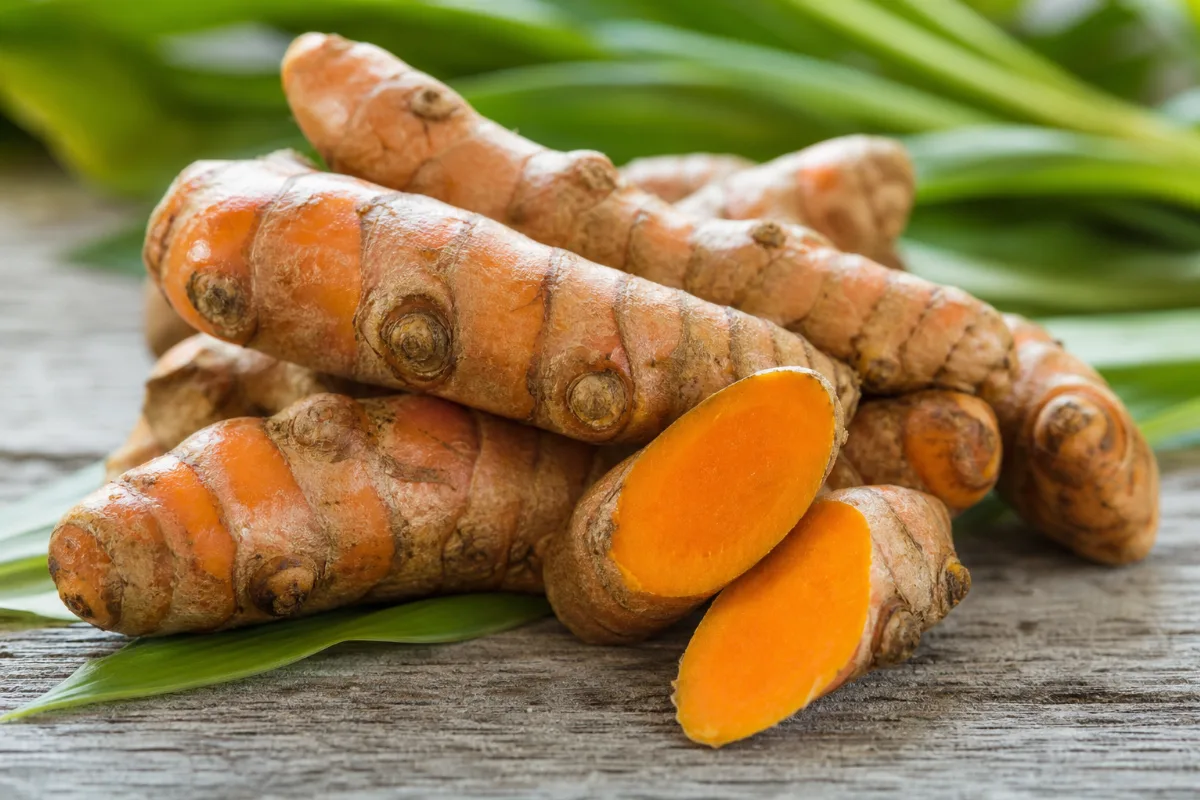
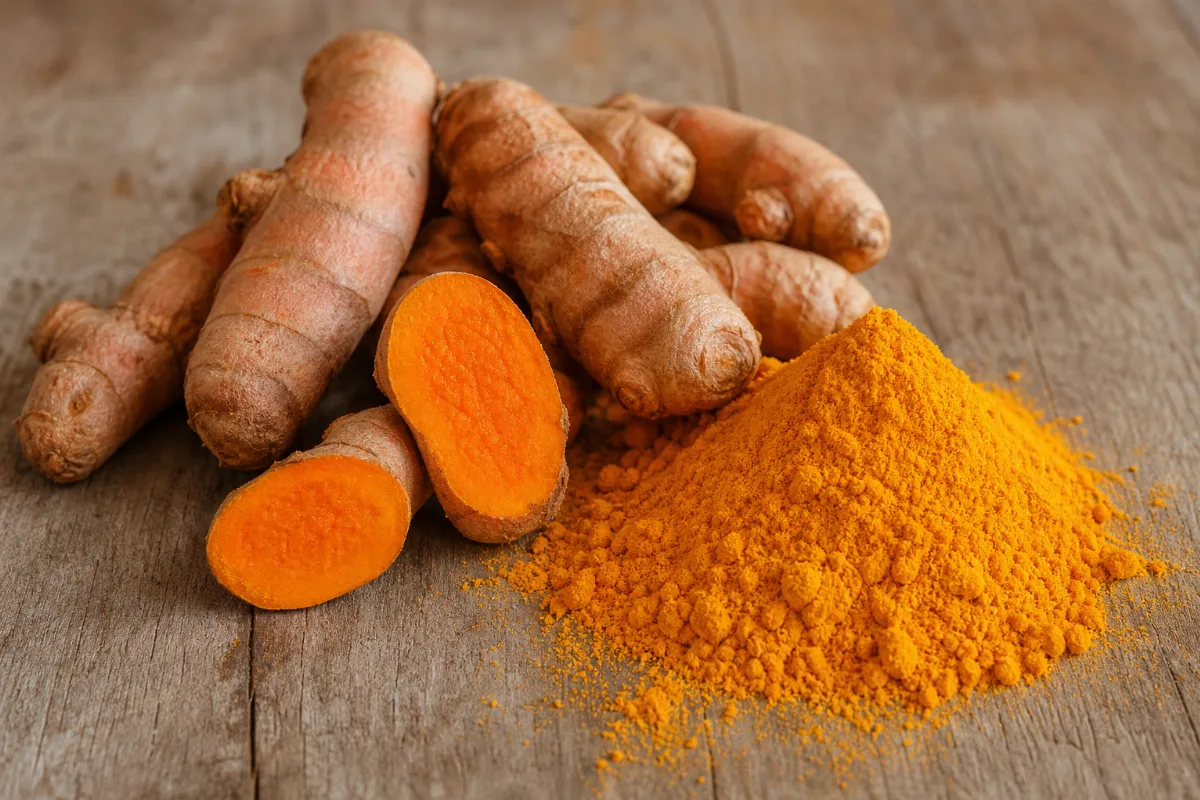
Turmeric is Curcuma longa, a plant in the ginger family. The part used is the rhizome, an underground stem that is yellowish-orange inside, aromatic and a little bitter. It is a staple spice in South Asian cooking and has also been a yellow dye and a food preservative.
Turmeric spice, a turmeric root capsule and a curcumin extract are three different things. Curcumin is only up to about 5% of the spice. Extracts sold for health are usually purified to about 95% curcuminoids, so one capsule can hold far more curcumin than you would ever eat in food.
Do not confuse it with Javanese turmeric (temulawak, Curcuma zanthorrhiza), a related plant used in Indonesian jamu medicine.
What makes it distinctive
The yellow colour and most of the research come from curcumin and two close relatives, together called curcuminoids. In test tubes and animals curcumin switches off inflammation signals and boosts the body's own antioxidant response. But the amounts used in the lab are far higher than the amounts that reach human blood.
Absorption is the big problem. In one study of 24 healthy people, no curcumin could be detected in the blood after single doses of 500 to 8,000 mg. Curcumin that is swallowed is mostly converted by the gut and liver into other forms. This is why makers add black pepper (piperine) or use phospholipid, micelle or nanoparticle forms. A 1998 study reported black pepper raised curcumin blood levels by about 2,000%, but two recent crossover studies did not find a piperine benefit. Boosted forms also raise blood levels of conjugates, and higher blood levels have not been shown to give better results.
A chemistry review also warns that curcumin is unstable and reactive and can look active in many lab tests for the wrong reasons. So lab findings about curcumin should not be read as findings about turmeric as a food.
Historical and current uses
Reviews describe turmeric in Indian (Ayurvedic) medicine for skin, lung and stomach complaints, aches, wounds and liver disorders, and in Chinese medicine as jianghuang. The reviews give different ages for this use, so we do not put a date on it. Curcumin was first isolated in 1815.
In Europe, the EMA herbal committee accepts turmeric rhizome only as a traditional herbal medicine for digestive complaints such as fullness, slow digestion and wind. The traditional amounts are 0.5 to 1 g of powder 2 to 3 times a day, as a tea or powder, with a tincture or a small dry extract as other forms. That approval rests on long use, not on trials.
Today most people take turmeric for joint pain, and many take it for inflammation, blood sugar or mood. Those uses come from modern curcumin trials, not from tradition.
What the research shows
Knee osteoarthritis has the most trials. Pooled analyses of small trials of extracts find lower pain and stiffness than placebo over 4 to 12 weeks, and one 367-person trial found an extract roughly matched ibuprofen. Quality is low and the results vary widely between trials. Heterogeneity in one analysis was above 85%, so the size of benefit is uncertain.
The moderate-certainty findings are lab markers. Pooled trials show lower blood CRP, and in people with type 2 diabetes lower fasting blood sugar and HbA1c. Smaller improvements in cholesterol, liver enzymes and waist size are rated low. None of these has been shown to prevent a joint replacement, heart attack or diabetes complication.
For depression, small short trials mostly add curcumin to an antidepressant and find a small to moderate gain, with low certainty. For memory, results are mixed, and curcumin has not been shown to treat or prevent Alzheimer's disease. For radiation skin reactions in breast cancer, the best trial found no benefit.
Almost every trial used a concentrated extract or a boosted-absorption product. No placebo-controlled trial of cooking-level turmeric was found for any of these uses. Many trials are small, short and come from a few research groups, and we read abstracts only. Natural turmeric in food is not shown to do what these capsules did.
Root, leaf, powder, extract: what is the difference?
Kitchen spice, ground turmeric and fresh root
Dried ground rhizome or grated fresh root used in food. Only a few percent of the powder is curcuminoids, so 1,000 mg of powder holds roughly 10 to 50 mg of them.
Cooking amounts are far below the doses used in trials, so trial results do not apply to a pinch in your food. In one single-meal study of healthy men, turmeric powder or fresh root gave more blood curcumin than purified curcumin powder, which suggests the food and the other turmeric compounds help absorption. That study measured blood levels, not health benefit. Spice can be adulterated with lead chromate, so choose a seller that tests for lead.
Turmeric root powder capsules and EU traditional forms
Whole-rhizome powder in capsules, or the EU traditional forms: 0.5 to 1 g of powder 2 to 3 times a day, an infusion of the same amount, tinctures, or small dry extracts, all for digestive complaints.
The EU uses are traditional and are not backed by trials. EMA advises seeing a doctor if symptoms last more than 2 weeks, and advises against use under 18, in pregnancy and breastfeeding, and with liver, bile duct or gallstone disease. No health-outcome trial of plain root powder capsules was found.
Standardised curcuminoid extract (about 95%)
Purified curcumin and related curcuminoids in a capsule or tablet, without an absorption booster. This form is behind many of the knee arthritis, colitis and mood trials.
Very little reaches the blood. In one study no curcumin was detected in blood after up to 8,000 mg. Trial benefits may come from effects in the gut or at low blood levels. Do not assume results from boosted products apply to plain extract, or the reverse.
Curcumin with black pepper (piperine)
Curcuminoids sold with piperine, a black pepper extract that slows the gut and liver from clearing curcumin.
A 1998 study of 2 g of curcumin with 20 mg piperine reported about a 2,000% rise in blood levels, but later crossover studies found no clear piperine benefit. Many liver injury reports involve piperine products, but piperine has not been proven to be the cause. Piperine can also affect how some medicines are processed.
Boosted-absorption branded forms
Phospholipid complexes such as Meriva, micelles, nanoparticles, lipid-particle products such as Longvida, and Theracurmin and similar forms.
Blood-level studies in healthy people show much higher curcumin or conjugate levels than plain powder, from about 8 to 185 times depending on the product and the study. Most are small, short and linked to the makers. No head-to-head trial shows one form works better, and higher blood level has not been shown to mean more benefit. The Italian and Tuscan liver injury reports involve high-dose, high-absorption forms.
Combination products and tea
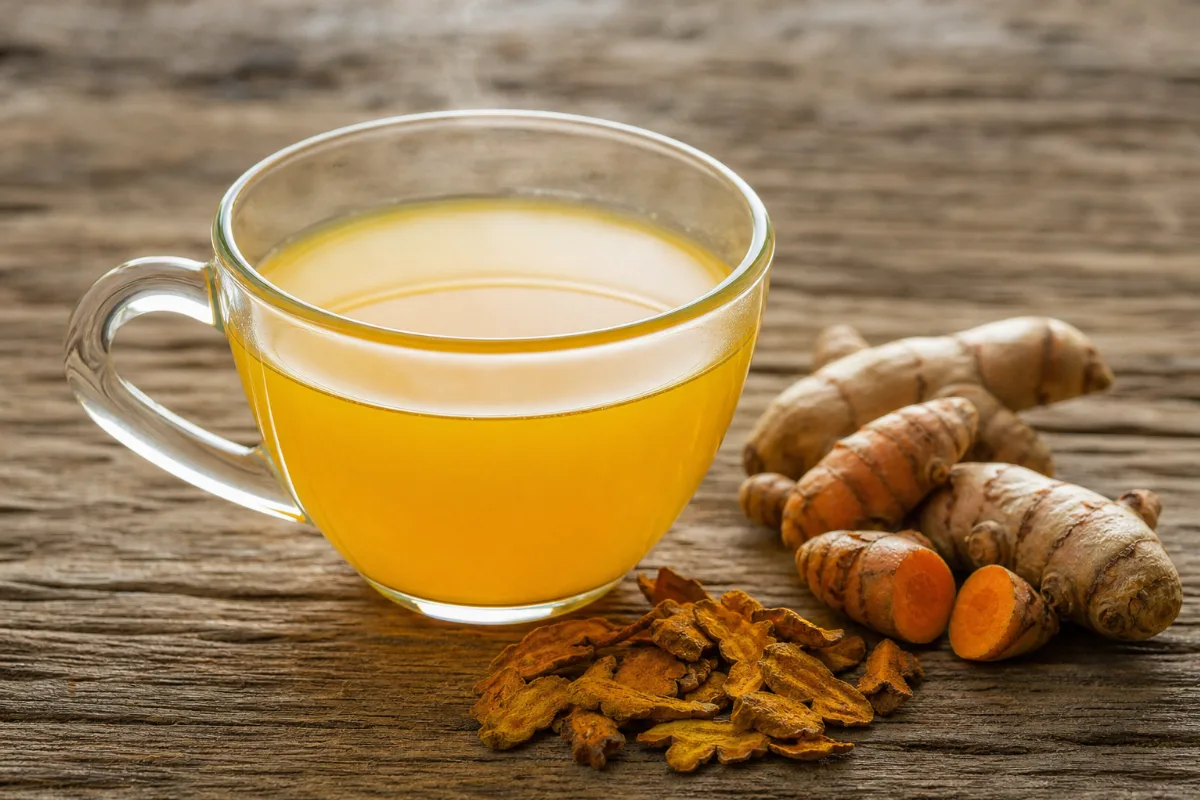
Curcumin blended with boswellia, ginger or other herbs, and turmeric teas or golden-milk drinks.
A blend cannot show which ingredient does the work. We found no reliable source for golden-milk amounts. Teas made from the whole rhizome differ in strength from product to product and cannot be compared in milligrams with extract capsules.
At a glance
Traditional uses history, not proof
- Ayurveda and other Asian medicine: used on the skin, for the stomach and gut, for aches and pains, for wounds and for liver complaints
- A food spice, a yellow dye and a food preservative across South Asia
- EU traditional herbal use: a tea, powder, tincture or extract for digestive complaints such as fullness, slow digestion and wind, based only on long use and not on trials
Studied for research
- Knee osteoarthritis pain and stiffness, low certainty
- Blood sugar in type 2 diabetes and the blood inflammation marker CRP, moderate certainty for these lab markers
- Depression, added to usual treatment, low certainty
- Cholesterol, fatty liver and metabolic syndrome, low certainty
- Ulcerative colitis (added to usual medicine) and indigestion, low certainty
- Memory, anxiety and rheumatoid arthritis, very low or mixed certainty
Main compounds
- Curcumin, demethoxycurcumin and bisdemethoxycurcumin (the yellow curcuminoids; curcumin is up to about 5% of the spice)
- Turmerones such as ar-turmerone (aroma compounds in the essential oil)
- Tetrahydrocurcumin and other breakdown products that form in the gut and liver after swallowing curcumin
Common forms
- Ground spice and fresh root, used in cooking
- Turmeric root powder capsules or tea
- Standardised curcuminoid extracts (often 95% curcuminoids), used in most trials
- Boosted-absorption products: with black pepper (piperine), phospholipid, micelle, nanoparticle or lipid-particle forms
- Tinctures and dry extracts (EU traditional use)
Research links: NIH NCCIH: Turmeric · EU herbal monograph on turmeric rhizome (EMA) · Australia TGA safety alert: turmeric, curcumin and liver injury · PubMed: Turmeric supplement liver injury, 10 cases from the US DILIN network · PubMed: curcumin randomized trials · Research Library · Genes & Biomarkers Library
The plant and its history
- Accepted scientific name
- Curcuma longa L.
- Naming authority
- L. (Linnaeus); GBIF accepted species, usageKey 2757624
- Synonyms
- Curcuma domestica Valeton; Curcuma domestica L. (as listed); Curcuma tinctoria Guibourt; Curcuma brog Valeton; Curcuma ochrorhiza Valeton; Curcuma soloensis Valeton; Amomum curcuma Jacq.; Amomum curcuma Murray; Kua domestica Medik.; Stissera curcuma Giseke; Stissera curcuma Raeusch.; Curcuma longa var. vanaharidra Velay., Pandrav., J.K.George & Varapr.
- Common names
- Turmeric; common turmeric; Indian saffron (English); Haridra (हरिद्रा); Haldi (हलदी) (Sanskrit; Hindi (as listed by GBIF)); Cúrcuma; azafrán de la India (Spanish); Curcuma; safran des Indes (French); Kurkuma; Gelbwurzel (German); Açafrão-da-terra; açafrão-da-Índia (Portuguese); Jianghuang (姜黄 / 薑黃) (Chinese)
- Botanical family
- Zingiberaceae (ginger family, which also holds ginger, cardamom and galangal)
- Classification
- Plantae > Tracheophyta > Liliopsida (monocots) > Zingiberales > Zingiberaceae > Curcuma > Curcuma longa
- Native range
- Not verified from a primary source in this pass. Turmeric is a cultivated plant grown in warm climates in many regions (Sharifi-Rad 2020, p33041781) and is strongly tied to South Asia in the literature. Kew POWO native-range data were not retrieved.
- Habitat
- Cultivated in warm, humid regions (p33041781). Further agronomy details not verified.
- What the plant looks like
- Roots: The used part is the rhizome (underground stem), yellowish in colour, aromatic, slightly bitter (p33041781, describing rhizome organoleptic features). The EMA monograph names the herbal substance Curcuma longa L., rhizoma (s-ema-hmpc-curcuma-longa-2018).; Stems: Not verified in a source read.; Leaves: Not verified in a source read.; Flowers: Not verified in a source read. Reviewers note flowering is very short, which makes botanical identification in the genus hard (p33041781).; Fruit: Not verified in a source read.
- Cultivation
- Grown as a crop for the rhizome; agronomy, sowing and yields were not verified.
- Harvest and processing
- Not verified. Extraction method strongly changes what ends up in a product: in one lab study steam distillation gave at most 0.46% essential oil and 0.16% curcuminoid pigment, while solvent extraction gave up to 5.49% oil and 7.98% pigment (p14582978). These are process yields, not the content of the spice.
- Look-alikes and adulterants
- Name: Javanese turmeric / temulawak (Curcuma zanthorrhiza Roxb., written C. xanthorrhiza in much literature); Note: A separate accepted species (GBIF 2757547). Major jamu (Indonesian traditional medicine) rhizome used for appetite loss, stomach, liver and other complaints; chemistry includes curcuminoids and terpenoids (p34194529) and the compound xanthorrhizol (PubChem CID 93135), linked to this species by review titles in PubMed but not verified from text read. Not interchangeable with turmeric in monographs: the EMA monograph covers Curcuma longa only.; Name: Curcuma aromatica Salisb. (wild turmeric); Note: A separate accepted species (GBIF 2757544, NCBI taxid 136209). I could not retrieve a source that quantifies how its chemistry differs from C. longa, so no comparison numbers are given. Check the Latin name on any product label.; Name: Other Curcuma species (zedoary Curcuma zedoaria and others); Note: The genus holds about 120 species and identification is hard (p33041781). Mix-ups in trade are possible; rates were not verified.; Name: Turmeric powder adulterated with lead chromate pigment; Note: In Bangladesh, lead chromate yellow pigment adulteration was found in 7 of 9 major turmeric-producing districts, with up to 1152 ug/g lead in turmeric powder (p31550596). Not a look-alike plant but a real quality hazard; see the safety file.
- Sustainability and conservation
- Cultivated crop; no conservation status was verified.
The plant and the parts used
Traditional use and history history, not clinical proof
| Tradition or era | Documented use | Source |
|---|---|---|
| Ayurveda / Indian subcontinent | Reviews state turmeric has been used in Indian medicine, as a spice, as a food preservative and as a yellow textile dye. One review dates therapeutic use to the time of Ayurveda, which it gives as 1900 BC; another says Curcuma use goes back about 5,000 years (Ayurveda) and 2,000 years (Atharveda). The two dates disagree and are the authors' own statements. Uses listed include skin, lung and stomach/gut conditions, aches and pains, wounds, sprains and liver disorders. | p17569205; p33041781 |
| Chinese medicine | Turmeric is described as widely used in Chinese medicine (rhizome Jianghuang). Specific classical texts, indications and the split between rhizome and tuber drugs were not verified in the sources read. | p33041781 (general statement only) |
| Indonesian jamu (related species) | Curcuma zanthorrhiza (temulawak) rhizome is a key jamu ingredient for loss of appetite, stomach and liver illness, constipation, dysentery and arthritis. This is a different plant from C. longa. | p34194529 |
| Isolation of curcumin (science history) | Curcumin first isolated in 1815, purified crystalline compound described in 1870 and its structure (diferuloylmethane) proposed in 1910, as reported by two reviews (the second says first isolated 'almost two centuries ago'). | p33041781; p17569205 |
| Modern pharmacopoeial and regulatory status | Rhizome appears in the WHO Monographs on Selected Medicinal Plants vol. 1 (1999), the European Pharmacopoeia monograph 2543 and ESCOP. The EMA/HMPC EU herbal monograph (first adopted 12 November 2009, revised 25 September 2018) accepts only traditional use: relief of digestive disturbances such as fullness, slow digestion and flatulence, based exclusively on long-standing use, not on clinical trial proof. | s-ema-hmpc-curcuma-longa-2018; p33041781 |
| Important note | The ages above describe tradition. Whether curcumin or turmeric helps a given condition is judged only by trials (see benefit files). Dating of ancient use varies by source and could not be verified from primary texts. | n/a |
Traditional use shows how a plant was used. It does not show that a supplement works or is safe today.
What is inside, and how it may work
What the plant contains and how those compounds act in cells and animals. Laboratory and animal mechanisms are not proven effects in people.
Main compounds
| Compound | Family | Where it is concentrated | Activity studied | Level of evidence |
|---|---|---|---|---|
| Curcumin (curcumin I, diferuloylmethane) PubChem 969516 | curcuminoid (diarylheptanoid polyphenol; yellow pigment) | Rhizome Curcumin is stated to be up to about 5% of turmeric (p28074653). Extract yields vary with method (pigment 0.16% by steam distillation up to 7.98% by solvent extraction, p14582978). No reliable single content figure for raw spice was verified. | Lab results include inhibition of NF-kB and COX-2 expression in cells and Nrf2/HO-1 activation in cells. It is chemically unstable at neutral pH (about 90% broken down in 30 min in pH 7.2 buffer), reacts with proteins and interferes in lab assays, and has been classified as a PAINS and an 'invalid metabolic panacea' candidate (Nelson 2017). Oral bioavailability is very poor. 130 186 170 144 18 8 | Laboratory research |
| Demethoxycurcumin PubChem 5469424 | curcuminoid | Rhizome Present with curcumin and bisdemethoxycurcumin; relative proportions were not verified. After a phospholipid formulation, demethoxycurcumin rather than curcumin was the main plasma curcuminoid (p21413691). | Similar effect on liver/gut enzymes (CYP3A, UGT, SULT) to curcumin in test-tube work; stronger CYP2C9 inhibition than the other two (IC50 about 8.8 microM) (p18480186). Described as more potent in many lab anti-inflammatory assays (p21413691). 185 37 | Laboratory research |
| Bisdemethoxycurcumin PubChem 5315472 | curcuminoid | Rhizome Relative proportion not verified. | Similar effect to curcumin on CYP3A, UGT and SULT in the test tube (p18480186). Little else verified. 185 | Laboratory research |
| Tetrahydrocurcumin (metabolite) PubChem 124072 | reduced curcumin metabolite | Formed in gut and liver after swallowing curcumin; not a native plant compound in meaningful amounts (not verified) n/a | Formed by reduction of curcumin in human gut and liver tissue (p11815407). Only weak PGE2-inhibiting activity compared with curcumin in human colon cells (p11221833). 91 90 | Laboratory research |
| ar-Turmerone PubChem 160512 | sesquiterpenoid ketone (turmerone, essential oil) | Rhizome (essential oil) Part of the volatile oil; amounts not verified. Oil yields vary widely with method (0.46% to 5.49%, p14582978). | Main aroma/pungency compound of turmeric extract (p33041781). In the lab it made rat neural stem cells multiply and, injected into rat brain ventricles, mobilised stem cells (p25928248). No human data. 89 120 166 | Animal research |
| alpha-Turmerone PubChem 14632996 | sesquiterpenoid ketone (turmerone) | Rhizome (essential oil) Quantity not verified. | Named as a component of the oil measured in extraction work (p14582978). Biological activity not verified in a source read. 120 | Laboratory research |
| beta-Turmerone PubChem 196216 | sesquiterpenoid ketone (turmerone) | Rhizome (essential oil) Quantity not verified. | As alpha-turmerone: named as an oil component (p14582978); activity not verified. 120 | Laboratory research |
| Xanthorrhizol (mainly Javanese turmeric, not C. longa) PubChem 93135 | bisabolane sesquiterpenoid phenol | C. zanthorrhiza rhizome Not measured here. | Titles of two reviews (PMIDs 26500452, 35933899) tie xanthorrhizol to Curcuma xanthorrhiza, but they were not read, so activity claims are not given. The Rahmat 2021 abstract names terpenoids and curcuminoids but not xanthorrhizol specifically. 148 | Laboratory research |
| Turmeric essential oil (mixture) | mono- and sesquiterpenoids | Rhizome Oil yield depends on method; 0.46% (steam) to 5.49% (solvent) in one study (p14582978). | Volatile fraction responsible for aroma. Added back into a curcumin formulation in one study it raised blood curcuminoids only 1.3-fold versus standard curcumin (p24461029). Turmeric essential oils and oleoresins have US GRAS status per the Sharifi-Rad review (p33041781). 120 93 166 | Laboratory research |
| Piperine (not from turmeric; added to some products) PubChem 638024 | alkaloid from black pepper | Black pepper fruit; not a turmeric constituent Doses in the key trial: 20 mg with 2 g curcumin (p9619120). | Inhibits glucuronidation and strongly inhibits intestinal CYP3A in the test tube (IC50 5.5 microM); raised human serum curcumin by 2000% in a small 1998 study (p9619120, p18480186). 168 185 | Laboratory research |
Mechanisms, receptors and pathways
| Target or pathway | Gene or receptor | What was found | Level |
|---|---|---|---|
| NF-kB / IKK signalling | NFKB1 / RELA (p50/p65); IKBKB / CHUK (IKK beta / alpha); NFKBIA (IkB alpha) | Curcumin blocked TNF-, phorbol ester- and hydrogen peroxide-induced NF-kB activation in human myeloid cells, stopping IkB alpha phosphorylation and p65 nuclear entry (1995), and prevented IkB phosphorylation by inhibiting IKK activity in human colon cells (1999). Cell-culture concentrations are micromolar; human blood after swallowing curcumin is mostly conjugates far below such levels (p21413691). Laboratory finding only. 170 144 37 | Laboratory research |
| COX-2 / prostaglandin E2 | PTGS2 (COX-2) | Curcumin stopped TNF-alpha or fecapentaene-12 from inducing COX-2 in human colon cells, and 20 microM curcumin reduced PGE2 in human colon cells. The authors state this needs 10-5 to 10-4 M concentrations, which swallowed curcumin does not reach in blood, and metabolites (tetrahydro-, hexahydrocurcumin, sulfate) were much weaker. It may matter inside the gut itself, where exposure to unmetabolised curcumin is highest (their suggestion). Laboratory/animal finding only. 144 90 | Laboratory research |
| Nrf2 / antioxidant response (HO-1) | NFE2L2 (Nrf2), KEAP1, HMOX1 (HO-1); p38 MAPK | In kidney epithelial cells curcumin raised Nrf2 and HO-1 protein and activity, apparently by inactivating the Nrf2-Keap1 complex so Nrf2 bound the antioxidant response element. Cell-culture finding; this electrophile-type effect fits the reactive chemistry noted by Nelson 2017. 18 130 | Laboratory research |
| Reactivity / assay interference (PAINS behaviour) | Many proteins (non-specific) | Curcumin is chemically reactive and breaks down quickly at neutral pH, with degradation products including vanillin and ferulic acid. Nelson and colleagues argue that this explains many apparently positive 'hits' on many unrelated targets in lab screens and that the likely false activity led to over 120 clinical trials. Their view is critical expert opinion; it limits how far target lists can be trusted. 130 186 | Laboratory research |
| Drug-metabolising enzymes (CYPs, UGT, SULT) | CYP3A4, CYP2C9, CYP2C19, CYP2B6; UGT; SULT1A1/1A3 | Curcuminoid extract inhibited human enzymes with IC50 about 1 to 25 microM (SULT strongest, then CYP2C19, CYP2B6, UGT, CYP2C9, CYP3A), mainly predicted to act inside the gut wall after swallowing. Piperine adds selective CYP3A4 inhibition. Test-tube data; clinical interaction size not shown here. 185 91 | Laboratory research |
| Systemic inflammation marker (CRP) in people | CRP (blood protein, not a gene target) | Meta-analysis of six placebo-controlled trials (172 curcuminoid, 170 placebo) found lower blood CRP: weighted mean difference -6.44 mg/L (95% CI -10.77 to -2.11), kept only with improved-absorption preparations and 4 weeks or longer. This is a human biomarker result, not proof of a clinical benefit, and it comes from few small trials. 156 | Human biomarker (meta analysis) |
| Neural stem cell proliferation (ar-turmerone) | Not identified (Ki-67 proliferation marker measured) | ar-Turmerone increased rat neural stem cell numbers in culture and mobilised stem cells in rat brain after direct injection into the ventricles. No oral or human data. 89 | Animal research |
Absorption, metabolism and elimination
- Absorption
- Very poor from the gut. In a single-dose escalation in 24 healthy people no curcumin was detected in serum after 500 to 8,000 mg, and only low levels in two people at 10,000 and 12,000 mg (p16545122). At 10 g and 12 g, only one of 12 had detectable free curcumin; glucuronide and sulfate conjugates were detected in everyone, with Tmax about 3.3 h (p18559556). With 2 g plain curcumin, human serum was undetectable or very low (p9619120). Reviews list poor solubility, poor absorption, rapid metabolism and rapid elimination as the causes (p17999464, p31500361).
- Distribution
- Not verified in people. Rat data indicate curcumin disappears from plasma within 1 h after intravenous dosing (p11221833). Tissue distribution in humans was not found in the sources read.
- Metabolism
- Extensive conjugation (glucuronide, sulfate) and reduction (to tetrahydro- and hexahydrocurcumin) in the gut wall and liver; conjugation in human intestine is much greater than in rat intestine (p11815407, p11221833). In blood, conjugates are glucuronide or sulfate, not mixed, about 1.92:1 (p18559556). Curcumin also decomposes chemically at neutral pH (p9278892).
- Elimination
- Estimated half-life about 6.8 h for conjugates at 10-12 g doses (p18559556). Other figures not verified.
- Bioavailability
- Plain curcumin: negligible free curcumin in blood; mostly conjugates. Piperine (20 mg with 2 g curcumin) raised human bioavailability by 2000% in a small 1998 study (p9619120) and acts by blocking glucuronidation and intestinal CYP3A (p18480186); it also can raise exposure to other drugs (see safety file). Formulations versus plain curcumin in healthy-volunteer crossovers: micronized 9-fold and liquid micelles 185-fold (all subjects, p24402825); lecithin phytosome about 29-fold (Meriva, p21413691) or 7.9-fold in another study (p24461029); hydrophilic-carrier formulation 45.9-fold; turmeric volatile-oil formulation only 1.3-fold (p24461029). Even boosted blood levels are mostly inactive-ish conjugates and below concentrations active in lab tests (p21413691). Whether higher absorption means better clinical effect is not shown by these studies. Reviews: p17999464, p31500361, p32204372.
106 183 168 91 90 186 185 165 37 93 8 45 175
Isolated compounds versus whole extracts
Turmeric spice (the whole rhizome) is not the same as curcumin or a curcuminoid extract. Curcumin is up to about 5% of turmeric (p28074653), so ordinary culinary amounts give small doses of curcuminoids, and the rhizome also holds essential-oil terpenoids such as ar-turmerone. Most lab and clinical research uses isolated curcumin or concentrated curcuminoid extracts (often 95% curcuminoids, p29065496), at doses far beyond the kitchen. The EMA's traditional-use monograph, by contrast, covers the whole rhizome as powder, tea, tincture or extracts at 0.5-1 g of powder or extract equivalents (s-ema-hmpc-curcuma-longa-2018), for digestive complaints only. Adding turmeric volatile oil to a curcumin product raised absorption only 1.3-fold in one trial, whereas other formulation strategies raised it far more (p24461029). Critics (Nelson 2017) argue that isolated curcumin is a poor drug candidate because it is unstable, reactive and not bioavailable, so findings on curcumin in a test tube should not be read as findings about turmeric as a food. Whether whole-turmeric components such as turmerones add real benefit in people has not been established.
Nutritional composition
Turmeric is eaten in small amounts as a spice, so it adds little to total nutrient intake. I did not retrieve USDA nutrient values in this pass, so no vitamin or mineral figures are given here; none are verified.
Products, quality and comparisons
Independent evidence comes first. Nothing in this section is a paid ranking. If a product link is added later, it will be marked clearly as an affiliate link and will never change what the research says.
Quality indicators
- Plant named as Curcuma longa, with the part (rhizome) and whether it is root powder or an extract
- Curcuminoids stated as a percentage with the test method (for example HPLC), and mg of curcuminoids or curcumin per serving, not only mg of 'turmeric'
- Named formulation and the same daily mg of curcumin as a published trial, if you want to match research
- Piperine or black pepper extract listed with its amount, not hidden in a blend
- A statement or certificate that the lot was tested for lead and other heavy metals
- A statement that the curcumin is from turmeric and not synthetic (a certificate of analysis or a natural-origin test)
- Lot number and a certificate of analysis available on request
- Independent seal checked on the certifier's own website
Identity and authenticity
- A 2026 scoping review of 48 publications covering 2,235 commercial turmeric samples found an overall adulteration rate of 20.0%: 20.4% in spice samples and 22.0% in dietary and food supplements. The authors name artificial dyes, undeclared diluents and synthetic curcumin among the adulterants.
- A 2022 study used carbon-14 and HPLC testing on 14 supplements that claimed to be 'all natural' turmeric products; only 4 supported the claim; the authors link the shortfall to synthetic curcumin. Two authors are at a curcumin trade association.
- A 2020 HPLC study of 16 Curcuma longa extracts bought in India found 4 with the chemical signature of synthetic curcumin; the authors work for an herbal extract maker.
- Methods papers describe metanil yellow, acid orange 7 and lead chromate as deliberate turmeric powder adulterants, and Raman spectroscopy detected metanil yellow down to 1% in powder. These are detection-method studies, not surveys of how common each dye is.
- These findings describe the products tested and cannot be applied to any single brand.
Standardization and extract strength
- The rhizome contains about 1 to 5% curcuminoids. Of the curcuminoids, curcumin is roughly 75 to 80%, demethoxycurcumin 15 to 20% and bisdemethoxycurcumin 3 to 5% (BfR, citing a review).
- The food colouring E 100 must have a curcuminoid content of at least 90% under Regulation (EU) 231/2012, according to the BfR. Supplement extracts sold as '95% curcuminoids' are of that purified type.
- The EU traditional-use monograph says the rhizome material must comply with European Pharmacopoeia monograph 2543.
- Serving size is NOT the same as curcuminoid content: mg of curcuminoids = serving mg x percent.
- Percent on the bottle does not predict absorption. In one crossover a micellar product raised the area under the curve 57-fold and a cyclodextrin product 30-fold versus native curcumin, while forms such as liposomes, turmeric oils, piperine adjuvants, submicron particles and phytosomes did not differ significantly.
- Some studies compare against a 95% extract as reference. Whether the reference is plain curcuminoids, curcumin alone or a curcuminoid mix changes the fold numbers, so 'x-fold higher' claims are not comparable between studies.
- A 2025 independent crossover study argues that bioavailability claims should be based on unconjugated curcumin, because conjugated forms cross membranes poorly; plasma conjugates were over 10 nM with all three formulations but free curcumin stayed below 2 nM in most cases.
Third-party testing
- US supplements are not approved by the FDA before sale; NCCIH notes that oral curcumin products vary in how much curcumin they contain and often include other plant substances such as piperine.
- Independent testing programmes (USP, NSF, ConsumerLab and others) differ in what they test, and a seal is a statement about that programme, not a guarantee of effect. We did not re-read their test lists for turmeric.
- In the EU, a traditional herbal registration is a regulator's quality-and-safety route based on long use, not proof of efficacy.
- In Italy, after 28 reports of liver inflammation linked to turmeric supplements in the first half of 2019, the national health institute tested the suspected products for drugs, heavy metals, aflatoxins, pesticides, synthetic dyes and pyrrolizidine alkaloids and regulators took action; the abstract does not give the test results.
Contaminants and adulterants
- Lead chromate (a yellow industrial pigment) has been added to turmeric to brighten colour. In Bangladesh (2019), evidence of lead chromate adulteration was found in 7 of the 9 main turmeric-producing districts; maximum lead in turmeric powder was 690 micrograms per gram in those districts and 1,152 in Dhaka and Munshiganj. After an enforcement campaign, market samples with detectable lead fell from 47% in 2019 to 0% in 2021 (n=631).
- A 2024 survey of 356 turmeric samples from 23 cities in India, Pakistan, Sri Lanka and Nepal found 14% with lead above 2 micrograms per gram; samples above 1,000 micrograms per gram came from Patna (India), Karachi and Peshawar (Pakistan).
- A 2026 study of 503 samples from eastern India found 30% above India's lead limit of 10 micrograms per gram, highest in Bihar (maximum 6,416 micrograms per gram).
- These studies sampled spice roots and powders in South Asian markets. We found no equivalent lead-chromate figure for finished capsules in the sources read, so these results do not show that supplements are contaminated.
- Rapid tests exist: handheld X-ray fluorescence detects about 2 mg of lead per kg in powder, while a simple colour test works only above roughly 1,000 mg per kg in powders (5 to 70 in dried roots).
- Pesticides, aflatoxins, microbes and solvent residues in turmeric supplements were not covered by the sources read, apart from the Italian testing programme above.
Reading a product label
- Find Curcuma longa and the part used (rhizome); note whether it is powder or extract.
- Look for mg of curcuminoids (or curcumin) per serving and servings per day, and compare mg per day and the named formulation with a trial, not with another bottle.
- Check for piperine, black pepper extract, ginger or other added herbs and their amounts.
- Look at the cautions: liver or gallbladder disease, pregnancy and breastfeeding, blood thinners, planned surgery and other medicines. Stop and call a clinician for fatigue, nausea, poor appetite, dark urine or yellow skin or eyes (NCCIH lists these as liver warning signs).
- For an absorption-boosted product, the maker's fold-increase claim usually comes from one small, maker-linked crossover study.
- Ask for the lot number and a certificate of analysis that includes lead and other heavy metals.
- Check any seal on the certifier's own site.
Certifications and what they actually mean
| Certification | What it means | What it does not tell you |
|---|---|---|
| EU traditional herbal medicinal product registration | A European route for herbal medicines based on long use; the EU monograph for turmeric rhizome sets amounts for tea, powder, tincture and dry extracts for digestive complaints. | Says the product is acceptable for the stated mild indication on the basis of tradition; does not claim trial-proven benefit. |
| European Pharmacopoeia monograph compliance (Ph. Eur. 2543) | The EMA says the material complies with this pharmacopoeia monograph. | A maker's statement; check a certificate of analysis. We did not read the pharmacopoeia text. |
| Third-party quality seals (USP, NSF, ConsumerLab and similar) | Independent programmes that test selected label and contaminant points. | What each programme tests differs; their lists were not re-read for this file, and testing of one lot does not apply to another. |
| Heavy metal or lead test statement | Maker or lab states the lot was tested for lead. | Ask for the certificate of analysis and the limit used; a statement alone is not a test result. |
| Natural-origin (carbon-14) or non-synthetic curcumin statement | A lab method that separates plant-based from petroleum-based carbon was used in one published turmeric study. | Not a standard label seal; ask the maker for the report. |
| GMP statement (cGMP) | The maker says it follows good manufacturing practice. | Not an independent test of the product. |
| Organic, vegan, non-GMO, gluten-free | Farming and ingredient claims. | Say nothing about curcuminoid content, absorption, lead or synthetic curcumin unless tested. |
Comparing price and servings
Do not compare bottle prices. Step 1: cost per serving = bottle price / servings per bottle. Step 2: servings per day needed to reach the studied daily mg of curcuminoids or curcumin (studied mg per day / mg per serving). Step 3: cost per day = cost per serving x servings per day. Cost per 100 mg of curcuminoids = bottle price / (servings x mg of curcuminoids per serving / 100); use only products of the same type, because a boosted 80 mg product and a plain 1,000 mg product are not equivalent. Leave prices blank until a real current product is entered; no prices are included here.
Extract types compared
| Extract | Plant part | Standardization | Trials | Evidence note | Safety note | Limitations | Studies |
|---|---|---|---|---|---|---|---|
| Plain standardized curcuminoid extract (about 95%; includes C3 Complex) | rhizome | Standardized to curcuminoids; percent not in most abstracts | Lao 2006 (single doses 500-12,000 mg); Kuptniratsaikul 2009 and 2014 (1,500-2,000 mg a day vs ibuprofen); Hanai 2006 (2 g a day); Lang 2015 (3 g a day) | Used as the reference in absorption studies: undetectable in serum up to 8,000 mg (Lao); not detected after 650 mg (Gota); 570 to 2,280 mg gave very low free curcumin (Kroon). | High single doses were well tolerated in healthy volunteers (minimal toxicity in 7 of 24, not dose-related). | Benefits in trials occur despite almost no blood curcumin; effects may be in the gut or independent of blood level. | 106 71 102 104 103 78 105 |
| Curcumin plus piperine | rhizome extract + black pepper extract | Typical trial: curcuminoids 1,500 mg plus piperine 15 mg a day | Shoba 1998 (2 g curcumin + 20 mg piperine, human volunteers); Panahi 2016 (osteoarthritis); Flory 2021 and Kroon 2025 (crossovers) | Mixed: the 1998 study reported a 2000% rise in bioavailability; the 2021 crossover found adjuvants including piperine did not significantly raise exposure; the 2025 study found piperine added no benefit. | The BfR says liver-damaging effects have been seen with absorption-boosted curcumin products, often with piperine, but those products sometimes held other ingredients too. | Medicine interactions were not reviewed for this file. | 168 138 54 102 64 |
| Whole turmeric (powder or fresh root) in a meal | rhizome | 400 mg curcumin from each source in a fatty meal | Ahmed Nasef 2019 crossover | Plasma curcumin peak 8.4 ng/mL (turmeric powder), 4.9 ng/mL (fresh root), 0.19 ng/mL (curcumin powder). The authors suggest other turmeric compounds or the food matrix help. | Not reported in the abstract. | Healthy men only; participant count not in the abstract; absorption not benefit. | 3 |
| Meriva (curcumin-phosphatidylcholine complex) | rhizome extract | Not in abstracts | Cuomo 2011 (absorption); Asher 2017 (steady-state plasma and rectal tissue); Belcaro 2010 (8-month osteoarthritis study, 100 people) | About 29-fold more total curcuminoids absorbed than a plain mixture, mainly as conjugates; main plasma form was demethoxycurcumin, not curcumin. Asher found equal plasma exposure after dose adjustment but 5-fold more rectal tissue curcumin per dose. | Excellent tolerability reported in the osteoarthritis abstract; no numbers given. | Osteoarthritis abstract lacks dose and control details; plasma levels still below test-tube effect levels. | 37 14 22 176 |
| Longvida (solid lipid curcumin particles) | rhizome extract | 80 mg curcumin per 400 mg capsule | Gota 2010 (absorption); Cox 2015 and 2020 (older adults, 4 and 12 weeks); Gupte 2019 (osteoarthritis, 90 days) | Free curcumin 22.43 ng/mL peak after 650 mg vs not detected for plain 95% extract. A review of 11 formulations listed Longvida among those with over 100-fold relative bioavailability. Memory and mood benefits were reported in healthy older adults. | Blood glucose was significantly higher in the curcumin group in the 12-week trial; one withdrawal for rash in the osteoarthritis trial. | Small trials; some authors have supplement-industry funding. | 71 35 36 75 94 102 |
| Theracurmin (colloidal nanoparticle) | rhizome extract | 30 to 400 mg curcumin per dose in studies | Sasaki 2011; Kanai 2012 and 2013; Nakagawa 2014 and 2022; Sunagawa 2015 (3-way vs BCM-95 and Meriva); Hirose 2022 (newer compositions) | 27-fold area under the curve vs curcumin powder (30 mg dose); 10.7- and 5.6-fold higher peak than BCM-95 and Meriva at labelled doses. Clinical: lower knee pain at 8 weeks (180 mg a day); no clinical difference from placebo at 12 months after cartilage surgery. | One case of grade 1 diarrhea in 6 volunteers at 150 mg; no unexpected adverse events in cancer patients on chemotherapy. | Most studies come from the product's research circle; no independent replication in the abstracts read. | 164 95 96 127 128 176 85 |
| BCM-95 (Biocurcumax: curcuminoids with turmeric essential oil components) | rhizome | Not in abstracts; capsule held 279.3 mg curcumin in the 2015 study | Antony 2008 (absorption); Shep 2019 (500 mg three times a day vs diclofenac) | About 6.93-fold relative bioavailability vs normal curcumin and 6.3-fold vs curcumin-lecithin-piperine; osteoarthritis pain similar to diclofenac in an open-label study. | Adverse effects 13% vs 38% for diclofenac (open-label). | Absorption study by the maker's staff; open-label clinical trial. | 9 176 167 |
| Micellar and cyclodextrin curcumin (for example NovaSOL) | rhizome extract | 207 to 500 mg curcumin or curcuminoids in studies | Schiborr 2014; Flory 2021; Grafeneder 2022; Kroon 2025 | Largest rises in blood level among forms tested: area under the curve 185-fold (500 mg) and 57-fold (207 mg) vs native; cyclodextrin 30-fold; 14-fold in the 7-day study. Even so, free curcumin stayed far below the levels that work in test tubes. | Safety markers stayed in reference ranges in the 2014 crossover. | No health-outcome trial read; a micellar form did not reduce cytokines in a blood-stimulation model. | 165 54 73 102 |
| Dispersion and carrier systems (LipiSperse; omega-3 monoglyceride) | rhizome extract | 750 mg curcuminoid (LipiSperse); 400 mg curcuminoids with 1 g carrier | Briskey 2019; Mallard 2021; Aguilera 2022 | LipiSperse: plasma curcuminoids 807 vs 318 ng/mL; less soreness at 48 and 72 h after exercise. Omega-3 carrier: 40% higher at 1 h, similar area under the curve to powder (166.8 vs 163.1). | Called safe in the absorption abstract (LipiSperse). | Small studies; maker-supported. | 27 118 2 |
| Other named bioenhanced products (CURCUGEN, CurQfen, Cureit) | rhizome | CURCUGEN: dispersible turmeric extract with 50% curcuminoids; CurQfen: curcumin with fenugreek fibre, 500 mg a day in one trial | Panda 2021 (CURCUGEN absorption); Campbell 2019 (CurQfen, 22 obese men); Amalraj 2020 (Cureit, muscle soreness); Amalraj 2017 (turmeric-matrix product, rheumatoid arthritis) | CURCUGEN: free curcumin area under the curve 39 times the 95% extract. CurQfen: homocysteine and HDL differed from control but baseline HDL was very different between groups. Cureit: less soreness, no numbers in abstract. | Reported well tolerated in the short trials. | Each is one maker-linked study; no independent replication read. Italian liver reports linked high-dose, high-bioavailability turmeric products to acute hepatitis (7 Tuscan cases). | 139 29 7 6 111 |
Compare Turmeric with another ingredient
Turmeric vs Ginger
Both have modest, low-to-moderate-certainty evidence for knee osteoarthritis pain. Turmeric has more and larger trials, and ginger's effects were smaller. No study tested them one against the other.
| Turmeric | Ginger | |
|---|---|---|
| Benefits studied | Knee osteoarthritis pain and function (most trials), rheumatoid arthritis, ulcerative colitis add-on, depression, blood sugar and inflammation markers | Knee osteoarthritis pain and function; inflammatory markers (in one meta-analysis) |
| Evidence certainty | low: reviews rate the knee osteoarthritis trials as low quality (Bannuru 2018) or moderate risk of bias with very high heterogeneity (turmeric extracts vs placebo, pain SMD -0.82, 95% CI -1.17 to -0.47, I2 86%; Wang 2021) | low to moderate: a 2015 meta-analysis of 5 trials (593 people) found small benefits for pain (SMD -0.30, 95% CI -0.50 to -0.09) and disability (SMD -0.22, CI -0.39 to -0.04) and judged the evidence of moderate quality; a 2020 review of 7 trials (4 pooled) called the evidence insufficient for oral ginger, with heterogeneous and poor methods; a 2022 meta-analysis found pain fell with ginger (3 studies, 166 vs 164 patients) and also with curcumin (12 studies) |
| Typical studied dose | Varies by product: 120 to 1,500 mg of curcumin or extract a day for 4 to 36 weeks in arthritis trials; 160 to 180 mg a day of curcumin from absorption-boosted products | Not in the abstracts read |
| Head-to-head trial | None found herb against herb. One trial gave a turmeric, black pepper and ginger combination against naproxen (the blood marker PGE2 fell in both, no difference), which cannot separate the herbs. | Same trial |
| Safety and interactions | Stomach upset is the usual effect (NCCIH). Rare liver injury reports, mostly with high-dose, high-bioavailability products (Italy: 28 reports in 6 months of 2019) | In the 2015 meta-analysis ginger patients were more than twice as likely to stop treatment (RR 2.33, 95% CI 1.04 to 5.22); interactions not verified here |
| Forms | Capsule or tablet extract, powder, boosted formulations (phytosome, lipid particle, nanoparticle, micelle), tea, tincture | Capsule; topical ginger also reviewed |
| Cost note | Use the price-per-day formula; no prices stored | Use the same formula |
Turmeric vs Boswellia (Boswellia serrata)
Both are placebo-better in several reviews, and an indirect network analysis ranked boswellia higher for pain and stiffness. That is not a head-to-head trial, and all reviews call the evidence weak to moderate.
| Turmeric | Boswellia (Boswellia serrata) | |
|---|---|---|
| Benefits studied | Knee osteoarthritis pain and function (most trials), rheumatoid arthritis, ulcerative colitis add-on, depression, blood sugar and inflammation markers | Knee osteoarthritis pain, stiffness and function |
| Evidence certainty | low: reviews rate the knee osteoarthritis trials as low quality (Bannuru 2018) or moderate risk of bias with very high heterogeneity (turmeric extracts vs placebo, pain SMD -0.82, 95% CI -1.17 to -0.47, I2 86%; Wang 2021) | low to moderate: a 2020 meta-analysis of 7 trials (545 people) found lower VAS pain (WMD -8.33, CI -11.19 to -5.46) and WOMAC pain (WMD -14.22); a 2024 meta-analysis of 13 studies found no significant overall effect because of high heterogeneity (p=0.0865 for WOMAC, 0.3966 for VAS), but subgroups were positive; the 2018 review found both boswellia and curcuminoid beat placebo and said no trial compared boswellia with approved NSAIDs; a 2025 network meta-analysis of 39 RCTs ranked Boswellia highest for pain and stiffness, with curcumin and krill oil showing potential for function |
| Typical studied dose | Varies by product: 120 to 1,500 mg of curcumin or extract a day for 4 to 36 weeks in arthritis trials; 160 to 180 mg a day of curcumin from absorption-boosted products | Not in the abstracts read; the 2020 review suggests at least 4 weeks |
| Head-to-head trial | None found. Compared only indirectly: both against placebo in the 2018 meta-analysis and in a 2025 network meta-analysis. | Same indirect comparisons |
| Safety and interactions | Stomach upset is the usual effect (NCCIH). Rare liver injury reports, mostly with high-dose, high-bioavailability products (Italy: 28 reports in 6 months of 2019) | No difference from placebo in safety outcomes (2018 and 2025 reviews) |
| Forms | Capsule or tablet extract, powder, boosted formulations (phytosome, lipid particle, nanoparticle, micelle), tea, tincture | Oleogum resin extracts |
| Cost note | Use the price-per-day formula; no prices stored | Use the same formula |
Turmeric vs Omega-3 fatty acids (fish or krill oil)
Both show small-to-moderate effects on joint pain in meta-analyses, and the omega-3 reviews disagree with each other. They have not been compared directly.
| Turmeric | Omega-3 fatty acids (fish or krill oil) | |
|---|---|---|
| Benefits studied | Knee osteoarthritis pain and function (most trials), rheumatoid arthritis, ulcerative colitis add-on, depression, blood sugar and inflammation markers | Osteoarthritis pain and function |
| Evidence certainty | low: reviews rate the knee osteoarthritis trials as low quality (Bannuru 2018) or moderate risk of bias with very high heterogeneity (turmeric extracts vs placebo, pain SMD -0.82, 95% CI -1.17 to -0.47, I2 86%; Wang 2021) | mixed: a 2023 meta-analysis of 9 trials (2,070 people) found less pain (SMD -0.29, CI -0.47 to -0.11, I2 60%) and better function (SMD -0.21, CI -0.34 to -0.07); a 2021 review of 6 trials (454 people) found less pain but low quality evidence and no established dose; a 2022 meta-analysis found omega-3 caused no change in osteoarthritis parameters |
| Typical studied dose | Varies by product: 120 to 1,500 mg of curcumin or extract a day for 4 to 36 weeks in arthritis trials; 160 to 180 mg a day of curcumin from absorption-boosted products | No effective anti-inflammatory dose was established (2021 review) |
| Head-to-head trial | None found. A 2022 absorption crossover tested curcuminoids with an omega-3 monoglyceride carrier, which is a formulation study, not a comparison of the two nutrients. | Same study |
| Safety and interactions | Stomach upset is the usual effect (NCCIH). Rare liver injury reports, mostly with high-dose, high-bioavailability products (Italy: 28 reports in 6 months of 2019) | No severe treatment-related adverse events; overall adverse events similar to control (OR 0.97, CI 0.64 to 1.45) in the 2023 review |
| Forms | Capsule or tablet extract, powder, boosted formulations (phytosome, lipid particle, nanoparticle, micelle), tea, tincture | Fish oil, krill oil, capsules |
| Cost note | Use the price-per-day formula; no prices stored | Use the same formula |
Turmeric vs NSAIDs (ibuprofen, diclofenac, naproxen) - context only
Context only: in several short trials curcumin products relieved knee osteoarthritis pain about as well as common painkillers, with fewer stomach complaints. The trials are small, short, and often open-label, and this does not mean curcumin can replace a medicine.
| Turmeric | NSAIDs (ibuprofen, diclofenac, naproxen) - context only | |
|---|---|---|
| Benefits studied | Knee osteoarthritis pain and function (most trials), rheumatoid arthritis, ulcerative colitis add-on, depression, blood sugar and inflammation markers | Pain relief in osteoarthritis (used here as the comparison drug in curcumin trials) |
| Evidence certainty | low: the 2018 review found no significant efficacy difference between curcuminoids and NSAIDs but called study quality low; the 2021 Wang review (5 NSAID-controlled trials) found similar effects; the 2021 Hsiao review found curcuminoids better than NSAIDs on VAS pain; the 2024 network meta-analysis (23 studies, 2,175 people) found fewer adverse reactions with curcumin than NSAIDs (OR 0.51, CI 0.25 to 0.94) | Used as the active comparator; these are medicines, not supplements, and they are not rated here |
| Typical studied dose | Curcuma domestica extracts 1,500 mg a day vs ibuprofen 1,200 mg a day for 4 weeks; 2 g a day vs ibuprofen 800 mg for 6 weeks; BCM-95 1,500 mg a day vs diclofenac 100 mg a day for 28 days; Longvida 160 mg curcumin a day vs ibuprofen 400 mg once a day for 90 days | Doses as given in those trials |
| Head-to-head trial | Yes: at least five randomized trials (Kuptniratsaikul 2009 and 2014, Shep 2019, Gupte 2019, Heidari-Beni 2020 with naproxen) compared curcumin products with an NSAID. Results: noninferior or similar pain relief; in the 367-person trial abdominal pain was reported more often with ibuprofen (P=0.046); in the open-label diclofenac trial adverse effects were 13% vs 38%. | Same trials |
| Safety and interactions | Stomach upset is the usual effect (NCCIH). Rare liver injury reports, mostly with high-dose, high-bioavailability products (Italy: 28 reports in 6 months of 2019) | Not re-verified here. The trials report more stomach complaints with the NSAID than with curcumin. Do not stop or replace a prescribed medicine on this basis; ask your clinician. |
| Forms | Capsule or tablet extract, powder, boosted formulations (phytosome, lipid particle, nanoparticle, micelle), tea, tincture | Tablets and capsules (medicines) |
| Cost note | Use the price-per-day formula; no prices stored | Use the same formula |
Turmeric vs Resveratrol
For knee pain curcumin has several positive placebo-controlled trials while the one large resveratrol trial was negative; for inflammation markers both lower CRP slightly in some meta-analyses. They have not been compared head to head.
| Turmeric | Resveratrol | |
|---|---|---|
| Benefits studied | Knee osteoarthritis pain and function (most trials), rheumatoid arthritis, ulcerative colitis add-on, depression, blood sugar and inflammation markers | Inflammation markers (CRP); knee osteoarthritis pain tested in one large trial |
| Evidence certainty | low for inflammation markers (see below); knee osteoarthritis: low: reviews rate the knee osteoarthritis trials as low quality (Bannuru 2018) or moderate risk of bias with very high heterogeneity (turmeric extracts vs placebo, pain SMD -0.82, 95% CI -1.17 to -0.47, I2 86%; Wang 2021) | mixed to low: for knee osteoarthritis one placebo-controlled trial (ARTHROL, 142 people, 6 months) found no pain benefit at 3 months (difference -0.6, CI -8.0 to 6.9) but was underpowered; for CRP a 2015 meta-analysis of 10 trials found no effect (WMD -0.144 mg/L, CI -0.968 to 0.680), while a 2021 meta-analysis of 35 trials found lower CRP (-0.31 mg/L, CI -0.47 to -0.15); a 2024 umbrella meta-analysis found CRP lower (ES -0.390) |
| Typical studied dose | For CRP: curcumin/turmeric 66 trials, WMD -0.58 mg/L (CI -0.74 to -0.41) (Dehzad 2023). Varies by product: 120 to 1,500 mg of curcumin or extract a day for 4 to 36 weeks in arthritis trials; 160 to 180 mg a day of curcumin from absorption-boosted products | ARTHROL: 40 mg twice a day for 1 week then 20 mg twice a day; meta-analyses suggest 500 mg a day or more and 10 weeks or more for CRP effects |
| Head-to-head trial | None found. | None found |
| Safety and interactions | Stomach upset is the usual effect (NCCIH). Rare liver injury reports, mostly with high-dose, high-bioavailability products (Italy: 28 reports in 6 months of 2019) | Serious adverse events 4% vs 3% in ARTHROL (not related to the intervention); other risks not verified here |
| Forms | Capsule or tablet extract, powder, boosted formulations (phytosome, lipid particle, nanoparticle, micelle), tea, tincture | Capsule |
| Cost note | Use the price-per-day formula; no prices stored | Use the same formula |
Turmeric vs Quercetin
Both give modest drops in blood CRP in meta-analyses. Curcumin has joint-pain trials; for quercetin we found no randomized knee osteoarthritis trial in the searches. They have not been compared directly.
| Turmeric | Quercetin | |
|---|---|---|
| Benefits studied | Knee osteoarthritis pain and function (most trials), rheumatoid arthritis, ulcerative colitis add-on, depression, blood sugar and inflammation markers | Inflammation markers (CRP) and blood fats; no osteoarthritis trial found |
| Evidence certainty | low for inflammation markers; knee osteoarthritis: low: reviews rate the knee osteoarthritis trials as low quality (Bannuru 2018) or moderate risk of bias with very high heterogeneity (turmeric extracts vs placebo, pain SMD -0.82, 95% CI -1.17 to -0.47, I2 86%; Wang 2021) | low: a 2017 meta-analysis of 7 trials (10 arms) found CRP lower (WMD -0.33 mg/L, CI -0.50 to -0.15), especially at 500 mg a day or more; a 2020 meta-analysis in metabolic syndrome (16 trials) found lower total cholesterol, LDL and CRP but no change in triglycerides, HDL, IL-6 or TNF-alpha; between-study differences were very large (I2 about 90%) |
| Typical studied dose | For CRP: curcumin/turmeric 66 trials, WMD -0.58 mg/L (CI -0.74 to -0.41) (Dehzad 2023). Varies by product: 120 to 1,500 mg of curcumin or extract a day for 4 to 36 weeks in arthritis trials; 160 to 180 mg a day of curcumin from absorption-boosted products | Effect on CRP seen at 500 mg a day or more; trials ranged more widely |
| Head-to-head trial | None found. | None found |
| Safety and interactions | Stomach upset is the usual effect (NCCIH). Rare liver injury reports, mostly with high-dose, high-bioavailability products (Italy: 28 reports in 6 months of 2019) | Not verified in the abstracts read |
| Forms | Capsule or tablet extract, powder, boosted formulations (phytosome, lipid particle, nanoparticle, micelle), tea, tincture | Capsule, tablet |
| Cost note | Use the price-per-day formula; no prices stored | Use the same formula |
Other supplements people compare it with
- Ginger (Knee osteoarthritis pain): Small pain benefit in a 2015 meta-analysis; a 2020 review called evidence insufficient; more dropouts in the ginger group. Evidence: low. 21 12
- Boswellia serrata (Knee osteoarthritis pain and stiffness): Positive in a 2020 meta-analysis and ranked first for pain in a 2025 network analysis, but a 2024 meta-analysis found no significant overall effect. Evidence: low. 194 39 200
- Omega-3 (fish or krill oil) (Joint pain): Small pain and function gains in a 2023 meta-analysis; another meta-analysis found no change in osteoarthritis parameters. Evidence: mixed. 47 15 121
- Resveratrol (Inflammation markers (CRP); knee pain): One large knee osteoarthritis trial was negative (underpowered); CRP meta-analyses disagree. Evidence: insufficient. 134 157 69
- Quercetin (Inflammation markers (CRP)): Small CRP drop in meta-analyses; no randomized knee osteoarthritis trial found in the searches. Evidence: low. 123 177
- Collagen and krill oil (Knee osteoarthritis): Showed benefits in some outcomes in a 2025 network meta-analysis of 39 trials; the abstract does not give per-supplement doses. Evidence: low. 200
- Over-the-counter and prescription painkillers (context only) (Osteoarthritis pain): Used as comparators in curcumin trials; curcumin products matched them on pain in short trials. Talk to a clinician before changing any medicine. Evidence: low. 104 20 188
Where to buy
Check the label first. Whatever you buy, look for these:
- EPA and DHA amounts per serving, and how many softgels make a serving
- The turmeric amount and form (a phytosome form is used here)
- A third-party testing mark for purity
- Turmeric and fish oil can both affect blood thinners; gallbladder and pregnancy cautions apply: ask a pharmacist first
Talk to a pharmacist or doctor before you start any supplement, especially if you take medicines. See the Safety tab for interactions.
Support our free guides: as an Amazon Associate we earn from qualifying purchases. Full disclosure.
2 moderate certainty1 mixed findings13 low certainty7 very low certainty2 not enough evidence1 evidence against
What was looked at
The 26 benefits and uses checked for Turmeric, each with how strong the evidence is. Tap one to open it.
- Depression (major depressive disorder), alone or added to antidepressantsLow certainty
- Depression and low mood alongside other conditionsLow certainty
- AnxietyLow certainty
- Stress, fatigue and everyday moodVery low certainty
- Memory and thinking in healthy and ageing adultsMixed findings
- People who already have mild cognitive impairment or Alzheimer's diseaseVery low certainty
- Lowering the risk of dementiaNot enough evidence
- Schizophrenia symptoms (added to usual medicines)Low certainty
- Knee osteoarthritis pain and stiffnessLow certainty
- Knee osteoarthritis: compared with anti-inflammatory pain pillsLow certainty
- Cartilage and joint structureVery low certainty
- Rheumatoid arthritisVery low certainty
- Whole-body inflammation (CRP and cytokines)Moderate certainty
- Type 2 diabetes: blood sugarModerate certainty
- Prediabetes: slowing progression to diabetesLow certainty
- Cholesterol and blood fatsLow certainty
- Metabolic syndrome and body weightLow certainty
- Fatty liver (NAFLD / MASLD)Low certainty
- Irritable bowel syndrome and bloatingVery low certainty
- Ulcerative colitisLow certainty
- Functional dyspepsia (indigestion)Low certainty
- Muscle soreness and exercise recoveryLow certainty
- Skin conditions (psoriasis)Not enough evidence
- Period pain and premenstrual symptomsVery low certainty
- Cancer treatment: radiation skin reactionEvidence against
- Cancer treatment: mouth sores (oral mucositis)Very low certainty
Lab markers tracked in the studies
Depression rating scales (HAM-D, MADRS, IDS-SR30, PHQ-9, Beck)Anxiety scales (STAI, Beck Anxiety, DASS anxiety)Cognitive tests (working memory, attention, MMSE, MoCA)BDNF (brain-derived neurotrophic factor)Inflammatory messengers (IL-1 beta, IL-6, TNF-alpha)C-reactive protein (CRP)Cortisol (stress hormone)Serotonin (blood level)Brain amyloid and tau markers (FDDNP-PET, spinal fluid, blood)Blood glucose (safety signal)C-reactive protein (CRP, hs-CRP)Interleukin-6 (IL-6)Tumour necrosis factor alpha (TNF-alpha)Erythrocyte sedimentation rate (ESR)Disease activity score DAS28Fasting blood glucoseHbA1cInsulin resistance (HOMA-IR) and insulinLDL cholesterolHDL cholesterolTriglyceridesALT (alanine aminotransferase)AST (aspartate aminotransferase)Liver fat (ultrasound, CAP, MR spectroscopy)Creatine kinase (CK)Oxidative stress markers (MDA, SOD, total antioxidant capacity)Weight, BMI and waistFecal calprotectin and bowel inflammation
What is Turmeric good for?
The main proposed uses and how strong the human evidence is for each. "Moderate" appears only for two lab-marker findings (CRP and blood sugar). "Low" and "very low" mean small or inconsistent trials and a result that could change. "Insufficient" means too little or no useful human data. "Against" means the best trial found no benefit. Almost all trials used concentrated curcumin extracts, not kitchen turmeric. Open any use for the studies, doses and limits.
Benefits, one by one
Each card is a research question, not a promise. Tap a goal to filter. Open a card to see the studies, doses and limits.
Depression (major depressive disorder), alone or added to antidepressants
Low certaintyThe most studied mind use. Several small trials found that curcumin, mostly added to an antidepressant, lowered depression scores a little more than placebo, and reviews pool this to a small to moderate effect. A few trials found nothing. Overall confidence is low because the trials are small, short (6 to 12 weeks) and several were rated at high risk of bias. It is not a replacement for treatment.
15 studiesExtracts and enhanced forms only. Doses ranged from 40 mg/day (SinaCu…
Studies, doses and limits
What the trials found
Meta-analyses: Ng 2017 (6 trials, 377 people, 4 to 8 weeks) found a pooled SMD of -0.344 on Hamilton depression scores. Al-Karawi 2016 (6 trials) found SMD -0.34; BCM-95 was not significantly better than curcumin-piperine. Fusar-Poli 2020 (9 articles) found g -0.75 for depression. Wang 2021 (10 trials, 594 people) found SMD -0.32 and response OR 3.20 and rated the evidence quality low; effect was in diagnosed depression (SMD -0.35) but not in milder depressive symptoms (SMD -0.17, not significant). Network meta-analysis (Cheng 2025, 192 trials of 44 nutraceuticals) ranked curcumin plus antidepressant among the better add-ons, with a wide interval for curcumin alone. Fornaro 2026 (163 studies) found, after filtering for quality, that curcumin did not stand out for depression itself and rated confidence low to very low. Key trials: Lopresti 2014 (56 people, 500 mg twice daily, 8 weeks) benefit appeared between weeks 4 and 8 (IDS-SR30 p=.045); Lopresti 2017 (123 people, 12 weeks; active arms pooled) beat placebo (p=.031); Yu 2015 (108 men on antidepressants, 1000 mg/day, 6 weeks) lower HAM-D17 and MADRS; Kanchanatawan 2018 (65 people, 500 to 1500 mg/day, 12 weeks) beat placebo at weeks 12 and 16. Null or weaker: Bergman 2013 (40 people, 500 mg/day, 5 weeks) no difference; Talaei 2023 (45 people with severe depression, 40 mg/day SinaCurcumin plus sertraline, 8 weeks) no difference. Sanmukhani 2014 (60 people, 1000 mg/day curcumin vs fluoxetine 20 mg vs both, 6 weeks, no placebo) found similar response (62.5%, 64.7%, 77.8%; P=0.58), which is not evidence that curcumin beats placebo.
Results
Small to moderate improvement in depression scores in most pooled analyses, mostly as an add-on; individual trials are split and small.
Effect sizes as reported
SMD -0.344 (CI -0.558 to -0.129) Ng 2017; SMD -0.34 (CI -0.56 to -0.13) Al-Karawi 2016; SMD -0.32 (CI -0.50 to -0.13) and response OR 3.20 (CI 1.28 to 7.99) Wang 2021; g -0.75 (CI -1.11 to -0.39) Fusar-Poli 2020.
Why this rating
Wang 2021 rated evidence quality low; Fornaro 2026 rated confidence low to very low. Small trials, short duration (4 to 12 weeks), mixed risk of bias, mixed formulations, and some null trials.
Form and dose studied
Extracts and enhanced forms only. Doses ranged from 40 mg/day (SinaCurcumin, null) to 1000 mg/day and up to 1500 mg/day (12 weeks). Kitchen turmeric has not been tested for depression.
Who was studied
Adults with diagnosed major depression, mostly already on antidepressants; trials from Iran, Thailand, China, Israel, India and Australia.
Limits
Short trials (no trial longer than 12 weeks in this file), small samples, add-on designs where both groups improve, one trial without a placebo arm, and possible publication bias. Biomarker changes are not the same as feeling better.
Why researchers looked
Depression is linked in research to inflammation and oxidative stress, and curcumin affects both, so it became one of the most studied supplements for mood.
Traditional use
Turmeric has long been used in Ayurvedic and traditional Chinese medicine, mainly for inflammation and digestion. Mood use is a modern research idea rather than a documented traditional use.
Proposed mechanism Preliminary mechanism
Curcumin (the main yellow compound in turmeric) lowers inflammation and oxidative stress in lab and animal work, and may affect serotonin and dopamine signalling and brain growth factors such as BDNF. Reviews of this work describe these as possible routes, not proven ones in people. Standard curcumin is poorly absorbed from the gut, which is why most newer trials use enhanced forms.
A proposed mechanism does not show that the effect happens in people.
Reported as well tolerated in these trials; Wang 2021 found no difference in drop-outs or digestive and nerve symptoms. Anyone on antidepressants or with a mood disorder should talk to their prescriber first. See the safety file for drug interactions.
Depression and low mood alongside other conditions
Low certaintyTrials in people with diabetes, obesity, nerve disease, smoking and after childbirth often found lower depression scores with curcumin, but several are small, from the same region, and one found no mood effect. Treat as early evidence.
8 studies500 mg/day to 1 g/day of curcumin; nano-curcumin 80 mg/day; one trial…
Studies, doses and limits
What the trials found
Yaikwawong 2024 (227 obese adults with type 2 diabetes, 12 months): lower PHQ-9 depression (p=0.000001), higher serotonin, lower IL-1b, IL-6 and TNF-alpha. Asadi 2020 (80 adults with diabetic nerve disease, nano-curcumin 80 mg/day, 8 weeks): DASS depression 16.7 to 15.3 vs 17.5 to 17.3 (p=.02). Esmaily 2015 (30 obese adults, crossover, 1 g/day for 30 days): no change in depression score (p=0.7). Mamsharifi 2023 (70 smokers, nano-curcumin 80 mg/day, 3 months): no change in depression or anxiety, though CRP fell. Postpartum: Hamlbar 2025 (96 first-time mothers, 500 mg/day, 8 weeks) depression mean difference -2.5 (CI -3.3 to -1.7); Nikpour 2024 (124 women, a ginger, turmeric and black pepper blend, 8 weeks) EPDS 1.72 vs 5.85 (p<0.0001). The 2025 review of depression and anxiety in chronic diseases (15 RCTs, 1,123 people) found SMD -0.65 for depression (CI -1.16 to -0.13) with very high heterogeneity (I2 93%). The 2026 Alsanie review (26 RCTs, 1,491 people) found even larger effects (SMD -1.53) with moderate-to-low certainty and strong heterogeneity.
Results
Mostly positive on depression scores in these groups, with two clear null results. Pooled effect sizes vary widely.
Effect sizes as reported
SMD -0.65 (CI -1.16 to -0.13; I2 93%) Yuan 2025; SMD -1.53 (CI -2.05 to -1.02) Alsanie 2026; postpartum mean difference -2.5 (CI -3.3 to -1.7) Hamlbar 2025.
Why this rating
Reviews cite considerable heterogeneity, limited sample sizes and mixed formulations; Alsanie 2026 rates certainty moderate-to-low. Very large pooled effects suggest inflation from small trials.
Form and dose studied
500 mg/day to 1 g/day of curcumin; nano-curcumin 80 mg/day; one trial used a ginger, turmeric and black pepper blend.
Who was studied
Adults with type 2 diabetes, obesity, diabetic neuropathy, smokers, and women after childbirth.
Limits
Mostly small, short and from Iran or Thailand; the postpartum blend trial cannot be credited to curcumin alone.
Why researchers looked
Depression is common in diabetes, obesity and after childbirth, and curcumin is also studied for those conditions.
Traditional use
Turmeric is used traditionally in postnatal care in some cultures, but no source read here documents this; not claimed.
Proposed mechanism Preliminary mechanism
Curcumin (the main yellow compound in turmeric) lowers inflammation and oxidative stress in lab and animal work, and may affect serotonin and dopamine signalling and brain growth factors such as BDNF. Reviews of this work describe these as possible routes, not proven ones in people. Standard curcumin is poorly absorbed from the gut, which is why most newer trials use enhanced forms.
A proposed mechanism does not show that the effect happens in people.
No serious problems reported in the abstracts read. Breastfeeding and pregnancy safety of curcumin extracts is covered in the safety file, not here.
Anxiety
Low certaintySeveral reviews report that curcumin lowers anxiety scores, but the studies disagree a great deal and most are small. Anxiety is usually a secondary result in trials designed for depression. The best-filtered analysis (low-bias trials only) found a medium effect from just two trials.
10 studiesCurcumin extracts 500 mg to 1 g/day, nano-curcumin 80 mg/day; no spic…
Studies, doses and limits
What the trials found
Fathi 2024 (8 RCTs, 567 people with anxiety symptoms) found SMD -1.56 (CI -2.48 to -0.64) with I2 95.6%. Fusar-Poli 2020 found g -2.62 on anxiety symptoms in people with depression (5 studies, 284 people). Yuan 2025 (15 RCTs in chronic disease) found a much smaller SMD -0.22 (CI -0.40 to -0.05, I2 0%). Fornaro 2026: after filtering for low risk of bias, two curcumin trials (n=89) gave SMD -0.58 (CI -0.99 to -0.18). Individual trials: Lopresti 2017 (123 depressed adults, 12 weeks) lower STAI state (p<.001) and trait (p=.001) with active arms combined; Esmaily 2015 (30 obese adults, 1 g/day for 30 days) lower Beck Anxiety (p=0.03); Asadi 2020 (nano-curcumin 80 mg/day, 8 weeks) anxiety 22.4 to 20.6 vs 21.9 to 21.2 (p=.009); Hamlbar 2025 postpartum anxiety mean difference -1.4 (CI -2.1 to -0.7). Null: Mamsharifi 2023 (smokers) and Talaei 2023 showed no between-group difference (Talaei noted a lower anxiety score in the curcumin group).
Results
Anxiety scores tend to fall more with curcumin than placebo, but sizes range from small (-0.22) to implausibly large (-2.62). No trial in people whose main problem is an anxiety disorder was found.
Effect sizes as reported
SMD -1.56 (CI -2.48 to -0.64) Fathi 2024; g -2.62 (CI -4.06 to -1.17) Fusar-Poli 2020; SMD -0.22 (CI -0.40 to -0.05) Yuan 2025; SMD -0.58 (CI -0.99 to -0.18) Fornaro 2026.
Why this rating
Enormous heterogeneity (I2 95.6% in Fathi 2024), small trials, anxiety mostly a secondary outcome, and the effect shrinks as study quality filters are applied.
Form and dose studied
Curcumin extracts 500 mg to 1 g/day, nano-curcumin 80 mg/day; no spice-powder anxiety trial found.
Who was studied
People with depression, obesity, diabetes complications, and postpartum women; not people selected for generalised anxiety disorder.
Limits
No trial in diagnosed anxiety disorders; secondary outcomes; short duration.
Why researchers looked
Anxiety often goes with depression, and the same inflammation and stress-pathway ideas were applied.
Traditional use
No traditional use for anxiety is documented in the sources read.
Proposed mechanism Preliminary mechanism
Proposed routes include calming inflammation, effects on stress-hormone signalling and GABA receptors seen in animal studies; none has been shown to cause the human result.
A proposed mechanism does not show that the effect happens in people.
No safety signals in the abstracts read.
Stress, fatigue and everyday mood
Very low certaintyEvidence is thin. A small trial in stressed workers favoured an enhanced curcumin over standard curcumin, and two trials in healthy older adults found less fatigue and tension with a high-absorption form. Nothing here shows benefit in ordinary healthy younger adults.
5 studiesEnhanced forms only: CurQfen 1000 mg/day, Longvida 400 mg/day.
Studies, doses and limits
What the trials found
Sudheeran 2016 (60 people with work-related stress, anxiety and fatigue, 500 mg twice daily for 30 days): CurQfen (curcumin with fenugreek fibre) lowered perceived stress, anxiety and fatigue (P<0.001) compared with standard curcumin; absorption was 30.7-fold higher after one dose. Cox 2015 (60 healthy adults aged 60 to 85, 400 mg Longvida): lower general fatigue and a smaller mood drop after a mental stress task after 4 weeks. Cox 2020 (80 healthy adults aged 50 to 80, Longvida 400 mg with 80 mg curcumin, 12 weeks): lower fatigue score at 4 and 12 weeks, and lower tension, anger, confusion and total mood disturbance at 4 weeks only. Asadi 2020 found no significant stress change with nano-curcumin. Alsanie 2026 (26 RCTs) reported a stress SMD of -1.71 (CI -3.37 to -0.06), a very wide interval, with moderate-to-low certainty.
Results
Small signals of less fatigue and tension in healthy older people and stressed workers, not replicated by independent groups here.
Effect sizes as reported
Stress SMD -1.71 (CI -3.37 to -0.06) Alsanie 2026; trial numbers mostly not in abstracts.
Why this rating
Few small trials, two by the same group, one comparing against standard curcumin rather than placebo, and a pooled estimate with a very wide interval.
Form and dose studied
Enhanced forms only: CurQfen 1000 mg/day, Longvida 400 mg/day.
Who was studied
Stressed workers (India), healthy adults aged 50 to 85 (Australia).
Limits
Small; some results disappear between 4 and 12 weeks; the enhanced vs standard comparison is not a placebo test.
Why researchers looked
Researchers asked whether the anti-inflammatory action helps with the fatigue and tension of daily life.
Traditional use
Not documented in the sources read.
Proposed mechanism Preliminary mechanism
Curcumin (the main yellow compound in turmeric) lowers inflammation and oxidative stress in lab and animal work, and may affect serotonin and dopamine signalling and brain growth factors such as BDNF. Reviews of this work describe these as possible routes, not proven ones in people. Standard curcumin is poorly absorbed from the gut, which is why most newer trials use enhanced forms.
A proposed mechanism does not show that the effect happens in people.
Cox 2020 found higher blood glucose with curcumin; Cox 2015 found lower total and LDL cholesterol. See safety file.
Memory and thinking in healthy and ageing adults
Mixed findingsResults are mixed. The best-absorbed forms (Longvida, Theracurmin) improved working memory and attention in several small trials, while the plain curcumin and larger trials mostly found no change. Reviews find a possible small benefit for working memory and processing speed but not for overall thinking scores.
14 studiesLongvida 400 to 2000 mg/day; Theracurmin 180 mg curcumin/day; Biocurc…
Studies, doses and limits
What the trials found
Reviews: Zhu 2019 (6 trials, 289 people) found better cognition in older adults (SMD 0.33, CI 0.05 to 0.62). Tsai 2021 (8 RCTs, 389 people) found working memory improved (g 0.396, CI 0.078 to 0.714) and more stomach and gut side effects (OR 3.019, CI 1.118 to 8.150), with no difference in other domains. Yu 2025 (10 human studies, 531 people) found no effect on global cognition (SMD 0.14, CI -0.78 to 1.07) but better working memory (SMD 1.01) and processing speed (SMD 0.37). Victoria-Montesinos 2026 (18 trials of curcumin, turmeric and ginger) found memory SMD 0.57 (CI 0.13 to 1.02), no effect on executive function, global cognition or attention, and calls the evidence very uncertain. Trials: Cox 2015 (60 healthy adults aged 60 to 85, Longvida 400 mg) better sustained attention and working memory 1 hour after a dose and better working memory after 4 weeks; Cox 2020 (80 adults, 12 weeks) better working memory; Small 2018 (40 non-demented adults, Theracurmin 90 mg twice daily, 18 months) better memory and attention, with borderline p-values (attention between-group ES 0.67, p=0.04); Rainey-Smith 2016 (96 older adults, Biocurcumax 1500 mg/day, 12 months) difference only on the MoCA, with no difference on other tests; Santos-Parker 2018 (39 healthy adults, Longvida 2000 mg/day, 12 weeks) no change in any cognitive or motor measure; Gimblet 2024 (88 adults with kidney disease, Longvida 2000 mg/day, 12 months) no change in cognition. Turmeric as spice or powder: Lee 2014 (48 older adults with pre-diabetes, 1 g turmeric with a white-bread breakfast) working memory 2.6 to 2.9 of 3.0 (p=0.05); Saji 2026 (40 adults, a turmeric extract, 24 weeks) 2 of 35 outcomes better (orientation, attention). Ng 2006 (1,010 elderly Asians) people who ate curry occasionally or often had higher MMSE scores; this is observational.
Results
Mixed. Several small positive trials of enhanced forms (working memory, attention) and several nulls. No convincing benefit on overall cognition.
Effect sizes as reported
Working memory g 0.396 (CI 0.078 to 0.714) Tsai 2021; SMD 1.01 (CI 0.15 to 1.87) Yu 2025; global cognition SMD 0.14 (CI -0.78 to 1.07) Yu 2025; memory SMD 0.57 (CI 0.13 to 1.02) Victoria-Montesinos 2026.
Why this rating
Reviews agree on a possible working-memory effect but not on overall cognition; the Victoria-Montesinos 2026 authors call the evidence very uncertain. Trials differ in product, dose, age and length; several are small or from the same group.
Form and dose studied
Longvida 400 to 2000 mg/day; Theracurmin 180 mg curcumin/day; Biocurcumax 1500 mg/day; turmeric powder 1 g with a meal (single dose). Enhanced forms did better than plain forms in the trials read, but no head-to-head trial in healthy adults was found.
Who was studied
Healthy adults aged 45 to 85; one pre-diabetic group; adults with kidney disease.
Limits
Small trials, many cognitive outcomes tested (so chance findings), mixed products, some industry-supplier funding, little follow-up beyond 12 to 18 months.
Why researchers looked
Brain ageing involves inflammation, oxidative stress and amyloid build-up, which curcumin affects in animals.
Traditional use
Turmeric is eaten daily in some South and Southeast Asian diets; one population study (below) looked at curry eating and memory scores.
Proposed mechanism Animal research
In animal models of Alzheimer's disease, curcumin improved memory in a pooled analysis of 29 studies (Fan 2024), and the Yu 2025 review of 25 animal studies found the same. In people, effects on amyloid and tau markers are unproven. Animal results have not carried over cleanly to human trials.
A proposed mechanism does not show that the effect happens in people.
Tsai 2021 found more gut side effects; Yu 2025 found more adverse events with curcumin; Cox 2020 found higher blood glucose with Longvida.
People who already have mild cognitive impairment or Alzheimer's disease
Very low certaintyThe one carefully run placebo trial with plain curcumin (2 or 4 g/day for 24 weeks) found no benefit. A small trial of a highly absorbed form (CurQfen) in moderate Alzheimer's and a retrospective Theracurmin study reported benefits, but these are small and unreplicated. Curcumin has not been shown to slow or treat Alzheimer's disease.
7 studiesPlain curcumin complex 2 to 4 g/day (null); CurQfen 800 mg/day; Thera…
Studies, doses and limits
What the trials found
Ringman 2012 (36 people with mild-to-moderate Alzheimer's, Curcumin C3 Complex 2 or 4 g/day, 24 weeks): no differences in cognition or biomarkers versus placebo; three curcumin participants withdrew for gut symptoms. Zhu 2019 found a trend for Alzheimer's patients on curcumin to do worse than placebo on the MMSE (SMD -0.90, CI -1.48 to -0.32). Das 2023 (48 people with moderate Alzheimer's dementia, CurQfen 400 mg twice daily vs standard curcumin vs placebo, 6 months, 16 per group): better MMSE and locomotion scores and blood markers (BDNF, Abeta42, tau, IL-6, TNF-alpha) with CurQfen. Dost 2021 (93 older patients, retrospective, Theracurmin 180 mg/day, 6 months, 36 treated): scores stayed stable on Theracurmin while untreated Alzheimer's patients declined. Hishikawa 2012 (3 people with Alzheimer's, turmeric powder capsules): behavioural symptoms improved, one MMSE from 12 to 17. Gimblet 2024 found no cognitive effect in kidney disease. Baum 2008 (pilot, 6 months) is a PubMed record without an abstract, so no results are quoted.
Results
One null placebo trial of plain curcumin; small positive findings with an enhanced form that have not been replicated; uncontrolled reports of behavioural benefit.
Effect sizes as reported
MMSE SMD -0.90 (CI -1.48 to -0.32) Zhu 2019 (trend toward treated doing worse); other effect sizes not in the abstracts.
Why this rating
One negative placebo trial, one small positive trial of a special form, one retrospective study, and three uncontrolled cases. No review gave a GRADE rating for Alzheimer's.
Form and dose studied
Plain curcumin complex 2 to 4 g/day (null); CurQfen 800 mg/day; Theracurmin 180 mg/day; turmeric powder capsules (dose not in abstract).
Who was studied
Adults 65+ with mild-to-moderate Alzheimer's or mild cognitive impairment.
Limits
Tiny sample sizes, no long-term data, absorption issues, funding not checked.
Why researchers looked
Curcumin reduces amyloid and tau changes in animal models, so it was tried in people who already have the disease.
Traditional use
Turmeric has Ayurvedic use; the Hishikawa case series described turmeric powder as a traditional Indian medicine.
Proposed mechanism Animal research
Strong animal evidence (Fan 2024: 29 studies, positive, with publication bias). In people, the one trial that measured plasma levels found very low curcumin levels (7.32 ng/mL), suggesting absorption may limit the effect (Ringman 2012).
A proposed mechanism does not show that the effect happens in people.
Gut symptoms led to withdrawals in Ringman 2012; lowered haematocrit and raised glucose were reported there and judged clinically insignificant by the authors.
Lowering the risk of dementia
Not enough evidenceThere is no trial showing that curcumin or turmeric prevents dementia. The only human data found are one observational study of curry eating and memory scores, and one 18-month Theracurmin trial that measured memory and PET scans, not dementia itself.
4 studiesCurry as food (observational); Theracurmin 90 mg curcumin twice daily…
Studies, doses and limits
What the trials found
Ng 2006 (1,010 non-demented elderly Asians): people who ate curry occasionally or often had higher MMSE scores, a link only. Small 2018 (40 adults, 18 months): memory and attention improved and PET amyloid/tau signal changed in some regions, but this is a small trial. Rainey-Smith 2016 (96 adults, 12 months) found mostly no effect.
Results
No dementia-incidence outcome has been tested.
Effect sizes as reported
Not available.
Why this rating
No randomised trial measured whether anyone developed dementia; observational data cannot show cause.
Form and dose studied
Curry as food (observational); Theracurmin 90 mg curcumin twice daily (Small 2018).
Who was studied
Older Asian adults (Ng 2006); non-demented adults 51 to 84 (Small 2018).
Limits
No long-term prevention trial; people who eat curry may differ in other ways.
Why researchers looked
Lower dementia rates in countries where curry is eaten daily raised the question.
Traditional use
Daily curry eating in India and Southeast Asia.
Proposed mechanism Animal research
Animal studies of Alzheimer models show benefit (Fan 2024); this does not show prevention in people.
A proposed mechanism does not show that the effect happens in people.
Eating turmeric as food has not been linked to harm in these studies; extract safety is covered in the safety file.
Schizophrenia symptoms (added to usual medicines)
Low certaintyA small review of four trials found a small drop in negative symptoms with curcumin added to usual treatment, but the evidence is low to very low certainty and the authors do not recommend clinical use yet.
1 studiesNot given in the abstract.
Studies, doses and limits
What the trials found
Gallo Ruelas 2026 (4 RCTs): negative symptoms SMD -0.37 (CI -0.70 to -0.03, low certainty), general psychopathology SMD -0.68 (CI -1.18 to -0.17, very low certainty), no significant effect on positive or total symptoms or depression.
Results
Small possible benefit on negative symptoms only.
Effect sizes as reported
SMD -0.37 (CI -0.70 to -0.03) negative symptoms; SMD -0.68 (CI -1.18 to -0.17) general psychopathology.
Why this rating
The reviewers' own GRADE ratings: low for negative symptoms, very low for others.
Form and dose studied
Not given in the abstract.
Who was studied
Adults with schizophrenia on standard treatment.
Limits
Only four trials; abstract does not give doses.
Why researchers looked
Inflammation and oxidative stress are studied in schizophrenia.
Proposed mechanism Preliminary mechanism
Curcumin (the main yellow compound in turmeric) lowers inflammation and oxidative stress in lab and animal work, and may affect serotonin and dopamine signalling and brain growth factors such as BDNF. Reviews of this work describe these as possible routes, not proven ones in people. Standard curcumin is poorly absorbed from the gut, which is why most newer trials use enhanced forms.
A proposed mechanism does not show that the effect happens in people.
Not assessed in the abstract. Anyone on antipsychotics should consult their doctor before adding supplements.
Knee osteoarthritis pain and stiffness
Low certaintySeveral pooled analyses of small trials find that concentrated curcumin or turmeric extract lowers knee pain and stiffness more than placebo over 4 to 12 weeks, with effects roughly like common anti-inflammatory pain pills. The trials are small and of low quality, so this is a promising but not firm result. It has been tested as extracts and special forms, not as kitchen turmeric.
8 studiesExtracts and special forms: about 1,000 mg/day of curcumin on average…
Studies, doses and limits
What the trials found
A 2021 meta-analysis of 15 RCTs (1,621 adults) found curcumin or C. longa extract lowered pain (VAS, WOMAC pain), function and stiffness scores versus placebo, with similar effects to NSAIDs and fewer adverse events. A 2024 network meta-analysis of 23 RCTs (2,175 people) found curcumin lowered VAS pain by 1.63 points and total WOMAC by 18.85 points versus placebo and cut the use of rescue medicine. A 2018 meta-analysis of 11 RCTs (1,009 people) also found benefit over placebo for pain and function but rated study quality as low and the evidence not enough for clinical recommendations. A 2016 meta-analysis of 8 RCTs found VAS pain 2.04 points lower and WOMAC 15.36 lower versus placebo. A 2024 umbrella analysis of 11 meta-analyses reached the same direction. Individual trials: 150 adults with knee OA had pain fall 29.5 mm (low dose) and 36.5 mm (high dose) with a bio-optimized extract versus 8 mm with placebo over 90 days (p=0.018), though the cartilage marker did not differ; 50 adults on 180 mg/day of Theracurmin for 8 weeks had lower pain and less celecoxib use than placebo.
Results
Lower pain, stiffness and WOMAC scores than placebo in most pooled analyses; some trials also reduced the need for rescue pain medicine.
Effect sizes as reported
VAS MD -1.63 (95% CI -2.91 to -0.45) and total WOMAC MD -18.85 (CI -29.53 to -8.76) vs placebo (2024 network MA); VAS MD -2.04 (CI -2.85 to -1.24) and WOMAC MD -15.36 (CI -26.9 to -3.77) (2016 MA).
Why this rating
Reviewers repeatedly describe the trials as small and low quality (most under 100 people), short, and using many different products and doses. The 2021 meta-analysis used GRADE, but the abstract does not give the ratings. This rating is the compiler's, based on the reviewers' own cautions.
Form and dose studied
Extracts and special forms: about 1,000 mg/day of curcumin on average (2016 MA); Curcuma extract 1,500 mg/day; Theracurmin 180 mg/day of curcumin; bio-optimized extract (Flexofytol). Turmeric powder is only about 3 percent curcuminoids by weight, and curcumin on its own is poorly absorbed, so most of the trials below used concentrated extracts (often 500 to 2,000 mg/day of curcuminoids) or special highly absorbed forms (Theracurmin, Meriva, nanocurcumin, piperine blends). Kitchen turmeric has not been tested for these uses. Reviewers suggested 12 weeks or more.
Who was studied
Adults with mostly mild-to-moderate knee osteoarthritis. Not tested in hip or hand OA in the studies read.
Limits
Small trials, mixed products, short durations, patient-reported pain, and some industry links. Pain scores improve a lot with placebo too (placebo pain fell 8 mm in one trial).
Why researchers looked
Osteoarthritis is the most common reason people take turmeric; usual pain pills can upset the stomach, so a gentler option is attractive.
Traditional use
Turmeric has long been used in Ayurvedic and traditional Chinese medicine for joint pain and inflammation (traditional use; the reviews cited describe this).
Proposed mechanism Preliminary mechanism
Curcumin (the main yellow pigment of turmeric) is thought to dampen inflammatory signals such as NF-kB and to act as an antioxidant. This comes mostly from lab and animal work; it is not shown to be the reason for benefit in people.
A proposed mechanism does not show that the effect happens in people.
Adverse events were similar to placebo in the pooled analyses. One trial found more product-related events at the high dose than placebo (p=0.012). See the safety file for liver and drug interaction cautions.
Knee osteoarthritis: compared with anti-inflammatory pain pills
Low certaintyIn one 367-person trial, a turmeric extract was as good as ibuprofen for knee osteoarthritis over 4 weeks, with fewer stomach complaints. Pooled analyses agree that effects are similar to NSAIDs with fewer digestive side effects. It does not mean turmeric is stronger than pain pills, and there was no placebo in that trial.
4 studiesC. domestica extract 1,500 mg/day vs ibuprofen 1,200 mg/day for 4 wee…
Studies, doses and limits
What the trials found
A multicentre trial of 367 adults with primary knee OA compared C. domestica (C. longa) extract 1,500 mg/day with ibuprofen 1,200 mg/day for 4 weeks. WOMAC total, pain and function were non-inferior to ibuprofen (P=0.010, 0.018, 0.010); stiffness was close (P=0.060). The number of people with adverse events was similar, but abdominal pain or discomfort was more frequent with ibuprofen (P=0.046). The 2021 meta-analysis found similar effects to NSAIDs and fewer adverse events, and curcumin added to an NSAID lowered pain and function scores more than the NSAID alone without more adverse events. The 2024 network analysis found curcumin had fewer adverse reactions than NSAIDs (OR 0.51, CI 0.25 to 0.94). A 2018 meta-analysis found no significant efficacy difference from NSAIDs and fewer gastrointestinal events.
Results
Similar pain relief to NSAIDs in trials of up to 4 weeks, with fewer reported stomach problems.
Effect sizes as reported
Non-inferiority P=0.010 (WOMAC total) vs ibuprofen; adverse reactions vs NSAIDs OR 0.51 (95% CI 0.25 to 0.94).
Why this rating
One large head-to-head trial with no placebo arm, plus pooled analyses of small trials rated low quality by their authors. This rating is the compiler's.
Form and dose studied
C. domestica extract 1,500 mg/day vs ibuprofen 1,200 mg/day for 4 weeks.
Who was studied
Adults with knee OA and moderate pain.
Limits
Only 4 weeks; no placebo arm; no one measured long-term safety against NSAIDs.
Why researchers looked
Many people with knee osteoarthritis cannot tolerate long-term NSAIDs.
Traditional use
Not a traditional comparison; a modern trial design.
Proposed mechanism Preliminary mechanism
Curcumin (the main yellow pigment of turmeric) is thought to dampen inflammatory signals such as NF-kB and to act as an antioxidant. This comes mostly from lab and animal work; it is not shown to be the reason for benefit in people.
A proposed mechanism does not show that the effect happens in people.
Do not stop or replace prescribed medicine without a doctor. Curcumin may interact with some medicines (see the safety file).
Cartilage and joint structure
Very low certaintyTwo small trials looked at whether curcumin protects cartilage. One found better cartilage firmness at a second look inside the knee in people who had cartilage surgery, but their symptoms and MRI were no different from placebo. Another found a cartilage-breakdown blood marker fell in everyone, with no difference between groups. This is too early to say curcumin protects joints.
2 studiesTheracurmin 180 mg/day of curcumin for 12 months; bio-optimized C. lo…
Studies, doses and limits
What the trials found
In a 12-month trial of 50 people after cartilage-plug surgery (43 analysed), Theracurmin 180 mg/day of curcumin did not differ from placebo on symptom scores or MRI T2 mapping, but cartilage stiffness and surface roughness were better at second-look arthroscopy. In the 150-person bio-optimized extract trial, serum Coll2-1 (a cartilage breakdown marker) fell over time in all groups with no difference between groups.
Results
One surgical-population trial found better cartilage findings on arthroscopy; no difference in imaging or the blood marker between groups elsewhere.
Effect sizes as reported
No numbers for the arthroscopy result in the abstract; MRI and symptoms not significantly different between groups.
Why this rating
Two small trials, one in an unusual surgical population, with one positive structural finding and several null ones; maker links among authors. Compiler's rating.
Form and dose studied
Theracurmin 180 mg/day of curcumin for 12 months; bio-optimized C. longa extract for 90 days.
Who was studied
People after knee cartilage surgery; adults with knee OA.
Limits
Very small samples; surgery population is not typical OA; structural measures differ between studies.
Why researchers looked
If curcumin only eased pain it would be a symptom aid; protecting cartilage would be more important.
Traditional use
No traditional claim of cartilage repair is cited in the studies read.
Proposed mechanism Animal research
Lab and animal studies suggest curcumin may reduce cartilage-breaking enzymes; this has not been shown in people.
A proposed mechanism does not show that the effect happens in people.
No serious adverse events reported in the abstracts.
Rheumatoid arthritis
Very low certaintySmall trials suggest curcumin may lower rheumatoid arthritis activity scores, and two 2023 and 2025 pooled analyses found lower disease scores and swollen and tender joints. A 2025 pooled analysis that also included lupus found no significant effect and very mixed results. The trials are tiny, and curcumin is not a replacement for arthritis medicine.
6 studiesCurcumin 500 mg/day in several trials; products vary.
Studies, doses and limits
What the trials found
A 2023 meta-analysis of 6 publications (539 people) found DAS28 lower by 1.20 points, ESR by 29.47, swollen joint count by 5.33 and tender joint count by 6.33. A 2025 meta-analysis of 7 RCTs found DAS28 lower by 1.47, rheumatoid factor by 24.15, ESR by 31.26 and CRP by 0.93, with substantial heterogeneity. A 2025 meta-analysis of 7 RCTs (314 people) combining RA and lupus found no significant effect on DAS-28, ESR or CRP (I2 over 90%). A 2022 meta-analysis across 5 arthritis types also reported improved inflammation and pain. In a 45-person pilot, curcumin 500 mg gave the biggest DAS28 improvement of three groups and beat diclofenac; in 48 women, 500 mg/day for 8 weeks lowered ESR, hs-CRP, HOMA-IR, triglycerides and body measures versus placebo.
Results
Lower disease scores and joint counts in two meta-analyses; no significant effect in a third that included lupus. Results are inconsistent.
Effect sizes as reported
DAS28 MD -1.20 (CI -1.85 to -0.55) (2023); DAS28 WMD -1.47 (CI -1.68 to -1.26) (2025); DAS-28 SMD -2.34 (CI -5.13 to 0.44, not significant) (RA+SLE 2025).
Why this rating
Very few small trials, high heterogeneity, one of three pooled analyses finding no effect, and no trial against modern disease-modifying drugs. Compiler's rating.
Form and dose studied
Curcumin 500 mg/day in several trials; products vary.
Who was studied
Adults with active rheumatoid arthritis, including women only in one trial.
Limits
Tiny trials, short, mixed products, DAS28 includes self-reported items, no long-term follow-up.
Why researchers looked
Rheumatoid arthritis is driven by immune inflammation, and curcumin has anti-inflammatory activity in the lab.
Traditional use
Turmeric is used traditionally for joint inflammation in Ayurvedic and Chinese medicine (traditional use).
Proposed mechanism Preliminary mechanism
Curcumin (the main yellow pigment of turmeric) is thought to dampen inflammatory signals such as NF-kB and to act as an antioxidant. This comes mostly from lab and animal work; it is not shown to be the reason for benefit in people.
A proposed mechanism does not show that the effect happens in people.
Do not use instead of prescribed arthritis medicine. Curcumin may interact with immune-suppressing or blood-thinning drugs; ask a doctor.
Whole-body inflammation (CRP and cytokines)
Moderate certaintyPooled trials show lower blood CRP, a general inflammation marker, with curcumin, and credibility was rated high for CRP in one large review. TNF-alpha and IL-6 also fell in one analysis, but IL-6 did not change in another. A lower marker is a lab change, and it has not been shown to prevent illness.
5 studiesMostly 500 to 2,000 mg/day of curcuminoids; some analyses favoured 1,…
Studies, doses and limits
What the trials found
A 2023 GRADE-assessed meta-analysis of 66 RCTs found CRP lower by 0.58 mg/L, TNF-alpha by 3.48 pg/ml and IL-6 by 1.31 pg/ml; IL-1 beta did not change. A 2021 meta-analysis of 32 RCTs found IL-1 and TNF-alpha lower but IL-6 not significantly (WMD -0.33 pg/ml, CI -0.99 to 0.34). A 2022 meta-analysis found CRP lower by 3.67 mg/L and hs-CRP lower, with effects at 1,000 mg/day or less. A 2024 meta-analysis of 103 RCTs rated the credibility of the CRP result as high (GRADE). In knee osteoarthritis, a 40-person trial found that markers fell but fell as much with placebo.
Results
CRP lower in most pooled analyses; IL-6 effect inconsistent.
Effect sizes as reported
CRP WMD -0.58 mg/L (CI -0.74 to -0.41); IL-6 WMD -1.31 pg/ml (CI -1.58 to -0.67) in the 66-RCT review but -0.33 pg/ml (not significant) in the 32-RCT review.
Why this rating
A 103-RCT review rated CRP credibility high by GRADE, but results for cytokines differ between reviews and the changes are small. The rating 'moderate' is the compiler's balance across markers; the CRP finding alone is rated high by those authors.
Form and dose studied
Mostly 500 to 2,000 mg/day of curcuminoids; some analyses favoured 1,000 mg/day or less and longer than 10 weeks. Turmeric powder is only about 3 percent curcuminoids by weight, and curcumin on its own is poorly absorbed, so most of the trials below used concentrated extracts (often 500 to 2,000 mg/day of curcuminoids) or special highly absorbed forms (Theracurmin, Meriva, nanocurcumin, piperine blends). Kitchen turmeric has not been tested for these uses.
Who was studied
Adults with many conditions (metabolic, arthritis, others); results vary by population.
Limits
Mixed populations and products; small absolute changes; marker not equal to benefit.
Why researchers looked
Chronic low-level inflammation is linked to many long-term conditions, so people look for ways to lower it.
Traditional use
Turmeric is a traditional anti-inflammatory spice and remedy (traditional use).
Proposed mechanism Preliminary mechanism
Curcumin (the main yellow pigment of turmeric) is thought to dampen inflammatory signals such as NF-kB and to act as an antioxidant. This comes mostly from lab and animal work; it is not shown to be the reason for benefit in people.
A proposed mechanism does not show that the effect happens in people.
No safety signal in the abstracts, but they are not safety reviews.
Type 2 diabetes: blood sugar
Moderate certaintyPooled trials in people with type 2 diabetes found fasting blood sugar about 11 mg/dL lower and HbA1c about 0.54 percentage points lower than placebo. A 12-month trial in 272 people with diabetes and obesity also showed lower sugar and HbA1c. These are modest, lab-level changes in short trials and do not replace diabetes medicine.
3 studiesCurcumin extract up to 1,500 mg/day for 12 months in the longest tria…
Studies, doses and limits
What the trials found
A 2024 meta-analysis of 18 trials (1,382 adults with type 2 diabetes) found fasting glucose lower by 11.48 mg/dL (CI -14.26 to -8.70) and HbA1c lower by 0.54% (CI -0.73 to -0.35) versus placebo, and lower CRP. A 2024 trial of 272 obese adults with type 2 diabetes on 1,500 mg/day for 12 months found fasting glucose 115.49 vs 130.71 and HbA1c 6.12 vs 6.47 (P<0.05) with better beta-cell and insulin-resistance indices. The 103-RCT review rated the fasting blood sugar result high credibility (GRADE).
Results
Lower fasting glucose and HbA1c than placebo.
Effect sizes as reported
FBG MD -11.48 mg/dL (CI -14.26 to -8.70); HbA1c MD -0.54% (CI -0.73 to -0.35).
Why this rating
High GRADE credibility for fasting blood sugar in the 103-RCT review, but the type 2 diabetes meta-analysis authors note inconsistent trials and small sample sizes, and the longest trial came from one research group. Compiler's rating.
Form and dose studied
Curcumin extract up to 1,500 mg/day for 12 months in the longest trial; many products. Turmeric powder is only about 3 percent curcuminoids by weight, and curcumin on its own is poorly absorbed, so most of the trials below used concentrated extracts (often 500 to 2,000 mg/day of curcuminoids) or special highly absorbed forms (Theracurmin, Meriva, nanocurcumin, piperine blends). Kitchen turmeric has not been tested for these uses.
Who was studied
Adults with type 2 diabetes (mean age 55.9 in the pooled analysis).
Limits
Trials differ in dose, product and duration; authors call for better-absorbed forms and dose finding; no trial showed fewer diabetes complications.
Why researchers looked
Curcumin may improve insulin sensitivity and reduce inflammation that worsens diabetes.
Traditional use
Turmeric is used in Ayurveda for sugar-related conditions (traditional use).
Proposed mechanism Preliminary mechanism
Possible better insulin sensitivity and lower inflammation; shown mainly in animal and lab studies.
A proposed mechanism does not show that the effect happens in people.
Curcumin could add to the effect of diabetes medicine and lower sugar too much; talk to your doctor before combining.
Prediabetes: slowing progression to diabetes
Low certaintyOne 9-month trial in 240 people with prediabetes found that none of the curcumin group developed type 2 diabetes, compared with 16.4 percent on placebo. It is a striking result from a single trial, and it needs repeating before anyone can rely on it.
1 studiesCurcumin extract capsules (dose not stated in the abstract), 9 months.
Studies, doses and limits
What the trials found
A randomized, double-blind trial of 240 adults with prediabetes gave curcumin extract or placebo for 9 months. 16.4% of placebo people were diagnosed with type 2 diabetes versus none on curcumin. HOMA-beta was higher (61.58 vs 48.72, P<0.01), C-peptide lower (1.7 vs 2.17, P<0.05), HOMA-IR lower (3.22 vs 4.04, P<0.001) and adiponectin higher (22.46 vs 18.45, P<0.05).
Results
No new diabetes cases on curcumin versus 16.4% on placebo over 9 months.
Effect sizes as reported
0 cases vs 16.4% (no CI given in the abstract).
Why this rating
A single trial from one group; it has not been shown to be repeated in the studies read; dose not stated in the abstract. Compiler's rating.
Form and dose studied
Curcumin extract capsules (dose not stated in the abstract), 9 months.
Who was studied
Adults with prediabetes.
Limits
Single trial; relatively short; dose and extract details missing from the abstract.
Why researchers looked
Prediabetes is the stage where diabetes might be delayed.
Traditional use
No specific traditional claim cited.
Proposed mechanism Preliminary mechanism
Better beta-cell function, lower insulin resistance and higher adiponectin were seen in the same trial; the cause is not proven.
A proposed mechanism does not show that the effect happens in people.
The abstract reports very minor adverse effects.
Cholesterol and blood fats
Low certaintyPooled trials find small improvements: LDL cholesterol about 5 to 6 mg/dL lower, triglycerides 7 to 13 mg/dL lower, HDL about 2 mg/dL higher. In one analysis only the LDL and triglyceride changes were big enough to matter clinically. Evidence quality is low to very low, and the studies vary widely.
4 studiesVarious; benefit larger with enhanced-bioavailability forms and 8 wee…
Studies, doses and limits
What the trials found
A 2025 umbrella review and updated meta-analysis of 72 RCTs found total cholesterol lower by 7.76 mg/dL, LDL by 5.84, triglycerides by 13.15, and HDL higher by 2.4; only the LDL and triglyceride changes met the minimally clinically important difference. Heterogeneity was very high (I2 94 to 98%). Larger effects were seen in people with metabolic disease (especially type 2 diabetes), with enhanced-absorption forms, at least 8 weeks and with exercise. A 2023 meta-analysis of 64 RCTs found TC lower by 3.99, TG by 6.69, LDL by 4.89 and HDL higher by 1.80 mg/dL, rated low and very low evidence. The 103-RCT review rated HDL result high credibility. In an 88-person trial in metabolic syndrome, curcumin improved HDL, triglycerides, total cholesterol and LDL.
Results
Small improvements in LDL, triglycerides and HDL.
Effect sizes as reported
LDL MD -5.84 mg/dL (CI -11.63 to -0.05); TG MD -13.15 (CI -17.31 to -8.98); HDL +2.4 (CI 1.22 to 3.57) (2025); LDL WMD -4.89 (CI -5.92 to -3.87) (2023).
Why this rating
The 2023 authors rate the evidence low and very low; the 2025 analysis has I2 of 94 to 98%. HDL got a high GRADE credibility in the 103-RCT review, but the change is small. Compiler's rating.
Form and dose studied
Various; benefit larger with enhanced-bioavailability forms and 8 weeks or more. Turmeric powder is only about 3 percent curcuminoids by weight, and curcumin on its own is poorly absorbed, so most of the trials below used concentrated extracts (often 500 to 2,000 mg/day of curcuminoids) or special highly absorbed forms (Theracurmin, Meriva, nanocurcumin, piperine blends). Kitchen turmeric has not been tested for these uses.
Who was studied
Adults, with larger effects in metabolic disease.
Limits
Very high heterogeneity; changes are small; no trial showed fewer heart attacks.
Why researchers looked
Curcumin may affect how the body handles fats, so researchers tested cholesterol and triglycerides.
Traditional use
No specific traditional lipid claim cited.
Proposed mechanism Preliminary mechanism
Possible effects on fat metabolism and inflammation are suggested from lab work; not shown in people.
A proposed mechanism does not show that the effect happens in people.
Do not use instead of cholesterol medicine. Possible interactions with statins and blood thinners are discussed in the safety file.
Metabolic syndrome and body weight
Low certaintyIn adults with metabolic syndrome, pooled trials found a slightly smaller waist, lower fasting sugar, lower diastolic blood pressure and higher HDL. Triglycerides and systolic pressure did not change in that analysis. One 12-week trial found no effect on weight, blood pressure or glucose. The changes are small and short-term.
4 studiesCurcuminoids 1 g/day with piperine 10 mg/day in one trial; other tria…
Studies, doses and limits
What the trials found
A 2023 meta-analysis of 13 RCTs (785 people, 4 to 12 weeks) found waist lower by 2.16 cm, fasting sugar by 8.6 mg/dL, diastolic pressure by 2.8 mmHg, HDL higher by 4.98 mg/dL, and lower CRP and TNF-alpha; systolic pressure, triglycerides, IL-6 and hs-CRP did not change significantly. A 2022 factorial trial in 88 people found curcumin improved lipids but did not change blood pressure, fasting glucose, waist, BMI or weight. An 8-week trial of 117 people with 1 g curcuminoids plus piperine lowered CRP and MDA and raised SOD. The 103-RCT review rated body weight as high credibility and waist, hip, BMI, insulin, HOMA-IR as moderate, but the abstract gives no sizes.
Results
Small improvements in waist, glucose, diastolic pressure and HDL in some analyses; null for weight and glucose in one trial.
Effect sizes as reported
Waist MD -2.16 cm (CI -3.78 to -0.54); FBS MD -8.6 mg/dL (CI -15.45 to -1.75); DBP MD -2.8 mmHg (CI -4.53 to -1.06); HDL MD +4.98 (CI 2.58 to 7.38).
Why this rating
Few small trials per outcome, high heterogeneity and mixed results across trials. Compiler's rating.
Form and dose studied
Curcuminoids 1 g/day with piperine 10 mg/day in one trial; other trials vary. Turmeric powder is only about 3 percent curcuminoids by weight, and curcumin on its own is poorly absorbed, so most of the trials below used concentrated extracts (often 500 to 2,000 mg/day of curcuminoids) or special highly absorbed forms (Theracurmin, Meriva, nanocurcumin, piperine blends). Kitchen turmeric has not been tested for these uses.
Who was studied
Adults with metabolic syndrome.
Limits
4 to 12 weeks only; mixed products; marker changes rather than outcomes.
Why researchers looked
Metabolic syndrome combines high sugar, blood fats, blood pressure and waist size; inflammation is part of it.
Traditional use
No specific traditional claim cited.
Proposed mechanism Preliminary mechanism
Curcumin (the main yellow pigment of turmeric) is thought to dampen inflammatory signals such as NF-kB and to act as an antioxidant. This comes mostly from lab and animal work; it is not shown to be the reason for benefit in people.
A proposed mechanism does not show that the effect happens in people.
Piperine (black pepper extract) changes how many medicines are absorbed; check with a pharmacist.
Fatty liver (NAFLD / MASLD)
Low certaintyPooled trials find curcumin lowers liver enzymes (AST and usually ALT) and improves fatty liver on ultrasound. A small biopsy-proven NASH trial of a special phospholipid form found liver inflammation resolved in 62 percent versus 12 percent on placebo. But one trial in obese adults found no change in liver fat at 6 weeks. This is promising but the strongest result comes from a single small trial of a patented form.
6 studiesCurcumin 500 mg/day (24 weeks); Meriva phospholipid curcumin 2 g/day …
Studies, doses and limits
What the trials found
A 2022 meta-analysis of 16 RCTs (1,028 people) found improved NAFLD severity (RR 3.52) and steatosis resolution (RR 3.96) on ultrasound, AST lower by 4.00, ALT by 7.02, total cholesterol by 11.86 mg/dL and BMI by 0.41. A 2023 update (6 reviews and 16 RCTs, mostly Iran and Thailand) found AST lower by 3.90 and ALT by 5.61. A 2024 meta-analysis of 15 RCTs (835 people) found AST lower but ALT not significantly changed, and no extra benefit from piperine. A 24-week trial of 80 people with simple fatty liver found liver fat score (CAP) 17.5 dB/m lower than placebo on 500 mg/day. A 72-week trial of 52 people with biopsy-proven NASH using Meriva (phospholipid curcumin) 2 g/day found NASH resolution in 62% versus 12% (RR 5.33), and fibrosis improvement by 1 stage or more in 50% versus 8%. A 6-week trial of 37 obese people found no significant change in liver fat (MRS) versus placebo (difference -1.57 points, CI -5.36 to 2.22).
Results
Lower AST (and often ALT) and better ultrasound findings; one small biopsy trial showed NASH resolution; one short trial showed no liver-fat change.
Effect sizes as reported
Steatosis resolution RR 3.96 (CI 1.54 to 10.17); ALT MD -7.02 (CI -9.83 to -4.20); CAP -17.5 dB/m (CI -27.1 to -7.8); NASH resolution RR 5.33 (CI 1.76 to 12.13); MRS liver fat difference -1.57 points (CI -5.36 to 2.22, not significant).
Why this rating
Pooled analyses depend on small trials from few countries with high heterogeneity and ultrasound scoring; the biopsy trial is promising but is one small trial of a special product; one trial was null. Compiler's rating.
Form and dose studied
Curcumin 500 mg/day (24 weeks); Meriva phospholipid curcumin 2 g/day (72 weeks); lecithin curcumin 200 mg twice daily (6 weeks). Not turmeric powder.
Who was studied
Adults with NAFLD/MASLD and NASH; obese adults.
Limits
Ultrasound and CAP are rough estimates; few biopsy trials; heterogeneity high; in one meta-regression, longer trials and higher doses per kilogram were linked to smaller enzyme reductions.
Why researchers looked
Fatty liver is common with obesity and diabetes, and there are few treatments, so curcumin has been tested for liver fat and enzymes.
Traditional use
Turmeric has traditional use for liver complaints in Ayurvedic and Chinese medicine (traditional use). Note the liver safety questions about curcumin are covered in the safety file.
Proposed mechanism Preliminary mechanism
Reduced fat build-up, inflammation (NF-kB) and changes in gut bacteria and bile acids have been proposed; one trial measured these changes but cause is not proven.
A proposed mechanism does not show that the effect happens in people.
Curcumin supplements have been linked to rare liver injury in case reports (see the safety file). People with liver disease should talk to their doctor before using a concentrated extract. The trials here did not report liver harm in the abstracts.
Irritable bowel syndrome and bloating
Very low certaintyEvidence is thin. A pilot study of 207 people found fewer people met IBS criteria and pain scores fell after 8 weeks on turmeric extract, but there was no placebo group. A 30-day trial found a curcumin-boswellia product plus a low-FODMAP diet cut bloating and pain more than diet alone. This is early and the products were combined or unblinded.
2 studiesStandardized turmeric extract 1 to 2 tablets/day for 8 weeks; curcumi…
Studies, doses and limits
What the trials found
Pilot 2004 study: 207 people screened for IBS were randomized to 1 or 2 tablets/day of a standardized turmeric extract for 8 weeks. IBS prevalence fell by 53% and 60% (p<0.001) with no difference between doses; abdominal pain fell by 22% and 25%; about two thirds reported improvement. There was no placebo arm. A 2022 trial of 67 people with IBS and small-bowel dysbiosis found curcumin-boswellia phytosome 500 mg twice daily plus a low-FODMAP diet lowered bloating, abdominal pain and urinary indican more than diet alone (p<0.0001) over 30 days.
Results
Less bloating and pain than diet alone in one trial; a pilot without placebo suggests fewer IBS symptoms.
Effect sizes as reported
Prevalence down 53% (1 tablet) and 60% (2 tablets); pain scores down 22% and 25%; p<0.0001 for bloating vs diet alone (no effect size given).
Why this rating
A pilot without a placebo and one comparison with diet alone using a mixed product; no meta-analysis. Compiler's rating.
Form and dose studied
Standardized turmeric extract 1 to 2 tablets/day for 8 weeks; curcumin-boswellia phytosome 500 mg twice daily for 30 days.
Who was studied
Adults with IBS, otherwise healthy; IBS with small-bowel dysbiosis.
Limits
No placebo in either trial; mixed product with boswellia; short; self-reported symptoms.
Why researchers looked
Turmeric is a traditional digestive spice, and IBS has few good treatments.
Traditional use
Turmeric is traditionally used for digestive complaints in Ayurvedic and Chinese medicine (traditional use).
Proposed mechanism Pharmacological theory
Anti-inflammatory and gut-lining effects have been proposed from lab work; not proven in IBS.
A proposed mechanism does not show that the effect happens in people.
Turmeric extracts can cause stomach upset in some people; see the safety file.
Ulcerative colitis
Low certaintySmall trials suggest curcumin added to usual colitis medicine may help keep remission and may help flare-ups settle. A 6-month trial found 4.65 percent relapse with curcumin versus 20.5 percent on placebo. Two trials of special forms in active colitis found much higher remission than placebo. These are promising small trials and curcumin should only be used with a gastroenterologist, never instead of medicine.
4 studiesCurcumin 2 g/day (maintenance); bioenhanced curcumin 50 mg twice dail…
Studies, doses and limits
What the trials found
Maintenance trial (89 people in remission, 6 months): curcumin 2 g/day plus sulfasalazine or mesalamine; relapse 2 of 43 (4.65%) versus 8 of 39 (20.51%) on placebo (P=.040), with better clinical and endoscopic indices. Active colitis: a 69-person pilot of a bioenhanced curcumin 50 mg twice daily added to mesalamine found clinical remission 44.1% versus none at 6 weeks and endoscopic remission 35.3% versus none (P<0.01); of responders, 95% (18/19) kept remission at 6 months and 84% (16/19) at 12 months. A 2024 trial of curcumin-QingDai (curcumin plus indigo naturalis) 3 g/day for 8 weeks in 42 people found response 43% vs 8% (P=.033), clinical remission 50% vs 8%, endoscopic improvement 75% vs 20%. A 2020 meta-analysis concluded curcumin helps induce remission, but its abstract gives no numbers. A small 8-week trial adding curcumin 1,600 mg/day to a Mediterranean diet found no difference from the diet alone.
Results
Fewer relapses on curcumin in one trial; higher remission in two active-disease trials; no added benefit in one diet trial.
Effect sizes as reported
Relapse 4.65% vs 20.51% (P=.040); clinical remission 44.1% vs 0% at 6 weeks (P<0.01); co-primary outcome 43% vs 8% (P=.033).
Why this rating
Several small RCTs with promising results, but they used different products, doses and drugs, with no pooled GRADE rating found. Compiler's rating.
Form and dose studied
Curcumin 2 g/day (maintenance); bioenhanced curcumin 50 mg twice daily; curcumin-QingDai 3 g/day. Not tested as kitchen turmeric.
Who was studied
Adults with ulcerative colitis in remission or with mild-to-moderate active disease, all on standard medicine.
Limits
Small trials; special products; one used a herb mix; follow-up after stopping showed relapses.
Why researchers looked
Ulcerative colitis is a long-term inflammatory bowel disease, and curcumin acts on inflammation.
Traditional use
Turmeric is a traditional remedy for gut inflammation (traditional use).
Proposed mechanism Preliminary mechanism
One trial measured activation of the aryl-hydrocarbon receptor pathway (CYP1A1) in the bowel lining; this is a proposed mechanism, not proven.
A proposed mechanism does not show that the effect happens in people.
Only use alongside standard treatment and under specialist care. Curcumin-QingDai contains indigo naturalis, which is not the same as curcumin.
Functional dyspepsia (indigestion)
Low certaintyTwo trials found turmeric/curcumin capsules relieved indigestion as well as the acid-reducing drug omeprazole after 4 weeks, and one found it better than placebo. The trials are modest and short, but the result is consistent.
2 studiesCurcuma longa capsules (dose not stated in one abstract); curcumin 50…
Studies, doses and limits
What the trials found
A 132-person trial found that after 4 weeks the SODA pain score fell more with Curcuma longa than with placebo (-16.98 vs -10.53, P<0.001) and non-pain score fell more too (-7.96 vs -6.05, P<0.008); there was no significant difference from omeprazole. A 206-person trial found curcumin 500 mg four times daily, omeprazole, or both gave similar SODA improvements at 28 and 56 days with no serious adverse events; 151 completed.
Results
Similar relief to omeprazole; better than placebo in the one placebo-controlled trial.
Effect sizes as reported
SODA pain change -16.98 vs -10.53 placebo (P<0.001); no significant difference from omeprazole (P=0.302).
Why this rating
Two moderate trials, only one with a placebo group and a high dropout in the other. Compiler's rating.
Form and dose studied
Curcuma longa capsules (dose not stated in one abstract); curcumin 500 mg four times daily for 28 days in the other.
Who was studied
Adults with functional dyspepsia (Rome IV).
Limits
Short; no placebo in the larger trial; erratum issued for one paper.
Why researchers looked
Turmeric is traditionally taken for stomach discomfort.
Traditional use
Used traditionally for digestive complaints in Ayurvedic and other Asian medicine (traditional use).
Proposed mechanism Pharmacological theory
Anti-inflammatory and stomach-protecting effects have been suggested from lab studies.
A proposed mechanism does not show that the effect happens in people.
No serious adverse events in the larger trial. Higher doses of turmeric can irritate the stomach in some people.
Muscle soreness and exercise recovery
Low certaintyA review of 11 small studies concluded curcumin may ease soreness after hard exercise, especially if taken after exercise. Individual trials involve 10 to 34 men and use large doses, and results vary: one found no effect on most outcomes and a recent one found faster biochemical recovery but slower endurance recovery at a high dose.
4 studies2.5 g twice daily; hydrolyzed curcumin 750 or 1,500 mg/day for 7 days…
Studies, doses and limits
What the trials found
A 2024 systematic review of 11 studies concluded curcumin may reduce delayed-onset muscle soreness after eccentric exercise and lower inflammation markers, with after-exercise intake seeming more beneficial; it did not pool numbers. A 17-man crossover trial with 2.5 g curcumin twice daily found pain during squat 1.4 to 1.7 points lower on a 10-cm scale and creatine kinase 22 to 29% lower at 24 to 48 hours. A crossover trial of 10 elite rugby players on curcumin plus piperine found sprint power fell 1.77% versus 13.6% at 24 hours but no other differences. A 34-man trial of hydrolyzed curcumin found the 1,500 mg/day group had lower pain, creatine kinase, oxidative stress and IL-6 than placebo, but slower muscle endurance recovery at 24 hours than the low-dose group.
Results
Less soreness and lower muscle-damage markers in several small trials; mixed effects on performance.
Effect sizes as reported
Pain VAS -1.4 to -1.7 cm (90% CL about 1.0); CK -22 to -29%; sprint power drop 1.77% vs 13.6%.
Why this rating
Small crossover trials, often in men only, with large doses and many outcomes tested; no meta-analysis. Compiler's rating.
Form and dose studied
2.5 g twice daily; hydrolyzed curcumin 750 or 1,500 mg/day for 7 days; curcumin plus piperine around the exercise.
Who was studied
Healthy, recreationally active men and some athletes.
Limits
Tiny samples, short-term lab exercise, large doses, men only.
Why researchers looked
Hard exercise causes muscle damage and soreness, and curcumin lowers inflammation in the lab.
Traditional use
Not a traditional use.
Proposed mechanism Preliminary mechanism
Lower inflammation and oxidative stress in muscle after exercise have been proposed; measured as blood markers only.
A proposed mechanism does not show that the effect happens in people.
Doses of 5 g/day are far above usual supplement doses and may upset the stomach.
Skin conditions (psoriasis)
Not enough evidenceEvidence for skin conditions is very thin. The only trial found for plaque psoriasis was a 21-person pilot where oral curcumin extract was combined with visible-light treatment, so it cannot show what curcumin alone does. Radiation skin damage is covered under cancer treatment below.
1 studiesOral Curcuma extract (dose not stated in the abstract) with visible-l…
Studies, doses and limits
What the trials found
In a 21-person pilot of moderate-to-severe plaque psoriasis, oral Curcuma extract was given with real or simulated visible-light therapy. No patients in the real-light group had moderate or severe plaques after treatment versus the simulated-light group (p<0.01); lesions responded in 81% versus 30%. Both groups got the extract, so the extract's own effect is not tested.
Results
Better response with real light plus extract than simulated light plus extract.
Effect sizes as reported
Response 81% vs 30% in treated area; no CI.
Why this rating
One tiny pilot that cannot separate curcumin from the light treatment.
Form and dose studied
Oral Curcuma extract (dose not stated in the abstract) with visible-light phototherapy.
Who was studied
Adults with moderate-to-severe plaque psoriasis.
Limits
21 people; no curcumin-free comparison; no dose in the abstract.
Why researchers looked
Curcumin has anti-inflammatory activity and psoriasis is an inflammatory skin disease.
Traditional use
Turmeric is used traditionally on and in the body for skin conditions (traditional use).
Proposed mechanism Pharmacological theory
Proposed anti-inflammatory action; the trial linked the response to visible-light activation, which is a hypothesis.
A proposed mechanism does not show that the effect happens in people.
No study-related adverse events needing withdrawal were reported.
Period pain and premenstrual symptoms
Very low certaintyOne triple-blind trial in 124 young women found curcumin 500 mg/day did no better than placebo for period pain or premenstrual symptoms over three cycles. A separate small trial in women with endometriosis found a nano-curcumin add-on to a hormone drug lowered pain more than the drug alone.
2 studiesCurcuminoid 500 mg/day (PMS/period pain trial); nanocurcumin 80 mg/da…
Studies, doses and limits
What the trials found
In the 2021 trial (124 women with both PMS and dysmenorrhea), 500 mg curcuminoid daily from 7 days before to 3 days after menstruation for 3 cycles gave PSST scores falling from 32.5 to 21.6 on curcumin and from 31.7 to 23.4 on placebo, and pain falling 64% versus 53.3%; the authors concluded the effect was comparable to placebo. In the 2025 endometriosis trial (86 women, stage 2-3), nanocurcumin 80 mg/day added to dienogest for 8 weeks reduced dysmenorrhea pain by an extra 1.55 points (CI -2.04 to -1.06), plus dyspareunia, chronic pelvic pain and dyschezia, and improved quality of life and sexual function.
Results
No difference from placebo for ordinary period pain and PMS; lower pain in endometriosis as an add-on.
Effect sizes as reported
Dysmenorrhea pain adjusted MD -1.55 (CI -2.04 to -1.06) in endometriosis; no between-group difference for PMS/period pain in the 2021 trial.
Why this rating
One null trial for period pain and one small positive trial in a different condition.
Form and dose studied
Curcuminoid 500 mg/day (PMS/period pain trial); nanocurcumin 80 mg/day (endometriosis trial).
Who was studied
Young women with PMS and period pain; women with stage 2-3 endometriosis.
Limits
Low dose and short follow-up in the null trial; endometriosis trial is only 8 weeks and used a special formulation.
Why researchers looked
Period pain is caused partly by inflammation, so an anti-inflammatory herb seemed a reasonable test.
Traditional use
Turmeric has traditional use in women's health in Ayurveda (traditional use).
Proposed mechanism Preliminary mechanism
Curcumin (the main yellow pigment of turmeric) is thought to dampen inflammatory signals such as NF-kB and to act as an antioxidant. This comes mostly from lab and animal work; it is not shown to be the reason for benefit in people.
A proposed mechanism does not show that the effect happens in people.
Not studied in pregnancy; see the safety file.
Cancer treatment: radiation skin reaction
Evidence againstOral curcumin has been tested to ease skin burns during radiotherapy for breast cancer. A small 30-person trial found less severe dermatitis, but the much larger 686-person follow-up trial found no benefit. This is about easing a side effect of treatment, not treating cancer, and the best evidence says it does not work. Do not use curcumin during cancer treatment without your cancer team's approval.
2 studiesOral curcumin 6 g/day (2 g three times daily) in the small trial and …
Studies, doses and limits
What the trials found
2013 pilot trial of 30 women with breast cancer: 2.0 g curcumin three times daily (6 g/day) lowered end-of-treatment dermatitis score (2.6 vs 3.4, P=0.008) and moist desquamation (28.6% vs 87.5%, P=0.002). 2018 multi-site trial of 686 women: four 500 mg capsules three times daily (6 g/day) did not reduce radiation dermatitis severity (B 0.044, CI -0.101 to 0.188, p=0.552); fewer curcumin patients had severity above 3.0 (7.4% vs 12.9%) but not significantly (p=0.082); pain, symptoms and quality of life did not differ.
Results
The small trial was positive; the large trial was null.
Effect sizes as reported
Large trial: B 0.044 (CI -0.101 to 0.188), p=0.552.
Why this rating
The larger and more reliable trial (686 people) found no benefit; the positive trial had only 30 people. Compiler's rating.
Form and dose studied
Oral curcumin 6 g/day (2 g three times daily) in the small trial and 6 g/day (four 500 mg capsules three times daily) in the large trial during radiotherapy; very high doses.
Who was studied
Women with breast cancer receiving radiotherapy.
Limits
Subjective skin scoring; very high doses.
Why researchers looked
The trial authors say radiation dermatitis occurs in about 95% of radiotherapy patients and that there is no standard preventive.
Traditional use
Not a traditional use.
Proposed mechanism Pharmacological theory
Anti-inflammatory and antioxidant action in skin proposed from lab work.
A proposed mechanism does not show that the effect happens in people.
Antioxidant supplements and curcumin may interact with chemotherapy or radiation; always ask the cancer team. Not an anti-cancer treatment.
Cancer treatment: mouth sores (oral mucositis)
Very low certaintyOne small trial of 50 people having chemotherapy found a nano-sized curcumin capsule reduced the severity of mouth sores compared with placebo. It is one small trial of a special form and needs confirming. It treats a side effect, not cancer.
1 studiesNanomicelle curcumin 80 mg twice daily for 7 weeks.
Studies, doses and limits
What the trials found
In a trial of 50 patients on chemotherapy with or without head-and-neck radiotherapy, nanomicelle curcumin 80 mg twice daily for 7 weeks produced lower mucositis severity than placebo at weeks 1 (P=0.010), 4 (P=0.022) and 7 (P<0.001); pain was lower at week 7 only (P=0.001). The effect was clearest in chemotherapy-only patients.
Results
Less severe mouth sores than placebo over 7 weeks.
Effect sizes as reported
P values only: week 1 P=0.010, week 4 P=0.022, week 7 P<0.001.
Why this rating
One small trial of a special product; subgroups tiny.
Form and dose studied
Nanomicelle curcumin 80 mg twice daily for 7 weeks.
Who was studied
Adults on chemotherapy with or without head-and-neck radiotherapy.
Limits
50 people; one product; no replication found.
Why researchers looked
Mouth sores from chemotherapy and head-and-neck radiotherapy are painful and have few treatments.
Traditional use
Not a traditional use.
Proposed mechanism Pharmacological theory
Anti-inflammatory action proposed.
A proposed mechanism does not show that the effect happens in people.
Only use with the cancer team's approval; supplements can interact with cancer treatment.
Connections to the rest of health
How Turmeric connects to the rest of our health knowledge graph. Every link says what kind of connection it is. A safety link (for example to the liver) is a warning, not a benefit. A study that merely mentions a topic never creates a benefit link.
Explore every connection: goals, body systems, organs, symptoms, genes
A. Wellness goals
| Connected to | Kind of connection | Evidence status | Context | Studies |
|---|---|---|---|---|
| Mood Balance | Potential benefit | Low certainty | Depression (major depressive disorder), alone or added to antidepressants: The most studied mind use. Several small trials found that curcumin, mostly added to an antidepressant, lowered depression scores a little more than placebo, and reviews pool this to a small to moderate effect. A few trials found nothing. Overall confidence is low because the trials are small, short (6 to 12 weeks) and several were rated at high risk of bias. It is not a replacement for treatment. Depression and low mood alongside other conditions: Trials in people with diabetes, obesity, nerve disease, smoking and after childbirth often found lower depression scores with curcumin, but several are small, from the same region, and one found no mood effect. Treat as early evidence. | 132 4 60 187 32 55 115 113 114 116 193 97 24 178 160 196 5 189 13 51 119 77 136 62 |
| Brain Health | Potential benefit | Low certainty | Depression (major depressive disorder), alone or added to antidepressants: The most studied mind use. Several small trials found that curcumin, mostly added to an antidepressant, lowered depression scores a little more than placebo, and reviews pool this to a small to moderate effect. A few trials found nothing. Overall confidence is low because the trials are small, short (6 to 12 weeks) and several were rated at high risk of bias. It is not a replacement for treatment. Memory and thinking in healthy and ageing adults: Results are mixed. The best-absorbed forms (Longvida, Theracurmin) improved working memory and attention in several small trials, while the plain curcumin and larger trials mostly found no change. Reviews find a possible small benefit for working memory and processing speed but not for overall thinking scores. | 132 4 60 187 32 55 115 113 114 116 193 97 24 178 160 202 180 195 184 52 35 36 171 149 161 66 107 158 131 152 41 49 86 |
| Anxiety Support | Potential benefit | Low certainty | Anxiety: Several reviews report that curcumin lowers anxiety scores, but the studies disagree a great deal and most are small. Anxiety is usually a secondary result in trials designed for depression. The best-filtered analysis (low-bias trials only) found a medium effect from just two trials. | 53 60 196 55 116 51 13 119 178 77 |
| Calm Relaxation | Potential benefit | Low certainty | Anxiety: Several reviews report that curcumin lowers anxiety scores, but the studies disagree a great deal and most are small. Anxiety is usually a secondary result in trials designed for depression. The best-filtered analysis (low-bias trials only) found a medium effect from just two trials. Stress, fatigue and everyday mood: Evidence is thin. A small trial in stressed workers favoured an enhanced curcumin over standard curcumin, and two trials in healthy older adults found less fatigue and tension with a high-absorption form. Nothing here shows benefit in ordinary healthy younger adults. | 53 60 196 55 116 51 13 119 178 77 140 35 36 5 |
| Stress Reduction | Potential benefit | Very low certainty | Stress, fatigue and everyday mood: Evidence is thin. A small trial in stressed workers favoured an enhanced curcumin over standard curcumin, and two trials in healthy older adults found less fatigue and tension with a high-absorption form. Nothing here shows benefit in ordinary healthy younger adults. | 140 35 36 13 5 |
| Reduce Fatigue | Potential benefit | Very low certainty | Stress, fatigue and everyday mood: Evidence is thin. A small trial in stressed workers favoured an enhanced curcumin over standard curcumin, and two trials in healthy older adults found less fatigue and tension with a high-absorption form. Nothing here shows benefit in ordinary healthy younger adults. | 140 35 36 13 5 |
| Resilience Support | Potential benefit | Very low certainty | Stress, fatigue and everyday mood: Evidence is thin. A small trial in stressed workers favoured an enhanced curcumin over standard curcumin, and two trials in healthy older adults found less fatigue and tension with a high-absorption form. Nothing here shows benefit in ordinary healthy younger adults. | 140 35 36 13 5 |
| Memory Support | Potential benefit | Mixed findings | Memory and thinking in healthy and ageing adults: Results are mixed. The best-absorbed forms (Longvida, Theracurmin) improved working memory and attention in several small trials, while the plain curcumin and larger trials mostly found no change. Reviews find a possible small benefit for working memory and processing speed but not for overall thinking scores. People who already have mild cognitive impairment or Alzheimer's disease: The one carefully run placebo trial with plain curcumin (2 or 4 g/day for 24 weeks) found no benefit. A small trial of a highly absorbed form (CurQfen) in moderate Alzheimer's and a retrospective Theracurmin study reported benefits, but these are small and unreplicated. Curcumin has not been shown to slow or treat Alzheimer's disease. | 202 180 195 184 52 35 36 171 149 161 66 107 158 131 152 41 49 86 |
| Cognitive Performance | Potential benefit | Mixed findings | Memory and thinking in healthy and ageing adults: Results are mixed. The best-absorbed forms (Longvida, Theracurmin) improved working memory and attention in several small trials, while the plain curcumin and larger trials mostly found no change. Reviews find a possible small benefit for working memory and processing speed but not for overall thinking scores. | 202 180 195 184 52 35 36 171 149 161 66 107 158 131 |
| Mental Clarity | Potential benefit | Mixed findings | Memory and thinking in healthy and ageing adults: Results are mixed. The best-absorbed forms (Longvida, Theracurmin) improved working memory and attention in several small trials, while the plain curcumin and larger trials mostly found no change. Reviews find a possible small benefit for working memory and processing speed but not for overall thinking scores. | 202 180 195 184 52 35 36 171 149 161 66 107 158 131 |
| Better Focus | Potential benefit | Mixed findings | Memory and thinking in healthy and ageing adults: Results are mixed. The best-absorbed forms (Longvida, Theracurmin) improved working memory and attention in several small trials, while the plain curcumin and larger trials mostly found no change. Reviews find a possible small benefit for working memory and processing speed but not for overall thinking scores. | 202 180 195 184 52 35 36 171 149 161 66 107 158 131 |
| Healthy Aging | Potential benefit | Mixed findings | Memory and thinking in healthy and ageing adults: Results are mixed. The best-absorbed forms (Longvida, Theracurmin) improved working memory and attention in several small trials, while the plain curcumin and larger trials mostly found no change. Reviews find a possible small benefit for working memory and processing speed but not for overall thinking scores. | 202 180 195 184 52 35 36 171 149 161 66 107 158 131 |
| Brain Health | Biological association | Not enough evidence | Lowering the risk of dementia: There is no trial showing that curcumin or turmeric prevents dementia. The only human data found are one observational study of curry eating and memory scores, and one 18-month Theracurmin trial that measured memory and PET scans, not dementia itself. | 131 171 149 52 |
| Healthy Aging | Biological association | Not enough evidence | Lowering the risk of dementia: There is no trial showing that curcumin or turmeric prevents dementia. The only human data found are one observational study of curry eating and memory scores, and one 18-month Theracurmin trial that measured memory and PET scans, not dementia itself. | 131 171 149 52 |
| Memory Support | Biological association | Not enough evidence | Lowering the risk of dementia: There is no trial showing that curcumin or turmeric prevents dementia. The only human data found are one observational study of curry eating and memory scores, and one 18-month Theracurmin trial that measured memory and PET scans, not dementia itself. | 131 171 149 52 |
| Joint Support | Potential benefit | Low certainty | Knee osteoarthritis pain and stiffness: Several pooled analyses of small trials find that concentrated curcumin or turmeric extract lowers knee pain and stiffness more than placebo over 4 to 12 weeks, with effects roughly like common anti-inflammatory pain pills. The trials are small and of low quality, so this is a promising but not firm result. It has been tested as extracts and special forms, not as kitchen turmeric. Knee osteoarthritis: compared with anti-inflammatory pain pills: In one 367-person trial, a turmeric extract was as good as ibuprofen for knee osteoarthritis over 4 weeks, with fewer stomach complaints. Pooled analyses agree that effects are similar to NSAIDs with fewer digestive side effects. It does not mean turmeric is stronger than pain pills, and there was no placebo in that trial. | 197 201 20 38 26 83 127 198 104 101 199 110 31 145 |
| Inflammation Balance | Potential benefit | Low certainty | Knee osteoarthritis pain and stiffness: Several pooled analyses of small trials find that concentrated curcumin or turmeric extract lowers knee pain and stiffness more than placebo over 4 to 12 weeks, with effects roughly like common anti-inflammatory pain pills. The trials are small and of low quality, so this is a promising but not firm result. It has been tested as extracts and special forms, not as kitchen turmeric. Rheumatoid arthritis: Small trials suggest curcumin may lower rheumatoid arthritis activity scores, and two 2023 and 2025 pooled analyses found lower disease scores and swollen and tender joints. A 2025 pooled analysis that also included lupus found no significant effect and very mixed results. The trials are tiny, and curcumin is not a replacement for arthritis medicine. | 197 201 20 38 26 83 127 198 101 199 110 31 145 78 19 23 72 |
| Joint Support | Preliminary mechanism | Very low certainty | Cartilage and joint structure: Two small trials looked at whether curcumin protects cartilage. One found better cartilage firmness at a second look inside the knee in people who had cartilage surgery, but their symptoms and MRI were no different from placebo. Another found a cartilage-breakdown blood marker fell in everyone, with no difference between groups. This is too early to say curcumin protects joints. | 128 83 |
| Inflammation Balance | Biological association | Moderate certainty | Whole-body inflammation (CRP and cytokines): Pooled trials show lower blood CRP, a general inflammation marker, with curcumin, and credibility was rated high for CRP in one large review. TNF-alpha and IL-6 also fell in one analysis, but IL-6 did not change in another. A lower marker is a lab change, and it has not been shown to prevent illness. | 42 68 70 92 147 |
| Blood Sugar Balance | Potential benefit | Moderate certainty | Type 2 diabetes: blood sugar: Pooled trials in people with type 2 diabetes found fasting blood sugar about 11 mg/dL lower and HbA1c about 0.54 percentage points lower than placebo. A 12-month trial in 272 people with diabetes and obesity also showed lower sugar and HbA1c. These are modest, lab-level changes in short trials and do not replace diabetes medicine. Prediabetes: slowing progression to diabetes: One 9-month trial in 240 people with prediabetes found that none of the curcumin group developed type 2 diabetes, compared with 16.4 percent on placebo. It is a striking result from a single trial, and it needs repeating before anyone can rely on it. | 124 190 92 33 146 159 137 |
| Metabolic Health | Potential benefit | Moderate certainty | Type 2 diabetes: blood sugar: Pooled trials in people with type 2 diabetes found fasting blood sugar about 11 mg/dL lower and HbA1c about 0.54 percentage points lower than placebo. A 12-month trial in 272 people with diabetes and obesity also showed lower sugar and HbA1c. These are modest, lab-level changes in short trials and do not replace diabetes medicine. Prediabetes: slowing progression to diabetes: One 9-month trial in 240 people with prediabetes found that none of the curcumin group developed type 2 diabetes, compared with 16.4 percent on placebo. It is a striking result from a single trial, and it needs repeating before anyone can rely on it. | 124 190 92 33 182 43 159 146 137 133 117 11 79 126 82 |
| Cholesterol Balance | Potential benefit | Low certainty | Cholesterol and blood fats: Pooled trials find small improvements: LDL cholesterol about 5 to 6 mg/dL lower, triglycerides 7 to 13 mg/dL lower, HDL about 2 mg/dL higher. In one analysis only the LDL and triglyceride changes were big enough to matter clinically. Evidence quality is low to very low, and the studies vary widely. | 182 43 159 92 |
| Heart Health | Potential benefit | Low certainty | Cholesterol and blood fats: Pooled trials find small improvements: LDL cholesterol about 5 to 6 mg/dL lower, triglycerides 7 to 13 mg/dL lower, HDL about 2 mg/dL higher. In one analysis only the LDL and triglyceride changes were big enough to matter clinically. Evidence quality is low to very low, and the studies vary widely. | 182 43 159 92 |
| Weight Management | Potential benefit | Low certainty | Metabolic syndrome and body weight: In adults with metabolic syndrome, pooled trials found a slightly smaller waist, lower fasting sugar, lower diastolic blood pressure and higher HDL. Triglycerides and systolic pressure did not change in that analysis. One 12-week trial found no effect on weight, blood pressure or glucose. The changes are small and short-term. | 146 159 137 92 |
| Liver Support | Potential benefit | Low certainty | Fatty liver (NAFLD / MASLD): Pooled trials find curcumin lowers liver enzymes (AST and usually ALT) and improves fatty liver on ultrasound. A small biopsy-proven NASH trial of a special phospholipid form found liver inflammation resolved in 62 percent versus 12 percent on placebo. But one trial in obese adults found no change in liver fat at 6 weeks. This is promising but the strongest result comes from a single small trial of a patented form. | 133 117 11 79 126 82 |
| Digestive Support | Potential benefit | Very low certainty | Irritable bowel syndrome and bloating: Evidence is thin. A pilot study of 207 people found fewer people met IBS criteria and pain scores fell after 8 weeks on turmeric extract, but there was no placebo group. A 30-day trial found a curcumin-boswellia product plus a low-FODMAP diet cut bloating and pain more than diet alone. This is early and the products were combined or unblinded. Ulcerative colitis: Small trials suggest curcumin added to usual colitis medicine may help keep remission and may help flare-ups settle. A 6-month trial found 4.65 percent relapse with curcumin versus 20.5 percent on placebo. Two trials of special forms in active colitis found much higher remission than placebo. These are promising small trials and curcumin should only be used with a gastroenterologist, never instead of medicine. | 28 65 78 19 23 72 191 99 98 |
| Gut Health | Potential benefit | Very low certainty | Irritable bowel syndrome and bloating: Evidence is thin. A pilot study of 207 people found fewer people met IBS criteria and pain scores fell after 8 weeks on turmeric extract, but there was no placebo group. A 30-day trial found a curcumin-boswellia product plus a low-FODMAP diet cut bloating and pain more than diet alone. This is early and the products were combined or unblinded. Ulcerative colitis: Small trials suggest curcumin added to usual colitis medicine may help keep remission and may help flare-ups settle. A 6-month trial found 4.65 percent relapse with curcumin versus 20.5 percent on placebo. Two trials of special forms in active colitis found much higher remission than placebo. These are promising small trials and curcumin should only be used with a gastroenterologist, never instead of medicine. | 28 65 78 19 23 72 |
| Muscle Recovery | Potential benefit | Low certainty | Muscle soreness and exercise recovery: A review of 11 small studies concluded curcumin may ease soreness after hard exercise, especially if taken after exercise. Individual trials involve 10 to 34 men and use large doses, and results vary: one found no effect on most outcomes and a recent one found faster biochemical recovery but slower endurance recovery at a high dose. | 40 135 46 81 |
| Physical Stamina | Potential benefit | Low certainty | Muscle soreness and exercise recovery: A review of 11 small studies concluded curcumin may ease soreness after hard exercise, especially if taken after exercise. Individual trials involve 10 to 34 men and use large doses, and results vary: one found no effect on most outcomes and a recent one found faster biochemical recovery but slower endurance recovery at a high dose. | 40 135 46 81 |
| Healthy Skin | Preliminary mechanism | Not enough evidence | Skin conditions (psoriasis): Evidence for skin conditions is very thin. The only trial found for plaque psoriasis was a 21-person pilot where oral curcumin extract was combined with visible-light treatment, so it cannot show what curcumin alone does. Radiation skin damage is covered under cancer treatment below. | 30 |
| Womens Wellness | Potential benefit | Very low certainty | Period pain and premenstrual symptoms: One triple-blind trial in 124 young women found curcumin 500 mg/day did no better than placebo for period pain or premenstrual symptoms over three cycles. A separate small trial in women with endometriosis found a nano-curcumin add-on to a hormone drug lowered pain more than the drug alone. | 16 162 |
| Healthy Skin | Potential benefit | Evidence against | Cancer treatment: radiation skin reaction: Oral curcumin has been tested to ease skin burns during radiotherapy for breast cancer. A small 30-person trial found less severe dermatitis, but the much larger 686-person follow-up trial found no benefit. This is about easing a side effect of treatment, not treating cancer, and the best evidence says it does not work. Do not use curcumin during cancer treatment without your cancer team's approval. | 153 154 |
B. Body systems
| Connected to | Kind of connection | Evidence status | Context | Studies |
|---|---|---|---|---|
| Hepatic system | Adverse effect or risk | Low certainty | Herb-induced liver injury reported in the US, Italy, Spain and elsewhere. Preparation or compound: Supplements |
76 111 63 |
| Urinary system | Adverse effect or risk | Low certainty | Raised urinary oxalate; relevant to oxalate kidney stones. Preparation or compound: Turmeric supplement doses |
179 |
| Digestive system | Adverse effect or risk | Low certainty | Nausea, reflux, stomach upset, diarrhoea or constipation (NCCIH); dry mouth, wind (EMA). Preparation or compound: Powder, extracts, curcumin |
209 204 |
| Reproductive system | Contraindication | Not enough evidence | Pregnancy and breastfeeding not recommended: safety not established. Preparation or compound: Supplement doses |
204 209 |
| Stress Mood | Biological association | Low certainty | Studied for: Depression (major depressive disorder), alone or added to antidepressants Studied for: Depression and low mood alongside other conditions | 132 4 60 187 32 55 115 113 114 116 193 97 24 178 160 196 5 189 13 51 119 77 136 53 140 35 36 62 |
| Nervous System | Biological association | Low certainty | Studied for: Depression (major depressive disorder), alone or added to antidepressants Studied for: Anxiety | 132 4 60 187 32 55 115 113 114 116 193 97 24 178 160 53 196 51 13 119 77 202 180 195 184 52 35 36 171 149 161 66 107 158 131 152 41 49 86 62 |
| Musculoskeletal System | Biological association | Low certainty | Studied for: Knee osteoarthritis pain and stiffness Studied for: Knee osteoarthritis: compared with anti-inflammatory pain pills | 197 201 20 38 26 83 127 198 104 128 101 199 110 31 145 40 135 46 81 |
| Digestive System | Biological association | Low certainty | Studied for: Knee osteoarthritis: compared with anti-inflammatory pain pills Studied for: Irritable bowel syndrome and bloating | 104 197 201 20 28 65 78 19 23 72 191 99 98 |
| Immune System | Biological association | Very low certainty | Studied for: Rheumatoid arthritis Studied for: Whole-body inflammation (CRP and cytokines) | 101 199 110 31 145 198 42 68 70 92 147 78 19 23 72 98 |
| Cardiovascular System | Biological association | Moderate certainty | Studied for: Whole-body inflammation (CRP and cytokines) Studied for: Cholesterol and blood fats | 42 68 70 92 147 182 43 159 146 137 |
| Endocrine System | Biological association | Moderate certainty | Studied for: Type 2 diabetes: blood sugar Studied for: Prediabetes: slowing progression to diabetes | 124 190 92 33 |
| Metabolism Weight | Biological association | Moderate certainty | Studied for: Type 2 diabetes: blood sugar Studied for: Prediabetes: slowing progression to diabetes | 124 190 92 33 182 43 159 146 137 133 117 11 79 126 82 |
| Hepatic System | Biological association | Low certainty | Studied for: Fatty liver (NAFLD / MASLD) | 133 117 11 79 126 82 |
| Integumentary System | Biological association | Not enough evidence | Studied for: Skin conditions (psoriasis) Studied for: Cancer treatment: radiation skin reaction | 30 153 154 |
| Reproductive System | Biological association | Very low certainty | Studied for: Period pain and premenstrual symptoms | 16 162 |
C. Body parts and organs
| Connected to | Kind of connection | Evidence status | Context | Studies |
|---|---|---|---|---|
| Liver | Adverse effect or risk | Low certainty | Idiosyncratic hepatocellular, mixed or cholestatic liver injury 1 to 4 months after starting; one death in DILIN. Safety relationship, not a benefit. No frequency known. Preparation or compound: Concentrated and high-absorption supplements; often with piperine |
76 111 141 210 |
| Liver | Contraindication | Low certainty | People with liver disease are advised to avoid it (EMA, TGA, Italy). Preparation or compound: All concentrated forms |
204 210 208 |
| Gut and gallbladder | Adverse effect or risk | Low certainty | Mild gut upset; gallbladder contraction in healthy volunteers; not recommended with gallstones or bile-duct blockage. Preparation or compound: Powder, extracts and curcumin |
204 150 151 |
| Kidneys | Adverse effect or risk | Low certainty | Higher urinary oxalate in 11 healthy people; stone formation not measured. Preparation or compound: Turmeric supplement doses |
179 |
D. Symptoms
| Connected to | Kind of connection | Evidence status | Context | Studies |
|---|---|---|---|---|
| Knee osteoarthritis pain and stiffness | Potential benefit | Low certainty | Pooled small trials of concentrated extracts find less pain and stiffness than placebo; trial quality is low. Preparation or compound: Concentrated extract, often 1,500 to 2,000 mg a day of plain extract or about 160 to 180 mg a day of curcumin from boosted products |
188 20 104 197 |
| Depression | Potential benefit | Low certainty | Small, short trials, mostly adding curcumin to an antidepressant, found a small to moderate gain. Preparation or compound: Curcumin extract, about 500 to 1,000 mg a day for 6 to 12 weeks |
187 55 113 97 |
| Anxiety | Potential benefit | Low certainty | Reviews report lower anxiety scores but the studies disagree; anxiety was mostly a side result. Preparation or compound: Curcumin extract |
53 5 |
| Indigestion (functional dyspepsia) | Potential benefit | Low certainty | Two short trials found turmeric or curcumin capsules relieved indigestion about as well as omeprazole. Preparation or compound: Turmeric or curcumin capsules for 4 weeks |
191 99 |
| Muscle soreness after exercise | Potential benefit | Low certainty | A review of small studies concluded curcumin may ease soreness; doses were large. Preparation or compound: Curcumin extract |
40 135 |
| Rheumatoid arthritis joint pain and swelling | Potential benefit | Very low certainty | Small trials and two pooled analyses suggest lower disease scores; another pooled analysis found no clear effect. Preparation or compound: Curcumin extract |
101 199 |
E. Health conditions
| Connected to | Kind of connection | Evidence status | Context | Studies |
|---|---|---|---|---|
| Type 2 diabetes | Potential benefit | Moderate certainty | Pooled trials show lower fasting blood sugar and HbA1c; modest lab changes in short trials. Preparation or compound: Curcumin extract |
44 92 124 |
| Ulcerative colitis | Potential benefit | Low certainty | Small trials suggest curcumin on top of usual medicine may help keep remission; promising but small. Preparation or compound: Curcumin extract, 2 to 3 g a day of plain curcumin or a boosted form |
78 72 143 |
| Fatty liver (NAFLD / MASLD) | Potential benefit | Low certainty | Pooled trials show lower liver enzymes; separate from the supplement liver-injury warning. Preparation or compound: Curcumin extract |
133 11 117 |
| Prediabetes | Potential benefit | Low certainty | One 9-month trial found none of the curcumin group developed diabetes; needs repeating. Preparation or compound: Curcumin extract |
33 |
| Supplement-linked liver injury | Adverse effect or risk | Low certainty | Case series report serious liver injury 1 to 4 months after starting turmeric or curcumin supplements, mostly concentrated or boosted products; frequency is unknown. Preparation or compound: Concentrated and high-absorption supplements, often with piperine |
76 111 141 210 |
| Gallstones and bile duct blockage | Adverse effect or risk | Low certainty | Not recommended by EMA; curcumin made the gallbladder contract in healthy volunteers. Preparation or compound: Supplement-dose turmeric and curcumin |
204 150 151 |
G. Root causes and contributing factors
| Connected to | Kind of connection | Evidence status | Context | Studies |
|---|---|---|---|---|
| Medication side effects | Drug or supplement interaction | Not enough evidence | Possible drug-level changes via CYP and P-glycoprotein; shown in lab studies, not in trials read. Preparation or compound: Curcumin and piperine |
10 25 17 |
I. Biomarkers
| Connected to | Kind of connection | Evidence status | Context | Studies |
|---|---|---|---|---|
| ALT | Adverse effect or risk | Low certainty | Marked rises in injury cases (for example ALT 2230 U/L in one report); normalised after stopping. Preparation or compound: Supplements |
63 141 |
| AST | Adverse effect or risk | Low certainty | Raised in injury cases (AST 916 and 4310 U/L in two reports). Preparation or compound: Supplements |
63 142 |
| Blood glucose | Drug or supplement interaction | Not enough evidence | Glucose fell with no hypoglycaemia in 8 people on glyburide; open-label. Preparation or compound: Curcumin capsules |
129 |
| Ferritin | Drug or supplement interaction | Not enough evidence | No iron-absorption effect of 0.5 g turmeric in a meal; supplement doses not studied. Preparation or compound: Culinary turmeric |
181 |
| Depression rating scales (HAM-D, MADRS, IDS-SR30, PHQ-9, Beck) | Biological association | Low certainty | Measured in trials: mixed. A lab change is not the same as a health benefit. | 113 193 97 24 178 189 132 187 |
| Anxiety scales (STAI, Beck Anxiety, DASS anxiety) | Biological association | Low certainty | Measured in trials: lowered. A lab change is not the same as a health benefit. | 116 51 13 119 53 196 |
| Cognitive tests (working memory, attention, MMSE, MoCA) | Biological association | Mixed findings | Measured in trials: mixed. A lab change is not the same as a health benefit. | 35 171 149 161 152 41 180 195 202 |
| BDNF (brain-derived neurotrophic factor) | Biological association | Low certainty | Measured in trials: raised. A lab change is not the same as a health benefit. | 163 193 41 |
| Inflammatory messengers (IL-1 beta, IL-6, TNF-alpha) | Biological association | Low certainty | Measured in trials: lowered. A lab change is not the same as a health benefit. | 193 189 41 |
| C-reactive protein (CRP) | Biological association | Very low certainty | Measured in trials: lowered. A lab change is not the same as a health benefit. | 119 |
| Cortisol (stress hormone) | Biological association | Not enough evidence | Measured in trials: mixed. A lab change is not the same as a health benefit. | 193 114 |
| Serotonin (blood level) | Biological association | Very low certainty | Measured in trials: raised. A lab change is not the same as a health benefit. | 189 |
| Brain amyloid and tau markers (FDDNP-PET, spinal fluid, blood) | Biological association | Very low certainty | Measured in trials: mixed. A lab change is not the same as a health benefit. | 171 152 41 |
| Blood glucose (safety signal) | Biological association | Low certainty | Measured in trials: raised. A lab change is not the same as a health benefit. | 36 152 |
| C-reactive protein (CRP, hs-CRP) | Biological association | Moderate certainty | Measured in trials: lowered. A lab change is not the same as a health benefit. | 42 70 92 137 199 110 124 147 |
| Interleukin-6 (IL-6) | Biological association | Low certainty | Measured in trials: mixed. A lab change is not the same as a health benefit. | 42 68 146 147 135 |
| Tumour necrosis factor alpha (TNF-alpha) | Biological association | Low certainty | Measured in trials: lowered. A lab change is not the same as a health benefit. | 42 68 146 |
| Erythrocyte sedimentation rate (ESR) | Biological association | Very low certainty | Measured in trials: mixed. A lab change is not the same as a health benefit. | 101 199 110 145 |
| Disease activity score DAS28 | Biological association | Very low certainty | Measured in trials: mixed. A lab change is not the same as a health benefit. | 101 199 110 31 |
| Fasting blood glucose | Biological association | Moderate certainty | Measured in trials: lowered. A lab change is not the same as a health benefit. | 124 190 146 159 92 82 |
| HbA1c | Biological association | Low certainty | Measured in trials: lowered. A lab change is not the same as a health benefit. | 124 190 79 126 |
| Insulin resistance (HOMA-IR) and insulin | Biological association | Low certainty | Measured in trials: lowered. A lab change is not the same as a health benefit. | 33 190 79 145 92 |
| LDL cholesterol | Biological association | Low certainty | Measured in trials: lowered. A lab change is not the same as a health benefit. | 182 43 159 126 |
| HDL cholesterol | Biological association | Moderate certainty | Measured in trials: raised. A lab change is not the same as a health benefit. | 182 43 146 92 |
| Triglycerides | Biological association | Low certainty | Measured in trials: lowered. A lab change is not the same as a health benefit. | 182 43 146 79 126 |
| ALT (alanine aminotransferase) | Biological association | Low certainty | Measured in trials: mixed. A lab change is not the same as a health benefit. | 133 117 11 |
| AST (aspartate aminotransferase) | Biological association | Low certainty | Measured in trials: lowered. A lab change is not the same as a health benefit. | 133 117 11 |
| Liver fat (ultrasound, CAP, MR spectroscopy) | Biological association | Low certainty | Measured in trials: mixed. A lab change is not the same as a health benefit. | 133 79 126 82 |
| Creatine kinase (CK) | Biological association | Very low certainty | Measured in trials: mixed. A lab change is not the same as a health benefit. | 135 46 81 |
| Oxidative stress markers (MDA, SOD, total antioxidant capacity) | Biological association | Low certainty | Measured in trials: mixed. A lab change is not the same as a health benefit. | 42 146 137 |
| Weight, BMI and waist | Biological association | Low certainty | Measured in trials: mixed. A lab change is not the same as a health benefit. | 146 159 79 133 92 |
| Fecal calprotectin and bowel inflammation | Biological association | Not enough evidence | Measured in trials: mixed. A lab change is not the same as a health benefit. | 23 |
J. Genes, receptors and enzymes
| Connected to | Kind of connection | Evidence status | Context | Studies |
|---|---|---|---|---|
| NFKB1 / RELA (NF-kB) and IKBKB / NFKBIA | Preliminary mechanism | In vitro | Curcumin blocked IkB phosphorylation and NF-kB activation in human cells | 170 144 |
| PTGS2 (COX-2) | Preliminary mechanism | In vitro | Curcumin reduced COX-2 induction and PGE2 in human colon cells (high micromolar) | 144 90 |
| NFE2L2 (Nrf2) / KEAP1 / HMOX1 | Preliminary mechanism | In vitro | Curcumin raised Nrf2 and HO-1 in kidney cells | 18 |
| CYP3A4, CYP2C9, CYP2C19, CYP2B6 | Preliminary mechanism | In vitro | Inhibited by curcuminoid extract in human enzyme assays; CYP3A4 selectively by piperine | 185 |
| UGT (glucuronosyltransferases) and SULT1A1 / SULT1A3 | Preliminary mechanism | In vitro | Curcumin is conjugated by these enzymes and also inhibits UGT/SULT activity in vitro | 91 185 |
K. Biological pathways
| Connected to | Kind of connection | Evidence status | Context | Studies |
|---|---|---|---|---|
| Inflammation (NF-kB, COX-2) and oxidative-stress response (Nrf2) | Preliminary mechanism | In vitro | Cell findings; the only human readout in this file is lower CRP in a small meta-analysis | 170 144 18 156 |
| C-reactive protein (CRP) | Preliminary mechanism | Meta analysis | Lower with curcuminoids in a meta-analysis of six trials, WMD -6.44 mg/L | 156 |
| Curcumin glucuronide and sulfate | Preliminary mechanism | Rct | Main forms in human blood after swallowing curcumin | 183 37 |
L. Active compounds
| Connected to | Kind of connection | Evidence status | Context | Studies |
|---|---|---|---|---|
| Curcumin (curcumin I, diferuloylmethane) | Biological association | In vitro | Lab results include inhibition of NF-kB and COX-2 expression in cells and Nrf2/HO-1 activation in cells. It is chemically unstable at neutral pH (about 90% broken down in 30 min in pH 7.2 buffer), reacts with proteins and interferes in lab assays, and has been classified as a PAINS and an 'invalid metabolic panacea' candidate (Nelson 2017). Oral bioavailability is very poor. Preparation or compound: Rhizome |
130 186 170 144 18 8 |
| Demethoxycurcumin | Biological association | In vitro | Similar effect on liver/gut enzymes (CYP3A, UGT, SULT) to curcumin in test-tube work; stronger CYP2C9 inhibition than the other two (IC50 about 8.8 microM) (p18480186). Described as more potent in many lab anti-inflammatory assays (p21413691). Preparation or compound: Rhizome |
185 37 |
| Bisdemethoxycurcumin | Biological association | In vitro | Similar effect to curcumin on CYP3A, UGT and SULT in the test tube (p18480186). Little else verified. Preparation or compound: Rhizome |
185 |
| Tetrahydrocurcumin (metabolite) | Biological association | In vitro | Formed by reduction of curcumin in human gut and liver tissue (p11815407). Only weak PGE2-inhibiting activity compared with curcumin in human colon cells (p11221833). Preparation or compound: Formed in gut and liver after swallowing curcumin; not a native plant compound in meaningful amounts (not verified) |
91 90 |
| ar-Turmerone | Biological association | Animal | Main aroma/pungency compound of turmeric extract (p33041781). In the lab it made rat neural stem cells multiply and, injected into rat brain ventricles, mobilised stem cells (p25928248). No human data. Preparation or compound: Rhizome (essential oil) |
89 120 166 |
| alpha-Turmerone | Biological association | In vitro | Named as a component of the oil measured in extraction work (p14582978). Biological activity not verified in a source read. Preparation or compound: Rhizome (essential oil) |
120 |
| beta-Turmerone | Biological association | In vitro | As alpha-turmerone: named as an oil component (p14582978); activity not verified. Preparation or compound: Rhizome (essential oil) |
120 |
| Xanthorrhizol (mainly Javanese turmeric, not C. longa) | Biological association | In vitro | Titles of two reviews (PMIDs 26500452, 35933899) tie xanthorrhizol to Curcuma xanthorrhiza, but they were not read, so activity claims are not given. The Rahmat 2021 abstract names terpenoids and curcuminoids but not xanthorrhizol specifically. Preparation or compound: C. zanthorrhiza rhizome |
148 |
| Turmeric essential oil (mixture) | Biological association | In vitro | Volatile fraction responsible for aroma. Added back into a curcumin formulation in one study it raised blood curcuminoids only 1.3-fold versus standard curcumin (p24461029). Turmeric essential oils and oleoresins have US GRAS status per the Sharifi-Rad review (p33041781). Preparation or compound: Rhizome |
120 93 166 |
| Piperine (not from turmeric; added to some products) | Biological association | In vitro | Inhibits glucuronidation and strongly inhibits intestinal CYP3A in the test tube (IC50 5.5 microM); raised human serum curcumin by 2000% in a small 1998 study (p9619120, p18480186). Preparation or compound: Black pepper fruit; not a turmeric constituent |
168 185 |
Each connection is stored with the ingredient, the connected record, the kind of connection, the evidence status, the supporting studies, the preparation or compound involved, and a review date (last reviewed October 24, 2026).
Evidence at a glance: what changed in 28 lab markers
Tap a number to show only those markers. Counts are markers, not people.
The evidence
The research centre for Turmeric. Every record here was checked against PubMed or the publisher's page; we never list a study we have not verified.
Evidence by outcome
Bars show how many studies we found for each outcome, not how well it works. People are added up across trials only (reviews are not added, to avoid double counting).
How we rate evidence
High certainty
Several well-run trials or reviews agree; further research is unlikely to change the picture much.
Moderate certainty
Good trials point the same way, but some doubt remains.
Low certainty
Small, short or inconsistent trials. The finding could change with better research.
Very low certainty
Very little or very weak human data. Treat as a possibility only.
Mixed findings
Trials or reviews disagree with each other.
Not enough evidence
Not enough human research to say either way.
Evidence against
Good research found no benefit, or found harm.
We take the reviewers' own risk-of-bias and GRADE statements where they exist, and otherwise judge from study size, design, consistency, directness and whether a product matches what is sold. Many publications do not make evidence high. Method note: We searched PubMed, NIH NCCIH, the EU herbal monograph, the German BfR, GBIF and other regulator and database pages, opened each source and recorded the study design, people, product, dose and result as reported. Abstracts only for most studies; the EMA and BfR documents were read as PDFs. Some sources (the Australian TGA alert, Italian decrees, EFSA and FDA pages) could not be opened directly, and what we say about them is second-hand and marked as such. No study is cited that we could not verify.
Study library: every study we checked 210
| Study | Design | People | Product, dose, length | Result |
|---|---|---|---|---|
| Aggarwal 2007 Curcumin: the Indian solid gold. Adv Exp Med Biol · PMID 17569205 · DOI |
Narrative review |
n/a | Turmeric / curcumin rhizome |
States that curcumin was first isolated almost two centuries ago, its structure (diferuloylmethane) determined in 1910, and that therapeutic uses have been assigned to turmeric since the time of Ayurveda (stated as 1900 BC). Methods, limits and fundingOutcomes: History and pharmacology overview Limitations: Review by a curcumin-favourable group; dating of Ayurveda is the authors' statement. Read: abstract |
| Aguilera 2022 Comparative Pharmacokinetic of Curcuminoids Formulations with an Omega-3 Fatty Acids Monoglyceride Carrier: A Randomized Cross-Over Triple-Blind Study. Nutrients · PMID 36558506 · DOI |
Controlled trial |
31 Healthy adults (16 men, 15 women) |
Curcuminoid powder; in rice oil; with omega-3 monoglyceride unspecified 400 mg curcuminoids Single dose (24 h crossover) · vs Powder; rice oil |
AUC 166.8 (carrier), 134.0 (rice oil), 163.1 (powder) ng/mL x h; 40% higher at 1 h with carrier. Methods, limits and fundingOutcomes: Plasma curcuminoids Limitations: Young adults; blood level only. Funding and conflicts: Supported by the carrier maker (Biodroga); company did not generate data per the statement Read: abstract |
| Ahmed Nasef 2019 Food matrix and co-presence of turmeric compounds influence bioavailability of curcumin in healthy humans. Food Funct · PMID 31347643 · DOI |
Controlled trial |
Healthy men | Curcumin powder, turmeric powder, grated fresh turmeric root in a meal rhizome (powder, fresh root) 400 mg curcumin in each Single meal (crossover) · vs Curcumin powder |
Cmax 0.19 (curcumin powder), 8.4 (turmeric powder), 4.9 (fresh root) ng/mL. Methods, limits and fundingOutcomes: Plasma curcuminoids 1-3 h Limitations: n not in abstract; men only. Read: abstract |
| Al-Karawi 2016 The Role of Curcumin Administration in Patients with Major Depressive Disorder: Mini Meta-Analysis of Clinical Trials. Phytother Res · PMID 26610378 · DOI |
Meta-analysis |
6 trials in major depressive disorder | Curcumin (various; BCM-95 and curcumin-piperine compared in subgroup) unspecified Higher doses did better in subgroup Longer duration did better in subgroup · vs Placebo |
Curcumin reduced depression symptoms; subgroup effect larger with longer duration, higher dose and middle-aged patients. BCM-95 was not significantly better than curcumin-piperine. SMD -0.34 (95% CI -0.56 to -0.13; p=0.002) Methods, limits and fundingOutcomes: Depression symptoms Limitations: Abstract only. Six trials; subgroup differences are exploratory. Read: abstract |
| Alsanie 2026 Effects of curcumin on depression, anxiety, and stress symptoms in adults: a GRADE-assessed systematic review and dose-response meta-analysis. Food Nutr Res · PMID 42859601 · DOI |
Meta-analysis |
1491 26 RCTs in adults (depression, anxiety, stress) |
Curcumin (various) unspecified Dose-response: higher doses (>1.5 g/day) linked to larger depression reductions Varied · vs Placebo |
Curcumin reduced all three versus placebo; authors judge certainty moderate-to-low with substantial heterogeneity. Depression SMD -1.53; anxiety SMD -1.67; stress SMD -1.71 (Depression -2.05 to -1.02; anxiety -2.42 to -0.93; stress -3.37 to -0.06) Methods, limits and fundingOutcomes: Depression, anxiety, stress symptoms Limitations: Abstract only. Effect sizes far larger than the other reviews, so likely inflated by small trials. Read: abstract |
| Amalraj 2017 A Novel Highly Bioavailable Curcumin Formulation Improves Symptoms and Diagnostic Indicators in Rheumatoid Arthritis Patients: A Randomized, Double-Blind, Placebo-Controlled, Two-Dose, Three-Arm, and Parallel-Group Study. J Med Food · PMID 28850308 · DOI |
Controlled trial |
36 Adults with active rheumatoid arthritis |
Highly bioavailable curcumin in a natural turmeric matrix unspecified 250 or 500 mg twice daily 90 days · vs Placebo |
Significant improvement in ESR, CRP, RF, VAS, DAS28 and ACR at both doses vs placebo; no side effects. Methods, limits and fundingOutcomes: ACR response, VAS, CRP, DAS28, ESR, RF Limitations: 12 people per group; authors list a company affiliation. Read: abstract |
| Amalraj 2020 The Effects of Bioavailable Curcumin (Cureit) on Delayed Onset Muscle Soreness Induced By Eccentric Continuous Exercise: A Randomized, Placebo-Controlled, Double-Blind Clinical Study. J Med Food · PMID 32109179 · DOI |
Controlled trial |
Adults doing eccentric exercise | Cureit bioavailable curcumin unspecified Not in abstract Not in abstract · vs Placebo |
Significantly less soreness; slightly lower creatine kinase; slightly higher VO2 max; no side effects. Methods, limits and fundingOutcomes: Delayed onset muscle soreness Limitations: No numbers, dose or n in abstract. Read: abstract |
| Anand 2007 Bioavailability of curcumin: problems and promises. Mol Pharm · PMID 17999464 · DOI |
Narrative review |
n/a | Curcumin rhizome |
Reports that phase I trials found curcumin safe up to 12 g/day but with poor bioavailability, due to poor absorption, rapid metabolism and rapid elimination. Lists piperine, liposomes, nanoparticles, phospholipid complexes and analogues (e.g. EF-24) as strategies. Methods, limits and fundingOutcomes: Reasons for low curcumin bioavailability and approaches to improve it Limitations: Review, not a trial; first author group is a curcumin-research group that is generally favourable to curcumin. Read: abstract |
| Antony 2008 A Pilot Cross-Over Study to Evaluate Human Oral Bioavailability of BCM-95CG (Biocurcumax), A Novel Bioenhanced Preparation of Curcumin. Indian J Pharm Sci · PMID 20046768 · DOI |
Controlled trial |
Healthy volunteers | BCM-95CG (Biocurcumax) unspecified Not in abstract Single dose (crossover) · vs Normal curcumin; curcumin-lecithin-piperine |
About 6.93-fold vs normal curcumin and about 6.3-fold vs curcumin-lecithin-piperine. Methods, limits and fundingOutcomes: Relative bioavailability Limitations: Pilot; first author lists the product maker; dose and n not in abstract. Read: abstract |
| Appiah-Opong 2007 Inhibition of human recombinant cytochrome P450s by curcumin and curcumin decomposition products. Toxicology · PMID 17433521 · DOI |
Laboratory research in-vitro |
Recombinant human CYPs | Curcumin |
Curcumin inhibited CYP1A2 (IC50 40.0 uM), CYP3A4 (16.3), CYP2D6 (50.3), CYP2C9 (4.3) and CYP2B6 (24.5) Inhibition in vitro Methods, limits and fundingOutcomes: CYP inhibition Limitations: Authors note low systemic exposure may limit liver relevance Funding and conflicts: not stated Read: abstract |
| Aragón-Vela 2024 Does curcumin improve liver enzymes levels in nonalcoholic fatty liver disease? A systematic review, meta-analysis, and meta-regression. Phytother Res · PMID 38965866 · DOI |
Meta-analysis |
835 Adults with NAFLD, 15 RCTs |
Curcumin (with or without piperine) rhizome Various Various · vs Placebo |
Curcumin did not lower ALT but did lower AST, both with high heterogeneity. Adding piperine gave no extra benefit. Longer trials and higher body-weight-adjusted doses were linked to smaller reductions. ALT: no significant effect; AST: lowered (Not given in the abstract) Methods, limits and fundingOutcomes: ALT and AST Limitations: High heterogeneity; this review disagrees with others on ALT Funding and conflicts: None declared Read: abstract |
| Araya-Quintanilla 2020 Effectiveness of Ginger on Pain and Function in Knee Osteoarthritis: A PRISMA Systematic Review and Meta-Analysis. Pain Physician · PMID 32214292 |
Meta-analysis |
Knee osteoarthritis | Ginger (oral or topical) unspecified Varies Varies · vs Placebo or standard treatment |
7 trials (4 pooled); capsules vs placebo pain MD -7.88 mm (CI -11.92 to -3.85); authors conclude insufficient evidence for oral ginger. Methods, limits and fundingOutcomes: Pain and knee function Limitations: Heterogeneous and poor methodology. Read: abstract |
| Asadi 2020 Beneficial effects of nano-curcumin supplement on depression and anxiety in diabetic patients with peripheral neuropathy: A randomized, double-blind, placebo-controlled clinical trial. Phytother Res · PMID 31788880 · DOI |
Controlled trial |
80 Adults with diabetic nerve disease (polyneuropathy) |
Nano-curcumin unspecified 80 mg/day 8 weeks · vs Placebo |
Depression and anxiety scores fell more than placebo; stress change not significant. Depression 16.7 to 15.3 vs placebo 17.5 to 17.3 (p=.02); anxiety 22.4 to 20.6 vs 21.9 to 21.2 (p=.009) Methods, limits and fundingOutcomes: DASS-21 depression, anxiety, stress Limitations: Abstract only. Small absolute score changes. Read: abstract |
| Asher 2017 Randomized Pharmacokinetic Crossover Study Comparing 2 Curcumin Preparations in Plasma and Rectal Tissue of Healthy Human Volunteers. J Clin Pharmacol · PMID 27503249 · DOI |
Controlled trial |
Healthy volunteers | Phosphatidylcholine curcumin extract vs standard extract unspecified 10-fold different doses, once daily Steady state · vs Standard extract |
Plasma AUC equal after dose adjustment; rectal tissue curcumin 5-fold greater per dose; 20-fold greater hexahydrocurcumin; once daily enough. Methods, limits and fundingOutcomes: Plasma and rectal tissue curcuminoids Limitations: n and dose not in abstract. Funding and conflicts: No conflicts reported Read: abstract |
| Bahamondes 2021 Effect of omega-3 on painful symptoms of patients with osteoarthritis of the synovial joints: systematic review and meta-analysis. Oral Surg Oral Med Oral Pathol Oral Radiol · PMID 34303654 · DOI |
Meta-analysis |
454 Osteoarthritis of synovial joints |
Omega-3 unspecified Varies; no effective dose established Varies · vs Control |
6 RCTs; pain reduced in 4 (MD 22.89, CI 3.37-42.42); low-quality evidence. Methods, limits and fundingOutcomes: Pain, stiffness, swelling Limitations: High clinical and methodological variability. Read: abstract |
| Bahrami 2021 Effects of curcumin on menstrual pattern, premenstrual syndrome, and dysmenorrhea: A triple-blind, placebo-controlled clinical trial. Phytother Res · PMID 34708460 · DOI |
Controlled trial |
124 Young women with both PMS and dysmenorrhea |
Curcuminoid capsules rhizome 500 mg/day, from 7 days before to 3 days after menstruation 3 menstrual cycles · vs Placebo |
PMS scores fell in both groups (32.5 to 21.6 on curcumin; 31.7 to 23.4 on placebo) and pain fell 64% on curcumin vs 53.3% on placebo. The authors conclude curcumin was comparable to placebo. No clear difference from placebo (Not reported) Methods, limits and fundingOutcomes: PSST (PMS) score and dysmenorrhea pain VAS Limitations: Low dose; short; between-group test not given in the abstract Read: abstract |
| Bahramsoltani 2017 Pharmacokinetic interactions of curcuminoids with conventional drugs: A review. J Ethnopharmacol · PMID 28734960 · DOI |
Systematic review |
In vitro, animal and human studies | Curcuminoids unspecified |
Interactions through CYP and P-glycoprotein reported; only one clinical trial showed significant change in a conventional drug Insufficient to judge clinical interactions Methods, limits and fundingOutcomes: Drug interactions Limitations: Mostly non-human data Funding and conflicts: not stated Read: abstract |
| Balogun 2003 Curcumin activates the haem oxygenase-1 gene via regulation of Nrf2 and the antioxidant-responsive element. Biochem J · PMID 12570874 · DOI |
Laboratory research in-vitro |
renal epithelial cells | Curcumin pure compound cell-culture concentrations · vs untreated cells |
Curcumin increased Nrf2 and HO-1 protein and enzyme activity in kidney cells, apparently by inactivating the Nrf2-Keap1 complex, with p38 MAPK involved. Methods, limits and fundingOutcomes: Nrf2 and HO-1 Limitations: Cell culture only. Read: abstract |
| Banerjee 2021 Novel Bioenhanced Curcumin With Mesalamine for Induction of Clinical and Endoscopic Remission in Mild-to-Moderate Ulcerative Colitis: A Randomized Double-Blind Placebo-controlled Pilot Study. J Clin Gastroenterol · PMID 32889959 · DOI |
Controlled trial |
69 Adults with mild-to-moderate active ulcerative colitis on mesalamine |
Bioenhanced curcumin (hydrophilic) as add-on rhizome 50 mg twice daily 6 weeks and 3 months · vs Placebo |
At 6 weeks clinical remission 44.1% vs none on placebo and endoscopic remission 35.3% vs none (P<0.01). At 3 months clinical remission 55.9% vs 5.7%. Of responders, 95% (18/19) kept remission at 6 months and 84% (16/19) at 12 months. Clinical remission 44.1% vs 0% at 6 weeks (Not reported) Methods, limits and fundingOutcomes: Clinical response and remission, endoscopic remission Limitations: Pilot, 69 people; single centre; a patented bioenhanced form at a low dose Read: abstract |
| Bannuru 2018 Efficacy of curcumin and Boswellia for knee osteoarthritis: Systematic review and meta-analysis. Semin Arthritis Rheum · PMID 29622343 · DOI |
Meta-analysis |
1009 Adults with knee osteoarthritis; 11 RCTs |
Curcuminoid formulations (and, separately, boswellia) rhizome Various Various · vs Placebo or NSAIDs |
Curcuminoids beat placebo for pain and function, did not differ from NSAIDs in effect, and caused fewer gastrointestinal adverse events. The authors rate study quality as low overall (most trials under 100 people) and say the evidence is not enough to make clinical practice recommendations. Better than placebo for pain and function; no difference from NSAIDs Methods, limits and fundingOutcomes: Pain, function, safety Limitations: Low overall quality; small trials Funding and conflicts: None declared Read: abstract |
| Bartels 2015 Efficacy and safety of ginger in osteoarthritis patients: a meta-analysis of randomized placebo-controlled trials. Osteoarthritis Cartilage · PMID 25300574 · DOI |
Meta-analysis |
593 Adults with osteoarthritis |
Oral ginger unspecified Varies Varies · vs Placebo |
5 trials; pain SMD -0.30 (CI -0.50 to -0.09); disability SMD -0.22 (CI -0.39 to -0.04); more than twice as likely to stop treatment (RR 2.33, CI 1.04-5.22). Pain SMD -0.30 (-0.50 to -0.09) Methods, limits and fundingOutcomes: Pain and disability; withdrawals Limitations: Inadequate intention-to-treat analyses; moderate quality. Registration: PROSPERO CRD42011001777 Read: abstract |
| Belcaro 2010 Efficacy and safety of Meriva®, a curcumin-phosphatidylcholine complex, during extended administration in osteoarthritis patients. Altern Med Rev · PMID 21194249 |
Controlled trial |
100 Adults with osteoarthritis |
Meriva (curcumin-phosphatidylcholine complex) unspecified Not in abstract 8 months · vs Control group (type not in abstract) |
Significant improvement in clinical and biochemical end points versus control; excellent tolerability. Methods, limits and fundingOutcomes: WOMAC; Karnofsky; walking; inflammatory markers Limitations: Dose and control type not in abstract. Read: abstract |
| Ben-Horin 2024 Curcumin-QingDai Combination for Patients With Active Ulcerative Colitis: A Randomized, Double-Blinded, Placebo-Controlled Trial. Clin Gastroenterol Hepatol · PMID 37302449 · DOI |
Controlled trial |
42 Adults with active ulcerative colitis, Israel and Greece (part II) |
Curcumin-QingDai combination (enteric-coated curcumin plus the herb indigo naturalis) rhizome 3 g/day (part II); curcumin alone for maintenance 8 weeks · vs Placebo |
Co-primary response 43% vs 8% (P=.033). Clinical response 85.7% vs 30.7%; clinical remission 50% vs 8%; endoscopic improvement 75% vs 20%; adverse events were comparable. Co-primary outcome 43% vs 8% (Not reported) Methods, limits and fundingOutcomes: Clinical response, remission, endoscopic and calprotectin response Limitations: The product contains QingDai as well as curcumin, so curcumin's own part cannot be separated; small (42 in part II) Funding and conflicts: None declared Read: abstract |
| Bergman 2013 Curcumin as an add-on to antidepressive treatment: a randomized, double-blind, placebo-controlled, pilot clinical study. Clin Neuropharmacol · PMID 23673908 · DOI |
Controlled trial |
40 Adults with a first episode of depression, on escitalopram or venlafaxine |
Curcumin unspecified 500 mg/day 5 weeks · vs Placebo |
Both groups improved; no difference between curcumin and placebo (a negative result), with a non-significant trend to faster relief. No significant difference Methods, limits and fundingOutcomes: CGI-S, HAM-D, MADRS Limitations: Abstract only. Short, low dose, small. Read: abstract |
| Bhardwaj 2002 Piperine, a major constituent of black pepper, inhibits human P-glycoprotein and CYP3A4. J Pharmacol Exp Ther · PMID 12130727 · DOI |
Laboratory research in-vitro |
Caco-2 cells and human liver microsomes | Piperine |
Piperine inhibited digoxin and cyclosporine transport (IC50 15.5 and 74.1 uM) and CYP3A4 verapamil metabolism (Ki 36-77 uM) Inhibition in vitro Methods, limits and fundingOutcomes: P-gp transport and CYP3A4 activity Limitations: Cell and microsome data; not a clinical interaction trial Funding and conflicts: not stated Read: abstract |
| Bideshki 2024 The efficacy of curcumin in relieving osteoarthritis: A meta-analysis of meta-analyses. Phytother Res · PMID 38576215 · DOI |
Meta-analysis |
Adults with osteoarthritis; umbrella analysis of 11 meta-analyses of RCTs | Curcumin (various products) rhizome Various Various · vs Placebo or usual care |
Pooled across 11 earlier meta-analyses, curcumin lowered VAS and all WOMAC scores (p up to 0.007). The authors say the results strongly support curcuminoids for pain, mobility and stiffness. Significant lowering of VAS and WOMAC scores (WMD and SMD) Methods, limits and fundingOutcomes: VAS, WOMAC total, function, pain, stiffness Limitations: Pools reviews that share the same underlying trials, so it does not add new independent evidence; abstract gives no effect sizes Funding and conflicts: None declared Read: abstract |
| Briskey 2019 Increased bioavailability of curcumin using a novel dispersion technology system (LipiSperse®). Eur J Nutr · PMID 29974228 · DOI |
Controlled trial |
18 Healthy men and women (7 in the crossover) |
Curcumin extract with LipiSperse unspecified 750 mg curcuminoid Single dose · vs Same extract without LipiSperse |
807 vs 318 ng/mL in the crossover trial. Methods, limits and fundingOutcomes: Plasma curcuminoids over 24 h Limitations: Small crossover subset. Read: abstract |
| Bundy 2004 Turmeric extract may improve irritable bowel syndrome symptomology in otherwise healthy adults: a pilot study. J Altern Complement Med · PMID 15673996 · DOI |
Controlled trial |
207 Adults screened for IBS by Rome II criteria |
Standardised turmeric extract tablets rhizome One or two tablets/day 8 weeks · vs No placebo (two-dose comparison) |
IBS prevalence fell by 53% (one tablet) and 60% (two tablets) between baseline and end (p<0.001), with no significant difference between doses. Abdominal pain fell 22% and 25%. About two thirds reported improvement. IBS prevalence down 53% and 60%; no difference between doses (Not reported) Methods, limits and fundingOutcomes: IBS prevalence, IBS quality of life, self-rated effectiveness Limitations: No placebo arm; partially blinded; volunteers had mild symptoms; prevalence also fell before treatment began Read: abstract |
| Campbell 2019 Influence of enhanced bioavailable curcumin on obesity-associated cardiovascular disease risk factors and arterial function: A double-blinded, randomized, controlled trial. Nutrition · PMID 30889454 · DOI |
Controlled trial |
22 Young obese men aged 18-35 |
CurQfen (curcumin with fenugreek fibre) unspecified 500 mg per day 12 weeks · vs Fenugreek fibre |
Homocysteine lower (P=0.04) and HDL higher (P=0.04) than control; no change in glucose, insulin, endothelial function or blood pressure. Methods, limits and fundingOutcomes: Cardiovascular blood markers; arterial function Limitations: Baseline HDL very different between arms; 22 men. Read: abstract |
| Carrion-Gutierrez 2015 Effects of Curcuma extract and visible light on adults with plaque psoriasis. Eur J Dermatol · PMID 26066761 · DOI |
Controlled trial |
21 Adults with moderate-to-severe plaque psoriasis |
Oral Curcuma extract with visible-light phototherapy rhizome Dose not stated in the abstract · vs Real vs simulated visible-light phototherapy |
With real visible light, no patients had moderate or severe plaques after treatment, compared with the simulated-light group (p<0.01). The authors say Curcuma works if activated by visible light. The study cannot separate the extract from the light. Better response with real light plus extract (Not reported) Methods, limits and fundingOutcomes: Plaque severity, PASI, BSA Limitations: 21 people; both groups got the extract, so the extract's own effect is not tested Read: abstract |
| Chandran 2012 A randomized, pilot study to assess the efficacy and safety of curcumin in patients with active rheumatoid arthritis. Phytother Res · PMID 22407780 · DOI |
Controlled trial |
45 Adults with active rheumatoid arthritis |
Curcumin rhizome 500 mg · vs Diclofenac 50 mg, or both |
All three groups improved on DAS28. The curcumin group had the highest percentage of improvement and scores significantly better than the diclofenac group. No adverse events were linked to curcumin. Curcumin group improved most; better than diclofenac alone Methods, limits and fundingOutcomes: DAS28, ACR20/50/70 Limitations: Pilot, 45 people, three groups of about 15; no placebo; duration and exact numbers not in abstract Read: abstract |
| Cheng 2025 Comparative efficacy and tolerability of nutraceuticals for depressive disorder: A systematic review and network meta-analysis. Psychol Med · PMID 40314175 · DOI |
Meta-analysis |
17437 192 trials of 44 nutraceuticals in depressive disorder (curcumin a small part of it) |
Curcumin alone or added to antidepressants (network estimates) unspecified · vs Placebo and antidepressants |
Curcumin plus antidepressant was among the best adjuncts; curcumin alone vs antidepressant had a wide interval crossing zero. Most nutraceuticals tolerated like placebo. Network estimates for curcumin rest on few trials. Curcumin + antidepressant SMD 1.03 (as reported, versus antidepressant alone); curcumin alone SMD 0.62 (Curcumin + ADT 0.55 to 1.51; curcumin alone -0.17 to 1.40) Methods, limits and fundingOutcomes: Depressive symptoms (SMD), response, remission Limitations: Abstract only. Network meta-analysis of many different nutraceuticals; no curcumin-specific certainty given in abstract. Read: abstract |
| Chuengsamarn 2012 Curcumin extract for prevention of type 2 diabetes. Diabetes Care · PMID 22773702 · DOI |
Controlled trial |
240 Adults with prediabetes |
Curcumin extract capsules (curcuminoids) rhizome Dose not stated in the abstract 9 months · vs Placebo |
After 9 months 16.4% of placebo people had been diagnosed with type 2 diabetes versus none in the curcumin group. HOMA-beta was higher (61.58 vs 48.72, P<0.01), C-peptide lower, HOMA-IR lower (3.22 vs 4.04, P<0.001) and adiponectin higher. 0 of the curcumin group vs 16.4% of placebo developed T2DM (Not reported) Methods, limits and fundingOutcomes: Number progressing to type 2 diabetes; HOMA-beta, C-peptide, HOMA-IR, adiponectin Limitations: Single trial; 9 months only; dose not stated in the abstract Read: abstract |
| Cowell 2017 Ground Turmeric as a Source of Lead Exposure in the United States. Public Health Rep · PMID 28358991 · DOI |
Observational |
US public health report | Ground turmeric powder |
Title says ground turmeric is a source of lead exposure; abstract not available so no data used Not read Methods, limits and fundingOutcomes: Lead exposure Limitations: Abstract not available Funding and conflicts: No conflicts declared Read: summary-only |
| Cox 2015 Investigation of the effects of solid lipid curcumin on cognition and mood in a healthy older population. J Psychopharmacol · PMID 25277322 · DOI |
Controlled trial |
60 Healthy adults aged 60 to 85 |
Longvida solid lipid curcumin unspecified 400 mg Longvida (single dose, then daily) 4 weeks · vs Placebo |
One hour after a dose, sustained attention and working memory were better; after 4 weeks, working memory and some mood measures (fatigue, calmness, contentedness after stress) were better. Total and LDL cholesterol lower. Significant versus placebo; values not in abstract Methods, limits and fundingOutcomes: Attention, working memory, mood, blood markers Limitations: Abstract only. Healthy people with no memory problems; small. Read: abstract |
| Cox 2020 Further Evidence of Benefits to Mood and Working Memory from Lipidated Curcumin in Healthy Older People: A 12-Week, Double-Blind, Placebo-Controlled, Partial Replication Study. Nutrients · PMID 32512782 · DOI |
Controlled trial |
80 Healthy adults aged 50 to 80 |
Longvida lipidated curcumin unspecified 400 mg/day containing 80 mg curcumin 12 weeks · vs Placebo |
Better working memory at 12 weeks and lower fatigue (4 and 12 weeks); tension, anger, confusion and total mood disturbance lower at 4 weeks only; blood glucose higher with curcumin. Significant; values not in abstract Methods, limits and fundingOutcomes: Cognition, mood, biomarkers Limitations: Abstract only. Partial replication by the same group; authors report industry funding for some co-authors. Read: abstract |
| Cuomo 2011 Comparative absorption of a standardized curcuminoid mixture and its lecithin formulation. J Nat Prod · PMID 21413691 · DOI |
Randomized double blind crossover trial |
healthy volunteers (n not read in the abstract) | Standardized curcuminoid mixture vs lecithin formulation (Meriva) rhizome extract clinically used doses (exact mg not in abstract) single dose · vs unformulated curcuminoid mixture |
Total curcuminoid absorption about 29-fold higher for Meriva; only phase-2 (conjugated) metabolites were detected; plasma concentrations were still well below those needed to inhibit most anti-inflammatory targets in lab tests. The main plasma curcuminoid after Meriva was demethoxycurcumin, not curcumin. about 29-fold Methods, limits and fundingOutcomes: Plasma levels of curcumin, demethoxycurcumin, bisdemethoxycurcumin Limitations: Healthy volunteers; the key finding is that blood levels, even when boosted, mostly hold conjugates and stay below lab-active concentrations. Funding and conflicts: Authors include employees of USANA and Indena-linked researchers (affiliation list not fully read) Read: abstract |
| Daily 2016 Efficacy of Turmeric Extracts and Curcumin for Alleviating the Symptoms of Joint Arthritis: A Systematic Review and Meta-Analysis of Randomized Clinical Trials. J Med Food · PMID 27533649 · DOI |
Meta-analysis |
Adults with arthritis (mostly knee osteoarthritis); 8 RCTs | Turmeric extracts and curcumin rhizome About 1000 mg/day of curcumin Various · vs Placebo or pain medicine |
Three trials: pain VAS fell more than with placebo (MD -2.04). Four trials: WOMAC fell more than with placebo (MD -15.36). Five trials: pain VAS did not differ from pain medicine. The authors rated risk of bias low to moderate but said the number of trials and size were not enough for firm conclusions. Pain VAS MD -2.04; WOMAC MD -15.36 vs placebo (VAS -2.85 to -1.24; WOMAC -26.9 to -3.77) Methods, limits and fundingOutcomes: Pain VAS and WOMAC Limitations: Only 8 small trials; first author is affiliated with a manufacturing company Funding and conflicts: First author affiliated with Daily Manufacturing, Inc. Read: abstract |
| Dalmonte 2024 Efficacy of Extracts of Oleogum Resin of Boswellia in the Treatment of Knee Osteoarthritis: A Systematic Review and Meta-Analysis. Phytother Res · PMID 39314013 · DOI |
Meta-analysis |
850 Knee osteoarthritis |
Boswellia oleogum resin extracts unspecified Varies Varies · vs Placebo or other controls |
13 studies; no significant overall effect (p=0.0865 WOMAC; 0.3966 VAS) due to high heterogeneity; subgroup analysis positive. Methods, limits and fundingOutcomes: WOMAC and VAS Limitations: High heterogeneity. Read: abstract |
| Daniel Vasile 2024 Evaluation of curcumin intake in reducing exercise-induced muscle damage in athletes: a systematic review. J Int Soc Sports Nutr · PMID 39623590 · DOI |
Systematic review |
Active adults; 11 studies of exercise-induced muscle damage | Curcumin (various forms) rhizome Various Various · vs Placebo |
The authors conclude curcumin may relieve muscle symptoms, especially soreness after eccentric exercise, and may lower inflammation markers; taking it after exercise seemed more beneficial. No pooled numbers. Reduced soreness in several studies (no pooled numbers) Methods, limits and fundingOutcomes: Muscle soreness (DOMS), damage and inflammation markers Limitations: No meta-analysis; small lab studies; mixed doses and forms Funding and conflicts: None declared Read: abstract |
| Das 2023 Influence of CurQfen(®)-curcumin on cognitive impairment: a randomized, double-blinded, placebo-controlled, 3-arm, 3-sequence comparative study. Front Dement · PMID 39081970 · DOI |
Controlled trial |
48 Adults with moderate dementia due to Alzheimer's disease |
CurQfen (curcumagalactomannoside), standard curcumin complex unspecified 400 mg twice daily 6 months · vs Placebo and standard curcumin (95%) |
The CurQfen group improved MMSE and gait/locomotion scores and blood markers versus placebo and standard curcumin. Significant P<0.05; values not in abstract Methods, limits and fundingOutcomes: MMSE; BDNF, Abeta42, tau, IL-6, TNF-alpha Limitations: Abstract only. 16 per group; funding not checked; no independent replication found. Read: abstract |
| Dehzad 2023 Antioxidant and anti-inflammatory effects of curcumin/turmeric supplementation in adults: A GRADE-assessed systematic review and dose-response meta-analysis of randomized controlled trials. Cytokine · PMID 36804260 · DOI |
Meta-analysis |
Adults in 66 RCTs (many conditions) | Curcumin or turmeric supplements rhizome Various Various · vs Placebo |
CRP fell by 0.58 mg/L, TNF-alpha by 3.48 pg/ml and IL-6 by 1.31 pg/ml; IL-1 beta did not change significantly. Antioxidant capacity and SOD rose and MDA fell. GRADE-assessed; the abstract does not state the grades. CRP WMD -0.58 mg/L; TNF-alpha WMD -3.48 pg/ml; IL-6 WMD -1.31 pg/ml (CRP -0.74 to -0.41; TNF-alpha -4.38 to -2.58; IL-6 -1.58 to -0.67) Methods, limits and fundingOutcomes: CRP, TNF-alpha, IL-6, IL-1 beta, oxidative stress markers Limitations: The 2021 review below found no IL-6 effect; many conditions pooled; marker change is not a health outcome Funding and conflicts: None declared Read: abstract |
| Dehzad 2023 Effects of curcumin/turmeric supplementation on lipid profile: A GRADE-assessed systematic review and dose-response meta-analysis of randomized controlled trials. Complement Ther Med · PMID 37230418 · DOI |
Meta-analysis |
Adults, 64 RCTs | Curcumin or turmeric supplements rhizome Various Various · vs Placebo |
TC fell 3.99 mg/dL, TG 6.69, LDL 4.89; HDL rose 1.80. No effect on ApoA or ApoB. The authors rate the evidence low to very low and say studies did not address potency, purity or intake with food. TC WMD -3.99; TG -6.69; LDL -4.89; HDL +1.80 mg/dL (TC -5.33 to -2.65; TG -7.93 to -5.45; LDL -5.92 to -3.87; HDL 1.43 to 2.17) Methods, limits and fundingOutcomes: Total cholesterol, LDL, HDL, triglycerides, ApoA, ApoB Limitations: Evidence low or very low; significant heterogeneity Funding and conflicts: None declared Read: abstract |
| Dehzad 2023 Effects of curcumin/turmeric supplementation on glycemic indices in adults: A grade-assessed systematic review and dose-response meta-analysis of randomized controlled trials. Diabetes Metab Syndr · PMID 37748368 · DOI |
Meta-analysis |
Adults | Curcumin/turmeric unspecified Dose-response analysis Varies · vs Placebo |
59 RCTs; improved fasting blood sugar (WMD 4.60 mg/dL), fasting insulin (0.87 uIU/mL), HbA1c (0.32%) and HOMA-IR (0.33); the abstract prints the improvements as positive numbers with reversed confidence intervals. Methods, limits and fundingOutcomes: Fasting glucose, insulin, HbA1c, HOMA-IR Limitations: Heterogeneity explored by subgroup. Read: abstract |
| Dei Cas 2019 Dietary Curcumin: Correlation between Bioavailability and Health Potential. Nutrients · PMID 31500361 · DOI |
Narrative review |
n/a | Curcumin rhizome |
Low absorption in the small intestine plus extensive reductive and conjugative liver metabolism sharply limit oral bioavailability; adjuvants and new delivery systems improve solubility and plasma profile. Methods, limits and fundingOutcomes: Bioavailability and delivery systems Limitations: Review. Funding and conflicts: Declared none Read: abstract |
| Delecroix 2017 Curcumin and Piperine Supplementation and Recovery Following Exercise Induced Muscle Damage: A Randomized Controlled Trial. J Sports Sci Med · PMID 28344463 |
Controlled trial |
10 Elite male rugby players; crossover |
Curcumin plus piperine rhizome Dose not stated in the abstract 48 hours before and after exercise-induced muscle damage · vs Placebo |
Sprint power fell 1.77% with curcumin and piperine vs 13.6% with placebo at 24 hours (effect size -1.12). No other differences. The authors say it attenuated some, but not all, aspects of damage. Sprint power drop 1.77% vs 13.6% at 24 h (90% CI -1.86 to -0.86) Methods, limits and fundingOutcomes: Strength, sprint power, jump, creatine kinase, soreness Limitations: Only 10 athletes; many outcomes tested Read: abstract |
| Deng 2023 Effect of omega-3 polyunsaturated fatty acids supplementation for patients with osteoarthritis: a meta-analysis. J Orthop Surg Res · PMID 37226250 · DOI |
Meta-analysis |
2070 Osteoarthritis |
Omega-3 fatty acids unspecified Varies Varies · vs Placebo |
9 RCTs; pain SMD -0.29 (CI -0.47 to -0.11, I2 60%); function SMD -0.21 (CI -0.34 to -0.07); adverse events similar (OR 0.97). Pain SMD -0.29 (-0.47 to -0.11) Methods, limits and fundingOutcomes: Pain, joint function, adverse events Limitations: Heterogeneity moderate for pain. Read: abstract |
| Dhakal 2016 Evaluation of Turmeric Powder Adulterated with Metanil Yellow Using FT-Raman and FT-IR Spectroscopy. Foods · PMID 28231130 · DOI |
Analytical survey not applicable (food samples) |
Turmeric powder spiked with metanil yellow (0.01-30% w/w) | Turmeric powder unspecified |
FT-Raman detected 1%, FT-IR 5%. Methods, limits and fundingOutcomes: Detection of metanil yellow Limitations: Spiked laboratory samples, not market samples. Read: abstract |
| Dost 2021 Theracurmin Supplementation May be a Therapeutic Option for Older Patients with Alzheimer's Disease: A 6-Month Retrospective Follow-Up Study. Curr Alzheimer Res · PMID 34939543 · DOI |
Retrospective cohort |
93 Elderly patients with mild cognitive impairment (17) or Alzheimer's (19) treated, among 93 reviewed |
Theracurmin unspecified 180 mg/day 6 months · vs Untreated patients |
Scores fell in untreated Alzheimer's patients but stayed stable with Theracurmin. MMSE p<0.001; MoCA p=0.011; instrumental ADL p=0.004 (decline in untreated) Methods, limits and fundingOutcomes: MMSE, MoCA, daily-living scores Limitations: Abstract only. Retrospective, not randomized; only 36 treated. Read: abstract |
| EMA 2018 European Union herbal monograph on Curcuma longa L., rhizoma (final) · Source |
Traditional use |
Turmeric / curcumin rhizome |
Traditional use only, for digestive disturbances. Powder 0.5-1 g 2-3 times daily; tea 0.5-1.0 g in 150 ml 2-3 times daily; tincture 1:10 0.5-1 ml three times daily; dry extracts 90-162 mg a day (DER 13-25:1) or 100-200 mg twice daily (DER 5.5-6.5:1); tincture 1:5 10 ml once daily. Not recommended under 18, in pregnancy or breastfeeding, or with bile duct obstruction, cholangitis, liver disease or gallstones. Mild dry mouth, flatulence, gastric irritation possible. Material complies with Ph. Eur. 2543. No overdose case reported. Methods, limits and fundingLimitations: Document EMA/HMPC/329755/2017, 25 September 2018; read in full from the PDF. Read: full-text | |
| Esmaily 2015 An investigation of the effects of curcumin on anxiety and depression in obese individuals: A randomized controlled trial. Chin J Integr Med · PMID 25776839 · DOI |
Controlled trial |
30 Obese adults (crossover) |
Curcumin unspecified 1 g/day 30 days each period, 2-week washout · vs Placebo |
Anxiety score fell with curcumin; depression score did not change. Anxiety p=0.03; depression p=0.7 Methods, limits and fundingOutcomes: Beck Anxiety and Depression Inventories Limitations: Abstract only. Small crossover trial. Read: abstract |
| Fan 2024 Therapeutic potential of curcumin on the cognitive decline in animal models of Alzheimer's disease: a systematic review and meta-analysis. Naunyn Schmiedebergs Arch Pharmacol · PMID 38265680 · DOI |
Meta-analysis animal |
29 animal studies of Alzheimer's disease models (33 articles in the review) | Curcumin unspecified · vs Control animals |
Curcumin improved memory tests in animals; publication bias detected. Acquisition -2.027; retention 1.606 (Acquisition -2.435 to -1.619; retention 1.101 to 2.111) Methods, limits and fundingOutcomes: Memory test performance in animals Limitations: Animal evidence only; does not show effects in people. Read: abstract |
| Fathi 2024 Effect of curcumin supplementation on symptoms of anxiety: A systematic review and meta-analysis of randomized controlled trials. Clin Nutr ESPEN · PMID 38857152 · DOI |
Meta-analysis |
567 8 RCTs of people with anxiety symptoms |
Curcumin (various) unspecified · vs Placebo |
Curcumin lowered anxiety symptoms, but heterogeneity was extreme and the authors call for more high-quality trials. SMD -1.56 (95% CI -2.48 to -0.64; I2 95.6%) Methods, limits and fundingOutcomes: Anxiety symptoms Limitations: Abstract only. Very high heterogeneity; effect size implausibly large. Read: abstract |
| Flory 2021 Increasing Post-Digestive Solubility of Curcumin Is the Most Successful Strategy to Improve its Oral Bioavailability: A Randomized Cross-Over Trial in Healthy Adults and In Vitro Bioaccessibility Experiments. Mol Nutr Food Res · PMID 34665507 · DOI |
Controlled trial |
12 Healthy adults |
Native curcumin vs 7 formulations (liposomes, oils, adjuvants incl. piperine, submicron particles, phytosomes, gamma-cyclodextrin, micelles) unspecified 207 mg curcumin Single dose (crossover) · vs Native curcumin |
Only micellar (57-fold) and gamma-cyclodextrin (30-fold) raised AUC significantly; only conjugated curcumin detected. Methods, limits and fundingOutcomes: 24 h pharmacokinetics; in vitro bioaccessibility Limitations: 12 people; single dose. Read: abstract |
| Fornaro 2026 Nutraceuticals and phytoceuticals for the treatment of major depressive disorder: a systematic review and network meta-analysis. Mol Psychiatry · PMID 42680855 · DOI |
Meta-analysis |
15757 163 studies of nutraceuticals/phytoceuticals in major depressive disorder |
Curcumin (k=2 in low-risk-of-bias anxiety analysis) unspecified · vs Placebo or treatment as usual |
After filtering low-quality evidence only a few nutraceuticals showed potential for depressive symptoms; curcumin appeared only for anxiety (medium effect). Authors rate confidence in the evidence low to very low. Curcumin anxiety SMD -0.58 (k=2, n=89) (-0.99 to -0.18) Methods, limits and fundingOutcomes: Depression, response, anxiety Limitations: Abstract only. Curcumin result rests on two trials. Read: abstract |
| Forsyth 2019 Turmeric means yellow in Bengali: Lead chromate pigments added to turmeric threaten public health across Bangladesh. Environ Res · PMID 31550596 · DOI |
Observational |
524 Samples of turmeric, pigments, dust and soil from Bangladesh plus 152 interviews |
Turmeric (market and mills) rhizome |
Evidence of lead chromate adulteration in 7 of 9 major turmeric-producing districts; maximum turmeric powder lead 1152 ug/g Widespread adulteration in Bangladesh Methods, limits and fundingOutcomes: Lead and chromium Limitations: Bangladesh only Funding and conflicts: not stated Read: abstract |
| Forsyth 2023 Food safety policy enforcement and associated actions reduce lead chromate adulteration in turmeric across Bangladesh. Environ Res · PMID 37286126 · DOI |
Observational |
Wholesale market and polishing mills, Bangladesh | Intervention: media, education and rapid lead detection enforcement 2017-2021 rhizome 2017-2021 |
Abstract (read in part) reports an intervention to reduce lead-tainted turmeric; full numbers not used here Reduction reported Methods, limits and fundingOutcomes: Prevalence of lead chromate adulteration Limitations: Only part of abstract read Funding and conflicts: not stated Read: abstract |
| Forsyth 2024 Evidence of turmeric adulteration with lead chromate across South Asia. Sci Total Environ · PMID 39053552 · DOI |
Observational |
356 Turmeric from 23 cities in India, Pakistan, Sri Lanka, Nepal (180 roots, 176 powders) |
Dried roots and powder rhizome Dec 2020-Mar 2021 |
14% (51) had lead above 2 ug/g; lead above 1000 ug/g in Patna, Karachi, Peshawar; projected child blood lead up to 10 times CDC threshold 14% with detectable lead Methods, limits and fundingOutcomes: Lead and chromium Limitations: Sampling not nationally representative Funding and conflicts: No competing interests Read: abstract |
| Forsyth 2026 Systemic drivers of toxic food adulteration: lead chromate in turmeric across eastern India. NPJ Sci Food · PMID 42091913 · DOI |
Analytical survey not applicable (food samples) |
503 Turmeric from 34 cities in five eastern Indian states, 2021-2023 |
Turmeric unspecified 2021-2023 |
30% above 10 ug/g; Bihar geometric mean 48 ug/g, maximum 6,416 ug/g; adulteration to enhance colour and extend shelf life. Methods, limits and fundingOutcomes: Lead versus India's 10 ug/g limit Limitations: Spice samples. Read: abstract |
| Fusar-Poli 2020 Curcumin for depression: a meta-analysis. Crit Rev Food Sci Nutr · PMID 31423805 · DOI |
Meta-analysis |
9 articles in the meta-analysis (7 with major depression, 2 depression secondary to a medical condition); 531 participants for depression, 284 for anxiety | Curcumin (various) unspecified · vs Placebo/standard care |
Curcumin added to standard care reduced depressive and anxiety symptoms with large pooled effects; well tolerated. Authors say small samples mean cautious interpretation. Depression Hedges g -0.75 (10 studies, 531 people); anxiety g -2.62 (5 studies, 284 people) (Depression 95% CI -1.11 to -0.39; anxiety 95% CI -4.06 to -1.17) Methods, limits and fundingOutcomes: Depressive and anxiety symptoms Limitations: Abstract only. Very small trials, large and likely inflated effects; no GRADE rating in abstract. Read: abstract |
| Gafner 2026 A scoping review of turmeric adulteration based on data from six continents. Pharm Biol · PMID 41452918 · DOI |
Systematic review |
2235 48 publications on commercial turmeric spices and supplements |
Commercial turmeric unspecified |
Overall 20.0% adulterated; spices 20.4%; supplements 22.0%; artificial dyes, undeclared diluents, synthetic curcumin reported 20% adulterated Methods, limits and fundingOutcomes: Adulteration prevalence Limitations: Scoping review; heterogeneous sampling Funding and conflicts: No conflict reported Read: abstract |
| Gallo Ruelas 2026 Effect of Curcumin Supplementation on Schizophrenia Treatment: A Systematic Review and Meta-Analysis of Randomized Controlled Trials. Psychiatr Q · PMID 41108513 · DOI |
Meta-analysis |
4 RCTs in schizophrenia | Curcumin add-on unspecified · vs Placebo |
Small drop in negative symptoms and in general symptoms; none in positive or total symptoms or depression. Authors say not yet for clinical practice. Negative symptoms SMD -0.37; general psychopathology SMD -0.68; positive -0.33 (n.s.) (Negative -0.70 to -0.03 (low certainty); general -1.18 to -0.17 (very low certainty)) Methods, limits and fundingOutcomes: Schizophrenia symptom scales Limitations: Abstract only. Four trials; GRADE low or very low. Read: abstract |
| Garaizabal Azkue 2024 Turmeric associated liver injury (DILI) with susceptible HLA. Rev Esp Enferm Dig · PMID 39297606 · DOI |
Case report |
1 35-year-old woman after CrossFit |
Tablet with 60 mg curcumin and 10 mg black pepper twice daily unspecified 120 mg curcumin/day 2 months |
ALT 2230 U/L, AST 916, bilirubin 10.5 mg/dl; HLA DRB1*04 and B*35:01; RUCAM 8 points; normal enzymes 3 months after stopping Probable DILI Methods, limits and fundingOutcomes: ALT, bilirubin, HLA Limitations: Single case Funding and conflicts: not stated Read: abstract |
| German Federal Institute for Risk Assessment (BfR) 2021 Curcumin in food supplements: Acceptable daily intake may be exceeded (BfR Opinion No 040/2021) · Source |
Authoritative guidance |
Turmeric / curcumin rhizome |
Cites EFSA 2010 and JECFA 2004 for an acceptable daily intake of 3 mg curcumin per kg body weight per day (no-effect level 250-320 mg/kg in a rat two-generation study, factor 100). Total curcumin from all sources should not exceed this long term; average additive intake in adults 0.2-0.4 mg/kg per EFSA; limit may need lowering for products with improved bioavailability. Rhizome holds about 1-5% curcuminoids. Describes Italian case series of 28 suspected hepatitis cases (intake estimable for 18: 40-1,425 mg/day; two thirds 1.6-7 times the limit). States causality cannot be concluded and calls for toxicity research on bioavailable products. Methods, limits and fundingLimitations: Opinion document read in full from the PDF; EFSA and JECFA primary texts were not read. Read: full-text | |
| Giacosa 2022 Beneficial Effects on Abdominal Bloating with an Innovative Food-Grade Formulation of Curcuma longa and Boswellia serrata Extracts in Subjects with Irritable Bowel Syndrome and Small Bowel Dysbiosis. Nutrients · PMID 35276778 · DOI |
Controlled trial |
67 Adults with IBS and small-bowel dysbiosis |
Curcumin plus Boswellia serrata phytosome (CBP), with low-FODMAP diet rhizome 500 mg twice daily 30 days · vs Low-FODMAP diet alone |
Bloating, abdominal pain and indican fell more in the supplement group than diet alone (p<0.0001), and global assessment was better. Bloating and pain lower than diet alone (p<0.0001) (Not reported) Methods, limits and fundingOutcomes: Bloating, abdominal pain, urinary indican, global assessment Limitations: Mixed curcumin+boswellia product; no placebo; 30 days Read: abstract |
| Gimblet 2024 Curcumin Supplementation and Vascular and Cognitive Function in Chronic Kidney Disease: A Randomized Controlled Trial. Antioxidants (Basel) · PMID 39199229 · DOI |
Controlled trial |
88 Adults with stage 3b or 4 chronic kidney disease, mean age 66 |
Longvida unspecified 2000 mg/day 12 months · vs Placebo |
No change in vessel function or in cognitive outcomes. FMD median change -0.7 vs -0.1, p=0.69 Methods, limits and fundingOutcomes: Blood vessel function (FMD); NIH Toolbox cognition Limitations: Abstract only. Kidney disease population. Read: abstract |
| Girme 2020 Assessment of Curcuma longa extract for adulteration with synthetic curcumin by analytical investigations. J Pharm Biomed Anal · PMID 32957065 · DOI |
Analytical survey not applicable (food samples) |
16 Curcuma longa extracts procured across India |
C. longa extract vs synthetic curcumin unspecified |
HPLC-PDA method detects down to 1% synthetic curcumin; 4 of 16 extracts showed synthetic curcumin. Methods, limits and fundingOutcomes: Markers of synthetic origin (CIMP-1, boron) Limitations: Authors work for an extract maker; small sample. Read: abstract |
| Gorabi 2021 Effect of curcumin on proinflammatory cytokines: A meta-analysis of randomized controlled trials. Cytokine · PMID 33934954 · DOI |
Meta-analysis |
Adults with an inflammatory background; 32 RCTs | Curcumin or turmeric rhizome Various Various · vs Placebo |
IL-1 (WMD -2.33 pg/ml) and TNF-alpha (WMD -1.61 pg/ml) fell. IL-6 (WMD -0.33 pg/ml, CI -0.99 to 0.34) and IL-8 did not change significantly. IL-6 WMD -0.33 pg/ml (not significant); TNF-alpha WMD -1.61 pg/ml (IL-6 -0.99 to 0.34; TNF-alpha -2.72 to -0.51) Methods, limits and fundingOutcomes: IL-1, IL-6, IL-8, TNF-alpha Limitations: Mixed populations Read: abstract |
| Gorabi 2021 Effect of resveratrol on C-reactive protein: An updated meta-analysis of randomized controlled trials. Phytother Res · PMID 34472150 · DOI |
Meta-analysis |
Adults with inflammatory conditions | Resveratrol unspecified At least 500 mg a day and at least 10 weeks in the effective subgroups Varies · vs Placebo |
35 RCTs; hs-CRP -0.40 mg/L (CI -0.70 to -0.09); CRP -0.31 mg/L (CI -0.47 to -0.15). Methods, limits and fundingOutcomes: CRP and hs-CRP Limitations: Contradicts the 2015 meta-analysis; mixed conditions. Read: abstract |
| Gorabi 2022 Effect of curcumin on C-reactive protein as a biomarker of systemic inflammation: An updated meta-analysis of randomized controlled trials. Phytother Res · PMID 34586711 · DOI |
Meta-analysis |
Adults with inflammatory conditions; 9 studies for CRP and 23 for hs-CRP | Curcumin rhizome Often 1,000 mg/day or less Often over 10 weeks for CRP · vs Placebo |
CRP fell by 3.67 mg/L (CI -6.96 to -0.38, p=0.02). hs-CRP was also lower than with placebo. The effect was seen at doses of 1,000 mg/day or less. CRP WMD -3.67 mg/L (CRP -6.96 to -0.38) Methods, limits and fundingOutcomes: CRP and hs-CRP Limitations: Mixed populations, wide interval, doses non-linear; marker change not a clinical outcome Funding and conflicts: None declared Read: abstract |
| Gota 2010 Safety and pharmacokinetics of a solid lipid curcumin particle formulation in osteosarcoma patients and healthy volunteers. J Agric Food Chem · PMID 20092313 · DOI |
Clinical trial |
Healthy volunteers; 11 osteosarcoma patients | Solid lipid curcumin particle (SLCP) vs unformulated 95% curcuminoids unspecified 650 mg (healthy); 2, 3, 4 g (patients) Single dose · vs Unformulated 95% extract |
Mean peak 22.43 ng/mL with SLCP; not detected with unformulated extract; non-linear dose relationship and high variability in patients. Methods, limits and fundingOutcomes: Plasma free curcumin; tolerability Limitations: Healthy-volunteer number not in abstract. Read: abstract |
| Goulart 2020 Curcumin therapy for ulcerative colitis remission: systematic review and meta-analysis. Expert Rev Gastroenterol Hepatol · PMID 32772752 · DOI |
Meta-analysis |
Adults with mild-to-moderate active ulcerative colitis | Oral curcumin rhizome Varied; the authors note no standardised dose Varied · vs Placebo or control |
The authors conclude curcumin helps induce remission. The abstract gives no numbers, number of trials or certainty rating. Higher remission with curcumin (numbers not in the abstract) Methods, limits and fundingOutcomes: Remission in ulcerative colitis Limitations: Abstract gives no numbers; authors note non-standard dose and route across studies Read: abstract |
| Grafeneder 2022 Micellar Curcumin: Pharmacokinetics and Effects on Inflammation Markers and PCSK-9 Concentrations in Healthy Subjects in a Double-Blind, Randomized, Active-Controlled, Crossover Trial. Mol Nutr Food Res · PMID 36101515 · DOI |
Controlled trial |
15 Healthy volunteers |
Micellar curcumin vs native curcumin unspecified 105 mg per day 7 days (crossover) · vs Native curcumin |
About 39-fold higher Cmax and 14-fold higher AUC; no cytokine reduction; PCSK9 about 10% lower than baseline (p=0.038). Methods, limits and fundingOutcomes: Pharmacokinetics; cytokines after LPS; PCSK9 Limitations: Exploratory markers. Funding and conflicts: No conflict reported Read: abstract |
| Grammatikopoulou 2018 Oral Adjuvant Curcumin Therapy for Attaining Clinical Remission in Ulcerative Colitis: A Systematic Review and Meta-Analysis of Randomized Controlled Trials. Nutrients · PMID 30424514 · DOI |
Meta-analysis |
Ulcerative colitis | Oral adjuvant curcumin unspecified Varies Varies · vs Placebo |
4 RCTs (3 analysed); superior to placebo only in one analysis; with the beta-binomial method both analyses insignificant (ITT OR 3.80, CI 0.55-26.28). OR 3.80 (ITT) (0.55-26.28) Methods, limits and fundingOutcomes: Clinical remission Limitations: Few trials. Read: abstract |
| Gupte 2019 Evaluation of the efficacy and safety of Capsule Longvida(®) Optimized Curcumin (solid lipid curcumin particles) in knee osteoarthritis: a pilot clinical study. J Inflamm Res · PMID 31239749 · DOI |
Controlled trial |
50 Adults with knee osteoarthritis |
Longvida solid lipid curcumin particles unspecified 400 mg twice daily (80 mg curcumin per capsule) = 160 mg curcumin per day 90 days · vs Ibuprofen 400 mg once daily plus placebo |
VAS and WOMAC improved, comparable with ibuprofen; none of the inflammation markers changed; one rash withdrawal. Methods, limits and fundingOutcomes: WOMAC; VAS; inflammatory markers Limitations: 25 of the ibuprofen group and 17 of the curcumin group completed. Funding and conflicts: No conflicts reported Read: abstract |
| Halegoua-DeMarzio 2023 Liver Injury Associated with Turmeric-A Growing Problem: Ten Cases from the Drug-Induced Liver Injury Network [DILIN]. Am J Med · PMID 36252717 · DOI |
Case series |
10 Adjudicated DILIN cases 2004-2022; 8 women, 9 White, median age 56 (35-71) |
Turmeric-containing supplements (turmeric confirmed in 7 of 7 products tested; 3 with piperine) unspecified Latency 1-4 months |
Injury hepatocellular in 9, mixed in 1; 5 hospitalised; 1 death from acute liver failure; 7 of 10 carried HLA-B*35:01 (2 homozygous), allele frequency 0.450 vs 0.056-0.069 in controls Strong HLA-B*35:01 association Methods, limits and fundingOutcomes: Clinical pattern, histology, HLA Limitations: Ten cases; no denominator; association not a screening test; causality by expert opinion Funding and conflicts: Authors declared no competing interests Read: abstract |
| Hamlbar 2025 The effect of curcumin on postpartum depression and anxiety in primiparous women: a double-blind randomized placebo-controlled clinical trial. BMC Complement Med Ther · PMID 40281561 · DOI |
Controlled trial |
96 First-time mothers with postpartum depression and anxiety |
Curcumin unspecified 500 mg/day 8 weeks · vs Placebo |
Lower depression and anxiety scores with curcumin. Depression mean difference -2.5; anxiety -1.4 (Depression -3.3 to -1.7; anxiety -2.1 to -0.7) Methods, limits and fundingOutcomes: EPDS depression and PSAS-RSF anxiety Limitations: Abstract only. Single region; formulation not given in abstract. Read: abstract |
| Hanai 2006 Curcumin maintenance therapy for ulcerative colitis: randomized, multicenter, double-blind, placebo-controlled trial. Clin Gastroenterol Hepatol · PMID 17101300 · DOI |
Controlled trial |
89 Adults with quiescent ulcerative colitis, multicenter |
Curcumin plus sulfasalazine or mesalamine rhizome 2 g/day (1 g after breakfast, 1 g after evening meal) 6 months (plus 6-month follow-up) · vs Placebo plus the same drugs |
Relapse in 2 of 43 (4.65%) on curcumin vs 8 of 39 (20.51%) on placebo (P=.040). Clinical activity and endoscopic index also improved (P=.038, P=.0001). During the 6-month follow-up, when both groups were on the standard drug only, more people relapsed in both groups (8 and 6). Relapse 4.65% vs 20.51% (Not reported) Methods, limits and fundingOutcomes: Relapse; clinical activity index; endoscopic index Limitations: Small; 7 protocol violators excluded; benefit not tested after stopping Read: abstract |
| He 2024 Curcumin supplementation alleviates hepatic fat content associated with modulation of gut microbiota-dependent bile acid metabolism in patients with nonalcoholic simple fatty liver disease: a randomized controlled trial. Am J Clin Nutr · PMID 38795741 · DOI |
Controlled trial |
80 Adults with non-alcoholic simple fatty liver |
Curcumin rhizome 500 mg/day 24 weeks · vs Placebo |
CAP (liver fat score) fell 17.5 dB/m more than placebo. Weight fell 2.6 kg, BMI 1.0, triglycerides 0.29 mmol/L, and fasting glucose, HbA1c and insulin were slightly lower. Gut bacteria and bile acid changes were also measured. CAP -17.5 dB/m vs placebo (CAP -27.1 to -7.8 dB/m) Methods, limits and fundingOutcomes: Liver fat by FibroTouch CAP; weight, BMI, lipids, glucose, gut bacteria, bile acids Limitations: Single country; CAP is a scan-based estimate, not a biopsy; registered ChiCTR2200058052 Funding and conflicts: None declared Read: abstract |
| Heidari-Beni 2020 Herbal formulation "turmeric extract, black pepper, and ginger" versus Naproxen for chronic knee osteoarthritis: A randomized, double-blind, controlled clinical trial. Phytother Res · PMID 32180294 · DOI |
Controlled trial |
60 Adults with knee osteoarthritis (grade 2-3) |
Turmeric extract, black pepper and ginger unspecified Not in abstract 4 weeks · vs Naproxen |
PGE2 fell significantly in both groups, with no difference between groups. Methods, limits and fundingOutcomes: Prostaglandin E2 Limitations: Three-herb combination; a marker, not symptoms. Read: abstract |
| Helder 2025 The dose-response effects of hydrolyzed curcumin on recovery, inflammation, and oxidative stress following exercise-induced muscle damage in males. Physiol Rep · PMID 40781899 · DOI |
Controlled trial |
34 Recreationally active men |
Hydrolyzed curcumin gel rhizome 750 mg/day (low) or 1,500 mg/day (high) 7 days (from 48 h before exercise) · vs Placebo |
The high dose reduced pain, CK, oxidative stress and IL-6 more than placebo (p<0.05) but muscle endurance recovered more slowly at 24 h compared with the low dose. High dose lowered pain, CK, IL-6; slower endurance recovery vs low dose (Not reported) Methods, limits and fundingOutcomes: Pain, creatine kinase, oxidative stress (FORT), IL-6, strength, endurance Limitations: 34 men; short; trade-off between biochemical and performance recovery Read: abstract |
| Hellmann 2022 The effect of curcumin on hepatic fat content in individuals with obesity. Diabetes Obes Metab · PMID 35775631 · DOI |
Controlled trial |
37 Adults with obesity (BMI about 38.8) but not diabetes |
Lecithin-formulated curcumin tablets rhizome 200 mg twice daily 6 weeks · vs Placebo |
Liver fat did not change significantly compared with placebo (difference -1.57 percentage points, CI -5.36 to 2.22, P=.412). GGT fell 15.7%; glucose and triglycerides fell slightly but not after correcting for multiple tests. Well tolerated. Hepatic fat difference -1.57 percentage points (not significant) (-5.36 to 2.22) Methods, limits and fundingOutcomes: Liver fat by MR spectroscopy; metabolic and inflammatory markers Limitations: Only 6 weeks; mostly mild fat; small (37) Funding and conflicts: None declared Read: abstract |
| Henrotin 2019 Bio-optimized Curcuma longa extract is efficient on knee osteoarthritis pain: a double-blind multicenter randomized placebo controlled three-arm study. Arthritis Res Ther · PMID 31351488 · DOI |
Controlled trial |
150 Adults with symptomatic knee osteoarthritis, multicenter |
Bio-optimized Curcuma longa extract (BCL; Flexofytol), low and high dose rhizome Two doses (amounts not given in the abstract) 90 days · vs Placebo |
Both doses lowered patient global assessment more than placebo. Pain fell 29.5 mm (low dose) and 36.5 mm (high dose) versus 8 mm on placebo (p=0.018). The cartilage marker fell in all groups with no difference between groups. More product-related adverse events in the high-dose group than placebo (p=0.012). Pain VAS -29.5 mm and -36.5 mm vs -8 mm placebo Methods, limits and fundingOutcomes: Patient global assessment, serum Coll2-1 (cartilage breakdown marker), pain VAS, KOOS, rescue pain medicine Limitations: Retrospectively registered; one author works for the maker and one founded the company making the marker test Funding and conflicts: Authors report ties to Tilman SA (maker) and Artialis SA Read: abstract |
| Hewlings 2017 Curcumin: A Review of Its Effects on Human Health. Foods · PMID 29065496 · DOI |
Narrative review |
n/a | Curcumin rhizome |
States curcumin alone does not give the associated benefits because of poor absorption, rapid metabolism and rapid elimination; reports piperine increasing bioavailability by 2000% (citing Shoba 1998). Describes tolerance in trials up to 12,000 mg/day of 95% curcuminoids. Methods, limits and fundingOutcomes: General overview Limitations: Review, favourable framing. Funding and conflicts: Declared none Read: full-text |
| Hirose 2022 Comparative pharmacokinetics of new curcumin preparations and evidence for increased bioavailability in healthy adult participants. Int J Clin Pharmacol Ther · PMID 36278294 · DOI |
Controlled trial |
Healthy adults | Three Theracurmin-family compositions (TS-P1, CR-033P, CR-043P) unspecified 45 mg (TS-P1), 90 mg (CR-033P, CR-043P) Single dose (3-way crossover) · vs Between compositions |
TS-P1 bioequivalent to CR-043P and to CR-033P on AUC0-12h; TS-P1 tended to a higher Cmax. Methods, limits and fundingOutcomes: Plasma total curcumin Limitations: Compares closely related products of one maker; n not in abstract. Read: abstract |
| Hishikawa 2012 Effects of turmeric on Alzheimer's disease with behavioral and psychological symptoms of dementia. Ayu · PMID 23723666 · DOI |
Case series |
3 Three people with Alzheimer's disease and severe behavioural symptoms |
Turmeric powder capsules rhizome Not given in abstract 12 weeks, then over 1 year |
Irritability, agitation, anxiety and apathy improved; one MMSE rose from 12 to 17; two no MMSE change. NPI-brief fell significantly (three people) Methods, limits and fundingOutcomes: Neuro-Psychiatric Inventory, MMSE Limitations: Abstract only. Three cases, no control group. Read: abstract |
| Hosseini 2025 The Effects of Curcumin Plus Piperine Co-administration on Inflammation and Oxidative Stress: A Systematic Review and Meta-analysis of Randomized Controlled Trials. Curr Med Chem · PMID 38561618 · DOI |
Meta-analysis |
Adults | Curcumin plus piperine unspecified Varies Varies · vs Placebo |
13 articles; SOD and GSH up, MDA, TNF-alpha and IL-6 down. Methods, limits and fundingOutcomes: Inflammation and oxidative stress markers Limitations: Authors include a curcumin maker. Read: abstract |
| Hsiao 2021 The efficacy of high- and low-dose curcumin in knee osteoarthritis: A systematic review and meta-analysis. Complement Ther Med · PMID 34537344 · DOI |
Meta-analysis |
1258 Primary knee osteoarthritis |
Curcuminoids high vs low dose unspecified High: 1,000 mg or more a day; low: under 1,000 mg Varies · vs Placebo; NSAIDs |
11 studies; curcuminoids better than comparators on pain; no difference between high and low dose in pain relief or adverse events; better pain relief than NSAIDs on VAS. Methods, limits and fundingOutcomes: VAS, WOMAC pain; adverse events Limitations: Cross-trial dose comparison. Read: abstract |
| Hucklenbroich 2014 Aromatic-turmerone induces neural stem cell proliferation in vitro and in vivo. Stem Cell Res Ther · PMID 25928248 · DOI |
In vitro and animal study animal |
rat neural stem cells; adult rats | ar-Turmerone (pure compound) rhizome oil constituent various concentrations in cells; single injection into the brain ventricle in rats · vs vehicle |
ar-Turmerone increased cultured rat neural stem cell numbers dose-dependently and promoted neuronal differentiation; after injection into the brain ventricles of adult rats, stem cells were mobilised from two brain regions. Methods, limits and fundingOutcomes: Neural stem cell proliferation and differentiation Limitations: Cells and rats only; direct brain injection, not swallowed; no human data. Read: abstract |
| Ireson 2001 Characterization of metabolites of the chemopreventive agent curcumin in human and rat hepatocytes and in the rat in vivo, and evaluation of their ability to inhibit phorbol ester-induced prostaglandin E2 production. Cancer Res · PMID 11221833 |
In vitro and animal study animal |
human and rat liver cells; rats | Curcumin and its metabolites pure compound rats 40 mg/kg IV or 500 mg/kg by mouth; cells 20 microM |
Main liver-cell metabolites were hexahydrocurcumin and hexahydrocurcuminol; in rat plasma curcumin glucuronide and sulfate dominated, parent curcumin near the detection limit after oral dosing. Curcumin at 20 microM reduced PGE2 in human colon cells; tetrahydrocurcumin, hexahydrocurcumin and curcumin sulfate had only weak activity and hexahydrocurcuminol none. Authors note the COX-2 effect needs 10-5 to 10-4 M concentrations. Methods, limits and fundingOutcomes: Metabolites; prostaglandin E2 in human colon cells Limitations: Cells and rats. Read: abstract |
| Ireson 2002 Metabolism of the cancer chemopreventive agent curcumin in human and rat intestine. Cancer Epidemiol Biomarkers Prev · PMID 11815407 |
In vitro tissue study in-vitro |
human and rat intestinal and liver tissue fractions | Curcumin pure compound |
Curcumin is glucuronidated and sulfated, and reduced to tetrahydro- and hexahydrocurcumin, in the gut wall and liver. Conjugation was much greater in human than rat intestine; reduction by human gut and liver tissue exceeded rat tissue by 18- and 5-fold. SULT1A1 and SULT1A3 sulfate curcumin. Methods, limits and fundingOutcomes: Curcumin conjugation and reduction Limitations: Tissue preparations, not whole people. Read: abstract |
| Jafari 2024 Curcumin on Human Health: A Comprehensive Systematic Review and Meta-Analysis of 103 Randomized Controlled Trials. Phytother Res · PMID 39478418 · DOI |
Meta-analysis |
7216 Adults, 103 RCTs, 42 outcomes |
Curcuma longa / curcumin supplements rhizome Various Various · vs Placebo |
23 of 42 outcomes were statistically significant. Credibility of evidence (GRADE) was rated high for fasting blood sugar, CRP, HDL cholesterol and weight; moderate for waist, hip, BMI, insulin, HOMA-IR, QUICKI, leptin, GGT, glutathione and SOD; the other 28 outcomes low or very low. The authors call for long, large, well-designed trials. 23 of 42 outcomes significant; high credibility for FBS, CRP, HDL, weight (Not given in the abstract) Methods, limits and fundingOutcomes: 42 outcomes; GRADE-rated credibility Limitations: Abstract gives no effect sizes; risk of bias scored with the Newcastle-Ottawa scale; mixed conditions Funding and conflicts: None declared Read: abstract |
| Jager 2014 Comparative absorption of curcumin formulations. Nutr J · PMID 24461029 · DOI |
Randomized double blind crossover trial |
healthy volunteers (n not read in the abstract) | Curcumin formulations: phytosome (CP), turmeric volatile-oil formulation (CTR), hydrophilic-carrier formulation (CHC) vs standard curcumin mix (CS) rhizome extract single dose · vs unformulated standard curcumin mixture |
Total curcuminoids appearing in blood were 1.3-fold higher for the turmeric-volatile-oil formulation, 7.9-fold for the phytosome and 45.9-fold for the hydrophilic-carrier formulation versus standard curcumin. 1.3x, 7.9x, 45.9x versus standard Methods, limits and fundingOutcomes: Total curcuminoids in blood by HPLC-MS/MS Limitations: Healthy volunteers, absorption only; the best-performing formulation belongs to the study sponsors' product line (funding not read). Read: abstract |
| Jamwal 2018 Bioavailable curcumin formulations: A review of pharmacokinetic studies in healthy volunteers. J Integr Med · PMID 30006023 · DOI |
Narrative review |
Healthy-volunteer pharmacokinetic studies | 11 curcumin formulations vs unformulated curcumin unspecified Varies Varies · vs Unformulated curcumin |
NovaSol (185-fold), CurcuWin (136) and LongVida (100) listed as over 100-fold higher relative bioavailability. Methods, limits and fundingOutcomes: Relative bioavailability Limitations: Review of single-dose studies; blood level only. Read: abstract |
| Kanai 2012 Dose-escalation and pharmacokinetic study of nanoparticle curcumin, a potential anticancer agent with improved bioavailability, in healthy human volunteers. Cancer Chemother Pharmacol · PMID 21603867 · DOI |
Clinical trial |
6 Healthy volunteers |
Theracurmin unspecified 150 mg and 210 mg Single doses 2 weeks apart · vs Within-person dose comparison |
Cmax 189 and 275 ng/mL; AUC(24h) 2,649 and 3,649 ng/mL x h; half-life 9.7 and 13.0 h; one grade 1 diarrhea. Methods, limits and fundingOutcomes: Safety; plasma curcumin Limitations: Six people; single doses. Read: abstract |
| Kanai 2013 A phase I study investigating the safety and pharmacokinetics of highly bioavailable curcumin (Theracurmin) in cancer patients. Cancer Chemother Pharmacol · PMID 23543271 · DOI |
Clinical trial |
16 Pancreatic or biliary tract cancer patients with gemcitabine-based chemotherapy |
Theracurmin unspecified 200 mg then 400 mg daily Daily; 3 patients over 9 months |
Median peak 324 ng/mL (level 1) and 440 ng/mL (level 2); no unexpected adverse events. Methods, limits and fundingOutcomes: Safety; plasma curcumin Limitations: Cancer patients; small phase I. Read: abstract |
| Kanchanatawan 2018 Add-on Treatment with Curcumin Has Antidepressive Effects in Thai Patients with Major Depression: Results of a Randomized Double-Blind Placebo-Controlled Study. Neurotox Res · PMID 29327213 · DOI |
Controlled trial |
65 Thai adults with major depression |
Curcumin add-on unspecified 500 rising to 1500 mg/day 12 weeks (follow-up at 16) · vs Placebo |
Curcumin beat placebo on MADRS at weeks 12 and 16, more in men; no significant side effects, no effect on blood chemistry or ECG. Significant difference at weeks 12 and 16; values not in abstract Methods, limits and fundingOutcomes: MADRS (primary), HAM-A Limitations: Abstract only. Small trial. Read: abstract |
| Kia 2021 Effects of nanomicelle curcumin capsules on prevention and treatment of oral mucosits in patients under chemotherapy with or without head and neck radiotherapy: a randomized clinical trial. BMC Complement Med Ther · PMID 34521398 · DOI |
Controlled trial |
50 Patients having chemotherapy with or without head-and-neck radiotherapy |
Nanomicelle curcumin capsules rhizome 80 mg twice daily 7 weeks · vs Placebo |
Oral mucositis was less severe with curcumin at weeks 1, 4 and 7 (P=0.010, 0.022, P<0.001) and pain was lower at week 7 only (P=0.001). The effect was clearest in chemotherapy-only patients. Less severe mucositis than placebo (Not reported) Methods, limits and fundingOutcomes: Oral mucositis severity and pain Limitations: Small (50); nanomicelle form; subgroups tiny Read: abstract |
| Kongkam 2023 Curcumin and proton pump inhibitors for functional dyspepsia: a randomised, double blind controlled trial. BMJ Evid Based Med · PMID 37696679 · DOI |
Controlled trial |
206 Adults with functional dyspepsia, Thailand |
Curcumin alone, omeprazole alone, or both rhizome Curcumin 500 mg four times daily (two 250 mg capsules) with or without omeprazole 20 mg daily 28 days (assessed at 28 and 56 days) · vs Omeprazole |
All groups improved with no significant difference between curcumin alone, omeprazole alone and both. No serious adverse events. 151 of 206 completed. No difference between curcumin and omeprazole (Not reported) Methods, limits and fundingOutcomes: SODA pain, non-pain and satisfaction Limitations: No placebo arm; 27% dropout; erratum issued in 2025 Read: abstract |
| Koo 2025 Drug-Induced Liver Injury Secondary to Turmeric Supplement Containing Piperine: A Case Report. Cureus · PMID 41281037 · DOI |
Case report |
1 35-year-old man with jaundice, fatigue and itching |
Turmeric (curcumin) supplement containing piperine unspecified |
Other causes excluded; liver tests normalised after stopping with full recovery Probable DILI Methods, limits and fundingOutcomes: Liver tests Limitations: Single case Funding and conflicts: no financial support declared Read: abstract |
| Kou 2023 Effect of curcumin on rheumatoid arthritis: a systematic review and meta-analysis. Front Immunol · PMID 37325651 · DOI |
Meta-analysis |
539 Adults with rheumatoid arthritis; 6 publications |
Curcumin (various products) rhizome Various Various · vs Placebo or control |
DAS28 was 1.20 points lower, ESR 29.47 lower, swollen joint count 5.33 lower and tender joint count 6.33 lower than controls. DAS28 MD -1.20; ESR MD -29.47; SJC MD -5.33; TJC MD -6.33 (DAS28 -1.85 to -0.55; ESR -54.05 to -4.88; SJC -9.90 to -0.76; TJC -10.86 to -1.81) Methods, limits and fundingOutcomes: ESR, CRP, DAS28, tender and swollen joint counts, pain VAS Limitations: Only 6 small trials; the abstract does not report certainty; registered PROSPERO CRD42022361992 Funding and conflicts: None declared Read: abstract |
| Kroon MAGM 2025 A pharmacokinetic study and critical reappraisal of curcumin formulations enhancing bioavailability. iScience · PMID 40487425 · DOI |
Controlled trial |
9 Healthy men |
AOV, Longvida and NovaSOL; AOV with/without piperine unspecified About 570 mg; AOV also 2,280 mg Single dose (crossover) · vs Between formulations |
Unconjugated curcumin below 2 nM in most cases; NovaSOL 6.7-38 nM at 30 min; conjugates over 10 nM with all, about 100-fold higher for NovaSOL; piperine no benefit. Methods, limits and fundingOutcomes: Unconjugated curcumin, conjugates, fecal recovery Limitations: Nine men; blood level only. Funding and conflicts: No competing interests reported Read: abstract |
| Kuptniratsaikul 2009 Efficacy and safety of Curcuma domestica extracts in patients with knee osteoarthritis. J Altern Complement Med · PMID 19678780 · DOI |
Controlled trial |
107 Adults with primary knee osteoarthritis |
Curcuma domestica extracts unspecified 2 g per day 6 weeks · vs Ibuprofen 800 mg per day |
Both improved; no difference except pain on stairs (p=0.016); adverse events 33.3% vs 44.2% (p=0.36). Methods, limits and fundingOutcomes: Pain on walking and stairs; function; adverse events Limitations: No placebo arm; small. Read: abstract |
| Kuptniratsaikul 2014 Efficacy and safety of Curcuma domestica extracts compared with ibuprofen in patients with knee osteoarthritis: a multicenter study. Clin Interv Aging · PMID 24672232 · DOI |
Controlled trial |
367 Adults with primary knee osteoarthritis and pain score of 5 or more, multicenter |
Curcuma domestica (C. longa) extract capsules rhizome 1,500 mg/day 4 weeks · vs Ibuprofen 1,200 mg/day |
WOMAC total, pain and function at week 4 were not worse than with ibuprofen (non-inferiority P=0.010, 0.018, 0.010); stiffness showed a trend (P=0.060). Number of people with adverse events was similar, but abdominal pain/discomfort was more frequent with ibuprofen (P=0.046). Non-inferior to ibuprofen on WOMAC total, pain and function (Not reported in the abstract) Methods, limits and fundingOutcomes: WOMAC total, pain, stiffness, function; adverse events Limitations: No placebo arm; only 4 weeks; both groups improved from baseline Read: abstract |
| Lang 2015 Curcumin in Combination With Mesalamine Induces Remission in Patients With Mild-to-Moderate Ulcerative Colitis in a Randomized Controlled Trial. Clin Gastroenterol Hepatol · PMID 25724700 · DOI |
Controlled trial |
50 Adults with mild-to-moderate active ulcerative colitis not responding to mesalamine |
Curcumin capsules plus mesalamine unspecified 3 g per day 1 month · vs Placebo plus mesalamine |
Remission 53.8% vs 0% (P=.01); response 65.3% vs 12.5%; endoscopic remission 38% (8/22) vs 0 (0/16). OR 42 for remission (2.3-760) Methods, limits and fundingOutcomes: Clinical remission (SCCAI 2 or less) at week 4 Limitations: Small, wide confidence interval. Registration: NCT01320436 Read: abstract |
| Lao 2006 Dose escalation of a curcuminoid formulation. BMC Complement Altern Med · PMID 16545122 · DOI |
Dose escalation safety study |
24 healthy volunteers |
Standardized curcumin powder extract (C3 Complex) rhizome extract 500 to 12,000 mg single doses single dose |
Seven of 24 (30%) had minimal toxicity, not dose-related. No curcumin detected in serum after 500-8,000 mg; low levels in two people at 10,000 or 12,000 mg. Methods, limits and fundingOutcomes: Safety, serum curcumin Limitations: Single dose, small groups, healthy people. Read: abstract |
| Lee 2014 Turmeric improves post-prandial working memory in pre-diabetes independent of insulin. Asia Pac J Clin Nutr · PMID 25516316 · DOI |
Controlled trial |
48 Adults 60+ with newly found pre-diabetes |
Turmeric powder (spice) rhizome 1 g with a white-bread breakfast Single meal, 6-hour observation · vs Placebo, cinnamon, or both |
Working memory score rose from 2.6 to 2.9 out of 3.0 with turmeric (borderline p=0.05), not through blood sugar or Alzheimer markers. 2.6 to 2.9 / 3.0 (p=0.05) Methods, limits and fundingOutcomes: Working memory Limitations: Abstract only. Single dose; 3-point test; borderline. Read: abstract |
| Liu 2013 Curcumin alters the pharmacokinetics of warfarin and clopidogrel in Wistar rats but has no effect on anticoagulation or antiplatelet aggregation. Planta Med · PMID 23807811 · DOI |
Animal research animal |
Wistar rats | Curcumin 25, 50, 100 mg/kg unspecified 25-100 mg/kg 7 days |
100 mg/kg raised AUC and Cmax of warfarin (x1.6, x1.5) and clopidogrel metabolite (x1.61, x1.81) but no change in prothrombin time or platelet aggregation PK change only Methods, limits and fundingOutcomes: PK and clotting/platelets Limitations: Rats; not applicable to humans directly Funding and conflicts: not stated Read: abstract |
| Liu 2018 Dietary supplements for treating osteoarthritis: a systematic review and meta-analysis. Br J Sports Med · PMID 29018060 · DOI |
Meta-analysis |
Hand, hip or knee osteoarthritis | 20 dietary supplements incl. Curcuma longa extract, curcumin, Boswellia unspecified Varies Short, medium, long term · vs Placebo |
69 studies; 7 supplements including curcumin and Curcuma longa extract had large short-term pain effects; none clinically important at long term; GRADE very low to high. Methods, limits and fundingOutcomes: Pain, function, structure, safety Limitations: Very low overall quality. Read: abstract |
| Liu 2025 Effects of curcumin and Curcuma longa extract on inflammatory biomarkers in patients with rheumatoid arthritis (RA) and systemic lupus erythematosus (SLE): a systematic review and meta-analysis of randomized controlled trials. Inflamm Res · PMID 41372521 · DOI |
Meta-analysis |
314 Adults with rheumatoid arthritis or lupus (SLE); 7 RCTs |
Curcumin and Curcuma longa extract rhizome Various Various · vs Placebo or standard therapy |
No significant effect on DAS-28 (SMD -2.34, CI -5.13 to 0.44), ESR (SMD -1.49, CI -3.71 to 0.72) or CRP (SMD -1.65, CI -3.88 to 0.58), with very high heterogeneity (I2 over 90%). The authors describe the effects as limited and inconsistent. No significant effect on DAS-28, ESR or CRP (See effect) Methods, limits and fundingOutcomes: DAS-28, ESR, CRP Limitations: Very high heterogeneity; mixes RA and lupus; small Funding and conflicts: None declared Read: abstract |
| Lombardi 2021 Acute liver injury following turmeric use in Tuscany: An analysis of the Italian Phytovigilance database and systematic review of case reports. Br J Clin Pharmacol · PMID 32656820 · DOI |
Systematic review |
30 7 Tuscan cases up to Sept 2019 plus 23 published cases |
Curcuma longa dietary supplements (high-bioavailability, high-dose curcuminoid formulations in the Tuscan cases) unspecified |
Seven Tuscan cases linked to high-bioavailability, high-dose formulations with positive dechallenge in most; in 23 reviewed cases most were on another medicine and 16 had positive dechallenge Association confirmed by authors Methods, limits and fundingOutcomes: RUCAM and WHO-UMC causality; dechallenge Limitations: Case reports only; confounding by other medicines Funding and conflicts: not stated in abstract Read: abstract |
| Lopez 2022 Assessing Analytical Methods for the Rapid Detection of Lead Adulteration in the Global Spice Market. Environ Sci Technol · PMID 36343212 · DOI |
Analytical survey not applicable (food samples) |
Seven spice types incl. powders and dried roots | Spices unspecified |
pXRF within 5% of ICP-MS for powders and detects 2 mg Pb/kg; colour test detects lead chromate above roughly 5-70 mg/kg in roots and 1,000 mg/kg in powders. Methods, limits and fundingOutcomes: Portable XRF and colour test vs ICP-MS Limitations: Method paper. Read: abstract |
| Lopresti 2014 Curcumin for the treatment of major depression: a randomised, double-blind, placebo controlled study. J Affect Disord · PMID 25046624 · DOI |
Controlled trial |
56 Adults with major depressive disorder |
Patented curcumin extract unspecified 500 mg twice daily 8 weeks · vs Placebo |
Both groups improved in first 4 weeks; from weeks 4 to 8 curcumin was better on several mood items. Authors say partial support. Bigger effect in atypical depression subgroup. IDS-SR30 total group x time F(1,53)=4.22; mood score F(1,53)=6.51 (p=.045 total; p=.014 mood) Methods, limits and fundingOutcomes: IDS-SR30 self-rated depression Limitations: Abstract only. Small, short; subgroup finding exploratory. Read: abstract |
| Lopresti 2015 Curcumin and major depression: a randomised, double-blind, placebo-controlled trial investigating the potential of peripheral biomarkers to predict treatment response and antidepressant mechanisms of change. Eur Neuropsychopharmacol · PMID 25523883 · DOI |
Controlled trial |
50 Adults with major depressive disorder (secondary biomarker analysis of the 2014 trial) |
Patented curcumin extract unspecified 500 mg twice daily 8 weeks · vs Placebo |
Curcumin raised urinary thromboxane B2 and substance P; placebo group showed falls in aldosterone and cortisol. Higher baseline endothelin-1 and leptin predicted bigger benefit. Authors warn of multiple-comparison error. Urinary substance P p<0.001; thromboxane B2 p<0.05 Methods, limits and fundingOutcomes: Salivary, urinary and blood biomarkers Limitations: Abstract only. Exploratory secondary analysis; many comparisons. Read: abstract |
| Lopresti 2017 Curcumin for neuropsychiatric disorders: a review of in vitro, animal and human studies. J Psychopharmacol · PMID 28135888 · DOI |
Systematic review |
In vitro, animal and human studies in neuropsychiatric disorders (depression, PTSD, OCD, bipolar, psychosis, autism) | Curcumin (various) unspecified |
Calls curcumin promising, with greatest support for major depressive disorder; notes poor oral absorption of standard curcumin and need for robust trials. Not pooled Methods, limits and fundingOutcomes: Evidence overview Limitations: Abstract only. Narrative review from 2017. Read: abstract |
| Lopresti 2017 Efficacy of curcumin, and a saffron/curcumin combination for the treatment of major depression: A randomised, double-blind, placebo-controlled study. J Affect Disord · PMID 27723543 · DOI |
Controlled trial |
123 Adults with major depressive disorder |
Curcumin extract, alone or with saffron unspecified 250 mg or 500 mg twice daily; or 250 mg twice daily plus saffron 15 mg twice daily 12 weeks · vs Placebo |
Combined active treatments beat placebo on depression and anxiety; no difference between doses or saffron combination; better in atypical depression (response 65% vs 35%). Active vs placebo depression p=.031; STAI-state p<.001; STAI-trait p=.001 Methods, limits and fundingOutcomes: IDS-SR30 and STAI Limitations: Abstract only. Active arms pooled, so a curcumin-alone effect is not isolated; saffron arm confounds. Read: abstract |
| Lukkunaprasit 2023 An updated meta-analysis of effects of curcumin on metabolic dysfunction-associated fatty liver disease based on available evidence from Iran and Thailand. Sci Rep · PMID 37037891 · DOI |
Meta-analysis |
Adults with MAFLD; 6 earlier reviews and 16 RCTs (mainly Iran and Thailand) | Curcumin rhizome Various Various · vs Placebo or control |
AST fell 3.90 and ALT 5.61 units/L; steatosis resolved (RR 3.53) and improved (RR 3.41) more with curcumin. Lower fasting sugar, BMI and total cholesterol. Authors say liver histology and fibrosis need more trials. AST MD -3.90; ALT MD -5.61 U/L; steatosis resolution RR 3.53 (AST -5.97 to -1.82; ALT -9.37 to -1.85; RR 2.01 to 6.22) Methods, limits and fundingOutcomes: AST, ALT, steatosis, fasting sugar, BMI, cholesterol Limitations: Evidence from only two countries Funding and conflicts: None declared Read: abstract |
| Mallard 2021 Curcumin Improves Delayed Onset Muscle Soreness and Postexercise Lactate Accumulation. J Diet Suppl · PMID 32705925 · DOI |
Controlled trial |
28 Trained men aged 18-35 |
Curcumin with LipiSperse as a drink unspecified Not in abstract Around one exercise session · vs Placebo drink |
Less post-exercise lactate (7.4 vs 8.8 mmol/L); less pain at 48 and 72 h; reduced thigh swelling at 24 and 48 h. Methods, limits and fundingOutcomes: Pain, thigh circumference, lactate, damage and inflammation markers Limitations: Small; dose not in abstract. Read: abstract |
| Mamsharifi 2023 Nano-curcumin effects on nicotine dependence, depression, anxiety and metabolic parameters in smokers: A randomized double-blind clinical study. Heliyon · PMID 37954269 · DOI |
Controlled trial |
70 Adult smokers |
Nano-curcumin unspecified 80 mg/day 3 months · vs Placebo |
No change in depression or anxiety; CRP, nitric oxide and malondialdehyde lower. Depression and anxiety p>0.05; CRP p<0.05 Methods, limits and fundingOutcomes: Nicotine dependence, depression, anxiety, CRP Limitations: Abstract only. Mood was not the problem being treated. Read: abstract |
| Manzan 2003 Extraction of essential oil and pigments from Curcuma longa [L] by steam distillation and extraction with volatile solvents. J Agric Food Chem · PMID 14582978 · DOI |
Laboratory extraction study in-vitro |
n/a | Curcuma longa rhizome rhizome |
Steam distillation gave at best 0.46 wt% essential oil and 0.16 wt% pigment (curcumin, demethoxycurcumin, bisdemethoxycurcumin); solvent extraction gave up to 5.49 wt% oil and 7.98 wt% pigment. Shows yields depend strongly on method; they are not the content of the raw spice. Methods, limits and fundingOutcomes: Yield of essential oil and pigment Limitations: One sample set; extraction yields only. Read: abstract |
| Mathieu 2022 A Meta-Analysis of the Impact of Nutritional Supplementation on Osteoarthritis Symptoms. Nutrients · PMID 35458170 · DOI |
Meta-analysis |
Mostly knee osteoarthritis | Curcumin, ginger, vitamin D, omega-3, vitamin E and others unspecified Varies Varies · vs Placebo; active |
52 references; 12 curcumin studies (724 vs 714): pain and function improved vs placebo, not vs active treatment; ginger (3 studies) lowered pain; omega-3 and vitamin E caused no change. Methods, limits and fundingOutcomes: Pain, function, inflammation markers Limitations: Mixed designs. Read: abstract |
| Menniti-Ippolito 2020 Turmeric (Curcuma longa L.) food supplements and hepatotoxicity: an integrated evaluation approach. Ann Ist Super Sanita · PMID 33346172 · DOI |
Case series |
28 Adults with acute hepatitis linked to turmeric supplements (Italy, first half of 2019) |
Turmeric food supplements unspecified Not in abstract Not in abstract |
28 spontaneous reports of acute hepatitis, mostly with cholestasis; causality at least possible in all but one; suspected products analysed for drugs, metals, aflatoxins, pesticides, dyes and pyrrolizidine alkaloids; regulatory action taken. Methods, limits and fundingOutcomes: Hepatotoxicity reports; product analysis Limitations: Results of the product analyses are not in the abstract. Read: abstract |
| Mohammadi-Sartang 2017 Effects of supplementation with quercetin on plasma C-reactive protein concentrations: a systematic review and meta-analysis of randomized controlled trials. Eur J Clin Nutr · PMID 28537580 · DOI |
Meta-analysis |
Adults | Quercetin unspecified 500 mg a day or more in the significant subgroup Varies · vs Placebo |
7 RCTs (10 arms); CRP WMD -0.33 mg/L (CI -0.50 to -0.15). CRP WMD -0.33 mg/L (-0.50 to -0.15) Methods, limits and fundingOutcomes: CRP Limitations: Meta-regression showed no dose link. Read: abstract |
| Mokgalaboni 2024 Curcumin Attenuates Hyperglycemia and Inflammation in Type 2 Diabetes Mellitus: Quantitative Analysis of Randomized Controlled Trial. Nutrients · PMID 39683570 · DOI |
Meta-analysis |
1382 Adults with type 2 diabetes, 18 trials, mean age 55.9 |
Curcumin (various forms) rhizome Various Various · vs Placebo |
Fasting blood glucose fell 11.48 mg/dL, HbA1c fell 0.54 percentage points, and CRP was lower (SMD -0.59). The authors say future trials should settle dose and duration and use better-absorbed forms. FBG MD -11.48 mg/dL; HbA1c MD -0.54%; CRP SMD -0.59 (FBG -14.26 to -8.70; HbA1c -0.73 to -0.35; CRP -1.11 to -0.07) Methods, limits and fundingOutcomes: Fasting glucose, HbA1c, CRP Limitations: Findings were inconsistent in earlier trials; small trials; dose and duration unsettled Funding and conflicts: None declared Read: abstract |
| Molani-Gol 2024 Effects of resveratrol on the anthropometric indices and inflammatory markers: an umbrella meta-analysis. Eur J Nutr · PMID 38374352 · DOI |
Meta-analysis |
4088 Adults |
Resveratrol unspecified At least 500 mg a day in some subgroups At least 12 weeks in some subgroups · vs Placebo |
Umbrella of 19 meta-analyses (81 RCTs); CRP ES -0.390 (CI -0.474 to -0.306); TNF-alpha ES -0.455; IL-6 and weight not significant overall. Methods, limits and fundingOutcomes: Anthropometrics and inflammation markers Limitations: Umbrella review of overlapping meta-analyses. Read: abstract |
| Musso 2025 Effect of phospholipid curcumin Meriva on liver histology and kidney disease in nonalcoholic steatohepatitis: A randomized, double-blind, placebo-controlled trial. Hepatology · PMID 38809154 · DOI |
Controlled trial |
52 Adults with biopsy-proven NASH; 51 completed |
Meriva (curcumin bound to phospholipid, better absorbed) rhizome 2 g/day 72 weeks · vs Placebo |
NASH resolved in 16 of 26 (62%) on Meriva vs 3 of 25 (12%) on placebo (RR 5.33, p=0.003). Fibrosis improved by 1 or more stages in 50% vs 8%. HbA1c fell 0.62 points and LDL-C 39 mg/dL more than placebo. Adverse events were rare, mild and evenly split. NASH resolution RR 5.33; fibrosis improvement RR 6.50 (NASH RR 1.76 to 12.13; fibrosis RR 1.63 to 21.20) Methods, limits and fundingOutcomes: NASH resolution without worse fibrosis on biopsy; fibrosis; kidney function; lipids; glucose Limitations: Small (52); an unusually large effect that needs repeating; Meriva is a special product, not turmeric powder Funding and conflicts: None declared Read: abstract |
| Nakagawa 2014 Short-term effects of highly-bioavailable curcumin for treating knee osteoarthritis: a randomized, double-blind, placebo-controlled prospective study. J Orthop Sci · PMID 25308211 · DOI |
Controlled trial |
50 Adults over 40 with knee osteoarthritis, Kellgren-Lawrence grade II or III |
Theracurmin (highly bioavailable curcumin) rhizome 180 mg curcumin/day 8 weeks · vs Placebo |
Knee pain VAS was lower with Theracurmin than placebo at 8 weeks (except in people with a starting VAS of 0.15 or less), and celecoxib use fell more. No major side effects. Lower pain VAS and less celecoxib than placebo (numbers not in the abstract) Methods, limits and fundingOutcomes: Knee pain VAS, Japanese knee scores, NSAID (celecoxib) need Limitations: Small (50); short; abstract gives no effect sizes; Theracurmin is a special highly absorbed form Read: abstract |
| Nakagawa 2022 The Oral Administration of Highly-Bioavailable Curcumin for One Year Has Clinical and Chondro-Protective Effects: A Randomized, Double-Blinded, Placebo-Controlled Prospective Study. Arthrosc Sports Med Rehabil · PMID 35494290 · DOI |
Controlled trial |
50 Adults after mosaicplasty (cartilage-plug surgery) for knee chondral or osteochondral disease; 43 analysed |
Theracurmin (highly bioavailable curcumin) rhizome 180 mg curcumin/day 12 months · vs Placebo |
Symptom scores and MRI T2 mapping did not differ between groups. Cartilage stiffness and surface roughness were better with Theracurmin at second-look arthroscopy. Authors note no worse clinical effects and adverse events than placebo. No difference in symptoms or MRI; better arthroscopic cartilage findings Methods, limits and fundingOutcomes: JOA score, VAS, JKOM, MRI T2 mapping, cartilage stiffness at second-look arthroscopy Limitations: Small (43 analysed); post-surgery population, not typical osteoarthritis; maker employee among authors Funding and conflicts: One author employed by Theravalues (maker) Read: abstract |
| Neerati 2014 Evaluation of the effect of curcumin capsules on glyburide therapy in patients with type-2 diabetes mellitus. Phytother Res · PMID 25044423 · DOI |
Controlled trial |
8 Type 2 diabetes patients on glyburide |
Curcumin capsules unspecified 10 days · vs Baseline (open-label) |
Glucose decreased, Cmax unchanged, AUMC increased, no hypoglycaemia; LDL, VLDL and triglycerides fell Lower glucose Methods, limits and fundingOutcomes: Glyburide PK, glucose, lipids Limitations: Open-label, 8 patients, 10 days Funding and conflicts: not stated Read: abstract |
| Nelson 2017 The Essential Medicinal Chemistry of Curcumin. J Med Chem · PMID 28074653 · DOI |
Narrative review (medicinal chemistry) n/a |
not applicable (chemistry review) | Curcumin rhizome |
Authors classify curcumin as both a PAINS (pan-assay interference compound) and an IMPS (invalid metabolic panacea) candidate. They state it is an unstable, reactive, non-bioavailable compound and a highly improbable drug lead, and that no double-blinded, placebo-controlled trial of curcumin has been successful (their statement, as of 2017; later meta-analyses of trials report some positive findings, see benefit files). Critical, expert opinion Methods, limits and fundingOutcomes: Chemical stability, reactivity, assay interference, bioavailability and clinical trial record of curcumin Limitations: The 'no successful trial' statement is the authors' own judgment and is contested by later meta-analyses; it is a drug-discovery view and does not judge turmeric as a food spice. Funding and conflicts: Declared no competing financial interest Read: abstract |
| Ng 2006 Curry consumption and cognitive function in the elderly. Am J Epidemiol · PMID 16870699 · DOI |
Cohort study |
1010 Non-demented Asian adults aged 60 to 93 |
Curry (turmeric) eaten as food rhizome Usual curry intake Cross-sectional · vs People who rarely or never eat curry |
People who ate curry occasionally or often had higher MMSE scores. Authors call it tentative. Higher MMSE with occasional and often/very often curry intake (numbers not in abstract) Methods, limits and fundingOutcomes: MMSE score Limitations: Abstract only. Observational; healthier people may eat more curry. Read: abstract |
| Ng 2017 Clinical Use of Curcumin in Depression: A Meta-Analysis. J Am Med Dir Assoc · PMID 28236605 · DOI |
Meta-analysis |
377 6 trials in depression |
Curcumin (various) unspecified 4 to 8 weeks across trials · vs Placebo |
Curcumin improved depressive symptoms; anti-anxiety effect in 3 trials; no adverse events reported in any trial. Authors note no funnel plot possible and no long-term data. Pooled SMD -0.344 (95% CI -0.558 to -0.129; P=.002) Methods, limits and fundingOutcomes: Hamilton Depression Rating Scale change Limitations: Abstract only. Six trials; open and single-blind designs included. Read: abstract |
| Ngu 2022 Curcumin as adjuvant treatment in patients with non-alcoholic fatty liver (NAFLD) disease: A systematic review and meta-analysis. Complement Ther Med · PMID 35661765 · DOI |
Meta-analysis |
1028 Adults with NAFLD, 16 RCTs |
Curcumin as add-on treatment rhizome Various Various · vs Placebo or control |
NAFLD severity improved (RR 3.52) and steatosis resolved more often (RR 3.96) on ultrasound. AST fell 4.00 and ALT 7.02 units; total cholesterol fell 11.86 mg/dL; BMI fell 0.41. Steatosis resolution RR 3.96; ALT MD -7.02; AST MD -4.00 (Steatosis resolution 1.54 to 10.17; ALT -9.83 to -4.20; AST -5.72 to -2.28) Methods, limits and fundingOutcomes: Ultrasound severity and steatosis resolution, ALT, AST, cholesterol, BMI Limitations: Ultrasound is a rough measure; trials small Funding and conflicts: None declared Read: abstract |
| Nguyen 2024 Oral resveratrol in adults with knee osteoarthritis: A randomized placebo-controlled trial (ARTHROL). PLoS Med · PMID 39137167 · DOI |
Controlled trial |
142 Adults with painful knee osteoarthritis |
Oral resveratrol (patented formulation) unspecified 40 mg twice daily for 1 week, then 20 mg twice daily 6 months (primary outcome at 3 months) · vs Placebo |
Pain fell -15.7 vs -15.2 (difference -0.6, CI -8.0 to 6.9, p=0.88); no pain benefit. Difference -0.6 (-8.0 to 6.9) Methods, limits and fundingOutcomes: Knee pain NRS at 3 months Limitations: Underpowered; effect size optimistically estimated. Registration: NCT02905799 Read: abstract |
| Nicol 2015 Curcumin supplementation likely attenuates delayed onset muscle soreness (DOMS). Eur J Appl Physiol · PMID 25795285 · DOI |
Controlled trial |
17 Healthy men doing unaccustomed heavy eccentric exercise; crossover |
Oral curcumin rhizome 2.5 g twice daily From 2 days before to 3 days after exercise · vs Placebo |
At 24 and 48 hours curcumin reduced pain during squat by 1.4 to 1.7 points on a 10-cm scale and creatine kinase by 22 to 29%, with a small rise in jump performance (15%). Pain VAS -1.4 to -1.7 cm; CK -22 to -29% (90% CL about +/-1.0 cm for pain) Methods, limits and fundingOutcomes: Pain (VAS), jump height, creatine kinase, IL-6 Limitations: 17 men; a very high dose of 5 g/day; magnitude-based statistics Read: abstract |
| Nikpour 2024 The effect of curcumax on postpartum women's depression: a randomized controlled trial. Front Psychiatry · PMID 39319351 · DOI |
Controlled trial |
124 Women with postpartum depression |
Curcumax (ginger, turmeric, black pepper blend) rhizome 1 capsule/day 8 weeks · vs Placebo |
Scores fell from about 15 to 1.72 with the blend and to 5.85 with placebo. After 8 weeks 1.72 (3.30) vs 5.85 (3.67) (p<0.0001) Methods, limits and fundingOutcomes: Edinburgh Postnatal Depression Scale Limitations: Abstract only. Herb blend, not curcumin alone; placebo group also improved a lot. Read: abstract |
| Panahi 2015 Antioxidant and anti-inflammatory effects of curcuminoid-piperine combination in subjects with metabolic syndrome: A randomized controlled trial and an updated meta-analysis. Clin Nutr · PMID 25618800 · DOI |
Controlled trial |
117 Adults with metabolic syndrome (plus an updated meta-analysis of CRP trials) |
Curcuminoids with piperine rhizome 1 g curcuminoids + 10 mg piperine per day 8 weeks · vs Placebo |
Curcuminoid-piperine raised SOD activity and lowered MDA and CRP versus placebo (all p<0.001). The meta-analysis of CRP trials found WMD -2.20 mg/L. CRP meta-analysis WMD -2.20 mg/L (-3.96 to -0.44) Methods, limits and fundingOutcomes: SOD, MDA, CRP; meta-analysis of CRP Limitations: Short; marker change not a clinical outcome Read: abstract |
| Panahi 2016 Mitigation of Systemic Oxidative Stress by Curcuminoids in Osteoarthritis: Results of a Randomized Controlled Trial. J Diet Suppl · PMID 25688638 · DOI |
Controlled trial |
40 Adults with mild-to-moderate knee osteoarthritis |
Curcuminoids with piperine unspecified 1,500 mg curcuminoids plus 15 mg piperine per day 6 weeks · vs Placebo |
SOD +2.94 vs -0.38 (p<0.001); MDA -5.26 vs -2.49 (p=0.044); GSH +1.39 vs -0.02 (p=0.064). Methods, limits and fundingOutcomes: Serum SOD, GSH, MDA Limitations: Oxidative stress markers, not symptoms; 40 people. Read: abstract |
| Panda 2021 The enhanced bioavailability of free curcumin and bioactive-metabolite tetrahydrocurcumin from a dispersible, oleoresin-based turmeric formulation. Medicine (Baltimore) · PMID 34232211 · DOI |
Controlled trial |
Healthy volunteers | CURCUGEN dispersible turmeric extract vs 95% curcuminoid extract unspecified Not in abstract Single dose (2-way crossover) · vs 95% curcuminoids extract |
Free curcumin Cmax 16.1x and AUC 39x; total curcuminoids AUC 52.5x; tetrahydrocurcumin 31x. Methods, limits and fundingOutcomes: Free curcumin, conjugates and tetrahydrocurcumin Limitations: Dose and n not in abstract; authors list company affiliations. Funding and conflicts: No conflict reported Read: abstract |
| Pandaran Sudheeran 2016 Safety, Tolerance, and Enhanced Efficacy of a Bioavailable Formulation of Curcumin With Fenugreek Dietary Fiber on Occupational Stress: A Randomized, Double-Blind, Placebo-Controlled Pilot Study. J Clin Psychopharmacol · PMID 27043120 · DOI |
Controlled trial |
60 Adults with work-related stress, anxiety and fatigue |
CurQfen (curcumin with fenugreek fibre), standard curcumin unspecified 500 mg twice daily 30 days · vs Placebo and standard curcumin |
Stress, anxiety and fatigue were lower with CurQfen than standard curcumin; absorption was far higher with CurQfen. Stress, anxiety, fatigue P<0.001 vs standard curcumin; absorption 30.7-fold single dose Methods, limits and fundingOutcomes: Perceived Stress Scale, Beck Anxiety, SF-36 Limitations: Abstract only. Small; compared with the standard curcumin, and the abstract does not give placebo-versus-standard results. Funding not checked. Read: abstract |
| Papke DJ Jr 2025 Turmeric supplement-associated hepatitis: a clinicopathological series of 11 cases highlighting pan-lobular and zone 3 injury. Histopathology · PMID 39381846 · DOI |
Case series |
11 10 women, 1 man; median age 58 (37-66) |
Turmeric supplements unspecified |
Six asymptomatic with abnormal tests, five with malaise or jaundice; 10 predominantly transaminase rises; biopsies acute hepatitis in 8; RUCAM probable 8, possible 3; all normalised after stopping, 4 also given steroids All recovered Methods, limits and fundingOutcomes: Clinicopathological features, RUCAM Limitations: Retrospective, small Funding and conflicts: not stated in abstract Read: abstract |
| Patel 2026 Recurrent Drug-Induced Autoimmune-like Hepatitis due to Turmeric Supplementation. J Investig Med High Impact Case Rep · PMID 42160492 · DOI |
Case report |
1 65-year-old woman |
Turmeric supplement with black pepper extract unspecified |
Marked rise on re-exposure (AST 4310, ALT >2500 U/L, bilirubin 18.3 mg/dl), positive smooth muscle antibodies, improved on corticosteroids Recurrent, worse on re-exposure Methods, limits and fundingOutcomes: Liver tests, biopsy Limitations: Single case Funding and conflicts: not stated Read: abstract |
| Peng 2025 Safety and efficacy of curcumin in the treatment of ulcerative colitis: An updated systematic review and meta-analysis of randomized controlled trials. Explore (NY) · PMID 39612780 · DOI |
Meta-analysis |
482 Ulcerative colitis |
Adjunctive curcumin unspecified Varies Varies · vs Placebo |
8 RCTs; clinical remission RR 2.33 (CI 1.25-4.34, I2 80%); endoscopic remission not significant; no serious adverse events; efficacy rose with dose. RR 2.33 (1.25-4.34) Methods, limits and fundingOutcomes: Clinical and endoscopic remission and improvement; safety Limitations: High heterogeneity; few studies. Read: abstract |
| Plummer 1999 Inhibition of cyclo-oxygenase 2 expression in colon cells by the chemopreventive agent curcumin involves inhibition of NF-kappaB activation via the NIK/IKK signalling complex. Oncogene · PMID 10557090 · DOI |
Laboratory research in-vitro |
n/a human colon epithelial cells |
Curcumin pure compound cell-culture concentrations · vs untreated cells |
In human colon epithelial cells curcumin blocked COX-2 induction by TNF-alpha or fecapentaene-12 and prevented IkB phosphorylation by inhibiting IKK activity. Methods, limits and fundingOutcomes: COX-2 and NF-kB signalling Limitations: Cell culture only. Read: abstract |
| Pourhabibi-Zarandi 2022 Effects of curcumin supplementation on metabolic parameters, inflammatory factors and obesity values in women with rheumatoid arthritis: A randomized, double-blind, placebo-controlled clinical trial. Phytother Res · PMID 35178811 · DOI |
Controlled trial |
48 Women with rheumatoid arthritis |
Curcumin rhizome 500 mg once daily 8 weeks · vs Placebo |
Compared with placebo, curcumin lowered HOMA-IR, ESR, hs-CRP, triglycerides, weight, BMI and waist circumference (p<.05). Fasting sugar, insulin, other lipids and visfatin did not change significantly. Lower HOMA-IR, ESR, hs-CRP, triglycerides, weight, BMI, waist vs placebo (p<.05) Methods, limits and fundingOutcomes: HOMA-IR, ESR, hs-CRP, triglycerides, weight, BMI, waist Limitations: Small (48); women only; 8 weeks; disease activity score not the main outcome Read: abstract |
| Qiu 2023 Effects of dietary polyphenol curcumin supplementation on metabolic, inflammatory, and oxidative stress indices in patients with metabolic syndrome: a systematic review and meta-analysis of randomized controlled trials. Front Endocrinol (Lausanne) · PMID 37522129 · DOI |
Meta-analysis |
785 Adults with metabolic syndrome, 13 RCTs |
Curcumin supplements rhizome Various 4 to 12 weeks · vs Placebo or control |
Waist fell 2.16 cm, fasting sugar 8.6 mg/dL, diastolic pressure 2.8 mmHg, HDL rose 4.98 mg/dL, CRP and TNF-alpha fell. Systolic pressure, triglycerides, IL-6 and hs-CRP did not change significantly. Several outcomes had high heterogeneity and only two studies for some markers. Waist MD -2.16; FBS MD -8.6; DBP MD -2.8; HDL MD +4.98 (Waist -3.78 to -0.54; FBS -15.45 to -1.75; DBP -4.53 to -1.06; HDL 2.58 to 7.38) Methods, limits and fundingOutcomes: Waist, fasting sugar, blood pressure, lipids, inflammation markers Limitations: Few studies per marker; high heterogeneity; 4 to 12 weeks only Funding and conflicts: None declared Read: abstract |
| Rahimnia 2015 Impact of Supplementation with Curcuminoids on Systemic Inflammation in Patients with Knee Osteoarthritis: Findings from a Randomized Double-Blind Placebo-Controlled Trial. Drug Res (Stuttg) · PMID 25050518 · DOI |
Controlled trial |
40 Adults with mild-to-moderate knee osteoarthritis |
Pure curcuminoids with piperine rhizome 1,500 mg curcuminoids + 15 mg piperine per day 6 weeks · vs Placebo |
IL-4, IL-6 and hs-CRP fell within the curcuminoid group, but IL-4, IL-6, TNF-alpha and TGF-beta also fell within the placebo group. The size of change did not differ between groups. The authors conclude symptom relief cannot be attributed to a systemic anti-inflammatory effect. No between-group difference in any inflammatory marker (p>0.05) Methods, limits and fundingOutcomes: IL-4, IL-6, TNF-alpha, TGF-beta, hs-CRP, ESR Limitations: Small (40); short Read: abstract |
| Rahmat 2021 Javanese Turmeric (Curcuma xanthorrhiza Roxb.): Ethnobotany, Phytochemistry, Biotechnology, and Pharmacological Activities. Evid Based Complement Alternat Med · PMID 34194529 · DOI |
Narrative review |
n/a | Curcuma xanthorrhiza rhizome rhizome |
Temulawak is a major jamu ingredient in Indonesia; traditional uses include loss of appetite, stomach and liver complaints, constipation, dysentery, arthritis and others. Over 40 compounds isolated, including terpenoids and curcuminoids. Methods, limits and fundingOutcomes: Botany, traditional uses and chemistry of Javanese turmeric Limitations: Review; lab-heavy pharmacology. Funding and conflicts: Declared no conflicts Read: abstract |
| Rainey-Smith 2016 Curcumin and cognition: a randomised, placebo-controlled, double-blind study of community-dwelling older adults. Br J Nutr · PMID 27102361 · DOI |
Controlled trial |
96 Community-dwelling older adults |
Biocurcumax unspecified 1500 mg/day 12 months · vs Placebo |
Only the MoCA showed a time-by-treatment difference, because the placebo group declined at 6 months while the curcumin group did not; no difference on all other measures. MoCA time x treatment F=3.85 (P<0.05) Methods, limits and fundingOutcomes: Cognitive battery (MoCA and others) Limitations: Abstract only. One of many outcomes; no difference at 12 months in other tests. Read: abstract |
| Rasyid 1999 The effect of curcumin and placebo on human gall-bladder function: an ultrasound study. Aliment Pharmacol Ther · PMID 10102956 · DOI |
Controlled trial |
12 Healthy volunteers |
Curcumin 20 mg isolated curcumin 20 mg Single dose (2 h) · vs Placebo |
Volume fell 11.8%, 16.8%, 22.0% and 29.3% at 0.5, 1, 1.5, 2 h, significant vs placebo Gallbladder contraction Methods, limits and fundingOutcomes: Gallbladder volume Limitations: 12 healthy people; short Funding and conflicts: not stated Read: abstract |
| Rasyid 2002 Effect of different curcumin dosages on human gall bladder. Asia Pac J Clin Nutr · PMID 12495265 · DOI |
Controlled trial |
12 Healthy volunteers |
Curcumin 20, 40, 80 mg isolated curcumin 20/40/80 mg Single dose (2 h) · vs Crossover between doses |
Volume decrease at 2 h: 34.1%, 51.2%, 72.3% (P<0.01) Dose-related contraction Methods, limits and fundingOutcomes: Gallbladder volume Limitations: 12 healthy people; single-blind; no placebo arm described Funding and conflicts: not stated Read: abstract |
| Ringman 2012 Oral curcumin for Alzheimer's disease: tolerability and efficacy in a 24-week randomized, double blind, placebo-controlled study. Alzheimers Res Ther · PMID 23107780 · DOI |
Controlled trial |
36 Mild-to-moderate Alzheimer's disease (mean age 73.5) |
Curcumin C3 Complex unspecified 2 g/day or 4 g/day 24 weeks (open-label extension to 48) · vs Placebo |
No difference from placebo in clinical or biomarker measures. Plasma curcumin levels very low (7.32 ng/mL). Three curcumin subjects left because of gut symptoms. No between-group differences Methods, limits and fundingOutcomes: ADAS-Cog, adverse events, biomarkers Limitations: Abstract only. Small; low absorption of the form tested. Read: abstract |
| Ryan 2013 Curcumin for radiation dermatitis: a randomized, double-blind, placebo-controlled clinical trial of thirty breast cancer patients. Radiat Res · PMID 23745991 · DOI |
Controlled trial |
30 Women with breast cancer having radiotherapy |
Oral curcumin rhizome 2.0 g three times daily (6 g/day) Through radiotherapy · vs Placebo |
Curcumin lowered end-of-treatment RDS (2.6 vs 3.4, P=0.008) and moist desquamation (28.6% vs 87.5%, P=0.002). No difference in redness, pain or symptoms. The larger 686-patient trial from the same group did not confirm the benefit. RDS 2.6 vs 3.4; moist desquamation 28.6% vs 87.5% (Not reported) Methods, limits and fundingOutcomes: Radiation dermatitis severity (RDS), moist desquamation Limitations: Only 30 patients; very high dose; not replicated in the larger trial Read: abstract |
| Ryan Wolf 2018 Oral curcumin for radiation dermatitis: a URCC NCORP study of 686 breast cancer patients. Support Care Cancer · PMID 29192329 · DOI |
Controlled trial |
686 Women with breast cancer having radiotherapy (URCC NCORP network) |
Oral curcumin rhizome 2 g three times daily (four 500 mg capsules) Through radiotherapy until 1 week after · vs Placebo |
Curcumin did not reduce radiation dermatitis severity compared with placebo (B 0.044, CI -0.101 to 0.188, p=0.552). Fewer curcumin patients had severity above 3.0 (7.4% vs 12.9%, p=0.082), not significant. Pain, symptoms and quality of life did not differ. No effect: B 0.044 (-0.101 to 0.188) Methods, limits and fundingOutcomes: Radiation dermatitis severity at end of radiotherapy Limitations: Subjective skin scoring; broad eligibility Read: abstract |
| Saeedi 2022 Curcumin and blood lipid levels: an updated systematic review and meta-analysis of randomised clinical trials. Arch Physiol Biochem · PMID 36264280 · DOI |
Meta-analysis |
Adults | Curcumin unspecified Varies Varies · vs Placebo |
Pooled odds-type results not significant for any lipid (for example LDL -0.17, CI -0.43 to 0.09), though the authors conclude curcumin may reduce blood lipids. Methods, limits and fundingOutcomes: HDL, LDL, total cholesterol, triglycerides Limitations: Abstract conclusion goes further than its own confidence intervals. Read: abstract |
| Sahebkar 2014 Are curcuminoids effective C-reactive protein-lowering agents in clinical practice? Evidence from a meta-analysis. Phytother Res · PMID 23922235 · DOI |
Meta analysis of RCTs |
342 adults in six trials (172 curcuminoids, 170 placebo) |
Curcuminoids rhizome extract varied by trial varied (subgroup effect seen at 4 weeks or longer) · vs placebo |
CRP lower with curcuminoids: weighted mean difference -6.44 mg/L; effect kept in trials using bioavailability-improved preparations and 4 weeks or longer, but not in other subgroups. WMD -6.44 mg/L (95% CI -10.77 to -2.11; p = 0.004) Methods, limits and fundingOutcomes: Blood CRP Limitations: Only six small trials, heterogeneity, biomarker not a clinical outcome. Read: abstract |
| Sahebkar 2015 Lack of efficacy of resveratrol on C-reactive protein and selected cardiovascular risk factors--Results from a systematic review and meta-analysis of randomized controlled trials. Int J Cardiol · PMID 25885871 · DOI |
Meta-analysis |
Adults | Resveratrol unspecified Varies Varies · vs Placebo |
10 RCTs; CRP WMD -0.144 mg/L (CI -0.968 to 0.680), no effect; HDL slightly lower. Methods, limits and fundingOutcomes: CRP and cardiovascular risk factors Limitations: Older (2015). Read: abstract |
| Saji 2026 Effects of Curcuma longa extract on cognitive function in healthy participants with subtle cognitive weaknesses within the normal range: a randomized, double-blind, placebo-controlled trial. Front Nutr · PMID 42597400 · DOI |
Controlled trial |
40 Healthy adults aged 40 to 69 with subtle cognitive weaknesses |
Curcuma longa extract (hot-water plus CO2 extract with turmeronols and bisacurone) rhizome 2 capsules/day 24 weeks · vs Placebo |
Only orientation and attention scores were higher at 24 weeks; the rest were not different. Authors say results suggest a possibility only. 2 of 35 endpoints significant Methods, limits and fundingOutcomes: 35 cognitive endpoints Limitations: Abstract only. A turmeric extract (turmeronols, bisacurone), not a curcumin extract; small; multiple outcomes. Read: abstract |
| Sangouni 2022 Effects of curcumin and/or coenzyme Q10 supplementation on metabolic control in subjects with metabolic syndrome: a randomized clinical trial. Nutr J · PMID 36192751 · DOI |
Controlled trial |
88 Adults with metabolic syndrome (2x2 factorial) |
Curcumin and/or coenzyme Q10 rhizome 12 weeks · vs Double placebo |
Curcumin alone improved HDL, triglycerides, total cholesterol and LDL compared with the other three groups. No differences in blood pressure, fasting glucose, waist, BMI or weight. Coenzyme Q10 and the combination did not help. Lipids improved; glucose, blood pressure and body measures unchanged (Not reported) Methods, limits and fundingOutcomes: SBP, DBP, waist, triglycerides, HDL, fasting glucose, TC, LDL, BMI Limitations: Small; 12 weeks; abstract does not give doses or numbers Read: abstract |
| Sanmukhani 2014 Efficacy and safety of curcumin in major depressive disorder: a randomized controlled trial. Phytother Res · PMID 23832433 · DOI |
Controlled trial |
60 Adults with major depressive disorder without suicidal ideation or psychosis |
Curcumin vs fluoxetine vs both unspecified Curcumin 1000 mg/day; fluoxetine 20 mg 6 weeks (observer-masked) · vs Fluoxetine; combination |
Responders: 77.8% combination, 64.7% fluoxetine, 62.5% curcumin; not statistically significant. Mean score change similar in all groups. Response differences P=0.58; mean change P=0.77 Methods, limits and fundingOutcomes: HAM-D17 response and score change Limitations: Abstract only. No placebo arm and observer-masked, not fully blinded, so it cannot show curcumin beats placebo. Read: abstract |
| Santos-Parker 2018 Curcumin supplementation and motor-cognitive function in healthy middle-aged and older adults. Nutr Healthy Aging · PMID 29951592 · DOI |
Controlled trial |
39 Healthy adults aged 45 to 74 |
Longvida unspecified 2000 mg/day 12 weeks · vs Placebo |
No change in muscle strength, dexterity, endurance, balance, or in processing speed, executive function, working memory or episodic memory. All P>0.05 (most P>0.3) Methods, limits and fundingOutcomes: NIH Toolbox motor and cognitive tests Limitations: Abstract only. Small; healthy, so little room to improve. Read: abstract |
| Sargazi-Taghazi 2025 Add-on effect of curcumin to dienogest in patients with endometriosis: a randomized, double-blind, controlled trial. Phytomedicine · PMID 40220411 · DOI |
Controlled trial |
86 Women aged 18-45 with stage 2-3 pelvic endometriosis and moderate to severe pain |
Nanocurcumin soft gel capsules added to dienogest rhizome 80 mg/day with dienogest 2 mg/day 8 weeks · vs Dienogest plus placebo |
Add-on curcumin lowered dysmenorrhea pain by an extra 1.55 points (aMD -1.55, CI -2.04 to -1.06) as well as dyspareunia, chronic pelvic pain and dyschezia, and improved quality of life and sexual function. Endometrioma size did not differ. Dysmenorrhea aMD -1.55 vs placebo (-2.04 to -1.06) Methods, limits and fundingOutcomes: Pain VAS for dysmenorrhea, dyspareunia, pelvic pain and dyschezia; quality of life; sexual function Limitations: Endometriosis, not ordinary period pain; short; one site; nano formulation Read: abstract |
| Sarraf 2019 Short-term curcumin supplementation enhances serum brain-derived neurotrophic factor in adult men and women: a systematic review and dose-response meta-analysis of randomized controlled trials. Nutr Res · PMID 31279955 · DOI |
Meta-analysis |
139 4 RCTs reporting serum BDNF |
Curcumin 200 to 1820 mg/day unspecified 200 to 1820 mg/day 8 to 12 weeks · vs Placebo |
Serum BDNF increased; heterogeneity high. Weighted mean difference 1789.38 pg/mL (722.04 to 2856.71; I2 83.5%) Methods, limits and fundingOutcomes: Serum BDNF Limitations: Abstract only. Four trials; BDNF is a lab marker, not a symptom. Read: abstract |
| Sasaki 2011 Innovative preparation of curcumin for improved oral bioavailability. Biol Pharm Bull · PMID 21532153 · DOI |
Clinical trial |
Rats and healthy human volunteers | Theracurmin vs curcumin powder unspecified 30 mg in humans Single dose · vs Curcumin powder |
Human area under the curve 27-fold higher than curcumin powder; AUC more than 40-fold higher in rats; reduced blood acetaldehyde after drinking. Methods, limits and fundingOutcomes: Blood curcumin (area under the curve) Limitations: Human number not in abstract; first author lists the maker. Read: abstract |
| Schiborr 2014 The oral bioavailability of curcumin from micronized powder and liquid micelles is significantly increased in healthy humans and differs between sexes. Mol Nutr Food Res · PMID 24402825 · DOI |
Randomized crossover trial |
23 healthy adults (13 women, 10 men) |
Curcuminoids: native powder, micronized powder, liquid micelles rhizome extract 500 mg curcuminoids single dose single dose, 24 h sampling · vs native curcuminoid powder |
Versus native powder, micronized curcumin was 14-, 5- and 9-fold and micellar curcumin 277-, 114- and 185-fold more bioavailable (women, men, all subjects). Women absorbed more than men. Safety markers stayed in reference ranges. An erratum notes a dosage error in the article text. fold-increases in AUC as reported Methods, limits and fundingOutcomes: Plasma total curcuminoids (AUC) Limitations: Single dose in healthy people; says nothing about clinical benefit; erratum exists. Read: abstract |
| Sharifi-Rad 2020 Turmeric and Its Major Compound Curcumin on Health: Bioactive Effects and Safety Profiles for Food, Pharmaceutical, Biotechnological and Medicinal Applications. Front Pharmacol · PMID 33041781 · DOI |
Narrative review |
n/a | Turmeric / curcumin rhizome |
Full text read. States the Curcuma genus has about 120 species; taxonomy is difficult because flowering is short and rhizomes/inflorescences are fleshy and hard to preserve; Curcuma use dates back 5,000 years (Ayurveda) and 2,000 years (Atharveda); curcumin first isolated 1815, crystallised 1870, structure proposed 1910; rhizome listed in WHO monographs vol. 1 (1999), Ph. Eur. monograph 2543 and ESCOP; JECFA ADI 0-3 mg/kg body weight for curcumin. Methods, limits and fundingOutcomes: Overview incl. history, taxonomy, regulation Limitations: Review; the dates are the authors' and differ from the 1900 BC statement in PMID 17569205. Read: full-text |
| Shep 2019 Safety and efficacy of curcumin versus diclofenac in knee osteoarthritis: a randomized open-label parallel-arm study. Trials · PMID 30975196 · DOI |
Controlled trial |
139 Adults with knee osteoarthritis |
Curcumin BCM-95 unspecified 500 mg three times daily 28 days · vs Diclofenac 50 mg twice daily |
Similar pain and KOOS improvement; adverse effects 13% vs 38% (P<0.01). Methods, limits and fundingOutcomes: VAS pain; KOOS; adverse events Limitations: Open-label; retrospectively registered (ISRCTN10074826). Registration: ISRCTN10074826 Read: abstract |
| Shoba 1998 Influence of piperine on the pharmacokinetics of curcumin in animals and human volunteers. Planta Med · PMID 9619120 · DOI |
Clinical trial |
Rats and healthy human volunteers | Curcumin 2 g with piperine 20 mg unspecified 2 g curcumin + 20 mg piperine Single dose · vs Curcumin alone |
In humans serum curcumin was undetectable or very low alone; with piperine much higher at 0.25-1 h; bioavailability increase 2000%; no adverse effects reported +2000% bioavailability Methods, limits and fundingOutcomes: Serum curcumin Limitations: Abstract gives no number of volunteers; short single-dose study; manufacturer-linked authors Funding and conflicts: not stated Read: abstract |
| Simental-Mendía 2019 Lipid-modifying activity of curcuminoids: A systematic review and meta-analysis of randomized controlled trials. Crit Rev Food Sci Nutr · PMID 29185808 · DOI |
Meta-analysis |
1427 Adults |
Curcuminoids unspecified Varies Varies · vs Placebo |
20 RCTs; triglycerides WMD -21.36 mg/dL (CI -32.18 to -10.53); HDL +1.42 mg/dL (CI 0.03 to 2.81); LDL and total cholesterol not significant. TG -21.36 mg/dL (-32.18 to -10.53) Methods, limits and fundingOutcomes: Plasma lipids Limitations: Author from a curcumin maker. Read: abstract |
| Singh 1995 Activation of transcription factor NF-kappa B is suppressed by curcumin (diferuloylmethane). J Biol Chem · PMID 7559628 · DOI |
Laboratory research in-vitro |
human myeloid ML-1a cells | Curcumin pure compound cell-culture concentrations · vs untreated cells |
Curcumin inhibited TNF-, phorbol ester- and hydrogen peroxide-induced NF-kB activation; blocked IkB alpha phosphorylation/degradation and p65 nuclear movement. Methods, limits and fundingOutcomes: NF-kB activation Limitations: Cell culture only. Read: abstract |
| Small 2018 Memory and Brain Amyloid and Tau Effects of a Bioavailable Form of Curcumin in Non-Demented Adults: A Double-Blind, Placebo-Controlled 18-Month Trial. Am J Geriatr Psychiatry · PMID 29246725 · DOI |
Controlled trial |
40 Non-demented adults aged 51 to 84 |
Theracurmin unspecified 90 mg curcumin twice daily 18 months · vs Placebo |
Memory and attention improved with curcumin; PET signal fell in the amygdala and was unchanged in the hypothalamus versus rising on placebo. Attention ES 0.96 vs 0.28 (between-group 0.67, p=0.04); SRT long-term retrieval between-group ES 0.68, p=0.05; amygdala between-group p=0.07 Methods, limits and fundingOutcomes: Verbal and visual memory, attention, FDDNP-PET amyloid/tau signal Limitations: Abstract only. Small (40; PET in 30); borderline p-values; PET signal is a lab marker. Read: abstract |
| Soleimani 2018 Turmeric (Curcuma longa) and its major constituent (curcumin) as nontoxic and safe substances: Review. Phytother Res · PMID 29480523 · DOI |
Narrative review |
Animal and human studies | Turmeric and curcumin unspecified Up to 6 g/day 4-7 weeks (human) |
Nonmutagenic and nongenotoxic; human studies showed no toxic effects at 6 g/day for 4-7 weeks, GI upsets may occur; pre-dates the liver-injury case series Considered safe in reviewed data Methods, limits and fundingOutcomes: Safety and toxicity Limitations: Few trials; pre-dates many liver reports Funding and conflicts: not read Read: abstract |
| Soliman 2022 Experimentally designed chemometric models for the assay of toxic adulterants in turmeric powder. RSC Adv · PMID 35424884 · DOI |
Analytical survey not applicable (food samples) |
Turmeric powder spiked with adulterants | Turmeric powder unspecified |
Names metanil yellow, acid orange 7 and lead chromate as deliberate turmeric adulterants; improves model prediction accuracy. Methods, limits and fundingOutcomes: Chemometric assay of metanil yellow, acid orange 7, lead chromate Limitations: Method paper. Read: abstract |
| Stati 2021 Curcuma longa Hepatotoxicity: A Baseless Accusation. Cases Assessed for Causality Using RUCAM Method. Front Pharmacol · PMID 34776989 · DOI |
Narrative review |
Published hepatotoxicity reports | Curcuma longa with piperine unspecified |
Argues few RUCAM-assessed cases exist and that piperine may drive toxicity; calls for human trials Opinion/hypothesis Methods, limits and fundingOutcomes: Argument on piperine role Limitations: Authors' title contests causal role of Curcuma longa; hypothesis not tested Funding and conflicts: not read Read: abstract |
| Stohs 2020 Highly Bioavailable Forms of Curcumin and Promising Avenues for Curcumin-Based Research and Application: A Review. Molecules · PMID 32204372 · DOI |
Narrative review |
n/a | Curcumin formulations rhizome extract |
Reviews micro- and nano-formulations, human PK of formulated products, and criticises hydrolysing plasma samples to report total blood curcumin. Methods, limits and fundingOutcomes: Formulation and human pharmacokinetics Limitations: Review; two authors consulted for Boston Biopharm. Funding and conflicts: Two authors consultants to Boston Biopharm; others none Read: abstract |
| Sunagawa 2015 Colloidal submicron-particle curcumin exhibits high absorption efficiency-a double-blind, 3-way crossover study. J Nutr Sci Vitaminol (Tokyo) · PMID 25994138 · DOI |
Controlled trial |
9 Healthy adults aged 24-32 |
Theracurmin vs BCM-95 vs Meriva unspecified 182.4, 279.3 and 152.5 mg curcumin Single dose · vs Head-to-head |
Theracurmin peak 10.7 and 5.6 times higher than BCM-95 and Meriva; AUC 11.0- and 4.6-fold higher. Methods, limits and fundingOutcomes: Plasma curcumin 0-24 h Limitations: Nine people; blood level only. Read: abstract |
| Tabrizi 2020 The effects of quercetin supplementation on lipid profiles and inflammatory markers among patients with metabolic syndrome and related disorders: A systematic review and meta-analysis of randomized controlled trials. Crit Rev Food Sci Nutr · PMID 31017459 · DOI |
Meta-analysis |
Patients with metabolic syndrome and related disorders | Quercetin unspecified Varies Varies · vs Placebo |
16 RCTs; total cholesterol, LDL and CRP lower (CRP SMD -0.64, CI -1.03 to -0.25); triglycerides, HDL, IL-6, TNF-alpha unchanged. Methods, limits and fundingOutcomes: Lipids and inflammatory markers Limitations: I2 about 90% for key outcomes. Read: abstract |
| Talaei 2023 The Effect of Adding Curcumin to Sertraline in the Treatment of Severe Major Depressive Disorder: A Randomized, Double-Blind Clinical Trial. Clin Neuropharmacol · PMID 37071480 · DOI |
Controlled trial |
45 Adults with severe major depression on sertraline |
SinaCurcumin unspecified 40 mg/day 8 weeks · vs Placebo |
Depression and anxiety fell in both groups; no significant difference between groups; anxiety score lower in the curcumin group. P>0.05 between groups Methods, limits and fundingOutcomes: Beck depression and anxiety Limitations: Abstract only. Very low dose; small. Read: abstract |
| Tang 2008 Effect of cinnamon and turmeric on urinary oxalate excretion, plasma lipids, and plasma glucose in healthy subjects. Am J Clin Nutr · PMID 18469248 · DOI |
Controlled trial |
11 Healthy adults aged 21-38 |
Turmeric supplement doses providing 55 mg oxalate/day rhizome powder 4 weeks per period (crossover) · vs Cinnamon and water control |
Turmeric produced significantly higher urinary oxalate excretion; 91% of its oxalate was water-soluble; no change in glucose or lipids Higher urinary oxalate Methods, limits and fundingOutcomes: Urinary oxalate after oxalate load; glucose; lipids Limitations: 11 people; stone formation not measured Funding and conflicts: not stated Read: abstract |
| Tsai 2021 The Effect of Curcumin Differs on Individual Cognitive Domains across Different Patient Populations: A Systematic Review and Meta-Analysis. Pharmaceuticals (Basel) · PMID 34959636 · DOI |
Meta-analysis |
389 8 RCTs; patients and adults with various conditions |
Curcumin (various) unspecified · vs Placebo |
Working memory improved; processing speed borderline; no difference in language, episodic or verbal memory, flexibility or overall cognition. More stomach and gut side effects with curcumin. Working memory Hedges g 0.396; processing speed g 0.303; GI adverse events OR 3.019 (Working memory 0.078 to 0.714; processing speed -0.013 to 0.619; GI OR 1.118 to 8.150) Methods, limits and fundingOutcomes: Domain-level cognition; GI adverse events Limitations: Abstract only. Eight small trials with mixed populations. Read: abstract |
| Tuntipopipat 2006 Chili, but not turmeric, inhibits iron absorption in young women from an iron-fortified composite meal. J Nutr · PMID 17116705 · DOI |
Controlled trial |
10 Healthy young women (10 per experiment) |
Turmeric powder 0.5 g in a meal rhizome powder 0.5 g Single meal · vs Same meal without turmeric |
Turmeric did not inhibit iron absorption (P=0.91); chili reduced it by 38% No effect Methods, limits and fundingOutcomes: Iron absorption (stable isotopes) Limitations: Culinary dose; single meal Funding and conflicts: not stated Read: abstract |
| Unhapipatpong 2025 An Umbrella Review of Systematic Reviews and Meta-analyses of Randomized Controlled Trials Investigating the Effect of Curcumin Supplementation on Lipid Profiles. Nutr Rev · PMID 40044446 · DOI |
Meta-analysis |
Adults, umbrella review of 26 reviews plus updated meta-analysis of 72 RCTs | Curcumin (enhanced-bioavailability forms analysed separately) rhizome Various At least 8 weeks gave added benefit · vs Placebo |
Total cholesterol fell 7.76 mg/dL, LDL 5.84 mg/dL, triglycerides 13.15 mg/dL; HDL rose 2.4 mg/dL. LDL and triglyceride changes reached the minimally important difference; total cholesterol and HDL did not. Larger changes in people with metabolic disease, especially type 2 diabetes, with enhanced-bioavailability forms and 8+ weeks. TC -7.76, LDL -5.84, TG -13.15, HDL +2.4 mg/dL (TC -11.29 to -4.22; LDL -11.63 to -0.05; TG -17.31 to -8.98; HDL 1.22 to 3.57) Methods, limits and fundingOutcomes: Total cholesterol, LDL, HDL, triglycerides Limitations: Very high heterogeneity (I2 94 to 98%) Funding and conflicts: None declared Read: abstract |
| Vareed 2008 Pharmacokinetics of curcumin conjugate metabolites in healthy human subjects. Cancer Epidemiol Biomarkers Prev · PMID 18559556 · DOI |
Randomized dose group pharmacokinetic study |
12 healthy volunteers |
Curcumin preparation rhizome extract 10 g (n=6) or 12 g (n=6) single oral dose single dose, samples 0.25-72 h |
With an assay limit of 50 ng/mL only one subject had detectable free curcumin; glucuronides and sulfates were found in all. Estimated Cmax 2.30 and 1.73 ug/mL, Tmax 3.29 h, half-life 6.77 h (these are for conjugates). Glucuronide to sulfate ratio 1.92:1; conjugates were either glucuronide or sulfate, not mixed. Methods, limits and fundingOutcomes: Serum free curcumin, curcumin glucuronide and sulfate Limitations: Very high doses; healthy volunteers; one-compartment model estimates. Read: abstract |
| Victoria-Montesinos 2026 Effects of Zingiberaceae-derived interventions on memory-related and other cognitive outcomes in adults: a systematic review and meta-analysis. Front Nutr · PMID 42199754 · DOI |
Meta-analysis |
18 double-blind placebo-controlled RCTs of curcumin, turmeric, ginger and related preparations in adults | Zingiberaceae (curcumin, turmeric, ginger) unspecified · vs Placebo |
Memory-related outcomes improved; no pooled effect on executive function/processing speed, global cognition or attention. Authors call the evidence very uncertain. Memory SMD 0.57 (95% CI 0.13 to 1.02) Methods, limits and fundingOutcomes: Memory, executive function, global cognition, attention Limitations: Abstract only. Mixes ginger and turmeric products. Read: abstract |
| Volak 2008 Curcuminoids inhibit multiple human cytochromes P450, UDP-glucuronosyltransferase, and sulfotransferase enzymes, whereas piperine is a relatively selective CYP3A4 inhibitor. Drug Metab Dispos · PMID 18480186 · DOI |
In vitro enzyme study in-vitro |
human liver/intestinal enzyme preparations | Curcuminoid extract, pure curcumin, demethoxycurcumin, bisdemethoxycurcumin, piperine rhizome extract micromolar concentrations in the test tube |
Curcuminoid extract inhibited SULT > CYP2C19 > CYP2B6 > UGT > CYP2C9 > CYP3A with IC50 about 1 to 25 microM; CYP2D6, 1A2, 2E1 less affected. Piperine was a fairly selective CYP3A inhibitor (IC50 5.5 microM). Authors predict most inhibition inside the gut wall after oral dosing. IC50 values as reported Methods, limits and fundingOutcomes: Enzyme inhibition (IC50, Ki) Limitations: Test-tube study; effect in people not shown here. Read: abstract |
| Wang 1997 Stability of curcumin in buffer solutions and characterization of its degradation products. J Pharm Biomed Anal · PMID 9278892 · DOI |
In vitro chemistry in-vitro |
n/a (laboratory solutions, serum-containing medium, human blood) | Curcumin pure compound up to 8 h |
In 0.1 M phosphate buffer at pH 7.2 and 37 C, about 90% of curcumin decomposed within 30 min; faster at neutral-basic pH. In cell medium with 10% serum or in human blood, less than 20% decomposed in 1 h and about 50% remained after 8 h. Main breakdown product predicted to be trans-6-(4'-hydroxy-3'-methoxyphenyl)-2,4-dioxo-5-hexenal; minor ones vanillin, ferulic acid and feruloyl methane. Methods, limits and fundingOutcomes: Degradation kinetics Limitations: Laboratory solutions. Read: abstract |
| Wang 2021 The efficacy and acceptability of curcumin for the treatment of depression or depressive symptoms: A systematic review and meta-analysis. J Affect Disord · PMID 33418373 · DOI |
Meta-analysis |
594 10 trials in depression or depressive symptoms |
Curcumin (various) unspecified · vs Placebo/control |
Curcumin lowered depression scores and raised response rate; drop-outs and side effects not different. Authors rate evidence quality as low and call efficacy uncertain. Three trials high risk of bias. SMD -0.32 (symptoms); response OR 3.20 (n=271); in diagnosed depression SMD -0.35, in depressive symptoms without diagnosis SMD -0.17 (not significant) (Symptoms 95% CI -0.50 to -0.13; response OR CI 1.28 to 7.99; diagnosed depression CI -0.56 to -0.15; symptoms-only CI -0.61 to 0.26) Methods, limits and fundingOutcomes: Depressive symptoms, response, drop-outs, adverse effects Limitations: Abstract only. Reviewers' own conclusion: low evidence quality. Read: abstract |
| Wang 2021 Efficacy and Safety of Turmeric Extracts for the Treatment of Knee Osteoarthritis: a Systematic Review and Meta-analysis of Randomised Controlled Trials. Curr Rheumatol Rep · PMID 33511486 · DOI |
Meta-analysis |
1810 Adults with knee osteoarthritis |
Turmeric extracts unspecified Varies Up to 16 weeks · vs Placebo; NSAIDs |
16 RCTs; pain SMD -0.82 (CI -1.17 to -0.47, I2 86.23%) and function SMD -0.75 (CI -1.18 to -0.33, I2 90.05%) vs placebo; similar to NSAIDs; 12% fewer adverse events than NSAIDs. Pain SMD -0.82 (-1.17 to -0.47) Methods, limits and fundingOutcomes: Pain, physical function, adverse events Limitations: Very high heterogeneity; moderate risk of bias; BMI modified effects. Read: abstract |
| Yaikwawong 2024 Curcumin Reduces Depression in Obese Patients with Type 2 Diabetes: A Randomized Controlled Trial. Nutrients · PMID 39125295 · DOI |
Controlled trial |
227 Adults with obesity and type 2 diabetes |
Curcumin unspecified 12 months · vs Placebo |
Curcumin group had lower depression severity at 12 months, higher serotonin, lower IL-1b, IL-6, TNF-alpha. Depression p=0.000001; serotonin p<0.0001 Methods, limits and fundingOutcomes: PHQ-9 depression severity; serotonin; inflammatory and antioxidant markers Limitations: Abstract only. Dose not in abstract; PHQ-9 is a screening questionnaire, not a full diagnosis. Read: abstract |
| Yaikwawong 2024 Curcumin extract improves beta cell functions in obese patients with type 2 diabetes: a randomized controlled trial. Nutr J · PMID 39354480 · DOI |
Controlled trial |
272 Adults with type 2 diabetes and obesity |
Curcumin extract rhizome 1,500 mg/day 12 months · vs Placebo |
At 12 months fasting glucose was 115.49 vs 130.71 and HbA1c 6.12 vs 6.47 (P<0.05) compared with placebo. HOMA-beta was higher, HOMA-IR lower, adiponectin higher and leptin lower; BMI was lower. FBG 115.49 vs 130.71; HbA1c 6.12 vs 6.47 (Not reported) Methods, limits and fundingOutcomes: Fasting glucose, HbA1c, HOMA-beta, HOMA-IR, adiponectin, leptin, BMI Limitations: Shares an author (Chuengsamarn) with the 2012 prediabetes trial; values are group end-points as reported Read: abstract |
| Yongwatana 2022 Curcuma longa Linn versus omeprazole in treatment of functional dyspepsia: A randomized, double-blind, placebo-controlled trial. J Gastroenterol Hepatol · PMID 34652861 · DOI |
Controlled trial |
132 Adults with functional dyspepsia (Rome IV) |
Curcuma longa Linn capsules rhizome Dose not stated in the abstract 4 weeks · vs Omeprazole or placebo |
At 4 weeks the pain score fell more with curcumin than placebo (-16.98 vs -10.53, P<0.001) and non-pain score too (-7.96 vs -6.05, P<0.008). No significant difference from omeprazole. SODA pain -16.98 vs -10.53 (placebo) (Not reported) Methods, limits and fundingOutcomes: Severity of Dyspepsia Assessment (SODA), EQ-5D Limitations: Single centre; 4 weeks; quality of life difference not significant (P=0.055) Read: abstract |
| You 2022 Analytical strategies to determine the labelling accuracy and economically-motivated adulteration of natural dietary supplements in the marketplace: Turmeric case study. Food Chem · PMID 34507212 · DOI |
Observational |
14 14 commercial turmeric supplements |
Commercial supplements unspecified |
Only 4 of 14 supported all-natural claims; synthetic curcumin implicated Mislabelling common in this sample Methods, limits and fundingOutcomes: Carbon-14 and HPLC authenticity Limitations: Small sample Funding and conflicts: not stated Read: abstract |
| Yu 2015 Chronic Supplementation of Curcumin Enhances the Efficacy of Antidepressants in Major Depressive Disorder: A Randomized, Double-Blind, Placebo-Controlled Pilot Study. J Clin Psychopharmacol · PMID 26066335 · DOI |
Controlled trial |
108 Adult men aged 31 to 59 with major depression on antidepressants |
Curcumin unspecified 1000 mg/day 6 weeks · vs Placebo (soybean powder) |
Add-on curcumin lowered depression scores, IL-1b, TNF-alpha and cortisol and raised BDNF compared with placebo. Significant reductions on HAM-D17 and MADRS; numeric values not given in abstract Methods, limits and fundingOutcomes: HAM-D17, MADRS, IL-1b, TNF-alpha, BDNF, salivary cortisol Limitations: Abstract only. Men only; pilot; numbers not in abstract. Read: abstract |
| Yu 2020 Effectiveness of Boswellia and Boswellia extract for osteoarthritis patients: a systematic review and meta-analysis. BMC Complement Med Ther · PMID 32680575 · DOI |
Meta-analysis |
545 Osteoarthritis |
Boswellia and Boswellia extract unspecified Varies At least 4 weeks recommended · vs Placebo or western medicine |
7 trials; VAS WMD -8.33 (CI -11.19 to -5.46); WOMAC pain WMD -14.22 (CI -22.34 to -6.09). VAS WMD -8.33 (-11.19 to -5.46) Methods, limits and fundingOutcomes: VAS, WOMAC, Lequesne Limitations: Small trials. Read: abstract |
| Yu 2025 Targeting cognitive aging with curcumin supplementation: A systematic review and meta-analysis. J Prev Alzheimers Dis · PMID 40579315 · DOI |
Meta-analysis |
531 10 human RCTs on cognitive aging (plus 25 animal studies in Alzheimer models) |
Curcumin (various) unspecified · vs Placebo |
No significant effect on global cognition in humans; working memory and processing speed improved in subgroups; more adverse events with curcumin. Animal studies in Alzheimer models were strongly positive. Human global cognition SMD 0.14; working memory SMD 1.01; processing speed SMD 0.37 (Global -0.78 to 1.07; working memory 0.15 to 1.87; processing speed 0.07 to 0.67) Methods, limits and fundingOutcomes: Global cognition and domains Limitations: Abstract only. Animal-to-human gap; wide intervals. Read: abstract |
| Yuan 2025 Potential therapeutic benefits of curcumin in depression or anxiety induced by chronic diseases: a systematic review of mechanistic and clinical evidence. Front Pharmacol · PMID 40918536 · DOI |
Meta-analysis |
1123 15 RCTs in adults with depression or anxiety linked to chronic diseases (e.g. type 2 diabetes, obesity, migraine, arthritis, coronary heart disease, IBS) |
Curcumin (various formulations and doses) unspecified Varied Varied · vs Placebo/control |
Curcumin lowered depressive and anxiety symptoms; heterogeneity very high for depression, none for anxiety; authors warn of limited sample sizes, varied formulations and possible publication bias. Animal work in the same review is mechanistic only. Depression SMD -0.65; anxiety SMD -0.22 (Depression -1.16 to -0.13 (I2 93%); anxiety -0.40 to -0.05 (I2 0%)) Methods, limits and fundingOutcomes: Depressive and anxiety symptoms Limitations: Abstract only. PROSPERO CRD42024602837. Read: abstract |
| Zeng 2021 The efficacy and safety of Curcuma longa extract and curcumin supplements on osteoarthritis: a systematic review and meta-analysis. Biosci Rep · PMID 34017975 · DOI |
Meta-analysis |
1621 Adults with osteoarthritis, 15 RCTs |
Curcuma longa extract and curcumin supplements (various products) rhizome Various Authors recommend use for more than 12 weeks · vs Placebo or NSAIDs, or NSAID plus curcumin vs NSAID |
Versus placebo, pain, function and stiffness scores were lower. Versus NSAIDs, effects on pain, function and stiffness were similar with fewer adverse events. Adding curcumin to an NSAID lowered scores more than the NSAID alone and did not add adverse events. GRADE was used for primary outcomes. Lower VAS and WOMAC scores than placebo; similar to NSAIDs Methods, limits and fundingOutcomes: Pain (VAS, WOMAC pain), function, stiffness; adverse events Limitations: Abstract gives no numbers or GRADE ratings; mixed products and doses Funding and conflicts: None declared Read: abstract |
| Zeng 2022 Efficacy and Safety of Curcumin and Curcuma longa Extract in the Treatment of Arthritis: A Systematic Review and Meta-Analysis of Randomized Controlled Trial. Front Immunol · PMID 35935936 · DOI |
Meta-analysis |
2396 29 RCTs in 5 types of arthritis (ankylosing spondylitis, rheumatoid arthritis, osteoarthritis, juvenile idiopathic arthritis, gout/hyperuricemia) |
Curcumin and Curcuma longa extract (various products) rhizome 120 to 1500 mg/day 4 to 36 weeks · vs Placebo or other treatment |
Curcumin and C. longa extract improved inflammation and pain levels and were safe in all studies. The authors call the trials low quality and few and ask for careful interpretation. Improved pain and inflammation (pooled numbers not given in the abstract) Methods, limits and fundingOutcomes: Inflammation and pain in arthritis; safety Limitations: Low quality and small number of trials per arthritis type; five different diseases pooled Funding and conflicts: No funding conflict declared in the abstract Read: abstract |
| Zhang 2025 Effect of curcumin on inflammatory markers and disease activity in patients with rheumatoid arthritis: A meta-analysis. Medicine (Baltimore) · PMID 41327719 · DOI |
Meta-analysis |
Adults with rheumatoid arthritis; 7 RCTs | Curcumin in any form rhizome Various Various · vs Placebo or standard care |
DAS28 was 1.47 lower, rheumatoid factor 24.15 lower, ESR 31.26 lower and CRP 0.93 lower. Heterogeneity was substantial; the authors call for larger trials with longer follow-up. DAS28 WMD -1.47; RF WMD -24.15; ESR WMD -31.26; CRP WMD -0.93 (DAS28 -1.68 to -1.26; RF -36.47 to -11.83; ESR -58.59 to -3.93; CRP -1.33 to -0.53) Methods, limits and fundingOutcomes: DAS28, rheumatoid factor, ESR, CRP Limitations: Substantial heterogeneity; small trials; the 2025 SLE/RA review below found no significant effect Funding and conflicts: None declared Read: abstract |
| Zhang 2025 Comparative Effectiveness of Nutritional Supplements in the Treatment of Knee Osteoarthritis: A Network Meta-Analysis. Nutrients · PMID 40806131 · DOI |
Meta-analysis |
4599 Knee osteoarthritis |
Eggshell membrane, vitamin D, Boswellia, curcumin, ginger, krill oil, collagen unspecified Varies Varies · vs Placebo |
39 RCTs; Boswellia improved WOMAC pain (MD 10.58), stiffness, function and VAS pain; curcumin, collagen, ginger and krill oil helped some outcomes; no supplement raised adverse events. Methods, limits and fundingOutcomes: WOMAC and VAS Limitations: Standardized doses and formulations lacking. Read: abstract |
| Zhao 2024 Efficacy and safety of curcumin therapy for knee osteoarthritis: A Bayesian network meta-analysis. J Ethnopharmacol · PMID 38036015 · DOI |
Meta-analysis |
2175 Adults with knee osteoarthritis, 23 RCTs from 7 countries |
Curcumin alone or with NSAIDs or chondroprotective agents (network meta-analysis) rhizome Various Various · vs Placebo, NSAIDs, other |
Versus placebo, curcumin lowered VAS pain by 1.63 points (MD -1.63) and total WOMAC by 18.85 points, and cut the use of rescue medicine (OR 0.17). Versus NSAIDs, curcumin had fewer adverse reactions (OR 0.51). VAS MD -1.63; total WOMAC MD -18.85 vs placebo (VAS 95% CI -2.91 to -0.45; WOMAC -29.53 to -8.76; adverse reactions vs NSAIDs OR 0.51, 95% CI 0.25 to 0.94) Methods, limits and fundingOutcomes: VAS pain, total WOMAC, rescue medicine use, adverse reactions Limitations: Authors say the combination findings still need confirming; mixed products Funding and conflicts: None declared Read: abstract |
| Zhu 2019 Curcumin intervention for cognitive function in different types of people: A systematic review and meta-analysis. Phytother Res · PMID 30575152 · DOI |
Meta-analysis |
289 6 trials: healthy older adults, Alzheimer's disease, schizophrenia |
Curcumin (various) unspecified · vs Placebo |
In older adults cognition scores improved; in Alzheimer's the treated group did not do better (trend to worse MMSE). Older adults cognition SMD 0.33; Alzheimer's MMSE SMD -0.90 (Older adults 0.05 to 0.62 (p=0.02); Alzheimer's -1.48 to -0.32) Methods, limits and fundingOutcomes: Cognition, depression, adverse events Limitations: Abstract only. Six trials; the Alzheimer's estimate is the opposite of a benefit. Older-adult adverse-event odds ratio 5.59 (0.96 to 36.80). Read: abstract |
| s-efsa-curcumin-2010 2010 EFSA ANS Panel re-evaluation of curcumin (E 100), 2010; refined exposure 2014, as reported by FoodNavigator · Source |
Authoritative guidance |
General public | Curcumin (E 100) unspecified |
ADI 3 mg/kg bw/day; 2014 refined exposure for children at ADI level (secondary report). Methods, limits and fundingOutcomes: Agency safety statement Read: summary-only |
| s-ema-hmpc-curcuma-2018 2018 EMA/HMPC European Union herbal monograph on Curcuma longa L., rhizoma (EMA/HMPC/329755/2017) · Source |
Authoritative guidance |
General public | Turmeric rhizome unspecified |
Contraindication hypersensitivity; not recommended with bile duct obstruction, cholangitis, liver disease, gallstones; pregnancy/lactation not recommended; under 18 not recommended; interactions none reported; mild dry mouth, flatulence, gastric irritation. Methods, limits and fundingOutcomes: Agency safety statement Read: full-text |
| s-ema-hmpc-curcuma-longa-2018 EMA/HMPC European Union herbal monograph on Curcuma longa L., rhizoma (final, EMA/HMPC/329755/2017, adopted 25 September 2018; first monograph adopted 12 November 2009) · Source |
Authoritative guidance n/a |
rhizome |
Traditional-use only (no well-established use): relief of digestive disturbances such as fullness, slow digestion and flatulence, based exclusively on long-standing use. Preparations: powder 0.5-1 g 2-3x daily; tea 0.5-1 g in 150 mL; tinctures; dry extracts. Material complies with Ph. Eur. monograph 2543. Not recommended under 18. See doctor if symptoms last over 2 weeks. Methods, limits and fundingRead: full-text | |
| s-fda-turmeric-lead 2013 FDA actions on lead in turmeric, as reported by ABC News (2013) · Source |
Authoritative guidance |
General public | Ground turmeric unspecified |
News report of Pran recall (48 ppm lead) and import alert on named importers. Methods, limits and fundingOutcomes: Agency safety statement Read: summary-only |
| s-gbif-curcuma-longa GBIF backbone: Curcuma longa L. (usageKey 2757624) · Source |
Authoritative guidance n/a |
rhizome |
Accepted species, family Zingiberaceae, order Zingiberales; 13 listed synonyms incl. Curcuma domestica Valeton / L., Curcuma tinctoria Guibourt, Amomum curcuma Jacq. Retrieved via GBIF API 2026-10-24. Methods, limits and fundingRead: full-text | |
| s-italy-moh-2019 2019 Italian Ministry of Health turmeric/curcumin decrees (2019, 2022) as reported by NutraIngredients · Source |
Authoritative guidance |
General public | Turmeric/curcumin supplements unspecified |
Trade-press summary of the 26 July 2019 label warning and 2022 broadening. Methods, limits and fundingOutcomes: Agency safety statement Read: summary-only |
| s-nccih-turmeric NCCIH: Turmeric · Source |
Authoritative guidance |
General public | Turmeric/curcumin unspecified |
Updated April 2025: likely safe for 2-3 months; nausea, reflux, stomach upset, diarrhoea or constipation; highly bioavailable curcumin may harm the liver; supplements in pregnancy may be unsafe. Methods, limits and fundingOutcomes: Agency safety statement Read: full-text |
| s-tga-turmeric-2023 2023 TGA safety alert: Medicines containing turmeric or curcumin - risk of liver injury · Source |
Authoritative guidance |
General public | Turmeric/curcumin unspecified |
Via web search summary: 18 reports to 29 June 2023, 9 implicating, 2 severe including 1 death; risk described as rare. Methods, limits and fundingOutcomes: Agency safety statement Read: summary-only |
What we do not know yet
- What the evidence supports: concentrated curcumin extracts probably lower blood CRP and fasting blood sugar a little, and small trials of extracts report less knee osteoarthritis pain. Rare serious liver injury with supplements is documented in case series.
- What is uncertain: almost every trial used a concentrated or boosted extract, and no placebo-controlled trial of cooking-level turmeric was found for any of the uses here. We do not know if kitchen turmeric does anything for these conditions.
- No study measured how often turmeric supplement liver injury happens. Whether black pepper, high-absorption forms, dose or turmeric itself is the driver is not settled. The HLA-B*35:01 gene link rests on 10 patients and is not a screening test.
- No head-to-head trial shows one curcumin form works better than another. Absorption studies measure blood levels in healthy people, and higher blood levels have not been shown to give better health results.
- Many trials are small, 4 to 12 weeks long, and come from a few research groups. Long-term benefit and safety beyond about a year are not established, and lab markers are reported far more often than outcomes people feel.
- No trial shows turmeric prevents dementia or treats Alzheimer's disease. No trial of curcumin in a diagnosed anxiety disorder was found.
- Interactions with blood thinners, diabetes medicines and narrow-margin drugs rest on lab, animal and tiny studies. Pregnancy and breastfeeding have no human outcome data. Kidney stone risk rests on an 11-person urine study.
- Some regulator details come from trade press or web summaries because the original pages could not be opened (Italian decrees, the Australian TGA alert, EFSA, FDA recalls). We read PubMed abstracts rather than full texts for most studies, so funding, conflicts of interest and risk of bias are not assessed. Native range, plant growth details and classical Ayurvedic and Chinese text citations were not verified.
How new research is added
New studies are found by a saved PubMed search and are placed in a review queue. A person reads each one before it changes any evidence rating, safety wording or dose information. New publications never change ratings automatically.
Lab markers
What changed in blood or saliva tests during trials. A changed number is not the same as feeling or being healthier, and we give no "normal ranges".
Hormonal 1
Cortisol (stress hormone)
Mixed results in trials
A hormone released during stress; measured in saliva, blood or urine.
Not enough evidenceResults and what it means
Why it was measured
A marker of the body's stress response, often high in depression.
Statistical vs. clinical meaning
The two trials disagree; one is a secondary exploratory analysis with many comparisons.
Safety implication
None identified.
| Study | Result | People | Product |
|---|---|---|---|
| 193 | Salivary cortisol lower than placebo (values not in abstract) | 108 men with depression on antidepressants | Curcumin 1000 mg/day, 6 weeks |
| 114 | Cortisol fell in the placebo group, not the curcumin group (p<0.05); curcumin raised substance P and thromboxane B2 | 50 adults with major depression | Curcumin extract 500 mg twice daily, 8 weeks |
Metabolic 8
Blood glucose (safety signal)
Raised in trials
The sugar level in blood.
Low certaintyResults and what it means
Why it was measured
Raised glucose appeared as a side finding in two cognition trials, so it is tracked as a safety signal rather than a benefit.
Statistical vs. clinical meaning
Two trials noted it; size not in the abstracts.
Safety implication
People with diabetes or taking glucose-lowering drugs should discuss curcumin extracts with a clinician.
| Study | Result | People | Product |
|---|---|---|---|
| 36 | Blood glucose significantly higher with Longvida than placebo | 80 healthy adults aged 50 to 80 | Longvida 400 mg/day, 12 weeks |
| 152 | Increased glucose levels, judged clinically insignificant by the authors, with lowered haematocrit | 36 people with Alzheimer's | Curcumin C3 Complex 2 or 4 g/day, 24 weeks |
Fasting blood glucose
Lowered in trials
Blood sugar after not eating overnight.
Moderate certaintyResults and what it means
Why it was measured
Used to judge diabetes risk and control.
Statistical vs. clinical meaning
Consistent small fall; the size in type 2 diabetes (about 11 mg/dL) is modest. Ratings from a large GRADE review help, but trials vary and some are null.
Safety implication
May add to the effect of diabetes medicines; check with a doctor to avoid low sugar.
| Study | Result | People | Product |
|---|---|---|---|
| 124 | MD -11.48 mg/dL (CI -14.26 to -8.70) | Type 2 diabetes, 1,382 adults | Curcumin vs placebo |
| 190 | 115.49 vs 130.71 (P<0.05) | 272 obese adults with type 2 diabetes | Curcumin 1,500 mg/day, 12 months |
| 146 | MD -8.6 mg/dL (CI -15.45 to -1.75) | Metabolic syndrome, 13 RCTs | Curcumin vs control |
| 159 | No difference between groups | 88 adults with metabolic syndrome | Curcumin vs placebo, 12 weeks |
| 92 | Rated high credibility by GRADE | 103 RCTs | Curcumin vs placebo |
| 82 | ETD -0.24 mmol/L (CI -0.45 to -0.03), not significant after correction | 37 obese adults | Lecithin curcumin 200 mg twice daily, 6 weeks |
HbA1c
Lowered in trials
Average blood sugar over about 3 months.
Low certaintyResults and what it means
Why it was measured
Standard measure of long-term diabetes control.
Statistical vs. clinical meaning
Statistically significant, and about half a percentage point in diabetes is a meaningful but modest change if real; results depend on a few trials.
Safety implication
Same caution about combining with diabetes medicine.
| Study | Result | People | Product |
|---|---|---|---|
| 124 | MD -0.54% (CI -0.73 to -0.35) | Type 2 diabetes, 18 trials | Curcumin vs placebo |
| 190 | 6.12 vs 6.47 (P<0.05) | 272 adults with type 2 diabetes | Curcumin 1,500 mg/day, 12 months |
| 79 | -0.06% (CI -0.33 to -0.01) vs placebo | 80 adults with fatty liver | Curcumin 500 mg/day, 24 weeks |
| 126 | -0.62% (CI -0.87 to -0.37) vs placebo | 52 adults with NASH | Meriva 2 g/day, 72 weeks |
Insulin resistance (HOMA-IR) and insulin
Lowered in trials
A calculated index of how well the body responds to insulin; lower means better sensitivity.
Low certaintyResults and what it means
Why it was measured
To see whether curcumin improves insulin sensitivity.
Statistical vs. clinical meaning
Moderate credibility for HOMA-IR in the 103-RCT review, but the main support is a small set of trials, two from one group.
Safety implication
None.
| Study | Result | People | Product |
|---|---|---|---|
| 33 | 3.22 vs 4.04 (P<0.001) | 240 adults with prediabetes | Curcumin 9 months |
| 190 | 4.86 vs 6.04 (P<0.001) | 272 adults with type 2 diabetes | Curcumin 1,500 mg/day |
| 79 | Insulin -4.94 microU/L (CI -9.73 to -0.15) | Fatty liver | Curcumin 500 mg/day |
| 145 | HOMA-IR lower than placebo (p<.05) | 48 women with RA | Curcumin 500 mg/day |
LDL cholesterol
Lowered in trials
The 'bad' cholesterol carried in the blood.
Low certaintyResults and what it means
Why it was measured
To see whether curcumin helps cholesterol.
Statistical vs. clinical meaning
Small average fall; authors rate the evidence low to very low and heterogeneity is very high (I2 up to 98%).
Safety implication
Do not replace cholesterol medicine; ask your doctor about interactions.
| Study | Result | People | Product |
|---|---|---|---|
| 182 | MD -5.84 mg/dL (CI -11.63 to -0.05); reached the minimally important difference | Adults, 72 RCTs | Curcumin vs placebo |
| 43 | WMD -4.89 mg/dL (CI -5.92 to -3.87) | Adults, 64 RCTs | Curcumin/turmeric vs placebo |
| 159 | LDL improved vs the three other groups (P<0.001) | 88 with metabolic syndrome | Curcumin 12 weeks |
| 126 | -39 mg/dL (CI -45 to -33) vs placebo | 52 with NASH | Meriva 2 g/day |
HDL cholesterol
Raised in trials
The 'good' cholesterol.
Moderate certaintyResults and what it means
Why it was measured
Lipid profile.
Statistical vs. clinical meaning
A consistent but small rise; the 2025 authors say it is below the minimal clinically important difference.
Safety implication
None.
| Study | Result | People | Product |
|---|---|---|---|
| 182 | +2.4 mg/dL (CI 1.22 to 3.57); did not reach the minimally important difference | 72 RCTs | Curcumin vs placebo |
| 43 | +1.80 mg/dL (CI 1.43 to 2.17) | 64 RCTs | Curcumin/turmeric |
| 146 | +4.98 mg/dL (CI 2.58 to 7.38) | Metabolic syndrome, 13 RCTs | Curcumin |
| 92 | Rated high credibility by GRADE | 103 RCTs | Curcumin vs placebo |
Triglycerides
Lowered in trials
Fats in the blood.
Low certaintyResults and what it means
Why it was measured
Lipid profile.
Statistical vs. clinical meaning
Falls in most analyses but not in the metabolic syndrome analysis; heterogeneity very high.
Safety implication
None.
| Study | Result | People | Product |
|---|---|---|---|
| 182 | MD -13.15 mg/dL (CI -17.31 to -8.98); reached the minimally important difference | 72 RCTs | Curcumin vs placebo |
| 43 | WMD -6.69 mg/dL (CI -7.93 to -5.45) | 64 RCTs | Curcumin/turmeric |
| 146 | MD +1.28 (CI -3.75 to 6.30), not significant | Metabolic syndrome, 13 RCTs | Curcumin |
| 79 | -0.29 mmol/L (CI -0.41 to -0.14) | 80 with fatty liver | Curcumin 500 mg/day |
| 126 | -36 mg/dL (CI -46 to -26) | 52 with NASH | Meriva 2 g/day |
Weight, BMI and waist
Mixed results in trials
Body measures related to metabolic risk.
Low certaintyResults and what it means
Why it was measured
To see whether curcumin helps weight.
Statistical vs. clinical meaning
Small changes; the 0.41 BMI drop is not meaningful on its own. Trials are inconsistent.
Safety implication
None.
| Study | Result | People | Product |
|---|---|---|---|
| 146 | Waist MD -2.16 cm (CI -3.78 to -0.54) | Metabolic syndrome | Curcumin |
| 159 | No difference in BMI, waist or weight | 88 with metabolic syndrome | Curcumin 12 weeks |
| 79 | Weight -2.6 kg (CI -4.4 to -0.8); BMI -1.0 (CI -2.0 to -0.1) | 80 with fatty liver | Curcumin 500 mg/day |
| 133 | BMI MD -0.41 (CI -0.75 to -0.07) | NAFLD | Curcumin |
| 92 | Weight rated high credibility by GRADE; BMI and waist moderate | 103 RCTs | Curcumin |
Inflammatory 6
Inflammatory messengers (IL-1 beta, IL-6, TNF-alpha)
Lowered in trials
Immune-system proteins in the blood that rise with inflammation.
Low certaintyResults and what it means
Why it was measured
Depression and dementia are linked to higher inflammation, and curcumin is anti-inflammatory.
Statistical vs. clinical meaning
Statistical changes in lab markers; no trial shows that lower cytokines cause the mood or memory result.
Safety implication
None identified.
| Study | Result | People | Product |
|---|---|---|---|
| 193 | IL-1b and TNF-alpha lower than placebo | 108 men with depression on antidepressants | Curcumin 1000 mg/day, 6 weeks |
| 189 | IL-1b, IL-6 and TNF-alpha lower than placebo (p<0.001 for all) | 227 obese adults with type 2 diabetes | Curcumin, 12 months |
| 41 | IL-6 and TNF-alpha improved versus placebo and standard curcumin (P<0.05) | 48 people with moderate Alzheimer's | CurQfen 400 mg twice daily, 6 months |
C-reactive protein (CRP)
Lowered in trials
A blood marker of general inflammation.
Very low certaintyResults and what it means
Why it was measured
Checked as a general inflammation marker in mood and ageing trials.
Statistical vs. clinical meaning
One trial in smokers; shows a lab change without a mood change.
Safety implication
None identified.
| Study | Result | People | Product |
|---|---|---|---|
| 119 | CRP lower than placebo (P<0.05) while depression and anxiety did not change | 70 smokers | Nano-curcumin 80 mg/day, 3 months |
C-reactive protein (CRP, hs-CRP)
Lowered in trials
A protein the liver makes when there is inflammation. High-sensitivity CRP (hs-CRP) detects low-grade inflammation.
Moderate certaintyResults and what it means
Why it was measured
Used as a general marker of inflammation, including in arthritis and metabolic disease.
Statistical vs. clinical meaning
Most pooled analyses show a statistically significant fall; one large review rated it high credibility. The fall is small compared with the day-to-day spread of CRP, and one RA/lupus analysis and one osteoarthritis trial found no difference from placebo. A lower CRP is not the same as less disease.
Safety implication
No safety signal from CRP lowering; CRP is not a safety measure.
| Study | Result | People | Product |
|---|---|---|---|
| 42 | CRP WMD -0.58 mg/L (CI -0.74 to -0.41) | Adults, 66 RCTs | Curcumin/turmeric vs placebo |
| 70 | CRP WMD -3.67 mg/L (CI -6.96 to -0.38); hs-CRP also lower | Adults with inflammatory conditions, 9 and 23 studies | Curcumin vs placebo; effect at 1,000 mg/day or less |
| 92 | Rated high credibility by GRADE; effect size not in abstract | Adults, 103 RCTs | Curcumin vs placebo |
| 137 | CRP lower than placebo (p<0.001); meta-analysis WMD -2.20 mg/L (CI -3.96 to -0.44) | Adults with metabolic syndrome | Curcuminoids 1 g + piperine 10 mg/day, 8 weeks |
| 199 | CRP WMD -0.93 (CI -1.33 to -0.53) | Rheumatoid arthritis, 7 RCTs | Curcumin vs placebo or standard care |
| 110 | SMD -1.65 (CI -3.88 to 0.58), not significant; I2 91.6% | RA and lupus, 7 RCTs | Curcumin/C. longa extract |
| 124 | CRP SMD -0.59 (CI -1.11 to -0.07) | Type 2 diabetes, 18 trials | Curcumin vs placebo |
| 147 | hs-CRP fell within the curcuminoid group (p=0.004) but the change did not differ from placebo (p>0.05) | Knee osteoarthritis, n=40 | Curcuminoids 1,500 mg + piperine 15 mg/day, 6 weeks |
Interleukin-6 (IL-6)
Mixed results in trials
A signalling protein that drives inflammation; measured in blood.
Low certaintyResults and what it means
Why it was measured
Used to see whether curcumin changes inflammatory signals.
Statistical vs. clinical meaning
Two large analyses disagree, and the trial where IL-6 fell also saw it fall on placebo.
Safety implication
None.
| Study | Result | People | Product |
|---|---|---|---|
| 42 | IL-6 WMD -1.31 pg/ml (CI -1.58 to -0.67) | Adults, 66 RCTs | Curcumin/turmeric vs placebo |
| 68 | IL-6 WMD -0.33 pg/ml (CI -0.99 to 0.34), not significant | Adults with inflammatory background, 32 RCTs | Curcumin vs placebo |
| 146 | IL-6 MD -1.5 (CI -3.97 to 0.97), not significant (two studies) | Metabolic syndrome, 13 RCTs | Curcumin vs control |
| 147 | IL-6 fell in both curcuminoid and placebo groups; no difference between groups | Knee osteoarthritis, n=40 | Curcuminoids + piperine 6 weeks |
| 135 | IL-6 raised 31% at 0 h and 32% at 48 h, lower at 24 h relative to post-exercise | 17 men after hard exercise | Curcumin 2.5 g twice daily |
Tumour necrosis factor alpha (TNF-alpha)
Lowered in trials
An inflammatory signalling protein targeted by some arthritis drugs.
Low certaintyResults and what it means
Why it was measured
To see whether curcumin lowers a key inflammation driver.
Statistical vs. clinical meaning
Statistically significant in several analyses, but units and populations differ and few studies in metabolic syndrome. Compiler's rating.
Safety implication
None.
Erythrocyte sedimentation rate (ESR)
Mixed results in trials
How fast red blood cells settle in a tube; rises with inflammation.
Very low certaintyResults and what it means
Why it was measured
Used with CRP to follow arthritis activity.
Statistical vs. clinical meaning
Very wide confidence intervals and high heterogeneity; one of three analyses found no effect.
Safety implication
None.
| Study | Result | People | Product |
|---|---|---|---|
| 101 | MD -29.47 (CI -54.05 to -4.88) | Rheumatoid arthritis, 539 people | Curcumin vs control |
| 199 | WMD -31.26 (CI -58.59 to -3.93) | RA, 7 RCTs | Curcumin |
| 110 | SMD -1.49 (CI -3.71 to 0.72), not significant | RA and lupus, 314 | Curcumin/C. longa extract |
| 145 | ESR lower than placebo (p<.05) | 48 women with RA | Curcumin 500 mg/day, 8 weeks |
Organ function 2
ALT (alanine aminotransferase)
Mixed results in trials
A liver enzyme that rises when liver cells are damaged. Here it is a benefit marker in fatty liver, not a safety marker.
Low certaintyResults and what it means
Why it was measured
Used to judge liver inflammation in fatty liver disease.
Statistical vs. clinical meaning
Conflicting analyses; changes of about 5 to 7 units.
Safety implication
This is a benefit marker in people who already have fatty liver. Curcumin has also been linked to rare liver injury in case reports (see the safety file); do not read a lower ALT as proof of safety.
| Study | Result | People | Product |
|---|---|---|---|
| 133 | MD -7.02 units (CI -9.83 to -4.20) | NAFLD, 16 RCTs, 1,028 | Curcumin vs control |
| 117 | MD -5.61 units/L (CI -9.37 to -1.85) | MAFLD | Curcumin |
| 11 | No significant effect on ALT; high heterogeneity | NAFLD, 15 studies | Curcumin |
| 82 | GGT fell 15.7% but liver fat did not change | 37 obese adults | Lecithin curcumin 6 weeks |
AST (aspartate aminotransferase)
Lowered in trials
A liver and muscle enzyme.
Low certaintyResults and what it means
Why it was measured
Used to judge liver inflammation in fatty liver disease.
Statistical vs. clinical meaning
Consistent small fall across three analyses.
Safety implication
Benefit marker only; see liver-safety cautions.
Other 11
Depression rating scales (HAM-D, MADRS, IDS-SR30, PHQ-9, Beck)
Mixed results in trials
Questionnaires or clinician interviews that score how severe depression symptoms are. Lower scores mean fewer symptoms.
Low certaintyResults and what it means
Why it was measured
The main way trials judge whether an antidepressant approach works.
Statistical vs. clinical meaning
Pooled effects are small to moderate (SMD about -0.3), but the smallest change that matters to patients is not stated in the reviews read, so clinical importance is not established.
Safety implication
None identified in the trials read.
| Study | Result | People | Product |
|---|---|---|---|
| 113 | IDS-SR30 total group x time F(1,53)=4.22, p=.045; benefit from weeks 4 to 8 | 56 adults with major depression | Curcumin 500 mg twice daily, 8 weeks |
| 193 | Lower HAM-D17 and MADRS than placebo (values not in abstract) | 108 men on antidepressants | Curcumin 1000 mg/day, 6 weeks |
| 97 | MADRS better than placebo at weeks 12 and 16 | 65 adults with major depression | Curcumin 500 to 1500 mg/day, 12 weeks |
| 24 | No difference from placebo on CGI-S, HAM-D, MADRS | 40 adults, first-episode depression on antidepressants | Curcumin 500 mg/day, 5 weeks |
| 178 | No difference between groups on Beck depression | 45 adults with severe depression on sertraline | SinaCurcumin 40 mg/day, 8 weeks |
| 189 | PHQ-9 depression improved at 12 months, p=0.000001 | 227 obese adults with type 2 diabetes | Curcumin, 12 months |
Anxiety scales (STAI, Beck Anxiety, DASS anxiety)
Lowered in trials
Self-rated questionnaires of anxiety symptoms. Lower is better.
Low certaintyResults and what it means
Why it was measured
Used to see whether curcumin calms anxiety.
Statistical vs. clinical meaning
Statistically significant in most small trials; pooled sizes range from SMD -0.22 to -1.56, so size is uncertain.
Safety implication
None identified.
| Study | Result | People | Product |
|---|---|---|---|
| 116 | STAI state p<.001 and trait p=.001 versus placebo (active arms pooled) | 123 adults with depression | Curcumin 250 to 500 mg twice daily, with or without saffron, 12 weeks |
| 51 | Beck Anxiety reduced, p=0.03 | 30 obese adults | Curcumin 1 g/day, 30 days |
| 13 | Anxiety 22.4 to 20.6 vs 21.9 to 21.2, p=.009 | 80 adults with diabetic neuropathy | Nano-curcumin 80 mg/day, 8 weeks |
| 119 | No change | 70 smokers | Nano-curcumin 80 mg/day, 3 months |
Cognitive tests (working memory, attention, MMSE, MoCA)
Mixed results in trials
Standard computer or paper tests of memory, attention and thinking. Higher scores mean better function.
Mixed findingsResults and what it means
Why it was measured
Used to see whether curcumin helps thinking in healthy ageing or dementia.
Statistical vs. clinical meaning
Pooled working-memory effects are small to moderate; global cognition shows no pooled effect (Yu 2025 SMD 0.14, CI -0.78 to 1.07). Multiple outcomes per trial raise the chance of chance findings.
Safety implication
None for the tests themselves.
| Study | Result | People | Product |
|---|---|---|---|
| 35 | Better sustained attention and working memory 1 hour after a dose; better working memory after 4 weeks | 60 healthy adults aged 60 to 85 | Longvida 400 mg |
| 171 | Attention between-group ES 0.67, p=0.04; verbal memory ES 0.68, p=0.05 | 40 non-demented adults | Theracurmin 90 mg twice daily, 18 months |
| 149 | MoCA time x treatment F=3.85, p<0.05; no difference on other measures | 96 older adults | Biocurcumax 1500 mg/day, 12 months |
| 161 | No change in any cognitive measure (P>0.3) | 39 healthy adults aged 45 to 74 | Longvida 2000 mg/day, 12 weeks |
| 152 | No difference in ADAS-Cog or biomarkers | 36 people with mild-to-moderate Alzheimer's | Curcumin C3 Complex 2 or 4 g/day, 24 weeks |
| 41 | Improved MMSE (P<0.05) versus placebo and standard curcumin | 48 people with moderate Alzheimer's dementia | CurQfen 400 mg twice daily, 6 months |
BDNF (brain-derived neurotrophic factor)
Raised in trials
A protein that supports the survival and growth of nerve cells; levels in the blood are used as a rough marker of brain health.
Low certaintyResults and what it means
Why it was measured
Low BDNF is seen in depression and dementia, so a rise is taken as a possible sign of benefit.
Statistical vs. clinical meaning
A blood marker, not a symptom. Whether blood BDNF reflects brain BDNF or relates to feeling better is not proven; heterogeneity is high.
Safety implication
None identified.
| Study | Result | People | Product |
|---|---|---|---|
| 163 | Serum BDNF rose: weighted mean difference 1789.38 pg/mL (CI 722.04 to 2856.71), I2 83.5% | 4 RCTs, 139 people | Curcumin 200 to 1820 mg/day, 8 to 12 weeks |
| 193 | Plasma BDNF higher than placebo | 108 men with depression on antidepressants | Curcumin 1000 mg/day, 6 weeks |
| 41 | BDNF improved versus placebo and standard curcumin (P<0.05) | 48 people with moderate Alzheimer's | CurQfen 400 mg twice daily, 6 months |
Serotonin (blood level)
Raised in trials
A chemical messenger involved in mood; the blood level is not the same as brain activity.
Very low certaintyResults and what it means
Why it was measured
Antidepressants act on serotonin signalling.
Statistical vs. clinical meaning
One trial; blood serotonin is a poor guide to brain serotonin.
Safety implication
If serotonin effects were real, combining with serotonergic drugs would need attention; no such interaction is shown in these trials.
| Study | Result | People | Product |
|---|---|---|---|
| 189 | Serotonin higher with curcumin (p<0.0001) | 227 obese adults with type 2 diabetes | Curcumin, 12 months |
Brain amyloid and tau markers (FDDNP-PET, spinal fluid, blood)
Mixed results in trials
Scans or lab tests that estimate protein build-up linked to Alzheimer's disease.
Very low certaintyResults and what it means
Why it was measured
Amyloid and tau build-up is a hallmark of Alzheimer's disease.
Statistical vs. clinical meaning
Small, borderline or unreplicated; PET and blood markers are imperfect stand-ins for brain health.
Safety implication
None identified.
| Study | Result | People | Product |
|---|---|---|---|
| 171 | PET signal fell in the amygdala (ES -0.41, p=0.04 within curcumin; between-group p=0.07); hypothalamus between-group p=0.02 | 30 non-demented adults with PET | Theracurmin 90 mg twice daily, 18 months |
| 152 | No difference in plasma Abeta or spinal fluid Abeta42, tau and F2-isoprostanes | 36 people with mild-to-moderate Alzheimer's | Curcumin C3 Complex 2 or 4 g/day, 24 weeks |
| 41 | Serum Abeta42 and tau improved versus placebo and standard curcumin | 48 people with moderate Alzheimer's | CurQfen 400 mg twice daily, 6 months |
Disease activity score DAS28
Mixed results in trials
A combined score of tender and swollen joints, ESR or CRP and the patient's global rating in rheumatoid arthritis. Lower is better.
Very low certaintyResults and what it means
Why it was measured
The standard measure of rheumatoid arthritis activity.
Statistical vs. clinical meaning
A clinical score rather than a pure lab marker; results conflict across analyses and trials are tiny.
Safety implication
Not a replacement for prescribed RA drugs.
| Study | Result | People | Product |
|---|---|---|---|
| 101 | MD -1.20 (CI -1.85 to -0.55) | RA, 6 publications | Curcumin vs control |
| 199 | WMD -1.47 (CI -1.68 to -1.26) | RA, 7 RCTs | Curcumin |
| 110 | SMD -2.34 (CI -5.13 to 0.44), not significant; I2 96% | RA and lupus | Curcumin/C. longa extract |
| 31 | All three groups improved; curcumin 500 mg improved most, better than diclofenac alone | 45 RA patients | Curcumin vs diclofenac vs both |
Liver fat (ultrasound, CAP, MR spectroscopy)
Mixed results in trials
Amount of fat in the liver, measured by ultrasound, FibroTouch CAP score or MRI spectroscopy.
Low certaintyResults and what it means
Why it was measured
The main aim in fatty liver treatment.
Statistical vs. clinical meaning
Three positive sources and one null; biopsy result from one small trial of a special form; ultrasound is not precise.
Safety implication
Not a replacement for lifestyle change or medical care.
| Study | Result | People | Product |
|---|---|---|---|
| 133 | Steatosis resolution RR 3.96 (CI 1.54 to 10.17) on ultrasound | NAFLD, 16 RCTs | Curcumin |
| 79 | CAP -17.5 dB/m (CI -27.1 to -7.8) vs placebo | 80 adults | Curcumin 500 mg/day, 24 weeks |
| 126 | NASH resolved 62% vs 12%; fibrosis improved 50% vs 8% on biopsy | 52 adults with biopsy-proven NASH | Meriva 2 g/day, 72 weeks |
| 82 | MRS liver fat difference -1.57 points (CI -5.36 to 2.22), not significant | 37 obese adults | Lecithin curcumin 200 mg twice daily, 6 weeks |
Creatine kinase (CK)
Mixed results in trials
An enzyme that leaks from damaged muscle; high after hard exercise.
Very low certaintyResults and what it means
Why it was measured
Marker of muscle damage after eccentric exercise.
Statistical vs. clinical meaning
Small, short crossover trials; CK varies widely between people.
Safety implication
Very high CK can signal muscle injury and kidney risk; do not use curcumin to mask it.
Oxidative stress markers (MDA, SOD, total antioxidant capacity)
Mixed results in trials
Blood measures of cell damage by oxygen radicals (MDA) and antioxidant enzymes (SOD).
Low certaintyResults and what it means
Why it was measured
Curcumin is an antioxidant in the lab.
Statistical vs. clinical meaning
Statistically significant in pooled analyses, but these markers are not clinical outcomes and assays differ. Compiler's rating.
Safety implication
None.
| Study | Result | People | Product |
|---|---|---|---|
| 42 | MDA WMD -0.33 umol/L (CI -0.53 to -0.12); SOD WMD +20.51 u/L (CI 7.35 to 33.67); TAC WMD +0.21 mmol/L (CI 0.08 to 0.33) | Adults, 66 RCTs | Curcumin/turmeric vs placebo |
| 146 | MDA MD -2.35 (CI -4.47 to -0.24) | Metabolic syndrome | Curcumin |
| 137 | SOD higher and MDA lower than placebo (both p<0.001) | 117 with metabolic syndrome | Curcuminoids + piperine 8 weeks |
Fecal calprotectin and bowel inflammation
Mixed results in trials
A stool marker of gut inflammation, used in colitis.
Not enough evidenceResults and what it means
Why it was measured
Objective measure of bowel inflammation.
Statistical vs. clinical meaning
One small trial, and the calprotectin measure alone did not reach significance.
Safety implication
None.
| Study | Result | People | Product |
|---|---|---|---|
| 23 | 50% calprotectin reduction in 46.4% vs 15.4% (P=.08), not significant on its own; co-primary composite 43% vs 8% (P=.033) | 42 with active ulcerative colitis | Curcumin-QingDai 3 g/day, 8 weeks |
Dosage and forms
What researchers actually gave people in trials. These are study numbers, not advice for you.
Study doses are not advice and may not suit you. Ask a clinician or pharmacist.
How to read these numbers: four different kinds of dose
Four different kinds of numbers must not be mixed. (1) Studied doses are what volunteers took in trials. In the health-outcome trials read here, people took about 100 to 3,000 mg a day of curcumin or curcuminoid extract. Knee osteoarthritis trials used 1,500 to 2,000 mg a day of plain extract for 4 to 6 weeks, or 160 to 180 mg a day of curcumin from absorption-boosted products for 8 weeks to 12 months. Ulcerative colitis add-on trials used 2 to 3 g a day of plain curcumin, or 100 mg a day of one bioenhanced product. Depression trials used 500 to 1,000 mg a day for 12 weeks. Memory trials in older adults used 400 mg a day of a lipid-particle product that holds 80 mg of curcumin. A 2022 review of 29 arthritis trials lists 120 to 1,500 mg for 4 to 36 weeks. A knee osteoarthritis meta-analysis found no significant difference in pain relief or side effects between high-dose (1,000 mg a day or more) and low-dose (under 1,000 mg) curcuminoids, while an ulcerative colitis meta-analysis (8 trials, 482 people) found a positive link between dose and effect. Both compare different products across trials, so neither proves a best dose. Milligrams of an extract, of curcuminoids and of curcumin itself are three different things, and abstracts often do not say which: 1,500 mg of extract may hold much less curcumin. Absorption changes everything: in a dose-escalation study of healthy volunteers, single doses of a standardized curcumin extract up to 8,000 mg left no curcumin in the blood, while 150 to 210 mg of a nanoparticle product gave measurable levels. Higher blood levels are not proof of more benefit, and one independent 2025 study found free curcumin stayed very low even with the best formulation. (2) Label serving sizes are chosen by the maker. A bottle may hold turmeric root powder (only about 1 to 5% curcuminoids according to the German BfR, so 1,000 mg of powder holds roughly 10 to 50 mg, our arithmetic), a 95% curcuminoid extract, an absorption-boosted product, or a blend with black pepper or ginger. The label need not match any trial. (3) Official figures. For the food colouring curcumin (E 100), JECFA (2004) and EFSA (2010) set an acceptable daily intake of 3 mg per kg of body weight per day, based on a no-effect level of 250 to 320 mg per kg in a rat two-generation study and a safety factor of 100 (as described by the BfR). For a 70 kg adult that is 210 mg a day (our arithmetic). The BfR (2021) applies the same number to supplements: curcumin from all sources should not exceed 3 mg per kg a day in the long run, EFSA estimated average adult intake from the additive alone at 0.2 to 0.4 mg per kg, and for absorption-boosted products the limit may need to be lower. Several trial doses of plain extract (for example 1,500 to 3,000 mg a day) contain more extract than 210 mg, but because abstracts rarely state the curcumin content we cannot say which ones exceed the limit. In the Italian liver reports reviewed by the BfR, intake could be estimated for 18 cases at 40 to 1,425 mg a day, and in two thirds of them it was 1.6 to 7 times the acceptable daily intake according to the authors. The NIH centre NCCIH gives no dose; it says conventional oral turmeric or curcumin is likely safe in the recommended amounts for up to 2 or 3 months, that highly absorbable curcumin products may harm the liver, and that turmeric supplements in pregnancy may be unsafe. The European Medicines Agency's 2018 monograph (traditional use only, for digestive complaints) lists 0.5 to 1 g of powdered rhizome 2 to 3 times a day, and advises against use under age 18, in pregnancy and breastfeeding, and with bile duct obstruction, cholangitis, liver disease or gallstones. The Health Canada monograph could not be retrieved. (4) Traditional amounts are the European tea, powder, tincture and extract amounts in the traditional preparations list; we could not verify an Ayurvedic pharmacopoeia figure or any golden-milk amount. None of these four is a prescription. People who are pregnant, breastfeeding, have liver or gallbladder disease, or take blood thinners or other medicines should ask a clinician first.
Doses used in studies 34
Absorption (blood levels)
Healthy human volunteers (number not in abstract) · compared with curcumin plus piperine
Single 2 g dose · Single dose
Curcumin alone (unformulated) · unspecified
What the trial found
Serum levels were undetectable or very low after 2 g of curcumin alone.
Absorption (blood levels)
Healthy human volunteers (number not in abstract) · compared with curcumin alone
Single dose: 2 g curcumin with 20 mg piperine · Single dose
Curcumin 2 g plus piperine 20 mg · unspecified
What the trial found
Much higher blood levels from 0.25 to 1 h (P<0.01 at 0.25 and 0.5 h; P<0.001 at 1 h); the authors report a 2000% increase in bioavailability and no adverse effects.
Absorption (blood levels)
Healthy volunteers (number not in abstract) · compared with unformulated 95% curcuminoids extract, same quantity
Single 650 mg dose · Single dose
Solid lipid curcumin particle (SLCP, Longvida) vs unformulated 95% curcuminoid extract · unspecified · Comparator: 95% curcuminoids extract
What the trial found
Mean peak free curcumin 22.43 ng/mL with SLCP; not detected with the unformulated extract.
Absorption (blood levels)
Healthy human volunteers (number not in abstract) · compared with curcumin powder
Single 30 mg dose · Single dose
Theracurmin (colloidal nanoparticle curcumin) vs curcumin powder · unspecified
What the trial found
Area under the blood-level curve was 27-fold higher with Theracurmin than curcumin powder.
Absorption and safety
Healthy volunteers · 6 people · compared with within-person, 150 vs 210 mg
Single 150 mg dose · Single dose
Theracurmin · unspecified
What the trial found
Peak 189 +/- 48 ng/mL; half-life about 9.7 h; one person had grade 1 diarrhea.
Absorption and safety
Healthy volunteers · 6 people · compared with within-person, 150 vs 210 mg
Single 210 mg dose, 2 weeks after the 150 mg dose · Single dose
Theracurmin · unspecified
What the trial found
Peak 275 +/- 67 ng/mL; half-life about 13.0 h; blood levels rose with dose up to 210 mg.
Safety and blood levels
Pancreatic or biliary tract cancer patients who had failed standard chemotherapy, given with gemcitabine-based chemotherapy · 16 people · compared with none (dose escalation)
Daily; Level 1 = 200 mg curcumin (level 2 = 400 mg) · Repeated daily; 3 patients continued over 9 months
Theracurmin · unspecified
What the trial found
Median peak curcumin 324 ng/mL (range 47-1,029) at level 1; no unexpected adverse events.
Safety and blood levels
Pancreatic or biliary tract cancer patients, given with gemcitabine-based chemotherapy · 16 people · compared with none (dose escalation)
Daily; Level 2 = 400 mg curcumin · Repeated daily
Theracurmin · unspecified
What the trial found
Median peak curcumin 440 ng/mL (range 179-1,380) at level 2; no unexpected adverse events.
Absorption; inflammation markers; PCSK9
Healthy volunteers · 15 people · compared with native curcumin
105 mg per day · 7 days (crossover, at least 7 days washout)
Micellar curcumin vs native curcumin · unspecified
What the trial found
About 39-fold higher peak and 14-fold higher area under the curve (p<0.001). No reduction of cytokines in a blood-stimulation model; PCSK9 about 10% lower than baseline after 7 days (p=0.038).
Absorption (blood levels)
Healthy men after overnight fast (number not in abstract) · compared with curcumin powder in the same meal
Single meal · Single meal (crossover)
Curcumin powder vs turmeric powder vs grated fresh turmeric root, each in a meal with mashed potato and cream · rhizome (powder or fresh root) · Each meal contained 400 mg curcumin
What the trial found
Peak plasma curcumin: curcumin powder 0.19 ng/mL (95% CI -0.08 to 0.47); turmeric powder 8.4 ng/mL (4.4 to 12.48); fresh root 4.9 ng/mL (2.2 to 7.5). Both turmeric meals gave significantly more plasma curcuminoids (p<0.05).
Absorption (blood levels)
Healthy adults, 13 women and 10 men · 23 people · compared with native curcuminoid powder
Single 500 mg dose of curcuminoids · Single dose (crossover)
Native vs micronized powder vs liquid micelles · unspecified · 500 mg curcuminoids
What the trial found
Area under the curve was 9-fold higher for micronized powder and 185-fold higher for micelles (all subjects); women absorbed more than men. Safety markers stayed in reference ranges.
Absorption (blood levels)
Healthy adults · 12 people · compared with native curcumin
Single 207 mg dose · Single dose (crossover)
Eight forms compared: native, liposomes, turmeric oils, adjuvants (including piperine), submicron particles, phytosomes, gamma-cyclodextrin complex, micelles · unspecified · 207 mg curcumin in every arm
What the trial found
Only micellar curcumin (57-fold) and the gamma-cyclodextrin complex (30-fold) raised the area under the curve significantly. Only conjugated, not free, curcumin was found in all people.
Absorption (blood levels)
Healthy men and women (18; 7 in the crossover part) · 18 people · compared with same extract without lipisperse
Single 750 mg dose · Single dose
Curcumin extract with and without LipiSperse dispersion system · unspecified · 750 mg curcuminoid
What the trial found
Plasma curcuminoids 807 vs 318 ng/mL in the crossover trial.
Absorption (blood levels)
Healthy men and women (16 men, 15 women) · 31 people · compared with powder and rice oil forms
Single 400 mg dose · Single dose (24 h, triple-blind crossover)
Curcuminoid powder vs curcuminoids in rice oil vs curcuminoids with 1 g omega-3 monoglyceride carrier · unspecified · 400 mg curcuminoids in each
What the trial found
Area under the curve: carrier 166.8, rice oil 134.0, powder 163.1 ng/mL x h. At 1 hour plasma curcuminoids were 40% higher with the omega-3 carrier.
Absorption (free vs conjugated curcumin)
Healthy men · 9 people · compared with between formulations
Single dose; AOV also 2,280 mg with and without piperine · Single dose (crossover)
Three formulations (AOV, Longvida, NovaSOL) with AOV also tested with and without piperine · unspecified · About 570 mg per formulation; AOV also at 2,280 mg
What the trial found
Unconjugated curcumin stayed below 2 nM in most cases even at high dose or with piperine; NovaSOL reached 6.7 to 38 nM at 30 min, still about 100-fold below concentrations that show effects in test tubes. Piperine added no benefit.
Knee osteoarthritis pain and function
Adults with primary knee osteoarthritis, pain score 5 or more · 367 people · compared with ibuprofen 1,200 mg per day
Total 1,500 mg per day (split not in abstract) · 4 weeks
Curcuma domestica extracts · unspecified
What the trial found
Noninferior to ibuprofen on WOMAC total, pain and function at week 4 (P=0.010, 0.018, 0.010); stiffness showed a trend (P=0.060). Abdominal pain was reported more often with ibuprofen (P=0.046).
Knee osteoarthritis pain and function
Adults with primary knee osteoarthritis, pain score 5 or more · 107 people · compared with ibuprofen 800 mg per day
2 g per day · 6 weeks
Curcuma domestica extracts · unspecified
What the trial found
Both groups improved from baseline; no difference between groups except pain on stairs (p=0.016). Adverse events 33.3% vs 44.2% (p=0.36).
Oxidative stress markers (not pain)
Adults with mild-to-moderate knee osteoarthritis · 40 people · compared with placebo
In 3 divided doses · 6 weeks
Curcuminoid capsules with piperine · unspecified · Curcuminoids 1,500 mg plus piperine 15 mg per day
What the trial found
Superoxide dismutase activity rose (mean change 2.94 vs -0.38; p<0.001), malondialdehyde fell (-5.26 vs -2.49; p=0.044); glutathione borderline (p=0.064).
Knee pain
Adults over 40 with knee osteoarthritis, Kellgren-Lawrence grade II or III · 50 people · compared with placebo
Once daily (180 mg of curcumin) · 8 weeks
Theracurmin · unspecified · 180 mg curcumin per day
What the trial found
Knee pain VAS was significantly lower than placebo at 8 weeks except in people whose starting score was 0.15 or less; less celecoxib use; no major side effects.
Knee symptoms and cartilage
Adults after knee cartilage surgery (mosaicplasty) · 43 people · compared with placebo
Once daily · 12 months
Theracurmin · unspecified · 180 mg curcumin per day
What the trial found
Symptom scores and MRI T2 mapping did not differ from placebo; cartilage stiffness and surface roughness were better at second-look arthroscopy.
Knee pain and function
Adults with knee osteoarthritis · 50 people · compared with ibuprofen 400 mg once daily with placebo
400 mg capsule twice daily (80 mg curcumin per capsule) · 90 days
Longvida solid lipid curcumin particles · unspecified · 80 mg curcumin per capsule; 160 mg curcumin per day
What the trial found
Pain (VAS) and WOMAC improved, comparable with ibuprofen. None of the inflammation markers changed. One withdrawal for rash and itching.
Knee pain
Adults with knee osteoarthritis · 139 people · compared with diclofenac 50 mg twice a day
500 mg capsule three times a day · 28 days
Curcumin BCM-95 · unspecified
What the trial found
Similar pain and KOOS improvement; adverse effects 13% vs 38% (P<0.01); no curcumin patient needed an H2 blocker vs 19 on diclofenac (P<0.01).
Disease activity (DAS28)
Adults with active rheumatoid arthritis · 45 people · compared with diclofenac sodium 50 mg; combination
Curcumin 500 mg (schedule not in abstract) · Not in abstract
Curcumin alone arm of three (curcumin, diclofenac, combination) · unspecified
What the trial found
All three groups improved; the curcumin group had the highest improvement in DAS28 and ACR 20/50/70 and was significantly better than the diclofenac group; no adverse events linked to curcumin.
Rheumatoid arthritis symptoms and blood markers
Adults with active rheumatoid arthritis · 36 people · compared with placebo
250 mg twice a day · 90 days
Highly bioavailable curcumin in a natural turmeric matrix · unspecified
What the trial found
Significant improvement in ESR, CRP, RF, VAS, DAS28 and ACR response versus placebo at both doses; no side effects.
Rheumatoid arthritis symptoms and blood markers
Adults with active rheumatoid arthritis · 36 people · compared with placebo
500 mg twice a day · 90 days
Highly bioavailable curcumin in a natural turmeric matrix · unspecified
What the trial found
Same improvements as the lower dose; the authors say 250 mg twice a day is enough.
Preventing relapse
Adults with quiescent ulcerative colitis · 89 people · compared with placebo plus sulfasalazine or mesalamine
1 g after breakfast and 1 g after the evening meal · 6 months
Curcumin plus sulfasalazine or mesalamine · unspecified
What the trial found
Relapse 4.65% (2 of 43) with curcumin vs 20.51% (8 of 39) with placebo (P=.040; intention to treat P=.049). After the 6-month treatment, relapses were similar in follow-up (8 additional on curcumin, 6 on placebo).
Inducing remission
Adults with active mild-to-moderate ulcerative colitis not responding to mesalamine · 50 people · compared with placebo plus continued mesalamine
3 g per day · 1 month
Curcumin capsules added to mesalamine · unspecified
What the trial found
Clinical remission 53.8% vs 0% (P=.01); clinical response 65.3% vs 12.5%; endoscopic remission 8 of 22 vs 0 of 16 (P=.043). Adverse events rare and similar.
Inducing remission
Adults with mild-to-moderate ulcerative colitis on mesalamine · 69 people · compared with placebo
50 mg twice a day · 6 weeks to 3 months (responders followed to 12 months)
Novel hydrophilic bioenhanced curcumin (brand not named in abstract) · unspecified
What the trial found
At 6 weeks clinical remission 44.1% vs none with placebo; at 3 months 55.9% vs 5.7%. Among responders, 18 of 19 stayed in remission at 6 months and 16 of 19 at 12 months.
Depression and anxiety symptoms
Adults with major depressive disorder · 123 people · compared with placebo; high-dose curcumin; curcumin plus saffron
250 mg twice a day · 12 weeks
Curcumin extract (low dose) · unspecified
What the trial found
Active treatments combined beat placebo on depressive symptoms (p=.031) and anxiety (STAI state p<.001, trait p=.001); no difference between doses or the saffron combination.
Depression and anxiety symptoms
Adults with major depressive disorder · 123 people · compared with placebo; low-dose curcumin; curcumin plus saffron
500 mg twice a day · 12 weeks
Curcumin extract (high dose) · unspecified
What the trial found
Same pooled result as above; no extra benefit over the lower dose.
Blood and urine biomarkers (exploratory)
Adults with major depression who gave biomarker samples · 50 people · compared with placebo
500 mg twice a day · 8 weeks
Patented curcumin extract (secondary analysis of an earlier trial) · unspecified
What the trial found
Curcumin was linked to higher urinary thromboxane B2 and substance P; baseline plasma endothelin-1 and leptin related to response. The authors warn multiple comparisons raise the chance of false findings.
Thinking and mood
Healthy adults aged 60-85 · 60 people · compared with placebo
400 mg once, then daily · Single dose and 4 weeks
Longvida solid lipid curcumin · unspecified
What the trial found
One hour after a dose, attention and working memory improved; after 4 weeks working memory and mood (fatigue, calmness) were better; total and LDL cholesterol were lower; no effect on blood safety measures.
Thinking and mood
Healthy adults aged 50-80 · 80 people · compared with placebo
Once daily (400 mg capsule with 80 mg curcumin) · 12 weeks
Longvida lipidated curcumin · unspecified · 400 mg daily containing 80 mg curcumin
What the trial found
Better working memory at 12 weeks and lower fatigue scores at 4 and 12 weeks; the curcumin group had significantly higher blood glucose.
Heart-disease risk markers
Young obese men aged 18-35 · 22 people · compared with fenugreek fibre control
500 mg per day · 12 weeks
CurQfen (curcumin with fenugreek fibre) · unspecified
What the trial found
Homocysteine lower (P=0.04) and HDL higher (P=0.04) than control; no change in glucose, insulin, endothelial function or blood pressure.
Traditional preparations Ayurveda, not clinical dosing
Herbal tea (infusion) of comminuted turmeric rhizome
European (EU traditional herbal medicine monograph)
0.5 to 1.0 g of comminuted rhizome in 150 ml of boiling water as an infusion, 2 to 3 times daily, for relief of digestive disturbances such as feelings of fullness, slow digestion and flatulence
From the final EU herbal monograph adopted 25 September 2018. Use is based only on long-standing use, not on trials. If symptoms last longer than 2 weeks, or worsen, a doctor should be consulted. Not recommended under age 18, in pregnancy or breastfeeding, or with bile duct obstruction, cholangitis, liver disease or gallstones.
Powdered turmeric rhizome
European (EU traditional herbal medicine monograph)
0.5 to 1 g per dose, 2 to 3 times daily (so about 1 to 3 g a day)
Same monograph, same indication, same cautions. The monograph lists powder as a preparation of the herbal substance that complies with the European Pharmacopoeia monograph 2543.
Tinctures of the rhizome (1:10 in 70% ethanol; 1:5 in 70% ethanol)
European (EU traditional herbal medicine monograph)
1:10 tincture: 0.5 to 1 ml three times daily. 1:5 tincture: 10 ml once daily, or 5 ml in 60 ml of water three times daily
Tinctures containing ethanol must carry the appropriate ethanol labelling per the monograph.
Dry extracts of the rhizome (DER 13-25:1 in 96% ethanol; DER 5.5-6.5:1 in 50% ethanol)
European (EU traditional herbal medicine monograph)
DER 13-25:1: 90 to 162 mg a day divided in 2 to 5 doses. DER 5.5-6.5:1: 100 to 200 mg, twice daily
These are the monograph's traditional-use extract amounts for digestive complaints. They are much smaller than the curcuminoid amounts used in joint, gut and mood trials, and they are a different product from high-curcuminoid supplements.
Powdered rhizome (haridra churna) in Ayurvedic practice
Ayurveda
No authoritative amount found.
A search returned secondary sources that cite the Ayurvedic Pharmacopoeia of India for 1 to 3 g of powdered Curcuma longa rhizome, and one source says the pharmacopoeia's doses are for general guidance. We could not retrieve the pharmacopoeia monograph for Curcuma longa itself (the pharmacopoeia volume we found covers a different plant, Curcuma amada), and sources differ on whether 1-3 g is per dose or per day, so no number is given as verified.
Golden milk (haldi doodh): turmeric stirred into warm milk
Indian home remedy
No authoritative amount found.
Recipe and wellness pages describe it as a traditional Indian drink, but we found no pharmacopoeia, monograph or peer-reviewed paper that gives an amount or tests the drink itself. No number is given.
Culinary use as a spice and colouring
South Asian and global cooking
No authoritative amount found.
Turmeric is described in the papers read as a commonly used spice in India and Southeast Asia. We found no authoritative per-day amount eaten in cooking, so none is given. The rhizome holds about 1 to 5% curcuminoids according to the German BfR, so a spoonful of spice supplies far less curcumin than supplement trials.
Forms and preparations
Turmeric root powder or ground spice
Dried, ground rhizome used in cooking and sold in capsules.
Studied for, and limits
Studied for
One food-matrix absorption study; traditional European use for digestive complaints. No health-outcome trial of cooking-level or capsule root powder was found in the searches.
Can results be compared?
Only about 1 to 5% of the powder is curcuminoids, so grams of powder cannot be compared with milligrams of extract. In a fatty meal, turmeric powder gave much higher plasma curcumin than purified curcumin powder (8.4 vs 0.19 ng/mL peak).
Limits
Turmeric roots and powders sold in South Asian markets have had lead chromate and dye adulteration (see quality).
Fresh turmeric root
Grated fresh rhizome eaten in food.
Studied for, and limits
Studied for
One absorption crossover: fresh root in a meal gave a peak of 4.9 ng/mL vs 0.19 ng/mL for curcumin powder.
Can results be compared?
Cannot be translated into a health dose.
Limits
Healthy men only, single meal, number of participants not in the abstract.
Standardized curcuminoid extract capsule or tablet (plain)
Purified extract, usually about 95% curcuminoids, without an absorption booster.
Studied for, and limits
Studied for
Knee osteoarthritis, rheumatoid arthritis, ulcerative colitis add-on, depression, blood sugar and inflammation markers
Can results be compared?
Absorption is very low (undetectable in blood after up to 8,000 mg in one study), so trial benefits with plain extract may act in the gut or at low blood levels. Do not assume results from boosted products apply to plain extract or the reverse.
Limits
Most trials are small, 4 to 12 weeks, and heterogeneous; reviews rate quality low to moderate.
106 104 103 78 105 116 198 197 188 92 109 60 187 44 169 155 143 72 74
Curcumin with piperine (black pepper extract)
Curcuminoids with a small amount of piperine, which slows the liver and gut from clearing curcumin.
Studied for, and limits
Studied for
Osteoarthritis oxidative stress; a 13-trial meta-analysis of curcumin plus piperine on inflammation and oxidative stress markers
Can results be compared?
In 1998 two grams of curcumin with 20 mg piperine raised blood levels (reported 2000% rise), but two recent crossover studies found no piperine benefit (Flory 2021; Kroon 2025). The BfR notes that the piperine effect varies with dose and ratio.
Limits
The BfR says it cannot assess piperine combinations in general and calls for product-by-product assessment; liver injury reports involve products with piperine but also other ingredients.
Phospholipid complex (phytosome, for example Meriva)
Curcuminoids bound to phosphatidylcholine (lecithin).
Studied for, and limits
Studied for
Knee osteoarthritis (8-month trial); absorption studies
Can results be compared?
About 29-fold more total curcuminoid absorbed than a plain mixture in one crossover study, but mostly conjugated forms; another study found no plasma advantage after adjusting for a 10-fold dose difference.
Limits
The osteoarthritis abstract gives no dose or control type.
Solid lipid curcumin particles (for example Longvida)
Curcumin in a solid fat particle.
Studied for, and limits
Studied for
Memory and mood in older adults (4 and 12 weeks); knee osteoarthritis (90 days); absorption
Can results be compared?
Doses are small (80 mg curcumin per 400 mg capsule). Results belong to this product.
Limits
Small trials; some authors have received supplement-industry funding; one osteoarthritis trial had 17 of its curcumin group finish.
Colloidal nanoparticle curcumin (Theracurmin)
Curcumin dispersed as very small particles in water-friendly form.
Studied for, and limits
Studied for
Knee osteoarthritis (8 weeks; 12 months after cartilage surgery); phase I safety in cancer patients; absorption
Can results be compared?
Doses are about 30 to 400 mg of curcumin a day, far below plain-extract doses.
Limits
Mostly trials from the maker's research circle; the 12-month trial in surgery patients showed no clinical difference from placebo.
Turmeric-oil or whole-matrix blends (BCM-95, Cureit, CURCUGEN, CurQfen with fenugreek fibre)
Curcuminoids combined with turmeric essential oil, a natural turmeric matrix or fibre.
Studied for, and limits
Studied for
Knee osteoarthritis (vs diclofenac), rheumatoid arthritis, muscle soreness, obesity-related heart markers
Can results be compared?
Each product is a different recipe, so one product's trial cannot be used for another.
Limits
Most trials are small, short, and linked to the product maker.
Micellar, solubilised and cyclodextrin forms (for example NovaSOL)
Curcumin wrapped in tiny surfactant bubbles or a sugar-ring complex.
Studied for, and limits
Studied for
Absorption in healthy people; a 7-day inflammation-marker crossover
Can results be compared?
In two independent crossover studies micelles gave the biggest blood-level rise (57-fold and 185-fold area under the curve), yet the 2025 study found free curcumin still about 100-fold below test-tube effect concentrations.
Limits
No health-outcome trial of these forms was read; a micellar form did not reduce cytokines in a blood-stimulation test.
Dispersion systems and fat carriers (LipiSperse, omega-3 monoglyceride)
Curcuminoids mixed with a dispersing agent or an omega-3 monoglyceride.
Tea or infusion (including golden milk)
Cut rhizome steeped in boiling water or turmeric powder stirred into hot milk.
Studied for, and limits
Studied for
No trial found. The European traditional listing gives 0.5 to 1 g in 150 ml for digestive complaints.
Can results be compared?
The amount of curcumin that reaches the cup is not known from the sources read; curcumin has poor water solubility.
Limits
Traditional use only.
Tincture or liquid extract
Rhizome extracted in alcohol.
Studied for, and limits
Studied for
No trial found. European traditional listing only (1:10 and 1:5 in 70% ethanol).
Can results be compared?
Strength depends on the ratio on the label; cannot be matched to trial milligrams.
Limits
Traditional use only.
Gummy or powdered drink mix
Chewable or stir-in products, often with other ingredients.
Studied for, and limits
Studied for
No gummy-specific trial found in the searches (one drink containing a dispersed curcumin was tested for muscle soreness).
Can results be compared?
Amount of curcumin per serving is often unknown; check the Supplement Facts panel.
Limits
No data.
Topical cream or ointment, and mouth rinse
Skin or mouth products.
Studied for, and limits
Studied for
NCCIH says it is unclear whether curcumin ointment affects knee osteoarthritis pain, that topical curcumin can cause hives or itching, and that oral or mouthwash forms might help mouth sores from cancer treatment (initial research).
Can results be compared?
Not comparable with oral products.
Limits
Read only through NCCIH's summary.
Safety
What studies and official sources say about side effects, medicines and who should check first. Each point shows what kind of evidence it comes from.
Main points to know 8
- Liver injury has been reported with turmeric and curcumin supplements, and it can be serious. Several case series describe jaundice (yellow skin or eyes), dark urine, itching, tiredness and nausea after weeks to months of turmeric or curcumin supplements. In ten US cases collected by the Drug-Induced Liver Injury Network (DILIN), injury was mostly of the hepatocellular type (liver-cell damage), five people were hospitalised and one died of acute liver failure; the delay before illness was 1 to 4 months. In an Italian series of seven cases the products were high-dose, high-absorption forms. In an 11-case US pathology series all people recovered after stopping, four also received steroids. Most reports involve concentrated supplements, not turmeric used as a spice. Case series show that this happens, not how often: no source we read measured a rate. Australia's TGA calls the risk rare; that wording is the agency's, not a measured figure. Stop the product and get medical care if you notice warning signs. Case series 76 111 141 210 209
- A gene variant (HLA-B*35:01) is linked to turmeric liver injury. Of 10 DILIN patients, 7 carried HLA-B*35:01 (2 carried two copies), an allele frequency of 0.45 compared with 0.056 to 0.069 in population controls. A separate Spanish case report found the same variant in a woman who developed jaundice after two months of a curcumin plus black pepper tablet. This is an association in a very small group, not a screening test: the evidence type is a case series with genetic typing, and it does not tell anyone how to predict who will be harmed. Case series 76 63
- Products with black pepper (piperine) are common in the cases, but piperine is not proven to be the cause. Piperine raised curcumin blood levels by about 2,000% in a small study of healthy volunteers (2 g curcumin with 20 mg piperine). In the DILIN series, 3 of the 7 products that could be tested also contained piperine. Several case reports involve a curcumin-plus-piperine product. A 2021 review argues it is reasonable to suspect piperine may contribute but says human trials are needed to settle the question. In short: piperine is a plausible contributor (higher absorption), not an established cause. Case series 168 76 100 63 174
- People with liver or bile-duct problems, or gallstones, should not use concentrated turmeric. The European Medicines Agency's herbal committee (HMPC) says turmeric root is not recommended in bile duct obstruction, cholangitis, liver disease, gallstones or other biliary disease because it may stimulate bile secretion. Italy requires a label warning against use with liver or bile-duct changes or gallstones. In two small crossover studies in healthy volunteers, curcumin (20 to 80 mg) made the gallbladder contract in a dose-related way, which fits the caution. Australia's TGA also says people with current or past liver problems may be more likely to be affected. Authoritative guidance 204 208 210 150 151
- Pregnancy and breastfeeding: supplement doses are not recommended. The EMA herbal committee says safety in pregnancy and breastfeeding has not been established and use is not recommended for lack of data. NCCIH says turmeric supplements during pregnancy may be unsafe and that little is known about breastfeeding at amounts above food. Turmeric as a normal food spice is a different matter; the cautions are about supplement doses. Authoritative guidance 204 209
- Stomach upset is the most common mild effect. EMA lists dry mouth, wind and stomach irritation, with frequency not known. NCCIH lists nausea, vomiting, acid reflux, stomach upset, diarrhoea and constipation. A review of safety studies reports that curcumin at up to 6 g a day for 4 to 7 weeks showed no toxic effects, though gut upsets may occur. These are reviews and agency summaries, not a single pooled rate. Authoritative guidance 204 209 172
- Turmeric can raise urine oxalate, which matters if you form kidney stones. In a crossover study of 11 healthy people, turmeric supplements providing about 55 mg oxalate a day raised urinary oxalate after an oxalate test meal compared with control and cinnamon; 91% of the oxalate in turmeric was water-soluble. The authors conclude that supplement-size doses may raise stone risk in susceptible people. Stone formation itself was not measured. Controlled trial 179
- Contamination and adulteration are real in the spice trade: lead chromate, dyes and synthetic curcumin. Lead chromate, a yellow pigment, has been added to turmeric in South Asia. Stanford-led work found lead above 2 ug/g in 14% of 356 samples from India, Pakistan, Sri Lanka and Nepal, with some above 1,000 ug/g. A 2026 scoping review of 48 papers (2,235 commercial samples) found 20.0% adulterated overall (22.0% of supplements). Choose products with independent testing. Systematic review 58 56 61 192
Side effects 8
| Effect | How often | Severity and recovery | Evidence |
|---|---|---|---|
| Stomach upset (nausea, vomiting, acid reflux, diarrhoea, constipation) Listed by NCCIH. A safety review says gut upsets may occur even at doses tolerated otherwise. No pooled rate was in the sources we read. | Not established | mild Reversible; usually stops when the product is stopped (as described by agencies) | Authoritative guidance 209 172 |
| Dry mouth, wind (flatulence) and stomach irritation EMA/HMPC monograph (2018) for powdered rhizome and extracts: mild symptoms may occur; frequency is not known. | Not established | mild Not stated | Authoritative guidance 204 |
| Liver injury (hepatitis, jaundice) See the liver section. Frequency not known. | Not established | severe Liver tests normalised after stopping in the 11-case pathology series and in several case reports; one DILIN patient died of acute liver failure | Case series 76 111 141 100 63 |
| Autoimmune-like hepatitis, worse on re-exposure A 65-year-old woman with suspected turmeric liver injury six years earlier restarted a turmeric plus black pepper supplement; injury was more severe, with autoimmune antibodies. One case only. | Not established | severe Improved on corticosteroids in one case | Case report 142 |
| Gallbladder contraction Curcumin 20 mg reduced gallbladder volume by about 29% at 2 hours vs placebo in 12 healthy people; 20, 40 and 80 mg gave 34%, 51% and 72% in a second 12-person study. Relevance for people with gallstones is the basis of the caution; no harm was reported in these studies. | Not established | moderate Short-lived effect measured over 2 hours in healthy volunteers | Controlled trial 150 151 |
| Higher urinary oxalate 11 healthy people; stone formation not measured. | Not established | moderate Not studied | Controlled trial 179 |
| Skin reaction (hives or itching) with topical curcumin NCCIH, for skin use. | Not established | mild Not stated | Authoritative guidance 209 |
| Allergic reaction (hypersensitivity) Hypersensitivity to turmeric is the only formal contraindication in the EMA monograph. | Not established | moderate Not stated | Authoritative guidance 204 |
Liver
Turmeric and curcumin supplements are now a recognised cause of herb-induced liver injury, but the evidence is case reports and case series, which cannot give a rate. (1) US DILIN: ten adjudicated cases between 2004 and 2022, all enrolled since 2011 and six since 2017; 8 women, median age 56. Injury was hepatocellular in 9 and mixed in 1; biopsies in 4 showed acute hepatitis or mixed injury with eosinophils; 5 were hospitalised and 1 died of acute liver failure. Turmeric was confirmed in all 7 products analysed, and 3 also contained piperine. Seven patients carried HLA-B*35:01 (allele frequency 0.45 vs 0.056-0.069 in controls). The authors report latency of 1 to 4 months. (2) Italy and a systematic review: seven Tuscan cases linked to high-bioavailability, high-dose curcumin formulations, with a positive dechallenge (liver tests improved on stopping) in most; the review found 23 further published cases, most also taking another medicine, 16 with positive dechallenge. (3) Boston pathology series of 11 cases (10 women): usually hepatocellular injury, pan-lobular or zone 3 inflammation, RUCAM probable in 8 and possible in 3; all normalised after stopping and four got steroids. (4) Case reports: a Spanish woman (HLA-B*35:01 and DRB1*04) after two months of a 60 mg curcumin plus 10 mg black pepper tablet twice daily, ALT 2230 U/L, recovered over three months; a man with cholestatic features after a turmeric-piperine product; and a woman whose second exposure caused autoimmune-like hepatitis. Evidence type matters: the HLA result is an association from 10 patients; piperine involvement is suggested but unproven; and a 2021 review argues the accusation against Curcuma longa itself is overstated and that piperine may be the real driver, calling for human trials. Trade press reports Italian authorities found no contaminant in the products tied to the 2019 hepatitis cluster; we did not read the primary document. Most cases involve concentrated or high-absorption supplements, not turmeric in food; TGA says the risk does not appear related to typical dietary amounts. Practical points: avoid concentrated supplements if you have liver disease; do not restart a product after suspected liver injury; stop and seek care for jaundice, dark urine or severe itching. 76 111 141 63 100 142 174 168 210 208 209
How often. No source we read measured how often liver injury happens per user. TGA (secondary summary) calls the risk rare; this is the agency's wording, not a measured rate. Italian and US numbers are case counts without a denominator.
Monitoring. No official monitoring schedule was found. Ask a clinician whether liver blood tests make sense if you have liver disease or take other liver-risky medicines; stop and test if jaundice, dark urine or severe itching appear.
- Halegoua-DeMarzio 2023 (DILIN) (10 patients). Hepatocellular (9) or mixed (1); 8 women; median age 56; 5 hospitalised; 7 of 7 tested products contained turmeric, 3 also piperine; 7 of 10 carried HLA-B*35:01 Other possible causes: Some patients took other products; causality by expert opinion score 76
- Lombardi 2021 (Tuscany plus systematic review) (7 patients). Acute hepatitis linked to high-bioavailability, high-dose curcumin formulations; RUCAM and WHO-UMC used; review adds 23 published cases Other possible causes: In the review most patients took another medicine; 16 had positive dechallenge 111
- Papke 2025 (pathology series) (11 patients). 10 women; median age 58; 10 predominantly transaminase rise; acute hepatitis on biopsy (5 pan-lobular, 3 zone 3); bile duct injury in 5 Other possible causes: Retrospective; RUCAM probable 8, possible 3 141
- Garaizabal Azkue 2024 (Spain) (1 patients). 35-year-old woman; 60 mg curcumin plus 10 mg black pepper tablet twice daily for 2 months; ALT 2230 U/L, bilirubin 10.5 mg/dl; HLA-B*35:01 and DRB1*04 Other possible causes: Occasional alcohol; viral and autoimmune tests negative 63
- Koo 2025 (US) (1 patients). 35-year-old man with jaundice, itching, fatigue after a turmeric supplement containing piperine Other possible causes: Other causes excluded per authors 100
- Patel 2026 (US) (1 patients). 65-year-old woman; recurrent injury on re-exposure to turmeric with black pepper extract; AST 4310, bilirubin 18.3 mg/dl; autoimmune-like hepatitis on biopsy Other possible causes: No alcohol or hepatotoxic drugs reported 142
This is a safety connection. It is not evidence that Turmeric supports liver health.
Medicines and supplements 6
| With | Why it matters | Importance | Evidence | What to do |
|---|---|---|---|---|
| Products or foods containing piperine (black pepper extract), and drugs moved by P-glycoprotein or CYP3A4 supplement | Piperine inhibited P-glycoprotein transport of digoxin and cyclosporine in cell models and CYP3A4 in human liver microsomes. In healthy volunteers, 20 mg piperine with 2 g curcumin raised curcumin blood levels by about 2000%. Effects of piperine on other drugs were not tested in people in these studies. | Extra curcumin absorption is established; whether piperine changes levels of your prescription drugs is shown in cells, not in trials read here. | Laboratory research Low certainty 25 168 | If you take medicines with a narrow safety margin (for example digoxin, cyclosporine or similar), ask a pharmacist before using a curcumin-piperine product. |
| Drugs processed by liver enzymes (CYP1A2, 2B6, 2C9, 2D6, 3A4) and P-glycoprotein prescription | In lab tests, curcumin inhibited five human CYP enzymes (IC50 4.3 to 50.3 uM; strongest on CYP2C9). The authors note that low blood levels may limit the effect in the liver but gut exposure could matter. A review found one clinical trial showing a drug change with curcumin and judged the evidence not enough to call clinical interactions. | Unknown in people; lab data only. | Laboratory research Very low certainty 10 17 | Tell your pharmacist you use curcumin, especially with warfarin-type or narrow-margin medicines. |
| Anticoagulants and antiplatelet drugs (warfarin, clopidogrel); bleeding and surgery prescription | In rats, curcumin at 100 mg/kg raised blood levels of warfarin and clopidogrel's metabolite but did not change clotting time or platelet aggregation. No human trial or bleeding report was found in our sources, and EMA lists no interactions reported. | Insufficient human evidence either way. | Animal research Not enough evidence 108 204 17 | Tell your surgeon, anaesthetist and prescriber about turmeric supplements; ask when to stop before surgery. |
| Diabetes medicines (for example glyburide) prescription | In an open-label trial of 8 people with type 2 diabetes on glyburide, 10 days of curcumin capsules was followed by lower glucose and no hypoglycaemia; the authors suggest P-glycoprotein inhibition. Tiny, short, not blinded. | Possible additive blood-sugar lowering; not established. | Controlled trial Very low certainty 129 | If you take diabetes medicines, check your blood sugar and tell your prescriber before adding curcumin. |
| Iron (food iron and iron supplements) supplement | Turmeric is rich in phenols, which can bind iron, but in 10 young women 0.5 g turmeric powder in a meal did not reduce iron absorption (chili did, by 38%). Effects of concentrated curcumin supplements on iron were not studied in the sources we read. | No effect from culinary turmeric in this trial; supplement doses not tested. | Controlled trial Low certainty 181 | If you have iron deficiency, ask your clinician to check iron stores if you use high-dose curcumin for a long time. |
| Other liver-risky medicines and supplements, and heavy alcohol supplement | Many case reports include other medicines or supplements, so turmeric's share is hard to separate. Stacking products may add to liver risk (inference). | Confounded case reports only. | Case series Not enough evidence 111 76 | Avoid combining concentrated turmeric with other liver-risky supplements; limit alcohol. |
Who should check first 8
| Situation | Advice | Evidence |
|---|---|---|
| Liver disease | Avoid concentrated supplements. EMA says not recommended in liver disease; TGA says people with existing or past liver problems may be more likely to be affected; Italy requires a label warning. | Authoritative guidance 204 210 208 |
| Previous liver injury from turmeric | Do not restart. One case showed more severe, autoimmune-like injury on re-exposure. | Case report 142 |
| Bile duct obstruction, cholangitis or gallstones | Avoid. EMA lists these as situations where turmeric is not recommended because it stimulates bile secretion; healthy-volunteer studies show gallbladder contraction. | Authoritative guidance 204 150 151 208 |
| Kidney stones | Use caution with supplement doses if you form oxalate stones; turmeric raised urinary oxalate in a small trial. | Controlled trial 179 |
| Pregnancy and breastfeeding | Avoid supplement doses. EMA: safety not established, use not recommended. NCCIH: may be unsafe in pregnancy. | Authoritative guidance 204 209 |
| Children and adolescents | EMA: use under 18 is not recommended because adequate data are lacking. | Authoritative guidance 204 |
| Allergy to turmeric | Do not use. | Authoritative guidance 204 |
| Before surgery, bleeding disorders, or taking anticoagulants | Precaution only: no human bleeding data found. Tell your surgical team and prescriber. | Authoritative guidance 108 17 |
Overdose, product quality and regulators
Summary. Turmeric as food is long used and the reviews we read call turmeric and curcumin nontoxic in standard tests. The liver injury cases show an unpredictable (idiosyncratic) reaction in some people on supplements.
Animal. A 2018 review reports that turmeric and curcumin are nonmutagenic and nongenotoxic in standard tests and that oral use did not cause reproductive toxicity in animals at certain doses; EMA notes that adequate reproductive toxicity, genotoxicity and carcinogenicity tests have not been performed for the herbal preparations. EFSA's 2010 re-evaluation of curcumin as a food colour (E 100) set an acceptable daily intake of 3 mg per kg body weight (secondary report; EFSA page not read).
Human doses studied. A safety review states curcumin was safe at 6 g a day by mouth for 4 to 7 weeks, and bioavailable formulations at 500 mg twice a day for 30 days. EMA lists powdered rhizome 0.5 to 1 g two to three times daily for traditional use, for up to 2 weeks before seeking advice. NCCIH calls conventional oral products likely safe for up to 2 or 3 months.
High dose or long term signals. Liver injury cases occurred with ordinary supplement doses in some people (for example 60 mg curcumin twice daily with piperine for two months). Long-term safety beyond a few months is not established in the sources read.
Overdose response. EMA: no case of overdose reported. If a child or anyone has swallowed a large amount, call your local poison centre (US 1-800-222-1222).
Genotoxicity. Nongenotoxic in standard tests per a 2018 review; EFSA 2010 said available in vivo genotoxicity studies were insufficient to remove all concern (secondary report).
Turmeric spice has a documented history of lead chromate adulteration, and about one in five commercial turmeric samples in a 2026 review were adulterated. The liver-injury reports have not been explained by contamination in the sources we read, but adulteration is a separate quality risk.
Lead chromate (Bangladesh). In Bangladesh, the Stanford-led study found lead chromate pigment adulteration in 7 of the 9 major turmeric-producing districts; maximum turmeric powder lead was 1152 ug/g. A later study reports enforcement and awareness actions between 2017 and 2021 reduced the practice. 56 57
Lead chromate (South Asia). Of 356 turmeric samples from 23 cities in India, Pakistan, Sri Lanka and Nepal, 14% (51) had lead above 2 ug/g; samples with 18 ug/g or more had lead to chromium ratios near 1:1, suggestive of lead chromate; levels above 1,000 ug/g were found in Patna, Karachi and Peshawar. 58
Lead in ground turmeric in the United States. A 2017 public health paper in the US identifies ground turmeric as a source of lead exposure; the abstract was not available, so no numbers are used. News reports describe FDA-linked recalls and a 2013 import alert on named importers (secondary sources, not read at FDA). 34 206
Adulterated or mislabelled products. A 2026 scoping review of 48 papers and 2,235 commercial samples found 20.0% adulterated (spices 20.4%, supplements 22.0%), with artificial dyes, undeclared diluents and synthetic curcumin among the reported problems. A 2022 testing study found only 4 of 14 turmeric supplements supported their 'all natural' claim; synthetic curcumin was implicated. 61 192
Contamination as a cause of liver injury. In the DILIN series turmeric was confirmed in all tested products. Trade press reports that Italian authorities found no contaminant explaining the 2019 hepatitis cluster; the primary document was not read. 76 208
| Body | Action | Date |
|---|---|---|
| European Medicines Agency, HMPC (EU) | Herbal monograph on Curcuma longa rhizome: traditional use for digestive disturbances; contraindication only hypersensitivity; not recommended in bile duct obstruction, cholangitis, liver disease or gallstones; not recommended in pregnancy or breastfeeding; not for under 18; interactions none reported; mild dry mouth, wind and stomach irritation, frequency unknown; no overdose reported. source | 2018-09-25 |
| US NIH, NCCIH (USA) | Conventional oral turmeric is likely safe in recommended amounts for 2 to 3 months; highly bioavailable curcumin products may harm the liver (stop immediately and talk to a provider); supplements in pregnancy may be unsafe. source | Updated April 2025 |
When to get medical help
- Yellow skin or eyes (jaundice), dark urine or pale stools: stop turmeric or curcumin and get medical care the same day.
- Severe itching, nausea, vomiting, loss of appetite, unusual tiredness or pain in the upper right belly: stop and see a doctor promptly.
- Severe pain in the upper belly or right shoulder, especially after meals, with fever or vomiting (possible gallstone or bile-duct blockage): seek care urgently.
- Swelling of the lips or face, hives or trouble breathing: call emergency services (US 911).
- Severe flank pain or blood in the urine (possible kidney stone): seek care, especially if you take supplement-dose turmeric.
- Shaking, sweating or confusion if you take diabetes medicines (possible low blood sugar): check your blood sugar and seek care.
- Unusual bruising, nosebleeds or bleeding if you take blood thinners: contact your prescriber.
- If you have had liver injury from turmeric before, do not restart it.
- If a child or anyone has swallowed a large amount: call poison control (US 1-800-222-1222) or emergency services.
Stop the supplement and contact a clinician or emergency service. In the US, Poison Control is 1-800-222-1222.
General information only, not medical advice. Ask a clinician or pharmacist before use, especially with medicines, in pregnancy or with a health condition. See the Natural Remedy Safety guide.
Frequently asked questions
What is turmeric good for?
Turmeric is a long-used kitchen spice and traditional herb. The best-studied modern use is concentrated curcumin extract for knee osteoarthritis pain, with low-certainty evidence of small benefit. Pooled trials also show lower CRP and blood sugar, rated moderate, but these are lab markers. Evidence for mood, memory and most other uses is low or very low. Almost all trials used extracts, not food.
Can turmeric supplements damage the liver?
Yes, rarely, and it can be serious. Case series from the US, Italy and Spain describe jaundice, dark urine and itching 1 to 4 months after starting a turmeric or curcumin supplement. In 10 US cases, five people were hospitalised and one died of acute liver failure. Most people recovered after stopping. No study measured how often it happens, and Australia's regulator calls the risk rare. If you notice warning signs, stop the product and get medical care the same day.
Is turmeric in food safe for the liver?
The liver reports involve concentrated or high-absorption supplements, not turmeric used as a spice. The Australian regulator says the risk does not appear related to typical dietary amounts. This does not apply to people with liver disease or gallstones who have been told to avoid it, so ask a clinician if that is you.
Does black pepper make turmeric work better, and is that safe?
A 1998 study found 20 mg of piperine (the active part of black pepper) raised blood levels of 2 g of curcumin by about 2,000%. Two later crossover studies did not find a clear piperine benefit. Several liver injury cases involve products with piperine, and a review says it may contribute, but this is not proven. Piperine can also affect how some medicines are processed. Ask a pharmacist if you take a medicine with a narrow safety margin.
Why is curcumin so poorly absorbed?
Curcumin does not dissolve well, is broken down quickly and is converted by the gut and liver into other forms. In one study, no curcumin was detected in blood after doses of 500 to 8,000 mg. Boosted forms raise blood levels, but higher blood levels have not been shown to bring better results.
Is kitchen turmeric as good as a curcumin supplement?
They are different. Turmeric spice is only up to about 5% curcuminoids, so a normal meal gives a tiny amount. No placebo-controlled trial of cooking-level turmeric was found for the uses in this guide. In one meal study, turmeric powder gave more blood curcumin than purified curcumin powder, so food may help absorption. But that was a blood-level test, not a health result. Food turmeric is not shown to do what extract capsules were tested for.
Does turmeric help arthritis and joint pain?
For knee osteoarthritis, pooled trials of concentrated extracts find less pain and stiffness than placebo over 4 to 12 weeks. One 367-person trial found an extract matched ibuprofen with fewer stomach complaints. The trials are small and of low quality, so confidence is low. For rheumatoid arthritis the evidence is very low, and it is not a replacement for arthritis medicine.
Can turmeric lower blood sugar or cholesterol?
Pooled trials found lower fasting blood sugar (about 11 mg/dL) and HbA1c (about 0.54 points) in people with type 2 diabetes, rated moderate. Cholesterol changes are small and rated low. These are lab changes in short trials. Tell your prescriber if you take diabetes medicines, because blood sugar could drop further.
Does turmeric help depression or memory?
Who should avoid turmeric supplements?
People with liver disease or a past turmeric liver injury, bile duct blockage or gallstones, and anyone with an allergy to turmeric should avoid concentrated supplements. The EU monograph also advises against supplement doses in pregnancy and breastfeeding, and under age 18. Take care if you form oxalate kidney stones, take blood thinners or diabetes medicines, or have surgery planned.
Can turmeric spice contain lead?
Yes. Studies found turmeric powder adulterated with lead chromate, a toxic yellow pigment, in several South Asian countries, and a US paper found ground turmeric a source of lead exposure. A 2026 review of commercial samples found about one in five were adulterated. Enforcement in Bangladesh cut the practice. Choose sellers that publish lead testing and avoid bargain spice from uncontrolled sources.
Does turmeric interact with medicines?
Lab studies show curcumin and piperine can affect liver enzymes and drug transporters, but clinical interaction studies are lacking. Tiny studies suggest an added blood sugar drop with diabetes medicine. A rat study raised warfarin levels without changing clotting. Tell your pharmacist and surgeon about any turmeric supplement.
Explore by health goal
Metabolic HealthBrain HealthJoint SupportInflammation BalanceDigestive SupportMood BalanceMemory SupportBlood Sugar BalanceCalm RelaxationHealthy AgingGut HealthHealthy SkinAnxiety SupportStress ReductionReduce FatigueResilience SupportCognitive PerformanceMental ClarityBetter FocusCholesterol BalanceHeart HealthWeight ManagementLiver SupportMuscle RecoveryPhysical StaminaWomens Wellness
Editorial transparency
- Written by
- AlternativeMed editorial team. Research compiled with AI assistance, then checked against PubMed records.
- Medical review
- None. This page has not been reviewed by a physician or pharmacist.
- First published
- 2026-10-24
- Last substantive update
- 2026-10-24
- How we research
- We searched PubMed, NIH NCCIH, the EU herbal monograph, the German BfR, GBIF and other regulator and database pages, opened each source and recorded the study design, people, product, dose and result as reported. Abstracts only for most studies; the EMA and BfR documents were read as PDFs. Some sources (the Australian TGA alert, Italian decrees, EFSA and FDA pages) could not be opened directly, and what we say about them is second-hand and marked as such. No study is cited that we could not verify.
- How we rate evidence
- See "How we rate evidence" in the Evidence tab.
- Independence
- No product is promoted on this page. No affiliate links are shown. If one is added later it will be labelled and kept apart from the evidence.
Sources 210
Each source was opened and checked. Where we read only the abstract, it says so. The small numbers in the text point here.
- Aggarwal BB, Sundaram C, Malani N et al.. Curcumin: the Indian solid gold.. Adv Exp Med Biol. 2007. PMID 17569205. DOI 10.1007/978-0-387-46401-5_1. (abstract)
- Aguilera EC, Vachon A, Plourde M. Comparative Pharmacokinetic of Curcuminoids Formulations with an Omega-3 Fatty Acids Monoglyceride Carrier: A Randomized Cross-Over Triple-Blind Study.. Nutrients. 2022. PMID 36558506. DOI 10.3390/nu14245347. (abstract)
- Ahmed Nasef N , Loveday SM , Golding M et al.. Food matrix and co-presence of turmeric compounds influence bioavailability of curcumin in healthy humans.. Food Funct. 2019. PMID 31347643. DOI 10.1039/c9fo01063g. (abstract)
- Al-Karawi D, Al Mamoori DA, Tayyar Y. The Role of Curcumin Administration in Patients with Major Depressive Disorder: Mini Meta-Analysis of Clinical Trials.. Phytother Res. 2016. PMID 26610378. DOI 10.1002/ptr.5524. (abstract)
- Alsanie SA, Alblaji M, Alharbi NA et al.. Effects of curcumin on depression, anxiety, and stress symptoms in adults: a GRADE-assessed systematic review and dose-response meta-analysis.. Food Nutr Res. 2026. PMID 42859601. DOI 10.29219/fnr.v70.14735. (abstract)
- Amalraj A, Varma K, Jacob J et al.. A Novel Highly Bioavailable Curcumin Formulation Improves Symptoms and Diagnostic Indicators in Rheumatoid Arthritis Patients: A Randomized, Double-Blind, Placebo-Controlled, Two-Dose, Three-Arm, and Parallel-Group Study.. J Med Food. 2017. PMID 28850308. DOI 10.1089/jmf.2017.3930. (abstract)
- Amalraj A, Divya C, Gopi S. The Effects of Bioavailable Curcumin (Cureit) on Delayed Onset Muscle Soreness Induced By Eccentric Continuous Exercise: A Randomized, Placebo-Controlled, Double-Blind Clinical Study.. J Med Food. 2020. PMID 32109179. DOI 10.1089/jmf.2019.4533. (abstract)
- Anand P, Kunnumakkara AB, Newman RA et al.. Bioavailability of curcumin: problems and promises.. Mol Pharm. 2007. PMID 17999464. DOI 10.1021/mp700113r. (abstract)
- Antony B, Merina B, Iyer VS et al.. A Pilot Cross-Over Study to Evaluate Human Oral Bioavailability of BCM-95CG (Biocurcumax), A Novel Bioenhanced Preparation of Curcumin.. Indian J Pharm Sci. 2008. PMID 20046768. DOI 10.4103/0250-474X.44591. (abstract)
- Appiah-Opong R, Commandeur JN, van Vugt-Lussenburg B, et al.. Inhibition of human recombinant cytochrome P450s by curcumin and curcumin decomposition products.. Toxicology. 2007. PMID 17433521. DOI 10.1016/j.tox.2007.03.007. (abstract)
- Aragón-Vela J, Sánchez-Oliver AJ, Huertas JR, et al.. Does curcumin improve liver enzymes levels in nonalcoholic fatty liver disease? A systematic review, meta-analysis, and meta-regression.. Phytother Res. 2024. PMID 38965866. DOI 10.1002/ptr.8274. (abstract)
- Araya-Quintanilla F, Gutierrez-Espinoza H, Munoz-Yanez MJ et al.. Effectiveness of Ginger on Pain and Function in Knee Osteoarthritis: A PRISMA Systematic Review and Meta-Analysis.. Pain Physician. 2020. PMID 32214292. (abstract)
- Asadi S, Gholami MS, Siassi F et al.. Beneficial effects of nano-curcumin supplement on depression and anxiety in diabetic patients with peripheral neuropathy: A randomized, double-blind, placebo-controlled clinical trial.. Phytother Res. 2020. PMID 31788880. DOI 10.1002/ptr.6571. (abstract)
- Asher GN, Xie Y, Moaddel R et al.. Randomized Pharmacokinetic Crossover Study Comparing 2 Curcumin Preparations in Plasma and Rectal Tissue of Healthy Human Volunteers.. J Clin Pharmacol. 2017. PMID 27503249. DOI 10.1002/jcph.806. (abstract)
- Bahamondes MA, Valdés C, Moncada G. Effect of omega-3 on painful symptoms of patients with osteoarthritis of the synovial joints: systematic review and meta-analysis.. Oral Surg Oral Med Oral Pathol Oral Radiol. 2021. PMID 34303654. DOI 10.1016/j.oooo.2021.01.020. (abstract)
- Bahrami A, Zarban A, Rezapour H, et al.. Effects of curcumin on menstrual pattern, premenstrual syndrome, and dysmenorrhea: A triple-blind, placebo-controlled clinical trial.. Phytother Res. 2021. PMID 34708460. DOI 10.1002/ptr.7314. (abstract)
- Bahramsoltani R, Rahimi R, Farzaei MH. Pharmacokinetic interactions of curcuminoids with conventional drugs: A review.. J Ethnopharmacol. 2017. PMID 28734960. DOI 10.1016/j.jep.2017.07.022. (abstract)
- Balogun E, Hoque M, Gong P et al.. Curcumin activates the haem oxygenase-1 gene via regulation of Nrf2 and the antioxidant-responsive element.. Biochem J. 2003. PMID 12570874. DOI 10.1042/BJ20021619. (abstract)
- Banerjee R, Pal P, Penmetsa A, et al.. Novel Bioenhanced Curcumin With Mesalamine for Induction of Clinical and Endoscopic Remission in Mild-to-Moderate Ulcerative Colitis: A Randomized Double-Blind Placebo-controlled Pilot Study.. J Clin Gastroenterol. 2021. PMID 32889959. DOI 10.1097/MCG.0000000000001416. (abstract)
- Bannuru RR, Osani MC, Al-Eid F, et al.. Efficacy of curcumin and Boswellia for knee osteoarthritis: Systematic review and meta-analysis.. Semin Arthritis Rheum. 2018. PMID 29622343. DOI 10.1016/j.semarthrit.2018.03.001. (abstract)
- Bartels EM, Folmer VN, Bliddal H et al.. Efficacy and safety of ginger in osteoarthritis patients: a meta-analysis of randomized placebo-controlled trials.. Osteoarthritis Cartilage. 2015. PMID 25300574. DOI 10.1016/j.joca.2014.09.024. (abstract)
- Belcaro G, Cesarone MR, Dugall M et al.. Efficacy and safety of Meriva®, a curcumin-phosphatidylcholine complex, during extended administration in osteoarthritis patients.. Altern Med Rev. 2010. PMID 21194249. (abstract)
- Ben-Horin S, Salomon N, Karampekos G, et al.. Curcumin-QingDai Combination for Patients With Active Ulcerative Colitis: A Randomized, Double-Blinded, Placebo-Controlled Trial.. Clin Gastroenterol Hepatol. 2024. PMID 37302449. DOI 10.1016/j.cgh.2023.05.023. (abstract)
- Bergman J, Miodownik C, Bersudsky Y et al.. Curcumin as an add-on to antidepressive treatment: a randomized, double-blind, placebo-controlled, pilot clinical study.. Clin Neuropharmacol. 2013. PMID 23673908. DOI 10.1097/WNF.0b013e31828ef969. (abstract)
- Bhardwaj RK, Glaeser H, Becquemont L, et al.. Piperine, a major constituent of black pepper, inhibits human P-glycoprotein and CYP3A4.. J Pharmacol Exp Ther. 2002. PMID 12130727. DOI 10.1124/jpet.102.034728. (abstract)
- Bideshki MV, Jourabchi-Ghadim N, Radkhah N, et al.. The efficacy of curcumin in relieving osteoarthritis: A meta-analysis of meta-analyses.. Phytother Res. 2024. PMID 38576215. DOI 10.1002/ptr.8153. (abstract)
- Briskey D, Sax A, Mallard AR et al.. Increased bioavailability of curcumin using a novel dispersion technology system (LipiSperse®).. Eur J Nutr. 2019. PMID 29974228. DOI 10.1007/s00394-018-1766-2. (abstract)
- Bundy R, Walker AF, Middleton RW, et al.. Turmeric extract may improve irritable bowel syndrome symptomology in otherwise healthy adults: a pilot study.. J Altern Complement Med. 2004. PMID 15673996. DOI 10.1089/acm.2004.10.1015. (abstract)
- Campbell MS, Ouyang A, I M K et al.. Influence of enhanced bioavailable curcumin on obesity-associated cardiovascular disease risk factors and arterial function: A double-blinded, randomized, controlled trial.. Nutrition. 2019. PMID 30889454. DOI 10.1016/j.nut.2019.01.002. (abstract)
- Carrion-Gutierrez M, Ramirez-Bosca A, Navarro-Lopez V, et al.. Effects of Curcuma extract and visible light on adults with plaque psoriasis.. Eur J Dermatol. 2015. PMID 26066761. DOI 10.1684/ejd.2015.2584. (abstract)
- Chandran B, Goel A. A randomized, pilot study to assess the efficacy and safety of curcumin in patients with active rheumatoid arthritis.. Phytother Res. 2012. PMID 22407780. DOI 10.1002/ptr.4639. (abstract)
- Cheng YC, Huang WL, Chen WY et al.. Comparative efficacy and tolerability of nutraceuticals for depressive disorder: A systematic review and network meta-analysis.. Psychol Med. 2025. PMID 40314175. DOI 10.1017/S0033291725000996. (abstract)
- Chuengsamarn S, Rattanamongkolgul S, Luechapudiporn R, et al.. Curcumin extract for prevention of type 2 diabetes.. Diabetes Care. 2012. PMID 22773702. DOI 10.2337/dc12-0116. (abstract)
- Cowell W, Ireland T, Vorhees D, et al.. Ground Turmeric as a Source of Lead Exposure in the United States.. Public Health Rep. 2017. PMID 28358991. DOI 10.1177/0033354917700109. (summary-only)
- Cox KH, Pipingas A, Scholey AB. Investigation of the effects of solid lipid curcumin on cognition and mood in a healthy older population.. J Psychopharmacol. 2015. PMID 25277322. DOI 10.1177/0269881114552744. (abstract)
- Cox KHM, White DJ, Pipingas A et al.. Further Evidence of Benefits to Mood and Working Memory from Lipidated Curcumin in Healthy Older People: A 12-Week, Double-Blind, Placebo-Controlled, Partial Replication Study.. Nutrients. 2020. PMID 32512782. DOI 10.3390/nu12061678. (abstract)
- Cuomo J, Appendino G, Dern AS et al.. Comparative absorption of a standardized curcuminoid mixture and its lecithin formulation.. J Nat Prod. 2011. PMID 21413691. DOI 10.1021/np1007262. (abstract)
- Daily JW, Yang M, Park S. Efficacy of Turmeric Extracts and Curcumin for Alleviating the Symptoms of Joint Arthritis: A Systematic Review and Meta-Analysis of Randomized Clinical Trials.. J Med Food. 2016. PMID 27533649. DOI 10.1089/jmf.2016.3705. (abstract)
- Dalmonte T, Andreani G, Rudelli C et al.. Efficacy of Extracts of Oleogum Resin of Boswellia in the Treatment of Knee Osteoarthritis: A Systematic Review and Meta-Analysis.. Phytother Res. 2024. PMID 39314013. DOI 10.1002/ptr.8336. (abstract)
- Daniel Vasile PR, Patricia ML, Marta MS, et al.. Evaluation of curcumin intake in reducing exercise-induced muscle damage in athletes: a systematic review.. J Int Soc Sports Nutr. 2024. PMID 39623590. DOI 10.1080/15502783.2024.2434217. (abstract)
- Das SS, Gopal PM, Thomas JV et al.. Influence of CurQfen(®)-curcumin on cognitive impairment: a randomized, double-blinded, placebo-controlled, 3-arm, 3-sequence comparative study.. Front Dement. 2023. PMID 39081970. DOI 10.3389/frdem.2023.1222708. (abstract)
- Dehzad MJ, Ghalandari H, Nouri M, et al.. Antioxidant and anti-inflammatory effects of curcumin/turmeric supplementation in adults: A GRADE-assessed systematic review and dose-response meta-analysis of randomized controlled trials.. Cytokine. 2023. PMID 36804260. DOI 10.1016/j.cyto.2023.156144. (abstract)
- Dehzad MJ, Ghalandari H, Amini MR, et al.. Effects of curcumin/turmeric supplementation on lipid profile: A GRADE-assessed systematic review and dose-response meta-analysis of randomized controlled trials.. Complement Ther Med. 2023. PMID 37230418. DOI 10.1016/j.ctim.2023.102955. (abstract)
- Dehzad MJ, Ghalandari H, Nouri M et al.. Effects of curcumin/turmeric supplementation on glycemic indices in adults: A grade-assessed systematic review and dose-response meta-analysis of randomized controlled trials.. Diabetes Metab Syndr. 2023. PMID 37748368. DOI 10.1016/j.dsx.2023.102855. (abstract)
- Dei Cas M, Ghidoni R. Dietary Curcumin: Correlation between Bioavailability and Health Potential.. Nutrients. 2019. PMID 31500361. DOI 10.3390/nu11092147. (abstract)
- Delecroix B, Abaïdia AE, Leduc C, et al.. Curcumin and Piperine Supplementation and Recovery Following Exercise Induced Muscle Damage: A Randomized Controlled Trial.. J Sports Sci Med. 2017. PMID 28344463. (abstract)
- Deng W, Yi Z, Yin E et al.. Effect of omega-3 polyunsaturated fatty acids supplementation for patients with osteoarthritis: a meta-analysis.. J Orthop Surg Res. 2023. PMID 37226250. DOI 10.1186/s13018-023-03855-w. (abstract)
- Dhakal S, Chao K, Schmidt W et al.. Evaluation of Turmeric Powder Adulterated with Metanil Yellow Using FT-Raman and FT-IR Spectroscopy.. Foods. 2016. PMID 28231130. DOI 10.3390/foods5020036. (abstract)
- Dost FS, Kaya D, Ontan MS et al.. Theracurmin Supplementation May be a Therapeutic Option for Older Patients with Alzheimer's Disease: A 6-Month Retrospective Follow-Up Study.. Curr Alzheimer Res. 2021. PMID 34939543. DOI 10.2174/1567205019666211221125255. (abstract)
- EMA, Committee on Herbal Medicinal Products (HMPC). European Union herbal monograph on Curcuma longa L., rhizoma (final). . 2018. (full-text)
- Esmaily H, Sahebkar A, Iranshahi M et al.. An investigation of the effects of curcumin on anxiety and depression in obese individuals: A randomized controlled trial.. Chin J Integr Med. 2015. PMID 25776839. DOI 10.1007/s11655-015-2160-z. (abstract)
- Fan L, Zhang Z. Therapeutic potential of curcumin on the cognitive decline in animal models of Alzheimer's disease: a systematic review and meta-analysis.. Naunyn Schmiedebergs Arch Pharmacol. 2024. PMID 38265680. DOI 10.1007/s00210-024-02946-7. (abstract)
- Fathi S, Agharloo S, Falahatzadeh M et al.. Effect of curcumin supplementation on symptoms of anxiety: A systematic review and meta-analysis of randomized controlled trials.. Clin Nutr ESPEN. 2024. PMID 38857152. DOI 10.1016/j.clnesp.2024.05.017. (abstract)
- Flory S, Sus N, Haas K et al.. Increasing Post-Digestive Solubility of Curcumin Is the Most Successful Strategy to Improve its Oral Bioavailability: A Randomized Cross-Over Trial in Healthy Adults and In Vitro Bioaccessibility Experiments.. Mol Nutr Food Res. 2021. PMID 34665507. DOI 10.1002/mnfr.202100613. (abstract)
- Fornaro M, Di Lorenzo C, Nunez N et al.. Nutraceuticals and phytoceuticals for the treatment of major depressive disorder: a systematic review and network meta-analysis.. Mol Psychiatry. 2026. PMID 42680855. DOI 10.1038/s41380-026-03759-1. (abstract)
- Forsyth JE, Nurunnahar S, Islam SS, et al.. Turmeric means yellow in Bengali: Lead chromate pigments added to turmeric threaten public health across Bangladesh.. Environ Res. 2019. PMID 31550596. DOI 10.1016/j.envres.2019.108722. (abstract)
- Forsyth JE, Baker M, Nurunnahar S, et al.. Food safety policy enforcement and associated actions reduce lead chromate adulteration in turmeric across Bangladesh.. Environ Res. 2023. PMID 37286126. DOI 10.1016/j.envres.2023.116328. (abstract)
- Forsyth JE, Mistree D, Nash E, et al.. Evidence of turmeric adulteration with lead chromate across South Asia.. Sci Total Environ. 2024. PMID 39053552. DOI 10.1016/j.scitotenv.2024.175003. (abstract)
- Forsyth JE, Sinha M, Bandekar A et al.. Systemic drivers of toxic food adulteration: lead chromate in turmeric across eastern India.. NPJ Sci Food. 2026. PMID 42091913. DOI 10.1038/s41538-026-00867-8. (abstract)
- Fusar-Poli L, Vozza L, Gabbiadini A et al.. Curcumin for depression: a meta-analysis.. Crit Rev Food Sci Nutr. 2020. PMID 31423805. DOI 10.1080/10408398.2019.1653260. (abstract)
- Gafner S, Orhan N, Kahraman C, et al.. A scoping review of turmeric adulteration based on data from six continents.. Pharm Biol. 2026. PMID 41452918. DOI 10.1080/13880209.2025.2606229. (abstract)
- Gallo Ruelas M, de Lima FR, da Silva GHS et al.. Effect of Curcumin Supplementation on Schizophrenia Treatment: A Systematic Review and Meta-Analysis of Randomized Controlled Trials.. Psychiatr Q. 2026. PMID 41108513. DOI 10.1007/s11126-025-10205-y. (abstract)
- Garaizabal Azkue IJ, Castiella A, Aburruza Ucar L, et al.. Turmeric associated liver injury (DILI) with susceptible HLA.. Rev Esp Enferm Dig. 2024. PMID 39297606. DOI 10.17235/reed.2024.10763/2024. (abstract)
- German Federal Institute for Risk Assessment (BfR). Curcumin in food supplements: Acceptable daily intake may be exceeded (BfR Opinion No 040/2021). . 2021. (full-text)
- Giacosa A, Riva A, Petrangolini G, et al.. Beneficial Effects on Abdominal Bloating with an Innovative Food-Grade Formulation of Curcuma longa and Boswellia serrata Extracts in Subjects with Irritable Bowel Syndrome and Small Bowel Dysbiosis.. Nutrients. 2022. PMID 35276778. DOI 10.3390/nu14030416. (abstract)
- Gimblet CJ, Kruse NT, Geasland K et al.. Curcumin Supplementation and Vascular and Cognitive Function in Chronic Kidney Disease: A Randomized Controlled Trial.. Antioxidants (Basel). 2024. PMID 39199229. DOI 10.3390/antiox13080983. (abstract)
- Girme A, Saste G, Balasubramaniam AK et al.. Assessment of Curcuma longa extract for adulteration with synthetic curcumin by analytical investigations.. J Pharm Biomed Anal. 2020. PMID 32957065. DOI 10.1016/j.jpba.2020.113603. (abstract)
- Gorabi AM, Razi B, Aslani S, et al.. Effect of curcumin on proinflammatory cytokines: A meta-analysis of randomized controlled trials.. Cytokine. 2021. PMID 33934954. DOI 10.1016/j.cyto.2021.155541. (abstract)
- Gorabi AM, Aslani S, Imani D et al.. Effect of resveratrol on C-reactive protein: An updated meta-analysis of randomized controlled trials.. Phytother Res. 2021. PMID 34472150. DOI 10.1002/ptr.7262. (abstract)
- Gorabi AM, Abbasifard M, Imani D, et al.. Effect of curcumin on C-reactive protein as a biomarker of systemic inflammation: An updated meta-analysis of randomized controlled trials.. Phytother Res. 2022. PMID 34586711. DOI 10.1002/ptr.7284. (abstract)
- Gota VS, Maru GB, Soni TG et al.. Safety and pharmacokinetics of a solid lipid curcumin particle formulation in osteosarcoma patients and healthy volunteers.. J Agric Food Chem. 2010. PMID 20092313. DOI 10.1021/jf9024807. (abstract)
- Goulart RA, Barbalho SM, Rubira CJ, et al.. Curcumin therapy for ulcerative colitis remission: systematic review and meta-analysis.. Expert Rev Gastroenterol Hepatol. 2020. PMID 32772752. DOI 10.1080/17474124.2020.1808460. (abstract)
- Grafeneder J, Derhaschnig U, Eskandary F et al.. Micellar Curcumin: Pharmacokinetics and Effects on Inflammation Markers and PCSK-9 Concentrations in Healthy Subjects in a Double-Blind, Randomized, Active-Controlled, Crossover Trial.. Mol Nutr Food Res. 2022. PMID 36101515. DOI 10.1002/mnfr.202200139. (abstract)
- Grammatikopoulou MG, Gkiouras K, Theodoridis X et al.. Oral Adjuvant Curcumin Therapy for Attaining Clinical Remission in Ulcerative Colitis: A Systematic Review and Meta-Analysis of Randomized Controlled Trials.. Nutrients. 2018. PMID 30424514. DOI 10.3390/nu10111737. (abstract)
- Gupte PA, Giramkar SA, Harke SM et al.. Evaluation of the efficacy and safety of Capsule Longvida(®) Optimized Curcumin (solid lipid curcumin particles) in knee osteoarthritis: a pilot clinical study.. J Inflamm Res. 2019. PMID 31239749. DOI 10.2147/JIR.S205390. (abstract)
- Halegoua-DeMarzio D, Navarro V, Ahmad J, et al.. Liver Injury Associated with Turmeric-A Growing Problem: Ten Cases from the Drug-Induced Liver Injury Network [DILIN].. Am J Med. 2023. PMID 36252717. DOI 10.1016/j.amjmed.2022.09.026. (abstract)
- Hamlbar EP, Mirghafourvand M, Shaseb E et al.. The effect of curcumin on postpartum depression and anxiety in primiparous women: a double-blind randomized placebo-controlled clinical trial.. BMC Complement Med Ther. 2025. PMID 40281561. DOI 10.1186/s12906-025-04798-x. (abstract)
- Hanai H, Iida T, Takeuchi K, et al.. Curcumin maintenance therapy for ulcerative colitis: randomized, multicenter, double-blind, placebo-controlled trial.. Clin Gastroenterol Hepatol. 2006. PMID 17101300. DOI 10.1016/j.cgh.2006.08.008. (abstract)
- He Y, Chen X, Li Y, et al.. Curcumin supplementation alleviates hepatic fat content associated with modulation of gut microbiota-dependent bile acid metabolism in patients with nonalcoholic simple fatty liver disease: a randomized controlled trial.. Am J Clin Nutr. 2024. PMID 38795741. DOI 10.1016/j.ajcnut.2024.05.017. (abstract)
- Heidari-Beni M, Moravejolahkami AR, Gorgian P et al.. Herbal formulation "turmeric extract, black pepper, and ginger" versus Naproxen for chronic knee osteoarthritis: A randomized, double-blind, controlled clinical trial.. Phytother Res. 2020. PMID 32180294. DOI 10.1002/ptr.6671. (abstract)
- Helder TA, Condon S, Grant I, et al.. The dose-response effects of hydrolyzed curcumin on recovery, inflammation, and oxidative stress following exercise-induced muscle damage in males.. Physiol Rep. 2025. PMID 40781899. DOI 10.14814/phy2.70504. (abstract)
- Hellmann PH, Bagger JI, Carlander KR, et al.. The effect of curcumin on hepatic fat content in individuals with obesity.. Diabetes Obes Metab. 2022. PMID 35775631. DOI 10.1111/dom.14804. (abstract)
- Henrotin Y, Malaise M, Wittoek R, et al.. Bio-optimized Curcuma longa extract is efficient on knee osteoarthritis pain: a double-blind multicenter randomized placebo controlled three-arm study.. Arthritis Res Ther. 2019. PMID 31351488. DOI 10.1186/s13075-019-1960-5. (abstract)
- Hewlings SJ, Kalman DS. Curcumin: A Review of Its Effects on Human Health.. Foods. 2017. PMID 29065496. DOI 10.3390/foods6100092. (full-text)
- Hirose A, Kuwabara Y, Kanai Y et al.. Comparative pharmacokinetics of new curcumin preparations and evidence for increased bioavailability in healthy adult participants.. Int J Clin Pharmacol Ther. 2022. PMID 36278294. DOI 10.5414/CP204257. (abstract)
- Hishikawa N, Takahashi Y, Amakusa Y et al.. Effects of turmeric on Alzheimer's disease with behavioral and psychological symptoms of dementia.. Ayu. 2012. PMID 23723666. DOI 10.4103/0974-8520.110524. (abstract)
- Hosseini H, Ghavidel F, Rajabian A et al.. The Effects of Curcumin Plus Piperine Co-administration on Inflammation and Oxidative Stress: A Systematic Review and Meta-analysis of Randomized Controlled Trials.. Curr Med Chem. 2025. PMID 38561618. DOI 10.2174/0109298673260515240322074849. (abstract)
- Hsiao AF, Lien YC, Tzeng IS et al.. The efficacy of high- and low-dose curcumin in knee osteoarthritis: A systematic review and meta-analysis.. Complement Ther Med. 2021. PMID 34537344. DOI 10.1016/j.ctim.2021.102775. (abstract)
- Hucklenbroich J, Klein R, Neumaier B et al.. Aromatic-turmerone induces neural stem cell proliferation in vitro and in vivo.. Stem Cell Res Ther. 2014. PMID 25928248. DOI 10.1186/scrt500. (abstract)
- Ireson C, Orr S, Jones DJ et al.. Characterization of metabolites of the chemopreventive agent curcumin in human and rat hepatocytes and in the rat in vivo, and evaluation of their ability to inhibit phorbol ester-induced prostaglandin E2 production.. Cancer Res. 2001. PMID 11221833. (abstract)
- Ireson CR, Jones DJ, Orr S et al.. Metabolism of the cancer chemopreventive agent curcumin in human and rat intestine.. Cancer Epidemiol Biomarkers Prev. 2002. PMID 11815407. (abstract)
- Jafari A, Abbastabar M, Alaghi A, et al.. Curcumin on Human Health: A Comprehensive Systematic Review and Meta-Analysis of 103 Randomized Controlled Trials.. Phytother Res. 2024. PMID 39478418. DOI 10.1002/ptr.8340. (abstract)
- Jager R, Lowery RP, Calvanese AV et al.. Comparative absorption of curcumin formulations.. Nutr J. 2014. PMID 24461029. DOI 10.1186/1475-2891-13-11. (abstract)
- Jamwal R. Bioavailable curcumin formulations: A review of pharmacokinetic studies in healthy volunteers.. J Integr Med. 2018. PMID 30006023. DOI 10.1016/j.joim.2018.07.001. (abstract)
- Kanai M, Imaizumi A, Otsuka Y et al.. Dose-escalation and pharmacokinetic study of nanoparticle curcumin, a potential anticancer agent with improved bioavailability, in healthy human volunteers.. Cancer Chemother Pharmacol. 2012. PMID 21603867. DOI 10.1007/s00280-011-1673-1. (abstract)
- Kanai M, Otsuka Y, Otsuka K et al.. A phase I study investigating the safety and pharmacokinetics of highly bioavailable curcumin (Theracurmin) in cancer patients.. Cancer Chemother Pharmacol. 2013. PMID 23543271. DOI 10.1007/s00280-013-2151-8. (abstract)
- Kanchanatawan B, Tangwongchai S, Sughondhabhirom A et al.. Add-on Treatment with Curcumin Has Antidepressive Effects in Thai Patients with Major Depression: Results of a Randomized Double-Blind Placebo-Controlled Study.. Neurotox Res. 2018. PMID 29327213. DOI 10.1007/s12640-017-9860-4. (abstract)
- Kia SJ, Basirat M, Saedi HS, et al.. Effects of nanomicelle curcumin capsules on prevention and treatment of oral mucosits in patients under chemotherapy with or without head and neck radiotherapy: a randomized clinical trial.. BMC Complement Med Ther. 2021. PMID 34521398. DOI 10.1186/s12906-021-03400-4. (abstract)
- Kongkam P, Khongkha W, Lopimpisuth C, et al.. Curcumin and proton pump inhibitors for functional dyspepsia: a randomised, double blind controlled trial.. BMJ Evid Based Med. 2023. PMID 37696679. DOI 10.1136/bmjebm-2022-112231. (abstract)
- Koo N, Kambhampati H, Herman M. Drug-Induced Liver Injury Secondary to Turmeric Supplement Containing Piperine: A Case Report.. Cureus. 2025. PMID 41281037. DOI 10.7759/cureus.95076. (abstract)
- Kou H, Huang L, Jin M, et al.. Effect of curcumin on rheumatoid arthritis: a systematic review and meta-analysis.. Front Immunol. 2023. PMID 37325651. DOI 10.3389/fimmu.2023.1121655. (abstract)
- Kroon MAGM, van Laarhoven HWM, Swart EL et al.. A pharmacokinetic study and critical reappraisal of curcumin formulations enhancing bioavailability.. iScience. 2025. PMID 40487425. DOI 10.1016/j.isci.2025.112575. (abstract)
- Kuptniratsaikul V, Thanakhumtorn S, Chinswangwatanakul P et al.. Efficacy and safety of Curcuma domestica extracts in patients with knee osteoarthritis.. J Altern Complement Med. 2009. PMID 19678780. DOI 10.1089/acm.2008.0186. (abstract)
- Kuptniratsaikul V, Dajpratham P, Taechaarpornkul W, et al.. Efficacy and safety of Curcuma domestica extracts compared with ibuprofen in patients with knee osteoarthritis: a multicenter study.. Clin Interv Aging. 2014. PMID 24672232. DOI 10.2147/CIA.S58535. (abstract)
- Lang A, Salomon N, Wu JC et al.. Curcumin in Combination With Mesalamine Induces Remission in Patients With Mild-to-Moderate Ulcerative Colitis in a Randomized Controlled Trial.. Clin Gastroenterol Hepatol. 2015. PMID 25724700. DOI 10.1016/j.cgh.2015.02.019. (abstract)
- Lao CD, Ruffin MT, Normolle D et al.. Dose escalation of a curcuminoid formulation.. BMC Complement Altern Med. 2006. PMID 16545122. DOI 10.1186/1472-6882-6-10. (abstract)
- Lee MS, Wahlqvist ML, Chou YC et al.. Turmeric improves post-prandial working memory in pre-diabetes independent of insulin.. Asia Pac J Clin Nutr. 2014. PMID 25516316. DOI 10.6133/apjcn.2014.23.4.24. (abstract)
- Liu AC, Zhao LX, Lou HX. Curcumin alters the pharmacokinetics of warfarin and clopidogrel in Wistar rats but has no effect on anticoagulation or antiplatelet aggregation.. Planta Med. 2013. PMID 23807811. DOI 10.1055/s-0032-1328652. (abstract)
- Liu X, Machado GC, Eyles JP et al.. Dietary supplements for treating osteoarthritis: a systematic review and meta-analysis.. Br J Sports Med. 2018. PMID 29018060. DOI 10.1136/bjsports-2016-097333. (abstract)
- Liu AJ, Wu PC, Chen YP, et al.. Effects of curcumin and Curcuma longa extract on inflammatory biomarkers in patients with rheumatoid arthritis (RA) and systemic lupus erythematosus (SLE): a systematic review and meta-analysis of randomized controlled trials.. Inflamm Res. 2025. PMID 41372521. DOI 10.1007/s00011-025-02135-z. (abstract)
- Lombardi N, Crescioli G, Maggini V, et al.. Acute liver injury following turmeric use in Tuscany: An analysis of the Italian Phytovigilance database and systematic review of case reports.. Br J Clin Pharmacol. 2021. PMID 32656820. DOI 10.1111/bcp.14460. (abstract)
- Lopez AM, Nicolini CM, Aeppli M et al.. Assessing Analytical Methods for the Rapid Detection of Lead Adulteration in the Global Spice Market.. Environ Sci Technol. 2022. PMID 36343212. DOI 10.1021/acs.est.2c03241. (abstract)
- Lopresti AL, Maes M, Maker GL et al.. Curcumin for the treatment of major depression: a randomised, double-blind, placebo controlled study.. J Affect Disord. 2014. PMID 25046624. DOI 10.1016/j.jad.2014.06.001. (abstract)
- Lopresti AL, Maes M, Meddens MJ et al.. Curcumin and major depression: a randomised, double-blind, placebo-controlled trial investigating the potential of peripheral biomarkers to predict treatment response and antidepressant mechanisms of change.. Eur Neuropsychopharmacol. 2015. PMID 25523883. DOI 10.1016/j.euroneuro.2014.11.015. (abstract)
- Lopresti AL. Curcumin for neuropsychiatric disorders: a review of in vitro, animal and human studies.. J Psychopharmacol. 2017. PMID 28135888. DOI 10.1177/0269881116686883. (abstract)
- Lopresti AL, Drummond PD. Efficacy of curcumin, and a saffron/curcumin combination for the treatment of major depression: A randomised, double-blind, placebo-controlled study.. J Affect Disord. 2017. PMID 27723543. DOI 10.1016/j.jad.2016.09.047. (abstract)
- Lukkunaprasit T, Tansawet A, Boonmanunt S, et al.. An updated meta-analysis of effects of curcumin on metabolic dysfunction-associated fatty liver disease based on available evidence from Iran and Thailand.. Sci Rep. 2023. PMID 37037891. DOI 10.1038/s41598-023-33023-3. (abstract)
- Mallard AR, Briskey D, Richards BExSSc A et al.. Curcumin Improves Delayed Onset Muscle Soreness and Postexercise Lactate Accumulation.. J Diet Suppl. 2021. PMID 32705925. DOI 10.1080/19390211.2020.1796885. (abstract)
- Mamsharifi P, Farokhi B, Hajipoor-Taziani R et al.. Nano-curcumin effects on nicotine dependence, depression, anxiety and metabolic parameters in smokers: A randomized double-blind clinical study.. Heliyon. 2023. PMID 37954269. DOI 10.1016/j.heliyon.2023.e21249. (abstract)
- Manzan AC, Toniolo FS, Bredow E et al.. Extraction of essential oil and pigments from Curcuma longa [L] by steam distillation and extraction with volatile solvents.. J Agric Food Chem. 2003. PMID 14582978. DOI 10.1021/jf030161x. (abstract)
- Mathieu S, Soubrier M, Peirs C et al.. A Meta-Analysis of the Impact of Nutritional Supplementation on Osteoarthritis Symptoms.. Nutrients. 2022. PMID 35458170. DOI 10.3390/nu14081607. (abstract)
- Menniti-Ippolito F, Ippoliti I, Pastorelli AA et al.. Turmeric (Curcuma longa L.) food supplements and hepatotoxicity: an integrated evaluation approach.. Ann Ist Super Sanita. 2020. PMID 33346172. DOI 10.4415/ANN_20_04_08. (abstract)
- Mohammadi-Sartang M, Mazloom Z, Sherafatmanesh S et al.. Effects of supplementation with quercetin on plasma C-reactive protein concentrations: a systematic review and meta-analysis of randomized controlled trials.. Eur J Clin Nutr. 2017. PMID 28537580. DOI 10.1038/ejcn.2017.55. (abstract)
- Mokgalaboni K, Mashaba RG, Phoswa WN, et al.. Curcumin Attenuates Hyperglycemia and Inflammation in Type 2 Diabetes Mellitus: Quantitative Analysis of Randomized Controlled Trial.. Nutrients. 2024. PMID 39683570. DOI 10.3390/nu16234177. (abstract)
- Molani-Gol R, Rafraf M. Effects of resveratrol on the anthropometric indices and inflammatory markers: an umbrella meta-analysis.. Eur J Nutr. 2024. PMID 38374352. DOI 10.1007/s00394-024-03335-9. (abstract)
- Musso G, Pinach S, Mariano F, et al.. Effect of phospholipid curcumin Meriva on liver histology and kidney disease in nonalcoholic steatohepatitis: A randomized, double-blind, placebo-controlled trial.. Hepatology. 2025. PMID 38809154. DOI 10.1097/HEP.0000000000000937. (abstract)
- Nakagawa Y, Mukai S, Yamada S, et al.. Short-term effects of highly-bioavailable curcumin for treating knee osteoarthritis: a randomized, double-blind, placebo-controlled prospective study.. J Orthop Sci. 2014. PMID 25308211. DOI 10.1007/s00776-014-0633-0. (abstract)
- Nakagawa Y, Mori K, Yamada S, et al.. The Oral Administration of Highly-Bioavailable Curcumin for One Year Has Clinical and Chondro-Protective Effects: A Randomized, Double-Blinded, Placebo-Controlled Prospective Study.. Arthrosc Sports Med Rehabil. 2022. PMID 35494290. DOI 10.1016/j.asmr.2021.10.016. (abstract)
- Neerati P, Devde R, Gangi AK. Evaluation of the effect of curcumin capsules on glyburide therapy in patients with type-2 diabetes mellitus.. Phytother Res. 2014. PMID 25044423. DOI 10.1002/ptr.5201. (abstract)
- Nelson KM, Dahlin JL, Bisson J et al.. The Essential Medicinal Chemistry of Curcumin.. J Med Chem. 2017. PMID 28074653. DOI 10.1021/acs.jmedchem.6b00975. (abstract)
- Ng TP, Chiam PC, Lee T et al.. Curry consumption and cognitive function in the elderly.. Am J Epidemiol. 2006. PMID 16870699. DOI 10.1093/aje/kwj267. (abstract)
- Ng QX, Koh SSH, Chan HW et al.. Clinical Use of Curcumin in Depression: A Meta-Analysis.. J Am Med Dir Assoc. 2017. PMID 28236605. DOI 10.1016/j.jamda.2016.12.071. (abstract)
- Ngu MH, Norhayati MN, Rosnani Z, et al.. Curcumin as adjuvant treatment in patients with non-alcoholic fatty liver (NAFLD) disease: A systematic review and meta-analysis.. Complement Ther Med. 2022. PMID 35661765. DOI 10.1016/j.ctim.2022.102843. (abstract)
- Nguyen C, Coudeyre E, Boutron I et al.. Oral resveratrol in adults with knee osteoarthritis: A randomized placebo-controlled trial (ARTHROL).. PLoS Med. 2024. PMID 39137167. DOI 10.1371/journal.pmed.1004440. (abstract)
- Nicol LM, Rowlands DS, Fazakerly R, et al.. Curcumin supplementation likely attenuates delayed onset muscle soreness (DOMS).. Eur J Appl Physiol. 2015. PMID 25795285. DOI 10.1007/s00421-015-3152-6. (abstract)
- Nikpour F, Ansari S, Abedi P et al.. The effect of curcumax on postpartum women's depression: a randomized controlled trial.. Front Psychiatry. 2024. PMID 39319351. DOI 10.3389/fpsyt.2024.1302174. (abstract)
- Panahi Y, Hosseini MS, Khalili N, et al.. Antioxidant and anti-inflammatory effects of curcuminoid-piperine combination in subjects with metabolic syndrome: A randomized controlled trial and an updated meta-analysis.. Clin Nutr. 2015. PMID 25618800. DOI 10.1016/j.clnu.2014.12.019. (abstract)
- Panahi Y, Alishiri GH, Parvin S et al.. Mitigation of Systemic Oxidative Stress by Curcuminoids in Osteoarthritis: Results of a Randomized Controlled Trial.. J Diet Suppl. 2016. PMID 25688638. DOI 10.3109/19390211.2015.1008611. (abstract)
- Panda SK, Nirvanashetty S, Missamma M et al.. The enhanced bioavailability of free curcumin and bioactive-metabolite tetrahydrocurcumin from a dispersible, oleoresin-based turmeric formulation.. Medicine (Baltimore). 2021. PMID 34232211. DOI 10.1097/MD.0000000000026601. (abstract)
- Pandaran Sudheeran S, Jacob D, Natinga Mulakal J et al.. Safety, Tolerance, and Enhanced Efficacy of a Bioavailable Formulation of Curcumin With Fenugreek Dietary Fiber on Occupational Stress: A Randomized, Double-Blind, Placebo-Controlled Pilot Study.. J Clin Psychopharmacol. 2016. PMID 27043120. DOI 10.1097/JCP.0000000000000508. (abstract)
- Papke DJ Jr, Viveiros K, Zota V, et al.. Turmeric supplement-associated hepatitis: a clinicopathological series of 11 cases highlighting pan-lobular and zone 3 injury.. Histopathology. 2025. PMID 39381846. DOI 10.1111/his.15333. (abstract)
- Patel AA, Dargan KK, Formaker P, et al.. Recurrent Drug-Induced Autoimmune-like Hepatitis due to Turmeric Supplementation.. J Investig Med High Impact Case Rep. 2026. PMID 42160492. DOI 10.1177/23247096261452814. (abstract)
- Peng Z, Li D, Wu N et al.. Safety and efficacy of curcumin in the treatment of ulcerative colitis: An updated systematic review and meta-analysis of randomized controlled trials.. Explore (NY). 2025. PMID 39612780. DOI 10.1016/j.explore.2024.103083. (abstract)
- Plummer SM, Holloway KA, Manson MM et al.. Inhibition of cyclo-oxygenase 2 expression in colon cells by the chemopreventive agent curcumin involves inhibition of NF-kappaB activation via the NIK/IKK signalling complex.. Oncogene. 1999. PMID 10557090. DOI 10.1038/sj.onc.1202980. (abstract)
- Pourhabibi-Zarandi F, Rafraf M, Zayeni H, et al.. Effects of curcumin supplementation on metabolic parameters, inflammatory factors and obesity values in women with rheumatoid arthritis: A randomized, double-blind, placebo-controlled clinical trial.. Phytother Res. 2022. PMID 35178811. DOI 10.1002/ptr.7422. (abstract)
- Qiu L, Gao C, Wang H, et al.. Effects of dietary polyphenol curcumin supplementation on metabolic, inflammatory, and oxidative stress indices in patients with metabolic syndrome: a systematic review and meta-analysis of randomized controlled trials.. Front Endocrinol (Lausanne). 2023. PMID 37522129. DOI 10.3389/fendo.2023.1216708. (abstract)
- Rahimnia AR, Panahi Y, Alishiri G, et al.. Impact of Supplementation with Curcuminoids on Systemic Inflammation in Patients with Knee Osteoarthritis: Findings from a Randomized Double-Blind Placebo-Controlled Trial.. Drug Res (Stuttg). 2015. PMID 25050518. DOI 10.1055/s-0034-1384536. (abstract)
- Rahmat E, Lee J, Kang Y. Javanese Turmeric (Curcuma xanthorrhiza Roxb.): Ethnobotany, Phytochemistry, Biotechnology, and Pharmacological Activities.. Evid Based Complement Alternat Med. 2021. PMID 34194529. DOI 10.1155/2021/9960813. (abstract)
- Rainey-Smith SR, Brown BM, Sohrabi HR et al.. Curcumin and cognition: a randomised, placebo-controlled, double-blind study of community-dwelling older adults.. Br J Nutr. 2016. PMID 27102361. DOI 10.1017/S0007114516001203. (abstract)
- Rasyid A, Lelo A. The effect of curcumin and placebo on human gall-bladder function: an ultrasound study.. Aliment Pharmacol Ther. 1999. PMID 10102956. DOI 10.1046/j.1365-2036.1999.00464.x. (abstract)
- Rasyid A, Rahman AR, Jaalam K, et al.. Effect of different curcumin dosages on human gall bladder.. Asia Pac J Clin Nutr. 2002. PMID 12495265. DOI 10.1046/j.1440-6047.2002.00296.x. (abstract)
- Ringman JM, Frautschy SA, Teng E et al.. Oral curcumin for Alzheimer's disease: tolerability and efficacy in a 24-week randomized, double blind, placebo-controlled study.. Alzheimers Res Ther. 2012. PMID 23107780. DOI 10.1186/alzrt146. (abstract)
- Ryan JL, Heckler CE, Ling M, et al.. Curcumin for radiation dermatitis: a randomized, double-blind, placebo-controlled clinical trial of thirty breast cancer patients.. Radiat Res. 2013. PMID 23745991. DOI 10.1667/RR3255.1. (abstract)
- Ryan Wolf J, Heckler CE, Guido JJ, et al.. Oral curcumin for radiation dermatitis: a URCC NCORP study of 686 breast cancer patients.. Support Care Cancer. 2018. PMID 29192329. DOI 10.1007/s00520-017-3957-4. (abstract)
- Saeedi F, Farkhondeh T, Roshanravan B et al.. Curcumin and blood lipid levels: an updated systematic review and meta-analysis of randomised clinical trials.. Arch Physiol Biochem. 2022. PMID 36264280. DOI 10.1080/13813455.2020.1779309. (abstract)
- Sahebkar A. Are curcuminoids effective C-reactive protein-lowering agents in clinical practice? Evidence from a meta-analysis.. Phytother Res. 2014. PMID 23922235. DOI 10.1002/ptr.5045. (abstract)
- Sahebkar A, Serban C, Ursoniu S et al.. Lack of efficacy of resveratrol on C-reactive protein and selected cardiovascular risk factors--Results from a systematic review and meta-analysis of randomized controlled trials.. Int J Cardiol. 2015. PMID 25885871. DOI 10.1016/j.ijcard.2015.04.008. (abstract)
- Saji R, Uchio R, Asada K et al.. Effects of Curcuma longa extract on cognitive function in healthy participants with subtle cognitive weaknesses within the normal range: a randomized, double-blind, placebo-controlled trial.. Front Nutr. 2026. PMID 42597400. DOI 10.3389/fnut.2026.1866285. (abstract)
- Sangouni AA, Taghdir M, Mirahmadi J, et al.. Effects of curcumin and/or coenzyme Q10 supplementation on metabolic control in subjects with metabolic syndrome: a randomized clinical trial.. Nutr J. 2022. PMID 36192751. DOI 10.1186/s12937-022-00816-7. (abstract)
- Sanmukhani J, Satodia V, Trivedi J et al.. Efficacy and safety of curcumin in major depressive disorder: a randomized controlled trial.. Phytother Res. 2014. PMID 23832433. DOI 10.1002/ptr.5025. (abstract)
- Santos-Parker JR, Lubieniecki KL, Rossman MJ et al.. Curcumin supplementation and motor-cognitive function in healthy middle-aged and older adults.. Nutr Healthy Aging. 2018. PMID 29951592. DOI 10.3233/NHA-170029. (abstract)
- Sargazi-Taghazi M, Ghaznavi H, Sheervalilou R, et al.. Add-on effect of curcumin to dienogest in patients with endometriosis: a randomized, double-blind, controlled trial.. Phytomedicine. 2025. PMID 40220411. DOI 10.1016/j.phymed.2025.156715. (abstract)
- Sarraf P, Parohan M, Javanbakht MH et al.. Short-term curcumin supplementation enhances serum brain-derived neurotrophic factor in adult men and women: a systematic review and dose-response meta-analysis of randomized controlled trials.. Nutr Res. 2019. PMID 31279955. DOI 10.1016/j.nutres.2019.05.001. (abstract)
- Sasaki H, Sunagawa Y, Takahashi K et al.. Innovative preparation of curcumin for improved oral bioavailability.. Biol Pharm Bull. 2011. PMID 21532153. DOI 10.1248/bpb.34.660. (abstract)
- Schiborr C, Kocher A, Behnam D et al.. The oral bioavailability of curcumin from micronized powder and liquid micelles is significantly increased in healthy humans and differs between sexes.. Mol Nutr Food Res. 2014. PMID 24402825. DOI 10.1002/mnfr.201300724. (abstract)
- Sharifi-Rad J, Rayess YE, Rizk AA et al.. Turmeric and Its Major Compound Curcumin on Health: Bioactive Effects and Safety Profiles for Food, Pharmaceutical, Biotechnological and Medicinal Applications.. Front Pharmacol. 2020. PMID 33041781. DOI 10.3389/fphar.2020.01021. (full-text)
- Shep D, Khanwelkar C, Gade P et al.. Safety and efficacy of curcumin versus diclofenac in knee osteoarthritis: a randomized open-label parallel-arm study.. Trials. 2019. PMID 30975196. DOI 10.1186/s13063-019-3327-2. (abstract)
- Shoba G, Joy D, Joseph T, et al.. Influence of piperine on the pharmacokinetics of curcumin in animals and human volunteers.. Planta Med. 1998. PMID 9619120. DOI 10.1055/s-2006-957450. (abstract)
- Simental-Mendía LE, Pirro M, Gotto AM Jr et al.. Lipid-modifying activity of curcuminoids: A systematic review and meta-analysis of randomized controlled trials.. Crit Rev Food Sci Nutr. 2019. PMID 29185808. DOI 10.1080/10408398.2017.1396201. (abstract)
- Singh S, Aggarwal BB. Activation of transcription factor NF-kappa B is suppressed by curcumin (diferuloylmethane).. J Biol Chem. 1995. PMID 7559628. DOI 10.1074/jbc.270.42.24995. (abstract)
- Small GW, Siddarth P, Li Z et al.. Memory and Brain Amyloid and Tau Effects of a Bioavailable Form of Curcumin in Non-Demented Adults: A Double-Blind, Placebo-Controlled 18-Month Trial.. Am J Geriatr Psychiatry. 2018. PMID 29246725. DOI 10.1016/j.jagp.2017.10.010. (abstract)
- Soleimani V, Sahebkar A, Hosseinzadeh H. Turmeric (Curcuma longa) and its major constituent (curcumin) as nontoxic and safe substances: Review.. Phytother Res. 2018. PMID 29480523. DOI 10.1002/ptr.6054. (abstract)
- Soliman SS, El-Haddad AE, Sedik GA et al.. Experimentally designed chemometric models for the assay of toxic adulterants in turmeric powder.. RSC Adv. 2022. PMID 35424884. DOI 10.1039/d2ra00697a. (abstract)
- Stati G, Rossi F, Sancilio S, et al.. Curcuma longa Hepatotoxicity: A Baseless Accusation. Cases Assessed for Causality Using RUCAM Method.. Front Pharmacol. 2021. PMID 34776989. DOI 10.3389/fphar.2021.780330. (abstract)
- Stohs SJ, Chen O, Ray SD et al.. Highly Bioavailable Forms of Curcumin and Promising Avenues for Curcumin-Based Research and Application: A Review.. Molecules. 2020. PMID 32204372. DOI 10.3390/molecules25061397. (abstract)
- Sunagawa Y, Hirano S, Katanasaka Y et al.. Colloidal submicron-particle curcumin exhibits high absorption efficiency-a double-blind, 3-way crossover study.. J Nutr Sci Vitaminol (Tokyo). 2015. PMID 25994138. DOI 10.3177/jnsv.61.37. (abstract)
- Tabrizi R, Tamtaji OR, Mirhosseini N et al.. The effects of quercetin supplementation on lipid profiles and inflammatory markers among patients with metabolic syndrome and related disorders: A systematic review and meta-analysis of randomized controlled trials.. Crit Rev Food Sci Nutr. 2020. PMID 31017459. DOI 10.1080/10408398.2019.1604491. (abstract)
- Talaei A, Noori R, Rezaei Ardani A et al.. The Effect of Adding Curcumin to Sertraline in the Treatment of Severe Major Depressive Disorder: A Randomized, Double-Blind Clinical Trial.. Clin Neuropharmacol. 2023. PMID 37071480. DOI 10.1097/WNF.0000000000000553. (abstract)
- Tang M, Larson-Meyer DE, Liebman M. Effect of cinnamon and turmeric on urinary oxalate excretion, plasma lipids, and plasma glucose in healthy subjects.. Am J Clin Nutr. 2008. PMID 18469248. DOI 10.1093/ajcn/87.5.1262. (abstract)
- Tsai IC, Hsu CW, Chang CH et al.. The Effect of Curcumin Differs on Individual Cognitive Domains across Different Patient Populations: A Systematic Review and Meta-Analysis.. Pharmaceuticals (Basel). 2021. PMID 34959636. DOI 10.3390/ph14121235. (abstract)
- Tuntipopipat S, Judprasong K, Zeder C, et al.. Chili, but not turmeric, inhibits iron absorption in young women from an iron-fortified composite meal.. J Nutr. 2006. PMID 17116705. DOI 10.1093/jn/136.12.2970. (abstract)
- Unhapipatpong C, Julanon N, Shantavasinkul PC, et al.. An Umbrella Review of Systematic Reviews and Meta-analyses of Randomized Controlled Trials Investigating the Effect of Curcumin Supplementation on Lipid Profiles.. Nutr Rev. 2025. PMID 40044446. DOI 10.1093/nutrit/nuaf012. (abstract)
- Vareed SK, Kakarala M, Ruffin MT et al.. Pharmacokinetics of curcumin conjugate metabolites in healthy human subjects.. Cancer Epidemiol Biomarkers Prev. 2008. PMID 18559556. DOI 10.1158/1055-9965.EPI-07-2693. (abstract)
- Victoria-Montesinos D, Zafrilla P, Ballester P et al.. Effects of Zingiberaceae-derived interventions on memory-related and other cognitive outcomes in adults: a systematic review and meta-analysis.. Front Nutr. 2026. PMID 42199754. DOI 10.3389/fnut.2026.1834167. (abstract)
- Volak LP, Ghirmai S, Cashman JR et al.. Curcuminoids inhibit multiple human cytochromes P450, UDP-glucuronosyltransferase, and sulfotransferase enzymes, whereas piperine is a relatively selective CYP3A4 inhibitor.. Drug Metab Dispos. 2008. PMID 18480186. DOI 10.1124/dmd.108.020552. (abstract)
- Wang YJ, Pan MH, Cheng AL et al.. Stability of curcumin in buffer solutions and characterization of its degradation products.. J Pharm Biomed Anal. 1997. PMID 9278892. DOI 10.1016/s0731-7085(96)02024-9. (abstract)
- Wang Z, Zhang Q, Huang H et al.. The efficacy and acceptability of curcumin for the treatment of depression or depressive symptoms: A systematic review and meta-analysis.. J Affect Disord. 2021. PMID 33418373. DOI 10.1016/j.jad.2020.12.158. (abstract)
- Wang Z, Singh A, Jones G et al.. Efficacy and Safety of Turmeric Extracts for the Treatment of Knee Osteoarthritis: a Systematic Review and Meta-analysis of Randomised Controlled Trials.. Curr Rheumatol Rep. 2021. PMID 33511486. DOI 10.1007/s11926-020-00975-8. (abstract)
- Yaikwawong M, Jansarikit L, Jirawatnotai S et al.. Curcumin Reduces Depression in Obese Patients with Type 2 Diabetes: A Randomized Controlled Trial.. Nutrients. 2024. PMID 39125295. DOI 10.3390/nu16152414. (abstract)
- Yaikwawong M, Jansarikit L, Jirawatnotai S, et al.. Curcumin extract improves beta cell functions in obese patients with type 2 diabetes: a randomized controlled trial.. Nutr J. 2024. PMID 39354480. DOI 10.1186/s12937-024-01022-3. (abstract)
- Yongwatana K, Harinwan K, Chirapongsathorn S, et al.. Curcuma longa Linn versus omeprazole in treatment of functional dyspepsia: A randomized, double-blind, placebo-controlled trial.. J Gastroenterol Hepatol. 2022. PMID 34652861. DOI 10.1111/jgh.15705. (abstract)
- You H, Gershon H, Goren F, et al.. Analytical strategies to determine the labelling accuracy and economically-motivated adulteration of natural dietary supplements in the marketplace: Turmeric case study.. Food Chem. 2022. PMID 34507212. DOI 10.1016/j.foodchem.2021.131007. (abstract)
- Yu JJ, Pei LB, Zhang Y et al.. Chronic Supplementation of Curcumin Enhances the Efficacy of Antidepressants in Major Depressive Disorder: A Randomized, Double-Blind, Placebo-Controlled Pilot Study.. J Clin Psychopharmacol. 2015. PMID 26066335. DOI 10.1097/JCP.0000000000000352. (abstract)
- Yu G, Xiang W, Zhang T et al.. Effectiveness of Boswellia and Boswellia extract for osteoarthritis patients: a systematic review and meta-analysis.. BMC Complement Med Ther. 2020. PMID 32680575. DOI 10.1186/s12906-020-02985-6. (abstract)
- Yu L, Li N, Li B et al.. Targeting cognitive aging with curcumin supplementation: A systematic review and meta-analysis.. J Prev Alzheimers Dis. 2025. PMID 40579315. DOI 10.1016/j.tjpad.2025.100248. (abstract)
- Yuan J, Pi C, Shen H et al.. Potential therapeutic benefits of curcumin in depression or anxiety induced by chronic diseases: a systematic review of mechanistic and clinical evidence.. Front Pharmacol. 2025. PMID 40918536. DOI 10.3389/fphar.2025.1638645. (abstract)
- Zeng L, Yu G, Hao W, et al.. The efficacy and safety of Curcuma longa extract and curcumin supplements on osteoarthritis: a systematic review and meta-analysis.. Biosci Rep. 2021. PMID 34017975. DOI 10.1042/BSR20210817. (abstract)
- Zeng L, Yang T, Yang K, et al.. Efficacy and Safety of Curcumin and Curcuma longa Extract in the Treatment of Arthritis: A Systematic Review and Meta-Analysis of Randomized Controlled Trial.. Front Immunol. 2022. PMID 35935936. DOI 10.3389/fimmu.2022.891822. (abstract)
- Zhang F, Niu B. Effect of curcumin on inflammatory markers and disease activity in patients with rheumatoid arthritis: A meta-analysis.. Medicine (Baltimore). 2025. PMID 41327719. DOI 10.1097/MD.0000000000046177. (abstract)
- Zhang Y, Gui Y, Adams R et al.. Comparative Effectiveness of Nutritional Supplements in the Treatment of Knee Osteoarthritis: A Network Meta-Analysis.. Nutrients. 2025. PMID 40806131. DOI 10.3390/nu17152547. (abstract)
- Zhao J, Liang G, Zhou G, et al.. Efficacy and safety of curcumin therapy for knee osteoarthritis: A Bayesian network meta-analysis.. J Ethnopharmacol. 2024. PMID 38036015. DOI 10.1016/j.jep.2023.117493. (abstract)
- Zhu LN, Mei X, Zhang ZG et al.. Curcumin intervention for cognitive function in different types of people: A systematic review and meta-analysis.. Phytother Res. 2019. PMID 30575152. DOI 10.1002/ptr.6257. (abstract)
- . EFSA ANS Panel re-evaluation of curcumin (E 100), 2010; refined exposure 2014, as reported by FoodNavigator. . 2010. (summary-only)
- . EMA/HMPC European Union herbal monograph on Curcuma longa L., rhizoma (EMA/HMPC/329755/2017). . 2018. (full-text)
- . EMA/HMPC European Union herbal monograph on Curcuma longa L., rhizoma (final, EMA/HMPC/329755/2017, adopted 25 September 2018; first monograph adopted 12 November 2009). . . (full-text)
- . FDA actions on lead in turmeric, as reported by ABC News (2013). . 2013. (summary-only)
- . GBIF backbone: Curcuma longa L. (usageKey 2757624). . . (full-text)
- . Italian Ministry of Health turmeric/curcumin decrees (2019, 2022) as reported by NutraIngredients. . 2019. (summary-only)
- . NCCIH: Turmeric. . . (full-text)
- . TGA safety alert: Medicines containing turmeric or curcumin - risk of liver injury. . 2023. (summary-only)


