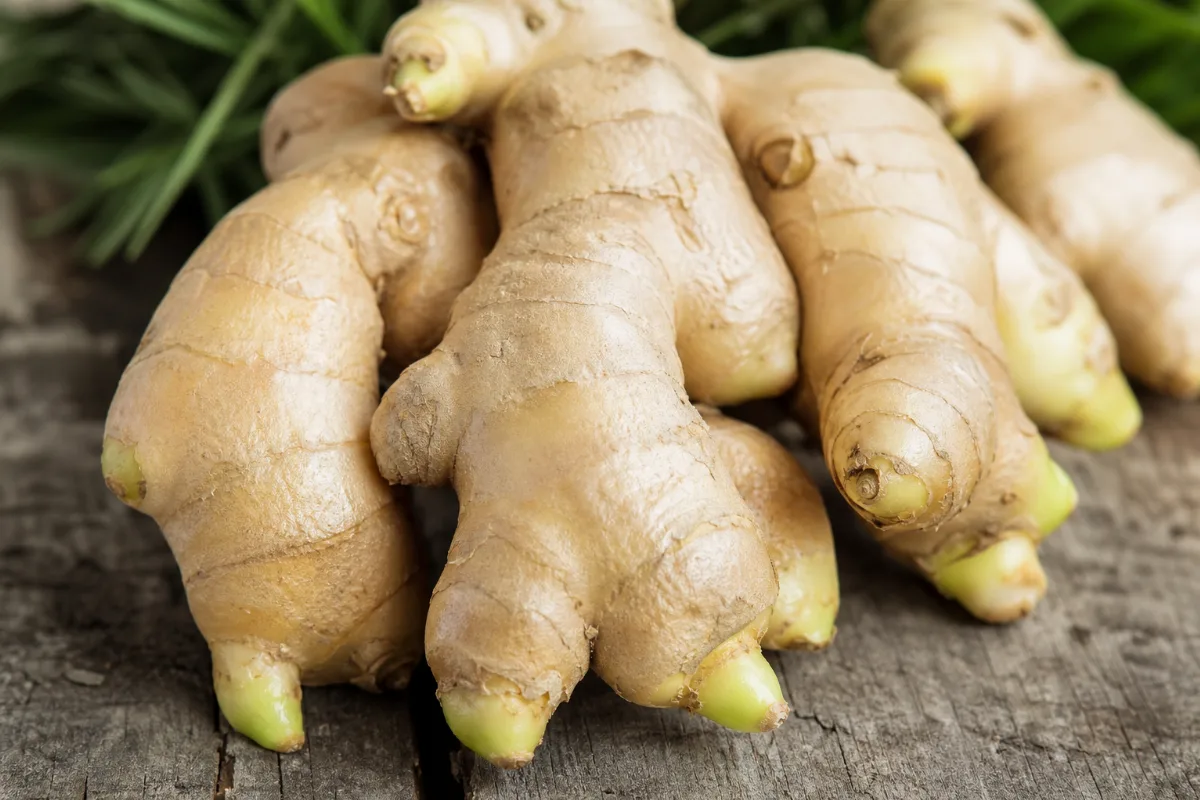
Herbs & Botanicals · Herbs · Warming rhizome used for nausea and pain
Ginger
Zingiber officinale Roscoe · also called Common ginger, garden ginger, jengibre (Spanish), gingembre (French), Ingwer (German), adrak (Hindi), sheng jiang (fresh) and gan jiang (dried) in Chinese medicine
Ginger is the underground stem (rhizome) of a tropical plant in the ginger family. It is eaten fresh, dried, as tea and as a spice, and it is sold as powder capsules, concentrated extracts, tinctures and oil. This profile covers ginger as a herb and supplement. Ginger as a cooking spice has its own page.
General information, not medical advice. Last substantive update · Not medically reviewed. A named clinician has not signed off on this page. How this page is made
About Ginger
Ginger (Zingiber officinale) is the underground stem of a tropical plant in the ginger family, eaten for thousands of years and used in food and traditional medicine for nausea, digestion, colds and pain. It is among the better-researched herbs. For nausea in early pregnancy and for period pain the evidence reaches moderate certainty. For most other uses it is low, mixed or very low, and for memory, mood and sleep it is almost absent. Side effects are usually mild, with heartburn the most common. The main cautions are possible extra bleeding with blood thinners or before surgery, and pregnancy, where official advice differs.
What it is
Ginger is a perennial plant whose thick underground stem, the rhizome, is the part used. It belongs to the ginger family, as do turmeric and cardamom. Ginger is grown from pieces of rhizome, so crops are clones and the plant is known mainly in cultivation.
Many studies filed under "ginger" are about other plants in the same family, so the Latin name Zingiber officinale is what to check on a label. Fresh ginger and dried ginger are treated as different drugs in Chinese medicine, and heat and drying change the mix of compounds.
This profile is for ginger as a herb and supplement. Ginger as a cooking spice is covered separately.
What makes it distinctive
Ginger's heat and many of its effects come from gingerols, mainly 6-gingerol. When ginger is dried, stored or cooked, gingerols turn partly into shogaols, which are even more pungent. Raw, dried and cooked ginger are therefore not chemically identical.
In test tubes, gingerols and shogaols block a serotonin receptor (5-HT3) in the gut and nausea pathway, which is the leading idea for how ginger settles nausea. That is lab work. Free gingerols are barely detectable in human blood after a dose, because the body quickly attaches them to other molecules, and nobody has shown that blood levels in people are high enough to do this.
Ginger has been tested in people almost only as whole preparations (powder, capsules, extracts, tea), never as a pure compound. Results from one product should not be assumed for another.
Historical and current uses
Ginger is documented in traditional Chinese medicine, Ayurveda and Western herbal medicine, mainly for upset stomach, nausea, gas, cough and cold-type complaints, and joint pain. Older claims about ancient writers come mostly from encyclopedia summaries that we could not confirm from original sources.
The EU regulator lists powdered ginger before travel for motion-sickness nausea as a well-established use, and lists mild gut cramps, loss of appetite, minor joint pain and common cold symptoms as traditional uses. Today, people also take ginger for pregnancy nausea, period pain, arthritis and blood sugar.
What the research shows
Nausea and period pain have the strongest support. For pregnancy nausea, pooled analyses of trials in over a thousand women find less nausea than with placebo, with no clear effect on vomiting. For period pain, pooled trials find less pain than placebo, though results vary a lot between trials.
For chemotherapy and after-surgery nausea, osteoarthritis, blood sugar and cholesterol, reviews disagree or rate the certainty low or very low. For migraine, a 2026 review says it is too uncertain whether ginger works.
Research on the mind and brain is thin. One small memory trial was positive, the one mood and anxiety trial in healthy adults was null, and the one sleep trial was null. Most trials are small, short and use different products and doses, and many reviews note poor reporting.
Root, leaf, powder, extract: what is the difference?
Powder in capsules
Dried ground rhizome, often 250 mg to 1 g per capsule. Most trials used plain powder at about 0.5 to 3 g a day.
The best-supported uses (pregnancy nausea, period pain, surgery nausea) mostly used plain powder at around 1 g a day. Trial powders were not tested for gingerol content in the abstracts, so a capsule on the shelf may not match.
Standardised extracts
Extracts with a stated active content, such as 84 mg a day of gingerols and shogaols or a 5 percent extract.
Different makers standardise differently, so a trial extract cannot be assumed equal to another brand. One osteoarthritis extract also contained galangal, so its effect cannot be credited to ginger alone.
Fresh root, tea and food
Sliced or grated fresh rhizome, ginger tea, candied or cooked ginger.
We found no placebo-controlled trial of ginger tea or food, and the gingerol content of tea was not measured in the trials we read. One motion-sickness study using 1 g of fresh root found no protection. No trial dose can be turned into teaspoons.
Tinctures
Ginger steeped in 90 percent alcohol. The EU traditional doses are 1.5 to 3 ml of the 1:10 tincture, or 0.25 to 0.5 ml of the 1:2 tincture, three times a day.
The 1:2 tincture is five times stronger than 1:10 by volume, so they must not be swapped by volume. They contain alcohol. No clinical trial of tinctures was found among those read.
Inhaled ginger oil
Ginger essential oil breathed in, not swallowed.
Not comparable with oral ginger. In one chemotherapy trial it lowered acute nausea but not vomiting, and a second study was not randomised.
Raw versus heated ginger
Ginger heated before eating or encapsulating, which raises shogaols.
Two small trials in healthy volunteers found raw and heated ginger reduced exercise soreness by a similar amount, so more shogaol is not proven better.
At a glance
Traditional uses history, not proof
- Nausea and an upset stomach, in many food and medical traditions
- EU traditional use: mild gut cramps with bloating and gas, loss of appetite, minor joint pain and common cold symptoms
- EU well-established use: preventing nausea and vomiting from motion sickness (powder taken before travel)
- Traditional Chinese medicine (fresh and dried ginger are separate drugs) and Ayurveda, mainly for digestion, cold-type complaints and cough
Studied for research
- Nausea and vomiting in pregnancy, moderate certainty
- Period pain (primary dysmenorrhea), moderate certainty
- Chemotherapy and after-surgery nausea, low certainty
- Knee osteoarthritis pain, low certainty (reviews disagree)
- Blood sugar and cholesterol, low to very low certainty
- Memory, mood and sleep, very low or insufficient evidence
Main compounds
- Gingerols, mainly 6-gingerol (the pungent compounds of fresh ginger)
- Shogaols and paradols (form when ginger is dried, stored or heated)
- Zingerone and a volatile oil (zingiberene, sesquiphellandrene, bisabolene)
Common forms
- Powder in capsules (most trials used 0.5 to 3 g a day)
- Standardised extracts (for example 84 mg a day of gingerols and shogaols in one chemotherapy trial)
- Fresh root, tea and food (not tested in placebo-controlled trials we read)
- Tinctures (EU traditional use) and inhaled ginger oil
Research links: NIH NCCIH: Ginger · EU herbal medicine page for ginger rhizome (EMA) · NIH LactMed: Ginger · NIH LiverTox: Ginger · Research Library · Genes & Biomarkers Library
The plant and its history
- Accepted scientific name
- Zingiber officinale Roscoe
- Naming authority
- Roscoe, published in Transactions of the Linnean Society of London 8: 348 (1807) (GBIF); NCBI Taxonomy gives 'Roscoe, 1807'
- Synonyms
- Amomum zingiber L.; Amomum zinziba Hill; Zingiber zingiber (L.) H.Karst.; Zingiber majus Rumph.; Zingiber missionis Wall.; Zingiber aromaticum Noronha; Amomum angustifolium Salisb.; Curcuma longifolia Wall.; Zingiber officinale var. rubrum Theilade (red ginger; GBIF lists it as a synonym of the species); Zingiber officinale var. rubens Makino; Zingiber officinale var. macrorhizonum Makino; Zingiber officinale var. cholmondeleyi F.M.Bailey; Zingiber sichuanense Z.Y.Zhu, S.L.Zhang & S.X.Chen; Zingiber sianginensis Tatum & A.K.Das
- Common names
- Ginger (English); Common ginger (English); Garden ginger (English); Jengibre (Spanish); Gingembre (French); Ingwer (German); Zenzero (Italian); Gengibre (Portuguese); Gember (Dutch); Imbir lekarski (Polish); Zencefil (Turkish); Adrak (Hindi: अदरक) (Hindi); Inji (Tamil: இஞ்சி); dried ginger is sukku (சுக்கு) (Tamil); Alam (Telugu: అల్లం) (Telugu); Jiang (姜); fresh ginger is sheng jiang (生姜), dried ginger is gan jiang (干姜) (Chinese); Shoga (ショウガ) (Japanese); Saenggang (생강) (Korean); Jahe (Indonesian); Luya (Tagalog); Khing (ขิง) (Thai); Zanjabil (زنجبيل) (Arabic)
- Botanical family
- Zingiberaceae, the ginger family (order Zingiberales). Turmeric (Curcuma longa), cardamom (Elettaria cardamomum) and galangal belong to the same family (Wikipedia, secondary). Many results found for 'ginger' in the literature actually concern other Zingiber or Zingiberaceae species, so check the Latin name before using a study.
- Classification
- Plantae > Tracheophyta > Liliopsida (monocots) > Zingiberales > Zingiberaceae > Zingiber > Zingiber officinale
- Native range
- Not verified from a primary source. Wikipedia (secondary) states that ginger originated in Maritime Southeast Asia, is a cultigen (a plant known only in cultivation, with no wild population), and was probably first domesticated by Austronesian peoples. NCCIH says it is native to the warm parts of Asia and is now grown in parts of South America, Africa and the Middle East (s-nccih-ginger). Wikipedia gives 2023 world production as 4.9 million tonnes, India about 45% (NOT verified; no FAO source read).
- Habitat
- Not described in the primary sources read. Wikipedia (secondary) says it is grown in warm, humid climates at about 300-900 m elevation in well-drained soil at least 30 cm deep (NOT verified).
- What the plant looks like
- Roots: The part used is the rhizome (underground stem), not a true root. The European Pharmacopoeia herbal drug is the whole or cut rhizome with the cork removed, completely or from the wide flat surfaces only (s-ema-ar-ginger-2025).; Stems: A perennial reed-like herb that makes yearly leafy false stems (rolled leaf bases) about 1 m tall (Wikipedia, secondary).; Leaves: Narrow leaf blades (Wikipedia, secondary).; Flowers: Pale yellow petals with purple edges, in an inflorescence that arises straight from the rhizome on a separate shoot (Wikipedia, secondary).; Fruit: Not described in the sources read.
- Cultivation
- Grown from pieces of rhizome ('seed' rhizomes), so crops are clones and the species is cultivated rather than wild. Wikipedia (secondary) describes seed-rhizome treatment against rot and pests before planting. Cultivar and harvest maturity change the oil and [6]-gingerol content of fresh ginger (p23570262, title and journal only; abstract not read). Red ginger (var. rubrum) is a cultivated form widely eaten in Indonesia and studied separately (p30546874).
- Harvest and processing
- The European Pharmacopoeia (as quoted in the EMA assessment report) sets a minimum of 15 ml/kg essential oil in the dried drug; the report puts the volatile oil at 1-4% and the gingerols at 4-7.5% of the herbal substance, with starch up to 50% and lipids 6-8% (s-ema-ar-ginger-2025). During drying and storage gingerols partly lose water to become shogaols, which may be reduced further to paradols, so dried and stored ginger is chemically different from fresh (s-ema-ar-ginger-2025, p26228533). Heating or cooking can also form zingerone (review claim, p26106644). Spray-drying fresh ginger juice raised several shogaols and zingerone in a 2025 lab study, depending on the carrier added (p40559374). Traditionally the rhizome is dug when the stalk withers and scalded or scraped to prevent sprouting (Wikipedia, secondary).
- Look-alikes and adulterants
- Name: Wild ginger (Asarum species); Note: A group of unrelated plants (dicots, not in the ginger family) that are called wild ginger because of a similar taste (Wikipedia, secondary). Not verified from a primary source here. They are not a substitute for ginger, and nothing about their safety was read for this profile, so no safety claim is made.; Name: Turmeric (Curcuma longa) and mango ginger (Curcuma amada); Note: Close relatives in the same family with similar-looking rhizomes. Turmeric is a different herb with its own profile. A PubMed record for mango ginger (Curcuma amada) from Myanmar exists (p33396947, title only read), which shows that papers on other 'gingers' can turn up in a ginger search.; Name: Galangal (Alpinia species); Note: A relative used in similar dishes and traditional remedies. Alpinia officinarum (lesser galangal) appears next to ginger in a 1992 enzyme study of prostaglandin-synthesis inhibitors (p1606634), so some 'ginger' findings come from galangal compounds, not ginger.; Name: Bitter ginger (Zingiber zerumbet) and other Zingiber species; Note: Another Zingiber grown alongside ginger in Austronesian cultivation (Wikipedia, secondary). A literature search for Zingiber zerumbet, Z. montanum and Z. cassumunar returned 289 records in October 2026, so species mix-ups in the literature are possible. A review of the genus is available (p29207520, title only read).; Name: Torch ginger (Etlingera elatior); Note: A different plant in the ginger family; a 2026 systematic review of it exists (p41494611, title only read). Not ginger.; Name: Red ginger vs standard ginger; Note: Red ginger (Z. officinale var. rubrum, Indonesia) is listed by GBIF within the same species, but its compound mix and pharmacokinetics were studied on their own (p30546874), so results on one cannot be assumed to hold for the other.; Name: Fresh, dried, steamed, powdered, candied, juice, oil; Note: Same species, but chemically different products: dried ginger has more shogaols than fresh, and the oil and the pungent fraction are separated in extracts. Most clinical trials use dried powder or capsules (p35147170).
- Sustainability and conservation
- Not verified. No IUCN assessment was retrieved. Ginger is a cultigen and is commercially grown, so wild-harvest pressure is not the usual concern; threats described in the literature are crop diseases (for example a 2025 report on Pythium rot, p41078509, title only read).
The plant and the parts used
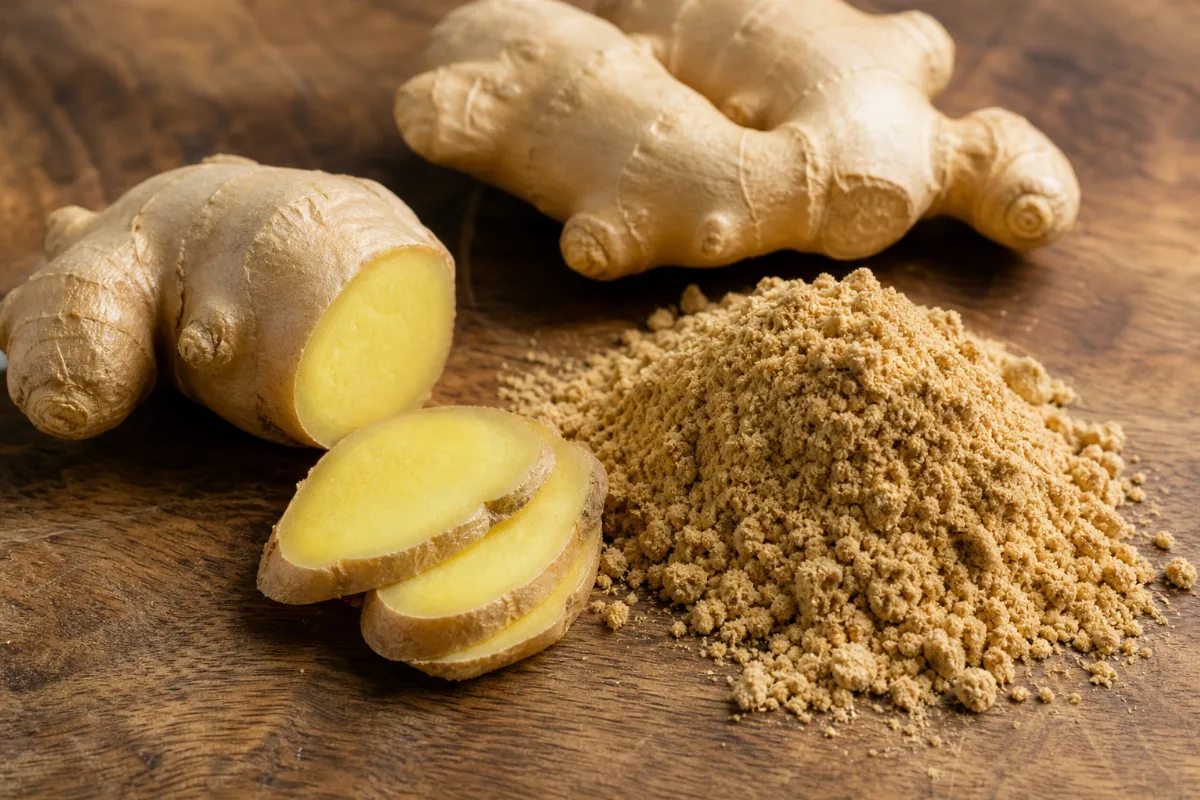
Traditional use and history history, not clinical proof
| Tradition or era | Documented use | Source |
|---|---|---|
| China, Warring States period (475-221 BCE): the Analects | Wikipedia states that the first written record of ginger is in the Analects, where Confucius is said to have eaten ginger with every meal. This is a food use, not a medicinal one. NOT verified from a primary source. | s-wikipedia-ginger |
| Traditional Chinese medicine (documented in the Pharmacopoeia of the People's Republic of China, 2005 edition, as cited by the EMA) | Fresh ginger is used for abdominal distension, coughing, vomiting, to promote sweating, and to reduce the poisonous effect of other herbs. The steamed and dried rhizome is used for abdominal pain, lumbago, diarrhoea, cholera, haemorrhage, rheumatism and toothache. The Chinese pharmacopoeia lists both dry and fresh ginger for epigastric pain with cold feeling, vomiting and diarrhoea with cold limbs, and for cough with frothy sputum. Doses in Chinese medicine are 3-9 g of fresh or powdered drug. | s-ema-ar-ginger-2025 |
| Ayurveda (Ayurvedic Pharmacopoeia of India 2009; Indian Herbal Pharmacopoeia 2002; Indian Pharmacopoeia 2007, as cited by the EMA) | Used as a carminative (gas-relieving), digestion promoter, anti-colic remedy and for piles; also recommended for chronic skin disease, obesity, abnormal bleeding after childbirth and filariasis. The Indian Herbal Pharmacopoeia describes it as carminative, anti-emetic and anti-inflammatory. Traditional dose of the powdered dry drug is 1-2 g. | s-ema-ar-ginger-2025 |
| Western herbal tradition (Bone and Mills 2013; WHO 1999; Commission E monograph 1990, as cited by the EMA) | Used for congestive chest problems, dyspepsia, flatulent colic, gastritis and diarrhoea. Also described for motion sickness, postoperative nausea, vomiting in pregnancy and seasickness, colds and flu, appetite, migraine and rheumatic or muscular complaints. The Commission E monograph of 1990 describes 2-4 g a day for dyspepsia and prevention of motion sickness. | s-ema-ar-ginger-2025 |
| Ancient Greece and Rome (Dioscorides about 40-90 CE; Pliny the Elder; Aetius of Amida) | Wikipedia states that ginger reached the Mediterranean through Arab traders, was described by Dioscorides and Pliny the Elder, and was imported into the Roman Empire as an expensive ingredient of herbal remedies (for example for the kidneys), with Aetius of Amida listing it in complex prescriptions. NOT verified: no primary text or scholarly history paper was read, so what exactly these authors described is not confirmed. | s-wikipedia-ginger |
| Early spread and spice trade (Wikipedia, secondary) | Wikipedia states that the Austronesian peoples carried ginger across the Indo-Pacific from about 5,000 years ago and to India about 3,500 years ago, that a monk named Faxian wrote in 406 CE that ginger was grown in pots on Chinese ships to prevent scurvy, and that in 14th-century England a pound of ginger cost as much as a sheep. These dates and claims are NOT verified from primary sources. | s-wikipedia-ginger |
| Modern official status (EMA/HMPC, 2025 assessment report) | The EU herbal monograph keeps a well-established-use indication for powdered ginger to prevent nausea and vomiting in motion sickness (1-2 g, one hour before travel), although the committee itself calls the quality of the motion-sickness studies weak by current standards and keeps the indication for regulatory consistency. Traditional-use indications are also listed for gastrointestinal complaints, loss of appetite, minor joint pain and the common cold. | s-ema-ar-ginger-2025 |
Traditional use shows how a plant was used. It does not show that a supplement works or is safe today.
What is inside, and how it may work
What the plant contains and how those compounds act in cells and animals. Laboratory and animal mechanisms are not proven effects in people.
Main compounds
| Compound | Family | Where it is concentrated | Activity studied | Level of evidence |
|---|---|---|---|---|
| 6-Gingerol ([6]-gingerol) PubChem 442793 | gingerol (phenolic pungent compound, vanilloid-type) | Rhizome Gingerols together are 4-7.5% of the herbal substance and 6-gingerol is the principal one (s-ema-ar-ginger-2025). A 250 mg dry extract used in a human pharmacokinetic study held 5.38 mg 6-gingerol, as quoted by the EMA (secondary). | Activates the capsaicin (TRPV1) receptor in neurons in culture; weakly blocks 5-HT3 receptors (low micromolar, non-competitive, including human receptors and human gut nerve tissue); weak effect on muscarinic M3 receptors in guinea-pig gut; blocked the p38 MAP kinase - NF-kappa-B - COX-2 pathway in mouse skin (animal); raised mitochondria numbers through AMPK-PGC1alpha in liver cells and mice (extract at 2 g/kg in mice; 6-gingerol in cells); inhibited human CYP2C9 and, moderately, CYP2C19/CYP3A4 in a test-tube kit assay. Not found as a free compound in human blood in the main dose study; it circulates as glucuronide and sulfate conjugates. 25 112 2 83 46 26 54 124 118 97 | Laboratory research |
| 8-Gingerol PubChem 168114 | gingerol | Rhizome Present in smaller amounts than 6-gingerol (s-ema-ar-ginger-2025). Zick extract: 1.28 mg per 250 mg dry extract (EMA, secondary). | Activates TRPV1 in neurons in culture, with potency rising with side-chain length; among the more potent gingerols at 5-HT3 receptors in a cell and guinea-pig-ileum test; strongest CYP inhibitor of the three gingerols in a kit assay (IC50 6.8 micromol/L CYP2C9, 8.7 CYP3A4); inhibited arachidonic-acid-induced human platelet aggregation in whole blood (IC50 3-7 micromol/L, compared with aspirin 20 micromol/L in the same test). 25 2 54 78 124 | Laboratory research |
| 10-Gingerol PubChem 168115 | gingerol | Rhizome Present in smaller amounts than 6-gingerol (s-ema-ar-ginger-2025). Zick extract: 4.19 mg per 250 mg dry extract (EMA, secondary). | Depressed the maximal 5-HT response in guinea-pig gut preparations (from 93% to 65% at 3 micromol/L); inhibits CYP2C9, CYP2C19 and CYP3A4 activity and CYP3A4 messenger RNA in a liver cancer cell line; unlike 6-gingerol, which raised CYP3A4 messenger RNA. One of the few ginger compounds detected as the free (unconjugated) form in human blood after 2 g of extract (peak 9.5 ng/mL) and in 19 people given red ginger (peak 160.49 ng/mL, half-life 336 minutes). 83 54 118 53 124 | Laboratory research |
| 6-Shogaol ([6]-shogaol) PubChem 5281794 | shogaol (dehydrated gingerol) | Rhizome, mostly after drying, heating or storage Forms from 6-gingerol when ginger is dried, stored or heated (s-ema-ar-ginger-2025, p26228533). Zick extract: 0.92 mg per 250 mg (EMA, secondary); another extract in the Yu study had 5.63 mg per 250 mg (2.25%), so amounts vary a lot between products. | More potent than 6-gingerol at 5-HT3 receptors in cell and ileum tests; reduced microglial inflammation (nitric oxide, PGE2, IL-1 beta, TNF-alpha, COX-2, p38, NF-kappa-B) in mouse brain-cell cultures and in two mouse models; increased glucose use in fat and muscle cells through AMPK; metabolised mainly by the thiol (mercapturic acid) route, also seen in human urine after ginger tea; peak free blood level 13.6 ng/mL after 2 g extract (Yu) and 453.40 ng/mL in the red-ginger study (different method). 2 112 37 114 15 16 118 53 97 | Laboratory research |
| 8-Shogaol PubChem 6442560 | shogaol | Rhizome, mostly after drying or heating Present in dried ginger; no content figure found in the sources read. | One of the strongest COX-2 inhibitors among 17 ginger compounds in intact cells (IC50 range for the set 1-25 micromol/L); anti-platelet activity in whole blood with IC50 3-7 micromol/L; thiol-conjugated metabolites seen in human urine after ginger tea. 106 78 15 | Laboratory research |
| 10-Shogaol PubChem 6442612 | shogaol | Rhizome, mostly after drying or heating Present in dried ginger; no content figure found in the sources read. | Partially activates the serotonin 5-HT1A receptor (20-60% of maximum) in cell tests; thiol metabolites in mice and human urine; lowest blood exposure of the gingerols/shogaols in rats (EMA, secondary). 76 15 | Laboratory research |
| Zingerone PubChem 31211 | phenolic ketone (non-pungent breakdown product) | Cooked or heated ginger A review states it is absent in fresh ginger and forms when gingerol is heated or cooked (p26106644); spray-drying of juice also raised zingerone in a 2025 lab study (p40559374). | The review of zingerone lists anti-inflammatory, antidiabetic, antidiarrhoeal, antispasmodic, anxiolytic and antioxidant activity, but the abstract gives no human data. EMA (secondary) reports that zingerone and 6-shogaol reached the brain in rats. 3 113 | Laboratory research |
| 6-Paradol ([6]-paradol) PubChem 94378 | paradol (reduced shogaol) | Stored or processed ginger (a minor constituent) Formed when shogaols are reduced during storage; also the main metabolite of 6-shogaol in mice per the study abstract (p28106738). No content figure found. | Raised glucose use in fat and muscle cells through AMPK, and lowered blood glucose, cholesterol and body weight in mice fed a high-fat diet (p28106738). 8-Paradol was the strongest COX-1 inhibitor in a ginger-compound set (IC50 4 micromol/L) and strong against COX-2 in cells (p14693173, p11437391). The CID is for the 6- compound; the 8- compound was not looked up. 114 78 106 | Laboratory research |
| 6-Gingerdione PubChem 162952 | diketone related to gingerols | Rhizome Minor constituent; no content figure found. The name search returned one PubChem record for 'gingerdione' (IUPAC name 1-(4-hydroxy-3-methoxyphenyl)decane-3,5-dione). | 1-Dehydro-6-gingerdione partially activated the serotonin 5-HT1A receptor in cell tests (a different compound from the CID shown, which is 6-gingerdione itself). Minor 5-HT3 blockers were found among related minor compounds such as 6-gingerdiol and 6-dehydrogingerdione. 76 1 | Laboratory research |
| 6-Gingerdiol PubChem 11369949 | diol related to gingerols | Rhizome Minor constituent; the PubChem name search returned a record titled 'Gingerdiol' without stereochemistry, so the CID may cover one form only. | Among the most potent 5-HT3-blocking compounds in a bioassay-guided fractionation of a hexane extract of ginger, alongside diacetyl-6-gingerdiol and 6-dehydrogingerdione (cell and rat-ileum tests). 1 | Laboratory research |
| alpha-Zingiberene PubChem 92776 | sesquiterpene hydrocarbon (essential oil) | Rhizome oil A leading sesquiterpene of the volatile oil, which is 1-4% of the herbal substance (s-ema-ar-ginger-2025). Oil make-up varies with origin and with cultivar and harvest maturity (p23570262, abstract not read). The CID is for the (-)-isomer. | Defines the typical ginger smell. No human or mechanism data on the pure compound were read; one study found that the oil itself tested for 5-HT3 activity (p16041645), but the hexane extract (pungent compounds) was more active. 1 | Laboratory research |
| beta-Sesquiphellandrene PubChem 12315492 | sesquiterpene hydrocarbon (essential oil) | Rhizome oil Named by the EMA among the main oil sesquiterpenes; no percentage found. | No separate activity data were read. 30 | Laboratory research |
| ar-Curcumene (zingiberol) PubChem 92139 | sesquiterpene hydrocarbon (essential oil) | Rhizome oil Named by the EMA among the oil constituents; no percentage found. | No separate activity data were read. A computer docking study placed ar-curcumene among 12 ginger components with predicted binding to CYP enzymes (p25733806). 88 | Laboratory research |
| beta-Bisabolene PubChem 10104370 | sesquiterpene hydrocarbon (essential oil) | Rhizome oil Named by the EMA among the oil constituents; no percentage found. | No separate activity data were read; included in the same CYP docking study (p25733806). 88 | Laboratory research |
| Other constituents (starch, lipids, volatile oil minor parts, diarylheptanoids) | mixed | Rhizome The EMA report lists starch up to 50%, lipids 6-8%, proteins and minerals, plus more than 100 volatile compounds (mostly terpenoids), including smaller amounts of camphene, beta-phellandrene, cineole, geraniol, citral, terpineol and borneol. A 2021 review counts over 160 constituents in all (gingerol analogues, diarylheptanoids, phenylalkanoids, sulfonates, steroids, monoterpenoid glycosides). | Most of these have no separate human data. Diarylheptanoids from ginger and galangal were more active against prostaglandin synthesis and 5-lipoxygenase than gingerols in one old test-tube study (p1606634). 30 119 47 | Laboratory research |
Mechanisms, receptors and pathways
| Target or pathway | Gene or receptor | What was found | Level |
|---|---|---|---|
| Capsaicin (vanilloid) receptor TRPV1 - the heat and pungency sensor on pain nerves | TRPV1 | [6]- and [8]-gingerol caused calcium influx and ion currents in cultured sensory (dorsal root ganglion) neurons, blocked by the TRPV1 blocker capsazepine. Potency rose with longer side chains. This explains the warm, hot taste and may feed into pain and gut signalling, but no human study tested it. 25 | Laboratory research |
| Serotonin 5-HT3 receptor in the gut and nausea pathway (main candidate for the anti-nausea effect) | HTR3A / HTR3B | Ginger extract and its pungent compounds (6-gingerol, 6-shogaol) blocked human 5-HT3 receptors in cell lines and in human gut nerve tissue, in the low micromolar range, without competing for the serotonin binding site (non-competitive, a different action from ondansetron-type drugs). 6-Shogaol and 8-gingerol were more potent than 6-gingerol in cell and ileum tests. Whether the blood levels reached by ginger in people (free forms are low, see pharmacokinetics) are high enough has not been shown. 112 2 1 83 | Laboratory research |
| Muscarinic M3 and 5-HT4 receptors in the gut | CHRM3; HTR4 | Gingerols and 6-shogaol only slightly lowered the maximal response to carbachol (M3) in guinea-pig ileum at 10 micromol/L and had no effect at 5-HT4 receptors in rat oesophagus muscle. The authors conclude that weak M3 and 5-HT3 blocking may underlie the anti-nausea effect and that 5-HT4 is not involved. 83 | Animal research |
| Serotonin 5-HT1A receptor (possible link to anxiety-like effects) | HTR1A | Nine ginger compounds bound the human 5-HT1A receptor (Ki 3-20 micromol/L); 10-shogaol, 1-dehydro-6-gingerdione and the whole lipophilic extract were partial agonists (20-60% of maximum). The whole extract (Ki 11.6 microg/mL) was among the active materials. Only a lab binding study; no human data on anxiety were read. 76 | Laboratory research |
| Prostaglandin and leukotriene synthesis: COX-1, COX-2 and 5-lipoxygenase | PTGS1 (COX-1); PTGS2 (COX-2); ALOX5 | Gingerols, shogaols, paradols and diarylheptanoids inhibited prostaglandin synthesis, COX-1, COX-2 (17 compounds, IC50 1-25 micromol/L in intact cells) and 5-lipoxygenase in test-tube and cell systems; 8-paradol and 8-shogaol were among the strongest. This is the main rationale for pain and inflammation uses, but concentrations needed are well above the low free blood levels measured in people. 47 106 78 48 | Laboratory research |
| NF-kappa-B and p38 MAP kinase signalling, COX-2 expression | NFKB1 / RELA; MAPK14 (p38); PTGS2 | Topical 6-gingerol cut COX-2 and blocked NF-kappa-B and p38 activation in mouse skin treated with a tumour promoter. 6-Shogaol reduced nitric oxide, PGE2, IL-1 beta and TNF-alpha, and lowered COX-2, p38 and NF-kappa-B in microglial cells, and reduced microglial activation in a mouse inflammation model and brain damage in a mouse ischaemia model. 46 37 | Animal research |
| Platelet aggregation (blood clotting) via the arachidonic-acid pathway | PTGS1 (COX-1) / thromboxane synthase pathway | In human whole blood, 8-gingerol, 8-shogaol and 8-paradol blocked arachidonic-acid-induced platelet aggregation with IC50 3-7 micromol/L (aspirin 20 micromol/L in the same test); synthetic gingerol analogues blocked serotonin release and aggregation in a similar dose range to aspirin. In contrast, a small double-blind human trial (8 healthy men, 2 g dried ginger vs placebo) found no change in bleeding time, platelet count, thromboelastography or platelet aggregation at 3 or 24 hours. So the test-tube effect has not been reproduced at 2 g of dried ginger in people. 78 48 60 | Mixed |
| Stomach emptying and motility | Gastric motor function (no single gene) | Human trials disagree. 1,200 mg ginger capsules in 24 healthy volunteers sped stomach emptying (half-emptying time 13.1 vs 26.7 min) and raised antral contractions; the same dose in 11 people with functional dyspepsia sped emptying (12.3 vs 16.1 min, median) with no change in symptoms or hormones (GLP-1, motilin, ghrelin). In contrast, 1 g ginger in 16 volunteers (paracetamol absorption method) and 500 mg powder in a motion-sickness study had no effect on emptying. Different doses, methods and products may explain the split. 115 41 84 101 | Human data |
| Motion-sickness nausea: stomach rhythm and vasopressin | AVP (vasopressin); gastric slow-wave rhythm | In 13 volunteers prone to motion sickness (crossover, placebo-controlled), ginger 1,000 and 2,000 mg reduced nausea, abnormal fast stomach rhythm (tachygastria) and rise in plasma vasopressin during circular vection, and delayed the onset of nausea. Ginger did not alter nausea from vasopressin infused directly, which suggests it acts upstream of vasopressin. An older study of 28 volunteers found no protection against motion sickness from 500-1,000 mg powdered ginger or 1,000 mg fresh ginger (scopolamine did work). Overall evidence for motion sickness is mixed; NCCIH says most motion-sickness studies have not shown a benefit, and the EMA calls its own supporting studies weak. 55 101 74 30 | Human data |
| AMPK activation, glucose use and mitochondria | PRKAA (AMPK); PPARGC1A (PGC-1 alpha) | 6-Paradol and 6-shogaol raised glucose use in fat (3T3-L1) and muscle (C2C12) cells with more AMPK phosphorylation; 6-paradol lowered blood glucose, cholesterol and body weight in mice fed a high-fat diet. Ginger extract at 2 g/kg in mice raised oxygen use, body-surface heat and mitochondrial DNA in muscle and liver through AMPK-PGC1alpha; 6-gingerol rather than 6-shogaol seemed the main active in liver cells. Human trials on blood sugar are a separate question (see the body profile); these mouse and cell doses cannot be converted to human doses. 114 26 | Animal research |
| Drug-metabolising enzymes (CYP) and drug-interaction potential | CYP2C9; CYP3A4; CYP2C19; CYP2D6 | In a kit assay with human enzymes, 6-, 8- and 10-gingerol inhibited CYP2C9 strongly, CYP2C19 and CYP3A4 moderately and CYP2D6 weakly (8-gingerol IC50 6.8, 12.5, 8.7 and 42.7 micromol/L for CYP2C9, 2C19, 3A4, 2D6); 8- and 10-gingerol lowered, and 6-gingerol raised, CYP3A4 messenger RNA in a liver cancer cell line. A computer-modelling study predicted a high interaction risk for CYP2C9 and CYP3A4. The EMA review concluded that there is insufficient evidence for induction or inhibition of CYP enzymes or P-glycoprotein by ginger in people. 54 88 30 | Mixed |
| Glutathione and the thiol (mercapturic acid) pathway | Glutathione conjugation (GSTs, enzymes not identified in the abstracts) | 6-Shogaol first lowered then restored and raised glutathione in human colon cancer cells; its cysteine conjugate acts as a carrier that releases 6-shogaol again in cells and in mice. This is a metabolism and cell-protection finding in cancer cell lines and mice, not evidence of a benefit in people. 15 16 | Laboratory research |
Absorption, metabolism and elimination
- Absorption
- Ginger's pungent compounds are absorbed quickly but mostly as conjugates. In a dose-escalation study in 27 healthy volunteers (single doses of ginger extract from 100 mg to 2.0 g), no free 6-, 8- or 10-gingerol or 6-shogaol was detected in blood, only their glucuronide forms (and 6-gingerol sulfate above the 1.0 g dose). At 2.0 g, the abstract gives Cmax of 0.85, 0.23, 0.53 and 0.15 microg/mL for 6-gingerol, 8-gingerol, 10-gingerol and 6-shogaol (these are conjugate-level figures; the abstract's AUC and Tmax figures look garbled in the original and are not quoted here). A second study of 2.0 g of extract found free 10-gingerol and 6-shogaol in blood at only 9.5 and 13.6 ng/mL after 1 hour, with the glucuronides at 0.17-0.73 microg/mL; free 6- and 8-gingerol were not detected. A third study gave 19 volunteers 2 g of red ginger suspension and measured free 10-gingerol (Cmax 160.49 ng/mL at 38 min) and 6-shogaol (453.40 ng/mL at 30 min); this is much higher than the 2011 study and the abstracts do not explain the gap (different product, extract versus suspension and assay are possibilities, not shown).
- Distribution
- Human tissue data are almost absent: in nine volunteers only very low 10-gingerol conjugate (2-3 ng/mL) was found in colon tissue after 2 g extract (p21638149; the abstract does not state n, nine is from the EMA's summary). In rats, 6-gingerol spread to all tissues examined, highest in the gut, and 6-shogaol and zingerone were found in the brain (EMA report, secondary; the underlying rat papers were not read). Whether any ginger compound reaches useful levels in human brain or joints is unknown.
- Metabolism
- Conjugation dominates. Human blood shows mostly glucuronides, with fewer sulfates (p18708382, p21638149). In liver microsomes from mouse, rat, dog and human, all four main compounds were metabolically unstable with high clearance; treating mouse plasma with beta-glucuronidase raised measured levels 10 to 700 times, and ketoconazole (a CYP inhibitor) raised free levels 3 to 60 times, so first-pass metabolism, especially glucuronidation, limits exposure (p28358331, mouse and test tube). Shogaols also go down the thiol (mercapturic acid) route; thiol-conjugated metabolites of 6-, 8- and 10-shogaol were found in human urine after ginger tea (p23322393). EMA (secondary) notes that in simulated stomach acid 6-gingerol and 6-shogaol convert back and forth, and in simulated intestinal fluid 6-shogaol is mostly turned to 6-paradol, possibly by gut microbes.
- Elimination
- Quick. Half-lives of the four compounds and their conjugates were 1-3 hours in the human plasma study (p21638149) and under 2 hours in the first study (p18708382). The red-ginger study reported much longer half-lives (336 min for 10-gingerol, 149 min for 6-shogaol, p30546874). No accumulation was seen after repeated daily dosing in the 2011 study (p21638149). Mouse and rat studies show repeated absorption peaks that suggest bile and gut recycling (EMA, secondary).
- Bioavailability
- Not established in humans: no intravenous comparison exists, and free-form blood levels are low and vary between studies. The mouse data suggest low systemic exposure of the free compounds because of liver and gut conjugation (p28358331). Effects of food, cooking, fresh vs dried form and gut microbes on human absorption were not found in the sources read.
Isolated compounds versus whole extracts
Ginger has been tested in people almost only as whole preparations (powder, capsules, extracts, tea), never as pure 6-gingerol or 6-shogaol, so there is no human comparison of isolated versus whole. In the lab the picture is mixed. Several effects track the amount of pungent compounds in extracts (human 5-HT3 receptor blocking by ginger extracts rose with their pungent-compound content, p23490018; the hexane extract was the most active and the essential oil much less, p16041645). The whole lipophilic extract partly activated the 5-HT1A receptor alongside some of its own single compounds (p20363635). On the other hand, which single compound does the work depends on the test: 6-shogaol and 8-gingerol beat 6-gingerol at 5-HT3 receptors (p16364290), 6-paradol and 6-shogaol beat the gingerols for glucose use in cells (p28106738), and 6-gingerol rather than 6-shogaol drove mitochondrial effects in liver cells (p31369153). The processing of the plant also changes what is in the product: drying, storage and heat turn gingerols into shogaols and paradols and produce zingerone (s-ema-ar-ginger-2025, p26228533, p40559374), so fresh, dried and cooked ginger are not chemically identical. The authors of the mouse pharmacokinetic study argue for keeping the natural mix (the 'milieu') after their cancer-model work (p28358331), but that is their stated view from preclinical work, not proof in people. The practical point: results from a trial of one ginger product cannot be assumed for another with a different gingerol/shogaol mix.
Nutritional composition
Raw ginger root (USDA FoodData Central, SR Legacy entry 169231, per 100 g): about 80 kcal, 78.9 g water, 1.82 g protein, 0.75 g fat, 17.8 g carbohydrate, 2.0 g fibre, 415 mg potassium, 43 mg magnesium, 16 mg calcium, 0.6 mg iron, 5.0 mg vitamin C, 0.16 mg vitamin B6, 0.229 mg manganese and 0.226 mg copper (s-usda-fdc-169231, values read from the USDA API on 2026-10-24). Ginger is used in small amounts (a few grams fresh, or 0.5-3 g of dried powder in the supplement trials reviewed in p35147170), so a serving supplies only a few percent of these per-100 g figures; ginger is a flavouring and a herbal remedy, not a meaningful source of vitamins or minerals. The compounds discussed here (gingerols, shogaols, essential oil) are not nutrients and are not listed in food tables. Dried ginger will differ from the raw figures (less water, more of everything else per gram); no dried-ginger table was read.
Products, quality and comparisons
Independent evidence comes first. Nothing in this section is a paid ranking. If a product link is added later, it will be marked clearly as an affiliate link and will never change what the research says.
Quality indicators
- Plant named as Zingiber officinale, with the part (rhizome) stated
- Form stated: powder, extract, tincture, oil or tea
- If extract: ratio and solvent, and gingerols and shogaols given as mg or percent with the test method
- Same form and daily amount as a published trial, if you want to match research
- Other herbs (turmeric, black pepper, galangal) listed separately, not hidden in a blend
- Lot number and a certificate of analysis available on request
- Seal or registration checked on the certifier's own website
Identity and authenticity
- A 2022 review of the China-to-EU ginger supply chain found adulteration the main fraud type and ground or finely processed ginger the most vulnerable products. It reviewed fraud databases and stakeholders; it did not test shelf supplements.
- A 2022 study of 7 powdered ginger products on the Ghanaian market found all contained Zingiber officinale, but 3 local products failed label requirements, some local samples had high aerobic bacterial counts, and variation hinted at processing differences and possible adulteration with other flours. It does not apply to supplements in other countries.
- We did not find a survey of ginger capsules or extracts on the US or EU supplement market in our searches.
Standardization and extract strength
- The EMA monograph says ginger material must comply with the European Pharmacopoeia monograph (Ph. Eur. 1522).
- The main pungent compounds are gingerols; drying and heating convert gingerols to shogaols. A trial found raw and heat-treated ginger equally effective for muscle soreness, so a higher shogaol content is not proven better.
- The chemotherapy trial that reported content gave it as 84 mg a day of gingerols and shogaols; many other trials gave only grams of powder.
Third-party testing
- US dietary supplements are not approved by the FDA before sale; testing of one product does not apply to another (general point; NCCIH ginger page not read for this file).
- Independent testing programmes (USP, NSF, ConsumerLab and others) differ in what they test, and a seal is a statement about that programme, not a guarantee of effect. Their test lists for ginger were not re-read.
- In the EU, a traditional herbal registration is a regulator's quality-and-safety route based on long use, not proof of efficacy.
Contaminants and adulterants
- The only ginger contamination survey we read was the Ghanaian powder study: heavy metals and ash within specification, aerobic bacterial counts high in some local samples.
- Pesticide, aflatoxin and solvent-residue surveys of ginger supplements were not read.
Reading a product label
- Find Zingiber officinale and the part used (rhizome or root).
- Is it powder, extract, tincture, oil or a chew? Note mg per serving and servings per day.
- For extracts, look for gingerols and shogaols as a percentage or mg with a test method.
- Check whether turmeric, black pepper or other herbs are in the blend, and in what amounts.
- Compare mg per day and form with a trial, not with another bottle.
- Check cautions (pregnancy, blood thinners, diabetes medicines, gallstones, planned surgery) with a clinician.
- Look for a lot number and a certificate of analysis.
- Check any seal or registration on the certifier's own site.
Certifications and what they actually mean
| Certification | What it means | What it does not tell you |
|---|---|---|
| EU traditional herbal medicinal product registration | A European regulator route for herbal medicines based on long-standing use; the EMA ginger monograph covers powder and tinctures at set doses. | Says the product is acceptable for the stated mild indication on the basis of tradition; does not claim trial-proven benefit. |
| European Pharmacopoeia monograph compliance (Ph. Eur. 1522) | The material meets the pharmacopoeia standard for ginger, as cited in the EMA monograph. | A maker's statement; check a certificate of analysis. |
| Third-party quality seals (USP, NSF, ConsumerLab and similar) | Independent programmes that test selected label and contaminant points. | What each programme tests differs; their test lists were not re-read for this file. |
| GMP statement | The maker says it follows good manufacturing practice. | Not an independent test of the product. |
| Organic, vegan, non-GMO, gluten-free | Farming and ingredient claims. | Say nothing about gingerol content, plant identity or adulteration. |
Comparing price and servings
Do not compare bottle prices. Step 1: cost per serving = bottle price / servings per bottle. Step 2: servings per day needed to reach the studied daily amount (studied mg per day / mg of ginger per serving). Step 3: cost per day = cost per serving x servings per day. If gingerols and shogaols are stated, cost per mg of those compounds = bottle price / (servings x mg per serving x percent / 100); use only products of the same form. Leave prices blank until a real current product is entered; no prices are included here.
Extract types compared
| Extract | Plant part | Standardization | Trials | Evidence note | Safety note | Limitations | Studies |
|---|---|---|---|---|---|---|---|
| Plain ginger powder capsules | rhizome | Not in abstracts | Pregnancy nausea (1 to 1.05 g/day, 4 days to 3 weeks); postoperative nausea (1 g once); period pain (1 g/day); knee osteoarthritis (1 g/day, no benefit); diabetes (3 g/day for 8 weeks); metabolic syndrome (2 g/day) | Most positive trials for nausea and period pain used plain powder. Results for osteoarthritis and blood sugar are mixed: a 1 g/day osteoarthritis trial and the 2024 diabetes meta-analysis found no significant effect. | Trials reported no serious problems; mild stomach upset is listed as common by the EMA. Osteoarthritis meta-analysis: more people stopped ginger than placebo (RR 2.33). | Powder sources and gingerol content were not described in the abstracts. | 110 100 73 81 75 69 89 96 |
| Standardized ginger root powder capsules (84 mg/day gingerols and shogaols) | rhizome | 84 mg per day of gingerols and shogaols from 4 capsules | Crichton 2024 (103 adults, 5 days per chemotherapy cycle, 3 cycles) | Better nausea quality of life and less delayed nausea and vomiting than placebo as an add-on to antiemetics; no effect on acute or anticipatory nausea. | No serious adverse events reported. | Single trial; powder weight not in abstract. | 23 |
| Ginger capsules 250 mg each, 0.5 to 1.5 g/day | rhizome | Not in abstract | Ryan 2012 (576 analysed, 6 days around chemotherapy) | All doses reduced day-1 nausea; the 0.5 g and 1.0 g arms did best. | Not detailed in abstract. | Mostly women; mild-to-moderate chemotherapy mix. | 91 |
| Ginger plus galangal extract EV.EXT 77 | rhizome (both species) | Highly concentrated, standardized; details not in abstract | Altman 2001 (261 people with knee osteoarthritis, 6 weeks, twice daily) | 63% vs 50% responders; knee pain on standing fell more than with placebo; WOMAC difference not significant. | More mild stomach and gut side effects than placebo (59 vs 21 patients). | Two-species product; cannot be credited to ginger alone. | 4 |
| Ginger extract with 5 percent active ingredient (400 mg) | rhizome | 5% active ingredient | Martins 2019 (60 adults in the emergency room, single dose with ketoprofen) | Better response at 1 to 2 hours than ketoprofen plus placebo. A 2026 review judges migraine evidence low to very low certainty. | Not detailed in abstract. | One centre; add-on design. | 63 9 |
| Raw versus heat-treated ginger | rhizome | Not stated | Black 2010 (2 g/day for 11 days, 34 and 40 volunteers) | Both reduced muscle pain after exercise about 23 to 25 percent at 24 hours; heating gave no extra effect. | Not detailed in abstract. | Healthy volunteers; induced soreness. | 12 |
| Ginger oil (preparation route not stated in the review abstract) | rhizome (oil) | Not stated | 2023 network meta-analysis of 18 publications on postoperative nausea and vomiting | Ginger oil ranked best for reducing postoperative vomiting (RR 0.39, 95% CI 0.16-0.96) but no ginger form clearly reduced postoperative nausea. | Not covered in abstract. | Network analysis; certainty ranged moderate to low for nausea. | 121 |
| Inhaled ginger essential oil | rhizome (oil) | Not stated | Lua 2015 (60 women on chemotherapy, 5 days); Lee 2017 (60 abdominal surgery patients) | Acute nausea lower in one, not overall; vomiting unchanged. The second study was not randomized. | Not detailed in abstracts. | Single-blind and quasi-experimental designs. | 59 52 |
Compare Ginger with another ingredient
Ginger vs Vitamin B6 (pyridoxine)
Two head-to-head sources found ginger and vitamin B6 about equal for nausea in early pregnancy. Neither is a replacement for medical advice; severe vomiting needs a clinician.
| Ginger | Vitamin B6 (pyridoxine) | |
|---|---|---|
| Benefits studied | Nausea and vomiting of pregnancy (also chemotherapy, surgery, period pain and others) | Nausea and vomiting of pregnancy (as a comparison in ginger trials) |
| Evidence certainty | moderate to high for nausea: the 2022 umbrella review graded antiemetic effect in pregnancy high; a 2014 review called evidence low quality | Not re-verified here; used as a comparison drug in the trials |
| Typical studied dose | 1 to 1.05 g a day of ginger for 4 days to 3 weeks | 75 mg a day for 3 weeks in the 291-person trial |
| Head-to-head trial | Smith 2004 (291 women): ginger equivalent to B6 for nausea, retching and vomiting; Hu 2022 meta-analysis: no significant difference | Same trials |
| Safety and interactions | Heartburn and drowsiness not significantly increased in a 2014 review; EMA prefers avoiding ginger in pregnancy as a precaution | Not re-verified here |
| Forms | Capsules of powder or extract, tea, tincture | Tablet or capsule (not compared here) |
| Cost note | Use the price-per-day formula; no prices stored | Use the same formula |
Ginger vs Mefenamic acid and ibuprofen (NSAID painkillers)
Ginger looked similar to common painkillers in two small trials, and a 2024 meta-analysis found no difference from NSAIDs. These trials had no placebo, and the pooled data had high heterogeneity.
| Ginger | Mefenamic acid and ibuprofen (NSAID painkillers) | |
|---|---|---|
| Benefits studied | Period pain; also osteoarthritis and nausea | Period pain (as the comparison drug) |
| Evidence certainty | low to moderate: the 2022 umbrella review graded dysmenorrhea GRADE low to moderate; 2024 meta-analysis pooled results had high heterogeneity | Not re-verified here |
| Typical studied dose | 250 mg ginger four times a day for 3 days (1 g/day) or 250 mg every 6 hours | Mefenamic acid 250 mg (every 8 hours in one trial); ibuprofen 400 mg |
| Head-to-head trial | Ozgoli 2009 (150) and Shirvani 2015 (122): no significant difference from the drugs; no placebo group in either | Same trials |
| Safety and interactions | No severe side effects in the trials; menstrual days slightly more with ginger in one trial | Not re-verified here |
| Forms | Capsules | Capsules or tablets |
| Cost note | Use the price-per-day formula | Use the same formula |
Ginger vs Dimenhydrinate (travel-sickness and nausea medicine)
In one trial ginger matched dimenhydrinate for nausea in pregnancy with far less drowsiness, but vomiting was higher in the first two days. Motion-sickness trials of ginger give mixed results.
| Ginger | Dimenhydrinate (travel-sickness and nausea medicine) | |
|---|---|---|
| Benefits studied | Nausea and vomiting of pregnancy; motion sickness | Nausea and vomiting of pregnancy (one trial) |
| Evidence certainty | mixed for motion sickness (one 13-person lab study positive, one 28-person study no protection); EMA lists well-established use of 1 to 2 g before travel | Not re-verified here |
| Typical studied dose | 0.5 g twice a day for 7 days in pregnancy; 1 to 2 g before travel (EMA) | 50 mg twice a day in the pregnancy trial |
| Head-to-head trial | Pongrojpaw 2007 (170 women): similar nausea scores; more vomiting with ginger on days 1 and 2 | Same trial |
| Safety and interactions | Drowsiness 5.88% with ginger | Drowsiness 77.64% |
| Forms | Capsule of powder | Tablet |
| Cost note | Use the price-per-day formula | Use the same formula |
Ginger vs Sumatriptan (migraine medicine)
One small trial found ginger similar to sumatriptan, but the best review judges all migraine evidence for ginger as low to very low certainty. Migraines that are new, severe or changing should be seen by a clinician.
| Ginger | Sumatriptan (migraine medicine) | |
|---|---|---|
| Benefits studied | Acute migraine attack; migraine prevention add-on | Acute migraine attack (as the comparison drug) |
| Evidence certainty | low to very low: the 2026 meta-analysis of 8 trials (594 people) says it is too uncertain whether ginger works | Not re-verified here |
| Typical studied dose | Dose not in the abstract of the sumatriptan trial; 400 mg of a 5 percent extract added to ketoprofen in another | Not read in the abstract |
| Head-to-head trial | Maghbooli 2014 (100): similar effect at 2 hours, fewer side effects with ginger; the 2026 review rated this very uncertain | Same trial |
| Safety and interactions | Fewer clinical side effects than sumatriptan in that trial | Not re-verified here |
| Forms | Powder capsule or extract | Tablet |
| Cost note | Use the price-per-day formula | Use the same formula |
Ginger vs Turmeric (curcumin)
Both are used for joint pain and have weak to moderate evidence. We found no trial comparing them directly, and the only blend trial measured a lab marker.
| Ginger | Turmeric (curcumin) | |
|---|---|---|
| Benefits studied | Knee osteoarthritis pain, nausea, period pain, blood sugar | Knee osteoarthritis pain (as read here) |
| Evidence certainty | Osteoarthritis: mixed. 2015 meta-analysis (5 trials, 593 people) small pain effect, moderate quality; 2020 meta-analysis called evidence insufficient; the 1 g/day trial found no benefit | low: a 2025 network meta-analysis of 17 studies found all turmeric products reduced WOMAC pain versus placebo, with low certainty |
| Typical studied dose | 0.75 to 1 g a day of powder in osteoarthritis trials | Not read in the abstract |
| Head-to-head trial | None found directly; a turmeric, black pepper and ginger blend matched naproxen on a blood marker (PGE2) in 60 people | Same blend trial |
| Safety and interactions | More people stopped ginger than placebo in osteoarthritis (RR 2.33); mild stomach upset common per EMA | Not re-verified here |
| Forms | Powder, extract, tincture, tea | Turmeric powder, curcuminoid extracts, bioavailability-enhanced products |
| Cost note | Use the price-per-day formula | Use the same formula |
Other supplements people compare it with
- Vitamin B6 (Nausea and vomiting in early pregnancy): Equivalent to ginger in a 291-person trial; our rating reflects that ginger evidence is graded high by an umbrella review and that B6 evidence itself was not re-read. Evidence: moderate. 100 42
- Standard antiemetic drugs (as prescribed) (Chemotherapy and postoperative nausea): Ginger was tested as an add-on to a 5-HT3 antiemetic in chemotherapy trials; for surgery, one meta-analysis found less nausea with ginger than with standard antiemetics but no vomiting difference. Evidence: moderate. 91 23 123
- Stretching exercise (Period pain): More effective than ginger in one trial of 122 students. Evidence: low. 99
- NSAID painkillers (mefenamic acid, ibuprofen) (Period pain): Similar to ginger in two small trials without placebo. Evidence: low. 81 98
- Turmeric / curcuminoids (Knee osteoarthritis): 2025 network meta-analysis: reduced pain, low certainty. Evidence: low. 111
- Peppermint (Digestive complaints): No peppermint study was read for this file; listed only as a commonly used alternative. Evidence: insufficient.
Where to buy
Check the label first. Whatever you buy, look for these:
- The plant part and the extract type or ratio on the label
- A standardized amount of the active compounds, where relevant
- A third-party testing mark (USP, NSF or ConsumerLab)
- Interactions: ask a pharmacist if you take medicines, are pregnant or have a medical condition
Talk to a pharmacist or doctor before you start any supplement, especially if you take medicines. See the Safety tab for interactions.
Support our free guides: as an Amazon Associate we earn from qualifying purchases. Full disclosure.
2 moderate certainty8 low certainty3 very low certainty3 not enough evidence
What was looked at
The 16 benefits and uses checked for Ginger, each with how strong the evidence is. Tap one to open it.
- Memory and thinkingVery low certainty
- Mood, anxiety, stress and fatigueNot enough evidence
- Sleep and insomniaNot enough evidence
- Migraine headacheLow certainty
- Inflammation and oxidative stress markersLow certainty
- Immune and allergy-type usesVery low certainty
- Nausea and vomiting in pregnancyModerate certainty
- Chemotherapy-induced nausea and vomitingLow certainty
- Nausea and vomiting after surgeryLow certainty
- Motion sickness and seasicknessNot enough evidence
- Osteoarthritis painLow certainty
- Period pain (primary dysmenorrhea)Moderate certainty
- Blood sugar control (type 2 diabetes and overweight)Low certainty
- Cholesterol and triglyceridesVery low certainty
- Indigestion and stomach emptyingLow certainty
- Muscle soreness after exerciseLow certainty
Lab markers tracked in the studies
C-reactive protein (CRP)TNF-alphaInterleukin-6 (IL-6)Erythrocyte sedimentation rate (ESR)White blood cell countAntioxidant and oxidative stress markers (MDA, SOD, total antioxidant capacity)P300 and N100 brain-response measures (EEG)Working memory (computerised tests)Pittsburgh Sleep Quality Index (PSQI) and Insomnia Severity Index (ISI)Depression, anxiety, stress and fatigue ratingsMigraine pain severity and attack frequencyFasting blood sugarHbA1cTriglyceridesLDL cholesterolHDL cholesterolGastric half-emptying time
What is Ginger good for?
The main proposed uses and how strong the human evidence is for each. "Moderate" is the best rating any ginger use reached here. "Low", "very low" and "insufficient" mean few, small or conflicting trials. Nothing here is a proven treatment, and the ratings are this profile's reading of the reviews, not formal grades unless stated.
Benefits, one by one
Each card is a research question, not a promise. Tap a goal to filter. Open a card to see the studies, doses and limits.
Memory and thinking
Very low certaintyOne small trial in healthy middle-aged women found better working memory and brain-response measures on ginger extract. A 2026 review pooled curcumin, turmeric and ginger trials together and found a memory benefit, but says the evidence is very uncertain. Ginger on its own is barely tested.
3 studiesExtract 400 or 800 mg once daily for 2 months (Saenghong 2012); extra…
Studies, doses and limits
What the trials found
Saenghong 2012 (60 healthy women, randomised to placebo, 400 mg or 800 mg ginger extract once daily for 2 months) reported faster brain-response timing (shorter P300 latency), larger N100 and P300 signals and better working memory in both ginger groups. Victoria-Montesinos 2026 (18 placebo-controlled trials of Zingiberaceae products, mostly not ginger-specific per the abstract) found a pooled memory benefit but no pooled benefit for executive function, global cognition or attention, and called the evidence very uncertain. A 2025 review of 9 animal studies (Olasehinde) supports the mechanism only.
Results
Weak and early. One small positive ginger trial and a mixed-product meta-analysis. No large trial of ginger alone for memory, and nothing in older adults with memory decline or dementia was found.
Effect sizes as reported
Memory-related outcomes pooled SMD 0.57 (95% CI 0.13 to 1.02) across mixed Zingiberaceae products (Victoria-Montesinos 2026); Saenghong 2012 gave no effect sizes in the abstract.
Why this rating
One small trial of 60 people, no replication, a pooled review the authors themselves call very uncertain (heterogeneity, risk of bias, mixed products), and no ginger-only analysis. This is the reviewers' wording, not a formal GRADE rating.
Form and dose studied
Extract 400 or 800 mg once daily for 2 months (Saenghong 2012); extract details beyond 'standardized' were not given in the abstract.
Who was studied
Healthy middle-aged women (Saenghong); adults in mixed populations (review).
Limits
Small samples; mixed products; no long-term or clinical (dementia) outcomes; effect on real-life memory not shown.
Why researchers looked
Ginger contains antioxidant and anti-inflammatory compounds, so researchers have asked whether it protects the brain.
Traditional use
Ginger has a long traditional use in Chinese, Indian and other medicine mostly for digestion, colds and pain; use for memory, mood or sleep is not a main traditional claim (stated as general background, not verified in this file).
Proposed mechanism Animal research
Lab and animal work on zingerone, a compound in cooked ginger, shows lower brain inflammation markers (IL-1 beta, IL-6, TNF-alpha), less oxidative stress and changes in serotonin, dopamine and acetylcholine signalling. This is animal evidence on an isolated compound, not proof for people.
A proposed mechanism does not show that the effect happens in people.
No safety signal in these cognition trials reported in the abstracts; see the safety file for ginger risks.
Mood, anxiety, stress and fatigue
Not enough evidenceThere is no good evidence that ginger lifts mood or reduces anxiety in people. The one placebo-controlled trial that measured depression, anxiety, stress and fatigue in healthy young adults found no difference from placebo. Animal work on one ginger compound is encouraging but is not proof.
4 studies1.2 g/day root powder (84 mg gingerols and shogaols) for 14 days (Cri…
Studies, doses and limits
What the trials found
Crichton 2023 (51 healthy adults aged 18 to 30, 1.2 g/day ginger root powder or placebo for 14 days) found no difference in depression, anxiety, stress, fatigue or quality of life. Khayat 2014 (70 women with premenstrual syndrome, 2 ginger capsules daily around menstruation for 3 cycles) found lower combined PMS symptom scores (mood, physical and behavioural together) versus control (P < 0.0001), but mood was not separated out and the control type is unclear. Zhong 2026 is a narrative review with no ginger-specific human data in the abstract. No trial of ginger in people with diagnosed depression or anxiety disorder was found.
Results
No effect in healthy adults; a possible mood-symptom benefit in PMS from one older small trial; no data in clinical depression or anxiety.
Effect sizes as reported
Crichton 2023: no between-group difference for mood or fatigue (numbers not in the abstract). Khayat 2014: P < 0.0001 for combined PMS scores (magnitude not in the abstract).
Why this rating
One null trial in healthy people, one small older PMS trial with a combined score, and no trials in depression or anxiety disorders.
Form and dose studied
1.2 g/day root powder (84 mg gingerols and shogaols) for 14 days (Crichton); 2 capsules daily around menstruation (Khayat; strength not in the abstract).
Who was studied
Healthy young adults; women with PMS.
Limits
Short, healthy participants with little to improve; mood measured as a secondary outcome; PMS result is not mood-specific.
Why researchers looked
Ginger's anti-inflammatory and antioxidant actions have led to questions about mood, because inflammation is linked to depression.
Traditional use
Not a traditional main use (see above).
Proposed mechanism Animal research
Animal studies of zingerone suggest less brain inflammation, less oxidative stress and higher serotonin and dopamine, with improved anxiety-like and depression-like behaviour in animals. A 2026 narrative review proposes similar pathways for culinary spices. Neither is evidence in people.
A proposed mechanism does not show that the effect happens in people.
No moderate or severe adverse events in the Crichton trial; see the safety file.
Sleep and insomnia
Not enough evidenceGinger has almost no sleep research. The one randomised trial found that adding ginger to a warm foot bath did not help sleep more than a plain warm foot bath. Swallowed ginger has not been tested for sleep.
1 studies80 g powdered ginger rhizome in 12 L of warm water, up to 20 minutes …
Studies, doses and limits
What the trials found
Kuderer 2022 (28 adults with insomnia symptoms, nightly foot baths for 2 weeks with 80 g powdered ginger in warm water vs warm water alone) found no difference in sleep quality (PSQI) or insomnia severity (ISI). Both groups improved. Warmth of the feet was perceived as higher only in the ginger group over time. No trial of oral ginger for sleep was found in the searches.
Results
No benefit over warm water. Oral ginger and sleep: untested.
Effect sizes as reported
PSQI between-group difference 0.0 (CI -3.0 to 2.9); ISI -0.2 (CI -3.9 to 3.4).
Why this rating
One very small trial of a topical use, and it was negative; nothing on oral ginger.
Form and dose studied
80 g powdered ginger rhizome in 12 L of warm water, up to 20 minutes nightly for 2 weeks (topical only).
Who was studied
Adults with self-reported insomnia symptoms.
Limits
28 people; a foot bath is not a supplement; warm water alone gave the same gain.
Why researchers looked
Warm ginger foot baths are a folk comfort for cold feet and poor sleep.
Traditional use
Ginger is used warm and warming in several traditions; this is general background, not verified here.
Proposed mechanism Pharmacological theory
No sleep mechanism has been shown. The researchers tested whether ginger warms the feet and improves heat regulation, which can ease falling asleep (a theory, not shown).
A proposed mechanism does not show that the effect happens in people.
The authors note the plain warm foot bath is cheaper and carries less risk.
Migraine headache
Low certaintyFor migraine attacks, ginger added to a standard painkiller helped in one small trial, and as a daily preventive it did not beat placebo in the largest trial. The newest review (2026) rates the evidence low to very low and says it is too uncertain to say whether ginger works. Migraine is covered here as a brain condition; general pain is covered under body use.
4 studiesExtract 400 mg once as add-on in an attack (Martins 2019); 600 mg/day…
Studies, doses and limits
What the trials found
Martins 2019 (60 adults in an emergency room, ginger extract 400 mg or placebo added to intravenous ketoprofen) found a better clinical response with ginger at 1 h, 1.5 h and 2 h. Martins 2020 (107 adults, 200 mg three times daily or placebo for 3 months) found no difference in responders or attacks, since both groups improved. Chen 2021 meta-analysis (3 trials) found higher pain-free rates at 2 h (RR 1.79) and lower pain score (MD -1.27), and concluded ginger is effective. Atkins 2026 (8 RCTs, 594 patients, GRADE and risk-of-bias assessed) found low certainty for add-on benefits (acute MD -1.27 from a single 60-person study; prevention as add-on to a drug MD -3.18 at 3 months from 2 studies) and very uncertain results for the other comparisons.
Results
Mixed. Short-term pain relief as an add-on to a standard drug; no benefit as a stand-alone preventive in the largest trial.
Effect sizes as reported
Acute pain score at 2 h MD -1.27 (CI -1.46 to -1.08, Atkins 2026); pain free at 2 h RR 1.79 (CI 1.04 to 3.09, Chen 2021); preventive add-on MD -3.18 (CI -3.94 to -2.42, 2 studies); stand-alone prevention: no difference (Martins 2020).
Why this rating
Reviewers' own GRADE statement (Atkins 2026): certainty ranged from low to very low; a few small trials, many testing ginger with another drug or herb.
Form and dose studied
Extract 400 mg once as add-on in an attack (Martins 2019); 600 mg/day for 3 months for prevention (Martins 2020).
Who was studied
Adults with episodic migraine.
Limits
Few small trials; ginger mostly tested as an add-on; the 2021 meta-analysis conclusion is stronger than the 2026 GRADE-rated one.
Why researchers looked
Ginger is anti-inflammatory and well known for settling nausea, which often comes with migraine.
Traditional use
Used in traditional medicine for headaches (general background, not verified here).
Proposed mechanism Preliminary mechanism
Ginger compounds block some inflammatory prostaglandin pathways and may affect serotonin receptors; shown mainly in lab work, not proven for migraine.
A proposed mechanism does not show that the effect happens in people.
Adverse events were not clearly different from control in Chen 2021 (RR 0.80); see the safety file.
Inflammation and oxidative stress markers
Low certaintyPooled trials show ginger supplements lower blood markers of inflammation (CRP, TNF-alpha, IL-6) and raise antioxidant markers, mostly in people with health conditions. These are lab numbers, not proof that people feel or live better, and the studies disagree a lot with each other.
3 studiesTypically 1 to 3 g/day (Paudel 2025); 1.5 g/day for 5 days in COVID-1…
Studies, doses and limits
What the trials found
Rjabi 2025 (29 RCTs, GRADE-assessed dose-response meta-analysis) found lower CRP, TNF-alpha, IL-6 and malondialdehyde and higher total antioxidant capacity and superoxide dismutase, with high heterogeneity and a non-linear dose and duration link for IL-6. Paudel 2025 (a review of earlier meta-analyses) reported lower CRP, hs-CRP and TNF-alpha and noted very high heterogeneity in one (I2 = 98.1%). Saleh 2025 (144 COVID-19 outpatients, 1.5 g/day ginger for 5 days) found larger drops in CRP and ESR than placebo, but no change in white blood cell count or LDH.
Results
Blood markers improve on average, but results are very mixed between trials, and benefit seems to be larger in people with underlying conditions.
Effect sizes as reported
CRP WMD -0.86 mg/L (CI -1.10 to -0.62); TNF-alpha -1.90 pg/mL (CI -2.61 to -1.18); IL-6 -1.15 pg/mL (CI -1.90 to -0.41); MDA -0.76 umol/L; TAC +0.22 mmol/L; SOD +48.12 U/L (Rjabi 2025).
Why this rating
High heterogeneity and a marker rather than symptom outcome; the reviewers advise caution. The abstract does not give formal GRADE ratings (null), so 'low' is this file's own conservative grade.
Form and dose studied
Typically 1 to 3 g/day (Paudel 2025); 1.5 g/day for 5 days in COVID-19 (Saleh 2025).
Who was studied
Adults, mainly with underlying conditions (including type 2 diabetes, which is covered in body use).
Limits
Lab markers only; heterogeneity; some trials in specific diseases.
Why researchers looked
Chronic low-grade inflammation and oxidative stress are linked to many long-term diseases, and ginger compounds (gingerols, shogaols) are anti-inflammatory in the lab.
Traditional use
Ginger has a long traditional use in Chinese, Indian and other medicine mostly for digestion, colds and pain; use for memory, mood or sleep is not a main traditional claim (stated as general background, not verified in this file).
Proposed mechanism Laboratory research
Gingerols and shogaols lower inflammatory signalling (including NF-kB) and oxidative stress in cell and animal studies; this is preliminary, not proof of clinical effect in people.
A proposed mechanism does not show that the effect happens in people.
See the safety file.
Immune and allergy-type uses
Very low certaintyGinger has been tried for COVID-19 (inflammation markers only) and for allergic rhinitis (hay fever type symptoms). One trial found ginger extract as good as the antihistamine loratadine for nasal symptoms, but with no placebo group. There is no solid evidence that ginger prevents or shortens infections.
2 studies500 mg ginger extract for 3 to 6 weeks (allergic rhinitis); 1.5 g/day…
Studies, doses and limits
What the trials found
Yamprasert 2020 (80 adults with allergic rhinitis, 500 mg ginger extract vs loratadine 10 mg for 3 and 6 weeks) found both lowered nasal symptom scores equally and improved quality of life, with fewer side effects with ginger (less drowsiness, fatigue, dizziness, constipation); no placebo arm. Saleh 2025 (144 COVID-19 outpatients) found lower CRP and ESR with ginger than placebo (p < 0.001) over 5 days but no change in white blood cell count or LDH, and reported no recovery outcome in the abstract. No trial of ginger preventing colds or flu was found in these searches.
Results
Allergic rhinitis: as good as loratadine in one trial without a placebo group. COVID-19: lower inflammation markers only.
Effect sizes as reported
Allergic rhinitis: no significant difference from loratadine. COVID-19 trial: CRP and ESR p < 0.001 vs placebo (values not in the abstract).
Why this rating
One 80-person trial with no placebo group and one short trial with marker-only outcomes.
Form and dose studied
500 mg ginger extract for 3 to 6 weeks (allergic rhinitis); 1.5 g/day for 5 days (COVID-19).
Who was studied
Adults with allergic rhinitis; COVID-19 outpatients in Iran.
Limits
No placebo in the allergy trial; markers only in COVID-19; single-country trials.
Why researchers looked
Ginger is widely taken in teas for colds and is anti-inflammatory and antimicrobial in lab studies.
Traditional use
Taken warm for colds and chills across many traditions (general background, not verified here).
Proposed mechanism Laboratory research
Ginger compounds have antiviral, antibacterial and anti-inflammatory activity in cell studies; effect on infections in people is unproven.
A proposed mechanism does not show that the effect happens in people.
Ginger was reported as safe as loratadine on kidney and liver blood tests in 6 weeks (Yamprasert 2020); see the safety file.
Nausea and vomiting in pregnancy
Moderate certaintySeveral pooled analyses of trials find that ginger eases the feeling of nausea in early pregnancy more than placebo. It does not clearly cut the number of times women vomit. Ginger was not clearly different from vitamin B6. Evidence quality is rated low by one review and high by an umbrella review, so treat it as promising but not settled.
4 studiesRoughly 1 g/day or less in divided doses in many trials; the best dos…
Studies, doses and limits
What the trials found
Viljoen 2014 pooled 12 RCTs (1278 women): nausea improved versus placebo (MD 1.20, 95% CI 0.56-1.84) but vomiting episodes did not significantly change (MD 0.72, 95% CI -0.03 to 1.46); a lower daily dose (under 1500 mg) seemed to work better for nausea; no significant increase in miscarriage, heartburn or drowsiness, though the miscarriage interval was wide (RR 3.14, 95% CI 0.65-15.11). Hu 2022 pooled 13 studies (1174): nausea improved versus placebo (SMD 0.821, 95% CI 0.585-1.056), vomiting did not, and there was no significant difference versus vitamin B6. The 2016 JAMA review of 78 studies reported that ginger was associated with improved symptoms versus placebo in low-risk-of-bias RCTs. The 2022 umbrella review graded this the strongest evidence for ginger (large effect, GRADE high).
Results
Nausea improved; vomiting not clearly changed; about as good as vitamin B6.
Effect sizes as reported
Viljoen: nausea MD 1.20 (0.56-1.84); vomiting MD 0.72 (-0.03 to 1.46). Hu: nausea SMD 0.821 (0.585-1.056); vs B6 nausea SMD 0.199 (-0.102 to 0.500).
Why this rating
The reviewers disagree on quality: Viljoen called it low-quality evidence with few studies, while the umbrella review graded it high. Consistency across several reviews on nausea supports a moderate rating. This rating is the compiler's.
Form and dose studied
Roughly 1 g/day or less in divided doses in many trials; the best dose and form are not settled (a lower dose under 1500 mg/day looked better in one subgroup).
Who was studied
Pregnant women with nausea and vomiting.
Limits
Vomiting benefit unproven; high variability between trials (vomiting I2 71% to 91%); miscarriage safety interval wide; the abstracts do not cover severe hyperemesis.
Why researchers looked
Morning sickness is very common and many women want options besides drugs.
Traditional use
Ginger rhizome is a long-standing remedy for upset stomach and nausea in many food and medical traditions. This is general knowledge and is not verified from a specific source read for this file.
Proposed mechanism Pharmacological theory
Ginger is thought to act on the stomach and gut nerves. Lab and mechanism work is outside this file's reading; the abstracts here do not test mechanisms.
A proposed mechanism does not show that the effect happens in people.
Ask a doctor or midwife before using ginger in pregnancy, especially in larger doses or for severe vomiting. Ginger is generally described as well tolerated, with mostly mild stomach effects; see the safety file for blood-thinner and pre-surgery cautions.
Chemotherapy-induced nausea and vomiting
Low certaintyResults are mixed. One 2024 trial of 103 people found less delayed nausea and vomiting and better quality of life when ginger was added to usual anti-sickness drugs. One review found no overall difference in nausea, and another found benefit mainly for severe nausea and vomiting. Ginger has only been tested as an add-on, never a replacement, and patients should tell their cancer team before using it.
4 studiesCapsules: 84 mg/day gingerols and shogaols (standardized) for 5 days;…
Studies, doses and limits
What the trials found
Crichton 2024 RCT (n=103, 84 mg/day gingerols and shogaols for 5 days per cycle, cycles 1 to 3): nausea-related quality of life, delayed nausea severity and fatigue favoured ginger; delayed nausea in cycle 3 was 49% vs 79% and delayed vomiting 2% vs 23%; no effect on anticipatory or acute symptoms; no serious adverse events. Choi 2022 pooled 23 RCTs: overall acute and delayed nausea and delayed vomiting not significantly different (p=0.53, 0.31, 0.89); a subgroup taking up to 1 g/day for over 4 days had less acute vomiting (OR 0.30, 95% CI 0.12-0.79). Lin 2025 pooled 35 RCTs (22 capsule trials): ginger capsules with antiemetics lowered grade 3 acute nausea (RR 0.19) and high-grade vomiting (RR 0.47).
Results
Possible help with delayed nausea in one good trial; pooled results disagree.
Effect sizes as reported
Choi subgroup: acute vomiting OR 0.30 (0.12-0.79). Lin: grade 3 acute nausea RR 0.19 (P<0.001); vomiting RR 0.47 (P=0.01). Crichton: nausea QoL P=0.003.
Why this rating
One well-run 103-person trial with positive secondary findings, two reviews that disagree, and results that depend on subgroup choices. No clear dose or timing. This rating is the compiler's.
Form and dose studied
Capsules: 84 mg/day gingerols and shogaols (standardized) for 5 days; reviews mention up to 1 g/day for over 4 days. Ginger-partitioned moxibustion in Lin 2025 is a different (external) use.
Who was studied
Adults on moderately to highly emetogenic chemotherapy.
Limits
Add-on only; acute nausea not helped in the trial; reviews pool different doses and drugs; some reviews included moxibustion.
Why researchers looked
Nausea is one of the most feared side effects of chemotherapy and does not always respond fully to standard drugs.
Traditional use
Ginger rhizome is a long-standing remedy for upset stomach and nausea in many food and medical traditions. This is general knowledge and is not verified from a specific source read for this file.
Proposed mechanism Pharmacological theory
No mechanism is tested in the abstracts read.
A proposed mechanism does not show that the effect happens in people.
Ginger can affect clotting and may interact with some cancer drugs; never start it without the oncology team's approval. Ginger is generally described as well tolerated, with mostly mild stomach effects; see the safety file for blood-thinner and pre-surgery cautions.
Nausea and vomiting after surgery
Low certaintyPooled trials suggest ginger may lower nausea in the hours after an operation, but it did not clearly reduce actual vomiting, and a network analysis found no clear nausea advantage. Evidence is mixed and low to moderate. Always ask the surgical team before taking ginger around an operation.
4 studiesDoses not given in the abstracts; powder and oil preparations differ;…
Studies, doses and limits
What the trials found
Lu 2022 pooled 14 RCTs (1506 patients): nausea scores were lower with ginger at 2, 6 and 12 hours (SMD -1.10, -1.54, -2.04, with wide intervals), but vomiting and overall antiemetic use were not significantly different. Zhu 2021 pooled 14 studies (1417): nausea severity MD -0.71 (95% CI -1.37 to -0.06) and rescue antiemetic use lower than placebo; vomiting incidence not significantly different; versus standard antiemetics, lower nausea incidence (RR 0.75, 95% CI 0.56-0.99). Zhao 2023 network meta-analysis (18 publications, 2199 participants): ginger oil ranked best for vomiting (RR 0.39, 95% CI 0.16-0.96) but no clear advantage for nausea.
Results
Less nausea in two reviews, not in a third; vomiting mostly unchanged.
Effect sizes as reported
Lu: nausea SMD -1.10 (-1.95 to -0.25) at 2 h. Zhu: nausea severity MD -0.71 (-1.37 to -0.06). Zhao: ginger oil vomiting RR 0.39 (0.16-0.96).
Why this rating
Three reviews disagree on which outcome benefits (nausea versus vomiting). Wide intervals and mixed preparations. This rating is the compiler's.
Form and dose studied
Doses not given in the abstracts; powder and oil preparations differ; preoperative dosing appeared better in one analysis.
Who was studied
Adults having surgery (several surgery types).
Limits
Different preparations and timings; conflicting results; authors request higher-quality trials.
Why researchers looked
Postoperative nausea is common and can delay recovery, and ginger is a low-cost option.
Traditional use
Ginger rhizome is a long-standing remedy for upset stomach and nausea in many food and medical traditions. This is general knowledge and is not verified from a specific source read for this file.
Proposed mechanism Pharmacological theory
No mechanism is tested in the abstracts read.
A proposed mechanism does not show that the effect happens in people.
Ginger may affect bleeding; tell the surgical team and follow pre-surgery guidance in the safety file. Ginger is generally described as well tolerated, with mostly mild stomach effects; see the safety file for blood-thinner and pre-surgery cautions.
Motion sickness and seasickness
Not enough evidenceOlder, small trials suggest ginger can reduce symptoms in motion sickness, but there are no recent large placebo-controlled trials. One 1988 sea trial and one lab spinning-chair trial are positive; a big 1994 whale-watching study had no placebo, so it only shows ginger was similar to other remedies. Evidence is thin.
4 studies1 g powder (sea trial); 1000-2000 mg (lab trial); 160 mg extract (ope…
Studies, doses and limits
What the trials found
Lien 2003 (n=13, crossover, circular vection): 1000 and 2000 mg of ginger reduced nausea, tachygastria and vasopressin, and delayed nausea onset. Grontved 1988 (n=80 naval cadets, 1 g): less vomiting and cold sweating than placebo (p<0.05), Protection Index 72% for vomiting; nausea and vertigo not significantly different. Schmid 1994 (n=1741, no placebo): ginger was one of seven agents and 4.1-10.2% vomited in each active group with no significant differences. Nunes 2020 (n=184, open-label, 160 mg extract): about 27-30% improved by 20+ MSAQ points on treated trips; 13.04% had treatment-related side effects.
Results
Possible reduction of nausea, vomiting and sweating; effect not firmly proven.
Effect sizes as reported
Grontved: vomiting Protection Index 72%; overall 38%. Nunes: 26.52%, 29.89%, 29.31% improved 20+ MSAQ points.
Why this rating
Only two small placebo-controlled trials (one lab, one 1988 sea trial), one trial with no placebo, and one uncontrolled study. NOT verified: other older trials (for example airline or boat studies reported as negative) were not read for this file. This rating is the compiler's.
Form and dose studied
1 g powder (sea trial); 1000-2000 mg (lab trial); 160 mg extract (open-label).
Who was studied
Healthy volunteers, naval cadets, tourists and people with motion sickness.
Limits
Old, small, mostly short; no modern blinded trial in real travel; one study uncontrolled.
Why researchers looked
Ginger is a traditional travel remedy and appeals as a non-drowsy option.
Traditional use
Ginger rhizome is a long-standing remedy for upset stomach and nausea in many food and medical traditions. This is general knowledge and is not verified from a specific source read for this file.
Proposed mechanism Preliminary mechanism
In the 13-volunteer spinning test, ginger lowered abnormal fast stomach rhythm and the stress hormone vasopressin during induced nausea. This is a small mechanism-style human study, not proof of how it works in travel.
A proposed mechanism does not show that the effect happens in people.
Stomach upset was the main side effect in the 2020 study. Ginger is generally described as well tolerated, with mostly mild stomach effects; see the safety file for blood-thinner and pre-surgery cautions.
Osteoarthritis pain
Low certaintyGinger may modestly ease knee and other osteoarthritis pain, but reviews disagree: a 2015 pooled analysis found a small benefit, while a 2020 review found the evidence insufficient. The effect, if real, is small, and more people dropped out of the ginger groups.
3 studiesDoses not given in the abstracts; capsules and topical forms were stu…
Studies, doses and limits
What the trials found
Bartels 2015 pooled 5 placebo-controlled RCTs (593 people): pain SMD -0.30 (95% CI -0.50 to -0.09) and disability SMD -0.22 (95% CI -0.39 to -0.04); people on ginger were more than twice as likely to stop treatment (RR 2.33, 95% CI 1.04-5.22); authors judged evidence of moderate quality. Araya-Quintanilla 2020 pooled 4 knee studies: pain 7.88 mm lower on a 100 mm scale with capsules versus placebo, function not significantly changed, and the authors concluded the evidence is insufficient because trials were heterogeneous and poor quality. The 2022 umbrella review graded OA analgesia as a small effect with GRADE high.
Results
Small pain reduction; reviewers disagree on whether the evidence is enough.
Effect sizes as reported
Bartels: pain SMD -0.30 (-0.50 to -0.09). Araya-Quintanilla: pain MD -7.88 mm.
Why this rating
Two reviews reach different conclusions about the same trials; trials are few and small; dropout was higher on ginger. The umbrella review's GRADE high is more optimistic than the individual reviews. This rating is the compiler's.
Form and dose studied
Doses not given in the abstracts; capsules and topical forms were studied.
Who was studied
Adults with osteoarthritis, mostly knee.
Limits
Few trials; mixed forms; inadequate intention-to-treat analysis in several; benefit small.
Why researchers looked
Ginger has anti-inflammatory laboratory effects, and osteoarthritis pain is common and long-lasting.
Traditional use
Ginger rhizome is a long-standing remedy for upset stomach and nausea in many food and medical traditions. This is general knowledge and is not verified from a specific source read for this file.
Proposed mechanism Pharmacological theory
Anti-inflammatory action is the usual theory; the abstracts here do not measure it in joints.
A proposed mechanism does not show that the effect happens in people.
Stomach upset is a likely reason for higher dropout (the abstract does not say). Ginger is generally described as well tolerated, with mostly mild stomach effects; see the safety file for blood-thinner and pre-surgery cautions.
Period pain (primary dysmenorrhea)
Moderate certaintyPooled trials find ginger reduces period pain more than placebo and about as well as ordinary anti-inflammatory painkillers. Results vary a lot between trials, so the size of the benefit is uncertain.
3 studies750-2000 mg ginger powder daily during the first 3-4 days of the peri…
Studies, doses and limits
What the trials found
Moshfeghinia 2024 pooled 12 of 24 studies: pain intensity SMD -1.13 (95% CI -1.59 to -0.68; I2 81%) and pain duration SMD -0.29 (95% CI -0.46 to -0.12) versus placebo; no difference from NSAIDs (SMD 0.01, 95% CI -0.24 to 0.25) or exercise. Daily 2015 pooled 4 RCTs on 750-2000 mg powder in the first 3-4 days of the period: pain VAS -1.85 (95% CI -2.87 to -0.84). The umbrella review rated this low to moderate certainty.
Results
Less period pain than placebo; similar to NSAIDs.
Effect sizes as reported
Moshfeghinia: intensity SMD -1.13 (-1.59 to -0.68); Daily: VAS -1.85 (-2.87 to -0.84).
Why this rating
Two reviews point the same way and compare well with NSAIDs, but heterogeneity is high (I2 81%) and risk of bias is present. This rating is the compiler's.
Form and dose studied
750-2000 mg ginger powder daily during the first 3-4 days of the period (Daily 2015).
Who was studied
Women with primary dysmenorrhea.
Limits
High heterogeneity; mostly small trials; safety rarely reported.
Why researchers looked
Many women look for alternatives to ibuprofen-type drugs for monthly cramps.
Traditional use
Ginger rhizome is a long-standing remedy for upset stomach and nausea in many food and medical traditions. This is general knowledge and is not verified from a specific source read for this file.
Proposed mechanism Pharmacological theory
Ginger is thought to block inflammatory chemicals involved in cramps; the abstracts here do not test this.
A proposed mechanism does not show that the effect happens in people.
Safety data are infrequently reported in the reviews. Seek care if pain is severe or new. Ginger is generally described as well tolerated, with mostly mild stomach effects; see the safety file for blood-thinner and pre-surgery cautions.
Blood sugar control (type 2 diabetes and overweight)
Low certaintyReviews disagree. A larger 2022 review found lower fasting glucose and HbA1c in type 2 diabetes, while a 2024 review of five trials found no significant pooled effect. Ginger is not a replacement for diabetes treatment.
4 studies1.2-2 g/day ginger powder for 4-12 weeks in the pooled trials.
Studies, doses and limits
What the trials found
Ebrahimzadeh 2022 pooled 10 articles in type 2 diabetes: fasting glucose WMD -18.81 (95% CI -28.70 to -8.92; I2 77.4%) and HbA1c WMD -0.57 (95% CI -0.93 to -0.20; I2 88.6%). Schumacher 2024 pooled 5 studies (1.2 to 2 g/day, 4 to 12 weeks): no significant effect on fasting glucose or HbA1c, though two studies showed a fasting glucose drop. Maharlouei 2019 (14 RCTs, 473 overweight or obese adults): fasting glucose SMD -0.68 (95% CI -1.23 to -0.05) and HOMA-IR SMD -1.67 (95% CI -2.86 to -0.48), insulin not significantly changed. The umbrella review graded glycemic control as very low to moderate.
Results
Possible lowering of fasting glucose and HbA1c, but not consistent.
Effect sizes as reported
Ebrahimzadeh: FBS WMD -18.81, HbA1c WMD -0.57. Schumacher: no pooled effect. Maharlouei: glucose SMD -0.68.
Why this rating
Very high heterogeneity (I2 77-89%); two reviews conflict; trials small. This rating is the compiler's.
Form and dose studied
1.2-2 g/day ginger powder for 4-12 weeks in the pooled trials.
Who was studied
Adults with type 2 diabetes; overweight or obese adults.
Limits
Heterogeneous products; short trials; HbA1c needs about 12 weeks to reflect change.
Why researchers looked
Ginger has been studied as a food-based way to improve blood sugar.
Traditional use
Ginger rhizome is a long-standing remedy for upset stomach and nausea in many food and medical traditions. This is general knowledge and is not verified from a specific source read for this file.
Proposed mechanism Pharmacological theory
No mechanism tested in the abstracts read.
A proposed mechanism does not show that the effect happens in people.
Ginger may add to the effect of diabetes medicines; people on glucose-lowering drugs should tell their doctor. Ginger is generally described as well tolerated, with mostly mild stomach effects; see the safety file for blood-thinner and pre-surgery cautions.
Cholesterol and triglycerides
Very low certaintySome pooled trials show ginger lowers triglycerides and perhaps total cholesterol; LDL results are not consistent. Overall evidence is weak and the umbrella review rated it very low.
4 studies2 g/day or less looked more effective in one review; a higher dose lo…
Studies, doses and limits
What the trials found
Pourmasoumi 2018 pooled 12 trials (586 people): triglycerides -17.59 mg/dl (95% CI -29.32 to -5.87); LDL-C -4.90 mg/dl (printed interval -22.30 to -6.17, which does not contain the estimate, so treat the LDL figure with caution); at 2 g/day or less, total cholesterol -12.26 mg/dl and triglycerides -38.42 mg/dl. Salih 2023: total cholesterol SMD -0.44 (95% CI -0.86 to -0.02) and triglycerides SMD -0.61 (95% CI -1.14 to -0.08); LDL and HDL not significantly changed. Ebrahimzadeh 2022 (type 2 diabetes): no change in lipids.
Results
Triglycerides lower in two reviews; LDL and HDL unchanged or unclear.
Effect sizes as reported
Pourmasoumi: TAG -17.59 mg/dl. Salih: TG SMD -0.61.
Why this rating
Borderline intervals, high heterogeneity, inconsistency between reviews, an inconsistent printed interval for LDL, and a diabetes-only review that found nothing. Umbrella review graded it very low. This rating is the compiler's.
Form and dose studied
2 g/day or less looked more effective in one review; a higher dose lowered total cholesterol more in another meta-regression. These conflict.
Who was studied
Adults, including obese and diabetic groups.
Limits
Surrogate lab outcomes only; no heart-attack or stroke data.
Why researchers looked
Ginger is studied as a food-based lipid-lowering aid.
Traditional use
Ginger rhizome is a long-standing remedy for upset stomach and nausea in many food and medical traditions. This is general knowledge and is not verified from a specific source read for this file.
Proposed mechanism Pharmacological theory
No mechanism tested in the abstracts read.
A proposed mechanism does not show that the effect happens in people.
Lipid change is not proof of heart benefit. Ginger is generally described as well tolerated, with mostly mild stomach effects; see the safety file for blood-thinner and pre-surgery cautions.
Indigestion and stomach emptying
Low certaintyGinger speeds up stomach emptying in two small studies, but no symptom benefit was seen in those. A 2025 trial of a steamed ginger extract found better symptom scores in functional dyspepsia over 12 weeks. Only one trial has shown symptom relief.
3 studies1.2 g single dose (emptying studies); 480 mg/day steamed extract for …
Studies, doses and limits
What the trials found
Wu 2008 (n=24 healthy volunteers, 1200 mg single dose): half-emptying time 13.1 vs 26.7 min (P<0.01) and more antral contractions, no symptom difference. Hu 2011 (n=11 patients with functional dyspepsia, 1.2 g single dose): half-emptying 12.3 vs 16.1 min (P<=0.05), symptoms and GLP-1, motilin and ghrelin unchanged. Baek 2025 (n=80, steamed ginger extract GGE03 480 mg/day for 12 weeks): GSRS total and sub-scores (abdominal pain, constipation, indigestion, reflux) improved more than placebo (p<0.001) and some SF-36 domains improved. A 2019 review of ginger in gut disorders found limited evidence beyond nausea.
Results
Faster stomach emptying; symptom relief shown in one small branded-extract trial.
Effect sizes as reported
Wu: half-emptying 13.1 vs 26.7 min. Hu: 12.3 vs 16.1 min. Baek: GSRS p<0.001.
Why this rating
Emptying studies are tiny single-dose trials without symptom benefit; the symptom trial is single, with a branded extract. This rating is the compiler's.
Form and dose studied
1.2 g single dose (emptying studies); 480 mg/day steamed extract for 12 weeks (symptom trial).
Who was studied
Healthy volunteers; patients with functional dyspepsia.
Limits
Small, short; one branded extract; the 2019 review says more dose-finding is needed.
Why researchers looked
Slow stomach emptying may contribute to fullness and nausea, and ginger is used as a digestive aid.
Traditional use
Ginger rhizome is a long-standing remedy for upset stomach and nausea in many food and medical traditions. This is general knowledge and is not verified from a specific source read for this file.
Proposed mechanism Preliminary mechanism
Ultrasound studies show faster stomach emptying and more stomach contractions after ginger.
A proposed mechanism does not show that the effect happens in people.
Acid reflux or heartburn can occur with ginger in some people (not reported in these abstracts); in the 2025 trial no clinically meaningful safety changes were found. Ginger is generally described as well tolerated, with mostly mild stomach effects; see the safety file for blood-thinner and pre-surgery cautions.
Muscle soreness after exercise
Low certaintyOne pair of small trials found about a quarter less muscle soreness the day after hard arm exercise when people took 2 g of ginger daily for 11 days. This is exercise-induced soreness in healthy people, not a disease.
1 studies2 g/day raw or heated ginger for 11 days.
Studies, doses and limits
What the trials found
Black 2010 (two RCTs; n=34 raw ginger and n=40 heated ginger; 2 g/day for 11 days): raw ginger lowered pain 24 hours after eccentric exercise by 25% (-0.78 SD, P=0.041) and heated ginger by 23% (-0.57 SD, P=0.049) versus placebo; smaller effects on other measures.
Results
About 23-25% less soreness at 24 hours.
Effect sizes as reported
Raw -0.78 SD (P=0.041); heated -0.57 SD (P=0.049).
Why this rating
Two small trials from one group in healthy young volunteers; soreness induced in a lab. This rating is the compiler's.
Form and dose studied
2 g/day raw or heated ginger for 11 days.
Who was studied
Healthy volunteers.
Limits
Not a clinical condition; small; one research group.
Why researchers looked
Ginger is anti-inflammatory in the lab and used for pain.
Traditional use
Ginger rhizome is a long-standing remedy for upset stomach and nausea in many food and medical traditions. This is general knowledge and is not verified from a specific source read for this file.
Proposed mechanism Pharmacological theory
Plasma prostaglandin E2 was measured; the abstract does not report its change, so no mechanism is claimed.
A proposed mechanism does not show that the effect happens in people.
Ginger is generally described as well tolerated, with mostly mild stomach effects; see the safety file for blood-thinner and pre-surgery cautions.
Connections to the rest of health
How Ginger connects to the rest of our health knowledge graph. Every link says what kind of connection it is. A safety link (for example to the liver) is a warning, not a benefit. A study that merely mentions a topic never creates a benefit link.
Explore every connection: goals, body systems, organs, symptoms, genes
A. Wellness goals
| Connected to | Kind of connection | Evidence status | Context | Studies |
|---|---|---|---|---|
| Memory Support | Preliminary mechanism | Very low certainty | Memory and thinking: One small trial in healthy middle-aged women found better working memory and brain-response measures on ginger extract. A 2026 review pooled curcumin, turmeric and ginger trials together and found a memory benefit, but says the evidence is very uncertain. Ginger on its own is barely tested. | 92 108 80 |
| Cognitive Performance | Preliminary mechanism | Very low certainty | Memory and thinking: One small trial in healthy middle-aged women found better working memory and brain-response measures on ginger extract. A 2026 review pooled curcumin, turmeric and ginger trials together and found a memory benefit, but says the evidence is very uncertain. Ginger on its own is barely tested. | 92 108 80 |
| Brain Health | Preliminary mechanism | Very low certainty | Memory and thinking: One small trial in healthy middle-aged women found better working memory and brain-response measures on ginger extract. A 2026 review pooled curcumin, turmeric and ginger trials together and found a memory benefit, but says the evidence is very uncertain. Ginger on its own is barely tested. | 92 108 80 |
| Mood Balance | Preliminary mechanism | Not enough evidence | Mood, anxiety, stress and fatigue: There is no good evidence that ginger lifts mood or reduces anxiety in people. The one placebo-controlled trial that measured depression, anxiety, stress and fatigue in healthy young adults found no difference from placebo. Animal work on one ginger compound is encouraging but is not proof. | 22 45 80 122 |
| Anxiety Support | Preliminary mechanism | Not enough evidence | Mood, anxiety, stress and fatigue: There is no good evidence that ginger lifts mood or reduces anxiety in people. The one placebo-controlled trial that measured depression, anxiety, stress and fatigue in healthy young adults found no difference from placebo. Animal work on one ginger compound is encouraging but is not proof. | 22 45 80 122 |
| Stress Reduction | Preliminary mechanism | Not enough evidence | Mood, anxiety, stress and fatigue: There is no good evidence that ginger lifts mood or reduces anxiety in people. The one placebo-controlled trial that measured depression, anxiety, stress and fatigue in healthy young adults found no difference from placebo. Animal work on one ginger compound is encouraging but is not proof. | 22 45 80 122 |
| Reduce Fatigue | Preliminary mechanism | Not enough evidence | Mood, anxiety, stress and fatigue: There is no good evidence that ginger lifts mood or reduces anxiety in people. The one placebo-controlled trial that measured depression, anxiety, stress and fatigue in healthy young adults found no difference from placebo. Animal work on one ginger compound is encouraging but is not proof. | 22 45 80 122 |
| Better Sleep | Traditional use | Not enough evidence | Sleep and insomnia: Ginger has almost no sleep research. The one randomised trial found that adding ginger to a warm foot bath did not help sleep more than a plain warm foot bath. Swallowed ginger has not been tested for sleep. | 50 |
| Sleep Quality | Traditional use | Not enough evidence | Sleep and insomnia: Ginger has almost no sleep research. The one randomised trial found that adding ginger to a warm foot bath did not help sleep more than a plain warm foot bath. Swallowed ginger has not been tested for sleep. | 50 |
| Brain Health | Potential benefit | Low certainty | Migraine headache: For migraine attacks, ginger added to a standard painkiller helped in one small trial, and as a daily preventive it did not beat placebo in the largest trial. The newest review (2026) rates the evidence low to very low and says it is too uncertain to say whether ginger works. Migraine is covered here as a brain condition; general pain is covered under body use. | 63 64 17 9 |
| Inflammation Balance | Biological association | Low certainty | Inflammation and oxidative stress markers: Pooled trials show ginger supplements lower blood markers of inflammation (CRP, TNF-alpha, IL-6) and raise antioxidant markers, mostly in people with health conditions. These are lab numbers, not proof that people feel or live better, and the studies disagree a lot with each other. | 90 82 93 |
| Immune Support | Biological association | Low certainty | Inflammation and oxidative stress markers: Pooled trials show ginger supplements lower blood markers of inflammation (CRP, TNF-alpha, IL-6) and raise antioxidant markers, mostly in people with health conditions. These are lab numbers, not proof that people feel or live better, and the studies disagree a lot with each other. | 90 82 93 |
| Immune Support | Potential benefit | Very low certainty | Immune and allergy-type uses: Ginger has been tried for COVID-19 (inflammation markers only) and for allergic rhinitis (hay fever type symptoms). One trial found ginger extract as good as the antihistamine loratadine for nasal symptoms, but with no placebo group. There is no solid evidence that ginger prevents or shortens infections. | 116 93 |
| Womens Wellness | Demonstrated clinical effect | Moderate certainty | Nausea and vomiting in pregnancy: Several pooled analyses of trials find that ginger eases the feeling of nausea in early pregnancy more than placebo. It does not clearly cut the number of times women vomit. Ginger was not clearly different from vitamin B6. Evidence quality is rated low by one review and high by an umbrella review, so treat it as promising but not settled. Period pain (primary dysmenorrhea): Pooled trials find ginger reduces period pain more than placebo and about as well as ordinary anti-inflammatory painkillers. Results vary a lot between trials, so the size of the benefit is uncertain. | 109 42 66 21 68 24 |
| Digestive Support | Demonstrated clinical effect | Moderate certainty | Nausea and vomiting in pregnancy: Several pooled analyses of trials find that ginger eases the feeling of nausea in early pregnancy more than placebo. It does not clearly cut the number of times women vomit. Ginger was not clearly different from vitamin B6. Evidence quality is rated low by one review and high by an umbrella review, so treat it as promising but not settled. | 109 42 66 21 |
| Digestive Support | Potential benefit | Low certainty | Chemotherapy-induced nausea and vomiting: Results are mixed. One 2024 trial of 103 people found less delayed nausea and vomiting and better quality of life when ginger was added to usual anti-sickness drugs. One review found no overall difference in nausea, and another found benefit mainly for severe nausea and vomiting. Ginger has only been tested as an add-on, never a replacement, and patients should tell their cancer team before using it. Nausea and vomiting after surgery: Pooled trials suggest ginger may lower nausea in the hours after an operation, but it did not clearly reduce actual vomiting, and a network analysis found no clear nausea advantage. Evidence is mixed and low to moderate. Always ask the surgical team before taking ginger around an operation. | 23 19 56 21 58 123 121 55 36 95 77 115 41 10 |
| Energy Boost | Potential benefit | Low certainty | Chemotherapy-induced nausea and vomiting: Results are mixed. One 2024 trial of 103 people found less delayed nausea and vomiting and better quality of life when ginger was added to usual anti-sickness drugs. One review found no overall difference in nausea, and another found benefit mainly for severe nausea and vomiting. Ginger has only been tested as an add-on, never a replacement, and patients should tell their cancer team before using it. | 23 19 56 21 |
| Calm Relaxation | Potential benefit | Not enough evidence | Motion sickness and seasickness: Older, small trials suggest ginger can reduce symptoms in motion sickness, but there are no recent large placebo-controlled trials. One 1988 sea trial and one lab spinning-chair trial are positive; a big 1994 whale-watching study had no placebo, so it only shows ginger was similar to other remedies. Evidence is thin. | 55 36 95 77 |
| Joint Support | Potential benefit | Low certainty | Osteoarthritis pain: Ginger may modestly ease knee and other osteoarthritis pain, but reviews disagree: a 2015 pooled analysis found a small benefit, while a 2020 review found the evidence insufficient. The effect, if real, is small, and more people dropped out of the ginger groups. | 11 7 21 |
| Inflammation Balance | Potential benefit | Low certainty | Osteoarthritis pain: Ginger may modestly ease knee and other osteoarthritis pain, but reviews disagree: a 2015 pooled analysis found a small benefit, while a 2020 review found the evidence insufficient. The effect, if real, is small, and more people dropped out of the ginger groups. | 11 7 21 |
| Joint Support | Demonstrated clinical effect | Moderate certainty | Period pain (primary dysmenorrhea): Pooled trials find ginger reduces period pain more than placebo and about as well as ordinary anti-inflammatory painkillers. Results vary a lot between trials, so the size of the benefit is uncertain. | 68 24 21 |
| Blood Sugar Balance | Potential benefit | Low certainty | Blood sugar control (type 2 diabetes and overweight): Reviews disagree. A larger 2022 review found lower fasting glucose and HbA1c in type 2 diabetes, while a 2024 review of five trials found no significant pooled effect. Ginger is not a replacement for diabetes treatment. | 32 96 62 21 |
| Metabolic Health | Potential benefit | Low certainty | Blood sugar control (type 2 diabetes and overweight): Reviews disagree. A larger 2022 review found lower fasting glucose and HbA1c in type 2 diabetes, while a 2024 review of five trials found no significant pooled effect. Ginger is not a replacement for diabetes treatment. Cholesterol and triglycerides: Some pooled trials show ginger lowers triglycerides and perhaps total cholesterol; LDL results are not consistent. Overall evidence is weak and the umbrella review rated it very low. | 32 96 62 21 87 94 |
| Cholesterol Balance | Potential benefit | Very low certainty | Cholesterol and triglycerides: Some pooled trials show ginger lowers triglycerides and perhaps total cholesterol; LDL results are not consistent. Overall evidence is weak and the umbrella review rated it very low. | 87 94 32 21 |
| Heart Health | Potential benefit | Very low certainty | Cholesterol and triglycerides: Some pooled trials show ginger lowers triglycerides and perhaps total cholesterol; LDL results are not consistent. Overall evidence is weak and the umbrella review rated it very low. | 87 94 32 21 |
| Gut Health | Potential benefit | Low certainty | Indigestion and stomach emptying: Ginger speeds up stomach emptying in two small studies, but no symptom benefit was seen in those. A 2025 trial of a steamed ginger extract found better symptom scores in functional dyspepsia over 12 weeks. Only one trial has shown symptom relief. | 115 41 10 |
| Muscle Recovery | Potential benefit | Low certainty | Muscle soreness after exercise: One pair of small trials found about a quarter less muscle soreness the day after hard arm exercise when people took 2 g of ginger daily for 11 days. This is exercise-induced soreness in healthy people, not a disease. | 12 |
| Physical Stamina | Potential benefit | Low certainty | Muscle soreness after exercise: One pair of small trials found about a quarter less muscle soreness the day after hard arm exercise when people took 2 g of ginger daily for 11 days. This is exercise-induced soreness in healthy people, not a disease. | 12 |
B. Body systems
| Connected to | Kind of connection | Evidence status | Context | Studies |
|---|---|---|---|---|
| Digestive system | Adverse effect or risk | Low certainty | Heartburn, stomach upset and diarrhea are the common mild effects (EU monograph, open-label study). Heartburn, stomach upset and diarrhea are the common mild effects. Preparation or compound: Powder, capsules and extracts |
34 8 74 |
| Cardiovascular system | Drug or supplement interaction | Very low certainty | Possible additive bleeding effect with warfarin or antiplatelet drugs; evidence is one case, one negative trial and lab tests. Possible extra bleeding with warfarin or antiplatelet drugs; evidence is one case, one negative trial and lab tests. Preparation or compound: Ginger rhizome, doses mostly unspecified |
49 43 60 117 102 65 |
| Reproductive system | Contraindication | Low certainty | EU monograph advises avoiding use in pregnancy as a precaution; trials for nausea found no clear harm but are small. The EU monograph advises avoiding medicinal use in pregnancy as a precaution; trials for nausea found no clear harm but are small. Preparation or compound: Ginger rhizome, medicinal doses |
34 109 14 74 |
| Immune system | Drug or supplement interaction | Very low certainty | Changes to cyclosporine and tacrolimus levels in rats; one human transplant case saw no change. Preparation or compound: Ginger juice (animal studies) |
18 33 13 |
| Nervous System | Biological association | Very low certainty | Studied for: Memory and thinking Studied for: Mood, anxiety, stress and fatigue | 92 108 80 22 45 122 63 64 17 9 55 36 95 77 |
| Stress Mood | Biological association | Not enough evidence | Studied for: Mood, anxiety, stress and fatigue | 22 45 80 122 |
| Sleep Recovery | Biological association | Not enough evidence | Studied for: Sleep and insomnia | 50 |
| Immune System | Biological association | Low certainty | Studied for: Inflammation and oxidative stress markers Studied for: Immune and allergy-type uses | 90 82 93 116 |
| Respiratory System | Biological association | Very low certainty | Studied for: Immune and allergy-type uses | 116 93 |
| Digestive System | Biological association | Moderate certainty | Studied for: Nausea and vomiting in pregnancy Studied for: Chemotherapy-induced nausea and vomiting | 109 42 66 21 23 19 56 58 123 121 55 36 95 77 115 41 10 |
| Reproductive System | Biological association | Moderate certainty | Studied for: Nausea and vomiting in pregnancy Studied for: Period pain (primary dysmenorrhea) | 109 42 66 21 68 24 |
| Musculoskeletal System | Biological association | Low certainty | Studied for: Osteoarthritis pain Studied for: Muscle soreness after exercise | 11 7 21 12 |
| Endocrine System | Biological association | Low certainty | Studied for: Blood sugar control (type 2 diabetes and overweight) | 32 96 62 21 |
| Metabolism Weight | Biological association | Low certainty | Studied for: Blood sugar control (type 2 diabetes and overweight) Studied for: Cholesterol and triglycerides | 32 96 62 21 87 94 |
| Cardiovascular System | Biological association | Very low certainty | Studied for: Cholesterol and triglycerides | 87 94 32 21 |
C. Body parts and organs
| Connected to | Kind of connection | Evidence status | Context | Studies |
|---|---|---|---|---|
| Liver | Biological association | Very low certainty | No liver injury signal found; LiverTox says not linked to injury. A safety relationship, not a benefit. Preparation or compound: Ginger rhizome |
57 |
| Blood vessels | Drug or supplement interaction | Not enough evidence | Platelet-aggregation effects in lab tests; no bleeding outcomes in people. Preparation or compound: Ginger rhizome |
65 117 |
D. Symptoms
| Connected to | Kind of connection | Evidence status | Context | Studies |
|---|---|---|---|---|
| Nausea and vomiting in pregnancy | Demonstrated clinical effect | Moderate certainty | Several pooled analyses find less nausea than placebo and similar to vitamin B6; vomiting is not clearly reduced. Preparation or compound: Powder about 1 g a day for days to weeks |
109 42 21 |
| Period pain (primary dysmenorrhea) | Demonstrated clinical effect | Moderate certainty | Less pain than placebo in pooled trials, with high variation between trials; similar to NSAIDs in two small trials. Preparation or compound: Powder 750 to 2,000 mg a day for the first 3 to 4 days |
68 24 21 |
| Chemotherapy-induced nausea and vomiting | Potential benefit | Low certainty | One 2024 trial found less delayed nausea and vomiting as an add-on; reviews disagree. Preparation or compound: Standardised capsules, 84 mg a day of gingerols and shogaols |
23 19 56 |
| Osteoarthritis pain | Potential benefit | Low certainty | A small pain benefit in one pooled analysis; another review called the evidence insufficient. Preparation or compound: Capsules; doses vary |
11 7 |
| Migraine | Potential benefit | Low certainty | Helped as an add-on in an attack in one small trial; no benefit as a daily preventive in the largest trial. Preparation or compound: Extract 400 mg once as an add-on |
63 64 9 |
| Memory and thinking | Preliminary mechanism | Very low certainty | One small trial in healthy middle-aged women; a pooled review calls the evidence very uncertain. Preparation or compound: Extract 400 or 800 mg once a day for 2 months |
92 108 80 |
| Mood, anxiety and sleep | Preliminary mechanism | Not enough evidence | The only mood and anxiety trial in healthy adults and the only sleep trial (a foot bath) were both null. Preparation or compound: Root powder 1.2 g a day for 14 days; topical foot bath |
22 50 |
I. Biomarkers
| Connected to | Kind of connection | Evidence status | Context | Studies |
|---|---|---|---|---|
| C-reactive protein (CRP) | Biological association | Low certainty | Measured in trials: lowered. A lab change is not the same as a health benefit. | 90 93 82 |
| TNF-alpha | Biological association | Low certainty | Measured in trials: lowered. A lab change is not the same as a health benefit. | 90 82 |
| Interleukin-6 (IL-6) | Biological association | Low certainty | Measured in trials: lowered. A lab change is not the same as a health benefit. | 90 |
| Erythrocyte sedimentation rate (ESR) | Biological association | Very low certainty | Measured in trials: lowered. A lab change is not the same as a health benefit. | 93 |
| White blood cell count | Biological association | Very low certainty | Measured in trials: no-change. A lab change is not the same as a health benefit. | 93 |
| Antioxidant and oxidative stress markers (MDA, SOD, total antioxidant capacity) | Biological association | Low certainty | Measured in trials: mixed. A lab change is not the same as a health benefit. | 90 82 |
| P300 and N100 brain-response measures (EEG) | Biological association | Very low certainty | Measured in trials: mixed. A lab change is not the same as a health benefit. | 92 |
| Working memory (computerised tests) | Biological association | Very low certainty | Measured in trials: raised. A lab change is not the same as a health benefit. | 92 108 |
| Pittsburgh Sleep Quality Index (PSQI) and Insomnia Severity Index (ISI) | Biological association | Very low certainty | Measured in trials: no-change. A lab change is not the same as a health benefit. | 50 |
| Depression, anxiety, stress and fatigue ratings | Biological association | Low certainty | Measured in trials: no-change. A lab change is not the same as a health benefit. | 22 |
| Migraine pain severity and attack frequency | Biological association | Low certainty | Measured in trials: mixed. A lab change is not the same as a health benefit. | 63 64 17 9 |
| Fasting blood sugar | Biological association | Low certainty | Measured in trials: mixed. A lab change is not the same as a health benefit. | 32 96 62 |
| HbA1c | Biological association | Low certainty | Measured in trials: mixed. A lab change is not the same as a health benefit. | 32 96 |
| Triglycerides | Biological association | Very low certainty | Measured in trials: lowered. A lab change is not the same as a health benefit. | 87 94 32 |
| LDL cholesterol | Biological association | Very low certainty | Measured in trials: mixed. A lab change is not the same as a health benefit. | 87 94 |
| HDL cholesterol | Biological association | Very low certainty | Measured in trials: no-change. A lab change is not the same as a health benefit. | 87 94 |
| Gastric half-emptying time | Biological association | Low certainty | Measured in trials: lowered. A lab change is not the same as a health benefit. | 115 41 |
J. Genes, receptors and enzymes
| Connected to | Kind of connection | Evidence status | Context | Studies |
|---|---|---|---|---|
| TRPV1 (capsaicin / vanilloid receptor 1) | Preliminary mechanism | In vitro | Activated by 6- and 8-gingerol in cultured sensory neurons; explains pungency | 25 |
| HTR3A / HTR3B (serotonin 5-HT3 receptor subunits) | Preliminary mechanism | In vitro | Non-competitive block by ginger extract, 6-gingerol and 6-shogaol, including human receptors and human gut nerve tissue | 112 2 1 |
| CHRM3 (muscarinic M3 receptor) | Preliminary mechanism | Animal | Slight reduction of maximal carbachol response in guinea-pig ileum | 83 |
| HTR1A (serotonin 5-HT1A receptor) | Preliminary mechanism | In vitro | Partial agonism by 10-shogaol, 1-dehydro-6-gingerdione and whole lipophilic extract in cell assays | 76 |
| HTR4 (serotonin 5-HT4 receptor) | Preliminary mechanism | Animal | No agonist effect or change in 5-HT response with gingerols/shogaol in rat tissue | 83 |
| PTGS2 (COX-2) and PTGS1 (COX-1) | Preliminary mechanism | In vitro | Inhibited by gingerols, shogaols and paradols in cells and enzyme tests; 6-gingerol cut COX-2 expression in mouse skin | 106 78 46 47 |
| ALOX5 (5-lipoxygenase) | Preliminary mechanism | In vitro | Inhibited by ginger diarylheptanoids in cell extract tests | 47 |
| NFKB1 / RELA (NF-kappa-B) and MAPK14 (p38) | Preliminary mechanism | Animal | Signalling reduced by 6-gingerol (mouse skin) and 6-shogaol (microglial cells and mice) | 46 37 |
| PRKAA1/2 (AMPK) and PPARGC1A (PGC-1 alpha) | Preliminary mechanism | Animal | AMPK phosphorylation by 6-paradol and 6-shogaol in fat cells; ginger extract and 6-gingerol raised AMPK/PGC-1 alpha and mitochondria in mice and liver cells | 114 26 |
| CYP2C9, CYP3A4, CYP2C19, CYP2D6 (drug-metabolising enzymes) | Preliminary mechanism | Mixed findings | Inhibited by gingerols in a kit assay; computer modelling predicted high interaction risk for 2C9 and 3A4; EMA says human evidence of CYP or P-glycoprotein effects is insufficient | 54 88 30 |
| AVP (arginine vasopressin) | Preliminary mechanism | Human | Plasma vasopressin rise during motion-sickness vection was reduced by ginger in a small crossover trial | 55 |
| NOS2 (iNOS), TNF, IL1B | Preliminary mechanism | In vitro | Lowered by 6-shogaol in microglial cells | 37 |
| Gut serotonin (5-HT) signalling | Preliminary mechanism | In vitro | Overall pathway through 5-HT3 receptors on enteric nerves; main proposed route for the anti-nausea effect | 112 2 |
K. Biological pathways
| Connected to | Kind of connection | Evidence status | Context | Studies |
|---|---|---|---|---|
| Arachidonic acid cascade (prostaglandins, thromboxane, leukotrienes) | Preliminary mechanism | Mixed findings | The shared route behind the COX, 5-LOX and platelet findings; human platelet effects are not seen at 2 g of dried ginger | 78 48 60 47 |
| Phase II conjugation: glucuronidation and sulfation (UGT/SULT enzymes, isoforms not identified in the abstracts) | Preliminary mechanism | Human | Main fate of ginger phenolics in human blood; beta-glucuronidase treatment raised measured mouse levels 10-700 fold | 124 118 70 |
| Thiol (mercapturic acid) pathway and glutathione | Preliminary mechanism | Human | Main metabolic route of shogaols in mice and in human urine after ginger tea | 15 16 |
| Gastric motility and stomach slow-wave rhythm | Preliminary mechanism | Human | Faster emptying in two small human trials, no effect in two others; less tachygastria during vection | 115 41 84 101 55 |
L. Active compounds
| Connected to | Kind of connection | Evidence status | Context | Studies |
|---|---|---|---|---|
| 6-Gingerol ([6]-gingerol) | Biological association | In vitro | Activates the capsaicin (TRPV1) receptor in neurons in culture; weakly blocks 5-HT3 receptors (low micromolar, non-competitive, including human receptors and human gut nerve tissue); weak effect on muscarinic M3 receptors in guinea-pig gut; blocked the p38 MAP kinase - NF-kappa-B - COX-2 pathway in mouse skin (animal); raised mitochondria numbers through AMPK-PGC1alpha in liver cells and mice (extract at 2 g/kg in mice; 6-gingerol in cells); inhibited human CYP2C9 and, moderately, CYP2C19/CYP3A4 in a test-tube kit assay. Not found as a free compound in human blood in the main dose study; it circulates as glucuronide and sulfate conjugates. Preparation or compound: Rhizome |
25 112 2 83 46 26 54 124 118 97 |
| 8-Gingerol | Biological association | In vitro | Activates TRPV1 in neurons in culture, with potency rising with side-chain length; among the more potent gingerols at 5-HT3 receptors in a cell and guinea-pig-ileum test; strongest CYP inhibitor of the three gingerols in a kit assay (IC50 6.8 micromol/L CYP2C9, 8.7 CYP3A4); inhibited arachidonic-acid-induced human platelet aggregation in whole blood (IC50 3-7 micromol/L, compared with aspirin 20 micromol/L in the same test). Preparation or compound: Rhizome |
25 2 54 78 124 |
| 10-Gingerol | Biological association | In vitro | Depressed the maximal 5-HT response in guinea-pig gut preparations (from 93% to 65% at 3 micromol/L); inhibits CYP2C9, CYP2C19 and CYP3A4 activity and CYP3A4 messenger RNA in a liver cancer cell line; unlike 6-gingerol, which raised CYP3A4 messenger RNA. One of the few ginger compounds detected as the free (unconjugated) form in human blood after 2 g of extract (peak 9.5 ng/mL) and in 19 people given red ginger (peak 160.49 ng/mL, half-life 336 minutes). Preparation or compound: Rhizome |
83 54 118 53 124 |
| 6-Shogaol ([6]-shogaol) | Biological association | In vitro | More potent than 6-gingerol at 5-HT3 receptors in cell and ileum tests; reduced microglial inflammation (nitric oxide, PGE2, IL-1 beta, TNF-alpha, COX-2, p38, NF-kappa-B) in mouse brain-cell cultures and in two mouse models; increased glucose use in fat and muscle cells through AMPK; metabolised mainly by the thiol (mercapturic acid) route, also seen in human urine after ginger tea; peak free blood level 13.6 ng/mL after 2 g extract (Yu) and 453.40 ng/mL in the red-ginger study (different method). Preparation or compound: Rhizome, mostly after drying, heating or storage |
2 112 37 114 15 16 118 53 97 |
| 8-Shogaol | Biological association | In vitro | One of the strongest COX-2 inhibitors among 17 ginger compounds in intact cells (IC50 range for the set 1-25 micromol/L); anti-platelet activity in whole blood with IC50 3-7 micromol/L; thiol-conjugated metabolites seen in human urine after ginger tea. Preparation or compound: Rhizome, mostly after drying or heating |
106 78 15 |
| 10-Shogaol | Biological association | In vitro | Partially activates the serotonin 5-HT1A receptor (20-60% of maximum) in cell tests; thiol metabolites in mice and human urine; lowest blood exposure of the gingerols/shogaols in rats (EMA, secondary). Preparation or compound: Rhizome, mostly after drying or heating |
76 15 |
| Zingerone | Biological association | In vitro | The review of zingerone lists anti-inflammatory, antidiabetic, antidiarrhoeal, antispasmodic, anxiolytic and antioxidant activity, but the abstract gives no human data. EMA (secondary) reports that zingerone and 6-shogaol reached the brain in rats. Preparation or compound: Cooked or heated ginger |
3 113 |
| 6-Paradol ([6]-paradol) | Biological association | In vitro | Raised glucose use in fat and muscle cells through AMPK, and lowered blood glucose, cholesterol and body weight in mice fed a high-fat diet (p28106738). 8-Paradol was the strongest COX-1 inhibitor in a ginger-compound set (IC50 4 micromol/L) and strong against COX-2 in cells (p14693173, p11437391). The CID is for the 6- compound; the 8- compound was not looked up. Preparation or compound: Stored or processed ginger (a minor constituent) |
114 78 106 |
| 6-Gingerdione | Biological association | In vitro | 1-Dehydro-6-gingerdione partially activated the serotonin 5-HT1A receptor in cell tests (a different compound from the CID shown, which is 6-gingerdione itself). Minor 5-HT3 blockers were found among related minor compounds such as 6-gingerdiol and 6-dehydrogingerdione. Preparation or compound: Rhizome |
76 1 |
| 6-Gingerdiol | Biological association | In vitro | Among the most potent 5-HT3-blocking compounds in a bioassay-guided fractionation of a hexane extract of ginger, alongside diacetyl-6-gingerdiol and 6-dehydrogingerdione (cell and rat-ileum tests). Preparation or compound: Rhizome |
1 |
| alpha-Zingiberene | Biological association | In vitro | Defines the typical ginger smell. No human or mechanism data on the pure compound were read; one study found that the oil itself tested for 5-HT3 activity (p16041645), but the hexane extract (pungent compounds) was more active. Preparation or compound: Rhizome oil |
1 |
| beta-Sesquiphellandrene | Biological association | In vitro | No separate activity data were read. Preparation or compound: Rhizome oil |
30 |
| ar-Curcumene (zingiberol) | Biological association | In vitro | No separate activity data were read. A computer docking study placed ar-curcumene among 12 ginger components with predicted binding to CYP enzymes (p25733806). Preparation or compound: Rhizome oil |
88 |
| beta-Bisabolene | Biological association | In vitro | No separate activity data were read; included in the same CYP docking study (p25733806). Preparation or compound: Rhizome oil |
88 |
| Other constituents (starch, lipids, volatile oil minor parts, diarylheptanoids) | Biological association | In vitro | Most of these have no separate human data. Diarylheptanoids from ginger and galangal were more active against prostaglandin synthesis and 5-lipoxygenase than gingerols in one old test-tube study (p1606634). Preparation or compound: Rhizome |
30 119 47 |
Each connection is stored with the ingredient, the connected record, the kind of connection, the evidence status, the supporting studies, the preparation or compound involved, and a review date (last reviewed October 24, 2026).
Evidence at a glance: what changed in 17 lab markers
Tap a number to show only those markers. Counts are markers, not people.
The evidence
The research centre for Ginger. Every record here was checked against PubMed or the publisher's page; we never list a study we have not verified.
Evidence by outcome
Bars show how many studies we found for each outcome, not how well it works. People are added up across trials only (reviews are not added, to avoid double counting).
How we rate evidence
High certainty
Several well-run trials or reviews agree; further research is unlikely to change the picture much.
Moderate certainty
Good trials point the same way, but some doubt remains.
Low certainty
Small, short or inconsistent trials. The finding could change with better research.
Very low certainty
Very little or very weak human data. Treat as a possibility only.
Mixed findings
Trials or reviews disagree with each other.
Not enough evidence
Not enough human research to say either way.
Evidence against
Good research found no benefit, or found harm.
We take the reviewers' own risk-of-bias and GRADE statements where they exist, and otherwise judge from study size, design, consistency, directness and whether a product matches what is sold. Many publications do not make evidence high. Method note: We searched PubMed, NIH NCCIH, LactMed, the EU herbal monograph and other regulators' pages, opened each source and recorded the study design, people, product, dose and result as reported. Abstracts only for most studies; the EU monograph text was read in full. Some sources (for example the NIH LiverTox entry and the Commission E and WHO monographs) could not be read directly or were not read, and nothing is claimed about them beyond what is marked. Facts about the plant's origin and ancient history rest on encyclopedia summaries and are marked as not verified. No study is cited that we could not verify.
Study library: every study we checked 124
| Study | Design | People | Product, dose, length | Result |
|---|---|---|---|---|
| Abdel-Aziz 2005 5-HT3 receptor blocking activity of arylalkanes isolated from the rhizome of Zingiber officinale Planta Med · PMID 16041645 · DOI |
In vitro in-vitro |
N1E-115 cells and rat ileum | Ethanolic, hexane and aqueous ginger extracts, essential oil, and 9 isolated compounds rhizome acute |
Hexane extract was the most active; fractionation gave [6]-, [8]-, [10]-gingerol, [6]-, [8]-shogaol, [4]-gingerol, [6]-gingerdiol, diacetyl-[6]-gingerdiol and [6]-dehydrogingerdione; potency order given in the abstract. see results Methods, limits and fundingOutcomes: 5-HT3 receptor function Limitations: Cell and rat tissue. Read: abstract |
| Abdel-Aziz 2006 Mode of action of gingerols and shogaols on 5-HT3 receptors: binding studies, cation uptake by the receptor channel and contraction of isolated guinea-pig ileum Eur J Pharmacol · PMID 16364290 · DOI |
In vitro in-vitro |
N1E-115 cells, guinea-pig ileum, HEK-293 cells | [6]-, [8]-, [10]-gingerol and [6]-shogaol concentration-response acute · vs SR57227A agonist |
All four compounds inhibited 5-HT3-mediated responses; potency order [6]-shogaol >= [8]-gingerol > [10]-gingerol >= [6]-gingerol; none displaced the radioligand, suggesting a separate (modulatory) site; weak anticholinergic and anti-neurokinin effects. see results Methods, limits and fundingOutcomes: Guanidinium influx, ileum contraction, radioligand binding Limitations: Animal tissue and cell line. Read: abstract |
| Ahmad 2015 A Review on Pharmacological Properties of Zingerone (4-(4-Hydroxy-3-methoxyphenyl)-2-butanone) ScientificWorldJournal · PMID 26106644 · DOI |
Narrative review in-vitro |
Literature on zingerone | Zingerone |
Says zingerone is absent in fresh ginger and forms when gingerol is heated; lists many activities. see results Methods, limits and fundingOutcomes: Pharmacology Limitations: Review of mostly lab and animal work. Read: abstract |
| Altman 2001 Effects of a ginger extract on knee pain in patients with osteoarthritis. Arthritis Rheum · PMID 11710709 · DOI |
Controlled trial |
261 Knee osteoarthritis, moderate to severe pain |
Highly concentrated extract of Zingiber officinale plus Alpinia galanga (EV.EXT 77) rhizome (both species) dose in mg not in abstract; twice daily 6 weeks · vs Placebo |
63% vs 50% responders (P=0.048); knee pain on standing fell 24.5 vs 16.4 mm (P=0.005); WOMAC difference not significant (P=0.087). More mild stomach and gut side effects with ginger (59 vs 21 patients). Responders 63% vs 50% Methods, limits and fundingOutcomes: Responders (pain on standing down 15 mm or more) Limitations: Product is a ginger-galangal mix; cannot be credited to ginger alone. Read: abstract |
| Amponsah 2022 Assessment of some quality parameters and chemometric-assisted FTIR spectral analysis of commercial powdered ginger products on the Ghanaian market. Heliyon · PMID 35846447 · DOI |
Other |
7 7 powdered ginger products on Ghanaian market |
Powdered ginger rhizome |
All products contained Z. officinale. Heavy metals, ash and microbes within specification except aerobic bacterial counts of some local samples. Three local products failed label requirements. Differences suggested processing differences and possible adulteration with other flours. Methods, limits and fundingOutcomes: Microbial load, heavy metals, ash, FT-IR identity Limitations: One country, 7 powdered spice products, not capsules. Read: abstract |
| Anh 2020 Ginger on human health: a comprehensive systematic review of 109 randomized controlled trials Nutrients · PMID 31935866 · DOI |
Systematic review |
109 |
Ginger rhizome |
109 RCTs extracted, including adverse effects; only 43 (39.4%) met the 'high quality of evidence' criterion; small populations and unstandardised evaluation noted. The abstract gives no pooled adverse-event rates. Methods, limits and fundingLimitations: Abstract only read; adverse-event detail not seen. Read: abstract |
| Araya-Quintanilla 2020 Effectiveness of Ginger on Pain and Function in Knee Osteoarthritis: A PRISMA Systematic Review and Meta-Analysis. Pain Physician · PMID 32214292 |
Meta-analysis |
Knee osteoarthritis; 7 trials, 4 pooled | Oral ginger capsules; topical ginger unspecified Not given in abstract Varied · vs Placebo; standard treatment |
Capsules vs placebo: pain lower by 7.88 mm on a 100 mm scale; function change not significant. Authors conclude there is insufficient evidence for oral ginger. Pain MD -7.88 mm (P=0.00); topical vs standard treatment not significant (Pain 3.85 to 11.92 as printed in the abstract) Methods, limits and fundingOutcomes: Pain, knee function Limitations: Authors describe the evidence as heterogeneous and of poor methodological quality. Reaches a more cautious conclusion than the 2015 meta-analysis. Read: abstract |
| Aregawi 2025 Evaluation of adverse effects and tolerability of dietary ginger supplementation in patients with functional dyspepsia Curr Ther Res Clin Exp · PMID 40474983 · DOI |
Non randomised trial |
47 adults with functional dyspepsia (78.7% female) |
Ginger supplement rhizome 1080 mg/day in divided doses 8 weeks |
47 of 50 patients completed 8 weeks of 1080 mg/day ginger. Mild, transient effects: bloating 14.9%, heartburn 12.8%, diarrhea 10.6%; none caused stopping; 87.2% rated tolerability good or excellent; no severe adverse events. Methods, limits and fundingLimitations: Open-label, no placebo group, 50 people, patients had dyspepsia at the start so symptoms may be from the condition. Read: abstract |
| Atkins 2026 Ginger for the treatment and prevention of migraine headaches: a systematic review and meta-analysis of randomised controlled trials. BMJ Evid Based Med · PMID 42601183 · DOI |
Meta-analysis |
594 Patients with migraine in 8 RCTs |
Ginger (stand-alone or add-on) unspecified Various Acute and 3-month prevention · vs Placebo or active drugs (ketoprofen, sumatriptan, valproate, amitriptyline) |
Ginger plus ketoprofen vs placebo plus ketoprofen: lower headache severity at 2 h (low certainty, 1 study of 60). Preventive add-on to a drug: lower pain severity at 3 months (low certainty, 2 studies, 183). Other comparisons very uncertain. Overall certainty low to very low; the authors say it is too uncertain whether ginger works. Acute MD -1.27 (1 study); prevention pooled MD -3.18 (Acute -1.46 to -1.08; prevention -3.94 to -2.42) Methods, limits and fundingOutcomes: Headache severity, pain free or relief, attack frequency and duration, associated symptoms; GRADE certainty Limitations: Few, small trials; most results are ginger added to a drug or combined with other herbs. Abstract only; risk of bias, funding and full methods not verified. Registration: PROSPERO CRD420251025768 Read: abstract |
| Baek 2025 Efficacy and safety of steamed ginger extract for gastric health: a randomized, double-blind, placebo-controlled multi-center clinical trial. Food Funct · PMID 40878144 · DOI |
Controlled trial |
80 Adults with mild to moderate functional dyspepsia, Korea |
Steamed ginger extract (GGE03) rhizome (steamed extract) 480 mg/day 12 weeks · vs Placebo |
GSRS total and sub-scores (pain, constipation, indigestion, reflux) improved more than placebo (p<0.001); several SF-36 domains improved. No clinically meaningful safety changes. GSRS p<0.001 for all listed scores Methods, limits and fundingOutcomes: Gastrointestinal Symptom Rating Scale (GSRS), SF-36 Limitations: 80 people, one branded extract (authors are partly from companies, funding not stated in abstract); single trial. Read: abstract |
| Bartels 2015 Efficacy and safety of ginger in osteoarthritis patients: a meta-analysis of randomized placebo-controlled trials. Osteoarthritis Cartilage · PMID 25300574 · DOI |
Meta-analysis |
593 Osteoarthritis patients; 5 RCTs |
Oral ginger unspecified Not given in abstract Varied · vs Placebo |
Small pain and disability reductions; more people stopped treatment with ginger. Pain SMD -0.30 (P=0.005); disability SMD -0.22 (P=0.01); discontinuation RR 2.33 (Pain -0.50 to -0.09; disability -0.39 to -0.04; discontinuation 1.04-5.22) Methods, limits and fundingOutcomes: Pain, disability, withdrawals due to adverse events Limitations: Five small trials, inadequate intention-to-treat in several; authors rate evidence moderate quality. Registration: PROSPERO CRD42011001777 Read: abstract |
| Black 2010 Ginger (Zingiber officinale) reduces muscle pain caused by eccentric exercise. J Pain · PMID 20418184 · DOI |
Controlled trial |
74 Healthy volunteers after arm exercise that induces soreness (34 raw-ginger study, 40 heated-ginger study) |
Raw ginger; heat-treated ginger rhizome 2 g/day 11 days · vs Placebo |
Pain 25% lower with raw ginger and 23% lower with heated ginger than placebo at 24 hours; smaller effects on other measures. Raw -0.78 SD (P=0.041); heated -0.57 SD (P=0.049) Methods, limits and fundingOutcomes: Pain 24 hours after exercise, plasma PGE2, arm volume, range of motion, strength Limitations: Healthy young volunteers, induced soreness, not a disease. Small groups. Read: abstract |
| Boissiere 2023 Spice-drug interactions: a case report on the use of turmeric, curry and ginger in a renal transplant patient on tacrolimus Eur J Hosp Pharm · PMID 37586787 · DOI |
Case report |
1 renal transplant patient on tacrolimus |
Ginger 10 g/day rhizome 10 g/day 4 days |
One kidney-transplant patient (about 70) on tacrolimus took 10 g/day of ginger for 4 days under monitoring; tacrolimus blood levels did not change. Authors judge the impact of the spices negligible in vivo while saying more studies are needed. Methods, limits and fundingLimitations: One patient, 4 days; cannot generalise. Read: abstract |
| Borrelli 2005 Effectiveness and safety of ginger in the treatment of pregnancy-induced nausea and vomiting Obstet Gynecol · PMID 15802416 · DOI |
Systematic review |
675 pregnant women |
Oral ginger rhizome · vs Placebo, vitamin B6 |
Six double-blind RCTs (675 participants) and one prospective observational study (n=187). The observational study and RCT follow-ups showed no significant side effects or adverse effects on pregnancy outcomes; no spontaneous or case reports of adverse events during ginger treatment in pregnancy. Authors ask for larger observational studies on safety. Methods, limits and fundingLimitations: Small samples; short exposure; older review. Read: abstract |
| Chen 2013 Characterization of thiol-conjugated metabolites of ginger components shogaols in mouse and human urine and modulation of the glutathione levels in cancer cells by [6]-shogaol Mol Nutr Food Res · PMID 23322393 · DOI |
In vitro + human urine |
Mice; human urine after ginger tea; HCT-116 cells | [6]-, [8]-, [10]-Shogaol |
Mercapturic acid pathway is the major route for [10]-shogaol in mice and for shogaols in humans: six [6]-, two [8]- and two [10]-shogaol thiol metabolites in human urine after ginger tea; [6]-shogaol first lowered then raised glutathione in cells. see results Methods, limits and fundingOutcomes: Thiol-conjugated metabolites (LC-MS/MS) Limitations: Number of tea drinkers not stated in the abstract. Read: abstract |
| Chen 2013 Cysteine-conjugated metabolite of ginger component [6]-shogaol serves as a carrier of [6]-shogaol in cancer cells and in mice Chem Res Toxicol · PMID 23638641 · DOI |
In vitro + mouse animal |
HCT-116 and H-1299 cancer cells; mice | [6]-Shogaol and its cysteine conjugate M2 |
M2 breaks down to 6-shogaol at pH 7.4, 37 C; both share metabolites; glutathione delays the effect. see results Methods, limits and fundingOutcomes: Stability, cell metabolism, mouse urine and faeces Limitations: Cancer cells and mice. Read: abstract |
| Chen 2021 The efficacy of ginger for the treatment of migraine: A meta-analysis of randomized controlled studies. Am J Emerg Med · PMID 33293189 · DOI |
Meta-analysis |
Migraine patients in 3 RCTs | Ginger (various) unspecified Various Acute treatment, 2 h outcomes · vs Placebo |
Pain free at 2 h RR 1.79; pain score at 2 h MD -1.27; no clear effect on treatment response (RR 2.04) or total adverse events (RR 0.80). Nausea and vomiting lower with ginger. Pain-free RR 1.79; pain score MD -1.27; response RR 2.04; adverse events RR 0.80 (Pain-free 1.04 to 3.09; pain score -1.46 to -1.07; response 0.35 to 11.94; adverse events 0.46 to 1.41) Methods, limits and fundingOutcomes: Pain free at 2 h, pain score at 2 h, treatment response, adverse events Limitations: Only 3 small trials; the pain score finding comes from the single ketoprofen add-on trial also found in the 2026 review. The authors' conclusion that ginger is 'safe and effective' is stronger than the 2026 review allows. Abstract only; risk of bias, funding and full methods not verified. Read: abstract |
| Chiang 2006 Ginger significantly decreased the oral bioavailability of cyclosporine in rats Am J Chin Med · PMID 17080549 · DOI |
Animal research animal |
rats | Ginger juice rhizome 5 ml/kg orally single dose · vs Cyclosporine alone |
Ginger juice (5 ml/kg) given with oral cyclosporine lowered Cmax by 70.9% and AUC by 63.1%; given 2 hours earlier, by 51.4% and 40.3%. Intravenous cyclosporine was unchanged, so the effect is on absorption. Authors say patients on cyclosporine should be discouraged from ginger products. Methods, limits and fundingLimitations: Rats, ginger juice, single study; human relevance not shown. Read: abstract |
| Choi 2022 Effects of Ginger Intake on Chemotherapy-Induced Nausea and Vomiting: A Systematic Review of Randomized Clinical Trials. Nutrients · PMID 36501010 · DOI |
Meta-analysis |
Chemotherapy patients; 23 RCTs | Ginger supplements vs placebo or antiemetics rhizome (unspecified) Subgroup: up to 1 g/day Subgroup: more than 4 days · vs Placebo or antiemetic agents |
Overall, no significant difference in acute or delayed nausea or in delayed vomiting. The subgroup taking no more than 1 g/day for over 4 days had less acute vomiting. Subgroup acute vomiting OR 0.30 (P=0.02) (95% CI 0.12-0.79) Methods, limits and fundingOutcomes: Acute and delayed nausea and vomiting Limitations: Subgroup finding is from a split of trials and may be chance. Authors could not confirm an effect on nausea or delayed vomiting. Read: abstract |
| Chuah 2011 The effects of ginger on gallbladder motility in healthy male humans J Neurogastroenterol Motil · PMID 22148111 · DOI |
Controlled trial |
19 healthy men aged about 21 |
Ginger capsules rhizome 1,200 mg single dose single dose, crossover · vs Placebo (starch) |
No difference between ginger and placebo in gallbladder volume or ejection fraction after a test meal, or in bloating, fullness, nausea or discomfort scores. Methods, limits and fundingLimitations: 19 healthy young men, one 1,200 mg dose; no people with gallstones; says nothing about gallstone safety. Read: abstract |
| Crichton 2022 Orally consumed ginger and human health: an umbrella review. Am J Clin Nutr · PMID 35147170 · DOI |
Systematic review |
24 systematic reviews of oral ginger in humans | Oral ginger of any type unspecified 0.5-3 g/day in capsules, up to 3 months, was consistently reported effective Up to 3 months · vs Various |
Strongest evidence: pregnancy nausea (large effect, GRADE high), osteoarthritis pain (small effect, GRADE high), glycemic control (GRADE very low to moderate). Dysmenorrhea, postoperative nausea, chemotherapy vomiting, blood pressure, weight: low to moderate. Lipids: very low. Effect sizes graded: large (pregnancy nausea); small (osteoarthritis pain); small (lipids) Methods, limits and fundingOutcomes: Any health outcome; AMSTAR-2 and GRADE graded Limitations: Substantial heterogeneity and poor reporting of interventions across the source reviews. The authors' GRADE grades are higher than the individual reviews' own cautious wording in places (for example a 2020 osteoarthritis review called the evidence insufficient). Read: abstract |
| Crichton 2023 Effect of Ginger Root Powder on Gastrointestinal Bacteria Composition, Gastrointestinal Symptoms, Mental Health, Fatigue, and Quality of Life: A Double-Blind Placebo-Controlled Trial. J Nutr · PMID 37690779 · DOI |
Controlled trial |
51 Healthy adults aged 18 to 30 (71% female); ginger n=29, placebo n=22 |
Standardized ginger root powder root 1.2 g/day (4 capsules, 84 mg/day gingerols and shogaols) 14 days after a 1-week run-in · vs Microcrystalline cellulose placebo |
No differences between ginger and placebo for mood (depression, anxiety, stress), fatigue or quality of life. Indigestion symptoms improved with ginger (P = 0.015). No moderate or severe adverse events. Mood/fatigue: no between-group difference (no numbers in the abstract) Methods, limits and fundingOutcomes: Primary: gut bacteria. Secondary: gut symptoms, bowel function, depression, anxiety, stress, fatigue, quality of life, adverse events Limitations: Short (14 days), small, healthy young adults with little room to improve. Mood was a secondary outcome. Abstract only; risk of bias, funding and full methods not verified. Registration: ACTRN12620000302954p Read: abstract |
| Crichton 2024 Effect of a Standardized Ginger Root Powder Regimen on Chemotherapy-Induced Nausea and Vomiting: A Multicenter, Double-Blind, Placebo-Controlled Randomized Trial. J Acad Nutr Diet · PMID 37699474 · DOI |
Controlled trial |
103 Chemotherapy-naive adults starting moderately to highly emetogenic chemotherapy, two Australian hospitals |
Standardized ginger root powder capsules (4 capsules, 84 mg/day gingerols and shogaols) rhizome (root) 84 mg/day active gingerols/shogaols 5 days from chemotherapy day, cycles 1 to 3 · vs Placebo, on top of usual antiemetics |
Better nausea-related quality of life, delayed nausea severity and fatigue with ginger. Delayed nausea in cycle 3: 49% vs 79%; delayed vomiting 2% vs 23%. No effect on anticipatory or acute nausea and vomiting. No serious adverse events. Nausea QoL change P=0.003, partial eta squared 0.09; overall CINV QoL P<0.001 Methods, limits and fundingOutcomes: Nausea-related quality of life (primary); delayed nausea and vomiting; fatigue; nutrition Limitations: Two centres, 103 people; many outcomes tested (the authors used a stricter P=0.003 cut-off). Funding not recorded here. Read: abstract |
| Daily 2015 Efficacy of Ginger for Alleviating the Symptoms of Primary Dysmenorrhea: A Systematic Review and Meta-analysis of Randomized Clinical Trials. Pain Med · PMID 26177393 · DOI |
Meta-analysis |
Women with primary dysmenorrhea; 7 RCTs, 4 pooled | Ginger powder rhizome 750-2000 mg/day First 3-4 days of the menstrual cycle · vs Placebo |
Significantly less pain than placebo. Pain VAS -1.85 (P=0.0003) (95% CI -2.87 to -0.84) Methods, limits and fundingOutcomes: Pain on visual analogue scale Limitations: Only four trials pooled; authors call the evidence suggestive. Six of seven RCTs had low to moderate risk of bias. Read: abstract |
| Dedov 2002 Gingerols: a novel class of vanilloid receptor (VR1) agonists Br J Pharmacol · PMID 12411409 · DOI |
In vitro in-vitro |
Cultured dorsal root ganglion (sensory) neurons; species not stated in abstract | Synthetic [6]- and [8]-gingerol not given in abstract acute · vs capsaicin; capsazepine to block |
[6]- and [8]-gingerol evoked capsaicin-like responses blocked by capsazepine; potency rose with side-chain length and hydrophobicity. see results Methods, limits and fundingOutcomes: Calcium influx and ion currents Limitations: Cells in culture; no human or in-vivo data. Read: abstract |
| Deng 2019 Promotion of Mitochondrial Biogenesis via Activation of AMPK-PGC1ɑ Signaling Pathway by Ginger (Zingiber officinale Roscoe) Extract, and Its Major Active Component 6-Gingerol J Food Sci · PMID 31369153 · DOI |
In vitro + mouse animal |
Mice; HepG2 liver cells | Ginger extract, 6-gingerol, 6-shogaol rhizome extract 2 g/kg in mice; 2.5 and 5 mg/mL in cells · vs control |
Extract raised oxygen use, heat, mitochondrial DNA and AMPK/PGC-1 alpha proteins; 6-gingerol seemed the main active; both 6-gingerol at 200 micromol/L and 6-shogaol at 10-200 micromol/L reduced cell viability. see results Methods, limits and fundingOutcomes: Oxygen use, mitochondria, AMPK/PGC-1 alpha Limitations: Very high doses and concentrations. Read: abstract |
| Dilokthornsakul 2022 Efficacy and safety of ginger regarding human milk volume and related clinical outcomes: a systematic review of randomized controlled trials Complement Med Res · PMID 33789272 · DOI |
Systematic review |
breastfeeding mothers | Ginger (alone or combined) rhizome |
Five RCTs (two ginger alone, three in combinations); ginger raised milk volume after vaginal births but not after caesarean; no adverse effect directly related to ginger was reported. Methods, limits and fundingLimitations: Five small trials; infant outcomes not described in the abstract. Read: abstract |
| Ding 2013 The effectiveness and safety of ginger for pregnancy-induced nausea and vomiting: a systematic review Women Birth · PMID 22951628 · DOI |
Systematic review |
pregnant women | Oral ginger rhizome · vs Placebo |
Four RCTs; adverse events generally mild and infrequent. Authors note uncertainty about the maximum safe dose, duration, consequences of over-dosage and herb-drug interactions. Methods, limits and fundingLimitations: Four trials only; abstract only. Read: abstract |
| Drugs and Lactation Database (LactMed) 2026 Ginger (LactMed) LactMed (record dated 2026 Oct 15) · PMID 30000845 |
Authoritative guidance |
Ginger rhizome |
Abstract read via PubMed: very limited data on ginger in nursing mothers or infants; GRAS as a food flavouring including during lactation; as a medicinal generally well tolerated, with occasional bad taste, heartburn, abdominal discomfort, weight gain, headache, dry mouth and nausea; states 'ginger can increase bleeding risk when taken with warfarin'. A systematic review found weak evidence that ginger may raise milk supply after vaginal birth but not after caesarean. Methods, limits and fundingLimitations: Summary text only; it cites no numbers for the warfarin statement here. Read: summary-only | |
| EMA Committee on Herbal Medicinal Products (HMPC) 2025 Assessment report on Zingiber officinale Roscoe, rhizoma. Final - Revision 1. EMA/HMPC/765220/2022 European Medicines Agency · Source |
Authoritative guidance (regulatory assessment report) |
n/a | n/a |
Constituents, historical use, non-clinical and human pharmacokinetics, interaction review, well-established-use motion-sickness indication retained, traditional-use indications. Methods, limits and fundingOutcomes: n/a Limitations: Selected sections read from the PDF (identity, history, pharmacokinetics, overall conclusions); the rat and mouse papers it cites were not read separately, so those numbers are second-hand. Read: full-text |
| EMA Committee on Herbal Medicinal Products (HMPC) 2025 European Union herbal monograph on Zingiber officinale Roscoe, rhizoma. Final, Revision 1 (EMA/HMPC/885789/2022) · Source |
Authoritative guidance |
Ginger rhizome rhizome |
Adopted 7 May 2025. Well-established use: prevention of nausea and vomiting in motion sickness, 1-2 g one hour before travel. Traditional uses: motion sickness, mild spasmodic gut complaints with bloating and flatulence, temporary loss of appetite, minor joint pain, symptoms of common cold; powder or tinctures 1:10 and 1:2 in 90% ethanol. Adults and elderly for most uses; not recommended under 18 (motion sickness 6 to 12 years allowed at a lower dose). Pregnancy: preferable to avoid; lactation not recommended. No interactions known. Common side effects: stomach upset, belching, dyspepsia, heartburn, nausea. Methods, limits and fundingLimitations: Read in full by text extraction from the downloaded PDF. Read: full-text | |
| Ebrahimzadeh 2022 The effect of ginger supplementation on metabolic profiles in patients with type 2 diabetes mellitus: A systematic review and meta-analysis of randomized controlled trials. Complement Ther Med · PMID 35031435 · DOI |
Meta-analysis |
Adults with type 2 diabetes; 10 articles | Ginger supplements unspecified Not given in abstract Varied · vs Control |
Lower fasting glucose and HbA1c; lower blood pressure; no change in triglycerides, total, LDL or HDL cholesterol. FBS WMD -18.81; HbA1c WMD -0.57; SBP -4.20; DBP -1.61 (FBS -28.70 to -8.92 (I2 77.4%); HbA1c -0.93 to -0.20 (I2 88.6%)) Methods, limits and fundingOutcomes: Fasting glucose, HbA1c, blood pressure, lipids Limitations: Very high heterogeneity (I2 77-97%). Pooling reflects small trials of mixed quality. Read: abstract |
| Egashira 2012 Food-drug interaction of tacrolimus with pomelo, ginger, and turmeric juice in rats Drug Metab Pharmacokinet · PMID 22123127 · DOI |
Animal research animal |
rats | Ginger juice rhizome · vs Water |
Tacrolimus AUC was significantly larger in rats pre-treated with ginger juice than with water (also with turmeric, grapefruit, pomelo). Methods, limits and fundingLimitations: Rats; the abstract gives no ginger-specific numbers; human relevance not shown. Read: abstract |
| European Medicines Agency 2025 EU herbal monograph on Zingiber officinale Roscoe, rhizoma, Final Revision 1 (EMA/HMPC/885789/2022) EMA monograph, adopted 7 May 2025 · Source |
Authoritative guidance |
Ginger rhizome powder, tinctures rhizome |
Monograph PDF text read. Well-established use: powdered rhizome 1-2 g one hour before travel for nausea and vomiting of motion sickness (adults); traditional uses also listed. Contraindication: hypersensitivity only. Not recommended under 18 years (insufficient data). Interactions: none known. Pregnancy: a moderate amount of data (300 to 1000 pregnancy outcomes) indicates no malformative or feto/neonatal toxicity; as a precaution it is preferable to avoid use in pregnancy; lactation not recommended (safety not established). Undesirable effects: stomach upset, eructation, dyspepsia, heartburn and nausea, common (1/100 to under 1/10); hypersensitivity, frequency not known. No case of overdose reported. Preclinical: repeat-dose studies up to 12 months with ethanolic extracts indicate toxic doses are higher than human doses; adequate reproductive, genotoxicity and carcinogenicity tests not performed; pregnant rodents given ginger powder or aqueous extracts showed increased embryo resorption at doses from slightly above to a few times higher than human doses; male rats had higher testicular weight and testosterone after 8 days of aqueous extract at about twice the human dose. Methods, limits and fundingLimitations: Regulatory summary, not a new study. The monograph text does not mention bleeding, anticoagulants or gallstones. The assessment report was not read. Read: full-text | |
| GBIF Secretariat 2026 GBIF Backbone Taxonomy: Zingiber officinale Roscoe (usageKey 2757280) GBIF API · Source |
Database record |
n/a | n/a |
Accepted species in Zingiberaceae, order Zingiberales; 26 synonyms; vernacular names list. Methods, limits and fundingOutcomes: n/a Limitations: Name database; read via API on 2026-10-24. Read: full-text |
| Grontved 1988 Ginger root against seasickness. A controlled trial on the open sea. Acta Otolaryngol · PMID 3277342 · DOI |
Controlled trial |
80 Naval cadets unaccustomed to heavy seas |
Powdered ginger rhizome rhizome 1 g, single dose 4 hours of observation · vs Placebo |
Less vomiting and cold sweating than placebo (p<0.05). Nausea and vertigo were lower but not significantly. Protection Index 72% for vomiting; 38% across all symptoms Methods, limits and fundingOutcomes: Vomiting, cold sweating, nausea, vertigo reported hourly Limitations: Small and old (1988). Protection Index is the authors' own measure. Read: abstract |
| Ha 2012 6-Shogaol, a ginger product, modulates neuroinflammation: a new approach to neuroprotection Neuropharmacology · PMID 22465818 · DOI |
In vitro + animal animal |
BV-2 and primary microglia; mouse inflammation and ischaemia models | 6-Shogaol not given in abstract acute · vs 6-gingerol, wogonin, L-NMMA for comparison |
6-Shogaol inhibited all of these in cells and reduced microglial activation and ischaemic damage in mice. see results Methods, limits and fundingOutcomes: Nitric oxide, iNOS, PGE2, IL-1 beta, TNF-alpha, COX-2, p38, NF-kappa-B Limitations: Cell and mouse work; doses not extrapolated to people. Read: abstract |
| Han 2022 A sense of ginger fraud: prevalence and deconstruction of the China-European union supply chain. NPJ Sci Food · PMID 36329117 · DOI |
Systematic review |
Ginger supply chain, China to EU | Ginger products rhizome |
Adulteration was the main fraud type; ground and finely processed ginger were the most vulnerable products; the chain was rated medium vulnerable to fraud. Methods, limits and fundingOutcomes: Review of fraud databases, literature and stakeholder interviews Limitations: Reviews vulnerability; does not test supplements on shelves. Read: abstract |
| Hazra 2024 Safety issues of herb-warfarin interactions Curr Drug Metab · PMID 38465436 · DOI |
Systematic review |
Herbs with warfarin rhizome |
Narrative review whose abstract lists Zingiber officinale among herbs or foods linked to serious outcomes such as post-operative bleeding, thrombosis and haemorrhage in warfarin users. No ginger-specific numbers in the abstract. Methods, limits and fundingLimitations: Targeted (non-systematic) literature method; abstract only; cannot tell which events were tied to ginger. Read: abstract | |
| Heidari-Beni 2020 Herbal formulation 'turmeric extract, black pepper, and ginger' versus Naproxen for chronic knee osteoarthritis: A randomized, double-blind, controlled clinical trial. Phytother Res · PMID 32180294 · DOI |
Controlled trial |
60 Knee osteoarthritis grade 2-3 |
Turmeric extract + black pepper + ginger rhizome twice daily 4 weeks · vs Naproxen |
PGE2 fell in both groups with no difference between groups. No difference vs naproxen Methods, limits and fundingOutcomes: Prostaglandin E2 Limitations: Three-herb mix; PGE2 is a marker, not pain. Read: abstract |
| Hu 2011 Effect of ginger on gastric motility and symptoms of functional dyspepsia. World J Gastroenterol · PMID 21218090 · DOI |
Controlled trial |
11 Patients with functional dyspepsia, crossover, Taiwan |
Ginger capsules unspecified 1.2 g single dose Single test meal · vs Placebo (crossover) |
Stomach emptied faster after ginger; symptoms and gut hormones did not differ. Half-emptying 12.3 min (8.5-17.0) vs 16.1 min (8.3-22.6), P<=0.05 (Ranges given as min-max, not confidence intervals) Methods, limits and fundingOutcomes: Gastric half-emptying time (ultrasound), antral contractions, symptoms, GLP-1, motilin, ghrelin Limitations: Eleven patients, single dose, no symptom benefit. Read: abstract |
| Hu 2022 Effect of ginger in the treatment of nausea and vomiting compared with vitamin B6 and placebo during pregnancy: a meta-analysis. J Matern Fetal Neonatal Med · PMID 31937153 · DOI |
Meta-analysis |
1174 Pregnant women, 13 RCTs |
oral ginger (preparations varied between trials) rhizome (unspecified) Not given in abstract Varied · vs Placebo; vitamin B6 |
Ginger beat placebo for general symptoms and nausea but not for vomiting; versus vitamin B6 there was no significant difference on any outcome. vs placebo: general symptoms OR 7.475; nausea SMD 0.821; vomiting SMD 0.549 (not significant). vs B6: all not significant (General symptoms OR 4.133-13.520; nausea SMD 0.585-1.056; vomiting SMD -0.268 to 1.365; vs B6 nausea SMD -0.102 to 0.500) Methods, limits and fundingOutcomes: General NVP symptoms, nausea severity, vomiting Limitations: High heterogeneity for vomiting (I2 91.4%) and for the B6 comparisons; authors ask for larger, better designed trials. Searched two databases only. Read: abstract |
| Jiang 2005 Effect of ginkgo and ginger on the pharmacokinetics and pharmacodynamics of warfarin in healthy subjects Br J Clin Pharmacol · PMID 15801937 · DOI |
Controlled trial |
12 healthy men |
Ginger herbal product, 'recommended doses' rhizome 7 days before and 7 days after a single 25 mg warfarin dose · vs Warfarin alone |
INR and platelet aggregation were not affected by ginger alone. Ratio of S-warfarin clearance with ginger vs warfarin alone 1.05 (90% CI 0.97-1.13); R-warfarin 1.02 (0.95-1.10); INR AUC ratio 1.01 (0.93-1.15). No effect on CYP2C9 marker. Authors conclude ginger at recommended doses did not significantly affect clotting status or warfarin pharmacokinetics or pharmacodynamics in healthy subjects. INR AUC ratio 1.01 (0.93-1.15) Methods, limits and fundingOutcomes: Warfarin PK/PD, INR, platelet aggregation Limitations: 12 healthy men, single warfarin dose, 7 days of ginger before; open-label crossover. Not patients on long-term warfarin; short exposure; one commercial product. Read: abstract |
| Kashefi 2015 Effect of ginger (Zingiber officinale) on heavy menstrual bleeding: a placebo-controlled, randomized clinical trial Phytother Res · PMID 25298352 · DOI |
Controlled trial |
92 high-school girls with heavy menstrual bleeding |
Ginger capsules rhizome 3 menstrual cycles · vs Placebo |
92 young women with heavy periods; menstrual blood loss fell more with ginger than placebo over three cycles (p<0.001); few adverse effects. Shown here because it did not find more bleeding; a trial of period bleeding does not settle surgical or anticoagulant bleeding risk. Methods, limits and fundingLimitations: Small, single-centre, young women only, subjective chart; dose not given in the abstract. Read: abstract |
| Khayat 2014 Effect of treatment with ginger on the severity of premenstrual syndrome symptoms. ISRN Obstet Gynecol · PMID 24944825 · DOI |
Controlled trial |
70 Women with premenstrual syndrome (35 ginger, 35 control) |
Ginger capsules unspecified 2 capsules daily (capsule strength not given in abstract) from 7 days before to 3 days after menstruation 3 menstrual cycles · vs Control group (type of control not specified in abstract) |
Symptom scores were lower in the ginger group than the control group after 1, 2 and 3 months (P < 0.0001). The authors say ginger may reduce the severity of mood, physical and behavioural PMS symptoms. P < 0.0001 for group difference; magnitude not given in abstract (null) Methods, limits and fundingOutcomes: Severity of PMS symptoms (mood, physical and behavioural) on a daily record scale Limitations: Mood symptoms are only part of a combined score; the abstract does not separate them. Older small trial from one region; control type unclear. Abstract only; risk of bias, funding and full methods not verified. Read: abstract |
| Kim 2005 [6]-Gingerol inhibits COX-2 expression by blocking the activation of p38 MAP kinase and NF-kappaB in phorbol ester-stimulated mouse skin Oncogene · PMID 15735738 · DOI |
Animal (mouse skin) animal |
Mouse skin treated with TPA tumour promoter | [6]-Gingerol applied to the skin not given in abstract acute · vs vehicle |
[6]-Gingerol reduced COX-2 expression, blocked IkappaBalpha degradation, p65 translocation and p38 activation. see results Methods, limits and fundingOutcomes: COX-2, NF-kappa-B, p38 Limitations: Topical tumour-promoter model; not a model of eating ginger. Read: abstract |
| Kiuchi 1992 Inhibition of prostaglandin and leukotriene biosynthesis by gingerols and diarylheptanoids Chem Pharm Bull (Tokyo) · PMID 1606634 · DOI |
In vitro in-vitro |
Enzyme preparations; RBL-1 cells | Gingerols and diarylheptanoids from ginger and Alpinia officinarum rhizome |
Gingerols and diarylheptanoids inhibited prostaglandin synthesis; a catechol diarylheptanoid was most active against 5-lipoxygenase; yakuchinone A was most active against prostaglandin synthetase. see results Methods, limits and fundingOutcomes: Prostaglandin synthetase and 5-lipoxygenase inhibition Limitations: 1992 test-tube study; includes a galangal species. Read: abstract |
| Koo 2001 Gingerols and related analogues inhibit arachidonic acid-induced human platelet serotonin release and aggregation Thromb Res · PMID 11553371 · DOI |
In vitro in-vitro |
Human platelets; RBL-2H3 cells | Synthetic gingerols and analogues (G1-G7) IC50 45.3-82.6 micromol/L (serotonin release); aspirin 23.4 +/- 3.6 micromol/L acute · vs aspirin |
All analogues blocked the release reaction and aggregation; G3 and G4 maximal aggregation inhibition about 10.5 micromol/L vs aspirin 6.0. see results Methods, limits and fundingOutcomes: Platelet serotonin release and aggregation; COX activity Limitations: Synthetic analogues, not the natural compounds only. Read: abstract |
| Krüth 2004 Ginger-associated overanticoagulation by phenprocoumon Ann Pharmacother · PMID 14742762 · DOI |
Case report |
1 76-year-old woman on phenprocoumon |
Ginger products (unspecified) rhizome Several weeks |
A 76-year-old woman on long-term phenprocoumon (a warfarin-type drug) with stable INR began ginger products; weeks later INR rose up to 10 with nosebleed. INR normalised after ginger was stopped and vitamin K1 given. Authors rate causality 'probable'. Methods, limits and fundingOutcomes: INR, bleeding Limitations: One case; ginger product, dose and other factors not stated in the abstract. Read: abstract |
| Kuderer 2022 Do ginger footbaths improve symptoms of insomnia more than footbaths with warm water only? - A randomized controlled study. Complement Ther Med · PMID 35439548 · DOI |
Controlled trial |
28 Adults with self-reported insomnia symptoms (mean age 50.9; 64.3% women) |
Ginger footbath (topical, not swallowed) root 80 g powdered ginger rhizome in 12 L of 38-42 C water, up to 20 min nightly 2 weeks · vs Warm-water footbath |
Ginger added nothing over warm water on PSQI (between-group difference 0.0) or ISI (-0.2). Both groups improved over time. PSQI mean between-group difference 0.0; ISI -0.2 (PSQI 95% CI -3.0 to 2.9; ISI -3.9 to 3.4) Methods, limits and fundingOutcomes: Primary: sleep quality (PSQI global score). Secondary: Insomnia Severity Index, warmth perception, skin temperature gradient Limitations: Very small trial; topical footbath, not an oral supplement, so it says nothing about swallowed ginger. Abstract only; risk of bias, funding and full methods not verified. Read: abstract |
| Laekeman 2021 Ginger (Zingiber officinale) root extract during pregnancy: a clinical feasibility study Planta Med · PMID 33706399 · DOI |
Cohort study |
51 pregnant women |
Concentrated ethanolic ginger root extract (EXT.GR10) rhizome up to 100 mg/day (2 x 50 mg tablets) during pregnancy, as needed |
Observational study of 51 pregnant women offered a 10-fold concentrated ethanolic ginger extract (up to 2 x 50 mg tablets/day); 44 took tablets. Stillbirth, prematurity, hypertension and gestational diabetes occurred; no serious complications at birth; 4 cases of hip dysplasia and 2 minor malformations in newborns; authors found no relation between events and number of tablets. A follow-up trial was planned. Methods, limits and fundingLimitations: Very small, uncontrolled, no comparison group; cannot establish safety or harm. Read: abstract |
| Lee 2017 Effectiveness of Ginger Essential Oil on Postoperative Nausea and Vomiting in Abdominal Surgery Patients. J Altern Complement Med · PMID 27841938 · DOI |
Other |
60 Abdominal surgery patients |
Ginger essential oil, inhaled oil dose not in abstract 6 to 24 hours · vs Saline inhalation |
Scores lower with ginger oil, mainly in the first 6 hours. Lower scores Methods, limits and fundingOutcomes: Index of Nausea, Vomiting and Retching Limitations: Quasi-experimental, not randomized. Read: abstract |
| Levita 2018 Pharmacokinetics of 10-gingerol and 6-shogaol in the plasma of healthy subjects treated with red ginger (Zingiber officinale var. Rubrum) suspension Biomed Rep · PMID 30546874 · DOI |
Pharmacokinetic study in humans |
19 Healthy subjects (Indonesia) |
Red ginger (var. rubrum) suspension rhizome 2 g in 15 mL, single dose blood sampling to 180 min |
10-Gingerol Cmax 160.49 ng/mL at 38 min, half-life 336 min; 6-shogaol 453.40 ng/mL at 30 min, half-life 149 min. see results Methods, limits and fundingOutcomes: Plasma 10-gingerol and 6-shogaol by LC-MS Limitations: Sampling stopped at 180 min, so half-lives longer than the sampling window are estimates; method differs from the 2011 study. Read: abstract |
| Li 2013 Pungent ginger components modulates human cytochrome P450 enzymes in vitro Acta Pharmacol Sin · PMID 23770984 · DOI |
In vitro in-vitro |
Human CYP enzyme kits; HepG2 cells | 6-, 8-, 10-Gingerol IC50 for 8-gingerol 6.8, 12.5, 8.7, 42.7 micromol/L (CYP2C9, 2C19, 3A4, 2D6) acute |
All three inhibit CYP2C9 strongly, 2C19/3A4 moderately, 2D6 weakly; 8- and 10-gingerol lowered, 6-gingerol raised CYP3A4 messenger RNA. see results Methods, limits and fundingOutcomes: CYP activity; CYP3A4 messenger RNA Limitations: Test tube; micromolar concentrations. Read: abstract |
| Lien 2003 Effects of ginger on motion sickness and gastric slow-wave dysrhythmias induced by circular vection. Am J Physiol Gastrointest Liver Physiol · PMID 12576305 · DOI |
Controlled trial |
13 Volunteers with a history of motion sickness, spinning-drum (circular vection) test, Taiwan |
Ginger unspecified 1000 mg and 2000 mg single pre-treatment Single session · vs Placebo (crossover) |
Ginger reduced nausea, abnormal fast stomach rhythm (tachygastria) and vasopressin; nausea started later and recovery was faster. Not given in abstract Methods, limits and fundingOutcomes: Nausea score 0-3, stomach rhythm (electrogastrogram), plasma vasopressin Limitations: Only 13 volunteers; artificial spinning test, not real travel. Read: abstract |
| Lin 2025 Efficacy and Safety of Ginger on Chemotherapy-Induced Nausea and Vomiting: A Systematic Review and Meta-analysis of Randomized Controlled Trials. Cancer Nurs · PMID 38625733 · DOI |
Meta-analysis |
Chemotherapy patients; 35 RCTs (22 ginger capsules, 13 ginger-partitioned moxibustion) | Ginger capsules, plus ginger-partitioned moxibustion (ginger slice heated on the skin) rhizome (unspecified) Not given in abstract Varied · vs Standard antiemetics alone or placebo |
Ginger capsules added to standard antiemetics reduced grade 3 acute nausea and high-grade overall vomiting; moxibustion trials reduced mild and severe vomiting. Grade 3 acute nausea RR 0.19 (P<0.001); high-grade overall vomiting RR 0.47 (P=0.01) Methods, limits and fundingOutcomes: Incidence and severity of CINV Limitations: Moxibustion is not an oral spice use. Total patient number and risk-of-bias detail are not in the abstract. Pooled capsule trials differ in dose and chemotherapy type. Registration: PROSPERO CRD4202232104 Read: abstract |
| LiverTox 2024 Ginger (LiverTox) LiverTox: Clinical and Research Information on Drug-Induced Liver Injury (entry dated 2024 Feb 10) · PMID 38381909 |
Authoritative guidance |
Ginger rhizome |
Opening statement read via PubMed: ginger is generally recognized as safe (GRAS) and has not been linked to serum aminotransferase elevations nor to instances of clinically apparent liver injury. Methods, limits and fundingLimitations: Only the abstract-level opening statement was read; the full web page blocks automated access, so any likelihood score or reference list was not read. Read: summary-only | |
| Lu 2022 The preventive and relieving effects of ginger on postoperative nausea and vomiting: A systematic review and meta-analysis of randomized controlled trials. Int J Nurs Stud · PMID 34700257 · DOI |
Meta-analysis |
1506 Surgical patients; 14 RCTs |
oral ginger (preparations varied between trials) unspecified Not given in abstract Varied · vs Placebo |
Nausea scores were lower with ginger at 2, 6 and 12 hours after surgery. Vomiting, combined nausea and vomiting, and antiemetic use did not differ significantly (apart from in the recovery room). Nausea SMD -1.10 at 2 h; -1.54 at 6 h; -2.04 at 12 h (2 h -1.95 to -0.25; 6 h -3.05 to -0.03; 12 h -3.67 to -0.41) Methods, limits and fundingOutcomes: Nausea score, vomiting episodes, antiemetic use Limitations: Very wide intervals; authors ask for higher-quality trials. Registration: PROSPERO CRD42020220916 Read: abstract |
| Lua 2015 Effects of inhaled ginger aromatherapy on chemotherapy-induced nausea and vomiting and health-related quality of life in women with breast cancer. Complement Ther Med · PMID 26051575 · DOI |
Controlled trial |
60 Women with breast cancer on chemotherapy |
Ginger essential oil, inhaled oil necklace inhalation 5 days · vs Fragrance-matched placebo (crossover) |
Nausea lower in acute phase (P=0.040) but not overall; no effect on vomiting; some quality-of-life domains improved. Authors: not convincing as an anti-nausea therapy. Acute nausea only Methods, limits and fundingOutcomes: Nausea, vomiting, quality of life Limitations: Single-blind. Read: abstract |
| Lumb 1994 Effect of dried ginger on human platelet function Thromb Haemost · PMID 8165628 |
Controlled trial |
8 healthy men |
Dried ginger capsules rhizome 2 g single dose Single dose, tested at 3 h and 24 h · vs Placebo |
No differences between 2 g dried ginger and placebo in bleeding time, platelet count, thromboelastography or whole-blood platelet aggregometry at 3 h and 24 h. Methods, limits and fundingOutcomes: Platelet function Limitations: Eight healthy men; single dose; short. Cannot speak to repeated or higher doses or to fresh ginger. Read: abstract |
| Maghbooli 2014 Comparison between the efficacy of ginger and sumatriptan in the ablative treatment of the common migraine. Phytother Res · PMID 23657930 · DOI |
Controlled trial |
100 Acute migraine without aura |
Ginger powder rhizome dose not in abstract five attacks · vs Sumatriptan |
Severity fell with both; efficacy similar; fewer side effects with ginger. Similar to sumatriptan Methods, limits and fundingOutcomes: Headache severity at 2 h Limitations: No placebo; dose not in abstract. Read: abstract |
| Maharlouei 2019 The effects of ginger intake on weight loss and metabolic profiles among overweight and obese subjects: A systematic review and meta-analysis of randomized controlled trials. Crit Rev Food Sci Nutr · PMID 29393665 · DOI |
Meta-analysis |
473 Overweight or obese adults; 14 RCTs |
Ginger supplements unspecified Not given in abstract Varied · vs Control |
Lower body weight, fasting glucose and HOMA-IR; higher HDL; no effect on insulin, BMI, triglycerides, total or LDL cholesterol. Body weight SMD -0.66; fasting glucose SMD -0.68; HOMA-IR SMD -1.67 (Weight -1.31 to -0.01; glucose -1.23 to -0.05; HOMA-IR -2.86 to -0.48) Methods, limits and fundingOutcomes: Body weight, fasting glucose, HOMA-IR, lipids Limitations: Standardized effect sizes (not mg/dL); wide intervals, small trials. The abstract text in my copy was partly cut, so waist-to-hip and HDL numbers are not quoted. Read: abstract |
| Martins 2019 Double-blind placebo-controlled randomized clinical trial of ginger (Zingiber officinale Rosc.) addition in migraine acute treatment. Cephalalgia · PMID 29768938 · DOI |
Controlled trial |
60 Adults with episodic migraine attacks treated in an emergency room |
Ginger dry extract (5% active ingredient) unspecified 400 mg once, with 100 mg intravenous ketoprofen Single attack, followed 2 hours · vs Placebo (cellulose) plus ketoprofen |
Better clinical response with ginger at 1 h (p=0.04), 1.5 h (p=0.01) and 2 h (p=0.04), with less pain and better functioning at all times. p-values as listed; magnitudes not in abstract (null) Methods, limits and fundingOutcomes: Pain severity, functional status, migraine symptoms, treatment satisfaction at 0.5, 1, 1.5 and 2 hours Limitations: Single-centre, 60 people; ginger was added to a drug, not tested alone. Abstract only; risk of bias, funding and full methods not verified. Registration: NCT02568644 Read: abstract |
| Martins 2020 Double-blind placebo-controlled randomized clinical trial of ginger (Zingiber officinale Rosc.) in the prophylactic treatment of migraine. Cephalalgia · PMID 31398997 · DOI |
Controlled trial |
107 Adults aged 18-60 with episodic migraine not taking preventive medicine |
Ginger dry extract (5% active ingredient) unspecified 200 mg three times daily (600 mg/day) 3 months · vs Cellulose placebo |
Responder rate did not differ between groups. Severe-pain days, analgesic use and attack duration fell in both groups with no difference between ginger and placebo. No significant difference (numbers not in abstract) Methods, limits and fundingOutcomes: Responders (at least 50% fewer attacks), days with severe pain, analgesic use, attack duration Limitations: Single-centre. Abstract only; risk of bias, funding and full methods not verified. Registration: NCT02570633 Read: abstract |
| McEwen 2015 The influence of herbal medicine on platelet function and coagulation: a narrative review Semin Thromb Hemost · PMID 25839871 · DOI |
Systematic review |
Herbal medicines rhizome |
Lists ginger among herbs reported to reduce platelet aggregation (in vitro studies showed promise) and says repeat platelet and coagulation testing may be needed in patients on warfarin after herbs are excluded. Ginger is not among the herbs it names as interacting with warfarin, clopidogrel or aspirin. Methods, limits and fundingLimitations: Narrative review, abstract only. Read: abstract | |
| McParlin 2016 Treatments for Hyperemesis Gravidarum and Nausea and Vomiting in Pregnancy: A Systematic Review. JAMA · PMID 27701665 · DOI |
Systematic review |
8930 Pregnant women with nausea and vomiting or hyperemesis; 78 studies (67 RCTs) |
Ginger among many treatments unspecified Not given in abstract Varied · vs Placebo and other treatments |
In 35 RCTs at low risk of bias, ginger, vitamin B6, antihistamines and some drugs were associated with improved symptoms versus placebo. Narrative synthesis; no pooled number for ginger in the abstract Methods, limits and fundingOutcomes: Symptom improvement Limitations: Meta-analysis was not possible because of heterogeneity and incomplete reporting. The abstract gives no ginger-specific numbers. Read: abstract |
| Morgan 1978 Jamaica ginger paralysis. Forty-seven-year follow-up Arch Neurol · PMID 666613 · DOI |
Case series |
11 survivors of 1930 poisoning |
Adulterated 'Jamaica ginger' extract rhizome |
In 1930 thousands of Americans were poisoned by an illicit Jamaica ginger extract ('jake') adulterated with triorthocresyl phosphate (TOCP), a neurotoxic organophosphate. Eleven survivors were interviewed 47 years later and four examined; findings were spasticity and abnormal reflexes (upper motor neuron syndrome). Methods, limits and fundingLimitations: Historical episode of a deliberately adulterated alcohol-based extract, not of ginger itself; tells us nothing about modern products. Read: abstract |
| Moshfeghinia 2024 Ginger for Pain Management in Primary Dysmenorrhea: A Systematic Review and Meta-Analysis. J Integr Complement Med · PMID 38770631 · DOI |
Meta-analysis |
Women with primary dysmenorrhea; 24 studies, 12 pooled | Ginger unspecified Not given in abstract Usually the first days of the period · vs Placebo; NSAIDs; exercise |
Less pain intensity and shorter pain duration than placebo; no difference from NSAIDs or exercise. Intensity SMD -1.13; duration SMD -0.29; vs NSAIDs SMD 0.01 (Intensity -1.59 to -0.68 (I2 81.05%); duration -0.46 to -0.12; vs NSAIDs -0.24 to 0.25) Methods, limits and fundingOutcomes: Pain intensity and duration Limitations: High heterogeneity; risk of bias in included studies; safety data infrequently reported. Registration: PROSPERO CRD42023418001 Read: abstract |
| Mozaffari-Khosravi 2014 The effect of ginger powder supplementation on insulin resistance and glycemic indices in patients with type 2 diabetes: a randomized, double-blind, placebo-controlled trial. Complement Ther Med · PMID 24559810 · DOI |
Controlled trial |
88 Type 2 diabetes |
Ginger powder capsules (1 g each) rhizome 3 g per day (three 1 g capsules) 8 weeks · vs Microcrystalline cellulose placebo |
Fasting glucose fell 10.5% (p=0.003) with ginger and rose 21% with placebo (p=0.01); HbA1c followed; QUICKI improved more with ginger. FBS -10.5% vs +21% Methods, limits and fundingOutcomes: HbA1c, fasting glucose, insulin resistance Limitations: Single trial; 3 g/day is a high dose. Read: abstract |
| Mukkavilli 2017 Absorption, Metabolic Stability, and Pharmacokinetics of Ginger Phytochemicals Molecules · PMID 28358331 · DOI |
In vitro + mouse pharmacokinetics animal |
Mouse, rat, dog and human liver microsomes; mice | Ginger extract (6-, 8-, 10-gingerol, 6-shogaol) rhizome 250 mg/kg orally in mice acute · vs ketoconazole co-dosing |
Stable in simulated gut fluids but metabolically unstable; beta-glucuronidase raised exposure 10-700 fold; ketoconazole raised free levels 3-60 fold; phase II metabolism is the main clearance route. see results Methods, limits and fundingOutcomes: Solubility, stability, clearance, plasma exposure Limitations: Mouse and test-tube; human relevance inferred. Read: abstract |
| Mustafa 2024 First report of aflatoxin and ochratoxin contamination in ginger collected from different agroclimatic zones from Punjab, Pakistan Toxicon · PMID 39433257 · DOI |
Other in-vitro |
ginger samples | Raw and dried ginger rhizome rhizome |
All raw and commercial powder ginger samples were contaminated with aflatoxin B1 (29.88-1060.12 ug/kg), many above the authors' stated permissible limits; ochratoxin A 0.05-3.42 ug/kg; lower-altitude samples more contaminated. Authors advise cooler storage. Methods, limits and fundingLimitations: One region (Punjab, Pakistan); 'permissible limit' not specified in the abstract; says nothing about ginger sold elsewhere. Read: abstract |
| NCBI 2026 NCBI Taxonomy: Zingiber officinale (TaxId 94328) NCBI Taxonomy · Source |
Database record |
n/a | n/a |
Authority 'Roscoe, 1807'; common name ginger; 'Zingiber officinalis' listed as a misspelling. Methods, limits and fundingOutcomes: n/a Limitations: Read via E-utilities on 2026-10-24. Read: full-text |
| Nanthakomon 2006 The efficacy of ginger in prevention of postoperative nausea and vomiting after major gynecologic surgery. J Med Assoc Thai · PMID 17725149 |
Controlled trial |
120 Major gynecologic surgery |
Ginger powder capsules rhizome 1 g (two 0.5 g capsules) one hour before surgery single dose · vs Placebo |
Nausea 48.3% vs 66.7%; lower scores at 2, 6, 12, 24 h; vomiting less frequent. No side effects detected. Nausea 48.3% vs 66.7% Methods, limits and fundingOutcomes: Visual analogue nausea score, vomiting Limitations: Single centre. Read: abstract |
| National Center for Complementary and Integrative Health (NIH) 2025 Ginger (NCCIH Herbs at a Glance) NCCIH web page (last updated February 2025) · Source |
Authoritative guidance |
Ginger (Zingiber officinale) rhizome |
Page text read. Says ginger has been taken safely by mouth as a dietary supplement in many research studies. Oral side effects named: abdominal discomfort, heartburn, diarrhea, mouth or throat irritation. Says ginger supplements in pregnancy 'may be safe' and to consult a provider; little is known about safety while breastfeeding; tells people on medicines to talk to a provider because herbs and medicines can interact. The page did not mention blood thinners, gallstones or doses. Methods, limits and fundingLimitations: Consumer fact sheet; no numbers or frequencies. Silent on bleeding, gallstones and dosing. Read: full-text | |
| Niempoog 2012 The efficacy of powdered ginger in osteoarthritis of the knee. J Med Assoc Thai · PMID 23964445 |
Controlled trial |
60 Knee osteoarthritis |
Powdered ginger capsule rhizome 1 g per day 8 weeks · vs Placebo |
No improvement over placebo in pain, symptoms, daily activities or quality of life. No prominent side effects. No difference Methods, limits and fundingOutcomes: KOOS score Limitations: Small; a null result. Read: abstract |
| Nievergelt 2010 Identification of serotonin 5-HT1A receptor partial agonists in ginger Bioorg Med Chem · PMID 20363635 · DOI |
In vitro in-vitro |
Human 5-HT1A receptor assays; simulated intestinal absorption | Fractions and compounds of a ginger extract rhizome Ki 3-20 micromol/L for compounds; extract Ki 11.6 microg/mL acute |
Nine compounds bound; 10-shogaol, 1-dehydro-6-gingerdione and the whole lipophilic extract were partial agonists (20-60% of maximum). see results Methods, limits and fundingOutcomes: Receptor binding and GTP-gamma-S activation Limitations: Binding assays; no behavioural or human data. Authors from ETH Zurich and an extract-maker address (Schoop) are listed; funding not read. Read: abstract |
| Nunes 2020 Clinical Evaluation of the Use of Ginger Extract in the Preventive Management of Motion Sickness. Curr Ther Res Clin Exp · PMID 32714473 · DOI |
Case series |
184 People with motion sickness, Brazil, open-label single arm |
Zingiber officinale extract unspecified 160 mg extract (schedule per abstract: before trips) Trips 2 to 4 after an untreated Trip 1 |
About 27-30% improved by 20 or more MSAQ points on treated trips; total MSAQ fell versus the untreated trip. 13.04% had treatment-related adverse events, mostly stomach symptoms. 26.52%, 29.89%, 29.31% improved by 20+ points (Trips 2, 3, 4) Methods, limits and fundingOutcomes: Motion Sickness Assessment Questionnaire (MSAQ) Limitations: No placebo, not blinded, historical control. Authors themselves call for blinded placebo-controlled trials. Read: abstract |
| Nurtjahja-Tjendraputra 2003 Effective anti-platelet and COX-1 enzyme inhibitors from pungent constituents of ginger Thromb Res · PMID 14693173 · DOI |
In vitro (human whole blood + enzyme kit) in-vitro |
Human whole blood; ovine COX-1 | 20 ginger pungent compounds and related substances IC50 3-7 micromol/L for the most active; aspirin 20 +/- 11 micromol/L acute · vs aspirin |
[8]-Gingerol, [8]-shogaol, [8]-paradol and two analogues had IC50 3-7 micromol/L; [8]-paradol was the strongest COX-1 inhibitor (IC50 4 +/- 1 micromol/L). see results Methods, limits and fundingOutcomes: Arachidonic-acid-induced platelet aggregation; COX-1 activity Limitations: Test tube, concentrations above those found in blood after eating ginger; ovine enzyme. Read: abstract |
| Okonta 2008 Herb-drug interaction: a case study of effect of ginger on the pharmacokinetic of metronidazole in rabbit Indian J Pharm Sci · PMID 20046719 · DOI |
Animal research animal |
rabbits | Ginger rhizome · vs Metronidazole alone |
In rabbits, ginger significantly increased metronidazole absorption and half-life and lowered its clearance (P<0.05). Methods, limits and fundingLimitations: Rabbit crossover; abstract gives no doses or numbers; no human data. Read: abstract |
| Olasehinde 2025 Zingerone as a Neuroprotective Agent Against Cognitive Disorders: A Systematic Review of Preclinical Studies. Int J Mol Sci · PMID 40649889 · DOI |
Systematic review animal |
9 9 animal/preclinical studies of zingerone (a compound found in cooked ginger) |
Zingerone (isolated compound) unspecified Various Various · vs Control animals |
Zingerone lowered IL-1 beta, IL-6 and TNF-alpha, linked to reduced NF-kB and NLRP3 inflammasome activity and reduced nNOS; no significant change in activated microglia. Anxiety-like and depression-like behaviours improved and this was linked to better cortical cholinergic transmission, less oxidative stress and higher serotonin and dopamine. Methods, limits and fundingOutcomes: Neuroinflammation markers (IL-1 beta, IL-6, TNF-alpha, IBA-1) and behaviour tests of memory, anxiety-like and depressive-like behaviour Limitations: Animal work only, on an isolated compound, not whole ginger. Cannot be taken as proof of any effect in people. Abstract only; risk of bias, funding and full methods not verified. Read: abstract |
| Ozgoli 2009 Comparison of effects of ginger, mefenamic acid, and ibuprofen on pain in women with primary dysmenorrhea. J Altern Complement Med · PMID 19216660 · DOI |
Controlled trial |
150 Students with primary dysmenorrhea |
Ginger rhizome powder capsules rhizome 250 mg four times a day (1 g/day) 3 days from start of period · vs Mefenamic acid 250 mg; ibuprofen 400 mg |
Severity fell in all groups; no differences between ginger, mefenamic acid and ibuprofen. No severe side effects. No difference between groups Methods, limits and fundingOutcomes: Pain severity, relief, satisfaction Limitations: One cycle; no placebo group. Read: abstract |
| Paudel 2025 Pharmacological properties of ginger (Zingiber officinale): what do meta-analyses say? a systematic review. Front Pharmacol · PMID 40808693 · DOI |
Systematic review |
Review of published meta-analyses (2010 to 2025) on inflammation, type 2 diabetes, oxidative stress and pregnancy nausea | Ginger supplements unspecified Commonly 1 to 3 g/day for anti-inflammatory and antioxidant purposes Various · vs Placebo or control |
Ginger was linked to lower circulating CRP, hs-CRP and TNF-alpha, lower malondialdehyde and higher glutathione peroxidase. The authors note very high heterogeneity in one meta-analysis (I2 = 98.1%) and possible bias in blinding. Methods, limits and fundingOutcomes: CRP, hs-CRP, TNF-alpha, malondialdehyde, glutathione peroxidase (plus diabetes and nausea outcomes covered elsewhere) Limitations: A review of reviews; no new pooled numbers for these markers in the abstract. Abstract only; risk of bias, funding and full methods not verified. Read: abstract |
| Pertz 2011 Effects of ginger constituents on the gastrointestinal tract: role of cholinergic M3 and serotonergic 5-HT3 and 5-HT4 receptors Planta Med · PMID 21305447 · DOI |
Ex vivo animal tissue animal |
Guinea-pig ileum and myenteric plexus; rat oesophageal muscle | [6]-, [8]-, [10]-gingerol (racemates), [6]-shogaol 2-10 micromol/L acute |
Slight depression of maximal carbachol response at 10 micromol/L; [10]-gingerol lowered maximal 5-HT response from 93% to 65% at 3 micromol/L; no 5-HT4 effect. see results Methods, limits and fundingOutcomes: M3, 5-HT3 and 5-HT4 receptor responses Limitations: Animal tissue. Read: abstract |
| Phillips 1993 Zingiber officinale does not affect gastric emptying rate. A randomised, placebo-controlled, crossover trial Anaesthesia · PMID 8317647 · DOI |
RCT, double blind crossover |
16 Healthy volunteers |
Powdered ginger rhizome 1 g single dose single dose · vs placebo |
No effect on emptying. none detected Methods, limits and fundingOutcomes: Gastric emptying by paracetamol absorption Limitations: Indirect method; one dose. Read: abstract |
| Pongrojpaw 2003 The efficacy of ginger in prevention of post-operative nausea and vomiting after outpatient gynecological laparoscopy. J Med Assoc Thai · PMID 12757064 |
Controlled trial |
80 Outpatient gynecological laparoscopy |
Ginger powder capsules rhizome 1 g (two 0.5 g capsules) one hour before surgery single dose · vs Placebo |
Nausea 30% vs 57.5%; lower scores at 2 and 4 h; no difference at 24 h; vomiting less frequent but not statistically different. Nausea 30% vs 57.5% Methods, limits and fundingOutcomes: Nausea and vomiting Limitations: Small. Read: abstract |
| Pongrojpaw 2007 A randomized comparison of ginger and dimenhydrinate in the treatment of nausea and vomiting in pregnancy. J Med Assoc Thai · PMID 17957907 |
Controlled trial |
170 Pregnant women with nausea and vomiting |
Ginger powder capsules rhizome 1 g per day (0.5 g twice a day) 7 days · vs Dimenhydrinate 50 mg twice a day |
No difference in nausea scores. More vomiting episodes with ginger on days 1-2; none on days 3-7. Drowsiness 5.88% with ginger vs 77.64% with dimenhydrinate (P<.01). Drowsiness 5.88% vs 77.64% Methods, limits and fundingOutcomes: Visual analogue nausea score, vomiting Limitations: No placebo group. Read: abstract |
| Pourmasoumi 2018 The effect of ginger supplementation on lipid profile: A systematic review and meta-analysis of clinical trials. Phytomedicine · PMID 29747751 · DOI |
Meta-analysis |
586 Adults; 12 trials |
Ginger supplementation unspecified Subgroup at or below 2 g/day vs above 2 g/day Varied · vs Control |
Triglycerides and LDL fell overall; at 2 g/day or less, total cholesterol and triglycerides fell more; no significant HDL or total cholesterol change overall. TAG -17.59 mg/dl; LDL-C -4.90 mg/dl (as printed); at or below 2 g/day TAG -38.42 mg/dl, TC -12.26 mg/dl (TAG -29.32 to -5.87; LDL-C printed as -22.30 to -6.17, which does not enclose -4.90, so treat the LDL figure with care; TC (low dose) -22.37 to -2.16) Methods, limits and fundingOutcomes: Triglycerides, LDL, total and HDL cholesterol Limitations: High heterogeneity (authors stratified by dose); LDL interval is inconsistent in the abstract. Read: abstract |
| Qiu 2015 Estimation of the binding modes with important human cytochrome P450 enzymes, drug interaction potential, pharmacokinetics, and hepatotoxicity of ginger components using molecular docking, computational, and pharmacokinetic modeling studies Drug Des Devel Ther · PMID 25733806 · DOI |
In silico (computer modelling) in-vitro |
Computer model of human CYP1A2, 2C9, 2C19, 2D6, 3A4 | 12 ginger components |
Predicted high risk of interaction via CYP2C9 and CYP3A4 and low risk via CYP2C19; the authors note no remarkable effect on warfarin metabolism in humans and a synergy of ginger with nifedipine on platelet aggregation. see results Methods, limits and fundingOutcomes: Docking, predicted interaction risk and ADMET Limitations: Prediction only; the abstract's warfarin and nifedipine statements are summaries of other studies, which were not read. Read: abstract |
| Rahimlou 2019 Effects of ginger supplementation on anthropometric, glycemic and metabolic parameters in subjects with metabolic syndrome: A randomized, double-blind, placebo-controlled study. J Diabetes Metab Disord · PMID 31275882 · DOI |
Controlled trial |
37 Metabolic syndrome |
Ginger powder rhizome 2 g per day 12 weeks · vs Placebo |
Triglycerides, fasting glucose and insulin resistance improved vs placebo (P<0.05). Improved TG, FBS, insulin resistance Methods, limits and fundingOutcomes: Triglycerides, fasting glucose, insulin resistance Limitations: Only 37 people. Read: abstract |
| Rjabi 2025 Antioxidant and anti-inflammatory effects of ginger supplementation in adults: a GRADE-assessed systematic review and dose-response meta-analysis of randomised controlled trials. Inflammopharmacology · PMID 41123858 · DOI |
Meta-analysis |
Adults in 29 RCTs, many with underlying health conditions | Ginger supplements unspecified Various (dose-response analysed) Various · vs Placebo or control |
All six markers improved: CRP, TNF-alpha, IL-6, malondialdehyde lower; total antioxidant capacity and superoxide dismutase higher. IL-6 effect related to dose and duration in a non-linear way. The authors warn of high heterogeneity and say results should be read cautiously, mainly in people with health conditions. CRP WMD -0.86 mg/L; TNF-alpha -1.90 pg/mL; IL-6 -1.15 pg/mL; TAC +0.22 mmol/L; MDA -0.76 umol/L; SOD +48.12 U/L (CRP -1.10 to -0.62; TNF-alpha -2.61 to -1.18; IL-6 -1.90 to -0.41; TAC 0.06 to 0.38; MDA -1.19 to -0.33; SOD 30.57 to 65.58) Methods, limits and fundingOutcomes: CRP, TNF-alpha, IL-6, total antioxidant capacity, malondialdehyde, superoxide dismutase Limitations: High heterogeneity; the abstract does not give the GRADE ratings of each outcome (null). Blood markers, not symptoms. Abstract only; risk of bias, funding and full methods not verified. Registration: PROSPERO CRD420251011148 Read: abstract |
| Ryan 2012 Ginger (Zingiber officinale) reduces acute chemotherapy-induced nausea: a URCC CCOP study of 576 patients. Support Care Cancer · PMID 21818642 · DOI |
Controlled trial |
576 Adults on chemotherapy, all taking a 5-HT3 antiemetic (744 randomized) |
Ginger capsules (250 mg each) rhizome 0.5, 1.0 or 1.5 g per day (three arms), capsules taken twice daily 6 days, starting 3 days before chemotherapy · vs Placebo |
All ginger doses reduced acute nausea vs placebo (p=0.003); largest reductions with 0.5 g (p=0.017) and 1.0 g (p=0.036). p=0.003 across doses Methods, limits and fundingOutcomes: Nausea severity on day 1 (7-point scale) Limitations: Day-1 nausea only; 91% women; delayed nausea not the primary outcome. Read: abstract |
| Saenghong 2012 Zingiber officinale Improves Cognitive Function of the Middle-Aged Healthy Women. Evid Based Complement Alternat Med · PMID 22235230 · DOI |
Controlled trial |
60 Healthy middle-aged women |
Standardized ginger extract (Zingiber officinale) unspecified 400 mg or 800 mg once daily 2 months · vs Placebo |
Ginger groups had significantly shorter P300 latencies, larger N100 and P300 amplitudes, and better working memory than placebo. Direction reported; effect sizes and p-values are not given in the abstract (null) Methods, limits and fundingOutcomes: Working memory and cognitive function on a computerized test battery; auditory oddball event-related potentials (P300 latency, N100 and P300 amplitude), at baseline, 1 and 2 months Limitations: Abstract only; risk of bias, funding and full methods not verified. Small trial of 60 women; no replication found; an abstract-level conclusion that ginger is 'a potential cognitive enhancer' is the authors' own. Real-world benefit not shown. Read: abstract |
| Saleh 2025 A Triple-blind randomized controlled trial on the effects of turmeric versus ginger on inflammatory biomarkers in patients with COVID-19. Sci Rep · PMID 40841392 · DOI |
Controlled trial |
144 COVID-19 outpatients in Iran (2021) |
Ginger tablets unspecified 3 x 500 mg tablets daily (1.5 g/day) 5 days · vs Placebo (a turmeric arm was also tested) |
CRP and ESR fell more with ginger than placebo (p < 0.001), with no difference between ginger and turmeric. LDH (p = 0.349) and white blood cell count (p = 0.663) did not differ among groups. CRP and ESR p < 0.001 vs placebo; values not in abstract (null) Methods, limits and fundingOutcomes: LDH, CRP, white blood cell count, ESR at baseline and day 6 Limitations: Only 5 days; blood markers only, no symptom or recovery outcome reported in the abstract; one setting. Abstract only; risk of bias, funding and full methods not verified. Registration: IRCT20120109008665N14 Read: abstract |
| Salih 2023 Effect of ginger (Zingiber officinale) intake on human serum lipid profile: Systematic review and meta-analysis. Phytother Res · PMID 36786398 · DOI |
Meta-analysis |
Adults in RCTs, 2010-2022 | Ginger intake unspecified Meta-regression: higher daily dose lowered TC Varied · vs Control |
Total cholesterol and triglycerides fell; LDL-C and HDL-C did not change significantly. Triglyceride drop larger in obese and diabetic people. TC SMD -0.44; TG SMD -0.61; LDL-C SMD -0.34 (not significant) (TC -0.86 to -0.02; TG -1.14 to -0.08; LDL-C -0.81 to 0.13) Methods, limits and fundingOutcomes: TC, TG, LDL-C, HDL-C Limitations: Borderline intervals, number of trials not stated in abstract; disagrees with the 2022 diabetes review on lipids and with the 2018 review on LDL. Read: abstract |
| Schmid 1994 Comparison of Seven Commonly Used Agents for Prophylaxis of Seasickness. J Travel Med · PMID 9815340 · DOI |
Controlled trial |
1741 Tourist volunteers on a whale-watching trip, Norway |
Ginger root among 7 agents rhizome Not given in abstract One trip · vs Six other agents; no placebo group (on ethical grounds) |
In each active group 4.1-10.2% vomited and 16.4-23.5% had malaise, with no significant differences between agents. Authors recommended six of seven agents; ginger was among them. No significant difference between active groups Methods, limits and fundingOutcomes: Vomiting, malaise, adverse events Limitations: No placebo group, so it cannot show that ginger works better than doing nothing. 1489 of 1741 followed up. Read: abstract |
| Schumacher 2024 The effect of oral supplementation of ginger on glycemic control of patients with type 2 diabetes mellitus - A systematic review and meta-analysis. Clin Nutr ESPEN · PMID 39053695 · DOI |
Meta-analysis |
Adults with type 2 diabetes; 5 studies | Ginger powder capsules twice daily rhizome powder 1.2-2 g/day 4 to 12 weeks · vs Placebo or control |
No significant pooled effect on FBS or HbA1c, although two single studies showed an FBS drop. Not significant when pooled Methods, limits and fundingOutcomes: Fasting blood sugar (FBS), HbA1c Limitations: Five studies only. Disagrees with the larger 2022 pooled analysis, so the glucose finding is not settled. Read: abstract |
| Semwal 2015 Gingerols and shogaols: Important nutraceutical principles from ginger Phytochemistry · PMID 26228533 · DOI |
Narrative review in-vitro |
Literature on gingerols and shogaols | Gingerols and shogaols rhizome |
Gingerols easily lose water to form shogaols (the pungency of dried ginger); both groups show anti-inflammatory, antioxidant, anticancer and other actions in lab work; shogaols are used as quality markers. see results Methods, limits and fundingOutcomes: Chemistry, biosynthesis, activities, structure-activity Limitations: Mostly lab and animal data; the authors' statements on disease treatment are not human proof. Read: abstract |
| Shirvani 2015 The effect of mefenamic acid and ginger on pain relief in primary dysmenorrhea: a randomized clinical trial. Arch Gynecol Obstet · PMID 25399316 · DOI |
Controlled trial |
122 Students with moderate to severe primary dysmenorrhea |
Ginger capsules (250 mg) rhizome 250 mg every 6 hours (1 g/day) from onset of menstruation, 2 cycles · vs Mefenamic acid 250 mg every 8 h |
Pain 43.49 vs 39.01 (month 1) and 38.19 vs 33.75 (month 2), no significant difference. Menstrual days slightly more with ginger. No significant difference Methods, limits and fundingOutcomes: Pain VAS Limitations: No placebo group. Read: abstract |
| Shirvani 2017 Use of ginger versus stretching exercises for the treatment of primary dysmenorrhea: a randomized controlled trial. J Integr Med · PMID 28659234 · DOI |
Controlled trial |
122 Students with moderate to severe primary dysmenorrhea |
Ginger capsules (250 mg) rhizome 250 mg, schedule not in abstract 2 cycles · vs Stretching exercises |
Exercise was more effective than ginger for pain (31.57 vs 38.19, P=0.02) in the second cycle. Exercise better Methods, limits and fundingOutcomes: Pain VAS Limitations: No placebo. Registration: IRCT 201203118822N2 Read: abstract |
| Smith 2004 A randomized controlled trial of ginger to treat nausea and vomiting in pregnancy. Obstet Gynecol · PMID 15051552 · DOI |
Controlled trial |
291 Women under 16 weeks pregnant |
Oral ginger rhizome 1.05 g per day 3 weeks · vs Vitamin B6 75 mg per day |
Equivalent to vitamin B6: nausea mean difference 0.2 (90% CI -0.3 to 0.8); retching 0.3 (90% CI -0.0 to 0.6); vomiting 0.5 (90% CI 0.0 to 0.9). MD 0.2 (nausea) (-0.3 to 0.8 (90% CI)) Methods, limits and fundingOutcomes: Nausea, retching, vomiting Limitations: Equivalence design; no placebo arm. Read: abstract |
| Stewart 1991 Effects of ginger on motion sickness susceptibility and gastric function Pharmacology · PMID 2062873 · DOI |
Controlled trial (motion sickness and gastric function) |
28 Healthy volunteers |
Powdered ginger 500 or 1,000 mg; fresh ginger 1,000 mg; scopolamine as active control rhizome 500-1,000 mg single dose · vs placebo; scopolamine 0.6 mg |
Ginger gave no protection against motion sickness; scopolamine allowed 147.5 more head movements (p<0.01); 500 mg powdered ginger did not change gastric emptying and only partly reduced tachygastria. ginger: no benefit Methods, limits and fundingOutcomes: Head movements to motion-sickness end point; gastric emptying; electrogastrogram Limitations: Old 1991 study, small, single-dose. Read: abstract |
| Talasaz 2025 Pharmacokinetic and pharmacodynamic interactions between food or herbal products and oral anticoagulants: evidence review, practical recommendations, and knowledge gaps Semin Thromb Hemost · PMID 39288907 · DOI |
Systematic review |
Food and herbal products with oral anticoagulants rhizome |
Authors say RCT evidence is slim and conclusions limited; their summary states that ginger, even in small quantities, and mango (more than one fruit) can potentiate warfarin effects. The abstract does not say which studies this rests on. Methods, limits and fundingLimitations: Abstract only read; the authors themselves note small studies, conflicting results and variable herbal product content. Read: abstract | |
| Tan 2021 Warfarin and food, herbal or dietary supplement interactions: A systematic review Br J Clin Pharmacol · PMID 32478963 · DOI |
Systematic review |
149 warfarin users |
Foods, herbs and supplements with warfarin rhizome |
149 articles covering 78 foods, herbs or supplements; the conclusion names ginger among items that clinicians should know raise bleeding risk with warfarin, alongside ginkgo, green tea, St John's wort and others. Details specific to ginger were not in the abstract. Methods, limits and fundingLimitations: Abstract only read; reports are mostly case reports and small studies of mixed quality. Read: abstract |
| Thomson 2014 Effects of ginger for nausea and vomiting in early pregnancy: a meta-analysis J Am Board Fam Med · PMID 24390893 · DOI |
Meta-analysis |
508 women with early-pregnancy nausea |
Oral ginger rhizome about 1 g/day at least 4 days · vs Placebo |
Six placebo-controlled RCTs, 508 women; about 1 g ginger daily for at least 4 days was associated with about 5-fold higher likelihood of improvement. Authors state the safety profile is still unknown. Methods, limits and fundingLimitations: Small trials, heterogeneity; the authors say safety remains unknown. Read: abstract |
| Tiani 2024 The use of ginger bioactive compounds in pregnancy: an evidence scan and umbrella review of existing meta-analyses Adv Nutr · PMID 39343171 · DOI |
Systematic review |
pregnancy and lactation | Dietary ginger preparations rhizome · vs Placebo, conventional treatment |
Evidence scan found 90 articles on ginger in pregnancy and lactation; seven meta-analyses (22 independent studies) mostly found ginger improves nausea with no evidence of significant adverse effects. Quality of the meta-analyses was critically low to low; included studies were heterogeneous and low quality. Methods, limits and fundingLimitations: Reviews rated low quality by the authors. Read: abstract |
| Tjendraputra 2001 Effect of ginger constituents and synthetic analogues on cyclooxygenase-2 enzyme in intact cells Bioorg Chem · PMID 11437391 · DOI |
In vitro in-vitro |
Intact cells | 17 ginger pungent compounds and synthetic analogues IC50 1-25 micromol/L acute |
8-Paradol and 8-shogaol, and two synthetic analogues, were strongest; potency related to side-chain length and hydroxy/methoxy pattern. see results Methods, limits and fundingOutcomes: COX-2 activity Limitations: Cells; no human data. Read: abstract |
| Vaes 2000 Interactions of warfarin with garlic, ginger, ginkgo, or ginseng: nature of the evidence Ann Pharmacother · PMID 11144706 · DOI |
Systematic review |
Ginger (and garlic, ginkgo, ginseng) rhizome |
Searches to 1999 concluded evidence is lacking for an interaction of warfarin with garlic or ginger; true risks hard to characterise because of limited reports. Methods, limits and fundingLimitations: Dated (searches to 1999); before the 2004 phenprocoumon case. Read: abstract | |
| Victoria-Montesinos 2026 Effects of Zingiberaceae-derived interventions on memory-related and other cognitive outcomes in adults: a systematic review and meta-analysis. Front Nutr · PMID 42199754 · DOI |
Meta-analysis |
Adults in 18 double-blind placebo-controlled RCTs of Zingiberaceae products (curcumin, turmeric, ginger and related); the abstract does not say how many trials were of ginger | Zingiberaceae-derived products (curcumin, turmeric, ginger and related) unspecified Various (not given in abstract) Various · vs Placebo |
Pooled memory-related outcomes improved; no significant pooled effect for executive function and processing speed, global cognition, or attention. The authors call the evidence very uncertain because of substantial heterogeneity, few studies, risk of bias in some trials and varied products. Memory-related SMD = 0.57 (95% CI 0.13 to 1.02) Methods, limits and fundingOutcomes: Memory-related outcomes (primary), executive function and processing speed, global cognition, attention/inhibitory control Limitations: Mixes curcumin and turmeric trials with ginger; ginger-specific results are not given in the abstract (null), so it cannot be said how much of the pooled effect comes from ginger. Abstract only; risk of bias, funding and full methods not verified. Registration: PROSPERO CRD420261325966 Read: abstract |
| Viljoen 2014 A systematic review and meta-analysis of the effect and safety of ginger in the treatment of pregnancy-associated nausea and vomiting. Nutr J · PMID 24642205 · DOI |
Meta-analysis |
1278 Pregnant women with nausea and vomiting, 12 RCTs |
oral ginger (preparations varied between trials) rhizome (unspecified) Mostly under or around 1500 mg/day in the favoured subgroup Varied · vs Placebo or vitamin B6 |
Nausea improved vs placebo; vomiting episodes did not significantly change; no significant extra risk of spontaneous abortion, heartburn or drowsiness. Nausea MD 1.20; vomiting MD 0.72 (not significant) (Nausea 95% CI 0.56-1.84; vomiting 95% CI -0.03 to 1.46; spontaneous abortion RR 3.14, 95% CI 0.65-15.11) Methods, limits and fundingOutcomes: Nausea symptoms, vomiting episodes, miscarriage, heartburn, drowsiness Limitations: Authors call the evidence low quality: few studies, variable outcome reporting. Wide CI on miscarriage means a risk cannot be ruled out from this review alone. Registration: PROSPERO CRD42011001237 Read: abstract |
| Vutyavanich 2001 Ginger for nausea and vomiting in pregnancy: randomized, double-masked, placebo-controlled trial. Obstet Gynecol · PMID 11275030 · DOI |
Controlled trial |
70 Women up to 17 weeks pregnant with nausea and vomiting |
Oral ginger rhizome 1 g per day 4 days · vs Placebo |
Nausea score fell 2.1 vs 0.9 with placebo (P=.014); vomiting episodes fell 1.4 vs 0.3 (P<.001); 28/32 improved vs 10/35 on placebo (P<.001). No adverse effect on pregnancy outcome detected. Nausea score change 2.1 vs 0.9 Methods, limits and fundingOutcomes: Nausea (visual analogue scale), vomiting episodes Limitations: Small, 4-day trial; 3 placebo dropouts. Read: abstract |
| Wai 2025 Effect of turmeric products on knee osteoarthritis: a systematic review and network meta-analysis. BMC Complement Med Ther · PMID 40731001 · DOI |
Meta-analysis |
Knee osteoarthritis (17 studies) | Turmeric/curcuminoid products rhizome not in abstract varied · vs placebo and active drugs |
All turmeric preparations reduced WOMAC pain vs placebo (e.g. conventional curcuminoids MD -3.17, 95% CI -5.50 to -0.83). Certainty low. Used here only as the comparison for turmeric. MD -3.17 (-5.50 to -0.83) Methods, limits and fundingOutcomes: WOMAC pain Limitations: Certainty low. Registration: PROSPERO CRD42023464749 Read: abstract |
| Walstab 2013 Ginger and its pungent constituents non-competitively inhibit activation of human recombinant and native 5-HT3 receptors of enteric neurons Neurogastroenterol Motil · PMID 23490018 · DOI |
In vitro + ex vivo human tissue in-vitro |
HEK293 cells with human 5-HT3A or 5-HT3AB receptors; human submucous plexus preparations | Ginger extracts, 6-gingerol, 6-shogaol rhizome low micromolar for pure compounds acute · vs serotonin / 2-methyl-5-HT |
Concentration-dependent, non-competitive inhibition of both receptors; ginger extract did not displace the radioligand; 6-gingerol blocked 5-HT3 responses in human enteric neurons without general neurotoxicity. see results Methods, limits and fundingOutcomes: Calcium influx; binding Limitations: Test-tube and tissue work; blood levels in people are lower than the micromolar range tested. Read: abstract |
| Warren-Walker 2025 Effect of Thermal Processing by Spray Drying on Key Ginger Compounds Metabolites · PMID 40559374 · DOI |
In vitro (food processing) in-vitro |
Spray-dried fresh ginger juice powders | Ginger juice with different carriers rhizome (fresh juice) · vs no-carrier and natural carriers |
One commercial carrier increased [10]-, [8]-shogaol, 6-hydroxyshogaol, 6-dehydroshogaol and zingerone; natural carriers changed profile less; antioxidant capacity fell with spray drying. see results Methods, limits and fundingOutcomes: Mass-spectrometry fingerprints, antioxidant and polyphenol assays Limitations: Relative intensities, not absolute amounts; compounds tentatively identified. Read: abstract |
| Wei 2017 6-Paradol and 6-Shogaol, the Pungent Compounds of Ginger, Promote Glucose Utilization in Adipocytes and Myotubes, and 6-Paradol Reduces Blood Glucose in High-Fat Diet-Fed Mice Int J Mol Sci · PMID 28106738 · DOI |
In vitro + mouse animal |
3T3-L1 adipocytes, C2C12 myotubes, high-fat-diet mice | 10 ginger compounds (6-, 8-, 10-paradol, shogaols, gingerols, zingerone) |
6-Paradol and 6-shogaol raised glucose use via AMPK; 6-paradol lowered blood glucose, cholesterol and body weight in mice. see results Methods, limits and fundingOutcomes: Glucose use, AMPK phosphorylation; blood glucose in mice Limitations: Cell and mouse. Read: abstract |
| Wu 2008 Effects of ginger on gastric emptying and motility in healthy humans. Eur J Gastroenterol Hepatol · PMID 18403946 · DOI |
Controlled trial |
24 Healthy volunteers, crossover, Taiwan |
Ginger capsules unspecified 1200 mg single dose Single test meal · vs Placebo (crossover) |
Half-emptying time was shorter and contractions more frequent after ginger; no symptom differences. Half-emptying 13.1 +/- 1.1 vs 26.7 +/- 3.1 min (mean +/- SE), P<0.01 Methods, limits and fundingOutcomes: Gastric half-emptying time (ultrasound), antral contractions, symptoms Limitations: Healthy people, one dose; no symptom change. Read: abstract |
| Yamprasert 2020 Ginger extract versus Loratadine in the treatment of allergic rhinitis: a randomized controlled trial. BMC Complement Med Ther · PMID 32312261 · DOI |
Controlled trial |
80 Adults with allergic rhinitis (40 ginger, 40 loratadine) |
Ginger extract unspecified 500 mg 3 and 6 weeks · vs Loratadine 10 mg |
Both groups improved on nasal symptoms and quality of life with no significant difference between them. Ginger group had fewer side effects such as drowsiness, fatigue, dizziness and constipation. Blood tests for kidney and liver function were fine in both groups. No significant difference between ginger and loratadine Methods, limits and fundingOutcomes: Total nasal symptom score, acoustic rhinometry, rhinoconjunctivitis quality of life, safety Limitations: No placebo group, so improvement cannot be credited to ginger alone. Abstract only; risk of bias, funding and full methods not verified. Registration: NCT02576808 Read: abstract |
| Young 2006 Synergistic effect of ginger and nifedipine on human platelet aggregation: a study in hypertensive patients and normal volunteers Am J Chin Med · PMID 16883626 · DOI |
Clinical lab |
volunteers and hypertensive patients | Ginger with nifedipine rhizome 1 g ginger + 10 mg nifedipine daily (as stated in abstract) · vs Nifedipine alone |
Ginger or aspirin each added to nifedipine's anti-platelet-aggregation effect in volunteers and hypertensive patients; authors say 1 g ginger with 10 mg nifedipine daily might be valuable for cardiovascular complications. This is a laboratory platelet-aggregation measure, not bleeding. Methods, limits and fundingLimitations: Abstract gives no numbers or sample size; surrogate platelet test only; no bleeding outcome. Read: abstract |
| Yu 2011 Examination of the pharmacokinetics of active ingredients of ginger in humans AAPS J · PMID 21638149 · DOI |
Pharmacokinetic study in humans |
Healthy volunteers (nine per the EMA report; abstract gives no number) | Ginger extract rhizome 2.0 g oral blood sampling over 72 h; repeated daily dosing arm |
Free 10-gingerol 9.5 +/- 2.2 and 6-shogaol 13.6 +/- 6.9 ng/mL at 1 h; no free 6- or 8-gingerol; glucuronides 0.17-0.73 microg/mL; very low conjugates (2-3 ng/mL) in colon tissue; half-lives 1-3 h; no accumulation. see results Methods, limits and fundingOutcomes: Free and conjugated gingerols and 6-shogaol in plasma and colon tissue Limitations: Small; one product. Read: abstract |
| Zhang 2021 Ginger (Zingiber officinale Rosc.) and its bioactive components are potential resources for health beneficial agents Phytother Res · PMID 32954562 · DOI |
Narrative review in-vitro |
Literature on chemistry and pharmacology | Ginger and its compounds rhizome |
Over 160 constituents isolated; 6-gingerol and 6-shogaol are rapidly cleared from blood and detected as glucuronide and sulfate conjugates; the authors say there is not enough data to rule out toxicity with long use. see results Methods, limits and fundingOutcomes: Constituents, activities, pharmacokinetics Limitations: Narrative review, not a systematic search. Read: abstract |
| Zhang 2022 Pharmacokinetics of Gingerols, Shogaols, and Their Metabolites in Asthma Patients. J Agric Food Chem · PMID 35916113 · DOI |
Other |
Adults with asthma | Ginger root extract supplement rhizome 1.0 g twice daily 56 days |
Ketone reduction was the main metabolic route; about one-third of 6-gingerol and over 90% of 6-shogaol were converted to metabolites. Peak levels in under 2 hours; half-lives 0.6 to 2.4 hours; absorption higher after 56 days of use. Tmax under 2 h; t1/2 0.6-2.4 h Methods, limits and fundingOutcomes: Blood levels of gingerols, shogaols and metabolites Limitations: Patients with asthma; n not in abstract. Read: abstract |
| Zhao 2023 Ginger (Zingiber officinale Roscoe) preparations for prophylaxis of postoperative nausea and vomiting: A Bayesian network meta-analysis. J Ethnopharmacol · PMID 37379959 · DOI |
Meta-analysis |
2199 Surgical patients; 18 publications |
Ginger powder, ginger oil and other preparations unspecified Varied Varied · vs Placebo |
Ginger oil ranked best for reducing postoperative vomiting versus placebo; for postoperative nausea ginger showed no clear advantage over placebo. Benefits were larger with preoperative dosing. Ginger oil vs placebo for vomiting RR 0.39 (95% CI 0.16-0.96) Methods, limits and fundingOutcomes: Postoperative vomiting and nausea, antiemetic use Limitations: Authors rate certainty moderate to low for nausea. Result conflicts with the two meta-analyses above, which found a nausea benefit but not a vomiting benefit. Registration: PROSPERO CRD42021246073 Read: abstract |
| Zhong 2026 Mood food: antidepressant effects of culinary spices. Front Nutr · PMID 41756633 · DOI |
Narrative review |
Review of culinary spices including ginger for depression | Culinary spices including ginger unspecified Various Various · vs Various |
The authors say several spices, including ginger, 'show similar antidepressant effects' through neuroinflammation, oxidative stress, monoamine neurotransmitters, neuroplasticity and the gut-brain axis. The abstract gives no ginger-specific human data (null). Methods, limits and fundingOutcomes: Antidepressant effects and mechanisms Limitations: Narrative review; abstract gives no numbers and no ginger-specific human trials, so it is weak support. Abstract only; risk of bias, funding and full methods not verified. Read: abstract |
| Zhu 2021 Efficacy of Ginger in Preventing Postoperative Nausea and Vomiting: A Systematic Review and Meta-Analysis. J Nurs Scholarsh · PMID 34312974 · DOI |
Meta-analysis |
1417 Surgical patients; 14 RCTs |
oral ginger (preparations varied between trials) unspecified Not given in abstract Varied · vs Placebo; prophylactic antiemetics |
Vs placebo: lower nausea severity and less rescue antiemetic use; lower nausea incidence beyond 6 hours; vomiting incidence not significantly different. Vs antiemetic drugs: lower nausea incidence, similar vomiting. Nausea severity MD -0.71; nausea incidence beyond 6 h RR 0.68; vomiting RR 0.78 (not significant) (Severity -1.37 to -0.06; incidence 0.55-0.85; vomiting 0.42-1.44) Methods, limits and fundingOutcomes: Nausea severity, nausea and vomiting incidence, rescue antiemetic use Limitations: Authors say more trials against standard antiemetics are needed before ginger could replace them. Read: abstract |
| Zick 2008 Pharmacokinetics of 6-gingerol, 8-gingerol, 10-gingerol, and 6-shogaol and conjugate metabolites in healthy human subjects Cancer Epidemiol Biomarkers Prev · PMID 18708382 · DOI |
Dose escalation clinical trial (pharmacokinetics) |
27 Healthy volunteers |
Ginger extract (250 mg dry extract held 15 mg total gingerols per the EMA report) rhizome 100 mg to 2.0 g, single oral dose single dose, blood to 72 h |
No free compounds detected; glucuronides of all four detected; 6-gingerol sulfate above 1.0 g; half-lives under 2 h; Cmax values at 2.0 g listed in the abstract. see results Methods, limits and fundingOutcomes: Blood levels of 6-, 8-, 10-gingerol, 6-shogaol and conjugates Limitations: 3-9 people per dose; abstract values for AUC and Tmax appear mis-typed (identical figures reported for both), so only Cmax and half-life are quoted. Read: abstract |
What we do not know yet
- What the evidence supports: ginger powder for nausea in early pregnancy and for period pain has the best support, with moderate certainty, and heartburn and mild stomach upset are the usual side effects.
- What is uncertain: trials differ in product, dose and quality, so the best dose and form are not settled. Reviews disagree on osteoarthritis, blood sugar, chemotherapy nausea and after-surgery nausea.
- Mind and brain: memory rests on one small trial, mood and sleep on one null trial each, and no trial tested swallowed ginger for sleep or people with depression or anxiety disorders.
- Bleeding: no trial tests ginger in people on warfarin, other anticoagulants or antiplatelet drugs, or around surgery. The only controlled data are two small healthy-volunteer studies (8 and 12 men) that showed no effect, against one case report and some review warnings.
- Pregnancy: safety rests on small, short trials and reviews of low to high quality; the miscarriage estimate is imprecise, and the EU and NIH advice differ.
- Gallstones and reflux: no study in people with gallstones, and no trial designed for people with reflux disease.
- Tea, fresh root and food: no placebo-controlled trial among those read, and no trial dose can be translated into teaspoons.
- Interactions with transplant drugs (cyclosporine, tacrolimus) and metronidazole come from rat and rabbit studies, with one human case; blood sugar and blood pressure medicine interactions have not been studied as interactions.
- Quality: no modern survey of heavy metals, pesticides or adulteration in ginger supplements was verified. Mould toxins were found in ginger from one region, which does not show what is on shelves elsewhere.
- Not read: the German Commission E and WHO monographs, FDA pages, and the full NIH LiverTox entry (only its opening statement was read). Statements about them are not made here.
How new research is added
New studies are found by a saved PubMed search and are placed in a review queue. A person reads each one before it changes any evidence rating, safety wording or dose information. New publications never change ratings automatically.
Lab markers
What changed in blood or saliva tests during trials. A changed number is not the same as feeling or being healthier, and we give no "normal ranges".
Metabolic 5
Fasting blood sugar
Mixed results in trials
Blood sugar level after an overnight fast.
Low certaintyResults and what it means
Why it was measured
Used to track diabetes control.
Statistical vs. clinical meaning
Statistical lowering in two of three reviews; the 2024 review of five trials found nothing. A lab number, not a clinical outcome.
Safety implication
If you take diabetes medicine, ginger might add to its effect; check with your doctor.
| Study | Result | People | Product |
|---|---|---|---|
| 32 | FBS WMD -18.81 (95% CI -28.70 to -8.92; I2 77.4%) | Adults with type 2 diabetes, 10 articles | Ginger supplementation vs control |
| 96 | No significant pooled effect on FBS; two of five studies showed a reduction | Adults with type 2 diabetes, 5 studies | 1.2-2 g/day ginger powder, 4-12 weeks |
| 62 | Fasting glucose SMD -0.68 (95% CI -1.23 to -0.05) | Overweight/obese adults, 14 RCTs | Ginger supplementation |
HbA1c
Mixed results in trials
Average blood sugar over the past 2 to 3 months.
Low certaintyResults and what it means
Why it was measured
Standard measure of long-term blood sugar control.
Statistical vs. clinical meaning
Very high heterogeneity; the two reviews conflict. A -0.57 point change would be meaningful if real, but the evidence is unstable.
Safety implication
As for fasting glucose.
Triglycerides
Lowered in trials
A blood fat linked to heart disease risk.
Very low certaintyResults and what it means
Why it was measured
Used in lipid screening.
Statistical vs. clinical meaning
Lowered in two reviews with borderline intervals; unchanged in the diabetes-only review. A lab number only.
Safety implication
None specific beyond usual ginger cautions.
| Study | Result | People | Product |
|---|---|---|---|
| 87 | TAG -17.59 mg/dl (95% CI -29.32 to -5.87); -38.42 mg/dl at 2 g/day or less | Adults, 12 trials (586 people) | Ginger supplementation |
| 94 | TG SMD -0.61 (95% CI -1.14 to -0.08) | Adults, RCTs 2010-2022 | Ginger intake |
| 32 | No significant change in TG | Adults with type 2 diabetes | Ginger supplementation |
LDL cholesterol
Mixed results in trials
The cholesterol carried by low-density lipoprotein, often called bad cholesterol.
Very low certaintyResults and what it means
Why it was measured
Used to estimate heart disease risk.
Statistical vs. clinical meaning
One review reports a fall (with an inconsistent interval); another finds no significant change.
Safety implication
None specific.
HDL cholesterol
No clear change in trials
The cholesterol carried by high-density lipoprotein, often called good cholesterol.
Very low certaintyResults and what it means
Why it was measured
Used in lipid screening.
Statistical vs. clinical meaning
Both reviews found a borderline, non-significant rise. One 2019 review of overweight people reported higher HDL, but the number was not readable in the abstract copy used here.
Safety implication
None specific.
Inflammatory 4
C-reactive protein (CRP)
Lowered in trials
A blood protein the liver makes when there is inflammation in the body. Higher means more inflammation.
Low certaintyResults and what it means
Why it was measured
A common, cheap blood test for general inflammation.
Statistical vs. clinical meaning
Statistically significant on average. A fall of under 1 mg/L is small and the clinical meaning is not shown; heterogeneity is high.
Safety implication
None directly.
| Study | Result | People | Product |
|---|---|---|---|
| 90 | WMD -0.86 mg/L (95% CI -1.10 to -0.62) across 29 RCTs | Adults, many with underlying conditions | Ginger supplements, various doses |
| 93 | Greater drop in CRP than placebo (p < 0.001); no difference vs turmeric (p = 0.263); values not given in the abstract | 144 COVID-19 outpatients | 1.5 g/day for 5 days |
| 82 | Ginger linked to lower CRP and hs-CRP in the meta-analyses reviewed | Various | Commonly 1 to 3 g/day |
TNF-alpha
Lowered in trials
A signalling protein released by immune cells that drives inflammation.
Low certaintyResults and what it means
Why it was measured
Used in trials as a measure of immune inflammatory activity.
Statistical vs. clinical meaning
Significant on average but lab research marker; clinical meaning unknown.
Safety implication
None directly.
Interleukin-6 (IL-6)
Lowered in trials
A signalling protein in the immune system that rises in inflammation.
Low certaintyResults and what it means
Why it was measured
Another measure of inflammatory activity.
Statistical vs. clinical meaning
Statistically significant; the authors flag high heterogeneity.
Safety implication
None directly.
| Study | Result | People | Product |
|---|---|---|---|
| 90 | WMD -1.15 pg/mL (95% CI -1.90 to -0.41); effect related to dose and duration in a non-linear way | Adults in 29 RCTs | Ginger supplements |
Erythrocyte sedimentation rate (ESR)
Lowered in trials
How fast red blood cells settle in a tube of blood; faster usually means more inflammation.
Very low certaintyResults and what it means
Why it was measured
A simple general inflammation test.
Statistical vs. clinical meaning
One 5-day trial in one illness; no clinical outcome given.
Safety implication
None directly.
| Study | Result | People | Product |
|---|---|---|---|
| 93 | Greater drop than placebo (p < 0.001); no difference vs turmeric (p > 0.99); values not given in the abstract | 144 COVID-19 outpatients | 1.5 g/day for 5 days |
Organ function 1
White blood cell count
No clear change in trials
The number of infection-fighting cells in the blood.
Very low certaintyResults and what it means
Why it was measured
Checks for immune activation or suppression.
Statistical vs. clinical meaning
One short trial; no effect on this marker was seen.
Safety implication
Normal white cell counts in this trial give no sign of immune suppression.
| Study | Result | People | Product |
|---|---|---|---|
| 93 | No difference among groups (p = 0.663); LDH also unchanged (p = 0.349) | 144 COVID-19 outpatients | 1.5 g/day for 5 days |
Other 7
Antioxidant and oxidative stress markers (MDA, SOD, total antioxidant capacity)
Mixed results in trials
Blood tests showing damage from oxidation (malondialdehyde, MDA) and the body's antioxidant defences (superoxide dismutase, SOD; total antioxidant capacity, TAC).
Low certaintyResults and what it means
Why it was measured
Used to see whether a supplement shifts oxidative balance.
Statistical vs. clinical meaning
Direction is consistent but 'mixed' here because heterogeneity is high and these are surrogate markers.
Safety implication
None directly.
P300 and N100 brain-response measures (EEG)
Mixed results in trials
Tiny electrical brain signals recorded while a person listens for a rare tone. A shorter P300 delay and larger signals are taken as a sign of faster, stronger attention and processing.
Very low certaintyResults and what it means
Why it was measured
A lab measure of how quickly the brain processes information.
Statistical vs. clinical meaning
A lab brain measure from one small trial; it does not mean better memory in daily life.
Safety implication
None directly.
| Study | Result | People | Product |
|---|---|---|---|
| 92 | Shorter P300 latency (lowered); larger N100 and P300 amplitudes (raised); values not in the abstract | 60 healthy middle-aged women | 400 mg or 800 mg ginger extract once daily, 2 months |
Working memory (computerised tests)
Raised in trials
How well a person can hold and use information for a few seconds, measured with computer tests.
Very low certaintyResults and what it means
Why it was measured
Tests short-term mental performance.
Statistical vs. clinical meaning
A statistically significant pooled memory effect, but the product mix and the authors' 'very uncertain' rating mean it cannot be assigned to ginger alone.
Safety implication
None directly.
| Study | Result | People | Product |
|---|---|---|---|
| 92 | Enhanced working memory in ginger groups (numbers not in the abstract) | 60 healthy middle-aged women | 400 mg or 800 mg ginger extract once daily, 2 months |
| 108 | Pooled memory-related outcomes SMD 0.57 (95% CI 0.13 to 1.02) across mixed Zingiberaceae products | Adults in 18 RCTs | Curcumin, turmeric, ginger and related |
Pittsburgh Sleep Quality Index (PSQI) and Insomnia Severity Index (ISI)
No clear change in trials
Questionnaires where people score their own sleep. Lower scores mean better sleep.
Very low certaintyResults and what it means
Why it was measured
The usual way to measure self-rated sleep in trials.
Statistical vs. clinical meaning
No difference; very small trial.
Safety implication
None directly.
| Study | Result | People | Product |
|---|---|---|---|
| 50 | PSQI difference 0.0 (CI -3.0 to 2.9); ISI -0.2 (CI -3.9 to 3.4) vs warm water alone | 28 adults with insomnia symptoms | Ginger foot bath nightly, 2 weeks (topical) |
Depression, anxiety, stress and fatigue ratings
No clear change in trials
Self-rated questionnaires about low mood, worry, stress and tiredness. The abstract does not name the exact scales used.
Low certaintyResults and what it means
Why it was measured
The standard way to see whether a supplement changes how people feel.
Statistical vs. clinical meaning
A real null result in healthy people over two weeks; says nothing about people with a mood disorder.
Safety implication
No moderate or severe adverse events reported.
| Study | Result | People | Product |
|---|---|---|---|
| 22 | No difference between ginger and placebo for depression, anxiety, stress, fatigue or quality of life (numbers not in the abstract) | 51 healthy adults aged 18 to 30 | 1.2 g/day ginger root powder, 14 days |
Migraine pain severity and attack frequency
Mixed results in trials
How bad migraine pain is (usually a 0 to 10 scale) and how often attacks happen.
Low certaintyResults and what it means
Why it was measured
The main clinical outcomes in migraine trials.
Statistical vs. clinical meaning
Patient-reported outcomes (so closer to a clinical outcome than blood tests), but results are small-trial and add-on based.
Safety implication
None directly.
| Study | Result | People | Product |
|---|---|---|---|
| 63 | Better clinical response at 1 h (p=0.04), 1.5 h (p=0.01), 2 h (p=0.04) when added to ketoprofen | 60 adults, migraine attack | 400 mg ginger extract once |
| 64 | No difference in responders (50% fewer attacks), severe-pain days, analgesic use or attack duration vs placebo | 107 adults, episodic migraine | 600 mg/day, 3 months |
| 9 | Acute add-on MD -1.27 at 2 h; preventive add-on MD -3.18 at 3 months (low certainty); other comparisons very uncertain | 8 RCTs, 594 patients | Ginger, various |
Gastric half-emptying time
Lowered in trials
How long it takes half a test meal to leave the stomach, measured by ultrasound.
Low certaintyResults and what it means
Why it was measured
Used to see whether ginger speeds digestion.
Statistical vs. clinical meaning
Faster emptying in both small crossover studies, but symptoms did not improve in either. Faster emptying is not the same as feeling better.
Safety implication
None specific.
Dosage and forms
What researchers actually gave people in trials. These are study numbers, not advice for you.
Study doses are not advice and may not suit you. Ask a clinician or pharmacist.
How to read these numbers: four different kinds of dose
Five kinds of numbers must not be mixed. (1) Studied doses: in the trials we read, ginger powder was usually taken at about 0.5 to 3 g a day. Nausea in pregnancy: 1 to 1.05 g a day for 4 days to 3 weeks. Chemotherapy: 0.5 to 1.5 g a day in a large 744-person trial (the smaller 0.5 g and 1.0 g doses worked best for day-1 nausea), and a standardized capsule giving 84 mg a day of gingerols and shogaols in a 103-person trial. Surgery: 1 g once, one hour before. Period pain: 1 g a day for 3 days to 2 cycles. Knee osteoarthritis: 0.75 to 1 g a day for 8 to 12 weeks (the 1 g trial found no benefit). Blood sugar and weight: 2 to 3 g a day for 8 to 12 weeks. Migraine: 400 mg of a 5 percent extract once, with a drug. The 2022 umbrella review said 0.5 to 3 g a day in capsules for up to 3 months was consistently reported as effective, but also noted poor reporting of products and no dose-comparison trials. A 2014 pregnancy review suggested doses under 1,500 mg a day for nausea; a 2024 dose-response review of weight found 2 g a day effective. These are statistical hints, not prescriptions. (2) Blood levels: in a study of adults with asthma taking 1.0 g of ginger extract twice a day, gingerols, shogaols and their breakdown products peaked in under 2 hours, with half-lives of 0.6 to 2.4 hours; over 90 percent of 6-shogaol and about one-third of 6-gingerol had been converted to other products, and levels were higher after 56 days than at the start. This fits taking ginger shortly before travel or surgery, but blood levels of one marker are not proof of benefit. (3) Label serving sizes are set by the maker and may be powder, extract, tincture, tea bag, chews or a blend, and need not match any trial. (4) Official guidance: the final EU herbal monograph (EMA, adopted 7 May 2025) lists for well-established use 1 to 2 g of powdered ginger one hour before travel to prevent motion-sickness nausea, and for traditional use 500 to 750 mg half an hour before travel, plus 0.18 to 1 g three times a day of powder or 1:10 and 1:2 tinctures for mild gut complaints, appetite, minor joint pain and colds. It says adults and elderly only for most uses, not under 18, and advises seeing a doctor if symptoms last beyond 2 weeks (gut, appetite), 4 weeks (joints) or 1 week (colds). It states that data on 300 to 1000 pregnancy outcomes show no malformations or newborn toxicity, but as a precaution it is preferable to avoid ginger in pregnancy, and that use while breastfeeding is not recommended. No interactions are known to the EMA. Common side effects: stomach upset, belching, indigestion, heartburn and nausea. (5) Food amounts (fresh root, tea, cooking) were not measured in the trials we read, so no trial dose can be translated into teaspoons. None of these is a prescription. Pregnant women, people taking blood thinners or diabetes medicines, and anyone due for surgery should ask a clinician before using ginger as a supplement (our caution; the EMA lists no known interactions).
Doses used in studies 17
Nausea and vomiting of pregnancy
Pregnant women up to 17 weeks with nausea and vomiting · 70 people · compared with placebo
1 g per day · 4 days
Ginger (form not stated) · rhizome
What the trial found
Nausea score fell 2.1 vs 0.9 (P=.014); vomiting episodes fell 1.4 vs 0.3 (P<.001); 28/32 improved vs 10/35.
Nausea and vomiting of pregnancy
Women under 16 weeks pregnant · 291 people · compared with vitamin b6 75 mg/day
1.05 g per day · 3 weeks
Ginger (form not stated) · rhizome
What the trial found
Equivalent to vitamin B6 for nausea, retching and vomiting.
Nausea and vomiting of pregnancy
Pregnant women with nausea and vomiting · 170 people · compared with dimenhydrinate 50 mg twice a day
0.5 g twice a day · 7 days
Ginger powder capsule · rhizome
What the trial found
Nausea scores similar; more vomiting with ginger on days 1-2; drowsiness 5.88% vs 77.64%.
Postoperative nausea and vomiting
Major gynecologic surgery · 120 people · compared with placebo
Two 0.5 g capsules one hour before surgery · Single dose
Ginger powder capsules · rhizome
What the trial found
Nausea 48.3% vs 66.7%; vomiting less frequent.
Postoperative nausea
Outpatient gynecological laparoscopy · 80 people · compared with placebo
Two 0.5 g capsules one hour before surgery · Single dose
Ginger powder capsules · rhizome
What the trial found
Nausea 30% vs 57.5%; vomiting not significantly different.
Motion sickness
Volunteers with motion sickness history, lab-induced · 13 people · compared with placebo (crossover)
1,000 mg and 2,000 mg tested, single dose · Single dose
Ginger · rhizome
What the trial found
Both doses reduced nausea and stomach rhythm disturbance.
Motion sickness
Volunteers in rotating chair · 28 people · compared with placebo; scopolamine
500 or 1,000 mg powder; 1,000 mg fresh · Single dose
Powdered or fresh ginger root · rhizome
What the trial found
No protection against motion sickness; scopolamine worked.
Knee pain and function
Knee osteoarthritis · 60 people · compared with placebo
1 g per day · 8 weeks
Powdered ginger capsule · rhizome
What the trial found
No improvement over placebo.
Knee pain (WOMAC)
Knee osteoarthritis · 60 people · compared with diclofenac 50 mg
750 mg (frequency not in abstract) · 12 weeks
Ginger capsule · rhizome
What the trial found
All groups improved; ginger plus diclofenac numerically best.
Period pain
Students with primary dysmenorrhea · 150 people · compared with mefenamic acid 250 mg; ibuprofen 400 mg
250 mg four times a day · 3 days from start of period
Ginger rhizome powder capsules · rhizome
What the trial found
No differences between ginger and the two drugs.
Period pain
Students with period pain · 122 people · compared with mefenamic acid
250 mg every 6 hours · Each period for 2 cycles
Ginger capsules (250 mg) · rhizome
What the trial found
No significant difference in pain.
Blood sugar and insulin resistance
Type 2 diabetes · 88 people · compared with placebo
Three 1 g capsules per day · 8 weeks
Ginger powder capsules (1 g each) · rhizome
What the trial found
Fasting glucose fell 10.5% vs rose 21% on placebo; HbA1c and insulin resistance index improved.
Triglycerides, glucose, insulin resistance
Metabolic syndrome · 37 people · compared with placebo
2 g per day · 12 weeks
Ginger powder · rhizome
What the trial found
Triglycerides, fasting glucose and insulin resistance improved (P<0.05).
Body weight
Adults · 1309 people · compared with control
Dose-response analysis found 2 g per day effective · More than 8 weeks
Ginger (27 RCTs pooled) · rhizome
What the trial found
Body weight WMD -1.52 kg (95% CI -2.37 to -0.66); GRADE low to very low.
Exercise muscle soreness
Healthy volunteers after arm exercise · 74 people · compared with placebo
2 g per day · 11 days
Raw or heat-treated ginger · rhizome
What the trial found
Pain at 24 h reduced 25% (raw) and 23% (heated).
Migraine pain
Adults with an acute migraine attack · 60 people · compared with placebo plus ketoprofen
Single 400 mg dose with intravenous ketoprofen · Single dose
Ginger extract, 5% active ingredient · rhizome · 5% active ingredient
What the trial found
Better response at 1, 1.5 and 2 hours.
Blood levels (not a benefit trial)
Adults with asthma (n not in abstract) · compared with none
1.0 g twice daily · 56 days
Ginger root extract · rhizome
What the trial found
Gingerols and shogaols peaked in under 2 hours with half-lives of 0.6 to 2.4 hours; blood levels were higher after 56 days.
Traditional preparations Ayurveda, not clinical dosing
Powdered ginger rhizome (well-established use) in a solid dosage form
European (EMA well-established use)
Adults and elderly: 1 to 2 g, one hour before the start of travel, single use. Not recommended under 18.
Prevention of nausea and vomiting in motion sickness. This is the EMA's 'well-established use' category, not a traditional one. Note that trials on motion sickness are mixed (Lien 2003 positive, Stewart 1991 no protection).
Powdered ginger rhizome for motion sickness (traditional use)
European (EMA traditional use)
Adolescents, adults and elderly: 500 to 750 mg half an hour before travelling. Children 6 to 12: 250 to 500 mg. Not recommended under 6. If travel lasts over 4 hours an extra dose may be taken every 4th hour, up to 2.5 g a day (adults) or 1.5 g a day (children 6 to 12).
Based only on long-standing use; the EMA does not claim trial-proven efficacy for this entry.
Powdered ginger rhizome for mild gut complaints, appetite, minor joint pain, common cold
European (EMA traditional use)
Adults and elderly only. Mild spasmodic gut complaints with bloating and flatulence: 0.18 to 1 g, 3 times daily. Temporary loss of appetite, minor joint pain, common cold symptoms: 0.25 to 1 g, 3 times daily. See a doctor or qualified practitioner if symptoms last over 2 weeks (gut, appetite), 4 weeks (joint pain) or 1 week (cold). Joint pain with swelling, redness or fever needs a doctor.
Not recommended under 18 for these uses.
Tincture 1:10 (1 part ginger to 10 parts 90% ethanol)
European (EMA traditional use)
Adults and elderly: 1.5 to 3 ml, 3 times daily, for the same four indications as the powder (gut complaints, appetite, joint pain, common cold).
Contains ethanol; the EMA requires an ethanol warning on the label.
Tincture 1:2 (1 part ginger to 2 parts 90% ethanol)
European (EMA traditional use)
Adults and elderly: 0.25 to 0.5 ml, 3 times daily, for the same four indications.
Much stronger than the 1:10 tincture; do not swap them by volume.
Forms and preparations
Powder in capsules
Dried ground rhizome, often 250 mg to 1 g per capsule.
Studied for, and limits
Studied for
Nausea in pregnancy, after surgery and with chemotherapy; period pain; osteoarthritis; diabetes and metabolic syndrome; muscle soreness
Can results be compared?
Most trials used plain powder in grams per day (0.5 to 3 g); trial powders were not tested for gingerol content in the abstracts.
Limits
Trial quality varies; many are single-country and small. Dose-comparison trials are few.
Standardized or concentrated extract
Extract with a stated active content, for example a 5 percent extract or a stated amount of gingerols and shogaols.
Studied for, and limits
Studied for
Chemotherapy nausea (84 mg a day of gingerols and shogaols), migraine add-on (400 mg of 5 percent extract), knee osteoarthritis (ginger-galangal extract)
Can results be compared?
Different standardization methods; a trial extract cannot be assumed equal to another brand.
Limits
Few trials per extract. The osteoarthritis extract contained galangal too.
Fresh root, tea or infusion, food
Sliced or grated fresh rhizome, ginger tea, candied or cooked ginger.
Studied for, and limits
Studied for
No placebo-controlled trial of ginger tea or food among those we read; one motion-sickness study used 1 g of fresh root with no protection.
Can results be compared?
Active compound content of tea or food was not measured in the trials we read.
Limits
Traditional and everyday use only; the EMA monograph lists powder and tinctures, not tea.
Tincture
Ginger steeped in 90 percent alcohol (1:10 or 1:2).
Studied for, and limits
Studied for
No clinical trial of tincture among those we read; EMA traditional use only.
Can results be compared?
1:2 is five times stronger than 1:10 by volume.
Limits
Alcohol content; not for children, people avoiding alcohol or in pregnancy.
Essential oil (inhaled)
Ginger oil breathed in, not swallowed.
Studied for, and limits
Studied for
Chemotherapy and postoperative nausea
Can results be compared?
Not comparable with oral ginger.
Limits
Chemotherapy trial: acute nausea only (P=0.040), no effect on vomiting; the abdominal-surgery study was not randomized. A 2023 network analysis ranked ginger oil best for postoperative vomiting, but its abstract does not say how the oil was given.
Heat-treated versus raw ginger
Ginger heated before eating or encapsulating.
Studied for, and limits
Studied for
Exercise muscle soreness in healthy volunteers (2 g a day for 11 days)
Can results be compared?
Heating was suggested to raise shogaol content, but this trial did not show extra benefit.
Limits
Two small trials in healthy people.
Topical ginger
Ginger applied to skin over the joint.
Studied for, and limits
Studied for
Knee osteoarthritis
Can results be compared?
Only one review comparison read.
Limits
No significant difference from standard treatment in the pooled data; poor-quality trials.
Multi-ingredient blends
Ginger with turmeric, black pepper, feverfew, galangal or other herbs.
Safety
What studies and official sources say about side effects, medicines and who should check first. Each point shows what kind of evidence it comes from.
Main points to know 8
- Ginger as food and at supplement doses looks well tolerated in studies. NCCIH says ginger has been taken safely by mouth as a dietary supplement in many research studies. A 2022 umbrella review of 24 systematic reviews concluded that dietary ginger appears safe, with 0.5 to 3 g a day in capsules for up to 3 months consistently reported as effective. The EU herbal monograph (2025) reports no case of overdose. These are mostly short trials; the reviews report poor trial reporting and wide differences between products, so they cannot rule out uncommon problems or effects of long use at high doses. Systematic review 74 21 6 34
- Mild stomach effects are the most common problem, including heartburn. The EU monograph lists stomach upset, belching, indigestion, heartburn and nausea as common (between 1 in 100 and 1 in 10 people). NCCIH names abdominal discomfort, heartburn, diarrhea and mouth or throat irritation. In an 8-week open-label study of 1080 mg a day in 47 people with indigestion, bloating (14.9%), heartburn (12.8%) and diarrhea (10.6%) were mild and temporary and nobody stopped. If you already have reflux, ginger may make heartburn worse in some people; taking it with food and starting low is sensible. We found no trial designed to test ginger in people with reflux disease. Authoritative guidance 34 74 8
- Bleeding and blood thinners: the evidence is mixed, so be careful. Lab tests show ginger can reduce platelet stickiness, but in a trial of 8 healthy men 2 g of dried ginger changed no platelet measure, and in a crossover study of 12 healthy men 7 days of ginger did not change INR or warfarin levels. Against that, one case report describes a 76-year-old woman on a warfarin-type drug (phenprocoumon) whose INR rose to 10 with a nosebleed some weeks after starting ginger products, and NIH's LactMed says ginger can increase bleeding risk with warfarin. A 2021 systematic review and a 2025 review both list ginger among foods or herbs that may raise bleeding risk with warfarin, while an older 2000 review found evidence lacking. No trial has tested ginger in people taking long-term anticoagulants or having surgery. If you take warfarin or other blood thinners, or have a bleeding disorder or planned surgery, talk to your prescriber before using ginger supplements and have your INR checked after starting. Case report 60 43 49 29 103 102 107 65 44
- Pregnancy: used for nausea in studies, but the EU monograph says to avoid it as a precaution. Meta-analyses of trials in pregnant women (for example 12 trials, 1278 women) report that ginger eases nausea and found no significant excess of miscarriage, heartburn or drowsiness, although the miscarriage estimate was very imprecise (risk ratio 3.14, 95% CI 0.65 to 15.11). The EU monograph notes a moderate amount of data (300 to 1000 pregnancy outcomes) showing no malformation or foetal toxicity, yet advises avoiding ginger medicines in pregnancy as a precaution, in part because pregnant rodents given ginger powder or water extracts showed more embryo resorption at doses slightly to a few times above human doses. NCCIH says ginger supplements in pregnancy 'may be safe' and to consult a provider. Short courses at about 1 g a day are what trials tested; cooking amounts of ginger are a different matter. Check with your midwife or doctor before using supplements. Meta-analysis 109 14 28 105 51 104 42 34 74
- Gallstones: no evidence found either way. A common caution says people with gallstones should avoid ginger, but we found no trial or case report in people with gallstones. The one study we read tested 1,200 mg of ginger in 19 healthy young men and found no change in gallbladder emptying. The EU ginger monograph does not mention gallstones and NCCIH did not address them. Because ginger is sometimes thought to stimulate bile flow, people with gallstones or bile-duct disease can reasonably ask their doctor before taking concentrated supplements; this is caution, not a finding. Controlled trial 20 34 74
- Liver: no liver injury signal found. NIH's LiverTox states ginger has not been linked to liver enzyme rises or to clinically apparent liver injury. We found no case reports of ginger liver injury. This is reassuring but is the absence of reports, not proof of safety in every product. Authoritative guidance 57
- Possible interactions with immunosuppressants, mostly from animal work. Ginger juice cut oral cyclosporine exposure by about 63% (AUC) in rats and raised tacrolimus exposure in another rat study, but in one kidney-transplant patient 10 g a day of ginger for 4 days did not change tacrolimus blood levels. Evidence in people is a single case, so transplant patients should not assume it is safe or unsafe; ask the transplant team. Animal research 18 33 13
- Breastfeeding: limited data. NCCIH says little is known about safety while breastfeeding; the EU monograph does not recommend medicinal use during lactation because safety is not established; LactMed says ginger is GRAS as a food flavouring including in lactation and data in nursing mothers are very limited. A systematic review of five trials of ginger for milk supply reported no adverse effect directly related to ginger. Authoritative guidance 74 34 29 27
Side effects 7
| Effect | How often | Severity and recovery | Evidence |
|---|---|---|---|
| Heartburn Pregnancy meta-analysis found no significant excess heartburn versus placebo. The open-label study had no comparison group. | EU monograph: common (1 in 100 to under 1 in 10). Open-label study: 12.8% of 47 people at 1080 mg/day over 8 weeks. | mild Reversible | Authoritative guidance 34 74 8 109 |
| Stomach upset, indigestion, belching, nausea LactMed also lists abdominal discomfort as occasional. | EU monograph: common (1 in 100 to under 1 in 10) | mild Reversible | Authoritative guidance 34 29 |
| Bloating and diarrhea No placebo group; people had indigestion at the start. | Bloating 14.9% and diarrhea 10.6% (47 people with dyspepsia, open-label) | mild Reversible | Non randomised trial 8 74 |
| Mouth or throat irritation, bad taste, dry mouth No percentage in the sources we read. | Not established | mild Reversible | Authoritative guidance 74 29 |
| Headache, weight gain Listed by LactMed as occasional; no figures. | Not established | mild Reversible | Authoritative guidance 29 |
| Allergic skin reaction or other hypersensitivity Allergy to ginger is a contraindication in the EU monograph. We did not find case series describing severe reactions. | Frequency not known (EU monograph) | variable Usually reversible on stopping | Authoritative guidance 34 |
| Raised INR and nosebleed in a warfarin-type drug user One case report; no incidence. | Not established | potentially serious INR normalised after stopping and vitamin K1 | Case report 49 |
Liver
NIH's LiverTox opening statement says ginger is generally recognized as safe, and has not been linked to blood liver-enzyme elevations or to clinically apparent liver injury. We found no case reports of ginger-induced liver injury. We could read only the opening statement of the LiverTox entry (the full page blocks automated access), so any further detail such as its likelihood score was not seen. Short trials in functional dyspepsia (80 people for 12 weeks) reported no clinically meaningful changes in blood chemistry. Studies showing ginger protects the liver are animal work and are not evidence of safety or benefit in people. 57 10
How often. No cases found, so no rate can be given. 'Not linked' is LiverTox's wording for the cases it knows of.
Monitoring. No guideline suggests routine liver tests for ginger users; none found.
This is a safety connection. It is not evidence that Ginger supports liver health.
Medicines and supplements 8
| With | Why it matters | Importance | Evidence | What to do |
|---|---|---|---|---|
| Warfarin and similar vitamin K antagonists (phenprocoumon, acenocoumarol) prescription | Ginger reduced platelet aggregation in lab tests; not shown to change warfarin blood levels. In 12 healthy men, 7 days of ginger did not change INR or warfarin clearance (INR AUC ratio 1.01, 90% CI 0.93-1.15). One patient on phenprocoumon had INR up to 10 with nosebleed after several weeks of ginger. | Evidence conflicts: one negative healthy-volunteer study, one case report, and reviews that list ginger among bleeding-risk items (the 2025 review says even small amounts can potentiate warfarin but gives no source in the abstract). A real effect in some patients cannot be excluded. | Case report Very low certainty 43 49 107 103 102 29 39 | If you take warfarin, keep ginger intake steady and tell your clinic; ask for an INR check after any change, and avoid concentrated supplements unless your prescriber agrees. |
| Antiplatelet drugs and NSAIDs (aspirin, clopidogrel, nifedipine as studied) prescription | Ginger and aspirin each added to nifedipine's reduction of platelet aggregation in a lab test in volunteers and hypertensive patients. Dried ginger 2 g alone changed no platelet measure in 8 healthy men. | Platelet tests only; no bleeding outcome. Additive effects on bleeding with antiplatelet drugs are plausible but not shown. | Controlled trial Not enough evidence 117 60 65 | Tell your prescriber if you use ginger supplements regularly alongside aspirin or other antiplatelet drugs. |
| Surgery and anaesthesia prescription | Theoretical bleeding concern from the platelet effects above. The sources we read do not give a stopping time and no surgical-bleeding trial of ginger was found. | Unknown. The EU monograph and NCCIH say nothing about surgery. | Pharmacological theory Not enough evidence 65 34 | Tell your surgeon and anaesthetist about ginger supplements and ask when to stop; this is a precaution, not a measured risk. |
| Cyclosporine prescription | In rats, ginger juice lowered oral cyclosporine Cmax by 70.9% and AUC by 63.1% (51.4% and 40.3% when given 2 hours earlier); intravenous dosing unchanged, so absorption is affected. | Animal data only; a drop in cyclosporine could risk transplant rejection if it happens in people. No human data found. | Animal research Very low certainty 18 | Transplant patients on cyclosporine should ask their transplant team before taking ginger products. |
| Tacrolimus prescription | Ginger juice raised tacrolimus AUC in rats. In one kidney-transplant patient, 10 g/day of ginger for 4 days under monitoring did not change tacrolimus blood levels. | Conflicting; one animal study and one human case. | Animal research Very low certainty 33 13 | Do not start large amounts of ginger without the transplant team knowing; levels can be monitored. |
| Metronidazole prescription | In rabbits ginger raised metronidazole absorption and half-life and lowered its clearance. | Animal data only; no human data found. | Animal research Very low certainty 79 | No specific action is supported; mention ginger supplements to your pharmacist. |
| Diabetes medicines and blood pressure medicines prescription | We did not read primary evidence that ginger changes the effect of these drugs in people. The umbrella review reports ginger lowered blood sugar and blood pressure in some trials, so additive lowering is conceivable. | Not studied as an interaction. | Pharmacological theory Not enough evidence 21 | If you take medicines for blood sugar or blood pressure, watch readings when starting a supplement. |
| EU monograph overall regulatory | The EU herbal monograph (2025) states no interactions are known for ginger rhizome at the doses assessed; it does not discuss bleeding. | Absence of reported interactions in the assessed literature. | Authoritative guidance Low certainty 34 | Read together with the bleeding entries above. |
Who should check first 9
| Situation | Advice | Evidence |
|---|---|---|
| Allergy to ginger | Do not use. The EU monograph lists hypersensitivity to the active substance as the only contraindication. | Authoritative guidance 34 |
| Taking warfarin or other blood thinners | Not an official contraindication in the sources read, but reviews and a case report warn of extra bleeding risk. Ask your prescriber and monitor INR. | Case report 49 103 102 43 |
| Bleeding disorder or surgery planned | Precaution only: no bleeding trials found. Tell the surgical team and ask about stopping supplements beforehand. | Pharmacological theory 65 |
| Pregnancy | EU monograph: preferable to avoid medicinal use. Trials for nausea (about 1 g a day for several days) found no clear harm. Decide with your midwife or doctor. | Authoritative guidance 34 109 74 |
| Breastfeeding | EU monograph does not recommend medicinal use; food amounts are generally regarded as safe by FDA per LactMed. Limited data. | Authoritative guidance 34 29 |
| Children and teenagers under 18 | EU monograph does not recommend the medicinal uses under 18 (insufficient data); motion-sickness use under 6 has not been established. | Authoritative guidance 34 |
| Gallstones or bile-duct disease | No evidence found either way; ask your doctor before concentrated supplements. | Pharmacological theory 20 |
| Reflux or frequent heartburn | Heartburn is a listed common effect; try small amounts with food or avoid supplements if symptoms worsen. | Authoritative guidance 34 8 |
| Organ transplant on cyclosporine or tacrolimus | Ask the transplant team; animal studies suggest altered drug levels. | Animal research 18 33 13 |
Overdose, product quality and regulators
Summary. The EU monograph says oral repeat-dose studies of up to 12 months with ethanolic ginger extracts found toxic effects only at doses higher than humans normally take, and no overdose case has been reported. Reproductive toxicity, genotoxicity and carcinogenicity tests were judged inadequate. The part used is the rhizome; we found no source describing toxicity of leaves or other parts, so none is claimed.
Animal. Per the EU monograph: pregnant rodents given ginger powder or aqueous extracts showed increased embryo resorption at doses from slightly above to a few times higher than human therapeutic doses, and at higher doses advanced skeletal development, maternal toxicity and fewer live foetuses and implantation sites; another rat study with an ethanolic extract found no adverse effects. Male rats had higher testicular weight and testosterone after 8 days of an aqueous extract at roughly twice human doses. A 2025 systematic review of animal pregnancy outcomes exists (not read).
Human doses studied. EU well-established use: 1 to 2 g powdered rhizome one hour before travel for motion sickness; traditional uses 0.18 to 1 g three times daily. Umbrella review: 0.5 to 3 g a day in capsules for up to 3 months. Open-label: 1080 mg a day for 8 weeks. One patient took 10 g a day for 4 days with tacrolimus monitoring.
High dose or long term signals. No human long-term safety trial beyond about 3 months was found. Heartburn and stomach effects are the signal at supplement doses.
Overdose response. No case of overdose reported (EU monograph).
Genotoxicity. Adequate genotoxicity tests have not been performed per the EU monograph.
Toxic plant parts. Only the rhizome is used in the sources read. No source found describing toxic leaves, stems or flowers; unknown, not assumed safe.
Documented problems are mould toxins in raw and powdered ginger from one region and a historical deliberate poisoning of an alcohol-based 'Jamaica ginger' extract. We found no large modern survey of heavy metals, pesticides or adulteration of ginger supplements that we could verify.
Aflatoxin and ochratoxin. All raw ginger and commercial powder samples from Punjab, Pakistan carried aflatoxin B1 (29.88 to 1060.12 ug/kg), many above the authors' permissible limits; ochratoxin A ranged 0.05 to 3.42 ug/kg. This is one region; it does not show what is on shelves elsewhere. 71
Historical adulteration (Jamaica ginger paralysis, 1930). Thousands of Americans were poisoned by an illicit 'Jamaica ginger' extract adulterated with the neurotoxic organophosphate triorthocresyl phosphate; survivors had lasting spasticity decades later. This was a deliberate fraud in an alcohol product, not a property of ginger. 67
Variable supplement content. LactMed notes supplements may differ from their labels and that trial results from one product may not apply to others. No ginger-specific content analysis was read. 29
| Body | Action | Date |
|---|---|---|
| European Medicines Agency, Committee on Herbal Medicinal Products (HMPC) (European Union) | Herbal monograph on Zingiber officinale rhizoma, Revision 1: well-established use of powdered rhizome for motion-sickness nausea and vomiting (adults); traditional uses for mild gastrointestinal cramps, loss of appetite, minor joint pain and common cold symptoms. Contraindicated with hypersensitivity. Not recommended under 18. Pregnancy: preferable to avoid as a precaution; lactation not recommended. Common effects: stomach upset, heartburn, nausea. No interactions known. No overdose reported. source | 2025-05-07 |
| NIH National Center for Complementary and Integrative Health (NCCIH) (United States) | Ginger taken safely by mouth in many studies; side effects abdominal discomfort, heartburn, diarrhea, mouth or throat irritation; supplements in pregnancy 'may be safe', consult provider; little known for breastfeeding. Page silent on blood thinners and gallstones. source | Last updated February 2025 |
| NIH LiverTox (United States) | Ginger generally recognized as safe; not linked to aminotransferase elevations or clinically apparent liver injury. source | Entry dated 2024-02-10 |
| NIH LactMed (United States) | Very limited data in nursing mothers; GRAS as food; mild occasional side effects; states ginger can increase bleeding risk with warfarin; weak evidence ginger may raise milk supply after vaginal birth. source | Record dated 2026-10-15 |
When to get medical help
- Swelling of the face or throat, trouble breathing, or widespread hives after ginger: get emergency help.
- If you take a blood thinner: unusual bruising, nosebleeds that will not stop, blood in urine or stool, black stools, or a very high INR result: contact your clinic the same day; stop the supplement.
- Vomiting blood or black tarry stools: emergency care.
- Severe or persistent heartburn or stomach pain after starting ginger: stop and see a doctor.
- Pregnant with bleeding, cramps, or vomiting so severe you cannot keep fluids down: call your midwife or doctor; do not rely on ginger.
- Transplant patients: any sign of rejection or a drug-level change after starting ginger: contact the transplant team.
Stop the supplement and contact a clinician or emergency service. In the US, Poison Control is 1-800-222-1222.
General information only, not medical advice. Ask a clinician or pharmacist before use, especially with medicines, in pregnancy or with a health condition. See the Natural Remedy Safety guide.
Frequently asked questions
Does ginger help with nausea in pregnancy?
It probably helps the feeling of nausea. Pooled analyses of trials in pregnant women find less nausea with ginger than with placebo, and about the same as vitamin B6. It did not clearly reduce how often women vomit. The certainty is moderate, because one review called the evidence low quality and another rated it high. Trials used about 1 g a day for a few days to three weeks. Talk to your midwife or doctor first, especially for severe vomiting.
Does ginger help with chemotherapy nausea?
The evidence is mixed. One 2024 trial of 103 people found less delayed nausea and vomiting when ginger was added to usual anti-sickness drugs, but it did not help nausea on the first day. One review of 23 trials found no overall difference, and another found benefit mainly for severe symptoms. Ginger was only tested as an add-on, never a replacement, so tell your cancer team before using it.
How much ginger should I take?
There is no single proven dose. In trials, ginger powder was usually 0.5 to 3 g a day, and about 1 g a day was common for pregnancy nausea, period pain and surgery nausea. A chemotherapy trial used a standardised 84 mg a day of gingerols and shogaols. The EU lists 1 to 2 g of powder an hour before travel for motion sickness, and 0.18 to 1 g three times a day for the traditional uses, for adults only. Label doses can differ from all of these, so ask a clinician if you are unsure.
Is ginger tea as good as ginger capsules?
Unknown. The trials we read used capsules of powder or extract, and we found no placebo-controlled trial of ginger tea. The gingerol content of tea is not measured and varies with how much root you use and how long it steeps. Tea is a traditional, pleasant way to take ginger, but its effect cannot be read from capsule trials.
Is ginger safe with blood thinners like warfarin?
The evidence is mixed, so be careful. Ginger reduced platelet stickiness in lab tests, but in two small studies of healthy men it did not change clotting measures or warfarin levels. One case report describes a very high INR and a nosebleed in a woman on a warfarin-type drug after ginger products. Some reviews list ginger as a possible bleeding risk with warfarin. No trial has tested it in people on long-term blood thinners. If you take any blood thinner, ask your prescriber and keep your intake steady.
Is ginger safe in pregnancy?
Official advice differs. The EU herbal monograph says it is preferable to avoid ginger medicines in pregnancy as a precaution, even though data on 300 to 1000 pregnancies showed no malformations. The NIH says ginger supplements "may be safe" and to consult a provider. Trials for nausea used about 1 g a day for short periods and found no clear harm, though the miscarriage estimate was very imprecise. Check with your midwife or doctor before using supplements. Cooking amounts are a different matter.
Is ginger safe with gallstones?
Nobody knows. A common warning says to avoid ginger with gallstones, but we found no study in people with gallstones. The one study we read gave 1,200 mg to 19 healthy young men and found no change in gallbladder emptying. Because ginger is sometimes thought to stimulate bile flow, people with gallstones or bile-duct disease can reasonably ask their doctor before taking concentrated supplements. That is caution, not a finding.
What is a safe daily limit for ginger?
We found no official upper limit. A 2022 umbrella review reported that 0.5 to 3 g a day in capsules for up to 3 months was consistently reported as effective and appeared safe, and the EU reports no case of overdose. We found no human safety trial beyond about 3 months. At higher supplement doses, heartburn and stomach upset are the main signal. Eating ginger in food is a different matter from concentrated capsules.
Can ginger help with osteoarthritis pain?
Maybe a little. A 2015 pooled analysis of five placebo-controlled trials found a small pain benefit, but a 2020 review of knee studies called the evidence insufficient because the trials were poor and varied. A 1 g a day trial found no benefit, and more people stopped taking ginger than placebo. Ginger is not a replacement for treatment, so talk to your doctor if you have joint pain with swelling, redness or fever.
Does ginger help with period pain?
It probably does. Pooled trials find less period pain than placebo, and in two small trials without placebo, about the same relief as ordinary anti-inflammatory painkillers such as ibuprofen. Trials used about 750 to 2,000 mg of powder a day for the first three or four days of the period. Results vary a lot between trials, so how much it helps is uncertain. See a doctor if pain is severe or new.
Can ginger cause heartburn?
Yes, in some people. The EU monograph lists heartburn, stomach upset, belching and nausea as common effects (between 1 in 100 and 1 in 10 people). In one 8-week open-label study of 1,080 mg a day, 12.8 percent of 47 people had mild, temporary heartburn. A pooled analysis in pregnancy found no significant excess heartburn against placebo. No trial tested ginger in people with reflux disease, so if you already have reflux, start low and take it with food.
Does ginger help the brain, mood or sleep?
There is very little evidence. One small trial of 60 healthy middle-aged women found better working memory on ginger extract. The one trial of mood and anxiety in healthy young adults found no difference from placebo, and a warm ginger foot bath did not improve sleep more than plain warm water. Nobody has tested swallowed ginger for sleep or depression. Ginger is better supported for nausea and period pain than for the mind.
Explore by health goal
Digestive SupportBrain HealthInflammation BalanceImmune SupportWomens WellnessJoint SupportMetabolic HealthMemory SupportCognitive PerformanceMood BalanceAnxiety SupportStress ReductionReduce FatigueBetter SleepSleep QualityEnergy BoostCalm RelaxationBlood Sugar BalanceCholesterol BalanceHeart HealthGut HealthMuscle RecoveryPhysical Stamina
Editorial transparency
- Written by
- AlternativeMed editorial team. Research compiled with AI assistance, then checked against PubMed records.
- Medical review
- None. This page has not been reviewed by a physician or pharmacist.
- First published
- 2026-10-24
- Last substantive update
- 2026-10-24
- How we research
- We searched PubMed, NIH NCCIH, LactMed, the EU herbal monograph and other regulators' pages, opened each source and recorded the study design, people, product, dose and result as reported. Abstracts only for most studies; the EU monograph text was read in full. Some sources (for example the NIH LiverTox entry and the Commission E and WHO monographs) could not be read directly or were not read, and nothing is claimed about them beyond what is marked. Facts about the plant's origin and ancient history rest on encyclopedia summaries and are marked as not verified. No study is cited that we could not verify.
- How we rate evidence
- See "How we rate evidence" in the Evidence tab.
- Independence
- No product is promoted on this page. No affiliate links are shown. If one is added later it will be labelled and kept apart from the evidence.
Sources 124
Each source was opened and checked. Where we read only the abstract, it says so. The small numbers in the text point here.
- Abdel-Aziz H, Nahrstedt A, Petereit F et al.. 5-HT3 receptor blocking activity of arylalkanes isolated from the rhizome of Zingiber officinale. Planta Med. 2005. PMID 16041645. DOI 10.1055/s-2005-871265. (abstract)
- Abdel-Aziz H, Windeck T, Ploch M et al.. Mode of action of gingerols and shogaols on 5-HT3 receptors: binding studies, cation uptake by the receptor channel and contraction of isolated guinea-pig ileum. Eur J Pharmacol. 2006. PMID 16364290. DOI 10.1016/j.ejphar.2005.10.049. (abstract)
- Ahmad B, Rehman MU, Amin I et al.. A Review on Pharmacological Properties of Zingerone (4-(4-Hydroxy-3-methoxyphenyl)-2-butanone). ScientificWorldJournal. 2015. PMID 26106644. DOI 10.1155/2015/816364. (abstract)
- Altman RD, Marcussen KC. Effects of a ginger extract on knee pain in patients with osteoarthritis.. Arthritis Rheum. 2001. PMID 11710709. DOI 10.1002/1529-0131(200111)44:11<2531::aid-art433>3.0.co;2-j. (abstract)
- Amponsah IK, Boakye A, Orman E, et al.. Assessment of some quality parameters and chemometric-assisted FTIR spectral analysis of commercial powdered ginger products on the Ghanaian market.. Heliyon. 2022. PMID 35846447. DOI 10.1016/j.heliyon.2022.e09150. (abstract)
- Anh NH, Kim SJ, Long NP, et al.. Ginger on human health: a comprehensive systematic review of 109 randomized controlled trials. Nutrients. 2020. PMID 31935866. DOI 10.3390/nu12010157. (abstract)
- Araya-Quintanilla F, Gutierrez-Espinoza H, Munoz-Yanez MJ, et al.. Effectiveness of Ginger on Pain and Function in Knee Osteoarthritis: A PRISMA Systematic Review and Meta-Analysis.. Pain Physician. 2020. PMID 32214292. (abstract)
- Aregawi LG, Zoltan C. Evaluation of adverse effects and tolerability of dietary ginger supplementation in patients with functional dyspepsia. Curr Ther Res Clin Exp. 2025. PMID 40474983. DOI 10.1016/j.curtheres.2025.100792. (abstract)
- Atkins T, Manger S, Albarqouni L. Ginger for the treatment and prevention of migraine headaches: a systematic review and meta-analysis of randomised controlled trials.. BMJ Evid Based Med. 2026. PMID 42601183. DOI 10.1136/bmjebm-2025-114382. (abstract)
- Baek HI, Ha NR, Kim C, et al.. Efficacy and safety of steamed ginger extract for gastric health: a randomized, double-blind, placebo-controlled multi-center clinical trial.. Food Funct. 2025. PMID 40878144. DOI 10.1039/d5fo01172h. (abstract)
- Bartels EM, Folmer VN, Bliddal H, et al.. Efficacy and safety of ginger in osteoarthritis patients: a meta-analysis of randomized placebo-controlled trials.. Osteoarthritis Cartilage. 2015. PMID 25300574. DOI 10.1016/j.joca.2014.09.024. (abstract)
- Black CD, Herring MP, Hurley DJ, et al.. Ginger (Zingiber officinale) reduces muscle pain caused by eccentric exercise.. J Pain. 2010. PMID 20418184. DOI 10.1016/j.jpain.2009.12.013. (abstract)
- Boissiere C, Francois E, Vabret E, et al.. Spice-drug interactions: a case report on the use of turmeric, curry and ginger in a renal transplant patient on tacrolimus. Eur J Hosp Pharm. 2023. PMID 37586787. DOI 10.1136/ejhpharm-2023-003871. (abstract)
- Borrelli F, Capasso R, Aviello G, et al.. Effectiveness and safety of ginger in the treatment of pregnancy-induced nausea and vomiting. Obstet Gynecol. 2005. PMID 15802416. DOI 10.1097/01.AOG.0000154890.47642.23. (abstract)
- Chen H, Soroka DN, Hu Y et al.. Characterization of thiol-conjugated metabolites of ginger components shogaols in mouse and human urine and modulation of the glutathione levels in cancer cells by [6]-shogaol. Mol Nutr Food Res. 2013. PMID 23322393. DOI 10.1002/mnfr.201200679. (abstract)
- Chen H, Soroka DN, Zhu Y et al.. Cysteine-conjugated metabolite of ginger component [6]-shogaol serves as a carrier of [6]-shogaol in cancer cells and in mice. Chem Res Toxicol. 2013. PMID 23638641. DOI 10.1021/tx4001286. (abstract)
- Chen L, Cai Z. The efficacy of ginger for the treatment of migraine: A meta-analysis of randomized controlled studies.. Am J Emerg Med. 2021. PMID 33293189. DOI 10.1016/j.ajem.2020.11.030. (abstract)
- Chiang HM, Chao PD, Hsiu SL, et al.. Ginger significantly decreased the oral bioavailability of cyclosporine in rats. Am J Chin Med. 2006. PMID 17080549. DOI 10.1142/S0192415X06004338. (abstract)
- Choi J, Lee J, Kim K, et al.. Effects of Ginger Intake on Chemotherapy-Induced Nausea and Vomiting: A Systematic Review of Randomized Clinical Trials.. Nutrients. 2022. PMID 36501010. DOI 10.3390/nu14234982. (abstract)
- Chuah SK, Wu KL, Tai WC, et al.. The effects of ginger on gallbladder motility in healthy male humans. J Neurogastroenterol Motil. 2011. PMID 22148111. DOI 10.5056/jnm.2011.17.4.411. (abstract)
- Crichton M, Davidson AR, Innerarity C, et al.. Orally consumed ginger and human health: an umbrella review.. Am J Clin Nutr. 2022. PMID 35147170. DOI 10.1093/ajcn/nqac035. (abstract)
- Crichton M, Marshall S, Marx W, et al.. Effect of Ginger Root Powder on Gastrointestinal Bacteria Composition, Gastrointestinal Symptoms, Mental Health, Fatigue, and Quality of Life: A Double-Blind Placebo-Controlled Trial.. J Nutr. 2023. PMID 37690779. DOI 10.1016/j.tjnut.2023.09.002. (abstract)
- Crichton M, Marshall S, Isenring E, et al.. Effect of a Standardized Ginger Root Powder Regimen on Chemotherapy-Induced Nausea and Vomiting: A Multicenter, Double-Blind, Placebo-Controlled Randomized Trial.. J Acad Nutr Diet. 2024. PMID 37699474. DOI 10.1016/j.jand.2023.09.003. (abstract)
- Daily JW, Zhang X, Kim DS, et al.. Efficacy of Ginger for Alleviating the Symptoms of Primary Dysmenorrhea: A Systematic Review and Meta-analysis of Randomized Clinical Trials.. Pain Med. 2015. PMID 26177393. DOI 10.1111/pme.12853. (abstract)
- Dedov VN, Tran VH, Duke CC et al.. Gingerols: a novel class of vanilloid receptor (VR1) agonists. Br J Pharmacol. 2002. PMID 12411409. DOI 10.1038/sj.bjp.0704925. (abstract)
- Deng X, Zhang S, Wu J et al.. Promotion of Mitochondrial Biogenesis via Activation of AMPK-PGC1ɑ Signaling Pathway by Ginger (Zingiber officinale Roscoe) Extract, and Its Major Active Component 6-Gingerol. J Food Sci. 2019. PMID 31369153. DOI 10.1111/1750-3841.14723. (abstract)
- Dilokthornsakul W, Rinta A, Dhippayom T, et al.. Efficacy and safety of ginger regarding human milk volume and related clinical outcomes: a systematic review of randomized controlled trials. Complement Med Res. 2022. PMID 33789272. DOI 10.1159/000515630. (abstract)
- Ding M, Leach M, Bradley H. The effectiveness and safety of ginger for pregnancy-induced nausea and vomiting: a systematic review. Women Birth. 2013. PMID 22951628. DOI 10.1016/j.wombi.2012.08.001. (abstract)
- Drugs and Lactation Database (LactMed), NICHD. Ginger (LactMed). LactMed (record dated 2026 Oct 15). 2026. PMID 30000845. (summary-only)
- EMA Committee on Herbal Medicinal Products (HMPC). Assessment report on Zingiber officinale Roscoe, rhizoma. Final - Revision 1. EMA/HMPC/765220/2022. European Medicines Agency. 2025. (full-text)
- EMA Committee on Herbal Medicinal Products (HMPC). European Union herbal monograph on Zingiber officinale Roscoe, rhizoma. Final, Revision 1 (EMA/HMPC/885789/2022). . 2025. (full-text)
- Ebrahimzadeh A, Ebrahimzadeh A, Mirghazanfari SM, et al.. The effect of ginger supplementation on metabolic profiles in patients with type 2 diabetes mellitus: A systematic review and meta-analysis of randomized controlled trials.. Complement Ther Med. 2022. PMID 35031435. DOI 10.1016/j.ctim.2022.102802. (abstract)
- Egashira K, Sasaki H, Higuchi S, et al.. Food-drug interaction of tacrolimus with pomelo, ginger, and turmeric juice in rats. Drug Metab Pharmacokinet. 2012. PMID 22123127. DOI 10.2133/dmpk.dmpk-11-rg-105. (abstract)
- European Medicines Agency, Committee on Herbal Medicinal Products (HMPC). EU herbal monograph on Zingiber officinale Roscoe, rhizoma, Final Revision 1 (EMA/HMPC/885789/2022). EMA monograph, adopted 7 May 2025. 2025. (full-text)
- GBIF Secretariat. GBIF Backbone Taxonomy: Zingiber officinale Roscoe (usageKey 2757280). GBIF API. 2026. (full-text)
- Grontved A, Brask T, Kambskard J, et al.. Ginger root against seasickness. A controlled trial on the open sea.. Acta Otolaryngol. 1988. PMID 3277342. DOI 10.3109/00016488809119444. (abstract)
- Ha SK, Moon E, Ju MS et al.. 6-Shogaol, a ginger product, modulates neuroinflammation: a new approach to neuroprotection. Neuropharmacology. 2012. PMID 22465818. DOI 10.1016/j.neuropharm.2012.03.016. (abstract)
- Han Q, Erasmus SW, Elliott CT, et al.. A sense of ginger fraud: prevalence and deconstruction of the China-European union supply chain.. NPJ Sci Food. 2022. PMID 36329117. DOI 10.1038/s41538-022-00166-y. (abstract)
- Hazra S, Singh PA, Bajwa N. Safety issues of herb-warfarin interactions. Curr Drug Metab. 2024. PMID 38465436. DOI 10.2174/0113892002290846240228061506. (abstract)
- Heidari-Beni M, Moravejolahkami AR, Gorgian P, et al.. Herbal formulation 'turmeric extract, black pepper, and ginger' versus Naproxen for chronic knee osteoarthritis: A randomized, double-blind, controlled clinical trial.. Phytother Res. 2020. PMID 32180294. DOI 10.1002/ptr.6671. (abstract)
- Hu ML, Rayner CK, Wu KL, et al.. Effect of ginger on gastric motility and symptoms of functional dyspepsia.. World J Gastroenterol. 2011. PMID 21218090. DOI 10.3748/wjg.v17.i1.105. (abstract)
- Hu Y, Amoah AN, Zhang H, et al.. Effect of ginger in the treatment of nausea and vomiting compared with vitamin B6 and placebo during pregnancy: a meta-analysis.. J Matern Fetal Neonatal Med. 2022. PMID 31937153. DOI 10.1080/14767058.2020.1712714. (abstract)
- Jiang X, Williams KM, Liauw WS, et al.. Effect of ginkgo and ginger on the pharmacokinetics and pharmacodynamics of warfarin in healthy subjects. Br J Clin Pharmacol. 2005. PMID 15801937. DOI 10.1111/j.1365-2125.2005.02322.x. (abstract)
- Kashefi F, Khajehei M, Alavinia M, et al.. Effect of ginger (Zingiber officinale) on heavy menstrual bleeding: a placebo-controlled, randomized clinical trial. Phytother Res. 2015. PMID 25298352. DOI 10.1002/ptr.5235. (abstract)
- Khayat S, Kheirkhah M, Behboodi Moghadam Z, et al.. Effect of treatment with ginger on the severity of premenstrual syndrome symptoms.. ISRN Obstet Gynecol. 2014. PMID 24944825. DOI 10.1155/2014/792708. (abstract)
- Kim SO, Kundu JK, Shin YK et al.. [6]-Gingerol inhibits COX-2 expression by blocking the activation of p38 MAP kinase and NF-kappaB in phorbol ester-stimulated mouse skin. Oncogene. 2005. PMID 15735738. DOI 10.1038/sj.onc.1208446. (abstract)
- Kiuchi F, Iwakami S, Shibuya M et al.. Inhibition of prostaglandin and leukotriene biosynthesis by gingerols and diarylheptanoids. Chem Pharm Bull (Tokyo). 1992. PMID 1606634. DOI 10.1248/cpb.40.387. (abstract)
- Koo KL, Ammit AJ, Tran VH et al.. Gingerols and related analogues inhibit arachidonic acid-induced human platelet serotonin release and aggregation. Thromb Res. 2001. PMID 11553371. DOI 10.1016/s0049-3848(01)00338-3. (abstract)
- Krüth P, Brosi E, Fux R, et al.. Ginger-associated overanticoagulation by phenprocoumon. Ann Pharmacother. 2004. PMID 14742762. DOI 10.1345/aph.1D225. (abstract)
- Kuderer S, Vagedes K, Szoke H, et al.. Do ginger footbaths improve symptoms of insomnia more than footbaths with warm water only? - A randomized controlled study.. Complement Ther Med. 2022. PMID 35439548. DOI 10.1016/j.ctim.2022.102834. (abstract)
- Laekeman GM, Van Calsteren K, Devlieger R, et al.. Ginger (Zingiber officinale) root extract during pregnancy: a clinical feasibility study. Planta Med. 2021. PMID 33706399. DOI 10.1055/a-1386-8848. (abstract)
- Lee YR, Shin HS. Effectiveness of Ginger Essential Oil on Postoperative Nausea and Vomiting in Abdominal Surgery Patients.. J Altern Complement Med. 2017. PMID 27841938. DOI 10.1089/acm.2015.0328. (abstract)
- Levita J, Syafitri DM, Supu RD et al.. Pharmacokinetics of 10-gingerol and 6-shogaol in the plasma of healthy subjects treated with red ginger (Zingiber officinale var. Rubrum) suspension. Biomed Rep. 2018. PMID 30546874. DOI 10.3892/br.2018.1163. (abstract)
- Li M, Chen PZ, Yue QX et al.. Pungent ginger components modulates human cytochrome P450 enzymes in vitro. Acta Pharmacol Sin. 2013. PMID 23770984. DOI 10.1038/aps.2013.49. (abstract)
- Lien HC, Sun WM, Chen YH, et al.. Effects of ginger on motion sickness and gastric slow-wave dysrhythmias induced by circular vection.. Am J Physiol Gastrointest Liver Physiol. 2003. PMID 12576305. DOI 10.1152/ajpgi.00164.2002. (abstract)
- Lin CY, Huang SH, Tam KW, et al.. Efficacy and Safety of Ginger on Chemotherapy-Induced Nausea and Vomiting: A Systematic Review and Meta-analysis of Randomized Controlled Trials.. Cancer Nurs. 2025. PMID 38625733. DOI 10.1097/NCC.0000000000001355. (abstract)
- LiverTox, NIDDK. Ginger (LiverTox). LiverTox: Clinical and Research Information on Drug-Induced Liver Injury (entry dated 2024 Feb 10). 2024. PMID 38381909. (summary-only)
- Lu C, Chen X, Yan X, et al.. The preventive and relieving effects of ginger on postoperative nausea and vomiting: A systematic review and meta-analysis of randomized controlled trials.. Int J Nurs Stud. 2022. PMID 34700257. DOI 10.1016/j.ijnurstu.2021.104094. (abstract)
- Lua PL, Salihah N, Mazlan N. Effects of inhaled ginger aromatherapy on chemotherapy-induced nausea and vomiting and health-related quality of life in women with breast cancer.. Complement Ther Med. 2015. PMID 26051575. DOI 10.1016/j.ctim.2015.03.009. (abstract)
- Lumb AB. Effect of dried ginger on human platelet function. Thromb Haemost. 1994. PMID 8165628. (abstract)
- Maghbooli M, Golipour F, Moghimi Esfandabadi A, et al.. Comparison between the efficacy of ginger and sumatriptan in the ablative treatment of the common migraine.. Phytother Res. 2014. PMID 23657930. DOI 10.1002/ptr.4996. (abstract)
- Maharlouei N, Tabrizi R, Lankarani KB, et al.. The effects of ginger intake on weight loss and metabolic profiles among overweight and obese subjects: A systematic review and meta-analysis of randomized controlled trials.. Crit Rev Food Sci Nutr. 2019. PMID 29393665. DOI 10.1080/10408398.2018.1427044. (abstract)
- Martins LB, Rodrigues AMDS, Rodrigues DF, et al.. Double-blind placebo-controlled randomized clinical trial of ginger (Zingiber officinale Rosc.) addition in migraine acute treatment.. Cephalalgia. 2019. PMID 29768938. DOI 10.1177/0333102418776016. (abstract)
- Martins LB, Rodrigues AMDS, Monteze NM, et al.. Double-blind placebo-controlled randomized clinical trial of ginger (Zingiber officinale Rosc.) in the prophylactic treatment of migraine.. Cephalalgia. 2020. PMID 31398997. DOI 10.1177/0333102419869319. (abstract)
- McEwen BJ. The influence of herbal medicine on platelet function and coagulation: a narrative review. Semin Thromb Hemost. 2015. PMID 25839871. DOI 10.1055/s-0035-1549089. (abstract)
- McParlin C, O'Donnell A, Robson SC, et al.. Treatments for Hyperemesis Gravidarum and Nausea and Vomiting in Pregnancy: A Systematic Review.. JAMA. 2016. PMID 27701665. DOI 10.1001/jama.2016.14337. (abstract)
- Morgan JP, Penovich P. Jamaica ginger paralysis. Forty-seven-year follow-up. Arch Neurol. 1978. PMID 666613. DOI 10.1001/archneur.1978.00500320050011. (abstract)
- Moshfeghinia R, Salmanpour N, Ghoshouni H, et al.. Ginger for Pain Management in Primary Dysmenorrhea: A Systematic Review and Meta-Analysis.. J Integr Complement Med. 2024. PMID 38770631. DOI 10.1089/jicm.2023.0799. (abstract)
- Mozaffari-Khosravi H, Talaei B, Jalali BA, et al.. The effect of ginger powder supplementation on insulin resistance and glycemic indices in patients with type 2 diabetes: a randomized, double-blind, placebo-controlled trial.. Complement Ther Med. 2014. PMID 24559810. DOI 10.1016/j.ctim.2013.12.017. (abstract)
- Mukkavilli R, Yang C, Singh Tanwar R et al.. Absorption, Metabolic Stability, and Pharmacokinetics of Ginger Phytochemicals. Molecules. 2017. PMID 28358331. DOI 10.3390/molecules22040553. (abstract)
- Mustafa G, Arif MAR, Bakhsh M, et al.. First report of aflatoxin and ochratoxin contamination in ginger collected from different agroclimatic zones from Punjab, Pakistan. Toxicon. 2024. PMID 39433257. DOI 10.1016/j.toxicon.2024.108138. (abstract)
- NCBI. NCBI Taxonomy: Zingiber officinale (TaxId 94328). NCBI Taxonomy. 2026. (full-text)
- Nanthakomon T, Pongrojpaw D. The efficacy of ginger in prevention of postoperative nausea and vomiting after major gynecologic surgery.. J Med Assoc Thai. 2006. PMID 17725149. (abstract)
- National Center for Complementary and Integrative Health (NIH). Ginger (NCCIH Herbs at a Glance). NCCIH web page (last updated February 2025). 2025. (full-text)
- Niempoog S, Pawa KK, Amatyakul C. The efficacy of powdered ginger in osteoarthritis of the knee.. J Med Assoc Thai. 2012. PMID 23964445. (abstract)
- Nievergelt A, Huonker P, Schoop R et al.. Identification of serotonin 5-HT1A receptor partial agonists in ginger. Bioorg Med Chem. 2010. PMID 20363635. DOI 10.1016/j.bmc.2010.02.062. (abstract)
- Nunes CP, Rodrigues CC, Cardoso CAF, et al.. Clinical Evaluation of the Use of Ginger Extract in the Preventive Management of Motion Sickness.. Curr Ther Res Clin Exp. 2020. PMID 32714473. DOI 10.1016/j.curtheres.2020.100591. (abstract)
- Nurtjahja-Tjendraputra E, Ammit AJ, Roufogalis BD et al.. Effective anti-platelet and COX-1 enzyme inhibitors from pungent constituents of ginger. Thromb Res. 2003. PMID 14693173. DOI 10.1016/j.thromres.2003.09.009. (abstract)
- Okonta JM, Uboh M, Obonga WO. Herb-drug interaction: a case study of effect of ginger on the pharmacokinetic of metronidazole in rabbit. Indian J Pharm Sci. 2008. PMID 20046719. DOI 10.4103/0250-474X.41462. (abstract)
- Olasehinde TA, Olaokun OO. Zingerone as a Neuroprotective Agent Against Cognitive Disorders: A Systematic Review of Preclinical Studies.. Int J Mol Sci. 2025. PMID 40649889. DOI 10.3390/ijms26136111. (abstract)
- Ozgoli G, Goli M, Moattar F. Comparison of effects of ginger, mefenamic acid, and ibuprofen on pain in women with primary dysmenorrhea.. J Altern Complement Med. 2009. PMID 19216660. DOI 10.1089/acm.2008.0311. (abstract)
- Paudel KR, Orent J, Penela OG. Pharmacological properties of ginger (Zingiber officinale): what do meta-analyses say? a systematic review.. Front Pharmacol. 2025. PMID 40808693. DOI 10.3389/fphar.2025.1619655. (abstract)
- Pertz HH, Lehmann J, Roth-Ehrang R et al.. Effects of ginger constituents on the gastrointestinal tract: role of cholinergic M3 and serotonergic 5-HT3 and 5-HT4 receptors. Planta Med. 2011. PMID 21305447. DOI 10.1055/s-0030-1270747. (abstract)
- Phillips S, Hutchinson S, Ruggier R. Zingiber officinale does not affect gastric emptying rate. A randomised, placebo-controlled, crossover trial. Anaesthesia. 1993. PMID 8317647. DOI 10.1111/j.1365-2044.1993.tb07011.x. (abstract)
- Pongrojpaw D, Chiamchanya C. The efficacy of ginger in prevention of post-operative nausea and vomiting after outpatient gynecological laparoscopy.. J Med Assoc Thai. 2003. PMID 12757064. (abstract)
- Pongrojpaw D, Somprasit C, Chanthasenanont A. A randomized comparison of ginger and dimenhydrinate in the treatment of nausea and vomiting in pregnancy.. J Med Assoc Thai. 2007. PMID 17957907. (abstract)
- Pourmasoumi M, Hadi A, Rafie N, et al.. The effect of ginger supplementation on lipid profile: A systematic review and meta-analysis of clinical trials.. Phytomedicine. 2018. PMID 29747751. DOI 10.1016/j.phymed.2018.03.043. (abstract)
- Qiu JX, Zhou ZW, He ZX et al.. Estimation of the binding modes with important human cytochrome P450 enzymes, drug interaction potential, pharmacokinetics, and hepatotoxicity of ginger components using molecular docking, computational, and pharmacokinetic modeling studies. Drug Des Devel Ther. 2015. PMID 25733806. DOI 10.2147/DDDT.S74669. (abstract)
- Rahimlou M, Yari Z, Rayyani E, et al.. Effects of ginger supplementation on anthropometric, glycemic and metabolic parameters in subjects with metabolic syndrome: A randomized, double-blind, placebo-controlled study.. J Diabetes Metab Disord. 2019. PMID 31275882. DOI 10.1007/s40200-019-00397-z. (abstract)
- Rjabi S, Barbarz H, Makhtoomi M, et al.. Antioxidant and anti-inflammatory effects of ginger supplementation in adults: a GRADE-assessed systematic review and dose-response meta-analysis of randomised controlled trials.. Inflammopharmacology. 2025. PMID 41123858. DOI 10.1007/s10787-025-01994-6. (abstract)
- Ryan JL, Heckler CE, Roscoe JA, et al.. Ginger (Zingiber officinale) reduces acute chemotherapy-induced nausea: a URCC CCOP study of 576 patients.. Support Care Cancer. 2012. PMID 21818642. DOI 10.1007/s00520-011-1236-3. (abstract)
- Saenghong N, Wattanathorn J, Muchimapura S, et al.. Zingiber officinale Improves Cognitive Function of the Middle-Aged Healthy Women.. Evid Based Complement Alternat Med. 2012. PMID 22235230. DOI 10.1155/2012/383062. (abstract)
- Saleh Z, Asgari MR, Ghorbani R, et al.. A Triple-blind randomized controlled trial on the effects of turmeric versus ginger on inflammatory biomarkers in patients with COVID-19.. Sci Rep. 2025. PMID 40841392. DOI 10.1038/s41598-025-16092-4. (abstract)
- Salih AK, Alwan AH, Khadim M, et al.. Effect of ginger (Zingiber officinale) intake on human serum lipid profile: Systematic review and meta-analysis.. Phytother Res. 2023. PMID 36786398. DOI 10.1002/ptr.7769. (abstract)
- Schmid R, Schick T, Steffen R, et al.. Comparison of Seven Commonly Used Agents for Prophylaxis of Seasickness.. J Travel Med. 1994. PMID 9815340. DOI 10.1111/j.1708-8305.1994.tb00596.x. (abstract)
- Schumacher JC, Mueller V, Sousa C, et al.. The effect of oral supplementation of ginger on glycemic control of patients with type 2 diabetes mellitus - A systematic review and meta-analysis.. Clin Nutr ESPEN. 2024. PMID 39053695. DOI 10.1016/j.clnesp.2024.07.011. (abstract)
- Semwal RB, Semwal DK, Combrinck S et al.. Gingerols and shogaols: Important nutraceutical principles from ginger. Phytochemistry. 2015. PMID 26228533. DOI 10.1016/j.phytochem.2015.07.012. (abstract)
- Shirvani MA, Motahari-Tabari N, Alipour A. The effect of mefenamic acid and ginger on pain relief in primary dysmenorrhea: a randomized clinical trial.. Arch Gynecol Obstet. 2015. PMID 25399316. DOI 10.1007/s00404-014-3548-2. (abstract)
- Shirvani MA, Motahari-Tabari N, Alipour A. Use of ginger versus stretching exercises for the treatment of primary dysmenorrhea: a randomized controlled trial.. J Integr Med. 2017. PMID 28659234. DOI 10.1016/S2095-4964(17)60348-0. (abstract)
- Smith C, Crowther C, Willson K, et al.. A randomized controlled trial of ginger to treat nausea and vomiting in pregnancy.. Obstet Gynecol. 2004. PMID 15051552. DOI 10.1097/01.AOG.0000118307.19798.ec. (abstract)
- Stewart JJ, Wood MJ, Wood CD et al.. Effects of ginger on motion sickness susceptibility and gastric function. Pharmacology. 1991. PMID 2062873. DOI 10.1159/000138781. (abstract)
- Talasaz AH, McGonagle B, HajiQasemi M, et al.. Pharmacokinetic and pharmacodynamic interactions between food or herbal products and oral anticoagulants: evidence review, practical recommendations, and knowledge gaps. Semin Thromb Hemost. 2025. PMID 39288907. DOI 10.1055/s-0044-1790258. (abstract)
- Tan CSS, Lee SWH. Warfarin and food, herbal or dietary supplement interactions: A systematic review. Br J Clin Pharmacol. 2021. PMID 32478963. DOI 10.1111/bcp.14404. (abstract)
- Thomson M, Corbin R, Leung L. Effects of ginger for nausea and vomiting in early pregnancy: a meta-analysis. J Am Board Fam Med. 2014. PMID 24390893. DOI 10.3122/jabfm.2014.01.130167. (abstract)
- Tiani KA, Arenaz CM, Spill MK, et al.. The use of ginger bioactive compounds in pregnancy: an evidence scan and umbrella review of existing meta-analyses. Adv Nutr. 2024. PMID 39343171. DOI 10.1016/j.advnut.2024.100308. (abstract)
- Tjendraputra E, Tran VH, Liu-Brennan D et al.. Effect of ginger constituents and synthetic analogues on cyclooxygenase-2 enzyme in intact cells. Bioorg Chem. 2001. PMID 11437391. DOI 10.1006/bioo.2001.1208. (abstract)
- Vaes LP, Chyka PA. Interactions of warfarin with garlic, ginger, ginkgo, or ginseng: nature of the evidence. Ann Pharmacother. 2000. PMID 11144706. DOI 10.1345/aph.10031. (abstract)
- Victoria-Montesinos D, Zafrilla P, Ballester P, et al.. Effects of Zingiberaceae-derived interventions on memory-related and other cognitive outcomes in adults: a systematic review and meta-analysis.. Front Nutr. 2026. PMID 42199754. DOI 10.3389/fnut.2026.1834167. (abstract)
- Viljoen E, Visser J, Koen N, et al.. A systematic review and meta-analysis of the effect and safety of ginger in the treatment of pregnancy-associated nausea and vomiting.. Nutr J. 2014. PMID 24642205. DOI 10.1186/1475-2891-13-20. (abstract)
- Vutyavanich T, Kraisarin T, Ruangsri R. Ginger for nausea and vomiting in pregnancy: randomized, double-masked, placebo-controlled trial.. Obstet Gynecol. 2001. PMID 11275030. DOI 10.1016/s0029-7844(00)01228-x. (abstract)
- Wai HS, Pathomwichaiwat T, Suansanae T, et al.. Effect of turmeric products on knee osteoarthritis: a systematic review and network meta-analysis.. BMC Complement Med Ther. 2025. PMID 40731001. DOI 10.1186/s12906-025-05045-z. (abstract)
- Walstab J, Krüger D, Stark T et al.. Ginger and its pungent constituents non-competitively inhibit activation of human recombinant and native 5-HT3 receptors of enteric neurons. Neurogastroenterol Motil. 2013. PMID 23490018. DOI 10.1111/nmo.12107. (abstract)
- Warren-Walker A, Beckmann M, Watson A et al.. Effect of Thermal Processing by Spray Drying on Key Ginger Compounds. Metabolites. 2025. PMID 40559374. DOI 10.3390/metabo15060350. (abstract)
- Wei CK, Tsai YH, Korinek M et al.. 6-Paradol and 6-Shogaol, the Pungent Compounds of Ginger, Promote Glucose Utilization in Adipocytes and Myotubes, and 6-Paradol Reduces Blood Glucose in High-Fat Diet-Fed Mice. Int J Mol Sci. 2017. PMID 28106738. DOI 10.3390/ijms18010168. (abstract)
- Wu KL, Rayner CK, Chuah SK, et al.. Effects of ginger on gastric emptying and motility in healthy humans.. Eur J Gastroenterol Hepatol. 2008. PMID 18403946. DOI 10.1097/MEG.0b013e3282f4b224. (abstract)
- Yamprasert R, Chanvimalueng W, Mukkasombut N, et al.. Ginger extract versus Loratadine in the treatment of allergic rhinitis: a randomized controlled trial.. BMC Complement Med Ther. 2020. PMID 32312261. DOI 10.1186/s12906-020-2875-z. (abstract)
- Young HY, Liao JC, Chang YS, et al.. Synergistic effect of ginger and nifedipine on human platelet aggregation: a study in hypertensive patients and normal volunteers. Am J Chin Med. 2006. PMID 16883626. DOI 10.1142/S0192415X06004089. (abstract)
- Yu Y, Zick S, Li X et al.. Examination of the pharmacokinetics of active ingredients of ginger in humans. AAPS J. 2011. PMID 21638149. DOI 10.1208/s12248-011-9286-5. (abstract)
- Zhang M, Zhao R, Wang D et al.. Ginger (Zingiber officinale Rosc.) and its bioactive components are potential resources for health beneficial agents. Phytother Res. 2021. PMID 32954562. DOI 10.1002/ptr.6858. (abstract)
- Zhang S, DiMango E, Zhu Y, et al.. Pharmacokinetics of Gingerols, Shogaols, and Their Metabolites in Asthma Patients.. J Agric Food Chem. 2022. PMID 35916113. DOI 10.1021/acs.jafc.2c03150. (abstract)
- Zhao C, Chen W, Wang D, et al.. Ginger (Zingiber officinale Roscoe) preparations for prophylaxis of postoperative nausea and vomiting: A Bayesian network meta-analysis.. J Ethnopharmacol. 2023. PMID 37379959. DOI 10.1016/j.jep.2023.116791. (abstract)
- Zhong L, Qing Y, Liu J. Mood food: antidepressant effects of culinary spices.. Front Nutr. 2026. PMID 41756633. DOI 10.3389/fnut.2026.1790721. (abstract)
- Zhu W, Dai Y, Huang M, et al.. Efficacy of Ginger in Preventing Postoperative Nausea and Vomiting: A Systematic Review and Meta-Analysis.. J Nurs Scholarsh. 2021. PMID 34312974. DOI 10.1111/jnu.12691. (abstract)
- Zick SM, Djuric Z, Ruffin MT et al.. Pharmacokinetics of 6-gingerol, 8-gingerol, 10-gingerol, and 6-shogaol and conjugate metabolites in healthy human subjects. Cancer Epidemiol Biomarkers Prev. 2008. PMID 18708382. DOI 10.1158/1055-9965.EPI-07-2934. (abstract)


