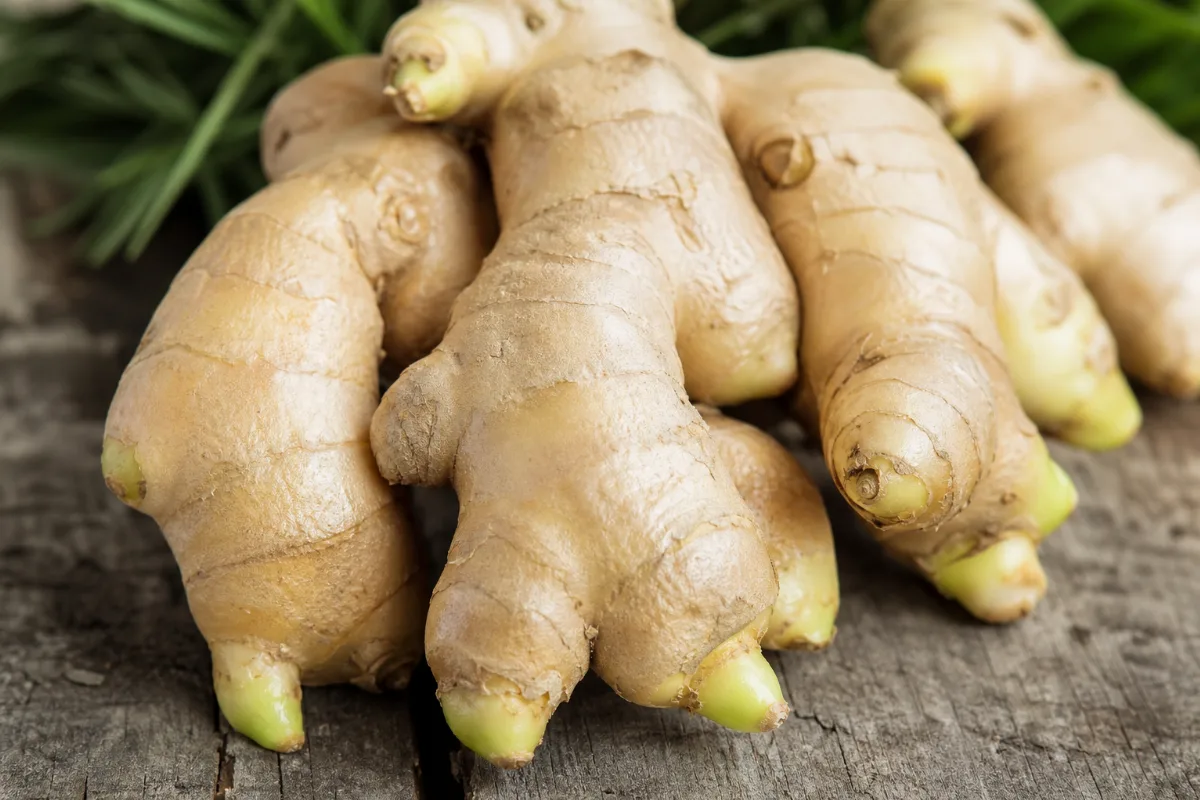
HERBS & BOTANICALS · COMPARED
Ginger vs Turmeric: Two Rhizomes Compared
Ginger and turmeric are both rhizomes in the ginger family. What NIH says each is studied for, one head-to-head trial, and the different cautions, including the turmeric liver warning.
Content last updated . This page has not been medically reviewed.
Back to GingerSafety first. Natural products can cause side effects and interact with medicines. Read herb safety and interactions before you use anything on this page.
Liver warning for turmeric. NIH says highly bioavailable curcumin formulations may harm the liver; if you notice fatigue, nausea, poor appetite, dark urine or jaundice, stop and talk with a health care provider. [1] NIH's ginger page names no such liver warning, but it tells people on medicines to check first. [2]
The question
People ask which rhizome (underground stem) is better for inflammation or aches. Ginger is Zingiber officinale and turmeric is Curcuma longa; both are accepted names in GBIF and both are used in food and for health purposes. [2][1][3] No source we read ranks them.What each is studied for
Tradition (not proof): ginger was traditionally used for asthma, flu, indigestion and gastrointestinal discomfort. [2] Turmeric has been used in Chinese, Ayurvedic, Islamic and Thai traditional medicine for indigestion, colds, arthritis and liver disease. [1]| Use | Ginger (NIH) | Turmeric (NIH) |
|---|---|---|
| Overall | Many human studies, some not high quality [2] | Not enough to conclude benefit for any purpose [1] |
| Knee osteoarthritis | Supplements might help, but much research was poor quality; topical ginger not shown to help [2] | Initial evidence for oral forms is positive, higher-quality evidence needed [1] |
| Nausea | May help pregnancy nausea; most motion sickness studies not helpful [2] | Proper evidence not found on NIH's turmeric page |
| Menstrual cramps | Supplements might reduce severity [2] | Proper evidence not found on NIH's turmeric page |
| Fatty liver | Not covered on NIH's ginger page | Initial, unclear which measures improve [1] |
Head to head
One triple-blind randomized trial of 144 COVID-19 outpatients in Iran compared turmeric, ginger and placebo tablets, three 500 mg tablets daily for five days. [4] Blood markers CRP and ESR fell more in both herb groups than with placebo, with no difference between turmeric and ginger. [4] This is one small trial of blood markers in one illness; it does not show either herb helps knee pain or digestion, and it is not a ranking. Proper evidence not found for other head-to-head trials we could read (PubMed title search for ginger, turmeric, trial).No universal winner
The sources we read support different uses with different cautions. See the full profiles of ginger and turmeric, or ginger as a food.Frequently asked questions
Is ginger or turmeric better for inflammation?
NIH does not rank them. One trial found equal changes in two blood markers in COVID-19 outpatients. [4]
Can I use both together?
Proper evidence not found in the sources we read for combined use. Ask a pharmacist.
Which is safer?
Different cautions apply. Turmeric has a documented liver warning for bioavailable products. [1]
Does ginger help nausea?
NIH says it may help nausea and vomiting in pregnancy; most motion sickness studies were not helpful. [2]
Are they safe in pregnancy?
NIH says ginger supplements may be safe and turmeric supplements may be unsafe. Ask your clinician. [2][1]
More details: evidence, limits and cautions
The details behind this page: cautions, limits of the evidence and where sources disagree. Open any note to read it.
Safety side by side
- Ginger: side effects can include abdominal discomfort, heartburn, diarrhea and mouth or throat irritation. [2] Dietary supplements in pregnancy may be safe per NIH, but ask a provider; little is known about breastfeeding. [2]
- Turmeric: nausea, reflux, stomach upset, diarrhea or constipation. Supplements in pregnancy may be unsafe. [1]
- Both: ask a pharmacist about medicines, and tell the surgical team before an operation. See how interactions work.
References
- NCCIH (US National Institutes of Health), Turmeric, last updated April 2025. Read 2026-10-23.
- NCCIH (US National Institutes of Health), Ginger, last updated February 2025. Read 2026-10-23.
- GBIF Secretariat, GBIF Backbone Taxonomy species match, used for accepted plant names. Read 2026-10-23.
- A triple-blind randomized controlled trial on the effects of turmeric versus ginger on inflammatory biomarkers in patients with COVID-19, 2025, PubMed. Read 2026-10-23.