Ginger: Flavor, Cooking Use and Health Facts
Ginger is hot, sweet-spicy and fresh-smelling and used in curries, baking and drinks; research on nausea is promising in pregnancy but mixed elsewhere, and supplements have blood-thinner cautions.
Content last updated . This page has not been medically reviewed.
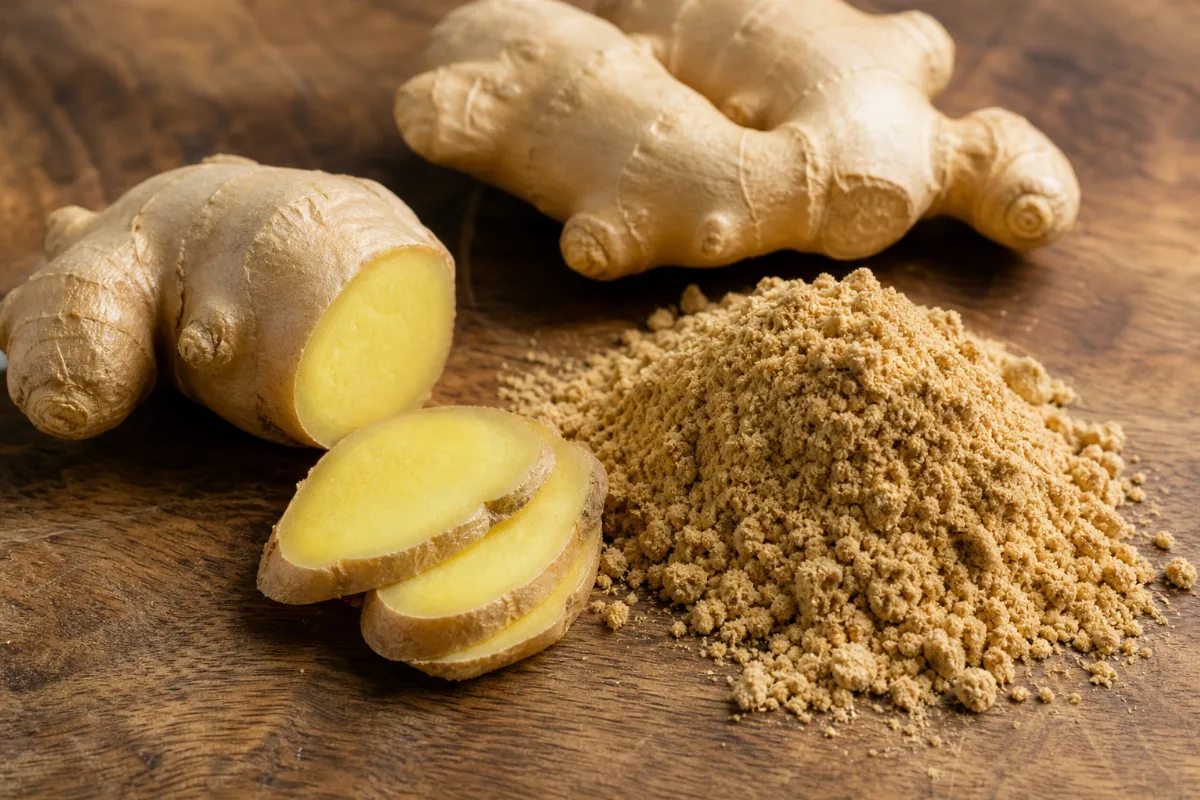
In the kitchen at a glance
Flavor:Hot / pungentWarm / woodySweet
Aroma: Fresh, citrusy and spicy when raw; warmer and sweeter when dried.
Used in: curries, baking, tea and drinks, soups and stews, vegetables
Usual amount in food: About 1 teaspoon (1.8 g) of ground ginger is the USDA household measure; one source swaps about 1/4 teaspoon ground for 1 tablespoon fresh grated.
What it is
Ginger is the underground stem (rhizome) of Zingiber officinale, a plant in the Zingiberaceae family. [1] It started in Maritime Southeast Asia and no longer grows wild. [1] India grew about 45% of the world's ginger in 2023, followed by Nigeria and China. [1] Do not mix it up with wild ginger (Asarum), which is not true ginger and contains a compound that can damage the kidneys. [1]Flavor and aroma
Fresh ginger tastes hot and sharp with a clean, citrusy smell. The heat comes mainly from compounds called gingerols. [1] When ginger is dried, gingerols turn partly into zingerone, which is less hot and smells spicy-sweet, so dried ginger tastes warmer and sweeter. [1] Heat, long storage or acid turn gingerols into shogaols, which are hotter still. [1] This is why ground ginger and fresh ginger are not the same flavor.How it is used in cooking
Young fresh rhizomes are juicy and mild. Older ones are fibrous and drier. Dried, peeled and ground ginger is the usual commercial form. [1]- India: curries, gravies and masala chai. [1]
- China and Japan: fresh ginger with fish and meat; pickled ginger (gari, beni shoga); grated over tofu and noodles. [1]
- Korea: minced or juiced ginger in kimchi. [1]
- Caribbean: sorrel drinks, ginger beer, ginger tea and ginger cake. [1]
- Europe and North America: mostly sweet things, such as ginger ale, gingerbread, ginger snaps and parkin. [1]
Swapping fresh and ground: one source gives about 1/4 teaspoon of ground ginger for 1 tablespoon of fresh grated, and says ground is warmer and less bright, so it suits baking and long-cooked dishes better than stir-fries. [2] Another gives a fresh-for-ground ratio of about 6 to 1. [1] The sources do not agree on a firm rule for when to add it, so taste as you go. [2]
Normal food amounts
| Measure | Grams | Source |
|---|---|---|
| 1 teaspoon, ground | 1.8 g | USDA [5] |
| 1 tablespoon, ground | 5.2 g | USDA [5] |
| Typical recipe amount | Not found | Only a fresh-to-ground swap ratio was found [2] |
What one teaspoon (1.8 g) of ground ginger provides, calculated from USDA values per 100 g:
| Nutrient | One teaspoon |
|---|---|
| Energy | about 6 kcal |
| Fiber | about 0.3 g |
| Potassium | about 24 mg |
| Magnesium | about 4 mg |
| Manganese | about 0.6 mg |
| Iron | about 0.4 mg |
The USDA SR Legacy data are from 2018 and real products vary. [5] We did not compare these numbers with official daily values, so we do not call ginger a "good source" of anything. A teaspoon is mostly flavor.
Buying, storing and preparing
- Forms: fresh root, dried ground powder, pickled slices, and candied or crystallized pieces. Supplements and extracts are a separate product. [1]
- Fresh ginger: one retail source says it keeps about 2 to 3 weeks in the fridge and up to about 6 months frozen; another source says freeze or refrigerate it in a plastic bag. [1][2]
- Ground ginger: keep it airtight, away from light and heat. Sources disagree on shelf life, from 6 months to 3 years, so rub a little between your fingers and check that the smell is still strong. [2]
- Quality or adulteration: the sources we read do not describe a ginger quality problem.
Health: what research says
Eating ginger in cooking is very different from taking concentrated ginger products.Food amounts vs supplements
| In normal cooking | In supplements and extracts | |
|---|---|---|
| Typical amount | About 1.8 g per teaspoon (USDA); no usual recipe amount found [5] | Capsules, powders and extracts; no official amount found |
| What studies mostly used | Almost no studies of ginger eaten as food were found | Supplements, powders and extracts; NCCIH says most studies tested supplements rather than foods [4] |
| What we can say about benefit | No good evidence either way for food amounts | Possible help for pregnancy nausea; mixed or unclear for other uses [4][6] |
| Main safety limit | Heartburn or stomach upset in large amounts [1] | Bleeding questions with blood thinners; pregnancy advice differs between agencies [3][7] |
What the evidence shows
| Use | What the sources found | Strength of evidence | Form and population |
|---|---|---|---|
| Nausea in pregnancy | A 2022 pooling of 13 trials (1,174 people) found less nausea than placebo, but no clear effect on vomiting. [6] NCCIH says research suggests it may help. [4] | Promising but limited | Supplements; pregnant women [4][6] |
| Nausea after surgery | A 2018 pooling of 10 trials (918 patients) found lower nausea scores; effects on how often nausea happened and on anti-nausea drug use were not statistically significant. [8] | Mixed | Oral ginger doses; surgical patients [8] |
| Motion sickness | NCCIH says most studies have not shown benefit. [4] EMA accepts powdered ginger for preventing motion-sickness nausea in adults. [7] | Mixed | Powder; adults [4][7] |
| Chemotherapy nausea | NCCIH says it is uncertain whether it helps as an addition to standard care. [4] | Insufficient evidence | Supplements; people with cancer [4] |
| Menstrual cramps | NCCIH says supplements might reduce severity. [4] | Promising but limited | Supplements [4] |
| Knee osteoarthritis | NCCIH says supplements might ease symptoms but much research is poor quality; skin ginger has not been shown to help. [4] | Insufficient evidence | Supplements; skin products [4] |
| Ginger eaten as food, any health outcome | No study found | Insufficient evidence | Food amounts |
For supplement forms, trials and interactions in depth, see the full herb guide: Ginger.
Official statements
- FDA (US): lists ginger as generally recognized as safe, as reported by Wikipedia; we did not open the FDA record. [1]
- EMA (EU), page updated 2026: powdered ginger has "well-established use" for preventing motion-sickness nausea in adults; other uses (stomach complaints, appetite loss, minor joint pain, cold symptoms) are traditional use only. [7]
- NCCIH (US), 2025: research summary above; most studies tested supplements. [4]
Related pages
Health connections for Ginger
What research links to this spice, and how strong the evidence is. Most studies use concentrated extracts or doses far above what you eat; each card says which.
Nausea in pregnancy
Preliminary or mixedA 2022 pooling of 13 trials found ginger supplements lowered nausea but not clearly vomiting. NCCIH says it may help.
Supplements: Finding is for supplements, not cooking amounts; agencies differ on safety in pregnancy.
Motion-sickness nausea
Clinically supportedEMA accepts powdered ginger for preventing motion-sickness nausea in adults; NCCIH says most studies have not shown benefit.
Supplements: Powder products in the EU; not shown for food amounts.
Nausea after surgery
Preliminary or mixedA 2018 pooling of 10 trials found lower nausea scores; effects on how often nausea occurred were not significant.
Supplements: Oral ginger doses in surgical patients; Memorial Sloan Kettering advises against supplements right after surgery.
Menstrual cramps
Preliminary or mixedNCCIH says supplements might reduce cramp severity.
Supplements: Supplements only.
Knee osteoarthritis
Preliminary or mixedNCCIH says supplements might ease symptoms but much research is poor quality; skin ginger not shown to help.
Supplements: Supplements only.
Ginger as food, any health outcome
Not enough evidenceNo study of ginger eaten as food was found for a health outcome.
Supplements: Not assessable for food amounts.
Connected topics
Open a group to see how each topic connects and how strong the evidence is.
Health goals (2)
- Digestive SupportPreliminary or mixed
Ginger is used for nausea and digestive complaints. Support is mixed: regulators recognise powdered ginger for motion-sickness nausea and NCCIH finds it may help nausea in pregnancy, while other uses rest on traditional use.
- Women’s WellnessPreliminary or mixed
NCCIH says research suggests ginger supplements might reduce menstrual cramp severity; evidence is limited.
Body systems (1)
- Digestive SystemPreliminary or mixed
Ginger is used for nausea and digestive complaints. Support is mixed: regulators recognise powdered ginger for motion-sickness nausea and NCCIH finds it may help nausea in pregnancy, while other uses rest on traditional use.
Body parts (2)
- StomachPreliminary or mixed
Ginger is mainly studied for nausea and upset stomach. Results are mixed and depend on the use.
- GallbladderDocumented risk
Memorial Sloan Kettering advises people with gallstones to avoid ginger supplements because ginger may increase bile flow.
Functional actions (1)
- Digestive SupportPreliminary or mixed
Used for nausea and mild digestive complaints; only the motion-sickness use has regulatory support (EU), the rest is traditional or mixed.
Root causes (1)
- Medication Side EffectsDocumented risk
Ginger supplements may add to the bleeding risk of warfarin, other blood thinners and NSAIDs, and may affect diabetes medicines, tacrolimus and cyclosporine. The EU summary reports no described interactions, so sources differ; ask a pharmacist.
Biomarkers (1)
- Blood GlucoseDocumented risk
Memorial Sloan Kettering says ginger may cause larger blood-sugar drops when taken with diabetes medicines; clinical relevance is not known.
Conditions & symptoms (7)
- Motion SicknessClinically supported
EU regulators recognise powdered ginger for preventing motion-sickness nausea; NCCIH says most studies have not shown benefit.
- Nausea In PregnancyClinically supported
NCCIH says research shows ginger may help; safety advice differs between agencies.
- CholelithiasisDocumented risk
Memorial Sloan Kettering advises people with gallstones to avoid ginger supplements.
- DyspepsiaPreliminary or mixed
Traditional use for indigestion (EU); no trial evidence read.
- HeartburnDocumented risk
Heartburn is a common side effect of ginger supplements.
- Postoperative Nausea And VomitingPreliminary or mixed
Uncertain whether ginger helps; Memorial Sloan Kettering advises against supplements right after surgery.
- Primary DysmenorrheaPreliminary or mixed
NCCIH says research suggests ginger supplements might reduce menstrual cramp severity.
Documented risks and interactions (6)
- Bleeding risk with blood thinners and NSAIDs. Memorial Sloan Kettering advises against ginger supplements with warfarin, other blood thinners, NSAIDs or bleeding disorders; dietary ginger seems not to have this effect. A review found the evidence inconclusive.
- Surgery. Memorial Sloan Kettering advises stopping ginger supplements 2 weeks before surgery.
- Other medicine interactions. Memorial Sloan Kettering notes possible larger blood sugar drops with diabetes medicines, higher tacrolimus and lower cyclosporine levels; clinical relevance unknown. EMA described no interactions.
- Pregnancy, breastfeeding and children. EMA does not recommend its ginger medicines in pregnancy, breastfeeding or under 18; NCCIH says supplements in pregnancy may be safe.
- Gallstones. Memorial Sloan Kettering advises people with gallstones to avoid supplements because ginger may increase bile flow.
- Stomach upset, heartburn, allergy. NCCIH lists belly discomfort, heartburn, diarrhea and mouth irritation; EMA lists ginger allergy and skin reactions. Large food amounts may cause stomach discomfort and powder heartburn.
Frequently asked questions
Is ginger sweet?
Fresh ginger is hot and sharp, not sweet. Dried ginger tastes warmer and sweeter because drying changes some of the hot compounds. [1]
How much is normal?
USDA lists 1.8 g per teaspoon of ground ginger. [5] We found no source for a usual recipe amount, only a swap of about 1/4 teaspoon ground for 1 tablespoon fresh grated. [2]
Is it safe in pregnancy?
Sources differ. NCCIH says supplements may be safe, while EMA and Memorial Sloan Kettering advise against supplements or ginger medicines. [4][7][3] Cooking amounts are not addressed in the sources we read, so ask your midwife or doctor.
Can I take it with medicines?
Memorial Sloan Kettering warns about ginger supplements with blood thinners, NSAIDs, diabetes medicines, tacrolimus and cyclosporine, and says dietary ginger seems not to have the blood-thinning effect. [3] EMA described no interactions. [7] Ask a pharmacist if you take any of these.
Does ginger stop nausea?
A pooling of 13 trials found less nausea in pregnancy but no clear effect on vomiting, using supplements. [6] For motion sickness NCCIH says most studies were not helpful. [4] It is not a treatment.
More details: evidence, limits and cautions
The details behind this page: cautions, limits of the evidence and where sources disagree. Open any note to read it.
Safety note at a glance
Safety in more detail
- Medicines: Memorial Sloan Kettering says supplements may raise bleeding risk with warfarin, other blood thinners and NSAIDs, may deepen the blood sugar drop from diabetes medicines, may raise tacrolimus levels and may lower cyclosporine levels; for the last three it says the clinical relevance is unknown. [3] It notes that a review found the blood-thinner evidence inconclusive. [3] EMA says no interactions were described in the literature when it assessed ginger. [7] The sources differ, so ask a pharmacist.
- Pregnancy: NCCIH says supplements may be safe and to check with your provider. [4] EMA does not recommend its ginger medicines in pregnancy, and Memorial Sloan Kettering advises avoiding supplements. [7][3] The sources we read do not address cooking amounts.
- Breastfeeding: NCCIH says little is known. [4] EMA does not recommend its ginger medicines. [7]
- Children: EMA does not recommend its ginger medicines under 18 for most uses, and not under 6 for motion sickness, because of limited data. [7]
- Allergy: EMA lists ginger allergy as a reason not to use its ginger medicines, and lists skin allergic reactions as a possible side effect. [7]
- Liver and kidney: the sources we read do not describe a liver or kidney warning for ginger. We could not open NIH's LiverTox page, so we make no claim either way.
- Surgery: Memorial Sloan Kettering advises stopping ginger supplements 2 weeks before surgery. [3]
- Quality and contamination: the sources we read do not describe contamination of ginger.
- Amounts that cause trouble: large amounts can cause stomach discomfort, and powdered forms may cause heartburn. [1] NCCIH lists belly discomfort, heartburn, diarrhea and mouth or throat irritation. [4] Memorial Sloan Kettering says fresh ginger in high doses can stop platelets sticking together, but gives no amount. [3] Gallstones: it advises avoiding supplements because ginger may increase bile flow. [3]
References
- Wikipedia — Ginger (first 100,000 characters read; cites FDA GRAS status, FAO production data). https://en.wikipedia.org/wiki/Ginger (accessed 2026-10-24)
- Spice retailer and cooking guides, search summary only (Alibaba spice guide, MasterClass; pages not opened individually) — fresh vs ground ginger swaps and storage. https://spice.alibaba.com/spice-basics/fresh-ginger-vs-ground-ginger (accessed 2026-10-24)
- Memorial Sloan Kettering Cancer Center — Ginger (page updated June 2022). https://www.mskcc.org/cancer-care/patient-education/herbs/ginger (accessed 2026-10-24)
- NCCIH (US) — Ginger: Usefulness and Safety (2025). https://www.nccih.nih.gov/health/ginger (accessed 2026-10-24)
- USDA FoodData Central, SR Legacy (April 2018) — Spices, ginger, ground (fdc_id 170926), per-100 g values and household portions from the site's USDA data file.
- Effect of ginger in the treatment of nausea and vomiting compared with vitamin B6 and placebo during pregnancy: a meta-analysis. J Matern Fetal Neonatal Med 2022; abstract read via Europe PMC. https://pubmed.ncbi.nlm.nih.gov/31937153/ (accessed 2026-10-24)
- EMA (EU) — Zingiberis rhizoma, herbal medicinal product. https://www.ema.europa.eu/en/medicines/herbal/zingiberis-rhizoma (accessed 2026-10-24)
- Ginger (Zingiber officinale): an alternative for the prevention of postoperative nausea and vomiting. A meta-analysis. Phytomedicine 2018; abstract read via Europe PMC. https://pubmed.ncbi.nlm.nih.gov/30466995/ (accessed 2026-10-24)