Turmeric: Flavor, Cooking Use and Health Facts
Turmeric is earthy, warm and slightly bitter and gives curries their yellow color; research on health uses is early, and concentrated curcumin products have been linked to liver injury.
Content last updated . This page has not been medically reviewed.
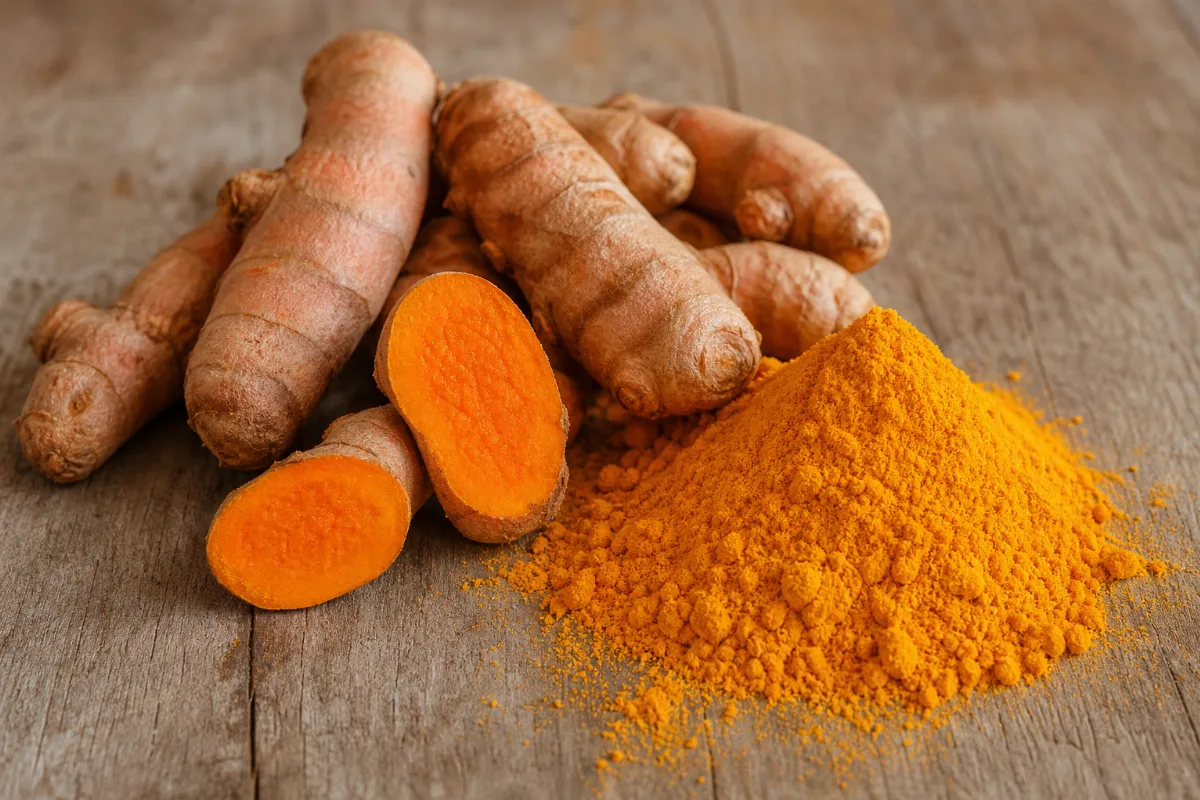
In the kitchen at a glance
Flavor:EarthyWarm / woodyBitter
Aroma: Earthy and a little like mustard, with a peppery warmth.
Used in: curries, rice and grains, soups and stews, tea and drinks, vegetables
Usual amount in food: About 1 teaspoon (3 g) of ground turmeric is the USDA household measure; we found no source that sets a usual recipe amount.
What it is
Turmeric is the underground stem (rhizome) of Curcuma longa, a plant in the ginger family. [1] It is grown mainly in India and Southeast Asia. [1] The yellow-orange color comes from curcumin. [1] The rhizome can be used fresh, like ginger, but most is boiled, dried and ground into powder. [2]Flavor and aroma
Turmeric tastes warm and slightly bitter, a little like black pepper, with an earthy, mustard-like smell. [2] It is more of a color and base flavor than a loud one. Most cooks add it early, in hot oil or with onions, so the raw edge softens. That timing is common practice in recipes such as Iranian stews that start with onions and turmeric in oil. [2]How it is used in cooking
Ground turmeric is the usual form. Fresh rhizome is grated or pounded like ginger. [2]- Curries and pastes: turmeric is a principal ingredient of curry powder. [2] Fresh rhizome goes into Cambodian kroeung paste and Thai yellow curry. [2]
- Rice and grains: it colors boiled rice yellow in South Africa. [2]
- Stews and soups: Iranian khoresh, Moroccan ras el hanout blends, and Indonesian dishes such as rendang use it. [2]
- Drinks: haldi doodh, or "golden milk", is made in India with milk, black pepper and ghee. [2]
- Color: it tints prepared mustards and broths, and is sometimes used as a cheaper stand-in for saffron's color. [2]
The sources we read do not give rules for toasting, and they name no substitutes that match its flavor. Because saffron is used for color, a turmeric swap changes taste. [2]
Normal food amounts
| Measure | Grams | Source |
|---|---|---|
| 1 teaspoon, ground | 3.0 g | USDA [7] |
| 1 tablespoon, ground | 9.4 g | USDA [7] |
| Typical recipe amount | Not found | We opened no source that states one |
What one teaspoon (3 g) of ground turmeric provides, calculated from USDA values per 100 g:
| Nutrient | One teaspoon |
|---|---|
| Energy | about 9 kcal |
| Fiber | about 0.7 g |
| Iron | about 1.7 mg |
| Manganese | about 0.6 mg |
| Potassium | about 62 mg |
| Magnesium | about 6 mg |
The USDA SR Legacy data are from 2018 and real products vary. [7] We did not compare these numbers with official daily values, so we do not call turmeric a "good source" of anything. Most recipes use less than a teaspoon per person, so the nutrient amounts you actually eat are small.
Buying, storing and preparing
- Forms: whole fresh or dried rhizome, ground powder, and oleoresin for food manufacturers. [2]
- Color is not proof of purity: spices are sold by weight, so cheaper colorings can be added. Lead chromate has been found in turmeric, and metanil yellow is treated as an illegal food dye by the UK Food Standards Agency. [2]
- Lead study: a 2024 study of 356 turmeric samples from India, Pakistan, Sri Lanka and Nepal found lead above 2 micrograms per gram in about 14%. Samples with the highest lead had lead-to-chromium ratios that suggest added lead chromate. [5] It cannot tell you about any one jar.
- Storing and shelf life: the sources we read give no shelf life or storage rule. A cool, dark, dry place is common sense for any ground spice.
Health: what research says
Eating turmeric in cooking is very different from taking concentrated turmeric or curcumin products, and almost all the research is on the products.Food amounts vs supplements
| In normal cooking | In supplements and extracts | |
|---|---|---|
| Typical amount | About 3 g per teaspoon (USDA); no usual recipe amount found [7] | Products vary in curcumin content and may add piperine from black pepper [1] |
| What studies mostly used | We found no study of turmeric eaten as a spice | Oral turmeric or curcumin products, mostly for knee osteoarthritis [1] |
| What we can say about benefit | Nothing reliable | NCCIH says evidence is not strong enough to say it helps any health purpose [1] |
| Main safety limit | Lead contamination in some powder [5] | Liver injury, including with highly absorbable forms [1][4] |
What the evidence shows
| Use | What the sources found | Strength of evidence | Form and population |
|---|---|---|---|
| Knee osteoarthritis pain | Early meta-analyses of oral products are positive, but NCCIH says better research is needed. [1] | Promising but limited | Oral turmeric or curcumin; adults |
| Fatty liver disease | Early research suggests some measures may improve; which ones is unclear. [1] | Promising but limited | Oral products; adults with fatty liver |
| Mouth sores from cancer treatment | Early research suggests oral or mouthwash forms may help. [1] | Promising but limited | Oral or mouthwash; people in cancer treatment |
| Mild digestion problems (fullness, gas) | EU regulators accept use on long-standing tradition only; the studies showed a possible benefit but had design problems. [3] | Insufficient evidence | Turmeric medicines; adults |
| Knee pain with curcumin ointment | NCCIH says the effect is unclear. [1] | Insufficient evidence | Ointment on the skin |
| Depression, allergies, itching, high cholesterol | NCCIH says the evidence is not enough. [1] | Insufficient evidence | Oral products |
| Any use of turmeric as a food | No study found | Insufficient evidence | Food amounts |
For supplement forms, trials and interactions in depth, see the full herb guide: Turmeric.
Official statements
- NCCIH (US), updated April 2025: evidence is not strong enough to conclude turmeric or curcumin helps any health purpose; highly bioavailable curcumin products may harm the liver. [1]
- EMA/HMPC (EU): traditional use for mild digestion problems in adults, based on long use rather than strong trials. [3]
- EU food rules: curcumin is approved as a food color, code E100. [2]
Related pages
Health connections for Turmeric
What research links to this spice, and how strong the evidence is. Most studies use concentrated extracts or doses far above what you eat; each card says which.
Knee osteoarthritis pain and stiffness
Preliminary or mixedNCCIH says early meta-analyses of oral turmeric or curcumin are positive for osteoarthritis, but higher-quality research is needed.
Supplements: Supplement finding only; no study of food amounts found; products vary in curcumin content.
Fatty liver disease measures
Preliminary or mixedEarly research suggests some measures may improve in fatty liver disease, but it is unclear which.
Supplements: Supplement finding only.
Mouth sores from cancer treatment
Preliminary or mixedEarly research suggests oral or mouthwash forms may help mouth inflammation from cancer treatment.
Supplements: Supplement or mouthwash finding only.
Mild digestion problems (traditional use)
Preliminary or mixedEU regulators accept turmeric medicines for mild problems with digestion (fullness, slow digestion, gas) in adults on long-standing use only; studies showed a possible benefit but had design problems.
Supplements: Applies to turmeric medicines for adults, not to cooking amounts.
Other promoted uses (depression, allergies, itching, high cholesterol)
Not enough evidenceNCCIH says the evidence is not enough to conclude turmeric or curcumin helps these.
Supplements: No good evidence of benefit shown.
Connected topics
Open a group to see how each topic connects and how strong the evidence is.
Health goals (2)
- Joint SupportPreliminary or mixed
Early meta-analyses of oral turmeric or curcumin are positive for knee osteoarthritis; better research is needed. Not shown for food amounts.
- Digestive SupportPreliminary or mixed
EU regulators accept turmeric medicines for mild digestion problems in adults on long-standing use only; studies had design problems. Not about cooking amounts.
Body systems (5)
- Hepatic / Liver SystemDocumented risk
Liver injury has been reported with turmeric and curcumin supplements, especially highly absorbable forms; this is a safety link, not a benefit.
- Liver & DetoxDocumented risk
Liver injury has been reported with turmeric and curcumin supplements, especially highly absorbable forms; this is a safety link, not a benefit.
- Bones, Joints & MusclesPreliminary or mixed
Early meta-analyses of oral turmeric or curcumin are positive for knee osteoarthritis; better research is needed. Not shown for food amounts.
- Musculoskeletal SystemPreliminary or mixed
Early meta-analyses of oral turmeric or curcumin are positive for knee osteoarthritis; better research is needed. Not shown for food amounts.
- Digestive SystemPreliminary or mixed
EU regulators accept turmeric medicines for mild digestion problems in adults on long-standing use only; studies had design problems. Not about cooking amounts.
Body parts (3)
- LiverDocumented risk
Liver injury has been reported with turmeric and curcumin supplements, especially highly absorbable forms; this is a safety link, not a benefit.
- JointsPreliminary or mixed
Early meta-analyses of oral turmeric or curcumin are positive for knee osteoarthritis; better research is needed. Not shown for food amounts.
- KidneysDocumented risk
MSK advises people prone to kidney stones to check before turmeric supplements.
Functional actions (2)
- Joint SupportPreliminary or mixed
Early meta-analyses of oral turmeric or curcumin are positive for knee osteoarthritis; better research is needed. Not shown for food amounts.
- Digestive SupportPreliminary or mixed
EU regulators accept turmeric medicines for mild digestion problems in adults on long-standing use only; studies had design problems. Not about cooking amounts.
Root causes (2)
- Heavy Metal ExposureDocumented risk
A 2024 study found lead above 2 micrograms per gram in about 14% of South Asian turmeric samples; likely added lead chromate.
- Medication Side EffectsDocumented risk
MSK lists possible interactions with blood thinners, tacrolimus and other drugs, mostly from lab or animal data.
Biomarkers (1)
- ALTDocumented risk
Turmeric liver injury was typically hepatocellular, which liver enzyme tests such as ALT would show; the abstract does not name ALT.
Conditions & symptoms (6)
- Drug-Induced Liver DiseaseDocumented risk
Turmeric supplements have been linked to liver injury, including one death in a ten-case US series.
- Chronic OsteoarthritisPreliminary or mixed
Early meta-analyses of oral turmeric or curcumin are positive for knee osteoarthritis; NCCIH says better research is needed. Not shown for food.
- Lead PoisoningDocumented risk
Some South Asian turmeric powder contained lead, likely lead chromate; the study modeled raised child blood lead near the worst samples.
- DyspepsiaPreliminary or mixed
EU regulators accept turmeric medicines for mild digestion problems on traditional use only.
- FlatulencePreliminary or mixed
Gas is among the mild digestion problems named in the EU public summary; traditional use only.
- Non-Alcoholic Fatty Liver DiseasePreliminary or mixed
Early research suggests some measures may improve; unclear which.
Documented risks and interactions (6)
- Liver injury with turmeric and curcumin supplements. Liver damage has been reported, especially with highly absorbable curcumin products. A US network described ten cases (2004 to 2022): five hospital stays and one death from acute liver failure.
- Lead contamination of some turmeric powder. A 2024 study found lead above 2 micrograms per gram in about 14% of 356 samples from South Asia; the highest samples suggest added lead chromate.
- Bleeding and medicine interactions. MSK says turmeric may raise bleeding risk with warfarin and other blood thinners (lab data and one case report), and may weaken aspirin, ibuprofen, acetaminophen and some chemotherapy drugs (lab or animal data).
- Kidney stones and oxalate. MSK advises people prone to kidney stones to check with a doctor before turmeric supplements; one case of oxalate nephropathy with long supplement use.
- Pregnancy and breastfeeding. NCCIH says turmeric supplements may be unsafe in pregnancy and little is known about amounts above food levels while breastfeeding.
- Side effects and allergy. Oral turmeric may cause nausea, vomiting, reflux, stomach upset, diarrhea or constipation; topical curcumin may cause hives or itching.
Frequently asked questions
Does turmeric taste hot?
Not really. It is warm, earthy and slightly bitter, a little like black pepper. [2]
How much is normal?
USDA lists 3 g per teaspoon of ground turmeric. [7] We found no source for a usual recipe amount.
Is it safe in pregnancy?
NCCIH says turmeric supplements may be unsafe in pregnancy. [1] The sources we read do not describe food amounts, so ask your midwife or doctor.
Can I take it with medicines?
Cooking amounts are not described as a problem in the sources we read. For supplements, MSK lists possible effects with blood thinners and some other drugs, so ask a pharmacist. [6]
Does black pepper make turmeric work better?
NCCIH says piperine from black pepper is one way to improve curcumin absorption in products. [1] Three of seven products tested in the US liver-injury series also contained it. [4]
Can turmeric powder contain lead?
In a 2024 study of South Asian samples, about 14% had lead above 2 micrograms per gram. [5] Buy from sellers who test.
More details: evidence, limits and cautions
The details behind this page: cautions, limits of the evidence and where sources disagree. Open any note to read it.
Safety note at a glance
Safety in more detail
- Medicines: Memorial Sloan Kettering says turmeric may raise bleeding risk with warfarin and other blood thinners, based on lab studies and one case report. [6] It also lists possible weaker effects with aspirin, ibuprofen and acetaminophen, and with some chemotherapy drugs (lab or animal data), and higher tacrolimus levels in mice plus one transplant case. [6] These concern supplements; ask a pharmacist.
- Pregnancy: NCCIH says turmeric supplements may be unsafe in pregnancy. [1] The sources we read do not describe food amounts.
- Breastfeeding: NCCIH says little is known about amounts above those in food. [1]
- Children: EMA says turmeric medicines should only be used in adults. [3]
- Allergy: hives or itching with topical curcumin; case reports of allergic skin reactions. [1][6] The sources we read do not describe cross-reactions with other spices.
- Liver and kidney: NCCIH says liver damage has been reported with highly absorbable curcumin products. [1] A US network described ten turmeric-linked cases from 2004 to 2022: five hospital stays and one death from acute liver failure, usually starting 1 to 4 months after use began, with a strong link to the gene variant HLA-B*35:01. [4] MSK advises people prone to kidney stones to check first with a doctor about supplements. [6]
- Surgery: the sources we read do not give a stop date. Because of the bleeding question, tell the surgical team about any supplement. [6]
- Quality and contamination: lead chromate and illegal dyes have been found in some powder. [2][5]
- Amounts that cause trouble: NCCIH says conventional oral products are likely safe at recommended amounts for 2 to 3 months, and lists nausea, reflux, stomach upset, diarrhea and constipation as side effects. [1] EMA lists dry mouth, gas and stomach irritation. [3] The sources we read name no trouble from cooking amounts.
References
- NCCIH (US) — Turmeric. https://www.nccih.nih.gov/health/turmeric (accessed 2026-10-24)
- Wikipedia — Turmeric (cooking, adulteration and E100 sections). https://en.wikipedia.org/wiki/Turmeric (accessed 2026-10-24)
- EMA (EU) — Turmeric: herbal medicinal product, summary for the public. https://www.ema.europa.eu/en/medicines/herbal/curcumae-longae-rhizoma (accessed 2026-10-24)
- Halegoua-DeMarzio D et al. — Liver injury associated with turmeric: a growing problem. Am J Med 2023; abstract read via Europe PMC. https://pubmed.ncbi.nlm.nih.gov/36252717/ (accessed 2026-10-24)
- Evidence of turmeric adulteration with lead chromate across South Asia. Sci Total Environ 2024; abstract read via Europe PMC. https://pubmed.ncbi.nlm.nih.gov/39053552/ (accessed 2026-10-24)
- Memorial Sloan Kettering Cancer Center — Turmeric. https://www.mskcc.org/cancer-care/integrative-medicine/herbs/turmeric (accessed 2026-10-24)
- USDA FoodData Central, SR Legacy (April 2018) — Spices, turmeric, ground (fdc_id 172231), per-100 g values and household portions from the site's USDA data file.