Adaptogens · Herbs & Botanicals · Herbs · Indian gooseberry fruit and extracts, with low-certainty evidence for blood fats and blood sugar
Amla (Indian gooseberry)
Phyllanthus emblica L. (also written Emblica officinalis Gaertn.) · also called Amla, amalaki, Indian gooseberry, emblic myrobalan, aonla, nelí or mirobalano (Spanish), groseillier de Ceylan (French), Amblabaum (German)
Amla is the round, pale green fruit of a tree in the Phyllanthaceae family, eaten fresh, dried or pickled in India and sold as powders, extracts, juices, tea, syrup and as an ingredient of the Ayurvedic jam Chyawanprash and the three-fruit mix Triphala. This profile is about amla as a health product, not as a snack. No use is rated above low. Blood fats (LDL cholesterol and triglycerides), blood sugar, inflammation (CRP), blood vessel function, platelet stickiness, bad breath, gum disease and heartburn are low; weight, hair loss, skin, cough during a lung scope, hospital stay with COVID-19, antioxidant markers and DNA repair are very low; blood pressure, Chyawanprash for COVID-19 prevention, memory and eye health are insufficient. Amla may make platelets less sticky, may add to diabetes medicine, is very high in vitamin C, and Ayurvedic products in general can contain lead, mercury or arsenic.
General information, not medical advice. Last substantive update · Not medically reviewed. A named clinician has not signed off on this page. How this page is made
About Amla (Indian gooseberry)
Amla (Phyllanthus emblica) is the fruit known as Indian gooseberry. It is used in Ayurveda and sold as powders, extracts and Chyawanprash. Small trials point to lower LDL cholesterol, triglycerides, blood sugar and CRP, but no use is rated above low, several positive trials are industry-linked, and the one adequate trial in people with high blood pressure found nothing. Amla extract made platelets less sticky in a small study, it may add to diabetes medicine, it is very high in vitamin C, and Ayurvedic products can contain lead, mercury or arsenic. No effect on heart attacks, strokes or deaths has been tested.
What it is
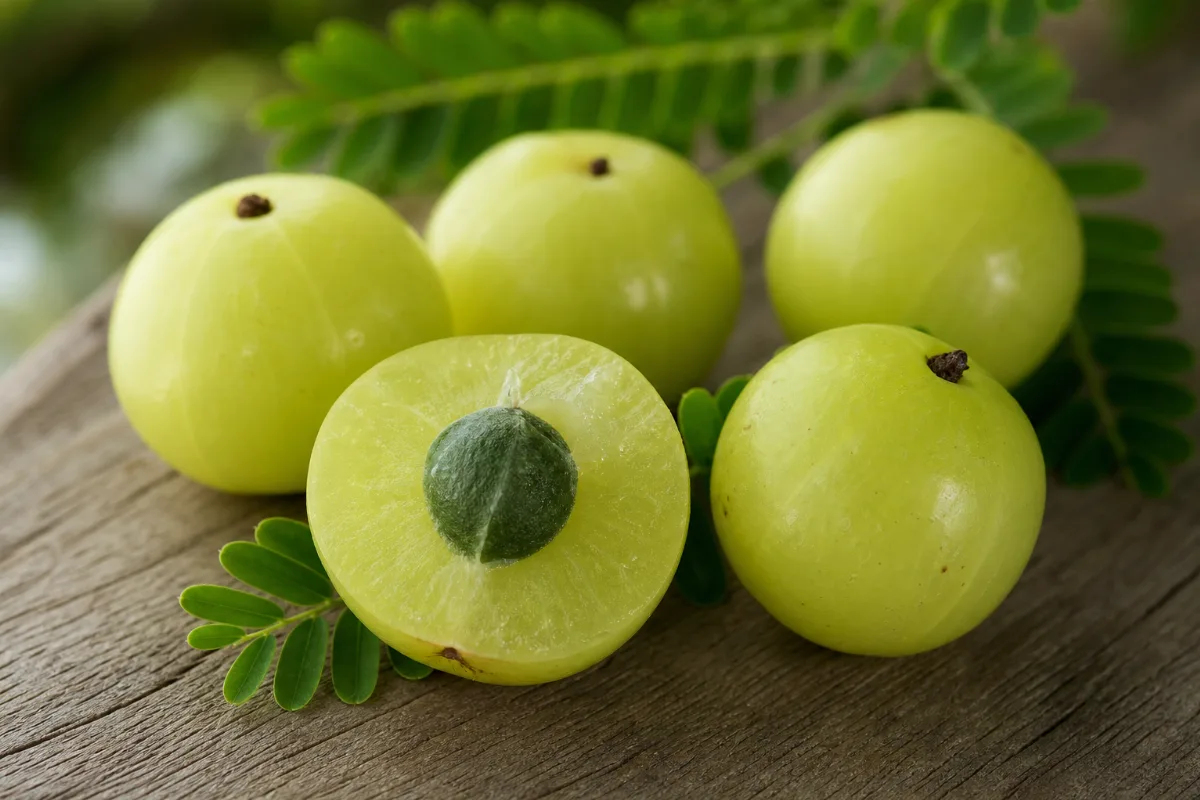
Amla (Phyllanthus emblica L., also called Emblica officinalis) is a tree of the Phyllanthaceae family. The accepted name in the GBIF plant database is Phyllanthus emblica L.; Emblica officinalis Gaertn. is an older name that is still common in the research. A review abstract says the tree is native to India and Southeast Asia. The round, pale green fruit is the part used in almost every study. It is not related to the European gooseberry.
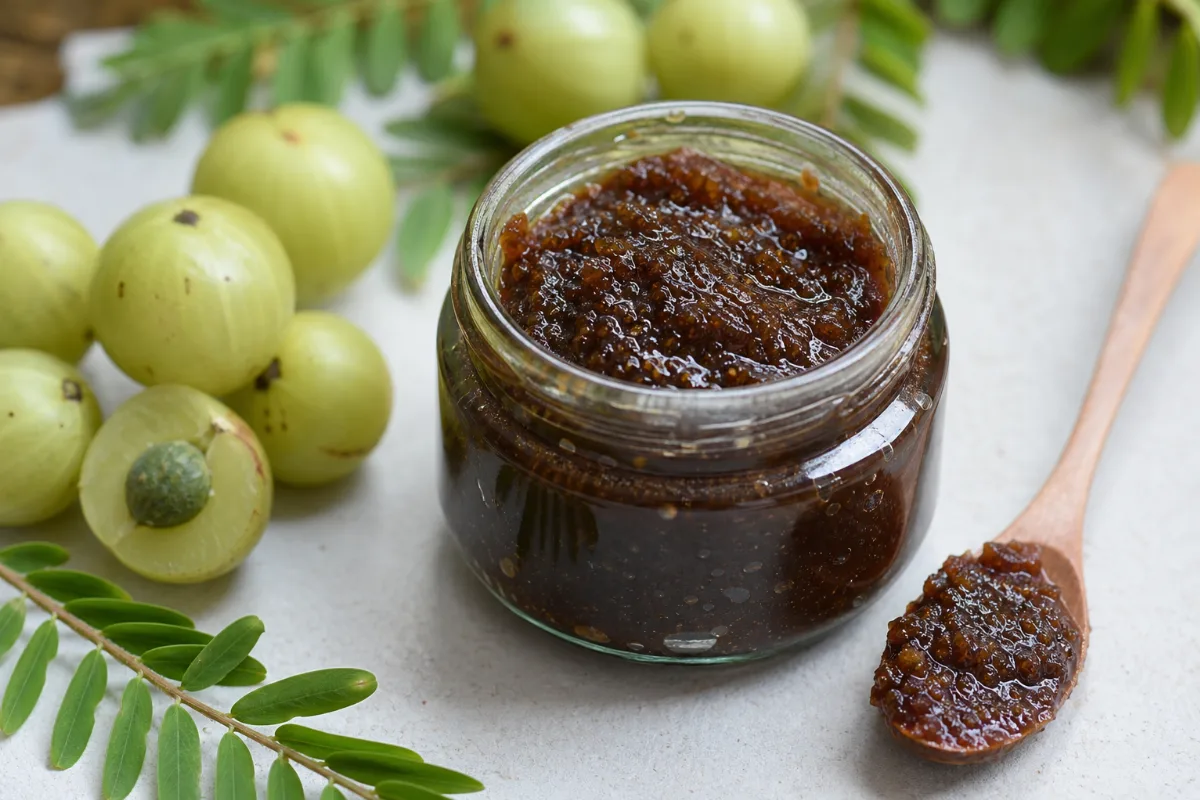
Amla is also an ingredient of Triphala, an Ayurvedic mix of three fruits, and of Chyawanprash, a traditional jam made with many herbs. Results for those mixes are not results for amla alone. Phyllanthus amarus and Phyllanthus niruri are different species of the same genus and should not be assumed to act the same.
Traditional and current uses
A 2022 review says amla fruit has been used in Ayurveda and other Asian traditional medicine for colds, cough, diabetes, headache, eye disease, indigestion, hyperacidity, ulcers, skin disease, anemia, liver problems and heart disorders. Reviews and trial authors also describe use in traditional Chinese medicine, as a hair tonic in traditional Persian medicine, and as a rejuvenating preparation (Amalaki rasayana) for older people. We did not read an original text, an EU herbal assessment or a World Health Organization monograph, so those are not used here.
Today amla is taken as powder, extract, juice, tea or syrup, mainly for blood fats, blood sugar and heart health, and is used in mouth rinses, gels, gum and toothpaste.
What is in it and how it works
The fruit is very rich in vitamin C: a trial abstract cites 1,100 to 1,700 mg per 100 g of fruit. It also contains hydrolysable tannins (for example chebulagic acid and putranjivain A), phenolic acids (gallic acid, ellagic acid) and a precursor called beta-glucogallin. More than 180 compounds have been isolated. Tannin amounts vary with variety and ripeness.
Lab and animal studies show amla extracts and gallic and ellagic acids affect starch-digesting enzymes, insulin release, glucose-handling proteins, liver fat-burning proteins and the Nrf2 antioxidant pathway. In people, amla extract lowered platelet clumping in small studies. None of these mechanisms has been confirmed as the cause of an effect in people, and no human study measured how amla compounds are absorbed. No trial separated the effect of vitamin C from that of the tannins.
What the research shows
Blood fats: two pooled analyses of randomized trials found lower LDL cholesterol and triglycerides. One (9 trials, 535 adults) found LDL down about 15 mg/dL, triglycerides down about 22 mg/dL and CRP down 1.7 mg/L; the other (5 trials) gave p-values only. The trials differ a lot and the prediction intervals include no effect. A 150-person placebo trial in people on blood pressure medicine found no change in blood pressure, fats, sugar or CRP. A trial of Triphala plus guggulu was no better than placebo. We rate this low. Blood sugar is low: small, short trials, several without a placebo group, and an open-label trial by an extract maker. Blood pressure is insufficient.
Other uses: a mouth rinse and a chewing gum lowered breath gases; a 10% gel placed in gum pockets and a seven-ingredient toothpaste improved gum measures; amla tablets reduced heartburn in a 68-person trial. These are low. Weight, hair loss, skin, cough during a lung scope, hospital stay with COVID-19 and DNA repair rest on one or two small or flawed trials each and are very low. A pooled analysis of Chyawanprash for COVID-19 prevention showed no clear difference. We found no human trial of memory or eye health; the memory results are from mice and rats.
Two reasons for caution: most positive trials used branded extracts that cannot be compared with each other or with plain powder, and several were industry-linked (an extract maker's own staff, a maker that supplied the capsules, a company funder and company-employed authors). No outcome that people feel or that matters for life (heart attack, stroke, diabetes complications, death) has been measured.
8 38 39 11 28 46 30 22 44 26 15 17 32 23 42 1 7 48 40 49 43 20 16 6 27
At a glance
Traditional uses history, not proof
- Ayurveda and other Asian systems: a 2022 review says amla fruit has been used for colds, cough, diabetes, headache, eye disease, indigestion, hyperacidity, ulcers, skin disease, anemia, liver problems and heart disorders. We did not read an original text.
- Traditional Persian medicine: trial authors say amla fruit is used as a hair tonic. Chyawanprash and Amalaki rasayana are traditional Ayurvedic preparations described as rejuvenating.
- Modern use: powders and standardized extracts taken for blood fats, blood sugar and heart health, plus mouth rinses, gels and a few skin and hair products.
Studied for research
- Blood fats, blood sugar, inflammation (CRP), blood vessel function, platelet stickiness, bad breath, gum disease and heartburn, low
- Antioxidant markers, body weight, hair loss, skin, cough during a lung scope, hospital stay with COVID-19, DNA repair in older adults, very low
- Blood pressure, Chyawanprash for COVID-19 prevention, memory and eye health, insufficient
- No benefit of any kind has been shown for heart attack, stroke, diabetes complications or death
Main compounds
- Vitamin C (ascorbic acid): very high in the fruit; one trial abstract cites 1,100 to 1,700 mg per 100 g
- Hydrolysable tannins such as chebulagic acid, putranjivain A and beta-glucogallin; and phenolic acids such as gallic acid and ellagic acid
- Polysaccharides and many other compounds (over 180 isolated, per a 2022 review)
Common forms
- Fresh or dried fruit as a food, and fruit powder
- Standardized fruit extracts (branded examples in trials include Capros, Amlamax and a beta-glucogallin extract)
- Chyawanprash (a jam with amla and many other herbs) and Triphala (amla with two other fruits)
- Juice, tea, syrup, and mouth products such as rinses, gels, gum and toothpaste
Research links: Amla and blood fats and CRP: meta-analysis of 9 trials (abstract) · Amla and lipids, glucose and CRP: meta-analysis of 5 trials (abstract) · Amla extract added to blood pressure medicines: randomized trial in 150 people (abstract) · Amla extract and platelet function with clopidogrel and aspirin (abstract) · Heavy metals in Ayurvedic medicines sold on the Internet (abstract) · GBIF record for Phyllanthus emblica L. · Research Library · Genes & Biomarkers Library
The plant and its history
- Accepted scientific name
- Phyllanthus emblica L.
- Naming authority
- L. (Linnaeus), Species Plantarum, page 982 (1753), as given by GBIF (usageKey 5381660, status accepted, name-match confidence 99). Emblica officinalis Gaertn. is a synonym (GBIF usageKey 3077565, points to 5381660).
- Synonyms
- Emblica officinalis Gaertn.; Cicca emblica (L.) Kurz; Cicca macrocarpa Kurz; Diasperus emblica (L.) Kuntze; Diasperus pomifer (Hook.f.) Kuntze; Dichelactina nodicaulis Hance; Emblica arborea Raf.; Mirobalanus embilica Burm.; Phyllanthus glomeratus Roxb.; Phyllanthus mairei H.Lév.; Phyllanthus mimosifolius Salisb.; Phyllanthus pomifer Hook.f.; Phyllanthus taxifolius D.Don
- Common names
- Amla (Hindi/Sanskrit/Urdu (GBIF lists amla, aonla)); Indian gooseberry (English); Emblic (English); Emblic myrobalan (English); Amalaki (Sanskrit (used in the trial literature)); Mirobalano / nelí (Spanish (GBIF)); Groseillier de Ceylan; myrobolan (French (GBIF)); Amblabaum (German (GBIF)); Emblika (Swedish (GBIF))
- Botanical family
- Phyllanthaceae (GBIF). A trial abstract also gives Phyllanthaceae for Phyllanthus emblica Linn. Older books often file the genus under Euphorbiaceae; we did not verify that.
- Classification
- Plantae > Tracheophyta > Magnoliopsida > Malpighiales > Phyllanthaceae > Phyllanthus > Phyllanthus emblica
- Native range
- A review abstract says the tree is native to India and Southeast Asia. Not checked against a flora.
- Habitat
- Not verified. We did not read a flora or other source for climate or soil.
- What the plant looks like
- Roots: Not described in the sources we read.; Stems: Not described in the sources we read.; Leaves: Our photo shows small, narrow leaflets arranged in rows along thin twigs (general description from the image, not from a flora).; Flowers: Not described in the sources we read.; Fruit: Round, smooth, pale green fruits (from the site photo, not checked against a flora). The fruit is the part used in almost every study cited here.
- Cultivation
- Not verified. We did not read a source on cultivation.
- Harvest and processing
- The studies use fresh fruit juice, dried fruit powder, water extracts, ethanol extracts, ethyl acetate extracts, tannin-enriched fractions, a syrup, a tea, and the jam Chyawanprash. Processing changes what is in each product; which part of the fruit, how it was dried and how it was extracted are usually not stated in the abstracts.
- Look-alikes and adulterants
- Name: Phyllanthus amarus and Phyllanthus niruri; Note: Different species of the same genus, small herbs sold as "bhumyamalaki" or "stonebreaker". GBIF lists both as accepted species in Phyllanthaceae (keys 5382589 and 5381945). Do not assume results carry across: the amla studies used the fruit of Phyllanthus emblica.; Name: Phyllanthus acidus (Otaheite gooseberry); Note: Another tree of the same genus with sour fruit; accepted by GBIF (key 5381567). Not studied in the amla trials.; Name: European gooseberry (Ribes uva-crispa); Note: Not related to amla; belongs to Grossulariaceae (GBIF key 2986185).; Name: Terminalia chebula and Terminalia bellirica; Note: The other two fruits in the Ayurvedic mix Triphala, which also contains amla (per a trial abstract). Terminalia chebula is in Combretaceae (GBIF key 3189388). Triphala results are not amla results.
- Sustainability and conservation
- Not assessed here. We did not retrieve an IUCN assessment.
The plant and the parts used
Traditional use and history history, not clinical proof
| Tradition or era | Documented use | Source |
|---|---|---|
| Ayurveda and other Asian traditional systems (as summarised in a 2022 review) | The review says amla fruit has been used in indigenous traditional medicine, including Ayurveda, for common cold, fever, cough, asthma, bronchitis, diabetes, headache, eye disease, dyspepsia, colic, flatulence, hyperacidity, peptic ulcer, skin diseases, anemia, liver disease, jaundice, diarrhea, dysentery, bleeding, heart disorders and premature greying of hair. | p34480995 |
| Traditional Chinese medicine (as summarised in a 2022 review) | The review says Phyllanthi Fructus, the fruit, is used in traditional Chinese medicine for bronchitis, asthma, diabetes, peptic ulcer, liver disease, leprosy and jaundice. | p36339628 |
| Traditional Persian medicine (as stated by trial authors) | A trial abstract says amla fruit is emphasized as a hair tonic in Traditional Persian Medicine and recommended for hair loss, taken by mouth and on the scalp. | p37487962 |
| Amalaki rasayana (as stated by trial authors) | A trial abstract says preparations from Phyllanthus emblica called Amalaki rasayana are used in Ayurveda for healthy living in older people. | p27364038 |
| Chyawanprash (as stated by trial authors) | A 2001 trial abstract describes Chyawanprash as an ancient Indian dietary supplement with vitamin C from amla plus several other herbal products. | p11211574 |
| Triphala (as stated by trial authors) | A trial abstract names Triphala as a mix of Terminalia chebula, Terminalia belerica and Phyllanthus emblica used in Indian medicine (Ayurveda). | p33242870 |
| Historical dates, Sanskrit texts, EMA/HMPC or WHO monograph history | NOT verified. We did not read an original Ayurvedic text, an EMA/HMPC assessment or a WHO monograph, and no Wikipedia claim is used. | s-gbif-phyllanthus-emblica |
Traditional use shows how a plant was used. It does not show that a supplement works or is safe today.
What is inside, and how it may work
What the plant contains and how those compounds act in cells and animals. Laboratory and animal mechanisms are not proven effects in people.
Main compounds
| Compound | Family | Where it is concentrated | Activity studied | Level of evidence |
|---|---|---|---|---|
| Ascorbic acid (vitamin C) PubChem 54670067 | vitamin | Fruit A dialysis trial abstract states amla fruit has 1,100 to 1,700 mg of ascorbic acid per 100 g of fruit. Chyawanprash was given as containing 34 mg per 100 g (a 2001 trial abstract). Not checked against food composition tables. | Antioxidant vitamin. A 2009 trial authors say the high vitamin C level makes amla a potent antioxidant. Whether the vitamin C or the tannins explain amla effects is unclear. 9 29 | Human data |
| Gallic acid PubChem 370 | phenolic acid | Fruit Named by the authors of a 2020 study as an abundant amla compound; amounts not given in the abstract. Also listed among the most abundant hydrolysable tannins by Yang 2014. | In fat cells and in diabetic mice and fructose-fed rats, gallic acid and amla juice improved glucose handling and raised PPAR-gamma and GLUT4. Animal and cell work only. 47 51 | Animal research |
| Ellagic acid PubChem 5281855 | phenolic acid | Fruit Described as an active constituent of Emblica officinalis; amounts not given in the abstract. | Raised glucose-triggered insulin release from isolated islets and reduced glucose intolerance in diabetic rats. 13 | Animal research |
| Beta-glucogallin (1-O-galloyl-beta-D-glucose) PubChem 124021 | gallotannin precursor | Fruit A branded extract (Saberry) was reported to contain 100 g per kg (10%) beta-glucogallin. | Part of an extract that blocked starch-digesting enzymes in test tubes; the study was run by the extract maker. 27 28 | Laboratory research |
| Chebulagic acid PubChem 442674 | hydrolysable tannin (ellagitannin) | Fruit Listed among the most abundant hydrolysable tannins in amla fruit by Yang 2014; amounts not given in the abstract. | Tannin-rich extracts showed antidiabetic, antimicrobial, anti-inflammatory and immune-regulating activity in lab and animal studies (review). 51 | Laboratory research |
| Putranjivain A PubChem 74029796 | hydrolysable tannin (ellagitannin) | Fruit Listed among the most abundant hydrolysable tannins by Yang 2014; amounts not given in the abstract. | Not studied separately in the abstracts we read. 51 | Laboratory research |
| Mucic acid gallate, mucic acid lactone gallate, monogalloylglucose, digalloylglucose, galloyl-HHDP-glucose and elaeocarpusin | hydrolysable tannins | Fruit Listed by Yang 2014 among the most abundant hydrolysable tannins; amounts depend on cultivar and ripeness. | Part of the tannin-rich extracts that showed lab and animal effects. PubChem identifiers were not looked up for these entries because the abstract does not give exact structures. 51 | Laboratory research |
| Polysaccharides | carbohydrate | Fruit | Mentioned in a 2022 review as one of the compound groups in the fruit (over 180 compounds isolated in total). Not studied in the human trials we read. 50 | Laboratory research |
Mechanisms, receptors and pathways
| Target or pathway | Gene or receptor | What was found | Level |
|---|---|---|---|
| Starch-digesting enzymes (alpha-amylase, alpha-glucosidase) and DPP-4 | alpha-amylase, alpha-glucosidase, DPP-4 | In test tubes a standardized amla extract blocked pancreatic and salivary alpha-amylase (IC50 135.70 micrograms/mL), yeast alpha-glucosidase (106.70) and a second alpha-glucosidase test (562.9), and DPP-4 (3,770 micrograms/mL). Run by the extract maker; not shown in people. 27 | Laboratory research |
| Glucose uptake and insulin sensitivity | PPAR-gamma, Akt, AMPK, GLUT4 | Amla fruit juice and gallic acid raised PPAR-gamma and GLUT4 in fat cells and improved insulin sensitivity in diabetic mice and fructose-fed rats. 47 | Animal research |
| Pancreatic beta-cells and insulin release | Insulin secretion | A methanolic extract raised insulin and beta-cell size or number in diabetic rats (250 or 500 mg/kg for 28 days), and ellagic acid raised glucose-triggered insulin release from isolated islets. 13 | Animal research |
| Fat metabolism and lipid oxidation | PPAR-alpha; NF-kappaB, iNOS, COX-2 | In aged rats given a polyphenol-rich amla fraction for 100 days, liver PPAR-alpha rose, and cholesterol, triglycerides, oxidative markers and NF-kappaB-driven inflammation proteins fell. In cholesterol-fed rats amla lowered LDL and oxidized LDL, and slowed copper-induced LDL oxidation in a test tube. 52 25 | Animal research |
| Platelets and clotting | Platelet aggregation; tissue factor; von Willebrand factor | In people, amla extract lowered ADP- and collagen-induced platelet aggregation and lengthened bleeding and clotting time (small studies). In vessel-lining cells an extract lowered endotoxin-triggered tissue factor and von Willebrand factor release. 12 24 34 | Human data |
| Nrf2 antioxidant pathway in the brain | Nrf2 (NFE2L2) | A tannin-enriched fraction raised Nrf2 in the hippocampus and cortex of rats fed a high-salt and cholesterol diet and improved their water-maze scores. 20 | Animal research |
| Acetylcholinesterase and brain oxidative stress | Acetylcholinesterase (AChE) | A hydroalcoholic extract (150 to 600 mg/kg, injected) reversed scopolamine memory loss in mice and lowered brain acetylcholinesterase and oxidative stress. 16 | Animal research |
| Mouth bacteria and oral inflammation | IL-6, IL-8, TLR2, prostaglandin E2 | In test tubes the fruit extract slowed the growth of F. nucleatum, P. gingivalis and S. moorei and, in oral cell cultures, reduced IL-6 and IL-8 and TLR2 expression. 26 | Laboratory research |
| Antioxidant defences in people | Nitric oxide, glutathione, malondialdehyde | In 59 adults with metabolic syndrome, an aqueous extract raised nitric oxide and glutathione and lowered MDA over 12 weeks; a larger trial in 150 people with high blood pressure found no change in oxidant status. Biomarker changes only. 46 39 | Human data |
| Liver CYP enzymes (Triphala mix, not amla alone) | CYP1A2, CYP3A4, CYP2C9, CYP2D6; P-glycoprotein | Triphala extract blocked CYP1A2, 3A4, 2C9 and 2D6 in human liver preparations (IC50 23.6 to 93.9 micrograms/mL) and did not change P-glycoprotein; in rats it raised blood levels of two probe drugs. 33 | Laboratory research |
Absorption, metabolism and elimination
- Absorption
- No human absorption study of amla compounds was found in our searches. A 2014 review of the fruit tannins says human studies of bioavailability and metabolism are still needed.
- Distribution
- Not studied in the sources we read.
- Metabolism
- Not studied in humans in the sources we read. The 2014 tannin review says the metabolism of the tannins needs study in people.
- Elimination
- Not studied in the sources we read.
- Bioavailability
- Unknown. Because vitamin C and tannins act differently, one number would not describe the whole fruit anyway.
Isolated compounds versus whole extracts
Studies use many forms: fruit juice, dried fruit powder, water or ethanol or ethyl acetate extracts, tannin-enriched fractions, branded standardized extracts (for example Capros, Amlamax, Saberry-type extracts, AMX-160), a syrup, a tea, Chyawanprash and Triphala. These are not the same thing and have different tannin and vitamin C content, so a result for one cannot be applied to another. Isolated gallic acid and ellagic acid showed effects in animal and cell work, but no human study compared isolated compounds with the whole fruit. Amla fruit is very high in vitamin C; some effects seen in trials may come from vitamin C rather than tannins, and no trial separated the two.
Nutritional composition
The fruit is very rich in vitamin C: a dialysis trial abstract states 1,100 to 1,700 mg of ascorbic acid per 100 g of fruit (about 1.1 to 1.7 g). A 2001 trial abstract gives Chyawanprash as containing 34 mg of vitamin C per 100 g, which is much lower, because it is a jam with many other ingredients. USDA FoodData Central values for amla were not retrieved or verified. A concentrated amla supplement may supply a very different amount of vitamin C; this is relevant for people with kidney stones (see safety).
8 low certainty7 very low certainty4 not enough evidence
What was looked at
The 19 benefits and uses checked for Amla (Indian gooseberry), each with how strong the evidence is. Tap one to open it.
- Blood fats: cholesterol and triglyceridesLow certainty
- Blood sugar and type 2 diabetesLow certainty
- High blood pressureNot enough evidence
- Inflammation marker (hs-CRP)Low certainty
- Blood vessel functionLow certainty
- Platelet stickiness (blood clotting tendency)Low certainty
- Antioxidant status and oxidative stress markersVery low certainty
- Bad breath (halitosis)Low certainty
- Gum disease and dental plaqueLow certainty
- Heartburn and acid refluxLow certainty
- Body weight and body fatVery low certainty
- Female hair loss (androgenetic alopecia)Very low certainty
- Skin elasticity and wrinklesVery low certainty
- Cough during a lung scope procedure (EBUS)Very low certainty
- Recovery in hospital with COVID-19Very low certainty
- Chyawanprash to prevent COVID-19Not enough evidence
- DNA repair in older adults (healthy ageing)Very low certainty
- Memory and thinkingNot enough evidence
- Eye healthNot enough evidence
Lab markers tracked in the studies
LDL cholesterol ("bad" cholesterol)HDL cholesterol ("good" cholesterol)TriglyceridesFasting blood glucoseHbA1c (average blood sugar over about 3 months)hs-CRP (inflammation marker)Blood pressurePlatelet aggregationEndothelial function (reflection index by finger pulse sensor)Oxidative stress markers (MDA, 8-iso-prostaglandin, glutathione)Volatile sulfur compounds (breath gases)Gum pocket depth and attachmentPlaque, gum inflammation and bleeding scoresHeartburn and regurgitation frequency and severityVisceral fat, waist and body fatGrowing-to-resting hair ratioSkin elasticity and wrinklesDNA strand-break repair in blood cellsLength of hospital stay (COVID-19)Cough count during EBUS
What is Amla (Indian gooseberry) good for?
The main proposed uses and how strong the human evidence is for each. "Low" means a few small, short or mixed trials point the same way; "very low" means one or two small or flawed trials; "insufficient" means no usable human trial or only one that found nothing. Nothing here is rated above low.
Benefits, one by one
Each card is a research question, not a promise. Tap a goal to filter. Open a card to see the studies, doses and limits.
Blood fats: cholesterol and triglycerides
Low certaintySeveral small trials, mostly of 12 weeks, found lower LDL ("bad") cholesterol and triglycerides with amla extract, and two pooled analyses agree. The trials differ a lot from each other, most tested branded extracts, and two trials found no benefit (one of amla alone, one of a mix with other herbs). We rate certainty low.
14 studiesMostly fruit extracts (standardized water or polyphenol extracts, bra…
Studies, doses and limits
What the trials found
Two pooled analyses of randomized trials: Setayesh 2023 (5 trials, 3 to 12 weeks) found lower LDL, total cholesterol and triglycerides and higher HDL, but the abstract gives no sizes. Brown 2023 (9 trials, 535 adults, 500 to 1,500 mg a day, 14 to 84 days) found LDL down 15.08 mg/dL, VLDL down 5.43 mg/dL and triglycerides down 22.35 mg/dL; HDL was not listed as changed. Individual trials: Upadya 2019 (98 adults with dyslipidemia, extract 500 mg twice a day, 12 weeks) found lower total cholesterol, triglycerides, LDL and VLDL than placebo; Usharani 2019 (59 adults with metabolic syndrome, 12 weeks) found LDL down 11.4% and 21.8% and HDL up 7.3% and 22.2% at 250 and 500 mg twice a day; Khanna 2015 (overweight adults, no placebo group) found lower LDL. Two trials found nothing: Shanmugarajan 2021 (150 adults with high blood pressure, 12 weeks) found no change in lipids, and a trial of Triphala plus guggulu (Donato 2021, 90 adults, which includes amla but is a mix) was no better than placebo. Older, small or poorly described studies (Amlamax, amla powder for 21 days, Chyawanprash in 10 men) also reported lower cholesterol but cannot be relied on.
Results
Most trials find lower LDL cholesterol and triglycerides after about 12 weeks. The size varies widely between trials, and a new trial might find no change.
Effect sizes as reported
Brown 2023: LDL-C -15.08 mg/dL (95% CI -25.43 to -4.73; I2 77%; prediction interval -48.29 to 18.13); triglycerides -22.35 mg/dL (-39.71 to -4.99; I2 62%; prediction interval -73.47 to 28.77). Setayesh 2023 gives p-values only.
Why this rating
Results lean the same way and two pooled analyses agree, but there are few trials, they are short, they differ a lot, the prediction intervals include no effect, several tested branded extracts and some were run or supplied by makers, and a 150-person placebo trial in people on blood pressure medicines found nothing. No trial measured heart attacks or deaths.
Form and dose studied
Mostly fruit extracts (standardized water or polyphenol extracts, branded products such as Capros and Amlamax) and amla powder. Doses in the trials ranged from 500 mg to 1,500 mg a day of extract and 1 to 3 g of powder. We are not giving advice on amounts.
Who was studied
Adults with high blood fats, metabolic syndrome, overweight, type 2 diabetes, high blood pressure, and healthy adults.
Limits
Short trials (3 to 12 weeks) and surrogate lab results only. Several abstracts do not give numbers, group sizes or funders. Two key trials were registered after they started. Branded extracts differ, so one result may not apply to another product or to plain amla.
Why researchers looked
High LDL cholesterol and triglycerides raise the risk of heart disease. Amla fruit is rich in tannins and vitamin C, and animal studies suggested it lowers blood fats, so researchers tested it in people.
Traditional use
A 2022 review of the fruit (Saini) lists traditional use in Ayurveda for cardiac disorders, diabetes and other complaints. Amla is also one of the three fruits in Triphala and an ingredient of Chyawanprash. Traditional use was not about blood fat tests, and we did not read an original text.
Proposed mechanism Animal research
In rats, amla fractions lowered cholesterol and raised a liver fat-burning protein (PPAR-alpha) and slowed LDL oxidation in test tubes. Whether this happens in people is not shown.
A proposed mechanism does not show that the effect happens in people.
No serious side effects were reported in these trials. Amla may also affect blood sugar and platelets (see those sections). People on cholesterol medicine should not swap it for amla without asking their doctor.
Blood sugar and type 2 diabetes
Low certaintySmall, short trials report lower fasting and after-meal blood sugar with amla, including one open-label trial in which amla extract was compared with the diabetes drug metformin. These trials are weak: no placebo in several, open label in the main one, and a maker's authors on that one. We rate certainty low, trending toward very low for diabetes treatment.
10 studiesAmla powder (1 to 3 g a day), standardized fruit extracts (1 to 2 g a…
Studies, doses and limits
What the trials found
Setayesh 2023 pooled 5 trials and found lower fasting glucose with amla (p under 0.001; no size in the abstract). Akhtar 2011 gave amla powder (1, 2 or 3 g a day) for 21 days to healthy people and people with type 2 diabetes and reported lower fasting and after-meal glucose compared with their own starting values (no placebo group). Majeed 2022 (open label, newly diagnosed type 2 diabetes with high blood fats, 90 days) compared a beta-glucogallin extract at 1 g or 2 g a day with metformin 500 mg a day; blood sugar, HbA1c and lipids fell in all three groups and fasting sugar, after-meal sugar and HbA1c were lower with 2 g than with metformin. The authors are from the Sabinsa group, which makes amla extracts. Manjunatha 2001 (10 healthy men, Chyawanprash 15 g a day vs vitamin C) found lower fasting glucose and a smaller glucose curve with the jam after 8 weeks, gone by week 16. Shanmugarajan 2021 (150 adults with high blood pressure) found no change in HbA1c. In 98 adults with dyslipidemia, Upadya 2019 reported only a "trend" toward lower fasting sugar.
Results
Lower blood sugar was seen in several small trials. No trial measured long-term diabetes outcomes such as complications.
Effect sizes as reported
Mostly p-values only. Manjunatha 2001: fasting glucose 100.2 vs 116.2 mg/dL at 8 weeks vs week 0 in 5 men on Chyawanprash.
Why this rating
Direction is consistent, but trials are short (21 to 90 days), several have no placebo, the one head-to-head trial was open label with only 500 mg of metformin and was done by the extract's maker, and a 150-person placebo trial in people on blood pressure medicines found no change in HbA1c.
Form and dose studied
Amla powder (1 to 3 g a day), standardized fruit extracts (1 to 2 g a day in the head-to-head trial) and Chyawanprash. We are not giving advice on amounts.
Who was studied
Healthy adults, newly diagnosed type 2 diabetes with high blood fats, and adults with high blood pressure or metabolic syndrome.
Limits
No long-term diabetes outcomes. Abstracts often lack numbers and group sizes. The strongest-looking trial is open label and industry-linked. Chyawanprash is a mixture, so results cannot be credited to amla.
Why researchers looked
Amla is used traditionally for diabetes, according to a 2022 review of the fruit (Saini). Lab work showed amla tannins and gallic acid can block starch-digesting enzymes and change how cells handle glucose.
Traditional use
The 2022 Saini review lists diabetes among the traditional uses of amla fruit. We did not read an original text.
Proposed mechanism Laboratory research
In test tubes a branded amla extract blocked the starch-digesting enzymes alpha-amylase and alpha-glucosidase and DPP-4 (study run by the extract maker). In diabetic rats the extract raised insulin, and gallic acid and ellagic acid changed glucose-handling proteins. This has not been shown in people.
A proposed mechanism does not show that the effect happens in people.
Amla might add to the effect of diabetes medicines. We found no reported case of low blood sugar from amla, but no trial was designed to look for it. People who take insulin or sulfonylureas should talk to their doctor first.
High blood pressure
Not enough evidenceThe one good randomized trial of amla extract added to blood pressure medicines found no extra drop in blood pressure. We found no evidence that amla lowers blood pressure.
4 studiesAqueous extract capsules, 500 mg twice a day, for 12 weeks, in the on…
Studies, doses and limits
What the trials found
Shanmugarajan 2021: 150 adults with essential hypertension took amla extract 500 mg twice a day or placebo for 12 weeks on top of their usual medicines. There was no extra drop in systolic or diastolic blood pressure, and no change in lipids, HbA1c, arterial stiffness, hs-CRP or oxidant status. The Brown 2023 pooled analysis (9 trials) did not list blood pressure among its significant results in the abstract. A 2018 review of cardiovascular studies said there was not enough evidence that amla prevents or treats heart disease.
Results
No blood pressure benefit in the one adequate randomized trial.
Effect sizes as reported
Not significant (numbers not in the abstract).
Why this rating
Only one adequate trial, and it was negative. A pooled analysis that covered blood pressure in its search did not report a result for it in its abstract. We cannot rule out small effects in untreated people.
Form and dose studied
Aqueous extract capsules, 500 mg twice a day, for 12 weeks, in the one trial.
Who was studied
Adults with essential hypertension already taking blood pressure medicine.
Limits
One trial, India only, 12 weeks. Only the abstract was read.
Why researchers looked
Amla is rich in antioxidants and is sold for heart health. Animal and cell studies suggested it widens blood vessels.
Traditional use
The 2022 Saini review lists cardiac disorders among the traditional uses of amla fruit. We did not read an original text.
Proposed mechanism Animal research
A systematic review of mostly animal and lab work says amla showed vessel-widening effects. Not confirmed in human blood pressure trials.
A proposed mechanism does not show that the effect happens in people.
No excess blood pressure fall or low-pressure events were reported in the abstracts, but low blood pressure was not studied as an outcome. Anyone taking blood pressure pills should still tell their doctor about amla supplements.
Inflammation marker (hs-CRP)
Low certaintyCRP is a blood marker of inflammation. Pooled analyses found lower CRP with amla, and several small trials agree. One larger placebo trial of amla extract in people with high blood pressure did not. A lower CRP does not prove a health benefit.
7 studiesFruit extracts, 500 to 1,000 mg twice a day or 500 mg to 1,500 mg a d…
Studies, doses and limits
What the trials found
Brown 2023 (9 trials): hs-CRP down 1.70 mg/L (95% CI -2.06 to -1.33, I2 0%) compared with placebo. Setayesh 2023 (5 trials): lower CRP (p = 0.002). Usharani 2019 (59 adults with metabolic syndrome): hs-CRP down 39.68% and 53.77% at 250 and 500 mg twice a day for 12 weeks. Khanna 2015 (no placebo group): lower hs-CRP. Shanmugarajan 2021 (150 adults with high blood pressure): no change in hs-CRP.
Results
Lower CRP in most small trials; one larger trial in a different group found no change.
Effect sizes as reported
Brown 2023: hs-CRP -1.70 mg/L (95% CI -2.06 to -1.33).
Why this rating
Pooled results agree, with no difference between trials in the Brown analysis, but few trials, short duration, no placebo in some, and one larger trial found nothing. CRP is a lab marker, not an illness.
Form and dose studied
Fruit extracts, 500 to 1,000 mg twice a day or 500 mg to 1,500 mg a day depending on the trial. We are not giving advice on amounts.
Who was studied
Adults with metabolic syndrome, overweight or dyslipidemia.
Limits
Lab marker only. Few trials. Different extracts.
Why researchers looked
Amla tannins reduce inflammation signals in cells, and chronic low-grade inflammation goes with heart disease and diabetes.
Traditional use
The 2022 Saini review lists inflammation among the traditional uses of amla fruit. We did not read an original text.
Proposed mechanism Laboratory research
In cultured vessel-lining cells and endotoxin-treated rats, an amla extract lowered clotting and inflammation signals (TNF-alpha, IL-6). Not confirmed in people.
A proposed mechanism does not show that the effect happens in people.
No inflammation-related side effects were reported.
Blood vessel function
Low certaintyA 12-week trial in people with metabolic syndrome found better blood vessel function with an amla extract. A small trial in healthy adults and a trial that combined amla with chromium found some signs of better vessel function. A trial in people with high blood pressure found no change in arterial stiffness. We rate certainty low.
5 studiesStandardized aqueous fruit extract (250 to 500 mg twice a day), 500 m…
Studies, doses and limits
What the trials found
Usharani 2019 (59 adults with metabolic syndrome): the reflection index, a measure of vessel stiffness by finger pulse sensor, improved at 8 and 12 weeks versus baseline and placebo with a standardized aqueous extract at 250 and 500 mg twice a day; nitric oxide rose and oxidative markers fell. Kapoor 2020 (15 healthy adults, 18-week crossover, 500 mg a day) found better "blood fluidity" and lower von Willebrand factor, with the authors reporting improved endothelial function; the authors work at a food ingredient company. Martinez 2025 (166 adults starting diet and exercise) found "some evidence" (up to p under 0.10) of better pulse wave velocity and flow-mediated dilation with amla or a chromium mix; the study was funded by Kerry Inc. Shanmugarajan 2021 (150 adults with high blood pressure) found no change in arterial stiffness.
Results
Mixed. One placebo trial showed clear improvement in a vessel-function measure; one trial of similar size found none.
Effect sizes as reported
Not given as numbers in the abstracts we read. Usharani 2019: RI significantly lower at 8 and 12 weeks (p under 0.001).
Why this rating
Three small trials point the same way, but they use different measures, one counts p up to 0.10 as evidence, two are industry-linked, one larger trial was negative, and the measures are not clinical outcomes.
Form and dose studied
Standardized aqueous fruit extract (250 to 500 mg twice a day), 500 mg a day (healthy adults), 500 or 1,000 mg a day (combined with diet and exercise). We are not giving advice on amounts.
Who was studied
Adults with metabolic syndrome, healthy adults, sedentary adults at risk of metabolic syndrome.
Limits
Small trials, lab or device measures, short, industry links. Only abstracts read.
Why researchers looked
Poor blood vessel (endothelial) function is an early step toward artery disease. Amla antioxidants are thought to protect the vessel lining.
Traditional use
Not a traditional use as stated; it is a modern research question.
Proposed mechanism Preliminary mechanism
Higher nitric oxide and lower oxidative stress markers were measured in the metabolic syndrome trial, which suggests but does not prove the mechanism.
A proposed mechanism does not show that the effect happens in people.
No side effects were reported in these trials. Because amla also affects platelets, see the safety file.
Platelet stickiness (blood clotting tendency)
Low certaintyIn small human studies amla extract made blood platelets less sticky and lengthened bleeding time, on its own and when combined with aspirin or clopidogrel. This is an effect on a lab test, not proven to prevent heart attack or stroke. It also matters for safety if you take blood thinners or are having surgery.
6 studiesExtract 500 mg twice a day in the key studies. We are not giving advi…
Studies, doses and limits
What the trials found
Fatima 2014 (10 adults with type 2 diabetes, open-label crossover): amla extract 500 mg alone (single dose and twice a day for 10 days), clopidogrel, aspirin (ecosprin) and the combinations each lowered platelet aggregation compared with baseline, and bleeding and clotting times were longer after all treatments. Khanna 2015 (overweight adults, no placebo): ADP- and collagen-induced platelet aggregation lower after 12 weeks. Martinez 2025: "some evidence" of lower platelet aggregation. Kapoor 2020 (15 healthy adults): "blood fluidity" improved and thrombin markers were lower.
Results
Platelet clumping was lower in the human studies we read. Bleeding time was longer in the 10-person crossover study.
Effect sizes as reported
No numbers in the abstracts.
Why this rating
Three or four small studies, two without a placebo group, all lab or device measures; none measured bleeding events or clots. Direction is consistent.
Form and dose studied
Extract 500 mg twice a day in the key studies. We are not giving advice on amounts.
Who was studied
Adults with type 2 diabetes (crossover), overweight adults, healthy adults.
Limits
Tiny studies, no placebo in some, no clinical bleeding outcome. Only abstracts read.
Why researchers looked
Sticky platelets help form clots that can block arteries. Amla extract lowered clotting signals in cell studies.
Traditional use
Not a described traditional use that we read.
Proposed mechanism Laboratory research
An amla extract lowered tissue factor and von Willebrand factor in cultured vessel cells exposed to a bacterial toxin. The actual mechanism in people is not shown.
A proposed mechanism does not show that the effect happens in people.
Possible added bleeding risk with aspirin, clopidogrel, warfarin or before surgery. No bleeding events are described in the abstracts, but they were not designed to look for them.
Antioxidant status and oxidative stress markers
Very low certaintyAmla is very rich in vitamin C and tannins and shows strong antioxidant action in test tubes. In small human trials, markers of oxidative stress fell and antioxidant markers rose. These are lab markers only, and no trial showed that people got healthier because of them.
7 studiesFruit extracts at 500 mg a day to 500 mg twice a day. We are not givi…
Studies, doses and limits
What the trials found
Usharani 2019 (59 adults with metabolic syndrome, placebo-controlled, 12 weeks): nitric oxide up, glutathione up 24.31% and 53.22%, and the damage marker MDA down 21.02% and 31.44% at the two doses. Chen 2009 (patients with kidney failure on dialysis, 4 months, no placebo group): plasma 8-iso-prostaglandin fell from 1415 +/- 1234 to 750 +/- 496 pg/mL and total antioxidant status rose from 2.32 to 2.55 mM. A 2011 trial of a 1:1 amla and green tea (EGCG) mix in 13 dialysis patients with diabetes reported better antioxidant defences, but it is a mix. Kapoor 2020 (15 healthy adults): the DNA-damage marker 8-OHdG was lower. Shanmugarajan 2021 (150 adults with high blood pressure): no change in oxidant status or antioxidant capacity.
Results
Oxidative stress markers improved in small trials, but a larger trial in people with high blood pressure found no change.
Effect sizes as reported
Usharani 2019 at 12 weeks (250 mg / 500 mg twice a day): nitric oxide +41.89% / +50.7%; glutathione +24.31% / +53.22%; MDA -21.02% / -31.44%. Chen 2009: 8-iso-prostaglandin 1415 to 750 pg/mL (p under 0.05).
Why this rating
Biomarker changes only, some in before-and-after studies without a control group, small numbers, and one larger trial found no change. The high vitamin C content may explain part of the effect.
Form and dose studied
Fruit extracts at 500 mg a day to 500 mg twice a day. We are not giving advice on amounts.
Who was studied
Adults with metabolic syndrome, healthy adults, patients on dialysis.
Limits
Marker changes do not equal clinical benefit. No placebo in the dialysis trials. Only abstracts read.
Why researchers looked
Oxidative stress is linked to ageing, diabetes and kidney failure. Amla is promoted as an antioxidant fruit.
Traditional use
The Vishwanatha 2016 trial abstract describes amla preparations (Amalaki rasayana) as used in Ayurveda for healthy living in older people. We did not read an original text.
Proposed mechanism Laboratory research
The fruit contains vitamin C (the authors of one trial cite 1,100 to 1,700 mg per 100 g) and hydrolysable tannins such as emblicanins, which scavenge free radicals in test tubes.
A proposed mechanism does not show that the effect happens in people.
In the dialysis trials, liver and kidney tests did not change. Amla vitamin C may matter for kidney stone risk (see the safety file). People with kidney disease should ask their kidney doctor before taking amla supplements.
Bad breath (halitosis)
Low certaintyIn small trials, rinsing with a 5% amla fruit extract lowered the smelly sulfur gases behind bad breath, for hours after one rinse and after 28 days of use. A trial of amla chewing gum also lowered these gases at 75 to 80 minutes. The trials are small. We rate certainty low.
2 studiesA 5% fruit extract mouth rinse, and a sugar-free chewing gum with fru…
Studies, doses and limits
What the trials found
Lu 2024: a short trial of 26 people and a 28-day double-blind trial (18 per group) found lower volatile sulfur compounds 3, 6 and 12 hours after rinsing with 5% fruit extract and after 28 days of use. Gao 2018 (20 healthy young adults, crossover): sugar-free gum with amla extract raised saliva flow and pH early on, and total bacteria, S. mutans, P. gingivalis and volatile sulfur compounds differed from plain gum at 75 to 80 minutes; no side effects.
Results
Lower breath sulfur gases after rinsing or chewing. Breath gas readings are the measure; no one rated how fresh the breath smelled.
Effect sizes as reported
No numbers for the human part in the abstracts.
Why this rating
Two small trials, short follow-up, only the abstracts read, no named control rinse, results are a gas reading, not a rating by other people.
Form and dose studied
A 5% fruit extract mouth rinse, and a sugar-free chewing gum with fruit extract. We are not giving advice on amounts.
Who was studied
People with halitosis; healthy young adults.
Limits
Small, short. Not a swallowed supplement, so results do not carry over to capsules.
Why researchers looked
Bad breath comes mostly from bacteria in the mouth making sulfur gases. Amla tannins slowed these bacteria in lab tests.
Traditional use
Amla is said to be used traditionally for mouth complaints; we did not read an original text for this.
Proposed mechanism Laboratory research
In test tubes the extract slowed growth of three bacteria linked to bad breath (F. nucleatum, P. gingivalis, S. moorei) and cut their clumping. In oral cell cultures it reduced IL-6 and IL-8 inflammation signals.
A proposed mechanism does not show that the effect happens in people.
No side effects were reported in the gum trial.
Gum disease and dental plaque
Low certaintyA gel with 10% amla placed in gum pockets gave better results than placebo gel in a small trial of people having a deep clean. A seven-ingredient herbal toothpaste with amla (plus zinc and fluoride) cut plaque and gum bleeding more than fluoride toothpaste alone, but that tells us little about amla itself. We rate certainty low.
2 studiesA dentist-placed 10% gel and a herbal toothpaste. We are not giving a…
Studies, doses and limits
What the trials found
Grover 2016 (46 adults with chronic periodontitis, 40 finished): 10% Emblica officinalis sustained-release gel under the gum after scaling and root planing gave greater reductions in pocket depth and bleeding and more attachment gain than placebo gel at 2 and 3 months (p under 0.05). Nandlal 2021 (180 adults with plaque and gingivitis, 150 finished, 6 months): a toothpaste with clove, aloe vera, amla, neem, tulsi and honey plus zinc salts and fluoride lowered plaque by 23.5%, gingival index by 25.6% and bleeding index by 73.3% compared with a fluoride-only toothpaste (p under 0.001).
Results
Better gum measures with the amla gel (one trial) and with the herbal toothpaste (one trial).
Effect sizes as reported
Nandlal 2021 at 6 months vs control: plaque -23.5%, gingival index -25.6%, bleeding index -73.3%. Grover 2016: numbers not in the abstract.
Why this rating
Two trials. One tested a gel placed by a dentist with the maker's own preparation, and the other tested a mix, so neither shows that drinking or chewing amla helps gums.
Form and dose studied
A dentist-placed 10% gel and a herbal toothpaste. We are not giving advice on amounts.
Who was studied
Adults with chronic periodontitis; adults with plaque and gingivitis.
Limits
Small trial, mixed products, funder not stated in the abstracts, abstracts only.
Why researchers looked
Gum disease is caused by plaque bacteria and inflammation. Amla extract has antibacterial and anti-inflammatory effects in the lab.
Traditional use
Amla is said to be used traditionally for oral hygiene; we did not read an original text for this.
Proposed mechanism Laboratory research
Lab tests show amla extract slows growth of gum-disease bacteria and lowers inflammation signals in oral cells.
A proposed mechanism does not show that the effect happens in people.
Not reported as a problem in the abstracts.
Heartburn and acid reflux
Low certaintyOne placebo-controlled trial of 68 people with reflux without visible damage found amla tablets reduced heartburn and regurgitation more than placebo over 4 weeks. It is a single small trial. We rate certainty low.
2 studiesAmla tablets, 500 mg, two at a time, twice a day, for 4 weeks. We are…
Studies, doses and limits
What the trials found
Karkon Varnosfaderani 2018 (68 adults with heartburn and regurgitation for 3 months or more; two 500 mg amla tablets twice a day or placebo for 4 weeks): symptoms fell in both groups, and more in the amla group for the frequency and severity of heartburn and regurgitation (p under 0.001).
Results
Fewer and milder heartburn and regurgitation episodes with amla than with placebo.
Effect sizes as reported
P under 0.001 for between-group differences; numbers not in the abstract.
Why this rating
One trial of 68 people for 4 weeks, symptom scores only, and symptoms also fell in the placebo group.
Form and dose studied
Amla tablets, 500 mg, two at a time, twice a day, for 4 weeks. We are not giving advice on amounts.
Who was studied
Adults with non-erosive reflux disease.
Limits
One small short trial; no scope assessment or comparison with usual treatment in the abstract.
Why researchers looked
Amla is a traditional remedy for acidity and indigestion, and people are looking for options when usual reflux treatment fails.
Traditional use
The 2022 Saini review lists dyspepsia, hyperacidity and peptic ulcer among the traditional uses of amla fruit. A 1982 trial title mentions amalaki for dyspepsia, but its abstract is not available, so we did not use it.
Proposed mechanism Pharmacological theory
Not established. Amla is high in tannins and vitamin C; how this might reduce reflux symptoms is not shown.
A proposed mechanism does not show that the effect happens in people.
The abstract does not report stomach upset.
Body weight and body fat
Very low certaintyTwo trials report better body composition with amla, but neither is solid: one was open label with no placebo and only 40 people, and the other counted results up to p under 0.10 as "some evidence" during a diet and exercise program. We rate certainty very low.
2 studiesAmla extract 500 mg once or twice a day; amla alone or a mix with chr…
Studies, doses and limits
What the trials found
Suhag (Rathore) 2025 (40 adults with obesity, open label, no placebo): amla extract AMX-160 500 mg twice a day for 90 days lowered visceral fat, under-skin fat, waist, waist-to-hip ratio, BMI, weight and lipids and raised muscle mass (p under 0.05); once a day also changed most measures. Martinez 2025 (166 sedentary adults, 109 finished, all on diet and exercise, placebo-controlled, funded by Kerry Inc.): "some evidence" (p under 0.05 or approaching significance up to 0.10) of better body composition, strength and aerobic capacity with amla 500 or 1,000 mg a day or a chromium-based mix.
Results
Better body composition in a small open-label study; weak "some evidence" in a placebo-controlled study.
Effect sizes as reported
No numbers in the abstracts.
Why this rating
One uncontrolled trial and one trial that used a loose significance standard and was industry-funded; both short, and both tested products that may not match what you buy.
Form and dose studied
Amla extract 500 mg once or twice a day; amla alone or a mix with chromium and shilajit. We are not giving advice on amounts.
Who was studied
Adults with obesity; sedentary adults with two or more metabolic syndrome risk factors starting diet and exercise.
Limits
No convincing placebo-controlled weight result; 12 weeks or less; abstracts only.
Why researchers looked
Fats and blood sugar changes in amla trials led researchers to test weight and body fat.
Traditional use
Not a traditional use that we read.
Proposed mechanism Animal research
Not established. A review of animal studies says amla has anti-obesity effects in rodents.
A proposed mechanism does not show that the effect happens in people.
No side effects reported in the abstracts.
Female hair loss (androgenetic alopecia)
Very low certaintyOne small placebo-controlled trial of an amla syrup in 60 women with pattern hair loss found a higher share of growing hairs after 12 weeks. It is one trial. We rate certainty very low.
1 studiesAmla syrup, 10 mL three times a day. We are not giving advice on amou…
Studies, doses and limits
What the trials found
Akhbari 2024 (60 women with female pattern hair loss, 52 finished; amla syrup 10 mL three times a day or placebo for 12 weeks, triple blind): the ratio of growing to resting hairs rose more with amla than with placebo (F = 10.4, p = 0.002) and doctor and patient satisfaction were higher (p under 0.001). One mild case of constipation.
Results
More growing hairs with the syrup on a scalp scan, and higher satisfaction.
Effect sizes as reported
Anagen-to-telogen ratio F = 10.4, p = 0.002; satisfaction p under 0.001.
Why this rating
Single small trial, 12 weeks, not yet repeated. A higher growing-hair share is not the same as thicker hair.
Form and dose studied
Amla syrup, 10 mL three times a day. We are not giving advice on amounts.
Who was studied
Women with female androgenetic alopecia.
Limits
One trial. Other syrup contents are not given in the abstract.
Why researchers looked
Traditional Persian medicine recommends amla for hair loss, taken by mouth and applied to the scalp.
Traditional use
The trial authors say amla fruit is emphasized as a hair tonic in Traditional Persian Medicine.
Proposed mechanism Pharmacological theory
Not established.
A proposed mechanism does not show that the effect happens in people.
One mild constipation case reported.
Skin elasticity and wrinkles
Very low certaintyA 12-week trial of a drink with lingonberry and amla extracts in 99 healthy women found better skin elasticity and fewer wrinkles around the eyes than placebo. The drink contains two ingredients, and the authors work at a cosmetics company. We rate certainty very low for amla.
1 studiesA 50 mL drink with lingonberry and amla extract. We are not giving ad…
Studies, doses and limits
What the trials found
Uchiyama 2019 (99 healthy women; drinks with 25 mg lingonberry and 30 mg amla extract, double that, or placebo, 50 mL a day for 12 weeks): skin elasticity (primary), thickness, water content and wrinkles improved in a dose-dependent way (p under 0.01 for elasticity and under 0.001 for the others).
Results
Better skin measurements with the drink than with placebo.
Effect sizes as reported
Elasticity P under 0.01; thickness, water content, wrinkles P under 0.001.
Why this rating
One trial of a two-extract drink by company-employed authors; the result cannot be credited to amla.
Form and dose studied
A 50 mL drink with lingonberry and amla extract. We are not giving advice on amounts.
Who was studied
Healthy women.
Limits
Mix of two fruit extracts, industry-linked, abstract only.
Why researchers looked
Amla antioxidants and collagen-related effects in the lab led companies to test it for skin ageing.
Traditional use
Not a described traditional use that we read.
Proposed mechanism Laboratory research
Not established for amla in people.
A proposed mechanism does not show that the effect happens in people.
Not reported in the abstract.
Cough during a lung scope procedure (EBUS)
Very low certaintyIn one 2026 trial of 118 people having a lung scope procedure, a single 600 mg amla extract dose given beforehand cut coughing about as much as the cough medicine dextromethorphan. It is one trial and a one-off dose before a procedure. We rate certainty very low.
1 studiesA single 600 mg extract dose before the procedure. We are not giving …
Studies, doses and limits
What the trials found
Boonfueang 2026 (118 patients; placebo, dextromethorphan 60 mg, E. officinalis extract 600 mg, or both): median cough counts were 61.0 with placebo, 20.0 with dextromethorphan, 27.0 with amla extract and 25.5 with both (Kruskal-Wallis p = 0.019). Amla also reduced oxygen dips; dextromethorphan reduced sedative needs. No adverse events.
Results
Fewer coughs with the extract than with placebo, similar to dextromethorphan.
Effect sizes as reported
Median cough count 27.0 (IQR 14.0 to 40.0) vs 61.0 (IQR 26.3 to 90.8) with placebo.
Why this rating
One new trial, one setting, single dose before a hospital procedure, not repeated.
Form and dose studied
A single 600 mg extract dose before the procedure. We are not giving advice on amounts.
Who was studied
Adults undergoing endobronchial ultrasound.
Limits
Single dose, supervised hospital setting, not a daily-cough result.
Why researchers looked
Cough during the procedure is common and can harm the test; amla is traditionally used for cough.
Traditional use
The trial authors say amla is a traditional herbal medicine with reported antitussive (cough-suppressing) properties; human evidence was lacking.
Proposed mechanism Pharmacological theory
Not established.
A proposed mechanism does not show that the effect happens in people.
No adverse events reported in the trial.
Recovery in hospital with COVID-19
Very low certaintyA small trial of 61 hospital patients with COVID-19 reported a shorter stay and milder symptoms with amla tea added to usual care. It is one small early-pandemic trial. We rate certainty very low.
2 studiesAmla herbal tea (amount not stated in the abstract). We are not givin…
Studies, doses and limits
What the trials found
Varnasseri 2022 (61 patients with laboratory-confirmed COVID-19; amla tea added to usual care, 31 vs 30 controls): hospital stay was 4.44 days with amla and 7.18 days in the control group (p under 0.001). PCR results did not differ (p = 0.07). Fever, cough, shortness of breath and muscle pain scored better; oxygen saturation, CT lung involvement and CRP improved.
Results
A shorter hospital stay and milder symptoms, with no clear difference in the virus test.
Effect sizes as reported
Length of stay 4.44 vs 7.18 days (p under 0.001).
Why this rating
One small trial; the abstract does not say what the control group received; hospital stay depends on local discharge practice.
Form and dose studied
Amla herbal tea (amount not stated in the abstract). We are not giving advice on amounts.
Who was studied
Adults hospitalized with COVID-19.
Limits
Small, not repeated, abstract only.
Why researchers looked
Amla is used traditionally for colds and coughs, and has a high vitamin C content (per a dialysis trial abstract).
Traditional use
The 2022 Saini review lists common cold, fever and cough among the traditional uses of amla fruit. We did not read an original text.
Proposed mechanism Pharmacological theory
Not established.
A proposed mechanism does not show that the effect happens in people.
No side effects described in the abstract.
Chyawanprash to prevent COVID-19
Not enough evidenceA pooled analysis of 5 trials in India (over 150,000 people) found no clear difference in COVID-19 infections or side effects with Chyawanprash, a herbal jam with amla and many other ingredients. The results varied too much between trials to conclude anything.
1 studiesChyawanprash (a jam). Product amounts not stated in the abstract. We …
Studies, doses and limits
What the trials found
Sharma 2024 (5 randomized trials in India, 153,343 participants): odds of a positive COVID-19 test 0.45 (0.06 to 3.08), symptomatic COVID-19 0.37 (0.01 to 12.86), health-service use 0.95 (0.18 to 5.04) and adverse events 0.94 (0.63 to 1.40). The authors see a trend but note very high differences between trials (I2 80% and 83%) and bias.
Results
No clear difference; very wide uncertainty ranges.
Effect sizes as reported
OR 0.45 (95% CI 0.06 to 3.08) for a positive test; OR 0.94 (0.63 to 1.40) for adverse events.
Why this rating
All intervals include no effect, there is large inconsistency between trials, and Chyawanprash is a mix, so nothing can be credited to amla.
Form and dose studied
Chyawanprash (a jam). Product amounts not stated in the abstract. We are not giving advice on amounts.
Who was studied
Adults in 5 trials in India.
Limits
A mix of herbs; bias; abstract only.
Why researchers looked
Chyawanprash is an Ayurvedic jam made from amla and many other herbs, widely taken for "immunity".
Traditional use
Chyawanprash is described by the pooled-analysis authors as an Ayurvedic formulation. We did not read an original text.
Proposed mechanism Pharmacological theory
Not established.
A proposed mechanism does not show that the effect happens in people.
The pooled adverse event rate did not differ from controls (OR 0.94, 0.63 to 1.40).
DNA repair in older adults (healthy ageing)
Very low certaintyA traditional amla preparation (Amalaki rasayana) kept DNA strand-break repair stable in blood cells of older adults over 45 days. Other repair types did not change. This is a lab measure; it does not show healthier ageing. We rate certainty very low.
1 studiesFreshly made Amalaki rasayana taken for 45 days as per a traditional …
Studies, doses and limits
What the trials found
Vishwanatha 2016 (healthy older adults, randomized to Amalaki rasayana or placebo for 45 days, with follow-up): DNA strand-break repair in blood cells was maintained or improved. Nucleotide excision repair and base excision repair did not change. No adverse effects.
Results
One of three DNA repair measures held steady or improved.
Effect sizes as reported
No numbers in the abstract.
Why this rating
One trial, an unusual lab measure, number of people not given in the abstract, and a traditional multi-step preparation that may not match a shop product.
Form and dose studied
Freshly made Amalaki rasayana taken for 45 days as per a traditional text. We are not giving advice on amounts.
Who was studied
Healthy older adults.
Limits
Lab measure only; not a health outcome; abstract only.
Why researchers looked
DNA repair declines with age. Amalaki rasayana is a traditional "rejuvenating" amla preparation.
Traditional use
Amalaki rasayana is a traditional Ayurvedic preparation of amla used for healthy living in older people (as described by the trial authors).
Proposed mechanism Preliminary mechanism
Not established. The authors suggest amla may help maintain DNA strand-break repair.
A proposed mechanism does not show that the effect happens in people.
No adverse effects reported.
Memory and thinking
Not enough evidenceWe found no trial of amla for memory or dementia in people. Animal studies report better memory in mice and rats, and a review suggests amla may help with Alzheimer risk factors. That is not evidence that it helps memory in people.
3 studiesNot applicable.
Studies, doses and limits
Results
Animal results only.
Effect sizes as reported
Mice: retention latency 134.4 vs 44.55 sec with 600 mg/kg extract vs scopolamine alone (Golechha 2012).
Why this rating
No human trial of cognition. Animal results often do not carry over to people.
Who was studied
Mice and rats only.
Limits
Injected or high-dose animal studies; no human cognitive test.
Why researchers looked
Amla antioxidant and anti-cholinesterase effects in animals led researchers to test it for memory loss.
Traditional use
The 2022 Saini review lists headache among traditional uses of amla fruit but no memory use that we read. The Teimouri review links amla to Alzheimer risk factors.
Proposed mechanism Animal research
In scopolamine-treated mice an extract reduced brain oxidative stress and acetylcholinesterase activity; in rats on a high-salt and cholesterol diet a tannin fraction improved water-maze scores and raised Nrf2.
A proposed mechanism does not show that the effect happens in people.
Not applicable.
Eye health
Not enough evidenceWe found no controlled human trial of amla for eye health. The only human report is an open study of a herbal eye drop made of at least 8 herbs, so nothing can be credited to amla.
2 studiesNot applicable.
Studies, doses and limits
What the trials found
Biswas 2001: an open, multicentre study with no control group of Ophthacare eye drops (8 herbs including Emblica officinalis) in people with conjunctivitis, dry eye, dacryocystitis, pterygium or pinguecula, or after cataract surgery. The authors report improvement in most cases and no side effects.
Results
Not interpretable for amla.
Effect sizes as reported
No numbers in the abstract.
Why this rating
No control group and a mix of many herbs, used as eye drops.
Who was studied
People with various eye problems (drops).
Limits
Uncontrolled, multi-herb, not eaten.
Why researchers looked
Amla is traditionally used for eyes and vision.
Traditional use
The 2022 Saini review lists eye disease (ophthalmopathy) among the traditional uses of amla fruit. We did not read an original text.
Proposed mechanism Pharmacological theory
Not established.
A proposed mechanism does not show that the effect happens in people.
Do not put homemade amla preparations in the eyes.
Connections to the rest of health
How Amla (Indian gooseberry) connects to the rest of our health knowledge graph. Every link says what kind of connection it is. A safety link (for example to the liver) is a warning, not a benefit. A study that merely mentions a topic never creates a benefit link.
Explore every connection: goals, body systems, organs, symptoms, genes
A. Wellness goals
| Connected to | Kind of connection | Evidence status | Context | Studies |
|---|---|---|---|---|
| Cholesterol Balance | Potential benefit | Low certainty | Blood fats: cholesterol and triglycerides: Several small trials, mostly of 12 weeks, found lower LDL ("bad") cholesterol and triglycerides with amla extract, and two pooled analyses agree. The trials differ a lot from each other, most tested branded extracts, and two trials found no benefit (one of amla alone, one of a mix with other herbs). We rate certainty low. | 35 38 8 45 46 24 39 11 2 3 4 29 52 25 |
| Heart Health | Potential benefit | Low certainty | Blood fats: cholesterol and triglycerides: Several small trials, mostly of 12 weeks, found lower LDL ("bad") cholesterol and triglycerides with amla extract, and two pooled analyses agree. The trials differ a lot from each other, most tested branded extracts, and two trials found no benefit (one of amla alone, one of a mix with other herbs). We rate certainty low. High blood pressure: The one good randomized trial of amla extract added to blood pressure medicines found no extra drop in blood pressure. We found no evidence that amla lowers blood pressure. | 35 38 8 45 46 24 39 11 2 3 4 29 52 25 19 34 22 30 |
| Metabolic Health | Potential benefit | Low certainty | Blood fats: cholesterol and triglycerides: Several small trials, mostly of 12 weeks, found lower LDL ("bad") cholesterol and triglycerides with amla extract, and two pooled analyses agree. The trials differ a lot from each other, most tested branded extracts, and two trials found no benefit (one of amla alone, one of a mix with other herbs). We rate certainty low. Blood sugar and type 2 diabetes: Small, short trials report lower fasting and after-meal blood sugar with amla, including one open-label trial in which amla extract was compared with the diabetes drug metformin. These trials are weak: no placebo in several, open label in the main one, and a maker's authors on that one. We rate certainty low, trending toward very low for diabetes treatment. | 35 38 8 45 46 24 39 11 2 3 4 29 52 25 28 27 13 47 42 30 |
| Blood Sugar Balance | Potential benefit | Low certainty | Blood sugar and type 2 diabetes: Small, short trials report lower fasting and after-meal blood sugar with amla, including one open-label trial in which amla extract was compared with the diabetes drug metformin. These trials are weak: no placebo in several, open label in the main one, and a maker's authors on that one. We rate certainty low, trending toward very low for diabetes treatment. | 35 38 2 28 29 39 45 27 13 47 |
| Blood Pressure Support | Potential benefit | Not enough evidence | High blood pressure: The one good randomized trial of amla extract added to blood pressure medicines found no extra drop in blood pressure. We found no evidence that amla lowers blood pressure. Blood vessel function: A 12-week trial in people with metabolic syndrome found better blood vessel function with an amla extract. A small trial in healthy adults and a trial that combined amla with chromium found some signs of better vessel function. A trial in people with high blood pressure found no change in arterial stiffness. We rate certainty low. | 35 39 8 19 46 22 30 |
| Inflammation Balance | Potential benefit | Low certainty | Inflammation marker (hs-CRP): CRP is a blood marker of inflammation. Pooled analyses found lower CRP with amla, and several small trials agree. One larger placebo trial of amla extract in people with high blood pressure did not. A lower CRP does not prove a health benefit. | 35 8 38 46 24 39 34 |
| Heart Health | Biological association | Low certainty | Platelet stickiness (blood clotting tendency): In small human studies amla extract made blood platelets less sticky and lengthened bleeding time, on its own and when combined with aspirin or clopidogrel. This is an effect on a lab test, not proven to prevent heart attack or stroke. It also matters for safety if you take blood thinners or are having surgery. | 12 24 30 22 34 19 |
| Healthy Aging | Biological association | Very low certainty | Antioxidant status and oxidative stress markers: Amla is very rich in vitamin C and tannins and shows strong antioxidant action in test tubes. In small human trials, markers of oxidative stress fell and antioxidant markers rose. These are lab markers only, and no trial showed that people got healthier because of them. | 46 9 10 22 39 51 18 |
| Inflammation Balance | Biological association | Very low certainty | Antioxidant status and oxidative stress markers: Amla is very rich in vitamin C and tannins and shows strong antioxidant action in test tubes. In small human trials, markers of oxidative stress fell and antioxidant markers rose. These are lab markers only, and no trial showed that people got healthier because of them. | 46 9 10 22 39 51 18 |
| Digestive Support | Potential benefit | Low certainty | Bad breath (halitosis): In small trials, rinsing with a 5% amla fruit extract lowered the smelly sulfur gases behind bad breath, for hours after one rinse and after 28 days of use. A trial of amla chewing gum also lowered these gases at 75 to 80 minutes. The trials are small. We rate certainty low. Gum disease and dental plaque: A gel with 10% amla placed in gum pockets gave better results than placebo gel in a small trial of people having a deep clean. A seven-ingredient herbal toothpaste with amla (plus zinc and fluoride) cut plaque and gum bleeding more than fluoride toothpaste alone, but that tells us little about amla itself. We rate certainty low. | 26 15 17 32 35 23 |
| Immune Support | Potential benefit | Low certainty | Bad breath (halitosis): In small trials, rinsing with a 5% amla fruit extract lowered the smelly sulfur gases behind bad breath, for hours after one rinse and after 28 days of use. A trial of amla chewing gum also lowered these gases at 75 to 80 minutes. The trials are small. We rate certainty low. Gum disease and dental plaque: A gel with 10% amla placed in gum pockets gave better results than placebo gel in a small trial of people having a deep clean. A seven-ingredient herbal toothpaste with amla (plus zinc and fluoride) cut plaque and gum bleeding more than fluoride toothpaste alone, but that tells us little about amla itself. We rate certainty low. | 26 15 17 32 7 35 48 40 |
| Gut Health | Potential benefit | Low certainty | Heartburn and acid reflux: One placebo-controlled trial of 68 people with reflux without visible damage found amla tablets reduced heartburn and regurgitation more than placebo over 4 weeks. It is a single small trial. We rate certainty low. | 35 23 |
| Weight Management | Potential benefit | Very low certainty | Body weight and body fat: Two trials report better body composition with amla, but neither is solid: one was open label with no placebo and only 40 people, and the other counted results up to p under 0.10 as "some evidence" during a diet and exercise program. We rate certainty very low. | 42 30 |
| Hair Support | Potential benefit | Very low certainty | Female hair loss (androgenetic alopecia): One small placebo-controlled trial of an amla syrup in 60 women with pattern hair loss found a higher share of growing hairs after 12 weeks. It is one trial. We rate certainty very low. | 1 |
| Healthy Skin | Potential benefit | Very low certainty | Skin elasticity and wrinkles: A 12-week trial of a drink with lingonberry and amla extracts in 99 healthy women found better skin elasticity and fewer wrinkles around the eyes than placebo. The drink contains two ingredients, and the authors work at a cosmetics company. We rate certainty very low for amla. | 44 |
| Healthy Aging | Potential benefit | Very low certainty | Skin elasticity and wrinkles: A 12-week trial of a drink with lingonberry and amla extracts in 99 healthy women found better skin elasticity and fewer wrinkles around the eyes than placebo. The drink contains two ingredients, and the authors work at a cosmetics company. We rate certainty very low for amla. DNA repair in older adults (healthy ageing): A traditional amla preparation (Amalaki rasayana) kept DNA strand-break repair stable in blood cells of older adults over 45 days. Other repair types did not change. This is a lab measure; it does not show healthier ageing. We rate certainty very low. | 44 49 |
| Longevity | Potential benefit | Very low certainty | DNA repair in older adults (healthy ageing): A traditional amla preparation (Amalaki rasayana) kept DNA strand-break repair stable in blood cells of older adults over 45 days. Other repair types did not change. This is a lab measure; it does not show healthier ageing. We rate certainty very low. | 49 |
| Memory Support | Preliminary mechanism | Not enough evidence | Memory and thinking: We found no trial of amla for memory or dementia in people. Animal studies report better memory in mice and rats, and a review suggests amla may help with Alzheimer risk factors. That is not evidence that it helps memory in people. | 43 16 20 |
| Brain Health | Preliminary mechanism | Not enough evidence | Memory and thinking: We found no trial of amla for memory or dementia in people. Animal studies report better memory in mice and rats, and a review suggests amla may help with Alzheimer risk factors. That is not evidence that it helps memory in people. | 43 16 20 |
| Cognitive Performance | Preliminary mechanism | Not enough evidence | Memory and thinking: We found no trial of amla for memory or dementia in people. Animal studies report better memory in mice and rats, and a review suggests amla may help with Alzheimer risk factors. That is not evidence that it helps memory in people. | 43 16 20 |
| Healthy Aging | Traditional use | Not enough evidence | Eye health: We found no controlled human trial of amla for eye health. The only human report is an open study of a herbal eye drop made of at least 8 herbs, so nothing can be credited to amla. | 35 6 |
B. Body systems
| Connected to | Kind of connection | Evidence status | Context | Studies |
|---|---|---|---|---|
| Cardiovascular system | Drug or supplement interaction | Low certainty | Platelet effects and possible additive effects with blood thinners; no extra blood pressure drop in one trial. Preparation or compound: Amla fruit extract |
12 39 |
| Endocrine system | Drug or supplement interaction | Low certainty | Lower blood sugar in small trials; possible additive effect with diabetes medicines. Preparation or compound: Amla powder or extract |
2 28 41 |
| Urinary system | Contraindication | Low certainty | High supplemental vitamin C linked to kidney stones in men; kidney disease needs medical advice. Preparation or compound: Vitamin C in amla products |
14 21 |
| Cardiovascular System | Biological association | Low certainty | Studied for: Blood fats: cholesterol and triglycerides Studied for: High blood pressure | 35 38 8 45 46 24 39 11 2 3 4 29 52 25 19 34 22 30 12 9 10 51 18 |
| Metabolism Weight | Biological association | Low certainty | Studied for: Blood fats: cholesterol and triglycerides Studied for: Blood sugar and type 2 diabetes | 35 38 8 45 46 24 39 11 2 3 4 29 52 25 28 27 13 47 42 30 |
| Endocrine System | Biological association | Low certainty | Studied for: Blood sugar and type 2 diabetes | 35 38 2 28 29 39 45 27 13 47 |
| Immune System | Biological association | Low certainty | Studied for: Inflammation marker (hs-CRP) Studied for: Recovery in hospital with COVID-19 | 35 8 38 46 24 39 34 48 40 49 |
| Urinary System | Biological association | Very low certainty | Studied for: Antioxidant status and oxidative stress markers | 46 9 10 22 39 51 18 |
| Digestive System | Biological association | Low certainty | Studied for: Bad breath (halitosis) Studied for: Gum disease and dental plaque | 26 15 17 32 35 23 |
| Integumentary System | Biological association | Very low certainty | Studied for: Female hair loss (androgenetic alopecia) Studied for: Skin elasticity and wrinkles | 1 44 |
| Respiratory System | Biological association | Very low certainty | Studied for: Cough during a lung scope procedure (EBUS) Studied for: Recovery in hospital with COVID-19 | 7 35 48 |
| Nervous System | Biological association | Not enough evidence | Studied for: Memory and thinking Studied for: Eye health | 43 16 20 35 6 |
C. Body parts and organs
| Connected to | Kind of connection | Evidence status | Context | Studies |
|---|---|---|---|---|
| Liver | Adverse effect or risk | Not enough evidence | No human liver injury case found; liver tests were unchanged in small trials. Preparation or compound: Amla fruit extract |
22 9 |
| Blood vessels | Biological association | Low certainty | Longer bleeding and clotting time and lower platelet clumping in a small study. Preparation or compound: Amla fruit extract |
12 |
G. Root causes and contributing factors
| Connected to | Kind of connection | Evidence status | Context | Studies |
|---|---|---|---|---|
| Medication interactions | Drug or supplement interaction | Very low certainty | Triphala blocked CYP enzymes in test tubes and raised drug levels in rats. Preparation or compound: Triphala (amla mix) |
33 |
I. Biomarkers
| Connected to | Kind of connection | Evidence status | Context | Studies |
|---|---|---|---|---|
| LDL cholesterol ("bad" cholesterol) | Biological association | Low certainty | Measured in trials: lowered. A lab change is not the same as a health benefit. | 8 45 46 39 11 24 |
| HDL cholesterol ("good" cholesterol) | Biological association | Low certainty | Measured in trials: mixed. A lab change is not the same as a health benefit. | 46 38 39 8 3 4 |
| Triglycerides | Biological association | Low certainty | Measured in trials: lowered. A lab change is not the same as a health benefit. | 8 45 46 39 38 |
| Fasting blood glucose | Biological association | Low certainty | Measured in trials: lowered. A lab change is not the same as a health benefit. | 38 2 28 29 45 |
| HbA1c (average blood sugar over about 3 months) | Biological association | Low certainty | Measured in trials: mixed. A lab change is not the same as a health benefit. | 28 39 |
| hs-CRP (inflammation marker) | Biological association | Low certainty | Measured in trials: lowered. A lab change is not the same as a health benefit. | 8 38 46 39 24 |
| Blood pressure | Biological association | Not enough evidence | Measured in trials: no-change. A lab change is not the same as a health benefit. | 39 |
| Platelet aggregation | Biological association | Low certainty | Measured in trials: lowered. A lab change is not the same as a health benefit. | 12 24 30 |
| Endothelial function (reflection index by finger pulse sensor) | Biological association | Low certainty | Measured in trials: lowered. A lab change is not the same as a health benefit. | 46 39 |
| Oxidative stress markers (MDA, 8-iso-prostaglandin, glutathione) | Biological association | Very low certainty | Measured in trials: mixed. A lab change is not the same as a health benefit. | 46 9 39 22 |
| Volatile sulfur compounds (breath gases) | Biological association | Low certainty | Measured in trials: lowered. A lab change is not the same as a health benefit. | 26 15 |
| Gum pocket depth and attachment | Biological association | Low certainty | Measured in trials: lowered. A lab change is not the same as a health benefit. | 17 |
| Plaque, gum inflammation and bleeding scores | Biological association | Low certainty | Measured in trials: lowered. A lab change is not the same as a health benefit. | 32 |
| Heartburn and regurgitation frequency and severity | Biological association | Low certainty | Measured in trials: lowered. A lab change is not the same as a health benefit. | 23 |
| Visceral fat, waist and body fat | Biological association | Very low certainty | Measured in trials: lowered. A lab change is not the same as a health benefit. | 42 30 |
| Growing-to-resting hair ratio | Biological association | Very low certainty | Measured in trials: raised. A lab change is not the same as a health benefit. | 1 |
| Skin elasticity and wrinkles | Biological association | Very low certainty | Measured in trials: raised. A lab change is not the same as a health benefit. | 44 |
| DNA strand-break repair in blood cells | Biological association | Very low certainty | Measured in trials: mixed. A lab change is not the same as a health benefit. | 49 |
| Length of hospital stay (COVID-19) | Biological association | Very low certainty | Measured in trials: lowered. A lab change is not the same as a health benefit. | 48 |
| Cough count during EBUS | Biological association | Very low certainty | Measured in trials: lowered. A lab change is not the same as a health benefit. | 7 |
J. Genes, receptors and enzymes
| Connected to | Kind of connection | Evidence status | Context | Studies |
|---|---|---|---|---|
| Alpha-amylase, alpha-glucosidase, DPP-4 | Preliminary mechanism | In vitro | Blocked by a standardized amla extract in test tubes (maker-run). | 27 |
| Acetylcholinesterase | Preliminary mechanism | Animal | Lower brain activity in scopolamine-treated mice given an amla extract. | 16 |
| CYP1A2, CYP3A4, CYP2C9, CYP2D6 | Preliminary mechanism | In vitro | Blocked by Triphala (a mix that contains amla) in human liver preparations. | 33 |
K. Biological pathways
| Connected to | Kind of connection | Evidence status | Context | Studies |
|---|---|---|---|---|
| PPAR-gamma, Akt and GLUT4 (glucose handling) | Preliminary mechanism | Animal | Raised by amla juice and gallic acid in fat cells and diabetic animals. | 47 |
| PPAR-alpha and NF-kappaB in liver | Preliminary mechanism | Animal | Liver PPAR-alpha rose and NF-kappaB-driven inflammation proteins fell in aged rats given amla. | 52 |
| Nrf2 antioxidant response | Preliminary mechanism | Animal | Raised in rat brain by a tannin-enriched amla fraction. | 20 |
| Tissue factor and von Willebrand factor | Preliminary mechanism | In vitro | Reduced by an amla extract in cultured vessel-lining cells. | 34 |
| Platelet aggregation | Preliminary mechanism | Human | Lower in small human studies of amla extract. | 12 24 |
| IL-6, IL-8, TNF-alpha | Preliminary mechanism | In vitro | Lower in cell cultures exposed to mouth bacteria and in endotoxin-treated rats given amla extract. | 26 34 |
L. Active compounds
| Connected to | Kind of connection | Evidence status | Context | Studies |
|---|---|---|---|---|
| Ascorbic acid (vitamin C) | Biological association | Human | Antioxidant vitamin. A 2009 trial authors say the high vitamin C level makes amla a potent antioxidant. Whether the vitamin C or the tannins explain amla effects is unclear. Preparation or compound: Fruit |
9 29 |
| Gallic acid | Biological association | Animal | In fat cells and in diabetic mice and fructose-fed rats, gallic acid and amla juice improved glucose handling and raised PPAR-gamma and GLUT4. Animal and cell work only. Preparation or compound: Fruit |
47 51 |
| Ellagic acid | Biological association | Animal | Raised glucose-triggered insulin release from isolated islets and reduced glucose intolerance in diabetic rats. Preparation or compound: Fruit |
13 |
| Beta-glucogallin (1-O-galloyl-beta-D-glucose) | Biological association | In vitro | Part of an extract that blocked starch-digesting enzymes in test tubes; the study was run by the extract maker. Preparation or compound: Fruit |
27 28 |
| Chebulagic acid | Biological association | In vitro | Tannin-rich extracts showed antidiabetic, antimicrobial, anti-inflammatory and immune-regulating activity in lab and animal studies (review). Preparation or compound: Fruit |
51 |
| Putranjivain A | Biological association | In vitro | Not studied separately in the abstracts we read. Preparation or compound: Fruit |
51 |
| Mucic acid gallate, mucic acid lactone gallate, monogalloylglucose, digalloylglucose, galloyl-HHDP-glucose and elaeocarpusin | Biological association | In vitro | Part of the tannin-rich extracts that showed lab and animal effects. PubChem identifiers were not looked up for these entries because the abstract does not give exact structures. Preparation or compound: Fruit |
51 |
| Polysaccharides | Biological association | In vitro | Mentioned in a 2022 review as one of the compound groups in the fruit (over 180 compounds isolated in total). Not studied in the human trials we read. Preparation or compound: Fruit |
50 |
Each connection is stored with the ingredient, the connected record, the kind of connection, the evidence status, the supporting studies, the preparation or compound involved, and a review date (last reviewed October 25, 2026).
Evidence at a glance: what changed in 20 lab markers
Tap a number to show only those markers. Counts are markers, not people.
The evidence
The research centre for Amla (Indian gooseberry). Every record here was checked against PubMed or the publisher's page; we never list a study we have not verified.
Evidence by outcome
Bars show how many studies we found for each outcome, not how well it works. People are added up across trials only (reviews are not added, to avoid double counting).
How we rate evidence
High certainty
Several well-run trials or reviews agree; further research is unlikely to change the picture much.
Moderate certainty
Good trials point the same way, but some doubt remains.
Low certainty
Small, short or inconsistent trials. The finding could change with better research.
Very low certainty
Very little or very weak human data. Treat as a possibility only.
Mixed findings
Trials or reviews disagree with each other.
Not enough evidence
Not enough human research to say either way.
Evidence against
Good research found no benefit, or found harm.
We take the reviewers' own risk-of-bias and GRADE statements where they exist, and otherwise judge from study size, design, consistency, directness and whether a product matches what is sold. Many publications do not make evidence high. Method note: We searched PubMed for amla, Emblica officinalis, Phyllanthus emblica, Indian gooseberry, amalaki, Chyawanprash and Triphala, read the abstracts of each study cited, checked plant names in GBIF and NCBI Taxonomy, and compound identifiers in PubChem. Only abstracts were read. Sources not read or not found: the EU herbal assessment (none found), NCCIH (no amla page at the address tried), LiverTox and LactMed (no amla record found), Commission E, WHO, FDA and Health Canada statements. Industry links and retractions were checked in the PubMed records and are noted where found. Certainty ratings are the compiler's own reading, not formal grades. No study is cited that we could not verify.
Study library: every study we checked 56
| Study | Design | People | Product, dose, length | Result |
|---|---|---|---|---|
| Akhbari 2024 The effect of an oral product containing Amla fruit (Phyllanthus emblica L.) on female androgenetic alopecia: A randomized controlled trial. J Ethnopharmacol · PMID 37487962 · DOI |
Controlled trial |
60 Women with female androgenetic alopecia (27 and 25 completed) |
Amla fruit syrup fruit 10 mL three times a day 12 weeks · vs Placebo syrup |
The ratio of growing hairs to resting hairs rose more with amla syrup than with placebo, and doctor and patient satisfaction was higher. One mild case of constipation was reported. Anagen-to-telogen ratio: F = 10.4, P = 0.002. Satisfaction P < 0.001 (both ratings). Methods, limits and fundingOutcomes: Hair growth by TrichoScan (anagen-to-telogen ratio), physician and patient satisfaction Limitations: Sixty women, 12 weeks, one trial. Hair counts per area and satisfaction scores are not the same as visibly thicker hair. Syrup content other than amla is not given in the abstract. Only the abstract was read. Funding and conflicts: Authors declare no competing interests. Read: abstract |
| Akhtar 2011 Effect of Amla fruit (Emblica officinalis Gaertn.) on blood glucose and lipid profile of normal subjects and type 2 diabetic patients. Int J Food Sci Nutr · PMID 21495900 · DOI |
Controlled clinical trial |
Healthy volunteers and people with type 2 diabetes | Amla fruit powder fruit 1, 2 or 3 g a day 21 days · vs Baseline values (the abstract compares with each person's own starting values) |
Fasting and after-meal blood glucose were lower at day 21 at every dose in both groups. Total cholesterol and triglycerides were lower at 2 and 3 g. HDL rose and LDL fell at 2 and 3 g. Significant (P < 0.05) changes compared with baseline. No numbers in the abstract. Methods, limits and fundingOutcomes: Fasting and 2-hour after-meal blood glucose, total cholesterol, triglycerides, total lipids, HDL, LDL Limitations: Short (21 days). The abstract compares with baseline, not with a placebo group, so changes could be due to other things. Number of people not given in the abstract. Funding and conflicts: Not stated in the abstract. Read: abstract |
| Antony 2008 Amlamax in the management of dyslipidemia in humans. Indian J Pharm Sci · PMID 20046781 · DOI |
Unclear design |
People with raised cholesterol (details not given in the abstract) | Amlamax: a purified, standardized dried amla extract with about 30% ellagitannins fruit |
The authors report an unexpected rise in HDL cholesterol after the extract. No numbers in the abstract. Methods, limits and fundingOutcomes: HDL cholesterol (and total cholesterol) Limitations: The abstract does not say how many people were studied, whether there was a control group, or how long it lasted. We cannot assess it. Treat it as a hypothesis, not evidence. Funding and conflicts: Not stated in the abstract. Amlamax is a branded product. Read: abstract |
| Antony 2008 A Pilot clinical study to evaluate the effect of Emblica officinalis extract (Amlamax™) on markers of systemic inflammation and dyslipidemia. Indian J Clin Biochem · PMID 23105791 · DOI |
Pilot study |
Human volunteers (number and health status not given in the abstract) | Amlamax: a purified, standardized dried amla extract with about 35% galloellagi tannins fruit 500 mg or 1,000 mg a day 6 months (blood tests at 3 and 6 months) |
Total and LDL cholesterol and CRP fell and HDL rose. No numbers in the abstract. Methods, limits and fundingOutcomes: Total and LDL cholesterol, HDL cholesterol, C-reactive protein Limitations: A pilot study. The abstract does not say how many people took part or whether there was a placebo group. Only the abstract was read. Funding and conflicts: Not stated in the abstract. Amlamax is a branded product. Read: abstract |
| Bhalla 2022 Are Ayurvedic medications store house of heavy metals? Toxicol Res (Camb) · PMID 35237422 · DOI |
Cross sectional |
42 Over-the-counter Ayurvedic preparations bought in Chandigarh, India in 2017 |
Ayurvedic preparations (not specific to amla) unspecified |
Heavy metals were found in all 42 products. Amounts above the FAO/WHO limit were found for zinc in 35 products, mercury in 29, arsenic in 6 and lead in 2. Cadmium was not found. Median mercury 13.52 ug/g (range 0 to 61,095.99); median lead 1.40 ug/g (range 0 to 57.09). Methods, limits and fundingOutcomes: Eight metals by mass spectrometry Limitations: Small sample from one city. Not specific to amla. Iron and zinc are also nutrients, so detectable amounts are not all harmful. Read: abstract |
| Biswas 2001 Evaluation of Ophthacare eye drops--a herbal formulation in the management of various ophthalmic disorders. Phytother Res · PMID 11746845 · DOI |
Uncontrolled trial |
People with various eye conditions (conjunctivitis, dry eye, dacryocystitis, pterygium or pinguecula, after cataract surgery) | Ophthacare eye drops, a mix of 8 herbs including Emblica officinalis unspecified |
The authors report improvement in most cases and no side effects. No numbers in the abstract. Methods, limits and fundingOutcomes: Improvement in eye conditions; side effects Limitations: Open study with no control group and a mix of at least 8 herbs, so nothing here is about amla. Used as drops, not eaten. Funding and conflicts: Not stated in the abstract. Read: abstract |
| Boonfueang 2026 AMBER trial (amla-based extract for endobronchial ultrasound cough reduction): A randomized controlled study. Complement Ther Med · PMID 41887337 · DOI |
Controlled trial |
118 Adults having endobronchial ultrasound (a lung scope procedure) |
Emblica officinalis extract, given before the procedure fruit 600 mg once, before the procedure Single dose · vs Placebo; dextromethorphan 60 mg; or both |
Cough counts were lower than placebo with the extract, with dextromethorphan and with both. The extract also reduced oxygen dips; dextromethorphan reduced the need for sedatives. No adverse events. Median cough count: placebo 61.0 (IQR 26.3 to 90.8); dextromethorphan 20.0; E. officinalis 27.0 (IQR 14.0 to 40.0); both 25.5. Kruskal-Wallis p = 0.019. Methods, limits and fundingOutcomes: Total cough count during the procedure; oxygen desaturation; sedative needs Limitations: One short trial from one setting, published in 2026 and not yet repeated. A single dose before a hospital procedure says little about daily use. Only the abstract was read. Funding and conflicts: Authors declare no competing interests. Read: abstract |
| Brown 2023 Clinical effects of Emblica officinalis fruit consumption on cardiovascular disease risk factors: a systematic review and meta-analysis. BMC Complement Med Ther · PMID 37296402 · DOI |
Meta-analysis |
535 Adults in 9 randomized trials of amla fruit (6 parallel, 3 crossover) |
Emblica officinalis fruit in various forms fruit 500 to 1,500 mg a day 14 to 84 days · vs Placebo |
Amla lowered LDL cholesterol, VLDL cholesterol, triglycerides and hs-CRP compared with placebo. The authors say the results should be read with caution because the trials differed a lot and were few. LDL-C -15.08 mg/dL; VLDL-C -5.43 mg/dL; triglycerides -22.35 mg/dL; hs-CRP -1.70 mg/L. (LDL-C -25.43 to -4.73 (I2 77%, prediction interval -48.29 to 18.13); VLDL-C -8.37 to -2.49 (I2 44%); TG -39.71 to -4.99 (I2 62%, prediction interval -73.47 to 28.77); hs-CRP -2.06 to -1.33 (I2 0%).) Methods, limits and fundingOutcomes: LDL cholesterol, VLDL cholesterol, triglycerides, hs-CRP (and blood pressure as an outcome searched for) Limitations: High and unexplained differences between trials for LDL and triglycerides. The prediction intervals for LDL and triglycerides include no effect, so a new trial might not find a drop. Only English papers, trials up to April 2021. The abstract does not report a blood pressure result. Funding and conflicts: Authors declare no competing interests (PubMed record). Read: abstract |
| Chen 2009 Supplementation of Emblica officinalis (Amla) extract reduces oxidative stress in uremic patients. Am J Chin Med · PMID 19222108 · DOI |
Uncontrolled trial |
Patients with kidney failure (uremia) on dialysis | Amla (Emblica officinalis) extract fruit 4 months · vs Compared with the same people at the start |
The oxidative stress marker fell and total antioxidant status rose. Liver tests, kidney tests, glucose and the cholesterol ratio did not change. 8-iso-prostaglandin 1415 +/- 1234 to 750 +/- 496 pg/mL; antioxidant status 2.32 +/- 0.14 to 2.55 +/- 0.24 mM (both p < 0.05). Methods, limits and fundingOutcomes: Plasma 8-iso-prostaglandin (oxidative stress marker), total antioxidant status, liver and kidney tests, glucose, lipids Limitations: Before-and-after design with no placebo group in the abstract. Number of patients not given. The abstract notes amla has a very high vitamin C content (1,100 to 1,700 mg per 100 g of fruit), so vitamin C may explain part of the effect. Only the abstract was read. Funding and conflicts: Not stated in the abstract. Read: abstract |
| Chen 2011 Efficacy of epigallocatechin-3-gallate and Amla (Emblica officinalis) extract for the treatment of diabetic-uremic patients. J Med Food · PMID 21631363 · DOI |
Uncontrolled trial |
13 Patients with diabetes on dialysis for kidney failure |
A 1:1 mixture of EGCG (green tea extract) and amla extract fruit 3 months · vs Compared with the same people at the start |
Antioxidant defences and diabetic and atherogenic markers improved. Liver, kidney and inflammation tests did not change. No numbers in the abstract. Methods, limits and fundingOutcomes: Antioxidant, diabetic and atherogenic markers; liver, kidney and inflammation tests Limitations: Thirteen people, no control group, and the mix includes green tea extract, so the result is not about amla alone. Funding and conflicts: Not stated in the abstract. Read: abstract |
| Donato 2021 Guggulu and Triphala for the Treatment of Hypercholesterolaemia: A Placebo-Controlled, Double-Blind, Randomised Trial. Complement Med Res · PMID 33242870 · DOI |
Controlled trial |
90 Healthy adults with high cholesterol at low to moderate heart risk |
Guggulu (Commiphora mukul) plus Triphala (Terminalia chebula, Terminalia belerica and Phyllanthus emblica) unspecified Three times a day (amount not given in the abstract) 3 months (3 months of follow-up) · vs Placebo |
Guggulu plus Triphala was no better than placebo for total or LDL cholesterol, BMI or waist size. Two people on the herbs (4.3%) had a hypersensitivity rash and none on placebo. Total cholesterol -3.3% (herbs) vs -1.9% (placebo); LDL-C -4.8% vs -4.9%, no difference between groups. Methods, limits and fundingOutcomes: Total, LDL and HDL cholesterol; BMI; waist; adverse events Limitations: A three-herb plus one-resin combination, so the result is about the mix, not amla alone. Only the abstract was read. Funding and conflicts: Not stated in the abstract. Read: abstract |
| Fatima 2014 Study of pharmacodynamic interaction of Phyllanthus emblica extract with clopidogrel and ecosprin in patients with type II diabetes mellitus. Phytomedicine · PMID 24291054 · DOI |
Crossover trial |
10 Adults with type 2 diabetes |
Phyllanthus emblica extract, alone and combined with clopidogrel or aspirin (ecosprin) fruit 500 mg single dose, then 500 mg twice a day for 10 days; clopidogrel 75 mg; ecosprin 75 mg Single dose, then 10 days · vs Each person took each treatment (crossover); open label |
Platelet clumping fell after the extract alone, after clopidogrel alone, after aspirin alone and after each combination. Bleeding and clotting time were longer after all treatments. All treatments were well tolerated. No numbers in the abstract. Methods, limits and fundingOutcomes: Platelet aggregation, bleeding time, clotting time Limitations: Only 10 people, open label, short. The abstract does not say whether the combinations changed bleeding more than either treatment alone. Only the abstract was read. Funding and conflicts: Not stated in the abstract. Read: abstract |
| Fatima 2017 Ellagic acid in Emblica officinalis exerts anti-diabetic activity through the action on β-cells of pancreas. Eur J Nutr · PMID 26593435 · DOI |
Animal and in vitro animal |
Diabetic rats and isolated pancreatic islets | Methanolic extract of Emblica officinalis fruit and ellagic acid fruit 250 or 500 mg/kg in rats 28 days · vs Untreated diabetic rats |
The extract lowered fasting glucose and raised insulin in diabetic rats. Ellagic acid raised glucose-triggered insulin release from isolated islets. No numbers in the abstract. Methods, limits and fundingOutcomes: Blood glucose, insulin, pancreas beta-cells, insulin release Limitations: Rat and isolated-islet work. Does not show the same in people. Funding and conflicts: Not stated in the abstract. Read: abstract |
| Ferraro 2016 Total, Dietary, and Supplemental Vitamin C Intake and Risk of Incident Kidney Stones. Am J Kidney Dis · PMID 26463139 · DOI |
Cohort study |
197271 Women in the Nurses' Health Studies and men in the Health Professionals Follow-up Study (156,735 women and 40,536 men) |
Vitamin C from food and supplements (not amla specifically) Total intake groups from under 90 to 1,000 mg or more a day Median follow-up 11.3 to 11.7 years · vs Lowest intake group |
In men, higher total and supplemental vitamin C intake was linked to more kidney stones. Supplemental vitamin C of 1,000 mg or more a day gave HR 1.19. Dietary vitamin C was not linked to stones. In women, no significant link. Total vitamin C 1,000 mg or more vs under 90 mg/day in men: HR 1.43; supplements 1,000 mg or more/day: HR 1.19. (HR 1.43 (95% CI 1.15 to 1.79); HR 1.19 (95% CI 1.01 to 1.40)) Methods, limits and fundingOutcomes: Incident kidney stones Limitations: Observational (cannot prove cause). Food questionnaires. Few people ate more than 700 mg a day from food. It does not study amla. Funding and conflicts: US NIH extramural support listed in PubMed. Read: abstract |
| Gao 2018 The Efficacy of a Chewing Gum Containing Phyllanthus emblica Fruit Extract in Improving Oral Health. Curr Microbiol · PMID 29564547 · DOI |
Crossover trial |
20 Healthy young adults |
Sugar-free chewing gum with Phyllanthus emblica fruit extract fruit One gum, saliva checked up to 80 minutes Single use · vs Plain gum base, crossover |
Saliva flow and pH were higher in the first 10 minutes of chewing the extract gum. Total bacteria, S. mutans, P. gingivalis and breath gases differed from the plain gum at 75 to 80 minutes. No side effects. No numbers in the abstract. Methods, limits and fundingOutcomes: Saliva flow and pH, mouth bacteria counts, volatile sulfur compounds Limitations: Twenty healthy young adults and one use of a gum; no long-term or gum-disease result. Only the abstract was read. Funding and conflicts: Not stated in the abstract. Read: abstract |
| Golechha 2012 Studies on effects of Emblica officinalis (Amla) on oxidative stress and cholinergic function in scopolamine induced amnesia in mice. J Environ Biol · PMID 23033650 |
Animal research animal |
Mice given scopolamine to cause memory loss | Hydroalcoholic extract of Emblica officinalis fruit fruit 150 to 600 mg/kg, injected into the belly 7 days · vs Scopolamine-only mice; piracetam as a standard |
The extract reversed scopolamine memory loss and lowered brain oxidative stress and acetylcholinesterase activity. Retention latency 134.4 vs 44.55 sec; transfer latency 13.46 vs 23.99 sec (600 mg/kg vs scopolamine alone). Methods, limits and fundingOutcomes: Memory tests, brain oxidative stress and acetylcholinesterase Limitations: Mice, injected into the belly, not eaten. Does not show a memory benefit in people. Funding and conflicts: Not stated in the abstract. Read: abstract |
| Grover 2016 Effect of Subgingivally Delivered 10% Emblica officinalis Gel as an Adjunct to Scaling and Root Planing in the Treatment of Chronic Periodontitis - A Randomized Placebo-controlled Clinical Trial. Phytother Res · PMID 26914986 · DOI |
Controlled trial |
46 Adults with chronic periodontitis (46 enrolled, 40 completed) |
10% Emblica officinalis sustained-release gel placed under the gum, added to scaling and root planing fruit Gel applied in the gum pockets 3 months follow-up (2 and 3 months) · vs Placebo gel plus scaling and root planing |
At 2 and 3 months, the amla gel sites had greater reductions in pocket depth and bleeding index and more attachment gain than placebo gel sites. Significant (p < 0.05) differences in pocket depth, bleeding index, deep pocket counts and attachment gain; numbers not in the abstract. Methods, limits and fundingOutcomes: Plaque index, gingival index, probing pocket depth, clinical attachment level, bleeding index Limitations: A gum gel placed by a dentist, not a supplement. Small trial. Only the abstract was read. Funding and conflicts: Not stated in the abstract. Read: abstract |
| Gul 2022 Functional and Nutraceutical Significance of Amla (Phyllanthus emblica L.): A Review. Antioxidants (Basel) · PMID 35624683 · DOI |
Narrative review mixed |
Literature on the nutrition, chemistry and health effects of amla | Amla fruit and other parts unspecified Various Various · vs Various |
Says polyphenols and vitamin C are central components of amla and links them to antioxidant activity. Methods, limits and fundingOutcomes: Nutrition, chemistry, health effects Limitations: Narrative review; promising claims rest mostly on lab and animal work. Only the abstract was read. Funding and conflicts: Authors declare no conflict of interest (PubMed record). Read: abstract |
| Hashem-Dabaghian 2018 A systematic review on the cardiovascular pharmacology of Emblica officinalis Gaertn. J Cardiovasc Thorac Res · PMID 30386531 · DOI |
Systematic review mixed |
Laboratory, animal and human studies of amla and the heart (19 articles, combination products excluded) | Emblica officinalis fruit and extracts fruit Various Various · vs Various |
Animals and cells showed effects on fats, clotting and blood vessels. Some good-quality human studies reported blood vessel widening, antioxidant and anti-platelet effects. The authors conclude there is not enough evidence to confirm that amla prevents or treats heart disease. Methods, limits and fundingOutcomes: Cardiovascular effects in cells, animals and people Limitations: Mixes lab, animal and human work. Small number of human trials. Only the abstract was read. Read: abstract |
| Husain 2018 Tannins Enriched Fraction of Emblica officinalis Fruits Alleviates High-Salt and Cholesterol Diet-Induced Cognitive Impairment in Rats via Nrf2-ARE Pathway. Front Pharmacol · PMID 29441016 · DOI |
Animal research animal |
Rats fed a high-salt and cholesterol diet | Tannin-enriched fraction of Emblica officinalis fruits (EOT) fruit Not given in the abstract Not given in the abstract · vs Diet-only rats |
The tannin fraction improved water-maze performance and reversed oxidative-stress changes; the authors suggest it works through the Nrf2 pathway. No numbers in the abstract. Methods, limits and fundingOutcomes: Memory in a water maze, oxidative stress markers, Nrf2 Limitations: Rat work with a concentrated tannin fraction. Does not show a memory benefit in people. Funding and conflicts: Not stated in the abstract. Read: abstract |
| Jiang 2019 Ascorbic Acid Supplements and Kidney Stones Incidence Among Men and Women: A systematic review and meta-analysis. Urol J · PMID 30178451 · DOI |
Meta-analysis |
Four studies of vitamin C supplements and kidney stones | Vitamin C (ascorbic acid) supplements (not amla) Various Various · vs No supplement |
More kidney stones in men than women taking vitamin C supplements (OR 1.62), and some dose ranges in men were linked to higher risk. No link was seen in women. OR 1.62 (men vs women) (1.09 to 2.42) Methods, limits and fundingOutcomes: Kidney stone incidence Limitations: Only four observational studies. It does not study amla. The authors say randomized trials are needed. Read: abstract |
| Kapoor 2020 Clinical evaluation of Emblica Officinalis Gatertn (Amla) in healthy human subjects: Health benefits and safety results from a randomized, double-blind, crossover placebo-controlled study. Contemp Clin Trials Commun · PMID 31890983 · DOI |
Controlled trial |
15 Healthy adults (n = 15) |
Amla (Emblica officinalis) fruit, product maker not named in the abstract fruit 500 mg a day 18 weeks (crossover with placebo) · vs Placebo |
Blood fluidity improved. vWF and the oxidative stress marker 8-OHdG fell, HDL rose and LDL fell. Liver tests, urinalysis and blood counts did not change substantially and there were no adverse events. No numbers in the abstract. Methods, limits and fundingOutcomes: Blood fluidity (primary), vWF, 8-OHdG, thrombin markers, HDL and LDL cholesterol, liver tests, urine tests, blood counts Limitations: Only 15 healthy people. "Blood fluidity" is a lab measure, not a clinical outcome. Only the abstract was read. Funding and conflicts: Authors are from the Nutrition Division of Taiyo Kagaku Co. Ltd. and from Taiyo International (company affiliations in PubMed); the abstract does not name the product or the funder. Industry-linked. Read: abstract |
| Karkon Varnosfaderani 2018 Efficacy and safety of Amla (Phyllanthus emblica L.) in non-erosive reflux disease: a double-blind, randomized, placebo-controlled clinical trial. J Integr Med · PMID 29526236 · DOI |
Controlled trial |
68 Adults with non-erosive reflux disease (heartburn and regurgitation for at least 3 months), Iran |
Amla (Phyllanthus emblica) tablets fruit Two 500 mg tablets twice a day, after meals 4 weeks · vs Placebo tablets |
Heartburn and regurgitation fell in both groups, and more in the amla group for frequency and severity. P < 0.001 for the difference between groups for each symptom; no numbers in the abstract. Methods, limits and fundingOutcomes: Frequency and severity of heartburn and regurgitation (reflux quality-of-life questionnaire) Limitations: Short (4 weeks), 68 people, symptom scores only; no comparison with usual reflux medicines. Symptoms also fell in the placebo group (P < 0.001). Only the abstract was read. Funding and conflicts: Not stated in the abstract. Registration: IRCT2016061428469N1 Read: abstract |
| Khanna 2015 Supplementation of a standardized extract from Phyllanthus emblica improves cardiovascular risk factors and platelet aggregation in overweight/class-1 obese adults. J Med Food · PMID 25756303 · DOI |
Uncontrolled trial |
Overweight or class-1 obese adults (BMI 25 to 35), United States | Standardized Phyllanthus emblica extract (CAPROS) fruit 500 mg twice a day 12 weeks, then 2 weeks without it |
Calculated LDL cholesterol and total/HDL cholesterol ratio fell after 12 weeks, hs-CRP fell, and platelet clumping caused by ADP and by collagen was lower. The abstract gives no numbers. Changes are described as significant compared with the average of the two baseline visits. Methods, limits and fundingOutcomes: Lipids, hs-CRP, platelet aggregation Limitations: No placebo group, so changes cannot be told apart from chance, diet change or the study itself. Number of people not given in the abstract. Only the abstract was read. Funding and conflicts: Registered NCT01858376. PubMed lists US National Institutes of Health extramural support. The abstract does not say who made or paid for the extract. Registration: NCT01858376 Read: abstract |
| Kim 2005 Influence of amla (Emblica officinalis Gaertn.) on hypercholesterolemia and lipid peroxidation in cholesterol-fed rats. J Nutr Sci Vitaminol (Tokyo) · PMID 16521700 · DOI |
Animal and in vitro animal |
Cholesterol-fed rats and a test-tube LDL oxidation test | SunAmla and an ethyl acetate extract of amla fruit 20 or 40 mg/kg a day; 10 or 20 mg/kg a day (extract) 20 days · vs Cholesterol-fed rats without amla |
Amla lowered total, free and LDL cholesterol and oxidized LDL in cholesterol-fed rats and slowed LDL oxidation in the test tube more than probucol. No numbers in the abstract. Methods, limits and fundingOutcomes: Cholesterol, oxidized LDL Limitations: Rat and test-tube work. Funding and conflicts: Not stated in the abstract. Read: abstract |
| Lu 2024 Phyllanthus emblica fruit extract alleviates halitosis and reduces the inflammatory response to oral bacteria. J Appl Oral Sci · PMID 38922243 · DOI |
Controlled trial |
People with halitosis (26 in a short-term trial; 18 per group in a 28-day double-blind trial), plus cell experiments | Phyllanthus emblica fruit extract mouth rinse (5% PE) fruit 5% rinse Short term (3, 6 and 12 hours); long term 28 days · vs Control rinse |
Volatile sulfur compounds were significantly lower at 3, 6 and 12 hours and after 28 days of rinsing. In test tubes the extract slowed growth of three mouth bacteria and reduced inflammation signals in oral cells. No numbers for the human part in the abstract. Lab part: IC50 0.079% (F. nucleatum), 0.65% (P. gingivalis), 0.07% (S. moorei). Methods, limits and fundingOutcomes: Volatile sulfur compounds (the gases that cause bad breath); bacteria growth; inflammation signals in cells Limitations: Small trials. The abstract does not name the control rinse. Breath gas level is a measure, not a rating by other people. Only the abstract was read. Funding and conflicts: Authors declare no conflict of interest. Read: abstract |
| Majeed 2020 Standardized Emblica officinalis fruit extract inhibited the activities of α-amylase, α-glucosidase, and dipeptidyl peptidase-4 and displayed antioxidant potential. J Sci Food Agric · PMID 31487036 · DOI |
Laboratory research in-vitro |
Test-tube enzyme and cell assays | Saberry (standardized amla fruit extract with 10% beta-glucogallin) fruit IC50 values of 106.7 to 3,770 micrograms/mL |
The extract blocked starch-digesting enzymes (IC50 135.70 and 106.70 micrograms/mL), alpha-glucosidase (562.9) and DPP-4 (3,770) in test tubes and mopped up free radicals. IC50: alpha-amylase 135.70; alpha-glucosidase 106.70 and 562.9; DPP-4 3,770 micrograms/mL. Methods, limits and fundingOutcomes: Inhibition of alpha-amylase, alpha-glucosidase and DPP-4; antioxidant assays Limitations: Test-tube work only. The authors are employees of the maker of the extract and state that the study was supported by the maker, Sami Labs/Sabinsa, so this is industry-linked. Funding and conflicts: Supported by Sami Labs Limited/Sabinsa Corporation; authors are their employees; the maker of Saberry. Industry-linked. Read: abstract |
| Majeed 2022 Novel Emblica officinalis extract containing β-glucogallin vs. metformin: a randomized, open-label, comparative efficacy study in newly diagnosed type 2 diabetes mellitus patients with dyslipidemia. Food Funct · PMID 35996967 · DOI |
Controlled trial |
Newly diagnosed type 2 diabetes with high blood fats | Emblica officinalis extract with 10% beta-glucogallin (EOE) fruit 1 g or 2 g a day 90 days · vs Metformin 500 mg a day |
Blood sugar, HbA1c and lipids fell in all three groups. The 2 g extract group had lower fasting sugar, after-meal sugar and HbA1c than the metformin group and the 1 g group. LDL and total cholesterol reductions with 2 g were similar to metformin. No serious side effects. No numbers in the abstract. Methods, limits and fundingOutcomes: Fasting and after-meal blood sugar, HbA1c, lipids Limitations: Open-label (no blinding), no placebo, and the metformin dose was only 500 mg a day, so "better than metformin" is not a fair claim about usual treatment. Number of people not given in the abstract. Only the abstract was read. Funding and conflicts: Authors are from the Sami-Sabinsa Group and Sabinsa Corporation, which make branded amla extracts; the abstract does not name the product. Industry-linked. Read: abstract |
| Manjunatha 2001 Effect of Chyawanprash and vitamin C on glucose tolerance and lipoprotein profile. Indian J Physiol Pharmacol · PMID 11211574 |
Controlled trial |
10 Healthy adult men aged 20 to 32 |
Chyawanprash (an Ayurvedic herbal jam made with amla and other herbs) vs vitamin C fruit 15 g a day of Chyawanprash, or 500 mg a day of vitamin C 8 weeks of supplement, then 8 weeks without · vs Vitamin C (the comparison group) |
In the Chyawanprash group, fasting glucose, 2-hour glucose area, LDL and the LDL/HDL ratio fell and HDL rose at 8 weeks compared with week 0. In the vitamin C group only the LDL/HDL ratio changed. All changes were gone by week 16. Chyawanprash, 8 weeks vs 0 weeks: fasting glucose 100.2 vs 116.2 mg/dL; glucose area 245.9 vs 280.8 mg/dL x h; HDL 53.2 vs 42.7; LDL 82.4 vs 98.26; LDL/HDL 1.56 vs 2.38. Methods, limits and fundingOutcomes: Oral glucose tolerance, lipoprotein profile Limitations: Only 5 men per group and no placebo group. Chyawanprash is a mixture, so the result cannot be credited to amla. Its vitamin C content is given as 34 mg per 100 g. Effects disappeared after stopping. Funding and conflicts: Not stated in the abstract. Read: abstract |
| Martinez 2025 Effects of 12 Weeks of Chromium, Phyllanthus emblica Fruit Extract, and Shilajit Supplementation on Markers of Cardiometabolic Health, Fitness, and Weight Loss in Men and Women with Risk Factors to Metabolic Syndrome Initiating an Exercise and Diet Intervention: A Randomized Double-Blind, Placebo-Controlled Trial. Nutrients · PMID 40573153 · DOI |
Controlled trial |
166 Sedentary adults with at least two risk factors for metabolic syndrome starting an exercise and diet program (109 completed) |
Phyllanthus emblica fruit extract alone (PE-500, PE-1000) or a mix of chromium, a small amount of PE and shilajit (Cr-400, Cr-800) fruit PE 500 mg or 1,000 mg a day; mix: 400 or 800 micrograms chromium with 6 or 12 mg PE and 6 or 12 mg shilajit 12 weeks · vs Placebo |
There was "some evidence" (p under 0.05 or approaching significance, up to p under 0.10) of better pulse wave velocity, flow-mediated dilation, platelet aggregation, insulin sensitivity, lipids, body composition, strength and aerobic capacity. Differences were more consistent at 6 weeks than at 12 weeks. No numbers in the abstract. Methods, limits and fundingOutcomes: Pulse wave velocity, flow-mediated dilation, platelet aggregation, insulin sensitivity, lipids, body composition, strength, aerobic capacity Limitations: The authors count results with p up to 0.10 as "some evidence", which is a loose standard. All groups were also dieting and exercising. Only the abstract was read. The chromium mix contains very little amla, so it says little about amla alone. Funding and conflicts: Funded by Kerry Inc. (the abstract states the funder was not involved in design, analysis or the decision to publish). Industry-funded. Registration: NCT06641596 Read: abstract |
| Meiman 2015 Lead Poisoning and Anemia Associated with Use of Ayurvedic Medications Purchased on the Internet--Wisconsin, 2015. MMWR Morb Mortal Wkly Rep · PMID 26292208 · DOI |
Case report |
1 A 64-year-old woman in Wisconsin, United States, 2015 |
Ayurvedic medicines bought on the Internet (contents not specified in the abstract) unspecified |
She had weeks of tiredness and breathlessness, severe anemia (hemoglobin 8.3 g/dL) and a blood lead level of 85.8 micrograms per deciliter, and needed chelation treatment. Blood lead 85.8 micrograms/dL. Methods, limits and fundingOutcomes: Blood lead level, anemia Limitations: One case; the abstract does not say that amla was one of the products. Read: abstract |
| Nandlal 2021 A randomized clinical study to examine the oral hygiene efficacy of a novel herbal toothpaste with zinc over a 6-month period. Int J Dent Hyg · PMID 33866666 · DOI |
Controlled trial |
180 Adults with plaque and gingivitis (180 enrolled, 150 completed) |
Toothpaste with clove, aloe vera, amla, neem, tulsi, honey, zinc and fluoride unspecified Brushing twice a day 6 months · vs Fluoride-only toothpaste |
The herbal toothpaste with zinc gave larger falls in plaque, gum inflammation and gum bleeding than the fluoride toothpaste. Versus control at 6 months: plaque -23.5%, gingival index -25.6%, bleeding index -73.3% (p < 0.001). Methods, limits and fundingOutcomes: Plaque, gingival and bleeding index scores Limitations: A seven-ingredient mix plus zinc, so no result belongs to amla. Zinc salts and fluoride were also in the test toothpaste. Only the abstract was read. Funding and conflicts: Not stated in the abstract. Read: abstract |
| Nontakham 2022 Inhibitory effects of Triphala on CYP isoforms in vitro and its pharmacokinetic interactions with phenacetin and midazolam in rats. Heliyon · PMID 35785236 · DOI |
Laboratory and animal animal |
Human liver microsomes, Caco-2 cells and rats | Triphala extract (amla, Terminalia chebula and Terminalia bellirica) unspecified 500 mg/kg in rats |
In test tubes Triphala blocked several CYP liver enzymes (CYP1A2, 3A4, 2C9, 2D6). In rats it raised blood levels of phenacetin by about 61% and midazolam by about 41%. It did not change P-glycoprotein. Bioavailability +61.2% (phenacetin) and +40.7% (midazolam) in rats. Methods, limits and fundingOutcomes: Liver enzyme (CYP) and P-glycoprotein activity; blood levels of two drugs given to rats Limitations: A three-fruit mix, not amla alone, and no human data. Shows a possible interaction, not that one happens in people. Funding and conflicts: Authors declare no conflict of interest. Read: abstract |
| Rao 2013 Amla (Emblica officinalis Gaertn.) extract inhibits lipopolysaccharide-induced procoagulant and pro-inflammatory factors in cultured vascular endothelial cells. Br J Nutr · PMID 23742702 · DOI |
In vitro and animal in-vitro |
Human umbilical vein cells, and rats given endotoxin | Amla fruit extract fruit 1 to 100 micrograms/mL on cells; 50 mg/kg by mouth in rats · vs Untreated cells and rats |
The extract reduced LPS-triggered clotting and inflammation signals in vessel-lining cells and lowered TNF-alpha and IL-6 in rats. No numbers in the abstract. Methods, limits and fundingOutcomes: Tissue factor, von Willebrand factor, cell adhesion, TNF-alpha and IL-6 Limitations: Cell and rat work. The authors call the extract a possible anticoagulant; this is a lab suggestion, not a tested effect on bleeding in people. Funding and conflicts: Not stated in the abstract. Read: abstract |
| Saini 2022 Traditional uses, bioactive composition, pharmacology, and toxicology of Phyllanthus emblica fruits: A comprehensive review. J Ethnopharmacol · PMID 34480995 · DOI |
Narrative review mixed |
Laboratory, animal and human literature on Phyllanthus emblica fruits (to April 2021) | Phyllanthus emblica fruits fruit Various Various · vs Various |
The authors say toxicity studies of the fruits found no adverse effect even at a high oral dose, and that many reports lacked dose information, standards and controls. Methods, limits and fundingOutcomes: Traditional use, chemistry, pharmacology and toxicity Limitations: A narrative review, not a systematic one. Most toxicity data come from animal tests. Only the abstract was read. Read: abstract |
| Saper 2004 Heavy metal content of ayurvedic herbal medicine products. JAMA · PMID 15598918 · DOI |
Cross sectional |
70 Ayurvedic herbal products from South Asia sold in Boston-area stores in 2003 |
Ayurvedic herbal medicine products (not specific to amla) unspecified |
14 of 70 products (20%) contained lead, mercury and/or arsenic. If taken as the makers suggested, each of those 14 could give intakes above published limits. 14 of 70 (20%). (95% CI 11% to 31%) Methods, limits and fundingOutcomes: Lead, mercury and arsenic by x-ray fluorescence; daily intake against US standards Limitations: Products bought in 2003 from one metropolitan area. Not specific to amla. Funding and conflicts: Government (PHS) and non-US government support listed in PubMed. Read: abstract |
| Saper 2008 Lead, mercury, and arsenic in US- and Indian-manufactured Ayurvedic medicines sold via the Internet. JAMA · PMID 18728265 · DOI |
Cross sectional |
193 Ayurvedic medicines bought online in 2005 (193 of 230 ordered were analysed) |
Ayurvedic herbal products sold via the Internet (not specific to amla) unspecified |
About one in five products (20.7%) held detectable lead, mercury or arsenic. The share was similar for US-made (21.7%) and Indian-made (19.5%) products. Products made by the rasa shastra method (herbs combined with metals or minerals) were more likely to contain metals (40.6% vs 17.1%). All metal-containing products exceeded at least one daily limit. 20.7% of products had metals; rasa shastra 40.6% vs non-rasa shastra 17.1%. (95% CI 15.2% to 27.1% (all products)) Methods, limits and fundingOutcomes: Presence of lead, mercury or arsenic by x-ray fluorescence Limitations: Products were bought in 2005 and may not match today's market. It is not about amla products specifically, and the method detects metals but not the exact amount a person would absorb. Funding and conflicts: US NIH extramural support listed in PubMed. Read: abstract |
| Setayesh 2023 The impact of Emblica Officinalis (Amla) on lipid profile, glucose, and C-reactive protein: A systematic review and meta-analysis of randomized controlled trials. Diabetes Metab Syndr · PMID 36934568 · DOI |
Meta-analysis |
Adults in 5 randomized trials of amla supplements (mostly aged 40 to 58, average BMI 25.5) | Amla (Emblica officinalis) supplements, various products fruit Various 3 to 12 weeks · vs Control (placebo or no treatment) |
The pooled analysis found lower CRP, fasting glucose, LDL cholesterol, total cholesterol and triglycerides, and higher HDL cholesterol, with amla. The abstract gives p-values only (all under 0.01), not the size of the changes. Methods, limits and fundingOutcomes: LDL cholesterol, total cholesterol, triglycerides, HDL cholesterol, fasting blood glucose, C-reactive protein Limitations: Only 5 trials, 3 to 12 weeks, mixed products. The abstract reports no effect sizes, no certainty rating and no risk-of-bias result, so the size and reliability of the changes cannot be judged from what we read. The authors say more studies are needed. Funding and conflicts: Authors declare no conflict of interest (PubMed record). Read: abstract |
| Shanmugarajan 2021 Antihypertensive and pleiotropic effects of Phyllanthus emblica extract as an add-on therapy in patients with essential hypertension-A randomized double-blind placebo-controlled trial. Phytother Res · PMID 33570228 · DOI |
Controlled trial |
150 Adults with essential hypertension taking their usual medicines, India |
Aqueous extract of Phyllanthus emblica, 500 mg capsule fruit 500 mg twice a day, added to usual medicines 12 weeks · vs Placebo |
The extract gave no extra drop in blood pressure and no improvement in oxidant status, antioxidant capacity, lipids, HbA1c, arterial stiffness or hs-CRP. The authors say it had a good safety profile. No significant difference from placebo on the outcomes listed (numbers not in the abstract). Methods, limits and fundingOutcomes: Systolic and diastolic blood pressure; lipids, oxidative markers, hs-CRP, HbA1c, liver and kidney tests, uric acid, arterial stiffness Limitations: A negative trial. Only the abstract was read. Funding and conflicts: Not stated in the abstract. Read: abstract |
| Sharma 2024 Safety and Efficacy of Chyawanprash as a Prophylaxis Treatment for COVID-19: A Systematic Review and Meta-Analysis of Randomized Control Trials. Cureus · PMID 39544586 · DOI |
Meta-analysis |
153343 Adults in 5 trials in India of Chyawanprash used to prevent COVID-19 |
Chyawanprash (herbal jam with amla and many other ingredients) fruit Various Various · vs Control |
No clear difference: odds of a positive test 0.45 (0.06 to 3.08); symptomatic 0.37 (0.01 to 12.86); health-service use 0.95 (0.18 to 5.04); side effects 0.94 (0.63 to 1.40). The authors see a trend but say high differences between trials and bias mean more research is needed. OR 0.45 (positive); 0.37 (symptomatic); 0.95 (HCRU); 0.94 (adverse events). (Intervals very wide (see effect).) Methods, limits and fundingOutcomes: COVID-19 infection, symptomatic COVID-19, use of health services, adverse events Limitations: Large differences between trials (I2 80% and 83%), bias in the trials, and the product is a mix. Not a result about amla alone. Funding and conflicts: Authors declare no financial relationships (PubMed record). Read: abstract |
| Shengule 2018 Herb-drug interaction of Nisha Amalaki and Curcuminoids with metformin in normal and diabetic condition: A disease system approach. Biomed Pharmacother · PMID 29518605 · DOI |
Animal research animal |
Normal and diabetic rats | Nisha Amalaki (turmeric plus amla) and curcuminoids, given with metformin rhizome + fruit 200 mg/kg of Nisha Amalaki; 30 mg/kg curcuminoids 7 days alone, then with metformin to day 15 · vs Metformin alone |
With the herbs, metformin levels went up in normal rats and down in diabetic rats, and blood sugar was lower. The authors say the interaction differed between normal and diabetic conditions. No numbers in the abstract. Methods, limits and fundingOutcomes: Metformin blood levels; blood sugar and fats Limitations: Rats, and a mix of turmeric and amla, not amla alone. Cannot be applied to people. Funding and conflicts: Not stated in the abstract. Read: abstract |
| Suhag 2025 Effect of Amla Extract on Body Mass Index, Waist Circumference, Total Body Fat, Visceral Fat, Skeletal Muscle Mass, Body Age, and Related Parameters: A Randomized, Open-Label Clinical Study in Obese Participants. Complement Med Res · PMID 40262554 · DOI |
Controlled trial |
40 Adults with obesity, India |
Amla extract AMX-160 (Tri-Low) fruit 500 mg once a day or 500 mg twice a day 90 days · vs No placebo: the two doses were compared |
With 500 mg twice a day visceral and under-skin fat fell, muscle mass rose, and waist, waist-to-hip ratio, BMI, weight and lipids improved (p under 0.05). Once a day also changed most measures. Physical activity stayed the same. No numbers in the abstract. Methods, limits and fundingOutcomes: BMI, waist, body fat, visceral fat, muscle mass, body age, lipids Limitations: Open-label with no placebo group, so natural change, regression to the mean and expectation cannot be separated from the extract. 40 people. Only the abstract was read. The authors state they have no conflict of interest, but the study tests a named branded product. An erratum corrected one co-author name only. Funding and conflicts: Authors declare no conflict of interest. Registration: CTRI/2019/01/017201 Read: abstract |
| Teimouri 2020 Amla Therapy as a Potential Modulator of Alzheimer's Disease Risk Factors and Physiological Change. J Alzheimers Dis · PMID 32083581 · DOI |
Narrative review mixed |
Review of animal studies and some clinical trials of amla linked to Alzheimer risk factors | Amla fruit and extracts fruit Various Various · vs Various |
The authors say amla showed positive effects on these risk factors, mostly in animals, and suggest it may help as part of delaying treatment. No trial of memory or dementia in people is described in the abstract. Methods, limits and fundingOutcomes: Fats, blood sugar, inflammation, oxidative stress and related changes that contribute to Alzheimer risk Limitations: Mostly animal data. A suggestion, not a demonstrated benefit. Only the abstract was read. Read: abstract |
| Uchiyama 2019 Oral intake of lingonberry and amla fruit extract improves skin conditions in healthy female subjects: A randomized, double-blind, placebo-controlled clinical trial. Biotechnol Appl Biochem · PMID 31342566 · DOI |
Controlled trial |
99 Healthy women (99) |
A drink with lingonberry extract and amla fruit extract fruit 25 mg lingonberry and 30 mg amla extract daily, or double 12 weeks · vs Placebo drink |
Skin elasticity, thickness, water content and wrinkles improved with the drink in a dose-dependent way. Elasticity P < 0.01; thickness, water content and wrinkles P < 0.001. Methods, limits and fundingOutcomes: Skin elasticity (primary), skin thickness, skin water content, wrinkles around the eyes Limitations: The drink combines two fruit extracts, so the benefit cannot be credited to amla. Only the abstract was read. Funding and conflicts: Authors work at the Shiseido Global Innovation Center, a cosmetics company. Industry-linked. Read: abstract |
| Upadya 2019 A randomized, double blind, placebo controlled, multicenter clinical trial to assess the efficacy and safety of Emblica officinalis extract in patients with dyslipidemia. BMC Complement Altern Med · PMID 30670010 · DOI |
Controlled trial |
98 Adults with dyslipidemia, 4 clinics in India |
Emblica officinalis fruit extract (polyphenols, triterpenoids, oils; maker not named in the abstract) fruit 500 mg twice a day 12 weeks (plus 12 weeks follow-up) · vs Matching placebo capsule |
Total cholesterol, triglycerides, LDL and VLDL cholesterol were lower with amla than placebo. The atherogenic index of plasma fell 39%. The Apo B to Apo A1 ratio fell more with amla but not by a clear margin (p = 0.0866). CoQ10 did not change. TC p = 0.0003; TG p = 0.0003; LDL-C p = 0.0064; VLDL-C p = 0.0001; AIP -39% (p = 0.0177). Actual mg/dL changes are not in the abstract. Methods, limits and fundingOutcomes: Lipid profile; Apo B, Apo A1, CoQ10, hs-CRP, fasting blood sugar, homocysteine, TSH Limitations: Registered after the trial began (retrospectively). Only the abstract was read, so group sizes, drop-outs and the size of the changes are not verified. The authors suggest the sugar-lowering trend needs a bigger study (only 8 people had fasting sugar above 100 mg/dL). Funding and conflicts: The abstract says no competing interests; who paid for the trial and who made the extract are not stated. Registration: CTRI/2015/04/005682 (registered 8 April 2015, retrospectively) Read: abstract |
| Usharani 2019 Evaluation of the effects of a standardized aqueous extract of Phyllanthus emblica fruits on endothelial dysfunction, oxidative stress, systemic inflammation and lipid profile in subjects with metabolic syndrome: a randomised, double blind, placebo controlled clinical study. BMC Complement Altern Med · PMID 31060549 · DOI |
Controlled trial |
59 Adults with metabolic syndrome (59 completed, 65 screened), India |
Standardized aqueous extract of Phyllanthus emblica fruits (PEE) fruit 250 mg or 500 mg twice a day 12 weeks (measured at 8 and 12 weeks) · vs Placebo |
Blood vessel function improved and oxidative stress and inflammation markers moved the right way at both doses, more at 500 mg twice a day. Cholesterol and triglycerides fell and HDL rose. At 12 weeks (250 mg / 500 mg twice daily): RI significantly lower; nitric oxide +41.89% / +50.7%; glutathione +24.31% / +53.22%; MDA -21.02% / -31.44%; hsCRP -39.68% / -53.77%; total cholesterol -7.71% / -11.11%; LDL-C -11.39% / -21.8%; TG -9.81% / -19.22%; HDL-C +7.33% / +22.16%. Methods, limits and fundingOutcomes: Endothelial function (reflection index), nitric oxide, glutathione, malondialdehyde, hsCRP, lipids Limitations: Small trial, registered retrospectively (September 2017). Only the abstract was read. The extract maker (Natreon, Inc.) supplied the study capsules and biomarker kits. Funding and conflicts: Natreon, Inc., USA supplied study medications and biomarker kits (acknowledged). Authors declare no competing interests. Registration: CTRI/2017/09/009606 (registered 4 September 2017, retrospectively) Read: abstract |
| Variya 2020 Antidiabetic potential of gallic acid from Emblica officinalis: Improved glucose transporters and insulin sensitivity through PPAR-γ and Akt signaling. Phytomedicine · PMID 31064680 · DOI |
Animal and in vitro animal |
Fat cells in a dish, db/db diabetic mice and fructose-fed rats | Emblica officinalis fruit juice and gallic acid fruit Not given in the abstract Not given in the abstract · vs Untreated animals and cells |
Gallic acid and amla juice improved glucose handling and insulin sensitivity in animals and raised PPAR-gamma and Glut4 in fat cells. No numbers in the abstract. Methods, limits and fundingOutcomes: Glucose handling, insulin sensitivity, PPAR-gamma, Akt, Glut4 Limitations: Animal and cell work. Does not show the same in people. Funding and conflicts: Authors declare no conflict of interest. Read: abstract |
| Varnasseri 2022 The effects of add-on therapy of Phyllanthus Emblica (Amla) on laboratory confirmed COVID-19 Cases: A randomized, double-blind, controlled trial. Complement Ther Med · PMID 35093510 · DOI |
Controlled trial |
61 Hospital patients with laboratory-confirmed COVID-19 |
Amla (Phyllanthus emblica) herbal tea added to usual care fruit · vs Control group (treatment not described in the abstract) |
Hospital stay was shorter with amla tea (4.44 vs 7.18 days). PCR test result was not different (P = 0.07). Fever, cough, shortness of breath and muscle pain scored better; breathing rate, chills, sore throat and weakness did not differ. Oxygen saturation, CT lung involvement and CRP improved. Length of stay 4.44 vs 7.18 days, P < 0.001. Methods, limits and fundingOutcomes: Length of hospital stay, PCR test, lung involvement on CT, symptoms, lab markers Limitations: 61 patients. The abstract does not describe what the control group received. Only the abstract was read. Funding and conflicts: Authors declare no conflicts (PubMed record: "None"). Read: abstract |
| Vishwanatha 2016 Effect of Amalaki rasayana on DNA damage and repair in randomized aged human individuals. J Ethnopharmacol · PMID 27364038 · DOI |
Controlled trial |
Healthy older adults (number not given in the abstract) | Amalaki rasayana (a traditionally prepared amla formulation) fruit Taken as in the traditional text 45 days, with follow-up 45 days after · vs Placebo |
DNA strand-break repair was kept or improved. Nucleotide and base excision repair did not change. No adverse effects. No numbers in the abstract. Methods, limits and fundingOutcomes: DNA repair in blood cells: strand-break repair, nucleotide excision repair, base excision repair Limitations: A lab measure of DNA repair in blood cells, not a health outcome. Number of people not given in the abstract. Only the abstract was read. Funding and conflicts: Not stated in the abstract. Read: abstract |
| Yan 2022 Current advances on the phytochemical composition, pharmacologic effects, toxicology, and product development of Phyllanthi Fructus. Front Pharmacol · PMID 36339628 · DOI |
Narrative review mixed |
Laboratory, animal and human literature on Phyllanthi Fructus (the fruit of Phyllanthus emblica) | Phyllanthi Fructus (amla fruit) fruit Various Various · vs Various |
The authors report over 180 compounds from the fruit and say toxicity tests found no adverse effect at high oral doses. Methods, limits and fundingOutcomes: Chemistry, pharmacology, toxicity and products Limitations: A narrative review that credits "strict quality control" for safety without testing it. Only the abstract was read. Funding and conflicts: Authors declare no commercial or financial relationships (PubMed record). Read: abstract |
| Yang 2014 Composition and biological activities of hydrolyzable tannins of fruits of Phyllanthus emblica. J Agric Food Chem · PMID 24369850 · DOI |
Narrative review mixed |
Chemistry and laboratory studies of the hydrolysable tannins of amla fruits | Hydrolysable tannins of Phyllanthus emblica fruits fruit |
Lists the most abundant tannins (including mucic acid gallate, putranjivain A, chebulagic acid and gallic acid) and says tannin profiles vary with variety and ripeness. Activities were shown in cell and animal studies. The authors say human studies of absorption, metabolism and benefit are still needed. Methods, limits and fundingOutcomes: Tannin composition and biological activity Limitations: Review of lab and animal work. Only the abstract was read. Read: abstract |
| Yokozawa 2007 Amla (Emblica officinalis Gaertn.) prevents dyslipidaemia and oxidative stress in the ageing process. Br J Nutr · PMID 17506915 · DOI |
Animal research animal |
Young and aged rats | SunAmla or its ethyl acetate extract (polyphenol-rich amla fractions) fruit 40 or 10 mg/kg a day 100 days · vs Untreated aged rats |
In aged rats the amla fractions lowered cholesterol and triglycerides, raised liver PPAR-alpha and lowered markers of oxidative stress and inflammation (NF-kappaB, iNOS, COX-2). No numbers in the abstract. Methods, limits and fundingOutcomes: Cholesterol and triglycerides in blood and liver; PPAR-alpha; oxidative and inflammatory proteins Limitations: Rat work. SunAmla is a branded product; the abstract does not say who made it or paid for the study. Funding and conflicts: Not stated in the abstract. Read: abstract |
| s-gbif-emblica-officinalis GBIF Backbone Taxonomy: Emblica officinalis Gaertn. (usageKey 3077565) · Source |
Reference database n/a |
Methods, limits and fundingRead: full-text | ||
| s-gbif-phyllanthus-emblica GBIF Backbone Taxonomy: Phyllanthus emblica L. (usageKey 5381660) · Source |
Reference database n/a |
Methods, limits and fundingRead: full-text | ||
| s-ncbi-books-search-amla NCBI Books (LiverTox) keyword search for amla, Emblica, Phyllanthus emblica, Triphala and Chyawanprash, run 2026-10-25 · Source |
Reference database search n/a |
Methods, limits and fundingRead: summary-only | ||
| s-ncbi-taxonomy-296036 NCBI Taxonomy: Emblica officinalis (taxid 296036) · Source |
Reference database n/a |
Methods, limits and fundingRead: summary-only |
What we do not know yet
- What the evidence supports: nothing is rated above low. Blood fats, blood sugar, CRP, blood vessel function, platelet stickiness, bad breath, gum disease and heartburn are low; antioxidant markers, weight, hair loss, skin, cough, hospital stay with COVID-19 and DNA repair are very low; blood pressure, Chyawanprash for COVID-19 prevention, memory and eye health are insufficient.
- What is uncertain: most trials are small, short and use branded extracts that differ, so one result cannot be moved to another product. Several abstracts give p-values only. Two key trials were registered after they began. Industry links: Majeed 2022 (authors from the Sabinsa group), Martinez 2025 (funded by Kerry Inc.), Usharani 2019 (the maker supplied the capsules), Kapoor 2020 (authors at Taiyo companies) and Uchiyama 2019 (authors at Shiseido). Two amla laboratory papers in PubMed are marked retracted (PMIDs 30219979 and 30242626); we did not use them, and none of the studies cited is marked retracted.
- What has never been tested: heart attacks, strokes, diabetes complications or deaths; blood thinner or warfarin bleeding events; low blood sugar from amla; kidney stones; pregnancy, breastfeeding and children; long-term safety beyond 6 months; and any human trial of memory or eye health.
- What we could not check: only abstracts were read for nearly every study. Metal content of retail amla products is unknown. We did not read an original Ayurvedic text, an EU herbal assessment, WHO or Commission E monographs, an FDA or Health Canada statement, or LactMed, and no LiverTox record for amla was found.
- Why it matters: amla is promoted widely, and the main safety questions (platelets, diabetes medicine, vitamin C and kidney stones, metals in Ayurvedic products) apply to people who are already treated for heart disease or diabetes.
How new research is added
New studies are found by a saved PubMed search and are placed in a review queue. A person reads each one before it changes any evidence rating or safety wording. New publications never change ratings automatically.
Lab markers
What changed in blood or saliva tests during trials. A changed number is not the same as feeling or being healthier, and we give no "normal ranges".
Metabolic 5
LDL cholesterol ("bad" cholesterol)
Lowered in trials
The cholesterol carried in low-density lipoprotein particles. Higher levels go with more artery disease risk.
Low certaintyResults and what it means
Why it was measured
The main outcome in most amla blood-fat trials.
Statistical vs. clinical meaning
A 15 mg/dL drop is statistically clear in the pooled analysis but the range between trials is wide, and a change in LDL is not the same as fewer heart attacks.
Safety implication
Do not replace cholesterol medicine with amla without your doctor.
| Study | Result | People | Product |
|---|---|---|---|
| 8 | -15.08 mg/dL (95% CI -25.43 to -4.73), 9 trials, 535 adults; prediction interval -48.29 to 18.13 | Adults in 9 trials | Amla fruit, 500 to 1,500 mg a day, 14 to 84 days |
| 45 | Lower than placebo (p = 0.0064); size not in the abstract | 98 adults with dyslipidemia | Extract 500 mg twice a day, 12 weeks |
| 46 | -11.39% (250 mg twice a day) and -21.8% (500 mg twice a day) at 12 weeks | 59 adults with metabolic syndrome | Standardized aqueous extract |
| 39 | No change in lipid profile | 150 adults with high blood pressure | Extract 500 mg twice a day, 12 weeks |
| 11 | LDL-C -4.8% (herbs) vs -4.9% (placebo): no difference | 90 adults with high cholesterol | Guggulu plus Triphala (contains amla), 3 months |
HDL cholesterol ("good" cholesterol)
Mixed results in trials
The cholesterol carried in high-density lipoprotein particles. Higher levels are linked to lower artery disease risk, though raising HDL by itself has not been shown to prevent disease.
Low certaintyResults and what it means
Why it was measured
Some trials report a rise in HDL with amla.
Statistical vs. clinical meaning
The pooled results disagree: Setayesh 2023 found a rise, Brown 2023 did not list HDL as changed. A rise is a lab result only.
Safety implication
None specific.
| Study | Result | People | Product |
|---|---|---|---|
| 46 | +7.33% (250 mg twice a day) and +22.16% (500 mg twice a day) at 12 weeks | 59 adults with metabolic syndrome | Standardized aqueous extract |
| 38 | Higher HDL-C (p under 0.001); size not in the abstract | 5 trials | Amla supplements, 3 to 12 weeks |
| 39 | No change in lipid profile | 150 adults with high blood pressure | Extract 500 mg twice a day |
| 8 | HDL not listed among the significant results in the abstract | 9 trials | Amla fruit |
Triglycerides
Lowered in trials
A kind of fat in the blood. High levels go with heart disease and diabetes.
Low certaintyResults and what it means
Why it was measured
Often lowered in amla trials.
Statistical vs. clinical meaning
The pooled interval excludes zero but the prediction interval does not. Fasting status of participants is not given in the abstracts.
Safety implication
None specific.
| Study | Result | People | Product |
|---|---|---|---|
| 8 | -22.35 mg/dL (95% CI -39.71 to -4.99); prediction interval -73.47 to 28.77 | Adults in 9 trials | Amla fruit, 500 to 1,500 mg a day |
| 45 | Lower than placebo (p = 0.0003) | 98 adults with dyslipidemia | Extract 500 mg twice a day, 12 weeks |
| 46 | -9.81% and -19.22% at 12 weeks | 59 adults with metabolic syndrome | 250 or 500 mg twice a day |
| 39 | No change | 150 adults with high blood pressure | Extract 500 mg twice a day |
Fasting blood glucose
Lowered in trials
Blood sugar measured after not eating overnight.
Low certaintyResults and what it means
Why it was measured
A main outcome in amla diabetes and metabolic trials.
Statistical vs. clinical meaning
Small drops in short trials. No placebo group in several. The most striking result is from an open-label trial by the extract maker.
Safety implication
May add to the effect of diabetes medicines; low sugar was not reported but not specifically looked for.
| Study | Result | People | Product |
|---|---|---|---|
| 38 | Lower fasting glucose (p under 0.001); size not in the abstract | 5 trials | Amla supplements, 3 to 12 weeks |
| 2 | Lower fasting and 2-hour glucose on day 21 at 1, 2 and 3 g a day (p < 0.05 vs baseline) | Healthy volunteers and people with type 2 diabetes | Amla powder, 21 days |
| 28 | Fasting and after-meal sugar lower in all groups; lower with 2 g extract than with metformin 500 mg | Newly diagnosed type 2 diabetes with high blood fats | Extract with 10% beta-glucogallin, 90 days, open label, industry-linked |
| 29 | 100.2 vs 116.2 mg/dL (8 weeks vs week 0) | 10 healthy men | Chyawanprash 15 g a day (a mix) |
HbA1c (average blood sugar over about 3 months)
Mixed results in trials
The share of hemoglobin carrying sugar; it reflects average blood sugar over 2 to 3 months.
Low certaintyResults and what it means
Why it was measured
The standard long-term diabetes marker.
Statistical vs. clinical meaning
One open-label industry-linked trial found a drop, and one placebo trial in a different group found none.
Safety implication
None specific.
Inflammatory 1
hs-CRP (inflammation marker)
Lowered in trials
High-sensitivity C-reactive protein, a blood marker of low-grade inflammation.
Low certaintyResults and what it means
Why it was measured
Used as a marker of inflammation in heart and metabolic trials.
Statistical vs. clinical meaning
A drop of 1.7 mg/L is meaningful on a lab scale, but whether it changes illness is not known.
Safety implication
None specific.
| Study | Result | People | Product |
|---|---|---|---|
| 8 | -1.70 mg/L (95% CI -2.06 to -1.33), I2 0% | Adults in the pooled trials | Amla fruit vs placebo |
| 46 | -39.68% and -53.77% at 12 weeks | 59 adults with metabolic syndrome | 250 or 500 mg twice a day |
| 39 | No change | 150 adults with high blood pressure | Extract 500 mg twice a day |
| 24 | Lower after 12 weeks (no placebo group) | Overweight or class-1 obese adults | Standardized extract 500 mg twice a day |
Other 14
Blood pressure
No clear change in trials
The force of blood against artery walls (top number systolic, bottom number diastolic).
Not enough evidenceResults and what it means
Why it was measured
Studied in one trial of amla as add-on treatment.
Statistical vs. clinical meaning
One null trial.
Safety implication
No low blood pressure events reported in the abstract.
| Study | Result | People | Product |
|---|---|---|---|
| 39 | No additional drop in systolic or diastolic pressure compared with placebo | 150 adults with essential hypertension on usual medicines | Extract 500 mg twice a day, 12 weeks |
Platelet aggregation
Lowered in trials
How readily blood platelets clump together; a lab test linked to clotting.
Low certaintyResults and what it means
Why it was measured
Measured in amla trials because of possible heart protection and bleeding risk.
Statistical vs. clinical meaning
The effect is on a lab test; no bleeding outcome was measured.
Safety implication
Possible added bleeding tendency with blood thinners or before surgery.
| Study | Result | People | Product |
|---|---|---|---|
| 12 | Lower than baseline after single and repeated doses of extract, clopidogrel, aspirin and combinations; bleeding and clotting time longer | 10 adults with type 2 diabetes (open-label crossover) | Extract 500 mg alone and with clopidogrel 75 mg or aspirin 75 mg |
| 24 | ADP- and collagen-induced aggregation lower after 12 weeks (no placebo group) | Overweight adults | Standardized extract 500 mg twice a day |
Endothelial function (reflection index by finger pulse sensor)
Lowered in trials
A device measure of how stiff or relaxed blood vessels are, from the shape of the finger pulse wave.
Low certaintyResults and what it means
Why it was measured
Used in the metabolic syndrome trial.
Statistical vs. clinical meaning
One small trial; a device measure, not an outcome people feel.
Safety implication
None specific.
| Study | Result | People | Product |
|---|---|---|---|
| 46 | Reflection index significantly lower at 8 and 12 weeks vs baseline and placebo (p under 0.001) | 59 adults with metabolic syndrome | 250 or 500 mg twice a day |
Oxidative stress markers (MDA, 8-iso-prostaglandin, glutathione)
Mixed results in trials
Blood measures of cell damage from free radicals (MDA, 8-iso-prostaglandin) and of the body's defences (glutathione, total antioxidant status).
Very low certaintyResults and what it means
Why it was measured
Standard way to test an antioxidant fruit.
Statistical vs. clinical meaning
Marker changes are not clinical benefit, and trials disagree.
Safety implication
None specific.
| Study | Result | People | Product |
|---|---|---|---|
| 46 | MDA -21.02% and -31.44%; glutathione +24.31% and +53.22% at 12 weeks | 59 adults with metabolic syndrome | 250 or 500 mg twice a day |
| 9 | 8-iso-prostaglandin 1415 to 750 pg/mL; antioxidant status 2.32 to 2.55 mM | Dialysis patients (no placebo group) | Amla extract, 4 months |
| 39 | No change in oxidant status or antioxidant capacity | 150 adults with high blood pressure | Extract 500 mg twice a day |
Volatile sulfur compounds (breath gases)
Lowered in trials
Smelly gases made by mouth bacteria, measured with a breath analyser.
Low certaintyResults and what it means
Why it was measured
The standard measure of bad breath in trials.
Statistical vs. clinical meaning
A gas reading is a lab measure; it is not the same as someone judging the smell.
Safety implication
None reported.
| Study | Result | People | Product |
|---|---|---|---|
| 26 | Significantly lower 3, 6 and 12 hours after a 5% extract rinse and after 28 days of rinsing | 26 people (short term); 18 per group (28 days) | 5% Phyllanthus emblica fruit extract rinse |
| 15 | Differed from plain gum at 75 to 80 minutes | 20 healthy young adults | Chewing gum with amla fruit extract |
Gum pocket depth and attachment
Lowered in trials
The depth of the gap between gum and tooth, and how firmly the gum is attached.
Low certaintyResults and what it means
Why it was measured
Standard gum disease measures.
Statistical vs. clinical meaning
One small trial, gel placed by a dentist.
Safety implication
None reported.
| Study | Result | People | Product |
|---|---|---|---|
| 17 | Greater reduction in pocket depth and bleeding index, more attachment gain than placebo gel at 2 and 3 months (p under 0.05) | 46 adults enrolled, 40 finished | 10% amla gel in the pocket after scaling and root planing |
Plaque, gum inflammation and bleeding scores
Lowered in trials
Dentist scores for how much plaque is on teeth, how red and swollen the gums are, and how much they bleed.
Low certaintyResults and what it means
Why it was measured
Standard oral hygiene measures.
Statistical vs. clinical meaning
Credit cannot be given to amla because the toothpaste has many ingredients, including zinc.
Safety implication
None reported.
| Study | Result | People | Product |
|---|---|---|---|
| 32 | vs fluoride-only toothpaste at 6 months: plaque -23.5%, gingival index -25.6%, bleeding index -73.3% | 180 enrolled, 150 finished | Seven-ingredient herbal toothpaste with amla, zinc and fluoride |
Heartburn and regurgitation frequency and severity
Lowered in trials
Scores from the reflux quality-of-life questionnaire.
Low certaintyResults and what it means
Why it was measured
Main outcome of the reflux trial.
Statistical vs. clinical meaning
Symptom questionnaire; the placebo group also improved.
Safety implication
None reported.
| Study | Result | People | Product |
|---|---|---|---|
| 23 | Frequency and severity of heartburn and regurgitation fell more with amla than placebo (p under 0.001) | 68 adults with non-erosive reflux | Amla tablets, 4 weeks |
Visceral fat, waist and body fat
Lowered in trials
Fat around the organs (visceral), under the skin, waist size and weight, measured by body scan and tape.
Very low certaintyResults and what it means
Why it was measured
Measures used in the weight trials.
Statistical vs. clinical meaning
No placebo in one trial; the other uses a loose p-value threshold.
Safety implication
None reported.
| Study | Result | People | Product |
|---|---|---|---|
| 42 | Visceral fat, under-skin fat, waist, BMI and weight lower; muscle mass higher with 500 mg twice a day (p under 0.05) | 40 adults with obesity (open label) | Amla extract AMX-160, 90 days |
| 30 | "Some evidence" of better body composition at p under 0.10 | 166 sedentary adults on diet and exercise | Amla alone or with chromium and shilajit, 12 weeks |
Growing-to-resting hair ratio
Raised in trials
The share of hairs in the growing phase compared with the resting phase, measured by a scalp scan.
Very low certaintyResults and what it means
Why it was measured
Main outcome of the hair trial.
Statistical vs. clinical meaning
One trial; a ratio change does not always mean visibly thicker hair.
Safety implication
None reported.
| Study | Result | People | Product |
|---|---|---|---|
| 1 | F = 10.4, p = 0.002 versus placebo after 12 weeks | 60 women with pattern hair loss | Amla syrup 10 mL three times a day |
Skin elasticity and wrinkles
Raised in trials
Measured by device: stretchiness, thickness, water content and wrinkle score.
Very low certaintyResults and what it means
Why it was measured
Outcomes of the skin trial.
Statistical vs. clinical meaning
A two-fruit drink studied by company-employed authors.
Safety implication
None reported.
| Study | Result | People | Product |
|---|---|---|---|
| 44 | Elasticity improved (p under 0.01); thickness, water content and wrinkles improved (p under 0.001), dose-dependent | 99 healthy women | Lingonberry plus amla extract drink, 12 weeks |
DNA strand-break repair in blood cells
Mixed results in trials
How well white blood cells fix breaks in DNA after UV damage.
Very low certaintyResults and what it means
Why it was measured
A lab measure linked to ageing.
Statistical vs. clinical meaning
A research measure, not a health outcome.
Safety implication
None reported.
| Study | Result | People | Product |
|---|---|---|---|
| 49 | Strand-break repair maintained or improved; no change in nucleotide or base excision repair | Healthy older adults | Amalaki rasayana, 45 days |
Length of hospital stay (COVID-19)
Lowered in trials
Number of days in hospital.
Very low certaintyResults and what it means
Why it was measured
Main outcome of the COVID-19 add-on trial.
Statistical vs. clinical meaning
One small trial; control treatment not described in the abstract.
Safety implication
None reported.
| Study | Result | People | Product |
|---|---|---|---|
| 48 | 4.44 vs 7.18 days (p under 0.001) | 61 hospitalized adults with COVID-19 | Amla tea added to usual care |
Cough count during EBUS
Lowered in trials
Number of coughs during a lung scope procedure.
Very low certaintyResults and what it means
Why it was measured
Primary outcome of the AMBER trial.
Statistical vs. clinical meaning
One new single-dose trial.
Safety implication
None reported.
| Study | Result | People | Product |
|---|---|---|---|
| 7 | Median 27.0 with amla extract vs 61.0 with placebo; 20.0 with dextromethorphan; 25.5 with both (p = 0.019 overall) | 118 adults having EBUS | Amla extract 600 mg once |
Safety
What studies and official sources say about side effects, medicines and who should check first. Each point shows what kind of evidence it comes from.
Main points to know 6
- If you take blood thinners or have surgery coming up, tell your doctor about amla supplements. In small human studies amla extract made blood platelets less sticky. In a 10-person crossover study in people with type 2 diabetes, a 500 mg extract dose (once, then twice a day for 10 days) lowered platelet clumping and lengthened bleeding and clotting times, as aspirin and clopidogrel did on their own and in combination with the extract. The abstract does not say whether the combinations changed bleeding more than either treatment alone. Two other studies (one without a placebo group) also reported lower platelet clumping. We found no report of a bleeding event caused by amla, but no study was designed to look for one, and we found no study with warfarin. So the concern rests on small lab-measure studies and theory. Telling the prescriber and surgeon about amla supplements is a sensible precaution; we did not read a source that gives a stop time before surgery. Controlled trial 12 24 22 30 34
- If you take diabetes medicine, amla may add to the sugar-lowering effect. Several small trials of amla powder or extract found lower fasting and after-meal blood sugar, and one open-label trial found a 2 g extract lowered sugar more than metformin 500 mg. In rats, a turmeric and amla mix changed metformin blood levels and blood sugar when taken with it. We found no report of dangerously low blood sugar from amla, but no trial was designed to look for it. People on insulin, sulfonylureas or other sugar-lowering medicine should check with their doctor and watch their readings. Controlled trial 2 28 41 38
- Ayurvedic products can contain lead, mercury and arsenic. Amla powders and extracts have not been surveyed.. Two surveys of Ayurvedic medicines found lead, mercury or arsenic in about one product in five (20% of 70 Boston-store products; 20.7% of 193 products bought online, with a similar share for US- and Indian-made products). An Indian survey of 42 over-the-counter preparations found metals in all of them and mercury above the FAO/WHO limit in 29. A Wisconsin case report describes a woman with a blood lead level of 85.8 micrograms per deciliter and anemia after Ayurvedic medicines bought online. None of these studies is about amla by itself, and we found no survey of retail amla powders, juices or Chyawanprash. Chyawanprash and Triphala are Ayurvedic mixes, so the general concern applies to them. Products made by the rasa shastra method (herbs combined with metals) were the most likely to contain metals (40.6% vs 17.1%). Cross sectional 36 37 5 31
- Kidney stones and kidney disease: amla is high in vitamin C. A trial abstract states amla fruit has a very high vitamin C content (1,100 to 1,700 mg per 100 g of fruit). In two large US studies of food-frequency questionnaires, vitamin C from supplements (1,000 mg or more a day) was linked to more kidney stones in men (HR 1.19, 95% CI 1.01 to 1.40) but not in women; vitamin C from food was not linked. A pooled analysis of four studies agreed for men. These studies were not about amla, and we do not know how much vitamin C an amla extract or powder supplies. Two small trials in dialysis patients saw no change in kidney tests after 3 to 4 months of amla extract (one in a mix with green tea extract). Anyone with a history of kidney stones or with kidney failure should ask their kidney doctor before using amla supplements. Cohort study 9 14 21 10
- Pregnancy and breastfeeding: no safety data for amla supplements. We found no human study of amla supplements in pregnancy or breastfeeding, and no agency statement on them that we could read. Eating amla as a food is different from a concentrated extract. Pregnant and breastfeeding women should ask their doctor before using amla supplements, Chyawanprash or Triphala. Pharmacological theory 55
- Blood pressure: amla did not lower blood pressure in the one adequate trial, but low pressure was not studied. A 12-week placebo-controlled trial of 150 people on blood pressure medicine found no extra fall in blood pressure with amla extract. Other trials that measured vessel function did not report fainting or low blood pressure events. Because several trials found changes in blood vessel measures, people on strong blood pressure medicines can still mention amla to their doctor. Controlled trial 39 46 22
Side effects 5
| Effect | How often | Severity and recovery | Evidence |
|---|---|---|---|
| No serious side effects in most trials Most of these were short, small and run in selected groups, and many abstracts do not say how side effects were looked for. Silence in an abstract does not prove there were none. | Not given as a rate. Trials that reported safety (500 mg to 2 g a day of extract, 3 to 18 weeks) listed none: Majeed 2022 "no serious adverse effects"; Shanmugarajan 2021 "good safety profile"; Kapoor 2020 "no adverse events"; Boonfueang 2026 "no adverse events"; Gao 2018 "no adverse effects". | none reported Not applicable | Controlled trial 28 39 22 7 15 |
| Longer bleeding and clotting time This is an effect on tests, not a reported bleeding problem. It matters mainly for people on blood thinners or having surgery. | Seen after all treatments in a 10-person crossover study, including amla extract alone | unclear (a lab measure; no bleeding event reported) Not stated | Controlled trial 12 |
| Mild constipation A single case in a small trial; not shown to be caused by amla. | 1 of 27 women who finished 12 weeks of amla syrup (one mild case after about a month) | mild Not stated | Controlled trial 1 |
| Skin rash (hypersensitivity) with a mix that contains amla The mix contained guggulu, Terminalia chebula, Terminalia bellirica and amla, so the rash cannot be assigned to amla. | 2 of 46 people (4.3%) on Guggulu plus Triphala for 3 months, vs 0 of 44 on placebo | not stated Not stated | Controlled trial 11 |
| No excess side effects with Chyawanprash in a pooled analysis Chyawanprash is a mix, and the review reports high bias and differences between trials. | OR 0.94 (95% CI 0.63 to 1.40) for adverse events vs controls in 5 trials | not stated Not stated | Meta-analysis 40 |
Liver
We found no published human case of liver injury caused by amla in our PubMed searches, and the human trials that measured liver tests (Kapoor 2020 in 15 healthy adults, 18 weeks; Chen 2009 in dialysis patients, 4 months; Chen 2011 in a green tea and amla mix) reported no change in liver tests. Shanmugarajan 2021 also measured liver tests in 150 people and reported a good safety profile. Many animal studies report that amla protects the liver, which is a different question. A keyword search of the NCBI Books site (which holds LiverTox) found no amla-specific page, only overview pages for multi-ingredient product groups, which we did not open. Absence of cases is not proof of safety, and the numbers in these trials are small. 22 9 10 39 55
How often. No frequency of human liver injury from amla could be found. Trials were too small to detect rare events.
Monitoring. No agency monitoring advice was found. Stop and seek care for yellow skin or eyes, dark urine, pale stools or severe tiredness with belly pain.
This is a safety connection. It is not evidence that Amla (Indian gooseberry) supports liver health.
Medicines and supplements 7
| With | Why it matters | Importance | Evidence | What to do |
|---|---|---|---|---|
| Aspirin, clopidogrel, warfarin and other blood thinners or antiplatelet drugs prescription | Amla extract lowered platelet clumping in small human studies and in cell tests. | In 10 adults with type 2 diabetes, amla extract, clopidogrel and aspirin each lowered platelet aggregation and lengthened bleeding and clotting time; combinations were also tested. Whether the combination raises bleeding risk more than either alone is not stated in the abstract. No study with warfarin was found. | Controlled trial Low certainty 12 24 34 | Tell the doctor who manages your blood thinner before starting amla supplements. Do not stop a prescribed blood thinner on your own. |
| Metformin, insulin, sulfonylureas and other diabetes medicines prescription | Amla powder or extract lowered fasting and after-meal glucose in several small trials. In rats, a turmeric-amla mix changed metformin blood levels and blood sugar. | A possible additive sugar-lowering effect. Low blood sugar from amla has not been reported, but it has not been specifically sought. The rat result with metformin (levels up in normal rats, down in diabetic rats) cannot be applied to people. | Controlled trial Low certainty 2 28 41 | Tell your doctor and watch your blood sugar readings if you start amla while on diabetes medicine. |
| Blood pressure medicines prescription | Vessel-widening effects were suggested in animal and lab work. | In 150 people on usual blood pressure medicines, amla extract added no extra blood pressure drop, so an additive effect was not seen in that trial. | Controlled trial Low certainty 39 19 | Mention amla supplements to the doctor who manages your blood pressure. |
| Cholesterol medicines (for example statins) prescription | Amla extract lowered LDL cholesterol and triglycerides in several trials. | No trial tested amla with a statin that we read. A statin plus amla could lower cholesterol more, but this is theory. | Pharmacological theory Not enough evidence 8 45 | Do not replace cholesterol medicine with amla. |
| Medicines broken down by liver enzymes CYP1A2, CYP3A4, CYP2C9 (for example midazolam) prescription | Triphala (amla plus two other fruits) blocked CYP1A2, 3A4, 2C9 and 2D6 in liver preparations and raised blood levels of two probe drugs in rats. | The test was on a three-fruit mix, not amla alone, in test tubes and rats. It is a signal to look into, not a proven interaction in people. | Animal research Very low certainty 33 | If you take medicines with a narrow safety margin, ask a pharmacist before using Triphala or amla mixes. |
| Other supplements with blood-thinning effects (for example fish oil, garlic, ginkgo, ginger) supplement | Possible additive effect on platelets. | Theory only. No study combined amla with these supplements. | Pharmacological theory Not enough evidence 12 | Tell your doctor about all supplements, especially before surgery. |
| Other vitamin C supplements supplement | Amla is very high in vitamin C (a dialysis trial abstract cites 1,100 to 1,700 mg per 100 g of fruit). | Total vitamin C adds up; in men, 1,000 mg or more a day of supplemental vitamin C was linked to more kidney stones. We do not know how much vitamin C a given amla product provides. | Cohort study Low certainty 9 14 | Count the vitamin C from amla products with any other vitamin C you take. |
Who should check first 7
| Situation | Advice | Evidence |
|---|---|---|
| Allergy to amla or other Phyllanthus species, or a rash after an amla product | Do not use. Hypersensitivity rash occurred in 2 of 46 people on an amla-containing mix (Triphala plus guggulu), though the cause is not known. | Controlled trial 11 |
| Taking blood thinners, having a bleeding disorder, or surgery coming up | Ask your doctor first. Amla extract lowered platelet clumping and lengthened bleeding time in a small study. | Controlled trial 12 24 |
| Kidney stones in the past, or kidney failure | Ask your kidney doctor first. Amla is high in vitamin C, and high supplemental vitamin C was linked to stones in men. | Cohort study 14 21 9 |
| Diabetes treated with insulin or sulfonylureas | Ask your doctor first and monitor sugar closely. Amla may lower blood sugar. | Controlled trial 2 28 |
| Pregnancy or breastfeeding | No safety data found for amla supplements; do not use without a doctor's advice. | Pharmacological theory 55 |
| Children | We found no controlled trial of amla supplements in children. Do not give concentrated amla supplements without a doctor's advice. | Pharmacological theory 55 |
| Buying unlabeled Ayurvedic mixtures with no testing for metals | Avoid products with no batch testing, especially "rasa shastra" products, which contain metals by design. | Cross sectional 37 36 |
Overdose, product quality and regulators
Summary. Two reviews of amla fruit literature say that animal toxicity tests found no adverse effect even at a high oral dose. We read only their abstracts, so we cannot report the doses, species or numbers. Amla fruit is eaten as a food in India. A concentrated supplement can deliver much more than the fruit, so food safety does not prove supplement safety.
Animal. Not read in detail. The 2022 Saini review and the 2022 Yan review both say toxicology studies of the fruit found no adverse effects even at high oral doses.
Human doses studied. Trials in the abstracts used amla powder at 1 to 3 g a day for 21 days, extract at 500 mg to 2 g a day for 12 to 90 days (and up to 6 months in one pilot study), Chyawanprash 15 g a day for 8 weeks, and a 10 mL syrup three times a day for 12 weeks. No serious side effects were noted in the abstracts that reported safety.
High dose or long term signals. We found no long-term human safety trial beyond 6 months. Longer-term effects of concentrated extracts are unknown.
Overdose response. No overdose case report was found. Its absence is not proof that overdose is harmless.
Genotoxicity. Not assessed in the studies we read.
Toxic plant parts. The fruit is the part used. Safety of the leaf, bark, root, seed and flower was not reviewed here, and we did not read any statement saying they are safe.
The documented problem is metal contamination of Ayurvedic products in general, not of amla itself. No survey of retail amla powders, juices, extracts or Chyawanprash was found. The risk is highest for products made by the rasa shastra method (herbs combined with metals) and for unlabeled imports.
Lead, mercury and arsenic in Ayurvedic products from South Asian stores (Boston, 2003). 14 of 70 products (20%) contained lead, mercury and/or arsenic. Taken as the makers advised, each of the 14 could give intakes above US regulatory limits. 36
Ayurvedic medicines sold on the Internet (2005). 193 products were tested. 20.7% held detectable lead, mercury or arsenic (21.7% of US-made and 19.5% of Indian-made). Rasa shastra products were more often contaminated (40.6% vs 17.1%). 37
Over-the-counter Ayurvedic preparations in Chandigarh, India (2017). Metals were detected in all 42 analysed products. Mercury was above the FAO/WHO limit in 29, arsenic in 6 and lead in 2. Cadmium was not found. Iron and zinc are also nutrients, so detectable amounts are not all harmful. 5
Lead poisoning case with Ayurvedic medicines bought online (Wisconsin, 2015). A 64-year-old woman had anemia (hemoglobin 8.3 g/dL), fatigue, breathlessness and a blood lead level of 85.8 micrograms per deciliter, and was given chelation treatment. The abstract does not say which products or whether they contained amla. 31
| Body | Action | Date |
|---|
When to get medical help
- Bleeding that will not stop, black or bloody stools, vomiting blood, blood in the urine, or large bruises while taking amla with a blood thinner: seek urgent care.
- Swelling of the face, lips or throat, trouble breathing, wheezing or widespread hives after an amla product: call emergency services now.
- Shaking, sweating, confusion, fast heartbeat or blurred vision if you take diabetes medicine and also take amla (possible low blood sugar): eat or drink sugar, then call your doctor.
- Belly pain, constipation, weakness, tiredness, breathlessness, metallic taste or tingling after using Ayurvedic products: ask a doctor to check for lead or other metals.
- Severe one-sided back or flank pain with blood in the urine (possible kidney stone): see a doctor soon, especially if you have had stones before.
- Yellow skin or eyes, dark urine or pale stools: stop the product and see a doctor.
Stop the supplement and contact a clinician or emergency service. In the US, Poison Control is 1-800-222-1222.
General information only, not medical advice. Ask a clinician or pharmacist before use, especially with medicines, in pregnancy or with a health condition. See the Natural Remedy Safety guide.
Frequently asked questions
Does amla lower cholesterol?
It may, a little, but the evidence is low. Pooled trials found lower LDL cholesterol (about 15 mg/dL in one analysis of 9 trials) and triglycerides (about 22 mg/dL), but the trials were short, differ a lot, and a 150-person placebo trial in people on blood pressure medicine found no change in fats. Many positive trials used branded extracts and some are industry-linked. No trial measured heart attacks or deaths.
Does amla help with blood sugar or diabetes?
Small trials report lower fasting and after-meal blood sugar, but the evidence is low. Several had no placebo group, and the most striking result, an extract compared favourably with metformin, came from an open-label trial run by the extract maker. Amla is not a replacement for diabetes treatment. If you take diabetes medicine, ask your doctor, because amla may add to the effect; low blood sugar was not reported but was not specifically looked for.
Does amla lower blood pressure?
Is amla safe with blood thinners, and should I stop it before surgery?
Tell your doctor and surgeon. In a 10-person study in people with type 2 diabetes, amla extract lowered platelet clumping and lengthened bleeding and clotting time, as aspirin and clopidogrel did. No bleeding event was reported and no study tested warfarin, so this rests on small lab-measure studies and theory. We did not read a source that gives a stop time before surgery, so ask your surgeon. Do not stop a prescribed blood thinner on your own.
Can amla products contain lead or mercury?
Ayurvedic products in general can. Two surveys found lead, mercury or arsenic in about one product in five, an Indian survey found metals in all 42 products tested, and a Wisconsin case report describes lead poisoning after Ayurvedic medicines bought online. These studies are not about amla alone and we found no survey of retail amla powders or extracts, but the concern applies to Chyawanprash, Triphala and unlabeled imports. Products that publish batch tests for metals are safer choices.
Is amla safe for my kidneys or kidney stones?
Ask a kidney doctor if you have had stones or have kidney failure. Amla is very high in vitamin C (one trial abstract cites 1,100 to 1,700 mg per 100 g of fruit), and in large US studies high supplemental vitamin C was linked to more kidney stones in men. These studies were not about amla. Two small trials in dialysis patients saw no change in kidney tests after 3 to 4 months, one of them in a mix with green tea extract.
Is amla safe in pregnancy and breastfeeding?
We found no safety data for amla supplements in pregnancy, breastfeeding or children, so do not use concentrated amla products, Chyawanprash or Triphala without a doctor's advice. Eating amla as a food is a different question that we did not study.
Does amla affect the liver?
We found no human case of liver injury from amla. Liver tests did not change in small trials (15 healthy adults for 18 weeks, dialysis patients for 3 to 4 months), and a 150-person trial that measured them reported a good safety profile. Many animal studies describe liver protection, which is a different question. Small trials cannot detect rare events. No LiverTox record for amla was found. Stop and see a doctor for yellow skin or eyes, dark urine or pale stools.
Does amla help memory or eyesight?
Does amla help bad breath, gums or heartburn?
Possibly, in small trials. A 5% amla mouth rinse and an amla chewing gum lowered breath sulfur gases, a 10% amla gel placed in gum pockets improved pocket depth and bleeding, and a 4-week trial of amla tablets in 68 people reduced heartburn and regurgitation more than placebo. A seven-ingredient toothpaste with zinc improved gum scores, but that tells us little about amla. All are low certainty.
Does amla help hair, skin or weight?
The evidence is very low. One trial of an amla syrup in 60 women found a higher share of growing hairs. A drink with lingonberry and amla extracts improved skin measures, but the authors work at a cosmetics company and it is a mix. Two weight trials were an open-label study with no placebo and a trial that counted p-values up to 0.10 as "some evidence".
Are Chyawanprash and Triphala the same as amla?
No. Chyawanprash is a jam made with amla and many other herbs, and Triphala is amla plus two other fruits (Terminalia chebula and Terminalia bellirica). Results for those mixes cannot be credited to amla alone. A pooled analysis of Chyawanprash to prevent COVID-19 found no clear difference, and a trial of Triphala plus guggulu was no better than placebo for cholesterol; Triphala also blocked liver enzymes in test tubes and raised drug levels in rats.
Explore by health goal
Heart HealthImmune SupportHealthy AgingMetabolic HealthDigestive SupportBlood Pressure SupportInflammation BalanceCholesterol BalanceBlood Sugar BalanceGut HealthWeight ManagementHair SupportHealthy SkinLongevityMemory SupportBrain HealthCognitive Performance
Editorial transparency
- Written by
- AlternativeMed editorial team. Research compiled with AI assistance, then checked against PubMed records.
- Medical review
- None. This page has not been reviewed by a physician or pharmacist.
- First published
- 2026-10-25
- Last substantive update
- 2026-10-25
- How we research
- We searched PubMed for amla, Emblica officinalis, Phyllanthus emblica, Indian gooseberry, amalaki, Chyawanprash and Triphala, read the abstracts of each study cited, checked plant names in GBIF and NCBI Taxonomy, and compound identifiers in PubChem. Only abstracts were read. Sources not read or not found: the EU herbal assessment (none found), NCCIH (no amla page at the address tried), LiverTox and LactMed (no amla record found), Commission E, WHO, FDA and Health Canada statements. Industry links and retractions were checked in the PubMed records and are noted where found. Certainty ratings are the compiler's own reading, not formal grades. No study is cited that we could not verify.
- How we rate evidence
- See "How we rate evidence" in the Evidence tab.
- Independence
- No product is promoted on this page. No affiliate links are shown. If one is added later it will be labelled and kept apart from the evidence.
Sources 56
Each source was opened and checked. Where we read only the abstract, it says so. The small numbers in the text point here.
- Akhbari M, Firooz A, Rahimi R, et al.. The effect of an oral product containing Amla fruit (Phyllanthus emblica L.) on female androgenetic alopecia: A randomized controlled trial.. J Ethnopharmacol. 2024. PMID 37487962. DOI 10.1016/j.jep.2023.116958. (abstract)
- Akhtar MS, Ramzan A, Ali A, et al.. Effect of Amla fruit (Emblica officinalis Gaertn.) on blood glucose and lipid profile of normal subjects and type 2 diabetic patients.. Int J Food Sci Nutr. 2011. PMID 21495900. DOI 10.3109/09637486.2011.560565. (abstract)
- Antony B, Merina B, Sheeba V. Amlamax in the management of dyslipidemia in humans.. Indian J Pharm Sci. 2008. PMID 20046781. DOI 10.4103/0250-474X.44604. (abstract)
- Antony B, Benny M, Kaimal TN. A Pilot clinical study to evaluate the effect of Emblica officinalis extract (Amlamax™) on markers of systemic inflammation and dyslipidemia.. Indian J Clin Biochem. 2008. PMID 23105791. DOI 10.1007/s12291-008-0083-6. (abstract)
- Bhalla A, Pannu AK. Are Ayurvedic medications store house of heavy metals?. Toxicol Res (Camb). 2022. PMID 35237422. DOI 10.1093/toxres/tfab124. (abstract)
- Biswas NR, Gupta SK, Das GK, et al.. Evaluation of Ophthacare eye drops--a herbal formulation in the management of various ophthalmic disorders.. Phytother Res. 2001. PMID 11746845. DOI 10.1002/ptr.896. (abstract)
- Boonfueang W, Savigamin C, Thanthitaweewat V, et al.. AMBER trial (amla-based extract for endobronchial ultrasound cough reduction): A randomized controlled study.. Complement Ther Med. 2026. PMID 41887337. DOI 10.1016/j.ctim.2026.103361. (abstract)
- Brown PDS, Ketter N, Vis-Dunbar M, et al.. Clinical effects of Emblica officinalis fruit consumption on cardiovascular disease risk factors: a systematic review and meta-analysis.. BMC Complement Med Ther. 2023. PMID 37296402. DOI 10.1186/s12906-023-03997-8. (abstract)
- Chen TS, Liou SY, Chang YL. Supplementation of Emblica officinalis (Amla) extract reduces oxidative stress in uremic patients.. Am J Chin Med. 2009. PMID 19222108. DOI 10.1142/S0192415X09006680. (abstract)
- Chen TS, Liou SY, Wu HC, et al.. Efficacy of epigallocatechin-3-gallate and Amla (Emblica officinalis) extract for the treatment of diabetic-uremic patients.. J Med Food. 2011. PMID 21631363. DOI 10.1089/jmf.2010.1195. (abstract)
- Donato F, Raffetti E, Toninelli G, et al.. Guggulu and Triphala for the Treatment of Hypercholesterolaemia: A Placebo-Controlled, Double-Blind, Randomised Trial.. Complement Med Res. 2021. PMID 33242870. DOI 10.1159/000510985. (abstract)
- Fatima N, Pingali U, Muralidhar N. Study of pharmacodynamic interaction of Phyllanthus emblica extract with clopidogrel and ecosprin in patients with type II diabetes mellitus.. Phytomedicine. 2014. PMID 24291054. DOI 10.1016/j.phymed.2013.10.024. (abstract)
- Fatima N, Hafizur RM, Hameed A, et al.. Ellagic acid in Emblica officinalis exerts anti-diabetic activity through the action on β-cells of pancreas.. Eur J Nutr. 2017. PMID 26593435. DOI 10.1007/s00394-015-1103-y. (abstract)
- Ferraro PM, Curhan GC, Gambaro G, et al.. Total, Dietary, and Supplemental Vitamin C Intake and Risk of Incident Kidney Stones.. Am J Kidney Dis. 2016. PMID 26463139. DOI 10.1053/j.ajkd.2015.09.005. (abstract)
- Gao Q, Li X, Huang H, et al.. The Efficacy of a Chewing Gum Containing Phyllanthus emblica Fruit Extract in Improving Oral Health.. Curr Microbiol. 2018. PMID 29564547. DOI 10.1007/s00284-017-1423-7. (abstract)
- Golechha M, Bhatia J, Arya DS. Studies on effects of Emblica officinalis (Amla) on oxidative stress and cholinergic function in scopolamine induced amnesia in mice.. J Environ Biol. 2012. PMID 23033650. (abstract)
- Grover S, Tewari S, Sharma RK, et al.. Effect of Subgingivally Delivered 10% Emblica officinalis Gel as an Adjunct to Scaling and Root Planing in the Treatment of Chronic Periodontitis - A Randomized Placebo-controlled Clinical Trial.. Phytother Res. 2016. PMID 26914986. DOI 10.1002/ptr.5600. (abstract)
- Gul M, Liu ZW, Iahtisham-Ul-Haq, et al.. Functional and Nutraceutical Significance of Amla (Phyllanthus emblica L.): A Review.. Antioxidants (Basel). 2022. PMID 35624683. DOI 10.3390/antiox11050816. (abstract)
- Hashem-Dabaghian F, Ziaee M, Ghaffari S, et al.. A systematic review on the cardiovascular pharmacology of Emblica officinalis Gaertn.. J Cardiovasc Thorac Res. 2018. PMID 30386531. DOI 10.15171/jcvtr.2018.20. (abstract)
- Husain I, Akhtar M, Madaan T, et al.. Tannins Enriched Fraction of Emblica officinalis Fruits Alleviates High-Salt and Cholesterol Diet-Induced Cognitive Impairment in Rats via Nrf2-ARE Pathway.. Front Pharmacol. 2018. PMID 29441016. DOI 10.3389/fphar.2018.00023. (abstract)
- Jiang K, Tang K, Liu H, et al.. Ascorbic Acid Supplements and Kidney Stones Incidence Among Men and Women: A systematic review and meta-analysis.. Urol J. 2019. PMID 30178451. DOI 10.22037/uj.v0i0.4275. (abstract)
- Kapoor MP, Suzuki K, Derek T, et al.. Clinical evaluation of Emblica Officinalis Gatertn (Amla) in healthy human subjects: Health benefits and safety results from a randomized, double-blind, crossover placebo-controlled study.. Contemp Clin Trials Commun. 2020. PMID 31890983. DOI 10.1016/j.conctc.2019.100499. (abstract)
- Karkon Varnosfaderani S, Hashem-Dabaghian F, Amin G, et al.. Efficacy and safety of Amla (Phyllanthus emblica L.) in non-erosive reflux disease: a double-blind, randomized, placebo-controlled clinical trial.. J Integr Med. 2018. PMID 29526236. DOI 10.1016/j.joim.2018.02.008. (abstract)
- Khanna S, Das A, Spieldenner J, et al.. Supplementation of a standardized extract from Phyllanthus emblica improves cardiovascular risk factors and platelet aggregation in overweight/class-1 obese adults.. J Med Food. 2015. PMID 25756303. DOI 10.1089/jmf.2014.0178. (abstract)
- Kim HJ, Yokozawa T, Kim HY, et al.. Influence of amla (Emblica officinalis Gaertn.) on hypercholesterolemia and lipid peroxidation in cholesterol-fed rats.. J Nutr Sci Vitaminol (Tokyo). 2005. PMID 16521700. DOI 10.3177/jnsv.51.413. (abstract)
- Lu C, Qing L, Yina L. Phyllanthus emblica fruit extract alleviates halitosis and reduces the inflammatory response to oral bacteria.. J Appl Oral Sci. 2024. PMID 38922243. DOI 10.1590/1678-7757-2024-0047. (abstract)
- Majeed M, Majeed S, Mundkur L, et al.. Standardized Emblica officinalis fruit extract inhibited the activities of α-amylase, α-glucosidase, and dipeptidyl peptidase-4 and displayed antioxidant potential.. J Sci Food Agric. 2020. PMID 31487036. DOI 10.1002/jsfa.10020. (abstract)
- Majeed M, Mundkur L, Paulose S, et al.. Novel Emblica officinalis extract containing β-glucogallin vs. metformin: a randomized, open-label, comparative efficacy study in newly diagnosed type 2 diabetes mellitus patients with dyslipidemia.. Food Funct. 2022. PMID 35996967. DOI 10.1039/d2fo01862d. (abstract)
- Manjunatha S, Jaryal AK, Bijlani RL, et al.. Effect of Chyawanprash and vitamin C on glucose tolerance and lipoprotein profile.. Indian J Physiol Pharmacol. 2001. PMID 11211574. (abstract)
- Martinez V, McAngus K, Dickerson BL, et al.. Effects of 12 Weeks of Chromium, Phyllanthus emblica Fruit Extract, and Shilajit Supplementation on Markers of Cardiometabolic Health, Fitness, and Weight Loss in Men and Women with Risk Factors to Metabolic Syndrome Initiating an Exercise and Diet Intervention: A Randomized Double-Blind, Placebo-Controlled Trial.. Nutrients. 2025. PMID 40573153. DOI 10.3390/nu17122042. (abstract)
- Meiman J, Thiboldeaux R, Anderson H. Lead Poisoning and Anemia Associated with Use of Ayurvedic Medications Purchased on the Internet--Wisconsin, 2015.. MMWR Morb Mortal Wkly Rep. 2015. PMID 26292208. DOI 10.15585/mmwr.mm6432a6. (abstract)
- Nandlal B, Sreenivasan PK, Shashikumar P, et al.. A randomized clinical study to examine the oral hygiene efficacy of a novel herbal toothpaste with zinc over a 6-month period.. Int J Dent Hyg. 2021. PMID 33866666. DOI 10.1111/idh.12505. (abstract)
- Nontakham J, Siripong P, Sato H, et al.. Inhibitory effects of Triphala on CYP isoforms in vitro and its pharmacokinetic interactions with phenacetin and midazolam in rats.. Heliyon. 2022. PMID 35785236. DOI 10.1016/j.heliyon.2022.e09764. (abstract)
- Rao TP, Okamoto T, Akita N, et al.. Amla (Emblica officinalis Gaertn.) extract inhibits lipopolysaccharide-induced procoagulant and pro-inflammatory factors in cultured vascular endothelial cells.. Br J Nutr. 2013. PMID 23742702. DOI 10.1017/S0007114513001669. (abstract)
- Saini R, Sharma N, Oladeji OS, et al.. Traditional uses, bioactive composition, pharmacology, and toxicology of Phyllanthus emblica fruits: A comprehensive review.. J Ethnopharmacol. 2022. PMID 34480995. DOI 10.1016/j.jep.2021.114570. (abstract)
- Saper RB, Kales SN, Paquin J, et al.. Heavy metal content of ayurvedic herbal medicine products.. JAMA. 2004. PMID 15598918. DOI 10.1001/jama.292.23.2868. (abstract)
- Saper RB, Phillips RS, Sehgal A, et al.. Lead, mercury, and arsenic in US- and Indian-manufactured Ayurvedic medicines sold via the Internet.. JAMA. 2008. PMID 18728265. DOI 10.1001/jama.300.8.915. (abstract)
- Setayesh L, Haghighat N, Rasaei N, et al.. The impact of Emblica Officinalis (Amla) on lipid profile, glucose, and C-reactive protein: A systematic review and meta-analysis of randomized controlled trials.. Diabetes Metab Syndr. 2023. PMID 36934568. DOI 10.1016/j.dsx.2023.102729. (abstract)
- Shanmugarajan D, Girish C, Harivenkatesh N, et al.. Antihypertensive and pleiotropic effects of Phyllanthus emblica extract as an add-on therapy in patients with essential hypertension-A randomized double-blind placebo-controlled trial.. Phytother Res. 2021. PMID 33570228. DOI 10.1002/ptr.7043. (abstract)
- Sharma S, Sethuraman G, Kumari K. Safety and Efficacy of Chyawanprash as a Prophylaxis Treatment for COVID-19: A Systematic Review and Meta-Analysis of Randomized Control Trials.. Cureus. 2024. PMID 39544586. DOI 10.7759/cureus.71532. (abstract)
- Shengule S, Kumbhare K, Patil D, et al.. Herb-drug interaction of Nisha Amalaki and Curcuminoids with metformin in normal and diabetic condition: A disease system approach.. Biomed Pharmacother. 2018. PMID 29518605. DOI 10.1016/j.biopha.2018.02.032. (abstract)
- Suhag D, Rathore R, Yadav A, et al.. Effect of Amla Extract on Body Mass Index, Waist Circumference, Total Body Fat, Visceral Fat, Skeletal Muscle Mass, Body Age, and Related Parameters: A Randomized, Open-Label Clinical Study in Obese Participants.. Complement Med Res. 2025. PMID 40262554. DOI 10.1159/000545247. (abstract)
- Teimouri E, Rainey-Smith SR, Bharadwaj P, et al.. Amla Therapy as a Potential Modulator of Alzheimer's Disease Risk Factors and Physiological Change.. J Alzheimers Dis. 2020. PMID 32083581. DOI 10.3233/JAD-191033. (abstract)
- Uchiyama T, Tsunenaga M, Miyanaga M, et al.. Oral intake of lingonberry and amla fruit extract improves skin conditions in healthy female subjects: A randomized, double-blind, placebo-controlled clinical trial.. Biotechnol Appl Biochem. 2019. PMID 31342566. DOI 10.1002/bab.1800. (abstract)
- Upadya H, Prabhu S, Prasad A, et al.. A randomized, double blind, placebo controlled, multicenter clinical trial to assess the efficacy and safety of Emblica officinalis extract in patients with dyslipidemia.. BMC Complement Altern Med. 2019. PMID 30670010. DOI 10.1186/s12906-019-2430-y. (abstract)
- Usharani P, Merugu PL, Nutalapati C. Evaluation of the effects of a standardized aqueous extract of Phyllanthus emblica fruits on endothelial dysfunction, oxidative stress, systemic inflammation and lipid profile in subjects with metabolic syndrome: a randomised, double blind, placebo controlled clinical study.. BMC Complement Altern Med. 2019. PMID 31060549. DOI 10.1186/s12906-019-2509-5. (abstract)
- Variya BC, Bakrania AK, Patel SS. Antidiabetic potential of gallic acid from Emblica officinalis: Improved glucose transporters and insulin sensitivity through PPAR-γ and Akt signaling.. Phytomedicine. 2020. PMID 31064680. DOI 10.1016/j.phymed.2019.152906. (abstract)
- Varnasseri M, Siahpoosh A, Hoseinynejad K, et al.. The effects of add-on therapy of Phyllanthus Emblica (Amla) on laboratory confirmed COVID-19 Cases: A randomized, double-blind, controlled trial.. Complement Ther Med. 2022. PMID 35093510. DOI 10.1016/j.ctim.2022.102808. (abstract)
- Vishwanatha U, Guruprasad KP, Gopinath PM, et al.. Effect of Amalaki rasayana on DNA damage and repair in randomized aged human individuals.. J Ethnopharmacol. 2016. PMID 27364038. DOI 10.1016/j.jep.2016.06.062. (abstract)
- Yan X, Li Q, Jing L, et al.. Current advances on the phytochemical composition, pharmacologic effects, toxicology, and product development of Phyllanthi Fructus.. Front Pharmacol. 2022. PMID 36339628. DOI 10.3389/fphar.2022.1017268. (abstract)
- Yang B, Liu P. Composition and biological activities of hydrolyzable tannins of fruits of Phyllanthus emblica.. J Agric Food Chem. 2014. PMID 24369850. DOI 10.1021/jf404703k. (abstract)
- Yokozawa T, Kim HY, Kim HJ, et al.. Amla (Emblica officinalis Gaertn.) prevents dyslipidaemia and oxidative stress in the ageing process.. Br J Nutr. 2007. PMID 17506915. DOI 10.1017/S0007114507691971. (abstract)
- . GBIF Backbone Taxonomy: Emblica officinalis Gaertn. (usageKey 3077565). . . (full-text)
- . GBIF Backbone Taxonomy: Phyllanthus emblica L. (usageKey 5381660). . . (full-text)
- . NCBI Books (LiverTox) keyword search for amla, Emblica, Phyllanthus emblica, Triphala and Chyawanprash, run 2026-10-25. . . (summary-only)
- . NCBI Taxonomy: Emblica officinalis (taxid 296036). . . (summary-only)
Where to buy
Check the label first. Whatever you buy, look for these:
- The plant part and extract type
- A third-party testing mark (USP, NSF or ConsumerLab)
- Other ingredients and fillers
- Interactions: ask a pharmacist if you take medicines, are pregnant or have a thyroid condition
Talk to a pharmacist or doctor before you start any supplement, especially if you take medicines. See the Safety tab for interactions.
Support our free guides: as an Amazon Associate we earn from qualifying purchases. Full disclosure.


