Hibiscus
Hibiscus (roselle) calyces: what trials and reviews found for blood pressure and cholesterol, why medicine users and pregnant readers should ask first, and what is not known.
Content last updated . This page has not been medically reviewed.
Safety first. Supplements can cause side effects and interact with medicines. Read mushroom safety and interactions before you use any mushroom product.
What is Hibiscus good for?
What the body uses it for, and how strong the evidence is. A normal job in the body is not proof that extra supplements add benefit; each card says which.
Blood pressure (small lowering effect in trials)
Preliminary or mixedSeveral reviews of trials report lower blood pressure with hibiscus than with placebo, but results vary a lot between trials and a strict Cochrane review judged the evidence insufficient.
Supplements: Evidence is mixed. The 2022 review (17 trials) found systolic pressure fell about 7 mmHg more than with placebo, with very high variation between trials (I2 95%). Cochrane (to 2021) found only one qualifying trial and judged evidence insufficient. Results for a tea do not transfer to a capsule or extract.
Compared with a blood pressure medicine (captopril)
Preliminary or mixedTwo trials found hibiscus products lowered blood pressure about as much as captopril over 8 weeks and 6 months.
Supplements: Promising but limited: one trial tested a mixed product, durations were short to medium, and neither trial shows effects on heart attacks or strokes. This does not mean hibiscus can replace a prescribed medicine.
Blood cholesterol (LDL, total, HDL)
Preliminary or mixedReviews report slightly lower LDL cholesterol with hibiscus than with placebo or other teas; one review also reported lower total and higher HDL cholesterol.
Supplements: Promising but limited, based on blood-test markers only; no trial outcomes such as heart attacks were shown.
Fasting blood sugar
Preliminary or mixedThe 2025 umbrella review reported lower fasting glucose with hibiscus, but this comes from one review of trials and has not been confirmed by large dedicated trials.
Supplements: Limited and not confirmed for people with diabetes; Cochrane's only qualifying trial was in 60 adults with type 2 diabetes and measured blood pressure, not glucose control.
Traditional use as a refreshing drink and for high blood pressure
Not enough evidenceHibiscus calyces have long been used as a thirst-quenching drink and traditionally for high blood pressure in places such as Egypt and Senegal.
Supplements: Traditional use is not evidence of benefit. Human evidence is summarised in the other entries.
Risk: possible interaction with a water pill (hydrochlorothiazide)
Lab or animal research onlyIn rats and rabbits, hibiscus extract with hydrochlorothiazide increased urine output and the drug's blood levels. Human data were not found.
Supplements: Animal evidence only; reason enough to ask a pharmacist if you take a diuretic.
Connected topics
Open a group to see how each topic connects and how strong the evidence is.
Health goals (3)
- Blood Pressure SupportPreliminary or mixed
Reviews of trials report lower blood pressure than placebo, but results vary widely and a strict Cochrane review judged the evidence insufficient.
- Cholesterol BalancePreliminary or mixed
Two reviews report slightly lower LDL cholesterol; the difference is small and based on blood-test markers.
- Heart HealthPreliminary or mixed
Trials measured blood pressure and cholesterol markers, not heart attacks or strokes, so any benefit for heart health itself is unproven.
Body systems (2)
- Cardiovascular SystemPreliminary or mixed
Reviews of trials report lower blood pressure than placebo, but results vary widely and a strict Cochrane review judged the evidence insufficient. Cholesterol markers were also slightly lower.
- Heart & CirculationPreliminary or mixed
Reviews of trials report lower blood pressure than placebo, but results vary widely and a strict Cochrane review judged the evidence insufficient.
Body parts (2)
- Blood VesselsPreliminary or mixed
Blood pressure, a measure tied to the blood vessels, fell in several trials, though results vary and Cochrane judged the evidence insufficient.
- HeartPreliminary or mixed
Effects were on blood pressure and blood-test markers, not on heart disease outcomes.
Functional actions (1)
- Cardiovascular SupportPreliminary or mixed
Reviews of trials report lower blood pressure than placebo, but results vary widely and a strict Cochrane review judged the evidence insufficient.
Root causes (1)
- Medication Side EffectsDocumented risk
A hibiscus drink lowered simvastatin exposure in six volunteers; animal studies suggest an interaction with a water pill; added blood-pressure lowering with blood pressure drugs is a reasoned caution.
Biomarkers (1)
- LDL CholesterolPreliminary or mixed
The 2022 review found a small fall in LDL compared with other teas and placebo (about 6.8 mg/dL); the 2025 review also reported lower LDL.
Conditions & symptoms (2)
- Essential HypertensionPreliminary or mixed
Trials in adults with mild-to-moderate high blood pressure found hibiscus products lowered pressure about as much as captopril, but a strict Cochrane review judged evidence insufficient. Not a replacement for prescribed treatment.
- HypercholesterolemiaPreliminary or mixed
Reviews report a small fall in LDL cholesterol; no trial of cardiovascular events was read.
Documented risks and interactions (4)
- Risk: may lower simvastatin levels. In six healthy volunteers, a hibiscus drink lowered the body's exposure to a single dose of simvastatin. The authors advised caution when combining them.
- Risk: additive blood-pressure lowering with blood pressure medicines (reasoned caution). Because hibiscus can lower blood pressure, taking it with blood pressure medicines could lower pressure further. This combination was not tested in the sources read.
- Risk: pregnancy and breastfeeding (animal concern, no human data). In pregnant rats a hibiscus extract caused signs of genetic and cell damage in mothers and newborns. No human pregnancy safety study was found.
- Liver enzyme (AST) and long-term safety. The 2025 review saw a small, clinically insignificant rise in one liver enzyme (AST) with no higher risk of adverse events, but said long-term safety needs monitoring.
Ask a pharmacist or prescriber before using hibiscus regularly if you take a blood pressure medicine, a water pill (diuretic) or a statin. Reviews of trials report that hibiscus can lower blood pressure [1], and in a small study of healthy volunteers a hibiscus drink lowered the body's exposure to simvastatin [2]. Human safety information for pregnancy was not found in the sources we read (see Safety below).
Overview
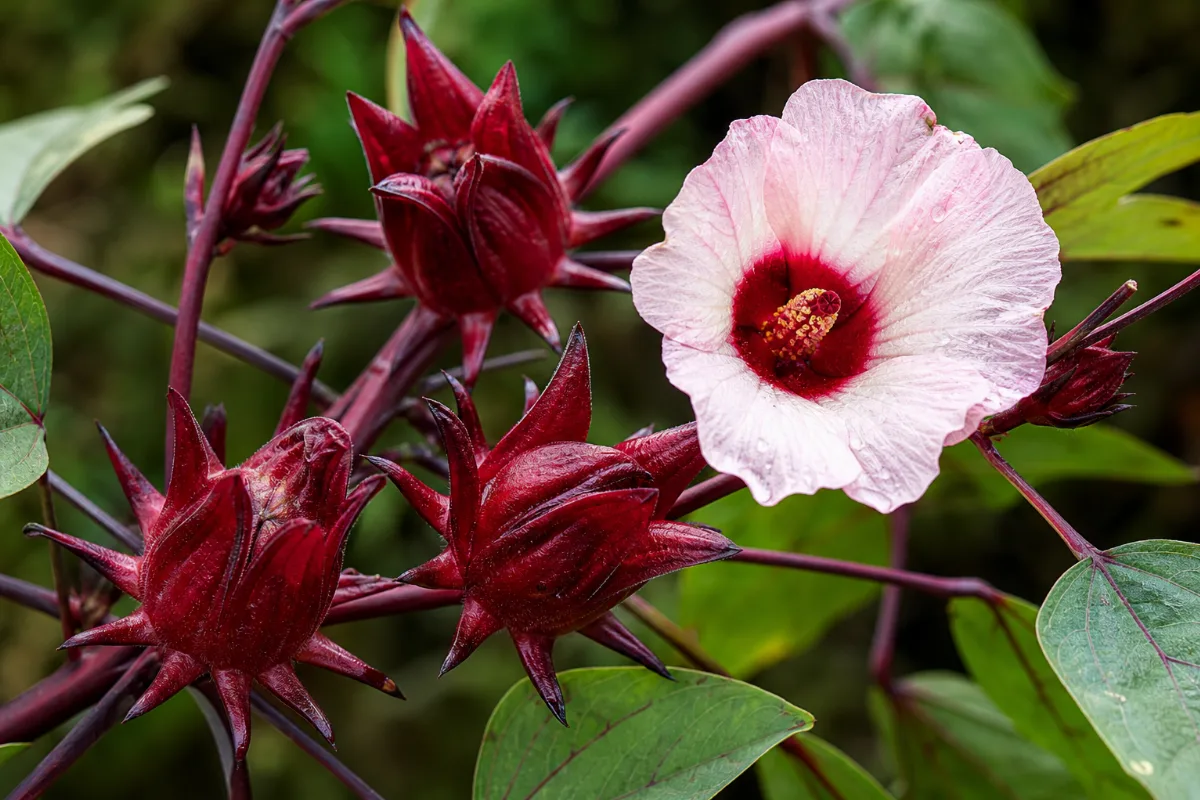
Hibiscus here means Hibiscus sabdariffa L. (family Malvaceae), also called roselle, sour tea, red tea, karkade or bissap. [3][4][5] The part used in the studies is the dried calyx (plural calyces) [2], the cup-like outer part of the flower. Other Hibiscus species exist and studies of them do not transfer to this plant. The tea as a drink has its own page: Hibiscus tea.Traditional use
Traditional use is not proof. The plant has been used as a thirst-quenching drink and for medicinal purposes. [4] A trial report describes it as traditionally used for high blood pressure in Egypt [6] and as known in traditional medicines and popular belief in Senegal for the same purpose. [5]What research shows
All rows below are human studies unless marked otherwise. They measured blood pressure or blood tests, not heart attacks or strokes.| Question | What the source found | Strength of evidence |
|---|---|---|
| Blood pressure, strict review | A Cochrane review (searched to 2021) found only one trial that met its rules, in 60 adults with type 2 diabetes. The authors had very little confidence in the result and said evidence was insufficient. [4] | Insufficient evidence (Cochrane) |
| Blood pressure, broader reviews | A 2022 review of 17 trials found a larger fall in systolic pressure than placebo, with very high variation between trials. [7] A 2025 umbrella review of 26 trials in 1,797 people found dose-dependent falls in blood pressure compared with placebo and other teas. [1] | Promising but limited; results mixed |
| Compared with a blood pressure medicine | In an 8-week trial of 134 Egyptian adults, a product of hibiscus calyces plus olive leaf lowered blood pressure about as much as captopril. [6] A 6-month trial of 219 adults in Senegal found similar systolic falls with hibiscus tablets or brew and with captopril. [5] | Promising but limited; the first trial tested a mixed product |
| Cholesterol and blood sugar | The 2022 review found lower LDL cholesterol than with other teas and placebo, by a small amount. [7] The 2025 review reported lower total cholesterol, LDL, and fasting glucose. [1] | Promising but limited (blood-test markers) |
Why do the reviews disagree? They set different entry rules, combined different preparations and lengths of use, and the authors of the 2022 and 2025 reviews call for more studies of dose and duration. [7][1] A result for a tea, a capsule or a standardized extract does not transfer to the others.
Forms
Studies used brews of calyces, tablets, capsules of extract and mixed products. [5][4][6] Amounts differ widely and are not given here; a clinician or pharmacist decides what is right for a person. See forms and why the form matters.Frequently asked questions
Does hibiscus lower blood pressure?
Several reviews of trials report lower blood pressure than placebo, but the results vary a lot between trials, and a Cochrane review judged the evidence insufficient under stricter rules. [7][4]
Can I use hibiscus instead of my blood pressure medicine?
Do not change a prescribed medicine on your own. Trials compared hibiscus with a medicine in short or mid-length studies, and the authors call for more research. Ask the prescriber or pharmacist. [1][5]
Is hibiscus safe with a statin?
A small crossover study in six healthy volunteers found a hibiscus drink lowered simvastatin exposure, and the authors advised against combining them until more data exist. Ask a pharmacist. [2]
Is hibiscus safe in pregnancy?
Proper evidence not found in people. A rat study raised safety concerns, so ask your prenatal clinician before using it. [9]
Is hibiscus tea the same as hibiscus extract?
No. Studies used different preparations, and a result for one does not transfer to another. [5][6]
More details: evidence, limits and cautions
The details behind this page: cautions, limits of the evidence and where sources disagree. Open any note to read it.
Safety
- Medicines for blood pressure: the 2025 umbrella review found no significant difference between hibiscus and blood pressure medicines in lowering pressure. [1] That means hibiscus plus a prescribed medicine could lower pressure further; this combination was not tested in the sources we read, so it is a reasoned caution, not a documented harm. See supplements and blood pressure medicines.
- Water pills: in rats and rabbits a hibiscus extract given with hydrochlorothiazide increased urine output and the drug's blood levels; the authors called it a possible herb-drug interaction. [8] Animal findings may not apply to people.
- Statins: in six healthy volunteers, a hibiscus beverage increased clearance of a single simvastatin dose by 44.6%. The authors discouraged taking the beverage with simvastatin until more clinical data exist. [2]
- Pregnancy and breastfeeding: in pregnant rats, a hibiscus extract caused signs of genetic and cell damage in the mothers and newborns; the authors advised use only under a qualified professional. [9] Human pregnancy data: Proper evidence not found (we searched PubMed for hibiscus with pregnancy and lactation and found no human safety study). See pregnancy and breastfeeding.
- Liver and kidney: the 2025 review saw a small, clinically insignificant rise in one liver enzyme (AST) and no higher adverse event risk, but said long-term and high-amount safety needs monitoring. [1] Kidney data were not described in the sources we read.
- Children, older adults, allergy, surgery, quality: not described in the sources we read. Because hibiscus may lower blood pressure, tell the surgical team about it: see supplements before surgery. For product quality see quality testing.
For the wider picture see herbs for blood pressure and cholesterol and how interactions work.
References
- Complementary Therapies in Medicine 2025, Efficacy and safety of Hibiscus sabdariffa in cardiometabolic health: an overview of reviews and updated dose-response meta-analysis. Read 2026-10-22.
- Journal of Clinical Pharmacy and Therapeutics 2017, In vivo pharmacodynamic and pharmacokinetic interactions of Hibiscus sabdariffa calyces extracts with simvastatin. Read 2026-10-22.
- GBIF Backbone Taxonomy, Hibiscus sabdariffa match record. Read 2026-10-22.
- Cochrane Database of Systematic Reviews 2021, Roselle for hypertension in adults. Read 2026-10-22.
- Journal of Human Hypertension 2021, Hypertension treatment with Combretum micranthum or Hibiscus sabdariffa, as decoction or tablet: a randomized clinical trial. Read 2026-10-22.
- Phytotherapy Research 2020, Antihypertensive efficacy and safety of a standardized herbal medicinal product of Hibiscus sabdariffa and Olea europaea extracts: a phase-II, randomized, double-blind, captopril-controlled clinical trial. Read 2026-10-22.
- Nutrition Reviews 2022, A systematic review and meta-analysis of the effects of Hibiscus sabdariffa on blood pressure and cardiometabolic markers. Read 2026-10-22.
- Journal of Medicinal Food 2011, Herb-drug interaction between the extract of Hibiscus sabdariffa L. and hydrochlorothiazide in experimental animals. Read 2026-10-22.
- International Journal of Molecular Sciences 2025, Genomic and cytotoxic damage in Wistar rats and their newborns after transplacental exposure to Hibiscus sabdariffa hydroalcoholic extract. Read 2026-10-22.