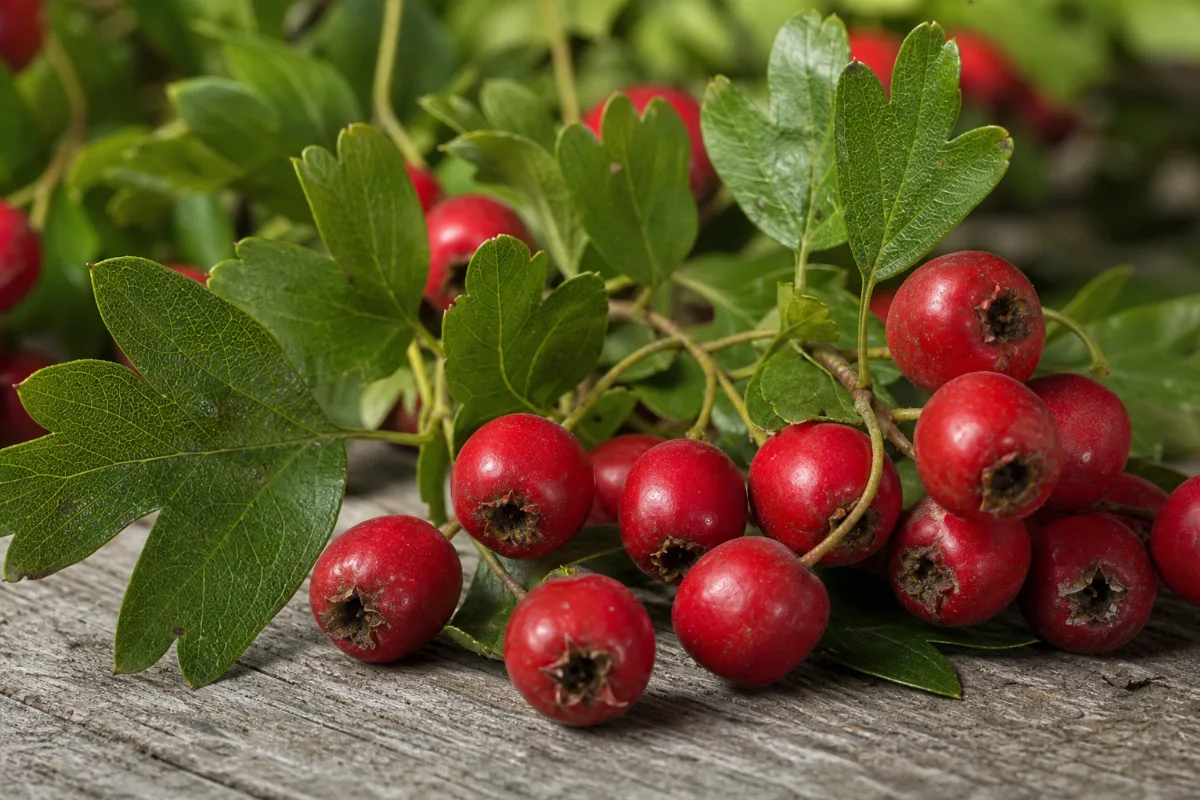
Herbs & Botanicals · Herbs · Thorny shrub used for the heart, with low-certainty evidence and one serious label warning
Hawthorn
Crataegus monogyna Jacq. and Crataegus laevigata (Poir.) DC. · also called Common hawthorn, oneseed hawthorn, May thorn, whitethorn, midland or smooth hawthorn (C. laevigata), espino albar and majuelo (Spanish), aubépine (French), Weißdorn (German)
Hawthorn is a thorny shrub or small tree in the rose family. Its leaves with flowers, and its red berries, are used as a herbal remedy, mostly for the heart and circulation. Do not use it to treat heart failure, angina or chest pain on your own: these conditions need a doctor and proven treatment. The best trials in heart failure found no clear benefit on top of usual care, and nothing about hawthorn is rated above low certainty. Also, products sold online as 'tejocote root' for weight loss were mostly yellow oleander, a heart poison, not hawthorn.
General information, not medical advice. Last substantive update · Not medically reviewed. A named clinician has not signed off on this page. How this page is made
About Hawthorn
Hawthorn (Crataegus monogyna and C. laevigata) is a thorny shrub whose leaves with flowers, and berries, are used as a herbal remedy, mostly for the heart. The key safety message comes first: do not self-treat heart failure, angina or chest pain with hawthorn. Those conditions need a diagnosis and proven treatment, and the EU allows hawthorn only as a traditional medicine for temporary nervous heart complaints such as palpitations, after a doctor has ruled out serious conditions. The evidence is weak. In heart failure, the largest trial (SPICE, 2,681 people for 24 months) missed its main goal, and HERB CHF (120 people) found no benefit, more adverse events, and an after-the-fact analysis flagged possible early worsening in some people. For irregular heartbeat the evidence is very low, and for blood pressure and cholesterol it is low, with many trials using mixed products. Nothing is rated above low. Interactions with heart and blood pressure medicines are mostly theory with few direct tests, so tell your prescriber. Products sold online as 'tejocote root' for weight loss were mostly yellow oleander, a heart poison, not hawthorn. Pregnancy and breastfeeding are not recommended. Ask a doctor or pharmacist about amounts.
What it is
Hawthorn is a thorny shrub or small tree in the rose family. The two European species used in medicine are Crataegus monogyna (common hawthorn) and Crataegus laevigata (smooth hawthorn). Older papers and labels often say 'Crataegus oxyacantha', a name different sources apply to different species, so it does not tell you for sure which plant was used.
The best-studied part is the leaf with flower, usually as a standardised extract. The red berries are also used, and the Chinese 'shanzha' hawthorn is a different species (Crataegus pinnatifida). Because so many species, parts and extracts exist, results for one product should not be assumed for another.
What makes it distinctive
Hawthorn is one of the best-known European plant medicines for the heart, and it is the herb most often tested in people with heart failure. That is also why the safety message matters: the people who might reach for it are the people who most need proper medical care.
Its main active material is thought to be a group of polyphenols called oligomeric procyanidins, together with flavonoids. No single compound has been shown to explain its effects, and different parts of the extract seem to do different things in lab tests.
Historical and current uses
Hawthorn has long been used in Europe for heart complaints and, in Chinese practice, for digestion and circulation. North American products have been used since the 1800s for heart problems, and some Native American tribes ate the fruit.
The EU monograph is a traditional-use document based on long use, not on proof from trials: it allows hawthorn leaf and flower for temporary nervous heart complaints such as palpitations once a doctor has excluded serious conditions, and for mild mental stress and sleep. It does not approve hawthorn for treating heart failure. Germany treats certain leaf-and-flower extracts as approved drugs for mild heart weakness.
What the research shows
Heart failure has the most research, and it is mixed. Older, smaller trials and a Cochrane review found small gains on exercise tests. The two best trials in people already on full heart-failure care did not confirm a benefit: SPICE missed its main goal, and HERB CHF found no gain in walking distance. A reduction in sudden cardiac death in one SPICE subgroup is a lead, not proof.
For blood pressure, a 2025 pooled analysis of 6 small trials found a fall of about 6.7 mmHg in systolic pressure, but the trials disagree. For cholesterol and blood vessel function the results are small and mixed, and for blood sugar, weight, anxiety and sleep the data come mostly from mixed products. No hawthorn-alone trial was found for angina, rhythm problems or mood.
Most trials were short, in people with heart failure, and used one or two branded extracts. Only abstracts were read for this profile, and full texts were not checked for funding, dropout or bias. Some authors of the SPICE and 'benefit-risk' papers received payments from the maker of the WS 1442 extract.
At a glance
Traditional uses history, not proof
- European folk medicine for heart complaints; leaf with flower is recognised in the EU as a traditional herbal medicine for temporary nervous heart complaints such as palpitations, only after a doctor has ruled out serious conditions
- EU traditional use for mild mental stress and as a sleep aid (adults and adolescents over 12)
- Germany: hawthorn leaf-and-flower extracts are approved drugs for mild heart weakness; North America: used since the 1800s for heart problems, and the fruit was eaten by Native American tribes
- Traditional Chinese practice (mostly the fruit of a different species, Crataegus pinnatifida): to aid digestion and circulation
Studied for research
- Chronic heart failure, low certainty (small gains on exercise tests in older trials; the largest trial missed its main goal)
- Blood pressure and cholesterol, low certainty (small trials, many used mixed products)
- Irregular heartbeat and palpitations, very low certainty; angina, insufficient evidence
- Anxiety, stress, sleep, weight, blood sugar and blood vessel function, very low or insufficient evidence
- Low blood pressure: a camphor-hawthorn berry mix raised pressure in small short trials
Main compounds
- Oligomeric procyanidins (the main group of tannin-type polyphenols in the standardised extract WS 1442)
- Flavonoids such as vitexin, hyperoside, rutin and quercetin, and (-)-epicatechin
- Phenolic acids such as chlorogenic acid and caffeic acid
- Triterpene acids such as ursolic, oleanolic and maslinic acid
Common forms
- Standardised dry extract of leaves with flowers, mainly WS 1442 (the extract in the big heart-failure trials); another extract, LI 132, was also tested
- Berry and fresh-berry extracts, and mixed products (a camphor-hawthorn berry mix, hibiscus or citrus blends); their results cannot be credited to hawthorn alone
- Tea and tincture: traditional forms that are far less studied
- Do not use anything sold as 'tejocote root', 'Nuez de la India' or a weight-loss 'root' (see the safety warning)
Research links: NIH NCCIH: Hawthorn, Usefulness and Safety · EU herbal monograph on Crataegus leaf with flower (EMA, 2016) · EU assessment report on Crataegus leaf with flower (EMA) · Research Library · Genes & Biomarkers Library
The plant and its history
- Accepted scientific name
- Crataegus monogyna Jacq. (common or one-seeded hawthorn) and Crataegus laevigata (Poir.) DC. (smooth or two-styled hawthorn); medicinal 'hawthorn' covers both
- Naming authority
- C. monogyna: Jacq., published in Fl. Austr. 3: 50 (1775) (GBIF). C. laevigata: (Poir.) DC., published in Prodr. 2: 630 (1825) (GBIF). Both are accepted species names in GBIF.
- Synonyms
- Crataegus monogyna: GBIF lists 100+ synonyms, e.g. Crataegus apiifolia Medik., Crataegus azarolus var. glabra Coss., Crataegus brevispina Kunze, Crataegus maura L.fil., Crataegus leiomonogyna Klokov, Crataegus oxyacantha L. (in part; the name is used for different species by different sources); Crataegus laevigata: Crataegus oxyacantha f. laevigata (Poir.) Beck, Crataegus oxyacantha var. laevigata (Poir.) H.Lév., Mespilus oxyacantha (L.) Gaertn. (GBIF)
- Common names
- Hawthorn (English); Common hawthorn (English); Oneseed hawthorn (English); May thorn (English); Whitethorn (English); Midland hawthorn (C. laevigata) (English); Smooth hawthorn (C. laevigata) (English); Espino albar (Spanish); Majuelo (Spanish); Espino navarro (C. laevigata) (Spanish); Aubépine à un style (French); Aubépine à deux styles (C. laevigata) (French); Eingriffeliger Weißdorn (German); Zweigriffeliger Weißdorn (C. laevigata) (German)
- Botanical family
- Rosaceae (rose family, order Rosales), the same family as apple, pear, hawthorn, rose and blackthorn.
- Classification
- Plantae > Tracheophyta > Magnoliopsida > Rosales > Rosaceae > Crataegus > Crataegus monogyna; Crataegus laevigata
- Native range
- Not verified from a primary source read. A review says the genus is spread across the northern temperate zone: Asia, Europe and the Americas (p37788786). The two European medicinal species are the ones named by EMA (s-ema-hmpc-crataegus-folium-cum-flore).
- Habitat
- Not verified in a source read for this file.
- What the plant looks like
- Roots: Not part of the medicinal use for these species. One case report in the literature concerns a Mexican hawthorn root (Crataegus mexicana), a different species (see the safety file).; Stems: Thorny shrub or small tree; details not verified from a source read.; Leaves: Leaves with flowers are the best-studied part: WS 1442 and the EMA monograph use leaf with flower. Flavonol glycosides and C-glycosyl flavones dominate in leaves (p22488722).; Flowers: Used together with the leaves; total phenolics are higher in leaves and flowers than in fruits (p22488722).; Fruit: Red berries (haws). Procyanidins dominate in the fruit (p22488722); berries are also used in traditional and Chinese practice, but the clinical trials cited here use leaf and flower extracts.
- Cultivation
- Not verified from a source read.
- Harvest and processing
- Not verified in a source read. What is documented: WS 1442 is a dry extract of leaves with flowers (4-6.6:1), extraction solvent ethanol 45% (w/w), adjusted to 17.3-20.1% oligomeric procyanidins (p29080984). Another review gives 18.75% OPC for the same product (p29151068); the two figures are the specified range and a quoted typical value.
- Look-alikes and adulterants
- Name: Species and the name 'Crataegus oxyacantha'; Note: Older papers and many supplement labels say Crataegus oxyacantha. GBIF treats that name as a synonym of different species depending on the record (C. laevigata, C. rhipidophylla or C. monogyna), and one review gives C. oxyacantha L. as a synonym of C. rhipidophylla Gand. (p27655074). So 'C. oxyacantha' in a paper does not tell you reliably which species was used.; Name: Hybrids between C. monogyna and C. laevigata; Note: Hybrids of the two European species are commonly described and the hybrid name Crataegus x media is listed in GBIF, but the hybrid's status was not verified from a source read here (GBIF returned several conflicting entries). The practical point: raw plant material and some products can be mixtures or hybrids, so species is not always certain.; Name: Crataegus pinnatifida (Chinese hawthorn, shanzha) and C. pentagyna / C. azarolus; Note: Chinese hawthorn is a different species with a different fruit-based tradition; much of the recent chemistry and animal work (for example p36869464, p22058050) is on it, not on the European leaf and flower. EMA's monograph names C. pentagyna and C. azarolus alongside C. monogyna and C. laevigata (s-ema-hmpc-crataegus-folium-cum-flore).; Name: Crataegus mexicana (Mexican hawthorn, root); Note: A different species whose root has a published toxicity case report (title seen in a PubMed search; not read, see the safety file).
- Sustainability and conservation
- Not verified. No IUCN assessment was retrieved.
The plant and the parts used
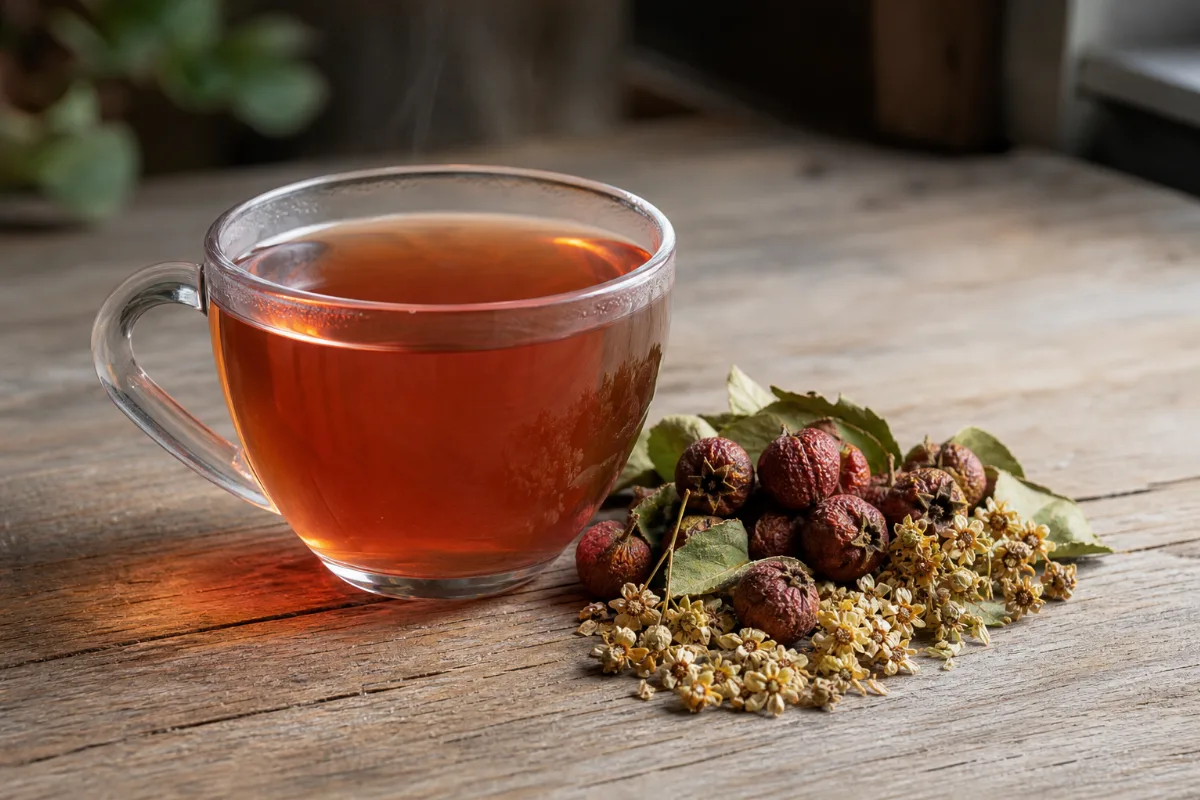
Traditional use and history history, not clinical proof
| Tradition or era | Documented use | Source |
|---|---|---|
| Europe, traditional and modern medicinal use | Hawthorn leaf with flower is recognised in the European Union as a traditional herbal medicine for temporary heart complaints linked to nervousness (such as palpitations, after a doctor has ruled out serious conditions; adults) and for mild symptoms of mental stress and as a sleep aid (adults and adolescents over 12). | s-ema-hmpc-crataegus-folium-cum-flore |
| EMA/HMPC regulatory position (monograph published 17 June 2016) | The EMA's basis is traditional use (at least 30 years, including 15 in the EU). The committee noted a lack of clinical studies with leaf-and-flower preparations. A revision of the monograph was in public consultation until 15 July 2025. | s-ema-hmpc-crataegus-folium-cum-flore |
| Germany: approved drugs for mild heart insufficiency | Hydroalcoholic extracts of hawthorn leaves with flowers are approved drugs in Germany for mild forms of heart insufficiency, according to the authors of a rat study. | p14761675 |
| Cochrane review background: German Commission E | The Cochrane review states that the German Commission E approved extracts of hawthorn leaf with flower for patients with heart failure graded NYHA stage II. | p18254076 |
| North America since the 1800s; Native American tribes | Natural health products with hawthorn have been used in North America since the 1800s for heart problems such as hypertension, angina, arrhythmia and congestive heart failure; Native American tribes used hawthorn for stomach and bowel complaints and heart problems and ate the fruit. | p22608128 |
| Europe and China: food and traditional medicine | Long history of use as food and in traditional medicine in Europe and China. | p22608128 |
| Traditional Chinese practice (largely Crataegus pinnatifida fruit) | Strengthening digestion, promoting blood circulation and resolving blood stasis; also used for indigestion, painful periods and osteoporosis. | p37788786 |
Traditional use shows how a plant was used. It does not show that a supplement works or is safe today.
What is inside, and how it may work
What the plant contains and how those compounds act in cells and animals. Laboratory and animal mechanisms are not proven effects in people.
Main compounds
| Compound | Family | Where it is concentrated | Activity studied | Level of evidence |
|---|---|---|---|---|
| Oligomeric procyanidins (OPCs; B-type, from epicatechin units) | condensed tannins / proanthocyanidins | Fruit especially; also leaf and flower WS 1442 is adjusted to 17.3-20.1% OPC (p29080984); another review quotes 18.75% (p29151068). A different research extract had 11.3% total procyanidins and 2.25% flavonoids (p10364839). | The high-molecular-weight OPC fraction of WS 1442 carried the endothelium-dependent, NO-mediated relaxation in vessel rings (p16779533); procyanidin fractions relaxed rat aorta through NO and cyclic GMP (p10901280). Absorption is poor in cells (p22776719). Not a single molecule, so no single PubChem CID; see procyanidin B2 and C1 below. 10 40 90 34 88 43 | Laboratory research |
| Procyanidin B2 PubChem 122738 | B-type procyanidin dimer (epicatechin-(4β→8)-epicatechin) | Leaf, flower, fruit Not quantified in a source read. | Very low permeability across Caco-2 cells, mainly between cells, and a P-glycoprotein substrate (p22776719); 2.15% uptake in another Caco-2 model with digestion (p36869464). 90 30 | Laboratory research |
| Procyanidin C1 PubChem 169853 | B-type procyanidin trimer | Fruit Not quantified in a source read. | Converted to phenolic acids by gut bacteria in a fermentation model (Chinese hawthorn fruit extract). 30 | Laboratory research |
| (-)-Epicatechin PubChem 72276 | flavan-3-ol | Leaf, flower, fruit Not quantified in a source read. | The only one of three major fruit flavonoids tested (with hyperoside and isoquercitrin) detectable in rat plasma after oral extract (p16989871); formed when procyanidins break down in simulated digestion (p36869464). 91 30 | Animal research |
| Vitexin PubChem 5280441 | C-glycosyl flavone (apigenin 8-C-glucoside) | Leaf and flower Not quantified in a source read. | Named as a main hawthorn flavonoid (p22608128). Did not alter rat aorta tone in the procyanidin study (p10901280). 24 40 | Laboratory research |
| Vitexin 2''-O-rhamnoside PubChem 5282151 | C-glycosyl flavone | Leaf and flower Not quantified in a source read. | Classic leaf marker of Crataegus; named here from general knowledge of hawthorn chemistry, with no abstract read that quantifies it. The review p22488722 says C-glycosyl flavones are abundant in leaves. 78 | Laboratory research |
| Vitexin-4''-O-glucoside PubChem 56776173 | C-glycosyl flavone | Leaf (Chinese hawthorn, C. pinnatifida var. major) Main component of those leaves per the abstract (p22058050). | Showed dose-dependent, non-linear pharmacokinetics after intravenous injection in rats (p22058050). 80 | Animal research |
| Hyperoside (quercetin 3-O-galactoside) PubChem 5281643 | flavonol glycoside | Leaf, flower, fruit Not quantified in a source read. | Named as a main hawthorn flavonoid (p22608128). Did not relax rat aorta (p10901280); limited permeability in cells and not found in rat plasma after oral extract (p16989871). 24 40 91 | Laboratory research |
| Isoquercitrin (quercetin 3-O-glucoside) PubChem 5484006 | flavonol glycoside | Fruit Not quantified in a source read. | Limited intestinal permeability and extensive metabolism in rats (p16989871). 91 | Animal research |
| Rutin PubChem 5280805 | flavonol glycoside | Leaf and flower Not quantified in a source read. | Did not change rat aorta tone in the procyanidin study (p10901280). 40 | Laboratory research |
| Quercetin PubChem 5280343 | flavonol aglycone | Leaf, flower (as glycosides) Not quantified in a source read. | Backbone of hyperoside, isoquercitrin and rutin; not tested on its own in the hawthorn papers read here. 24 | Laboratory research |
| Chlorogenic acid PubChem 1794427 | phenolic acid (caffeoylquinic acid) | Leaf and flower Not quantified in a source read. | Phenolic acids are named as a major group in hawthorn (p22488722); no activity data for this compound were read. 78 | Laboratory research |
| Caffeic acid PubChem 689043 | phenolic acid | Leaf, flower, fruit Not quantified in a source read. | Named here as a hawthorn phenolic acid only on the strength of the general review statement that phenolic acids are a major group (p22488722); no hawthorn-specific data read. 78 | Laboratory research |
| Ursolic acid PubChem 64945 | pentacyclic triterpenic acid | Leaf, flower, fruit Not quantified in a source read. | The reviews list triterpenes among hawthorn constituents (p27655074, p37788786); no activity data specific to hawthorn were read. 47 13 | Laboratory research |
| Oleanolic acid PubChem 10494 | pentacyclic triterpenic acid | Leaf, flower, fruit Not quantified in a source read. | As for ursolic acid: present in the class named by the reviews; activity not read for hawthorn. 47 13 | Laboratory research |
| Maslinic acid (also called crataegolic acid) PubChem 73659 | pentacyclic triterpenic acid | Fruit and leaf Not quantified in a source read. | Triterpenic acid named for the genus (the name 'crataegolic' comes from Crataegus). PubChem returned the same record (CID 73659) for both names. No hawthorn-specific activity data read. 47 | Laboratory research |
Mechanisms, receptors and pathways
| Target or pathway | Gene or receptor | What was found | Level |
|---|---|---|---|
| Positive inotropy (stronger heartbeat), cAMP-independent | Na+/K+-ATPase (ouabain-binding site); calcium transient | In human heart muscle strips from failing hearts (explanted, NYHA IV) WS 1442 displaced bound ouabain, did not change adenylate cyclase, and raised force of contraction (1.8 to 2.4 mN) and the calcium transient; the effect was also seen in the flavone-rich lipophilic fraction. The authors compare it with cardiac glycosides. Another extract also raised contraction in isolated rat heart cells with a modest energy cost (p8929230). A third study found no effect on the L-type calcium current, and concluded the inotropic effect was not from phosphodiesterase inhibition or beta-agonism (p10364839). Bath concentrations are far above what an oral dose gives, and no human study shows a stronger heartbeat from the extract by mouth. 56 51 43 | Laboratory research |
| Endothelial nitric oxide (NO)-mediated vasodilation | NOS3 (eNOS), phosphorylation at serine 1177; Src / PI3-kinase / Akt | WS 1442 relaxed rat aorta and human mammary artery rings only when the endothelium was intact and not when NO synthase was blocked; it released NO from human coronary endothelial cells and phosphorylated eNOS at serine 1177 (p16779533). In pig coronary arteries it worked through redox-sensitive Src, PI3-kinase and Akt and not through estrogen receptors (p19247189). The high-molecular-weight OPC fraction carried the vasorelaxation (p16779533), and procyanidins alone relaxed rat aorta with a cyclic GMP rise (p10901280). In endothelial cells, WS 1442 raised miR-155 and lowered total eNOS, yet raised phospho-eNOS and NO (p29660753). All of this is lab or ex vivo tissue; none of it measures blood pressure in people. 10 3 40 73 | Laboratory research |
| Potassium channels and electrical activity (antiarrhythmic potential) | Delayed and inward rectifier potassium currents; effective refractory period | A Crataegus extract blocked the delayed rectifier current by about 25% and the inward rectifier by about 15% in guinea-pig heart cells, similar to class III antiarrhythmic drugs (p10364839). In isolated guinea-pig hearts the extract lengthened the effective refractory period by up to 10% where other inotropic drugs shortened it (p8595081); rat heart cells showed the same (p8929230). In rats given WS 1442 before coronary ligation, ventricular fibrillation fell from 67% to 27% at 100 mg/kg (p14761675), but a different extract given for 8 weeks gave no protection and arrhythmias began earlier (p11215322). So the antiarrhythmic effect is shown in some lab and animal models and contradicted in another; not shown in humans. 43 39 51 69 53 | Animal research |
| Antioxidant action and protection from ischemia-reperfusion injury | Reactive oxygen species; COX-1 / COX-2; leukocyte (neutrophil) elastase | In rats, WS 1442 before heart-artery ligation reduced infarct area (78.4% vs 42.8% at 100 mg/kg) and mortality (47% vs 9%); the authors attribute this to antioxidant, elastase-inhibiting and NO-enhancing properties (p14761675). In old rats, 40 weeks of 100-300 mg/kg/day improved vessel function and lowered oxidative stress and COX-1/COX-2 (p22621780). In human neutrophils (test tube), a C. laevigata extract reduced superoxide, elastase release and chemotaxis, plus TNF-alpha and IL-8 (p18547815). In 49 diabetic people with coronary disease, 6 months of C. laevigata lowered blood neutrophil elastase versus placebo, a biomarker change and not a heart outcome (p21242072). Bench antioxidant tests on fruit extracts (p37705878) do not show that the effect occurs in the body. 69 38 15 16 81 | Animal research |
| Other proposed enzyme and receptor effects (ACE and phosphodiesterase inhibition, negative chronotropy) | ACE; phosphodiesterase; heart rate | A review lists ACE and phosphodiesterase inhibition and negative chronotropy among proposed mechanisms (p27655074). One cell study found beating-rate slowing without beta-blockade, from several fractions (p16487691), while another argues against phosphodiesterase inhibition as the cause of the inotropic effect (p10364839). Source studies of ACE inhibition were not read, so this stays unverified. 47 42 43 | Laboratory research |
| Clinical translation check | n/a | The big trial (SPICE, 2681 people with NYHA II-III heart failure, WS 1442 900 mg/day, 24 months) missed its primary endpoint (event rate 27.9% vs 28.9%, HR 0.95; 95% CI 0.82-1.10) although a subgroup with ejection fraction 25% or above had fewer sudden cardiac deaths (HR 0.59). A Cochrane meta-analysis of older small trials reported a better workload and symptom scores (maximal workload +5.35 W, 95% CI 0.71 to 10.00). These are listed so readers do not assume the lab mechanisms produce proven clinical benefit; the full clinical picture is in the benefits files. 33 50 | Laboratory research |
Absorption, metabolism and elimination
- Absorption
- No human blood-level data for hawthorn's active ingredients were found. In cells, oligomeric procyanidins cross the gut wall very poorly (apparent permeability 0.6-6 x 10^-7 cm/s, lower for larger molecules), mostly between cells, and are pumped back out by P-glycoprotein (p22776719). In rats, of three fruit flavonoids (hyperoside, isoquercitrin, epicatechin) only epicatechin was detectable in plasma after oral extract, and all three had limited permeability in cell and gut-perfusion models (p16989871).
- Distribution
- No human tissue-distribution data found. Not established for the active fractions.
- Metabolism
- In simulated digestion and fermentation of Chinese hawthorn fruit procyanidins, dimers and trimers partly broke down to epicatechin, and gut bacteria converted epicatechin and procyanidins B2, B5 and C1 into phenolic acids such as 3,4-dihydroxyphenylacetic acid and 4-hydroxyphenylpropionic acid (p36869464). Extensive metabolism of epicatechin and isoquercitrin was seen in rat gut and in vivo (p16989871). These are model results on isolated extracts and animals, not human metabolism.
- Elimination
- Not found for hawthorn constituents in humans. In rats, vitexin-4''-O-glucoside given intravenously fitted a two-compartment model with dose-dependent (non-linear) pharmacokinetics at 20-60 mg/kg (p22058050).
- Bioavailability
- Not established in humans: no study measuring oral bioavailability of procyanidins or flavonoids in people was found. The cell data suggest it is low for OPCs, and the authors of one study question whether the OPCs can act systemically at all (p22776719). The vasorelaxant effects seen in the lab used extract concentrations of about 15-20 microg/ml in a bath (p16779533), which cannot be compared with blood levels.
Isolated compounds versus whole extracts
No single compound has been shown to account for hawthorn's effects, and the research suggests the pieces behave differently from the whole. The vessel-relaxing activity of WS 1442 lay in its hydrophilic, flavonoid-free fraction rich in high-molecular-weight procyanidins (p16779533), and procyanidins alone relaxed rat aorta, while the flavonoids hyperoside, rutin and vitexin did not change tone (p10901280). But the flavone-rich lipophilic fraction A was the one that increased heart-muscle force in human tissue (p10813370), so different fractions seem to carry different actions. Cell-based fractionation also found several dissimilar cardioactive fractions in unfractionated extracts (p16487691). The absorption data complicate the story: the OPCs are poorly absorbed in cell models and co-occurring flavonoids did not improve their transport (p22776719), and in rats only epicatechin from the extract reached the blood (p16989871). A review warns that extracts differ so much in raw material and method that comparing studies is difficult (p22488722). In short, results from WS 1442 should not be assumed to apply to teas, tinctures, capsules of powder, or berry products.
Nutritional composition
A nutrient table is not meaningful for the medicinal use of hawthorn: the leaf-and-flower extracts in the research are taken in doses of hundreds of milligrams, not as food. The berries are eaten as food in several traditions (p22608128), but this file did not read food-composition data (vitamins, minerals, fibre), so none is stated. The plant chemistry that matters here is polyphenols and tannins, covered under compounds.
7 low certainty5 very low certainty3 not enough evidence
What was looked at
The 15 benefits and uses checked for Hawthorn, each with how strong the evidence is. Tap one to open it.
- Chronic heart failure: exercise capacityLow certainty
- Chronic heart failure: symptoms, NYHA class and quality of lifeLow certainty
- Chronic heart failure: survival, hospital stays and worseningLow certainty
- Heart rhythm problems and palpitationsVery low certainty
- Angina and coronary artery diseaseNot enough evidence
- Anxiety, stress and moodVery low certainty
- SleepNot enough evidence
- High blood pressure (hypertension)Low certainty
- Blood pressure in people with type 2 diabetesLow certainty
- Cholesterol and blood fatsLow certainty
- Blood sugar, fatty liver and metabolic healthNot enough evidence
- Blood vessel functionVery low certainty
- Low blood pressure and dizziness on standing (camphor-hawthorn drops)Low certainty
- Weight and body fatVery low certainty
- Antioxidant and inflammation markersVery low certainty
Lab markers tracked in the studies
Maximal workload on an exercise bicycle test (watts)Exercise tolerance (6-minute walk and exercise time)Left ventricular ejection fraction (LVEF)Pressure-heart-rate product (a measure of how hard the heart is working)NYHA functional classHeart-strain hormones (BNP and related markers)New diagnoses of atrial fibrillation and rhythm problemsQTc interval on the heart tracing (ECG)Anxiety scores (Hamilton scale and State-Trait Anxiety Inventory)Sleep quality and insomnia scores (PSQI and ISI)Systolic blood pressure (top number)Diastolic blood pressure (bottom number)LDL cholesterolHDL cholesterol and triglyceridesHbA1c and fasting glucoseC-reactive protein (hs-CRP)Oxidative stress marker (urinary 8-isoprostane) and neutrophil elastaseFlow-mediated dilation (artery widening)Body fat, weight and leptinBlood pressure in people with LOW blood pressure
What is Hawthorn good for?
The main proposed uses and how strong the human evidence is for each. "Low" is the best rating any hawthorn use reached here. "Very low" and "insufficient" mean few, small, uncontrolled or mixed-product studies, and none of these is a proven treatment for you. Most heart trials tested one branded leaf-and-flower extract (WS 1442), so results may not carry over to other products. Many of these ratings are this profile's own reading of the reviews, not formal grades. Heart failure, angina and chest pain need a doctor; do not self-treat them.
Benefits, one by one
Each card is a research question, not a promise. Tap a goal to filter. Open a card to see the studies, doses and limits.
Chronic heart failure: exercise capacity
Low certaintyIn people with mild to moderate heart failure, standardised hawthorn leaf-and-flower extract added to usual treatment has been shown in several short trials to let people exercise a little longer or at a slightly higher workload on a bicycle test. The Cochrane review pooled this as about 5 watts of extra workload. The larger, newer HERB CHF trial found no gain in walking distance, so the benefit is small and not consistent.
8 studiesMost trials used WS 1442 (leaf with flower, standardised to oligomeri…
Studies, doses and limits
What the trials found
Cochrane 2008 (Pittler, 14 double-blind placebo-controlled trials; 10 trials, 855 people, pooled) found hawthorn extract beat placebo on maximal workload (5.35 W, CI 0.71 to 10.00; n=380), exercise tolerance (122.76 W x min, CI 32.74 to 212.78; n=98) and the pressure-heart-rate product, a measure of how hard the heart works (-19.22, CI -30.46 to -7.98; n=264). The 2003 Pittler meta-analysis (8 trials, 632 people) found 7 W more maximal workload (CI 3 to 11). Individual trials: Tauchert 2002 (209 people with NYHA III, 16 weeks) found a dose-dependent rise in workload at 1800 mg/day but not at 900 mg; Degenring 2003 (143 people with NYHA II, fresh berry extract, 8 weeks) found 8.3 W more than placebo (p=0.045); Rietbrock 2001 (88 people, berry extract, 12 weeks) found 38.9 s longer exercise time (CI 5.7 to 72.1); Zapfe 2001 (40 people, 12 weeks) found a borderline difference (p=0.06). In contrast HERB CHF (Zick 2009, 120 people with NYHA II-III on conventional therapy, 450 mg twice daily, 6 months) found no difference in 6-minute walk distance (p=0.61) or functional capacity.
Results
Mostly modest gains on bicycle tests in older and shorter trials, not confirmed in the one newer trial of people on conventional treatment.
Effect sizes as reported
Maximal workload +5.35 W (CI 0.71 to 10.00; Cochrane); exercise tolerance +122.76 W x min (CI 32.74 to 212.78); 6-minute walk: no difference (p=0.61; HERB CHF)
Why this rating
Many trials were small and short. The Cochrane review dates from searches in 2006. HERB CHF, a more recent trial in people on conventional treatment, found no benefit, and a few extra watts on a bicycle test may not matter in daily life.
Form and dose studied
Most trials used WS 1442 (leaf with flower, standardised to oligomeric procyanidins) at 450 to 1800 mg a day; some used fresh-berry extracts as drops. Different extracts are not interchangeable.
Who was studied
Adults with NYHA class I to III heart failure, most often class II, mostly already on conventional treatment.
Limits
Mostly small, short trials; results rely on bicycle tests; pooled data come from older trials. Only abstracts were read for this profile.
Why researchers looked
Hawthorn leaf with flower is one of the best-known European plant medicines for the heart. The extract WS 1442 is the one most tested in heart-failure trials.
Traditional use
Hawthorn has been used in European folk medicine for heart complaints for a very long time, but the trials here test modern standardised extracts, not home-made tea or tincture.
Proposed mechanism Preliminary mechanism
Lab and animal work suggests hawthorn extracts may help the heart muscle contract, widen blood vessels, calm rhythm problems and protect against low-oxygen injury. These ideas come from cell and animal experiments and have not been shown to explain any effect in people.
A proposed mechanism does not show that the effect happens in people.
Hawthorn is not a replacement for prescribed heart-failure medicines. A separate analysis of HERB CHF found a signal of earlier worsening in some people (see the survival section). Anyone with heart failure should talk to their cardiologist before starting it.
Chronic heart failure: symptoms, NYHA class and quality of life
Low certaintyThe older trials found that breathlessness, tiredness and other heart-failure symptoms eased more on hawthorn than on placebo in NYHA class II to III heart failure. The newer HERB CHF trial found no difference in quality of life or functional capacity. So hawthorn may ease symptoms a little for some people, but this is not settled.
10 studiesWS 1442 450 to 1800 mg a day; fresh-berry extracts as drops (Crataegi…
Studies, doses and limits
What the trials found
Cochrane 2008: symptoms such as breathlessness and fatigue improved more on hawthorn than on placebo (-5.47, CI -8.68 to -2.26; n=239). Tauchert 2002: typical heart-failure symptoms fell more on WS 1442 than on placebo at both 900 and 1800 mg a day. Weikl 1996 (136 people, NYHA II, 8 weeks) found better patient-rated symptoms and quality of life, especially mental well-being. Rietbrock 2001 found the Minnesota Living with Heart Failure score fell 31% on the berry extract versus 18% on placebo. Degenring 2003, however, found patient symptom ratings did not differ between hawthorn and placebo. HERB CHF 2009 found no difference in quality of life or functional capacity at 6 months. A pooled analysis of 687 individual patients (Eggeling 2011, ten trials) found typical symptoms improved more on hawthorn, especially in people who started with worse symptoms. A 2020 review of nutraceuticals for the Australian heart-failure guidelines (Hopper, 40 studies across many supplements) judged the hawthorn studies too small or underpowered to appraise clinical outcomes. The 2026 network meta-analysis of 15 plant extracts (Tang, 28 trials) included hawthorn but its abstract does not give hawthorn's own result.
Results
Symptom improvements in older trials and pooled data; null in HERB CHF; an independent review calls the hawthorn evidence too small to judge.
Effect sizes as reported
Symptoms -5.47 (CI -8.68 to -2.26; n=239; Cochrane); Minnesota score fell 31% versus 18% (Rietbrock 2001); quality of life no difference (HERB CHF)
Why this rating
Symptom scores are self-reported, so placebo effects matter; trial results disagree; and the independent Australian review said hawthorn trials were too small to appraise clinical outcomes.
Form and dose studied
WS 1442 450 to 1800 mg a day; fresh-berry extracts as drops (Crataegisan, Rob 10).
Who was studied
Adults with NYHA class II to III heart failure.
Limits
Symptom data are subjective. A large open observation of 1,011 people (Tauchert 1999) reported symptom and ejection-fraction gains over 24 weeks but had no placebo group, so it cannot show hawthorn caused them. Only abstracts were read.
Why researchers looked
People with heart failure often care most about breathlessness, swelling and tiredness, so trials of hawthorn measured symptom scores and quality of life, not only exercise tests.
Traditional use
Hawthorn has long been taken for a weak or tired heart and shortness of breath in European herbal practice.
Proposed mechanism Preliminary mechanism
Proposed actions on the heart muscle and blood vessels come from lab and animal work only.
A proposed mechanism does not show that the effect happens in people.
More total side effects were reported on hawthorn than placebo in HERB CHF (p=0.02), though most were not heart-related.
Chronic heart failure: survival, hospital stays and worsening
Low certaintyThe only large trial built to test survival and hospital stays (SPICE, 2,681 people, 24 months) found no significant difference in the main result. A reduction in sudden cardiac death in one subgroup is worth following up but is not proof. A separate analysis of the smaller HERB CHF trial raised a worry that hawthorn might raise early worsening in some people. Hawthorn has not been shown to help people live longer.
6 studiesWS 1442 900 mg a day (2 x 450 mg) in SPICE.
Studies, doses and limits
What the trials found
SPICE (Holubarsch 2008): 2,681 adults with NYHA II-III heart failure and LVEF of 35% or lower took 900 mg/day WS 1442 or placebo for 24 months on top of standard drugs. Time to first cardiac event was 620 versus 606 days (event rates 27.9% versus 28.9%; HR 0.95, CI 0.82 to 1.10; p=0.476). Cardiac death trended lower (HR 0.89, CI 0.73 to 1.09; p=0.269). In the subgroup with LVEF 25% or higher, sudden cardiac death was lower (HR 0.59, CI 0.37 to 0.94; p=0.025). Adverse events were comparable. The authors called WS 1442 safe in patients on optimal medication. HERB CHF re-analysis (Zick 2008): progression 46.6% on hawthorn versus 43.3% on placebo (OR 1.14, CI 0.56 to 2.35; p=0.86), with a higher chance of early progression on hawthorn (OR 3.9, CI 1.1 to 13.7) and, in people with LVEF 35% or lower, a risk ratio of 3.2 (CI 1.3 to 8.3). The Cochrane review had no usable mortality data apart from one trial.
Results
No significant benefit on the primary outcome; a subgroup sudden-death signal to confirm; a separate small-trial safety signal that points the other way.
Effect sizes as reported
SPICE primary HR 0.95 (CI 0.82 to 1.10); cardiac death HR 0.89 (CI 0.73 to 1.09); sudden cardiac death in LVEF 25% or higher HR 0.59 (CI 0.37 to 0.94)
Why this rating
One large, well-designed trial missed its main goal. The sudden-death finding comes from a subgroup, so it may be chance, and the HERB CHF analysis points the other way in a small sample. A manufacturer-linked 2018 review calls the benefit-risk balance positive, while the independent Australian review judged hawthorn evidence too small to guide treatment.
Form and dose studied
WS 1442 900 mg a day (2 x 450 mg) in SPICE.
Who was studied
NYHA II to III heart failure with reduced pumping function, on conventional heart-failure drugs.
Limits
Only the WS 1442 extract was tested for survival; the HERB CHF analysis was retrospective. Only abstracts were read.
Why researchers looked
Exercise tests and symptoms are not the same as living longer or staying out of hospital, so a large international trial (SPICE) tested hawthorn extract WS 1442 on those harder outcomes.
Traditional use
Traditional use does not provide any evidence on survival.
Proposed mechanism Animal research
Animal work suggests WS 1442 may protect the heart from low-oxygen injury and steady its rhythm; no study has shown that this explains any survival effect in people.
A proposed mechanism does not show that the effect happens in people.
People with heart failure should not stop or replace prescribed medicines with hawthorn. Worsening breathlessness, swelling or weight gain need medical care.
Heart rhythm problems and palpitations
Very low certaintyHawthorn is sometimes taken for palpitations and irregular heartbeat, but there is no good trial showing it treats or prevents any rhythm problem. One large records-based German study linked WS 1442 to fewer new diagnoses of atrial fibrillation than a magnesium/potassium supplement, but that kind of study cannot prove cause. One small study in healthy volunteers found no change in the heart's electrical tracing. Hawthorn has also been reported to cause palpitations, and root extracts have been linked to dangerous slow heart rhythms.
9 studiesWS 1442 in the German records study (dose not stated in abstract); a …
Studies, doses and limits
What the trials found
Wyss 2024 (German prescription records; 4,550 people prescribed WS 1442 and 4,550 matched people prescribed magnesium/potassium, followed 5 years): atrial fibrillation or flutter in 10.8% versus 16.4% (HR 0.71, CI 0.64 to 0.80), tachycardia 8.3% versus 9.4%, other rhythm problems 10.2% versus 14.8%. This was not a randomised trial, so differences between the groups could explain the result. Trexler 2018 (20 healthy volunteers, single 160 mg dose, crossover) found no change in the corrected QT interval or other ECG intervals (maximum QTc 346 versus 346 ms; p=0.979). Tauchert 1999 (1,011 people, open observation, no placebo) reported fewer rhythm problems and extra beats during peak exercise and a slower resting pulse, but cannot show cause. The adverse-event review (Daniele 2006) listed palpitation 11 times among reported side effects. SPICE found fewer sudden cardiac deaths only in a subgroup (see the survival section).
Results
No randomised trial of rhythm outcomes was found; supporting data are observational or from animals.
Effect sizes as reported
Atrial fibrillation/flutter HR 0.71 (CI 0.64 to 0.80; observational); QTc no difference (p=0.979)
Why this rating
No placebo-controlled trial of rhythm problems; the main human data are a prescription-records comparison against a different supplement, plus animal work.
Form and dose studied
WS 1442 in the German records study (dose not stated in abstract); a single 160 mg dose in the ECG study.
Who was studied
Outpatients in Germany (records study); healthy adults (ECG study).
Limits
Observational comparison with another supplement, not placebo; the healthy-volunteer study tested one small dose; the heart-failure trials were not designed to measure rhythm. Only abstracts were read.
Why researchers looked
Hawthorn is a traditional heart tonic, and lab studies suggest WS 1442 can calm rhythm problems in animals, so researchers looked at rhythm outcomes.
Traditional use
Used in folk medicine for a racing or fluttering heart.
Proposed mechanism Animal research
In a rat model of rhythm problems after a blocked artery is reopened, WS 1442 reduced severe ventricular arrhythmias, deaths and creatine kinase (a heart-damage marker) in a dose- and timing-dependent way. This is animal evidence only.
A proposed mechanism does not show that the effect happens in people.
Case reports link hawthorn root extracts sold for weight loss (Crataegus pubescens, tejocote or C. mexicana) to very slow heart rate, heart block and, in one overdose, fatal cardiac arrest. These are not the leaf-and-flower products used in the heart-failure trials but show why unsupervised use is unwise. In one reported case a tejocote root exposure gave a falsely raised digoxin test. In a small study of 8 volunteers, WS 1442 did not change digoxin blood levels. Anyone with palpitations, fainting or chest pain needs medical assessment first.
Angina and coronary artery disease
Not enough evidenceHawthorn is traditionally used for chest tightness, but no placebo-controlled trial of hawthorn alone for angina or coronary artery disease was found in this search. It should not be used as a treatment for chest pain.
1 studiesNot established.
Studies, doses and limits
What the trials found
A PubMed search for hawthorn or Crataegus with angina, coronary or heart attack, limited to trials, found trials of multi-herb formulas or unrelated products, not hawthorn alone. A large open observation (Tauchert 1999, 1,011 people with NYHA II heart failure) reported fewer ST depressions at peak exercise, which the authors read as better heart-muscle blood supply, but this was not a placebo trial and was not in people with angina. SPICE enrolled heart-failure patients and did not test angina.
Results
No qualifying human trial of hawthorn alone for angina was found.
Effect sizes as reported
Not available
Why this rating
No randomised trial of hawthorn alone in angina or coronary disease was found.
Form and dose studied
Not established.
Limits
Absence of a trial in this search does not prove none exist; only PubMed was searched. Only abstracts were read.
Why researchers looked
Lab work suggests hawthorn might widen heart arteries and protect heart muscle, and traditional herbal texts mention it for the heart.
Traditional use
Folk and herbal use for chest tightness; no trial evidence was found behind it.
Proposed mechanism Preliminary mechanism
Animal and cell studies suggest vessel-widening and protection from low oxygen. Not shown in people with angina.
A proposed mechanism does not show that the effect happens in people.
Chest pain can signal a heart attack. Never treat chest pain with herbs instead of urgent medical care.
Anxiety, stress and mood
Very low certaintyHawthorn appears in several calming herbal combinations, and some of those combinations beat placebo for mild anxiety. But hawthorn was always mixed with other herbs, so there is no way to say how much of the effect is from hawthorn. No trial of hawthorn alone for anxiety or mood was found.
5 studiesBranded combinations only (Euphytose, Sympathyl, an A. Vogel suppleme…
Studies, doses and limits
What the trials found
Bourin 1997 (182 outpatients with adjustment disorder with anxious mood; Euphytose with hawthorn, ballota, passionflower, valerian, cola and paullinia; 28 days): 42.9% scored below 10 on the Hamilton anxiety scale versus 25.3% on placebo (p=0.012). Hanus 2004 (264 adults with mild to moderate generalised anxiety; hawthorn, California poppy and magnesium; 3 months): Hamilton total score fell 10.6 versus 8.9 points on placebo (p=0.005) and self-rated anxiety fell 38.5 versus 29.2 (p=0.005). Dodd 2022 (31 healthy adults, Euphytose, 14 days): lower tension-anxiety (p=0.038) and a smaller stress response in saliva alpha-amylase and skin conductance. Dodd 2025 (43 stressed adults, 35 analysed; Scutellaria, hawthorn fruit, magnesium and chromium; 15 days): mood disturbance, anger/hostility and trait anxiety fell. All are combinations, so none shows hawthorn works alone.
Results
Small benefits over placebo for mild anxiety in several branded multi-herb products; hawthorn's own share is unknown.
Effect sizes as reported
Hamilton total score -10.6 versus -8.9 (Hanus 2004); responders (score below 10) 42.9% versus 25.3% (Bourin 1997)
Why this rating
Every human trial used a multi-ingredient product, and the extra benefit over placebo was small.
Form and dose studied
Branded combinations only (Euphytose, Sympathyl, an A. Vogel supplement).
Who was studied
Mild anxiety, adjustment disorder with anxiety, stressed healthy adults.
Limits
Hawthorn cannot be separated from the other herbs; some authors were linked to manufacturers; short trials; only abstracts were read.
Why researchers looked
Hawthorn is a traditional nerve tonic in European herbal medicine and is added to calming formulas.
Traditional use
Folk use for nervousness and restlessness; modern studies are of multi-herb products.
Proposed mechanism Animal research
Mouse tests of hawthorn fruit extracts reduced exploration and movement and had pain-relieving effects blocked by naloxone, a pattern the authors read as calming and opioid-related. This is animal evidence only, at high doses.
A proposed mechanism does not show that the effect happens in people.
Adverse events in the Hanus 2004 trial were similar to placebo (11.5% versus 9.7%). Combination products often contain valerian, passionflower or California poppy, which carry their own cautions.
Sleep
Not enough evidenceHawthorn is included in some sleep supplements, but the only human data are a small before-and-after study of a four-ingredient product that also contains melatonin, with no placebo group. No trial of hawthorn alone for sleep was found.
3 studiesBranded combination only.
Studies, doses and limits
What the trials found
De Simone 2023 tested a supplement of linden, hawthorn, vitamin B1 and melatonin in 41 adults for 30 days with no placebo group: sleep-quality score (PSQI) improved 22.4%, insomnia score (ISI) 19.6% and overall distress 19.5%. Because melatonin is itself a sleep aid and there was no comparison group, nothing can be said about hawthorn. Dodd 2025 listed sleep among its outcomes, but the abstract gives no sleep result.
Results
No usable evidence for hawthorn on sleep.
Effect sizes as reported
PSQI -22.4%, ISI -19.6% (uncontrolled, four-ingredient product)
Why this rating
No placebo-controlled trial of hawthorn alone; the one human study was uncontrolled and contained melatonin.
Form and dose studied
Branded combination only.
Who was studied
Adults with mild sleep disturbance (41).
Limits
Uncontrolled, small, company-supported; only abstract read.
Why researchers looked
Hawthorn is sometimes added to sleep and nerve formulas because of its traditional calming use.
Traditional use
Folk use for restlessness and poor sleep.
Proposed mechanism Animal research
Mouse tests suggest sedative-like effects of fruit extracts at high doses; not tested for sleep in people.
A proposed mechanism does not show that the effect happens in people.
Nothing specific to hawthorn was reported.
High blood pressure (hypertension)
Low certaintyA 2025 pooled analysis of 6 placebo-controlled trials (428 people) found a systolic fall of about 6.7 mmHg more than placebo, but the individual trials disagree: some found falls, others found none. The evidence is early and low in certainty.
7 studiesTrials used 250-1200 mg a day of various extracts, or a fruit drink, …
Studies, doses and limits
What the trials found
Meta-analysis (2025): 6 placebo-controlled trials, 428 participants, 250-1200 mg/day for 10 weeks to 6 months. Systolic pressure fell by a mean 6.65 mmHg versus placebo; diastolic fell 7.19 mmHg but not significantly. Individual trials: Iran (2004, 92 adults, leaf-flower extract three times daily for 4+ months) reported significant falls in both numbers after 3 months, with few details; UK pilot (2002, 36 people, 500 mg for 10 weeks) found no difference between treatments (diastolic trend p=0.081); Italy (2023, 60 adults, hawthorn plus hibiscus for 8 weeks) found about 3 mmHg lower systolic and 3.8 mmHg lower diastolic than placebo; China (2024, heat-exposed workers, hawthorn drink plus vitamin C for 40 days) found 7.4 and 7.9 mmHg lower than control; Hong Kong (2024, 61 adults, sweetened hawthorn drink for 8 weeks) found no difference from placebo; and a short US dose trial (21 adults) found no effect on artery widening or pressure.
Results
Mixed: a pooled fall in systolic pressure, but several individual trials showed no difference.
Effect sizes as reported
Pooled systolic mean difference -6.65 mmHg (95% CI printed as -11.72 to 1.59 in the abstract; the sign appears to be a typing error, so check the full paper); diastolic -7.19 mmHg (95% CI -15.17 to 0.79, not significant).
Why this rating
Few, small trials; wide differences in extracts, doses and designs; two trials used mixed products; the abstract of the pooled analysis gives no GRADE rating or heterogeneity figure. This rating is the compiler's.
Form and dose studied
Trials used 250-1200 mg a day of various extracts, or a fruit drink, for 8 weeks to 6 months.
Who was studied
Adults with mild or high-normal blood pressure, in Europe, Asia and the USA.
Limits
No trial measured heart attacks, strokes or death. Most trials were short. The 'significant' label rests on a single pooled estimate with a wide range.
Why researchers looked
Hawthorn has a long European and Chinese use for the heart and circulation, so blood pressure was a natural thing to test.
Traditional use
Hawthorn has been used for centuries as a heart and circulation herb (traditional use, as described in the trial background sections). Use for high blood pressure is a modern research question.
Proposed mechanism Preliminary mechanism
Lab and animal studies suggest hawthorn flavonoids may widen vessels, but the one human test of this (artery widening) found nothing, and its authors suggest any pressure effect would not work through nitric oxide.
A proposed mechanism does not show that the effect happens in people.
Hawthorn is generally described as well tolerated in the trials reviewed here, but the abstracts report few safety details; see the safety file. People who take blood pressure, heart or diabetes medicines should talk to a doctor or pharmacist before using it.
Blood pressure in people with type 2 diabetes
Low certaintyOne 16-week UK trial of 79 people with type 2 diabetes, most already on medicines, found diastolic pressure fell more with hawthorn than with placebo, but systolic pressure did not differ. The authors saw no herb-drug interaction in this small group.
2 studiesHawthorn (Crataegus laevigata) extract 1200 mg daily for 16 weeks.
Studies, doses and limits
What the trials found
UK trial (2006, 79 adults with type 2 diabetes, 39 on hawthorn and 40 on placebo): hawthorn 1200 mg daily for 16 weeks. Diastolic pressure fell from 85.6 to 83.0 mmHg with hawthorn and rose from 84.5 to 85.0 with placebo (difference P=0.035). Systolic pressure fell 3.6 versus 0.8 mmHg, not significantly different (P=0.329). Participants took about 4.4 blood sugar or pressure drugs on average. No herb-drug interaction was found and minor health complaints were reduced in both groups. A separate 6-month Spanish trial (2011, 49 people with diabetes and coronary heart disease on statins, 400 mg three times daily) is covered under cholesterol and inflammation markers.
Results
A small diastolic advantage over placebo; no systolic difference.
Effect sizes as reported
Diastolic group difference P=0.035; systolic P=0.329; no confidence interval for the difference given in the abstract.
Why this rating
One small trial with a modest result in one of the two blood pressure numbers. Rating is the compiler's.
Form and dose studied
Hawthorn (Crataegus laevigata) extract 1200 mg daily for 16 weeks.
Who was studied
Adults with type 2 diabetes, mostly on prescription drugs, UK.
Limits
One trial; 16 weeks; the abstract calls it a hypotensive effect but systolic pressure did not change; the herb-drug interaction finding cannot rule out smaller or rarer interactions.
Why researchers looked
People with type 2 diabetes often have high blood pressure and are keen to try herbs alongside their medicines, so hawthorn was tested for safety and effect in this group.
Traditional use
Hawthorn is used traditionally for the heart and circulation; diabetes-specific use is a modern research question.
Proposed mechanism Pharmacological theory
Not shown in the abstract.
A proposed mechanism does not show that the effect happens in people.
Hawthorn is generally described as well tolerated in the trials reviewed here, but the abstracts report few safety details; see the safety file. People who take blood pressure, heart or diabetes medicines should talk to a doctor or pharmacist before using it.
Cholesterol and blood fats
Low certaintySmall trials give mixed results. A multi-herb formula gave LDL cholesterol 9% lower than placebo, a hawthorn-kiwifruit compound raised HDL 5%, and a hawthorn drink did nothing. A 2024 pooled analysis found hawthorn Chinese medicines worked less well than standard lipid drugs for LDL.
6 studiesCrataegus 1 g/day (in a multi-herb formula), 400 mg three times a day…
Studies, doses and limits
What the trials found
Hong Kong (2014, 42 adults with dyslipidemia, 40 completed): a six-herb formula containing hawthorn 1 g/day for 12 weeks lowered LDL 9% more than placebo (P<0.05); HbA1c change was not significantly different. Spain (2011, 49 people with diabetes and heart disease on statins): Crataegus laevigata 400 mg three times daily for 6 months, LDL fell from 105 to 92.7 mg/dl within the hawthorn group but the difference between groups was not significant. Australia (2012, 43 adults, 27 completed): hawthorn fruit plus kiwifruit extract for 4 weeks raised HDL 5% (P=0.026). Austria (2019, 60 overweight adults, no placebo): WS 1442 for 12 weeks showed trends to slightly lower triglycerides and higher HDL, mostly within normal limits. Hong Kong (2024, 61 adults): sweetened hawthorn drink for 8 weeks did not differ from placebo. Meta-analysis (2024) of 14 trials of hawthorn-containing Chinese medicine versus lipid drugs: lowered total cholesterol and triglycerides and raised HDL, but less LDL lowering than the drugs.
Results
Mild improvements in a few small trials; no consistent effect.
Effect sizes as reported
LDL-C -9% versus placebo (P<0.05) in one trial; HDL +5% (P=0.026) in another; no pooled numbers in the abstracts.
Why this rating
Trials are small and short, use mixed products, and disagree. The pooled analysis compared with drugs, not placebo. Rating is the compiler's.
Form and dose studied
Crataegus 1 g/day (in a multi-herb formula), 400 mg three times a day, WS 1442 450-900 mg twice daily, or a sweetened fruit drink, for 4 weeks to 6 months.
Who was studied
Adults with moderate dyslipidemia, overweight volunteers, and people with diabetes and heart disease.
Limits
No trial measured heart attacks or strokes. Several products were mixtures, so hawthorn's own part cannot be separated.
Why researchers looked
High cholesterol is a major heart risk, and hawthorn fruit is used in Chinese food and medicine for blood fats.
Traditional use
The 2024 meta-analysis describes hawthorn as a traditional Chinese herb with growing interest for lowering blood fats (background only, not tested here).
Proposed mechanism Preliminary mechanism
Lab and animal studies suggest hawthorn flavonoids and acids may change how the liver handles fats, but these were not shown in the human trials reviewed.
A proposed mechanism does not show that the effect happens in people.
Hawthorn is generally described as well tolerated in the trials reviewed here, but the abstracts report few safety details; see the safety file. People who take blood pressure, heart or diabetes medicines should talk to a doctor or pharmacist before using it. Hawthorn should not replace prescribed cholesterol medicine.
Blood sugar, fatty liver and metabolic health
Not enough evidenceNo human trial clearly shows hawthorn improving blood sugar. A multi-herb formula lowered HbA1c a little but not significantly more than placebo. A 2023 review of fatty-liver trials included only two hawthorn trials and did not report hawthorn's results separately.
3 studiesNot enough information.
Studies, doses and limits
What the trials found
Hong Kong (2014, 42 adults, multi-herb formula for 12 weeks): HbA1c fell 3.9% with the formula and 1.1% with placebo, not a significant difference (P=0.098). Hong Kong (2024, 61 adults, sweetened hawthorn drink): fasting glucose rose with placebo and not significantly with hawthorn. Systematic review (2023): 13 trials in 829 people with fatty liver disease, testing 9 foods and herbs, only 2 of which were hawthorn; across all, cholesterol, triglycerides, fasting glucose and liver enzymes improved to some extent, but hawthorn-only results are not in the abstract.
Results
No clear effect on blood sugar; the fatty-liver review cannot be attributed to hawthorn.
Effect sizes as reported
No effect sizes for hawthorn in the abstracts.
Why this rating
No trial was designed around blood sugar or fatty liver with hawthorn alone. Rating is the compiler's.
Form and dose studied
Not enough information.
Who was studied
Adults with dyslipidemia and adults with fatty liver disease.
Limits
Mixed products, small trials, no hawthorn-alone data on blood sugar.
Why researchers looked
Blood sugar, blood fats and fatty liver often go together as metabolic syndrome, and hawthorn is studied in each.
Traditional use
Hawthorn is not a documented traditional blood sugar remedy in the sources reviewed here.
Proposed mechanism Preliminary mechanism
Rodent studies report hawthorn products lowering blood sugar and fatty liver, but these are animal findings and are not shown to apply to people.
A proposed mechanism does not show that the effect happens in people.
Hawthorn is generally described as well tolerated in the trials reviewed here, but the abstracts report few safety details; see the safety file. People who take blood pressure, heart or diabetes medicines should talk to a doctor or pharmacist before using it.
Blood vessel function
Very low certaintyThe only dedicated test found no effect: a short US crossover trial of 21 adults found no change in artery widening at any dose. A small Austrian trial saw improvement in everyone with weak vessel function, whether they took hawthorn or exercised, so hawthorn cannot be credited.
2 studiesExtract standardized to oligomeric procyanidin, 1000-2500 mg twice da…
Studies, doses and limits
What the trials found
US trial (2012, 21 prehypertensive or mildly hypertensive adults): hawthorn extract standardized to 50 mg oligomeric procyanidin per 250 mg at 1000, 1500 or 2500 mg twice daily for 3.5 days each, with washouts; no dose-response effect on artery widening (FMD), artery size or blood pressure. Austria (2019, 60 overweight volunteers, no placebo): WS 1442 450 or 900 mg twice daily for 12 weeks or Nordic walking; people with impaired vessel function improved whatever they did; the double dose added nothing.
Results
No effect found in the dedicated trial; unclear benefit in the pilot.
Effect sizes as reported
No effect sizes in the abstracts.
Why this rating
Two small, short or uncontrolled pilot studies. Rating is the compiler's.
Form and dose studied
Extract standardized to oligomeric procyanidin, 1000-2500 mg twice daily (3.5 days), or WS 1442 450-900 mg twice daily (12 weeks).
Who was studied
Overweight or mildly hypertensive adults.
Limits
Short, small; Austrian study had no placebo group; one author is employed by the manufacturer.
Why researchers looked
Hawthorn compounds are thought to relax vessels, and healthy vessel lining is linked to long-term heart health.
Traditional use
Traditional heart-and-circulation use; not a documented use for vessel function.
Proposed mechanism Preliminary mechanism
Animal and cell studies suggest hawthorn procyanidins may release nitric oxide, a vessel-relaxing molecule, but the human trial found no sign of it.
A proposed mechanism does not show that the effect happens in people.
Hawthorn is generally described as well tolerated in the trials reviewed here, but the abstracts report few safety details; see the safety file. People who take blood pressure, heart or diabetes medicines should talk to a doctor or pharmacist before using it.
Low blood pressure and dizziness on standing (camphor-hawthorn drops)
Low certaintyA fixed mix of camphor and hawthorn berry extract (Korodin) raised blood pressure compared with placebo in several small trials, including people with low pressure and orthostatic hypotension. It is the opposite of the blood pressure lowering above, and the camphor is part of the product.
7 studiesKorodin drops, 20-25 drops per dose, single doses to 1 week of three …
Studies, doses and limits
What the trials found
Meta-analysis (2019): 4 randomized trials, 221 patients; the combination raised systolic (p=0.017) and diastolic (p=0.049) pressure versus placebo. Germany (2005, 38 patients aged 50 and over with orthostatic hypotension): after 1 week of 25 drops three times daily, the fall in mean arterial pressure on standing improved by 5.9 mmHg versus 1.6 mmHg with placebo; a single dose was not significantly better. Two pooled crossover studies (2002, 48 patients, tilt table): single doses cut the fall in pressure, mean arterial pressure rising 4.5 mmHg on average, dose-dependently. Studies in women with chronic low pressure (2008, 88; 2009, 80 aged 50-80) found short-term rises in pressure and some better test scores. A study in 54 young adults with normal pressure (2014) also found rises in pressure after four doses. Adolescents with low pressure (2018) had a larger rise than placebo after one dose and no adverse events.
Results
Higher blood pressure than placebo in short-term trials.
Effect sizes as reported
Meta-analysis: systolic p=0.017, diastolic p=0.049; mean arterial pressure +4.5 mmHg in the tilt studies; +5.9 versus +1.6 mmHg after 1 week of treatment.
Why this rating
Consistent direction across several trials, but all are small and short, the product is a camphor mixture, and some of the research is linked to the manufacturer (stated in one trial). The meta-analysis authors call the evidence very limited. Rating is the compiler's.
Form and dose studied
Korodin drops, 20-25 drops per dose, single doses to 1 week of three times daily.
Who was studied
Adults and adolescents with low blood pressure or orthostatic hypotension; also healthy young adults.
Limits
Short-term effects only; no long-term trial; manufacturer-linked; hawthorn's own part cannot be separated from the camphor.
Why researchers looked
In Germany this combination has been sold for low blood pressure for decades, so it has been tested for that purpose.
Traditional use
Marketed in Germany for decades for low blood pressure (as stated in the 2019 meta-analysis). Not a traditional hawthorn use as such.
Proposed mechanism Pharmacological theory
One trial discusses blood flow changes, nerve stimulation and brain metabolism as possible explanations; none was shown.
A proposed mechanism does not show that the effect happens in people.
This product raises blood pressure, so it is not for people with high blood pressure. See the safety file for camphor. Talk to a doctor first.
Weight and body fat
Very low certaintyOne 12-week Korean trial of 105 overweight adults found a hawthorn leaf and citrus peel mix cut body fat, weight and leptin more than placebo. No trial tested hawthorn alone for weight.
2 studies280 or 400 mg three times a day for 12 weeks (mixture).
Studies, doses and limits
What the trials found
Korea (2024, 105 adults, BMI 25-30): Crataegus pinnatifida leaf plus Citrus unshiu peel extract, 280 or 400 mg three times a day for 12 weeks, versus placebo. Body fat percentage by body scan and impedance, weight, BMI and leptin fell more than with placebo; the high dose also lowered triglycerides and VLDL in a per-protocol analysis. No adverse events were reported. A separate 8-week hawthorn fruit drink trial (Hong Kong, 61 adults) found no difference in weight from placebo.
Results
Small reductions in body fat and weight with a hawthorn-citrus mix.
Effect sizes as reported
Greater reductions than placebo; no numbers in the abstract.
Why this rating
One trial of a mixed product; hawthorn alone untested. Rating is the compiler's.
Form and dose studied
280 or 400 mg three times a day for 12 weeks (mixture).
Who was studied
Overweight adults aged 20-60, Korea.
Limits
One trial; mixed product; 12 weeks; no follow-up.
Why researchers looked
Hawthorn and citrus peel are both used in East Asian traditional formulas for weight and blood fats.
Traditional use
Hawthorn and citrus peel are named as herbs used for obesity and dyslipidemia in the trial's background; not tested here.
Proposed mechanism Pharmacological theory
Not shown in the abstract.
A proposed mechanism does not show that the effect happens in people.
Hawthorn is generally described as well tolerated in the trials reviewed here, but the abstracts report few safety details; see the safety file. People who take blood pressure, heart or diabetes medicines should talk to a doctor or pharmacist before using it.
Antioxidant and inflammation markers
Very low certaintySome trials found lower lab markers of oxidative stress or inflammation with hawthorn products (urinary 8-isoprostane, neutrophil elastase, hs-CRP), but these are lab markers, not health outcomes, and the products often included vitamin C or hibiscus.
3 studiesVaried.
Studies, doses and limits
What the trials found
China (2024, heat-exposed workers, hawthorn drink plus vitamin C for 40 days): urinary 8-isoprostane (a marker of oxidative stress) was lower than control by 0.232 on a log scale (p<0.05). Spain (2011, 49 people with diabetes and heart disease): neutrophil elastase fell 35.8 to 33.2 ng/ml on hawthorn and rose 31 to 36.7 ng/ml on placebo (p<0.0001); CRP and malondialdehyde were unchanged. Italy (2023, 60 adults, hawthorn plus hibiscus): hs-CRP 0.03 mg/dL lower than placebo at 8 weeks.
Results
Marker changes in a few trials, not consistent.
Effect sizes as reported
8-isoprostane -0.232 (log); neutrophil elastase p<0.0001; hs-CRP -0.03 mg/dL.
Why this rating
Different markers in three small trials, two with mixed products. Rating is the compiler's.
Form and dose studied
Varied.
Who was studied
Heat-exposed workers; adults with diabetes and coronary heart disease; adults with high-normal blood pressure.
Limits
Lab markers only; no evidence they change how people feel or what diseases they get.
Why researchers looked
Hawthorn is rich in plant antioxidants, so researchers tested whether it changes the body's own stress and inflammation markers.
Traditional use
Not a traditional-use claim.
Proposed mechanism Preliminary mechanism
Hawthorn flavonoids and procyanidins have antioxidant activity in the lab; whether this occurs in people is not shown here.
A proposed mechanism does not show that the effect happens in people.
Hawthorn is generally described as well tolerated in the trials reviewed here, but the abstracts report few safety details; see the safety file. People who take blood pressure, heart or diabetes medicines should talk to a doctor or pharmacist before using it.
Connections to the rest of health
How Hawthorn connects to the rest of our health knowledge graph. Every link says what kind of connection it is. A safety link (for example to the liver) is a warning, not a benefit. A study that merely mentions a topic never creates a benefit link.
Explore every connection: goals, body systems, organs, symptoms, genes
A. Wellness goals
| Connected to | Kind of connection | Evidence status | Context | Studies |
|---|---|---|---|---|
| Blood pressure support | Drug or supplement interaction | Not enough evidence | Hawthorn can lower blood pressure slightly (about 6.7 mmHg systolic in a pooled analysis of 6 small trials); added effect with blood-pressure medicines is mostly theory with a few reassuring trial observations. Preparation or compound: Hawthorn extracts |
61 72 33 28 |
| Heart Health | Potential benefit | Low certainty | Chronic heart failure: exercise capacity: In people with mild to moderate heart failure, standardised hawthorn leaf-and-flower extract added to usual treatment has been shown in several short trials to let people exercise a little longer or at a slightly higher workload on a bicycle test. The Cochrane review pooled this as about 5 watts of extra workload. The larger, newer HERB CHF trial found no gain in walking distance, so the benefit is small and not consistent. Chronic heart failure: symptoms, NYHA class and quality of life: The older trials found that breathlessness, tiredness and other heart-failure symptoms eased more on hawthorn than on placebo in NYHA class II to III heart failure. The newer HERB CHF trial found no difference in quality of life or functional capacity. So hawthorn may ease symptoms a little for some people, but this is not settled. | 50 49 66 20 52 82 87 25 74 65 35 62 77 68 89 17 70 48 63 33 61 71 4 29 23 83 5 72 16 36 60 45 85 |
| Endurance Support | Potential benefit | Low certainty | Chronic heart failure: exercise capacity: In people with mild to moderate heart failure, standardised hawthorn leaf-and-flower extract added to usual treatment has been shown in several short trials to let people exercise a little longer or at a slightly higher workload on a bicycle test. The Cochrane review pooled this as about 5 watts of extra workload. The larger, newer HERB CHF trial found no gain in walking distance, so the benefit is small and not consistent. | 50 49 66 20 52 82 87 25 |
| Physical Stamina | Potential benefit | Low certainty | Chronic heart failure: exercise capacity: In people with mild to moderate heart failure, standardised hawthorn leaf-and-flower extract added to usual treatment has been shown in several short trials to let people exercise a little longer or at a slightly higher workload on a bicycle test. The Cochrane review pooled this as about 5 watts of extra workload. The larger, newer HERB CHF trial found no gain in walking distance, so the benefit is small and not consistent. | 50 49 66 20 52 82 87 25 |
| Reduce Fatigue | Potential benefit | Low certainty | Chronic heart failure: symptoms, NYHA class and quality of life: The older trials found that breathlessness, tiredness and other heart-failure symptoms eased more on hawthorn than on placebo in NYHA class II to III heart failure. The newer HERB CHF trial found no difference in quality of life or functional capacity. So hawthorn may ease symptoms a little for some people, but this is not settled. | 50 66 74 52 20 87 25 65 35 62 |
| Heart Health | Demonstrated clinical effect | Low certainty | Chronic heart failure: survival, hospital stays and worsening: The only large trial built to test survival and hospital stays (SPICE, 2,681 people, 24 months) found no significant difference in the main result. A reduction in sudden cardiac death in one subgroup is worth following up but is not proof. A separate analysis of the smaller HERB CHF trial raised a worry that hawthorn might raise early worsening in some people. Hawthorn has not been shown to help people live longer. | 33 32 86 50 34 35 |
| Longevity | Demonstrated clinical effect | Low certainty | Chronic heart failure: survival, hospital stays and worsening: The only large trial built to test survival and hospital stays (SPICE, 2,681 people, 24 months) found no significant difference in the main result. A reduction in sudden cardiac death in one subgroup is worth following up but is not proof. A separate analysis of the smaller HERB CHF trial raised a worry that hawthorn might raise early worsening in some people. Hawthorn has not been shown to help people live longer. | 33 32 86 50 34 35 |
| Heart Health | Traditional use | Not enough evidence | Angina and coronary artery disease: Hawthorn is traditionally used for chest tightness, but no placebo-controlled trial of hawthorn alone for angina or coronary artery disease was found in this search. It should not be used as a treatment for chest pain. | 65 |
| Anxiety Support | Potential benefit | Very low certainty | Anxiety, stress and mood: Hawthorn appears in several calming herbal combinations, and some of those combinations beat placebo for mild anxiety. But hawthorn was always mixed with other herbs, so there is no way to say how much of the effect is from hawthorn. No trial of hawthorn alone for anxiety or mood was found. | 9 31 21 22 11 |
| Stress Reduction | Potential benefit | Very low certainty | Anxiety, stress and mood: Hawthorn appears in several calming herbal combinations, and some of those combinations beat placebo for mild anxiety. But hawthorn was always mixed with other herbs, so there is no way to say how much of the effect is from hawthorn. No trial of hawthorn alone for anxiety or mood was found. | 9 31 21 22 11 |
| Calm Relaxation | Potential benefit | Very low certainty | Anxiety, stress and mood: Hawthorn appears in several calming herbal combinations, and some of those combinations beat placebo for mild anxiety. But hawthorn was always mixed with other herbs, so there is no way to say how much of the effect is from hawthorn. No trial of hawthorn alone for anxiety or mood was found. | 9 31 21 22 11 |
| Mood Balance | Potential benefit | Very low certainty | Anxiety, stress and mood: Hawthorn appears in several calming herbal combinations, and some of those combinations beat placebo for mild anxiety. But hawthorn was always mixed with other herbs, so there is no way to say how much of the effect is from hawthorn. No trial of hawthorn alone for anxiety or mood was found. | 9 31 21 22 11 |
| Better Sleep | Traditional use | Not enough evidence | Sleep: Hawthorn is included in some sleep supplements, but the only human data are a small before-and-after study of a four-ingredient product that also contains melatonin, with no placebo group. No trial of hawthorn alone for sleep was found. | 19 22 11 |
| Sleep Quality | Traditional use | Not enough evidence | Sleep: Hawthorn is included in some sleep supplements, but the only human data are a small before-and-after study of a four-ingredient product that also contains melatonin, with no placebo group. No trial of hawthorn alone for sleep was found. | 19 22 11 |
| Blood Pressure Support | Potential benefit | Low certainty | High blood pressure (hypertension): A 2025 pooled analysis of 6 placebo-controlled trials (428 people) found a systolic fall of about 6.7 mmHg more than placebo, but the individual trials disagree: some found falls, others found none. The evidence is early and low in certainty. Blood pressure in people with type 2 diabetes: One 16-week UK trial of 79 people with type 2 diabetes, most already on medicines, found diastolic pressure fell more with hawthorn than with placebo, but systolic pressure did not differ. The authors saw no herb-drug interaction in this small group. | 61 71 4 29 23 83 5 72 16 45 |
| Blood Sugar Balance | Potential benefit | Low certainty | Blood pressure in people with type 2 diabetes: One 16-week UK trial of 79 people with type 2 diabetes, most already on medicines, found diastolic pressure fell more with hawthorn than with placebo, but systolic pressure did not differ. The authors saw no herb-drug interaction in this small group. | 72 16 |
| Cholesterol Balance | Potential benefit | Low certainty | Cholesterol and blood fats: Small trials give mixed results. A multi-herb formula gave LDL cholesterol 9% lower than placebo, a hawthorn-kiwifruit compound raised HDL 5%, and a hawthorn drink did nothing. A 2024 pooled analysis found hawthorn Chinese medicines worked less well than standard lipid drugs for LDL. | 36 16 60 45 83 85 |
| Metabolic Health | Potential benefit | Low certainty | Cholesterol and blood fats: Small trials give mixed results. A multi-herb formula gave LDL cholesterol 9% lower than placebo, a hawthorn-kiwifruit compound raised HDL 5%, and a hawthorn drink did nothing. A 2024 pooled analysis found hawthorn Chinese medicines worked less well than standard lipid drugs for LDL. Weight and body fat: One 12-week Korean trial of 105 overweight adults found a hawthorn leaf and citrus peel mix cut body fat, weight and leptin more than placebo. No trial tested hawthorn alone for weight. | 36 16 60 45 83 85 59 |
| Blood Sugar Balance | Preliminary mechanism | Not enough evidence | Blood sugar, fatty liver and metabolic health: No human trial clearly shows hawthorn improving blood sugar. A multi-herb formula lowered HbA1c a little but not significantly more than placebo. A 2023 review of fatty-liver trials included only two hawthorn trials and did not report hawthorn's results separately. | 36 83 84 |
| Metabolic Health | Preliminary mechanism | Not enough evidence | Blood sugar, fatty liver and metabolic health: No human trial clearly shows hawthorn improving blood sugar. A multi-herb formula lowered HbA1c a little but not significantly more than placebo. A 2023 review of fatty-liver trials included only two hawthorn trials and did not report hawthorn's results separately. | 36 83 84 |
| Liver Support | Preliminary mechanism | Not enough evidence | Blood sugar, fatty liver and metabolic health: No human trial clearly shows hawthorn improving blood sugar. A multi-herb formula lowered HbA1c a little but not significantly more than placebo. A 2023 review of fatty-liver trials included only two hawthorn trials and did not report hawthorn's results separately. | 36 83 84 |
| Blood Pressure Support | Demonstrated clinical effect | Low certainty | Low blood pressure and dizziness on standing (camphor-hawthorn drops): A fixed mix of camphor and hawthorn berry extract (Korodin) raised blood pressure compared with placebo in several small trials, including people with low pressure and orthostatic hypotension. It is the opposite of the blood pressure lowering above, and the camphor is part of the product. | 12 41 7 54 75 26 55 |
| Energy Boost | Demonstrated clinical effect | Low certainty | Low blood pressure and dizziness on standing (camphor-hawthorn drops): A fixed mix of camphor and hawthorn berry extract (Korodin) raised blood pressure compared with placebo in several small trials, including people with low pressure and orthostatic hypotension. It is the opposite of the blood pressure lowering above, and the camphor is part of the product. | 12 41 7 54 75 26 55 |
| Weight Management | Potential benefit | Very low certainty | Weight and body fat: One 12-week Korean trial of 105 overweight adults found a hawthorn leaf and citrus peel mix cut body fat, weight and leptin more than placebo. No trial tested hawthorn alone for weight. | 59 83 |
| Inflammation Balance | Potential benefit | Very low certainty | Antioxidant and inflammation markers: Some trials found lower lab markers of oxidative stress or inflammation with hawthorn products (urinary 8-isoprostane, neutrophil elastase, hs-CRP), but these are lab markers, not health outcomes, and the products often included vitamin C or hibiscus. | 23 16 29 |
B. Body systems
| Connected to | Kind of connection | Evidence status | Context | Studies |
|---|---|---|---|---|
| Cardiovascular system | Adverse effect or risk | Low certainty | Palpitation (11 events in 24 studies), dizziness and faintness; slow heart rate and heart block from mislabelled tejocote-root products (yellow oleander). Preparation or compound: Hawthorn extracts |
17 8 48 6 |
| Digestive system | Adverse effect or risk | Low certainty | Nausea, vomiting, diarrhoea and stomach complaints were the most frequent mild effects (24 stomach events in 24 studies reviewed). Preparation or compound: Hawthorn extracts |
17 50 44 |
| Nervous system | Adverse effect or risk | Low certainty | Dizziness, vertigo, headache and migraine, usually mild and no more common than on placebo in trials. Preparation or compound: Hawthorn extracts |
17 28 |
| Immune system | Adverse effect or risk | Very low certainty | Allergic reactions are listed as possible with unknown frequency; one case of low platelets after a tejocote product (cause unproven, product not tested). Preparation or compound: Hawthorn products and tejocote supplements |
27 2 |
| Reproductive system | Contraindication | Not enough evidence | Pregnancy and breastfeeding not recommended; rat studies conflict. Preparation or compound: Hawthorn leaf extracts |
27 79 1 |
| Cardiovascular System | Biological association | Low certainty | Studied for: Chronic heart failure: exercise capacity Studied for: Chronic heart failure: symptoms, NYHA class and quality of life | 50 49 66 20 52 82 87 25 74 65 35 62 33 32 86 34 77 68 89 17 70 48 63 61 71 4 29 23 83 5 72 16 36 60 45 85 12 41 7 54 75 26 55 |
| Nervous System | Biological association | Very low certainty | Studied for: Anxiety, stress and mood Studied for: Sleep | 9 31 21 22 11 19 |
| Stress Mood | Biological association | Very low certainty | Studied for: Anxiety, stress and mood | 9 31 21 22 11 |
| Sleep Recovery | Biological association | Not enough evidence | Studied for: Sleep | 19 22 11 |
| Endocrine System | Biological association | Low certainty | Studied for: Blood pressure in people with type 2 diabetes Studied for: Blood sugar, fatty liver and metabolic health | 72 16 36 83 84 |
| Metabolism Weight | Biological association | Low certainty | Studied for: Cholesterol and blood fats Studied for: Blood sugar, fatty liver and metabolic health | 36 16 60 45 83 85 84 59 |
| Digestive System | Biological association | Not enough evidence | Studied for: Blood sugar, fatty liver and metabolic health | 36 83 84 |
| Immune System | Biological association | Very low certainty | Studied for: Antioxidant and inflammation markers | 23 16 29 |
C. Body parts and organs
| Connected to | Kind of connection | Evidence status | Context | Studies |
|---|---|---|---|---|
| Heart | Contraindication | Mixed findings | Do not self-treat heart failure or angina. SPICE showed no clear benefit or harm on top of full treatment; HERB CHF showed no benefit and a small signal of earlier progression. A safety relationship, not a benefit. Preparation or compound: Standardised leaf and flower extract (WS 1442 in the big trials) |
33 87 86 27 44 |
| Blood vessels | Drug or supplement interaction | Not enough evidence | Theoretical added vessel-widening with nitrates, calcium-channel blockers and PDE5 inhibitors; no human study of these combinations. Preparation or compound: Hawthorn extracts |
28 64 |
| Liver | Adverse effect or risk | Not enough evidence | No human liver-injury case found in sources read; LiverTox not verified. A safety relationship, not a benefit. Preparation or compound: Hawthorn extracts |
28 76 |
D. Symptoms
| Connected to | Kind of connection | Evidence status | Context | Studies |
|---|---|---|---|---|
| Heart failure | Potential benefit | Low certainty | Small exercise gains in older trials; the largest trial (SPICE) missed its main goal and HERB CHF found no benefit. Do not self-treat. Preparation or compound: Standardised leaf-and-flower extract (WS 1442) |
50 33 87 |
| Irregular heartbeat and palpitations | Potential benefit | Very low certainty | No placebo-controlled trial; one observational comparison found fewer atrial fibrillation diagnoses than with another supplement. Preparation or compound: WS 1442 |
77 17 |
| Angina | Traditional use | Not enough evidence | Traditional use only; no trial of hawthorn alone found. | 65 44 |
| High blood pressure | Potential benefit | Low certainty | A pooled analysis of 6 small trials found about 6.7 mmHg lower systolic pressure; trials disagree. Preparation or compound: Various hawthorn products |
61 72 |
| High cholesterol | Potential benefit | Low certainty | Mixed small trials, several with mixed products. Preparation or compound: Various hawthorn products |
36 16 83 |
| Low blood pressure | Demonstrated clinical effect | Low certainty | A camphor-hawthorn berry mix raised pressure in small short trials; camphor is part of the product. Preparation or compound: Camphor-hawthorn berry drops |
12 41 |
| Anxiety, stress and sleep | Potential benefit | Very low certainty | Only multi-herb products tested; hawthorn's share is unknown. Preparation or compound: Multi-herb products |
9 31 19 |
| Weight and body fat | Potential benefit | Very low certainty | One 12-week trial of a hawthorn-citrus mix; no trial of hawthorn alone. Preparation or compound: Hawthorn leaf with citrus peel |
59 |
G. Root causes and contributing factors
| Connected to | Kind of connection | Evidence status | Context | Studies |
|---|---|---|---|---|
| Medication side effects | Drug or supplement interaction | Not enough evidence | Hawthorn may add to or confuse the effects and tests of heart and blood-pressure medicines (digoxin blood tests, extra blood-pressure lowering). Preparation or compound: Hawthorn with heart medicines |
18 63 28 |
I. Biomarkers
| Connected to | Kind of connection | Evidence status | Context | Studies |
|---|---|---|---|---|
| Maximal workload on an exercise bicycle test (watts) | Biological association | Low certainty | Measured in trials: raised. A lab change is not the same as a health benefit. | 50 49 66 20 |
| Exercise tolerance (6-minute walk and exercise time) | Biological association | Low certainty | Measured in trials: mixed. A lab change is not the same as a health benefit. | 87 52 50 |
| Left ventricular ejection fraction (LVEF) | Biological association | Very low certainty | Measured in trials: mixed. A lab change is not the same as a health benefit. | 87 25 65 |
| Pressure-heart-rate product (a measure of how hard the heart is working) | Biological association | Low certainty | Measured in trials: lowered. A lab change is not the same as a health benefit. | 50 49 74 82 |
| NYHA functional class | Biological association | Not enough evidence | Measured in trials: no-change. A lab change is not the same as a health benefit. | 87 62 35 |
| Heart-strain hormones (BNP and related markers) | Biological association | Very low certainty | Measured in trials: no-change. A lab change is not the same as a health benefit. | 87 37 |
| New diagnoses of atrial fibrillation and rhythm problems | Biological association | Very low certainty | Measured in trials: lowered. A lab change is not the same as a health benefit. | 77 |
| QTc interval on the heart tracing (ECG) | Biological association | Low certainty | Measured in trials: no-change. A lab change is not the same as a health benefit. | 68 |
| Anxiety scores (Hamilton scale and State-Trait Anxiety Inventory) | Biological association | Very low certainty | Measured in trials: lowered. A lab change is not the same as a health benefit. | 31 9 21 |
| Sleep quality and insomnia scores (PSQI and ISI) | Biological association | Not enough evidence | Measured in trials: lowered. A lab change is not the same as a health benefit. | 19 |
| Systolic blood pressure (top number) | Biological association | Low certainty | Measured in trials: mixed. A lab change is not the same as a health benefit. | 61 29 23 72 83 5 |
| Diastolic blood pressure (bottom number) | Biological association | Low certainty | Measured in trials: mixed. A lab change is not the same as a health benefit. | 61 72 29 71 |
| LDL cholesterol | Biological association | Low certainty | Measured in trials: mixed. A lab change is not the same as a health benefit. | 36 16 85 83 |
| HDL cholesterol and triglycerides | Biological association | Very low certainty | Measured in trials: mixed. A lab change is not the same as a health benefit. | 60 45 59 85 |
| HbA1c and fasting glucose | Biological association | Not enough evidence | Measured in trials: no-change. A lab change is not the same as a health benefit. | 36 83 |
| C-reactive protein (hs-CRP) | Biological association | Very low certainty | Measured in trials: mixed. A lab change is not the same as a health benefit. | 29 16 |
| Oxidative stress marker (urinary 8-isoprostane) and neutrophil elastase | Biological association | Very low certainty | Measured in trials: lowered. A lab change is not the same as a health benefit. | 23 16 |
| Flow-mediated dilation (artery widening) | Biological association | Not enough evidence | Measured in trials: no-change. A lab change is not the same as a health benefit. | 5 45 |
| Body fat, weight and leptin | Biological association | Very low certainty | Measured in trials: lowered. A lab change is not the same as a health benefit. | 59 83 |
| Blood pressure in people with LOW blood pressure | Biological association | Low certainty | Measured in trials: raised. A lab change is not the same as a health benefit. | 12 41 55 |
J. Genes, receptors and enzymes
| Connected to | Kind of connection | Evidence status | Context | Studies |
|---|---|---|---|---|
| NOS3 (endothelial nitric oxide synthase, eNOS) | Preliminary mechanism | In vitro | WS 1442 increased eNOS phosphorylation at serine 1177 and NO release in endothelial cells; in TNF-alpha-exposed cells it also raised miR-155 and lowered total eNOS but raised phospho-eNOS and NO | 10 3 73 |
| Na+/K+-ATPase (cardiac glycoside binding site) | Preliminary mechanism | In vitro | WS 1442 displaced 3H-ouabain from human myocardial membranes and raised contraction without raising cAMP | 56 |
| Cardiac potassium channels (delayed and inward rectifier) | Preliminary mechanism | In vitro | Partly blocked by a Crataegus extract in guinea-pig ventricular cells, explaining longer action potentials | 43 |
| MIR155 (microRNA 155) | Preliminary mechanism | In vitro | Raised by WS 1442 in cultured endothelial cells despite a net rise in phospho-eNOS and NO | 73 |
| PTGS1 / PTGS2 (COX-1 and COX-2) | Preliminary mechanism | Animal | Lower vessel expression with WS 1442 in ageing rats, along with less oxidative stress and improved endothelial function | 38 |
| Neutrophil elastase (ELANE) | Preliminary mechanism | Human | Released less from stimulated human neutrophils (test tube) and lower in blood of diabetic coronary disease patients taking C. laevigata for 6 months (RCT, biomarker only) | 15 16 69 |
K. Biological pathways
| Connected to | Kind of connection | Evidence status | Context | Studies |
|---|---|---|---|---|
| Src / PI3-kinase / Akt signalling | Preliminary mechanism | In vitro | Required for WS 1442-induced relaxation in pig coronary artery and for Akt/eNOS phosphorylation in endothelial cells | 3 |
| NO / cyclic GMP vasodilation | Preliminary mechanism | In vitro | Procyanidins evoked endothelium-dependent relaxation with a cyclic GMP rise, blocked by methylene blue and an NO-synthase inhibitor | 40 10 |
| TNF-alpha, IL-8, leukotriene B4 | Preliminary mechanism | In vitro | Reduced in stimulated human neutrophils by a C. laevigata extract | 15 |
| P-glycoprotein (ABCB1) | Preliminary mechanism | In vitro | Hawthorn procyanidins were P-glycoprotein substrates in Caco-2 cells; the digoxin study found no significant change in digoxin pharmacokinetics | 90 63 |
| Gut microbiome metabolism of procyanidins | Preliminary mechanism | In vitro | Chinese hawthorn procyanidins were converted to phenolic acids and shifted microbial populations in a fermentation model | 30 |
L. Active compounds
| Connected to | Kind of connection | Evidence status | Context | Studies |
|---|---|---|---|---|
| Oligomeric procyanidins (OPCs; B-type, from epicatechin units) | Biological association | In vitro | The high-molecular-weight OPC fraction of WS 1442 carried the endothelium-dependent, NO-mediated relaxation in vessel rings (p16779533); procyanidin fractions relaxed rat aorta through NO and cyclic GMP (p10901280). Absorption is poor in cells (p22776719). Not a single molecule, so no single PubChem CID; see procyanidin B2 and C1 below. Preparation or compound: Fruit especially; also leaf and flower |
10 40 90 34 88 43 |
| Procyanidin B2 | Biological association | In vitro | Very low permeability across Caco-2 cells, mainly between cells, and a P-glycoprotein substrate (p22776719); 2.15% uptake in another Caco-2 model with digestion (p36869464). Preparation or compound: Leaf, flower, fruit |
90 30 |
| Procyanidin C1 | Biological association | In vitro | Converted to phenolic acids by gut bacteria in a fermentation model (Chinese hawthorn fruit extract). Preparation or compound: Fruit |
30 |
| (-)-Epicatechin | Biological association | Animal | The only one of three major fruit flavonoids tested (with hyperoside and isoquercitrin) detectable in rat plasma after oral extract (p16989871); formed when procyanidins break down in simulated digestion (p36869464). Preparation or compound: Leaf, flower, fruit |
91 30 |
| Vitexin | Biological association | In vitro | Named as a main hawthorn flavonoid (p22608128). Did not alter rat aorta tone in the procyanidin study (p10901280). Preparation or compound: Leaf and flower |
24 40 |
| Vitexin 2''-O-rhamnoside | Biological association | In vitro | Classic leaf marker of Crataegus; named here from general knowledge of hawthorn chemistry, with no abstract read that quantifies it. The review p22488722 says C-glycosyl flavones are abundant in leaves. Preparation or compound: Leaf and flower |
78 |
| Vitexin-4''-O-glucoside | Biological association | Animal | Showed dose-dependent, non-linear pharmacokinetics after intravenous injection in rats (p22058050). Preparation or compound: Leaf (Chinese hawthorn, C. pinnatifida var. major) |
80 |
| Hyperoside (quercetin 3-O-galactoside) | Biological association | In vitro | Named as a main hawthorn flavonoid (p22608128). Did not relax rat aorta (p10901280); limited permeability in cells and not found in rat plasma after oral extract (p16989871). Preparation or compound: Leaf, flower, fruit |
24 40 91 |
| Isoquercitrin (quercetin 3-O-glucoside) | Biological association | Animal | Limited intestinal permeability and extensive metabolism in rats (p16989871). Preparation or compound: Fruit |
91 |
| Rutin | Biological association | In vitro | Did not change rat aorta tone in the procyanidin study (p10901280). Preparation or compound: Leaf and flower |
40 |
| Quercetin | Biological association | In vitro | Backbone of hyperoside, isoquercitrin and rutin; not tested on its own in the hawthorn papers read here. Preparation or compound: Leaf, flower (as glycosides) |
24 |
| Chlorogenic acid | Biological association | In vitro | Phenolic acids are named as a major group in hawthorn (p22488722); no activity data for this compound were read. Preparation or compound: Leaf and flower |
78 |
| Caffeic acid | Biological association | In vitro | Named here as a hawthorn phenolic acid only on the strength of the general review statement that phenolic acids are a major group (p22488722); no hawthorn-specific data read. Preparation or compound: Leaf, flower, fruit |
78 |
| Ursolic acid | Biological association | In vitro | The reviews list triterpenes among hawthorn constituents (p27655074, p37788786); no activity data specific to hawthorn were read. Preparation or compound: Leaf, flower, fruit |
47 13 |
| Oleanolic acid | Biological association | In vitro | As for ursolic acid: present in the class named by the reviews; activity not read for hawthorn. Preparation or compound: Leaf, flower, fruit |
47 13 |
| Maslinic acid (also called crataegolic acid) | Biological association | In vitro | Triterpenic acid named for the genus (the name 'crataegolic' comes from Crataegus). PubChem returned the same record (CID 73659) for both names. No hawthorn-specific activity data read. Preparation or compound: Fruit and leaf |
47 |
Each connection is stored with the ingredient, the connected record, the kind of connection, the evidence status, the supporting studies, the preparation or compound involved, and a review date (last reviewed October 24, 2026).
Evidence at a glance: what changed in 20 lab markers
Tap a number to show only those markers. Counts are markers, not people.
The evidence
The research centre for Hawthorn. Every record here was checked against PubMed or the publisher's page; we never list a study we have not verified.
Evidence by outcome
Bars show how many studies we found for each outcome, not how well it works. People are added up across trials only (reviews are not added, to avoid double counting).
How we rate evidence
High certainty
Several well-run trials or reviews agree; further research is unlikely to change the picture much.
Moderate certainty
Good trials point the same way, but some doubt remains.
Low certainty
Small, short or inconsistent trials. The finding could change with better research.
Very low certainty
Very little or very weak human data. Treat as a possibility only.
Mixed findings
Trials or reviews disagree with each other.
Not enough evidence
Not enough human research to say either way.
Evidence against
Good research found no benefit, or found harm.
We take the reviewers' own risk-of-bias and GRADE statements where they exist, and otherwise judge from study size, design, consistency, directness and whether a product matches what is sold. Many publications do not make evidence high. Method note: We searched PubMed, NIH NCCIH, the EU herbal monograph and assessment report and other regulators' pages, and recorded each study's design, people, product, dose and result as reported. Only abstracts were read for most studies; the EU documents were read through the sources cited. Some sources (the FDA warning page, the LactMed and LiverTox entries, and the original German Commission E text) could not be opened and are marked not verified. Certainty ratings for many uses are the compiler's own reading, not formal grades. No study is cited that we could not verify.
Study library: every study we checked 95
| Study | Design | People | Product, dose, length | Result |
|---|---|---|---|---|
| Aguilera-Rodriguez 2023 Teratogen Potential Evaluation of the Aqueous and Hydroalcoholic Leaf Extracts of Crataegus oxyacantha in Pregnancy Rats. Plants (Basel) · PMID 37376012 · DOI |
Animal research animal |
Pregnant Wistar rats and their pups | Crataegus oxyacantha leaf extracts (water and water-alcohol) leaf 500, 1,000 and 2,000 mg/kg 5 days late in pregnancy · vs Control |
No liver cell damage at these doses. Both extracts caused short-term cell and genetic damage; only the water extract showed a teratogenic effect. The authors conclude the leaf extracts should not be given in pregnancy. Methods, limits and fundingOutcomes: Genetic damage, malformations, liver damage markers Limitations: Rats at high doses; contradicts the earlier rat screening study. Not human. Funding and conflicts: Authors declare no conflicts Read: abstract |
| Alhasson 2020 Immune thrombocytopenic purpura caused by the over-the-counter weight supplement Root of Tejocote (Crataegus species). Clinical Case Reports · PMID 32477537 · DOI |
Case report |
1 A 51-year-old woman taking Alipotec (tejocote) weight-loss supplement |
Alipotec tejocote supplement root |
New low platelet count (62, then 43, then 25 x 10^3/uL; 406 six months earlier) with malaise; treated with prednisone. The authors describe it as possible immune thrombocytopenic purpura caused by the supplement. The product's contents were not tested in the report; the same brand later tested as yellow oleander in a US report. Methods, limits and fundingOutcomes: Blood counts Limitations: One case; cause not proven; product not analysed. Funding and conflicts: None declared Read: full-text |
| Anselm 2009 Crataegus special extract WS 1442 causes endothelium-dependent relaxation via a redox-sensitive Src- and Akt-dependent activation of endothelial NO synthase but not via activation of estrogen receptors. J Cardiovasc Pharmacol · PMID 19247189 · DOI |
In vitro / ex vivo in-vitro |
Porcine coronary artery rings and endothelial cells | WS 1442 leaf+flower acute |
Relaxation was endothelium-dependent, reduced by an NO-synthase inhibitor and by EDHF blockers; it needed Src and PI3-kinase, redox-sensitive Akt/eNOS phosphorylation; an estrogen-receptor blocker had no effect. Methods, limits and fundingOutcomes: Relaxation, ROS, Akt/eNOS phosphorylation Limitations: Animal tissue and cells; abstract only. Read: abstract |
| Asgary 2004 Antihypertensive effect of Iranian Crataegus curvisepala Lind.: a randomized, double-blind study. Drugs Exp Clin Res · PMID 15700749 |
Controlled trial |
92 Men and women aged 40-60 with mild primary hypertension, Iran |
Hydroalcoholic extract of Crataegus curvisepala leaves and flowers leaf+flower three times daily (amount not stated in abstract) more than 4 months · vs Placebo |
Systolic and diastolic pressure decreased significantly after 3 months (p<0.05), described as time-dependent. Significant fall after 3 months; no values in the abstract (not given in abstract) Methods, limits and fundingOutcomes: Blood pressure measured monthly Limitations: Abstract does not give the dose, the size of the fall, or whether the comparison was with placebo or with the group's own baseline; a local species not sold widely. Funding and conflicts: Not stated in abstract Read: abstract |
| Asher 2012 Effect of hawthorn standardized extract on flow mediated dilation in prehypertensive and mildly hypertensive adults: a randomized, controlled cross-over trial. BMC Complement Altern Med · PMID 22458601 · DOI |
Controlled trial |
21 Prehypertensive or mildly hypertensive adults, USA |
Hawthorn extract standardized to 50 mg oligomeric procyanidin per 250 mg unspecified 1000, 1500 or 2500 mg twice daily 3.5 days per dose, 4-day washouts, crossover · vs Placebo |
No dose-response effect on FMD, artery diameter or blood pressure. No dose-response effect; no numbers in the abstract (not given in abstract) Methods, limits and fundingOutcomes: Brachial artery flow-mediated dilation (FMD), artery diameter, blood pressure Limitations: Very short (3.5 days per dose) and small; measures a short-term vessel response only. Funding and conflicts: Not stated in abstract Registration: NCT01331486 Read: abstract |
| Assi 2023 Tejocote Root's Role in Symptomatic Mobitz Type 1 Heart Block: A Compelling Case Report. Cureus · PMID 37842399 · DOI |
Case report |
1 A 30-year-old woman using tejocote root bought in Mexico as a laxative |
Tejocote root laxative root |
Fatigue, dizziness, chest pressure, nausea, vomiting, tingling. Detectable digoxin in blood (she took none), sinus bradycardia with Mobitz type 1 heart block; resolved after one dose of atropine 0.5 mg IV. Methods, limits and fundingOutcomes: Heart rhythm, digoxin level Limitations: Single case; the abstract does not say the product was tested, so it may have been a substituted plant. Read: abstract |
| Belz 2002 Camphor-Crataegus berry extract combination dose-dependently reduces tilt induced fall in blood pressure in orthostatic hypotension. Phytomedicine · PMID 12487321 · DOI |
Controlled trial |
48 Patients with orthostatic dysregulation (two crossover studies of 24, pooled) |
Camphor-hawthorn berry combination drops (Korodin) fruit (berry) 5, 20 or 80 drops, single dose single dose · vs Placebo (20 drops of 60% alcohol solution) |
The drops reduced the fall in blood pressure on tilting versus placebo; mean arterial pressure rose on average 4.5 mmHg, with a clear dose-dependent effect after 1 minute; the highest dose also helped diastolic pressure at 1, 3 and 5 minutes. Mean arterial pressure +4.5 mmHg on average; dose-dependent (not given in abstract) Methods, limits and fundingOutcomes: Fall in blood pressure on a tilt table Limitations: Single-dose, lab tilt test; combination with camphor. Funding and conflicts: Not stated in abstract Read: abstract |
| Berland 2023 Notes from the Field: Online Weight Loss Supplements Labeled as Tejocote (Crataegus mexicana) Root, Substituted with Yellow Oleander (Cascabela thevetia) - United States, 2022. MMWR Morbidity and Mortality Weekly Report · PMID 37708076 · DOI |
Case series |
10 A 23-month-old child with poisoning after a product sold as tejocote root; plus 10 online products bought and tested |
Online products labelled tejocote root root |
Child: nausea, vomiting, slow heart rate (90, below the age range), low blood pressure (71/60), frequent extra beats; digoxin test read 0.5 ng/L (cross-reaction); two doses of digoxin antibody fragments normalised the ECG and blood pressure. Product testing: 9 of 10 products labelled as tejocote contained yellow oleander and no tejocote root; 1 product (seed liquid drops) contained neither. 9 of 10 products were yellow oleander Methods, limits and fundingOutcomes: Laboratory identification of the plant in 10 products; clinical course of one child Limitations: Ten products bought in December 2022; not a survey of the whole market. Funding and conflicts: Authors declare no conflicts Read: full-text |
| Bourin 1997 A combination of plant extracts in the treatment of outpatients with adjustment disorder with anxious mood: controlled study versus placebo. Fundam Clin Pharmacol · PMID 9107558 · DOI |
Controlled trial |
182 Outpatients with adjustment disorder with anxious mood |
Euphytose (hawthorn, ballota, passionflower, valerian, cola, paullinia) unspecified 2 tablets three times a day 28 days · vs Placebo |
42.9% of the Euphytose group had a HAM-A score below 10 at day 28 versus 25.3% on placebo (p=0.012). HAM-A at day 28 was 12.63 versus 15.2. HAM-A below 10: 42.9% versus 25.3% (p=0.012); score difference from day 7 to 28 p=0.042 (Not given) Methods, limits and fundingOutcomes: Hamilton Anxiety (HAM-A) score Limitations: Only the abstract was read. Six-herb combination; hawthorn's own contribution is unknown; 1997 study. Read: abstract |
| Brixius 2006 Crataegus special extract WS 1442 induces an endothelium-dependent, NO-mediated vasorelaxation via eNOS-phosphorylation at serine 1177. Cardiovasc Drugs Ther · PMID 16779533 · DOI |
In vitro / ex vivo in-vitro |
Rat aorta rings and human mammary artery rings from bypass patients; human coronary endothelial cells | WS 1442 and three fractions leaf+flower IC50 15.1 microg/ml (rat), 19.3 microg/ml (human) acute |
Relaxation needed intact endothelium and was blocked by an NO-synthase inhibitor; maximal relaxation 75.0% (rat) and 79.2% (human) of the papaverine response; carried by fraction C (hydrophilic, flavonoid-free, rich in high-molecular-weight OPC); eNOS phosphorylated at serine 1177. IC50 15.1 +/- 0.6 microg/ml (rat, n=7); 19.3 +/- 3.4 microg/ml (human, n=6) Methods, limits and fundingOutcomes: Vessel relaxation, NO release, eNOS phosphorylation Limitations: Bath concentrations, ex vivo; shows a mechanism, not a blood-pressure effect in people. Read: abstract |
| Can 2010 Effects of hawthorn seed and pulp extracts on the central nervous system. Pharm Biol · PMID 20673180 · DOI |
Animal research animal |
Mice | Crataegus monogyna fruit pulp and seed extracts fruit 1 to 1000 mg/kg · vs Morphine as reference |
Both extracts reduced exploration and movement (a calming or sedating pattern) and had pain-relieving effects that naloxone blocked, which suggests opioid-related action. Coordination was unaffected. Dose-dependent reductions reported (Not applicable) Methods, limits and fundingOutcomes: Anxiety-type behaviour, movement, pain tests Limitations: Only the abstract was read. Mouse study at high doses; no evidence it applies to people. Read: abstract |
| Csupor 2019 The combination of hawthorn extract and camphor significantly increases blood pressure: A meta-analysis and systematic review. Phytomedicine · PMID 31255877 · DOI |
Meta-analysis |
221 Adults receiving the fixed camphor-hawthorn combination (Korodin), mostly with low blood pressure (4 randomized trials) |
Fixed combination of D-camphor and fresh hawthorn berry extract (Korodin drops) fruit (berry) · vs Placebo |
The combination raised systolic (p=0.017) and diastolic (p=0.049) pressure versus placebo. A small cognitive gain was not statistically significant (p=0.071). Higher blood pressure than placebo; no effect sizes in the abstract (No confidence intervals in the abstract; registered in PROSPERO) Methods, limits and fundingOutcomes: Systolic and diastolic blood pressure; connect-the-numbers cognitive test Limitations: Only four trials; the authors state the evidence is very limited and the best dose and duration are unclear. The product contains camphor, so hawthorn's own part cannot be separated. Funding and conflicts: Not stated in abstract Read: abstract |
| Cui 2024 Traditional uses, phytochemistry, pharmacology, and safety concerns of hawthorn (Crataegus genus): A comprehensive review. Journal of Ethnopharmacology · PMID 37788786 · DOI |
Systematic review |
Literature review, 1952 to 2023 | Hawthorn (Crataegus genus) unspecified |
Reviews more than 1,000 species and 337 compounds. The authors state evaluations indicate hawthorn lacks toxicity. The abstract gives no detail on safety data. Methods, limits and fundingOutcomes: Traditional uses, chemistry, pharmacology, safety Limitations: Narrative review; the safety statement in the abstract is general and not backed by numbers there. Read: abstract |
| Dahmer 2010 Health effects of hawthorn. American Family Physician · PMID 20148500 |
Systematic review |
Review for family doctors | Hawthorn extracts (WS 1442, LI 132) leaf+flower |
Hawthorn is well tolerated; the most common adverse effects are vertigo and dizziness. Theoretical interactions exist with antiarrhythmics, antihypertensives, digoxin and cholesterol-lowering drugs. There is no evidence of notable reduction in deaths or sudden death. Proven conventional heart-failure therapies are still recommended until hawthorn's safety and effectiveness are proven in long-term studies. Methods, limits and fundingOutcomes: Evidence summary for heart failure; safety Limitations: Review written before SPICE and HERB CHF were fully assessed in practice guidance; 'theoretical interactions' are not tested. Read: abstract |
| Dalli 2008 Hawthorn extract inhibits human isolated neutrophil functions. Pharmacol Res · PMID 18547815 · DOI |
Laboratory research in-vitro |
Human neutrophils from healthy donors | C. laevigata dry extract (leaf and flower) leaf+flower 0.75-250 microg/ml acute |
Inhibited FMLP-induced superoxide (potency 43.6 microg/ml), elastase release (21.9) and chemotaxis (31.6); reduced leukotriene B4, TNF-alpha and IL-8 at 125 microg/ml. Methods, limits and fundingOutcomes: Superoxide, elastase release, migration, cytokines, calcium Limitations: Test-tube concentrations; abstract only. Read: abstract |
| Dalli 2011 Crataegus laevigata decreases neutrophil elastase and has hypolipidemic effect: a randomized, double-blind, placebo-controlled trial. Phytomedicine · PMID 21242072 · DOI |
Controlled trial |
49 Adults with type 2 diabetes and long-standing coronary heart disease, mostly on statins, Spain |
Micronized flower and leaf preparation of Crataegus laevigata flower+leaf 400 mg three times daily 6 months · vs Matching placebo |
Neutrophil elastase fell with hawthorn (35.8 to 33.2 ng/ml) while rising with placebo (31 to 36.7 ng/ml), p<0.0001. LDL cholesterol fell from 105 to 92.7 mg/dl on hawthorn (p=0.03, within group), but LDL difference between groups did not reach significance. Other measures did not change. Neutrophil elastase p<0.0001 versus placebo; LDL-C within-group p=0.03, between-group not significant (not given in abstract) Methods, limits and fundingOutcomes: Blood count, lipids, C-reactive protein, neutrophil elastase, malondialdehyde Limitations: Small; the main LDL result was only a trend between groups; neutrophil elastase is a lab marker, not a symptom or event. Funding and conflicts: Not stated in abstract Read: abstract |
| Daniele 2006 Adverse-event profile of Crataegus spp.: a systematic review. Drug Saf · PMID 16752934 · DOI |
Systematic review |
5577 24 human studies of hawthorn single-herb products, 7,311 enrolled (5,577 with analysable data); doses 160 to 1,800 mg/day, 3 to 24 weeks |
Hawthorn single-herb products (WS 1442, LI 132 and others) leaf+flower+fruit 160 to 1,800 mg/day 3 to 24 weeks · vs Various |
166 adverse events were found, mostly mild to moderate; 8 severe events were reported with the LI 132 extract. Most common: stomach complaints, dizziness/vertigo, headache, migraine and palpitation (11 reports). No drug interactions were reported. The authors judged hawthorn well tolerated but urged caution with unsupervised use alongside other medicines. 166 adverse events; palpitation n=11; dizziness/vertigo n=15; gastrointestinal n=24 (Not applicable) Methods, limits and fundingOutcomes: Adverse events, interactions Limitations: Only the abstract was read. Search ended in 2005. Trial adverse-event reporting is often incomplete. Read: abstract |
| Dasgupta 2010 Interference of hawthorn on serum digoxin measurements by immunoassays and pharmacodynamic interaction with digoxin. Archives of Pathology and Laboratory Medicine · PMID 20670141 · DOI |
Laboratory research in-vitro |
Laboratory serum samples and isolated adult rat heart cells | Two brands of hawthorn extract unspecified · vs Digoxin alone |
Hawthorn interfered with the Digoxin III immunoassay but not the Tina-Quant assay. Both hawthorn extracts raised calcium inside rat heart cells; there was no added response when digoxin was also present, which suggests both may act on the same site of the sodium-potassium pump. The authors concluded that a patient taking digoxin should avoid hawthorn. Methods, limits and fundingOutcomes: Interference with two digoxin blood tests; calcium in heart cells Limitations: Test-tube and rat-cell work; no patients. The authors' advice to avoid combining is a caution, not a finding in people; the human study (Tankanow) found no change in digoxin levels. Read: abstract |
| De Simone 2023 Enhancing Sleep Quality: Assessing the Efficacy of a Fixed Combination of Linden, Hawthorn, Vitamin B1, and Melatonin. Med Sci (Basel) · PMID 38249078 · DOI |
Case series |
41 Adults with sleep problems and distress (41 at start, no placebo) |
SPINOFF supplement: linden, hawthorn, vitamin B1 and melatonin unspecified 30 days (some continued 60) |
Sleep-quality scores improved 22.4%, insomnia scores 19.6% and overall distress 19.5% after 30 days. PSQI -22.4%; ISI -19.6%; DASS-21 -19.5% (Not given) Methods, limits and fundingOutcomes: Pittsburgh Sleep Quality Index, Insomnia Severity Index, DASS-21 distress, awakenings per night Limitations: Only the abstract was read. No placebo group, a four-ingredient product that includes melatonin (which is itself a sleep aid), small, short, with company funding from the supplement maker. Hawthorn's own effect cannot be judged. Funding and conflicts: Support from AGATON (maker) and HELO HEALTH Read: abstract |
| Degenring 2003 A randomised double blind placebo controlled clinical trial of a standardised extract of fresh Crataegus berries (Crataegisan) in the treatment of patients with congestive heart failure NYHA II. Phytomedicine · PMID 12833999 · DOI |
Controlled trial |
143 Adults with NYHA class II heart failure (mean age 64.8) |
Crataegisan (standardised extract of fresh hawthorn berries) fruit 3 x 30 drops a day 8 weeks · vs Placebo |
Exercise tolerance was 8.3 watts higher than placebo (p=0.045); the blood-pressure-heart-rate product moved in favour of hawthorn but not significantly. Patient symptom ratings and overall assessments did not differ between groups. Difference 8.3 watts in favour of hawthorn (p=0.045, intention-to-treat; p=0.047 per-protocol) (Not given in abstract) Methods, limits and fundingOutcomes: Change in exercise tolerance on a bicycle test; blood-pressure-heart-rate product; symptom ratings Limitations: Only the abstract was read. Berry extract, not the leaf-and-flower extract of WS 1442. Funding and conflicts: First author's affiliation is Bioforce AG; the abstract does not say who paid Read: abstract |
| Dodd 2022 The chronic effects of a combination of herbal extracts (Euphytose(®)) on psychological mood state and response to a laboratory stressor: A randomised, placebo-controlled, double blind study in healthy humans. J Psychopharmacol · PMID 35875924 · DOI |
Controlled trial |
31 Healthy adults aged 19 to 58 (crossover) |
Euphytose (valerian, passionflower, hawthorn and ballota extracts) unspecified 14 days · vs Placebo |
Tension-anxiety was lower (p=0.038) and the stress response was smaller: salivary alpha-amylase (p=0.041) and skin conductance (p=0.004) were lower after the stress task. Cortisol is mentioned as measured but no cortisol result is given in the abstract. Tension-anxiety p=0.038; alpha-amylase p=0.041; skin conductance p=0.004 (Not given) Methods, limits and fundingOutcomes: Anxiety (State-Trait Anxiety Inventory), mood, heart rate, skin conductance, salivary alpha-amylase and cortisol during a stress task Limitations: Only the abstract was read. Four-herb combination, so hawthorn's own part cannot be separated. Small trial in healthy people. Funding and conflicts: No conflicts declared Registration: NCT03909906 Read: abstract |
| Dodd 2025 Effects of a Scutellaria baicalensis/Crataegus laevigata, magnesium and chromium supplement on stressed individuals: A randomised, double-blind, placebo-controlled, crossover trial. J Psychopharmacol · PMID 41194549 · DOI |
Controlled trial |
43 Stressed but generally healthy adults aged 18 to 75; 35 analysed (crossover) |
Combination supplement: Scutellaria baicalensis root, Crataegus laevigata fruit, magnesium and chromium root+fruit 15 days · vs Placebo |
Attention and working-memory scores improved after the acute dose and during the stressor. After 15 days total mood disturbance, anger/hostility and trait anxiety fell. No serious adverse events. Significant improvements reported; numbers not in abstract (Not given) Methods, limits and fundingOutcomes: Mood, anxiety, sleep and cognition with and without a multitasking stressor Limitations: Only the abstract was read. A combination: any effect cannot be assigned to hawthorn. Small, healthy sample. One author works for the manufacturer (A. Vogel). Funding and conflicts: One author employed by A. Vogel AG (manufacturer) Registration: NCT05757050 Read: abstract |
| Du 2024 Effect of vitamin C and hawthorn beverage formula on blood pressure and oxidative stress in heat-exposed workers: a cluster-randomized controlled trial. Asia Pac J Clin Nutr · PMID 39209360 · DOI |
Controlled trial |
Heat-exposed shift workers, China (four shift-teams, cluster-randomized) | Hawthorn beverage (500 mL, 278.7 mg flavonoids) plus vitamin C tablet 130 mg fruit (beverage) 500 mL beverage plus one 130 mg vitamin C tablet daily 40 days · vs 500 mL slightly salted water daily; both groups got diet education |
Compared with control, systolic pressure fell 7.41 mmHg more, diastolic 7.93 mmHg more, and the oxidative stress marker (log scale) 0.232 more from baseline to day 41 (all p<0.05). SBP -7.41 mmHg, DBP -7.93 mmHg, log 8-iso-PGF2a/Cr -0.232 versus control (not given in abstract) Methods, limits and fundingOutcomes: Blood pressure; urinary 8-isoprostane (oxidative stress marker) Limitations: Only four teams were randomized, which weakens cluster trials; vitamin C was given with the hawthorn drink, so hawthorn's own part cannot be separated; control was salted water, not a matched look-alike drink; 40 days only; participant numbers are not in the abstract. Funding and conflicts: No conflicts declared Read: abstract |
| Edwards 2012 A review of the chemistry of the genus Crataegus. Phytochemistry · PMID 22608128 · DOI |
Narrative review |
Review of Crataegus chemistry | n/a unspecified |
Reports hyperoside, vitexin and their glycosylated derivatives as the main flavonoids; chemistry differs between species; traditional use in North America (heart problems, gastrointestinal complaints), Europe and China. Methods, limits and fundingOutcomes: Botany, ethnobotany, traditional use, phytochemicals and species differences Limitations: Only the abstract was read; species-level details not seen. Read: abstract |
| Eggeling 2011 Baseline severity but not gender modulates quantified Crataegus extract effects in early heart failure--a pooled analysis of clinical trials. Phytomedicine · PMID 21784624 · DOI |
Meta-analysis |
687 Patients with early chronic heart failure from ten placebo-controlled trials (individual patient data pooled) |
Quantified Crataegus extract leaf+flower Various Various · vs Placebo |
Maximal workload, LVEF and the pressure-heart-rate product improved more on hawthorn than on placebo. The workload and pressure-heart-rate benefits were larger in people who started with worse values. Symptoms (reduced exercise tolerance, breathlessness on exertion, weakness, tiredness, palpitations) improved more on hawthorn. Benefits were similar in men and women once baseline differences were taken into account. Direction of effect reported; numbers not in abstract (Not given) Methods, limits and fundingOutcomes: Maximal workload, LVEF, pressure-heart-rate product increase at 50 W, typical symptoms Limitations: Only the abstract was read. Pooled analysis of individual patient data from ten trials; the abstract does not name the extracts or doses. Effect sizes not in the abstract. Read: abstract |
| Erfurt 2014 The effects of repeated administration of camphor-crataegus berry extract combination on blood pressure and on attentional performance - a randomized, placebo-controlled, double-blind study. Phytomedicine · PMID 25172798 · DOI |
Controlled trial |
54 Healthy young adults with normal blood pressure (mean age 24.3) |
Camphor-hawthorn berry combination drops (Korodin) fruit (berry) 20 drops, four times, about 10 minutes apart (80 drops total) single session · vs Placebo |
Blood pressure rose more after the four doses than after placebo; two attention test scores were better. Tolerability was described as excellent after 80 drops. Larger rises than placebo; no numbers in the abstract (not given in abstract) Methods, limits and fundingOutcomes: Blood pressure; attention tests Limitations: Healthy young people with normal pressure, so it says little about patients; single session. Funding and conflicts: Not stated in abstract Read: abstract |
| European Medicines Agency 2016 European Union herbal monograph on Crataegus spp., folium cum flore (EMA/HMPC/159075/2014) EMA monograph, final, adopted 5 April 2016 · Source |
Authoritative guidance |
Hawthorn leaf and flower (comminuted, powder, extracts, tincture, juice) leaf+flower |
Read in full (7 pages). Traditional use only (not well-established use): relief of temporary nervous cardiac complaints such as palpitations or a perceived extra heartbeat from mild anxiety, after serious conditions have been excluded by a doctor; and mild mental stress and sleep. Contraindication: hypersensitivity. Under-18 use not recommended for the heart indication. If ankles or legs swell, pain occurs in the heart region that may spread to the arms, upper abdomen or neck, or breathing is difficult, see a doctor immediately. If symptoms persist beyond 2 weeks, see a doctor. Interactions: none reported. Pregnancy and breastfeeding: not recommended (safety not established). Undesirable effects: none known. No overdose case reported. One extract was negative for genotoxicity; carcinogenicity and reproductive toxicity tests not performed. Methods, limits and fundingOutcomes: Safety sections of the monograph Limitations: A traditional-use monograph, so it rests on long-standing use rather than trial proof. It is silent on heart failure treatment. Read: full-text | |
| European Medicines Agency 2016 Assessment report on Crataegus spp., folium cum flore (EMA/HMPC/159076/2014) EMA final assessment report · Source |
Authoritative guidance |
Hawthorn leaf and flower preparations leaf+flower |
Read the clinical safety, interactions, pregnancy, toxicology and Commission E sections. Concludes hawthorn leaf and flower preparations have a good safety profile; events were mild to moderate and in trials usually no more frequent than on placebo. Spontaneous reports in Germany (about 100 by April 2014): nausea 10, dizziness 9, dyspnoea 6, headache 6, chills 5. About 810 million defined daily doses of one dry extract sold in Europe 1992 to 2011. Digoxin interaction assumed from lab data but not substantiated clinically; many theoretical interactions with blood-pressure and heart medicines postulated, none substantiated clinically. Toxicology data exist only for one dry extract (DER 4-6.6:1, ethanol 45%): no deaths up to 3 g/kg in rats and mice; no toxicity at up to 300 mg/kg/day for 26 weeks in rats and dogs. Pregnancy and breastfeeding use cannot be recommended for lack of data. Methods, limits and fundingOutcomes: Clinical safety, interactions, toxicology, Commission E table Limitations: Interaction and safety statements are the committee's reading of published papers and manufacturer information, not new tests. 'Frequency not known' for most events. Read: full-text | |
| Fogacci 2023 Effect of dietary supplementation with Diuripres on blood pressure, vascular health, and metabolic parameters in individuals with high-normal blood pressure or stage I hypertension: The CONDOR randomized clinical study. Phytother Res · PMID 37448322 · DOI |
Controlled trial |
60 Adults with high-normal blood pressure or stage I hypertension, Italy |
Diuripres: a hawthorn plus hibiscus supplement (other contents not listed in the abstract) unspecified 2 pills daily (strength not stated in abstract) 8 weeks, after a 4-week Mediterranean diet run-in · vs Placebo |
Versus placebo: systolic pressure fell about 3 mmHg at 4 and 8 weeks; diastolic fell 3.8 mmHg, aortic pressure 5.2 mmHg, and hs-CRP 0.03 mg/dL at 8 weeks. SBP -3.1 mmHg (4 wk) and -3.4 mmHg (8 wk); DBP -3.8 mmHg; aortic BP -5.2 mmHg; hs-CRP -0.03 mg/dL (all p<0.05 versus placebo) (not given in abstract) Methods, limits and fundingOutcomes: Office and aortic blood pressure, hs-CRP, other vascular and metabolic measures Limitations: Mixed product (hibiscus is also known to affect blood pressure), so hawthorn's own part cannot be separated; small; 8 weeks. Funding and conflicts: Not stated in abstract Read: abstract |
| Han 2023 Characterization of procyanidin extracts from hawthorn (Crataegus pinnatifida) in human colorectal adenocarcinoma cell line Caco-2, simulated Digestion, and fermentation identified unique and novel prebiotic properties. Food Res Int · PMID 36869464 · DOI |
Laboratory research in-vitro |
Simulated digestion and fermentation, Caco-2 cells | Procyanidin extract from Crataegus pinnatifida (Chinese hawthorn) fruit |
Procyanidin dimers and trimers partly broke down to epicatechin; uptake epicatechin 4.07%, procyanidin B2 2.15%, B5 39.44%; gut bacteria converted them to phenolic acids; microbiome composition shifted. Methods, limits and fundingOutcomes: Digestion, permeability, microbiota metabolites Limitations: Different species (C. pinnatifida) and part (fruit); lab model. Read: abstract |
| Hanus 2004 Double-blind, randomised, placebo-controlled study to evaluate the efficacy and safety of a fixed combination containing two plant extracts (Crataegus oxyacantha and Eschscholtzia californica) and magnesium in mild-to-moderate anxiety disorders. Curr Med Res Opin · PMID 14741074 · DOI |
Controlled trial |
264 Adults with mild to moderate generalised anxiety (Hamilton score 16 to 28), 81% women |
Fixed combination (Sympathyl): Crataegus oxyacantha, Eschscholtzia californica (California poppy) and magnesium unspecified 2 tablets twice a day 3 months · vs Placebo |
Total anxiety score fell by 10.6 points on the combination and 8.9 on placebo (p=0.005); self-rated anxiety fell by 38.5 versus 29.2 (p=0.005); the somatic score difference was borderline (p=0.054). Adverse events were similar (11.5% versus 9.7%). Total Hamilton -10.6 versus -8.9 (p=0.005) (Not given) Methods, limits and fundingOutcomes: Hamilton anxiety total and somatic scores; patient self-rated anxiety; adverse events Limitations: Only the abstract was read. Three-ingredient product, so hawthorn cannot be credited alone; the gap from placebo is small (1.7 points); manufacturer-linked author. Funding and conflicts: First author's affiliation is Innothera Laboratories, and the abstract says the product is marketed by Laboratoire Innotech International Read: abstract |
| Holubarsch 2000 Survival and prognosis: investigation of Crataegus extract WS 1442 in congestive heart failure (SPICE)--rationale, study design and study protocol. Eur J Heart Fail · PMID 11113721 · DOI |
Other |
Protocol paper for the SPICE trial | WS 1442 leaf+flower 900 mg/day (2 x 450 mg) 24 months · vs Placebo |
Describes the plan for SPICE: NYHA II to III heart failure with impaired pumping, hawthorn or placebo on top of usual treatment for 24 months. It also lists the lab and animal findings that motivated the trial. Not applicable (design paper) (Not applicable) Methods, limits and fundingOutcomes: Planned primary endpoint: cardiac death, non-fatal heart attack and hospital stay for heart failure Limitations: Design paper only; results are in the 2008 SPICE paper. The primary endpoint in the final paper was time to first cardiac event. Read: abstract |
| Holubarsch 2008 The efficacy and safety of Crataegus extract WS 1442 in patients with heart failure: the SPICE trial. Eur J Heart Fail · PMID 19019730 · DOI |
Controlled trial |
2681 Adults with NYHA class II or III chronic heart failure and left ventricular ejection fraction (LVEF) of 35% or lower, on standard heart-failure treatment |
WS 1442 (Crataegus special extract, leaf with flower; SPICE trial) leaf+flower 900 mg/day 24 months · vs Placebo |
WS 1442 did not significantly change the main result: average time to first cardiac event was 620 days on WS 1442 and 606 days on placebo (event rates 27.9% and 28.9%). The small drop in cardiac death was not statistically significant. In the subgroup with LVEF of 25% or higher, sudden cardiac death was lower on WS 1442. Adverse events were similar in both groups. Primary endpoint HR 0.95 (p=0.476); cardiac mortality HR 0.89 (p=0.269); sudden cardiac death in subgroup LVEF 25% or higher HR 0.59 (p=0.025) (Primary HR 0.82 to 1.10; cardiac mortality 0.73 to 1.09; sudden cardiac death 0.37 to 0.94) Methods, limits and fundingOutcomes: Time to first cardiac event (cardiac death, non-fatal heart attack or hospital stay for worsening heart failure); cardiac mortality; sudden cardiac death; adverse events Limitations: Only the abstract was read. The main goal was missed, so the sudden-death result is a subgroup finding that needs confirming, not proof. Authors received honoraria from the manufacturer for the SPICE study (stated in the later benefit-risk paper, not in this abstract). Funding and conflicts: Manufacturer-supported (Dr. Willmar Schwabe); not stated in this abstract Read: abstract |
| Holubarsch 2018 Benefit-Risk Assessment of Crataegus Extract WS 1442: An Evidence-Based Review. Am J Cardiovasc Drugs · PMID 29080984 · DOI |
Systematic review |
Review of WS 1442 clinical and safety data (authors involved in the SPICE trial) | WS 1442 leaf+flower Mostly 900 mg/day Various · vs Placebo |
The authors judged the benefit-risk balance positive for NYHA II to III heart failure and reported no known specific adverse reactions or drug interactions. They state the extract increases functional capacity, eases symptoms and improves quality of life. Narrative review (Not applicable) Methods, limits and fundingOutcomes: Functional capacity, symptoms, quality of life, safety Limitations: Only the abstract was read. The authors received honoraria from the manufacturer (Dr. Willmar Schwabe) for SPICE work, and the review is a manufacturer-linked summary, so it may read the evidence more favourably than the independent reviews. Funding and conflicts: Authors received honoraria from the manufacturer Read: abstract |
| Hopper 2020 Nutraceuticals in Patients With Heart Failure: A Systematic Review. J Card Fail · PMID 31704198 · DOI |
Systematic review |
Adults with heart failure, 40 nutraceutical studies (many substances) for Australian heart-failure guidelines | Nutraceuticals incl. hawthorn extract unspecified Various Various · vs Standard care |
Only omega-3 fatty acids had enough evidence for a positive recommendation. Hawthorn studies were judged too small or underpowered to assess clinical outcomes, and clinicians were advised to favour treatments proven to reduce deaths. Narrative (Not applicable) Methods, limits and fundingOutcomes: Mortality, hospital stays, quality of life, exercise tolerance Limitations: Only the abstract was read. Hawthorn is one of many substances in this review; no hawthorn-specific numbers in the abstract. Read: abstract |
| Hu 2014 Evaluation of a crataegus-based multiherb formula for dyslipidemia: a randomized, double-blind, placebo-controlled clinical trial. Evid Based Complement Alternat Med · PMID 24834096 · DOI |
Controlled trial |
42 Chinese adults with dyslipidemia, Hong Kong (40 completed) |
Six-herb formula: Crataegus pinnatifida (1 g/day) with Alisma orientalis, Stigma maydis, Ganoderma lucidum, Polygonum multiflorum and Morus alba fruit (Crataegus) plus other herbs Crataegus 1 g daily within the formula 12 weeks · vs Placebo |
LDL cholesterol was 9% better with the formula than placebo (P<0.05). HbA1c fell 3.9% on the formula versus 1.1% on placebo, not significantly different (P=0.098). No apparent adverse effects. LDL-C difference -9% versus placebo (P<0.05); HbA1c difference not significant (not given in abstract) Methods, limits and fundingOutcomes: Lipids, glucose, HbA1c, safety labs Limitations: Multi-herb formula, so hawthorn's own part cannot be separated; very small; 12 weeks. The abstract reports no apparent adverse effects or lab safety changes. Funding and conflicts: Not stated in abstract Read: abstract |
| Hwang 2009 Effects of hawthorn on the progression of heart failure in a rat model of aortic constriction. Pharmacotherapy · PMID 19476417 · DOI |
Animal research animal |
74 Rats with pressure-overload heart failure |
WS 1442 leaf+flower 1.3, 13 or 130 mg/kg 5 months · vs Vehicle |
The highest dose limited the enlargement of heart chambers and attenuated rises in atrial natriuretic factor gene expression (about 80%) and fibronectin (about 50%), but did not change heart weight. The authors called the benefit modest. ANF mRNA rise reduced about 80%; fibronectin about 50% at 130 mg/kg (Not given) Methods, limits and fundingOutcomes: Heart size and function on ultrasound; markers of strain and scarring Limitations: Only the abstract was read. Animal study; 44 of 74 rats were analysed. Read: abstract |
| Idris-Khodja 2012 Crataegus special extract WS(®)1442 prevents aging-related endothelial dysfunction. Phytomedicine · PMID 22621780 · DOI |
Animal research animal |
Wistar rats, week 25 to 65 | WS 1442 leaf+flower 100 or 300 mg/kg/day in the diet 40 weeks · vs control diet |
Ageing-related loss of endothelium-dependent relaxation and the appearance of endothelium-dependent contraction were improved; oxidative stress and COX-1/COX-2 were lower with the extract. Methods, limits and fundingOutcomes: Vessel reactivity, oxidative stress, COX-1/COX-2 Limitations: Rat study; doses are per kg of body weight in rats and cannot be read across to people. Read: abstract |
| Joseph 1995 [Pharmacologic action profile of crataegus extract in comparison to epinephrine, amirinone, milrinone and digoxin in the isolated perfused guinea pig heart]. Arzneimittelforschung · PMID 8595081 |
In vitro / ex vivo in-vitro |
Isolated perfused guinea pig hearts | Crataegus extract LI 132 leaf+flower acute · vs epinephrine, amrinone, milrinone, digoxin |
Other inotropic drugs shortened the refractory period; the extract lengthened it by up to 10%, a profile the authors link to a potentially lower arrhythmia risk. Up to +10% refractory period Methods, limits and fundingOutcomes: Effective refractory period vs inotropy Limitations: Animal heart, abstract only; German-language paper. Read: abstract |
| Kim 2000 Procyanidins in crataegus extract evoke endothelium-dependent vasorelaxation in rat aorta. Life Sci · PMID 10901280 · DOI |
In vitro / ex vivo in-vitro |
Rat aorta rings | Procyanidin fraction of Crataegus extract (C. oxyacantha and C. monogyna) unspecified acute |
Procyanidins gave endothelium-dependent relaxation with cyclic GMP rise, blocked by methylene blue and an NO-synthase inhibitor; the flavonoids hyperoside, rutin and vitexin did not change vessel tone; relaxation was greatly reduced by tetraethylammonium, suggesting potassium channels. Methods, limits and fundingOutcomes: Relaxation, cyclic GMP Limitations: Rat tissue; only abstract read. Read: abstract |
| Kroll 2005 A randomized trial of Korodin Herz-Kreislauf-Tropfen as add-on treatment in older patients with orthostatic hypotension. Phytomedicine · PMID 16008114 · DOI |
Controlled trial |
39 Patients aged 50 and over with orthostatic hypotension, Germany (38 analysed) |
Camphor-hawthorn berry combination drops (Korodin) fruit (berry) 25 drops once, then 25 drops three times daily for 7 days 1 week · vs Placebo |
After 1 week the fall in median mean arterial pressure on standing was 9.3 mmHg with Korodin versus 13.3 mmHg with placebo; improvement from baseline was 5.9 versus 1.6 mmHg. After a single dose the advantage was not statistically significant. One non-serious adverse event. Improvement 5.9 mmHg (Korodin) versus 1.6 mmHg (placebo) after 1 week (not given in abstract) Methods, limits and fundingOutcomes: Fall in mean arterial pressure after standing up (primary), quality of life, symptoms Limitations: Small (21 versus 17 analysed); 1 week; combination with camphor. Funding and conflicts: Not stated in abstract Read: abstract |
| Long 2006 Effect of hawthorn (Crataegus oxycantha) crude extract and chromatographic fractions on multiple activities in a cultured cardiomyocyte assay. Phytomedicine · PMID 16487691 · DOI |
Laboratory research in-vitro |
Cultured neonatal mouse heart cells | Hawthorn extracts (commercial, leaf and berry) leaf+berry acute · vs epinephrine, milrinone, ouabain, propranolol |
Negative chronotropic effects without beta-blockade; several fractions kept activity, suggesting more than one active component. Methods, limits and fundingOutcomes: Beating rate Limitations: Mouse cells; abstract only. Read: abstract |
| Müller 1999 Crataegus extract blocks potassium currents in guinea pig ventricular cardiac myocytes. Planta Med · PMID 10364839 · DOI |
Laboratory research in-vitro |
Guinea pig ventricular myocytes | Crataegus extract (flavonoids 2.25%, total procyanidins 11.3%) unspecified 10 mg/l acute |
Delayed rectifier potassium current blocked by about 25% and inward rectifier by about 15%; no effect on L-type calcium current. Authors say this resembles class III antiarrhythmic action and argue the inotropic effect is not from phosphodiesterase inhibition or beta-sympathomimetic action. Inhibition about 25% and about 15% Methods, limits and fundingOutcomes: Potassium and L-type calcium currents Limitations: Single cell type, one species; a different extract from WS 1442. Read: abstract |
| National Center for Complementary and Integrative Health Hawthorn: Usefulness and Safety (NCCIH) NCCIH web page · Source |
Authoritative guidance |
Hawthorn (C. monogyna, C. mexicana, C. pinnatifida, C. laevigata) unspecified |
Page read in full. Conflicting evidence in heart failure; not enough evidence for heart disease, angina, abnormal heartbeat or plaque buildup; no evidence of weight loss. Products labelled tejocote root (C. mexicana) were found to contain toxic yellow oleander (FDA list published January 2024). One study suggested a specific preparation (C. oxycantha) may have caused early risk of heart-failure progression; possible interaction with patients' drugs is one idea. No research has tested safety beyond 16 weeks (NCCIH wording). Side effects: dizziness, nausea, vomiting, diarrhoea, muscle pain. Little known on pregnancy and breastfeeding. Talk with your provider before using any herbal product if you take medicine. Methods, limits and fundingOutcomes: Safety section Limitations: The 16-week statement does not mention the 24-month SPICE trial. Read: full-text | |
| Niederseer 2019 Safety and effects of Crataegus extract WS 1442 and Nordic walking on lipid profile and endothelial function: a randomized, partially blinded pilot study in overweight volunteers. Acta Clin Croat · PMID 32595244 · DOI |
Controlled trial |
60 Overweight but otherwise healthy adults aged 45-75, Austria |
Crataegus extract WS 1442 unspecified 450 mg twice daily or 900 mg twice daily 12 weeks · vs Nordic walking groups (no placebo) |
People with impaired endothelial function improved whatever the treatment. Hawthorn groups showed a trend to slightly lower triglycerides and higher HDL, mostly within normal limits. The double dose added nothing. Adverse events were unrelated or unlikely related. Trends only; no numbers in the abstract (not given in abstract) Methods, limits and fundingOutcomes: Endothelial function (EndoPAT), endothelial progenitor cells, lipids, exercise capacity, safety Limitations: Pilot, partly blinded, no placebo; groups differed at the start; one author is employed by the manufacturer (Dr. Willmar Schwabe). Funding and conflicts: Manufacturer-affiliated author (Schwabe Clinical Research) Read: abstract |
| Nunes 2017 Herbal products containing Hibiscus sabdariffa L., Crataegus spp., and Panax spp.: Labeling and safety concerns. Food Research International · PMID 28873717 · DOI |
Other |
52 52 herbal infusion products containing hibiscus, hawthorn or ginseng |
Herbal infusion products unspecified |
14 of 52 products carried health claims. The authors say people with heart problems or on medicines should read labels carefully, manufacturers should add awareness statements, and health professionals should warn patients about possible herb-drug interactions. A review of labels, not a laboratory test of contents. Methods, limits and fundingOutcomes: Label information and warnings Limitations: Studied labels, not what was in the packets. Read: abstract |
| Orhan 2018 Phytochemical and Pharmacological Activity Profile of Crataegus oxyacantha L. (Hawthorn) - A Cardiotonic Herb. Curr Med Chem · PMID 27655074 · DOI |
Narrative review |
Review of C. oxyacantha (hawthorn) phytochemistry and cardiac pharmacology | n/a berry+flower |
States C. oxyacantha L. (synonym C. rhipidophylla Gand.) is one of two hawthorn species recognised by the European Pharmacopoeia; lists positive inotropic and negative chronotropic effects, enzyme inhibition (ACE, phosphodiesterase) and others as proposed mechanisms. Methods, limits and fundingOutcomes: Phytochemicals and cardiotonic mechanisms Limitations: Narrative review; the claimed mechanisms come from lab and animal work of mixed quality. Only the abstract was read. Read: abstract |
| Palmer 2019 Crataegus mexicana (Tejocote) Exposure Associated with Cardiotoxicity and a Falsely Elevated Digoxin Level. J Med Toxicol · PMID 31407210 · DOI |
Case report |
1 A healthy 16-year-old who swallowed eight pieces of a tejocote (Crataegus mexicana) root weight-loss supplement |
Crataegus mexicana (tejocote) root supplement root Eight pieces Single event |
She became drowsy and vomited, heart rate fell to 38 beats a minute with second-degree heart block (Mobitz type 1), and a digoxin blood test read falsely positive. She recovered in about 29 hours. Single case (Not applicable) Methods, limits and fundingOutcomes: Heart rate, heart block, digoxin assay Limitations: Only the abstract was read. One case; a root product marketed for weight loss. Read: abstract |
| Pittler 2003 Hawthorn extract for treating chronic heart failure: meta-analysis of randomized trials. Am J Med · PMID 12798455 · DOI |
Meta-analysis |
632 Adults with chronic heart failure (NYHA I to III); 13 trials met the inclusion criteria, 8 trials (632 people) could be pooled |
Hawthorn extract (single-herb products) unspecified Various Various (not stated in abstract) · vs Placebo |
Hawthorn beat placebo for maximal workload and the pressure-heart rate product, and symptoms such as breathlessness and tiredness improved. Side effects were infrequent, mild and short-lived. Maximal workload weighted mean difference 7 Watt; pressure-heart rate product -20 (Workload 3 to 11 Watt (n=310, p<0.01); pressure-heart rate product -32 to -8 (n=264)) Methods, limits and fundingOutcomes: Maximal workload, pressure-heart rate product, breathlessness and fatigue, adverse events Limitations: Only the abstract was read. Older meta-analysis (searches before 2003) that pre-dates the large SPICE and HERB CHF trials. The Cochrane review above is the later update from the same group. Read: abstract |
| Pittler 2008 Hawthorn extract for treating chronic heart failure. Cochrane Database Syst Rev · PMID 18254076 · DOI |
Systematic review |
855 Adults with chronic heart failure (NYHA I to III) in 14 double-blind placebo-controlled trials; 10 trials (855 people) had data that could be pooled |
Hawthorn leaf-and-flower extract (single-herb products) leaf+flower Various Various (not stated in abstract) · vs Placebo |
Hawthorn beat placebo on maximal workload, exercise tolerance, the pressure-heart rate product and symptoms such as breathlessness and fatigue. Only one trial reported deaths (three on hawthorn, one on placebo, no further detail). Side effects were infrequent, mild and short-lived (nausea, dizziness, heart and stomach complaints). Maximal workload weighted mean difference 5.35 Watt; exercise tolerance 122.76 Watt x min; pressure-heart rate product -19.22 mmHg/min; symptom score -5.47 (Workload 0.71 to 10.00 (n=380); exercise tolerance 32.74 to 212.78 (n=98); pressure-heart rate product -30.46 to -7.98 (n=264); symptoms -8.68 to -2.26 (n=239)) Methods, limits and fundingOutcomes: Maximal workload, exercise tolerance, pressure-heart rate product, symptoms, deaths and other cardiac events, adverse events Limitations: Only the abstract was read. Search ended in 2006. No data on survival or hospital stays. Many included trials were short and of the same few extracts. Studies were mostly add-on to conventional treatment. Funding and conflicts: Conflict of interest statement: none known Read: abstract |
| Pöpping 1995 Effect of a hawthorn extract on contraction and energy turnover of isolated rat cardiomyocytes. Arzneimittelforschung · PMID 8929230 |
Laboratory research in-vitro |
Isolated rat heart cells | Hawthorn extract LI 132 (2.2% flavonoids) leaf+flower 30-180 microg/ml acute · vs isoprenaline, ouabain, raised calcium |
Positive inotropic effect with moderate energy cost, described as more economical than isoprenaline or ouabain, and a longer apparent refractory period. Methods, limits and fundingOutcomes: Contraction, oxygen use, refractory period Limitations: Cell study; abstract only. Read: abstract |
| Rietbrock 2001 [Actions of standardized extracts of Crataegus berries on exercise tolerance and quality of life in patients with congestive heart failure]. Arzneimittelforschung · PMID 11715631 · DOI |
Controlled trial |
88 Patients with NYHA class II congestive heart failure |
Rob 10 (standardised extract of fresh hawthorn berries) fruit 3 x 25 drops a day 12 weeks · vs Placebo |
Exercise time rose 38.9 seconds more than on placebo. Quality of life improved (Minnesota score fell 31% versus 18%), and breathlessness fell 11% versus 4%. Exercise time +38.9 s versus placebo (95% CI 5.7 to 72.1 s) Methods, limits and fundingOutcomes: Total exercise time on a bicycle test; Minnesota Living with Heart Failure questionnaire; Dyspnea-Fatigue Index; breathlessness scale Limitations: Only the abstract was read. German-language paper; berry extract; small; abstract gives percentages but not tests for the secondary outcomes. Read: abstract |
| Rothfuss 2001 Effect of long-term application of Crataegus oxyacantha on ischemia and reperfusion induced arrhythmias in rats. Arzneimittelforschung · PMID 11215322 · DOI |
Animal research animal |
37 Wistar rats |
Crataegus oxyacantha extract standardised to 2.2% flavonoids unspecified 0.5 g/kg/day 8 weeks · vs untreated rats (n=20) |
No protection; arrhythmias began earlier and tended to be more frequent and longer in the treated rats. Methods, limits and fundingOutcomes: Ischemia and reperfusion arrhythmias Limitations: A negative finding that disagrees with the WS 1442 rat study; a different extract and schedule; abstract only. Read: abstract |
| Schandry 2008 The effect of Camphor-Crataegus berry extract combination on blood pressure and mental functions in chronic hypotension - a randomized placebo controlled double blind design. Phytomedicine · PMID 18929475 · DOI |
Controlled trial |
88 Women with chronically low blood pressure (two studies of 40 and 48) |
Camphor-hawthorn berry combination drops (Korodin) fruit (berry) single administration, effects at 2-5 minutes · vs Placebo |
Blood pressure and performance on tasks were better than with placebo within 2-5 minutes; greater blood pressure rise went with better performance on two of four tasks. Better than placebo; no numbers in the abstract (not given in abstract) Methods, limits and fundingOutcomes: Blood pressure and attention/cognitive tasks Limitations: Very short-term effects only; combination with camphor; women only. Funding and conflicts: Not stated in abstract Read: abstract |
| Schandry 2018 Blood Pressure and Cognitive Performance After a Single Administration of a Camphor-Crataegus Combination in Adolescents with Low Blood Pressure. Planta Med · PMID 29913528 · DOI |
Controlled trial |
Adolescents aged 14-17 with low blood pressure (two trials) | Camphor-hawthorn berry combination drops (Korodin) fruit (berry) 20 drops, single dose single dose · vs Ethanol placebo |
A bigger blood pressure rise than placebo; no difference on the cognitive tasks; no adverse events reported. Larger blood pressure rise than placebo; no numbers in the abstract (not given in abstract) Methods, limits and fundingOutcomes: Blood pressure, heart rate, two cognitive tests Limitations: Single dose only; the manufacturer's employee is an author and the sponsor makes the product. Funding and conflicts: Sponsor and maker of Korodin is an author's employer; two authors were paid for conducting the studies Read: abstract |
| Schwinger 2000 Crataegus special extract WS 1442 increases force of contraction in human myocardium cAMP-independently. J Cardiovasc Pharmacol · PMID 10813370 · DOI |
In vitro / ex vivo human tissue in-vitro |
16 Human heart muscle: failing (NYHA IV, explanted hearts, n=8) and non-failing (n=8) |
WS 1442 leaf+flower 50 microg/ml (muscle strips) acute |
WS 1442 displaced bound 3H-ouabain, did not change adenylate cyclase activity, raised force from 1.8 to 2.4 mN (130%) in failing muscle strips and improved force at higher beat rates; effect also seen in the flavone-rich lipophilic fraction A. Force 1.8+/-0.2 mN to 2.4+/-0.1 mN Methods, limits and fundingOutcomes: Force of contraction, ouabain binding, adenylate cyclase Limitations: Isolated tissue, not people taking the extract by mouth; small n; concentration used is a bath concentration. Read: abstract |
| Seker 2025 Comparative Analysis of Phenolic, Carotenoid, and Elemental Profiles in Three Crataegus Species from Sebinkarahisar, Turkiye: Implications for Nutritional Value and Safety. Molecules · PMID 40733200 · DOI |
Other in-vitro |
Hawthorn fruits from one area of Turkey (three species) | Dried hawthorn fruit fruit |
Lead and arsenic were below the detection limit in all samples. Calculated health-risk values for the one species tested were within tolerable limits. Methods, limits and fundingOutcomes: Minerals, lead, arsenic, health-risk calculations Limitations: One location; wild fruit, not commercial products; does not show what retail supplements contain. Funding and conflicts: Authors declare no conflicts Read: abstract |
| Shatoor 2021 Opposite Modulatory Effects of Crataegus aronia Aqueous Extract on Platelet Aggregation in Rats. Chinese Journal of Integrative Medicine · PMID 32418179 · DOI |
Animal research animal |
Adult male Wistar rats | Crataegus aronia aqueous extract unspecified 200 mg/kg or 2,000 mg/kg 7 days · vs Vehicle |
The lower dose reduced platelet clumping; the very high dose had the opposite effect. Co-giving N-acetylcysteine prevented the changes of the high dose. Methods, limits and fundingOutcomes: Platelet clumping and signalling Limitations: Rats; one species of Crataegus; doses far above human use. Tells nothing about people taking ordinary supplements. Read: abstract |
| Song 2024 Efficacy of Crataegus Extract Mixture on Body Fat and Lipid Profiles in Overweight Adults: A 12-Week, Randomized, Double-Blind, Placebo-Controlled Trial. Nutrients · PMID 38398818 · DOI |
Controlled trial |
105 Overweight adults aged 20-60, BMI 25-30, Korea |
Crataegus Extract Mixture: Crataegus pinnatifida leaf extract plus Citrus unshiu peel extract leaf (plus citrus peel) High dose 400 mg three times daily; low dose 280 mg three times daily 12 weeks · vs Placebo |
Body fat percentage, weight, BMI and leptin fell more than with placebo. In the per-protocol analysis the high dose also lowered triglycerides and VLDL cholesterol. No adverse events. Reductions in fat percentage greater than placebo; numbers not in abstract (not given in abstract) Methods, limits and fundingOutcomes: Body fat (DXA, BIA), weight, BMI, leptin, lipids Limitations: Mixture with citrus peel, so hawthorn's own part cannot be separated; 12 weeks; abstract gives no numbers; lipid result came from a per-protocol analysis, which is weaker. Funding and conflicts: Funder not involved in design or analysis; no conflicts declared Read: abstract |
| Sun 2012 The evaluation of chinese therapeutic food for the treatment of moderate dyslipidemia. Evid Based Complement Alternat Med · PMID 22474507 · DOI |
Controlled trial |
43 Adults with moderate dyslipidemia, Melbourne, Australia (27 completed all tests) |
Hawthorn fruit and Chinese kiwifruit extract compound fruit 4 weeks · vs Placebo (paired design) |
HDL cholesterol rose 5% (P=0.026) and the total/HDL and LDL/HDL ratios fell (P=0.012 and P=0.044) with the compound; placebo did not change lipids. HDL-C +5% (P=0.026); TC/HDL P=0.012; LDL/HDL P=0.044 (not given in abstract) Methods, limits and fundingOutcomes: Total cholesterol, HDL, LDL, triglycerides Limitations: Mixed product with kiwifruit; only 27 of 43 completed; 4 weeks; results are within-group changes rather than a direct between-group test in the abstract. Funding and conflicts: Not stated in abstract Read: abstract |
| Szikora 2025 Hawthorn (Crataegus spp.) Clinically Significantly Reduces Blood Pressure in Hypertension: A Meta-Analysis of Randomized Placebo-Controlled Clinical Trials. Pharmaceuticals (Basel) · PMID 40732315 · DOI |
Meta-analysis |
428 Adults with hypertension (6 placebo-controlled trials) |
Hawthorn (Crataegus spp.) preparations, various unspecified 250-1200 mg/day (range across trials) 10 weeks to 6 months · vs Placebo |
Systolic pressure fell by a mean 6.65 mmHg more than with placebo; diastolic pressure fell by 7.19 mmHg more but this was not statistically significant. SBP mean difference -6.65 mmHg; DBP mean difference -7.19 mmHg (not significant) (SBP 95% CI printed in the abstract as [-11.72; 1.59] (the sign on the upper bound looks like a typing error, so read the paper before quoting it); DBP 95% CI [-15.17; 0.79]) Methods, limits and fundingOutcomes: Systolic and diastolic blood pressure Limitations: Only six small trials; dose, extract and design varied a lot (the authors say this caused heterogeneity); abstract does not give heterogeneity statistics or a GRADE rating. Funding and conflicts: No conflicts declared Read: abstract |
| Tang 2026 Efficacy of plant extracts in heart failure patients: a systematic review and network meta-analysis. BMC Cardiovasc Disord · PMID 42277690 · DOI |
Meta-analysis |
3650 28 randomised trials in heart failure testing 15 different plant extracts |
15 plant extracts incl. hawthorn extract (network meta-analysis) unspecified Various Various · vs Placebo or usual care |
Hawthorn extract was one of 15 extracts compared. Top-ranked extracts differed by outcome (Terminalia arjuna for NYHA class, Salvia miltiorrhiza for LVEF, oak wood for quality of life, Astragalus for the 6-minute walk). The abstract does not give hawthorn's own ranking or effect size. Hawthorn-specific numbers not in abstract (Not given) Methods, limits and fundingOutcomes: NYHA class improvement, LVEF, 6-minute walk test, quality of life Limitations: Only the abstract was read. Very few trials per extract; the authors say results need cautious interpretation. Hawthorn's own result was not read. Funding and conflicts: No competing interests declared Read: abstract |
| Tankanow 2003 Interaction study between digoxin and a preparation of hawthorn (Crataegus oxyacantha). J Clin Pharmacol · PMID 12817526 |
Controlled trial |
8 Healthy volunteers (crossover) |
WS 1442 with digoxin leaf+flower 450 mg twice daily with digoxin 0.25 mg 21 days · vs Digoxin alone for 10 days |
No statistically significant change in any digoxin pharmacokinetic measure when WS 1442 was added. No significant difference (p>0.05) (Not given) Methods, limits and fundingOutcomes: Digoxin levels (AUC, Cmax, Cmin, renal clearance) Limitations: Only the abstract was read. Only 8 people and one hawthorn product; it does not rule out an interaction with other products or medicines. Read: abstract |
| Tassell 2010 Hawthorn (Crataegus spp.) in the treatment of cardiovascular disease. Pharmacognosy Reviews · PMID 22228939 · DOI |
Systematic review |
Review of mechanisms, trials and safety | Hawthorn preparations unspecified |
The authors say theoretical adverse interactions have not been experienced in practice, and that adverse reactions are infrequent and mild even at higher doses. They note the retrospective Zick analysis suggested a negative outcome for long-term use in heart failure. Methods, limits and fundingOutcomes: Mechanisms, trials, safety profile Limitations: Narrative review; pre-dates the later reviews. Read: abstract |
| Tauchert 1999 [High-dose Crataegus extract WS 1442 in the treatment of NYHA stage II heart failure]. Herz · PMID 10546150 · DOI |
Observational |
1011 Outpatients with NYHA class II heart failure (open observation, no placebo group) |
WS 1442 (Crataegutt novo 450) leaf+flower 450 mg twice daily 24 weeks |
Symptoms, exercise tolerance and ejection fraction improved; ankle swelling and night-time urination eased; resting pulse slowed; fewer ST depressions, rhythm problems and extra beats at peak exercise. Fourteen side effects were noted, two possibly related. About two thirds felt better or much better. Qualitative; numbers other than ankle oedema resolved in 83% and nocturia in half are not in abstract (Not given) Methods, limits and fundingOutcomes: Symptoms, exercise test, blood pressure, ejection fraction, resting pulse, long-term ECG, side effects Limitations: Only the abstract was read. No placebo group, so people may improve for many reasons (including other treatment and the feeling of being looked after). German-language paper. Read: abstract |
| Tauchert 2002 Efficacy and safety of crataegus extract WS 1442 in comparison with placebo in patients with chronic stable New York Heart Association class-III heart failure. Am Heart J · PMID 12040357 · DOI |
Controlled trial |
209 Adults with stable NYHA class III heart failure on diuretics |
WS 1442 leaf+flower 900 mg or 1800 mg/day 16 weeks · vs Placebo |
At 1800 mg/day the maximal workload rose significantly more than on placebo or 900 mg. Heart-failure symptoms fell more on both WS 1442 doses than on placebo. Adverse events, especially dizziness and vertigo, were lowest in the 1800 mg group. Significant increase in maximal workload at 1800 mg versus placebo and versus 900 mg (numbers not in abstract) (Not given in abstract) Methods, limits and fundingOutcomes: Maximal tolerated workload on a seated bicycle test; heart-failure symptoms; investigator and patient ratings; adverse events Limitations: Only the abstract was read. Numbers for the workload change were not in the abstract. 1800 mg/day is double the dose used in SPICE. Read: abstract |
| Theuer 2026 When herbal supplements cause heart problems: Clinical case report and forensic toxicological analysis. Toxicology Reports · PMID 41883558 · DOI |
Case report |
1 A 42-year-old woman in Switzerland who took a 'Tejocote root' weight-loss supplement bought in the USA |
Weight-loss supplement labelled Tejocote root root |
Nausea, vomiting, low blood pressure, slow heart rate (51/min), first-degree AV block. Digoxin assays disagreed between platforms. Laboratory analysis and DNA barcoding confirmed yellow oleander (Thevetia peruviana) and no Crataegus mexicana. Supportive care; slow heart rate lasted five days and everything resolved by day nine. Methods, limits and fundingOutcomes: Heart tracing, digoxin assays, product analysis Limitations: Single case. Funding and conflicts: Authors declare no competing interests Read: abstract |
| Trexler 2018 Electrocardiographic effects of hawthorn (Crataegus oxyacantha) in healthy volunteers: A randomized controlled trial. Phytother Res · PMID 29672935 · DOI |
Controlled trial |
20 Healthy adult volunteers |
Hawthorn (Crataegus oxyacantha) leaf-and-flower extract unspecified Single 160 mg dose Single dose, crossover with 7-day washout · vs Placebo |
No significant difference in the corrected QT interval at 4 or 6 hours; maximum QTc 346 +/- 35 ms on hawthorn and 346 +/- 40 ms on placebo (p=.979). No significant side effects. No difference (p=.979) (Not given) Methods, limits and fundingOutcomes: QTc interval (4 and 6 hours), PR and QRS intervals Limitations: Only the abstract was read. Only 20 healthy people and a single small dose, so it says nothing about long-term use or people with heart disease. Read: abstract |
| Veveris 2004 Crataegus special extract WS 1442 improves cardiac function and reduces infarct size in a rat model of prolonged coronary ischemia and reperfusion. Life Sci · PMID 14761675 · DOI |
Animal research animal |
Rats with prolonged coronary artery ligation and reperfusion | WS 1442 leaf+flower 10 or 100 mg/kg/day by mouth 7 days before ligation · vs untreated control |
Ventricular fibrillation 67% (control) vs 64% (10 mg/kg) vs 27% (100 mg/kg); mortality 47%, 27%, 9%; infarct area 78.4% of ischemic zone (control) vs 64.3% and 42.8%. Authors propose antioxidant, leukocyte elastase inhibiting and NO-enhancing actions. Infarct area 78.4+/-2.6% vs 64.3+/-5.1% vs 42.8+/-4.1% Methods, limits and fundingOutcomes: Pressure-rate product, ECG, ventricular fibrillation, mortality, infarct size Limitations: Rat model; pre-treatment before the injury; not a treatment of a heart attack in people. Funding and conflicts: Not stated in the abstract. Read: abstract |
| Villegas-Belman 2022 Fatal arrhythmia following ingestion of hawthorn root (Crataegus pubescens) extract: a case report. Clin Exp Emerg Med · PMID 35863376 · DOI |
Case report |
1 A 20-year-old woman with depression who took hawthorn root extract in an overdose (Mexico) |
Crataegus pubescens root extract root Intentional overdose, amount not given in abstract Single event |
She developed low blood pressure, slow heartbeat and reduced consciousness; the ECG showed a sinus pause with slow rhythm, then cardiac arrest, and she died. Single case (Not applicable) Methods, limits and fundingOutcomes: Heart rhythm, blood pressure Limitations: Only the abstract was read. One case; an intentional overdose of a root extract sold for weight loss, not the leaf-and-flower products used in heart-failure trials. Read: abstract |
| Walker 2002 Promising hypotensive effect of hawthorn extract: a randomized double-blind pilot study of mild, essential hypertension. Phytother Res · PMID 11807965 · DOI |
Controlled trial |
36 Mildly hypertensive adults who completed the study, UK |
Hawthorn extract 500 mg daily, magnesium 600 mg daily, both, or placebo unspecified 500 mg/day 10 weeks · vs Placebo (and magnesium alone) |
Blood pressure fell in every group, including placebo, with no significant difference between treatments. A trend (p=0.081) for lower resting diastolic pressure at week 10 in the 19 people given hawthorn. No significant treatment difference; diastolic trend p=0.081 (not given in abstract) Methods, limits and fundingOutcomes: Blood pressure at rest, after exercise and after a stress test; anxiety Limitations: Pilot study with about 9 people per group; the 'promising' result is a trend that was not statistically significant. Funding and conflicts: Not stated in abstract Read: abstract |
| Walker 2006 Hypotensive effects of hawthorn for patients with diabetes taking prescription drugs: a randomised controlled trial. Br J Gen Pract · PMID 16762125 |
Controlled trial |
79 Adults with type 2 diabetes, mostly already on blood pressure and blood sugar medicines (about 4.4 drugs each), UK general practices |
Hawthorn (Crataegus laevigata) extract unspecified 1200 mg daily 16 weeks · vs Placebo |
Diastolic pressure fell more with hawthorn (85.6 to 83.0 mmHg) than placebo (84.5 to 85.0 mmHg), group difference P=0.035. No group difference in systolic pressure (falls of 3.6 and 0.8 mmHg, P=0.329). No herb-drug interaction was found. DBP group difference P=0.035; SBP P=0.329 (DBP baseline 95% CI 83.3-87.8, outcome 80.5-85.7 (hawthorn)) Methods, limits and fundingOutcomes: Blood pressure, fasting blood samples, wellbeing questionnaire Limitations: Small; blood pressure fell only in diastolic; the abstract calls it a hypotensive effect but systolic did not change; 16 weeks; drug-interaction conclusion rests on a small sample. Funding and conflicts: Not stated in abstract Read: abstract |
| Wang 2018 Crataegus Special Extract WS 1442 Effects on eNOS and microRNA 155. Planta Med · PMID 29660753 · DOI |
Laboratory research in-vitro |
Human umbilical vein endothelial cells (HUVEC) exposed to TNF-alpha | WS 1442 leaf+flower · vs simvastatin (positive control) |
WS 1442 raised miR-155 and lowered total eNOS but raised phosphorylated eNOS and NO concentrations. Methods, limits and fundingOutcomes: eNOS, phospho-eNOS, miR-155, nitrite/nitrate Limitations: Cell study; a mixed signal (miR-155 rose); not shown in people. Funding and conflicts: No conflict of interest declared by authors. Read: abstract |
| Weikl 1996 [Crataegus Special Extract WS 1442. Assessment of objective effectiveness in patients with heart failure (NYHA II)]. Fortschr Med · PMID 8974970 |
Controlled trial |
136 Patients with NYHA class II heart failure |
WS 1442 leaf+flower 8 weeks · vs Placebo |
The pressure-heart-rate product improved on WS 1442 while it worsened on placebo (difference statistically significant). Patients also rated symptoms and quality of life better, especially mental well-being. Tolerability was very good. Statistically significant difference (no numbers in abstract) (Not given) Methods, limits and fundingOutcomes: Change in pressure-heart-rate product at 50 W versus rest; patient-rated symptoms; quality of life Limitations: Only the abstract was read. 1996 German-language paper; no numbers in the abstract. Read: abstract |
| Werner 2009 D-camphor-crataegus berry extract combination increases blood pressure and cognitive functioning in the elderly - a randomized, placebo controlled double blind study. Phytomedicine · PMID 19560327 · DOI |
Controlled trial |
80 Women aged 50-80, Germany |
Camphor-hawthorn berry combination drops (Korodin) fruit (berry) short-term · vs Placebo |
A short-term rise in blood pressure and better cognitive test results than with placebo. Higher than placebo; no numbers in the abstract (not given in abstract) Methods, limits and fundingOutcomes: Blood pressure and two cognitive tests Limitations: Short-term only; women only; the blood pressure of participants at the start is not stated in the abstract. Funding and conflicts: Not stated in abstract Read: abstract |
| Woerdenbag 2024 Analysis of Adverse Reactions Associated with the Use of Crataegus-Containing Herbal Products. Pharmaceuticals (Basel) · PMID 39598401 · DOI |
Systematic review |
Scoping review of 23 single-herb and 14 multi-herb studies, plus 1,527 VigiBase reports (1970 to 2023) and 13 Dutch Lareb reports | Crataegus-containing products unspecified |
Trials reported only a few minor stomach and heart events. In VigiBase the most common reaction groups were stomach, skin, general/administration site, heart and nervous system. In 277 reports where a single-herb hawthorn product was the only suspect, 12.6% were graded serious. 12.6% of 277 single-product reports graded serious (Not reported) Methods, limits and fundingOutcomes: Types and seriousness of adverse reactions Limitations: Spontaneous reports cannot give a rate and do not prove hawthorn caused the reaction. The abstract does not name the serious events. Funding and conflicts: Authors declare no conflicts Read: abstract |
| Wyss 2024 Real world effectiveness of Hawthorn special extract WS 1442 in a retrospective cohort study from Germany. Sci Rep · PMID 39362947 · DOI |
Cohort study |
9100 Outpatients in Germany; 4,550 given a WS 1442 prescription and 4,550 matched people given a magnesium/potassium product, followed 5 years |
WS 1442 leaf+flower 5 years · vs Magnesium/potassium prescription (Tromcardin) |
Over 5 years, atrial fibrillation or flutter was recorded in 10.8% of the WS 1442 group and 16.4% of the comparison group; tachycardia in 8.3% versus 9.4%; other rhythm problems in 10.2% versus 14.8%. AF/flutter HR 0.71 (AF/flutter 0.64 to 0.80 (p<0.001)) Methods, limits and fundingOutcomes: New diagnoses of atrial fibrillation/flutter, tachycardia and other arrhythmias Limitations: Only the abstract was read. Not a randomised trial: prescribing records, no random assignment, so people who got hawthorn may differ in other ways. The comparison is a magnesium/potassium product, not placebo. Diagnoses come from a prescribing database, not a heart monitor. Funding and conflicts: Two authors report speaker fees from the manufacturer (Dr. Willmar Schwabe) Read: abstract |
| Yang 2012 Composition and health effects of phenolic compounds in hawthorn (Crataegus spp.) of different origins. J Sci Food Agric · PMID 22488722 · DOI |
Narrative review |
Review of phenolic compounds in Crataegus | n/a leaf+flower+fruit |
Procyanidins dominate in fruits; flavonol glycosides and C-glycosyl flavones dominate in leaves; phenolics are higher in leaves and flowers than in fruits; procyanidin glycosides and C-glycosyl flavones may help tell species apart; extracts differ so much that comparing studies is difficult. Methods, limits and fundingOutcomes: Composition by plant part and species Limitations: Abstract only; review. Read: abstract |
| Yao 2008 A reproductive screening test of hawthorn. Journal of Ethnopharmacology · PMID 18485639 · DOI |
Animal research animal |
Pregnant rats and cultured rat embryos | Hawthorn extract leaf 56 times the human dose, by stomach tube Gestation days 1-8 or 8-15; embryo culture 26 hours · vs Ethanol vehicle |
No adverse effect on embryo development in vivo or in vitro. The authors caution this may reflect poor absorption of some hawthorn compounds and call for absorption studies before concluding it is safe. Methods, limits and fundingOutcomes: Fetal development Limitations: Rat study. The EMA report adds that fetal weight was lower in the day 8-15 group after adjusting for litter size. Read: abstract |
| Ying 2012 Pharmacokinetics of vitexin-4″-O-glucoside in rats after intravenous application. Eur J Drug Metab Pharmacokinet · PMID 22058050 · DOI |
Animal research animal |
Rats | Vitexin-4''-O-glucoside (isolated, from C. pinnatifida var. major leaf) leaf 20, 40, 60 mg/kg intravenous single dose |
Two-compartment model; dose-dependent (non-linear) pharmacokinetics at low dose. Methods, limits and fundingOutcomes: Pharmacokinetics Limitations: Intravenous, not oral; a different species of hawthorn; no oral bioavailability. Read: abstract |
| Zahrae Radi 2023 Quality control, phytochemical profile, and biological activities of Crataegus monogyna Jacq. and Crataegus laciniata Ucria fruits aqueous extracts. Saudi Pharm J · PMID 37705878 · DOI |
Laboratory research in-vitro |
Aqueous extracts of C. monogyna and C. laciniata fruit | Aqueous fruit extract fruit |
Eight phenolic compounds by HPLC-DAD in C. monogyna; high total polyphenols, flavonoids, condensed tannins; antioxidant by DPPH and FRAP; no acute toxicity in the model used; antihyperglycemic effect in animals. Methods, limits and fundingOutcomes: Phenolics, antioxidant tests, toxicity in mice Limitations: Chemistry-bench antioxidant tests do not show benefit in people; fruit only. Read: abstract |
| Zapfe jun 2001 Clinical efficacy of crataegus extract WS 1442 in congestive heart failure NYHA class II. Phytomedicine · PMID 11515715 · DOI |
Controlled trial |
40 Outpatients with NYHA class II heart failure |
WS 1442 (18.75% oligomeric procyanidins) leaf+flower 3 capsules a day (dose per capsule not stated in abstract) 12 weeks · vs Placebo |
Exercise tolerance rose by 66.3 W x min (10.8%) on WS 1442 and fell by 105.3 W x min (16.9%) on placebo; the difference was borderline (p=0.06), i.e. not statistically significant. The double product fell more on WS 1442. The extract was safe and well tolerated. Difference between groups p=0.06; double product fell 26.8% versus 2.7% (Not given in abstract) Methods, limits and fundingOutcomes: Exercise tolerance on a bicycle test; double product (heart rate x systolic blood pressure) Limitations: Only the abstract was read. Very small trial. The key result narrowly missed statistical significance, although the paper's conclusion says the extract was clinically effective. Read: abstract |
| Zeng 2024 Effects of Hawthorn Fruit Extract Drink in Chinese Patients With Mild Hypertension and/or Hyperlipidaemia: A Randomized, Double-Blind, Placebo-Controlled, Crossover Study. Dose Response · PMID 39583031 · DOI |
Controlled trial |
61 Chinese adults with mild hypertension and/or high blood fats |
Hawthorn fruit extract drink (sweetened) fruit 8 weeks per drink, 4-week washout, crossover · vs Placebo drink with the same sugar content |
No significant difference from placebo. Systolic pressure and total cholesterol rose with both drinks; fasting glucose rose with placebo only, with a trend to fewer adverse metabolic effects on hawthorn. No significant between-drink differences reported in the abstract (not given in abstract) Methods, limits and fundingOutcomes: Adverse effects, lipid profile, fasting glucose, blood pressure, weight Limitations: The drinks added sugar calories, which may have hidden any benefit (the authors say a calorie-free version should be tested). Funding and conflicts: No conflicts declared Read: abstract |
| Zhang 2023 The effects of medicinal and food homologous substances on blood lipid and blood glucose levels and liver function in patients with nonalcoholic fatty liver disease: a systematic review. Lipids Health Dis · PMID 37644446 · DOI |
Systematic review |
829 Adults with fatty liver disease (NAFLD): 13 randomized trials of 9 foods and herbs, only 2 of them hawthorn |
Medicinal and food substances (hawthorn 2 trials, turmeric 4, ginger 2, others) unspecified varied varied · vs Control |
Across all 9 substances, cholesterol, triglycerides, fasting glucose and liver enzymes improved 'to a certain extent'. Hawthorn's own results are not given in the abstract. Not given separately for hawthorn (not given in abstract) Methods, limits and fundingOutcomes: Blood lipids, fasting glucose, liver enzymes Limitations: Hawthorn was only 2 of 13 trials; the abstract gives no hawthorn-specific results; the authors used GRADE but the abstract does not give the ratings. Funding and conflicts: Not stated in abstract Read: abstract |
| Zhou 2024 Efficacy of traditional Chinese medicine containing hawthorn for hyperlipidemia: a systematic review and meta-analysis. Toxicol Res (Camb) · PMID 38482041 · DOI |
Meta-analysis |
People with hyperlipidemia (14 randomized trials) | Traditional Chinese medicine containing hawthorn fruit (with other herbs) varied varied · vs Conventional lipid-lowering drugs |
Hawthorn-based medicine lowered total cholesterol and triglycerides and raised HDL, but was less effective than standard drugs at lowering LDL. Directions only in the abstract; no numbers (not given in abstract) Methods, limits and fundingOutcomes: Total cholesterol, triglycerides, HDL, LDL Limitations: Compared with drugs, not placebo; products were mixtures; the authors warn of methodological limitations in some trials. Funding and conflicts: No conflicts stated in abstract Read: abstract |
| Zick 2008 The effect of Crataegus oxycantha Special Extract WS 1442 on clinical progression in patients with mild to moderate symptoms of heart failure. Eur J Heart Fail · PMID 18490196 · DOI |
Controlled trial |
Retrospective analysis of the HERB CHF trial: patients with mild to moderate heart failure | WS 1442 (Crataegus special extract) leaf+flower 900 mg/day 6 months · vs Placebo |
Progression happened in 46.6% on hawthorn and 43.3% on placebo (no difference overall). Early progression was more likely on hawthorn at the start of the trial, and in people with LVEF of 35% or lower the risk was higher on hawthorn. The authors concluded hawthorn does not reduce progression and may raise the early risk. Progression OR 1.14 (p=0.86); early progression OR 3.9 (p=0.035), adjusted 6.4 (p=0.011); LVEF 35% or lower HR 3.2 (p=0.02) (OR 1.14 (0.56 to 2.35); 3.9 (1.1 to 13.7); adjusted 6.4 (1.5 to 26.5); LVEF 35% or lower 3.2 (1.3 to 8.3)) Methods, limits and fundingOutcomes: Time to heart-failure progression (heart-failure death, hospital stay or sustained rise in water tablets) Limitations: Only the abstract was read. Retrospective analysis of a trial built for a different main question; small numbers, wide intervals. Its warning is not repeated in SPICE, the much larger trial. The exact count of people analysed is not given in the abstract. Funding and conflicts: No conflict of interest reported by authors Read: abstract |
| Zick 2009 Hawthorn Extract Randomized Blinded Chronic Heart Failure (HERB CHF) trial. Eur J Heart Fail · PMID 19789403 · DOI |
Controlled trial |
120 Ambulatory adults with NYHA class II to III chronic heart failure, on conventional medical therapy |
Hawthorn extract (WS 1442, per the companion analysis) leaf+flower 450 mg twice daily 6 months · vs Placebo |
No difference in 6-minute walk distance (p=0.61), quality of life, functional capacity, neurohormones, oxidative stress or inflammation. A modest difference in LVEF favoured hawthorn (p=0.04). More adverse events were reported on hawthorn (p=0.02), mostly not heart-related. The authors concluded hawthorn gave no symptom or fitness benefit on top of standard care. 6-minute walk p=0.61 (no difference); LVEF p=0.04 in favour of hawthorn; adverse events p=0.02 more on hawthorn (Not given in abstract) Methods, limits and fundingOutcomes: Change in 6-minute walk distance; quality of life; peak oxygen use; anaerobic threshold; NYHA class; LVEF; neurohormones; oxidative stress and inflammation markers Limitations: Only the abstract was read. 120 people. Effect sizes and confidence intervals not in the abstract. Funding and conflicts: Registered NCT00343902; no conflict statement in abstract Registration: NCT00343902 Read: abstract |
| Zorniak 2017 Crataegus special extract WS 1442: up-to-date review of experimental and clinical experiences. J Physiol Pharmacol · PMID 29151068 |
Narrative review |
Review of WS 1442 | WS 1442 leaf+flower |
States WS 1442 contains 18.75% oligomeric procyanidins, with vasorelaxant activity through eNOS and effects on calcium signalling. Methods, limits and fundingOutcomes: Experimental and clinical findings Limitations: Abstract only; the review authors have no stated link to the maker, but WS 1442 is a single manufacturer's product. Read: abstract |
| Zorniak 2019 Hawthorn revisited: time- and dose-dependent cardioprotective action of WS-1442 special extract in the reperfusion-induced arrhythmia model in rats in vivo. J Physiol Pharmacol · PMID 31443093 · DOI |
Animal research animal |
152 Male rats in a reperfusion-arrhythmia model |
WS 1442 leaf+flower Various doses Dose- and time-dependent experiments · vs Control animals |
Fewer severe ventricular arrhythmias, lower mortality index and lower creatine kinase, depending on dose and when the extract was given. Dose- and time-dependent reduction (Not given) Methods, limits and fundingOutcomes: Ventricular arrhythmias, deaths, creatine kinase Limitations: Only the abstract was read. Rat study; says nothing directly about human rhythm problems. Read: abstract |
| Zumdick 2012 In vitro intestinal transport of oligomeric procyanidins (DP 2 to 4) across monolayers of Caco-2 cells. Fitoterapia · PMID 22776719 · DOI |
Laboratory research in-vitro |
Caco-2 cell monolayers | Hawthorn oligomeric procyanidins DP 2-6 leaf+flower |
Procyanidin B2 and DP 4-6 clusters crossed with very low apparent permeability (0.6 to 6 x 10⁻⁷ cm/s), lower for bigger molecules, mostly between cells; they were P-glycoprotein substrates; flavonoids did not improve transport. The authors question whether the OPCs could act in the body. Papp 0.6-6 x 10⁻⁷ cm/s Methods, limits and fundingOutcomes: Intestinal permeability Limitations: Cell model; does not measure blood levels in people. Read: abstract |
| Zuo 2006 Intestinal absorption of hawthorn flavonoids--in vitro, in situ and in vivo correlations. Life Sci · PMID 16989871 · DOI |
In vitro / animal animal |
Caco-2, rat gut perfusion, rats | Hawthorn fruit phenolic extract; hyperoside, isoquercitrin, epicatechin fruit · vs pure compounds vs extract |
All three had limited permeability; only epicatechin was detectable in rat plasma after oral extract; other extract components did not change absorption. Methods, limits and fundingOutcomes: Intestinal absorption Limitations: Rat and cell data; fruit extract; not human. Read: abstract |
| s-ema-hmpc-crataegus-folium-cum-flore EMA/HMPC: European Union herbal monograph on Crataegus spp., folium cum flore (EMA/HMPC/159075/2014); assessment report EMA/HMPC/159076/2014 · Source |
Authoritative guidance n/a |
Methods, limits and fundingRead: summary-only | ||
| s-gbif-crataegus-laevigata GBIF Backbone: Crataegus laevigata (Poir.) DC. (usageKey 8252683) · Source |
Reference database n/a |
Methods, limits and fundingRead: full-text | ||
| s-gbif-crataegus-monogyna GBIF Backbone: Crataegus monogyna Jacq. (usageKey 9220780) · Source |
Reference database n/a |
Methods, limits and fundingRead: full-text | ||
| s-ncbi-taxonomy-crataegus NCBI Taxonomy: genus Crataegus (taxid 23159), C. monogyna (140997), C. laevigata (298643), C. pinnatifida (510735), C. rhipidophylla (510738) · Source |
Reference database n/a |
Methods, limits and fundingRead: summary-only |
What we do not know yet
- What the evidence supports: small gains on exercise tests in older heart-failure trials, and a possible small blood pressure fall, both low certainty. Nothing about hawthorn is rated above low.
- What is uncertain: the largest heart-failure trial (SPICE) missed its main goal, HERB CHF found no benefit and a small early-worsening signal from an after-the-fact analysis, and the two have not been reconciled.
- No study has measured whether using hawthorn instead of, or before, proper heart-failure or angina care leads to worse outcomes; the warning rests on medical guidance, not on a trial.
- No placebo-controlled trial of hawthorn alone was found for angina, coronary artery disease, palpitations, atrial fibrillation, anxiety, mood or sleep. The atrial fibrillation finding is observational and compared against a different supplement.
- No controlled study tested hawthorn with calcium-channel blockers, nitrates, PDE5 inhibitors or blood thinners; the SPICE 'no interactions reported' result is not a test designed to find interactions. Only 8 healthy volunteers were tested with digoxin.
- Most trials used one or two branded extracts (WS 1442 and LI 132). Berry, tea and Chinese hawthorn products are far less studied, and results cannot be pooled safely across species, parts and extracts.
- Several blood pressure, cholesterol, blood sugar and weight results come from mixed products (hibiscus, vitamin C, citrus peel, kiwifruit, camphor or six-herb formulas), so hawthorn's own effect cannot be separated.
- No human data on surgery, bleeding, children, pregnancy, breastfeeding, liver or kidney disease. Long-term safety beyond 24 months and cancer risk are unstudied, and the EU says carcinogenicity tests were not done.
- No survey of heavy metals, pesticides or substitution in ordinary hawthorn leaf, flower and berry supplements was found; the proven substitution problem is with tejocote-root products. Whether other tejocote case reports involved true hawthorn or yellow oleander is unknown because the products were not tested.
- Only abstracts were read for every study. Several sources could not be opened and are marked not verified: the FDA warning page (the January 2024 list is described by NCCIH), the NIH LactMed and LiverTox entries, and the German Commission E text (seen only through the EMA report).
- Dosage and product comparison are not covered yet. For amounts, ask a doctor or pharmacist.
How new research is added
New studies are found by a saved PubMed search and are placed in a review queue. A person reads each one before it changes any evidence rating, safety wording or dose information. New publications never change ratings automatically.
Lab markers
What changed in blood or saliva tests during trials. A changed number is not the same as feeling or being healthier, and we give no "normal ranges".
Metabolic 3
LDL cholesterol
Mixed results in trials
The 'bad' cholesterol carried in the blood; high levels build up in artery walls.
Low certaintyResults and what it means
Why it was measured
Used to judge heart and artery risk and to monitor lipid treatment.
Statistical vs. clinical meaning
Small drops in a few trials, none strong. Hawthorn products were weaker than standard lipid drugs for LDL.
Safety implication
Hawthorn is not a replacement for prescribed cholesterol medicine.
| Study | Result | People | Product |
|---|---|---|---|
| 36 | 9% better than placebo (P<0.05) | 42 adults with dyslipidemia | Six-herb formula with Crataegus pinnatifida 1 g/day, 12 weeks |
| 16 | Fell from 105 to 92.7 mg/dl on hawthorn (within-group P=0.03); difference between groups not significant | 49 adults with diabetes and coronary heart disease, mostly on statins | Crataegus laevigata 400 mg three times a day, 6 months |
| 85 | Less effective than standard drugs at lowering LDL | 14 trials in hyperlipidemia | Hawthorn-containing Chinese medicine versus lipid drugs |
| 83 | No significant change in cholesterol sub-fractions | 61 adults | Hawthorn fruit drink, 8 weeks |
HDL cholesterol and triglycerides
Mixed results in trials
HDL is the 'good' cholesterol; triglycerides are another blood fat.
Very low certaintyResults and what it means
Why it was measured
Part of the standard lipid profile.
Statistical vs. clinical meaning
Results come from mixed products, small trials and secondary analyses.
Safety implication
No safety signal about lipids; see the safety file.
| Study | Result | People | Product |
|---|---|---|---|
| 60 | HDL up 5% (P=0.026); total/HDL and LDL/HDL ratios down | 27 completers with moderate dyslipidemia | Hawthorn fruit plus Chinese kiwifruit extract, 4 weeks |
| 45 | Trend to modestly lower triglycerides and higher HDL; mostly within normal limits | 60 overweight volunteers | WS 1442 450 or 900 mg twice daily, 12 weeks |
| 59 | High dose lowered triglycerides and VLDL in the per-protocol analysis | 105 overweight adults | Hawthorn leaf plus citrus peel extract, 12 weeks |
| 85 | Hawthorn-containing medicines lowered triglycerides and total cholesterol and raised HDL versus lipid drugs | 14 trials | Hawthorn-containing Chinese medicine |
HbA1c and fasting glucose
No clear change in trials
HbA1c reflects average blood sugar over about three months; fasting glucose is a single morning reading.
Not enough evidenceResults and what it means
Why it was measured
Used to judge diabetes control.
Statistical vs. clinical meaning
No trial showed a clear effect on blood sugar. Lab and animal studies of hawthorn on glucose are not human evidence.
Safety implication
Anyone taking diabetes medicine should tell their doctor about any herb.
| Study | Result | People | Product |
|---|---|---|---|
| 36 | HbA1c fell 3.9% on the formula and 1.1% on placebo; not significantly different (P=0.098) | 40 completers with dyslipidemia | Six-herb formula, 12 weeks |
| 83 | Fasting glucose rose with placebo drink but not significantly with hawthorn; no significant difference between drinks | 61 adults | Hawthorn fruit drink, 8 weeks |
Inflammatory 1
C-reactive protein (hs-CRP)
Mixed results in trials
A blood marker of general inflammation.
Very low certaintyResults and what it means
Why it was measured
Used as a marker of inflammation linked to heart disease risk.
Statistical vs. clinical meaning
One mixed-product trial found a tiny fall; another found none.
Safety implication
None noted.
Other 16
Maximal workload on an exercise bicycle test (watts)
Raised in trials
The highest effort level a person can keep up on a stationary bicycle with rising resistance, in watts. Higher means a stronger exercise capacity.
Low certaintyResults and what it means
Why it was measured
The main outcome in most hawthorn heart-failure trials.
Statistical vs. clinical meaning
A few watts on a bicycle test is statistically significant when pooled, but whether it changes daily life is unclear. HERB CHF found no gain in a walking test.
Safety implication
None specific.
| Study | Result | People | Product |
|---|---|---|---|
| 50 | Weighted mean difference +5.35 W (CI 0.71 to 10.00; n=380) versus placebo | Chronic heart failure, NYHA I to III | Hawthorn leaf-and-flower extract, various doses |
| 49 | Weighted mean difference +7 W (CI 3 to 11; n=310) | Chronic heart failure, NYHA I to III | Hawthorn extract single-herb products |
| 66 | Maximal tolerated workload rose significantly more on 1800 mg/day than on placebo or 900 mg/day (numbers not in abstract) | 209 people with NYHA III | WS 1442 900 or 1800 mg/day, 16 weeks |
| 20 | +8.3 W versus placebo (p=0.045) | 143 people with NYHA II | Fresh-berry extract, 3 x 30 drops, 8 weeks |
Exercise tolerance (6-minute walk and exercise time)
Mixed results in trials
How far a person can walk in six minutes, or how long they can exercise on a test machine.
Low certaintyResults and what it means
Why it was measured
A practical measure of function in heart failure.
Statistical vs. clinical meaning
Positive in bicycle-test trials, null in the walking test of the newer trial.
Safety implication
None specific.
| Study | Result | People | Product |
|---|---|---|---|
| 87 | 6-minute walk distance: no difference between hawthorn and placebo (p=0.61) | 120 people with NYHA II-III on conventional therapy | Hawthorn 450 mg twice daily, 6 months |
| 52 | Exercise time +38.9 s versus placebo (CI 5.7 to 72.1) | 88 people with NYHA II | Berry extract Rob 10, 12 weeks |
| 50 | Exercise tolerance +122.76 W x min (CI 32.74 to 212.78; n=98) | Chronic heart failure | Hawthorn extract |
Left ventricular ejection fraction (LVEF)
Mixed results in trials
The share of blood the left pumping chamber pushes out with each beat, measured by heart ultrasound. A low value means weaker pumping.
Very low certaintyResults and what it means
Why it was measured
A key marker of heart-pumping strength in heart failure.
Statistical vs. clinical meaning
Small changes in a measure the trials did not primarily target; the open study had no placebo group; the abstracts give no figures. A rise in ejection fraction does not by itself mean people live longer or feel better.
Safety implication
None specific.
| Study | Result | People | Product |
|---|---|---|---|
| 87 | A modest difference in LVEF favoured hawthorn (p=0.04); size not given in abstract | 120 people with NYHA II-III | Hawthorn 450 mg twice daily, 6 months |
| 25 | LVEF improved more on hawthorn than placebo; the size of the improvement did not depend on baseline (numbers not in abstract) | 687 patients from ten trials | Quantified Crataegus extract |
| 65 | Improved ejection fraction and fractional shortening reported (no placebo group) | 1,011 people with NYHA II | WS 1442 450 mg twice daily, 24 weeks |
Pressure-heart-rate product (a measure of how hard the heart is working)
Lowered in trials
Heart rate times systolic blood pressure during a standard exercise load. A lower value for the same effort suggests the heart is working less hard.
Low certaintyResults and what it means
Why it was measured
Used as a stand-in for how much oxygen the heart is using.
Statistical vs. clinical meaning
A lab measure; its link to how people feel or live is indirect.
Safety implication
None specific.
| Study | Result | People | Product |
|---|---|---|---|
| 50 | -19.22 mmHg/min (CI -30.46 to -7.98; n=264) versus placebo | Chronic heart failure | Hawthorn extract |
| 49 | -20 (CI -32 to -8; n=264) | Chronic heart failure | Hawthorn extract |
| 74 | Improved on WS 1442, worsened on placebo (statistically significant; numbers not in abstract) | 136 people with NYHA II | WS 1442, 8 weeks |
| 82 | Double product fell 26.8% on WS 1442 versus 2.7% on placebo | 40 people with NYHA II | WS 1442, 12 weeks |
NYHA functional class
No clear change in trials
The New York Heart Association scale rates heart-failure symptoms from class I (no limits) to class IV (symptoms at rest).
Not enough evidenceResults and what it means
Why it was measured
Doctors use it to describe how limited a person is by heart failure.
Statistical vs. clinical meaning
No clear evidence that hawthorn moves people into a better NYHA class. A 2020 review judged the hawthorn trials too small to assess clinical outcomes.
Safety implication
None specific.
| Study | Result | People | Product |
|---|---|---|---|
| 87 | No significant difference in functional capacity measures; NYHA class was a secondary outcome (value not given in abstract) | 120 people with NYHA II-III | Hawthorn 450 mg twice daily, 6 months |
| 62 | Hawthorn was one of 15 extracts compared for NYHA improvement; the abstract names a different extract as top-ranked and gives no hawthorn-specific result | 28 trials, 3,650 people | Network meta-analysis of plant extracts |
Heart-strain hormones (BNP and related markers)
No clear change in trials
BNP and similar blood hormones rise when the heart is under strain; lower levels are generally a better sign in heart failure.
Very low certaintyResults and what it means
Why it was measured
Often used to track heart-failure severity.
Statistical vs. clinical meaning
The only human trial found no change in hormone markers. The rat result is animal evidence and does not apply directly to people. No human trial reporting BNP or NT-proBNP by name was found in this search.
Safety implication
None specific.
| Study | Result | People | Product |
|---|---|---|---|
| 87 | No significant difference in neurohormones, oxidative-stress or inflammation markers between hawthorn and placebo (the abstract does not name BNP specifically) | 120 people with NYHA II-III | Hawthorn 450 mg twice daily, 6 months |
| 37 | In rats with pressure-overload heart failure, high-dose WS 1442 attenuated the rise in atrial natriuretic factor gene expression by about 80% | Rats | WS 1442 130 mg/kg, 5 months |
New diagnoses of atrial fibrillation and rhythm problems
Lowered in trials
How often a new irregular or fast heart rhythm is recorded by a doctor over time.
Very low certaintyResults and what it means
Why it was measured
A records-based check of hawthorn's possible rhythm-calming effect.
Statistical vs. clinical meaning
Observational and not placebo-controlled; the comparison group took a different supplement, so the gap may reflect who was prescribed what.
Safety implication
Hawthorn root extracts have been linked to dangerous slow rhythms in overdose case reports.
| Study | Result | People | Product |
|---|---|---|---|
| 77 | Atrial fibrillation/flutter 10.8% versus 16.4% over 5 years (HR 0.71, CI 0.64 to 0.80); tachycardia 8.3% versus 9.4%; other arrhythmias 10.2% versus 14.8% | 9,100 outpatients in Germany | WS 1442 prescription versus magnesium/potassium prescription |
QTc interval on the heart tracing (ECG)
No clear change in trials
The QT interval, corrected for heart rate, is a timing on the ECG. A long QTc can raise the risk of dangerous rhythms.
Low certaintyResults and what it means
Why it was measured
A safety check on hawthorn's effect on heart electrical timing.
Statistical vs. clinical meaning
A single small dose in healthy people; it says nothing about long-term use or people with heart disease.
Safety implication
Reassuring for a single dose only.
| Study | Result | People | Product |
|---|---|---|---|
| 68 | Maximum QTc 346 +/- 35 ms on hawthorn versus 346 +/- 40 ms on placebo (p=0.979) | 20 healthy adults | Hawthorn single dose 160 mg |
Anxiety scores (Hamilton scale and State-Trait Anxiety Inventory)
Lowered in trials
Rating scales used to measure anxiety. Lower scores mean less anxiety.
Very low certaintyResults and what it means
Why it was measured
Main outcome in hawthorn-containing calming products.
Statistical vs. clinical meaning
Statistically significant but small differences from placebo, in combination products only.
Safety implication
Adverse events similar to placebo in the Hanus trial.
| Study | Result | People | Product |
|---|---|---|---|
| 31 | Hamilton total score fell 10.6 versus 8.9 on placebo (p=0.005) | 264 adults with mild to moderate generalised anxiety | Hawthorn, California poppy and magnesium, 3 months |
| 9 | 42.9% reached a Hamilton score below 10 versus 25.3% on placebo (p=0.012) | 182 outpatients with adjustment disorder with anxious mood | Euphytose (six herbs), 28 days |
| 21 | Lower tension-anxiety (p=0.038); lower salivary alpha-amylase (p=0.041) and skin conductance (p=0.004) during stress | 31 healthy adults | Euphytose, 14 days |
Sleep quality and insomnia scores (PSQI and ISI)
Lowered in trials
Questionnaires that rate how well a person sleeps. Lower scores mean better sleep.
Not enough evidenceResults and what it means
Why it was measured
Main outcome in the one hawthorn-containing sleep study.
Statistical vs. clinical meaning
Without a placebo group and with melatonin in the product, hawthorn's role is unknown.
Safety implication
None reported in the abstract.
| Study | Result | People | Product |
|---|---|---|---|
| 19 | PSQI -22.4%, ISI -19.6% after 30 days, with no placebo group | 41 adults with sleep disturbance | Linden, hawthorn, vitamin B1 and melatonin |
Systolic blood pressure (top number)
Mixed results in trials
The pressure in the arteries when the heart beats, measured with a cuff.
Low certaintyResults and what it means
Why it was measured
The main number used to judge high blood pressure, which raises the risk of stroke and heart disease over time.
Statistical vs. clinical meaning
The pooled fall is about 7 mmHg, which would matter if real, but the confidence interval as printed is wide, trials differ in dose and design, and the individual results are mixed. A drop in a cuff reading is a measure, not proof of fewer strokes or heart attacks.
Safety implication
Anyone already taking blood pressure medicine should talk to a doctor before adding hawthorn, because pressure could fall further. The camphor-hawthorn combination does the opposite and raises pressure.
| Study | Result | People | Product |
|---|---|---|---|
| 61 | Mean 6.65 mmHg lower than placebo (pooled) | Adults with hypertension, 6 trials, 428 people | Hawthorn 250-1200 mg/day, 10 weeks to 6 months |
| 29 | About 3 mmHg lower than placebo at 4 and 8 weeks | 60 adults with high-normal or stage I hypertension | Hawthorn plus hibiscus supplement, 8 weeks |
| 23 | 7.41 mmHg lower than control | Heat-exposed workers | Hawthorn drink plus vitamin C, 40 days |
| 72 | 3.6 mmHg fall with hawthorn versus 0.8 with placebo; no significant group difference (P=0.329) | 79 adults with type 2 diabetes | Hawthorn 1200 mg/day, 16 weeks |
| 83 | Rose with both hawthorn and placebo drinks; no difference | 61 adults with mild hypertension and/or high blood fats | Hawthorn fruit drink, 8 weeks |
| 5 | No change with any dose | 21 prehypertensive or mildly hypertensive adults | Hawthorn 1000-2500 mg twice daily, 3.5 days |
Diastolic blood pressure (bottom number)
Mixed results in trials
The pressure in the arteries between heartbeats.
Low certaintyResults and what it means
Why it was measured
Reported together with systolic pressure to classify blood pressure.
Statistical vs. clinical meaning
Diastolic results are the most consistent single finding in the diabetes trial, but the pooled result across trials did not reach statistical significance.
Safety implication
Same cautions as for systolic pressure.
| Study | Result | People | Product |
|---|---|---|---|
| 61 | 7.19 mmHg lower than placebo but not statistically significant (pooled) | Adults with hypertension, 6 trials | Hawthorn 250-1200 mg/day |
| 72 | Fell from 85.6 to 83.0 mmHg with hawthorn; rose from 84.5 to 85.0 mmHg with placebo; difference P=0.035 | 79 adults with type 2 diabetes on medicines | Hawthorn 1200 mg/day, 16 weeks |
| 29 | 3.8 mmHg lower than placebo at 8 weeks | 60 adults with high-normal or stage I hypertension | Hawthorn plus hibiscus supplement |
| 71 | Trend to a bigger fall at week 10 with hawthorn (p=0.081), not statistically significant | 36 mildly hypertensive adults | Hawthorn 500 mg/day, 10 weeks |
Oxidative stress marker (urinary 8-isoprostane) and neutrophil elastase
Lowered in trials
8-isoprostane is a urine marker of oxidative damage; neutrophil elastase is an enzyme from white blood cells linked to inflammation.
Very low certaintyResults and what it means
Why it was measured
Used to see whether a plant with antioxidant compounds changes the body's own stress markers.
Statistical vs. clinical meaning
A statistically clear change in lab markers, but these are not health outcomes, and one trial included vitamin C.
Safety implication
None noted.
| Study | Result | People | Product |
|---|---|---|---|
| 23 | Log-scale 8-isoprostane 0.232 lower than control | Heat-exposed workers | Hawthorn drink plus vitamin C, 40 days |
| 16 | Neutrophil elastase fell from 35.8 to 33.2 ng/ml on hawthorn versus rising from 31 to 36.7 on placebo (p<0.0001); malondialdehyde unchanged | 49 adults with diabetes and coronary heart disease | Crataegus laevigata 400 mg three times a day, 6 months |
Flow-mediated dilation (artery widening)
No clear change in trials
How much an arm artery widens after blood flow is briefly blocked and released; a test of the vessel lining.
Not enough evidenceResults and what it means
Why it was measured
Used as an indirect sign of nitric oxide release and vessel health.
Statistical vs. clinical meaning
The tests were short or lacked a placebo, so any improvement cannot be credited to hawthorn.
Safety implication
None noted.
| Study | Result | People | Product |
|---|---|---|---|
| 5 | No dose-response effect on artery widening | 21 prehypertensive or mildly hypertensive adults | Hawthorn 1000-2500 mg twice daily, 3.5 days |
| 45 | Impaired endothelial function improved in all groups regardless of treatment (EndoPAT) | 60 overweight volunteers | WS 1442, 12 weeks, versus Nordic walking |
Body fat, weight and leptin
Lowered in trials
Fat percentage measured by body scan or impedance; leptin is a hormone made by fat tissue.
Very low certaintyResults and what it means
Why it was measured
Used to judge weight-loss products.
Statistical vs. clinical meaning
Only one trial of a mixed product; hawthorn alone has not been shown to help weight loss.
Safety implication
No adverse events in the 12-week trial.
Blood pressure in people with LOW blood pressure
Raised in trials
In low blood pressure (hypotension), the camphor-hawthorn drops raised pressure.
Low certaintyResults and what it means
Why it was measured
Tests whether a hawthorn product changes pressure in people whose pressure is too low.
Statistical vs. clinical meaning
Consistent direction across trials, but these are small, short, mostly manufacturer-linked, and use a camphor combination.
Safety implication
This product raises blood pressure. People with high blood pressure should not use it.
| Study | Result | People | Product |
|---|---|---|---|
| 12 | Systolic (p=0.017) and diastolic (p=0.049) pressure higher than placebo (pooled) | 221 adults, 4 trials | Camphor-hawthorn berry drops |
| 41 | Improvement in fall on standing 5.9 mmHg versus 1.6 mmHg for placebo after 1 week | 38 adults aged 50 and over with orthostatic hypotension | 25 drops three times daily |
| 55 | Bigger rise than placebo after a single dose | Adolescents with low blood pressure | 20 drops |
Safety
What studies and official sources say about side effects, medicines and who should check first. Each point shows what kind of evidence it comes from.
Main points to know 9
- Do not treat heart failure, angina or chest pain on your own with hawthorn. The biggest risk with hawthorn is not a side effect but a delay. Heart failure and angina need a diagnosis and proven treatment. The EU monograph allows hawthorn leaf and flower only as a traditional medicine for temporary nervous heart complaints such as palpitations, and only after a doctor has ruled out serious conditions; it says to see a doctor immediately for swollen ankles or legs, pain in the heart area that may spread to the arms, upper belly or neck, or breathlessness. NCCIH says the evidence in heart failure is conflicting and that there is not enough evidence for angina, abnormal heartbeat or plaque in arteries. The best trials in people already on full heart-failure care found no clear benefit: SPICE (2,681 people, 24 months) found no difference in the main outcome (hazard ratio 0.95, 95% CI 0.82 to 1.10), and HERB CHF (120 people, 6 months) found no gain in walking distance. No study has measured harm from delaying care, so that risk comes from medical guidance and common sense, not from a trial. Authoritative guidance 27 44 33 87 14
- A small signal of faster heart-failure progression in one trial: not proof, but a reason for care. A retrospective look at the HERB CHF data found patients on hawthorn extract were 3.9 times more likely to have early heart-failure progression (95% CI 1.1 to 13.7), 6.4 times after adjusting (95% CI 1.5 to 26.5), and 3.2 times in people whose heart pumped out 35% or less of its blood per beat (ejection fraction, 95% CI 1.3 to 8.3). Overall progression was similar (46.6% versus 43.3%). The analysis was not planned in advance, the numbers were small, and the far larger SPICE trial (2,681 people) did not show harm, with adverse events comparable to placebo. HERB CHF also had significantly more total adverse events on hawthorn (36 versus 23 in the EMA report, p = 0.02), most not related to the heart. NCCIH cites this signal. Both trials used the same extract (WS 1442), so they say nothing certain about other products. Controlled trial 86 87 33 28 44
- Everyday side effects are mild and, in trials, close to placebo. A systematic review of 24 studies (5,577 patients analysed, doses 160 to 1,800 mg a day, 3 to 24 weeks) counted 166 adverse events, mostly mild to moderate. Most frequent were stomach complaints, dizziness or vertigo, palpitation, headache and migraine. Eight severe events were all with one extract (LI 132). The Cochrane review describes events as infrequent, mild and temporary (nausea, dizziness, heart and stomach complaints), and SPICE reported comparable adverse events to placebo over 24 months. NCCIH also lists vomiting, diarrhoea and muscle pain. The EU assessment report notes that in trials these events were usually less common on hawthorn than on placebo, or in the same range. These counts are not rates per person, and most trials were in heart-failure patients, not healthy supplement buyers. Systematic review 17 50 49 33 34 28 44
- Heart and blood-pressure medicines: most of the worry is theory; few direct tests exist. Hawthorn compounds raise heart-cell calcium and relax blood vessels in the laboratory, so doctors worry about added effects with digoxin, beta-blockers, calcium-channel blockers, nitrates, other blood-pressure medicines, antiarrhythmics and blood thinners. The EU assessment report says many theoretical interactions have been postulated but none substantiated clinically, and the monograph lists no known interactions. Support for that comes from what trials show: in SPICE about 90% of patients took three or more heart medicines (83% ACE inhibitors, 64% beta-blockers, about 85% diuretics, 56% digitalis or nitrates, 22% antiarrhythmics) and no interactions were reported; in diabetic patients on an average of 4.4 drugs no interaction was found. But these trials did not test interactions on purpose, and no study tested hawthorn with calcium-channel blockers, nitrates, PDE5 inhibitors, or blood thinners. Hawthorn can lower blood pressure a little (a 2025 pooled analysis found about 6.7 mmHg lower systolic pressure from 6 small trials), so dizziness on standing is plausible when combined with blood-pressure drugs. Pharmacological theory 28 27 33 72 61 14
- Digoxin: one small human study reassuring; lab work and a blood-test problem say be careful. In 8 healthy volunteers, hawthorn extract WS 1442 for 21 days did not change digoxin levels or clearance, or the heart rate and ECG tracing. In the lab, hawthorn extract raised calcium inside rat heart cells without adding to digoxin's effect, which the authors take to mean they may act at the same site; they advise people on digoxin to avoid hawthorn. Hawthorn also interfered with one digoxin blood test (Digoxin III) but not another (Tina-Quant), so a lab could misread the digoxin level. Digoxin has a narrow safety margin, so the combination is one for your cardiologist to decide. In SPICE 56% of patients took digitalis or nitrates and no interaction was reported. Controlled trial 63 18 28 33
- Products sold as 'tejocote root' for weight loss have been poison: yellow oleander, not hawthorn. US testing of 10 online products labelled tejocote (Crataegus mexicana) root found 9 contained yellow oleander and none contained tejocote root. Yellow oleander holds digoxin-like heart poisons. A 23-month-old child had a slow heart rate, low blood pressure and heart rhythm changes and needed digoxin antidote twice. Other case reports describe a teenager with Mobitz type 1 heart block, a woman with the same block, and a Swiss woman where laboratory analysis confirmed yellow oleander and no Crataegus. NCCIH reports that the FDA published a list in January 2024 of such products and warned they may be fatal. Ordinary hawthorn leaf, flower and berry extracts are a different product, but a label alone does not prove which plant is inside. Case series 8 48 6 67 44
- Pregnancy, breastfeeding and children: avoid (not enough safety data). The EU monograph says safety during pregnancy and breastfeeding has not been established and use is not recommended; no fertility data exist. Use under 18 is not recommended for the heart indication, and use under 12 for the stress and sleep indication has not been established. NCCIH says little is known about pregnancy and breastfeeding. Animal findings conflict: one rat study at 56 times the human dose found no harm to embryo development (the EMA report notes lower fetal weight in one dosing window), while another rat study found the water leaf extract had a teratogenic effect and both extracts caused short-term genetic damage. These are animal results at high doses and may not apply to people. We found no human pregnancy study. Authoritative guidance 27 28 44 79 1
- Surgery and bleeding: no human data; a cautious pause is reasonable. We found no regulator advice and no human study on hawthorn before surgery or with blood thinners. The theory is that hawthorn might lower blood pressure or affect platelets: a rat study found low doses reduced platelet clumping and a very high dose did the opposite; the EU assessment report notes only hypothetical statements about antiplatelet drugs with no clinical evidence. Tell the surgeon and anaesthetist about any hawthorn product, and ask before stopping or continuing. Pharmacological theory 58 28
- Liver, long-term use and cancer: very little checked. We found no human case of liver injury in the sources read, and EU trial lab tests stayed within normal ranges, but the NIH LiverTox page could not be opened. NCCIH says no research has tested use beyond 16 weeks, although SPICE followed people for 24 months. The EU report says carcinogenicity and reproductive-toxicity tests were not done, and genotoxicity was tested for only one extract (negative). A 2024 broad review states hawthorn evaluations indicate it lacks toxicity, but gives no numbers in its abstract. Absence of reports is not proof of safety. Authoritative guidance 28 27 44 33 13
Side effects 12
| Effect | How often | Severity and recovery | Evidence |
|---|---|---|---|
| Dizziness or vertigo Listed by NCCIH, the Cochrane review and German spontaneous reports (9 reports). Trials in people with heart failure, so dizziness may also come from the illness or other medicines. | 15 events in 24 studies reviewed (a count, not a rate); 6 events in trials | mild Presumed reversible; EU reports say complaints usually disappear within days of stopping | Systematic review 17 50 44 28 |
| Nausea, vomiting, diarrhoea, stomach complaints Nausea was the most common spontaneous report in Germany (10 reports by April 2014). | 24 stomach events in 24 studies reviewed (a count, not a rate) | mild Presumed reversible | Systematic review 17 50 44 28 |
| Headache and migraine The EU report says these occurred typically less often on hawthorn than on placebo in trials. | Headache 9 and migraine 8 events in 24 studies reviewed (counts) | mild Presumed reversible | Systematic review 17 28 |
| Palpitations (awareness of the heartbeat) A cause for care because palpitations can come from the heart conditions people are trying to treat. New or worse palpitations should be checked by a doctor. | 11 events in 24 studies reviewed (a count, not a rate) | mild to moderate Not stated | Systematic review 17 |
| Tiredness, weakness, sweating, chills, rash From German product leaflets and reports, not trials. Rash occurred twice in the trials reviewed. | Frequency not known; chills 5 and breathlessness 6 spontaneous reports in Germany | mild Complaints usually disappear within a few days after stopping, per the EU report | Authoritative guidance 28 |
| Allergic reaction Hypersensitivity is the only contraindication in the EU monograph; German leaflets list very rare allergic reactions. | Not established | moderate Not stated | Authoritative guidance 27 28 |
| Severe adverse events with the LI 132 extract The abstract does not name them. Gut bleeding (2) and circulation failure (2) appeared in the trial listing, but we cannot tell which were the severe ones. | 8 severe events reported | serious Not stated in the abstract | Systematic review 17 |
| More total adverse events than placebo in one add-on trial Mostly non-cardiac (infections, headache, rash, stomach symptoms). SPICE did not show this. | 36 versus 23 events (p = 0.02) | unspecified Unknown | Controlled trial 87 28 |
| Possible faster early heart-failure progression After-the-fact analysis of a small trial; the larger SPICE trial did not confirm it. | 3.9 times more likely early progression (95% CI 1.1 to 13.7) in a retrospective analysis | serious Unknown | Controlled trial 86 33 |
| Serious reports in the world drug-safety database Spontaneous reports cannot show cause or a rate, and the abstract does not list the serious events. | 12.6% of 277 reports where a single-herb hawthorn product was the only suspect were graded serious | serious Not stated | Systematic review 76 |
| Poisoning from mislabelled 'tejocote root' products (yellow oleander) Slow heart rate, heart block, vomiting, low blood pressure. This is a contamination problem, not a property of true hawthorn. | 9 of 10 tested products | serious Recovered in reports with supportive care, atropine or digoxin antibody treatment | Case series 8 48 6 67 |
| Low platelet count (possible immune thrombocytopenia) after a tejocote weight-loss product One case; product not analysed, and the same brand later tested as yellow oleander in a US report. Cause not established. | Not established | serious Treated with prednisone; outcome beyond the abstract not read | Case report 2 |
Liver
We found no published human case of liver injury from hawthorn in the sources read. In the clinical trials reviewed by the EU regulator, laboratory values stayed within normal ranges or did not change in a clinically meaningful way, and the safety review of 24 studies listed no laboratory adverse reaction. In the world drug-safety database the main reaction groups were stomach, skin, general, heart and nervous system, not liver. The NIH LiverTox entry for hawthorn could not be opened, so its likelihood score is not given. A rat study found no liver-cell damage from C. oxyacantha leaf extracts at 500 to 2,000 mg per kg in pregnant rats. 28 17 76 1
How often. No frequency of human liver injury was found. Not finding reports is not proof that none exist.
Monitoring. No agency monitoring advice was found. Stop and seek care for yellow skin or eyes, dark urine, pale stools or severe itching.
This is a safety connection. It is not evidence that Hawthorn supports liver health.
Medicines and supplements 10
| With | Why it matters | Importance | Evidence | What to do |
|---|---|---|---|---|
| Digoxin (digitalis) prescription | Theory and lab: hawthorn raised calcium inside rat heart cells without adding to digoxin's effect, so the two may act at the same site. In test tubes hawthorn also made one digoxin blood test read wrongly (Digoxin III) but not another (Tina-Quant). | Human study: in 8 healthy volunteers WS 1442 (450 mg twice daily for 21 days) did not change digoxin blood levels, clearance, heart rate or PR interval. In SPICE, 56% took digitalis or nitrates with no interaction reported. The authors of the lab study advise people on digoxin to avoid hawthorn, and the EU report says an interaction can be assumed from lab data but is not shown in people. | Controlled trial Low certainty 63 18 28 33 | If you take digoxin, do not add hawthorn without your cardiologist knowing; the lab may also need to use a digoxin test that hawthorn does not disturb. |
| Beta-blockers (such as carvedilol, metoprolol) prescription | Theory: hawthorn may slow or relax the heart and vessels, which could add to a beta-blocker. | In SPICE 64% of patients took beta-blockers (nearly half carvedilol, one third metoprolol) and no interactions were reported. The trial did not test the question directly and cannot rule out an effect in an individual. | Pharmacological theory Low certainty 28 33 | Tell the prescriber; report a very slow pulse, fainting or new dizziness. |
| Calcium-channel blockers (such as amlodipine, nifedipine, diltiazem, verapamil) prescription | Theory: both can relax blood vessels and lower blood pressure. | No study of hawthorn with a calcium-channel blocker was found. The EU report notes that stacking blood-vessel-widening drugs is a theoretical concern with no reports of problems. | Pharmacological theory Not enough evidence 28 64 | Check with the prescriber or pharmacist before combining; watch for dizziness when standing. |
| Other blood-pressure medicines (ACE inhibitors, ARBs, diuretics) prescription | Theory: hawthorn can lower blood pressure a little, which could add to these medicines. | In diabetic patients taking an average of 4.4 drugs, hawthorn lowered diastolic pressure slightly and no herb-drug interaction was found. In SPICE about 83% took ACE inhibitors and about 85% diuretics with no interactions reported. A 2025 pooled analysis of 6 small trials found about 6.7 mmHg lower systolic pressure; the EU report judged clinically important low pressure unlikely. | Controlled trial Low certainty 72 71 33 61 28 | Have blood pressure checked if you add hawthorn; do not reduce your prescribed medicine on your own. |
| Nitrates (such as nitroglycerin, isosorbide) prescription | Theory: added blood-vessel widening and blood-pressure lowering. | The EU report cites a review stating hawthorn may add to the lowering effect of nitrates, based on pharmacology rather than direct tests. No human study of the combination was found; SPICE included many people on nitrates or digitalis and reported no interactions. | Pharmacological theory Not enough evidence 28 33 | Do not use hawthorn instead of angina treatment; tell your doctor if you use nitrates. |
| PDE5 inhibitors (sildenafil, tadalafil, vardenafil) prescription | Theory only: hawthorn compounds show phosphodiesterase inhibition and nitric-oxide effects in the lab, which could add to the blood-pressure-lowering effect of these drugs. | No human study or case report of hawthorn with a PDE5 inhibitor was found. The EU report mentions phosphodiesterase inhibitory activity as a basis for presumed extra effects on vasodilator drugs, which were not seen in trials. | Pharmacological theory Not enough evidence 28 | Ask a pharmacist before combining, especially if you also take any heart or blood-pressure medicine. |
| Blood thinners and antiplatelet drugs (warfarin, apixaban, aspirin, clopidogrel) prescription | Theory: possible effect on platelets. In rats a low dose reduced platelet clumping and a very high dose did the opposite. | The EU report cites a review whose statements on antiplatelet drugs were hypothetical, with no clinical evidence. No human trial of hawthorn with warfarin or other anticoagulants was found. A single case of low platelets after a tejocote product is not an interaction. | Pharmacological theory Not enough evidence 28 58 2 | Tell your doctor or anticoagulant clinic before starting; report unusual bruising or bleeding. |
| Antiarrhythmic drugs (such as amiodarone) and other drugs that affect heart rhythm prescription | Theory: hawthorn has effects on heart rhythm in laboratory studies. | About 22% of SPICE patients took antiarrhythmics, mostly amiodarone, with no interactions reported; the EU report cites hypothetical statements about antiarrhythmics without clinical evidence. | Pharmacological theory Low certainty 28 33 14 | Tell your cardiologist; report fainting, a very slow or irregular pulse. |
| Diabetes medicines prescription | No clear mechanism; included because many hawthorn users also take diabetes drugs. | In 79 patients with type 2 diabetes on average 4.4 diabetes and/or blood-pressure drugs, 1,200 mg hawthorn for 16 weeks showed no herb-drug interaction. The abstract does not report blood sugar results. | Controlled trial Low certainty 72 | Keep checking your blood sugar as usual and tell your diabetes team. |
| Sedatives, drugs with a narrow safety margin and other heart-active herbs or supplements otc | Theory: the EU report cites a review that hawthorn may add to central-nervous-system depressants, and German product leaflets say combination with low-therapeutic-index medicines should be decided case by case. | No clinical evidence found; interactions 'not investigated so far' in German leaflet text. | Pharmacological theory Not enough evidence 28 64 | Ask a pharmacist if you take sedatives, lithium-type narrow-margin medicines or other herbs for the heart or blood pressure. |
Who should check first 10
| Situation | Advice | Evidence |
|---|---|---|
| Allergy to hawthorn (Crataegus) or a past reaction to a hawthorn product | Do not use. The EU monograph lists hypersensitivity as the contraindication. | Authoritative guidance 27 |
| Heart failure, angina or chest pain that has not been diagnosed or is not monitored by a doctor | Do not self-treat. Hawthorn is not a replacement for prescribed treatment; see a doctor first. The EU monograph allows use only after serious conditions have been excluded by a doctor. | Authoritative guidance 27 44 87 |
| Pregnancy | Avoid. Safety has not been established (EU); animal results conflict. | Authoritative guidance 27 79 1 |
| Breastfeeding | Avoid. No safety data (EU). We could not open the NIH LactMed entry. | Authoritative guidance 27 44 |
| Children and teenagers | Not recommended under 18 for the heart indication, and not established under 12 for the stress and sleep indication (EU). | Authoritative guidance 27 |
| Taking digoxin | Only with the prescriber's knowledge. A small human study found no change in digoxin levels, but a lab study advised avoiding the combination and hawthorn can disturb one digoxin blood test. | Controlled trial 63 18 |
| Taking several heart or blood-pressure medicines, or low blood pressure | Ask the prescriber first. Most worries here are theory, but hawthorn can lower blood pressure a little. | Pharmacological theory 28 61 |
| Upcoming surgery | Tell the surgeon and anaesthetist. We found no guidance or human data on stopping before surgery. | Pharmacological theory 28 58 |
| Any product sold as tejocote root, Nuez de la India or a weight-loss 'root' | Do not use. Most tested tejocote-root products held yellow oleander, a heart poison. | Case series 8 44 |
| Liver or kidney disease | No data either way; ask your doctor. | Authoritative guidance 28 |
Overdose, product quality and regulators
Summary. True hawthorn leaf, flower and berry extracts have low acute toxicity in the animal data read, and no overdose of the leaf and flower preparations has been reported to the EU regulator. The serious poisonings in the literature are from products sold as 'tejocote root' that tested as yellow oleander. Several toxicity tests (cancer, reproduction) were not done for most hawthorn preparations.
Animal. The EU report gives data for one dry extract (leaf and flower, ratio 4-6.6:1, ethanol 45%): no deaths up to 3 g per kg in rats and mice by mouth or injection (sedation, ruffled fur, laboured breathing and tremor after injection); no toxic signs at up to 300 mg per kg a day for 26 weeks in rats and dogs; negative in bacterial, mouse lymphoma, human lymphocyte and in vivo micronucleus tests. Tests for other preparations, for cancer and for reproduction were not performed. Pregnant-rat studies conflict (see pregnancy). A rat study found the water extract of C. oxyacantha leaf cytotoxic and genotoxic in the short term at 500 to 2,000 mg per kg.
Human doses studied. SPICE: WS 1442 900 mg a day for 24 months in 2,681 people. HERB CHF: 450 mg twice daily for 6 months. Daniele review: 160 to 1,800 mg a day for 3 to 24 weeks. Walker: 1,200 mg a day for 16 weeks in diabetes. Tankanow: 450 mg twice daily for 21 days with digoxin in 8 healthy volunteers. All used standardised extracts, mostly WS 1442 or LI 132.
High dose or long term signals. No overdose of leaf and flower preparations has been reported (EU). Safety beyond 24 months was not studied; NCCIH says no study has tested use beyond 16 weeks. The EU report says major overdose would be expected to increase the usual side effects.
Overdose response. For true hawthorn, no overdose case was found. For tejocote-root products later shown to be yellow oleander, a 16-year-old developed a heart rate of 38 with Mobitz type 1 block after eating eight pieces; another case with the same block resolved after atropine; a 23-month-old needed two doses of digoxin antibody fragments. Treatment is in hospital and by poison centre; these cases are about the substituted plant.
Genotoxicity. One leaf and flower extract (DER 4-6.6:1, ethanol 45%) was negative in the Ames test, the mouse lymphoma assay, human lymphocyte chromosome tests and the mouse micronucleus test. Other preparations were not tested. A rat study reported short-term genetic damage with leaf extracts at 500 to 2,000 mg per kg.
Toxic plant parts. No toxic part of the leaf, flower or berry was identified in the sources read. The documented danger is substitution: products sold as tejocote (Crataegus mexicana) root have contained yellow oleander (Cascabela or Thevetia species), whose cardiac glycosides act like digoxin. Whether crushed hawthorn fruit stones are a concern was not checked.
The proven quality problem is substitution, not dirt: products sold as tejocote (Crataegus mexicana) root were mostly yellow oleander. For ordinary hawthorn extracts we found no survey of adulteration, heavy metals or pesticides in retail products, so quality is unknown rather than known to be good.
Tejocote root products replaced by yellow oleander. Of 10 online products labelled tejocote root bought in December 2022 and tested by mass spectrometry, 9 contained yellow oleander and none contained tejocote root; the tenth, a seed liquid, held neither. An earlier DNA test of a product sold as Alipotec tejocote root found it was 100% yellow oleander. Yellow oleander contains the heart poison thevetin B, with effects like digoxin. 8
Laboratory confirmation in a Swiss poisoning. A 42-year-old woman with a slow heart rate and heart block took a 'Tejocote root' weight-loss supplement bought in the USA. Mass spectrometry and DNA barcoding found Thevetia peruviana (yellow oleander) and no Crataegus mexicana. Standard toxicology screens do not look for plant cardiac glycosides. 67
Other tejocote cases where the product was not tested. The teenage and adult heart-block case reports and the low-platelet case involved products sold as tejocote root. The abstracts do not say the products were analysed, so we cannot say whether hawthorn or yellow oleander was responsible. 48 6 2
Blood tests for digoxin can be fooled. Both hawthorn extracts and plant heart-poisons can cross-react with some digoxin blood tests, giving a reading when no digoxin was taken (0.7 ng/mL in one teenager, 0.5 ng/L reported in a toddler). A digoxin result does not prove which plant was taken. Treatment with digoxin antibody fragments helped the toddler. 18 48 8 67
Labelling of hawthorn tea products. A review of the labels of 52 herbal infusion products containing hibiscus, hawthorn or ginseng found 14 with health claims; the authors urged clearer warnings for people with heart disease or on medicines. This studied labels, not contents. 46
Metals in wild hawthorn fruit. In hawthorn fruits from one area of Turkey, lead and arsenic were below the detection limit and calculated health-risk values were within tolerable limits for the one species checked. This is wild fruit from one place, not retail products. 57
| Body | Action | Date |
|---|---|---|
| European Medicines Agency, Committee on Herbal Medicinal Products (HMPC) (European Union) | Herbal monograph on Crataegus spp., leaf and flower (EMA/HMPC/159075/2014): traditional use only, for temporary nervous heart complaints such as palpitations after serious conditions are excluded by a doctor, and for mild mental stress and sleep. Contraindication: hypersensitivity. Not recommended under 18 (heart indication) or established under 12 (stress/sleep). See a doctor immediately for swollen legs, heart-area pain spreading to arms, belly or neck, or breathlessness; see a doctor if symptoms last beyond 2 weeks. Interactions none reported; undesirable effects none known; pregnancy and breastfeeding not recommended; no overdose reported. source | 2016-04-05 |
| NIH National Center for Complementary and Integrative Health (NCCIH) (United States) | Hawthorn page: conflicting evidence in heart failure; not enough evidence for heart disease, angina, abnormal heartbeat or plaque; no evidence for weight loss. Warns about products labelled tejocote root that contain toxic yellow oleander. Notes a study suggesting early heart-failure progression risk with one preparation, no safety studies beyond 16 weeks, side effects (dizziness, nausea, vomiting, diarrhoea, muscle pain), and little known in pregnancy and breastfeeding. source |
When to get medical help
- Chest pain or pressure, especially spreading to the arm, upper belly or neck, or sudden breathlessness: call emergency services now. Do not take hawthorn instead of getting care (EU monograph: see a doctor immediately).
- Swollen ankles or legs, new tiredness or breathlessness while taking hawthorn for your heart: see a doctor soon; heart failure needs proper assessment and treatment.
- Fainting, a very slow pulse, vomiting, drowsiness or confusion after any product sold as tejocote root, Nuez de la India or a weight-loss root: go to the emergency department or call a poison centre now (US 1-800-222-1222). Bring the packet.
- Palpitations that are new, worse, or come with dizziness, fainting or chest discomfort: get a doctor to check your heart rhythm.
- Dizziness or faintness when standing after adding hawthorn to blood-pressure or heart medicines: sit or lie down, avoid driving, and call your doctor the same day.
- Swelling of the face or throat, trouble breathing or widespread hives: get emergency help.
- Easy bruising, tiny red spots on the skin, nosebleeds or bleeding gums after a tejocote or weight-loss product: see a doctor the same day (low platelets were reported in one case).
- Heart-failure symptoms getting worse (more breathlessness, more swelling, needing extra water pills) after you started hawthorn: stop it and see your doctor; a small signal of faster progression was reported in one trial.
Stop the supplement and contact a clinician or emergency service. In the US, Poison Control is 1-800-222-1222.
General information only, not medical advice. Ask a clinician or pharmacist before use, especially with medicines, in pregnancy or with a health condition. See the Natural Remedy Safety guide.
Frequently asked questions
Does hawthorn help heart failure?
Probably only a little, if at all, and the evidence is low certainty. Older small trials and a Cochrane review found slightly longer exercise on a bicycle test. But the largest trial (SPICE, 2,681 people for 24 months) missed its main goal, and HERB CHF (120 people, 6 months) found no gain in walking distance. Do not use hawthorn instead of proper heart-failure treatment. See a doctor for swollen ankles, breathlessness or tiredness.
Should I use hawthorn for angina or chest pain?
No. No placebo-controlled trial of hawthorn alone for angina was found, and NCCIH says there is not enough evidence. Chest pain or pressure, especially spreading to the arm, upper belly or neck, or sudden breathlessness, needs emergency care. The EU monograph says to see a doctor immediately for these signs.
Does hawthorn lower blood pressure?
Possibly a little, with low certainty. A 2025 pooled analysis of 6 placebo-controlled trials (428 people) found systolic pressure about 6.7 mmHg lower than placebo, but individual trials disagree, and several used mixed products. A camphor-hawthorn berry mix did the opposite and raised blood pressure in small short trials. No trial measured heart attacks, strokes or death.
Can I take hawthorn with heart medicines?
Ask your doctor or pharmacist first. Most of the worry is theory, because hawthorn compounds relax blood vessels and affect heart cells in the lab. In SPICE most people took several heart medicines (beta-blockers, ACE inhibitors, diuretics, digitalis or nitrates, amiodarone) and no interactions were reported, but that trial did not test interactions on purpose. For digoxin, 8 healthy volunteers showed no change in digoxin levels, but a lab study advised avoiding the combination and hawthorn disturbed one digoxin blood test. No study tested calcium-channel blockers, nitrates, PDE5 inhibitors or blood thinners; statements about them are theory.
What is tejocote root and why is it dangerous?
'Tejocote root' (also sold as Nuez de la India) is a weight-loss product that is not ordinary hawthorn medicine. In US testing of 10 online products labelled tejocote root, 9 contained yellow oleander and none contained tejocote root. Yellow oleander holds heart poisons like digoxin. A 23-month-old child needed digoxin antidote twice, and other reports describe heart block in a teenager and a woman. NCCIH reports the FDA published a list of such products in January 2024 and warned they may be fatal. If you took one and have fainting, a very slow pulse or vomiting, go to the emergency department or call a poison centre (US 1-800-222-1222).
What are the side effects of hawthorn?
In trials they were mostly mild: stomach upset or nausea, dizziness, headache or migraine, and palpitations. A review of 24 studies counted 166 adverse events (a count, not a rate), and 8 severe events were all with one extract (LI 132). Rash and allergic reactions are possible. HERB CHF reported more total adverse events on hawthorn (36 versus 23, mostly not heart-related), while SPICE reported events comparable to placebo. Most trials were in people with heart failure, not healthy supplement users.
Is hawthorn safe in pregnancy, breastfeeding or for children?
Avoid it. The EU monograph says safety in pregnancy and breastfeeding has not been established and use is not recommended. Use is not recommended under 18 for the heart indication, and not established under 12 for the stress and sleep indication. Rat studies conflict, and no human pregnancy study was found.
Who should avoid hawthorn?
Avoid it if you are allergic to hawthorn, pregnant or breastfeeding, or have heart failure, angina or chest pain that is undiagnosed or not monitored by a doctor. Ask first if you take digoxin or several heart or blood pressure medicines, have low blood pressure, or have surgery planned (we found no guidance on stopping before surgery). For liver or kidney disease there is no data either way. Never use any product sold as tejocote root.
How long have hawthorn studies lasted?
Mostly months, not years. HERB CHF ran 6 months, a diabetes trial 16 weeks, and a review of 24 safety studies covered 3 to 24 weeks. SPICE was the longest at 24 months, in 2,681 people with heart failure on usual treatment. NCCIH says no research has tested use beyond 16 weeks, and we found no cancer or long-term data beyond 24 months, so long-term safety is largely unknown.
Which part of the hawthorn plant is used?
Mostly the leaf with flower, as in the EU monograph and the big heart trials (the WS 1442 extract). The red berries are also used, and in Chinese practice the fruit of a different species, Crataegus pinnatifida. The root is not a medicinal part of these species, and products sold as tejocote root were mostly yellow oleander.
Does hawthorn help with anxiety or sleep?
There is not enough evidence. Some herbal blends containing hawthorn beat placebo for mild anxiety, but hawthorn was always mixed with other herbs, so its share is unknown. The only sleep data are a small uncontrolled study of a four-ingredient product that also contained melatonin. The EU allows traditional use for mild stress and sleep based on long use, not on trials.
Is Chinese hawthorn (shanzha) the same as the hawthorn in European trials?
No. Shanzha is mainly the fruit of a different species, Crataegus pinnatifida. The heart-failure trials tested leaf-and-flower extracts of the European species, mostly one branded extract (WS 1442). Species, plant parts and extracts differ so much that results for one cannot be assumed for another, and berry, tea and Chinese hawthorn products are far less studied.
Explore by health goal
Heart HealthBlood Pressure SupportMetabolic HealthBlood Sugar BalanceEndurance SupportPhysical StaminaReduce FatigueLongevityAnxiety SupportStress ReductionCalm RelaxationMood BalanceBetter SleepSleep QualityCholesterol BalanceLiver SupportEnergy BoostWeight ManagementInflammation Balance
Editorial transparency
- Written by
- AlternativeMed editorial team. Research compiled with AI assistance, then checked against PubMed records.
- Medical review
- None. This page has not been reviewed by a physician or pharmacist.
- First published
- 2026-10-24
- Last substantive update
- 2026-10-24
- How we research
- We searched PubMed, NIH NCCIH, the EU herbal monograph and assessment report and other regulators' pages, and recorded each study's design, people, product, dose and result as reported. Only abstracts were read for most studies; the EU documents were read through the sources cited. Some sources (the FDA warning page, the LactMed and LiverTox entries, and the original German Commission E text) could not be opened and are marked not verified. Certainty ratings for many uses are the compiler's own reading, not formal grades. No study is cited that we could not verify.
- How we rate evidence
- See "How we rate evidence" in the Evidence tab.
- Independence
- No product is promoted on this page. No affiliate links are shown. If one is added later it will be labelled and kept apart from the evidence.
Sources 95
Each source was opened and checked. Where we read only the abstract, it says so. The small numbers in the text point here.
- Aguilera-Rodriguez FR, Zamora-Perez AL, Gutierrez-Hernandez R, et al.. Teratogen Potential Evaluation of the Aqueous and Hydroalcoholic Leaf Extracts of Crataegus oxyacantha in Pregnancy Rats.. Plants (Basel). 2023. PMID 37376012. DOI 10.3390/plants12122388. (abstract)
- Alhasson H, Muchnik E.. Immune thrombocytopenic purpura caused by the over-the-counter weight supplement Root of Tejocote (Crataegus species).. Clinical Case Reports. 2020. PMID 32477537. DOI 10.1002/ccr3.2804. (full-text)
- Anselm E, Socorro VF, Dal-Ros S et al.. Crataegus special extract WS 1442 causes endothelium-dependent relaxation via a redox-sensitive Src- and Akt-dependent activation of endothelial NO synthase but not via activation of estrogen receptors.. J Cardiovasc Pharmacol. 2009. PMID 19247189. DOI 10.1097/FJC.0b013e31819ccfc9. (abstract)
- Asgary S, Naderi GH, Sadeghi M, et al.. Antihypertensive effect of Iranian Crataegus curvisepala Lind.: a randomized, double-blind study.. Drugs Exp Clin Res. 2004. PMID 15700749. (abstract)
- Asher GN, Viera AJ, Weaver MA, et al.. Effect of hawthorn standardized extract on flow mediated dilation in prehypertensive and mildly hypertensive adults: a randomized, controlled cross-over trial.. BMC Complement Altern Med. 2012. PMID 22458601. DOI 10.1186/1472-6882-12-26. (abstract)
- Assi H, Najera C, Aboudawoud O, et al.. Tejocote Root's Role in Symptomatic Mobitz Type 1 Heart Block: A Compelling Case Report.. Cureus. 2023. PMID 37842399. DOI 10.7759/cureus.45228. (abstract)
- Belz GG, Butzer R, Gaus W, et al.. Camphor-Crataegus berry extract combination dose-dependently reduces tilt induced fall in blood pressure in orthostatic hypotension.. Phytomedicine. 2002. PMID 12487321. DOI 10.1078/094471102321616382. (abstract)
- Berland N, Kababick J, Santos C, et al.. Notes from the Field: Online Weight Loss Supplements Labeled as Tejocote (Crataegus mexicana) Root, Substituted with Yellow Oleander (Cascabela thevetia) - United States, 2022.. MMWR Morbidity and Mortality Weekly Report. 2023. PMID 37708076. DOI 10.15585/mmwr.mm7237a3. (full-text)
- Bourin M, Bougerol T, Guitton B, et al.. A combination of plant extracts in the treatment of outpatients with adjustment disorder with anxious mood: controlled study versus placebo.. Fundam Clin Pharmacol. 1997. PMID 9107558. DOI 10.1111/j.1472-8206.1997.tb00179.x. (abstract)
- Brixius K, Willms S, Napp A et al.. Crataegus special extract WS 1442 induces an endothelium-dependent, NO-mediated vasorelaxation via eNOS-phosphorylation at serine 1177.. Cardiovasc Drugs Ther. 2006. PMID 16779533. DOI 10.1007/s10557-006-8723-7. (abstract)
- Can OD, Ozkay UD, Oztürk N, et al.. Effects of hawthorn seed and pulp extracts on the central nervous system.. Pharm Biol. 2010. PMID 20673180. DOI 10.3109/13880200903305500. (abstract)
- Csupor D, Viczián R, Lantos T, et al.. The combination of hawthorn extract and camphor significantly increases blood pressure: A meta-analysis and systematic review.. Phytomedicine. 2019. PMID 31255877. DOI 10.1016/j.phymed.2019.152984. (abstract)
- Cui M, Cheng L, Zhou Z, et al.. Traditional uses, phytochemistry, pharmacology, and safety concerns of hawthorn (Crataegus genus): A comprehensive review.. Journal of Ethnopharmacology. 2024. PMID 37788786. DOI 10.1016/j.jep.2023.117229. (abstract)
- Dahmer S, Scott E.. Health effects of hawthorn.. American Family Physician. 2010. PMID 20148500. (abstract)
- Dalli E, Milara J, Cortijo J et al.. Hawthorn extract inhibits human isolated neutrophil functions.. Pharmacol Res. 2008. PMID 18547815. DOI 10.1016/j.phrs.2008.05.001. (abstract)
- Dalli E, Colomer E, Tormos MC, et al.. Crataegus laevigata decreases neutrophil elastase and has hypolipidemic effect: a randomized, double-blind, placebo-controlled trial.. Phytomedicine. 2011. PMID 21242072. DOI 10.1016/j.phymed.2010.11.011. (abstract)
- Daniele C, Mazzanti G, Pittler MH, et al.. Adverse-event profile of Crataegus spp.: a systematic review.. Drug Saf. 2006. PMID 16752934. DOI 10.2165/00002018-200629060-00005. (abstract)
- Dasgupta A, Kidd L, Poindexter BJ, et al.. Interference of hawthorn on serum digoxin measurements by immunoassays and pharmacodynamic interaction with digoxin.. Archives of Pathology and Laboratory Medicine. 2010. PMID 20670141. DOI 10.5858/2009-0404-OA.1. (abstract)
- De Simone M, De Feo R, Choucha A, et al.. Enhancing Sleep Quality: Assessing the Efficacy of a Fixed Combination of Linden, Hawthorn, Vitamin B1, and Melatonin.. Med Sci (Basel). 2023. PMID 38249078. DOI 10.3390/medsci12010002. (abstract)
- Degenring FH, Suter A, Weber M, et al.. A randomised double blind placebo controlled clinical trial of a standardised extract of fresh Crataegus berries (Crataegisan) in the treatment of patients with congestive heart failure NYHA II.. Phytomedicine. 2003. PMID 12833999. DOI 10.1078/0944-7113-00312. (abstract)
- Dodd F, Kennedy D, Wightman E, et al.. The chronic effects of a combination of herbal extracts (Euphytose(®)) on psychological mood state and response to a laboratory stressor: A randomised, placebo-controlled, double blind study in healthy humans.. J Psychopharmacol. 2022. PMID 35875924. DOI 10.1177/02698811221112933. (abstract)
- Dodd F, Weishaupt R, Katumba PKM, et al.. Effects of a Scutellaria baicalensis/Crataegus laevigata, magnesium and chromium supplement on stressed individuals: A randomised, double-blind, placebo-controlled, crossover trial.. J Psychopharmacol. 2025. PMID 41194549. DOI 10.1177/02698811251381261. (abstract)
- Du W, Zhang S, Yang J, et al.. Effect of vitamin C and hawthorn beverage formula on blood pressure and oxidative stress in heat-exposed workers: a cluster-randomized controlled trial.. Asia Pac J Clin Nutr. 2024. PMID 39209360. DOI 10.6133/apjcn.202412_33(4).0005. (abstract)
- Edwards JE, Brown PN, Talent N et al.. A review of the chemistry of the genus Crataegus.. Phytochemistry. 2012. PMID 22608128. DOI 10.1016/j.phytochem.2012.04.006. (abstract)
- Eggeling T, Regitz-Zagrosek V, Zimmermann A, et al.. Baseline severity but not gender modulates quantified Crataegus extract effects in early heart failure--a pooled analysis of clinical trials.. Phytomedicine. 2011. PMID 21784624. DOI 10.1016/j.phymed.2011.06.022. (abstract)
- Erfurt L, Schandry R, Rubenbauer S, et al.. The effects of repeated administration of camphor-crataegus berry extract combination on blood pressure and on attentional performance - a randomized, placebo-controlled, double-blind study.. Phytomedicine. 2014. PMID 25172798. DOI 10.1016/j.phymed.2014.06.014. (abstract)
- European Medicines Agency, Committee on Herbal Medicinal Products (HMPC). European Union herbal monograph on Crataegus spp., folium cum flore (EMA/HMPC/159075/2014). EMA monograph, final, adopted 5 April 2016. 2016. (full-text)
- European Medicines Agency, Committee on Herbal Medicinal Products (HMPC). Assessment report on Crataegus spp., folium cum flore (EMA/HMPC/159076/2014). EMA final assessment report. 2016. (full-text)
- Fogacci F, Degli Esposti D, Di Micoli A, et al.. Effect of dietary supplementation with Diuripres on blood pressure, vascular health, and metabolic parameters in individuals with high-normal blood pressure or stage I hypertension: The CONDOR randomized clinical study.. Phytother Res. 2023. PMID 37448322. DOI 10.1002/ptr.7951. (abstract)
- Han X, Zhou Q, Gao Z et al.. Characterization of procyanidin extracts from hawthorn (Crataegus pinnatifida) in human colorectal adenocarcinoma cell line Caco-2, simulated Digestion, and fermentation identified unique and novel prebiotic properties.. Food Res Int. 2023. PMID 36869464. DOI 10.1016/j.foodres.2022.112393. (abstract)
- Hanus M, Lafon J, Mathieu M. Double-blind, randomised, placebo-controlled study to evaluate the efficacy and safety of a fixed combination containing two plant extracts (Crataegus oxyacantha and Eschscholtzia californica) and magnesium in mild-to-moderate anxiety disorders.. Curr Med Res Opin. 2004. PMID 14741074. DOI 10.1185/030079903125002603. (abstract)
- Holubarsch CJ, Colucci WS, Meinertz T, et al.. Survival and prognosis: investigation of Crataegus extract WS 1442 in congestive heart failure (SPICE)--rationale, study design and study protocol.. Eur J Heart Fail. 2000. PMID 11113721. DOI 10.1016/s1388-9842(00)00109-4. (abstract)
- Holubarsch CJ, Colucci WS, Meinertz T, et al.. The efficacy and safety of Crataegus extract WS 1442 in patients with heart failure: the SPICE trial.. Eur J Heart Fail. 2008. PMID 19019730. DOI 10.1016/j.ejheart.2008.10.004. (abstract)
- Holubarsch CJF, Colucci WS, Eha J. Benefit-Risk Assessment of Crataegus Extract WS 1442: An Evidence-Based Review.. Am J Cardiovasc Drugs. 2018. PMID 29080984. DOI 10.1007/s40256-017-0249-9. (abstract)
- Hopper I, Connell C, Briffa T, et al.. Nutraceuticals in Patients With Heart Failure: A Systematic Review.. J Card Fail. 2020. PMID 31704198. DOI 10.1016/j.cardfail.2019.10.014. (abstract)
- Hu M, Zeng W, Tomlinson B. Evaluation of a crataegus-based multiherb formula for dyslipidemia: a randomized, double-blind, placebo-controlled clinical trial.. Evid Based Complement Alternat Med. 2014. PMID 24834096. DOI 10.1155/2014/365742. (abstract)
- Hwang HS, Boluyt MO, Converso K, et al.. Effects of hawthorn on the progression of heart failure in a rat model of aortic constriction.. Pharmacotherapy. 2009. PMID 19476417. DOI 10.1592/phco.29.6.639. (abstract)
- Idris-Khodja N, Auger C, Koch E et al.. Crataegus special extract WS(®)1442 prevents aging-related endothelial dysfunction.. Phytomedicine. 2012. PMID 22621780. DOI 10.1016/j.phymed.2012.04.005. (abstract)
- Joseph G, Zhao Y, Klaus W. [Pharmacologic action profile of crataegus extract in comparison to epinephrine, amirinone, milrinone and digoxin in the isolated perfused guinea pig heart].. Arzneimittelforschung. 1995. PMID 8595081. (abstract)
- Kim SH, Kang KW, Kim KW et al.. Procyanidins in crataegus extract evoke endothelium-dependent vasorelaxation in rat aorta.. Life Sci. 2000. PMID 10901280. DOI 10.1016/s0024-3205(00)00608-1. (abstract)
- Kroll M, Ring C, Gaus W, et al.. A randomized trial of Korodin Herz-Kreislauf-Tropfen as add-on treatment in older patients with orthostatic hypotension.. Phytomedicine. 2005. PMID 16008114. DOI 10.1016/j.phymed.2004.11.003. (abstract)
- Long SR, Carey RA, Crofoot KM et al.. Effect of hawthorn (Crataegus oxycantha) crude extract and chromatographic fractions on multiple activities in a cultured cardiomyocyte assay.. Phytomedicine. 2006. PMID 16487691. DOI 10.1016/j.phymed.2006.01.005. (abstract)
- Müller A, Linke W, Klaus W. Crataegus extract blocks potassium currents in guinea pig ventricular cardiac myocytes.. Planta Med. 1999. PMID 10364839. DOI 10.1055/s-1999-13997. (abstract)
- National Center for Complementary and Integrative Health, NIH. Hawthorn: Usefulness and Safety (NCCIH). NCCIH web page. . (full-text)
- Niederseer D, Ledl-Kurkowski E, Kvita K, et al.. Safety and effects of Crataegus extract WS 1442 and Nordic walking on lipid profile and endothelial function: a randomized, partially blinded pilot study in overweight volunteers.. Acta Clin Croat. 2019. PMID 32595244. DOI 10.20471/acc.2019.58.04.06. (abstract)
- Nunes MA, Rodrigues F, Alves RC, et al.. Herbal products containing Hibiscus sabdariffa L., Crataegus spp., and Panax spp.: Labeling and safety concerns.. Food Research International. 2017. PMID 28873717. DOI 10.1016/j.foodres.2017.07.031. (abstract)
- Orhan IE. Phytochemical and Pharmacological Activity Profile of Crataegus oxyacantha L. (Hawthorn) - A Cardiotonic Herb.. Curr Med Chem. 2018. PMID 27655074. DOI 10.2174/0929867323666160919095519. (abstract)
- Palmer KG, Lebin JA, Cronin MT, et al.. Crataegus mexicana (Tejocote) Exposure Associated with Cardiotoxicity and a Falsely Elevated Digoxin Level.. J Med Toxicol. 2019. PMID 31407210. DOI 10.1007/s13181-019-00727-w. (abstract)
- Pittler MH, Schmidt K, Ernst E. Hawthorn extract for treating chronic heart failure: meta-analysis of randomized trials.. Am J Med. 2003. PMID 12798455. DOI 10.1016/s0002-9343(03)00131-1. (abstract)
- Pittler MH, Guo R, Ernst E. Hawthorn extract for treating chronic heart failure.. Cochrane Database Syst Rev. 2008. PMID 18254076. DOI 10.1002/14651858.CD005312.pub2. (abstract)
- Pöpping S, Rose H, Ionescu I et al.. Effect of a hawthorn extract on contraction and energy turnover of isolated rat cardiomyocytes.. Arzneimittelforschung. 1995. PMID 8929230. (abstract)
- Rietbrock N, Hamel M, Hempel B, et al.. [Actions of standardized extracts of Crataegus berries on exercise tolerance and quality of life in patients with congestive heart failure].. Arzneimittelforschung. 2001. PMID 11715631. DOI 10.1055/s-0031-1300117. (abstract)
- Rothfuss MA, Pascht U, Kissling G. Effect of long-term application of Crataegus oxyacantha on ischemia and reperfusion induced arrhythmias in rats.. Arzneimittelforschung. 2001. PMID 11215322. DOI 10.1055/s-0031-1299998. (abstract)
- Schandry R, Duschek S. The effect of Camphor-Crataegus berry extract combination on blood pressure and mental functions in chronic hypotension - a randomized placebo controlled double blind design.. Phytomedicine. 2008. PMID 18929475. DOI 10.1016/j.phymed.2008.09.002. (abstract)
- Schandry R, Lindauer D, Mauz M. Blood Pressure and Cognitive Performance After a Single Administration of a Camphor-Crataegus Combination in Adolescents with Low Blood Pressure.. Planta Med. 2018. PMID 29913528. DOI 10.1055/a-0634-6597. (abstract)
- Schwinger RH, Pietsch M, Frank K et al.. Crataegus special extract WS 1442 increases force of contraction in human myocardium cAMP-independently.. J Cardiovasc Pharmacol. 2000. PMID 10813370. DOI 10.1097/00005344-200005000-00004. (abstract)
- Seker ME, Erdogan A, Ay E.. Comparative Analysis of Phenolic, Carotenoid, and Elemental Profiles in Three Crataegus Species from Sebinkarahisar, Turkiye: Implications for Nutritional Value and Safety.. Molecules. 2025. PMID 40733200. DOI 10.3390/molecules30142934. (abstract)
- Shatoor AS, Shati A, Humayed SA, et al.. Opposite Modulatory Effects of Crataegus aronia Aqueous Extract on Platelet Aggregation in Rats.. Chinese Journal of Integrative Medicine. 2021. PMID 32418179. DOI 10.1007/s11655-020-3187-3. (abstract)
- Song J, Kim DY, Lee HS, et al.. Efficacy of Crataegus Extract Mixture on Body Fat and Lipid Profiles in Overweight Adults: A 12-Week, Randomized, Double-Blind, Placebo-Controlled Trial.. Nutrients. 2024. PMID 38398818. DOI 10.3390/nu16040494. (abstract)
- Sun S, Xu H, Ngeh L. The evaluation of chinese therapeutic food for the treatment of moderate dyslipidemia.. Evid Based Complement Alternat Med. 2012. PMID 22474507. DOI 10.1155/2012/508683. (abstract)
- Szikora Z, Mátyus RO, Szabó BV, et al.. Hawthorn (Crataegus spp.) Clinically Significantly Reduces Blood Pressure in Hypertension: A Meta-Analysis of Randomized Placebo-Controlled Clinical Trials.. Pharmaceuticals (Basel). 2025. PMID 40732315. DOI 10.3390/ph18071027. (abstract)
- Tang T, Li G, Huang X, et al.. Efficacy of plant extracts in heart failure patients: a systematic review and network meta-analysis.. BMC Cardiovasc Disord. 2026. PMID 42277690. DOI 10.1186/s12872-026-05793-x. (abstract)
- Tankanow R, Tamer HR, Streetman DS, et al.. Interaction study between digoxin and a preparation of hawthorn (Crataegus oxyacantha).. J Clin Pharmacol. 2003. PMID 12817526. (abstract)
- Tassell MC, Kingston R, Gilroy D, et al.. Hawthorn (Crataegus spp.) in the treatment of cardiovascular disease.. Pharmacognosy Reviews. 2010. PMID 22228939. DOI 10.4103/0973-7847.65324. (abstract)
- Tauchert M, Gildor A, Lipinski J. [High-dose Crataegus extract WS 1442 in the treatment of NYHA stage II heart failure].. Herz. 1999. PMID 10546150. DOI 10.1007/BF03044432. (abstract)
- Tauchert M. Efficacy and safety of crataegus extract WS 1442 in comparison with placebo in patients with chronic stable New York Heart Association class-III heart failure.. Am Heart J. 2002. PMID 12040357. DOI 10.1067/mhj.2002.121463. (abstract)
- Theuer T, Faber K, Oberli L, et al.. When herbal supplements cause heart problems: Clinical case report and forensic toxicological analysis.. Toxicology Reports. 2026. PMID 41883558. DOI 10.1016/j.toxrep.2026.102239. (abstract)
- Trexler SE, Nguyen E, Gromek SM, et al.. Electrocardiographic effects of hawthorn (Crataegus oxyacantha) in healthy volunteers: A randomized controlled trial.. Phytother Res. 2018. PMID 29672935. DOI 10.1002/ptr.6094. (abstract)
- Veveris M, Koch E, Chatterjee SS. Crataegus special extract WS 1442 improves cardiac function and reduces infarct size in a rat model of prolonged coronary ischemia and reperfusion.. Life Sci. 2004. PMID 14761675. DOI 10.1016/j.lfs.2003.09.050. (abstract)
- Villegas-Belman S, Esparza-Gallegos TC, Lizalde-Moreno JA, et al.. Fatal arrhythmia following ingestion of hawthorn root (Crataegus pubescens) extract: a case report.. Clin Exp Emerg Med. 2022. PMID 35863376. DOI 10.15441/ceem.21.086. (abstract)
- Walker AF, Marakis G, Morris AP, et al.. Promising hypotensive effect of hawthorn extract: a randomized double-blind pilot study of mild, essential hypertension.. Phytother Res. 2002. PMID 11807965. DOI 10.1002/ptr.947. (abstract)
- Walker AF, Marakis G, Simpson E, et al.. Hypotensive effects of hawthorn for patients with diabetes taking prescription drugs: a randomised controlled trial.. Br J Gen Pract. 2006. PMID 16762125. (abstract)
- Wang X, Liang Y, Shi J et al.. Crataegus Special Extract WS 1442 Effects on eNOS and microRNA 155.. Planta Med. 2018. PMID 29660753. DOI 10.1055/a-0601-7083. (abstract)
- Weikl A, Assmus KD, Neukum-Schmidt A, et al.. [Crataegus Special Extract WS 1442. Assessment of objective effectiveness in patients with heart failure (NYHA II)].. Fortschr Med. 1996. PMID 8974970. (abstract)
- Werner NS, Duschek S, Schandry R. D-camphor-crataegus berry extract combination increases blood pressure and cognitive functioning in the elderly - a randomized, placebo controlled double blind study.. Phytomedicine. 2009. PMID 19560327. DOI 10.1016/j.phymed.2009.05.006. (abstract)
- Woerdenbag HJ, Ursidae M, Ekhart C, et al.. Analysis of Adverse Reactions Associated with the Use of Crataegus-Containing Herbal Products.. Pharmaceuticals (Basel). 2024. PMID 39598401. DOI 10.3390/ph17111490. (abstract)
- Wyss C, Gündling PW, Kostev K. Real world effectiveness of Hawthorn special extract WS 1442 in a retrospective cohort study from Germany.. Sci Rep. 2024. PMID 39362947. DOI 10.1038/s41598-024-74325-4. (abstract)
- Yang B, Liu P. Composition and health effects of phenolic compounds in hawthorn (Crataegus spp.) of different origins.. J Sci Food Agric. 2012. PMID 22488722. DOI 10.1002/jsfa.5671. (abstract)
- Yao M, Ritchie HE, Brown-Woodman PD.. A reproductive screening test of hawthorn.. Journal of Ethnopharmacology. 2008. PMID 18485639. DOI 10.1016/j.jep.2008.03.020. (abstract)
- Ying XX, Wang F, Cheng ZZ et al.. Pharmacokinetics of vitexin-4″-O-glucoside in rats after intravenous application.. Eur J Drug Metab Pharmacokinet. 2012. PMID 22058050. DOI 10.1007/s13318-011-0071-8. (abstract)
- Zahrae Radi F, Bencheikh N, Anarghou H et al.. Quality control, phytochemical profile, and biological activities of Crataegus monogyna Jacq. and Crataegus laciniata Ucria fruits aqueous extracts.. Saudi Pharm J. 2023. PMID 37705878. DOI 10.1016/j.jsps.2023.101753. (abstract)
- Zapfe jun G. Clinical efficacy of crataegus extract WS 1442 in congestive heart failure NYHA class II.. Phytomedicine. 2001. PMID 11515715. DOI 10.1078/0944-7113-00041. (abstract)
- Zeng W, Chu TTW, Fok BSP, et al.. Effects of Hawthorn Fruit Extract Drink in Chinese Patients With Mild Hypertension and/or Hyperlipidaemia: A Randomized, Double-Blind, Placebo-Controlled, Crossover Study.. Dose Response. 2024. PMID 39583031. DOI 10.1177/15593258241303136. (abstract)
- Zhang Q, Jia Y, Zhang Y, et al.. The effects of medicinal and food homologous substances on blood lipid and blood glucose levels and liver function in patients with nonalcoholic fatty liver disease: a systematic review.. Lipids Health Dis. 2023. PMID 37644446. DOI 10.1186/s12944-023-01900-5. (abstract)
- Zhou X, Chen C, Gao Z, et al.. Efficacy of traditional Chinese medicine containing hawthorn for hyperlipidemia: a systematic review and meta-analysis.. Toxicol Res (Camb). 2024. PMID 38482041. DOI 10.1093/toxres/tfae035. (abstract)
- Zick SM, Gillespie B, Aaronson KD. The effect of Crataegus oxycantha Special Extract WS 1442 on clinical progression in patients with mild to moderate symptoms of heart failure.. Eur J Heart Fail. 2008. PMID 18490196. DOI 10.1016/j.ejheart.2008.04.008. (abstract)
- Zick SM, Vautaw BM, Gillespie B, et al.. Hawthorn Extract Randomized Blinded Chronic Heart Failure (HERB CHF) trial.. Eur J Heart Fail. 2009. PMID 19789403. DOI 10.1093/eurjhf/hfp116. (abstract)
- Zorniak M, Szydlo B, Krzeminski TF. Crataegus special extract WS 1442: up-to-date review of experimental and clinical experiences.. J Physiol Pharmacol. 2017. PMID 29151068. (abstract)
- Zorniak M, Porc MP, Krzeminski TF. Hawthorn revisited: time- and dose-dependent cardioprotective action of WS-1442 special extract in the reperfusion-induced arrhythmia model in rats in vivo.. J Physiol Pharmacol. 2019. PMID 31443093. DOI 10.26402/jpp.2019.2.14. (abstract)
- Zumdick S, Deters A, Hensel A. In vitro intestinal transport of oligomeric procyanidins (DP 2 to 4) across monolayers of Caco-2 cells.. Fitoterapia. 2012. PMID 22776719. DOI 10.1016/j.fitote.2012.06.013. (abstract)
- Zuo Z, Zhang L, Zhou L et al.. Intestinal absorption of hawthorn flavonoids--in vitro, in situ and in vivo correlations.. Life Sci. 2006. PMID 16989871. DOI 10.1016/j.lfs.2006.08.014. (abstract)
- . EMA/HMPC: European Union herbal monograph on Crataegus spp., folium cum flore (EMA/HMPC/159075/2014); assessment report EMA/HMPC/159076/2014. . . (summary-only)
- . GBIF Backbone: Crataegus laevigata (Poir.) DC. (usageKey 8252683). . . (full-text)
- . GBIF Backbone: Crataegus monogyna Jacq. (usageKey 9220780). . . (full-text)
- . NCBI Taxonomy: genus Crataegus (taxid 23159), C. monogyna (140997), C. laevigata (298643), C. pinnatifida (510735), C. rhipidophylla (510738). . . (summary-only)


