Herbs & Botanicals · Herbs · Thistle seed extract taken for the liver
Milk Thistle
Silybum marianum (L.) Gaertn. · also called Milk thistle, Marian thistle, St. Mary's thistle, holy thistle, silymarin (the seed extract), cardo mariano (Spanish), chardon-Marie (French), Mariendistel (German)
Milk thistle is a spiny, purple-flowered plant in the daisy family. Its seeds (the fruit) are made into a standardised extract called silymarin, which is taken mainly for the liver. The research is mostly on the liver, and no use is rated above low certainty.
General information, not medical advice. Last substantive update · Not medically reviewed. A named clinician has not signed off on this page. How this page is made
About Milk Thistle
Milk thistle (Silybum marianum) is a spiny, purple-flowered plant in the daisy family. Its seeds (the fruit) are made into a standardised extract called silymarin, one of the most widely taken liver supplements. The liver is where almost all the research sits, and the honest picture is modest: for fatty liver the certainty is low, for hepatitis C the best trial found no benefit, for drug-induced liver injury the findings are mixed, and for alcohol-related liver disease, cirrhosis and hepatitis B there is not enough evidence. For death-cap mushroom poisoning, an intravenous form is used in hospitals, based on case reports only. Nothing is rated above low. Short-term use is usually well tolerated, with mild stomach upset the main complaint. The main cautions are allergy in people allergic to ragweed or other daisy-family plants, uncertainty in pregnancy, and products that often do not match their label.
What it is
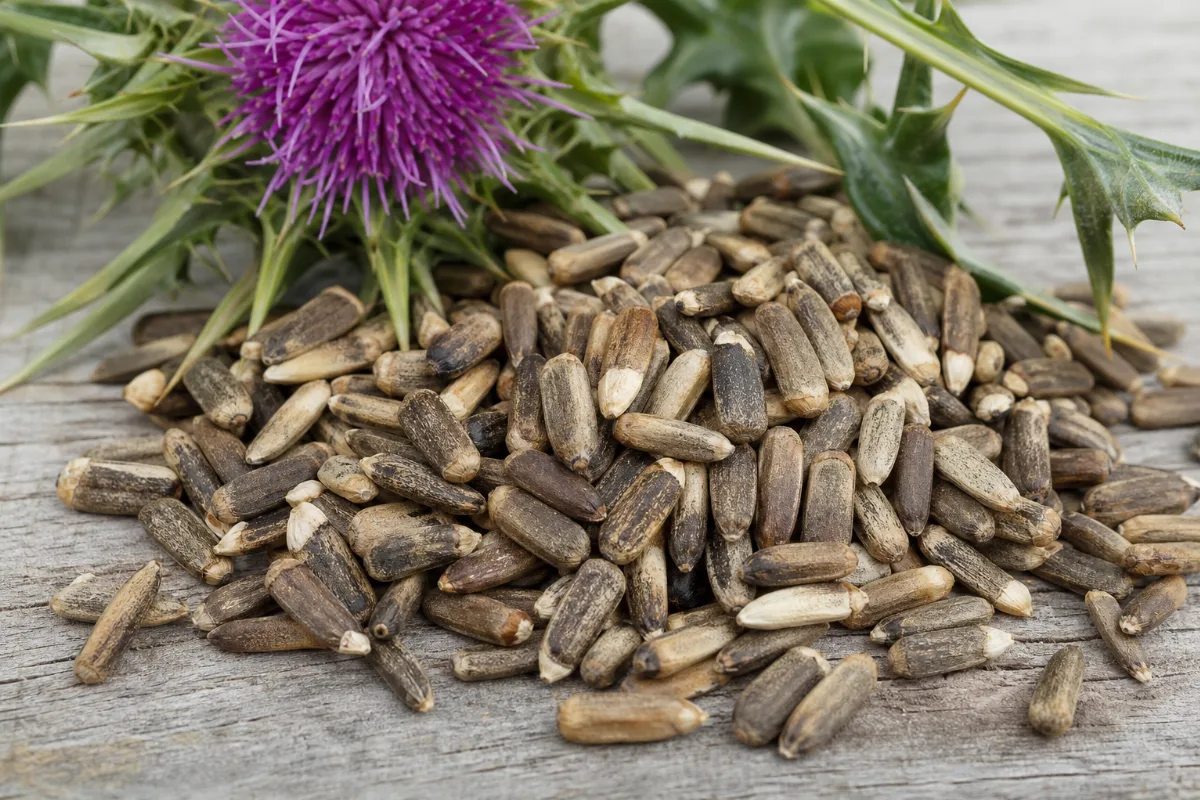
Milk thistle is a tall plant with glossy, white-veined leaves, prickly spines and purple flower heads. It belongs to the daisy family (Asteraceae), the same family as ragweed, artichoke and chamomile. The part used in medicine is the mature fruit, usually called the seed.
Its best-known active mixture is silymarin, a group of six main plant compounds (flavonolignans) plus a related compound called taxifolin. The most abundant is silybin, also called silibinin. Standardised extracts are sold by their silymarin content.
Other names include Mary thistle, St. Mary's thistle, holy thistle, cardo mariano and cardo de Maria (Spanish), Mariendistel (German) and chardon-Marie (French). Do not confuse it with blessed thistle (Centaurea benedicta), a different herb.
What makes it distinctive
Silymarin is a mixture, and its makeup changes with the plant variety, growing conditions and processing. In one analysis of European fruit, total silymarin ranged from 0.8% to 4.9%. Trials, products and blends are therefore not interchangeable: whole seed or tea, a standardised silymarin extract, pure silibinin, and silybin bound to a fat-like carrier (a phytosome or complex such as Realsil) are four different things.
Silymarin is poorly absorbed. Only about 1 to 5 percent of a dose is found in urine, and most of what reaches the blood has already been chemically attached to a sugar or sulfate. Newer formulas (complexes, micelles) raise blood levels, but higher blood levels have not been shown to give better health results.
Lab and animal studies suggest several actions, including antioxidant and anti-inflammatory effects, and blocking the entry of the death-cap mushroom toxin into liver cells. These are findings in cells and animals, not proof of benefit in people.
Historical and current uses
Milk thistle fruit has been used in Europe for liver and gallbladder complaints for a very long time. The European Medicines Agency (EMA) quotes sources describing use since Greco-Roman times and notes a standardised extract has been sold in the EU since at least 1974. Historical statements such as 'over 2,000 years' come from secondary sources.
The EU herbal committee (HMPC, 2018) accepts milk thistle fruit as a traditional herbal medicine only: for symptomatic relief of digestive problems such as fullness and indigestion, and to support liver function after a doctor has ruled out serious conditions. It said firm conclusions could not be drawn from the liver trials. In the US it is sold as a dietary supplement, which is not approved by the FDA before sale.
What the research shows
The liver is the main studied area, and nothing reaches better than low certainty. For fatty liver, pooled trials show lower liver enzymes, but the two best biopsy trials missed their main goal. For hepatitis C, the best placebo-controlled trial found no effect on liver enzymes or virus level, and the evidence is against it as a treatment. For drug-induced liver injury, reviews disagree and the trials are small. For alcohol-related liver disease and cirrhosis, a Cochrane review found no clear effect on deaths, and the evidence is insufficient. For hepatitis B, the evidence is insufficient too.
For death-cap mushroom poisoning, the intravenous silibinin used in hospitals has only case reports and case series behind it (very low certainty).
Outside the liver, the evidence is low or very low: small trials suggest a modest lowering of blood sugar and blood fats, a little more breast milk, and less skin damage from breast radiotherapy, but results are mixed and many trials are small and from one country. Trials for memory, mood and compulsive behaviours were tiny or negative.
Root, leaf, powder, extract: what is the difference?
Standardised silymarin capsule or tablet
A dry extract of the seed, sold by silymarin content. This is the form used in most trials.
Trials ran from about 103 mg of silymarin a day up to 2,100 mg a day for 24 to 48 weeks. The two largest US trials, at 1,260 and 2,100 mg a day, did not beat placebo on their main goals. Silymarin makeup differs between extracts, so milligrams of different products are not interchangeable. Check milligrams of silymarin per day, not milligrams of seed powder.
Silybin complex (phytosome)
Silybin bound to a fat-like carrier (phosphatidylcholine), sometimes with vitamin E, such as Realsil.
Blood silybin was higher than with ordinary silymarin tablets in 23 volunteers. One 12-month trial of a vitamin E complex in fatty liver reported better enzymes and tissue findings, but silybin is only one part of silymarin and the vitamin E may contribute. A pooled analysis of four Realsil studies found a significant drop only in one enzyme (GGT).
Micellar or lipid-based liquid
Silymarin packaged in tiny fat-based particles to raise absorption.
In one single-dose study of 16 healthy adults, one branded product gave about 19 times the peak blood level of a standard product. No health outcomes were measured, so it is not known whether the higher level helps.
Tea from crushed seed
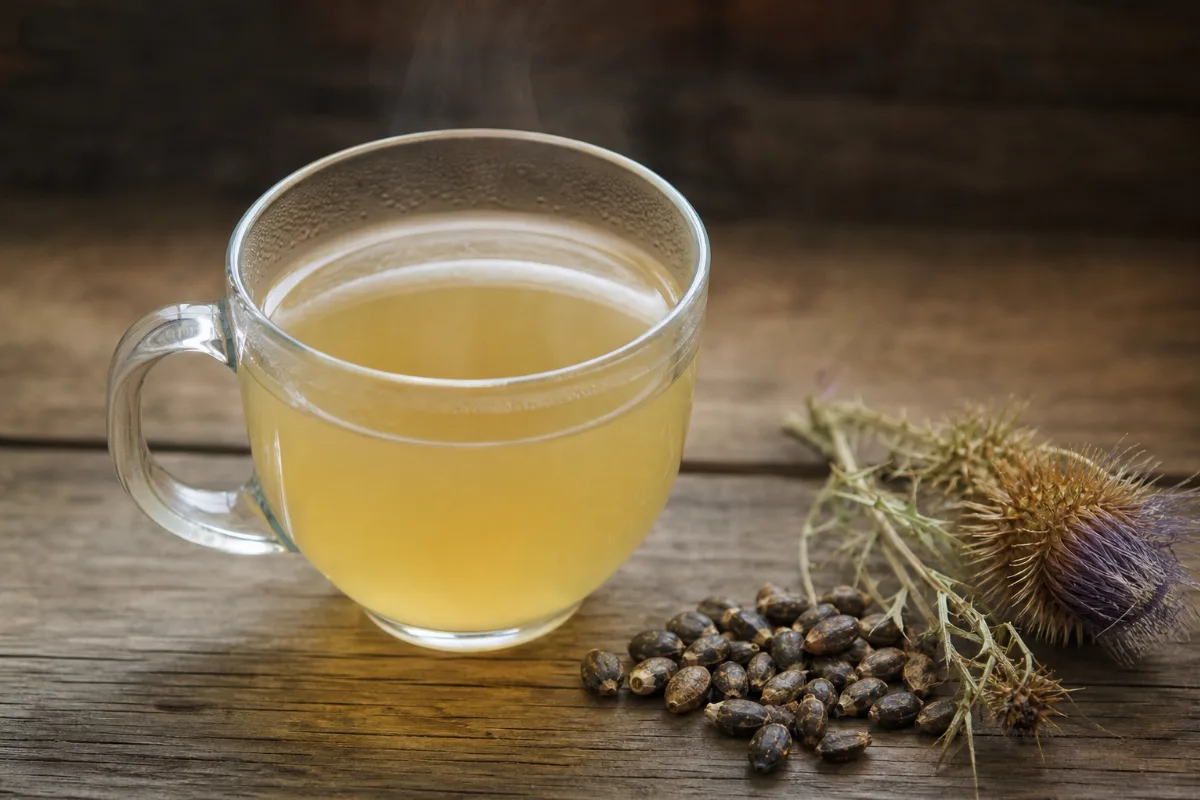
Crushed fruit steeped in boiling water. The EU traditional dose is 3 to 5 g in 100 ml, 2 to 3 times a day before meals.
We found no trial of the tea. Silymarin dissolves poorly in water, so a cup of tea may deliver much less than an extract. EU status is traditional use for indigestion and liver support only.
Seed (fruit) powder
Dried, ground fruit. The EU traditional dose is 300 to 600 mg two to three times a day, up to 1,800 mg a day.
No trial of plain powder was found, and its silymarin content was not measured in the sources we read. Whole seed also had the most mould in an FDA survey of retail samples.
Intravenous silibinin (hospital drug)
Purified silibinin given into a vein in hospitals for death-cap mushroom poisoning in some countries.
This is a medicine, not a supplement, and is not the same as capsules or tea. The evidence is case reports and case series only. Do not use milk thistle at home for mushroom poisoning; get emergency help.
At a glance
Traditional uses history, not proof
- Liver and gallbladder complaints in European herbal medicine, for a very long time
- EU traditional use: indigestion and fullness, and to support liver function after a doctor has excluded serious conditions
- German Commission E: seed for digestive complaints, and a standardised extract for toxic liver damage and chronic liver inflammation
- Historically also a bitter tonic and, in the UK, a remedy for nursing mothers (secondary sources)
Studied for research
- Fatty liver, low certainty
- Drug-induced liver injury, mixed findings
- Hepatitis C, evidence against
- Alcohol-related liver disease, cirrhosis and hepatitis B, insufficient evidence
- Death-cap mushroom poisoning (intravenous silibinin in hospitals), very low certainty
- Blood sugar and blood fats, low certainty
Main compounds
- Silymarin: a mixture of six flavonolignans plus taxifolin, the standardised seed extract
- Silybin (silibinin), the largest single part, as silybin A and B
- Isosilybin A and B, silychristin and silydianin, and the seed oil (mainly linoleic and oleic acid)
Common forms
- Standardised silymarin extract in capsules or tablets (most trials, about 103 to 2,100 mg of silymarin a day)
- Silybin complexes with a fat-like carrier, sometimes with vitamin E (for example Realsil)
- Crushed-seed tea and seed powder (EU traditional use; not tested in trials we read)
- Tincture or soft extract (EU traditional use) and intravenous silibinin (hospital drug only)
Research links: NIH NCCIH: Milk Thistle · EU herbal medicine page for milk thistle fruit (EMA) · NIH LactMed: Milk Thistle · NIH LiverTox: Milk Thistle · Research Library · Genes & Biomarkers Library
The plant and its history
- Accepted scientific name
- Silybum marianum (L.) Gaertn.
- Naming authority
- (L.) Gaertn. The plant was first named Carduus marianus by Linnaeus (1753) and moved to the genus Silybum by Gaertner in 1791 (Fruct. Sem. Pl. 2: 378) (GBIF 'published in' field; NCBI Taxonomy lists both 'Carduus marianus L., 1753' and 'Silybum marianum (L.) Gaertn., 1791').
- Synonyms
- Carduus marianus L. (the original Linnaean name; NCBI and the EMA report also list it); Carduus lactifolius Stokes; Carduus mariae Crantz; Carduus versicolor Salisb.; Carthamus maculatus (Scop.) Lam.; Centaurea dalmatica Fraas; Cirsium maculatum Scop.; Mariacantha maculosa Bubani; Mariana lactea Hill; Mariana mariana (L.) Hill; Marianus marianus (L.) Hill; Silybum intermedium Willk.; Silybum leucanthum Jord. & Fourr.; Silybum maculatum (Scop.) Moench; Silybum mariae (Crantz) A.Gray; Silybum mariae var. unicolor Gray; Silybum marianum subsp. anatolicum Meriçli; Silybum marianum var. albiflorum Eig; Silybum marianum var. longispinum Lamotte; Silybum marianum var. marianum; Silybum pygmaeum Cass.
- Common names
- Milk thistle (English); Blessed milk thistle (English); Marian thistle (English); St. Mary's thistle (English); Mary's thistle (English); Holy thistle (English); Lady's thistle (English); Cardo mariano (Spanish); Cardo de María (Spanish); Cardo lechero (Spanish); Chardon-Marie (French); Mariendistel (German); Cardo di Santa Maria (Italian); Cardo-mariano; cardo-leiteiro (Portuguese)
- Botanical family
- Asteraceae (the daisy or sunflower family, also called Compositae). The EMA assessment report lists as its only contraindication allergy to the herb itself and to plants of the Asteraceae (Compositae) family (s-ema-ar-silybum-fructus).
- Classification
- Plantae > Tracheophyta > Magnoliopsida > Asterales > Asteraceae > Silybum > Silybum marianum
- Native range
- Not verified. Native range, where it is wild and where it is grown were not stated in the primary sources read. Poppe 2016 (p27639292) only says the fruits it analysed were grown in various habitats in Europe (Germany, Poland, Hungary, Bulgaria). Check Plants of the World Online or GBIF distribution data before publishing a range.
- Habitat
- Not verified in a primary source.
- What the plant looks like
- Roots: Not described in the sources read. The root is not the part used.; Stems: Not described in the sources read.; Leaves: Not described in the sources read. (The EMA report quotes the German Commission E as saying leaves were used since Greco-Roman times, but today the fruit is the part used.); Flowers: Not described in the sources read.; Fruit: The part used is the ripe fruit (botanically an achene; usually called the seed). The EMA report, quoting the European Pharmacopoeia and Bruneton (1999): strongly flattened, elongate egg-shaped, about 6-8 mm long, 3 mm wide and 1.5 mm thick; smooth, shiny, grey or pale brown with dark brown streaks along its length; narrowed at the base and topped with a glossy pale-yellow collar about 1 mm high around the remains of the style. Cut across, it shows a narrow brown outer layer and two large, dense, white, oily seed leaves (cotyledons). The pharmacopoeia drug is the mature fruit with the pappus (feathery hairs) removed (s-ema-ar-silybum-fructus).
- Cultivation
- Fruit used for medicine and research mostly comes from cultivated plants. Poppe 2016 (p27639292) compared fruits from two German and two Polish cultivars plus fruits from Hungary and Bulgaria: total silymarin ranged from 0.8% to 4.9% and there were three distinct chemotypes (patterns of flavonolignan mix). So the plant's variety and growing place change the content, not only the extraction method.
- Harvest and processing
- The European Pharmacopoeia defines the drug as the mature fruit, with the pappus removed, containing at least 1.5% silymarin expressed as silibinin (dried drug). The refined, standardised dry extract must contain 90-110% of the labelled silymarin, with a nominal content of 30-65% silymarin (anhydrous extract), made with solvents such as ethyl acetate, acetone, ethanol or methanol (and their water mixtures). Within the silymarin: silibinin A+B 40-65%, silychristin+silydianin 20-45%, isosilibinin A+B 10-20% (s-ema-ar-silybum-fructus). Silymarin is found in the whole plant but is concentrated in the fruit and seed (p20564545).
- Look-alikes and adulterants
- Name: Blessed thistle (Centaurea benedicta, older name Cnicus benedictus); Note: A different herb that shares the word 'thistle' and also sits in the Asteraceae. GBIF lists Centaurea benedicta (L.) L. as the accepted name and Cnicus benedictus L. as a synonym. It is not milk thistle, has no role in the silymarin research, and no source read here reports silymarin in it. Products labelled 'blessed thistle' should not be assumed to be milk thistle (s-gbif-silybum-marianum name match). Note that 'blessed' also appears in some English names for milk thistle itself ('blessed milk thistle'), which is a real source of mix-ups.; Name: Other Silybum species (Silybum eburneum, Silybum cernuum); Note: GBIF lists these as accepted species in the same genus. None of the human or pharmacokinetic research read for this file used them; all of it refers to S. marianum. Whether they contain silymarin was not checked.; Name: Other spiny thistles (bull thistle Cirsium vulgare, cotton thistle Onopordum acanthium, musk thistle Carduus nutans, wild cardoon Cynara cardunculus); Note: All are Asteraceae and accepted species in GBIF, and several look 'thistle-like' to a casual eye. They are different plants, not milk thistle, and no source read reports silymarin from them. Plant identification (leaf and flower shape) is NOT sourced in this file; use a botanical key or a trained identifier.; Name: Name confusion: silymarin, silybin and silibinin; Note: Silymarin is the whole mixture of flavonolignans from the fruit. Silybin (silibinin) is one main part; commercial 'silibinin' is a 1:1 mix of the two mirror-image forms silybin A and silybin B only (p15899838). Papers that use 'silybin', 'silibinin' and 'silymarin' loosely can describe quite different products.; Name: Product authenticity; Note: In a 2023 study of 18 milk thistle products (teas, capsules, tablets and an emulsion), silymarin-type molecules were found in all of them, but DNA testing detected milk thistle in only 11 of 16 preparations that could be tested, and two others had incomplete DNA evidence even though the chemistry confirmed silymarin (p37480124). A 2023 review adds that commercial products do not always contain the recommended amount of silymarin and that removal of silymarin is suspected as adulteration in some cases (p36984880). These are small studies; they do not give a market-wide rate.
- Sustainability and conservation
- Not verified. No IUCN or national conservation assessment was retrieved.
The plant and the parts used
Traditional use and history history, not clinical proof
| Tradition or era | Documented use | Source |
|---|---|---|
| Greco-Roman antiquity | The EMA report, quoting the German Commission E monograph, says parts of the milk thistle plant (the monograph says 'leaves') have been used since Greco-Roman times as a remedy for a variety of ailments, especially liver problems. The report does not name an ancient author or text for this, so the claim is traditional-use only and could not be traced to an original source here. | s-ema-ar-silybum-fructus |
| Europe: 'over 2,000 years' | Milk thistle preparations are described as used in European medicine for over 2,000 years for liver and bile-duct diseases, both chronic and acute (the ABC Clinical Guide to Herbs, 2003, as quoted by EMA). Abenavoli 2018 repeats the figure as 'a 2,000-year history of use' (p30080294). | s-ema-ar-silybum-fructus |
| Early Middle Ages to modern times | Rambaldi 2005 and Navarro & Montilla 2012 (both cited by EMA) report internal use of milk thistle extracts since ancient Greece, the Early Middle Ages and the modern age. Original medieval herbals were not read for this file. | s-ema-ar-silybum-fructus |
| United Kingdom and wider Europe (folk and herbal tradition) | Wren's Potter's New Cyclopaedia (1988), quoted by EMA, says milk thistle was formerly used in the UK for nursing mothers, as a bitter tonic, a soothing demulcent, as an antidepressant and for liver complaints, and in Germany and elsewhere in Europe extensively for liver diseases and jaundice. The PDR for Herbal Medicines (1998) lists the herb as a tonic and for liver and gallbladder disorders, jaundice, gallbladder colic and spleen diseases, and notes former use against malaria and as an emmenagogue (to bring on menstruation) and for uterine complaints. Steinmetz (1997) lists an infusion for fever, chest complaints, jaundice, spleen disease, dropsy and leucorrhoea. All are secondary quotations in the EMA report. | s-ema-ar-silybum-fructus |
| United States Eclectic physicians (late 19th and early 20th century) | Eclectic doctors acknowledged benefits of milk thistle seed (fruit) preparations for congestion of the liver, spleen and kidneys (Blumenthal 2000, as quoted by EMA). | s-ema-ar-silybum-fructus |
| Germany: Commission E (1986) and modern phytotherapy | The German Commission E monographs (Blumenthal 1986, 2000) list milk thistle fruit for digestive complaints as a decoction (3.0 g of seed in 150 ml water), an infusion (3.5 g of seed in 150 ml water) or a tincture, and a standardised extract (70% silymarin) for toxic liver damage and as supportive treatment in chronic inflammatory liver disease and cirrhosis. Widespread use in Germany for 'chronic hepatitis of all types' and alcohol-related liver disease is cited from Weiss 1988. ESCOP (2009), the British Herbal Compendium (2006) and the WHO monograph (2002) list similar uses (all via EMA). | s-ema-ar-silybum-fructus |
| Pharmacopoeias and homeopathy | The fruit has a European Pharmacopoeia monograph (and British Herbal Pharmacopoeia 1996 and Spanish Pharmacopoeia entries); a refined standardised dry extract also has a European Pharmacopoeia monograph (and a German DAB 2003 entry). Carduus marianus is in the French Pharmacopoeia (1989) for homeopathic preparations and the seeds in the Homeopathic Pharmacopoeia of India (1971) for jaundice, liver cirrhosis, dropsy and gallstone-related conditions (EMA). | s-ema-ar-silybum-fructus |
| Modern EU regulatory view: EMA/HMPC, 5 June 2018 | A standardised dry extract has been marketed in the EU since at least 1974 for liver complaints. The HMPC (the EMA's herbal medicines committee) concluded that a 'well-established use' indication could not be set because the scientific data were not coherent (it cited the Cochrane review that found insufficient evidence in alcoholic liver disease), but adopted a monograph for traditional use: 'traditional herbal medicinal product for the symptomatic relief of digestive disorders, sensation of fullness and indigestion and to support the liver function, after serious conditions have been excluded by a medical doctor.' That wording is based on long-standing use only, not on proof of effect. | s-ema-monograph-silybum-fructus |
| Mushroom poisoning (death cap, Amanita phalloides) | The PDR for Herbal Medicines (1998), quoted by EMA, lists the herb as an antidote in Amanita phalloides poisoning. The proposed mechanism (silibinin blocking a liver-cell transporter that takes up amatoxin) is cell-lab evidence only (p16495352); see mechanisms. Clinical value was not assessed for this file. | s-ema-ar-silybum-fructus |
Traditional use shows how a plant was used. It does not show that a supplement works or is safe today.
What is inside, and how it may work
What the plant contains and how those compounds act in cells and animals. Laboratory and animal mechanisms are not proven effects in people.
Main compounds
| Compound | Family | Where it is concentrated | Activity studied | Level of evidence |
|---|---|---|---|---|
| Silymarin (whole flavonolignan complex) PubChem 5213 | mixture of flavonolignans plus taxifolin and other flavonoids | Fruit (achene; 'seed') Ph. Eur. drug: at least 1.5% silymarin as silibinin (dried fruit). Flavonolignans 1.3-3% of the fruit (EMA, quoting older literature); 0.8-4.9% across European sources and three chemotypes (p27639292). Standardised extracts: 30-65% silymarin. | The extract behind most research. Described in reviews as an antioxidant and free-radical scavenger, anti-inflammatory and anti-fibrotic in cells and animals, and as blocking toxin entry into liver cells. In people, the best trials are mixed or negative for hard liver outcomes (Cochrane; SyNCH trial), while a meta-analysis of NAFLD trials reports lower liver enzymes and blood fats (p38579127). 99 117 44 77 135 2 112 34 | Mixed (lab and animal mechanisms; human clinical results mixed) |
| Silybin / silibinin (silybin A + silybin B) PubChem 31553 | flavonolignan (flavanonol linked to a coniferyl-alcohol unit) | Fruit (achene; 'seed') About 50-70% of silymarin (p20564545; p41278156). In the Ph. Eur. extract, silibinin A + B = 40-65% of silymarin. A 600 mg dose of an 80%-silymarin extract used in one PK study contained 37.7 mg silibinin A and 58.8 mg silibinin B (EMA, from Schrieber 2008). PubChem CID 31553 is the record named 'Silibinin' (the A+B mixture); silybin B alone is CID 1548994. No separate PubChem CID could be confirmed by name search for silybin A alone. | The most-studied single component. Antioxidant, anti-inflammatory and anti-fibrotic effects in cultured human hepatic stellate cells at 25-50 micromolar (p19398228); lowers liver scarring markers in rats when given as a phosphatidylcholine complex (p16169303). Poorly absorbed and heavily conjugated in people (p33587317; p17913795). 141 20 142 150 2 82 17 | Laboratory research |
| Silybin B (silibinin B) PubChem 1548994 | flavonolignan, diastereomer of silybin A | Fruit (achene; 'seed') About half of silibinin; the A:B ratio is never exactly 1:1 in the fruit (p27639292). | Among the flavonolignans with the highest exposure in the 3-volunteer PK work: free AUC about 51 and conjugated about 597 microgram x h/L after 600 mg of extract in three volunteers (p17913795). In NAFLD vs hepatitis C patients, silybin B was the one compound whose adjusted exposure differed significantly (p21865319). 150 126 112 | Laboratory research |
| Isosilybin A PubChem 11059920 | flavonolignan (regioisomer of silybin) | Fruit (achene; 'seed') 10-20% of silymarin together with isosilybin B (Ph. Eur. extract). Isosilybin B alone is no more than 5% of silymarin (p15899838). | In human prostate cancer cell lines isosilybin A and B were the most effective at lowering PSA secretion (cells only; not evidence for any human use). Isosilybin A conjugates had the largest conjugated exposures with silybin B in the 3-volunteer PK study (conjugated AUC about 734 microgram x h/L). 17 150 34 | Laboratory research |
| Isosilybin B PubChem 10885340 | flavonolignan (regioisomer of silybin) | Fruit (achene; 'seed') No more than 5% of silymarin; absent from commercial silibinin (p15899838). | Most consistently potent growth suppressor of three human prostate cancer cell lines compared with the other pure flavonolignans and with commercial extracts (cells only). 17 | Laboratory research |
| Silychristin (silicristin) PubChem 441764 | flavonolignan (regioisomer) | Fruit (achene; 'seed') With silydianin, 20-45% of silymarin in the Ph. Eur. extract. In the 600 mg PK capsule: 39.2 mg silychristin. | In people with liver disease silychristin made up 20-36% of the total flavonolignan blood exposure in the 24 h after a 600 mg dose, versus a smaller share in healthy volunteers (p18566043). Specific biological effects not summarised in the abstracts read. 125 34 | Laboratory research |
| Silydianin (silidianin) PubChem 11982272 | flavonolignan (regioisomer) | Fruit (achene; 'seed') Grouped with silychristin (20-45% of silymarin). In the 600 mg PK capsule: 15.3 mg. | In isolated perfused rat livers it was the only flavonolignan primarily glucuronidated and recovered almost entirely in bile (p18687803). Detected in the plasma of NAFLD patients but not hepatitis C patients on repeated dosing (EMA, from Schrieber 2011). 91 126 34 | Animal research |
| Taxifolin (dihydroquercetin) PubChem 439533 | flavonoid (dihydroflavonol); building block of the flavonolignans | Fruit (achene; 'seed') Listed by EMA among the fruit's flavonols; amount not given in the sources read. | In plant-biochemistry assays taxifolin combines with coniferyl alcohol to make the flavonolignans, and the ratio of the two steers whether silydianin or silychristin form (p27639292). No human or animal effect of taxifolin from milk thistle was reviewed here. 112 34 | Laboratory research |
| Apigenin PubChem 5280443 | flavone | Fruit (achene; 'seed') Listed by EMA as present; amount not given in the sources read. | Presence only; no activity from milk thistle assessed here. 34 | Laboratory research |
| Chrysoeriol PubChem 5280666 | flavone | Fruit (achene; 'seed') Listed by EMA as present; amount not given. | Presence only; no activity assessed. 34 | Laboratory research |
| Eriodictyol PubChem 440735 | flavanone | Fruit (achene; 'seed') Listed by EMA as present (flavone group in the report); amount not given. | Presence only; no activity assessed. 34 | Laboratory research |
| Quercetin PubChem 5280343 | flavonol | Fruit (achene; 'seed') Listed by EMA as present; amount not given. | Presence only; no activity from milk thistle assessed. 34 | Laboratory research |
| Kaempferol PubChem 5280863 | flavonol | Fruit (achene; 'seed') Listed by EMA as present; amount not given. | Presence only; no activity assessed. 34 | Laboratory research |
| Dihydrokaempferol (aromadendrin) PubChem 122850 | dihydroflavonol | Fruit (achene; 'seed') Listed by EMA as present; amount not given. | Presence only; no activity assessed. 34 | Laboratory research |
| Fatty oil (mainly linoleic and oleic acid) PubChem 5280450 | plant oil (triglycerides) | Fruit (achene; 'seed') 20-30% of the fruit as oil; linoleic 35-55%, oleic 24-30%, palmitic 8-12%, linolenic 3-7%, behenic 3-9% of the oil (EMA, quoting the British Herbal Compendium 2006). | The ordinary food-type oil of the seed. Most of it is removed in refined silymarin extracts. No health claim is supported for the oil in the sources read. 34 | Traditional use |
| Beta-sitosterol (phytosterols) PubChem 222284 | plant sterol | Fruit (achene; 'seed') 0.2-0.6% of the fruit (EMA). | Presence only; no activity assessed. 34 | Laboratory research |
| Dehydrodiconiferyl alcohol PubChem 5372367 | lignan-type phenolic | Fruit (achene; 'seed') Listed by EMA under 'others'; amount not given. | Presence only. 34 | Laboratory research |
| 5,7-Dihydroxychromone PubChem 5281343 | chromone | Fruit (achene; 'seed') Listed by EMA under 'others'; amount not given. (EMA also lists a small amount of essential oil, mostly monoterpenes.) | Presence only. 34 | Laboratory research |
| Silibinin dihemisuccinate (water-soluble derivative, NOT found in the plant) PubChem 150709 | semi-synthetic ester of silibinin | Made in a lab from silibinin Not applicable (a drug-type derivative). | Used in cell work; listed among antidotes used in the past for human amatoxin (death-cap) poisoning (p16495352). Clinical use was not assessed here. In human liver-cell transport tests it blocked the OATP1B3 transporter that takes up amanitin (cells only) (p16495352). Selc 2024 describes it, and the silibinin-phosphatidylcholine complex, as the two most promising routes to fix silibinin's poor absorption (p39444787). 75 127 | Laboratory research |
| Silibinin-phosphatidylcholine complex (silipide, IdB 1016, phytosome; NOT found in the plant) PubChem 6450536 | manufactured lipid complex of silybin and phosphatidylcholine | Made by a manufacturing process from silybin and phosphatidylcholine Not applicable (a formulated product; doses given as silybin equivalents). | Gives much higher plasma silybin than silymarin in healthy volunteers (p2088770; p30635055). See pharmacokinetics. The HMPC did not treat such complexes as herbal preparations (EMA). 10 48 98 71 127 34 | Human pk |
Mechanisms, receptors and pathways
| Target or pathway | Gene or receptor | What was found | Level |
|---|---|---|---|
| Antioxidant effects (direct and indirect) | NFE2L2 (Nrf2) pathway; ROS-producing enzymes; mitochondria | A 2015 review of the lab and animal literature lists several ways silymarin may protect against oxidative stress: mopping up free radicals and binding iron and copper (mainly in the gut), blocking enzymes that make reactive oxygen species, keeping mitochondria intact under stress, and switching on the cell's own antioxidant defences through Nrf2, which the review calls probably the main driver. Silybin also acted as a potent antioxidant in cultured human hepatic stellate cells (p19398228). Doses and concentrations used in labs are often higher than blood levels reached by mouth. 135 141 34 | In vitro and animal (review) |
| Cell-membrane stabilisation and toxin blockade ('membrane effect') | Membrane transporters (see OATP1B3, BSEP below); membrane phospholipid turnover | EMA reviews older lab work: silibinin changed physical properties of rat liver cell membranes by slowing phospholipid turnover; at 32-61 micromolar it reduced histamine release from human white blood cells, which the authors attributed to membrane stabilisation; it blocked activation of T-lymphocytes in a concentration range of 0.5-25 microgram/mL; and a water-soluble form (silibinin hemisuccinate, 1 millimolar for 12 h) prevented liver-cell damage from various toxins in cultured cells. All quoted secondhand from EMA. 34 2 | In vitro and animal |
| Blocking entry of death-cap (Amanita phalloides) toxin into liver cells | SLCO1B3 (OATP1B3 transporter) | Human OATP1B3 was identified as the transporter that carries amatoxin into liver cells. Silibinin dihemisuccinate, among other substances, inhibited that uptake in lab cell lines, which is a plausible reason it was used as an antidote. This is a cell-line result; it does not show the herb or capsules treat mushroom poisoning. 75 34 | Laboratory research |
| Bile-salt export and cholestasis protection | ABCB11 (BSEP, the bile salt export pump) | In rat liver cells silibinin (2.5 micromolar) prevented loss of the bile-salt export pump from the cell surface after two cholestasis-causing toxins, and restored transport into bile-like pockets (Crocenzi 2005, quoted in EMA). Not tested in people in the sources read. 34 | Animal research |
| Anti-inflammatory action through NF-kappa B and cytokines | NFKBIA (IkB-alpha) / NFKB1; CCL2 (MCP-1); CXCL8 (IL-8) | In human hepatic stellate cells grown in a dish, silybin at 25-50 micromolar blocked IL-1-driven production of MCP-1 and IL-8 and reduced phosphorylation of IkB-alpha. A 2015 review also lists NF-kappa B inhibition as an emerging mechanism. EMA also quotes lab work in which silibinin stopped isolated rat Kupffer cells (liver macrophages) releasing leukotriene B4 (IC50 15 micromolar). 141 135 34 | Laboratory research |
| Anti-fibrotic action (stopping scar-forming liver cells) | RAF1 / MAP2K1 (MEK) / MAPK1,3 (ERK); SLC9A1 (NHE1); TGFB1; COL1A1; TIMP1; MMP2; ACTA2 (alpha-SMA) | In human stellate cells in culture, silybin (25-50 micromolar) lowered growth-factor-driven cell division, movement and new scar-matrix production by blocking the Raf-MEK-ERK chain and NHE1 (p19398228). In rats with chemically or bile-duct-induced scarring, a silybin-phosphatidylcholine-vitamin E complex lowered stellate-cell growth and activation, collagen deposition and messenger RNA for procollagen, TGF-beta1 and tissue inhibitor of metalloproteinase 1 (p16169303). EMA also quotes a rat study where very high silymarin (200 mg/kg) may have worked by pushing activated stellate cells into cell death. A 2025 review summarises the same links between oxidative stress and fibrosis (p41278156). 141 20 82 34 | In vitro and animal |
| Stimulating the cell's protein-making machinery (regeneration) | POLR1 (RNA polymerase I) | Sonnenbichler and Zetl (1992), quoted by EMA, proposed that silibinin binds a regulatory subunit of RNA polymerase I and raises ribosomal RNA synthesis, which could help damaged liver cells rebuild; it did not switch on new genes and only boosted division when the cell was already signalled to divide (e.g. after partial liver removal in rats). The original paper was not read. 34 | Animal research |
| Raising glutathione (paracetamol / acetaminophen damage) | Glutathione metabolism | Milk thistle extract at 0.5 mM reduced paracetamol damage in a human cell line and human liver-tumour cells by raising glutathione, the cell's main detoxifier of reactive metabolites (Shear 1995, quoted by EMA). EMA lists several animal studies with raised glutathione and antioxidant enzymes, not read here. 34 | Laboratory research |
| Hepatitis C virus life cycle | MTTP (MTP); APOB; HCV entry and NS5B polymerase | Silymarin blocked HCV entry, spread between cells and production of infectious virus in cultured cells, and inhibited microsomal triglyceride transfer protein activity and apolipoprotein B secretion. Silymarin (but not silibinin) inhibited one HCV polymerase type, only at 5-10 times the concentration needed to stop infection. The authors suggest it mainly targets the host cell. 146 | Laboratory research |
| Drug-metabolising enzymes and transporters (interaction potential) | UGT1A1, UGT1A8, UGT1A10; CYP3A4; ABCB1 (P-glycoprotein) | Silybin A and B strongly blocked glucuronidation of raloxifene by gut-lining enzymes in test-tube systems, and a computer model predicted a 4- to 5-fold rise in raloxifene exposure if it applied in people (a prediction, not a measured result) (p26070840). A systematic review concluded that in most lab tests the concentrations needed are too high to occur in the body, and most human studies found no drug interaction; more were seen in animals, probably because of much higher doses (p33587317). EMA lists two small human studies with no effect on indinavir (16 people) or ranitidine (12 people) levels. 53 142 34 | Laboratory research |
| Blood lipids and insulin resistance (metabolic effects) | Cholesterol-precursor synthesis; insulin signalling (not resolved) | A rat liver homogenate study quoted by EMA found silibinin reduced incorporation of cholesterol precursors. In people, a 2024 meta-analysis of 26 randomised NAFLD trials (2,375 patients) reported lower cholesterol, triglycerides, LDL and fasting insulin, higher HDL, lower ALT and AST and better steatosis (p38579127); the mechanism is not established, and the authors say confirmation is needed. 77 34 | Animal; human meta analysis for outcomes |
| Cancer cell growth (isomer differences) | TOP2A (DNA topoisomerase II alpha) promoter; KLK3 (PSA) | Pure flavonolignans were tested on three human prostate cancer cell lines. Isosilybin B was the most consistently potent at stopping growth, isosilybin A and B were best at lowering PSA secretion, and silymarin and silibinin lowered activity of the topoisomerase II alpha promoter in DU145 cells (cells only). Included to show that isomers behave differently; it is not a recommendation for any cancer use. 17 | Laboratory research |
Absorption, metabolism and elimination
- Absorption
- Absorption by mouth is low. Only about 1-5% of the dose leaves the body in urine (p33587317), most silybin in blood is already conjugated (attached to a sugar or sulfate), and the amount of unchanged (free) flavonolignan in blood is small. Details: (1) Three healthy volunteers given 600 mg of a standardised extract had conjugates make up most of the blood total: about 17% free, 28% sulfated, 55% glucuronidated near peak (1-3 h); conjugated AUC was 4- to 30-fold higher than free (p17913795). (2) EMA quotes an early study (Lorenz 1984) in which 560 mg of extract (240 mg silibinin) gave peak silibinin of 0.34 +/- 0.16 microgram/mL at 1.32 +/- 0.45 h (secondary source; the EMA summary sentence says maximum levels are reached after 4-6 hours across studies). (3) Silybin A and B levels do not rise in proportion to dose: a 5-fold dose increase (140 to 700 mg three times daily) gave an 11-fold rise in silybin A and a 38-fold rise in silybin B, suggesting that bioavailability improves at higher doses (p19841158). (4) Absorption is higher in some liver disease: after a single 600 mg dose, the total flavonolignan AUC over 24 h was 2.4- to 4.7-fold higher in hepatitis C, NAFLD and cirrhosis groups than in healthy volunteers (p18566043). (5) Peak times differ between studies and products, so any single 'time to peak' is only approximate.
- Distribution
- No human tissue-distribution data were found. EMA's report says 'no data available' for distribution.
- Metabolism
- Phase II (conjugation) metabolism dominates: rapid glucuronidation and sulfation in gut-lining cells and liver; phase I (oxidative) metabolism plays a minor role (p33587317). In isolated perfused rat livers about 96% of each flavonolignan dose left the perfusate within 30 minutes and less than 5% of parent compound was recovered in bile or perfusate; the conjugates were excreted in bile through the MRP2 transporter, with biliary excretion of conjugates falling 80-92% in rats lacking MRP2 (p18687803). Silydianin was almost entirely glucuronidated, unlike the others (animal data).
- Elimination
- Elimination is mostly through bile. Reported half-lives: 1-3 h (free) and 3-8 h (conjugated) in three healthy volunteers (p17913795); EMA quotes 6-8 h for silymarin in general (Wen 2008) with about 80% excreted in bile and much less in urine; the terminal half-life of silybin was generally under 4 h with both silymarin and the phosphatidylcholine complex (p2088770). These numbers differ because they measure different forms (free vs conjugated) and different products. Enterohepatic cycling (re-absorption from bile) was seen in NAFLD patients, but not in hepatitis C patients (p21865319).
- Bioavailability
- Poor for the normal extract and not established as a single percentage. No intravenous comparison in people was found in the sources read, so absolute bioavailability is unknown. Two reasons given for the low systemic exposure: fast conjugation in gut cells or liver, and efflux back into the gut and into bile (p33587317). Enhanced forms: (a) Silybin-phosphatidylcholine complex (silipide, IdB 1016, phytosome). Nine healthy volunteers given a dose equal to 360 mg silybin had much higher plasma silybin with the complex than with silymarin (p2088770); in 12 volunteers 80 mg silybin equivalents gave free silybin peak 141 +/- 31 ng/mL at 2.4 h and conjugated 255 +/- 35 ng/mL at 3.8 h (p7874377); in 23 volunteers 45 mg complex in oil-filled soft-gels gave higher plasma silybin than 70 mg silymarin tablets (P<0.0001) (p30635055, whose published corrections mean the numbers should be read in the full paper); in 8 beagle dogs the complex gave total silybin Cmax 1310 vs 472 ng/mL and 24-h AUC 11,200 vs 3,720 ng.h/mL for the extract (animal) (p17348898). (b) Other designs reported in animals or review only: a silymarin solid dispersion with tween 80 and a cellulose (relative bioavailability 589% vs silymarin alone in rats) (p36178580); a silybin L-proline cocrystal (16-fold in rats vs raw silybin) (p39861153); silibinin dihemisuccinate and other approaches are reviewed in p39444787. (c) 'Eurosil 85' is described as a proprietary formulation developed to maximise oral bioavailability of silymarin, and most clinical research has used it (p32065376). None of these gives proof of better liver outcomes: higher blood levels are not the same as better health, and the Mendez-Sanchez authors say clinical trials are still needed. The HMPC did not consider silibinin-phosphatidylcholine complexes to be herbal preparations (EMA).
150 125 57 126 142 91 10 48 98 71 42 80 159 127 50 34
Isolated compounds versus whole extracts
Milk thistle research uses at least four different 'products': whole fruit or tea, a standardised silymarin extract (several mixes of six flavonolignans plus taxifolin), pure silibinin (only silybin A + B) and the manufactured silybin-phosphatidylcholine complex. They are not interchangeable. (1) Parts differ in activity: in prostate cancer cell lines isosilybin B was the most potent compound, yet it makes up no more than 5% of silymarin and is absent from silibinin, so tests on silibinin alone miss it (p15899838). In an HCV lab study silymarin, but not silibinin, inhibited an HCV polymerase (p20512985). (2) The body treats the parts differently: silychristin builds up in people with liver disease (20-36% of blood exposure) and silybin A + B drop to 31-38% (p18566043). (3) The plant varies: silymarin ranged from 0.8% to 4.9% in European fruit and falls into three chemotypes (p27639292), and a product labelled 'milk thistle' may contain less silymarin than the label says (p36984880). (4) Formulation changes exposure by a large factor (see pharmacokinetics) but is not a guarantee of clinical benefit. (5) Clinical trial results belong to a specific product: the large negative HCV trial used silymarin 420 or 700 mg three times a day (p22797645); the NAFLD trial with positive liver tests used silybin-phosphatidylcholine plus vitamin E, which is a different product (p22343419); and the pooled Cochrane analysis mixed many extracts and was rated low in quality (p17943794). The tea or powdered fruit are the 'whole herb' forms in the EU traditional monograph, and for them no flavonolignan blood-level data were found. How much silymarin a tea delivers was not measured in the sources read.
Nutritional composition
A nutrient table is not meaningful for milk thistle. The fruit contains 20-30% fatty oil (mostly linoleic and oleic acid) and 0.2-0.6% phytosterols (EMA), but it is used medicinally as a small amount of powder, a few grams of fruit for tea, or a refined extract in which most of the oil is removed. The compounds of interest, the flavonolignans, are not nutrients and no recommended intake exists. No vitamin or mineral data were collected for this file; the compounds of interest are plant compounds, not vitamins or minerals.
Products, quality and comparisons
Independent evidence comes first. Nothing in this section is a paid ranking. If a product link is added later, it will be marked clearly as an affiliate link and will never change what the research says.
Quality indicators
- Plant named as Silybum marianum, with the part used (fruit, also called seed) stated
- Extract type named: dry extract, soft extract, powder, tea or complex, with the extract ratio and solvent if stated (for example 36-44:1, ethyl acetate)
- Silymarin shown as a percentage or mg per serving, with the test method (HPLC is common), and silybin shown separately if the product is a complex
- Total silymarin mg per day to compare with a trial, not just mg of seed powder or extract
- Other ingredients (vitamin E, berberine, dandelion, turmeric) listed separately, not hidden in a proprietary blend
- Lot number and a certificate of analysis available on request, including tests for mycotoxins, pesticides and microbes
- Seal or registration checked on the certifier's or regulator's own website
Identity and authenticity
- A 2019 study tested 26 milk thistle supplements bought in the US and Czech markets in 2016-2017: silymarin content differed widely and often did not match the label, and it differed between batches of the same product.
- A 2013 study of 45 products from local stores found some with no or very little silymarin and others above 80 percent silymarin; antioxidant and anti-hepatitis C lab activity tracked the silymarin level.
- A 2023 study of 18 milk thistle products (teas, capsules, tablets, an emulsion) found silymarin-complex molecules in all of them, but DNA tests detected milk thistle in only 11 of 16 preparations tested; two others had incomplete DNA evidence even though chemistry confirmed silymarin-type markers.
- A 2025 analysis of the 20 best-selling "liver cleanse" supplements on Amazon found milk thistle in 19 of 20, with dandelion and turmeric in 13 each, and every product claimed to detox or cleanse; this was a label review, not a lab test.
- A 2023 review notes that low silymarin can come from poor raw material, and that deliberate removal of silymarin is suspected as an adulteration; the abstract gives no cases proving it.
- These findings describe the products tested and cannot be applied to any single brand.
Standardization and extract strength
- Silymarin is a mixture, not one substance: six main flavonolignans (silybin A and B, isosilybin A and B, silychristin, silydianin) plus other compounds. A 2017 review says the mix changes with processing, plant variety and growing conditions, and that this hurts reproducibility between studies.
- The EU monograph requires the fruit to comply with European Pharmacopoeia monograph 1860 and lists extracts by drug-extract ratio and solvent rather than by a silymarin percent; we did not read the pharmacopoeia itself.
- A 2024 analysis of more than 40 milk thistle extract products found the ratio of silybin B to silybin A averaged about 1.58 and was consistent across extracts and seeds, so a very different ratio may point to a non-natural or altered product. This is the authors' proposal, not a regulatory test.
- Dissolution matters: in a 2001 test of five tablets, capsules and sugar tablets from four countries, 50 to 90 percent of the labelled silymarin dissolved when the product broke apart.
- Silybin-phosphatidylcholine complexes and micellar products raised blood silybin or silymarin levels in small healthy-volunteer studies (23 and 16 people), but "standardized to silymarin" says nothing about how well it is absorbed.
- Serving size is not the same as marker content: silymarin mg = extract mg x percent silymarin.
Third-party testing
- US dietary supplements are not approved by the FDA before sale (NCCIH). NCCIH warns that some milk thistle products have been found to contain amounts of silymarin substantially different from the label.
- Independent testing programmes (USP, NSF, ConsumerLab and others) differ in what they test, and a seal is a statement about that programme, not a guarantee of effect. We did not re-read their test lists for milk thistle in this file.
- In the EU, a traditional herbal registration is a regulator's quality-and-safety route based on long use, not proof of efficacy.
Contaminants and adulterants
- The 2019 study of 26 supplements reported mycotoxins (mould toxins) in large numbers and high concentrations, several pesticides and substantial microbial contamination in all preparations tested, and suggested contamination might add to liver injury from herbal supplements; the abstract does not name brands or give amounts. NCCIH repeats the concern about pesticides, microorganisms and mycotoxins.
- Heavy metals and solvent residues in milk thistle supplements were not covered by the sources we read.
- The EMA monograph for extracts made with ethanol, ethyl acetate, acetone or methanol relies on the maker meeting solvent limits; we did not read those limits.
Reading a product label
- Find Silybum marianum and the part used (fruit or seed).
- Is it extract, powder, tea or complex? Note mg per serving, servings per day and any extract ratio.
- Look for silymarin (or silybin) as a percentage and mg, with the test method. "Milk thistle 1,000 mg" alone does not tell you the silymarin.
- Check whether other herbs or vitamin E are in the blend, and in what amounts.
- Compare mg of silymarin per day with a trial dose, not with another bottle.
- Check cautions: allergy to daisy-family plants (ragweed, chrysanthemum, marigold, daisy), pregnancy, breastfeeding, liver disease, medicines.
- Look for a lot number, certificate of analysis and contaminant testing.
- Check any seal or registration on the certifier's own site.
Certifications and what they actually mean
| Certification | What it means | What it does not tell you |
|---|---|---|
| EU traditional herbal medicinal product registration | A European regulator route for herbal medicines used for a long time; the EU monograph covers tea, powder, dry and soft extracts at set doses. | Says the product is acceptable for the stated mild indications based on tradition; does not claim trial-proven benefit. |
| European Pharmacopoeia monograph compliance (Ph. Eur. 1860) | The fruit meets the pharmacopoeia standard referred to in the EMA monograph. | A maker's statement; check a certificate of analysis. |
| Third-party quality seals (USP, NSF, ConsumerLab and similar) | Independent programmes that test selected label and contaminant points. | What each programme tests differs; their test lists were not re-read for this file. |
| GMP statement | The maker says it follows good manufacturing practice. | Not an independent test of the product. |
| Organic, vegan, non-GMO, gluten-free | Farming and ingredient claims. | Say nothing about silymarin content, plant identity or contamination. |
Comparing price and servings
Do not compare bottle prices. Step 1: cost per serving = bottle price / servings per bottle. Step 2: servings per day needed to reach the studied daily mg of silymarin (studied mg per day / mg of silymarin per serving). Step 3: cost per day = cost per serving x servings per day. If silymarin is only given as a percent, first work out silymarin mg per serving = extract mg x percent. The studied dose depends on the purpose and many trials had no benefit; price tells you nothing about quality.
Extract types compared
| Extract | Plant part | Standardization | Trials | Evidence note | Safety note | Limitations | Studies |
|---|---|---|---|---|---|---|---|
| Legalon (standardized silymarin) | fruit (seed) | Not in abstract | Navarro 2019 (420 or 700 mg three times a day, 48 weeks, 78 adults with NASH); El-Kamary 2009 (140 mg three times a day, 4 weeks, 105 adults with acute hepatitis) | NASH trial showed no benefit on its main goal (12-19% in all groups); acute hepatitis trial showed faster fall of jaundice-type signs but not of ALT/AST. | No difference in adverse events from placebo in both trials. | Maker involvement in the NASH trial; entry-criteria problems; two different conditions. | 103 29 |
| Silymarin (SyNCH, hepatitis C) | fruit (seed) | Not in abstract | Fried 2012 (420 or 700 mg three times a day, 24 weeks, 154 adults) | No better than placebo for ALT or virus level. | Adverse events like placebo. | One group of patients only (treatment-experienced hepatitis C). | 44 |
| Silymarin at 700 mg three times daily (product not named) | fruit (seed) | Not in abstract | Wah Kheong 2017 (2,100 mg/day, 48 weeks, 99 adults with NASH) | Main goal missed; fibrosis improvement is a secondary result needing confirmation. | No difference in adverse events. | Single centre. | 147 |
| Silybin-phosphatidylcholine complex with vitamin E (Realsil) | fruit (seed) | Not in abstract | Loguercio 2012 (twice daily, 12 months, 179 adults with NAFLD) | Better enzymes, insulin resistance and histology than placebo. | Transient diarrhoea, bad taste, itching; no serious events. | Contains vitamin E; withdrawals and baseline imbalance. | 84 |
| Silybin-phosphatidylcholine complex, soft-gel | fruit (seed) | 45 mg complex vs 70 mg silymarin | Mendez-Sanchez 2019 (23 healthy volunteers, single dose) | Higher blood silybin than conventional silymarin tablets. | Not reported in abstract. | No clinical outcome; two erratum notices. | 98 |
| LipoMicel micellar milk thistle | fruit (seed) | 130 mg silymarin | Chang 2025 (16 healthy adults, single dose) | Cmax 18.9-fold and AUC 11.4-fold higher than a standard product. | No adverse events. | No clinical outcome; funding not stated in abstract. | 14 |
| Silymarin tablets, 140 mg (Livergol and unnamed Iranian products) | fruit (seed) | Not in abstract | Several small Iranian trials at 140 mg once daily to three times daily (diabetes, ulcerative colitis, isotretinoin liver enzymes, chemotherapy, endometriosis) | Mostly positive small trials on lab markers; most from one country. | Generally no adverse effects reported; nausea caused 4 dropouts in the ulcerative colitis trial. | Small, short, mostly one region; NCCIH notes it is unclear whether results apply elsewhere. | 28 27 118 92 93 36 |
| Milk thistle fruit tea and powders | fruit (seed) | None (EU traditional preparations) | No trial found | Traditional use only under the EU monograph. | See monograph side-effect statement. | No research on silymarin delivery from tea. | 25 |
Compare Milk Thistle with another ingredient
Milk Thistle vs Vitamin E
Both are used in fatty liver disease. Vitamin E has one large trial with a biopsy benefit in people without diabetes; milk thistle trials at high doses did not meet their main goals. We found no direct comparison.
| Milk Thistle | Vitamin E | |
|---|---|---|
| Benefits studied | Liver enzymes and fatty liver, hepatitis C, cirrhosis, blood sugar | Liver biopsy improvement in NASH |
| Evidence certainty | low: NASH and hepatitis C trials missed their main goals; a Cochrane review (18 trials) found no clear effect on total deaths; 2022-2025 meta-analyses of mostly small trials show lab-marker improvement with low study quality | moderate: one large 96-week NIH-network trial (247 adults, no diabetes) showed biopsy improvement 43% vs 19% on placebo; benefit did not extend to fibrosis; other evidence not read here |
| Typical studied dose | about 140 to 700 mg of silymarin three times a day (420 to 2,100 mg/day) for 6 weeks to 48 weeks; some trials as low as 103 mg/day | 800 IU a day for 96 weeks |
| Head-to-head trial | None found | None found against milk thistle (silybin-vitamin E complex trial used both together) |
| Safety and interactions | Generally well tolerated in trials (nausea, diarrhoea); allergy possible in daisy-family allergy; see safety section | Same rate of other side effects as placebo in the trial; long-term safety and any interactions not re-verified here |
| Forms | Standardized extract capsule or tablet, silybin phytosome, micellar liquid, tea, seed powder, tincture | Capsule, softgel (not compared here) |
| Cost note | Use the price-per-day formula; no prices stored | Use the same formula |
Milk Thistle vs Artichoke leaf extract
Indirect comparison (network meta-analysis of 37 trials) ranked artichoke leaf extract above silymarin for liver enzymes and LDL, but rankings are not proof, and both sets of trials are small.
| Milk Thistle | Artichoke leaf extract | |
|---|---|---|
| Benefits studied | Liver enzymes, fatty liver, blood sugar and lipids | Liver enzymes and lipids in NAFLD |
| Evidence certainty | low: NASH and hepatitis C trials missed their main goals; a Cochrane review (18 trials) found no clear effect on total deaths; 2022-2025 meta-analyses of mostly small trials show lab-marker improvement with low study quality | low: a 2022 meta-analysis of 5 trials (333 patients) found lower ALT, AST and lipids; a 2024 network meta-analysis ranked artichoke best of 7 products for AST, ALT and LDL; trials are small and short |
| Typical studied dose | about 140 to 700 mg of silymarin three times a day (420 to 2,100 mg/day) for 6 weeks to 48 weeks; some trials as low as 103 mg/day | 600 mg a day for 2 months in a 100-person trial |
| Head-to-head trial | None found | None found against milk thistle; the network meta-analysis compares them indirectly |
| Safety and interactions | Generally well tolerated in trials (nausea, diarrhoea); allergy possible in daisy-family allergy; see safety section | No side effects reported in the 100-person trial; not re-verified here. Also a daisy-family plant |
| Forms | Standardized extract capsule or tablet, silybin phytosome, micellar liquid, tea, seed powder, tincture | Leaf extract capsules, tea (not compared here) |
| Cost note | Use the price-per-day formula; no prices stored | Use the same formula |
Milk Thistle vs Curcumin
Both have meta-analyses showing lower liver enzymes in fatty liver, built from small trials of mixed quality, and we found no head-to-head trial.
| Milk Thistle | Curcumin | |
|---|---|---|
| Benefits studied | Liver enzymes and fatty liver, blood sugar | Liver ultrasound, enzymes, lipids in NAFLD |
| Evidence certainty | low: NASH and hepatitis C trials missed their main goals; a Cochrane review (18 trials) found no clear effect on total deaths; 2022-2025 meta-analyses of mostly small trials show lab-marker improvement with low study quality | low: a 2022 meta-analysis of 16 RCTs (1,028 people) found better ultrasound NAFLD severity and lower AST and ALT, with mixed products and doses |
| Typical studied dose | about 140 to 700 mg of silymarin three times a day (420 to 2,100 mg/day) for 6 weeks to 48 weeks; some trials as low as 103 mg/day | Varied across the 16 trials; not read here |
| Head-to-head trial | None found | None found against milk thistle |
| Safety and interactions | Generally well tolerated in trials (nausea, diarrhoea); allergy possible in daisy-family allergy; see safety section | Not re-verified here; see the turmeric page |
| Forms | Standardized extract capsule or tablet, silybin phytosome, micellar liquid, tea, seed powder, tincture | Extract capsules, phytosome, powder |
| Cost note | Use the price-per-day formula; no prices stored | Use the same formula |
Milk Thistle vs S-adenosylmethionine (SAMe)
Both are sold for liver health. We did not find a trial comparing them, and the SAMe review is a broad one that covers many liver diseases.
| Milk Thistle | S-adenosylmethionine (SAMe) | |
|---|---|---|
| Benefits studied | Liver enzymes, fatty liver, cirrhosis | Liver-related measures in several liver diseases |
| Evidence certainty | low: NASH and hepatitis C trials missed their main goals; a Cochrane review (18 trials) found no clear effect on total deaths; 2022-2025 meta-analyses of mostly small trials show lab-marker improvement with low study quality | low: a 2024 systematic review of 15 studies rated them high quality on its own checklist and found improved liver-related measures; the abstract gives no numbers and the diseases and routes differ |
| Typical studied dose | about 140 to 700 mg of silymarin three times a day (420 to 2,100 mg/day) for 6 weeks to 48 weeks; some trials as low as 103 mg/day | Most often 1,000 or 1,200 mg a day |
| Head-to-head trial | None found | None found against milk thistle |
| Safety and interactions | Generally well tolerated in trials (nausea, diarrhoea); allergy possible in daisy-family allergy; see safety section | Few, mild gut side effects per the review; interactions not re-verified here |
| Forms | Standardized extract capsule or tablet, silybin phytosome, micellar liquid, tea, seed powder, tincture | Tablets, injections in some countries (not compared here) |
| Cost note | Use the price-per-day formula; no prices stored | Use the same formula |
Milk Thistle vs N-acetylcysteine (NAC)
Both have been tried in liver disease and for death cap poisoning. In a review of 877 poisoning cases, survival was 90% with silibinin and 85% with NAC plus silibinin, but the review found no statistical difference between treatments in proven cases; NAC alone could not be evaluated.
| Milk Thistle | N-acetylcysteine (NAC) | |
|---|---|---|
| Benefits studied | Liver enzymes in chronic liver disease, drug-related liver injury | NASH histology (small trial); amatoxin poisoning (case series); acetaminophen overdose (not covered here) |
| Evidence certainty | low: NASH and hepatitis C trials missed their main goals; a Cochrane review (18 trials) found no clear effect on total deaths; 2022-2025 meta-analyses of mostly small trials show lab-marker improvement with low study quality | insufficient: in the one trial read (53 adults, open label, no placebo, with metformin) there was no difference between groups; improvement appeared only inside the NAC plus metformin group |
| Typical studied dose | about 140 to 700 mg of silymarin three times a day (420 to 2,100 mg/day) for 6 weeks to 48 weeks; some trials as low as 103 mg/day | 1.2 g a day for 48 weeks in the NASH trial |
| Head-to-head trial | None found | None found against milk thistle |
| Safety and interactions | Generally well tolerated in trials (nausea, diarrhoea); allergy possible in daisy-family allergy; see safety section | Not re-verified here |
| Forms | Standardized extract capsule or tablet, silybin phytosome, micellar liquid, tea, seed powder, tincture | Capsule, powder, tablet (not compared here) |
| Cost note | Use the price-per-day formula; no prices stored | Use the same formula |
Milk Thistle vs Tauroursodeoxycholic acid (TUDCA)
TUDCA has far less human research than milk thistle in the sources we read; we did not find a NAFLD trial of it, and no head-to-head trial with milk thistle.
| Milk Thistle | Tauroursodeoxycholic acid (TUDCA) | |
|---|---|---|
| Benefits studied | Liver enzymes and fatty liver, cirrhosis | Cirrhosis liver tests (compared with UDCA) |
| Evidence certainty | low: NASH and hepatitis C trials missed their main goals; a Cochrane review (18 trials) found no clear effect on total deaths; 2022-2025 meta-analyses of mostly small trials show lab-marker improvement with low study quality | insufficient: the one trial we read had 23 people (18 analysed) and no placebo group |
| Typical studied dose | about 140 to 700 mg of silymarin three times a day (420 to 2,100 mg/day) for 6 weeks to 48 weeks; some trials as low as 103 mg/day | 750 mg a day for 6 months |
| Head-to-head trial | None found | None found against milk thistle; TUDCA was compared with UDCA only |
| Safety and interactions | Generally well tolerated in trials (nausea, diarrhoea); allergy possible in daisy-family allergy; see safety section | Well tolerated in the small trial; not re-verified here |
| Forms | Standardized extract capsule or tablet, silybin phytosome, micellar liquid, tea, seed powder, tincture | Capsule (not compared here) |
| Cost note | Use the price-per-day formula; no prices stored | Use the same formula |
Other supplements people compare it with
- Vitamin E (800 IU/day) (NASH in adults without diabetes): One large 96-week NIH-network trial showed biopsy improvement (43% vs 19%); discuss with a clinician because of dose and long-term issues not covered here. Evidence: moderate. 124
- Artichoke leaf extract (Fatty liver enzymes and lipids): Small trials and a 5-trial meta-analysis show lower ALT and AST; a 2024 network meta-analysis ranked it first among 7 natural products. Evidence: low. 65 107 81
- Curcumin / turmeric extract (Fatty liver): 2022 meta-analysis of 16 RCTs found better ultrasound findings and lower enzymes; products and doses mixed. Evidence: low. 104
- S-adenosylmethionine (SAMe) (Liver health in several diseases): Systematic review of 15 studies reports improved liver-related measures; most doses 1,000 to 1,200 mg a day. Evidence: low. 7
- N-acetylcysteine (NAC) (NASH; poisoning protocols in hospital): Small open-label NASH trial; in mushroom poisoning NAC is used in hospitals, but the review could not evaluate it alone. Evidence: insufficient. 105 136
- Tauroursodeoxycholic acid (TUDCA) (Cirrhosis liver tests): One 23-person trial against UDCA; no placebo-controlled human trial found in our search. Evidence: insufficient. 106
- Dandelion (Taraxacum) (Liver support (traditional and in "cleanse" products)): Our one PubMed search found no human liver trial; it appears in 13 of the top 20 "liver cleanse" products reviewed in 2025, where the authors call the evidence for these ingredients limited and inconclusive. Evidence: insufficient. 139
- Intravenous silibinin (hospital use only) (Death cap mushroom poisoning): Case-series evidence only; not a home remedy. Seek emergency care. Evidence: low. 136 58
Where to buy
Check the label first. Whatever you buy, look for these:
- Amount of silymarin or of the extract per serving, and whether it is standardized
- A third-party testing mark (USP, NSF or ConsumerLab)
- Other ingredients and allergens
- If you take liver-processed medicines, ask a pharmacist first
Talk to a pharmacist or doctor before you start any supplement, especially if you take medicines. See the Safety tab for interactions.
Support our free guides: as an Amazon Associate we earn from qualifying purchases. Full disclosure.
1 mixed findings6 low certainty7 very low certainty2 not enough evidence2 evidence against
What was looked at
The 18 benefits and uses checked for Milk Thistle, each with how strong the evidence is. Tap one to open it.
- Fatty liver (NAFLD/NASH/MASLD)Low certainty
- Alcohol-related liver disease and cirrhosisNot enough evidence
- Hepatitis CEvidence against
- Hepatitis BNot enough evidence
- Protection from drug-induced liver injuryMixed findings
- Death-cap (Amanita) mushroom poisoningVery low certainty
- Memory and Alzheimer's diseaseVery low certainty
- Low mood and anxiety during hepatitis C treatmentVery low certainty
- Gambling, hair pulling and compulsive behavioursEvidence against
- Blood sugar in type 2 diabetesLow certainty
- Cholesterol and blood fatsLow certainty
- Breast milk supply (galactagogue)Low certainty
- Menopausal hot flashesVery low certainty
- Skin reactions to breast radiotherapyLow certainty
- Hand-foot syndrome and nerve symptoms from chemotherapyVery low certainty
- Acne and oily skin (topical serum)Very low certainty
- Kidney protection during certain medicinesLow certainty
- Joint pain and inflammation (rheumatoid arthritis, knee osteoarthritis)Very low certainty
Lab markers tracked in the studies
Alanine aminotransferase (ALT)Aspartate aminotransferase (AST)Gamma-glutamyl transferase (GGT)Alkaline phosphatase (ALP)Liver function: bilirubin, albumin and INRLiver stiffness and fibrosis scoresLiver fat (steatosis)Liver biopsy activity score (NAS)Hepatitis C viral load (HCV RNA)Antioxidant and oxidative stress markers (MDA, SOD, glutathione)Mini-Mental State Exam (MMSE)Depression and anxiety scales (BDI, STAI)Fasting blood sugarHbA1c (average blood sugar over about 3 months)Insulin resistance (HOMA-IR) and fasting insulinLDL cholesterolHDL cholesterolTriglyceridesTotal cholesterolC-reactive protein (CRP)Serum creatinine
What is Milk Thistle good for?
The main proposed uses and how strong the human evidence is for each. "Low" is the best rating any milk thistle use reached here. "Very low", "mixed" and "insufficient" mean few, small or conflicting trials, and "against" means good research found no benefit. Nothing here is a proven treatment, and the ratings are this profile's reading of the reviews, not formal grades unless stated.
Benefits, one by one
Each card is a research question, not a promise. Tap a goal to filter. Open a card to see the studies, doses and limits.
Fatty liver (NAFLD/NASH/MASLD)
Low certaintyMilk thistle's best-studied use. Pooled trials show it lowers liver enzymes (ALT and AST) and may reduce fat in the liver. The two best biopsy trials, however, did not show improvement in the main liver-tissue measure.
12 studiesDoses in trials ranged from about 100 mg a day to 2,100 mg a day (700…
Studies, doses and limits
What the trials found
Meta-analyses: Li 2024 (26 trials, 2,375 people) found lower ALT and AST and better steatosis grade (OR 3.25, CI 1.80 to 5.87). Kalopitas 2021 (8 trials) also found lower transaminases, with quality concerns. Huang 2024 (27 MASLD trials) found silymarin gave the biggest ALT (MD -6.44 U/L) and AST (MD -6.99 U/L) reductions among three polyphenols. Shahsavari 2025 (55 trials) found ALT and AST fell, with larger effects at lower doses and shorter treatment and none in people with BMI 30 or more. Individual trials: Wah Kheong 2017 (99 people with biopsy-proven NASH, 700 mg three times a day for 48 weeks) did not meet its main goal (32.7% vs 26.0%, P=0.467), but fibrosis improved more (22.4% vs 6.0%, P=0.023). Navarro 2019 (78 people, 420 or 700 mg three times a day, 48 weeks) found no benefit on the NAFLD activity score (12% to 19%, P=0.79) and called the result inconclusive. Jin 2024 (83 people, 103 mg a day, 24 weeks) lowered liver stiffness and GGT but not liver fat or the transaminases. Realsil, a silybin complex with vitamin E, improved enzymes and histology over 12 months in Loguercio 2012 (179 people), but a meta-analysis of four Realsil studies found a significant GGT drop only (SMD -0.37). The Heptex herb combination (146 people, 36 weeks) did not beat placebo.
Results
Mixed. Liver enzymes fall in pooled analyses, but the strict biopsy trials mostly missed their main goal. A possible fibrosis benefit appears in one trial and is unconfirmed.
Effect sizes as reported
ALT -12.39 (CI -19.69 to -5.08) and AST -10.97 (CI -15.51 to -6.43) Li 2024 (units as printed in the abstract); ALT MD -6.44 U/L (CI -10.03 to -2.85) Huang 2024; steatosis OR 3.25 (CI 1.80 to 5.87); main biopsy goal 32.7% vs 26.0% P=0.467 Wah Kheong 2017; fibrosis improved 22.4% vs 6.0% P=0.023.
Why this rating
Many pooled trials, but they are small, of varied quality and use different products. The two main biopsy trials did not meet their main goals. A fall in liver enzymes is not proof of healthier liver tissue.
Form and dose studied
Doses in trials ranged from about 100 mg a day to 2,100 mg a day (700 mg three times a day) for 24 to 48 weeks. Realsil and Heptex are combination products.
Who was studied
Adults with NAFLD, NASH or MASLD, mostly in Asia, Iran, Egypt and the US.
Limits
Different products and doses; short trials; enzymes used as stand-in for liver health; abstracts only were read; some meta-analysis units are unclear.
Why researchers looked
Fatty liver is common and has few approved drugs, so people look to antioxidant supplements. Silymarin (the seed extract) is the most used liver herb.
Traditional use
Milk thistle seed has been used in Europe for centuries for liver and gallbladder complaints.
Proposed mechanism Preliminary mechanism
Lab and animal work suggests silymarin acts as an antioxidant, calms inflammation and may slow scar formation in the liver. Silymarin is poorly absorbed, so what reaches the liver in people is uncertain.
A proposed mechanism does not show that the effect happens in people.
Well tolerated in these trials, including at 2,100 mg a day for 48 weeks. Does not replace weight loss, diet and exercise, the proven treatments.
Alcohol-related liver disease and cirrhosis
Not enough evidenceMilk thistle is often taken for alcohol-damaged livers and cirrhosis, but the best review of the trials found no clear effect on survival. Some small trials report better liver tests.
6 studiesSilymarin 420 to 1,050 mg a day in the trials reported.
Studies, doses and limits
What the trials found
The Cochrane review (Rambaldi 2007: 18 trials, 1,088 people with alcoholic and/or hepatitis B or C liver disease) found no significant effect on overall death (RR 0.78, CI 0.53 to 1.15), complications (RR 0.95) or histology. Liver-related deaths were lower across all trials (RR 0.50, CI 0.29 to 0.88) but not in the high-quality trials (RR 0.57, CI 0.28 to 1.19). Only 28.6% of the trials were high quality. Jacobs 2002 (14 trials) found no difference in mortality (OR 0.8, CI 0.5 to 1.5). Amini 2023 (8 silymarin trials in cirrhosis, 613 people) found three of six reporting better AST and ALT. Fathalah 2017 (62 people with hepatitis C cirrhosis and decompensated disease) found 1,050 mg a day improved ALT, AST, bilirubin, albumin, INR and Child score (P=0.048) compared with the usual 420 mg a day, but had no placebo group. A 2025 meta-analysis (55 trials) found no significant liver-enzyme benefit in alcohol-related liver disease. A narrative review (Gillessen 2020) reports fewer liver-related deaths in a pooled cirrhosis analysis.
Results
Unclear. Pooled survival results are not significant in higher-quality trials. Liver test improvements appear in some small trials.
Effect sizes as reported
Death RR 0.78 (CI 0.53 to 1.15); liver-related death RR 0.50 (CI 0.29 to 0.88) all trials, RR 0.57 (CI 0.28 to 1.19) high-quality trials (Rambaldi 2007); mortality OR 0.8 (CI 0.5 to 1.5) Jacobs 2002.
Why this rating
Cochrane graded the trials as low quality, and the apparent survival benefit disappears in the better trials.
Form and dose studied
Silymarin 420 to 1,050 mg a day in the trials reported.
Who was studied
Adults with alcohol-related liver disease, viral cirrhosis or decompensated cirrhosis.
Limits
Old trials, mixed liver diseases, different preparations, abstracts only; the cirrhosis summary does not give a single clear survival result.
Why researchers looked
People with alcohol-related damage and cirrhosis look for liver protection, and silymarin is the herb most often used for this.
Traditional use
Used in Europe for generations as a liver tonic.
Proposed mechanism Preliminary mechanism
Proposed actions are antioxidant protection of liver cells and slowing of scarring, based mostly on lab and animal work.
A proposed mechanism does not show that the effect happens in people.
Side effects were not increased in the Cochrane review (RR 0.83, CI 0.46 to 1.50). Stopping alcohol is the key treatment; milk thistle does not make drinking safe. People with cirrhosis should only add supplements with their liver doctor.
Hepatitis C
Evidence againstIn the best trial, silymarin did not lower liver enzymes or the amount of virus in people with hepatitis C. It is not a treatment for the infection.
5 studies420 to 700 mg three times a day in the main trial.
Studies, doses and limits
What the trials found
Fried 2012 (JAMA; 154 people, 420 or 700 mg three times a day for 24 weeks) found ALT normalised in about 4 percent in every group, with no difference in ALT (P=0.75), viral load (P=0.54) or quality of life. Tanamly 2004 (177 people in an Egyptian village, 12 months, compared with a multivitamin) found no effect on viral load, ALT or fibrosis markers, though people felt better. Yang 2014 meta-analysis (5 trials) found no significant effect on viral load (P=0.09) or ALT (P=0.45) from oral silymarin. Mayer 2005 found little evidence on viral load or histology. Newer small trials add silymarin to antivirals: Ahmed 2022 (30 people on sofosbuvir and ribavirin, silymarin 400 mg a day, 8 weeks) found improved antioxidant and blood markers, but its liver-enzyme changes were not statistically significant.
Results
No benefit on the virus or liver enzymes from oral silymarin in the best trial and the meta-analysis.
Effect sizes as reported
Mean ALT change -4.3 placebo, -14.4 (420 mg), -11.3 (700 mg), P=0.75 (Fried 2012); viral load change P=0.54; meta-analysis ALT P=0.45, viral load P=0.19 (oral).
Why this rating
A well-run, registered placebo-controlled trial plus a meta-analysis found no effect on ALT or viral load.
Form and dose studied
420 to 700 mg three times a day in the main trial.
Who was studied
Adults with chronic hepatitis C, mostly before today's antiviral drugs.
Limits
The trials come from before modern direct-acting antivirals, which cure most people. Quality-of-life and symptom effects are small and not clearly different from placebo.
Why researchers looked
Many people with hepatitis C used it on their own, hoping to protect their liver or reduce the virus.
Traditional use
Used as a general liver tonic; hepatitis C itself was not known historically.
Proposed mechanism Laboratory research
Laboratory work suggests silymarin and silibinin may interfere with hepatitis C virus in cells, but oral doses do not reach those levels in people.
A proposed mechanism does not show that the effect happens in people.
Comparable to placebo in these trials. Silymarin must not replace antiviral treatment.
Hepatitis B
Not enough evidenceA few small trials, mostly in Chinese patients, suggest silymarin added to antiviral drugs may lower liver enzymes more. The evidence is too thin to recommend it.
2 studiesNot stated in the abstract.
Studies, doses and limits
What the trials found
Wei 2013 meta-analysis (12 trials): silymarin alone was about equal to antiviral or liver-protecting drugs on enzymes, viral load and fibrosis markers. Silymarin plus antiviral drugs lowered enzymes, fibrosis markers and some inflammation markers more than the antiviral alone. The authors state the data are too limited to recommend silymarin. Mayer 2005 found no study purely in hepatitis B.
Results
Possible add-on enzyme lowering; viral load not shown to change.
Effect sizes as reported
Numbers not given in the abstract.
Why this rating
Small trials of unclear quality; the authors themselves call the data too limited.
Who was studied
Adults with chronic hepatitis B, mainly from Chinese trials.
Limits
Abstract only; quality of the included trials not shown; no numbers.
Why researchers looked
Used by people with chronic hepatitis B to try to protect the liver.
Traditional use
General traditional liver use only.
Proposed mechanism Preliminary mechanism
Proposed antioxidant and anti-scarring effects, from lab and animal studies.
A proposed mechanism does not show that the effect happens in people.
Described as safe and well tolerated.
Protection from drug-induced liver injury
Mixed findingsSilymarin may lower the chance of liver injury in people taking tuberculosis drugs, and may ease liver strain during some cancer drugs. Results are mixed and the trials are small.
7 studiesSilymarin 140 to 420 mg a day in the chemotherapy and tacrine trials;…
Studies, doses and limits
What the trials found
Tao 2019 meta-analysis (5 trials, 1,198 people starting tuberculosis drugs) found less liver injury at week 4 (RR 0.33, CI 0.15 to 0.75) and slightly lower ALT, AST and ALP. In one included trial (Luangchosiri 2015, 55 people) liver injury occurred in 1 of 27 on silymarin and 9 of 28 on placebo, though week-4 ALT was not different. Chemotherapy: Moezian 2022 (30 women on doxorubicin-based chemotherapy, 140 mg three times a day, 1 month) found a non-significant between-group trend on ultrasound and no lab difference; Fatemi Shandiz 2025 (50 women, 63 days) found less fatty liver on ultrasound and lower AST and ALP at some time points. Allain 1999 (222 people starting tacrine for Alzheimer's) found silymarin 420 mg a day did not prevent the ALT rise (P=0.39). Abbasirad 2021 (people with multiple sclerosis on interferon beta) found lower liver enzymes with silymarin. However, the 2025 meta-analysis of 55 trials found no significant liver-enzyme benefit in drug-induced liver injury.
Results
Mixed. Positive in tuberculosis-drug prevention, weaker or absent for tacrine, chemotherapy labs and overall drug-induced injury.
Effect sizes as reported
Liver injury RR 0.33 (CI 0.15 to 0.75), Tao 2019; 3.7% vs 32.1% Luangchosiri 2015; ALT SMD -0.15 (CI -0.24 to -0.07).
Why this rating
Meta-analyses disagree and the trials are small and few for each drug.
Form and dose studied
Silymarin 140 to 420 mg a day in the chemotherapy and tacrine trials; other doses not stated in the abstracts.
Who was studied
People starting tuberculosis treatment, women with breast cancer on chemotherapy, people with Alzheimer's on tacrine, people with MS on interferon.
Limits
Small trials, short follow-up, abstracts only; effects shown in lab tests more than in clinical outcomes.
Why researchers looked
Some medicines, such as tuberculosis drugs and chemotherapy, can injure the liver, and silymarin is an antioxidant tried as protection.
Traditional use
Used traditionally as a liver protector in general.
Proposed mechanism Animal research
In animals, silymarin reduces oxidative damage to liver cells caused by toxic drugs. One tuberculosis trial found a blood antioxidant enzyme (SOD) dropped less with silymarin.
A proposed mechanism does not show that the effect happens in people.
Side effects were similar to placebo. Anyone on chemotherapy or tuberculosis drugs should check with their doctor first because herbs can interact with medicines.
Death-cap (Amanita) mushroom poisoning
Very low certaintyIn hospitals, an intravenous form of silibinin (from milk thistle) is used for poisoning with death-cap mushrooms. Records suggest better survival, but there is no randomised trial. Taking milk thistle capsules at home does not treat mushroom poisoning.
5 studiesIntravenous silibinin (a purified milk thistle component) given in ho…
Studies, doses and limits
What the trials found
Tan 2022 (systematic review of 131 publications, 877 cases): overall survival 84 percent; supportive care alone 59 percent; silibinin alone 90 percent (OR 6.40, CI 3.14 to 13.04); penicillin alone 89 percent; N-acetylcysteine plus silibinin 85 percent. In cases with confirmed toxin, differences between treatments did not reach statistical significance. Mengs 2012 reports under 10 percent deaths among about 1,500 documented silibinin-treated cases vs over 20 percent with penicillin, from uncontrolled data. Horowitz 2022 notes the death rate has stayed near 10 percent over four decades and that no quality randomised trial exists. Kayes 2024 and Ye 2018 list silibinin among drug options alongside charcoal, blood filtering and liver transplant.
Results
Observational data point to better survival, but they cannot prove silibinin caused it.
Effect sizes as reported
Survival: supportive care 59%, silibinin 90% (OR 6.40, CI 3.14 to 13.04); deaths about 10% over 40 years (Horowitz 2022).
Why this rating
Case reports and series only; no controlled trial; differences did not reach significance in confirmed cases.
Form and dose studied
Intravenous silibinin (a purified milk thistle component) given in hospital. Doses are not given in the abstracts read. Not the same as capsules.
Who was studied
People who ate death-cap or similar amatoxin mushrooms.
Limits
Reporting bias in case series, patients treated at different times and severities, abstracts only.
Why researchers looked
Death-cap toxin (amanitin) destroys the liver. Silibinin is thought to block the toxin from entering liver cells.
Traditional use
Silibinin for mushroom poisoning is a hospital treatment developed in the 20th century, not a traditional herbal use.
Proposed mechanism Preliminary mechanism
Silibinin is reported to block transport proteins that carry amanitin into liver cells and so interrupt its recycling through the gut and liver. This comes from lab work and animals.
A proposed mechanism does not show that the effect happens in people.
Suspected mushroom poisoning is an emergency: go to hospital or call a poison centre at once. Symptoms can start 6 to 8 hours or more after eating, and the liver can fail after apparent recovery.
Memory and Alzheimer's disease
Very low certaintyA few very small trials, mostly from Iran, report better memory scores or brain markers in Alzheimer's patients given silymarin. These are too small and indirect to count as proof.
5 studies140 to 450 mg a day of silymarin in these trials.
Studies, doses and limits
What the trials found
Navabi 2024 (33 people with Alzheimer's, single-blind, three 250 mg capsules a day each containing 150 mg silymarin, about 3 months) reported MMSE rising from 10.39 to 13.37 and MDA falling from 4.29 to 1.66, comparing before with after. Rustamzadeh 2023 and 2024 (36 mild Alzheimer's patients with high blood fats, 140 mg three times a day for 6 months, vs placebo and rosuvastatin) reported changes in blood fats, HDL, SOD, amyloid ratio and a brain-scan ratio (NAA/mI), but not memory results in the abstracts. These two reports appear to describe the same trial. Allain 1999 (222 people starting tacrine) found silymarin 420 mg a day left thinking scores unchanged.
Results
Mostly blood and scan markers in tiny trials; the one trial of thinking scores that was large found no change.
Effect sizes as reported
MMSE 10.39 to 13.37 before-after (Navabi 2024); no cognitive change in Allain 1999 (numbers not given).
Why this rating
Tiny trials, one single-blind with before-and-after reporting, likely duplicate reports, and surrogate markers.
Form and dose studied
140 to 450 mg a day of silymarin in these trials.
Who was studied
People with Alzheimer's disease, in Iran and France.
Limits
Abstracts only; small sample sizes; no independent replication; two papers likely from one trial.
Why researchers looked
Oxidative stress and inflammation are linked to Alzheimer's, and silymarin is an antioxidant that has protected nerve cells in animal studies.
Traditional use
No traditional use for memory is documented in the sources read.
Proposed mechanism Animal research
A review of 83 lab and animal studies (Haddadi 2020) describes protective effects on nerve cells. These are not human results.
A proposed mechanism does not show that the effect happens in people.
No specific safety concerns were reported in the abstracts read. Alzheimer's treatment should stay with a doctor.
Low mood and anxiety during hepatitis C treatment
Very low certaintyOne small trial found that a silybin-vitamin E complex taken with hepatitis C treatment lowered depression and anxiety scores. It is a single trial with a combined product.
1 studiesSilybin 94 mg, vitamin E 30 mg and phospholipids 194 mg per pill (fre…
Studies, doses and limits
What the trials found
Malaguarnera 2016 (62 adults on pegylated interferon and ribavirin for 12 months, randomised and placebo-controlled): the silybin complex group had lower depression (BDI) and anxiety (STAI) scores and better work ability, and lower ALT and AST. A mood benefit has not been tested in people without hepatitis C or interferon.
Results
Mood scores improved in one trial; no data in other groups.
Effect sizes as reported
Group differences significant (BDI P under 0.05 at 1 month, P under 0.01 later); exact values not in the abstract.
Why this rating
A single small trial of a combination product in a very specific group; registered after the study began.
Form and dose studied
Silybin 94 mg, vitamin E 30 mg and phospholipids 194 mg per pill (frequency not stated in the abstract).
Who was studied
Adults with hepatitis C on interferon plus ribavirin.
Limits
One trial; combination product; abstract only; depression from interferon may differ from ordinary depression.
Why researchers looked
Interferon treatment often causes depression and anxiety, so researchers tested whether a liver-protecting supplement would help.
Proposed mechanism Pharmacological theory
Not established. Antioxidant and anti-inflammatory effects have been proposed.
A proposed mechanism does not show that the effect happens in people.
No specific safety issue reported. Depression needs medical care and should not be treated with a supplement alone.
Gambling, hair pulling and compulsive behaviours
Evidence againstTwo placebo-controlled trials tested milk thistle for gambling disorder and hair pulling. Neither beat placebo on its main measure.
3 studies150 to 300 mg twice a day.
Studies, doses and limits
What the trials found
Grant 2024 (43 adults with gambling disorder, 150 to 300 mg twice a day for 8 weeks): no difference from placebo on any measure; both groups improved by more than half. Grant 2019 (20 children and adults with hair pulling, 6 weeks of each treatment in a crossover): no benefit on the main severity scale, with some secondary measures improved. In Kishi 2022's pooled analysis of obsessive-compulsive treatments, silymarin was represented by one trial, and only N-acetylcysteine and lithium were reported as helpful.
Results
Negative on the main measures.
Effect sizes as reported
Placebo response 57% vs 56% on silymarin (gambling).
Why this rating
Two placebo-controlled trials with null primary outcomes; very small samples.
Form and dose studied
150 to 300 mg twice a day.
Who was studied
Adults with gambling disorder; children and adults with trichotillomania.
Limits
Small numbers; short trials.
Why researchers looked
Silymarin's antioxidant action was thought to help urges and compulsions, after a case report in hair pulling.
Proposed mechanism Pharmacological theory
Not established; the idea is an antioxidant effect on brain chemistry.
A proposed mechanism does not show that the effect happens in people.
Tolerated. No reasons for concern in the abstracts.
Blood sugar in type 2 diabetes
Low certaintySeveral small trials found that silymarin, the main active mix in milk thistle seed, lowered fasting blood sugar and improved insulin resistance in people with type 2 diabetes. A newer, larger trial found no effect, and the review authors call the overall evidence limited.
6 studiesSilymarin 140 mg three times daily (420 mg/day) for 45 days to 12 wee…
Studies, doses and limits
What the trials found
A 2018 triple-blind trial (n=40, 140 mg three times daily for 45 days) found lower fasting sugar, insulin and insulin resistance than placebo. A 2024 open-label trial (n=48, same daily dose for 12 weeks, with a diet plan as comparison) found no difference in fasting sugar (p=0.789) or HbA1c (p=0.719). Meta-analyses disagree on size: Hadi 2018 (7 trials) reported lower fasting sugar, HbA1c and insulin; Soleymani 2022 (11 trials) reported fasting glucose down 17.96 mg/dL; Xiao 2020 (16 studies, mixed populations) reported very large standardised effects; Yin 2025 (6 trials, 673 people, low risk of bias) found HOMA-IR down only slightly (confidence interval nearly touching zero) and no change in fasting insulin, and concluded the evidence is limited.
Results
Mostly lower fasting glucose and insulin resistance in small short trials, but the largest and most recent individual trial found nothing.
Effect sizes as reported
Soleymani 2022: fasting glucose -17.96 mg/dL (95% CI -32.91 to -3.02; I2 82.4%). Xiao 2020: fasting glucose SMD -1.27 (-1.78 to -0.76). Yin 2025: HOMA-IR WMD -2.29 (-4.55 to -0.03); fasting insulin WMD -2.56 (-7.60 to 2.48). Ferdowsi 2024: fasting sugar p=0.789, HbA1c p=0.719.
Why this rating
Trials are small and short, results conflict, heterogeneity is very high (I2 above 80% in some pooled results), and the most recent review authors themselves call the evidence limited. This rating is the compiler's.
Form and dose studied
Silymarin 140 mg three times daily (420 mg/day) for 45 days to 12 weeks in the two individual trials described. Extract standardisation differs between trials.
Who was studied
Adults with type 2 diabetes, mostly in Iran, Egypt and Italy, many already on diabetes medicines.
Limits
Short trials (6 to 12 weeks). Blood sugar markers are not the same as fewer complications. Little is known about long-term use or use with insulin and other diabetes medicines.
Why researchers looked
Silymarin is a strong antioxidant in the lab, and in animals it improves how cells respond to insulin. Because many people with type 2 diabetes also have fatty liver, trials often enrol them together.
Traditional use
Milk thistle has long been used in Europe for the liver and digestion. Use for blood sugar is a modern research question, not a documented traditional use.
Proposed mechanism Preliminary mechanism
Laboratory and animal work suggests silymarin may protect pancreas cells and reduce oxidative stress and inflammation that worsen insulin resistance. These mechanisms have not been confirmed as the reason for any change in people.
A proposed mechanism does not show that the effect happens in people.
In theory silymarin could add to the effect of diabetes medicines and lower blood sugar too far; anyone on diabetes medicine should talk to their doctor or pharmacist first. See the safety file.
Cholesterol and blood fats
Low certaintyPooled analyses of mostly small trials in people with diabetes or metabolic problems suggest silymarin may lower triglycerides and LDL ("bad") cholesterol a little and raise HDL slightly. One 14-day trial in healthy men and one 12-week trial in people with diabetes found no change.
6 studiesSilymarin about 420 mg/day for 14 days to 12 weeks in the individual …
Studies, doses and limits
What the trials found
Soleymani 2022 (11 trials) found total cholesterol down 17.46 mg/dL, triglycerides down 25.70 mg/dL, LDL down 10.53 and HDL up 3.36 mg/dL. Hadi 2018 (7 trials in type 2 diabetes) found lower LDL and higher HDL but no effect on total cholesterol or triglycerides. Xiao 2020 (16 studies) reported lower total cholesterol, triglycerides and LDL. The individual 2018 trial (n=40, 45 days) found triglycerides 23.7% lower and HDL 6.88% higher than placebo. The 2024 open-label trial (n=48, 12 weeks) found no change in lipids, and a 2021 crossover trial in 17 healthy men (14 days) found no change in cholesterol (185 vs 189 mg/dL, p=0.19) or triglycerides (94.2 vs 92.3 mg/dL, p=0.79).
Results
Small average improvements in pooled analyses of people with diabetes or metabolic disease; no change in healthy men or in the newest diabetes trial.
Effect sizes as reported
Soleymani 2022: total cholesterol -17.46 mg/dL (-30.98 to -3.95); triglycerides -25.70 mg/dL (-47.23 to -4.17); LDL -10.53 (-19.12 to -1.94); HDL +3.36 mg/dL (0.88 to 5.84).
Why this rating
Pooled results rest on a few small trials with notable heterogeneity, and the meta-analyses disagree about which lipids change. Null results exist. This rating is the compiler's.
Form and dose studied
Silymarin about 420 mg/day for 14 days to 12 weeks in the individual trials above.
Who was studied
Adults with type 2 diabetes or metabolic problems; healthy men in one trial.
Limits
Lipid changes were small and short term. No trial measured heart attacks or strokes. Many results come from people with diabetes, so they may not apply to others.
Why researchers looked
High triglycerides and LDL often occur together with diabetes and fatty liver, the conditions silymarin is most studied in.
Traditional use
Not a documented traditional use; this is a modern research question.
Proposed mechanism Preliminary mechanism
Animal and lab studies suggest silymarin may reduce fat production in the liver and oxidative damage to blood fats. How this applies to people is not shown.
A proposed mechanism does not show that the effect happens in people.
Silymarin is not a replacement for cholesterol medicine. Tell a doctor if you take statins or other medicines. See the safety file.
Breast milk supply (galactagogue)
Low certaintyTwo small trials found more breast milk with silymarin products than with placebo, one in healthy mothers and one in mothers of premature babies (the second product also contained a second herb, galega). Reviews rate the evidence for herbal milk boosters, including milk thistle, as low or very low certainty.
6 studiesMicronised silymarin 420 mg/day for 63 days; silymarin-phosphatidylse…
Studies, doses and limits
What the trials found
Di Pierro 2008 (50 healthy breastfeeding women, micronised silymarin 420 mg/day for 63 days versus placebo): daily milk production rose 85.94% with silymarin versus 32.09% with placebo, with no side effects reported; the authors are affiliated with Velleja Research. Zecca 2016 (100 mothers of babies born at 27-32 weeks): a mix of silymarin-phosphatidylserine and galega, 5 g/day for about 26 days, gave median daily milk of 200 mL versus 115 mL with placebo (P<0.0001), and 45 of 50 mothers reached 200 mL/day versus 25 of 50; no adverse reactions were noticed. A follow-up (Serrao 2018) found more mothers giving exclusive human milk at 3 months with the mix (22 vs 12). Reviews: Mortel 2013 (6 trials of herbal galactagogues, milk thistle was one of five preparations) made no recommendation; the Cochrane review (Foong 2020; 41 trials, 3005 mothers) rated all evidence low to very low certainty and could not combine the natural-product milk-volume results; Cragg 2026 (10 trials in mothers of preterm babies) found low-certainty evidence of 105 mL more milk by day 7 with the silymarin-galega product.
Results
More milk than placebo in two small trials; reviews do not confirm the finding.
Effect sizes as reported
Zecca 2016: median 200 vs 115 mL/day, P<0.0001. Di Pierro 2008: +85.94% vs +32.09%. Cragg 2026: mean difference +105 mL (95% CI 27 to 183) by day 7 for the silymarin product.
Why this rating
Only two small trials of silymarin, one of a combination product, one by the manufacturer. The Cochrane review rates the whole field low to very low certainty because of weak blinding, inconsistent results and imprecise milk measurement. This rating is the compiler's, consistent with those reviews.
Form and dose studied
Micronised silymarin 420 mg/day for 63 days; silymarin-phosphatidylserine plus galega 5 g/day for about 26 days from day 3 after birth.
Who was studied
Breastfeeding mothers: healthy mothers (Italy) and mothers of premature babies (Italy).
Limits
Milk volume is hard to measure at home. Neither trial tested infant growth in the abstracts read here. Nothing is known about long-term use. The preterm trial used a mixed product.
Why researchers looked
Many mothers worry about low milk supply, and milk thistle is a common folk remedy, its name linking it to milk.
Traditional use
Milk thistle is commonly used by mothers as a folk milk-supply herb; its traditional documentation was not checked for this profile.
Proposed mechanism Preliminary mechanism
The mechanism is not established. No human mechanism study was read for this profile.
A proposed mechanism does not show that the effect happens in people.
The abstracts report no side effects, but they are too small to prove safety for mother or baby. Speak to a doctor, midwife or lactation consultant before using it. Check LactMed in the safety file.
Menopausal hot flashes
Very low certaintyOne 12-week trial of 80 women in Iran found far fewer and milder hot flashes with milk thistle extract than with placebo. No second trial was found, so this is early evidence.
1 studiesExtract 400 mg/day for 12 weeks (extract type not stated in the abstr…
Studies, doses and limits
What the trials found
Saberi 2020: 80 women with hot flashes took Silybum marianum extract 400 mg/day or placebo for 12 weeks. Hot flash frequency fell from 4.32 to 1.31 per day and severity from 5.25 to 1.62 in the milk thistle group, significantly better than placebo at every step (p<.001), and two symptom scales also improved at 4, 8 and 12 weeks.
Results
Large improvement against placebo in one small trial.
Effect sizes as reported
Frequency 4.32 to 1.31 per day; severity 5.25 to 1.62 (within-group, p<.001); between-group p<.001. No confidence intervals in the abstract.
Why this rating
A single trial, small, one country, self-reported symptoms, no replication, and no placebo-group numbers in the abstract. Large effects from one small trial often shrink on replication. This rating is the compiler's.
Form and dose studied
Extract 400 mg/day for 12 weeks (extract type not stated in the abstract).
Who was studied
Women with hot flashes, Iran.
Limits
Not tested beyond 12 weeks. No comparison with standard treatments. Not tested in women with a history of oestrogen-sensitive cancer.
Why researchers looked
Many women look for non-hormonal options for hot flashes. Some plant extracts are thought to have weak oestrogen-like activity.
Traditional use
Not a documented traditional use for hot flashes.
Proposed mechanism Pharmacological theory
The trial's authors suggest plant oestrogen-like (phytoestrogen) activity, but the abstract does not show that this is how it worked.
A proposed mechanism does not show that the effect happens in people.
The hormone-like activity suggested by the trial's authors is unproven; women with oestrogen-sensitive conditions should ask a doctor first. See the safety file.
Skin reactions to breast radiotherapy
Low certaintySilymarin gel applied to the skin during radiotherapy for breast cancer delayed and reduced skin burns in a small trial, and reviews rank it among the better-studied plant products for this. This is not a cure and does not treat the cancer; talk to the radiation team before using any cream.
4 studiesSilymarin 1% gel once daily on the chest wall skin, from the first da…
Studies, doses and limits
What the trials found
Karbasforooshan 2019: 40 women after mastectomy applied silymarin 1% gel or placebo gel once daily for 5 weeks. Median radiation dermatitis scores (RTOG, NCI-CTCAE) were lower with silymarin at weeks 3 to 5 (p<0.05); scores rose in both groups, but dermatitis appeared later with silymarin. Que 2024 (16 trials, 1994 patients) found positive effects for silymarin but not enough evidence for calendula or aloe vera. Li 2025 (network meta-analysis, 18 trials, 2177 patients) ranked silymarin first for preventing grade 2 or worse dermatitis (relative risk 0.05, 95% CI 0.00 to 0.87 versus standard care); no product beat standard care for grade 3 or worse. Ghodousi 2023 (review) counted two clinical trials of topical silymarin for radiodermatitis.
Results
Lower and later skin reactions in a small trial; supportive but thin reviews.
Effect sizes as reported
Li 2025: grade 2 or worse dermatitis RR 0.05 (95% CI 0.00 to 0.87) versus standard care; SUCRA 0.934.
Why this rating
The pooled estimate rests on very few trials, the confidence interval is extremely wide, and the main trial had 40 patients. This rating is the compiler's.
Form and dose studied
Silymarin 1% gel once daily on the chest wall skin, from the first day of radiotherapy for 5 weeks.
Who was studied
Women with breast cancer after mastectomy, Iran.
Limits
No effect on grade 3 or worse reactions was shown. Only breast cancer radiotherapy has been studied. Whether any cream affects radiotherapy dose or skin healing should be checked with the radiation team.
Why researchers looked
Radiotherapy often causes red, sore, peeling skin. Silymarin has anti-inflammatory and antioxidant action in the lab.
Traditional use
Not a traditional use.
Proposed mechanism Preliminary mechanism
Antioxidant and anti-inflammatory activity in lab and animal studies.
A proposed mechanism does not show that the effect happens in people.
Do not apply anything to treated skin without the radiation team's approval.
Hand-foot syndrome and nerve symptoms from chemotherapy
Very low certaintyIn one small trial, a nano-silymarin capsule lowered hand-foot syndrome scores during colorectal cancer chemotherapy, and a 2026 review of 17 trials found topical silymarin lowered moderate-to-severe cases, with the authors saying it needs confirming in a larger trial. This is for side effects only, not for treating cancer.
3 studiesOral nano-silymarin 70 mg twice daily with chemotherapy, or topical s…
Studies, doses and limits
What the trials found
Karbasforooshan 2024: 60 people with metastatic colorectal cancer on XELOX or m-FOLFOX6 took nano-silymarin 70 mg twice daily or placebo for six courses. Hand-foot syndrome and neuropathy scores were lower after course 3 (P<0.001); after course 6, only hand-foot syndrome remained lower (P=0.022). One author founded the company that made the product. Baskarane 2026 (JAMA Dermatology network meta-analysis, 17 trials, 2192 patients): topical silymarin lowered grade 2 or worse hand-foot syndrome versus placebo (OR 0.08, 95% CI 0.01 to 0.71) but showed no benefit for any-grade hand-foot syndrome; diclofenac had the best overall evidence. Ghodousi 2023 counted one clinical trial of topical silymarin.
Results
Lower hand-foot syndrome scores in small trials; reviews call for confirmation.
Effect sizes as reported
Baskarane 2026: grade 2 or worse HFS OR 0.08 (95% CI 0.01 to 0.71); SUCRA 0.91. Karbasforooshan 2024: after course 6, P=0.022 for hand-foot syndrome.
Why this rating
Silymarin results come from very few small trials, with a very wide confidence interval, a manufacturer-linked trial, and no benefit for any-grade syndrome in the review. This rating is the compiler's.
Form and dose studied
Oral nano-silymarin 70 mg twice daily with chemotherapy, or topical silymarin (forms and doses vary).
Who was studied
Adults with cancer on capecitabine- or oxaliplatin-based chemotherapy, Iran.
Limits
Neuropathy benefit did not last to course 6. Interaction with chemotherapy is not fully settled; Ghodousi 2023 reports no known clinical interaction but this should be checked with the oncology team.
Why researchers looked
Hand-foot syndrome (red, painful palms and soles) can force doses of chemotherapy to be lowered. Silymarin is an antioxidant with anti-inflammatory action.
Traditional use
Not a traditional use.
Proposed mechanism Preliminary mechanism
Antioxidant and anti-inflammatory activity in lab studies; not shown in these trials.
A proposed mechanism does not show that the effect happens in people.
Anyone on chemotherapy must ask the oncology team before taking any supplement.
Acne and oily skin (topical serum)
Very low certaintyA silymarin serum was linked to fewer acne spots and less oiliness in two product studies. These were small and appear to have no placebo group, so they cannot show that the serum itself caused the improvement.
1 studiesSilymarin antioxidant serum applied to the face (concentration not gi…
Studies, doses and limits
What the trials found
Draelos 2024 reported two studies. In Brazil (56 people, 12 weeks), inflammatory spots fell 45% and non-inflammatory spots 43%, with oiliness 16% lower at week 1. In a US/German study (40 people already using prescription acne medicines), adding the serum reduced redness by 60%, dryness by 49% and scaling by 67%.
Results
Fewer spots and less oiliness from baseline; no placebo comparison described.
Effect sizes as reported
Percent changes from baseline as reported; no confidence intervals in the abstract.
Why this rating
No placebo arm described, small, short, product-evaluation studies, one research group. This rating is the compiler's.
Form and dose studied
Silymarin antioxidant serum applied to the face (concentration not given in the abstract).
Who was studied
Adults with blemish-prone skin in Brazil, the USA and Germany.
Limits
Cannot tell how much change was due to the serum versus time or other treatment. Funding not stated in the abstract.
Why researchers looked
Oxidation of skin oil is thought to contribute to breakouts, and silymarin is an antioxidant.
Traditional use
Not a traditional use.
Proposed mechanism Pharmacological theory
Antioxidant action that may reduce oxidation of skin oils; not directly shown in the abstract beyond lipid peroxidation markers.
A proposed mechanism does not show that the effect happens in people.
Abstract reports the serum was tolerable alongside prescription acne treatment; no other skin safety data were read. Stop use if the skin becomes irritated.
Kidney protection during certain medicines
Low certaintySmall trials found that silymarin lowered kidney injury in people taking the antibiotic vancomycin, and a meta-analysis found lower creatinine in drug-induced kidney injury but not in chronic kidney disease. The trials are small and from Iran. It did not slow kidney decline in people with diabetic kidney disease.
5 studiesSilymarin 140 mg three times daily or nano-silymarin 70 mg twice dail…
Studies, doses and limits
What the trials found
Frounchi 2025 (10 trials; 7 pooled): serum creatinine lower with silymarin (Hedges' g -1.23, 95% CI -2.02 to -0.43; I2 93.4%), in drug-induced acute kidney injury but not in chronic kidney disease; 280 mg/day was ineffective. Karimian 2025 (66 patients on vancomycin, 140 mg three times daily): kidney injury was more frequent with placebo on several days, and tubular injury was lower with silymarin on days 5 and 7. Soleimani 2026 (60 patients on vancomycin, nano-silymarin 70 mg twice daily): acute kidney injury was less frequent with silymarin (P<0.001). Voroneanu 2017 (102 people with type 2 diabetes and protein in the urine, already on kidney-protecting medicines): no difference in death, loss of over 50% of kidney function, or dialysis (HR 0.62, 95% CI 0.3 to 1.2, p=0.15); fewer hospitalisations with silymarin.
Results
Less drug-related kidney injury in two small vancomycin trials; no benefit for diabetic kidney decline.
Effect sizes as reported
Frounchi 2025: Hedges' g -1.23 (-2.02 to -0.43). Voroneanu 2017: primary HR 0.62 (0.3 to 1.2); hospitalisations ratio 0.61 (0.44 to 0.85).
Why this rating
Small trials from a few Iranian centres, very high heterogeneity in the pooled analysis (I2 93%), the dose that failed (280 mg/day) shows inconsistency, and creatinine is a marker rather than a long-term outcome. This rating is the compiler's.
Form and dose studied
Silymarin 140 mg three times daily or nano-silymarin 70 mg twice daily during vancomycin treatment (7 to 14 days).
Who was studied
Adults receiving vancomycin; adults with type 2 diabetes and kidney disease.
Limits
Only vancomycin is studied in individual trials; effect on other kidney-harming drugs is not shown. Not tested in long-term kidney disease with reliable results.
Why researchers looked
Some medicines, such as vancomycin, can injure the kidneys by oxidative damage, which silymarin counters in animal studies.
Traditional use
Not a traditional use.
Proposed mechanism Preliminary mechanism
Antioxidant and anti-inflammatory effects in animals and cells. In the human trials, blood markers of oxidation (malondialdehyde, glutathione, antioxidant capacity) moved in a favourable direction.
A proposed mechanism does not show that the effect happens in people.
Do not add supplements to hospital antibiotic treatment without the medical team's approval.
Joint pain and inflammation (rheumatoid arthritis, knee osteoarthritis)
Very low certaintyOne pilot trial in rheumatoid arthritis and one older trial in knee osteoarthritis found improved symptoms or inflammation markers with silymarin. These are single, small trials with limited information, so this is early evidence only.
3 studiesSilymarin 300 mg/day for 8 weeks.
Studies, doses and limits
What the trials found
Zugravu 2024 (122 adults with active rheumatoid arthritis already on standard drugs, silymarin 300 mg/day for 8 weeks versus control): fewer tender and swollen joints, shorter morning stiffness, less pain and lower disease activity, fatigue, depression and anxiety scores; the abstract describes a pilot and mentions no placebo. Hussain 2009 (220 adults with knee osteoarthritis, silymarin 300 mg/day for 8 weeks, compared with piroxicam or meloxicam): silymarin lowered IL-1 alpha, IL-8, C3 and C4 versus its own baseline; pain and function were not reported in the abstract. Bahari 2024 (15 trials in various conditions): CRP lower by 0.50 mg/L (95% CI -0.95 to -0.04) and IL-6 lower by 0.44 pg/mL (-0.75 to -0.12).
Results
Improved symptoms in a rheumatoid arthritis pilot; lower blood inflammation markers in knee osteoarthritis.
Effect sizes as reported
Bahari 2024: CRP WMD -0.50 mg/L (-0.95 to -0.04); IL-6 WMD -0.44 pg/mL (-0.75 to -0.12). Individual trial effect sizes not in the abstracts.
Why this rating
Each condition rests on one small trial, one pilot without a stated placebo and one old trial reporting only blood markers; the pooled CRP changes are tiny. This rating is the compiler's.
Form and dose studied
Silymarin 300 mg/day for 8 weeks.
Who was studied
Adults with active rheumatoid arthritis (Romania); adults with knee osteoarthritis (Iraq).
Limits
No pain or function data for osteoarthritis in the abstract; marker changes are not the same as feeling better; short trials.
Why researchers looked
Silymarin lowers inflammation signals in the lab, and joint conditions are driven partly by inflammation.
Traditional use
Not a traditional use.
Proposed mechanism Preliminary mechanism
Anti-inflammatory action observed in lab studies; a meta-analysis of blood markers (CRP, IL-6) is consistent with this but does not prove joint benefit.
A proposed mechanism does not show that the effect happens in people.
Do not replace arthritis medicine with milk thistle. Silymarin may interact with some medicines; see the safety file.
Connections to the rest of health
How Milk Thistle connects to the rest of our health knowledge graph. Every link says what kind of connection it is. A safety link (for example to the liver) is a warning, not a benefit. A study that merely mentions a topic never creates a benefit link.
Explore every connection: goals, body systems, organs, symptoms, genes
A. Wellness goals
| Connected to | Kind of connection | Evidence status | Context | Studies |
|---|---|---|---|---|
| Liver Support | Potential benefit | Low certainty | Fatty liver (NAFLD/NASH/MASLD): Milk thistle's best-studied use. Pooled trials show it lowers liver enzymes (ALT and AST) and may reduce fat in the liver. The two best biopsy trials, however, did not show improvement in the main liver-tissue measure. Alcohol-related liver disease and cirrhosis: Milk thistle is often taken for alcohol-damaged livers and cirrhosis, but the best review of the trials found no clear effect on survival. Some small trials report better liver tests. | 77 64 59 129 147 103 63 84 18 130 96 78 117 62 5 38 50 149 88 138 85 94 37 4 1 136 89 58 70 154 |
| Metabolic Health | Potential benefit | Low certainty | Fatty liver (NAFLD/NASH/MASLD): Milk thistle's best-studied use. Pooled trials show it lowers liver enzymes (ALT and AST) and may reduce fat in the liver. The two best biopsy trials, however, did not show improvement in the main liver-tissue measure. Blood sugar in type 2 diabetes: Several small trials found that silymarin, the main active mix in milk thistle seed, lowered fasting blood sugar and improved insulin resistance in people with type 2 diabetes. A newer, larger trial found no effect, and the review authors call the overall evidence limited. | 77 64 59 129 147 103 63 84 18 130 96 78 28 40 56 133 151 155 143 45 68 132 145 49 |
| Inflammation Balance | Potential benefit | Low certainty | Fatty liver (NAFLD/NASH/MASLD): Milk thistle's best-studied use. Pooled trials show it lowers liver enzymes (ALT and AST) and may reduce fat in the liver. The two best biopsy trials, however, did not show improvement in the main liver-tissue measure. Protection from drug-induced liver injury: Silymarin may lower the chance of liver injury in people taking tuberculosis drugs, and may ease liver strain during some cancer drugs. Results are mixed and the trials are small. | 77 64 59 129 147 103 63 84 18 130 96 78 138 85 94 37 4 1 160 61 8 |
| Liver Support | Biological association | Evidence against | Hepatitis C: In the best trial, silymarin did not lower liver enzymes or the amount of virus in people with hepatitis C. It is not a treatment for the infection. | 44 137 153 88 3 |
| Brain Health | Preliminary mechanism | Very low certainty | Memory and Alzheimer's disease: A few very small trials, mostly from Iran, report better memory scores or brain markers in Alzheimer's patients given silymarin. These are too small and indirect to count as proof. | 102 120 119 4 55 |
| Memory Support | Preliminary mechanism | Very low certainty | Memory and Alzheimer's disease: A few very small trials, mostly from Iran, report better memory scores or brain markers in Alzheimer's patients given silymarin. These are too small and indirect to count as proof. | 102 120 119 4 55 |
| Cognitive Performance | Preliminary mechanism | Very low certainty | Memory and Alzheimer's disease: A few very small trials, mostly from Iran, report better memory scores or brain markers in Alzheimer's patients given silymarin. These are too small and indirect to count as proof. | 102 120 119 4 55 |
| Mood Balance | Potential benefit | Very low certainty | Low mood and anxiety during hepatitis C treatment: One small trial found that a silybin-vitamin E complex taken with hepatitis C treatment lowered depression and anxiety scores. It is a single trial with a combined product. | 86 |
| Anxiety Support | Potential benefit | Very low certainty | Low mood and anxiety during hepatitis C treatment: One small trial found that a silybin-vitamin E complex taken with hepatitis C treatment lowered depression and anxiety scores. It is a single trial with a combined product. | 86 |
| Calm Relaxation | Biological association | Evidence against | Gambling, hair pulling and compulsive behaviours: Two placebo-controlled trials tested milk thistle for gambling disorder and hair pulling. Neither beat placebo on its main measure. | 52 51 73 |
| Mood Balance | Biological association | Evidence against | Gambling, hair pulling and compulsive behaviours: Two placebo-controlled trials tested milk thistle for gambling disorder and hair pulling. Neither beat placebo on its main measure. | 52 51 73 |
| Blood Sugar Balance | Potential benefit | Low certainty | Blood sugar in type 2 diabetes: Several small trials found that silymarin, the main active mix in milk thistle seed, lowered fasting blood sugar and improved insulin resistance in people with type 2 diabetes. A newer, larger trial found no effect, and the review authors call the overall evidence limited. | 28 40 56 133 151 155 |
| Cholesterol Balance | Potential benefit | Low certainty | Cholesterol and blood fats: Pooled analyses of mostly small trials in people with diabetes or metabolic problems suggest silymarin may lower triglycerides and LDL ("bad") cholesterol a little and raise HDL slightly. One 14-day trial in healthy men and one 12-week trial in people with diabetes found no change. | 133 56 151 28 40 143 |
| Heart Health | Potential benefit | Low certainty | Cholesterol and blood fats: Pooled analyses of mostly small trials in people with diabetes or metabolic problems suggest silymarin may lower triglycerides and LDL ("bad") cholesterol a little and raise HDL slightly. One 14-day trial in healthy men and one 12-week trial in people with diabetes found no change. | 133 56 151 28 40 143 |
| Womens Wellness | Potential benefit | Low certainty | Breast milk supply (galactagogue): Two small trials found more breast milk with silymarin products than with placebo, one in healthy mothers and one in mothers of premature babies (the second product also contained a second herb, galega). Reviews rate the evidence for herbal milk boosters, including milk thistle, as low or very low certainty. Menopausal hot flashes: One 12-week trial of 80 women in Iran found far fewer and milder hot flashes with milk thistle extract than with placebo. No second trial was found, so this is early evidence. | 19 156 128 97 43 16 121 |
| Menopause Support | Potential benefit | Very low certainty | Menopausal hot flashes: One 12-week trial of 80 women in Iran found far fewer and milder hot flashes with milk thistle extract than with placebo. No second trial was found, so this is early evidence. | 121 |
| Healthy Skin | Potential benefit | Low certainty | Skin reactions to breast radiotherapy: Silymarin gel applied to the skin during radiotherapy for breast cancer delayed and reduced skin burns in a small trial, and reviews rank it among the better-studied plant products for this. This is not a cure and does not treat the cancer; talk to the radiation team before using any cream. Hand-foot syndrome and nerve symptoms from chemotherapy: In one small trial, a nano-silymarin capsule lowered hand-foot syndrome scores during colorectal cancer chemotherapy, and a 2026 review of 17 trials found topical silymarin lowered moderate-to-severe cases, with the authors saying it needs confirming in a larger trial. This is for side effects only, not for treating cancer. | 66 113 79 49 67 11 22 |
| Joint Support | Potential benefit | Very low certainty | Joint pain and inflammation (rheumatoid arthritis, knee osteoarthritis): One pilot trial in rheumatoid arthritis and one older trial in knee osteoarthritis found improved symptoms or inflammation markers with silymarin. These are single, small trials with limited information, so this is early evidence only. | 160 61 8 |
B. Body systems
| Connected to | Kind of connection | Evidence status | Context | Studies |
|---|---|---|---|---|
| Hepatic system | Drug or supplement interaction | Very low certainty | Laboratory evidence that silybin blocks CYP3A4, CYP2C9 and UGT enzymes in the liver and gut; human probe studies mostly found no significant change. Preparation or compound: Silybin |
134 69 54 46 |
| Digestive system | Adverse effect or risk | Low certainty | Mild bloating, gas, nausea and loose stools are the most common effects in trials and agency summaries; frequency not known. Preparation or compound: Milk thistle fruit/silymarin |
101 33 32 |
| Immune system | Adverse effect or risk | Very low certainty | Allergic reactions, including rare anaphylaxis; cross-reaction with ragweed and daisy-family plants is expected from plant relationship and agency warnings. Preparation or compound: Milk thistle seed |
101 33 23 111 |
| Endocrine system | Preliminary mechanism | Very low certainty | Possible estrogen-like action through estrogen receptor beta shown in cells, docking and rats; mixed tumour findings in rodents; nothing in people. Preparation or compound: Silibinin / silymarin |
30 24 157 87 |
| Reproductive system | Contraindication | Not enough evidence | Pregnancy and breastfeeding use not recommended in the EU for lack of data; LactMed judges infant risk unlikely. No fertility data in people; slightly lower sperm motility in male rats at high feed doses. Preparation or compound: Milk thistle fruit |
33 23 32 |
| Kidney protection during certain medicines | Potential benefit | Low certainty | Small trials found less kidney injury during vancomycin treatment. Preparation or compound: Silymarin extract (see Dosage tab) |
45 68 132 145 49 |
| Hepatic System | Biological association | Low certainty | Studied for: Fatty liver (NAFLD/NASH/MASLD) Studied for: Alcohol-related liver disease and cirrhosis | 77 64 59 129 147 103 63 84 18 130 96 78 117 62 5 38 50 44 137 153 88 3 149 138 85 94 37 4 1 136 89 58 70 154 |
| Metabolism Weight | Biological association | Low certainty | Studied for: Fatty liver (NAFLD/NASH/MASLD) Studied for: Blood sugar in type 2 diabetes | 77 64 59 129 147 103 63 84 18 130 96 78 28 40 56 133 151 155 143 |
| Digestive System | Biological association | Not enough evidence | Studied for: Alcohol-related liver disease and cirrhosis Studied for: Death-cap (Amanita) mushroom poisoning | 117 62 5 38 129 50 136 89 58 70 154 |
| Immune System | Biological association | Evidence against | Studied for: Hepatitis C Studied for: Hepatitis B | 44 137 153 88 3 149 160 61 8 |
| Nervous System | Biological association | Very low certainty | Studied for: Memory and Alzheimer's disease Studied for: Low mood and anxiety during hepatitis C treatment | 102 120 119 4 55 86 52 51 73 67 11 49 |
| Stress Mood | Biological association | Very low certainty | Studied for: Low mood and anxiety during hepatitis C treatment Studied for: Gambling, hair pulling and compulsive behaviours | 86 52 51 73 |
| Endocrine System | Biological association | Low certainty | Studied for: Blood sugar in type 2 diabetes Studied for: Menopausal hot flashes | 28 40 56 133 151 155 121 |
| Cardiovascular System | Biological association | Low certainty | Studied for: Cholesterol and blood fats | 133 56 151 28 40 143 |
| Reproductive System | Biological association | Low certainty | Studied for: Breast milk supply (galactagogue) Studied for: Menopausal hot flashes | 19 156 128 97 43 16 121 |
| Integumentary System | Biological association | Low certainty | Studied for: Skin reactions to breast radiotherapy Studied for: Hand-foot syndrome and nerve symptoms from chemotherapy | 66 113 79 49 67 11 22 |
| Urinary System | Biological association | Low certainty | Studied for: Kidney protection during certain medicines | 45 68 132 145 49 |
| Musculoskeletal System | Biological association | Very low certainty | Studied for: Joint pain and inflammation (rheumatoid arthritis, knee osteoarthritis) | 160 61 8 |
C. Body parts and organs
| Connected to | Kind of connection | Evidence status | Context | Studies |
|---|---|---|---|---|
| Liver | Biological association | Low certainty | Safety relationship only: LiverTox says milk thistle has not been implicated in causing liver injury; trials in liver-disease patients showed adverse events similar to placebo. Not a benefit claim. Preparation or compound: Milk thistle fruit/silymarin |
83 44 103 32 |
| Gut | Adverse effect or risk | Low certainty | Mild laxative effect reported in older trials. Preparation or compound: Milk thistle fruit/silymarin |
32 23 |
| Skin | Adverse effect or risk | Low certainty | Rash, itching, hives and dermatitis listed by the EU monograph and LactMed. Preparation or compound: Milk thistle fruit/silymarin |
33 23 |
D. Symptoms
| Connected to | Kind of connection | Evidence status | Context | Studies |
|---|---|---|---|---|
| Cholesterol and blood fats | Potential benefit | Low certainty | Pooled small trials suggest slightly lower triglycerides and LDL; some null results. Preparation or compound: Silymarin extract (see Dosage tab) |
133 56 151 28 40 143 |
| Breast milk supply (galactagogue) | Potential benefit | Low certainty | Two small trials found more breast milk; reviews rate this low to very low. Preparation or compound: Silymarin extract (see Dosage tab) |
19 156 128 97 43 16 |
| Skin side effects of cancer treatment (radiotherapy burns, hand-foot syndrome) | Potential benefit | Low certainty | Silymarin gel delayed and reduced skin burns in a small breast radiotherapy trial. Preparation or compound: Silymarin extract (see Dosage tab) |
66 49 113 67 79 11 |
| Joint pain and inflammation (rheumatoid arthritis, knee osteoarthritis) | Potential benefit | Very low certainty | Single small trials only. Preparation or compound: Silymarin extract (see Dosage tab) |
160 61 8 |
| Menopausal hot flashes | Potential benefit | Very low certainty | One 12-week trial in 80 women found fewer hot flashes; no replication. Preparation or compound: Silymarin extract (see Dosage tab) |
121 |
| Low mood and anxiety during hepatitis C treatment | Potential benefit | Very low certainty | One small trial of a combination product. Preparation or compound: Silymarin extract (see Dosage tab) |
86 |
E. Health conditions
| Connected to | Kind of connection | Evidence status | Context | Studies |
|---|---|---|---|---|
| Fatty liver (NAFLD/NASH/MASLD) | Potential benefit | Low certainty | Pooled trials show lower liver enzymes; the two best biopsy trials missed their main goal. Preparation or compound: Silymarin extract (see Dosage tab) |
77 64 59 129 147 103 |
| Protection from drug-induced liver injury | Potential benefit | Mixed findings | Reviews disagree and trials are small. Preparation or compound: Silymarin extract (see Dosage tab) |
138 85 94 37 4 1 |
| Hepatitis C | Biological association | Evidence against | The best placebo-controlled trial found no effect on liver enzymes or virus level. Preparation or compound: Silymarin extract (see Dosage tab) |
44 137 153 88 3 |
| Alcohol-related liver disease and cirrhosis | Potential benefit | Not enough evidence | Insufficient evidence; a Cochrane review found no clear effect on deaths. Preparation or compound: Silymarin extract (see Dosage tab) |
117 62 5 38 129 50 |
| Hepatitis B | Potential benefit | Not enough evidence | A few small trials only; evidence is insufficient. Preparation or compound: Silymarin extract (see Dosage tab) |
149 88 |
| Death-cap (Amanita) mushroom poisoning | Potential benefit | Very low certainty | Intravenous silibinin is used in hospitals; evidence is case reports only. Preparation or compound: Intravenous silibinin (hospital use) |
136 89 58 70 154 |
| Blood sugar in type 2 diabetes | Potential benefit | Low certainty | Small trials show lower fasting blood sugar; a newer larger trial found no effect. Preparation or compound: Silymarin extract (see Dosage tab) |
28 40 56 133 151 155 |
| Acne and oily skin (topical serum) | Potential benefit | Very low certainty | Product studies without a placebo group. Preparation or compound: Silymarin extract (see Dosage tab) |
22 |
| Memory and Alzheimer's disease | Preliminary mechanism | Very low certainty | A few tiny trials; indirect measures only. Preparation or compound: Silymarin extract (see Dosage tab) |
102 120 119 4 55 |
H. Lifestyle and habits
I. Biomarkers
| Connected to | Kind of connection | Evidence status | Context | Studies |
|---|---|---|---|---|
| Blood glucose | Drug or supplement interaction | Very low certainty | Silymarin lowered fasting glucose in small trials, so extra lowering with diabetes medicines is possible in theory. Preparation or compound: Silymarin |
144 101 |
| Estrogen | Preliminary mechanism | Very low certainty | Silymarin did not change serum estradiol in ovariectomised rats; receptor effects shown in cells. No human hormone data found. Preparation or compound: Silibinin |
30 24 |
| Alanine aminotransferase (ALT) | Biological association | Low certainty | Measured in trials: lowered. A lab change is not the same as a health benefit. | 77 59 129 62 44 153 63 130 85 4 |
| Aspartate aminotransferase (AST) | Biological association | Low certainty | Measured in trials: lowered. A lab change is not the same as a health benefit. | 77 59 129 37 62 130 |
| Gamma-glutamyl transferase (GGT) | Biological association | Low certainty | Measured in trials: mixed. A lab change is not the same as a health benefit. | 63 18 96 |
| Alkaline phosphatase (ALP) | Biological association | Low certainty | Measured in trials: mixed. A lab change is not the same as a health benefit. | 96 129 138 37 |
| Liver function: bilirubin, albumin and INR | Biological association | Very low certainty | Measured in trials: mixed. A lab change is not the same as a health benefit. | 38 62 96 |
| Liver stiffness and fibrosis scores | Biological association | Low certainty | Measured in trials: mixed. A lab change is not the same as a health benefit. | 147 63 103 130 |
| Liver fat (steatosis) | Biological association | Low certainty | Measured in trials: mixed. A lab change is not the same as a health benefit. | 77 63 37 |
| Liver biopsy activity score (NAS) | Biological association | Low certainty | Measured in trials: no-change. A lab change is not the same as a health benefit. | 147 103 84 |
| Hepatitis C viral load (HCV RNA) | Biological association | Low certainty | Measured in trials: no-change. A lab change is not the same as a health benefit. | 44 153 137 |
| Antioxidant and oxidative stress markers (MDA, SOD, glutathione) | Biological association | Very low certainty | Measured in trials: mixed. A lab change is not the same as a health benefit. | 96 102 85 |
| Mini-Mental State Exam (MMSE) | Biological association | Very low certainty | Measured in trials: mixed. A lab change is not the same as a health benefit. | 102 4 |
| Depression and anxiety scales (BDI, STAI) | Biological association | Very low certainty | Measured in trials: lowered. A lab change is not the same as a health benefit. | 86 52 |
| Fasting blood sugar | Biological association | Low certainty | Measured in trials: mixed. A lab change is not the same as a health benefit. | 133 28 40 56 151 |
| HbA1c (average blood sugar over about 3 months) | Biological association | Low certainty | Measured in trials: mixed. A lab change is not the same as a health benefit. | 133 40 56 151 |
| Insulin resistance (HOMA-IR) and fasting insulin | Biological association | Low certainty | Measured in trials: mixed. A lab change is not the same as a health benefit. | 155 28 151 |
| LDL cholesterol | Biological association | Low certainty | Measured in trials: lowered. A lab change is not the same as a health benefit. | 133 28 56 151 |
| HDL cholesterol | Biological association | Low certainty | Measured in trials: raised. A lab change is not the same as a health benefit. | 133 28 56 151 |
| Triglycerides | Biological association | Low certainty | Measured in trials: mixed. A lab change is not the same as a health benefit. | 133 28 143 56 151 |
| Total cholesterol | Biological association | Low certainty | Measured in trials: mixed. A lab change is not the same as a health benefit. | 133 56 143 151 |
| C-reactive protein (CRP) | Biological association | Low certainty | Measured in trials: lowered. A lab change is not the same as a health benefit. | 8 143 151 |
| Serum creatinine | Biological association | Low certainty | Measured in trials: lowered. A lab change is not the same as a health benefit. | 45 132 68 151 |
J. Genes, receptors and enzymes
| Connected to | Kind of connection | Evidence status | Context | Studies |
|---|---|---|---|---|
| SLC9A1 (sodium-hydrogen exchanger NHE1) | Preliminary mechanism | In vitro | Silybin reduced NHE1 activation in human hepatic stellate cells. | 141 |
| CCL2 (MCP-1) and CXCL8 (IL-8) | Preliminary mechanism | In vitro | IL-1-induced production of both was inhibited by silybin 25-50 micromolar in human stellate cells. | 141 |
| TGFB1, COL1A1, TIMP1, MMP2 (scar-forming genes) | Preliminary mechanism | Animal | Messenger RNA for procollagen alpha1(I), TGF-beta1, TIMP-1 and MMP-2 rose after dimethylnitrosamine in rats and was significantly reduced by a silybin-phosphatidylcholine-vitamin E complex. | 20 |
| ACTA2 (alpha-smooth-muscle actin) | Preliminary mechanism | Animal | Silymarin lowered alpha-SMA, a marker of activated stellate cells, in carbon-tetrachloride-treated rats (Tsai 2008, quoted by EMA). | 34 |
| UGT1A1, UGT1A8, UGT1A10 (glucuronidation enzymes) | Preliminary mechanism | In vitro | Silybin A and B inhibited raloxifene glucuronidation in human intestinal microsomes; modelling predicted a 4- to 5-fold rise in raloxifene exposure (a prediction). A systematic review judges most such effects unlikely at body concentrations. | 53 142 |
| CYP3A4 and ABCB1 (P-glycoprotein) | Preliminary mechanism | In vitro | Silymarin inhibited CYP3A4 and P-gp in test-tube work, but two small human studies showed no change in indinavir or ranitidine levels (EMA, secondary). | 34 142 |
| MTTP (microsomal triglyceride transfer protein) and APOB | Preliminary mechanism | In vitro | Silymarin inhibited MTP activity and apolipoprotein B secretion in HCV-infected cells, linked to lower virus production. | 146 |
| CASP3 and CASP7 (caspase-3/7, a marker of liver-cell death) | Preliminary mechanism | Human pk | Plasma caspase-3/7 activity correlated with blood silymarin conjugate AUC across volunteers and patients (R-squared 0.52) and was 5-fold higher in cirrhosis. This is a correlation, not proof that silymarin acts on caspases. | 125 |
| TOP2A (DNA topoisomerase II alpha) promoter | Preliminary mechanism | In vitro | Silymarin and silibinin suppressed promoter activity in DU145 prostate cancer cells; isosilybin B was most potent. | 17 |
K. Biological pathways
| Connected to | Kind of connection | Evidence status | Context | Studies |
|---|---|---|---|---|
| NF-kappa B signalling (NFKB1, NFKBIA / IkB-alpha) | Preliminary mechanism | In vitro | Silybin reduced IkB-alpha phosphorylation and IL-1-induced MCP-1 and IL-8 in human stellate cells; silymarin delayed stellate-cell activation probably by blocking NF-kB (EMA, Gebhardt 2002); named as an emerging antioxidant/anti-inflammatory route by Surai. | 141 135 34 |
| Nrf2 antioxidant response (NFE2L2) | Preliminary mechanism | Animal | A review calls Nrf2 activation probably the main driver of silymarin's antioxidant effect, based on cell and animal work. | 135 |
| Raf-MEK-ERK (MAPK) signalling (RAF1, MAP2K1, MAPK1, MAPK3) | Preliminary mechanism | In vitro | Silybin inhibited ERK, MEK and Raf phosphorylation in activated human hepatic stellate cells, lowering proliferation, movement and matrix production. | 141 |
| SLCO1B3 (OATP1B3) | Preliminary mechanism | In vitro | Human liver uptake transporter for amatoxin; its uptake was blocked by silibinin dihemisuccinate in transfected cells. | 75 |
| ABCB11 (BSEP, bile salt export pump) | Preliminary mechanism | Animal | Silibinin 2.5 micromolar prevented BSEP internalisation and restored bile-salt transport in toxin-treated rat hepatocytes (Crocenzi 2005, via EMA). | 34 |
| ABCC2 (MRP2) | Preliminary mechanism | Animal | Main route for biliary excretion of silymarin flavonolignan conjugates in rats; excretion fell 80-92% in rats lacking Mrp2. | 91 |
L. Active compounds
| Connected to | Kind of connection | Evidence status | Context | Studies |
|---|---|---|---|---|
| Silymarin (whole flavonolignan complex) | Biological association | Mixed (lab and animal mechanisms; human clinical results mixed) | The extract behind most research. Described in reviews as an antioxidant and free-radical scavenger, anti-inflammatory and anti-fibrotic in cells and animals, and as blocking toxin entry into liver cells. In people, the best trials are mixed or negative for hard liver outcomes (Cochrane; SyNCH trial), while a meta-analysis of NAFLD trials reports lower liver enzymes and blood fats (p38579127). Preparation or compound: Fruit (achene; 'seed') |
99 117 44 77 135 2 112 34 |
| Silybin / silibinin (silybin A + silybin B) | Biological association | In vitro | The most-studied single component. Antioxidant, anti-inflammatory and anti-fibrotic effects in cultured human hepatic stellate cells at 25-50 micromolar (p19398228); lowers liver scarring markers in rats when given as a phosphatidylcholine complex (p16169303). Poorly absorbed and heavily conjugated in people (p33587317; p17913795). Preparation or compound: Fruit (achene; 'seed') |
141 20 142 150 2 82 17 |
| Silybin B (silibinin B) | Biological association | In vitro | Among the flavonolignans with the highest exposure in the 3-volunteer PK work: free AUC about 51 and conjugated about 597 microgram x h/L after 600 mg of extract in three volunteers (p17913795). In NAFLD vs hepatitis C patients, silybin B was the one compound whose adjusted exposure differed significantly (p21865319). Preparation or compound: Fruit (achene; 'seed') |
150 126 112 |
| Isosilybin A | Biological association | In vitro | In human prostate cancer cell lines isosilybin A and B were the most effective at lowering PSA secretion (cells only; not evidence for any human use). Isosilybin A conjugates had the largest conjugated exposures with silybin B in the 3-volunteer PK study (conjugated AUC about 734 microgram x h/L). Preparation or compound: Fruit (achene; 'seed') |
17 150 34 |
| Isosilybin B | Biological association | In vitro | Most consistently potent growth suppressor of three human prostate cancer cell lines compared with the other pure flavonolignans and with commercial extracts (cells only). Preparation or compound: Fruit (achene; 'seed') |
17 |
| Silychristin (silicristin) | Biological association | In vitro | In people with liver disease silychristin made up 20-36% of the total flavonolignan blood exposure in the 24 h after a 600 mg dose, versus a smaller share in healthy volunteers (p18566043). Specific biological effects not summarised in the abstracts read. Preparation or compound: Fruit (achene; 'seed') |
125 34 |
| Silydianin (silidianin) | Biological association | Animal | In isolated perfused rat livers it was the only flavonolignan primarily glucuronidated and recovered almost entirely in bile (p18687803). Detected in the plasma of NAFLD patients but not hepatitis C patients on repeated dosing (EMA, from Schrieber 2011). Preparation or compound: Fruit (achene; 'seed') |
91 126 34 |
| Taxifolin (dihydroquercetin) | Biological association | In vitro | In plant-biochemistry assays taxifolin combines with coniferyl alcohol to make the flavonolignans, and the ratio of the two steers whether silydianin or silychristin form (p27639292). No human or animal effect of taxifolin from milk thistle was reviewed here. Preparation or compound: Fruit (achene; 'seed') |
112 34 |
| Apigenin | Biological association | In vitro | Presence only; no activity from milk thistle assessed here. Preparation or compound: Fruit (achene; 'seed') |
34 |
| Chrysoeriol | Biological association | In vitro | Presence only; no activity assessed. Preparation or compound: Fruit (achene; 'seed') |
34 |
| Eriodictyol | Biological association | In vitro | Presence only; no activity assessed. Preparation or compound: Fruit (achene; 'seed') |
34 |
| Quercetin | Biological association | In vitro | Presence only; no activity from milk thistle assessed. Preparation or compound: Fruit (achene; 'seed') |
34 |
| Kaempferol | Biological association | In vitro | Presence only; no activity assessed. Preparation or compound: Fruit (achene; 'seed') |
34 |
| Dihydrokaempferol (aromadendrin) | Biological association | In vitro | Presence only; no activity assessed. Preparation or compound: Fruit (achene; 'seed') |
34 |
| Fatty oil (mainly linoleic and oleic acid) | Biological association | Traditional use | The ordinary food-type oil of the seed. Most of it is removed in refined silymarin extracts. No health claim is supported for the oil in the sources read. Preparation or compound: Fruit (achene; 'seed') |
34 |
| Beta-sitosterol (phytosterols) | Biological association | In vitro | Presence only; no activity assessed. Preparation or compound: Fruit (achene; 'seed') |
34 |
| Dehydrodiconiferyl alcohol | Biological association | In vitro | Presence only. Preparation or compound: Fruit (achene; 'seed') |
34 |
| 5,7-Dihydroxychromone | Biological association | In vitro | Presence only. Preparation or compound: Fruit (achene; 'seed') |
34 |
| Silibinin dihemisuccinate (water-soluble derivative, NOT found in the plant) | Biological association | In vitro | Used in cell work; listed among antidotes used in the past for human amatoxin (death-cap) poisoning (p16495352). Clinical use was not assessed here. In human liver-cell transport tests it blocked the OATP1B3 transporter that takes up amanitin (cells only) (p16495352). Selc 2024 describes it, and the silibinin-phosphatidylcholine complex, as the two most promising routes to fix silibinin's poor absorption (p39444787). Preparation or compound: Made in a lab from silibinin |
75 127 |
| Silibinin-phosphatidylcholine complex (silipide, IdB 1016, phytosome; NOT found in the plant) | Biological association | Human pk | Gives much higher plasma silybin than silymarin in healthy volunteers (p2088770; p30635055). See pharmacokinetics. The HMPC did not treat such complexes as herbal preparations (EMA). Preparation or compound: Made by a manufacturing process from silybin and phosphatidylcholine |
10 48 98 71 127 34 |
Each connection is stored with the ingredient, the connected record, the kind of connection, the evidence status, the supporting studies, the preparation or compound involved, and a review date (last reviewed October 24, 2026).
Evidence at a glance: what changed in 21 lab markers
Tap a number to show only those markers. Counts are markers, not people.
The evidence
The research centre for Milk Thistle. Every record here was checked against PubMed or the publisher's page; we never list a study we have not verified.
Evidence by outcome
Bars show how many studies we found for each outcome, not how well it works. People are added up across trials only (reviews are not added, to avoid double counting).
How we rate evidence
High certainty
Several well-run trials or reviews agree; further research is unlikely to change the picture much.
Moderate certainty
Good trials point the same way, but some doubt remains.
Low certainty
Small, short or inconsistent trials. The finding could change with better research.
Very low certainty
Very little or very weak human data. Treat as a possibility only.
Mixed findings
Trials or reviews disagree with each other.
Not enough evidence
Not enough human research to say either way.
Evidence against
Good research found no benefit, or found harm.
We take the reviewers' own risk-of-bias and GRADE statements where they exist, and otherwise judge from study size, design, consistency, directness and whether a product matches what is sold. Many publications do not make evidence high. Method note: We searched PubMed, NIH NCCIH, LactMed, the EU herbal monograph and assessment report and other regulators' pages, opened each source and recorded the study design, people, product, dose and result as reported. Abstracts only for most studies; the EU monograph and the NCCIH page were read in full. Some sources could not be read directly: for the NIH LiverTox entry only the opening statement was read, so its likelihood score is not verified, and the German Commission E monograph is known only as described in the EU report. Facts about the plant's native range and habitat were not verified in a primary source. No study is cited that we could not verify.
Study library: every study we checked 161
| Study | Design | People | Product, dose, length | Result |
|---|---|---|---|---|
| Abbasirad 2021 Significant immunomodulatory and hepatoprotective impacts of Silymarin in MS patients: A double-blind placebo-controlled clinicaltrial. Int Immunopharmacol · PMID 33933848 · DOI |
Controlled trial |
People with multiple sclerosis taking interferon beta | Silymarin plus interferon beta unspecified · vs Placebo plus interferon beta |
Liver enzymes were lower in the silymarin group (P under 0.05). Immune measures also shifted (fewer Th17 cells, more Treg cells). Liver enzymes lower, P under 0.05 Methods, limits and fundingOutcomes: Liver enzymes, immune cells and signals Limitations: Number of participants and doses not in the abstract. Immune findings are lab measures, not symptoms. Read: abstract |
| Abenavoli 2010 Milk thistle in liver diseases: past, present, future. Phytother Res · PMID 20564545 · DOI |
Narrative review |
Liver diseases | Silymarin fruit varied varied · vs varied |
States silybin is 50-70% of silymarin, that silymarin is concentrated in fruit and seed, and lists antioxidant, anti-fibrotic and toxin-blockade actions plus animal studies of liver injury. Not applicable Methods, limits and fundingOutcomes: Overview of mechanisms and uses Limitations: Narrative review; some statements are older than the Cochrane analysis. Read: abstract |
| Ahmed 2022 Effect of Silymarin as an Adjunct Therapy in Combination with Sofosbuvir and Ribavirin in Hepatitis C Patients: A Miniature Clinical Trial. Oxid Med Cell Longev · PMID 35154575 · DOI |
Controlled trial |
30 Adults with hepatitis C taking sofosbuvir and ribavirin |
Silymarin plus antivirals unspecified 400 mg/day 8 weeks · vs Antivirals alone |
Antioxidant and blood markers improved in the silymarin group (p under 0.05). Liver markers (ALT, AST, ALP, bilirubin) were lower but, as the abstract states, with p above 0.05, so not statistically significant. Liver enzymes lower but not significant Methods, limits and fundingOutcomes: Blood counts, oxidative stress markers, ALT, AST, ALP, bilirubin, viral load Limitations: 15 people per group; the paper's write-up is hard to follow. Short. Read: abstract |
| Allain 1999 Aminotransferase levels and silymarin in de novo tacrine-treated patients with Alzheimer's disease. Dement Geriatr Cogn Disord · PMID 10325444 · DOI |
Controlled trial |
222 Outpatients with mild-to-moderate Alzheimer's disease starting tacrine, France (22 centres) |
Silymarin plus tacrine unspecified 420 mg/day 12 weeks · vs Placebo plus tacrine |
Silymarin did not prevent the tacrine-related ALT rise (P=0.39) but fewer people had ALT above 5 times the upper limit (-33.3%). Stomach and cholinergic side effects were less common. Thinking scores did not change in either group. ALT P=0.39; fewer with ALT over 5x ULN (-33.3%) Methods, limits and fundingOutcomes: ALT above upper limit of normal; thinking tests (MMSE, SKT) Limitations: Tacrine is no longer used, so the finding is mainly historical. No cognitive benefit. Read: abstract |
| Amini 2023 The effect of medicinal plants on cirrhosis: A systematic review of clinical trials. Phytother Res · PMID 37218361 · DOI |
Systematic review |
613 11 clinical trials of herbs in cirrhosis, 8 of them on silymarin (613 people) |
Silymarin (and curcumin, ginseng in other trials) unspecified · vs Placebo or control |
Three of six silymarin studies reported better AST and ALT. Studies reported no or negligible side effects. Qualitative summary Methods, limits and fundingOutcomes: AST, ALT and other liver tests Limitations: Small trials of varied quality; no survival data in the abstract. Read: abstract |
| Anthony 2013 Antioxidant and Anti-Hepatitis C Viral Activities of Commercial Milk Thistle Food Supplements. Antioxidants (Basel) · PMID 26787620 · DOI |
Observational in-vitro |
45 45 commercial silymarin products collected from local stores |
Commercial supplements unspecified |
Silymarin content varied widely: some products had none or very little, others were over 80% silymarin; lab activity tracked silymarin level. Methods, limits and fundingOutcomes: Silymarin content, antioxidant and anti-HCV activity (lab) Limitations: 2013, lab testing only. Read: abstract |
| Baden 2024 S-Adenosylmethionine (SAMe) for Liver Health: A Systematic Review. Nutrients · PMID 39519500 · DOI |
Systematic review |
15 studies of SAMe in liver disease | S-adenosylmethionine (SAMe) Most often 1,000 or 1,200 mg/day Various · vs Various |
SAMe improved liver-related measures with few, mild gut side effects; the review rated all included studies as high quality. Methods, limits and fundingOutcomes: Liver-related measures Limitations: Mixed liver diseases and routes; quality rating is the reviewers' own. Read: abstract |
| Bahari 2024 The effects of silymarin consumption on inflammation and oxidative stress in adults: a systematic review and meta-analysis. Inflammopharmacology · PMID 38372848 · DOI |
Meta-analysis |
Adults; 15 randomised trials, mostly in diabetes and thalassemia | Silymarin unspecified Varied Varied · vs Placebo |
Silymarin lowered CRP, IL-6 and malondialdehyde. No effect on IL-10, total antioxidant capacity or glutathione. CRP -0.50 mg/L; IL-6 -0.44 pg/mL; malondialdehyde -1.19 nmol/mL (CRP -0.95 to -0.04; IL-6 -0.75 to -0.12; malondialdehyde -1.99 to -0.38) Methods, limits and fundingOutcomes: CRP, IL-6, malondialdehyde, IL-10, total antioxidant capacity, glutathione Limitations: Small changes in lab markers; pooled trials in different diseases; marker changes are not the same as feeling better. Read: abstract |
| Barbosa 2020 Silymarin administration during pregnancy and breastfeeding: evaluation of initial development and adult behavior of mice Neurotoxicology · PMID 32084436 · DOI |
Animal research animal |
Pregnant and nursing mice and their pups | Silymarin fruit (seed) 100, 200 or 300 mg/kg by mouth Pregnancy and lactation · vs Vehicle |
No differences in early development. Adult offspring of silymarin-treated mothers showed some behaviour differences (more time in the centre of an open field; at 300 mg/kg less immobility in a swim test; more fecal boli at 100 and 200 mg/kg). Memory tests did not differ. The authors conclude no significant morpho-functional changes. No development changes; some behaviour differences Methods, limits and fundingOutcomes: Pup development and adult behaviour Limitations: Mice; behaviour changes were small and of unknown meaning; not proof of safety in people. Read: abstract |
| Barzaghi 1990 Pharmacokinetic studies on IdB 1016, a silybin- phosphatidylcholine complex, in healthy human subjects. Eur J Drug Metab Pharmacokinet · PMID 2088770 · DOI |
Pharmacokinetic study |
9 Healthy volunteers |
Silybin-phosphatidylcholine complex (IdB 1016) vs silymarin fruit single dose equal to 360 mg silybin; then 120 mg twice daily (silybin equivalents) for 8 days single dose; 8 days · vs silymarin |
Bioavailability of the complex was much greater than silymarin; terminal half-life generally under 4 h; most silybin in blood conjugated; under 3% of the dose in urine. see results Methods, limits and fundingOutcomes: Plasma silybin, urinary recovery Limitations: Small study of 9 volunteers. Read: abstract |
| Baskarane 2026 Preventing Hand-Foot Syndrome in Patients With Cancer: A Systematic Review and Network Meta-Analysis. JAMA Dermatol · PMID 41779386 · DOI |
Meta-analysis |
2192 People with cancer on chemotherapy such as capecitabine; 19 randomised trials, 17 (2192 patients) in the main analysis |
Preventive treatments including topical silymarin, diclofenac, pyridoxine, celecoxib various Various Various · vs Placebo |
Topical silymarin lowered grade 2 or worse hand-foot syndrome versus placebo but showed no benefit for any-grade syndrome. Diclofenac had the best overall supporting evidence. The authors say silymarin needs confirmation in a larger trial. Grade 2 or worse: odds ratio 0.08 for topical silymarin (diclofenac 0.23) (0.01 to 0.71) Methods, limits and fundingOutcomes: Hand-foot syndrome of grade 2 or higher; any-grade hand-foot syndrome Limitations: Very wide interval; the silymarin estimate rests on very few patients; the authors rank diclofenac higher on overall evidence quality. Funding and conflicts: Conflict disclosures listed in the paper are for grants outside the submitted work Read: abstract |
| Campodónico 2001 Dissolution test for silymarin tablets and capsules. Drug Dev Ind Pharm · PMID 11291206 · DOI |
Observational in-vitro |
5 5 commercial silymarin tablets, capsules and sugar tablets from Argentina, Brazil, Spain and Italy |
Commercial products unspecified · vs Label claims |
If the product breaks down, 50 to 90% of the labelled silymarin dissolved. Methods, limits and fundingOutcomes: Dissolution of silymarin Limitations: 2001, five products. Read: abstract |
| Chambers 2017 The silymarin composition… and why does it matter??? Food Res Int · PMID 28964357 · DOI |
Systematic review |
Review of silymarin composition | Silymarin fruit (seed) |
Silymarin composition varies with processing, plant variety and growing conditions; the exact makeup is often unknown, which hurts reproducibility. Methods, limits and fundingOutcomes: Composition and variability Limitations: Review. Read: abstract |
| Chang 2025 Novel Micellar Formulation of Silymarin (Milk Thistle) with Enhanced Bioavailability in a Double-Blind, Randomized, Crossover Human Trial. Pharmaceutics · PMID 40733088 · DOI |
Controlled trial |
16 Healthy participants, crossover |
LipoMicel micellar milk thistle vs standard milk thistle product fruit (seed) 130 mg silymarin, single dose Single dose, 24 h blood sampling · vs Standard milk thistle product |
Cmax 18.9-fold and AUC0-24 11.4-fold higher with the micellar form; Tmax 0.5 h vs 2.5 h. No adverse events. Methods, limits and fundingOutcomes: Cmax, AUC, Tmax Limitations: Sixteen healthy people, a single dose; funding and conflicts not in the abstract; blood levels are not clinical benefit. Read: abstract |
| Chen 2024 Determination of Flavonolignan Compositional Ratios in Silybum marianum (Milk Thistle) Extracts Using High-Performance Liquid Chromatography. Molecules · PMID 38998902 · DOI |
Observational |
40 More than 40 milk thistle extract products on the market |
Extracts fruit (seed) |
Ratios of silybin B to silybin A averaged about 1.58 and (silybin B + isosilybin B)/(silybin A + isosilybin A) about 1.28, consistent across extracts and seeds; proposed as a quality check. Methods, limits and fundingOutcomes: Silymarin isomer ratios by HPLC Limitations: Method paper; funding not in abstract. Read: abstract |
| Cragg 2026 Herbal galactagogues to improve breastmilk production and lactation in mothers of preterm babies: a systematic review of clinical trials. Eur J Clin Nutr · PMID 41350450 · DOI |
Systematic review |
Mothers of preterm babies; 10 randomised trials, each of a different galactagogue | Herbal galactagogues including silymarin phytosomes with galega various Various Various · vs Placebo or control |
Low-certainty evidence of more milk by day 7 with silymarin plus phosphatidylserine plus galega, and with several other herbal products. Two of ten trials had high risk of bias; the rest had some concerns. Silymarin with phosphatidylserine and galega: mean difference +105 mL by day 7 (27 to 183 mL) Methods, limits and fundingOutcomes: Milk volume by day 7 Limitations: Ten different products; the silymarin result comes from a single trial (p27245206). The authors call for higher quality trials. Funding and conflicts: Authors declare no competing interests Read: abstract |
| Davis-Searles 2005 Milk thistle and prostate cancer: differential effects of pure flavonolignans from Silybum marianum on antiproliferative end points in human prostate carcinoma cells. Cancer Res · PMID 15899838 · DOI |
Laboratory research in-vitro |
Human prostate carcinoma cell lines LNCaP, DU145 and PC3 | Pure silybin A, silybin B, isosilybin A, isosilybin B, silymarin, silibinin fruit · vs untreated |
Isosilybin B was the most consistently potent growth suppressor; isosilybin A and B best at lowering PSA; silymarin and silibinin lowered the TOP2A promoter activity. see results Methods, limits and fundingOutcomes: Cell growth, PSA secretion, topoisomerase II alpha promoter Limitations: Cell lines only; not evidence for prostate cancer treatment in people. Read: abstract |
| Derakhshandeh-Rishehri 2020 THE EFFECTS OF REALSIL (SILYBIN-PHOSPHOLIPID-VITAMIN E COMPLEX) ON LIVER ENZYMES IN PATIENTS WITH NON-ALCOHOLIC FATTY LIVER DISEASE (NAFLD) OR NON-ALCOHOLIC STEATO-HEPATITIS (NASH): A SYSTEMATIC REVIEW AND META-ANALYSIS OF RCTS. Acta Endocrinol (Buchar) · PMID 33029240 · DOI |
Meta-analysis |
4 studies of Realsil (silybin, phospholipid, vitamin E) in NAFLD or NASH | Silybin-phospholipid-vitamin E complex unspecified · vs Placebo |
GGT fell significantly (SMD -0.37). ALT fell but not significantly, and AST did not fall. GGT SMD -0.37; ALT SMD -1.02; AST SMD 0.17 (GGT -0.68 to -0.06; ALT -2.23 to 0.20; AST -0.26 to 0.61) Methods, limits and fundingOutcomes: GGT, ALT, AST Limitations: Only four studies; a combination product, not silymarin alone. Read: abstract |
| Di Pierro 2008 Clinical efficacy, safety and tolerability of BIO-C (micronized Silymarin) as a galactagogue. Acta Biomed · PMID 19260380 |
Controlled trial |
50 Healthy women during breastfeeding, Italy |
Micronised silymarin (BIO-C) fruit (Silybum marianum standardised extract) 420 mg/day 63 days · vs Identical-looking placebo |
Daily milk production rose 85.94% with silymarin versus 32.09% with placebo. No dropouts or unwanted effects were reported in either group. +85.94% vs +32.09% (not given in abstract) Methods, limits and fundingOutcomes: Daily milk production Limitations: Small; the abstract gives no p-values or milk volumes; authors are affiliated with Velleja Research, a possible conflict of interest. Funding and conflicts: Authors are affiliated with Velleja Research (affiliation in the record); funding not stated in abstract Read: abstract |
| Di Sario 2005 Hepatoprotective and antifibrotic effect of a new silybin-phosphatidylcholine-Vitamin E complex in rats. Dig Liver Dis · PMID 16169303 · DOI |
Animal research animal |
Rats with dimethylnitrosamine-induced or bile-duct-ligation-induced liver fibrosis | Silybin-phosphatidylcholine-vitamin E complex fruit 250 mg/kg silybin plus 75 mg/kg vitamin E by gavage 1 and 5 weeks (DMN model) · vs untreated |
Reduced liver injury, stellate-cell proliferation and activation and collagen deposition; lowered alpha1(I) procollagen, TGF-beta1, TIMP-1 and MMP-2 mRNA. see results Methods, limits and fundingOutcomes: Liver injury (ALT, necroinflammation), stellate-cell activity, collagen, gene expression Limitations: Animal study; a three-component complex, so the effect of silybin alone is not separated; doses far above human doses. Read: abstract |
| DiCenzo 2003 Coadministration of milk thistle and indinavir in healthy subjects Pharmacotherapy · PMID 12885100 · DOI |
Other |
10 Healthy volunteers |
Silymarin fruit (seed) 160 mg three times a day 14 days · vs Indinavir alone (before and after) |
Indinavir AUC 20.7 alone versus 19.4 hr x mg/L with silymarin; trough 0.340 versus 0.232 mg/L (confidence intervals overlap). The authors conclude silymarin has no apparent effect on indinavir levels. No apparent effect Methods, limits and fundingOutcomes: Indinavir levels Limitations: Ten people; wide intervals; indinavir is an older HIV drug seldom used now, so it does not cover newer antiretrovirals. Read: abstract |
| Draelos 2024 A Silymarin Antioxidant Serum Improves Facial Acne Alone and as Part of a Treatment Regimen. J Drugs Dermatol · PMID 38564394 · DOI |
Other |
96 Adults with blemish-prone skin: 56 in a Brazilian study and 40 in a US/German study |
Silymarin antioxidant serum applied to the face unspecified Not given in abstract 12 weeks (Brazil study) · vs No placebo group described in the abstract |
In the Brazilian study, inflammatory lesions fell 45% and non-inflammatory lesions 43% at 12 weeks; oiliness fell 16% at week 1. In the US/German study of people already using prescription acne treatments, adding the serum reduced redness by 60%, dryness by 49% and scaling by 67%. Percent changes from baseline (not given in abstract) Methods, limits and fundingOutcomes: Acne lesion counts, oiliness, redness, dryness, scaling, post-inflammatory dark marks Limitations: The abstract describes two studies without a placebo arm; they are product-evaluation studies; funding is not stated in the abstract. Percent changes from baseline cannot be separated from natural change in acne. Funding and conflicts: Funding not stated in abstract; check full text Read: abstract |
| Drugs and Lactation Database (NICHD/NIH) 2026 Milk Thistle (LactMed) LactMed, updated 15 March 2026 · PMID 30000830 |
Authoritative guidance |
Breastfeeding mothers and infants | Milk thistle and silymarin fruit (seed) |
Opening summary read (the full record could not be opened). Limited data indicate silymarin components are not excreted into breast milk in measurable amounts; because they are poorly absorbed, an effect on a breastfed infant is judged unlikely. Well tolerated in adults with mild side effects such as diarrhoea, headache and skin reactions; mothers taking it for milk supply occasionally reported weight gain, nausea, dry mouth and irritability. Might increase the metabolism of some drugs. Rarely, severe allergies and anaphylaxis are reported. Avoid with known allergy to the aster (Asteraceae) family, such as daisies, artichokes, common thistle and kiwi, because cross-allergy is possible. States no scientifically valid clinical trials support a milk-supply effect. Methods, limits and fundingOutcomes: Lactation safety summary Limitations: Summary only. The claim about not being excreted rests on 'limited data'; the underlying studies were not listed in the part we read. Read: abstract |
| Dupuis 2018 The Natural Agonist of Estrogen Receptor beta Silibinin Plays an Immunosuppressive Role Representing a Potential Therapeutic Tool in Rheumatoid Arthritis Front Immunol · PMID 30174672 · DOI |
Laboratory research in-vitro |
Immune cells from healthy people and people with rheumatoid arthritis | Silibinin isolated compound |
Silibinin raised estrogen receptor beta in T cells and reduced their proliferation and inflammatory signals through that receptor. Supports silibinin acting at estrogen receptor beta in cells. Receptor-mediated effects in cells Methods, limits and fundingOutcomes: Estrogen receptor beta and T-cell function Limitations: Cell experiments; says nothing about hormone effects in the body. Read: abstract |
| EMA Committee on Herbal Medicinal Products (HMPC) 2018 European Union herbal monograph on Silybum marianum (L.) Gaertn., fructus (final, 5 June 2018; EMA/HMPC/294187/2013) · Source |
Authoritative guidance |
Adults | Milk thistle fruit: tea, powder, dry and soft extracts fruit (seed) See traditional preparations Consult a doctor if symptoms last more than 2 weeks |
Traditional-use monograph only (no well-established use). Material complies with Ph. Eur. 1860. Not recommended under 18 or in pregnancy and lactation; contraindicated in allergy to the Asteraceae (daisy) family; no interactions reported; side effects mild gut symptoms, headache, allergic reactions, frequency not known. Methods, limits and fundingOutcomes: Traditional use: symptomatic relief of digestive disorders, sensation of fullness and indigestion, and to support liver function after serious conditions have been excluded by a doctor Limitations: Based on long-standing use, not on proof from trials. Read: full-text |
| EMA Committee on Herbal Medicinal Products (HMPC) 2018 Milkthistle fruit: summary for the public (EMA/415131/2018, 5 June 2018) · Source |
Authoritative guidance |
Adults | Milk thistle fruit preparations fruit (seed) |
The HMPC saw clinical studies in liver disorders but said firm conclusions could not be drawn because of poor study design, small patient numbers and differing doses and treatment lengths; conclusions rest on at least 30 years of use (15 in the EU). Methods, limits and fundingRead: full-text |
| Ebrahimpour Koujan 2015 Effects of Silybum marianum (L.) Gaertn. (silymarin) extract supplementation on antioxidant status and hs-CRP in patients with type 2 diabetes mellitus: a randomized, triple-blind, placebo-controlled clinical trial. Phytomedicine · PMID 25765835 · DOI |
Controlled trial |
40 Adults 25-50 with type 2 diabetes on stable medication, Iran |
Silymarin dried extract fruit (seed) 140 mg three times daily (420 mg/day) 45 days · vs Placebo |
SOD +12.85%, GPX +30.32%, total antioxidant capacity +8.43%, hs-CRP -26.83% versus placebo (p<0.05). No adverse effects reported. Methods, limits and fundingOutcomes: Antioxidant enzymes and hs-CRP Limitations: Lab markers, not symptoms; same group as the glucose trial above. Read: abstract |
| Ebrahimpour-Koujan 2018 Lower glycemic indices and lipid profile among type 2 diabetes mellitus patients who received novel dose of Silybum marianum (L.) Gaertn. (silymarin) extract supplement: A Triple-blinded randomized controlled clinical trial. Phytomedicine · PMID 29895491 · DOI |
Controlled trial |
40 Adults aged 25-50 with type 2 diabetes on stable medication, Iran |
Silymarin unspecified 140 mg three times daily (420 mg/day) 45 days · vs Placebo |
Versus placebo, silymarin lowered fasting blood sugar by 11.01%, insulin by 14.35%, HOMA-IR by 25.92%, triglycerides by 23.7% and triglyceride/HDL ratio by 27.67%; raised HDL by 6.88% and QUICKI by 5.64%. Total and LDL cholesterol fell versus baseline (7.93% and 7.15%) but the abstract does not claim a difference versus placebo. Percent differences versus placebo as listed in Results (not given in abstract) Methods, limits and fundingOutcomes: Fasting blood sugar, insulin, HOMA-IR, QUICKI, lipids Limitations: Only 20 people per group and 45 days. HbA1c not reported in the abstract. A later, larger trial of the same dose (p39101762) found no effect. Read: abstract |
| El-Kamary 2009 A randomized controlled trial to assess the safety and efficacy of silymarin on symptoms, signs and biomarkers of acute hepatitis. Phytomedicine · PMID 19303273 · DOI |
Controlled trial |
105 Adults with acute clinical hepatitis (ALT over 2.5 times normal), two Egyptian hospitals |
Legalon silymarin fruit (seed) 140 mg three times daily (420 mg/day) 4 weeks plus 4 weeks follow-up · vs Vitamin placebo |
Faster resolution of dark urine (p=0.013), jaundice (p=0.02) and scleral icterus (p=0.043); indirect bilirubin lower (p=0.012); ALT and AST not significantly lower. No adverse events. Methods, limits and fundingOutcomes: Symptoms, signs and liver tests Limitations: Modest size, several causes of hepatitis mixed together. Read: abstract |
| El-Shitany 2010 Evidences for antiosteoporotic and selective estrogen receptor modulator activity of silymarin compared with ethinylestradiol in ovariectomized rats Phytomedicine · PMID 19577454 · DOI |
Animal research animal |
Ovariectomised rats | Silymarin fruit (seed) Not read 12 weeks · vs Ethinylestradiol |
Silymarin mildly stimulated uterine weight (ethinylestradiol strongly) and protected bone; it did not change serum estradiol, LH or FSH. Computer docking showed high affinity for estrogen receptor beta. The authors describe a mild estrogen-like effect with proliferative effects in the uterus. Mild uterine stimulation Methods, limits and fundingOutcomes: Uterus weight, bone markers, hormones Limitations: Rats; docking is a computer prediction; not shown in women. Read: abstract |
| Elyasi 2016 Effect of Oral Silymarin Administration on Prevention of Radiotherapy Induced Mucositis: A Randomized, Double-Blinded, Placebo-Controlled Clinical Trial. Phytother Res · PMID 27555604 · DOI |
Controlled trial |
27 Adults with head and neck cancer receiving radiotherapy |
Conventional silymarin tablets fruit (seed) 420 mg/day in three divided doses 6 weeks · vs Placebo |
Median mucositis scores lower with silymarin from week 1 to week 6 (p<0.05); onset and progression delayed. Methods, limits and fundingOutcomes: Oral mucositis grade (WHO and NCI-CTC) Limitations: Pilot with 27 patients. Read: abstract |
| European Medicines Agency 2018 Assessment report on Silybum marianum (L.) Gaertn., fructus (EMA/HMPC/294188/2013) EMA assessment report, 78 pages, 5 June 2018 · Source |
Authoritative guidance |
Adults | Milk thistle fruit preparations fruit (seed) |
Safety, toxicology, interaction and special-population sections read in full; other sections searched. Reports that clinical trials covering more than 4,000 patients (1 to 41 months) were reviewed for safety, with low frequency of adverse events: mild stomach and gut symptoms, headache and allergic reactions; many trials reported no difference from placebo. Trial table lists abdominal pain, diarrhoea, nausea, vomiting, constipation, fatigue and insomnia (similar in both groups, 4 weeks), diarrhoea, gas and fullness (2 percent, 3 months), itching, headache, hives, joint pain (2 years), mild laxative effect (1 month). Company safety reports for the standardised extract: more than 23 million patient-months of exposure (2004 to 2014); the pharmacovigilance database lists no adverse events, serious events or deaths related to milk thistle, as stated in the report. US National Toxicology Program feeding studies of an extract (about 65 percent silymarin): no evidence of cancer-causing activity in rats and mice over 2 years; in 3-month rat studies sperm motility fell by 5 to 11 percent in males at higher doses. Genotoxicity findings were sporadic and inconsistent; the committee judged insufficient genotoxicity data to recommend a list entry. No developmental toxicity data. Drug interactions judged low risk based on indinavir and ranitidine studies. Pregnancy and lactation: not recommended for lack of data. Methods, limits and fundingOutcomes: Non-clinical and clinical safety review Limitations: A regulator's review of mostly company-supplied and published data; the pharmacovigilance statement is only as complete as the reporting behind it. Much of the clinical safety data comes from the standardised extract (a DER 36-44:1 acetone/ethyl-acetate type) and may not apply to other products. Read: full-text |
| European Medicines Agency 2018 European Union herbal monograph on Silybum marianum (L.) Gaertn., fructus (EMA/HMPC/294187/2013) EMA monograph, adopted 5 June 2018 · Source |
Authoritative guidance |
Adults and elderly | Milk thistle fruit: tea, powder and several dry or soft extracts fruit (seed) Tea 3-5 g in 100 ml, 2-3 times daily; powder 300-600 mg, 2-3 times daily (up to 1,800 mg a day); extracts vary (for example acetone extract 82-239 mg, 2-3 times daily) Seek advice if symptoms last longer than 2 weeks |
Read in full (7 pages). Traditional use only (no well-established use): symptomatic relief of digestive disorders, sensation of fullness and indigestion, and to support liver function, after serious conditions have been excluded by a doctor. Contraindication: hypersensitivity to the active substance and to plants of the Asteraceae (Compositae) family. Not recommended under 18 years (lack of data). Pregnancy and lactation: safety not established, use not recommended; no fertility data. Interactions: none reported. Undesirable effects: mild gastrointestinal symptoms (dry mouth, nausea, upset stomach, gastric irritation, diarrhoea), headache, and allergic reactions (dermatitis, urticaria, rash, itching, anaphylaxis, asthma); frequency not known. If yellow skin or eyes or a change in the colour of urine or stool appears, see a doctor immediately. No studies on driving. No case of overdose reported. Adequate tests on reproductive toxicity, genotoxicity and carcinogenicity have not been performed. Methods, limits and fundingOutcomes: Regulatory safety statements Limitations: 'None reported' for interactions means none were reported to the committee, not that none exist. Read: full-text |
| European Medicines Agency 2018 Assessment report on Silybum marianum (L.) Gaertn., fructus (EMA/HMPC/294188/2013), final, 5 June 2018 EMA (regulatory document) · Source |
Authoritative guidance |
n/a | Milk thistle fruit and its preparations fruit |
Concluded a traditional-use monograph could be established; well-established use not accepted because of lack of coherence of scientific data. Contains the pharmacopoeia, composition, history and pharmacokinetic tables cited in this file. Many of its original citations (for example Lorenz 1984, Sonnenbichler 1992, Crocenzi 2005, Mills 2005, Rao 2007) are secondary here and were not read. Methods, limits and fundingOutcomes: Regulatory assessment of use, pharmacology, clinical data and safety Limitations: Secondary quotations are flagged where used; the report is dated 2018 and later research is not covered. Read: full-text |
| European Medicines Agency 2018 European Union herbal monograph on Silybum marianum (L.) Gaertn., fructus (EMA/HMPC/294187/2013), final, 5 June 2018 EMA (regulatory document) · Source |
Authoritative guidance |
n/a | Milk thistle fruit preparations fruit |
Traditional herbal medicinal product for the symptomatic relief of digestive disorders, sensation of fullness and indigestion and to support the liver function, after serious conditions have been excluded by a medical doctor. Based on long-standing use only. Methods, limits and fundingOutcomes: Traditional-use indication and posology Limitations: Traditional-use status is not proof of effect. Read: full-text |
| Fallahzadeh 2012 Effect of addition of silymarin to renin-angiotensin system inhibitors on proteinuria in type 2 diabetic patients with overt nephropathy: a randomized, double-blind, placebo-controlled trial. Am J Kidney Dis · PMID 22770926 · DOI |
Controlled trial |
60 Adults with type 2 diabetes and large protein leak in urine despite maximal RAS-blocker drugs |
Silymarin tablets fruit (seed) Three 140 mg tablets daily (420 mg/day) 3 months · vs Placebo |
UACR fell more with silymarin; difference in change -347 mg/g (95% CI -690 to -4). Urine TNF-alpha and MDA also fell. Methods, limits and fundingOutcomes: Urine albumin-creatinine ratio (UACR) Limitations: Authors list small size and short duration; the confidence interval nearly reaches zero. Read: abstract |
| Fatemi Shandiz 2025 Evaluation of oral silymarin formulation efficacy in prevention of doxorubicin induced hepatotoxicity in patients with non-metastatic breast cancer. J Oncol Pharm Pract · PMID 39110237 · DOI |
Controlled trial |
50 Women with non-metastatic breast cancer on doxorubicin chemotherapy |
Silymarin unspecified 140 mg three times a day (420 mg/day) 63 days · vs Placebo |
Fatty liver grade was higher in the placebo group at the end. AST (P=0.015) and ALP (P=0.004 to 0.002) were lower with silymarin at some time points. The authors conclude the benefit shows mostly on ultrasound, not lab tests. AST P=0.015 at 6 weeks; ALP P=0.004 at 6 weeks and P=0.002 at 9 weeks Methods, limits and fundingOutcomes: Fatty liver on ultrasound, AST, ALT, ALP Limitations: Small. Ultrasound reading is subjective. The abstract does not give the actual enzyme values. Read: abstract |
| Fathalah 2017 High Dose of Silymarin in Patients with Decompensated Liver Disease: A Randomized Controlled Trial. J Interferon Cytokine Res · PMID 29135373 · DOI |
Controlled trial |
62 People with hepatitis C cirrhosis and decompensated liver disease, Egypt |
Silymarin unspecified 1,050 mg/day vs 420 mg/day 12 weeks · vs Low-dose silymarin (420 mg/day), no placebo |
The high dose lowered ALT and AST and improved albumin, bilirubin, INR, Child score (P=0.048) and quality of life. The usual 420 mg/day did not produce those changes. No serious side effects. High-dose group improved Child score (P=0.048) Methods, limits and fundingOutcomes: ALT, AST, albumin, bilirubin, INR, Child score, quality of life Limitations: No placebo group; the comparison is two doses. Short follow-up (12 weeks). Small. Read: abstract |
| Fenclova 2019 Poor chemical and microbiological quality of the commercial milk thistle-based dietary supplements may account for their reported unsatisfactory and non-reproducible clinical outcomes Sci Rep · PMID 31366891 · DOI |
Other in-vitro |
26 26 supplements bought in the US and Czech Republic in 2016-2017 |
Milk thistle supplements fruit (seed) |
Large differences in silymarin content between products, often unlike the label, and between batches. In all products tested, large numbers and high concentrations of mycotoxins, several pesticides and substantial microbial contamination were detected. The authors suggest contamination could contribute to inconsistent trial results and possibly to supplement-induced liver injury (their suggestion; not shown). Contaminants in all 26 products Methods, limits and fundingOutcomes: Silymarin content, mycotoxins, pesticides, microbes Limitations: Small laboratory survey; exact amounts not read; the link to liver injury is speculation by the authors. Funding and conflicts: No competing interests declared Read: abstract |
| Ferdowsi 2024 Effect of silymarin on lipid profile and glycemic control in patients with type 2 diabetes mellitus. Phytother Res · PMID 39101762 · DOI |
Controlled trial |
48 Adults with type 2 diabetes, Iran (60 enrolled, 48 completed) |
Silymarin capsules fruit/seed (silymarin extract; part not stated in abstract) 140 mg three times daily (420 mg/day) plus diet plan 12 weeks · vs Diet plan only (open-label, no placebo) |
No significant difference between groups for fasting blood sugar (p=0.789), HbA1c (p=0.719) or lipids. Weight and BMI fell within the silymarin group, but not after adjustment versus control. No effect on blood sugar or lipids (not given in abstract) Methods, limits and fundingOutcomes: Fasting blood sugar, HbA1c, lipids, weight Limitations: Open-label with no placebo; small; 12 of 60 enrolled did not finish; one country. Read: abstract |
| Ferenci 1989 Randomized controlled trial of silymarin treatment in patients with cirrhosis of the liver. J Hepatol · PMID 2671116 · DOI |
Controlled trial |
170 Adults with cirrhosis (alcoholic 91, non-alcoholic 79), Vienna |
Silymarin fruit (seed) 140 mg three times daily (420 mg/day) 2 years minimum; mean follow-up 41 months · vs Placebo |
4-year survival 58 +/- 9% silymarin vs 39 +/- 9% placebo (P=0.036); benefit seen in alcoholic cirrhosis (P=0.01) and Child A (P=0.03). No side effects of treatment observed. Methods, limits and fundingOutcomes: Survival Limitations: 1989 trial; the PubMed abstract is truncated. A later Cochrane review of 18 milk thistle trials rated overall quality low and found no significant effect on total mortality. Read: abstract |
| Filburn 2007 Bioavailability of a silybin-phosphatidylcholine complex in dogs. J Vet Pharmacol Ther · PMID 17348898 · DOI |
Animal (crossover PK) animal |
8 Eight beagle dogs |
Silybin-phosphatidylcholine complex vs standardised silymarin fruit equal silybin levels 24 h · vs silymarin extract |
Complex: Cmax 1310 +/- 880 ng/mL, AUC0-24 11,200 +/- 6520 ng.h/mL; extract: 472 +/- 383 and 3720 +/- 4970; second extract-only group 449 and 2520. about 3-fold AUC increase Methods, limits and fundingOutcomes: Cmax, Tmax, AUC of total silybin Limitations: Dogs; wide scatter. Funding and conflicts: Author affiliation given as Nutramax Laboratories (veterinary supplement maker) Read: abstract |
| Foong 2020 Oral galactagogues (natural therapies or drugs) for increasing breast milk production in mothers of non-hospitalised term infants. Cochrane Database Syst Rev · PMID 32421208 · DOI |
Systematic review |
3005 Breastfeeding mothers of healthy term babies; 41 randomised trials, 3005 mothers |
Oral galactagogues (drugs and natural products, including silymarin) various Various Various · vs Placebo, no treatment, or another galactagogue |
Silymarin was one of many natural products. 13 natural-product trials reported milk volume but were too different to combine (I2=99%). The authors state evidence overall is low to very low certainty, and they cannot say whether galactagogues affect how long mothers keep breastfeeding. Not pooled for natural products (not applicable) Methods, limits and fundingOutcomes: Milk volume, infant weight, continued breastfeeding, adverse effects Limitations: Lack of blinding, very high heterogeneity, imprecise milk measurement, incomplete reporting of side effects. Silymarin-specific numbers are not in the abstract. Read: abstract |
| Fried 2012 Effect of silymarin (milk thistle) on liver disease in patients with chronic hepatitis C unsuccessfully treated with interferon therapy: a randomized controlled trial. JAMA · PMID 22797645 · DOI |
Controlled trial |
154 Adults with chronic hepatitis C who failed interferon treatment and had ALT of 65 U/L or more, 4 US centres |
Silymarin unspecified 420 mg or 700 mg three times a day 24 weeks · vs Placebo |
Only 2 people per group met the goal (about 4% each). Mean ALT fall was not different (-4.3 placebo, -14.4 on 420 mg, -11.3 on 700 mg; P=0.75). Viral load and quality of life were no different. Side effects the same as placebo. Primary outcome 3.8% placebo, 4.0% (420 mg), 3.8% (700 mg), P at least 0.99 Methods, limits and fundingOutcomes: ALT normalised (45 U/L or less, or under 65 with at least 50% drop) Limitations: Higher-than-usual doses. Not tested alongside modern antivirals. Registration: NCT00680342 Read: abstract |
| Frounchi 2025 Nephroprotective Effects of Silymarin: A Systematic Review and Meta-Analysis. Biochemistry (Mosc) · PMID 40886393 · DOI |
Meta-analysis |
People with kidney problems; 10 clinical trials (7 pooled), including drug-induced acute kidney injury and chronic kidney disease | Silymarin unspecified 280 mg/day was ineffective; other doses not stated in abstract Varied · vs Control groups |
Pooled across 7 trials, silymarin was linked to lower serum creatinine. The benefit was seen in drug-induced acute kidney injury but not in chronic kidney disease. The 280 mg/day dose did not lower creatinine. Hedges' g -1.23 for serum creatinine (-2.02 to -0.43 (I2=93.4%)) Methods, limits and fundingOutcomes: Serum creatinine Limitations: Very high heterogeneity; few small trials; creatinine is a lab marker, not proof of better long-term kidney health. Read: abstract |
| Fuhr 2007 The effect of silymarin on oral nifedipine pharmacokinetics Planta Med · PMID 17968815 · DOI |
Other |
16 Healthy men |
Silymarin fruit (seed) 280 mg given 10 hours and 1.5 hours before nifedipine 10 mg Short course · vs Nifedipine alone |
Nifedipine AUC was 1.13-fold higher (90 percent CI 0.97 to 1.32); peak levels 0.70-fold (0.39 to 1.27) with a trend to slower absorption. No meaningful effect on blood pressure or heart rate. Not a potent CYP3A4 inhibitor in vivo. AUC 1.13-fold (90% CI 0.97 to 1.32) (0.97 to 1.32) Methods, limits and fundingOutcomes: Nifedipine blood levels Limitations: Very variable peak levels (120 percent variability); single short exposure; healthy men. Read: abstract |
| GBIF Secretariat 2026 GBIF Backbone Taxonomy: Silybum marianum (L.) Gaertn., species key 3145214 (with synonyms, vernacular names and name matches for look-alike species) GBIF (database, accessed 2026-10-24) · Source |
Database record n/a |
n/a | n/a |
Accepted species in Asteraceae; 21 synonym records; Silybum has two other accepted species (S. eburneum, S. cernuum); Centaurea benedicta accepted with Cnicus benedictus as synonym. Methods, limits and fundingOutcomes: Accepted name, family, synonyms, vernacular names Limitations: Database may change; distribution not retrieved. Read: summary-only |
| Gatti 1994 Plasma concentrations of free and conjugated silybin after oral intake of a silybin-phosphatidylcholine complex (silipide) in healthy volunteers. Int J Clin Pharmacol Ther · PMID 7874377 |
Pharmacokinetic study |
12 Healthy volunteers |
Silybin-phosphatidylcholine complex (silipide) fruit 80 mg silybin equivalents single dose single dose |
Free silybin peak 141 +/- 31 ng/mL at 2.4 h (half-life about 2 h); conjugated peak 255 +/- 35 ng/mL at 3.8 h; conjugate AUC about three times the free AUC. see results Methods, limits and fundingOutcomes: Free and conjugated silybin in plasma Limitations: Small single-dose study. Read: abstract |
| Ghodousi 2023 Silymarin as a preventive or therapeutic measure for chemotherapy and radiotherapy-induced adverse reactions: a comprehensive review of preclinical and clinical data. Eur J Clin Pharmacol · PMID 36450892 · DOI |
Systematic review |
People having chemotherapy or radiotherapy; 64 human, animal and lab studies | Silymarin (oral and topical) unspecified Varied Varied · vs Varied |
Clinical trials suggest oral silymarin may be promising against liver injury (10 trials), kidney injury (3), diarrhoea (1) and mouth sores (3). Topical silymarin was tested for radiodermatitis (2 trials) and hand-foot syndrome (1 trial). The authors say the best dose, duration and form are unknown. Not applicable (not applicable) Methods, limits and fundingOutcomes: Chemotherapy and radiotherapy side effects Limitations: Mixed human, animal and lab evidence; very few human trials per side effect; no pooled numbers in the abstract. Read: abstract |
| Gillessen 2020 Silymarin as Supportive Treatment in Liver Diseases: A Narrative Review. Adv Ther · PMID 32065376 · DOI |
Systematic review |
Narrative review of silymarin in liver disease | Silymarin (mostly the Eurosil 85 formulation) seed (fruit) · vs Various |
Reports hepatoprotective effects in alcoholic and non-alcoholic fatty liver disease, cirrhosis and drug-induced injury, and a pooled analysis of cirrhosis trials with fewer liver-related deaths. States silymarin is well tolerated. Narrative; no numbers in the abstract Methods, limits and fundingOutcomes: Liver outcomes Limitations: Narrative (not systematic) review. Most of the research it covers used one proprietary formulation. Funding not stated in the abstract, so not verified. Read: abstract |
| Grant 2019 Milk Thistle Treatment for Children and Adults with Trichotillomania: A Double-Blind, Placebo-Controlled, Crossover Negative Study. J Clin Psychopharmacol · PMID 30694881 · DOI |
Controlled trial |
20 Children and adults with trichotillomania (hair pulling) |
Milk thistle (silymarin) unspecified 150 to 300 mg twice a day 6 weeks per phase (crossover) · vs Placebo |
The main measure did not beat placebo. Some secondary measures improved, such as time spent pulling and overall severity rating. Primary outcome not significant Methods, limits and fundingOutcomes: Trichotillomania severity scale Limitations: Only 20 people. Secondary outcomes are not proof. Read: abstract |
| Grant 2024 Silymarin (Milk Thistle) Treatment of Adults With Gambling Disorder: A Double-Blind, Placebo-Controlled Trial. Clin Neuropharmacol · PMID 38478366 · DOI |
Controlled trial |
43 Adults with gambling disorder |
Silymarin unspecified 150 to 300 mg twice a day 8 weeks · vs Placebo |
No difference from placebo on any measure. Both groups improved by over half. Placebo response 57% vs 56% on silymarin Methods, limits and fundingOutcomes: Gambling severity (PG-YBOCS), depression and anxiety Limitations: Small; large placebo response. Registration: NCT02337634 Read: abstract |
| Gufford 2015 Milk Thistle Constituents Inhibit Raloxifene Intestinal Glucuronidation: A Potential Clinically Relevant Natural Product-Drug Interaction Drug Metab Dispos · PMID 26070840 · DOI |
Laboratory research in-vitro |
Human gut tissue extracts and engineered cells | Silybin A, silybin B, silibinin, silymarin isolated compound |
Silybin A and B were potent inhibitors of raloxifene glucuronidation. A computer model predicted silibinin and silymarin could raise raloxifene exposure 4- to 5-fold, which the authors call a high interaction risk that merits further evaluation. Predicted 4- to 5-fold higher raloxifene exposure Methods, limits and fundingOutcomes: Raloxifene breakdown in the gut wall Limitations: Laboratory and modelling only; no people were given both. Read: abstract |
| Gurley 2004 In vivo assessment of botanical supplementation on human cytochrome P450 phenotypes: Citrus aurantium, Echinacea purpurea, milk thistle, and saw palmetto Clin Pharmacol Ther · PMID 15536458 · DOI |
Other |
12 Healthy volunteers |
Milk thistle extract (flavonolignan content matched the label) fruit (seed) Not in abstract 28 days · vs Before and after (same people) |
No significant effect on CYP1A2, CYP2D6, CYP2E1 or CYP3A4 activity; minimal risk of CYP-mediated interactions. No significant effect Methods, limits and fundingOutcomes: CYP1A2, 2D6, 2E1, 3A4 activity Limitations: Twelve people; phenotype ratios, not drug levels. Read: abstract |
| Haddadi 2020 Silymarin and neurodegenerative diseases: Therapeutic potential and basic molecular mechanisms. Phytomedicine · PMID 32920285 · DOI |
Systematic review animal |
83 laboratory, animal and cell studies of silymarin in Alzheimer's and Parkinson's models | Silymarin unspecified · vs Various |
Summarises lab and animal research suggesting silymarin protects nerve cells. These are not human results. Not human data Methods, limits and fundingOutcomes: Neuroprotective effects Limitations: Preclinical review; does not show benefit in people. Read: abstract |
| Hadi 2018 The effects of silymarin supplementation on metabolic status and oxidative stress in patients with type 2 diabetes mellitus: A systematic review and meta-analysis of clinical trials. Complement Ther Med · PMID 30477860 · DOI |
Meta-analysis |
Adults with type 2 diabetes; 8 publications from 7 randomised trials | Silymarin supplements unspecified Varied (not listed in abstract) Varied (not listed in abstract) · vs Placebo or control |
Silymarin lowered fasting blood sugar, HbA1c, insulin, LDL and malondialdehyde and raised HDL. It had no significant effect on total cholesterol or triglycerides. Direction of change reported; pooled numbers not given in abstract (not given in abstract) Methods, limits and fundingOutcomes: Fasting blood sugar, HbA1c, insulin, LDL, HDL, total cholesterol, triglycerides, malondialdehyde Limitations: The authors say there is insufficient evidence for firm conclusions. Few trials, mostly small; numbers were not in the abstract. Read: abstract |
| Hawke 2010 Silymarin ascending multiple oral dosing phase I study in noncirrhotic patients with chronic hepatitis C. J Clin Pharmacol · PMID 19841158 · DOI |
Controlled trial |
32 Noncirrhotic chronic hepatitis C patients who had failed interferon-based therapy (4 cohorts of 8) |
Silymarin fruit 140, 280, 560 or 700 mg every 8 hours 7 days · vs placebo (3:1 randomisation) |
Non-linear PK: 5-fold dose rise gave 11-fold (silybin A) and 38-fold (silybin B) exposure; no drug-related adverse events; no meaningful drop in transaminases or HCV RNA; up to 2.1 g/day safe and well tolerated. Exposure ratio 11x and 38x Methods, limits and fundingOutcomes: Safety, steady-state exposure, ALT, HCV RNA Limitations: Phase I; 7 days only. Funding and conflicts: No conflicts of interest Read: abstract |
| Horowitz 2022 Silibinin: a toxicologist's herbal medicine? Clin Toxicol (Phila) · PMID 36222816 · DOI |
Systematic review |
Commentary on in-vitro, animal and human retrospective data on silibinin in Amanita mushroom poisoning | Intravenous silibinin unspecified · vs Routine care or penicillin |
The author notes death rates after Amanita poisoning have stayed around 10 percent over 40 years of silibinin use. Reviews of retrospective data find fewer deaths with silibinin or penicillin than routine care, but there is no quality randomised trial, and whether silibinin protects the liver or works better if given earlier is not answered. Death rate about 10 percent over four decades (author's statement) Methods, limits and fundingOutcomes: Death after Amanita mushroom poisoning Limitations: Commentary, not a new analysis. Intravenous silibinin is not an approved drug in the US (per the author). Read: abstract |
| Huang 2024 The Effectiveness of Curcumin, Resveratrol, and Silymarin on MASLD: A Systematic Review and Meta-Analysis. Food Sci Nutr · PMID 39723101 · DOI |
Meta-analysis |
1691 27 randomised trials in MASLD (curcumin, resveratrol or silymarin) |
Silymarin, compared with curcumin and resveratrol unspecified · vs Placebo |
Silymarin gave the largest drops in ALT and AST of the three polyphenols. Curcumin and resveratrol were reported to improve steatosis in this analysis; silymarin's steatosis result is not given in the abstract. ALT MD -6.44 U/L; AST MD -6.99 U/L (ALT -10.03 to -2.85; AST -8.56 to -5.42) Methods, limits and fundingOutcomes: Steatosis improvement, ALT, AST, blood fats, glucose Limitations: Abstract only. Pooled across many products and doses. Read: abstract |
| Huseini 2006 The efficacy of Silybum marianum (L.) Gaertn. (silymarin) in the treatment of type II diabetes: a randomized, double-blind, placebo-controlled, clinical trial. Phytother Res · PMID 17072885 · DOI |
Controlled trial |
51 Adults with type 2 diabetes on usual treatment, Iran |
Silymarin tablets fruit (seed) 200 mg three times daily (600 mg/day) 4 months · vs Placebo plus usual treatment |
HbA1c, fasting glucose, total cholesterol, LDL, triglycerides, AST and ALT fell versus placebo and baseline. Methods, limits and fundingOutcomes: HbA1c, fasting glucose, lipids, ALT/AST Limitations: Small; 2006; numbers of change not in the abstract. Read: abstract |
| Hussain 2009 Anti-inflammatory activity of silymarin in patients with knee osteoarthritis. A comparative study with piroxicam and meloxicam. Saudi Med J · PMID 19139781 |
Controlled trial |
220 Adults with painful knee osteoarthritis, Iraq |
Silymarin unspecified 300 mg/day alone or with piroxicam or meloxicam 8 weeks · vs Piroxicam 20 mg/day; meloxicam 15 mg/day |
Silymarin lowered IL-1 alpha, IL-8, C3 and C4 versus its own starting values. Meloxicam raised IL-1 alpha. Pain and function were not reported in the abstract. Markers lower than baseline (not given in abstract) Methods, limits and fundingOutcomes: Blood inflammation markers (IL-1 alpha, IL-8, complement C3 and C4) Limitations: Only lab markers; no pain or joint function in the abstract; old trial (2004-2005). Read: abstract |
| Jacobs 2002 Milk thistle for the treatment of liver disease: a systematic review and meta-analysis. Am J Med · PMID 12427501 · DOI |
Meta-analysis |
14 placebo-controlled trials in liver disease (alcoholic, viral and other); mortality reported by 4 trials (433 people) | Milk thistle preparations (various) unspecified · vs Placebo |
No reduction in deaths (OR 0.8), no difference in AST, albumin or clotting time. The only significant finding was a small ALT drop that was not seen in longer or higher-quality trials. Side effects were few and the same as placebo. Mortality OR 0.8; ALT -9 IU/L (P=0.05) (Mortality 0.5 to 1.5; ALT -18 to -1 IU/L) Methods, limits and fundingOutcomes: Death, liver biopsy findings, ALT, AST, albumin, prothrombin time Limitations: Searched to July 1999 so it misses newer trials. Better-quality trials were less likely to show a benefit on biopsy. Too few data to rule out a large benefit or harm. Read: abstract |
| Jin 2024 Silymarin decreases liver stiffness associated with gut microbiota in patients with metabolic dysfunction-associated steatotic liver disease: a randomized, double-blind, placebo-controlled trial. Lipids Health Dis · PMID 39097726 · DOI |
Controlled trial |
83 Adults with MASLD, China |
Silymarin unspecified 103.2 mg/day 24 weeks · vs Placebo |
Liver stiffness fell (-0.21 vs +0.41, P=0.015) and GGT fell (-8.21 vs +1.23, P=0.042). Liver fat (CAP), ALT, AST, bilirubin, glucose and blood fats did not change significantly. Gut bacteria became more diverse. LSM -0.21 vs +0.41 (P=0.015); GGT -8.21 vs +1.23 (P=0.042) Methods, limits and fundingOutcomes: Liver stiffness and fat on FibroScan, blood tests, gut bacteria Limitations: Small trial, low dose. Some authors are employed by a company (BYHEALTH Institute of Nutrition and Health). Many outcomes tested. Funding and conflicts: Two authors are employed by BYHEALTH Institute of Nutrition and Health (as stated in the paper). Registration: ChiCTR2200059043 Read: abstract |
| Kalopitas 2021 Impact of Silymarin in individuals with nonalcoholic fatty liver disease: A systematic review and meta-analysis. Nutrition · PMID 33418491 · DOI |
Meta-analysis |
8 randomised placebo-controlled trials in NAFLD | Silymarin unspecified · vs Placebo |
Silymarin lowered ALT and AST more than placebo, whether or not people lost weight. The authors warn about quality flaws in the included trials and say it is unknown whether the enzyme drop means better liver tissue. Numbers not given in the abstract (null) Methods, limits and fundingOutcomes: ALT, AST, body mass index, liver histology Limitations: Abstract only; numbers not shown. Authors flag trial-quality problems. Read: abstract |
| Kamel 2022 Therapeutic Potential of Artichoke in the Treatment of Fatty Liver: A Systematic Review and Meta-Analysis. J Med Food · PMID 35763310 · DOI |
Meta-analysis |
333 Adults with NAFLD, 5 RCTs |
Artichoke leaf extract leaf Various Various · vs Control |
ALT, AST, total cholesterol, LDL and triglycerides lower with artichoke leaf extract. Methods, limits and fundingOutcomes: ALT, AST, lipids Limitations: Only 5 trials; effect sizes are large and uncertain. Read: abstract |
| Karbasforooshan 2019 Topical silymarin administration for prevention of acute radiodermatitis in breast cancer patients: A randomized, double-blind, placebo-controlled clinical trial. Phytother Res · PMID 30479044 · DOI |
Controlled trial |
40 Women with breast cancer after mastectomy having radiotherapy, Iran |
Silymarin 1% gel applied to the chest wall skin unspecified Once daily from the first day of radiotherapy 5 weeks · vs Placebo gel |
Median scores were significantly lower with silymarin gel at weeks 3-5 (p<0.05). Scores rose in both groups, but dermatitis appeared later and progressed more slowly with silymarin. Lower median grades at weeks 3 to 5 (not given in abstract) Methods, limits and fundingOutcomes: Radiation dermatitis severity (RTOG and NCI-CTCAE scores), weekly Limitations: Small (40 women), single centre, 5 weeks. Read: abstract |
| Karbasforooshan 2024 Evaluation of Oral Nano-Silymarin Formulation Efficacy in the Prevention of Hand-Foot Syndrome and Neuropathy Induced by XELOX or m-FOLFOX6 Regimens in Metastatic Colorectal Cancer: A Triple-Blinded, Randomized Clinical Trial. Iran J Pharm Res · PMID 40066113 · DOI |
Controlled trial |
60 Adults with metastatic colorectal cancer having XELOX or m-FOLFOX6 chemotherapy, Iran |
Oral nano-silymarin capsules (15% silymarin in nano micelles) unspecified 70 mg twice daily after meals Six chemotherapy courses · vs Placebo |
After course 3, hand-foot syndrome and neuropathy scores were lower with nano-silymarin (P<0.001). After course 6, only hand-foot syndrome remained lower (P=0.022). Scores rose in both groups during treatment. Median grades lower; neuropathy benefit gone by course 6 (not given in abstract) Methods, limits and fundingOutcomes: Hand-foot syndrome and nerve damage (neuropathy), NCI-CTCAE grades Limitations: Small (60 patients); one cancer type; one nano formulation that may not apply to other silymarin products. Funding and conflicts: One author is the founder of Exir Nano Sina Company, which made the product; the other authors declare no conflict Read: abstract |
| Karimian 2025 Protective effects of silymarin on preventing vancomycin nephrotoxicity in infectious patients: a randomized, double-blinded, placebo-controlled, pilot clinical trial. Naunyn Schmiedebergs Arch Pharmacol · PMID 39311921 · DOI |
Controlled trial |
66 Adults receiving vancomycin for at least 7 days (66 completed), Iran, multicentre |
Silymarin tablets (Livergol) unspecified 140 mg three times daily At least 7 days, alongside vancomycin · vs Placebo |
More patients in the placebo group had acute kidney injury on several treatment days; acute tubular injury was lower with silymarin on days 5 and 7 (p=0.005, p=0.032). Antioxidant capacity and glutathione rose and malondialdehyde fell with silymarin. p-values only in abstract (not given in abstract) Methods, limits and fundingOutcomes: Vancomycin kidney injury (KDIGO definition), antioxidant markers Limitations: Described by the authors as a pilot trial; small; short; the abstract does not give the number of cases. Registration: IRCT20161010030246N6 Read: abstract |
| Kawaguchi-Suzuki 2014 The effects of milk thistle (Silybum marianum) on human cytochrome P450 activity Drug Metab Dispos · PMID 25028567 · DOI |
Other |
9 Healthy volunteers |
Standardised milk thistle extract fruit (seed) Three times daily (dose not in abstract) 14 days · vs Before and after (same people) |
No significant influence on CYP1A2, CYP2C9, CYP2D6 or CYP3A4/5 activity. No significant change in four enzymes Methods, limits and fundingOutcomes: CYP1A2, 2C9, 2D6, 3A4/5 activity (probe drugs: caffeine, tolbutamide, dextromethorphan, midazolam) Limitations: Only nine people; one extract; probe drugs, not real-world medicines. Read: abstract |
| Kayes 2024 Amanita phalloides-Associated Liver Failure: Molecular Mechanisms and Management. Int J Mol Sci · PMID 39684738 · DOI |
Systematic review |
Review of Amanita phalloides liver failure: biology and treatment | Silibinin among several treatments unspecified |
Lists silibinin, N-acetylcysteine and antibiotics as drug options, alongside charcoal, filtering of the blood, and liver transplant for liver failure. Gives no outcome numbers in the abstract. Narrative Methods, limits and fundingOutcomes: Treatment overview Limitations: Narrative review; no pooled outcome data in the abstract. Read: abstract |
| Kidd 2005 A review of the bioavailability and clinical efficacy of milk thistle phytosome: a silybin-phosphatidylcholine complex (Siliphos). Altern Med Rev · PMID 16164374 |
Narrative review |
Not applicable | Silybin-phosphatidylcholine phytosome (Siliphos) fruit varied varied · vs silymarin |
Says the phytosome gives enhanced bioavailability and liver protection compared with conventional silymarin. Not applicable Methods, limits and fundingOutcomes: Bioavailability and clinical efficacy overview Limitations: Narrative review of one branded product. Read: abstract |
| Kim 2010 Effects of silybinin on the pharmacokinetics of tamoxifen and its active metabolite, 4-hydroxytamoxifen in rats Anticancer Res · PMID 20150620 |
Animal research animal |
Rats | Silybinin isolated compound 0.5, 2.5 and 10 mg/kg with tamoxifen Single dose · vs Tamoxifen alone |
Silybinin raised oral tamoxifen exposure (AUC +40.2 to 71.3 percent) and peak level (+45.2 to 78.6 percent) at the two higher doses. The authors say tamoxifen dosing might need adjusting if confirmed in people. AUC +40 to 71 percent in rats Methods, limits and fundingOutcomes: Tamoxifen levels Limitations: Rats, single doses, pure silybinin; no human tamoxifen data found. Read: abstract |
| Kishi 2022 Mitochondrial modulators for obsessive-compulsive and related disorders: a systematic review and meta-analysis. Transl Psychiatry · PMID 35764619 · DOI |
Meta-analysis |
629 17 trials of mitochondrial-support treatments in obsessive-compulsive and related disorders; only 1 used silymarin |
Silymarin (1 trial) among several unspecified · vs Placebo |
N-acetylcysteine and lithium beat placebo; silymarin was only one trial and no single group other than those two was reported as helpful. Not given for silymarin Methods, limits and fundingOutcomes: Overall obsessive-compulsive symptoms Limitations: Silymarin represented by one trial in the pooled set. Read: abstract |
| Ladas 2010 A randomized, controlled, double-blind, pilot study of milk thistle for the treatment of hepatotoxicity in childhood acute lymphoblastic leukemia (ALL) Cancer · PMID 20014183 · DOI |
Controlled trial |
50 Children with acute lymphoblastic leukaemia and liver toxicity |
Milk thistle capsules (80 mg silibinin per 240 mg; target 5.1 mg/kg/day silibinin) fruit (seed) Weight-based, 80 to 320 mg a day (as reported by EMA) 28 days · vs Placebo |
No significant differences in side effects, toxicity or infections between groups. No antagonism with vincristine or asparaginase in cells; a modest synergy with vincristine in cells. No difference in side effects Methods, limits and fundingOutcomes: Safety, liver tests Limitations: Pilot study of 50 children with cancer under close supervision; short; does not show safety for healthy children. Read: abstract |
| Letschert 2006 Molecular characterization and inhibition of amanitin uptake into human hepatocytes. Toxicol Sci · PMID 16495352 · DOI |
Laboratory research in-vitro |
Transfected canine kidney cells expressing human OATP1B3, OATP2B1 or OATP1B1; primary human hepatocytes | Silibinin dihemisuccinate (among other inhibitors); amanitin fruit (derivative) · vs no inhibitor |
Only OATP1B3 transported amanitin (Km 3.7 +/- 0.6 micromolar); silibinin dihemisuccinate, rifampicin, penicillin G, prednisolone phosphate and others inhibited uptake. see results Methods, limits and fundingOutcomes: Amatoxin uptake and toxicity Limitations: Cell model; no patient data; derivative rather than the plant extract. Read: abstract |
| Li 2022 Inhibition of UGT1A1*1 and UGT1A1*6 catalyzed glucuronidation of SN-38 by silybins Chem Biol Interact · PMID 36343684 · DOI |
Laboratory research in-vitro |
Laboratory enzyme preparations | Silybin A and silybin B isolated compound |
Both silybin A and silybin B potently inhibited UGT1A1-catalysed SN-38 glucuronidation. The rest of the abstract (model predictions for milk thistle products) was cut in what we read and is not used. Potent inhibition in the laboratory Methods, limits and fundingOutcomes: SN-38 (irinotecan active form) breakdown Limitations: Laboratory only; the human irinotecan study found no significant change in clearance. Read: abstract |
| Li 2024 Administration of silymarin in NAFLD/NASH: A systematic review and meta-analysis. Ann Hepatol · PMID 38579127 · DOI |
Meta-analysis |
2375 26 randomised trials in NAFLD/NASH |
Silymarin (various preparations) unspecified · vs Placebo or control |
Lowered ALT, AST, cholesterol, triglycerides and fasting insulin, and improved steatosis grade. HOMA-IR change was not significant (its CI crosses zero). ALT -12.39; AST -10.97; steatosis improvement OR 3.25 (as written in the abstract) (ALT -19.69 to -5.08; AST -15.51 to -6.43; steatosis OR 1.80 to 5.87) Methods, limits and fundingOutcomes: ALT, AST, blood fats, insulin resistance, fatty liver index and score, steatosis on imaging or biopsy Limitations: The abstract labels enzyme changes as SMD but the values look like U/L, so their exact units are unclear. Trials differ widely in dose, length and quality. The authors say the effects need confirming. Read: abstract |
| Li 2024 Natural products and dietary interventions on liver enzymes: an umbrella review and evidence map. Front Nutr · PMID 38371505 · DOI |
Systematic review |
40 meta-analyses of natural products, supplements and diets on liver enzymes | Many natural products, including silymarin unspecified · vs Various |
Silymarin was among the natural products with positive effects on some liver enzymes. The authors rate overall methodological quality as poor and the evidence as generally weak. Narrative summary only Methods, limits and fundingOutcomes: ALT, AST and other liver enzymes Limitations: Umbrella review of other reviews; silymarin is one item among many. Evidence quality graded weak by the authors. Read: abstract |
| Li 2025 Efficacy of various plant-derived interventions in the prevention of radiation dermatitis in breast cancer patients: a systematic review and network meta-analysis of randomised controlled trials. Front Oncol · PMID 41199840 · DOI |
Meta-analysis |
2177 Women with breast cancer having radiotherapy; 18 randomised trials, 18 treatment arms |
Plant-derived products including silymarin various Various Various · vs Standard of care or placebo |
Silymarin ranked best for preventing grade 2 or worse dermatitis (SUCRA 0.934). Versus standard care it reduced grade 2 or worse dermatitis; no product was better than standard care for grade 3 or worse. RR 0.05 for grade 2 or worse versus standard of care (0.00 to 0.87) Methods, limits and fundingOutcomes: Occurrence of radiation dermatitis grade 2 or higher and grade 3 or higher Limitations: The confidence interval is very wide and runs to nearly zero, which usually means very few events. The authors say larger trials are needed. Funding and conflicts: Authors declare no competing interests Registration: PROSPERO CRD420251063723 Read: abstract |
| Lim 2022 Enhanced bioavailability and hepatoprotective effect of silymarin by preparing silymarin-loaded solid dispersion formulation using freeze-drying method. Arch Pharm Res · PMID 36178580 · DOI |
Animal (formulation study) animal |
Rats | Silymarin solid dispersion with tween 80 and hydroxypropyl cellulose fruit silymarin:tween 80:HPC 1:1:3 · vs silymarin alone |
Relative bioavailability 589% vs silymarin alone and 215% vs a physical mixture; better ALT and AST protection than silymarin. 589% (rat) Methods, limits and fundingOutcomes: Bioavailability and paracetamol-induced liver injury Limitations: Rats only. Read: abstract |
| Liu 2024 Effects of different natural products in patients with non-alcoholic fatty liver disease-A network meta-analysis of randomized controlled trials. Phytother Res · PMID 38886838 · DOI |
Meta-analysis |
2509 Adults with NAFLD, 37 RCTs, network of 7 natural products |
Curcumin, silymarin, resveratrol, artichoke leaf extract, berberine, catechins, naringenin various Various Various · vs Placebo |
Artichoke leaf extract ranked best for AST, ALT and LDL; naringenin for lipids; catechins for BMI. Silymarin was not the top-ranked product for these outcomes. Methods, limits and fundingOutcomes: AST, ALT, lipids, BMI Limitations: Rankings (SUCRA) are not proof of benefit. Read: abstract |
| Liu 2025 Hepatoprotective effects of silybin in liver fibrosis. World J Gastroenterol · PMID 41278156 · DOI |
Narrative review in-vitro |
Liver fibrosis (mechanisms) | Silybin fruit varied varied · vs varied |
Says silymarin contains 50-70% silybin, which has the highest biological activity, and reviews its anti-fibrotic mechanisms. Not applicable Methods, limits and fundingOutcomes: Link between oxidative stress and fibrosis; silybin's inhibitory mechanisms Limitations: Narrative review. Funding and conflicts: No conflict declared Read: abstract |
| LiverTox 2020 Milk Thistle (LiverTox) LiverTox: Clinical and Research Information on Drug-Induced Liver Injury, 21 January 2020 · PMID 31644124 |
Authoritative guidance |
General | Milk thistle fruit (seed) |
Opening statement read: 'Milk thistle has not been implicated in causing liver injury and is still used widely as a liver tonic in patients with acute and chronic liver diseases.' The full entry (likelihood score, case list, monitoring advice) could not be opened because the NIH page blocks automated access. Methods, limits and fundingOutcomes: Liver safety statement Limitations: Only the opening statement was read; the likelihood score is not reported here. Read: abstract |
| Loguercio 2012 Silybin combined with phosphatidylcholine and vitamin E in patients with nonalcoholic fatty liver disease: a randomized controlled trial. Free Radic Biol Med · PMID 22343419 · DOI |
Controlled trial |
179 Adults with biopsy-proven NAFLD (36 also had hepatitis C) |
Realsil: silybin-phosphatidylcholine complex plus vitamin E unspecified Twice daily (amount per dose not stated in the abstract) 12 months · vs Placebo |
The treatment group, not the placebo group, improved on liver enzymes, insulin resistance and liver histology. Side effects were mild. 138 were analysed per protocol; 41 dropped out. Improvements on Realsil but not placebo (numbers not in the abstract) Methods, limits and fundingOutcomes: Enzymes, insulin resistance, ultrasound, liver histology Limitations: Not silymarin alone: a silybin complex with vitamin E and phospholipid. Groups differed at the start in steatosis, portal inflammation and fibrosis. A large number dropped out. Read: abstract |
| Luangchosiri 2015 A double-blinded randomized controlled trial of silymarin for the prevention of antituberculosis drug-induced liver injury. BMC Complement Altern Med · PMID 26400476 · DOI |
Controlled trial |
55 People starting tuberculosis drugs, Thailand (55 of 70 planned) |
Silymarin unspecified 4 weeks outcome · vs Placebo |
DILI occurred in 1 of 27 (3.7%) on silymarin and 9 of 28 (32.1%) on placebo. ALT at week 4 did not differ (median 31.5 vs 35.0 IU/L, P=0.455). A blood antioxidant enzyme (SOD) fell less with silymarin. Risk difference 0.28; DILI 3.7% vs 32.1% (Risk difference 0.10 to 0.47) Methods, limits and fundingOutcomes: Anti-tuberculosis drug-induced liver injury (DILI) and liver enzymes Limitations: Small; fell short of its planned size. Dose not stated in the abstract. Registration: NCT01800487 Read: abstract |
| Malaguarnera 2016 Silybin supplementation during HCV therapy with pegylated interferon-α plus ribavirin reduces depression and anxiety and increases work ability. BMC Psychiatry · PMID 27842532 · DOI |
Controlled trial |
62 Adults with hepatitis C on pegylated interferon plus ribavirin |
Silybin-vitamin E-phospholipid complex unspecified Silybin 94 mg, vitamin E 30 mg, phospholipids 194 mg per pill (how often not stated in the abstract) 12 months · vs Placebo |
The silybin group had lower depression and anxiety scores and better work ability from 1 month on (BDI P under 0.05 at 1 month and P under 0.01 later), plus lower ALT and AST. BDI and STAI significantly better; numbers not in abstract Methods, limits and fundingOutcomes: Depression (BDI), anxiety (STAI), work ability (WAI), ALT, AST Limitations: A combination product; interferon causes depression, so this may be a limited, treatment-related effect. Small. Registered after the study. Read: abstract |
| Malewicz 2006 Enhancement of mammary carcinogenesis in two rodent models by silymarin dietary supplements Carcinogenesis · PMID 16597642 · DOI |
Animal research animal |
Rats and HER2 transgenic mice; MCF-7 human breast cancer cells | Silymarin in the diet fruit (seed) Up to 1 percent of diet (rats); 0.3 percent (mice) To about 300 days of age · vs Control diet |
Silymarin did not reduce tumours; it modestly increased the number of chemical-induced mammary tumours in rats and increased tumour incidence and number in the mice. In MCF-7 cells, silymarin at blood-achievable levels stimulated growth, partly through an estrogen-like activity. The authors add a caution for breast-cancer prevention use. Increased tumours in two models Methods, limits and fundingOutcomes: Mammary tumours Limitations: Rodent and cell models; the NTP 2-year feeding study of a milk thistle extract found no evidence of cancer-causing activity and fewer mammary tumours in female rats (EMA report), so results conflict. Read: abstract |
| Mayer 2005 Silymarin treatment of viral hepatitis: a systematic review. J Viral Hepat · PMID 16255756 · DOI |
Systematic review |
7 trials in chronic viral hepatitis B or C (from 148 papers on silymarin and liver disease) | Silymarin unspecified · vs Placebo or baseline |
Transaminases fell compared with the start in four studies but compared with placebo in only one. No evidence of an effect on viral load or on biopsy findings. No effect on viral load or histology Methods, limits and fundingOutcomes: Liver enzymes (transaminases), viral load, liver biopsy Limitations: Older review (2005). Few trials were purely hepatitis C and none were purely hepatitis B. Read: abstract |
| Mengs 2012 Legalon® SIL: the antidote of choice in patients with acute hepatotoxicity from amatoxin poisoning. Curr Pharm Biotechnol · PMID 22352731 · DOI |
Systematic review |
About 1,500 documented cases of amatoxin poisoning treated with intravenous silibinin (Legalon SIL) | Intravenous silibinin unspecified · vs Penicillin or silibinin plus penicillin |
Review of uncontrolled trials and case reports. Death rate with silibinin was reported as under 10 percent versus over 20 percent with penicillin or the combination. The authors argue silibinin blocks amatoxin re-entry into liver cells. Death under 10 percent vs over 20 percent (authors' pooling) Methods, limits and fundingOutcomes: Death after amatoxin poisoning Limitations: No controlled studies; uncontrolled data. The title and framing promote one branded product. The abstract does not state funding, so it is not verified. Read: abstract |
| Mills 2005 Milk thistle and indinavir: a randomized controlled pharmacokinetics study and meta-analysis. Eur J Clin Pharmacol · PMID 15666173 · DOI |
Controlled trial |
16 Healthy participants |
Milk thistle extract capsules fruit (seed) 450 mg three times daily 29 days · vs No plant extract |
No significant change in indinavir AUC; meta-analysis of 3 trials pooled difference 1% (95% CI -53% to 55%). Methods, limits and fundingOutcomes: Indinavir blood levels Limitations: Healthy volunteers only. Read: abstract |
| Miranda 2008 Hepatic metabolism and biliary excretion of silymarin flavonolignans in isolated perfused rat livers: role of multidrug resistance-associated protein 2 (Abcc2). Drug Metab Dispos · PMID 18687803 · DOI |
Animal (isolated perfused rat liver) animal |
Wild-type and Mrp2-deficient Wistar rats | Six silymarin flavonolignans fruit per-liver dose perfusion · vs wild-type vs Mrp2-deficient |
~96% of dose cleared in 30 min; <5% parent recovered; biliary conjugate excretion reduced 80-92% without Mrp2; silydianin almost fully glucuronidated and recovered in bile. see results Methods, limits and fundingOutcomes: Hepatic clearance, biliary excretion of conjugates Limitations: Rat liver ex vivo. Read: abstract |
| Mirnezami 2020 The effect of silymarin on liver enzymes in patients taking isotretinoin: A randomized clinical trial. Dermatol Ther · PMID 31997509 · DOI |
Controlled trial |
74 Acne patients taking isotretinoin, Iran |
Silymarin (Livergol) fruit (seed) 140 mg/day 30 days · vs Starch placebo |
AST and ALT rose less in the silymarin group (p<0.05). Methods, limits and fundingOutcomes: AST, ALT, ALP Limitations: Short; enzyme levels not clinical liver injury. Read: abstract |
| Mirzaei 2022 A randomized trial assessing the efficacy of Silymarin on endometrioma-related manifestations. Sci Rep · PMID 36266431 · DOI |
Controlled trial |
70 Women with endometriosis, Iran |
Silymarin fruit (seed) 140 mg twice daily (280 mg/day) 12 weeks · vs Placebo |
Endometrioma volume (P=0.04), IL-6 (P=0.002) and pain (P<0.001) fell; quality of life and sexual function did not change. Methods, limits and fundingOutcomes: Lesion volume, IL-6, pain, sexual function, quality of life Limitations: Short; single country. Read: abstract |
| Moezian 2022 Oral silymarin formulation efficacy in management of AC-T protocol induced hepatotoxicity in breast cancer patients: A randomized, triple blind, placebo-controlled clinical trial. J Oncol Pharm Pract · PMID 33861657 · DOI |
Controlled trial |
30 Women with breast cancer on doxorubicin/cyclophosphamide then paclitaxel |
Silymarin unspecified 140 mg three times a day 1 month · vs Placebo |
Between groups the difference on ultrasound was a non-significant trend (P=0.083). Within the silymarin group, liver damage grade fell (P=0.012). FibroScan and liver blood tests did not differ between groups. Ultrasound P=0.083 between groups Methods, limits and fundingOutcomes: Fatty liver on ultrasound and FibroScan, liver function tests Limitations: Very small. The headline claim rests on a within-group change. Read: abstract |
| Mohammadi 2019 Effects of silymarin supplementation on blood lipids: A systematic review and meta-analysis of clinical trials. Phytother Res · PMID 30834633 · DOI |
Meta-analysis |
10 trials | Silymarin unspecified Various Various · vs Controls |
Lower TC, LDL and triglycerides and higher HDL when silymarin was used together with other treatments (not silymarin alone). Methods, limits and fundingOutcomes: Blood lipids Limitations: Effect was seen in combination use, not alone. Read: abstract |
| Mohammadi 2024 Effects of silymarin supplementation on liver and kidney functions: A systematic review and dose-response meta-analysis. Phytother Res · PMID 38475999 · DOI |
Meta-analysis |
41 randomised trials (liver disease and other groups) | Silymarin unspecified · vs Untreated or placebo |
Pooled results showed lower ALP, ALT, AST and creatinine and higher glutathione with silymarin. GGT, bilirubin and albumin changes were not significant overall. Benefit looked larger with longer treatment and higher doses. Numbers not given in the abstract (null) Methods, limits and fundingOutcomes: Liver enzymes, kidney markers, antioxidant markers Limitations: Abstract only. Mixed populations. The authors say better, longer trials are needed. Read: abstract |
| Mortel 2013 Systematic review of the efficacy of herbal galactogogues. J Hum Lact · PMID 23468043 · DOI |
Systematic review |
Breastfeeding mothers; 6 trials of herbal galactagogues | Shatavari, torbangun, fenugreek, milk thistle and a Japanese herbal medicine various Various Various · vs Placebo or other |
Five of six trials found more breast milk. The reviewers made no recommendation for herbal galactagogues because of small samples, weak randomisation, unclear eligibility, mixed-herb products and varied breastfeeding practices. Not given in abstract (not given in abstract) Methods, limits and fundingOutcomes: Breast milk production Limitations: Review is from 2013 and covers only six trials; milk thistle was one of five herbal preparations studied. Read: abstract |
| Méndez-Sánchez 2019 Superior silybin bioavailability of silybin-phosphatidylcholine complex in oily-medium soft-gel capsules versus conventional silymarin tablets in healthy volunteers. BMC Pharmacol Toxicol · PMID 30635055 · DOI |
Rct (crossover) |
23 Healthy Mexican volunteers aged 22-31 |
Silybin-phosphatidylcholine complex in oily soft-gel vs silymarin tablets fruit 45 mg silybin-phosphatidylcholine vs 70 mg silymarin single dose, 1-week washout · vs silymarin tablets |
Silybin plasma levels higher with the complex (P<0.0001); authors say clinical relevance still needs testing. P < 0.0001 (numbers not in abstract) Methods, limits and fundingOutcomes: Plasma silybin Cmax and AUC Limitations: Two published corrections; authors' group is employed by the company; healthy volunteers only. Funding and conflicts: Authors are members of the research group of Italmex Pharma Registration: NCT03440164 Read: abstract |
| NCBI PubChem 2026 PubChem PUG REST compound look-ups for silymarin, silibinin, silybin B, isosilybin A/B, silychristin, silydianin, taxifolin and other constituents PubChem (database, accessed 2026-10-24) · Source |
Database record n/a |
n/a | n/a |
CIDs were retrieved by compound name and checked against the returned formula: silymarin 5213, silibinin 31553, silybin B 1548994, isosilybin A 11059920, isosilybin B 10885340, silychristin 441764, silydianin 11982272, taxifolin 439533, silipide 6450536. PubChem has several entries for silybin/silibinin with different stereochemistry; no separate CID for silybin A alone could be confirmed by name. Methods, limits and fundingOutcomes: Compound identifiers and formulas Limitations: Name-based lookup; some entries are mixtures or have undefined stereochemistry. Read: summary-only |
| NCBI Taxonomy 2026 NCBI Taxonomy: Silybum marianum (taxid 92921) NCBI (database, accessed 2026-10-24) · Source |
Database record n/a |
n/a | n/a |
Lineage runs Asterales; Asteraceae; Carduoideae; Cardueae; Carduinae; Silybum. Authority entries: Carduus marianus L., 1753 and Silybum marianum (L.) Gaertn., 1791. Methods, limits and fundingOutcomes: Lineage and authority Limitations: Database record. Read: summary-only |
| National Center for Complementary and Integrative Health (NIH) 2025 Milk Thistle: Usefulness and Safety (NCCIH Herbs at a Glance) NCCIH web page (last updated February 2025) · Source |
Authoritative guidance |
General public | Milk thistle extract (silymarin) fruit (seed) |
Read in full. Says milk thistle taken by mouth appears to be well tolerated; the most common side effects are digestive (bloating, nausea, gas). Warns about poor quality of supplements (silymarin amounts far from the label, pesticides, microorganisms, mycotoxins). Says it may cause allergic reactions, particularly in people allergic to related plants (ragweed, chrysanthemum, marigold, daisy). Says to talk to a health care provider about medicines because some herbs and medicines interact in harmful ways. Little is known about safety in pregnancy or breastfeeding. Notes two NCCIH-funded trials (hepatitis C; NASH) showed no benefit from silymarin. States that there is not enough high-quality evidence for firm conclusions about health effects. Methods, limits and fundingOutcomes: Safety summary Limitations: A general summary; gives no frequencies, no named drug interactions and no liver-injury statement. Read: full-text |
| Navabi 2024 Adjunctive silymarin supplementation and its effects on disease severity, oxidative stress, and inflammation in patients with Alzheimer's disease. Nutr Neurosci · PMID 38353101 · DOI |
Controlled trial |
33 Adults with Alzheimer's disease |
Silymarin added to usual drugs unspecified Three 250 mg capsules daily (each with 150 mg silymarin) About 3 months (one trimester) · vs Placebo |
Reported MMSE rose from 10.39 to 13.37 and MDA fell (P under 0.001) on silymarin. The abstract compares before and after rather than the two groups, and the trial was single-blind. MMSE 10.39 to 13.37; MDA 4.29 to 1.66 Methods, limits and fundingOutcomes: MMSE, MDA, catalase, other blood antioxidant and inflammation markers Limitations: Single-blind; before-and-after comparison; very small; blood markers are indirect. Not confirmed elsewhere. Read: abstract |
| Navarro 2019 Silymarin in non-cirrhotics with non-alcoholic steatohepatitis: A randomized, double-blind, placebo controlled trial. PLoS One · PMID 31536511 · DOI |
Controlled trial |
78 Adults with NASH without cirrhosis, 5 US centres (phase II) |
Legalon silymarin unspecified 420 mg or 700 mg three times a day 48 to 50 weeks · vs Placebo |
Reached by 15% (700 mg), 19% (420 mg) and 12% (placebo), P=0.79: no benefit in the main analysis. 63% of participants did not meet the histology entry rules on central review, and fibrosis improved most in the placebo group. Well tolerated at higher-than-usual doses. 3/25 placebo, 5/26 (420 mg), 4/27 (700 mg) reached the main goal Methods, limits and fundingOutcomes: Histology: 2 points or more improvement in NAFLD activity score Limitations: Many participants did not truly qualify, which weakens the result. Authors call the trial inconclusive. Registration: NCT00680407 Read: abstract |
| Ngu 2022 Curcumin as adjuvant treatment in patients with non-alcoholic fatty liver (NAFLD) disease: A systematic review and meta-analysis. Complement Ther Med · PMID 35661765 · DOI |
Meta-analysis |
1028 Adults with NAFLD, 16 RCTs |
Curcumin rhizome Various Various · vs Controls |
Better ultrasound NAFLD severity (RR 3.52) and steatosis resolution (RR 3.96); AST -4.00, ALT -7.02 U/L; total cholesterol and BMI lower. Methods, limits and fundingOutcomes: Ultrasound, liver enzymes, lipids Limitations: Mixed products and doses. Read: abstract |
| Oliveira 2019 N-ACETYLCYSTEINE AND/OR URSODEOXYCHOLIC ACID ASSOCIATED WITH METFORMIN IN NON-ALCOHOLIC STEATOHEPATITIS: AN OPEN-LABEL MULTICENTER RANDOMIZED CONTROLLED TRIAL. Arq Gastroenterol · PMID 31460584 · DOI |
Controlled trial |
53 Adults with biopsy-proven NASH, Brazil |
N-acetylcysteine with metformin and/or UDCA NAC 1.2 g/day 48 weeks · vs Other drug combinations (open-label, no placebo) |
No difference between the three groups; within the NAC plus metformin group steatosis, ballooning, NAS and ALT improved. Methods, limits and fundingOutcomes: Histology and ALT Limitations: Open label, tiny groups, no placebo. Read: abstract |
| Pan 2013 Efficacy and safety of tauroursodeoxycholic acid in the treatment of liver cirrhosis: a double-blind randomized controlled trial. J Huazhong Univ Sci Technolog Med Sci · PMID 23592128 · DOI |
Controlled trial |
23 Adults with liver cirrhosis, China |
Tauroursodeoxycholic acid (TUDCA) 750 mg/day 6 months · vs UDCA 750 mg/day |
ALT, AST, ALP fell on TUDCA; albumin rose in both groups; fibrosis markers unchanged. Methods, limits and fundingOutcomes: Liver tests and histology Limitations: Only 18 analysed; compared with UDCA, not placebo. Read: abstract |
| Panahi 2018 Efficacy of artichoke leaf extract in non-alcoholic fatty liver disease: A pilot double-blind randomized controlled trial. Phytother Res · PMID 29520889 · DOI |
Controlled trial |
100 Adults with ultrasound-diagnosed NAFLD, Iran |
Artichoke leaf extract leaf 600 mg/day 2 months · vs Placebo |
ALT, AST, AST/ALT ratio, APRI and lipids improved versus placebo; no side effects reported. Methods, limits and fundingOutcomes: Ultrasound, liver enzymes, lipids Limitations: Pilot; 90 completed; 2 months. Read: abstract |
| Peila 2015 Evaluation of the galactogogue effect of silymarin on mothers of preterm newborns (<32 weeks) Pediatr Med Chir · PMID 26714778 · DOI |
Controlled trial |
50 Mothers of preterm infants |
Silymarin (BIO-C) fruit (seed) Not read Not read · vs Placebo |
No adverse events observed in the two arms among mothers and infants; silymarin and its metabolites were not detectable in the milk samples analysed. No adverse events; not detectable in milk Methods, limits and fundingOutcomes: Tolerability; silymarin in breast milk Limitations: Part of the abstract was cut in what we read; dose and duration not given here. Small study. Read: abstract |
| Pickova 2020 Presence of Mycotoxins in Milk Thistle (Silybum marianum) Food Supplements: A Review Toxins (Basel) · PMID 33302488 · DOI |
Narrative review in-vitro |
Milk thistle food supplements | Milk thistle supplements fruit (seed) |
Milk thistle is affected by moulds of the Fusarium and Alternaria genera. The mycotoxins most often significant were alternariol and its methyl ether, beauvericin, deoxynivalenol, enniatins, HT-2 and T-2 toxins, tentoxin and zearalenone. Authors note these are not covered by European Union law for these supplements and call for monitoring. Mycotoxins found in supplements Methods, limits and fundingOutcomes: Mycotoxin contamination Limitations: Review of published surveys; amounts and health impact in users not given in the abstract. Described as a review, not necessarily systematic. Funding and conflicts: No conflicts declared Read: abstract |
| Piscitelli 2002 Effect of milk thistle on the pharmacokinetics of indinavir in healthy volunteers Pharmacotherapy · PMID 12013352 · DOI |
Other |
10 Healthy volunteers |
Milk thistle 175 mg (153 mg silymarin) fruit (seed) 175 mg three times a day 3 weeks · vs Indinavir alone (before and after) |
Overall indinavir exposure (AUC) fell 9 percent, not significant; the trough level fell 25 percent (significant). Authors conclude commonly used doses should not interfere with indinavir. AUC -9 percent; trough -25 percent Methods, limits and fundingOutcomes: Indinavir levels Limitations: Open-label, 10 people; the trough drop is a possible signal for a drug whose effect depends on trough levels. Read: abstract |
| Planas-Vinos 2025 Anaphylaxis Induced by Milk Thistle (Silybum marianum) Seed Ingestion: A Case Report J Investig Allergol Clin Immunol · PMID 40036083 · DOI |
Case report |
1 One person with anaphylaxis after eating milk thistle seed |
Milk thistle seed fruit (seed) |
Only the title, authors and journal could be read (no abstract available in PubMed). The title reports anaphylaxis after milk thistle seed ingestion. Methods, limits and fundingOutcomes: Allergic reaction Limitations: Title only. Details of the reaction, tests and any ragweed or daisy-family allergy are not known to us. Read: summary-only |
| Poppe 2016 Variation in the flavonolignan composition of fruits from different Silybum marianum chemotypes and suspension cultures derived therefrom. Phytochemistry · PMID 27639292 · DOI |
Chemical analysis in-vitro |
Fruits from German and Polish cultivars and from Hungary and Bulgaria; suspension cell cultures | Silymarin flavonolignan profiles fruit |
Total silymarin 0.8-4.9% across fruit; three chemotypes of regioisomer mix; silybin A:B and isosilybin A:B were never exactly 1:1; formation of silydianin vs silychristin depends on the taxifolin:coniferyl alcohol ratio in assays. see results Methods, limits and fundingOutcomes: Silymarin content and isomer ratios Limitations: Limited number of sources; only chemistry measured. Read: abstract |
| Que 2024 Evaluation of the effect of herbal agents as management of radiodermatitis in breast cancer patients: A systematic review and meta-analysis. Jpn J Nurs Sci · PMID 37816677 · DOI |
Meta-analysis |
1994 Women with breast cancer having radiotherapy; 16 trials (10 trials, 562 women, tested calendula, silymarin or aloe vera for prevention) |
Herbal agents (calendula, silymarin, aloe vera and others) various Various Various · vs Standard medication or placebo |
Silymarin showed positive effects on radiodermatitis. The evidence for calendula and aloe vera was insufficient. Not given in abstract (not given in abstract) Methods, limits and fundingOutcomes: Radiodermatitis Limitations: Abstract gives no numbers. The authors say more comprehensive trials are required. Read: abstract |
| Raclariu-Manolică 2023 Detecting and Profiling of Milk Thistle Metabolites in Food Supplements: A Safety-Oriented Approach by Advanced Analytics. Metabolites · PMID 36984880 · DOI |
Narrative review |
Milk thistle food supplements | Milk thistle products fruit |
States commercial preparations do not always contain the recommended silymarin concentration; removal of silymarin is suspected as adulteration in some cases; toxic contaminants and foreign matter were detected in some preparations. Not stated in the abstract Methods, limits and fundingOutcomes: Quality, efficacy and safety of supplements; analytical methods Limitations: Review; the abstract gives no numbers. Funding and conflicts: No conflict declared Read: abstract |
| Raclariu-Manolică 2023 Authentication of milk thistle commercial products using UHPLC-QTOF-ESI + MS metabolomics and DNA metabarcoding. BMC Complement Med Ther · PMID 37480124 · DOI |
Analytical study |
18 18 milk thistle products (teas, capsules, tablets, emulsion) |
Commercial milk thistle products unspecified |
Silymarin-complex molecules found in all products at different levels; DNA metabarcoding detected milk thistle in 11 of 16 retained preparations; 2 others had incomplete DNA evidence although chemistry confirmed silymarin. 11/16 DNA-confirmed Methods, limits and fundingOutcomes: Metabolomics and DNA metabarcoding for authenticity Limitations: Small convenience sample; processed products can lose DNA, so a DNA miss is not proof of adulteration. Funding and conflicts: No competing interests declared Read: abstract |
| Rajnarayana 2004 Study on the influence of silymarin pretreatment on metabolism and disposition of metronidazole Arzneimittelforschung · PMID 15038460 · DOI |
Other |
12 Healthy volunteers |
Silymarin fruit (seed) 140 mg a day 9 days · vs Metronidazole alone |
Silymarin increased clearance of metronidazole and its main metabolite by 29.5 and 31.9 percent, with lower peak levels and exposure. The authors suggest silymarin might induce intestinal P-glycoprotein and CYP3A4 with repeated dosing. Clearance +29.5 percent Methods, limits and fundingOutcomes: Metronidazole levels Limitations: Twelve people; sequential not randomised design; goes against the other human studies, which found little effect. Read: abstract |
| Rambaldi 2007 Milk thistle for alcoholic and/or hepatitis B or C virus liver diseases. Cochrane Database Syst Rev · PMID 17943794 · DOI |
Systematic review |
1088 18 randomised trials in people with alcoholic and/or hepatitis B or C liver disease |
Milk thistle or its parts (various) unspecified · vs Placebo or no treatment |
No significant effect on overall death (RR 0.78) or complications (RR 0.95) or histology. Liver-related deaths were lower across all trials (RR 0.50) but not in the high-quality trials (RR 0.57). Side effects were not increased (RR 0.83). Only 28.6% of trials were rated high quality. The authors say the results question the benefit and that better trials are needed. Death RR 0.78; complications RR 0.95; liver-related death RR 0.50 (all trials), RR 0.57 (high quality); adverse events RR 0.83 (Death 0.53 to 1.15; complications 0.83 to 1.09; liver-related death 0.29 to 0.88 (all) and 0.28 to 1.19 (high quality); adverse events 0.46 to 1.50) Methods, limits and fundingOutcomes: Death, complications of liver disease, liver biopsy findings, side effects Limitations: Low methodological quality overall. Mixed liver diseases and many different preparations. Read: abstract |
| Rastegarpanah 2015 A randomized, double blinded, placebo-controlled clinical trial of silymarin in ulcerative colitis. Chin J Integr Med · PMID 22528757 · DOI |
Controlled trial |
80 Adults with ulcerative colitis in remission, Iran |
Silymarin tablets fruit (seed) 140 mg once daily 6 months · vs Placebo plus standard care |
Disease activity index fell slightly (11.3 to 10.7, P<0.05); hemoglobin and ESR improved; remission without flare 35/38 vs 21/32 (P=0.5000 as printed in the abstract). Methods, limits and fundingOutcomes: Disease activity index, flares, blood tests Limitations: Abstract numbers look inconsistent (a P of 0.5 beside a large-looking difference); nausea caused 4 dropouts. Read: abstract |
| Rustamzadeh 2023 Neurochemical Ameliorating of the Hippocampus in Dyslipidemic Alzheimer Patients Following Silymarin; a Double-Blind Placebo-Controlled Randomized Clinical Trial. Med J Islam Repub Iran · PMID 38318412 · DOI |
Controlled trial |
36 Mild Alzheimer's patients with high blood fats |
Silymarin vs rosuvastatin vs placebo unspecified 140 mg three times a day 6 months · vs Placebo and rosuvastatin 10 mg |
Silymarin raised LRP1 and amyloid 1-42 in blood and the hippocampal NAA/mI ratio compared with the other groups. NAA/mI higher on silymarin (P under 0.05) Methods, limits and fundingOutcomes: Brain chemicals on MR spectroscopy, LRP1, amyloid, blood fats Limitations: 12 per group. Imaging markers only; the meaning of these changes for memory is unknown. Likely overlaps with the 2024 report of the same design. Read: abstract |
| Rustamzadeh 2024 Effects silymarin and rosuvastatin on amyloid-carriers level in dyslipidemic Alzheimer's patients: A double-blind placebo-controlled randomized clinical trial. IBRO Neurosci Rep · PMID 39139290 · DOI |
Controlled trial |
36 Dyslipidemic Alzheimer's patients |
Silymarin vs rosuvastatin vs placebo unspecified 140 mg three times a day 6 months · vs Placebo and rosuvastatin 10 mg |
Silymarin raised HDL and lowered triglycerides more than placebo, and raised SOD and the amyloid 1-42/1-40 ratio. Cognitive scores are not reported in the abstract. HDL, triglyceride and SOD changes P under 0.05 Methods, limits and fundingOutcomes: Blood fats, SOD, amyloid ratio Limitations: 12 per group. Blood markers, no clinical cognition result in the abstract. Possibly the same trial as the 2023 Rustamzadeh paper (same group, design, dose and size). Read: abstract |
| Saberi 2020 Evaluation of the effect of Silybum marianum extract on menopausal symptoms: A randomized, double-blind placebo-controlled trial. Phytother Res · PMID 32762030 · DOI |
Controlled trial |
80 Women with hot flashes, Iran (40 per group) |
Silybum marianum extract unspecified 400 mg/day 12 weeks · vs Placebo capsules |
Hot flashes fell from 4.32 to 1.31 per day and severity from 5.25 to 1.62 in the milk thistle group, significantly better than placebo at every step (p<.001). Frequency 4.32 to 1.31 per day; severity 5.25 to 1.62 (not given in abstract) Methods, limits and fundingOutcomes: Hot flash frequency and severity (Greene Climacteric Scale; Hot Flash Related Daily Interference Scale) Limitations: One small trial from one country; symptoms were self-reported; the abstract does not give the placebo group's numbers; no replication found; 12 weeks only. Read: abstract |
| Saller 2008 An updated systematic review with meta-analysis for the clinical evidence of silymarin. Forsch Komplementmed · PMID 18334810 · DOI |
Systematic review |
19 blinded clinical trials of silymarin | Silymarin fruit (seed) Various Various · vs Placebo |
Evidence scarce in toxic liver disease; no favourable effect in viral hepatitis; AST lower in alcoholic liver disease; liver-related deaths in cirrhosis 10.0% vs 17.3% (p=0.01). Methods, limits and fundingOutcomes: Liver disease outcomes Limitations: From 2008; the abstract does not describe funding. Read: abstract |
| Santamarina 2024 Nutraceutical composition (yeast β-glucan, prebiotics, minerals, and silymarin) predicts improvement of sleep quality and metabolic parameters: A randomized pilot study. Clin Nutr ESPEN · PMID 39012843 · DOI |
Controlled trial |
22 Young Brazilian adults, BMI 18.5-34.9 |
Nutraceutical blend (yeast beta-glucan, prebiotics, minerals) with or without silymarin unspecified Not in abstract 90 days · vs Other blend strengths (no placebo group in abstract) |
BMI, waist, AST/ALT ratio, ALP and HbA1c fell; sleep, mood and quality-of-life scores suggested improvement. Methods, limits and fundingOutcomes: Body measures, blood markers, sleep and mood scores Limitations: Pilot of 22 people; silymarin cannot be separated from the other ingredients. Read: abstract |
| Sanyal 2010 Pioglitazone, vitamin E, or placebo for nonalcoholic steatohepatitis. N Engl J Med · PMID 20427778 · DOI |
Controlled trial |
247 Adults with NASH without diabetes (NASH CRN PIVENS trial) |
Vitamin E (comparison herb-free option) 800 IU daily 96 weeks · vs Placebo and pioglitazone 30 mg |
NASH improved in 43% on vitamin E vs 19% on placebo (P=0.001); fibrosis scores did not improve. Methods, limits and fundingOutcomes: Histologic improvement Limitations: Adults without diabetes only. Read: abstract |
| Schrieber 2008 The pharmacokinetics of silymarin is altered in patients with hepatitis C virus and nonalcoholic Fatty liver disease and correlates with plasma caspase-3/7 activity. Drug Metab Dispos · PMID 18566043 · DOI |
Pharmacokinetic study |
20 Healthy volunteers and three patient groups (HCV non-cirrhotic, NAFLD, HCV cirrhosis); 5 per group in EMA's account |
Standardised milk thistle extract fruit 600 mg single dose 24 h sampling · vs healthy volunteers |
Silybin A+B = 43% of exposure in healthy and 31-38% in disease groups (silychristin 20-36%); total AUC 2.4-, 3.3- and 4.7-fold higher in HCV, NAFLD and HCV cirrhosis; caspase-3/7 correlated with conjugate AUC (R2 0.52); no correlation with ALT, IL-6 or 8-isoprostane. AUC0-24h healthy 2021 ng.h/mL; ratios 2.4, 3.3, 4.7 Methods, limits and fundingOutcomes: Flavonolignan AUC, caspase-3/7 Limitations: Small single-dose study; the cohort sizes (5 each) come from EMA, not the abstract. Read: abstract |
| Schrieber 2011 Differences in the disposition of silymarin between patients with nonalcoholic fatty liver disease and chronic hepatitis C. Drug Metab Dispos · PMID 21865319 · DOI |
Rct (pharmacokinetic) |
Noncirrhotic patients with NAFLD or chronic hepatitis C (cohorts of 8) | Silymarin fruit 280 or 560 mg every 8 hours 7 days · vs placebo (3:1) |
Plasma silybin A/B higher and conjugates lower in NAFLD than in HCV; at 280 mg silybin B conjugates AUC 46% lower and Cmax 42% lower in NAFLD; enterohepatic cycling only in NAFLD. see results Methods, limits and fundingOutcomes: Single and multiple dose PK over 48 h Limitations: Small cohorts; efficacy not tested. Read: abstract |
| Selc 2024 Novel Strategies Enhancing Bioavailability and Therapeutical Potential of Silibinin for Treatment of Liver Disorders. Drug Des Devel Ther · PMID 39444787 · DOI |
Narrative review |
Not applicable | Silibinin and derivatives fruit varied varied · vs varied |
Names the water-soluble silibinin-C-2',3-dihydrogen succinate disodium salt and the silibinin-phosphatidylcholine complex as the two most promising approaches, both under clinical evaluation. Not applicable Methods, limits and fundingOutcomes: Approaches to improve bioavailability Limitations: Narrative review. Funding and conflicts: No conflicts Read: abstract |
| Serrao 2018 The Long-Term Efficacy of a Galactagogue Containing Sylimarin-Phosphatidylserine and Galega on Milk Production of Mothers of Preterm Infants. Breastfeed Med · PMID 29148822 · DOI |
Controlled trial |
100 Mothers of preterm babies (27-32 weeks); 89 answered the follow-up questions |
Silymarin-phosphatidylserine (Silitidil) plus galega unspecified See p27245206 (5 g/day for first month after birth) Follow-up at 3 and 6 months after birth · vs Placebo |
At 3 months, 22 mothers in the galactagogue group and 12 in the placebo group gave exclusive human milk (p<0.05). At 6 months numbers were too small to judge. 22 vs 12 mothers with exclusive human milk at 3 months (not given in abstract) Methods, limits and fundingOutcomes: Whether babies still received exclusive human milk Limitations: Follow-up of an earlier trial; 11 mothers did not answer; reported by the mothers; the product also contained galega, so silymarin alone cannot be judged. Read: abstract |
| Shahsavari 2025 Are alterations needed in Silybum marianum (Silymarin) administration practices? A novel outlook and meta-analysis on randomized trials targeting liver injury. BMC Complement Med Ther · PMID 40221681 · DOI |
Meta-analysis |
3545 55 randomised trials of silymarin in liver injury from many causes |
Silymarin unspecified · vs Placebo or control |
AST and ALT fell significantly (SMD about -0.67 and -0.91) but ALP did not. Effects were seen in NAFLD and viral hepatitis but not in drug-induced liver injury or alcohol-related liver disease. Smaller doses (under 400 mg) and shorter treatment (2 months or less) showed larger enzyme drops than higher doses and longer treatment, and no benefit was seen in people with a BMI of 30 or more. AST SMD -0.670; ALT SMD -0.912; ALP SMD -0.236 (not significant) (AST -0.931 to -0.408; ALT -1.177 to -0.646; ALP -1.929 to 1.458) Methods, limits and fundingOutcomes: AST, ALT, ALP Limitations: Abstract only. The ALP confidence interval printed in the abstract looks unusually wide. Subgroup results are exploratory. Authors suggest dose and timing practice may need changing. Read: abstract |
| Shaker 2025 The activity of a herbal medicinal product of Phyllanthus niruri and Silybum marianum powdered extracts (Heptex®) in patients with apparent risk factors for nonalcoholic steatohepatitis: a phase II, multicentered, randomized, double-blind, placebo-controlled clinical trial. BMC Complement Med Ther · PMID 39789561 · DOI |
Controlled trial |
146 Adults with risk factors for NASH, Egypt |
Heptex: Phyllanthus niruri plus milk thistle (100 mg) per capsule seed (fruit) 1 or 2 capsules a day 36 weeks · vs Placebo |
ALT fell in both dose groups and AST in the high-dose group, but the change was not different from placebo (P=0.465 for ALT, 0.632 for AST). No change in Fib-4. Safe. No significant difference between groups Methods, limits and fundingOutcomes: Liver enzymes, Fib-4, blood fats, FibroScan values Limitations: A combination of two herbs, so milk thistle's own effect cannot be separated. One author works for the maker (Natural Wellness). Funding and conflicts: One author is an employee of Natural Wellness (as stated in the paper). Registration: NCT05343780 Read: abstract |
| Soleimani 2019 Safety and toxicity of silymarin, the major constituent of milk thistle extract: An updated review Phytother Res · PMID 31069872 · DOI |
Narrative review |
Animal, laboratory and human safety literature | Silymarin fruit (seed) Up to 700 mg three times a day Up to 24 weeks (human trial cited) |
Abstract says silymarin has no major toxicity in animals; was mutagenic in some Salmonella strains in the presence of metabolic enzymes; silybin, silydianin and silychristin were not cytotoxic or genotoxic at 100 micromolar. Safe in humans at therapeutic doses and well tolerated even at 700 mg three times a day for 24 weeks, with some nausea and diarrhoea. One clinical trial showed no anomalies in pregnancy, but caution is advised and more human studies are needed. Low drug-interaction potential and no major effect on cytochromes P-450, but caution with narrow-therapeutic-window drugs. Methods, limits and fundingOutcomes: Safety and toxicity Limitations: Abstract only. Review type is not stated as systematic in the abstract; we call it a narrative-type safety review. We did not identify the 'one clinical trial' in pregnancy. Read: abstract |
| Soleimani 2026 Promising efficacy of oral nano-silymarin formulation on prevention of vancomycin-induced nephrotoxicity: a randomized, triple-blinded, placebo-controlled clinical trial. Naunyn Schmiedebergs Arch Pharmacol · PMID 40762702 · DOI |
Controlled trial |
60 Adults receiving vancomycin, Iran |
Oral nano-silymarin (Sinalive) unspecified 70 mg twice daily Up to 14 days · vs Placebo |
Acute kidney injury was less frequent with nano-silymarin (P<0.001). Creatinine and urea rose in the placebo group but not in the silymarin group, though group differences were only seen on some days (creatinine day 10 P=0.045). AKI incidence lower, P<0.001 (not given in abstract) Methods, limits and fundingOutcomes: Acute kidney injury; serum creatinine and urea Limitations: Small; short; one nano formulation; the authors say more human studies are needed. Funding and conflicts: Authors declare no competing interests Registration: IRCT20200408046990N9 Read: abstract |
| Soleymani 2022 The effects of Silymarin on the features of cardiometabolic syndrome in adults: A systematic review and meta-analysis. Phytother Res · PMID 35016260 · DOI |
Meta-analysis |
Adults with cardiometabolic syndrome features; 11 clinical trials | Silymarin unspecified Varied Varied · vs Placebo |
Silymarin lowered fasting glucose, HbA1c, total cholesterol, triglycerides and LDL and raised HDL versus placebo. No significant BMI effect. Fasting glucose -17.96 mg/dL; HbA1c -1.25 percentage points; total cholesterol -17.46 mg/dL; triglycerides -25.70 mg/dL; LDL -10.53; HDL +3.36 mg/dL (Fasting glucose -32.91 to -3.02; HbA1c -2.34 to 0.16; total cholesterol -30.98 to -3.95; triglycerides -47.23 to -4.17; LDL -19.12 to -1.94; HDL 0.88 to 5.84) Methods, limits and fundingOutcomes: Fasting blood glucose, HbA1c, total cholesterol, triglycerides, LDL, HDL, BMI Limitations: High heterogeneity (I2 82% for glucose, 93% for HbA1c). The HbA1c interval as printed in the abstract includes zero even though the abstract calls it significant, so treat that figure with caution. The authors call for more high-quality trials. Read: abstract |
| Sridar 2004 Silybin inactivates cytochromes P450 3A4 and 2C9 and inhibits major hepatic glucuronosyltransferases Drug Metab Dispos · PMID 15155549 · DOI |
Laboratory research in-vitro |
Purified enzymes in the laboratory | Silybin isolated compound |
Silybin inactivated purified CYP3A4 and CYP2C9 in a time- and concentration-dependent way, and inhibited the UGT enzymes UGT1A1 (IC50 1.4 micromolar), UGT1A6, UGT1A9, UGT2B7 and UGT2B15. The authors advise care with drugs cleared mainly by CYP3A4 or 2C9 and say the clinical significance of UGT1A1 inhibition is unknown. UGT1A1 IC50 1.4 micromolar Methods, limits and fundingOutcomes: Enzyme inactivation Limitations: Test tube only, with pure silybin at concentrations that may be higher than blood levels after normal doses. Read: abstract |
| Surai 2015 Silymarin as a Natural Antioxidant: An Overview of the Current Evidence and Perspectives. Antioxidants (Basel) · PMID 26785346 · DOI |
Narrative review (mechanisms) in-vitro |
Lab and animal studies | Silymarin fruit varied varied · vs varied |
Lists seven antioxidant routes, including free-radical scavenging, inhibiting ROS-making enzymes, mitochondrial integrity, Nrf2 activation (probably the main driver) and NF-kappa B inhibition. Not applicable Methods, limits and fundingOutcomes: Antioxidant mechanisms Limitations: Mostly cell and animal evidence; review author's synthesis. Read: abstract |
| Tan 2022 Amanitin intoxication: effects of therapies on clinical outcomes - a review of 40 years of reported cases. Clin Toxicol (Phila) · PMID 36129244 · DOI |
Systematic review |
877 131 publications (case reports and case series) of Amanita mushroom (amanitin) poisoning |
Silibinin, benzylpenicillin, N-acetylcysteine, alone or combined unspecified · vs Supportive care only |
Overall survival was 84 percent. With supportive care alone it was 59 percent. With silibinin alone it was 90 percent, with penicillin alone 89 percent, with N-acetylcysteine plus silibinin 85 percent. In cases where the toxin was confirmed, differences between treatments did not reach statistical significance. Survival with silibinin vs supportive care: OR 6.40; penicillin OR 5.24; NAC plus silibinin OR 3.85 (Silibinin 3.14 to 13.04; penicillin 2.87 to 9.56; NAC plus silibinin 2.04 to 7.25) Methods, limits and fundingOutcomes: Survival Limitations: Case reports and series only, so sicker or later patients may differ and reporting bias is likely. Not randomised. Read: abstract |
| Tanamly 2004 Randomised double-blinded trial evaluating silymarin for chronic hepatitis C in an Egyptian village: study description and 12-month results. Dig Liver Dis · PMID 15571006 · DOI |
Controlled trial |
177 Adults with chronic hepatitis C in an Egyptian village |
Silymarin unspecified Recommended dose (amount not stated in the abstract) 12 months · vs Multivitamin |
Almost everyone felt better, but quality-of-life scores, ALT, viral load and fibrosis markers were no different from the multivitamin group. Both were safe. No difference between silymarin and multivitamin on any liver test Methods, limits and fundingOutcomes: Symptoms, quality of life, ALT, HCV RNA, fibrosis markers, ultrasound Limitations: Comparator was a multivitamin, not a plain placebo. 141 of 177 finished. Authors suggest longer, higher-dose trials. Read: abstract |
| Tao 2019 Prophylactic Therapy of Silymarin (Milk Thistle) on Antituberculosis Drug-Induced Liver Injury: A Meta-Analysis of Randomized Controlled Trials. Can J Gastroenterol Hepatol · PMID 30733935 · DOI |
Meta-analysis |
1198 5 randomised trials of people starting anti-tuberculosis drugs (585 on silymarin, 613 on placebo) |
Silymarin unspecified · vs Placebo |
Silymarin reduced the number who developed drug-induced liver injury at week 4 (RR 0.33) and slightly lowered ALT, AST and ALP. Other side effects were the same as placebo. RR 0.33 for liver injury; ALT SMD -0.15; AST SMD -0.14; ALP SMD -0.12 (RR 0.15 to 0.75; ALT -0.24 to -0.07; AST -0.23 to -0.06; ALP -0.20 to -0.03) Methods, limits and fundingOutcomes: Anti-tuberculosis drug-induced liver injury at week 4, ALT, AST, ALP, side effects Limitations: Only five trials, some small. The benefit is shown at week 4 only. Abstract only. Read: abstract |
| Telbany 2026 Liver Cleansing Imposters: An Analysis of Popular Online Liver Supplements. Am J Gastroenterol · PMID 40162684 · DOI |
Observational |
20 Top 20 best-selling liver "cleanse" supplements on Amazon (US) |
Commercial supplements unspecified |
Milk thistle was in 19 of 20 products, followed by dandelion and turmeric (13 each); all claimed detox or cleanse; the authors found the evidence for these ingredients limited and inconclusive. Methods, limits and fundingOutcomes: Ingredients, claims, sales Limitations: Product label review, not lab testing. Read: abstract |
| Tournas 2013 Fungal profiles in various milk thistle botanicals from US retail Int J Food Microbiol · PMID 23624536 · DOI |
Other in-vitro |
Milk thistle botanicals from US retail | Milk thistle seed, cut herb, tea bags, extracts, capsules fruit (seed) |
A high percentage of samples had fungi (counts <2 to 5.6 log10 cfu per gram), highest in whole seeds then cut herb. No live fungi were recovered from tea bags, liquid extracts, capsules or soft gels. Potentially toxin-producing moulds (Aspergillus, Penicillium, Fusarium, Alternaria, Eurotium) were found. Whole seeds most contaminated Methods, limits and fundingOutcomes: Fungal contamination Limitations: Counts live fungi, not toxins; sample number not read. Authors from the US FDA. Read: abstract |
| Trappoliere 2009 Silybin, a component of sylimarin, exerts anti-inflammatory and anti-fibrogenic effects on human hepatic stellate cells. J Hepatol · PMID 19398228 · DOI |
Laboratory research in-vitro |
Hepatic stellate cells isolated from human liver and activated in culture | Silybin fruit 25-50 micromolar · vs untreated |
Silybin dose-dependently reduced proliferation (P<0.001), motility (P<0.001) and matrix synthesis (P<0.05); lowered IL-1-induced MCP-1 and IL-8 (P<0.01); inhibited ERK/MEK/Raf and IkB-alpha phosphorylation and NHE1; acted as an antioxidant. see results Methods, limits and fundingOutcomes: Proliferation, motility, matrix synthesis, cytokines, signalling Limitations: Cell culture on plastic; concentrations higher than usual blood levels after oral dosing (blood levels are much lower). Read: abstract |
| Tvrdý 2021 Systematic review of pharmacokinetics and potential pharmacokinetic interactions of flavonolignans from silymarin. Med Res Rev · PMID 33587317 · DOI |
Systematic review (pharmacokinetics) |
Human, animal and in-vitro PK literature on silymarin flavonolignans | Silymarin flavonolignans fruit varied varied · vs varied |
Poor oral bioavailability due to rapid conjugation and efflux into gut and bile; phase I metabolism minor; 1-5% renal elimination; most inhibition of enzymes/transporters occurs at concentrations too high to matter; most human studies show no interactions. see results Methods, limits and fundingOutcomes: Absorption, metabolism, excretion, interaction potential Limitations: Systematic review of mixed-quality studies. Read: abstract |
| Vidimce 2021 Effect of Silymarin Treatment on Circulating Bilirubin and Cardiovascular Disease Risk Factors in Healthy Men: A Single-Blind, Randomized Crossover Trial. Clin Pharmacol Drug Dev · PMID 34242497 · DOI |
Controlled trial |
17 Healthy men aged 18-65, Australia (crossover) |
Silymarin (Legalon) unspecified 140 mg three times daily 14 days, then crossover after washout of 4 weeks or more · vs Placebo (mannitol) |
No change in bilirubin, cholesterol (185 vs 189 mg/dL, p=0.19), triglycerides (94.2 vs 92.3 mg/dL, p=0.79), CRP (0.17 vs 0.09 mg/dL, p=0.23) or antioxidant status. No effect on any outcome (not given in abstract) Methods, limits and fundingOutcomes: Bilirubin, cholesterol, triglycerides, CRP, antioxidant capacity Limitations: Healthy men with normal values, short (14 days), single-blind, small. Registration: ACTRN12619001296123 Read: abstract |
| Voroneanu 2016 Silymarin in Type 2 Diabetes Mellitus: A Systematic Review and Meta-Analysis of Randomized Controlled Trials J Diabetes Res · PMID 27340676 · DOI |
Meta-analysis |
270 People with type 2 diabetes |
Silymarin fruit (seed) Varied Varied · vs Placebo |
5 randomised trials, 270 patients: fasting glucose fell by 26.86 mg/dL (95 percent CI -35.42 to -18.30) and HbA1c by 1.07 (95 percent CI -1.73 to -0.40). The authors judge the evidence low quality with high heterogeneity and make no recommendation. Used here only to show silymarin can lower blood sugar in trials, so a drug-interaction concern is plausible. Fasting glucose -26.86 mg/dL (-35.42 to -18.30) Methods, limits and fundingOutcomes: Blood sugar Limitations: Low-quality, heterogeneous trials; no data on combined use with specific diabetes drugs in what we read. Read: abstract |
| Voroneanu 2017 Addition of silymarin to renin-angiotensin system blockers in normotensive patients with type 2 diabetes mellitus and proteinuria: a prospective randomized trial. Int Urol Nephrol · PMID 28948420 · DOI |
Controlled trial |
102 Adults with type 2 diabetes and protein in the urine (over 0.5 g/day) already on blood pressure medicines that act on the renin-angiotensin system |
Silymarin added to usual care unspecified Dose not given in abstract Not given in abstract · vs Placebo |
No difference in the main outcome (death, eGFR fall over 50%, or dialysis) or in kidney outcomes. eGFR fell in both groups. Protein in urine did not change. Hospitalisations were lower with silymarin. Primary outcome HR 0.62; kidney composite HR 0.56; hospitalisations ratio 0.61 (Primary 0.3 to 1.2 (p=0.15); kidney composite 0.26 to 1.24 (p=0.16); hospitalisations 0.44 to 0.85) Methods, limits and fundingOutcomes: Death, large kidney function loss, dialysis; eGFR; protein in urine; hospitalisations Limitations: The main and kidney outcomes were not different from placebo. The hospitalisation finding was a secondary result and the abstract does not explain its cause. Read: abstract |
| Wagoner 2010 Multiple effects of silymarin on the hepatitis C virus lifecycle. Hepatology · PMID 20512985 · DOI |
Laboratory research in-vitro |
Cultured liver cells infected with HCV (cell-culture systems and replicons) | Silymarin and silibinin fruit · vs untreated |
Silymarin blocked entry, production and cell-to-cell spread, inhibited MTP and apolipoprotein B secretion; inhibited one NS5B polymerase only at 5-10 times higher concentrations; silibinin did not. see results Methods, limits and fundingOutcomes: HCV entry, RNA/protein expression, virus production, spread Limitations: Cell culture only. Read: abstract |
| Wah Kheong 2017 A Randomized Trial of Silymarin for the Treatment of Nonalcoholic Steatohepatitis. Clin Gastroenterol Hepatol · PMID 28419855 · DOI |
Controlled trial |
99 Adults with biopsy-proven NASH (activity score 4 or more), Malaysia |
Silymarin unspecified 700 mg three times a day (2,100 mg/day) 48 weeks · vs Placebo |
The main goal was not met (32.7% vs 26.0%, P=0.467). Fibrosis fell by 1 stage or more in 22.4% vs 6.0% (P=0.023), and liver stiffness fell by 30% or more in 24.2% vs 2.3% (P=0.002). Fibrosis scores improved on silymarin. No excess side effects. Primary outcome 32.7% vs 26.0%, P=0.467; fibrosis improvement 22.4% vs 6.0%, P=0.023 Methods, limits and fundingOutcomes: 30 percent or more drop in NAFLD activity score; fibrosis; liver stiffness Limitations: Fibrosis was a secondary outcome. Authors say it needs a larger trial. Single centre. Registration: NCT02006498 Read: abstract |
| Wang 2025 Silymarin for adults with metabolic dysfunction-associated steatotic liver disease Cochrane Database Syst Rev · PMID 40552569 · DOI |
Meta-analysis |
2069 Adults with MASLD (fatty liver disease) |
Silymarin alone (9 trials) or silymarin complexes (8 trials) fruit (seed) Varied 4 to 48 weeks · vs No treatment, placebo or other treatments |
17 randomised trials, 2,069 people. Silymarin alone versus no treatment or placebo: may make little to no difference in serious adverse events (Peto OR 1.55, 95 percent CI 0.26 to 9.28; 4 trials, 304 people; low-certainty); non-serious adverse events very uncertain (RR 1.29, 95 percent CI 0.88 to 1.89; very low-certainty). Silymarin complex versus other treatments probably results in little to no difference in serious adverse events (no events; 3 trials, 920 people; moderate-certainty). One trial reported serious adverse events; none were judged related to the study drug. Little to no difference in serious adverse events (Silymarin alone, serious adverse events: Peto OR 1.55, 0.26 to 9.28) Methods, limits and fundingOutcomes: Serious and non-serious adverse events, liver enzymes Limitations: Wide confidence intervals; small trials; mostly very low to low certainty; studies mostly in Asia. Read: abstract |
| Wei 2013 Meta-analysis: silymarin and its combination therapy for the treatment of chronic hepatitis B. Eur J Clin Microbiol Infect Dis · PMID 23247631 · DOI |
Meta-analysis |
12 trials in chronic hepatitis B (searched to Dec 2011, mostly Chinese and English reports) | Silymarin alone or with antiviral or liver-protecting drugs unspecified · vs Antiviral drugs, liver-protecting drugs, or their combination |
Silymarin alone was about equal to the comparison drugs on liver enzymes, viral load and fibrosis markers. Silymarin added to antiviral drugs lowered liver enzymes, fibrosis markers and some inflammation markers more than the antiviral drugs alone. The authors say the data are too limited to recommend it. Numbers not given in the abstract (null) Methods, limits and fundingOutcomes: Liver enzymes, bilirubin, viral load, fibrosis markers, inflammation markers Limitations: Abstract only. Trial quality not stated in the abstract. Authors themselves say data are too limited to recommend silymarin. Read: abstract |
| Wen 2008 Pharmacokinetics and metabolic profile of free, conjugated, and total silymarin flavonolignans in human plasma after oral administration of milk thistle extract. Drug Metab Dispos · PMID 17913795 · DOI |
Pharmacokinetic study |
3 Three healthy volunteers |
Standardised milk thistle extract fruit 600 mg single dose single dose |
Short half-lives (1-3 h free; 3-8 h conjugated); conjugates 4-30 times higher AUC than free; near peak ~17% free, 28% sulfated, 55% glucuronidated; silybin B and isosilybin A highest. Free AUC silybin B 51, isosilybin A 30 microg.h/L; conjugated 597 and 734 microg.h/L Methods, limits and fundingOutcomes: Plasma free, conjugated and total flavonolignans Limitations: Only 3 volunteers. Read: abstract |
| Xiao 2020 The therapeutic effects of silymarin for patients with glucose/lipid metabolic dysfunction: A meta-analysis. Medicine (Baltimore) · PMID 33019400 · DOI |
Meta-analysis |
1358 Patients with glucose or lipid metabolic problems (diabetes, high blood fats, fatty liver); 16 studies |
Silymarin unspecified Varied Varied · vs Placebo or control |
Silymarin was linked to lower fasting glucose, HOMA-IR, HbA1c, total cholesterol, triglycerides, LDL and CRP and slightly higher HDL. No effect on ALT, AST or creatinine. Standardised mean differences: fasting glucose -1.27; HbA1c -1.88; LDL -1.30; total cholesterol -1.13; triglycerides -0.37; HDL +0.17; HOMA-IR -0.41; CRP -0.63 (Fasting glucose -1.78 to -0.76; HbA1c -2.57 to -1.20; LDL -1.93 to -0.67; triglycerides -0.69 to -0.05; HDL 0.05 to 0.29) Methods, limits and fundingOutcomes: Fasting glucose, HOMA-IR, HbA1c, total cholesterol, triglycerides, LDL, HDL, CRP, liver and kidney tests Limitations: Mixed populations pooled together, including people with fatty liver. Standardised differences this large are unusual and suggest heterogeneity and possible bias; the abstract does not report heterogeneity statistics. The two other meta-analyses on type 2 diabetes found smaller or no effects. Funding and conflicts: Authors declare no conflicts; one author is employed by a health products company (affiliation listed in the record) Read: abstract |
| Xie 2017 Role of UDP-Glucuronosyltransferase 1A1 in the Metabolism and Pharmacokinetics of Silymarin Flavonolignans in Patients with HCV and NAFLD. Molecules · PMID 28098838 · DOI |
Observational |
33 Patients with chronic liver disease (HCV or NAFLD) given oral silymarin |
Silymarin fruit (seed) Not in abstract Not in abstract · vs UGT1A1 genotype groups |
Genotype did not change silybin A or B exposure; glucuronidation by UGT1A1 appears important to silymarin metabolism. Methods, limits and fundingOutcomes: Flavonolignan AUCs by UGT1A1*28 genotype Limitations: Small PK substudy. Read: abstract |
| Yang 2014 Effects and tolerance of silymarin (milk thistle) in chronic hepatitis C virus infection patients: a meta-analysis of randomized controlled trials. Biomed Res Int · PMID 25247194 · DOI |
Meta-analysis |
5 randomised trials in chronic hepatitis C (222 on silymarin or intravenous silibinin, 167 on placebo) | Silymarin by mouth, or intravenous silibinin unspecified · vs Placebo |
Viral load fell a little more with silymarin but not significantly (P=0.09; oral only P=0.19). ALT was no different from placebo (P=0.45). Quality of life improved about equally on both (P=0.09). Well tolerated. No significant difference on viral load, ALT or quality of life Methods, limits and fundingOutcomes: HCV RNA (viral load), ALT, quality of life Limitations: Only 5 trials; intravenous silibinin mixed with oral silymarin in one analysis. Abstract only. Read: abstract |
| Ye 2018 Management of Amanita phalloides poisoning: A literature review and update. J Crit Care · PMID 29627659 · DOI |
Systematic review |
Literature review of Amanita phalloides poisoning management | Silibinin among potential antidotes unspecified |
Lists preventing absorption, removing absorbed toxin, possible antidotes and liver transplant as treatment steps. The authors state there are no widely accepted treatment criteria. No outcome numbers in the abstract. Narrative Methods, limits and fundingOutcomes: Treatment overview Limitations: Narrative review; silibinin is not singled out in the abstract. Read: abstract |
| Yin 2025 Effects of silymarin on insulin resistance and sensitivity: A systematic review and meta-analysis of randomized controlled trials. Diabetes Res Clin Pract · PMID 39855603 · DOI |
Meta-analysis |
673 Adults with metabolic disease (type 2 diabetes, fatty liver, alcoholic cirrhosis with diabetes); 6 trials from Iran, Egypt, Italy |
Silymarin Doses varied by trial (not listed in abstract) At least 4 weeks per trial Placebo · vs Insulin resistance (HOMA-IR), fasting insulin, insulin sensitivity (QUICKI) |
HOMA-IR: weighted mean difference -2.29; fasting insulin: -2.56 (not significant) HOMA-IR -4.55 to -0.03 (p=0.047); fasting insulin -7.60 to 2.48 (Only 6 trials; the HOMA-IR interval almost touches zero; the authors themselves conclude the evidence is limited and the effect generally not significant; only one study reported QUICKI.) Methods, limits and fundingOutcomes: HOMA-IR fell slightly; fasting insulin did not change; QUICKI did not change. HOMA-IR benefit was seen in type 2 diabetes and diabetes with alcoholic cirrhosis but not in fatty liver. All six trials rated low risk of bias. Limitations: Authors declare no competing interests Read: abstract |
| Zecca 2016 Efficacy of a galactogogue containing silymarin-phosphatidylserine and galega in mothers of preterm infants: a randomized controlled trial. Eur J Clin Nutr · PMID 27245206 · DOI |
Controlled trial |
100 Mothers of preterm infants born at 27-32 weeks, Italy |
Silymarin-phosphatidylserine plus galega (galactagogue mix) unspecified 5 g/day of the mix, from day 3 to day 28 after delivery About 26 days · vs Placebo (5 g lactose per day) |
Daily milk from day 7 to day 30 was 200 mL (range 110-380) with the mix versus 115 mL (60-245) with placebo (P<0.0001). Total milk was 6523 versus 4136 mL (P<0.02). 45 of 50 mothers in the mix group reached 200 mL/day versus 25 of 50 with placebo (P<0.01). No adverse reactions were noticed. Median 200 vs 115 mL/day (not given in abstract) Methods, limits and fundingOutcomes: Daily and total milk volume; reaching 200 mL/day Limitations: Combination product, so the effect of silymarin alone is unknown; mothers of premature babies only; single centre. Read: abstract |
| Zheng 2016 ERbeta up-regulation was involved in silibinin-induced growth inhibition of human breast cancer MCF-7 cells Arch Biochem Biophys · PMID 26767948 · DOI |
Laboratory research in-vitro |
MCF-7 breast cancer cells | Silibinin isolated compound |
Silibinin raised estrogen receptor beta and reduced growth of MCF-7 cells through that route; the same group previously found it lowered estrogen receptor alpha. Shows the cell results go in both directions. Growth inhibition in cells Methods, limits and fundingOutcomes: Cell growth Limitations: Cell experiments only. Read: abstract |
| Zhu 2013 An assessment of pharmacokinetics and antioxidant activity of free silymarin flavonolignans in healthy volunteers: a dose escalation study. Drug Metab Dispos · PMID 23835761 · DOI |
Pharmacokinetic |
Healthy volunteers | Milk thistle capsules (175 mg each) fruit (seed) 175, 350 or 525 mg single doses; then 175 mg three times daily 28 days at steady state · vs Dose escalation (no placebo) |
All six flavonolignans rapidly absorbed and cleared; exposure dose-proportional; silybin A highest. Urinary oxidative marker fell after 28 days but not significantly (P=0.076). Methods, limits and fundingOutcomes: Pharmacokinetics of six flavonolignans; urinary 8-epi-PGF2alpha Limitations: Number of participants not in abstract. Read: abstract |
| Zhu 2025 Silybin Cocrystals with Improved Solubility and Bioavailability. Pharmaceuticals (Basel) · PMID 39861153 · DOI |
Animal (formulation study) animal |
Rats; laboratory dissolution tests | Silybin-L-proline cocrystal fruit (isolated silybin) · vs raw silybin extract and a commercial phosphatidylcholine complex |
Reported a 16-fold increase in bioavailability vs raw silybin extract, outperforming the commercial complex (rats). 16-fold (rat) Methods, limits and fundingOutcomes: Dissolution and rat bioavailability Limitations: Rats only. Funding and conflicts: No conflicts Read: abstract |
| Zugravu 2024 Silymarin Supplementation in Active Rheumatoid Arthritis: Outcomes of a Pilot Randomized Controlled Clinical Study. Medicina (Kaunas) · PMID 38929616 · DOI |
Controlled trial |
122 Adults with active rheumatoid arthritis on standard disease-modifying drugs, Romania |
Silymarin supplement unspecified 300 mg/day 8 weeks · vs Control group (standard treatment alone) |
Adding silymarin reduced tender and swollen joints, morning stiffness, pain, disease activity, fatigue, depression and anxiety scores. Not given in abstract (not given in abstract) Methods, limits and fundingOutcomes: Joint counts, morning stiffness, pain, disease activity, fatigue, depression, anxiety Limitations: Described as a pilot; no placebo is mentioned in the abstract; short; the abstract does not give numbers. Funding and conflicts: Authors declare no conflicts Read: abstract |
| van Erp 2005 Effect of milk thistle (Silybum marianum) on the pharmacokinetics of irinotecan Clin Cancer Res · PMID 16278402 · DOI |
Other |
6 Cancer patients receiving irinotecan |
Milk thistle fruit (seed) 200 mg three times a day 14 days · vs Own earlier cycles |
No significant effect on irinotecan clearance (31.2, 25.4, 25.6 L/h; p = 0.16). SN-38 to irinotecan ratio slightly lower (p = 0.047). Silybin peak blood levels were 0.0249 to 0.257 micromolar, judged too low to affect CYP3A4 and UGT1A1. No significant effect on clearance Methods, limits and fundingOutcomes: Irinotecan and SN-38 levels Limitations: Only six patients; one chemotherapy drug. Read: abstract |
What we do not know yet
- What the evidence supports: milk thistle (silymarin) lowers liver enzymes in pooled fatty liver trials, and short-term use is usually well tolerated. Nothing is rated above low certainty.
- What is uncertain: the two best biopsy trials in fatty liver missed their main goal, so it is not known whether it improves liver tissue, scarring or liver failure.
- No large, long, well-designed trial has shown that milk thistle improves survival in alcohol-related liver disease or cirrhosis.
- Hepatitis C trials mostly came before modern antiviral drugs, and how silymarin fits alongside them is not studied.
- Silymarin, silibinin, silybin complexes and blends are not well separated in reviews, and doses range from about 100 to 2,100 mg a day, so the best product and dose are not known.
- No study tested milk thistle with warfarin, a statin, a diabetes medicine, tamoxifen or newer HIV medicines. Human enzyme studies are small and use different extracts.
- The full NIH LiverTox entry could not be read, so its likelihood score and monitoring advice are not reported here.
- No study counted how often milk thistle causes allergic reactions or measured cross-reactivity in people with ragweed allergy.
- Many non-liver trials (blood sugar, breast milk, skin, kidney) are small and from a few centres, mostly in Iran, and need confirming elsewhere.
- Safety in pregnancy and breastfeeding is not established, and no study tested long-term use.
How new research is added
New studies are found by a saved PubMed search and are placed in a review queue. A person reads each one before it changes any evidence rating, safety wording or dose information. New publications never change ratings automatically.
Lab markers
What changed in blood or saliva tests during trials. A changed number is not the same as feeling or being healthier, and we give no "normal ranges".
Metabolic 7
Fasting blood sugar
Mixed results in trials
Blood sugar level measured after not eating overnight.
Low certaintyResults and what it means
Why it was measured
The standard day-to-day marker for diabetes control.
Statistical vs. clinical meaning
Meta-analyses suggest a drop, but the largest recent trial found none and heterogeneity is very high.
Safety implication
In theory could add to the effect of diabetes medicines; low blood sugar was not reported in the abstracts.
| Study | Result | People | Product |
|---|---|---|---|
| 133 | Pooled fall of 17.96 mg/dL (95% CI -32.91 to -3.02) | Adults with cardiometabolic problems (11 trials) | Silymarin vs placebo |
| 28 | 11.01% lower than placebo | Adults with type 2 diabetes, n=40 | Silymarin 420 mg/day, 45 days |
| 40 | No difference (p=0.789) | Adults with type 2 diabetes, n=48 | Silymarin 420 mg/day, 12 weeks |
HbA1c (average blood sugar over about 3 months)
Mixed results in trials
A blood test that reflects average blood sugar over roughly 2-3 months.
Low certaintyResults and what it means
Why it was measured
The main long-term blood sugar marker used by doctors.
Statistical vs. clinical meaning
Meta-analyses report falls; a 12-week individual trial found none. The 45-day trial did not report HbA1c in its abstract.
Safety implication
Same as fasting glucose.
Insulin resistance (HOMA-IR) and fasting insulin
Mixed results in trials
HOMA-IR estimates how well the body responds to insulin from fasting glucose and insulin; lower is better.
Low certaintyResults and what it means
Why it was measured
Insulin resistance underlies type 2 diabetes.
Statistical vs. clinical meaning
Small change with an interval almost touching zero; authors of the latest review call the evidence limited.
Safety implication
None reported.
LDL cholesterol
Lowered in trials
So-called bad cholesterol that can build up in artery walls.
Low certaintyResults and what it means
Why it was measured
A risk marker for heart disease.
Statistical vs. clinical meaning
Small average change; not all reviews agree; heart events were not measured.
Safety implication
None reported.
HDL cholesterol
Raised in trials
So-called good cholesterol that carries fat away from arteries.
Low certaintyResults and what it means
Why it was measured
Low HDL is a risk marker for heart disease.
Statistical vs. clinical meaning
A small rise; higher HDL has not been shown to protect the heart by itself.
Safety implication
None reported.
Triglycerides
Mixed results in trials
The main fat carried in the blood.
Low certaintyResults and what it means
Why it was measured
High triglycerides raise heart and pancreas risk.
Statistical vs. clinical meaning
Meta-analyses disagree and a healthy-men trial found none.
Safety implication
None reported.
| Study | Result | People | Product |
|---|---|---|---|
| 133 | Pooled fall of 25.70 mg/dL (95% CI -47.23 to -4.17) | Adults, 11 trials | Silymarin vs placebo |
| 28 | 23.7% lower than placebo | Adults with type 2 diabetes, n=40 | Silymarin 420 mg/day, 45 days |
| 143 | No change (94.2 vs 92.3 mg/dL, p=0.79) | Healthy men, n=17 | Silymarin 420 mg/day, 14 days |
| 56 | No significant effect in pooled analysis | Adults with type 2 diabetes, 7 trials | Silymarin vs placebo |
Total cholesterol
Mixed results in trials
All the cholesterol in the blood.
Low certaintyResults and what it means
Why it was measured
Part of the standard blood fat profile.
Statistical vs. clinical meaning
Mixed results across reviews; the healthy-men trial found none.
Safety implication
None reported.
Inflammatory 1
C-reactive protein (CRP)
Lowered in trials
A blood marker of general inflammation.
Low certaintyResults and what it means
Why it was measured
Raised CRP signals inflammation but does not identify its cause.
Statistical vs. clinical meaning
The pooled change is tiny and unlikely to matter on its own.
Safety implication
None reported.
Organ function 5
Alanine aminotransferase (ALT)
Lowered in trials
A liver enzyme that leaks into the blood when liver cells are injured. Higher means more liver cell damage.
Low certaintyResults and what it means
Why it was measured
The most common blood test for liver irritation or injury.
Statistical vs. clinical meaning
ALT drops in several meta-analyses, but the drop is not seen in the strictest hepatitis C trial, and in Jacobs 2002 it vanished in the higher-quality trials. A lower ALT is not the same as a healthier liver.
Safety implication
Lowering ALT could hide ongoing liver damage. Anyone with abnormal liver tests should keep getting tested.
| Study | Result | People | Product |
|---|---|---|---|
| 77 | Lower ALT in NAFLD/NASH: -12.39 (CI -19.69 to -5.08), units as printed | 26 trials, 2,375 people with NAFLD/NASH | Silymarin |
| 59 | ALT MD -6.44 U/L (CI -10.03 to -2.85) | 27 MASLD trials | Silymarin vs placebo |
| 129 | ALT SMD -0.912 (CI -1.177 to -0.646); no effect in drug-induced or alcohol-related liver disease | 55 trials, 3,545 people | Silymarin |
| 62 | ALT -9 IU/L (CI -18 to -1), not significant after limiting to longer or higher-quality trials | 14 trials, mixed liver disease | Milk thistle |
| 44 | ALT fall not different from placebo (-14.4 and -11.3 vs -4.3 U/L, P=0.75) | 154 people with hepatitis C | 420 or 700 mg three times a day, 24 weeks |
| 153 | Oral silymarin ALT no different from placebo (P=0.45) | 5 trials in hepatitis C | Silymarin |
| 63 | ALT and AST did not change significantly | 83 people with MASLD | 103.2 mg a day, 24 weeks |
| 130 | ALT fell 57 to 40 U/L (low dose) and 61 to 47.5 (high dose) but no different from placebo (P=0.465) | 146 people at risk of NASH | Heptex 1 or 2 capsules a day, 36 weeks |
| 85 | Week-4 ALT median 31.5 vs 35.0 IU/L, P=0.455 | 55 people on tuberculosis drugs | Silymarin |
| 4 | ALT elevation with tacrine not prevented (P=0.39) | 222 people with Alzheimer's | 420 mg a day, 12 weeks |
Aspartate aminotransferase (AST)
Lowered in trials
A liver and muscle enzyme that rises with liver cell injury.
Low certaintyResults and what it means
Why it was measured
Measured alongside ALT to judge liver injury.
Statistical vs. clinical meaning
Lower AST in pooled trials; older pooled analysis found none. AST also comes from muscle, so changes can have other causes.
Safety implication
Same as ALT: a lab improvement does not prove the disease is improving.
| Study | Result | People | Product |
|---|---|---|---|
| 77 | AST -10.97 (CI -15.51 to -6.43), units as printed | 26 trials, NAFLD/NASH | Silymarin |
| 59 | AST MD -6.99 U/L (CI -8.56 to -5.42) | 27 MASLD trials | Silymarin |
| 129 | AST SMD -0.670 (CI -0.931 to -0.408) | 55 trials | Silymarin |
| 37 | AST lower with silymarin at 6 weeks (P=0.015) | 50 women on doxorubicin | 140 mg three times a day, 63 days |
| 62 | No difference in AST | 14 trials, liver disease | Milk thistle |
| 130 | AST fell 43.5 to 32 U/L in high-dose group (P=0.001) but no difference between groups (P=0.632) | 146 people at risk of NASH | Heptex, 36 weeks |
Gamma-glutamyl transferase (GGT)
Mixed results in trials
A liver and bile-duct enzyme that rises with alcohol use, fatty liver and bile-flow problems.
Low certaintyResults and what it means
Why it was measured
A sensitive marker of liver or bile-duct stress, often used in fatty liver and alcohol-related disease.
Statistical vs. clinical meaning
GGT fell in one trial and in the Realsil analysis but not in the large analysis. Small effect sizes.
Safety implication
Not a safety signal.
Alkaline phosphatase (ALP)
Mixed results in trials
An enzyme from the liver, bile ducts and bone. It rises when bile flow is blocked.
Low certaintyResults and what it means
Why it was measured
Measures bile-duct involvement.
Statistical vs. clinical meaning
Two analyses disagree; effect sizes are small.
Safety implication
None noted.
| Study | Result | People | Product |
|---|---|---|---|
| 96 | ALP fell significantly | 41 trials | Silymarin |
| 129 | ALP SMD -0.236, not significant (CI -1.929 to 1.458) | 55 trials | Silymarin |
| 138 | ALP SMD -0.12 (CI -0.20 to -0.03) | 5 tuberculosis-drug trials | Silymarin |
| 37 | ALP lower at 6 weeks (P=0.004) and 9 weeks (P=0.002) | 50 women on doxorubicin | 140 mg three times a day |
Serum creatinine
Lowered in trials
A waste product in the blood; higher levels suggest the kidneys are filtering less well.
Low certaintyResults and what it means
Why it was measured
The usual blood marker of kidney function and kidney injury.
Statistical vs. clinical meaning
Very high heterogeneity (I2 93.4%); creatinine is a marker, not a long-term kidney outcome.
Safety implication
None reported; silymarin had no effect on creatinine in a pooled metabolic analysis (p33019400).
| Study | Result | People | Product |
|---|---|---|---|
| 45 | Pooled Hedges' g -1.23 (95% CI -2.02 to -0.43); benefit in drug-induced acute kidney injury, not in chronic kidney disease | People with kidney problems, 7 trials pooled | Silymarin vs control; 280 mg/day ineffective |
| 132 | Creatinine rose in the placebo group but not the silymarin group; between-group difference only significant on day 10 (P=0.045) | Adults on vancomycin, n=60 | Nano-silymarin 70 mg twice daily |
Other 8
Liver function: bilirubin, albumin and INR
Mixed results in trials
Tests of how well the liver does its job: bilirubin (waste clearing), albumin (protein making) and INR (blood clotting). Scored together in the Child-Pugh grade of cirrhosis.
Very low certaintyResults and what it means
Why it was measured
Used to grade cirrhosis severity and to follow decompensated disease.
Statistical vs. clinical meaning
Only one small trial without a placebo group shows improvement; pooled data show none.
Safety implication
None noted.
| Study | Result | People | Product |
|---|---|---|---|
| 38 | High-dose (1,050 mg a day) improved albumin (P=0.04), bilirubin (P=0.02) and INR (P=0.03), and Child score (P=0.048); the usual 420 mg a day did not | 62 people with hepatitis C decompensated cirrhosis | 1,050 vs 420 mg a day, 12 weeks |
| 62 | No difference in albumin or prothrombin time | 14 trials | Milk thistle |
| 96 | Bilirubin and albumin changes not significant overall | 41 trials | Silymarin |
Liver stiffness and fibrosis scores
Mixed results in trials
A measure of liver scarring, from FibroScan (transient elastography), biopsy stage or blood scores such as FIB-4 and APRI. Stiffer means more scarring.
Low certaintyResults and what it means
Why it was measured
Scarring (fibrosis) is the most important predictor of long-term liver outcomes in fatty liver disease.
Statistical vs. clinical meaning
Two trials hint at less stiffness or scarring and two do not. This is the most clinically meaningful signal, but it is unconfirmed.
Safety implication
Reduced stiffness has not been shown to translate into fewer liver events.
| Study | Result | People | Product |
|---|---|---|---|
| 147 | Fibrosis improved by 1 stage or more in 22.4% vs 6.0% (P=0.023); stiffness fell 30% or more in 24.2% vs 2.3% (P=0.002) | 99 people with NASH | 700 mg three times a day, 48 weeks |
| 63 | Liver stiffness -0.21 vs +0.41 (P=0.015); APRI and FIB-4 no difference | 83 people with MASLD | 103.2 mg a day, 24 weeks |
| 103 | Fibrosis improved most in the placebo group, not significantly different | 78 people with NASH | Silymarin 420 or 700 mg three times a day |
| 130 | Fib-4 no change | 146 people at risk of NASH | Heptex |
Liver fat (steatosis)
Mixed results in trials
The amount of fat stored in liver cells, read from ultrasound, FibroScan CAP or biopsy.
Low certaintyResults and what it means
Why it was measured
Fat in the liver defines fatty liver disease.
Statistical vs. clinical meaning
Improved in pooled data and chemotherapy ultrasound, but not on FibroScan CAP.
Safety implication
Ultrasound grading is subjective.
| Study | Result | People | Product |
|---|---|---|---|
| 77 | Steatosis improved (OR 3.25, CI 1.80 to 5.87) | 26 trials, NAFLD/NASH | Silymarin |
| 63 | CAP (liver fat) not significantly changed | 83 people with MASLD | 103.2 mg a day |
| 37 | Fatty liver grade on ultrasound higher in placebo group at the end | 50 women on doxorubicin | 140 mg three times a day, 63 days |
Liver biopsy activity score (NAS)
No clear change in trials
A pathologist's score of fat, inflammation and cell ballooning in a liver biopsy. Used as the main goal of fatty liver drug trials.
Low certaintyResults and what it means
Why it was measured
The standard trial endpoint for NASH.
Statistical vs. clinical meaning
The two silymarin-only trials missed their main target; the improvement was with a combination product.
Safety implication
None noted.
| Study | Result | People | Product |
|---|---|---|---|
| 147 | 30% or more drop in NAS in 32.7% vs 26.0% (P=0.467) | 99 people with NASH | 700 mg three times a day, 48 weeks |
| 103 | 2-point or more NAS improvement in 15% (700 mg), 19% (420 mg), 12% (placebo), P=0.79 | 78 people with NASH | 420 or 700 mg three times a day, 48 weeks |
| 84 | Histology improved on Realsil but not placebo | 179 people with NAFLD | Silybin complex plus vitamin E, 12 months |
Hepatitis C viral load (HCV RNA)
No clear change in trials
The amount of hepatitis C virus in the blood.
Low certaintyResults and what it means
Why it was measured
Shows whether a treatment fights the virus.
Statistical vs. clinical meaning
Consistent across the best trial and the meta-analysis.
Safety implication
Silymarin should not be used instead of antivirals.
Antioxidant and oxidative stress markers (MDA, SOD, glutathione)
Mixed results in trials
Blood chemicals showing oxidative stress: MDA (damage), SOD and glutathione (protection).
Very low certaintyResults and what it means
Why it was measured
Silymarin is an antioxidant, so these are used to test its proposed mechanism.
Statistical vs. clinical meaning
These are mechanism markers; they do not show a person feels or functions better.
Safety implication
None noted.
Mini-Mental State Exam (MMSE)
Mixed results in trials
A 30-point test of memory and thinking. Higher is better.
Very low certaintyResults and what it means
Why it was measured
A common rough measure of Alzheimer's severity.
Statistical vs. clinical meaning
A positive before-and-after result from a tiny single-blind trial and a null result in a large trial.
Safety implication
None noted.
Depression and anxiety scales (BDI, STAI)
Lowered in trials
Questionnaires scoring depression (Beck Depression Inventory) and anxiety (State-Trait Anxiety Inventory). Lower is better.
Very low certaintyResults and what it means
Why it was measured
Used to follow mood in people on interferon.
Statistical vs. clinical meaning
One positive trial in a special group, one negative in a different group.
Safety implication
None noted.
| Study | Result | People | Product |
|---|---|---|---|
| 86 | BDI and STAI lower from 1 to 12 months (BDI P under 0.05 at 1 month, P under 0.01 later) | 62 people with hepatitis C on interferon plus ribavirin | Silybin 94 mg, vitamin E 30 mg, phospholipids 194 mg per pill |
| 52 | Gambling, depression and anxiety scales no different from placebo | 43 adults with gambling disorder | 150 to 300 mg twice a day |
Dosage and forms
What researchers actually gave people in trials. These are study numbers, not advice for you.
Study doses are not advice and may not suit you. Ask a clinician or pharmacist.
How to read these numbers: four different kinds of dose
Four kinds of numbers must not be mixed. (1) Studied doses are what volunteers took in trials. In the trials we read, silymarin ran from 103 mg a day (24 weeks, fatty liver) to 140 mg a day (30 days to 6 months), 280 to 420 mg a day (most often 140 mg three times a day for 6 weeks to 3 months), 600 mg a day (diabetes, 4 months), and high doses of 1,050 mg a day (12 weeks, decompensated cirrhosis), 1,260 mg a day and 2,100 mg a day (up to 48 weeks, NASH and hepatitis C). The large well-run US trials at 1,260 and 2,100 mg a day did not beat placebo on their main goals, and a Cochrane review of 18 trials found no significant effect on total deaths. A 2024 dose-response review of 41 trials said liver-marker benefits showed mainly with long-term and high-dose use, but pooled numbers were not given in the abstract. A 2025 kidney review found 280 mg a day ineffective for creatinine. The extracts, products and conditions all differ, so milligrams of different products are not interchangeable. (2) Absorption: silymarin is poorly absorbed because the body rapidly attaches sugar-like groups to it and pumps it back into the gut and bile; only about 1 to 5 percent of a dose leaves in urine (2021 systematic review). In healthy volunteers all six main flavonolignans were absorbed and cleared quickly, and blood levels rose in proportion to the dose (175, 350, 525 mg). A silybin-phosphatidylcholine complex at 45 mg gave higher silybin blood levels than 70 mg of ordinary silymarin tablets (23 volunteers), and a micellar product gave 18.9 times the peak level of a standard product at 130 mg (16 volunteers; funding not stated). Higher blood levels have not been shown to give better health results. (3) Official guidance: the EU herbal committee (HMPC, final monograph 2018) accepts milk thistle fruit for symptomatic relief of digestive problems and to support liver function after serious conditions are excluded by a doctor, on the basis of long use only. Adults: tea 3 to 5 g in 100 ml, 2 to 3 times a day; powder 300 to 600 mg 2 to 3 times a day (up to 1,800 mg a day); dry extracts at the strengths in the traditional preparations list. It says to see a doctor if symptoms last more than 2 weeks or get worse, not to use it under 18 or in pregnancy and breastfeeding, and not in people allergic to plants of the daisy family (Asteraceae); it reports no known interactions. The HMPC said firm conclusions could not be drawn from the liver trials. The NIH (NCCIH) says there is not enough high-quality evidence for firm conclusions, and gives no dose. (4) Label serving sizes are chosen by the maker and often state silymarin as a percent of the extract, a measure that varies between products (see quality). Amounts can be hard to compare: always check mg of silymarin (or silybin) per day, not mg of seed powder. None of these four is a prescription. People with liver disease, who take medicines, or who are pregnant or breastfeeding should ask a clinician first, and anyone with yellow skin or eyes, dark urine or pale stools should see a doctor and not self-treat.
Doses used in studies 20
Fatty liver with inflammation (NASH): liver biopsy
Adults with biopsy-proven NASH, Malaysia · 99 people · compared with placebo
700 mg three times a day · 48 weeks
Silymarin · fruit (seed)
What the trial found
Main goal (30% fall in biopsy activity score) missed: 32.7% vs 26.0% (P=.467). Fibrosis fell 1 point or more in 22.4% vs 6.0% (P=.023). Adverse events not different.
NASH: biopsy improvement of 2 points or more
Non-cirrhotic NASH, 5 US centres · 78 people · compared with placebo
420 mg three times a day (a 700 mg three times a day arm = 2,100 mg/day also tested) · 48 weeks
Legalon (standardized silymarin) · fruit (seed)
What the trial found
Goal met by 19% (420 mg), 15% (700 mg) and 12% (placebo), p=0.79: no benefit shown. 63% did not meet entry criteria on central pathology review.
Hepatitis C liver enzymes (ALT)
Hepatitis C, failed interferon, ALT 65 U/L or more · 154 people · compared with placebo
420 mg three times a day (700 mg three times a day arm = 2,100 mg/day also tested) · 24 weeks
Silymarin (SyNCH) · fruit (seed)
What the trial found
ALT target reached by 2 people in each group (about 4%). Mean ALT fall -4.3 (placebo), -14.4 (420 mg), -11.3 (700 mg) U/L, not different (P=.75). No change in HCV RNA.
Acute hepatitis symptoms and liver tests
Acute clinical hepatitis, Egypt · 105 people · compared with vitamin placebo
140 mg three times a day · 4 weeks (+4 weeks follow-up)
Legalon silymarin · fruit (seed)
What the trial found
Faster clearing of dark urine (p=0.013), jaundice (p=0.02) and yellow eyes (p=0.043); indirect bilirubin lower (p=0.012); ALT and AST not significantly lower.
Survival in cirrhosis
Adults with cirrhosis (alcoholic and non-alcoholic), Vienna · 170 people · compared with placebo
140 mg three times a day · Minimum 2 years; mean follow-up 41 months
Silymarin · fruit (seed)
What the trial found
4-year survival 58% vs 39% (P=0.036), mainly in alcoholic cirrhosis (P=0.01) and Child A (P=0.03). No side effects of treatment observed.
Liver blood tests and Child score
HCV decompensated cirrhosis, Cairo · 62 people · compared with 420 mg/day silymarin (no placebo)
Daily; split not stated · 12 weeks
Silymarin · fruit (seed)
What the trial found
1,050 mg/day lowered ALT and AST (P<=0.01) and improved albumin, bilirubin, INR and Child score; 420 mg/day did not. No serious adverse events.
Fatty liver: liver stiffness and fat
Adults with MASLD, China · 83 people · compared with placebo
Daily · 24 weeks
Silymarin · fruit (seed)
What the trial found
Liver stiffness fell (-0.21 vs +0.41, P=0.015); GGT and ApoB lower; fat score, ALT/AST, glucose and lipids not different.
Mouth sores (mucositis) from radiotherapy
Head and neck cancer on radiotherapy · 27 people · compared with placebo
Three divided doses · 6 weeks
Conventional silymarin tablets · fruit (seed)
What the trial found
Mucositis scores lower from week 1 to 6 (p<0.05); onset delayed.
Blood sugar and lipids
Type 2 diabetes on usual treatment, Iran · 51 people · compared with placebo + usual treatment
200 mg three times a day · 4 months
Silymarin tablets · fruit (seed)
What the trial found
HbA1c, fasting glucose, cholesterol, LDL, triglycerides, AST and ALT fell versus placebo.
Blood sugar, insulin resistance, lipids
Type 2 diabetes, 25-50 years, Iran · 40 people · compared with placebo
140 mg three times a day · 45 days
Silymarin extract · fruit (seed)
What the trial found
Versus placebo: fasting glucose -11.01%, HOMA-IR -25.92%, triglycerides -23.7%; HDL +6.88%.
Antioxidant status and inflammation (hs-CRP)
Type 2 diabetes, 25-50 years, Iran · 40 people · compared with placebo
140 mg three times a day · 45 days
Silymarin dried extract · fruit (seed)
What the trial found
SOD +12.85%, GPX +30.32%, hs-CRP -26.83% versus placebo.
Blood sugar and BMI
Type 2 diabetes on glibenclamide, poorly controlled · 59 people · compared with placebo and glibenclamide alone
Daily · 120 days
Silymarin · fruit (seed)
What the trial found
Lower fasting and after-meal glucose, HbA1c and BMI than placebo.
Kidney protein leak (UACR)
Type 2 diabetes with protein in urine despite RAS-blocker drugs · 60 people · compared with placebo
Three 140 mg tablets · 3 months
Silymarin tablets · fruit (seed)
What the trial found
UACR fell more: difference -347 mg/g (95% CI -690 to -4).
Liver enzymes during isotretinoin
Acne patients on isotretinoin · 74 people · compared with starch placebo
One capsule daily · 30 days
Silymarin (Livergol) · fruit (seed)
What the trial found
AST and ALT rose less with silymarin (p<0.05).
Liver and kidney markers
Breast cancer on chemotherapy, Iran · 100 people · compared with placebo
Daily · 6 weeks
Silymarin · fruit (seed)
What the trial found
ALP and bilirubin changed (P<0.05); kidney markers (BUN, creatinine) not.
Keeping remission
Ulcerative colitis in remission · 80 people · compared with placebo + standard care
Once daily · 6 months
Silymarin tablets · fruit (seed)
What the trial found
Disease activity index slightly lower; hemoglobin and ESR better; no flare 35/38 vs 21/32 (P=0.5000 as printed).
Joint symptoms and disease activity
Active rheumatoid arthritis on standard drugs · 122 people · compared with standard treatment only (no placebo)
Daily · 8 weeks
Silymarin supplement · fruit (seed)
What the trial found
Fewer tender and swollen joints, less pain, stiffness, fatigue, depression and anxiety.
Endometrioma size, IL-6, pain
Women with endometriosis · 70 people · compared with placebo
140 mg twice a day · 12 weeks
Silymarin · fruit (seed)
What the trial found
Lesion volume (P=0.04), IL-6 (P=0.002) and pain (P<0.001) fell; quality of life and sexual function did not change.
Absorption (blood levels of silybin)
Healthy volunteers, Mexico · 23 people · compared with 70 mg conventional silymarin tablet
Single dose · Single dose (crossover)
Silybin-phosphatidylcholine complex in oily soft-gel · fruit (seed)
What the trial found
Plasma silybin higher after the complex (P<0.0001).
Absorption (blood levels of silymarin)
Healthy adults · 16 people · compared with standard milk thistle product
Single dose · Single dose (crossover), 24 h sampling
LipoMicel micellar milk thistle · fruit (seed)
What the trial found
Cmax 18.9-fold and AUC 11.4-fold higher; peak at 0.5 h vs 2.5 h. No adverse events.
Traditional preparations Ayurveda, not clinical dosing
Herbal tea (comminuted fruit)
European (EU herbal monograph, traditional use)
3 to 5 g of the crushed fruit (seeds) in 100 ml of boiling water as a single dose, 2 to 3 times a day, before meals
Adults and elderly only. Indication: symptomatic relief of digestive disorders, sensation of fullness and indigestion, and to support liver function, after serious conditions have been excluded by a doctor. See a doctor if symptoms last more than 2 weeks or get worse; see one immediately if the skin or eyes turn yellow or urine or stool change colour. Based on long-standing use only (at least 30 years, 15 in the EU), not trial-proven.
Powdered fruit
European (EU herbal monograph, traditional use)
300 to 600 mg per dose, 2 to 3 times a day, before meals; up to 1,800 mg a day
Same indication and cautions as the tea.
Dry extract, acetone (drug-extract ratio 20-70:1)
European (EU herbal monograph, traditional use)
82 to 239 mg per dose, 2 to 3 times a day, before meals; up to 478 mg a day
The ratio means 20 to 70 parts of fruit were used to make 1 part of extract. Extract strengths differ, so doses are not interchangeable between solvents.
Dry extract, ethanol 96% (ratio 30-40:1)
European (EU herbal monograph, traditional use)
200 mg as a single dose, 200 mg a day
Products containing ethanol must carry the ethanol label wording.
Dry extracts, ethyl acetate (three ratios)
European (EU herbal monograph, traditional use)
Ratio 20-35:1: 162.5 to 250 mg, 3 to 4 times a day. Ratio 26-45:1: 123 to 208.3 mg, 3 to 4 times a day. Ratio 36-44:1: 173.0 to 186.7 mg, 3 times a day.
Daily totals for these are not stated in the monograph; they follow from single dose times the number of doses.
Dry extract, methanol 90% (ratio 20-34:1)
European (EU herbal monograph, traditional use)
70 mg per dose, 3 times a day
A methanol extract; the monograph does not detail residue limits.
Soft extract, ethanol 60% (ratio 10-17:1)
European (EU herbal monograph, traditional use)
392 mg per dose, 2 times a day
Listed as the soft (thick) extract.
Forms and preparations
Standardized extract capsule or tablet (silymarin)
Dry extract of the fruit (seed), usually sold by silymarin content; the form used in most trials.
Studied for, and limits
Studied for
NAFLD/NASH, hepatitis C, cirrhosis, type 2 diabetes, protection of the liver from drugs, mouth sores from radiotherapy, kidney protein leak
Can results be compared?
Trials used different products (Legalon, Livergol, generic tablets) and doses from 103 to 2,100 mg a day; results from one product cannot be assumed for another.
Limits
Large placebo-controlled trials in NASH and hepatitis C did not meet their main goals; reviews rate trial quality as low or mixed and note high heterogeneity.
147 103 44 29 41 38 63 31 60 28 36 92 77 117 96 64 122 133 155 45 131 90 46
Phytosome or complex (silybin bound to phosphatidylcholine, sometimes with vitamin E)
Silybin combined with a fat-like carrier to improve absorption; Realsil adds vitamin E.
Studied for, and limits
Studied for
NAFLD (12-month trial); absorption in healthy volunteers
Can results be compared?
Silybin is only one part of silymarin, and the trial product also contains vitamin E, so effects cannot be assigned to silybin alone.
Limits
One multicentre NAFLD trial (41 of 179 withdrew; groups unbalanced at baseline); absorption data come from healthy volunteers and clinical benefit of higher blood levels is unproven.
Micellar or lipid-based liquid formulation
Silymarin packaged in tiny fat-based particles to raise absorption.
Studied for, and limits
Studied for
Absorption only (16 healthy adults)
Can results be compared?
Single branded product tested.
Limits
No health outcomes; single dose; funding not in the abstract.
Tea (crushed fruit infusion)
Crushed fruit in boiling water; EU traditional dose 3 to 5 g in 100 ml, 2 to 3 times daily before meals.
Studied for, and limits
Studied for
Traditional use for indigestion, fullness and liver support (no trial of the tea in the studies we read)
Can results be compared?
Silymarin is not very water-soluble, so tea cannot be assumed to deliver the amounts used in extract trials; this is our reasoning and we did not find a source that measured it.
Limits
No tea trial found; a 2023 study of 18 products included teas, but the abstract gives no tea-specific results.
Seed (fruit) powder
Dried, ground fruit; EU traditional dose 300 to 600 mg two to three times daily, up to 1,800 mg a day.
Studied for, and limits
Studied for
Traditional use
Can results be compared?
Content of silymarin in plain powder depends on the plant and was not measured in the sources we read.
Limits
No trial of plain powder found in our search.
Tincture or soft extract
Ethanol-based liquid; the EU monograph lists a soft extract (60% ethanol, ratio 10-17:1) at 392 mg twice a day.
Studied for, and limits
Studied for
Traditional use
Can results be compared?
Alcohol content must be labelled in the EU; strength varies by maker.
Limits
No human trial of a milk thistle tincture found in our search.
Blends (with vitamin E, berberine, yeast beta-glucan and others)
Silymarin sold with other ingredients.
Studied for, and limits
Studied for
Small pilots (for example a 90-day blend study on weight, sleep and blood markers)
Can results be compared?
Cannot show what silymarin did on its own.
Limits
The one blend trial we read has 22 people and no placebo group in the abstract; the lipid meta-analysis found benefit only when silymarin was combined with other treatments.
Intravenous silibinin (hospital drug, not a supplement)
Purified silibinin given into a vein in hospitals for death cap (Amanita phalloides) mushroom poisoning, in some countries.
Studied for, and limits
Safety
What studies and official sources say about side effects, medicines and who should check first. Each point shows what kind of evidence it comes from.
Main points to know 8
- Short-term use looks well tolerated in trials; the usual complaints are mild stomach and gut upset. NCCIH says milk thistle taken by mouth appears to be well tolerated, with bloating, nausea and gas the most common side effects. The European Medicines Agency (EMA) assessment looked at trials covering more than 4,000 patients lasting 1 to 41 months and describes mild stomach and gut symptoms, headache and allergic reactions, with many trials showing no difference from placebo. A 2007 Cochrane review of 18 trials (1,088 people with liver disease) found no significant rise in adverse events (RR 0.83, 95 percent CI 0.46 to 1.50). Two NIH-funded trials using higher-than-usual doses (420 or 700 mg of silymarin three times a day for 24 and 48 weeks) found side effects similar to placebo. A 2025 Cochrane review of silymarin for fatty liver found little to no difference in serious adverse events, but the certainty was low to very low. These trials were mostly in people with liver disease, were often small and of low quality, and cannot rule out uncommon reactions. Systematic review 101 32 117 44 103 148 131
- Allergy: people allergic to ragweed or the daisy family should avoid it. Milk thistle belongs to the Asteraceae (daisy) family. NCCIH says it may cause allergic reactions, particularly in people allergic to related plants such as ragweed, chrysanthemum, marigold and daisy. The EU monograph lists as a contraindication hypersensitivity to the active substance and to plants of the Asteraceae family, and LactMed says to avoid it with known allergy to this family (daisies, artichokes, common thistle, kiwi) because cross-allergy is possible and severe allergy and anaphylaxis are rarely reported. A 2025 case report describes anaphylaxis after eating milk thistle seed (we could read only its title). The cross-reactivity warning rests on plant-family relationship and agency guidance; we found no study measuring how often ragweed-allergic people react. Authoritative guidance 101 33 23 111
- Liver: NIH's LiverTox says milk thistle has not been implicated in liver injury. LiverTox states that milk thistle 'has not been implicated in causing liver injury' and is widely used as a liver tonic (we read only this opening statement; the likelihood score was not retrievable). The EMA assessment says its pharmacovigilance database lists no adverse events, serious events or deaths related to milk thistle (a statement about reports received, not a measured rate), and the EU monograph advises a doctor if yellow skin or eyes or a change in urine or stool colour appears. This is different from herbs such as valerian where individual cases have been published. Product contamination (see below) has been raised by some authors as a theoretical reason for caution, but no liver-injury cases linked to it were found. Authoritative guidance 83 32 33 39
- Drug interactions: laboratory tests suggest a risk, human studies mostly found little. In test-tube experiments silybin switches off the drug-processing enzymes CYP3A4 and CYP2C9 and strongly blocks UGT enzymes (UGT1A1 IC50 1.4 micromolar). In people the picture is milder: in 9 healthy volunteers (14 days) and 12 healthy volunteers (28 days) a milk thistle extract did not significantly change CYP1A2, 2C9, 2D6, 3A4 or 2E1 activity; nifedipine exposure rose 1.13-fold (90 percent CI 0.97 to 1.32); irinotecan clearance in 6 patients did not change significantly; and two small indinavir studies found no clear change in total exposure, though one saw a 25 percent lower trough level. One 12-person study found metronidazole cleared about 30 percent faster. The EU monograph reports no interactions. Possible but unproven concerns: tamoxifen (rat study only), raloxifene (laboratory and model prediction only), diabetes medicines (silymarin can lower blood sugar in trials), and medicines with a narrow safety margin. Ask a pharmacist before combining it with prescription medicines. Controlled trial 69 54 46 161 110 21 116 134 53 72 144 33 131
- Pregnancy and breastfeeding: not recommended in Europe; agencies differ in tone. The EU monograph says safety in pregnancy and breastfeeding has not been established and use is not recommended, and the EMA report notes there are no developmental toxicity data. NCCIH says little is known. LactMed finds that silymarin components are not excreted into breast milk in measurable amounts and that harm to a breastfed infant is unlikely, and adds that no valid clinical trials support milk-supply claims. In a small trial of 50 mothers of preterm infants, no adverse events were seen and silymarin was not detectable in milk. A mouse study found no early developmental changes but small adult behaviour differences. Human pregnancy data are essentially absent. A 2019 review mentions one trial reporting no anomalies in pregnancy but advises caution. Authoritative guidance 33 32 101 23 108 156 9 131
- Hormone-sensitive conditions: an estrogen-like action is plausible but unproven in people. Silibinin attaches to estrogen receptor beta in laboratory work and computer docking, and in ovariectomised rats silymarin mildly stimulated the uterus. In one rodent study silymarin increased mammary tumours and stimulated MCF-7 breast cancer cells (partly via an estrogen-like action), while the US National Toxicology Program feeding studies found no cancer-causing activity and fewer mammary tumours in female rats, and other cell work shows silibinin slowing breast cancer cell growth. No human study of hormone-sensitive cancer, endometriosis or fibroids was found. People with breast, uterine or ovarian cancer, or on tamoxifen or raloxifene, should ask their oncology team first. Animal research 87 30 24 157 32 72 53
- Children and teenagers: the EU does not recommend it under 18. The EU monograph says use under 18 years has not been established because of a lack of adequate data. A 50-child pilot trial in childhood leukaemia (28 days, weight-based doses) found no significant difference in side effects between milk thistle and placebo, but that was supervised cancer care, not general use. Authoritative guidance 33 74
- Quality varies: label amounts, moulds, toxins and pesticides have been reported. A laboratory survey of 26 milk thistle supplements from the US and Czech Republic found large differences in silymarin content, often unlike the label, and mycotoxins, pesticides and microbial contamination in every product. A review lists the mycotoxins most often found. An FDA study found fungi in many retail samples, mostly whole seeds and cut herb, and none alive in capsules, tea bags, extracts or soft gels. NCCIH repeats these quality concerns. Choose products that name the plant part (fruit/seed), state silymarin per dose and are third-party tested. Laboratory research 39 109 140 101
Side effects 8
| Effect | How often | Severity and recovery | Evidence |
|---|---|---|---|
| Bloating, gas, nausea, upset stomach Named by NCCIH as the most common side effects. The EU monograph says frequency not known. In one trial table about 2 percent of patients had diarrhoea, gas, fullness or pain over 3 months. | Not established | mild Reversible | Authoritative guidance 101 33 32 131 |
| Loose stools or diarrhoea (mild laxative effect) EMA lists diarrhoea and a mild laxative effect in trials and national labels; the exact frequency is not known. | Not established | mild Reversible | Authoritative guidance 33 32 23 131 |
| Headache, dry mouth, itching, joint pain Reported in trials over 1 month to 2 years, often with similar rates in placebo groups. LactMed names headache and skin reactions. | Not established | mild Reversible | Authoritative guidance 33 32 23 |
| Skin reactions: rash, hives (urticaria), dermatitis Frequency not known. | Not established | mild to moderate Reversible once stopped | Authoritative guidance 33 23 |
| Allergic reaction including asthma and anaphylaxis LactMed says 'rarely' severe allergies and anaphylaxis are reported; no rate is given. The national labels summarised by EMA mention one asthma attack (very rare). Higher risk is expected with allergy to ragweed or other daisy-family plants. | Not established | serious Not stated | Case report 33 23 111 101 |
| Weight gain, nausea, dry mouth, irritability in mothers using it for milk supply Reported 'occasionally' by LactMed. Two small trials in preterm mothers noticed no adverse events. | Not established | mild Not stated | Authoritative guidance 23 |
| Fatigue, insomnia, constipation, abdominal pain (reported in a 4-week trial, equal in both groups) From the EMA trial table (El-Kamary 2009); similar in frequency in the milk thistle and placebo groups, so they may not be caused by the herb. | Not established | mild Not stated | Controlled trial 32 |
| Liver injury LiverTox: 'has not been implicated in causing liver injury'. No case series found. See the liver section. | Not established | not established Not applicable | Authoritative guidance 83 32 |
Liver
NIH's LiverTox says milk thistle 'has not been implicated in causing liver injury' and is still widely used as a liver tonic in people with acute and chronic liver disease. We could read only that opening statement (the full page blocks automated access), so the likelihood score, typical delay and monitoring advice are not given here. The EMA assessment adds that its pharmacovigilance database contained no adverse events, serious adverse events or deaths related to milk thistle, and it reviewed trials covering more than 4,000 patients; those statements describe reports received, not a counted rate, and mostly cover one standardised extract. In trials of people who already had liver disease, higher-than-usual doses (420 or 700 mg silymarin three times a day for 24 to 48 weeks) had adverse-event rates similar to placebo, and a trial in decompensated cirrhosis (1,050 mg a day) reported no serious adverse events. We found no published case report in which milk thistle alone was named as the cause of liver injury, but our searches were limited and could miss reports. One laboratory survey suggested contaminated products might contribute to supplement-related liver injury, which is the authors' speculation, not an observed event. Mouse and rat feeding studies by the US National Toxicology Program showed few liver changes except more clear-cell foci in female rats at high doses and fewer liver tumours in male mice; relevance to people is unknown. Practical points: liver is shown here as a safety relationship only. Milk thistle is not a replacement for medical care of liver disease. Stop and see a doctor if yellow skin or eyes, dark urine, pale stools or severe itching appear, as the EU monograph advises. 83 32 33 44 103 38 39 148
How often. No source we read gives a number of liver injuries per milk thistle user. LiverTox's wording is 'not implicated'; do not quote a percentage.
Monitoring. No guideline on routine liver tests for ordinary milk thistle users was found. The EU monograph advises seeing a doctor immediately if yellow skin or eyes or a change in urine or stool colour appears. LiverTox's monitoring advice could not be read.
This is a safety connection. It is not evidence that Milk Thistle supports liver health.
Medicines and supplements 10
| With | Why it matters | Importance | Evidence | What to do |
|---|---|---|---|---|
| Medicines broken down by CYP3A4 or CYP2C9 (for example many statins such as atorvastatin and simvastatin, some blood-pressure medicines, warfarin, losartan, tolbutamide) prescription | Test-tube work shows silybin inactivates CYP3A4 and CYP2C9. In 9 healthy volunteers (14 days) a milk thistle extract did not significantly change CYP2C9 (tolbutamide probe) or CYP3A4/5 (midazolam probe) activity; in 12 volunteers (28 days) CYP3A4 activity did not change; nifedipine exposure rose 1.13-fold (90 percent CI 0.97 to 1.32). | Human probe studies suggest a small effect in healthy adults, but they used one extract each and few people. We found no study of milk thistle with a statin or warfarin, and no case reports read. | Pharmacological theory Low certainty 134 69 54 46 131 33 | Tell the prescriber or pharmacist you take milk thistle, especially with warfarin or other drugs with a narrow safety margin. Do not change a prescribed dose yourself. |
| Metronidazole prescription | In 12 healthy volunteers silymarin 140 mg a day for 9 days increased the clearance of metronidazole and its main metabolite by about 30 percent, with lower peak levels and exposure; the authors suggest induction of P-glycoprotein and CYP3A4. | One small study; opposite in direction to the laboratory inhibition findings. Clinical meaning unknown. | Controlled trial Very low certainty 116 | If you take antibiotics such as metronidazole, ask a pharmacist whether milk thistle is worth adding. |
| Tamoxifen prescription | In rats, silybinin raised oral tamoxifen exposure by 40 to 71 percent and altered the amount of its active metabolite. No human data were found. A separate worry is an estrogen-like action of silymarin in animal and cell studies. | Rat and laboratory evidence only; unknown in women. | Animal research Very low certainty 72 87 30 | Women taking tamoxifen should ask their oncology team before using milk thistle. |
| Raloxifene (and other drugs cleared by UGT enzymes in the gut) prescription | Silybin A and B strongly blocked raloxifene breakdown in human gut tissue extracts and engineered cells; a computer model predicted a 4- to 5-fold rise in raloxifene exposure. Silybin also blocks UGT1A1 in the laboratory. | Prediction from laboratory work only; no human study. The authors say it merits further evaluation. | Laboratory research Very low certainty 53 134 76 | Ask the prescriber before combining with raloxifene. |
| Irinotecan and other chemotherapy prescription | Silybins blocked UGT1A1-catalysed breakdown of the irinotecan product SN-38 in the laboratory. In 6 patients, 200 mg milk thistle three times a day for 14 days did not significantly change irinotecan clearance; silybin blood levels were judged too low to affect CYP3A4 or UGT1A1. In children with leukaemia, a 28-day trial found no extra toxicity and no antagonism with vincristine in cells. | Small human studies reassuring; laboratory data less so. Chemotherapy drugs have narrow safety margins. | Controlled trial Low certainty 161 76 74 | People on chemotherapy should never add a supplement without their oncology team's approval. |
| HIV medicines (protease inhibitors such as indinavir; newer antiretrovirals not studied) prescription | Two 10-person studies in healthy volunteers found no clear change in total indinavir exposure (AUC down 9 percent in one, and 20.7 versus 19.4 in the other), but one found the trough level was 25 percent lower, which can matter for drugs that depend on a steady minimum level. | The two older studies cover only indinavir. No study of milk thistle with newer antiretrovirals (dolutegravir, bictegravir, darunavir and others) was found. | Controlled trial Low certainty 110 21 32 | People on antiretroviral treatment should check with their HIV clinician or pharmacist first. |
| Diabetes medicines (metformin, sulfonylureas, insulin) prescription | A meta-analysis of 5 trials (270 people) found silymarin lowered fasting glucose by 26.86 mg/dL and HbA1c by 1.07 (low-quality evidence), and NCCIH says extracts may help control blood sugar in type 2 diabetes. In theory the effects could add up. | No study measuring low blood sugar with milk thistle plus a diabetes drug was found. This is a theoretical risk. | Pharmacological theory Very low certainty 144 101 | If you use diabetes medicine, check your blood sugar more often when you start milk thistle and tell your care team. |
| Raised-cholesterol medicines (statins) prescription | No study of milk thistle with a statin was found. The only basis is the enzyme overlap above (CYP3A4 for atorvastatin and simvastatin). | Unknown. Human enzyme studies found little effect. | Pharmacological theory Very low certainty 69 54 33 | Mention it to the prescriber; no specific warning is made by the EU monograph. |
| Hormone medicines (estrogens, birth control pills, hormone therapy) prescription | Silibinin acts at estrogen receptor beta in cell and docking work, and silymarin had mild estrogen-like action in rats. No human data on effects with hormone medicines were found. | Theory only. | Pharmacological theory Very low certainty 30 24 | Mention it to the prescriber if you use hormone treatment. |
| Other herbs and supplements that also act on the liver or enzymes supplement | Stacking several products makes it hard to tell which one causes a problem. No specific herb pairing was studied in the papers we read. | Not studied. | Pharmacological theory Not enough evidence 101 | Start one product at a time and keep a list for your pharmacist. |
Who should check first 8
| Situation | Advice | Evidence |
|---|---|---|
| Allergy to milk thistle or to plants of the daisy (Asteraceae/Compositae) family such as ragweed, chrysanthemum, marigold, daisy, artichoke or common thistle | Do not use. The EU monograph lists this as a contraindication, NCCIH warns of allergic reactions especially in people allergic to related plants, and LactMed advises avoiding it with known aster-family allergy. | Authoritative guidance 33 101 23 |
| Pregnancy | Not recommended: safety has not been established (EU monograph); NCCIH says little is known; EMA found no developmental toxicity data. One mouse study found no early developmental changes at 100 to 300 mg/kg but some adult behaviour differences. | Authoritative guidance 33 32 101 9 |
| Breastfeeding | The EU monograph does not recommend it for lack of data. LactMed finds silymarin not excreted into milk in measurable amounts and an effect on the infant unlikely, but says no scientifically valid clinical trials support milk-supply claims. Talk to a lactation professional. | Authoritative guidance 33 23 108 156 |
| Children and adolescents under 18 | Use under 18 has not been established because of lack of data (EU monograph). Give only on medical advice. | Authoritative guidance 33 74 |
| Hormone-sensitive conditions (breast, uterine or ovarian cancer, endometriosis, fibroids) or tamoxifen or raloxifene treatment | No agency lists this as a contraindication. Because of mixed animal and cell results about estrogen-like action, ask the treating team first. | Animal research 87 30 72 53 32 |
| Existing liver disease or unexplained abnormal liver tests | Milk thistle is not a substitute for treatment. Use only under medical supervision; see a doctor right away if yellow skin or eyes or a change in urine or stool colour appears (EU monograph). | Authoritative guidance 33 83 44 |
| Taking medicines with a narrow safety margin (for example warfarin, chemotherapy, antiretrovirals, transplant medicines) | Ask the prescriber or pharmacist first. Human studies found little effect, but they were small. | Pharmacological theory 131 69 110 161 |
| Diabetes treated with medicines | Monitor blood sugar more closely; silymarin lowered glucose in small trials. | Meta-analysis 144 101 |
Overdose, product quality and regulators
Summary. Animal tests show low toxicity. The largest human safety record is clinical trials of more than 4,000 patients (EMA) and long-term company safety reports for standardised extracts. No case of overdose has been reported (EU monograph). These data cannot rule out rare allergic reactions or effects of products contaminated with moulds or pesticides.
Animal. US National Toxicology Program studies of an ethanol/water extract (about 65 percent silymarin) in feed: rats and mice for 3 months at up to 50,000 ppm (about 4,500 mg/kg a day in rats) had no deaths and no exposure-related tissue lesions; male rats had 5 to 11 percent lower sperm motility at higher doses. In 2-year studies there was no evidence of cancer-causing activity in rats or mice, with fewer mammary tumours in female rats and fewer liver tumours in male mice at high doses, but more clear-cell liver foci in female rats. Earlier rats given 1 g/kg for 15 days showed no adverse effects. All as reported in the EMA assessment. Silymarin was mutagenic in some Salmonella strains with metabolic enzymes, but silybin, silydianin and silychristin were not cytotoxic or genotoxic at 100 micromolar (2019 review). A rodent study found silymarin enhanced chemically induced and HER2-driven mammary tumours.
Human doses studied. Trials used 420 or 700 mg silymarin three times a day for 24 to 48 weeks (hepatitis C and NASH) with adverse events similar to placebo; 1,050 mg a day in cirrhosis with no serious adverse events reported; 140 mg three times a day for years in older trials (EMA table). EU traditional use: 300 to 600 mg of powder 2 to 3 times daily (up to 1,800 mg), or tea of 3 to 5 g in 100 ml 2 to 3 times daily, or extracts as listed in the monograph; see a doctor if symptoms last more than 2 weeks.
High dose or long term signals. No clear signal in the trials read. A 2025 Cochrane review could not exclude harms (wide confidence intervals). Long-term safety beyond about 41 months of trial follow-up is not documented.
Overdose response. No case of overdose has been reported (EU monograph and assessment report).
Genotoxicity. EMA calls the findings sporadic and inconsistent and the relevance to humans doubtful, but because genotoxicity studies for the monograph's herbal preparations were insufficient it did not recommend a list entry. The monograph states adequate tests on reproductive toxicity, genotoxicity and carcinogenicity have not been performed on these preparations.
Quality is a real issue for milk thistle supplements. Surveys found silymarin content far from labels, mycotoxins, pesticides and microbes. Capsules, extracts and tea bags had fewer live fungi than whole seed. We found no study of metal levels or species adulteration for milk thistle specifically.
Silymarin content unlike the label. In 26 supplements from the US and Czech markets, silymarin content differed greatly between products, often from the manufacturer's information, and between batches. 39 101
Mycotoxins. The same survey found large numbers and high concentrations of mycotoxins in all preparations. A review names alternariol and its methyl ether, beauvericin, deoxynivalenol, enniatins, HT-2, T-2, tentoxin and zearalenone as the most significant in milk thistle supplements and notes they are not covered by EU legislation for these products. 39 109
Moulds. An FDA study found fungi in a high percentage of US retail samples (<2 to 5.6 log10 cfu/g), most in whole seeds then cut herb, and none live in tea bags, liquid extracts, capsules or soft gels; potentially toxin-producing Aspergillus, Penicillium, Fusarium and Alternaria species were isolated. 140
Pesticides and microbes. Several pesticides and substantial microbial contamination were detected in all 26 products surveyed. The authors link this possibly to inconsistent trial results and supplement-related liver injury, which is their suggestion, not proof. 39
What the regulators say. NCCIH repeats that some products had silymarin amounts substantially different from the label or were contaminated with pesticides, microorganisms or mycotoxins. 101
| Body | Action | Date |
|---|---|---|
| European Medicines Agency, Committee on Herbal Medicinal Products (HMPC) (European Union) | Herbal monograph for milk thistle fruit: traditional use only, for symptomatic relief of digestive disorders, fullness and indigestion and to support liver function after serious conditions are excluded by a doctor. Contraindicated with hypersensitivity, including to Asteraceae plants. Not recommended under 18 years and in pregnancy and lactation. Mild stomach and gut effects, headache and allergic reactions, frequency not known. No interactions reported. See a doctor if symptoms last over 2 weeks or if yellow skin or eyes appear. Reproductive, genotoxicity and carcinogenicity tests have not been performed on the preparations; a list entry was not recommended. source | 2018-06-05 |
| U.S. Food and Drug Administration / NIH (NCCIH) (United States) | Sold as a dietary supplement, which is not approved by FDA before sale; manufacturers are responsible for safety and labelling. NCCIH says milk thistle appears well tolerated, may cause allergic reactions, has quality concerns, and that not enough high-quality evidence exists for firm conclusions. No FDA-specific milk thistle action was found. source | NCCIH page last updated February 2025 |
| NIH LiverTox (United States) | States milk thistle has not been implicated in causing liver injury and is still used widely as a liver tonic. source | 2020-01-21 |
| NIH LactMed (Drugs and Lactation Database) (United States) | Limited data indicate silymarin is not excreted into breast milk in measurable amounts; an adverse effect in the infant is unlikely. Avoid with aster-family allergy. No scientifically valid clinical trials support milk-supply claims. source | 2026-03-15 |
When to get medical help
- Yellow skin or eyes (jaundice), dark urine, pale stools or severe itching: stop milk thistle and get medical care the same day (EU monograph advises seeing a doctor immediately for these signs).
- Swelling of the lips, tongue or face, hives, wheezing or trouble breathing after taking it: call emergency services (US 911). Anaphylaxis has been reported, especially with allergy to ragweed or daisy-family plants.
- A new rash that spreads or itches severely, or a sore mouth and throat: stop and see a doctor.
- Persistent vomiting or diarrhoea, or signs of dehydration (very dry mouth, dizziness, little urine): stop and seek care.
- If you take warfarin, chemotherapy, HIV medicine or a diabetes drug and notice new bleeding, bruising, very low blood sugar (shaking, sweating, confusion), or new side effects after starting milk thistle: contact your prescriber or pharmacist promptly.
- Do not use milk thistle in place of emergency care if you may have eaten a poisonous wild mushroom (for example death cap). Call poison control (US 1-800-222-1222) or emergency services immediately.
Stop the supplement and contact a clinician or emergency service. In the US, Poison Control is 1-800-222-1222.
General information only, not medical advice. Ask a clinician or pharmacist before use, especially with medicines, in pregnancy or with a health condition. See the Natural Remedy Safety guide.
Frequently asked questions
Does milk thistle detox or cleanse the liver?
There is no good evidence that it does. The liver clears waste on its own, and the human trials we read were in people with liver conditions, measuring liver tests and tissue, not 'toxins'. A label review of 20 best-selling liver 'cleanse' supplements found milk thistle in 19, and every one claimed to detox or cleanse, but that was only a label check, not a test of the claim. If you worry about your liver, ask a doctor for liver tests.
Does milk thistle help fatty liver?
It may help a little, but the certainty is low. Pooled trials show lower liver enzymes (ALT and AST) and possibly less fat in the liver. The two best biopsy trials, which looked at the liver tissue itself, did not meet their main goal. Lower enzymes do not prove a healthier liver. Nothing replaces weight loss, food and exercise changes, and care from a doctor.
Does milk thistle treat hepatitis B or C?
No. For hepatitis C, the best placebo-controlled trial found no effect on liver enzymes or on the amount of virus, so the evidence is against it as a treatment. Those trials came before today's antiviral drugs, which cure most people. For hepatitis B, a few small trials, mostly in China, suggest it may lower liver enzymes when added to antiviral drugs, but the evidence is insufficient to recommend it.
Can milk thistle help with alcohol-related liver damage or cirrhosis?
The evidence is insufficient. A Cochrane review of the trials found no clear effect on deaths, and the apparent survival benefit in some older trials disappears in the better ones. Some small trials report better liver tests. If you have alcohol-related liver disease, stopping alcohol and medical care matter far more than any supplement.
Is milk thistle safe with my medicines?
It is hard to say. Lab and animal studies suggest it might change how some medicines are processed, for example some statins, warfarin, tamoxifen, raloxifene and chemotherapy. Small human studies mostly found little effect, and the EU monograph reports no known interactions. Still, no study tested it with a statin, warfarin or a newer HIV medicine. It may also lower blood sugar a little, so people on diabetes medicines should check their levels. Tell your pharmacist or doctor, especially if your medicine has a narrow safety margin.
Is milk thistle safe in pregnancy or while breastfeeding?
The EU monograph does not recommend it in pregnancy or breastfeeding because there are not enough safety data, and NIH says little is known about pregnancy. For breastfeeding, NIH's LactMed says limited data suggest silymarin does not pass into breast milk in measurable amounts and an effect on the baby is unlikely, but it also says no sound trials support the claim that it boosts milk. The sources agree that the data are limited, so ask a doctor or lactation professional first.
How much milk thistle should I take?
No single dose is proven. Trials used silymarin from about 103 mg a day up to 2,100 mg a day, and the largest high-dose trials did not beat placebo on their main goals. The EU traditional doses are powder 300 to 600 mg two to three times a day (up to 1,800 mg a day) or tea made from 3 to 5 g of crushed seed in 100 ml, two to three times a day. See a doctor if symptoms last more than 2 weeks. Check milligrams of silymarin per day on the label, not milligrams of seed powder.
What is the difference between milk thistle, silymarin and silibinin?
Milk thistle is the plant. Silymarin is the mixture of six main compounds (plus taxifolin) taken from its seed, and is what most supplements and trials use. Silybin (silibinin) is the largest single part of silymarin. Pure silibinin, given by vein in hospitals, is used for death-cap poisoning. Lab results on one part do not carry over to the others, so trial results belong to the specific product tested.
What is the best form of milk thistle?
No form is proven best. Most trials used a standardised silymarin extract in capsules or tablets. Complexes with a fat-like carrier and micellar liquids raise blood levels in short studies of healthy volunteers, but no study has shown they give better health results. Tea and plain powder have not been tested in trials. Look for the plant name Silybum marianum, the part used, silymarin in milligrams per dose, a batch number and independent testing.
Does milk thistle really contain what the label says?
Often not. In a 2019 test of 26 supplements from the US and Czech markets, silymarin content differed widely, often from the label and between batches, and all had mould toxins, pesticides or microbes. An FDA survey found moulds in many retail samples, mostly whole seed, and none live in tea bags, liquid extracts, capsules or soft gels. These results describe the products tested and cannot be applied to any single brand.
What are the side effects of milk thistle?
Usually mild: bloating, gas, nausea, loose stools, headache and skin itching or rash. Trials of up to 48 weeks at high doses found side effects similar to placebo, and a 2007 Cochrane review of 18 trials found no significant increase in side effects. LiverTox says milk thistle 'has not been implicated in causing liver injury', though we could read only that opening statement. Stop it and see a doctor if you get yellow skin or eyes, dark urine or pale stools.
Can I take milk thistle if I have a ragweed or daisy-family allergy?
It is best to avoid it. Milk thistle is in the daisy family (Asteraceae), and the EU monograph lists allergy to these plants as a reason not to use it. NIH warns of allergic reactions, especially with ragweed, chrysanthemum, marigold and daisy allergy, and LactMed adds artichoke, common thistle and kiwi. Severe allergy has been reported rarely. No study measured how often ragweed-allergic people react. Call emergency services for swelling of the face or throat, wheezing or trouble breathing.
Explore by health goal
Liver SupportMetabolic HealthInflammation BalanceHealthy SkinMood BalanceWomens WellnessBrain HealthMemory SupportCognitive PerformanceAnxiety SupportCalm RelaxationBlood Sugar BalanceCholesterol BalanceHeart HealthMenopause SupportJoint Support
Editorial transparency
- Written by
- AlternativeMed editorial team. Research compiled with AI assistance, then checked against PubMed records.
- Medical review
- None. This page has not been reviewed by a physician or pharmacist.
- First published
- 2026-10-24
- Last substantive update
- 2026-10-24
- How we research
- We searched PubMed, NIH NCCIH, LactMed, the EU herbal monograph and assessment report and other regulators' pages, opened each source and recorded the study design, people, product, dose and result as reported. Abstracts only for most studies; the EU monograph and the NCCIH page were read in full. Some sources could not be read directly: for the NIH LiverTox entry only the opening statement was read, so its likelihood score is not verified, and the German Commission E monograph is known only as described in the EU report. Facts about the plant's native range and habitat were not verified in a primary source. No study is cited that we could not verify.
- How we rate evidence
- See "How we rate evidence" in the Evidence tab.
- Independence
- No product is promoted on this page. No affiliate links are shown. If one is added later it will be labelled and kept apart from the evidence.
Sources 161
Each source was opened and checked. Where we read only the abstract, it says so. The small numbers in the text point here.
- Abbasirad F, Shaygannejad V, Hosseininasab F et al.. Significant immunomodulatory and hepatoprotective impacts of Silymarin in MS patients: A double-blind placebo-controlled clinicaltrial.. Int Immunopharmacol. 2021. PMID 33933848. DOI 10.1016/j.intimp.2021.107715. (abstract)
- Abenavoli L, Capasso R, Milic N et al.. Milk thistle in liver diseases: past, present, future.. Phytother Res. 2010. PMID 20564545. DOI 10.1002/ptr.3207. (abstract)
- Ahmed S, Ullah N, Parveen S et al.. Effect of Silymarin as an Adjunct Therapy in Combination with Sofosbuvir and Ribavirin in Hepatitis C Patients: A Miniature Clinical Trial.. Oxid Med Cell Longev. 2022. PMID 35154575. DOI 10.1155/2022/9199190. (abstract)
- Allain H, Schück S, Lebreton S et al.. Aminotransferase levels and silymarin in de novo tacrine-treated patients with Alzheimer's disease.. Dement Geriatr Cogn Disord. 1999. PMID 10325444. DOI 10.1159/000017117. (abstract)
- Amini S, Bagherniya M, Butler AE et al.. The effect of medicinal plants on cirrhosis: A systematic review of clinical trials.. Phytother Res. 2023. PMID 37218361. DOI 10.1002/ptr.7816. (abstract)
- Anthony K, Subramanya G, Uprichard S, et al. Antioxidant and Anti-Hepatitis C Viral Activities of Commercial Milk Thistle Food Supplements.. Antioxidants (Basel). 2013. PMID 26787620. DOI 10.3390/antiox2010023. (abstract)
- Baden KER, McClain H, Craig E, et al. S-Adenosylmethionine (SAMe) for Liver Health: A Systematic Review.. Nutrients. 2024. PMID 39519500. DOI 10.3390/nu16213668. (abstract)
- Bahari H, Shahraki Jazinaki M, Rashidmayvan M, et al.. The effects of silymarin consumption on inflammation and oxidative stress in adults: a systematic review and meta-analysis.. Inflammopharmacology. 2024. PMID 38372848. DOI 10.1007/s10787-023-01423-6. (abstract)
- Barbosa CC, Nishimura AN, Santos MLD, et al.. Silymarin administration during pregnancy and breastfeeding: evaluation of initial development and adult behavior of mice. Neurotoxicology. 2020. PMID 32084436. DOI 10.1016/j.neuro.2020.02.008. (abstract)
- Barzaghi N, Crema F, Gatti G et al.. Pharmacokinetic studies on IdB 1016, a silybin- phosphatidylcholine complex, in healthy human subjects.. Eur J Drug Metab Pharmacokinet. 1990. PMID 2088770. DOI 10.1007/BF03190223. (abstract)
- Baskarane H, Sahni S, Nagpal C, et al.. Preventing Hand-Foot Syndrome in Patients With Cancer: A Systematic Review and Network Meta-Analysis.. JAMA Dermatol. 2026. PMID 41779386. DOI 10.1001/jamadermatol.2026.0042. (abstract)
- Campodónico A, Collado E, Ricci R, et al. Dissolution test for silymarin tablets and capsules.. Drug Dev Ind Pharm. 2001. PMID 11291206. DOI 10.1081/ddc-100000244. (abstract)
- Chambers CS, Holečková V, Petrásková L, et al. The silymarin composition… and why does it matter???. Food Res Int. 2017. PMID 28964357. DOI 10.1016/j.foodres.2017.07.017. (abstract)
- Chang C, Zhang Y, Kuo YC, et al. Novel Micellar Formulation of Silymarin (Milk Thistle) with Enhanced Bioavailability in a Double-Blind, Randomized, Crossover Human Trial.. Pharmaceutics. 2025. PMID 40733088. DOI 10.3390/pharmaceutics17070880. (abstract)
- Chen W, Zhao X, Huang Z, et al. Determination of Flavonolignan Compositional Ratios in Silybum marianum (Milk Thistle) Extracts Using High-Performance Liquid Chromatography.. Molecules. 2024. PMID 38998902. DOI 10.3390/molecules29132949. (abstract)
- Cragg A, Levene I, Darabi S, et al.. Herbal galactagogues to improve breastmilk production and lactation in mothers of preterm babies: a systematic review of clinical trials.. Eur J Clin Nutr. 2026. PMID 41350450. DOI 10.1038/s41430-025-01679-x. (abstract)
- Davis-Searles PR, Nakanishi Y, Kim NC et al.. Milk thistle and prostate cancer: differential effects of pure flavonolignans from Silybum marianum on antiproliferative end points in human prostate carcinoma cells.. Cancer Res. 2005. PMID 15899838. DOI 10.1158/0008-5472.CAN-04-4662. (abstract)
- Derakhshandeh-Rishehri SM, Heidari-Beni M, Eftekhari MH. THE EFFECTS OF REALSIL (SILYBIN-PHOSPHOLIPID-VITAMIN E COMPLEX) ON LIVER ENZYMES IN PATIENTS WITH NON-ALCOHOLIC FATTY LIVER DISEASE (NAFLD) OR NON-ALCOHOLIC STEATO-HEPATITIS (NASH): A SYSTEMATIC REVIEW AND META-ANALYSIS OF RCTS.. Acta Endocrinol (Buchar). 2020. PMID 33029240. DOI 10.4183/aeb.2020.223. (abstract)
- Di Pierro F, Callegari A, Carotenuto D, et al.. Clinical efficacy, safety and tolerability of BIO-C (micronized Silymarin) as a galactagogue.. Acta Biomed. 2008. PMID 19260380. (abstract)
- Di Sario A, Bendia E, Taffetani S et al.. Hepatoprotective and antifibrotic effect of a new silybin-phosphatidylcholine-Vitamin E complex in rats.. Dig Liver Dis. 2005. PMID 16169303. DOI 10.1016/j.dld.2005.05.011. (abstract)
- DiCenzo R, Shelton M, Jordan K, et al.. Coadministration of milk thistle and indinavir in healthy subjects. Pharmacotherapy. 2003. PMID 12885100. DOI 10.1592/phco.23.7.866.32723. (abstract)
- Draelos ZD, Kerscher M, Lynch S, et al.. A Silymarin Antioxidant Serum Improves Facial Acne Alone and as Part of a Treatment Regimen.. J Drugs Dermatol. 2024. PMID 38564394. DOI 10.36849/JDD.8120. (abstract)
- Drugs and Lactation Database (NICHD/NIH). Milk Thistle (LactMed). LactMed, updated 15 March 2026. 2026. PMID 30000830. (abstract)
- Dupuis ML, Conti F, Maselli A, et al.. The Natural Agonist of Estrogen Receptor beta Silibinin Plays an Immunosuppressive Role Representing a Potential Therapeutic Tool in Rheumatoid Arthritis. Front Immunol. 2018. PMID 30174672. DOI 10.3389/fimmu.2018.01903. (abstract)
- EMA Committee on Herbal Medicinal Products (HMPC). European Union herbal monograph on Silybum marianum (L.) Gaertn., fructus (final, 5 June 2018; EMA/HMPC/294187/2013). . 2018. (full-text)
- EMA Committee on Herbal Medicinal Products (HMPC). Milkthistle fruit: summary for the public (EMA/415131/2018, 5 June 2018). . 2018. (full-text)
- Ebrahimpour Koujan S, Gargari BP, Mobasseri M, et al. Effects of Silybum marianum (L.) Gaertn. (silymarin) extract supplementation on antioxidant status and hs-CRP in patients with type 2 diabetes mellitus: a randomized, triple-blind, placebo-controlled clinical trial.. Phytomedicine. 2015. PMID 25765835. DOI 10.1016/j.phymed.2014.12.010. (abstract)
- Ebrahimpour-Koujan S, Gargari BP, Mobasseri M, et al.. Lower glycemic indices and lipid profile among type 2 diabetes mellitus patients who received novel dose of Silybum marianum (L.) Gaertn. (silymarin) extract supplement: A Triple-blinded randomized controlled clinical trial.. Phytomedicine. 2018. PMID 29895491. DOI 10.1016/j.phymed.2018.03.050. (abstract)
- El-Kamary SS, Shardell MD, Abdel-Hamid M, et al. A randomized controlled trial to assess the safety and efficacy of silymarin on symptoms, signs and biomarkers of acute hepatitis.. Phytomedicine. 2009. PMID 19303273. DOI 10.1016/j.phymed.2009.02.002. (abstract)
- El-Shitany NA, Hegazy S, El-Desoky K. Evidences for antiosteoporotic and selective estrogen receptor modulator activity of silymarin compared with ethinylestradiol in ovariectomized rats. Phytomedicine. 2010. PMID 19577454. DOI 10.1016/j.phymed.2009.05.012. (abstract)
- Elyasi S, Hosseini S, Niazi Moghadam MR, et al. Effect of Oral Silymarin Administration on Prevention of Radiotherapy Induced Mucositis: A Randomized, Double-Blinded, Placebo-Controlled Clinical Trial.. Phytother Res. 2016. PMID 27555604. DOI 10.1002/ptr.5704. (abstract)
- European Medicines Agency, Committee on Herbal Medicinal Products (HMPC). Assessment report on Silybum marianum (L.) Gaertn., fructus (EMA/HMPC/294188/2013). EMA assessment report, 78 pages, 5 June 2018. 2018. (full-text)
- European Medicines Agency, Committee on Herbal Medicinal Products (HMPC). European Union herbal monograph on Silybum marianum (L.) Gaertn., fructus (EMA/HMPC/294187/2013). EMA monograph, adopted 5 June 2018. 2018. (full-text)
- European Medicines Agency, Committee on Herbal Medicinal Products (HMPC). Assessment report on Silybum marianum (L.) Gaertn., fructus (EMA/HMPC/294188/2013), final, 5 June 2018. EMA (regulatory document). 2018. (full-text)
- European Medicines Agency, Committee on Herbal Medicinal Products (HMPC). European Union herbal monograph on Silybum marianum (L.) Gaertn., fructus (EMA/HMPC/294187/2013), final, 5 June 2018. EMA (regulatory document). 2018. (full-text)
- Fallahzadeh MK, Dormanesh B, Sagheb MM, et al. Effect of addition of silymarin to renin-angiotensin system inhibitors on proteinuria in type 2 diabetic patients with overt nephropathy: a randomized, double-blind, placebo-controlled trial.. Am J Kidney Dis. 2012. PMID 22770926. DOI 10.1053/j.ajkd.2012.06.005. (abstract)
- Fatemi Shandiz A, Karimi G, Dayyani M et al.. Evaluation of oral silymarin formulation efficacy in prevention of doxorubicin induced hepatotoxicity in patients with non-metastatic breast cancer.. J Oncol Pharm Pract. 2025. PMID 39110237. DOI 10.1177/10781552241268778. (abstract)
- Fathalah WF, Abdel Aziz MA, Abou El Soud NH et al.. High Dose of Silymarin in Patients with Decompensated Liver Disease: A Randomized Controlled Trial.. J Interferon Cytokine Res. 2017. PMID 29135373. DOI 10.1089/jir.2017.0051. (abstract)
- Fenclova M, Novakova A, Viktorova J, et al.. Poor chemical and microbiological quality of the commercial milk thistle-based dietary supplements may account for their reported unsatisfactory and non-reproducible clinical outcomes. Sci Rep. 2019. PMID 31366891. DOI 10.1038/s41598-019-47250-0. (abstract)
- Ferdowsi S, Shidfar F, Heidari I, et al.. Effect of silymarin on lipid profile and glycemic control in patients with type 2 diabetes mellitus.. Phytother Res. 2024. PMID 39101762. DOI 10.1002/ptr.8273. (abstract)
- Ferenci P, Dragosics B, Dittrich H, et al. Randomized controlled trial of silymarin treatment in patients with cirrhosis of the liver.. J Hepatol. 1989. PMID 2671116. DOI 10.1016/0168-8278(89)90083-4. (abstract)
- Filburn CR, Kettenacker R, Griffin DW. Bioavailability of a silybin-phosphatidylcholine complex in dogs.. J Vet Pharmacol Ther. 2007. PMID 17348898. DOI 10.1111/j.1365-2885.2007.00834.x. (abstract)
- Foong SC, Tan ML, Foong WC, et al.. Oral galactagogues (natural therapies or drugs) for increasing breast milk production in mothers of non-hospitalised term infants.. Cochrane Database Syst Rev. 2020. PMID 32421208. DOI 10.1002/14651858.CD011505.pub2. (abstract)
- Fried MW, Navarro VJ, Afdhal N et al.. Effect of silymarin (milk thistle) on liver disease in patients with chronic hepatitis C unsuccessfully treated with interferon therapy: a randomized controlled trial.. JAMA. 2012. PMID 22797645. DOI 10.1001/jama.2012.8265. (abstract)
- Frounchi N, Mahmoodpoor F, Zakavi SS, et al.. Nephroprotective Effects of Silymarin: A Systematic Review and Meta-Analysis.. Biochemistry (Mosc). 2025. PMID 40886393. DOI 10.1134/S0006297925600565. (abstract)
- Fuhr U, Beckmann-Knopp S, Jetter A, et al.. The effect of silymarin on oral nifedipine pharmacokinetics. Planta Med. 2007. PMID 17968815. DOI 10.1055/s-2007-990256. (abstract)
- GBIF Secretariat. GBIF Backbone Taxonomy: Silybum marianum (L.) Gaertn., species key 3145214 (with synonyms, vernacular names and name matches for look-alike species). GBIF (database, accessed 2026-10-24). 2026. (summary-only)
- Gatti G, Perucca E. Plasma concentrations of free and conjugated silybin after oral intake of a silybin-phosphatidylcholine complex (silipide) in healthy volunteers.. Int J Clin Pharmacol Ther. 1994. PMID 7874377. (abstract)
- Ghodousi M, Karbasforooshan H, Arabi L, et al.. Silymarin as a preventive or therapeutic measure for chemotherapy and radiotherapy-induced adverse reactions: a comprehensive review of preclinical and clinical data.. Eur J Clin Pharmacol. 2023. PMID 36450892. DOI 10.1007/s00228-022-03434-8. (abstract)
- Gillessen A, Schmidt HH. Silymarin as Supportive Treatment in Liver Diseases: A Narrative Review.. Adv Ther. 2020. PMID 32065376. DOI 10.1007/s12325-020-01251-y. (abstract)
- Grant JE, Redden SA, Chamberlain SR. Milk Thistle Treatment for Children and Adults with Trichotillomania: A Double-Blind, Placebo-Controlled, Crossover Negative Study.. J Clin Psychopharmacol. 2019. PMID 30694881. DOI 10.1097/JCP.0000000000001005. (abstract)
- Grant JE, Driessens C, Chamberlain SR. Silymarin (Milk Thistle) Treatment of Adults With Gambling Disorder: A Double-Blind, Placebo-Controlled Trial.. Clin Neuropharmacol. 2024. PMID 38478366. DOI 10.1097/WNF.0000000000000585. (abstract)
- Gufford BT, Chen G, Vergara AG, et al.. Milk Thistle Constituents Inhibit Raloxifene Intestinal Glucuronidation: A Potential Clinically Relevant Natural Product-Drug Interaction. Drug Metab Dispos. 2015. PMID 26070840. DOI 10.1124/dmd.115.065086. (abstract)
- Gurley BJ, Gardner SF, Hubbard MA, et al.. In vivo assessment of botanical supplementation on human cytochrome P450 phenotypes: Citrus aurantium, Echinacea purpurea, milk thistle, and saw palmetto. Clin Pharmacol Ther. 2004. PMID 15536458. DOI 10.1016/j.clpt.2004.07.007. (abstract)
- Haddadi R, Shahidi Z, Eyvari-Brooshghalan S. Silymarin and neurodegenerative diseases: Therapeutic potential and basic molecular mechanisms.. Phytomedicine. 2020. PMID 32920285. DOI 10.1016/j.phymed.2020.153320. (abstract)
- Hadi A, Pourmasoumi M, Mohammadi H, et al.. The effects of silymarin supplementation on metabolic status and oxidative stress in patients with type 2 diabetes mellitus: A systematic review and meta-analysis of clinical trials.. Complement Ther Med. 2018. PMID 30477860. DOI 10.1016/j.ctim.2018.08.010. (abstract)
- Hawke RL, Schrieber SJ, Soule TA et al.. Silymarin ascending multiple oral dosing phase I study in noncirrhotic patients with chronic hepatitis C.. J Clin Pharmacol. 2010. PMID 19841158. DOI 10.1177/0091270009347475. (abstract)
- Horowitz BZ. Silibinin: a toxicologist's herbal medicine?. Clin Toxicol (Phila). 2022. PMID 36222816. DOI 10.1080/15563650.2022.2128815. (abstract)
- Huang Q, An Z, Xin X et al.. The Effectiveness of Curcumin, Resveratrol, and Silymarin on MASLD: A Systematic Review and Meta-Analysis.. Food Sci Nutr. 2024. PMID 39723101. DOI 10.1002/fsn3.4595. (abstract)
- Huseini HF, Larijani B, Heshmat R, et al. The efficacy of Silybum marianum (L.) Gaertn. (silymarin) in the treatment of type II diabetes: a randomized, double-blind, placebo-controlled, clinical trial.. Phytother Res. 2006. PMID 17072885. DOI 10.1002/ptr.1988. (abstract)
- Hussain SA, Jassim NA, Numan IT, et al.. Anti-inflammatory activity of silymarin in patients with knee osteoarthritis. A comparative study with piroxicam and meloxicam.. Saudi Med J. 2009. PMID 19139781. (abstract)
- Jacobs BP, Dennehy C, Ramirez G et al.. Milk thistle for the treatment of liver disease: a systematic review and meta-analysis.. Am J Med. 2002. PMID 12427501. DOI 10.1016/s0002-9343(02)01244-5. (abstract)
- Jin Y, Wang X, Chen K et al.. Silymarin decreases liver stiffness associated with gut microbiota in patients with metabolic dysfunction-associated steatotic liver disease: a randomized, double-blind, placebo-controlled trial.. Lipids Health Dis. 2024. PMID 39097726. DOI 10.1186/s12944-024-02220-y. (abstract)
- Kalopitas G, Antza C, Doundoulakis I et al.. Impact of Silymarin in individuals with nonalcoholic fatty liver disease: A systematic review and meta-analysis.. Nutrition. 2021. PMID 33418491. DOI 10.1016/j.nut.2020.111092. (abstract)
- Kamel AM, Farag MA. Therapeutic Potential of Artichoke in the Treatment of Fatty Liver: A Systematic Review and Meta-Analysis.. J Med Food. 2022. PMID 35763310. DOI 10.1089/jmf.2022.0025. (abstract)
- Karbasforooshan H, Hosseini S, Elyasi S, et al.. Topical silymarin administration for prevention of acute radiodermatitis in breast cancer patients: A randomized, double-blind, placebo-controlled clinical trial.. Phytother Res. 2019. PMID 30479044. DOI 10.1002/ptr.6231. (abstract)
- Karbasforooshan H, Rahimi H, Arasteh O, et al.. Evaluation of Oral Nano-Silymarin Formulation Efficacy in the Prevention of Hand-Foot Syndrome and Neuropathy Induced by XELOX or m-FOLFOX6 Regimens in Metastatic Colorectal Cancer: A Triple-Blinded, Randomized Clinical Trial.. Iran J Pharm Res. 2024. PMID 40066113. DOI 10.5812/ijpr-152364. (abstract)
- Karimian A, Karimzadeh I, Shafiekhani M, et al.. Protective effects of silymarin on preventing vancomycin nephrotoxicity in infectious patients: a randomized, double-blinded, placebo-controlled, pilot clinical trial.. Naunyn Schmiedebergs Arch Pharmacol. 2025. PMID 39311921. DOI 10.1007/s00210-024-03372-5. (abstract)
- Kawaguchi-Suzuki M, Frye RF, Zhu HJ, et al.. The effects of milk thistle (Silybum marianum) on human cytochrome P450 activity. Drug Metab Dispos. 2014. PMID 25028567. DOI 10.1124/dmd.114.057232. (abstract)
- Kayes T, Ho V. Amanita phalloides-Associated Liver Failure: Molecular Mechanisms and Management.. Int J Mol Sci. 2024. PMID 39684738. DOI 10.3390/ijms252313028. (abstract)
- Kidd P, Head K. A review of the bioavailability and clinical efficacy of milk thistle phytosome: a silybin-phosphatidylcholine complex (Siliphos).. Altern Med Rev. 2005. PMID 16164374. (abstract)
- Kim CS, Choi SJ, Park CY, et al.. Effects of silybinin on the pharmacokinetics of tamoxifen and its active metabolite, 4-hydroxytamoxifen in rats. Anticancer Res. 2010. PMID 20150620. (abstract)
- Kishi T, Sakuma K, Iwata N. Mitochondrial modulators for obsessive-compulsive and related disorders: a systematic review and meta-analysis.. Transl Psychiatry. 2022. PMID 35764619. DOI 10.1038/s41398-022-02026-5. (abstract)
- Ladas EJ, Kroll DJ, Oberlies NH, et al.. A randomized, controlled, double-blind, pilot study of milk thistle for the treatment of hepatotoxicity in childhood acute lymphoblastic leukemia (ALL). Cancer. 2010. PMID 20014183. DOI 10.1002/cncr.24723. (abstract)
- Letschert K, Faulstich H, Keller D et al.. Molecular characterization and inhibition of amanitin uptake into human hepatocytes.. Toxicol Sci. 2006. PMID 16495352. DOI 10.1093/toxsci/kfj141. (abstract)
- Li W, Chen YN, Chen YY, et al.. Inhibition of UGT1A1*1 and UGT1A1*6 catalyzed glucuronidation of SN-38 by silybins. Chem Biol Interact. 2022. PMID 36343684. DOI 10.1016/j.cbi.2022.110248. (abstract)
- Li S, Duan F, Li S et al.. Administration of silymarin in NAFLD/NASH: A systematic review and meta-analysis.. Ann Hepatol. 2024. PMID 38579127. DOI 10.1016/j.aohep.2023.101174. (abstract)
- Li Z, Wu J, Zhao Y et al.. Natural products and dietary interventions on liver enzymes: an umbrella review and evidence map.. Front Nutr. 2024. PMID 38371505. DOI 10.3389/fnut.2024.1300860. (abstract)
- Li M, Hao J, Song G, et al.. Efficacy of various plant-derived interventions in the prevention of radiation dermatitis in breast cancer patients: a systematic review and network meta-analysis of randomised controlled trials.. Front Oncol. 2025. PMID 41199840. DOI 10.3389/fonc.2025.1657588. (abstract)
- Lim DY, Pang M, Lee J et al.. Enhanced bioavailability and hepatoprotective effect of silymarin by preparing silymarin-loaded solid dispersion formulation using freeze-drying method.. Arch Pharm Res. 2022. PMID 36178580. DOI 10.1007/s12272-022-01407-0. (abstract)
- Liu H, Li Y, Jin Y, et al. Effects of different natural products in patients with non-alcoholic fatty liver disease-A network meta-analysis of randomized controlled trials.. Phytother Res. 2024. PMID 38886838. DOI 10.1002/ptr.8182. (abstract)
- Liu XX, Hassan W, Ahmed H et al.. Hepatoprotective effects of silybin in liver fibrosis.. World J Gastroenterol. 2025. PMID 41278156. DOI 10.3748/wjg.v31.i42.110449. (abstract)
- LiverTox, NIDDK/NIH. Milk Thistle (LiverTox). LiverTox: Clinical and Research Information on Drug-Induced Liver Injury, 21 January 2020. 2020. PMID 31644124. (abstract)
- Loguercio C, Andreone P, Brisc C et al.. Silybin combined with phosphatidylcholine and vitamin E in patients with nonalcoholic fatty liver disease: a randomized controlled trial.. Free Radic Biol Med. 2012. PMID 22343419. DOI 10.1016/j.freeradbiomed.2012.02.008. (abstract)
- Luangchosiri C, Thakkinstian A, Chitphuk S et al.. A double-blinded randomized controlled trial of silymarin for the prevention of antituberculosis drug-induced liver injury.. BMC Complement Altern Med. 2015. PMID 26400476. DOI 10.1186/s12906-015-0861-7. (abstract)
- Malaguarnera G, Bertino G, Chisari G et al.. Silybin supplementation during HCV therapy with pegylated interferon-α plus ribavirin reduces depression and anxiety and increases work ability.. BMC Psychiatry. 2016. PMID 27842532. DOI 10.1186/s12888-016-1115-z. (abstract)
- Malewicz B, Wang Z, Jiang C, et al.. Enhancement of mammary carcinogenesis in two rodent models by silymarin dietary supplements. Carcinogenesis. 2006. PMID 16597642. DOI 10.1093/carcin/bgl032. (abstract)
- Mayer KE, Myers RP, Lee SS. Silymarin treatment of viral hepatitis: a systematic review.. J Viral Hepat. 2005. PMID 16255756. DOI 10.1111/j.1365-2893.2005.00636.x. (abstract)
- Mengs U, Pohl RT, Mitchell T. Legalon® SIL: the antidote of choice in patients with acute hepatotoxicity from amatoxin poisoning.. Curr Pharm Biotechnol. 2012. PMID 22352731. DOI 10.2174/138920112802273353. (abstract)
- Mills E, Wilson K, Clarke M, et al. Milk thistle and indinavir: a randomized controlled pharmacokinetics study and meta-analysis.. Eur J Clin Pharmacol. 2005. PMID 15666173. DOI 10.1007/s00228-004-0843-z. (abstract)
- Miranda SR, Lee JK, Brouwer KL et al.. Hepatic metabolism and biliary excretion of silymarin flavonolignans in isolated perfused rat livers: role of multidrug resistance-associated protein 2 (Abcc2).. Drug Metab Dispos. 2008. PMID 18687803. DOI 10.1124/dmd.108.021790. (abstract)
- Mirnezami M, Jafarimanesh H, Rezagholizamenjany M, et al. The effect of silymarin on liver enzymes in patients taking isotretinoin: A randomized clinical trial.. Dermatol Ther. 2020. PMID 31997509. DOI 10.1111/dth.13236. (abstract)
- Mirzaei N, Jahanian Sadatmahalleh S, Rouholamin S, et al. A randomized trial assessing the efficacy of Silymarin on endometrioma-related manifestations.. Sci Rep. 2022. PMID 36266431. DOI 10.1038/s41598-022-22073-8. (abstract)
- Moezian GSA, Javadinia SA, Sales SS et al.. Oral silymarin formulation efficacy in management of AC-T protocol induced hepatotoxicity in breast cancer patients: A randomized, triple blind, placebo-controlled clinical trial.. J Oncol Pharm Pract. 2022. PMID 33861657. DOI 10.1177/10781552211006182. (abstract)
- Mohammadi H, Hadi A, Arab A, et al. Effects of silymarin supplementation on blood lipids: A systematic review and meta-analysis of clinical trials.. Phytother Res. 2019. PMID 30834633. DOI 10.1002/ptr.6287. (abstract)
- Mohammadi S, Ashtary-Larky D, Asbaghi O et al.. Effects of silymarin supplementation on liver and kidney functions: A systematic review and dose-response meta-analysis.. Phytother Res. 2024. PMID 38475999. DOI 10.1002/ptr.8173. (abstract)
- Mortel M, Mehta SD. Systematic review of the efficacy of herbal galactogogues.. J Hum Lact. 2013. PMID 23468043. DOI 10.1177/0890334413477243. (abstract)
- Méndez-Sánchez N, Dibildox-Martinez M, Sosa-Noguera J et al.. Superior silybin bioavailability of silybin-phosphatidylcholine complex in oily-medium soft-gel capsules versus conventional silymarin tablets in healthy volunteers.. BMC Pharmacol Toxicol. 2019. PMID 30635055. DOI 10.1186/s40360-018-0280-8. (abstract)
- NCBI PubChem. PubChem PUG REST compound look-ups for silymarin, silibinin, silybin B, isosilybin A/B, silychristin, silydianin, taxifolin and other constituents. PubChem (database, accessed 2026-10-24). 2026. (summary-only)
- NCBI Taxonomy. NCBI Taxonomy: Silybum marianum (taxid 92921). NCBI (database, accessed 2026-10-24). 2026. (summary-only)
- National Center for Complementary and Integrative Health (NIH). Milk Thistle: Usefulness and Safety (NCCIH Herbs at a Glance). NCCIH web page (last updated February 2025). 2025. (full-text)
- Navabi SM, Elieh-Ali-Komi D, Afshari D et al.. Adjunctive silymarin supplementation and its effects on disease severity, oxidative stress, and inflammation in patients with Alzheimer's disease.. Nutr Neurosci. 2024. PMID 38353101. DOI 10.1080/1028415X.2023.2301163. (abstract)
- Navarro VJ, Belle SH, D'Amato M et al.. Silymarin in non-cirrhotics with non-alcoholic steatohepatitis: A randomized, double-blind, placebo controlled trial.. PLoS One. 2019. PMID 31536511. DOI 10.1371/journal.pone.0221683. (abstract)
- Ngu MH, Norhayati MN, Rosnani Z, et al. Curcumin as adjuvant treatment in patients with non-alcoholic fatty liver (NAFLD) disease: A systematic review and meta-analysis.. Complement Ther Med. 2022. PMID 35661765. DOI 10.1016/j.ctim.2022.102843. (abstract)
- Oliveira CP, Cotrim HP, Stefano JT, et al. N-ACETYLCYSTEINE AND/OR URSODEOXYCHOLIC ACID ASSOCIATED WITH METFORMIN IN NON-ALCOHOLIC STEATOHEPATITIS: AN OPEN-LABEL MULTICENTER RANDOMIZED CONTROLLED TRIAL.. Arq Gastroenterol. 2019. PMID 31460584. DOI 10.1590/S0004-2803.201900000-36. (abstract)
- Pan XL, Zhao L, Li L, et al. Efficacy and safety of tauroursodeoxycholic acid in the treatment of liver cirrhosis: a double-blind randomized controlled trial.. J Huazhong Univ Sci Technolog Med Sci. 2013. PMID 23592128. DOI 10.1007/s11596-013-1095-x. (abstract)
- Panahi Y, Kianpour P, Mohtashami R, et al. Efficacy of artichoke leaf extract in non-alcoholic fatty liver disease: A pilot double-blind randomized controlled trial.. Phytother Res. 2018. PMID 29520889. DOI 10.1002/ptr.6073. (abstract)
- Peila C, Coscia A, Tonetto P, et al.. Evaluation of the galactogogue effect of silymarin on mothers of preterm newborns (<32 weeks). Pediatr Med Chir. 2015. PMID 26714778. DOI 10.4081/pmc.2015.105. (abstract)
- Pickova D, Ostry V, Toman J, Malir F. Presence of Mycotoxins in Milk Thistle (Silybum marianum) Food Supplements: A Review. Toxins (Basel). 2020. PMID 33302488. DOI 10.3390/toxins12120782. (abstract)
- Piscitelli SC, Formentini E, Burstein AH, et al.. Effect of milk thistle on the pharmacokinetics of indinavir in healthy volunteers. Pharmacotherapy. 2002. PMID 12013352. DOI 10.1592/phco.22.8.551.33205. (abstract)
- Planas-Vinos M, Sala-Cunill A, Luengo O, et al.. Anaphylaxis Induced by Milk Thistle (Silybum marianum) Seed Ingestion: A Case Report. J Investig Allergol Clin Immunol. 2025. PMID 40036083. DOI 10.18176/jiaci.1057. (summary-only)
- Poppe L, Petersen M. Variation in the flavonolignan composition of fruits from different Silybum marianum chemotypes and suspension cultures derived therefrom.. Phytochemistry. 2016. PMID 27639292. DOI 10.1016/j.phytochem.2016.09.003. (abstract)
- Que S, Ma X, Yang T, et al.. Evaluation of the effect of herbal agents as management of radiodermatitis in breast cancer patients: A systematic review and meta-analysis.. Jpn J Nurs Sci. 2024. PMID 37816677. DOI 10.1111/jjns.12559. (abstract)
- Raclariu-Manolică AC, Socaciu C. Detecting and Profiling of Milk Thistle Metabolites in Food Supplements: A Safety-Oriented Approach by Advanced Analytics.. Metabolites. 2023. PMID 36984880. DOI 10.3390/metabo13030440. (abstract)
- Raclariu-Manolică AC, Mauvisseau Q, Paranaiba R et al.. Authentication of milk thistle commercial products using UHPLC-QTOF-ESI + MS metabolomics and DNA metabarcoding.. BMC Complement Med Ther. 2023. PMID 37480124. DOI 10.1186/s12906-023-04091-9. (abstract)
- Rajnarayana K, Reddy MS, Vidyasagar J, Krishna DR. Study on the influence of silymarin pretreatment on metabolism and disposition of metronidazole. Arzneimittelforschung. 2004. PMID 15038460. DOI 10.1055/s-0031-1296944. (abstract)
- Rambaldi A, Jacobs BP, Gluud C. Milk thistle for alcoholic and/or hepatitis B or C virus liver diseases.. Cochrane Database Syst Rev. 2007. PMID 17943794. DOI 10.1002/14651858.CD003620.pub3. (abstract)
- Rastegarpanah M, Malekzadeh R, Vahedi H, et al. A randomized, double blinded, placebo-controlled clinical trial of silymarin in ulcerative colitis.. Chin J Integr Med. 2015. PMID 22528757. DOI 10.1007/s11655-012-1026-x. (abstract)
- Rustamzadeh A, Sadigh N, Shabani R et al.. Neurochemical Ameliorating of the Hippocampus in Dyslipidemic Alzheimer Patients Following Silymarin; a Double-Blind Placebo-Controlled Randomized Clinical Trial.. Med J Islam Repub Iran. 2023. PMID 38318412. DOI 10.47176/mjiri.37.123. (abstract)
- Rustamzadeh A, Sadigh N, Vahabi Z et al.. Effects silymarin and rosuvastatin on amyloid-carriers level in dyslipidemic Alzheimer's patients: A double-blind placebo-controlled randomized clinical trial.. IBRO Neurosci Rep. 2024. PMID 39139290. DOI 10.1016/j.ibneur.2024.07.002. (abstract)
- Saberi Z, Gorji N, Memariani Z, et al.. Evaluation of the effect of Silybum marianum extract on menopausal symptoms: A randomized, double-blind placebo-controlled trial.. Phytother Res. 2020. PMID 32762030. DOI 10.1002/ptr.6789. (abstract)
- Saller R, Brignoli R, Melzer J, et al. An updated systematic review with meta-analysis for the clinical evidence of silymarin.. Forsch Komplementmed. 2008. PMID 18334810. DOI 10.1159/000113648. (abstract)
- Santamarina AB, Nehmi Filho V, Freitas JA, et al. Nutraceutical composition (yeast β-glucan, prebiotics, minerals, and silymarin) predicts improvement of sleep quality and metabolic parameters: A randomized pilot study.. Clin Nutr ESPEN. 2024. PMID 39012843. DOI 10.1016/j.clnesp.2024.06.033. (abstract)
- Sanyal AJ, Chalasani N, Kowdley KV, et al. Pioglitazone, vitamin E, or placebo for nonalcoholic steatohepatitis.. N Engl J Med. 2010. PMID 20427778. DOI 10.1056/NEJMoa0907929. (abstract)
- Schrieber SJ, Wen Z, Vourvahis M et al.. The pharmacokinetics of silymarin is altered in patients with hepatitis C virus and nonalcoholic Fatty liver disease and correlates with plasma caspase-3/7 activity.. Drug Metab Dispos. 2008. PMID 18566043. DOI 10.1124/dmd.107.019604. (abstract)
- Schrieber SJ, Hawke RL, Wen Z et al.. Differences in the disposition of silymarin between patients with nonalcoholic fatty liver disease and chronic hepatitis C.. Drug Metab Dispos. 2011. PMID 21865319. DOI 10.1124/dmd.111.040212. (abstract)
- Selc M, Macova R, Babelova A. Novel Strategies Enhancing Bioavailability and Therapeutical Potential of Silibinin for Treatment of Liver Disorders.. Drug Des Devel Ther. 2024. PMID 39444787. DOI 10.2147/DDDT.S483140. (abstract)
- Serrao F, Corsello M, Romagnoli C, et al.. The Long-Term Efficacy of a Galactagogue Containing Sylimarin-Phosphatidylserine and Galega on Milk Production of Mothers of Preterm Infants.. Breastfeed Med. 2018. PMID 29148822. DOI 10.1089/bfm.2017.0169. (abstract)
- Shahsavari K, Ardekani SS, Ardekani MRS et al.. Are alterations needed in Silybum marianum (Silymarin) administration practices? A novel outlook and meta-analysis on randomized trials targeting liver injury.. BMC Complement Med Ther. 2025. PMID 40221681. DOI 10.1186/s12906-025-04886-y. (abstract)
- Shaker MK, Hassany M, Eysa B et al.. The activity of a herbal medicinal product of Phyllanthus niruri and Silybum marianum powdered extracts (Heptex®) in patients with apparent risk factors for nonalcoholic steatohepatitis: a phase II, multicentered, randomized, double-blind, placebo-controlled clinical trial.. BMC Complement Med Ther. 2025. PMID 39789561. DOI 10.1186/s12906-024-04692-y. (abstract)
- Soleimani V, Delghandi PS, Moallem SA, et al.. Safety and toxicity of silymarin, the major constituent of milk thistle extract: An updated review. Phytother Res. 2019. PMID 31069872. DOI 10.1002/ptr.6361. (abstract)
- Soleimani V, Khodashahi R, Arian M, et al.. Promising efficacy of oral nano-silymarin formulation on prevention of vancomycin-induced nephrotoxicity: a randomized, triple-blinded, placebo-controlled clinical trial.. Naunyn Schmiedebergs Arch Pharmacol. 2026. PMID 40762702. DOI 10.1007/s00210-025-04469-1. (abstract)
- Soleymani S, Ayati MH, Mansourzadeh MJ, et al.. The effects of Silymarin on the features of cardiometabolic syndrome in adults: A systematic review and meta-analysis.. Phytother Res. 2022. PMID 35016260. DOI 10.1002/ptr.7364. (abstract)
- Sridar C, Goosen TC, Kent UM, et al.. Silybin inactivates cytochromes P450 3A4 and 2C9 and inhibits major hepatic glucuronosyltransferases. Drug Metab Dispos. 2004. PMID 15155549. DOI 10.1124/dmd.32.6.587. (abstract)
- Surai PF. Silymarin as a Natural Antioxidant: An Overview of the Current Evidence and Perspectives.. Antioxidants (Basel). 2015. PMID 26785346. DOI 10.3390/antiox4010204. (abstract)
- Tan JL, Stam J, van den Berg AP et al.. Amanitin intoxication: effects of therapies on clinical outcomes - a review of 40 years of reported cases.. Clin Toxicol (Phila). 2022. PMID 36129244. DOI 10.1080/15563650.2022.2098139. (abstract)
- Tanamly MD, Tadros F, Labeeb S et al.. Randomised double-blinded trial evaluating silymarin for chronic hepatitis C in an Egyptian village: study description and 12-month results.. Dig Liver Dis. 2004. PMID 15571006. DOI 10.1016/j.dld.2004.06.015. (abstract)
- Tao L, Qu X, Zhang Y et al.. Prophylactic Therapy of Silymarin (Milk Thistle) on Antituberculosis Drug-Induced Liver Injury: A Meta-Analysis of Randomized Controlled Trials.. Can J Gastroenterol Hepatol. 2019. PMID 30733935. DOI 10.1155/2019/3192351. (abstract)
- Telbany A, Patel A, Viswanath P, et al. Liver Cleansing Imposters: An Analysis of Popular Online Liver Supplements.. Am J Gastroenterol. 2026. PMID 40162684. DOI 10.14309/ajg.0000000000003451. (abstract)
- Tournas VH, Rivera Calo J, Sapp C. Fungal profiles in various milk thistle botanicals from US retail. Int J Food Microbiol. 2013. PMID 23624536. DOI 10.1016/j.ijfoodmicro.2013.03.026. (abstract)
- Trappoliere M, Caligiuri A, Schmid M et al.. Silybin, a component of sylimarin, exerts anti-inflammatory and anti-fibrogenic effects on human hepatic stellate cells.. J Hepatol. 2009. PMID 19398228. DOI 10.1016/j.jhep.2009.02.023. (abstract)
- Tvrdý V, Pourová J, Jirkovský E et al.. Systematic review of pharmacokinetics and potential pharmacokinetic interactions of flavonolignans from silymarin.. Med Res Rev. 2021. PMID 33587317. DOI 10.1002/med.21791. (abstract)
- Vidimce J, Pennell EN, Foo M, et al.. Effect of Silymarin Treatment on Circulating Bilirubin and Cardiovascular Disease Risk Factors in Healthy Men: A Single-Blind, Randomized Crossover Trial.. Clin Pharmacol Drug Dev. 2021. PMID 34242497. DOI 10.1002/cpdd.962. (abstract)
- Voroneanu L, Nistor I, Dumea R, et al.. Silymarin in Type 2 Diabetes Mellitus: A Systematic Review and Meta-Analysis of Randomized Controlled Trials. J Diabetes Res. 2016. PMID 27340676. DOI 10.1155/2016/5147468. (abstract)
- Voroneanu L, Siriopol D, Dumea R, et al.. Addition of silymarin to renin-angiotensin system blockers in normotensive patients with type 2 diabetes mellitus and proteinuria: a prospective randomized trial.. Int Urol Nephrol. 2017. PMID 28948420. DOI 10.1007/s11255-017-1697-5. (abstract)
- Wagoner J, Negash A, Kane OJ et al.. Multiple effects of silymarin on the hepatitis C virus lifecycle.. Hepatology. 2010. PMID 20512985. DOI 10.1002/hep.23587. (abstract)
- Wah Kheong C, Nik Mustapha NR, Mahadeva S. A Randomized Trial of Silymarin for the Treatment of Nonalcoholic Steatohepatitis.. Clin Gastroenterol Hepatol. 2017. PMID 28419855. DOI 10.1016/j.cgh.2017.04.016. (abstract)
- Wang C, Shang Y, Kanaan G, et al.. Silymarin for adults with metabolic dysfunction-associated steatotic liver disease. Cochrane Database Syst Rev. 2025. PMID 40552569. DOI 10.1002/14651858.CD015524.pub2. (abstract)
- Wei F, Liu SK, Liu XY et al.. Meta-analysis: silymarin and its combination therapy for the treatment of chronic hepatitis B.. Eur J Clin Microbiol Infect Dis. 2013. PMID 23247631. DOI 10.1007/s10096-012-1789-1. (abstract)
- Wen Z, Dumas TE, Schrieber SJ et al.. Pharmacokinetics and metabolic profile of free, conjugated, and total silymarin flavonolignans in human plasma after oral administration of milk thistle extract.. Drug Metab Dispos. 2008. PMID 17913795. DOI 10.1124/dmd.107.017566. (abstract)
- Xiao F, Gao F, Zhou S, et al.. The therapeutic effects of silymarin for patients with glucose/lipid metabolic dysfunction: A meta-analysis.. Medicine (Baltimore). 2020. PMID 33019400. DOI 10.1097/MD.0000000000022249. (abstract)
- Xie Y, Miranda SR, Hoskins JM, et al. Role of UDP-Glucuronosyltransferase 1A1 in the Metabolism and Pharmacokinetics of Silymarin Flavonolignans in Patients with HCV and NAFLD.. Molecules. 2017. PMID 28098838. DOI 10.3390/molecules22010142. (abstract)
- Yang Z, Zhuang L, Lu Y et al.. Effects and tolerance of silymarin (milk thistle) in chronic hepatitis C virus infection patients: a meta-analysis of randomized controlled trials.. Biomed Res Int. 2014. PMID 25247194. DOI 10.1155/2014/941085. (abstract)
- Ye Y, Liu Z. Management of Amanita phalloides poisoning: A literature review and update.. J Crit Care. 2018. PMID 29627659. DOI 10.1016/j.jcrc.2018.03.028. (abstract)
- Yin S, Zhu F, Liu Y, et al.. Effects of silymarin on insulin resistance and sensitivity: A systematic review and meta-analysis of randomized controlled trials.. Diabetes Res Clin Pract. 2025. PMID 39855603. DOI 10.1016/j.diabres.2025.112008. (abstract)
- Zecca E, Zuppa AA, D'Antuono A, et al.. Efficacy of a galactogogue containing silymarin-phosphatidylserine and galega in mothers of preterm infants: a randomized controlled trial.. Eur J Clin Nutr. 2016. PMID 27245206. DOI 10.1038/ejcn.2016.86. (abstract)
- Zheng N, Liu L, Liu W, et al.. ERbeta up-regulation was involved in silibinin-induced growth inhibition of human breast cancer MCF-7 cells. Arch Biochem Biophys. 2016. PMID 26767948. DOI 10.1016/j.abb.2016.01.002. (abstract)
- Zhu HJ, Brinda BJ, Chavin KD, et al. An assessment of pharmacokinetics and antioxidant activity of free silymarin flavonolignans in healthy volunteers: a dose escalation study.. Drug Metab Dispos. 2013. PMID 23835761. DOI 10.1124/dmd.113.052423. (abstract)
- Zhu B, Ding Z, Rong X et al.. Silybin Cocrystals with Improved Solubility and Bioavailability.. Pharmaceuticals (Basel). 2025. PMID 39861153. DOI 10.3390/ph18010090. (abstract)
- Zugravu GS, Pintilescu C, Cumpat CM, et al.. Silymarin Supplementation in Active Rheumatoid Arthritis: Outcomes of a Pilot Randomized Controlled Clinical Study.. Medicina (Kaunas). 2024. PMID 38929616. DOI 10.3390/medicina60060999. (abstract)
- van Erp NP, Baker SD, Zhao M, et al.. Effect of milk thistle (Silybum marianum) on the pharmacokinetics of irinotecan. Clin Cancer Res. 2005. PMID 16278402. DOI 10.1158/1078-0432.CCR-05-1288. (abstract)


