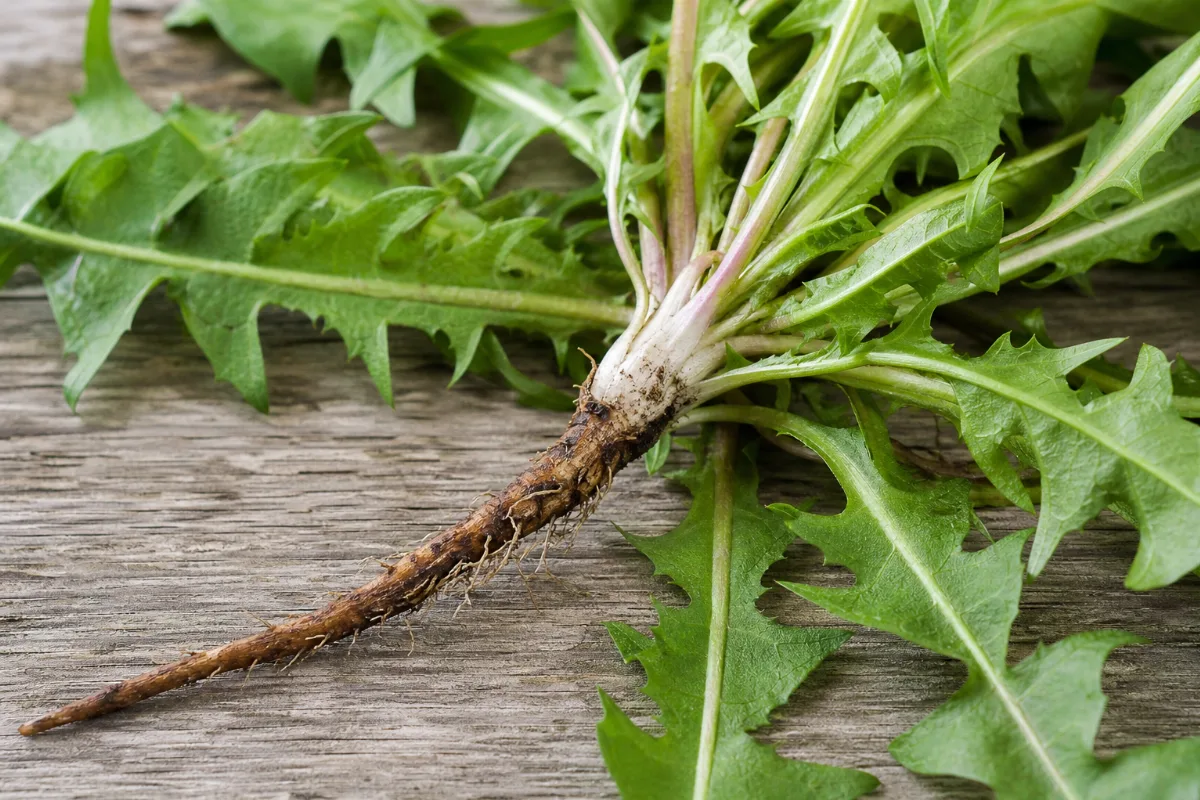
Herbs & Botanicals · Herbs · Common lawn plant and traditional bitter herb with very thin human evidence
Dandelion
Taraxacum officinale F.H.Wigg. (Weber ex Wigg.) · also called Common dandelion, blowball, diente de león and amargón (Spanish), pissenlit (French), Löwenzahn (German), dente-de-leão (Portuguese), tarassaco comune (Italian)
Dandelion is the yellow-flowered plant of lawns and meadows, and a member of the daisy family. Its leaf is used as a tea or extract for water retention and its root as a bitter tonic for digestion. Human evidence is very thin: nothing is rated above low certainty. The two diuretic studies in people are tiny (17 and 14 people) and point in opposite directions. Liver and urinary results in people come only from mixed products, so dandelion is never credited alone. Cancer findings are laboratory and animal work only, and dandelion is not a cancer treatment. Dandelion can cause allergy, and it is not for people with gallstones, bile-duct blockage, liver disease or kidney failure.
General information, not medical advice. Last substantive update · Not medically reviewed. A named clinician has not signed off on this page. How this page is made
About Dandelion
Dandelion (Taraxacum officinale) is a common daisy-family plant whose leaf is used as a traditional urinary herb and whose root is used as a bitter digestive tonic. Human evidence is very thin and nothing is rated above low certainty. The two diuretic studies are tiny and disagree, and liver and urinary results in people come only from mixed products. Cancer findings are lab and animal work only. Allergy is the best-documented safety problem, and the EU advises against it with bile-duct blockage, gallstones, liver disease, active ulcer, kidney failure and potassium-raising medicines. For amounts, ask a doctor or pharmacist.
What it is
Dandelion (Taraxacum officinale) is the familiar yellow-flowered plant of lawns and meadows. It belongs to the daisy family (Asteraceae), the same family as chamomile, artichoke, chicory and ragweed. Botanists treat it as a group of closely related lines rather than one tidy species, and several close relatives, such as the Chinese Taraxacum mongolicum, are also sold as dandelion.
Leaves, roots and the whole plant are all used, as teas, juices, liquid extracts, capsules and roasted root drinks. The leaf and the root are different products with different chemistry, so a result for one does not carry over to the other.
Leaf, root and what makes it distinctive
The leaf is rich in potassium and carotenoids and in phenolic acids. The root holds inulin (a fibre) and a very bitter plant compound called taraxinic acid glucosyl ester. Bitter taste is why the root is used as a digestive tonic, while the leaf is the classic European choice for passing more urine.
In animals and test tubes, extracts and single compounds such as taraxasterol affect fat, sugar-digesting enzymes and inflammation signals. None of this has been shown to happen in people, and no one has shown that one compound explains the whole herb. The same group of bitter compounds (sesquiterpene lactones) is also what makes the plant a skin allergen for some people.
Dandelion greens as a food
Dandelion greens are eaten as a vegetable. Raw greens per 100 g, from the USDA food database, supply about 45 kcal, 3.5 g of fibre, 187 mg of calcium, 3.1 mg of iron, 35 mg of vitamin C and 397 mg of potassium, plus a very large amount of vitamin K (778 micrograms). The vitamin K matters for people on warfarin-type blood thinners, because vitamin K can lower the drug's effect; this is general nutrition knowledge and not from a dandelion study.
These are the amounts in a serving of greens. A tea, capsule or extract contains far less of most of these, and we did not find measured amounts for finished products. Food amounts are considered likely safe by the US National Center for Complementary and Integrative Health (NCCIH), while less is known about larger amounts.
Historical and current uses
The EU herbal committee (EMA/HMPC) lists dandelion leaf as a traditional medicine to increase urine flow in minor urinary complaints, and dandelion root with herb for mild digestive complaints such as fullness, wind and slow digestion and for the same urinary use. Both listings rest on long use only, not on trials. We read the 2009 text of the leaf monograph; the final 2011 version was not read, and EMA has opened a call for data for a revision. Folk medicine in Central and Eastern Europe, and Traditional Chinese Medicine (mostly other Taraxacum species), also used the plant for liver, inflammation and infections.
Dandelion is also called a milk booster for breastfeeding mothers. The US Drugs and Lactation Database (LactMed) finds no valid clinical trials that support this.
What the research shows
Human evidence for dandelion is very thin, and nothing is rated above low certainty. The two human studies of the diuretic effect are tiny (17 and 14 people) and point in opposite directions. The liver and urinary-infection results in people come only from mixed products, so dandelion is never credited alone, and two of the liver trials were funded by the product's maker.
Most other findings, for blood sugar, cholesterol, weight, kidney stones, bone and inflammation, come from cells and animals. Cancer findings are laboratory and animal work only; dandelion is not a cancer treatment, and anyone with cancer should check with an oncologist before using it. The small human results that do exist are for a patented mastitis granule and a dandelion-borneol skin application, neither of which is plain dandelion.
NCCIH says there is very little research on dandelion and no compelling scientific evidence for any health condition.
At a glance
Traditional uses history, not proof
- EU traditional use of the leaf to increase the amount of urine in minor urinary complaints (tea, juice or liquid extract).
- EU traditional use of the root with herb for mild digestive complaints such as fullness, wind, slow digestion and temporary loss of appetite.
- European folk medicine, and Traditional Chinese Medicine (mostly other Taraxacum species), for the liver, inflammation and infections.
- Greens eaten as a vegetable, and roasted root used as a coffee substitute.
Studied for research
- More urine (diuretic effect), very low certainty (two tiny human studies that disagree)
- Liver and fatty liver, very low (only mixed products in people)
- Digestion, appetite and constipation, insufficient evidence
- Urinary infections and kidney stones, very low (mixed product, lab and rat work)
- Blood sugar, cholesterol and weight, very low (animal and lab work, no human trials)
- Cancer, laboratory and animal research only
- Mastitis (patented granule) and skin swelling after surgery, low (not plain dandelion)
Main compounds
- Taraxinic acid glucosyl ester, a bitter plant compound concentrated in the root
- Chicoric, caffeic and chlorogenic acids (phenolic acids)
- Luteolin and other flavonoids
- Inulin, a fibre found in the root
- Taraxasterol, a plant triterpene
- Carotenoids (beta-carotene and lutein) in the leaf, and a high potassium content
Common forms
- Leaf tea and dried leaf
- Fresh leaf juice and liquid extracts or tinctures
- Root powder and capsules
- Roasted root drink
- Greens eaten as a vegetable
- Mixed liver or detox products with other herbs
Research links: EU herbal monograph on dandelion leaf (EMA/HMPC) · EU herbal monograph on dandelion root with herb (EMA/HMPC, 2019) · NCCIH: Dandelion · NIH LactMed: Dandelion · Research Library · Genes & Biomarkers Library
The plant and its history
- Accepted scientific name
- Taraxacum officinale F.H.Wigg. (GBIF writes the authority as Weber ex F.H.Wigg.); in practice a broad group, Taraxacum section Taraxacum (also called T. officinale agg. or s.l.)
- Naming authority
- GBIF: Taraxacum officinale Weber ex F.H.Wigg., published in Prim. Fl. Holsat. 56 (1780), status ACCEPTED, usageKey 5394163 (s-gbif-taraxacum-officinale). EMA writes Weber ex Wigg.
- Synonyms
- GBIF lists 15 synonyms for this name, for example Leontodon taraxacum L., Leontodon vulgaris Lam., Taraxacum dens-leonis Desf., Chondrilla taraxacum (L.) Stokes and Taraxacum officinale subsp. vulgare Schinz & R.Keller.
- Common names
- Dandelion (English); Common dandelion (English); Blowball (English); Diente de león (Spanish); Amargón (Spanish); Achicoria amarga (Spanish); Pissenlit (French); Löwenzahn (German); Gewöhnlicher Löwenzahn (German); Dente-de-leão (Portuguese); Tarassaco comune (Italian)
- Botanical family
- Asteraceae (daisy or sunflower family, also called Compositae), order Asterales, the same family as chamomile, echinacea, artichoke, chicory, lettuce and ragweed. People allergic to this family can react to dandelion (see the EMA contraindication in s-ema-hmpc-taraxaci-folium).
- Classification
- Plantae > Tracheophyta > Magnoliopsida > Asterales > Asteraceae > Taraxacum > Taraxacum officinale
- Native range
- Not verified from a source read here. GBIF treats it as one accepted name with worldwide records; reviews describe it as widely distributed and spread globally (p39859166, p38351703).
- Habitat
- Not verified in a source read for this file; commonly described as a perennial weed of lawns, meadows and roadsides (p39859166 calls it a perennial flowering plant that has spread globally).
- What the plant looks like
- Roots: Thick taproot with milky latex; the root holds inulin (p38611548, qualitative test) and the bitter sesquiterpene lactone taraxinic acid glucosyl ester at high concentration (p34632981).; Stems: Not verified from a source read beyond the look-alike note below (flower stalk described as unbranched and smooth, Montana State Extension summary).; Leaves: Basal rosette of deeply lobed, smooth leaves (North Carolina flora summary, read only through a search summary). Dandelion greens are eaten (USDA record s-usda-fdc-169226).; Flowers: Yellow flower heads made only of ray florets; milky sap (Montana State Extension, search summary).; Fruit: Seeds with a feathery pappus carried by wind; many lines form seed without pollination (p34992267). Further botanical detail not verified.
- Cultivation
- Not verified from a source read. Papers compare 'land spontaneous', 'mountain spontaneous' and organically grown ecotypes: polyphenols were highest in the mountain wild ecotype in one study (p40832870).
- Harvest and processing
- Not verified in a source read for harvest timing. What is documented: EMA lists dried comminuted leaf, a liquid extract (1:1, ethanol 25%) and expressed fresh-leaf juice (s-ema-hmpc-taraxaci-folium); shade-dried leaves had more phenols and nutrients than fresh in one lab analysis (p36080148).
- Look-alikes and adulterants
- Name: Cat's ear (Hypochaeris radicata) and other dandelion-like yellow composites; Note: Same basal rosette, milky sap and yellow ray-flower heads. Cat's ear has branched flower stems and hairy leaves and lower stems; dandelion's flower stalks are unbranched and its leaves smoother and more deeply lobed (Montana State Extension and a North Carolina flora, both seen only as search summaries, s-montana-extension-cats-ear). Cat's ear is not the dandelion of the EMA monographs and is not covered by dandelion research.; Name: Sow thistles (Sonchus species); Note: Also have milky latex in the stems. Perennial sow thistle leaf bases clasp the stem, which separates it from dandelion (search summary only, not verified in a primary source).; Name: Hawkweeds (Hieracium) and hawk's-beards (Crepis); Note: Dandelion-like composites. Hawkweed branches and flower detail were not verified in any source read; identification should use a local flora or an expert. Note that hawkweed shares the apomixis-causing PAR gene mechanism with dandelion (p34992267), which is one reason these groups are also hard to sort botanically.; Name: Other Taraxacum species such as T. mongolicum (Chinese 'pu gong ying'); Note: Close relatives used in Chinese medicine and in many recent papers (p41375929, p38351703). Results from them are not automatically the same as for T. officinale.
- Sustainability and conservation
- Not verified. Dandelion is a very common weed in many countries; no conservation assessment was retrieved.
The plant and the parts used
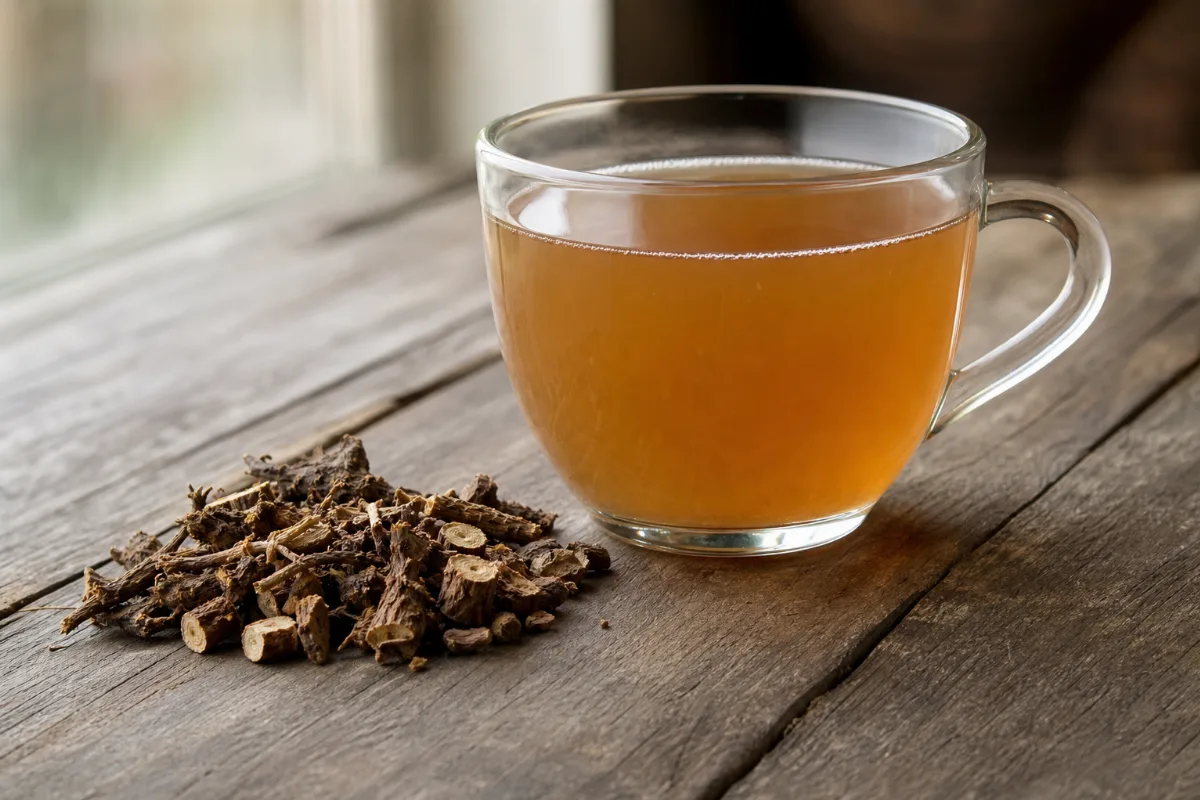
Traditional use and history history, not clinical proof
| Tradition or era | Documented use | Source |
|---|---|---|
| Central-Eastern Europe, folk medicine from the late 18th century to the early 21st century | A review of mainly Polish sources (plus Belarus, Ukraine and European Russia) found that the number of dandelion raw materials and of conditions treated grew over that period. Latex was recorded first, then root, leaf and flower head, then the herb. The older sources did not mention the root, which is now the popular modern raw material. Preparations were extracts, tinctures, decoctions, infusions, compresses, syrups, wine and coffee substitutes. | p39795344 |
| European Union, regulated traditional herbal medicine (leaf) | The EMA's herbal committee (HMPC) lists dandelion leaf (Taraxaci folium) as a traditional herbal medicine to increase the amount of urine, to flush the urinary tract as an adjuvant in minor urinary complaints. Use is based on long-standing use only, not on trials. The monograph was first published 28/01/2011 and EMA opened a call for data for a revision in 2026. | s-ema-hmpc-taraxaci-folium |
| European Union, regulated traditional herbal medicine (root with herb) | HMPC lists dandelion root with herb (Taraxaci radix cum herba) as a traditional herbal medicine (a) for relief of mild digestive complaints such as feeling of fullness, flatulence and slow digestion, and temporary loss of appetite, and (b) to increase urine as an adjuvant in minor urinary complaints. Traditional use only. | s-ema-hmpc-taraxaci-radix-cum-herba |
| Traditional Chinese medicine (Taraxacum species, 'Taraxaci Herba') | Reviews say Taraxacum has been used for detoxification, diuresis, liver protection, inflammation and infections. The Chinese herb is mostly T. mongolicum and related species, not always T. officinale, and the original historical texts were not read here. | p38351703 |
| Folk use as a milk booster for breastfeeding | Dandelion is a purported galactogogue (milk-supply booster), but LactMed finds no scientifically valid clinical trials supporting it. | p30000932 |
Traditional use shows how a plant was used. It does not show that a supplement works or is safe today.
What is inside, and how it may work
What the plant contains and how those compounds act in cells and animals. Laboratory and animal mechanisms are not proven effects in people.
Main compounds
| Compound | Family | Where it is concentrated | Activity studied | Level of evidence |
|---|---|---|---|---|
| Taraxinic acid and its glucosyl ester (TA-G), a bitter sesquiterpene lactone PubChem 76566683 | sesquiterpene lactones (germacranolide type) | Root (TA-G found at high concentration in roots, p34632981) | In insects, TA-G is the root chemical that deters the cockchafer larva (p34632981). No human activity data for TA-G or taraxinic acid were found. Sesquiterpene lactones are also the Compositae allergens that cause contact skin allergy in sensitised people (p32542786, patch tests used SL mix). 31 58 | Laboratory research |
| Taraxacin (name as used in older literature) | traditionally called the bitter principle; not a single well-defined compound | Root, bitter latex (older literature; not verified here) | Not assigned a PubChem CID on purpose. PubChem has a record named 'Taraxacin' (CID 5241825, C15H14O3, an azulene-furan structure), but that structure does not look like the bitter germacranolide lactones isolated from dandelion (taraxinic acid, C15H18O4), so the match could not be confirmed. The old name 'taraxacin' should be treated as a historical label for the bitter principle, not as proof of a single identified molecule. 87 | Traditional use |
| Taraxacoside PubChem 131750952 | phenylacetic acid glycoside (not a sesquiterpene lactone) | Not verified in a source read | PubChem (CID 131750952) gives the structure as a 4-hydroxyphenylacetate ester of a sugar bound to a small butenolide ring. So despite being mentioned alongside the bitter sesquiterpene lactones, taraxacoside is chemically a glycoside, not a sesquiterpene lactone. No activity data found. 87 | Laboratory research |
| Chicoric acid (cichoric acid) PubChem 5281764 | phenolic acid (dicaffeoyltartaric acid) | Leaf and root (found in both extracts, p40832870) | Found by HPLC in dandelion leaf and root extracts alongside caftaric, chlorogenic and caffeic acids; such extracts protected cells from hydrogen-peroxide damage and shifted inflammation markers in mouse tissue (p40832870). Purified chicoric acid also eased salpingitis in rats in a 2025 study (title seen, abstract not read). 46 | Laboratory research |
| Caffeic acid PubChem 689043 | phenolic acid (hydroxycinnamic acid) | Leaf and root (p40832870); LactMed lists caffeic acid in the herb (p30000932) | Antioxidant in the test tube; the free acid is poorly absorbed and heavily conjugated in the body (p42242712). 46 50 3 | Laboratory research |
| Chlorogenic acid PubChem 1794427 | phenolic acid (caffeoylquinic acid) | Leaf and root (p40832870) | Detected by HPLC in dandelion extracts; no separate activity claim made here. 46 | Laboratory research |
| Luteolin and luteolin glycosides PubChem 5280445 | flavonoids (flavones) | Not verified in a source read for T. officinale | PubChem CIDs verified. Presence of luteolin in dandelion is widely reported in reviews but was not confirmed in an abstract read for this file (the reviews p38351703 and p39859166 list flavones and flavonoids in general; the abstract of p41375929 was only partly read). Flavonoid totals in dried leaf: 188.84 mg/100 g as reported, with quercetin detected (p36080148). 48 27 | Laboratory research |
| Inulin | fructan fibre (prebiotic carbohydrate) | Root Present, shown by a qualitative test (p38611548); amount not captured. LactMed says root contains high concentrations of inulin (p30000932). | A prebiotic fibre; no dandelion-specific human data found. PubChem returned no CID for 'inulin' by name because it is a mixture of polymers, so none is given. 82 50 | Laboratory research |
| Taraxasterol (and psi-taraxasterol) PubChem 115250 | pentacyclic triterpene (alcohol) | Root and herb; reviews call it a predominant compound (p40732279) | In mice on a high-fat diet, taraxasterol reduced liver fat and inflammation through the bile-acid receptor FXR (p41419042). A review of animal work says taraxasterol helps prevent liver damage by acting on inflammation and oxidative stress (p40732279). 72 29 | Animal research |
| Carotenoids (beta-carotene, alpha-carotene, lutein) PubChem 5280489 | carotenoids | Leaf (greens) USDA raw dandelion greens, per 100 g: beta-carotene 5850 ug, alpha-carotene 363 ug, lutein+zeaxanthin 13600 ug (s-usda-fdc-169226). A lab analysis of shade-dried leaf found beta-carotene 3.88 mg/100 g (p36080148). | Pigments that are a food source of vitamin A (provitamin A) and of lutein; no dandelion-specific health outcome study found. 88 48 | Authoritative guidance |
Mechanisms, receptors and pathways
| Target or pathway | Gene or receptor | What was found | Level |
|---|---|---|---|
| Diuretic effect (more urine) | Not identified; one theory is the potassium content of the leaf, but no study read here tested it | Human evidence is mixed. In 17 volunteers a fresh-leaf extract raised urination frequency after dose 1 (p<0.05) and the urine-to-fluid ratio after dose 2 (p<0.001), but dose 3 did nothing and there was no control group (p19678785). In 14 young adults, 2.1 g root powder with 1 L of water produced no extra urine over 4 h (difference 105 g, 95% CI -35 to 244; p19678785 vs p42398668) and the authors say this does not support the diuretic claim. So the traditional diuretic use is only weakly and inconsistently supported. 9 21 | Human data |
| Choleretic action (bile flow) | Not identified | Traditionally listed as choleretic (bile-promoting) in folk medicine reviews (p40832870 states this as a use for centuries). No bile-flow study in humans or animals was found in the searches done, so this is traditional claim only. This is also why the EMA monographs warn against use with bile duct obstruction, gallstones and liver or biliary disease. 46 83 | Traditional use |
| Pancreatic lipase inhibition (less fat digestion) | Pancreatic triglyceride lipase (PNLIP) | A 95% ethanol extract inhibited porcine pancreatic lipase by 86.3% at 250 ug/mL (orlistat 95.7%), IC50 78.2 ug/mL. In mice one oral dose (400 mg/kg) significantly blunted the rise in plasma triglycerides after a corn oil load at 90 and 180 min. No human trial was found. 77 | Animal research |
| Alpha-amylase and alpha-glucosidase inhibition (slower starch digestion) | Pancreatic alpha-amylase (AMY2A); intestinal alpha-glucosidase | Aqueous extract of dried T. officinale leaf inhibited both enzymes dose-dependently in the test tube (p36080148). Root extracts inhibited alpha-amylase less than burdock root did (p38611548). A related species, T. mongolicum, gave 13 dual-target inhibitors with at least 5 comparable to acarbose in the test tube (p41375929). No human trial found; test-tube enzyme results often do not carry over to the body. 48 82 81 | Laboratory research |
| Antioxidant activity | General radical scavenging (DPPH test); cell stress response | Extracts protected a hypothalamic cell line from hydrogen-peroxide damage and, in lipopolysaccharide-treated mouse tissue, lowered TNF-alpha and NOS-2 and raised BDNF (p40832870). Dried leaf is rich in phenols (p36080148). This is laboratory and ex vivo evidence; no human trial showing an antioxidant benefit was found. 46 48 | Laboratory research |
| Liver protection (taraxasterol) | FXR (NR1H4), bile-acid receptor | In high-fat-diet mice taraxasterol cut liver fat and inflammation and its effect vanished when FXR was knocked down (p41419042). Extracts also protected animals from alcohol, carbon tetrachloride and paracetamol liver injury (review p40732279). No human liver trial found, and EMA advises against use in liver and bile disease. 72 29 | Animal research |
Absorption, metabolism and elimination
- Absorption
- No human blood-level study of dandelion's own compounds (taraxinic acid glucosyl ester, chicoric acid, taraxasterol, luteolin) was found. For pure caffeic acid, a 2026 review reports low oral bioavailability because of heavy first-pass conjugation in gut lining and liver, with absorption depending on food and gut bacteria (p42242712).
- Distribution
- Not established for dandelion constituents. For caffeic acid the review says it spreads widely, possibly across the blood-brain barrier, but most exposure is metabolites (p42242712).
- Metabolism
- For caffeic acid: glucuronidation, sulfation and methylation (p42242712). In insects, the sugar is cut off taraxinic acid glucosyl ester by a gut enzyme and the product is conjugated to glutathione (p34632981); whether people do the same was not studied.
- Elimination
- Caffeic acid is excreted mainly in urine as conjugates, with a short half-life (p42242712). Nothing found for the other dandelion constituents.
- Bioavailability
- Not established in humans for any dandelion preparation. Free caffeic acid, one of the phenolics in dandelion, is poorly bioavailable (p42242712); chicoric acid pharmacokinetic searches returned nothing usable for dandelion.
Isolated compounds versus whole extracts
Most of the mechanism work uses either whole extracts (lipase, amylase, antioxidant, diuretic) or one isolated molecule in animals (taraxasterol on liver fat). Nobody has shown that a single compound explains the effects of the whole herb. Different parts differ: root has inulin and the bitter lactone TA-G, leaves have the carotenoids and most of the phenolic acids. Solvent matters too: freeze-dried extracts beat alcohol extracts in one root test (p38611548), and growing site changed polyphenol levels (p40832870). The two diuretic human studies used different things (fresh-leaf alcohol extract versus root powder) and gave different answers, so results from one preparation cannot be assumed for another.
Nutritional composition
Dandelion greens are a food as well as a herb. USDA FoodData Central (SR Legacy, FDC ID 169226, raw dandelion greens) per 100 g: energy 45 kcal, water 85.6 g, protein 2.7 g, fibre 3.5 g, vitamin K 778 ug, vitamin A 508 ug RAE, beta-carotene 5850 ug, lutein plus zeaxanthin 13600 ug, vitamin C 35 mg, calcium 187 mg, iron 3.1 mg, potassium 397 mg, magnesium 36 mg. The very high vitamin K matters for people on warfarin-type blood thinners (vitamin K can lower their effect); that point is general nutrition knowledge and was not drawn from a dandelion-specific study read for this file. The greens are a nutrient source in a meal; the amounts in a herbal tea, capsule or extract are far smaller and were not measured here.
2 low certainty10 very low certainty4 not enough evidence
What was looked at
The 16 benefits and uses checked for Dandelion, each with how strong the evidence is. Tap one to open it.
- Diuretic effect (more urine)Very low certainty
- Liver health and fatty liverVery low certainty
- Bile flow and gallbladderNot enough evidence
- Digestion, appetite and indigestionNot enough evidence
- Constipation and bowel movementNot enough evidence
- Urinary tract infectionsVery low certainty
- Mood, stress and brain protectionNot enough evidence
- Blood sugar and type 2 diabetesVery low certainty
- Cholesterol and blood fatsVery low certainty
- Weight and obesityVery low certainty
- Kidney stones and urinary healthVery low certainty
- Cancer (laboratory and animal research only)Very low certainty
- Breast infection while breastfeeding (lactational mastitis)Low certainty
- Bone strengthVery low certainty
- Skin and swelling after surgeryLow certainty
- Inflammation and immune markersVery low certainty
Lab markers tracked in the studies
Urine output (volume and frequency)Ultrasound fatty-liver gradeALT (alanine aminotransferase)AST (aspartate aminotransferase)GGT (gamma-glutamyl transferase)Dyspepsia symptom scoreBacteria in the urine (bacteriuria)Corticosterone (mouse stress hormone)BDNF (brain-derived neurotrophic factor)Blood sugar (glucose)Triglycerides (blood fat)LDL cholesterolHDL cholesterolBody weight and fat massUrine oxalate and kidney crystalsDHEA and androstenedione (sex-hormone building blocks)Inflammatory messengers (TNF-alpha, IL-6, IL-1beta)Fever and breast pain in mastitisFemur bone density
What is Dandelion good for?
The main proposed uses and how strong the human evidence is for each. "Low" is the best rating found for any use, and most are lower. Many results come from cells, animals or mixed products, so dandelion alone is rarely tested in people.
Benefits, one by one
Each card is a research question, not a promise. Tap a goal to filter. Open a card to see the studies, doses and limits.
Diuretic effect (more urine)
Very low certaintyDandelion leaf is the classic European 'water' herb. Only two small human tests exist and they disagree: a 2009 pilot of a liquid leaf extract saw more trips to the toilet for a few hours, while a 2026 crossover of root powder found no extra urine over water alone.
4 studiesLeaf extract (fresh-leaf alcohol extract, 8 mL three times a day, 1 d…
Studies, doses and limits
What the trials found
Clare 2009 (17 healthy volunteers, fresh leaf alcohol extract 8 mL three times a day for one day, no control group) found urination frequency rose in the 5 hours after the first dose (p<0.05) and the urine-to-fluid ratio rose in the 5 hours after the second dose (p<0.001); the third dose did nothing. Gavin 2026 (14 active young adults, about 2.1 g root powder with 1 L water, open-label crossover) found 4-hour urine 1,268 g with dandelion vs 1,164 g with water alone (difference 105 g, 95% CI -35 to 244, p=0.13). The 2026 genus review lists diuretic use as traditional and says the lab work fits it.
Results
Two small studies point opposite ways. The leaf extract showed short-lived effects without a control group; the root powder showed no extra urine against water alone.
Effect sizes as reported
Clare 2009: significant rise in urination frequency and excretion ratio after doses 1 and 2 (exact sizes not in abstract). Gavin 2026: +105 g urine over 4 hours (CI -35 to 244 g, p=0.13).
Why this rating
Only one uncontrolled pilot of leaf extract and one small root-powder test; the two used different plant parts and forms and gave different answers. No placebo-controlled trial of leaf was found.
Form and dose studied
Leaf extract (fresh-leaf alcohol extract, 8 mL three times a day, 1 day) in the positive pilot; root powder (about 2.1 g single dose) in the negative crossover. Neither dose should be carried to another product.
Who was studied
Healthy volunteers: 17 in the leaf pilot, 14 mostly young men in the root test. Nothing in people with swelling, heart or kidney conditions.
Limits
Tiny, short, single-day studies; no placebo in the pilot; no blinding in the crossover; the leaf and root tests cannot be compared directly. Only abstracts were read.
Why researchers looked
Dandelion has long been used in traditional medicine as a diuretic (to increase urine flow).
Traditional use
The 2026 genus review lists diuretic use among dandelion's traditional uses in China, Europe and elsewhere; EMA lists dandelion leaf under urinary tract disorders.
Proposed mechanism Pharmacological theory
Not established in people. Any explanation (for example the plant's chemistry) is theory and was not verified in the sources read.
A proposed mechanism does not show that the effect happens in people.
Increased urine can matter if you take water pills, lithium or heart or kidney medicines; ask a pharmacist. See the safety tab. Dandelion is in the daisy family, so people allergic to related plants should be careful.
Liver health and fatty liver
Very low certaintyPeople take dandelion for the liver, and animal studies are encouraging, but no trial has tested dandelion alone in people. Two company-funded trials used a four-herb liquid (turmeric, dandelion, milk thistle, ginger) and saw better liver scans and blood tests; the effect cannot be credited to dandelion.
7 studiesThe human trials used a liquid with dandelion powder (part not specif…
Studies, doses and limits
What the trials found
Messier 2026 (30 adults with fatty liver, four-herb liquid with dandelion powder, 60 mL twice a day for 60 days) found improved ultrasound grade in 60% vs 13% on placebo (p=0.008). Patel 2025 (130 healthy adults, same product, 180 days) found greater improvement than placebo in ALT, AST, ALP and GGT (p<=0.001; sizes not in abstract). Sannia 2010 (305 people with dyspepsia, no control group, artichoke-dandelion root-turmeric-rosemary mixture, 60 days) saw liver enzymes fall 13 to 20 U/L in the small subgroup that started high. Animal work: Davaatseren 2013 (mice, leaf extract 2 and 5 g/kg of diet) less liver fat; Colle 2012 (mice, leaf extract) blocked paracetamol injury; Park 2018 (rats, Taraxacum coreanum water extract) protected against alcohol steatosis. The 2025 review (Herrera Vielma) says clinical trials are essential.
Results
No trial of dandelion alone. Combination trials were positive but funded by the maker; animal work consistently positive.
Effect sizes as reported
Messier 2026: fatty-liver grade improved 60.0% vs 13.3% (p=0.008). Patel 2025: ALT, AST, ALP, GGT improved vs placebo (p<=0.001); no sizes in abstract.
Why this rating
The only human data are four-herb or other mixed products, small or company-funded, and the dandelion part is not separated. Everything on dandelion alone is animal or lab work.
Form and dose studied
The human trials used a liquid with dandelion powder (part not specified) 60 mL twice a day for 60 or 180 days; the mixed capsule in Sannia 2010 contained a dandelion root extract (2% inulin). No single-herb dose can be drawn from these.
Who was studied
Adults with ultrasound-graded fatty liver (30), healthy adults (130), outpatients with dyspepsia (305).
Limits
Four-herb products, small samples, short follow-up, company funding, ultrasound grading is subjective, liver enzymes in healthy people are a lab number, not a health gain. Abstract only.
Why researchers looked
Dandelion root and leaf are traditional liver herbs, and the plant's antioxidant compounds have been tested against liver injury in animals.
Traditional use
The 2025 review says dandelion has been used historically for liver disorders.
Proposed mechanism Animal research
In mice and rats, leaf extract lowered liver fat through AMPK activation and protected liver cells from alcohol and paracetamol injury through antioxidant effects. Taraxasterol is the compound most often named.
A proposed mechanism does not show that the effect happens in people.
Liver enzyme drops in these trials were not accompanied by harm reports, but see the safety tab for the liver safety question about herbs in general. See the safety tab. Dandelion is in the daisy family, so people allergic to related plants should be careful.
Bile flow and gallbladder
Not enough evidenceDandelion is called a 'bile-moving' herb in tradition. No human study of bile flow or gallstones was found. One 2025 laboratory study dissolved human gallstones in a dish with a four-ingredient mix, which is a hint only.
2 studiesDandelion extract (amount and part not in the abstract) combined with…
Studies, doses and limits
What the trials found
Serri 2025 placed 70 human cholesterol gallstones in simulated bile: the sesame oil, olive oil, psyllium and dandelion extract mix dissolved 92.57% of weight at 144 hours vs 39.71% for the drug Rowachol (p<0.001). The authors say it is hypothesis-generating. The 2022 digestive review lists gallstones among the areas of lab and animal study. No human trial of bile flow, gallstones or gallbladder disease with dandelion was found.
Results
No human evidence.
Effect sizes as reported
Four-ingredient mix 92.6% vs Rowachol 39.7% dissolved in a dish (not in people).
Why this rating
The only data are a dish study of a mixture and traditional use; nothing in people or animals measuring bile.
Form and dose studied
Dandelion extract (amount and part not in the abstract) combined with sesame oil, olive oil and psyllium.
Limits
A gallstone in a dish is not a gallstone in a body. Dandelion alone was not isolated in the abstract.
Why researchers looked
The reviews read describe dandelion as traditionally called a choleretic (a herb that stimulates bile).
Traditional use
Dandelion is described in the sources read as a traditional liver and bile herb.
Proposed mechanism Pharmacological theory
The idea that dandelion stimulates bile is traditional and was not verified in the sources read.
A proposed mechanism does not show that the effect happens in people.
If you have gallstones or a blocked bile duct, dandelion's bile-stimulating tradition is a reason to ask a doctor first. See the safety tab. Dandelion is in the daisy family, so people allergic to related plants should be careful.
Digestion, appetite and indigestion
Not enough evidenceDandelion root is used as a bitter tonic for poor appetite and sluggish digestion. The only human data are one uncontrolled study of a four-herb mixture in indigestion, so benefit is not shown for dandelion alone.
4 studiesThe mixture's dandelion root portion (dose not in the abstract); trad…
Studies, doses and limits
What the trials found
Sannia 2010 observed 305 people with functional dyspepsia on an artichoke, dandelion root, turmeric and rosemary mixture for 60 days with no control group: a 50% fall in total symptom score in 38% at day 30 and 79% at day 60. The EMA pages list loss of appetite and GI disorders as the areas for dandelion root with herb (indication wording not read). The 2022 GI review says research is limited and clinical studies are needed. Piqué-Borràs 2025 used a five-herb bitter mixture on guinea pig stomach tissue.
Results
One uncontrolled observation of a mixed product. No placebo-controlled trial of dandelion for indigestion or appetite was found.
Effect sizes as reported
Sannia 2010: 79% 'responders' at 60 days with no comparison group.
Why this rating
Uncontrolled, mixed-herb data only; placebo effects in indigestion are large.
Form and dose studied
The mixture's dandelion root portion (dose not in the abstract); traditional teas and tinctures have no tested dose here.
Who was studied
Adults with functional dyspepsia (outpatient doctors' cohort in Italy).
Limits
No control group, mixture of four herbs, self-rated symptoms. Abstract only; EMA indication wording not read.
Why researchers looked
The EMA lists loss of appetite and gastrointestinal disorders among the areas for dandelion root with herb.
Traditional use
Folk uses include dyspepsia, poor appetite and stomach disorders (2022 GI review).
Proposed mechanism Preliminary mechanism
The traditional idea is that a bitter taste helps digestion; this was not tested in people in the sources read. Lab work: a bitter-herb mix containing Taraxacum relaxed guinea pig stomach muscle (Piqué-Borràs 2025), and reviews describe gut-protective effects in animals.
A proposed mechanism does not show that the effect happens in people.
Bitter herbs can worsen reflux or ulcers in some people; ask a doctor if you have these. See the safety tab. Dandelion is in the daisy family, so people allergic to related plants should be careful.
Constipation and bowel movement
Not enough evidenceDandelion is a traditional mild laxative. The only test of this is in rodents, where an aerial-part extract sped up the gut and increased stool weight. No human trial was found.
2 studiesMethanol extract of aerial parts in rats; no human preparation or dos…
Studies, doses and limits
What the trials found
Ali 2025 gave rats a methanol extract of the aerial parts at 10, 100 and 500 mg/kg: gut transit and stool weight both rose at all doses (p<0.05). The 2026 genus review lists laxative as a traditional use that the lab data support. No human constipation trial was found.
Results
No human evidence.
Effect sizes as reported
Rodent increase at all three doses; numbers not in abstract.
Why this rating
One rodent study plus tradition. No trial in people.
Form and dose studied
Methanol extract of aerial parts in rats; no human preparation or dose has been tested.
Limits
Rodent study of an extract that is not the same as tea or capsules.
Why researchers looked
Dandelion is listed as a traditional laxative in the 2026 genus review.
Traditional use
Dandelion leaf and root are named as a laxative in the traditions summarised by the 2026 genus review.
Proposed mechanism Pharmacological theory
Not tested in people. The root contains inulin (a fibre, per the dyspepsia mixture label), but no study here links it to bowel movement.
A proposed mechanism does not show that the effect happens in people.
Too much can cause loose stools and stomach upset. See the safety tab. Dandelion is in the daisy family, so people allergic to related plants should be careful.
Urinary tract infections
Very low certaintyA 2023 trial of a five-ingredient supplement (D-mannose, citric acid, fibre, Astragalus and dandelion) in women with a urinary infection showed large effects, but dandelion was only one of five ingredients and the study has not been repeated. Nothing supports dandelion on its own for infections.
3 studiesDAPAD supplement twice a day for 5 days (amounts and dandelion part n…
Studies, doses and limits
What the trials found
Salvatore 2023 (70 women with acute E. coli urinary infection, randomized, double-blind, the DAPAD complex twice a day for 5 days on top of standard care vs placebo plus standard care): clinical resolution 34.3% vs 0% at day 6 and 88.6% vs 20% at day 35; bacteria cleared 85.7% vs 14.3% at day 6 and 100% vs 40% at day 35 (all p<0.0001). The EMA pages list urinary tract disorders as a traditional-use area (wording not read).
Results
One randomized trial of a mixed product; nothing for dandelion alone.
Effect sizes as reported
DAPAD vs placebo: bacteria cleared at day 35 in 100% vs 40% (p<0.0001); the five-ingredient supplement, not dandelion alone.
Why this rating
The one trial is of a five-ingredient product, single centre, 70 women, with extreme results that need independent repeating. Dandelion cannot be isolated.
Form and dose studied
DAPAD supplement twice a day for 5 days (amounts and dandelion part not in abstract), alongside standard pain relief and urine alkalizers.
Who was studied
Non-menopausal women with an acute uncomplicated E. coli urinary infection.
Limits
Mixed product, small single-centre trial, unusually large effects. Do not treat a urinary infection with an herb in place of medical care. Abstract only.
Why researchers looked
The EMA lists urinary tract disorders as an area for both dandelion leaf and dandelion root with herb.
Traditional use
Dandelion is traditionally used for urinary complaints, and EMA lists the area.
Proposed mechanism Pharmacological theory
Not shown for dandelion. The abstract does not say which of the five ingredients matters.
A proposed mechanism does not show that the effect happens in people.
A urinary infection with fever, back pain or blood in the urine needs a doctor quickly. See the safety tab. Dandelion is in the daisy family, so people allergic to related plants should be careful.
Mood, stress and brain protection
Not enough evidenceThere are no human studies of dandelion for mood, anxiety, sleep or memory. A few mouse studies suggest antidepressant-like effects, and one 2025 laboratory study found protective effects in mouse brain tissue. This is early lab work only.
4 studiesMouse doses of water or alcohol extracts of leaf and root; no human d…
Studies, doses and limits
What the trials found
Li 2014 (mice, leaf and root water extract 50 to 200 mg/kg for 14 days) reduced immobility time in the forced-swim and tail-suspension tests and lowered CRF and corticosterone. Gao 2019 (mice, hydromethanolic extract 50 and 100 mg/kg) reduced immobility and changed neurotransmitters, corticosterone and Bdnf, with an effect the authors call similar to bupropion. Masciulli 2025 (mouse brain tissue and a cell line; leaf and root extracts) found protection and lower inflammation markers. The 2026 genus review says research on brain disease is limited. No human trial on mood, anxiety, sleep or memory was found.
Results
No human evidence.
Effect sizes as reported
Mouse immobility time fell at all doses (for example 92.6, 85.1 and 77.4 s at 50, 100 and 200 mg/kg in forced swimming); no human outcome.
Why this rating
Mouse behaviour tests and cell work only; no human trial on mood, anxiety, sleep or cognition.
Form and dose studied
Mouse doses of water or alcohol extracts of leaf and root; no human dose exists.
Limits
Mouse behaviour tests are a poor guide to human depression; results from short tests, one lab per study.
Why researchers looked
Researchers have started to test dandelion extracts for stress and brain effects because the plant is rich in antioxidant polyphenols.
Traditional use
Not a traditional mood or sleep herb in the sources read; its traditional uses are digestive, liver and diuretic.
Proposed mechanism Animal research
In mice, extracts lowered the stress hormone corticosterone and raised dopamine, noradrenaline, adrenaline and BDNF. In mouse brain tissue they lowered inflammation markers TNF-alpha and NOS-2 and raised BDNF.
A proposed mechanism does not show that the effect happens in people.
Do not use dandelion in place of treatment for depression or anxiety. See the safety tab. Dandelion is in the daisy family, so people allergic to related plants should be careful.
Blood sugar and type 2 diabetes
Very low certaintyNo trial in people has tested dandelion for blood sugar control. There is one case report of low blood sugar after dandelion, plus lab work showing root extracts slow sugar-digesting enzymes. This is early, and people on diabetes medicine should be careful.
4 studiesLab work used a water extract of the root and 70% alcohol and freeze-…
Studies, doses and limits
What the trials found
No randomized trial of dandelion for blood sugar was found. One case report describes low blood sugar (hypoglycemia) in a person after dandelion; only the title was available, so the amount, the form and the sugar reading are not verified. A review of type 2 diabetes research says dandelion looks promising in early work but that extensive lab, animal and clinical research is still required.
Results
No human trial results. Lab enzyme and cell results only, plus one case report.
Why this rating
The only human data is one case report that I could read only by title. The rest is test-tube work. This rating is the compiler's.
Form and dose studied
Lab work used a water extract of the root and 70% alcohol and freeze-dried root extracts. No human amounts are available.
Limits
No human trial. Enzyme blocking in a dish does not mean lower blood sugar in a person. The case report is a single event.
Why researchers looked
Dandelion root contains inulin and plant compounds such as chicoric acid and chlorogenic acid, which researchers expect might affect sugar handling.
Traditional use
Used as a food and, in some countries, as a folk remedy for diabetes (traditional use, as described in a review).
Proposed mechanism Laboratory research
In the lab, a water extract of dandelion root blocked the enzymes alpha-glucosidase and alpha-amylase and improved sugar use in insulin-resistant liver cells. Root extracts also contain inulin. None of this has been shown to lower blood sugar in people.
A proposed mechanism does not show that the effect happens in people.
The case report suggests dandelion could, in theory, lower blood sugar. People on insulin or diabetes tablets should talk to their doctor or pharmacist before taking dandelion in amounts larger than food.
Cholesterol and blood fats
Very low certaintyRats and mice fed dandelion root, leaf or polysaccharide preparations had lower triglycerides and LDL cholesterol in several studies. No studies in people were found, so we do not know if the same happens in humans.
6 studiesPolysaccharide at 0.3% of mouse diet for 10 weeks; leaf fraction at a…
Studies, doses and limits
What the trials found
No human trial of dandelion on cholesterol or triglycerides was found. In animals: mice on a high-fat diet given Taraxacum mongolicum polysaccharides had lower total cholesterol, triglycerides and LDL; ApoE-knockout mice given dandelion polysaccharides had lower triglycerides, total cholesterol and LDL, higher HDL, and smaller artery plaques; rats given leaf fractions for 4 weeks had triglycerides 0.44-fold, total cholesterol 0.73-fold and the atherogenic index 0.62-fold of the comparison diet; obese rats given flower syrup had HDL 1.11-fold higher. A single dose of the 95% ethanol leaf-and-root type extract (400 mg/kg) in mice limited the rise in blood triglycerides after a corn oil dose.
Results
Animal lowering of triglycerides, total cholesterol and LDL; mixed form (leaf fraction, polysaccharide, flower syrup, 50% ethanol extract) across studies.
Effect sizes as reported
Fold changes in rats as printed above; no human numbers.
Why this rating
Animal and cell studies only, using very different preparations and often isolated fractions; no human data.
Form and dose studied
Polysaccharide at 0.3% of mouse diet for 10 weeks; leaf fraction at about 11.9 mg a day for 4 weeks in rats; 400 mg/kg ethanol extract once in mice. These are animal doses and cannot be converted to people.
Who was studied
Mice and rats; no humans.
Limits
No human trial. Isolated polysaccharides and fractions are not the same as tea or capsules. Animal diets were often extreme.
Why researchers looked
Dandelion leaf and root contain chlorogenic acid, chicoric acid, inulin and polysaccharides that affect fat handling in lab studies.
Traditional use
A traditional liver and digestive herb; use for cholesterol is a modern research question.
Proposed mechanism Animal research
In liver cells a 50% ethanol extract of Taraxacum mongolicum activated a cell-energy switch (AMPK) that cuts fat production. Dandelion also blocked the fat-digesting enzyme pancreatic lipase in the lab.
A proposed mechanism does not show that the effect happens in people.
Human safety of larger amounts is covered in the safety section. People taking cholesterol medicines should check with a doctor or pharmacist first.
Weight and obesity
Very low certaintyMice on fatty diets gained less weight with dandelion extracts, and cell studies show less fat build-up. No human weight-loss trial of dandelion was found.
5 studiesPolysaccharide 0.3% of diet in mice; leaf, root and powder extracts i…
Studies, doses and limits
What the trials found
No human trial on weight or body fat was found. In mice: Taraxacum mongolicum polysaccharides at 0.3% of a high-fat diet for 10 weeks reduced weight gain and fat in belly fat and liver; a two-herb formula (dandelion plus Lonicera japonica) lowered body weight, fat mass and fat-cell size in obese mice without liver or kidney toxicity. In obese rats on a normal diet, dandelion flower syrup did not change body weight, feed intake or blood glucose. In fat-cell lab studies, leaf and root extracts and a commercial root powder reduced fat build-up.
Results
Animals lost weight or gained less on fatty diets; one rat study found no weight change. No human data.
Effect sizes as reported
No human numbers.
Why this rating
No human trials; mixed animal results; two of the animal studies used formulas or isolated polysaccharides.
Form and dose studied
Polysaccharide 0.3% of diet in mice; leaf, root and powder extracts in cells. No human amounts.
Who was studied
Mice, rats and cells.
Limits
Water weight lost through the diuretic action of dandelion is not fat loss. No human trial.
Why researchers looked
Dandelion is sold in weight-loss teas and capsules, often because it acts as a mild diuretic; researchers have looked for real effects on fat.
Traditional use
Not a documented traditional weight-loss herb in the sources I read; this is a modern use.
Proposed mechanism Laboratory research
Extracts slowed the fat-digesting enzyme pancreatic lipase in the lab and cut fat-cell development in 3T3-L1 cells. A dandelion plus honeysuckle formula raised AMPK, an energy-use switch, in cells and mice.
A proposed mechanism does not show that the effect happens in people.
Weight-loss products sold with dandelion often contain other herbs or stimulants; read the label and ask a pharmacist.
Kidney stones and urinary health
Very low certaintyDandelion is traditionally used for kidney stones, but only test-tube and rat studies exist. A leaf extract and a dandelion compound (taraxasterol) slowed calcium oxalate crystals forming in lab urine, and taraxasterol reduced stone deposits in rats.
3 studiesWater extract of aerial parts in the test tube; isolated taraxasterol…
Studies, doses and limits
What the trials found
No human trial of dandelion for kidney stones or urinary infections was found. In the test tube, the aerial-part water extract at 1-8 mg/mL inhibited nucleation of calcium oxalate crystals by 55-63% and taraxasterol by 26-64% (potassium citrate 60-70%). In rats with stones induced by ethylene glycol and ammonium chloride, taraxasterol at 2, 4 and 8 mg/kg for 33 days lowered urine oxalate and kidney crystal deposits (p<0.001) and kidney damage and inflammation scores. Note that taraxasterol is a single isolated compound, not tea or capsules.
Results
Less crystal formation in lab urine; fewer kidney deposits in rats given isolated taraxasterol.
Effect sizes as reported
55-63% (extract) and 26-64% (taraxasterol) inhibition of nucleation in the test tube.
Why this rating
Test-tube and rat data only. A single compound, not whole dandelion, was used in the rat study.
Form and dose studied
Water extract of aerial parts in the test tube; isolated taraxasterol in rats.
Who was studied
Synthetic urine; rats.
Limits
Not tested in human urine or stone patients. Dandelion leaf is also a diuretic (covered elsewhere), which is separate from stone prevention.
Why researchers looked
Dandelion's long folk use as a diuretic and for kidney stones prompted lab tests on stone-forming crystals.
Traditional use
A systematic review of Taraxacum notes traditional use for kidney stones, constipation, eczema, ulcers and inflammation (traditional use).
Proposed mechanism Laboratory research
In synthetic urine, a water extract of the aerial part and the compound taraxasterol reduced calcium oxalate crystal formation, as did potassium citrate. In rats with induced stones, taraxasterol lowered urine oxalate and kidney crystal deposits.
A proposed mechanism does not show that the effect happens in people.
People with a kidney stone, kidney disease or pain should see a doctor. Dandelion should not replace medical care for stones.
Cancer (laboratory and animal research only)
Very low certaintyDandelion root extracts killed cancer cells in lab dishes and slowed colon tumours in mice. These are not studies of treatment in patients. One case report and one small trial of a six-herb mixture exist in people, and none shows dandelion treats cancer. Do not use dandelion in place of cancer treatment.
9 studiesAqueous (water) extract of the root in the lab; amounts used in cells…
Studies, doses and limits
What the trials found
No clinical trial of dandelion in cancer patients was found in PubMed. One case report describes a 76-year-old man with untreated chronic myelomonocytic leukemia whose blood counts stayed stable and bone marrow blasts improved while he took papaya leaf extract plus dandelion root extract; with two products and no control the report cannot show that dandelion helped. A small pilot trial gave 40 healthy women a six-herb mixture that included dandelion for 5 menstrual cycles (placebo-controlled): early-cycle DHEA fell 13.2% (P=0.02) and androstenedione fell 8.6% (P=0.05) versus placebo, with no substantial change in estrogen measures; dandelion's share of that is unknown. In mice, aqueous dandelion root extract by mouth slowed grafted human colon tumour growth by more than 90%.
Results
Lab: cancer-cell death. Mice: slower grafted colon tumours. Humans: one case report and a six-herb pilot on hormone markers, neither showing treatment benefit.
Effect sizes as reported
Colon cells: more than 95% killed at 48 hours; mouse tumour growth reduced more than 90% (lab and animal only).
Why this rating
Almost all evidence is cells and animals; the human evidence is one case report and a mixed-herb pilot. No evidence that dandelion treats or prevents cancer in people.
Form and dose studied
Aqueous (water) extract of the root in the lab; amounts used in cells and mice cannot be translated into human doses.
Who was studied
Human cancer cell lines, mice, one man, 40 healthy women (mixed product).
Limits
Killing cells in a dish is far from treating a patient. Lab concentrations may not be reached by drinking tea.
Why researchers looked
Folk use of dandelion for breast problems and a Canadian lab group (Pandey and colleagues) tested a water extract of dandelion root on many cancer cell types.
Traditional use
Used historically for breast disorders in Chinese medicine (traditional use, as stated in a recent TNBC lab paper).
Proposed mechanism Laboratory research
In the lab, a water extract of dandelion root triggered controlled cell death (apoptosis or autophagy) in leukemia, melanoma, pancreatic and colon cancer cells, and another extract triggered iron-dependent cell death (ferroptosis) in triple-negative breast cancer cells, while normal cells were less affected in those tests.
A proposed mechanism does not show that the effect happens in people.
A rat study with dandelion root extract and three leukemia drugs (dasatinib, imatinib, nilotinib) flags a possible drug interaction; the abstract reports no result. People having cancer treatment should ask their oncologist before taking dandelion.
Breast infection while breastfeeding (lactational mastitis)
Low certaintyIn China a dandelion-based granule is approved for mastitis in nursing mothers. A small study of 37 women found it matched an antibiotic on fever and pain after 3 days, and raised the variety of germs in breast milk. No study shows that dandelion increases milk supply.
2 studiesA patented granule product (Pugongying granules), 3 days; amounts not…
Studies, doses and limits
What the trials found
A study of milk from women with mastitis (37 women with before-and-after samples; 20 received Pugongying granules for 3 days and 17 received the antibiotic cefdinir) found no significant difference in fever or pain between the two groups. Milk germ diversity, reduced in affected breasts, increased after the granules but not after cefdinir, and more Corynebacterium was linked to less pain. This analysis used samples from an earlier trial (NCT03756324); the antibiotic comparison itself is not described in detail in the abstract. No trial of dandelion for milk supply was found.
Results
Similar fever and pain results to an antibiotic over 3 days; changes in the milk germ mix.
Effect sizes as reported
No difference between granules and cefdinir in fever and pain; no numbers in the abstract.
Why this rating
A small subset of an earlier trial, with no full numbers in the abstract and a mixed granule product; the milk-bacteria change is a link, not proof of cause.
Form and dose studied
A patented granule product (Pugongying granules), 3 days; amounts not stated in the abstract.
Who was studied
Women with unilateral lactational mastitis in Beijing.
Limits
Small numbers; product-specific; does not show dandelion tea or capsules would act the same way.
Why researchers looked
Dandelion (pugongying) is one of the most commonly used herbs for lactational mastitis in China.
Traditional use
Pugongying granules, made mainly of dandelion extract, are approved by the Chinese drug agency for mastitis (as stated in the paper).
Proposed mechanism Animal research
Dandelion extract lowered the inflammatory messengers TNF-alpha and ICAM-1 in a mouse mastitis model and in rat mammary vessel cells in the lab.
A proposed mechanism does not show that the effect happens in people.
Mastitis can worsen quickly; breastfeeding mothers should see a doctor for fever, redness or pain. Check with a doctor or lactation consultant before using any herb while breastfeeding.
Bone strength
Very low certaintyOnly animal and cell studies exist. Dandelion herb extract raised bone density in rats whose ovaries were removed, and an isolated compound (taraxasterol) helped bone structure in mice.
2 studiesDandelion herb extract in rats; isolated taraxasterol in mice. No hum…
Studies, doses and limits
What the trials found
No human study on bone density or fractures was found. In rats with surgically removed ovaries, dandelion herb extract increased femur bone density compared with untreated rats and slowed bone-resorbing cells; its effects were compared with estradiol and alendronate. In mice, taraxasterol (5 or 20 mg/kg by mouth) was tested against estradiol for bone structure.
Results
Animal bone benefits; no human data.
Effect sizes as reported
No numbers.
Why this rating
Animal and cell research only; I read the aim and method of the mouse paper but not the full results.
Form and dose studied
Dandelion herb extract in rats; isolated taraxasterol in mice. No human amounts.
Who was studied
Ovariectomized rats and mice; cells from osteoporosis patients.
Limits
No human study. Do not stop bone medicines for dandelion.
Why researchers looked
Dandelion has been traditionally used for women's problems and inflammation, and inflammation is linked to bone loss after menopause.
Traditional use
Used traditionally for gynecological problems and inflammation (as described in a rat paper).
Proposed mechanism Animal research
Dandelion herb extract slowed early formation of bone-resorbing cells in the lab through the NFATc1/c-Fos pathway, and taraxasterol acted on a PI3K/AKT/PPARgamma pathway in mice and human bone marrow stem cells.
A proposed mechanism does not show that the effect happens in people.
Anyone with osteoporosis should keep taking prescribed treatment and discuss herbs with a doctor.
Skin and swelling after surgery
Low certaintyOne trial of 120 people after jaw surgery found a dandelion-plus-borneol skin application reduced swelling and improved mouth opening better than either alone. Mice with eczema-like skin had fewer lesions with dandelion extract.
2 studiesDandelion applied externally with borneol (human); water extract swal…
Studies, doses and limits
What the trials found
One randomized trial (120 patients after jaw surgery; four groups: ice, dandelion, borneol, dandelion plus borneol) found dandelion plus borneol applied to the skin controlled facial swelling and limited mouth opening better than either alone and gave higher patient satisfaction (P<.05). The abstract does not give numbers, how the participants were blinded, or the dandelion form. This was skin use, not swallowed. In mice, a water extract swallowed or applied for 14 days reduced lesion scores, skin thickness and scratching.
Results
Less swelling with the dandelion-borneol mix versus single treatments; fewer eczema-like signs in mice.
Effect sizes as reported
P<.05 reported; no numbers.
Why this rating
One human trial that mixes two ingredients, with limited detail in the abstract; mouse data otherwise.
Form and dose studied
Dandelion applied externally with borneol (human); water extract swallowed or applied (mice).
Who was studied
120 post-surgery patients in China; mice.
Limits
The effect cannot be credited to dandelion alone; the abstract gives no dose; not tested on eczema in people.
Why researchers looked
Fresh dandelion has been put on the skin in Chinese folk medicine to reduce swelling and ease inflammation.
Traditional use
A dandelion external-application tradition exists in Chinese medicine (the 2026 diabetic-wound paper refers to it); the sources I read do not give a full traditional method.
Proposed mechanism Animal research
In mice with an eczema-like skin condition, dandelion water extract lowered IgE and inflammatory messengers IL-4, IL-6, IL-1beta, TNF-alpha and IL-31 and raised antioxidant enzymes.
A proposed mechanism does not show that the effect happens in people.
Dandelion can cause contact allergy in people sensitive to the daisy family; patch-test and stop if the skin reacts.
Inflammation and immune markers
Very low certaintyCell and animal studies show dandelion extracts lowering inflammatory messengers such as TNF-alpha. No human trial measured inflammation markers such as CRP after dandelion.
4 studiesMethanol and water extracts in the lab; polysaccharides in mice.
Studies, doses and limits
What the trials found
No human trial of dandelion that reports CRP or other inflammation blood markers was found. Lab results: methanol extract at 100 microg/ml in human umbilical vein cells reduced LPS-induced monocyte adhesion; leaf water extract at 100 and 200 microg/ml reduced TNF-alpha and ICAM-1 in rat mammary cells. In ApoE mice, dandelion polysaccharides lowered plaque inflammatory messengers (Tnf-alpha, Il-1beta, Il-6). A mastitis analysis in women found no pain or fever difference from an antibiotic after 3 days.
Results
Lowered inflammatory messengers in cells and mice; no human blood-marker data.
Effect sizes as reported
No numbers read.
Why this rating
Cells and animals only.
Form and dose studied
Methanol and water extracts in the lab; polysaccharides in mice.
Who was studied
Cells and mice; no humans.
Limits
No human marker such as CRP or white-cell count was reported in any trial found.
Why researchers looked
Dandelion is used traditionally against inflammation and contains compounds, including taraxasterol and luteolin, with anti-inflammatory activity in cells.
Traditional use
A systematic review notes traditional use as an anti-inflammatory remedy (traditional use).
Proposed mechanism Laboratory research
A methanol extract blocked the NF-kB switch and reduced adhesion molecules (VCAM-1, MCP-1) in human blood-vessel lining cells; a leaf water extract reduced TNF-alpha and ICAM-1 in mammary vessel cells and mice.
A proposed mechanism does not show that the effect happens in people.
Do not use dandelion to replace anti-inflammatory medicines without talking to a doctor.
Connections to the rest of health
How Dandelion connects to the rest of our health knowledge graph. Every link says what kind of connection it is. A safety link (for example to the liver) is a warning, not a benefit. A study that merely mentions a topic never creates a benefit link.
Explore every connection: goals, body systems, organs, symptoms, genes
A. Wellness goals
| Connected to | Kind of connection | Evidence status | Context | Studies |
|---|---|---|---|---|
| Digestive Support | Traditional use | Very low certainty | Diuretic effect (more urine): Dandelion leaf is the classic European 'water' herb. Only two small human tests exist and they disagree: a 2009 pilot of a liquid leaf extract saw more trips to the toilet for a few hours, while a 2026 crossover of root powder found no extra urine over water alone. Bile flow and gallbladder: Dandelion is called a 'bile-moving' herb in tradition. No human study of bile flow or gallstones was found. One 2025 laboratory study dissolved human gallstones in a dish with a four-ingredient mix, which is a hint only. | 9 21 11 14 64 40 62 59 15 4 61 |
| Metabolic Health | Traditional use | Very low certainty | Diuretic effect (more urine): Dandelion leaf is the classic European 'water' herb. Only two small human tests exist and they disagree: a 2009 pilot of a liquid leaf extract saw more trips to the toilet for a few hours, while a 2026 crossover of root powder found no extra urine over water alone. | 9 21 11 14 |
| Liver Support | Potential benefit | Very low certainty | Liver health and fatty liver: People take dandelion for the liver, and animal studies are encouraging, but no trial has tested dandelion alone in people. Two company-funded trials used a four-herb liquid (turmeric, dandelion, milk thistle, ginger) and saw better liver scans and blood tests; the effect cannot be credited to dandelion. | 47 56 62 12 10 55 29 |
| Metabolic Health | Potential benefit | Very low certainty | Liver health and fatty liver: People take dandelion for the liver, and animal studies are encouraging, but no trial has tested dandelion alone in people. Two company-funded trials used a four-herb liquid (turmeric, dandelion, milk thistle, ginger) and saw better liver scans and blood tests; the effect cannot be credited to dandelion. | 47 56 62 12 10 55 29 |
| Liver Support | Traditional use | Not enough evidence | Bile flow and gallbladder: Dandelion is called a 'bile-moving' herb in tradition. No human study of bile flow or gallstones was found. One 2025 laboratory study dissolved human gallstones in a dish with a four-ingredient mix, which is a hint only. | 64 40 |
| Gut Health | Traditional use | Not enough evidence | Digestion, appetite and indigestion: Dandelion root is used as a bitter tonic for poor appetite and sluggish digestion. The only human data are one uncontrolled study of a four-herb mixture in indigestion, so benefit is not shown for dandelion alone. Constipation and bowel movement: Dandelion is a traditional mild laxative. The only test of this is in rodents, where an aerial-part extract sped up the gut and increased stool weight. No human trial was found. | 62 59 40 15 4 11 |
| Mood Balance | Preliminary mechanism | Not enough evidence | Mood, stress and brain protection: There are no human studies of dandelion for mood, anxiety, sleep or memory. A few mouse studies suggest antidepressant-like effects, and one 2025 laboratory study found protective effects in mouse brain tissue. This is early lab work only. | 38 20 46 11 |
| Brain Health | Preliminary mechanism | Not enough evidence | Mood, stress and brain protection: There are no human studies of dandelion for mood, anxiety, sleep or memory. A few mouse studies suggest antidepressant-like effects, and one 2025 laboratory study found protective effects in mouse brain tissue. This is early lab work only. | 38 20 46 11 |
| Stress Reduction | Preliminary mechanism | Not enough evidence | Mood, stress and brain protection: There are no human studies of dandelion for mood, anxiety, sleep or memory. A few mouse studies suggest antidepressant-like effects, and one 2025 laboratory study found protective effects in mouse brain tissue. This is early lab work only. | 38 20 46 11 |
| Blood Sugar Balance | Preliminary mechanism | Very low certainty | Blood sugar and type 2 diabetes: No trial in people has tested dandelion for blood sugar control. There is one case report of low blood sugar after dandelion, plus lab work showing root extracts slow sugar-digesting enzymes. This is early, and people on diabetes medicine should be careful. | 71 22 39 82 |
| Metabolic Health | Preliminary mechanism | Very low certainty | Blood sugar and type 2 diabetes: No trial in people has tested dandelion for blood sugar control. There is one case report of low blood sugar after dandelion, plus lab work showing root extracts slow sugar-digesting enzymes. This is early, and people on diabetes medicine should be careful. Weight and obesity: Mice on fatty diets gained less weight with dandelion extracts, and cell studies show less fat build-up. No human weight-loss trial of dandelion was found. | 71 22 39 82 75 36 23 77 44 |
| Cholesterol Balance | Preliminary mechanism | Very low certainty | Cholesterol and blood fats: Rats and mice fed dandelion root, leaf or polysaccharide preparations had lower triglycerides and LDL cholesterol in several studies. No studies in people were found, so we do not know if the same happens in humans. | 41 75 79 43 44 77 |
| Heart Health | Preliminary mechanism | Very low certainty | Cholesterol and blood fats: Rats and mice fed dandelion root, leaf or polysaccharide preparations had lower triglycerides and LDL cholesterol in several studies. No studies in people were found, so we do not know if the same happens in humans. | 41 75 79 43 44 77 |
| Weight Management | Preliminary mechanism | Very low certainty | Weight and obesity: Mice on fatty diets gained less weight with dandelion extracts, and cell studies show less fat build-up. No human weight-loss trial of dandelion was found. | 75 36 23 77 44 |
| Healthy Aging | Traditional use | Very low certainty | Kidney stones and urinary health: Dandelion is traditionally used for kidney stones, but only test-tube and rat studies exist. A leaf extract and a dandelion compound (taraxasterol) slowed calcium oxalate crystals forming in lab urine, and taraxasterol reduced stone deposits in rats. | 73 74 11 |
| Healthy Aging | Preliminary mechanism | Very low certainty | Cancer (laboratory and animal research only): Dandelion root extracts killed cancer cells in lab dishes and slowed colon tumours in mice. These are not studies of treatment in patients. One case report and one small trial of a six-herb mixture exist in people, and none shows dandelion treats cancer. Do not use dandelion in place of cancer treatment. Bone strength: Only animal and cell studies exist. Dandelion herb extract raised bone density in rats whose ovaries were removed, and an isolated compound (taraxasterol) helped bone structure in mice. | 54 52 7 53 26 60 24 70 5 28 76 |
| Immune Support | Preliminary mechanism | Very low certainty | Cancer (laboratory and animal research only): Dandelion root extracts killed cancer cells in lab dishes and slowed colon tumours in mice. These are not studies of treatment in patients. One case report and one small trial of a six-herb mixture exist in people, and none shows dandelion treats cancer. Do not use dandelion in place of cancer treatment. Inflammation and immune markers: Cell and animal studies show dandelion extracts lowering inflammatory messengers such as TNF-alpha. No human trial measured inflammation markers such as CRP after dandelion. | 54 52 7 53 26 60 24 70 5 33 30 79 35 |
| Womens Wellness | Potential benefit | Low certainty | Breast infection while breastfeeding (lactational mastitis): In China a dandelion-based granule is approved for mastitis in nursing mothers. A small study of 37 women found it matched an antibiotic on fever and pain after 3 days, and raised the variety of germs in breast milk. No study shows that dandelion increases milk supply. | 35 30 |
| Healthy Skin | Potential benefit | Low certainty | Skin and swelling after surgery: One trial of 120 people after jaw surgery found a dandelion-plus-borneol skin application reduced swelling and improved mouth opening better than either alone. Mice with eczema-like skin had fewer lesions with dandelion extract. | 78 34 |
| Inflammation Balance | Potential benefit | Low certainty | Skin and swelling after surgery: One trial of 120 people after jaw surgery found a dandelion-plus-borneol skin application reduced swelling and improved mouth opening better than either alone. Mice with eczema-like skin had fewer lesions with dandelion extract. | 78 34 |
| Inflammation Balance | Preliminary mechanism | Very low certainty | Inflammation and immune markers: Cell and animal studies show dandelion extracts lowering inflammatory messengers such as TNF-alpha. No human trial measured inflammation markers such as CRP after dandelion. | 33 30 79 35 |
B. Body systems
| Connected to | Kind of connection | Evidence status | Context | Studies |
|---|---|---|---|---|
| Integumentary system (skin) | Adverse effect or risk | Low certainty | Contact allergy shown by patch tests in clinic patients; rates in the general public unknown. Preparation or compound: Fresh plant, sap and extracts (sesquiterpene lactones) |
42 37 58 45 16 |
| Immune system | Adverse effect or risk | Very low certainty | Allergy to a daisy-family plant; whole-body reactions after eating are suspected in reports; cross-reaction with ragweed is conflicting. Preparation or compound: Leaf, root, pollen |
57 8 49 17 |
| Hepatic system | Contraindication | Not enough evidence | Not for use with liver disease or bile-duct disease (EU monographs); one liver injury case with a six-herb tea. Preparation or compound: Leaf and root |
17 18 51 |
| Digestive system | Contraindication | Not enough evidence | Not for use with gallstones, bile-duct obstruction, active peptic ulcer or bowel blockage; the root listing includes epigastric pain and excess acid. Preparation or compound: Leaf and root |
17 18 16 19 |
| Urinary system | Drug or supplement interaction | Very low certainty | Possible water-pill effect with lithium and diuretics; the human evidence that dandelion increases urine is conflicting. Preparation or compound: Leaf extract, root powder |
9 21 16 49 |
| Cardiovascular system | Drug or supplement interaction | Very low certainty | Potassium load: avoid in heart failure and with potassium-raising heart or blood-pressure medicines (EU precaution). Preparation or compound: Leaf and root |
19 17 18 |
| Metabolism and weight | Drug or supplement interaction | Very low certainty | Theoretical interaction with diabetes medicines; laboratory enzyme-blocking only. Preparation or compound: Water extracts of aerial parts |
49 16 |
| Reproductive system | Adverse effect or risk | Not enough evidence | Reduced testis weight, testosterone and sperm measures in male rats; pregnancy and breastfeeding not recommended by the EU. Preparation or compound: Aqueous whole-plant and leaf extracts, rats |
66 17 18 |
| Urinary System | Biological association | Very low certainty | Studied for: Diuretic effect (more urine) Studied for: Urinary tract infections | 9 21 11 14 61 15 73 74 |
| Hepatic System | Biological association | Very low certainty | Studied for: Liver health and fatty liver Studied for: Bile flow and gallbladder | 47 56 62 12 10 55 29 64 40 |
| Digestive System | Biological association | Very low certainty | Studied for: Liver health and fatty liver Studied for: Bile flow and gallbladder | 47 56 62 12 10 55 29 64 40 59 15 4 11 |
| Nervous System | Biological association | Not enough evidence | Studied for: Mood, stress and brain protection | 38 20 46 11 |
| Stress Mood | Biological association | Not enough evidence | Studied for: Mood, stress and brain protection | 38 20 46 11 |
| Endocrine System | Biological association | Very low certainty | Studied for: Blood sugar and type 2 diabetes | 71 22 39 82 |
| Metabolism Weight | Biological association | Very low certainty | Studied for: Blood sugar and type 2 diabetes Studied for: Cholesterol and blood fats | 71 22 39 82 41 75 79 43 44 77 36 23 |
| Cardiovascular System | Biological association | Very low certainty | Studied for: Cholesterol and blood fats | 41 75 79 43 44 77 |
| Immune System | Biological association | Very low certainty | Studied for: Cancer (laboratory and animal research only) Studied for: Breast infection while breastfeeding (lactational mastitis) | 54 52 7 53 26 60 24 70 5 35 30 78 34 33 79 |
| Reproductive System | Biological association | Low certainty | Studied for: Breast infection while breastfeeding (lactational mastitis) | 35 30 |
| Musculoskeletal System | Biological association | Very low certainty | Studied for: Bone strength | 28 76 |
| Integumentary System | Biological association | Low certainty | Studied for: Skin and swelling after surgery | 78 34 |
C. Body parts and organs
| Connected to | Kind of connection | Evidence status | Context | Studies |
|---|---|---|---|---|
| Skin | Adverse effect or risk | Low certainty | Allergic contact dermatitis, light sensitivity and one case of erythema multiforme. Preparation or compound: Fresh plant, sap and extracts |
42 37 25 16 49 |
| Liver | Contraindication | Not enough evidence | Safety relationship only, never a benefit. EU says not to use in liver disease; liver injury case reported with a multi-herb tea. Preparation or compound: Leaf and root |
17 18 51 68 |
| Gut | Adverse effect or risk | Very low certainty | Epigastric pain, excess stomach acid, diarrhoea and upset stomach, frequency unknown. Preparation or compound: Root with herb |
18 50 |
| Kidneys | Contraindication | Not enough evidence | EU advises avoiding use in renal failure because of potassium; no human case found. Preparation or compound: Leaf and root |
17 18 19 |
| Heart | Drug or supplement interaction | Very low certainty | Digoxin, ACE inhibitors, beta-blockers and potassium-sparing diuretics are on the EU's list to avoid with dandelion tea. Preparation or compound: Leaf and root |
19 |
| Reproductive organs | Adverse effect or risk | Not enough evidence | Animal finding only; not studied in people. Preparation or compound: Aqueous extracts, rats |
66 |
I. Biomarkers
| Connected to | Kind of connection | Evidence status | Context | Studies |
|---|---|---|---|---|
| Blood glucose | Drug or supplement interaction | Not enough evidence | Laboratory evidence of enzyme inhibition; no human trial found; relevant for people on diabetes medicines. Preparation or compound: Aerial-part water extract |
49 16 |
| Urine output (volume and frequency) | Biological association | Very low certainty | Measured in trials: mixed. A lab change is not the same as a health benefit. | 9 21 |
| Ultrasound fatty-liver grade | Biological association | Very low certainty | Measured in trials: lowered. A lab change is not the same as a health benefit. | 47 |
| ALT (alanine aminotransferase) | Biological association | Very low certainty | Measured in trials: lowered. A lab change is not the same as a health benefit. | 56 62 10 |
| AST (aspartate aminotransferase) | Biological association | Very low certainty | Measured in trials: lowered. A lab change is not the same as a health benefit. | 56 62 |
| GGT (gamma-glutamyl transferase) | Biological association | Very low certainty | Measured in trials: lowered. A lab change is not the same as a health benefit. | 56 62 |
| Dyspepsia symptom score | Biological association | Not enough evidence | Measured in trials: lowered. A lab change is not the same as a health benefit. | 62 |
| Bacteria in the urine (bacteriuria) | Biological association | Very low certainty | Measured in trials: lowered. A lab change is not the same as a health benefit. | 61 |
| Corticosterone (mouse stress hormone) | Biological association | Not enough evidence | Measured in trials: lowered. A lab change is not the same as a health benefit. | 38 20 |
| BDNF (brain-derived neurotrophic factor) | Biological association | Not enough evidence | Measured in trials: raised. A lab change is not the same as a health benefit. | 20 46 |
| Blood sugar (glucose) | Biological association | Very low certainty | Measured in trials: lowered. A lab change is not the same as a health benefit. | 22 44 |
| Triglycerides (blood fat) | Biological association | Very low certainty | Measured in trials: lowered. A lab change is not the same as a health benefit. | 77 75 43 |
| LDL cholesterol | Biological association | Very low certainty | Measured in trials: lowered. A lab change is not the same as a health benefit. | 75 79 41 |
| HDL cholesterol | Biological association | Very low certainty | Measured in trials: raised. A lab change is not the same as a health benefit. | 79 44 |
| Body weight and fat mass | Biological association | Very low certainty | Measured in trials: mixed. A lab change is not the same as a health benefit. | 75 36 44 |
| Urine oxalate and kidney crystals | Biological association | Very low certainty | Measured in trials: lowered. A lab change is not the same as a health benefit. | 74 73 |
| DHEA and androstenedione (sex-hormone building blocks) | Biological association | Very low certainty | Measured in trials: lowered. A lab change is not the same as a health benefit. | 24 |
| Inflammatory messengers (TNF-alpha, IL-6, IL-1beta) | Biological association | Very low certainty | Measured in trials: lowered. A lab change is not the same as a health benefit. | 30 79 34 |
| Fever and breast pain in mastitis | Biological association | Low certainty | Measured in trials: no-change. A lab change is not the same as a health benefit. | 35 |
| Femur bone density | Biological association | Very low certainty | Measured in trials: raised. A lab change is not the same as a health benefit. | 28 |
J. Genes, receptors and enzymes
| Connected to | Kind of connection | Evidence status | Context | Studies |
|---|---|---|---|---|
| NR1H4 (FXR, farnesoid X receptor, bile-acid receptor) | Preliminary mechanism | Animal | Taraxasterol's effect on fatty-liver mice depended on FXR; the benefit disappeared when FXR was knocked down. | 72 |
| PNLIP (pancreatic triglyceride lipase) | Preliminary mechanism | Animal | Dandelion ethanol extract inhibited the enzyme in the test tube and blunted the post-meal triglyceride rise in mice. | 77 |
| AMY2A (pancreatic alpha-amylase) and alpha-glucosidase enzymes | Preliminary mechanism | In vitro | Extracts of dandelion leaf inhibited both enzymes in the test tube. | 48 81 |
| TNF, NOS2, BDNF | Preliminary mechanism | In vitro | Leaf and root extracts lowered TNF-alpha and NOS-2 and raised BDNF in lipopolysaccharide-treated mouse tissue. | 46 |
| PAR (PARTHENOGENESIS gene, plant) | Preliminary mechanism | In vitro | A plant gene in apomictic dandelion that triggers embryo growth without fertilisation; relevant to why dandelion forms clonal microspecies, not to human health. | 1 |
K. Biological pathways
| Connected to | Kind of connection | Evidence status | Context | Studies |
|---|---|---|---|---|
| Bile-acid signalling and lipid metabolism in the liver | Preliminary mechanism | Animal | Via FXR in mice (taraxasterol). | 72 |
| Oxidative stress and inflammation (reactive oxygen species, cytokines) | Preliminary mechanism | In vitro | Laboratory antioxidant and anti-inflammatory signals from leaf and root extracts. | 46 29 |
L. Active compounds
| Connected to | Kind of connection | Evidence status | Context | Studies |
|---|---|---|---|---|
| Taraxinic acid and its glucosyl ester (TA-G), a bitter sesquiterpene lactone | Biological association | In vitro | In insects, TA-G is the root chemical that deters the cockchafer larva (p34632981). No human activity data for TA-G or taraxinic acid were found. Sesquiterpene lactones are also the Compositae allergens that cause contact skin allergy in sensitised people (p32542786, patch tests used SL mix). Preparation or compound: Root (TA-G found at high concentration in roots, p34632981) |
31 58 |
| Taraxacin (name as used in older literature) | Biological association | Traditional use | Not assigned a PubChem CID on purpose. PubChem has a record named 'Taraxacin' (CID 5241825, C15H14O3, an azulene-furan structure), but that structure does not look like the bitter germacranolide lactones isolated from dandelion (taraxinic acid, C15H18O4), so the match could not be confirmed. The old name 'taraxacin' should be treated as a historical label for the bitter principle, not as proof of a single identified molecule. Preparation or compound: Root, bitter latex (older literature; not verified here) |
87 |
| Taraxacoside | Biological association | In vitro | PubChem (CID 131750952) gives the structure as a 4-hydroxyphenylacetate ester of a sugar bound to a small butenolide ring. So despite being mentioned alongside the bitter sesquiterpene lactones, taraxacoside is chemically a glycoside, not a sesquiterpene lactone. No activity data found. Preparation or compound: Not verified in a source read |
87 |
| Chicoric acid (cichoric acid) | Biological association | In vitro | Found by HPLC in dandelion leaf and root extracts alongside caftaric, chlorogenic and caffeic acids; such extracts protected cells from hydrogen-peroxide damage and shifted inflammation markers in mouse tissue (p40832870). Purified chicoric acid also eased salpingitis in rats in a 2025 study (title seen, abstract not read). Preparation or compound: Leaf and root (found in both extracts, p40832870) |
46 |
| Caffeic acid | Biological association | In vitro | Antioxidant in the test tube; the free acid is poorly absorbed and heavily conjugated in the body (p42242712). Preparation or compound: Leaf and root (p40832870); LactMed lists caffeic acid in the herb (p30000932) |
46 50 3 |
| Chlorogenic acid | Biological association | In vitro | Detected by HPLC in dandelion extracts; no separate activity claim made here. Preparation or compound: Leaf and root (p40832870) |
46 |
| Luteolin and luteolin glycosides | Biological association | In vitro | PubChem CIDs verified. Presence of luteolin in dandelion is widely reported in reviews but was not confirmed in an abstract read for this file (the reviews p38351703 and p39859166 list flavones and flavonoids in general; the abstract of p41375929 was only partly read). Flavonoid totals in dried leaf: 188.84 mg/100 g as reported, with quercetin detected (p36080148). Preparation or compound: Not verified in a source read for T. officinale |
48 27 |
| Inulin | Biological association | In vitro | A prebiotic fibre; no dandelion-specific human data found. PubChem returned no CID for 'inulin' by name because it is a mixture of polymers, so none is given. Preparation or compound: Root |
82 50 |
| Taraxasterol (and psi-taraxasterol) | Biological association | Animal | In mice on a high-fat diet, taraxasterol reduced liver fat and inflammation through the bile-acid receptor FXR (p41419042). A review of animal work says taraxasterol helps prevent liver damage by acting on inflammation and oxidative stress (p40732279). Preparation or compound: Root and herb; reviews call it a predominant compound (p40732279) |
72 29 |
| Carotenoids (beta-carotene, alpha-carotene, lutein) | Biological association | Authoritative guidance | Pigments that are a food source of vitamin A (provitamin A) and of lutein; no dandelion-specific health outcome study found. Preparation or compound: Leaf (greens) |
88 48 |
Each connection is stored with the ingredient, the connected record, the kind of connection, the evidence status, the supporting studies, the preparation or compound involved, and a review date (last reviewed October 25, 2026).
Evidence at a glance: what changed in 19 lab markers
Tap a number to show only those markers. Counts are markers, not people.
The evidence
The research centre for Dandelion. Every record here was checked against PubMed or the publisher's page; we never list a study we have not verified.
Evidence by outcome
Bars show how many studies we found for each outcome, not how well it works. People are added up across trials only (reviews are not added, to avoid double counting).
How we rate evidence
High certainty
Several well-run trials or reviews agree; further research is unlikely to change the picture much.
Moderate certainty
Good trials point the same way, but some doubt remains.
Low certainty
Small, short or inconsistent trials. The finding could change with better research.
Very low certainty
Very little or very weak human data. Treat as a possibility only.
Mixed findings
Trials or reviews disagree with each other.
Not enough evidence
Not enough human research to say either way.
Evidence against
Good research found no benefit, or found harm.
We take the reviewers' own risk-of-bias and GRADE statements where they exist, and otherwise judge from study size, design, consistency, directness and whether a product matches what is sold. Many publications do not make evidence high. Method note: We searched PubMed, read the EU herbal monographs and assessment reports for dandelion leaf and root, the NCCIH page and the LactMed record, and checked plant names in GBIF and the NCBI taxonomy. Only abstracts were read for most studies. Some sources were not verified: NIH LiverTox (no entry found, but the site could not be opened), the German Commission E (known only through the EU reports), the WHO monograph, and the final 2011 EU leaf monograph. Certainty ratings are the compiler's own reading, not formal grades. No study is cited that we could not verify.
Study library: every study we checked 88
| Study | Design | People | Product, dose, length | Result |
|---|---|---|---|---|
| (see PubMed record) 2022 A PARTHENOGENESIS allele from apomictic dandelion can induce egg cell division without fertilization in lettuce. Nat Genet · PMID 34992267 · DOI |
Plant genetics n/a |
Apomictic dandelion and lettuce | n/a |
Isolated the PARTHENOGENESIS (PAR) gene from apomictic dandelion, a dominant allele that starts embryo development in unfertilised egg cells. Explains how some dandelions make seed without pollination Methods, limits and fundingOutcomes: Gene behind clonal seed formation Limitations: Plant genetics, not a health study. Read: abstract |
| (see PubMed record) 2024 Multilateral Use of Dandelion in Folk Medicine of Central-Eastern Europe. Plants (Basel) · PMID 39795344 |
Narrative review n/a |
Review | n/a unspecified |
Reviewed publications from the late 18th to early 21st century, mainly Polish, covering dandelion (Taraxacum sect. Taraxacum, also called T. officinale F.H. Wiggers coll.). Raw materials appeared in the order latex, then root = leaf = inflorescence, then herb, then herb with flowers. The older sources did not mention the root, now popular. Preparations were extracts, tinctures, decoctions, infusions, compresses, syrups, wine and coffee substitutes. Methods, limits and fundingOutcomes: Review of dandelion chemistry and activity Limitations: Historical literature review of one region; shows what was done, not that it worked. Read: abstract |
| (see PubMed record) 2026 Pharmacokinetic challenges and novel formulation approaches for enhanced bioavailability of caffeic acid: a review. J Pharm Pharmacol · PMID 42242712 · DOI |
Narrative review n/a |
Review | n/a unspecified |
Caffeic acid has relatively low oral bioavailability because of extensive first-pass conjugation (glucuronidation, sulfation, methylation) in gut lining and liver; absorption depends on food matrix and gut bacteria; most circulating exposure is metabolites; excreted mainly in urine as conjugates; half-life is short; human studies are limited. Methods, limits and fundingOutcomes: Review of dandelion chemistry and activity Limitations: About pure caffeic acid, not dandelion; human data limited. Read: abstract |
| Ali 2025 Evaluation of the laxative effects of Taraxacum officinale using experimental animal models. J Ethnopharmacol · PMID 40651731 · DOI |
Animal research animal |
Rodents (rats) | Methanolic extract of aerial parts of T. officinale leaf+aerial parts 10, 100 and 500 mg/kg Single doses · vs Saline; neostigmine used as comparison |
Gut movement and stool weight rose at all three doses compared with saline (p<0.05). No sign of toxicity at 2000 mg/kg in the acute test. Increase at all doses; numbers not in abstract Methods, limits and fundingOutcomes: Charcoal-meal movement through the small intestine; stool weight Limitations: Rodents only; aerial-part methanol extract, not a tea or capsule. Abstract only. Read: abstract |
| Alzoman 2019 UPLC-MS/MS study of the effect of dandelion root extract on the plasma levels of the selected irreversible tyrosine kinase inhibitors dasatinib, imatinib and nilotinib in rats: Potential risk of pharmacokinetic interactions. Biomed Chromatogr · PMID 31376170 · DOI |
Animal research animal |
Rats; a lab method for measuring drug levels | Dandelion root extract with three leukemia drugs (dasatinib, imatinib, nilotinib) root · vs Drugs alone |
The abstract describes only developing the lab method to measure the three drugs in rat plasma and warns of a potential interaction; it reports no result on the effect. No effect reported in the abstract Methods, limits and fundingOutcomes: Drug blood levels Limitations: The title flags a potential risk; the abstract does not give an actual result. Read: abstract |
| Brodziak-Dopierała 2026 Analysis of Mercury Content in Medicinal Plants Popular in Poland. Molecules · PMID 42883333 · DOI |
Laboratory analysis in-vitro |
Wild-collected plant material and commercial herbal teas from Poland, five species | Dandelion (Taraxacum officinale) among wild rose, hawthorn, nettle and birch leaf · vs EU limit for mercury (Regulation 2018/73) |
Across all samples the average was 18.68 micrograms per kg (range 0.19 to 202.83). Dandelion median 13.00 micrograms per kg, nettle 23.80, birch 12.68, hawthorn 5.91, wild rose 0.61. Roots held the most mercury. Overall 32% of samples exceeded the legal limit, mostly self-collected ones; the abstract names nettle, dandelion and birch as species where self-collecting may carry a risk but does not give the share of dandelion samples over the limit. Dandelion median 13.00 micrograms per kg Methods, limits and fundingOutcomes: Mercury content Limitations: The abstract does not say how many of the dandelion samples exceeded the limit, or give the limit value. Read: abstract |
| Chatterjee 2011 The efficacy of dandelion root extract in inducing apoptosis in drug-resistant human melanoma cells. Evid Based Complement Alternat Med · PMID 21234313 · DOI |
Laboratory research in-vitro |
Human melanoma cell lines | Dandelion root extract (DRE), and DRE with metformin root 48 hours · vs Non-cancerous cells |
Caused cell death in melanoma cells within 48 hours without harming non-cancer cells in the same tests; a less sensitive line responded when DRE was combined with metformin. No numbers read Methods, limits and fundingOutcomes: Cell death Limitations: Cells only. Read: abstract |
| Chivato 1996 Anaphylaxis induced by ingestion of a pollen compound. J Investig Allergol Clin Immunol · PMID 8807513 |
Case report |
1 32-year-old atopic patient |
A pollen compound sold by an herbalist (about 93% pollen) unspecified Single ingestion Minutes |
Itching, redness, facial swelling, cough and hoarseness within minutes; needed epinephrine and steroid injections. Skin tests showed sensitisation to mugwort, dandelion and white willow pollen; the product held about 15% dandelion pollen, 5% mugwort pollen and 15% willow pollen. One person Methods, limits and fundingOutcomes: Severe allergic reaction (anaphylaxis) after swallowing a pollen product Limitations: A single case with several pollens in the product, so dandelion cannot be named as the cause. It concerns pollen, not leaf or root. Read: abstract |
| Clare 2009 The diuretic effect in human subjects of an extract of Taraxacum officinale folium over a single day. J Altern Complement Med · PMID 19678785 · DOI |
Pilot uncontrolled |
17 17 healthy volunteers |
Fresh leaf hydroethanolic extract of Taraxacum officinale (liquid) leaf 8 mL three times a day 1 dosing day, with 2 baseline days before and 24 hours after · vs Own baseline (no placebo group) |
Urination frequency rose significantly in the 5 hours after the first dose (p<0.05). The excretion ratio rose significantly in the 5 hours after the second dose (p<0.001). The third dose changed nothing measured. Significant short-lived increase in urination frequency and excretion ratio; exact sizes not in abstract Methods, limits and fundingOutcomes: Urination frequency; excretion ratio (urine volume divided by fluid drunk) Limitations: Small pilot with no placebo or control group, one day only, one liquid leaf extract; subjects recorded their own urine and fluid; the third dose had no effect. Abstract only. Read: abstract |
| Colle 2012 Antioxidant properties of Taraxacum officinale leaf extract are involved in the protective effect against hepatoxicity induced by acetaminophen in mice. J Med Food · PMID 22424457 · DOI |
Animal research animal |
Mice, with liver cells exposed to acetaminophen (paracetamol) toxicity | Dandelion leaf extract leaf 0.1 and 0.5 mg/mL (as reported) Not in abstract · vs Acetaminophen without extract |
The extract prevented the rise in AST and ALT, the tissue changes and the oxidative stress markers caused by acetaminophen, and showed antioxidant activity in test-tube tests. Protective effect reported; numbers not in abstract Methods, limits and fundingOutcomes: Liver damage markers (AST, ALT), oxidative stress markers, tissue changes Limitations: Animal and test-tube work only; the doses are not comparable to human doses. Abstract only. Read: abstract |
| Cui 2026 Unveiling the genus Taraxacum: From folk medicine to chemodiversity-driven pharmacological and toxicological outcomes-A systematic review. J Ethnopharmacol · PMID 41554454 · DOI |
Systematic review |
Review of the Taraxacum genus (55 species) across traditional, chemical, laboratory and safety literature | Various Taraxacum species including T. officinale unspecified |
Reports traditional use as a diuretic, laxative, anti-inflammatory and digestive aid, and says the lab findings fit those uses; says T. officinale, T. mongolicum and T. lacistrum have a favourable safety profile and that work on brain and heart disease is limited. Narrative summary; no pooled numbers Methods, limits and fundingOutcomes: Traditional uses, compounds, pharmacology, safety Limitations: A broad review of mostly laboratory and animal work, not a test of benefit in people. Abstract only. Read: abstract |
| Davaatseren 2013 Taraxacum official (dandelion) leaf extract alleviates high-fat diet-induced nonalcoholic fatty liver. Food Chem Toxicol · PMID 23603008 · DOI |
Animal research animal |
Mice fed a high-fat diet (C57BL/6) | Dandelion leaf extract in the diet leaf 2 g/kg or 5 g/kg of diet Not in abstract · vs High-fat diet alone |
The extract markedly reduced liver fat build-up and lowered triglycerides, cholesterol, insulin and fasting glucose compared with high-fat diet alone, and raised AMPK activity in liver and muscle. Significant reductions reported; numbers not in abstract Methods, limits and fundingOutcomes: Liver fat, body and liver weight, blood fats, insulin and glucose Limitations: Mice only. Cannot be assumed to apply to people. Abstract only. Read: abstract |
| Dawe 1996 Daisy, dandelion and thistle contact allergy in the photosensitivity dermatitis and actinic reticuloid syndrome. Contact Dermatitis · PMID 8917835 · DOI |
Case report / small series |
People with photosensitivity dermatitis / actinic reticuloid syndrome | Patch tests with daisy, dandelion and thistle unspecified |
Title only: contact allergy to daisy, dandelion and thistle in the photosensitivity dermatitis and actinic reticuloid syndrome. No abstract was available, so no numbers are used. Not read Methods, limits and fundingOutcomes: Contact allergy to Compositae plants Limitations: Only the title was available. Read: summary-only |
| EMA HMPC 2026 EMA herbal medicine page: Taraxaci folium (dandelion leaf) European Medicines Agency · Source |
Authoritative guidance |
Not applicable | Dandelion leaf leaf |
The EMA page lists an EU herbal monograph and gives the therapeutic area as urinary tract and genital disorders. The indication wording was not on the page. Methods, limits and fundingOutcomes: Traditional herbal use categories Limitations: Only the web summary page was read; the monograph text (exact indication wording, doses, conditions of use) was not read, so it is NOT verified here. Both pages say a periodic review of the monograph is under way. Read: summary-only |
| EMA HMPC 2026 EMA herbal medicine page: Taraxaci radix cum herba (dandelion root with herb) European Medicines Agency · Source |
Authoritative guidance |
Not applicable | Dandelion root with herb root with herb |
The EMA page lists the areas loss of appetite, urinary tract and genital disorders, and gastrointestinal disorders. The indication wording was not on the page. Methods, limits and fundingOutcomes: Traditional herbal use categories Limitations: Only the web summary page was read; the monograph text (exact indication wording, doses, conditions of use) was not read, so it is NOT verified here. Both pages say a periodic review of the monograph is under way. Read: summary-only |
| European Medicines Agency 2009 Assessment report on Taraxacum officinale Weber ex Wigg., folium (EMA/HMPC/579634/2008) EMA assessment report (final, 12 November 2009) · Source |
Authoritative guidance |
Dandelion leaf leaf |
Read the safety sections. Clinical safety data are almost lacking and no serious side effects had been reported. Names anaphylaxis and pseudo-allergic contact dermatitis as possible, attributed to sesquiterpene lactones such as taraxinic acid glucoside. Describes one 52-year-old woman with erythema multiforme after garden-weed contact whose patch tests reacted to fresh dandelion leaf. Interactions: none known, but in theory people on lithium who use diuretic herbs such as dandelion may become dehydrated and develop lithium toxicity (citing Harkness and Bratman 2003). Contraindications listed from a handbook: occlusion of bile ducts, gall-bladder empyema, obstructive ileus. Animal toxicity: no visible acute toxicity in rats at 3 to 6 g/kg of dried plant; intraperitoneal LD50 28.8 g/kg (fluid herb extract) and 36.6 g/kg (fluid root extract) in mice. A water infusion of leaf did not change ADP-induced platelet clumping in platelet-rich plasma from healthy volunteers (cited from Saulnier 2005). Leaf potassium content cited as 30.37 to 47.73 mg per g of dried material, and wild-plant metal levels from US and Polish sites. Methods, limits and fundingOutcomes: Pharmacology, toxicology and clinical safety review behind the leaf monograph Limitations: Secondary review of older literature; it is a regulator's summary, not new data. Read: full-text | |
| European Medicines Agency 2009 Community herbal monograph on Taraxacum officinale Weber ex Wigg., folium (EMA/HMPC/579636/2008) EMA herbal monograph (final, adopted 12 November 2009) · Source |
Authoritative guidance |
Dandelion leaf: dried leaf for tea, liquid extract (ethanol 25%), expressed juice leaf |
Read in full (6 pages). Traditional use only, to increase the amount of urine for flushing the urinary tract in minor urinary complaints. Contraindicated in hypersensitivity to the plant or to Asteraceae (Compositae) plants, and in obstructions of the bile ducts, cholangitis, liver diseases, gallstones, active peptic ulcer and any other biliary diseases. Use in kidney failure, diabetes or heart failure should be avoided because of possible risks due to hyperkalaemia (high blood potassium). Not recommended under 12 years. Not recommended in pregnancy and breastfeeding (safety not established). Interactions: none reported. Allergic reactions may occur, frequency not known. No case of overdose reported. Tests for genotoxicity, reproductive toxicity and cancer were not performed. If symptoms last longer than 2 weeks, see a doctor. Methods, limits and fundingOutcomes: Traditional-use monograph with safety sections Limitations: A traditional-use monograph rests on long use, not on clinical trials. 'None reported' for interactions means none documented, not that none exist. Read: full-text | |
| European Medicines Agency 2019 Community herbal monograph on Taraxacum officinale Weber ex Wigg., radix cum herba (EMA/HMPC/212895/2008 Corr 1) EMA herbal monograph (final, 20 November 2019) · Source |
Authoritative guidance |
Dandelion root with herb: dried material for tea or decoction, dry extract tablets, liquid extract root+leaf |
Read in full. Traditional use for mild digestive complaints (fullness, wind, slow digestion, temporary loss of appetite) and to increase the amount of urine in minor urinary complaints. Same contraindications as the leaf monograph (Asteraceae hypersensitivity; bile-duct obstruction, cholangitis, liver diseases, gallstones, active peptic ulcer, other biliary diseases). Avoid in kidney failure, diabetes or heart failure because of possible hyperkalaemia. Not established under 12 years; not recommended in pregnancy and breastfeeding. Interactions: none reported. Undesirable effects: epigastric (upper belly) pain and excess stomach acid, and allergic reactions, both with frequency not known. No case of overdose reported. Tests for genotoxicity, reproductive toxicity and cancer were not performed. Methods, limits and fundingOutcomes: Traditional-use monograph with safety sections Limitations: Traditional-use monograph; no clinical trials behind it. Read: full-text | |
| European Medicines Agency 2019 Assessment report on Taraxacum officinale Weber ex Wigg., radix cum herba (EMA/HMPC/212897/2008) EMA assessment report (final) · Source |
Authoritative guidance |
Dandelion root with herb root+leaf |
Read the safety sections. No clinical trial or safety data on relevant extracts; no serious side effects reported in the documented European traditional use. Long section on hyperkalaemia: dandelion is potassium-rich, a tea infusion of 5 g leaf in 200 ml water gave 519 mg/l potassium (about 67% of the leaf's potassium dissolved), and the assessor concludes that in kidney failure, diabetes or heart failure harmful potassium rises are possible, and that dandelion tea with beta-blockers, ACE inhibitors, cyclosporine, digitalis, heparin, ketoconazole, NSAIDs, pentamidine, potassium-sparing diuretics, tacrolimus or trimethoprim should be avoided. Active peptic ulcer is a contraindication because bitter ingredients stimulate the stomach. No data on pregnancy or breastfeeding. Lithium and dehydration theory as in the leaf report. Rat study: very high diuretic and saluretic effect of herb extract, which the report links to the 4.25% potassium content; other animal studies could not confirm a diuretic effect. Rat bile flow rose up to 40% after leaf decoction into the duodenum (Bohm 1959, cited). Methods, limits and fundingOutcomes: Pharmacology, toxicology and clinical safety review behind the root monograph Limitations: Secondary review of older literature; the diuretic and potassium discussion rests on animal data and calculation, not human measurements. Read: full-text | |
| Gao 2019 Antidepressive Effects of Taraxacum Officinale in a Mouse Model of Depression Are Due to Inhibition of Corticosterone Levels and Modulation of Mitogen-Activated Protein Kinase Phosphatase-1 (Mkp-1) and Brain-Derived Neurotrophic Factor (Bdnf) Expression. Med Sci Monit · PMID 30636257 · DOI |
Animal research animal |
Mice in the tail suspension test | Hydromethanolic extract of Taraxacum officinale unspecified 50 and 100 mg/kg Not in abstract · vs Untreated mice; bupropion as comparison drug |
The extract reduced immobility (p<0.01), with effects the authors call comparable to bupropion, lowered corticosterone, and raised dopamine, noradrenaline, adrenaline and Bdnf. Reduced immobility at both doses Methods, limits and fundingOutcomes: Immobility time, corticosterone, dopamine, noradrenaline, adrenaline, Bdnf and Mkp-1 gene activity Limitations: Mice only; the extract's plant part is not stated in the abstract. Abstract only. Read: abstract |
| Gavin 2026 Co-Ingestion of a Commercially Available Dandelion Root Powder Elicited No Additional Diuretic Effect Over 4 Hr Compared to Ingestion of Water Alone in Physically Active Young Adults. Int J Sport Nutr Exerc Metab · PMID 42398668 · DOI |
Controlled trial |
14 14 physically active young adults (12 men, 2 women), mean age 25.5 |
Commercial dandelion root powder in capsules, with 1 L of water root About 2.1 g (four capsules) once, with 1 L water 4 hours after one dose · vs 1 L water alone (open-label crossover, two visits) |
Urine output 1,164 +/- 244 g with water alone and 1,268 +/- 213 g with dandelion root powder; difference 105 g, p = 0.13. The authors say this does not support a diuretic effect under their conditions. Mean difference 105 g (g = 0.45), not statistically significant (-35 to 244 g) Methods, limits and fundingOutcomes: Cumulative urine output over 4 hours Limitations: Small, open-label (no blinding), one product and one dose, 4-hour window, mostly young men, a large water drink may have masked any effect. This tested root powder, not leaf extract. Abstract only. Read: abstract |
| Goksu 2010 First report of hypoglycemia secondary to dandelion (Taraxacum officinale) ingestion. Am J Emerg Med · PMID 20006217 · DOI |
Case report |
1 One person (details of age, amount eaten and blood sugar not read; no abstract is available) |
Dandelion (Taraxacum officinale) eaten or taken by mouth unspecified |
Reported as the first case of low blood sugar linked to dandelion; only the title was available to me, so the amount, the form and the blood sugar value are not verified. A single case; cause and effect not established Methods, limits and fundingOutcomes: Low blood sugar after dandelion Limitations: Title only was read; no abstract exists in PubMed. A single case cannot show that dandelion caused the low blood sugar. Read: summary-only |
| González-Castejón 2014 Reduction of adipogenesis and lipid accumulation by Taraxacum officinale (Dandelion) extracts in 3T3L1 adipocytes: an in vitro study. Phytother Res · PMID 23956107 · DOI |
Laboratory research in-vitro |
Fat-cell line (3T3-L1) in the lab | Dandelion leaf extract, root extract and a commercial root powder leaf+root · vs Untreated cells |
All three preparations reduced fat and triglyceride build-up in the cells without being toxic at the doses tested and changed genes that control fat-cell development. Caffeic and chlorogenic acids were the main phenolics. No numbers read Methods, limits and fundingOutcomes: Fat-cell development, lipid and triglyceride build-up Limitations: Lab cells only. Read: abstract |
| Greenlee 2007 A pilot and feasibility study on the effects of naturopathic botanical and dietary interventions on sex steroid hormone metabolism in premenopausal women. Cancer Epidemiol Biomarkers Prev · PMID 17684134 · DOI |
Controlled trial |
40 40 healthy premenopausal women (botanical n=15, diet n=10, placebo n=15) |
Combination botanical supplement containing Curcuma longa, Cynara scolymus, Rosmarinus officinalis, Schisandra chinensis, Silybum marianum and Taraxacum officinalis (dandelion was one of six herbs) unspecified 5 menstrual cycles · vs Placebo |
Early in the cycle, DHEA was 13.2% lower than placebo (P=0.02) and androstenedione 8.6% lower (P=0.05); DHEA-sulfate and estrone-sulfate trends were not significant. The authors saw no substantial effects on estrogen measures. DHEA -13.2% (P=0.02); androstenedione -8.6% (P=0.05) Methods, limits and fundingOutcomes: Sex hormones and metabolic markers Limitations: A six-herb mixture, so dandelion's share is unknown; pilot with 15 per arm. Read: abstract |
| Guin 1987 Compositae dermatitis in childhood. Arch Dermatol · PMID 3827282 |
Case report |
1 9-year-old boy with a strong personal and family history of atopy |
Patch tests with many plants including dandelion unspecified |
Positive (2+) to dandelion, three ragweed species, sagebrush, wild feverfew, yarrow and tansy; negative to 30 other plants. The rash worsened every summer, was prominent on the palms and face, and cleared on avoidance of contact. One child Methods, limits and fundingOutcomes: Compositae dermatitis Limitations: A single case; shows plants of this family can react together in one person. Read: abstract |
| Guo 2026 Dandelion (Taraxacum mongolicum Hand. -Mazz.) extract inhibits triple-negative breast cancer by inducing ferroptosis via NCOA4-mediated ferritinophagy. J Ethnopharmacol · PMID 41707813 · DOI |
Laboratory research in-vitro |
Triple-negative breast cancer cells and normal MCF-10A breast cells | Dandelion (Taraxacum mongolicum) extract unspecified · vs Normal MCF-10A cells |
Selectively caused iron-dependent cell death (ferroptosis) in the cancer cells without affecting the normal cells in the test. No numbers read Methods, limits and fundingOutcomes: Cell death by ferroptosis Limitations: Cells only. Read: abstract |
| Hao 2024 Taraxacum: A Review of Ethnopharmacology, Phytochemistry and Pharmacological Activity. Am J Chin Med · PMID 38351703 · DOI |
Narrative review n/a |
Review | n/a unspecified |
Says the genus has over 2500 species recorded as medicinal plants; lists sesquiterpenes, triterpenes, steroids, flavones, sugars, phenolic acids and fatty acids in T. officinale; reports antimicrobial, anti-inflammatory, antitumour, antioxidant, liver-protective and blood sugar and lipid effects from crude extracts and isolated compounds (laboratory and animal work). Methods, limits and fundingOutcomes: Review of dandelion chemistry and activity Limitations: Narrative review; summarises other studies and does not prove effects in people. Read: abstract |
| Heo 2022 Effect of Taraxaci Herba on Bone Loss in an OVX-Induced Model through the Regulation of Osteoclast Differentiation. Nutrients · PMID 36297038 · DOI |
Animal research animal |
Rats whose ovaries were removed (menopause-like bone loss) and bone-cell cultures | Taraxaci Herba (dandelion herb) extract, compared with estradiol and alendronate unspecified · vs Estradiol (E2) and alendronate; untreated |
Slowed early bone-resorbing cell formation and raised femur bone density in the rats. No numbers read Methods, limits and fundingOutcomes: Bone-cell formation, femur bone density Limitations: Rats and cells only. Read: abstract |
| Herrera Vielma 2025 The Role of Dandelion (Taraxacum officinale) in Liver Health and Hepatoprotective Properties. Pharmaceuticals (Basel) · PMID 40732279 · DOI |
Narrative review animal |
Review of animal studies on dandelion and the liver | Dandelion (Taraxacum officinale) extracts; taraxasterol unspecified |
Extracts protected animals against liver damage from alcohol, carbon tetrachloride and paracetamol; taraxasterol is highlighted. The authors say clinical trials are essential to confirm safety and effect. Narrative summary of animal work Methods, limits and fundingOutcomes: Liver protection Limitations: Animal work only. Abstract only. Funding and conflicts: No conflicts declared Read: abstract |
| Hu 2017 Effects of aqueous extracts of Taraxacum Officinale on expression of tumor necrosis factor-alpha and intracellular adhesion molecule 1 in LPS-stimulated RMMVECs. BMC Complement Altern Med · PMID 28077102 · DOI |
Animal research animal |
Rat mammary microvascular endothelial cells; Staphylococcus aureus mastitis in mice | Aqueous dandelion leaf extract leaf 10, 100, 200 microg/ml in cells 4 to 24 hours · vs Untreated stimulated cells |
100 and 200 microg/ml significantly reduced TNF-alpha and ICAM-1; the extract also lowered these in mouse mastitis. No numbers read Methods, limits and fundingOutcomes: TNF-alpha and ICAM-1 Limitations: Cells and mice only. Read: abstract |
| Huber 2021 A beta-glucosidase of an insect herbivore determines both toxicity and deterrence of a dandelion defense metabolite. eLife · PMID 34632981 · DOI |
In vitro and insect animal |
Cockchafer larvae feeding on dandelion roots | Taraxinic acid beta-D-glucopyranosyl ester (TA-G) root · vs TA-G-deficient plants |
Identifies TA-G as a sesquiterpene lactone made in high concentration in dandelion roots that deters the root-feeding cockchafer larva; the larva's gut enzyme removes the sugar and the product is conjugated to glutathione. Plant-defence chemistry; no human data Methods, limits and fundingOutcomes: Fate and effect of TA-G in insect gut Limitations: About insects, not people. Read: abstract |
| Jedrejek 2019 Comparative phytochemical, cytotoxicity, antioxidant and haemostatic studies of Taraxacum officinale root preparations. Food Chem Toxicol · PMID 30797873 · DOI |
In vitro study in-vitro |
Laboratory preparations from dandelion root; human blood plasma and platelets | Five root fractions with different chemistry root |
Two fractions rich in hydroxycinnamic acids had a stronger anticoagulant effect in blood plasma. None of the fractions broke open blood platelets across 0.5 to 50 micrograms per mL. Not applicable Methods, limits and fundingOutcomes: Antioxidant, clotting and platelet effects Limitations: Test-tube study with human plasma and platelets; it does not show an effect in people who drink tea or take capsules. Read: abstract |
| Jeon 2017 Anti-inflammatory evaluation of the methanolic extract of Taraxacum officinale in LPS-stimulated human umbilical vein endothelial cells. BMC Complement Altern Med · PMID 29187173 · DOI |
Laboratory research in-vitro |
Human umbilical vein endothelial cells (HUVECs) stimulated with LPS | Methanol extract of dandelion unspecified 100 microg/ml 1 hour pre-treatment then 24 hours · vs Untreated stimulated cells |
Reduced LPS-induced cell-to-cell sticking and expression of VCAM-1, MCP-1 and inflammatory messengers by blocking NF-kB. No numbers read Methods, limits and fundingOutcomes: Inflammatory messengers and adhesion molecules (VCAM-1, MCP-1) Limitations: Cells only. Read: abstract |
| Jiang 2025 Taraxacum mongolicum Ameliorates DNCB-Induced Atopic Dermatitis-like Symptoms in Mice by Regulating Oxidative Stress, Inflammation, MAPK, and JAK/STAT/TSLP Signaling Pathways. Int J Mol Sci · PMID 40724851 · DOI |
Animal research animal |
BALB/c mice with an eczema-like skin condition induced by DNCB | Taraxacum mongolicum water extract, swallowed or applied to skin unspecified 14 days · vs DNCB-treated mice without the extract |
Reduced lesion scores, skin thickness, mast-cell infiltration and scratching, and lowered blood IgE and IL-4, IL-6, IL-1beta, TNF-alpha and IL-31. No numbers read Methods, limits and fundingOutcomes: Skin lesion score, thickness, scratching, IgE and inflammatory messengers Limitations: Mouse model of eczema-like skin only. Read: abstract |
| Jin 2023 Breastmilk microbiome changes associated with lactational mastitis and treatment with dandelion extract. Front Microbiol · PMID 38029215 · DOI |
Controlled trial |
37 Women with breast-feeding mastitis (lactational mastitis): 20 on dandelion granules, 17 on cefdinir; 42 paired milk samples at the start |
Pugongying granules (a patented medicine made mainly of dandelion extract) unspecified 3 days · vs Cefdinir (an antibiotic) |
No significant difference in fever and pain between the dandelion granule group and the antibiotic group. Milk bacterial variety increased after the granules but not after cefdinir, and rising Corynebacterium was linked to lower pain and neutrophil percentage. No difference in fever or pain between groups Methods, limits and fundingOutcomes: Fever, breast pain score, neutrophil percentage, milk bacteria mix Limitations: A follow-up on samples from an earlier trial (NCT03756324); a small subset; microbe results are correlations, not proof of benefit. Funding and conflicts: No conflicts declared Registration: NCT03756324 Read: abstract |
| Jin 2026 A Herbal Pair of Taraxacum officinale F.H.Wigg. and Lonicera japonica Thunb. Ameliorates Obesity and Modulates AMPK Signaling. Food Sci Nutr · PMID 42005319 · DOI |
Animal research animal |
Fat cells and liver cells in the lab, then mice on a high-fat diet | LIPO-700, a standardized pair of Lonicera japonica and Taraxacum officinale (not dandelion alone) unspecified · vs Untreated cells; untreated obese mice |
Lowered lipid in cells (up to 19.11% in fat cells at 100 microg/ml; 24.70% in liver cells) and, in obese mice, lowered body weight, fat mass and fat-cell size dose-dependently without liver or kidney toxicity. Up to 19.11% less lipid in fat cells Methods, limits and fundingOutcomes: Lipid build-up, body weight, fat mass Limitations: Two-herb formula, so effects cannot be credited to dandelion alone. Read: abstract |
| Jovanović 2004 Sesquiterpene lactone mix patch testing supplemented with dandelion extract in patients with allergic contact dermatitis, atopic dermatitis and non-allergic chronic inflammatory skin diseases. Contact Dermatitis · PMID 15479198 · DOI |
Patch test study |
235 235 adults: 53 with allergic contact dermatitis, 43 atopic dermatitis, 90 other chronic skin disease, 49 healthy volunteers |
Patch tests with SL mix 0.1% and dandelion extract (0.1% and 3.0%) in petrolatum unspecified · vs Common chickweed extract; SL mix |
Overall 11 people (4.7%) reacted to Compositae allergens: 8 (3.4%) to SL mix and 3 (1.3%) to dandelion extract. The dandelion reactions occurred only in people with eczema. No irritant reaction was recorded to dandelion extract. The Compositae allergy was judged relevant in 8 of the 11. The authors suggest adding dandelion extract to the standard test. 4.7% of tested people overall; 1.3% to dandelion extract Methods, limits and fundingOutcomes: Allergic skin reactions Limitations: Tested patients at one clinic, not a random public sample. Skin patch tests show allergy to touching a plant, not to swallowing it. Read: abstract |
| Li 2014 Antidepressant effects of the water extract from Taraxacum officinale leaves and roots in mice. Pharm Biol · PMID 24611722 · DOI |
Animal research animal |
Mice in forced swim, tail suspension and open-field tests | Water extract of dandelion leaves and roots together root+leaf 50, 100 and 200 mg/kg 1 day (acute) or 14 days (chronic) · vs Untreated mice |
After 14 days, immobility time fell at all three doses in both tests and corticosterone fell (to 19.8 ng/ml at 200 mg/kg). Movement in the open field was unchanged. Immobility fell at all doses; stress-hormone fall reported Methods, limits and fundingOutcomes: Time spent immobile; stress hormones CRF, ACTH and corticosterone Limitations: Mice and behaviour tests that only loosely resemble human depression. Abstract only. Read: abstract |
| Li 2021 Hypoglycemic effect of Taraxacum officinale root extract and its synergism with Radix Astragali extract. Food Sci Nutr · PMID 33841825 · DOI |
Laboratory research in-vitro |
Enzyme tests and insulin-resistant liver cells (IR-HepG2) in the lab | Water extract of dandelion root, alone and with Radix Astragali extract root · vs Radix Astragali extract; untreated cells |
Water extract of the root slowed the enzymes alpha-glucosidase and alpha-amylase and, combined with Radix Astragali, increased glucose use and stored sugar in insulin-resistant liver cells. No numbers read for the effect itself Methods, limits and fundingOutcomes: Enzyme inhibition; glucose use in cells Limitations: Lab only; no animal or human data in this study. Read: abstract |
| Li 2022 The potential of dandelion in the fight against gastrointestinal diseases: A review. J Ethnopharmacol · PMID 35405251 · DOI |
Narrative review |
Review of dandelion and the digestive tract | Dandelion products and compounds unspecified (whole plant, leaf and root used traditionally) |
Folk uses include indigestion, poor appetite, stomach disorders, gastritis and enteritis. Lab and animal studies suggest effects on stomach and gut inflammation, liver disease and gallstones, but the authors say research is limited and more clinical studies are needed. Narrative summary Methods, limits and fundingOutcomes: Digestive protection Limitations: Mostly lab and animal evidence; the authors call for clinical studies. Abstract only. Read: abstract |
| Liu 2014 Hypolipidemic activity of Taraxacum mongolicum associated with the activation of AMP-activated protein kinase in human HepG2 cells. Food Funct · PMID 24903219 · DOI |
Animal research animal |
Human liver cells (HepG2) in the lab and rats | Water, 50% ethanol and 95% ethanol extracts of Taraxacum mongolicum; the 50% ethanol extract (TM-2) was most active unspecified Extended administration in rats (length not stated in the abstract) · vs Untreated cells and rats |
The 50% ethanol extract significantly lowered body weight and serum triglyceride, LDL cholesterol and total cholesterol in rats, and in liver cells reduced fat-making enzymes through AMPK activation. No numbers read Methods, limits and fundingOutcomes: Fat production in liver cells; rat body weight and blood fats Limitations: Animal and cell work only; the abstract gives no dose or group sizes. Read: abstract |
| Lovell 1991 Dandelion dermatitis. Contact Dermatitis · PMID 1838315 · DOI |
Case series |
7 Seven people with a history suggesting dandelion dermatitis |
Patch tests with dandelion extract, other Compositae extracts and sesquiterpene lactone (SL) mix unspecified |
All seven reacted to dandelion extract; only two reacted to the SL mix. The authors conclude the SL mix may miss dandelion allergy. 7 of 7 positive to dandelion; 2 of 7 positive to SL mix Methods, limits and fundingOutcomes: Skin patch-test reactions Limitations: Small, selected group chosen because dandelion was suspected, so it cannot give a rate in the general public. Read: abstract |
| Majewski 2020 Phenolic Fractions from Dandelion Leaves and Petals as Modulators of the Antioxidant Status and Lipid Profile in an In Vivo Study. Antioxidants (Basel) · PMID 32028583 · DOI |
Animal research animal |
6 Male Wistar rats, 6 per group |
Alcoholic leaf and petal fractions rich in chicoric acid leaf+flower petal 694 mg/kg of diet (about 11.9 mg a day) 4 weeks · vs Rats on the same diet without the fractions |
Leaf fraction lowered triglycerides (0.44-fold), total cholesterol (0.73-fold) and the atherogenic index of plasma (0.62-fold). Heart rate and blood pressure did not change. Fold changes as printed Methods, limits and fundingOutcomes: Antioxidant markers, blood fats, artery response Limitations: Six rats per group; fractions, not a tea or capsule. Read: abstract |
| Majewski 2021 The composition and vascular/antioxidant properties of Taraxacum officinale flower water syrup in a normal-fat diet using an obese rat model. J Ethnopharmacol · PMID 32941970 · DOI |
Animal research animal |
8 Obese male Wistar rats on a normal-fat diet, 8 per group |
Dandelion flower water syrup (contains sugar) flower 27.82% of the diet by weight 4 weeks · vs Same diet without syrup |
HDL rose 1.11-fold and total-to-HDL ratio fell 0.90-fold. No change in feed intake, body weight or blood glucose. HDL x1.11; TC/HDL x0.90 Methods, limits and fundingOutcomes: Blood fats, antioxidant status, artery function, body weight, blood glucose Limitations: Small animal study; syrup carries sugar. Read: abstract |
| Mark 1999 Allergic contact and photoallergic contact dermatitis to plant and pesticide allergens. Arch Dermatol · PMID 9923784 · DOI |
Case series |
26 26 patients tested with a photoallergen series |
Patch and photo-patch tests including plant and pesticide allergens unspecified |
12 of 26 had positive reactions. Four of the 12 reacted to plant allergens, pesticide allergens or both; the positive patch tests were to Taraxacum officinale (dandelion) and tansy, and to the pesticides folpet and captafol. The histories suggested 2 or 3 of these 4 patients had clinically relevant reactions. 4 of 26 with a plant or pesticide allergen reaction (dandelion was one of them) Methods, limits and fundingOutcomes: Allergic and photoallergic contact dermatitis Limitations: Selected patients at one centre; the abstract does not say how many reacted to dandelion alone. Read: abstract |
| Masciulli 2025 Phytochemical composition and bioactivity of edible Taraxacum officinale: potential as an ingredient in brain health-oriented functional foods. Food Funct · PMID 40832870 · DOI |
Laboratory research in-vitro |
Mouse brain tissue (prefrontal cortex, hypothalamus) and a hypothalamic cell line | Hydroalcoholic extracts of dandelion leaves and of roots from three growing sites root+leaf (tested separately) Not in abstract Not in abstract · vs Untreated cells and tissue |
The mountain-grown leaf and root extracts protected cells from hydrogen-peroxide stress, lowered TNF-alpha and NOS-2 and raised BDNF in treated mouse brain tissue. Protective effects in cells and mouse tissue Methods, limits and fundingOutcomes: Cell survival under oxidative stress; inflammation markers TNF-alpha, NOS-2 and BDNF Limitations: Laboratory work on cells and mouse tissue removed from the animal; not a test in living people. Abstract only. Read: abstract |
| Messier 2026 Effectiveness and safety of an ayurvedic nutraceutical for improving clinical parameters of liver function in participants with metabolic dysfunction-associated steatotic liver disease: a randomized, placebo-controlled, preliminary phase 2 exploratory clinical trial. Front Nutr · PMID 41909037 · DOI |
Controlled trial |
30 30 adults aged 18 to 70 with fatty liver (grades 1 to 3), mean age 40.6, 83% men |
Liquid nutraceutical of turmeric extract, dandelion powder, milk thistle extract and ginger powder unspecified (powder) 60 mL twice a day with a meal 60 days · vs Placebo liquid |
Grade improved in 60.0% (9 of 15) vs 13.3% (2 of 15) on placebo (p=0.008). Mean grade change -0.60 vs -0.13 (p=0.007). Side effects mild and similar in both groups. 60% vs 13% improved on ultrasound grade Methods, limits and fundingOutcomes: Share of people whose ultrasound fatty-liver grade improved Limitations: Only 15 people per group, one centre, 60 days, ultrasound grading is subjective, four-herb product so dandelion cannot be credited alone. Funded by the product company, which helped design and report the trial. Abstract only. Funding and conflicts: Funded by Eetho Brands Inc., which took part in design and reporting; one author employed by the sponsor-linked company Registration: CTRI/2021/08/035359 Read: abstract |
| Murtaza 2022 Nutritional Profiling, Phytochemical Composition and Antidiabetic Potential of Taraxacum officinale, an Underutilized Herb. Molecules · PMID 36080148 · DOI |
Laboratory research in-vitro |
Laboratory analysis of fresh and shade-dried leaves | Aqueous, and other solvent extracts of leaf leaf · vs Fresh versus dried leaf |
Shade-dried leaves: total phenols 5833.12 mg/100 g (as reported), total flavonoids 188.84 mg/100 g, ascorbic acid 34.70 mg/100 g, beta-carotene 3.88 mg/100 g; quercetin detected; the aqueous extract of dried leaves inhibited alpha-amylase and alpha-glucosidase dose-dependently in vitro. Dose-dependent enzyme inhibition in the test tube Methods, limits and fundingOutcomes: Nutrients, phenols, flavonoids, vitamins, alpha-amylase and alpha-glucosidase inhibition Limitations: Test tube only; the abstract gives no inhibition percentages; the authors call for clinical trials. Read: abstract |
| National Center for Complementary and Integrative Health (NIH) 2024 Dandelion: Usefulness and Safety (NCCIH Herbs at a Glance) NCCIH web page (last updated November 2024) · Source |
Authoritative guidance |
Taraxacum officinale (flowers, leaves, root) unspecified |
Read in full. Says very little research exists on dandelion and there is no compelling scientific evidence supporting its use for any health condition. Dandelion in the amounts found in food is considered likely safe; less is known about larger amounts. Some evidence suggests topical dandelion may cause an allergic reaction in people with atopic dermatitis (eczema). Evidence is conflicting on whether dandelion causes an allergic reaction in people sensitive to related plants such as ragweed, chrysanthemums, marigolds and daisies. There are theoretical reasons to suspect interactions with antidiabetes, anticoagulant, antiplatelet and water pill (diuretic) drugs, among others. Little is known about safety in larger-than-food amounts during pregnancy or breastfeeding. Methods, limits and fundingOutcomes: Safety summary Limitations: Consumer fact sheet; gives no numbers or frequencies. Its only listed key reference is a subscription database, which we could not read. Read: full-text | |
| National Institute of Child Health and Human Development (NIH) 2024 Dandelion (LactMed, Drugs and Lactation Database) LactMed record (updated 15 May 2024) · PMID 30000932 |
Authoritative guidance |
Dandelion (Taraxacum officinale) herb and root unspecified |
Read in full on PubMed. Says dandelion is a purported galactogogue (milk-boosting herb) but no valid clinical trials support this; no data exist on the excretion of its active components into breast milk or on safety in nursing mothers or infants. Says dandelion is generally recognised as safe (GRAS) as a food by the US FDA, rarely can cause allergic reactions, diarrhoea and gastrointestinal upset, and that use during lactation is unlikely to harm the breastfed infant. Methods, limits and fundingOutcomes: Use while breastfeeding Limitations: Bookshelf record; no study data. Its view ('unlikely to harm') differs in tone from the EU position ('not recommended'). Read: full-text | |
| Niazi 2022 Drug-Induced Liver Injury from Herbal Liver Detoxification Tea. Case Rep Gastroenterol · PMID 36636365 · DOI |
Case report |
1 36-year-old woman |
Over-the-counter herbal 'liver detox' tea (burdock root, nettle leaf, cleavers herb, dandelion root, lemon peel, lemon myrtle leaf) root |
Developed clinically significant acute liver injury of a bile-flow-blocked (cholestatic) pattern attributed to the tea. The authors say it is the first reported liver toxicity from any of its ingredients. One person Methods, limits and fundingOutcomes: Liver injury Limitations: Six-ingredient tea, so dandelion cannot be named as the cause. The abstract gives no dose, timing or outcome details. Read: abstract |
| Ovadje 2012 Selective induction of apoptosis and autophagy through treatment with dandelion root extract in human pancreatic cancer cells. Pancreas · PMID 22647733 · DOI |
Laboratory research in-vitro |
Two human pancreatic cancer cell lines and normal human fibroblasts | Aqueous dandelion root extract (DRE) root Dose- and time-dependent · vs Normal fibroblasts |
Triggered cell death (apoptosis and autophagy) in the cancer cells; normal fibroblasts resisted similar doses. No numbers read Methods, limits and fundingOutcomes: Cell death Limitations: Cells only. Read: abstract |
| Ovadje 2012 Efficient induction of extrinsic cell death by dandelion root extract in human chronic myelomonocytic leukemia (CMML) cells. PLoS One · PMID 22363452 · DOI |
Laboratory research in-vitro |
Three human chronic myelomonocytic leukemia (CMML) cell lines and normal blood cells | Dandelion root extract (DRE) root Dose- and time-dependent · vs Normal blood mononuclear cells |
Caused cell death in the leukemia cells with no significant toxicity on normal blood cells in the test. No numbers read Methods, limits and fundingOutcomes: Cell death Limitations: Cells only. Funding and conflicts: No competing interests declared Read: abstract |
| Ovadje 2016 Dandelion root extract affects colorectal cancer proliferation and survival through the activation of multiple death signalling pathways. Oncotarget · PMID 27564258 · DOI |
Animal research animal |
Human colon cancer cell lines and mice carrying human colon tumour grafts | Aqueous (water) dandelion root extract (DRE) root 48 hours in cells; mouse treatment length not read · vs Untreated cells and mice |
Killed more than 95% of colon cancer cells at 48 hours; given by mouth it slowed grafted human colon tumour growth by more than 90% in mice. The authors call it a possible non-toxic alternative; that is a lab and animal claim only. Cell kill >95%; tumour growth reduced >90% in mice Methods, limits and fundingOutcomes: Cancer cell death; tumour growth Limitations: Cells and mice only; no human treatment data. Funding and conflicts: No conflicts declared Read: abstract |
| Park 2018 Mulberry and dandelion water extracts prevent alcohol-induced steatosis with alleviating gut microbiome dysbiosis. Exp Biol Med (Maywood) · PMID 30105955 · DOI |
Animal research animal |
Male Sprague Dawley rats given alcohol for 4 weeks | Water extract of white-flower dandelion (Taraxacum coreanum), and mulberry extract unspecified (Taraxacum coreanum, a related species) 0.3 g/kg for the alcohol-challenge test; diet dose not in abstract 4 weeks · vs Control diet; Hovenia dulcis fruit extract as positive control |
The dandelion extract lowered blood alcohol after a dose, protected liver cells and reduced malondialdehyde and shifted gut bacteria, though less than the healthy comparison group. Protective effects reported; numbers not in abstract Methods, limits and fundingOutcomes: Blood alcohol, liver cell damage, malondialdehyde, gut bacteria, body composition Limitations: Rats; this is Taraxacum coreanum, not T. officinale; abstract only. Read: abstract |
| Patel 2025 Long-term safety and efficacy of a highly purified plant-based nutraceutical for improving clinical parameters of liver function in healthy participants: a randomized, double-blind, placebo-controlled clinical trial. Front Nutr · PMID 41659807 · DOI |
Controlled trial |
130 130 healthy adults |
Same liquid turmeric, dandelion, milk thistle and ginger product unspecified 60 mL twice a day 180 days · vs Placebo liquid |
Improvements in ALT, AST, ALP and GGT were greater than with placebo (p<=0.001); no side effects reported. Numbers not given in the abstract Methods, limits and fundingOutcomes: Change in ALT, AST, ALP and GGT liver blood tests Limitations: In healthy people, so a drop in liver enzymes is not a proven health gain. Four-herb product; dandelion cannot be credited alone. Funded by the company, which helped design, interpret and write up. Sizes of change not in abstract. Funding and conflicts: Funded by Eetho Brands Inc., which took part in design, interpretation, writing and the decision to publish; authors employed by or consulting for the company Registration: CTRI/2023/06/054492 Read: abstract |
| Paulsen 2017 Systemic allergic dermatitis caused by sesquiterpene lactones. Contact Dermatitis · PMID 27568784 · DOI |
Review |
Adults and children with Compositae (Asteraceae) sensitisation | Plants rich in sesquiterpene lactones, including dandelion unspecified |
Patients with Compositae allergy are routinely warned against eating vegetables, spices, teas and herbal remedies from this family. The author says the evidence for whole-body (systemic) allergic dermatitis from eating such plants is mostly anecdotal, though a few reports and oral challenges prove it exists, most clearly for strong allergens such as costunolide in bay leaves and less for weak ones. Dandelion is listed among species suspected of causing systemic reactions, alongside artichoke, mugwort, yarrow, feverfew and elecampane. Not a pooled estimate Methods, limits and fundingOutcomes: Allergic reactions after swallowing Compositae plants Limitations: A narrative review; says prevalence is unknown and more studies are needed. Read: abstract |
| Paulsen 2020 Compositae sensitization in Danish children and adolescents. Contact Dermatitis · PMID 32542786 · DOI |
Case series |
388 Danish children and adolescents under 18 tested for Compositae allergy 2007 to 2019 |
Patch tests: SL mix, Compositae mix 5%, dandelion extract 2.5% unspecified |
12 of 388 children (3%) were Compositae-sensitised; 11 (2.8%) reacted to SL mix. Dandelion extract 2.5% was positive in 6 of the 10 sensitised children tested. 11 of 12 had a personal history of atopy and 11 had hand eczema. 3% sensitised overall Methods, limits and fundingOutcomes: Compositae sensitisation Limitations: Children referred to one Danish clinic; not representative. The 6-of-10 figure is from very small numbers. Read: abstract |
| Piqué-Borràs 2025 Herbal Amara extract induces gastric fundus relaxation via inhibition of the M2 muscarinic receptor. Neurogastroenterol Motil · PMID 39344827 · DOI |
Laboratory research in-vitro |
Guinea pig stomach tissue in the laboratory | Amara bitter extract made from Artemisia absinthium, Centaurium erythraea, Peucedanum ostruthium, Salvia officinalis and Taraxacum unspecified Not in abstract Not in abstract · vs Untreated tissue |
The mixed bitter extract relaxed stomach muscle by blocking the M2 receptor; the abstract does not say dandelion itself was responsible. Relaxation of tissue by the mixture Methods, limits and fundingOutcomes: Stomach (fundus) muscle contraction Limitations: Mixture of several bitter herbs; test tissue only; dandelion's own part not shown in the abstract. Read: abstract |
| Rahmat 2018 The Use of Natural Health Products Especially Papaya Leaf Extract and Dandelion Root Extract in Previously Untreated Chronic Myelomonocytic Leukemia. Case Rep Hematol · PMID 30662779 · DOI |
Case report |
1 One 76-year-old man with untreated chronic myelomonocytic leukemia |
Papaya leaf extract plus dandelion root extract (taken together) root |
Blood counts stayed stable and bone-marrow blast counts improved while he took both products. Two products at once, so the effect cannot be credited to dandelion; one case proves nothing. Case description Methods, limits and fundingOutcomes: Blood counts and bone marrow blasts Limitations: One patient; two products; no control; the report is not proof of benefit. Read: abstract |
| Salvatore 2023 A Randomized Controlled Trial Comparing a New D-Mannose-based Dietary Supplement to Placebo for the Treatment of Uncomplicated Escherichia coli Urinary Tract Infections. Eur Urol Focus · PMID 36621376 · DOI |
Controlled trial |
70 70 non-menopausal women with an acute uncomplicated E. coli urinary tract infection |
DAPAD complex: D-mannose, citric acid, prebiotic fibers, Astragalus and dandelion (part and amount of dandelion not stated in abstract) unspecified Twice a day (amount not in abstract) 5 days, follow-up to day 35 · vs Placebo; both groups also had phenazopyridine and alkalizing agents |
Clinical resolution 34.3% vs 0% at day 6 and 88.6% vs 20% at day 35 (both p<0.0001). Bacteria cleared 85.7% vs 14.3% at day 6 and 100% vs 40% at day 35 (p<0.0001). Large differences, but they belong to the five-ingredient product, not to dandelion Methods, limits and fundingOutcomes: Clinical resolution and bacteriuria at day 6 and day 35 Limitations: Dandelion is one of five ingredients, so nothing can be credited to dandelion alone. Single centre, 70 women, the extreme results are unusual and need confirming. Abstract only. Funding and conflicts: Funding and conflicts not read Read: abstract |
| Sannia 2010 [Phytotherapy with a mixture of dry extracts with hepato-protective effects containing artichoke leaves in the management of functional dyspepsia symptoms]. Minerva Gastroenterol Dietol · PMID 20485248 |
Cohort uncontrolled |
311 311 outpatients with functional dyspepsia (305 analysed for symptoms); only 50 to 73 had blood tests |
Cinarepa: artichoke leaf, dandelion root, turmeric rhizome and rosemary essential oil mixture root (dandelion portion) Artichoke 150 mg chlorogenic acid per capsule; the dandelion amount is not in the abstract 60 days |
Symptoms improved at day 30 and further at day 60. A 50% fall in total symptom score occurred in 38% of patients at day 30 and 79% at day 60. In the small blood-test subgroup, cholesterol, LDL and triglycerides fell 6 to 8% and AST, ALT and GGT fell 13 to 20 U/L in those who started high. Symptom response 79% at 60 days (no control group) Methods, limits and fundingOutcomes: Severity of 8 dyspepsia symptoms on a 10-point self-scale; cholesterol, LDL, triglycerides, liver enzymes in a subgroup Limitations: No placebo or control group, so natural improvement and placebo effects cannot be separated. Four-herb mixture; dandelion cannot be credited alone. Blood tests were optional and available for few patients. Written in Italian; abstract (English) only. Funding and conflicts: Not stated in abstract Read: abstract |
| Schütz 2006 Taraxacum--a review on its phytochemical and pharmacological profile. J Ethnopharmacol · PMID 16950583 · DOI |
Narrative review |
Not applicable | Taraxacum genus unspecified |
Reviews the compounds and the evidence behind traditional uses, including diuretic, choleretic (bile-stimulating), anti-diabetic, anti-clotting and prebiotic effects. Notes that use has mainly been based on empirical findings and that human assessment of the constituents is a research need. Not applicable Methods, limits and fundingOutcomes: Chemistry and pharmacology review Limitations: Old review; mostly laboratory and animal work. Only the abstract was read. Read: abstract |
| Serri 2025 Synergistic effects of sesame oil, extra virgin olive oil, psyllium extract, and dandelion extract on cholesterol gallstone dissolution: An in vitro comparative study against Rowachol®. PLoS One · PMID 41086186 · DOI |
Laboratory research in-vitro |
70 70 human cholesterol gallstones in simulated bile (laboratory dish, no people) |
Dandelion extract alone and in combination with sesame oil, olive oil and psyllium extract, compared with Rowachol unspecified (extract) Not in abstract 144 hours · vs Rowachol (a gallstone drug) |
The four-part mix dissolved 92.57% of stone weight at 144 hours versus 39.71% for Rowachol (p<0.001). The authors call this hypothesis-generating. Four-ingredient mix 92.6% vs Rowachol 39.7% (in a dish) Methods, limits and fundingOutcomes: Stone weight loss and cholesterol release Limitations: Stones in a dish, not in the body; result belongs to the four-ingredient mix; the dandelion-alone result is not in the abstract. Authors say clinical work is needed. Abstract only. Funding and conflicts: No competing interests declared Read: abstract |
| Skubic 2025 Is Common Dandelion (Taraxacum officinale agg.) Foraged for Food in Vineyards Pesticide Residues Free? Foods · PMID 40002127 · DOI |
Laboratory analysis in-vitro |
Young dandelion leaves from vineyards under integrated, organic and biodynamic management in Slovenia | Foraged dandelion leaves leaf Sampled in spring, summer and autumn |
In spring only one fungicide (tebuconazole, 0.005 mg per kg) was found in one sample from an integrated vineyard and none in organic or biodynamic vineyards. In summer seven different residues were found and the legal limit for kresoxim-methyl was exceeded in five samples (0.012 to 0.029 mg per kg). In autumn none were found. The authors judge spring leaves unproblematic. Not applicable Methods, limits and fundingOutcomes: Pesticide residues Limitations: Vineyards only, young leaves, one country; says nothing about roadsides or lawns. Read: abstract |
| Tahtamouni 2016 Anti-spermatogenic activities of Taraxacum officinale whole plant and leaves aqueous extracts. Vet Res Forum · PMID 27482352 |
Animal study animal |
50 50 adult male rats |
Aqueous extracts of T. officinale whole plant and of leaves unspecified 1/10 or 1/20 of the extract's LD50 by mouth · vs Distilled water |
Extracts reduced testis and seminal vesicle weight, lowered blood testosterone, impaired sperm measures and reduced pregnancy measures, with late arrest of sperm production in the testis. Reported as significant reductions Methods, limits and fundingOutcomes: Male fertility measures Limitations: Rats; the abstract's dose figures are inconsistent, so none are repeated here. Not shown in humans. Read: abstract |
| Tanasa Acretei 2025 Bioactive Compounds from Vegetal Organs of Taraxacum Species (Dandelion) with Biomedical Applications: A Review. Int J Mol Sci · PMID 39859166 · DOI |
Narrative review n/a |
Review | n/a unspecified |
Reviews 20 years of work on Taraxacum: polyphenols, phytosterols, flavonoids, carotenoids, terpenes and coumarins, with antioxidant, antimicrobial, anti-inflammatory and other activities explored mostly in laboratory settings. Methods, limits and fundingOutcomes: Review of dandelion chemistry and activity Limitations: Narrative review; summarises other studies and does not prove effects in people. Read: abstract |
| Telbany 2026 Liver Cleansing Imposters: An Analysis of Popular Online Liver Supplements. Am J Gastroenterol · PMID 40162684 · DOI |
Cross sectional product analysis |
20 20 best-selling liver 'cleanse' supplements on Amazon (USA) |
Product labels and the evidence for their common ingredients unspecified |
Milk thistle was in 19 of 20 products, dandelion and turmeric root in 13 of 20 each. The authors found the scientific evidence that these ingredients help the liver limited and inconclusive. Dandelion in 13 of 20 products Methods, limits and fundingOutcomes: Marketing claims and evidence Limitations: A market and literature survey; it does not measure safety. Read: abstract |
| Vural 2024 Trace element accumulation behavior, ability, and propensity of Taraxacum officinale F.H. Wigg (Dandelion). Environ Sci Pollut Res Int · PMID 38319421 · DOI |
Laboratory analysis in-vitro |
34 34 dandelion samples and soils collected along a roadside |
Taraxacum officinale roots, stems and flowers root+leaf |
Dandelion accumulated several trace elements (Al, Cd, Co, Cr, Cu, Fe, Mn, Ni, Pb, Zn) with the highest levels in roots. The author classed it as a lead hyperaccumulator, reporting figures above 1,000 mg per kg in the abstract. Not applicable Methods, limits and fundingOutcomes: Trace-element accumulation Limitations: A geochemistry study of roadside plants in metal-rich ground in Turkey, not a safety test of products. The abstract does not say which samples reached the high lead figures. Read: abstract |
| Wang 2025 Tracking Evidences of Dandelion for the Treatment of Cancer: From Chemical Composition, Bioactivity, Signaling Pathways in Cancer Cells to Perspective Study. Nutrients · PMID 41374059 · DOI |
Narrative review in-vitro |
Narrative review of dandelion compounds and cancer cells | Dandelion compounds and extracts unspecified |
Describes dandelion components acting on breast, lung and liver cancer cell models and calls for further research. No effect size Methods, limits and fundingOutcomes: Cancer-cell effects and signalling Limitations: Review of mostly lab work; it does not describe trials in patients. Funding and conflicts: No conflicts declared Read: abstract |
| Wirngo 2016 The Physiological Effects of Dandelion (Taraxacum Officinale) in Type 2 Diabetes. Rev Diabet Stud · PMID 28012278 · DOI |
Narrative review in-vitro |
Narrative review of lab, animal and some human work on type 2 diabetes | Dandelion (Taraxacum officinale) and its compounds (chicoric acid, taraxasterol, chlorogenic acid, sesquiterpene lactones) unspecified |
Authors say the early research looks promising but that data are limited and that extensive lab, animal and clinical research is still required. No effect size Methods, limits and fundingOutcomes: Possible anti-diabetic properties and mechanisms Limitations: Review, not a systematic search with pooled numbers (as described in the abstract); mostly non-human evidence. Funding and conflicts: No conflicts declared Read: abstract |
| Xu 2026 Taraxasterol from dandelion improves glycolipid metabolism dysfunction in diet-induced metabolic dysfunction-associated steatotic liver disease by modulating hepatic FXR. J Ethnopharmacol · PMID 41419042 · DOI |
Animal research animal |
Mouse hepatocytes and high-fat-diet mice | Taraxasterol (isolated) not captured not captured · vs High-fat diet controls |
Taraxasterol reduced liver fat and inflammation and eased high-fat-diet-induced metabolic disturbance through the bile-acid receptor FXR; the effect disappeared when FXR was knocked down. Benefit in mice depended on FXR Methods, limits and fundingOutcomes: Liver fat, inflammation, glucose-lipid markers, FXR signalling Limitations: Mouse and cell study; dose and numbers not read from the abstract. Read: abstract |
| Yousefi Ghale-Salimi 2018 Inhibitory effects of taraxasterol and aqueous extract of Taraxacum officinale on calcium oxalate crystallization: in vitro study. Ren Fail · PMID 29619876 · DOI |
Laboratory research in-vitro |
Synthetic urine in a test tube | Water extract of the aerial part (above-ground part) of T. officinale, and taraxasterol, compared with potassium citrate aerial parts (leaves/stems/flowers unspecified) Extract 1-8 mg/mL; taraxasterol 2.5-12.5 microg/mL · vs Potassium citrate; untreated synthetic urine |
Extract reduced crystal formation (55-63% inhibition of nucleation) and number of crystals, and shifted crystal type. Taraxasterol also did (26-64%). Nucleation inhibition 55-63% (extract); 26-64% (taraxasterol); 60-70% (potassium citrate) Methods, limits and fundingOutcomes: Calcium oxalate crystal formation Limitations: Test tube only; not human urine, not a stone. Read: abstract |
| Yousefi Ghale-Salimi 2018 Antiurolithiatic effect of the taraxasterol on ethylene glycol induced kidney calculi in male rats. Urolithiasis · PMID 29189886 · DOI |
Animal research animal |
Adult male rats with kidney stones induced by ethylene glycol and ammonium chloride | Taraxasterol, an isolated compound of dandelion, compared with potassium citrate isolated compound 2, 4 and 8 mg/kg by gavage 33 days · vs Potassium citrate 2.5 g/kg; untreated stone rats |
Taraxasterol lowered urine oxalate (p<0.001), crystal deposits in kidney (p<0.001), kidney damage and inflammation scores, and serum ALT and AST. Statistics as printed Methods, limits and fundingOutcomes: Urine oxalate, crystal deposits, kidney damage, liver enzymes Limitations: Isolated compound, not tea; rats; abstract was cut off by me after the main results. Read: abstract |
| Yue 2024 Taraxacum Mongolicum Polysaccharides Reverses Mice Obesity via Activation of AKT/mTOR Pathway. Nutrients · PMID 39408297 · DOI |
Animal research animal |
Male mice on a high-fat diet (10 weeks) | Taraxacum mongolicum polysaccharides unspecified 0.3% of the diet 10 weeks · vs High-fat diet without the polysaccharides; normal diet |
Weight gain was significantly lower with the polysaccharides; total cholesterol, triglycerides and LDL cholesterol fell, and fat in belly fat and liver was reduced. Body-weight gain reported as 12.17 +/- 1.77 (units not given in the abstract) Methods, limits and fundingOutcomes: Weight gain, blood fats, fat in tissues Limitations: Mice only; an isolated carbohydrate fraction, not whole tea or capsules. Read: abstract |
| Zeng 2025 Taraxasterol alleviates osteoporosis by targeting PI3K/AKT/PPARγ signaling axis to suppress necroptosis and reverse osteogenic-adipogenic differentiation imbalance in BMSCs. Phytomedicine · PMID 41317432 · DOI |
Animal research animal |
Ovariectomized mice; bone marrow stem cells from osteoporosis patients in the lab | Taraxasterol, an isolated compound from dandelion isolated compound 5 or 20 mg/kg daily by mouth (mice) · vs Estradiol 10 microg/kg |
Described as alleviating osteoporosis in the mice through a PI3K/AKT/PPARgamma pathway; I only read the method and aim sections of the abstract. No numbers read Methods, limits and fundingOutcomes: Bone structure (micro-CT), cell death and fat/bone cell balance Limitations: Isolated compound, not the whole herb; lab and mouse data. Read: abstract |
| Zhang 2008 Pancreatic lipase inhibitory activity of taraxacum officinale in vitro and in vivo. Nutr Res Pract · PMID 20016719 · DOI |
Animal research animal |
16 Test-tube enzyme assay plus 16 mice given corn oil by mouth |
95% ethanol extract of Taraxacum officinale unspecified 400 mg/kg once by mouth (mice) Single dose, blood sampled up to 240 minutes · vs Corn oil alone; orlistat in the test-tube arm |
The extract blocked pig pancreatic lipase by 86.3% at 250 microg/ml (orlistat 95.7%; IC50 78.2 microg/ml). In mice it significantly limited the rise in blood triglycerides at 90 and 180 minutes after a corn-oil dose (p<0.05). Lipase inhibition 86.3% at 250 microg/ml; IC50 78.2 microg/ml Methods, limits and fundingOutcomes: Pancreatic lipase activity; blood triglycerides after a fat load Limitations: Single dose in mice; test-tube enzyme was from pigs; long-term use not tested here. Read: abstract |
| Zhao 2023 External application of dandelion combined with borneol effectively reduced pain and facial swelling after jaw surgery. Medicine (Baltimore) · PMID 37746960 · DOI |
Controlled trial |
120 120 patients after jaw surgery in four groups (ice, dandelion, borneol, dandelion plus borneol) |
Dandelion applied to the skin, alone and with borneol unspecified Assessed on the day of surgery and the first and second days after · vs Ice compress; borneol alone |
Dandelion plus borneol controlled facial swelling and mouth-opening limits better than either alone and satisfaction was higher (P<.05). The abstract does not give the numbers. P<.05 reported; no numbers read Methods, limits and fundingOutcomes: Facial swelling, pain, mouth opening, satisfaction Limitations: Skin application, not swallowed; mixture with borneol; the abstract does not describe blinding or sizes per group. Funding and conflicts: No conflicts declared Read: abstract |
| Zhou 2023 Dandelion Polysaccharides Ameliorate High-Fat-Diet-Induced Atherosclerosis in Mice through Antioxidant and Anti-Inflammatory Capabilities. Nutrients · PMID 37836404 · DOI |
Animal research animal |
ApoE-knockout mice (prone to hardened arteries) on a high-fat diet | Dandelion polysaccharides unspecified · vs High-fat diet without the polysaccharides |
Triglycerides, total cholesterol and LDL cholesterol fell and HDL rose; plaque area and core size fell; markers of oxidative stress and inflammatory messengers in plaques also fell. No numbers read Methods, limits and fundingOutcomes: Blood fats, artery plaque, stress and inflammation markers Limitations: Mouse model; isolated polysaccharide; dose not read. Read: abstract |
| Zhu 1999 Effects of taraxacum mongolicum on the bioavailability and disposition of ciprofloxacin in rats. J Pharm Sci · PMID 10350500 · DOI |
Animal study animal |
Sprague Dawley rats (220 to 250 g) | Aqueous extract of Taraxacum mongolicum (a close relative sold as dandelion) given with ciprofloxacin unspecified Extract 2 g crude drug per kg with ciprofloxacin 20 mg per kg, one dose Blood and urine sampled over 6 and 24 hours · vs Ciprofloxacin alone |
Peak ciprofloxacin level fell by 73% with the extract; the volume of distribution and the elimination half-life both rose about 3-fold (5.71 versus 1.96 hours). Total exposure (area under the curve) stayed similar. Peak level down 73% Methods, limits and fundingOutcomes: Ciprofloxacin blood levels Limitations: Rats, one dose, a different Taraxacum species, and a crude water extract. The authors raise a mineral-binding explanation but found a more complex, 'multifactorial' pattern. No human data. Read: abstract |
| Zhuang 2025 Multi-Target Screening of Anti-Diabetic and Antioxidant Potential Bioactive Constituents from Dandelion. Foods · PMID 41375929 · DOI |
Laboratory research in-vitro |
Taraxacum mongolicum (a related Chinese dandelion species), laboratory screen | Extract screened by ultrafiltration, mass spectrometry and computer docking unspecified · vs Acarbose (drug) |
13 dual-target inhibitors found; at least 5 reported with activity comparable to acarbose. Several compounds comparable to acarbose in the test tube Methods, limits and fundingOutcomes: Dual inhibitors of alpha-amylase and alpha-glucosidase Limitations: Species is T. mongolicum, not T. officinale; test tube and computer modelling; only part of the abstract was read. Read: abstract |
| Zolotova 2024 Antidiabetic Properties of the Root Extracts of Dandelion (Taraxacum officinale) and Burdock (Arctium lappa). Plants (Basel) · PMID 38611548 · DOI |
Laboratory research in-vitro |
Chemical and enzyme tests of root extracts | 70% alcohol extract and freeze-dried extract of dandelion root, compared with burdock root root · vs Burdock root extracts |
Inulin was found in both roots. Dandelion had more total polysaccharide, but burdock showed higher phenol, antioxidant and enzyme results. Authors say in-vivo studies are needed before recommending either as an anti-diabetic agent. No effect size Methods, limits and fundingOutcomes: Inulin, polysaccharide, phenol content; alpha-amylase activity Limitations: Test-tube chemistry only. Read: abstract |
| s-ema-hmpc-taraxaci-folium EMA/HMPC: Community herbal monograph on Taraxacum officinale Weber ex Wigg., folium (dandelion leaf), EMA/HMPC/579636/2008 (draft text) and EMA product page · Source |
Authoritative guidance n/a |
Methods, limits and fundingRead: full-text | ||
| s-ema-hmpc-taraxaci-radix-cum-herba EMA/HMPC: Community herbal monograph on Taraxacum officinale Weber ex Wigg., radix cum herba (dandelion root with herb), EMA/HMPC/212895/2008 Corr. 1 · Source |
Authoritative guidance n/a |
Methods, limits and fundingRead: full-text | ||
| s-gbif-taraxacum-officinale GBIF Backbone: Taraxacum officinale Weber ex F.H.Wigg. (usageKey 5394163) · Source |
Reference database n/a |
Methods, limits and fundingRead: full-text | ||
| s-ncbi-taxonomy-50225 NCBI Taxonomy: Taraxacum officinale (taxid 50225) · Source |
Reference database n/a |
Methods, limits and fundingRead: summary-only | ||
| s-pubchem-compounds PubChem compound records (CIDs 5281764, 689043, 5280445, 5280637, 115250, 76566683, 131750952, 5241825, 1794427, 5281243, 5280489) · Source |
Reference database n/a |
Methods, limits and fundingRead: full-text | ||
| s-usda-fdc-169226 USDA FoodData Central (SR Legacy): Dandelion greens, raw (FDC ID 169226) · Source |
Reference database n/a |
Methods, limits and fundingRead: full-text |
What we do not know yet
- What the evidence supports: very little in people. Nothing about dandelion is rated above low certainty, and the best-rated uses (a patented mastitis granule and a dandelion-borneol skin application) are not plain dandelion.
- What is uncertain: the two small human diuretic studies (17 and 14 people) disagree, and used a leaf extract and a root powder.
- No human trial of dandelion alone was found for liver, fatty liver, bile flow, gallstones, digestion, appetite, constipation, urinary infection, kidney stones, blood sugar, cholesterol, weight, mood, bone or inflammation.
- Human liver and urinary results come only from mixed products, and two liver trials were funded by the product's maker.
- Cancer findings are cells and animals only; no clinical trial in cancer patients was found.
- No controlled human safety study exists. Potassium, lithium, diuretic, diabetes and blood-thinner concerns are theory, and the quinolone antibiotic finding is from one rat study with a relative of dandelion.
- Not verified: the NIH LiverTox page (none found, but the site could not be opened), the German Commission E (known only second-hand through EU reports), the WHO monograph (not read), and the final 2011 EU leaf monograph (we read the 2009 text).
- No survey of metals, sprays or adulteration in dandelion products sold in shops was found.
- Several studies do not say which part of which dandelion species was used, and findings for one part or species may not apply to another.
- No studies in pregnancy, breastfeeding infants or children under 12 were found; the EU says tests of reproduction, genetic damage and cancer risk were not done.
How new research is added
New studies are found by a saved PubMed search and are placed in a review queue. A person reads each one before it changes any evidence rating or safety wording. New publications never change ratings automatically.
Lab markers
What changed in blood or saliva tests during trials. A changed number is not the same as feeling or being healthier, and we give no "normal ranges".
Hormonal 1
DHEA and androstenedione (sex-hormone building blocks)
Lowered in trials
Hormones made by the adrenal glands that the body turns into sex hormones.
Very low certaintyResults and what it means
Why it was measured
Used as a research marker for hormone balance and breast-cancer risk studies.
Statistical vs. clinical meaning
A change in a hormone marker in a pilot study of a mixed product; not shown to be a clinical benefit and dandelion's share is unknown.
Safety implication
Unknown; people with hormone-sensitive conditions should ask a doctor.
| Study | Result | People | Product |
|---|---|---|---|
| 24 | DHEA -13.2% (P=0.02), androstenedione -8.6% (P=0.05) versus placebo in the early part of the cycle | 40 healthy premenopausal women | Six-herb supplement including dandelion, 5 cycles |
Metabolic 5
Blood sugar (glucose)
Lowered in trials
The sugar in blood, measured with a finger-prick or blood test.
Very low certaintyResults and what it means
Why it was measured
Used to find and manage diabetes.
Statistical vs. clinical meaning
A single case report and a no-change rat study; neither shows a dependable effect.
Safety implication
Possible low blood sugar if combined with diabetes drugs.
Triglycerides (blood fat)
Lowered in trials
A kind of fat in the blood.
Very low certaintyResults and what it means
Why it was measured
High levels are linked to heart disease risk.
Statistical vs. clinical meaning
Animal findings only.
Safety implication
None known from these studies.
LDL cholesterol
Lowered in trials
Cholesterol carried in the particles that can build up in artery walls.
Very low certaintyResults and what it means
Why it was measured
Lower LDL is linked to lower heart attack risk when treated with proven drugs.
Statistical vs. clinical meaning
Animal data; LDL change does not equal heart benefit.
Safety implication
None known from these studies.
HDL cholesterol
Raised in trials
Cholesterol carried by particles that move cholesterol away from arteries.
Very low certaintyResults and what it means
Why it was measured
Higher HDL has been linked to lower heart disease risk, though raising it by itself has not been proven to help.
Statistical vs. clinical meaning
Animal data only.
Safety implication
None known.
Body weight and fat mass
Mixed results in trials
Total weight or the amount of body fat.
Very low certaintyResults and what it means
Why it was measured
Obesity raises the risk of diabetes and heart disease.
Statistical vs. clinical meaning
Animal data, mixed results; nothing in humans.
Safety implication
None known from these studies.
Organ function 3
ALT (alanine aminotransferase)
Lowered in trials
A liver enzyme measured in blood. High levels can signal liver irritation or damage.
Very low certaintyResults and what it means
Why it was measured
A routine blood test for liver health.
Statistical vs. clinical meaning
In healthy people a lower enzyme is a lab number rather than a proven health gain; one result has no control group; the rest are mixtures or mice.
Safety implication
Lower enzymes do not prove dandelion is safe for the liver; see the safety tab.
| Study | Result | People | Product |
|---|---|---|---|
| 56 | ALT improvement greater than placebo (p<=0.001); size not in abstract | 130 healthy adults | Four-herb liquid including dandelion, 60 mL twice a day for 180 days |
| 62 | AST, ALT and GGT fell 13 to 20 U/L in people who began with high values (small subgroup) | 50 to 73 of 305 people with dyspepsia | Four-herb mixture with dandelion root extract, 60 days, no control group |
| 10 | Prevented acetaminophen-induced rise in serum ALT and AST | Mice | Dandelion leaf extract |
AST (aspartate aminotransferase)
Lowered in trials
A liver and muscle enzyme measured in blood; high levels can signal liver or muscle injury.
Very low certaintyResults and what it means
Why it was measured
Measured alongside ALT in liver blood tests.
Statistical vs. clinical meaning
Same limits as ALT: mixtures, funded trial, healthy people.
Safety implication
None noted.
| Study | Result | People | Product |
|---|---|---|---|
| 56 | AST improvement greater than placebo (p<=0.001); size not in abstract | 130 healthy adults | Four-herb liquid including dandelion, 180 days |
| 62 | AST fell 13 to 20 U/L in people who began with high values (small subgroup) | 50 to 73 people with dyspepsia | Four-herb mixture, 60 days, no control group |
GGT (gamma-glutamyl transferase)
Lowered in trials
A liver and bile-duct enzyme measured in blood.
Very low certaintyResults and what it means
Why it was measured
Used to see bile-duct or liver stress.
Statistical vs. clinical meaning
Mixture trials only.
Safety implication
None noted.
Other 10
Urine output (volume and frequency)
Mixed results in trials
How much urine a person passes and how often, sometimes compared with how much fluid they drank.
Very low certaintyResults and what it means
Why it was measured
The simplest way to see whether a herb acts as a diuretic.
Statistical vs. clinical meaning
More urine is a body response, not a health benefit by itself. The two tests disagree and used different plant parts.
Safety implication
More urine can strengthen the effect of water pills and affect potassium or lithium levels.
| Study | Result | People | Product |
|---|---|---|---|
| 9 | Urination frequency up in the 5 hours after dose 1 (p<0.05); urine-to-fluid ratio up after dose 2 (p<0.001); dose 3 no change | 17 healthy volunteers | Fresh leaf extract 8 mL three times a day, 1 day |
| 21 | 4-hour urine 1,268 g with dandelion vs 1,164 g with water alone; difference 105 g (CI -35 to 244), p=0.13 | 14 active young adults | Root powder about 2.1 g with 1 L water, single dose |
Ultrasound fatty-liver grade
Lowered in trials
A doctor's ultrasound grade (1 to 3) of how much fat is in the liver.
Very low certaintyResults and what it means
Why it was measured
Used to follow whether liver fat gets better or worse.
Statistical vs. clinical meaning
Ultrasound grading is subjective, only 15 per group, and dandelion is one of four herbs. Company funded.
Safety implication
None reported; side effects were mild and similar to placebo.
| Study | Result | People | Product |
|---|---|---|---|
| 47 | Grade improved in 60.0% (9/15) vs 13.3% (2/15) on placebo (p=0.008); mean grade change -0.60 vs -0.13 (p=0.007) | 30 adults with fatty liver | Four-herb liquid including dandelion powder, 60 mL twice a day for 60 days |
Dyspepsia symptom score
Lowered in trials
A self-rated 10-point score of 8 indigestion symptoms such as fullness and discomfort.
Not enough evidenceResults and what it means
Why it was measured
How patients judge their own indigestion.
Statistical vs. clinical meaning
A self-rated score with no control group; placebo response in indigestion is often high.
Safety implication
None.
| Study | Result | People | Product |
|---|---|---|---|
| 62 | Gradual fall at 30 and 60 days; 50% fall in total score in 38% at 30 days and 79% at 60 days | 305 people with functional dyspepsia | Artichoke, dandelion root, turmeric and rosemary mixture, 60 days, no control |
Bacteria in the urine (bacteriuria)
Lowered in trials
Whether disease-causing bacteria are found in a midstream urine sample.
Very low certaintyResults and what it means
Why it was measured
Used to confirm and follow a urinary infection.
Statistical vs. clinical meaning
Large but belongs to a mixed supplement; not dandelion alone.
Safety implication
Untreated urinary infections can spread to the kidneys; do not skip medical care.
| Study | Result | People | Product |
|---|---|---|---|
| 61 | Cleared in 85.7% vs 14.3% at day 6 and 100% vs 40% at day 35 on placebo (p<0.0001) | 70 women with acute E. coli urinary infection | Five-ingredient DAPAD supplement including dandelion, 5 days, plus standard care |
Corticosterone (mouse stress hormone)
Lowered in trials
The main stress hormone in mice and rats, the counterpart of cortisol in people.
Not enough evidenceResults and what it means
Why it was measured
Used in animal depression models as a stress marker.
Statistical vs. clinical meaning
Animal marker only; no human cortisol data for dandelion were found.
Safety implication
None.
BDNF (brain-derived neurotrophic factor)
Raised in trials
A protein that helps brain cells grow and connect.
Not enough evidenceResults and what it means
Why it was measured
Often used in lab and animal studies as a hint of brain-protective effects.
Statistical vs. clinical meaning
A lab marker that does not prove any change in memory or mood.
Safety implication
None.
Urine oxalate and kidney crystals
Lowered in trials
Oxalate is a stone-forming substance in urine; calcium oxalate crystals form the commonest kidney stones.
Very low certaintyResults and what it means
Why it was measured
High urine oxalate raises stone risk.
Statistical vs. clinical meaning
Lab and rat data; not shown in people.
Safety implication
Kidney stone pain needs medical care.
Inflammatory messengers (TNF-alpha, IL-6, IL-1beta)
Lowered in trials
Proteins the body releases that drive inflammation.
Very low certaintyResults and what it means
Why it was measured
Raised levels signal active inflammation.
Statistical vs. clinical meaning
Lab and animal data; no human CRP or cytokine data was found.
Safety implication
None known.
| Study | Result | People | Product |
|---|---|---|---|
| 30 | TNF-alpha and ICAM-1 reduced at 100 and 200 microg/ml | Rat mammary vessel cells and mice | Dandelion leaf water extract |
| 79 | Tnf-alpha, Il-1beta, Il-6 fell in plaques | ApoE knockout mice | Dandelion polysaccharides |
| 34 | IgE, IL-4, IL-6, IL-1beta, TNF-alpha and IL-31 fell | Mice with eczema-like skin | T. mongolicum water extract, 14 days |
Fever and breast pain in mastitis
No clear change in trials
Body temperature and pain score (visual analogue scale) in nursing mothers with a breast infection.
Low certaintyResults and what it means
Why it was measured
Used to judge whether mastitis is improving.
Statistical vs. clinical meaning
Similar result to an antibiotic is not proof of effectiveness; the study was small and lacked placebo.
Safety implication
See a doctor for fever or worsening symptoms.
| Study | Result | People | Product |
|---|---|---|---|
| 35 | No significant difference between dandelion granules and cefdinir in fever and pain | Women with lactational mastitis (37 with before-and-after samples) | Pugongying granules vs cefdinir, 3 days |
Femur bone density
Raised in trials
How dense the bone is, which affects fracture risk.
Very low certaintySafety
What studies and official sources say about side effects, medicines and who should check first. Each point shows what kind of evidence it comes from.
Main points to know 8
- Allergy: dandelion belongs to the daisy family, and skin reactions are the best-documented problem. Dandelion is in the Asteraceae (daisy, also called Compositae) family, which includes ragweed, chrysanthemum, marigold, daisy, chamomile and artichoke. The EU monographs list allergy to dandelion or to any plant of this family as a reason not to use it, and name allergic reactions as an effect of unknown frequency. The proven problem is skin allergy from touching the plant or its extract: in seven people with suspected dandelion dermatitis all seven reacted to dandelion extract on a patch test, and in 235 adults tested at one clinic 1.3% reacted to dandelion extract, all of them with eczema. In 388 Danish children, 12 were allergic to this plant family and 6 of the 10 tested reacted to dandelion extract. NCCIH says evidence is conflicting on whether dandelion triggers reactions in people sensitive to ragweed and related plants, and that topical dandelion may cause a reaction in people with eczema. Allergic reactions after swallowing Compositae plants are described mostly in reports, not in controlled studies. A single report of a severe whole-body reaction followed a pollen product that contained dandelion pollen among others, so dandelion could not be named as the cause. These skin-test figures come from selected clinic patients and are not the rate in the general public. Case series 17 18 16 49 42 37 58 57 8
- Do not use with blocked bile ducts, gallstones, liver or gallbladder disease, or an active stomach ulcer. Both EU monographs say dandelion must not be used in obstruction of the bile ducts, cholangitis (bile-duct inflammation), liver diseases, gallstones, active peptic ulcer and any other biliary disease. The leaf assessment report also lists gall-bladder empyema (pus in the gallbladder) and obstructive ileus (a blocked bowel) from a handbook. The reasoning is that dandelion is a bitter plant used traditionally to stimulate bile and stomach juices; in rats, bile flow rose by up to 40% after a leaf decoction was placed in the gut (a 1959 study cited by the EU report, not read directly). These contraindications come from regulators' reasoning and animal data, not from reported injuries in people. Authoritative guidance 17 18 16 19
- Kidney failure, diabetes and heart failure: the EU advises avoiding it because of potassium. Dandelion leaf is rich in potassium (30 to 48 mg per g of dried leaf in the EU report, and about two-thirds of it dissolves into a tea). A cup made from 5 g of leaf in 200 ml of water held about 519 mg of potassium per litre, which is about 100 mg a cup by our arithmetic. The EU monographs advise avoiding dandelion in kidney failure, diabetes and heart failure because of possible risks from high blood potassium (hyperkalaemia), and the root assessment report says dandelion tea should be avoided with medicines that raise potassium. This is a calculated, precautionary risk: we found no published case of high potassium caused by dandelion. Authoritative guidance 17 18 16 19
- Water pills and lithium: a theory, and the diuretic effect itself is unproven. Dandelion is sold as a natural diuretic, and the EU reports warn that people taking lithium who use a diuretic herb may become dehydrated and develop lithium toxicity (cited as a theoretical risk, not a reported case). NCCIH also says water pills may interact in theory. But the human evidence that dandelion makes people pass more urine is thin and conflicting: a one-day pilot in 17 volunteers saw more urination after the first two doses of a leaf extract, while a 2026 crossover trial in 14 young adults found no extra urine over 4 hours from 2.1 g of root powder with a litre of water (mean difference 105 g, 95% CI -35 to 244 g). So the size of any diuretic effect, and so of any interaction, is unknown. Pharmacological theory 16 19 49 9 21
- Almost no human safety research exists; tradition and food use are the main reassurance. NCCIH says very little research exists on dandelion and that amounts found in food are considered likely safe, while less is known about larger amounts. The EU reports found no clinical safety data on dandelion extracts and no serious side effects in the documented European traditional use, and LactMed says dandelion is generally recognised as safe as a food in the US. A 2026 systematic review of the genus says three dandelion species have a favourable safety profile. None of these sources counts how many people have had which problem, and the EU also notes that tests for genotoxicity, reproductive toxicity and cancer were not done. 'No reports' here means 'not studied well', not 'proven harmless'. Authoritative guidance 49 17 18 16 19 50 11
- Liver injury: one case with a six-herb tea, nothing more found. We found one published case of liver injury linked to a product containing dandelion: a 36-year-old woman with bile-flow-blocked (cholestatic) liver injury after an over-the-counter 'liver detox' tea whose six ingredients included dandelion root. Because of the other ingredients, dandelion cannot be blamed, and the authors say it was the first liver toxicity reported from any of those ingredients. We could not open a LiverTox entry for dandelion. The EU monographs list liver disease as a reason not to use dandelion, but give no liver injury cases. Case report 51 68 18 17
- Pregnancy, breastfeeding and young children: not enough data, so the EU says avoid. The EU monographs say safety in pregnancy and breastfeeding has not been established and use is not recommended, and that use under 12 years is not established or recommended. NCCIH says little is known about amounts larger than food during pregnancy or breastfeeding. LactMed finds no data on dandelion in nursing mothers or infants but considers use while breastfeeding unlikely to harm the baby. One rat study found that aqueous dandelion extracts lowered testis weight, testosterone and sperm measures in male rats; this has not been checked in people. Authoritative guidance 17 18 49 50 66
- Foraged dandelion can carry metals and sprays. Dandelion takes up metals from soil, especially in the root. Wild plants from 29 US sites in the EU report held lead from 0.50 to 45.00 mg per kg and cadmium 0.55 to 3.11 mg per kg; plants from 13 Polish sites held lead up to 175.3 mg per kg. A roadside study called it a lead hyperaccumulator, and a 2026 Polish study found 32% of the herbs it tested (five species together) above the EU mercury limit, mostly self-collected. Leaves from vineyards were mostly free of sprays in spring but not in summer. If you pick your own, avoid roadsides, treated lawns and industrial ground; for supplements, choose products that publish test results. Laboratory research 16 19 69 6 65
Side effects 12
| Effect | How often | Severity and recovery | Evidence |
|---|---|---|---|
| Skin allergy (allergic contact dermatitis) from handling the plant, sap or extract Patch-test studies, not general-public rates. 1.3% of 235 clinic patients reacted to dandelion extract, all with eczema (Jovanovic 2004); 6 of 10 sensitised Danish children tested reacted (Paulsen 2020). EU reports attribute it to sesquiterpene lactones such as taraxinic acid glucoside. | Not established | mild to moderate Usually clears when contact stops (one child's rash cleared on avoidance) | Case series 42 37 58 25 45 49 |
| Sensitivity to light (photoaggravation, photoallergic reaction) Reported in a woman with erythema multiforme whose patch tests reacted to fresh leaf and who worsened in sunlight (EU report). A dermatology series found patch-test reactions to dandelion in a photoallergy clinic (Mark 1999). Frequency is unknown. | Not established | mild to moderate Not reported | Case report 16 45 13 |
| Erythema multiforme (a ring-shaped skin rash) after touching garden weeds One 52-year-old woman, described by the EU reports as very unusual. Patch tests reacted to fresh dandelion leaf. | Not established | moderate Episodes recurred over 13 years | Case report 16 19 |
| Whole-body (systemic) allergic skin reaction after eating or drinking A 2017 review says such reactions to Compositae plants are mostly anecdotal and lists dandelion among species suspected; it did not give dandelion-specific cases. | Not established | mild to moderate Not reported | Authoritative guidance 57 49 |
| Severe allergic reaction (anaphylaxis) The EU leaf report says anaphylaxis is possible because of sesquiterpene lactones. The one case we read followed a pollen product that was only 15% dandelion pollen, in a patient also sensitised to mugwort and willow, so dandelion is not proven as the cause. Frequency unknown. | Not established | severe Needed emergency treatment in the one case | Case report 8 16 |
| Upper belly (epigastric) pain and excess stomach acid, heartburn-type discomfort Listed for the root-with-herb preparations with frequency not known. The EU report links it to the stimulating effect of bitter ingredients on the stomach and bars use in active ulcers. The leaf monograph does not list it. | Not established | mild Presumed reversible | Authoritative guidance 18 19 |
| Diarrhoea and stomach upset LactMed says dandelion rarely can cause allergic reactions, diarrhoea and gastrointestinal upset. No frequency was given in the record. | Not established | mild Presumed reversible | Authoritative guidance 50 |
| More frequent urination Seen in a one-day pilot of a leaf extract in 17 volunteers (more frequent urination after the first dose). Not seen with root powder in a 14-person crossover trial. This is the intended action, but it can mean needing to drink more fluid; the EU says adequate fluid intake is needed. | Not established | mild Reversible | Controlled trial 9 21 |
| High blood potassium (hyperkalaemia) in people with kidney failure, diabetes or heart failure, or on potassium-raising medicines A precaution calculated by the EU assessor from dandelion's potassium content; no published case was found. Symptoms can include weakness and an irregular heartbeat. | Not established | potentially serious Reversible with treatment | Pharmacological theory 17 18 16 19 |
| Dehydration if a lot of diuretic effect occurs, especially with lithium Theory from the EU reports; no case with dandelion was cited. | Not established | potentially serious Reversible | Pharmacological theory 16 19 |
| Liver injury (cholestatic pattern) A single case with a six-herb tea; dandelion not proven the cause. Frequency unknown. | Not established | serious One case only; outcome not given in the abstract | Case report 51 |
| Lower sperm and testosterone measures in male rats Aqueous whole-plant and leaf extracts in rats. No human data found. | Not established | unknown in people Not studied in people | Animal research 66 |
Liver
Dandelion is widely sold in 'liver detox' and 'liver cleanse' products (it was in 13 of the 20 best-selling liver cleanse supplements checked on Amazon, and the authors found the evidence that such ingredients help the liver limited and inconclusive). On the safety side, we found only one published liver injury case that involved dandelion: a 36-year-old woman who developed significant acute liver injury, with a bile-flow-blocked (cholestatic) pattern, after taking an over-the-counter liver detox tea containing burdock root, nettle leaf, cleavers herb, dandelion root, lemon peel and lemon myrtle leaf. With six ingredients, dandelion cannot be named as the cause; the authors say it was the first reported liver toxicity from any of those ingredients. The EU monographs say dandelion must not be used in liver disease, bile-duct obstruction, cholangitis, gallstones or other biliary disease, because the plant stimulates bile flow (in rats, bile flow rose by up to 40% in a study cited by the EU report). That is a precaution based on how the plant acts, not on reported injuries. We looked for an NIH LiverTox entry for dandelion and did not find one; the NCBI Bookshelf pages could not be opened from our tools, so its absence is not confirmed. No study counted liver injuries per dandelion user, so no rate can be given. Practical points: avoid dandelion if you have gallstones, a blocked bile duct or liver disease unless your doctor agrees; do not stack several 'detox' herbs together; and stop and get care for yellow skin or eyes, dark urine, pale stools or severe itching. 51 68 17 18 16 19
How often. No source we read gives the number of liver injuries per dandelion user. Do not quote a percentage. The EU reports document no serious adverse events and no liver injury cases.
Monitoring. No guideline on routine liver tests for ordinary dandelion users was found. People with liver disease are told by the EU monographs not to use it.
- Niazi 2022 (1 patients). 36-year-old woman with clinically significant acute liver injury of cholestatic pattern after a herbal liver detoxification tea. Other possible causes: Six-ingredient tea: burdock root, nettle leaf, cleavers herb, dandelion root, lemon peel, lemon myrtle leaf. 51
This is a safety connection. It is not evidence that Dandelion supports liver health.
Medicines and supplements 9
| With | Why it matters | Importance | Evidence | What to do |
|---|---|---|---|---|
| Potassium-sparing water pills (for example spironolactone, amiloride, triamterene) prescription | Dandelion is potassium-rich, and these medicines make the body hold on to potassium, so blood potassium could climb (theory from the EU assessor, who names potassium-sparing diuretics among the drugs to avoid with dandelion tea). | No clinical case or trial was found. The danger is higher with kidney disease, diabetes or heart failure. | Pharmacological theory Very low certainty 19 17 49 | Do not use dandelion tea or extracts with these medicines unless the prescriber agrees. Never stop a prescribed water pill on your own. |
| Medicines that raise blood potassium: ACE inhibitors and ARBs (blood-pressure medicines), beta-blockers, digoxin or other digitalis, heparin, NSAIDs (for example ibuprofen), ciclosporin, tacrolimus, trimethoprim, ketoconazole, pentamidine; also potassium supplements prescription | Same potassium reasoning: the EU assessment report says concomitant dandelion tea with these medicines 'should be avoided'. High potassium also strengthens digoxin's effect on the heart muscle. | Precaution calculated by the assessor from the potassium content. We found no case of dandelion causing high potassium in a person on these drugs. | Pharmacological theory Very low certainty 19 16 | Ask the prescriber or pharmacist before using dandelion if you take any of these, and tell them if you have kidney problems or diabetes. |
| Other water pills (diuretics) and other diuretic herbs prescription | Dandelion is traditionally a diuretic, so it could add to fluid and salt loss (NCCIH names water pills as a theoretical interaction). The human evidence that it has any diuretic effect is weak: a one-day pilot in 17 people saw more urination, while a 14-person crossover trial of 2.1 g root powder found no extra urine over 4 hours. | Unknown. Rat studies in the EU report conflict, and the very high effect in one rat study is linked by the assessor to dandelion's potassium. | Pharmacological theory Very low certainty 49 19 9 21 | Use only with the prescriber's knowledge. Watch for dizziness, very dark urine or faintness, which can mean dehydration. |
| Lithium prescription | If a diuretic herb makes the body lose water and salt, lithium can build up and become toxic. The EU reports cite a 2003 reference for this 'theoretical' risk. | No case with dandelion was found. Lithium has a narrow safe range, so even a small shift matters. | Pharmacological theory Very low certainty 16 19 | Avoid unless the prescriber agrees and can check lithium blood levels. |
| Ciprofloxacin and other quinolone antibiotics prescription | Dandelion contains minerals that may bind quinolone antibiotics in the gut. In rats given ciprofloxacin with a water extract of Taraxacum mongolicum (a relative sold as dandelion), peak antibiotic level fell 73% and the half-life tripled, while total exposure was about the same. | Rat data only, one dose, a different species of Taraxacum. No human study found. Whether a lower peak matters for killing infections is unknown. | Animal research Not enough evidence 80 | Ask a pharmacist about timing if you are prescribed a quinolone. Do not skip or delay antibiotic doses on your own. |
| Diabetes medicines (insulin, metformin, glibenclamide and others) prescription | NCCIH lists antidiabetes drugs as a theoretical interaction. In laboratory tests a dandelion water extract blocked starch-digesting enzymes (alpha-amylase by 20 to 45%) and a leaf extract may raise insulin release in cells (EU report, old studies). Separately, the EU advises avoiding dandelion in diabetes because of the potassium risk. | No human trial of dandelion with diabetes medicines was found, and we found no case of low blood sugar linked to dandelion. | Pharmacological theory Very low certainty 49 16 18 | If you take diabetes medicines, ask your prescriber first, and check blood sugar as advised. |
| Blood thinners (warfarin, apixaban, rivaroxaban, heparin) and antiplatelet drugs (aspirin, clopidogrel) prescription | NCCIH names anticoagulant and antiplatelet drugs as a theoretical interaction. In the laboratory, some dandelion root fractions had an anticoagulant effect in human plasma, but a leaf infusion did not change platelet clumping in blood from healthy volunteers (EU report). | No bleeding case or human trial found. Evidence is laboratory-only and partly contradictory. | Pharmacological theory Very low certainty 49 32 16 63 | Tell the prescriber before using dandelion supplements with blood thinners, and report unusual bruising or bleeding. |
| Other herbs and supplements that act as diuretics, contain potassium, or are sold with dandelion in 'detox' mixtures otc | Stacking adds the same effects (fluid loss, potassium load) and makes it hard to tell which ingredient caused a problem, as in the tea-related liver case. | Unknown. Many liver-cleanse supplements bundle dandelion with other herbs. | Pharmacological theory Not enough evidence 68 51 | Avoid combining several 'detox' or diuretic products; use one thing at a time and tell your pharmacist what you take. |
| Drugs processed by liver enzymes (CYP enzymes) and drugs that depend on stomach acidity prescription | No test of dandelion on drug-processing enzymes or transporters in people was found; the EU monographs list no interactions. | Unknown. | Pharmacological theory Not enough evidence 17 18 | No specific advice can be given beyond asking a pharmacist if you take a medicine with a narrow safe range. |
Who should check first 18
| Situation | Advice | Evidence |
|---|---|---|
| Allergy to dandelion or to plants in the daisy family (Asteraceae/Compositae: ragweed, chrysanthemum, marigold, daisy, chamomile, artichoke, sunflower) | Do not use. The EU monographs list hypersensitivity to the active substance or to Asteraceae plants as a contraindication; skin patch tests show people can react to dandelion extract and to sesquiterpene lactones. | Authoritative guidance 17 18 37 58 42 |
| Eczema or atopic dermatitis (especially for creams, poultices or handling the plant) | Be cautious. NCCIH says topical dandelion may cause an allergic reaction in people with eczema; in one clinic study dandelion extract reactions occurred only in eczema patients. | Authoritative guidance 49 37 |
| Blocked bile ducts, bile-duct inflammation (cholangitis), gallstones or other gallbladder or biliary disease | Do not use. EU monographs for both leaf and root list this as a contraindication. The leaf report adds gall-bladder empyema. | Authoritative guidance 17 18 16 19 |
| Liver disease | Do not use on your own. Both EU monographs list liver diseases as a contraindication; there is no clear human data either way. | Authoritative guidance 17 18 51 |
| Active stomach or duodenal ulcer (peptic ulcer) | Do not use. Listed in both EU monographs; bitter ingredients stimulate the stomach, and the root monograph names epigastric pain and excess acid as possible effects. | Authoritative guidance 17 18 19 |
| Obstructive ileus (bowel blockage) | Do not use. Listed as a contraindication in the leaf assessment report. | Authoritative guidance 16 |
| Kidney failure | Avoid. The EU monographs advise avoiding dandelion in renal failure because of possible high potassium. | Authoritative guidance 17 18 19 |
| Heart failure | Avoid unless a doctor agrees. EU advice is to avoid it, mainly for the potassium reason; diuretic and potassium-affecting heart medicines add to the worry. | Authoritative guidance 17 18 19 |
| Diabetes | Avoid unless a doctor agrees. The EU advises avoiding use in diabetes because of possible high potassium, and NCCIH notes a theoretical interaction with diabetes medicines. | Authoritative guidance 17 18 49 19 |
| Taking potassium-sparing water pills, ACE inhibitors, ARBs, beta-blockers, digoxin, heparin, NSAIDs, ciclosporin, tacrolimus, trimethoprim, ketoconazole or potassium supplements | Ask the prescriber first. The EU report says dandelion tea with these should be avoided because of the potassium load. | Pharmacological theory 19 |
| Taking lithium | Avoid unless the prescriber agrees; a diuretic herb could let lithium build up (theory from the EU reports). | Pharmacological theory 16 19 |
| Pregnancy | Avoid. EU monographs: safety not established, use not recommended. NCCIH: little is known about larger-than-food amounts. No human or full animal pregnancy tests have been done; the EU says reproductive toxicity tests were not performed. | Authoritative guidance 17 18 49 |
| Breastfeeding | Not recommended by the EU monographs. LactMed finds no data on nursing mothers or infants but considers use unlikely to harm the breastfed baby and says the milk-boosting claim is unsupported by trials. Ask your doctor or midwife. | Authoritative guidance 17 18 50 |
| Children under 12 | Not recommended. The EU monographs say use under 12 years is not established because of lack of data. Compositae allergy occurs in children, especially those with eczema. | Authoritative guidance 17 18 58 |
| Taking a quinolone antibiotic such as ciprofloxacin | Ask a pharmacist about timing. Only animal data suggest dandelion lowers the peak level. | Animal research 80 |
| Taking blood thinners or antiplatelet drugs, or upcoming surgery | Tell the prescriber, surgeon and anaesthetist. NCCIH names a theoretical interaction; we found no guidance or human data on stopping before surgery. | Pharmacological theory 49 32 |
| Anyone who must avoid alcohol (for liquid extracts and tinctures) | Check the label. The leaf monograph covers a liquid extract made with 25% ethanol and requires ethanol to be declared on the label. | Authoritative guidance 17 |
| Symptoms that need a doctor: fever, pain or burning on passing urine, spasms, or blood in the urine | Do not treat with dandelion on your own. The EU monographs say to consult a doctor, and to see one if complaints last longer than 2 weeks. | Authoritative guidance 17 18 |
Overdose, product quality and regulators
Summary. Laboratory and animal tests in the EU reports show low acute toxicity, no overdose case has been documented, and no serious adverse events were reported in documented traditional use. The tests that would matter for long-term use (genotoxicity, reproductive toxicity, cancer) were not done for the preparations reviewed, and there are almost no human safety studies.
Animal. From the EU reports (older studies cited, not read directly): no visible signs of acute toxicity in rats given 3 to 6 g per kg of dried whole plant by mouth; intraperitoneal LD50 of 28.8 g per kg for a fluid herb extract and 36.6 g per kg for a fluid root extract in mice; ethanol extracts showed very low toxicity up to 10 g per kg by mouth and 4 g per kg by injection in rats and mice. A 2016 rat study found aqueous whole-plant and leaf extracts reduced testis and seminal vesicle weight, testosterone and sperm measures in males and reduced pregnancy measures. A 2019 test-tube study found no breakage of human blood platelets by five dandelion root fractions at 0.5 to 50 micrograms per mL.
Human doses studied. Human studies are tiny: 17 volunteers took 8 mL of a fresh-leaf extract three times in one day, and 14 young adults took about 2.1 g of root powder once with 1 L of water. Neither reported side effects in its abstract. EU traditional-use monographs describe dosing for tea, juice and extracts; amounts are not covered in this safety file.
High dose or long term signals. No long-term human safety study was found. The EU flags potassium build-up risk in kidney failure, diabetes and heart failure, and the possibility of dehydration with lithium. The root monograph lists epigastric pain and excess stomach acid.
Overdose response. The EU monographs say no case of overdose has been reported or documented. If someone swallows a large amount of an extract or supplement, call your local poison centre (US 1-800-222-1222) or emergency services. A very large amount of tea could in theory raise potassium in people with kidney problems.
Genotoxicity. The EU monographs state that adequate tests on genotoxicity have not been performed and that tests on reproductive toxicity and carcinogenicity have not been performed. The EU assessor therefore did not recommend a list entry for the root preparation.
Dandelion pulls metals up from the soil, especially into the root, so wild or roadside plants can hold more lead, cadmium or mercury than a well-controlled product. Sprays are a second worry for foraged leaves. We found no survey that tested dandelion capsules, teas and tinctures sold in shops for contaminants, so we cannot say how common problems are in finished products.
Metals in wild plants (lead, cadmium and others). The EU reports quote older studies of wild dandelion: 29 US sites gave lead 0.50 to 45.00 mg per kg and cadmium 0.55 to 3.11 mg per kg; 13 Polish sites gave lead 3.3 to 175.3 mg per kg and cadmium 0.04 to 0.27 mg per kg. A 2024 study of 34 roadside plants in Turkey found the highest trace-element levels in the roots and described the plant as a lead hyperaccumulator. 16 19 69
Mercury. A 2026 Polish study measured mercury in wild-collected herbs and commercial teas of five species: dandelion median 13.00 micrograms per kg (nettle 23.80, birch 12.68, hawthorn 5.91, wild rose 0.61). Roots held the most. Across all samples 32% exceeded the EU limit, most of them self-collected; the abstract does not give a dandelion-only share. 6
Pesticide residues. In Slovenian vineyards, young dandelion leaves picked in spring had almost no residues (one fungicide at 0.005 mg per kg in one sample; none in organic or biodynamic vineyards). In summer seven residues were found and the legal limit for kresoxim-methyl was exceeded in five samples. No study of lawn herbicides or roadside treatment on dandelion was found in our search. 65
Multi-ingredient 'detox' products. Dandelion appears in many liver cleanse blends (13 of 20 top sellers). When several herbs are mixed it is harder to know what a person actually took or to trace a problem, as with the liver detox tea case. 68 51
| Body | Action | Date |
|---|---|---|
| European Medicines Agency, Committee on Herbal Medicinal Products (HMPC): dandelion leaf (Taraxaci folium) (European Union) | Community herbal monograph, traditional use only: to increase the amount of urine to flush the urinary tract in minor urinary complaints (liquid extract, expressed juice, tea). Contraindicated in hypersensitivity to Asteraceae plants and in bile-duct obstruction, cholangitis, liver diseases, gallstones, active peptic ulcer and other biliary diseases. Avoid in renal failure, diabetes and heart failure (hyperkalaemia). Not recommended under 12 years or in pregnancy and breastfeeding. No interactions reported; allergic reactions possible, frequency unknown. Consult a doctor if symptoms last more than 2 weeks. source | 2009-11-12 |
| European Medicines Agency, HMPC: dandelion root with herb (Taraxaci radix cum herba) (European Union) | Community herbal monograph, traditional use: relief of mild digestive complaints (fullness, wind, slow digestion, temporary loss of appetite), and to increase the amount of urine in minor urinary complaints. Same contraindications and cautions as the leaf monograph. Undesirable effects: epigastric pain and excess stomach acid, allergic reactions, frequency not known. No case of overdose reported. Tests for genotoxicity, reproductive toxicity and cancer not performed. The assessor said a list entry could not be recommended. source | 2019-11-20 |
| U.S. Food and Drug Administration (via NIH sources) (United States) | Sold as a dietary supplement, not approved by the FDA before sale; manufacturers are responsible for safety and labelling. NIH's LactMed states dandelion is generally recognised as safe (GRAS) by the FDA as a food. No FDA-approved medical use. source | NCCIH page last updated November 2024; LactMed updated 2024-05-15 |
| National Center for Complementary and Integrative Health (NIH) (United States) | Herbs at a Glance: very little research on dandelion; no compelling scientific evidence for any health condition; food amounts likely safe, larger amounts less known; possible allergy in people with eczema; conflicting evidence on ragweed-family cross-reaction; theoretical interactions with antidiabetes, anticoagulant, antiplatelet and water pill drugs; little known about pregnancy and breastfeeding at larger-than-food amounts. source | 2024-11 |
| NIH LactMed (Drugs and Lactation Database) (United States) | No data on dandelion in nursing mothers or infants; use during breastfeeding considered unlikely to harm the baby; the milk-boosting claim is unsupported by valid clinical trials. May rarely cause allergy, diarrhoea or stomach upset. source | 2024-05-15 |
When to get medical help
- Swelling of the lips, face or throat, hives, wheeze, hoarseness or trouble breathing after dandelion (leaf, root, pollen or supplement): call emergency services (US 911).
- Spreading rash, blistering, or ring-shaped skin lesions after touching or taking dandelion: stop and see a doctor, especially if you have eczema or know you are allergic to ragweed or chrysanthemums.
- Yellow skin or eyes (jaundice), dark urine, pale stools or severe itching: stop dandelion and get medical care the same day.
- Upper right belly pain, fever or chills with pain, or vomiting if you have gallstones: seek urgent medical care; do not use dandelion.
- Muscle weakness, a very slow, fast or irregular heartbeat, or fainting, especially if you have kidney disease, diabetes or heart failure, or take potassium-raising medicines: seek urgent care (possible high potassium).
- Dizziness, severe thirst, very dark urine, confusion, tremor or vomiting if you take lithium: stop dandelion and contact your doctor right away.
- Fever, pain or burning on passing urine, spasms, or blood in the urine while using dandelion for the urinary tract: see a doctor rather than continuing self-treatment.
- Severe or lasting upper belly pain, heartburn or black stools: stop and see a doctor.
- If anyone has swallowed a large amount of an extract or supplement: call poison control (US 1-800-222-1222) or emergency services.
Stop the supplement and contact a clinician or emergency service. In the US, Poison Control is 1-800-222-1222.
General information only, not medical advice. Ask a clinician or pharmacist before use, especially with medicines, in pregnancy or with a health condition. See the Natural Remedy Safety guide.
Frequently asked questions
Is dandelion a diuretic?
It is traditionally used as one, but the human proof is weak. A one-day pilot in 17 people with no comparison group saw more urination after a leaf extract, while a 14-person crossover trial found no extra urine from root powder compared with water. The two used different plant parts and disagree. Do not use it as a replacement for a prescribed water pill, and tell your doctor if you take one.
Does dandelion detox or cleanse the liver?
There is no human trial of dandelion alone for the liver. Trials of a four-herb liquid found better liver scans and blood tests, but dandelion was one of four herbs and the maker funded the work. Animal studies are encouraging only. The EU says people with liver disease should not use dandelion, and one liver injury case followed a six-herb detox tea, so dandelion cannot be blamed for it. Yellow skin or eyes, dark urine or pale stools need medical care the same day.
Can dandelion lower blood sugar?
This has not been tested in people. We found one case report of low blood sugar after dandelion, read by title only, and laboratory work showing root extracts slow sugar-digesting enzymes. NCCIH lists a theoretical interaction with diabetes medicines, and the EU advises avoiding it in diabetes because of potassium. If you take diabetes medicine, ask your prescriber first.
Does dandelion lower cholesterol?
Does dandelion help you lose weight?
Can dandelion treat or cure cancer?
No. Dandelion root extracts killed cancer cells in lab dishes and slowed grafted colon tumours in mice, but those are not studies of patients. In people we found only one case report and one small trial of a six-herb mixture, and neither shows a treatment benefit. Please do not use dandelion in place of cancer treatment, and check with your oncologist before taking it, especially alongside cancer medicines.
Can dandelion cause an allergic reaction?
Yes. Dandelion is in the daisy family, and the EU monographs list allergy to dandelion or to daisy-family plants (ragweed, chrysanthemum, marigold, chamomile, artichoke) as a reason not to use it. Skin allergy from touching the plant, sap or extract is the best documented problem, and in one clinic study the reactions were seen only in people with eczema. A severe whole-body reaction has been reported once, after a pollen product that contained other plants as well. Swelling of the lips, face or throat or trouble breathing needs emergency care.
Does dandelion interact with medicines?
Possibly, but nearly all of this is theory. The EU report says dandelion tea should be avoided with potassium-sparing water pills and other medicines that raise blood potassium, because the leaf is rich in potassium. Diuretics, lithium, diabetes medicines and blood thinners are listed as theoretical concerns, and a drop in the peak level of the antibiotic ciprofloxacin was seen in rats only, with a relative of dandelion. No human interaction study was found. Ask your pharmacist if you take any of these, and never stop a prescribed medicine on your own.
Is dandelion safe in pregnancy or while breastfeeding?
The EU monographs say safety has not been established and do not recommend it in pregnancy or breastfeeding. LactMed finds no data on nursing mothers but considers use unlikely to harm a breastfed baby, and says the milk-boosting claim is unsupported by trials. The two sources differ in tone, so ask your doctor or midwife. Eating dandelion greens as food is a different matter from taking extracts.
Is dandelion safe for people with kidney problems?
The EU monographs advise avoiding dandelion in kidney failure, and also in diabetes and heart failure, because the leaf is rich in potassium and high blood potassium can be dangerous. This is a calculated precaution, and we found no case of dandelion causing it. Muscle weakness, a very slow, fast or irregular heartbeat or fainting needs urgent care.
What is the difference between dandelion leaf and root?
They are different products. The leaf is rich in potassium, carotenoids and phenolic acids and is the traditional urinary herb in Europe. The root holds inulin and a bitter compound and is the traditional digestive tonic. The two human diuretic studies used different parts and disagreed, so a result for one part should not be assumed for the other. The EU monographs cover the leaf, and the root together with the herb, but not root alone.
Is dandelion tea safe?
In food amounts dandelion is considered likely safe by NCCIH, and the EU found no serious side effects in documented traditional use. But there are no proper safety studies, and the EU names groups who should avoid it: people with allergy to daisy-family plants, bile-duct blockage, gallstones, liver disease, active ulcer, or kidney failure, and those who are pregnant, breastfeeding or under 12. Do not pick plants from roadsides or sprayed lawns. For how much to drink, ask a doctor or pharmacist.
Explore by health goal
Digestive SupportMetabolic HealthHealthy AgingLiver SupportGut HealthImmune SupportInflammation BalanceMood BalanceBrain HealthStress ReductionBlood Sugar BalanceCholesterol BalanceHeart HealthWeight ManagementWomens WellnessHealthy Skin
Editorial transparency
- Written by
- AlternativeMed editorial team. Research compiled with AI assistance, then checked against PubMed records.
- Medical review
- None. This page has not been reviewed by a physician or pharmacist.
- First published
- 2026-10-25
- Last substantive update
- 2026-10-25
- How we research
- We searched PubMed, read the EU herbal monographs and assessment reports for dandelion leaf and root, the NCCIH page and the LactMed record, and checked plant names in GBIF and the NCBI taxonomy. Only abstracts were read for most studies. Some sources were not verified: NIH LiverTox (no entry found, but the site could not be opened), the German Commission E (known only through the EU reports), the WHO monograph, and the final 2011 EU leaf monograph. Certainty ratings are the compiler's own reading, not formal grades. No study is cited that we could not verify.
- How we rate evidence
- See "How we rate evidence" in the Evidence tab.
- Independence
- No product is promoted on this page. No affiliate links are shown. If one is added later it will be labelled and kept apart from the evidence.
Sources 88
Each source was opened and checked. Where we read only the abstract, it says so. The small numbers in the text point here.
- (see PubMed record). A PARTHENOGENESIS allele from apomictic dandelion can induce egg cell division without fertilization in lettuce.. Nat Genet. 2022. PMID 34992267. DOI 10.1038/s41588-021-00984-y. (abstract)
- (see PubMed record). Multilateral Use of Dandelion in Folk Medicine of Central-Eastern Europe.. Plants (Basel). 2024. PMID 39795344. (abstract)
- (see PubMed record). Pharmacokinetic challenges and novel formulation approaches for enhanced bioavailability of caffeic acid: a review.. J Pharm Pharmacol. 2026. PMID 42242712. DOI 10.1093/jpp/rgag057. (abstract)
- Ali HZ, Ali N, Nabi M, et al.. Evaluation of the laxative effects of Taraxacum officinale using experimental animal models.. J Ethnopharmacol. 2025. PMID 40651731. DOI 10.1016/j.jep.2025.120264. (abstract)
- Alzoman NZ, Maher HM, Shehata SM, et al.. UPLC-MS/MS study of the effect of dandelion root extract on the plasma levels of the selected irreversible tyrosine kinase inhibitors dasatinib, imatinib and nilotinib in rats: Potential risk of pharmacokinetic interactions.. Biomed Chromatogr. 2019. PMID 31376170. DOI 10.1002/bmc.4674. (abstract)
- Brodziak-Dopierała B, Fischer A. Analysis of Mercury Content in Medicinal Plants Popular in Poland.. Molecules. 2026. PMID 42883333. DOI 10.3390/molecules31193569. (abstract)
- Chatterjee SJ, Ovadje P, Mousa M, et al.. The efficacy of dandelion root extract in inducing apoptosis in drug-resistant human melanoma cells.. Evid Based Complement Alternat Med. 2011. PMID 21234313. DOI 10.1155/2011/129045. (abstract)
- Chivato T, Juan F, Montoro A et al.. Anaphylaxis induced by ingestion of a pollen compound.. J Investig Allergol Clin Immunol. 1996. PMID 8807513. (abstract)
- Clare BA, Conroy RS, Spelman K. The diuretic effect in human subjects of an extract of Taraxacum officinale folium over a single day.. J Altern Complement Med. 2009. PMID 19678785. DOI 10.1089/acm.2008.0152. (abstract)
- Colle D, Arantes LP, Gubert P, et al.. Antioxidant properties of Taraxacum officinale leaf extract are involved in the protective effect against hepatoxicity induced by acetaminophen in mice.. J Med Food. 2012. PMID 22424457. DOI 10.1089/jmf.2011.0282. (abstract)
- Cui M, Wang X, Yu T, et al.. Unveiling the genus Taraxacum: From folk medicine to chemodiversity-driven pharmacological and toxicological outcomes-A systematic review.. J Ethnopharmacol. 2026. PMID 41554454. DOI 10.1016/j.jep.2026.121231. (abstract)
- Davaatseren M, Hur HJ, Yang HJ, et al.. Taraxacum official (dandelion) leaf extract alleviates high-fat diet-induced nonalcoholic fatty liver.. Food Chem Toxicol. 2013. PMID 23603008. DOI 10.1016/j.fct.2013.04.023. (abstract)
- Dawe RS, Green CM, MacLeod TM et al.. Daisy, dandelion and thistle contact allergy in the photosensitivity dermatitis and actinic reticuloid syndrome.. Contact Dermatitis. 1996. PMID 8917835. DOI 10.1111/j.1600-0536.1996.tb02306.x. (summary-only)
- EMA HMPC. EMA herbal medicine page: Taraxaci folium (dandelion leaf). European Medicines Agency. 2026. (summary-only)
- EMA HMPC. EMA herbal medicine page: Taraxaci radix cum herba (dandelion root with herb). European Medicines Agency. 2026. (summary-only)
- European Medicines Agency, HMPC. Assessment report on Taraxacum officinale Weber ex Wigg., folium (EMA/HMPC/579634/2008). EMA assessment report (final, 12 November 2009). 2009. (full-text)
- European Medicines Agency, Committee on Herbal Medicinal Products (HMPC). Community herbal monograph on Taraxacum officinale Weber ex Wigg., folium (EMA/HMPC/579636/2008). EMA herbal monograph (final, adopted 12 November 2009). 2009. (full-text)
- European Medicines Agency, Committee on Herbal Medicinal Products (HMPC). Community herbal monograph on Taraxacum officinale Weber ex Wigg., radix cum herba (EMA/HMPC/212895/2008 Corr 1). EMA herbal monograph (final, 20 November 2019). 2019. (full-text)
- European Medicines Agency, HMPC. Assessment report on Taraxacum officinale Weber ex Wigg., radix cum herba (EMA/HMPC/212897/2008). EMA assessment report (final). 2019. (full-text)
- Gao C, Kong S, Guo B, et al.. Antidepressive Effects of Taraxacum Officinale in a Mouse Model of Depression Are Due to Inhibition of Corticosterone Levels and Modulation of Mitogen-Activated Protein Kinase Phosphatase-1 (Mkp-1) and Brain-Derived Neurotrophic Factor (Bdnf) Expression.. Med Sci Monit. 2019. PMID 30636257. DOI 10.12659/MSM.912922. (abstract)
- Gavin J, Caulfield C, Egan B. Co-Ingestion of a Commercially Available Dandelion Root Powder Elicited No Additional Diuretic Effect Over 4 Hr Compared to Ingestion of Water Alone in Physically Active Young Adults.. Int J Sport Nutr Exerc Metab. 2026. PMID 42398668. DOI 10.1123/ijsnem.2026-0001. (abstract)
- Goksu E, Eken C, Karadeniz O, et al.. First report of hypoglycemia secondary to dandelion (Taraxacum officinale) ingestion.. Am J Emerg Med. 2010. PMID 20006217. DOI 10.1016/j.ajem.2009.02.021. (summary-only)
- González-Castejón M, García-Carrasco B, Fernández-Dacosta R, et al.. Reduction of adipogenesis and lipid accumulation by Taraxacum officinale (Dandelion) extracts in 3T3L1 adipocytes: an in vitro study.. Phytother Res. 2014. PMID 23956107. DOI 10.1002/ptr.5059. (abstract)
- Greenlee H, Atkinson C, Stanczyk FZ, et al.. A pilot and feasibility study on the effects of naturopathic botanical and dietary interventions on sex steroid hormone metabolism in premenopausal women.. Cancer Epidemiol Biomarkers Prev. 2007. PMID 17684134. DOI 10.1158/1055-9965.EPI-06-0938. (abstract)
- Guin JD, Skidmore G. Compositae dermatitis in childhood.. Arch Dermatol. 1987. PMID 3827282. (abstract)
- Guo Z, Hao H, Deng X, et al.. Dandelion (Taraxacum mongolicum Hand. -Mazz.) extract inhibits triple-negative breast cancer by inducing ferroptosis via NCOA4-mediated ferritinophagy.. J Ethnopharmacol. 2026. PMID 41707813. DOI 10.1016/j.jep.2026.121393. (abstract)
- Hao F, Deng X, Yu X et al.. Taraxacum: A Review of Ethnopharmacology, Phytochemistry and Pharmacological Activity.. Am J Chin Med. 2024. PMID 38351703. DOI 10.1142/S0192415X24500083. (abstract)
- Heo J, Kim M, Kim JH, et al.. Effect of Taraxaci Herba on Bone Loss in an OVX-Induced Model through the Regulation of Osteoclast Differentiation.. Nutrients. 2022. PMID 36297038. DOI 10.3390/nu14204354. (abstract)
- Herrera Vielma F, Quiñones San Martin M, Muñoz-Carrasco N, et al.. The Role of Dandelion (Taraxacum officinale) in Liver Health and Hepatoprotective Properties.. Pharmaceuticals (Basel). 2025. PMID 40732279. DOI 10.3390/ph18070990. (abstract)
- Hu G, Wang J, Hong D, et al.. Effects of aqueous extracts of Taraxacum Officinale on expression of tumor necrosis factor-alpha and intracellular adhesion molecule 1 in LPS-stimulated RMMVECs.. BMC Complement Altern Med. 2017. PMID 28077102. DOI 10.1186/s12906-016-1520-3. (abstract)
- Huber M, Roder T, Irmisch S et al.. A beta-glucosidase of an insect herbivore determines both toxicity and deterrence of a dandelion defense metabolite.. eLife. 2021. PMID 34632981. DOI 10.7554/eLife.68642. (abstract)
- Jedrejek D, Lis B, Rolnik A et al.. Comparative phytochemical, cytotoxicity, antioxidant and haemostatic studies of Taraxacum officinale root preparations.. Food Chem Toxicol. 2019. PMID 30797873. DOI 10.1016/j.fct.2019.02.017. (abstract)
- Jeon D, Kim SJ, Kim HS. Anti-inflammatory evaluation of the methanolic extract of Taraxacum officinale in LPS-stimulated human umbilical vein endothelial cells.. BMC Complement Altern Med. 2017. PMID 29187173. DOI 10.1186/s12906-017-2022-7. (abstract)
- Jiang WP, Hung HP, Lin JG, et al.. Taraxacum mongolicum Ameliorates DNCB-Induced Atopic Dermatitis-like Symptoms in Mice by Regulating Oxidative Stress, Inflammation, MAPK, and JAK/STAT/TSLP Signaling Pathways.. Int J Mol Sci. 2025. PMID 40724851. DOI 10.3390/ijms26146601. (abstract)
- Jin X, Xiao J, Lu C, et al.. Breastmilk microbiome changes associated with lactational mastitis and treatment with dandelion extract.. Front Microbiol. 2023. PMID 38029215. DOI 10.3389/fmicb.2023.1247868. (abstract)
- Jin SC, Choi YY, Sosoburam B, et al.. A Herbal Pair of Taraxacum officinale F.H.Wigg. and Lonicera japonica Thunb. Ameliorates Obesity and Modulates AMPK Signaling.. Food Sci Nutr. 2026. PMID 42005319. DOI 10.1002/fsn3.71774. (abstract)
- Jovanović M, Poljacki M, Mimica-Dukić N et al.. Sesquiterpene lactone mix patch testing supplemented with dandelion extract in patients with allergic contact dermatitis, atopic dermatitis and non-allergic chronic inflammatory skin diseases.. Contact Dermatitis. 2004. PMID 15479198. DOI 10.1111/j.0105-1873.2004.00413.x. (abstract)
- Li YC, Shen JD, Li YY, et al.. Antidepressant effects of the water extract from Taraxacum officinale leaves and roots in mice.. Pharm Biol. 2014. PMID 24611722. DOI 10.3109/13880209.2013.876432. (abstract)
- Li J, Luo J, Chai Y, et al.. Hypoglycemic effect of Taraxacum officinale root extract and its synergism with Radix Astragali extract.. Food Sci Nutr. 2021. PMID 33841825. DOI 10.1002/fsn3.2176. (abstract)
- Li Y, Chen Y, Sun-Waterhouse D. The potential of dandelion in the fight against gastrointestinal diseases: A review.. J Ethnopharmacol. 2022. PMID 35405251. DOI 10.1016/j.jep.2022.115272. (abstract)
- Liu YJ, Shieh PC, Lee JC, et al.. Hypolipidemic activity of Taraxacum mongolicum associated with the activation of AMP-activated protein kinase in human HepG2 cells.. Food Funct. 2014. PMID 24903219. DOI 10.1039/c4fo00183d. (abstract)
- Lovell CR, Rowan M. Dandelion dermatitis.. Contact Dermatitis. 1991. PMID 1838315. DOI 10.1111/j.1600-0536.1991.tb01826.x. (abstract)
- Majewski M, Lis B, Juśkiewicz J, et al.. Phenolic Fractions from Dandelion Leaves and Petals as Modulators of the Antioxidant Status and Lipid Profile in an In Vivo Study.. Antioxidants (Basel). 2020. PMID 32028583. DOI 10.3390/antiox9020131. (abstract)
- Majewski M, Lis B, Juśkiewicz J, et al.. The composition and vascular/antioxidant properties of Taraxacum officinale flower water syrup in a normal-fat diet using an obese rat model.. J Ethnopharmacol. 2021. PMID 32941970. DOI 10.1016/j.jep.2020.113393. (abstract)
- Mark KA, Brancaccio RR, Soter NA et al.. Allergic contact and photoallergic contact dermatitis to plant and pesticide allergens.. Arch Dermatol. 1999. PMID 9923784. DOI 10.1001/archderm.135.1.67. (abstract)
- Masciulli F, Ambroselli D, Libero ML, et al.. Phytochemical composition and bioactivity of edible Taraxacum officinale: potential as an ingredient in brain health-oriented functional foods.. Food Funct. 2025. PMID 40832870. DOI 10.1039/d5fo02646f. (abstract)
- Messier H, Patel J, Bhomia V, et al.. Effectiveness and safety of an ayurvedic nutraceutical for improving clinical parameters of liver function in participants with metabolic dysfunction-associated steatotic liver disease: a randomized, placebo-controlled, preliminary phase 2 exploratory clinical trial.. Front Nutr. 2026. PMID 41909037. DOI 10.3389/fnut.2026.1761666. (abstract)
- Murtaza I, Laila O, Drabu I et al.. Nutritional Profiling, Phytochemical Composition and Antidiabetic Potential of Taraxacum officinale, an Underutilized Herb.. Molecules. 2022. PMID 36080148. DOI 10.3390/molecules27175380. (abstract)
- National Center for Complementary and Integrative Health (NIH). Dandelion: Usefulness and Safety (NCCIH Herbs at a Glance). NCCIH web page (last updated November 2024). 2024. (full-text)
- National Institute of Child Health and Human Development (NIH). Dandelion (LactMed, Drugs and Lactation Database). LactMed record (updated 15 May 2024). 2024. PMID 30000932. (full-text)
- Niazi B, Ahmed K, Ahmed M et al.. Drug-Induced Liver Injury from Herbal Liver Detoxification Tea.. Case Rep Gastroenterol. 2022. PMID 36636365. DOI 10.1159/000526311. (abstract)
- Ovadje P, Chochkeh M, Akbari-Asl P, et al.. Selective induction of apoptosis and autophagy through treatment with dandelion root extract in human pancreatic cancer cells.. Pancreas. 2012. PMID 22647733. DOI 10.1097/MPA.0b013e31824b22a2. (abstract)
- Ovadje P, Hamm C, Pandey S. Efficient induction of extrinsic cell death by dandelion root extract in human chronic myelomonocytic leukemia (CMML) cells.. PLoS One. 2012. PMID 22363452. DOI 10.1371/journal.pone.0030604. (abstract)
- Ovadje P, Ammar S, Guerrero JA, et al.. Dandelion root extract affects colorectal cancer proliferation and survival through the activation of multiple death signalling pathways.. Oncotarget. 2016. PMID 27564258. DOI 10.18632/oncotarget.11485. (abstract)
- Park S, Kim DS, Wu X, et al.. Mulberry and dandelion water extracts prevent alcohol-induced steatosis with alleviating gut microbiome dysbiosis.. Exp Biol Med (Maywood). 2018. PMID 30105955. DOI 10.1177/1535370218789068. (abstract)
- Patel G, Shah S, D'Adamo CR. Long-term safety and efficacy of a highly purified plant-based nutraceutical for improving clinical parameters of liver function in healthy participants: a randomized, double-blind, placebo-controlled clinical trial.. Front Nutr. 2025. PMID 41659807. DOI 10.3389/fnut.2025.1721748. (abstract)
- Paulsen E. Systemic allergic dermatitis caused by sesquiterpene lactones.. Contact Dermatitis. 2017. PMID 27568784. DOI 10.1111/cod.12671. (abstract)
- Paulsen E, Andersen KE. Compositae sensitization in Danish children and adolescents.. Contact Dermatitis. 2020. PMID 32542786. DOI 10.1111/cod.13639. (abstract)
- Piqué-Borràs MR, Röhrl J, Künstle G. Herbal Amara extract induces gastric fundus relaxation via inhibition of the M2 muscarinic receptor.. Neurogastroenterol Motil. 2025. PMID 39344827. DOI 10.1111/nmo.14924. (abstract)
- Rahmat LT, Damon LE. The Use of Natural Health Products Especially Papaya Leaf Extract and Dandelion Root Extract in Previously Untreated Chronic Myelomonocytic Leukemia.. Case Rep Hematol. 2018. PMID 30662779. DOI 10.1155/2018/7267920. (abstract)
- Salvatore S, Ruffolo AF, Stabile G, et al.. A Randomized Controlled Trial Comparing a New D-Mannose-based Dietary Supplement to Placebo for the Treatment of Uncomplicated Escherichia coli Urinary Tract Infections.. Eur Urol Focus. 2023. PMID 36621376. DOI 10.1016/j.euf.2022.12.013. (abstract)
- Sannia A. [Phytotherapy with a mixture of dry extracts with hepato-protective effects containing artichoke leaves in the management of functional dyspepsia symptoms].. Minerva Gastroenterol Dietol. 2010. PMID 20485248. (abstract)
- Schütz K, Carle R, Schieber A. Taraxacum--a review on its phytochemical and pharmacological profile.. J Ethnopharmacol. 2006. PMID 16950583. DOI 10.1016/j.jep.2006.07.021. (abstract)
- Serri R, Dehneh N, Ghannam M, et al.. Synergistic effects of sesame oil, extra virgin olive oil, psyllium extract, and dandelion extract on cholesterol gallstone dissolution: An in vitro comparative study against Rowachol®.. PLoS One. 2025. PMID 41086186. DOI 10.1371/journal.pone.0334496. (abstract)
- Skubic M, Baša Česnik H, Velikonja Bolta Š et al.. Is Common Dandelion (Taraxacum officinale agg.) Foraged for Food in Vineyards Pesticide Residues Free?. Foods. 2025. PMID 40002127. DOI 10.3390/foods14040684. (abstract)
- Tahtamouni LH, Al-Khateeb RA, Abdellatif RN et al.. Anti-spermatogenic activities of Taraxacum officinale whole plant and leaves aqueous extracts.. Vet Res Forum. 2016. PMID 27482352. (abstract)
- Tanasa Acretei MV, Negreanu-Pirjol T, Olariu L et al.. Bioactive Compounds from Vegetal Organs of Taraxacum Species (Dandelion) with Biomedical Applications: A Review.. Int J Mol Sci. 2025. PMID 39859166. DOI 10.3390/ijms26020450. (abstract)
- Telbany A, Patel A, Viswanath P et al.. Liver Cleansing Imposters: An Analysis of Popular Online Liver Supplements.. Am J Gastroenterol. 2026. PMID 40162684. DOI 10.14309/ajg.0000000000003451. (abstract)
- Vural A. Trace element accumulation behavior, ability, and propensity of Taraxacum officinale F.H. Wigg (Dandelion).. Environ Sci Pollut Res Int. 2024. PMID 38319421. DOI 10.1007/s11356-024-32293-2. (abstract)
- Wang A, Xiong W, Cheng C, et al.. Tracking Evidences of Dandelion for the Treatment of Cancer: From Chemical Composition, Bioactivity, Signaling Pathways in Cancer Cells to Perspective Study.. Nutrients. 2025. PMID 41374059. DOI 10.3390/nu17233769. (abstract)
- Wirngo FE, Lambert MN, Jeppesen PB. The Physiological Effects of Dandelion (Taraxacum Officinale) in Type 2 Diabetes.. Rev Diabet Stud. 2016. PMID 28012278. DOI 10.1900/RDS.2016.13.113. (abstract)
- Xu S, Liao G, Li T et al.. Taraxasterol from dandelion improves glycolipid metabolism dysfunction in diet-induced metabolic dysfunction-associated steatotic liver disease by modulating hepatic FXR.. J Ethnopharmacol. 2026. PMID 41419042. DOI 10.1016/j.jep.2025.121068. (abstract)
- Yousefi Ghale-Salimi M, Eidi M, Ghaemi N, et al.. Inhibitory effects of taraxasterol and aqueous extract of Taraxacum officinale on calcium oxalate crystallization: in vitro study.. Ren Fail. 2018. PMID 29619876. DOI 10.1080/0886022X.2018.1455595. (abstract)
- Yousefi Ghale-Salimi M, Eidi M, Ghaemi N, et al.. Antiurolithiatic effect of the taraxasterol on ethylene glycol induced kidney calculi in male rats.. Urolithiasis. 2018. PMID 29189886. DOI 10.1007/s00240-017-1023-9. (abstract)
- Yue X, Yu S, Luan Y, et al.. Taraxacum Mongolicum Polysaccharides Reverses Mice Obesity via Activation of AKT/mTOR Pathway.. Nutrients. 2024. PMID 39408297. DOI 10.3390/nu16193330. (abstract)
- Zeng C, Chen L, Lin J, et al.. Taraxasterol alleviates osteoporosis by targeting PI3K/AKT/PPARγ signaling axis to suppress necroptosis and reverse osteogenic-adipogenic differentiation imbalance in BMSCs.. Phytomedicine. 2025. PMID 41317432. DOI 10.1016/j.phymed.2025.157277. (abstract)
- Zhang J, Kang MJ, Kim MJ, et al.. Pancreatic lipase inhibitory activity of taraxacum officinale in vitro and in vivo.. Nutr Res Pract. 2008. PMID 20016719. DOI 10.4162/nrp.2008.2.4.200. (abstract)
- Zhao S, Zhang J, Liu X, et al.. External application of dandelion combined with borneol effectively reduced pain and facial swelling after jaw surgery.. Medicine (Baltimore). 2023. PMID 37746960. DOI 10.1097/MD.0000000000035258. (abstract)
- Zhou S, Wang Z, Hao Y, et al.. Dandelion Polysaccharides Ameliorate High-Fat-Diet-Induced Atherosclerosis in Mice through Antioxidant and Anti-Inflammatory Capabilities.. Nutrients. 2023. PMID 37836404. DOI 10.3390/nu15194120. (abstract)
- Zhu M, Wong PY, Li RC. Effects of taraxacum mongolicum on the bioavailability and disposition of ciprofloxacin in rats.. J Pharm Sci. 1999. PMID 10350500. DOI 10.1021/js980367q. (abstract)
- Zhuang X, Xu Y, Zhou Y et al.. Multi-Target Screening of Anti-Diabetic and Antioxidant Potential Bioactive Constituents from Dandelion.. Foods. 2025. PMID 41375929. DOI 10.3390/foods14233990. (abstract)
- Zolotova D, Teterovska R, Bandere D, et al.. Antidiabetic Properties of the Root Extracts of Dandelion (Taraxacum officinale) and Burdock (Arctium lappa).. Plants (Basel). 2024. PMID 38611548. DOI 10.3390/plants13071021. (abstract)
- . EMA/HMPC: Community herbal monograph on Taraxacum officinale Weber ex Wigg., folium (dandelion leaf), EMA/HMPC/579636/2008 (draft text) and EMA product page. . . (full-text)
- . EMA/HMPC: Community herbal monograph on Taraxacum officinale Weber ex Wigg., radix cum herba (dandelion root with herb), EMA/HMPC/212895/2008 Corr. 1. . . (full-text)
- . GBIF Backbone: Taraxacum officinale Weber ex F.H.Wigg. (usageKey 5394163). . . (full-text)
- . NCBI Taxonomy: Taraxacum officinale (taxid 50225). . . (summary-only)
- . PubChem compound records (CIDs 5281764, 689043, 5280445, 5280637, 115250, 76566683, 131750952, 5241825, 1794427, 5281243, 5280489). . . (full-text)
- . USDA FoodData Central (SR Legacy): Dandelion greens, raw (FDC ID 169226). . . (full-text)
Where to buy
Check the label first. Whatever you buy, look for these:
- The plant part and the extract type or ratio on the label
- A standardized amount of the active compounds, where relevant
- A third-party testing mark (USP, NSF or ConsumerLab)
- Interactions: ask a pharmacist if you take medicines, are pregnant or have a medical condition
Talk to a pharmacist or doctor before you start any supplement, especially if you take medicines. See the Safety tab for interactions.
Support our free guides: as an Amazon Associate we earn from qualifying purchases. Full disclosure.


