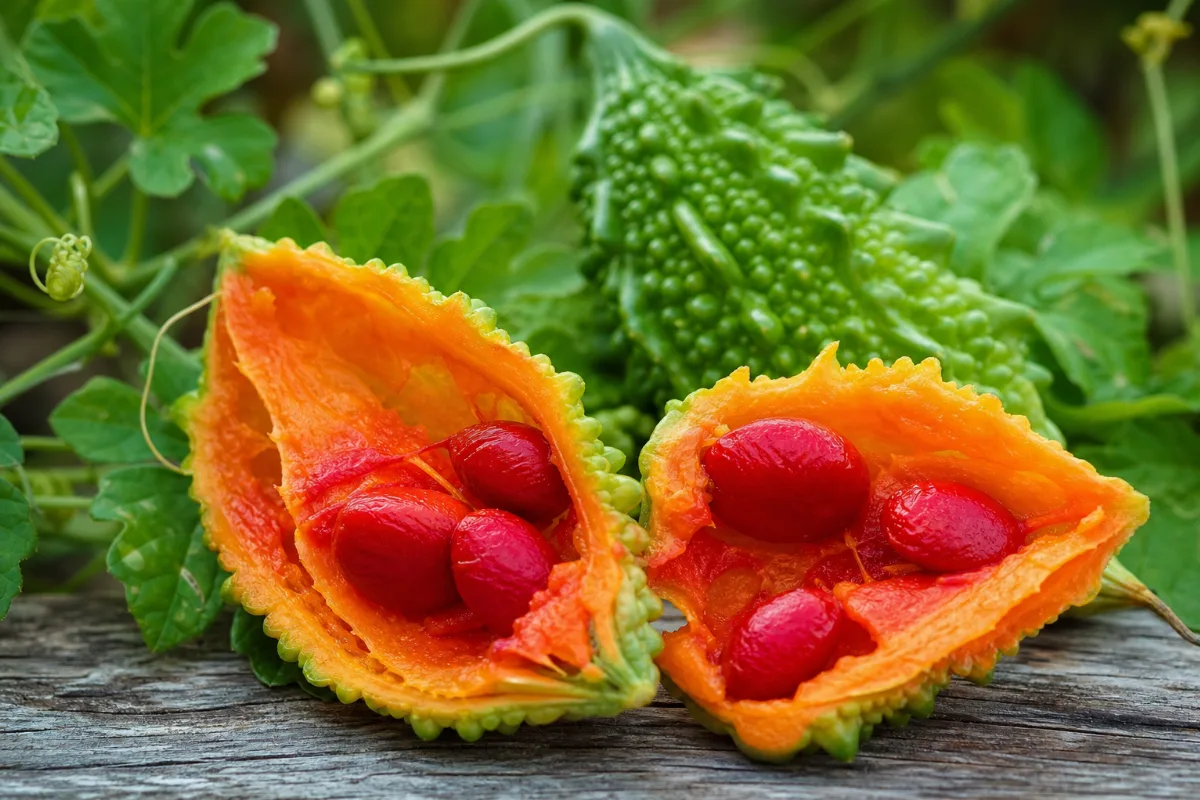
Herbs & Botanicals · Herbs · Vegetable and folk remedy with mixed, low-certainty evidence for blood sugar; real cautions in pregnancy, young children and with diabetes medicines
Bitter Melon
Momordica charantia L. · also called Bitter melon, bitter gourd, balsam pear, karela, ampalaya, cerasee, margose, Bittermelone, melon amer
Bitter melon is the bitter, warty green fruit of a tropical climbing vine in the gourd family. The unripe fruit is eaten as a vegetable and used in folk medicine, mainly for diabetes. It is also sold as juice, powder, capsules and extracts. Studies of blood sugar disagree, and the seeds, teas and strong extracts carry the most safety concerns.
General information, not medical advice. Last substantive update · Not medically reviewed. A named clinician has not signed off on this page. How this page is made
About Bitter Melon
Bitter melon (Momordica charantia) is a tropical vine whose bitter unripe fruit is eaten as a vegetable and used in folk medicine, mainly for type 2 diabetes. The best-studied use is blood sugar. Pooled analyses disagree: two find small drops in fasting glucose and HbA1c, two find none, and the Cochrane review judged the evidence insufficient. Trials in prediabetes lean slightly towards a benefit but are small. Weight and blood pressure show no clear effect. The main safety points are low blood sugar (especially with diabetes medicines and in young children), avoiding it in pregnancy, seeds and favism in people with G6PD deficiency, a few liver injury reports, and interactions with some cancer drugs.
What it is
Bitter melon is Momordica charantia L., a climbing vine in the gourd family (Cucurbitaceae) that is widely grown in tropical and subtropical regions. The unripe fruit is eaten as a vegetable. It is also called bitter gourd, balsam pear, karela and ampalaya.
The seeds, leaves and vines are different from the fruit flesh. Seeds contain vicine and toxic proteins, and teas made from leaves and vines have been linked to low blood sugar in young children.
Traditional and current uses
In Asia, Brazil and east Africa it has long been used as food and folk medicine for diabetes. It has also been described as a stomach tonic, laxative and worm remedy.
Today people mainly take it for blood sugar, cholesterol and weight. We found no European regulator monograph for it. Memorial Sloan Kettering's patient page says human data are limited.
What is in it and how it works
Bitter melon contains bitter triterpenoids (such as momordicine I), sterol glucosides called charantin, a compound called vicine in the seeds, a small insulin-like peptide and toxic seed proteins. Reviews say no single compound has been proven to explain the blood sugar effect.
In mice, extracts raised the cell energy sensor AMPK and lowered liver sugar production; in a lab test an ingredient blocked an enzyme that makes cortisol; in one small trial of 24 people with type 2 diabetes, insulin release rose. Most mechanism work is in animals and cells. In rats, charantin was poorly absorbed (about 8%). No human absorption data were found.
What the research shows
Blood sugar: pooled trial results disagree. One analysis of 10 trials (1,045 people) found fasting glucose 0.72 mmol/L and HbA1c 0.26 points lower than placebo. Another of 8 trials found 0.85 mmol/L and 0.38 points lower. Others found no effect, including a 2023 analysis of 9 trials (414 people), and the Cochrane review (2012) judged the evidence insufficient. Reviewers rate the trials low quality, short (4 to 16 weeks) and based on different products.
Prediabetes trials show a small fall in fasting glucose of about 0.3 mmol/L in the best-controlled crossover trial, but others were null. Cholesterol results are mixed. Two pooled analyses found no effect on weight, and one found none on blood pressure. No trial measured diabetes complications, heart attacks or deaths. There is no human evidence on cancer.
At a glance
Traditional uses history, not proof
- Folk medicine in Asia, Brazil and east Africa: type 2 diabetes (reviews)
- Traditional stomach tonic, laxative and worm remedy (2022 review)
- Unripe fruit, seeds and aerial parts used for diabetes in various parts of the world (1996 review)
Studied for research
- Blood sugar and HbA1c in type 2 diabetes and prediabetes, mixed to low
- Cholesterol, mixed; triglycerides, insufficient
- Weight and blood pressure, no clear effect
- Knee osteoarthritis, very low; immune function and cancer, insufficient
Main compounds
- Cucurbitane-type triterpenoids such as momordicine I (bitter compounds)
- Charantin, a mixture of sterol glucosides
- Vicine in seeds, linked to favism
- Seed proteins called momorcharins
Common forms
- Unripe fruit eaten as a vegetable
- Fresh juice
- Dried or freeze-dried fruit and powder
- Capsules and extracts
- Teas from leaves and vines (linked to harm in young children)
Research links: Memorial Sloan Kettering Cancer Center: Bitter Melon · Cochrane review (2012): Momordica charantia for type 2 diabetes (PubMed) · Peter 2019 meta-analysis, glycaemia in type 2 diabetes (PubMed) · Laczko-Zold 2023 meta-analysis, metabolic effect (PubMed) · GBIF: Momordica charantia · NCBI Taxonomy: Momordica charantia · Research Library · Genes & Biomarkers Library
The plant and its history
- Accepted scientific name
- Momordica charantia L. (bitter melon, bitter gourd)
- Naming authority
- L., Sp. Pl.: 1009 (1753). Accepted species in the GBIF backbone (key 2874581, exact match, confidence 97) and species in NCBI Taxonomy (TaxId 3673, 'Momordica charantia L., 1753').
- Synonyms
- Momordica muricata DC. (GBIF synonym); Momordica sinensis Spreng. (GBIF synonym); Momordica charantia var. muricata Griseb., 1860 (GBIF synonym); Melothria pendula Sieber and Melothria pendula Sieber ex Cogn. (listed by GBIF as synonyms)
- Common names
- Bitter melon (English); Bitter gourd (English); Balsam pear (English); Bitter squash (English); Bitter cucumber (English); Karela (Hindi/Urdu (used in PubMed titles)); Ampalaya (Filipino (Tagalog)); Pare (Indonesian); Cerasee (Caribbean English); Margose; melon amer (French); Bittermelone; Bittergurke (German); Balsamina; cundeamor; pepino cimarrón (Spanish)
- Botanical family
- Cucurbitaceae, the gourd family (order Cucurbitales). It also contains cucumber, melons and squashes; this general statement was not checked in a source here.
- Classification
- Plantae > Tracheophyta > Magnoliopsida > Cucurbitales > Cucurbitaceae > Momordica > Momordica charantia L.
- Native range
- Not verified. A 2022 review says it is widely cultivated in tropical and subtropical regions of the world. The native range was not checked in a flora, and a Wikipedia-type claim is not relied on.
- Habitat
- A climbing plant well adapted to tropical countries (as described in a 2023 toxicology paper). Details not checked in a flora.
- What the plant looks like
- Roots: Not covered.; Stems: A climbing vine; stems and vines are used in some teas (as cited in a review). Not verified from a flora.; Leaves: Leaves are used in traditional teas and were tested as extracts (leaf extract blocked a cell drug pump in one study).; Flowers: Not covered.; Fruit: The unripe fruit is eaten as a vegetable in tropical regions (2022 review). The fruit is bitter. Fruit shape and colour vary by variety; details not checked in a flora.; Seeds: Seeds contain vicine and ribosome-inactivating proteins (alpha- and beta-momorcharin) and are the part flagged for toxicity.
- Cultivation
- Grown widely as a vegetable crop in tropical and subtropical regions. Details not researched.
- Harvest and processing
- Not researched. Trials used fresh juice, freeze-dried fruit or juice, fruit powder, hot-water extracts and branded extracts; whether the seeds were included was often not stated in the abstracts.
- Look-alikes and adulterants
- Name: Other Momordica species (for example Momordica cochinchinensis, called gac); Note: Different plants. Research on one cannot be assumed to apply to another. Not researched here.; Name: Different varieties and types of Momordica charantia; Note: A rat study found Thai and Chinese bitter gourd fruits affected liver enzymes differently, so variety may matter. Product labels often do not state the variety.; Name: Other bitter-tasting 'melons' and 'gourds'; Note: Not researched. Check the Latin name (Momordica charantia) on a product label.
- Sustainability and conservation
- Not assessed here.
Traditional use and history history, not clinical proof
| Tradition or era | Documented use | Source |
|---|---|---|
| Folk medicine in Asia, Brazil and east Africa | Used as food and herbal medicine for type 2 diabetes in Asia, Brazil and east Africa (as described by Peter 2019). Described elsewhere as a stomachic (stomach tonic), laxative or anthelmintic (worm remedy) and 'most notably' for diabetes and its complications (Cicek 2022). | p30385422 |
| Traditional diabetes treatment worldwide (1996 review) | Unripe fruit, seeds and aerial parts have been used in various parts of the world to treat diabetes; fruit juice or seed powder lowered fasting glucose in animals and in humans in the studies reviewed. | p23194773 |
| Early clinical evidence (2003) to Cochrane (2012) | A 2003 review found four small non-randomised clinical studies of juice, fruit or dried powder with a moderate glucose-lowering effect, and called for proper randomised trials. The 2012 Cochrane review found four randomised trials and judged the evidence insufficient. | p22895968 |
| Modern trials and pooled analyses (2014 to 2025) | Meta-analyses between 2014 and 2024 gave mixed answers on blood sugar; 2018 to 2025 trials in prediabetes showed small effects on fasting glucose. | p38274207 |
| Regulatory position | No EMA/HMPC herbal monograph for bitter melon was found in the searches run and none could be verified. Memorial Sloan Kettering's patient page (updated 2021) says human data are limited. | s-msk-bitter-melon |
Traditional use shows how a plant was used. It does not show that a supplement works or is safe today.
What is inside, and how it may work
What the plant contains and how those compounds act in cells and animals. Laboratory and animal mechanisms are not proven effects in people.
Main compounds
| Compound | Family | Where it is concentrated | Activity studied | Level of evidence |
|---|---|---|---|---|
| Cucurbitane-type triterpenoids (for example momordicine I) PubChem 101293615 | triterpenoids (bitter compounds) | Fruit and other parts A review quoting Ma and colleagues (2012) reports estimated daily triterpenoid intakes from 17 to 6,927 micrograms across ten commercial products; it suggests about 3 mg a day as a reference level. | A 2022 review says research has moved to these triterpenoids as likely active principles for diabetes-related effects, but their action in people is not shown. Momordicine I is the best-known example. 50 | Laboratory research |
| Charantin | mixture of two sterol glucosides | Fruit (highest in flesh in one rat study) A rat-feeding paper reports 0.16 +/- 0.02 mg/g in flesh. | An early proposed antidiabetic compound, but a 2022 review says its low concentration and limited bioavailability cannot explain the effects and rates evidence for charantin as an active principle as very low. In rats, absolute oral bioavailability was about 8%. 50 24 33 | Animal research |
| Vicine PubChem 135413566 | pyrimidine glycoside (nucleoside-like) | Seeds; also found in the whole fruit Highest in whole fruit among the parts tested in one rat paper; a number is not quoted because the units in the abstract look inconsistent. | Reported as a hypoglycaemic principle at doses too high to explain the plant's effect, and described as the cause of favism in people with G6PD deficiency. 32 24 50 | Animal research |
| Polypeptide-p (plant insulin) | insulin-like polypeptide | Fruit and seeds Not quantified in a source read. | Lowers blood sugar by injection in humans and animals according to a 1996 review, but oral activity is questionable. 32 50 | Animal research |
| mcIRBP-19 (insulin receptor binding peptide) | peptide | Fruit Not quantified in a source read. | A peptide described as having an insulin-like effect in cells and animals; used as a marker in a branded extract tested in people. 42 | Laboratory research |
| Alpha- and beta-momorcharin and MAP30 | ribosome-inactivating proteins | Seeds Not quantified in a source read. | Described as abortifacient, ribosome-inactivating, antitumour and immune-modulating in a 1992 review. Alpha-momorcharin was toxic to liver cells and inflammatory in cell and mouse studies. 27 41 5 | Laboratory research |
| Rutin PubChem 5280805 | flavonoid glycoside | Leaf The main secondary metabolite found by HPLC in a dry leaf extract; amount not quoted. | Marker compound of the leaf extract tested in pregnant rats. 38 | Animal research |
Mechanisms, receptors and pathways
| Target or pathway | Gene or receptor | What was found | Level |
|---|---|---|---|
| Cell energy sensor AMPK; liver sugar and fat production | AMPK; PEPCK; SREBP-1c; fatty acid synthase | In mice fed a high-fat diet, bitter melon extract raised liver AMPK phosphorylation by 126.2% to 297.3%, lowered PEPCK expression and glucose production, lowered fatty acid synthesis genes and serum triglycerides, and lowered visceral fat. 34 | Animal research |
| Cortisol-activating enzyme 11-beta-HSD1 | 11β-HSD1 (HSD11B1) | An ingredient in extract capsules selectively blocked the enzyme in a lab test, and the gene was less expressed in mouse liver; the authors propose this as an extra explanation for glucose lowering. 3 34 | Laboratory research |
| Liver insulin signalling and apoB | Insulin receptor, IRS, PI3-kinase; apolipoprotein B | Bitter melon juice improved glucose and insulin tolerance in high-fat-fed mice, lowered plasma apoB-100 and apoB-48 and changed phosphorylation of the insulin receptor and downstream molecules. 26 | Animal research |
| Insulin release by the pancreas | Not specified | In 24 people with type 2 diabetes, 3 months of M. charantia raised insulin area, total and first-phase insulin secretion; insulin sensitivity did not change. 7 | Human data |
| Insulin-receptor binding by a bitter gourd peptide | Insulin receptor | The peptide mcIRBP-19 is described in the trial paper as having an insulin-like effect in cells and animals; the human trial of the branded extract showed borderline effects. 42 | Laboratory research |
| Drug pump P-glycoprotein | P-glycoprotein (ABCB1) | Leaf extract, but not fruit or tendril extract, blocked the pump in drug-resistant human cells and increased vinblastine levels inside them. In women with cervical cancer, P-glycoprotein on NK-cell membranes fell with bitter melon intake. 23 31 | Laboratory research |
| Liver drug-handling enzymes | Cytochrome P450 reactions; glutathione S-transferase | In rats, Thai bitter gourd fruit raised glutathione S-transferase 1.6-fold and lowered most phase I reactions; Chinese bitter gourd fruit lowered one phase I activity and carcinogen activation in vitro. 20 | Animal research |
| Liver-cell toxicity of a seed protein | LRP1 receptor; JNK pathway | Alpha-momorcharin entered normal liver cells through the LRP1 receptor and triggered cell death through JNK. 41 | Laboratory research |
| Inflammation switched on by a seed protein | NF-kappaB; JNK; MCP-1, IL-8, IL-1beta, TNF-alpha | Recombinant alpha-momorcharin raised inflammatory gene expression in human monocytes and caused inflammation in mice. 5 | Laboratory research |
| Glucose lowering in diabetic animals | Not specified | A meta-analysis of 66 animal studies (1,861 animals) found fruit and seed extracts lowered fasting glucose and HbA1c, with poor study quality. 30 | Animal research |
Absorption, metabolism and elimination
- Absorption
- No human blood-level data for any bitter melon compound were found. In rats, pure charantin had an absolute oral bioavailability of 8.18 +/- 0.36%; adding piperine increased the bioavailability of all three marker compounds tested in a three-herb capsule.
- Distribution
- Not found.
- Metabolism
- Not found in the abstracts read.
- Elimination
- In rats, charantin had a mean elimination half-life of about 8.21 hours after injection (matched to charantin by the order in the abstract).
- Bioavailability
- Low for charantin in rats (about 8%). Whether this applies to people, or to the compounds that actually matter, is unknown.
Isolated compounds versus whole extracts
Bitter melon is a mixture and the active principle for blood sugar is not settled. Charantin, polypeptide-p and vicine were each proposed, but a 1996 review says they act only at doses too high to explain the plant, and a 2022 review adds that low concentrations and limited bioavailability argue against charantin and polypeptide-p; attention has shifted to cucurbitane triterpenoids. Parts differ: leaf extract blocked a drug pump while fruit and tendril extracts did not; a seed extract was lethal to zebrafish embryos while fruit extract was not; an oil-type seed extract was safe in rats; Thai and Chinese fruit varieties affected rat liver enzymes differently. Human trials used so many forms (juice, freeze-dried fruit, powder, hot-water extract, a branded peptide-containing extract) that results cannot be moved from one to another.
Nutritional composition
USDA FoodData Central was not consulted. The unripe fruit is eaten as a vegetable in tropical regions (2022 review). Whether food amounts have the same effect as supplement amounts is not known.
3 mixed findings3 low certainty4 very low certainty4 not enough evidence2 evidence against
What was looked at
The 16 benefits and uses checked for Bitter Melon, each with how strong the evidence is. Tap one to open it.
- Fasting blood sugar in type 2 diabetesMixed findings
- Long-term blood sugar (HbA1c) in type 2 diabetesMixed findings
- Blood sugar after a meal or sugar drinkLow certainty
- Blood sugar and insulin resistance in prediabetesLow certainty
- Insulin release and insulin sensitivityVery low certainty
- Compared with metformin and glibenclamideLow certainty
- Added to usual diabetes treatmentVery low certainty
- One-off effect before a sugar loadNot enough evidence
- Total and LDL cholesterolMixed findings
- TriglyceridesNot enough evidence
- Body weight, BMI and waist sizeEvidence against
- Blood pressureEvidence against
- Heart-risk markers in diabetes (sialic acid, atherogenic index)Very low certainty
- Knee osteoarthritis painVery low certainty
- Immune cells in cervical cancer during radiotherapyNot enough evidence
- Cancer prevention or treatmentNot enough evidence
Lab markers tracked in the studies
Fasting blood glucoseHbA1c (three-month blood sugar average, %)Blood sugar after a meal or glucose drinkFructosamineInsulin, insulin secretion and HOMA-IRTotal cholesterolLDL cholesterolHDL cholesterolTriglyceridesBody weight, BMI and waistBlood pressure (systolic and diastolic)Plasma sialic acidNatural killer (NK) cell percentage and P-glycoprotein
What is Bitter Melon good for?
The main studied uses and how strong the human evidence is for each. "Mixed" means studies disagree; "low" or "very-low" means small or weak studies point one way; "insufficient" means too little human evidence; "against" means pooled trials found no meaningful effect. Nothing here is rated moderate or high.
Benefits, one by one
Each card is a research question, not a promise. Tap a goal to filter. Open a card to see the studies, doses and limits.
Fasting blood sugar in type 2 diabetes
Mixed findingsFasting blood sugar is the level after a night without food. Two pooled analyses found small drops with bitter melon; two others found none. Reviewers call the studies small, short and of poor quality, so the answer is mixed.
8 studiesTrials used many different products (fruit powder, juice, capsules, e…
Studies, doses and limits
What the trials found
Peter 2019 pooled 10 trials (1,045 people, 4 to 16 weeks) and found fasting glucose 0.72 mmol/L lower than placebo, but rated the evidence low to very low quality with moderate to high risk of bias. Zhang 2024 pooled 8 trials (423 people) and found 0.85 mmol/L lower, with high disagreement between trials (I2 73%). Laczko-Zold 2023 pooled 9 trials (414 people) and found no effect (-0.03 mmol/L, CI -0.38 to 0.31). Yin 2014 pooled 4 small trials (208 people) and found none (+2.23 mg/dL, CI -14.91 to 19.37). The 2012 Cochrane review pooled nothing because no two trials used the same preparation, and judged the evidence insufficient. A 12-week trial (Kim 2020, 90 people) saw fasting glucose fall within the bitter melon group but no change in HbA1c.
Results
Reviews disagree. Where a drop was found it was about 0.7 to 0.85 mmol/L (roughly 13 to 15 mg/dL). Others found no difference.
Effect sizes as reported
Peter 2019: -0.72 mmol/L (CI -1.33 to -0.12); Zhang 2024: -0.85 mmol/L (CI -1.44 to -0.26); Laczko-Zold 2023: -0.03 (CI -0.38 to 0.31); Yin 2014: +2.23 mg/dL (CI -14.91 to 19.37).
Why this rating
Pooled analyses split between a small drop and no effect. The reviewers who found a drop rate the trials as low quality or highly inconsistent, and the Cochrane review found the evidence insufficient.
Form and dose studied
Trials used many different products (fruit powder, juice, capsules, extracts, one branded extract), so no single product or amount has been tested more than once or twice. Ask a doctor or pharmacist about amounts.
Who was studied
Adults with type 2 diabetes, usually already on diabetes treatment.
Limits
Small trials of 4 to 16 weeks. Products were not standardised. Most abstracts do not describe how the product was made. No trial measured complications, heart attacks or deaths.
Why researchers looked
Fasting glucose is the simplest measure of how well diabetes is controlled day to day, and bitter melon is mainly used for diabetes.
Traditional use
Bitter melon (bitter gourd, Momordica charantia) is eaten as a vegetable and used in folk medicine in Asia, Brazil and east Africa, mainly for diabetes (reviews: Peter 2019, Cicek 2022).
Proposed mechanism Preliminary mechanism
Lab and animal work suggests bitter melon compounds may help cells take up sugar, switch on the cell energy sensor AMPK and lower sugar production in the liver. An enzyme test also found a compound that blocks 11-beta-HSD1, an enzyme that makes active cortisol. None of this proves the same happens in people.
A proposed mechanism does not show that the effect happens in people.
Bitter melon can lower blood sugar. If you use insulin or diabetes tablets, it may add to their effect and cause low blood sugar, so tell your doctor or pharmacist before using it. Avoid in pregnancy; children have had low blood sugar after bitter melon tea; see the Safety tab.
Long-term blood sugar (HbA1c) in type 2 diabetes
Mixed findingsHbA1c is the three-month blood sugar average. Pooled results range from no change to a drop of about 0.4 percentage points. The studies are short and the answer is mixed.
8 studiesDifferent products in every trial. Ask a doctor or pharmacist about a…
Studies, doses and limits
What the trials found
Zhang 2024 (8 trials, 423 people) found HbA1c 0.38 points lower. Peter 2019 (10 trials) found 0.26 points lower. Laczko-Zold 2023 (9 trials) found -0.12 points, not significant, and Yin 2014 (4 trials) found -0.13 points, not significant. Single trials: Dans 2007 (40 people, 3 months, capsules added to usual treatment) found a 0.22-point difference that was not significant and had only 11% power; Kim 2020 (90 people, 12 weeks) found HbA1c unchanged; Cortez-Navarrete 2018 (24 people, 3 months) saw HbA1c fall within the bitter melon group; Yang 2022 (40 people with poorly controlled diabetes, 3 months, a branded extract funded by its maker) missed significance overall (P=0.060) and was significant only in a subgroup picked afterwards (8.0 to 7.5%).
Results
HbA1c changes of -0.1 to -0.4 percentage points in pooled analyses; some not different from zero. Differences of this size are small compared with what diabetes drugs achieve.
Effect sizes as reported
Zhang 2024: -0.38% (CI -0.53 to -0.23); Peter 2019: -0.26% (CI -0.49 to -0.03); Laczko-Zold 2023: -0.12 (CI -0.35 to 0.11); Yin 2014: -0.13% (CI -0.41 to 0.16); Dans 2007: 0.22 points (CI -0.40 to 0.84).
Why this rating
Two pooled analyses find a small drop and two do not. Trials are short, small and rated low quality or high risk of bias, and the one industry-funded trial relied on a subgroup.
Form and dose studied
Different products in every trial. Ask a doctor or pharmacist about amounts.
Who was studied
Adults with type 2 diabetes (newly diagnosed or not at goal on drugs).
Limits
No trial lasted more than about 16 weeks, and HbA1c reflects about 3 months, so the shortest trials cannot show a full change. Several trials were underpowered. A biomarker change is not the same as fewer complications.
Why researchers looked
HbA1c is the number doctors use to judge diabetes control, so it is the most important blood sugar measure.
Traditional use
Bitter melon (bitter gourd, Momordica charantia) is eaten as a vegetable and used in folk medicine in Asia, Brazil and east Africa, mainly for diabetes (reviews: Peter 2019, Cicek 2022).
Proposed mechanism Preliminary mechanism
Same lab and animal findings as for fasting glucose: possible effects on sugar uptake, liver sugar production and insulin signalling. A mouse study found raised AMPK activity in the liver.
A proposed mechanism does not show that the effect happens in people.
Bitter melon can lower blood sugar. If you use insulin or diabetes tablets, it may add to their effect and cause low blood sugar, so tell your doctor or pharmacist before using it. Avoid in pregnancy; children have had low blood sugar after bitter melon tea; see the Safety tab.
Blood sugar after a meal or sugar drink
Low certaintyTwo reviews found that bitter melon lowered blood sugar after a glucose drink by about 1.4 to 2.3 mmol/L in people with diabetes, but the trials disagree a lot and are low quality.
4 studiesMixed products; ask a doctor or pharmacist about amounts.
Studies, doses and limits
What the trials found
Peter 2019 (post-meal glucose, 10 trials) found -1.43 mmol/L versus placebo (CI -2.18 to -0.67, I2 0%). Zhang 2024 found -2.28 mmol/L (CI -3.35 to -1.21, I2 67%). Cortez-Navarrete 2018 saw the 2-hour glucose test result fall within the bitter melon group. Rahman 2015 found the 2-hour glucose test improved significantly only with glibenclamide, not with bitter melon.
Results
Reviews that pooled post-meal glucose found a clear drop. A head-to-head trial found the effect weaker than a sulfonylurea drug.
Effect sizes as reported
Peter 2019: -1.43 mmol/L (CI -2.18 to -0.67); Zhang 2024: -2.28 mmol/L (CI -3.35 to -1.21).
Why this rating
Both reviews that pooled this outcome found a drop, but Peter 2019 rates the trials moderate to high risk of bias and Zhang 2024 found high disagreement between trials. The Laczko-Zold review did not pool this outcome.
Form and dose studied
Mixed products; ask a doctor or pharmacist about amounts.
Who was studied
Adults with type 2 diabetes.
Limits
Only two reviews pooled this outcome; they share several of the same small trials. Timing of the test and the product differ between trials.
Why researchers looked
Spikes in blood sugar after eating add to long-term damage, so this is a useful target.
Traditional use
Bitter melon (bitter gourd, Momordica charantia) is eaten as a vegetable and used in folk medicine in Asia, Brazil and east Africa, mainly for diabetes (reviews: Peter 2019, Cicek 2022).
Proposed mechanism Preliminary mechanism
Unproven. Proposals include slower sugar uptake and better insulin response, based on lab and animal work.
A proposed mechanism does not show that the effect happens in people.
Bitter melon can lower blood sugar. If you use insulin or diabetes tablets, it may add to their effect and cause low blood sugar, so tell your doctor or pharmacist before using it. Avoid in pregnancy; children have had low blood sugar after bitter melon tea; see the Safety tab.
Blood sugar and insulin resistance in prediabetes
Low certaintySeveral small trials in people with prediabetes found a small fall in fasting blood sugar, but some did not, and some groups responded and others did not.
5 studiesTrials used freeze-dried juice, whole-fruit powder, powder in juice, …
Studies, doses and limits
What the trials found
Krawinkel 2018 (Tanzania, 52 people, 8-week crossover, bitter gourd powder in juice versus cucumber juice) found fasting glucose 0.31 mmol/L lower (CI 0.08 to 0.54); responders were mostly those with higher starting glucose. Mes 2025 ran two trials: in study 1 (30 people, 4 weeks, freeze-dried juice) there was no significant difference; in study 2 (38 people, 12 weeks, freeze-dried whole fruit) fasting glucose and HOMA-IR (an insulin resistance estimate) improved against a cucumber-based control (P=0.026 and 0.045), with no effect on other markers. Guarneiri 2025 (75 people, 12 weeks, extract) found blood glucose rose less with bitter melon than in the control group, and a subgroup analysis suggested a HbA1c fall in older people at the higher level. In one acute test (Boone 2017, 10 people) only half responded to a bitter melon drink. Peter 2019 judged the prediabetes evidence low quality (1 study, 52 people).
Results
Fasting glucose fell by about 0.3 mmol/L in the best-controlled crossover trial; other trials were null or inconsistent.
Effect sizes as reported
Krawinkel 2018: 0.31 mmol/L (5.6 mg/dL; CI 0.08 to 0.54); Mes 2025 study 2: fasting glucose P=0.026, HOMA-IR P=0.045; Peter 2019: -0.31 mmol/L (1 study, n=52).
Why this rating
Several small trials lean the same way, but they are small, short, use different products, and some showed no effect. The control group in Guarneiri 2025 had an unusual 11% glucose rise.
Form and dose studied
Trials used freeze-dried juice, whole-fruit powder, powder in juice, and a commercial extract. Ask a doctor or pharmacist about amounts.
Who was studied
Adults with prediabetes in the Netherlands, Tanzania and the United States.
Limits
Small, 4 to 12 weeks, mixed products. Not everyone responded. No trial tested whether bitter melon prevents diabetes.
Why researchers looked
Prediabetes is the stage at which blood sugar is raised but not yet diabetes, so a gentle food-based option would be useful if it worked.
Traditional use
Bitter melon (bitter gourd, Momordica charantia) is eaten as a vegetable and used in folk medicine in Asia, Brazil and east Africa, mainly for diabetes (reviews: Peter 2019, Cicek 2022).
Proposed mechanism Preliminary mechanism
Same proposed routes as above (sugar uptake, liver sugar production, insulin signalling), shown mostly in animals and cells.
A proposed mechanism does not show that the effect happens in people.
Trials in prediabetes reported no serious adverse effects, but they were small. Bitter melon can lower blood sugar. If you use insulin or diabetes tablets, it may add to their effect and cause low blood sugar, so tell your doctor or pharmacist before using it. Avoid in pregnancy; children have had low blood sugar after bitter melon tea; see the Safety tab.
Insulin release and insulin sensitivity
Very low certaintyOne small trial found that bitter melon raised insulin release during a sugar test but did not change insulin sensitivity. It is a single 24-person study.
5 studies2,000 mg a day of M. charantia for 3 months in that trial.
Studies, doses and limits
What the trials found
Cortez-Navarrete 2018 (24 adults with type 2 diabetes, no diabetes drugs, double-blind, 3 months) found that in the bitter melon group insulin area rose from 56,562 to 65,256 pmol/L/min (P=0.043), total insulin secretion from 0.29 to 0.41 (P=0.028) and first-phase secretion from 557.8 to 1,135.7 (P=0.043). Insulin sensitivity did not change. In a 2025 trial (Mes), 12 weeks of whole fruit improved fasting insulin and HOMA-IR in prediabetes.
Results
More insulin made during a glucose test; no change in insulin sensitivity in that trial.
Effect sizes as reported
Cortez-Navarrete 2018: insulin area +8,694 pmol/L/min (within group, P=0.043); Matsuda insulin sensitivity index not changed.
Why this rating
One small trial (24 people) and within-group comparisons for the insulin findings; no replication.
Form and dose studied
2,000 mg a day of M. charantia for 3 months in that trial.
Who was studied
Adults with type 2 diabetes not on drug treatment (one trial).
Limits
A single site, 24 people. The mechanism work is in animals and cells.
Why researchers looked
Knowing whether a food acts by giving more insulin or by making the body more sensitive to it helps explain any effect on blood sugar.
Traditional use
Bitter melon (bitter gourd, Momordica charantia) is eaten as a vegetable and used in folk medicine in Asia, Brazil and east Africa, mainly for diabetes (reviews: Peter 2019, Cicek 2022).
Proposed mechanism Preliminary mechanism
Animal and cell studies suggest bitter melon may help insulin-making cells. In mice it raised insulin signalling in the liver. A peptide called mcIRBP-19 is reported to act like insulin in cells and animals (as described by Yang 2022).
A proposed mechanism does not show that the effect happens in people.
Bitter melon can lower blood sugar. If you use insulin or diabetes tablets, it may add to their effect and cause low blood sugar, so tell your doctor or pharmacist before using it. Avoid in pregnancy; children have had low blood sugar after bitter melon tea; see the Safety tab.
Compared with metformin and glibenclamide
Low certaintyIn head-to-head trials bitter melon had a weaker blood sugar effect than metformin or glibenclamide. It did not match standard diabetes drugs.
3 studiesDifferent products and amounts in each trial. Ask a doctor or pharmac…
Studies, doses and limits
What the trials found
Fuangchan 2011 (4 weeks, newly diagnosed type 2 diabetes): fructosamine (a 2 to 3 week sugar marker) fell with metformin 1,000 mg a day (-16.8 umol/L, CI -31.2 to -2.4) and with bitter melon 2,000 mg a day (-10.2 umol/L, CI -19.1 to -1.3) but not with 500 or 1,000 mg a day of bitter melon; the authors say the bitter melon effect was less than metformin. Rahman 2015 (95 people, 10 weeks): HbA1c and fasting glucose fell from baseline in all groups (bitter melon 2 g or 4 g a day, or glibenclamide 5 mg a day); the 2-hour glucose test improved significantly only with glibenclamide. The Cochrane review (2012) found no significant difference between bitter melon and metformin or glibenclamide in reliable measures but rated the evidence insufficient.
Results
Bitter melon lowered blood sugar markers less than the drugs, or not enough to tell.
Effect sizes as reported
Fuangchan 2011: fructosamine metformin -16.8 umol/L vs bitter melon 2,000 mg -10.2 umol/L.
Why this rating
Two small trials and a Cochrane review that judged evidence insufficient. They point the same way (weaker than drugs) but there is no direct pooled test.
Form and dose studied
Different products and amounts in each trial. Ask a doctor or pharmacist about amounts.
Who was studied
Adults with type 2 diabetes.
Limits
Short (4 to 10 weeks), no placebo in Rahman 2015, group sizes not given in the Fuangchan abstract. Do not read these results as support for replacing prescribed medicine.
Why researchers looked
People ask whether bitter melon could replace diabetes medicine. Comparing it with a standard drug shows how it measures up.
Traditional use
Bitter melon (bitter gourd, Momordica charantia) is eaten as a vegetable and used in folk medicine in Asia, Brazil and east Africa, mainly for diabetes (reviews: Peter 2019, Cicek 2022).
Proposed mechanism Pharmacological theory
Not applicable: this is a comparison of results.
A proposed mechanism does not show that the effect happens in people.
Never stop or reduce diabetes medicine because of bitter melon. Bitter melon can lower blood sugar. If you use insulin or diabetes tablets, it may add to their effect and cause low blood sugar, so tell your doctor or pharmacist before using it. Avoid in pregnancy; children have had low blood sugar after bitter melon tea; see the Safety tab.
Added to usual diabetes treatment
Very low certaintySome trials gave bitter melon on top of usual diabetes care. Results were mixed: one found a small glucose drop, one missed significance, one found a lab-extract effect that was strong enough to raise concerns about low sugar.
5 studiesCapsules, extracts and a branded extract. Ask a doctor or pharmacist …
Studies, doses and limits
What the trials found
Dans 2007 (40 people with HbA1c 7 to 9%, capsules added to usual treatment for 3 months): HbA1c difference 0.22 points (CI -0.40 to 0.84) in favour of bitter melon, not significant; underpowered (11%); no change in liver, kidney or salt tests. Kim 2020 (90 people, 12 weeks, extract added to treatment): fasting glucose fell within the bitter melon group, HbA1c unchanged. Yang 2022 (40 people not reaching goal on drugs, branded extract, 3 months, funded by its maker): borderline overall; in a subgroup chosen afterwards, fasting glucose fell from 172.5 to 159.4 mg/dL and HbA1c from 8.0 to 7.5%. Tongia 2004 (15 patients, 7 days, a laboratory-prepared extract) found the extract plus half-dose metformin or glibenclamide lowered glucose more than full-dose drugs. In diabetic rats, fruit extract plus glibenclamide improved HbA1c and insulin more than glibenclamide alone (Abdel-Rahman 2019).
Results
Small or non-significant HbA1c changes in good-quality trials; a very strong effect in a tiny non-standard lab-extract study.
Effect sizes as reported
Dans 2007: 0.22 points (CI -0.40 to 0.84, P=0.4825); Yang 2022 subgroup (n=29): HbA1c 8.0 to 7.5%, P=0.010.
Why this rating
Small trials, different products, one underpowered, one industry-funded with a subgroup result, one 7-day study of a non-food extract.
Form and dose studied
Capsules, extracts and a branded extract. Ask a doctor or pharmacist about amounts.
Who was studied
Adults with type 2 diabetes already treated with drugs.
Limits
Too small and short to show whether adding bitter melon improves outcomes or increases low blood sugar episodes.
Why researchers looked
Most people who might try bitter melon already take diabetes drugs, so add-on trials are the realistic setting.
Traditional use
Bitter melon (bitter gourd, Momordica charantia) is eaten as a vegetable and used in folk medicine in Asia, Brazil and east Africa, mainly for diabetes (reviews: Peter 2019, Cicek 2022).
Proposed mechanism Pharmacological theory
If bitter melon lowers sugar by its own routes, effects may add to the drug effect. This is a theory; the safety side is on the Safety tab.
A proposed mechanism does not show that the effect happens in people.
The Tongia study raises the question of stronger low-sugar effects when bitter melon is combined with diabetes drugs. Tell your doctor or pharmacist before using it. See the Safety tab.
One-off effect before a sugar load
Not enough evidenceSingle-dose tests give conflicting results: no effect in five overweight men, and a lower glucose response in half of ten adults with prediabetes who tried a branded bitter melon drink.
2 studiesFreeze-dried powder and a branded drink. Ask a doctor or pharmacist a…
Studies, doses and limits
What the trials found
Kasbia 2009 (5 overweight men, single dose of 50 or 100 mg per kg of freeze-dried bitter melon before a glucose test) found no difference in glucose, insulin, energy use or appetite. Boone 2017 (10 adults with prediabetes, branded drink, one dose with a glucose test) found glucose area 13.2% lower in the 5 who responded (CI -18.1% to -8.3%), and no change in insulin; the other 5 did not respond.
Results
No effect in one test; effect in half of the people in another.
Effect sizes as reported
Boone 2017 responders (n=5): glucose area -13.2% (CI -18.1% to -8.3%).
Why this rating
Two tiny studies in different groups (n=5 and n=10), and the positive one reports only the people who responded.
Form and dose studied
Freeze-dried powder and a branded drink. Ask a doctor or pharmacist about amounts.
Who was studied
Overweight men without diabetes; adults with prediabetes.
Limits
Far too small. Choosing the responders afterwards overstates the average.
Why researchers looked
A single-dose test shows quickly whether a food can blunt the sugar spike from a meal.
Traditional use
Bitter melon (bitter gourd, Momordica charantia) is eaten as a vegetable and used in folk medicine in Asia, Brazil and east Africa, mainly for diabetes (reviews: Peter 2019, Cicek 2022).
Proposed mechanism Preliminary mechanism
Not established.
A proposed mechanism does not show that the effect happens in people.
Bitter melon can lower blood sugar. If you use insulin or diabetes tablets, it may add to their effect and cause low blood sugar, so tell your doctor or pharmacist before using it. Avoid in pregnancy; children have had low blood sugar after bitter melon tea; see the Safety tab.
Total and LDL cholesterol
Mixed findingsOne review of people with type 2 diabetes found total cholesterol a little lower with bitter melon, and one small Japanese trial found lower LDL cholesterol. Another review found no effect. The answer is mixed.
6 studiesHot-water extract and unspecified supplements. Ask a doctor or pharma…
Studies, doses and limits
What the trials found
Zhang 2024 (8 trials, 423 people with type 2 diabetes) found total cholesterol 0.38 mmol/L lower (CI -0.70 to -0.07; I2 64%) but no significant change in LDL, HDL or triglycerides. Laczko-Zold 2023 (9 trials, 414 people) found no effect on total cholesterol (MD -0.04), LDL (-0.10) or HDL (-0.04). Kinoshita 2018 (43 Japanese adults, hot-water extract, 30 days) found LDL cholesterol lower than placebo (P=0.02) with no change in total cholesterol, HDL or triglycerides. Dans 2007 (40 people, 3 months) found no effect on total cholesterol.
Results
Total cholesterol fell about 0.4 mmol/L in one review and not at all in another; LDL fell in one 30-day trial but not in the two reviews.
Effect sizes as reported
Zhang 2024 total cholesterol -0.38 mmol/L (CI -0.70 to -0.07); Laczko-Zold 2023 total cholesterol -0.04 (CI -0.17 to 0.09), LDL -0.10 (CI -0.28 to 0.08).
Why this rating
Reviews disagree and the supporting trial is small and 30 days long.
Form and dose studied
Hot-water extract and unspecified supplements. Ask a doctor or pharmacist about amounts.
Who was studied
Adults with type 2 diabetes; healthy Japanese adults.
Limits
Short, small, different products. A cholesterol number is not a heart-attack outcome; none was measured.
Why researchers looked
People with diabetes often have raised blood fats, and animal studies suggested bitter melon changes fat handling in the liver.
Traditional use
Bitter melon is traditionally used as a vegetable and folk medicine, including as a stomachic, laxative or anthelmintic and for diabetes and its complications (Cicek 2022).
Proposed mechanism Animal research
In mice bitter melon juice lowered apoB (a protein on LDL and VLDL particles) and changed liver insulin signalling; another mouse study found it lowered liver fat-making genes. Not shown in people.
A proposed mechanism does not show that the effect happens in people.
Bitter melon can lower blood sugar and may add to diabetes drugs. Avoid in pregnancy. See the Safety tab.
Triglycerides
Not enough evidenceTriglycerides fell in one pilot trial of 24 people with obesity, but two larger reviews found no effect.
4 studies2,000 mg a day in the pilot. Ask a doctor or pharmacist about amounts.
Studies, doses and limits
What the trials found
Cortez-Navarrete 2022 (24 adults with obesity, 12 weeks) found triglycerides fell from 1.9 to 1.7 mmol/L and VLDL from 0.4 to 0.3 mmol/L with bitter melon (P<=0.05). Zhang 2024 found no significant triglyceride change in people with type 2 diabetes, and Kinoshita 2018 found none after 30 days.
Results
A small fall in one pilot; no effect in two other sources.
Effect sizes as reported
Cortez-Navarrete 2022: 1.9 to 1.7 mmol/L within the bitter melon group.
Why this rating
One pilot of 24 people with within-group results against two null results.
Form and dose studied
2,000 mg a day in the pilot. Ask a doctor or pharmacist about amounts.
Who was studied
Adults with obesity (pilot); type 2 diabetes (review).
Limits
Tiny pilot; the abstract does not give a between-group test for triglycerides.
Why researchers looked
High triglycerides go with diabetes and obesity.
Traditional use
Bitter melon is traditionally used as a vegetable and folk medicine, including as a stomachic, laxative or anthelmintic and for diabetes and its complications (Cicek 2022).
Proposed mechanism Animal research
In mice, bitter melon extract lowered liver fat-making genes and serum triglycerides. Not shown in people.
A proposed mechanism does not show that the effect happens in people.
Bitter melon can lower blood sugar and may add to diabetes drugs. Avoid in pregnancy. See the Safety tab.
Body weight, BMI and waist size
Evidence againstTwo reviews of randomized trials found bitter melon did not change body weight, BMI or waist size. One 24-person trial of people with obesity found changes that did not reach significance.
5 studiesMixed products. Ask a doctor or pharmacist about amounts.
Studies, doses and limits
What the trials found
Zou 2024 (10 trials, 448 adults) found no effect: weight +0.04 kg (CI -0.16 to 0.25), BMI -0.18 (CI -0.43 to 0.07), waist -0.95 cm (CI -3.05 to 1.16), body fat -0.99 points (CI -2.33 to 0.35). Laczko-Zold 2023 (9 trials) found body weight -1.00 (CI -2.59 to 0.59) and BMI -0.42 (CI -0.99 to 0.14), with very high disagreement (I2 about 95%). Cortez-Navarrete 2022 (24 adults with obesity, 12 weeks) found falls in weight, BMI, waist and fat that were not significant, while placebo participants gained weight. Cortez-Navarrete 2018 (24 people with diabetes) saw weight, BMI and fat percentage fall within the bitter melon group.
Results
No reliable change in weight in pooled trials.
Effect sizes as reported
Zou 2024: body weight +0.04 kg (CI -0.16 to 0.25); BMI -0.18 kg/m2 (CI -0.43 to 0.07); waist -0.95 cm (CI -3.05 to 1.16).
Why this rating
Two pooled analyses of randomized trials found no significant effect. Confidence in the null result is only low because trials are short and small.
Form and dose studied
Mixed products. Ask a doctor or pharmacist about amounts.
Who was studied
Adults, including people with obesity and type 2 diabetes.
Limits
Short trials, mostly under 16 weeks. High disagreement between trials in Laczko-Zold 2023.
Why researchers looked
Bitter melon is marketed for weight loss and animal studies suggested less visceral fat.
Traditional use
Bitter melon is traditionally used as a vegetable and folk medicine, including as a stomachic, laxative or anthelmintic and for diabetes and its complications (Cicek 2022).
Proposed mechanism Animal research
In high-fat-fed mice, bitter melon extract lowered visceral fat. Not shown in people.
A proposed mechanism does not show that the effect happens in people.
Bitter melon can lower blood sugar and may add to diabetes drugs. Avoid in pregnancy. See the Safety tab.
Blood pressure
Evidence againstThe one review that pooled blood pressure found no effect of bitter melon on top or bottom numbers.
3 studiesMixed products.
Studies, doses and limits
What the trials found
Laczko-Zold 2023 (9 trials, 414 people) found systolic blood pressure +1.01 mmHg (CI -1.07 to 3.09) and diastolic +0.24 mmHg (CI -1.04 to 1.53), with no heterogeneity. Kinoshita 2018 (43 adults, 30 days) saw no change in blood pressure. Rahman 2015 reported systolic pressure improved in the bitter melon groups and worsened with glibenclamide, without a between-group test in the abstract.
Results
No meaningful change in pooled trials.
Effect sizes as reported
Laczko-Zold 2023: systolic +1.01 mmHg (CI -1.07 to 3.09); diastolic +0.24 mmHg (CI -1.04 to 1.53).
Why this rating
One pooled analysis found no effect, with narrow confidence intervals, and a second small trial agreed. The rating is low confidence because only a few short trials measured it.
Form and dose studied
Mixed products.
Who was studied
Adults with type 2 diabetes and healthy adults.
Limits
Blood pressure was a secondary outcome. Trials were short.
Why researchers looked
Blood pressure is often raised alongside diabetes and obesity.
Traditional use
Bitter melon is traditionally used as a vegetable and folk medicine, including as a stomachic, laxative or anthelmintic and for diabetes and its complications (Cicek 2022).
Proposed mechanism Pharmacological theory
No clear mechanism has been shown for blood pressure.
A proposed mechanism does not show that the effect happens in people.
Bitter melon can lower blood sugar and may add to diabetes drugs. Avoid in pregnancy. See the Safety tab.
Heart-risk markers in diabetes (sialic acid, atherogenic index)
Very low certaintyOne 95-person trial found some heart-risk markers improved with bitter melon and worsened with the diabetes drug glibenclamide. It is one trial without a placebo group.
1 studies2 g and 4 g a day for 10 weeks in the trial. Ask a doctor or pharmaci…
Studies, doses and limits
What the trials found
Rahman 2015 (95 adults with type 2 diabetes, 10 weeks, bitter melon 2 g or 4 g a day versus glibenclamide 5 mg a day): plasma sialic acid (a marker linked to blood vessel damage) fell only in the bitter melon groups; blood fats, atherogenic index, weight and systolic pressure improved with bitter melon and worsened with glibenclamide, according to the abstract.
Results
Favourable direction against a sulfonylurea in one trial.
Effect sizes as reported
Sialic acid reduction significant only in the 4 g group (P<0.01 vs baseline).
Why this rating
A single trial, no placebo group, within-group comparisons in the abstract.
Form and dose studied
2 g and 4 g a day for 10 weeks in the trial. Ask a doctor or pharmacist about amounts.
Who was studied
Adults with type 2 diabetes.
Limits
Markers are not heart attacks or strokes. The comparison drug worsening some markers does not mean bitter melon protects the heart.
Why researchers looked
People with diabetes have higher heart risk, so researchers compare bitter melon with drugs on heart-risk markers.
Traditional use
Bitter melon is traditionally used as a vegetable and folk medicine, including as a stomachic, laxative or anthelmintic and for diabetes and its complications (Cicek 2022).
Proposed mechanism Preliminary mechanism
Not established.
A proposed mechanism does not show that the effect happens in people.
Bitter melon can lower blood sugar and may add to diabetes drugs. Avoid in pregnancy. See the Safety tab.
Knee osteoarthritis pain
Very low certaintyA single-blinded trial of 75 people found knee symptoms improved with bitter melon, but the placebo group also improved on some measures.
1 studiesCapsules for 3 months. Ask a doctor or pharmacist about amounts.
Studies, doses and limits
What the trials found
Soo May 2018 (75 adults with primary knee osteoarthritis, 38 bitter melon and 37 placebo, 3 months, single-blinded): KOOS subscales and EQ-5D-3L quality of life improved and rescue painkiller use fell in the bitter melon group. The placebo group also improved on some KOOS subscales and quality of life, but its painkiller score rose. Weight, BMI and fasting glucose fell significantly in the bitter melon group.
Results
Within-group improvements; no between-group figures in the abstract.
Effect sizes as reported
Not given as between-group numbers.
Why this rating
One single-blinded trial; placebo group also improved; weight loss could account for part of the pain relief.
Form and dose studied
Capsules for 3 months. Ask a doctor or pharmacist about amounts.
Who was studied
Adults with primary knee osteoarthritis (Malaysia).
Limits
Single-blinded, one trial, abstract lacks between-group numbers.
Why researchers looked
Bitter melon has been described as having anti-inflammatory effects, so researchers tested it for joint pain.
Traditional use
Bitter melon is traditionally used as a vegetable and folk medicine, including as a stomachic, laxative or anthelmintic and for diabetes and its complications (Cicek 2022).
Proposed mechanism Preliminary mechanism
Unproven. Lab work describes anti-inflammatory activity, but no joint mechanism has been shown.
A proposed mechanism does not show that the effect happens in people.
Bitter melon can lower blood sugar and may add to diabetes drugs. Avoid in pregnancy. See the Safety tab. Because it can lower blood sugar, people who do not have diabetes should be aware of low blood sugar signs.
Immune cells in cervical cancer during radiotherapy
Not enough evidenceOne Thai trial of women with cervical cancer on radiotherapy found bitter melon did not change natural killer (NK) immune cell levels. It only changed a marker on the cells.
2 studiesForm and amount not given in the abstract.
Studies, doses and limits
What the trials found
Pongnikorn 2003 (healthy women n=35; cervical cancer patients on radiotherapy with n=30 and without n=30 bitter melon): NK-cell percentage rose over time in both patient groups; the authors concluded bitter melon did not affect NK-cell level but lowered P-glycoprotein on the NK-cell membrane (P<0.05).
Results
No effect on NK-cell level. The meaning of lower P-glycoprotein is unknown.
Effect sizes as reported
Not given in the abstract.
Why this rating
One small 2003 trial measuring a lab marker; no clinical results.
Form and dose studied
Form and amount not given in the abstract.
Who was studied
Women with stage II or III cervical cancer on radiotherapy.
Limits
Surrogate marker only; no data on tumour response or survival.
Why researchers looked
Bitter melon stimulated immune cells in mouse and lab studies.
Traditional use
Bitter melon is traditionally used as a vegetable and folk medicine, including as a stomachic, laxative or anthelmintic and for diabetes and its complications (Cicek 2022).
Proposed mechanism Preliminary mechanism
Lab and mouse work described stimulation of white blood cells; the authors also examined P-glycoprotein, a cell pump.
A proposed mechanism does not show that the effect happens in people.
People having cancer treatment should ask their cancer team first, because bitter melon may affect how some medicines are handled (see Safety).
Cancer prevention or treatment
Not enough evidenceThere is no human evidence that bitter melon prevents or treats cancer. Interest comes from cell and animal studies.
4 studiesNot applicable.
Studies, doses and limits
What the trials found
Apart from the NK-cell study above, no human trial of bitter melon for cancer was found. A Memorial Sloan Kettering page states that human studies on cancer effects are lacking.
Results
No human result.
Why this rating
No human trials were found.
Limits
Test-tube and animal results often fail in people. The same seed proteins that kill cancer cells are toxic to normal liver cells.
Why researchers looked
Laboratory and animal studies have reported anti-cancer activity of bitter melon compounds and proteins (those papers were not read in detail for this file).
Traditional use
Bitter melon is traditionally used as a vegetable and folk medicine, including as a stomachic, laxative or anthelmintic and for diabetes and its complications (Cicek 2022).
Proposed mechanism Laboratory research
Seed proteins called ribosome-inactivating proteins (such as alpha-momorcharin and MAP30) damage cells, and they also harm normal liver cells; leaf extract blocked the cell pump P-glycoprotein in drug-resistant cells. All of this is in cells and animals.
A proposed mechanism does not show that the effect happens in people.
Do not replace cancer treatment with bitter melon. See the Safety tab for liver and interaction cautions.
Connections to the rest of health
How Bitter Melon connects to the rest of our health knowledge graph. Every link says what kind of connection it is. A safety link (for example to the liver) is a warning, not a benefit. A study that merely mentions a topic never creates a benefit link.
Explore every connection: goals, body systems, organs, symptoms, genes
A. Wellness goals
| Connected to | Kind of connection | Evidence status | Context | Studies |
|---|---|---|---|---|
| Blood sugar balance | Potential benefit | Mixed findings | Small, inconsistent drops in fasting glucose and HbA1c in type 2 diabetes; low certainty in prediabetes. Fasting blood sugar in type 2 diabetes: Fasting blood sugar is the level after a night without food. Two pooled analyses found small drops with bitter melon; two others found none. Reviewers call the studies small, short and of poor quality, so the answer is mixed. Preparation or compound: Bitter melon fruit and extracts |
29 44 22 28 43 17 34 3 9 7 42 14 19 25 12 4 11 37 1 15 |
| Metabolic Health | Potential benefit | Mixed findings | Fasting blood sugar in type 2 diabetes: Fasting blood sugar is the level after a night without food. Two pooled analyses found small drops with bitter melon; two others found none. Reviewers call the studies small, short and of poor quality, so the answer is mixed. Long-term blood sugar (HbA1c) in type 2 diabetes: HbA1c is the three-month blood sugar average. Pooled results range from no change to a drop of about 0.4 percentage points. The studies are short and the answer is mixed. | 29 44 22 43 28 17 34 3 9 7 42 19 25 12 4 8 18 45 14 |
| Blood Sugar Balance | Preliminary mechanism | Very low certainty | Insulin release and insulin sensitivity: One small trial found that bitter melon raised insulin release during a sugar test but did not change insulin sensitivity. It is a single 24-person study. | 7 25 26 34 42 |
| Metabolic Health | Preliminary mechanism | Very low certainty | Insulin release and insulin sensitivity: One small trial found that bitter melon raised insulin release during a sugar test but did not change insulin sensitivity. It is a single 24-person study. | 7 25 26 34 42 |
| Cholesterol Balance | Potential benefit | Mixed findings | Total and LDL cholesterol: One review of people with type 2 diabetes found total cholesterol a little lower with bitter melon, and one small Japanese trial found lower LDL cholesterol. Another review found no effect. The answer is mixed. Triglycerides: Triglycerides fell in one pilot trial of 24 people with obesity, but two larger reviews found no effect. | 44 22 18 9 26 34 8 |
| Heart Health | Potential benefit | Mixed findings | Total and LDL cholesterol: One review of people with type 2 diabetes found total cholesterol a little lower with bitter melon, and one small Japanese trial found lower LDL cholesterol. Another review found no effect. The answer is mixed. Triglycerides: Triglycerides fell in one pilot trial of 24 people with obesity, but two larger reviews found no effect. | 44 22 18 9 26 34 8 14 |
| Weight Management | Potential benefit | Evidence against | Body weight, BMI and waist size: Two reviews of randomized trials found bitter melon did not change body weight, BMI or waist size. One 24-person trial of people with obesity found changes that did not reach significance. | 45 22 8 7 34 |
| Blood Pressure Support | Potential benefit | Evidence against | Blood pressure: The one review that pooled blood pressure found no effect of bitter melon on top or bottom numbers. | 22 18 14 |
| Joint Support | Potential benefit | Very low certainty | Knee osteoarthritis pain: A single-blinded trial of 75 people found knee symptoms improved with bitter melon, but the placebo group also improved on some measures. | 35 |
| Inflammation Balance | Potential benefit | Very low certainty | Knee osteoarthritis pain: A single-blinded trial of 75 people found knee symptoms improved with bitter melon, but the placebo group also improved on some measures. | 35 |
| Immune Support | Preliminary mechanism | Not enough evidence | Immune cells in cervical cancer during radiotherapy: One Thai trial of women with cervical cancer on radiotherapy found bitter melon did not change natural killer (NK) immune cell levels. It only changed a marker on the cells. Cancer prevention or treatment: There is no human evidence that bitter melon prevents or treats cancer. Interest comes from cell and animal studies. | 31 23 48 41 5 |
| Inflammation Balance | Preliminary mechanism | Not enough evidence | Cancer prevention or treatment: There is no human evidence that bitter melon prevents or treats cancer. Interest comes from cell and animal studies. | 48 41 23 5 |
B. Body systems
| Connected to | Kind of connection | Evidence status | Context | Studies |
|---|---|---|---|---|
| Endocrine system | Drug or supplement interaction | Low certainty | May add to diabetes medicines; low-sugar risk, especially in children. Preparation or compound: Bitter melon fruit, juice and extracts |
37 1 2 48 |
| Endocrine System | Biological association | Mixed findings | Studied for: Fasting blood sugar in type 2 diabetes Studied for: Long-term blood sugar (HbA1c) in type 2 diabetes | 29 44 22 43 28 17 34 3 9 7 42 14 19 25 12 4 26 11 37 1 15 |
| Metabolism Weight | Biological association | Mixed findings | Studied for: Fasting blood sugar in type 2 diabetes Studied for: Blood sugar and insulin resistance in prediabetes | 29 44 22 43 28 17 34 3 19 25 12 4 18 9 26 8 45 7 |
| Digestive System | Biological association | Low certainty | Studied for: Blood sugar after a meal or sugar drink | 29 44 7 14 |
| Cardiovascular System | Biological association | Mixed findings | Studied for: Total and LDL cholesterol Studied for: Triglycerides | 44 22 18 9 26 34 8 14 |
| Musculoskeletal System | Biological association | Very low certainty | Studied for: Knee osteoarthritis pain | 35 |
| Immune System | Biological association | Not enough evidence | Studied for: Immune cells in cervical cancer during radiotherapy Studied for: Cancer prevention or treatment | 31 23 48 41 5 |
C. Body parts and organs
| Connected to | Kind of connection | Evidence status | Context | Studies |
|---|---|---|---|---|
| Liver | Adverse effect or risk | Very low certainty | Two case reports of liver injury; trials found no change in liver enzymes; animal toxicity from seed protein. Preparation or compound: Bitter melon teas and herbal remedies |
21 13 22 36 |
| Reproductive organs | Contraindication | Very low certainty | Teratogenic and fertility effects in animals; advised avoidance in pregnancy. Preparation or compound: Water extract of unripe fruit; seed proteins |
39 27 50 |
| Heart | Adverse effect or risk | Very low certainty | One case of atrial fibrillation. Preparation or compound: Bitter melon juice |
10 |
| Pancreas | Drug or supplement interaction | Very low certainty | One case of acute pancreatitis. Preparation or compound: Bitter melon extract with pazopanib |
40 |
E. Health conditions
| Connected to | Kind of connection | Evidence status | Context | Studies |
|---|---|---|---|---|
| G6PD deficiency | Contraindication | Very low certainty | Favism-like illness described in people with G6PD deficiency. Preparation or compound: Seed (vicine) |
50 2 48 |
I. Biomarkers
| Connected to | Kind of connection | Evidence status | Context | Studies |
|---|---|---|---|---|
| Fasting blood glucose | Biological association | Mixed findings | Measured in trials: mixed. A lab change is not the same as a health benefit. | 29 44 22 43 19 25 |
| HbA1c (three-month blood sugar average, %) | Biological association | Mixed findings | Measured in trials: mixed. A lab change is not the same as a health benefit. | 44 29 22 43 9 17 42 |
| Blood sugar after a meal or glucose drink | Biological association | Low certainty | Measured in trials: lowered. A lab change is not the same as a health benefit. | 29 44 14 |
| Fructosamine | Biological association | Low certainty | Measured in trials: lowered. A lab change is not the same as a health benefit. | 11 |
| Insulin, insulin secretion and HOMA-IR | Biological association | Very low certainty | Measured in trials: mixed. A lab change is not the same as a health benefit. | 7 25 4 |
| Total cholesterol | Biological association | Mixed findings | Measured in trials: mixed. A lab change is not the same as a health benefit. | 44 22 18 9 |
| LDL cholesterol | Biological association | Mixed findings | Measured in trials: mixed. A lab change is not the same as a health benefit. | 18 22 44 |
| HDL cholesterol | Biological association | Low certainty | Measured in trials: no-change. A lab change is not the same as a health benefit. | 22 44 |
| Triglycerides | Biological association | Very low certainty | Measured in trials: mixed. A lab change is not the same as a health benefit. | 8 44 18 |
| Body weight, BMI and waist | Biological association | Low certainty | Measured in trials: no-change. A lab change is not the same as a health benefit. | 45 22 8 |
| Blood pressure (systolic and diastolic) | Biological association | Low certainty | Measured in trials: no-change. A lab change is not the same as a health benefit. | 22 18 |
| Plasma sialic acid | Biological association | Very low certainty | Measured in trials: lowered. A lab change is not the same as a health benefit. | 14 |
| Natural killer (NK) cell percentage and P-glycoprotein | Biological association | Not enough evidence | Measured in trials: no-change. A lab change is not the same as a health benefit. | 31 |
J. Genes, receptors and enzymes
| Connected to | Kind of connection | Evidence status | Context | Studies |
|---|---|---|---|---|
| AMPK (AMP-activated protein kinase) | Preliminary mechanism | Animal | Phosphorylation raised in mouse liver by bitter melon extract. | 34 |
| PEPCK (phosphoenolpyruvate carboxykinase) | Preliminary mechanism | Animal | Liver expression lowered in mice, with less glucose production. | 34 |
| 11β-HSD1 (11-beta hydroxysteroid dehydrogenase type 1) | Preliminary mechanism | In vitro | Blocked by an ingredient of extract capsules in a lab test; gene less expressed in mouse liver. | 3 34 |
| SREBP-1c and fatty acid synthase | Preliminary mechanism | Animal | mRNA lowered in mouse liver with lower triglycerides. | 34 |
| Cytochrome P450 and glutathione S-transferase | Preliminary mechanism | Animal | Changed by bitter gourd fruit feeding in rat liver. | 20 |
| LRP1 (LDL receptor-related protein 1) | Preliminary mechanism | In vitro | Receptor through which alpha-momorcharin enters liver cells. | 41 |
K. Biological pathways
| Connected to | Kind of connection | Evidence status | Context | Studies |
|---|---|---|---|---|
| Insulin receptor / IRS / PI3-kinase signalling | Preliminary mechanism | Animal | Changed in mouse liver by bitter melon juice. | 26 |
| Apolipoprotein B (apoB-100, apoB-48) | Preliminary mechanism | Animal | Lowered in plasma of mice given bitter melon juice. | 26 |
| P-glycoprotein (ABCB1) | Preliminary mechanism | In vitro | Blocked by leaf extract in drug-resistant cells; lowered on NK cells in patients. | 23 31 |
| NF-kappaB and JNK signalling | Preliminary mechanism | In vitro | Switched on by alpha-momorcharin in monocytes. | 5 41 |
L. Active compounds
| Connected to | Kind of connection | Evidence status | Context | Studies |
|---|---|---|---|---|
| Cucurbitane-type triterpenoids (for example momordicine I) | Biological association | In vitro | A 2022 review says research has moved to these triterpenoids as likely active principles for diabetes-related effects, but their action in people is not shown. Momordicine I is the best-known example. Preparation or compound: Fruit and other parts |
50 |
| Charantin | Biological association | Animal | An early proposed antidiabetic compound, but a 2022 review says its low concentration and limited bioavailability cannot explain the effects and rates evidence for charantin as an active principle as very low. In rats, absolute oral bioavailability was about 8%. Preparation or compound: Fruit (highest in flesh in one rat study) |
50 24 33 |
| Vicine | Biological association | Animal | Reported as a hypoglycaemic principle at doses too high to explain the plant's effect, and described as the cause of favism in people with G6PD deficiency. Preparation or compound: Seeds; also found in the whole fruit |
32 24 50 |
| Polypeptide-p (plant insulin) | Biological association | Animal | Lowers blood sugar by injection in humans and animals according to a 1996 review, but oral activity is questionable. Preparation or compound: Fruit and seeds |
32 50 |
| mcIRBP-19 (insulin receptor binding peptide) | Biological association | In vitro | A peptide described as having an insulin-like effect in cells and animals; used as a marker in a branded extract tested in people. Preparation or compound: Fruit |
42 |
| Alpha- and beta-momorcharin and MAP30 | Biological association | In vitro | Described as abortifacient, ribosome-inactivating, antitumour and immune-modulating in a 1992 review. Alpha-momorcharin was toxic to liver cells and inflammatory in cell and mouse studies. Preparation or compound: Seeds |
27 41 5 |
| Rutin | Biological association | Animal | Marker compound of the leaf extract tested in pregnant rats. Preparation or compound: Leaf |
38 |
Each connection is stored with the ingredient, the connected record, the kind of connection, the evidence status, the supporting studies, the preparation or compound involved, and a review date (last reviewed October 25, 2026).
The evidence
The research centre for Bitter Melon. Every record here was checked against PubMed or the publisher's page; we never list a study we have not verified.
Evidence by outcome
Bars show how many studies we found for each outcome, not how well it works. People are added up across trials only (reviews are not added, to avoid double counting).
How we rate evidence
High certainty
Several well-run trials or reviews agree; further research is unlikely to change the picture much.
Moderate certainty
Good trials point the same way, but some doubt remains.
Low certainty
Small, short or inconsistent trials. The finding could change with better research.
Very low certainty
Very little or very weak human data. Treat as a possibility only.
Mixed findings
Trials or reviews disagree with each other.
Not enough evidence
Not enough human research to say either way.
Evidence against
Good research found no benefit, or found harm.
We take the reviewers' own risk-of-bias and GRADE statements where they exist, and otherwise judge from study size, design, consistency, directness and whether a product matches what is sold. Many publications do not make evidence high. Method note: We searched PubMed and read abstracts (not full texts) for nearly all studies. We read automated summaries of the Memorial Sloan Kettering bitter melon page, a 2022 safety review and a 2010 case report, checked plant names in GBIF and the NCBI taxonomy, and compounds in PubChem. Some sources were not verified: LiverTox (blocked; its rating is known only through a search summary), LactMed, the EMA/HMPC list, NCCIH, FDA, Commission E and WHO. One often-cited 2003 Indian trial has no abstract and was not used. Certainty ratings are the compiler's own reading, not formal grades. No study is cited that we could not verify.
Study library: every study we checked 50
| Study | Design | People | Product, dose, length | Result |
|---|---|---|---|---|
| Abdel-Rahman 2019 Molecular and biochemical monitoring of the possible herb-drug interaction between Momordica charantia extract and glibenclamide in diabetic rats. Saudi Pharm J · PMID 31516323 · DOI |
Animal research animal |
Streptozotocin-diabetic rats | M. charantia fruit extract with glibenclamide fruit 250 or 500 mg per kg (rats) 8 weeks · vs Glibenclamide alone |
Glibenclamide plus fruit extract improved insulin and HbA1c more than glibenclamide alone in diabetic rats. The authors present this as an added benefit; it also shows the effects add together. Combination better than glibenclamide alone for insulin and HbA1c Methods, limits and fundingOutcomes: Fasting glucose, insulin, HbA1c, pancreas tissue Limitations: Only the abstract was read. Rats; low-sugar events were not reported in the abstract. Funding and conflicts: Authors declare no conflicts of interest. Read: abstract |
| Basch 2003 Bitter melon (Momordica charantia): a review of efficacy and safety. Am J Health Syst Pharm · PMID 12625217 · DOI |
Narrative review |
Review of early clinical, animal and case information | Bitter melon juice, fruit, dried powder fruit |
Four small non-randomised clinical studies found a moderate glucose-lowering effect. Reported adverse effects include hypoglycemic coma and convulsions in children, reduced fertility in mice, a favism-like syndrome, rises in GGT and ALP in animals, and headaches. Bitter melon may add to other glucose-lowering agents. n/a Methods, limits and fundingOutcomes: Efficacy and safety Limitations: Only the abstract was read. Review dating from 2003; underlying case details are not given in the abstract. Read: abstract |
| Blum 2012 Momordica charantia extract, a herbal remedy for type 2 diabetes, contains a specific 11β-hydroxysteroid dehydrogenase type 1 inhibitor. J Steroid Biochem Mol Biol · PMID 22001161 · DOI |
Laboratory research in-vitro |
Enzyme assay with commercial extract capsules | M. charantia extract capsules unspecified Lab assay |
The capsule extract contained at least one ingredient that selectively blocks 11β-hydroxysteroid dehydrogenase type 1, an enzyme that makes active cortisol. The authors propose this as an extra explanation for its blood-sugar effects. Selective enzyme inhibition Methods, limits and fundingOutcomes: 11β-HSD1 enzyme activity Limitations: Only the abstract was read. Lab enzyme test; effect in people not shown. Read: abstract |
| Boone 2017 Acute effects of a beverage containing bitter melon extract (CARELA) on postprandial glycemia among prediabetic adults. Nutr Diabetes · PMID 28092345 · DOI |
Clinical trial |
10 Ten adults with prediabetes |
Beverage containing bitter melon extract (CARELA) unspecified not given in abstract Single dose with a glucose tolerance test · vs Glucose test alone |
Only 5 of 10 people (responders) had a lower glucose response with the beverage; insulin response did not change. In responders (n=5): glucose area -13.2%; mean glucose -12.2%; peak glucose -10.6% (Glucose area -18.1% to -8.3%) Methods, limits and fundingOutcomes: Area under the glucose curve and post-load glucose Limitations: Only the abstract was read. Ten people; responders were identified after the fact, so the figures are not a fair average; not blinded as described; branded product, funding not read. Read: abstract |
| Chen 2019 Ribosome-Inactivating Protein α-Momorcharin Derived from Edible Plant Momordica charantia Induces Inflammatory Responses by Activating the NF-kappaB and JNK Pathways. Toxins (Basel) · PMID 31779275 · DOI |
Laboratory research in-vitro |
Human THP-1 monocyte cells and mouse inflammation models | Recombinant alpha-momorcharin (seed protein made in bacteria) seed 40 ug/ml (cells) Cell and mouse assays · vs Untreated |
Alpha-momorcharin switched on inflammatory genes (MCP-1, IL-8, IL-1beta, TNF-alpha) through the NF-kappaB and JNK pathways in human monocytes and caused inflammation in mice. The authors raise the possibility that eating food with this protein may promote inflammatory disease. n/a Methods, limits and fundingOutcomes: Inflammatory gene expression Limitations: Only the abstract was read. Lab-made protein; the abstract does not show that normal food amounts do this. Funding and conflicts: Authors declare no conflicts of interest. Read: abstract |
| Chung 2022 Evaluation of acute and sub-chronic toxicity of bitter melon seed extract in Wistar rats. Toxicol Rep · PMID 36518426 · DOI |
Animal research animal |
Male and female Wistar rats | Bitter melon seed extract made by supercritical carbon dioxide extraction seed Single dose up to 2,000 mg per kg; 250, 500, 1,000 mg per kg a day 14 days (acute) and 90 days · vs Untreated |
No deaths or toxicity after a single dose (LD50 above 2,000 mg per kg); no deaths or abnormal findings over 90 days up to 1,000 mg per kg a day (NOAEL above 1,000 mg per kg). NOAEL above 1,000 mg per kg a day in rats Methods, limits and fundingOutcomes: Death, illness, biochemistry, tissue changes Limitations: Only the abstract was read. This is an oil-type extract; it says little about crude seeds, seed powders or water extracts, which contain different compounds. Authors declare no conflicts. Funding and conflicts: Authors declare no conflicts of interest. Read: abstract |
| Cortez-Navarrete 2018 Momordica charantia Administration Improves Insulin Secretion in Type 2 Diabetes Mellitus. J Med Food · PMID 29431598 · DOI |
Controlled trial |
24 Adults with type 2 diabetes, no diabetes drugs |
M. charantia (product not described in abstract) unspecified 2,000 mg a day 3 months · vs Placebo |
In the bitter melon group HbA1c, 2-hour glucose and glucose area fell, and weight, BMI, fat percentage and waist fell; insulin area, total insulin secretion and first-phase insulin secretion rose. Insulin sensitivity did not change in either group. Insulin area 56,562 to 65,256 pmol/L/min (p=0.043); insulinogenic index 0.29 to 0.41 (p=0.028); Stumvoll index 557.8 to 1,135.7 (p=0.043) Methods, limits and fundingOutcomes: HbA1c, 2-hour glucose, glucose and insulin areas under the curve during a glucose tolerance test, insulin secretion, insulin sensitivity, weight, BMI, fat percentage, waist Limitations: Only the abstract was read. Very small (24 people); within-group changes reported, abstract gives no between-group comparison; exact HbA1c change not given. Single centre. Read: abstract |
| Cortez-Navarrete 2022 Effect of Momordica charantia Administration on Anthropometric Measures and Metabolic Profile in Patients with Obesity: A Pilot Clinical Trial. J Med Food · PMID 35507955 · DOI |
Controlled trial |
24 Adults with obesity (12 per group) |
M. charantia (product not described in abstract) unspecified 2,000 mg a day 12 weeks · vs Placebo |
Falls in weight, BMI, waist and body fat in the bitter melon group did not reach significance. Triglycerides and VLDL fell significantly with bitter melon. Weight and BMI rose significantly in the placebo group. Triglycerides 1.9 to 1.7 mmol/L (P<=0.05); VLDL 0.4 to 0.3 mmol/L (P<=0.05) Methods, limits and fundingOutcomes: Body weight, BMI, waist, body fat, lipids Limitations: Only the abstract was read. Pilot of 24 people; within-group changes; part of the 'benefit' on weight is a rise in the placebo group. Registration: ClinicalTrials.gov NCT04916379 Read: abstract |
| Dans 2007 The effect of Momordica charantia capsule preparation on glycemic control in type 2 diabetes mellitus needs further studies. J Clin Epidemiol · PMID 17493509 · DOI |
Controlled trial |
40 Adults with newly diagnosed or poorly controlled type 2 diabetes (HbA1c 7 to 9%), Philippines |
M. charantia (ampalaya) capsules, added to usual treatment unspecified Two capsules three times a day after meals 3 months · vs Placebo capsules |
The HbA1c difference was 0.22 percentage points in favour of bitter melon but not statistically significant. No significant effect on fasting glucose, cholesterol or weight, and no change in kidney, liver or electrolyte tests. Few, mild adverse events. The authors say power was only 11%, so no firm conclusion is possible. HbA1c difference 0.22 percentage points, P=0.4825 (-0.40 to 0.84) Methods, limits and fundingOutcomes: HbA1c (primary); fasting glucose, cholesterol, weight; creatinine, ALT, AST, sodium, potassium, adverse events Limitations: Only the abstract was read. Underpowered (power 11% for the observed difference). The abstract gives 0.22% in the results and 0.24% in the conclusion. Read: abstract |
| Erden 2010 A case of atrial fibrillation due to Momordica charantia (bitter melon). Ann Saudi Med · PMID 20103967 · DOI |
Case report |
1 22-year-old man with no heart disease |
Crushed bitter melon juice fruit and seeds (as described in the full text) Two tablespoons three times a day, as reported 2 days before admission |
Palpitations and atrial fibrillation (about 136 beats a minute) within 48 hours of starting the juice; sinus rhythm returned after about ten hours of amiodarone. No recurrence in monitoring and normal rhythm at three months. Naranjo score 6 (probable). Naranjo score 6 Methods, limits and fundingOutcomes: Heart rhythm Limitations: PubMed record has no abstract; details come from an automated summary of the free full text, not read line by line. Single case. Read: summary-only |
| Fuangchan 2011 Hypoglycemic effect of bitter melon compared with metformin in newly diagnosed type 2 diabetes patients. J Ethnopharmacol · PMID 21211558 · DOI |
Controlled trial |
Adults with newly diagnosed type 2 diabetes (Thailand) | Bitter melon (product not described in abstract) unspecified 500, 1,000 or 2,000 mg a day (versus metformin 1,000 mg a day) 4 weeks · vs Metformin 1,000 mg a day |
Fructosamine fell significantly with metformin and with bitter melon 2,000 mg a day, but not with 500 or 1,000 mg a day. The authors say the effect was modest and less than metformin 1,000 mg a day. Fructosamine change: metformin -16.8 umol/L; bitter melon 2,000 mg -10.2 umol/L; 1,000 mg -10.3 umol/L (not significant); 500 mg -3.5 umol/L (not significant) (Metformin -31.2 to -2.4; bitter melon 2,000 mg -19.1 to -1.3; 1,000 mg -22.7 to 2.2; 500 mg -11.7 to 4.6) Methods, limits and fundingOutcomes: Fructosamine Limitations: Only the abstract was read. Only 4 weeks; the abstract gives no group sizes. Fructosamine reflects about 2 to 3 weeks of sugar control, not long-term control. Read: abstract |
| Guarneiri 2025 Investigation of the Influence of a Bitter Melon Product on Indicators of Cardiometabolic Health in Adults with Prediabetes. J Am Nutr Assoc · PMID 39536276 · DOI |
Controlled trial |
75 Adults with prediabetes (low-dose n=26, high-dose n=24, control n=25) |
Bitter melon extract (commercial product) unspecified 300 mg a day (low) or 600 mg a day (high) 12 weeks · vs Control (placebo) |
Blood glucose rose less in both bitter melon groups than in the control group. A post-hoc subgroup of people at or above the median age had a bigger HbA1c fall in the high-dose group than control. Compliance was above 95% and the products were well tolerated. Blood glucose change at 12 weeks: high-dose +1.05%, low-dose +3.35%, control +11.0% (p<0.05); older-half subgroup HbA1c median change -0.20% (high-dose) versus 0.00% (control), p=0.017 Methods, limits and fundingOutcomes: Blood glucose (fasting samples), HbA1c, anthropometrics Limitations: Only the abstract was read. Control glucose rose by 11%, which is unusual and makes the comparison hard to read; the HbA1c finding is a subgroup. Funding and industry links not stated in the abstract and not checked. Read: abstract |
| Guerra 2026 Herb-Induced Liver Injury (HILI) Associated With Asowosi (Momordica charantia): A Case Report. Cureus · PMID 41700226 · DOI |
Case report |
1 38-year-old man with weakness and raised liver enzymes |
Herbal remedy including Asowosi (bitter melon), product contents not analysed unspecified not given 2 to 3 weeks |
Raised transaminases. After supportive care and stopping the herbal remedies he improved, and liver tissue findings supported herb-induced liver injury. The cause among the herbal products is not proven. n/a Methods, limits and fundingOutcomes: Liver injury Limitations: Only the abstract was read. More than one herbal remedy was used; the product was not tested; single case. Funding and conflicts: Authors report no conflicts. Read: abstract |
| Inayat U Rahman 2015 Lower hypoglycemic but higher antiatherogenic effects of bitter melon than glibenclamide in type 2 diabetic patients. Nutr J · PMID 25623883 · DOI |
Controlled trial |
95 Adults with type 2 diabetes |
Bitter melon (form not stated in abstract) unspecified 2 g or 4 g a day (versus glibenclamide 5 mg a day) 10 weeks · vs Glibenclamide 5 mg a day |
HbA1c and fasting glucose fell from baseline in all three groups; the 2-hour glucose test improved significantly only with glibenclamide. Plasma sialic acid fell with bitter melon; lipids, atherogenic index, weight and systolic pressure improved with bitter melon but worsened with glibenclamide. Within-group HbA1c falls significant in all groups (p<=0.05, p<=0.02, p<0.005); 2-hour glucose test improved only with glibenclamide (p<0.03) Methods, limits and fundingOutcomes: HbA1c, fasting glucose, 2-hour glucose test, plasma sialic acid, blood pressure, lipids, atherogenic index Limitations: Only the abstract was read. The abstract gives within-group comparisons to baseline, not a direct bitter melon versus glibenclamide test; no placebo group; single hospital. Registration: Naseer Teaching Hospital Clinical Trials Registry GU2014492233 Read: abstract |
| Kasbia 2009 No effect of acute, single dose oral administration of Momordica charantia Linn., on glycemia, energy expenditure and appetite: a pilot study in non-diabetic overweight men. J Ethnopharmacol · PMID 19665538 · DOI |
Controlled trial |
5 Five healthy overweight men without diabetes |
Freeze-dried M. charantia unspecified 50 or 100 mg per kg body weight, single dose Single dose before a 75 g glucose tolerance test · vs Placebo (no bitter melon) |
No difference in glucose, insulin, energy use or appetite between conditions. No difference between conditions Methods, limits and fundingOutcomes: Plasma glucose and insulin during the glucose test, energy use, appetite Limitations: Only the abstract was read. Five people only; non-diabetic men; one dose form. Read: abstract |
| Khan 2019 Bitter gourd (Momordica charantia) possess developmental toxicity as revealed by screening the seeds and fruit extracts in zebrafish embryos. BMC Complement Altern Med · PMID 31340810 · DOI |
Animal research animal |
Zebrafish embryos | Crude seed and fruit extracts seed and fruit 50 ug/ml lethal for seed extract; fruit extract tested to 200 ug/ml Embryo development · vs Untreated embryos |
Seed extract was lethal to zebrafish embryos at 50 ug/ml (LD50) with multiple anomalies at lower doses; fruit extract was not lethal up to 200 ug/ml but caused severe cardiac hypertrophy in embryos. Seed extract LD50 50 ug/ml Methods, limits and fundingOutcomes: Lethality, malformations, heart development Limitations: Only the abstract was read. Fish embryos in a dish, not people; concentrations cannot be converted into human amounts. The authors advise care in pregnant diabetic patients. Funding and conflicts: Authors declare no competing interests. Read: abstract |
| Kim 2020 Hypoglycemic efficacy and safety of Momordica charantia (bitter melon) in patients with type 2 diabetes mellitus. Complement Ther Med · PMID 32951763 · DOI |
Controlled trial |
90 Adults with type 2 diabetes on standard treatment (90 analysed) |
Bitter melon extract (add-on to usual treatment) unspecified not given in abstract 12 weeks · vs Placebo |
HbA1c stayed unchanged in both groups; average fasting glucose fell in the bitter melon group (p=0.014). No serious adverse events. Fasting glucose fell within the bitter melon group (p=0.014); HbA1c unchanged Methods, limits and fundingOutcomes: Blood glucose, lipids, adverse events Limitations: Only the abstract was read. The abstract does not give the size of the fall, the dose, or a between-group test for fasting glucose. Funding not stated. Read: abstract |
| Kinoshita 2018 Effect of Bitter Melon Extracts on Lipid Levels in Japanese Subjects: A Randomized Controlled Study. Evid Based Complement Alternat Med · PMID 30532795 · DOI |
Controlled trial |
43 Japanese adult volunteers (bitter melon n=23, placebo n=20) |
Hot-water extract of bitter melon unspecified 100 mg three times a day 30 days · vs Placebo |
LDL cholesterol was lower with bitter melon than placebo (P=0.02). No significant change in weight, BMI, blood pressure, total cholesterol, HDL, triglycerides or blood glucose. LDL-C lower versus placebo, P=0.02 (values not given in abstract) Methods, limits and fundingOutcomes: LDL cholesterol, other blood lipids, weight, BMI, blood pressure, glucose Limitations: Only the abstract was read. 30 days only; small; the abstract gives no LDL values. Read: abstract |
| Krawinkel 2018 Bitter gourd reduces elevated fasting plasma glucose levels in an intervention study among prediabetics in Tanzania. J Ethnopharmacol · PMID 29339109 · DOI |
Controlled trial |
52 Adults with prediabetes in Tanzania (44 completed) |
Bitter gourd powder (in juice) unspecified 2.5 g a day 8 weeks per period with 4-week washout (crossover) · vs Cucumber juice |
Bitter gourd lowered fasting glucose compared with cucumber juice by about 0.31 mmol/L. Not everyone responded; people with higher starting glucose responded more. No serious adverse effects. Fasting glucose difference 0.31 mmol/L (5.6 mg/dL); Cohen's d 0.62 (0.08 to 0.54 (mixed model)) Methods, limits and fundingOutcomes: Fasting plasma glucose Limitations: Only the abstract was read. Single-blinded; 8 of 52 did not complete; small effect. Read: abstract |
| Kusamran 1998 Effects of neem flowers, Thai and Chinese bitter gourd fruits and sweet basil leaves on hepatic monooxygenases and glutathione S-transferase activities, and in vitro metabolic activation of chemical carcinogens in rats. Food Chem Toxicol · PMID 9674955 · DOI |
Animal research animal |
Rats fed vegetable-containing diets for 2 weeks | Thai and Chinese bitter gourd fruits (12.5% of diet) fruit 12.5% of the diet 2 weeks · vs Pair-fed control |
Thai bitter gourd fruit strongly raised glutathione S-transferase and lowered most phase I (cytochrome P450 related) reactions; Chinese bitter gourd fruit had no effect on GST but lowered one phase I enzyme activity and the activation of two carcinogens in vitro. GST activity 1.6-fold of control (Thai fruit) Methods, limits and fundingOutcomes: Liver drug-metabolising enzymes Limitations: Only the abstract was read. Rats on a diet containing 12.5% bitter gourd; effects on human drug metabolism not shown. Read: abstract |
| Kwentoh 2023 Positive Outcome in Catastrophic Momordica charantia-Associated Herb-Induced Liver Injury: A Tale of Two Cities - From Gonaives, Haiti to New York City. Cureus · PMID 37808602 · DOI |
Case report |
1 61-year-old man, previous treated hepatitis C, recent Haiti travel |
Herbal cleansing tea called asowosi (Momordica charantia), taken in large quantities unspecified large quantities (not quantified) not given |
Profound weakness and transaminases in the thousands. Treated with N-acetylcysteine and vitamin K with a good outcome. The updated RUCAM scale gave a 'highly probable' relationship with M. charantia. RUCAM: highly probable Methods, limits and fundingOutcomes: Liver injury Limitations: Only the abstract was read. Product not analysed; amount not measured; prior hepatitis C (cured) is a possible contributor; single case. Funding and conflicts: Authors report no conflicts. Read: abstract |
| Laczkó-Zöld 2023 The metabolic effect of Momordica charantia cannot be determined based on the available clinical evidence: a systematic review and meta-analysis of randomized clinical trials. Front Nutr · PMID 38274207 · DOI |
Meta-analysis |
414 Adults in 9 randomized trials, 4 to 16 weeks follow-up |
Momordica charantia (bitter melon), preparations as used in the included trials unspecified varied by trial 4 to 16 weeks · vs Placebo |
No significant effect over placebo on any primary outcome. Change in ALT, AST and creatinine was not notable. The authors say power was low and trials too short to detect long-term effects. Fasting glucose MD -0.03 (units as reported); HbA1c MD -0.12; HDL -0.04; LDL -0.10; total cholesterol -0.04; body weight -1.00; BMI -0.42; systolic BP +1.01; diastolic BP +0.24 (Fasting glucose -0.03 (-0.38 to 0.31), I2 34%; HbA1c -0.12 (-0.35 to 0.11), I2 56%; LDL -0.10 (-0.28 to 0.08); total cholesterol -0.04 (-0.17 to 0.09); body weight -1.00 (-2.59 to 0.59), I2 97%; BMI -0.42 (-0.99 to 0.14), I2 95%; systolic BP 1.01 (-1.07 to 3.09); diastolic BP 0.24 (-1.04 to 1.53)) Methods, limits and fundingOutcomes: Body weight, BMI, fasting glucose, HbA1c, blood pressure, lipids; ALT, AST, creatinine Limitations: Only the abstract was read. Small number of short trials; very high heterogeneity for weight and BMI; the abstract does not give units for glucose and lipid differences (probably mmol/L). Funding and conflicts: Authors declare no commercial or financial conflicts. Read: abstract |
| Limtrakul 2004 Inhibition of P-glycoprotein activity and reversal of cancer multidrug resistance by Momordica charantia extract. Cancer Chemother Pharmacol · PMID 15248030 · DOI |
Laboratory research in-vitro |
Human cervical carcinoma cell lines (KB-V1 and KB-3-1) | Extracts of leaves, fruits and tendrils leaf, fruit, tendril dose-dependent (lab) Cell assays · vs Wild-type cells |
Leaf extracts, but not fruit or tendril extracts, blocked the P-glycoprotein pump, raised vinblastine inside resistant cells and made them more sensitive to vinblastine. Leaf extract increased vinblastine accumulation dose-dependently; fruit and tendril extracts had no effect Methods, limits and fundingOutcomes: Vinblastine accumulation and sensitivity Limitations: Only the abstract was read. Cells in a dish; leaf extract only. Whether eating the fruit or taking fruit supplements does this in people is not shown. Read: abstract |
| Mahwish 2021 Bitter Melon (Momordica charantia L.) Fruit Bioactives Charantin and Vicine Potential for Diabetes Prophylaxis and Treatment. Plants (Basel) · PMID 33918062 · DOI |
Animal research animal |
Normal and hyperglycaemic Sprague Dawley rats; chemical analysis of fruit parts | Skin, flesh and whole fruit powder fruit 150 or 300 mg per kg (rats) Not given in abstract · vs Untreated |
Charantin was highest in the flesh and vicine highest in the whole fruit. In hyperglycaemic rats the whole fruit at 300 mg per kg lowered glucose by 31.64% and raised insulin by 27.35%. Glucose -31.64%; insulin +27.35% (rats) Methods, limits and fundingOutcomes: Charantin and vicine content, rat glucose and insulin Limitations: Only the abstract was read. Rats; vicine units in the abstract look inconsistent, so no vicine amount is quoted. Funding and conflicts: Authors declare no conflicts of interest. Read: abstract |
| Mes 2025 Bitter gourd (Momordica charantia L.) supplementation for twelve weeks improves biomarkers of glucose homeostasis in a prediabetic population. J Ethnopharmacol · PMID 40199408 · DOI |
Controlled trial |
68 Adults with prediabetes: study 1 n=30 (crossover), study 2 n=38 (parallel) |
Freeze-dried bitter gourd fruit juice (study 1) and freeze-dried whole fruit (study 2) fruit Study 1: 2.4 g a day; study 2: 3.6 g a day 4 weeks (study 1); 12 weeks (study 2) · vs Cucumber-based control product |
Study 1 found no significant difference (a fall in fasting glucose only in people with higher starting values). Study 2 found a between-group effect on fasting glucose (p=0.026) and HOMA-IR (p=0.045); no significant effect on other glucose markers. No safety problems reported in either study. Study 2: fasting glucose fell about 0.05 mmol/L per week versus unchanged with control Methods, limits and fundingOutcomes: Fasting glucose, insulin, HbA1c, fructosamine, post-load glucose, HOMA-IR, safety markers Limitations: Only the abstract was read. Small trials; the abstract does not give the between-group HbA1c result. Authors declare no competing interests. Funding and conflicts: Authors declare no competing interests. Read: abstract |
| Nerurkar 2008 Momordica charantia (bitter melon) reduces plasma apolipoprotein B-100 and increases hepatic insulin receptor substrate and phosphoinositide-3 kinase interactions. Br J Nutr · PMID 18321395 · DOI |
Animal research animal |
Female C57BL/6 mice on a high-fat diet | Bitter melon juice from unripe fruit fruit not given in abstract not given in abstract · vs High-fat diet alone |
Bitter melon juice improved glucose and insulin tolerance, lowered plasma apoB-100 and apoB-48 and changed phosphorylation of the insulin receptor and its downstream molecules in mice. n/a Methods, limits and fundingOutcomes: Glucose and insulin tolerance, plasma apoB, liver insulin signalling Limitations: Only the abstract was read. Mice; juice. Read: abstract |
| Ng 1992 Proteins with abortifacient, ribosome inactivating, immunomodulatory, antitumor and anti-AIDS activities from Cucurbitaceae plants. Gen Pharmacol · PMID 1397965 · DOI |
Narrative review in-vitro |
Review of eight Cucurbitaceae proteins (not a human study) | Alpha- and beta-momorcharin from M. charantia seeds, plus proteins from other species seed |
Reviews eight proteins including alpha- and beta-momorcharins from bitter melon seeds. These proteins show abortifacient, ribosome-inactivating, antitumour and immune-modulating activities. n/a Methods, limits and fundingOutcomes: Protein properties Limitations: Only the abstract was read. Isolated proteins, not foods or supplements; the abstract does not say which activity was shown for which protein or in which species. Read: abstract |
| Ooi 2012 Momordica charantia for type 2 diabetes mellitus. Cochrane Database Syst Rev · PMID 22895968 · DOI |
Systematic review |
479 Adults with type 2 diabetes, 4 randomized trials up to 3 months |
Momordica charantia (preparations from different plant parts; no similar preparation tested twice) varied varied Up to 3 months · vs Placebo, metformin or glibenclamide |
No meta-analysis was done because preparations differed. Versus placebo there was no statistically significant difference in glycaemic control; versus metformin or glibenclamide there was also no significant change in reliable measures. No serious adverse effects reported. Authors' conclusion: insufficient evidence. No pooled effect; evidence judged insufficient Methods, limits and fundingOutcomes: Glycaemic control, adverse events, death, quality of life, costs Limitations: Only the abstract was read. Risk of bias generally high; only two of four trials were full peer-reviewed publications. Older review (searches to February 2012). Funding and conflicts: Conflict of interest: none known. Read: abstract |
| Peter 2019 Momordica charantia L. lowers elevated glycaemia in type 2 diabetes mellitus patients: Systematic review and meta-analysis. J Ethnopharmacol · PMID 30385422 · DOI |
Meta-analysis |
1045 Adults with type 2 diabetes (10 studies, 4 to 16 weeks); prediabetes in one small study |
M. charantia preparations (single-herb products), various forms unspecified varied 4 to 16 weeks · vs Placebo or oral diabetes drugs |
Versus placebo, single-herb bitter melon preparations lowered all three measures. The authors rate the evidence low to very low quality, with moderate to high risk of bias. No serious adverse effects were reported. Fasting glucose -0.72 mmol/L; post-meal glucose -1.43 mmol/L; HbA1c -0.26 percentage points; prediabetes fasting glucose -0.31 mmol/L (1 study, n=52, low quality) (Fasting -0.72 (-1.33 to -0.12), I2 14%; post-meal -1.43 (-2.18 to -0.67), I2 0%; HbA1c -0.26 (-0.49 to -0.03), I2 0%) Methods, limits and fundingOutcomes: Fasting plasma glucose, post-meal glucose, HbA1c Limitations: Only the abstract was read. Moderate to high risk of bias in the included trials; preparations not standardised; sparse safety data. Registered PROSPERO CRD42018083653. Funding and conflicts: Not stated in abstract. Registration: PROSPERO CRD42018083653 Read: abstract |
| Peter 2021 The safety and efficacy of Momordica charantia L. in animal models of type 2 diabetes mellitus: A systematic review and meta-analysis. Phytother Res · PMID 32929814 · DOI |
Meta-analysis animal |
1861 66 animal studies (1,861 animals) of type 2 diabetes models |
M. charantia fruit and seed extracts fruit and seed varied varied · vs Vehicle control |
Fruit and seed extracts lowered fasting glucose and HbA1c in animals and showed liver and kidney protective effects at varying doses. The authors note poor methodological quality. Fasting glucose SMD -6.86 (42 studies, 815 animals); HbA1c SMD -7.76 (3 studies, 59 animals) (FPG -7.95 to -5.77; HbA1c -12.50 to -3.01) Methods, limits and fundingOutcomes: Fasting glucose, HbA1c, liver and kidney protection Limitations: Animal evidence only; effect sizes are unrealistically large, the authors flag poor study quality. Only the abstract was read. Read: abstract |
| Pongnikorn 2003 Effect of bitter melon (Momordica charantia Linn) on level and function of natural killer cells in cervical cancer patients with radiotherapy. J Med Assoc Thai · PMID 12678140 |
Controlled trial |
95 Healthy women (n=35) and women with stage II or III cervical cancer on radiotherapy, with (n=30) or without (n=30) bitter melon |
Bitter melon (Thai herb; form not described in abstract) unspecified not given in abstract 45 and 90 days · vs Radiotherapy alone |
NK-cell percentage rose over time in both patient groups; the authors conclude bitter melon did not affect the NK-cell level. P-glycoprotein on NK-cell membranes fell in the bitter melon group. NK cells rose in both patient groups (p<0.05 vs first sample); P-glycoprotein fell in treatment group (p<0.05) Methods, limits and fundingOutcomes: NK-cell percentage, P-glycoprotein level on NK cells Limitations: Only the abstract was read. A laboratory-marker study, not a study of survival or tumour response; the abstract has no DOI and some wording about outcomes is unclear. Read: abstract |
| Raman 1996 Anti-diabetic properties and phytochemistry of Momordica charantia L. (Cucurbitaceae). Phytomedicine · PMID 23194773 · DOI |
Narrative review |
Review of animal, in-vitro and human information | Unripe fruit, seeds, aerial parts fruit, seed, aerial parts |
The review says fruit juice or seed powder lowered fasting glucose in animals and in humans, but the orally active compound has not been identified. It lists charantin (fruit) and vicine (seeds) as reported hypoglycaemic compounds, and says the principal toxicity in animals is to the liver and the reproductive system, not reported in humans despite wide use. n/a Methods, limits and fundingOutcomes: Antidiabetic properties and phytochemistry Limitations: Only the abstract was read. 1996 review. Read: abstract |
| Salunkhe 2021 Pharmacokinetic Profile and Oral Bioavailability of Diosgenin, Charantin, and Hydroxychalcone From a Polyherbal Formulation. Front Pharmacol · PMID 33995027 · DOI |
Animal research animal |
Male Wistar rats | Pure charantin (and a fenugreek, bitter melon and cinnamon polyherbal capsule with and without piperine) fruit (charantin marker) 15 mg per kg by mouth; 1.5 mg per kg intravenously 24 hours |
Charantin had a half-life of 8.21 hours after an injection and an absolute oral bioavailability of about 8.18%. The mixed capsule gave about 10.7% for charantin, and adding piperine raised the bioavailability of all three markers significantly. Charantin oral bioavailability 8.18 +/- 0.36% (rats) Methods, limits and fundingOutcomes: Blood levels and bioavailability of marker compounds Limitations: Only the abstract was read. Rats; HPTLC assay; one marker compound from a three-herb capsule; the abstract's three half-life figures are matched to the compounds in the order listed. Funding and conflicts: Authors declare no conflicts of interest. Read: abstract |
| Shih 2014 Momordica charantia ameliorates insulin resistance and dyslipidemia with altered hepatic glucose production and fatty acid synthesis and AMPK phosphorylation in high-fat-fed mice. Phytother Res · PMID 23610006 · DOI |
Animal research animal |
C57BL/6J mice on a 45% high-fat diet | M. charantia fruit extract fruit not given in abstract 4 weeks of treatment · vs Vehicle; rosiglitazone |
The extract lowered visceral fat and glucose, raised liver AMPK phosphorylation, lowered PEPCK and 11beta-HSD1 expression and lowered triglycerides in mice. AMPK phosphorylation +126.2% to +297.3% Methods, limits and fundingOutcomes: Glucose, fat tissue, liver enzymes and gene expression Limitations: Only the abstract was read. Mice. Read: abstract |
| Soo May 2018 The effects of Momordica charantia (bitter melon) supplementation in patients with primary knee osteoarthritis: A single-blinded, randomized controlled trial. Complement Ther Clin Pract · PMID 30057048 · DOI |
Controlled trial |
75 Adults with primary knee osteoarthritis (38 bitter melon, 37 placebo) |
M. charantia capsules unspecified 500 mg capsules, three capsules three times a day (as written in the abstract) 3 months · vs Placebo |
Bitter melon group: weight, BMI and fasting glucose fell; KOOS subscales and EQ-5D-3L improved; painkiller score fell. The placebo group also improved on some KOOS subscales and quality of life, but its painkiller score rose. Within-group improvements; no between-group numbers in abstract Methods, limits and fundingOutcomes: Knee Injury and Osteoarthritis Outcome Score (KOOS), EQ-5D-3L quality of life, rescue painkiller use Limitations: Only the abstract was read. Single-blinded; placebo group also improved; the abstract gives no between-group figures; bitter melon also lowered weight, which can ease knee pain by itself. Read: abstract |
| Tennekoon 1994 Effect of Momordica charantia on key hepatic enzymes. J Ethnopharmacol · PMID 7853870 · DOI |
Animal research animal |
20 Male Sprague-Dawley rats (n=10 per group) |
Fruit juice and seed extract fruit and seed 1 ml per 100 g body weight a day 30 days · vs Distilled water |
Both fruit juice and seed extract raised serum GGT and ALP significantly. Consistent liver tissue changes were not seen. The authors suggest either liver toxins acting at molecular level or an enzyme-inducing effect. GGT p<0.001; ALP p<0.01 to 0.001 Methods, limits and fundingOutcomes: Serum GGT and ALP, liver histology Limitations: Only the abstract was read. Rats; large volume relative to body weight; 1994 study. Read: abstract |
| Tongia 2004 Phytochemical determination and extraction of Momordica charantia fruit and its hypoglycemic potentiation of oral hypoglycemic drugs in diabetes mellitus (NIDDM). Indian J Physiol Pharmacol · PMID 15521566 |
Clinical trial |
15 15 adults with type 2 diabetes (52 to 65 years) |
Laboratory-prepared fruit extract (CCl4 + C6H6 solvent soft extract) fruit 200 mg twice a day, with half-dose metformin or glibenclamide or both 7 days · vs Full-dose oral hypoglycemic drugs |
The extract plus half doses of metformin or glibenclamide (or both) caused more blood-sugar lowering than the full doses of those drugs in 7 days. The authors conclude the extract acts in synergism with oral hypoglycemic drugs. Greater glucose lowering than full-dose drugs (numbers not in abstract) Methods, limits and fundingOutcomes: Blood glucose lowering when combined with metformin or glibenclamide Limitations: Only the abstract was read. 15 patients; the solvent system is not a food or supplement preparation; no numbers; design and blinding unclear. Read: abstract |
| Trautenmuller 2023 Cytotoxicity and maternal toxicity attributed to exposure to Momordica charantia L. (Cucurbitaceae) dry leaf extract. J Toxicol Environ Health A · PMID 36529899 · DOI |
Animal research animal |
Onion root cells and pregnant Wistar rats | Dry leaf extract (rutin the main compound) leaf 500, 1,000 or 2,000 mg per kg (rats) Gestation days 6 to 15 · vs Untreated |
Leaf extract was cytotoxic in onion cells and reduced feed intake, water intake and weight gain in pregnant rats (maternal toxicity), but did not markedly change reproductive outcomes or skeletal malformations. The authors say indiscriminate use should be avoided. Maternal toxicity at tested doses; no marked change in malformations Methods, limits and fundingOutcomes: Cell division, maternal toxicity, fetal development Limitations: Only the abstract was read. Leaf, not fruit; rats. Read: abstract |
| Uche-Nwachi 2009 Teratogenic effect of the water extract of bitter gourd (Momordica charantia) on the Sprague Dawley rats. Afr J Tradit Complement Altern Med · PMID 21304609 · DOI |
Animal research animal |
Pregnant Sprague Dawley rats | Water extract of the unripe whole fruit fruit (whole, unripe) 2 mL by mouth (as reported in the full text) Gestation days 7 to 14 · vs Distilled water |
Malformed offspring 8.65% versus 1.62% in controls; 31.2% of malformed offspring had multiple malformations; nine resorption sites in treated rats versus none in controls. The authors conclude the extract is teratogenic in rats and should be used with caution in people. Malformed pups 8.65% vs 1.62%; resorption sites 9 vs 0 Methods, limits and fundingOutcomes: Litter malformations, resorptions Limitations: Abstract read; the pup counts (16 of 185 versus 3 of 185) and uterine changes come from an automated summary of the full text. Rat study with a single extract; no human data. Read: abstract |
| Unsal 2022 Dangerous interaction of bitter melon (Momordica charantia) with pazopanib: A case of acute pancreatitis. J Oncol Pharm Pract · PMID 34569860 · DOI |
Case report |
1 65-year-old man with renal cell carcinoma, 8th year of pazopanib |
Bitter melon extract taken with pazopanib unspecified 100 to 150 ml a day 4 days before symptoms |
Abdominal pain, nausea and vomiting; amylase 9,163 U/L and lipase 14,206 U/L. Pazopanib held, pancreatitis treated; pazopanib restarted after recovery without recurrence. Drug Interaction Probability Scale: probable association. Lipase 14,206 U/L Methods, limits and fundingOutcomes: Acute pancreatitis Limitations: Only the abstract was read. Single case; cause cannot be proved; bitter melon extract product and amount not described further. Read: abstract |
| Wang 2016 Cytotoxicity mechanism of α-MMC in normal liver cells through LRP1 mediated endocytosis and JNK activation. Toxicology · PMID 27262837 · DOI |
Laboratory research in-vitro |
Normal human liver cell line (L02) | Alpha-momorcharin (purified seed protein) seed lab concentrations Cell assays · vs Other cell types |
The paper states alpha-momorcharin has severe liver toxicity when given in the body and is more toxic to liver cells than to other cell types; it enters liver cells through the LRP1 receptor and triggers cell death through the JNK pathway. n/a Methods, limits and fundingOutcomes: Liver-cell toxicity mechanism Limitations: Only the abstract was read. Purified protein in cells; it does not show that eating the fruit or seeds does this. Read: abstract |
| Yang 2022 A randomized, double-blind, placebo-controlled trial to evaluate the hypoglycemic efficacy of the mcIRBP-19-containing Momordica charantia L. fruit extracts in the type 2 diabetic subjects. Food Nutr Res · PMID 35140559 · DOI |
Controlled trial |
40 Adults with type 2 diabetes not reaching their treatment goal on drugs (20 per group) |
mcIRBP-19-containing bitter gourd fruit extract (branded) fruit 600 mg a day 3 months · vs Placebo |
Whole group: fasting glucose (P=0.057) and HbA1c (P=0.060) fell with borderline significance. In a subgroup of 29 (after excluding people whose HbA1c was already falling) fasting glucose fell from 172.5 to 159.4 mg/dL (P=0.041) and HbA1c from 8.0 to 7.5% (P=0.010). Subgroup (n=29): fasting glucose 172.5 to 159.4 mg/dL; HbA1c 8.0 to 7.5% Methods, limits and fundingOutcomes: Fasting glucose, HbA1c Limitations: Only the abstract was read. The main result missed statistical significance; the positive result is from a subgroup defined after seeing the data. Industry-funded. Funding and conflicts: Funded by Greenyn Biotechnology Co., Ltd (Taichung, Taiwan), which presumably supplied the product; the authors declare no other conflicts. Read: abstract |
| Yin 2014 The effect of bitter melon (Mormordica charantia) in patients with diabetes mellitus: a systematic review and meta-analysis. Nutr Diabetes · PMID 25504465 · DOI |
Meta-analysis |
208 Adults with type 2 diabetes (mean age 56.5), 4 trials of 40 to 66 people, 4 to 12 weeks |
Bitter melon (preparations as in the included trials) unspecified varied 4 to 12 weeks · vs No treatment |
No significant improvement in A1C or fasting glucose compared with no treatment. Risk of bias judged unclear. A1C WMD -0.13 percentage points; fasting glucose WMD +2.23 mg/dL (A1C -0.13 (-0.41 to 0.16); fasting glucose 2.23 (-14.91 to 19.37)) Methods, limits and fundingOutcomes: A1C, fasting plasma glucose Limitations: Only the abstract was read. Four small trials; searches to July 2013. Read: abstract |
| Zhang 2024 Effects of Momordica charantia L. supplementation on glycemic control and lipid profile in type 2 diabetes mellitus patients: A systematic review and meta-analysis of randomized controlled trials. Heliyon · PMID 38784554 · DOI |
Meta-analysis |
423 Adults with type 2 diabetes, 8 randomized trials |
M. charantia supplementation, various forms unspecified varied varied · vs Control |
Significant reductions in fasting glucose, post-meal glucose, HbA1c and total cholesterol, still significant after the conservative Hartung-Knapp adjustment. No significant change in triglycerides, HDL or LDL. The authors call for more high-quality studies. Fasting glucose -0.85 mmol/L; post-meal glucose -2.28 mmol/L; HbA1c -0.38 percentage points; total cholesterol -0.38 mmol/L (Fasting -0.85 (-1.44 to -0.26), I2 73.4%; post-meal -2.28 (-3.35 to -1.21), I2 66.9%; HbA1c -0.38 (-0.53 to -0.23), I2 37.6%; total cholesterol -0.38 (-0.70 to -0.07), I2 63.6%) Methods, limits and fundingOutcomes: Fasting glucose, post-meal glucose, HbA1c, total cholesterol, triglycerides, HDL, LDL Limitations: Only the abstract was read. High heterogeneity for glucose and cholesterol. The abstract says GRADE was used but gives no grades. Funding and conflicts: Authors declare no competing interests. Read: abstract |
| Zou 2024 The effects of bitter melon (Momordica charantia) on anthropometric indices in adults: A systematic review and meta-analysis of randomized controlled trials. Prostaglandins Other Lipid Mediat · PMID 39079610 · DOI |
Meta-analysis |
448 Adults in 10 randomized trials |
Bitter melon supplements, various forms unspecified varied varied · vs Control |
No significant effect of bitter melon on any body measure. The authors call for larger, higher-quality trials. Body weight +0.04 kg; BMI -0.18 kg/m2; waist circumference -0.95 cm; body fat -0.99 percentage points (none significant) (Weight 0.04 (-0.16 to 0.25); BMI -0.18 (-0.43 to 0.07); waist -0.95 (-3.05 to 1.16); body fat -0.99 (-2.33 to 0.35)) Methods, limits and fundingOutcomes: Body weight, BMI, waist circumference, body fat percentage Limitations: Only the abstract was read. Funding and conflicts not stated in the abstract. Read: abstract |
| s-gbif-momordica-charantia GBIF Backbone Taxonomy: Momordica charantia L. (species key 2874581) · Source |
Database n/a |
Species match via the GBIF API on 2026-10-25: accepted name Momordica charantia L., exact match, confidence 97, family Cucurbitaceae, order Cucurbitales, published in Sp. Pl.: 1009 (1753). Synonyms listed include Momordica muricata DC., Momordica sinensis Spreng., Momordica charantia var. muricata Griseb. and Melothria pendula Sieber. Methods, limits and fundingRead: full-text | ||
| s-livertox-bitter-melon LiverTox (NIH): Bitter Melon · Source |
Authoritative guidance n/a |
NOT READ DIRECTLY: the page was blocked by a browser check. A web-search summary said LiverTox gives bitter melon likelihood score E (unlikely cause of clinically apparent liver injury) and that extracts have not been linked to enzyme rises during therapy. This is unverified until the page itself is read. Methods, limits and fundingRead: summary-only | ||
| s-msk-bitter-melon 2021 Memorial Sloan Kettering Cancer Center, Integrative Medicine: Bitter Melon (page last updated 22 December 2021) · Source |
Authoritative guidance n/a |
Read through an automated summary on 2026-10-25. Says human data are limited; lists case reports (atrial fibrillation, gastric ulcer after a half-litre of homemade extract, acute interstitial nephritis in two people taking an Ayurvedic formula or an extract), vicine toxicity from seeds (headache, fever, abdominal pain, coma, called favism), advises avoiding it in pregnancy (animal studies suggest birth defects), not to use with insulin or diabetes medicines, and lists possible effects on P-glycoprotein and CYP2C9 substrates with unknown clinical significance. Methods, limits and fundingRead: summary-only | ||
| s-ncbi-taxonomy-momordica-charantia NCBI Taxonomy: Momordica charantia (TaxId 3673) · Source |
Database n/a |
NCBI Taxonomy record fetched on 2026-10-25: Momordica charantia L., 1753, species, TaxId 3673, GenBank common name bitter melon (also balsam pear, bitter gourd), family Cucurbitaceae, tribe Momordiceae. Methods, limits and fundingRead: full-text | ||
| Çiçek 2022 Momordica charantia L.-Diabetes-Related Bioactivities, Quality Control, and Safety Considerations. Front Pharmacol · PMID 35656300 · DOI |
Narrative review |
Mini review of compounds, quality control and safety | Bitter gourd fruit, seeds, leaves and preparations fruit, seed, leaf |
The review says vicine in seeds causes favism in people with G6PD deficiency, cites two reports of hypoglycemic coma in children aged 3 and 4 after tea of leaves and vines, cites early animal work on reduced fertility and uterine bleeding in pregnant rats and rabbits, and advises omitting bitter gourd preparations in pregnancy. It states studies of toxicity in humans did not report serious adverse effects. Quoting Ma et al. 2012, ten commercial products differed widely in cucurbitane triterpenoid content (17 to 6,927 micrograms a day estimated intake). n/a Methods, limits and fundingOutcomes: Bioactivities, quality control, safety Limitations: Read through an automated summary of the full text, not line by line. Relies on older secondary citations; the review's in-text years do not always match its reference list. Funding and conflicts: Author declares no conflicts. Read: summary-only |
What we do not know yet
- What the evidence supports: nothing is rated moderate or high. Fasting glucose and HbA1c are mixed; after-meal glucose and prediabetes are low; weight and blood pressure show no clear effect.
- What is uncertain: pooled trials disagree, are small and short (4 to 16 weeks), use many different products and often do not describe them, and several have commercial links.
- What is unstudied: no trial measured diabetes complications, heart attacks, strokes or deaths; no trial tested prevention of diabetes; no human study of pregnancy, breastfeeding or children; no frequency of side effects.
- What could not be checked: LiverTox (page blocked), LactMed, EMA, NCCIH, FDA, Commission E and WHO; the original reports of coma in children, stomach ulcer and kidney inflammation; and any testing of products for contamination.
How new research is added
New studies are found by a saved PubMed search and are placed in a review queue. A person reads each one before it changes any evidence rating or safety wording. New publications never change ratings automatically.
Lab markers
What changed in blood or saliva tests during trials. A changed number is not the same as feeling or being healthier, and we give no "normal ranges".
Metabolic 7
Fasting blood glucose
Mixed results in trials
Sugar in the blood after at least 8 hours without food.
Mixed findingsResults and what it means
Why it was measured
Basic day-to-day measure of sugar control.
Statistical vs. clinical meaning
Pooled reviews split. A fall of 0.7 to 0.85 mmol/L is small and may not matter much to health on its own.
Safety implication
Together with diabetes drugs it could contribute to low blood sugar.
| Study | Result | People | Product |
|---|---|---|---|
| 29 | -0.72 mmol/L (CI -1.33 to -0.12) | Type 2 diabetes, 10 trials | Single-herb bitter melon preparations vs placebo |
| 44 | -0.85 mmol/L (CI -1.44 to -0.26) | Type 2 diabetes, 8 trials | Bitter melon vs control |
| 22 | -0.03 (CI -0.38 to 0.31), not significant | Adults, 9 trials | Bitter melon vs placebo |
| 43 | +2.23 mg/dL (CI -14.91 to 19.37), not significant | Type 2 diabetes, 4 trials | Bitter melon vs no treatment |
| 19 | 0.31 mmol/L lower (CI 0.08 to 0.54) | Prediabetes, n=52 crossover | 2.5 g bitter gourd powder a day, 8 weeks |
| 25 | Study 2: between-group effect P=0.026; study 1 not significant | Prediabetes, n=68 in two studies | Freeze-dried fruit or juice |
HbA1c (three-month blood sugar average, %)
Mixed results in trials
Share of haemoglobin coated with sugar; reflects about 3 months of sugar levels.
Mixed findingsResults and what it means
Why it was measured
The main long-term diabetes control measure.
Statistical vs. clinical meaning
Pooled changes of 0.1 to 0.4 points are small. Whether they translate into fewer complications is unknown.
Safety implication
Could add to diabetes drugs; watch for low sugar.
| Study | Result | People | Product |
|---|---|---|---|
| 44 | -0.38 percentage points (CI -0.53 to -0.23) | Type 2 diabetes, 8 trials | Bitter melon vs control |
| 29 | -0.26% (CI -0.49 to -0.03) | Type 2 diabetes, 10 trials | Single-herb bitter melon vs placebo |
| 22 | -0.12 (CI -0.35 to 0.11), not significant | Adults, 9 trials | Bitter melon vs placebo |
| 43 | -0.13% (CI -0.41 to 0.16), not significant | Type 2 diabetes, 4 trials | Bitter melon vs no treatment |
| 9 | 0.22 points difference, P=0.4825 (CI -0.40 to 0.84) | Type 2 diabetes, n=40 | Capsules added to usual treatment, 3 months |
| 17 | HbA1c unchanged in both groups | Type 2 diabetes, n=90 | Extract vs placebo, 12 weeks |
| 42 | P=0.060 overall; subgroup (n=29) 8.0 to 7.5%, P=0.010 | Type 2 diabetes not at goal on drugs, n=40 | Branded extract 600 mg a day, 3 months |
Insulin, insulin secretion and HOMA-IR
Mixed results in trials
Fasting insulin; insulin made during a glucose test; and the HOMA-IR insulin resistance estimate.
Very low certaintyResults and what it means
Why it was measured
Shows whether sugar changes come from more insulin or better insulin action.
Statistical vs. clinical meaning
Small trials, within-group tests and an unusual fall in one control group.
Safety implication
None known.
| Study | Result | People | Product |
|---|---|---|---|
| 7 | Insulin area 56,562 to 65,256 pmol/L/min (P=0.043); insulin sensitivity unchanged | Type 2 diabetes, n=24 | 2,000 mg a day for 3 months |
| 25 | Fasting insulin P=0.007 and HOMA-IR P=0.003 within bitter gourd group; between-group HOMA-IR P=0.045 (study 2) | Prediabetes, n=38 | 3.6 g a day freeze-dried fruit, 12 weeks |
| 4 | Insulin response unchanged | Prediabetes, n=10 | Single dose of a bitter melon drink |
Total cholesterol
Mixed results in trials
All the cholesterol in the blood.
Mixed findingsResults and what it means
Why it was measured
Part of the heart-risk blood fat panel.
Statistical vs. clinical meaning
Small statistical difference in one review only.
Safety implication
None known.
| Study | Result | People | Product |
|---|---|---|---|
| 44 | -0.38 mmol/L (CI -0.70 to -0.07) | Type 2 diabetes, 8 trials | Bitter melon vs control |
| 22 | -0.04 (CI -0.17 to 0.09), not significant | Adults, 9 trials | Bitter melon vs placebo |
| 18 | No significant change | Japanese adults, n=43 | 100 mg hot-water extract three times a day, 30 days |
| 9 | No significant effect | Type 2 diabetes, n=40 | Capsules, 3 months |
LDL cholesterol
Mixed results in trials
The 'bad' cholesterol carried on low-density particles.
Mixed findingsResults and what it means
Why it was measured
Main blood fat target in heart disease prevention.
Statistical vs. clinical meaning
One short trial found a difference; two reviews did not.
Safety implication
None known.
| Study | Result | People | Product |
|---|---|---|---|
| 18 | Lower than placebo, P=0.02 (values not given in the abstract) | Japanese adults, n=43 | 100 mg hot-water extract three times a day, 30 days |
| 22 | -0.10 (CI -0.28 to 0.08), not significant | Adults, 9 trials | Bitter melon vs placebo |
| 44 | No significant change | Type 2 diabetes, 8 trials | Bitter melon vs control |
HDL cholesterol
No clear change in trials
The 'good' cholesterol.
Low certaintyResults and what it means
Triglycerides
Mixed results in trials
The main blood fat from food and the liver.
Very low certaintyResults and what it means
Why it was measured
Raised in diabetes and obesity.
Statistical vs. clinical meaning
Only the 24-person pilot found a change.
Safety implication
None known.
Other 6
Blood sugar after a meal or glucose drink
Lowered in trials
Sugar level 2 hours after eating or a standard glucose drink.
Low certaintyResults and what it means
Why it was measured
Spikes after meals add to long-term damage.
Statistical vs. clinical meaning
Statistical drops are clear in two reviews but the trials disagree and are low quality.
Safety implication
Could add to diabetes drugs.
| Study | Result | People | Product |
|---|---|---|---|
| 29 | -1.43 mmol/L (CI -2.18 to -0.67) | Type 2 diabetes | Single-herb bitter melon vs placebo |
| 44 | -2.28 mmol/L (CI -3.35 to -1.21) | Type 2 diabetes, 8 trials | Bitter melon vs control |
| 14 | 2-hour glucose test improved significantly only with glibenclamide | Type 2 diabetes, n=95 | Bitter melon 2 g or 4 g a day vs glibenclamide |
Fructosamine
Lowered in trials
Sugar attached to blood proteins; reflects the last 2 to 3 weeks of sugar control.
Low certaintyResults and what it means
Why it was measured
A short-term sugar control marker, useful in 4-week trials.
Statistical vs. clinical meaning
One 4-week trial; the effect was smaller than metformin.
Safety implication
Could add to diabetes drugs.
| Study | Result | People | Product |
|---|---|---|---|
| 11 | Bitter melon 2,000 mg: -10.2 umol/L (CI -19.1 to -1.3); 1,000 mg: -10.3 (CI -22.7 to 2.2, not significant); 500 mg: -3.5 (not significant); metformin: -16.8 (CI -31.2 to -2.4) | Newly diagnosed type 2 diabetes | Bitter melon or metformin, 4 weeks |
Body weight, BMI and waist
No clear change in trials
Weight in kg, body mass index and waist size.
Low certaintyResults and what it means
Why it was measured
Measures whether bitter melon helps weight.
Statistical vs. clinical meaning
No significant change in pooled analyses.
Safety implication
None known.
| Study | Result | People | Product |
|---|---|---|---|
| 45 | Weight +0.04 kg (CI -0.16 to 0.25); BMI -0.18 (CI -0.43 to 0.07); waist -0.95 cm (CI -3.05 to 1.16) | 10 trials, 448 adults | Bitter melon vs control |
| 22 | Weight -1.00 (CI -2.59 to 0.59); BMI -0.42 (CI -0.99 to 0.14); I2 about 95% | 9 trials, 414 adults | Bitter melon vs placebo |
| 8 | Falls not significant; placebo group gained weight | Obesity, n=24 | 2,000 mg a day, 12 weeks |
Blood pressure (systolic and diastolic)
No clear change in trials
Pressure in the arteries.
Low certaintyResults and what it means
Why it was measured
Heart-risk measure.
Statistical vs. clinical meaning
No change.
Safety implication
None known.
Plasma sialic acid
Lowered in trials
A blood marker linked to blood vessel damage in diabetes.
Very low certaintyResults and what it means
Why it was measured
Used as a heart-risk marker in one trial.
Statistical vs. clinical meaning
One trial, within-group.
Safety implication
None known.
| Study | Result | People | Product |
|---|---|---|---|
| 14 | Decreased in the bitter melon groups (significant at 4 g, P<0.01); slightly increased with glibenclamide | Type 2 diabetes, n=95 | Bitter melon 2 g or 4 g a day vs glibenclamide, 10 weeks |
Natural killer (NK) cell percentage and P-glycoprotein
No clear change in trials
Percentage of NK immune cells in the blood; P-glycoprotein is a cell pump on their membrane.
Not enough evidenceResults and what it means
Why it was measured
Used to judge immune function during radiotherapy.
Statistical vs. clinical meaning
One small study of lab markers.
Safety implication
Possible effect on a drug-handling pump; clinical meaning unknown.
| Study | Result | People | Product |
|---|---|---|---|
| 31 | NK-cell percentage rose in both patient groups (no bitter melon effect); P-glycoprotein fell in the bitter melon group (P<0.05) | Cervical cancer on radiotherapy, n=60 | Bitter melon, 45 and 90 days |
Safety
What studies and official sources say about side effects, medicines and who should check first. Each point shows what kind of evidence it comes from.
Main points to know 7
- Bitter melon can lower blood sugar, and it may add to diabetes medicines. If you use insulin or diabetes tablets, bitter melon may add to their effect and lead to low blood sugar. A Memorial Sloan Kettering page says not to use it with insulin or diabetes medicines because effects may be additive. In one 15-person study, a laboratory extract plus half-dose metformin or glibenclamide lowered glucose more than full-dose drugs over 7 days. Tell your doctor or pharmacist before using any bitter melon product. Never stop or change diabetes medicine because of it. Authoritative guidance 48 37 2 1
- Children have had low blood sugar, fits and coma after bitter melon. A review cites two reports of children aged 3 and 4 who fell into low-blood-sugar coma after drinking a tea of bitter melon leaves and vines. Another review lists hypoglycemic coma and convulsions in children among reported effects. The original reports were not read. Keep bitter melon teas, juices and supplements away from young children. Case report 50 2
- Avoid in pregnancy. In pregnant rats, a water extract of the unripe whole fruit caused more malformed pups (8.65% versus 1.62% in controls) and nine resorption sites versus none. Seed proteins called momorcharins are described in a review as abortifacient (able to cause miscarriage). Memorial Sloan Kettering says to avoid it in pregnancy and a 2022 review says preparations should be omitted in pregnancy. Whether this happens in women is unknown because no human pregnancy study was found. Bitter melon eaten as an occasional vegetable is a food question to ask your doctor or midwife; do not use supplements, juices or teas in pregnancy. Animal research 39 27 48 50 16
- Seeds may cause a favism-like illness in people with G6PD deficiency. G6PD deficiency is an inherited enzyme shortage that can make red blood cells break down after certain foods or drugs. Reviews say vicine, a compound in bitter melon seeds, can cause favism (a red-cell-breakdown illness named after fava beans) in people with G6PD deficiency, and a Memorial Sloan Kettering page lists vicine toxicity from seeds (headache, fever, abdominal pain, coma). The evidence is review statements; no case series or trial was found. If you have G6PD deficiency, avoid bitter melon seeds and concentrated products and ask your doctor. Authoritative guidance 50 2 48 32
- Seeds and strong preparations are the riskiest parts. Seeds contain vicine and ribosome-inactivating proteins such as alpha-momorcharin. A seed extract was lethal to zebrafish embryos at 50 ug/ml while a fruit extract was not up to 200 ug/ml; alpha-momorcharin was toxic to human liver cells and caused inflammation in cells and mice. A different oil-type seed extract caused no harm in rats at up to 1,000 mg per kg for 90 days, so the type of preparation matters. Seeds, large amounts of juice and concentrated extracts are the preparations linked to the case reports. Animal research 16 41 5 6 48 50
- Liver injury has been reported with bitter melon teas and herbal remedies. Two case reports from the United States describe liver injury after bitter melon: a man who drank large amounts of a Haitian 'cleansing tea' called asowosi (updated RUCAM scale: highly probable) and a man who used several herbal remedies including asowosi for two to three weeks. Pooled randomized trials of bitter melon supplements found no notable change in ALT, AST or kidney tests. The balance of evidence: a few case reports; no frequency known. Case report 21 13 22 9
- It may interact with some cancer drugs. A case report links bitter melon extract with acute pancreatitis in a man taking pazopanib. Cell work found bitter melon leaf extract blocks a drug pump (P-glycoprotein), which could raise levels of drugs such as vinblastine; Memorial Sloan Kettering lists P-glycoprotein and CYP2C9 substrates with unknown clinical significance. If you are having cancer treatment, ask your cancer team before using bitter melon. Case report 40 23 48
Side effects 12
| Effect | How often | Severity and recovery | Evidence |
|---|---|---|---|
| Low blood sugar (shakiness, sweating, confusion, fainting) Most likely in people on insulin or diabetes tablets, and in young children (see below). No rate was found in trials. | Not established | mild to severe Reverses with sugar; severe cases need emergency care | Pharmacological theory 48 2 37 |
| Low-blood-sugar coma and convulsions in young children Two children aged 3 and 4 after a tea of leaves and vines, as cited in a review. Original reports not read. | Not established | severe Not described | Case report 50 2 |
| Irregular fast heartbeat (atrial fibrillation) A 22-year-old man with no heart disease after two tablespoons of crushed bitter melon juice three times a day for two days; Naranjo score 6 (probable). | Not established | moderate Resolved; normal rhythm at three months | Case report 10 48 |
| Acute pancreatitis (with pazopanib) One cancer patient on pazopanib who also took 100 to 150 ml of bitter melon extract a day for four days. | Not established | severe Resolved; pazopanib restarted without recurrence | Case report 40 |
| Liver injury Two single-patient reports; frequency unknown. | Not established | moderate to severe Improved after stopping and supportive care | Case report 21 13 |
| Favism-like syndrome (headache, fever, belly pain, coma) from seeds Described as caused by vicine in seeds in people with G6PD deficiency; no case details found. | Not established | severe Not described | Authoritative guidance 48 2 50 |
| Stomach ulcer Memorial Sloan Kettering lists a 40-year-old man who drank half a litre of homemade extract; the original report was not read. | Not established | moderate Not described | Case report 48 |
| Kidney inflammation (acute interstitial nephritis) Memorial Sloan Kettering lists two people, one taking an Ayurvedic formula and one an extract; original reports not read. | Not established | moderate Not described | Case report 48 |
| Headache Listed in a 2003 review of reported effects. | Not established | mild Not described | Authoritative guidance 2 |
| Few, mild side effects in trials Trials report few mild adverse events and no serious ones, but they were small and short (4 to 16 weeks). | Not established | mild Settles | Controlled trial 9 29 19 25 |
| Rise in liver enzymes GGT and ALP (in rats) Rats given fruit juice or seed extract for 30 days. Not seen in human trials that measured ALT and AST. | Not established | unknown Not studied | Animal research 36 |
| Reduced fertility (in animals) Reviews cite reduced fertility in female mice after leaf juice and reduced sperm production in male rats and dogs; not shown in people. | Not established | unknown Not studied | Animal research 50 32 |
Liver
Liver is a real but uncertain concern. Two case reports (2023 and 2026) describe liver injury after bitter melon products: one after large amounts of a Haitian 'cleansing tea' (liver enzymes in the thousands; treated with N-acetylcysteine and vitamin K, recovered; RUCAM 'highly probable'), and one after two to three weeks of herbal remedies including asowosi, with liver tissue findings that supported herb-induced liver injury. In trials, a pooled analysis of randomized trials (9 trials, 414 people, 4 to 16 weeks) found no notable change in ALT, AST or creatinine, and the 40-person Philippine trial found none either. In animals, fruit juice and seed extract raised GGT and ALP in rats, and a purified seed protein (alpha-momorcharin) is described as severely toxic to the liver when given in the body. A search summary of LiverTox said bitter melon is rated E (unlikely to cause clinically apparent liver injury), but the page could not be read. 21 13 22 9 36 41 47
How often. No frequency of bitter-melon liver injury was found. Two case reports among the widespread use of the fruit as a vegetable do not give a rate.
Monitoring. No agency monitoring advice was found. Stop and seek care for yellow skin or eyes, dark urine, pale stools, severe tiredness or belly pain. People with liver disease should ask a doctor before using bitter melon supplements, teas or juices.
- .
- .
This is a safety connection. It is not evidence that Bitter Melon supports liver health.
Medicines and supplements 6
| With | Why it matters | Importance | Evidence | What to do |
|---|---|---|---|---|
| Insulin, sulfonylureas (for example glibenclamide, gliclazide), metformin and other diabetes medicines prescription | Bitter melon lowers blood sugar a little in some studies, so effects may add together. | A 15-person study of a laboratory extract with half doses of metformin or glibenclamide found more glucose lowering than full-dose drugs over 7 days. In diabetic rats, fruit extract plus glibenclamide improved HbA1c more than the drug alone. A Memorial Sloan Kettering page says to avoid combining it with insulin or diabetes medicines. The size of the risk in real use is unknown. | Pharmacological theory Low certainty 37 1 48 2 29 | Tell your doctor or pharmacist before starting. Watch for low blood sugar signs. Do not change medicine doses on your own. |
| Other blood-sugar-lowering supplements and herbs supplement | Several herbs and supplements lower sugar; stacking them could add up. | Theory only; no combination study was found. | Pharmacological theory Very low certainty 48 | Do not combine several blood-sugar products without medical guidance. |
| Pazopanib (a cancer drug) prescription | Not understood. The authors suggest an interaction. | One case of acute pancreatitis after 4 days of 100 to 150 ml a day of bitter melon extract in a man 8 years into pazopanib. The Drug Interaction Probability Scale rated a probable association with pancreatitis. Restarting pazopanib alone caused no relapse. | Case report Very low certainty 40 | If you take pazopanib or other cancer drugs, do not use bitter melon without your cancer team's agreement. |
| Drugs pumped out of cells by P-glycoprotein (for example vinblastine, paclitaxel) prescription | Leaf extract blocked P-glycoprotein and raised vinblastine levels inside resistant cells; fruit and tendril extracts did not. | Cell study only. Memorial Sloan Kettering lists P-glycoprotein and CYP2C9 substrates as possible interactions with unknown clinical significance. | Laboratory research Very low certainty 23 48 | Ask your doctor or pharmacist if you take narrow-margin or cancer drugs. |
| Drugs broken down by liver enzymes (cytochrome P450 and glutathione S-transferase) prescription | In rats, two bitter gourd fruits lowered some liver drug-handling enzymes and one raised glutathione S-transferase. | Animal study only; effect on drug levels in people not shown. | Animal research Very low certainty 20 48 | Ask your pharmacist if you take many medicines or drugs with narrow safety margins. |
| Drugs that can harm the liver (including alcohol) prescription | Both could add to liver strain; theory. | Case reports of liver injury exist, and liver tests were not changed in trials. The combined risk was not studied. | Pharmacological theory Very low certainty 21 13 22 | People who take liver-affecting medicines should ask before using bitter melon products. |
Who should check first 8
| Situation | Advice | Evidence |
|---|---|---|
| Pregnancy | Avoid supplements, juices, teas and seeds. Ask your doctor or midwife about food amounts. | Animal research 39 27 48 50 16 |
| Breastfeeding | No reliable information was found, so avoid supplement amounts and ask your doctor or pharmacist. | Pharmacological theory |
| Young children | Avoid teas, juices and supplements; low blood sugar, convulsions and coma have been reported in two children aged 3 and 4. | Case report 50 2 |
| G6PD deficiency | Avoid bitter melon seeds and concentrated products; vicine in seeds is linked to favism. | Authoritative guidance 50 2 48 |
| Taking insulin or diabetes medicines | Do not combine without telling the person who manages your diabetes; monitor blood sugar. | Authoritative guidance 48 37 2 |
| Liver disease, or taking medicines that can harm the liver | Avoid bitter melon teas and concentrated products unless a doctor agrees. | Case report 21 13 |
| Taking pazopanib or other cancer drugs | Ask your cancer team first. | Case report 40 23 48 |
| History of low blood sugar, or a planned operation | Because it can lower blood sugar, tell your care team and discuss stopping before surgery. | Pharmacological theory 48 |
Overdose, product quality and regulators
Summary. Bitter melon fruit is widely eaten as a vegetable. Concerns centre on seeds, strong extracts, teas and large amounts, and on animals and cell work that has not been shown in people. A review states that studies of toxicity in humans did not report serious adverse effects.
Animal. Seed extract (not an oil-type extract) was lethal to zebrafish embryos at 50 ug/ml and caused malformations at lower amounts; fruit extract caused heart enlargement in embryos. A water extract of unripe fruit raised malformations and resorptions in pregnant rats; leaf extract caused maternal toxicity in pregnant rats. Fruit juice and seed extract raised GGT and ALP in rats. In contrast, a supercritical carbon dioxide seed extract showed no toxicity in rats at up to 1,000 mg per kg for 90 days. A review says the principal toxicity in animals is to the liver and the reproductive system.
Human doses studied. Trials gave bitter melon from about 300 mg to several grams a day for 4 to 16 weeks and reported no serious adverse events. These amounts are described to show what was tested, not to advise a dose.
High dose or long term signals. Case reports involve juices, extracts or teas, sometimes in large amounts (for example half a litre of homemade extract in the stomach ulcer case and 100 to 150 ml a day in the pancreatitis case), or several mixed herbal remedies. No long-term (over one year) safety study was found.
Overdose response. No overdose guideline was found. Low blood sugar is the expected acute risk (treat with fast sugar and seek care).
Genotoxicity. Not assessed in what was read. A leaf extract was cytotoxic in an onion-cell test.
Toxic plant parts. Seeds (vicine, ribosome-inactivating proteins such as alpha- and beta-momorcharin, a lectin) and leaves and vines (tea linked to low-blood-sugar coma in two children) are the parts flagged. The unripe fruit flesh is the common food. Seed-free fruit is suggested by a review to lower the risk.
No study of heavy metals, pesticides or undeclared drugs in bitter melon products was found, so this section is about product variation and what could not be checked.
Large differences between products. A review quoting Ma and colleagues (2012) reports that among ten commercial products, the estimated daily intake of cucurbitane triterpenoids ranged from 17 to 6,927 micrograms. Charantin, often used to label extracts, is a questionable marker because the evidence for it as the active compound is very low. 50
Which part is in the product. Fruit, seeds, leaves and vines carry different risks. A review suggests seed-free fruit may lower the risk of adverse events, and the case reports often involve teas or several mixed herbal products whose contents were not tested. 50 21 13
Adulteration, heavy metals and pesticides. No published testing for adulteration, undeclared drugs, heavy metals or pesticides in bitter melon products was found. That is a gap in the evidence, not proof of purity.
| Body | Action | Date |
|---|---|---|
| Memorial Sloan Kettering Cancer Center (Integrative Medicine) (United States) | Patient page: human data limited; avoid in pregnancy; do not use with insulin or diabetes medicines; lists case reports and possible P-glycoprotein and CYP2C9 interactions. source | 2021-12-22 |
When to get medical help
- Shakiness, sweating, confusion, fits or fainting (low blood sugar), especially in a child or someone on diabetes medicine: give fast sugar if awake and able to swallow, and get emergency care if not improving or unconscious.
- Yellow skin or eyes, dark urine, pale stools, severe tiredness or belly pain (possible liver injury): stop and get medical care.
- Fast, irregular heartbeat, chest discomfort or feeling faint: get urgent care.
- Severe belly pain with vomiting, particularly if you take pazopanib or other cancer drugs (possible pancreatitis): get urgent care.
- Headache, fever, belly pain or confusion after eating bitter melon seeds, especially in someone with G6PD deficiency (a favism-like illness has been described): get urgent care.
- Vaginal bleeding or cramping in pregnancy after using bitter melon: contact your doctor or midwife straight away.
Stop the supplement and contact a clinician or emergency service. In the US, Poison Control is 1-800-222-1222.
General information only, not medical advice. Ask a clinician or pharmacist before use, especially with medicines, in pregnancy or with a health condition. See the Natural Remedy Safety guide.
Frequently asked questions
Does bitter melon lower blood sugar or help with diabetes?
Maybe a little, but the research disagrees. Two pooled analyses of small trials in type 2 diabetes found fasting glucose about 0.7 to 0.85 mmol/L lower and HbA1c 0.26 to 0.38 points lower. Two others found no effect, and the 2012 Cochrane review judged the evidence insufficient. We rate fasting glucose and HbA1c as mixed. Bitter melon is not a replacement for diabetes treatment.
Is it safe to take bitter melon with diabetes medicines?
It can add to their effect and cause low blood sugar. A Memorial Sloan Kettering page says not to combine it with insulin or diabetes medicines. A small study of a laboratory extract with half doses of metformin or glibenclamide found more glucose lowering than full-dose drugs over 7 days. Tell your doctor or pharmacist before using it, and do not change your medicine on your own.
Can bitter melon replace metformin or insulin?
Does bitter melon help prediabetes?
Small trials lean slightly towards a benefit on fasting glucose (about 0.3 mmol/L in a Tanzanian crossover trial), but another trial found no difference after 4 weeks and a 2025 trial reported benefit only after 12 weeks. We rate it low. No trial tested whether it stops prediabetes turning into diabetes.
Does bitter melon lower cholesterol or blood pressure?
Does bitter melon help with weight loss?
Is bitter melon safe in pregnancy or while breastfeeding?
Avoid it in pregnancy. A water extract of the unripe fruit caused more malformed pups and resorptions in pregnant rats, seed proteins are described as abortifacient, and Memorial Sloan Kettering advises avoiding it. No human pregnancy study was found. For breastfeeding no reliable information was found, so avoid supplement amounts and ask your doctor or pharmacist.
Is bitter melon safe for children?
Keep bitter melon teas, juices and supplements away from young children. A review cites two children aged 3 and 4 who fell into low-blood-sugar coma after a tea of leaves and vines, and another review lists coma and convulsions in children among reported effects. The original reports were not read.
What is the risk for people with G6PD deficiency (favism)?
Reviews say vicine, found in the seeds, can cause a favism-like illness in people with G6PD deficiency, and Memorial Sloan Kettering lists headache, fever, belly pain and coma from seed vicine. No case details were found, so the evidence is weak. If you have G6PD deficiency, avoid the seeds and concentrated products and ask your doctor.
Can bitter melon harm the liver?
Possibly, but reports are few. Two case reports (2023, 2026) describe liver injury after large amounts of a cleansing tea or after herbal remedies including asowosi. Pooled randomized trials found no notable change in ALT, AST or kidney tests. No frequency is known. People with liver disease should ask a doctor first.
Does bitter melon treat cancer or interact with cancer drugs?
There is no human evidence that it treats or prevents cancer. One small trial in cervical cancer found no effect on immune cell levels. A case report links bitter melon extract to pancreatitis in a man taking pazopanib, and leaf extract blocked a drug pump in cells. If you are having cancer treatment, ask your cancer team before using it.
Are bitter melon supplements pure and consistent?
Not necessarily. A review quoting a 2012 study reports that ten commercial products differed enormously in triterpenoid content. We found no published testing for adulteration, heavy metals or undeclared drugs. Check the label for the plant part and whether seeds are included, and avoid unlabelled cleansing teas.
Explore by health goal
Blood Sugar BalanceMetabolic HealthHeart HealthCholesterol BalanceInflammation BalanceImmune SupportWeight ManagementBlood Pressure SupportJoint Support
Editorial transparency
- Written by
- AlternativeMed editorial team. Research compiled with AI assistance, then checked against PubMed records.
- Medical review
- None. This page has not been reviewed by a physician or pharmacist.
- First published
- 2026-10-25
- Last substantive update
- 2026-10-25
- How we research
- We searched PubMed and read abstracts (not full texts) for nearly all studies. We read automated summaries of the Memorial Sloan Kettering bitter melon page, a 2022 safety review and a 2010 case report, checked plant names in GBIF and the NCBI taxonomy, and compounds in PubChem. Some sources were not verified: LiverTox (blocked; its rating is known only through a search summary), LactMed, the EMA/HMPC list, NCCIH, FDA, Commission E and WHO. One often-cited 2003 Indian trial has no abstract and was not used. Certainty ratings are the compiler's own reading, not formal grades. No study is cited that we could not verify.
- How we rate evidence
- See "How we rate evidence" in the Evidence tab.
- Independence
- No product is promoted on this page. No affiliate links are shown. If one is added later it will be labelled and kept apart from the evidence.
Sources 50
Each source was opened and checked. Where we read only the abstract, it says so. The small numbers in the text point here.
- Abdel-Rahman RF, Soliman GA, Saeedan AS, et al.. Molecular and biochemical monitoring of the possible herb-drug interaction between Momordica charantia extract and glibenclamide in diabetic rats.. Saudi Pharm J. 2019. PMID 31516323. DOI 10.1016/j.jsps.2019.05.002. (abstract)
- Basch E, Gabardi S, Ulbricht C. Bitter melon (Momordica charantia): a review of efficacy and safety.. Am J Health Syst Pharm. 2003. PMID 12625217. DOI 10.1093/ajhp/60.4.356. (abstract)
- Blum A, Loerz C, Martin HJ, et al.. Momordica charantia extract, a herbal remedy for type 2 diabetes, contains a specific 11β-hydroxysteroid dehydrogenase type 1 inhibitor.. J Steroid Biochem Mol Biol. 2012. PMID 22001161. DOI 10.1016/j.jsbmb.2011.09.003. (abstract)
- Boone CH, Stout JR, Gordon JA, et al.. Acute effects of a beverage containing bitter melon extract (CARELA) on postprandial glycemia among prediabetic adults.. Nutr Diabetes. 2017. PMID 28092345. DOI 10.1038/nutd.2016.51. (abstract)
- Chen YJ, Zhu JQ, Fu XQ, et al.. Ribosome-Inactivating Protein α-Momorcharin Derived from Edible Plant Momordica charantia Induces Inflammatory Responses by Activating the NF-kappaB and JNK Pathways.. Toxins (Basel). 2019. PMID 31779275. DOI 10.3390/toxins11120694. (abstract)
- Chung WY, Jadhav S, Hsu PK, et al.. Evaluation of acute and sub-chronic toxicity of bitter melon seed extract in Wistar rats.. Toxicol Rep. 2022. PMID 36518426. DOI 10.1016/j.toxrep.2022.04.024. (abstract)
- Cortez-Navarrete M, Martínez-Abundis E, Pérez-Rubio KG, et al.. Momordica charantia Administration Improves Insulin Secretion in Type 2 Diabetes Mellitus.. J Med Food. 2018. PMID 29431598. DOI 10.1089/jmf.2017.0114. (abstract)
- Cortez-Navarrete M, Méndez-Del Villar M, Martínez-Abundis E, et al.. Effect of Momordica charantia Administration on Anthropometric Measures and Metabolic Profile in Patients with Obesity: A Pilot Clinical Trial.. J Med Food. 2022. PMID 35507955. DOI 10.1089/jmf.2021.0164. (abstract)
- Dans AM, Villarruz MV, Jimeno CA, et al.. The effect of Momordica charantia capsule preparation on glycemic control in type 2 diabetes mellitus needs further studies.. J Clin Epidemiol. 2007. PMID 17493509. DOI 10.1016/j.jclinepi.2006.07.009. (abstract)
- Erden I, Ordu S, Erden EC, et al.. A case of atrial fibrillation due to Momordica charantia (bitter melon).. Ann Saudi Med. 2010. PMID 20103967. DOI 10.4103/0256-4947.59372. (summary-only)
- Fuangchan A, Sonthisombat P, Seubnukarn T, et al.. Hypoglycemic effect of bitter melon compared with metformin in newly diagnosed type 2 diabetes patients.. J Ethnopharmacol. 2011. PMID 21211558. DOI 10.1016/j.jep.2010.12.045. (abstract)
- Guarneiri LL, Wilcox ML, Kuan CM, et al.. Investigation of the Influence of a Bitter Melon Product on Indicators of Cardiometabolic Health in Adults with Prediabetes.. J Am Nutr Assoc. 2025. PMID 39536276. DOI 10.1080/27697061.2024.2428301. (abstract)
- Guerra D, Shams E, Igorra P, et al.. Herb-Induced Liver Injury (HILI) Associated With Asowosi (Momordica charantia): A Case Report.. Cureus. 2026. PMID 41700226. DOI 10.7759/cureus.101682. (abstract)
- Inayat U Rahman, Khan RU, Khalil Ur Rahman, et al.. Lower hypoglycemic but higher antiatherogenic effects of bitter melon than glibenclamide in type 2 diabetic patients.. Nutr J. 2015. PMID 25623883. DOI 10.1186/1475-2891-14-13. (abstract)
- Kasbia GS, Arnason JT, Imbeault P. No effect of acute, single dose oral administration of Momordica charantia Linn., on glycemia, energy expenditure and appetite: a pilot study in non-diabetic overweight men.. J Ethnopharmacol. 2009. PMID 19665538. DOI 10.1016/j.jep.2009.07.035. (abstract)
- Khan MF, Abutaha N, Nasr FA, et al.. Bitter gourd (Momordica charantia) possess developmental toxicity as revealed by screening the seeds and fruit extracts in zebrafish embryos.. BMC Complement Altern Med. 2019. PMID 31340810. DOI 10.1186/s12906-019-2599-0. (abstract)
- Kim SK, Jung J, Jung JH, et al.. Hypoglycemic efficacy and safety of Momordica charantia (bitter melon) in patients with type 2 diabetes mellitus.. Complement Ther Med. 2020. PMID 32951763. DOI 10.1016/j.ctim.2020.102524. (abstract)
- Kinoshita H, Ogata Y. Effect of Bitter Melon Extracts on Lipid Levels in Japanese Subjects: A Randomized Controlled Study.. Evid Based Complement Alternat Med. 2018. PMID 30532795. DOI 10.1155/2018/4915784. (abstract)
- Krawinkel MB, Ludwig C, Swai ME, et al.. Bitter gourd reduces elevated fasting plasma glucose levels in an intervention study among prediabetics in Tanzania.. J Ethnopharmacol. 2018. PMID 29339109. DOI 10.1016/j.jep.2018.01.016. (abstract)
- Kusamran WR, Ratanavila A, Tepsuwan A. Effects of neem flowers, Thai and Chinese bitter gourd fruits and sweet basil leaves on hepatic monooxygenases and glutathione S-transferase activities, and in vitro metabolic activation of chemical carcinogens in rats.. Food Chem Toxicol. 1998. PMID 9674955. DOI 10.1016/s0278-6915(98)00011-8. (abstract)
- Kwentoh I, Adelodun A, Bortier T, et al.. Positive Outcome in Catastrophic Momordica charantia-Associated Herb-Induced Liver Injury: A Tale of Two Cities - From Gonaives, Haiti to New York City.. Cureus. 2023. PMID 37808602. DOI 10.7759/cureus.46597. (abstract)
- Laczkó-Zöld E, Csupor-Löffler B, Kolcsár EB, et al.. The metabolic effect of Momordica charantia cannot be determined based on the available clinical evidence: a systematic review and meta-analysis of randomized clinical trials.. Front Nutr. 2023. PMID 38274207. DOI 10.3389/fnut.2023.1200801. (abstract)
- Limtrakul P, Khantamat O, Pintha K. Inhibition of P-glycoprotein activity and reversal of cancer multidrug resistance by Momordica charantia extract.. Cancer Chemother Pharmacol. 2004. PMID 15248030. DOI 10.1007/s00280-004-0848-4. (abstract)
- Mahwish, Saeed F, Sultan MT, et al.. Bitter Melon (Momordica charantia L.) Fruit Bioactives Charantin and Vicine Potential for Diabetes Prophylaxis and Treatment.. Plants (Basel). 2021. PMID 33918062. DOI 10.3390/plants10040730. (abstract)
- Mes JJ, van den Belt M, van der Haar S, et al.. Bitter gourd (Momordica charantia L.) supplementation for twelve weeks improves biomarkers of glucose homeostasis in a prediabetic population.. J Ethnopharmacol. 2025. PMID 40199408. DOI 10.1016/j.jep.2025.119756. (abstract)
- Nerurkar PV, Lee YK, Motosue M, et al.. Momordica charantia (bitter melon) reduces plasma apolipoprotein B-100 and increases hepatic insulin receptor substrate and phosphoinositide-3 kinase interactions.. Br J Nutr. 2008. PMID 18321395. DOI 10.1017/S0007114508937430. (abstract)
- Ng TB, Chan WY, Yeung HW. Proteins with abortifacient, ribosome inactivating, immunomodulatory, antitumor and anti-AIDS activities from Cucurbitaceae plants.. Gen Pharmacol. 1992. PMID 1397965. DOI 10.1016/0306-3623(92)90131-3. (abstract)
- Ooi CP, Yassin Z, Hamid TA. Momordica charantia for type 2 diabetes mellitus.. Cochrane Database Syst Rev. 2012. PMID 22895968. DOI 10.1002/14651858.CD007845.pub3. (abstract)
- Peter EL, Kasali FM, Deyno S, et al.. Momordica charantia L. lowers elevated glycaemia in type 2 diabetes mellitus patients: Systematic review and meta-analysis.. J Ethnopharmacol. 2019. PMID 30385422. DOI 10.1016/j.jep.2018.10.033. (abstract)
- Peter EL, Nagendrappa PB, Kaligirwa A, et al.. The safety and efficacy of Momordica charantia L. in animal models of type 2 diabetes mellitus: A systematic review and meta-analysis.. Phytother Res. 2021. PMID 32929814. DOI 10.1002/ptr.6853. (abstract)
- Pongnikorn S, Fongmoon D, Kasinrerk W, et al.. Effect of bitter melon (Momordica charantia Linn) on level and function of natural killer cells in cervical cancer patients with radiotherapy.. J Med Assoc Thai. 2003. PMID 12678140. (abstract)
- Raman A, Lau C. Anti-diabetic properties and phytochemistry of Momordica charantia L. (Cucurbitaceae).. Phytomedicine. 1996. PMID 23194773. DOI 10.1016/S0944-7113(96)80080-8. (abstract)
- Salunkhe R, Gadgoli C, Naik A, et al.. Pharmacokinetic Profile and Oral Bioavailability of Diosgenin, Charantin, and Hydroxychalcone From a Polyherbal Formulation.. Front Pharmacol. 2021. PMID 33995027. DOI 10.3389/fphar.2021.629272. (abstract)
- Shih CC, Shlau MT, Lin CH, et al.. Momordica charantia ameliorates insulin resistance and dyslipidemia with altered hepatic glucose production and fatty acid synthesis and AMPK phosphorylation in high-fat-fed mice.. Phytother Res. 2014. PMID 23610006. DOI 10.1002/ptr.5003. (abstract)
- Soo May L, Sanip Z, Ahmed Shokri A, et al.. The effects of Momordica charantia (bitter melon) supplementation in patients with primary knee osteoarthritis: A single-blinded, randomized controlled trial.. Complement Ther Clin Pract. 2018. PMID 30057048. DOI 10.1016/j.ctcp.2018.06.012. (abstract)
- Tennekoon KH, Jeevathayaparan S, Angunawala P, et al.. Effect of Momordica charantia on key hepatic enzymes.. J Ethnopharmacol. 1994. PMID 7853870. DOI 10.1016/0378-8741(94)90074-4. (abstract)
- Tongia A, Tongia SK, Dave M. Phytochemical determination and extraction of Momordica charantia fruit and its hypoglycemic potentiation of oral hypoglycemic drugs in diabetes mellitus (NIDDM).. Indian J Physiol Pharmacol. 2004. PMID 15521566. (abstract)
- Trautenmuller AL, de Almeida Soares J, Behm KC, et al.. Cytotoxicity and maternal toxicity attributed to exposure to Momordica charantia L. (Cucurbitaceae) dry leaf extract.. J Toxicol Environ Health A. 2023. PMID 36529899. DOI 10.1080/15287394.2022.2157354. (abstract)
- Uche-Nwachi EO, McEwen C. Teratogenic effect of the water extract of bitter gourd (Momordica charantia) on the Sprague Dawley rats.. Afr J Tradit Complement Altern Med. 2009. PMID 21304609. DOI 10.4314/ajtcam.v7i1.57228. (abstract)
- Unsal O, Sütcüoğlu O, Yazıcı O. Dangerous interaction of bitter melon (Momordica charantia) with pazopanib: A case of acute pancreatitis.. J Oncol Pharm Pract. 2022. PMID 34569860. DOI 10.1177/10781552211040725. (abstract)
- Wang L, Shen F, Zhang M, et al.. Cytotoxicity mechanism of α-MMC in normal liver cells through LRP1 mediated endocytosis and JNK activation.. Toxicology. 2016. PMID 27262837. DOI 10.1016/j.tox.2016.05.025. (abstract)
- Yang YS, Wu NY, Kornelius E, et al.. A randomized, double-blind, placebo-controlled trial to evaluate the hypoglycemic efficacy of the mcIRBP-19-containing Momordica charantia L. fruit extracts in the type 2 diabetic subjects.. Food Nutr Res. 2022. PMID 35140559. DOI 10.29219/fnr.v66.3685. (abstract)
- Yin RV, Lee NC, Hirpara H, et al.. The effect of bitter melon (Mormordica charantia) in patients with diabetes mellitus: a systematic review and meta-analysis.. Nutr Diabetes. 2014. PMID 25504465. DOI 10.1038/nutd.2014.42. (abstract)
- Zhang X, Zhao Y, Song Y, et al.. Effects of Momordica charantia L. supplementation on glycemic control and lipid profile in type 2 diabetes mellitus patients: A systematic review and meta-analysis of randomized controlled trials.. Heliyon. 2024. PMID 38784554. DOI 10.1016/j.heliyon.2024.e31126. (abstract)
- Zou Y, Zou W, Jahangir M, et al.. The effects of bitter melon (Momordica charantia) on anthropometric indices in adults: A systematic review and meta-analysis of randomized controlled trials.. Prostaglandins Other Lipid Mediat. 2024. PMID 39079610. DOI 10.1016/j.prostaglandins.2024.106877. (abstract)
- . GBIF Backbone Taxonomy: Momordica charantia L. (species key 2874581). . . (full-text)
- . LiverTox (NIH): Bitter Melon. . . (summary-only)
- . Memorial Sloan Kettering Cancer Center, Integrative Medicine: Bitter Melon (page last updated 22 December 2021). . 2021. (summary-only)
- . NCBI Taxonomy: Momordica charantia (TaxId 3673). . . (full-text)
- Çiçek SS. Momordica charantia L.-Diabetes-Related Bioactivities, Quality Control, and Safety Considerations.. Front Pharmacol. 2022. PMID 35656300. DOI 10.3389/fphar.2022.904643. (summary-only)
Where to buy
Check the label first. Whatever you buy, look for these:
- The plant part and the extract type or ratio on the label
- A standardized amount of the active compounds, where relevant
- A third-party testing mark (USP, NSF or ConsumerLab)
- Interactions: ask a pharmacist if you take medicines, are pregnant or have a medical condition
Talk to a pharmacist or doctor before you start any supplement, especially if you take medicines. See the Safety tab for interactions.
Support our free guides: as an Amazon Associate we earn from qualifying purchases. Full disclosure.


