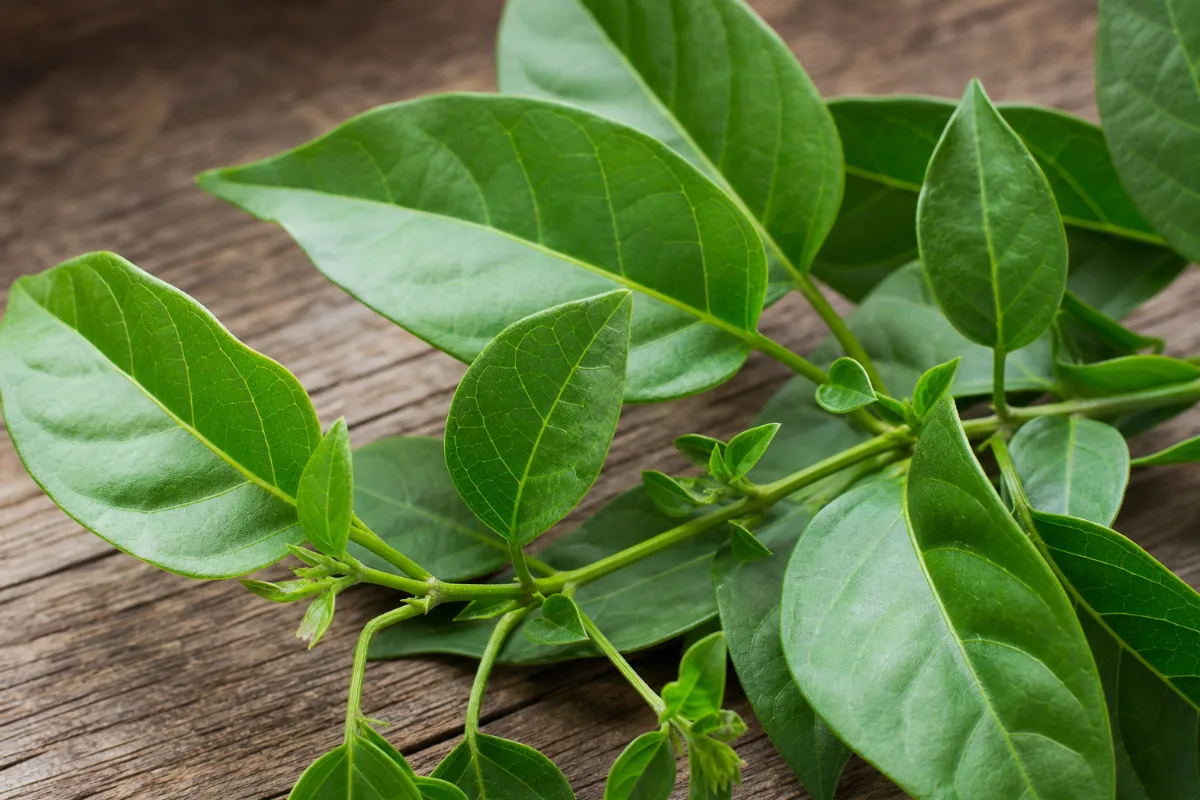
Herbs & Botanicals · Herbs · Ayurvedic blood-sugar leaf, low evidence
Gymnema
Gymnema sylvestre (Retz.) R.Br. ex Sm. (leaf; gymnemic acids). Other Gymnema species are different plants. · also called Gurmar, sugar destroyer
Gymnema is a woody climbing plant of tropical India and South-East Asia. Its leaf is used in Ayurveda for diabetes, and its acids briefly block sweet taste on the tongue. Human trials on blood sugar are small and mostly lack a placebo group, so the evidence is low. It can add to the effect of diabetes medicines and cause low blood sugar.
General information, not medical advice. Last substantive update · Not medically reviewed. A named clinician has not signed off on this page. How this page is made
About Gymnema
Gymnema (Gymnema sylvestre) is a climbing plant whose leaf is used for diabetes in Ayurveda. Its leaf acids briefly block sweet taste. Human studies of blood sugar are small and mostly not placebo-controlled, so the evidence is low. It can add to diabetes medicines and cause low blood sugar, and there are liver injury case reports. Avoid in pregnancy and breastfeeding.
What it is
Gymnema sylvestre is a woody climber of tropical forests in India and South-East Asia, in the milkweed or dogbane family (Apocynaceae). The leaf is the part used. Its Hindi name, gurmar, is translated "sugar destroyer".
The leaf holds gymnemic acids, a family of triterpene saponins, and a small peptide called gurmarin. Other Gymnema species are different plants and are studied separately.
Traditional and current uses
Ayurveda uses gymnema mainly for diabetes; reviews also list arthritis, high cholesterol, heart problems and digestion. A 2023 Egyptian national monograph lists sweet-taste suppression during weight control, adjunct therapy for diabetes and an adjunct lipid-lowering agent in type 2 diabetes. A 1969 Nature paper first documented the sweet-blocking effect in people.
What the research shows
Blood sugar is the main studied use. A 2021 pooled analysis of 10 studies reported lower fasting sugar, after-meal sugar and HbA1c, but it compared people with their own starting values and results varied hugely. A small placebo-controlled trial in impaired glucose tolerance reported a lower 2-hour glucose and HbA1c. We found no large placebo-controlled trial of gymnema alone in type 2 diabetes.
The taste effect is better shown: mints with gymnemic acids made chocolate less pleasant and people ate about 21% fewer bars in one test, though the effect on everyday eating is smaller or not seen after two weeks. Cholesterol, weight and blood pressure results come from small trials and pooled analyses of low quality. Blends with other ingredients cannot be credited to gymnema.
At a glance
Traditional uses history, not proof
- Ayurveda: for diabetes; the Hindi name gurmar means "sugar destroyer" (reviews, secondary statement).
- Folk medicine in India and South-East Asia: leaf and root extracts for a range of ailments (2015 review, secondary statement).
- Modern herbal practice (Egypt, 2023 monograph): sweet-taste suppression during weight control, adjunct for diabetes and lipids.
Studied for research
- Blood sugar in type 2 diabetes, low
- Prediabetes and impaired glucose tolerance, low
- Dulling sweet taste, moderate
- Sugar cravings, low
- Cholesterol, low; body weight, low; blood pressure, very low
Main compounds
- Gymnemic acids (triterpene saponins, for example gymnemic acid I and IV)
- Gymnemagenin
- Gurmarin (peptide)
- Lupeol, stigmasterol, conduritol A and quercitol
Common forms
- Dried leaf as tea or powder (traditional)
- Standardised leaf extracts in capsules
- Mints and mouth rinses used in taste studies
- Blends with chromium, zinc, inositol, garcinia or other herbs
Research links: PubMed search: Gymnema sylvestre · GBIF: Gymnema sylvestre · Blood sugar pooled analysis (Phytother Res, 2021) · LiverTox entry (Bookshelf NBK610217) · Research Library · Genes & Biomarkers Library
The plant and its history
- Accepted scientific name
- Gymnema sylvestre (Retz.) R.Br. ex Sm.
- Naming authority
- (Retz.) R.Br. ex Sm.
- Synonyms
- Apocynum alterniflorum Lour.; Asclepias geminata Roxb.; Gymnema affine Decne.; Gymnema alterniflorum (Lour.) Merr.
- Common names
- Gymnema (English); Gurmar (Hindi); Sugar destroyer (English (translation of gurmar))
- Botanical family
- Apocynaceae (milkweed or dogbane family; older sources place it in Asclepiadaceae)
- Classification
- Plantae > Tracheophyta > Magnoliopsida > Gentianales > Apocynaceae > Gymnema > Gymnema sylvestre
- Native range
- A woody climbing plant of tropical forests of India and South-East Asia (per a 2015 review).
- Habitat
- Tropical forests (2015 review). Other habitat details were not read.
- What the plant looks like
- Roots: Not covered in the sources we read.; Stems: Woody climber, per the review summary.; Leaves: Leaves are the part used; they hold gymnemic acids.; Flowers: Not covered in the sources we read.; Fruit: Not covered in the sources we read.
- Cultivation
- Not covered in the sources we read (a 2023 review of biotechnology methods to make gymnemic acid exists but was not read).
- Harvest and processing
- Studies use dried leaf as powder, water extract (infusion or decoction), ethanol extracts and standardised extracts; extract strength varies widely.
- Look-alikes and adulterants
- Name: Gymnema inodorum; Note: Accepted species (GBIF key 3577704); studied separately, for example in a malaria-mouse study and in cell studies; do not assume it behaves like G. sylvestre.; Name: Gymnema montanum; Note: Accepted species (GBIF key 3577533); studied in diabetic rats.; Name: Gymnema latifolium; Note: Accepted species (GBIF key 3577663); studied in the lab.
- Sustainability and conservation
- Not covered in the sources we read.
Traditional use and history history, not clinical proof
| Tradition or era | Documented use | Source |
|---|---|---|
| Ayurveda (India) | Used for diabetes. A 2014 review calls gymnema a reputed herb in Ayurvedic medicine, popularly called gurmar for its sugar-destroying property, and lists other traditional uses: arthritis, diuretic, anemia, osteoporosis, high cholesterol, heart disease, asthma, constipation, infections, indigestion and inflammation. | p24511547 |
| Folk and traditional medicine in India and South-East Asia | A 2015 review says leaf and root extracts are used in traditional medicine for a range of ailments and appear in pharmaceutical and borderline products. | p25860062 |
| Modern science (1969) | Paper in Nature titled "Inhibition of the sweet taste by Gymnema sylvestre" documents the sweet-blocking effect in people. | p5792442 |
| Modern herbal practice (2023) | An Egyptian national monograph lists sweet-taste suppression during weight control, adjunct therapy for diabetes and an adjunct lipid-lowering agent in type 2 diabetes as indications. | s-eda-gymnema-2023 |
| European regulators | No EMA/HMPC monograph was found in our search; this is not verified against the EMA site. | s-search-regulatory-not-found |
Traditional use shows how a plant was used. It does not show that a supplement works or is safe today.
What is inside, and how it may work
What the plant contains and how those compounds act in cells and animals. Laboratory and animal mechanisms are not proven effects in people.
Main compounds
| Compound | Family | Where it is concentrated | Activity studied | Level of evidence |
|---|---|---|---|---|
| Gymnemic acids (a family of triterpene saponins; examples gymnemic acid I and IV) PubChem 11953919 | triterpene saponins (oleanane type) | leaf Standardised extracts are labelled by gymnemic acid share (for example "75% gymnemic acids" in the mint trial, "24%" in a monograph dose); content varies by product. | Block the human sweet taste receptor T1R2/T1R3 in cell tests; gymnemic acids XV and XIX were strongest. They also taste bitter. Gymnemic acid IV (CID 14264063, C41H64O13) is a second named member. 34 43 44 6 | Laboratory research |
| Gymnemagenin PubChem 10051937 | triterpene (sapogenin; the sugar-free core of the acids) | leaf | Measured in rat plasma as a marker after gymnema extract; no human activity data. 21 6 | Animal research |
| Gurmarin (peptide) | plant peptide | leaf | Suppresses sweet taste in rodents but has no or only a very weak effect in people; a computer model suggests a relative, Gur-2, may bind the human receptor. 29 44 | Laboratory research |
| Gymnemasaponins and other saponins | triterpene saponins | leaf | Three new oleanane saponins and a salt were isolated; one of the new ones and the salt had antisweet activity in a taste test. 52 | Laboratory research |
| Lupeol and stigmasterol PubChem 259846 | triterpene and plant sterol | leaf | Listed in the Egyptian monograph as terpenes of the plant; activity in gymnema not assessed in the sources read. 17 6 | Authoritative guidance |
| Conduritol A and quercitol PubChem 10290861 | cyclitols (sugar-like alcohols) | leaf | Listed among the leaf constituents in the monograph; activity not assessed in the sources read. 17 6 | Authoritative guidance |
Mechanisms, receptors and pathways
| Target or pathway | Gene or receptor | What was found | Level |
|---|---|---|---|
| Sweet taste receptor on the tongue | TAS1R2/TAS1R3 (T1R2/T1R3) | Gymnemic acids blocked the human sweet receptor in cells and people report weaker sweetness for a short time. 34 45 | Laboratory research |
| Gut and pancreas response to sweet taste | Not applicable | Blocking sweet taste with a gymnema rinse delayed stomach emptying and lowered early glucose and insulin after a glucose drink in two tiny studies, but not after sweet foods in a third. 22 23 24 | Human data |
| Insulin-making beta cells | Insulin genes Ins1, Ins2, Gck, Pdx1, Mafa, Pax6 (rats) | A branded extract stimulated insulin release from isolated human islets in a dish; in diabetic rats the supplement raised insulin and the activity of these genes. 8 30 | Laboratory research |
| Starch digestion | Amylase | A blood-sugar-lowering effect in mice was linked to amylase inhibition. 25 | Animal research |
| Fat and weight on a high-fat diet | Adipose and liver inflammation genes (mice) | Gymnema extract limited weight gain, liver fat, insulin and leptin in high-fat-fed mice and rats. 25 41 | Animal research |
| Liver drug-metabolising enzymes | CYP1A2, CYP2C9, CYP3A4 | Rats and rat enzymes showed extract-dependent effects: ethanol and total-acid fractions inhibited some CYP activity; a water extract did not inhibit CYP3A4. 48 49 13 | Animal research |
| Fat-tissue hormone resistin | RETN (resistin) | Lower resistin gene expression in adults with obesity after 3 months of gymnema. 10 | Human data |
Absorption, metabolism and elimination
- Absorption
- No human data found.
- Distribution
- No human data found.
- Metabolism
- Gymnemagenin, a core piece of the gymnemic acids, was measured in rat plasma after extract dosing; no human measurement was found.
- Elimination
- No data.
- Bioavailability
- Not studied in people. A gold-nanoparticle and a niosome study in rats exist but were not read.
Isolated compounds versus whole extracts
Most blood-sugar and lipid findings come from whole leaf extracts or branded extracts that differ in gymnemic acid content; the sweet-taste effect comes from isolated gymnemic acids and their purified fractions, which block the receptor in cells. Extracts also differ in drug-enzyme effects: an ethanol total-acid fraction inhibited a liver enzyme test strongly, while a water extract did not. So results for one product should not be assumed for another, and tests on isolated compounds are not tests of the leaf.
Nutritional composition
Not covered in the sources we read. We make no claim about gymnema as a food.
1 moderate certainty2 mixed findings5 low certainty5 very low certainty
What was looked at
The 13 benefits and uses checked for Gymnema, each with how strong the evidence is. Tap one to open it.
- Blood sugar control in type 2 diabetesLow certainty
- Diabetes treated with insulin (1990 uncontrolled study)Very low certainty
- Impaired glucose tolerance and prediabetes (gymnema alone)Low certainty
- Fasting blood sugar in people with obesityVery low certainty
- Insulin release and insulin sensitivityMixed findings
- Blood sugar with combination products that contain gymnemaVery low certainty
- Dulling the taste of sweetnessModerate certainty
- Sugar cravings and sweet food intakeLow certainty
- Early blood sugar and stomach emptying after a sweet taste is blocked (lab experiments)Mixed findings
- Blood fats (cholesterol and triglycerides)Low certainty
- Body weight and body mass indexLow certainty
- Weight loss with a combination of HCA, chromium and gymnemaVery low certainty
- Blood pressureVery low certainty
Lab markers tracked in the studies
Fasting blood glucoseAfter-meal blood glucoseHbA1c (average blood sugar over about 3 months)Insulin and C-peptide2-hour glucose after a sugar drink (OGTT)Insulin sensitivity (Matsuda index)Insulin and diabetes-pill doses neededChocolate eaten in a testPleasantness of and desire for sweet foodSugary drink intake and sugar cravingsStomach emptying speedEarly glucose and insulin rise after a sweet drinkLDL cholesterolTriglyceridesTotal cholesterolBody weight and BMIDiastolic blood pressureResistin (fat-tissue hormone) gene activity
What is Gymnema good for?
The main proposed uses and how strong the human evidence is for each. Certainty words are our reading of the studies, not formal grades. Results apply only to the named extract or product; blends are labelled and are not credited to gymnema.
Benefits, one by one
Each card is a research question, not a promise. Tap a goal to filter. Open a card to see the studies, doses and limits.
Blood sugar control in type 2 diabetes
Low certaintyGymnema leaf extracts are mostly studied for lowering blood sugar in people with type 2 diabetes. Small trials and a pooled analysis point to lower fasting sugar, after-meal sugar and HbA1c, but the trials are small and mostly not placebo-controlled, so the true size of the effect is unclear.
8 studiesLeaf extracts: 400 mg a day (GS4), 500 mg a day of herb, 1 g a day of…
Studies, doses and limits
What the trials found
A 2021 pooled analysis of 10 studies (419 people with type 2 diabetes) compared blood values after taking gymnema with each group's own starting values and found falls in fasting glucose, after-meal glucose, HbA1c, triglycerides and total cholesterol. It did not compare against placebo, and the results varied hugely between studies (I2 80% to 99%). A 2023 pooled analysis of six randomised trials in adults reported lower fasting blood sugar (p<0.001) but gave no effect sizes in its abstract and noted low study quality. Individual studies: a 2010 open-label Indian study (500 mg a day for 3 months, people chose their group) reported lower fasting and after-meal glucose and HbA1c; a branded extract (1 g a day for 60 days) raised insulin and C-peptide and lowered glucose in a small group; two 1990 studies of the leaf extract GS4 (400 mg a day) in people already on diabetes drugs reported lower glucose and HbA1c, lower drug doses, and 5 of 22 people able to stop their pills. We found no large, placebo-controlled trial in type 2 diabetes using gymnema alone.
Results
Direction of effect is consistent (lower sugar) across the studies we read, but almost all are small, open-label, uncontrolled or before-and-after comparisons.
Effect sizes as reported
Pooled before-versus-after SMD: fasting glucose 1.57 (95% CI 2.22 to -0.93); after-meal glucose 1.04 (1.53 to -0.54); HbA1c 3.91 (7.35 to -0.16), I2 80% to 99%. No placebo-controlled effect size is available.
Why this rating
Consistent direction, but small trials, many without placebo, a pooled analysis that compares each group with itself, very high heterogeneity, and old (1990) uncontrolled studies. Some extracts are branded and studied once.
Form and dose studied
Leaf extracts: 400 mg a day (GS4), 500 mg a day of herb, 1 g a day of a branded extract. Different products are not interchangeable. This summary does not recommend amounts.
Who was studied
Adults with type 2 diabetes, mostly in India.
Limits
Mostly uncontrolled or before-and-after, short, small, with unclear extract content and unclear blinding. Possible publication bias is not assessed in the abstracts.
Why researchers looked
Gymnema (called gurmar, "sugar destroyer", in Hindi) is a long-standing Ayurvedic remedy for diabetes.
Traditional use
Used in Ayurveda for diabetes; a 2007 review notes the Hindi name gurmar, "sugar destroyer".
Proposed mechanism Animal research
In rats, the extract raised insulin and changed insulin-related gene activity in the pancreas; in lab dishes a branded extract made human insulin-making cells release more insulin. Gymnemic acids may also affect starch digestion in mice. These are animal and lab findings; how they apply to people is not shown.
A proposed mechanism does not show that the effect happens in people.
Gymnema can add to the effect of diabetes medicines and cause low blood sugar. People on diabetes drugs should talk to their doctor before using it, and should not stop or reduce medicines on their own.
Diabetes treated with insulin (1990 uncontrolled study)
Very low certaintyOne old study gave a gymnema leaf extract to people with insulin-dependent diabetes and reported lower insulin needs. It was not a placebo trial, and low blood sugar is a real risk when insulin and gymnema are combined.
1 studiesGS4 water-soluble leaf extract, 400 mg a day.
Studies, doses and limits
What the trials found
In a 1990 study of 27 people with insulin-dependent diabetes on insulin, GS4 (a water-soluble leaf extract, 400 mg a day) was added. Insulin requirement, fasting glucose and HbA1c came down, and blood lipids returned to near normal. People kept on insulin alone showed no significant fall in lipids, HbA1c or glycosylated proteins after 10 to 12 months. The abstract adds that HbA1c and glycosylated protein stayed higher than in the abstract's control group (it does not say whether these were healthy people).
Results
Lower insulin requirement and glucose were reported without numbers in the abstract.
Effect sizes as reported
Not given in the abstract.
Why this rating
Single 1990 study, not randomised or blinded as described, no numbers in the abstract, never replicated in the studies we found.
Form and dose studied
GS4 water-soluble leaf extract, 400 mg a day.
Who was studied
People with insulin-dependent diabetes (probably type 1; the abstract does not say).
Limits
Very old; no randomisation or blinding described; abstract without numbers; no similar trial found since.
Why researchers looked
Researchers in India wondered whether the leaf extract could help the body use its own insulin.
Proposed mechanism Preliminary mechanism
The authors suggest the extract may regenerate or revitalise insulin-making beta cells. This idea comes from their own results and has not been shown.
A proposed mechanism does not show that the effect happens in people.
Insulin plus anything that lowers blood sugar can cause dangerous low blood sugar. Do not add gymnema or change insulin without your diabetes team.
Impaired glucose tolerance and prediabetes (gymnema alone)
Low certaintyIn a small placebo-controlled trial in people with impaired glucose tolerance, gymnema was linked to a lower 2-hour glucose and lower HbA1c. One small trial does not settle it.
2 studiesGymnema sylvestre capsules (extract not named), 300 mg twice a day.
Studies, doses and limits
What the trials found
A randomised, double-blind, placebo-controlled trial in 30 adults with impaired glucose tolerance in Mexico gave 300 mg of gymnema twice a day (15 people) or placebo (15). In the gymnema group the 2-hour glucose fell from 9.1 to 7.8 mmol/L (P=0.003) and HbA1c from 5.8% to 5.4% (P=0.025); weight, BMI and LDL cholesterol fell and the Matsuda insulin-sensitivity index rose from 1.8 to 2.4 (P=0.008). 46.7% reached a normal HbA1c. In the same research group's 24-person metabolic syndrome trial, gymnema did not change insulin secretion or sensitivity (see the insulin entry).
Results
Improvements within the gymnema group; the abstract does not show the between-group differences.
Effect sizes as reported
2-hour glucose 9.1 to 7.8 mmol/L; HbA1c 5.8% to 5.4%; Matsuda 1.8 to 2.4 (within-group).
Why this rating
One small placebo-controlled trial (30 people) with within-group results shown; no replication.
Form and dose studied
Gymnema sylvestre capsules (extract not named), 300 mg twice a day.
Who was studied
Adults with impaired glucose tolerance.
Limits
Small trial; duration and between-group results not in the abstract.
Why researchers looked
Impaired glucose tolerance is a stage before diabetes, so supplements that improve sugar handling are of interest.
Proposed mechanism Preliminary mechanism
The trial authors report improved insulin sensitivity (Matsuda index). The way this works is not shown.
A proposed mechanism does not show that the effect happens in people.
Even without diabetes, sugar-lowering supplements can occasionally cause low blood sugar; a national herbal monograph notes this.
Fasting blood sugar in people with obesity
Very low certaintyIn a three-month trial in 50 adults with obesity, gymnema lowered fasting glucose, while berberine (the comparison) did better on weight and blood pressure.
1 studiesGymnema sylvestre (extract and dose not in the abstract), 3 months.
Studies, doses and limits
What the trials found
A randomised comparison of gymnema with berberine in 50 Mexican adults with obesity over 3 months. Gymnema lowered fasting glucose and resistin gene expression (p<0.05). There was no placebo group.
Results
Lower fasting glucose with gymnema; numbers not in the abstract.
Effect sizes as reported
Not given in the abstract.
Why this rating
One small trial with no placebo group and no numbers in the abstract.
Form and dose studied
Gymnema sylvestre (extract and dose not in the abstract), 3 months.
Who was studied
Adults with obesity.
Limits
No placebo; dose not stated; small.
Why researchers looked
Researchers compared two natural products for obesity and its blood sugar problems.
Proposed mechanism Preliminary mechanism
Gymnema lowered the activity of the resistin gene (resistin is a fat-tissue hormone linked to insulin resistance). This is a lab marker, not a health result.
A proposed mechanism does not show that the effect happens in people.
The most frequent side effects were stomach and gut symptoms that eased over the first month.
Insulin release and insulin sensitivity
Mixed findingsSome studies suggest gymnema raises insulin release; another trial found no change in insulin release or sensitivity. The evidence is mixed.
6 studiesBranded extract 1 g a day; leaf extract GS4 400 mg a day; capsules 30…
Studies, doses and limits
What the trials found
In a small group with type 2 diabetes, a branded high-molecular-weight extract (Om Santal Adivasi, 1 g a day for 60 days) raised circulating insulin and C-peptide. In the 1990 GS4 studies serum insulin was reported higher after 18 to 20 months. In the impaired glucose tolerance trial the insulin-sensitivity index rose, but in a 12-week placebo-controlled trial in 24 people with metabolic syndrome, gymnema (600 mg a day) did not change insulin secretion or insulin sensitivity.
Results
Higher insulin in small uncontrolled studies; no change in the one small placebo-controlled trial that tested it.
Effect sizes as reported
No numbers in the abstracts for the insulin rises.
Why this rating
Positive findings come from small uncontrolled or branded-extract studies; the one placebo-controlled test in metabolic syndrome was negative.
Form and dose studied
Branded extract 1 g a day; leaf extract GS4 400 mg a day; capsules 300 mg twice daily.
Who was studied
Adults with type 2 diabetes, impaired glucose tolerance or metabolic syndrome.
Limits
Small; hormone levels are lab markers; the branded extract is a single product.
Why researchers looked
If gymnema helps insulin-making cells, it could explain its blood-sugar effect.
Proposed mechanism Laboratory research
A branded extract made isolated human islets (insulin-making cell clusters) release more insulin in a dish. Rats given a leaf supplement had higher insulin and increased activity of insulin-related genes.
A proposed mechanism does not show that the effect happens in people.
A medicine that raises insulin can add to the effect of diabetes drugs and increase the chance of low blood sugar.
Blood sugar with combination products that contain gymnema
Very low certaintySeveral trials tested supplements that mixed gymnema with other ingredients. Some showed lower blood sugar, others did not, and none can say what gymnema contributed.
4 studiesCombination tablets or tinctures; amounts of gymnema not stated in th…
Studies, doses and limits
What the trials found
(1) A 3-month trial in 81 adults with slightly raised fasting glucose gave a tablet of corn extract, gymnema extract, zinc and chromium; fasting glucose and HbA1c fell versus placebo (p<0.001) in the one-tablet group, with no liver or kidney toxicity signs. (2) In 75 adults with type 2 diabetes, a blend of inositols, alpha-lactalbumin, gymnema and zinc did not significantly change glucose measures. (3) In 89 people with prediabetes, a tincture of one of three plants (including gymnema) added to homeopathic medicines gave differences that were not significant except fasting glucose (p=0.046); the trial ended early. (4) A five-herb Ayurvedic mix (G-400, 1000 mg a day for 8 weeks) was linked to lower glucose and HbA1c in 89 people with type 2 diabetes.
Results
Mixed: positive in two (one with a placebo), no significant glucose change in one, mostly non-significant in one.
Effect sizes as reported
See each study; mostly p-values only in the abstracts.
Why this rating
Combination products; gymnema cannot be credited; mixed results; open-label or unclear design in some.
Form and dose studied
Combination tablets or tinctures; amounts of gymnema not stated in the abstracts.
Who was studied
Adults with raised fasting glucose, prediabetes or type 2 diabetes in Italy and India.
Limits
Cannot isolate gymnema; branded blends; some trials ended early or were open-label.
Why researchers looked
Gymnema is often sold in blends with zinc, chromium, inositol or other herbs.
Proposed mechanism Pharmacological theory
Not separable: each ingredient may act on its own.
A proposed mechanism does not show that the effect happens in people.
No biochemical signs of kidney or liver harm were seen in two of these trials over 3 months and 8 weeks.
Dulling the taste of sweetness
Moderate certaintyGymnemic acids in the leaf temporarily block sweet taste on the tongue, so sugary food tastes less sweet. This is the best-shown effect of gymnema, but it lasts only a short time.
8 studiesMints with 4 mg gymnemic acids; mouth rinses with a 2.5% gymnema solu…
Studies, doses and limits
What the trials found
In a 56-person single-blind crossover study, a mint with 4 mg of gymnemic acids reduced chocolate eaten by 0.48 bars (21.3%, p=0.006) and the pleasantness (p<0.001) and desire (p=0.011) for it. Mouth-rinse studies in Japan (n=8 to 15) show people felt weaker sweetness. A flavour study found that taking gymnema reduced the perceived sweet and flavour of chocolate and maple syrup but changed savoury foods little. A systematic review of 33 studies says the evidence mostly covers the immediate effect of gymnemic acids.
Results
Sweetness and liking fall for a short time; the effect is reversible.
Effect sizes as reported
Chocolate eaten -0.48 bars (-21.3%) in 15 minutes (p=0.006).
Why this rating
Several small human experiments agree on the taste effect, and the receptor target is shown in cells. No formal GRADE; the studies are small and in healthy volunteers.
Form and dose studied
Mints with 4 mg gymnemic acids; mouth rinses with a 2.5% gymnema solution. The extract strength varies between products.
Who was studied
Healthy young adults.
Limits
Short effects, small studies, lab settings.
Why researchers looked
The effect has been known for a long time: a 1969 Nature paper titled "Inhibition of the sweet taste by Gymnema sylvestre" is on record.
Traditional use
The Hindi name gurmar means "sugar destroyer", which refers to this effect.
Proposed mechanism Laboratory research
Lab work with human sweet receptors found that gymnemic acids (XV and XIX the strongest) block the sweet taste receptor T1R2/T1R3; they also taste bitter. A peptide called gurmarin suppresses sweetness in rodents but has little effect in humans.
A proposed mechanism does not show that the effect happens in people.
Taste changes (sweet and bitter) are listed among undesirable effects in a national herbal monograph.
Sugar cravings and sweet food intake
Low certaintyMints with gymnema reduced how pleasant and desirable chocolate seemed. In two-week trials, the effects on everyday sugar eating were small or inconsistent.
5 studiesGymnema mints; 3 a day or as wanted up to 6 a day.
Studies, doses and limits
What the trials found
A 2022 trial of 58 healthy adults gave a gymnema mint (4 mg gymnemic acids, plus a fibre and vitamin supplement and an eating guide) or placebo for 14 days: right after dosing on day 0 the gymnema group ate fewer chocolate bars (2.65 vs 3.15, p=0.02), but at day 15 there was no difference (2.77 vs 2.78) and no change in intake of nine food groups. A 2025 crossover trial in 32 self-described sweet-tooth adults found that taking mints as wanted (up to 6 a day) cut sugary drinks by 42% (p=0.015) and sugar cravings by 28% (p=0.045) versus placebo; the abstract reports these two results only for the as-wanted pattern. A small interview study (7 people) found gymnema made sweet food unpleasant and increased mindful eating. A systematic review found inconsistent effects on short-term desire to eat.
Results
Reduced pleasantness and desire for sweets; mixed effect on real-life intake.
Effect sizes as reported
Sugary drinks -42% and cravings -28% (as-wanted pattern, 32 people); chocolate bars 2.77 vs 2.78 at day 15 (no difference).
Why this rating
Small trials, short (14 days), self-reported intake, one null result at day 15, qualitative data from 7 people.
Form and dose studied
Gymnema mints; 3 a day or as wanted up to 6 a day.
Who was studied
Healthy adults, New Zealand.
Limits
Short, small, self-reported intake; mint maker links in one report (supply only).
Why researchers looked
If sweet food tastes less rewarding, people might eat less sugar.
Proposed mechanism Preliminary mechanism
Blocking the sweet taste receptor reduces the reward of sweetness at the moment of eating. Whether this lowers total intake over days is the open question.
A proposed mechanism does not show that the effect happens in people.
No safety problems were described in the abstracts; people with diabetes should check with their doctor first.
Early blood sugar and stomach emptying after a sweet taste is blocked (lab experiments)
Mixed findingsIn three small lab experiments, rinsing the mouth with gymnema before a glucose drink slowed stomach emptying and lowered the early blood sugar rise. A fourth with sweet foods found no change.
3 studiesMouth rinse, 25 mL of 2.5% solution (not a swallowed dose).
Studies, doses and limits
What the trials found
With a 15% glucose drink, healthy adults who rinsed with a 2.5% gymnema solution had delayed stomach emptying and lower early glucose and insulin than with a green tea rinse (8 people), and again in a second study (9 people) which found no difference when the drink was sweetened with aspartame. In 15 people eating sweet foods (muffin, sweet yogurt, banana), the gymnema rinse changed taste but not stomach emptying, glucose, insulin or appetite.
Results
Mixed: effect with a pure glucose drink, none with real sweet foods.
Effect sizes as reported
Not given in the abstracts.
Why this rating
Three tiny experiments in healthy volunteers with conflicting results; mouth rinse is not a supplement.
Form and dose studied
Mouth rinse, 25 mL of 2.5% solution (not a swallowed dose).
Who was studied
Healthy adults, Japan.
Limits
Very small; acute; a rinse not a pill; no people with diabetes.
Why researchers looked
Taste may signal the gut to get ready for sugar, so blocking it could change what happens after.
Proposed mechanism Preliminary mechanism
The authors suggest the sweet taste itself triggers gut blood flow and stomach emptying. Aspartame did not show the same effect.
A proposed mechanism does not show that the effect happens in people.
None noted.
Blood fats (cholesterol and triglycerides)
Low certaintyPooled analyses report lower triglycerides, total cholesterol and LDL with gymnema, but the quality is low and the effect is not confirmed by larger placebo trials.
8 studiesGymnema capsules or leaf extracts; combination tablets.
Studies, doses and limits
What the trials found
A 2023 pooled analysis of six randomised trials found significantly lower triglycerides, total cholesterol and LDL (all p<0.001), but the authors warn of heterogeneity and low-quality studies. A 2021 pooled analysis (before-versus-after) reported falls in triglycerides and total cholesterol. In the Mexican impaired-glucose-tolerance trial LDL cholesterol fell in the gymnema group; in the 24-person metabolic syndrome trial only VLDL fell (0.45 to 0.35, P=0.05) with no other component changing. A combination of inositols, alpha-lactalbumin, gymnema and zinc lowered total cholesterol (p=0.01) and LDL (p=0.03) versus placebo.
Results
Falls in LDL, triglycerides and total cholesterol in pooled data; inconsistent in single trials.
Effect sizes as reported
Effect sizes not given in the 2023 abstract; 2021 SMDs from before-after data: triglycerides 1.81, total cholesterol 4.10.
Why this rating
Pooled results are of low-quality studies with high heterogeneity; some are before-after and some combinations.
Form and dose studied
Gymnema capsules or leaf extracts; combination tablets.
Who was studied
Adults with diabetes, prediabetes, metabolic syndrome or obesity.
Limits
High heterogeneity; no clinical outcomes (heart events) studied.
Why researchers looked
Gymnema is also said to lower blood fats.
Proposed mechanism Animal research
In rats, gymnema extract lowered triglycerides and limited fat build-up on a high-fat diet; mice showed less liver and fat-tissue inflammation.
A proposed mechanism does not show that the effect happens in people.
May add to the effect of cholesterol-lowering drugs (guidance, not trial data).
Body weight and body mass index
Low certaintyTwo small trials report some weight loss with gymnema (about 3.4 kg in one 12-week trial), but one obesity trial found berberine did better, and the largest weight-loss results come from combination products.
8 studiesGymnema capsules, 300 mg twice daily.
Studies, doses and limits
What the trials found
In a 12-week placebo-controlled trial of 24 adults with metabolic syndrome (600 mg a day), weight fell from 81.3 to 77.9 kg (P=0.02) and BMI from 31.2 to 30.4 (P=0.02). In the impaired-glucose-tolerance trial weight and BMI also fell in the gymnema group. In the 50-person obesity trial, berberine lowered weight; the abstract credits gymnema with fasting glucose rather than weight. A 2023 pooled analysis included body measures but its abstract names only lipids, glucose and diastolic pressure as significant. A 2013 review of 14 plant appetite trials called most evidence inconclusive and singled out only one Garcinia plus gymnema combination.
Results
Small weight falls in two small placebo-controlled trials; not reproduced as a main result elsewhere.
Effect sizes as reported
Weight 81.3 to 77.9 kg; BMI 31.2 to 30.4 (within the gymnema group, metabolic syndrome trial).
Why this rating
Two small placebo-controlled trials (24 and 30 people) with within-group results; mixed against berberine; systematic review inconclusive.
Form and dose studied
Gymnema capsules, 300 mg twice daily.
Who was studied
Adults with metabolic syndrome or impaired glucose tolerance in Mexico.
Limits
Tiny trials; weight is a secondary outcome; no long-term follow-up.
Why researchers looked
Reduced sugar appetite and lower fat build-up might help weight.
Proposed mechanism Animal research
In high-fat-fed mice and rats, the extract limited weight gain and fat accumulation, possibly through starch-digesting enzyme (amylase) inhibition. These are animal results.
A proposed mechanism does not show that the effect happens in people.
Mild stomach symptoms were the commonest side effect in the obesity trial.
Weight loss with a combination of HCA, chromium and gymnema
Very low certaintyIn two 8-week trials (one a re-analysis), a product with garcinia extract (HCA-SX), chromium and gymnema extract was linked to weight loss of about 5%. The garcinia-only group lost about the same, so gymnema is not shown to add anything.
3 studiesHCA-SX 4667 mg, chromium 4 mg, gymnema extract 400 mg per day in thre…
Studies, doses and limits
What the trials found
In 60 moderately obese Indian adults (8 weeks, 2000 kcal diet and supervised walking), HCA-SX alone or with chromium and 400 mg gymnema extract reduced weight and BMI by 5-6%, and lowered cholesterol, LDL, triglycerides and leptin versus placebo. A pooled re-analysis of 90 obese adults from two trials found the same; the combination did "generally" better than HCA-SX alone and no significant adverse effects were observed.
Results
About 5% weight loss in both active groups; combination slightly better.
Effect sizes as reported
Weight and BMI -5.4% (HCA-SX group in the re-analysis); -5 to -6% (both active groups in the first trial).
Why this rating
Combination product with branded ingredients, diet and walking programme in all groups, the second report reuses data, and gymnema alone was never tested.
Form and dose studied
HCA-SX 4667 mg, chromium 4 mg, gymnema extract 400 mg per day in three doses (as studied; not a recommendation).
Who was studied
Obese adults, India.
Limits
Cannot credit gymnema; likely industry-linked (funding not stated in the abstracts).
Why researchers looked
Branded blends combine appetite, fat and blood sugar ingredients.
Proposed mechanism Pharmacological theory
Not separable between the three ingredients.
A proposed mechanism does not show that the effect happens in people.
No significant adverse effects were reported in the re-analysis abstract.
Blood pressure
Very low certaintyOne pooled analysis found lower diastolic blood pressure with gymnema, but this is not backed by anything else we read.
2 studiesGymnema supplements; details in the original trials.
Studies, doses and limits
What the trials found
The 2023 pooled analysis of six randomised trials reported significantly lower diastolic blood pressure (p=0.003); systolic pressure was not listed as significant, and no effect size is in the abstract. In the 50-person obesity trial, berberine, not gymnema, lowered blood pressure.
Results
Diastolic pressure lower in one pooled analysis.
Effect sizes as reported
Not given in the abstract.
Why this rating
A single pooled analysis of low-quality trials; the one head-to-head trial shows no gymnema effect on pressure.
Form and dose studied
Gymnema supplements; details in the original trials.
Who was studied
Adults in the pooled trials.
Limits
No effect size; low study quality.
Why researchers looked
Blood pressure is often measured in metabolic trials.
Proposed mechanism Pharmacological theory
No mechanism shown for blood pressure in people.
A proposed mechanism does not show that the effect happens in people.
If pressure medicines are used, monitoring is still needed.
Connections to the rest of health
How Gymnema connects to the rest of our health knowledge graph. Every link says what kind of connection it is. A safety link (for example to the liver) is a warning, not a benefit. A study that merely mentions a topic never creates a benefit link.
Explore every connection: goals, body systems, organs, symptoms, genes
A. Wellness goals
| Connected to | Kind of connection | Evidence status | Context | Studies |
|---|---|---|---|---|
| Blood sugar balance | Potential benefit | Low certainty | Studied mainly in type 2 diabetes and prediabetes. Blood sugar control in type 2 diabetes: Gymnema leaf extracts are mostly studied for lowering blood sugar in people with type 2 diabetes. Small trials and a pooled analysis point to lower fasting sugar, after-meal sugar and HbA1c, but the trials are small and mostly not placebo-controlled, so the true size of the effect is unclear. Preparation or compound: Gymnema leaf extracts |
15 18 53 26 8 11 28 36 47 40 10 14 31 19 27 46 51 32 45 39 |
| Metabolic Health | Potential benefit | Low certainty | Blood sugar control in type 2 diabetes: Gymnema leaf extracts are mostly studied for lowering blood sugar in people with type 2 diabetes. Small trials and a pooled analysis point to lower fasting sugar, after-meal sugar and HbA1c, but the trials are small and mostly not placebo-controlled, so the true size of the effect is unclear. | 15 53 26 8 11 28 36 47 |
| Blood Sugar Balance | Demonstrated clinical effect | Low certainty | Impaired glucose tolerance and prediabetes (gymnema alone): In a small placebo-controlled trial in people with impaired glucose tolerance, gymnema was linked to a lower 2-hour glucose and lower HbA1c. One small trial does not settle it. Dulling the taste of sweetness: Gymnemic acids in the leaf temporarily block sweet taste on the tongue, so sugary food tastes less sweet. This is the best-shown effect of gymnema, but it lasts only a short time. | 18 47 45 50 34 20 39 29 52 43 |
| Metabolic Health | Demonstrated clinical effect | Low certainty | Impaired glucose tolerance and prediabetes (gymnema alone): In a small placebo-controlled trial in people with impaired glucose tolerance, gymnema was linked to a lower 2-hour glucose and lower HbA1c. One small trial does not settle it. | 18 47 |
| Weight Management | Potential benefit | Very low certainty | Fasting blood sugar in people with obesity: In a three-month trial in 50 adults with obesity, gymnema lowered fasting glucose, while berberine (the comparison) did better on weight and blood pressure. Sugar cravings and sweet food intake: Mints with gymnema reduced how pleasant and desirable chocolate seemed. In two-week trials, the effects on everyday sugar eating were small or inconsistent. | 10 46 51 32 45 39 54 18 53 9 36 41 25 37 38 |
| Blood Sugar Balance | Preliminary mechanism | Mixed findings | Insulin release and insulin sensitivity: Some studies suggest gymnema raises insulin release; another trial found no change in insulin release or sensitivity. The evidence is mixed. Early blood sugar and stomach emptying after a sweet taste is blocked (lab experiments): In three small lab experiments, rinsing the mouth with gymnema before a glucose drink slowed stomach emptying and lowered the early blood sugar rise. A fourth with sweet foods found no change. | 8 11 40 18 54 30 22 23 24 |
| Weight Management | Demonstrated clinical effect | Moderate certainty | Dulling the taste of sweetness: Gymnemic acids in the leaf temporarily block sweet taste on the tongue, so sugary food tastes less sweet. This is the best-shown effect of gymnema, but it lasts only a short time. | 45 50 34 20 39 29 52 43 |
| Cholesterol Balance | Potential benefit | Low certainty | Blood fats (cholesterol and triglycerides): Pooled analyses report lower triglycerides, total cholesterol and LDL with gymnema, but the quality is low and the effect is not confirmed by larger placebo trials. Weight loss with a combination of HCA, chromium and gymnema: In two 8-week trials (one a re-analysis), a product with garcinia extract (HCA-SX), chromium and gymnema extract was linked to weight loss of about 5%. The garcinia-only group lost about the same, so gymnema is not shown to add anything. | 53 15 18 54 31 41 25 44 37 38 9 |
| Heart Health | Potential benefit | Low certainty | Blood fats (cholesterol and triglycerides): Pooled analyses report lower triglycerides, total cholesterol and LDL with gymnema, but the quality is low and the effect is not confirmed by larger placebo trials. Blood pressure: One pooled analysis found lower diastolic blood pressure with gymnema, but this is not backed by anything else we read. | 53 15 18 54 31 41 25 44 10 |
| Blood Pressure Support | Potential benefit | Very low certainty | Blood pressure: One pooled analysis found lower diastolic blood pressure with gymnema, but this is not backed by anything else we read. | 53 10 |
B. Body systems
| Connected to | Kind of connection | Evidence status | Context | Studies |
|---|---|---|---|---|
| Liver | Adverse effect or risk | Very low certainty | Case reports of toxic hepatitis; causation not proven. Preparation or compound: Gymnema products, often with other remedies |
42 33 |
| Kidneys | Adverse effect or risk | Very low certainty | One biopsy-proven case of interstitial nephritis. Preparation or compound: Multi-herb tablet containing gymnema |
12 |
| Pregnancy and breastfeeding | Contraindication | Not enough evidence | Listed as a contraindication in a national monograph; no human data. Preparation or compound: Gymnema leaf products |
17 |
| Endocrine system | Drug or supplement interaction | Low certainty | Can add to insulin and pill effects and cause low blood sugar. Preparation or compound: Gymnema with diabetes medicines |
40 11 17 |
| Endocrine System | Biological association | Low certainty | Studied for: Blood sugar control in type 2 diabetes Studied for: Diabetes treated with insulin (1990 uncontrolled study) | 15 53 26 8 11 28 36 47 40 18 10 54 30 14 31 19 27 22 23 24 |
| Metabolism Weight | Biological association | Low certainty | Studied for: Blood sugar control in type 2 diabetes Studied for: Impaired glucose tolerance and prediabetes (gymnema alone) | 15 53 26 8 11 28 36 47 18 46 51 32 45 39 54 31 41 25 44 10 9 37 38 |
| Nervous System | Biological association | Moderate certainty | Studied for: Dulling the taste of sweetness | 45 50 34 20 39 29 52 43 |
| Digestive System | Biological association | Mixed findings | Studied for: Early blood sugar and stomach emptying after a sweet taste is blocked (lab experiments) | 22 23 24 |
| Cardiovascular System | Biological association | Low certainty | Studied for: Blood fats (cholesterol and triglycerides) Studied for: Blood pressure | 53 15 18 54 31 41 25 44 10 |
F. Functional actions
| Connected to | Kind of connection | Evidence status | Context | Studies |
|---|---|---|---|---|
| Blood sugar regulation | Potential benefit | Low certainty | Lower HbA1c and glucose in small trials; low-certainty evidence. Preparation or compound: Gymnema leaf extracts |
18 26 |
I. Biomarkers
| Connected to | Kind of connection | Evidence status | Context | Studies |
|---|---|---|---|---|
| Blood glucose | Drug or supplement interaction | Low certainty | Can add to the sugar-lowering effect of insulin and pills. Preparation or compound: Leaf extracts with diabetes medicines |
40 11 17 |
| Blood glucose | Potential benefit | Low certainty | Small trials and a pooled analysis report lower fasting and after-meal glucose. Preparation or compound: Gymnema leaf extracts |
15 53 |
| Fasting blood glucose | Biological association | Low certainty | Measured in trials: lowered. A lab change is not the same as a health benefit. | 15 53 14 10 |
| After-meal blood glucose | Biological association | Low certainty | Measured in trials: lowered. A lab change is not the same as a health benefit. | 15 26 8 |
| HbA1c (average blood sugar over about 3 months) | Biological association | Low certainty | Measured in trials: lowered. A lab change is not the same as a health benefit. | 15 18 14 19 |
| Insulin and C-peptide | Biological association | Mixed findings | Measured in trials: mixed. A lab change is not the same as a health benefit. | 8 11 54 |
| 2-hour glucose after a sugar drink (OGTT) | Biological association | Low certainty | Measured in trials: lowered. A lab change is not the same as a health benefit. | 18 19 |
| Insulin sensitivity (Matsuda index) | Biological association | Mixed findings | Measured in trials: mixed. A lab change is not the same as a health benefit. | 18 54 |
| Insulin and diabetes-pill doses needed | Biological association | Very low certainty | Measured in trials: lowered. A lab change is not the same as a health benefit. | 40 11 |
| Chocolate eaten in a test | Biological association | Low certainty | Measured in trials: mixed. A lab change is not the same as a health benefit. | 45 46 |
| Pleasantness of and desire for sweet food | Biological association | Moderate certainty | Measured in trials: lowered. A lab change is not the same as a health benefit. | 45 51 |
| Sugary drink intake and sugar cravings | Biological association | Low certainty | Measured in trials: lowered. A lab change is not the same as a health benefit. | 51 46 |
| Stomach emptying speed | Biological association | Mixed findings | Measured in trials: mixed. A lab change is not the same as a health benefit. | 22 23 24 |
| Early glucose and insulin rise after a sweet drink | Biological association | Mixed findings | Measured in trials: lowered. A lab change is not the same as a health benefit. | 22 24 |
| LDL cholesterol | Biological association | Low certainty | Measured in trials: lowered. A lab change is not the same as a health benefit. | 53 18 31 |
| Triglycerides | Biological association | Low certainty | Measured in trials: lowered. A lab change is not the same as a health benefit. | 53 15 |
| Total cholesterol | Biological association | Low certainty | Measured in trials: lowered. A lab change is not the same as a health benefit. | 53 15 41 |
| Body weight and BMI | Biological association | Low certainty | Measured in trials: lowered. A lab change is not the same as a health benefit. | 54 18 37 |
| Diastolic blood pressure | Biological association | Very low certainty | Measured in trials: lowered. A lab change is not the same as a health benefit. | 53 10 |
| Resistin (fat-tissue hormone) gene activity | Biological association | Very low certainty | Measured in trials: lowered. A lab change is not the same as a health benefit. | 10 |
J. Genes, receptors and enzymes
| Connected to | Kind of connection | Evidence status | Context | Studies |
|---|---|---|---|---|
| Sweet taste receptor T1R2/T1R3 | Preliminary mechanism | In vitro | Blocked by gymnemic acids in cell tests. | 34 |
| Amylase | Preliminary mechanism | Animal | Linked to a sugar-lowering effect in mice. | 25 |
| Cytochrome P450 enzymes (CYP1A2, CYP2C9, CYP3A4) | Preliminary mechanism | Animal | Inhibited or unchanged depending on extract, in rat studies. | 48 49 13 |
K. Biological pathways
L. Active compounds
| Connected to | Kind of connection | Evidence status | Context | Studies |
|---|---|---|---|---|
| Gymnemic acids (a family of triterpene saponins; examples gymnemic acid I and IV) | Biological association | In vitro | Block the human sweet taste receptor T1R2/T1R3 in cell tests; gymnemic acids XV and XIX were strongest. They also taste bitter. Gymnemic acid IV (CID 14264063, C41H64O13) is a second named member. Preparation or compound: leaf |
34 43 44 6 |
| Gymnemagenin | Biological association | Animal | Measured in rat plasma as a marker after gymnema extract; no human activity data. Preparation or compound: leaf |
21 6 |
| Gurmarin (peptide) | Biological association | In vitro | Suppresses sweet taste in rodents but has no or only a very weak effect in people; a computer model suggests a relative, Gur-2, may bind the human receptor. Preparation or compound: leaf |
29 44 |
| Gymnemasaponins and other saponins | Biological association | In vitro | Three new oleanane saponins and a salt were isolated; one of the new ones and the salt had antisweet activity in a taste test. Preparation or compound: leaf |
52 |
| Lupeol and stigmasterol | Biological association | Authoritative guidance | Listed in the Egyptian monograph as terpenes of the plant; activity in gymnema not assessed in the sources read. Preparation or compound: leaf |
17 6 |
| Conduritol A and quercitol | Biological association | Authoritative guidance | Listed among the leaf constituents in the monograph; activity not assessed in the sources read. Preparation or compound: leaf |
17 6 |
Each connection is stored with the ingredient, the connected record, the kind of connection, the evidence status, the supporting studies, the preparation or compound involved, and a review date (last reviewed October 25, 2026).
The evidence
The research centre for Gymnema. Every record here was checked against PubMed or the publisher's page; we never list a study we have not verified.
Evidence by outcome
Bars show how many studies we found for each outcome, not how well it works. People are added up across trials only (reviews are not added, to avoid double counting).
How we rate evidence
High certainty
Several well-run trials or reviews agree; further research is unlikely to change the picture much.
Moderate certainty
Good trials point the same way, but some doubt remains.
Low certainty
Small, short or inconsistent trials. The finding could change with better research.
Very low certainty
Very little or very weak human data. Treat as a possibility only.
Mixed findings
Trials or reviews disagree with each other.
Not enough evidence
Not enough human research to say either way.
Evidence against
Good research found no benefit, or found harm.
We take the reviewers' own risk-of-bias and GRADE statements where they exist, and otherwise judge from study size, design, consistency, directness and whether a product matches what is sold. Many publications do not make evidence high. Method note: We searched PubMed for Gymnema sylvestre, checked plant names in GBIF and NCBI Taxonomy and compounds in PubChem, and read abstracts and one national monograph. Certainty ratings are the compiler's own reading, not formal grades. No study is cited that we could not verify.
Study library: every study we checked 54
| Study | Design | People | Product, dose, length | Result |
|---|---|---|---|---|
LiverTox: Gymnema sylvestre (NCBI Bookshelf NBK610217) · Source |
Authoritative guidance not applicable |
Not applicable | Not applicable |
A web search summary of the entry says there have been isolated, rare reports of liver injury from herbal products containing Gymnema sylvestre, usually with weak attribution to the herb, and that analyses found over 50 components, including gymnemic acids. The page itself could not be opened (bot check), so the likelihood score was not read. Methods, limits and fundingLimitations: Only a search-engine summary was seen; not verified against the page. Read: summary-only |
Web searches for EMA/HMPC monograph, LactMed entry, FDA and WHO documents on gymnema (2026-10-25) · Source |
Database not applicable |
Not applicable | Not applicable |
A web search for an EMA/HMPC herbal monograph for Gymnema sylvestre returned none. An NCBI Books search for gymnema with LactMed returned 0 records. Commercial reference sites (Drugs.com, RxList, a Natural Medicines-style summary) were seen only as search-result summaries; they say there is not enough reliable information on pregnancy and breastfeeding and advise avoiding use. Methods, limits and fundingLimitations: Search results only; the EMA site, LactMed, FDA and WHO pages were not read, and the commercial pages were not opened. Read: summary-only |
GBIF backbone: Gymnema sylvestre (Retz.) R.Br. ex Sm. (key 8040540) · Source |
Database not applicable |
Not applicable | Not applicable |
GBIF API checked 2026-10-25: status ACCEPTED, rank species, family Apocynaceae, order Gentianales. Synonyms listed include Apocynum alterniflorum Lour., Asclepias geminata Roxb., Gymnema affine Decne. and Gymnema alterniflorum (Lour.) Merr. Methods, limits and fundingLimitations: Database record; synonym list partial (first 10 returned). Read: full-text |
NCCIH: no gymnema page at nccih.nih.gov/health/gymnema · Source |
Database not applicable |
Not applicable | Not applicable |
On 2026-10-25 the address nccih.nih.gov/health/gymnema returned HTTP 404 (not found). No NCCIH herb-at-a-glance page for gymnema was found. Methods, limits and fundingLimitations: Absence of a page at one address; the NCCIH site was not searched more widely. Read: summary-only |
NCBI Taxonomy: Gymnema sylvestre (taxid 4068) · Source |
Database not applicable |
Not applicable | Not applicable |
NCBI Taxonomy API checked 2026-10-25: Gymnema sylvestre R.Br. ex Sm., 1811, rank species, family Apocynaceae (subfamily Asclepiadoideae, tribe Marsdenieae), order Gentianales. Methods, limits and fundingLimitations: Database record. Read: full-text |
PubChem compound records (gymnemic acid I, gymnemic acid IV, gymnemagenin, conduritol A, quercitol, lupeol, stigmasterol) · Source |
Database not applicable |
Not applicable | Not applicable |
Compound IDs found by name through the PubChem API on 2026-10-25: gymnemic acid I CID 11953919; gymnemic acid IV CID 14264063; gymnemagenin CID 10051937; conduritol A CID 10290861; quercitol CID 441437; lupeol CID 259846; stigmasterol CID 5280794. No single compound record exists for the name "gymnemic acid" (a family of acids). Methods, limits and fundingLimitations: Name-based lookups; formulas copied from PubChem. Read: full-text |
| Adachi 2024 Exploring Acute Liver Damage: Slimming Health Foods and CYP3A4 Induction. Yonago Acta Med · PMID 38803590 · DOI |
Laboratory research in-vitro |
Liver cells in a dish, plus mice with human-type drug metabolism | Extracts of slimming health foods including Gymnema sylvestre unspecified 48 hours of cell exposure |
From a patient's history of slimming health foods, gymnema extract (and niacinamide) strongly reduced the survival of liver (HepG2) cells in culture. The authors' conclusion points to Coleus forskohlii and CYP3A4 activation as the cause of the liver injury, not gymnema. Methods, limits and fundingOutcomes: Cell toxicity and CYP3A4 activation Limitations: A cell test, not proof of harm in people. The authors do not name gymnema as the cause. Funding and conflicts: Authors declared no conflict of interest Read: abstract |
| Al-Romaiyan 2010 A novel Gymnema sylvestre extract stimulates insulin secretion from human islets in vivo and in vitro. Phytother Res · PMID 20812281 · DOI |
Clinical trial |
Small group of people with type 2 diabetes, plus isolated human insulin-making cells | Om Santal Adivasi (OSA), a branded high-molecular-weight Gymnema sylvestre extract unspecified 1 g a day 60 days · vs Baseline values; cells with and without extract |
Insulin and C-peptide rose and fasting and after-meal glucose fell. In lab dishes the extract made human islets release more insulin. Significant rises in insulin and C-peptide (values not in the abstract) Methods, limits and fundingOutcomes: Insulin, C-peptide, glucose; insulin release from human islets Limitations: Small cohort, not blinded or placebo-controlled as far as the abstract shows. Branded extract; the results do not apply to other gymnema products. Funding and conflicts: Not stated in the abstract (branded product; funding unknown) Read: abstract |
| Astell 2013 Plant extracts with appetite suppressing properties for body weight control: a systematic review of double blind randomized controlled clinical trials. Complement Ther Med · PMID 23876572 · DOI |
Systematic review |
Overweight or obese adults, 14 double-blind randomised trials of plant extracts for appetite | Plant extracts, including one Garcinia cambogia plus Gymnema sylvestre combination unspecified More than 2 weeks by inclusion rule · vs Placebo or control |
Mostly inconclusive. Caralluma fimbriata extract and a combination of Garcinia cambogia plus Gymnema sylvestre were the only exceptions. Methods, limits and fundingOutcomes: Appetite, food intake, body weight Limitations: Gymnema was only ever in a combination, so no conclusion about gymnema alone can be drawn. The review calls the evidence not convincing for most supplements. Funding and conflicts: Not stated in the abstract Read: abstract |
| Bandala 2024 Comparative Effects of Gymnema sylvestre and Berberine on Adipokines, Body Composition, and Metabolic Parameters in Obese Patients: A Randomized Study. Nutrients · PMID 39064727 · DOI |
Controlled trial |
50 Adults with obesity (Mexico) |
Gymnema sylvestre compared with berberine unspecified 3 months · vs Berberine (no placebo group) |
Gymnema lowered fasting glucose and resistin gene expression (p<0.05); berberine lowered body weight, blood pressure and some other adipokine genes. The most common side effects in both groups were gastrointestinal and faded during the first month. Fasting glucose fell in the gymnema group (values not in the abstract) Methods, limits and fundingOutcomes: Fasting glucose, adipokine gene expression, body composition, blood pressure, safety Limitations: No placebo group. Dose not in the abstract. Gene expression is not a clinical outcome. Funding and conflicts: Authors declared no conflicts of interest Read: abstract |
| Baskaran 1990 Antidiabetic effect of a leaf extract from Gymnema sylvestre in non-insulin-dependent diabetes mellitus patients. J Ethnopharmacol · PMID 2259217 · DOI |
Non randomised |
22 People with type 2 diabetes already on conventional pills (India, 1990) |
GS4, a leaf extract of Gymnema sylvestre leaf 400 mg a day 18-20 months · vs Not described in the abstract |
Blood glucose, HbA1c and glycosylated protein fell, conventional drug doses could be lowered, and 5 of the 22 stopped their drugs and kept blood glucose under control on GS4 alone. Serum insulin rose. 5 of 22 stopped diabetes drugs Methods, limits and fundingOutcomes: Blood glucose, HbA1c, glycosylated proteins, drug dose, insulin Limitations: 1990 uncontrolled study. Stopping diabetes drugs here was a result, not a recommendation, and was done under study supervision. Funding and conflicts: Not stated in the abstract Read: abstract |
| Beniwal 2017 How Harmful Can Herbal Remedies Be? A Case of Severe Acute Tubulointerstitial Nephritis. Indian J Nephrol · PMID 29217884 · DOI |
Case report |
1 A 60-year-old man with diabetes and high blood pressure (India) |
Hyponidd, an Ayurvedic tablet containing Momordica charantia, Gymnema sylvestre, Swertia chirata and others unspecified Not in the abstract Not in the abstract |
Biopsy-proven acute interstitial nephritis (kidney inflammation) with acute kidney injury associated with taking the tablet. Methods, limits and fundingOutcomes: Acute kidney injury Limitations: Multi-herb tablet; gymnema cannot be singled out. One case. Funding and conflicts: Authors declared no conflicts of interest Read: abstract |
| Borse 2015 Effects of Ayurvedic Rasayana botanicals on CYP3A4 isoenzyme system. J Integr Med · PMID 26006029 · DOI |
Laboratory research in-vitro |
Rat liver microsomes | Aqueous extract of Gymnema sylvestre (made as in the Ayurvedic Pharmacopoeia of India) unspecified · vs Ketoconazole as a positive control |
The aqueous extract did not inhibit the enzyme (IC50 over 1000 ug/mL), unlike ketoconazole (0.036 ug/mL). IC50 >1000 ug/mL Methods, limits and fundingOutcomes: CYP3A4-type enzyme inhibition Limitations: Rat enzymes in a dish; a water extract, which differs from the ethanol fractions in the other lab study. Funding and conflicts: Not stated Read: abstract |
| Buccato 2024 Efficacy and Tolerability of a Food Supplement Based on Zea mays L., Gymnema sylvestre (Retz.) R.br.ex Sm, Zinc and Chromium for the Maintenance of Normal Carbohydrate Metabolism: A Monocentric, Randomized, Double-Blind, Placebo-Controlled Clinical Trial. Nutrients · PMID 39125340 · DOI |
Controlled trial |
81 Adults 18-75 with mildly raised fasting glucose, 98-125 mg/dL (Italy) |
Food supplement of Zea mays extract plus Gymnema sylvestre extract plus zinc plus chromium (a combination) unspecified 1 or 2 tablets a day (gymnema amount not stated in the abstract) 3 months · vs Placebo tablets (2 a day) |
Compared with placebo, fasting glucose and HbA1c fell significantly (p<0.001) in the one-tablet group; no effect on the other markers, and no biochemical sign of kidney or liver toxicity. Group 1 (one tablet) fasting glucose and HbA1c lower than placebo, p<0.001 (values not in the abstract) Methods, limits and fundingOutcomes: Fasting glucose, HbA1c, lipids, kidney and liver markers Limitations: Combination product, so gymnema cannot be credited alone. Odd that the two-tablet group did not show the same drop. Numbers not in the abstract. Funding and conflicts: One author was employed by a biotechnology company (CEINGE); the others declared no conflicts. Supplement maker not named in the abstract. Read: abstract |
| Devangan 2021 The effect of Gymnema sylvestre supplementation on glycemic control in type 2 diabetes patients: A systematic review and meta-analysis. Phytother Res · PMID 34467577 · DOI |
Meta-analysis |
419 Adults with type 2 diabetes (10 studies pooled) |
Gymnema sylvestre supplements (extracts and products not itemised in the abstract) unspecified · vs Post-treatment values compared with each study's own baseline (not against placebo) |
Pooled falls in fasting glucose, after-meal glucose, HbA1c, triglycerides and total cholesterol compared with baseline. Fasting glucose SMD 1.57 (reported as a fall); after-meal glucose SMD 1.04; HbA1c SMD 3.91; triglycerides SMD 1.81; total cholesterol SMD 4.10 (Fasting glucose 95% CI 2.22 to -0.93; after-meal glucose 1.53 to -0.54; HbA1c 7.35 to -0.16; triglycerides 2.95 to -0.66; total cholesterol 7.21 to -0.99 (signs as printed in the abstract)) Methods, limits and fundingOutcomes: Fasting and after-meal blood glucose, HbA1c, triglycerides, total cholesterol Limitations: The comparison is each group against its own starting values, which cannot separate the supplement from other effects such as diet changes or regression to the mean. Heterogeneity was very high (I2 80% to 99%). The abstract labels some SMDs with mg/dl units, which is not how an SMD is expressed, so the numbers should be read with care. Study quality was not described in the abstract. Funding and conflicts: Not stated in the abstract Read: abstract |
| Di Fabio 2015 Gymnema sylvestre R. Br., an Indian medicinal herb: traditional uses, chemical composition, and biological activity. Curr Pharm Biotechnol · PMID 25860062 · DOI |
Review |
Narrative review | Gymnema sylvestre leaf and root extracts leaf+root |
Notes that leaf and root extracts are used in traditional medicine and sold in pharmaceutical and borderline products, and that rigorous studies are still needed. Methods, limits and fundingOutcomes: Traditional use, chemistry and activity Limitations: Narrative review; abstract has no data. Funding and conflicts: Research support (non-US government) per record Read: abstract |
| Egyptian Drug Authority 2023 Egyptian Herbal Monograph: Gymnema sylvestre (Retz.) R.Br. ex Sm. (Egyptian Drug Authority, 2023) Egyptian Drug Authority · Source |
Authoritative guidance not applicable |
Not applicable | Not applicable |
National herbal monograph, last revised 11 June 2023. Indications: sweet-taste suppression during weight control and adjunct for diabetes and lipids. Contraindicated in pregnancy and lactation; no fertility data. Stop gymnema at least 2 weeks before scheduled surgery. Use cautiously with diabetes drugs, weight-loss agents and lipid-lowering agents; hypoglycaemia may occur in people without diabetes. Listed undesirable effects: gastrointestinal symptoms, altered bitter or sweet taste, hypoglycaemia, hypersensitivity. No overdose reported. Methods, limits and fundingLimitations: A national monograph from Egypt (not the EU); it relies on secondary reference books (Natural Standard, Mosby's Handbook, Braun and Cohen) rather than primary trials. Text read from the PDF. Read: full-text |
| Gaytán Martínez 2021 Effect of Gymnema sylvestre Administration on Glycemic Control, Insulin Secretion, and Insulin Sensitivity in Patients with Impaired Glucose Tolerance. J Med Food · PMID 32460589 · DOI |
Controlled trial |
30 Adults with impaired glucose tolerance (Mexico) |
Gymnema sylvestre capsules (extract type not named in the abstract) unspecified 300 mg twice a day Duration not stated in the abstract · vs Placebo |
In the gymnema group the 2-hour glucose fell from 9.1 to 7.8 mmol/L (P=0.003) and HbA1c from 5.8% to 5.4% (P=0.025); body weight, BMI and LDL cholesterol also fell and the Matsuda insulin-sensitivity index rose from 1.8 to 2.4 (P=0.008). 46.7% reached a normal HbA1c. Before and after values within the gymnema group as reported; between-group comparison is not given in the abstract Methods, limits and fundingOutcomes: 2-hour glucose tolerance test, HbA1c, weight, LDL, insulin sensitivity Limitations: Small trial (15 per group). The abstract quotes within-group changes, so how much of the change exceeded the placebo group is not shown. Not a type 2 diabetes population. Funding and conflicts: Not stated in the abstract Read: abstract |
| Ghosh 2022 Plant Extracts as Add-On Therapeutics in Homeopathy: An Open-Label, Randomized Trial Using Mother Tinctures in Prediabetes. J Integr Complement Med · PMID 35647942 · DOI |
Controlled trial |
89 People with prediabetes (India) |
Mother tincture (homeopathic liquid) of one of three plants (Cephalandra indica, Gymnema sylvestre or Syzygium jambolanum) added to individualised homeopathic medicines unspecified 6 months (checks at 3 and 6 months) · vs Individualised homeopathic medicines alone |
The tincture-plus-homeopathy group improved more, but the differences were not significant for the 2-hour glucose, HbA1c or symptoms; fasting glucose p=0.046. Fasting glucose F=4.095, p=0.046; 2-hour glucose p=0.125; HbA1c p=0.208; symptom score p=0.880 Methods, limits and fundingOutcomes: Fasting glucose, 2-hour glucose, HbA1c, symptom score Limitations: Open-label and ended early (target 140, enrolled 89, analysed 82). Participants got any one of three plants, so gymnema alone was not tested. Mixed with homeopathy. Funding and conflicts: Not stated in the abstract; registered CTRI/2018/08/015319 Registration: CTRI/2018/08/015319 Read: abstract |
| Hudson 2018 Flavor Alterations Associated with Miracle Fruit and Gymnema sylvestre. Chem Senses · PMID 29905783 · DOI |
Clinical trial |
Adults rating foods (USA) | Gymnema sylvestre taken to block sweet taste (and miracle fruit for comparison) unspecified Single sessions · vs No-modifier control |
Gymnema reduced the perceived sweetness of sweet foods such as chocolate and maple syrup, and in doing so reduced their flavour as well. Savoury foods changed little. Perceived sweetness reduced Methods, limits and fundingOutcomes: Perceived sweetness and flavour of ten foods Limitations: Number of participants is not in the abstract. Funding and conflicts: Research support from the US National Institutes of Health per record Read: abstract |
| Kamble 2016 Effects of Gymnema sylvestre extract on the pharmacokinetics and pharmacodynamics of glimepiride in streptozotocin induced diabetic rats. Chem Biol Interact · PMID 26721197 · DOI |
Animal research animal |
Diabetic rats (streptozotocin) | Gymnema sylvestre extract with the diabetes drug glimepiride unspecified 400 mg/kg extract with 0.8 mg/kg glimepiride 28 days · vs Glimepiride alone |
The combination showed beneficial pharmacodynamic interactions (an added blood-sugar effect) with no major change in glimepiride or gymnemagenin levels. The authors say a clinically significant outcome may occur in diabetic patients. Added effect; no large change in drug levels Methods, limits and fundingOutcomes: Blood sugar response and drug levels Limitations: Rat study. Funding and conflicts: Not stated Read: abstract |
| Kashima 2017 Suppression of Oral Sweet Taste Sensation with Gymnema sylvestre Affects Postprandial Gastrointestinal Blood Flow and Gastric Emptying in Humans. Chem Senses · PMID 28431091 · DOI |
Clinical trial |
8 Eight healthy adults (Japan) |
Mouth rinse with 2.5% gymnema solution (not swallowed as treatment) unspecified 25 mL rinse of 2.5% solution before a glucose drink Single session · vs Roasted green tea rinse |
Sweet taste fell. Peak blood flow in the main gut artery and stomach emptying were delayed, and early blood glucose and insulin were lower than with the control rinse. Early glucose and insulin lower (values not in the abstract) Methods, limits and fundingOutcomes: Stomach emptying, gut blood flow, early glucose and insulin Limitations: Eight people; acute effect of a mouth rinse in a lab. Funding and conflicts: Research support (non-US government) per record Read: abstract |
| Kashima 2019 Suppression of sweet sensing with glucose, but not aspartame, delays gastric emptying and glycemic response. Nutr Res · PMID 31421394 · DOI |
Controlled trial |
9 Nine healthy adults (Japan) |
Mouth rinse with 2.5% gymnema solution unspecified 25 mL of 2.5% solution Single sessions · vs Water rinse; aspartame vs glucose drinks |
With glucose, gymnema delayed stomach emptying and lowered early glucose and insulin; with aspartame there was no difference. Effect only with glucose drink Methods, limits and fundingOutcomes: Stomach emptying, glucose, insulin Limitations: Nine people; acute lab study. Funding and conflicts: Research support (non-US government) per record Read: abstract |
| Kashima 2020 Suppression of Oral Sweet Sensations during Consumption of Sweet Food in Humans: Effects on Gastric Emptying Rate, Glycemic Response, Appetite, Food Satisfaction and Desire for Basic Tastes. Nutrients · PMID 32353974 · DOI |
Controlled trial |
15 Fifteen healthy adults (Japan) |
Gymnema sylvestre mouth rinse before sweet foods (muffin, sweet yogurt, banana) unspecified Single sessions · vs Distilled water rinse |
Sweet taste and liking fell. Stomach emptying, blood glucose, insulin and appetite did not change significantly; desire for sweet taste was higher and satisfaction lower afterwards. No significant change in glucose Methods, limits and fundingOutcomes: Stomach emptying, glucose, insulin, appetite Limitations: Small crossover study; conflicts with the earlier glucose-drink results from the same field. Funding and conflicts: Authors declared no conflict of interest Read: abstract |
| Kim 2017 The Effects of Gymnema sylvestre in High-Fat Diet-Induced Metabolic Disorders. Am J Chin Med · PMID 28514906 · DOI |
Animal research animal |
Mice on a high-fat diet | Gymnema sylvestre extract unspecified 100, 250 and 500 mg/kg body weight Acute and chronic phases (length not in the abstract) · vs Normal and high-fat diet controls |
The extract limited weight gain, lowered blood lipids, insulin and leptin, and reduced fat tissue and liver inflammation; a blood-sugar-lowering effect was linked to amylase (starch-digesting enzyme) inhibition. Methods, limits and fundingOutcomes: Weight, lipids, insulin, leptin, tissue inflammation Limitations: Mouse study. Funding and conflicts: Not stated Read: abstract |
| Kumar 2010 An open label study on the supplementation of Gymnema sylvestre in type 2 diabetics. J Diet Suppl · PMID 22432517 · DOI |
Non randomised |
People with type 2 diabetes in India (free-living, chose their own group) | Gymnema sylvestre herb unspecified 500 mg a day 3 months · vs Control group chosen by willingness to take part (not randomised) |
The abstract reports lower hunger and tiredness, lower fasting and after-meal glucose and HbA1c, and a favourable shift in lipids, without numbers. Numbers not in the abstract Methods, limits and fundingOutcomes: Symptoms, fasting and after-meal glucose, HbA1c, lipids Limitations: Open-label and quasi-experimental: people picked their group, so bias is likely. No numbers in the abstract. Funding and conflicts: Not stated in the abstract Read: abstract |
| Kurian 2014 Short-term effect of G-400, polyherbal formulation in the management of hyperglycemia and hyperlipidemia conditions in patients with type 2 diabetes mellitus. Nutrition · PMID 24976431 · DOI |
Clinical trial |
89 89 people with type 2 diabetes and 50 healthy volunteers (India) |
G-400, a five-herb Ayurvedic mix (Salacia oblonga, Tinospora cordifolia, Emblica officinalis, Curcuma longa, Gymnema sylvestre) unspecified 1000 mg a day 8 weeks · vs Not clear from the abstract |
Fasting and after-meal glucose were lower after 8 weeks, with improvements in HbA1c, cholesterol and triglycerides. Liver and kidney markers did not change significantly. Numbers not in the abstract Methods, limits and fundingOutcomes: Glucose, HbA1c, lipids, safety markers (ALP, ALT, urea, creatinine) Limitations: Five-herb mix, so gymnema cannot be credited. Design (blinding, control) not clear from the abstract. Funding and conflicts: Research support (non-US government) per record Read: abstract |
| Leach 2007 Gymnema sylvestre for diabetes mellitus: a systematic review. J Altern Complement Med · PMID 18047444 · DOI |
Systematic review |
People with diabetes | Gymnema sylvestre extract unspecified |
The abstract says a review was done but gives no findings, study count or conclusions. Methods, limits and fundingOutcomes: Evidence for gymnema in diabetes Limitations: Abstract carries no results, so nothing from it can be relied on here beyond its existence. Funding and conflicts: Not stated Read: abstract |
| Maaroufi 2024 Novel gurmarin-like peptides from Gymnema sylvestre and their interactions with the sweet taste receptor T1R2/T1R3. Chem Senses · PMID 38695158 · DOI |
Laboratory research in-vitro |
Computer prediction on plant gene data | Gurmarin and gurmarin-like peptides of Gymnema sylvestre unspecified |
Gurmarin suppresses sweet taste in rodents but has no or only a very weak effect in humans. Eight related peptides were found; a computer model predicts that only gurmarin and one relative (Gur-2) bind the receptor, and only Gur-2 the human one. Methods, limits and fundingOutcomes: Predicted binding to the sweet taste receptor Limitations: A computer prediction, not a lab or human test. Funding and conflicts: Author declared no competing interests Read: abstract |
| Muzaffar 2023 Gymnema Sylvestre Supplementation Restores Normoglycemia, Corrects Dyslipidemia, and Transcriptionally Modulates Pancreatic and Hepatic Gene Expression in Alloxan-Induced Hyperglycemic Rats. Metabolites · PMID 37110174 · DOI |
Animal research animal |
Rats made hyperglycaemic with alloxan | Gymnema sylvestre supplement in the diet unspecified 250 and 500 mg/kg body weight · vs Untreated diabetic rats |
Lower glucose, higher insulin, better lipids, lower ALT and AST, and changes in insulin-related gene activity in pancreas and liver. Methods, limits and fundingOutcomes: Glucose, insulin, lipids, liver enzymes, gene expression Limitations: Rat study; the liver enzymes fell in diabetic rats, which does not predict human liver effects. Funding and conflicts: Authors declared no conflict of interest Read: abstract |
| Nani 2023 Combined Inositols, α-Lactalbumin, Gymnema Sylvestre and Zinc Improve the Lipid Metabolic Profile of Patients with Type 2 Diabetes Mellitus: A Randomized Clinical Trial. J Clin Med · PMID 38137721 · DOI |
Controlled trial |
75 Adults with type 2 diabetes (Italy) |
Combination of myo-inositol, D-chiro-inositol (40:1), alpha-lactalbumin, Gymnema sylvestre and zinc unspecified 3 months (subgroup to 6 months) · vs Placebo |
No significant difference in glucose measures. Total cholesterol (p=0.01) and LDL (p=0.03) were lower at 3 months; in a subgroup who kept their diabetes treatment unchanged, cholesterol, LDL and body weight differences also favoured the combination. Total cholesterol p=0.01; LDL p=0.03 (intention to treat) Methods, limits and fundingOutcomes: Glucose measures and lipids Limitations: Combination product; gymnema cannot be credited. Subgroup analysis was not the main analysis. Funding and conflicts: Some authors reported speaker fees and advisory board payments from drug companies (Novo Nordisk, Eli Lilly, MSD, BD). Supplement maker not named in the abstract. Read: abstract |
| Nelson 2025 The Effect of Gymnema Sylvestre on Motivation to Consume Sweet Foods-A Qualitative Investigation. Nutrients · PMID 40944109 · DOI |
Qualitative |
7 Seven adults from a crossover trial (New Zealand) |
Gymnema sylvestre mints taken at set times (3 a day) or as wanted (up to 6 a day) unspecified 3 a day or up to 6 mints a day 14 days per phase · vs Placebo mint |
Sweet foods tasted unpleasant and people ate more mindfully; participants preferred gymnema over placebo and the as-wanted pattern was judged most effective. Interview themes only Methods, limits and fundingOutcomes: Interview themes on motivation to eat sugary food Limitations: Seven volunteers; opinions, not measured intake. Funding and conflicts: Authors declared no conflicts. The mint maker, Nu Brands Inc., supplied the mints and says it had no role in design, analysis or writing. Read: abstract |
| Philips 2022 Toxic hepatitis-associated aplastic anaemia after dual homeopathic remedies and Gymnema sylvestre use. BMJ Case Rep · PMID 35318201 · DOI |
Case report |
2 Two patients (India) |
Ayurvedic herbal remedy containing Gymnema sylvestre plus homeopathic remedies (per the title) unspecified Not in the abstract Not in the abstract |
The authors report the first cases of herbal and homeopathic remedy-associated hepatitis-associated aplastic anaemia (acute hepatitis followed by severe bone marrow failure) in two patients; the outcome was fatal in both. Two fatal cases Methods, limits and fundingOutcomes: Hepatitis followed by aplastic anaemia Limitations: The cause is unproven: more than one remedy was involved, and the abstract does not say how much each patient took or what else was ruled out. Gymnema cannot be singled out. Funding and conflicts: Competing interests: none declared Read: abstract |
| Pickrahn 2021 Sensory-Guided Multidimensional Exploration of Antisweet Principles from Gymnema sylvestre (Retz) Schult. J Agric Food Chem · PMID 33970622 · DOI |
Laboratory research in-vitro |
Chemistry and human sweet-receptor cells in the lab | Fractions of Gymnema sylvestre leaf extract and isolated gymnemic acids leaf · vs Fractions compared with each other |
Six known and three new gymnemic acids were the key antisweet compounds. They also tasted bitter. Gymnemic acids XV and XIX blocked the human sweet taste receptor (hTAS1R2/hTAS1R3) most strongly in a cell test. Receptor block in cells Methods, limits and fundingOutcomes: Which compounds block the sweet receptor Limitations: Cell-based result, not a human taste test. Funding and conflicts: Not stated in the abstract Read: abstract |
| Posadzki 2013 Adverse effects of herbal medicines: an overview of systematic reviews. Clin Med (Lond) · PMID 23472485 · DOI |
Systematic review |
Overview of 50 systematic reviews of herbal medicines | Herbal medicines including Gymnema sylvestre unspecified |
Gymnema sylvestre is listed among 31 herbal medicines with minor adverse effects. Serious effects were noted for four other herbs. Methods, limits and fundingOutcomes: Adverse effects of herbal medicines Limitations: The abstract gives no detail on what the minor effects were; it is a list, and relies on the reviews that were available in 2013. Funding and conflicts: Research support not specified in the abstract Read: abstract |
| Pothuraju 2014 A systematic review of Gymnema sylvestre in obesity and diabetes management. J Sci Food Agric · PMID 24166097 · DOI |
Systematic review |
Animal and human studies of Gymnema in obesity and diabetes | Various Gymnema sylvestre extracts unspecified |
Narrative review of animal and clinical studies; the abstract gives no pooled numbers. Methods, limits and fundingOutcomes: Carbohydrate and fat handling Limitations: The abstract gives no study count, quality rating or numbers. Calls gymnemic acid anti-obesity and antidiabetic, which is a summary of the literature, not a trial result. Funding and conflicts: Not stated in the abstract Read: abstract |
| Preuss 2004 Effects of a natural extract of (-)-hydroxycitric acid (HCA-SX) and a combination of HCA-SX plus niacin-bound chromium and Gymnema sylvestre extract on weight loss. Diabetes Obes Metab · PMID 15056124 · DOI |
Controlled trial |
60 Moderately obese adults (BMI over 26), India |
Three groups: HCA-SX alone; HCA-SX plus niacin-bound chromium plus a standardised Gymnema sylvestre extract (400 mg); placebo unspecified HCA-SX 4667 mg; combination = HCA-SX 4667 mg + chromium 4 mg + gymnema extract 400 mg, split into three doses before meals 8 weeks · vs Placebo (all on a 2000 kcal diet and supervised walking) |
Body weight and BMI fell 5-6% in both active groups, with lower cholesterol, LDL, triglycerides and leptin. Placebo effects were marginal or not significant. The combination did a little better than HCA-SX alone. Weight and BMI down about 5-6% (both active groups) Methods, limits and fundingOutcomes: Weight, BMI, appetite, lipids, leptin Limitations: The weight loss is shown in the HCA-SX-alone group too, so gymnema is not shown to add anything. Combination product with branded ingredients; diet and walking were part of the programme. Funding and conflicts: Not stated in the abstract (branded ingredients; authors appear linked to the product makers, which the abstract does not state) Read: abstract |
| Preuss 2005 Efficacy of a novel calcium/potassium salt of (-)-hydroxycitric acid in weight control. Int J Clin Pharmacol Res · PMID 16366421 |
Controlled trial |
90 Obese adults (BMI 30-50.8), pooled from two earlier trials (India) |
HCA-SX alone, or HCA-SX plus niacin-bound chromium plus Gymnema sylvestre extract 400 mg (100 mg gymnemic acid); placebo unspecified HCA-SX 4667 mg; combination adds chromium 4 mg and gymnema extract 400 mg, split before meals 8 weeks · vs Placebo (2000 kcal diet, 30 min walking 5 days a week) |
Both HCA-SX groups lost about 5.4% of weight and BMI versus placebo; the combination did "generally" better. No significant adverse effects were observed. Weight and BMI down 5.4% in HCA-SX group Methods, limits and fundingOutcomes: Weight, BMI, lipids, leptin, serotonin, urine fat metabolites Limitations: Re-analysis of previously reported trials. Gymnema was never tested alone. Funding and conflicts: Not stated in the abstract (branded ingredients) Read: abstract |
| Rayo-Morales 2023 Suppression of sweet taste-related responses by plant-derived bioactive compounds and eating. Part I: A systematic review in humans. Heliyon · PMID 37817998 · DOI |
Systematic review |
Healthy adults; 33 studies of sweet-taste-blocking compounds (mostly gymnemic acids) | Oral gymnemic acids and other sweet-taste inhibitors unspecified Mostly single sessions · vs Placebo or control |
The literature mostly covers the immediate effect of oral gymnemic acids. Findings on short-term desire to eat were inconsistent, and there was no firm support for a threshold above which eating falls. Methods, limits and fundingOutcomes: Food intake and desire to eat after sweet taste was blocked Limitations: The review says the link between reduced sweet taste and eating less remains unclear. Registered on PROSPERO per the abstract. Funding and conflicts: Funded by Spanish government ministries per the authors' statement Read: abstract |
| Shanmugasundaram 1990 Use of Gymnema sylvestre leaf extract in the control of blood glucose in insulin-dependent diabetes mellitus. J Ethnopharmacol · PMID 2259216 · DOI |
Non randomised |
27 People with insulin-dependent diabetes on insulin (India, 1990) |
GS4, a water-soluble leaf extract of Gymnema sylvestre leaf 400 mg a day · vs People on insulin only |
Insulin requirements fell together with fasting glucose and HbA1c, and lipids came close to normal. HbA1c and glycosylated protein stayed higher than in controls. The control group on insulin alone showed no significant fall at 10 to 12 months. No numbers in the abstract Methods, limits and fundingOutcomes: Insulin requirement, fasting glucose, HbA1c, lipids Limitations: 1990 study without randomisation or blinding as described. Diagnosis was labelled insulin-dependent, so type 1 diabetes is likely but is not stated. Authors suggest regenerated beta cells, which is a speculation, not a finding. Funding and conflicts: Not stated in the abstract Read: abstract |
| Shigematsu 2001 Effect of long term-administration with Gymnema sylvestre R. BR on plasma and liver lipid in rats. Biol Pharm Bull · PMID 11411552 · DOI |
Animal research animal |
Rats on high-fat or normal diet | Gymnema sylvestre leaf extract leaf 10 weeks · vs Control diet; chitosan; combination |
On a high-fat diet the extract limited weight gain and liver fat, as chitosan did; on a normal diet it lowered plasma triglycerides, not total cholesterol. Long-term use did not change blood or blood-chemistry measures. Methods, limits and fundingOutcomes: Weight gain, liver and blood fats, blood chemistry Limitations: Rat study. Funding and conflicts: Not stated Read: abstract |
| Shiyovich 2010 Toxic hepatitis induced by Gymnema sylvestre, a natural remedy for type 2 diabetes mellitus. Am J Med Sci · PMID 20856101 · DOI |
Case report |
1 A patient with type 2 diabetes treated with gymnema (Israel) |
Gymnema sylvestre product (type and dose not given in the abstract) unspecified Not in the abstract Not in the abstract |
Reports a case of drug-induced liver injury (toxic hepatitis) in a patient treated with Gymnema sylvestre for diabetes. The authors say they found no earlier report linking it to liver injury. Methods, limits and fundingOutcomes: Liver injury Limitations: Abstract gives no age, liver values, dose, product, timing or outcome; other causes are not described in the abstract. One case cannot prove cause. Funding and conflicts: Not stated in the abstract Read: abstract |
| Suttisri 1995 Plant-derived triterpenoid sweetness inhibitors. J Ethnopharmacol · PMID 7564423 · DOI |
Review in-vitro |
Narrative review | Triterpenoid sweetness inhibitors from Gymnema sylvestre, Ziziphus jujuba and Hovenia dulcis leaves leaf |
Reviews more than 40 triterpenoid sweetness inhibitors from the leaves of three plants, gymnema among them. Methods, limits and fundingOutcomes: Chemistry of sweetness-inhibiting compounds Limitations: 1995 review; chemistry, not clinical. Funding and conflicts: Not stated Read: abstract |
| Tiwari 2014 Phytochemical and pharmacological properties of Gymnema sylvestre: an important medicinal plant. Biomed Res Int · PMID 24511547 · DOI |
Review |
Narrative review | Gymnema sylvestre (leaf) leaf |
States that sweet-suppressing compounds include gymnemic acids, gymnemasaponins and the peptide gurmarin; lists traditional uses (diabetes, arthritis, diuretic, anemia and others). Methods, limits and fundingOutcomes: Chemistry and pharmacology overview Limitations: A narrative review; its therapeutic claims are not trial results. Funding and conflicts: Not stated Read: abstract |
| Turner 2020 Consuming Gymnema sylvestre Reduces the Desire for High-Sugar Sweet Foods. Nutrients · PMID 32290122 · DOI |
Controlled trial |
56 Healthy young adults (New Zealand) |
Mint (dissolving tablet) containing 4 mg of gymnemic acids unspecified 4 mg gymnemic acids in one mint Single session · vs Isocaloric placebo mint (single-blind crossover) |
Chocolate eaten fell by 0.48 bars (21.3%) in 15 minutes (p=0.006); desire (p=0.011) and pleasantness (p<0.001) fell. People who said they had a sweet tooth had bigger drops in pleasantness (p=0.037) and desire (p=0.004). -0.48 chocolate bars (-21.3%) Methods, limits and fundingOutcomes: Chocolate eaten, pleasantness and desire for more Limitations: Single-blind; one short session in a lab, so it does not show a change in daily eating. Funding and conflicts: Authors declared no conflict of interest Read: abstract |
| Turner 2022 The Effect of a 14-Day gymnema sylvestre Intervention to Reduce Sugar Cravings in Adults. Nutrients · PMID 36558446 · DOI |
Controlled trial |
58 Healthy adults (New Zealand) |
Gymnema sylvestre mint containing 4 mg of gymnemic acids (75% gymnemic acids per the abstract), with a fibre and vitamin supplement and a healthy-eating guide unspecified 4 mg of the gymnema material in a mint (timing not in the abstract) 14 days, then a 28-day follow-up · vs Placebo mint plus the same guide |
Right after dosing on day 0 the gymnema group ate fewer chocolate bars (2.65 vs 3.15, p=0.02); by day 15 there was no difference (2.77 vs 2.78). No difference in intake of nine food groups. Day 0: 2.65 vs 3.15 bars (p=0.02); day 15: 2.77 vs 2.78 (p=0.81) Methods, limits and fundingOutcomes: Chocolate eaten in the lab, sweetness ratings, food frequency questionnaires Limitations: The lab effect was not seen in everyday eating. Study mixes gymnema with other supplement parts and an education guide. Funding and conflicts: Authors declared no conflict of interest Read: abstract |
| Ulbricht 2011 An evidence-based systematic review of gymnema (Gymnema sylvestre R. Br.) by the Natural Standard Research Collaboration. J Diet Suppl · PMID 22432729 · DOI |
Systematic review |
General (efficacy, safety, interactions, dosing) | Gymnema sylvestre unspecified |
The abstract only lists the topics covered (history, pharmacology, interactions, adverse effects, toxicology, dosing). No findings are in the abstract and the full text was not read. Methods, limits and fundingOutcomes: Evidence-based monograph by the Natural Standard Research Collaboration Limitations: Full text not read; only the topic list is known. Funding and conflicts: Not stated in the abstract; Natural Standard is a commercial reference service Read: summary-only |
| Vaghela 2017 In vivo pharmacokinetic interaction by ethanolic extract of Gymnema sylvestre with CYP2C9 (Tolbutamide), CYP3A4 (Amlodipine) and CYP1A2 (Phenacetin) in rats. Chem Biol Interact · PMID 29042257 · DOI |
Animal research animal |
Rats | Ethanolic extract of Gymnema sylvestre unspecified 400 mg/kg 7 days alongside test drugs · vs Rats on the test drugs alone |
Phenacetin exposure (AUC) rose about 1.3 to 1.4 times, consistent with weaker CYP1A2 enzyme activity. Tolbutamide exposure (AUC) fell by 57.5% to 59.8% and peak level by 26.5% to 50.4%; the abstract also reports reduced clearance, which does not fit the fall in exposure. Amlodipine was not significantly affected. See results Methods, limits and fundingOutcomes: Blood levels of tolbutamide, amlodipine and phenacetin Limitations: Animal study of a lab-made ethanol extract at a high dose. The abstract's tolbutamide numbers are internally hard to reconcile, so the direction of that effect is uncertain. The authors warn about drugs cleared by CYP2C9 and CYP1A2. Funding and conflicts: Not stated Read: abstract |
| Vaghela 2018 In vitro Inhibitory Effect of Gymnema sylvestre Extracts and Total Gymnemic Acids Fraction on Select Cytochrome P450 Activities in Rat Liver Microsomes. Eur J Drug Metab Pharmacokinet · PMID 29019074 · DOI |
Laboratory research in-vitro |
Rat liver microsomes | Ethanol, hydroethanol and total-gymnemic-acid fractions of Gymnema sylvestre unspecified |
The total-acid fractions strongly inhibited the enzyme work tested; testosterone 6-beta-hydroxylation (a CYP3A4-type test) was inhibited strongly by the ethanol total-acid fraction (IC50 15.48 ug/mL). IC50 15.48 ug/mL (testosterone hydroxylation) Methods, limits and fundingOutcomes: Inhibition of liver drug-metabolising enzymes (CYP) Limitations: Rat enzymes in a dish; no human data. Result depends on the extract type. Funding and conflicts: Not stated Read: abstract |
| Warren 1969 Inhibition of the sweet taste by Gymnema sylvestre. Nature · PMID 5792442 · DOI |
Clinical trial |
Human volunteers (1969) | Gymnema sylvestre leaf extract tasted on the tongue leaf Not in the abstract |
Only the title ("Inhibition of the sweet taste by Gymnema sylvestre") and citation were verified; the record has no abstract. Methods, limits and fundingOutcomes: Sweet taste perception Limitations: No abstract. Read by title only. Funding and conflicts: Not stated Read: summary-only |
| Wh 2025 The effect of a 14-day Gymnema sylvestre intervention to reduce sugar intake in people self-identifying with a sweet tooth. Appetite · PMID 39855349 · DOI |
Controlled trial |
32 Healthy adults who call themselves sweet-tooth eaters (New Zealand) |
Gymnema sylvestre mints unspecified Set times (3 a day) or as wanted (up to 6 a day); mint strength not in the abstract 14 days per regimen (crossover) · vs Placebo mint |
The as-wanted pattern cut sugar-sweetened drinks by 42% (p=0.015) and sugar cravings by 28% (p=0.045) versus placebo; both patterns reduced chocolate pleasantness (p<0.005) and desire (p=0.005). Sugary drinks -42%; cravings -28% (as-wanted regimen) Methods, limits and fundingOutcomes: Sugary drinks, sugar cravings, desire for chocolate Limitations: Only 32 people; intake came from questionnaires. Placebo day-zero testing preceded randomisation. Funding and conflicts: Authors declared no competing interests Read: abstract |
| Ye 2001 Antisweet saponins from Gymnema sylvestre. J Nat Prod · PMID 11430009 · DOI |
Laboratory research in-vitro |
Chemistry of an ethanol leaf extract | Saponins isolated from Gymnema sylvestre leaves leaf |
Three new oleanane-type saponins and a known salt were isolated; one new saponin and the known salt showed antisweet activity. Methods, limits and fundingOutcomes: Structure and antisweet activity Limitations: Chemistry paper; the antisweet test is a taste assay, details not in the abstract. Funding and conflicts: Not stated Read: abstract |
| Zamani 2023 The effects of Gymnema Sylvestre supplementation on lipid profile, glycemic control, blood pressure, and anthropometric indices in adults: A systematic review and meta-analysis. Phytother Res · PMID 36580574 · DOI |
Meta-analysis |
Adults (6 randomised trials; sample size not given in the abstract) | Gymnema sylvestre supplements (more than 1 week) unspecified More than 1 week (range not given) · vs Control groups of the included randomised trials |
Lower triglycerides, total cholesterol, LDL cholesterol, fasting blood sugar and diastolic blood pressure (all p<0.001 except diastolic p=0.003). Direction only; effect sizes are not in the abstract Methods, limits and fundingOutcomes: Lipids, blood sugar, blood pressure, body measures Limitations: The authors note notable heterogeneity, low-quality studies and little diversity among participants, and call for larger, longer, high-quality trials. Funding and conflicts: Not stated in the abstract Read: abstract |
| Zuñiga 2017 Effect of Gymnema sylvestre Administration on Metabolic Syndrome, Insulin Sensitivity, and Insulin Secretion. J Med Food · PMID 28459647 · DOI |
Controlled trial |
24 Adults aged 30-60 with metabolic syndrome, not on drugs (Mexico) |
Gymnema sylvestre capsules unspecified 300 mg twice daily before breakfast and dinner (600 mg a day) 12 weeks · vs Placebo |
Body weight fell from 81.3 to 77.9 kg (P=0.02), BMI from 31.2 to 30.4 (P=0.02) and VLDL from 0.45 to 0.35 (P=0.05), with no change in the metabolic syndrome components, insulin secretion or insulin sensitivity. Weight -3.4 kg within the gymnema group; no change in insulin secretion or sensitivity Methods, limits and fundingOutcomes: Metabolic syndrome components, weight, BMI, cholesterol, insulin secretion and sensitivity Limitations: Only 24 people. Within-group changes are quoted. Unit for VLDL as printed in the abstract (mmol/dL) looks unusual. Funding and conflicts: Not stated in the abstract Read: abstract |
What we do not know yet
- What the evidence supports: a short blocking of sweet taste, and small trials suggesting lower blood sugar. No large placebo-controlled trial of gymnema alone in type 2 diabetes was found.
- What is uncertain: how much of the lipid, weight and blood pressure results is real, and which extracts work. Many abstracts lack doses, extract details and numbers.
- No human data on pregnancy, breastfeeding or children, no rates of low blood sugar, and no human drug-interaction study. Interaction findings are from rats and enzymes in a dish and differ by extract.
- Liver injury reports are case reports with other possible causes; the LiverTox score was not read.
- Not verified: EMA and LactMed records were not found, NCCIH has no gymnema page at the address checked, and FDA, WHO and Commission E were not read. Only abstracts and one national monograph were read.
How new research is added
New studies are found by a saved PubMed search and are placed in a review queue. A person reads each one before it changes any evidence rating or safety wording.
Lab markers
What changed in blood or saliva tests during trials. A changed number is not the same as feeling or being healthier, and we give no "normal ranges".
Metabolic 7
Fasting blood glucose
Lowered in trials
Blood sugar measured after at least 8 hours without eating.
Low certaintyResults and what it means
Why it was measured
A standard check for diabetes and prediabetes.
Statistical vs. clinical meaning
Statistically significant in several small studies; the size versus placebo is not established.
Safety implication
If fasting glucose falls while on diabetes drugs, low blood sugar becomes more likely.
| Study | Result | People | Product |
|---|---|---|---|
| 15 | Pooled fall compared with baseline: SMD 1.57 (95% CI 2.22 to -0.93), I2 90%. | Adults with type 2 diabetes (10 studies, 419 people) | Gymnema supplements |
| 53 | Fasting blood sugar significantly lower (p<0.001); size not in the abstract. | Adults, 6 randomised trials | Gymnema supplements over 1 week |
| 14 | Lower than placebo (p<0.001) in the one-tablet group; no values in the abstract. | Adults with fasting glucose 98-125 mg/dL | Combination tablet (corn extract, gymnema, zinc, chromium), 3 months |
| 10 | Fasting glucose decreased (p<0.05); values not in the abstract. | Adults with obesity | Gymnema, 3 months, compared with berberine |
HbA1c (average blood sugar over about 3 months)
Lowered in trials
Percentage of haemoglobin that carries sugar; reflects average blood sugar over 2-3 months.
Low certaintyResults and what it means
Why it was measured
The main long-term measure of diabetes control.
Statistical vs. clinical meaning
The pooled SMD is implausibly large and very uneven (I2 99%); read cautiously. Change in HbA1c is a marker, not a clinical outcome.
Safety implication
Large falls on top of diabetes drugs can mean over-treatment; talk to your doctor.
| Study | Result | People | Product |
|---|---|---|---|
| 15 | Pooled fall compared with baseline: SMD 3.91 (95% CI 7.35 to -0.16), I2 99%. | Adults with type 2 diabetes | Gymnema supplements |
| 18 | HbA1c 5.8% to 5.4% in the gymnema group (P=0.025); 46.7% reached a normal value. | Adults with impaired glucose tolerance, n=30 | 300 mg twice a day vs placebo |
| 14 | Lower than placebo (p<0.001); values not in the abstract. | Slightly raised fasting glucose | Combination tablet, 3 months |
| 19 | Not significantly different (p=0.208). | Prediabetes, 82 analysed | Plant tincture (one of three) plus homeopathy vs homeopathy alone, 6 months |
Insulin and C-peptide
Mixed results in trials
Insulin is the hormone that moves sugar into cells; C-peptide is released with it and shows how much the body makes.
Mixed findingsResults and what it means
Why it was measured
Shows whether insulin-making cells are active.
Statistical vs. clinical meaning
Rises in insulin are uncontrolled; the placebo-controlled trial found none.
Safety implication
Raised insulin can contribute to low blood sugar with diabetes drugs.
| Study | Result | People | Product |
|---|---|---|---|
| 8 | Insulin and C-peptide significantly higher after treatment; no values in the abstract. | Small group with type 2 diabetes | Branded extract 1 g a day, 60 days |
| 11 | Serum insulin raised after supplementation; no values in the abstract. | 22 people with type 2 diabetes on pills | GS4 400 mg a day, 18-20 months |
| 54 | No change in insulin secretion or sensitivity. | 24 adults with metabolic syndrome | 600 mg a day vs placebo, 12 weeks |
LDL cholesterol
Lowered in trials
The "bad" cholesterol linked to heart disease risk.
Low certaintyResults and what it means
Why it was measured
Raised LDL raises heart risk.
Statistical vs. clinical meaning
A marker, not heart attacks or strokes; combination in one trial.
Safety implication
May add to cholesterol drugs.
| Study | Result | People | Product |
|---|---|---|---|
| 53 | Significantly lower (p<0.001); size not in the abstract. | Adults, 6 randomised trials | Gymnema supplements |
| 18 | LDL cholesterol fell in the gymnema group; values not in the abstract. | Impaired glucose tolerance, n=30 | 300 mg twice a day vs placebo |
| 31 | Lower at 3 months (p=0.03). | 75 adults with type 2 diabetes | Combination (inositols, alpha-lactalbumin, gymnema, zinc) vs placebo |
Triglycerides
Lowered in trials
Blood fats that rise with sugar and refined carbohydrate.
Low certaintyResults and what it means
Why it was measured
High triglycerides add to heart risk.
Statistical vs. clinical meaning
Heterogeneous, low-quality studies.
Safety implication
None specific.
Total cholesterol
Lowered in trials
All cholesterol in the blood.
Low certaintyResults and what it means
Why it was measured
A simple screening measure.
Statistical vs. clinical meaning
Extremely uneven pooled results.
Safety implication
None specific.
| Study | Result | People | Product |
|---|---|---|---|
| 53 | Significantly lower (p<0.001). | Adults, 6 randomised trials | Gymnema supplements |
| 15 | Pooled fall compared with baseline: SMD 4.10 (95% CI 7.21 to -0.99), I2 98%. | Adults with type 2 diabetes | Gymnema supplements |
| 41 | No lowering of total cholesterol in rats given the extract. | Rats, 10 weeks | Leaf extract |
Body weight and BMI
Lowered in trials
Weight in kilograms and weight relative to height squared.
Low certaintyResults and what it means
Why it was measured
A simple measure of weight change.
Statistical vs. clinical meaning
Small trials; the combination data cannot isolate gymnema.
Safety implication
None specific.
| Study | Result | People | Product |
|---|---|---|---|
| 54 | Weight 81.3 to 77.9 kg (P=0.02); BMI 31.2 to 30.4 (P=0.02). | 24 adults with metabolic syndrome | 600 mg a day vs placebo, 12 weeks |
| 18 | Weight and BMI decreased in the gymnema group; values not in the abstract. | Impaired glucose tolerance, n=30 | 300 mg twice a day vs placebo |
| 37 | Weight and BMI -5% to -6% in both active groups (HCA-SX alone or combination). | 60 obese adults | HCA-SX with or without chromium and gymnema extract, 8 weeks |
Other 11
After-meal blood glucose
Lowered in trials
Blood sugar measured one to two hours after eating.
Low certaintyResults and what it means
Why it was measured
High after-meal spikes are part of diabetes control.
Statistical vs. clinical meaning
Before-and-after and open-label designs; size unclear.
Safety implication
Same as fasting glucose.
| Study | Result | People | Product |
|---|---|---|---|
| 15 | Pooled fall compared with baseline: SMD 1.04 (95% CI 1.53 to -0.54), I2 80%. | Adults with type 2 diabetes | Gymnema supplements |
| 26 | Lower after-meal glucose reported; no numbers in the abstract. | People with type 2 diabetes, India | 500 mg of gymnema herb a day, 3 months (non-randomised) |
| 8 | Lower fasting and after-meal glucose; no numbers in the abstract. | Small group with type 2 diabetes | Branded extract 1 g a day, 60 days |
2-hour glucose after a sugar drink (OGTT)
Lowered in trials
Blood sugar two hours after drinking 75 g of glucose; used to diagnose prediabetes.
Low certaintyResults and what it means
Why it was measured
Shows how well the body handles a sugar load.
Statistical vs. clinical meaning
One small trial positive, one open-label combination trial not significant.
Safety implication
None specific.
Insulin sensitivity (Matsuda index)
Mixed results in trials
A calculated score for how well the body responds to insulin; higher is better.
Mixed findingsResults and what it means
Why it was measured
Insulin resistance is the root of type 2 diabetes.
Statistical vs. clinical meaning
Two small trials from the same research group, opposite results.
Safety implication
None specific.
Insulin and diabetes-pill doses needed
Lowered in trials
How much insulin or how many diabetes pills the person needs to keep blood sugar in range.
Very low certaintyResults and what it means
Why it was measured
A fall in dose needed means the body may be getting help from something else.
Statistical vs. clinical meaning
Uncontrolled 1990 studies; shows the interaction direction (gymnema may lower the need for medicine) rather than a recommended change.
Safety implication
This is the human evidence that gymnema can add to diabetes drugs. Do not change medicines yourself.
| Study | Result | People | Product |
|---|---|---|---|
| 40 | Insulin requirements came down together with fasting glucose and HbA1c. | 27 people with insulin-dependent diabetes on insulin | GS4 400 mg a day (1990) |
| 11 | Conventional drug doses could be decreased; 5 of 22 stopped their pills and kept blood sugar under control. | 22 people with type 2 diabetes on pills | GS4 400 mg a day for 18-20 months (1990) |
Chocolate eaten in a test
Mixed results in trials
Number of chocolate bars eaten when offered, after taking gymnema or placebo.
Low certaintyResults and what it means
Why it was measured
A direct behaviour measure of how much sweet food people choose to eat.
Statistical vs. clinical meaning
A lab measure; not shown to change real-world eating.
Safety implication
None.
Pleasantness of and desire for sweet food
Lowered in trials
Rating scales for how nice a sweet food tastes and how much more people want.
Moderate certaintyResults and what it means
Why it was measured
Taste reward drives sugar eating.
Statistical vs. clinical meaning
Consistent in two trials; a self-rated measure.
Safety implication
None.
Sugary drink intake and sugar cravings
Lowered in trials
Daily sugar-sweetened drinks (from questionnaires) and a craving score.
Low certaintyResults and what it means
Why it was measured
Everyday sugar intake affects weight and diabetes risk.
Statistical vs. clinical meaning
Self-reported; one small crossover trial positive.
Safety implication
None.
Stomach emptying speed
Mixed results in trials
How fast food leaves the stomach, measured by a breath test or ultrasound.
Mixed findingsResults and what it means
Why it was measured
Slower emptying lowers the early blood sugar rise.
Statistical vs. clinical meaning
Mechanism experiments; not a health outcome.
Safety implication
None.
Early glucose and insulin rise after a sweet drink
Lowered in trials
Blood sugar and insulin in the first minutes after a glucose drink.
Mixed findingsResults and what it means
Why it was measured
Shows how the gut and pancreas react to sugar.
Statistical vs. clinical meaning
Acute, tiny experiments in healthy people.
Safety implication
None.
Diastolic blood pressure
Lowered in trials
The lower number in a blood pressure reading.
Very low certaintyResults and what it means
Why it was measured
Raised pressure adds to heart and stroke risk.
Statistical vs. clinical meaning
One pooled analysis only.
Safety implication
None specific.
Resistin (fat-tissue hormone) gene activity
Lowered in trials
How active the gene is that makes resistin, a hormone linked to insulin resistance.
Very low certaintyResults and what it means
Why it was measured
A research marker of fat-tissue effects on insulin.
Statistical vs. clinical meaning
A lab marker; no known health meaning.
Safety implication
None.
| Study | Result | People | Product |
|---|---|---|---|
| 10 | Lower resistin gene expression with gymnema (p<0.05). | 50 adults with obesity | Gymnema for 3 months, compared with berberine |
Safety
What studies and official sources say about side effects, medicines and who should check first. Each point shows what kind of evidence it comes from.
Main points to know 4
- Low blood sugar when combined with diabetes medicines or insulin. Gymnema is used to lower blood sugar, so it can add to the effect of insulin and diabetes pills. In two 1990 human studies of a leaf extract (400 mg a day), insulin requirements fell in people on insulin, and in people on diabetes pills the drug doses could be reduced and 5 of 22 stopped their pills. Those studies were not placebo-controlled and did not report counts of low-sugar episodes in the abstracts. A diabetic-rat study found an added blood-sugar effect with glimepiride. A national herbal monograph advises monitoring blood sugar and notes low blood sugar may happen even in people without diabetes. Anyone on diabetes medicines should talk to their doctor first and should not change doses themselves. Other 40 11 21 17
- Liver injury has been reported, but a link to gymnema alone is not proven. We found two published case reports of liver problems in people taking gymnema (one of toxic hepatitis, one of fatal hepatitis followed by bone marrow failure after herbal and homeopathic remedies), plus a kidney case with a multi-herb tablet. The reports do not prove gymnema caused the harm. A LiverTox entry exists but could not be opened; a search summary says liver injury reports were isolated and rare with weak attribution to the herb. Case report 42 33 12 1
- Stop before surgery, and avoid in pregnancy and breastfeeding. A national herbal monograph (Egypt, 2023) says gymnema may interfere with blood sugar control during and after surgery, advises stopping it at least 2 weeks before scheduled surgery, and lists pregnancy and breastfeeding as contraindications. We found no human pregnancy or breastfeeding data to check this against. Authoritative guidance 17 2
- Common mild effects: stomach upset and changed taste. In a 3-month trial in adults with obesity the commonest side effects of gymnema were stomach and gut symptoms that faded in the first month. Taste changes (sweet and bitter) are expected because of how the leaf works. A 2013 overview ranks gymnema among herbs with minor adverse effects. Larger, longer safety studies are missing. Controlled trial 10 35 17
Side effects 6
| Effect | How often | Severity and recovery | Evidence |
|---|---|---|---|
| Low blood sugar (hypoglycaemia), especially with diabetes drugs 1990 uncontrolled studies and a national monograph; no rate found. | Not established | Can be serious with insulin or sulfonylurea-type drugs Usually reversible with sugar and dose changes made by a doctor | Other 40 11 17 |
| Stomach and gut symptoms Seen in both the gymnema and berberine groups of a 50-person trial; counts not in the abstract. | Not established | Mild Eased during the first month in one trial | Controlled trial 10 |
| Altered taste (sweet and bitter) Expected from the mechanism and listed in a national monograph. | Not established | Mild Short-lived | Authoritative guidance 17 45 |
| Allergic reaction (hypersensitivity) Listed in the monograph without detail; we found no published case. | Not established | Not stated Not stated | Authoritative guidance 17 |
| Toxic hepatitis Causation unproven; multiple remedies in one report. | Not established | Clinically significant in the case reports; one report describes two fatal cases after herbal and homeopathic remedies Not stated in the abstracts | Case report 42 33 |
| Acute kidney inflammation (interstitial nephritis) with a multi-herb tablet that contained gymnema Tablet also contained bitter melon and other herbs; gymnema cannot be singled out. | Not established | Serious (biopsy-proven acute kidney injury) Not stated in the abstract | Case report 12 |
Liver
We found two case reports. One described toxic hepatitis (drug-induced liver injury) in a patient treated with gymnema for type 2 diabetes; the abstract gives no age, liver values, dose or outcome. The other described two patients who developed hepatitis followed by severe bone marrow failure (hepatitis-associated aplastic anaemia) after herbal and homeopathic remedies including gymnema; both died, and the cause could not be separated between remedies. In a lab study of a patient's slimming products, gymnema extract reduced liver-cell survival in a dish, but the authors blamed a different product (Coleus forskohlii) for the liver injury. In trials, a combination tablet over 3 months and a five-herb mix over 8 weeks showed no biochemical signs of liver or kidney harm, and in diabetic rats gymnema lowered ALT and AST. A LiverTox entry for gymnema exists; only a search summary was seen (isolated rare reports, usually weak attribution), not its likelihood score. 42 33 7 14 27 30 1
How often. Not known. LiverTox (via a search summary) calls the reports isolated and rare with weak attribution; no rate is available.
Monitoring. No official monitoring advice was found. Anyone with liver disease or on liver-affecting medicines should ask a doctor first. Stop and seek care for yellow skin or eyes, dark urine, pale stools or severe itching.
This is a safety connection. It is not evidence that Gymnema supports liver health.
Medicines and supplements 7
| With | Why it matters | Importance | Evidence | What to do |
|---|---|---|---|---|
| Insulin and diabetes pills (sulfonylureas such as glimepiride, and others) drug | Both lower blood sugar, so the effects can add up. In 1990 human studies insulin requirements and pill doses fell on gymnema; in diabetic rats an added effect with glimepiride was seen without large changes in drug levels. | Real risk of low blood sugar; human evidence is old and uncontrolled. | Other Low certainty 40 11 21 17 | Talk to your diabetes team before use; check blood sugar more often; never reduce or stop medicine on your own. |
| Other blood-sugar-lowering herbs and supplements (for example bitter melon, fenugreek, chromium) herb | Theory: additive blood-sugar lowering. A national monograph also warns that chromium and antiobesity products may add to gymnema's effects. | Unknown; no study of gymnema with another herb alone. | Pharmacological theory Not enough evidence 17 | Avoid stacking several sugar-lowering supplements without medical advice. |
| Cholesterol-lowering medicines drug | Gymnema may lower blood fats, so effects could add up (monograph statement). | Unknown. | Authoritative guidance Not enough evidence 17 | Tell your doctor; lipid tests may need watching. |
| Weight-loss products and appetite suppressants supplement | Monograph caution about additive effects; no study. | Unknown. | Authoritative guidance Not enough evidence 17 | Use only with medical advice. |
| Medicines cleared by liver enzymes CYP2C9 and CYP1A2 (for example tolbutamide) drug | In rats given a lab-made ethanol extract (400 mg/kg for 7 days), exposure to phenacetin (CYP1A2) rose 1.3 to 1.4 times and tolbutamide (CYP2C9) exposure fell by about 58% to 60%; amlodipine (CYP3A4) was not clearly affected. The abstract's clearance figure for tolbutamide does not fit its exposure figure, so the direction is uncertain. | Not tested in people. | Animal research Very low certainty 48 | Ask a pharmacist if you take narrow-margin drugs processed by these enzymes. |
| Medicines cleared by CYP3A4 (testosterone-type enzyme test) drug | In rat liver enzymes in a dish, an ethanol total-acid fraction strongly inhibited testosterone 6-beta-hydroxylation (IC50 15.48 ug/mL), but a water extract made as in the Ayurvedic pharmacopoeia did not (IC50 over 1000 ug/mL). The extract type matters; in rats amlodipine levels did not change. | Not tested in people; results conflict by extract. | Laboratory research Very low certainty 49 13 48 | No specific advice; mention it to your pharmacist. |
| Surgery and anaesthesia (blood sugar control) procedure | Monograph: gymnema may interfere with blood sugar control during and after surgery. | Precaution, not tested. | Authoritative guidance Not enough evidence 17 | Tell your surgeon; the monograph says stop at least 2 weeks before scheduled surgery. |
Who should check first 6
| Situation | Advice | Evidence |
|---|---|---|
| Pregnancy and breastfeeding | Avoid. A national monograph lists both as contraindications; we found no human data in PubMed and no LactMed record. Commercial reference sites (seen only as search summaries) say there is not enough reliable information. | Authoritative guidance 17 2 |
| Children | No safety data were found; do not give gymnema to children without medical advice. | Authoritative guidance 2 |
| Taking insulin or diabetes medicines | Only with a doctor's agreement and closer blood-sugar checks, because of the risk of low blood sugar. | Other 40 11 17 |
| Planned surgery | Stop at least 2 weeks before, per the Egyptian monograph, and tell the surgical team. | Authoritative guidance 17 |
| Liver disease, or past liver or kidney problems | Ask a doctor first. Liver and kidney injury case reports exist, although causation is unproven. | Case report 42 33 12 |
| Allergy to gymnema or to other plants in the same family | Do not use. The monograph lists hypersensitivity to the active substances and to other plants of the same family as a contraindication. | Authoritative guidance 17 |
Overdose, product quality and regulators
Summary. We found no report of overdose or poisoning from gymnema alone; the monograph says no case of overdose has been reported. Lack of reports is not proof of safety. Human liver and kidney injury case reports exist in products that also had other ingredients.
Animal. Rats given the leaf extract for 10 weeks showed no change in blood or blood-chemistry measures; in diabetic rats liver enzymes fell. No formal toxicity study (LD50 or genotoxicity) was read.
Human doses studied. Trials used 300 mg to 1 g a day for 8 weeks to 3 months, and two 1990 studies used 400 mg a day for up to 20 months. This is not advice on amounts.
High dose or long term signals. No formal long-term safety study found; the 1990 studies ran 18-20 months but were uncontrolled.
Overdose response. No data; the monograph says none reported.
Genotoxicity. No data found.
Toxic plant parts. No toxic plant part is documented in the sources we read. The leaf is the part used; leaf and root are both mentioned in traditional medicine, but we found no safety data on root.
We found no gymnema-specific contamination study. Risks are the general ones for leaf supplements and for blended Ayurvedic products.
Multi-herb and Ayurvedic blends. Two of the harm reports involved blended products (a bitter-melon and gymnema tablet; ayurvedic plus homeopathic remedies), so the cause cannot be pinned on gymnema, and the contents of such products can vary. 12 33
Other Gymnema species. Related species such as Gymnema inodorum, G. montanum and G. latifolium are different plants studied separately; products may not say which species they contain. 3
Hidden drugs or metals. Not studied for gymnema in the sources we read. 2
| Body | Action | Date |
|---|---|---|
| NCCIH (US) (United States) | Not found: nccih.nih.gov/health/gymnema returned a 404 page; no NCCIH gymnema page was found. source | 2026-10-25 |
| Egyptian Drug Authority (herbal monograph) (Egypt) | Monograph revised 2023: contraindicated in pregnancy and lactation; stop 2 weeks before surgery; caution with diabetes, lipid and weight-loss agents; undesirable effects include stomach symptoms, taste change, hypoglycaemia and hypersensitivity. source | 2023-06-11 |
When to get medical help
- Shakiness, sweating, fast heartbeat, confusion or fainting while on diabetes medicines (possible low blood sugar): treat with sugar as your doctor has taught you and get medical help.
- Yellow skin or eyes, dark urine, pale stools, severe itching or unusual tiredness: stop and see a doctor.
- Passing very little urine, new swelling or severe back or flank pain: stop and see a doctor.
- Swelling of the face or lips, trouble breathing or a spreading rash: stop and get urgent help.
- Fever with unusual bruising, bleeding or frequent infections after herbal remedies: seek urgent care.
Stop the supplement and contact a clinician or emergency service. In the US, Poison Control is 1-800-222-1222.
General information only, not medical advice. Ask a clinician or pharmacist before use, especially with medicines, in pregnancy or with a health condition. See the Natural Remedy Safety guide.
Frequently asked questions
What is gymnema used for?
Gymnema is a woody climbing plant of tropical India and South-East Asia. Its leaf has been used in Ayurveda for diabetes, and its Hindi name gurmar means sugar destroyer. Today it is sold for blood sugar, sweet cravings, cholesterol and weight. The best-shown effect is a short blocking of sweet taste on the tongue; the rest rests on small studies.
Does gymnema lower blood sugar?
Can I take gymnema with insulin or diabetes pills?
Why is it called the sugar destroyer? Does it block sugar absorption?
The name comes from its effect on taste: gymnemic acids briefly stop sweet things tasting sweet. Showing that it blocks sugar absorption in people has not been done. Mouth-rinse experiments with a glucose drink found slower stomach emptying and a lower early sugar rise, but not with sweet foods.
Does gymnema reduce sugar cravings?
Does gymnema help with weight loss?
Does gymnema lower cholesterol?
Can gymnema harm the liver?
There are case reports of toxic hepatitis, and two fatal cases of hepatitis followed by bone marrow failure after herbal and homeopathic remedies that included gymnema. They do not prove gymnema was the cause. LiverTox is said to call the reports isolated and rare, but we could not open that entry. Seek care for yellow skin or eyes, dark urine or pale stools.
Is gymnema safe in pregnancy or while breastfeeding?
Should I stop gymnema before surgery?
The Egyptian monograph advises stopping at least 2 weeks before scheduled surgery because gymnema may disturb blood sugar control around the operation. Tell your surgical team about every supplement.
What are the side effects?
Explore by health goal
Blood Sugar BalanceWeight ManagementMetabolic HealthCholesterol BalanceHeart HealthBlood Pressure Support
Editorial transparency
- Written by
- AlternativeMed editorial team. Research compiled with AI assistance, then checked against PubMed records.
- Medical review
- None. This page has not been reviewed by a physician or pharmacist.
- First published
- 2026-10-25
- Last substantive update
- 2026-10-25
- How we research
- We searched PubMed for Gymnema sylvestre, checked plant names in GBIF and NCBI Taxonomy and compounds in PubChem, and read abstracts and one national monograph. Certainty ratings are the compiler's own reading, not formal grades. No study is cited that we could not verify.
- How we rate evidence
- See "How we rate evidence" in the Evidence tab.
- Independence
- No product is promoted on this page. No affiliate links are shown. If one is added later it will be labelled and kept apart from the evidence.
Sources 54
Each source was opened and checked. Where we read only the abstract, it says so. The small numbers in the text point here.
- . LiverTox: Gymnema sylvestre (NCBI Bookshelf NBK610217). . . (summary-only)
- . Web searches for EMA/HMPC monograph, LactMed entry, FDA and WHO documents on gymnema (2026-10-25). . . (summary-only)
- . GBIF backbone: Gymnema sylvestre (Retz.) R.Br. ex Sm. (key 8040540). . . (full-text)
- . NCCIH: no gymnema page at nccih.nih.gov/health/gymnema. . . (summary-only)
- . NCBI Taxonomy: Gymnema sylvestre (taxid 4068). . . (full-text)
- . PubChem compound records (gymnemic acid I, gymnemic acid IV, gymnemagenin, conduritol A, quercitol, lupeol, stigmasterol). . . (full-text)
- Adachi M, Kumagai T, Hosho K et al.. Exploring Acute Liver Damage: Slimming Health Foods and CYP3A4 Induction.. Yonago Acta Med. 2024. PMID 38803590. DOI 10.33160/yam.2024.05.004. (abstract)
- Al-Romaiyan A, Liu B, Asare-Anane H et al.. A novel Gymnema sylvestre extract stimulates insulin secretion from human islets in vivo and in vitro.. Phytother Res. 2010. PMID 20812281. DOI 10.1002/ptr.3125. (abstract)
- Astell KJ, Mathai ML, Su XQ. Plant extracts with appetite suppressing properties for body weight control: a systematic review of double blind randomized controlled clinical trials.. Complement Ther Med. 2013. PMID 23876572. DOI 10.1016/j.ctim.2013.05.007. (abstract)
- Bandala C, Carro-Rodríguez J, Cárdenas-Rodríguez N et al.. Comparative Effects of Gymnema sylvestre and Berberine on Adipokines, Body Composition, and Metabolic Parameters in Obese Patients: A Randomized Study.. Nutrients. 2024. PMID 39064727. DOI 10.3390/nu16142284. (abstract)
- Baskaran K, Kizar Ahamath B, Radha Shanmugasundaram K et al.. Antidiabetic effect of a leaf extract from Gymnema sylvestre in non-insulin-dependent diabetes mellitus patients.. J Ethnopharmacol. 1990. PMID 2259217. DOI 10.1016/0378-8741(90)90108-6. (abstract)
- Beniwal P, Gaur N, Singh SK et al.. How Harmful Can Herbal Remedies Be? A Case of Severe Acute Tubulointerstitial Nephritis.. Indian J Nephrol. 2017. PMID 29217884. DOI 10.4103/ijn.IJN_313_16. (abstract)
- Borse SP, Kamble BB. Effects of Ayurvedic Rasayana botanicals on CYP3A4 isoenzyme system.. J Integr Med. 2015. PMID 26006029. DOI 10.1016/S2095-4964(15)60173-X. (abstract)
- Buccato DG, Ullah H, De Lellis LF et al.. Efficacy and Tolerability of a Food Supplement Based on Zea mays L., Gymnema sylvestre (Retz.) R.br.ex Sm, Zinc and Chromium for the Maintenance of Normal Carbohydrate Metabolism: A Monocentric, Randomized, Double-Blind, Placebo-Controlled Clinical Trial.. Nutrients. 2024. PMID 39125340. DOI 10.3390/nu16152459. (abstract)
- Devangan S, Varghese B, Johny E et al.. The effect of Gymnema sylvestre supplementation on glycemic control in type 2 diabetes patients: A systematic review and meta-analysis.. Phytother Res. 2021. PMID 34467577. DOI 10.1002/ptr.7265. (abstract)
- Di Fabio G, Romanucci V, Di Marino C et al.. Gymnema sylvestre R. Br., an Indian medicinal herb: traditional uses, chemical composition, and biological activity.. Curr Pharm Biotechnol. 2015. PMID 25860062. DOI 10.2174/138920101606150407112903. (abstract)
- . Egyptian Herbal Monograph: Gymnema sylvestre (Retz.) R.Br. ex Sm. (Egyptian Drug Authority, 2023). Egyptian Drug Authority. 2023. (full-text)
- Gaytán Martínez LA, Sánchez-Ruiz LA, Zuñiga LY et al.. Effect of Gymnema sylvestre Administration on Glycemic Control, Insulin Secretion, and Insulin Sensitivity in Patients with Impaired Glucose Tolerance.. J Med Food. 2021. PMID 32460589. DOI 10.1089/jmf.2020.0024. (abstract)
- Ghosh S, Chattopadhyay B, Koley M et al.. Plant Extracts as Add-On Therapeutics in Homeopathy: An Open-Label, Randomized Trial Using Mother Tinctures in Prediabetes.. J Integr Complement Med. 2022. PMID 35647942. DOI 10.1089/jicm.2022.0508. (abstract)
- Hudson SD, Sims CA, Odabasi AZ et al.. Flavor Alterations Associated with Miracle Fruit and Gymnema sylvestre.. Chem Senses. 2018. PMID 29905783. DOI 10.1093/chemse/bjy032. (abstract)
- Kamble B, Gupta A, Moothedath I et al.. Effects of Gymnema sylvestre extract on the pharmacokinetics and pharmacodynamics of glimepiride in streptozotocin induced diabetic rats.. Chem Biol Interact. 2016. PMID 26721197. DOI 10.1016/j.cbi.2015.12.008. (abstract)
- Kashima H, Eguchi K, Miyamoto K et al.. Suppression of Oral Sweet Taste Sensation with Gymnema sylvestre Affects Postprandial Gastrointestinal Blood Flow and Gastric Emptying in Humans.. Chem Senses. 2017. PMID 28431091. DOI 10.1093/chemse/bjw126. (abstract)
- Kashima H, Taniyama K, Sugimura K et al.. Suppression of sweet sensing with glucose, but not aspartame, delays gastric emptying and glycemic response.. Nutr Res. 2019. PMID 31421394. DOI 10.1016/j.nutres.2019.06.005. (abstract)
- Kashima N, Kimura K, Nishitani N et al.. Suppression of Oral Sweet Sensations during Consumption of Sweet Food in Humans: Effects on Gastric Emptying Rate, Glycemic Response, Appetite, Food Satisfaction and Desire for Basic Tastes.. Nutrients. 2020. PMID 32353974. DOI 10.3390/nu12051249. (abstract)
- Kim HJ, Kim S, Lee AY et al.. The Effects of Gymnema sylvestre in High-Fat Diet-Induced Metabolic Disorders.. Am J Chin Med. 2017. PMID 28514906. DOI 10.1142/S0192415X17500434. (abstract)
- Kumar SN, Mani UV, Mani I. An open label study on the supplementation of Gymnema sylvestre in type 2 diabetics.. J Diet Suppl. 2010. PMID 22432517. DOI 10.3109/19390211.2010.505901. (abstract)
- Kurian GA, Manjusha V, Nair SS et al.. Short-term effect of G-400, polyherbal formulation in the management of hyperglycemia and hyperlipidemia conditions in patients with type 2 diabetes mellitus.. Nutrition. 2014. PMID 24976431. DOI 10.1016/j.nut.2014.02.026. (abstract)
- Leach MJ. Gymnema sylvestre for diabetes mellitus: a systematic review.. J Altern Complement Med. 2007. PMID 18047444. DOI 10.1089/acm.2006.6387. (abstract)
- Maaroufi H. Novel gurmarin-like peptides from Gymnema sylvestre and their interactions with the sweet taste receptor T1R2/T1R3.. Chem Senses. 2024. PMID 38695158. DOI 10.1093/chemse/bjae018. (abstract)
- Muzaffar H, Qamar I, Bashir M et al.. Gymnema Sylvestre Supplementation Restores Normoglycemia, Corrects Dyslipidemia, and Transcriptionally Modulates Pancreatic and Hepatic Gene Expression in Alloxan-Induced Hyperglycemic Rats.. Metabolites. 2023. PMID 37110174. DOI 10.3390/metabo13040516. (abstract)
- Nani A, Bertuzzi F, Meneghini E et al.. Combined Inositols, α-Lactalbumin, Gymnema Sylvestre and Zinc Improve the Lipid Metabolic Profile of Patients with Type 2 Diabetes Mellitus: A Randomized Clinical Trial.. J Clin Med. 2023. PMID 38137721. DOI 10.3390/jcm12247650. (abstract)
- Nelson I, Kruger R, Hsiao D et al.. The Effect of Gymnema Sylvestre on Motivation to Consume Sweet Foods-A Qualitative Investigation.. Nutrients. 2025. PMID 40944109. DOI 10.3390/nu17172718. (abstract)
- Philips CA, Theruvath AH, Ravindran R. Toxic hepatitis-associated aplastic anaemia after dual homeopathic remedies and Gymnema sylvestre use.. BMJ Case Rep. 2022. PMID 35318201. DOI 10.1136/bcr-2021-247867. (abstract)
- Pickrahn S, Dawid C, Babinger T et al.. Sensory-Guided Multidimensional Exploration of Antisweet Principles from Gymnema sylvestre (Retz) Schult.. J Agric Food Chem. 2021. PMID 33970622. DOI 10.1021/acs.jafc.1c00994. (abstract)
- Posadzki P, Watson LK, Ernst E. Adverse effects of herbal medicines: an overview of systematic reviews.. Clin Med (Lond). 2013. PMID 23472485. DOI 10.7861/clinmedicine.13-1-7. (abstract)
- Pothuraju R, Sharma RK, Chagalamarri J et al.. A systematic review of Gymnema sylvestre in obesity and diabetes management.. J Sci Food Agric. 2014. PMID 24166097. DOI 10.1002/jsfa.6458. (abstract)
- Preuss HG, Bagchi D, Bagchi M et al.. Effects of a natural extract of (-)-hydroxycitric acid (HCA-SX) and a combination of HCA-SX plus niacin-bound chromium and Gymnema sylvestre extract on weight loss.. Diabetes Obes Metab. 2004. PMID 15056124. DOI 10.1111/j.1462-8902.2004.00328.x. (abstract)
- Preuss HG, Garis RI, Bramble JD et al.. Efficacy of a novel calcium/potassium salt of (-)-hydroxycitric acid in weight control.. Int J Clin Pharmacol Res. 2005. PMID 16366421. (abstract)
- Rayo-Morales R, Segura-Carretero A, Borras-Linares I et al.. Suppression of sweet taste-related responses by plant-derived bioactive compounds and eating. Part I: A systematic review in humans.. Heliyon. 2023. PMID 37817998. DOI 10.1016/j.heliyon.2023.e19733. (abstract)
- Shanmugasundaram ER, Rajeswari G, Baskaran K et al.. Use of Gymnema sylvestre leaf extract in the control of blood glucose in insulin-dependent diabetes mellitus.. J Ethnopharmacol. 1990. PMID 2259216. DOI 10.1016/0378-8741(90)90107-5. (abstract)
- Shigematsu N, Asano R, Shimosaka M et al.. Effect of long term-administration with Gymnema sylvestre R. BR on plasma and liver lipid in rats.. Biol Pharm Bull. 2001. PMID 11411552. DOI 10.1248/bpb.24.643. (abstract)
- Shiyovich A, Sztarkier I, Nesher L. Toxic hepatitis induced by Gymnema sylvestre, a natural remedy for type 2 diabetes mellitus.. Am J Med Sci. 2010. PMID 20856101. DOI 10.1097/MAJ.0b013e3181f41168. (abstract)
- Suttisri R, Lee IS, Kinghorn AD. Plant-derived triterpenoid sweetness inhibitors.. J Ethnopharmacol. 1995. PMID 7564423. DOI 10.1016/0378-8741(95)01248-c. (abstract)
- Tiwari P, Mishra BN, Sangwan NS. Phytochemical and pharmacological properties of Gymnema sylvestre: an important medicinal plant.. Biomed Res Int. 2014. PMID 24511547. DOI 10.1155/2014/830285. (abstract)
- Turner S, Diako C, Kruger R et al.. Consuming Gymnema sylvestre Reduces the Desire for High-Sugar Sweet Foods.. Nutrients. 2020. PMID 32290122. DOI 10.3390/nu12041046. (abstract)
- Turner S, Diako C, Kruger R et al.. The Effect of a 14-Day gymnema sylvestre Intervention to Reduce Sugar Cravings in Adults.. Nutrients. 2022. PMID 36558446. DOI 10.3390/nu14245287. (abstract)
- Ulbricht C, Abrams TR, Basch E et al.. An evidence-based systematic review of gymnema (Gymnema sylvestre R. Br.) by the Natural Standard Research Collaboration.. J Diet Suppl. 2011. PMID 22432729. DOI 10.3109/19390211.2011.597977. (summary-only)
- Vaghela M, Sahu N, Kharkar P et al.. In vivo pharmacokinetic interaction by ethanolic extract of Gymnema sylvestre with CYP2C9 (Tolbutamide), CYP3A4 (Amlodipine) and CYP1A2 (Phenacetin) in rats.. Chem Biol Interact. 2017. PMID 29042257. DOI 10.1016/j.cbi.2017.10.015. (abstract)
- Vaghela M, Iyer K, Pandita N. In vitro Inhibitory Effect of Gymnema sylvestre Extracts and Total Gymnemic Acids Fraction on Select Cytochrome P450 Activities in Rat Liver Microsomes.. Eur J Drug Metab Pharmacokinet. 2018. PMID 29019074. DOI 10.1007/s13318-017-0443-9. (abstract)
- Warren RP, Warren RM, Weninger MG. Inhibition of the sweet taste by Gymnema sylvestre.. Nature. 1969. PMID 5792442. DOI 10.1038/223094a0. (summary-only)
- Wh H, R K, C D et al.. The effect of a 14-day Gymnema sylvestre intervention to reduce sugar intake in people self-identifying with a sweet tooth.. Appetite. 2025. PMID 39855349. DOI 10.1016/j.appet.2025.107871. (abstract)
- Ye W, Liu X, Zhang Q et al.. Antisweet saponins from Gymnema sylvestre.. J Nat Prod. 2001. PMID 11430009. DOI 10.1021/np0004451. (abstract)
- Zamani M, Ashtary-Larky D, Nosratabadi S et al.. The effects of Gymnema Sylvestre supplementation on lipid profile, glycemic control, blood pressure, and anthropometric indices in adults: A systematic review and meta-analysis.. Phytother Res. 2023. PMID 36580574. DOI 10.1002/ptr.7585. (abstract)
- Zuñiga LY, González-Ortiz M, Martínez-Abundis E. Effect of Gymnema sylvestre Administration on Metabolic Syndrome, Insulin Sensitivity, and Insulin Secretion.. J Med Food. 2017. PMID 28459647. DOI 10.1089/jmf.2017.0001. (abstract)
Where to buy
Check the label first. Whatever you buy, look for these:
- The plant part and the extract type or ratio on the label
- A standardized amount of the active compounds, where relevant
- A third-party testing mark (USP, NSF or ConsumerLab)
- Interactions: ask a pharmacist if you take medicines, are pregnant or have a medical condition
Talk to a pharmacist or doctor before you start any supplement, especially if you take medicines. See the Safety tab for interactions.
Support our free guides: as an Amazon Associate we earn from qualifying purchases. Full disclosure.


