Spices · Spice
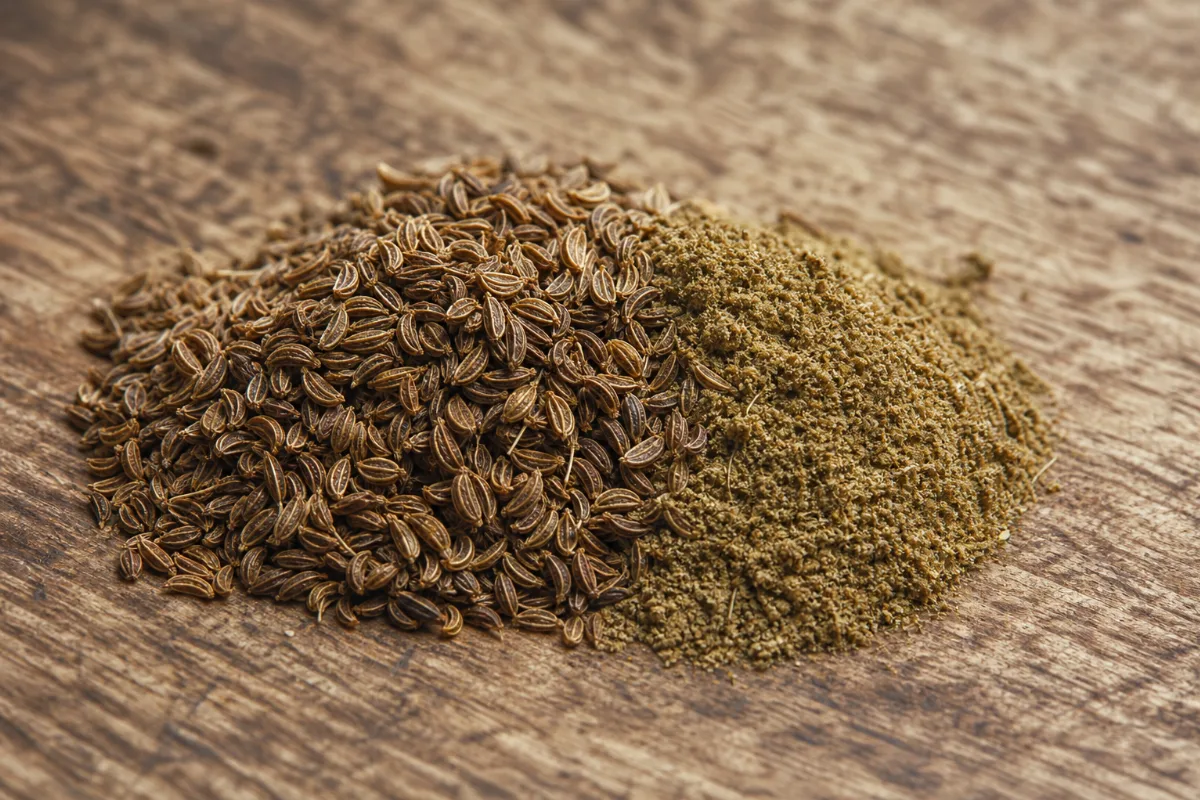
Lovage seed
Levisticum officinale · also called Semilla de levistico (Spanish)
Lovage seed is the small dried fruit of lovage, a tall garden herb in the carrot family, used as a seasoning. We found no human study of the seed. The research that exists is on the root, leaves and extracts, mostly in the lab or in animals. The main caution is that lovage root can make skin sensitive to sun, and carrot-family allergy applies.
General information, not medical advice. Last substantive update · Not medically reviewed. A named clinician has not signed off on this page. How this page is made
About Lovage seed
Lovage seed is a celery-like seasoning with almost no research behind it. What is known comes from the root and leaves, and the main cautions are sun-sensitive skin and carrot-family allergy.
What it is
Lovage (Levisticum officinale) is a plant of the carrot family, the same family as celery. The seed is its dried fruit, used as a seasoning.
A 2001 study measured the aroma compounds of lovage leaves, stems, flowers, seeds and roots. Beta-phellandrene was the most abundant in every part except the root, and no single compound was named as lovage's signature smell.
We give no nutrition figures. A check of the USDA database could not be completed, so we cannot state any.
What the research shows
We found no study in people of lovage seed. The EU herbal committee accepts lovage root, as a tea, for traditional use in minor urinary complaints. That is based on long use, not trials.
Other work is in the lab or in animals: a lovage extract was toxic to colon cancer cells in a dish, and one extract with treadmill running eased memory problems in rats. Leaf extracts blocked some enzymes in the test tube. None of this shows an effect in people.
Spice versus root and extracts
The EU monograph covers the root as a tea, and the lab studies used extracts. A pinch of seed in cooking is a different thing, so the findings do not carry over.
Amounts
This page gives no amounts to eat or take. Ask a doctor, pharmacist or dietitian what is right for you, especially if you take medicines, are pregnant or have a food allergy.
At a glance
Traditional uses history, not proof
- Used as a seasoning, in the way fennel seed is used (existing page text; not re-verified)
- The root is a traditional tea for flushing the urinary tract; long use is not proof that it works
Studied for research
- Urinary flushing (root tea, traditional use), insufficient certainty
- Inflammation and cancer cells (cell studies), insufficient certainty
- Memory (rat study), insufficient certainty
- Metabolic enzymes (leaf extracts, test tube), insufficient certainty
Main compounds
- Beta-phellandrene (aroma compound in seed and other parts)
- Coumarins such as xanthotoxin (measured in root)
Common forms
- Whole seed
- Ground seed
- Root tea (the form the EU herbal committee covers)
- Essential oil (a concentrated skin irritant, not for eating)
Research links: EMA: lovage root herbal monograph · 2001 study: aroma compounds in lovage parts · 2023 study: coumarins in lovage root · Research Library · Genes & Biomarkers Library
What it is and its history
- Accepted scientific name
- Levisticum officinale
- Naming authority
- W.D.J.Koch (GBIF accepted)
- Common names
- Lovage seed (English); Semilla de levistico (Spanish)
- Family or group
- Apiaceae (the carrot family), per GBIF.
- Classification
- Plantae > Tracheophyta > Magnoliopsida > Apiales > Apiaceae > Levisticum > Levisticum officinale
- Native range
- Not verified from a source read.
- Habitat
- Not verified from a source read.
- What it looks like
- Roots: Not verified.; Stems: Not verified.; Leaves: Not verified.; Flowers: Not verified.; Fruit: The 'seed' is the dried fruit (existing page text; not re-verified).
- Cultivation
- Not verified from a source read.
- Harvest and processing
- Not verified from a source read.
- Look-alikes and adulterants
- Name: Celery seed; Note: A related carrot-family seed spice; not the same spice.; Name: Monkshood leaves; Note: A case report describes monkshood leaves eaten by mistake for lovage leaves. This is a garden plant mix-up, not a seed issue.
- Sustainability and conservation
- Not assessed.
What is inside, and how it may work
What it contains and how those compounds act in cells and animals. Laboratory and animal mechanisms are not proven effects in people.
Main compounds
| Compound | Family | Where it is concentrated | Activity studied | Level of evidence |
|---|---|---|---|---|
| Beta-phellandrene | terpene | All parts except roots (headspace) 36.50% to 79.28% of the headspace peak area across leaves, stems, flowers and seeds. | Main aroma-gas compound in a 2001 headspace study; the study named no single character aroma compound. 3 | Laboratory |
| Coumarins (apterin, xanthotoxin, isopimpinellin, pimpinellin) | coumarin | Root 1.7-2.9 mg/g fresh root and 15-24 mg/g dry root in the study; seed not measured. | Not tested for health effects in that study. 8 | Laboratory |
Mechanisms, receptors and pathways
| Target or pathway | Gene or receptor | What was found | Level |
|---|---|---|---|
| Cell death and inflammation in colon cancer cells | Caspase-3, BAX/Bcl-2, COX-2 | A dichloromethane extract raised caspase-3 and the BAX/Bcl-2 ratio and lowered COX-2 in cells. 6 | Cell culture |
| Brain inflammation and oxidative stress in rats | Interleukin-6, malondialdehyde, superoxide dismutase | Running with or without the extract improved these markers in rats. 1 | Animal research |
Absorption, metabolism and elimination
- Absorption
- Not found.
- Distribution
- Not found.
- Metabolism
- Not found.
- Elimination
- Not found.
- Bioavailability
- Not found.
Isolated compounds versus whole extracts
All the research read used leaf, root or unspecified extracts, or chemistry of the plant. None used the seed as a spice, so none of it carries over to a pinch in cooking.
Nutritional composition
No nutrition figures are given. A USDA FoodData Central lookup for lovage on 2026-10-26 was rate-limited and could not be completed, so no entry was confirmed. The existing page says USDA SR Legacy has no lovage seed entry; that was not re-verified. A seasoning is eaten in small amounts, so do not expect it to be a main source of nutrients.
4 not enough evidence
What was looked at
The 4 benefits and uses checked for Lovage seed, each with how strong the evidence is. Tap one to open it.
What is Lovage seed good for?
The studied uses and how strong the evidence is. None of this is research on the seed used as a spice.
Benefits, one by one
Each card is a research question, not a promise. Tap a goal to filter. Open a card to see the studies, doses and limits.
Urinary flushing (traditional use of lovage root tea)
Not enough evidenceThe EU herbal committee lists lovage root, as a herbal tea, for traditional use to increase urine flow in minor urinary complaints. That is a statement about the root, not the seed, and it is based on long use, not on trials.
1 studiesNothing here tests the seed as a spice. This page gives no amounts.
Studies, doses and limits
What the trials found
No human trial of lovage seed was found. The EMA monograph accepts the root as a traditional herbal tea and does not name the seed.
Results
Regulator acceptance of traditional use for the root only.
Why this rating
Insufficient: traditional use accepted for the root; no trial and nothing about the seed.
Form and dose studied
Nothing here tests the seed as a spice. This page gives no amounts.
Who was studied
Adults and older adults (the monograph does not recommend it under 18).
Limits
Root, not seed. Traditional use is not proof of effect.
Why researchers looked
Lovage root has long been used as a tea for the urinary tract.
Traditional use
Lovage is a traditional garden herb. Long use is not proof that any part of it treats a condition.
Proposed mechanism Unknown
Not established.
A proposed mechanism does not show that the effect happens in people.
The monograph says to see a doctor if fever, painful urination, spasms or blood in the urine occur.
Inflammation and cancer-cell survival (cell studies)
Not enough evidenceIn a dish, a lovage dichloromethane extract was toxic to two colon cancer cell lines and not to non-cancer cells, and lowered some inflammation readings. This was not tested in animals or people.
1 studiesNothing here tests the seed as a spice. This page gives no amounts.
Studies, doses and limits
What the trials found
No human study.
Results
Cell culture results only.
Why this rating
Insufficient: cells in a dish only.
Form and dose studied
Nothing here tests the seed as a spice. This page gives no amounts.
Who was studied
Human cell lines.
Limits
Plant part not stated; not a food amount.
Why researchers looked
Researchers screen plant extracts in cells for early leads.
Traditional use
Lovage is a traditional garden herb. Long use is not proof that any part of it treats a condition.
Proposed mechanism Laboratory research
Cell experiment: the extract raised caspase-3 and the BAX/Bcl-2 ratio, which are markers of cell death.
A proposed mechanism does not show that the effect happens in people.
Not a basis for any use in people.
Memory (rat study)
Not enough evidenceIn rats given an inflammatory trigger, treadmill running with or without a lovage extract eased memory problems. The abstract does not show that the extract worked on its own.
1 studiesNothing here tests the seed as a spice. This page gives no amounts.
Studies, doses and limits
What the trials found
No human study.
Results
Animal result only.
Why this rating
Insufficient: one rat study with exercise as the main variable.
Form and dose studied
Nothing here tests the seed as a spice. This page gives no amounts.
Who was studied
Male rats.
Limits
Extract plant part not stated; extract alone not separated in the abstract.
Why researchers looked
Lovage extracts have antioxidant and anti-inflammatory activity in the lab, so researchers tested one on memory in rats.
Traditional use
Lovage is a traditional garden herb. Long use is not proof that any part of it treats a condition.
Proposed mechanism Animal research
Rat brain markers of inflammation and oxidative stress improved with the running and extract.
A proposed mechanism does not show that the effect happens in people.
Not tested in people.
Blood pressure, fat and sugar enzymes (leaf extracts, test tube)
Not enough evidenceSome lovage leaf extracts blocked enzymes linked to blood pressure, fat digestion and sugar digestion in a test tube. These were leaf extracts, not seed, and not tested in any living body.
1 studiesNothing here tests the seed as a spice. This page gives no amounts.
Studies, doses and limits
What the trials found
No human study.
Results
Test-tube results only.
Why this rating
Insufficient: test tube only, leaf extracts.
Form and dose studied
Nothing here tests the seed as a spice. This page gives no amounts.
Limits
Leaves, not seed; no living body tested.
Why researchers looked
Blocking these enzymes is a common early screen for metabolic effects.
Traditional use
Lovage is a traditional garden herb. Long use is not proof that any part of it treats a condition.
Proposed mechanism Laboratory research
Test-tube enzyme blocking.
A proposed mechanism does not show that the effect happens in people.
Says nothing about eating lovage.
Connections to the rest of health
How Lovage seed connects to the rest of our health knowledge graph. Every link says what kind of connection it is. A safety link (for example to the liver) is a warning, not a benefit. A study that merely mentions a topic never creates a benefit link.
Explore every connection: goals, body systems, organs, symptoms, genes
B. Body systems
| Connected to | Kind of connection | Evidence status | Context | Studies |
|---|---|---|---|---|
| Urinary System | Biological association | Not enough evidence | Studied for: Urinary flushing (traditional use of lovage root tea) | 9 |
| Nervous System | Biological association | Not enough evidence | Studied for: Memory (rat study) | 1 |
| Metabolic System | Biological association | Not enough evidence | Studied for: Blood pressure, fat and sugar enzymes (leaf extracts, test tube) | 4 |
E. Health conditions
| Connected to | Kind of connection | Evidence status | Context | Studies |
|---|---|---|---|---|
| Food allergy | Theoretical | The EU root monograph lists hypersensitivity to other carrot-family plants as a reason not to use lovage root. The EU root monograph lists hypersensitivity to carrot-family plants as a reason not to use lovage root. Preparation or compound: Carrot-family plants |
9 |
L. Active compounds
| Connected to | Kind of connection | Evidence status | Context | Studies |
|---|---|---|---|---|
| Beta-phellandrene | Biological association | Laboratory | Main aroma-gas compound in a 2001 headspace study; the study named no single character aroma compound. Preparation or compound: All parts except roots (headspace) |
3 |
| Coumarins (apterin, xanthotoxin, isopimpinellin, pimpinellin) | Biological association | Laboratory | Not tested for health effects in that study. Preparation or compound: Root |
8 |
Each connection is stored with the ingredient, the connected record, the kind of connection, the evidence status, the supporting studies, the preparation or compound involved, and a review date (last reviewed October 26, 2026).
Evidence at a glance: what the research found for 4 outcomes
Each outcome below is one thing researchers measured. Certainty is how far the evidence can be trusted, not how well it works. The full studies are on the next tab.
The evidence
The research centre for Lovage seed. Every record here was checked against PubMed or the publisher's page; we never list a study we have not verified.
Evidence by outcome
Bars show how many studies we found for each outcome, not how well it works. People are added up across trials only (reviews are not added, to avoid double counting).
How we rate evidence
High certainty
Several well-run trials or reviews agree; further research is unlikely to change the picture much.
Moderate certainty
Good trials point the same way, but some doubt remains.
Low certainty
Small, short or inconsistent trials. The finding could change with better research.
Very low certainty
Very little or very weak human data. Treat as a possibility only.
Mixed findings
Trials or reviews disagree with each other.
Not enough evidence
Not enough human research to say either way.
Evidence against
Good research found no benefit, or found harm.
We take the reviewers' own risk-of-bias and GRADE statements where they exist, and otherwise judge from study size, design, consistency, directness and whether a product matches what is sold. Many publications do not make evidence high. Method note: We re-read the EU herbal committee monograph, checked the plant name at GBIF and read PubMed abstracts for each study. Items we could not verify are flagged in the research gaps.
Study library: every study we checked 10
| Study | Design | People | Product, dose, length | Result |
|---|---|---|---|---|
| Amraie 2023 Treadmill running and Levisticum Officinale extract protect against LPS-induced memory deficits by modulating neurogenesis, neuroinflammation and oxidative stress. Metab Brain Dis · PMID 36478529 · DOI |
Animal experiment animal |
Male Wistar rats given an inflammatory trigger (LPS) | Lovage extract (plant part not stated in the abstract) Not shown on this page About four weeks · vs Control group |
Treadmill running, alone and with the extract, eased memory problems and improved brain markers in rats. The abstract does not say the extract alone worked. Not applicable (Not applicable) Methods, limits and fundingOutcomes: Memory, inflammation and oxidative stress markers Limitations: Rats, not people. The extract's own effect is not separated in the abstract. Funding and conflicts: Funding not stated in the abstract. Read: abstract |
| Ashwood-Smith 1992 Photosensitivity from harvesting lovage (Levisticum officinale). Contact Dermatitis · PMID 1395606 · DOI |
Case report by title |
Not shown (PubMed has no abstract for this paper) | Handling the lovage plant during harvest Harvested plant Not shown on this page · vs Control group |
The title reports photosensitivity (sun-sensitive skin) from harvesting lovage. Nothing more was read: PubMed lists no abstract. Not applicable (Not applicable) Methods, limits and fundingOutcomes: Skin sensitivity to sunlight Limitations: Only the title was read. It is about the plant being harvested, not the seed as a spice. Funding and conflicts: Funding not stated in the abstract. Read: title-only |
| Bylaite 2001 Dynamic deadspace-gas chromatography-olfactometry analysis of different anatomical parts of lovage (Levisticum officinale Koch.) at eight growing stages. J Agric Food Chem · PMID 11312790 · DOI |
Laboratory analysis plant |
Lovage leaves, stems, flowers, seeds and roots | Lovage volatiles (aroma compounds) Leaves, stems, flowers, seeds, roots Not shown on this page Eight growing stages · vs Control group |
98 aroma compounds were found. Beta-phellandrene was the most abundant in all parts except roots (36.50% to 79.28% of the peak area). The panel recognised alpha-pinene and alpha-phellandrene/myrcene most often. No compound was named the character aroma of lovage. Not applicable (Not applicable) Methods, limits and fundingOutcomes: Aroma compounds Limitations: Aroma chemistry only; the seed was one of five parts. Nothing about health. Funding and conflicts: Funding not stated in the abstract. Read: abstract |
| Jakubczyk 2021 Influence of Elicitation and Drying Methods on Anti-Metabolic Syndrome, and Antimicrobial Properties of Extracts and Hydrolysates Obtained from Elicited Lovage (Levisticum officinale Koch). Nutrients · PMID 34959917 · DOI |
Laboratory research in-vitro |
Test-tube enzyme and yeast tests | Extracts and hydrolysates of lovage leaves, grown with and without plant stress treatments Leaf Not shown on this page · vs Control group |
Some leaf extracts blocked enzymes linked to blood pressure, fat and sugar digestion in the test tube. The most active extracts came from plants treated with jasmonic acid and dried by microwave or freeze-drying. Not applicable (Not applicable) Methods, limits and fundingOutcomes: Enzyme blocking (ACE, lipase, alpha-amylase, alpha-glucosidase) and antimicrobial tests Limitations: Leaves, not seed. Test tube only. Funding and conflicts: Funding not stated in the abstract. Read: abstract |
| Lapeere 2014 Contact dermatitis caused by lovage (Levisticum officinalis) essential oil. Contact Dermatitis · PMID 23948036 · DOI |
Case report by title |
Not shown (PubMed has no abstract for this paper) | Lovage essential oil Essential oil Not shown on this page · vs Control group |
The title reports contact dermatitis caused by lovage essential oil. Nothing more was read: PubMed lists no abstract. Not applicable (Not applicable) Methods, limits and fundingOutcomes: Skin reaction to the oil Limitations: Only the title was read. We cannot say how many people were affected or what the oil was used for. Funding and conflicts: Funding not stated in the abstract. Read: title-only |
| Lotfian Sargazi 2024 Anti-inflammatory and Apoptotic Effects of Levisticum Officinale Koch Extracts on HT 29 and Caco-2 Human Colorectal Carcinoma Cell Lines. Galen Med J · PMID 39224551 · DOI |
Laboratory research cell-culture |
Human colon cancer cell lines HT-29 and Caco-2, and a non-cancer mouse cell line (3T3) | Ethanol, dichloromethane, petroleum and residue extracts of lovage (plant part not stated in the abstract) Not shown on this page 72 hours · vs Control group |
The dichloromethane extract was toxic to both cancer cell lines (IC50 106.0 and 175.3 ug/mL after 72 hours) and not to the non-cancer cells. It lowered inflammation gene and COX-2 protein readings. Not applicable (Not applicable) Methods, limits and fundingOutcomes: Cell survival and inflammation markers Limitations: Cells in a dish only. Says nothing about eating lovage. Plant part not stated. Funding and conflicts: Funding not stated in the abstract. Read: abstract |
| Michel 2021 [Aconitine poisoning due to confusion of aconite leaves with lovage]. Anaesthesist · PMID 34251482 · DOI |
Case report |
2 A couple aged 69 and 71 who ate a meal with garden herbs |
Garden herb meal that contained monkshood leaves instead of lovage leaves Leaf Not shown on this page One meal · vs Control group |
Both developed numbness or tingling, low blood pressure, a slow heartbeat and heart rhythm problems and were treated in intensive care. They went home after 1 and 2 days. Not applicable (Not applicable) Methods, limits and fundingOutcomes: Poisoning symptoms Limitations: Two people. It is about leaves picked from a garden, not the seed. Funding and conflicts: Funding not stated in the abstract. Read: abstract |
| Olennikov 2023 Coumarins of Lovage Roots (Levisticum officinale W.D.J.Koch): LC-MS Profile, Quantification, and Stability during Postharvest Storage. Metabolites · PMID 36676932 · DOI |
Laboratory analysis plant |
Fresh roots of seven lovage cultivars and dry commercial lovage root | Coumarin analysis of lovage root Root Not shown on this page Storage tests · vs Control group |
Four major coumarins (apterin, xanthotoxin, isopimpinellin, pimpinellin) were measured. Content was 1.7-2.9 mg/g in fresh roots and 15-24 mg/g in dry roots. Not applicable (Not applicable) Methods, limits and fundingOutcomes: Coumarin content Limitations: Root, not seed. A chemistry study with no people or animals. Funding and conflicts: Funding not stated in the abstract. Read: abstract |
| s-ema-lovage-root EMA/HMPC: Community herbal monograph on Levisticum officinale Koch, radix (lovage root), EMA/HMPC/524621/2011, adopted 20 November 2012 · Source |
Regulatory monograph n/a |
Methods, limits and fundingRead: full-text | ||
| s-gbif-levisticum-officinale GBIF Backbone: Levisticum officinale W.D.J.Koch (usageKey 5371772) · Source |
Reference database n/a |
Methods, limits and fundingRead: full-text |
What we do not know yet
- No study in people of lovage seed was found.
- Only the titles of the 1992 and 2014 skin reports could be read.
- Seed safety, contamination and nutrition were not confirmed.
- Pregnancy, breastfeeding and children are covered only for root tea.
How new research is added
New studies are found by a saved PubMed search and placed in a review queue before the page changes.
Lab markers
What changed in blood or saliva tests during trials. A changed number is not the same as feeling or being healthier, and we give no "normal ranges".
Safety
What studies and official sources say about side effects, medicines and who should check first. Each point shows what kind of evidence it comes from.
Main points to know 4
- Very little is known about the seed itself. We found no safety study of lovage seed as a spice. Most safety information is about lovage root and the plant. A pinch in cooking is a different exposure, but we cannot show it is risk free. Gap
- Sun-sensitive skin after handling the plant. A 1992 report is titled as photosensitivity from harvesting lovage, and a 2023 chemistry study found furocoumarin-type compounds (xanthotoxin, isopimpinellin) in lovage root. Only the title of the 1992 report was read. Nothing read measures them in the seed. Case report and lab 2 8
- Allergy to the carrot family. The EU herbal monograph for lovage root lists hypersensitivity to other plants of the carrot family (Apiaceae) or to anethole as a reason not to use it. Lovage is in that family. A 2014 paper is titled as contact dermatitis from lovage essential oil (title only read). Authoritative guidance 9 5 10
- Do not confuse garden herbs. A case report describes two older adults poisoned after monkshood leaves were mistaken for lovage in a garden meal. They needed intensive care and recovered. If you pick plants yourself, be certain of each one. Case report 7
Side effects 4
| Effect | How often | Severity and recovery | Evidence |
|---|---|---|---|
| Sun-sensitive skin reaction after handling the plant Title-only reading; about harvesting the plant, not the seed. | Not given | moderate Not stated | Case report 2 |
| Skin allergy (contact dermatitis) from the essential oil Title-only reading; concentrated oil, not the seed. | Not given | Not stated Not stated | Case report 5 |
| Aconitine poisoning when monkshood was eaten by mistake for lovage A plant mix-up, not an effect of lovage. | 2 people in one report | serious Both recovered within 1 to 2 days of hospital care | Case report 7 |
| Undesirable effects of lovage root tea Root tea, not seed. | The EU monograph says none known | none reported Not applicable | Authoritative guidance 9 |
Liver
No liver injury from lovage seed was found, and liver safety sources such as LiverTox were not searched.
How often. Not found.
Monitoring. Not found.
This is a safety connection. It is not evidence that Lovage seed supports liver health.
Medicines and supplements 1
| With | Why it matters | Importance | Evidence | What to do |
|---|---|---|---|---|
| Any medicine prescription | The EU monograph for lovage root says no interactions were reported. No interaction study of the seed was found. | Authoritative guidance Not enough evidence 9 | Ask a pharmacist if you take regular medicines and plan to use root or extract products. |
Who should check first 1
| Situation | Advice | Evidence |
|---|---|---|
| Allergy to lovage or other carrot-family plants | The EU monograph for the root lists this as a reason not to use it. Avoid lovage seed if you have reacted to it, and ask an allergy specialist about related spices such as celery seed. | Authoritative guidance 9 |
Overdose, product quality and regulators
Summary. No toxicity from lovage seed in cooking was found. The EU monograph notes that tests of reproductive toxicity, genotoxicity and carcinogenicity have not been done for lovage root.
Animal. Not found.
Human doses studied. No human trial of lovage in any form was found.
Overdose response. The EU monograph says no case of overdose has been reported for the root tea.
Genotoxicity. The EU monograph says adequate tests have not been performed.
Little was found about contamination of lovage seed.
Plant mix-ups. A case report describes monkshood leaves eaten in place of lovage leaves. It is about leaves, not seed. 7
| Body | Action | Date |
|---|---|---|
| EMA / HMPC (EU herbal committee) (European Union) | Community herbal monograph on lovage root (Levisticum officinale, radix): traditional use as a herbal tea to increase urine flow in minor urinary complaints; not recommended under 18; not recommended in pregnancy and breastfeeding for lack of data; contraindicated with hypersensitivity to carrot-family plants or anethole; no interactions or undesirable effects known. Root, not seed. source | 2012-11-20 (adopted); page published 2013-02-22 |
When to get medical help
- Trouble breathing, swelling of the lips, face or throat, or widespread hives after eating a spice: call emergency services
- Numbness or tingling, a slow or uneven heartbeat or collapse after eating garden herbs you picked yourself: call emergency services
- A painful blistering rash in sunlit skin that touched lovage earlier
Stop using the product and contact a clinician or emergency service. In the US, Poison Control is 1-800-222-1222.
General information only, not medical advice. Ask a clinician or pharmacist before use, especially with medicines, in pregnancy or with a health condition. See the Natural Remedy Safety guide.
Frequently asked questions
What is lovage seed?
It is the dried fruit of lovage, a tall garden herb in the carrot family, used as a seasoning. It is related to celery, but it is a different plant.
Is lovage seed good for you?
Does lovage help the kidneys or bladder?
The EU herbal committee accepts lovage root, as a tea, for traditional use in minor urinary complaints. That is based on long use and covers the root, not the seed. See a doctor if you have fever, pain passing urine or blood in the urine.
Does lovage seed fight cancer?
No. A lovage extract was toxic to colon cancer cells in a dish. That is not a test in people and says nothing about eating the seed.
Does lovage help memory?
Not shown in people. In one rat study, treadmill running with or without a lovage extract eased memory problems. The extract on its own was not shown to work.
Can lovage make my skin sensitive to the sun?
Can I be allergic to lovage seed?
Is lovage seed safe in pregnancy or for children?
Nothing about the seed was found. The EU monograph does not recommend lovage root tea in pregnancy, breastfeeding or under 18 because data are lacking. Ask your midwife or doctor.
Can I take lovage with medicines?
The EU monograph for the root says no interactions were reported. No interaction study of the seed was found. Ask a pharmacist if you take regular medicines.
What does lovage seed smell like?
A 2001 study found beta-phellandrene was the most abundant aroma compound in the parts it tested, but it named no single compound as lovage's signature smell.
Is lovage seed the same as celery seed?
No. Both are carrot-family seed spices, but they are different plants. Celery seed has its own page.
Can lovage be confused with poisonous plants?
Yes, in the garden. A case report describes two older adults poisoned after eating monkshood leaves in place of lovage. They recovered in hospital. Be certain of any plant you pick.
Explore by health goal
Editorial transparency
- Written by
- AlternativeMed editorial team. Research compiled with AI assistance, then checked against the sources listed.
- Medical review
- None. This page has not been reviewed by a physician or pharmacist.
- First published
- 2026-10-26
- Last substantive update
- 2026-10-26
- How we research
- We re-read the EU herbal committee monograph, checked the plant name at GBIF and read PubMed abstracts for each study. Items we could not verify are flagged in the research gaps.
- How we rate evidence
- See "How we rate evidence" in the Evidence tab.
- Independence
- No product is promoted on this page. No affiliate links are shown.
Sources 10
Each source was opened and checked. Where we read only the abstract, it says so. The small numbers in the text point here.
- Amraie E, Pouraboli I, Salehi MS, et al.. Treadmill running and Levisticum Officinale extract protect against LPS-induced memory deficits by modulating neurogenesis, neuroinflammation and oxidative stress.. Metab Brain Dis. 2023. PMID 36478529. DOI 10.1007/s11011-022-01140-z. (abstract)
- Ashwood-Smith MJ, Ceska O, Chaudhary SK, et al.. Photosensitivity from harvesting lovage (Levisticum officinale).. Contact Dermatitis. 1992. PMID 1395606. DOI 10.1111/j.1600-0536.1992.tb00138.x. (title-only)
- Bylaite E, Roozen JP, Legger A, et al.. Dynamic deadspace-gas chromatography-olfactometry analysis of different anatomical parts of lovage (Levisticum officinale Koch.) at eight growing stages.. J Agric Food Chem. 2001. PMID 11312790. DOI 10.1021/jf990679u. (abstract)
- Jakubczyk A, Zlotek U, Rybczynska-Tkaczyk K, et al.. Influence of Elicitation and Drying Methods on Anti-Metabolic Syndrome, and Antimicrobial Properties of Extracts and Hydrolysates Obtained from Elicited Lovage (Levisticum officinale Koch).. Nutrients. 2021. PMID 34959917. DOI 10.3390/nu13124365. (abstract)
- Lapeere H, Boone B, Verhaeghe E, et al.. Contact dermatitis caused by lovage (Levisticum officinalis) essential oil.. Contact Dermatitis. 2014. PMID 23948036. DOI 10.1111/cod.12082. (title-only)
- Lotfian Sargazi, Miri Karam, Shahraki, et al.. Anti-inflammatory and Apoptotic Effects of Levisticum Officinale Koch Extracts on HT 29 and Caco-2 Human Colorectal Carcinoma Cell Lines.. Galen Med J. 2024. PMID 39224551. DOI 10.31661/gmj.v13i.3341. (abstract)
- Michel S, Siebe A, Auwarter V, et al.. [Aconitine poisoning due to confusion of aconite leaves with lovage].. Anaesthesist. 2021. PMID 34251482. DOI 10.1007/s00101-021-01002-w. (abstract)
- Olennikov DN. Coumarins of Lovage Roots (Levisticum officinale W.D.J.Koch): LC-MS Profile, Quantification, and Stability during Postharvest Storage.. Metabolites. 2023. PMID 36676932. DOI 10.3390/metabo13010003. (abstract)
- . EMA/HMPC: Community herbal monograph on Levisticum officinale Koch, radix (lovage root), EMA/HMPC/524621/2011, adopted 20 November 2012. . . (full-text)
- . GBIF Backbone: Levisticum officinale W.D.J.Koch (usageKey 5371772). . . (full-text)
Where to buy
Check the label first. Whatever you buy, look for these:
- Whole or ground: whole spices keep their flavor longer
- The origin and a packed-on or best-by date for freshness
- Organic or non-irradiated labeling if that matters to you
- A resealable, airtight container
Talk to a pharmacist or doctor before you start any supplement, especially if you take medicines. See the Safety tab for interactions.
Support our free guides: as an Amazon Associate we earn from qualifying purchases. Full disclosure.


