Spices · Spice
Celery seed
Apium graveolens · also called Semilla de apio (Spanish)
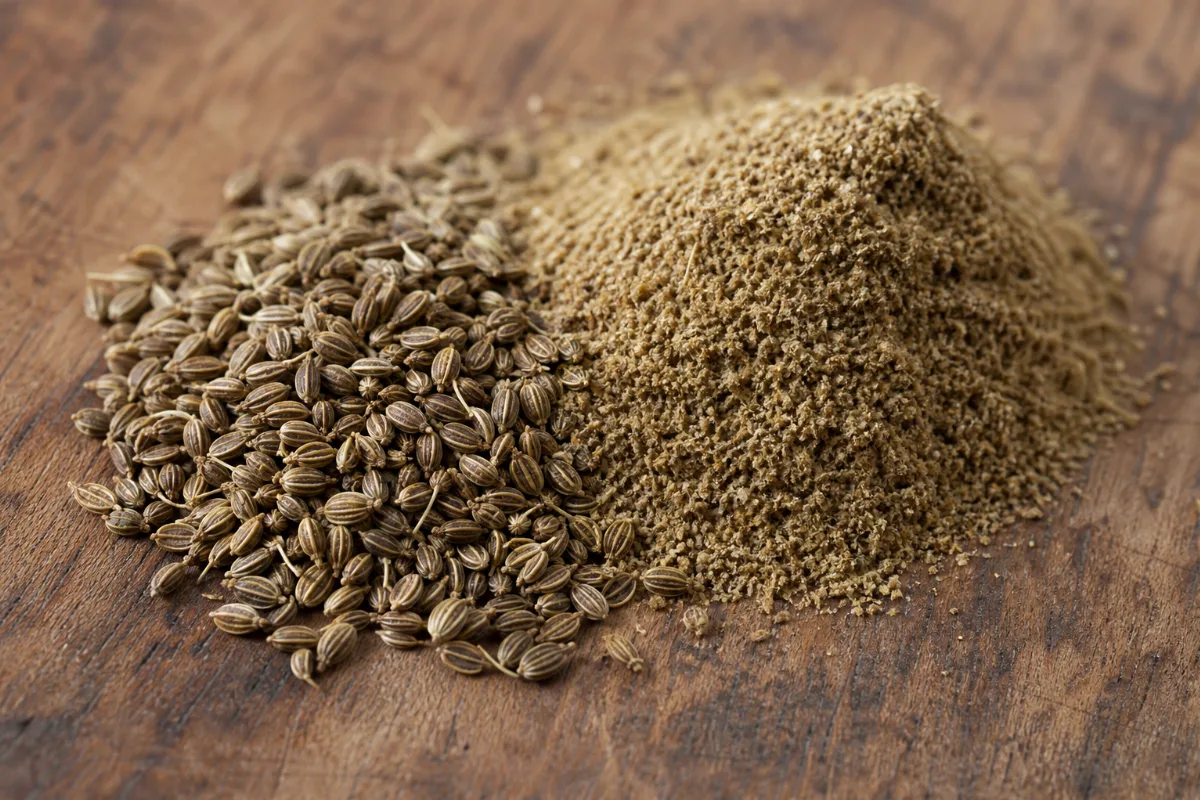
Celery seed is the tiny dried fruit of the celery plant, used as a seasoning and in celery salt. Small trials of celery seed capsules and extracts found lower blood pressure and triglycerides, but none tested the spice in food, and the evidence is low certainty. The main caution is celery allergy, which can be severe and also applies to celery salt.
General information, not medical advice. Last substantive update · Not medically reviewed. A named clinician has not signed off on this page. How this page is made
About Celery seed
Celery seed is a strong-tasting seasoning that is used in tiny amounts. Research is on capsules and extracts, with low certainty, and the biggest caution is celery allergy.
What it is
Celery seed comes from Apium graveolens, the species that also gives celery stalks and celeriac. The seeds are the dried fruits and are used whole, ground, or mixed with salt as celery salt.
USDA data per 100 g: 392 kcal, 11.8 g fibre, 1770 mg calcium, 44.9 mg iron, 1400 mg potassium and 160 mg sodium. One teaspoon (2.0 g) gives about 8 kcal, 35 mg calcium, 0.9 mg iron and 28 mg potassium. That is small, so it is a flavouring, not a main source of nutrients.
What the research shows
A 2025 review pooled ten small trials of celery products and found lower blood pressure, fasting glucose and triglycerides on average, with no overall change in cholesterol. Most products were seed or extracts and results varied a lot.
Two small trials of seed products, in 28 and 51 adults, point the same way. Gout and joint claims rest on rodent studies and one trial of a Boswellia plus celery seed product. We found no trial of celery seed used as a spice.
Spice versus capsules and extracts
The trials used capsules or extracts, and one well-known extract is a specific product. A pinch in cooking is a very different exposure, so these results do not carry over to food.
Amounts
This page gives no amounts to eat or take. Ask a doctor, pharmacist or dietitian what is right for you, especially if you take medicines or have a food allergy.
At a glance
Traditional uses history, not proof
- Used whole or ground as a seasoning
- Mixed with salt as celery salt
- Used in folk medicine for blood pressure and joint pain; long use is not proof that it works
Studied for research
- Blood pressure (seed and extract products), low certainty
- Triglycerides and blood fats, low certainty
- Fasting blood sugar, very-low certainty
- Uric acid and gout, very-low certainty
- Knee osteoarthritis (Boswellia plus celery seed extract), very-low certainty
- Arthritis and pain (animal studies), insufficient certainty
Main compounds
- Limonene (marker of the oil)
- Perillaldehyde and bergapten (handler exposure)
- Api g 7 (allergen, mostly studied in celery root)
Common forms
- Whole seed
- Ground seed
- Celery salt
- Capsules and extracts (most trials)
- Essential oil (a concentrated irritant, not for eating)
Research links: 2025 review: celery and blood pressure, sugar and blood fats · 2024 study: Api g 7 and celery-mugwort allergy · NHS: Food allergy · Research Library · Genes & Biomarkers Library
What it is and its history
- Accepted scientific name
- Apium graveolens
- Naming authority
- L. (GBIF accepted)
- Common names
- Celery seed (English); Semilla de apio (Spanish)
- Family or group
- Apiaceae (the carrot family), per GBIF.
- Classification
- Plantae > Tracheophyta > Magnoliopsida > Apiales > Apiaceae > Apium > Apium graveolens
- Native range
- Not verified from a source read.
- Habitat
- Not verified from a source read.
- What it looks like
- Roots: Not verified.; Stems: Not verified.; Leaves: Not verified.; Flowers: Not verified.; Fruit: The seed is the dried fruit of the plant (existing page text; not re-verified from a primary source).
- Cultivation
- Not verified from a source read.
- Harvest and processing
- Sold whole, ground, or mixed with salt as celery salt (existing page text, not re-verified).
- Look-alikes and adulterants
- Name: Dill seed; Note: A 2026 image-method paper names celery and dill seed as a hard-to-distinguish pair.; Name: Lovage seed; Note: A related Apiaceae seed; not the same spice.
- Sustainability and conservation
- Not assessed.
What is inside, and how it may work
What it contains and how those compounds act in cells and animals. Laboratory and animal mechanisms are not proven effects in people.
Main compounds
| Compound | Family | Where it is concentrated | Activity studied | Level of evidence |
|---|---|---|---|---|
| Limonene | terpene | Seed oil The EFSA opinion names limonene as the marker compound of the oil (its share was not read). | Citrus-smelling terpene. 3 | Regulatory |
| Perillaldehyde and bergapten | terpene / furocoumarin | Seed oil Named by EFSA as handler-exposure compounds. | Bergapten is a furocoumarin; furocoumarins can cause sun-triggered skin reactions in celery generally. 3 8 | Regulatory |
| Api g 7 (allergen protein) | protein | Celeriac (seed not studied) | A defensin-type allergen linked to severe reactions and to mugwort allergy. 2 5 | Human data |
Mechanisms, receptors and pathways
| Target or pathway | Gene or receptor | What was found | Level |
|---|---|---|---|
| Uric acid and inflammation | Xanthine oxidase, IL-1 beta, TNF-alpha (rodent measures) | Seed extracts lowered these in mice and rats. 6 | Animal research |
| Celery-mugwort cross-reactivity | Api g 7 and Art v 1 | IgE to Api g 7 correlated closely with IgE to mugwort Art v 1 (r=0.86). 2 | Human data |
Absorption, metabolism and elimination
- Absorption
- Not found.
- Distribution
- Not found.
- Metabolism
- A review says one standardised extract did not significantly affect cytochrome P450 enzymes.
- Elimination
- Not found.
- Bioavailability
- Not found.
Isolated compounds versus whole extracts
Human trials used seed or extract capsules, and the best-known extract is a specific standardised product. Results do not carry over to a pinch of seed or celery salt in cooking, and not to the celery stalk.
Nutritional composition
Nutrition from USDA FoodData Central (Spices, celery seed, FDC 170920, SR Legacy, updated 4/1/2019, read 2026-10-26). Per 100 g: 392 kcal, 18.1 g protein, 25.3 g fat, 41.4 g carbohydrate, 11.8 g fibre, 1770 mg calcium, 44.9 mg iron, 440 mg magnesium, 1400 mg potassium, 160 mg sodium, 7.57 mg manganese. One teaspoon (2.0 g) therefore gives about 8 kcal, 0.2 g fibre, 35 mg calcium, 0.9 mg iron, 9 mg magnesium, 28 mg potassium and 0.15 mg manganese; one tablespoon (6.5 g) about 25 kcal. These are small amounts for a seasoning. USDA lists vitamin K as 0.0, which may mean not analysed, so nothing is claimed about it. Celery salt also contains added salt (figures not read).
2 low certainty3 very low certainty1 not enough evidence
What was looked at
The 6 benefits and uses checked for Celery seed, each with how strong the evidence is. Tap one to open it.
- Blood pressure (celery seed and extract products)Low certainty
- Triglycerides and blood fats (celery seed and extract products)Low certainty
- Fasting blood sugar (celery seed and extract products)Very low certainty
- Uric acid and goutVery low certainty
- Knee osteoarthritis (a Boswellia plus celery seed extract product)Very low certainty
- Arthritis and pain (animal studies of one extract)Not enough evidence
Lab markers tracked in the studies
Systolic blood pressureDiastolic blood pressureTriglyceridesFasting blood glucoseUric acid
What is Celery seed good for?
The main studied uses and how strong the human evidence is for each. Almost all results are for celery seed capsules or extracts, not for the spice used in cooking.
Benefits, one by one
Each card is a research question, not a promise. Tap a goal to filter. Open a card to see the studies, doses and limits.
Blood pressure (celery seed and extract products)
Low certaintyA 2025 review of ten small trials (511 adults) found lower blood pressure with celery products, mostly seed. A very small 12-week trial in people with metabolic syndrome saw lower readings too. None of this tests celery seed as a spice in food.
3 studiesTrials used celery seed or extract capsules, not the spice sprinkled …
Studies, doses and limits
What the trials found
The 2025 review (ten randomised trials, 511 adults) reports lower systolic (SMD -1.0, 95% CI -1.85 to -0.14) and diastolic pressure (SMD -0.93, 95% CI -1.54 to -0.33), and says seed or seed preparations did better than other celery parts. A 28-person trial of celery seed capsules reports systolic 121.0 to 115.7 mmHg and diastolic 82.2 to 78.5 mmHg within the celery group. A 51-person cross-over trial of a seed extract in people with high blood pressure on their usual medicines says the extract lowered blood pressure, but the abstract gives no figures.
Results
On average, celery seed products went with lower readings in small trials. The authors themselves call the effect uncertain and the heterogeneity substantial.
Effect sizes as reported
Review: systolic SMD -1.0, diastolic SMD -0.93 (standardised units). Small trial: about 5 mmHg systolic and 4 mmHg diastolic fall within the celery group.
Why this rating
Low, because the trials are small, results varied a lot, units are standardised, the abstracts do not always give the comparison with placebo, and no trial used seed as a food spice.
Form and dose studied
Trials used celery seed or extract capsules, not the spice sprinkled on food. This page gives no amounts.
Who was studied
Adults, including people with metabolic syndrome or treated high blood pressure.
Limits
Seed or extract products, not culinary amounts. Funding not stated in the abstracts. Small and short trials.
Why researchers looked
Celery is a folk remedy for high blood pressure, so researchers pooled the trials.
Traditional use
Celery seed has long been used as a seasoning and in folk medicine. Long use is not proof that it treats any condition.
Proposed mechanism Unknown
Not established. The abstracts read do not show how celery seed might lower pressure.
A proposed mechanism does not show that the effect happens in people.
If you take blood pressure medicine, ask a pharmacist before using supplements. Do not change medicines because of a spice.
Triglycerides and blood fats (celery seed and extract products)
Low certaintyThe same review found lower triglycerides but no overall change in total, LDL or HDL cholesterol. One small extract trial reported cholesterol changes, so results are mixed.
3 studiesTrials used celery seed or extract capsules, not the spice sprinkled …
Studies, doses and limits
What the trials found
The 2025 review reports lower triglycerides (SMD -1.18, 95% CI -1.45 to -0.91) and no overall effect on total cholesterol, LDL or HDL. The 28-person capsule trial reports triglycerides 2.3 to 1.8 mmol/L and VLDL 0.4 to 0.3 mmol/L in the celery group. The 51-person extract trial reports falls in total cholesterol, triglycerides and LDL (16.37, 16.22 and 11.84 mg/dL) and a rise in HDL (2.52 mg/dL).
Results
Triglycerides fell in all three sources. Cholesterol did not change overall in the pooled review but did in one small extract trial, so the picture is mixed.
Effect sizes as reported
Review: triglycerides SMD -1.18. Small trials: triglycerides about 0.5 mmol/L lower within the celery group; extract trial about 16 mg/dL lower.
Why this rating
Low for triglycerides (consistent direction, small trials); mixed for cholesterol.
Form and dose studied
Trials used celery seed or extract capsules, not the spice sprinkled on food. This page gives no amounts.
Who was studied
Adults, some with metabolic syndrome or high blood pressure.
Limits
Seed or extract products; small trials; within-group changes in two trials.
Why researchers looked
Blood fats are a common target in studies of folk remedies for heart health.
Traditional use
Celery seed has long been used as a seasoning and in folk medicine. Long use is not proof that it treats any condition.
Proposed mechanism Unknown
Not established.
A proposed mechanism does not show that the effect happens in people.
Ask a clinician before using supplements if you take cholesterol medicine.
Fasting blood sugar (celery seed and extract products)
Very low certaintyThe review found slightly lower fasting glucose with celery products, but the result only just reached significance. The 28-person trial found no change in insulin sensitivity.
3 studiesTrials used celery seed or extract capsules, not the spice sprinkled …
Studies, doses and limits
What the trials found
The 2025 review reports fasting glucose SMD -0.80 (95% CI -1.58 to -0.01). The 51-person extract trial reports fasting glucose 108.53 to 97.96 mg/dL (p<0.01). The 28-person capsule trial reports no significant change in insulin sensitivity or secretion.
Results
Fasting glucose was lower in two sources, but the pooled interval barely excludes no effect, and insulin measures did not change.
Effect sizes as reported
Review: SMD -0.80; extract trial: about 10.6 mg/dL lower.
Why this rating
Very low: borderline interval, small trials, mixed insulin results.
Form and dose studied
Trials used celery seed or extract capsules, not the spice sprinkled on food. This page gives no amounts.
Who was studied
Adults.
Limits
Seed or extract products. Small trials.
Why researchers looked
Celery is also used at home for blood sugar.
Traditional use
Celery seed has long been used as a seasoning and in folk medicine. Long use is not proof that it treats any condition.
Proposed mechanism Unknown
Not established.
A proposed mechanism does not show that the effect happens in people.
Ask a clinician if you take diabetes medicine; low sugar is possible in principle but was not reported in the abstracts.
Uric acid and gout
Very low certaintyOne small trial saw lower uric acid with celery seed. Rodent studies of seed extracts show lower uric acid and less joint swelling. No gout trial in people was found.
2 studiesTrials used celery seed or extract capsules, not the spice sprinkled …
Studies, doses and limits
What the trials found
In the 28-person trial uric acid went from 297.4 to 261.7 umol/L in the celery group (p=0.009). In mice and rats, seed extracts lowered uric acid, xanthine oxidase and joint swelling.
Results
A human uric acid change in a tiny trial; the rest is animal work.
Effect sizes as reported
Within-group fall of about 36 umol/L.
Why this rating
Very low in people (one tiny trial); the animal work cannot be taken as proof in people.
Form and dose studied
Trials used celery seed or extract capsules, not the spice sprinkled on food. This page gives no amounts.
Who was studied
Adults with metabolic syndrome; mice and rats.
Limits
No gout trial. Extracts, not the spice.
Why researchers looked
Celery seed has a folk reputation for gout.
Traditional use
Celery seed has long been used as a seasoning and in folk medicine. Long use is not proof that it treats any condition.
Proposed mechanism Animal research
Rodent studies suggest anti-inflammatory and antioxidant effects, and lower xanthine oxidase, an enzyme that makes uric acid.
A proposed mechanism does not show that the effect happens in people.
Do not stop gout medicine on the strength of this.
Knee osteoarthritis (a Boswellia plus celery seed extract product)
Very low certaintyA trial of 62 people tested a product that mixes Boswellia and celery seed extract. It reports less pain and stiffness, but celery cannot be credited alone.
1 studiesTrials used celery seed or extract capsules, not the spice sprinkled …
Studies, doses and limits
What the trials found
A randomised, double-blind trial in 62 adults with knee osteoarthritis tested a Boswellia serrata plus Apium graveolens seed extract product for 90 days. The authors report less pain, stiffness and swelling and lower inflammation and cartilage-breakdown markers than baseline and placebo, with no adverse effects found.
Results
Positive in one small trial of a combination product.
Effect sizes as reported
Not given as one figure in the abstract.
Why this rating
Very low for celery seed: one small trial, combination product, possible industry link, funding not stated.
Form and dose studied
Trials used celery seed or extract capsules, not the spice sprinkled on food. This page gives no amounts.
Who was studied
Adults with knee osteoarthritis.
Limits
Combination product, so effect cannot be assigned to celery seed.
Why researchers looked
Celery seed extracts are studied for joint pain.
Traditional use
Celery seed has long been used as a seasoning and in folk medicine. Long use is not proof that it treats any condition.
Proposed mechanism Unknown
Not established.
A proposed mechanism does not show that the effect happens in people.
Ask a clinician before using joint supplements.
Arthritis and pain (animal studies of one extract)
Not enough evidenceA review describes one standardised celery seed extract reducing arthritis and pain in rodents. There is no matching human trial in the sources read.
1 studiesTrials used celery seed or extract capsules, not the spice sprinkled …
Studies, doses and limits
What the trials found
No human trial of this extract was read. The review is mostly about rodent models of arthritis, pain and stomach irritation.
Results
Animal results only.
Why this rating
Insufficient: animal or lab evidence only.
Form and dose studied
Trials used celery seed or extract capsules, not the spice sprinkled on food. This page gives no amounts.
Who was studied
Rodents.
Limits
One standardised extract; not the spice.
Why researchers looked
Early work on joint inflammation.
Traditional use
Celery seed has long been used as a seasoning and in folk medicine. Long use is not proof that it treats any condition.
Proposed mechanism Animal research
The review reports anti-inflammatory activity in rodent models.
A proposed mechanism does not show that the effect happens in people.
Not a basis for treating pain in people.
Connections to the rest of health
How Celery seed connects to the rest of our health knowledge graph. Every link says what kind of connection it is. A safety link (for example to the liver) is a warning, not a benefit. A study that merely mentions a topic never creates a benefit link.
Explore every connection: goals, body systems, organs, symptoms, genes
B. Body systems
| Connected to | Kind of connection | Evidence status | Context | Studies |
|---|---|---|---|---|
| Cardiovascular System | Biological association | Low certainty | Studied for: Blood pressure (celery seed and extract products) Studied for: Triglycerides and blood fats (celery seed and extract products) | 7 4 10 |
| Metabolic System | Biological association | Low certainty | Studied for: Triglycerides and blood fats (celery seed and extract products) Studied for: Fasting blood sugar (celery seed and extract products) | 7 4 10 |
| Musculoskeletal System | Biological association | Very low certainty | Studied for: Uric acid and gout Studied for: Knee osteoarthritis (a Boswellia plus celery seed extract product) | 4 6 11 9 |
E. Health conditions
| Connected to | Kind of connection | Evidence status | Context | Studies |
|---|---|---|---|---|
| Food allergy | Adverse effect or risk | Documented risk | Celery is a declared allergen and can cause severe reactions. Preparation or compound: Celery seed and celery salt |
12 14 2 5 |
I. Biomarkers
| Connected to | Kind of connection | Evidence status | Context | Studies |
|---|---|---|---|---|
| Systolic blood pressure | Biological association | Low certainty | Measured in trials: lowered. A lab change is not the same as a health benefit. | 7 4 |
| Diastolic blood pressure | Biological association | Low certainty | Measured in trials: lowered. A lab change is not the same as a health benefit. | 7 4 |
| Triglycerides | Biological association | Low certainty | Measured in trials: lowered. A lab change is not the same as a health benefit. | 7 4 |
| Fasting blood glucose | Biological association | Very low certainty | Measured in trials: lowered. A lab change is not the same as a health benefit. | 7 10 |
| Uric acid | Biological association | Very low certainty | Measured in trials: lowered. A lab change is not the same as a health benefit. | 4 |
K. Biological pathways
| Connected to | Kind of connection | Evidence status | Context | Studies |
|---|---|---|---|---|
| Api g 7 / Art v 1 | Preliminary mechanism | Human | Cross-reactivity between celery and mugwort allergens. | 2 |
L. Active compounds
| Connected to | Kind of connection | Evidence status | Context | Studies |
|---|---|---|---|---|
| Limonene | Biological association | Regulatory | Citrus-smelling terpene. Preparation or compound: Seed oil |
3 |
| Perillaldehyde and bergapten | Biological association | Regulatory | Bergapten is a furocoumarin; furocoumarins can cause sun-triggered skin reactions in celery generally. Preparation or compound: Seed oil |
3 8 |
| Api g 7 (allergen protein) | Biological association | Human | A defensin-type allergen linked to severe reactions and to mugwort allergy. Preparation or compound: Celeriac (seed not studied) |
2 5 |
Each connection is stored with the ingredient, the connected record, the kind of connection, the evidence status, the supporting studies, the preparation or compound involved, and a review date (last reviewed October 26, 2026).
The evidence
The research centre for Celery seed. Every record here was checked against PubMed or the publisher's page; we never list a study we have not verified.
Evidence by outcome
Bars show how many studies we found for each outcome, not how well it works. People are added up across trials only (reviews are not added, to avoid double counting).
How we rate evidence
High certainty
Several well-run trials or reviews agree; further research is unlikely to change the picture much.
Moderate certainty
Good trials point the same way, but some doubt remains.
Low certainty
Small, short or inconsistent trials. The finding could change with better research.
Very low certainty
Very little or very weak human data. Treat as a possibility only.
Mixed findings
Trials or reviews disagree with each other.
Not enough evidence
Not enough human research to say either way.
Evidence against
Good research found no benefit, or found harm.
We take the reviewers' own risk-of-bias and GRADE statements where they exist, and otherwise judge from study size, design, consistency, directness and whether a product matches what is sold. Many publications do not make evidence high. Method note: We started from our existing spice summary, re-checked nutrition at USDA FoodData Central, read the NHS, UK legislation and EFSA pages, and read PubMed abstracts for each study. Items we could not verify are flagged in the research gaps.
Study library: every study we checked 15
| Study | Design | People | Product, dose, length | Result |
|---|---|---|---|---|
| Aryakia 2026 A CNN-Based Deep Learning Architecture for Discriminating Botanical Adulteration and Complexities Among Commercial Apiaceae Medicinal Species. Food Sci Nutr · PMID 42016260 · DOI |
Method paper |
Seeds of 15 Apiaceae species (images) | Computer image method Seeds Not shown on this page See abstract |
The authors say Apiaceae seeds look alike and face risks of toxic adulteration (hemlock contamination is named); celery and dill seed were among the hard-to-tell pairs. Not applicable (Not applicable) Methods, limits and fundingOutcomes: Seed authentication Limitations: A computer-method paper; it does not measure how often celery seed is adulterated. Funding and conflicts: Funding not stated in the abstract. Read: abstract |
| Ballmer-Weber 2024 New light on an old syndrome: Role of Api g 7 in mugwort pollen-related celery allergy. J Allergy Clin Immunol · PMID 38763171 · DOI |
Observational cross sectional |
79 79 patients with celery allergy (positive food challenge or clear history of severe anaphylaxis) |
IgE testing with celery and mugwort allergens Celery root and extract allergens Not shown on this page See abstract |
30 patients had mild oral or rhinoconjunctival symptoms and 49 had systemic reactions. 68% had IgE to celery extract, 80% to birch pollen and 77% to mugwort pollen. IgE to Api g 7 (52%) matched mugwort Art v 1 closely (r=0.86). Severe reaction, Api g 7 sensitised versus not: OR 5.87 (95% CI 1.08-32.0) Methods, limits and fundingOutcomes: IgE patterns and severity Limitations: Selected patients, so it does not show how common allergy is; very wide interval. Celery root and extract, not seed specifically. Funding and conflicts: Funding not stated in the abstract. Read: abstract |
| EFSA FEEDAP Panel 2024 Safety and efficacy of a feed additive consisting of an essential oil obtained from the fruit of Apium graveolens L. (celery seed oil) for all animal species (FEFANA asbl). EFSA J · PMID 39055667 |
Regulatory opinion n/a |
Animal feed safety opinion | Celery seed essential oil Fruit (seed) |
The panel says the additive should be considered an irritant to skin and eyes and a respiratory and skin sensitiser; handlers may be exposed to perillaldehyde and bergapten, so exposure should be minimised. It expects no concern for consumers. Not applicable (Not applicable) Methods, limits and fundingOutcomes: Safety for animals, users, consumers Limitations: An animal-feed opinion about the concentrated oil, not about the spice in cooking. Funding and conflicts: Regulatory body; applicant was FEFANA asbl. Read: full-text (PMC11270010) |
| Escobedo-Gutierrez 2026 Effect of Celery Seed (Apium graveolens L.) Administration on the Components of Metabolic Syndrome, Insulin Sensitivity, and Insulin Secretion: A Clinical Trial. Pharmaceuticals (Basel) · PMID 41599709 · DOI |
Randomised controlled trial |
28 28 adults with metabolic syndrome (14 per group) |
Celery seed capsules Seed Not shown on this page See abstract · vs Placebo or control |
Systolic pressure 121.0 to 115.7 mmHg (p=0.005), diastolic 82.2 to 78.5 mmHg (p=0.013), triglycerides 2.3 to 1.8 mmol/L (p=0.016), VLDL 0.4 to 0.3 mmol/L, uric acid 297.4 to 261.7 umol/L (p=0.009) in the celery group. No significant change in insulin sensitivity or secretion. Within-group changes as reported in the abstract (Not given in the abstract) Methods, limits and fundingOutcomes: Metabolic syndrome components, insulin sensitivity and secretion Limitations: Very small trial, 12 weeks; the abstract gives before and after values within the celery group and p values, not the difference from placebo. Funding and conflicts: Funding not stated in the abstract. Registered NCT06061926. Registration: NCT06061926 Read: abstract |
| Kosztulska 2025 Current State of Celery Allergy: Is Discovering Api g 7 a Milestone in Diagnosing Celeriac-Allergic Patients? Int J Mol Sci · PMID 40565300 · DOI |
Narrative review |
Review of celery allergy | Review Celeriac Not shown on this page See abstract · vs Placebo or control |
Celery allergy is common, especially in Europe. Api g 7 carries a high risk of severe systemic reactions and often goes with sensitivity to the mugwort allergen Art v 1. No commercial test detects IgE to Api g 7. Not applicable (Not applicable) Methods, limits and fundingOutcomes: Diagnosis and risk Limitations: Narrative review; about celeriac more than seed. Funding and conflicts: Funding not stated in the abstract. Read: abstract |
| Li 2019 Anti-gouty arthritis and anti-hyperuricemia properties of celery seed extracts in rodent models. Mol Med Rep · PMID 31702020 · DOI |
Animal study animal |
Mice and rats | Celery seed aqueous and oil extracts Seed extract Not shown on this page See abstract |
Lower uric acid and xanthine oxidase in mice; less ankle swelling and lower inflammatory signals in rats. Not applicable (Not applicable) Methods, limits and fundingOutcomes: Uric acid, joint swelling Limitations: Rodent models only; no gout trial in people was found. Funding and conflicts: Funding not stated in the abstract. Read: abstract |
| Liu 2025 Effects of celery (Apium graveolens) on blood pressure, glycemic and lipid profile in adults: a systematic review and meta-analysis of randomized controlled trials. Front Nutr · PMID 40765738 · DOI |
Systematic review meta analysis |
511 Adults in ten randomised controlled trials of celery |
Celery preparations (the authors say seeds or preparations did better than other parts) Seed and other parts Not shown on this page See abstract · vs Placebo or control |
Lower systolic and diastolic pressure, fasting glucose and triglycerides on average; no overall change in total cholesterol, LDL or HDL. No significant difference in side effects versus placebo. Systolic SMD -1.0; diastolic SMD -0.93; fasting glucose SMD -0.80; triglycerides SMD -1.18 (Systolic -1.85 to -0.14; diastolic -1.54 to -0.33; glucose -1.58 to -0.01; triglycerides -1.45 to -0.91) Methods, limits and fundingOutcomes: Blood pressure, fasting glucose, blood fats Limitations: Substantial heterogeneity, small samples; standardised units, not mm Hg. The glucose interval only just excludes zero. Not a test of seed used as a spice. Funding and conflicts: Funding not stated in the abstract; PROSPERO CRD42025631143. Registration: PROSPERO CRD42025631143 Read: abstract |
| Pate 2025 Not as Bland as You May Think: Celery (Apium graveolens) Commonly Induces Phytophotodermatitis. Cutis · PMID 40315466 · DOI |
Narrative review |
Review of skin reactions to celery | Celery plant contact Plant Not shown on this page See abstract · vs Placebo or control |
Celery contains furocoumarins and psoralens that, with UV light, can cause blistering. In a typical diet the amount is generally not enough; people who regularly handle celery, eat fungus-infected produce or use tanning beds are at higher risk. Not applicable (Not applicable) Methods, limits and fundingOutcomes: Skin reactions Limitations: Review about the celery plant, not about the seed as a spice. Funding and conflicts: Funding not stated in the abstract. Read: abstract |
| Powanda 2015 Celery Seed and Related Extracts with Antiarthritic, Antiulcer, and Antimicrobial Activities. Prog Drug Res · PMID 26462366 · DOI |
Narrative review animal animal |
Review, mostly rodent models | One standardised alcoholic celery seed extract (CSE) from northern India Seed extract Not shown on this page See abstract · vs Placebo or control |
The review says CSE reduced arthritis and gave pain relief in rodent models, reduced NSAID gastric irritation, and did not clearly show toxicity at human-relevant doses or significantly affect cytochrome P450 enzymes. Not applicable (Not applicable) Methods, limits and fundingOutcomes: Arthritis, pain, stomach, enzymes Limitations: A review of one standardised extract, mostly animal work; conclusions about drug metabolism are not a human interaction study. Funding and conflicts: Funding not stated in the abstract; the extract is a specific product, so treat product claims with care. Read: abstract |
| Shayani Rad 2022 Safety evaluation and biochemical efficacy of celery seed extract (Apium Graveolens) capsules in hypertensive patients: a randomized, triple-blind, placebo-controlled, cross-over, clinical trial. Inflammopharmacology · PMID 35536382 · DOI |
Randomised controlled trial |
51 51 hypertensive adults already taking their usual medicines |
Celery seed extract capsules (an extract, not the spice) Seed Not shown on this page See abstract · vs Placebo or control |
Authors report the extract was safe over 4 weeks and lowered blood pressure, fasting sugar and blood fats. Fasting glucose 108.53 to 97.96 mg/dL (p<0.01). Falls in total cholesterol, triglycerides and LDL of 16.37, 16.22 and 11.84 mg/dL and a rise in HDL of 2.52 mg/dL. Small falls in kidney and liver blood markers; no significant change in blood cells or electrolytes. Fasting glucose -10.6 mg/dL as reported (before-and-after values) (Not given in the abstract) Methods, limits and fundingOutcomes: Safety measures, blood pressure, glucose, blood fats, kidney and liver markers Limitations: Small, 4-week cross-over trial; blood pressure numbers are not in the abstract; extract capsules, not food. Funding and conflicts: Funding not stated in the abstract. Read: abstract |
| Vaidya 2025 Efficacy and Safety of Boswellia serrata and Apium graveolens L. Extract Against Knee Osteoarthritis and Cartilage Degeneration: A Randomized, Double-blind, Multicenter, Placebo-Controlled Clinical Trial. Pharm Res · PMID 39875757 · DOI |
Randomised controlled trial |
62 62 adults with knee osteoarthritis |
Combination nutraceutical: Boswellia serrata gum resin plus celery seed extract Seed (extract) Not shown on this page See abstract · vs Placebo or control |
Less pain, stiffness and swelling and lower inflammation and cartilage-breakdown markers than baseline and placebo over 90 days; no adverse effects found on examination, blood tests or ECG. Not given as a single figure in the abstract (Not given in the abstract) Methods, limits and fundingOutcomes: Pain, stiffness, function, inflammatory and cartilage markers Limitations: A combination product, so the effect cannot be credited to celery seed alone. One trial of 62 people. Funding and conflicts: Funding and any company link not stated in the abstract; the product appears to be a branded nutraceutical, so treat as possibly industry-linked. Read: abstract |
| s-eu-1169-annex2 Regulation (EU) No 1169/2011, Annex II: substances or products causing allergies or intolerances · Source |
Regulation n/a |
Methods, limits and fundingRead: full-text | ||
| s-gbif-apium-graveolens GBIF Backbone: Apium graveolens L. (usageKey 5371879) · Source |
Reference database n/a |
Methods, limits and fundingRead: full-text | ||
| s-nhs-food-allergy NHS: Food allergy · Source |
Health agency n/a |
Methods, limits and fundingRead: full-text | ||
| s-usda-fdc-170920 USDA FoodData Central: Spices, celery seed (FDC 170920, SR Legacy) · Source |
Reference database n/a |
Methods, limits and fundingRead: full-text |
What we do not know yet
- No trial of celery seed used as a spice was found for any outcome.
- Blood pressure figures were not in one extract trial abstract.
- No human gout trial and no interaction study were found.
- Pregnancy, breastfeeding, children, contamination and liver safety were not researched in depth.
- Allergy research is mostly on celery root, not seed.
How new research is added
New studies are found by a saved PubMed search and placed in a review queue before the page changes.
Lab markers
What changed in blood or saliva tests during trials. A changed number is not the same as feeling or being healthier, and we give no "normal ranges".
Metabolic 1
Triglycerides
Lowered in trials
A type of fat in the blood.
Low certaintyResults and what it means
Why it was measured
High levels go with higher heart risk.
Statistical vs. clinical meaning
Direction consistent; trials small.
Safety implication
Ask a clinician before supplements if you take lipid medicine.
Other 4
Systolic blood pressure
Lowered in trials
The upper number in a blood pressure reading.
Low certaintyResults and what it means
Why it was measured
High pressure raises the risk of heart attack and stroke.
Statistical vs. clinical meaning
Small trials with heterogeneity; not a test of seed in food.
Safety implication
Do not change blood pressure medicine without a clinician.
Diastolic blood pressure
Lowered in trials
The lower number in a blood pressure reading.
Low certaintyResults and what it means
Why it was measured
Measured alongside systolic pressure.
Statistical vs. clinical meaning
Same limits as systolic.
Safety implication
Do not change blood pressure medicine without a clinician.
Fasting blood glucose
Lowered in trials
Blood sugar after not eating overnight.
Very low certaintyResults and what it means
Why it was measured
A measure of blood sugar control.
Statistical vs. clinical meaning
Borderline pooled interval.
Safety implication
Ask a clinician if you take diabetes medicine.
Uric acid
Lowered in trials
A waste product that can build up in gout.
Very low certaintySafety
What studies and official sources say about side effects, medicines and who should check first. Each point shows what kind of evidence it comes from.
Main points to know 4
- Celery allergy applies to celery seed and celery salt, and can be severe. Celery and products thereof is on the UK and EU list of allergens that must be declared on food. The NHS says you can be allergic to any food, including celery. In a study of 79 people with celery allergy, 30 had mild mouth or nose symptoms and 49 had reactions in more than one part of the body. Much of the research is on celery root, so the abstracts do not show how seed compares. If you have reacted to celery, avoid seed, celery salt and foods that list celery, and ask an allergy specialist. Authoritative guidance 12 14 2 5
- Supplements and extracts are not the same as seasoning. Almost all human research used capsules or extracts. They lowered blood pressure and sometimes blood sugar in small trials, so a pharmacist should know if you take medicines for blood pressure or diabetes. This is our reading of the trials, not a documented interaction. Inferred from trials 7 10
- The concentrated oil irritates skin, eyes and airways. An EFSA panel says celery seed essential oil should be treated as an irritant to skin and eyes and as a skin and respiratory sensitiser, and that handlers should limit exposure. This is about the concentrated oil in an animal-feed opinion, not the seed in cooking. Authoritative guidance 3
- Sun-triggered skin blisters come from handling the celery plant. Celery contains furocoumarins that, with UV light, can cause painful blisters. A 2025 review says normal eating is generally not enough, but frequent handlers and tanning-bed users are at higher risk. Reports concern the plant, not the seed specifically. Review 8
Side effects 4
| Effect | How often | Severity and recovery | Evidence |
|---|---|---|---|
| Allergic reactions, from itchy mouth and nose to severe whole-body reactions (anaphylaxis) Patients were selected for having allergy; mostly celery root. | In 79 people with celery allergy: 30 mild, 49 systemic. Not a rate for the public. | mild to severe Not stated in the abstracts | Observational 2 5 |
| Sun-triggered skin blistering (phytophotodermatitis) after skin contact with the plant About celery plant; the seed was not named. | Not given | moderate Not stated | Review 8 |
| Skin, eye and breathing-tube irritation from handling the essential oil Concentrated oil only. | Not given | mild to moderate Not stated | Authoritative guidance 3 |
| Side effects in supplement trials Short, small trials of extracts. | The pooled review reports no significant difference in side effects versus placebo; the 51-person extract trial reports it as safe over 4 weeks; the 62-person combination trial found no adverse effects. | none reported Not applicable | Clinical trial 7 10 11 |
Liver
No liver injury from celery seed was found. A 51-person extract trial reports small falls in liver blood markers (ALT, AST). A liver-safety source such as LiverTox was not searched. 10
How often. No frequency was found.
Monitoring. No agency monitoring advice was found.
This is a safety connection. It is not evidence that Celery seed supports liver health.
Medicines and supplements 3
| With | Why it matters | Importance | Evidence | What to do |
|---|---|---|---|---|
| Blood pressure medicines prescription | Celery seed products lowered blood pressure in trials, so an added effect is possible. | No interaction study was read. The extract trial was done in people who kept taking their usual medicines and reported it safe. | Inferred from trials Low certainty 7 10 | Ask a pharmacist before using supplements. Do not change medicines on your own. |
| Diabetes medicines prescription | Fasting glucose was lower in some trials of celery products. | No interaction study was read; low blood sugar was not reported in the abstracts. | Inferred from trials Very low certainty 7 10 | Ask a pharmacist before using supplements. |
| Warfarin and other medicines (liver enzyme effects) prescription | A review says one standardised celery seed extract did not significantly affect cytochrome P450 enzymes. | This is a statement about one extract in a review, not a human interaction study. USDA lists no usable vitamin K figure for celery seed and no source read links celery seed to warfarin. | Review Not enough evidence 9 15 | If you take warfarin or other narrow-range medicines, ask your clinic before using supplements. |
Who should check first 2
| Situation | Advice | Evidence |
|---|---|---|
| Known celery or celeriac allergy | Avoid celery seed, celery salt, celery powder and foods that list celery. Ask an allergy specialist. | Authoritative guidance 12 14 |
| Mugwort or birch pollen allergy | Celery allergy often goes with these pollen allergies, and Api g 7 sensitivity was linked to higher odds of a severe reaction. Ask an allergy clinic if you react to celery. | Observational 2 5 |
Overdose, product quality and regulators
Summary. No toxicity from celery seed as a seasoning was found in the sources read. The cautions are allergy, skin reactions and the concentrated oil.
Animal. The EFSA opinion sets feed limits for animals; the review of one extract found no clear toxicity at human-relevant doses.
Human doses studied. Short trials of extracts reported no important side effects.
Overdose response. Not found.
Genotoxicity. Not researched.
Spices can be adulterated or contaminated, but little was found specific to celery seed.
Look-alike seeds and adulteration. A 2026 computer-method paper says Apiaceae seeds look alike and carry a risk of toxic adulteration, and names celery and dill seed as a hard-to-tell pair. It does not measure how often this happens. 1
Product quality. A review says celery preparations differ in activity and product quality. Aflatoxin, heavy metals and pesticide residues in celery seed were not researched. 9
| Body | Action | Date |
|---|---|---|
| UK and EU food labelling law (United Kingdom / European Union) | Celery and products thereof is item 9 on the list of substances causing allergies or intolerances (Regulation (EU) No 1169/2011, Annex II) source | 2011 |
| NHS (UK) (United Kingdom) | Food allergy page: you can be allergic to any food, including celery, mustard and sesame seeds source | 2026-08-20 |
| EFSA FEEDAP Panel (European Union) | Celery seed essential oil: treat as an irritant to skin and eyes and a respiratory and skin sensitiser; minimise handler exposure (animal-feed opinion) source | 2024-07 |
When to get medical help
- Trouble breathing, swelling of the lips, face or throat, dizziness, collapse or widespread hives after eating celery or celery seed: call emergency services
- A painful blistering rash in sunlit skin that touched celery earlier
- Sore eyes, skin or breathing after handling the essential oil
Stop using the product and contact a clinician or emergency service. In the US, Poison Control is 1-800-222-1222.
General information only, not medical advice. Ask a clinician or pharmacist before use, especially with medicines, in pregnancy or with a health condition. See the Natural Remedy Safety guide.
Frequently asked questions
What is celery seed good for?
Does celery seed lower blood pressure?
Can celery seed cause an allergic reaction?
Is celery salt a problem if I am allergic to celery?
Why do people with pollen allergy react to celery?
Does celery seed help with gout?
Can I take celery seed with medicines?
Does celery seed contain nutrients?
Per teaspoon (2.0 g) USDA data give about 8 kcal, 35 mg calcium, 0.9 mg iron and 28 mg potassium. That is small, so it is a flavouring, not a main source of nutrients.
Can celery seed cause sun blisters?
Is celery seed safe in pregnancy?
No source we read states anything about celery seed in pregnancy or breastfeeding. Ask your midwife or doctor, especially about capsules and extracts.
Are celery seed and celery stalk the same?
Explore by health goal
Editorial transparency
- Written by
- AlternativeMed editorial team. Research compiled with AI assistance, then checked against the sources listed.
- Medical review
- None. This page has not been reviewed by a physician or pharmacist.
- First published
- 2026-10-26
- Last substantive update
- 2026-10-26
- How we research
- We started from our existing spice summary, re-checked nutrition at USDA FoodData Central, read the NHS, UK legislation and EFSA pages, and read PubMed abstracts for each study. Items we could not verify are flagged in the research gaps.
- How we rate evidence
- See "How we rate evidence" in the Evidence tab.
- Independence
- No product is promoted on this page. No affiliate links are shown.
Sources 15
Each source was opened and checked. Where we read only the abstract, it says so. The small numbers in the text point here.
- Aryakia E. A CNN-Based Deep Learning Architecture for Discriminating Botanical Adulteration and Complexities Among Commercial Apiaceae Medicinal Species.. Food Sci Nutr. 2026. PMID 42016260. DOI 10.1002/fsn3.71634. (abstract)
- Ballmer-Weber BK, Wangorsch A, Bures P, et al.. New light on an old syndrome: Role of Api g 7 in mugwort pollen-related celery allergy.. J Allergy Clin Immunol. 2024. PMID 38763171. DOI 10.1016/j.jaci.2024.04.030. (abstract)
- EFSA FEEDAP Panel, Bampidis V, Azimonti G, et al.. Safety and efficacy of a feed additive consisting of an essential oil obtained from the fruit of Apium graveolens L. (celery seed oil) for all animal species (FEFANA asbl).. EFSA J. 2024. PMID 39055667. (full-text (PMC11270010))
- Escobedo-Gutierrez MJ, Cortez-Navarrete M, Martinez-Abundis E, et al.. Effect of Celery Seed (Apium graveolens L.) Administration on the Components of Metabolic Syndrome, Insulin Sensitivity, and Insulin Secretion: A Clinical Trial.. Pharmaceuticals (Basel). 2026. PMID 41599709. DOI 10.3390/ph19010110. (abstract)
- Kosztulska B, Bartuzi Z, Ukleja-Sokolowska N. Current State of Celery Allergy: Is Discovering Api g 7 a Milestone in Diagnosing Celeriac-Allergic Patients?. Int J Mol Sci. 2025. PMID 40565300. DOI 10.3390/ijms26125840. (abstract)
- Li S, Li L, Yan H, et al.. Anti-gouty arthritis and anti-hyperuricemia properties of celery seed extracts in rodent models.. Mol Med Rep. 2019. PMID 31702020. DOI 10.3892/mmr.2019.10708. (abstract)
- Liu D, Zhao H, Xu H, et al.. Effects of celery (Apium graveolens) on blood pressure, glycemic and lipid profile in adults: a systematic review and meta-analysis of randomized controlled trials.. Front Nutr. 2025. PMID 40765738. DOI 10.3389/fnut.2025.1597680. (abstract)
- Pate HF, Hill K, McGovern TW. Not as Bland as You May Think: Celery (Apium graveolens) Commonly Induces Phytophotodermatitis.. Cutis. 2025. PMID 40315466. DOI 10.12788/cutis.1199. (abstract)
- Powanda MC, Whitehouse MW, Rainsford KD. Celery Seed and Related Extracts with Antiarthritic, Antiulcer, and Antimicrobial Activities.. Prog Drug Res. 2015. PMID 26462366. DOI 10.1007/978-3-0348-0927-6_4. (abstract)
- Shayani Rad M, Moohebati M, MohammadEbrahimi S, et al.. Safety evaluation and biochemical efficacy of celery seed extract (Apium Graveolens) capsules in hypertensive patients: a randomized, triple-blind, placebo-controlled, cross-over, clinical trial.. Inflammopharmacology. 2022. PMID 35536382. DOI 10.1007/s10787-022-00986-0. (abstract)
- Vaidya N, Agarwal R, Dipankar DG, et al.. Efficacy and Safety of Boswellia serrata and Apium graveolens L. Extract Against Knee Osteoarthritis and Cartilage Degeneration: A Randomized, Double-blind, Multicenter, Placebo-Controlled Clinical Trial.. Pharm Res. 2025. PMID 39875757. DOI 10.1007/s11095-025-03818-2. (abstract)
- . Regulation (EU) No 1169/2011, Annex II: substances or products causing allergies or intolerances. . . (full-text)
- . GBIF Backbone: Apium graveolens L. (usageKey 5371879). . . (full-text)
- . NHS: Food allergy. . . (full-text)
- . USDA FoodData Central: Spices, celery seed (FDC 170920, SR Legacy). . . (full-text)
Where to buy
Check the label first. Whatever you buy, look for these:
- Whole or ground: whole spices keep their flavor longer
- The origin and a packed-on or best-by date for freshness
- Organic or non-irradiated labeling if that matters to you
- A resealable, airtight container
Talk to a pharmacist or doctor before you start any supplement, especially if you take medicines. See the Safety tab for interactions.
Support our free guides: as an Amazon Associate we earn from qualifying purchases. Full disclosure.


