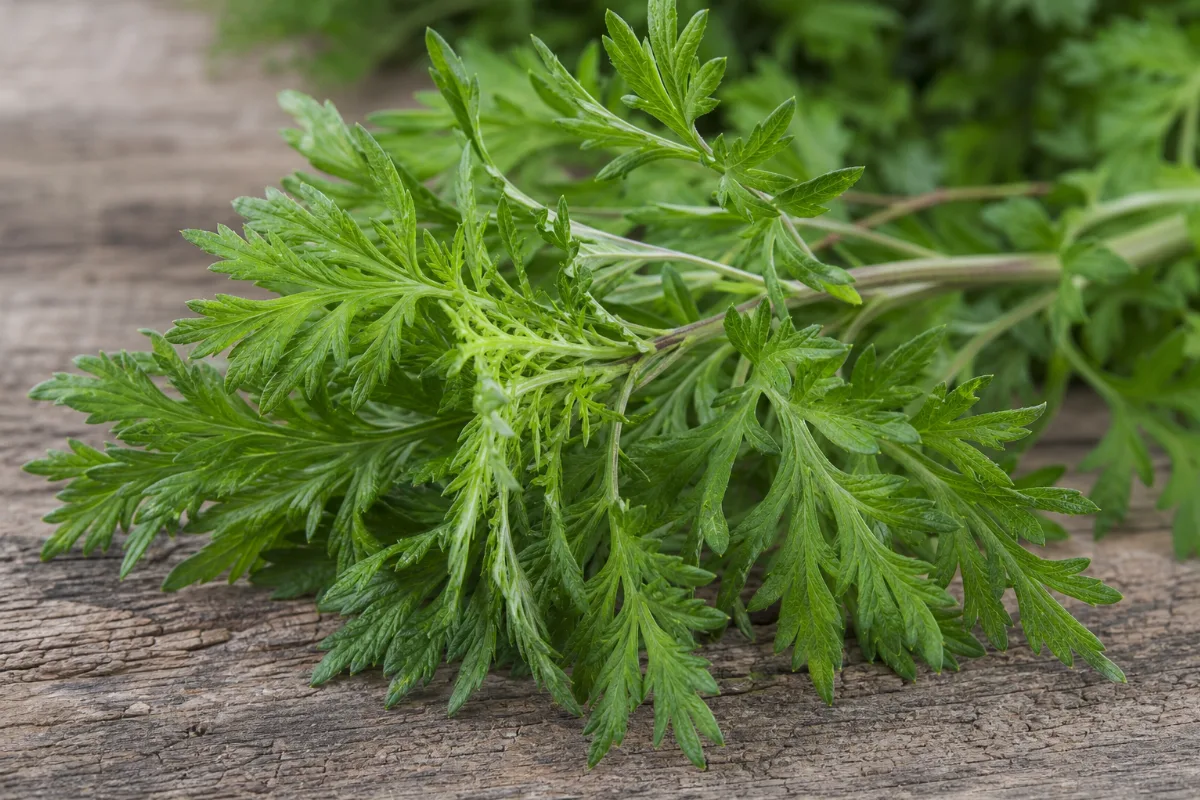
Herbs & Botanicals · Herbs · Old women's-health and gut herb of the daisy family, with very little human research on the herb itself
Mugwort
Artemisia vulgaris L. · also called Mugwort, common wormwood, felon herb, beifuss (German), armoise commune (French), artemisa (Spanish)
Mugwort is a daisy-family plant whose aerial parts have been used in Chinese, Hindu and European medicine for gut and gynaecological problems. Burning it near the skin is called moxibustion. Evidence for taking it by mouth is almost absent, and it carries real cautions in pregnancy, allergy and for people at risk of seizures.
General information, not medical advice. Last substantive update · Not medically reviewed. A named clinician has not signed off on this page. How this page is made
About Mugwort
Mugwort (Artemisia vulgaris) is an old daisy-family herb with very little human research. The moxibustion evidence for breech babies is a separate technique. Allergy, pregnancy and thujone cautions are the best-documented points.
What it is
Mugwort (Artemisia vulgaris) is a daisy-family plant that grows across Europe, parts of Asia and Africa, and North America. The herb used is the aerial parts. Its main chemical groups are essential oil, flavonoids and sesquiterpene lactones.
Medieval Europe called it the 'mother of herbs'. Traditional Chinese, Hindu and European medicine used it for gut and gynaecological problems.
Traditional and current uses
NCCIH says mugwort is promoted by mouth for anxiety, menstrual cramps, high blood pressure and insomnia, and on the skin in a mix for raised scars. We found no human trial of oral mugwort for any of these.
Southeast Asian women's health traditions list it among the most often reported plants.
Moxibustion is a separate topic
Moxibustion burns mugwort close to the skin at acupoints. The best-studied use is for breech babies, where a Cochrane review found a small effect on baby position but not on caesarean rate. It tells us nothing about swallowed mugwort. We cover it separately and label it each time.
Allergy shots made from mugwort pollen are another separate product.
What the research shows
Little human research exists on the herb itself. NCCIH says there is not enough evidence to say mugwort is useful or safe for any condition. The studies we found are of moxibustion, of Artemisia extracts where the species was not named, and of allergy treatments. Everything else is lab or animal work.
At a glance
Traditional uses history, not proof
- Gut and gynaecological complaints in traditional Chinese, Hindu and European medicine
- Women's health uses in Southeast Asian traditions
- Moxibustion on acupoints, including for breech babies
Studied for research
- Breech baby position (moxibustion), moderate
- Blood pressure (moxibustion), very low
- Blood sugar (Artemisia extracts, species unstated), very low
- Period problems, anxiety and sleep: no human trial found
Main compounds
- Essential oil (varies: davanones, germacrene D, 1,8-cineole, camphor, thujones)
- Flavonoids and sesquiterpene lactones
- Pollen allergen Art v 1 (pollen, not the herb)
Common forms
- Dried aerial parts as tea or powder
- Extracts and tinctures
- Essential oil (concentrated; riskier)
- Moxa sticks or cones for burning near the skin
Research links: NCCIH: Mugwort usefulness and safety · EFSA opinion on mugwort tincture (animal feed) · Research Library · Genes & Biomarkers Library
The plant and its history
- Accepted scientific name
- Artemisia vulgaris L.
- Naming authority
- L. (Linnaeus); ACCEPTED in the GBIF backbone (key 3120946), exact match; species rank, active, in NCBI Taxonomy (taxid 4220). Checked 2026-10-25.
- Synonyms
- Artemisia indica var. heyneana Wall.; Artemisia vulgaris var. coarctica Besser; Artemisia parvifolia Besser
- Common names
- Mugwort (English); Common wormwood (English); Felon herb (English); Gemeiner Beifuss (German); Armoise commune (French); Bijvoet (Dutch); Assenzio selvatico (Italian); Gra-bynke (Danish)
- Botanical family
- Asteraceae (daisy family, also called Compositae)
- Classification
- Plantae > Tracheophyta > Magnoliopsida > Asterales > Asteraceae > Artemisia > Artemisia vulgaris
- Native range
- NCCIH: native to Europe and parts of Asia and Africa; now grows in many parts of the world, including North America.
- Habitat
- Not verified in the sources read.
- What the plant looks like
- Roots: Not verified in the sources read.; Stems: Not verified in the sources read.; Leaves: Not verified in the sources read.; Flowers: Not verified; the herb used is the aerial parts (Artemisiae vulgaris herba) per the 2020 review.; Fruit: Not relevant to medicinal use.
- Cultivation
- The 2020 review mentions micropropagation studies. Otherwise not verified.
- Harvest and processing
- Not verified. A Serbian study found oil yield and composition change when dried plant is stored for a year.
- Look-alikes and adulterants
- Name: Artemisia absinthium (wormwood); Note: A different species with its own EU monographs; used in absinthe. GBIF and the sources read treat it as separate.; Name: Other Artemisia species used for moxa; Note: Trial abstracts name A. vulgaris, but regional moxa may come from other Artemisia species. Not verified in the sources read.; Name: Ragweed (Ambrosia); Note: A different daisy-family genus with unrelated main pollen allergen (Amb a 1 vs Art v 1) but shared profilin; relevant to cross-reactions.
- Sustainability and conservation
- Not assessed in the sources read.
Traditional use and history history, not clinical proof
| Tradition or era | Documented use | Source |
|---|---|---|
| Medieval Europe | Called the 'mother of herbs' in the Middle Ages (2020 review and NCCIH). | p32992959 |
| Traditional Chinese, Hindu and European medicine | Used to regulate the gut and to treat gynaecological problems (2020 review; NCCIH). | p32992959 |
| Southeast Asian women's health traditions | Among the most often reported species for fertility, menstruation, pregnancy and childbirth uses. | p24269772 |
| Chinese moxibustion | Burned near acupoints such as BL67 for breech baby; 'moxa' is the Japanese name for A. vulgaris according to the 1998 JAMA trial. | p9820259 |
| Modern regulation | The 2020 review says the European Pharmacopoeia lists the species as a potential homeopathic raw material. No EU herbal medicine monograph found. Wikipedia-only claims were not used. | p32992959 |
Traditional use shows how a plant was used. It does not show that a supplement works or is safe today.
What is inside, and how it may work
What the plant contains and how those compounds act in cells and animals. Laboratory and animal mechanisms are not proven effects in people.
Main compounds
| Compound | Family | Where it is concentrated | Activity studied | Level of evidence |
|---|---|---|---|---|
| alpha-Thujone PubChem 261491 | monoterpene ketone | Aerial parts and essential oil (variable) Thujones about 268.5 mg/kg in one raw plant sample; not detected in five tincture batches (EFSA) | Blocks GABA-A receptors in lab and animal tests; convulsant at high doses. 10 8 20 | Laboratory research |
| beta-Thujone PubChem 91456 | monoterpene ketone | Aerial parts and essential oil (variable) Included in the EFSA thujone total | Thujone isomer; the lab work focused on alpha-thujone. 10 20 | Laboratory research |
| 1,8-Cineole PubChem 2758 | monoterpene | Essential oil 16.4% in one Lithuanian oil | Oil component; oils rich in it were toxic to brine shrimp. 14 | Laboratory research |
| Camphor PubChem 2537 | monoterpene ketone | Essential oil The abstract names camphor acetate at 10.4% in one oil | Oil component linked to toxicity in the shrimp assay. 14 | Laboratory research |
| Davanones PubChem 519782 | sesquiterpene | Essential oil 13.8-45.5% in six oils | Main component of a davanone chemotype. 14 | Laboratory research |
| Germacrene D PubChem 5317570 | sesquiterpene | Essential oil 9.1-30.5% in four oils | Main component in some oils. 14 | Laboratory research |
| Sesquiterpene lactones (class) | sesquiterpene lactones | Herb | Reported in the herb; daisy-family sesquiterpene lactones can sensitise skin. 11 19 | Laboratory research |
| Flavonoids (class) | flavonoids | Herb | Reported in the herb alongside antioxidant and antispasm activity in lab studies. 11 | Laboratory research |
| Art v 1 (pollen allergen, protein) | defensin-like glycoprotein | Pollen | Major mugwort pollen allergen; closely linked to celery Api g 7 allergy. 25 1 | Human data |
Mechanisms, receptors and pathways
| Target or pathway | Gene or receptor | What was found | Level |
|---|---|---|---|
| GABA-A receptor inhibition | GABA-A receptor | alpha-Thujone inhibited all tested receptor types, most strongly those for tonic inhibition. 8 20 | Laboratory research |
| Thujone metabolism | CYP2A6, CYP3A4, CYP2B6 | Human liver preparations metabolise thujone mainly via CYP2A6. 20 | Laboratory research |
| IgE cross-reaction between mugwort pollen, celery and birch | Art v 1, Api g 7, profilin | Shared proteins explain mugwort-celery-spice and birch-mugwort-celery syndromes; Api g 7 IgE correlated with Art v 1 (r = 0.86). 1 2 25 | Human data |
| Oestrogen-like and anti-implantation action | Not identified | Leaf extract raised uterine weight in spayed young rats and blocked implantation. 24 | Animal research |
| Fetal activity after moxibustion | Not identified | Mothers counted more fetal movements with moxa at BL67 (48.45 vs 35.35). 5 | Human data |
| Chromosome damage (micronuclei) | Not identified | A. vulgaris extracts increased micronuclei in human lymphocytes. 21 | Laboratory research |
Absorption, metabolism and elimination
- Absorption
- Not studied for mugwort herb in people in the sources read.
- Distribution
- Not studied.
- Metabolism
- For thujone, human liver preparations use CYP2A6 mainly, then CYP3A4 and CYP2B6.
- Elimination
- Not studied.
- Bioavailability
- Unknown; the thujone review names human bioavailability as a key gap.
Isolated compounds versus whole extracts
Mugwort herb is a mixture of essential oil, flavonoids and sesquiterpene lactones, and the mix varies by plant, place and storage. Thujone results come from the isolated compound or from other products, so they should not be assumed for any given mugwort product. Moxibustion burns the herb and gives smoke and heat, which is another exposure from tea or capsules.
Nutritional composition
Mugwort is used as a herb and flavouring; the 2020 review says it is a valued spice in the food industry. It is not a notable source of nutrients in the sources read.
1 moderate certainty4 very low certainty5 not enough evidence
What is Mugwort good for?
The main proposed uses and how strong the human evidence is for each. 'Insufficient' means no human trial was found. Moxibustion and allergy-shot rows are different products from mugwort taken by mouth.
Benefits, one by one
Each card is a research question, not a promise. Tap a goal to filter. Open a card to see the studies, doses and limits.
Turning a breech baby (moxibustion, a separate technique)
Moderate certaintyMoxibustion means burning a stick or cone of mugwort close to a point on the little toe. It is not the same as taking mugwort by mouth. A Cochrane review found it probably reduces the chance that a baby is still breech at birth, but it probably does not change the caesarean rate. Two single trials point in opposite directions.
3 studiesMugwort moxa sticks, rolls or cones burned near acupoint BL67; the ab…
Studies, doses and limits
What the trials found
The 2023 Cochrane review pooled 13 trials (2,181 women). Compared with usual care alone, moxibustion plus usual care probably lowers the chance of a non-head-down baby at birth (7 trials, 1,152 women; RR 0.87, 95% CI 0.78 to 0.99; moderate-certainty). One trial against sham moxibustion (272 women) also favoured moxibustion (RR 0.74, 95% CI 0.58 to 0.95; moderate-certainty). A 1998 open trial in China (260 first-time mothers) found 75.4% head-down at birth with moxibustion vs 62.3% with routine care. A 2016 Danish trial (200 women) found no effect (RR 1.05, 95% CI 0.8 to 1.38).
Results
Small benefit for baby position; no clear change in caesarean section; side effects poorly reported.
Effect sizes as reported
Non-head-down at birth RR 0.87 (0.78 to 0.99); caesarean RR 0.94 (0.83 to 1.05); need for external version RR 0.62 (0.32 to 1.21, low-certainty); oxytocin use RR 0.28 (0.13 to 0.60, one trial).
Why this rating
Cochrane graded the baby-position result moderate-certainty. Trials cannot be blinded, results are mixed between trials, and this is a skin-heat technique, so it says nothing about the safety or benefit of eating or drinking mugwort.
Form and dose studied
Mugwort moxa sticks, rolls or cones burned near acupoint BL67; the abstracts read do not give duration or heat details.
Who was studied
Pregnant women at about 33 weeks with a single baby in breech position.
Limits
Not blinded in most trials; side effects poorly reported (one trial: 27 of 65 with moxibustion had nausea, smell, belly pain or uterine contractions vs 0 of 57 controls, very-low-certainty). Do not use burning-mugwort techniques in pregnancy without a trained midwife or doctor.
Why researchers looked
In traditional Chinese medicine, heat at acupoint BL67 on the little toe is used to encourage a breech baby to turn head-down in late pregnancy.
Traditional use
Moxibustion (burning mugwort near the skin) is an old technique in Chinese and other East Asian medicine. Moxa is the Japanese name for Artemisia vulgaris according to the 1998 JAMA trial.
Proposed mechanism Preliminary mechanism
The JAMA trial proposed that the heat may increase fetal movement, which was higher in the treated group. How it might turn a baby is not proven.
A proposed mechanism does not show that the effect happens in people.
Mugwort taken by mouth is not advised in pregnancy (see Safety). Moxibustion is a different exposure but the Cochrane review lists uterine contractions among reported side effects.
Period problems and women's health (traditional use)
Not enough evidenceMugwort has long been used for period pain and other women's health problems. We found no human trial of mugwort tea, capsules or extract for periods, so we cannot say whether it works. A rat study shows it can have strong effects on the womb and on implantation, which is a reason for caution.
4 studiesNot established. We make no claim about amounts.
Studies, doses and limits
What the trials found
No clinical trial of mugwort herb for periods or other gynaecological conditions was found in our PubMed searches. NCCIH states there is not enough evidence to say whether mugwort is useful for any health condition.
Results
No human results. Rats given a leaf extract at 300 and 600 mg per kg showed a 100% decrease in implant formation.
Effect sizes as reported
None in people.
Why this rating
No human trial found. Traditional use and one rat study cannot show benefit or safety.
Form and dose studied
Not established. We make no claim about amounts.
Who was studied
Not studied in people.
Limits
Searches were limited; trials in languages other than English or in non-indexed journals may exist.
Why researchers looked
Mugwort is promoted for menstrual cramps, and traditional medicine used it for gynaecological problems.
Traditional use
NCCIH says mugwort was used in traditional Chinese, Hindu and European medicine for gut and gynaecological problems. A review of Southeast Asian women's-health plants found Artemisia vulgaris among the most often reported species.
Proposed mechanism Animal research
A methanol (alcohol) leaf extract raised uterine weight in young spayed rats, which the authors read as an oestrogen-like effect, and stopped implantation in rats. This is animal data only.
A proposed mechanism does not show that the effect happens in people.
Because of the traditional use as an agent that affects the womb and the rat anti-implantation result, anyone pregnant or trying to conceive should avoid mugwort herb unless a clinician says otherwise.
Anxiety and sleep
Not enough evidenceMugwort is promoted for anxiety and trouble sleeping, but we found no human trial of mugwort for either. There is nothing to rate.
3 studiesNot applicable.
Studies, doses and limits
What the trials found
No randomised trial for anxiety or sleep was found. NCCIH says there is not enough evidence for any condition.
Results
None.
Effect sizes as reported
None.
Why this rating
No human studies found.
Form and dose studied
Not applicable.
Who was studied
Not studied.
Limits
No evidence either way.
Why researchers looked
NCCIH lists anxiety and insomnia among the conditions mugwort is promoted for by mouth.
Traditional use
Used in folk medicine in several regions; the sources read give no specific traditional method for sleep or anxiety.
Proposed mechanism Laboratory research
No sleep or anxiety mechanism is established. The main known nerve effect is of thujone, which blocks GABA-A receptors (the calming brain signal) in lab and animal tests. That points the opposite way to a calming action.
A proposed mechanism does not show that the effect happens in people.
Thujone's action on GABA-A receptors is why seizure-threshold caution appears in the Safety tab.
Blood pressure (moxibustion on the sole of the foot)
Very low certaintyA systematic review of Chinese trials found burning mugwort at a point on the foot, added to blood-pressure drugs, lowered systolic pressure a little more than drugs alone. It is a skin-heat technique, not an oral herb, and the trials were mixed.
1 studiesMoxa (A. vulgaris) burned near acupoint KI 1.
Studies, doses and limits
What the trials found
The 2014 review of randomised trials found systolic pressure was lower by 4.91 mmHg (95% CI -7.54 to -2.28) with moxibustion plus drugs than with drugs alone. Diastolic pressure showed no clear difference (-6.38; 95% CI -17.17 to 4.41).
Results
Small systolic drop as an add-on to drugs.
Effect sizes as reported
SBP WMD -4.91 mmHg (-7.54 to -2.28); DBP WMD -6.38 (-17.17 to 4.41).
Why this rating
The authors say trial designs differed; the abstract gives no quality rating or number of trials.
Form and dose studied
Moxa (A. vulgaris) burned near acupoint KI 1.
Who was studied
Adults with essential high blood pressure, mostly Chinese trials.
Limits
Mixed designs; not about oral mugwort; no quality grading in the abstract.
Why researchers looked
Moxibustion at acupoint KI 1 is used in Chinese medicine for high blood pressure.
Traditional use
Part of moxibustion practice in Chinese medicine.
Proposed mechanism Preliminary mechanism
No mechanism is established in the abstract.
A proposed mechanism does not show that the effect happens in people.
Do not replace blood-pressure medicine. Burn and smoke risks of moxibustion were not covered in the abstract.
Blood sugar and insulin resistance (Artemisia extracts)
Very low certaintyA meta-analysis of six trials found Artemisia extracts lowered an insulin-resistance score (HOMA-IR) but not fasting glucose or HbA1c. The abstract does not say which Artemisia species were used, so it cannot be tied to mugwort.
1 studiesNot stated.
Studies, doses and limits
What the trials found
Six trials. HOMA-IR fell (standardised difference -0.734; 95% CI -1.236 to -0.232). Fasting glucose (-0.595; -1.566 to 0.376), insulin (-0.322; -1.047 to 0.404) and HbA1c (-0.106; -0.840 to 0.629) were not significantly changed.
Results
One marker improved; others did not.
Effect sizes as reported
HOMA-IR -0.734 (-1.236 to -0.232).
Why this rating
Few trials, mixed or unstated species, no quality rating in the abstract, and most markers unchanged.
Form and dose studied
Not stated.
Who was studied
People with impaired blood sugar control.
Limits
Species not specified; not mugwort-specific.
Why researchers looked
Daisy-family plants have been linked to anti-diabetic effects in animal and human studies.
Traditional use
Not described in the sources read.
Proposed mechanism Preliminary mechanism
Not given in the abstract.
A proposed mechanism does not show that the effect happens in people.
People taking diabetes medicine should not add herbs without telling their clinician, as blood sugar could fall.
Appetite in people on dialysis (Artemisia capsules)
Very low certaintyOne small Iranian trial found an Artemisia capsule improved an appetite score in people on haemodialysis. The species was not named in the abstract, so it may not be mugwort.
1 studiesArtemisia capsule, 250 mg per day, species and extract not stated.
Studies, doses and limits
What the trials found
58 people aged 55 to 65 took 250 mg per day of an Artemisia capsule (26) or placebo (32) for six weeks. The appetite score improved more with Artemisia (p<0.05). Albumin, haemoglobin, urea, creatinine, arm size and BMI did not change significantly.
Results
Better appetite score; no change in blood measures.
Effect sizes as reported
No effect size or confidence interval in the abstract.
Why this rating
One small trial, species not stated, questionnaire outcome.
Form and dose studied
Artemisia capsule, 250 mg per day, species and extract not stated.
Who was studied
Adults on haemodialysis.
Limits
Small; unequal groups; single centre.
Why researchers looked
Poor appetite is a common problem in dialysis patients.
Traditional use
Not described.
Proposed mechanism Preliminary mechanism
Not given.
A proposed mechanism does not show that the effect happens in people.
Kidney patients should check any herb with their kidney team.
Mugwort hay fever (allergy shots with mugwort pollen extract)
Very low certaintyAllergy shots made from purified mugwort pollen extract lowered skin and eye sensitivity to mugwort in a very small old trial, but symptoms and medicine use did not clearly fall. This treats mugwort allergy and is not a use of the herb.
1 studiesInjected mugwort pollen extract (allergen product).
Studies, doses and limits
What the trials found
25 adults with hay fever were randomised; 20 finished two years. Mugwort treatment (9 people) lowered skin (p<0.05) and eye (p<0.01) sensitivity to mugwort but not symptom scores or medicine use. Birch or grass treatment did reduce symptoms and medicine use in its own season.
Results
Skin and eye sensitivity down; symptoms not clearly improved.
Effect sizes as reported
p values only in the abstract.
Why this rating
20 completers, 1995, mixed results.
Form and dose studied
Injected mugwort pollen extract (allergen product).
Who was studied
Adults with seasonal hay fever.
Limits
Not herbal use; tiny trial.
Why researchers looked
Mugwort pollen is a major cause of late-summer hay fever in Europe.
Traditional use
Not a traditional use.
Proposed mechanism Pharmacological theory
Repeated small doses of the allergen are meant to reduce the immune reaction to it.
A proposed mechanism does not show that the effect happens in people.
Allergen treatment is given by an allergy clinic, not at home.
Body warmth after moxibustion
Not enough evidenceIn healthy adults a session of mugwort moxibustion on the belly did not raise skin temperature.
1 studiesMoxa cones at CV 12 for 30 minutes.
Studies, doses and limits
What the trials found
38 healthy adults had 30 minutes of A. vulgaris moxa and charcoal moxa in a cross-over trial. Mugwort moxa lowered temperature slightly at three points (not significant); charcoal moxa raised it slightly (not significant).
Results
No warming effect shown.
Effect sizes as reported
None significant.
Why this rating
One small pilot in healthy people.
Form and dose studied
Moxa cones at CV 12 for 30 minutes.
Who was studied
Healthy adults.
Limits
Pilot; skin temperature only.
Why researchers looked
Moxibustion is said to warm the body.
Traditional use
Warming is the traditional aim of moxibustion.
Proposed mechanism Preliminary mechanism
None established.
A proposed mechanism does not show that the effect happens in people.
None reported in the abstract.
Digestion and gut (traditional use)
Not enough evidenceMugwort has been used to regulate the digestive system in several traditions. No human trial of mugwort for digestion was found, so nothing can be rated.
2 studiesNot established.
Studies, doses and limits
What the trials found
No clinical trial found.
Results
None.
Effect sizes as reported
None.
Why this rating
No human studies.
Form and dose studied
Not established.
Who was studied
Not studied.
Limits
Traditional claims only.
Why researchers looked
Traditional use; mugwort is bitter and aromatic.
Traditional use
NCCIH and the 2020 review say traditional Chinese, Hindu and European medicine used it for gastrointestinal problems.
Proposed mechanism Laboratory research
Lab tests described in a review report antispasm activity of extracts.
A proposed mechanism does not show that the effect happens in people.
See the allergy and pregnancy warnings in the Safety tab.
Antioxidant, liver-protective and other lab findings
Not enough evidenceIn lab and animal tests mugwort extracts were antioxidant, liver-protective, antispasm, pain-relieving, oestrogen-like, cell-toxic and antimicrobial. These are early findings and do not show what happens in people.
1 studiesVarious extracts.
Studies, doses and limits
What the trials found
None.
Results
Lab and animal results only.
Effect sizes as reported
Not given in the review abstract.
Why this rating
Lab and animal studies do not establish benefit in people.
Form and dose studied
Various extracts.
Who was studied
Cells and animals.
Limits
The review abstract does not separate cell, animal and human studies.
Why researchers looked
Researchers screen plant extracts in cells and animals.
Traditional use
Not applicable.
Proposed mechanism Laboratory research
Reported in a review as activities of essential oil, flavonoids and sesquiterpene lactones.
A proposed mechanism does not show that the effect happens in people.
Some of the same lab work shows chromosome-damage signals (see Safety).
Connections to the rest of health
How Mugwort connects to the rest of our health knowledge graph. Every link says what kind of connection it is. A safety link (for example to the liver) is a warning, not a benefit. A study that merely mentions a topic never creates a benefit link.
Explore every connection: goals, body systems, organs, symptoms, genes
A. Wellness goals
| Connected to | Kind of connection | Evidence status | Context | Studies |
|---|---|---|---|---|
| Womens Wellness | Potential benefit | Moderate certainty | Turning a breech baby (moxibustion, a separate technique): Moxibustion means burning a stick or cone of mugwort close to a point on the little toe. It is not the same as taking mugwort by mouth. A Cochrane review found it probably reduces the chance that a baby is still breech at birth, but it probably does not change the caesarean rate. Two single trials point in opposite directions. | 7 5 4 |
| Womens Wellness | Traditional use | Not enough evidence | Period problems and women's health (traditional use): Mugwort has long been used for period pain and other women's health problems. We found no human trial of mugwort tea, capsules or extract for periods, so we cannot say whether it works. A rat study shows it can have strong effects on the womb and on implantation, which is a reason for caution. | 17 28 24 11 |
| Hormone Balance | Traditional use | Not enough evidence | Period problems and women's health (traditional use): Mugwort has long been used for period pain and other women's health problems. We found no human trial of mugwort tea, capsules or extract for periods, so we cannot say whether it works. A rat study shows it can have strong effects on the womb and on implantation, which is a reason for caution. | 17 28 24 11 |
| Anxiety Support | Traditional use | Not enough evidence | Anxiety and sleep: Mugwort is promoted for anxiety and trouble sleeping, but we found no human trial of mugwort for either. There is nothing to rate. | 17 8 20 |
| Better Sleep | Traditional use | Not enough evidence | Anxiety and sleep: Mugwort is promoted for anxiety and trouble sleeping, but we found no human trial of mugwort for either. There is nothing to rate. | 17 8 20 |
| Blood Pressure Support | Potential benefit | Very low certainty | Blood pressure (moxibustion on the sole of the foot): A systematic review of Chinese trials found burning mugwort at a point on the foot, added to blood-pressure drugs, lowered systolic pressure a little more than drugs alone. It is a skin-heat technique, not an oral herb, and the trials were mixed. | 27 |
| Heart Health | Potential benefit | Very low certainty | Blood pressure (moxibustion on the sole of the foot): A systematic review of Chinese trials found burning mugwort at a point on the foot, added to blood-pressure drugs, lowered systolic pressure a little more than drugs alone. It is a skin-heat technique, not an oral herb, and the trials were mixed. | 27 |
| Blood Sugar Balance | Potential benefit | Very low certainty | Blood sugar and insulin resistance (Artemisia extracts): A meta-analysis of six trials found Artemisia extracts lowered an insulin-resistance score (HOMA-IR) but not fasting glucose or HbA1c. The abstract does not say which Artemisia species were used, so it cannot be tied to mugwort. | 22 |
| Metabolic Health | Potential benefit | Very low certainty | Blood sugar and insulin resistance (Artemisia extracts): A meta-analysis of six trials found Artemisia extracts lowered an insulin-resistance score (HOMA-IR) but not fasting glucose or HbA1c. The abstract does not say which Artemisia species were used, so it cannot be tied to mugwort. | 22 |
| Digestive Support | Potential benefit | Very low certainty | Appetite in people on dialysis (Artemisia capsules): One small Iranian trial found an Artemisia capsule improved an appetite score in people on haemodialysis. The species was not named in the abstract, so it may not be mugwort. | 16 |
| Immune Support | Potential benefit | Very low certainty | Mugwort hay fever (allergy shots with mugwort pollen extract): Allergy shots made from purified mugwort pollen extract lowered skin and eye sensitivity to mugwort in a very small old trial, but symptoms and medicine use did not clearly fall. This treats mugwort allergy and is not a use of the herb. | 18 |
| Digestive Support | Traditional use | Not enough evidence | Digestion and gut (traditional use): Mugwort has been used to regulate the digestive system in several traditions. No human trial of mugwort for digestion was found, so nothing can be rated. | 17 11 |
| Gut Health | Traditional use | Not enough evidence | Digestion and gut (traditional use): Mugwort has been used to regulate the digestive system in several traditions. No human trial of mugwort for digestion was found, so nothing can be rated. | 17 11 |
| Inflammation Balance | Preliminary mechanism | Not enough evidence | Antioxidant, liver-protective and other lab findings: In lab and animal tests mugwort extracts were antioxidant, liver-protective, antispasm, pain-relieving, oestrogen-like, cell-toxic and antimicrobial. These are early findings and do not show what happens in people. | 11 |
| Liver Support | Preliminary mechanism | Not enough evidence | Antioxidant, liver-protective and other lab findings: In lab and animal tests mugwort extracts were antioxidant, liver-protective, antispasm, pain-relieving, oestrogen-like, cell-toxic and antimicrobial. These are early findings and do not show what happens in people. | 11 |
B. Body systems
| Connected to | Kind of connection | Evidence status | Context | Studies |
|---|---|---|---|---|
| Immune system | Adverse effect or risk | Moderate certainty | Pollen allergy and celery-mugwort-spice cross-reaction. Pollen allergy; celery-mugwort-spice syndrome. Preparation or compound: Mugwort pollen allergens (Art v 1) and herb |
1 25 23 |
| Reproductive system | Contraindication | Low certainty | Not advised in pregnancy (NCCIH); rat anti-implantation result. Not advised in pregnancy; rat anti-implantation result. Preparation or compound: Mugwort herb; thujone |
17 24 |
| Nervous system | Adverse effect or risk | Very low certainty | GABA-A receptor blocking; seizure caution. GABA-A blocking; seizure caution. Preparation or compound: Thujone |
20 8 |
| Skin | Adverse effect or risk | Low certainty | Possible contact or systemic dermatitis in daisy-family sensitised people. Preparation or compound: Sesquiterpene lactones |
19 15 |
| Reproductive System | Biological association | Moderate certainty | Studied for: Turning a breech baby (moxibustion, a separate technique) Studied for: Period problems and women's health (traditional use) | 7 5 4 17 28 24 11 |
| Nervous System | Biological association | Not enough evidence | Studied for: Anxiety and sleep | 17 8 20 |
| Cardiovascular System | Biological association | Very low certainty | Studied for: Blood pressure (moxibustion on the sole of the foot) | 27 |
| Metabolism Weight | Biological association | Very low certainty | Studied for: Blood sugar and insulin resistance (Artemisia extracts) | 22 |
| Endocrine System | Biological association | Very low certainty | Studied for: Blood sugar and insulin resistance (Artemisia extracts) | 22 |
| Digestive System | Biological association | Very low certainty | Studied for: Appetite in people on dialysis (Artemisia capsules) Studied for: Digestion and gut (traditional use) | 16 17 11 |
| Immune System | Biological association | Very low certainty | Studied for: Mugwort hay fever (allergy shots with mugwort pollen extract) | 18 |
| Respiratory System | Biological association | Very low certainty | Studied for: Mugwort hay fever (allergy shots with mugwort pollen extract) | 18 |
| Musculoskeletal System | Biological association | Not enough evidence | Studied for: Body warmth after moxibustion | 13 |
| Hepatic System | Biological association | Not enough evidence | Studied for: Antioxidant, liver-protective and other lab findings | 11 |
I. Biomarkers
| Connected to | Kind of connection | Evidence status | Context | Studies |
|---|---|---|---|---|
| Baby head-down at birth (moxibustion trials) | Biological association | Moderate certainty | Measured in trials: mixed. A lab change is not the same as a health benefit. | 7 5 4 |
| Caesarean section (moxibustion trials) | Biological association | Moderate certainty | Measured in trials: no-change. A lab change is not the same as a health benefit. | 7 |
| Fetal movements counted by the mother | Biological association | Low certainty | Measured in trials: raised. A lab change is not the same as a health benefit. | 5 |
| HOMA-IR (insulin resistance score) | Biological association | Very low certainty | Measured in trials: lowered. A lab change is not the same as a health benefit. | 22 |
| Fasting blood glucose | Biological association | Very low certainty | Measured in trials: no-change. A lab change is not the same as a health benefit. | 22 |
| HbA1c | Biological association | Very low certainty | Measured in trials: no-change. A lab change is not the same as a health benefit. | 22 |
| Systolic blood pressure | Biological association | Very low certainty | Measured in trials: lowered. A lab change is not the same as a health benefit. | 27 |
| Albumin and haemoglobin (dialysis trial) | Biological association | Very low certainty | Measured in trials: no-change. A lab change is not the same as a health benefit. | 16 |
J. Genes, receptors and enzymes
K. Biological pathways
L. Active compounds
| Connected to | Kind of connection | Evidence status | Context | Studies |
|---|---|---|---|---|
| alpha-Thujone | Biological association | In vitro | Blocks GABA-A receptors in lab and animal tests; convulsant at high doses. Preparation or compound: Aerial parts and essential oil (variable) |
10 8 20 |
| beta-Thujone | Biological association | In vitro | Thujone isomer; the lab work focused on alpha-thujone. Preparation or compound: Aerial parts and essential oil (variable) |
10 20 |
| 1,8-Cineole | Biological association | In vitro | Oil component; oils rich in it were toxic to brine shrimp. Preparation or compound: Essential oil |
14 |
| Camphor | Biological association | In vitro | Oil component linked to toxicity in the shrimp assay. Preparation or compound: Essential oil |
14 |
| Davanones | Biological association | In vitro | Main component of a davanone chemotype. Preparation or compound: Essential oil |
14 |
| Germacrene D | Biological association | In vitro | Main component in some oils. Preparation or compound: Essential oil |
14 |
| Sesquiterpene lactones (class) | Biological association | In vitro | Reported in the herb; daisy-family sesquiterpene lactones can sensitise skin. Preparation or compound: Herb |
11 19 |
| Flavonoids (class) | Biological association | In vitro | Reported in the herb alongside antioxidant and antispasm activity in lab studies. Preparation or compound: Herb |
11 |
| Art v 1 (pollen allergen, protein) | Biological association | Human | Major mugwort pollen allergen; closely linked to celery Api g 7 allergy. Preparation or compound: Pollen |
25 1 |
Each connection is stored with the ingredient, the connected record, the kind of connection, the evidence status, the supporting studies, the preparation or compound involved, and a review date (last reviewed October 25, 2026).
Evidence at a glance: what changed in 8 lab markers
Tap a number to show only those markers. Counts are markers, not people.
The evidence
The research centre for Mugwort. Every record here was checked against PubMed or the publisher's page; we never list a study we have not verified.
Evidence by outcome
Bars show how many studies we found for each outcome, not how well it works. People are added up across trials only (reviews are not added, to avoid double counting).
How we rate evidence
High certainty
Several well-run trials or reviews agree; further research is unlikely to change the picture much.
Moderate certainty
Good trials point the same way, but some doubt remains.
Low certainty
Small, short or inconsistent trials. The finding could change with better research.
Very low certainty
Very little or very weak human data. Treat as a possibility only.
Mixed findings
Trials or reviews disagree with each other.
Not enough evidence
Not enough human research to say either way.
Evidence against
Good research found no benefit, or found harm.
We take the reviewers' own risk-of-bias and GRADE statements where they exist, and otherwise judge from study size, design, consistency, directness and whether a product matches what is sold. Many publications do not make evidence high. Method note: We searched PubMed and read the abstracts of every PubMed study cited, read the NCCIH mugwort page, read the EFSA mugwort tincture opinion through its PMC web version, and checked plant names in GBIF and NCBI Taxonomy and compounds in PubChem. Not verified: the EMA site could not be opened and no mugwort monograph was found; FDA, German Commission E, WHO, LiverTox and LactMed could not be confirmed. Most studies were read as abstracts only. Certainty ratings are the compiler's reading except where Cochrane's own grades are quoted.
Study library: every study we checked 29
| Study | Design | People | Product, dose, length | Result |
|---|---|---|---|---|
| Ballmer-Weber 2024 New light on an old syndrome: Role of Api g 7 in mugwort pollen-related celery allergy. J Allergy Clin Immunol · PMID 38763171 · DOI |
Cross sectional (diagnostic) study |
79 Adults and children with confirmed celery allergy |
Blood IgE tests to celery and mugwort allergens Not applicable Not applicable Not applicable · vs Not applicable |
77% had IgE to mugwort pollen and 80% to birch pollen. 49 of 79 had whole-body reactions. IgE to the celery protein Api g 7 (52% of patients) tracked closely with mugwort Art v 1 (r = 0.86). Sensitised to Api g 7 vs not: odds of a severe allergic reaction about 6 times greater (OR 5.87; 95% CI 1.08 to 32.0). Mugwort-linked celery allergy can be severe (OR 5.87 (1.08 to 32.0)) Methods, limits and fundingOutcomes: IgE to celery and mugwort allergens; reaction severity Limitations: Selected celery-allergic patients; wide confidence interval; some authors work for a diagnostics company. Funding and conflicts: Some authors are employed by Thermo Fisher Scientific (test maker) Read: abstract |
| Bauer 1996 IgE cross-reactivity between birch pollen, mugwort pollen and celery is due to at least three distinct cross-reacting allergens: immunoblot investigation of the birch-mugwort-celery syndrome. Clin Exp Allergy · PMID 8911702 · DOI |
Lab (serum) study |
38 23 people with celery allergy and 15 with celery antibodies but no symptoms |
Blood serum tests with birch, mugwort and celery extracts Not applicable Not applicable Not applicable · vs Not applicable |
Birch pollen, mugwort pollen and celery share cross-reacting proteins (Bet v 1 relatives, profilin and a 46-60 kD group). The authors propose widening the mugwort-celery syndrome to a birch-mugwort-celery syndrome. Explains the cross-allergy (None) Methods, limits and fundingOutcomes: Shared allergen proteins Limitations: Small lab study. Funding and conflicts: Not stated in the abstract Read: abstract |
| Blagojevic 2006 Chemical composition of the essential oils of Serbian wild-growing Artemisia absinthium and Artemisia vulgaris. J Agric Food Chem · PMID 16787028 · DOI |
Lab analysis in-vitro |
Wild plants from Serbia | Essential oils of A. absinthium and A. vulgaris (aerial parts and roots) aerial parts and roots Not applicable Not applicable · vs Not applicable |
Oil yield and composition changed significantly during one year of storage of dried plant, and differed between roots and aerial parts. The oils had broad antimicrobial activity in the lab. Oil makeup depends on plant part and storage (None) Methods, limits and fundingOutcomes: Oil composition; effect of storage Limitations: The abstract does not list thujone amounts. Funding and conflicts: Not stated in the abstract Read: abstract |
| Bue 2016 Moxibustion did not have an effect in a randomised clinical trial for version of breech position. Dan Med J · PMID 26836801 |
Controlled trial |
200 Women at 33 weeks with a single breech baby, Denmark |
Moxibustion with a burning stick containing Artemisia vulgaris moxa stick (mugwort) Daily 2 weeks (average 16 days) · vs No moxibustion |
No significant difference: RR 1.05 (95% CI 0.8 to 1.38); also none in first-time mothers (RR 1.17, 0.77 to 1.76) or women with earlier births (RR 1.0, 0.69 to 1.46). No effect found (RR 1.05 (0.8 to 1.38)) Methods, limits and fundingOutcomes: Breech position after the trial Limitations: Not blinded; the abstract does not describe sham treatment. Funding and conflicts: Funding: none. Registered NCT02251886. Registration: NCT02251886 Read: abstract |
| Cardini 1998 Moxibustion for correction of breech presentation: a randomized controlled trial. JAMA · PMID 9820259 · DOI |
Controlled trial |
260 First-time mothers at 33 weeks with breech baby, China |
Moxa (Artemisia vulgaris) rolls at acupoint BL67 moxa rolls (mugwort) Not stated in the abstract 7 days, plus 7 more if still breech · vs Routine care without breech treatment (open trial) |
Mean fetal movements 48.45 vs 35.35 (P<.001). Head-down at 35 weeks: 98 of 130 (75.4%) vs 62 of 130 (47.7%) (RR 1.58, 95% CI 1.29 to 1.94). At birth 75.4% vs 62.3% (RR 1.21, 95% CI 1.02 to 1.43), even though 24 controls and 1 treated woman had external version. More babies head-down after moxibustion (RR 1.21 (1.02 to 1.43) head-down at birth) Methods, limits and fundingOutcomes: Fetal movements; head-down position at 35 weeks and at birth Limitations: Open (unblinded) trial with no sham treatment; Chinese hospitals only; 1998. Funding and conflicts: Not stated in the abstract Read: abstract |
| Chen 2011 Spice allergy. Ann Allergy Asthma Immunol · PMID 21875536 · DOI |
Narrative review |
Not applicable | Spices and spice allergy unspecified Not applicable Not applicable · vs Not applicable |
Spice allergy seems rare (4 to 13 per 10,000 adults reported) but is probably underdiagnosed. Sensitisation is mostly by breathing in cross-reacting pollens, particularly mugwort and birch. Diagnosis rests on history and oral challenge; treatment is strict avoidance, which labelling can make hard. Mugwort pollen allergy can lead to spice reactions (None) Methods, limits and fundingOutcomes: Spice allergy, cause and diagnosis Limitations: Review; not specific to mugwort herb. Funding and conflicts: Not stated in the abstract Read: abstract |
| Coyle 2023 Cephalic version by moxibustion for breech presentation. Cochrane Database Syst Rev · PMID 37158339 · DOI |
Systematic review |
2181 Pregnant women with a single baby in breech position (13 trials) |
Moxibustion (burning a mugwort herb stick near an acupuncture point on the little toe, BL67) added to usual care moxa (mugwort) burned near skin, not taken by mouth Not stated in the abstract Not stated in the abstract · vs Usual care alone, sham moxibustion, or other methods |
Moxibustion plus usual care probably reduces non-head-down position at birth (7 trials, 1152 women; RR 0.87, 95% CI 0.78 to 0.99; moderate-certainty). Probably little or no effect on caesarean section (6 trials, 1030 women; RR 0.94, 95% CI 0.83 to 1.05; moderate-certainty). Effect on need for external cephalic version very uncertain (RR 0.62, 95% CI 0.32 to 1.21; low-certainty). Side effects (nausea, smell, abdominal pain, uterine contractions) were poorly reported; one trial: 27 of 65 with moxibustion vs 0 of 57 controls (very-low-certainty). Small drop in breech position at birth; no clear drop in caesarean (RR 0.87 (0.78 to 0.99) for non-head-down at birth) Methods, limits and fundingOutcomes: Baby not head-down at birth, need for external version, caesarean, side effects Limitations: Participants cannot be blinded; side effects poorly reported; one trial stopped early. Funding and conflicts: Reviewer Caroline Smith is an investigator on a moxibustion pilot study; the study was assessed independently by others Read: abstract |
| Czyzewska 2013 Monoterpene alpha-thujone exerts a differential inhibitory action on GABA(A) receptors implicated in phasic and tonic GABAergic inhibition. Eur J Pharmacol · PMID 23376563 · DOI |
Laboratory research in-vitro |
Cultured nerve cells and cloned receptors | alpha-thujone (pure compound) not applicable Not stated in the abstract Not applicable · vs Not applicable |
alpha-Thujone inhibited all GABA-A receptor types tested; the strongest effect was on receptors involved in tonic inhibition. The authors note that at high doses it may induce epileptic activity, although the role of thujone in absinthe poisoning was not supported. Explains how thujone could raise seizure risk (None) Methods, limits and fundingOutcomes: GABA-A receptor currents Limitations: Cell study; pure thujone, not mugwort. Funding and conflicts: Not stated in the abstract Read: abstract |
| Dosoky 2021 Maternal Reproductive Toxicity of Some Essential Oils and Their Constituents. Int J Mol Sci · PMID 33673548 · DOI |
Narrative review mixed |
Animal and other studies of essential oil constituents | Essential oils and constituents including thujone unspecified Not applicable Not applicable · vs Not applicable |
The review covers concerns about essential oils in pregnancy (abortion, hormone changes, maternal toxicity, malformation, foetal toxicity) and lists thujone among the constituents summarised. The abstract does not give thujone findings. Pregnancy concern for thujone-containing oils (None) Methods, limits and fundingOutcomes: Abortion, hormone changes, maternal and foetal toxicity Limitations: The abstract does not give specific thujone results or mention mugwort. Funding and conflicts: Authors declare no conflict of interest Read: abstract |
| EFSA Panel on Additives and Products or Substances used in Animal Feed (FEEDAP) 2019 Safety and efficacy of a tincture derived from Artemisia vulgaris L. (Mugwort tincture) when used as a sensory additive in feed for all animal species EFSA Journal 17(11):e05879 · Source · DOI |
Authoritative guidance mixed |
Animal feed additive assessment | Mugwort tincture aerial parts (tincture) Proposed maximum 400 mg/kg complete feed (animal feed) Not applicable · vs Not applicable |
EFSA could not conclude the additive is safe at the proposed level because about 74% of the dry matter is uncharacterised. Raw plant material contained thujones at about 268.5 mg/kg; alpha- and beta-thujone were not detected in five tincture batches (limit 0.005% of the tincture). No data on skin or eye irritation or sensitisation. Characterisation gaps; thujone low in the tincture tested (None) Methods, limits and fundingOutcomes: Safety for animals, consumers and users Limitations: Animal-feed assessment, not a human herbal opinion. Read through the PMC web version summary, not the full PDF. Funding and conflicts: Regulator document Read: summary-only |
| Ekiert 2020 Significance of Artemisia Vulgaris L. (Common Mugwort) in the History of Medicine and Its Possible Contemporary Applications Substantiated by Phytochemical and Pharmacological Studies. Molecules · PMID 32992959 · DOI |
Narrative review mixed |
Not applicable (review of lab, animal and some other studies) | Mugwort herb (Artemisiae vulgaris herba) extracts and essential oil aerial parts Not applicable Not applicable · vs Not applicable |
The authors report that mugwort herb contains essential oil, flavonoids and sesquiterpene lactones, and that extracts showed antioxidant, liver-protective, antispasm, pain-relieving, oestrogen-like, cell-toxic, antibacterial and antifungal effects in studies. It was used in Chinese, Hindu and European medicine for gut and gynaecological problems. Background and lab support only; no clinical conclusion (None) Methods, limits and fundingOutcomes: History of use; chemistry; lab and animal findings Limitations: A narrative review; the abstract does not separate lab, animal and human findings or rate study quality. Funding and conflicts: Authors declare no conflict of interest Read: abstract |
| Garcia Ortiz 1996 Allergy to foods in patients monosensitized to Artemisia pollen. Allergy · PMID 9020422 · DOI |
Case series |
84 People with respiratory allergy only to A. vulgaris, compared with 50 grass-pollen controls |
Clinical history and tests Not applicable Not applicable Not applicable · vs Grass-pollen group |
23 of 84 (27.3%) reported food reactions: honey (14), sunflower seeds (11), chamomile (4), pistachio (3), hazelnut (2), lettuce (2), among others. The authors conclude mugwort hay fever is linked to daisy-family foods but not usually to other foods. Foods most often involved were daisy-family or related (None) Methods, limits and fundingOutcomes: Food allergy Limitations: Single-centre series; the abstract list is partly garbled. Funding and conflicts: Not stated in the abstract Read: abstract |
| Go 2015 Comparative effects of artemisia vulgaris and charcoal moxa stimulating Zhongwan (CV 12) on body temperature in healthy participants: a cross-over single-blind randomized study. J Tradit Chin Med · PMID 26591685 · DOI |
Controlled trial |
38 Healthy adults (40 enrolled, 38 completed) |
Moxa cones of Artemisia vulgaris vs charcoal moxa at acupoint CV 12 moxa cones (mugwort) 30 minutes treatment Single session, cross-over · vs Charcoal moxa |
Mugwort moxa slightly lowered temperature at three points, not statistically significant. Moxibustion did not raise body temperature; temperature differences between points changed. No warming effect shown (None) Methods, limits and fundingOutcomes: Skin temperature by infrared camera Limitations: Pilot; healthy people only. Funding and conflicts: Not stated in the abstract Read: abstract |
| Judzentiene 2016 Compositional Variability and Toxic Activity of Mugwort (Artemisia vulgaris) Essential Oils. Nat Prod Commun · PMID 30807041 |
Lab analysis in-vitro |
Essential oils from aerial parts of mugwort, Lithuania | Mugwort essential oil aerial parts Not applicable Not applicable · vs Not applicable |
Main components varied by sample: davanones (13.8-45.5%, six oils), germacrene D (9.1-30.5%, four oils), 1,8-cineole (16.4%, one oil), camphor acetate (10.4%, one oil). Oils with germacrene D, 1,8-cineole, camphor and davanone were notably toxic to brine shrimp. Oil chemistry varies a lot by plant (None) Methods, limits and fundingOutcomes: Oil composition; brine-shrimp toxicity Limitations: Lab assay on shrimp; not a human toxicity test. Funding and conflicts: Not stated in the abstract Read: abstract |
| Kljucevsek 2025 Allergic Potential of Medicinal Plants From the Asteraceae Family. Health Sci Rep · PMID 39995792 · DOI |
Narrative review mixed |
Not applicable | Asteraceae medicinal plants unspecified Not applicable Not applicable · vs Not applicable |
Daisy-family pollen contains cross-reacting panallergens (mainly in ragweed and Artemisia species) linked to pollen-food and pollen-medicine allergy. Sesquiterpene lactones can irritate skin and cause reactions on ingestion in sensitised people. Many uncertainties remain. Plausible cross-reaction risk (None) Methods, limits and fundingOutcomes: Allergic risk Limitations: Review; many uncertainties as the authors state. Funding and conflicts: Authors declare no conflicts of interest Read: abstract |
| Mohajeranirad 2021 Effects of Artemisia supplementation on anorexia in hemodialysis patients: a randomized, double-blind placebo-controlled trial. J Basic Clin Physiol Pharmacol · PMID 33583158 · DOI |
Controlled trial |
58 Adults aged 55-65 on haemodialysis, Iran |
Artemisia supplement capsule (species and extract not stated in the abstract) unspecified 250 mg per day 6 weeks · vs Placebo capsule |
Appetite score improved more than with placebo (p<0.05). No significant change in albumin, haemoglobin, urea, creatinine, arm circumference or BMI (p>0.05). Better appetite score; no change in blood measures (None reported) Methods, limits and fundingOutcomes: Appetite score (SNAQ); urea, creatinine, albumin, haemoglobin Limitations: Small; one centre; the abstract does not say which Artemisia species was used, so it cannot be assumed to be mugwort. Funding and conflicts: Not stated in the abstract Read: abstract |
| National Center for Complementary and Integrative Health Mugwort: Usefulness and Safety (NCCIH) NCCIH health information page · Source |
Authoritative guidance |
Public fact sheet | Mugwort (Artemisia vulgaris) unspecified Not applicable Not applicable · vs Not applicable |
Very little research in people; not enough evidence on whether mugwort is safe or useful for any condition. One preliminary study of a lotion containing mugwort and menthol relieved itch from raised scars, but the product had several ingredients. Not to be used during pregnancy; little known about breastfeeding. Little evidence either way; avoid in pregnancy (None) Methods, limits and fundingOutcomes: Usefulness and safety Limitations: Fact sheet without a stated date on the page read. Funding and conflicts: Government source Read: full-text |
| Olsen 1995 A double-blind, randomized study investigating the efficacy and specificity of immunotherapy with Artemisia vulgaris or Phleum pratense/betula verrucosa. Allergol Immunopathol (Madr) · PMID 8526170 |
Controlled trial |
25 Adults with hay fever to mugwort, or to birch or grass (20 completed) |
Allergen immunotherapy with Artemisia vulgaris pollen extract (injections; a purified allergy treatment, not a herbal product) pollen extract Not stated in the abstract 2 years · vs Birch or grass pollen extracts |
Mugwort treatment lowered skin (p<0.05) and eye (p<0.01) sensitivity to mugwort. No significant fall in medicine use or symptom scores. Birch/grass treatment cut symptoms and medicine use in its own season. Lab-type sensitivity fell; symptoms did not clearly improve (None) Methods, limits and fundingOutcomes: Skin and eye sensitivity, symptom scores, medicine use Limitations: Very small; old; about a different product (allergen extract for allergy), unrelated to herbal use. Funding and conflicts: Not stated in the abstract Read: abstract |
| Paulsen 2017 Systemic allergic dermatitis caused by sesquiterpene lactones. Contact Dermatitis · PMID 27568784 · DOI |
Narrative review |
People sensitised to daisy-family plants | Daisy-family plants containing sesquiterpene lactones unspecified Not applicable Not applicable · vs Not applicable |
People allergic to the daisy family are routinely warned against eating its vegetables, spices, teas and herbal remedies. Evidence for whole-body skin reactions is mostly anecdotal, but a few reports and challenges show it exists. Mugwort is named among species suspected of causing such reactions. Possible, mostly anecdotal (None) Methods, limits and fundingOutcomes: Skin reactions after eating or using daisy-family plants Limitations: Mostly anecdotal evidence, as the author states. Funding and conflicts: Not stated in the abstract Read: abstract |
| Pelkonen 2013 Thujone and thujone-containing herbal medicinal and botanical products: toxicological assessment. Regul Toxicol Pharmacol · PMID 23201408 · DOI |
Narrative review mixed |
Animal, lab and exposure data | Thujone and thujone-containing herbal products unspecified Best estimates for allowable daily intake of the order of 3-7 mg/day (authors' estimate) Not applicable · vs Not applicable |
Thujone blocks the GABA-A receptor and causes excitation and convulsions in animals in a dose-dependent way; doses needed in humans are uncertain. Nerve toxicity is the main toxic effect. Equivocal evidence of cancer in rats. Human liver metabolism is mainly by CYP2A6, then CYP3A4 and CYP2B6, which may cause drug interactions or differences between people. Key gaps: human dose-effect data and bioavailability. Thujone is neurotoxic in animals; human risk level uncertain (None) Methods, limits and fundingOutcomes: Neurotoxicity, metabolism Limitations: Review of mostly animal and lab data; not about mugwort itself. Funding and conflicts: Not stated in the abstract Read: abstract |
| Radovic Jakovljevic 2022 Comparative study of the genotoxic activity of Artemisia vulgaris L. and Artemisia alba Turra extracts in vitro. Drug Chem Toxicol · PMID 34844486 · DOI |
Laboratory research in-vitro |
Human blood cells in the lab | Acetone and water extracts of A. vulgaris and A. alba aerial parts (not stated in the abstract) 10 to 250 micrograms per mL in the cell test Not stated in the abstract · vs A. alba extracts |
The water extract of A. vulgaris raised micronucleus frequency at every concentration tested; both acetone extracts were genotoxic (except the lowest A. alba dose). The authors advise caution. Chromosome-damage signal in cells (None) Methods, limits and fundingOutcomes: Micronucleus test for chromosome damage Limitations: Lab test on blood cells; relevance to people drinking tea is unknown. Funding and conflicts: Not stated in the abstract Read: abstract |
| Sasani 2021 Effect of Artemisia extract on glycemic control: A systematic review and meta-analysis of randomized controlled trial. Int J Clin Pract · PMID 34390100 · DOI |
Meta-analysis |
People with impaired blood sugar control (6 trials) | Artemisia extracts (species not stated in the abstract) unspecified Not stated in the abstract Not stated in the abstract · vs Placebo |
HOMA-IR fell (standardised difference -0.734; 95% CI -1.236 to -0.232). Fasting glucose, insulin and HbA1c changes were not statistically significant. Possible lower insulin resistance; other markers unchanged (HOMA-IR -0.734 (-1.236 to -0.232)) Methods, limits and fundingOutcomes: HOMA-IR, fasting glucose, insulin, HbA1c Limitations: Six trials; species mixed or unstated, so not specific to mugwort. Funding and conflicts: Not stated in the abstract Read: abstract |
| Scala 2025 Art v 1 and Amb a 4 Co-Sensitization Identifies Italian Patients at Risk for Mugwort-Celery-Spice Syndrome. Allergy · PMID 41424259 · DOI |
Cross sectional |
7176 Patients tested in three Italian centres 2021-2025 |
Molecular allergy blood tests Not applicable Not applicable Not applicable · vs Not applicable |
Defensin sensitisation in 272 patients (3.8%). Art v 1 alone mostly meant hay fever; dual Art v 1 and Amb a 4 sensitisation marked high risk of food reactions (OR 6.9; p<0.0001). Of 90 tested for Api g 7, 82.7% were positive, all also sensitised to Art v 1. Identifies who is at risk of food reactions (OR 6.9 (CI not stated in the abstract)) Methods, limits and fundingOutcomes: Sensitisation to mugwort Art v 1 and ragweed Amb a 4; food reactions Limitations: Italian clinic patients; some authors work for a test maker. Funding and conflicts: Authors from Macro Array Diagnostics (test maker) Read: abstract |
| Shaik 2014 Antifertility activity of Artemisia vulgaris leaves on female Wistar rats. Chin J Nat Med · PMID 24702803 · DOI |
Animal research animal |
Female rats (number not stated in the abstract) | Methanolic (alcohol) extract of A. vulgaris leaves leaf 300 and 600 mg per kg Not stated in the abstract · vs Not stated in the abstract |
The extract produced a 100% decrease in implant formation and raised uterine weight (an oestrogen-like effect) in the spayed rats. Strong anti-implantation and oestrogen-like effect in rats (None) Methods, limits and fundingOutcomes: Implantation of the embryo; uterine weight in young spayed rats Limitations: Rat study with an alcohol leaf extract at high doses; cannot be applied directly to people drinking tea. Funding and conflicts: Not stated in the abstract Read: abstract |
| Wopfner 2005 The spectrum of allergens in ragweed and mugwort pollen. Int Arch Allergy Immunol · PMID 16254437 · DOI |
Narrative review |
Not applicable | Ragweed and mugwort pollen allergens pollen Not applicable Not applicable · vs Not applicable |
Mugwort pollen is one of the main causes of late-summer and autumn allergy in Europe and affects about 10-14% of patients with pollen allergy. Its major allergen Art v 1 is unrelated to ragweed's Amb a 1. Mugwort and ragweed pollen both contain profilin, a cross-reacting protein. Mugwort is a common pollen allergen (None) Methods, limits and fundingOutcomes: Main allergens Limitations: Review; figures are as stated by the authors. Funding and conflicts: Not stated in the abstract Read: abstract |
| Wuthrich 1990 Celery allergy associated with birch and mugwort pollinosis. Allergy · PMID 2288391 · DOI |
Case series |
70 People with positive tests to birch and/or mugwort pollen and celery |
Skin prick and IgE tests with celery preparations Not applicable Not applicable Not applicable · vs Not applicable |
94% had positive prick tests to raw celeriac; 36% to cooked celeriac. Celery-mugwort patients kept clearly positive IgE tests to heated celery extract and stick celery, unlike celery-birch patients. Mugwort-linked celery allergy can persist after heating (None) Methods, limits and fundingOutcomes: Skin test results Limitations: Old, small subgroups (6 celery-mugwort patients). Funding and conflicts: Not stated in the abstract Read: abstract |
| Yang 2014 Effectiveness of Stimulation of Acupoint KI 1 by Artemisia vulgaris (Moxa) for the Treatment of Essential Hypertension: A Systematic Review of Randomized Controlled Trials. Evid Based Complement Alternat Med · PMID 24744807 · DOI |
Systematic review |
Adults with high blood pressure (trials mostly from China) | Moxibustion at acupoint KI 1 (sole of foot) with Artemisia vulgaris moxa, added to blood-pressure drugs moxa (mugwort) burned near skin Not stated in the abstract Not stated in the abstract · vs Antihypertensive drugs alone |
Moxibustion plus drugs lowered systolic pressure more than drugs alone (weighted mean difference -4.91 mmHg; 95% CI -7.54 to -2.28). No clear difference in diastolic pressure (-6.38; 95% CI -17.17 to 4.41). The authors note the trial designs differed. Small systolic drop as an add-on, mixed designs (SBP WMD -4.91 (-7.54 to -2.28)) Methods, limits and fundingOutcomes: Systolic and diastolic blood pressure Limitations: Number of trials and quality rating not stated in the abstract; trials differed in design. Funding and conflicts: Not stated in the abstract Read: abstract |
| de Boer 2014 Medicinal plants for women's healthcare in southeast Asia: a meta-analysis of their traditional use, chemical constituents, and pharmacology. J Ethnopharmacol · PMID 24269772 · DOI |
Review of traditional use |
Traditional use reports (200 studies) | Plants used traditionally in women's health in Southeast Asia unspecified Not applicable Not applicable · vs Not applicable |
Artemisia vulgaris was among the most commonly reported species, mentioned in more than 10 different scientific articles. Shows it is widely used in women's health traditions; says nothing about whether it works or is safe (None) Methods, limits and fundingOutcomes: Which plants are used for fertility, menstruation, abortion, pregnancy, childbirth and breastfeeding Limitations: Counts reports of use, not clinical outcomes. Funding and conflicts: Not stated in the abstract Read: abstract |
| de la Torre Morin 2001 Clinical cross-reactivity between Artemisia vulgaris and Matricaria chamomilla (chamomile). J Investig Allergol Clin Immunol · PMID 11642570 |
Challenge study |
24 Patients with asthma or rhinitis sensitised mainly to A. vulgaris, Tenerife |
Eye, bronchial and oral challenges with mugwort and chamomile pollen; chamomile tea Not stated in the abstract Not stated in the abstract · vs Not applicable |
Chamomile skin tests were positive in 21 of 24. An oral challenge with commercial chamomile tea was positive in 13. The authors conclude that mugwort sensitisation is a primary risk factor for symptoms after drinking chamomile tea. High cross-reactivity between mugwort and chamomile (None) Methods, limits and fundingOutcomes: Challenge reactions Limitations: Small, in people already sensitised to mugwort. Funding and conflicts: Not stated in the abstract Read: abstract |
What we do not know yet
- Little human research on the herb itself: the trials found are of moxibustion, of Artemisia extracts with unnamed species and of allergy shots.
- No human data on pregnancy, breastfeeding or children; advice rests on NCCIH, a rat study and traditional use.
- EMA, FDA, Commission E, LiverTox, LactMed and WHO records could not be confirmed; EMA monograph not found.
- Thujone content of consumer products is unmeasured in the sources read.
How new research is added
New studies are found by a saved PubMed search and placed in a review queue. A person reads each one before it changes any rating or safety wording.
Lab markers
What changed in blood or saliva tests during trials. A changed number is not the same as feeling or being healthier, and we give no "normal ranges".
Metabolic 2
Fasting blood glucose
No clear change in trials
Blood sugar after not eating overnight.
Very low certaintyResults and what it means
Why it was measured
Main test for blood sugar control.
Statistical vs. clinical meaning
Not statistically significant.
Safety implication
Hypoglycaemia risk with diabetes drugs is not assessed in the abstract.
| Study | Result | People | Product |
|---|---|---|---|
| 22 | -0.595 (95% CI -1.566 to 0.376), not significant | 6 trials | Artemisia extract vs placebo |
HbA1c
No clear change in trials
Average blood sugar over about three months.
Very low certaintyOrgan function 1
Albumin and haemoglobin (dialysis trial)
No clear change in trials
Blood proteins and oxygen carrier used to judge nutrition and anaemia.
Very low certaintyResults and what it means
Why it was measured
Checks whether a supplement changed nutrition measures in dialysis.
Statistical vs. clinical meaning
Null result.
Safety implication
No harm signal on these markers in 6 weeks.
| Study | Result | People | Product |
|---|---|---|---|
| 16 | No significant change in albumin, haemoglobin, urea or creatinine (p>0.05) | 58 haemodialysis patients | Artemisia capsule 250 mg/day for 6 weeks |
Other 5
Baby head-down at birth (moxibustion trials)
Mixed results in trials
Whether the baby is head-first (cephalic) rather than breech when born.
Moderate certaintyResults and what it means
Why it was measured
Breech birth raises the chance of caesarean section and some complications.
Statistical vs. clinical meaning
A clinical outcome, but only a small pooled effect, and the Danish trial found none.
Safety implication
Not about mugwort taken by mouth.
| Study | Result | People | Product |
|---|---|---|---|
| 7 | Non-head-down at birth RR 0.87 (95% CI 0.78 to 0.99); 7 trials, 1,152 women (moderate-certainty) | Women with breech baby | Mugwort moxibustion plus usual care |
| 5 | 98 of 130 (75.4%) head-down at birth vs 81 of 130 (62.3%); RR 1.21 (1.02 to 1.43) | 130 vs 130 first-time mothers, China | Moxa rolls at BL67 for 1-2 weeks vs routine care |
| 4 | No difference in breech position; RR 1.05 (0.8 to 1.38) | 200 women, Denmark | Daily moxibustion for 2 weeks vs none |
Caesarean section (moxibustion trials)
No clear change in trials
Whether the baby was delivered by caesarean section.
Moderate certaintyResults and what it means
Why it was measured
A key practical outcome for mothers.
Statistical vs. clinical meaning
No clear difference.
Safety implication
Shows a better position does not clearly reduce caesareans in these trials.
| Study | Result | People | Product |
|---|---|---|---|
| 7 | RR 0.94 (95% CI 0.83 to 1.05); 6 trials, 1,030 women (moderate-certainty) | Women with breech baby | Mugwort moxibustion plus usual care vs usual care |
Fetal movements counted by the mother
Raised in trials
Movements of the baby counted by the mother in one hour a day for a week.
Low certaintyResults and what it means
Why it was measured
Used to test whether moxibustion makes the baby more active.
Statistical vs. clinical meaning
Self-counted in an open trial, so it could be biased.
Safety implication
None identified in the abstract.
| Study | Result | People | Product |
|---|---|---|---|
| 5 | Mean 48.45 vs 35.35 movements (P<.001; 95% CI for difference 10.56 to 15.60) | First-time mothers at 33 weeks | Moxa at BL67 for 7 days vs routine care |
HOMA-IR (insulin resistance score)
Lowered in trials
A calculation from fasting glucose and insulin that estimates insulin resistance.
Very low certaintyResults and what it means
Why it was measured
Used as a marker of how well the body responds to insulin.
Statistical vs. clinical meaning
A calculated marker, not a disease outcome.
Safety implication
None reported in the abstract.
| Study | Result | People | Product |
|---|---|---|---|
| 22 | -0.734 (95% CI -1.236 to -0.232) | People with impaired blood sugar control, 6 trials | Artemisia extract (species not stated) vs placebo |
Systolic blood pressure
Lowered in trials
The top blood pressure number.
Very low certaintyResults and what it means
Why it was measured
High pressure raises heart and stroke risk.
Statistical vs. clinical meaning
Small change; blood pressure is a surrogate, not the same as fewer strokes.
Safety implication
Not a replacement for medicine.
| Study | Result | People | Product |
|---|---|---|---|
| 27 | WMD -4.91 mmHg (95% CI -7.54 to -2.28) | Adults with essential hypertension | Mugwort moxibustion at KI 1 plus drugs vs drugs |
Safety
What studies and official sources say about side effects, medicines and who should check first. Each point shows what kind of evidence it comes from.
Main points to know 9
- Pollen and daisy-family allergy. Mugwort pollen is one of the main causes of late-summer and autumn hay fever in Europe, affecting about 10-14% of people with pollen allergy. Mugwort is in the daisy family (Asteraceae). People allergic to mugwort pollen or other daisy-family plants may react to mugwort herb, tea or products. Authoritative guidance 25 15 19
- Celery-mugwort-spice syndrome. People sensitised to mugwort pollen can react to celery (especially celery root) and to spices. In 79 people with celery allergy, 77% had IgE to mugwort pollen and those sensitised to the celery protein Api g 7 had about 6 times higher odds of a severe reaction. Reactions to heated celery can persist. Spice allergy is probably underdiagnosed, with mugwort and birch pollen the usual sensitisers. Human data 1 26 2 6 23
- Cross-reaction with chamomile and related foods. In 24 people sensitised to mugwort, 13 reacted to an oral challenge with chamomile tea. In 84 people allergic only to mugwort pollen, 27.3% reported food reactions, mostly to honey, sunflower seeds, chamomile and pistachio. Human data 29 12
- Pregnancy: do not use. NCCIH says mugwort should not be used during pregnancy. Traditional medicine used it for women's health problems, and an alcohol extract of mugwort leaves stopped implantation in rats. A review of essential oils lists thujone among constituents with pregnancy concerns. No human pregnancy safety data were found. Authoritative guidance 17 24 9 28
- Breastfeeding: not enough information. NCCIH says little is known about whether mugwort is safe while breastfeeding. We found no human data on mugwort passing into breast milk. Avoid unless a clinician agrees. Authoritative guidance 17
- Thujone and the seizure threshold. Mugwort herb contains thujones (about 268.5 mg/kg in raw plant material in one EFSA-assessed sample), though the content of thujone varies by plant and none was detected in the tincture batches tested. Thujone blocks GABA-A receptors in lab and animal tests and causes convulsions in animals at high doses. A review estimates acceptable daily intake of about 3-7 mg per day. No human seizure case from mugwort was found, but people with epilepsy or seizure history, or who take seizure medicine, should avoid it. Animal research 20 8 10
- Little human safety research. NCCIH says there is not enough evidence to know whether it is safe to take mugwort orally or use it on the skin. Authoritative guidance 17
- Chromosome-damage signal in cells. Water and acetone extracts of A. vulgaris increased micronuclei in human blood cells in the lab. This is a lab signal; its meaning for tea or capsules is unknown. Laboratory research 21
- Moxibustion is a different exposure. Cochrane lists nausea, unpleasant odour, abdominal pain and uterine contractions among moxibustion side effects, poorly reported (very-low-certainty). Smoke and burn risks were not covered in the sources we read. Systematic review 7
Side effects 4
| Effect | How often | Severity and recovery | Evidence |
|---|---|---|---|
| Allergic reactions: hay fever, itch, hives, whole-body reactions after eating celery or spices in people sensitised to mugwort 49 of 79 celery-allergic patients had whole-body reactions in one study, but that is a selected clinic group, not a rate for mugwort users. | Not established | mild to severe Usually settle when the trigger stops; severe reactions need urgent care | Case series 1 26 23 |
| Skin and systemic dermatitis from sesquiterpene lactones in sensitised people Evidence is mostly anecdotal, as the author says; mugwort is named among plants suspected of causing systemic reactions. | Not established | mild to moderate Usually clears when contact or intake stops | Authoritative guidance 19 15 |
| Reactions to chamomile tea in mugwort-sensitised people Challenge study in a select group. | 13 of 24 sensitised patients had a positive oral challenge | mild to moderate Not stated in the abstract | Controlled trial 29 |
| Nausea, smell, abdominal pain, uterine contractions with moxibustion Very-low-certainty; poorly reported. | 27 of 65 vs 0 of 57 in the one trial that gave usable data | unknown Unknown | Systematic review 7 |
Liver
We found no human case of liver injury from mugwort in the sources read, and no LiverTox entry specific to mugwort. Lab reviews describe liver-protective effects in extracts, which is not evidence for people. 11
How often. No frequency data. Not finding reports is not proof of safety, as our searches were limited.
Monitoring. No agency monitoring advice found. People with liver disease should ask a clinician before using herbs.
This is a safety connection. It is not evidence that Mugwort supports liver health.
Medicines and supplements 5
| With | Why it matters | Importance | Evidence | What to do |
|---|---|---|---|---|
| Seizure medicines (anticonvulsants) prescription | Thujone blocks GABA-A receptors and lowers the seizure threshold in animals. | Unknown in people; theoretical. | Pharmacological theory Very low certainty 20 8 | Avoid mugwort; ask a doctor or pharmacist. |
| Sedatives and calming drugs acting on GABA-A (benzodiazepines, alcohol) prescription | Thujone opposes GABA-A inhibition in lab tests, so effects could oppose the sedative. | Unknown. | Laboratory research Very low certainty 8 | Do not combine without asking a pharmacist. |
| Drugs cleared by CYP2A6, CYP3A4 or CYP2B6 prescription | Human liver preparations metabolise thujone mainly by CYP2A6, then CYP3A4 and CYP2B6. | Unknown; the review says it may cause interaction or genetic-variation effects. | Laboratory research Very low certainty 20 | Ask a pharmacist if you take narrow-margin medicines. |
| Oestrogen-sensitive treatments and contraception or fertility drugs hormonal | A mugwort leaf extract raised uterine weight in young spayed rats (oestrogen-like). | Unknown in people. | Animal research Very low certainty 24 | Avoid if on hormone treatment or trying to conceive unless advised. |
| Diabetes medicines prescription | A meta-analysis of Artemisia extracts (species unstated) found lower HOMA-IR. | Unknown for mugwort; could add to the effect of diabetes drugs. | Meta-analysis Very low certainty 22 | Tell your clinician before using. |
Who should check first 5
| Situation | Advice | Evidence |
|---|---|---|
| Pregnancy, or trying to conceive | Do not use (NCCIH). | Authoritative guidance 17 24 |
| Breastfeeding | Avoid; not enough information. | Authoritative guidance 17 |
| Allergy to mugwort pollen, daisy-family plants (Asteraceae), celery or spices | Avoid herb, tea and mugwort-containing spice blends. | Human data 1 19 |
| Epilepsy or any seizure history | Avoid because of thujone. | Pharmacological theory 20 8 |
| Children | No data found; avoid unless a clinician advises. | Traditional use 17 |
Overdose, product quality and regulators
Summary. Thujone is the main toxic concern: in animals it blocks the GABA-A receptor and causes excitation and convulsions in a dose-dependent way. A review judges the human risk uncertain, with nerve toxicity as the principal toxic outcome and equivocal evidence of cancer in rats.
Animal. Convulsions in a dose-dependent way with thujone; equivocal cancer evidence in rats (review).
Human doses studied. Not given for oral mugwort. No oral human trial of A. vulgaris herb was found.
High dose or long term signals. No human data. The review's best estimate of allowable daily thujone intake is 3-7 mg/day.
Overdose response. No human overdose reports for mugwort found. A 2013 lab paper says later studies ruled out a major role for thujone in absinthe poisoning.
Genotoxicity. Water and acetone extracts of A. vulgaris raised micronuclei in human blood cells in the lab.
Toxic plant parts. The aerial parts (herb) are used. The essential oil is more concentrated than a tea, and oil composition varies widely between samples, so thujone amounts in an oil cannot be assumed.
No mugwort-specific contamination study was found. Chemistry varies a lot between plants, so products differ.
Oil chemistry varies by sample. In Lithuanian mugwort oils the main component varied (davanones 13.8-45.5%, germacrene D 9.1-30.5%, 1,8-cineole 16.4%, camphor acetate 10.4%). 14
Storage and plant part change the oil. Oil yield and composition of A. vulgaris and A. absinthium changed during one year of storage and differed between roots and aerial parts. 3
Uncharacterised material. EFSA said about 74% of the dry matter of a mugwort tincture was uncharacterised. 10
| Body | Action | Date |
|---|---|---|
| NCCIH (US National Institutes of Health) (United States) | Fact sheet: not enough evidence of safety or usefulness for any condition; do not use in pregnancy; little known for breastfeeding. source | |
| EFSA FEEDAP Panel (European Union) | Animal-feed opinion on mugwort tincture: could not conclude it is safe at the proposed level because most of the material was uncharacterised. source | 2019-11-06 |
When to get medical help
- Trouble breathing, throat tightness, swelling of lips or face, hives or collapse after eating mugwort, celery or spices
- A seizure or unusual jerking movements
- Vaginal bleeding, cramping or leaking fluid in pregnancy after using mugwort
- Severe or spreading rash or blistering
- Yellow skin or eyes, dark urine or severe tiredness after starting any herbal product
Stop the supplement and contact a clinician or emergency service. In the US, Poison Control is 1-800-222-1222.
General information only, not medical advice. Ask a clinician or pharmacist before use, especially with medicines, in pregnancy or with a health condition. See the Natural Remedy Safety guide.
Frequently asked questions
Does mugwort work for anything?
What is the difference between mugwort and moxibustion?
Can mugwort turn a breech baby?
Is mugwort safe in pregnancy?
Is mugwort safe while breastfeeding?
Not enough is known, so avoid it unless a clinician agrees.
What is celery-mugwort-spice syndrome?
People allergic to mugwort pollen can also react to celery, especially celery root, and some spices, because of shared allergen proteins. In 79 people with celery allergy, 77% had IgE to mugwort pollen, and 49 had whole-body reactions. Anyone with this pattern should avoid mugwort products and see an allergy specialist.
Can mugwort cause allergy if I am allergic to chamomile or daisies?
What is thujone and why does it matter?
Could mugwort trigger seizures?
Does mugwort interact with medicines?
Does mugwort harm the liver?
No human liver case was found and there is no dedicated LiverTox entry. That is not proof of safety. People with liver disease should ask a clinician.
Explore by health goal
Womens WellnessDigestive SupportHormone BalanceAnxiety SupportBetter SleepBlood Pressure SupportHeart HealthBlood Sugar BalanceMetabolic HealthImmune SupportGut HealthInflammation BalanceLiver Support
Editorial transparency
- Written by
- AlternativeMed editorial team. Research compiled with AI assistance, then checked against PubMed records.
- Medical review
- None. This page has not been reviewed by a physician or pharmacist.
- First published
- 2026-10-25
- Last substantive update
- 2026-10-25
- How we research
- We searched PubMed and read the abstracts of every PubMed study cited, read the NCCIH mugwort page, read the EFSA mugwort tincture opinion through its PMC web version, and checked plant names in GBIF and NCBI Taxonomy and compounds in PubChem. Not verified: the EMA site could not be opened and no mugwort monograph was found; FDA, German Commission E, WHO, LiverTox and LactMed could not be confirmed. Most studies were read as abstracts only. Certainty ratings are the compiler's reading except where Cochrane's own grades are quoted.
- How we rate evidence
- See "How we rate evidence" in the Evidence tab.
- Independence
- No product is promoted on this page. No affiliate links are shown.
Sources 29
Each source was opened and checked. Where we read only the abstract, it says so. The small numbers in the text point here.
- Ballmer-Weber BK, Wangorsch A, Bures P, et al.. New light on an old syndrome: Role of Api g 7 in mugwort pollen-related celery allergy.. J Allergy Clin Immunol. 2024. PMID 38763171. DOI 10.1016/j.jaci.2024.04.030. (abstract)
- Bauer L, Ebner C, Hirschwehr R, et al.. IgE cross-reactivity between birch pollen, mugwort pollen and celery is due to at least three distinct cross-reacting allergens: immunoblot investigation of the birch-mugwort-celery syndrome.. Clin Exp Allergy. 1996. PMID 8911702. DOI 10.1111/j.1365-2222.1996.tb00503.x. (abstract)
- Blagojevic P, Radulovic N, Palic R, et al.. Chemical composition of the essential oils of Serbian wild-growing Artemisia absinthium and Artemisia vulgaris.. J Agric Food Chem. 2006. PMID 16787028. DOI 10.1021/jf060123o. (abstract)
- Bue L, Lauszus FF. Moxibustion did not have an effect in a randomised clinical trial for version of breech position.. Dan Med J. 2016. PMID 26836801. (abstract)
- Cardini F, Weixin H. Moxibustion for correction of breech presentation: a randomized controlled trial.. JAMA. 1998. PMID 9820259. DOI 10.1001/jama.280.18.1580. (abstract)
- Chen JL, Bahna SL. Spice allergy.. Ann Allergy Asthma Immunol. 2011. PMID 21875536. DOI 10.1016/j.anai.2011.06.020. (abstract)
- Coyle ME, Smith C, Peat B. Cephalic version by moxibustion for breech presentation.. Cochrane Database Syst Rev. 2023. PMID 37158339. DOI 10.1002/14651858.CD003928.pub4. (abstract)
- Czyzewska MM, Mozrzymas JW. Monoterpene alpha-thujone exerts a differential inhibitory action on GABA(A) receptors implicated in phasic and tonic GABAergic inhibition.. Eur J Pharmacol. 2013. PMID 23376563. DOI 10.1016/j.ejphar.2013.01.032. (abstract)
- Dosoky NS, Setzer WN. Maternal Reproductive Toxicity of Some Essential Oils and Their Constituents.. Int J Mol Sci. 2021. PMID 33673548. DOI 10.3390/ijms22052380. (abstract)
- EFSA Panel on Additives and Products or Substances used in Animal Feed (FEEDAP). Safety and efficacy of a tincture derived from Artemisia vulgaris L. (Mugwort tincture) when used as a sensory additive in feed for all animal species. EFSA Journal 17(11):e05879. 2019. DOI 10.2903/j.efsa.2019.5879. (summary-only)
- Ekiert H, Pajor J, Klin P, et al.. Significance of Artemisia Vulgaris L. (Common Mugwort) in the History of Medicine and Its Possible Contemporary Applications Substantiated by Phytochemical and Pharmacological Studies.. Molecules. 2020. PMID 32992959. DOI 10.3390/molecules25194415. (abstract)
- Garcia Ortiz JC, Cosmes PM, Lopez-Asunsolo A. Allergy to foods in patients monosensitized to Artemisia pollen.. Allergy. 1996. PMID 9020422. DOI 10.1111/j.1398-9995.1996.tb02136.x. (abstract)
- Go HY, Lee JA, Park S, et al.. Comparative effects of artemisia vulgaris and charcoal moxa stimulating Zhongwan (CV 12) on body temperature in healthy participants: a cross-over single-blind randomized study.. J Tradit Chin Med. 2015. PMID 26591685. DOI 10.1016/s0254-6272(15)30138-2. (abstract)
- Judzentiene A, Garjonyte R. Compositional Variability and Toxic Activity of Mugwort (Artemisia vulgaris) Essential Oils.. Nat Prod Commun. 2016. PMID 30807041. (abstract)
- Kljucevsek T, Kreft S. Allergic Potential of Medicinal Plants From the Asteraceae Family.. Health Sci Rep. 2025. PMID 39995792. DOI 10.1002/hsr2.70398. (abstract)
- Mohajeranirad M, Saeidi N, Nejad MK, et al.. Effects of Artemisia supplementation on anorexia in hemodialysis patients: a randomized, double-blind placebo-controlled trial.. J Basic Clin Physiol Pharmacol. 2021. PMID 33583158. DOI 10.1515/jbcpp-2020-0250. (abstract)
- National Center for Complementary and Integrative Health. Mugwort: Usefulness and Safety (NCCIH). NCCIH health information page. . (full-text)
- Olsen OT, Frolund L, Heinig J, et al.. A double-blind, randomized study investigating the efficacy and specificity of immunotherapy with Artemisia vulgaris or Phleum pratense/betula verrucosa.. Allergol Immunopathol (Madr). 1995. PMID 8526170. (abstract)
- Paulsen E. Systemic allergic dermatitis caused by sesquiterpene lactones.. Contact Dermatitis. 2017. PMID 27568784. DOI 10.1111/cod.12671. (abstract)
- Pelkonen O, Abass K, Wiesner J. Thujone and thujone-containing herbal medicinal and botanical products: toxicological assessment.. Regul Toxicol Pharmacol. 2013. PMID 23201408. DOI 10.1016/j.yrtph.2012.11.002. (abstract)
- Radovic Jakovljevic M, Stankovic M, Vukovic N, et al.. Comparative study of the genotoxic activity of Artemisia vulgaris L. and Artemisia alba Turra extracts in vitro.. Drug Chem Toxicol. 2022. PMID 34844486. DOI 10.1080/01480545.2021.2007025. (abstract)
- Sasani N, Kazemi A, Rezaiyan M, et al.. Effect of Artemisia extract on glycemic control: A systematic review and meta-analysis of randomized controlled trial.. Int J Clin Pract. 2021. PMID 34390100. DOI 10.1111/ijcp.14719. (abstract)
- Scala E, Cusa G, Villella V, et al.. Art v 1 and Amb a 4 Co-Sensitization Identifies Italian Patients at Risk for Mugwort-Celery-Spice Syndrome.. Allergy. 2025. PMID 41424259. DOI 10.1111/all.70195. (abstract)
- Shaik A, Kanhere RS, Cuddapah R, et al.. Antifertility activity of Artemisia vulgaris leaves on female Wistar rats.. Chin J Nat Med. 2014. PMID 24702803. DOI 10.1016/S1875-5364(14)60030-3. (abstract)
- Wopfner N, Gadermaier G, Egger M, et al.. The spectrum of allergens in ragweed and mugwort pollen.. Int Arch Allergy Immunol. 2005. PMID 16254437. DOI 10.1159/000089188. (abstract)
- Wuthrich B, Stager J, Johansson SG. Celery allergy associated with birch and mugwort pollinosis.. Allergy. 1990. PMID 2288391. DOI 10.1111/j.1398-9995.1990.tb00941.x. (abstract)
- Yang X, Xiong X, Yang G, et al.. Effectiveness of Stimulation of Acupoint KI 1 by Artemisia vulgaris (Moxa) for the Treatment of Essential Hypertension: A Systematic Review of Randomized Controlled Trials.. Evid Based Complement Alternat Med. 2014. PMID 24744807. DOI 10.1155/2014/187484. (abstract)
- de Boer HJ, Cotingting C. Medicinal plants for women's healthcare in southeast Asia: a meta-analysis of their traditional use, chemical constituents, and pharmacology.. J Ethnopharmacol. 2014. PMID 24269772. DOI 10.1016/j.jep.2013.11.030. (abstract)
- de la Torre Morin F, Sanchez Machin I, Garcia Robaina JC, et al.. Clinical cross-reactivity between Artemisia vulgaris and Matricaria chamomilla (chamomile).. J Investig Allergol Clin Immunol. 2001. PMID 11642570. (abstract)