Dong Quai (Angelica sinensis) as a Single Herb: Research and Safety
Dong quai (Angelica sinensis) root as a single herb: one placebo-controlled trial, an EU regulator statement, and cautions on warfarin, sun sensitivity, hormones and pregnancy.
Content last updated . This page has not been medically reviewed.
Safety first. Natural products can cause side effects and interact with medicines. Read herb safety and interactions before you use anything on this page.
What is Dong quai good for?
What the body uses it for, and how strong the evidence is. A normal job in the body is not proof that extra supplements add benefit; each card says which.
Menopause symptoms (hot flashes)
Preliminary or mixedDong quai is promoted for menopausal symptoms. In one 24-week placebo-controlled trial of 71 postmenopausal women, dong quai alone was no more helpful than placebo.
Supplements: One small trial found no benefit over placebo; MSK calls findings for menopausal symptoms inconclusive. Products and formulas vary.
Estrogen-like activity
Lab or animal research onlyLab extracts showed estrogen-like activity, but in the trial dong quai alone did not change the uterine lining or vaginal cells in postmenopausal women.
Supplements: Lab estrogen-like activity has not been shown to translate into an effect in women in the trial we read.
Period cramps and premenstrual symptoms
Not enough evidencePromoted for menstrual cramps and premenstrual symptoms. The sources we read give no trial results for these uses.
Supplements: No supporting trial found in sources read; tradition is not proof of benefit.
Hot flashes in men on androgen deprivation therapy
Not enough evidenceDong quai was ineffective for hot flashes in men on androgen deprivation therapy.
Supplements: No benefit shown.
Multi-herb formulas
Preliminary or mixedSome benefits are reported for formulas that contain dong quai plus other herbs, so they say little about the single root.
Supplements: Formula studies do not show what the single herb does.
Lab and animal effects (antitumor, tissue protection)
Lab or animal research onlyExtracts showed antitumor, neuroprotective and blood-cell-forming effects in lab studies, and root polysaccharides lessened chemotherapy toxicity in mice.
Supplements: No human evidence of benefit from these findings.
Connected topics
Open a group to see how each topic connects and how strong the evidence is.
Body systems (2)
- Integumentary SystemDocumented risk
Dong quai can make skin more sensitive to light.
- Skin, Hair & BeautyDocumented risk
Dong quai can make skin more sensitive to light.
Body parts (1)
- SkinDocumented risk
Dong quai can make skin more sensitive to light.
Root causes (1)
- Medication Side EffectsDocumented risk
Dong quai can interact with medicines: it may raise bleeding risk with warfarin and may change how some drugs (such as clozapine) are processed.
Documented risks and interactions (6)
- Raises bleeding risk with blood thinners (warfarin). A case report described a woman stable on warfarin whose clotting time (PT/INR) more than doubled after 4 weeks of dong quai. The root contains coumarin-type compounds.
- Sensitivity to sunlight. Dong quai can make the skin more sensitive to light (photosensitivity).
- Pregnancy and breastfeeding caution. Dong quai should be avoided in pregnancy and while breastfeeding; it may raise the risk of miscarriage.
- Hormone-sensitive cancers caution. Lab extracts stimulated breast cancer cells and promoted growth of estrogen receptor-positive tumors in a mouse model, so people with hormone-sensitive cancers should ask their doctor first.
- Changes how some medicines are processed. Long use may speed up a liver enzyme (CYP3A4) and could lower levels of some medicines; two case reports found it increased clozapine breakdown. Clinical relevance is unknown.
- Other side effects. Reported effects include bloating, loss of appetite, diarrhea, gynecomastia and high blood pressure.
Safety first: blood thinners, sun sensitivity and pregnancy
Memorial Sloan Kettering says dong quai may increase bleeding risk in people taking blood thinners such as warfarin, may cause skin sensitivity to light, and should be avoided in pregnancy because it can raise the risk of miscarriage, and avoided while breastfeeding. [1] A case report described a woman with atrial fibrillation stable on warfarin whose prothrombin time and INR more than doubled after 4 weeks of dong quai. [2] Ask a pharmacist or clinician first, tell the surgical team before any procedure, and see medicine interactions.What it is
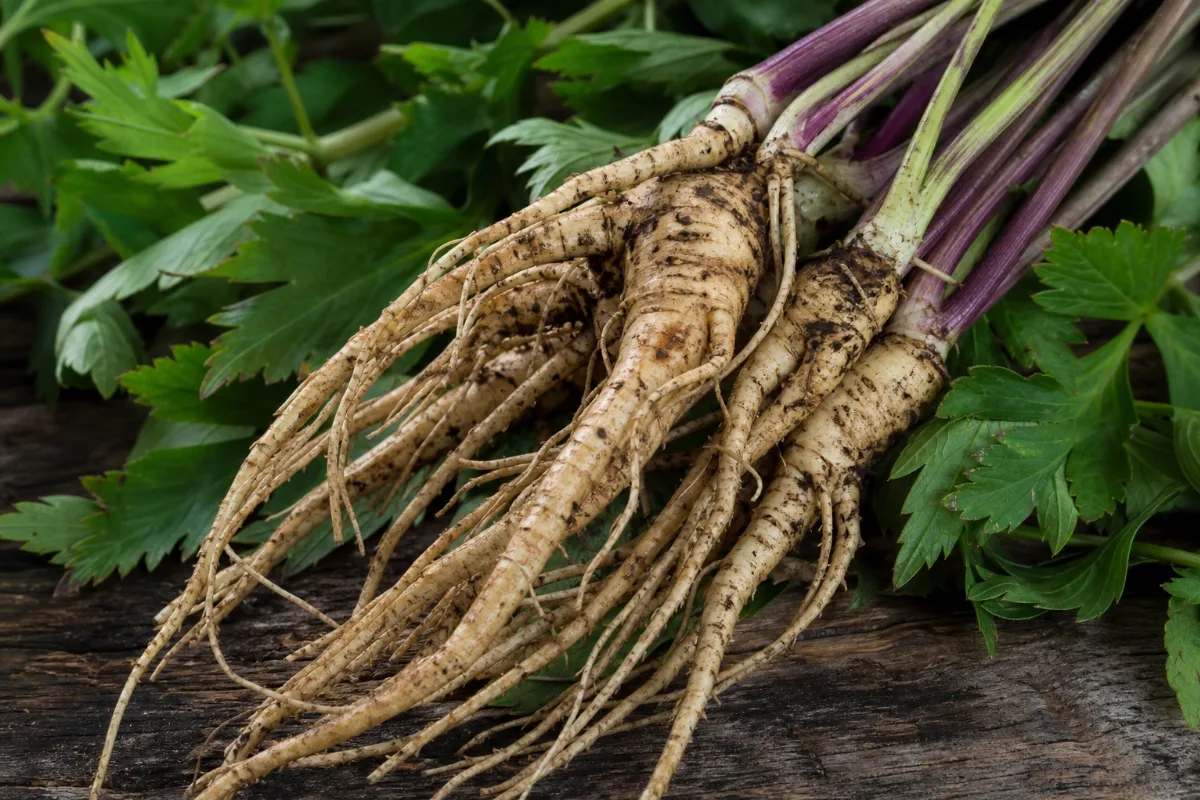
Dong quai, also called dang gui, is the root of Angelica sinensis (Oliv.) Diels, in the carrot family (Apiaceae). [3][1] In traditional Chinese medicine the root is often combined with other herbs in formulas. [1] That formula tradition is covered in dong quai in Chinese medicine; this page is about the single herb.Traditional use
Memorial Sloan Kettering says the root has a long history in traditional Chinese medicine, and the herb is promoted as a woman's herb for menstrual and menopausal symptoms. [1] Proper evidence not found, in the sources we read, for named regions or periods. Tradition is not proof of benefit.What research shows
| Use | What the source found | Strength of evidence | Population and form studied |
|---|---|---|---|
| Hot flashes in menopause | In a 24-week trial of 71 postmenopausal women, dong quai alone was no more helpful than placebo, and did not produce estrogen-like effects. [4] | No good evidence of benefit | Postmenopausal women; dong quai alone |
| Menopause symptoms overall | Memorial Sloan Kettering calls the findings inconclusive. [1] | Insufficient evidence | Mixed products and formulas |
| Hot flashes in men | Dong quai was ineffective in men. [1] | No good evidence of benefit | Men with hot flashes |
| Period cramps, PMS | Promoted uses; no results from a trial are given in the sources we read. [1] Proper evidence not found. | Traditional use only | Not applicable |
| Cells and animals | Extracts showed estrogen-like activity in vitro and promoted growth of estrogen receptor-positive breast tumors in a mouse model. [1] | Preclinical (cells or animals) | Not people |
Proper evidence not found for other single-herb trials: we searched PubMed for dong quai menopause and warfarin studies and the EU and Memorial Sloan Kettering pages, and the one placebo-controlled trial we could read is in the table. Formulas that contain dong quai and other herbs are covered in Chinese herbal medicine.
Official statement
The EU herbal committee (HMPC, 2013) concluded that a Community herbal monograph on Angelica sinensis root cannot be established. It cited a lack of adequate evidence of 30 years of use, including 15 in the EU, and "preliminary evidence of toxicological concerns" in the herb's phytochemistry. [5]Forms
Dong quai is sold as pills or liquid extracts. [1] Because formulas mix several herbs, a study of a formula says little about the single root. See forms and preparations.Safety details
- Side effects: photosensitivity and photodermatitis, loss of appetite, bloating, diarrhea and fever. [1] Reported adverse reactions also include gynecomastia and hypertension. [1]
- Medicines: possible added anticoagulant effect, though a human study suggests it may be limited. [1] Prolonged use may induce CYP3A4, which could lower levels of drugs cleared by it, with unknown clinical relevance. [1] Two case reports found it increased clozapine metabolism. [1]
- Hormone-sensitive cancers: talk to your provider; it may worsen your condition. [1] See herbs and hormone-sensitive conditions.
- Children, older adults, liver and kidney disease, allergy: not described in the sources we read.
- Quality: see quality testing and Chinese herbal product quality.
Frequently asked questions
Does dong quai help menopause symptoms?
In one 24-week placebo-controlled trial, dong quai alone was no more helpful than placebo. [4]
Is dong quai like estrogen?
That same trial found no estrogen-like effects in the uterus lining or vaginal cells. [4] Lab studies found estrogen-like activity. [1]
Can I take dong quai with warfarin?
Ask the prescriber or pharmacist first; a case report describes a large INR rise. [2]
Is dong quai safe in pregnancy?
Memorial Sloan Kettering says to avoid it. [1]
Why is there no EU monograph?
The EU committee said the requirements were not met, citing a lack of evidence of long use and toxicological concerns. [5]
References
- Memorial Sloan Kettering Cancer Center. Dong Quai: Purported Benefits, Side Effects and More. Read 2026-10-23.
- Page RL 2nd, Lawrence JD. Potentiation of warfarin by dong quai. Pharmacotherapy. 1999;19:870-876. Read 2026-10-23.
- GBIF Backbone Taxonomy. Angelica sinensis (Oliv.) Diels. Read 2026-10-23.
- Hirata JD, et al. Does dong quai have estrogenic effects in postmenopausal women? A double-blind, placebo-controlled trial. Fertil Steril. 1997;68:981-986. Read 2026-10-23.
- European Medicines Agency, HMPC. Public statement on Angelica sinensis (Oliv.) Diels, radix, EMA/HMPC/681574/2012. 9 July 2013. Read 2026-10-23.