Herbs & Botanicals · Herbs · Leaf extract sold for memory, with a mostly disappointing record
Ginkgo
Ginkgo biloba L. · also called Maidenhair tree, gingko (common misspelling), ginkgo (Spanish), Ginkgobaum (German), arbre aux quarante ecus (French), yin xing (tree) and bai guo (seed) in Chinese
Ginkgo is a tree native to China. Supplements are made from its fan-shaped leaves, usually as a concentrated standardised extract (EGb 761 is the best-studied) sold as tablets, capsules and drops, and leaf is also sold as powder, tincture and tea. The seeds are a separate, poisonous-when-raw food. This profile covers the leaf as a herb and supplement.
General information, not medical advice. Last substantive update · Not medically reviewed. A named clinician has not signed off on this page. How this page is made
About Ginkgo
Ginkgo (Ginkgo biloba) is a tree from China whose leaf extract is one of the best-selling herbal products for memory. The research does not back that up. For preventing dementia, for mild memory problems and for memory in healthy adults, large trials rated moderate certainty found no benefit. For treating dementia that has already started the evidence is low (a standardised extract, EGb 761, 240 mg a day), and for tinnitus, depression and ADHD it is very low. Most body uses are low, mixed or very low. The one moderate-certainty positive result is for a purified ginkgo injection used in hospital for stroke in China, which is a drug and not a supplement. Many positive trials are linked to the extract maker. The main cautions are possible extra bleeding, poisonous raw seeds, allergy and drug interactions.
What it is
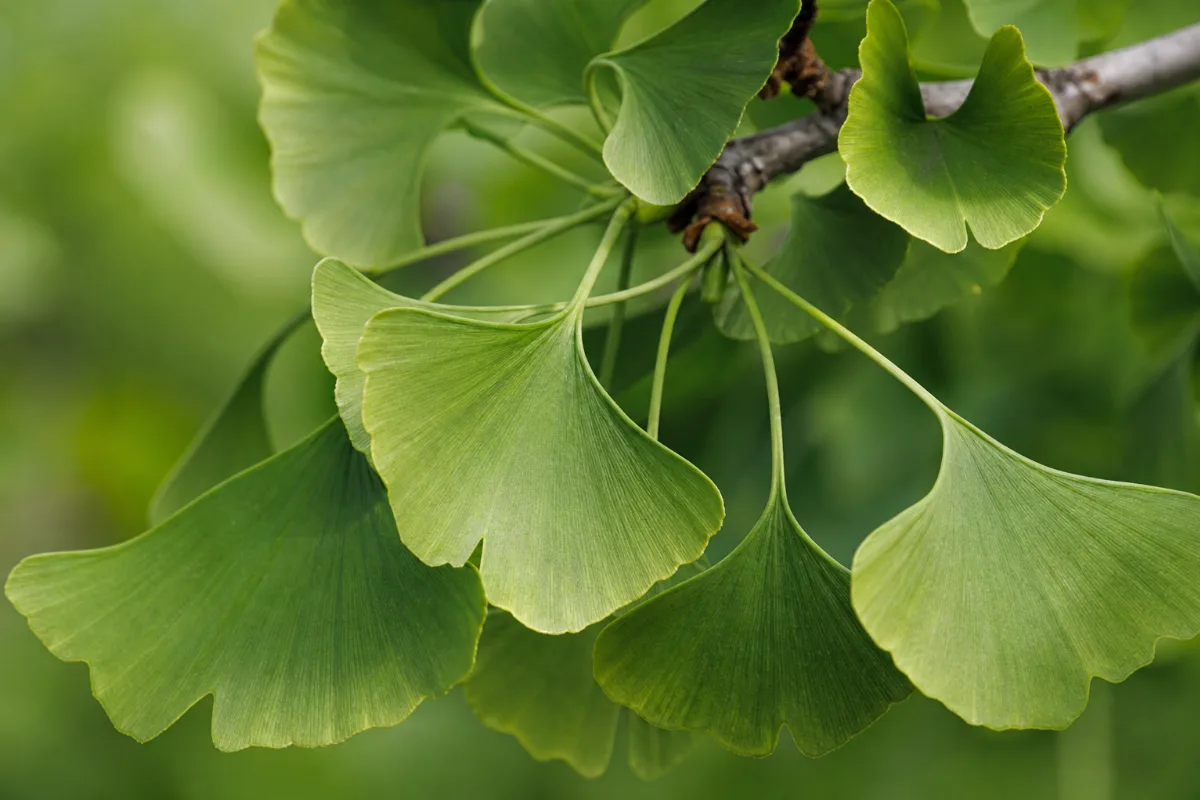
Ginkgo (Ginkgo biloba) is a tree from China, grown now in streets and parks around the world. It is the only living species in its family, a family that goes back about 280 million years. The trees are either male or female, and the leaves are the familiar two-lobed fan shapes. Supplements are made from the leaf. The seeds are a separate matter: they are eaten in parts of East Asia, but raw seeds are poisonous.
Most of the research is on one tightly standardised leaf extract called EGb 761, made to a fixed recipe (about 24 percent flavonoids and 6 percent terpene lactones, with ginkgolic acids kept very low). Other products can differ a lot from it, so a result for EGb 761 should not be assumed for any other capsule, tea or tincture.
This profile is about ginkgo leaf as a herb and supplement.
What makes it distinctive
Ginkgo contains unusual chemicals found in almost no other plant: ginkgolides and bilobalide (terpene lactones), plus flavonoids. In the lab, ginkgolide B blocks a substance that helps platelets stick together, and bilobalide protects the energy-making parts of cells. These are laboratory and animal findings. Nobody has shown they explain a benefit in people.
The leaf also contains ginkgolic acids, which can cause allergy and are limited to 5 parts per million in standard extracts. The seed contains ginkgotoxin, which works against vitamin B6 and can cause convulsions. This is why the seed and the leaf extract must never be treated as the same thing.
A purified single compound (ginkgolide B) did not reduce deaths in the one human trial in severe sepsis, and a standard extract is mostly made of other, little-studied material. The effects of the extract cannot be pinned on one molecule.
Historical and current uses
Traditional Chinese medicine has used the seed and the leaf, and the EU assessment report quotes sources saying the leaf has been used for asthma, high blood pressure, tinnitus and angina. Many popular claims, such as that ginkgo is a 270-million-year-old living fossil or that Europeans first met it around 1690, are repeated widely but could not be confirmed in the sources we read.
The modern standardised leaf extract is a European product of the 1970s onward. The EU herbal committee lists a refined extract (240 mg a day) as a well-established use for age-related thinking problems and quality of life in mild dementia, and powdered leaf as a traditional use for heavy legs and cold hands and feet. Today people mainly take ginkgo for memory, concentration, tinnitus and circulation.
What the research shows
The headline is not what the marketing suggests. For preventing dementia, for mild memory problems and for memory in healthy adults, large and long trials, rated moderate certainty, found no benefit. For treating dementia that has already started, a 2026 Cochrane review found a small benefit with low certainty (EGb 761, 240 mg a day, about six months). For tinnitus, depression and ADHD the evidence is very low.
Most body uses are rated low, mixed or very low: leg pain from narrowed arteries, glaucoma, altitude sickness, Raynaud's, PMS, blood sugar and blood pressure. For sexual problems caused by antidepressants and for cholesterol, the evidence points against a benefit.
The one moderate-certainty positive result is for a purified ginkgo injection given in hospital for stroke in China (3,448 people). That is a drug, not a supplement, and it does not show that shop-bought ginkgo helps after a stroke.
Many of the positive trials, particularly in dementia, anxiety and tinnitus, were linked to the maker of EGb 761, through funding or employees. That does not make them wrong, but it is a reason to wait for independent repeats.
Root, leaf, powder, extract: what is the difference?
Standardised leaf extract (EGb 761 and similar)
A concentrated leaf extract refined to about 24 percent flavonoids and 6 percent terpene lactones, with ginkgolic acids kept to 5 parts per million. The usual trial dose is 240 mg a day, as 120 mg twice a day or 240 mg once.
Almost every human trial used this extract, so its results are the ones we have. Positive findings in dementia come from EGb 761 at 240 mg a day; the large prevention trials used the same dose and found no benefit.
Other branded or Chinese leaf extracts
Examples named in the studies are Flavogin and Chinese standardised extracts. They are made differently from EGb 761.
We found no head-to-head comparison of extracts, so results from EGb 761 cannot be assumed for these.
Powdered leaf
Dried ground leaf in tablets or capsules. The EU traditional-use dose is 250 to 360 mg per dose, up to 750 mg a day.
This is listed only for long-standing use for heavy legs and cold hands and feet, with no trial proof claimed. No trials of powdered leaf were found.
Tincture and fresh-plant products
Alcohol-based or fresh-plant liquids and tablets.
In one blood-level study, a tincture gave much lower levels of bilobalide than EGb 761 tablets (3.53 versus 26.85 ng/mL at each product's maximum dose). No clinical trials of tinctures were found.
Leaf tea
Dried leaf steeped in hot water.
No trial and no regulator dose were found. A tea contains far less of the concentrated active compounds than an extract.
Seeds (ginkgo nuts)
The kernel, eaten cooked or roasted in some East Asian foods and remedies.
Not a supplement and not safe to use as a remedy. Raw seeds are toxic and serious effects, including convulsions, have followed roasted seeds. No safe amount is given. Never give seeds to children.
Purified ginkgo injection (hospital drug)
A purified ginkgo preparation given by vein in Chinese hospitals for acute stroke.
This is where the one moderate-certainty positive result comes from. It is a medical product used under supervision and says nothing about capsules, tea or tinctures.
At a glance
Traditional uses history, not proof
- Traditional Chinese medicine (leaf and seed), including for asthma, high blood pressure, tinnitus and angina, according to sources quoted in the EU assessment report
- EU well-established use of a refined leaf extract (240 mg a day): age-related thinking problems and quality of life in mild dementia
- EU traditional use of powdered leaf: heavy legs and cold hands and feet in minor circulation problems
- Seeds eaten cooked in some East Asian foods and remedies (raw seeds are toxic)
Studied for research
- Preventing dementia, mild memory problems and memory in healthy adults, moderate certainty of no benefit
- Dementia treatment (EGb 761, 240 mg a day), low certainty
- Tinnitus, depression and ADHD, very low certainty
- Body uses (leg pain on walking, glaucoma, altitude sickness, Raynaud's, PMS, blood sugar), mostly low, mixed or very low
- Stroke recovery: purified ginkgo injection in hospital, moderate certainty (a drug, not a supplement)
- Antidepressant sexual side effects and cholesterol, evidence points against a benefit
Main compounds
- Ginkgolides A, B, C and J, and bilobalide (terpene lactones, unique to ginkgo)
- Flavonol glycosides of quercetin, kaempferol and isorhamnetin (flavonoids), plus biflavones and proanthocyanidins
- Unwanted: ginkgolic acids (allergenic, limited to 5 ppm in extracts) and ginkgotoxin (in seeds, works against vitamin B6)
Common forms
- Standardised leaf extract tablets or capsules, most trials 120 to 240 mg a day (EGb 761 at 240 mg a day for 12 to 26 weeks in the positive trials)
- Powdered leaf (EU traditional use, 250 to 360 mg per dose, up to 750 mg a day)
- Tinctures and fresh-plant products (much lower blood levels in one study; no trials)
- Leaf tea (no trials, no regulator dose)
- Seeds: not a supplement, not safe raw
- Purified injection used in Chinese hospitals for stroke
Research links: NIH NCCIH: Ginkgo · EU herbal medicine monograph for ginkgo leaf (EMA) · US National Toxicology Program report 578 on ginkgo leaf extract (PubMed) · Cochrane review 2026: Ginkgo biloba for cognitive impairment and dementia (PubMed) · Research Library · Genes & Biomarkers Library
The plant and its history
- Accepted scientific name
- Ginkgo biloba L.
- Naming authority
- L. (Linnaeus), published in Mantissa Plantarum 2: 313 (1771) (GBIF)
- Synonyms
- Salisburia adiantifolia Sm.; Salisburia biloba (L.) Hoffmanns.; Salisburia ginkgo Rich.; Salisburia macrophylla Reyn.; Pterophyllus salisburiensis J.Nelson; Ginkgo macrophylla K.Koch; Ginkgo parvifolia Sugim.; Plus many garden forms, varieties and subspecies, for example Ginkgo biloba f. fastigiata, f. pendula, f. variegata, var. laciniata (GBIF lists over 40 such names)
- Common names
- Ginkgo (English); Gingko (common misspelling) (English); Maidenhair tree (English); Common ginkgo (English); Ginkgo; ginkgo biloba (Spanish); Arbre aux quarante ecus; abricotier d'argent (French); Ginkgobaum (German); Ginco (Italian); Gincgo; guinco (Portuguese); Bai guo (seed); yin xing (tree) (Chinese (pinyin)); Eunhaengnamu (Korean); Japanse notenboom (Dutch)
- Botanical family
- Ginkgoaceae. GBIF lists only Ginkgo biloba as a living (non-fossil) species; the rest of the Ginkgoaceae and the rest of the order Ginkgoales in GBIF are fossil groups. A phylogeography paper states that Ginkgo biloba is the only species of its genus that survives today and that the family appeared in the early Permian about 280 million years ago (p18554931). The statement that it is the only living member of its whole order rests on that reading of GBIF plus this paper and was not checked in a dedicated botanical source.
- Classification
- Plantae > Tracheophyta > Ginkgoopsida > Ginkgoales > Ginkgoaceae > Ginkgo > Ginkgo biloba
- Native range
- Native to China, with surviving native stands suggested in two refuge areas, south-west China and east China (the West Tianmu Mountains). Planted worldwide, spread by people to temperate regions less than about 300 years ago (p18554931). Whether any truly wild stands remain is debated in the botanical literature and was not settled in the sources read.
- Habitat
- Not verified from the sources read. Grown today as a street and park tree and in leaf plantations; the genome paper describes it as unusually resistant to stress (p27871309).
- What the plant looks like
- Roots: Not verified in the sources read.; Stems: Not verified in the sources read.; Leaves: Not verified in the sources read here. The species name biloba refers to the two-lobed, fan-shaped leaf (general botanical knowledge, not checked in a cited source).; Flowers: Trees are dioecious, meaning separate male and female trees (p27871309 describes dioecious reproduction). Details of cones and seeds were not checked.; Fruit: The medicinal seed (bai guo) comes from female trees; its outer coat contains the highest level of ginkgolic acids (p39880663).
- Cultivation
- Not verified in the sources read. Leaf material for extracts comes from commercial plantations (general knowledge; no source cited here).
- Harvest and processing
- Standardised extract (EGb 761 type): dried leaf extracted with 60% acetone and then purified to a dry extract at a ratio of 35-67 parts leaf to 1 part extract, then refined and quantified so that flavonoids, terpene lactones and ginkgolic acids fall within set limits (s-ema-ar-ginkgo-2014). Other forms on the European market include powdered leaf and tinctures (1:5 in ethanol 60%); the EMA report says these were not considered further because they were not shown to have 30 years of use.
- Look-alikes and adulterants
- Name: Raw ginkgo seed (as a food or medicine); Note: Not a look-alike of the leaf, but a different plant part with a different risk. Raw or large amounts of seed contain ginkgotoxin (4-O-methylpyridoxine), which acts against vitamin B6 and can cause convulsions, plus ginkgolic acid and an allergenic protein (p35176549, p11991529). How the seed is prepared in Chinese practice was not checked in a source here. Leaf products and seed products should never be treated as the same thing.; Name: Look-alike trees; Note: No confusion with another medicinal tree was found in the sources read. The unusual fan-shaped leaf makes the tree easy to recognise, but no source on this was checked.
- Sustainability and conservation
- Not verified. No IUCN assessment was retrieved in this round. Common as a planted tree worldwide (p18554931).
The plant and the parts used

Traditional use and history history, not clinical proof
| Tradition or era | Documented use | Source |
|---|---|---|
| Traditional Chinese medicine (leaf) | The EMA assessment report quotes Blaschek et al. (2011), who say ginkgo leaves are used in traditional Chinese medicine for asthma, high blood pressure, tinnitus (ringing in the ears) and angina (heart pain). The report does not give a date for the start of this use. | s-ema-ar-ginkgo-2014 |
| Traditional Chinese medicine (seed) | A review of ginkgo toxicity states that ginkgo seeds and leaves have been used as a herbal remedy for thousands of years (p28055331), and a chemistry review calls the tree the oldest living tree with a long history in Chinese medicine (p15038029). The seed (bai guo) is the part commonly named in TCM texts; the specific uses (for example for cough and wheeze) and the dates were not verified in a primary source here and are not stated. Both reviews are modern summaries, not ancient texts. | p28055331 |
| Spread of the tree outside China | A genetics paper states that the tree is native to China and was spread by people to temperate regions less than about 300 years ago, with trees planted in Europe, Japan, Korea and America introduced several times from eastern China. | p18554931 |
| Modern European leaf extracts, 1970s onward (marketing history) | The EMA report lists national marketing authorisations of refined ginkgo leaf dry extract starting from the 1980s and 1990s (for example Poland: some products on the market before 1980 and 1993; Denmark: around 1990; Norway 1996-1998; Romania 2001). Germany: all authorisations are for the refined, quantified dry extract (35-67:1), which follows a Commission E monograph of 1994 (BAnz Nr. 133). In the report the extract is described as having been developed in steps: initially the extract was not refined; refining steps were introduced during the 1980s (Polish entry). | s-ema-ar-ginkgo-2014 |
| European regulatory view (EMA/HMPC, report dated 28 January 2014) | HMPC adopted a public assessment report on Ginkgo biloba L., folium. For the refined dry extract (35-67:1, acetone 60%) the report supports a well-established use to improve age-related cognitive impairment and quality of life in mild dementia, and a traditional use of powdered leaf preparations for leg heaviness and cold hands and feet (indications as given on the EMA summary page; the figures behind them are in the report). The 30-year, 15-in-the-EU rule for traditional use is stated in the report; it excluded the tincture and the ethanol-50% extract. | s-ema-ar-ginkgo-2014 |
| Claims NOT verified | General statements that ginkgo is a 270-million-year-old living fossil, that Buddhist monks planted it, that Chinese texts of the 1400s describe the seed, and that Europeans first met it through Engelbert Kaempfer around 1690 are widely repeated, but none was confirmed in a source read here. Only the early-Permian origin of the family (about 280 million years ago) is given by a peer-reviewed paper read here (p18554931). | p18554931 |
Traditional use shows how a plant was used. It does not show that a supplement works or is safe today.
What is inside, and how it may work
What the plant contains and how those compounds act in cells and animals. Laboratory and animal mechanisms are not proven effects in people.
Main compounds
| Compound | Family | Where it is concentrated | Activity studied | Level of evidence |
|---|---|---|---|---|
| Ginkgolide A PubChem 9909368 | diterpene trilactone (ginkgolide) | Leaf In refined extract, ginkgolides A, B and C together make 2.8-3.4% (s-ema-ar-ginkgo-2014). NTP test extract: 3.74% ginkgolide A (p23652021). | Blocks the receptor for platelet-activating factor (PAF); in human platelets half the PAF-driven clumping was blocked at 13.7 micromolar (EMA report). Also affects nerve receptors in cells (weakly). After absorption it exists as closed trilactone and opened carboxylate forms, and opening reduces PAF blocking (p30054600). 159 104 189 39 | Laboratory research |
| Ginkgolide B PubChem 11973122 | diterpene trilactone (ginkgolide) | Leaf Included in the ginkgolide A, B, C total of 2.8-3.4% (EMA). NTP test extract: 1.62% (p23652021). | The most powerful PAF blocker of the ginkgolides: half-blocking of PAF-driven human platelet clumping at 1.6 micromolar (EMA report). In human platelets it also reduced thrombin-driven release and Syk/p38 signalling in the test tube (p25223809). Blocks the GABA-A and 5-HT3 receptor channels in cells at weak potency (p28416372, p21059362). Given as a purified drug into a vein to patients with severe sepsis it did not reduce deaths (p17516700). 159 103 126 167 1 39 | Laboratory research |
| Ginkgolide C PubChem 9867869 | diterpene trilactone (ginkgolide) | Leaf Included in the A, B, C total of 2.8-3.4% (EMA). NTP test extract: 3.06% (p23652021). | Weaker PAF blocker (half-blocking at 33.2 micromolar, EMA report). Poor oral bioavailability in a human study (about 6-15% for C and J) (p30054600). 104 125 39 | Laboratory research |
| Ginkgolide J PubChem 11154476 | diterpene trilactone (ginkgolide) | Leaf Present in leaves but is not part of the 2.8-3.4% limit for A, B, C in the refined extract. | No PAF-blocking effect in a human pharmacokinetic study that tested it; low oral bioavailability (about 6-15%) (p30054600). 104 198 | Human data |
| Bilobalide PubChem 73581 | sesquiterpene trilactone | Leaf 2.6-3.2% of the refined extract (EMA). NTP test extract: 6.94% (p23652021). | In the lab and in animals: protects mitochondria and cell energy (rat mitochondria at 2-8 mg/kg; cells at about 10 microg/mL) (p10403524, p11958534); reduces the action of GABA at GABA-A receptors in cells and raised GABA and its making enzyme in mouse hippocampus (p28416372, p10078989); weakly blocks the 5-HT3 channel (p21059362). No PAF blocking (p30054600). 68 166 126 143 167 106 104 | Animal research |
| Quercetin (as flavonol glycosides) PubChem 5280343 | flavonol (aglycone released from glycosides) | Leaf Ginkgo leaf has mostly glycosides of quercetin, kaempferol and isorhamnetin, not the free forms. Refined extract: flavonoid glycosides 22.0-27.0% (EMA); labs estimate the total by converting to the three aglycones (p19195661). | Classic antioxidant in the test tube. In humans, only about 0.17% of a dose of extract appeared in urine as quercetin, mainly as glucuronides (p14527089). Ginkgo-specific acylated quercetin and kaempferol glycosides (Q-ag, K-ag) raised dopamine and acetylcholine in rat prefrontal cortex after 14 days (p22784425). 172 198 76 135 | Animal research |
| Kaempferol (as flavonol glycosides) PubChem 5280863 | flavonol (aglycone released from glycosides) | Leaf Part of the 22.0-27.0% flavonoid glycoside total (EMA). | Reached the rat brain after oral EGb 761 (kaempferol was the highest of the three flavonoids in brain, 291 ng/g protein after a single 600 mg/kg dose) (p20486074). In humans about 0.22% of the dose appeared in urine (p14527089). 135 172 76 | Animal research |
| Isorhamnetin (as flavonol glycosides) PubChem 5281654 | flavonol (aglycone released from glycosides) | Leaf Part of the 22.0-27.0% flavonoid glycoside total (EMA). | Found with tamarixetin in rat plasma and brain after EGb 761 (p20486074). Alone it did not raise dopamine or acetylcholine in rat cortex (p22784425), so the effect seen with the extract is not a general flavonol effect. 135 76 | Animal research |
| Ginkgolic acid (C15:1 form) PubChem 5281858 | alkylphenol (alkyl-salicylic acid); unwanted | Leaf and seed; highest in the outer seed coat Limited to at most 5 ppm in the refined extract (EMA). Six forms occur and C15:1 is the commonest (p39880663). NTP test extract had 10.45 ppm (p23652021). | Unwanted: allergen (skin reactions) and in lab and animal work toxic to liver, cells and nerves; also under study as an anti-tumour agent in the lab. Removed from therapeutic extracts down to below 5 ppm (p36065842, p39880663). 150 15 198 39 | Laboratory research |
| Biflavones (for example bilobetin) PubChem 5315459 | biflavone (two linked flavones) | Leaf At most 0.1% in the refined extract (EMA). | Little research. A review says biflavones, proanthocyanidins and other minor groups make up most of the remaining 70% of a standardised extract and have been little studied (p19195661). The CID is for bilobetin; ginkgetin (5271805), isoginkgetin (5318569) and sciadopitysin (5281696) are other biflavones commonly linked with ginkgo, but their presence was not checked in a source read here. 198 39 | Insufficient |
| 4'-O-Methylpyridoxine (ginkgotoxin) PubChem 76581 | vitamin B6-related alkaloid-like compound; unwanted | Seed (most); also leaf The EMA report states that daily doses of authorised leaf extracts contain 11.4 to 58.6 microg of ginkgotoxin (leaf extract at 120-240 mg). | Acts against vitamin B6 and can cause convulsions after eating ginkgo seeds (p11991529, p35176549). The EMA report calculates a worst-case blood level from a leaf product of 53 to 80 nM and discusses whether it matters. 43 16 39 | Human data |
| 6-Hydroxykynurenic acid PubChem 440752 | quinoline carboxylic acid (kynurenic acid-type) | Leaf Named as a leaf constituent by van Beek (p19195661); the amount in standard extracts was not read. | Listed only as a constituent. PubChem lists this CID under the name 4,6-dihydroxy-2-quinolinecarboxylic acid; no activity data were read. 198 | Insufficient |
| Proanthocyanidins | condensed tannins (no single CID) | Leaf Up to 9.5% in the specification table of one national extract (EMA); the total in a refined extract is about 7% (p19195661). | No reliable assay exists and little is known of their effect (p19195661). 198 39 | Insufficient |
Mechanisms, receptors and pathways
| Target or pathway | Gene or receptor | What was found | Level |
|---|---|---|---|
| Platelet-activating factor (PAF) receptor blocking | PTAFR (PAF receptor) | Ginkgolides, above all ginkgolide B, compete with PAF, a fat-like signal that makes platelets clump and drives inflammation. Reported half-blocking figures in human platelets: ginkgolide A 13.7, B 1.6, C 33.2 micromolar and EGb 761 23.2 microg/mL (EMA report, source study not named there). Opening of the ginkgolide ring in blood (carboxylation) weakens this effect, and ginkgolide J and bilobalide do not block PAF (p30054600). A single human trial of purified ginkgolide B in severe sepsis found no significant fall in deaths (p17516700). Whether the doses and blood levels reached by ordinary leaf extract (a few ng/mL, p20041430) are enough to block PAF in people is not shown. 104 1 181 39 | Laboratory research |
| Platelet signalling (Syk, p38 MAPK) | SYK, MAPK14 (p38) | In fresh human platelets in the test tube ginkgolide B cut thrombin-driven ATP release by 50.8% and blocked release of PF4 and CD40L, along with Syk and p38 MAPK phosphorylation. Concentrations are not in the abstract and the work is lab only. 103 | Laboratory research |
| Antioxidant action / free-radical scavenging | Reactive oxygen species (non-gene); lipid peroxidation | EGb 761 scavenged peroxyl radicals in water, liposomes and human LDL in the test tube, protecting vitamin E and beta-carotene in LDL (p7786306). In cells and aged mice it lowered reactive oxygen species and cell death (p13130384). These are lab and animal findings; the test-tube power of a polyphenol-rich extract does not show a matching antioxidant effect in people. 109 37 | Laboratory research |
| Mitochondrial function (energy production) | MT-ND1 (complex I subunit); respiratory chain complexes I, III, IV | Bilobalide given to rats (2-8 mg/kg) raised the respiratory control ratio of liver mitochondria, protected complexes I and III and prevented the ischaemia-induced drop in respiration (p10403524). In PC12 cells EGb 761 (100 microg/mL) and bilobalide (10 microg/mL) doubled ND1 mRNA and improved respiratory control (p11958534). A standardised extract improved oxygen use, lowered reactive oxygen species and partly corrected amyloid-driven defects in human neuroblastoma cells (p20808761), and EGb 761 protected PC12 mitochondria from hydrogen peroxide and amyloid-beta (p13130384). Cell and rat work only. 68 166 136 37 | Animal research |
| Dopamine and noradrenaline release in prefrontal cortex | Dopamine system (DA, NA, DOPAC, HVA) | In awake rats, a single oral dose of EGb 761 (100 mg/kg) changed nothing, but 14 days of dosing raised dopamine and noradrenaline outside nerve cells in the prefrontal cortex (serotonin unchanged). The flavonol glycoside and ginkgolide fractions drove this; bilobalide did not (p20105177). The acylated flavonols Q-ag and K-ag alone raised dopamine to 159% and 142% of control (p22784425). 189 76 | Animal research |
| Acetylcholine release in prefrontal cortex | Cholinergic system (ACh) | After 14 daily doses of 10 mg/kg, Q-ag raised acetylcholine to 151% and K-ag to 165% of control in rat medial prefrontal cortex (p22784425). Only in rats; not studied in people. 76 | Animal research |
| GABA-A receptors and GABA levels (bilobalide and ginkgolide B) | GABRA1, GABRB2, GABRG2 (alpha1-beta2-gamma2L receptor) | In frog-egg cells carrying human receptors, bilobalide and ginkgolide B reduced the action of GABA and blocked the boosting effect of several drugs (etomidate, propofol, diazepam and others), similar to picrotoxinin but without the same convulsant reputation (p28416372). In mice, 30 mg/kg bilobalide for 4 days raised hippocampal GABA and the GABA-making enzyme GAD67 and the authors linked this to an anticonvulsant effect (p10078989). The mix of effects (less receptor response but more GABA) is not settled. 126 143 | Laboratory research |
| Serotonin 5-HT3 receptor channel | HTR3A, HTR3B | Bilobalide and ginkgolide B block the channel of the 5-HT3 receptor in cells (IC50 about 470 and 730 micromolar on 5-HT3A), a weak action that overlaps the picrotoxin site. Concentrations are far above any blood level seen in people (p21059362; blood levels in p20041430). 167 181 | Laboratory research |
| Drug-metabolising enzymes (CYP3A, CYP2D6, CYP2C19, CYP1 family) | CYP3A4, CYP2D6, CYP2C19, CYP1A1, CYP1A2, CYP1B1 | In healthy volunteers, 14 days of 120 mg twice daily did not change CYP2D6 and cut alprazolam exposure 17% without changing its half-life (p14624188). Two to four weeks of ginkgo cut midazolam exposure by 34% (CYP3A) but left lopinavir, ritonavir and fexofenadine unchanged (p18205997). The EMA report also describes a 12-day study in which ginkgo increased omeprazole processing in a CYP2C19-genotype-dependent way, and lab work in which the three flavonol aglycones blocked CYP1B1, CYP1A1 and CYP1A2; I did not read the original studies behind those two points. 111 139 39 | Human data |
| Kidney transport of terpene lactones | SLC22A6 (OAT1), SLC22A8 (OAT3) | Ginkgolides A, B, C and bilobalide are weak substrates of the kidney transporters OAT1 and OAT3. In rats, probenecid raised their blood exposure and reduced kidney uptake and urine loss (p31325605). Whether a similar drug interaction matters in people was not tested. 186 | Animal research |
Absorption, metabolism and elimination
- Absorption
- Terpene lactones: in a human study the apparent oral bioavailability of ginkgolides A and B was mostly above 100% (a calculated figure from comparison with an intravenous product, which can come out above 100%), of ginkgolides C and J only 6-15%, and bilobalide probably high but below that of A/B (p30054600). After the maximum daily dose, median peak plasma levels of bilobalide, ginkgolide A and ginkgolide B were 3.53/3.62/1.38 ng/mL for a tincture, 11.68/7.36/4.18 ng/mL for fresh-plant tablets and 26.85/16.44/9.99 ng/mL for EGb 761 tablets, so the product type matters a lot (p20041430). Flavonoids: reach the blood largely as glucuronide or sulfate metabolites; urine recovery of quercetin and kaempferol after 6 tablets was only 0.17% and 0.22% of the dose, with peak at about 2.3-2.7 h (p14527089). In rats, radio-labelled EGb 761 was absorbed at least 60% overall (EMA report quoting Moreau 1986).
- Distribution
- Terpene lactones were found fairly evenly across body fluids and tissues in humans, with 45-92% unbound to plasma proteins (p30054600). In rats, quercetin, kaempferol and isorhamnetin/tamarixetin metabolites reached the brain, with about 90% in the hippocampus, frontal cortex, striatum and cerebellum; brain levels about doubled after 8 days of dosing (p20486074). Radio-labelled EGb 761 in rats showed a high uptake in glandular and nerve tissue and eyes (EMA report quoting Moreau 1986).
- Metabolism
- Terpene lactones circulate partly as the closed trilactone and partly as an opened monocarboxylate; opening takes place in blood and lowers PAF-blocking power of ginkgolides A, B and C (p30054600). Flavonol glycosides lose their sugars and the aglycones are conjugated (glucuronides in human urine, p14527089). Ginkgo itself acts on liver enzymes: see mechanisms (CYP3A modestly induced, CYP2D6 not changed in healthy volunteers, p14624188, p18205997).
- Elimination
- Kidney filtration was the main exit route for ginkgolides and a major route for bilobalide in humans; terminal half-lives 4-7 h (ginkgolides A, B, C after intravenous product), 6-13 h after an oral tablet, and about 5 h for bilobalide (p30054600). OAT1/OAT3 transport also contributes in rats (p31325605). In rats, radio-labelled EGb 761 left via urine (21%) and faeces (29%) and as exhaled CO2 (38% at 72 h) (EMA report quoting Moreau 1986).
- Bioavailability
- Differs widely between products and between compounds: roughly 2- to 8-fold higher peak levels from EGb 761 tablets than from a tincture (p20041430). The terpene lactones are well absorbed except ginkgolides C and J; the flavonoids are poorly recovered as free quercetin/kaempferol (below 1% in urine). Because the two main groups behave so differently, blood levels of one cannot stand for the other. No human data were read on how food changes absorption.
Isolated compounds versus whole extracts
Ginkgo extracts are unusual because most of the research has been done on one tightly standardised leaf extract (EGb 761), made to a fixed recipe with flavonol glycosides at 22-27% and terpene lactones at 5-7% (ginkgolides A, B, C 2.8-3.4% and bilobalide 2.6-3.2%) and ginkgolic acids at no more than 5 ppm (s-ema-ar-ginkgo-2014). That recipe leaves out or removes whole groups of leaf chemistry (a chemistry review says about 70% of a standard extract is made of other, little-studied material, p19195661), so the effects of the extract cannot be assigned to one molecule. The lab work shows that different parts do different things: the flavonol glycosides and ginkgolides drove the dopamine rise in rat cortex while bilobalide did not (p20105177); only the acylated flavonols Q-ag and K-ag (about 4.5% of the extract) matched it, while isorhamnetin did not (p22784425); bilobalide, not the ginkgolides, is the mitochondrial protector (p10403524) and the PAF blocker is ginkgolide B, not bilobalide or ginkgolide J (p30054600). The one purified compound tried in a human trial, ginkgolide B in severe sepsis, did not cut deaths (p17516700), while the whole-extract trials are mixed (Cochrane 2026: little or no effect in MCI, low-certainty small benefit in dementia, p41641880; GEM prevention trial: no benefit, p19017911). Also, a different product is a different mixture: the NTP test extract had 31.2% flavonol glycosides and 15.4% terpene lactones and 10.45 ppm ginkgolic acid (p23652021), not the EGb 761 recipe. Blood levels vary several-fold between tincture, fresh-plant tablets and EGb 761 (p20041430). Conclusions from EGb 761 should not be applied to other ginkgo products, and conclusions from one compound should not be applied to the extract.
Nutritional composition
Ginkgo leaf is used as a medicine, not as a food. The leaf extract is a source of plant polyphenols (flavonol glycosides) and unusual terpenes, not of vitamins or minerals in meaningful amounts, and no nutrient content data were read. The cooked seed is eaten as a food in parts of East Asia, but raw or excess seed is a poisoning risk because of ginkgotoxin (p35176549, p11991529). The seed toxin works against vitamin B6.
Products, quality and comparisons
Independent evidence comes first. Nothing in this section is a paid ranking. If a product link is added later, it will be marked clearly as an affiliate link and will never change what the research says.
Quality indicators
- Plant named as Ginkgo biloba L., with the part stated as leaf
- Extract (not just leaf powder), with the extract ratio and solvent, ideally matching the Ph. Eur. 'Ginkgo dry extract, refined and quantified' type
- Flavone glycosides (about 22 to 27 percent in the German/EU standard; EGb 761 about 24 percent) and terpene lactones (about 5 to 7 percent; EGb 761 about 6 percent) shown as percentages with the test method
- Ginkgolic acids stated (commonly limited to 5 ppm)
- Same extract and daily mg as a published trial, if you want to match research (EGb 761 at 240 mg a day)
- Lot number and a certificate of analysis available on request
- Seal or registration checked on the certifier's or regulator's own website
Identity and authenticity
- A 2014 DNA study of 40 US ginkgo supplements could not extract DNA from 3, found ginkgo DNA in 31 of the 37 that could be tested (83.8 percent) and found only fillers, with no detectable ginkgo DNA, in 6 (16.2 percent).
- A 2012 fingerprint study of 18 commercial supplements found 8 adulterated: 3 with rutin, 4 with quercetin and 1 with an unidentified flavonol glycoside.
- A 2016 study of 14 finished products found only 3 authentic; rutin and the aglycones quercetin, kaempferol and isorhamnetin were common adulterants added to raise flavonoid numbers, and most samples still met most pharmacopoeial tests.
- These findings describe the products tested and cannot be applied to any single brand.
Standardization and extract strength
- EGb 761 contains about 24 percent flavone glycosides and 6 percent terpene lactones (2.8 to 3.4 percent ginkgolides A, B and C and 2.6 to 3.2 percent bilobalide).
- A 2002 survey of US ginkgo brands found flavone glycosides from 24 to 36 percent and terpene lactones from 4 to 11 percent. Ginkgolic acids ranged from under 500 ppm to about 90,000 ppm. Many products that cited the German Commission E monograph did not meet its specification (flavone glycosides 22 to 27 percent, terpene lactones 5 to 7 percent).
- Ginkgolic acids are commonly limited to 5 ppm in extracts because of lab toxicity (liver and kidney damage in cell and animal studies). Human toxicity from the oral extract has not been undoubtedly proven according to a quality-control review.
- Standardization to flavonoids and terpene lactones covers only part of the extract: a review says these classes and other markers make up a minority of what is in standardized extracts, and about 70 percent of the content is other material that is little studied.
- In dissolution and absorption tests, two 120 mg products did not match each other, and slow dissolution sharply lowered the absorption of the terpene lactones. Tincture and fresh-plant products gave lower blood levels than EGb 761 tablets.
- Serving size is not the same as marker content: terpene lactone mg = serving mg x percent.
Third-party testing
- US dietary supplements are not approved by the FDA before sale (NCCIH says the same for supplements generally); testing of one product does not apply to another.
- Independent testing programmes (USP, NSF, ConsumerLab and others) differ in what they test, and a seal is a statement about that programme, not a guarantee of effect. We did not re-read their ginkgo test lists in this file.
- In the EU, products can be sold as licensed medicines (well-established use) or registered traditional herbal medicines; EGb 761 is sold as a medicine in Europe under names such as Tanakan, Tebonin and Rokan according to a drug profile.
Contaminants and adulterants
- Ginkgolic acids (see above) are the ginkgo-specific contaminant-type concern.
- Pesticides, heavy metals, microbes and solvent residues in ginkgo supplements were not covered by the sources read.
- Adulteration with cheaper flavonoid compounds (see authenticity) is the best-documented quality problem found.
Reading a product label
- Find Ginkgo biloba, the part (leaf) and whether it is an extract.
- Look for the extract ratio, flavone glycoside percent, terpene lactone percent and ginkgolic acid limit.
- Compare mg per day and extract type with a trial (EGb 761 240 mg a day), not with another bottle.
- Check cautions: blood thinners, planned surgery, epilepsy, pregnancy and breastfeeding.
- Do not take raw or roasted ginkgo seeds as a supplement.
- Look for a lot number and certificate of analysis.
Certifications and what they actually mean
| Certification | What it means | What it does not tell you |
|---|---|---|
| EU marketing authorisation or traditional herbal registration | A regulator route: the dry extract is licensed for well-established use (age-associated cognitive impairment and quality of life in mild dementia) and powdered leaf for traditional use (minor circulatory complaints). | The EU committee itself noted that several members felt the efficacy evidence for the well-established use was not convincing (from a search-result summary of the HMPC opinion; the opinion itself was not read). A registration does not guarantee a given bottle's content. |
| European Pharmacopoeia compliance (Ph. Eur. 1828 for the leaf and 1827 for the refined dry extract) | The material meets the pharmacopoeia standard cited by the EMA monograph. | A paper standard; we did not read the pharmacopoeia texts directly. |
| Third-party seals (USP Verified, NSF, others) | The programme tested identity, strength or contaminants according to its own rules. | Check the listing on the certifier's own website for the exact product and lot. |
Comparing price and servings
Do not compare bottle prices. Step 1: cost per serving = bottle price / servings per bottle. Step 2: servings per day needed to reach the studied daily mg of extract (studied mg per day / mg of extract per serving). Step 3: cost per day = cost per serving x servings per day. If terpene lactone percent is stated, cost per mg of terpene lactones = bottle price / (servings x mg per serving x percent / 100); use only products of the same extract type. Leave prices blank until a real current product is entered and dated.
Extract types compared
| Extract | Plant part | Standardization | Trials | Evidence note | Safety note | Limitations | Studies |
|---|---|---|---|---|---|---|---|
| EGb 761 | leaf | About 24% flavone glycosides and 6% terpene lactones; ginkgolic acids within 5 ppm | GuidAge (240 mg/day, 5 years, 2854 adults 70+ with memory complaints); GOTADAY/Ihl (240 mg once daily, 24 weeks, 410 with dementia); Herrschaft (240 mg once daily, 24 weeks, 410); Gavrilova (240 mg/day, 24 weeks, 160 with MCI); Woelk anxiety (240 or 480 mg/day, 4 weeks, 107); vertigo and tinnitus comparisons with betahistine and pentoxifylline | Positive on symptoms in dementia with behaviour symptoms and non-inferior to betahistine and pentoxifylline in small trials without placebo; negative for preventing Alzheimer disease. | Adverse events similar to placebo in the dementia trials read. | Many positive trials are linked to the extract maker; most enrolled people with behaviour symptoms. | 170 64 60 47 180 154 133 178 |
| Ginkgo extract used in GEM (brand not named in abstract) | leaf | Not in abstract | GEM (120 mg twice a day, median 6.1 years, 3069 adults 75+) | No reduction in dementia or Alzheimer disease incidence. | Adverse effect profiles similar; dropout low (6.3%). | Product details are not in the abstract. | 31 |
| Ginkgo special extract E.S. (Flavogin) | leaf | Not in abstract | Mazza 2006 (160 mg/day, 24 weeks, vs donepezil 5 mg and placebo) | Authors report efficacy comparable with donepezil 5 mg; numbers not in abstract. | Not in abstract. | Sample size not in abstract. | 112 |
| Standardized ginkgo extract (Demarin trial; brand not named in abstract) | leaf | Not in abstract | Demarin 2017 (60 or 120 mg/day, 6 months, 90 with vascular cognitive impairment) | Benefit on one of four tests (Clinical Global Impression) only. | Adverse reactions more common in the placebo group. | Small trial. | 32 |
| Ginkgo tincture (Geriaforce) and fresh-plant extract tablets | leaf | Not in abstract | Single-dose blood-level study only | Lower terpene lactone blood levels than EGb 761 tablets at maximum daily doses (bilobalide 3.53 and 11.68 vs 26.85 ng/mL). | Not assessed. | No clinical trials found. | 181 |
| YinXing-TongZhi tablet and ShuXueNing injection (Chinese preparations) | leaf | Not in abstract | Pharmacokinetic study only | Ginkgolide half-lives about 4 to 13 hours; bilobalide about 5 hours; kidney excretion main route. | Not assessed. | Not oral supplements widely sold outside China; injection is a medical product. | 104 |
Compare Ginkgo with another ingredient
Ginkgo vs Bacopa monnieri (brahmi)
For memory in healthy adults, the indirect 2026 comparison favours high-dose Bacopa over ginkgo, and a separate meta-analysis found no cognitive effect of ginkgo in healthy people. Ginkgo has more evidence in dementia, which Bacopa trials mostly did not test. No trial compared the two directly.
| Ginkgo | Bacopa monnieri (brahmi) | |
|---|---|---|
| Benefits studied | Dementia symptoms, mild cognitive impairment with behaviour symptoms, vertigo, tinnitus (mixed), anxiety (one trial); healthy-adult memory (negative) | Memory and attention speed in mostly healthy adults |
| Evidence certainty | mixed: the 2026 Cochrane review found low-certainty evidence of small to moderate benefit in dementia at 6 months, probably little or no effect in MCI, and no benefit in healthy adults (2012 meta-analysis); large prevention trials were negative | low: a 2014 meta-analysis of 9 trials (518 people) found faster Trail B and choice reaction time; a 2026 network meta-analysis of 29 healthy-adult trials found high-dose Bacopa improved working memory more than placebo or ginkgo, but with indirect comparisons |
| Typical studied dose | EGb 761 120 to 240 mg a day for 12 to 26 weeks (240 mg a day in most dementia trials) | Chronic dosing for 12 weeks or more; high dose defined as 600 mg a day or more in the 2026 network analysis |
| Head-to-head trial | None found | None found against ginkgo; only indirect network comparison |
| Safety and interactions | Bleeding risk with blood thinners (EU monograph), seizure caution in epilepsy, headache and stomach upset; no pregnancy use; seeds toxic | Not re-verified here |
| Forms | Standardized extract tablet or capsule (best studied); powdered leaf, tincture, tea; seeds are unsafe | Standardized extract capsule (not compared here) |
| Cost note | Use the price-per-day formula; no prices stored | Use the same formula |
Ginkgo vs Huperzine A
Both have small or mixed evidence in dementia, and neither has been compared with the other. The huperzine A review rests on poor-quality trials; the ginkgo evidence is larger but inconsistent.
| Ginkgo | Huperzine A | |
|---|---|---|
| Benefits studied | Dementia symptoms, mild cognitive impairment with behaviour symptoms, vertigo, tinnitus (mixed), anxiety (one trial) | Alzheimer disease symptoms (cognition, global status, daily living) |
| Evidence certainty | mixed: the 2026 Cochrane review found low-certainty evidence of small to moderate benefit in dementia at 6 months, probably little or no effect in MCI, and no benefit in healthy adults (2012 meta-analysis); large prevention trials were negative | low: a Cochrane review of 6 trials (454 people) found better MMSE and ADAS-Cog than placebo, but only one trial was adequate and the authors said evidence was inadequate to recommend |
| Typical studied dose | EGb 761 120 to 240 mg a day for 12 to 26 weeks (240 mg a day in most dementia trials) | Not in the abstract read |
| Head-to-head trial | None found | None found against ginkgo |
| Safety and interactions | Bleeding risk with blood thinners (EU monograph), seizure caution in epilepsy, headache and stomach upset; no pregnancy use; seeds toxic | Review reports mild adverse events with no obvious serious events; interactions not verified here (it blocks the same enzyme as donepezil) |
| Forms | Standardized extract tablet or capsule (best studied); powdered leaf, tincture, tea; seeds are unsafe | Capsule or tablet (not compared here) |
| Cost note | Use the price-per-day formula | Use the same formula |
Ginkgo vs Panax ginseng
Both are weak for memory in healthy people. Ginseng shows a small memory signal in one meta-analysis; ginkgo shows none in healthy adults but has more dementia data.
| Ginkgo | Panax ginseng | |
|---|---|---|
| Benefits studied | Dementia symptoms, mild cognitive impairment with behaviour symptoms, vertigo, tinnitus (mixed), anxiety (one trial) | Cognition in healthy people and some patient groups |
| Evidence certainty | mixed: the 2026 Cochrane review found low-certainty evidence of small to moderate benefit in dementia at 6 months, probably little or no effect in MCI, and no benefit in healthy adults (2012 meta-analysis); large prevention trials were negative | low: a 2010 Cochrane review found no convincing evidence of cognitive enhancement; a 2024 meta-analysis of 15 trials (671 people) found a small memory effect (SMD 0.19, CI 0.02-0.36) but none for attention, executive function or overall cognition |
| Typical studied dose | EGb 761 120 to 240 mg a day for 12 to 26 weeks (240 mg a day in most dementia trials) | Varied across trials; high-dose subgroup showed a larger memory effect in the 2024 meta-analysis |
| Head-to-head trial | None found | None found against ginkgo |
| Safety and interactions | Bleeding risk with blood thinners (EU monograph), seizure caution in epilepsy, headache and stomach upset; no pregnancy use; seeds toxic | No serious adverse events in the Cochrane review; interactions not verified here |
| Forms | Standardized extract tablet or capsule (best studied); powdered leaf, tincture, tea; seeds are unsafe | Extract capsule, root powder, tea (not compared here) |
| Cost note | Use the price-per-day formula | Use the same formula |
Ginkgo vs Omega-3 fatty acids
Neither has convincing evidence for preventing memory decline in healthy older adults. Omega-3 trials were high quality and negative; ginkgo prevention trials (GEM, GuidAge) were also negative.
| Ginkgo | Omega-3 fatty acids | |
|---|---|---|
| Benefits studied | Dementia symptoms, mild cognitive impairment with behaviour symptoms, vertigo, tinnitus (mixed), anxiety (one trial) | Prevention of cognitive decline in older adults |
| Evidence certainty | mixed: the 2026 Cochrane review found low-certainty evidence of small to moderate benefit in dementia at 6 months, probably little or no effect in MCI, and no benefit in healthy adults (2012 meta-analysis); large prevention trials were negative | low: a 2012 Cochrane review of 3 high-quality trials (4080 people) found no cognitive benefit in cognitively healthy older people and no dementia data |
| Typical studied dose | EGb 761 120 to 240 mg a day for 12 to 26 weeks (240 mg a day in most dementia trials) | Not in the abstract read; trials ran 6 to 40 months |
| Head-to-head trial | None found | None found against ginkgo |
| Safety and interactions | Bleeding risk with blood thinners (EU monograph), seizure caution in epilepsy, headache and stomach upset; no pregnancy use; seeds toxic | Mild stomach problems most often; interactions not verified here |
| Forms | Standardized extract tablet or capsule (best studied); powdered leaf, tincture, tea; seeds are unsafe | Capsule, liquid, margarine (not compared here) |
| Cost note | Use the price-per-day formula | Use the same formula |
Ginkgo vs Vinpocetine
Both were once promoted for dementia; the vinpocetine trials are older and the Cochrane review concluded they do not support clinical use, while ginkgo has more and newer trials with mixed results.
| Ginkgo | Vinpocetine | |
|---|---|---|
| Benefits studied | Dementia symptoms, mild cognitive impairment with behaviour symptoms, vertigo, tinnitus (mixed), anxiety (one trial) | Dementia (older trials) |
| Evidence certainty | mixed: the 2026 Cochrane review found low-certainty evidence of small to moderate benefit in dementia at 6 months, probably little or no effect in MCI, and no benefit in healthy adults (2012 meta-analysis); large prevention trials were negative | very-low: a Cochrane review of 3 old trials (583 people) found benefit at 30 and 60 mg a day but called the evidence inconclusive and not supportive of clinical use |
| Typical studied dose | EGb 761 120 to 240 mg a day for 12 to 26 weeks (240 mg a day in most dementia trials) | 30 mg or 60 mg a day |
| Head-to-head trial | None found | None found against ginkgo |
| Safety and interactions | Bleeding risk with blood thinners (EU monograph), seizure caution in epilepsy, headache and stomach upset; no pregnancy use; seeds toxic | Review: few adverse effects, but reporting was inconsistent; EU/US regulatory status not verified here |
| Forms | Standardized extract tablet or capsule (best studied); powdered leaf, tincture, tea; seeds are unsafe | Tablet or capsule (not compared here) |
| Cost note | Use the price-per-day formula | Use the same formula |
Ginkgo vs Donepezil (prescription medicine, context only)
Donepezil has the stronger and larger evidence base. One small trial reported ginkgo comparable to a low donepezil dose. Do not replace a prescribed medicine with a supplement without a doctor.
| Ginkgo | Donepezil (prescription medicine, context only) | |
|---|---|---|
| Benefits studied | Dementia symptoms, mild cognitive impairment with behaviour symptoms, vertigo, tinnitus (mixed), anxiety (one trial) | Cognition, daily living and global status in Alzheimer disease |
| Evidence certainty | mixed: the 2026 Cochrane review found low-certainty evidence of small to moderate benefit in dementia at 6 months, probably little or no effect in MCI, and no benefit in healthy adults (2012 meta-analysis); large prevention trials were negative | moderate: a 2018 Cochrane review of 30 studies (8257 people) found at 26 weeks ADAS-Cog mean difference -2.67 and MMSE +1.05 versus placebo with mostly moderate-quality evidence |
| Typical studied dose | EGb 761 120 to 240 mg a day for 12 to 26 weeks (240 mg a day in most dementia trials) | 5 mg or 10 mg a day (23 mg in two studies) |
| Head-to-head trial | One small trial (Mazza 2006, ginkgo 160 mg vs donepezil 5 mg vs placebo) reported comparable efficacy; numbers not in abstract | Same trial; donepezil dose 5 mg |
| Safety and interactions | Bleeding risk with blood thinners (EU monograph), seizure caution in epilepsy, headache and stomach upset; no pregnancy use; seeds toxic | Prescription drug with its own side effects; see the review and prescriber |
| Forms | Standardized extract tablet or capsule (best studied); powdered leaf, tincture, tea; seeds are unsafe | Tablet (prescription) |
| Cost note | Use the price-per-day formula | Prescription pricing varies; not stored |
Other supplements people compare it with
- Donepezil or another prescribed cholinesterase inhibitor (Alzheimer disease symptoms): 2018 Cochrane review: modest but consistent benefit at 26 weeks; prescription only. Evidence: moderate. 14
- Betahistine (Vertigo or dizziness): Two small trials found EGb 761 comparable to betahistine; neither trial had a placebo-only arm. Evidence: low. 154 71
- Pentoxifylline (Chronic tinnitus): One trial found EGb 761 comparable to pentoxifylline; no placebo-only arm, and the Cochrane review of placebo trials found little or no effect of ginkgo on tinnitus severity. Evidence: low. 133 147
- Bacopa monnieri (Memory in healthy adults): A 2026 network meta-analysis of 29 trials ranked high-dose Bacopa above ginkgo for working memory; indirect comparison only. Evidence: low. 168 84
- Huperzine A (Alzheimer disease symptoms): Cochrane review: some benefit but only one adequate trial and authors found evidence inadequate to recommend. Evidence: very-low. 98
- Omega-3 fatty acids (Preventing cognitive decline in cognitively healthy older adults): Cochrane review of high-quality trials found no cognitive benefit. Evidence: against. 160
Where to buy
Check the label first. Whatever you buy, look for these:
- The plant part and the extract type or ratio on the label
- A standardized amount of the active compounds, where relevant
- A third-party testing mark (USP, NSF or ConsumerLab)
- Interactions: ask a pharmacist if you take medicines, are pregnant or have a medical condition
Talk to a pharmacist or doctor before you start any supplement, especially if you take medicines. See the Safety tab for interactions.
Support our free guides: as an Amazon Associate we earn from qualifying purchases. Full disclosure.
4 moderate certainty3 mixed findings12 low certainty6 very low certainty3 not enough evidence2 evidence against
What was looked at
The 30 benefits and uses checked for Ginkgo, each with how strong the evidence is. Tap one to open it.
- Dementia and Alzheimer's disease (treatment)Low certainty
- Mood and behaviour symptoms in dementiaLow certainty
- Preventing dementia and memory declineModerate certainty
- Mild cognitive impairment (MCI) and memory complaintsModerate certainty
- Memory and attention in healthy adultsModerate certainty
- Tinnitus (ringing in the ears)Very low certainty
- AnxietyLow certainty
- DepressionVery low certainty
- Schizophrenia (add-on to medicine)Low certainty
- Vertigo and dizzinessLow certainty
- ADHD (attention-deficit/hyperactivity disorder)Very low certainty
- Walking distance in leg artery disease (intermittent claudication)Low certainty
- Glaucoma (especially normal-tension) and visual fieldMixed findings
- Blood flow to the eye and optic nerveLow certainty
- Age-related macular degeneration (AMD)Not enough evidence
- Diabetic retinopathyNot enough evidence
- Preventing acute mountain sickness (altitude sickness)Mixed findings
- Raynaud's disease (cold, painful fingers)Low certainty
- Premenstrual syndrome (PMS), including breast tendernessLow certainty
- Sexual problems caused by antidepressantsEvidence against
- Sexual arousal problems in women (not linked to antidepressants)Low certainty
- Recovery after stroke: purified ginkgo injection (China)Moderate certainty
- Recovery after stroke: ginkgo extract by mouth and other preparationsLow certainty
- Blood sugar and body weight in type 2 diabetes and metabolic syndromeMixed findings
- Leg blood flow and blood thickness in type 2 diabetesLow certainty
- High blood pressureVery low certainty
- Cholesterol and blood fatsEvidence against
- Tinnitus (ringing in the ears)Very low certainty
- Vitiligo (patchy loss of skin colour)Very low certainty
- AsthmaNot enough evidence
Lab markers tracked in the studies
SKT (Syndrom-Kurztest) cognitive test scoreADAS-Cog (Alzheimer's Disease Assessment Scale, cognitive part)MMSE and MoCA (short memory and thinking screens)Neuropsychiatric Inventory (NPI)Hamilton Anxiety Rating Scale (HAMA)Salivary cortisol (stress hormone)BDNF and serotonin (brain-chemistry blood levels)Tinnitus Handicap Inventory (THI)Dizziness and vertigo rating scales (11-point box scale, VAS, DHI)Schizophrenia symptom scales (PANSS, SANS, SAPS) and AIMS movement scoreMaximal walking distance on a treadmillVisual field mean deviationBlood flow at the optic nerveEye pressureAcute mountain sickness (Lake Louise) scoreRaynaud attacks per day or weekHemoglobin A1c (HbA1c)Fasting blood glucoseCholesterol and triglycerides (total, LDL, HDL, triglycerides)C-reactive protein (CRP)Liver enzymes (ALT and AST)Disability after stroke (modified Rankin Scale, mRS)Plasma viscosity and hematocrit (blood thickness)Ankle-brachial index (ABI)Blood pressure
What is Ginkgo good for?
The main proposed uses and how strong the human evidence is for each. "Moderate" is the best rating any ginkgo use reached here, and the one moderate positive result is for a purified injection, not a supplement. Several uses are rated moderate certainty of NO benefit and are marked "against". "Low", "very low" and "insufficient" mean few, small or conflicting trials. Nothing here is a proven treatment, and the ratings are this profile's reading of the reviews, not formal grades unless stated.
Benefits, one by one
Each card is a research question, not a promise. Tap a goal to filter. Open a card to see the studies, doses and limits.
Dementia and Alzheimer's disease (treatment)
Low certaintyFor people who already have mild to moderate dementia, a standardised ginkgo extract (EGb 761, 240 mg a day) may give a small benefit to thinking, daily activities and behaviour over about six months. The trials disagree with each other, though, and the newest Cochrane review rates the evidence low certainty. It does not cure or stop the disease.
10 studiesEGb 761 (standardised leaf extract), 240 mg a day (single dose or 120…
Studies, doses and limits
What the trials found
Cochrane 2026 (Wieland, 13 trials, 3,288 people with dementia) found low-certainty evidence of small benefits at six months on global status, thinking (Syndrom-Kurztest, SKT: MD -1.86, CI -3.48 to -0.24) and daily activities (MD -0.19, CI -0.35 to -0.03), but the trials disagreed strongly (I2 88 to 96%). Adverse events were probably no different from placebo (RR 0.95, CI 0.90 to 1.00). Tan 2015 pooled 9 trials of EGb 761 (2,561 people, 22 to 26 weeks) and found benefits on cognition (-2.86), daily living and clinician rating, mainly at 240 mg/day. Riepe 2025 pooled the mild-dementia subgroup of 4 trials (782 people): 240 mg/day beat placebo on thinking, global rating, daily activities and quality of life. Individual trials point both ways: Le Bars 2000 (309 people, 120 mg/day, 26 weeks) found ADAS-Cog 1.3 points better than placebo (p=0.04). Schneider 2005 (513 people with Alzheimer's, 120 or 240 mg/day, 26 weeks) found no difference overall, and the authors called it inconclusive because the placebo group barely declined. Yancheva 2009 (96 people) found EGb 761, donepezil and both together similar, with no placebo group. A 24-week post-stroke pilot (Cui 2023, 201 people, open-label) found MoCA 1.59 points higher with EGb 761. Yang 2016 (21 trials, many Chinese) found MMSE 2.39 points higher when ginkgo was added to conventional medicines, but with moderate-to-poor trial quality.
Results
Mixed to modestly positive for dementia, mainly with EGb 761 at 240 mg a day for 22 to 26 weeks; the benefit is small and the trials are inconsistent.
Effect sizes as reported
Cochrane 2026: SKT MD -1.86 (CI -3.48 to -0.24), ADL MD -0.19 (CI -0.35 to -0.03), adverse events RR 0.95 (CI 0.90 to 1.00). Tan 2015: cognition -2.86 (CI -3.18 to -2.54), CGIC OR 1.88 (CI 1.54 to 2.29). Le Bars 2000: ADAS-Cog +1.3 points vs placebo (p=0.04). Cui 2023: MoCA +1.59 (CI 0.51 to 2.67).
Why this rating
Cochrane 2026 graded the dementia evidence low certainty because the trials disagree widely. Many positive trials are of one manufacturer's extract and several are by the same research groups. Trial dosing differs (120 versus 240 mg/day), and the biggest null result (Schneider 2005) is in a plain Alzheimer's group. Pooled gains are small on tests, and what that means for daily life is uncertain.
Form and dose studied
EGb 761 (standardised leaf extract), 240 mg a day (single dose or 120 mg twice a day), 22 to 26 weeks. Results for other ginkgo products cannot be assumed to match.
Who was studied
Adults 50+ with mild to moderate Alzheimer's, vascular or mixed dementia, often with behaviour or mood symptoms. Little evidence in severe dementia.
Limits
Only abstracts were read. Many trials were funded or run by the manufacturer and several publications describe the same trial. Short follow-up (about six months). No trial shows that ginkgo slows the disease over years.
Why researchers looked
Ginkgo leaf extract has been sold in Europe for decades as a treatment for age-related memory loss and dementia, and EGb 761 is the extract most studied in clinical trials. Dementia is the use with the most research.
Traditional use
Ginkgo seeds and leaves are used in traditional Chinese medicine, but the modern standardised leaf extract (EGb 761) is a 20th-century European product and the dementia trials are of that extract, not of tea or whole leaf.
Proposed mechanism Preliminary mechanism
Proposed ways it might help include antioxidant action, better blood flow in the smallest vessels, calming inflammation and protecting nerve cells; laboratory and animal work suggests these but they have not been shown to explain any benefit in people. Not reviewed in detail here.
A proposed mechanism does not show that the effect happens in people.
Ginkgo can thin the blood a little and interact with blood thinners and some other medicines; see the safety tab. In these trials side effects were mostly similar to placebo. Cochrane 2026 found probably no difference in adverse events or serious adverse events versus placebo in dementia.
Mood and behaviour symptoms in dementia
Low certaintyIn people with dementia who also have low mood, apathy, irritability or poor sleep, EGb 761 (240 mg a day) did better than placebo in several trials, and caregivers' stress also improved. These come largely from one cluster of trials, so treat the evidence as promising but not settled.
8 studiesEGb 761 240 mg once daily, 22 to 24 weeks.
Studies, doses and limits
What the trials found
One large 410-person trial (240 mg once daily for 24 weeks) is reported in four papers. Ihl 2011: SKT improved by 1.4 points versus 0.3 worse on placebo, and the Neuropsychiatric Inventory (NPI) fell 3.2 points versus about 0 (both p<0.001). Herrschaft 2012 reports NPI 4.6 versus 2.1 points better and SKT 2.2 versus 0.3 (p<0.001), and Bachinskaya 2011 reports gains in apathy, night-time behaviour, irritability, depression and unusual movements, with less caregiver distress. Ihl 2012 splits the same trial by diagnosis (333 Alzheimer's, 71 vascular dementia) with similar benefit in both. Napryeyenko 2007 (400 people, 22 weeks) found SKT 3.2 points better on EGb 761 versus 1.3 worse on placebo. Gavrilova 2014 (160 people with MCI and symptoms, 240 mg, 24 weeks) found NPI 7.0 versus 5.5 points better (p=0.001). Tan 2015 found the benefits of 240 mg/day larger in people with neuropsychiatric symptoms. Schneider 2005 (no overall benefit) also reported better results in the subgroup with such symptoms.
Results
Consistently favourable in trials that recruited people with mood or behaviour symptoms, but the count of independent trials is small.
Effect sizes as reported
NPI total: 3.2 points better than placebo's ~0 change (Ihl 2011, CI -4.0 to -2.3 for EGb 761); NPI 4.6 vs 2.1 (Herrschaft 2012); MCI NPI 7.0 vs 5.5 (Gavrilova 2014).
Why this rating
Four of the cited papers describe one trial, so independent evidence is thinner than the paper count suggests. NPI changes are rated by clinicians or caregivers and placebo responses were notable. The result was a subgroup finding in Schneider 2005. No formal GRADE rating of this specific outcome in the abstracts read.
Form and dose studied
EGb 761 240 mg once daily, 22 to 24 weeks.
Who was studied
Adults 50+ with mild to moderate dementia (Alzheimer's or vascular) or MCI who scored 5 or more on the NPI.
Limits
Only abstracts were read. Placebo groups also improved in NPI. Funding and conflicts were not verified for most papers.
Why researchers looked
Behaviour and mood changes are among the hardest parts of dementia for families, and earlier trials suggested ginkgo helped more when these symptoms were present.
Proposed mechanism Pharmacological theory
Unknown. Some researchers suggest effects on stress-response systems and brain chemistry (animal work), but this was not reviewed and is not shown in people.
A proposed mechanism does not show that the effect happens in people.
Adverse event rates were similar to placebo in these trials. See the safety tab.
Preventing dementia and memory decline
Moderate certaintyLarge, long trials found that taking ginkgo for years did not prevent dementia or slow memory decline in older adults. This is one of the clearer negative results for ginkgo.
5 studiesEGb 761 or similar standardised extract, 120 mg twice a day (240 mg/d…
Studies, doses and limits
What the trials found
Ginkgo Evaluation of Memory (GEM) study, DeKosky 2008: 3,069 adults 75+ (2,587 with normal thinking, 482 with MCI) took 120 mg ginkgo extract twice a day or placebo for a median 6.1 years. 523 developed dementia (277 on ginkgo, 246 on placebo); hazard ratio for dementia 1.12 (CI 0.94 to 1.33), for Alzheimer's 1.16 (CI 0.97 to 1.39) and in MCI 1.13 (CI 0.85 to 1.50). Snitz 2009 (same trial): decline in memory, attention, language, executive and visuospatial skills did not differ from placebo. GuidAge, Vellas 2012: 2,854 adults 70+ with memory complaints took EGb 761 120 mg twice a day or placebo for 5 years; probable Alzheimer's occurred in 61 on ginkgo and 73 on placebo, HR 0.84 (CI 0.60 to 1.18, p=0.306), not significant, and the authors note risk was not steady over time. Dodge 2008 (118 adults aged 85+, 42 months) found no benefit in the main analysis, a benefit only after adjusting for adherence, and more strokes and TIAs on ginkgo (p=0.01); this was a small pilot. The Cochrane 2026 review found in people with MCI that ginkgo probably has little or no effect on global status or cognition at six months. A 2015 meta-analysis of prevention trials (Charemboon) exists but was not read in detail.
Results
No benefit shown for preventing dementia or slowing decline in older adults. GuidAge's point estimate favoured ginkgo (HR 0.84) but its range includes no effect and a harm of 18%.
Effect sizes as reported
GEM: dementia HR 1.12 (CI 0.94 to 1.33); Alzheimer's HR 1.16 (CI 0.97 to 1.39). GuidAge: Alzheimer's HR 0.84 (CI 0.60 to 1.18). Cochrane MCI: Clinical Dementia Rating MD -0.03 (CI -0.06 to 0.01).
Why this rating
Two large, long, placebo-controlled trials with thousands of people found no benefit (certainty that there is no meaningful effect is moderate). GuidAge may have been underpowered for a modest effect and used one extract; the Cochrane MCI finding was graded moderate certainty for little or no effect. Not rated high because GuidAge's result is statistically inconclusive and other extracts or younger ages were not tested.
Form and dose studied
EGb 761 or similar standardised extract, 120 mg twice a day (240 mg/day), 5 to 6 years.
Who was studied
Adults 70 to 96 years old with normal thinking, memory complaints or MCI. Nothing on starting in midlife.
Limits
Only abstracts were read. Brand of extract in GEM not given in the abstract. Cannot rule out a small benefit for GuidAge's range.
Why researchers looked
People take ginkgo hoping to protect their memory as they age, so two big trials tested whether it lowers the chance of getting dementia.
Proposed mechanism Pharmacological theory
The idea was that antioxidant and blood-flow effects might protect nerve cells over years. The trials did not show that protection in people.
A proposed mechanism does not show that the effect happens in people.
Side effect rates were similar to placebo in GEM and GuidAge, and stroke and bleeding did not differ in GuidAge (stroke RR 1.12, CI 0.77 to 1.63). Dodge 2008 reported more strokes and TIAs on ginkgo in a small pilot; larger trials did not confirm this.
Mild cognitive impairment (MCI) and memory complaints
Moderate certaintyFor people with mild memory problems that do not yet count as dementia, the best review (Cochrane 2026) found ginkgo probably makes little or no difference at six months. A few trials in people with MCI plus mood or anxiety symptoms found benefits, and open studies without a placebo group look positive but cannot be trusted as proof.
6 studiesEGb 761 120 to 240 mg/day, 24 weeks to 24 months.
Studies, doses and limits
What the trials found
Cochrane 2026 pooled 12 MCI trials (1,913 people): moderate-certainty evidence that ginkgo probably has little or no effect at six months on Clinical Dementia Rating (MD -0.03, CI -0.06 to 0.01), ADAS-Cog (MD -0.07, CI -0.67 to 0.51) or instrumental daily activities (MD -0.05, CI -0.29 to 0.19); serious side effects were not different (RR 0.95, CI 0.82 to 1.09, high certainty). In people with only subjective memory complaints (3 trials, 597 people) the effect was uncertain and the risk of adverse events may be higher at three months. Gavrilova 2014 (160 people with MCI and neuropsychiatric symptoms, 240 mg/day, 24 weeks) found better NPI, anxiety and Trail-Making Test results than placebo. Hort 2023 (a descriptive review of 9 EGb 761 trials, 946 people) reports benefits in 8 of 9 trials. Băjenaru 2021 (500 people, 120 mg/day, 24 months, no control group) saw a median 2-point rise in MMSE, which cannot be credited to ginkgo without a comparison group. In GEM (Snitz 2009), the MCI subgroup showed no difference from placebo in decline.
Results
Mixed. Pooled placebo-controlled results show little or no effect in MCI. Positive findings come from trials in people with additional symptoms, descriptive reviews and uncontrolled studies.
Effect sizes as reported
Cochrane 2026 (MCI): CDR MD -0.03 (CI -0.06 to 0.01); ADAS-Cog MD -0.07 (CI -0.67 to 0.51); serious adverse events RR 0.95 (CI 0.82 to 1.09). Gavrilova 2014: NPI -7.0 vs -5.5 points.
Why this rating
The pooled Cochrane evidence of little or no effect is graded moderate certainty for the main outcomes. Positive trials are subgroups with symptoms or have no control group, so they do not change that picture.
Form and dose studied
EGb 761 120 to 240 mg/day, 24 weeks to 24 months.
Who was studied
Adults with MCI or subjective memory complaints.
Limits
Only abstracts were read. The Cochrane abstract's per-outcome trial numbers are small for some measures (for example 2 trials for ADAS-Cog).
Why researchers looked
MCI is the stage before dementia, and doctors look for anything that might slow it.
Proposed mechanism Preliminary mechanism
Same proposals as for dementia (antioxidant, blood flow, nerve protection). Not shown in people.
A proposed mechanism does not show that the effect happens in people.
Ginkgo can thin the blood a little and interact with blood thinners and some other medicines; see the safety tab. In these trials side effects were mostly similar to placebo.
Memory and attention in healthy adults
Moderate certaintyIf your thinking is already normal, the pooled research says ginkgo does not boost memory, focus or planning. A few single studies saw small gains (for example free recall in middle-aged adults on 240 mg/day), but the overall picture is no effect.
8 studiesMostly 120 to 240 mg/day of ginkgo extract for 1 to 12 weeks; single …
Studies, doses and limits
What the trials found
Laws 2012 pooled randomised trials in healthy people: memory (13 trials, 1,132 people) d=-0.04 (CI -0.17 to 0.07), executive function (7 trials, 534) d=-0.05 and attention (8 trials, 910) d=-0.08, all non-significant. Solomon 2002 (230 healthy adults over 60, 40 mg three times a day, 6 weeks) found no difference on any memory, attention or language test. Burns 2006 (12 weeks, 120 mg/day, 93 older and 104 young adults) found only one result out of many (associative learning in older adults, d=0.52, p=0.04). Kaschel 2011 (188 adults 45 to 56, EGb 761 240 mg once daily, 6 weeks) found better free recall of appointments (immediate p=0.038, delayed p=0.008) but not a route recognition test. Cieza 2003 (66 adults 50 to 65, 4 weeks) found better self-rated mental health and quality of life with EGb 761, though the abstract's dose of 240 mg three times a day looks unusually high and needs checking. Hartley 2003 (31 postmenopausal women, 120 mg/day, 7 days) saw better matching-to-sample memory and attention scores. Single-dose studies in young adults (Scholey 2002; Kennedy 2007) found short-lived, test-specific effects, and 120 mg of plain extract did not markedly improve main outcomes.
Results
No reliable benefit in healthy adults. Isolated positive results appear in small studies and one 188-person trial on one memory task.
Effect sizes as reported
Laws 2012: memory d=-0.04 (CI -0.17 to 0.07); executive d=-0.05 (CI -0.17 to 0.05); attention d=-0.08 (CI -0.21 to 0.02). Burns 2006: associative learning d=0.52 in older adults.
Why this rating
A pooled analysis of many trials and several larger null trials agree there is no meaningful effect, which supports a moderate-certainty finding of no benefit. The meta-analysis is from 2012, so newer trials are not included, and no formal GRADE rating was found.
Form and dose studied
Mostly 120 to 240 mg/day of ginkgo extract for 1 to 12 weeks; single doses tested in young adults.
Who was studied
Healthy adults aged 18 to 80. Little data on very long use in healthy people.
Limits
Only abstracts were read. Small positive studies tested many outcomes. Products differ.
Why researchers looked
Ginkgo is marketed widely as a memory and focus supplement for healthy people.
Proposed mechanism Preliminary mechanism
The theory is better blood flow and brain chemistry changes shortly after a dose. Some single-dose studies show short-term effects; the long-term trials do not show a lasting gain.
A proposed mechanism does not show that the effect happens in people.
Ginkgo can thin the blood a little and interact with blood thinners and some other medicines; see the safety tab. In these trials side effects were mostly similar to placebo.
Tinnitus (ringing in the ears)
Very low certaintyGinkgo is widely used for tinnitus, but the Cochrane reviews found no good evidence that it helps when tinnitus is the main problem. In people with dementia who also had mild tinnitus, EGb 761 gave a small improvement.
7 studiesEGb 761 120 to 240 mg/day, 12 weeks to 24 weeks.
Studies, doses and limits
What the trials found
Cochrane 2022 (Sereda; 12 trials, 1,915 people): when two trials (85 people) were pooled, ginkgo may have little to no effect on the Tinnitus Handicap Inventory at 3 to 6 months (MD -1.35, CI -8.26 to 5.55, very low certainty); loudness and quality of life were also not clearly different, and bleeding or seizures were not clearly different. Cochrane 2013 (Hilton, 4 trials, 1,543 people) found no evidence of benefit when tinnitus was the main complaint. In the dementia trial it covered, ginkgo gave reductions of 1.5 points (vascular dementia) and 0.7 points (Alzheimer's) on a 10-point scale; Spiegel 2018 pooled 5 EGb 761 dementia trials and found -1.06 points for tinnitus (CI -1.77 to -0.36) and -0.77 for dizziness (CI -1.44 to -0.09). Brueggemann 2021 (594 people with tinnitus and dementia) found about 60% of the effect was direct and 40% worked through better anxiety, depression or thinking. Lisowska 2025 (170 people, open-label, 120 mg twice a day, 24 weeks) saw all tinnitus scores improve but only 18.8% met a strict responder rule, and there was no placebo group. Chen 2026 (195 people with tinnitus after sudden hearing loss) found 120 mg and 240 mg/day similar, without a placebo group. Kim 2023 (46 people) found adding St. John's wort did not help beyond ginkgo alone.
Results
No reliable benefit when tinnitus is the main problem; small benefit for mild tinnitus alongside dementia; uncontrolled studies look positive but cannot show ginkgo is the cause.
Effect sizes as reported
Cochrane 2022: THI MD -1.35 (CI -8.26 to 5.55; 85 people). Spiegel 2018: tinnitus -1.06 (CI -1.77 to -0.36), dizziness -0.77 (CI -1.44 to -0.09).
Why this rating
Cochrane 2022 rated the tinnitus evidence low to very low certainty, with high or unclear risk of bias and very few pooled trials. The dementia-based results answer a different question.
Form and dose studied
EGb 761 120 to 240 mg/day, 12 weeks to 24 weeks.
Who was studied
Adults with chronic or new tinnitus; people with dementia and mild tinnitus.
Limits
Only abstracts were read. Tinnitus has a strong placebo response (noted by Cochrane). Several newer studies have no placebo group.
Why researchers looked
Tinnitus is hard to treat and ginkgo is a popular remedy, so it has been tested many times.
Proposed mechanism Pharmacological theory
The idea is that better blood flow to the inner ear and a calming effect on nerve cells might lower tinnitus. This is a theory and not shown in people.
A proposed mechanism does not show that the effect happens in people.
Cochrane 2022 found no serious adverse effects reported and little or no difference in bleeding or seizures versus placebo, with low-certainty evidence. See the safety tab.
Anxiety
Low certaintyOne 4-week trial in 107 adults with generalised anxiety disorder or adjustment disorder found EGb 761 (240 mg or 480 mg a day) eased anxiety more than placebo. It has not been repeated in a second independent trial that I could find, so this is early evidence.
4 studiesEGb 761, 240 mg/day or 480 mg/day, 4 weeks. The 480 mg dose is twice …
Studies, doses and limits
What the trials found
Woelk 2007: 107 adults (82 with GAD, 25 with adjustment disorder with anxious mood) were randomised to EGb 761 480 mg/day, 240 mg/day or placebo for 4 weeks. Hamilton Anxiety Scale (HAMA) fell 14.3, 12.1 and 7.8 points respectively. Both doses beat placebo (p=0.0003 and p=0.01), with a dose-response trend (p=0.003), and all secondary outcomes also favoured EGb 761. In other trials anxiety was a side measurement: Gavrilova 2014 (MCI, 240 mg, 24 weeks) found better state anxiety than placebo; Hort 2023 describes anxiety improving in the one trial that measured it that measured it. Jezova 2002 (70 healthy young volunteers, 120 mg single dose) found a smaller blood pressure rise under stress and no afternoon cortisol rise in men, but that is a lab stress test, not anxiety treatment.
Results
One positive 4-week trial of 107 people; no independent replication found.
Effect sizes as reported
HAMA total change -14.3 (480 mg), -12.1 (240 mg), -7.8 (placebo); p=0.0003 and p=0.01 against placebo.
Why this rating
A single randomised trial of modest size and 4 weeks, with a large placebo response (7.8 points). No second trial and no formal GRADE rating found. Rated low rather than very-low because the trial was properly randomised and double-blind and showed a dose-response pattern.
Form and dose studied
EGb 761, 240 mg/day or 480 mg/day, 4 weeks. The 480 mg dose is twice the usual dementia dose.
Who was studied
Adults with generalised anxiety disorder or adjustment disorder with anxious mood (DSM-III-R criteria). Not tested in panic disorder, social anxiety or adolescents.
Limits
Only the abstract was read. Small, short, one trial. Safety at 480 mg/day over longer periods is not shown.
Why researchers looked
Earlier dementia trials noticed less anxiety on EGb 761, so researchers tested it in younger adults with anxiety.
Proposed mechanism Pharmacological theory
Not established. Possible effects on stress hormones and brain chemistry come from animal and small human studies and were not reviewed in depth.
A proposed mechanism does not show that the effect happens in people.
The trial reported it as safe and well tolerated over 4 weeks. See the safety tab.
Depression
Very low certaintyA 2024 review of 21 studies found lower depression scores in people given ginkgo than in controls, but many of the studies were in people with other illnesses such as stroke or used ginkgo with other treatments. There is no clear proof that ginkgo alone treats depression.
3 studiesGinkgo preparations of various types and doses, 4 to 8 weeks.
Studies, doses and limits
What the trials found
Lin 2024 (21 articles, 2,074 people, searched 2002 to 2022): Hamilton Depression Scale lower with ginkgo by 2.86 points at 4 weeks (CI -4.27 to -1.46), 3.36 at 6 weeks (CI -4.05 to -2.67) and 4.58 at 8 weeks (CI -6.11 to -3.05); clinical efficacy RR 1.24 (CI 1.17 to 1.32); no difference in adverse events. The abstract does not say how many trials were placebo-controlled or what proportion were depression after stroke or ginkgo added to other medicines. In dementia trials, depression scores improved on EGb 761 (Bachinskaya 2011 reports better depression or dysphoria scores; Hort 2023 reports improvement in 2 of 3 trials). I found no randomised trial of ginkgo alone for major depression in otherwise healthy adults.
Results
Lower depression scores in a mixed-quality meta-analysis; unclear for depression treated on its own.
Effect sizes as reported
HAMD MD -2.86 (4 weeks), -3.36 (6 weeks), -4.58 (8 weeks); clinical efficacy RR 1.24 (CI 1.17 to 1.32).
Why this rating
The meta-analysis pooled very different groups (many with stroke or combined treatments), gave no GRADE rating in its abstract, and was read only as an abstract. Pooled benefits are not evidence for ginkgo alone in major depression.
Form and dose studied
Ginkgo preparations of various types and doses, 4 to 8 weeks.
Who was studied
People with depression, many with other conditions such as stroke (not detailed in the abstract).
Limits
Only the abstract was read. Study design mix not known. Ginkgo is not a replacement for depression treatment.
Why researchers looked
Depression often accompanies dementia and stroke, and ginkgo is thought to support brain chemistry.
Proposed mechanism Preliminary mechanism
The review reported higher brain-derived neurotrophic factor (BDNF) and serotonin levels with ginkgo. These are lab measures and do not prove an antidepressant effect. Animal work (not reviewed) suggests effects on gut bile acids and brain chemistry.
A proposed mechanism does not show that the effect happens in people.
Ginkgo can thin the blood a little and interact with blood thinners and some other medicines; see the safety tab. In these trials side effects were mostly similar to placebo. If you take an antidepressant, check with a pharmacist before adding ginkgo.
Schizophrenia (add-on to medicine)
Low certaintySeveral small Chinese trials suggest adding ginkgo extract to antipsychotic drugs eases total and negative symptoms of chronic schizophrenia. It is never a replacement for the medicine. The trials are limited to one country and are small.
4 studiesGinkgo extract (EGb or EGb-761), 240 mg/day in the movement-disorder …
Studies, doses and limits
What the trials found
Chen 2015: 8 double-blind, placebo-controlled trials (1,033 people, all in China) of ginkgo extract added to antipsychotics found improvements in total and negative symptoms; overall side-effect scores did not differ, though some subscores varied and side effects may relate to dose. Singh 2010: 6 trials (466 on ginkgo, 362 on placebo) found a moderate improvement (SMD -0.50) in total and negative symptoms. These two reviews overlap and are not independent. Atmaca 2005 (29 people, olanzapine with or without ginkgo, 8 weeks, no placebo) saw better positive symptoms. Zhang 2011 (157 inpatients, EGb-761 240 mg/day, 12 weeks) found fewer involuntary movements (tardive dyskinesia; AIMS score 2.13 better vs 0.10 worse, p<0.0001) but no change in PANSS or thinking tests; that trial treated a medicine side effect, not schizophrenia.
Results
Moderate improvements in symptom scales in small trials from China; movement side-effect improvement in one trial; unclear outside China.
Effect sizes as reported
Singh 2010: SMD -0.50 (total and negative symptoms). Zhang 2011: AIMS 2.13 vs -0.10 (responders 51.3% vs 5.1%).
Why this rating
Two overlapping meta-analyses of mainly Chinese trials, with no GRADE rating found and small samples; quality of individual trials not stated in the abstracts.
Form and dose studied
Ginkgo extract (EGb or EGb-761), 240 mg/day in the movement-disorder trial; doses in the other trials not stated in the abstracts.
Who was studied
Adults with chronic schizophrenia taking antipsychotics, in China and Turkey. Not tested in first-episode illness.
Limits
Only abstracts were read. Never stop or change psychiatric medicine for ginkgo. Interactions with antipsychotics are covered in the safety tab.
Why researchers looked
Oxidative stress is thought to play a part in schizophrenia and in movement side effects of antipsychotics, and ginkgo is an antioxidant.
Proposed mechanism Preliminary mechanism
Antioxidant action is the main proposal; Atmaca 2005 measured antioxidant enzymes (SOD, catalase) falling more with ginkgo, but a change in blood enzymes does not prove the symptom effect.
A proposed mechanism does not show that the effect happens in people.
Possible interactions with psychiatric medicines are covered in the safety tab. Chen 2015 notes side-effect scores varied by trial and may relate to dose.
Vertigo and dizziness
Low certaintyIn trials, EGb 761 eased vertigo about as well as the medicine betahistine, and a 2026 review found it reduced dizziness severity a little in brain-related conditions such as dementia. No trial I found compared it only with a placebo in people with ordinary vertigo.
6 studiesEGb 761 120 to 240 mg/day for 12 weeks (vertigo trials); GBE50 for 6 …
Studies, doses and limits
What the trials found
Jeon 2026 (9 trials, 2,394 people, mostly dementia patients): dizziness severity fell by 0.76 on an 11-point scale (CI -1.35 to -0.18) and by SMD -0.38 on a visual scale, with moderate-certainty gains in daily functioning, and the authors call for caution. Sokolova 2014 (160 people, EGb 761 240 mg/day vs betahistine 32 mg/day, 12 weeks) found both improved with no significant difference; 79% vs 70% 'much improved' or better; fewer adverse events with EGb 761. Jianbunjongkit 2026 (86 people, EGb 761 120 mg/day vs betahistine 36 mg/day, 12 weeks, Thailand) found comparable improvement; betahistine was faster at week 2. Sha 2022 (404 people with dizziness from cerebral arteriosclerosis, GBE50, 6 weeks) had a higher effective rate than a herbal tablet control (92.67% vs 83.07%). Spiegel 2018 (dementia trials) found a dizziness fall of 0.77 points. Hamann 2007 (a German-language narrative review) concluded EGb 761 helps vertigo, without numbers.
Results
Comparable to betahistine in two trials without placebo arms; modest reduction in dizziness in central (brain-related) conditions; no placebo-controlled trial in ordinary vertigo found.
Effect sizes as reported
Jeon 2026: 11-point scale MD -0.76 (CI -1.35 to -0.18); VAS SMD -0.38 (CI -0.58 to -0.19). Sokolova 2014: no significant difference vs betahistine.
Why this rating
Equal-to-betahistine trials have no placebo group, the 2026 meta-analysis rests mostly on dementia trials with substantial heterogeneity, and one trial used a different extract (GBE50) against an herbal comparator.
Form and dose studied
EGb 761 120 to 240 mg/day for 12 weeks (vertigo trials); GBE50 for 6 weeks (Sha 2022).
Who was studied
Adults with vertigo or dizziness of unclear or vascular cause; people with dementia and dizziness.
Limits
Only abstracts were read. Dizziness has many causes and ginkgo is not a substitute for finding the cause. See a doctor for new or sudden dizziness.
Why researchers looked
Dizziness is common in older adults and is linked to circulation and balance problems, which ginkgo is thought to help.
Proposed mechanism Preliminary mechanism
A German review proposes ginkgo helps the brain compensate after balance-organ damage (animal and human studies). This is a theory based on mostly animal work.
A proposed mechanism does not show that the effect happens in people.
In the vertigo trials EGb 761 was well tolerated, with fewer adverse events than betahistine in Sokolova 2014. See the safety tab.
ADHD (attention-deficit/hyperactivity disorder)
Very low certaintyTwo small trials from Iran tested ginkgo in children with ADHD. Ginkgo alone worked clearly less well than the stimulant methylphenidate, and added to methylphenidate it did a little better than placebo. This is too little evidence to recommend it.
2 studiesGinkgo 80 to 120 mg/day (tablet, brand not EGb 761 in the first trial…
Studies, doses and limits
What the trials found
Salehi 2010 (50 children and teens, ginkgo 80 to 120 mg/day vs methylphenidate 20 to 30 mg/day, 6 weeks, no placebo): ginkgo was less effective; parent ADHD scale -6.52 vs -15.92, teacher scale -0.84 vs -14.04. Shakibaei 2015 (children on methylphenidate plus ginkgo 80 to 120 mg/day or placebo, 6 weeks, sample size not in the abstract): parent-rated inattention improved 7.74 vs 5.34 points (p<0.001), total score 13.1 vs 10.2 (p=0.001), and response rate 93.5% vs 58.6% (p=0.002). A 2018 protocol for a systematic review exists (He, BMJ Open) but I found no published results of it. Other titles found (Niederhofer 2010; Uebel 2014; Lyon 2001, a ginseng-ginkgo combination) were not read.
Results
Ginkgo alone was inferior to methylphenidate; as an add-on it gave small extra improvement in one trial.
Effect sizes as reported
Salehi 2010 parent scale -6.52 vs -15.92 (ginkgo vs methylphenidate). Shakibaei 2015: inattention -7.74 vs -5.34 (p<0.001).
Why this rating
Two small trials, both from the same country, no placebo-only trial of ginkgo alone, and no formal GRADE rating found. A 2018 systematic-review protocol was found but not its result.
Form and dose studied
Ginkgo 80 to 120 mg/day (tablet, brand not EGb 761 in the first trial), 6 weeks.
Who was studied
Children and teens with ADHD. Nothing in adults found.
Limits
Only abstracts were read. Do not replace ADHD medicine with ginkgo; talk to a doctor before giving supplements to children.
Why researchers looked
Some families look for non-stimulant options for ADHD.
Proposed mechanism Pharmacological theory
Not established. Proposed effects on brain blood flow and attention pathways have not been shown in children.
A proposed mechanism does not show that the effect happens in people.
Children were not found to have more side effects with ginkgo than with methylphenidate. Safety of ginkgo in children over the long term is not established; see the safety tab.
Walking distance in leg artery disease (intermittent claudication)
Low certaintyA Cochrane review of 14 trials found only a small gain in how far people could walk before leg pain (about 64 metres, not statistically certain), and the reviewers said publication bias probably inflated even that. A small trial found no extra benefit over supervised exercise, and a new 24-week trial (2026) did not reach significance in its main analysis. Ginkgo is not shown to give a worthwhile benefit here.
4 studiesGinkgo extract 80 mg twice daily to 240 mg a day, 12 to 24 weeks (ext…
Studies, doses and limits
What the trials found
Cochrane review (2013): 14 trials, 739 people; 11 trials (477 people) compared ginkgo with placebo for absolute walking distance. Pooled gain 3.57 kcal-equivalent units (about 64.5 m), not statistically significant (p=0.06). Authors: no evidence of a clinically significant benefit, and likely publication bias. A 22-person trial combining 240 mg ginkgo with supervised treadmill exercise found walking time improved with exercise whether or not ginkgo was used. A 2026 placebo-controlled trial of 80 mg twice daily for 24 weeks (stable stage IIb claudication) found a gain of 58.95 m with ginkgo versus 12.09 m with placebo, not significant in the main analysis (p=0.095) but significant in a per-protocol analysis (p=0.041). A 170-person Korean trial compared a once-daily cilostazol-ginkgo tablet with a twice-daily cilostazol-ginkgo tablet and found them equal; because both contained cilostazol, it says nothing about ginkgo alone.
Results
At most a small, uncertain increase in walking distance; exercise is the better-supported approach in the trials read.
Effect sizes as reported
Cochrane: +3.57 kcal (about +64.5 m), 95% CI -0.10 to 7.23 kcal (about -1.8 to 130.7 m), p=0.06. 2026 trial: +58.95 vs +12.09 m, p=0.095 (main analysis).
Why this rating
The Cochrane reviewers found no clinically significant benefit and warned of publication bias. Later trials are few and one is non-significant in its main analysis. Rating is the compiler's.
Form and dose studied
Ginkgo extract 80 mg twice daily to 240 mg a day, 12 to 24 weeks (extract types vary).
Who was studied
Adults with stable peripheral artery disease and walking pain.
Limits
Treadmill methods differ between trials. Most trials are older and small. The 2026 trial was read only as an abstract and does not give the number of participants.
Why researchers looked
In peripheral artery disease the leg arteries are narrowed, so walking causes cramp-like pain. Ginkgo was studied because reviewers describe it as a vasoactive agent, one that acts on blood vessels.
Traditional use
Not a traditional use for leg pain.
Proposed mechanism Preliminary mechanism
Ginkgo is thought to increase blood flow and make platelets less sticky. These effects have not been shown to explain any walking benefit in people.
A proposed mechanism does not show that the effect happens in people.
Ginkgo is generally described as well tolerated in the trials reviewed here, but these abstracts report few safety details; see the safety section. Ask a doctor or pharmacist before use, especially if you take blood thinners or other regular medicines.
Glaucoma (especially normal-tension) and visual field
Mixed findingsSmall trials of ginkgo in normal-tension glaucoma (glaucoma with normal eye pressure) disagree. A 27-person crossover trial and a long, retrospective follow-up found better or slower-declining visual fields, but a randomized crossover trial in 35 Chinese patients found no effect. Ginkgo has not been shown to protect sight, and it does not replace eye-pressure treatment.
4 studiesGinkgo extract 40 mg three times daily or 80 mg twice daily; 4-week t…
Studies, doses and limits
What the trials found
Quaranta 2003 (27 patients, crossover, 40 mg three times daily for 4 weeks versus placebo): visual field mean deviation improved from 11.40 to 8.78 dB and pattern deviation from 10.93 to 8.13 dB after ginkgo (P=0.0001); eye pressure did not change. Guo 2014 (35 randomized, 28 completed, crossover, same dose for 4 weeks): no difference in visual field or contrast sensitivity (P>0.2 for all), with 80% power to detect a difference as large as earlier reports. Lee 2013 (retrospective, 42 patients, 80 mg twice daily, average follow-up 12.3 years in total): the yearly rate of visual field loss slowed (mean deviation -0.619 to -0.379 dB per year, P<0.001) while eye pressure did not change; there was no control group. A 2019 systematic review of supplements in glaucoma judged evidence for flavonoids encouraging but not conclusive.
Results
Mixed: two small positive reports, one negative randomized trial, one uncontrolled follow-up.
Effect sizes as reported
Quaranta: mean deviation 2.62 dB better than baseline; Lee: yearly rate -0.619 to -0.379 dB. Guo: no difference (P>0.2).
Why this rating
The only two randomized crossover trials point in opposite directions, both are short and small, and the long-term finding comes from a retrospective study with no control group. Rating is the compiler's.
Form and dose studied
Ginkgo extract 40 mg three times daily or 80 mg twice daily; 4-week trials and a long retrospective follow-up.
Who was studied
Adults with normal-tension glaucoma (not high-pressure glaucoma).
Limits
Abstracts only. Short crossover periods. Visual field tests vary from visit to visit. No trial of ginkgo in high-pressure glaucoma was found for this profile.
Why researchers looked
Some people lose vision from glaucoma even when eye pressure is normal. One theory is that poor blood flow to the optic nerve contributes, which is why a blood-flow herb was tried.
Traditional use
No documented traditional use for glaucoma.
Proposed mechanism Pharmacological theory
Ginkgo is thought to improve blood flow and reduce oxidative damage to nerve cells. In the human trials read, the main eye-pressure measurements did not change, so any effect would not come from lowering pressure.
A proposed mechanism does not show that the effect happens in people.
Ginkgo is generally described as well tolerated in the trials reviewed here, but these abstracts report few safety details; see the safety section. Ask a doctor or pharmacist before use, especially if you take blood thinners or other regular medicines.
Blood flow to the eye and optic nerve
Low certaintyOne 30-person trial found that four weeks of ginkgo increased blood flow around the optic nerve in normal-tension glaucoma. A trial in 15 healthy men found that a single dose did not change eye blood flow compared with placebo. Blood flow is a measurement, not vision, so the practical meaning is unknown.
2 studies80 mg twice daily for 4 weeks; 240 mg single dose.
Studies, doses and limits
What the trials found
Park 2011 (30 people with normal-tension glaucoma, 80 mg twice daily for 4 weeks versus placebo): blood flow, volume and velocity near the optic nerve increased at almost all points measured, with significant increases over placebo at almost all points. Wimpissinger 2007 (15 healthy men, 240 mg once, crossover): retinal and choroid blood flow, eye pressure and blood pressure unchanged versus placebo; optic nerve head flow rose from baseline but not compared with placebo.
Results
Higher optic nerve flow after 4 weeks in glaucoma patients; no change after a single dose in healthy men.
Effect sizes as reported
No numbers in the abstract of Park 2011. Wimpissinger: no significant difference from placebo.
Why this rating
One positive 4-week trial in patients and one negative single-dose study in healthy volunteers; abstracts give no effect sizes. Rating is the compiler's.
Form and dose studied
80 mg twice daily for 4 weeks; 240 mg single dose.
Who was studied
Normal-tension glaucoma patients; healthy young men.
Limits
Different populations and dosing schedules. Surrogate measures only.
Why researchers looked
If poor blood flow plays a part in some eye diseases, an herb that improves flow might help. Measuring blood flow is a first step before testing real vision outcomes.
Traditional use
No documented traditional use for eye blood flow.
Proposed mechanism Pharmacological theory
Ginkgo may relax small blood vessels and make blood less sticky. This is a theory; the human data are mixed.
A proposed mechanism does not show that the effect happens in people.
Ginkgo is generally described as well tolerated in the trials reviewed here, but these abstracts report few safety details; see the safety section. Ask a doctor or pharmacist before use, especially if you take blood thinners or other regular medicines.
Age-related macular degeneration (AMD)
Not enough evidenceA Cochrane review found only two small trials (119 people in total) in which ginkgo seemed to help vision a little over six months, but the results could not be combined and the question is unanswered. No larger trial was found for this profile.
1 studiesEGb 761 60 to 240 mg per day for six months in the two trials.
Studies, doses and limits
What the trials found
Cochrane review (Evans 2013; search to October 2012): two trials, 119 people, six months each. One in France gave 20 people EGb 761 80 mg twice daily or placebo; one in Germany gave 99 people 240 mg or 60 mg daily (two doses, no placebo). Both reported some positive effects on vision, but results could not be pooled. Side effects and quality of life were not reported. The author concluded that whether people with AMD should take ginkgo has not been answered.
Results
Suggestive but unproven; no pooled result.
Effect sizes as reported
No pooled numbers.
Why this rating
Only two small trials, one without placebo, no pooling, no safety or quality-of-life data. The Cochrane author states the question is unanswered.
Form and dose studied
EGb 761 60 to 240 mg per day for six months in the two trials.
Who was studied
Adults with AMD.
Limits
Search ended in 2012; newer trials were not found in this profile's searches.
Why researchers looked
AMD damages the central part of the retina. Oxidative damage and poor blood supply are thought to play a part, so antioxidant and blood-flow herbs were tried.
Traditional use
No documented traditional use for AMD.
Proposed mechanism Pharmacological theory
Ginkgo has antioxidant effects in lab studies and may improve blood flow; neither has been shown to slow AMD in people.
A proposed mechanism does not show that the effect happens in people.
Ginkgo is generally described as well tolerated in the trials reviewed here, but these abstracts report few safety details; see the safety section. Ask a doctor or pharmacist before use, especially if you take blood thinners or other regular medicines.
Diabetic retinopathy
Not enough evidenceThe only human trials found gave ginkgo together with a Chinese herbal formula (Liuwei Dihuang), so ginkgo's own effect cannot be separated. In those 140-person trials, fewer people developed retinopathy over 2 to 3 years. Animal studies suggest a protective effect on the retina, but no trial of ginkgo alone was found.
3 studiesGinkgo leaf tablet 19.2 mg three times daily plus Liuwei Dihuang pill…
Studies, doses and limits
What the trials found
A 2016 trial (140 adults with type 2 diabetes, 24 months) gave Liuwei Dihuang pills plus ginkgo leaf tablets 19.2 mg three times daily, or double placebo. New retinopathy occurred in 3.1% (2 of 64) versus 18.6% (11 of 59), P<0.05; blood sugar, blood pressure and lipids did not differ. A 36-month report on a 140-person trial of the same two products found lower rates of retinopathy and kidney disease (P<0.05) but no difference in carotid thickness or heart and stroke events. A 2026 systematic review of 26 laboratory studies found ginkgo extract protected the retina in disease models including diabetic retinopathy, but with limited study quality.
Results
Fewer people developed retinopathy with the two-product combination; ginkgo alone untested.
Effect sizes as reported
Retinopathy incidence 3.1% vs 18.6% (P<0.05) at 24 months; prevalence 6.3% vs 20.0%.
Why this rating
Both trials tested a combination of two herbal products, come from one research group and may share participants; no trial of ginkgo alone was found.
Form and dose studied
Ginkgo leaf tablet 19.2 mg three times daily plus Liuwei Dihuang pills for 2 to 3 years.
Who was studied
Adults with type 2 diabetes in the combination trials.
Limits
Original text in Chinese; abstracts only. Combination product. No trial in people who already have advanced retinopathy.
Why researchers looked
People with diabetes can lose vision as small blood vessels in the retina are damaged. Ginkgo has been tried to protect small vessels.
Traditional use
No documented traditional use for diabetic eye disease.
Proposed mechanism Animal research
In rats and cells, ginkgo extract protected the retina from damage from high sugar, oxidative stress and inflammation. This has not been confirmed in people.
A proposed mechanism does not show that the effect happens in people.
Ginkgo is generally described as well tolerated in the trials reviewed here, but these abstracts report few safety details; see the safety section. Ask a doctor or pharmacist before use, especially if you take blood thinners or other regular medicines.
Preventing acute mountain sickness (altitude sickness)
Mixed findingsTrials disagree. The pooled result of seven trial groups showed a lower risk with ginkgo (a 25% drop in absolute risk) but a statistically uncertain relative risk (0.68, range 0.45 to 1.04). The two biggest trials on real mountain approaches found no benefit, while two smaller trials found fewer cases. The medicine acetazolamide worked better in trials that compared the two.
5 studies80 mg twice daily to 240 mg per day, started 24 hours or more before …
Studies, doses and limits
What the trials found
Meta-analysis (Tsai 2018): 7 study groups, 451 people; relative risk 0.68 (95% CI 0.45 to 1.04, p=0.08); I2 58.7%; risk difference -25% (95% CI -45% to -6%, p=0.011). Authors: not enough data to show a significant effect. Gertsch 2004 (614 trekkers to Everest base camp): AMS in 34% with placebo and 35% with ginkgo (OR 0.95; 95% CI 0.56 to 1.62), versus 12% with acetazolamide. Chow 2005 (57 people to 3,800 m for 24 hours): no benefit from ginkgo (difference -5%; CI -37% to 28%); acetazolamide lowered scores. Moraga 2007 (36 people to 3,696 m, 80 mg every 12 hours from 24 hours before): none of the ginkgo group had AMS versus 54% with placebo (P<0.05). Leadbetter 2009 (two studies, 240 mg per day): study 1 showed fewer cases (7/21 vs 13/19, P=0.027), study 2 did not (4/15 vs 10/22, P=0.247); the authors suggest the source of the extract may matter.
Results
Inconsistent. The largest trial found no effect; some small trials found a large one.
Effect sizes as reported
RR 0.68 (0.45 to 1.04); trekking OR 0.95 (0.56 to 1.62); Chilean study 0% vs 54%.
Why this rating
Trials give opposite results and the pooled interval crosses 'no effect' with substantial inconsistency. The largest trial (614) was negative. Rating is the compiler's.
Form and dose studied
80 mg twice daily to 240 mg per day, started 24 hours or more before ascent in the positive trials; extract source may matter.
Who was studied
Healthy adults ascending rapidly to 3,000 to 4,900 m.
Limits
Products and dosing differ across trials. Short trials. Not tested for treating established mountain sickness.
Why researchers looked
Going quickly to high altitude can cause headache, nausea and tiredness. Ginkgo has been tested as a preventive because it is thought to help oxygen delivery and blood flow.
Traditional use
Not a traditional use.
Proposed mechanism Pharmacological theory
Ginkgo may improve blood flow and reduce oxidative stress in the brain. Whether this prevents mountain sickness is unproven.
A proposed mechanism does not show that the effect happens in people.
Ginkgo is generally described as well tolerated in the trials reviewed here, but these abstracts report few safety details; see the safety section. Ask a doctor or pharmacist before use, especially if you take blood thinners or other regular medicines.
Raynaud's disease (cold, painful fingers)
Low certaintyThree small trials give mixed results. One older trial reported 56% fewer attacks with a ginkgo phytosome product, but a more recent trial with the standard extract found no difference from placebo, and a Korean trial found the prescription medicine nifedipine worked better than ginkgo. Overall evidence does not support ginkgo for Raynaud's.
4 studiesGinkgo extract 120 mg twice daily (EGb 761) or a phytosome product; 8…
Studies, doses and limits
What the trials found
Muir 2002 (primary Raynaud's, 10 weeks): attacks per week fell from 13.2 to 5.8 (56%) with a ginkgo phytosome extract versus 27% with placebo (p at or below 0.00001); other measures did not differ. Bredie 2012 (41 people, EGb 761 120 mg twice daily for 10 weeks): daily attacks fell 33% with ginkgo and 31% with placebo (P=0.3564); duration and severity did not differ. Choi 2009 (93 people, 8 weeks, no placebo group): attack rate improved 31.0% with ginkgo versus 50.1% with nifedipine SR (P=0.03). A 2009 review of complementary treatments for Raynaud's found only one ginkgo trial and called the literature inconclusive.
Results
One older positive trial; one more recent negative; ginkgo less effective than nifedipine.
Effect sizes as reported
Attacks: -56% vs -27% (Muir); -33% vs -31%, P=0.36 (Bredie); -31.0% vs -50.1% for nifedipine (Choi).
Why this rating
Small trials with conflicting outcomes and different products. The only trial with a positive result was the oldest and used a special phytosome product. Rating is the compiler's.
Form and dose studied
Ginkgo extract 120 mg twice daily (EGb 761) or a phytosome product; 8 to 10 weeks.
Who was studied
Adults with primary Raynaud's disease (no linked disease).
Limits
Participant numbers and doses missing from two abstracts. Short trials. Self-reported diaries.
Why researchers looked
In Raynaud's, small blood vessels in the fingers spasm in the cold. Ginkgo was tried because of its effects on blood vessels and blood thickness.
Traditional use
No documented traditional use for Raynaud's.
Proposed mechanism Pharmacological theory
Ginkgo may relax small blood vessels and reduce blood stickiness in lab studies; trials found no change in blood thickness.
A proposed mechanism does not show that the effect happens in people.
Ginkgo is generally described as well tolerated in the trials reviewed here, but these abstracts report few safety details; see the safety section. Ask a doctor or pharmacist before use, especially if you take blood thinners or other regular medicines.
Premenstrual syndrome (PMS), including breast tenderness
Low certaintyTwo placebo-controlled trials found that ginkgo (taken in the second half of the cycle) improved PMS symptoms more than placebo; one in 165 women (a French-language report) focused on breast swelling and tenderness. A systematic review calls the evidence preliminary. Both trials are old or small, and neither reports full numbers in the abstract.
3 studiesEGb 761 (dose not stated in abstract) or 40 mg leaf extract three tim…
Studies, doses and limits
What the trials found
Tamborini 1993 (165 women, 143 analysed, EGb 761 versus placebo from day 16 to day 5 of the next cycle over two cycles): significant improvement versus placebo in congestive symptoms, especially breast symptoms; mood-type symptoms also improved. Ozgoli 2009 (90 students, 85 completed, single-blind, 40 mg three times daily over two cycles): overall symptom severity fell 23.68% with ginkgo and 8.74% with placebo (p<0.001). A 2009 systematic review of herbs and supplements for PMS found only calcium had good-quality evidence and called ginkgo's data preliminary.
Results
Better symptom scores than placebo in two trials; evidence preliminary.
Effect sizes as reported
Symptom severity -23.68% vs -8.74% (Ozgoli); Tamborini: significant, no numbers in abstract.
Why this rating
Two small-to-moderate trials, one single-blind and one from 1993 with only qualitative results in the abstract. Systematic review calls the evidence preliminary. Rating is the compiler's.
Form and dose studied
EGb 761 (dose not stated in abstract) or 40 mg leaf extract three times daily, from mid-cycle to the next period.
Who was studied
Premenstrual women; one trial of dormitory students in Tehran.
Limits
Abstracts only. Only two cycles. Nothing known beyond that. Not repeated by independent groups in this search.
Why researchers looked
PMS affects many menstruating women. Ginkgo was tried for the fluid-and-breast type of symptoms because it is thought to reduce swelling and inflammation.
Traditional use
No documented traditional use for PMS.
Proposed mechanism Pharmacological theory
Authors suggest ginkgo may reduce swelling and act on blood vessels or hormone signals. This is not shown in the trials read.
A proposed mechanism does not show that the effect happens in people.
Ginkgo is generally described as well tolerated in the trials reviewed here, but these abstracts report few safety details; see the safety section. Ask a doctor or pharmacist before use, especially if you take blood thinners or other regular medicines.
Sexual problems caused by antidepressants
Evidence againstAn early open trial reported that 84% improved, but two later placebo-controlled trials (37 and 24 people) found no difference from placebo. A review of sexual-function trials concluded ginkgo has no effect in antidepressant users. The evidence points against a benefit.
4 studiesGinkgo extract 240 mg per day for 8 to 12 weeks in the controlled tri…
Studies, doses and limits
What the trials found
Cohen and Bartlik 1998 (open trial, 63 people, average 209 mg per day): 84% reported benefit (women 91%, men 76%); no placebo group. Kang 2002 (37 people, double-blind, 2 months): no significant difference from placebo at weeks 2, 4 or 8; both groups improved. Wheatley 2004 (triple-blind, 24 people enrolled, 240 mg daily, 12 weeks): no statistically significant differences between ginkgo and placebo, though some individuals responded strongly in both groups. A 2021 review of five RCTs (475 people) found positive effects in postmenopausal women but no effect in antidepressant users.
Results
No benefit over placebo in controlled trials.
Effect sizes as reported
Open trial 84% improved; Kang and Wheatley: no significant difference from placebo.
Why this rating
The two placebo-controlled trials were null, and the only positive study was open-label without a control group. Both controlled trials were small. Rating is the compiler's.
Form and dose studied
Ginkgo extract 240 mg per day for 8 to 12 weeks in the controlled trials.
Who was studied
Men and women with sexual dysfunction on antidepressants.
Limits
Small trials; strong placebo response noted by the authors. Abstract-only reading.
Why researchers looked
Many antidepressants, especially SSRIs, can cause low desire, erection or orgasm problems. Ginkgo was tried because it is thought to widen small blood vessels and affect nitric oxide.
Traditional use
No documented traditional use for this indication.
Proposed mechanism Pharmacological theory
Ginkgo may improve genital blood flow and affect serotonin and nitric oxide signals. This is a theory, not shown by trials.
A proposed mechanism does not show that the effect happens in people.
Common side effects reported in the open trial were stomach upset, headache and a feeling of nervous activation. Do not stop an antidepressant without medical advice.
Sexual arousal problems in women (not linked to antidepressants)
Low certaintyIn 167 women with sexual arousal problems, ginkgo alone did not improve sexual function beyond placebo over 8 weeks. A single dose slightly raised a laboratory measure of genital arousal. Ginkgo combined with sex therapy raised desire and contentment more than placebo. Evidence is limited.
2 studies300 mg daily for 8 weeks; single 300 mg dose.
Studies, doses and limits
What the trials found
Meston 2008: a single 300 mg dose slightly increased measured genital arousal but not self-reported arousal in 99 women; over 8 weeks, 68 women were randomized to ginkgo 300 mg daily, placebo, sex therapy, or sex therapy plus ginkgo. Ginkgo alone did not beat placebo; with sex therapy, it increased desire and contentment more than placebo. A 2021 systematic review of 5 RCTs found positive effects in postmenopausal women.
Results
Little benefit alone; some benefit combined with sex therapy.
Effect sizes as reported
No effect sizes in the abstract.
Why this rating
One main trial, mixed results by outcome and group, plus a review of five small RCTs. Rating is the compiler's.
Form and dose studied
300 mg daily for 8 weeks; single 300 mg dose.
Who was studied
Women with sexual arousal disorder; postmenopausal women in the review.
Limits
Abstracts only. Strong placebo response noted by the authors.
Why researchers looked
Ginkgo was tested because it may improve blood flow and relax smooth muscle, both important in the sexual response.
Traditional use
No documented traditional use for sexual function.
Proposed mechanism Pharmacological theory
Ginkgo may increase blood flow and influence nitric oxide, but the trial found only a small effect on a laboratory measure.
A proposed mechanism does not show that the effect happens in people.
Ginkgo is generally described as well tolerated in the trials reviewed here, but these abstracts report few safety details; see the safety section. Ask a doctor or pharmacist before use, especially if you take blood thinners or other regular medicines.
Recovery after stroke: purified ginkgo injection (China)
Moderate certaintyIn 3,448 Chinese stroke patients, a purified ginkgo injection (GDLM) given for 14 days led to more people with little or no disability at 90 days (50.8% vs 44.1%). A meta-analysis of 8 trials rated this evidence moderate. This is a hospital drug given by vein, not a supplement.
2 studiesGDLM intravenous infusion once daily for 14 days (a hospital product;…
Studies, doses and limits
What the trials found
Zhang 2023 (JAMA Netw Open; 3,448 adults aged 18 to 80 with acute ischemic stroke, 100 hospitals in China): GDLM or placebo once daily by vein for 14 days within 48 hours of onset. mRS 0-1 at day 90: 50.8% vs 44.1% (risk difference 6.79%, 95% CI 3.46 to 10.10; OR 1.31; RR 1.15). Adverse events 17.6% vs 17.3%. Clot-dissolving drugs and clot removal were not permitted. Wang 2025 meta-analysis (8 RCTs, 4,041 patients): mRS 0-1 RR 1.16 (1.08 to 1.24); mRS 0-2 RR 1.21 (1.17 to 1.26); mean mRS difference -0.66 (-0.73 to -0.59); certainty rated moderate; adverse events did not differ.
Results
More people recovered with little disability; moderate-certainty evidence for this product.
Effect sizes as reported
mRS 0-1: 50.8% vs 44.1%; OR 1.31 (1.15 to 1.50); pooled RR 1.16 (1.08 to 1.24).
Why this rating
Large double-blind placebo-controlled trial plus a meta-analysis whose authors rated the evidence moderate. Limits: China only, one patent medicine, patients treated with thrombolysis or clot removal were excluded. The certainty rating here follows the reviewers.
Form and dose studied
GDLM intravenous infusion once daily for 14 days (a hospital product; not available as a supplement).
Who was studied
Adults aged 18 to 80 within 48 hours of an acute ischemic stroke, NIHSS 4 to 24.
Limits
Does not apply to ginkgo pills or teas. Not tested alongside clot-busting treatment. Trial population from China.
Why researchers looked
After a stroke, preventing further brain damage and improving recovery is the main goal. Ginkgo terpene lactones were developed into an injection to protect brain tissue.
Traditional use
Not a traditional use; a modern hospital drug form developed in China.
Proposed mechanism Animal research
Ginkgo terpene lactones are thought to protect nerve cells and reduce clotting activity. These effects are studied in animals and cells; the trial did not test them.
A proposed mechanism does not show that the effect happens in people.
This is a prescription injection given in hospital. Stroke is an emergency: call emergency services; do not treat it with supplements.
Recovery after stroke: ginkgo extract by mouth and other preparations
Low certaintyA 2020 meta-analysis of 12 trials (1,466 people) found milder stroke scores and better daily living with ginkgo, with larger effects from injections than from pills. A 201-person open-label trial found EGb 761 improved thinking test scores by 1.59 points over 24 weeks. These trials are mostly from China, often unblinded, and the evidence is limited.
2 studiesOral EGb 761 240 mg per day for 24 weeks; injections in many meta-ana…
Studies, doses and limits
What the trials found
Chong 2020 meta-analysis (12 RCTs, 1,466 patients; certainty assessed by GRADE): stroke severity (NIHSS) fell 2.87 points more with ginkgo (95% CI -4.01 to -1.74); daily-living score improved by 9.52 points (4.66 to 14.33); no effect on death (RR 1.21, 0.29 to 5.09) or brain bleeding (RR 0.82, 0.43 to 1.57). Effect was larger with injections than oral products. The authors said more studies are needed before routine use. Cui 2023 (201 adults, 7 to 14 days after mild or moderate ischemic stroke, 240 mg per day EGb 761 or no extra therapy for 24 weeks, open-label): Montreal Cognitive Assessment score rose by 2.92 with EGb 761 versus 1.33 with none (difference 1.59; 95% CI 0.51 to 2.67; p<0.005). Treatment-related side effects were no more than 3%.
Results
Better stroke scores and daily living in trials, mainly of injections; modest thinking gain in an open-label oral trial.
Effect sizes as reported
NIHSS -2.87 (-4.01 to -1.74); daily living +9.52 (4.66 to 14.33); MoCA +1.59 (0.51 to 2.67).
Why this rating
The meta-analysis includes mostly Chinese trials of mixed quality and many injectable products. The oral-extract trial was open-label with no placebo. Rating is the compiler's.
Form and dose studied
Oral EGb 761 240 mg per day for 24 weeks; injections in many meta-analysis trials.
Who was studied
Adults after acute ischemic stroke.
Limits
Mix of products. Thinking and memory results are covered elsewhere in this profile.
Why researchers looked
After a stroke, many people are left with weakness, daily-living problems and thinking trouble. Ginkgo has been studied as add-on care.
Traditional use
No documented traditional use for stroke recovery.
Proposed mechanism Pharmacological theory
Ginkgo is thought to protect nerve cells and improve blood flow. In the trials read these were not measured.
A proposed mechanism does not show that the effect happens in people.
Meta-analysis found no extra brain bleeding with ginkgo (RR 0.82, 0.43 to 1.57), but confidence intervals are wide. If you take blood thinners after a stroke, talk to your doctor before using ginkgo.
Blood sugar and body weight in type 2 diabetes and metabolic syndrome
Mixed findingsResults are mixed. A 2026 meta-analysis of 8 trials found small drops in fasting glucose (13.88 mg/dL), insulin resistance and waist size, but no change in HbA1c, and the authors called the results preliminary with likely publication bias. A 2024 meta-analysis of 13 articles found no change in fasting glucose or HbA1c. A 60-person trial reported HbA1c falling from 8.6% to 7.7% when added to metformin.
4 studiesGinkgo extract 120 mg per day or more for about 90 days.
Studies, doses and limits
What the trials found
Zali 2026 meta-analysis (8 RCTs, 1,507 people): fasting glucose WMD -13.88 mg/dL (95% CI -24.61 to -3.15); HOMA-IR -3.64 (-5.71 to -1.56); BMI -0.85; waist -2.67 cm; CRP -1.16 mg/L; HbA1c and insulin unchanged; ALT and AST slightly higher without reported liver injury; publication bias detected. Zou 2024 (13 articles, 1,573 people): no difference in HbA1c or fasting glucose. Tabrizi 2020 (7 studies, 768 people): HbA1c weighted mean difference 0.26 (0.02 to 0.50; direction not stated in the abstract) and HDL +1.99 (0.19 to 3.79); the authors say it is too early to conclude. Aziz 2018 (60 adults not controlled on metformin, 120 mg per day or placebo for 90 days): HbA1c 8.6% to 7.7%, fasting glucose 194.4 to 154.7 mg/dL (P<0.001 versus baseline).
Results
Short-term drops in fasting glucose in some trials; HbA1c not consistently improved.
Effect sizes as reported
Fasting glucose -13.88 mg/dL; HbA1c no significant change (Zou, Zali); HbA1c WMD 0.26 (Tabrizi).
Why this rating
Three meta-analyses disagree on which markers change. Small effects, high inconsistency, publication bias flagged by the 2026 authors. Rating is the compiler's.
Form and dose studied
Ginkgo extract 120 mg per day or more for about 90 days.
Who was studied
Adults with type 2 diabetes or metabolic syndrome, many from Asia and the Middle East.
Limits
Short trials. Some trials were on top of other drugs. The Zali authors say the data do not support using ginkgo alone or as first-line treatment.
Why researchers looked
Ginkgo is widely used in China, Germany and France, and diabetes trials looked at whether it also helps blood sugar and blood vessel complications.
Traditional use
Not a traditional use for diabetes.
Proposed mechanism Preliminary mechanism
Lab studies suggest ginkgo may lower oxidative stress and inflammation and improve insulin sensitivity; this is not proved in people.
A proposed mechanism does not show that the effect happens in people.
A 2026 meta-analysis noted small average rises in ALT and AST (liver enzymes) without reported liver injury. If you take diabetes medicines, talk to your doctor before adding ginkgo, since blood sugar may need monitoring.
Leg blood flow and blood thickness in type 2 diabetes
Low certaintyA meta-analysis of 13 articles (1,573 people with type 2 diabetes) found lower blood thickness (plasma viscosity and hematocrit) and higher leg blood flow readings with ginkgo, but cholesterol, triglycerides, HbA1c and fasting glucose did not change. These are lab measurements and not walking or leg outcomes.
1 studiesGinkgo extract; doses not given in the abstract.
Studies, doses and limits
What the trials found
Zou 2024 (13 articles, 1,573 people): plasma viscosity SMD -0.91 (95% CI -1.45 to -0.36); hematocrit SMD -0.60 (-0.97 to -0.24); velocity in the foot artery SMD 0.51 (0.26 to 0.76); ankle-brachial index SMD 0.71 (0.32 to 1.10). No differences in cholesterol, triglycerides, HbA1c, fasting glucose or side effects. The authors say ginkgo might safely lower risk of peripheral or systemic cardiovascular disease, but did not directly improve lipids or glucose.
Results
Better circulation readings; no proven benefit to symptoms or events.
Effect sizes as reported
ABI SMD 0.71 (0.32 to 1.10); plasma viscosity SMD -0.91 (-1.45 to -0.36).
Why this rating
Measurement changes in one meta-analysis; not clinical outcomes. Rating is the compiler's.
Form and dose studied
Ginkgo extract; doses not given in the abstract.
Who was studied
Adults with type 2 diabetes.
Limits
Surrogate measures only. Product mix not given.
Why researchers looked
Diabetes harms small and large vessels. Researchers looked at whether ginkgo improves blood thickness and blood flow to the feet.
Traditional use
No documented traditional use for this.
Proposed mechanism Pharmacological theory
Ginkgo is thought to reduce blood stickiness and widen small vessels.
A proposed mechanism does not show that the effect happens in people.
Ginkgo is generally described as well tolerated in the trials reviewed here, but these abstracts report few safety details; see the safety section. Ask a doctor or pharmacist before use, especially if you take blood thinners or other regular medicines.
High blood pressure
Very low certaintyA 2024 network meta-analysis of 46 trials found that adding ginkgo-based Chinese oral products to usual treatment lowered blood pressure more than usual treatment alone, but trial quality was low and many products were multi-herb formulas. No trial of plain ginkgo extract alone for blood pressure was found.
1 studiesGinkgo-based tablets, capsules, drops and combination products with u…
Studies, doses and limits
What the trials found
Yi 2024 (46 RCTs, 8 ginkgo-based Chinese patent medicines added to usual treatment): ginkgo products plus usual treatment were better than usual treatment alone for blood pressure; rankings varied by product; the authors rated the study quality low and asked for larger, better trials. Effect sizes in mmHg are not in the abstract.
Results
Lower blood pressure than usual treatment alone in low-quality Chinese trials.
Effect sizes as reported
Ranking scores only; no mmHg values in the abstract.
Why this rating
Low-quality trials, many multi-herb products, background medicines, no mmHg effect sizes in the abstract. Rating is the compiler's.
Form and dose studied
Ginkgo-based tablets, capsules, drops and combination products with usual treatment.
Who was studied
Adults with high blood pressure, mostly in China.
Limits
Not about ginkgo alone. Safety only described in words.
Why researchers looked
Ginkgo is thought to relax blood vessels, so trials looked at blood pressure as an add-on to usual care.
Traditional use
No documented traditional use for hypertension.
Proposed mechanism Pharmacological theory
Possible relaxation of blood vessels via nitric oxide; not shown in the studies read.
A proposed mechanism does not show that the effect happens in people.
Ginkgo is generally described as well tolerated in the trials reviewed here, but these abstracts report few safety details; see the safety section. Ask a doctor or pharmacist before use, especially if you take blood thinners or other regular medicines.
Cholesterol and blood fats
Evidence againstTwo meta-analyses of people with type 2 diabetes or metabolic syndrome found no change in total cholesterol, LDL, HDL or triglycerides with ginkgo. One older meta-analysis reported a small HDL rise (1.99 units). Ginkgo is not shown to improve blood fats.
3 studiesGinkgo extract; doses vary.
Studies, doses and limits
What the trials found
Zou 2024 (1,573 people with type 2 diabetes): no difference in total cholesterol, triglycerides, LDL or HDL. Zali 2026 (8 RCTs, 1,507 people): no significant change in total cholesterol, triglycerides, LDL or HDL. Tabrizi 2020 (7 studies, 768 people): HDL WMD +1.99 (0.19 to 3.79).
Results
No consistent change in blood fats.
Effect sizes as reported
Mostly non-significant; HDL +1.99 (0.19 to 3.79) in one meta-analysis.
Why this rating
Two newer meta-analyses of ginkgo found no change in lipids; the single small HDL signal was not repeated. Rating is the compiler's.
Form and dose studied
Ginkgo extract; doses vary.
Who was studied
Adults with type 2 diabetes or metabolic syndrome. No trial in people with raised cholesterol alone was found.
Limits
Populations had diabetes or metabolic syndrome only.
Why researchers looked
Because ginkgo is a circulation herb, trials checked cholesterol and blood fats.
Traditional use
No documented traditional use for cholesterol.
Proposed mechanism Pharmacological theory
No clear mechanism for lipids is shown in the studies read.
A proposed mechanism does not show that the effect happens in people.
Ginkgo is generally described as well tolerated in the trials reviewed here, but these abstracts report few safety details; see the safety section. Ask a doctor or pharmacist before use, especially if you take blood thinners or other regular medicines.
Tinnitus (ringing in the ears)
Very low certaintyA 2022 Cochrane review of 12 trials (1,915 people) found ginkgo may have little or no effect on tinnitus severity, loudness or quality of life, but the evidence is very uncertain. No serious side effects were reported.
1 studiesVarious ginkgo regimens of any dose or duration.
Studies, doses and limits
What the trials found
Cochrane review (2022): 12 RCTs, 1,915 participants. Pooled data from two studies: Tinnitus Handicap Inventory mean difference -1.35 (95% CI -8.26 to 5.55; very low certainty). No bleeding or seizures in 4 studies (1,154 people; low certainty). Loudness and quality of life: little or no difference. Other side effects not more common (RR 0.91; 0.52 to 1.60).
Results
Little to no effect on tinnitus.
Effect sizes as reported
Tinnitus Handicap Inventory MD -1.35 (-8.26 to 5.55).
Why this rating
Cochrane GRADE ratings were very low to low; high or unclear risk of bias in most trials.
Form and dose studied
Various ginkgo regimens of any dose or duration.
Who was studied
Adults and children with persistent tinnitus.
Limits
Only limited pooling possible. Some trials were of low quality.
Why researchers looked
Tinnitus can reduce quality of life and has few treatments. Ginkgo has been tried because of its effects on blood flow.
Traditional use
No traditional use was documented in the sources read.
Proposed mechanism Pharmacological theory
Possible improvement of inner-ear blood flow; not proved.
A proposed mechanism does not show that the effect happens in people.
Ginkgo is generally described as well tolerated in the trials reviewed here, but these abstracts report few safety details; see the safety section. Ask a doctor or pharmacist before use, especially if you take blood thinners or other regular medicines.
Vitiligo (patchy loss of skin colour)
Very low certaintyOne small placebo-controlled trial (52 people) found that ginkgo stopped patches from spreading in more people and caused marked repigmentation in 10 people versus 2 on placebo. No other trial was found, so this needs confirmation.
1 studiesGinkgo extract 40 mg three times daily.
Studies, doses and limits
What the trials found
Parsad 2003 (52 patients with limited, slowly spreading vitiligo, 47 evaluated; ginkgo 40 mg three times daily or placebo, double-blind): significant stopping of active spread of depigmentation with ginkgo (P=0.006); marked to complete repigmentation in 10 people on ginkgo versus 2 on placebo. Well tolerated. Treatment duration is not stated in the abstract.
Results
More people stopped spreading and repigmented than on placebo; a single trial.
Effect sizes as reported
Repigmentation 10 vs 2 people; arrest of spread P=0.006.
Why this rating
A single small trial, no replication found, duration not stated in the abstract. Rating is the compiler's.
Form and dose studied
Ginkgo extract 40 mg three times daily.
Who was studied
Adults with limited, slowly spreading vitiligo.
Limits
Not replicated. Abstract only.
Why researchers looked
Oxidative stress and immune activity are thought to play a part in vitiligo, and ginkgo has antioxidant and immune-modulating properties in lab studies.
Traditional use
No documented traditional use for vitiligo.
Proposed mechanism Pharmacological theory
Ginkgo has antioxidant and immune-modulating properties in lab studies, according to the trial's authors. Not shown to cause the skin effect in people.
A proposed mechanism does not show that the effect happens in people.
Ginkgo is generally described as well tolerated in the trials reviewed here, but these abstracts report few safety details; see the safety section. Ask a doctor or pharmacist before use, especially if you take blood thinners or other regular medicines.
Asthma
Not enough evidenceThe only human report found is a 1997 Chinese-language trial of a ginkgo leaf liquid in asthma. Its abstract says airway over-reactivity, symptoms and lung function improved versus placebo, but gives no numbers, dose, group size or duration. It cannot be judged, so ginkgo is not shown to help asthma.
1 studiesNot stated.
Studies, doses and limits
What the trials found
Li 1997 (abstract only, in Chinese): a ginkgo leaf concentrated oral liquid reduced airway hyperreactivity, improved symptoms and lung function versus placebo (P<0.05 for each). No group size, dose or duration given.
Results
Reported benefit; cannot be assessed.
Why this rating
A single old abstract with no detail. Rating is the compiler's.
Who was studied
People with asthma.
Limits
No numbers in the abstract; no newer trial found.
Why researchers looked
Ginkgo components are thought to dampen airway inflammation in lab studies.
Traditional use
No traditional use was documented in the sources read.
Proposed mechanism Pharmacological theory
Anti-inflammatory effects in lab work; not proved in people.
A proposed mechanism does not show that the effect happens in people.
Ginkgo is generally described as well tolerated in the trials reviewed here, but these abstracts report few safety details; see the safety section. Ask a doctor or pharmacist before use, especially if you take blood thinners or other regular medicines.
Connections to the rest of health
How Ginkgo connects to the rest of our health knowledge graph. Every link says what kind of connection it is. A safety link (for example to the liver) is a warning, not a benefit. A study that merely mentions a topic never creates a benefit link.
Explore every connection: goals, body systems, organs, symptoms, genes
A. Wellness goals
| Connected to | Kind of connection | Evidence status | Context | Studies |
|---|---|---|---|---|
| Brain Health | Potential benefit | Low certainty | Dementia and Alzheimer's disease (treatment): For people who already have mild to moderate dementia, a standardised ginkgo extract (EGb 761, 240 mg a day) may give a small benefit to thinking, daily activities and behaviour over about six months. The trials disagree with each other, though, and the newest Cochrane review rates the evidence low certainty. It does not cure or stop the disease. Mood and behaviour symptoms in dementia: In people with dementia who also have low mood, apathy, irritability or poor sleep, EGb 761 (240 mg a day) did better than placebo in several trials, and caregivers' stress also improved. These come largely from one cluster of trials, so treat the evidence as promising but not settled. | 178 164 138 185 145 92 122 184 63 29 64 60 65 8 47 31 153 170 34 21 147 61 157 19 101 23 80 22 152 4 193 69 154 71 148 55 134 54 95 105 131 179 25 |
| Memory Support | Potential benefit | Low certainty | Dementia and Alzheimer's disease (treatment): For people who already have mild to moderate dementia, a standardised ginkgo extract (EGb 761, 240 mg a day) may give a small benefit to thinking, daily activities and behaviour over about six months. The trials disagree with each other, though, and the newest Cochrane review rates the evidence low certainty. It does not cure or stop the disease. Preventing dementia and memory decline: Large, long trials found that taking ginkgo for years did not prevent dementia or slow memory decline in older adults. This is one of the clearer negative results for ginkgo. | 178 164 138 185 145 92 122 184 63 29 31 153 170 34 47 21 91 155 20 75 27 58 78 146 |
| Cognitive Performance | Potential benefit | Low certainty | Dementia and Alzheimer's disease (treatment): For people who already have mild to moderate dementia, a standardised ginkgo extract (EGb 761, 240 mg a day) may give a small benefit to thinking, daily activities and behaviour over about six months. The trials disagree with each other, though, and the newest Cochrane review rates the evidence low certainty. It does not cure or stop the disease. Memory and attention in healthy adults: If your thinking is already normal, the pooled research says ginkgo does not boost memory, focus or planning. A few single studies saw small gains (for example free recall in middle-aged adults on 240 mg/day), but the overall picture is no effect. | 178 164 138 185 145 92 122 184 63 29 91 155 20 75 27 58 78 146 |
| Healthy Aging | Potential benefit | Low certainty | Dementia and Alzheimer's disease (treatment): For people who already have mild to moderate dementia, a standardised ginkgo extract (EGb 761, 240 mg a day) may give a small benefit to thinking, daily activities and behaviour over about six months. The trials disagree with each other, though, and the newest Cochrane review rates the evidence low certainty. It does not cure or stop the disease. Preventing dementia and memory decline: Large, long trials found that taking ginkgo for years did not prevent dementia or slow memory decline in older adults. This is one of the clearer negative results for ginkgo. | 178 164 138 185 145 92 122 184 63 29 31 153 170 34 42 2 195 151 |
| Mood Balance | Potential benefit | Low certainty | Mood and behaviour symptoms in dementia: In people with dementia who also have low mood, apathy, irritability or poor sleep, EGb 761 (240 mg a day) did better than placebo in several trials, and caregivers' stress also improved. These come largely from one cluster of trials, so treat the evidence as promising but not settled. Depression: A 2024 review of 21 studies found lower depression scores in people given ginkgo than in controls, but many of the studies were in people with other illnesses such as stroke or used ginkgo with other treatments. There is no clear proof that ginkgo alone treats depression. | 64 60 65 8 122 47 145 164 100 63 28 74 175 127 |
| Calm Relaxation | Potential benefit | Low certainty | Mood and behaviour symptoms in dementia: In people with dementia who also have low mood, apathy, irritability or poor sleep, EGb 761 (240 mg a day) did better than placebo in several trials, and caregivers' stress also improved. These come largely from one cluster of trials, so treat the evidence as promising but not settled. Tinnitus (ringing in the ears): Ginkgo is widely used for tinnitus, but the Cochrane reviews found no good evidence that it helps when tinnitus is the main problem. In people with dementia who also had mild tinnitus, EGb 761 gave a small improvement. | 64 60 65 8 122 47 145 164 147 61 157 19 101 23 80 180 63 70 69 154 71 148 55 |
| Mental Clarity | Potential benefit | Moderate certainty | Mild cognitive impairment (MCI) and memory complaints: For people with mild memory problems that do not yet count as dementia, the best review (Cochrane 2026) found ginkgo probably makes little or no difference at six months. A few trials in people with MCI plus mood or anxiety symptoms found benefits, and open studies without a placebo group look positive but cannot be trusted as proof. Memory and attention in healthy adults: If your thinking is already normal, the pooled research says ginkgo does not boost memory, focus or planning. A few single studies saw small gains (for example free recall in middle-aged adults on 240 mg/day), but the overall picture is no effect. | 178 47 63 21 153 31 91 155 20 75 27 58 78 146 142 149 |
| Better Focus | Potential benefit | Moderate certainty | Memory and attention in healthy adults: If your thinking is already normal, the pooled research says ginkgo does not boost memory, focus or planning. A few single studies saw small gains (for example free recall in middle-aged adults on 240 mg/day), but the overall picture is no effect. ADHD (attention-deficit/hyperactivity disorder): Two small trials from Iran tested ginkgo in children with ADHD. Ginkgo alone worked clearly less well than the stimulant methylphenidate, and added to methylphenidate it did a little better than placebo. This is too little evidence to recommend it. | 91 155 20 75 27 58 78 146 142 149 |
| Anxiety Support | Potential benefit | Low certainty | Anxiety: One 4-week trial in 107 adults with generalised anxiety disorder or adjustment disorder found EGb 761 (240 mg or 480 mg a day) eased anxiety more than placebo. It has not been repeated in a second independent trial that I could find, so this is early evidence. | 180 47 63 70 |
| Stress Reduction | Potential benefit | Low certainty | Anxiety: One 4-week trial in 107 adults with generalised anxiety disorder or adjustment disorder found EGb 761 (240 mg or 480 mg a day) eased anxiety more than placebo. It has not been repeated in a second independent trial that I could find, so this is early evidence. | 180 47 63 70 |
| Heart Health | Potential benefit | Low certainty | Walking distance in leg artery disease (intermittent claudication): A Cochrane review of 14 trials found only a small gain in how far people could walk before leg pain (about 64 metres, not statistically certain), and the reviewers said publication bias probably inflated even that. A small trial found no extra benefit over supervised exercise, and a new 24-week trial (2026) did not reach significance in its main analysis. Ginkgo is not shown to give a worthwhile benefit here. Raynaud's disease (cold, painful fingers): Three small trials give mixed results. One older trial reported 56% fewer attacks with a ginkgo phytosome product, but a more recent trial with the standard extract found no difference from placebo, and a Korean trial found the prescription medicine nifedipine worked better than ginkgo. Overall evidence does not support ginkgo for Raynaud's. | 128 173 85 81 119 18 24 110 197 187 |
| Blood Sugar Balance | Potential benefit | Not enough evidence | Diabetic retinopathy: The only human trials found gave ginkgo together with a Chinese herbal formula (Liuwei Dihuang), so ginkgo's own effect cannot be separated. In those 140-person trials, fewer people developed retinopathy over 2 to 3 years. Animal studies suggest a protective effect on the retina, but no trial of ginkgo alone was found. Blood sugar and body weight in type 2 diabetes and metabolic syndrome: Results are mixed. A 2026 meta-analysis of 8 trials found small drops in fasting glucose (13.88 mg/dL), insulin resistance and waist size, but no change in HbA1c, and the authors called the results preliminary with likely publication bias. A 2024 meta-analysis of 13 articles found no change in fasting glucose or HbA1c. A 60-person trial reported HbA1c falling from 8.6% to 7.7% when added to metformin. | 2 195 151 191 197 162 6 |
| Physical Stamina | Potential benefit | Mixed findings | Preventing acute mountain sickness (altitude sickness): Trials disagree. The pooled result of seven trial groups showed a lower risk with ginkgo (a 25% drop in absolute risk) but a statistically uncertain relative risk (0.68, range 0.45 to 1.04). The two biggest trials on real mountain approaches found no benefit, while two smaller trials found fewer cases. The medicine acetazolamide worked better in trials that compared the two. | 169 49 26 118 93 |
| Womens Wellness | Potential benefit | Low certainty | Premenstrual syndrome (PMS), including breast tenderness: Two placebo-controlled trials found that ginkgo (taken in the second half of the cycle) improved PMS symptoms more than placebo; one in 165 women (a French-language report) focused on breast swelling and tenderness. A systematic review calls the evidence preliminary. Both trials are old or small, and neither reports full numbers in the abstract. Sexual arousal problems in women (not linked to antidepressants): In 167 women with sexual arousal problems, ginkgo alone did not improve sexual function beyond placebo over 8 weeks. A single dose slightly raised a laboratory measure of genital arousal. Ginkgo combined with sex therapy raised desire and contentment more than placebo. Evidence is limited. | 130 163 176 114 127 |
| Hormone Balance | Potential benefit | Low certainty | Premenstrual syndrome (PMS), including breast tenderness: Two placebo-controlled trials found that ginkgo (taken in the second half of the cycle) improved PMS symptoms more than placebo; one in 165 women (a French-language report) focused on breast swelling and tenderness. A systematic review calls the evidence preliminary. Both trials are old or small, and neither reports full numbers in the abstract. | 130 163 176 |
| Libido Support | Potential benefit | Evidence against | Sexual problems caused by antidepressants: An early open trial reported that 84% improved, but two later placebo-controlled trials (37 and 24 people) found no difference from placebo. A review of sexual-function trials concluded ginkgo has no effect in antidepressant users. The evidence points against a benefit. Sexual arousal problems in women (not linked to antidepressants): In 167 women with sexual arousal problems, ginkgo alone did not improve sexual function beyond placebo over 8 weeks. A single dose slightly raised a laboratory measure of genital arousal. Ginkgo combined with sex therapy raised desire and contentment more than placebo. Evidence is limited. | 28 74 175 127 114 |
| Brain Health | Demonstrated clinical effect | Moderate certainty | Recovery after stroke: purified ginkgo injection (China): In 3,448 Chinese stroke patients, a purified ginkgo injection (GDLM) given for 14 days led to more people with little or no disability at 90 days (50.8% vs 44.1%). A meta-analysis of 8 trials rated this evidence moderate. This is a hospital drug given by vein, not a supplement. | 194 174 |
| Resilience Support | Demonstrated clinical effect | Moderate certainty | Recovery after stroke: purified ginkgo injection (China): In 3,448 Chinese stroke patients, a purified ginkgo injection (GDLM) given for 14 days led to more people with little or no disability at 90 days (50.8% vs 44.1%). A meta-analysis of 8 trials rated this evidence moderate. This is a hospital drug given by vein, not a supplement. | 194 174 |
| Metabolic Health | Potential benefit | Mixed findings | Blood sugar and body weight in type 2 diabetes and metabolic syndrome: Results are mixed. A 2026 meta-analysis of 8 trials found small drops in fasting glucose (13.88 mg/dL), insulin resistance and waist size, but no change in HbA1c, and the authors called the results preliminary with likely publication bias. A 2024 meta-analysis of 13 articles found no change in fasting glucose or HbA1c. A 60-person trial reported HbA1c falling from 8.6% to 7.7% when added to metformin. | 191 197 162 6 |
| Weight Management | Potential benefit | Mixed findings | Blood sugar and body weight in type 2 diabetes and metabolic syndrome: Results are mixed. A 2026 meta-analysis of 8 trials found small drops in fasting glucose (13.88 mg/dL), insulin resistance and waist size, but no change in HbA1c, and the authors called the results preliminary with likely publication bias. A 2024 meta-analysis of 13 articles found no change in fasting glucose or HbA1c. A 60-person trial reported HbA1c falling from 8.6% to 7.7% when added to metformin. | 191 197 162 6 |
| Blood Pressure Support | Potential benefit | Very low certainty | High blood pressure: A 2024 network meta-analysis of 46 trials found that adding ginkgo-based Chinese oral products to usual treatment lowered blood pressure more than usual treatment alone, but trial quality was low and many products were multi-herb formulas. No trial of plain ginkgo extract alone for blood pressure was found. | 187 |
| Cholesterol Balance | Potential benefit | Evidence against | Cholesterol and blood fats: Two meta-analyses of people with type 2 diabetes or metabolic syndrome found no change in total cholesterol, LDL, HDL or triglycerides with ginkgo. One older meta-analysis reported a small HDL rise (1.99 units). Ginkgo is not shown to improve blood fats. | 197 191 162 |
| Healthy Skin | Potential benefit | Very low certainty | Vitiligo (patchy loss of skin colour): One small placebo-controlled trial (52 people) found that ginkgo stopped patches from spreading in more people and caused marked repigmentation in 10 people versus 2 on placebo. No other trial was found, so this needs confirmation. | 132 |
B. Body systems
| Connected to | Kind of connection | Evidence status | Context | Studies |
|---|---|---|---|---|
| Cardiovascular system | Adverse effect or risk | Mixed findings | Bleeding: theory and case reports versus reassuring controlled lab-marker trials. A safety relationship, not a benefit. Preparation or compound: Standardized leaf extract (EGb 761 in most trials) |
77 11 82 40 |
| Nervous system | Adverse effect or risk | Very low certainty | Seeds cause seizures through a vitamin B6 antagonist; leaf extract seizure reports are case-level only. Preparation or compound: Seeds; leaf extract |
73 86 67 51 90 |
| Immune system | Adverse effect or risk | Low certainty | Allergic reactions, including allergic shock, listed by the EU regulator with frequency unknown. Preparation or compound: Tree, seed coat, leaf products |
40 10 |
| Digestive system | Adverse effect or risk | Low certainty | Nausea, vomiting, diarrhoea, abdominal pain listed as common; trial adverse events similar to placebo. Preparation or compound: Leaf extract |
40 178 |
| Hepatic system | Contraindication | Not enough evidence | No agency liver warning found in sources read. Preparation or compound: Leaf extract |
99 40 |
| Reproductive system | Contraindication | Low certainty | Avoid in pregnancy (EU contraindication; NCCIH says may be unsafe) and breastfeeding. Preparation or compound: Leaf extract |
40 123 36 |
| Endocrine system | Adverse effect or risk | Not enough evidence | Thyroid cell changes and slightly more thyroid tumours in rodents; raised TSH in rats at 14 weeks; no human thyroid data read. Preparation or compound: Leaf extract at high doses (rodents) |
125 137 |
| Nervous System | Biological association | Low certainty | Studied for: Dementia and Alzheimer's disease (treatment) Studied for: Mood and behaviour symptoms in dementia | 178 164 138 185 145 92 122 184 63 29 64 60 65 8 47 31 153 170 34 21 91 155 20 75 27 58 78 146 147 61 157 19 101 23 80 180 70 100 22 152 4 193 69 154 71 148 55 142 149 134 54 95 105 42 2 195 151 28 74 175 127 194 174 25 |
| Stress Mood | Biological association | Low certainty | Studied for: Mood and behaviour symptoms in dementia Studied for: Anxiety | 64 60 65 8 122 47 145 164 180 63 70 100 22 152 4 193 |
| Cardiovascular System | Biological association | Low certainty | Studied for: Walking distance in leg artery disease (intermittent claudication) Studied for: Blood flow to the eye and optic nerve | 128 173 85 81 131 179 169 49 26 118 93 119 18 24 110 194 174 197 187 191 162 |
| Endocrine System | Biological association | Not enough evidence | Studied for: Diabetic retinopathy Studied for: Blood sugar and body weight in type 2 diabetes and metabolic syndrome | 2 195 151 191 197 162 6 |
| Respiratory System | Biological association | Mixed findings | Studied for: Preventing acute mountain sickness (altitude sickness) Studied for: Asthma | 169 49 26 118 93 97 |
| Reproductive System | Biological association | Low certainty | Studied for: Premenstrual syndrome (PMS), including breast tenderness Studied for: Sexual problems caused by antidepressants | 130 163 176 28 74 175 127 114 |
| Metabolism Weight | Biological association | Mixed findings | Studied for: Blood sugar and body weight in type 2 diabetes and metabolic syndrome Studied for: Cholesterol and blood fats | 191 197 162 6 |
| Integumentary System | Biological association | Very low certainty | Studied for: Vitiligo (patchy loss of skin colour) | 132 |
| Immune System | Biological association | Very low certainty | Studied for: Vitiligo (patchy loss of skin colour) | 132 |
C. Body parts and organs
| Connected to | Kind of connection | Evidence status | Context | Studies |
|---|---|---|---|---|
| Blood vessels | Drug or supplement interaction | Low certainty | Possible extra bleeding with blood thinners; controlled studies mostly negative, observational record review positive. Preparation or compound: Leaf extract with aspirin, warfarin, clopidogrel, cilostazol |
183 72 3 158 |
| Brain | Adverse effect or risk | Very low certainty | Convulsions in children and adults after eating seeds; treated with vitamin B6. Preparation or compound: Seeds (ginkgotoxin) |
141 94 59 |
| Skin | Adverse effect or risk | Low certainty | Allergic contact dermatitis. Preparation or compound: Ginkgolic acids from tree and seed coat |
10 150 |
| Liver | Adverse effect or risk | Not enough evidence | Liver tumours and liver-cell changes in mice and rats at high doses; no human case read; low-dose survey showed no liver-test difference. Preparation or compound: Leaf extract at high doses (rodents) |
125 137 99 |
D. Symptoms
| Connected to | Kind of connection | Evidence status | Context | Studies |
|---|---|---|---|---|
| Dementia prevention | Evidence against | Large long trials found no reduction in dementia or Alzheimer's. Preparation or compound: EGb 761 type, 240 mg a day for 5 to 6 years |
31 170 | |
| Dementia symptoms (existing dementia) | Potential benefit | Low certainty | Small benefit in thinking and daily activities at about six months, trials disagree. Preparation or compound: EGb 761, 240 mg a day |
178 164 138 185 |
| Memory in healthy adults | Evidence against | Pooled research finds no benefit. Preparation or compound: Standardised leaf extract, 120 to 240 mg a day |
91 155 20 75 | |
| Tinnitus | Potential benefit | Very low certainty | Cochrane review found little or no effect, very uncertain. Preparation or compound: EGb 761 |
147 133 |
| Stroke recovery (hospital injection) | Demonstrated clinical effect | Moderate certainty | More people with little or no disability at 90 days after a purified injection in China; a hospital drug, not a supplement. Preparation or compound: Purified ginkgo injection |
194 174 |
| Sexual problems from antidepressants | Evidence against | Placebo-controlled trials found no difference. Preparation or compound: Standardised leaf extract |
28 74 175 127 | |
| Cholesterol and blood fats | Evidence against | Pooled analyses found no change in cholesterol or triglycerides. Preparation or compound: Standardised leaf extract |
197 191 162 |
I. Biomarkers
| Connected to | Kind of connection | Evidence status | Context | Studies |
|---|---|---|---|---|
| SKT (Syndrom-Kurztest) cognitive test score | Biological association | Low certainty | Measured in trials: lowered. A lab change is not the same as a health benefit. | 64 60 122 178 |
| ADAS-Cog (Alzheimer's Disease Assessment Scale, cognitive part) | Biological association | Mixed findings | Measured in trials: mixed. A lab change is not the same as a health benefit. | 92 145 178 153 |
| MMSE and MoCA (short memory and thinking screens) | Biological association | Low certainty | Measured in trials: mixed. A lab change is not the same as a health benefit. | 185 29 21 153 |
| Neuropsychiatric Inventory (NPI) | Biological association | Low certainty | Measured in trials: lowered. A lab change is not the same as a health benefit. | 64 60 47 |
| Hamilton Anxiety Rating Scale (HAMA) | Biological association | Low certainty | Measured in trials: lowered. A lab change is not the same as a health benefit. | 180 |
| Salivary cortisol (stress hormone) | Biological association | Not enough evidence | Measured in trials: mixed. A lab change is not the same as a health benefit. | 70 |
| BDNF and serotonin (brain-chemistry blood levels) | Biological association | Very low certainty | Measured in trials: raised. A lab change is not the same as a health benefit. | 100 |
| Tinnitus Handicap Inventory (THI) | Biological association | Very low certainty | Measured in trials: no-change. A lab change is not the same as a health benefit. | 147 23 80 |
| Dizziness and vertigo rating scales (11-point box scale, VAS, DHI) | Biological association | Low certainty | Measured in trials: lowered. A lab change is not the same as a health benefit. | 69 157 154 71 |
| Schizophrenia symptom scales (PANSS, SANS, SAPS) and AIMS movement score | Biological association | Low certainty | Measured in trials: lowered. A lab change is not the same as a health benefit. | 152 22 193 |
| Maximal walking distance on a treadmill | Biological association | Low certainty | Measured in trials: mixed. A lab change is not the same as a health benefit. | 128 81 173 |
| Visual field mean deviation | Biological association | Mixed findings | Measured in trials: mixed. A lab change is not the same as a health benefit. | 134 54 95 |
| Blood flow at the optic nerve | Biological association | Low certainty | Measured in trials: raised. A lab change is not the same as a health benefit. | 131 179 |
| Eye pressure | Biological association | Low certainty | Measured in trials: no-change. A lab change is not the same as a health benefit. | 134 95 |
| Acute mountain sickness (Lake Louise) score | Biological association | Mixed findings | Measured in trials: mixed. A lab change is not the same as a health benefit. | 49 118 169 |
| Raynaud attacks per day or week | Biological association | Low certainty | Measured in trials: mixed. A lab change is not the same as a health benefit. | 119 18 |
| Hemoglobin A1c (HbA1c) | Biological association | Low certainty | Measured in trials: mixed. A lab change is not the same as a health benefit. | 6 197 191 162 |
| Fasting blood glucose | Biological association | Low certainty | Measured in trials: mixed. A lab change is not the same as a health benefit. | 191 197 6 |
| Cholesterol and triglycerides (total, LDL, HDL, triglycerides) | Biological association | Low certainty | Measured in trials: no-change. A lab change is not the same as a health benefit. | 197 191 162 |
| C-reactive protein (CRP) | Biological association | Very low certainty | Measured in trials: lowered. A lab change is not the same as a health benefit. | 191 |
| Liver enzymes (ALT and AST) | Biological association | Low certainty | Measured in trials: raised. A lab change is not the same as a health benefit. | 191 6 |
| Disability after stroke (modified Rankin Scale, mRS) | Biological association | Moderate certainty | Measured in trials: raised. A lab change is not the same as a health benefit. | 194 174 |
| Plasma viscosity and hematocrit (blood thickness) | Biological association | Low certainty | Measured in trials: lowered. A lab change is not the same as a health benefit. | 197 |
| Ankle-brachial index (ABI) | Biological association | Low certainty | Measured in trials: raised. A lab change is not the same as a health benefit. | 197 85 |
| Blood pressure | Biological association | Very low certainty | Measured in trials: lowered. A lab change is not the same as a health benefit. | 187 134 |
J. Genes, receptors and enzymes
| Connected to | Kind of connection | Evidence status | Context | Studies |
|---|---|---|---|---|
| PAF receptor (PTAFR) | Preliminary mechanism | In vitro | Ginkgolide B is the strongest PAF blocker of the ginkgolides; half-blocking of PAF-driven human platelet clumping reported at 1.6 micromolar (EMA report) | 104 39 |
| SYK and MAPK14 (p38 MAPK) | Preliminary mechanism | In vitro | Ginkgolide B reduced phosphorylation of Syk and p38 MAPK in thrombin-stimulated human platelets in the test tube | 103 |
| GABA-A receptor (GABRA1/GABRB2/GABRG2) | Preliminary mechanism | In vitro | Bilobalide and ginkgolide B reduce GABA responses in recombinant human receptors in cells; bilobalide raised mouse hippocampal GABA and GAD67 | 126 143 |
| GAD1 (glutamic acid decarboxylase 67) | Preliminary mechanism | Animal | Bilobalide 30 mg/kg for 4 days raised GAD67 protein and activity in mouse hippocampus | 143 |
| 5-HT3 receptor (HTR3A, HTR3B) | Preliminary mechanism | In vitro | Weak channel block by bilobalide and ginkgolide B in cells at hundreds of micromolar | 167 |
| MT-ND1 (mitochondrial complex I subunit 1) | Preliminary mechanism | In vitro | EGb 761 and bilobalide raised ND1 mRNA about 2-fold in PC12 cells | 166 |
| CYP3A4 (and CYP3A) | Preliminary mechanism | Human | Midazolam exposure fell 34% and alprazolam 17% after ginkgo in volunteers, suggesting mild induction | 139 111 |
| CYP2D6 | Preliminary mechanism | Human | No change in dextromethorphan metabolic ratio after 14 days of 120 mg twice daily | 111 |
| CYP2C19 | Preliminary mechanism | Human | EMA report describes a 12-day study showing induced omeprazole hydroxylation in a genotype-dependent way; original study not read here | 39 |
| CYP1A1 / CYP1A2 / CYP1B1 | Preliminary mechanism | In vitro | Quercetin, kaempferol, isorhamnetin aglycones blocked these enzymes in a lab study quoted by the EMA report (isorhamnetin Ki 3 nM on CYP1B1); original not read here | 39 |
| Ginkgo biloba genome (10.61 Gb, 41,840 genes) | Preliminary mechanism | In vitro | Gene families for chemical and antibacterial defence are expanded; the plant-side genes behind ginkgolide production were not examined in this round | 53 |
K. Biological pathways
| Connected to | Kind of connection | Evidence status | Context | Studies |
|---|---|---|---|---|
| Mitochondrial respiratory chain (complexes I, III, IV) | Preliminary mechanism | Animal | Bilobalide protected complexes I and III in rat mitochondria; a standardised extract normalised amyloid-driven changes in complexes III and IV in cells | 68 136 |
| Dopamine and noradrenaline signalling (prefrontal cortex) | Preliminary mechanism | Animal | Raised after 14 days of EGb 761 in rats; effect carried by flavonol glycosides and ginkgolides | 189 76 |
| Cholinergic signalling (acetylcholine) | Preliminary mechanism | Animal | Acylated flavonols raised acetylcholine in rat prefrontal cortex | 76 |
| OAT1 and OAT3 (SLC22A6, SLC22A8) | Preliminary mechanism | Animal | Ginkgolides A, B, C and bilobalide are low-affinity substrates; probenecid raised their rat plasma exposure | 186 |
L. Active compounds
| Connected to | Kind of connection | Evidence status | Context | Studies |
|---|---|---|---|---|
| Ginkgolide A | Biological association | In vitro | Blocks the receptor for platelet-activating factor (PAF); in human platelets half the PAF-driven clumping was blocked at 13.7 micromolar (EMA report). Also affects nerve receptors in cells (weakly). After absorption it exists as closed trilactone and opened carboxylate forms, and opening reduces PAF blocking (p30054600). Preparation or compound: Leaf |
159 104 189 39 |
| Ginkgolide B | Biological association | In vitro | The most powerful PAF blocker of the ginkgolides: half-blocking of PAF-driven human platelet clumping at 1.6 micromolar (EMA report). In human platelets it also reduced thrombin-driven release and Syk/p38 signalling in the test tube (p25223809). Blocks the GABA-A and 5-HT3 receptor channels in cells at weak potency (p28416372, p21059362). Given as a purified drug into a vein to patients with severe sepsis it did not reduce deaths (p17516700). Preparation or compound: Leaf |
159 103 126 167 1 39 |
| Ginkgolide C | Biological association | In vitro | Weaker PAF blocker (half-blocking at 33.2 micromolar, EMA report). Poor oral bioavailability in a human study (about 6-15% for C and J) (p30054600). Preparation or compound: Leaf |
104 125 39 |
| Ginkgolide J | Biological association | Human | No PAF-blocking effect in a human pharmacokinetic study that tested it; low oral bioavailability (about 6-15%) (p30054600). Preparation or compound: Leaf |
104 198 |
| Bilobalide | Biological association | Animal | In the lab and in animals: protects mitochondria and cell energy (rat mitochondria at 2-8 mg/kg; cells at about 10 microg/mL) (p10403524, p11958534); reduces the action of GABA at GABA-A receptors in cells and raised GABA and its making enzyme in mouse hippocampus (p28416372, p10078989); weakly blocks the 5-HT3 channel (p21059362). No PAF blocking (p30054600). Preparation or compound: Leaf |
68 166 126 143 167 106 104 |
| Quercetin (as flavonol glycosides) | Biological association | Animal | Classic antioxidant in the test tube. In humans, only about 0.17% of a dose of extract appeared in urine as quercetin, mainly as glucuronides (p14527089). Ginkgo-specific acylated quercetin and kaempferol glycosides (Q-ag, K-ag) raised dopamine and acetylcholine in rat prefrontal cortex after 14 days (p22784425). Preparation or compound: Leaf |
172 198 76 135 |
| Kaempferol (as flavonol glycosides) | Biological association | Animal | Reached the rat brain after oral EGb 761 (kaempferol was the highest of the three flavonoids in brain, 291 ng/g protein after a single 600 mg/kg dose) (p20486074). In humans about 0.22% of the dose appeared in urine (p14527089). Preparation or compound: Leaf |
135 172 76 |
| Isorhamnetin (as flavonol glycosides) | Biological association | Animal | Found with tamarixetin in rat plasma and brain after EGb 761 (p20486074). Alone it did not raise dopamine or acetylcholine in rat cortex (p22784425), so the effect seen with the extract is not a general flavonol effect. Preparation or compound: Leaf |
135 76 |
| Ginkgolic acid (C15:1 form) | Biological association | In vitro | Unwanted: allergen (skin reactions) and in lab and animal work toxic to liver, cells and nerves; also under study as an anti-tumour agent in the lab. Removed from therapeutic extracts down to below 5 ppm (p36065842, p39880663). Preparation or compound: Leaf and seed; highest in the outer seed coat |
150 15 198 39 |
| Biflavones (for example bilobetin) | Biological association | Not enough evidence | Little research. A review says biflavones, proanthocyanidins and other minor groups make up most of the remaining 70% of a standardised extract and have been little studied (p19195661). The CID is for bilobetin; ginkgetin (5271805), isoginkgetin (5318569) and sciadopitysin (5281696) are other biflavones commonly linked with ginkgo, but their presence was not checked in a source read here. Preparation or compound: Leaf |
198 39 |
| 4'-O-Methylpyridoxine (ginkgotoxin) | Biological association | Human | Acts against vitamin B6 and can cause convulsions after eating ginkgo seeds (p11991529, p35176549). The EMA report calculates a worst-case blood level from a leaf product of 53 to 80 nM and discusses whether it matters. Preparation or compound: Seed (most); also leaf |
43 16 39 |
| 6-Hydroxykynurenic acid | Biological association | Not enough evidence | Listed only as a constituent. PubChem lists this CID under the name 4,6-dihydroxy-2-quinolinecarboxylic acid; no activity data were read. Preparation or compound: Leaf |
198 |
| Proanthocyanidins | Biological association | Not enough evidence | No reliable assay exists and little is known of their effect (p19195661). Preparation or compound: Leaf |
198 39 |
Each connection is stored with the ingredient, the connected record, the kind of connection, the evidence status, the supporting studies, the preparation or compound involved, and a review date (last reviewed October 24, 2026).
Evidence at a glance: what changed in 25 lab markers
Tap a number to show only those markers. Counts are markers, not people.
The evidence
The research centre for Ginkgo. Every record here was checked against PubMed or the publisher's page; we never list a study we have not verified.
Evidence by outcome
Bars show how many studies we found for each outcome, not how well it works. People are added up across trials only (reviews are not added, to avoid double counting).
How we rate evidence
High certainty
Several well-run trials or reviews agree; further research is unlikely to change the picture much.
Moderate certainty
Good trials point the same way, but some doubt remains.
Low certainty
Small, short or inconsistent trials. The finding could change with better research.
Very low certainty
Very little or very weak human data. Treat as a possibility only.
Mixed findings
Trials or reviews disagree with each other.
Not enough evidence
Not enough human research to say either way.
Evidence against
Good research found no benefit, or found harm.
We take the reviewers' own risk-of-bias and GRADE statements where they exist, and otherwise judge from study size, design, consistency, directness and whether a product matches what is sold. Many publications do not make evidence high. Method note: We searched PubMed, NIH NCCIH, the EU herbal monograph and other regulators' pages, opened each source and recorded the study design, people, product, dose and result as reported. Abstracts only for most studies; the EU monograph text was read in full. Some sources (the NIH LiverTox and LactMed entries, the FDA, and the Commission E and WHO monographs) could not be read directly or were not read, and nothing is claimed about them beyond what is marked. The NIH ginkgo page was read through a summary. Facts about the tree's history rest partly on encyclopedia-style summaries and are marked as not verified. No study is cited that we could not verify.
Study library: every study we checked 198
| Study | Design | People | Product, dose, length | Result |
|---|---|---|---|---|
| Albrecht 2004 Efficacy and Safety of the Platelet-Activating Factor Receptor Antagonist BN 52021 (Ginkgolide B) in Patients with Severe Sepsis : A Randomised, Double-Blind, Placebo-Controlled, Multicentre Trial Clin Drug Investig · PMID 17516700 · DOI |
Controlled trial |
88 88 patients with severe sepsis (79 with Gram-negative or mixed infection) |
BN 52021 (ginkgolide B) injected into a vein purified ginkgolide 1.25 mg/kg every 12 h 4 days · vs placebo |
No significant benefit: death 38.5% vs 42.5% (Gram-negative or mixed subgroup, 15 of 39 vs 17 of 40) and 38.6% vs 40.9% in all 88; adverse events were similar. Methods, limits and fundingOutcomes: 28-day all-cause death Limitations: Small trial; a purified drug given into a vein, not a leaf extract. Read: abstract |
| An 2016 [Treatment of Early Diabetic Retinopathy by Liuwei Dihuang Pill Combined Ginkao Leaf Tablet]. Zhongguo Zhong Xi Yi Jie He Za Zhi · PMID 27491224 |
Controlled trial |
140 Adults with type 2 diabetes, without retinopathy at start (123 analysed) |
Liuwei Dihuang pill (a Chinese herbal formula) PLUS Ginkgo leaf tablet leaf Ginkgo leaf tablet 19.2 mg three times daily plus 8 Liuwei Dihuang pills three times daily 24 months · vs Placebo for both |
New retinopathy was less common with the combination: 3.1% (2 of 64) versus 18.6% (11 of 59), P<0.05. Retinopathy prevalence 6.3% vs 20.0%. Blood sugar, blood pressure and lipids did not differ between groups. Lower retinopathy rate with the two-product combination (Not given) Methods, limits and fundingOutcomes: New diabetic retinopathy over 2 years Limitations: Ginkgo was given together with a second herbal formula, so its own effect cannot be separated. Original text is in Chinese; only the abstract was read. DOI not listed. Read: abstract |
| Aruna 2007 Pharmacodynamic interaction studies of Ginkgo biloba with cilostazol and clopidogrel in healthy human subjects. Br J Clin Pharmacol · PMID 17010102 · DOI |
Controlled trial |
10 Healthy men |
Ginkgo biloba (product not specified in abstract) with cilostazol or clopidogrel leaf Ginkgo 120 mg with cilostazol 100 mg or clopidogrel 75 mg (single doses) Measured 0 and 6 h after dosing · vs Each drug alone (randomised open-label crossover) |
Ginkgo with clopidogrel or cilostazol did not significantly add to platelet inhibition. Bleeding-time prolongation was significantly greater with ginkgo plus cilostazol than with either alone (P<0.05). No change in clotting time or platelet count. Methods, limits and fundingOutcomes: Platelet aggregation, bleeding time, clotting time, platelet count Limitations: Only 10 volunteers, single doses, open label. Read: abstract |
| Atmaca 2005 The effect of extract of ginkgo biloba addition to olanzapine on therapeutic effect and antioxidant enzyme levels in patients with schizophrenia. Psychiatry Clin Neurosci · PMID 16401239 · DOI |
Controlled trial |
29 Patients with schizophrenia on olanzapine (Turkey) |
Ginkgo biloba extract added to olanzapine leaf Dose not stated in the abstract 8 weeks · vs Olanzapine alone (no placebo) |
Positive symptoms (SAPS) were better with ginkgo added, negative symptoms (SANS) were not. SOD and catalase levels fell more in the ginkgo group. Difference in SAPS significant; size not in the abstract. Methods, limits and fundingOutcomes: PANSS, SAPS, SANS, blood antioxidant enzymes (SOD, CAT, GPX) Limitations: Only the abstract was read. 29 people and no placebo. Read: abstract |
| Avula 2015 Identification of Ginkgo biloba supplements adulteration using high performance thin layer chromatography and ultra high performance liquid chromatography-diode array detector-quadrupole time of flight-mass spectrometry. Anal Bioanal Chem · PMID 26297458 · DOI |
Other in-vitro |
Commercial ginkgo supplements | Retail supplements leaf |
Adulteration of ginkgo extracts is described as common: naturally flavonol-rich extract spiked with pure flavonoids or extract from another flavonoid-rich plant (Japanese sophora, Styphnolobium japonicum), which contains genistein. Methods, limits and fundingOutcomes: Chemical analysis (HPTLC, UHPLC-MS) Limitations: Number of products not in the abstract. Read: abstract |
| Aziz 2018 The efficacy and safety of Ginkgo biloba extract as an adjuvant in type 2 diabetes mellitus patients ineffectively managed with metformin: a double-blind, randomized, placebo-controlled trial. Drug Des Devel Ther · PMID 29670330 · DOI |
Controlled trial |
60 Adults with type 2 diabetes not controlled on metformin |
Ginkgo biloba extract added to metformin leaf 120 mg per day 90 days · vs Placebo (starch) |
HbA1c fell from 8.6% to 7.7%, fasting glucose from 194.4 to 154.7 mg/dL, and insulin from 18.5 to 13.4 microunits/mL (all P<0.01 versus baseline); BMI, waist and visceral index also fell. Liver, kidney and blood-cell tests were not harmed. HbA1c -0.9 percentage points from baseline; glucose -39.7 mg/dL (Not given) Methods, limits and fundingOutcomes: HbA1c, fasting glucose, insulin, BMI, waist, visceral adiposity Limitations: Small, 90 days, comparison shown is against baseline. The later meta-analysis did not confirm HbA1c benefit. Funding and conflicts: No conflicts reported Read: abstract |
| Azuma 2020 An Adult Case of Generalized Convulsions Caused by the Ingestion of Ginkgo biloba Seeds with Alcohol. Intern Med · PMID 32132337 · DOI |
Case report |
1 A 64-year-old woman, Japan |
Roasted ginkgo seeds with alcohol seed About 50 roasted seeds with 100 g alcohol Single ingestion |
Vomiting and tonic-clonic convulsions 9.5 h later; improved with intravenous pyridoxal phosphate; alcohol may have delayed symptoms. Methods, limits and fundingOutcomes: Convulsions Limitations: Single case. Funding and conflicts: Authors: no conflict Read: abstract |
| Bachinskaya 2011 Alleviating neuropsychiatric symptoms in dementia: the effects of Ginkgo biloba extract EGb 761. Findings from a randomized controlled trial. Neuropsychiatr Dis Treat · PMID 21573082 · DOI |
Controlled trial |
410 Same 410-patient dementia trial; focus on individual neuropsychiatric symptoms and caregiver distress |
EGb 761 once-daily leaf 240 mg once daily 24 weeks · vs Placebo |
NPI composite fell 3.2 points on EGb 761 and did not change on placebo (p<0.001). Better for apathy, sleep or night-time behaviour, irritability, depression or low mood, and aberrant motor behaviour. Caregiver distress improved similarly. NPI composite -3.2 vs about 0. (EGb -3.2 (-4.0 to -2.3); placebo 0 (-0.9 to 0.9)) Methods, limits and fundingOutcomes: NPI composite, NPI items, caregiver distress Limitations: Only the abstract was read. Same trial as the other three 240 mg once-daily papers, with item-level results that were not the main question. Funding not verified. Read: abstract |
| Bal Dit Sollier 2003 No alteration in platelet function or coagulation induced by EGb761 in a controlled study. Clin Lab Haematol · PMID 12890165 · DOI |
Controlled trial |
32 Young healthy men |
EGb 761 leaf 120, 240 or 480 mg/day 14 days · vs Placebo |
No alteration of platelet function or coagulation at any dose. Authors suggest reported clinical bleeding events are not related to EGb 761 pharmacology. Methods, limits and fundingOutcomes: Haemostasis, coagulation, fibrinolysis, platelet function Limitations: Healthy young men, short duration, abstract only (very short report). Read: abstract |
| Barker 2022 Botanical Briefs: Ginkgo (Ginkgo biloba). Cutis · PMID 36179233 · DOI |
Other |
Narrative dermatology review | Ginkgo tree and extract unspecified |
States direct or indirect contact with the ginkgo tree can cause allergic contact dermatitis (red bumps, blisters, swelling on exposed skin) due to ginkgolic acids. Methods, limits and fundingOutcomes: Skin reactions Limitations: Short review; abstract read only. Read: abstract |
| Bent 2005 Spontaneous bleeding associated with ginkgo biloba: a case report and systematic review of the literature: a case report and systematic review of the literature. J Gen Intern Med · PMID 16050865 · DOI |
Systematic review |
Case reports of bleeding in ginkgo users (1966 to October 2004) | Ginkgo (products not standardised across reports) unspecified |
15 published case reports. 8 episodes were intracranial bleeding. 13 of the 15 named other bleeding risk factors. Only 6 clearly said ginkgo was stopped and bleeding did not recur. Bleeding time (measured in 3 reports) was raised on ginkgo. Authors: a possible causal association; further studies needed. Methods, limits and fundingOutcomes: Bleeding events temporally linked to ginkgo Limitations: Case reports cannot show cause or frequency; most involved other risk factors. Read: abstract |
| Biber 1999 Bioavailability of ginkgolides and bilobalide from extracts of ginkgo biloba using GC/MS Planta Med · PMID 10193211 · DOI |
Pharmacokinetic study (letter) animal |
Rats | EGb 761 leaf 30, 55 and 100 mg/kg by mouth Single dose |
Dose-linear kinetics. At the lowest dose peak levels were 68, 40 and 159 ng/mL and half-lives 1.7, 2.0 and 2.2 h for ginkgolide A, B and bilobalide; clearance 24.2-37.6 mL/min/kg. Methods, limits and fundingOutcomes: Plasma ginkgolide A, B, bilobalide Limitations: Rat study; short letter. Read: abstract |
| Birks 2009 Ginkgo biloba for cognitive impairment and dementia. Cochrane Database Syst Rev · PMID 19160216 · DOI |
Systematic review |
36 trials in cognitive impairment or dementia (2009 Cochrane review) | Ginkgo biloba leaf Varied Mostly under 3 months · vs Placebo |
No significant difference from placebo in the proportion with adverse events. Authors: appears safe with no excess side effects compared with placebo; many early trials small and poor quality. Methods, limits and fundingOutcomes: Adverse events Limitations: Earlier version now updated by the 2026 review. Read: abstract |
| Birks 2018 Donepezil for dementia due to Alzheimer's disease. Cochrane Database Syst Rev · PMID 29923184 · DOI |
Systematic review |
8257 People with Alzheimer disease, 30 studies |
Donepezil leaf 5 mg/day or 10 mg/day (23 mg/day in two studies) Mostly 6 months or less · vs Placebo |
At 26 weeks donepezil 10 mg beat placebo: ADAS-Cog MD -2.67, MMSE MD 1.05. Evidence mostly moderate quality. ADAS-Cog MD -2.67 (-3.31 to -2.02) Methods, limits and fundingOutcomes: ADAS-Cog, MMSE, global and daily living Limitations: 17 of 30 studies were industry funded (comparison context only). Funding and conflicts: See abstract Read: abstract |
| Boateng ID. 2022 A critical review of ginkgolic acids in Ginkgo biloba leaf extract (EGb): toxicity and technologies to remove ginkgolic acids and their promising bioactivities. Food Funct · PMID 36065842 · DOI |
Other in-vitro |
Review of ginkgolic acids in leaf extract | Ginkgo leaf extract leaf |
Ginkgolic acids are named the main source of the extract's adverse effects (embryotoxicity, cytotoxicity, neurotoxicity, enzyme inhibition, from lab studies). Chinese, European and US pharmacopoeias set the limit below 5 ug/g in the extract. Methods, limits and fundingOutcomes: Ginkgolic acid toxicity and limits Limitations: Mostly lab evidence; abstract read. Read: abstract |
| Boateng ID. 2022 A critical review of current technologies used to reduce ginkgotoxin, ginkgotoxin-5'-glucoside, ginkgolic acid, allergic glycoprotein, and cyanide in Ginkgo biloba L. seed. Food Chem · PMID 35176549 · DOI |
Other |
Review of toxins in ginkgo seed and ways to reduce them | Ginkgo seed seed |
States ginkgotoxin and its glucoside cause poisoning and tonic-clonic convulsions; ginkgolic acid causes cytotoxicity and allergy; an allergic glycoprotein causes nausea, seizures, difficulty breathing, widened pupils, vomiting and bellyache; amygdalin-derived cyanide causes dizziness, vomiting, cramps, sleep problems. Methods, limits and fundingOutcomes: Toxin descriptions Limitations: Narrative review of toxin-removal technologies, abstract read. Read: abstract |
| Bone KM. 2008 Potential interaction of Ginkgo biloba leaf with antiplatelet or anticoagulant drugs: what is the evidence? Mol Nutr Food Res · PMID 18214851 · DOI |
Other |
Controlled studies and case reports on ginkgo with antiplatelet or anticoagulant drugs | Ginkgo leaf (mostly EGb 761 in trials) leaf |
Controlled studies consistently show no significant effect of ginkgo on haemostasis or on the safety of co-given aspirin or warfarin. EGb 761 was generally not the product in the case reports, whose quality was low. An idiosyncratic bleed cannot be excluded. Concerns judged unsupported by current evidence. Methods, limits and fundingOutcomes: Evidence review Limitations: Narrative literature review. Read: abstract |
| Bredie 2012 No significant effect of ginkgo biloba special extract EGb 761 in the treatment of primary Raynaud phenomenon: a randomized controlled trial. J Cardiovasc Pharmacol · PMID 22030896 · DOI |
Controlled trial |
41 Adults with primary Raynaud's disease |
Ginkgo biloba special extract EGb 761 leaf 120 mg twice daily 10 weeks after 2-week run-in · vs Placebo |
Attacks per day fell 33% with EGb 761 and 31% with placebo (P=0.3564); duration (P=0.4392) and severity (P=0.7187) did not differ. Fewer side effects reported with ginkgo than placebo (6 vs 11 events); no serious ones. No difference from placebo (Not given) Methods, limits and fundingOutcomes: Frequency, duration and severity of attacks (diary) Limitations: Small pilot trial. Read: abstract |
| Brüggemann 2021 The Influence of Depression, Anxiety and Cognition on the Treatment Effects of Ginkgo biloba Extract EGb 761(®) in Patients with Tinnitus and Dementia: A Mediation Analysis. J Clin Med · PMID 34300317 · DOI |
Meta-analysis |
594 Pooled subsets with tinnitus from three 240 mg/day EGb 761 dementia trials (289 on EGb 761, 305 on placebo) |
EGb 761 leaf 240 mg/day 22 to 24 weeks · vs Placebo |
Direct effects accounted for about 60% of the total benefit on tinnitus and indirect effects (through less anxiety, depression and better thinking) about 40%. About 60% direct and 40% indirect. Methods, limits and fundingOutcomes: Mediation analysis: direct effect on tinnitus versus effect through better anxiety, depression and cognition Limitations: Only the abstract was read. A statistical re-analysis of earlier trials, not a new trial. Mediation analyses show association, not proof of how it works. Read: abstract |
| Burns 2006 Ginkgo biloba: no robust effect on cognitive abilities or mood in healthy young or older adults. Hum Psychopharmacol · PMID 16329161 · DOI |
Controlled trial |
197 93 healthy adults aged 55 to 79 and 104 healthy adults aged 18 to 43 |
Ginkgo biloba extract (brand not stated in abstract) leaf 120 mg/day 12 weeks · vs Placebo |
In older adults, long-term memory on associative-learning tasks improved with ginkgo (d=0.52, p=0.04); nothing else was significant. In young adults no measure was significantly affected. Older adults associative learning d=0.52. Methods, limits and fundingOutcomes: Wide range of cognitive abilities, executive function, attention, mood Limitations: Only the abstract was read. With many outcomes tested and a single borderline result, one significant finding can arise by chance. The authors' own title says there was no robust effect. Read: abstract |
| Băjenaru 2021 Effectiveness and Safety Profile of Ginkgo biloba Standardized Extract (EGb761®) in Patients with Amnestic Mild Cognitive Impairment. CNS Neurol Disord Drug Targets · PMID 33557741 · DOI |
Observational |
500 Patients with amnestic MCI in a non-interventional study (Romania) |
EGb 761 (Tanakan) leaf 120 mg/day 24 months |
Median MMSE rose by 2 points over 24 months. Memory, daily activities and depression scores also improved, and over 80% had at least minimal improvement on CGI-Improvement. Less improvement in people with other cognitive conditions. Median MMSE +2 points at 24 months. Methods, limits and fundingOutcomes: MMSE (primary), delayed recall, FAQ, HAM-D, CGI Limitations: Only the abstract was read. No control group, so improvement cannot be credited to ginkgo (MMSE also shifts with practice and regression to the mean). Not evidence of a treatment effect. Read: abstract |
| Chen 2015 Efficacy and safety of extract of Ginkgo biloba as an adjunct therapy in chronic schizophrenia: A systematic review of randomized, double-blind, placebo-controlled studies with meta-analysis. Psychiatry Res · PMID 25980333 · DOI |
Meta-analysis |
1033 8 randomised double-blind placebo-controlled trials (all in China) in chronic schizophrenia on antipsychotics |
Ginkgo biloba extract (EGb) as add-on leaf Various Various · vs Placebo plus antipsychotic |
Adding EGb to antipsychotics improved total and negative symptoms. Overall side-effect scores did not differ, though the authors note some subscores varied and side effects might relate to daily dose. Improvement in total and negative symptoms (numbers not in the abstract). Methods, limits and fundingOutcomes: Total symptoms, negative symptoms, side effects Limitations: Only the abstract was read. All trials were in China, so results may not apply elsewhere. Authors call for better multicentre trials. Effect sizes are not in the abstract. Read: abstract |
| Chen 2026 Tinnitus outcomes after ginkgo biloba extract in sudden sensorineural hearing loss: a dose-comparative and prognostic study. Acta Otolaryngol · PMID 41830490 · DOI |
Controlled trial |
195 Adults in mainland China with new tinnitus after sudden sensorineural hearing loss |
EGb 761 leaf 120 mg/day versus 240 mg/day (two doses compared) 1 month of treatment; follow-up to 18 months · vs The other dose (no placebo) |
THI fell from 48.99 at baseline to 28.33 at 1 month and 10.54 at 18 months in the whole group. 95.9% (240 mg) and 91.9% (120 mg) met the improvement criterion; the groups did not differ significantly. Higher anxiety, reflux symptoms and past vestibular disorders predicted a poorer outcome. THI 48.99 to 28.33 to 10.54 (whole group); responders 95.9% vs 91.9%, not significant. Methods, limits and fundingOutcomes: Tinnitus Handicap Inventory and other outcomes Limitations: Abstract read. No placebo group; tinnitus after sudden hearing loss often improves with time by itself, so the fall in THI cannot be credited to ginkgo. Read: abstract |
| Choi 2009 To compare the efficacy and safety of nifedipine sustained release with Ginkgo biloba extract to treat patients with primary Raynaud's phenomenon in South Korea; Korean Raynaud study (KOARA study). Clin Rheumatol · PMID 19159999 · DOI |
Controlled trial |
93 Adults with primary Raynaud's phenomenon, South Korea |
Ginkgo biloba extract versus nifedipine sustained release leaf 8 weeks · vs Nifedipine SR (a prescription medicine); no placebo |
Nifedipine reduced attacks 50.1% and ginkgo 31.0% (P=0.03). Both were well tolerated. Ginkgo about 19 percentage points less effective than nifedipine (Not given) Methods, limits and fundingOutcomes: Percent reduction in attack rate Limitations: No placebo, so the 31% fall cannot be separated from placebo response (which was 31% in the Dutch trial). Read: abstract |
| Chong 2020 Efficacy and Safety of Ginkgo biloba in Patients with Acute Ischemic Stroke: A Systematic Review and Meta-Analysis. Am J Chin Med · PMID 32349519 · DOI |
Meta-analysis |
1466 People with acute ischemic stroke; 12 RCTs |
Ginkgo biloba (injection and oral) leaf Various Various · vs Standard care or placebo |
Stroke severity score fell by 2.87 points more with ginkgo (95% CI -4.01 to -1.74) and daily-living scores improved by 9.52 points. No effect on death (RR 1.21) or bleeding in the brain (RR 0.82). The authors say more studies are needed before routine use; benefit was larger with injections than with oral products. Certainty was assessed with GRADE. NIHSS -2.87; function +9.52; mortality RR 1.21; brain bleeding RR 0.82 (NIHSS -4.01 to -1.74; function 4.66 to 14.33; mortality 0.29 to 5.09; bleeding 0.43 to 1.57) Methods, limits and fundingOutcomes: Stroke severity score (NIHSS) and daily-living ability Limitations: Mostly Chinese trials of variable quality; many injectable products not sold as supplements. Read: abstract |
| Chow 2005 Ginkgo biloba and acetazolamide prophylaxis for acute mountain sickness: a randomized, placebo-controlled trial. Arch Intern Med · PMID 15710792 · DOI |
Controlled trial |
57 Unacclimatized adults taken to 3,800 m for 24 hours |
Ginkgo biloba leaf Dose not stated in abstract 24 hours at altitude · vs Acetazolamide and placebo |
Acetazolamide lowered symptom scores; ginkgo did not (effect size 0). AMS occurred about as often with ginkgo as with placebo (difference -5%). Ginkgo vs placebo difference -5% (95% CI -37% to 28%) Methods, limits and fundingOutcomes: Lake Louise score and incidence of AMS Limitations: Small (57 completed), brief stay. Read: abstract |
| Cieza 2003 Effects of Ginkgo biloba on mental functioning in healthy volunteers. Arch Med Res · PMID 14602503 · DOI |
Controlled trial |
66 Healthy volunteers aged 50 to 65 |
EGb 761 leaf 240 mg three times a day, as printed in the abstract (that is 720 mg/day; confirm in the full text) 4 weeks · vs Placebo |
Self-rated mental health and quality of life were better on EGb 761 than placebo; general health was not. Secondary tests showed advantages for motor performance and emotional evaluation. No serious adverse events. Differences significant; sizes not in the abstract. Methods, limits and fundingOutcomes: Self-rated mental health, general health and quality of life on visual scales (primary); 15 secondary tests Limitations: Only the abstract was read. Small (66) and the main outcomes are self-ratings. The stated dose is much higher than the usual 120 to 240 mg/day and may be a printing error; not verified. Read: abstract |
| Cohen 1998 Ginkgo biloba for antidepressant-induced sexual dysfunction. J Sex Marital Ther · PMID 9611693 · DOI |
Case series |
63 Adults with sexual problems caused by antidepressants (mostly SSRIs) |
Ginkgo biloba extract leaf 60 mg daily to 120 mg twice daily (average 209 mg per day) |
In an open trial 84% reported improvement (91% of women, 76% of men). Common side effects were stomach upset, headache and a feeling of nerves-system activation. 84% reported benefit (Not given) Methods, limits and fundingOutcomes: Self-reported sexual function Limitations: Open trial with no placebo group; two later placebo-controlled trials did not repeat this. Read: abstract |
| Cui 2023 Ginkgo biloba extract EGb 761(®) improves cognition and overall condition after ischemic stroke: Results from a pilot randomized trial. Front Pharmacol · PMID 37063270 · DOI |
Controlled trial |
201 Adults 50+ 7 to 14 days after an ischaemic stroke (NIHSS 20 or lower); open-label pilot in 7 Chinese centres |
EGb 761 leaf 240 mg/day 24 weeks · vs No additional treatment (open-label) |
MoCA rose by 2.92 points on EGb 761 and 1.33 in the reference group, a 1.59-point difference. Memory and trail-making tests also favoured EGb 761. Possibly related adverse events in no more than 3%. MoCA difference 1.59 points. (0.51 to 2.67) Methods, limits and fundingOutcomes: Montreal Cognitive Assessment (MoCA) and sub-domain tests Limitations: Only the abstract was read. Open-label with no placebo, so expectations may explain part of the difference. This is a pilot study, not proof. Funding not verified. Registration: ISRCTN11815543 Read: abstract |
| Czigle 2018 Ginkgo biloba Food Supplements on the European Market - Adulteration Patterns Revealed by Quality Control of Selected Samples. Planta Med · PMID 29506293 · DOI |
Other in-vitro |
Ginkgo food supplements on the European market | Retail supplements leaf |
Quality described as dubious: examples of higher or lower amounts of dry extract or leaf than declared and undeclared extraneous materials. Methods, limits and fundingOutcomes: Content vs label, pharmacopoeia criteria Limitations: Selected samples; number not in the abstract. Read: abstract |
| DeKosky 2008 Ginkgo biloba for prevention of dementia: a randomized controlled trial. JAMA · PMID 19017911 · DOI |
Controlled trial |
3069 Adults 75+ with normal thinking (2,587) or MCI (482), US, 5 centres (Ginkgo Evaluation of Memory, GEM) |
Ginkgo biloba extract (EGb 761 type, as used in GEM) leaf 120 mg twice daily (240 mg/day) Median 6.1 years · vs Placebo |
523 people developed dementia (277 on ginkgo, 246 on placebo). No reduction in risk: hazard ratio 1.12 for all-cause dementia and 1.16 for Alzheimer's. No effect in the MCI subgroup (HR 1.13). Side effects similar. Dropout 6.3%. Dementia HR 1.12; Alzheimer's HR 1.16; MCI HR 1.13. (All-cause dementia 0.94 to 1.33 (p=0.21); Alzheimer's 0.97 to 1.39 (p=0.11); MCI 0.85 to 1.50 (p=0.39)) Methods, limits and fundingOutcomes: Incident dementia and Alzheimer's disease Limitations: Only the abstract was read. Participants were volunteers aged 75+, so results do not tell us about starting ginkgo in midlife. Product brand not stated in the abstract. Registration: NCT00010803 Read: abstract |
| Demarin 2017 Efficacy and safety of Ginkgo biloba standardized extract in the treatment of vascular cognitive impairment: a randomized, double-blind, placebo-controlled clinical trial. Neuropsychiatr Dis Treat · PMID 28243101 · DOI |
Controlled trial |
90 Patients (mean age 67) with vascular cognitive impairment, Croatia |
Ginkgo biloba standardized extract (brand not named in abstract) leaf 120 mg or 60 mg per day 6 months · vs Placebo |
Only the Clinical Global Impression differed from placebo (2.6 vs 3.1 vs 2.8, p=0.038); placebo group deteriorated. No difference on Doppler. Adverse reactions were more common in the placebo group (16) than in the two ginkgo groups (8 and 9). Methods, limits and fundingOutcomes: Four neuropsychological tests plus transcranial Doppler Limitations: Effect on only 1 of 4 tests; small trial. Funding and conflicts: Authors report no conflicts of interest Read: abstract |
| Di Pierro 2010 Interaction between ticlopidine or warfarin or cardioaspirin with a highly standardized deterpened Ginkgo biloba extract (VR456) in rat and human. Acta Biomed · PMID 22530457 |
Controlled trial animal |
Rats; plus humans on ticlopidine, warfarin or aspirin | VR456 (deterpened ginkgo extract) vs ordinary ginkgo extract leaf Rats 50 mg/kg/day; humans 360 mg/day VR456 for 14 days 5 days (rats), 14 days (humans) · vs Drug alone |
In rats ordinary ginkgo extract plus ticlopidine prolonged bleeding time, while the low-terpene VR456 did not. In treated people, VR456 did not change PT/INR or PTT. Authors credit the terpene (PAF-antagonist) fraction with the bleeding effect. Methods, limits and fundingOutcomes: Bleeding time, platelet aggregation, PT/INR Limitations: Human numbers not stated in the abstract; VR456 is a special low-terpene extract, not an ordinary product. Read: abstract |
| Dodge 2008 A randomized placebo-controlled trial of Ginkgo biloba for the prevention of cognitive decline. Neurology · PMID 18305231 · DOI |
Controlled trial |
118 Cognitively normal adults 85+ in the US (pilot) |
Standardised ginkgo biloba extract (GBE) leaf Dose not stated in the abstract 42 months · vs Placebo |
In the main analysis no reduced risk of progression (p=0.06) and no less memory decline (p=0.05). An analysis adjusted for how well people took the capsules found lower progression risk (HR 0.33, p=0.02). There were more ischaemic strokes and TIAs in the ginkgo group (p=0.01), which the authors say needs further study. Adherence-adjusted HR 0.33 for progression; more ischaemic stroke or TIA on ginkgo. Methods, limits and fundingOutcomes: Progression from CDR 0 to CDR 0.5; memory decline Limitations: Only the abstract was read. A small pilot, and the adherence-adjusted result is a secondary analysis that can be misleading. The stroke and TIA signal was not seen as a difference in the much larger GEM and GuidAge trials (stroke risk ratio 1.12, 0.77 to 1.63 in GuidAge). Read: abstract |
| Drugs R D 2003 EGb 761: ginkgo biloba extract, Ginkor. Drugs R D · PMID 12757407 · DOI |
Other in-vitro |
Drug profile | EGb 761 leaf |
EGb 761 contains about 24% flavone glycosides and 6% terpene lactones (2.8-3.4% ginkgolides A, B, C and 2.6-3.2% bilobalide). Methods, limits and fundingOutcomes: Composition Limitations: Drug profile without authors; includes sponsor-related material. Read: abstract |
| Dugoua 2006 Safety and efficacy of ginkgo (Ginkgo biloba) during pregnancy and lactation. Can J Clin Pharmacol · PMID 17085776 |
Systematic review |
Pregnancy and lactation literature | Ginkgo leaf leaf |
Very weak animal and in vitro evidence of antiplatelet activity, which may be of concern in labour. Expert-opinion level evidence of emmenagogue and hormonal properties. Lactation safety unknown. Past reports of ginkgo products adulterated with colchicine are noted. Conclusion: use with caution in pregnancy, avoid in lactation until human data exist. Methods, limits and fundingOutcomes: Safety in pregnancy and lactation Limitations: No human pregnancy studies identified in the abstract. Read: abstract |
| Eckert 2003 Effects of EGb 761 Ginkgo biloba extract on mitochondrial function and oxidative stress Pharmacopsychiatry · PMID 13130384 · DOI |
Review of cell and animal experiments in-vitro |
PC12 cells; lymphocytes from aged mice | EGb 761 leaf Cell concentrations; oral treatment for 2 weeks in mice 2 weeks (mice) |
EGb 761 protected mitochondria from hydrogen peroxide, antimycin and amyloid-beta in cells, and lowered reactive oxygen species and cell death in lymphocytes of treated aged mice. Methods, limits and fundingOutcomes: Mitochondrial protection, reactive oxygen species, cell death Limitations: Authors' own lab results presented as a review; cell and mouse work. Read: abstract |
| Engelsen 2002 Effect of coenzyme Q10 and Ginkgo biloba on warfarin dosage in stable, long-term warfarin treated outpatients. A randomised, double blind, placebo-crossover trial. Thromb Haemost · PMID 12083489 |
Controlled trial |
Patients on stable long-term warfarin | Ginkgo biloba (and coenzyme Q10 in a separate arm) unspecified · vs Placebo (randomised double-blind crossover) |
PubMed holds the title only (no abstract), so no numbers are given here. The title identifies it as a randomised, double-blind, placebo-crossover trial of warfarin dose in stable long-term outpatients. Methods, limits and fundingOutcomes: Warfarin dose Limitations: Only the title was available; result not read. Read: summary-only |
| European Medicines Agency 2014 Assessment report on Ginkgo biloba L., folium (EMA/HMPC/321095/2012) European Medicines Agency · Source |
Authoritative guidance n/a |
n/a (regulatory review) | Ginkgo leaf dry extract (35-67:1) and other ginkgo leaf preparations leaf see text |
Gives the European Pharmacopoeia description of the refined and quantified dry extract (flavonoids 22.0-27.0%, ginkgolides A, B, C 2.8-3.4%, bilobalide 2.6-3.2%, ginkgolic acids at most 5 ppm), summarises national marketing authorisations, animal absorption data for radio-labelled EGb 761 (at least 60% absorbed in rats), PAF-antagonism figures, and lists TCM leaf uses as quoted from Blaschek et al. 2011. Text was read from the PDF (extracted by script, so a few characters such as minus signs are garbled). Methods, limits and fundingLimitations: The report is from 2014 and was not re-checked against any later revision. The seed (bai guo) is not covered by this report. Pharmacokinetic figures come from older studies quoted second-hand. Read: full-text |
| European Medicines Agency 2015 European Union herbal monograph on Ginkgo biloba L., folium (EMA/HMPC/321097/2012) EMA monograph, final, adopted 28 January 2015 · Source |
Authoritative guidance |
Ginkgo biloba leaf dry extract (DER 35-67:1, acetone 60%) and powdered leaf (traditional use) leaf |
Read in full (8 pages). Well-established use: improvement of age-associated cognitive impairment and quality of life in mild dementia, 240 mg/day. Traditional use: heaviness of legs and cold hands and feet. Contraindicated: hypersensitivity; pregnancy (section 4.6); lactation not recommended. Bleeding tendency or anticoagulant/antiplatelet treatment: use only after consulting a doctor; stop as a precaution 3 to 4 days before surgery; further seizures cannot be excluded in epilepsy; not recommended with efavirenz; adequate monitoring advised with warfarin. Under 18: no relevant indication, use not established. Undesirable effects: bleeding of the eye, nose, brain or gut (frequency not known), headache very common, dizziness common, diarrhoea, abdominal pain, nausea, vomiting common, allergic shock and allergic skin reactions (frequency not known). No case of overdose reported. Tumours in the NTP rat thyroid and mouse liver are called rodent-specific non-genotoxic responses to high-dose enzyme induction and not considered relevant to humans; the extract was positive for gene mutation in bacteria. Methods, limits and fundingOutcomes: Safety sections of the monograph Limitations: The frequency categories in the monograph come from the regulator's assessment, not from a table of numbers we could check. The monograph's statement that 4.3 includes lactation is partly cut off in the text; section 4.6 says lactation use is not recommended. Read: full-text | |
| European Medicines Agency 2015 European Union herbal monograph on Ginkgo biloba L., folium (EMA/HMPC/321097/2012), final, adopted 28 January 2015 EMA · Source |
Authoritative guidance |
Regulatory document | Ginkgo leaf dry extract (DER 35-67:1, acetone 60%) and powdered leaf leaf Well-established use: single 120-240 mg, daily 240 mg; traditional use (powdered leaf): single 250-360 mg, daily 750 mg At least 8 weeks, reassess at 3 months (extract); consult a doctor if symptoms last more than 2 weeks (traditional) |
Read the full text of the final monograph (PDF, PDFKit text extraction). Well-established use: improvement of age-associated cognitive impairment and of quality of life in mild dementia. Traditional use: relief of heaviness of legs and cold hands and feet in minor circulatory disorders. Contraindicated in pregnancy (extract); lactation not recommended; caution with bleeding disorders, anticoagulants, antiplatelets; stop 3 to 4 days before surgery; seizures cannot be excluded in epilepsy; efavirenz not recommended; caution with dabigatran and nifedipine. Methods, limits and fundingOutcomes: Indications, posology, safety Limitations: Regulatory summary, not a trial. A search-result summary of the HMPC opinion says several committee members dissented on well-established use; the opinion document itself was not read. Read: full-text |
| Evans 2013 Ginkgo biloba extract for age-related macular degeneration. Cochrane Database Syst Rev · PMID 23440785 · DOI |
Systematic review |
119 People with age-related macular degeneration (AMD); 2 trials, 6 months each |
Ginkgo biloba extract EGb 761 leaf 80 mg twice daily (French trial, 20 people); 240 mg vs 60 mg daily (German trial, 99 people) 6 months · vs Placebo (French trial); lower dose (German trial) |
Both small trials reported some positive effects on vision but could not be pooled. Side effects and quality of life were not reported. The review author concludes the question has not been answered. Not pooled; no effect size given (Not given) Methods, limits and fundingOutcomes: Vision Limitations: Only two small trials, one with no placebo group (two doses compared). Search ended October 2012. Read: abstract |
| Fujisawa 2002 Gas chromatography-mass spectrometry analysis of 4-O-methylpyridoxine (MPN) in the serum of patients with ginkgo seed poisoning J Anal Toxicol · PMID 11991529 · DOI |
Analytical method paper |
Serum from patients with ginkgo seed poisoning | 4-O-methylpyridoxine (MPN) seed |
States that MPN in ginkgo seeds acts against vitamin B6 and that ginkgo seed poisoning can induce convulsions. Methods, limits and fundingOutcomes: Method for measuring MPN in blood Limitations: Method paper; no clinical outcomes in the abstract. Read: abstract |
| GBIF Secretariat 2026 GBIF Backbone Taxonomy: Ginkgo biloba L. (usageKey 2687885) GBIF API (api.gbif.org) · Source |
Taxonomy database n/a |
n/a | n/a see text |
Accepted species, authority L., published in Mantissa Plantarum 2: 313 (1771); family Ginkgoaceae, order Ginkgoales, class Ginkgoopsida; many forms/varieties/subspecies and several Salisburia and Pterophyllus names listed as synonyms. GBIF also lists a large number of fossil Ginkgoales species and genera. Methods, limits and fundingLimitations: Database record as retrieved on 2026-10-24; GBIF includes fossil taxa, so it does not by itself show which species are still alive. Read: full-text |
| Galluzzi 2000 Coma in a patient with Alzheimer's disease taking low dose trazodone and gingko biloba. J Neurol Neurosurg Psychiatry · PMID 10836866 · DOI |
Case report |
1 Patient with Alzheimer disease on low-dose trazodone |
Ginkgo biloba with trazodone unspecified |
PubMed holds the title only: "Coma in a patient with Alzheimer's disease taking low dose trazodone and gingko biloba". Dose, timing and outcome not read. Methods, limits and fundingOutcomes: Coma Limitations: Title only; a single case. Read: summary-only |
| Gardner 2007 Effect of Ginkgo biloba (EGb 761) and aspirin on platelet aggregation and platelet function analysis among older adults at risk of cardiovascular disease: a randomized clinical trial. Blood Coagul Fibrinolysis · PMID 17982321 · DOI |
Controlled trial |
Adults averaging age 69 with peripheral artery disease or cardiovascular risk, all taking aspirin 325 mg/day | EGb 761 leaf 300 mg/day 4 weeks · vs Placebo |
No clinically or statistically significant differences in any measure. Bleeding or bruising reports were infrequent and similar in both groups. Authors note a small sample. Methods, limits and fundingOutcomes: Platelet function (PFA-100: 26 placebo, 29 ginkgo) and aggregation (21 and 23); self-kept bleeding or bruising log Limitations: Small; 4 weeks; looks at lab markers and diary reports. Read: abstract |
| Gavrilova 2014 Efficacy and safety of Ginkgo biloba extract EGb 761 in mild cognitive impairment with neuropsychiatric symptoms: a randomized, placebo-controlled, double-blind, multi-center trial. Int J Geriatr Psychiatry · PMID 24633934 · DOI |
Controlled trial |
160 People with MCI and neuropsychiatric symptoms (NPI at least 6) |
EGb 761 leaf 240 mg/day 24 weeks · vs Placebo |
NPI composite fell 7.0 points on EGb 761 versus 5.5 on placebo (p=0.001); at least 4 points of improvement in 78.8% versus 55.7% (p=0.002). EGb 761 also beat placebo on STAI anxiety, informants' global impression and both Trail-Making Tests; depression and patient global impression showed trends. Adverse events (all non-serious) 37 vs 36 patients. NPI -7.0 vs -5.5 points; responders 78.8% vs 55.7%. Methods, limits and fundingOutcomes: NPI (primary), state anxiety (STAI), Geriatric Depression Scale, Trail-Making Test A and B, global impression of change Limitations: Only the abstract was read. Only people with neuropsychiatric symptoms were included, so it does not speak for all MCI. Both groups improved a lot on NPI, which fits a strong placebo response. Funding not verified. Read: abstract |
| Geng 2010 Ginseng for cognition. Cochrane Database Syst Rev · PMID 21154383 · DOI |
Systematic review |
Healthy people (8 of 9 trials) and one trial in age-associated memory impairment | Panax ginseng leaf Varied Varied · vs Placebo |
Some aspects improved but pooling impossible; no convincing evidence of cognitive enhancement and no high-quality evidence in dementia. Methods, limits and fundingOutcomes: Cognition, behaviour, quality of life Limitations: Comparison context only. Funding and conflicts: Authors: none known Read: abstract |
| Gertsch 2004 Randomised, double blind, placebo controlled comparison of ginkgo biloba and acetazolamide for prevention of acute mountain sickness among Himalayan trekkers: the prevention of high altitude illness trial (PHAIT). BMJ · PMID 15070635 · DOI |
Controlled trial |
614 Healthy trekkers heading to Everest base camp, Nepal (487 completed) |
Ginkgo biloba, acetazolamide, or both leaf Ginkgo dose not stated in abstract At least 3-4 doses before continuing the ascent · vs Placebo |
AMS in 34% with placebo, 35% with ginkgo (OR 0.95), 12% with acetazolamide and 14% with both. Ginkgo did not differ from placebo on any outcome. Ginkgo vs placebo OR 0.95 (95% CI 0.56 to 1.62) Methods, limits and fundingOutcomes: Incidence of AMS (Lake Louise score 3 or more with headache) Limitations: About a fifth did not finish. Ginkgo dose and extract source not stated in abstract. Read: abstract |
| Gong 2008 Phylogeography of a living fossil: pleistocene glaciations forced Ginkgo biloba L. (Ginkgoaceae) into two refuge areas in China with limited subsequent postglacial expansion Mol Phylogenet Evol · PMID 18554931 · DOI |
Genetic population study n/a |
Native and planted ginkgo populations in China and worldwide | Ginkgo biloba DNA markers |
States that G. biloba is the only species of its genus alive today, that the family arose in the early Permian about 280 million years ago, that it is native to China and was spread by people through temperate regions less than 300 years ago, and that it survived the ice ages in two refuge areas (south-west and east China). Methods, limits and fundingOutcomes: Population history Limitations: Refers to the earlier family history as suggested, not proven; abstract only. Read: abstract |
| Granger AS. 2001 Ginkgo biloba precipitating epileptic seizures. Age Ageing · PMID 11742783 · DOI |
Case report |
2 Two patients with well-controlled epilepsy |
Ginkgo biloba extract unspecified Seizures within 2 weeks of starting |
Both had recurrent seizures within 2 weeks of starting ginkgo; ginkgo was stopped and both stayed seizure-free for several months. Authors say ginkgo may have precipitated the seizures. Methods, limits and fundingOutcomes: Recurrent seizures Limitations: Two cases; no rechallenge; extract content not stated. Read: abstract |
| Gregory PJ. 2001 Seizure associated with Ginkgo biloba? Ann Intern Med · PMID 11182853 · DOI |
Case report |
Patient (letter to Annals of Internal Medicine) | Ginkgo biloba unspecified |
PubMed holds the title only: "Seizure associated with Ginkgo biloba?" Details not read. Methods, limits and fundingOutcomes: Seizure Limitations: Title only. Read: summary-only |
| Guan 2016 Draft genome of the living fossil Ginkgo biloba Gigascience · PMID 27871309 · DOI |
Genome paper n/a |
Ginkgo biloba genome | Ginkgo DNA |
10.61 Gb genome, 41,840 genes, 76.58% repetitive sequence, two genome duplications, and many gene clusters for chemical and antibacterial defence. Methods, limits and fundingOutcomes: Genome Limitations: Abstract only. Read: abstract |
| Guo 2014 Effect of Ginkgo biloba on visual field and contrast sensitivity in Chinese patients with normal tension glaucoma: a randomized, crossover clinical trial. Invest Ophthalmol Vis Sci · PMID 24282229 · DOI |
Controlled trial |
35 Newly diagnosed normal-tension glaucoma, China (28 completed) |
Ginkgo biloba extract leaf 40 mg three times daily 4 weeks active and 4 weeks placebo, 8-week washout (crossover) · vs Identical placebo tablets |
No difference between ginkgo and placebo in visual field or contrast sensitivity (P>0.2 for all). The authors report the study had 80% power to detect a difference as large as previously reported. No effect (Not given) Methods, limits and fundingOutcomes: Visual field mean deviation, contrast sensitivity, eye pressure Limitations: Short (4 weeks), small, 20% did not complete. Participants were newly diagnosed, so may differ from earlier trials. Registration: ChiCTR-TRC-08000724 Read: abstract |
| Hamann 2007 [Special ginkgo extract in cases of vertigo: a systematic review of randomised, double-blind, placebo controlled clinical examinations]. HNO · PMID 17031676 · DOI |
Systematic review |
Review of animal and randomised human studies of EGb 761 in vestibular and non-vestibular vertigo (German-language paper) | EGb 761 leaf · vs Placebo (per title) |
The authors conclude that EGb 761 helps vestibular compensation in animal and clinical studies and that the evidence supports its use in vertigo. No numbers in the abstract. No numbers in the abstract. Methods, limits and fundingOutcomes: Vertigo and vestibular compensation Limitations: Only the abstract was read. Narrative review from 2007 without effect sizes, bias ratings or pooled results; lower weight than the 2026 meta-analysis. Read: abstract |
| Harms 2006 Ginkgo biloba use in nursing home elderly with epilepsy or seizure disorder. Epilepsia · PMID 16499756 · DOI |
Other |
68403 US nursing-home residents (557 facilities) in 1 year |
Ginkgo prescribing unspecified 1 year |
Ginkgo was the most prescribed herb (162 orders). Prescribed in 61.9% of residents with an epilepsy diagnosis who had an herb order and 58.0% without. Authors worry about unstandardised products that may contain seed parts linked to seizures. Methods, limits and fundingOutcomes: Herb prescribing in people with epilepsy or seizure disorder Limitations: Prescribing survey, not a safety outcome study. Read: abstract |
| Harnly 2012 Detection of adulterated Ginkgo biloba supplements using chromatographic and spectral fingerprints. J AOAC Int · PMID 23451372 · DOI |
Other in-vitro |
18 commercial supplements, 12 raw leaf samples and 3 NIST reference materials | Ginkgo supplements leaf |
3 products adulterated with rutin, 4 with quercetin and 1 with an unidentified flavonol glycoside (8 of 18). Methods, limits and fundingOutcomes: Fingerprint detection of adulteration Limitations: Small sample; products not named. Read: abstract |
| Hartley 2003 Effects on cognition and mood in postmenopausal women of 1-week treatment with Ginkgo biloba. Pharmacol Biochem Behav · PMID 12895689 · DOI |
Controlled trial |
31 Postmenopausal women aged 53 to 65 |
Ginkgo biloba (extract brand not stated in the abstract) leaf 120 mg/day 7 days · vs Placebo |
Ginkgo group was better on a nonverbal memory task (matching to sample), a frontal lobe test (rule shifting) and a sustained attention test (PASAT). No difference in paragraph recall, delayed picture recall, planning, mood or menopausal symptoms. Significant differences on three of several tests; sizes not in the abstract. Methods, limits and fundingOutcomes: Battery of cognitive tests, mood and menopausal symptoms Limitations: Only the abstract was read. 31 people for one week and many tests, so some positive results could be chance. Read: abstract |
| Hasegawa 2006 Ginkgo nut intoxication in a 2-year-old male. Pediatr Neurol · PMID 16996402 · DOI |
Case report |
1 2-year-old boy |
Roasted ginkgo nuts seed Large number Vomiting and convulsion 4 h after eating |
Afebrile convulsion with raised 4-O-methoxypyridoxine in blood and urine. Diazepam and intravenous pyridoxal phosphate given; symptoms resolved. Note: the nuts were roasted. Methods, limits and fundingOutcomes: Convulsion; 4-O-methoxypyridoxine Limitations: Single case. Read: abstract |
| Herrschaft 2012 Ginkgo biloba extract EGb 761® in dementia with neuropsychiatric features: a randomised, placebo-controlled trial to confirm the efficacy and safety of a daily dose of 240 mg. J Psychiatr Res · PMID 22459264 · DOI |
Controlled trial |
410 Outpatients with mild to moderate dementia (Alzheimer's or vascular) with neuropsychiatric symptoms; 200 on EGb 761, 202 on placebo analysed |
EGb 761 once-daily formulation leaf 240 mg once daily 24 weeks · vs Placebo |
SKT improved 2.2 points on EGb 761 versus 0.3 on placebo; NPI improved 4.6 versus 2.1 (both p<0.001). Most secondary outcomes also favoured EGb 761. Authors describe 240 mg once daily as safe. SKT 2.2 vs 0.3 points; NPI 4.6 vs 2.1 points. Methods, limits and fundingOutcomes: SKT and NPI total (primary); ADCS-CGIC, verbal fluency, ADL-IS, DEMQOL-Proxy, tinnitus and dizziness box scales (secondary) Limitations: Only the abstract was read. Same trial as Ihl 2011, Ihl 2012 and Bachinskaya 2011 (different analysis choices explain the different numbers; not verified which is the primary report). Author affiliations and funding were not checked. Read: abstract |
| Hilton 2013 Ginkgo biloba for tinnitus. Cochrane Database Syst Rev · PMID 23543524 · DOI |
Systematic review |
1543 4 randomised trials: 3 in people whose main complaint was tinnitus (1,143) and 1 in mild to moderate dementia (400) |
Ginkgo biloba (various) leaf Various Various · vs Placebo |
No evidence that ginkgo helped people whose main problem was tinnitus. In the dementia trial, baseline tinnitus was already low and ginkgo gave small reductions of 1.5 points (vascular dementia) and 0.7 points (Alzheimer's) on a 10-point scale; practical meaning unclear. Side effects low. Replaced by the 2022 Cochrane update. Dementia trial: -1.5 (vascular) and -0.7 (Alzheimer's) points on a 10-point scale. Methods, limits and fundingOutcomes: Tinnitus severity Limitations: Abstract read. Older version of the review, superseded by Sereda 2022. Registration: Cochrane review CD003852.pub3 Read: abstract |
| Hoban 2019 Analysis of spontaneous adverse drug reactions to echinacea, valerian, black cohosh and ginkgo in Australia from 2000 to 2015. J Integr Med · PMID 31113761 · DOI |
Other |
Spontaneous adverse drug reaction reports to the Australian TGA 2000-2015 for echinacea, valerian, black cohosh, ginkgo | Four herbs unspecified |
Most reports mild or moderate; every herb had life-threatening reports, each with prescription medicines taken at the same time. Authors say most severe reactions involved herb-drug interactions. Ginkgo-specific figures were not in the abstract. Methods, limits and fundingOutcomes: ADR severity Limitations: Spontaneous reports; cannot give rates. Read: abstract |
| Hort 2023 Ginkgo biloba Extract EGb 761 in the Treatment of Patients with Mild Neurocognitive Impairment: A Systematic Review. Neuropsychiatr Dis Treat · PMID 36994422 · DOI |
Systematic review |
946 9 placebo-controlled randomised trials of EGb 761 in people who retrospectively met the criteria for mild neurocognitive disorder |
EGb 761 leaf Various (mostly 240 mg/day; not broken down in the abstract) Various · vs Placebo |
Benefits were seen in thinking tests in 8 of 9 trials and in neuropsychiatric scales in 3 of 3. Depression improved in 2 of 3 trials and anxiety in 1 of 1. No difference in adverse events. A descriptive review without pooled numbers. Counted trials, no pooled effect size. Methods, limits and fundingOutcomes: Thinking tests, neuropsychiatric scales, global ratings, adverse events Limitations: Only the abstract was read. No pooled numbers or formal bias rating in the abstract. Author affiliations were not checked. Selection of trials was described by the authors as retrospective. Read: abstract |
| Ihl 2011 Efficacy and safety of a once-daily formulation of Ginkgo biloba extract EGb 761 in dementia with neuropsychiatric features: a randomized controlled trial. Int J Geriatr Psychiatry · PMID 21140383 · DOI |
Controlled trial |
410 Outpatients with mild to moderate dementia (Alzheimer's, vascular or mixed) with neuropsychiatric symptoms; 202 per arm analysed |
EGb 761 once-daily tablet leaf 240 mg once daily 24 weeks · vs Placebo |
SKT improved 1.4 points on EGb 761 and worsened 0.3 on placebo; NPI total fell 3.2 on EGb 761 and did not change on placebo (both p<0.001). Better on all secondary outcomes. Adverse events similar. SKT -1.4 vs +0.3; NPI -3.2 vs about 0. (SKT EGb -1.4 (-1.8 to -1.0), placebo +0.3 (-0.1 to 0.7); NPI EGb -3.2 (-4.0 to -2.3), placebo 0 (-0.9 to 0.9)) Methods, limits and fundingOutcomes: SKT and NPI total scores (primary); ADCS-CGIC, ADL-IS, DEMQOL-Proxy, verbal fluency (secondary) Limitations: Only the abstract was read. This is the same 410-patient trial as Herrschaft 2012, Ihl 2012 and Bachinskaya 2011; do not count them as separate trials. The two papers report slightly different numbers (see Herrschaft 2012). Funding and conflicts not verified. Read: abstract |
| Ihl 2012 Efficacy and tolerability of a once daily formulation of Ginkgo biloba extract EGb 761® in Alzheimer's disease and vascular dementia: results from a randomised controlled trial. Pharmacopsychiatry · PMID 22086747 · DOI |
Controlled trial |
404 Subgroup analysis of the 240 mg once-daily trial: 333 with Alzheimer's and 71 with vascular dementia (all with neuropsychiatric symptoms) |
EGb 761 once-daily formulation leaf 240 mg once daily 24 weeks · vs Placebo |
EGb 761 was better than placebo in both groups. SKT difference 1.7 points in Alzheimer's (p<0.001) and 1.4 in vascular dementia (p<0.05); NPI difference 3.1 and 3.2 points. Adverse events similar to placebo. SKT difference 1.7 (AD), 1.4 (VaD); NPI difference 3.1 (AD), 3.2 (VaD). Methods, limits and fundingOutcomes: SKT, NPI total and secondary outcomes by diagnosis Limitations: Only the abstract was read. Same trial as Ihl 2011 and Herrschaft 2012, split by diagnosis after the fact. The vascular-dementia group is small (71). Read: abstract |
| International Agency for Research on Cancer (WHO) 2016 IARC Monographs Volume 108: Ginkgo biloba extract (Group 2B) IARC Monographs vol. 108 · Source |
Authoritative guidance |
Ginkgo biloba leaf extract leaf |
The classification of ginkgo leaf extract as possibly carcinogenic to humans (Group 2B) is stated in the abstract of Mei 2017 (PubMed 28055331). Secondary web summaries add: sufficient evidence in experimental animals and inadequate evidence in humans. The IARC monograph text itself could not be opened. Methods, limits and fundingOutcomes: Cancer classification Limitations: IARC monograph itself not read; basis is a PubMed abstract and secondary summaries. Read: summary-only | |
| Jang 2015 Ginkgotoxin Induced Seizure Caused by Vitamin B6 Deficiency. J Epilepsy Res · PMID 26819944 · DOI |
Case report |
1 51-year-old woman |
Ginkgo nuts seed Large amount (not stated) |
Generalised tonic-clonic seizure with confusion after eating ginkgo nuts; blood vitamin B6 low. Resolved with supportive care and pyridoxine; no recurrence. Methods, limits and fundingOutcomes: Seizure; vitamin B6 level Limitations: Single case. Read: abstract |
| Janssens 1999 Protection of mitochondrial respiration activity by bilobalide Biochem Pharmacol · PMID 10403524 · DOI |
Animal and lab study animal |
Rat liver mitochondria | Bilobalide leaf 2 to 8 mg/kg in rats; 0.8 microg/mL in vitro Treatment before mitochondria were isolated · vs untreated |
Raised the respiratory control ratio, protected complexes I and III and prevented the ischaemia-induced drop in respiration in rats given 8 mg/kg. Methods, limits and fundingOutcomes: Mitochondrial respiration Limitations: Rat tissue; not tested in people. Read: abstract |
| Jeon 2026 Ginkgo biloba extract for dizziness-related symptoms in central neurological disorders: a systematic review and meta-analysis. Front Neurol · PMID 42394931 · DOI |
Meta-analysis |
2394 9 randomised trials of ginkgo extract in adults with dizziness or vertigo from central nervous system disorders (71.6% dementia, 23.0% cerebral arteriosclerosis, 5.4% vertebrobasilar) |
Ginkgo biloba extract (various) leaf Various Various · vs Placebo or other treatments |
Ginkgo reduced dizziness on the 11-point scale (about 0.76 points) and on the VAS (SMD -0.38). Moderate-certainty improvements in daily functioning and quality of life. Fewer reports of angina and tinnitus as adverse events on ginkgo. The authors urge caution because there were few trials, they differed greatly and most data came from dementia. 11-point scale MD -0.76; VAS SMD -0.38; DEMQOL-Proxy MD 2.00. (Box scale -1.35 to -0.18; VAS -0.58 to -0.19; ADL -0.22 to -0.13; DEMQOL 0.85 to 3.15) Methods, limits and fundingOutcomes: Dizziness severity (11-point box scale and VAS), daily activities, quality of life, adverse events Limitations: Abstract read. 2026 review; heterogeneity is described as substantial. Most of the data come from dementia trials that were not designed for dizziness. Registration: PROSPERO CRD420251229692 Read: abstract |
| Jezova 2002 Reduction of rise in blood pressure and cortisol release during stress by Ginkgo biloba extract (EGb 761) in healthy volunteers. J Physiol Pharmacol · PMID 12369732 |
Controlled trial |
70 70 healthy young volunteers under a mixed physical and mental stress test |
EGb 761 leaf 120 mg single dose Single dose · vs Placebo |
A single 120 mg dose reduced the stress-induced rise in blood pressure without changing heart rate. Cortisol rose only in men tested in the afternoon, and that rise was absent after EGb 761. Memory test scores were unaffected. Significant but sizes not in the abstract. Methods, limits and fundingOutcomes: Blood pressure, heart rate, salivary cortisol Limitations: Only the abstract was read. Cortisol effect applied only to one subgroup (men, afternoon); so it is not a general stress-hormone lowering. A one-off dose in healthy young people. Read: abstract |
| Jianbunjongkit 2026 Efficacy of EGb 761(®) and Betahistine in Treatment of Dizziness/Vertigo: A Randomized Double-Blind Controlled Trial. J Otolaryngol Head Neck Surg · PMID 41487075 · DOI |
Controlled trial |
86 Adults 20+ in Thailand with dizziness or vertigo lasting over a month without a clear cause |
EGb 761 leaf 120 mg/day 12 weeks · vs Betahistine 36 mg/day, matched placebos |
Both groups improved over time with no difference in how they improved. Betahistine had a short-term advantage on DHI at week 2 but not at week 12. Both were well tolerated, only mild stomach side effects. No group by time interaction; betahistine advantage on DHI at week 2 (d=0.96). Methods, limits and fundingOutcomes: 11-point box scale and Dizziness Handicap Inventory (DHI) Limitations: Abstract read. 86 people, no placebo-only group, and the cause of dizziness was unknown. Read: abstract |
| Jiang 2005 Effect of ginkgo and ginger on the pharmacokinetics and pharmacodynamics of warfarin in healthy subjects. Br J Clin Pharmacol · PMID 15801937 · DOI |
Controlled trial |
12 Healthy men |
Ginkgo herbal product of known quality leaf Recommended dose; 7 days before and 7 days after warfarin 14 days · vs Warfarin alone (3-way crossover, open label) |
INR and platelet aggregation not changed by ginkgo alone. S-warfarin clearance 200 vs 189 mL/h alone; mean ratio of INR AUC 0.93. No effect on CYP2C9 marker. Conclusion: no significant effect on clotting or on warfarin pharmacokinetics or pharmacodynamics. Ratio of S-warfarin clearance 1.05; INR AUC ratio 0.93 (90% CI 0.98-1.21 (clearance); 0.81-1.05 (INR AUC)) Methods, limits and fundingOutcomes: Single 25 mg warfarin dose: INR, platelet aggregation, warfarin clearance and protein binding, CYP2C9 marker Limitations: Single warfarin dose in 12 healthy men, not patients on steady warfarin; open label. Read: abstract |
| Kajiyama 2002 Ginkgo seed poisoning. Pediatrics · PMID 11826216 · DOI |
Case report |
1 2-year-old girl who ate a large number of ginkgo seeds |
Ginkgo seeds seed Large quantity (not counted) Vomiting at 7 h, convulsion at 9 h |
Afebrile convulsion 9 hours after eating; serum 4-methoxypyridoxine 360 ng/mL. Pyridoxal phosphate (2 mg/kg) given promptly may have prevented further seizures. Authors note reports of repeated fatal seizures in children. Methods, limits and fundingOutcomes: Seizure; blood 4-methoxypyridoxine Limitations: Single case. Read: abstract |
| Kang 2002 A placebo-controlled, double-blind trial of Ginkgo biloba for antidepressant-induced sexual dysfunction. Hum Psychopharmacol · PMID 12404672 · DOI |
Controlled trial |
37 Adults with antidepressant-induced sexual dysfunction |
Ginkgo biloba leaf 2 months · vs Placebo |
No significant difference from placebo at any time point. Both groups improved in some areas versus baseline. The study did not replicate the earlier positive finding. No difference from placebo (Not given) Methods, limits and fundingOutcomes: Sexual function scores at weeks 2, 4 and 8 Limitations: Small (19 vs 18). Read: abstract |
| Kaschel 2011 Specific memory effects of Ginkgo biloba extract EGb 761 in middle-aged healthy volunteers. Phytomedicine · PMID 21802920 · DOI |
Controlled trial |
188 Healthy volunteers aged 45 to 56 |
EGb 761 leaf 240 mg once daily 6 weeks · vs Placebo |
EGb 761 improved the number of correctly recalled appointments (immediate p=0.038; delayed p=0.008). Delayed accuracy also improved (p=0.010) but immediate accuracy did not (p=0.092). No benefit on the driving-route recognition test (p>0.10). Few adverse events, similar in both groups. p values only in the abstract. Methods, limits and fundingOutcomes: Free recall of appointments (immediate and delayed); recognition of a driving route Limitations: Only the abstract was read. Effect sizes are not in the abstract. Several outcomes were tested. The trial tests one specific memory task, so it cannot be read as general memory improvement. Funding not verified. Read: abstract |
| Kehr 2012 Ginkgo biloba leaf extract (EGb 761®) and its specific acylated flavonol constituents increase dopamine and acetylcholine levels in the rat medial prefrontal cortex: possible implications for the cognitive enhancing properties of EGb 761® Int Psychogeriatr · PMID 22784425 · DOI |
Animal study (microdialysis) animal |
Awake rats | EGb 761, its flavonoid fraction and two ginkgo-specific acylated flavonols (Q-ag, K-ag) leaf EGb 761 100 and 300 mg/kg; Q-ag and K-ag 10 mg/kg 14 days (acute dosing had no effect) · vs vehicle |
Repeated EGb 761 or its flavonoid fraction raised dopamine in a dose-dependent way and noradrenaline modestly; Q-ag raised dopamine to 159% and acetylcholine to 151% of control, K-ag to 142% and 165%. Isorhamnetin did nothing. Serotonin unchanged. Methods, limits and fundingOutcomes: Dopamine, noradrenaline, serotonin, acetylcholine in medial prefrontal cortex Limitations: Rat study; authors suggest the link to human cognition is a possibility only. Read: abstract |
| Kellermann 2011 Is there a risk of bleeding associated with standardized Ginkgo biloba extract therapy? A systematic review and meta-analysis. Pharmacotherapy · PMID 21923430 · DOI |
Meta-analysis |
1985 Adults: 87% patients (dementia, peripheral artery disease, diabetes), 13% healthy volunteers |
Standardized Ginkgo biloba leaf extract leaf Up to 240 mg/day or more in the high-dose subgroup Varied by trial · vs Placebo |
18 RCTs. No effect on platelet aggregation, fibrinogen, aPTT or PT overall; blood viscosity fell. A small aPTT shortening in patients and in the 240 mg/day-or-more subgroup was judged not clinically relevant. Conclusion: no higher bleeding risk indicated by haemostasis markers. ADP platelet aggregation WMD -0.35%; aPTT GIV -0.42 sec; PT SMD 0.00; viscosity WMD -1.03 mPa.sec (ADP aggregation -15.16 to 14.46%; aPTT -0.97 to 0.12 sec; PT -0.09 to 0.09; viscosity -1.29 to -0.78) Methods, limits and fundingOutcomes: Blood flow and viscosity, ADP-induced platelet aggregation, fibrinogen, aPTT, PT (bleeding-risk markers) Limitations: Measures lab markers, not bleeding events. Mostly short trials. Funding not stated in the abstract. Read: abstract |
| Kennedy 2007 Acute cognitive effects of standardised Ginkgo biloba extract complexed with phosphatidylserine. Hum Psychopharmacol · PMID 17457961 · DOI |
Controlled trial |
28 28 healthy young adults (crossover) |
Ginkgo biloba extract (GBE) alone and complexed with phosphatidylserine or phosphatidylcholine leaf 120 mg single doses Single doses 7 days apart · vs Placebo |
Plain 120 mg GBE did not markedly improve the main outcomes. GBE complexed with phosphatidylserine improved memory performance and speed; phosphatidylcholine only at one time point. All three treatments improved calmness. No marked effect of plain 120 mg GBE. Methods, limits and fundingOutcomes: Computerised cognitive battery and serial subtraction tasks up to 6 hours; mood Limitations: Only the abstract was read. 28 people and a single dose, so it says little about everyday use. The combination with phosphatidylserine is a different product. Read: abstract |
| Kim 2014 The effect of Ginkgo biloba extracts on the pharmacokinetics and pharmacodynamics of cilostazol and its active metabolites in healthy Korean subjects. Br J Clin Pharmacol · PMID 24001154 · DOI |
Controlled trial |
34 Healthy Korean volunteers |
Ginkgo biloba extract with cilostazol leaf GBE 80 mg plus cilostazol 100 mg twice daily 7 days · vs Cilostazol plus placebo (double-blind crossover) |
Cilostazol levels unchanged (AUC ratio 0.96). Platelet aggregation inhibition seemed 1.31 times higher with ginkgo but was not significant (P=0.20). No significant change in bleeding time. Authors suggest a larger long-term cohort. AUC ratio 0.96 (cilostazol) (90% CI 0.89-1.03) Methods, limits and fundingOutcomes: Cilostazol blood levels; ADP platelet aggregation; bleeding time Limitations: Healthy volunteers, 7 days, not powered for bleeding events. Read: abstract |
| Kim 2023 Efficacy and Safety of Co-Administered St. John's Wort and Ginkgo biloba Extracts in Patients with Subjective Tinnitus: A Preliminary Prospective Randomized Controlled Trial. J Clin Med · PMID 37176699 · DOI |
Controlled trial |
46 Adults 30 to 70 with subjective tinnitus (Korea) |
Ginkgo biloba extract alone, versus St. John's wort plus ginkgo leaf Dose not stated in the abstract 12 weeks · vs Ginkgo alone (control) |
Adding St. John's wort did not help. The ginkgo-only group's THI fell from 30.5 to 25.6 (p=0.046); the combination group's fell from 34.7 to 29.6 (p=0.102). Masking level unchanged in both. Ginkgo alone THI -4.9 points. Methods, limits and fundingOutcomes: Minimum masking level, Tinnitus Handicap Inventory, SF-36 Limitations: Only the abstract was read. 46 people and no placebo arm, so it cannot show whether ginkgo alone beat placebo. Preliminary. Read: abstract |
| Kim 2026 Efficacy and Safety of GNX80 in Patients with Peripheral Arterial Disease and Intermittent Claudication. Korean Circ J · PMID 42773919 · DOI |
Controlled trial |
Adults with stable peripheral artery disease and Fontaine stage IIb claudication, 15 hospitals in South Korea | GNX80 ginkgo biloba extract leaf 80 mg twice daily 24 weeks · vs Placebo twice daily |
Walking distance rose by 58.95 m (SD 129.79) with ginkgo and 12.09 m (SD 131.33) with placebo; this did not reach significance in the main analysis (p=0.095) but did in the per-protocol analysis (p=0.041). Side effects were similar between groups. Numerical gain of about 47 m over placebo in the main analysis; not statistically significant (Not given in abstract) Methods, limits and fundingOutcomes: Change in maximal treadmill walking distance Limitations: Number of participants not given in the abstract. Main analysis not significant; the significant result is a per-protocol analysis. Published online August 2026; still new. Funding and conflicts: Authors report no financial conflicts Registration: NCT05400395 Read: abstract |
| Kloft 2021 EGb 761(®) Does Not Affect Blood Coagulation and Bleeding Time in Patients with Probable Alzheimer's Dementia-Secondary Analysis of a Randomized, Double-Blind Placebo-Controlled Trial. Healthcare (Basel) · PMID 34946404 · DOI |
Controlled trial |
513 Patients with probable Alzheimer dementia (secondary analysis of a placebo-controlled trial) |
EGb 761 leaf 120 mg/day or 240 mg/day 26 weeks · vs Placebo |
No relevant change in coagulation values or bleeding time. Bleeding-related adverse events were similar in all groups. In the aspirin users (68 placebo, 105 EGb 761) means differed by less than 1 unit for PT and bleeding time. Nine patients per arm took warfarin: no enhancement of warfarin effect seen. Methods, limits and fundingOutcomes: PT, aPTT, INR, bleeding time at baseline, week 6, week 26; bleeding adverse events Limitations: Secondary analysis; small warfarin subgroup (9 per arm); one extract. Funding and conflicts: Author RH is a full-time employee of the extract maker (Dr. Willmar Schwabe). Read: abstract |
| Kobayashi 2019 [Food Poisoning by Ginkgo Seeds through Vitamin B(6) Depletion]. Yakugaku Zasshi · PMID 30606915 · DOI |
Review |
Japanese review of ginkgo seed poisoning | Ginkgo seeds seed |
Eating too many seeds causes vomiting and tonic-clonic convulsions; the toxin 4-prime-O-methylpyridoxine (MPN) lowers active vitamin B6; poisoning cases in Asia, North America and Europe responded to vitamin B6. Methods, limits and fundingOutcomes: Toxicity mechanism Limitations: In Japanese; abstract read in English. Read: abstract |
| Kongkeaw 2014 Meta-analysis of randomized controlled trials on cognitive effects of Bacopa monnieri extract. J Ethnopharmacol · PMID 24252493 · DOI |
Meta-analysis |
518 Healthy and other adults, 9 RCTs of Bacopa monnieri extract |
Bacopa monnieri standardized extract leaf Chronic dosing for 12 weeks or more 12 weeks or more · vs Placebo |
Trail B shortened by 17.9 ms and choice reaction time by 10.6 ms. Trail B -17.9 ms (-24.6 to -11.2) Methods, limits and fundingOutcomes: Cognition tests Limitations: Authors ask for a head-to-head trial; not about ginkgo (comparison context only). Read: abstract |
| Kook 2022 Efficacy and Safety of SID142 in Patients With Peripheral Arterial Disease: A Multicenter, Randomized, Double-Blind, Active-Controlled, Parallel-Group, Phase III Clinical Trial. Clin Ther · PMID 35410753 · DOI |
Controlled trial |
170 Adults with peripheral artery disease, 19 centres in South Korea |
SID142: controlled-release tablet of cilostazol (a prescription drug) plus ginkgo leaf extract leaf Cilostazol 200 mg plus ginkgo leaf extract 160 mg, once daily 12 weeks · vs Renexin (cilostazol plus ginkgo) twice daily |
The once-daily combination was no worse than the twice-daily combination for leg pain (change 21.44 vs 22.30 points; P=0.5942). No group differences in any secondary outcome including maximum and pain-free walking distance. Side effects were less common with SID142 (22.35% vs 39.29%; P=0.0171). Non-inferiority shown between two cilostazol-ginkgo combinations; ginkgo's own contribution cannot be separated (95% CI for difference -7.70 to 5.97) Methods, limits and fundingOutcomes: Change in leg pain on a 0-100 scale; walking distances; ankle-brachial index Limitations: Both arms contained cilostazol and ginkgo, so this says nothing about ginkgo alone. No placebo arm. Registration: NCT03318276 Read: abstract |
| Kosaki 2020 Epileptic Seizure from Ginkgo Nut Intoxication in an Adult. Case Rep Emerg Med · PMID 32047675 · DOI |
Case report |
1 48-year-old man |
Ginkgo nuts seed Overconsumption (amount not stated) Seizures began 1 hour before arrival |
Several generalised tonic-clonic seizures with vomiting, vertigo, diarrhoea and tremor. 4-O-methylpyridoxine 312 ng/mL, low pyridoxal phosphate 2.4 ug/L, low vitamin B1. Given 400 mg pyridoxal phosphate by mouth; symptoms resolved without recurrence. Methods, limits and fundingOutcomes: Seizures; 4-O-methylpyridoxine, pyridoxal phosphate Limitations: Single case. Read: abstract |
| Kressmann 2002 Pharmaceutical quality of different Ginkgo biloba brands. J Pharm Pharmacol · PMID 12005361 · DOI |
Other in-vitro |
US-market ginkgo brands | Ginkgo products leaf |
Flavone glycosides 24-36%, terpene lactones 4-11%, ginkgolic acids from under 500 ppm to about 90,000 ppm; most released over 75% within 30 min but some products were far slower. Many products citing the German Commission E monograph did not meet its specification. Methods, limits and fundingOutcomes: Content of flavone glycosides, terpene lactones, ginkgolic acids; dissolution Limitations: 2002 survey of products then on the US market; not current brands. Read: abstract |
| Kressmann 2002 Influence of pharmaceutical quality on the bioavailability of active components from Ginkgo biloba preparations. J Pharm Pharmacol · PMID 12495553 · DOI |
Other |
Healthy volunteers (number not in abstract) | Two 120 mg ginkgo products (Ginkgold reference vs a test capsule) leaf 120 mg single dose Single dose · vs Between products |
Products were not bioequivalent; slow dissolution of the test product greatly reduced bioavailability of ginkgolides and bilobalide. Methods, limits and fundingOutcomes: Dissolution and bioavailability Limitations: Two products only. Read: abstract |
| Kuller 2010 Does Ginkgo biloba reduce the risk of cardiovascular events? Circ Cardiovasc Qual Outcomes · PMID 20123670 · DOI |
Controlled trial |
3069 Older adults 75+, GEM trial |
EGb 761 leaf 120 mg twice daily Mean 6.1 years · vs Placebo |
No differences in myocardial infarction, angina or stroke. 24 haemorrhagic strokes: 16 on ginkgo, 8 on placebo (not significant). Peripheral vascular events 12 vs 23 (P=0.04). Haemorrhagic stroke 16 vs 8 Methods, limits and fundingOutcomes: Cardiovascular events, strokes Limitations: Planned secondary outcome; small numbers; difference not significant. Funding and conflicts: No conflicts declared by authors Read: abstract |
| Kupiec 2005 Fatal seizures due to potential herb-drug interactions with Ginkgo biloba. J Anal Toxicol · PMID 16419414 · DOI |
Case report |
1 55-year-old man on valproate (Depakote) and phenytoin (Dilantin) |
Ginkgo among many supplements unspecified |
Autopsy found low blood levels of both anticonvulsants, no evidence of missed doses. The authors suggest CYP2C19 induction by ginkgo (and the seed neurotoxin) as plausible explanations. He took many other supplements too. Methods, limits and fundingOutcomes: Fatal breakthrough seizure Limitations: One death; ginkgo not proven to be the cause; product and dose unknown. Read: abstract |
| Laws 2012 Is Ginkgo biloba a cognitive enhancer in healthy individuals? A meta-analysis. Hum Psychopharmacol · PMID 23001963 · DOI |
Meta-analysis |
1132 Randomised trials in healthy people: memory (13 trials, 1,132 people), executive function (7, 534) and attention (8, 910) |
Ginkgo biloba (various) leaf Various; dose and trial length not linked to effect Various · vs Placebo |
Effect sizes were close to zero: memory d -0.04, executive function d -0.05, attention d -0.08, none significant. Age, trial length and dose did not change this. Memory d -0.04; executive function d -0.05; attention d -0.08. (Memory -0.17 to 0.07; executive -0.17 to 0.05; attention -0.21 to 0.02) Methods, limits and fundingOutcomes: Memory, executive function, attention Limitations: Only the abstract was read. Published in 2012, so trials from the last decade are not included. Scopus, Medline and Google Scholar were searched, not a full set of databases. Read: abstract |
| Le Bars 2000 A 26-week analysis of a double-blind, placebo-controlled trial of the ginkgo biloba extract EGb 761 in dementia. Dement Geriatr Cogn Disord · PMID 10867450 · DOI |
Controlled trial |
309 People with mild to severe uncomplicated Alzheimer's or multi-infarct dementia (analysis of a 52-week trial at 26 weeks) |
EGb 761 leaf 120 mg/day (40 mg three times a day) 26 weeks (of a 52-week study) · vs Placebo |
At 26 weeks the placebo group worsened in all areas while the EGb 761 group was slightly improved. Differences favoured EGb 761: 1.3 points on ADAS-Cog (p=0.04) and 0.12 points on GERRI (p=0.007). 26% on EGb 761 versus 17% on placebo improved by at least 4 ADAS-Cog points (p=0.04). No safety difference. ADAS-Cog difference 1.3 points; GERRI difference 0.12 points. Methods, limits and fundingOutcomes: ADAS-Cog, GERRI (daily living and social behaviour), clinician global impression of change Limitations: Only the abstract was read. This is a 26-week look at a 52-week trial. Dose 120 mg/day is half of the 240 mg/day used in later trials. Funding and conflicts not verified. Read: abstract |
| Leadbetter 2009 Ginkgo biloba does--and does not--prevent acute mountain sickness. Wilderness Environ Med · PMID 19364166 · DOI |
Controlled trial |
77 Healthy adults taken quickly from 1,600 m to 4,300 m (two separate studies) |
Ginkgo biloba extract from two different sources leaf 240 mg per day Before and on the day of ascent · vs Placebo |
Study 1: ginkgo reduced AMS (7 of 21 vs 13 of 19; P=0.027). Study 2: no reduction (4 of 15 vs 10 of 22; P=0.247). The main difference between the studies was the source of the extract. Study 1 AMS 7/21 vs 13/19; study 2 4/15 vs 10/22 (Not given) Methods, limits and fundingOutcomes: Incidence and severity of AMS Limitations: Small studies; total of 77 is the sum of group sizes reported. Product source may matter. Read: abstract |
| Lee 2012 Zebrafish larvae exposed to ginkgotoxin exhibit seizure-like behavior that is relieved by pyridoxal-5'-phosphate, GABA and anti-epileptic drugs. Dis Model Mech · PMID 22736461 · DOI |
Animal research animal |
Zebrafish larvae | Ginkgotoxin seed 2-hour exposure |
Ginkgotoxin caused seizure-like behaviour that pyridoxal phosphate, GABA, gabapentin, phenytoin and primidone relieved. Supports a vitamin B6 / GABA mechanism. Methods, limits and fundingOutcomes: Seizure-like swimming Limitations: Fish model. Read: abstract |
| Lee 2013 Effect of Ginkgo biloba extract on visual field progression in normal tension glaucoma. J Glaucoma · PMID 22595937 · DOI |
Case series |
42 People with treated normal-tension glaucoma followed for years (retrospective) |
Ginkgo biloba extract leaf 80 mg twice daily Average follow-up 12.3 years in total (at least 4 years before and after starting) · vs Each person's own earlier course before starting ginkgo |
The yearly rate of visual field loss slowed after ginkgo began: mean deviation -0.619 to -0.379 dB per year, visual field index -2.153 to -1.212 percent per year (P<0.001). Eye pressure did not change (P=0.509). Slower field loss compared with the same people before treatment (Not given) Methods, limits and fundingOutcomes: Rate of visual field loss Limitations: Retrospective, no placebo group, patients kept their usual treatment, so other changes over time could explain part of this. Read: abstract |
| Leistner 2010 Ginkgo biloba and ginkgotoxin. J Nat Prod · PMID 20041670 · DOI |
Other |
Review of ginkgo products and the toxin ginkgotoxin | Ginkgo leaf and seed products unspecified |
Describes ginkgotoxin (4'-O-methylpyridoxine) among allergenic and toxic compounds and recommends restricted use. Detail beyond the abstract was not read. Methods, limits and fundingOutcomes: Summary of adverse effects Limitations: Abstract only. Read: abstract |
| Li 1997 [Effects of ginkgo leave concentrated oral liquor in treating asthma]. Zhongguo Zhong Xi Yi Jie He Za Zhi · PMID 9863095 |
Controlled trial |
People with asthma | Ginkgo leaf concentrated oral liquid leaf · vs Placebo |
The abstract reports less airway over-reactivity and better symptoms and lung function than placebo (P<0.05). No numbers, dose, group size or duration are given. Not given (Not given) Methods, limits and fundingOutcomes: Airway reactivity, symptoms, lung function Limitations: 1997 Chinese-language report; abstract has almost no detail. Cannot be judged. Read: abstract |
| Li 2008 Huperzine A for Alzheimer's disease. Cochrane Database Syst Rev · PMID 18425924 · DOI |
Systematic review |
454 People with Alzheimer disease, 6 trials |
Huperzine A leaf Not in abstract Mostly 6-12 weeks · vs Placebo |
Better MMSE (WMD 2.81), ADAS-Cog and ADL than placebo; authors say only one trial was adequate and the evidence is inadequate for recommendation. MMSE WMD 2.81 (1.87-3.76) Methods, limits and fundingOutcomes: MMSE, ADAS-Cog, CDR, ADL Limitations: Most trials low quality (comparison context only). Funding and conflicts: Authors: none known Read: abstract |
| Lieberman 2017 Moderate doses of commercial preparations of Ginkgo biloba do not alter markers of liver function but moderate alcohol intake does: A new approach to identify and quantify biomarkers of 'adverse effects' of dietary supplements. Regul Toxicol Pharmacol · PMID 28025058 · DOI |
Other |
29684 US adults in NHANES 2001-2012, including 616 ginkgo consumers |
Ginkgo supplements (average 65.1 mg/day) unspecified 65.1 +/- 4.4 mg/day average · vs Non-consumers |
No difference in liver-function markers between ginkgo consumers and non-consumers; moderate alcohol users did show higher AST and GGT. Methods, limits and fundingOutcomes: Liver blood tests (ALP, ALT, AST, GGT, LDH, bilirubin) Limitations: Survey snapshot, low average dose; cannot detect rare idiosyncratic injury. Read: abstract |
| Lin 2024 Effects and safety of Ginkgo biloba on depression: a systematic review and meta-analysis. Front Pharmacol · PMID 38562465 · DOI |
Meta-analysis |
2074 21 articles on ginkgo in depression, many in people with post-stroke or mixed conditions (2074 patients), searched 2002 to 2022 |
Ginkgo biloba (various; many combined with other treatments) leaf Various 4, 6 and 8 weeks at the main time points · vs Control groups (not all placebo) |
HAMD was lower with ginkgo than controls at 4 weeks (MD -2.86), 6 weeks (-3.36) and 8 weeks (-4.58). BDNF and serotonin levels were higher. No difference in adverse events. The authors say ginkgo 'might' reduce depression risk or symptoms. HAMD MD -2.86 (4 weeks), -3.36 (6 weeks), -4.58 (8 weeks); BDNF MD 16.35; 5-HT MD 4.57; clinical efficacy RR 1.24. (HAMD 4 wk -4.27 to -1.46; 6 wk -4.05 to -2.67; 8 wk -6.11 to -3.05; RR 1.24 (1.17 to 1.32)) Methods, limits and fundingOutcomes: Hamilton Depression Scale (HAMD), clinical efficacy, brain-derived neurotrophic factor (BDNF), serotonin (5-HT), stroke and daily-living scores Limitations: Only the abstract was read. The abstract does not say how many trials were placebo-controlled, what extracts were used or how many were Chinese trials with ginkgo added to other treatment. No GRADE rating given. Not evidence that ginkgo treats major depression on its own. Registration: INPLASY2023100052 Read: abstract |
| Lisowska 2025 Ginkgo biloba Extract EGb 761(®) in Patients with Chronic Tinnitus: Treatment Effects and Effect Modifiers. J Clin Med · PMID 41517337 · DOI |
Observational |
170 Adults with chronic tinnitus (Poland), open-label, no control group |
EGb 761 leaf 120 mg twice daily 24 weeks |
Scores improved from baseline on every tinnitus measure. Only 18.8% met the strict responder definition (30% reduction on 3 of 4 outcomes). People with high anxiety or stress, or normal hearing, improved more; baseline depression made no difference. All improvements p<0.0001 versus baseline; responder rate 18.8%. Methods, limits and fundingOutcomes: Tinnitus Questionnaire, THI, loudness and annoyance scales; subgroups by anxiety, stress, hearing and depression Limitations: Abstract read. No placebo group, and tinnitus has a strong placebo response (per Cochrane). Authors received funding and honoraria from, and one is employed by, the manufacturer. Funding and conflicts: Funding and honoraria from Dr. Willmar Schwabe (maker of EGb 761); one author is a Schwabe employee. Registration: ISRCTN83863387 Read: abstract |
| Little 2014 Authentication of Ginkgo biloba herbal dietary supplements using DNA barcoding. Genome · PMID 25495290 · DOI |
Other in-vitro |
40 US ginkgo supplements | Ginkgo supplements leaf |
31 of 37 assayable supplements (83.8%) contained ginkgo DNA; 6 (16.2%) contained fillers with no detectable ginkgo DNA; DNA could not be extracted from 3 of 40. Methods, limits and fundingOutcomes: DNA barcoding authentication Limitations: DNA tests show presence of ginkgo, not extract strength; extracts may lose DNA, so absence needs care. Read: abstract |
| Liu 2014 Ginkgolide B inhibits platelet release by blocking Syk and p38 MAPK phosphorylation in thrombin-stimulated platelets Thromb Res · PMID 25223809 · DOI |
Lab study in-vitro |
Fresh human platelets | Ginkgolide B purified ginkgolide Not in abstract Acute · vs thrombin-only platelets |
Ginkgolide B reduced ATP release by 50.8% in thrombin-activated platelets, abolished PF4 and CD40L expression and stopped Syk and p38 MAPK phosphorylation. Methods, limits and fundingOutcomes: Platelet release, Syk and p38 MAPK signalling Limitations: Test-tube platelets; concentrations not in abstract. Read: abstract |
| Liu 2018 Human pharmacokinetics of ginkgo terpene lactones and impact of carboxylation in blood on their platelet-activating factor antagonistic activity Acta Pharmacol Sin · PMID 30054600 · DOI |
Pharmacokinetic study |
Human subjects given oral YinXing-TongZhi tablet or intravenous ShuXueNing (numbers not in the abstract); plus lab tests with plasma | Standardised ginkgo preparations (oral tablet and intravenous injection) leaf Single dose |
Ginkgolides A and B and bilobalide were well exposed after the tablet; ginkgolides C and J much less. Apparent oral bioavailability of ginkgolide A and B mostly above 100% (a calculated figure that can exceed 100%), of C and J 6-15%; bilobalide probably high. Half-lives 4-13 h for ginkgolides and about 5 h for bilobalide. Unbound fraction in plasma 45-92%. Kidney filtration was the main exit route. In blood, terpene lactones were present as the closed trilactone form and as an opened carboxylate form; opening reduced the PAF-blocking power of ginkgolides A, B and C. Ginkgolide J, bilobalide and ginkgo flavonoids showed no PAF-blocking effect. Methods, limits and fundingOutcomes: Plasma levels of ginkgolides A, B, C, J and bilobalide; protein binding; PAF antagonism Limitations: Chinese products, not EGb 761; subject numbers not in the abstract. Read: abstract |
| Loskutova 2019 Nutritional supplementation in the treatment of glaucoma: A systematic review. Surv Ophthalmol · PMID 30296451 · DOI |
Systematic review |
People with glaucoma; 33 intervention trials, 21 randomized, of many nutritional supplements | Many supplements, including flavonoids such as ginkgo leaf Various Various · vs Various |
Flavonoids appeared to help ocular blood flow and possibly slow visual field loss. The reviewers say the evidence is not conclusive and more and better research is needed. Ginkgo-specific numbers are not in the abstract. Not given (Not given) Methods, limits and fundingOutcomes: Eye blood flow, visual field, eye pressure Limitations: Abstract does not break out ginkgo separately, so it is used here only for the overall picture. Read: abstract |
| Lu 2021 Bilobalide: A review of its pharmacology, pharmacokinetics, toxicity, and safety Phytother Res · PMID 34342079 · DOI |
Review mixed |
n/a | Bilobalide leaf |
Concludes that bilobalide is neuroprotective, antioxidant, anti-inflammatory and anti-ischaemic in lab and animal work, and that pharmacokinetic studies suggest rapid absorption, good bioavailability, wide distribution and slow elimination. Methods, limits and fundingOutcomes: Bilobalide pharmacology, pharmacokinetics, toxicity Limitations: Abstract only; mostly lab and animal evidence. Read: abstract |
| Ma 2016 An effective identification and quantification method for Ginkgo biloba flavonol glycosides with targeted evaluation of adulterated products. Phytomedicine · PMID 27002408 · DOI |
Other in-vitro |
42 ginkgo samples: 13 leaves, 15 powdered extracts, 14 finished products | Ginkgo leaf and extracts leaf |
Only 3 of 14 finished products were authentic; rutin, quercetin, kaempferol and isorhamnetin were common adulterants; most samples still met most pharmacopoeial standards. Methods, limits and fundingOutcomes: HPLC detection of adulteration Limitations: Small sample; products not named. Read: abstract |
| Mai 2025 Impact of Ginkgo biloba drug interactions on bleeding risk and coagulation profiles: A comprehensive analysis. PLoS One · PMID 40198642 · DOI |
Other |
2647 Hospital prescriptions of ginkgo at one Vietnamese hospital (2022-2023) |
Ginkgo biloba extract with other drugs unspecified 2 years of records · vs Not a trial |
342 prescriptions (12.94%) had a ginkgo interaction; clopidogrel and aspirin each 2.61%. Of 747 patients checked for bleeding, 31 (4.15%) had bleeding symptoms. Interactions with anticoagulants were not statistically significant. Associations were reported for several drugs (clopidogrel, aspirin, celecoxib, loxoprofen, nifedipine, omeprazole). Interaction and bleeding OR 1.08 (p<0.001) Methods, limits and fundingOutcomes: Interaction prevalence; bleeding and coagulation tests Limitations: Retrospective single-hospital records; association only; severity of interaction did not track bleeding. Read: abstract |
| Maitra 1995 Peroxyl radical scavenging activity of Ginkgo biloba extract EGb 761 Biochem Pharmacol · PMID 7786306 · DOI |
Lab study in-vitro |
Test-tube systems and human LDL | EGb 761 leaf Various concentrations Acute |
EGb 761 protected against oxidation in every system tested, so it is an efficient scavenger of peroxyl radicals in the test tube. Methods, limits and fundingOutcomes: Peroxyl radical scavenging; LDL oxidation Limitations: Test-tube chemistry; not proof of an antioxidant effect in the body. Read: abstract |
| Malenfant 2009 The efficacy of complementary and alternative medicine in the treatment of Raynaud's phenomenon: a literature review and meta-analysis. Rheumatology (Oxford) · PMID 19433434 · DOI |
Meta-analysis |
People with Raynaud's phenomenon; 20 randomized trials of complementary treatments | Ginkgo biloba (1 trial among nine treatment types) leaf Various · vs Various |
With only one ginkgo trial, no ginkgo-specific pooling was possible. The authors conclude the literature is inconclusive and call for better trials. Not given for ginkgo (Not given) Methods, limits and fundingOutcomes: Attack frequency, duration, severity Limitations: Only one ginkgo trial; most trials in the review were poor quality. Read: abstract |
| Markowitz 2003 Multiple-dose administration of Ginkgo biloba did not affect cytochrome P-450 2D6 or 3A4 activity in normal volunteers J Clin Psychopharmacol · PMID 14624188 · DOI |
Clinical pharmacology study |
12 12 healthy volunteers |
Standardised ginkgo extract leaf 120 mg twice daily 14 days · vs own baseline |
No change in CYP2D6. Alprazolam exposure (AUC) fell 17% (P<0.05) but half-life did not change, so the authors found no sign of liver CYP3A4 induction. Methods, limits and fundingOutcomes: CYP2D6 (dextromethorphan) and CYP3A4 (alprazolam) activity Limitations: Small study, healthy people only. Read: abstract |
| Mazza 2006 Ginkgo biloba and donepezil: a comparison in the treatment of Alzheimer's dementia in a randomized placebo-controlled double-blind study. Eur J Neurol · PMID 16930364 · DOI |
Controlled trial |
Patients aged 50-80 with mild to moderate Alzheimer-type dementia | Ginkgo biloba special extract E.S. (Flavogin) leaf 160 mg/day 24 weeks · vs Placebo and donepezil 5 mg/day |
Authors report ginkgo efficacy comparable with donepezil 5 mg/day, with no evidence of relevant differences between them. Methods, limits and fundingOutcomes: SKT, MMSE, Clinical Global Impression Limitations: Sample size and numbers are not in the abstract; extract is called EGb 761 in the text but sold under a different brand name; donepezil dose was the low 5 mg. Read: abstract |
| Mei 2017 Review of Ginkgo biloba-induced toxicity, from experimental studies to human case reports. J Environ Sci Health C Environ Carcinog Ecotoxicol Rev · PMID 28055331 · DOI |
Other animal |
Review of ginkgo toxicity from lab to human cases | Ginkgo seed and leaf unspecified |
Notes NTP concluded clear evidence of carcinogenic activity in mice (hepatocellular carcinoma and hepatoblastoma) and that IARC classed ginkgo leaf extract as possibly carcinogenic to humans (Group 2B). Also summarises negative results from large clinical trials. Methods, limits and fundingOutcomes: Toxicology summary Limitations: Abstract read. Read: abstract |
| Meston 2008 Short- and long-term effects of Ginkgo biloba extract on sexual dysfunction in women. Arch Sex Behav · PMID 18274887 · DOI |
Controlled trial |
167 Women with sexual arousal disorder (99 in single-dose study, 68 in 8-week study) |
Ginkgo biloba extract leaf 300 mg single dose; 300 mg daily for 8 weeks Single dose, then 8 weeks · vs Placebo; sex therapy; sex therapy plus ginkgo |
A single 300 mg dose slightly increased measured genital arousal but not self-reported arousal. Over 8 weeks ginkgo alone did not improve sexual function beyond placebo. Ginkgo plus sex therapy increased desire and contentment more than placebo. Small effect; only in combination with sex therapy (Not given) Methods, limits and fundingOutcomes: Genital arousal measurement; self-reported desire, arousal, orgasm and contentment Limitations: Total n is the sum of the two studies. Strong placebo response noted by the authors. The abstract does not say whether the women took antidepressants. Read: abstract |
| Miller 2002 Possible subdural hematoma associated with Ginkgo biloba. J Herb Pharmacother · PMID 15277097 |
Case report |
1 78-year-old man after a fall |
Ginkgo biloba unspecified 50 mg three times a day |
Chronic subdural haematoma ("crankcase oil" appearance) found after evacuation; only other medicine was lisinopril. Authors believe ginkgo caused or predisposed to it. Methods, limits and fundingOutcomes: Subdural haematoma Limitations: Single case; a head injury (fall) preceded it. Read: abstract |
| Miwa 2001 Generalized convulsions after consuming a large amount of gingko nuts. Epilepsia · PMID 11240603 |
Case report |
1 A 36-year-old woman |
Ginkgo nuts (seeds) seed About 70-80 nuts Single ingestion |
Frequent vomiting and generalized convulsions about 4 h after eating about 70-80 nuts. Methods, limits and fundingOutcomes: Convulsions Limitations: Single case. Read: abstract |
| Mohutsky 2006 Ginkgo biloba: evaluation of CYP2C9 drug interactions in vitro and in vivo. Am J Ther · PMID 16428919 · DOI |
Other |
Healthy subjects (two crossover studies) and liver microsomes | Ginkgo extract leaf |
In the test tube ginkgo inhibited CYP2C9 (Ki 14.8 ug/mL). In people, no effect on tolbutamide or diclofenac handling, so no CYP2C9 interaction was seen in vivo. Methods, limits and fundingOutcomes: CYP2C9 (warfarin S-enantiomer enzyme) Limitations: Small crossover studies, open label; number not in the abstract. Read: abstract |
| Moraga 2007 Ginkgo biloba decreases acute mountain sickness in people ascending to high altitude at Ollagüe (3696 m) in northern Chile. Wilderness Environ Med · PMID 18076292 · DOI |
Controlled trial |
36 Sea-level residents taken to 3,696 m for 3 days, Chile |
Ginkgo biloba leaf 80 mg every 12 hours, starting 24 hours before ascent 3 days at altitude · vs Acetazolamide and placebo |
None of the ginkgo group had AMS versus 36% of the acetazolamide group and 54% of the placebo group (P<0.05). Blood oxygen saturation was higher with ginkgo than placebo (92 vs 84). AMS 0% with ginkgo vs 54% with placebo (Not given) Methods, limits and fundingOutcomes: Lake Louise score; oxygen saturation Limitations: Only 12 people per group; a published erratum exists. Results conflict with the two largest trials. Read: abstract |
| Muir 2002 The use of Ginkgo biloba in Raynaud's disease: a double-blind placebo-controlled trial. Vasc Med · PMID 12710841 · DOI |
Controlled trial |
Adults with primary Raynaud's disease (no linked disease) | Standardized ginkgo biloba extract (phytosome, Seredrin) leaf 10 weeks after 2-week run-in · vs Placebo |
Only attacks per day were significantly better with ginkgo: attacks per week fell from 13.2 to 5.8 (56%) with ginkgo versus 27% with placebo (p less than or equal to 0.00001). No other measure differed. 56% fewer attacks vs 27% with placebo (Not given) Methods, limits and fundingOutcomes: Attacks per day; severity; duration; blood thickness Limitations: Participant number not given in abstract. A specific phytosome product, not a standard extract. Read: abstract |
| NCBI 2026 NCBI Taxonomy: Ginkgo biloba (taxid 3311) NCBI Taxonomy · Source |
Taxonomy database n/a |
n/a | n/a see text |
Taxonomy ID 3311 confirmed by the NCBI E-utilities search (one hit for Ginkgo biloba). The full lineage record could not be fetched because of a rate-limit message, so lineage rests on GBIF. Methods, limits and fundingLimitations: Only the ID was confirmed from NCBI. Read: full-text |
| Naccarato 2012 A potential drug-herbal interaction between Ginkgo biloba and efavirenz. J Int Assoc Physicians AIDS Care (Chic) · PMID 22323244 · DOI |
Case report |
1 Patient on the same HIV regimen (with efavirenz) for 10 years |
Ginkgo biloba unspecified |
Authors report a possible drug-herb interaction that may have led to virological breakthrough. Efavirenz is mainly handled by CYP2B6 and CYP3A4; ginkgo constituents induce these enzymes in the laboratory. They advise avoiding the combination. Methods, limits and fundingOutcomes: Virological breakthrough Limitations: One case; "potential" interaction; no drug levels stated in the abstract. Read: abstract |
| Napryeyenko 2007 Ginkgo biloba special extract in dementia with neuropsychiatric features. A randomised, placebo-controlled, double-blind clinical trial. Arzneimittelforschung · PMID 17341003 · DOI |
Controlled trial |
400 Adults 50+ with mild to moderate Alzheimer's or vascular dementia and neuropsychiatric symptoms (NPI at least 5) |
EGb 761 leaf Dose not stated in the abstract (the trial is known as a 240 mg/day trial; not verified here) 22 weeks · vs Placebo |
SKT improved by 3.2 points on EGb 761 and worsened by 1.3 points on placebo (p<0.001). EGb 761 was better on all secondary outcomes including NPI and daily activities, similar in Alzheimer's and vascular dementia. Adverse events no more frequent than placebo. SKT -3.2 versus +1.3 points. Methods, limits and fundingOutcomes: SKT thinking test, NPI, daily-activities scale Limitations: Only the abstract was read. The dose is not stated in the abstract, so no dose is claimed from it. Whether its patients overlap with the 410-patient trial reported below is not verified. Read: abstract |
| National Center for Complementary and Integrative Health (NIH) 2025 Ginkgo (NCCIH Herbs at a Glance) NCCIH web page (last updated February 2025) · Source |
Authoritative guidance |
Ginkgo leaf extract; seeds unspecified |
Read through an automated page summary, not line by line. Most common side effects: dizziness, gastrointestinal symptoms, headache. May raise bleeding risk for people on anticoagulants such as warfarin. May interact with other drugs. May be unsafe during pregnancy and may cause early labour or extra bleeding near delivery. Little known about safety when breastfeeding. Fresh seeds are toxic by mouth and serious effects have followed roasted seeds or the crude plant. The page summary did not mention seizures, allergy or the NTP cancer findings. Methods, limits and fundingOutcomes: Safety summary Limitations: Page was read through a summarising tool, so exact wording may differ. Read: summary-only | |
| National Library of Medicine (NIH) Ginkgo biloba (Drugs and Lactation Database, LactMed) LactMed record on NCBI Bookshelf · Source |
Authoritative guidance |
Ginkgo biloba unspecified |
NOT verified directly: the page blocked automated reading and only a search-engine summary was seen. That summary says there are no data on ginkgo in nursing mothers or infants, no ginkgo components measured in milk, that ginkgo antiplatelet activity is a concern, that alternatives should be considered especially for a newborn or preterm infant, and that raw seeds contain cyanogenic glycosides. Methods, limits and fundingOutcomes: Use during breastfeeding Limitations: Second-hand summary only; the record's date and exact wording were not seen. Read: summary-only | |
| National Toxicology Program 2013 Toxicology and carcinogenesis studies of Ginkgo biloba extract (CAS No. 90045-36-6) in F344/N rats and B6C3F1/N mice (Gavage studies). Natl Toxicol Program Tech Rep Ser · PMID 23652021 |
Animal research animal |
Male and female F344/N rats and B6C3F1/N mice; 3-month and 2-year gavage studies | Ginkgo biloba leaf extract (31.2% flavonol glycosides, 15.4% terpene lactones, 10.45 ppm ginkgolic acid) leaf Rats 100, 300, 1000 mg/kg; mice 200, 600, 2000 mg/kg (5 days/week) 104 to 105 weeks · vs Vehicle (corn oil) |
Mice: liver adenoma, carcinoma and hepatoblastoma significantly increased in dosed groups; rats: thyroid follicular cell adenomas slightly increased and a few carcinomas; some nose lesions; mononuclear cell leukaemia increased in male rats at 300 and 1000 mg/kg; mutagenic in Salmonella and E. coli, with and without metabolic activation (the rest of the abstract was truncated). Methods, limits and fundingOutcomes: Tumours and non-tumour lesions; mutagenicity Limitations: High-dose gavage in rodents; one extract; the PubMed abstract is cut off (the abstract ends with the words ABSTRACT TRUNCATED) before the genetic-toxicology results finish, and the clear-evidence wording was taken from the Mei 2017 and Rider 2014 abstracts. Read: abstract |
| Ng 2017 Effects of bilobalide, ginkgolide B and picrotoxinin on GABA(A) receptor modulation by structurally diverse positive modulators Eur J Pharmacol · PMID 28416372 · DOI |
Lab study (electrophysiology) in-vitro |
Frog-egg cells carrying human GABA-A receptors | Bilobalide, ginkgolide B, picrotoxinin leaf Acute |
Bilobalide and ginkgolide B reduce (negatively modulate) the action of GABA and of several positive modulators; they differ from picrotoxinin, a convulsant, although they are not known to cause convulsions. Methods, limits and fundingOutcomes: GABA-A receptor currents Limitations: Recombinant receptors in cells; no human data. Read: abstract |
| Niazi Mashhadi 2021 A systematic review of clinical trials on Ginkgo (Ginkgo biloba) effectiveness on sexual function and its safety. Avicenna J Phytomed · PMID 34290964 · DOI |
Systematic review |
475 People with sexual dysfunction; 5 RCTs |
Ginkgo biloba extract leaf Various Various · vs Various |
Ginkgo had positive effects on sexual function in postmenopausal women, but no effect in antidepressant users. Headaches and stomach upset were reported in several trials. The authors conclude effects are limited. Not pooled (Not given) Methods, limits and fundingOutcomes: Sexual function and side effects Limitations: Only 5 trials. Assessed with a checklist rather than meta-analysis. Read: abstract |
| Nicolaï 2013 Ginkgo biloba for intermittent claudication. Cochrane Database Syst Rev · PMID 23744597 · DOI |
Meta-analysis |
739 People with intermittent claudication (leg pain on walking) from peripheral artery disease; 14 trials, 11 (477 people) usable for the main walking-distance result |
Ginkgo biloba extract (various) leaf Various; not pooled in abstract Various; not stated in abstract · vs Placebo |
Walking distance rose by 3.57 kcal-equivalent units with ginkgo versus placebo, which the authors translate to about 64.5 metres on a flat treadmill at 3.2 km/h. The authors state publication bias is likely to have inflated this and conclude there is no evidence of a clinically significant benefit. Overall effect 3.57 kcal (about 64.5 m), not statistically significant (P=0.06) (95% CI -0.10 to 7.23 kcal (about -1.8 to 130.7 m)) Methods, limits and fundingOutcomes: Absolute claudication distance (walking distance before pain stops walking) Limitations: Trials differ in treadmill methods and were converted to a common unit. Likely missing negative trials. Abstract does not list product types or doses. Funding and conflicts: Authors' own funding statement concerns other companies, not this review Read: abstract |
| Orhan 2024 Estimating the extent of adulteration of the popular herbs black cohosh, echinacea, elder berry, ginkgo, and turmeric - its challenges and limitations. Nat Prod Rep · PMID 39108221 · DOI |
Systematic review in-vitro |
533 Published tests of ginkgo leaf samples (part of 78 publications on 5 herbs) |
Ginkgo leaf products leaf |
Ginkgo leaf had the highest adulteration rate of the five herbs studied: 56.7% of 533 samples. Licensed or registered herbal medicines had lower risk than dietary supplements. Authors stress data limits. 56.7% of 533 samples Methods, limits and fundingOutcomes: Share adulterated or mislabelled Limitations: Data come from varied studies and many were suspected-product tests; authors say results cannot be generalised. Read: abstract |
| Ozgoli 2009 A randomized, placebo-controlled trial of Ginkgo biloba L. in treatment of premenstrual syndrome. J Altern Complement Med · PMID 19678774 · DOI |
Controlled trial |
90 Female students with premenstrual syndrome (PMS), Tehran (85 completed) |
Ginkgo biloba tablets leaf 40 mg three times daily from day 16 of one cycle to day 5 of the next 2 menstrual cycles · vs Placebo tablets |
Overall symptom severity fell 23.68% with ginkgo and 8.74% with placebo; the larger fall with ginkgo was statistically significant (p<0.001). 23.68% vs 8.74% fall in symptom severity (Not given) Methods, limits and fundingOutcomes: Daily symptom ratings, overall severity and physical and psychological symptoms Limitations: Single-blind (only participants blinded), young students, 2 cycles only, one city. Read: abstract |
| Park 2011 Short-term effects of Ginkgo biloba extract on peripapillary retinal blood flow in normal tension glaucoma. Korean J Ophthalmol · PMID 21976939 · DOI |
Controlled trial |
30 People with normal-tension glaucoma |
Ginkgo biloba extract leaf 80 mg twice daily 4 weeks · vs Placebo twice daily |
Mean blood flow, volume and velocity increased at almost all points measured, with statistically significant blood flow increases at almost all points compared with placebo. Higher optic-nerve-edge blood flow; numbers not given in abstract (Not given) Methods, limits and fundingOutcomes: Blood flow at the edge of the optic nerve (Heidelberg retina flowmeter) Limitations: Small, 4 weeks. Blood flow is a measurement, not vision. Abstract gives no numbers. Read: abstract |
| Parsad 2003 Effectiveness of oral Ginkgo biloba in treating limited, slowly spreading vitiligo. Clin Exp Dermatol · PMID 12780716 · DOI |
Controlled trial |
52 Adults with limited, slowly spreading vitiligo (patchy loss of skin colour) (47 evaluated) |
Ginkgo biloba extract leaf 40 mg three times daily · vs Placebo |
Patches stopped spreading in significantly more people on ginkgo (P=0.006). Marked to complete repigmentation in 10 people on ginkgo versus 2 on placebo. Well tolerated. 10 vs 2 people with marked repigmentation (Not given) Methods, limits and fundingOutcomes: Whether the white patches kept spreading; skin repigmentation Limitations: Small, single centre, duration not stated in the abstract; no replication found in this search. Read: abstract |
| Procházková 2018 Ginkgo biloba extract EGb 761(®) versus pentoxifylline in chronic tinnitus: a randomized, double-blind clinical trial. Int J Clin Pharm · PMID 29855986 · DOI |
Controlled trial |
197 Patients with sub-chronic or chronic tinnitus, Czech Republic (full analysis set 99 and 98) |
EGb 761 leaf 120 mg twice a day (240 mg/day) 12 weeks · vs Pentoxifylline 600 mg twice a day (double-dummy, no placebo-only arm) |
Both groups improved with no relevant difference; adverse events 20 (EGb 761) vs 36 (pentoxifylline); no serious events. Methods, limits and fundingOutcomes: Tinnitus loudness and annoyance scales, Mini-TQ, anxiety/depression, disability Limitations: No placebo-only arm, so improvement may include placebo effect, which is large in tinnitus. Funding and conflicts: Authors state no conflicts Read: abstract |
| Quaranta 2003 Effect of Ginkgo biloba extract on preexisting visual field damage in normal tension glaucoma. Ophthalmology · PMID 12578781 · DOI |
Controlled trial |
27 People with normal-tension glaucoma and damage to both eyes' visual field |
Ginkgo biloba extract leaf 40 mg three times daily 4 weeks active, 8 weeks washout, 4 weeks placebo (crossover) · vs Fructose placebo capsules |
Visual field mean deviation improved from 11.40 to 8.78 dB and corrected pattern deviation from 10.93 to 8.13 dB after ginkgo (P=0.0001). Eye pressure, blood pressure and heart rate did not change. The authors say ginkgo appears to improve visual field damage in some patients. Mean deviation 2.62 dB better; pattern deviation 2.80 dB better than baseline (Not given) Methods, limits and fundingOutcomes: Visual field indices; eye pressure; side effects Limitations: Very small, 4-week treatment, crossover. Comparison shown is against baseline in the abstract. A later, similar trial found no effect (Guo 2014). Read: abstract |
| Rangel-Ordóñez 2010 Plasma levels and distribution of flavonoids in rat brain after single and repeated doses of standardized Ginkgo biloba extract EGb 761® Planta Med · PMID 20486074 · DOI |
Pharmacokinetic study animal |
Rats | EGb 761 leaf Single 600 mg/kg, or 100 or 600 mg/kg for 8 days 1 or 8 days |
After one dose, peak plasma levels 176 (quercetin), 341 (kaempferol), 183 (isorhamnetin/tamarixetin) ng/mL; kaempferol and isorhamnetin/tamarixetin were found in brain tissue. After 8 days plasma levels rose 4.5- to 11.5-fold and brain levels about 2-fold. About 90% of the brain flavonoids were in hippocampus, frontal cortex, striatum and cerebellum. Methods, limits and fundingOutcomes: Flavonoid levels in plasma and brain Limitations: Rat study, high doses (600 mg/kg); the flavonoids measured were metabolites after treating the sample to release them from sugars. Read: abstract |
| Rhein 2010 Ginkgo biloba extract ameliorates oxidative phosphorylation performance and rescues abeta-induced failure PLoS One · PMID 20808761 · DOI |
Cell study in-vitro |
Human neuroblastoma cells carrying the APP gene, and controls | Standardised ginkgo extract LI 1370 leaf Not in abstract Chronic exposure · vs untreated cells |
Extract improved energy production efficiency, lowered reactive oxygen species and partly rescued amyloid-induced mitochondrial and ATP defects. Methods, limits and fundingOutcomes: Mitochondrial function, ATP, reactive oxygen species Limitations: Cell model; mechanism unknown, as the authors say. Read: abstract |
| Rider 2014 Toxicity and carcinogenicity studies of Ginkgo biloba extract in rat and mouse: liver, thyroid, and nose are targets. Toxicol Pathol · PMID 23960164 · DOI |
Animal research animal |
Rats and mice (3-month and 2-year NTP studies) | Ginkgo biloba extract leaf See NTP report 3 months and 2 years |
Targets were liver, thyroid and nose across sexes and species. Notably high incidence of hepatoblastoma in male and female mice and evidence of carcinogenic potential in thyroid of mice and rats. Authors: results cannot be directly extrapolated to humans but fill a data gap. Methods, limits and fundingOutcomes: Target organs Limitations: Animal study. Read: abstract |
| Riepe 2025 Ginkgo biloba extract EGb 761 is safe and effective in the treatment of mild dementia - a meta-analysis of patient subgroups in randomised controlled trials. World J Biol Psychiatry · PMID 39895346 · DOI |
Meta-analysis |
782 Patients with mild dementia (SKT total 9 to 15) pooled from 4 placebo-controlled EGb 761 trials |
EGb 761 leaf 240 mg/day 22 to 24 weeks (per the underlying trials; not stated in the abstract) · vs Placebo |
In the mild-dementia subgroup 240 mg/day EGb 761 beat placebo on cognition (p=0.04), global assessment (p=0.01), daily activities (p=0.01) and quality of life (p=0.02), with medium to large standardised effects. Adverse events were similar (p=0.66). Standardised effects 'medium to large'; exact values not in the abstract. Methods, limits and fundingOutcomes: Cognition, global assessment, daily activities, quality of life, adverse events Limitations: Only the abstract was read. This is a subgroup analysis chosen after the trials were done, from manufacturer-linked trials. Two authors are linked to Dr. Willmar Schwabe (maker of EGb 761) according to the author affiliations. Funding and conflicts: Two of three authors are affiliated with Dr. Willmar Schwabe, the maker of EGb 761 (from author affiliations in the abstract record). Read: abstract |
| Robertson 2008 Effect of Ginkgo biloba extract on lopinavir, midazolam and fexofenadine pharmacokinetics in healthy subjects Curr Med Res Opin · PMID 18205997 · DOI |
Clinical pharmacology study (open label) |
14 14 healthy volunteers |
Standardised ginkgo extract leaf Two weeks (lopinavir/ritonavir part) and four weeks (probe drugs) 2 and 4 weeks · vs own baseline |
Lopinavir, ritonavir and fexofenadine unchanged; midazolam AUC fell 34% and peak 31%, suggesting some CYP3A induction. Mild rises in liver enzymes, cholesterol and bilirubin were seen. Methods, limits and fundingOutcomes: Drug levels of lopinavir, ritonavir, midazolam, fexofenadine Limitations: Single-sequence design; boosted protease inhibitor only. Read: abstract |
| Ryu 2009 Ginkgo biloba extract enhances antiplatelet and antithrombotic effects of cilostazol without prolongation of bleeding time. Thromb Res · PMID 19349067 · DOI |
Animal research animal |
Rodent models and human platelets in the laboratory | Ginkgo biloba extract with cilostazol leaf GB 20 mg/kg, cilostazol 25 mg/kg (rodents) Short · vs Each alone |
The combination inhibited human platelet aggregation in the test tube more than either alone and improved survival in an animal clot model, without a significant increase in bleeding time in animals. Methods, limits and fundingOutcomes: Platelet aggregation, thrombosis models, bleeding time Limitations: Animal and laboratory work, not people on the combination. Funding and conflicts: First-author affiliation: SK Chemicals (a drug company); funding not stated in the abstract Read: abstract |
| Sado 2019 Concentrations of various forms of vitamin B(6) in ginkgo seed poisoning. Brain Dev · PMID 30366747 · DOI |
Case report |
1 2-year-old girl |
Ginkgo seeds seed 20 to 30 seeds |
Repeated tonic-clonic convulsions. High 4'-O-methylpyridoxine in blood and spinal fluid; the ratio of the active B6 form (PLP) to pyridoxal was markedly low, which the authors link to reduced GABA production. Methods, limits and fundingOutcomes: Convulsions; vitamin B6 forms in blood and spinal fluid Limitations: Single case. Read: abstract |
| Salehi 2010 Ginkgo biloba for attention-deficit/hyperactivity disorder in children and adolescents: a double blind, randomized controlled trial. Prog Neuropsychopharmacol Biol Psychiatry · PMID 19815048 · DOI |
Controlled trial |
50 Children and adolescents with ADHD (39 boys, 11 girls), Iran |
Ginkgo biloba tablet (Ginko T.D., Tolidaru) leaf 80 to 120 mg/day by weight 6 weeks · vs Methylphenidate 20 to 30 mg/day (no placebo) |
Ginkgo was less effective than methylphenidate. Parent scale changed -6.52 on ginkgo and -15.92 on methylphenidate; teacher scale changed -0.84 vs -14.04. Side effects like decreased appetite, headache and insomnia were more frequent on methylphenidate. Parent -6.52 vs -15.92; teacher -0.84 vs -14.04. Methods, limits and fundingOutcomes: Parent and teacher ADHD Rating Scale-IV Limitations: Only the abstract was read. 50 children and no placebo group, so the small change on ginkgo cannot be separated from time or expectation. Read: abstract |
| Sasaki 1999 Effects of bilobalide on gamma-aminobutyric acid levels and glutamic acid decarboxylase in mouse brain Eur J Pharmacol · PMID 10078989 · DOI |
Animal study animal |
Mice | Bilobalide leaf 30 mg/kg by mouth daily 4 days · vs untreated mice |
GABA level and the activity and amount of the GABA-making enzyme (GAD67) were higher in the hippocampus; glutamate and GABA-A receptor number were unchanged. Authors suggest this explains an anticonvulsant effect. Methods, limits and fundingOutcomes: GABA and glutamate in hippocampus; GAD enzyme Limitations: Mouse study, 1999. Read: abstract |
| Schneider 2002 [Spontaneous hyphema caused by Ginkgo biloba extract]. J Fr Ophtalmol · PMID 12399731 |
Case report |
1 Adult patient with sudden vision trouble (French report) |
Ginkgo biloba extract unspecified Ginkgo for 2 weeks before symptoms |
Full work-up found no other cause. Bleeding resolved after stopping ginkgo, with no recurrence in 18 months. Authors: ginkgo may cause hyphema even without predisposing factors. Methods, limits and fundingOutcomes: Spontaneous hyphema (bleeding inside the front of the eye) Limitations: Single case; no rechallenge. Read: abstract |
| Schneider 2005 A randomized, double-blind, placebo-controlled trial of two doses of Ginkgo biloba extract in dementia of the Alzheimer's type. Curr Alzheimer Res · PMID 16375657 · DOI |
Controlled trial |
513 Outpatients with mild to moderate Alzheimer-type dementia (MMSE 10 to 24) |
Ginkgo biloba extract (GbE) leaf 120 mg/day or 240 mg/day 26 weeks · vs Placebo |
No significant difference for the whole group. Placebo patients declined very little, which may have hidden a benefit. In a subgroup with neuropsychiatric symptoms placebo patients declined more and ginkgo patients did better on cognition and global scores. No between-group difference in the whole sample; numbers not in the abstract. Methods, limits and fundingOutcomes: ADAS-Cog, ADCS-CGIC Limitations: Only the abstract was read. The authors themselves call the trial inconclusive. The subgroup result was not the main question. Read: abstract |
| Scholey 2002 Acute, dose-dependent cognitive effects of Ginkgo biloba, Panax ginseng and their combination in healthy young volunteers: differential interactions with cognitive demand. Hum Psychopharmacol · PMID 12404705 · DOI |
Controlled trial |
Healthy young adults (mean age 21) in three crossover studies | Ginkgo biloba (GK501), Panax ginseng (G115) and a ginkgo-ginseng combination leaf Single doses; ginkgo-ginseng 320, 640 and 960 mg Single doses, tested up to 6 hours · vs Placebo |
Ginkgo gave a dose-dependent improvement in speed on the easier serial-threes task. The strongest effect was with the ginkgo-ginseng combination, which is a different product. Effect sizes not in the abstract. Methods, limits and fundingOutcomes: Serial subtraction speed and accuracy Limitations: Only the abstract was read. Sample sizes are not in the abstract. Single doses in young adults. Many effects were time-, dose- and task-specific, so they may not hold up. Read: abstract |
| Sereda 2022 Ginkgo biloba for tinnitus. Cochrane Database Syst Rev · PMID 36383762 · DOI |
Systematic review |
1915 12 randomised trials in adults with tinnitus (11 versus placebo, 1 with hearing aids) |
Ginkgo biloba (various) leaf Various 3 to 6 months · vs Placebo; hearing aids alone |
Pooled data from 2 trials (85 people) show little to no effect on tinnitus severity (Tinnitus Handicap Inventory) with very low certainty. Loudness and quality of life also showed little or no difference. Side effects such as bleeding or seizures: little to no difference, with no serious adverse effects. THI mean difference -1.35 (scale 0 to 100); loudness -4.00 dB; GHSI -0.58. (THI -8.26 to 5.55; loudness -13.33 to 5.33; GHSI -4.67 to 3.51) Methods, limits and fundingOutcomes: Tinnitus severity, loudness, quality of life, side effects Limitations: Abstract read. Certainty low to very low (GRADE); most trials had high or unclear risk of bias. Only two small trials could be pooled. Registration: Cochrane review CD013514.pub2 Read: abstract |
| Sha 2022 Effectiveness and safety of Ginkgo biloba extract (GBE50) in the treatment of dizziness caused by cerebral arteriosclerosis: a multi-center, double-blind, randomized controlled trial. J Tradit Chin Med · PMID 35294126 · DOI |
Controlled trial |
404 Adults with dizziness caused by cerebral arteriosclerosis in China |
Ginkgo biloba extract GBE50 leaf Dose not stated in the abstract 6 weeks · vs Naoxinqing tablet (an active herbal control) |
The overall effective rate was 92.67% with GBE50 versus 83.07% with the control (p=0.004). Side effects 9.95% vs 14.85% (p=0.136). Effective rate 92.67% vs 83.07%. Methods, limits and fundingOutcomes: Traditional Chinese Medicine symptom-pattern score (primary); Dizziness Handicap Inventory, vertigo VAS (secondary) Limitations: Only the abstract was read. The main outcome is a Traditional Chinese Medicine pattern score, not a standard dizziness scale, and the comparison is against another herbal tablet, not a placebo. GBE50 is not EGb 761. Read: abstract |
| Shakibaei 2015 Ginkgo biloba in the treatment of attention-deficit/hyperactivity disorder in children and adolescents. A randomized, placebo-controlled, trial. Complement Ther Clin Pract · PMID 25925875 · DOI |
Controlled trial |
Children and adolescents with ADHD already taking methylphenidate (Iran); sample size not in the abstract | Ginkgo biloba (extract brand not stated) leaf 80 to 120 mg/day with methylphenidate 20 to 30 mg/day 6 weeks · vs Placebo plus methylphenidate |
Parent-rated inattention fell 7.74 points with ginkgo versus 5.34 with placebo (p<0.001); total score 13.1 versus 10.2 (p=0.001); teacher-rated inattention 7.29 versus 5.96 (p=0.004). Response rate on parent rating 93.5% vs 58.6% (p=0.002). Parent total -13.1 vs -10.2; response 93.5% vs 58.6%. Methods, limits and fundingOutcomes: ADHD Rating Scale-IV (parent and teacher) Limitations: Only the abstract was read. Sample size not in the abstract. Same research region as Salehi 2010; add-on to a stimulant, not ginkgo alone. Authors call for longer studies. Registration: IRCT2014111519958N1 Read: abstract |
| Shao 2025 The Pharmacology and Toxicology of Ginkgolic Acids: Secondary Metabolites from Ginkgo biloba. Am J Chin Med · PMID 39880663 · DOI |
Other animal |
Review of ginkgolic acids | Ginkgo leaf and seed unspecified |
Ginkgolic acids are highest in the seed outer coat (exotesta). They can damage the liver in laboratory models, and a few studies suggest kidney, skin and nerve effects. Concentration is typically held to 5 ppm in EGb 761. No definitive evidence for mutagenic toxicity. Methods, limits and fundingOutcomes: Pharmacology and toxicology Limitations: Mostly lab and animal evidence; abstract read. Read: abstract |
| Shi 2026 Ginkgo biloba extract as a retinal protective agent: a systematic review of preclinical experiments. Mol Biol Rep · PMID 42377658 · DOI |
Systematic review animal |
Laboratory studies in animals and cells; 26 studies of retinal disease models | Ginkgo biloba extract leaf Various Various · vs Controls |
Ginkgo extract protected the retina in models of retinal ganglion cell injury, degeneration, poor blood supply, scarring, uveitis and diabetic retinopathy. The authors say study quality limits confidence and clinical trials are needed. Not applicable to people (Not given) Methods, limits and fundingOutcomes: Retina structure and function in disease models Limitations: Animal and cell work only; study quality scores were 4 to 7 on a 10-point scale. Read: abstract |
| Singh 2010 Review and meta-analysis of usage of ginkgo as an adjunct therapy in chronic schizophrenia. Int J Neuropsychopharmacol · PMID 19775502 · DOI |
Meta-analysis |
828 6 randomised trials of ginkgo added to antipsychotic drugs in chronic schizophrenia (466 on ginkgo, 362 on placebo) |
Ginkgo biloba (add-on) leaf Various Various · vs Placebo plus antipsychotic |
Moderate improvement in total and negative symptoms (SMD -0.50) with ginkgo as an add-on. SMD -0.50. Methods, limits and fundingOutcomes: SANS negative symptoms; SAPS or BPRS total symptoms Limitations: Only the abstract was read. Same group of mostly Chinese trials as the 2015 review, so these two reviews are not independent. Confidence interval not in the abstract. Read: abstract |
| Snitz 2009 Ginkgo biloba for preventing cognitive decline in older adults: a randomized trial. JAMA · PMID 20040554 · DOI |
Controlled trial |
3069 Same GEM trial: community adults 72 to 96 years, normal thinking or MCI |
Ginkgo biloba extract leaf 120 mg twice daily Median 6.1 years · vs Placebo |
No difference between ginkgo and placebo in decline in any area. Example: memory z-score decline per year 0.043 on ginkgo vs 0.041 on placebo; attention 0.043 vs 0.048. No effect of age, sex, education, APOE e4 or baseline MCI. No between-group difference in any domain (3MSE p=0.71; ADAS-Cog p=0.97). (Memory 0.034 to 0.051 vs 0.032 to 0.050 (separate group intervals)) Methods, limits and fundingOutcomes: Rate of change in 3MSE, ADAS-Cog and domain scores for memory, attention, visuospatial skills, language and executive function Limitations: Only the abstract was read. Same participants as DeKosky 2008. The trial tested decline in older adults, not young or middle-aged adults. Registration: NCT00010803 Read: abstract |
| Sokolova 2014 Treatment of Vertigo: A Randomized, Double-Blind Trial Comparing Efficacy and Safety of Ginkgo biloba Extract EGb 761 and Betahistine. Int J Otolaryngol · PMID 25057270 · DOI |
Controlled trial |
160 Adults (mean age 58) with vertigo |
EGb 761 leaf 240 mg/day 12 weeks · vs Betahistine 32 mg/day (no placebo) |
Both groups improved on all scales and did not differ significantly. Clinical global impression 'very much improved' or 'much improved' in 79% on EGb 761 versus 70% on betahistine. EGb 761 had fewer adverse events (27 events in 19 patients vs 39 in 31). Improvement slightly larger numerically with EGb 761; no significant difference. Methods, limits and fundingOutcomes: 11-point numeric vertigo scale, Vertigo Symptom Scale, CGI, Sheehan Disability Scale Limitations: Abstract read. No placebo group, so it shows similarity to betahistine, not superiority to doing nothing. Author list includes Hoerr R (Schwabe-affiliated per the author affiliations). Funding and conflicts: Co-author from the clinical research department of Dr. Willmar Schwabe (maker of EGb 761), per author affiliations. Registration: ISRCTN02262139 Read: abstract |
| Solomon 2002 Ginkgo for memory enhancement: a randomized controlled trial. JAMA · PMID 12186600 · DOI |
Controlled trial |
230 Healthy adults over 60 (MMSE above 26), recruited by newspaper advertisement |
Ginkgo (commercial product; brand not stated in the abstract) leaf 40 mg three times a day (120 mg/day) 6 weeks · vs Placebo |
No significant difference between ginkgo and placebo on any outcome, including in the fully compliant group. The authors conclude ginkgo gave no measurable benefit to memory or related thinking in healthy older adults when taken as the label directs. No between-group differences. Methods, limits and fundingOutcomes: Learning, memory, attention, naming, self-reported memory, caregiver rating Limitations: Only the abstract was read. Short (6 weeks) and used the label dose of an over-the-counter product. Read: abstract |
| Sowers 1965 GINKGO-TREE DERMATITIS. Arch Dermatol · PMID 14275883 · DOI |
Case series |
People with dermatitis after contact with ginkgo trees (1965) | Ginkgo tree (fruit pulp / leaves) unspecified |
PubMed holds the title only: "Ginkgo-tree dermatitis". Details not read. Methods, limits and fundingOutcomes: Contact dermatitis Limitations: Title only. Read: summary-only |
| Spiegel 2018 Ginkgo biloba extract EGb 761(®) alleviates neurosensory symptoms in patients with dementia: a meta-analysis of treatment effects on tinnitus and dizziness in randomized, placebo-controlled trials. Clin Interv Aging · PMID 29942120 · DOI |
Meta-analysis |
5 placebo-controlled EGb 761 trials in dementia with tinnitus and dizziness (11-point box scales) | EGb 761 leaf 240 mg/day At least 20 weeks · vs Placebo |
EGb 761 was better than placebo for tinnitus (mean difference -1.06 points) and dizziness (-0.77 points) on an 11-point scale, with low risk of bias (Jadad 3 to 5). Tinnitus -1.06; dizziness -0.77 points. (Tinnitus -1.77 to -0.36 (p=0.003); dizziness -1.44 to -0.09 (p=0.03)) Methods, limits and fundingOutcomes: Tinnitus and dizziness severity Limitations: Only the abstract was read. Applies to people with dementia and mild baseline symptoms, not to people whose main problem is tinnitus or dizziness. Author affiliations were not checked. Read: abstract |
| Stoddard 2015 Ginkgo and Warfarin Interaction in a Large Veterans Administration Population. AMIA Annu Symp Proc · PMID 26958257 |
Other |
Veterans Administration patients taking warfarin; ginkgo use extracted from clinical notes by text processing | Ginkgo (products unspecified) unspecified · vs Warfarin patients not using ginkgo |
Authors report that taking ginkgo with warfarin significantly increased bleeding adverse event risk. HR 1.38 (95% CI 1.20-1.58) Methods, limits and fundingOutcomes: Bleeding adverse events Limitations: Retrospective record analysis; ginkgo use identified from notes; confounding by illness or other drugs cannot be ruled out from the abstract. Read: abstract |
| Strømgaard 2004 Chemistry and biology of terpene trilactones from Ginkgo biloba Angew Chem Int Ed Engl · PMID 15038029 · DOI |
Review mixed |
n/a | Ginkgo terpene trilactones (ginkgolides, bilobalide) leaf |
Describes ginkgolides and bilobalide as the most unusual components of ginkgo extracts, believed to be partly responsible for the extracts' nerve-modulating effects, and as attractive subjects for total synthesis. Methods, limits and fundingOutcomes: Chemistry and biology of the terpene trilactones Limitations: Abstract only; narrative review from 2004. Read: abstract |
| Sydenham 2012 Omega 3 fatty acid for the prevention of cognitive decline and dementia. Cochrane Database Syst Rev · PMID 22696350 · DOI |
Systematic review |
4080 Cognitively healthy people 60+, 3 trials |
Omega-3 fatty acids leaf Not in abstract 6 to 40 months · vs Placebo |
No benefit on cognitive function (MMSE difference -0.07, CI -0.25 to 0.10); no data on dementia. MMSE MD -0.07 (-0.25 to 0.10) Methods, limits and fundingOutcomes: Mini-Mental State Exam and other cognitive tests Limitations: Comparison context only; people were cognitively healthy at start. Read: abstract |
| Szatmari 2003 Vinpocetine for cognitive impairment and dementia. Cochrane Database Syst Rev · PMID 12535455 · DOI |
Systematic review |
583 People with dementia, 3 trials before 1990 |
Vinpocetine leaf 30 mg/day and 60 mg/day Few over 6 months · vs Placebo |
Benefit seen at 30 and 60 mg/day but authors call the evidence inconclusive and not supportive of clinical use. Methods, limits and fundingOutcomes: Cognition, global impression Limitations: Old trials, no intention-to-treat data (comparison context only). Read: abstract |
| Tabrizi 2020 Effects of Ginkgo biloba intake on cardiometabolic parameters in patients with type 2 diabetes mellitus: A systematic review and meta-analysis of clinical trials. Phytother Res · PMID 33090588 · DOI |
Meta-analysis |
768 People with type 2 diabetes; 7 studies |
Ginkgo biloba leaf Various Various · vs Control |
Pooled differences were reported for HbA1c (weighted mean difference 0.26; the abstract does not say which group was lower) and HDL cholesterol (1.99). The authors say it is too early to conclude because there are so few studies. HbA1c WMD 0.26; HDL WMD 1.99 (HbA1c 0.02 to 0.50; HDL 0.19 to 3.79) Methods, limits and fundingOutcomes: HbA1c, HDL cholesterol and other heart-and-metabolism measures Limitations: Few studies; direction of the HbA1c difference not stated in the abstract. Read: abstract |
| Tamborini 1993 [Value of standardized Ginkgo biloba extract (EGb 761) in the management of congestive symptoms of premenstrual syndrome]. Rev Fr Gynecol Obstet · PMID 8235261 |
Controlled trial |
165 Women aged 18-45 with congestive (breast swelling and tenderness) PMS (143 analysed) |
Ginkgo biloba extract EGb 761 leaf 2 menstrual cycles · vs Placebo |
EGb 761 helped the congestive symptoms of PMS, especially breast symptoms, with a significant difference from placebo. Mood-type symptoms also improved. Acceptability was good. Significant improvement vs placebo; numbers not given in abstract (Not given) Methods, limits and fundingOutcomes: Symptoms rated daily by the woman and by the doctor Limitations: Abstract (French) gives no numbers. About 13% of women could not be analysed. 1993 report. Read: abstract |
| Tan 2015 Efficacy and adverse effects of ginkgo biloba for cognitive impairment and dementia: a systematic review and meta-analysis. J Alzheimers Dis · PMID 25114079 · DOI |
Meta-analysis |
2561 9 randomised trials in cognitive impairment and dementia (22 to 26 weeks) |
EGb 761 leaf 240 mg/day gave the main benefit (subgroups by dose also looked at) 22 to 26 weeks · vs Placebo |
Pooled results favoured EGb 761 on cognition, daily activities and clinician rating, mainly at 240 mg/day and especially in people with neuropsychiatric symptoms. No major safety concerns. Cognition weighted mean difference -2.86; daily activities SMD -0.36; CGIC Peto OR 1.88. (Cognition -2.86 (-3.18 to -2.54); ADL -0.36 (-0.44 to -0.28); CGIC 1.88 (1.54 to 2.29)) Methods, limits and fundingOutcomes: Change in thinking tests, daily activities, clinician global impression, neuropsychiatric symptoms Limitations: Only the abstract was read. Every included trial was of EGb 761 only, several by the same group and in people with neuropsychiatric symptoms, so it may overstate what applies to all dementia patients. Heterogeneity and risk-of-bias figures not in the abstract. Read: abstract |
| Tan 2021 Warfarin and food, herbal or dietary supplement interactions: A systematic review. Br J Clin Pharmacol · PMID 32478963 · DOI |
Systematic review |
149 articles on 78 foods, herbs or supplements with warfarin | Many, including ginkgo unspecified |
Names Ginkgo biloba among items with increased bleeding risk to be aware of when taking warfarin. Does not give a ginkgo-specific number in the abstract. Methods, limits and fundingOutcomes: Reported interactions with warfarin Limitations: Abstract only read; mixes case reports and studies. Read: abstract |
| Tendi 2002 Ginkgo biloba extracts EGb 761 and bilobalide increase NADH dehydrogenase mRNA level and mitochondrial respiratory control ratio in PC12 cells Neurochem Res · PMID 11958534 · DOI |
Cell study in-vitro |
PC12 cells | EGb 761 and bilobalide leaf 100 microg/mL EGb 761; 10 microg/mL bilobalide 48-72 h · vs untreated cells |
About 2-fold more ND1 mRNA and a higher respiratory control ratio with both treatments. Methods, limits and fundingOutcomes: Gene expression for mitochondrial ND1; respiration Limitations: Cell line; concentrations used are higher than blood levels in people. Read: abstract |
| Thompson 2011 Ginkgolide B and bilobalide block the pore of the 5-HT₃receptor at a location that overlaps the picrotoxin binding site Neuropharmacology · PMID 21059362 · DOI |
Lab study in-vitro |
Frog-egg cells and HEK cells carrying human 5-HT3 receptors | Bilobalide, ginkgolide A and B, picrotoxin parts leaf Acute |
Bilobalide and ginkgolide B block the 5-HT3 receptor channel (IC50 about 470 and 730 micromolar; ginkgolide A above 1 mM), a weak effect that overlaps the picrotoxin site. Methods, limits and fundingOutcomes: 5-HT3 receptor currents Limitations: Concentrations are far above blood levels in people. Read: abstract |
| Tiemtad 2026 Comparative effects of Bacopa monnieri and Ginkgo biloba on cognitive functions: A systematic review and network meta-analysis. Phytomedicine · PMID 41678913 · DOI |
Meta-analysis |
2107 Healthy adults (29 RCTs) |
Bacopa monnieri vs Ginkgo biloba extracts leaf Ginkgo low 60 to under 240 mg/day; high 240 mg/day or more Various · vs Placebo |
High-dose Bacopa (600 mg/day or more) improved working memory versus placebo and both ginkgo dose groups; no clear difference for attention or processing speed; ginkgo not clearly different from placebo. Working memory SMD 1.84 to 2.04 for high-dose Bacopa vs comparators (1.05-2.64 to 1.28-2.78) Methods, limits and fundingOutcomes: Memory, attention, processing speed Limitations: Network (indirect) comparison; no head-to-head trials; authors say the lack of direct comparisons limits strength. Funding and conflicts: Authors: no competing interests Read: abstract |
| Tsai 2018 Ginkgo biloba extract for prevention of acute mountain sickness: a systematic review and meta-analysis of randomised controlled trials. BMJ Open · PMID 30121603 · DOI |
Meta-analysis |
451 Healthy people going up to high altitude; 7 study groups in 6 papers |
Ginkgo biloba extract leaf Various Started before ascent; days of pre-treatment varied · vs Placebo |
The risk of AMS was lower with ginkgo (relative risk 0.68) but not statistically significant (p=0.08); results varied a lot between trials (I2=58.7%). The authors say there are not enough data to show a significant effect. Relative risk 0.68; risk difference -25% (p=0.011) (RR 95% CI 0.45 to 1.04; RD 95% CI -45% to -6%) Methods, limits and fundingOutcomes: Number getting acute mountain sickness (AMS) Limitations: Large differences between trials; small number of studies. The two statistical methods gave different answers. Funding and conflicts: None declared Read: abstract |
| Vellas 2012 Long-term use of standardised Ginkgo biloba extract for the prevention of Alzheimer's disease (GuidAge): a randomised placebo-controlled trial. Lancet Neurol · PMID 22959217 · DOI |
Controlled trial |
2854 Adults 70+ in France who reported memory complaints to their doctor (GuidAge trial); 1,406 ginkgo and 1,414 placebo analysed |
EGb 761 (standardised) leaf 120 mg twice daily (240 mg/day) 5 years · vs Placebo |
61 people on ginkgo (1.2 per 100 person-years) and 73 on placebo (1.4 per 100 person-years) developed probable Alzheimer's: HR 0.84, not statistically significant. The risk was not steady over time. Deaths, strokes and bleeding or heart events did not differ. HR 0.84; strokes risk ratio 1.12. (HR 0.84 (0.60 to 1.18; p=0.306); stroke RR 1.12 (0.77 to 1.63)) Methods, limits and fundingOutcomes: Conversion to probable Alzheimer's disease Limitations: Abstract read. Event numbers were smaller than expected, so the trial may have been underpowered to detect a modest effect. The authors say the risk was not proportional over time, so a single hazard ratio is only a rough summary. Funding not verified in the abstract. Registration: NCT00276510 Read: abstract |
| Waidyanatha 2019 Systemic exposure to Ginkgo biloba extract in male F344/NCrl rats: Relevance to humans. Food Chem Toxicol · PMID 31202939 · DOI |
Animal research animal |
Male rats | Ginkgo biloba extract (the NTP test article) leaf 30, 100, 300 mg/kg Single exposure series |
Rat-to-human exposure multiple was 3-22 at 100 mg/kg versus published human data after 240 mg of a ginkgo product. Authors conclude the NTP rodent toxicity data are relevant to humans. Methods, limits and fundingOutcomes: Blood exposure to terpene trilactones Limitations: Comparison of exposure, not of human cancer. Read: abstract |
| Wang 2003 Disposition of quercetin and kaempferol in human following an oral administration of Ginkgo biloba extract tablets Eur J Drug Metab Pharmacokinet · PMID 14527089 · DOI |
Pharmacokinetic study |
10 10 healthy adult volunteers (average age 28) |
Ginkgo biloba extract tablets leaf 6 tablets, single dose Urine collected over time |
Peak time about 2.3 h (quercetin) and 2.7 h (kaempferol); elimination half-lives 2.17 and 2.76 h; the amount that appeared in urine was only 0.17% and 0.22% of the dose; both left mainly as glucuronides. Methods, limits and fundingOutcomes: Urinary quercetin and kaempferol Limitations: Urine only, no blood levels; small study; product strength not given in abstract. Read: abstract |
| Wang 2007 Supervised exercise training combined with ginkgo biloba treatment for patients with peripheral arterial disease. Clin Rehabil · PMID 17702699 · DOI |
Controlled trial |
22 People with peripheral artery disease, Australia |
Standardized ginkgo biloba tablets leaf 240 mg per day 24 weeks (12 weeks tablets alone, then 12 weeks tablets plus supervised treadmill exercise) · vs Placebo tablets |
Ginkgo alone did not change most measures. Maximal walking time rose after exercise plus ginkgo (236 to 557 seconds) but also rose after exercise plus placebo (384 to 820 seconds). The authors conclude ginkgo added nothing to exercise alone. No added benefit of ginkgo over exercise alone (No between-group CI in abstract) Methods, limits and fundingOutcomes: Maximal treadmill walking time, oxygen use, blood flow, blood thickness Limitations: Very small (22 people), single laboratory; abstract gives no between-group statistics. Read: abstract |
| Wang 2025 Ginkgo diterpene lactone meglumine for functional recovery in patients with acute ischemic stroke: A systematic review and meta-analysis. J Ethnopharmacol · PMID 39880062 · DOI |
Meta-analysis |
4041 Adults with acute ischemic stroke; 8 RCTs |
Ginkgo diterpene lactone meglumine (injection) leaf Various Various · vs Standard treatment alone |
GDLM plus standard care gave better odds of excellent (RR 1.16) and favourable (RR 1.21) recovery and a lower mRS (mean difference -0.66). The reviewers rated the evidence for restoring independence as moderate certainty. Side effects did not differ. RR 1.16 (mRS 0-1); RR 1.21 (mRS 0-2); MD -0.66 (RR 1.08 to 1.24; 1.17 to 1.26; MD -0.73 to -0.59) Methods, limits and fundingOutcomes: Share with excellent (mRS 0-1) or favourable (mRS 0-2) outcome at 90 days; mRS score Limitations: One Chinese patent medicine, given by vein; the big JAMA trial makes up much of the total. Read: abstract |
| Wheatley 2004 Triple-blind, placebo-controlled trial of Ginkgo biloba in sexual dysfunction due to antidepressant drugs. Hum Psychopharmacol · PMID 15378664 · DOI |
Controlled trial |
24 Adults with sexual dysfunction due to antidepressant drugs (24 enrolled, 22 analysed) |
Ginkgo biloba leaf 240 mg daily 12 weeks · vs Placebo |
Some individuals responded strongly in both groups but there were no statistically significant differences and no difference in side effects. No difference from placebo (Not given) Methods, limits and fundingOutcomes: Sex-specific questionnaire; mood ratings Limitations: Very small; 3 dropped out after week 6. Read: abstract |
| Whelan 2009 Herbs, vitamins and minerals in the treatment of premenstrual syndrome: a systematic review. Can J Clin Pharmacol · PMID 19923637 |
Systematic review |
Women with PMS or PMDD; RCTs of herbs, vitamins and minerals | Herbs, vitamins and minerals including ginkgo leaf Various Various · vs Placebo or recognised therapy |
Only calcium had good-quality evidence. Chasteberry and vitamin B6 may work. Ginkgo showed preliminary benefit only. Results could not be pooled. Not given (Not given) Methods, limits and fundingOutcomes: Severity of PMS symptoms Limitations: Reviewers could not pool; ginkgo evidence rated preliminary. Read: abstract |
| Wiegman 2009 Interaction of Ginkgo biloba with efavirenz. AIDS · PMID 19451798 · DOI |
Case report |
Patient taking efavirenz (letter) | Ginkgo biloba unspecified |
PubMed holds the title only, "Interaction of Ginkgo biloba with efavirenz". Details not read; the EMA monograph and Prescrire summary cite it as the basis for advising against the combination. Methods, limits and fundingOutcomes: Efavirenz interaction Limitations: Title only; content not read. Read: summary-only |
| Wieland 2026 Ginkgo biloba for cognitive impairment and dementia. Cochrane Database Syst Rev · PMID 41641880 · DOI |
Systematic review |
10613 82 randomised trials (72 with usable data, 9,783 people) of ginkgo versus placebo or usual care in people with memory complaints, multiple sclerosis, mild cognitive impairment (MCI) or dementia |
Ginkgo biloba (various preparations) leaf Various Mostly 3 to 6 months; some adverse-event data up to 12 months · vs Placebo, usual care or other treatments |
In MCI (12 trials, 1,913 people) moderate-certainty evidence of little or no effect at 6 months on global status, thinking and daily activities. In dementia (13 trials, 3,288 people) low-certainty evidence of small benefits at 6 months on global status, thinking and daily activities, with very high inconsistency between trials. Side effects about the same as placebo in dementia and MCI. In people with only memory complaints (3 trials, 597 people) it is uncertain whether ginkgo helps and side effects may be more frequent at 3 months. MCI: Clinical Dementia Rating MD -0.03; ADAS-Cog MD -0.07; serious adverse events RR 0.95. Dementia: Syndrom-Kurztest (SKT) MD -1.86 (lower is better); ADL scale MD -0.19; adverse events RR 0.95; serious adverse events RR 0.88. (MCI CDR MD -0.03 (95% CI -0.06 to 0.01); ADAS-Cog MD -0.07 (-0.67 to 0.51); serious adverse events RR 0.95 (0.82 to 1.09). Dementia SKT MD -1.86 (-3.48 to -0.24; I2 96%); ADL MD -0.19 (-0.35 to -0.03; I2 91%); adverse events RR 0.95 (0.90 to 1.00); serious adverse events RR 0.88 (0.58 to 1.33). The abstract prints the dementia global-status interval as 'MD -0.06, 95% CI -1.00 to -0.20', which does not contain its own estimate; the full text should be checked before quoting it.) Methods, limits and fundingOutcomes: Global clinical status, thinking (cognition), daily activities, adverse events, serious adverse events at 6 months Limitations: Only the abstract was read. Four of 82 trials were at low risk of bias in every domain. Dementia results rest on trials that disagree strongly (I2 88 to 96%), and the dementia evidence was graded low certainty. Many dementia trials used 240 mg/day EGb 761 and were made or paid for by the manufacturer; the review does not break results down by product in the abstract. Registration: Cochrane review update (CD013661.pub2) Read: abstract |
| Wimpissinger 2007 Influence of Ginkgo biloba on ocular blood flow. Acta Ophthalmol Scand · PMID 17324220 · DOI |
Controlled trial |
15 Healthy young men |
Ginkgo biloba extract EGb 761 leaf 240 mg once Single dose, measured for 3 hours · vs Placebo (crossover) |
Retinal and choroid blood flow, eye pressure and blood pressure did not change versus placebo. Optic nerve head blood flow rose compared with its own baseline but not compared with placebo. The authors conclude a single dose does not influence ocular blood flow to a relevant degree. No difference from placebo (Not given) Methods, limits and fundingOutcomes: Blood flow in the retina, choroid and optic nerve head; eye pressure Limitations: Healthy volunteers, single dose only; long-term use in patients with eye disease was not tested. Read: abstract |
| Woelk 2007 Ginkgo biloba special extract EGb 761 in generalized anxiety disorder and adjustment disorder with anxious mood: a randomized, double-blind, placebo-controlled trial. J Psychiatr Res · PMID 16808927 · DOI |
Controlled trial |
107 Adults with generalised anxiety disorder (82) or adjustment disorder with anxious mood (25), DSM-III-R |
EGb 761 leaf 480 mg/day or 240 mg/day 4 weeks · vs Placebo |
HAMA total fell 14.3 points on 480 mg, 12.1 on 240 mg and 7.8 on placebo. Both doses beat placebo (480 mg p=0.0003; 240 mg p=0.01) with a dose-response trend (p=0.003) and better results on all secondary measures. Safe and well tolerated. HAMA change -14.3 (480 mg), -12.1 (240 mg) vs -7.8 placebo. Methods, limits and fundingOutcomes: Hamilton Anxiety Scale (HAMA) (primary); CGI-C, Erlangen anxiety scale, list of complaints, patient rating Limitations: Only the abstract was read. About 35 people per group, 4 weeks only, and no replication in a second trial found. A placebo group that improved by 7.8 points is a strong placebo response. Author list includes Hoerr R, linked to the manufacturer (not verified from the abstract). Diagnoses used a now-outdated manual (DSM-III-R). Read: abstract |
| Woelkart 2010 Pharmacokinetics of bilobalide, ginkgolide A and B after administration of three different Ginkgo biloba L. preparations in humans Phytother Res · PMID 20041430 · DOI |
Pharmacokinetic study (single dose, crossover) |
Healthy adult volunteers | Three ginkgo products: Geriaforce tincture, fresh-plant extract tablets, EGb 761 tablets leaf Maximum daily dose of each product Single dose · vs other ginkgo products |
Median peak plasma levels: tincture 3.53 / 3.62 / 1.38 ng/mL; fresh-plant tablets 11.68 / 7.36 / 4.18 ng/mL; EGb 761 26.85 / 16.44 / 9.99 ng/mL (bilobalide / ginkgolide A / ginkgolide B). Methods, limits and fundingOutcomes: Plasma bilobalide, ginkgolide A and B Limitations: Abstract does not give the number of volunteers; products differed in dose and excipients so differences are not only due to extraction. Read: abstract |
| Wohlmuth 2014 Adulteration of Ginkgo biloba products and a simple method to improve its detection. Phytomedicine · PMID 24566389 · DOI |
Other in-vitro |
8 8 retail ginkgo leaf products from Australia and Denmark |
Retail ginkgo products leaf |
Compelling evidence of adulteration with free flavonol aglycones in 3 of 8 products; the same 3 contained genistein, which does not occur in ginkgo leaf. Standard pharmacopoeial assays cannot detect this because they measure aglycones after hydrolysis. 3 of 8 adulterated Methods, limits and fundingOutcomes: Chemical analysis for adulteration Limitations: Only 8 products. Read: abstract |
| Wolf HR. 2006 Does Ginkgo biloba special extract EGb 761 provide additional effects on coagulation and bleeding when added to acetylsalicylic acid 500 mg daily? Drugs R D · PMID 16752942 · DOI |
Controlled trial |
50 Healthy men aged 20 to 44 |
EGb 761 added to aspirin leaf 240 mg/day plus aspirin 500 mg/day 7 days per period, 3-week washout (crossover) · vs Aspirin alone |
Aspirin alone prolonged bleeding time (4.1 to 6.2 min); with EGb 761 it was 4.2 to 6.3 min. No added effect on platelet aggregation. Adverse events similar. Ratio of means for bleeding time 1.01 (90% CI 0.86-1.19) Methods, limits and fundingOutcomes: Bleeding time, coagulation, agonist-induced platelet aggregation Limitations: Healthy young men; one week; high-dose aspirin 500 mg is not the usual heart-protection dose. Read: abstract |
| Yancheva 2009 Ginkgo biloba extract EGb 761(R), donepezil or both combined in the treatment of Alzheimer's disease with neuropsychiatric features: a randomised, double-blind, exploratory trial. Aging Ment Health · PMID 19347685 · DOI |
Controlled trial |
96 Outpatients with probable Alzheimer's disease and neuropsychiatric features |
EGb 761 leaf 240 mg/day (alone or with donepezil 5 then 10 mg/day) 22 weeks · vs Donepezil alone, or EGb 761 plus donepezil (no placebo) |
All three groups (EGb 761, donepezil, both) changed by similar amounts on every outcome. The authors saw a tendency in favour of the combination and fewer side effects with EGb 761 than with donepezil, and called these exploratory hypotheses to prove later. No significant difference between the three groups. Methods, limits and fundingOutcomes: SKT, NPI, Gottfries-Brane-Steen scale, Hamilton Depression, clock drawing, verbal fluency Limitations: Only the abstract was read. No placebo group, so similar results cannot show that either treatment beat doing nothing. Only 96 people. Read: abstract |
| Yang 2016 Ginkgo Biloba for Mild Cognitive Impairment and Alzheimer's Disease: A Systematic Review and Meta-Analysis of Randomized Controlled Trials. Curr Top Med Chem · PMID 26268332 · DOI |
Meta-analysis |
2608 21 randomised trials in MCI or Alzheimer's disease (published to December 2014), many from Chinese databases |
Ginkgo biloba (various) leaf Various Mostly 24 weeks · vs Conventional medicine alone or placebo |
Ginkgo added to conventional medicine gave higher MMSE scores at 24 weeks than conventional medicine alone in Alzheimer's (+2.39 points) and MCI (+1.90 points) and better daily-activity scores in Alzheimer's. Placebo-controlled comparisons were similar but inconsistent. Side effects mild. The authors call the trial quality 'moderate to poor'. MMSE MD 2.39 in Alzheimer's; MD 1.90 in MCI; ADL MD -3.72 in Alzheimer's. (MMSE AD 1.28 to 3.50; MCI 1.41 to 2.39; ADL -5.68 to -1.76) Methods, limits and fundingOutcomes: MMSE, daily activities, global assessment Limitations: Only the abstract was read. The largest gains compare ginkgo plus drugs against drugs alone with no placebo, which cannot rule out placebo effects. Methodological quality rated moderate to poor by the authors. Read: abstract |
| Yaro 2019 Influence of organic anion transporter 1/3 on the pharmacokinetics and renal excretion of ginkgolides and bilobalide J Ethnopharmacol · PMID 31325605 · DOI |
In vitro and animal pharmacokinetics animal |
Kidney cell lines and rats | Ginkgolide A, B, C and bilobalide, with or without probenecid leaf · vs probenecid versus none |
The compounds are low-affinity substrates of the kidney transporters OAT1 and OAT3. Probenecid (an OAT blocker) raised rat plasma exposure (AUC: ginkgolide A 893 to 1124, ginkgolide B 315 to 506, bilobalide 2725 to 3096 microg/L*h) and cut their kidney build-up and urine recovery. Methods, limits and fundingOutcomes: Transporter uptake; plasma levels; urinary excretion Limitations: Animal and cell study; human relevance of the interaction not tested. Read: abstract |
| Yi 2024 Comparative efficacy and safety of ginkgo-based Chinese patent medicines in patients with hypertension: A systematic review and network meta-analysis of randomized clinical trials. Medicine (Baltimore) · PMID 38701296 · DOI |
Meta-analysis |
People with high blood pressure; 46 RCTs of 8 ginkgo-based Chinese oral products added to usual treatment | Ginkgo-based Chinese patent medicines (tablets, capsules, drops, combination products) leaf Various Various · vs Usual treatment alone |
Adding a ginkgo-based product to usual treatment lowered blood pressure more than usual treatment alone, with different products ranking best for different measures. The authors say study quality was low and larger, better trials are needed. Side effects were analysed only in words. Rankings only (SUCRA); effect sizes in mmHg not in abstract (Not given) Methods, limits and fundingOutcomes: Blood pressure, cholesterol, nitric oxide Limitations: Product mix, including several multi-herb formulas; low study quality; people were already on blood pressure medicines. Read: abstract |
| Yin 2004 Pharmacogenetics and herb-drug interactions: experience with Ginkgo biloba and omeprazole. Pharmacogenetics · PMID 15608563 · DOI |
Other |
18 Healthy Chinese volunteers genotyped for CYP2C19 |
Ginkgo biloba leaf 140 mg twice daily 12 days; omeprazole 40 mg single dose before and after · vs Own baseline (before/after) |
Omeprazole and omeprazole sulfone levels fell and 5-hydroxyomeprazole rose after ginkgo: induction of CYP2C19 that depended on genotype, bigger in poor metabolisers. Authors say co-giving may significantly reduce effect of CYP2C19 drugs, further studies warranted. Methods, limits and fundingOutcomes: Omeprazole and metabolite levels Limitations: No placebo group (before/after design); 18 people. Read: abstract |
| Yoshitake 2010 The Ginkgo biloba extract EGb 761(R) and its main constituent flavonoids and ginkgolides increase extracellular dopamine levels in the rat prefrontal cortex Br J Pharmacol · PMID 20105177 · DOI |
Animal study (microdialysis) animal |
Conscious rats | EGb 761 and fractions (flavonol glycosides, ginkgolides, bilobalide) leaf 100 mg/kg once, or 100 mg/kg daily for 14 days, and higher doses 1 or 14 days · vs vehicle |
One dose had no effect. After 14 days dopamine and noradrenaline outside nerve cells rose in the prefrontal cortex (serotonin unchanged). Flavonol glycosides and ginkgolides drove the dopamine rise; bilobalide did not. Methods, limits and fundingOutcomes: Dopamine, noradrenaline, serotonin in prefrontal cortex and striatum Limitations: Rat study; effect needed repeated dosing; whether it happens in people is not shown. Read: abstract |
| Zadoyan 2012 Effect of Ginkgo biloba special extract EGb 761® on human cytochrome P450 activity: a cocktail interaction study in healthy volunteers. Eur J Clin Pharmacol · PMID 22189672 · DOI |
Controlled trial |
18 Healthy men and women |
EGb 761 leaf 120 mg twice daily or 240 mg once daily 8 days each · vs Placebo (crossover cocktail design) |
Ratios close to 1 for all enzymes. The 90% CIs were inside 0.70-1.43 except CYP2C19 at 120 mg twice daily (0.681-1.122) and CYP2D6 at 240 mg once daily (0.667-1.281), attributed to variable measurements. Conclusion: no relevant effect on these enzymes. Methods, limits and fundingOutcomes: Activity of CYP1A2, 2C9, 2C19, 2D6, 3A with caffeine, tolbutamide, omeprazole, dextromethorphan, midazolam Limitations: Short (8 days), healthy volunteers, one extract. Read: abstract |
| Zali 2026 Effects of Ginkgo biloba extract on glycemic control, inflammatory markers, lipid profile, anthropometric indices, and safety parameters in patients with metabolic syndrome and type 2 diabetes: a meta-analysis. Diabetol Metab Syndr · PMID 42157337 · DOI |
Meta-analysis |
1507 People with metabolic syndrome or type 2 diabetes; 8 RCTs |
Ginkgo biloba extract leaf Various (subgroups: 120 mg per day or more versus less) Mostly short · vs Control |
Fasting glucose fell 13.88 mg/dL, HOMA-IR 3.64, BMI 0.85, waist 2.67 cm; CRP fell 1.16 mg/L. No change in HbA1c, insulin, or cholesterol. Small rises in liver enzymes ALT and AST were seen without reported liver injury. The authors call the results preliminary and say they do not support ginkgo as a standalone or first-line treatment. Publication bias was detected for several outcomes. FBG WMD -13.88 mg/dL; HOMA-IR -3.64; waist -2.67 cm; CRP -1.16 mg/L (FBG -24.61 to -3.15; HOMA-IR -5.71 to -1.56; waist -4.97 to -0.37) Methods, limits and fundingOutcomes: Fasting glucose, insulin resistance, HbA1c, weight measures, cholesterol, inflammation markers, liver enzymes Limitations: Small effects, large differences between trials, likely publication bias, short trials. Read: abstract |
| Zeng 2024 Effects of Ginseng on Cognitive Function: A Systematic Review and Meta-Analysis. Phytother Res · PMID 39474788 · DOI |
Meta-analysis |
671 15 RCTs of ginseng in healthy people and in cognitive impairment, schizophrenia, Alzheimer disease |
Ginseng preparations leaf Varied; high-dose subgroup analysed Varied · vs Placebo |
Memory improved (SMD 0.19, CI 0.02-0.36), larger at high dose (0.33); no effect on overall cognition, attention or executive function. Memory SMD 0.19 (0.02-0.36) Methods, limits and fundingOutcomes: Memory, overall cognition, attention, executive function Limitations: Comparison context only; small effect. Read: abstract |
| Zhang 2011 Extract of Ginkgo biloba treatment for tardive dyskinesia in schizophrenia: a randomized, double-blind, placebo-controlled trial. J Clin Psychiatry · PMID 20868638 · DOI |
Controlled trial |
157 Inpatients with schizophrenia and tardive dyskinesia (involuntary movements) in China |
EGb-761 leaf 240 mg/day 12 weeks · vs Placebo |
AIMS score fell 2.13 on EGb-761 versus 0.10 on placebo (p<0.0001); 51.3% vs 5.1% responded. No difference in PANSS total or cognitive measures. This trial treated a medicine side effect, not schizophrenia symptoms. AIMS change 2.13 vs -0.10; responders 51.3% vs 5.1%. Methods, limits and fundingOutcomes: AIMS total score (movements); PANSS and cognitive tests as secondary Limitations: Only the abstract was read. A movement side effect, not a mind symptom, and no change in PANSS or thinking. One site in China. Registration: NCT00672373 Read: abstract |
| Zhang 2023 Efficacy and Safety of Ginkgo Diterpene Lactone Meglumine in Acute Ischemic Stroke: A Randomized Clinical Trial. JAMA Netw Open · PMID 37578791 · DOI |
Controlled trial |
3448 Adults aged 18-80 with acute ischemic stroke within 48 hours, 100 hospitals in China |
Ginkgo diterpene lactone meglumine (GDLM): a purified injection of ginkgo terpene lactones, not a leaf supplement leaf Once daily by vein 14 days · vs Placebo infusion |
50.8% with GDLM vs 44.1% with placebo reached mRS 0-1 (risk difference 6.79%; relative risk 1.15). Side effects were similar (17.6% vs 17.3%). Clot-dissolving drugs and clot removal were not permitted during the study. Odds ratio 1.31; relative risk 1.15 (OR 95% CI 1.15 to 1.50; RR 95% CI 1.08 to 1.24) Methods, limits and fundingOutcomes: Share of patients with little or no disability (mRS 0 or 1) at 90 days Limitations: Intravenous purified product in China only; does not tell us about ginkgo pills. Patients with thrombolysis or clot removal were excluded. Funding and conflicts: No conflicts reported Registration: NCT02526225 Read: abstract |
| Zhao 2016 The Role of Liuwei Dihuang Pills and Ginkgo Leaf Tablets in Treating Diabetic Complications. Evid Based Complement Alternat Med · PMID 28077949 · DOI |
Controlled trial |
140 Adults with type 2 diabetes |
Liuwei Dihuang pill PLUS Ginkgo leaf tablet leaf 36 months · vs Placebo for both |
After 36 months, urine microalbumin ratio and rates of diabetic kidney disease and diabetic retinopathy were lower in the treatment group (P<0.05). Carotid artery thickness and heart or stroke events did not differ. Lower small-vessel complication rates; no difference in large-vessel events (Not given) Methods, limits and fundingOutcomes: Urine protein ratio, retinopathy and kidney disease rates, carotid thickness, heart and stroke events Limitations: Combination with another formula; probably the same research group and possibly overlapping participants as the 2016 report (not confirmed in abstract). Single country. Funding and conflicts: Authors declare no conflict of interest Read: abstract |
| Zhou 2011 [Effects of Ginkgo biloba extract on anticoagulation and blood drug level of warfarin in healthy wolunteers]. Zhongguo Zhong Yao Za Zhi · PMID 22097347 |
Controlled trial |
12 Healthy volunteers (6 men, 6 women) |
Ginkgo biloba extract leaf 3 pills three times daily (strength not given in the abstract) 5 weeks, then single warfarin 5 mg · vs Placebo (double-blind crossover) |
No effect on warfarin effect, PT or aPTT. Warfarin blood levels (Cmax, AUC, half-life) rose and clearance fell significantly with the extract (P<0.05), which the authors call limited pharmacokinetic effects. Methods, limits and fundingOutcomes: Warfarin pharmacokinetics, PT, aPTT Limitations: Article in Chinese, abstract read only; the other warfarin study (Jiang 2005) found no change in clearance. Read: abstract |
| Zou 2024 Effects and safety of Ginkgo biloba on blood metabolism in type 2 diabetes mellitus: a systematic review and meta-analysis. Front Endocrinol (Lausanne) · PMID 38264278 · DOI |
Meta-analysis |
1573 People with type 2 diabetes; 13 articles |
Ginkgo biloba (various) leaf Various Various · vs Control |
Plasma viscosity and hematocrit were lower with ginkgo (SMD -0.91 and -0.60), foot artery blood velocity and ankle-brachial index were higher (SMD 0.51 and 0.71). Cholesterol, triglycerides, HbA1c and fasting glucose did not differ. Side effects did not differ. The authors say ginkgo did not directly improve lipids or blood sugar. Plasma viscosity SMD -0.91; ABI SMD 0.71; lipids and glucose: no difference (Plasma viscosity -1.45 to -0.36; ABI 0.32 to 1.10) Methods, limits and fundingOutcomes: Blood thickness, leg blood flow, cholesterol, blood sugar, side effects Limitations: Product types and doses are not given in the abstract. Read: abstract |
| van Beek 2009 Chemical analysis and quality control of Ginkgo biloba leaves, extracts, and phytopharmaceuticals J Chromatogr A · PMID 19195661 · DOI |
Review mixed |
n/a | Ginkgo leaves, extracts and products leaf |
Lists the main constituent classes (ginkgolides A, B, C, J and bilobalide; flavonol glycosides; biflavones; proanthocyanidins; alkylphenols such as ginkgolic acids; phenolic acids; 6-hydroxykynurenic acid; 4-O-methylpyridoxine; polyprenols). Says that in standard extracts several classes are no longer present, that terpene lactones and flavonol glycosides together are not the whole extract (about 70% of a standardised extract is other material), that flavonol glycosides are measured by converting them to quercetin, kaempferol and isorhamnetin, and that most suppliers limit alkylphenols to 5 ppm although their oral toxicity has never been undoubtedly proven. Methods, limits and fundingOutcomes: Chemical analysis and quality control Limitations: Abstract only; method review, not a clinical study. Read: abstract |
What we do not know yet
- What the evidence supports: ginkgo does not prevent dementia or improve memory in healthy adults, and probably makes little difference in mild memory problems. A standardised extract may give a small benefit in existing dementia (low certainty). The only moderate positive result is for a purified injection used in hospital for stroke.
- What is uncertain: most positive trials used EGb 761 and many involved the extract maker, and results for other products cannot be assumed. Dementia treatment trials disagree with each other. Body uses rest on small or short trials, and several have mixed results.
- What is not known: whether ginkgo raises bleeding risk in people on blood thinners or having surgery (controlled studies are small and short), whether the rodent liver-tumour finding matters for people, and whether any dose or length of use is better for any condition.
- Several regulator and database pages could not be read directly (NIH LiverTox, LactMed, the FDA, Commission E and WHO), and the NIH ginkgo page was read through a summary, so nothing is claimed about them beyond what is marked.
How new research is added
New studies are found by a saved PubMed search and are placed in a review queue. A person reads each one before it changes any evidence rating, safety wording or dose information. New publications never change ratings automatically.
Lab markers
What changed in blood or saliva tests during trials. A changed number is not the same as feeling or being healthier, and we give no "normal ranges".
Hormonal 1
Salivary cortisol (stress hormone)
Mixed results in trials
A hormone that rises when the body is under stress, measured here in saliva.
Not enough evidenceResults and what it means
Why it was measured
A lab measure of the body's stress response.
Statistical vs. clinical meaning
One small study on a single dose in healthy young people, and the effect appeared only in one subgroup. A hormone change does not prove less anxiety.
Safety implication
None.
| Study | Result | People | Product |
|---|---|---|---|
| 70 | Cortisol rose only in men tested in the afternoon, and that rise was absent after a single 120 mg dose; blood pressure rise was also smaller | 70 healthy young volunteers under a mixed physical-mental stress test | EGb 761 120 mg, single dose |
Metabolic 3
Hemoglobin A1c (HbA1c)
Mixed results in trials
A blood test showing average blood sugar over about the past three months.
Low certaintyResults and what it means
Why it was measured
Standard measure of long-term diabetes control.
Statistical vs. clinical meaning
Three meta-analyses disagree on direction or find no change.
Safety implication
The meta-analyses did not report low blood sugar episodes in the abstracts read.
| Study | Result | People | Product |
|---|---|---|---|
| 6 | 8.6% to 7.7% (P<0.001 versus baseline) | 60 people with type 2 diabetes on metformin | 120 mg per day, 90 days |
| 197 | No difference from control | 13 articles, 1,573 people | Ginkgo extract |
| 191 | No significant change | 8 RCTs, 1,507 people | Ginkgo extract |
| 162 | Weighted mean difference 0.26 (0.02 to 0.50); direction not stated in abstract | 7 studies, 768 people | Ginkgo extract |
Fasting blood glucose
Mixed results in trials
Blood sugar after not eating overnight.
Low certaintyResults and what it means
Why it was measured
Short-term measure of blood sugar control.
Statistical vs. clinical meaning
Small, short-term and flagged for publication bias in the newest meta-analysis.
Safety implication
None specific.
Cholesterol and triglycerides (total, LDL, HDL, triglycerides)
No clear change in trials
Blood fats linked to heart disease risk.
Low certaintyResults and what it means
Why it was measured
Standard heart-risk markers.
Statistical vs. clinical meaning
Newer meta-analyses show no change; the small HDL signal was not repeated.
Safety implication
None specific.
| Study | Result | People | Product |
|---|---|---|---|
| 197 | No difference in total cholesterol, triglycerides, LDL or HDL | Type 2 diabetes, 1,573 people | Ginkgo extract |
| 191 | No significant change in total cholesterol, triglycerides, LDL or HDL | Metabolic syndrome or type 2 diabetes, 1,507 people | Ginkgo extract |
| 162 | HDL +1.99 (0.19 to 3.79) | Type 2 diabetes, 768 people | Ginkgo extract |
Inflammatory 1
C-reactive protein (CRP)
Lowered in trials
A blood marker of general inflammation.
Very low certaintyResults and what it means
Why it was measured
Used to check whether ginkgo lowers inflammation in metabolic disease.
Statistical vs. clinical meaning
Based on a single meta-analysis with publication bias flagged for CRP and TNF-alpha; no trial showed it changes outcomes.
Safety implication
None specific.
| Study | Result | People | Product |
|---|---|---|---|
| 191 | WMD -1.16 mg/L, TNF-alpha -58.3 pg/mL, IL-6 -14.53 pg/mL (all p<0.05) | Metabolic syndrome or type 2 diabetes | Ginkgo extract |
Organ function 1
Liver enzymes (ALT and AST)
Raised in trials
Blood tests that rise when liver cells are irritated or damaged.
Low certaintyResults and what it means
Why it was measured
A safety check, not a benefit.
Statistical vs. clinical meaning
Small average rises are of uncertain meaning given short trials and no clinical hepatotoxicity; see the safety section.
Safety implication
Ask a doctor about liver tests if you take ginkgo with other medicines or have liver disease.
Other 19
SKT (Syndrom-Kurztest) cognitive test score
Lowered in trials
A short German thinking-skills test used in dementia trials. It checks memory, attention and speed. Lower scores mean better performance.
Low certaintyResults and what it means
Why it was measured
Main thinking-skill measure in the EGb 761 dementia trials.
Statistical vs. clinical meaning
A change of a few points on a short test is statistically significant in several trials, but how much it matters in daily life is unclear. The trials use the same test and several are reports of one trial.
Safety implication
None.
| Study | Result | People | Product |
|---|---|---|---|
| 64 | SKT improved by 1.4 points (CI -1.8 to -1.0) vs 0.3 worse on placebo (p<0.001) | 410 outpatients with mild to moderate dementia and neuropsychiatric symptoms | EGb 761 240 mg once daily, 24 weeks |
| 60 | SKT improved 2.2 points vs 0.3 on placebo (p<0.001) | 410 outpatients (same trial) | EGb 761 240 mg once daily, 24 weeks |
| 122 | SKT improved 3.2 points vs 1.3 worse on placebo (p<0.001) | 400 patients with Alzheimer's or vascular dementia | EGb 761, 22 weeks (dose not stated in abstract) |
| 178 | Pooled SKT difference MD -1.86 (CI -3.48 to -0.24; 9 studies, 2,801 people; I2 96%) | People with dementia | Ginkgo vs placebo, 6 months |
ADAS-Cog (Alzheimer's Disease Assessment Scale, cognitive part)
Mixed results in trials
A standard test of memory, language and thinking in Alzheimer's research. Higher scores mean worse performance.
Mixed findingsResults and what it means
Why it was measured
The main measure of thinking in Alzheimer's and MCI trials.
Statistical vs. clinical meaning
A drop of 1 to 3 points is small. Results vary by population and trial.
Safety implication
None.
| Study | Result | People | Product |
|---|---|---|---|
| 92 | ADAS-Cog 1.3 points better than placebo (p=0.04); 26% vs 17% improved by 4+ points | 309 people with mild to severe Alzheimer's or multi-infarct dementia | EGb 761 120 mg/day, 26 weeks |
| 145 | No significant difference in the whole sample | 513 outpatients with Alzheimer-type dementia | Ginkgo 120 or 240 mg/day, 26 weeks |
| 178 | MCI: MD -0.07 (CI -0.67 to 0.51), no effect (2 studies, 508 people) | People with MCI | Ginkgo vs placebo, 6 months |
| 153 | No difference in rate of ADAS-Cog change (p=0.97) | 3,069 older adults (GEM) | Ginkgo 120 mg twice daily, median 6.1 years |
MMSE and MoCA (short memory and thinking screens)
Mixed results in trials
Quick paper tests of memory, attention and orientation (Mini-Mental State Examination, Montreal Cognitive Assessment). Higher scores mean better thinking.
Low certaintyResults and what it means
Why it was measured
Common simple measure of overall thinking in older adults.
Statistical vs. clinical meaning
Gains of 1 to 2 points on these screens are small and come from trials without a placebo group (Yang, Cui, Bajenaru) while the large placebo-controlled GEM trial shows no effect.
Safety implication
None.
| Study | Result | People | Product |
|---|---|---|---|
| 185 | MMSE +2.39 points in Alzheimer's and +1.90 in MCI when ginkgo was added to conventional medicine (24 weeks) | 21 trials in MCI or Alzheimer's | Ginkgo plus usual medicine vs usual medicine alone |
| 29 | MoCA +2.92 vs +1.33 in the reference group; difference 1.59 (CI 0.51 to 2.67) | 201 adults after ischaemic stroke | EGb 761 240 mg/day vs no additional treatment, 24 weeks |
| 21 | Median MMSE +2 points over 24 months | 500 patients with amnestic MCI | EGb 761 120 mg/day, no control group |
| 153 | 3MSE rate of change no different from placebo (p=0.71) | 3,069 older adults (GEM) | Ginkgo 120 mg twice daily, median 6.1 years |
Neuropsychiatric Inventory (NPI)
Lowered in trials
A caregiver interview scoring behaviour and mood symptoms such as agitation, apathy, low mood, anxiety and sleep problems. Lower scores mean fewer symptoms.
Low certaintyResults and what it means
Why it was measured
Measures behaviour and mood changes in dementia and MCI.
Statistical vs. clinical meaning
Differences of 1.5 to 3 points; placebo groups improved too. Two of the three results come from the same trial.
Safety implication
None.
| Study | Result | People | Product |
|---|---|---|---|
| 64 | NPI fell 3.2 points (CI -4.0 to -2.3) vs no change on placebo (p<0.001) | 410 patients with dementia and neuropsychiatric symptoms | EGb 761 240 mg once daily, 24 weeks |
| 60 | NPI improved 4.6 vs 2.1 points (p<0.001) | Same 410-patient trial | EGb 761 240 mg once daily, 24 weeks |
| 47 | NPI fell 7.0 vs 5.5 points (p=0.001); at least 4-point improvement in 78.8% vs 55.7% | 160 patients with MCI and NPI of 6+ | EGb 761 240 mg/day, 24 weeks |
Hamilton Anxiety Rating Scale (HAMA)
Lowered in trials
A clinician-rated checklist of anxiety symptoms. Lower scores mean less anxiety.
Low certaintyResults and what it means
Why it was measured
Standard measure of anxiety severity in drug trials.
Statistical vs. clinical meaning
The gap over placebo (about 4 to 6 points) is moderate, but it is one trial and the placebo group improved a lot.
Safety implication
None.
| Study | Result | People | Product |
|---|---|---|---|
| 180 | HAMA total fell 14.3 (480 mg), 12.1 (240 mg) and 7.8 (placebo); p=0.0003 and p=0.01 vs placebo; dose-response p=0.003 | 107 adults with GAD or adjustment disorder with anxious mood | EGb 761 480 or 240 mg/day, 4 weeks |
BDNF and serotonin (brain-chemistry blood levels)
Raised in trials
Brain-derived neurotrophic factor (BDNF) supports nerve-cell growth; serotonin is a mood-related brain chemical. Both were measured in blood in some depression studies.
Very low certaintyResults and what it means
Why it was measured
Laboratory markers that researchers link to mood and nerve health.
Statistical vs. clinical meaning
Lab levels in blood may not reflect brain levels, and the review mixed study types. This is a signal for follow-up, not proof of benefit.
Safety implication
None.
| Study | Result | People | Product |
|---|---|---|---|
| 100 | BDNF mean difference 16.35 (CI 7.34 to 25.36) and 5-HT mean difference 4.57 (CI 3.08 to 6.05) higher with ginkgo than controls (units and number of studies not given in the abstract) | People with depression (mixed groups, 21 articles in the whole review) | Ginkgo preparations, various |
Tinnitus Handicap Inventory (THI)
No clear change in trials
A questionnaire about how much tinnitus affects daily life, scored 0 to 100. Lower means less handicap.
Very low certaintyResults and what it means
Why it was measured
The standard way to measure how much tinnitus bothers a person.
Statistical vs. clinical meaning
Placebo-controlled pooling shows no difference. Drops in trials without placebo may be time and placebo effects.
Safety implication
None.
| Study | Result | People | Product |
|---|---|---|---|
| 147 | Pooled THI difference MD -1.35 (CI -8.26 to 5.55; 2 trials, 85 people), very low certainty | Adults with tinnitus | Ginkgo vs placebo, 3 to 6 months |
| 23 | THI fell from 48.99 to 28.33 at 1 month and 10.54 at 18 months; 120 and 240 mg similar | 195 people with tinnitus after sudden hearing loss | EGb 761 120 or 240 mg/day, no placebo group |
| 80 | Ginkgo alone: THI 30.5 to 25.6 (p=0.046); ginkgo plus St. John's wort 34.7 to 29.6 (p=0.102) | 46 adults with subjective tinnitus | Ginkgo extract with or without St. John's wort, 12 weeks |
Dizziness and vertigo rating scales (11-point box scale, VAS, DHI)
Lowered in trials
Self-rated scores of how strong dizziness or vertigo is and how much it limits daily life. Lower scores mean less dizziness.
Low certaintyResults and what it means
Why it was measured
Main way to track dizziness in trials.
Statistical vs. clinical meaning
Under 1 point on an 11-point scale is a small effect. Comparisons with betahistine show similarity, not proof of efficacy.
Safety implication
None.
| Study | Result | People | Product |
|---|---|---|---|
| 69 | 11-point scale MD -0.76 (CI -1.35 to -0.18); VAS SMD -0.38 (CI -0.58 to -0.19) | 9 trials, 2,394 people (mostly dementia) | Ginkgo extract vs controls |
| 157 | Dizziness -0.77 points (CI -1.44 to -0.09) vs placebo | 5 dementia trials | EGb 761 240 mg/day |
| 154 | No significant difference from betahistine; both improved | 160 adults with vertigo | EGb 761 240 mg/day vs betahistine 32 mg/day, 12 weeks |
| 71 | Comparable to betahistine over 12 weeks; betahistine ahead at week 2 on DHI (d=0.96) | 86 adults with unexplained dizziness | EGb 761 120 mg/day vs betahistine 36 mg/day |
Schizophrenia symptom scales (PANSS, SANS, SAPS) and AIMS movement score
Lowered in trials
PANSS, SANS and SAPS are clinician-rated symptom scales for schizophrenia (lower is better). AIMS rates involuntary movements from antipsychotic drugs (lower is better).
Low certaintyResults and what it means
Why it was measured
Standard outcome scales in schizophrenia research.
Statistical vs. clinical meaning
Statistically significant gains in small trials, all in China except one in Turkey; real-world meaning is unclear.
Safety implication
Medicine interactions: see the safety tab.
| Study | Result | People | Product |
|---|---|---|---|
| 152 | SMD -0.50 for total and negative symptoms with ginkgo added to antipsychotics | 6 trials, 466 on ginkgo and 362 on placebo | Ginkgo add-on, chronic schizophrenia |
| 22 | Total and negative symptoms improved with ginkgo (numbers not in abstract) | 8 Chinese trials, 1,033 people | Ginkgo extract add-on |
| 193 | AIMS fell 2.13 on EGb-761 vs 0.10 on placebo (p<0.0001); no difference in PANSS total | 157 inpatients with schizophrenia and tardive dyskinesia | EGb-761 240 mg/day, 12 weeks |
Maximal walking distance on a treadmill
Mixed results in trials
How far a person can walk on a treadmill before leg pain stops them.
Low certaintyResults and what it means
Why it was measured
It is the main outcome in leg artery disease trials and reflects what people can do day to day.
Statistical vs. clinical meaning
A gain of about 60 m can matter little to daily life; the Cochrane authors judged the benefit not clinically significant.
Safety implication
None specific.
| Study | Result | People | Product |
|---|---|---|---|
| 128 | About +64.5 m with ginkgo versus placebo (3.57 kcal), not statistically significant | 14 trials, 739 people with claudication | Ginkgo extract versus placebo |
| 81 | +58.95 m with ginkgo versus +12.09 m with placebo in the main analysis (p=0.095); per-protocol p=0.041 | Stable stage IIb claudication | 80 mg twice daily, 24 weeks |
| 173 | Rose with exercise in both groups; ginkgo added nothing | 22 people with peripheral artery disease | 240 mg per day plus 12 weeks of supervised exercise |
Visual field mean deviation
Mixed results in trials
A summary score from a visual field test showing how much side vision has been lost; more negative is worse.
Mixed findingsResults and what it means
Why it was measured
Used to track glaucoma damage over time.
Statistical vs. clinical meaning
Small changes in one test; the field test varies from visit to visit and the long-term finding has no control group.
Safety implication
None specific.
| Study | Result | People | Product |
|---|---|---|---|
| 134 | Mean deviation 11.40 to 8.78 dB and pattern deviation 10.93 to 8.13 dB after ginkgo (P=0.0001) | 27 people with normal-tension glaucoma | 40 mg three times daily, 4 weeks, crossover |
| 54 | No difference from placebo in mean deviation or contrast sensitivity (P>0.2) | 35 randomized, 28 completed, Chinese adults with normal-tension glaucoma | 40 mg three times daily, 4 weeks, crossover |
| 95 | Yearly loss slowed: mean deviation -0.619 to -0.379 dB per year (P<0.001) | 42 patients, retrospective | 80 mg twice daily, average follow-up 12.3 years in total |
Blood flow at the optic nerve
Raised in trials
How quickly and how much blood moves through the tissue around the eye's optic nerve, measured by laser scanning.
Low certaintyResults and what it means
Why it was measured
Used to test the theory that poor blood supply contributes to some glaucoma.
Statistical vs. clinical meaning
Higher blood flow has not been shown to preserve vision.
Safety implication
None specific.
| Study | Result | People | Product |
|---|---|---|---|
| 131 | Blood flow, volume and velocity higher than with placebo at almost all points | 30 people with normal-tension glaucoma | 80 mg twice daily, 4 weeks |
| 179 | Optic nerve head flow rose from baseline but not compared with placebo; retinal and choroid flow unchanged | 15 healthy men | 240 mg single dose |
Eye pressure
No clear change in trials
The fluid pressure inside the eye, the main treatable risk factor in glaucoma.
Low certaintyResults and what it means
Why it was measured
Checks whether any visual benefit comes from lowering eye pressure.
Statistical vs. clinical meaning
Shows ginkgo is not working as an eye-pressure drug.
Safety implication
None specific.
Acute mountain sickness (Lake Louise) score
Mixed results in trials
A symptom questionnaire (headache, nausea, tiredness, dizziness, sleep) used to diagnose and grade altitude sickness.
Mixed findingsResults and what it means
Why it was measured
Diagnoses altitude sickness in trials.
Statistical vs. clinical meaning
Large trial null; small trials positive; pooled result uncertain.
Safety implication
None specific.
Raynaud attacks per day or week
Mixed results in trials
How often cold-triggered finger colour attacks occur, from patient diaries.
Low certaintyResults and what it means
Why it was measured
The main symptom measure in Raynaud's trials.
Statistical vs. clinical meaning
Diary counts are subjective, and the two trials disagree.
Safety implication
None specific.
Disability after stroke (modified Rankin Scale, mRS)
Raised in trials
A 0 to 6 scale of disability after stroke; 0 or 1 means little or no disability.
Moderate certaintyResults and what it means
Why it was measured
The main outcome in modern stroke trials.
Statistical vs. clinical meaning
Meaningful difference for a hospital injection; not for supplements.
Safety implication
Adverse events did not differ between groups.
Plasma viscosity and hematocrit (blood thickness)
Lowered in trials
How thick the blood is; thicker blood flows less easily.
Low certaintyResults and what it means
Why it was measured
Ginkgo is thought to make blood flow more easily.
Statistical vs. clinical meaning
Blood thickness is a lab number, not a symptom or event.
Safety implication
Ask a doctor before use if you take blood thinners.
| Study | Result | People | Product |
|---|---|---|---|
| 197 | Plasma viscosity SMD -0.91 (-1.45 to -0.36); hematocrit SMD -0.60 (-0.97 to -0.24) | Type 2 diabetes, 13 articles | Ginkgo extract |
Ankle-brachial index (ABI)
Raised in trials
Compares blood pressure at the ankle with the arm; a low value means narrowed leg arteries.
Low certaintyResults and what it means
Why it was measured
A simple test of leg artery blood flow.
Statistical vs. clinical meaning
Higher ABI in one meta-analysis; not shown to improve symptoms.
Safety implication
None specific.
Blood pressure
Lowered in trials
The force of blood in the arteries, measured with a cuff.
Very low certaintyResults and what it means
Why it was measured
Ginkgo is thought to relax vessels.
Statistical vs. clinical meaning
Low-quality add-on trials; no standalone ginkgo trial.
Safety implication
None specific.
Dosage and forms
What researchers actually gave people in trials. These are study numbers, not advice for you.
Study doses are not advice and may not suit you. Ask a clinician or pharmacist.
How to read these numbers: four different kinds of dose
Several different kinds of numbers exist for ginkgo and they should not be mixed. (1) Studied doses. Almost all positive trials used the standardized extract EGb 761 at 240 mg a day, usually as 120 mg twice a day or 240 mg once a day, for 12 to 26 weeks, in people with dementia, mild cognitive impairment, vertigo or tinnitus. A few trials used 120 mg a day (for example in healthy adults or a vertigo trial). One anxiety trial tested 240 and 480 mg a day for 4 weeks, and two dementia/vascular trials tested lower and higher doses (60 and 120 mg, or 120 and 240 mg). The two largest prevention trials (GEM and GuidAge) used 240 mg a day for 5 to 6 years and found no reduction in dementia. (2) EGb 761 versus other extracts. EGb 761 is a specific, patented extract with about 24 percent flavone glycosides and 6 percent terpene lactones. Other products also claim 24/6, but a 2002 survey of US brands found flavone glycosides from 24 to 36 percent, terpene lactones from 4 to 11 percent, and ginkgolic acids from under 500 to about 90,000 ppm, and some products dissolved poorly. A human study found a 120 mg product that did not match another in absorption. A tincture gave much lower blood levels of terpene lactones than EGb 761 tablets (bilobalide peak 3.5 vs 26.9 ng/mL, with each at its maximum daily dose). So trial results from EGb 761 cannot be assumed for other products. (3) How long it takes. EU guidance says treatment should last at least 8 weeks and a doctor should check whether to continue if there is no improvement after 3 months. The positive dementia trials ran 24 to 26 weeks, and the Cochrane review measured outcomes at 6 months. In the anxiety trial the effect was measured at 4 weeks. We found no study that tested how early a benefit appears in healthy people. (4) Regulator and reviewer statements. The EU herbal committee (EMA/HMPC) lists a refined dry extract (35 to 67:1, acetone 60 percent) at a single dose of 120 to 240 mg and a daily dose of 240 mg for well-established use in age-associated cognitive impairment and quality of life in mild dementia; it is contraindicated in pregnancy, not recommended while breastfeeding, and carries warnings for bleeding disorders, blood thinners, epilepsy, efavirenz, dabigatran and nifedipine, and stopping 3 to 4 days before surgery. It also lists powdered leaf at 250 to 360 mg (up to 750 mg a day) for traditional use only. NCCIH says ginkgo has not been shown to prevent or slow dementia, may have a modest benefit for dementia symptoms with inconsistent evidence, and that fresh seeds are toxic. The 2026 Cochrane review found low-certainty evidence of small to moderate benefit in dementia at 6 months, probably little or no effect in mild cognitive impairment, and very uncertain evidence for people with memory complaints. A 2012 meta-analysis found no cognitive benefit in healthy adults. The International Agency for Research on Cancer classified ginkgo leaf extract as possibly carcinogenic to humans (Group 2B) and the US National Toxicology Program found liver tumours in mice at high doses; the EU monograph considers these rodent-specific effects of high-dose enzyme induction, not relevant to humans. None of these numbers is a prescription. People who are pregnant, breastfeeding, taking blood thinners or other medicines, planning surgery, or who have epilepsy or a bleeding disorder should ask a clinician first.
Doses used in studies 13
Preventing dementia
Adults 75+ with normal cognition (2587) or MCI (482) · 3069 people · compared with placebo
120 mg twice a day · Median 6.1 years
Ginkgo biloba extract (brand not named in abstract) · leaf
What the trial found
No prevention: dementia hazard ratio 1.12 (95% CI 0.94-1.33); Alzheimer disease HR 1.16 (0.97-1.39).
Preventing Alzheimer disease
Adults 70+ with memory complaints · 2854 people · compared with placebo
120 mg twice a day · 5 years
EGb 761 · leaf
What the trial found
No significant prevention: HR 0.84 (0.60-1.18); risk was not proportional over time.
Dementia: thinking and behaviour symptoms
Mild to moderate Alzheimer or vascular dementia with neuropsychiatric symptoms · 410 people · compared with placebo
240 mg once daily · 24 weeks
EGb 761 · leaf · EGb 761
What the trial found
SKT improved 2.2 points vs 0.3 with placebo; NPI improved 4.6 vs 2.1 (both p<0.001).
Dementia: thinking and behaviour symptoms
Mild to moderate dementia with neuropsychiatric symptoms · 410 people · compared with placebo
240 mg once daily · 24 weeks
EGb 761 · leaf · EGb 761
What the trial found
SKT -1.4 vs +0.3; NPI -3.2 vs unchanged (both p<0.001).
Mood and behaviour symptoms in MCI
Mild cognitive impairment with neuropsychiatric symptoms · 160 people · compared with placebo
240 mg/day · 24 weeks
EGb 761 · leaf · EGb 761
What the trial found
NPI fell 7.0 vs 5.5 with placebo (p=0.001); at least 4-point improvement in 78.8% vs 55.7%.
Dementia: progression and thinking
Mild to moderate Alzheimer-type dementia (age 50-80) · compared with placebo and donepezil 5 mg/day
Per day (split not stated) · 24 weeks
Ginkgo special extract E.S. (Flavogin) · leaf
What the trial found
Authors report efficacy comparable with donepezil 5 mg; numbers not in abstract.
Thinking after stroke
Mild to moderate ischemic stroke, started 7-14 days after stroke · 201 people · compared with no extra therapy (open-label)
240 mg/day · 24 weeks
EGb 761 · leaf · EGb 761
What the trial found
MoCA rose 2.92 vs 1.33 (difference 1.59 points, 95% CI 0.51-2.67).
Memory in healthy older adults
Healthy adults over 60 · 230 people · compared with placebo
40 mg three times a day · 6 weeks
Ginkgo (brand not named in abstract) · leaf
What the trial found
No difference on any test or rating.
Cognition and mood in healthy adults
Healthy older (93) and young (104) adults · 197 people · compared with placebo
Per day (split not stated) · 12 weeks
Ginkgo biloba extract (brand not named in abstract) · leaf
What the trial found
One memory measure better in older adults (d=0.52); no other effect; none in young adults.
Vertigo
Adults (mean age 58) with vertigo · 160 people · compared with betahistine 32 mg/day (no placebo arm)
Per day (split not stated) · 12 weeks
EGb 761 · leaf · EGb 761
What the trial found
Both improved, no significant difference; 79% vs 70% rated much or very much improved; fewer adverse events with EGb 761 (19 vs 31 patients).
Dizziness/vertigo
Adults with dizziness or vertigo of unclear cause · 86 people · compared with betahistine 36 mg/day (no placebo-only arm)
Per day (split not stated) · 12 weeks
EGb 761 · leaf · EGb 761
What the trial found
Both improved; comparable at week 12; betahistine faster at week 2 on one scale.
Tinnitus
Sub-chronic or chronic tinnitus · 197 people · compared with pentoxifylline 600 mg twice a day (no placebo-only arm)
120 mg twice a day · 12 weeks
EGb 761 · leaf · EGb 761
What the trial found
Both improved on loudness, annoyance and Mini-TQ with no relevant difference; adverse events 20 vs 36.
Tinnitus
Chronic tinnitus (open-label) · 170 people · compared with none (uncontrolled)
120 mg twice a day · 24 weeks
EGb 761 · leaf · EGb 761
What the trial found
All tinnitus scores improved from baseline; 18.8% met the responder definition.
Traditional preparations Ayurveda, not clinical dosing
Powdered ginkgo leaf in solid dosage forms (tablet or capsule)
European (EU traditional herbal medicine registration)
250 to 360 mg as a single dose, up to 750 mg a day, by mouth, for adults and elderly; not recommended under 18
From the final EU herbal monograph (EMA/HMPC/321097/2012, adopted 28 January 2015). Use is based only on long-standing use for relief of heaviness of legs and the feeling of cold hands and feet in minor circulatory disorders, after a doctor has ruled out serious conditions. If symptoms last more than 2 weeks, ask a doctor or qualified practitioner. The EU does not claim trial-proven benefit for this use.
Leaf tea (infusion) of dried ginkgo leaf
Folk and herbal-shop use; no regulator dose found
No authoritative amount found.
The EU monograph lists only the powdered leaf in solid forms for traditional use and a refined dry extract for well-established use. It gives no tea dose. We found no dose for ginkgo tea in the sources read, so none is given.
Seeds (nuts, 'white nuts' or baiguo), cooked or roasted
Traditional Chinese and East Asian use as food and remedy
No authoritative amount found.
WARNING. A review states ginkgo seeds and leaves have been used as a traditional remedy for thousands of years. No safe amount is given here because the sources read give none. NCCIH says fresh seeds are toxic and serious side effects have followed roasted seeds and the crude plant. Case reports: convulsions after about 70-80 nuts (adult), about 50 roasted seeds with alcohol (adult), and 20-30 seeds (a 2-year-old). The toxin 4-prime-O-methylpyridoxine lowers active vitamin B6; reports describe treatment with vitamin B6. Seeds are not part of the EU monograph.
Forms and preparations
Standardized dry extract tablet or capsule (EGb 761 and similar)
Concentrated leaf extract, refined to about 24 percent flavone glycosides and 6 percent terpene lactones with very low ginkgolic acids. This is the form used in nearly all human trials.
Studied for, and limits
Studied for
Dementia and mild cognitive impairment with behaviour symptoms, vertigo, tinnitus (mixed), anxiety (one trial), cognition after stroke (one open-label pilot)
Can results be compared?
Trials use 120 to 240 mg a day. Results from EGb 761 cannot be assumed for other extracts; GEM and several other trials did not name the product in the abstract.
Limits
Large prevention trials were negative; several positive dementia trials enrolled only people with behaviour symptoms and were linked to the extract maker; the 2026 Cochrane review rates the benefit evidence as low certainty.
Other branded or Chinese standardized leaf extracts
Examples named in the studies read: Flavogin, GBE50-type extracts and YinXing-TongZhi tablets.
Studied for, and limits
Tincture or fresh-plant extract
Alcohol-based or fresh-plant liquid or tablet preparations.
Studied for, and limits
Studied for
Only a single-dose blood-level study was found
Can results be compared?
In a human study at each product's maximum daily dose, bilobalide peaked at 3.53 ng/mL with a tincture, 11.68 with fresh-plant tablets and 26.85 with EGb 761 tablets.
Limits
Small study; no clinical trials of tinctures found.
Powdered leaf (tablet or capsule)
Dried ground leaf, the form in the EU traditional-use listing.
Studied for, and limits
Studied for
Traditional use only: heaviness of legs and cold hands and feet in minor circulatory disorders
Can results be compared?
EU traditional dose 250 to 360 mg per dose, up to 750 mg a day. No trials of powdered leaf were found in the sources read.
Limits
Based only on long-standing use; no trial evidence claimed by the EU.
Leaf tea (infusion)
Dried leaf steeped in hot water.
Studied for, and limits
Studied for
No clinical trial found
Can results be compared?
No dose appears in the EU monograph and none is stated here. A tea contains far less of the concentrated terpene lactones and flavonoids than an extract.
Limits
No evidence base found in the sources read.
Raw, cooked or roasted seeds (ginkgo nuts)
The seed kernel, eaten in some East Asian foods and traditional remedies.
Studied for, and limits
Studied for
Not studied in trials; toxicity reports only
Can results be compared?
WARNING: not equivalent to leaf extract and not a supplement form. Seeds contain 4-prime-O-methylpyridoxine, which lowers active vitamin B6, and the seed coat is richest in ginkgolic acids. Convulsions have been reported after about 20-30 seeds in a toddler and about 50 to 80 in adults.
Limits
Case reports only; safe amounts not established.
Safety
What studies and official sources say about side effects, medicines and who should check first. Each point shows what kind of evidence it comes from.
Main points to know 10
- Bleeding: the worry comes from theory and case reports; the controlled studies mostly do not show it. Ginkgolide B blocks platelet-activating factor in the laboratory, which is the reason for the worry (pharmacological theory). Fifteen published case reports link ginkgo to bleeding, 8 of them inside the skull, but 13 of the 15 named other bleeding risks and only 6 clearly showed bleeding stopped after ginkgo was stopped (Bent 2005). In controlled studies the picture is different: a meta-analysis of 18 randomized trials (1,985 adults) found no effect of standardized extract on platelet aggregation, clotting times or fibrinogen, and a 513-patient dementia trial found no change in clotting tests and similar numbers of bleeding events on ginkgo and placebo. These studies measure lab markers and short-term events in volunteers or trial patients, so they cannot rule out a rare individual reaction. The EU regulator still lists bleeding of the eye, nose, brain and gut as reported effects with unknown frequency. Systematic review 11 77 82 17 40
- Blood thinners and aspirin: controlled studies are reassuring but small; one large record review points the other way. In healthy volunteers, ginkgo did not change warfarin's effect on INR (12 men) or the effect of aspirin on bleeding time (50 men), and in older adults already on aspirin 325 mg daily it did not change platelet tests over 4 weeks. With clopidogrel there was no extra platelet inhibition in 10 volunteers; with cilostazol one small study saw a longer bleeding time and a larger Korean study (34 volunteers) saw no significant bleeding-time change. Against this, a retrospective analysis of Veterans Administration records reported a higher chance of a bleeding event when ginkgo was used with warfarin (hazard ratio 1.38, 95% CI 1.20 to 1.58), which is an association that cannot prove cause. EU guidance says adequate monitoring is advised with warfarin and that people with bleeding problems or on blood thinners should use ginkgo only after talking to a doctor. Controlled trial 72 183 46 3 79 158 40
- Seizures: the seeds are clearly dangerous; the leaf extract has only case reports. Ginkgo seeds contain ginkgotoxin (4'-O-methylpyridoxine), a vitamin B6 antagonist that lowers the brain chemical GABA. Case reports describe convulsions in a 2-year-old girl, a 2-year-old boy, a 48-year-old man and a 51-year-old woman after eating ginkgo seeds, with high ginkgotoxin levels measured in the blood and recovery after vitamin B6 treatment. For the leaf extract, the evidence is two reports of two people whose epilepsy relapsed within 2 weeks of starting ginkgo and one fatal breakthrough seizure in a man whose anticonvulsant levels were low. These cannot show that ginkgo was the cause. The EU monograph says further seizures in people with epilepsy cannot be excluded. Case report 73 86 67 141 59 51 90 94 96 40
- Cancer in rodents: clear liver tumours in mice at high doses; the EU regulator does not consider this relevant to people. In the US National Toxicology Program 2-year studies, high daily doses of one ginkgo leaf extract given by stomach tube caused liver tumours (adenoma, carcinoma and hepatoblastoma) in mice, and slightly more thyroid tumours in rats and mice. The International Agency for Research on Cancer then classed ginkgo leaf extract as possibly carcinogenic to humans (Group 2B), based on animal evidence; human evidence was inadequate. The EU monograph calls the rodent liver and thyroid tumours a rodent-specific, non-genotoxic response to high-dose enzyme induction and not relevant to humans, while NTP scientists measured that rat blood exposure at 100 mg/kg was 3 to 22 times the human exposure from a 240 mg dose and argue the data are relevant. The same extract was mutagenic in bacteria. No human cancer study was found. Animal research 125 137 171 113 66 40
- Everyday side effects in trials are mild and about the same as placebo. The 2026 Cochrane review (82 trials, 10,613 people) found little or no difference from placebo in side effects in mild cognitive impairment (risk ratio 0.98) and probably little or none in dementia (0.95, 95% CI 0.90 to 1.00), but one 3-month study in people with memory complaints suggested more side effects on ginkgo. Serious adverse events were not different in mild cognitive impairment (risk ratio 0.95, high certainty). The two largest prevention trials (3,069 and 2,854 older adults, up to about 6 years) reported adverse-event profiles similar to placebo. The EU monograph lists headache as very common, and dizziness, nausea, vomiting, diarrhoea and abdominal pain as common. These trials were in older people with memory problems, not typical supplement buyers. Systematic review 178 13 31 170 40 123
- Allergy: the tree and seed coat contain ginkgolic acids, which can cause skin and allergic reactions. Contact with the ginkgo tree can cause allergic contact dermatitis (red bumps, blisters, swelling) because of ginkgolic acids, which are highest in the outer coat of the seed. The EU monograph lists allergic shock and skin reactions (redness, swelling, itching, rash) as possible with frequency unknown. Ginkgolic acids are long-chain phenols; whether people allergic to poison ivy, cashew or mango react to ginkgo is often claimed because of a similar chemical shape, but we did not read a study that tested it, so this is not verified. Authoritative guidance 10 150 156 40
- Drug interactions are the main practical risk, and most rest on weak evidence. Ginkgo can speed up the breakdown of the stomach drug omeprazole in people with certain gene types (18 volunteers, before/after design), but a placebo-controlled study of the EGb 761 extract on five liver enzymes found no relevant effect. The EU monograph says ginkgo should not be combined with the HIV drug efavirenz (a case report of lost virus control and a letter), and warns about dabigatran, nifedipine and bleeding drugs. A coma in an Alzheimer patient on low-dose trazodone and a fatal seizure in a man on valproate and phenytoin are single case reports and do not prove ginkgo was responsible. Controlled trial 188 190 121 177 45 90 62 40
- Liver: no good evidence of harm in people; the rodent liver findings are at high doses. We found no human liver-injury case report we could read and could not open the NIH LiverTox entry. A US survey of 616 ginkgo users (average 65 mg a day) found no difference in liver blood tests from non-users. In rodents, the liver was the main target at high doses (enlarged cells, fat change, tumours in mice). This does not show that ginkgo supplements harm human livers, and it does not rule out a rare individual reaction. Animal research 99 125 137
- Pregnancy, breastfeeding and children: avoid. The EU monograph says use in pregnancy is contraindicated (platelet effects may raise bleeding tendency and animal reproductive data are insufficient and contradictory) and use during breastfeeding is not recommended. NCCIH says ginkgo may be unsafe in pregnancy and may cause early labour or extra bleeding near delivery. A 2006 review found only weak animal and laboratory evidence of antiplatelet activity, possibly relevant to labour, and advised caution. For children and teenagers under 18, the EU says use is not established; the best-documented harm in children is seed poisoning. Authoritative guidance 40 123 36 124
- Product quality is a safety problem: more than half of tested ginkgo leaf samples were adulterated or mislabelled. A review of 533 tested ginkgo leaf samples reported 56.7% adulterated or mislabelled, the highest of five herbs studied, with licensed herbal medicines doing better than dietary supplements. Typical tricks are spiking with flavonol compounds or with extract of Japanese sophora. Ginkgolic acids in the extract are held below 5 micrograms per gram by the pharmacopoeias; an unstandardised product may not meet this. Systematic review 129 182 5 30 15
Side effects 9
| Effect | How often | Severity and recovery | Evidence |
|---|---|---|---|
| Headache NCCIH also lists headache among the most common effects. Large trials said adverse-event rates were similar to placebo, so headache is not clearly caused by ginkgo. | Very common per the EU monograph (category label; no percentage in the source we read) | mild Presumed reversible | Authoritative guidance 40 123 |
| Dizziness Dizziness is also a symptom for which ginkgo is used, which makes cause hard to separate. | Common per the EU monograph (category label) | mild Presumed reversible | Authoritative guidance 40 123 |
| Stomach and gut upset (nausea, vomiting, diarrhoea, abdominal pain) A Cochrane update found overall adverse events similar to placebo in dementia (RR 0.95, 95% CI 0.90 to 1.00) and in mild cognitive impairment (RR 0.98). | Common per the EU monograph (category label) | mild Presumed reversible | Authoritative guidance 40 123 |
| Bleeding (eye, nose, brain, gut) The EU monograph lists these with frequency not known. 15 case reports exist, most with other risk factors. Controlled trials of lab markers show no effect. No rate could be given. | Not established | serious Variable; case reports describe brain bleeding and eye bleeding | Case report 11 115 144 40 77 |
| Allergic skin reaction (redness, swelling, itching, rash) and allergic shock Contact with the tree or seed coat can cause allergic contact dermatitis through ginkgolic acids. | Not established | moderate to severe Resolves when exposure stops for skin reactions | Authoritative guidance 40 10 |
| Seizures after eating seeds (ginkgotoxin poisoning) Seeds, not leaf extract. A 2-year-old ate 20 to 30 seeds in one case; a 48-year-old adult had several seizures in another. | Not established | serious Recovered in the reports after vitamin B6 treatment | Case report 73 86 67 141 59 |
| Seizures in people with epilepsy taking leaf extract Two people relapsed within 2 weeks of starting; one man died after a breakthrough seizure with low anticonvulsant levels. Causation unproven. | Not established | serious Seizure-free after stopping in two cases | Case report 51 90 40 |
| More ischemic stroke or TIA in one small 85+ year pilot The two much larger trials found no increase in stroke: GuidAge 65 vs 60 strokes (RR 1.12, 95% CI 0.77 to 1.63); GEM 16 vs 8 haemorrhagic strokes, not significant. The pilot signal is probably chance but was flagged by its authors. | p = 0.01 in the pilot (118 people); counts not in abstract | serious Not applicable | Controlled trial 34 31 170 89 |
| Possibly more adverse events in a 3-month study of people with subjective memory complaints Cochrane 2026 says risk 'may be higher' with very uncertain serious-event data in one larger study; the type of events was not given in the abstract. | Not established | unspecified Unknown | Systematic review 178 |
Liver
We did not find a published human liver-injury case report that we could read, and the NIH LiverTox entry for ginkgo could not be opened (its page blocks automated access), so its likelihood score and case list are not given here. NCCIH (as summarised), the EU monograph and the abstracts read do not list liver injury as an effect in people. In a US survey of 29,684 adults (NHANES 2001 to 2012) the 616 ginkgo users (average 65.1 mg a day) had the same liver blood tests (ALP, ALT, AST, GGT, LDH, bilirubin) as non-users, while moderate alcohol drinkers had higher AST and GGT. This is a snapshot at a low average dose. In rodents, liver weight rose, liver cells enlarged and fatty change occurred even at the lowest doses (62.5 mg/kg in rats), and mice developed liver tumours; the NTP also measured that rodent blood exposure was within 3 to 22 times human exposure at a 240 mg dose. Lab studies suggest ginkgolic acids can injure liver cells. 99 125 137 171 150
How often. No frequency of human liver injury was found. The absence of case reports we could read is not proof that none exist.
Monitoring. No agency monitoring advice for ginkgo was found. Stop and seek care for yellow skin or eyes, dark urine, pale stools or severe itching.
This is a safety connection. It is not evidence that Ginkgo supports liver health.
Medicines and supplements 11
| With | Why it matters | Importance | Evidence | What to do |
|---|---|---|---|---|
| Warfarin and other coumarin anticoagulants (including phenprocoumon) prescription | Theory: ginkgolide B blocks platelet-activating factor, so platelets may stick less. Measured: in test tubes ginkgo inhibits the enzyme CYP2C9 that clears warfarin, but in people it did not change handling of CYP2C9 test drugs. | Three separate kinds of evidence disagree. Controlled studies: in 12 healthy men a single 25 mg warfarin dose gave an INR curve ratio of 0.93 (90% CI 0.81 to 1.05) and unchanged clearance with ginkgo; a second 12-person crossover found no effect on PT or aPTT but higher warfarin blood levels; a randomized crossover in patients on stable warfarin is titled but its result was not readable; among 9 warfarin users per arm in a dementia trial, no enhancement was seen. Case reports: the bleeding case reports are mostly not warfarin-specific in the abstracts read. Observational: a Veterans Administration record analysis found a hazard ratio of 1.38 (95% CI 1.20 to 1.58) for a bleeding event with ginkgo plus warfarin. The EU monograph says studies do not indicate an interaction but advises monitoring when starting, stopping or changing ginkgo. | Controlled trial Mixed findings 72 196 38 82 158 117 165 17 40 | If you take warfarin, tell the clinic before starting or stopping ginkgo so the INR can be checked. Do not start it on your own. |
| Aspirin (low-dose and higher dose) otc | Both can reduce platelet stickiness (aspirin through COX-1; ginkgo possibly through PAF, theory). | Two placebo-controlled trials found no added effect: 50 healthy men on aspirin 500 mg a day plus EGb 761 240 mg had the same bleeding time (ratio 1.01, 90% CI 0.86 to 1.19), and older adults on aspirin 325 mg daily plus EGb 761 300 mg for 4 weeks had no difference in platelet tests or bleeding diary reports. In a dementia trial, 173 aspirin users showed no relevant changes. A hospital-records study in Vietnam found associations of aspirin plus ginkgo with bleeding symptoms, but that design cannot prove cause. Studies were short and in volunteers or small groups. | Controlled trial Low certainty 183 46 82 108 40 | If you take aspirin for your heart, ask your clinician before adding ginkgo, and report unusual bruising or bleeding. |
| Clopidogrel, ticlopidine and cilostazol (antiplatelet drugs) prescription | Additive effect on platelets is possible in theory; no consistent human effect shown. | Mixed. In 10 healthy men ginkgo added no platelet inhibition to clopidogrel or cilostazol, but bleeding time was longer with ginkgo plus cilostazol than with either alone. A larger 34-volunteer double-blind crossover found cilostazol levels unchanged and no significant bleeding-time change, though platelet inhibition looked 1.31 times higher (not significant, P = 0.20) and the authors suggest a larger long-term study. Animal and test-tube work showed stronger clot prevention with the combination without a longer bleeding time in animals. A special low-terpene extract was tested with ticlopidine in rats and people. | Controlled trial Very low certainty 3 79 140 33 108 40 | Do not combine without your prescriber knowing, especially after a stent or stroke. |
| NSAIDs such as ibuprofen, naproxen, celecoxib, diclofenac otc | NSAIDs also affect platelets and the stomach lining; extra bleeding is theory. | No controlled human trial of ginkgo plus an NSAID for bleeding was found. In healthy subjects ginkgo did not change diclofenac blood handling. A hospital-records study linked ginkgo with celecoxib or loxoprofen to bleeding symptoms, an association only. The EU monograph lists NSAIDs among the antiplatelet-type drugs whose effect 'may be influenced'. An ibuprofen case report exists in the literature but was not read. | Pharmacological theory Very low certainty 117 108 40 | Use caution with regular NSAIDs; report black stools or unusual bruising. |
| Dabigatran and other drugs moved by P-glycoprotein prescription | The EU monograph cites an interaction study with talinolol indicating ginkgo may inhibit P-glycoprotein in the gut, which could raise exposure to drugs such as dabigatran. | Only the EU monograph's summary was read; the underlying study was not seen. | Authoritative guidance Very low certainty 40 | Caution is advised by the EU monograph; discuss with your prescriber. |
| Nifedipine (blood pressure drug) prescription | Unknown; the EU monograph says one study showed peak nifedipine levels may rise with ginkgo, by up to 100% in some people, causing dizziness and more severe hot flushes. | Reported through the EU monograph; the study itself was not read. A hospital-records study also associated nifedipine plus ginkgo with bleeding or abnormal clotting tests (association only). | Authoritative guidance Very low certainty 40 108 | Tell your doctor if you take nifedipine and have new dizziness after starting ginkgo. |
| Omeprazole and other CYP2C19 drugs prescription | Ginkgo may speed up CYP2C19 (induction), lowering omeprazole levels, with a larger change in people who are poor CYP2C19 metabolisers. | Mixed. One 18-person before/after study of ginkgo 140 mg twice daily for 12 days (no placebo) found lower omeprazole and higher 5-hydroxyomeprazole, in a gene-dependent way. A randomized placebo-controlled cocktail study (18 people, EGb 761, 8 days) found ratios close to 1 for CYP2C19 and four other enzymes, with only the CYP2C19 interval (0.681 to 1.122, 120 mg twice daily) slightly outside the pre-set margin, which the authors attributed to variable testing. | Controlled trial Low certainty 188 190 | If omeprazole is not working as well after starting ginkgo, tell your prescriber. |
| Efavirenz (HIV) prescription | Induction of CYP2B6/CYP3A4 by ginkgo could lower efavirenz levels (theory, lab evidence). | One case report of virological breakthrough in a patient stable on the same regimen for 10 years (possible, not proven) and a letter titled 'Interaction of Ginkgo biloba with efavirenz' (title only read). The EU monograph does not recommend the combination. | Case report Very low certainty 121 177 40 | Avoid the combination unless your HIV clinician agrees. |
| Anticonvulsants (valproate, phenytoin, carbamazepine and others) prescription | Two ideas: ginkgo may induce enzymes (CYP2C19/2C9) that clear these drugs, and the seed toxin ginkgotoxin may itself provoke seizures. | One fatal breakthrough seizure with low valproate and phenytoin levels at autopsy, in a man taking many supplements, and two patients with epilepsy who relapsed within 2 weeks of starting ginkgo extract. The EU monograph says further seizures cannot be excluded. The CYP2C9 effect was not seen in people given diclofenac or tolbutamide. No controlled study of ginkgo with anticonvulsants was found. | Case report Very low certainty 90 51 52 117 40 | If you have epilepsy, do not use ginkgo without your neurologist. |
| Trazodone (antidepressant) and other antidepressants including SSRIs prescription | Not known; none was proposed in the title we could read. | A single case report is titled 'Coma in a patient with Alzheimer's disease taking low dose trazodone and gingko biloba' (title only read; dose, timing and outcome not read). We found no study of ginkgo with SSRIs that we could read. This is the only evidence type: one case report. | Case report Very low certainty 45 | Ask your prescriber before combining ginkgo with antidepressants, especially in older adults with dementia. |
| Other drugs cleared by liver enzymes (caffeine, tolbutamide, dextromethorphan, midazolam) prescription | CYP1A2, 2C9, 2D6 and 3A probes. | A 18-person crossover with EGb 761 found no relevant effect on these enzymes. Individual extracts may differ. | Controlled trial Low certainty 190 117 | No special action for EGb 761 based on this study; other products were not tested. |
Who should check first 10
| Situation | Advice | Evidence |
|---|---|---|
| Allergy to ginkgo (including past reaction to ginkgo products) | Do not use. The EU monograph lists hypersensitivity as a contraindication. | Authoritative guidance 40 |
| Pregnancy | Avoid. EU: contraindicated in pregnancy. NCCIH: may be unsafe, including near labour. | Authoritative guidance 40 123 36 |
| Breastfeeding | Not recommended (EU); safety unknown (NCCIH). | Authoritative guidance 40 123 124 |
| Bleeding disorder, or taking blood thinners or antiplatelet drugs | Use only after talking to a doctor (EU monograph). | Authoritative guidance 40 |
| Planned surgery or dental surgery | The EU monograph advises stopping ginkgo as a precaution 3 to 4 days beforehand. No trial of ginkgo and surgical bleeding was found. | Authoritative guidance 40 |
| Epilepsy or a past seizure | Avoid unless a neurologist agrees; further seizures cannot be excluded (EU monograph). | Authoritative guidance 40 51 90 |
| Taking efavirenz | Not recommended (EU monograph). | Authoritative guidance 40 121 |
| Children and teenagers under 18 | Not established (EU); no trials in children found. Never give ginkgo seeds to children. | Authoritative guidance 40 73 141 |
| Eating ginkgo seeds (raw or roasted) | Avoid. NCCIH says fresh seeds are toxic and serious effects have followed roasted seeds. Case reports include children. | Case report 123 73 59 86 |
| Sensitivity to poison ivy, cashew or mango (urushiol-type allergies) | Take care with contact with the tree or seed coat. A formal cross-reaction with ginkgo extract is not verified. | Pharmacological theory 10 150 |
Overdose, product quality and regulators
Summary. Seeds are the clearly toxic part: ginkgotoxin causes convulsions, especially in young children. The leaf extract has low acute toxicity in the animal data read, but high-dose 2-year rodent studies found liver and thyroid tumours and bacterial mutagenicity. No overdose of the leaf extract has been reported to the EU regulator.
Animal. NTP 2-year gavage studies of a leaf extract (31.2% flavonol glycosides, 15.4% terpene lactones, 10.45 ppm ginkgolic acid): rats at 100, 300 and 1,000 mg/kg and mice at 200, 600 and 2,000 mg/kg, 5 days a week. In mice, liver adenoma, carcinoma and hepatoblastoma were significantly increased in dosed groups, with survival lower in the higher-dose males. In rats, thyroid follicular cell adenomas were slightly increased and a few carcinomas occurred, with some nose adenomas, liver adenomas in males and more leukaemia in males at 300 and 1,000 mg/kg. Three-month rat studies found heavier livers at all doses and enlarged liver cells in all dosed males. The EU monograph reports 6-month tests in rats and dogs at 20 and 100 mg/kg a day plus stepped higher doses (up to 500 mg/kg in rats, 400 mg/kg in dogs), with low toxicity only in dogs at the highest dose.
Human doses studied. EGb 761 120 mg twice daily for a median 6.1 years (3,069 people, GEM trial) and for 5 years (2,854 people, GuidAge); 240 mg a day is the EU well-established-use dose; 480 mg a day for 14 days in 32 volunteers. The EU traditional-use dose is 250 to 360 mg of powdered leaf per dose, up to 750 mg a day.
High dose or long term signals. Long-term trials up to about 6 years did not show more serious adverse events than placebo in older adults, but they did not look for cancer. Rodent data above are at much higher doses.
Overdose response. The EU monograph says no case of leaf extract overdose has been reported. For seeds, children developed vomiting, diarrhoea and convulsions 4 to 9 hours after eating them (a 2-year-old ate 20 to 30 seeds in one report), with blood ginkgotoxin 360 ng/mL in one child and 312 ng/mL in an adult. Treatment in the reports was vitamin B6 (pyridoxal phosphate), with diazepam in one child. Call a poison centre (US 1-800-222-1222) after any seed ingestion, especially by a child.
Genotoxicity. The NTP extract was mutagenic in Salmonella (strains TA98, TA100) and E. coli, with and without metabolic activation. EU monograph: a mouse micronucleus test was negative in males and equivocal in females, and the extract caused no measurable genotoxic effects in mice up to 2,000 mg/kg. Quercetin, a ginkgo flavonoid, is a known mutagen according to the NTP report. The EU regulator considers the tumours to be rodent-specific; NTP scientists argue the exposure data show relevance to humans.
Toxic plant parts. Seeds (nuts): contain ginkgotoxin (4'-O-methylpyridoxine) and its glucoside, an allergic glycoprotein and amygdalin-derived cyanide per a 2022 review; roasted seeds have also caused poisoning. Outer seed coat (exotesta) and tree: highest in ginkgolic acids, which cause contact dermatitis. Leaf extract: ginkgolic acids limited to below 5 micrograms per gram. Leaf levels of ginkgotoxin were not read.
Quality is a real safety issue with ginkgo: a 2024 review put 56.7% of 533 tested leaf samples as adulterated or mislabelled, mostly spiked with cheap flavonol compounds or with extract of another plant. Ginkgolic acid is limited by pharmacopoeias; seed parts in unstandardised leaf products could bring ginkgotoxin, but we found no measurement of this in products.
Overall adulteration rate. Of 533 ginkgo leaf samples in 78 publications on 5 herbs, 56.7% were reported adulterated or mislabelled, the highest of the five. Licensed or registered herbal medicines were less likely to be adulterated than dietary supplements. The authors warn the data have limits. 129
Spiking with flavonol compounds and genistein. Of 8 retail leaf products from Australia and Denmark, 3 were adulterated with free flavonol aglycones (the group that includes quercetin) and also contained genistein, which does not occur in ginkgo leaf. A separate analysis found extract spiked with pure flavonoids or with extract from Japanese sophora (Styphnolobium japonicum), which contains genistein. Standard pharmacopoeia tests can miss the first kind. Specific reports naming rutin were not read. 182 5
Wrong amounts on European supplement labels. Selected European food supplements were described as of dubious quality: some had more or less leaf or dry extract than declared and some had undeclared extraneous material. 30
Ginkgolic acid limit. The Chinese, European and US pharmacopoeias limit ginkgolic acids to less than 5 micrograms per gram in the extract. The NTP test extract contained 10.45 ppm. Ginkgolic acids have been linked to allergy and cell toxicity in the laboratory. 15 150 125
Seed material in leaf products. A nursing-home survey authors warn that unstandardised ginkgo products may contain seed parts linked to seizures. This is a worry, not a measured finding in the abstract. 56
Colchicine contamination. A 2006 review mentions past reports of ginkgo products adulterated with colchicine; the original reports were not read. 36
| Body | Action | Date |
|---|---|---|
| European Medicines Agency, Committee on Herbal Medicinal Products (HMPC) (European Union) | Herbal monograph on Ginkgo biloba L., folium (EMA/HMPC/321097/2012): well-established use of dry extract (acetone 60%) for age-associated cognitive impairment and quality of life in mild dementia, 240 mg a day for at least 8 weeks; traditional use of the leaf for heavy legs and cold hands and feet. Contraindicated: hypersensitivity and pregnancy; lactation not recommended. Special warnings: bleeding tendency or blood thinners, stop 3 to 4 days before surgery, epilepsy, efavirenz not recommended, not established under 18. Effects: headache very common, dizziness common, gut upset common, bleeding and allergic reactions of unknown frequency. Rodent thyroid and liver tumours considered not relevant to humans. source | 2015-01-28 |
| NIH National Center for Complementary and Integrative Health (NCCIH) (United States) | Consumer fact sheet (updated February 2025): common side effects dizziness, gut symptoms, headache; may raise bleeding risk with anticoagulants; may interact with other drugs; may be unsafe in pregnancy; little known about breastfeeding; fresh seeds toxic. source | 2025-02 |
| US National Toxicology Program (NTP) (United States) | Technical Report 578 (2013): 2-year rat and mouse gavage studies of ginkgo leaf extract. Targets liver, thyroid and nose; liver tumours in mice; mutagenic in bacteria. source | 2013-03 |
When to get medical help
- Seizure or convulsion after eating ginkgo seeds (raw or roasted), or any seed eaten by a child: call emergency services or a poison centre now (US 1-800-222-1222).
- Sudden severe headache, confusion, weakness on one side, trouble speaking, or a fall with a head knock while taking ginkgo and a blood thinner or aspirin: go to the emergency department.
- Blood in the eye, a nosebleed that will not stop, black or bloody stools, vomiting blood or blood in urine: stop ginkgo and get care the same day.
- Swelling of the face or throat, trouble breathing, or widespread hives: get emergency help.
- A seizure while taking ginkgo if you have epilepsy or take anticonvulsants: stop ginkgo and call your doctor or emergency services.
- Yellow skin or eyes, dark urine or pale stools: stop ginkgo and seek care the same day.
- Rising viral load in someone on HIV treatment (efavirenz) who recently started ginkgo: tell the HIV clinic promptly.
Stop the supplement and contact a clinician or emergency service. In the US, Poison Control is 1-800-222-1222.
General information only, not medical advice. Ask a clinician or pharmacist before use, especially with medicines, in pregnancy or with a health condition. See the Natural Remedy Safety guide.
Frequently asked questions
Does ginkgo improve memory?
In healthy adults, no. Pooled research finds no benefit for memory, focus or planning, and rates that finding moderate certainty. In people with mild memory problems, the 2026 Cochrane review found it probably makes little or no difference at six months. A few single studies saw a small gain on one test, but the overall picture is no effect.
Can ginkgo prevent or treat dementia?
It does not prevent it. The two largest trials, 3,069 people aged 75 and over for a median of 6.1 years and 2,854 people for 5 years, found no reduction in dementia or Alzheimer's. For people who already have mild to moderate dementia, the 2026 Cochrane review (13 trials) found a small benefit with low certainty, using EGb 761 at 240 mg a day for about six months, and the trials disagreed with each other. Several of the positive trials involved the extract maker. It is not a cure and should not replace prescribed treatment.
Does ginkgo help tinnitus?
Probably not. A 2022 Cochrane review of 12 trials (1,915 people) found it may have little or no effect on tinnitus severity or quality of life, and the evidence is very uncertain. Two trials without a placebo found improvements about equal to another drug, and one uncontrolled trial showed improvement, which cannot show ginkgo was the cause. Sudden hearing change or one-sided ringing needs a doctor.
How much ginkgo should I take, and for how long?
The positive trials mostly used the standardised extract EGb 761 at 240 mg a day (120 mg twice a day or 240 mg once) for 12 to 26 weeks. The EU says to use it for at least 8 weeks and to have a doctor check whether to continue if there is no improvement after 3 months. The big prevention trials used 240 mg a day for 5 to 6 years and found no benefit. These are study doses, not a prescription. Other products have different strengths, so the dose does not carry over.
Is it safe with blood thinners or aspirin?
Ask your prescriber first. Bleeding evidence has three layers. The theory is that ginkgo makes platelets less sticky. Fifteen case reports link it to bleeding, but most named other risks. Small controlled studies with warfarin, aspirin and clopidogrel mostly found no extra effect, but one large record review found more bleeding with ginkgo plus warfarin (an association that cannot prove cause). The EU advises using ginkgo with blood thinners only after talking to a doctor.
Should I stop ginkgo before surgery?
The EU herbal monograph advises stopping ginkgo 3 to 4 days before surgery or dental surgery as a precaution. No trial of ginkgo and surgical bleeding was found, so this rests on caution rather than proof. Tell your surgeon and anaesthetist.
Are ginkgo seeds or ginkgo tea safe?
Do not eat raw ginkgo seeds. They contain ginkgotoxin, which works against vitamin B6, and case reports describe convulsions in a 2-year-old and in adults, with recovery after vitamin B6 treatment. The NIH says fresh seeds are toxic and serious effects have followed roasted seeds. If a child eats ginkgo seeds, call a poison centre or emergency services. Leaf tea has not been studied and has no regulator dose, so there is no tested amount to suggest.
What are the side effects?
In trials, side effects were about the same as placebo, including serious ones in mild cognitive impairment (risk ratio 0.95, high certainty). The EU lists headache as very common and dizziness and stomach upset as common. Bleeding and allergic reactions (rash, swelling, rarely shock) are listed with unknown frequency. Seizures have been reported in people with epilepsy taking the leaf extract, but those reports cannot prove ginkgo was the cause.
Does ginkgo cause cancer?
In US government studies, high daily doses of a ginkgo leaf extract caused liver tumours in mice, and the cancer agency IARC rates the extract as possibly carcinogenic to humans (Group 2B), on animal evidence only. The EU regulator considers the rodent tumours not relevant to people, while US scientists argue the data are relevant. No human cancer study has been found, and long trials of up to about 6 years did not look for cancer.
Is ginkgo safe in pregnancy or breastfeeding?
Which ginkgo brand or extract should I choose?
Match the research if you can: a leaf extract (not just leaf powder) with the plant named as Ginkgo biloba, flavonoids and terpene lactones shown as percentages (EGb 761 is about 24 and 6 percent), ginkgolic acids stated, and a certificate of analysis on request. Quality is a real problem. A 2024 review found 56.7 percent of 533 tested leaf samples were adulterated or mislabelled, with licensed herbal medicines doing better than supplements. Product testing cannot be applied to any single brand.
Who should avoid ginkgo?
People who are allergic to ginkgo, pregnant or breastfeeding, have a bleeding disorder or take blood thinners (unless a doctor agrees), have epilepsy or a past seizure, take efavirenz, or have surgery coming up. It is not established for anyone under 18. Anyone with a diagnosed condition such as dementia, glaucoma or leg artery disease should talk to their clinician rather than replace treatment with ginkgo.
Explore by health goal
Brain HealthMemory SupportHealthy AgingCalm RelaxationHeart HealthMood BalanceMental ClarityCognitive PerformanceBetter FocusBlood Sugar BalanceWomens WellnessLibido SupportAnxiety SupportStress ReductionPhysical StaminaHormone BalanceResilience SupportMetabolic HealthWeight ManagementBlood Pressure SupportCholesterol BalanceHealthy Skin
Editorial transparency
- Written by
- AlternativeMed editorial team. Research compiled with AI assistance, then checked against PubMed records.
- Medical review
- None. This page has not been reviewed by a physician or pharmacist.
- First published
- 2026-10-24
- Last substantive update
- 2026-10-24
- How we research
- We searched PubMed, NIH NCCIH, the EU herbal monograph and other regulators' pages, opened each source and recorded the study design, people, product, dose and result as reported. Abstracts only for most studies; the EU monograph text was read in full. Some sources (the NIH LiverTox and LactMed entries, the FDA, and the Commission E and WHO monographs) could not be read directly or were not read, and nothing is claimed about them beyond what is marked. The NIH ginkgo page was read through a summary. Facts about the tree's history rest partly on encyclopedia-style summaries and are marked as not verified. No study is cited that we could not verify.
- How we rate evidence
- See "How we rate evidence" in the Evidence tab.
- Independence
- No product is promoted on this page. No affiliate links are shown. If one is added later it will be labelled and kept apart from the evidence.
Sources 198
Each source was opened and checked. Where we read only the abstract, it says so. The small numbers in the text point here.
- Albrecht DM, van Ackern K, Bender HJ et al.. Efficacy and Safety of the Platelet-Activating Factor Receptor Antagonist BN 52021 (Ginkgolide B) in Patients with Severe Sepsis : A Randomised, Double-Blind, Placebo-Controlled, Multicentre Trial. Clin Drug Investig. 2004. PMID 17516700. DOI 10.2165/00044011-200424030-00002. (abstract)
- An XF, Zhao Y, Yu JY. [Treatment of Early Diabetic Retinopathy by Liuwei Dihuang Pill Combined Ginkao Leaf Tablet].. Zhongguo Zhong Xi Yi Jie He Za Zhi. 2016. PMID 27491224. (abstract)
- Aruna D, Naidu MU.. Pharmacodynamic interaction studies of Ginkgo biloba with cilostazol and clopidogrel in healthy human subjects.. Br J Clin Pharmacol. 2007. PMID 17010102. DOI 10.1111/j.1365-2125.2006.02759.x. (abstract)
- Atmaca M, Tezcan E, Kuloglu M, et al.. The effect of extract of ginkgo biloba addition to olanzapine on therapeutic effect and antioxidant enzyme levels in patients with schizophrenia.. Psychiatry Clin Neurosci. 2005. PMID 16401239. DOI 10.1111/j.1440-1819.2005.01432.x. (abstract)
- Avula B, Sagi S, Gafner S et al.. Identification of Ginkgo biloba supplements adulteration using high performance thin layer chromatography and ultra high performance liquid chromatography-diode array detector-quadrupole time of flight-mass spectrometry.. Anal Bioanal Chem. 2015. PMID 26297458. DOI 10.1007/s00216-015-8938-1. (abstract)
- Aziz TA, Hussain SA, Mahwi TO, et al.. The efficacy and safety of Ginkgo biloba extract as an adjuvant in type 2 diabetes mellitus patients ineffectively managed with metformin: a double-blind, randomized, placebo-controlled trial.. Drug Des Devel Ther. 2018. PMID 29670330. DOI 10.2147/DDDT.S157113. (abstract)
- Azuma F, Nokura K, Kako T, et al.. An Adult Case of Generalized Convulsions Caused by the Ingestion of Ginkgo biloba Seeds with Alcohol.. Intern Med. 2020. PMID 32132337. DOI 10.2169/internalmedicine.4196-19. (abstract)
- Bachinskaya N, Hoerr R, Ihl R. Alleviating neuropsychiatric symptoms in dementia: the effects of Ginkgo biloba extract EGb 761. Findings from a randomized controlled trial.. Neuropsychiatr Dis Treat. 2011. PMID 21573082. DOI 10.2147/NDT.S18741. (abstract)
- Bal Dit Sollier C, Caplain H, Drouet L.. No alteration in platelet function or coagulation induced by EGb761 in a controlled study.. Clin Lab Haematol. 2003. PMID 12890165. DOI 10.1046/j.1365-2257.2003.00527.x. (abstract)
- Barker CS, Elston DM.. Botanical Briefs: Ginkgo (Ginkgo biloba).. Cutis. 2022. PMID 36179233. DOI 10.12788/cutis.0559. (abstract)
- Bent S, Goldberg H, Padula A et al.. Spontaneous bleeding associated with ginkgo biloba: a case report and systematic review of the literature: a case report and systematic review of the literature.. J Gen Intern Med. 2005. PMID 16050865. DOI 10.1111/j.1525-1497.2005.0121.x. (abstract)
- Biber A, Koch E. Bioavailability of ginkgolides and bilobalide from extracts of ginkgo biloba using GC/MS. Planta Med. 1999. PMID 10193211. DOI 10.1055/s-2006-960467. (abstract)
- Birks J, Grimley Evans J.. Ginkgo biloba for cognitive impairment and dementia.. Cochrane Database Syst Rev. 2009. PMID 19160216. DOI 10.1002/14651858.CD003120.pub3. (abstract)
- Birks JS, Harvey RJ. Donepezil for dementia due to Alzheimer's disease.. Cochrane Database Syst Rev. 2018. PMID 29923184. DOI 10.1002/14651858.CD001190.pub3. (abstract)
- Boateng ID.. A critical review of ginkgolic acids in Ginkgo biloba leaf extract (EGb): toxicity and technologies to remove ginkgolic acids and their promising bioactivities.. Food Funct. 2022. PMID 36065842. DOI 10.1039/d2fo01827f. (abstract)
- Boateng ID.. A critical review of current technologies used to reduce ginkgotoxin, ginkgotoxin-5'-glucoside, ginkgolic acid, allergic glycoprotein, and cyanide in Ginkgo biloba L. seed.. Food Chem. 2022. PMID 35176549. DOI 10.1016/j.foodchem.2022.132408. (abstract)
- Bone KM.. Potential interaction of Ginkgo biloba leaf with antiplatelet or anticoagulant drugs: what is the evidence?. Mol Nutr Food Res. 2008. PMID 18214851. DOI 10.1002/mnfr.200700098. (abstract)
- Bredie SJ, Jong MC. No significant effect of ginkgo biloba special extract EGb 761 in the treatment of primary Raynaud phenomenon: a randomized controlled trial.. J Cardiovasc Pharmacol. 2012. PMID 22030896. DOI 10.1097/FJC.0b013e31823c0bed. (abstract)
- Brüggemann P, Sória MG, Brandes-Schramm J, et al.. The Influence of Depression, Anxiety and Cognition on the Treatment Effects of Ginkgo biloba Extract EGb 761(®) in Patients with Tinnitus and Dementia: A Mediation Analysis.. J Clin Med. 2021. PMID 34300317. DOI 10.3390/jcm10143151. (abstract)
- Burns NR, Bryan J, Nettelbeck T. Ginkgo biloba: no robust effect on cognitive abilities or mood in healthy young or older adults.. Hum Psychopharmacol. 2006. PMID 16329161. DOI 10.1002/hup.739. (abstract)
- Băjenaru O, Prada G, Antochi F, et al.. Effectiveness and Safety Profile of Ginkgo biloba Standardized Extract (EGb761®) in Patients with Amnestic Mild Cognitive Impairment.. CNS Neurol Disord Drug Targets. 2021. PMID 33557741. DOI 10.2174/1871527320666210208125524. (abstract)
- Chen X, Hong Y, Zheng P. Efficacy and safety of extract of Ginkgo biloba as an adjunct therapy in chronic schizophrenia: A systematic review of randomized, double-blind, placebo-controlled studies with meta-analysis.. Psychiatry Res. 2015. PMID 25980333. DOI 10.1016/j.psychres.2015.04.026. (abstract)
- Chen N, Ma X, Huo Y, et al.. Tinnitus outcomes after ginkgo biloba extract in sudden sensorineural hearing loss: a dose-comparative and prognostic study.. Acta Otolaryngol. 2026. PMID 41830490. DOI 10.1080/00016489.2026.2629608. (abstract)
- Choi WS, Choi CJ, Kim KS, et al.. To compare the efficacy and safety of nifedipine sustained release with Ginkgo biloba extract to treat patients with primary Raynaud's phenomenon in South Korea; Korean Raynaud study (KOARA study).. Clin Rheumatol. 2009. PMID 19159999. DOI 10.1007/s10067-008-1084-9. (abstract)
- Chong PZ, Ng HY, Tai JT, et al.. Efficacy and Safety of Ginkgo biloba in Patients with Acute Ischemic Stroke: A Systematic Review and Meta-Analysis.. Am J Chin Med. 2020. PMID 32349519. DOI 10.1142/S0192415X20500263. (abstract)
- Chow T, Browne V, Heileson HL, et al.. Ginkgo biloba and acetazolamide prophylaxis for acute mountain sickness: a randomized, placebo-controlled trial.. Arch Intern Med. 2005. PMID 15710792. DOI 10.1001/archinte.165.3.296. (abstract)
- Cieza A, Maier P, Pöppel E. Effects of Ginkgo biloba on mental functioning in healthy volunteers.. Arch Med Res. 2003. PMID 14602503. DOI 10.1016/j.arcmed.2003.05.001. (abstract)
- Cohen AJ, Bartlik B. Ginkgo biloba for antidepressant-induced sexual dysfunction.. J Sex Marital Ther. 1998. PMID 9611693. DOI 10.1080/00926239808404927. (abstract)
- Cui M, You T, Zhao Y, et al.. Ginkgo biloba extract EGb 761(®) improves cognition and overall condition after ischemic stroke: Results from a pilot randomized trial.. Front Pharmacol. 2023. PMID 37063270. DOI 10.3389/fphar.2023.1147860. (abstract)
- Czigle S, Tóth J, Jedlinszki N et al.. Ginkgo biloba Food Supplements on the European Market - Adulteration Patterns Revealed by Quality Control of Selected Samples.. Planta Med. 2018. PMID 29506293. DOI 10.1055/a-0581-5203. (abstract)
- DeKosky ST, Williamson JD, Fitzpatrick AL, et al.. Ginkgo biloba for prevention of dementia: a randomized controlled trial.. JAMA. 2008. PMID 19017911. DOI 10.1001/jama.2008.683. (abstract)
- Demarin V, Bašić Kes V, Trkanjec Z, et al.. Efficacy and safety of Ginkgo biloba standardized extract in the treatment of vascular cognitive impairment: a randomized, double-blind, placebo-controlled clinical trial.. Neuropsychiatr Dis Treat. 2017. PMID 28243101. DOI 10.2147/NDT.S120790. (abstract)
- Di Pierro F, Rinaldi F, Lucarelli M et al.. Interaction between ticlopidine or warfarin or cardioaspirin with a highly standardized deterpened Ginkgo biloba extract (VR456) in rat and human.. Acta Biomed. 2010. PMID 22530457. (abstract)
- Dodge HH, Zitzelberger T, Oken BS, et al.. A randomized placebo-controlled trial of Ginkgo biloba for the prevention of cognitive decline.. Neurology. 2008. PMID 18305231. DOI 10.1212/01.wnl.0000303814.13509.db. (abstract)
- . EGb 761: ginkgo biloba extract, Ginkor.. Drugs R D. 2003. PMID 12757407. DOI 10.2165/00126839-200304030-00009. (abstract)
- Dugoua JJ, Mills E, Perri D et al.. Safety and efficacy of ginkgo (Ginkgo biloba) during pregnancy and lactation.. Can J Clin Pharmacol. 2006. PMID 17085776. (abstract)
- Eckert A, Keil U, Kressmann S et al.. Effects of EGb 761 Ginkgo biloba extract on mitochondrial function and oxidative stress. Pharmacopsychiatry. 2003. PMID 13130384. DOI 10.1055/s-2003-40449. (abstract)
- Engelsen J, Nielsen JD, Winther K.. Effect of coenzyme Q10 and Ginkgo biloba on warfarin dosage in stable, long-term warfarin treated outpatients. A randomised, double blind, placebo-crossover trial.. Thromb Haemost. 2002. PMID 12083489. (summary-only)
- European Medicines Agency, HMPC. Assessment report on Ginkgo biloba L., folium (EMA/HMPC/321095/2012). European Medicines Agency. 2014. (full-text)
- European Medicines Agency, Committee on Herbal Medicinal Products (HMPC). European Union herbal monograph on Ginkgo biloba L., folium (EMA/HMPC/321097/2012). EMA monograph, final, adopted 28 January 2015. 2015. (full-text)
- European Medicines Agency, HMPC. European Union herbal monograph on Ginkgo biloba L., folium (EMA/HMPC/321097/2012), final, adopted 28 January 2015. EMA. 2015. (full-text)
- Evans JR. Ginkgo biloba extract for age-related macular degeneration.. Cochrane Database Syst Rev. 2013. PMID 23440785. DOI 10.1002/14651858.CD001775.pub2. (abstract)
- Fujisawa M, Hori Y, Nakajima M et al.. Gas chromatography-mass spectrometry analysis of 4-O-methylpyridoxine (MPN) in the serum of patients with ginkgo seed poisoning. J Anal Toxicol. 2002. PMID 11991529. DOI 10.1093/jat/26.3.138. (abstract)
- GBIF Secretariat. GBIF Backbone Taxonomy: Ginkgo biloba L. (usageKey 2687885). GBIF API (api.gbif.org). 2026. (full-text)
- Galluzzi S, Zanetti O, Binetti G et al.. Coma in a patient with Alzheimer's disease taking low dose trazodone and gingko biloba.. J Neurol Neurosurg Psychiatry. 2000. PMID 10836866. DOI 10.1136/jnnp.68.5.679a. (summary-only)
- Gardner CD, Zehnder JL, Rigby AJ et al.. Effect of Ginkgo biloba (EGb 761) and aspirin on platelet aggregation and platelet function analysis among older adults at risk of cardiovascular disease: a randomized clinical trial.. Blood Coagul Fibrinolysis. 2007. PMID 17982321. DOI 10.1097/MBC.0b013e3282f102b1. (abstract)
- Gavrilova SI, Preuss UW, Wong JW, et al.. Efficacy and safety of Ginkgo biloba extract EGb 761 in mild cognitive impairment with neuropsychiatric symptoms: a randomized, placebo-controlled, double-blind, multi-center trial.. Int J Geriatr Psychiatry. 2014. PMID 24633934. DOI 10.1002/gps.4103. (abstract)
- Geng J, Dong J, Ni H, et al.. Ginseng for cognition.. Cochrane Database Syst Rev. 2010. PMID 21154383. DOI 10.1002/14651858.CD007769.pub2. (abstract)
- Gertsch JH, Basnyat B, Johnson EW, et al.. Randomised, double blind, placebo controlled comparison of ginkgo biloba and acetazolamide for prevention of acute mountain sickness among Himalayan trekkers: the prevention of high altitude illness trial (PHAIT).. BMJ. 2004. PMID 15070635. DOI 10.1136/bmj.38043.501690.7C. (abstract)
- Gong W, Chen C, Dobes C et al.. Phylogeography of a living fossil: pleistocene glaciations forced Ginkgo biloba L. (Ginkgoaceae) into two refuge areas in China with limited subsequent postglacial expansion. Mol Phylogenet Evol. 2008. PMID 18554931. DOI 10.1016/j.ympev.2008.05.003. (abstract)
- Granger AS.. Ginkgo biloba precipitating epileptic seizures.. Age Ageing. 2001. PMID 11742783. DOI 10.1093/ageing/30.6.523. (abstract)
- Gregory PJ.. Seizure associated with Ginkgo biloba?. Ann Intern Med. 2001. PMID 11182853. DOI 10.7326/0003-4819-134-4-200102200-00026. (summary-only)
- Guan R, Zhao Y, Zhang H et al.. Draft genome of the living fossil Ginkgo biloba. Gigascience. 2016. PMID 27871309. DOI 10.1186/s13742-016-0154-1. (abstract)
- Guo X, Kong X, Huang R, et al.. Effect of Ginkgo biloba on visual field and contrast sensitivity in Chinese patients with normal tension glaucoma: a randomized, crossover clinical trial.. Invest Ophthalmol Vis Sci. 2014. PMID 24282229. DOI 10.1167/iovs.13-13168. (abstract)
- Hamann KF. [Special ginkgo extract in cases of vertigo: a systematic review of randomised, double-blind, placebo controlled clinical examinations].. HNO. 2007. PMID 17031676. DOI 10.1007/s00106-006-1440-5. (abstract)
- Harms SL, Garrard J, Schwinghammer P et al.. Ginkgo biloba use in nursing home elderly with epilepsy or seizure disorder.. Epilepsia. 2006. PMID 16499756. DOI 10.1111/j.1528-1167.2006.00424.x. (abstract)
- Harnly JM, Luthria D, Chen P. Detection of adulterated Ginkgo biloba supplements using chromatographic and spectral fingerprints.. J AOAC Int. 2012. PMID 23451372. DOI 10.5740/jaoacint.12-096. (abstract)
- Hartley DE, Heinze L, Elsabagh S, et al.. Effects on cognition and mood in postmenopausal women of 1-week treatment with Ginkgo biloba.. Pharmacol Biochem Behav. 2003. PMID 12895689. DOI 10.1016/s0091-3057(03)00123-0. (abstract)
- Hasegawa S, Oda Y, Ichiyama T et al.. Ginkgo nut intoxication in a 2-year-old male.. Pediatr Neurol. 2006. PMID 16996402. DOI 10.1016/j.pediatrneurol.2006.05.008. (abstract)
- Herrschaft H, Nacu A, Likhachev S, et al.. Ginkgo biloba extract EGb 761® in dementia with neuropsychiatric features: a randomised, placebo-controlled trial to confirm the efficacy and safety of a daily dose of 240 mg.. J Psychiatr Res. 2012. PMID 22459264. DOI 10.1016/j.jpsychires.2012.03.003. (abstract)
- Hilton MP, Zimmermann EF, Hunt WT. Ginkgo biloba for tinnitus.. Cochrane Database Syst Rev. 2013. PMID 23543524. DOI 10.1002/14651858.CD003852.pub3. (abstract)
- Hoban CL, Byard RW, Musgrave IF.. Analysis of spontaneous adverse drug reactions to echinacea, valerian, black cohosh and ginkgo in Australia from 2000 to 2015.. J Integr Med. 2019. PMID 31113761. DOI 10.1016/j.joim.2019.04.007. (abstract)
- Hort J, Duning T, Hoerr R. Ginkgo biloba Extract EGb 761 in the Treatment of Patients with Mild Neurocognitive Impairment: A Systematic Review.. Neuropsychiatr Dis Treat. 2023. PMID 36994422. DOI 10.2147/NDT.S401231. (abstract)
- Ihl R, Bachinskaya N, Korczyn AD, et al.. Efficacy and safety of a once-daily formulation of Ginkgo biloba extract EGb 761 in dementia with neuropsychiatric features: a randomized controlled trial.. Int J Geriatr Psychiatry. 2011. PMID 21140383. DOI 10.1002/gps.2662. (abstract)
- Ihl R, Tribanek M, Bachinskaya N. Efficacy and tolerability of a once daily formulation of Ginkgo biloba extract EGb 761® in Alzheimer's disease and vascular dementia: results from a randomised controlled trial.. Pharmacopsychiatry. 2012. PMID 22086747. DOI 10.1055/s-0031-1291217. (abstract)
- International Agency for Research on Cancer (WHO). IARC Monographs Volume 108: Ginkgo biloba extract (Group 2B). IARC Monographs vol. 108. 2016. (summary-only)
- Jang HS, Roh SY, Jeong EH et al.. Ginkgotoxin Induced Seizure Caused by Vitamin B6 Deficiency.. J Epilepsy Res. 2015. PMID 26819944. DOI 10.14581/jer.15018. (abstract)
- Janssens D, Remacle J, Drieu K et al.. Protection of mitochondrial respiration activity by bilobalide. Biochem Pharmacol. 1999. PMID 10403524. DOI 10.1016/s0006-2952(99)00061-1. (abstract)
- Jeon YH, Kim JA, Kang DY, et al.. Ginkgo biloba extract for dizziness-related symptoms in central neurological disorders: a systematic review and meta-analysis.. Front Neurol. 2026. PMID 42394931. DOI 10.3389/fneur.2026.1860538. (abstract)
- Jezova D, Duncko R, Lassanova M, et al.. Reduction of rise in blood pressure and cortisol release during stress by Ginkgo biloba extract (EGb 761) in healthy volunteers.. J Physiol Pharmacol. 2002. PMID 12369732. (abstract)
- Jianbunjongkit N, Nattarangsi W, Teeravanittrakul P. Efficacy of EGb 761(®) and Betahistine in Treatment of Dizziness/Vertigo: A Randomized Double-Blind Controlled Trial.. J Otolaryngol Head Neck Surg. 2026. PMID 41487075. DOI 10.1177/19160216251407927. (abstract)
- Jiang X, Williams KM, Liauw WS et al.. Effect of ginkgo and ginger on the pharmacokinetics and pharmacodynamics of warfarin in healthy subjects.. Br J Clin Pharmacol. 2005. PMID 15801937. DOI 10.1111/j.1365-2125.2005.02322.x. (abstract)
- Kajiyama Y, Fujii K, Takeuchi H et al.. Ginkgo seed poisoning.. Pediatrics. 2002. PMID 11826216. DOI 10.1542/peds.109.2.325. (abstract)
- Kang BJ, Lee SJ, Kim MD, et al.. A placebo-controlled, double-blind trial of Ginkgo biloba for antidepressant-induced sexual dysfunction.. Hum Psychopharmacol. 2002. PMID 12404672. DOI 10.1002/hup.409. (abstract)
- Kaschel R. Specific memory effects of Ginkgo biloba extract EGb 761 in middle-aged healthy volunteers.. Phytomedicine. 2011. PMID 21802920. DOI 10.1016/j.phymed.2011.06.021. (abstract)
- Kehr J, Yoshitake S, Ijiri S et al.. Ginkgo biloba leaf extract (EGb 761®) and its specific acylated flavonol constituents increase dopamine and acetylcholine levels in the rat medial prefrontal cortex: possible implications for the cognitive enhancing properties of EGb 761®. Int Psychogeriatr. 2012. PMID 22784425. DOI 10.1017/S1041610212000567. (abstract)
- Kellermann AJ, Kloft C.. Is there a risk of bleeding associated with standardized Ginkgo biloba extract therapy? A systematic review and meta-analysis.. Pharmacotherapy. 2011. PMID 21923430. DOI 10.1592/phco.31.5.490. (abstract)
- Kennedy DO, Haskell CF, Mauri PL, et al.. Acute cognitive effects of standardised Ginkgo biloba extract complexed with phosphatidylserine.. Hum Psychopharmacol. 2007. PMID 17457961. DOI 10.1002/hup.837. (abstract)
- Kim HS, Kim GY, Yeo CW et al.. The effect of Ginkgo biloba extracts on the pharmacokinetics and pharmacodynamics of cilostazol and its active metabolites in healthy Korean subjects.. Br J Clin Pharmacol. 2014. PMID 24001154. DOI 10.1111/bcp.12236. (abstract)
- Kim H, Ha J, Park HY, et al.. Efficacy and Safety of Co-Administered St. John's Wort and Ginkgo biloba Extracts in Patients with Subjective Tinnitus: A Preliminary Prospective Randomized Controlled Trial.. J Clin Med. 2023. PMID 37176699. DOI 10.3390/jcm12093261. (abstract)
- Kim O, Lee SH, Kim JY, et al.. Efficacy and Safety of GNX80 in Patients with Peripheral Arterial Disease and Intermittent Claudication.. Korean Circ J. 2026. PMID 42773919. DOI 10.4070/kcj.2026.0176. (abstract)
- Kloft C, Hoerr R.. EGb 761(®) Does Not Affect Blood Coagulation and Bleeding Time in Patients with Probable Alzheimer's Dementia-Secondary Analysis of a Randomized, Double-Blind Placebo-Controlled Trial.. Healthcare (Basel). 2021. PMID 34946404. DOI 10.3390/healthcare9121678. (abstract)
- Kobayashi D. [Food Poisoning by Ginkgo Seeds through Vitamin B(6) Depletion].. Yakugaku Zasshi. 2019. PMID 30606915. DOI 10.1248/yakushi.18-00136. (abstract)
- Kongkeaw C, Dilokthornsakul P, Thanarangsarit P, et al.. Meta-analysis of randomized controlled trials on cognitive effects of Bacopa monnieri extract.. J Ethnopharmacol. 2014. PMID 24252493. DOI 10.1016/j.jep.2013.11.008. (abstract)
- Kook H, Yu CW, Choi D, et al.. Efficacy and Safety of SID142 in Patients With Peripheral Arterial Disease: A Multicenter, Randomized, Double-Blind, Active-Controlled, Parallel-Group, Phase III Clinical Trial.. Clin Ther. 2022. PMID 35410753. DOI 10.1016/j.clinthera.2022.01.016. (abstract)
- Kosaki Y, Naito H, Nojima T et al.. Epileptic Seizure from Ginkgo Nut Intoxication in an Adult.. Case Rep Emerg Med. 2020. PMID 32047675. DOI 10.1155/2020/5072954. (abstract)
- Kressmann S, Müller WE, Blume HH. Pharmaceutical quality of different Ginkgo biloba brands.. J Pharm Pharmacol. 2002. PMID 12005361. DOI 10.1211/0022357021778970. (abstract)
- Kressmann S, Biber A, Wonnemann M, et al.. Influence of pharmaceutical quality on the bioavailability of active components from Ginkgo biloba preparations.. J Pharm Pharmacol. 2002. PMID 12495553. DOI 10.1211/002235702199. (abstract)
- Kuller LH, Ives DG, Fitzpatrick AL et al.. Does Ginkgo biloba reduce the risk of cardiovascular events?. Circ Cardiovasc Qual Outcomes. 2010. PMID 20123670. DOI 10.1161/CIRCOUTCOMES.109.871640. (abstract)
- Kupiec T, Raj V.. Fatal seizures due to potential herb-drug interactions with Ginkgo biloba.. J Anal Toxicol. 2005. PMID 16419414. DOI 10.1093/jat/29.7.755. (abstract)
- Laws KR, Sweetnam H, Kondel TK. Is Ginkgo biloba a cognitive enhancer in healthy individuals? A meta-analysis.. Hum Psychopharmacol. 2012. PMID 23001963. DOI 10.1002/hup.2259. (abstract)
- Le Bars PL, Kieser M, Itil KZ. A 26-week analysis of a double-blind, placebo-controlled trial of the ginkgo biloba extract EGb 761 in dementia.. Dement Geriatr Cogn Disord. 2000. PMID 10867450. DOI 10.1159/000017242. (abstract)
- Leadbetter G, Keyes LE, Maakestad KM, et al.. Ginkgo biloba does--and does not--prevent acute mountain sickness.. Wilderness Environ Med. 2009. PMID 19364166. DOI 10.1580/08-WEME-BR-247.1. (abstract)
- Lee GH, Sung SY, Chang WN et al.. Zebrafish larvae exposed to ginkgotoxin exhibit seizure-like behavior that is relieved by pyridoxal-5'-phosphate, GABA and anti-epileptic drugs.. Dis Model Mech. 2012. PMID 22736461. DOI 10.1242/dmm.009449. (abstract)
- Lee J, Sohn SW, Kee C. Effect of Ginkgo biloba extract on visual field progression in normal tension glaucoma.. J Glaucoma. 2013. PMID 22595937. DOI 10.1097/IJG.0b013e3182595075. (abstract)
- Leistner E, Drewke C.. Ginkgo biloba and ginkgotoxin.. J Nat Prod. 2010. PMID 20041670. DOI 10.1021/np9005019. (abstract)
- Li MH, Zhang HL, Yang BY. [Effects of ginkgo leave concentrated oral liquor in treating asthma].. Zhongguo Zhong Xi Yi Jie He Za Zhi. 1997. PMID 9863095. (abstract)
- Li J, Wu HM, Zhou RL, et al.. Huperzine A for Alzheimer's disease.. Cochrane Database Syst Rev. 2008. PMID 18425924. DOI 10.1002/14651858.CD005592.pub2. (abstract)
- Lieberman HR, Kellogg MD, Fulgoni VL 3rd et al.. Moderate doses of commercial preparations of Ginkgo biloba do not alter markers of liver function but moderate alcohol intake does: A new approach to identify and quantify biomarkers of 'adverse effects' of dietary supplements.. Regul Toxicol Pharmacol. 2017. PMID 28025058. DOI 10.1016/j.yrtph.2016.12.010. (abstract)
- Lin J, Sun X, Yang L. Effects and safety of Ginkgo biloba on depression: a systematic review and meta-analysis.. Front Pharmacol. 2024. PMID 38562465. DOI 10.3389/fphar.2024.1364030. (abstract)
- Lisowska G, Urban I, Skarżyński PH, et al.. Ginkgo biloba Extract EGb 761(®) in Patients with Chronic Tinnitus: Treatment Effects and Effect Modifiers.. J Clin Med. 2025. PMID 41517337. DOI 10.3390/jcm15010087. (abstract)
- Little DP. Authentication of Ginkgo biloba herbal dietary supplements using DNA barcoding.. Genome. 2014. PMID 25495290. DOI 10.1139/gen-2014-0130. (abstract)
- Liu X, Yan Y, Bao L et al.. Ginkgolide B inhibits platelet release by blocking Syk and p38 MAPK phosphorylation in thrombin-stimulated platelets. Thromb Res. 2014. PMID 25223809. DOI 10.1016/j.thromres.2014.08.025. (abstract)
- Liu XW, Yang JL, Niu W et al.. Human pharmacokinetics of ginkgo terpene lactones and impact of carboxylation in blood on their platelet-activating factor antagonistic activity. Acta Pharmacol Sin. 2018. PMID 30054600. DOI 10.1038/s41401-018-0086-7. (abstract)
- Loskutova E, O'Brien C, Loskutov I, et al.. Nutritional supplementation in the treatment of glaucoma: A systematic review.. Surv Ophthalmol. 2019. PMID 30296451. DOI 10.1016/j.survophthal.2018.09.005. (abstract)
- Lu J, Xie L, Liu K et al.. Bilobalide: A review of its pharmacology, pharmacokinetics, toxicity, and safety. Phytother Res. 2021. PMID 34342079. DOI 10.1002/ptr.7220. (abstract)
- Ma YC, Mani A, Cai Y, et al.. An effective identification and quantification method for Ginkgo biloba flavonol glycosides with targeted evaluation of adulterated products.. Phytomedicine. 2016. PMID 27002408. DOI 10.1016/j.phymed.2016.02.003. (abstract)
- Mai NTQ, Hieu NV, Ngan TT et al.. Impact of Ginkgo biloba drug interactions on bleeding risk and coagulation profiles: A comprehensive analysis.. PLoS One. 2025. PMID 40198642. DOI 10.1371/journal.pone.0321804. (abstract)
- Maitra I, Marcocci L, Droy-Lefaix MT et al.. Peroxyl radical scavenging activity of Ginkgo biloba extract EGb 761. Biochem Pharmacol. 1995. PMID 7786306. DOI 10.1016/0006-2952(95)00089-i. (abstract)
- Malenfant D, Catton M, Pope JE. The efficacy of complementary and alternative medicine in the treatment of Raynaud's phenomenon: a literature review and meta-analysis.. Rheumatology (Oxford). 2009. PMID 19433434. DOI 10.1093/rheumatology/kep039. (abstract)
- Markowitz JS, Donovan JL, Lindsay DeVane C et al.. Multiple-dose administration of Ginkgo biloba did not affect cytochrome P-450 2D6 or 3A4 activity in normal volunteers. J Clin Psychopharmacol. 2003. PMID 14624188. DOI 10.1097/01.jcp.0000095340.32154.c6. (abstract)
- Mazza M, Capuano A, Bria P, et al.. Ginkgo biloba and donepezil: a comparison in the treatment of Alzheimer's dementia in a randomized placebo-controlled double-blind study.. Eur J Neurol. 2006. PMID 16930364. DOI 10.1111/j.1468-1331.2006.01409.x. (abstract)
- Mei N, Guo X, Ren Z et al.. Review of Ginkgo biloba-induced toxicity, from experimental studies to human case reports.. J Environ Sci Health C Environ Carcinog Ecotoxicol Rev. 2017. PMID 28055331. DOI 10.1080/10590501.2016.1278298. (abstract)
- Meston CM, Rellini AH, Telch MJ. Short- and long-term effects of Ginkgo biloba extract on sexual dysfunction in women.. Arch Sex Behav. 2008. PMID 18274887. DOI 10.1007/s10508-008-9316-2. (abstract)
- Miller LG, Freeman B.. Possible subdural hematoma associated with Ginkgo biloba.. J Herb Pharmacother. 2002. PMID 15277097. (abstract)
- Miwa H, Iijima M, Tanaka S, et al.. Generalized convulsions after consuming a large amount of gingko nuts.. Epilepsia. 2001. PMID 11240603. (abstract)
- Mohutsky MA, Anderson GD, Miller JW et al.. Ginkgo biloba: evaluation of CYP2C9 drug interactions in vitro and in vivo.. Am J Ther. 2006. PMID 16428919. DOI 10.1097/01.mjt.0000143695.68285.31. (abstract)
- Moraga FA, Flores A, Serra J, et al.. Ginkgo biloba decreases acute mountain sickness in people ascending to high altitude at Ollagüe (3696 m) in northern Chile.. Wilderness Environ Med. 2007. PMID 18076292. DOI 10.1580/06-WEME-OR-062R2.1. (abstract)
- Muir AH, Robb R, McLaren M, et al.. The use of Ginkgo biloba in Raynaud's disease: a double-blind placebo-controlled trial.. Vasc Med. 2002. PMID 12710841. DOI 10.1191/1358863x02vm455oa. (abstract)
- NCBI. NCBI Taxonomy: Ginkgo biloba (taxid 3311). NCBI Taxonomy. 2026. (full-text)
- Naccarato M, Yoong D, Gough K.. A potential drug-herbal interaction between Ginkgo biloba and efavirenz.. J Int Assoc Physicians AIDS Care (Chic). 2012. PMID 22323244. DOI 10.1177/1545109711435364. (abstract)
- Napryeyenko O, Borzenko I. Ginkgo biloba special extract in dementia with neuropsychiatric features. A randomised, placebo-controlled, double-blind clinical trial.. Arzneimittelforschung. 2007. PMID 17341003. DOI 10.1055/s-0031-1296579. (abstract)
- National Center for Complementary and Integrative Health (NIH). Ginkgo (NCCIH Herbs at a Glance). NCCIH web page (last updated February 2025). 2025. (summary-only)
- National Library of Medicine (NIH). Ginkgo biloba (Drugs and Lactation Database, LactMed). LactMed record on NCBI Bookshelf. . (summary-only)
- National Toxicology Program. Toxicology and carcinogenesis studies of Ginkgo biloba extract (CAS No. 90045-36-6) in F344/N rats and B6C3F1/N mice (Gavage studies).. Natl Toxicol Program Tech Rep Ser. 2013. PMID 23652021. (abstract)
- Ng CC, Duke RK, Hinton T et al.. Effects of bilobalide, ginkgolide B and picrotoxinin on GABA(A) receptor modulation by structurally diverse positive modulators. Eur J Pharmacol. 2017. PMID 28416372. DOI 10.1016/j.ejphar.2017.04.019. (abstract)
- Niazi Mashhadi Z, Irani M, Kiyani Mask M, et al.. A systematic review of clinical trials on Ginkgo (Ginkgo biloba) effectiveness on sexual function and its safety.. Avicenna J Phytomed. 2021. PMID 34290964. DOI 10.22038/AJP.2021.17813. (abstract)
- Nicolaï SP, Kruidenier LM, Bendermacher BL, et al.. Ginkgo biloba for intermittent claudication.. Cochrane Database Syst Rev. 2013. PMID 23744597. DOI 10.1002/14651858.CD006888.pub3. (abstract)
- Orhan N, Gafner S, Blumenthal M.. Estimating the extent of adulteration of the popular herbs black cohosh, echinacea, elder berry, ginkgo, and turmeric - its challenges and limitations.. Nat Prod Rep. 2024. PMID 39108221. DOI 10.1039/d4np00014e. (abstract)
- Ozgoli G, Selselei EA, Mojab F, et al.. A randomized, placebo-controlled trial of Ginkgo biloba L. in treatment of premenstrual syndrome.. J Altern Complement Med. 2009. PMID 19678774. DOI 10.1089/acm.2008.0493. (abstract)
- Park JW, Kwon HJ, Chung WS, et al.. Short-term effects of Ginkgo biloba extract on peripapillary retinal blood flow in normal tension glaucoma.. Korean J Ophthalmol. 2011. PMID 21976939. DOI 10.3341/kjo.2011.25.5.323. (abstract)
- Parsad D, Pandhi R, Juneja A. Effectiveness of oral Ginkgo biloba in treating limited, slowly spreading vitiligo.. Clin Exp Dermatol. 2003. PMID 12780716. DOI 10.1046/j.1365-2230.2003.01207.x. (abstract)
- Procházková K, Šejna I, Skutil J, et al.. Ginkgo biloba extract EGb 761(®) versus pentoxifylline in chronic tinnitus: a randomized, double-blind clinical trial.. Int J Clin Pharm. 2018. PMID 29855986. DOI 10.1007/s11096-018-0654-4. (abstract)
- Quaranta L, Bettelli S, Uva MG, et al.. Effect of Ginkgo biloba extract on preexisting visual field damage in normal tension glaucoma.. Ophthalmology. 2003. PMID 12578781. DOI 10.1016/S0161-6420(02)01745-1. (abstract)
- Rangel-Ordóñez L, Nöldner M, Schubert-Zsilavecz M et al.. Plasma levels and distribution of flavonoids in rat brain after single and repeated doses of standardized Ginkgo biloba extract EGb 761®. Planta Med. 2010. PMID 20486074. DOI 10.1055/s-0030-1249962. (abstract)
- Rhein V, Giese M, Baysang G et al.. Ginkgo biloba extract ameliorates oxidative phosphorylation performance and rescues abeta-induced failure. PLoS One. 2010. PMID 20808761. DOI 10.1371/journal.pone.0012359. (abstract)
- Rider CV, Nyska A, Cora MC et al.. Toxicity and carcinogenicity studies of Ginkgo biloba extract in rat and mouse: liver, thyroid, and nose are targets.. Toxicol Pathol. 2014. PMID 23960164. DOI 10.1177/0192623313501235. (abstract)
- Riepe M, Hoerr R, Schlaefke S. Ginkgo biloba extract EGb 761 is safe and effective in the treatment of mild dementia - a meta-analysis of patient subgroups in randomised controlled trials.. World J Biol Psychiatry. 2025. PMID 39895346. DOI 10.1080/15622975.2024.2446830. (abstract)
- Robertson SM, Davey RT, Voell J et al.. Effect of Ginkgo biloba extract on lopinavir, midazolam and fexofenadine pharmacokinetics in healthy subjects. Curr Med Res Opin. 2008. PMID 18205997. DOI 10.1185/030079908x260871. (abstract)
- Ryu KH, Han HY, Lee SY et al.. Ginkgo biloba extract enhances antiplatelet and antithrombotic effects of cilostazol without prolongation of bleeding time.. Thromb Res. 2009. PMID 19349067. DOI 10.1016/j.thromres.2009.02.010. (abstract)
- Sado T, Nakata S, Tsuno T et al.. Concentrations of various forms of vitamin B(6) in ginkgo seed poisoning.. Brain Dev. 2019. PMID 30366747. DOI 10.1016/j.braindev.2018.10.007. (abstract)
- Salehi B, Imani R, Mohammadi MR, et al.. Ginkgo biloba for attention-deficit/hyperactivity disorder in children and adolescents: a double blind, randomized controlled trial.. Prog Neuropsychopharmacol Biol Psychiatry. 2010. PMID 19815048. DOI 10.1016/j.pnpbp.2009.09.026. (abstract)
- Sasaki K, Hatta S, Haga M et al.. Effects of bilobalide on gamma-aminobutyric acid levels and glutamic acid decarboxylase in mouse brain. Eur J Pharmacol. 1999. PMID 10078989. DOI 10.1016/s0014-2999(98)00968-6. (abstract)
- Schneider C, Bord C, Misse P et al.. [Spontaneous hyphema caused by Ginkgo biloba extract].. J Fr Ophtalmol. 2002. PMID 12399731. (abstract)
- Schneider LS, DeKosky ST, Farlow MR, et al.. A randomized, double-blind, placebo-controlled trial of two doses of Ginkgo biloba extract in dementia of the Alzheimer's type.. Curr Alzheimer Res. 2005. PMID 16375657. DOI 10.2174/156720505774932287. (abstract)
- Scholey AB, Kennedy DO. Acute, dose-dependent cognitive effects of Ginkgo biloba, Panax ginseng and their combination in healthy young volunteers: differential interactions with cognitive demand.. Hum Psychopharmacol. 2002. PMID 12404705. DOI 10.1002/hup.352. (abstract)
- Sereda M, Xia J, Scutt P, et al.. Ginkgo biloba for tinnitus.. Cochrane Database Syst Rev. 2022. PMID 36383762. DOI 10.1002/14651858.CD013514.pub2. (abstract)
- Sha RN, Tang L, Du YW, et al.. Effectiveness and safety of Ginkgo biloba extract (GBE50) in the treatment of dizziness caused by cerebral arteriosclerosis: a multi-center, double-blind, randomized controlled trial.. J Tradit Chin Med. 2022. PMID 35294126. DOI 10.19852/j.cnki.jtcm.20211214.001. (abstract)
- Shakibaei F, Radmanesh M, Salari E, et al.. Ginkgo biloba in the treatment of attention-deficit/hyperactivity disorder in children and adolescents. A randomized, placebo-controlled, trial.. Complement Ther Clin Pract. 2015. PMID 25925875. DOI 10.1016/j.ctcp.2015.04.001. (abstract)
- Shao Y, Chen Y, Zhu Q et al.. The Pharmacology and Toxicology of Ginkgolic Acids: Secondary Metabolites from Ginkgo biloba.. Am J Chin Med. 2025. PMID 39880663. DOI 10.1142/S0192415X25500077. (abstract)
- Shi N, Li J, Yan Y, et al.. Ginkgo biloba extract as a retinal protective agent: a systematic review of preclinical experiments.. Mol Biol Rep. 2026. PMID 42377658. DOI 10.1007/s11033-026-12251-6. (abstract)
- Singh V, Singh SP, Chan K. Review and meta-analysis of usage of ginkgo as an adjunct therapy in chronic schizophrenia.. Int J Neuropsychopharmacol. 2010. PMID 19775502. DOI 10.1017/S1461145709990654. (abstract)
- Snitz BE, O'Meara ES, Carlson MC, et al.. Ginkgo biloba for preventing cognitive decline in older adults: a randomized trial.. JAMA. 2009. PMID 20040554. DOI 10.1001/jama.2009.1913. (abstract)
- Sokolova L, Hoerr R, Mishchenko T. Treatment of Vertigo: A Randomized, Double-Blind Trial Comparing Efficacy and Safety of Ginkgo biloba Extract EGb 761 and Betahistine.. Int J Otolaryngol. 2014. PMID 25057270. DOI 10.1155/2014/682439. (abstract)
- Solomon PR, Adams F, Silver A, et al.. Ginkgo for memory enhancement: a randomized controlled trial.. JAMA. 2002. PMID 12186600. DOI 10.1001/jama.288.7.835. (abstract)
- Sowers WF, Weary PE, Collins OD et al.. GINKGO-TREE DERMATITIS.. Arch Dermatol. 1965. PMID 14275883. DOI 10.1001/archderm.1965.01600110038009. (summary-only)
- Spiegel R, Kalla R, Mantokoudis G, et al.. Ginkgo biloba extract EGb 761(®) alleviates neurosensory symptoms in patients with dementia: a meta-analysis of treatment effects on tinnitus and dizziness in randomized, placebo-controlled trials.. Clin Interv Aging. 2018. PMID 29942120. DOI 10.2147/CIA.S157877. (abstract)
- Stoddard GJ, Archer M, Shane-McWhorter L et al.. Ginkgo and Warfarin Interaction in a Large Veterans Administration Population.. AMIA Annu Symp Proc. 2015. PMID 26958257. (abstract)
- Strømgaard K, Nakanishi K. Chemistry and biology of terpene trilactones from Ginkgo biloba. Angew Chem Int Ed Engl. 2004. PMID 15038029. DOI 10.1002/anie.200300601. (abstract)
- Sydenham E, Dangour AD, Lim WS. Omega 3 fatty acid for the prevention of cognitive decline and dementia.. Cochrane Database Syst Rev. 2012. PMID 22696350. DOI 10.1002/14651858.CD005379.pub3. (abstract)
- Szatmari SZ, Whitehouse PJ. Vinpocetine for cognitive impairment and dementia.. Cochrane Database Syst Rev. 2003. PMID 12535455. DOI 10.1002/14651858.CD003119. (abstract)
- Tabrizi R, Nowrouzi-Sohrabi P, Hessami K, et al.. Effects of Ginkgo biloba intake on cardiometabolic parameters in patients with type 2 diabetes mellitus: A systematic review and meta-analysis of clinical trials.. Phytother Res. 2020. PMID 33090588. DOI 10.1002/ptr.6822. (abstract)
- Tamborini A, Taurelle R. [Value of standardized Ginkgo biloba extract (EGb 761) in the management of congestive symptoms of premenstrual syndrome].. Rev Fr Gynecol Obstet. 1993. PMID 8235261. (abstract)
- Tan MS, Yu JT, Tan CC, et al.. Efficacy and adverse effects of ginkgo biloba for cognitive impairment and dementia: a systematic review and meta-analysis.. J Alzheimers Dis. 2015. PMID 25114079. DOI 10.3233/JAD-140837. (abstract)
- Tan CSS, Lee SWH.. Warfarin and food, herbal or dietary supplement interactions: A systematic review.. Br J Clin Pharmacol. 2021. PMID 32478963. DOI 10.1111/bcp.14404. (abstract)
- Tendi EA, Bosetti F, Dasgupta SF et al.. Ginkgo biloba extracts EGb 761 and bilobalide increase NADH dehydrogenase mRNA level and mitochondrial respiratory control ratio in PC12 cells. Neurochem Res. 2002. PMID 11958534. DOI 10.1023/a:1014963313559. (abstract)
- Thompson AJ, Jarvis GE, Duke RK et al.. Ginkgolide B and bilobalide block the pore of the 5-HT₃receptor at a location that overlaps the picrotoxin binding site. Neuropharmacology. 2011. PMID 21059362. DOI 10.1016/j.neuropharm.2010.11.003. (abstract)
- Tiemtad P, Ingkaninan K, Temkitthawon P, et al.. Comparative effects of Bacopa monnieri and Ginkgo biloba on cognitive functions: A systematic review and network meta-analysis.. Phytomedicine. 2026. PMID 41678913. DOI 10.1016/j.phymed.2026.157915. (abstract)
- Tsai TY, Wang SH, Lee YK, et al.. Ginkgo biloba extract for prevention of acute mountain sickness: a systematic review and meta-analysis of randomised controlled trials.. BMJ Open. 2018. PMID 30121603. DOI 10.1136/bmjopen-2018-022005. (abstract)
- Vellas B, Coley N, Ousset PJ, et al.. Long-term use of standardised Ginkgo biloba extract for the prevention of Alzheimer's disease (GuidAge): a randomised placebo-controlled trial.. Lancet Neurol. 2012. PMID 22959217. DOI 10.1016/S1474-4422(12)70206-5. (abstract)
- Waidyanatha S, Mutlu E, Gibbs S et al.. Systemic exposure to Ginkgo biloba extract in male F344/NCrl rats: Relevance to humans.. Food Chem Toxicol. 2019. PMID 31202939. DOI 10.1016/j.fct.2019.110586. (abstract)
- Wang FM, Yao TW, Zeng S. Disposition of quercetin and kaempferol in human following an oral administration of Ginkgo biloba extract tablets. Eur J Drug Metab Pharmacokinet. 2003. PMID 14527089. DOI 10.1007/BF03190482. (abstract)
- Wang J, Zhou S, Bronks R, et al.. Supervised exercise training combined with ginkgo biloba treatment for patients with peripheral arterial disease.. Clin Rehabil. 2007. PMID 17702699. DOI 10.1177/0269215507075205. (abstract)
- Wang L, Liang X, Chen Y, et al.. Ginkgo diterpene lactone meglumine for functional recovery in patients with acute ischemic stroke: A systematic review and meta-analysis.. J Ethnopharmacol. 2025. PMID 39880062. DOI 10.1016/j.jep.2025.119416. (abstract)
- Wheatley D. Triple-blind, placebo-controlled trial of Ginkgo biloba in sexual dysfunction due to antidepressant drugs.. Hum Psychopharmacol. 2004. PMID 15378664. DOI 10.1002/hup.627. (abstract)
- Whelan AM, Jurgens TM, Naylor H. Herbs, vitamins and minerals in the treatment of premenstrual syndrome: a systematic review.. Can J Clin Pharmacol. 2009. PMID 19923637. (abstract)
- Wiegman DJ, Brinkman K, Franssen EJ.. Interaction of Ginkgo biloba with efavirenz.. AIDS. 2009. PMID 19451798. DOI 10.1097/QAD.0b013e32832c412b. (summary-only)
- Wieland LS, Ludeman E, Chi Y, et al.. Ginkgo biloba for cognitive impairment and dementia.. Cochrane Database Syst Rev. 2026. PMID 41641880. DOI 10.1002/14651858.CD013661.pub2. (abstract)
- Wimpissinger B, Berisha F, Garhoefer G, et al.. Influence of Ginkgo biloba on ocular blood flow.. Acta Ophthalmol Scand. 2007. PMID 17324220. DOI 10.1111/j.1600-0420.2007.00887.x. (abstract)
- Woelk H, Arnoldt KH, Kieser M, et al.. Ginkgo biloba special extract EGb 761 in generalized anxiety disorder and adjustment disorder with anxious mood: a randomized, double-blind, placebo-controlled trial.. J Psychiatr Res. 2007. PMID 16808927. DOI 10.1016/j.jpsychires.2006.05.004. (abstract)
- Woelkart K, Feizlmayr E, Dittrich P et al.. Pharmacokinetics of bilobalide, ginkgolide A and B after administration of three different Ginkgo biloba L. preparations in humans. Phytother Res. 2010. PMID 20041430. DOI 10.1002/ptr.3074. (abstract)
- Wohlmuth H, Savage K, Dowell A et al.. Adulteration of Ginkgo biloba products and a simple method to improve its detection.. Phytomedicine. 2014. PMID 24566389. DOI 10.1016/j.phymed.2014.01.010. (abstract)
- Wolf HR.. Does Ginkgo biloba special extract EGb 761 provide additional effects on coagulation and bleeding when added to acetylsalicylic acid 500 mg daily?. Drugs R D. 2006. PMID 16752942. DOI 10.2165/00126839-200607030-00003. (abstract)
- Yancheva S, Ihl R, Nikolova G, et al.. Ginkgo biloba extract EGb 761(R), donepezil or both combined in the treatment of Alzheimer's disease with neuropsychiatric features: a randomised, double-blind, exploratory trial.. Aging Ment Health. 2009. PMID 19347685. DOI 10.1080/13607860902749057. (abstract)
- Yang G, Wang Y, Sun J, et al.. Ginkgo Biloba for Mild Cognitive Impairment and Alzheimer's Disease: A Systematic Review and Meta-Analysis of Randomized Controlled Trials.. Curr Top Med Chem. 2016. PMID 26268332. DOI 10.2174/1568026615666150813143520. (abstract)
- Yaro P, Nie J, Xu M et al.. Influence of organic anion transporter 1/3 on the pharmacokinetics and renal excretion of ginkgolides and bilobalide. J Ethnopharmacol. 2019. PMID 31325605. DOI 10.1016/j.jep.2019.112098. (abstract)
- Yi YH, Zhang GH, Lv SM, et al.. Comparative efficacy and safety of ginkgo-based Chinese patent medicines in patients with hypertension: A systematic review and network meta-analysis of randomized clinical trials.. Medicine (Baltimore). 2024. PMID 38701296. DOI 10.1097/MD.0000000000037927. (abstract)
- Yin OQ, Tomlinson B, Waye MM et al.. Pharmacogenetics and herb-drug interactions: experience with Ginkgo biloba and omeprazole.. Pharmacogenetics. 2004. PMID 15608563. DOI 10.1097/00008571-200412000-00007. (abstract)
- Yoshitake T, Yoshitake S, Kehr J. The Ginkgo biloba extract EGb 761(R) and its main constituent flavonoids and ginkgolides increase extracellular dopamine levels in the rat prefrontal cortex. Br J Pharmacol. 2010. PMID 20105177. DOI 10.1111/j.1476-5381.2009.00580.x. (abstract)
- Zadoyan G, Rokitta D, Klement S et al.. Effect of Ginkgo biloba special extract EGb 761® on human cytochrome P450 activity: a cocktail interaction study in healthy volunteers.. Eur J Clin Pharmacol. 2012. PMID 22189672. DOI 10.1007/s00228-011-1174-5. (abstract)
- Zali F, Hosseini MS, Alimohammadi M, et al.. Effects of Ginkgo biloba extract on glycemic control, inflammatory markers, lipid profile, anthropometric indices, and safety parameters in patients with metabolic syndrome and type 2 diabetes: a meta-analysis.. Diabetol Metab Syndr. 2026. PMID 42157337. DOI 10.1186/s13098-026-02183-3. (abstract)
- Zeng M, Zhang K, Yang J, et al.. Effects of Ginseng on Cognitive Function: A Systematic Review and Meta-Analysis.. Phytother Res. 2024. PMID 39474788. DOI 10.1002/ptr.8359. (abstract)
- Zhang WF, Tan YL, Zhang XY, et al.. Extract of Ginkgo biloba treatment for tardive dyskinesia in schizophrenia: a randomized, double-blind, placebo-controlled trial.. J Clin Psychiatry. 2011. PMID 20868638. DOI 10.4088/JCP.09m05125yel. (abstract)
- Zhang Q, Wang A, Xu Q, et al.. Efficacy and Safety of Ginkgo Diterpene Lactone Meglumine in Acute Ischemic Stroke: A Randomized Clinical Trial.. JAMA Netw Open. 2023. PMID 37578791. DOI 10.1001/jamanetworkopen.2023.28828. (abstract)
- Zhao Y, Yu J, Liu J, et al.. The Role of Liuwei Dihuang Pills and Ginkgo Leaf Tablets in Treating Diabetic Complications.. Evid Based Complement Alternat Med. 2016. PMID 28077949. DOI 10.1155/2016/7931314. (abstract)
- Zhou Y, Zeng R.. [Effects of Ginkgo biloba extract on anticoagulation and blood drug level of warfarin in healthy wolunteers].. Zhongguo Zhong Yao Za Zhi. 2011. PMID 22097347. (abstract)
- Zou H, Fang J, Han Y, et al.. Effects and safety of Ginkgo biloba on blood metabolism in type 2 diabetes mellitus: a systematic review and meta-analysis.. Front Endocrinol (Lausanne). 2024. PMID 38264278. DOI 10.3389/fendo.2023.1231053. (abstract)
- van Beek TA, Montoro P. Chemical analysis and quality control of Ginkgo biloba leaves, extracts, and phytopharmaceuticals. J Chromatogr A. 2009. PMID 19195661. DOI 10.1016/j.chroma.2009.01.013. (abstract)


