Herbs & Botanicals · Herbs · Yellow-flowered herb used for low mood, with many medicine interactions
St John's Wort
Hypericum perforatum L. · also called Common St John's wort, perforate St John's-wort, Klamath weed, goatweed, hierba de San Juan (Spanish), millepertuis perforé (French), Echtes Johanniskraut (German)
St John's wort is a yellow-flowered plant whose flowering tops are used as a herbal remedy, mainly for low mood. It is sold as standardised extract tablets and capsules, tea, tincture, powder and skin oil. Its defining safety fact is drug interactions: it can make many medicines work less well (including birth control pills, transplant drugs, HIV drugs, blood thinners and some cancer drugs) and can cause serotonin syndrome with some antidepressants. Talk to a doctor or pharmacist before use.
General information, not medical advice. Last substantive update · Not medically reviewed. A named clinician has not signed off on this page. How this page is made
About St John's Wort
St John's wort (Hypericum perforatum) is a yellow-flowered plant used for centuries in European folk medicine and today sold mainly as an herbal remedy for low mood. Its defining safety fact comes first: it can make many medicines work less well, and it can cause serotonin syndrome with some antidepressants. Medicines named in the research include birth control pills, transplant (anti-rejection) drugs, HIV drugs, blood thinners such as warfarin, some cancer drugs, and others, and the evidence behind each is labelled below. Talk to a doctor or pharmacist before using it, and do not start or stop it while on any regular medicine without that advice. For benefit, the strongest evidence is for mild to moderate depression, where pooled trials find specific extracts beat placebo and match SSRIs, with moderate certainty, though the two largest US trials were negative. For severe depression the evidence is low. For anxiety, sleep and OCD it is insufficient, and for ADHD, quitting smoking, IBS, burning mouth syndrome and hepatitis C trials point against it. Many studies used particular extracts, and hyperforin content varies between products, so a trial result may not carry over to the bottle on the shelf. It can also cause sun sensitivity, and it is not recommended in pregnancy.
What it is
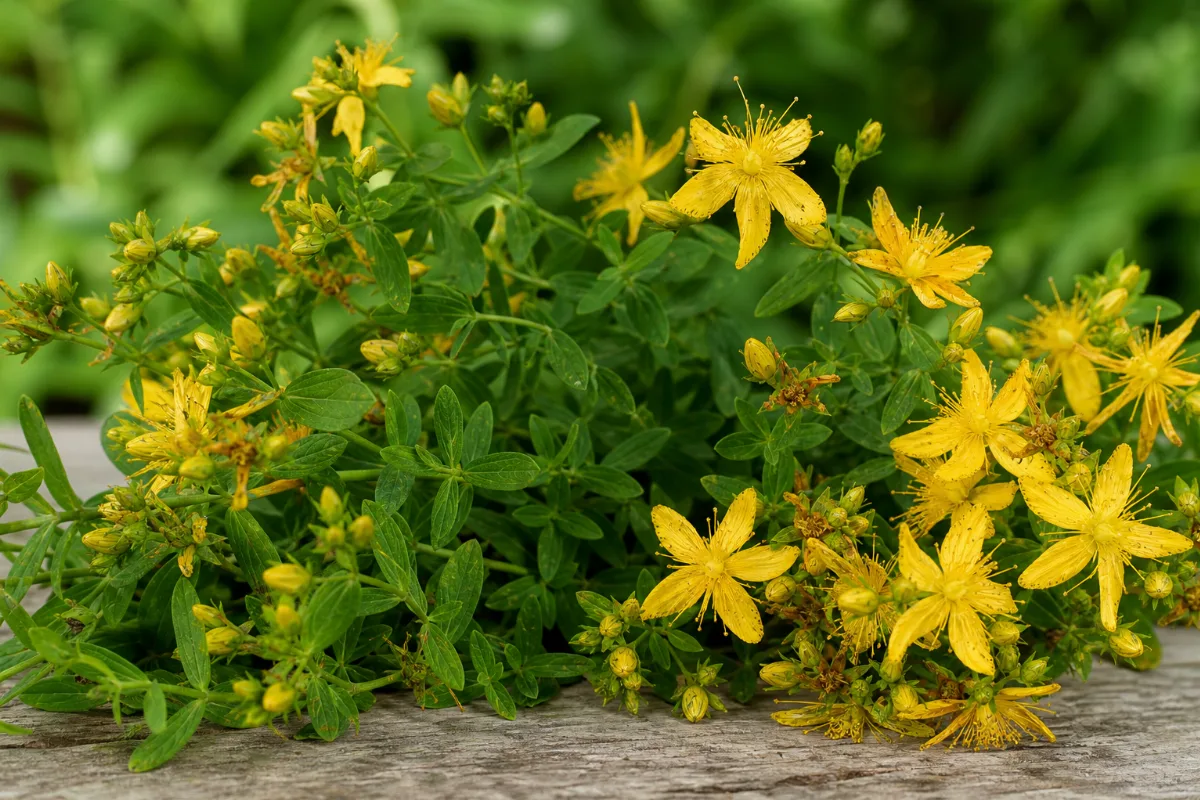
St John's wort is a plant with yellow flowers. The flowering tops are the part used. The full Latin name, Hypericum perforatum, is what to look for on a label, because the common name is also used for other plants in the same genus.
It is sold as standardised extract tablets and capsules (the type used in almost all the depression trials), as tea, tincture, powder and juice, and as a red oil or ointment for the skin. This profile covers it as a herb and supplement.
What makes it distinctive
The plant contains two main groups of compounds: hyperforin and the red pigment hypericin, plus flavonoids and others. Early work credited hypericin for the mood effect. Lab studies in 1998 pointed to hyperforin instead, which blocks the re-uptake of brain chemicals such as serotonin in rat brain tissue. Reviewers still say how it works in people is not settled, and one 2022 regulator report says its effect cannot be pinned on certain constituents.
Hyperforin is also the main reason for its drug interactions. It switches on the body's drug-clearing machinery (liver and gut enzymes and a pump called P-glycoprotein), so many medicines are cleared faster and their blood levels fall. In a small transplant crossover, an extract high in hyperforin cut ciclosporin levels by 52% while a low-hyperforin extract did not change them significantly. Product labels rarely state hyperforin, so treat every product as a risk with the medicines named below.
Historical and current uses
A European regulator reports that water infusions of the flowering tops are widely used in traditional medicine in Central Europe. The word depression is unknown in that traditional literature: the herb was used to strengthen the nerves and restore emotional balance. Fresh flowers steeped in oil (red oil) were used on the skin for burns, wounds, bruises and muscle pain.
In Germany 131.5 million daily doses of St John's wort extracts were prescribed in 1996 for mild to moderately severe depression. Today the EU lists dry extracts as a well-established use for mild to moderate depression, and lists tea, tincture and other forms as traditional use only. In the US it is sold as a dietary supplement, not an approved medicine. Older stories about ancient writers and midsummer fires come from encyclopedia summaries that we could not confirm from original sources.
What the research shows
For mild to moderate depression, a 2016 pooled review (35 studies, nearly 7,000 people) found more responders than placebo and rated the evidence moderate quality, with large differences between trials. A Cochrane review found it about as good as SSRIs (12 trials) and older antidepressants, with fewer people stopping because of side effects. Many of those comparison trials had no placebo group.
The picture is not all positive. In the two largest US trials in people with more serious depression, one of 200 people and one of 340 people, St John's wort did not beat placebo (in the larger trial, neither did the SSRI sertraline). Trials ran 4 to 12 weeks, mostly with specific extracts such as WS 5570, LI 160 and Ze 117. For severe depression the evidence is low, and for relapse prevention it is low.
For anxiety, sleep and OCD the evidence is insufficient. For ADHD in children, quitting smoking, irritable bowel syndrome, burning mouth syndrome and hepatitis C the trials point against it. Skin uses (wounds, eczema) are low-certainty and small.
Root, leaf, powder, extract: what is the difference?
Standardised dry extract tablets or capsules
Concentrated extract of the flowering tops, made with ethanol or methanol and water, in a fixed strength per tablet.
Almost all depression trials used this form, at roughly 500 to 1,800 mg of extract a day for 4 to 12 weeks (for example 600 or 1,200 mg of WS 5570, 900 mg of LI 160, 500 mg of Ze 117). Milligrams of one extract are not interchangeable with another, and several abstracts do not give the dose.
Low-hyperforin extracts
Extracts made to contain little hyperforin. Ze 117 is described this way.
Hyperforin drives the drug interactions, and a low-hyperforin extract changed drug levels little in some studies. But a study in 20 volunteers was by the maker's staff and does not make other products safe, and the Ze 117 depression trials had no placebo group.
Tea (infusion)
Dried flowering tops steeped in boiling water. The EU traditional range is 1.5 to 2 g of cut herb in 150 ml, two to three times a day.
Traditional use only, for temporary mental exhaustion and similar mild complaints. No placebo-controlled trial of the tea was found, and how much hyperforin or hypericin reaches the cup was not measured in the sources read.
Tincture, liquid extract and fresh juice
Alcohol-based tinctures (1 part herb to 10 parts 45 to 50% alcohol) and liquid extracts, or pressed juice of the fresh herb.
Traditional use only. They contain alcohol and cannot be compared in milligrams with dry extracts. No trial of these was found. Interaction risk should be assumed.
Powdered herb
Ground dried herb in capsules, traditionally 300 to 500 mg per dose.
No trial of plain powder was found. One lab study found hyperforin and hypericin break down quickly in a commercial extract, so store products closed, cool and dark.
Red oil and ointment for the skin
Flowers steeped in vegetable oil, or an ointment, applied to the skin.
EU traditional use covers minor skin inflammation such as sunburn and minor wounds. One 2018 Iranian trial of an ointment in 98 women with episiotomy wounds found less pain than placebo. Avoid strong sunlight on treated skin. Skin products are not the same as swallowed doses.
At a glance
Traditional uses history, not proof
- Central European folk medicine: to strengthen the nerves and restore emotional balance, as an infusion of the flowering tops (the word depression is unknown in the traditional literature)
- EU traditional use: temporary mental exhaustion, mild stomach discomfort, and nervous restlessness with trouble falling asleep (tea, tincture and other forms)
- Red oil (flowers steeped in vegetable oil) on the skin for minor inflammation such as sunburn, minor wounds, bruises and muscle pain
- EU well-established use: dry extracts for mild to moderate depressive episodes
Studied for research
- Mild to moderate depression, moderate certainty (including compared with SSRIs)
- Severe depression and relapse prevention, low certainty
- Anxiety, sleep and OCD, insufficient evidence
- Menopausal symptoms, PMS, wound healing and eczema, low certainty
- ADHD, quitting smoking, IBS, burning mouth syndrome and hepatitis C: trials point against it
Main compounds
- Hyperforin (linked to the reuptake effect in the lab and to most drug interactions)
- Hypericin and pseudohypericin (red pigments that make skin more light-sensitive)
- Flavonoids such as hyperoside, rutin and quercetin, the biflavone biapigenin, and procyanidins
- A small amount of essential oil
Common forms
- Standardised dry extracts in tablets or capsules (the form used in almost all trials, about 500 to 1,800 mg a day)
- Named trial extracts: WS 5570, WS 5572, LI 160, Ze 117, STW3, STEI 300
- Tea, tincture, liquid extract, fresh juice and powder (traditional use, not trial-tested)
- Red oil and ointment for the skin
Research links: NIH NCCIH: St. John's Wort and Depression · EU herbal monograph for St John's wort (EMA, 2009, superseded) · NIH LactMed: St. John's Wort · Research Library · Genes & Biomarkers Library
The plant and its history
- Accepted scientific name
- Hypericum perforatum L.
- Naming authority
- L. (Linnaeus), published in Species Plantarum, page 785 (1753) (GBIF); NCBI Taxonomy gives 'L., 1753'
- Synonyms
- Hypericum perforatum f. floribundum Sennen
- Common names
- St John's wort (English); St. John's-wort (English); Common St John's wort (English); Perforate St John's-wort (English); Klamath weed (English); Goatweed (English); Tipton weed (English); Touch-and-heal (English); Penny John (English); Rosin rose (English); Hierba de San Juan (Spanish); Echtes Johanniskraut (German); Gemeines Johanniskraut (German); Tüpfel-Hartheu (German); Millepertuis perforé (French); Millepertuis officinal (French); Herbe de la Saint-Jean (French)
- Botanical family
- Hypericaceae (order Malpighiales), the family used by both GBIF and NCBI Taxonomy (NCBI lineage: fabids; Malpighiales; Hypericaceae; Hypericeae; Hypericum). Older books and some papers place Hypericum in the mangosteen family Clusiaceae (Guttiferae); that older placement was NOT verified in a source read here, so treat it only as a reason an older paper may use a different family name.
- Classification
- Plantae > Tracheophyta > Magnoliopsida > Malpighiales > Hypericaceae > Hypericum > Hypericum perforatum
- Native range
- Not verified from a primary source. Wikipedia (secondary) says it is native to much of Europe, West and Central Asia, parts of Africa and China, and widely introduced elsewhere. EMA calls the main medicinal tradition 'European tradition' and describes it as the most important and most used herb in traditional medicine at least in the alpine regions of Central Europe (s-ema-ar-hypericum-2022).
- Habitat
- Wikipedia (secondary, NOT verified): well-drained temperate places such as meadows, hillsides and open woods with moderate rainfall; a hardy, spreading plant that is treated as an invasive weed in many regions.
- What the plant looks like
- Roots: Wikipedia (secondary): slender woody root with creeping rhizomes, reaching about 0.6-1.5 m deep. Roots are not the part used in medicine.; Stems: Wikipedia: hairless, erect, branched in the upper part, usually 0.3-1 m tall, with two distinct ridges.; Leaves: Wikipedia: stalkless, opposite, yellow-green, with translucent glands that look like pin-holes when held to the light (the source of 'perforatum') and black dots near the edge.; Flowers: Wikipedia: bright yellow, about 1.5-2.5 cm across, five petals with black dots along the edges, many stamens joined in three bundles; 25-100 flowers on a flowering stem. EMA/Pharmacopoeia: the herbal drug is the whole or cut dried flowering tops harvested during flowering time.; Fruit: Wikipedia: capsule 7-8 mm long with three chambers and many small black seeds (reported 15,000-34,000 per plant).
- Cultivation
- Not verified. Sources read give no cultivation guidance. Chemistry varies with plant age, site and species: hyperforin is said to range from 0.2% to 4% of the drug depending on the age of the dried herb (EMA, quoting Wichtl and others), and Pilepic 2013 found total flavonoids of about 1.5% in European and Asian samples (EMA, secondary).
- Harvest and processing
- The European Pharmacopoeia drug 'Hyperici herba' is the whole or fragmented dried flowering tops of Hypericum perforatum L. harvested during flowering time, containing not less than 0.08% total hypericins (calculated as hypericin) (EMA 2022, section 1.1). The Pharmacopoeia 'dry extract, quantified' is made with ethanol or methanol 50-80% V/V and must contain 0.10-0.30% total hypericins, at least 6.0% flavonoids (as rutin) and at most 6.0% hyperforin, not more than the label states. EMA (quoting Meier 1999) reports that extraction solvent strength matters a lot for hyperforin: 70% alcohol removed about 60% of the herb's hyperforin and 45% of its adhyperforin, while 50% ethanol removed about 20% of hyperforin and no adhyperforin; hypericin yield barely changes above 50%. Hot water tea carries only about 16% of the hypericins and about 1% of the hyperforin (EMA, quoting Anyzewska 2010 and Juergenliemk and Nahrstedt 2003; secondary). The traditional oil is made by steeping fresh flowers in olive or sunflower oil in sunlight for weeks; it contains no hypericin, and its red colour comes from breakdown products (EMA 2009). Hyperforin is easily destroyed by oxygen (p10217319) and, in a six-month methanol-extract test, light protection helped all measured compounds except hyperforin (p28911714).
- Look-alikes and adulterants
- Name: Hypericum maculatum (imperforate St John's wort); Note: Wikipedia (secondary) says it looks very like H. perforatum but has four ridges on a hollow stem and fewer translucent glands and more black glands. In Lithuanian samples both species had hypericin, hyperoside, quercitrin, quercetin and chlorogenic acid, but rutin and hyperforin were found only in H. perforatum, and H. maculatum had more hyperoside (p22474956). In Serbian and Macedonian samples all nine species tested, H. maculatum included, contained hyperforin and hypericin (p16599273), so the two studies disagree on hyperforin. A hypericin test alone therefore cannot prove species.; Name: Other Hypericum species with similar chemistry (H. tetrapterum, H. barbatum, H. triquetrifolium, H. hirsutum and others); Note: Nine species from the Balkans contained hyperoside, quercitrin, hyperforin and hypericin at varying levels, and hypericin in H. barbatum was 3.9 times higher than in H. perforatum (p16599273). Extracts of H. tetrapterum, H. maculatum subsp. immaculatum and H. triquetrifolium contained hypericin, hyperforin, quercetin and rutin and strongly inhibited MAO-A in the test tube (p37687046). No clinical trial of these relatives was found, so results for H. perforatum must not be transferred to them.; Name: North American native St John's worts (H. anagalloides, H. boreale, H. canadense, H. concinnum, H. ellipticum, H. scouleri); Note: Wikipedia (secondary, NOT verified) lists these as look-alikes in North America, mostly distinguished by smaller or more delicate flowers, different leaf shape or wetter habitat. Their chemistry and safety were not checked.; Name: Hypericum oil versus St John's wort extracts; Note: Not a different plant but a frequent mix-up: the red oil macerate contains no hypericin and EMA states that the indications given for oral use of the oil cannot be explained by its constituents (EMA 2009). It is a skin preparation, whereas the studied antidepressant extracts are alcohol or methanol extracts.; Name: Naming overlap: 'St John's wort' for any Hypericum; Note: Wikipedia (secondary) notes that in the 21st century any Hypericum species can be called St John's wort and recommends 'perforate' or 'common' for H. perforatum. Dioscorides' plant 'akuron' is said by the same source to be H. perforatum or H. empetrifolium (NOT verified).
- Sustainability and conservation
- Not verified. No IUCN assessment was retrieved. Wikipedia (secondary) describes H. perforatum as a toxic, invasive weed in many parts of the world rather than a species at risk; wild collection pressure was not documented in the sources read.
Traditional use and history history, not clinical proof
| Tradition or era | Documented use | Source |
|---|---|---|
| Central European folk medicine (20th-century herbals and pharmacopoeias; the long tradition EMA summarises) | EMA finds that water infusions of the flowering tops are widely used in traditional medicine at least in Central Europe, and that the word 'depression' is unknown in the traditional literature: the herb was used 'to strengthen the nerves' and restore emotional balance. Other recorded traditional oral uses in the EMA tables include nervous restlessness, sleep disorders, mild stomach upset or 'nervous stomach', gallbladder complaints, bedwetting, and haemorrhoids. EMA's 2009 report judged the nervous-system and mild digestive uses plausible and called the many other uses not plausible; its 2022 conclusions keep low mood, anxiety, 'strengthening the nerves', nervous restlessness and mild digestive discomfort as traditional indications. Tea amounts in the EMA table range from 1-2 g twice daily to 1.8-3.6 g twice daily, or 2-4 g a day (references: List and Hoerhammer 1976, Wichtl 1984, Haensel 1993, ESCOP 2003 and others; secondary, as quoted by EMA). | s-ema-ar-hypericum-2022 |
| Oil macerate for the skin (German Ergaenzungsbuch 6 of 1941; Swiss Pharmacopoeia 8 of 2001) | Fresh flowers steeped in olive or sunflower oil, kept warm or in the sun for about 6 weeks (German recipe: 25 parts flowers to 100 parts oil) or 50-80 days at 15-30 degrees C (Swiss recipe) until the oil is bright red. Traditional skin uses listed by EMA: first-degree burns and sunburn, wound healing, bruises, sprains, muscle pain, lumbago and rheumatic complaints. EMA considered the wound and minor skin-inflammation use plausible from laboratory data but found clinical data lacking, and did not accept shingles or injury-related uses. | s-ema-ar-hypericum-2009 |
| Modern regulatory recognition (EMA, HMPC assessment 2009 and revision 2022) | EMA classes dry extracts made with methanol 80% or ethanol 50-80% as 'well-established use' for mild to moderate depressive episodes, based on clinical trials, and classes teas, tinctures and other liquid extracts as 'traditional use' based only on long use (2009 proposal: relief of temporary mental exhaustion and mild stomach discomfort). It notes oral use in under-18s is not recommended and that hyperforin-containing products carry drug-interaction warnings. | s-ema-ar-hypericum-2022 |
| 1990s: scientific attention moves from hypericin to hyperforin | Early work credited the red naphthodianthrone hypericin with the antidepressant effect; in 1998 laboratory studies pointed to hyperforin as a reuptake-blocking constituent (p9684943, p9718074), and a 2001 review states that hyperforin 'rather than hypericin as originally thought' emerged as a major constituent (p11370698). EMA 2022 says the clinical efficacy cannot be attributed to certain constituents. A 1998 trial separated extracts by hyperforin content (p9684948). | p11370698 |
| Germany, 1996 | The abstract of a 1999 analytical paper states that 131.5 million daily doses of preparations containing H. perforatum extracts were prescribed in Germany in 1996 for mild to moderately severe depression. | p10217319 |
| 2000: first reports of dangerous drug interactions | A letter in The Lancet reported acute rejection in two heart-transplant patients attributed to a metabolic interaction between St John's wort and cyclosporin (p10683008). Laboratory work the same year showed hyperforin activates the pregnane X receptor that switches on drug-clearing enzymes (p10852961, p10974665). | p10683008 |
| Antiquity and the Middle Ages (claims NOT verified) | Wikipedia states that Dioscorides (1st century) described a plant called akuron that was either H. perforatum or H. empetrifolium; that the name St John's wort comes from harvesting the flowers around the midsummer festival, later St John's Day on 24 June; and that the plant was hung over doors and burned in fires to ward off evil, hence the old name fuga daemonum. None of this was confirmed in a primary source or in the EMA reports read, so it is shown as folklore, not as evidence. | s-wikipedia-hypericum-perforatum |
Traditional use shows how a plant was used. It does not show that a supplement works or is safe today.
What is inside, and how it may work
What the plant contains and how those compounds act in cells and animals. Laboratory and animal mechanisms are not proven effects in people.
Main compounds
| Compound | Family | Where it is concentrated | Activity studied | Level of evidence |
|---|---|---|---|---|
| Hyperforin PubChem 441298 | prenylated acylphloroglucinol (bicyclic polyprenylated; 'phloroglucinol derivative') | Flowering tops 0.2-4% of the dried drug depending on its age, mainly hyperforin with adhyperforin and furohyperforin (EMA, quoting Wichtl and others). Pharmacopoeia dry extract: at most 6.0%. Marketed extracts range from under 0.2% (Ze 117) to 1.5-4.4% (EMA, quoting Wurglics); WS 5572 has 5%, WS 5573 0.5%, Esbericum 240 mg gives 3.5 mg a day. | Lab: blocks uptake of serotonin, noradrenaline, dopamine, GABA (IC50 about 0.05-0.10 microg/ml, or 80-200 nmol/l for the first three) and glutamate (about 0.5 microg/ml) in rat nerve-ending preparations (p9684943, p9718074), probably by collapsing sodium and pH gradients rather than by binding the transporters (p12759140, p11518057, p17666455), with TRPC6 activation proposed but disputed (p26384487). Strong PXR ligand (Ki 27 nM) that induces CYP3A4 and other drug-clearing genes (p10852961, p12578355). In people: the main driver of St John's wort drug interactions; interactions track the hyperforin dose (p15179409, p15470332, p39152679). Hyperforin is the only constituent found in rodent brain after oral extract (p16640452). Chemically unstable: easily oxidised (p10217319). 129 36 150 37 110 60 124 200 117 126 79 209 140 21 218 | Mixed |
| Adhyperforin PubChem 44427225 | prenylated acylphloroglucinol (homologue of hyperforin) | Flowering tops The hyperforin homologue found with it; no separate typical figure verified. 70% alcohol extracts 45% of the herb's adhyperforin, 50% ethanol none (EMA, quoting Meier 1999). | No separate activity study of adhyperforin alone was found. It is listed by EMA as a main phloroglucinol alongside hyperforin and is expected to behave similarly, but this is an assumption, not a finding. 218 217 | Theory |
| Furohyperforin PubChem 11800844 | prenylated acylphloroglucinol (oxidised, furan-ring form) | Flowering tops Listed by EMA as a minor phloroglucinol; no content figure verified. Whether it forms from hyperforin on storage was not confirmed in a source read. | Not studied in the sources read; named by EMA only as a constituent. Included so the peaks on an extract analysis can be recognised. 218 221 | Theory |
| Hypericin PubChem 3663 | naphthodianthrone (red, light-sensitive pigment) | Flowering tops (dark glands) The Pharmacopoeia counts total hypericins (hypericin plus pseudohypericin and others) as hypericin: at least 0.08% of the dried drug, 0.10-0.30% in the dry extract. Naphthodianthrones overall 0.03-0.4%; pseudohypericin is 2-4 times more abundant than hypericin (EMA). | Marker used to standardise extracts. Lab: did not block reuptake (p9684943); weak micromolar binding to NPY Y1/Y2 and sigma receptors, stronger in light (p11518075); potent CYP inhibition in the test tube (p10871299). Poorly soluble in water; procyanidin B2 and hyperoside raised its blood level in rats by about 58% and 34% (p12677519). Human blood levels are only a few ng/ml (p15727160). Taken as a whole extract at high doses it made skin slightly more light-sensitive (p9342768). Role in the antidepressant action is unproven; hypericins were not found in rodent brain (p16640452). 129 70 138 34 166 33 209 97 218 | Laboratory research |
| Pseudohypericin PubChem 4978 | naphthodianthrone | Flowering tops About 2-4 times the amount of hypericin in the herb (EMA). Human peak blood levels were about 2-3 times higher than hypericin (p15727160). | Absorbed sooner than hypericin (lag 0.4 h versus 1.9 h; p8878586) and reaches higher blood levels (p15727160). Contributes to total hypericin in standardisation. No separate activity finding beyond that of hypericins was found. 97 166 218 | Laboratory research |
| Protohypericin and protopseudohypericin PubChem 164660 | naphthodianthrone precursors (light converts them to hypericin and pseudohypericin) | Flowering tops Present in the fresh herb; no content figure verified. CID 171335 (C30H18O9) is protopseudohypericin. | Caco-2 uptake and low transfer across the gut-wall model were similar to hypericin (Kamuhabwa 1999, as reported by EMA 2009; secondary). The photoconversion statement is general chemistry and was not checked in a source read. 217 221 | Laboratory research |
| Hyperoside (quercetin 3-O-galactoside) PubChem 5281643 | flavonol glycoside | Flowering tops Part of the 2-4% flavonoids; H. maculatum contains more hyperoside than H. perforatum (p22474956). | Raised rat blood hypericin by about 34% (p12677519). In forced-swim tests hyperoside was active in rats at a low dose (0.6 mg/kg), as reported by EMA 2009 (secondary). 34 15 217 | Animal research |
| Quercetin and its metabolites (isorhamnetin, tamarixetin, miquelianin) PubChem 5280343 | flavonol aglycone and metabolites | Flowering tops (from glycosides after digestion) Quercetin is the aglycone of hyperoside, rutin, isoquercitrin and quercitrin (EMA). Human peak blood quercetin 47.7 and 43.8 ng/ml (two peaks) after 612 mg of an extract; isorhamnetin 7.6 and 9.0 ng/ml (p15727160). | In rats, quercetin and isorhamnetin/tamarixetin accumulate in brain with repeated dosing and isorhamnetin was the strongest of the flavonoids in the forced swim test (p18468390). Human relevance is not known. Obach also tested quercetin for CYP inhibition, but the abstract does not give its result, only that biapigenin, hyperforin and hypericin were potent (p10871299). 142 166 138 218 | Animal research |
| Rutin (quercetin 3-rutinoside) PubChem 5280805 | flavonol glycoside | Flowering tops A main flavonoid; the dry extract must contain at least 6.0% flavonoids calculated as rutin. Found only in H. perforatum, not H. maculatum, in one Lithuanian study (p22474956). | Active in rat forced-swim tests (p18468390); EMA reports (secondary) that pure rutin alone was inactive but boosted a rutin-poor extract (Butterweck 2000, Noeldner and Schoetz 2002). Mechanism unknown. 142 15 217 | Animal research |
| Isoquercitrin PubChem 5484006 | flavonol glycoside (quercetin 3-glucoside) | Flowering tops Part of the flavonoid group; no separate figure verified. | At 100 mg/kg in rats it was used to follow brain quercetin levels (p18468390). Active at low dose in forced swim test according to EMA 2009 (secondary). 142 217 | Animal research |
| Quercitrin PubChem 5280459 | flavonol glycoside (quercetin 3-rhamnoside) | Flowering tops Higher in H. perforatum than H. maculatum in Lithuanian samples (p22474956). | No separate activity finding; used as a marker and in species comparison (p22474956, p16599273). 15 177 | Insufficient |
| I3,II8-Biapigenin PubChem 10414856 | biflavone (biflavonoid dimer of apigenin) | Flowering tops (flowers) Present at low levels; no content figure verified. EMA 2009 notes it is much more abundant than amentoflavone but was little studied because it is not commercially available. | Test tube: potent competitive inhibitor of CYP3A4 (Ki 0.038 microM), CYP2C9 (0.32) and CYP1A2 (0.95) (p10871299); binds the benzodiazepine site of GABA-A receptors (IC50 2 microM) (p11518075). In people, after 2 weeks, St John's wort shows induction rather than inhibition (p11673747), so the practical relevance of the inhibition is unclear. 138 70 197 217 | Laboratory research |
| Amentoflavone PubChem 5281600 | biflavone | Flowering tops (traces in flowers) Traces only (EMA 2009). | EMA 2009 (secondary, citing Baureithel 1997) states it inhibits flumazenil binding at the benzodiazepine site of the GABA receptor at very low concentrations; not checked in the original. 217 | Laboratory research |
| Procyanidin B2 and oligomeric procyanidins PubChem 122738 | condensed tannin (catechin/epicatechin units) | Flowering tops Tannins with catechin skeleton 6-15% of the drug (EMA); oligomeric procyanidins 8-37 mg/g, trimer predominant (Hellenbrand 2015, as reported by EMA 2022). | Raised oral bioavailability of hypericin in rats by about 58% (p12677519) and make it more soluble; may therefore affect how much hypericin reaches the blood from a whole extract. No direct clinical test. 34 218 217 | Animal research |
| Chlorogenic acid PubChem 1794427 | caffeoylquinic phenolic acid | Flowering tops Small amounts; total phenolic acids about 10% of dried aerial parts (Pilepic 2013, as reported by EMA 2022). Most stable constituent in a storage test (p28911714). | Tested for CYP inhibition by Obach, but the abstract does not give the result (p10871299). No other activity verified. 138 103 218 | Laboratory research |
| Essential oil (2-methyloctane, alpha-pinene) | volatile terpenes and alkanes | Flowering tops 0.07-0.25% of dried tops; main compounds 2-methyloctane and alpha-pinene; composition varies widely by origin (EMA 2022). | No activity of the oil was studied in the sources read. No PubChem CID given because it is a mixture. 218 | Insufficient |
Mechanisms, receptors and pathways
| Target or pathway | Gene or receptor | What was found | Level |
|---|---|---|---|
| Monoamine and amino-acid reuptake block (serotonin, noradrenaline, dopamine, GABA, glutamate) | SLC6A4 (SERT), SLC6A2 (NET), SLC6A3 (DAT); amino-acid transporters | In rat brain nerve-ending preparations hyperforin blocked uptake of serotonin, noradrenaline and dopamine at half-maximal concentrations of 80-200 nmol/l, while hypericine and kaempferol did not (p9684943); uptake of GABA was blocked at similar levels and glutamate at about 0.5 microg/ml, and two extracts' potency in rodent despair and learned-helplessness tests closely tracked their hyperforin content (p9718074). In people, one 300 mg dose of a 5% hyperforin extract gave a peak of about 150 ng/ml (about 280 nM) and an estimated steady state about 100 ng/ml (about 180 nM) on 3 x 300 mg a day (p9684946), which overlaps the lower end of those lab concentrations (blood totals, not free or brain levels); brain levels in people were not found. Binding to the dopamine transporter itself was weak (IC50 5 microM versus 0.8 microM for dopamine uptake), so this is not the same mechanism as SSRIs (p11518075). Rat repeated-dose studies (via EMA) also report fewer cortical beta-receptors. Lab and animal results; nothing here shows what happens in a depressed person's brain. 129 36 21 70 217 | Laboratory research |
| Indirect uptake block through ion and pH gradients (sodium, protons) and release of transmitters | TRPC6 (proposed); vesicular H+-ATPase pH gradient | Hyperforin raised sodium and calcium entry only in cells with TRPC6 and sprouted neuron fibres in a TRPC6-dependent way, and the authors proposed the sodium inflow breaks the gradient that drives amine uptake (p17666455). Another lab group found hyperforin collapses the pH gradient across rat synaptic vesicles like the protonophore FCCP (IC50 1.9 x 10⁻⁷ M) and releases stored serotonin (p12759140), and it releases glutamate, aspartate and GABA from nerve endings after a calcium rise (p11518057). A 2015 review title asks whether hyperforin is truly a TRPC6 activator, and its abstract says the mechanism underlying the pharmacology remains debated (p26384487). Synthetic TRPC6-activating relatives did not activate PXR, suggesting the brain and interaction effects can be separated (p24259679). All lab work. 110 150 37 60 87 | Laboratory research |
| GABA-A receptor / benzodiazepine site (extract, biapigenin, amentoflavone) | GABRA/GABRB/GABRG subunits (benzodiazepine binding site) | A hydromethanolic extract inhibited ligand binding to GABA-A receptors (IC50 5.5 microg/ml) but a lipophilic CO2 extract did not; biapigenin inhibited benzodiazepine-site binding (IC50 2 microM) and was the only tested compound to do so (p11518075). EMA 2009 (secondary) reports amentoflavone at very low concentrations does the same. No functional or human data were found, and the amounts of these biflavones in blood are unknown. 70 217 | Laboratory research |
| Flavonoid and procyanidin actions (including brain accumulation) | Not defined (adrenergic receptor down-regulation and MAO suggested in the lab) | In rats, extract, rutin and especially the quercetin metabolite isorhamnetin cut immobility in the forced swimming test, and quercetin and isorhamnetin/tamarixetin built up in brain tissue with daily dosing (quercetin 340 ng/g at 4 h; isorhamnetin/tamarixetin still rising after 8 days) (p18468390). EMA 2009 (secondary) lists in-vitro MAO inhibition by flavonols at concentrations 'considerably higher' than expected in people and notes results on MAO inhibition by extracts are controversial. Related Hypericum species extracts also inhibited MAO-A in the test tube (p37687046). 142 98 217 | Animal research |
| Hypericin: weak receptor binding, light-dependent | NPYR1 / NPYR2 (NPY Y1/Y2), sigma receptors | Hypericin had micromolar affinity for NPY Y1/Y2 and sigma receptors, with weaker binding when assays were done in the dark, and did not block reuptake (p11518075, p9684943). The authors cautioned that concentrations were high. In people hypericin blood levels are in the low ng/ml range, far below micromolar (p15727160). 70 129 166 | Laboratory research |
| Nuclear receptor PXR activation: induction of drug-clearing enzymes and P-glycoprotein | NR1I2 (PXR/SXR) -> CYP3A4, CYP2C9, CYP2B6, ABCB1 (P-gp) | Hyperforin binds human PXR with Ki 27 nM and extract or hyperforin strongly induced CYP3A4 in human liver cells (p10852961); hypericin did not activate it (p10974665); the 2.1 A crystal structure shows hyperforin enlarges the receptor pocket by 250 cubic Angstroms (p12578355); PXR also mediates hyperforin induction of CYP2C9 (p14600250). Hyperforin appears to enter cells partly via OATP2B1, and across 11 commercial products CYP3A4 promoter activation correlated with hyperforin content (p30573512). In healthy volunteers after about 2 weeks, St John's wort increased intestinal and liver CYP3A4 and intestinal P-gp (p11180019, p11673747, p12545142, p10824623) and lowered levels of cyclosporine (p15470332) and digoxin (p15179409). EMA 2022 concludes there is scientific evidence that hyperforin induces CYP3A4, CYP2B6, CYP2C9, CYP2C19 and P-glycoprotein dose-dependently via PXR, while evidence for CYP1A2, CYP2D6 and CYP2E1 induction is currently lacking. 124 202 200 38 167 47 197 46 149 117 126 218 | Human data |
| Direct (acute) enzyme inhibition by constituents | CYP3A4, CYP2C9, CYP2D6, CYP1A2 | In the test tube biapigenin potently and competitively inhibited CYP3A4 (Ki 0.038 microM), CYP2C9 (0.32 microM) and CYP1A2 (0.95 microM), and hyperforin inhibited CYP2D6 (1.5 microM), CYP2C9 (1.8 microM) and CYP3A4 (0.48 microM); hypericin also inhibited several enzymes (p10871299). In volunteers CYP2C9, 1A2 and 2D6 activities did not change on 2 weeks of dosing (p11673747), and the low-hyperforin extract Ze 117 showed no interaction with CYP1A2, 2B6, 2C9, 2C19, 3A4 or P-gp, with only a weak rise in the dextromethorphan AUC ratio (p30739325). So inhibition is a lab finding; in people the induction by hyperforin dominates with high-hyperforin products. 138 197 213 | Mixed |
| Serotonergic effect with other serotonin-raising medicines (pharmacodynamic interaction) | Serotonin signalling (SLC6A4 and downstream) | EMA 2022 states that Hypericum preparations may add to serotonergic effects when combined with serotonin reuptake inhibitors (for example sertraline, paroxetine) or buspirone. This is a pharmacological expectation, not a measured human mechanism in the abstracts read here. 218 | Theory |
| Photosensitisation by hypericin | Not a receptor mechanism: light-activated pigment in skin | Hypericin and pseudohypericin cause phototoxicity in cell culture and animals (stated in the p9342768 abstract). In volunteers, single doses up to 3600 mg of LI 160 did not change sunlight-like sensitivity and raised UV-A sensitivity only slightly at the top dose; 600 mg three times daily for 15 days gave a small but significant increase in sensitivity to both (p9342768). EMA (quoting Schempp 1999) reports skin blister fluid levels (2.8-5.3 ng/ml total hypericin) far below the roughly 100 ng/ml believed phototoxic. 33 218 | Human data |
Absorption, metabolism and elimination
- Absorption
- Hyperforin: after 300 mg of a 5% hyperforin extract (14.8 mg hyperforin) in healthy volunteers the peak was about 150 ng/ml (about 280 nM) at 3.5 h (p9684946); with 612 mg of the STW-3 extract the peak was 83.5 ng/ml at 4.4 h (p15727160). Absorption was linear up to 600 mg of extract but lower than expected at 900-1200 mg (p9684946). A soft capsule in oil gave about twice the peak (168 versus 84 ng/ml) and AUC (1482 versus 583 h*ng/ml) of a hard capsule with the same 300 mg extract (Agrosi 2000, as reported by EMA 2022; secondary), so the product form matters. Hypericin and pseudohypericin: slower; lag time 1.9 h for hypericin and 0.4 h for pseudohypericin (p8878586); peak at about 8.1 h (hypericin 3.14 ng/ml) and 3.0 h (pseudohypericin 8.50 ng/ml) with the STW-3 extract (p15727160). Flavonoids: quercetin shows two peaks about 1 h and 5.5 h after the dose, then isorhamnetin (p15727160). Other plant compounds help: procyanidin B2 and hyperoside raised hypericin blood levels in rats by about 58% and 34% (p12677519).
- Distribution
- Hyperforin is the only constituent found in rodent brain after oral alcoholic extract; hypericins were not found in brain (p16640452). EMA 2022 (assessor's comment quoting its monograph section 5.2) states that hyperforin can cross the blood-brain barrier; no human brain concentration was found. Rat brain: quercetin peaked at 340 ng/g and isorhamnetin/tamarixetin at 50 ng/g 4 h after a very large single extract dose (1600 mg/kg) and accumulated with daily dosing (p18468390). Hypericin has a steady-state distribution volume of about 19.7 l and pseudohypericin about 39.3 l (p8878586). In skin blister fluid total hypericin was 5.3 ng/ml versus 43 ng/ml in serum after one large dose (Schempp 1999, as reported by EMA 2022).
- Metabolism
- Human hyperforin metabolism was not found in the sources read; EMA's 2009 report concluded the few data did not allow a final conclusion about absorption, distribution, metabolism and excretion. Flavonoid glycosides are broken down in the small intestine to quercetin, which is then glucuronidated (giving miquelianin) and partly methylated to isorhamnetin and tamarixetin (Paulke, via EMA; secondary; rat data in p18468390). Hyperforin is a substrate of the uptake transporter OATP2B1 in cell tests (p30573512). The extract itself changes the body's own drug metabolism: see the induction time course below.
- Elimination
- Hyperforin half-life estimates differ: about 9 h (mean residence 12 h) in the Biber study (p9684946) and 19.64 h in the STW-3 study (p15727160). Hypericin about 23.8 h and pseudohypericin about 25.4 h in the STW-3 study (p15727160); Kerb found median half-lives of 43.1 h (hypericin) and 24.8 h (pseudohypericin) (p8878586). Quercetin 4.16 h and isorhamnetin 4.45 h (p15727160). With repeated dosing, steady-state hypericin and pseudohypericin troughs were reached after 7 and 4 days (p8878586) and no accumulation of hyperforin was seen (p9684946). The long hypericin and hyperforin half-lives matter after an overdose, EMA notes. Excretion routes in humans were not found.
- Bioavailability
- Estimated systemic availability from one extract was roughly 14% for hypericin and 21% for pseudohypericin, from a comparison with intravenous doses in two subjects (p8878586). Absolute hyperforin bioavailability in humans is not established. Exposure to each constituent depends on the extract, its solvent and the formulation: tea carries only a small share of hyperforin and hypericin (EMA, secondary), and low-hyperforin extracts give hyperforin blood levels below 1 microg/l (p15856409).
21 166 97 34 209 142 167 11 197 149 46 79 82 213 33 218 217
Isolated compounds versus whole extracts
St John's wort shows that a lead compound can describe the herb's safety better than its benefit. Hyperforin alone reproduces the lab reuptake block (p9684943, p9718074) and is the main driver of drug interactions: in a 10-patient crossover, an extract high in hyperforin cut cyclosporine exposure by 52% while a low-hyperforin extract did not significantly change it (p15470332); in 96 volunteers the hyperforin-free extract Ze 117, tea, juice, oil extract and a hyperforin-free powder did not significantly change digoxin exposure, while hyperforin-rich extract LI 160 lowered digoxin AUC by 24.8% (p15179409); a low-hyperforin extract at 3.5 mg hyperforin a day had no relevant effect on alprazolam, caffeine, tolbutamide or digoxin (p15856409); and across 11 products CYP3A4 promoter activation tracked hyperforin content (p30573512). The benefit side is less clear: a 6-week trial found the 5% hyperforin extract WS 5572 beat placebo (HAMD fall 10.3 versus 7.9; p = 0.004) while the 0.5% hyperforin WS 5573 was comparable with placebo (8.5; p9684948), yet a review notes low-hyperforin extracts (under 1%) were still superior to placebo and equivalent to imipramine and fluoxetine in other trials (p16477470), and EMA 2022 says clinical efficacy cannot be attributed to certain constituents. Hypericin, once credited with the effect, did not block reuptake (p9684943) and is poorly soluble alone, but procyanidin B2 and hyperoside in the whole extract raised its blood level in rats by about 58% and 34% (p12677519). Flavonoids (quercetin metabolites) reach brain tissue in rats and acted in behaviour tests (p18468390). Different preparations are therefore not interchangeable: tea carries about 1% of the herb's hyperforin and about 16% of its hypericins, the oil macerate has no hypericin, and 50% versus 70% alcohol extracts differ several-fold in hyperforin (EMA, secondary). Clinical results belong to specific extracts: Cochrane found benefit over placebo with strong heterogeneity (RR 1.28 in larger trials, 1.87 in smaller ones; p18843608), another review found RR 1.53 and moderate-quality evidence in mild to moderate depression (p27589952), yet one large US trial of LI-160 (n = 340) found no difference from placebo, and the sertraline arm also failed (p11939866), while a second US trial found a non-significant trend over placebo (p16160619). Plain hyperforin is also unstable and oxidises easily (p10217319), so stored products may lose it (p28911714).
Nutritional composition
A nutrient table is not meaningful for St John's wort: it is taken as a tea, tincture, oil or capsule of dried flowering tops or their extract for its plant compounds, not as a food, and no vitamin or mineral content was verified here, so none is claimed. The dried tops are mostly plant compounds: flavonoids 2-4%, tannins/procyanidins 6-15%, phenolic acids about 10%, essential oil 0.07-0.25% (EMA, quoting reference works).
Products, quality and comparisons
Independent evidence comes first. Nothing in this section is a paid ranking. If a product link is added later, it will be marked clearly as an affiliate link and will never change what the research says.
Quality indicators
- Plant named as Hypericum perforatum and the part (flowering aerial parts, herba) stated
- Extract named, with ratio and solvent (for example 3 to 7:1, ethanol or methanol), or the exact trial extract (such as WS 5570, LI 160, Ze 117, STW3)
- mg of extract per tablet and servings per day, so you can compare with a studied daily dose
- Hypericin and hyperforin amounts per tablet or per day, not just a percentage of the herb
- A product licence or traditional registration where your country has one (EU traditional herbal registration, UK THR)
Identity and authenticity
- A UK study of 47 commercial products (HPTLC and NMR chemistry) found likely species adulteration in 36% and food dyes (tartrazine, amaranth, brilliant blue, sunset yellow) in 19%; food supplements and unlicensed products were poorer than registered ones (Booker 2018).
- A 2017 DNA metabarcoding study of 78 products detected Hypericum perforatum in 68%, and in every product the species found did not fully match the label (Raclariu 2017).
- A 2023 Brazilian study of 43 samples found 52.3% with markers of other plants (Ageratum conyzoides or Senna spectabilis); of 35 Brazilian samples only 13 held only H. perforatum (Miguita 2023).
- A 2019 DNA study found H. perforatum DNA in only 5 of 20 processed product types, showing DNA tests can miss it in extracts (Howard 2019).
- Raw plant material from 14 countries was fairly consistent; most variation in products traced to the plant part, processing and harvest time, not geography (Scotti 2019).
Standardization and extract strength
- Hypericin was long used as the label marker, and hyperforin is the other constituent usually discussed. Hypericin is a weak predictor of effect: one 348-person trial gave 0.17, 0.33 or 1 mg of hypericin a day with about the same result (no placebo arm).
- Constituent levels differ widely: 4 commercial dry extracts had hyperforin 1.18 to 6.54% and hypericins 0.03 to 0.20% (Bergonzi 2001); 8 batches had hyperforin 1.3 to 3.9% and hypericin 0.19 to 0.30% (von Eggelkraut-Gottanka 2002); wild Tuscan plants had hyperforin 1.37 to 20.80% in their dried extracts.
- A 2003 US survey of 13 products found none within 10% of the label hypericin and two with none at all (Glisson 2003). Those are old products; current brands were not tested.
- A RAND systematic review notes that eight trials used an extract with about 0.3% hypericin and 1 to 4% hyperforin (Apaydin 2016).
- The EMA draft cites European Pharmacopoeia monographs 1438 (herb) and 1874 (extract) as the material standard; the monograph treats hyperforin per day (1 mg or less) as a dividing line for interactions in its traditional-use route.
- Hyperforin and hypericins break down quickly in light and warmth: a commercial extract had less than 4 months stability in lab tests, and storage at 40 C with high humidity was worst (Bilia 2001; Koyu 2015). Store closed, cool and dark.
Third-party testing
- US dietary supplements are not approved by the FDA before sale; NCCIH says US supplement standards are less strict than those for drugs.
- Independent testing programmes (USP, NSF, ConsumerLab and others) differ in what they test, and a seal is a statement about that programme, not a guarantee of effect. We did not read any programme's St John's wort results.
- In the UK and EU, a product with a traditional herbal registration or marketing authorisation has been checked by a regulator for quality and labelling, which the UK study found is linked to better quality than unregistered supplements.
Contaminants and adulterants
- Food dyes and other plant species were the contamination-type findings in the UK and Brazilian surveys above.
- Heavy metals, pesticides, microbes and solvent residues in St John's wort products were not covered by the sources we read.
Reading a product label
- Find Hypericum perforatum and the part used (flowering tops, herb).
- Is it extract, powder, tea or tincture? Note mg per tablet, tablets per day and the extract ratio and solvent.
- Look for the extract name used in trials (for example WS 5570, LI 160, Ze 117) rather than only "St John's wort 300 mg".
- Look for hypericin and, ideally, hyperforin per day; many products give only hypericin.
- Check storage advice and the expiry date; look for a licence number or batch test (certificate of analysis).
- Be wary of unusually cheap products, bright dyes, or products with no maker address.
Certifications and what they actually mean
| Certification | What it means | What it does not tell you |
|---|---|---|
| EU traditional herbal registration or marketing authorisation | A regulator route for herbal medicines, with quality and labelling rules; the EMA monograph covers both well-established use and traditional use | Does not prove the product works for depression; traditional registration rests on long use. Some European committee members opposed the traditional-use monograph because of interaction risk. |
| UK Traditional Herbal Registration (THR) | A UK scheme under which finished products must meet safety and quality standards; registered products scored better than unlicensed ones in a 2018 study | Only some products carry it; authors still saw variation among registered products. |
| European Pharmacopoeia compliance (monographs 1438 and 1874) | The material or extract meets the pharmacopoeia standard, which the EMA cites | A maker's statement; ask for a certificate of analysis. |
Comparing price and servings
Do not compare bottle prices. Step 1: cost per tablet = bottle price / tablets per bottle. Step 2: tablets per day needed to reach a studied daily mg of the same named extract. Step 3: cost per day = cost per tablet x tablets per day. Only compare products that name the same extract.
Extract types compared
| Extract | Plant part | Standardization | Trials | Evidence note | Safety note | Limitations | Studies |
|---|---|---|---|---|---|---|---|
| WS 5570 | herb (aerial parts) | Hydroalcoholic extract; strength not in abstracts | Lecrubier 2002 (900 mg/day, 6 weeks, n=375, vs placebo); Kasper 2006 (600 and 1200 mg/day, 6 weeks, n=332); Szegedi 2005 (900 mg/day vs paroxetine, moderate to severe, n=251); Anghelescu 2006 and Kasper 2008 (continuation) | The best-trialled single extract: beat placebo in two 6-week trials in mild to moderate depression, was non-inferior to paroxetine, and cut relapse (18.1% vs 25.7%) over 6 months. | Adverse event rates comparable to placebo in the placebo trials; fewer than paroxetine in one trial (0.035 vs 0.060 per day). | Most trials ran by or with the maker; people studied were selected outpatients; nothing beyond 18 months. | 108 91 184 7 94 92 |
| LI 160 / LI-160 | herb (aerial parts) | Not in abstracts | Hypericum Depression Trial 2002 (900 to 1500 mg/day, 8 weeks, n=340, negative); Shelton 2001 (900 to 1200 mg/day, 8 weeks, n=200, negative on main measure; extract name not in abstract); Fava 2005 (900 mg/day, 12 weeks, n=135, trend vs placebo); Bjerkenstedt 2005 (900 mg, 4 weeks, no difference from placebo); Mannel 2010 (600 mg/day, atypical depression) | Mixed: positive trends in some trials, three US/European trials in which neither this extract nor the comparison drug clearly beat placebo. | Headache more often than placebo in one trial (41% vs 25%, extract name not in that abstract). Better tolerated than fluoxetine in one trial. | High placebo response in the US trials; authors of the 2002 trial question the trial's sensitivity. | 81 173 56 23 118 157 31 195 |
| Ze 117 | herb (aerial parts) | Described as low in hyperforin | Schrader 2000 (vs fluoxetine, 6 weeks, n=240); Woelk 2000 (500 mg/day vs imipramine, n=324); Brattstrom 2009 (open, 500 mg/day, up to 1 year, n=440); Zahner 2019 (interaction study, 20 healthy volunteers) | Equal to fluoxetine and imipramine in mild to moderate depression in trials without a placebo arm; the trials cannot show benefit over placebo (a manufacturer overview of placebo comparisons was not available as an abstract). | Fewer adverse events than fluoxetine (8% vs 23%) and imipramine (39% vs 63%). Low-hyperforin extract: no clinically relevant effect on tested CYP enzymes and P-glycoprotein in healthy volunteers. | No placebo arms in the trials we read; several authors work for the maker. | 163 206 28 213 |
| STW3-VI and STW3 | herb (aerial parts) | Not in abstracts | Gastpar 2006 (900 mg once daily vs citalopram 20 mg and placebo, 6 weeks, n=388); Gastpar 2005 (612 mg once daily vs sertraline 50 mg, 12 to 24 weeks, n=241) | Beat placebo and matched citalopram in moderate depression; not inferior to sertraline over 12 weeks. | Treatment-related adverse events 17.2% (STW3-VI) vs 53.2% (citalopram) vs 30% (placebo). | Each is a single trial; once-daily dosing only. | 66 65 |
| STEI 300 | herb (aerial parts) | Not in abstract | Philipp 1999 (1050 mg/day, 8 weeks, n=263, vs imipramine and placebo) | Better than placebo and as good as imipramine in moderate depression. | Adverse events 0.5 per patient vs 0.6 (placebo) and 1.2 (imipramine). | One trial; erratum published. | 144 |
| Calmigen hypericum extract | herb (aerial parts) | Not in abstract | Behnke 2002 (6 weeks, n=70, vs fluoxetine) | Called equivalent to fluoxetine by authors; hypericum reached 83% of fluoxetine's HAMD effect. | Minor changes only; 2 of 9 dropouts due to adverse events in each group. | Small, no placebo. | 17 |
| Fresh-plant shoot-tip extract (Hyperiforce) | shoot tips (fresh) | 0.17, 0.33 or 1 mg total hypericin per day | Lenoir 1999 (348 people, 6 weeks) | Same response across all three levels (62%, 65%, 68%); no placebo. | Mild reactions in 2% of patients. | Cannot show benefit; suggests hypericin amount alone does not determine response. | 109 |
| Unnamed standardized extracts in reviews | herb (aerial parts) | Varied; eight trials in one review used about 0.3% hypericin and 1 to 4% hyperforin | Cochrane 2008 (29 trials, 5489 people); Ng 2017 (27 trials, 3808 people); Apaydin 2016 (35 studies, 6993 people); Zhao 2023 (14 trials, 2270 people) | Reviews broadly find St John's wort better than placebo and similar to SSRIs in mild to moderate depression, with large differences between trials. | Fewer dropouts due to adverse effects than SSRIs (Cochrane OR 0.53). | Heterogeneity; trials from German-speaking countries more favourable; no data beyond 12 weeks in the largest SSRI comparison. | 111 134 9 214 |
Compare St John's Wort with another ingredient
St John's Wort vs SSRIs (prescription antidepressants; context only)
In mild to moderate depression, pooled trials find St John's wort and SSRIs about equally effective, with fewer stopping because of side effects on St John's wort. They must never be combined without medical advice because of serotonin syndrome risk. Severe depression needs a clinician.
| St John's Wort | SSRIs (prescription antidepressants; context only) | |
|---|---|---|
| Benefits studied | Mild to moderate major depression; relapse prevention; atypical depression | Major depression, many anxiety disorders (prescription use under a clinician) |
| Evidence certainty | moderate for mild to moderate depression versus placebo and antidepressants (the 2016 RAND review rated its main comparisons moderate); mixed overall, because large US trials in major depression were negative (2001, 2002) and the Cochrane review found results differed by country | The 2018 network meta-analysis of 522 trials found all 21 antidepressants beat placebo (odds ratios 1.37 to 2.13); we did not read its certainty ratings |
| Head-to-head trials | 12 trials in the Cochrane review against SSRIs: response RR 1.00 (0.90 to 1.11); 27 trials in Ng 2017: RR 0.983 (0.924 to 1.042) | Same trials |
| Typical studied dose | Extract at about 500 to 1,800 mg a day for 4 to 12 weeks (extract-specific) | For example sertraline 50 to 100 mg, paroxetine 20 to 40 mg, citalopram 20 mg, fluoxetine 20 mg in the trials above |
| Safety and interactions | Drug interactions (enzyme induction; serotonin syndrome with antidepressants); sun sensitivity; stomach upset. See safety section. Fewer dropouts for adverse effects than SSRIs (Cochrane OR 0.53, 0.34 to 0.83) | SSRI side effects and withdrawal are prescriber matters; the EMA warns that St John's wort must not be combined with SSRIs |
| Forms | Standardized extract tablets or capsules; tea, tincture and skin oil (traditional) | Tablets, capsules, liquids by prescription |
St John's Wort vs SAMe (S-adenosylmethionine)
SAMe has far weaker trial support than St John's wort for depression, and the Cochrane authors call the evidence low or very low. As an add-on to an SSRI one small trial (73 people) found a benefit. We found no trial that compares the two.
| St John's Wort | SAMe (S-adenosylmethionine) | |
|---|---|---|
| Benefits studied | Mild to moderate major depression; relapse prevention; atypical depression | Depression, alone or added to an SSRI |
| Evidence certainty | moderate for mild to moderate depression versus placebo and antidepressants (the 2016 RAND review rated its main comparisons moderate); mixed overall, because large US trials in major depression were negative (2001, 2002) and the Cochrane review found results differed by country | very-low: the 2016 Cochrane review (8 trials, 934 people) rated the evidence low to very low quality; no strong evidence versus placebo as sole treatment (SMD -0.54, -1.54 to 0.46; 2 studies) |
| Head-to-head trial | None found against SAMe | None found against St John's wort |
| Typical studied dose | Extract at about 500 to 1,800 mg a day for 4 to 12 weeks (extract-specific) | Varied; oral and injected forms in the trials, doses not read in the abstract |
| Safety and interactions | Drug interactions (enzyme induction; serotonin syndrome with antidepressants); sun sensitivity; stomach upset. See safety section | Two reports of mania or hypomania among 441 participants (Cochrane abstract) |
St John's Wort vs 5-HTP (5-hydroxytryptophan)
5-HTP has an old, thin evidence base for depression with an unresolved safety question. The two are both serotonin-related, so they should not be combined unsupervised.
| St John's Wort | 5-HTP (5-hydroxytryptophan) | |
|---|---|---|
| Benefits studied | Mild to moderate major depression; relapse prevention; atypical depression | Depression (older trials, mostly poor quality) |
| Evidence certainty | moderate for mild to moderate depression versus placebo and antidepressants (the 2016 RAND review rated its main comparisons moderate); mixed overall, because large US trials in major depression were negative (2001, 2002) and the Cochrane review found results differed by country | insufficient: the Cochrane review located 108 trials but only 2 (64 patients) met quality standards (Peto OR 4.10, 1.28 to 13.15); authors say the evidence is not conclusive |
| Head-to-head trial | None found | None found |
| Typical studied dose | Extract at about 500 to 1,800 mg a day for 4 to 12 weeks (extract-specific) | Not read |
| Safety and interactions | Drug interactions (enzyme induction; serotonin syndrome with antidepressants); sun sensitivity; stomach upset. See safety section | Possible link to eosinophilia-myalgia syndrome not resolved (Cochrane abstract); 5-HTP is also serotonergic, so combining it with St John's wort is a serotonin-syndrome concern (EMA lists serotonergic substances); ask a clinician |
St John's Wort vs Saffron (Crocus sativus)
Both have meta-analyses pointing to benefit in mild to moderate depression and similarity to standard drugs. Saffron has fewer and smaller trials. We found no direct comparison with St John's wort.
| St John's Wort | Saffron (Crocus sativus) | |
|---|---|---|
| Benefits studied | Mild to moderate major depression; relapse prevention; atypical depression | Mild to moderate depression; some anxiety outcomes |
| Evidence certainty | moderate for mild to moderate depression versus placebo and antidepressants (the 2016 RAND review rated its main comparisons moderate); mixed overall, because large US trials in major depression were negative (2001, 2002) and the Cochrane review found results differed by country | low: pooled small trials (11 RCTs, 9 pooled in the 2019 meta-analysis; g 0.891 vs placebo, 0.369 to 1.412); our rating from abstracts, not a formal GRADE score |
| Head-to-head trial | None found against saffron | Saffron versus SSRIs: depression SMD 0.10 (-0.09 to 0.29) in 8 studies, no difference |
| Typical studied dose | Extract at about 500 to 1,800 mg a day for 4 to 12 weeks (extract-specific) | Dose not in the abstracts read |
| Safety and interactions | Drug interactions (enzyme induction; serotonin syndrome with antidepressants); sun sensitivity; stomach upset. See safety section | Fewer adverse events than SSRIs (risk difference -0.06); interactions not reviewed here |
St John's Wort vs Lavender oil (Silexan)
Silexan, a standardized lavender oil capsule, beat placebo in one 8-week trial in mild to moderate depression, with an effect similar in size to sertraline in that trial. It is a single, maker-linked trial; St John's wort has far more trials but a more demanding interaction profile.
| St John's Wort | Lavender oil (Silexan) | |
|---|---|---|
| Benefits studied | Mild to moderate major depression; relapse prevention; atypical depression | Anxiety (most trials); one 2025 trial in mild to moderate major depression |
| Evidence certainty | moderate for mild to moderate depression versus placebo and antidepressants (the 2016 RAND review rated its main comparisons moderate); mixed overall, because large US trials in major depression were negative (2001, 2002) and the Cochrane review found results differed by country | low: one trial of 498 people (MADRS 2.17 points better than placebo, 0.58 to 3.76; sertraline 2.59); manufacturer-linked authors; our rating |
| Head-to-head trial | None found | None found against St John's wort |
| Typical studied dose | Extract at about 500 to 1,800 mg a day for 4 to 12 weeks (extract-specific) | Silexan 80 mg once a day for 8 weeks |
| Safety and interactions | Drug interactions (enzyme induction; serotonin syndrome with antidepressants); sun sensitivity; stomach upset. See safety section | Most frequent: eructation (belching); both drugs well tolerated in the trial |
St John's Wort vs Psychotherapy (cognitive behavioural therapy and others)
We found no trial comparing St John's wort with psychotherapy. Guideline-level advice puts cognitive behavioural therapy and antidepressant drugs first for major depression, and psychotherapy matches antidepressants overall in direct comparisons. It also has no drug interactions.
| St John's Wort | Psychotherapy (cognitive behavioural therapy and others) | |
|---|---|---|
| Benefits studied | Mild to moderate major depression; relapse prevention; atypical depression | Major depression, anxiety disorders |
| Evidence certainty | moderate for mild to moderate depression versus placebo and antidepressants (the 2016 RAND review rated its main comparisons moderate); mixed overall, because large US trials in major depression were negative (2001, 2002) and the Cochrane review found results differed by country | The 2016 American College of Physicians guideline gave a strong recommendation, moderate-quality evidence, for choosing cognitive behavioural therapy or a second-generation antidepressant for major depression; the guideline abstract does not say what it found for St John's wort |
| Head-to-head trial | None found against psychotherapy | 67 trials compared psychotherapy with antidepressants: overall g=0.02 (-0.07 to 0.10), no difference |
| Typical studied dose | Extract at about 500 to 1,800 mg a day for 4 to 12 weeks (extract-specific) | Sessions with a trained therapist; schedules vary |
| Safety and interactions | Drug interactions (enzyme induction; serotonin syndrome with antidepressants); sun sensitivity; stomach upset. See safety section | No drug interactions; access, cost and waiting times are the usual barriers |
Other supplements people compare it with
- Cognitive behavioural therapy and other psychotherapy (Depression): American College of Physicians (2016) strongly recommends choosing between CBT and second-generation antidepressants for major depression; psychotherapy and antidepressants did not differ overall in 67 direct comparisons (g=0.02). Evidence: moderate. 145 42
- Prescription antidepressants (SSRIs and others) (Depression): All 21 drugs in a 522-trial network meta-analysis beat placebo; choice is a clinician decision and these must not be combined with St John's wort. Evidence: moderate. 40
- Saffron (Mild to moderate depression): Meta-analyses find it better than placebo and similar to antidepressants, with small trials (g 0.891 vs placebo; SMD 0.10 vs SSRIs). Evidence: low. 190 171
- Silexan (lavender oil capsule) (Mild to moderate depression and anxiety): One 8-week trial of 80 mg a day (n=498) beat placebo; manufacturer-linked. Evidence: low. 96
- SAMe (Depression): Cochrane 2016: low to very low quality evidence; add-on to an SSRI looked better than placebo in one small trial. Evidence: very-low. 64
- 5-HTP / tryptophan (Depression): Only 2 small trials met quality standards in the Cochrane review; possible eosinophilia-myalgia syndrome question. Evidence: insufficient. 172
Where to buy
Check the label first. Whatever you buy, look for these:
- The plant part and the extract type or ratio on the label
- A standardized amount of the active compounds, where relevant
- A third-party testing mark (USP, NSF or ConsumerLab)
- Interactions: ask a pharmacist if you take medicines, are pregnant or have a medical condition
Talk to a pharmacist or doctor before you start any supplement, especially if you take medicines. See the Safety tab for interactions.
Support our free guides: as an Amazon Associate we earn from qualifying purchases. Full disclosure.
2 moderate certainty10 low certainty4 very low certainty8 not enough evidence5 evidence against
What was looked at
The 29 benefits and uses checked for St John's Wort, each with how strong the evidence is. Tap one to open it.
- Mild to moderate depression (compared with placebo)Moderate certainty
- Depression: compared with SSRIs and older antidepressantsModerate certainty
- More serious depressionLow certainty
- Staying well after depression (relapse prevention)Low certainty
- Atypical depression, minor depression and dysthymiaLow certainty
- Seasonal affective disorder (winter depression)Very low certainty
- Anxiety and anxiety disordersNot enough evidence
- Somatoform disorders (physical symptoms with no medical cause)Low certainty
- Premenstrual symptoms and moodLow certainty
- Menopause: mood and psychological symptomsLow certainty
- SleepNot enough evidence
- Attention-deficit/hyperactivity disorder (ADHD)Evidence against
- Obsessive-compulsive disorder (OCD)Not enough evidence
- Thinking, memory and emotional processingNot enough evidence
- Menopausal hot flashes and symptomsLow certainty
- Premenstrual syndrome (PMS)Low certainty
- Wound healing and scars (oil, ointment or cream on the skin)Low certainty
- BurnsNot enough evidence
- Skin reactions from radiotherapyVery low certainty
- Hemorrhoids and anal fissureNot enough evidence
- Atopic dermatitis (eczema)Low certainty
- Plaque psoriasis (ointment)Very low certainty
- Nerve pain (polyneuropathy, neuralgia)Not enough evidence
- Burning mouth syndromeEvidence against
- Knee osteoarthritis pain (oil on the skin)Very low certainty
- Tension headache and migraineNot enough evidence
- Quitting smokingEvidence against
- Irritable bowel syndrome (IBS)Evidence against
- Hepatitis CEvidence against
Lab markers tracked in the studies
Hamilton Depression Rating Scale (HAM-D)Response and remission ratesBeck Depression Inventory (BDI)Depression relapse rateSomatic anxiety score (HAMA-SOM) and somatoform scalesAnxiety rating scales (Hamilton Anxiety, Liebowitz)Yale-Brown Obsessive Compulsive Scale (Y-BOCS)ADHD Rating Scale-IVMenopause Rating Scale and Kupperman IndexPremenstrual symptom diary scoresSex hormones and inflammation markers in PMSSleep EEG (deep sleep and brain waves)Cognitive and psychomotor testsEmotional processing tasksCortisol, growth hormone and prolactinHDL cholesterolSex hormones (estradiol, FSH, LH, progesterone, testosterone, prolactin)TNF-alpha (an inflammation signal)Hepatitis C viral load (plasma HCV RNA)Skin Staphylococcus aureus colonisation
What is St John's Wort good for?
The main proposed uses and how strong the human evidence is for each. "Moderate" is the best rating any St John's wort use reached here. "Low", "very low" and "insufficient" mean few, small or conflicting trials, and "against" means trials found no benefit. Many studies used specific extracts and hyperforin content varies between products, so a trial result may not apply to another product. Nothing here is a proven treatment for you, and the ratings are this profile's reading of the reviews, not formal grades unless stated.
Benefits, one by one
Each card is a research question, not a promise. Tap a goal to filter. Open a card to see the studies, doses and limits.
Mild to moderate depression (compared with placebo)
Moderate certaintyThis is the best-studied use. Large reviews find that standardised St John's wort extracts work better than placebo for mild to moderate major depression, but the trials disagree a lot. The biggest US trials of people with more serious depression found no difference from placebo, so the evidence is not the same as for prescription antidepressants and does not cover severe depression.
18 studiesExtracts named in the trials: WS 5570 (900 mg/day as 3 x 300 mg; 600 …
Studies, doses and limits
What the trials found
Cochrane review (Linde 2008, 29 trials, 5,489 people): in 9 larger placebo-controlled trials the response rate ratio was 1.28 (CI 1.10 to 1.49); in 9 smaller trials it was 1.87 (CI 1.22 to 2.87). Results varied widely, and trials from German-speaking countries looked more favourable. RAND/Apaydin 2016 (35 studies, 6,993 people, GRADE assessed): more responders than placebo (RR 1.53, CI 1.19 to 1.97; 18 RCTs) and SMD 0.49 (CI 0.23 to 0.74), rated moderate quality of evidence, with high heterogeneity (I2 79% and 89%). Whiskey 2001 (22 trials) found RR 1.98 vs placebo. Trials that supported it: Lecrubier 2002 (375 adults, WS 5570 3 x 300 mg, 6 weeks, better HAM-D, response and remission than placebo), Kasper 2006 (332 adults, WS 5570 600 or 1,200 mg/day, HAM-D fell 11.6 and 10.8 vs 6.0 on placebo), Kalb 2001 (72 adults, WS 5572, HAM-D 19.7 to 8.9 vs 20.1 to 14.4, stopped early), Philipp 1999 (263 adults with moderate depression, STEI 300 1,050 mg/day, 8 weeks, HAM-D fell 15.4 vs 12.1 on placebo) and a mild-depression reanalysis (Kasper 2008, 217 people, response 64 to 73% vs 37%). Trials that did not: Shelton 2001 (200 adults, HAM-D of at least 20, 900 to 1,200 mg/day, 8 weeks) found no better response than placebo, with remission 14.3% vs 4.9% but low overall; the Hypericum Depression Trial (Davidson 2002, 340 adults, LI 160 900 to 1,500 mg/day) found neither St John's wort nor sertraline different from placebo on the main measures (HAM-D change -8.68 vs -9.20 for placebo, P=.59); Fava 2005 (135 adults, LI 160 900 mg/day, 12 weeks) showed only a trend against placebo (HAMD 10.2 vs 12.6, P=0.096). A re-analysis of the Davidson trial with missing-data methods again found no difference from placebo (Grobler 2014). Narrative reviews (Sarris 2011, Sarris 2018) list it among the herbs with a high level of evidence for major depression.
Results
Positive overall against placebo in mild to moderate depression, with large unexplained differences between trials and several large null trials in more serious depression.
Effect sizes as reported
Cochrane RR 1.28 (CI 1.10 to 1.49) larger trials, RR 1.87 (CI 1.22 to 2.87) smaller trials, Linde 2008; RR 1.53 (CI 1.19 to 1.97) and SMD 0.49 (CI 0.23 to 0.74), Apaydin 2016; RR 1.98 (CI 1.49 to 2.62), Whiskey 2001; HAM-D change -8.68 vs -9.20 placebo (P=.59), Davidson 2002; HAMD 10.2 vs 12.6 placebo (P=0.096; d=0.45), Fava 2005.
Why this rating
Apaydin 2016 graded the evidence for mild to moderate depression as moderate using GRADE, with high heterogeneity noted. The Cochrane authors flagged that country of origin and trial size changed results. Several well-run US trials were null. We keep it at moderate and not high because of that inconsistency, short trials (4 to 12 weeks) and likely differences between products.
Form and dose studied
Extracts named in the trials: WS 5570 (900 mg/day as 3 x 300 mg; 600 to 1,200 mg/day also tested), LI 160 (600 to 1,500 mg/day, usually 900), Ze 117 (500 mg/day as 250 mg twice daily), STEI 300 (1,050 mg/day), WS 5572 (900 mg/day), STW3 (612 mg once daily). Trials used 4 to 12 weeks of daily treatment. Results for one extract cannot be assumed for another.
Who was studied
Adults with mild to moderate major depression, mostly outpatients in Germany, other European countries and the US. Few trials in older adults and almost none in children or teenagers for depression (not found in this search).
Limits
Many trials are short and funded or run by extract makers; results vary by country; placebo response is large; the two biggest US trials did not separate from placebo; some pooled numbers were read from abstracts only. Long-term benefit and rare harms are not well studied.
Why researchers looked
St John's wort extracts are licensed or widely sold as herbal antidepressants, especially in German-speaking countries, so depression is its main research area.
Traditional use
Hypericum perforatum has a long history in European folk medicine. This record covers only modern trials of defined extracts.
Proposed mechanism Preliminary mechanism
St John's wort has several actions that are studied in the lab and in animals: it blocks the re-uptake of brain chemicals such as serotonin, it affects stress hormones, and newer work points to effects on cell membranes (Merk 2025 review, written by staff of the maker of the Ze 117 extract). Reviewers still say the exact way it works is not settled (Whiskey 2001). In 48 healthy volunteers, 7 days of St John's wort shifted emotional processing in the same direction as other antidepressants (Warren 2019), which fits an antidepressant-like action but is not proof of treating depression.
A proposed mechanism does not show that the effect happens in people.
Dropouts because of side effects were lower than with SSRIs and older antidepressants in the Cochrane review (OR 0.53 and 0.24). St John's wort changes how the body handles many medicines and can cause serotonin syndrome with SSRIs (Zhou 2004); see the safety tab.
111 9 205 108 91 86 144 173 81 56 72 93 90 159 156 215 122 199
Depression: compared with SSRIs and older antidepressants
Moderate certaintyIn head-to-head trials, St John's wort worked about as well as SSRIs and older antidepressants for mild to moderate depression, and fewer people stopped because of side effects. Many of these trials had no placebo group, so equal results do not by themselves prove the trial could tell a working drug from a dummy pill.
13 studiesExtracts named in the trials: WS 5570 (900 mg/day as 3 x 300 mg; 600 …
Studies, doses and limits
What the trials found
Cochrane (Linde 2008): response rate ratios were 1.00 (CI 0.90 to 1.11; 12 trials) against SSRIs and 1.02 (CI 0.90 to 1.15; 5 trials) against older tri/tetracyclic antidepressants; dropouts due to adverse effects OR 0.53 (CI 0.34 to 0.83) vs SSRIs and OR 0.24 (CI 0.13 to 0.46) vs older drugs. Apaydin 2016 (17 RCTs): RR 1.01 (CI 0.90 to 1.14) vs antidepressants, adverse events OR 0.67 (CI 0.56 to 0.81), moderate quality of evidence. Ng 2017 (27 trials, 3,808 people): response RR 0.983 (CI 0.924 to 1.042), remission RR 1.013 (CI 0.892 to 1.134), dropout OR 0.587. Rahimi 2009 (13 trials): response RR 0.99, withdrawals for adverse events RR 0.53. Primary-care network meta-analysis (Linde 2015, 66 trials, 15,161 people): hypericum and SSRIs were each better than placebo (odds ratios 1.69 to 2.03) with no significant difference between them. Individual trials: Woelk 2000 (324 adults, Ze 117 250 mg twice daily vs imipramine 75 mg twice daily, 6 weeks, HAM-D 22.4 to 12.00 vs 22.1 to 12.75, adverse events 39% vs 63%); Schrader 2000 (240 adults, Ze 117 vs fluoxetine, 6 weeks, equal HAM-D, adverse events 8% vs 23%); Brenner 2000 (30 adults, LI 160 vs sertraline, response 47% vs 40%); van Gurp 2002 (87 adults, no important HAM-D difference vs sertraline at 12 weeks); Gastpar 2005 (241 adults, STW3 612 mg once daily vs sertraline 50 mg, 12 to 24 weeks, HAM-D 8.3 vs 8.1, responders 68.6% vs 70.4%). Adverse events with WS 5570 were similar to placebo, while paroxetine users were about 2.4 times as likely to report any adverse event, in four pooled trials (Kasper 2010, 1,661 people).
Results
No difference from SSRIs and older antidepressants on response and remission in mild to moderate depression, with fewer side-effect dropouts.
Effect sizes as reported
RR 1.00 (CI 0.90 to 1.11) vs SSRIs and RR 1.02 (CI 0.90 to 1.15) vs older drugs, Linde 2008; RR 0.983 (CI 0.924 to 1.042) response, Ng 2017; dropout OR 0.587 (CI 0.478 to 0.697) Ng 2017.
Why this rating
Apaydin 2016 rated the comparison with antidepressants as moderate quality of evidence in mild and moderate depression. Many comparison trials have no placebo arm, and the trials the Cochrane authors judged more favourable came from German-speaking countries.
Form and dose studied
Extracts named in the trials: WS 5570 (900 mg/day as 3 x 300 mg; 600 to 1,200 mg/day also tested), LI 160 (600 to 1,500 mg/day, usually 900), Ze 117 (500 mg/day as 250 mg twice daily), STEI 300 (1,050 mg/day), WS 5572 (900 mg/day), STW3 (612 mg once daily). Comparators were typically fluoxetine 20 mg, sertraline 50 to 100 mg, paroxetine 20 to 40 mg or imipramine 75 to 100 mg/day.
Who was studied
Adults with mild to moderate major depression, mostly outpatients and primary care patients. Not tested in severe depression or in people at high suicide risk (Ng 2017 says this is unclear).
Limits
Equivalence without placebo arms can hide a trial that could not detect any drug effect, as happened in the Davidson 2002 trial where sertraline also failed to beat placebo. All trials are 4 to 12 weeks, apart from a few longer ones.
Why researchers looked
People ask whether a herbal extract can replace a prescription antidepressant, and regulators want it compared with them.
Proposed mechanism Preliminary mechanism
St John's wort has several actions that are studied in the lab and in animals: it blocks the re-uptake of brain chemicals such as serotonin, it affects stress hormones, and newer work points to effects on cell membranes (Merk 2025 review, written by staff of the maker of the Ze 117 extract). Reviewers still say the exact way it works is not settled (Whiskey 2001). In 48 healthy volunteers, 7 days of St John's wort shifted emotional processing in the same direction as other antidepressants (Warren 2019), which fits an antidepressant-like action but is not proof of treating depression.
A proposed mechanism does not show that the effect happens in people.
Do not stop or swap a prescribed antidepressant without a doctor. St John's wort should not be combined with SSRIs because of the risk of serotonin syndrome (Zhou 2004). See the safety tab.
More serious depression
Low certaintyThe evidence for severe depression is thin and mixed. One German trial found a St John's wort extract at least as good as paroxetine in moderate to severe depression, but the two biggest US trials in people with more serious depression found no difference from placebo. Reviews say severe depression has not been studied enough. Anyone with severe depression needs a doctor.
8 studiesWS 5570 900 to 1,800 mg/day (Szegedi 2005); LI 160 900 to 1,500 mg/da…
Studies, doses and limits
What the trials found
Szegedi 2005 (251 adults with HAM-D of 22 or more, WS 5570 900 mg/day raised to 1,800 mg/day vs paroxetine 20 to 40 mg/day, 6 weeks, no placebo): HAM-D fell 14.4 vs 11.4 points, non-inferior and statistically superior to paroxetine (lower confidence limit 1.5 points). A subgroup of moderately depressed patients in this trial showed greater improvement on WS 5570 than paroxetine (Seifritz 2016, size not given in abstract). Anghelescu 2006 (133 responders from moderate to severe depression, 16 weeks) found similar relapse protection to paroxetine. Against that: Shelton 2001 (200 adults, HAM-D of at least 20) found no response benefit over placebo, and Davidson 2002 (340 adults, HAM-D of at least 20, 900 to 1,500 mg/day) found neither St John's wort nor sertraline beat placebo on the main measures (HAM-D change -8.68 vs -9.20, P=.59). Apaydin 2016 states there is a lack of research on severe depression that lowers the quality of the evidence, and Ng 2017 says it is unclear whether St John's wort helps severe depression or high suicidality.
Results
Mixed and inconclusive. One active-comparator trial was positive; two large placebo-controlled trials were null.
Effect sizes as reported
HAM-D fall 14.4 (SD 8.8) vs 11.4 (SD 8.6) points vs paroxetine, lower one-sided CI limit 1.5 points, Szegedi 2005; HAM-D change -8.68 vs -9.20 placebo (P=.59), Davidson 2002.
Why this rating
Only one positive active-comparator trial with no placebo, two large placebo-controlled null trials, and reviewers explicitly note a research gap. Rated low, not insufficient, because the evidence is mixed rather than missing.
Form and dose studied
WS 5570 900 to 1,800 mg/day (Szegedi 2005); LI 160 900 to 1,500 mg/day (Davidson 2002); St John's wort extract 900 to 1,200 mg/day (Shelton 2001).
Who was studied
Adults with HAM-D of 20 to 25 or more. Nothing found on people with suicidal thoughts, psychotic depression or bipolar depression.
Limits
Few trials; one with an active comparator only; null trials had the same type of patients. Funding not read from the abstracts.
Why researchers looked
Doctors need to know where a herbal extract stops being appropriate.
Proposed mechanism Preliminary mechanism
St John's wort has several actions that are studied in the lab and in animals: it blocks the re-uptake of brain chemicals such as serotonin, it affects stress hormones, and newer work points to effects on cell membranes (Merk 2025 review, written by staff of the maker of the Ze 117 extract). Reviewers still say the exact way it works is not settled (Whiskey 2001). In 48 healthy volunteers, 7 days of St John's wort shifted emotional processing in the same direction as other antidepressants (Warren 2019), which fits an antidepressant-like action but is not proof of treating depression.
A proposed mechanism does not show that the effect happens in people.
Severe depression and thoughts of self-harm need urgent professional care, not a supplement. St John's wort can cause serotonin syndrome with other antidepressants (Zhou 2004).
Staying well after depression (relapse prevention)
Low certaintyOne large trial found fewer relapses on St John's wort than on placebo over 6 months after people had recovered, though the difference was modest. A second trial found it similar to paroxetine. Evidence beyond 6 months is limited to what the abstracts report.
4 studiesWS 5570 3 x 300 mg/day for 26 weeks (Kasper 2008); LI 160 900 to 1,50…
Studies, doses and limits
What the trials found
Kasper 2008 (426 people with recurrent moderate depression who had responded to 6 weeks of WS 5570 3 x 300 mg/day, then 26 weeks of WS 5570 or placebo): relapse 18.1% (51/282) on WS 5570 vs 25.7% (37/144) on placebo; time to relapse 177 vs 163 days (p=0.034, with a one-sided cut-off of 0.025). Adverse events were comparable to placebo. The abstract also describes a 12-month maintenance phase but gives limited detail. Anghelescu 2006 (133 responders, 16 weeks) found WS 5570 and paroxetine similar (HAM-D end 4.3 vs 5.2; remission 81.6% vs 71.4%). Sarris 2012 (124 responders followed to week 26 after the Davidson trial) found no difference between St John's wort, sertraline and placebo (HAM-D 6.6, 7.1, 5.7; p=0.61), which the authors blamed on a strong placebo effect. Gastpar 2005 treated 81 people on STW3 for up to 24 weeks with HAM-D 5.7 at the end.
Results
Modest benefit on relapse in one placebo-controlled trial; the other long-term data are null or lack a placebo group.
Effect sizes as reported
Relapse 18.1% vs 25.7%, time to relapse 177 vs 163 days (p=0.034), Kasper 2008; HAM-D 6.6 vs 7.1 vs 5.7 (p=0.61), Sarris 2012.
Why this rating
One placebo-controlled relapse trial with a small gap and a one-sided significance level; the other 26-week data come from responders only and were null against placebo.
Form and dose studied
WS 5570 3 x 300 mg/day for 26 weeks (Kasper 2008); LI 160 900 to 1,500 mg/day (Sarris 2012); STW3 612 mg once daily (Gastpar 2005).
Who was studied
Adults who had already responded to 6 weeks of the same extract; people with recurrent moderate depression.
Limits
Only responders enter these phases, so it is not a test of starting treatment; long-term safety is not shown in the abstracts.
Why researchers looked
Depression often comes back, so people ask whether the extract can be taken long term.
Proposed mechanism Preliminary mechanism
St John's wort has several actions that are studied in the lab and in animals: it blocks the re-uptake of brain chemicals such as serotonin, it affects stress hormones, and newer work points to effects on cell membranes (Merk 2025 review, written by staff of the maker of the Ze 117 extract). Reviewers still say the exact way it works is not settled (Whiskey 2001). In 48 healthy volunteers, 7 days of St John's wort shifted emotional processing in the same direction as other antidepressants (Warren 2019), which fits an antidepressant-like action but is not proof of treating depression.
A proposed mechanism does not show that the effect happens in people.
Adverse events were comparable with placebo during 26 weeks in Kasper 2008. Long-term interaction risks are in the safety tab.
Atypical depression, minor depression and dysthymia
Low certaintyTwo trials looked at less usual forms of low mood. One found a benefit in depression with oversleeping and overeating, and one found signs of benefit in minor depression but not in long-lasting mild depression (dysthymia). Both results need repeating.
2 studiesLI160 600 mg/day (Mannel 2010); PM235 270 mg three times daily at 0.1…
Studies, doses and limits
What the trials found
Mannel 2010 (200 adults with mild or moderate major depression and atypical features such as oversleeping or overeating, LI160 600 mg/day, 8 weeks): the relative drop in HAM-D-17 narrowly missed significance (p=0.051) but the absolute drop was significant (p<0.05); the oversleeping items, HAM-A, PHQ-9 and CGI-I favoured LI160 (p<0.01); the benefit was clearer in moderate depression. Randlov 2006 (150 adults, HAM-D 7 to 17, extract PM235 270 mg three times daily at two strengths, 6 weeks): the HAM-D result was not significant (p=0.057 in non-dysthymic people), the BDI favoured both doses (p=0.045), and the benefit appeared only in people without dysthymia.
Results
Possible benefit in atypical depression and minor depression; no clear benefit in dysthymia.
Effect sizes as reported
Numbers not given in the abstracts beyond p-values: p=0.051 relative HAM-D, p<0.05 absolute HAM-D, p<0.01 for HAM-A, PHQ-9 and CGI-I (Mannel 2010); BDI p=0.045 (Randlov 2006).
Why this rating
One trial per condition, the main measure was borderline in both, and secondary measures carried the positive finding.
Form and dose studied
LI160 600 mg/day (Mannel 2010); PM235 270 mg three times daily at 0.12% or 0.18% hypericine (Randlov 2006).
Who was studied
Adults with atypical features of depression; adults with minor depressive symptoms or dysthymia.
Limits
Main outcomes borderline; one trial each; short duration.
Why researchers looked
Some people have low mood that does not look like classic major depression, and the extract is also tried for those.
Proposed mechanism Preliminary mechanism
St John's wort has several actions that are studied in the lab and in animals: it blocks the re-uptake of brain chemicals such as serotonin, it affects stress hormones, and newer work points to effects on cell membranes (Merk 2025 review, written by staff of the maker of the Ze 117 extract). Reviewers still say the exact way it works is not settled (Whiskey 2001). In 48 healthy volunteers, 7 days of St John's wort shifted emotional processing in the same direction as other antidepressants (Warren 2019), which fits an antidepressant-like action but is not proof of treating depression.
A proposed mechanism does not show that the effect happens in people.
No safety findings are reported in the abstracts.
Seasonal affective disorder (winter depression)
Very low certaintyOnly very small or uncontrolled studies exist. In a 4-week trial of 20 people, everyone took St John's wort and improved, with or without bright light. A survey of 301 members of a SAD patient group also reported improvement. None of this is a proper placebo-controlled trial.
4 studiesHypericum 900 mg/day for 4 weeks (Martinez 1994); a branded product (…
Studies, doses and limits
What the trials found
Martinez 1994 (20 adults with winter-pattern major depression, hypericum 900 mg/day for 4 weeks, with either bright light 3,000 lux or dim light for 2 hours a day, single-blind): HAM-D fell in both groups (MANOVA P<.001) with no difference between them. There was no group on dummy tablets. Kasper 1997 is a short review of this same trial. Wheatley 1999 (a postal survey of 168 people using hypericum alone and 133 using hypericum plus light, 8 weeks): scores fell from 21.3 to 13 and from 20.6 to 11.8; anxiety, libido and insomnia improved; sleep improved more with added light (p<0.01).
Results
Improvement in uncontrolled or single-blind settings; no placebo-controlled test.
Effect sizes as reported
Survey scale 21.3 to 13 (hypericum alone) and 20.6 to 11.8 (with light), p<0.001, Wheatley 1999; HAM-D reduction P<.001 with no between-group difference, Martinez 1994.
Why this rating
A 20-person single-blind study and an uncontrolled survey; no placebo group in either.
Form and dose studied
Hypericum 900 mg/day for 4 weeks (Martinez 1994); a branded product (Kira) for 8 weeks, dose not given in the abstract (Wheatley 1999).
Who was studied
Adults with seasonal depression, mostly from SAD support organisations. No children, no trials from the southern hemisphere found.
Limits
No placebo control, tiny sample, self-reported survey, products and doses differ.
Why researchers looked
Winter depression is usually treated with bright light, and some people want a tablet to add or use instead.
Proposed mechanism Preliminary mechanism
Not established for this condition. The reviews note that St John's wort has a general antidepressant profile (see depression), and the earliest study was designed to test whether it could add to light therapy.
A proposed mechanism does not show that the effect happens in people.
Hypericum can make skin more sensitive to sun in some people; bright-light treatment is a separate matter. See the safety tab.
Anxiety and anxiety disorders
Not enough evidenceSt John's wort has not been shown to help anxiety disorders. A review of herbal medicines for anxiety concluded the evidence does not support it. The one placebo-controlled trial in social anxiety found no benefit. In depressed people with anxiety, a combination with kava or valerian showed some signals, but those cannot be credited to St John's wort alone.
6 studies600 to 1,800 mg/day flexible dose (Kobak 2005); doses not given in th…
Studies, doses and limits
What the trials found
Sarris 2013 (anxiety review, search to Oct 2012): current evidence does not support Hypericum perforatum or Valeriana for any anxiety disorder. Kobak 2005 (40 adults with generalised social anxiety disorder and no major depression, 600 to 1,800 mg/day for 12 weeks): no significant difference from placebo (change 11.4 vs 13.2 on the Liebowitz scale, P=0.27, effect size -0.09). Sarris 2009 (28 adults with major depression and anxiety, St John's wort plus kava, 4-week crossover phases): better BDI-II than placebo in the first phase (p=0.047) that did not repeat in the crossover, and no anxiety effect. Muller 2003 (open, practice-based, depression with anxiety) reported anxiety symptoms improved faster on St John's wort plus valerian than on St John's wort alone. Within depression trials, anxiety items improved more than placebo (Kasper 2002 pooled analysis of 544 patients; Philipp 1999 reported comparable gains on the Hamilton anxiety scale), but that is anxiety as part of depression.
Results
No benefit in diagnosed anxiety disorders in the best trial; some improvement in anxiety symptoms within depression.
Effect sizes as reported
Liebowitz change 11.4 vs 13.2, P=0.27, effect size -0.09 (Kobak 2005).
Why this rating
One small null pilot trial for social anxiety and no trials found for generalised anxiety or panic. A review judged evidence does not support it. We use insufficient because the evidence is thin rather than strongly negative.
Form and dose studied
600 to 1,800 mg/day flexible dose (Kobak 2005); doses not given in the abstracts for the combination studies.
Who was studied
Adults with social anxiety disorder; adults with depression and anxiety.
Limits
Small samples; mixed products; combination products.
Why researchers looked
Anxiety often comes with depression, and the extract is thought to affect calming brain chemicals.
Proposed mechanism Preliminary mechanism
Researchers have suggested serotonin, dopamine and GABA effects (Kobak 2005), but this comes from lab and animal work and was not confirmed as an anxiety treatment in people.
A proposed mechanism does not show that the effect happens in people.
See the safety tab for interactions with calming medicines.
Somatoform disorders (physical symptoms with no medical cause)
Low certaintyTwo placebo-controlled trials of the LI 160 extract found better results than placebo in people with physical complaints that have no medical explanation. This is promising but rests on one extract and, as far as the abstracts show, one research programme.
4 studiesLI 160 600 mg/day (as 300 mg twice daily) for 6 weeks.
Studies, doses and limits
What the trials found
Volz 2002 (151 outpatients with somatization disorder, undifferentiated somatoform disorder or autonomic dysfunction, LI 160 600 mg/day vs placebo, 6 weeks): the somatic anxiety score fell from 15.39 to 6.64 on LI 160 and from 15.55 to 11.97 on placebo (P=0.001); results held in people with and without mild depression. Muller 2004 (184 outpatients without major depression, LI 160 300 mg twice daily, 6 weeks): medium to large superiority on all six main measures (p<.0001); responders 45.4% vs 20.9% (p=.0006); tolerability like placebo. Sarris 2018 lists somatoform disorders among the conditions reviewed. Also in depression: Woelk 2000 found a significant advantage over imipramine on the anxiety-somatisation subscale of the Hamilton scale.
Results
Better than placebo on physical-symptom measures in two 6-week trials.
Effect sizes as reported
HAMA-SOM 15.39 to 6.64 vs 15.55 to 11.97 (P=0.001), Volz 2002; responders 45.4% vs 20.9% (p=.0006), Muller 2004.
Why this rating
Two placebo-controlled trials with the same extract, 6 weeks each, positive. Not rated moderate because of one extract, short duration, no independent replication found, and that funding and conflicts were not checked.
Form and dose studied
LI 160 600 mg/day (as 300 mg twice daily) for 6 weeks.
Who was studied
Adult outpatients with ICD-10 F45.0, F45.1 or F45.3 somatoform disorders; people with major depression were excluded in Muller 2004.
Limits
Same extract in both trials; short; only abstracts read.
Why researchers looked
An earlier signal in depression trials was that anxiety and body-symptom items improved, so researchers tested people with somatoform conditions.
Proposed mechanism Preliminary mechanism
Not established. Authors suggest effects on serotonin-type brain chemistry; the benefit in these trials did not depend on depressed mood (Volz 2002).
A proposed mechanism does not show that the effect happens in people.
Tolerability was equal to placebo in Muller 2004 and described as excellent in Volz 2002.
Premenstrual symptoms and mood
Low certaintySmall trials give mixed results. One crossover trial of 36 women found some benefit for physical and behavioural symptoms but not for mood or pain. A larger postal trial of 169 women did not reach significance. An early uncontrolled pilot of 19 women reported a 51% improvement.
4 studies300 to 900 mg/day of extracts; Canning 2010 used 900 mg/day for 2 cyc…
Studies, doses and limits
What the trials found
Canning 2010 (36 women with mild PMS, 900 mg/day standardised to 0.18% hypericin and 3.38% hyperforin, 2 cycles on each treatment in a crossover): better than placebo for physical and behavioural symptoms (p<0.05); no significant effect on mood or pain symptoms, or on anxiety, depression, aggression or impulsivity scores; hormone and cytokine levels did not differ. Hicks 2004 (169 women, 125 completed, 600 mg/day, 2 cycles): a trend toward benefit on anxiety-related symptoms, not statistically significant, probably underpowered. Stevinson 2000 (19 women, open, 300 mg/day, 2 cycles): 51% overall symptom improvement, over two-thirds with at least a 50% drop. A letter on a further trial was found but had no abstract and was not used.
Results
Mixed. One small crossover trial positive for physical and behavioural symptoms but not mood; one larger trial not significant.
Effect sizes as reported
p<0.05 for physical and behavioural symptoms; p>0.05 for mood and pain (Canning 2010); 51% improvement in the open pilot (Stevinson 2000); trend, not significant (Hicks 2004).
Why this rating
Two small placebo-controlled trials with different outcomes, plus an uncontrolled pilot; mood-related items were not helped in the best-controlled trial.
Form and dose studied
300 to 900 mg/day of extracts; Canning 2010 used 900 mg/day for 2 cycles per treatment.
Who was studied
Women aged 18 to 45 with regular cycles and mild to moderate PMS. No trial in severe PMDD found.
Limits
Small, short, different outcomes; one third dropped out in Hicks 2004.
Why researchers looked
SSRIs help some women with severe premenstrual symptoms, and St John's wort affects serotonin, so researchers tested it.
Proposed mechanism Preliminary mechanism
Serotonin effects are the assumed route. In Canning 2010 sex hormones and inflammation markers did not differ between St John's wort and placebo, so the benefit was not explained by those measures.
A proposed mechanism does not show that the effect happens in people.
Breakthrough bleeding and unplanned pregnancies were reported when it was used with oral contraceptives (Zhou 2004 review), so ask a doctor before combining them.
Menopause: mood and psychological symptoms
Low certaintyTrials with a combination of St John's wort and black cohosh reduced menopausal and depression scores more than placebo, but a St John's wort plus chaste tree combination did not. St John's wort alone has one positive trial from Iran and one small pilot with no significant hot-flash change. Hot flashes themselves are covered in the body file.
10 studiesSt John's wort 900 mg/day (Grube 1999, Al-Akoum 2009 at 900 mg three …
Studies, doses and limits
What the trials found
Liu 2014 (meta-analysis, number of trials not in abstract): hypericum or its herb combinations beat placebo on menopausal symptom scores (SMD -1.08, CI -1.38 to -0.77); adverse events 17.4% vs 15.4% (RR 1.16, CI 0.81 to 1.66). Laakmann 2012 (systematic review): the St John's wort plus black cohosh combination beat placebo; St John's wort plus Agnus castus did not differ from placebo; St John's wort alone showed no better effect than placebo. Trials: Uebelhack 2006 (301 women with psychological symptoms, St John's wort plus black cohosh, 16 weeks): HAM-D fell 41.8% vs 12.7%, Menopause Rating Scale 50% vs 19.6% (both P<.001); Chung 2007 (89 women, combination, 12 weeks): lower Kupperman index; van Die 2009 (100 women, St John's wort plus chaste tree, 16 weeks): no difference from placebo including on the Hamilton Depression Inventory; Eatemadnia 2019 (80 Iranian postmenopausal women, 8 weeks): HAM-D showed 80% not depressed vs 5.7% on placebo (p<0.001); Al-Akoum 2009 (47 perimenopausal women, 900 mg three times daily, 12 weeks): hot flashes not significantly different but better quality of life (p=0.01) and fewer sleep problems (p=0.05); Grube 1999 (111 women, open, 900 mg/day, 12 weeks): psychological symptoms improved.
Results
Positive in combination trials with black cohosh and in one single-herb trial; null in a combination with chaste tree; open studies positive.
Effect sizes as reported
SMD -1.08 (CI -1.38 to -0.77) Liu 2014; HAM-D 18.9 to 11.0 vs 18.9 to 16.5 Uebelhack 2006; not depressed 80% vs 5.7% Eatemadnia 2019.
Why this rating
Most positive trials use fixed combinations, so benefit cannot be credited to St John's wort alone; the one single-herb positive trial is from one centre with a very large effect; and a combination trial was null.
Form and dose studied
St John's wort 900 mg/day (Grube 1999, Al-Akoum 2009 at 900 mg three times daily); fixed combinations with black cohosh or chaste tree in others; doses of the combinations are not in the abstracts.
Who was studied
Peri- and postmenopausal women aged 40 to 65 in Germany, Korea, Iran, Canada and Australia.
Limits
Combination products; small trials; one meta-analysis mixes alone and combination results.
Why researchers looked
Low mood, anxiety and sleep problems are common around menopause, and St John's wort is tried for those.
Proposed mechanism Preliminary mechanism
Assumed to act on mood through serotonin-type pathways; not shown for menopause.
A proposed mechanism does not show that the effect happens in people.
St John's wort lowered blood levels of many medicines and caused breakthrough bleeding and unplanned pregnancies with oral contraceptives (Zhou 2004 review); women on any prescription medicine should ask a doctor first.
Sleep
Not enough evidenceNo trial was found that tested St John's wort as a treatment for insomnia. The sleep results that exist are small: one 12-person lab study found more deep sleep, and sleep improved in a few menopause and depression trials. This is not enough to say it helps sleep.
6 studiesLI 160 300 mg three times daily for 4 weeks in the sleep EEG study; o…
Studies, doses and limits
What the trials found
Schulz 1994 (12 healthy older volunteers, LI 160 300 mg three times daily for 4 weeks, crossover): more deep sleep, no REM suppression, and no improvement in sleep onset, waking or total sleep time. Mannel 2010 (200 adults with atypical depression): the oversleeping (hypersomnia) items improved more than placebo. Al-Akoum 2009 (47 women): fewer sleep problems (p=0.05). Wheatley 1999 (uncontrolled survey): insomnia scores improved, more so with added light (p<0.01). Kasper 2002 pooled analysis: the anxiety and insomnia cluster of HAM-D items improved more than placebo. No insomnia-only trial was found in this search.
Results
Insufficient. Small or secondary signals only.
Effect sizes as reported
Not available beyond p-values (p=0.05 sleep problems, Al-Akoum 2009; p<0.01 sleep improvement with light, Wheatley 1999).
Why this rating
No randomised trial of St John's wort in insomnia was found; all sleep data are secondary outcomes, tiny lab studies or uncontrolled.
Form and dose studied
LI 160 300 mg three times daily for 4 weeks in the sleep EEG study; other doses vary.
Who was studied
Healthy older volunteers; women in menopause; adults with depression.
Limits
Secondary outcomes; very small samples; no insomnia population.
Why researchers looked
Sleep problems come with depression and menopause, so sleep was a secondary outcome in those trials.
Proposed mechanism Preliminary mechanism
In 12 healthy older volunteers, a high dose raised deep sleep without reducing REM sleep (Schulz 1994); theta brain-wave power rose in healthy men (Siepmann 2002). Whether this helps real sleep problems is not shown.
A proposed mechanism does not show that the effect happens in people.
Restless sleep was a side effect in the open OCD trial (Taylor 2000, 2 of 12), so effects on sleep may go either way.
Attention-deficit/hyperactivity disorder (ADHD)
Evidence againstThe one randomised trial in children and teenagers found St John's wort no better than placebo for ADHD, and a review of herbal ADHD treatments called it ineffective.
2 studies300 mg three times daily (0.3% hypericin) for 8 weeks.
Studies, doses and limits
What the trials found
Weber 2008 (54 children aged 6 to 17 with ADHD, 300 mg of H. perforatum standardised to 0.3% hypericin three times daily or placebo for 8 weeks): no difference on the ADHD Rating Scale-IV; inattention improved 2.6 vs 3.2 points (P=.68), hyperactivity 1.8 vs 2.0 points (P=.89); CGI improvement 44.4% vs 51.9% (P=.59); adverse effects 40.7% vs 44.4%. Golsorkhi 2023 (15 studies of herbs for paediatric ADHD): Hypericum perforatum was ineffective.
Results
No benefit over placebo.
Effect sizes as reported
Inattention -2.6 vs -3.2 points (P=.68); CGI improvement 44.4% vs 51.9% (P=.59), Weber 2008.
Why this rating
A randomised placebo-controlled trial found no benefit and a systematic review agreed; the trial is small (54 children) and only 8 weeks.
Form and dose studied
300 mg three times daily (0.3% hypericin) for 8 weeks.
Who was studied
Children and teenagers 6 to 17. No adult ADHD trials found.
Limits
One small trial; no adults studied.
Why researchers looked
It was among the top herbs parents reported using for ADHD.
Proposed mechanism Preliminary mechanism
A proposed effect on dopamine and serotonin was the reason for the trial; it did not translate into benefit.
A proposed mechanism does not show that the effect happens in people.
Adverse effects were similar to placebo in the trial. Children should not take St John's wort without medical guidance.
Obsessive-compulsive disorder (OCD)
Not enough evidenceAn early 12-person open study looked promising, but the later 60-person placebo-controlled trial found no benefit. A review calls the evidence tentative and low quality.
3 studiesLI 160 600 to 1,800 mg/day for 12 weeks; extended-release 450 mg twic…
Studies, doses and limits
What the trials found
Taylor 2000 (12 adults, open label, 450 mg twice daily, 12 weeks): mean Y-BOCS fell 7.4 points (p=0.001); 5 of 12 much or very much improved; authors warned of a possible placebo response. Kobak 2005 (60 adults, LI 160 600 to 1,800 mg/day vs placebo, 12 weeks): Y-BOCS change 3.43 vs 3.60 (P=0.899); much or very much improved 17.9% vs 16.7%. Ayati 2020 (systematic review): tentative low-quality evidence for several plants including Hypericum perforatum.
Results
No benefit over placebo in the controlled trial.
Effect sizes as reported
Y-BOCS change 3.43 vs 3.60 (P=0.899), Kobak 2005; 7.4 point fall in the open study, Taylor 2000.
Why this rating
One null randomised trial of 60 people and one uncontrolled 12-person study; a review calls the evidence low-quality.
Form and dose studied
LI 160 600 to 1,800 mg/day for 12 weeks; extended-release 450 mg twice daily in the open study.
Who was studied
Adults with OCD but without major depression.
Limits
Small trials; people with depression were excluded.
Why researchers looked
OCD is treated with serotonin-acting drugs and St John's wort was thought to act on serotonin.
Proposed mechanism Preliminary mechanism
Serotonin reuptake was the proposed route (Taylor 2000).
A proposed mechanism does not show that the effect happens in people.
Diarrhoea and restless sleep were the commonest side effects in the open study.
Thinking, memory and emotional processing
Not enough evidenceSt John's wort does not appear to dull thinking in healthy volunteers, unlike amitriptyline. There are no trials in people with memory problems. A 7-day study in 48 healthy people showed a shift toward more positive emotional processing like other antidepressants, which is a lab finding, not a treatment result.
7 studiesSingle 900 or 1,800 mg doses (Timoshanko 2001); 255 to 285 mg three t…
Studies, doses and limits
What the trials found
Warren 2019 (48 healthy volunteers, 7 days, placebo-controlled): less recognition of disgusted faces, less attention to fearful faces, better memory for positive words; no effect on working memory. Siepmann 2002 (12 healthy men, 255 to 285 mg three times daily for 14 days, crossover): no effect on choice reaction, coordination, short-term memory or distractor handling, and no effect on heart rate variability; amitriptyline reduced heart rate variability; theta EEG power rose. Timoshanko 2001 (13 volunteers, single 900 or 1,800 mg doses): did not impair attention or reaction time, but a dose-related drop appeared on the digit symbol substitution test. Schulz 1994 (12 older volunteers): deep sleep increased. Schule 2001 (12 healthy men): 600 mg raised cortisol temporarily.
Results
No harm to thinking in short volunteer studies; no evidence of memory benefit in humans.
Effect sizes as reported
Rodents d = 1.11 (healthy) and d = 3.10 (restraint stress), Ben-Eliezer 2016; human numbers are mostly qualitative in the abstracts.
Why this rating
Only small studies of healthy volunteers lasting up to 14 days; no trial in people with cognitive decline; the memory-benefit finding is only in rodents.
Form and dose studied
Single 900 or 1,800 mg doses (Timoshanko 2001); 255 to 285 mg three times daily for 14 days (Siepmann 2002); dose not given in the abstract for Warren 2019.
Who was studied
Healthy young and older adults, small groups.
Limits
Healthy people only; short; small.
Why researchers looked
Doctors want to know whether an antidepressant herb dulls attention or reaction, and researchers wondered if it changes how emotions are processed.
Proposed mechanism Preliminary mechanism
Rodent studies show better memory performance (Ben-Eliezer 2016: d = 1.11 in healthy rodents, d = 3.10 in stressed rodents), but this is animal data. In people, the 7-day emotional processing effects resemble other antidepressants (Warren 2019).
A proposed mechanism does not show that the effect happens in people.
No cognitive impairment in the volunteer studies; interactions still apply (safety tab).
Menopausal hot flashes and symptoms
Low certaintySeveral small trials, mostly from Iran, found fewer or milder hot flashes with St John's wort than with placebo, and a 2014 pooled analysis found it better than placebo for menopausal symptoms. A pilot trial in Canada did not find a significant drop in hot flash numbers. Many trials used mixes with black cohosh, so the evidence for St John's wort on its own is limited and low-certainty.
9 studiesDoses in trials: Hypericum extract 900 mg three times daily (Quebec p…
Studies, doses and limits
What the trials found
Single-herb trials: Shiraz, Iran, 100 women, 8 weeks: hot flash frequency (P = 0.005 at week 4, P < 0.001 at week 8), severity and duration were lower with St John's wort than placebo; both groups improved. Izeh, Iran, 80 postmenopausal women, 2 months: frequency, intensity and Kupperman score fell more with Hypericum than placebo (p < 0.001). Quebec, Canada, pilot, 47 perimenopausal women, 12 weeks, 900 mg three times daily: the drop in hot flash frequency was not significantly different (-2.3 vs -1.0 per day, P = 0.11; score -3.8 vs -1.8, P = 0.10), though quality of life (P = 0.01) and sleep problems (P = 0.05) were better. A 2014 meta-analysis pooling Hypericum alone or with other herbs found it better than placebo (SMD -1.08, 95% CI -1.38 to -0.77) with similar adverse events to placebo (17.4% vs 15.4%). A 2016 review of 9 trials (flaxseed and Hypericum) also concluded a benefit for hot flashes but called for more trials. Combination trials with black cohosh (Germany 301 women, 16 weeks; Korea 89 women, 12 weeks; a 6141-woman open observational study) also favoured the mix, but the St John's wort share cannot be separated. An uncontrolled 1999 German study of 111 women reported improvement in 76-79% but had no control group.
Results
Fewer and milder hot flashes than placebo in most small trials; one pilot did not reach significance on hot flash numbers.
Effect sizes as reported
Pooled standardised mean difference -1.08 (95% CI -1.38 to -0.77) versus placebo in the 2014 meta-analysis (includes combination products); most single trials give p-values only.
Why this rating
Most single-herb trials are small (47 to 100 women), short (8 to 12 weeks), self-reported and from a few Iranian groups; the best-known pooled analysis mixes St John's wort alone with combinations and the abstract does not give the number of trials; the Canadian pilot did not confirm the benefit on hot flash counts. This rating is the compiler's.
Form and dose studied
Doses in trials: Hypericum extract 900 mg three times daily (Quebec pilot), tablets of 270-330 micrograms three times daily (Izeh, as stated), 900 mg per day (German monitoring study). Extracts and doses differ and are not always stated.
Who was studied
Peri- and postmenopausal women, Iran, Canada, Germany and Korea.
Limits
Hot flash scores are self-reported. No trial longer than 16 weeks. No comparison with hormone therapy or with other non-hormone treatments. The mood and depression outcomes in these trials are covered in the mind file.
Why researchers looked
Hot flashes and night sweats are a common reason women look for alternatives to hormone therapy. St John's wort is mainly known for low mood, and mood and sleep trouble are common at menopause, so it has been tried for the whole cluster of menopausal complaints.
Traditional use
St John's wort is best known as a mood herb. Use for hot flashes is not an established traditional indication; it is a modern question.
Proposed mechanism Pharmacological theory
The abstracts do not show how St John's wort might affect hot flashes. One idea is that its effect on brain chemicals (the same pathways involved in mood) also affects the body's temperature control, but this is a theory and has not been shown in these trials.
A proposed mechanism does not show that the effect happens in people.
St John's wort by mouth can interact with many medicines (for example some birth control pills, blood thinners and antidepressants); see the safety file. Talk to a doctor or pharmacist before taking it. The authors of the meta-analysis found adverse events similar to placebo, but women who take birth control pills or hormone-sensitive treatments need advice first.
Premenstrual syndrome (PMS)
Low certaintyA small UK crossover trial found St John's wort better than placebo for physical and behavioural PMS symptoms, but not for mood or pain symptoms. Two reviews list St John's wort as having only preliminary or no benefit over placebo. The evidence is thin and mixed.
5 studiesHypericum extract 900 mg per day (Leeds trial, standardised to 0.18% …
Studies, doses and limits
What the trials found
Leeds, UK (2010): 36 women with mild PMS, crossover, 900 mg per day of Hypericum (0.18% hypericin, 3.38% hyperforin) or placebo for 2 cycles each. Hypericum was better than placebo for physical and behavioural symptoms (p < 0.05) but not mood or pain symptoms; hormone and cytokine levels did not differ. An earlier open pilot in Exeter (2000, 19 women, 300 mg per day for 2 cycles) reported a 51% drop in PMS scores but had no placebo. A 14-woman subgroup of a trial in late-perimenopausal women found a Hypericum plus Vitex (chasteberry) mix better than placebo on PMS-like scores (p = 0.02). A 2011 systematic review of 10 trials found chasteberry the best-supported herb and reported no effect different from placebo for St John's wort; a 2009 review reported only preliminary benefit.
Results
Better than placebo for physical and behavioural symptoms in one small crossover trial; no benefit shown for mood or pain symptoms; reviews disagree on the strength of the evidence.
Effect sizes as reported
No effect sizes or confidence intervals are given in the abstract of the controlled trial; only p-values (p < 0.05 for physical and behavioural symptoms; p > 0.05 for mood and pain).
Why this rating
One small controlled trial (36 women, mild PMS only) supports it; the other data are an uncontrolled pilot and a 14-woman subgroup of a combination product. Two reviews rate the evidence as preliminary or no better than placebo. This rating is the compiler's.
Form and dose studied
Hypericum extract 900 mg per day (Leeds trial, standardised to 0.18% hypericin and 3.38% hyperforin) or 300 mg per day (Exeter pilot, 900 micrograms hypericin).
Who was studied
Women with mild PMS, UK; late-perimenopausal women, Australia.
Limits
Only mild PMS was tested, not severe PMS or PMDD. Only two cycles per treatment. Effect sizes are not in the abstracts. No head-to-head comparison with chasteberry or an SSRI.
Why researchers looked
PMS may involve serotonin, the same brain chemical St John's wort acts on, so researchers tested it for PMS. Many women also prefer a herbal option to a prescription antidepressant.
Traditional use
St John's wort is best known as a mood herb. Use for PMS specifically is a modern question, not an established traditional indication.
Proposed mechanism Pharmacological theory
The idea is that St John's wort acts on serotonin and other brain chemicals, which may matter in PMS. The Leeds trial did not find changes in sex hormones or inflammatory chemicals, so those do not explain the result.
A proposed mechanism does not show that the effect happens in people.
St John's wort by mouth can interact with many medicines (for example some birth control pills, blood thinners and antidepressants); see the safety file. Talk to a doctor or pharmacist before taking it.
Wound healing and scars (oil, ointment or cream on the skin)
Low certaintyTwo Iranian trials in new mothers found that a St John's wort ointment improved healing of a cesarean wound or an episiotomy (perineal cut) and eased pain compared with placebo or nothing. A larger Italian trial of a Hypericum and neem oil dressing found wound healing similar to silver dressings with less pain. The evidence is encouraging but limited and low-certainty.
7 studiesHypericum ointment (strength not stated) three times daily for about …
Studies, doses and limits
What the trials found
Cesarean (Mashhad, 2010): 144 women, ointment 3 times a day for 16 days. Wound healing on day 10 (p < 0.005) and scar on day 40 (p < 0.0001) were better with Hypericum than with placebo or nothing; scar pain and itch were lower. Episiotomy (Iran, 2018): 140 first-time mothers, four groups; perineal pain lower on days 7, 10 and 14, and redness and swelling lower on days 7 and 10 with Hypericum than controls (p < 0.05); discharge and wound breakdown did not differ. Surgical wounds that opened (Italy, 2022): 99 patients; a Hypericum and neem oil dressing was similar to silver dressings for inflammation signs (p = 0.81) with lower pain (p < 0.0001). Scleroderma calcium ulcers (Italy, 2020, retrospective, 21 patients): 45% fully healed in about 40 days with a neem and Hypericum cream; controls healed more slowly. A single ICU pressure sore case report (2017) reported healing. Wisdom tooth surgery (Turkey, 2021, 90 patients): St John's wort oil, olive oil and a standard mouthwash did not differ.
Results
Better wound and scar scores and less pain than placebo in two Iranian trials; similar healing and less pain than silver dressings with a mixed neem product; no difference from standard mouthwash after tooth surgery.
Effect sizes as reported
Mostly p-values: cesarean healing p < 0.005 and scar p < 0.0001; dressing trial overall wound score p = 0.81 (95% CI -13.3 to 10.8), pain P < 0.0001.
Why this rating
Controlled trials are small to moderate, from a few settings, use observer-rated scales and do not state the ointment strength in the abstract. The best-powered trial combined Hypericum with neem oil, so Hypericum's own part is unknown. This rating is the compiler's.
Form and dose studied
Hypericum ointment (strength not stated) three times daily for about 2 weeks; Hypericum and neem oil dressing (Primary Wound Dressing ONE) or cream (Holoil); St John's wort oil as a mouth rinse. Preparations are not interchangeable.
Who was studied
Women after cesarean or episiotomy, Iran; adults with surgical wound dehiscence or scleroderma ulcers, Italy; wisdom tooth surgery patients, Turkey.
Limits
Short follow-up. Observer scales. Two trials used a mixed product. No data on very large or infected wounds beyond the dressing trial.
Why researchers looked
St John's wort oil is one of the oldest folk remedies for cuts and sores. Lab work suggests hyperforin may help skin cells grow and fight bacteria, so some groups tested it in surgical wounds.
Traditional use
Topical St John's wort preparations such as oils and tinctures are traditionally used for minor wounds, burns, sunburn, abrasions, bruises and ulcers (Wolfle 2014); the oil extract is described as one of the oldest folk remedies (Arsic 2011).
Proposed mechanism Preliminary mechanism
Lab studies suggest hyperforin stimulates skin cell growth and has anti-inflammatory and antibacterial activity; this is not proven in people.
A proposed mechanism does not show that the effect happens in people.
Hypericum can make skin more sensitive to sun, especially at high doses or on the skin; see the safety file. Do not put on broken skin that is infected or deep without a clinician's advice.
Burns
Not enough evidenceNo trial of St John's wort on human burns was found. The evidence is from rats: scald burns kept more normal skin when treated with a Hypericum preparation, and caustic burns of the esophagus showed mixed results. Traditional use for burns is long-standing.
4 studiesTraditional oil macerate on the burn; not tested in human trials.
Studies, doses and limits
What the trials found
No human burn trial was found in PubMed. Rat scald burns (Turkey, 2015, 35 rats): Hypericum-treated skin kept more normal structure than burn controls and silver sulfadiazine-treated skin at 24 hours. Rat caustic esophageal burns (2022, 32 rats): less inflammation and fibrosis than untreated, no difference in necrosis. A second rat study (2019) gave mixed results (weight gain and stenosis index favourable, tissue findings not). Human skin reactions to radiotherapy (not a burn from heat) are covered separately.
Results
Animal studies only; no human data.
Effect sizes as reported
No human numbers. Rat studies report p < 0.05 for tissue measures at 24 hours.
Why this rating
No human trial. Rat results cannot be applied to people. This rating is the compiler's.
Form and dose studied
Traditional oil macerate on the burn; not tested in human trials.
Who was studied
Rats only.
Limits
No human burn trial, no dosing, no evaluation of infection risk. Home-made oils can grow bacteria if made with water-containing material.
Why researchers looked
St John's wort oil is a traditional remedy for burns and sunburn, so researchers tested it in animal burn models.
Traditional use
The oil has long been used on burns and scalds in folk medicine in Turkey and elsewhere (Kiyan 2015; Wolfle 2014).
Proposed mechanism Animal research
In rats, treated skin kept more normal structure than untreated or silver sulfadiazine groups at 24 hours. This is animal evidence only.
A proposed mechanism does not show that the effect happens in people.
Hypericum can make skin more sensitive to sun, especially at high doses or on the skin; see the safety file. Do not use on deep, large or blistering burns; these need medical care.
Skin reactions from radiotherapy
Very low certaintyTwo Italian studies in head and neck cancer patients used a Hypericum and neem oil product on radiation skin reactions and reported the reactions were manageable and recovered. Neither study had a comparison group, so it cannot be said whether the oil helped.
2 studiesHoloil cream (Hypericum perforatum plus neem oil) applied from the fi…
Studies, doses and limits
What the trials found
Turin, Italy (2014): 28 patients having radiotherapy; Grade 3 reactions went back to Grade 2 in all patients within a median of 7 days; recovery after radiotherapy took 27 days. Turin (2017): 50 patients having cisplatin chemo-radiotherapy; 80% of Grade 3 reactions went back to Grade 2 and 58% of Grade 2 went down to Grade 1; mean worst pain 6.9 during treatment and 4.5 at the end.
Results
Descriptive recovery of radiation skin reactions; no comparison group.
Effect sizes as reported
No effect sizes against a control; descriptive percentages and median days only.
Why this rating
Both are single-group series with no comparison, so recovery cannot be credited to the product. The product is a mix with neem oil. This rating is the compiler's.
Form and dose studied
Holoil cream (Hypericum perforatum plus neem oil) applied from the first signs of skin reaction.
Who was studied
Head and neck cancer patients, Italy.
Limits
No control group; mixed product; small groups; authors themselves call for controlled studies.
Why researchers looked
Radiotherapy often burns the skin; doctors look for gentle products to calm it.
Traditional use
Not a traditional use as such; it builds on the traditional use of the oil for burns.
Proposed mechanism Pharmacological theory
Not studied in these reports.
A proposed mechanism does not show that the effect happens in people.
Hypericum can make skin more sensitive to sun, especially at high doses or on the skin; see the safety file. Radiotherapy patients should only use any product on irradiated skin if their radiation team agrees. St John's wort by mouth interacts with many cancer drugs.
Hemorrhoids and anal fissure
Not enough evidenceSt John's wort oil is a traditional remedy for hemorrhoids, but no human trial for hemorrhoids or anal fissure was found. Only a traditional-use mention and a skin-irritation test of a cream exist.
1 studiesTraditional oil or cream; no tested dose for this use.
Studies, doses and limits
What the trials found
No trial of St John's wort in people with hemorrhoids or anal fissure was found in the PubMed searches done for this profile. A 2011 Serbian study made creams with 15% St John's wort oil and tested them for skin irritation in volunteers; the creams restored skin dryness and redness to baseline after 7 days, but hemorrhoids were not tested.
Results
No data in people with hemorrhoids or fissure.
Why this rating
No human trial; only a traditional-use statement. This rating is the compiler's.
Form and dose studied
Traditional oil or cream; no tested dose for this use.
Limits
No trial; unknown whether it helps or harms. Bleeding from the rectum should always be checked by a doctor.
Why researchers looked
Hemorrhoids are a traditional folk use of the oil, so people ask about it.
Traditional use
Oleum Hyperici (St John's wort oil) is described as traditionally used for wounds, ulcers, cuts, burns and hemorrhoids (Arsic 2011).
Proposed mechanism Pharmacological theory
No mechanism was studied for hemorrhoids.
A proposed mechanism does not show that the effect happens in people.
Hypericum can make skin more sensitive to sun, especially at high doses or on the skin; see the safety file.
Atopic dermatitis (eczema)
Low certaintyA small German trial found a cream with St John's wort extract (standardised to 1.5% hyperforin) worked better than the plain cream on mild to moderate eczema over 4 weeks. Reviews rate it among the herbs with encouraging but limited evidence.
3 studiesCream with Hypericum extract standardised to 1.5% hyperforin, twice d…
Studies, doses and limits
What the trials found
Freiburg, Germany (2003): 21 adults with mild to moderate atopic dermatitis (18 completed); a Hypericum cream (1.5% hyperforin) was put on one side of the body and plain cream on the other side twice a day for 4 weeks. The Hypericum side was better at days 7, 14 and 28 (p < 0.05); S. aureus on the skin fell on both sides with a trend favouring Hypericum (p = 0.064). A 2017 systematic review of 8 trials of topical herbs called the Hypericum trial one of two low-risk-of-bias positive studies but said evidence for any herb is currently insufficient. A 2025 review of 51 trials named St John's wort among herbs with signs of local efficacy.
Results
Better SCORAD score than plain cream on the same person at every visit.
Effect sizes as reported
p < 0.05 at days 7, 14 and 28; effect size and confidence interval not given in the abstract.
Why this rating
One small half-side trial (21 people, 4 weeks) with low risk of bias per the 2017 review, but no confirming trial and no comparison to standard steroid creams. This rating is the compiler's.
Form and dose studied
Cream with Hypericum extract standardised to 1.5% hyperforin, twice daily for 4 weeks.
Who was studied
Adults with mild to moderate atopic dermatitis, Germany.
Limits
Very small; short; no head-to-head with steroids; one trial only.
Why researchers looked
Hyperforin has anti-inflammatory and antibacterial effects in the lab, and skin with eczema is often overgrown with Staphylococcus aureus bacteria.
Traditional use
Topical St John's wort has been used in folk medicine for skin complaints (Wolfle 2014).
Proposed mechanism Preliminary mechanism
Lab studies suggest hyperforin reduces inflammation and may limit bacterial growth.
A proposed mechanism does not show that the effect happens in people.
Hypericum can make skin more sensitive to sun, especially at high doses or on the skin; see the safety file. Hyperforin-rich creams can be irritating for some; patch test first.
Plaque psoriasis (ointment)
Very low certaintyA small Iranian pilot trial of 20 people found St John's wort ointment lowered skin inflammation markers and psoriasis plaque scores compared with a placebo ointment on another patch of skin.
1 studiesHypericum ointment; strength and duration not stated in the abstract.
Studies, doses and limits
What the trials found
Tehran (2017): 20 people with mild to moderate plaque psoriasis; Hypericum ointment versus placebo ointment on different lesions of the same person. TNF-alpha was lower in treated lesions in the dermis (p = 0.025), endothelial cells (p = 0.033), dendritic cells (p = 0.014) and, versus placebo, the epidermis (p = 0.046). PASI redness (p = 0.014), scaling (p = 0.004) and thickness (p = 0.003) were lower on the treated side.
Results
Lower plaque scores and tissue TNF-alpha than placebo in a pilot.
Effect sizes as reported
P-values only; no effect size or confidence interval in the abstract.
Why this rating
A single 20-person pilot with a tissue marker; duration and dose not in the abstract; no replication. This rating is the compiler's.
Form and dose studied
Hypericum ointment; strength and duration not stated in the abstract.
Who was studied
Adults with mild to moderate plaque psoriasis, Iran.
Limits
Pilot; tissue marker is not a clinical outcome; no comparison with standard creams.
Why researchers looked
Psoriasis involves high levels of the inflammatory chemical TNF-alpha, and St John's wort has anti-inflammatory activity in the lab.
Traditional use
No specific traditional use for psoriasis is documented in the sources read.
Proposed mechanism Preliminary mechanism
Lab and rat studies suggest hyperforin may lower inflammatory signals; the pilot suggests tissue TNF-alpha fell.
A proposed mechanism does not show that the effect happens in people.
Hypericum can make skin more sensitive to sun, especially at high doses or on the skin; see the safety file. Hypericin is a photosensitizer; do not combine with light treatment unless a dermatologist advises.
Nerve pain (polyneuropathy, neuralgia)
Not enough evidenceThe one randomized trial in painful polyneuropathy found no significant effect of St John's wort on pain. A single case report describes relief of trigeminal neuralgia with a homeopathic preparation. Animal studies suggest pain-relieving effects, but human evidence is scant.
4 studies3 tablets per day, each 900 micrograms total hypericin, for 5 weeks (…
Studies, doses and limits
What the trials found
Denmark (2001): 54 adults with painful polyneuropathy, crossover, 3 tablets per day (900 micrograms total hypericin each) for 5 weeks; total pain trended lower (median 14 vs 15, P = 0.05), no individual pain rating changed significantly, and 9 vs 2 patients had moderate to complete relief (P = 0.07). The authors concluded no significant effect. A 2024 systematic review of 40 supplement studies for nerve pain recommended no supplement for chemotherapy-induced nerve pain and mentions St John's wort only once. A 2017 review concluded that clinical studies on chronic pain were few and negative. A 2017 case report (one woman) described complete relief of trigeminal neuralgia with a homeopathic Hypericum product.
Results
No significant effect in the one randomized trial; one case report of relief.
Effect sizes as reported
Median total pain 14 vs 15 (P = 0.05); relief in 9 vs 2 patients (P = 0.07); no confidence intervals in the abstract.
Why this rating
One small crossover trial found no significant effect (borderline p-values); the other evidence is a case report and animal work. This rating is the compiler's.
Form and dose studied
3 tablets per day, each 900 micrograms total hypericin, for 5 weeks (the trial); homeopathic preparation in the case report.
Who was studied
Adults with painful polyneuropathy (diabetic and non-diabetic), Denmark.
Limits
Only one trial; short; one dose; borderline results could be missed with more patients.
Why researchers looked
St John's wort affects some of the same nerve chemicals as tricyclic antidepressants, which are standard treatments for nerve pain. Animal studies also show pain relief.
Traditional use
Reported in traditional use for rheumatism, headache and neuralgias (case report 2017); the 2017 pain review says traditional pain uses are documented (Galeotti 2017).
Proposed mechanism Animal research
In mice and rats, low doses of St John's wort extract and hypericin relieved pain in several models; the human relevance is unknown.
A proposed mechanism does not show that the effect happens in people.
St John's wort by mouth can interact with many medicines (for example some birth control pills, blood thinners and antidepressants); see the safety file. Talk to a doctor or pharmacist before taking it.
Burning mouth syndrome
Evidence againstOne randomized trial of 43 people found St John's wort extract did not reduce burning mouth pain more than placebo over 12 weeks. A systematic review found no significant benefit for it.
2 studies300 mg Hypericum extract three times daily for 12 weeks (0.31% hyperi…
Studies, doses and limits
What the trials found
Milan, Italy (2008): 43 people (39 completed), 300 mg Hypericum extract (0.31% hypericin, 3.0% hyperforin) three times daily or placebo for 12 weeks; burning pain on a 10 cm scale did not differ significantly (P = 0.2216), though the number of burning sites fell significantly. A 2018 systematic review of 22 randomized trials listed Hypericum perforatum among treatments without significant positive results.
Results
No significant effect on burning pain.
Effect sizes as reported
P = 0.2216 for pain; no effect size in the abstract.
Why this rating
A randomized, placebo-controlled trial found no significant effect on the main outcome and a systematic review agrees, but the trial was small. This rating is the compiler's.
Form and dose studied
300 mg Hypericum extract three times daily for 12 weeks (0.31% hypericin, 3.0% hyperforin).
Who was studied
Adults with burning mouth syndrome, Italy.
Limits
Small; one centre; 12 weeks.
Why researchers looked
Burning mouth syndrome is thought to be nerve-related and mostly affects women around and after menopause; St John's wort acts on nerve chemicals.
Traditional use
No traditional use for burning mouth documented in the sources read.
Proposed mechanism Pharmacological theory
No mechanism tested.
A proposed mechanism does not show that the effect happens in people.
St John's wort by mouth can interact with many medicines (for example some birth control pills, blood thinners and antidepressants); see the safety file. Talk to a doctor or pharmacist before taking it.
Knee osteoarthritis pain (oil on the skin)
Very low certaintyA single-blind Turkish trial of 60 people found rubbing St John's wort oil on the knee lowered pain more than olive oil over 3 weeks. It is one small trial with a non-inert comparison.
1 studiesTopical oil three times a week for 3 weeks.
Studies, doses and limits
What the trials found
Turkey (2024): 60 adults with knee osteoarthritis; St John's wort oil or olive oil three times a week for 3 weeks. Pain scores on the visual analogue scale were lower with St John's wort oil at the first, third and fourth follow-ups; WOMAC pain, stiffness and function improved over time in the St John's wort group.
Results
Lower knee pain than olive oil in one small single-blind trial.
Effect sizes as reported
P-values and group means only; no effect size or confidence interval in the abstract.
Why this rating
One small single-blind trial; olive oil is not a true placebo; 3 weeks. This rating is the compiler's.
Form and dose studied
Topical oil three times a week for 3 weeks.
Who was studied
Adults with knee osteoarthritis, Turkey.
Limits
Single trial; short; single-blind.
Why researchers looked
People already rub St John's wort oil on aching joints, so researchers tested it.
Traditional use
Topical St John's wort preparations are traditionally used for myalgia (muscle pain) (Wolfle 2014).
Proposed mechanism Pharmacological theory
No mechanism tested in the trial.
A proposed mechanism does not show that the effect happens in people.
Hypericum can make skin more sensitive to sun, especially at high doses or on the skin; see the safety file.
Tension headache and migraine
Not enough evidenceNo human trial was found for tension headache or migraine. A mouse study found a St John's wort extract relieved migraine-type pain sensitivity. This is animal evidence only.
2 studiesNot tested in humans.
Studies, doses and limits
What the trials found
No human trial of St John's wort for tension headache or migraine was found in the PubMed searches done for this profile. The animal study (mice, 2013) is the main evidence; a 2017 review of pain conditions describes the animal data as promising and the clinical data as scarce.
Results
No human data.
Why this rating
Animal only. This rating is the compiler's.
Form and dose studied
Not tested in humans.
Who was studied
Mice only.
Limits
No human trial; no dosing information.
Why researchers looked
St John's wort acts on serotonin and pain pathways that matter in migraine, and has folk use for headache.
Traditional use
Reported as a traditional remedy for headache and neuralgias (2017 case report; Galeotti 2017).
Proposed mechanism Animal research
In mice, a single oral dose of 5 mg/kg extract relieved nitroglycerin-induced pain hypersensitivity and blocked a rise in PKC protein in a brain pain-control region; hypericin acted like the extract.
A proposed mechanism does not show that the effect happens in people.
St John's wort by mouth can interact with many medicines (for example some birth control pills, blood thinners and antidepressants); see the safety file. Talk to a doctor or pharmacist before taking it.
Quitting smoking
Evidence againstThree randomized trials and a 2021 systematic review found St John's wort did not help people quit smoking more than placebo. A small uncontrolled study reported a 37.5% quit rate in people who made a quit attempt, but it had no control group.
4 studies300 to 900 mg per day for 12 to 14 weeks in the trials.
Studies, doses and limits
What the trials found
Mayo Clinic, USA (2010): 118 smokers, 300 mg or 600 mg three times daily or placebo for 12 weeks plus counselling; no significant differences in quit rates at 12 or 24 weeks, withdrawal symptoms not reduced, 43% dropped out. Birmingham, UK (2009): 143 smokers, 900 mg per day; prolonged abstinence at 4 weeks 8.5% (6 of 71) with St John's wort versus 12.5% (9 of 72) with placebo (OR 0.65, 95% CI 0.22 to 1.92); at 6 months 4.2% vs 8.3%. A 37-person single-arm phase II study (Buffalo, 2006) reported a 37.5% 12-week quit rate among 24 evaluable people. A 2021 systematic review of four trials found minimal to no difference from placebo.
Results
No benefit for quitting; quit rates were equal to or lower than placebo.
Effect sizes as reported
OR 0.65 (95% CI 0.22 to 1.92) at 4 weeks and OR 0.49 (95% CI 0.12 to 2.02) at 6 months in the UK trial.
Why this rating
Two randomized placebo-controlled trials and a systematic review agree on no benefit; the uncontrolled study is not informative. Small numbers quit, so a small effect cannot be ruled out. This rating is the compiler's.
Form and dose studied
300 to 900 mg per day for 12 to 14 weeks in the trials.
Who was studied
Adult smokers in the USA and UK.
Limits
Few people quit; high dropout in one trial; short follow-up.
Why researchers looked
Some antidepressants help people quit smoking, and St John's wort acts on similar brain chemicals, so it was tested.
Traditional use
Not a traditional use.
Proposed mechanism Pharmacological theory
The trials did not test how St John's wort might act on nicotine craving; the idea rests on its effect on brain chemicals, which is a theory here.
A proposed mechanism does not show that the effect happens in people.
St John's wort can interact with nicotine-replacement and quit-smoking medicines; see the safety file. St John's wort by mouth can interact with many medicines (for example some birth control pills, blood thinners and antidepressants); see the safety file. Talk to a doctor or pharmacist before taking it.
Irritable bowel syndrome (IBS)
Evidence againstOne randomized trial of 70 people with IBS found St John's wort was less effective than placebo at 12 weeks. There is no evidence it helps IBS.
1 studiesDose not stated in the abstract; 12 weeks.
Studies, doses and limits
What the trials found
Mayo Clinic, USA (2010): 70 adults with IBS, 12 weeks; both groups improved but the placebo group had lower overall bowel symptom scores at 12 weeks than the St John's wort group (P = 0.03), lower diarrhea scores (P = 0.03) and more people with adequate relief (P = 0.02). About half in each group (51% and 54%) believed the study drug reduced IBS interference with life (P = 0.79).
Results
Placebo performed better than St John's wort.
Effect sizes as reported
P-values only; no confidence intervals in the abstract.
Why this rating
A randomized placebo-controlled trial found placebo better; it is small and a single trial. This rating is the compiler's.
Form and dose studied
Dose not stated in the abstract; 12 weeks.
Who was studied
Adults with IBS (86% women), USA.
Limits
One trial of 70 people.
Why researchers looked
Antidepressants are sometimes used for IBS, so St John's wort was tested.
Traditional use
No IBS-specific traditional use was found in the sources read.
Proposed mechanism Pharmacological theory
No mechanism tested.
A proposed mechanism does not show that the effect happens in people.
St John's wort by mouth can interact with many medicines (for example some birth control pills, blood thinners and antidepressants); see the safety file. Talk to a doctor or pharmacist before taking it.
Hepatitis C
Evidence againstA small early trial of purified hypericin (a pigment from St John's wort) in people with hepatitis C found no effect on the virus and frequent sun-sensitivity skin reactions. St John's wort should not be used as a treatment for hepatitis C.
1 studiesPurified hypericin 0.05 or 0.10 mg/kg per day (not a whole-herb produ…
Studies, doses and limits
What the trials found
New York (2001), phase I: 19 people with chronic hepatitis C took hypericin 0.05 mg/kg (12 people) or 0.10 mg/kg (7 people) daily for 8 weeks. No one had a viral load change of more than 1.0 log10. Phototoxic skin reactions occurred in 5 of 12 on the lower dose and 6 of 7 on the higher dose. Drug half-life was about 34 to 36 hours.
Results
No antiviral effect; marked phototoxicity.
Effect sizes as reported
No change in viral load greater than 1.0 log10 in any participant.
Why this rating
The single early trial found no antiviral effect and a high rate of sun-sensitivity reactions. This rating is the compiler's.
Form and dose studied
Purified hypericin 0.05 or 0.10 mg/kg per day (not a whole-herb product).
Who was studied
Adults with chronic hepatitis C, USA.
Limits
Phase I, no placebo, 19 people; hypericin only.
Why researchers looked
Hypericin killed some viruses in test tubes, including one related to hepatitis C, so a safety and effect study was done.
Traditional use
Not a traditional use.
Proposed mechanism Laboratory research
Hypericin has antiviral activity in the lab; it did not show up in this human trial.
A proposed mechanism does not show that the effect happens in people.
Hypericum can make skin more sensitive to sun, especially at high doses or on the skin; see the safety file.
Connections to the rest of health
How St John's Wort connects to the rest of our health knowledge graph. Every link says what kind of connection it is. A safety link (for example to the liver) is a warning, not a benefit. A study that merely mentions a topic never creates a benefit link.
Explore every connection: goals, body systems, organs, symptoms, genes
A. Wellness goals
| Connected to | Kind of connection | Evidence status | Context | Studies |
|---|---|---|---|---|
| Mood Balance | Demonstrated clinical effect | Moderate certainty | Mild to moderate depression (compared with placebo): This is the best-studied use. Large reviews find that standardised St John's wort extracts work better than placebo for mild to moderate major depression, but the trials disagree a lot. The biggest US trials of people with more serious depression found no difference from placebo, so the evidence is not the same as for prescription antidepressants and does not cover severe depression. Depression: compared with SSRIs and older antidepressants: In head-to-head trials, St John's wort worked about as well as SSRIs and older antidepressants for mild to moderate depression, and fewer people stopped because of side effects. Many of these trials had no placebo group, so equal results do not by themselves prove the trial could tell a working drug from a dummy pill. | 111 9 205 108 91 86 144 173 81 56 72 93 90 159 156 215 122 199 134 147 112 206 163 31 224 65 95 |
| Stress Reduction | Demonstrated clinical effect | Moderate certainty | Mild to moderate depression (compared with placebo): This is the best-studied use. Large reviews find that standardised St John's wort extracts work better than placebo for mild to moderate major depression, but the trials disagree a lot. The biggest US trials of people with more serious depression found no difference from placebo, so the evidence is not the same as for prescription antidepressants and does not cover severe depression. | 111 9 205 108 91 86 144 173 81 56 72 93 90 159 156 215 122 199 |
| Mood Balance | Potential benefit | Low certainty | More serious depression: The evidence for severe depression is thin and mixed. One German trial found a St John's wort extract at least as good as paroxetine in moderate to severe depression, but the two biggest US trials in people with more serious depression found no difference from placebo. Reviews say severe depression has not been studied enough. Anyone with severe depression needs a doctor. Staying well after depression (relapse prevention): One large trial found fewer relapses on St John's wort than on placebo over 6 months after people had recovered, though the difference was modest. A second trial found it similar to paroxetine. Evidence beyond 6 months is limited to what the abstracts report. | 184 170 7 173 81 9 134 72 94 157 65 118 148 120 89 203 159 35 77 182 215 113 106 192 39 222 223 50 4 73 |
| Resilience Support | Potential benefit | Low certainty | Staying well after depression (relapse prevention): One large trial found fewer relapses on St John's wort than on placebo over 6 months after people had recovered, though the difference was modest. A second trial found it similar to paroxetine. Evidence beyond 6 months is limited to what the abstracts report. Quitting smoking: Three randomized trials and a 2021 systematic review found St John's wort did not help people quit smoking more than placebo. A small uncontrolled study reported a 37.5% quit rate in people who made a quit attempt, but it had no control group. | 94 7 157 65 180 141 107 196 |
| Anxiety Support | Potential benefit | Not enough evidence | Anxiety and anxiety disorders: St John's wort has not been shown to help anxiety disorders. A review of herbal medicines for anxiety concluded the evidence does not support it. The one placebo-controlled trial in social anxiety found no benefit. In depressed people with anxiety, a combination with kava or valerian showed some signals, but those cannot be credited to St John's wort alone. Obsessive-compulsive disorder (OCD): An early 12-person open study looked promising, but the later 60-person placebo-controlled trial found no benefit. A review calls the evidence tentative and low quality. | 158 100 155 130 90 144 187 101 14 |
| Calm Relaxation | Potential benefit | Not enough evidence | Anxiety and anxiety disorders: St John's wort has not been shown to help anxiety disorders. A review of herbal medicines for anxiety concluded the evidence does not support it. The one placebo-controlled trial in social anxiety found no benefit. In depressed people with anxiety, a combination with kava or valerian showed some signals, but those cannot be credited to St John's wort alone. Somatoform disorders (physical symptoms with no medical cause): Two placebo-controlled trials of the LI 160 extract found better results than placebo in people with physical complaints that have no medical explanation. This is promising but rests on one extract and, as far as the abstracts show, one research programme. | 158 100 155 130 90 144 194 131 206 159 |
| Stress Reduction | Potential benefit | Low certainty | Somatoform disorders (physical symptoms with no medical cause): Two placebo-controlled trials of the LI 160 extract found better results than placebo in people with physical complaints that have no medical explanation. This is promising but rests on one extract and, as far as the abstracts show, one research programme. | 194 131 206 159 |
| Womens Wellness | Potential benefit | Low certainty | Premenstrual symptoms and mood: Small trials give mixed results. One crossover trial of 36 women found some benefit for physical and behavioural symptoms but not for mood or pain. A larger postal trial of 169 women did not reach significance. An early uncontrolled pilot of 19 women reported a 51% improvement. Menopause: mood and psychological symptoms: Trials with a combination of St John's wort and black cohosh reduced menopausal and depression scores more than placebo, but a St John's wort plus chaste tree combination did not. St John's wort alone has one positive trial from Iran and one small pilot with no significant hot-flash change. Hot flashes themselves are covered in the body file. | 35 77 182 215 113 106 192 39 222 223 50 4 73 1 67 32 43 204 |
| Hormone Balance | Potential benefit | Low certainty | Premenstrual symptoms and mood: Small trials give mixed results. One crossover trial of 36 women found some benefit for physical and behavioural symptoms but not for mood or pain. A larger postal trial of 169 women did not reach significance. An early uncontrolled pilot of 19 women reported a 51% improvement. Menopausal hot flashes and symptoms: Several small trials, mostly from Iran, found fewer or milder hot flashes with St John's wort than with placebo, and a 2014 pooled analysis found it better than placebo for menopausal symptoms. A pilot trial in Canada did not find a significant drop in hot flash numbers. Many trials used mixes with black cohosh, so the evidence for St John's wort on its own is limited and low-certainty. | 35 77 182 215 113 1 50 4 67 73 192 39 32 223 43 204 |
| Menopause Support | Potential benefit | Low certainty | Menopause: mood and psychological symptoms: Trials with a combination of St John's wort and black cohosh reduced menopausal and depression scores more than placebo, but a St John's wort plus chaste tree combination did not. St John's wort alone has one positive trial from Iran and one small pilot with no significant hot-flash change. Hot flashes themselves are covered in the body file. Menopausal hot flashes and symptoms: Several small trials, mostly from Iran, found fewer or milder hot flashes with St John's wort than with placebo, and a 2014 pooled analysis found it better than placebo for menopausal symptoms. A pilot trial in Canada did not find a significant drop in hot flash numbers. Many trials used mixes with black cohosh, so the evidence for St John's wort on its own is limited and low-certainty. | 113 106 192 39 222 223 50 4 73 215 1 67 32 |
| Better Sleep | Potential benefit | Not enough evidence | Sleep: No trial was found that tested St John's wort as a treatment for insomnia. The sleep results that exist are small: one 12-person lab study found more deep sleep, and sleep improved in a few menopause and depression trials. This is not enough to say it helps sleep. | 164 118 4 203 90 187 |
| Sleep Quality | Potential benefit | Not enough evidence | Sleep: No trial was found that tested St John's wort as a treatment for insomnia. The sleep results that exist are small: one 12-person lab study found more deep sleep, and sleep improved in a few menopause and depression trials. This is not enough to say it helps sleep. | 164 118 4 203 90 187 |
| Better Focus | Potential benefit | Evidence against | Attention-deficit/hyperactivity disorder (ADHD): The one randomised trial in children and teenagers found St John's wort no better than placebo for ADHD, and a review of herbal ADHD treatments called it ineffective. | 201 71 |
| Cognitive Performance | Potential benefit | Not enough evidence | Thinking, memory and emotional processing: St John's wort does not appear to dull thinking in healthy volunteers, unlike amitriptyline. There are no trials in people with memory problems. A 7-day study in 48 healthy people showed a shift toward more positive emotional processing like other antidepressants, which is a lab finding, not a treatment result. | 199 174 189 164 168 18 122 |
| Memory Support | Potential benefit | Not enough evidence | Thinking, memory and emotional processing: St John's wort does not appear to dull thinking in healthy volunteers, unlike amitriptyline. There are no trials in people with memory problems. A 7-day study in 48 healthy people showed a shift toward more positive emotional processing like other antidepressants, which is a lab finding, not a treatment result. | 199 174 189 164 168 18 122 |
| Mental Clarity | Potential benefit | Not enough evidence | Thinking, memory and emotional processing: St John's wort does not appear to dull thinking in healthy volunteers, unlike amitriptyline. There are no trials in people with memory problems. A 7-day study in 48 healthy people showed a shift toward more positive emotional processing like other antidepressants, which is a lab finding, not a treatment result. | 199 174 189 164 168 18 122 |
| Healthy Skin | Potential benefit | Low certainty | Wound healing and scars (oil, ointment or cream on the skin): Two Iranian trials in new mothers found that a St John's wort ointment improved healing of a cesarean wound or an episiotomy (perineal cut) and eased pain compared with placebo or nothing. A larger Italian trial of a Hypericum and neem oil dressing found wound healing similar to silver dressings with less pain. The evidence is encouraging but limited and low-certainty. Skin reactions from radiotherapy: Two Italian studies in head and neck cancer patients used a Hypericum and neem oil product on radiation skin reactions and reported the reactions were manageable and recovered. Neither study had a comparison group, so it cannot be said whether the oil helped. | 153 74 10 68 212 88 210 57 58 161 188 8 119 |
| Inflammation Balance | Potential benefit | Low certainty | Wound healing and scars (oil, ointment or cream on the skin): Two Iranian trials in new mothers found that a St John's wort ointment improved healing of a cesarean wound or an episiotomy (perineal cut) and eased pain compared with placebo or nothing. A larger Italian trial of a Hypericum and neem oil dressing found wound healing similar to silver dressings with less pain. The evidence is encouraging but limited and low-certainty. Skin reactions from radiotherapy: Two Italian studies in head and neck cancer patients used a Hypericum and neem oil product on radiation skin reactions and reported the reactions were manageable and recovered. Neither study had a comparison group, so it cannot be said whether the oil helped. | 153 74 10 68 212 88 210 57 58 161 188 8 119 176 13 59 63 154 114 185 |
| Healthy Skin | Traditional use | Not enough evidence | Burns: No trial of St John's wort on human burns was found. The evidence is from rats: scald burns kept more normal skin when treated with a Hypericum preparation, and caustic burns of the esophagus showed mixed results. Traditional use for burns is long-standing. Hemorrhoids and anal fissure: St John's wort oil is a traditional remedy for hemorrhoids, but no human trial for hemorrhoids or anal fissure was found. Only a traditional-use mention and a skin-irritation test of a cream exist. | 104 3 186 210 12 |
| Digestive Support | Traditional use | Not enough evidence | Hemorrhoids and anal fissure: St John's wort oil is a traditional remedy for hemorrhoids, but no human trial for hemorrhoids or anal fissure was found. Only a traditional-use mention and a skin-irritation test of a cream exist. | 12 |
| Immune Support | Potential benefit | Low certainty | Atopic dermatitis (eczema): A small German trial found a cream with St John's wort extract (standardised to 1.5% hyperforin) worked better than the plain cream on mild to moderate eczema over 4 weeks. Reviews rate it among the herbs with encouraging but limited evidence. Plaque psoriasis (ointment): A small Iranian pilot trial of 20 people found St John's wort ointment lowered skin inflammation markers and psoriasis plaque scores compared with a placebo ointment on another patch of skin. | 161 188 8 119 83 |
| Joint Support | Potential benefit | Very low certainty | Knee osteoarthritis pain (oil on the skin): A single-blind Turkish trial of 60 people found rubbing St John's wort oil on the knee lowered pain more than olive oil over 3 weeks. It is one small trial with a non-inert comparison. | 185 |
| Inflammation Balance | Preliminary mechanism | Not enough evidence | Tension headache and migraine: No human trial was found for tension headache or migraine. A mouse study found a St John's wort extract relieved migraine-type pain sensitivity. This is animal evidence only. | 62 63 |
| Digestive Support | Potential benefit | Evidence against | Irritable bowel syndrome (IBS): One randomized trial of 70 people with IBS found St John's wort was less effective than placebo at 12 weeks. There is no evidence it helps IBS. | 152 |
| Gut Health | Potential benefit | Evidence against | Irritable bowel syndrome (IBS): One randomized trial of 70 people with IBS found St John's wort was less effective than placebo at 12 weeks. There is no evidence it helps IBS. | 152 |
| Liver Support | Potential benefit | Evidence against | Hepatitis C: A small early trial of purified hypericin (a pigment from St John's wort) in people with hepatitis C found no effect on the virus and frequent sun-sensitivity skin reactions. St John's wort should not be used as a treatment for hepatitis C. | 83 |
B. Body systems
| Connected to | Kind of connection | Evidence status | Context | Studies |
|---|---|---|---|---|
| Immune system | Drug or supplement interaction | High certainty | Lowers ciclosporin and tacrolimus levels and has been linked to transplant rejection. Safety relationship, not a benefit. Preparation or compound: Hyperforin-rich extracts |
16 117 116 151 54 |
| Nervous system | Drug or supplement interaction | Low certainty | Serotonin syndrome risk with SSRIs, buspirone, triptans; EMA calls it very rare. Preparation or compound: Hypericum extracts |
132 54 26 |
| Reproductive system | Drug or supplement interaction | Moderate certainty | Lowers hormonal contraceptive levels and causes breakthrough bleeding. Preparation or compound: Hyperforin-rich extracts |
75 143 128 20 |
| Reproductive system | Contraindication | Not enough evidence | Pregnancy and breastfeeding not recommended; small cohorts did not show clear harm but cannot rule it out. Preparation or compound: Hypericum extracts |
125 102 99 54 |
| Cardiovascular system | Drug or supplement interaction | Moderate certainty | Lowers digoxin, simvastatin and rivaroxaban levels and raised LDL in atorvastatin users; warfarin interaction is expected but not read in a primary study. Preparation or compound: Hyperforin-rich extracts |
84 183 5 162 54 |
| Digestive system | Adverse effect or risk | Low certainty | Nausea, abdominal pain, diarrhoea or indigestion with unknown frequency. Preparation or compound: Hypericum extracts |
54 132 |
| Stress Mood | Biological association | Moderate certainty | Studied for: Mild to moderate depression (compared with placebo) Studied for: Depression: compared with SSRIs and older antidepressants | 111 9 205 108 91 86 144 173 81 56 72 93 90 159 156 215 122 199 134 147 112 206 163 31 224 65 95 184 170 7 94 157 118 148 120 89 203 158 100 155 130 194 131 35 77 182 113 106 192 39 222 223 50 4 73 201 71 187 101 14 174 189 164 168 18 |
| Nervous System | Biological association | Moderate certainty | Studied for: Mild to moderate depression (compared with placebo) Studied for: Depression: compared with SSRIs and older antidepressants | 111 9 205 108 91 86 144 173 81 56 72 93 90 159 156 215 122 199 134 147 112 206 163 31 224 65 95 184 170 7 158 100 155 130 194 131 201 71 187 101 14 174 189 164 168 18 176 13 59 63 154 114 62 180 141 107 196 |
| Reproductive System | Biological association | Low certainty | Studied for: Premenstrual symptoms and mood Studied for: Menopause: mood and psychological symptoms | 35 77 182 215 113 106 192 39 222 223 50 4 73 1 67 32 43 204 |
| Endocrine System | Biological association | Low certainty | Studied for: Menopause: mood and psychological symptoms Studied for: Menopausal hot flashes and symptoms | 113 106 192 39 222 223 50 4 73 215 1 67 32 35 182 43 204 |
| Sleep Recovery | Biological association | Not enough evidence | Studied for: Sleep | 164 118 4 203 90 187 |
| Integumentary System | Biological association | Low certainty | Studied for: Wound healing and scars (oil, ointment or cream on the skin) Studied for: Burns | 153 74 10 68 212 88 210 104 3 186 57 58 12 161 188 8 119 |
| Digestive System | Biological association | Not enough evidence | Studied for: Burns Studied for: Hemorrhoids and anal fissure | 104 3 186 210 12 154 114 152 |
| Immune System | Biological association | Low certainty | Studied for: Atopic dermatitis (eczema) Studied for: Plaque psoriasis (ointment) | 161 188 8 119 83 |
| Musculoskeletal System | Biological association | Very low certainty | Studied for: Knee osteoarthritis pain (oil on the skin) | 185 |
| Hepatic System | Biological association | Evidence against | Studied for: Hepatitis C | 83 |
C. Body parts and organs
| Connected to | Kind of connection | Evidence status | Context | Studies |
|---|---|---|---|---|
| Liver | Drug or supplement interaction | High certainty | Induces drug-clearing liver and gut enzymes (CYP3A4, CYP2C9, CYP2C19) and P-gp, changing levels of many medicines. Preparation or compound: Hyperforin-rich extracts |
79 135 179 54 |
| Liver | Adverse effect or risk | Very low certainty | Rare reports of liver injury; frequency unknown. Safety relationship, not a benefit. Preparation or compound: Hypericum extracts and mixed products |
45 2 44 54 |
| Skin | Adverse effect or risk | Moderate certainty | Light sensitivity and sunburn-like reactions; one trial found no change. Preparation or compound: Hypericin-rich extracts at high doses |
33 160 41 54 |
| Brain | Adverse effect or risk | Low certainty | Case reports of mania, hypomania and worse psychosis, especially in bipolar disorder. Preparation or compound: Hypericum extracts |
137 27 211 132 |
D. Symptoms
| Connected to | Kind of connection | Evidence status | Context | Studies |
|---|---|---|---|---|
| Severe depression | Low certainty | Mixed: one positive trial against paroxetine, two large negative placebo-controlled US trials. Preparation or compound: WS 5570, LI 160 |
184 173 81 | |
| Mild to moderate depression | Demonstrated clinical effect | Moderate certainty | Better than placebo and similar to SSRIs in pooled trials, with large differences between trials; the two largest US trials were negative. Preparation or compound: Standardised extracts (WS 5570, LI 160, Ze 117, STW3) about 500 to 1,800 mg a day for 4 to 12 weeks |
111 9 81 |
G. Root causes and contributing factors
| Connected to | Kind of connection | Evidence status | Context | Studies |
|---|---|---|---|---|
| Medication side effects | Drug or supplement interaction | Moderate certainty | St John's wort can cause failure of other medicines by lowering their blood levels. Preparation or compound: Hyperforin-rich extracts |
135 179 181 |
I. Biomarkers
| Connected to | Kind of connection | Evidence status | Context | Studies |
|---|---|---|---|---|
| LDL cholesterol | Drug or supplement interaction | Low certainty | LDL rose from 2.34 to 2.66 mmol/l in 16 people on atorvastatin. Preparation or compound: Movina (300 mg tablet) |
5 |
| Hamilton Depression Rating Scale (HAM-D) | Biological association | Moderate certainty | Measured in trials: mixed. A lab change is not the same as a health benefit. | 108 91 86 144 173 81 56 184 206 65 72 |
| Response and remission rates | Biological association | Moderate certainty | Measured in trials: mixed. A lab change is not the same as a health benefit. | 111 9 93 173 81 7 |
| Beck Depression Inventory (BDI) | Biological association | Low certainty | Measured in trials: mixed. A lab change is not the same as a health benefit. | 173 148 155 224 |
| Depression relapse rate | Biological association | Low certainty | Measured in trials: lowered. A lab change is not the same as a health benefit. | 94 7 157 |
| Somatic anxiety score (HAMA-SOM) and somatoform scales | Biological association | Low certainty | Measured in trials: lowered. A lab change is not the same as a health benefit. | 194 131 |
| Anxiety rating scales (Hamilton Anxiety, Liebowitz) | Biological association | Low certainty | Measured in trials: mixed. A lab change is not the same as a health benefit. | 100 144 118 155 |
| Yale-Brown Obsessive Compulsive Scale (Y-BOCS) | Biological association | Not enough evidence | Measured in trials: no-change. A lab change is not the same as a health benefit. | 101 187 |
| ADHD Rating Scale-IV | Biological association | Low certainty | Measured in trials: no-change. A lab change is not the same as a health benefit. | 201 |
| Menopause Rating Scale and Kupperman Index | Biological association | Low certainty | Measured in trials: mixed. A lab change is not the same as a health benefit. | 192 39 222 50 113 |
| Premenstrual symptom diary scores | Biological association | Low certainty | Measured in trials: mixed. A lab change is not the same as a health benefit. | 35 77 182 |
| Sex hormones and inflammation markers in PMS | Biological association | Low certainty | Measured in trials: no-change. A lab change is not the same as a health benefit. | 35 |
| Sleep EEG (deep sleep and brain waves) | Biological association | Very low certainty | Measured in trials: raised. A lab change is not the same as a health benefit. | 164 174 |
| Cognitive and psychomotor tests | Biological association | Low certainty | Measured in trials: no-change. A lab change is not the same as a health benefit. | 174 189 199 |
| Emotional processing tasks | Biological association | Low certainty | Measured in trials: mixed. A lab change is not the same as a health benefit. | 199 |
| Cortisol, growth hormone and prolactin | Biological association | Very low certainty | Measured in trials: raised. A lab change is not the same as a health benefit. | 168 |
| HDL cholesterol | Biological association | Not enough evidence | Measured in trials: raised. A lab change is not the same as a health benefit. | 39 |
| Sex hormones (estradiol, FSH, LH, progesterone, testosterone, prolactin) | Biological association | Low certainty | Measured in trials: no-change. A lab change is not the same as a health benefit. | 35 |
| TNF-alpha (an inflammation signal) | Biological association | Very low certainty | Measured in trials: mixed. A lab change is not the same as a health benefit. | 119 35 |
| Hepatitis C viral load (plasma HCV RNA) | Biological association | Low certainty | Measured in trials: no-change. A lab change is not the same as a health benefit. | 83 |
| Skin Staphylococcus aureus colonisation | Biological association | Not enough evidence | Measured in trials: no-change. A lab change is not the same as a health benefit. | 161 |
J. Genes, receptors and enzymes
| Connected to | Kind of connection | Evidence status | Context | Studies |
|---|---|---|---|---|
| NR1I2 (pregnane X receptor, PXR / SXR) | Preliminary mechanism | Human pharmacokinetic | Hyperforin binds it with Ki 27 nM; this is the switch behind St John's wort drug interactions. Hypericin does not activate it. Synthetic TRPC6-activating relatives of hyperforin did not. | 124 202 200 87 218 |
| CYP3A4 (and intestinal CYP3A) | Preliminary mechanism | Human pharmacokinetic | Induced by hyperforin-containing extracts after about 2 weeks (oral midazolam clearance doubled to about 5.6-fold depending on dose); mainly gut wall; recovers within about 1 week of stopping. | 197 46 79 82 149 47 |
| CYP2C9, CYP2B6, CYP2C19 (induction) | Preliminary mechanism | Mixed findings | PXR-mediated induction of CYP2C9 promoters in cells; EMA 2022 states hyperforin induces CYP3A4, 2B6, 2C9, 2C19 and P-gp, but volunteers' tolbutamide (CYP2C9) probe did not change in one study. | 38 197 218 |
| CYP1A2, CYP2D6 and CYP2E1 | Preliminary mechanism | Mixed findings | Inhibited in the test tube by biapigenin and hyperforin; EMA 2022 says evidence for induction is currently lacking; no change in volunteers' probe activities after 2 weeks. | 138 197 218 |
| TRPC6 (cation channel) | Preliminary mechanism | In vitro | Hyperforin activated TRPC6 in cells and the TRPC6 link to amine-uptake block is proposed but disputed. | 110 60 87 |
| GABA-A receptor, benzodiazepine binding site | Preliminary mechanism | In vitro | A hydromethanolic extract and biapigenin inhibited binding in the test tube; a lipophilic CO2 extract did not. | 70 217 |
| NPY Y1 / Y2 receptors and sigma receptors | Preliminary mechanism | In vitro | Hypericin bound them at micromolar levels, mostly in light. | 70 |
| MAOA / MAOB (monoamine oxidases) | Preliminary mechanism | In vitro | Inhibition by flavonol-rich fractions and some extracts only at high concentrations; EMA calls the results controversial; extracts of related Hypericum species also inhibited MAO-A in vitro. | 98 217 |
K. Biological pathways
| Connected to | Kind of connection | Evidence status | Context | Studies |
|---|---|---|---|---|
| ABCB1 (P-glycoprotein / MDR1) | Preliminary mechanism | Human pharmacokinetic | Induced in the intestine (1.4-fold duodenal expression); digoxin exposure fell by 18-26% with hyperforin-rich products but not with hyperforin-free ones. | 47 126 46 11 |
| SLCO2B1 (OATP2B1 uptake transporter) | Preliminary mechanism | In vitro | Hyperforin appears to be a substrate and OATP2B1 amplified hyperforin-driven PXR activation in cells. | 167 |
| SLC6A4 / SLC6A2 / SLC6A3 (serotonin, noradrenaline, dopamine transporters) | Preliminary mechanism | In vitro | Hyperforin blocks uptake in rat nerve endings at 80-200 nmol/l, probably indirectly (not by direct binding to the transporters). | 129 36 70 |
| Synaptic vesicle pH gradient (vacuolar H+-ATPase) | Preliminary mechanism | In vitro | Hyperforin collapses the proton gradient and releases stored serotonin in isolated vesicles. | 150 37 |
| Serotonin signalling (combination with SSRIs and buspirone) | Preliminary mechanism | Theory | EMA warns Hypericum may add to serotonergic effects of such medicines; no human measurement of this was in the abstracts read. | 218 |
| Light-activated skin response (photosensitisation) | Preliminary mechanism | Human | Hypericin-driven; small increase in light sensitivity at high doses taken for 2 weeks. | 33 218 |
L. Active compounds
| Connected to | Kind of connection | Evidence status | Context | Studies |
|---|---|---|---|---|
| Hyperforin | Biological association | Mixed findings | Lab: blocks uptake of serotonin, noradrenaline, dopamine, GABA (IC50 about 0.05-0.10 microg/ml, or 80-200 nmol/l for the first three) and glutamate (about 0.5 microg/ml) in rat nerve-ending preparations (p9684943, p9718074), probably by collapsing sodium and pH gradients rather than by binding the transporters (p12759140, p11518057, p17666455), with TRPC6 activation proposed but disputed (p26384487). Strong PXR ligand (Ki 27 nM) that induces CYP3A4 and other drug-clearing genes (p10852961, p12578355). In people: the main driver of St John's wort drug interactions; interactions track the hyperforin dose (p15179409, p15470332, p39152679). Hyperforin is the only constituent found in rodent brain after oral extract (p16640452). Chemically unstable: easily oxidised (p10217319). Preparation or compound: Flowering tops |
129 36 150 37 110 60 124 200 117 126 79 209 140 21 218 |
| Adhyperforin | Biological association | Theory | No separate activity study of adhyperforin alone was found. It is listed by EMA as a main phloroglucinol alongside hyperforin and is expected to behave similarly, but this is an assumption, not a finding. Preparation or compound: Flowering tops |
218 217 |
| Furohyperforin | Biological association | Theory | Not studied in the sources read; named by EMA only as a constituent. Included so the peaks on an extract analysis can be recognised. Preparation or compound: Flowering tops |
218 221 |
| Hypericin | Biological association | In vitro | Marker used to standardise extracts. Lab: did not block reuptake (p9684943); weak micromolar binding to NPY Y1/Y2 and sigma receptors, stronger in light (p11518075); potent CYP inhibition in the test tube (p10871299). Poorly soluble in water; procyanidin B2 and hyperoside raised its blood level in rats by about 58% and 34% (p12677519). Human blood levels are only a few ng/ml (p15727160). Taken as a whole extract at high doses it made skin slightly more light-sensitive (p9342768). Role in the antidepressant action is unproven; hypericins were not found in rodent brain (p16640452). Preparation or compound: Flowering tops (dark glands) |
129 70 138 34 166 33 209 97 218 |
| Pseudohypericin | Biological association | In vitro | Absorbed sooner than hypericin (lag 0.4 h versus 1.9 h; p8878586) and reaches higher blood levels (p15727160). Contributes to total hypericin in standardisation. No separate activity finding beyond that of hypericins was found. Preparation or compound: Flowering tops |
97 166 218 |
| Protohypericin and protopseudohypericin | Biological association | In vitro | Caco-2 uptake and low transfer across the gut-wall model were similar to hypericin (Kamuhabwa 1999, as reported by EMA 2009; secondary). The photoconversion statement is general chemistry and was not checked in a source read. Preparation or compound: Flowering tops |
217 221 |
| Hyperoside (quercetin 3-O-galactoside) | Biological association | Animal | Raised rat blood hypericin by about 34% (p12677519). In forced-swim tests hyperoside was active in rats at a low dose (0.6 mg/kg), as reported by EMA 2009 (secondary). Preparation or compound: Flowering tops |
34 15 217 |
| Quercetin and its metabolites (isorhamnetin, tamarixetin, miquelianin) | Biological association | Animal | In rats, quercetin and isorhamnetin/tamarixetin accumulate in brain with repeated dosing and isorhamnetin was the strongest of the flavonoids in the forced swim test (p18468390). Human relevance is not known. Obach also tested quercetin for CYP inhibition, but the abstract does not give its result, only that biapigenin, hyperforin and hypericin were potent (p10871299). Preparation or compound: Flowering tops (from glycosides after digestion) |
142 166 138 218 |
| Rutin (quercetin 3-rutinoside) | Biological association | Animal | Active in rat forced-swim tests (p18468390); EMA reports (secondary) that pure rutin alone was inactive but boosted a rutin-poor extract (Butterweck 2000, Noeldner and Schoetz 2002). Mechanism unknown. Preparation or compound: Flowering tops |
142 15 217 |
| Isoquercitrin | Biological association | Animal | At 100 mg/kg in rats it was used to follow brain quercetin levels (p18468390). Active at low dose in forced swim test according to EMA 2009 (secondary). Preparation or compound: Flowering tops |
142 217 |
| Quercitrin | Biological association | Not enough evidence | No separate activity finding; used as a marker and in species comparison (p22474956, p16599273). Preparation or compound: Flowering tops |
15 177 |
| I3,II8-Biapigenin | Biological association | In vitro | Test tube: potent competitive inhibitor of CYP3A4 (Ki 0.038 microM), CYP2C9 (0.32) and CYP1A2 (0.95) (p10871299); binds the benzodiazepine site of GABA-A receptors (IC50 2 microM) (p11518075). In people, after 2 weeks, St John's wort shows induction rather than inhibition (p11673747), so the practical relevance of the inhibition is unclear. Preparation or compound: Flowering tops (flowers) |
138 70 197 217 |
| Amentoflavone | Biological association | In vitro | EMA 2009 (secondary, citing Baureithel 1997) states it inhibits flumazenil binding at the benzodiazepine site of the GABA receptor at very low concentrations; not checked in the original. Preparation or compound: Flowering tops (traces in flowers) |
217 |
| Procyanidin B2 and oligomeric procyanidins | Biological association | Animal | Raised oral bioavailability of hypericin in rats by about 58% (p12677519) and make it more soluble; may therefore affect how much hypericin reaches the blood from a whole extract. No direct clinical test. Preparation or compound: Flowering tops |
34 218 217 |
| Chlorogenic acid | Biological association | In vitro | Tested for CYP inhibition by Obach, but the abstract does not give the result (p10871299). No other activity verified. Preparation or compound: Flowering tops |
138 103 218 |
| Essential oil (2-methyloctane, alpha-pinene) | Biological association | Not enough evidence | No activity of the oil was studied in the sources read. No PubChem CID given because it is a mixture. Preparation or compound: Flowering tops |
218 |
Each connection is stored with the ingredient, the connected record, the kind of connection, the evidence status, the supporting studies, the preparation or compound involved, and a review date (last reviewed October 24, 2026).
Evidence at a glance: what changed in 20 lab markers
Tap a number to show only those markers. Counts are markers, not people.
The evidence
The research centre for St John's Wort. Every record here was checked against PubMed or the publisher's page; we never list a study we have not verified.
Evidence by outcome
Bars show how many studies we found for each outcome, not how well it works. People are added up across trials only (reviews are not added, to avoid double counting).
How we rate evidence
High certainty
Several well-run trials or reviews agree; further research is unlikely to change the picture much.
Moderate certainty
Good trials point the same way, but some doubt remains.
Low certainty
Small, short or inconsistent trials. The finding could change with better research.
Very low certainty
Very little or very weak human data. Treat as a possibility only.
Mixed findings
Trials or reviews disagree with each other.
Not enough evidence
Not enough human research to say either way.
Evidence against
Good research found no benefit, or found harm.
We take the reviewers' own risk-of-bias and GRADE statements where they exist, and otherwise judge from study size, design, consistency, directness and whether a product matches what is sold. Many publications do not make evidence high. Method note: We searched PubMed, NIH NCCIH, the EU herbal monographs and other regulators' pages, opened each source and recorded the study design, people, product, dose and result as reported. Abstracts only for most studies; the EU monograph texts were read. Some sources (the FDA 2000 advisory, the LactMed page and the NIH LiverTox entry) could not be opened and are marked not verified or left out. Facts about the plant's origin and ancient history rest on encyclopedia summaries and are marked as not verified. No study is cited that we could not verify.
Study library: every study we checked 225
| Study | Design | People | Product, dose, length | Result |
|---|---|---|---|---|
| Abdali 2010 Effect of St John's wort on severity, frequency, and duration of hot flashes in premenopausal, perimenopausal and postmenopausal women: a randomized, double-blind, placebo-controlled study. Menopause · PMID 20216274 · DOI |
Controlled trial |
100 Pre-, peri- and postmenopausal women with hot flashes, Shiraz, Iran (mean age 50.4) |
St John's wort extract (product details not given in abstract) unspecified 8 weeks · vs Placebo |
Both groups improved. Frequency fell more with St John's wort at week 4 (P = 0.005) and week 8 (P < 0.001); severity more at week 4 (P = 0.004) and week 8 (P < 0.001); duration differed at week 8 (P < 0.001) but not week 4 (P = 0.27). Greater drop in frequency, severity and duration than placebo by 8 weeks; effect sizes not given in abstract Methods, limits and fundingOutcomes: Hot flash frequency, duration and severity (Blatt-Kupperman Index) at weeks 4 and 8 Limitations: Dose and extract not stated in the abstract; placebo group also improved; 8 weeks; one centre; symptom diary/index is self-reported. Read: abstract |
| Agollo 2014 Hypericum perforatum-induced hepatotoxicity with possible association with copaiba (Copaifera langsdorffii Desf):case report. Einstein (Sao Paulo) · PMID 25167337 · DOI |
Case report |
1 Elderly patient with liver damage after herbal products |
Hypericum perforatum plus copaiba unspecified |
Liver damage followed use of Hypericum perforatum and copaiba together; the patient recovered after stopping both. Copaiba may have contributed. One case Methods, limits and fundingOutcomes: Liver injury Limitations: Two products taken together, so the cause cannot be assigned to St John's wort. Read: abstract |
| Akay 2019 Evaluation of the efficacy of Hypericum perforatum (St. John's wort) oil in the prevention of stricture due to esophageal corrosive burns. Esophagus · PMID 30976959 · DOI |
Animal research animal |
Rats with caustic (corrosive) injury of the esophagus | St John's wort extract, alone or with methylprednisolone unspecified · vs No treatment; methylprednisolone |
Stenosis index rose in all injured groups except those given the extract (not significantly). Rats given the extract gained weight. Tissue and chemical tests gave mixed results. Mixed results in rats Methods, limits and fundingOutcomes: Stricture (narrowing), weight, stenosis index, collagen and hydroxyproline in the esophagus Limitations: Rat study; mixed results; cannot be applied to people. Read: abstract |
| Al-Akoum 2009 Effects of Hypericum perforatum (St. John's wort) on hot flashes and quality of life in perimenopausal women: a randomized pilot trial. Menopause · PMID 19194342 · DOI |
Controlled trial |
47 Perimenopausal women with hot flashes |
St John's wort ethanolic extract unspecified 900 mg three times daily 12 weeks · vs Placebo |
Hot flashes did not differ significantly. Quality of life (p=0.01) and sleep problems (p=0.05) were better on St John's wort. Hot flash frequency -2.3 vs -1.0 (P=0.11) (Pilot; 47 women; originally aimed at breast cancer survivors. Abstract only was read.) Methods, limits and fundingOutcomes: Hot flash diary; menopause-specific quality of life Limitations: Not given Read: abstract |
| Andrén 2007 Interaction between a commercially available St. John's wort product (Movina) and atorvastatin in patients with hypercholesterolemia. Eur J Clin Pharmacol · PMID 17701167 · DOI |
Controlled trial |
16 Adults with high cholesterol on stable atorvastatin 10 to 40 mg/day |
Movina (300 mg Hypericum perforatum tablet) unspecified One tablet twice daily 4 weeks, crossover · vs Multivitamin tablet (open) |
LDL cholesterol was higher with St John's wort than control (2.66 versus 2.34 mmol/l, p=0.004) and total cholesterol rose (5.10 versus 4.78 mmol/l, p=0.02). HDL and triglycerides did not change. The authors suggest a statin dose increase may be needed. LDL +0.32 mmol/l Methods, limits and fundingOutcomes: LDL, total and HDL cholesterol, triglycerides Limitations: 16 patients, open design. Read: abstract |
| Ang-Lee 2001 Herbal medicines and perioperative care. JAMA · PMID 11448284 · DOI |
Narrative review |
Review of herbal medicines and surgery | St John's wort among 8 herbs unspecified |
Lists St John's wort among herbs of concern around surgery and says it increases metabolism of many drugs used in the perioperative period. Advises doctors to ask about and record herbal use before surgery. Qualitative Methods, limits and fundingOutcomes: Perioperative concerns Limitations: Review published in 2001; search to December 2000. Read: abstract |
| Anghelescu 2006 Comparison of Hypericum extract WS 5570 and paroxetine in ongoing treatment after recovery from an episode of moderate to severe depression: results from a randomized multicenter study. Pharmacopsychiatry · PMID 17124643 · DOI |
Controlled trial |
133 People who responded to 6 weeks of acute treatment for moderate to severe depression |
WS 5570 hypericum extract unspecified 900 or 1,800 mg/day 16-week continuation · vs Paroxetine 20 or 40 mg/day |
Similar relapse protection: HAM-D at end 4.3 vs 5.2; remission 81.6% vs 71.4% (p=0.29). HAM-D 25.3 to 4.3 vs 25.3 to 5.2 (p=0.49) (No placebo group; continuation only in responders; small subgroups per dose. Abstract only was read.) Methods, limits and fundingOutcomes: HAM-D change; remission; relapse signs Limitations: Not given Read: abstract |
| Anheyer 2025 Herbal Medicine in Children and Adults With Atopic Dermatitis: A Systematic Review and Meta-Analysis. Dermatitis · PMID 38963342 · DOI |
Meta-analysis |
People of all ages with atopic dermatitis; 51 randomized trials (3763 participants) of herbal treatments | Topical and oral herbal medicines; St John's wort among the herbs with signs of local efficacy unspecified Varied Varied · vs Placebo or other |
The review lists St John's wort among herbs showing efficacy for local treatment of atopic dermatitis. The only pooled analysis was for evening primrose oil, which showed no benefit (SMD 0.14, 95% CI -0.45 to 0.73). St John's wort supported by individual trials only; no pooled result for it (Evening primrose oil only: SMD 0.14, 95% CI -0.45 to 0.73) Methods, limits and fundingOutcomes: Atopic dermatitis or itch severity Limitations: Authors call for larger, more rigorous trials; only the abstract was read, so the number of St John's wort trials is not known. Read: abstract |
| Apaydin 2016 A systematic review of St. John's wort for major depressive disorder. Syst Rev · PMID 27589952 · DOI |
Systematic review |
6993 35 randomised trials in adults with major depressive disorder; 8 studies used a 0.3% hypericin / 1-4% hyperforin extract |
St John's wort (various extracts) unspecified At least 4 weeks · vs Placebo; antidepressants |
Better than placebo and not different from antidepressants in mild and moderate depression, with fewer adverse events than antidepressants. Little research in severe depression. GRADE quality of evidence was rated moderate for these findings. Vs placebo: responders RR 1.53 (18 RCTs, N=2,922), SMD 0.49 (16 RCTs). Vs antidepressants: RR 1.01 (17 RCTs), SMD -0.03 (14 RCTs); adverse events OR 0.67 (11 RCTs). (High heterogeneity (I2 79% and 89% vs placebo); lack of research on severe depression; adverse event reporting poor and trials not built to detect rare events. Abstract only was read.) Methods, limits and fundingOutcomes: Treatment responders; depression scores; adverse events; effect by severity Limitations: RR 1.19 to 1.97; SMD 0.23 to 0.74; RR vs antidepressants 0.90 to 1.14; SMD -0.21 to 0.15; OR 0.56 to 0.81 Read: abstract |
| Arena 2022 Hypericum and neem oil for dehisced post-surgical wounds: a randomised, controlled, single-blinded phase III study. J Wound Care · PMID 35678785 · DOI |
Controlled trial |
99 Adults with dehisced (opened) surgical wounds with bacterial colonisation or infection, Italy |
Hypericum and neem oil dressing (Primary Wound Dressing ONE) unspecified Applied as dressing 28 days (visits on days 7, 14, 21, 28) · vs Silver-based dressings |
Overall wound scores did not differ between groups (p = 0.81); the seven inflammation items did not differ either (p = 0.35). Pain was reduced more with the Hypericum and neem dressing (p < 0.0001). No difference in wound score or inflammation signs versus silver dressings; lower pain with Hypericum and neem (Overall BWAT 95% CI -13.3 to 10.8; inflammatory items 95% CI -2.8 to 2.7; pain 95% CI 2.918 to 4.8819 (as printed in the abstract)) Methods, limits and fundingOutcomes: Inflammatory signs on the Bates-Jensen Wound Assessment Tool; pain on a 0-10 scale Limitations: Mixed product (Hypericum plus neem oil), single-blinded; 97 of 99 completed; does not show better healing than silver, only similar healing with less pain. Read: abstract |
| Arold 2005 No relevant interaction with alprazolam, caffeine, tolbutamide, and digoxin by treatment with a low-hyperforin St John's wort extract. Planta Med · PMID 15856409 · DOI |
Two randomized, placebo controlled studies |
56 28 healthy volunteers per study (alprazolam/caffeine; tolbutamide/digoxin) |
Low-hyperforin St John's wort extract (Esbericum): 240 mg/day extract, 3.5 mg hyperforin flowering tops 240 mg extract/day 10 days (days 2-11) · vs placebo |
No significant differences; AUC changes under 12% (clinically irrelevant). Day-11 trough hypericin 2.0 microg/L, pseudohypericin 1.0 microg/L; hyperforin below the 1 microg/L quantification limit. AUC change under 12% Methods, limits and fundingOutcomes: AUC of alprazolam, caffeine, tolbutamide, digoxin Limitations: Short (10 days); single low-hyperforin product; healthy volunteers. Read: abstract |
| Arsić 2011 Estimation of dermatological application of creams with St. John's Wort oil extracts. Molecules · PMID 22205093 · DOI |
Controlled trial |
Healthy volunteers in a skin-irritation test (number not stated in abstract), Serbia | Creams containing 15% St John's wort oil extract made with olive, palm or sunflower oil unspecified 7 days · vs Placebo cream (double-blind) |
The creams restored skin capacitance and redness to baseline after 7 days. In test tubes the creams were weakly antimicrobial (minimum inhibitory concentrations 1,280 to above 2,560 micrograms/mL). The abstract says the oil is traditionally used for wounds, bruises, ulcers, cuts, burns and hemorrhoids, but hemorrhoids were not tested. Anti-irritant effect on irritated skin; no hemorrhoid data Methods, limits and fundingOutcomes: Skin dryness (capacitance) and redness (erythema index) after an irritant; lab antimicrobial tests Limitations: Formulation study; healthy volunteers; no patients with hemorrhoids; antimicrobial effect only in the laboratory. Read: abstract |
| Assiri 2017 Hypericum perforatum (St. John's Wort) as a possible therapeutic alternative for the management of trigeminal neuralgia (TN) - A case report. Complement Ther Med · PMID 28137525 · DOI |
Case report |
1 One 53-year-old woman with trigeminal neuralgia |
Over-the-counter homeopathic preparation of Hypericum perforatum unspecified |
The authors report complete relief of the trigeminal neuralgia pain. Complete relief in one patient Methods, limits and fundingOutcomes: Pain relief Limitations: One case; homeopathic preparation (typically very dilute), not a herbal extract; the pain of trigeminal neuralgia can come and go on its own. Read: abstract |
| Ayati 2020 Herbal medicines and phytochemicals for obsessive-compulsive disorder. Phytother Res · PMID 32124509 · DOI |
Systematic review |
Herbal medicines and plant compounds for obsessive-compulsive disorder | Herbal medicines including Hypericum perforatum unspecified |
Tentative, low-quality evidence for several plants including Hypericum perforatum; more research needed. No pooled numbers in the abstract (Search to June 2019; low-quality evidence per the authors. Abstract only was read.) Methods, limits and fundingOutcomes: Evidence for OCD Limitations: Not given Read: abstract |
| Bagdonaite 2012 Between species diversity of Hypericum perforatum and H. maculatum by the content of bioactive compounds. Nat Prod Commun · PMID 22474956 |
Analytical comparison (HPLC) in-vitro |
Plant samples from Lithuania | Ethanolic extracts of Hypericum perforatum and H. maculatum aerial parts |
Both species contained chlorogenic acid, hyperoside, quercitrin, quercetin and hypericin. Rutin and hyperforin were found only in H. perforatum. H. maculatum had significantly more hyperoside; hypericin, quercetin and chlorogenic acid did not differ significantly. Methods, limits and fundingOutcomes: Content of secondary metabolites Limitations: Samples from one country; Smelcerovic 2006 (p16599273) reports hyperforin in all nine species they tested. Read: abstract |
| Bauer 2003 Alterations in cyclosporin A pharmacokinetics and metabolism during treatment with St John's wort in renal transplant patients. Br J Clin Pharmacol · PMID 12580993 · DOI |
Clinical trial |
11 Adults with kidney transplants on stable ciclosporin |
St John's wort extract unspecified 600 mg/day 14 days · vs Own baseline (open-label, no placebo) |
Dose-corrected ciclosporin AUC fell by 46%, Cmax by 42% and trough by 41%. Median ciclosporin dose had to rise from 2.7 to 4.2 mg/kg/day, with the first dose adjustment needed 3 days after starting. Metabolite pattern also changed. AUC -46% (geometric mean ratio baseline/SJW 1.83) (1.63 to 2.05) Methods, limits and fundingOutcomes: Ciclosporin levels (AUC, Cmax, trough) and metabolites Limitations: Open-label, 11 people, one extract at one dose. Read: abstract |
| Behnke 2002 Hypericum perforatum versus fluoxetine in the treatment of mild to moderate depression. Adv Ther · PMID 12008860 · DOI |
Controlled trial |
70 Adults with mild to moderate depression |
Hypericum extract (Calmigen) unspecified One tablet twice a day (mg not in abstract) 6 weeks · vs Fluoxetine (Prozac) one tablet twice a day |
HAMD fell 50% (hypericum) vs 58% (fluoxetine); authors say hypericum reached 83% of fluoxetine's effect on HAMD and call it equivalent; no between-group CGI difference. Methods, limits and fundingOutcomes: HAMD-17; von Zerssen scale; CGI Limitations: Small; no placebo; dose not in abstract. Read: abstract |
| Ben-Eliezer 2016 Hypericum perforatum as a cognitive enhancer in rodents: A meta-analysis. Sci Rep · PMID 27762349 · DOI |
Meta-analysis animal |
13 studies (20 comparisons) in healthy and stressed rodents | Hypericum perforatum unspecified · vs Placebo |
Large positive effect on memory in healthy rodents and larger in stressed rodents. d = 1.11 (healthy rodents); d = 3.10 (restraint stress) (Animal data: does not show the same benefit in people. Abstract only was read.) Methods, limits and fundingOutcomes: Memory indices Limitations: Not given Read: abstract |
| Bergonzi 2001 Variability in the content of the constituents of Hypericum perforatum L. and some commercial extracts. Drug Dev Ind Pharm · PMID 11548855 · DOI |
Other in-vitro |
7 wild Tuscan samples and 4 commercial dried extracts | Hypericum perforatum plant and extracts unspecified |
In the four commercial extracts, hyperforin ranged 1.18% to 6.54% and hypericin 0.03% to 0.20%. Wild samples ranged 1.37% to 20.80% hyperforin. Hyperforin 1.18% to 6.54% (commercial) Methods, limits and fundingOutcomes: Content of flavonols, hypericins and hyperforins Limitations: Four commercial extracts only, an Italian laboratory study from 2001. Read: abstract |
| Berry-Bibee 2016 Co-administration of St. John's wort and hormonal contraceptives: a systematic review. Contraception · PMID 27444983 · DOI |
Systematic review |
Women of reproductive age (4 comparative studies included from 48 articles) | St John's wort with combined oral contraceptives unspecified · vs Contraceptive alone |
Two studies showed no change in ovulation markers and one showed increased follicular growth and probable ovulation. Three showed more breakthrough bleeding and three showed lower hormone exposure. The one study with no pharmacokinetic change used a product low in hypericin. Qualitative Methods, limits and fundingOutcomes: Ovulation markers, bleeding, hormone exposure Limitations: Only four small studies; the review calls the evidence limited. Read: abstract |
| Biber 1998 Oral bioavailability of hyperforin from hypericum extracts in rats and human volunteers. Pharmacopsychiatry · PMID 9684946 · DOI |
Pharmacokinetic study in rats and healthy volunteers (open, non randomised) |
Healthy volunteers (number not in abstract); rats | Extract WS 5572 (5% hyperforin); film-coated tablets with 300 mg extract = 14.8 mg hyperforin flowering tops 300-1200 mg extract single dose; 3 x 300 mg/day repeated single dose; repeated-dose part (length not in abstract) |
After 300 mg extract plasma hyperforin peaked at about 150 ng/ml (about 280 nM) at 3.5 h; half-life 9 h, mean residence time 12 h. Linear up to 600 mg; 900 and 1200 mg gave lower Cmax and AUC than predicted. No accumulation on repeated dosing; estimated steady state after 3 x 300 mg/day about 100 ng/ml (about 180 nM). In rats, 300 mg/kg gave about 370 ng/ml at 3 h. Cmax about 150 ng/ml at 300 mg Methods, limits and fundingOutcomes: Plasma hyperforin (LC-MS/MS) Limitations: Small study; the abstract does not give n. Employs the manufacturer's own extract. Read: abstract |
| Bilia 2001 Evaluation of chemical stability of St. John's wort commercial extract and some preparations. Int J Pharm · PMID 11165108 · DOI |
Laboratory |
A commercial dried extract and capsules | Extract and capsules · vs Stability tests (ICH conditions) |
All constituents were light-sensitive; long-term thermal stability of hyperforins and hypericins was poor (t90 under 4 months), even with added acids. Methods, limits and fundingOutcomes: Constituent stability Limitations: Lab stability, 2001; one extract. Read: abstract |
| Bjerkenstedt 2005 Hypericum extract LI 160 and fluoxetine in mild to moderate depression: a randomized, placebo-controlled multi-center study in outpatients. Eur Arch Psychiatry Clin Neurosci · PMID 15538592 · DOI |
Controlled trial |
163 Outpatients with mild to moderate major depression, 15 GP centres |
LI 160 St John's wort extract unspecified 900 mg/day 4 weeks · vs Fluoxetine 20 mg/day and placebo |
No significant difference between groups on efficacy measures except remission (24% hypericum, 28% fluoxetine, 7% placebo). Authors: neither beat placebo in this short trial. Hypericum better tolerated than fluoxetine. Methods, limits and fundingOutcomes: Hamilton and MADRS scales; response; remission Limitations: Short; underpowered for differences. Read: abstract |
| Bolley 2002 Tacrolimus-induced nephrotoxicity unmasked by induction of the CYP3A4 system with St John's wort. Transplantation · PMID 11923712 · DOI |
Case report |
Transplant patient on tacrolimus (details not read) | St John's wort unspecified |
Only the title and journal record were read (no abstract available), so no clinical detail is quoted here. The title links St John's wort enzyme induction to tacrolimus-induced kidney toxicity. Methods, limits and fundingOutcomes: Tacrolimus effects Limitations: Letter without an abstract; clinical details not read. Read: summary-only |
| Booker 2018 St John's wort (Hypericum perforatum) products - an assessment of their authenticity and quality. Phytomedicine · PMID 29496168 · DOI |
Market survey |
47 47 commercial products (granulated powders and extracts) sourced in the UK |
Products · vs Registered (THR) vs unregistered |
Adulteration in 36% (possibly other Hypericum species or odd cultivars) and in 19% with food dyes (tartrazine, amaranth, brilliant blue, sunset yellow). Food supplements and unlicensed products were poorer than regulated ones, including THRs. Methods, limits and fundingOutcomes: HPTLC and 1H NMR chemistry Limitations: UK sample; "adulteration" for species is the authors' interpretation. Read: abstract |
| Borrelli 2009 Herb-drug interactions with St John's wort (Hypericum perforatum): an update on clinical observations. AAPS J · PMID 19859815 · DOI |
Narrative review |
Review of clinical observations | St John's wort extracts unspecified |
Describes well-documented interactions: lower ciclosporin levels, serotonin syndrome or lethargy with serotonin reuptake inhibitors, unwanted pregnancies with oral contraceptives, and lower levels of antiretrovirals (indinavir, nevirapine) and anticancer drugs (irinotecan, imatinib). As a single medicine it has an encouraging safety profile. Qualitative Methods, limits and fundingOutcomes: Herb-drug interactions Limitations: Narrative review. Read: abstract |
| Bostock 2018 Mania Associated With Herbal Medicines, Other Than Cannabis: A Systematic Review and Quality Assessment of Case Reports. Front Psychiatry · PMID 30034348 · DOI |
Systematic review |
35 35 case reports of mania linked to herbal medicines (not cannabis) |
11 herbal medicines; St John's wort in 14 reports unspecified |
St John's wort had the most reports (14 of 35). All were linked to use, not withdrawal. The authors say causal attributions are problematic: few reports, antidepressant co-prescribing in 7 cases, and no way to know normal rates. 14 of 35 reports Methods, limits and fundingOutcomes: Mania, hypomania, mixed states Limitations: Case reports only; low reliability for cause. Read: abstract |
| Brattström 2009 Long-term effects of St. John's wort (Hypericum perforatum) treatment: a 1-year safety study in mild to moderate depression. Phytomedicine · PMID 19299116 · DOI |
Open label |
440 Outpatients with mild to moderate depression |
Ze 117 St John's wort extract unspecified 500 mg/day Up to 1 year |
49% reported adverse events; 6% (30 events) possibly or probably treatment-related, mostly stomach and skin. HAM-D fell from 20.58 to 11.18 at week 52. No lab or ECG change. Methods, limits and fundingOutcomes: Adverse events; HAM-D; CGI; labs; ECG Limitations: No control group, so HAM-D change cannot be credited to the extract; manufacturer-employed author. Read: abstract |
| Breidenbach 2000 Drug interaction of St John's wort with cyclosporin. Lancet · PMID 10866469 · DOI |
Case report |
Transplant patient on ciclosporin (details not read) | St John's wort unspecified |
Only the title and journal record were read (no abstract available), so no clinical detail is quoted here. Methods, limits and fundingOutcomes: Ciclosporin interaction Limitations: Letter without an abstract; clinical details not read. Read: summary-only |
| Breidenbach 2000 Profound drop of cyclosporin A whole blood trough levels caused by St. John's wort (Hypericum perforatum). Transplantation · PMID 10852634 · DOI |
Case report |
Transplant patient on ciclosporin (details not read) | St John's wort unspecified |
Only the title and journal record were read (no abstract available), so no clinical detail is quoted here. Methods, limits and fundingOutcomes: Ciclosporin blood levels Limitations: Letter without an abstract; clinical details not read. The title reports a profound drop in ciclosporin A trough levels. Read: summary-only |
| Brenner 2000 Comparison of an extract of hypericum (LI 160) and sertraline in the treatment of depression: a double-blind, randomized pilot study. Clin Ther · PMID 10823363 · DOI |
Controlled trial |
30 Outpatients with mild to moderate depression at a community hospital |
LI 160 hypericum extract unspecified 600 mg/day for 1 week then 900 mg/day 7 weeks · vs Sertraline 50 mg then 75 mg/day |
Both groups improved; response 47% on hypericum and 40% on sertraline (not significantly different). Response (50% HAM-D drop) 47% vs 40% (Only 30 people, so small differences could be missed; no placebo. Abstract only was read.) Methods, limits and fundingOutcomes: HAM-D; CGI; response Limitations: Not given Read: abstract |
| Briese 2007 Black cohosh with or without St. John's wort for symptom-specific climacteric treatment--results of a large-scale, controlled, observational study. Maturitas · PMID 17590291 · DOI |
Observational cohort |
6141 Women with menopausal symptoms treated by 1287 outpatient gynecologists, Germany |
Black cohosh alone or fixed combination of black cohosh with St John's wort unspecified Recommended doses (not stated in abstract) 6 months, optionally 12 months · vs Compared two real-world treatments (no placebo) |
Both treatments reduced symptoms. At month 3 the PSYCHE subscore was 0.25 with black cohosh alone and 0.23 with the combination (adjusted); the difference was significant (p < 0.001). Possibly treatment-related adverse events: 0.16%, all non-serious. Combination slightly better on the mood subscore; effect not separable from black cohosh (Adjusted month-3 PSYCHE score 0.25 (0.24-0.25) vs 0.23 (0.22-0.23)) Methods, limits and fundingOutcomes: Menopause Rating Scale PSYCHE subscore at month 3 Limitations: Open-label observational study, no placebo, doctors chose the treatment, groups differed at baseline; combination product. Read: abstract |
| Brockmöller 1997 Hypericin and pseudohypericin: pharmacokinetics and effects on photosensitivity in humans. Pharmacopsychiatry · PMID 9342768 · DOI |
Controlled trial |
63 Healthy volunteers (13 in the single-dose part, 50 in the multiple-dose part) |
Hypericum extract LI 160 unspecified Single doses 900, 1800, 3600 mg; or 600 mg three times daily Single dose; 15 days · vs Placebo, double-blind |
Single doses did not change sensitivity to solar-simulated light; UV-A sensitivity rose only after 3600 mg (tanning dose 10.8 to 8.7 J/cm2, marginal). After 15 days of 600 mg three times daily (5.6 mg hypericin/day) UV-A sensitivity rose (tanning dose 9.9 to 7.8 J/cm2, p<0.0001) and the minimal erythema dose fell 0.17 to 0.16 J/cm2. The authors say this could be offset by cutting exposure time by 21%, and they do not exclude phototoxic reactions at higher hypericin doses. UV-A tanning dose -21% Methods, limits and fundingOutcomes: Skin sensitivity to solar-simulated light and UV-A Limitations: Small increase on lab skin tests; real-life sunburn risk not measured. Read: abstract |
| Butterweck 2003 Plasma levels of hypericin in presence of procyanidin B2 and hyperoside: a pharmacokinetic study in rats. Planta Med · PMID 12677519 · DOI |
Animal pharmacokinetic study (rats) animal |
Rats | Hypericin given with procyanidin B2 or hyperoside isolated compounds not given in abstract single dose · vs hypericin without the polyphenols |
Procyanidin B2 raised oral bioavailability of hypericin by about 58% and hyperoside by about 34%; peak levels about 8.6 and 8.8 ng/ml at 360 and 150 min. About +58% (B2) and +34% (hyperoside) Methods, limits and fundingOutcomes: Plasma hypericin Limitations: Rat data only. Read: abstract |
| Canning 2010 The efficacy of Hypericum perforatum (St John's wort) for the treatment of premenstrual syndrome: a randomized, double-blind, placebo-controlled trial. CNS Drugs · PMID 20155996 · DOI |
Controlled trial |
36 Women aged 18 to 45 with mild premenstrual syndrome |
Hypericum perforatum (0.18% hypericin, 3.38% hyperforin) unspecified 900 mg/day 2 cycles on each treatment (crossover) · vs Placebo |
Better than placebo for physical and behavioural symptoms (p<0.05) but no significant effect on mood or pain symptoms; no differences in hormones, cytokines, anxiety, depression, aggression or impulsivity. p<0.05 physical and behavioural; p>0.05 mood and pain (Only 36 women; mild PMS; short. Abstract only was read.) Methods, limits and fundingOutcomes: Daily Symptom Report; anxiety, depression, aggression, impulsivity; hormones and cytokines Limitations: Not given Read: abstract |
| Chatterjee 1998 Hyperforin as a possible antidepressant component of hypericum extracts. Life Sci · PMID 9718074 · DOI |
In vitro (rat synaptosomes) plus animal behaviour tests animal |
Rat brain preparations; rodents | Hyperforin and two hypericum extracts flowering tops not given in abstract not given |
Hyperforin inhibited uptake of 5-HT, dopamine, noradrenaline, GABA (IC50 about 0.05-0.10 microg/ml) and L-glutamate (about 0.5 microg/ml). The strength of two extracts in two antidepressant-type animal tests closely followed their hyperforin content. IC50 about 0.05-0.10 microg/ml for 5-HT, NA, DA, GABA; about 0.5 microg/ml for glutamate Methods, limits and fundingOutcomes: Uptake inhibition; behavioural despair and learned helplessness tests Limitations: Animal behavioural tests are only a rough model of depression. Authors write of a 'possible' major active principle. Read: abstract |
| Chatterjee 2001 Stimulation of glutamate, aspartate and gamma-aminobutyric acid release from synaptosomes by hyperforin. Pharmacopsychiatry · PMID 11518057 · DOI |
In vitro (rat cortical synaptosomes and vesicles) in-vitro |
Rat brain preparations | Hyperforin isolated compound not given in abstract not given |
Hyperforin raised release of glutamate, aspartate and GABA (not other amino acids), preceded by a rise in internal calcium, lowered internal pH, and reversed ATP-built pH gradients in vesicles. Authors conclude release and reuptake effects follow from changes in ionic balance and that hyperforin is not a reserpine-like agent. Methods, limits and fundingOutcomes: Release of amino acids, internal calcium and pH, vesicle pH gradient Limitations: Cell-free and nerve-ending preparations; relevance in living humans unknown. Read: abstract |
| Chen 2004 Induction of human CYP2C9 by rifampicin, hyperforin, and phenobarbital is mediated by the pregnane X receptor. J Pharmacol Exp Ther · PMID 14600250 · DOI |
In vitro (reporter assays) in-vitro |
Cells | Rifampicin, hyperforin, phenobarbital isolated compound not given in abstract not given |
Human PXR mediated induction of CYP2C9 by rifampicin, hyperforin and phenobarbital; a response element about 1.8 kb upstream was essential. Methods, limits and fundingOutcomes: CYP2C9 promoter activity Limitations: Promoter-reporter work; in people, the CYP2C9 probe tolbutamide did not change with St John's wort in p11673747. Read: abstract |
| Chung 2007 Black cohosh and St. John's wort (GYNO-Plus) for climacteric symptoms. Yonsei Med J · PMID 17461529 · DOI |
Controlled trial |
89 Peri- and postmenopausal women with climacteric symptoms (77 completed) |
Fixed St John's wort and black cohosh combination (Gynoplus) unspecified Not given in abstract 12 weeks · vs Placebo |
Lower Kupperman scores and hot flushes at 4 and 12 weeks. Not given in the abstract (Combination product; small. Abstract only was read.) Methods, limits and fundingOutcomes: Kupperman Index; hot flushes Limitations: Not given Read: abstract |
| Cipriani 2018 Comparative efficacy and acceptability of 21 antidepressant drugs for the acute treatment of adults with major depressive disorder: a systematic review and network meta-analysis. Lancet · PMID 29477251 · DOI |
Network meta analysis |
116477 Adults with major depressive disorder (522 trials, 21 antidepressants) |
Prescription antidepressants (not St John's wort) Varied Acute treatment · vs Placebo and each other |
All 21 drugs beat placebo (odds ratios 1.37 to 2.13). Differences between drugs were smaller (OR 1.15 to 1.55 for efficacy) with wide uncertainty on many comparisons. Methods, limits and fundingOutcomes: Response; dropouts Limitations: St John's wort not included; GRADE ratings of the review not read. Read: abstract |
| Cotterill 2001 Severe phototoxic reaction to laser treatment in a patient taking St John's Wort. J Cosmet Laser Ther · PMID 12006194 · DOI |
Case report |
1 Patient having laser treatment |
St John's wort (taken at the time of treatment) unspecified |
A severe phototoxic reaction to 532 nm laser light and an exaggerated response to 585 nm pulsed dye laser were found; it later emerged the patient was taking St John's wort. One case Methods, limits and fundingOutcomes: Reaction to laser light Limitations: One case. Read: abstract |
| Cuijpers 2013 The efficacy of psychotherapy and pharmacotherapy in treating depressive and anxiety disorders: a meta-analysis of direct comparisons. World Psychiatry · PMID 23737423 · DOI |
Meta-analysis |
5993 Depressive and anxiety disorders (67 direct-comparison trials; 40 on depression) |
Psychotherapy versus antidepressant medication Varied Varied · vs Each other |
Overall difference between psychotherapy and medication after treatment g=0.02 (-0.07 to 0.10), not significant. Medication better in dysthymia (g=0.30); psychotherapy better than tricyclics (g=0.21). g=0.02 (-0.07 to 0.10) Methods, limits and fundingOutcomes: Hedges g Limitations: Mixed disorders and treatment types; St John's wort not included. Read: abstract |
| Dante 2011 Herbal treatments for alleviating premenstrual symptoms: a systematic review. J Psychosom Obstet Gynaecol · PMID 21171936 · DOI |
Systematic review |
Women with PMS or PMDD; 10 randomized trials included from 17 eligible | Herbal remedies including St John's wort unspecified Varied Varied · vs Placebo |
Vitex agnus-castus had the most evidence (four trials, about 500 women) and was reported to beat placebo. For St John's wort the review reports no effect different from placebo. No effect different from placebo for St John's wort Methods, limits and fundingOutcomes: PMS/PMDD symptoms Limitations: Search ended September 2010, so it predates later work; the abstract does not say which St John's wort trial was counted; heterogeneity prevented pooling. Read: abstract |
| Domínguez Jiménez 2007 [Hepatotoxicity associated with Hypericum (St. John's wort)]. Gastroenterol Hepatol · PMID 17266882 · DOI |
Other |
Details not read | St John's wort unspecified |
Only the title and journal record were read (no abstract available), so no clinical detail is quoted here. The title reports hepatotoxicity associated with Hypericum (St. John's wort). Methods, limits and fundingOutcomes: Liver toxicity Limitations: Non-English record without an abstract; details not read. Read: summary-only |
| Douros 2016 Herb-Induced Liver Injury in the Berlin Case-Control Surveillance Study. Int J Mol Sci · PMID 26784183 · DOI |
Other |
198 198 hospital-identified cases of liver injury in Berlin, 2002 to 2011 (case-control surveillance) |
Herbal medicines; Hypericum perforatum in one case unspecified · vs Controls in surveillance study |
Ten of 198 cases were judged probably or possibly herbal. Hypericum perforatum was a possible cause in one. No acute liver failure or death occurred. The authors say it indicates a hepatotoxic potential for Hypericum, Pelargonium and Mentha that was rarely reported before. 1 of 198 cases Methods, limits and fundingOutcomes: Herbal causes of liver injury Limitations: One possible case; possible causality is not proof of clinical significance. Read: abstract |
| Dresser 2003 Coordinate induction of both cytochrome P4503A and MDR1 by St John's wort in healthy subjects. Clin Pharmacol Ther · PMID 12545142 · DOI |
Clinical pharmacology study (pretreatment) |
21 21 young healthy subjects |
St John's wort pretreatment flowering tops not given in abstract 12 days · vs before-and-after |
Oral midazolam clearance rose about 2.7-fold and IV about 1.5-fold; oral clearance of fexofenadine rose about 1.6-fold and cyclosporine about 1.9-fold. Authors conclude CYP3A and MDR1 are induced together but to different degrees depending on the drug. Oral clearance: midazolam about 2.7x, cyclosporine about 1.9x, fexofenadine about 1.6x Methods, limits and fundingOutcomes: Midazolam (oral and IV), fexofenadine, cyclosporine disposition Limitations: Only the abstract was read; product not named in abstract. Read: abstract |
| Dürr 2000 St John's Wort induces intestinal P-glycoprotein/MDR1 and intestinal and hepatic CYP3A4. Clin Pharmacol Ther · PMID 11180019 · DOI |
Preclinical (rat) plus small clinical study |
8 Rats; 8 healthy male volunteers |
St John's wort extract flowering tops not given in abstract 14 days · vs baseline/before-after (volunteers) |
Rats: 3.8-fold higher intestinal P-glycoprotein and 2.5-fold higher hepatic CYP3A2. Volunteers: after 14 days digoxin exposure after a single 0.5 mg dose fell by 18%, duodenal P-gp/MDR1 and CYP3A4 expression rose 1.4- and 1.5-fold, and liver CYP3A4 function (erythromycin breath test) rose 1.4-fold. -18% digoxin exposure; 1.4-1.5-fold expression Methods, limits and fundingOutcomes: Intestinal P-gp/MDR1, CYP3A expression and function, digoxin exposure Limitations: n = 8; before-after design without a placebo group (per abstract). Read: abstract |
| EMA Committee on Herbal Medicinal Products 2021 European Union herbal monograph on Hypericum perforatum L., herba (well-established and traditional use), 2nd draft revision 1 (EMA/HMPC/7695/2021) European Medicines Agency · Source |
Authoritative guidance |
Hypericum perforatum herba herb (aerial parts) |
Lists dry extracts for well-established use in mild to moderate depression (a, b, c) and, for traditional use, tea, powder, tincture, liquid extracts, juice, dry extract and oil/tincture for skin. Posology figures in this file are from this draft. Methods, limits and fundingLimitations: This is the consultation draft dated 3 March 2021, read from the PDF. The adopted monograph (see the 2022 opinion) may differ. Table columns in the PDF text were read from extracted text; check against the EMA site. Read: full-text | |
| EMA Committee on Herbal Medicinal Products 2023 Opinion of the HMPC on a European Union herbal monograph on Hypericum perforatum L., herba (EMA/HMPC/71074/2023) European Medicines Agency · Source |
Authoritative guidance |
Hypericum perforatum herba herb (aerial parts) |
Adopted 23 November 2022 by 19 of 28 votes. It replaces the 2009 monographs. Divergent positions: Netherlands questions well-established use; Italy, Greece and Hungary question traditional use because of interaction risk. Methods, limits and fundingLimitations: The adopted Annex I text was not readable in the downloaded PDF; only the opinion and divergent positions were read. Read: full-text | |
| Eatemadnia 2019 The effect of Hypericum perforatum on postmenopausal symptoms and depression: A randomized controlled trial. Complement Ther Med · PMID 31331546 · DOI |
Controlled trial |
80 Postmenopausal women aged 45 to 60 in Iran (70 completed) |
Hypericum perforatum unspecified 270 to 330 microgram hypericin-based tablets three times a day 8 weeks · vs Placebo |
Fewer hot flashes and lower Kupperman scores; after 8 weeks 80% had no depression on HAM-D vs 5.7% on placebo (p<0.001). 80% vs 5.7% not depressed (Single-centre trial; very large effect not seen elsewhere; extract not named. Abstract only was read.) Methods, limits and fundingOutcomes: Modified Kupperman index; HAM-D Limitations: Not given Read: abstract |
| Eich-Höchli 2003 Methadone maintenance treatment and St. John's Wort - a case report. Pharmacopsychiatry · PMID 12649774 · DOI |
Case series |
4 Four people in methadone maintenance treatment |
St John's wort unspecified 900 mg/day Median 31 days (range 14 to 47) · vs Own baseline |
Methadone concentration-to-dose ratio fell to a median 47% of the original (range 19 to 60%). Two patients reported symptoms suggesting withdrawal. Median fall to 47% of baseline Methods, limits and fundingOutcomes: Methadone trough levels Limitations: Four people, no control group. Read: abstract |
| El Biali 2024 St. John's wort extract with a high hyperforin content does not induce P-glycoprotein activity at the human blood-brain barrier. Clin Transl Sci · PMID 38700454 · DOI |
Clinical trial |
10 Healthy volunteers |
St John's wort extract with high hyperforin (3 to 6%) unspecified 1800 mg/day 12 to 19 days · vs Own baseline |
Peripheral P-gp, CYP3A and CYP2C19 activity rose significantly; no significant change in P-gp at the blood-brain barrier. Peripheral induction confirmed Methods, limits and fundingOutcomes: P-gp at the blood-brain barrier (PET), peripheral P-gp and CYP activity Limitations: 10 volunteers; supratherapeutic dose. Read: abstract |
| European Medicines Agency 2009 Community herbal monograph on Hypericum perforatum L., herba (well-established medicinal use), EMA/HMPC/101304/2008 (superseded) EMA monograph, adopted 12 November 2009; marked superseded · Source |
Authoritative guidance |
unspecified |
Indicated for mild to moderate depressive episodes (dry extracts A and B) and short-term mild depressive disorders (extract C). Use under 18 is not recommended. Contraindicated with cyclosporine, tacrolimus (systemic), amprenavir, indinavir and other protease inhibitors, irinotecan and warfarin. Extract induces CYP3A4, CYP2C9, CYP2C19 and P-glycoprotein; extra care with amitriptyline, fexofenadine, benzodiazepines, methadone, simvastatin, digoxin, finasteride. Lower oral-contraceptive levels may cause bleeding and reduced birth-control safety; use extra contraception. Enzyme activity returns to normal within 1 week of stopping. Possible added serotonergic effects with SSRIs, nefazodone, buspirone or triptans. Avoid intense UV; fair-skinned people may get sunburn-like reactions. Pregnancy and lactation not recommended (animal studies equivocal). Side effects: gastrointestinal, allergic skin reactions, fatigue, restlessness, frequency not known. Overdose: seizures and confusion after up to 4.5 g/day for 2 weeks plus 15 g; protect from sunlight 1 to 2 weeks. Phototoxicity: UVA skin sensitivity increased after 1800 mg/day for 15 days; none at recommended doses. Methods, limits and fundingOutcomes: Safety, interaction and use guidance Limitations: The monograph is superseded; the EMA page now lists only a draft combination monograph. Read in full from the EMA PDF. Read: full-text | |
| European Medicines Agency 2025 Draft European Union herbal monograph on Hypericum perforatum L., herba and Cimicifuga racemosa (L.) Nutt., rhizoma, EMA/HMPC/884573/2022 EMA draft monograph, adopted for consultation 22 January 2025; consultation closed 15 May 2025 · Source |
Authoritative guidance |
unspecified |
Covers a fixed combination with black cohosh for mild menopausal complaints, but its Hypericum interaction text is the most recent EMA wording we found. Contraindicated with coumarin anticoagulants, cyclosporine, everolimus, sirolimus, tacrolimus (systemic), fosamprenavir, indinavir and other protease inhibitors, nucleoside reverse transcriptase inhibitors, irinotecan, imatinib and other cytostatics handled by CYP3A4, CYP2B6, CYP2C9, CYP2C19 or P-gp. At hyperforin 1 mg/day or less no clinically relevant interactions are reported; above 1 mg/day the preparations induce those enzymes and P-gp. Serotonin syndrome described as very rare with serotonin uptake inhibitors. Use caution in existing or past liver disorder; stop and see a doctor for jaundice, dark urine, severe upper stomach pain, nausea, loss of appetite or tiredness. Avoid intense UV. Pregnancy and lactation not recommended. Side effects with unknown frequency include restlessness, anxiety, mania, headache, neuropathy, dizziness, nausea, abdominal pain, diarrhoea, liver toxicity, allergic skin reactions, sunburn-like reactions, fatigue, facial and peripheral oedema and weight gain. States that no case of overdose has been reported. Methods, limits and fundingOutcomes: Safety, interaction and use guidance Limitations: A draft for a combination product; applies to its dose and extract, not to every St John's wort product. Hypericum-only monograph status after 2009 not confirmed. Read: full-text | |
| Farag 2012 Metabolome classification of commercial Hypericum perforatum (St. John's Wort) preparations via UPLC-qTOF-MS and chemometrics. Planta Med · PMID 22271082 · DOI |
Other in-vitro |
9 commercial products on German and Egyptian markets | Commercial preparations unspecified |
Showed variable quality, particularly in hyperforins and fatty acid content, including between batches from the same supplier. Variable Methods, limits and fundingOutcomes: Metabolite fingerprint (21 compounds) Limitations: Small sample; method paper. Read: abstract |
| Fava 2005 A Double-blind, randomized trial of St John's wort, fluoxetine, and placebo in major depressive disorder. J Clin Psychopharmacol · PMID 16160619 · DOI |
Controlled trial |
135 Adults with major depressive disorder |
LI-160 hypericum extract unspecified 900 mg/day 12 weeks · vs Fluoxetine 20 mg/day; placebo |
St John's wort ended with a lower HAMD than fluoxetine (10.2 vs 13.3, P<0.03) and a trend toward placebo (12.6, P=0.096). The smaller than planned sample (25% short) probably explains missing significance. Remission 38% vs 30% vs 21%; effect size vs placebo d=0.45 (Missed statistical significance against placebo; trial smaller than planned. Abstract only was read.) Methods, limits and fundingOutcomes: HAMD-17 at end point Limitations: Not given Read: abstract |
| Franco 2014 Hypericum perforatum and neem oil for the management of acute skin toxicity in head and neck cancer patients undergoing radiation or chemo-radiation: a single-arm prospective observational study. Radiat Oncol · PMID 25544371 · DOI |
Observational cohort |
28 Head and neck cancer patients having radiotherapy or chemo-radiotherapy, Turin, Italy |
Holoil (Hypericum perforatum plus neem oil) unspecified Applied from the first signs of skin reaction through radiotherapy and recovery Whole radiotherapy course and until skin recovery |
Maximum skin reaction was Grade 1 in 7%, Grade 2 in 68% and Grade 3 in 25% of patients. Grade 3 events fell back to Grade 2 in all patients (median 7 days). Time from worst reaction to full recovery after radiotherapy was 27 days. Descriptive; no comparison group Methods, limits and fundingOutcomes: Acute radiation skin reaction grade Limitations: Single arm with no control group, so benefit cannot be separated from the natural course; mixed Hypericum and neem product; 28 patients. Read: abstract |
| Franco 2017 Management of acute skin toxicity with Hypericum perforatum and neem oil during platinum-based concurrent chemo-radiation in head and neck cancer patients. Med Oncol · PMID 28101834 · DOI |
Case series |
50 Head and neck cancer patients having cisplatin chemo-radiotherapy, Turin, Italy |
Hypericum perforatum plus neem oil unspecified Started at Grade 2 skin reaction and continued to recovery Whole treatment course and until recovery |
Worst skin reaction was Grade 2 in 62% and Grade 3 in 32%. Among patients with Grade 3, 80% went back to Grade 2; among Grade 2, 58% went down to Grade 1. Time from worst reaction to full recovery was 30 days. Mean worst pain was 6.9 during treatment and 4.5 at the end of chemo-radiotherapy. Descriptive; no comparison group Methods, limits and fundingOutcomes: Acute radiation skin reaction grade; pain on a 0-10 scale Limitations: No control group; the authors say controlled studies are needed; mixed product. Read: abstract |
| Frediani 2024 The role of diet and non-pharmacologic supplements in the treatment of chronic neuropathic pain: A systematic review. Pain Pract · PMID 37654090 · DOI |
Systematic review |
Adults with chronic neuropathic pain; 40 studies of diets, vitamins and supplements | Oral supplements; St John's wort (one study) and magnesium (one study) were examined for 'other or mixed' nerve conditions unspecified Varied Varied · vs Varied |
St John's wort is named only as one study among 40. The review recommends no supplement for chemotherapy-induced nerve pain and supports alpha-lipoic acid, acetyl-L-carnitine and vitamin D for diabetic nerve pain. No supplement recommended for chemotherapy-induced nerve pain; no St John's wort result stated in abstract Methods, limits and fundingOutcomes: Neuropathic pain Limitations: St John's wort is not discussed in the abstract beyond a one-line mention. Read: abstract |
| Friedland 2015 Hyperforin: To Be or Not to Be an Activator of TRPC(6). Rev Physiol Biochem Pharmacol · PMID 26384487 · DOI |
Narrative review in-vitro |
Review of lab literature | Hyperforin isolated compound |
The abstract says hyperforin is now widely accepted as the pharmacophore of St John's wort extracts but that the underlying mechanism is debated, and summarises concepts from protein-independent pH effects to single-protein TRPC6 activation. The title asks whether hyperforin is truly a TRPC6 activator. Methods, limits and fundingOutcomes: Concepts for how hyperforin might work (pH changes, many proteins, TRPC6) Limitations: Abstract only; the review's detailed arguments were not read. Read: abstract |
| Frye 2004 Effect of St John's wort on imatinib mesylate pharmacokinetics. Clin Pharmacol Ther · PMID 15470331 · DOI |
Clinical trial |
12 Healthy adults (6 men, 6 women), aged 20 to 51 |
St John's wort unspecified 300 mg three times daily Days 4 to 17, imatinib 400 mg on day 1 and day 15 · vs Own baseline |
Imatinib clearance rose 43% (12.5 to 17.9 L/h), AUC fell 30% (34.5 to 24.2 ug.h/mL), half-life fell from 12.8 to 9.0 hours. The authors advise people taking imatinib to avoid St John's wort. AUC -30% Methods, limits and fundingOutcomes: Imatinib pharmacokinetics Limitations: Healthy volunteers; no cancer-outcome data. Read: abstract |
| Galeotti 2013 St. John's wort relieves pain in an animal model of migraine. Eur J Pain · PMID 23152076 · DOI |
Animal research animal |
Mice with nitroglycerin- or nitroprusside-induced pain hypersensitivity (a migraine-type model) | St John's wort dried extract; hypericin; flavonoids unspecified 5 mg/kg by mouth Single dose or preventive dosing · vs Control animals |
A single oral dose relieved pain hypersensitivity for a long time and preventive dosing delayed it. Hypericin acted like the extract; flavonoids did not. The extract blocked the rise in PKC in a pain-control brain region. Pain relief in a mouse migraine-type model Methods, limits and fundingOutcomes: Cold and hot pain sensitivity; PKC protein in the brainstem Limitations: Mouse model of migraine-type pain; no human data; cannot be applied to people. Read: abstract |
| Galeotti 2017 Hypericum perforatum (St John's wort) beyond depression: A therapeutic perspective for pain conditions. J Ethnopharmacol · PMID 28216196 · DOI |
Narrative review |
Review of St John's wort in pain conditions | St John's wort dry extracts (0.3% hypericins; 3-5% hyperforins) and constituents unspecified Animal doses 5-100 mg/kg Varied · vs Varied |
Animal studies show pain-relieving effects at low doses and boosted opioid analgesia. Clinical work (homeopathic remedies and dry extracts) pointed to dental pain as promising, but the few chronic pain studies were negative. Narrative review; preclinical positive, clinical scarce and mostly negative Methods, limits and fundingOutcomes: Pain Limitations: Narrative review; abstract only read; clinical evidence scarce. Read: abstract |
| Galizia 2016 S-adenosyl methionine (SAMe) for depression in adults. Cochrane Database Syst Rev · PMID 27727432 · DOI |
Systematic review |
934 Adults with major depression (8 trials) |
S-adenosyl methionine (SAMe) Varied; oral and injected Varied · vs Placebo, imipramine, desipramine, escitalopram |
Versus placebo as sole treatment: SMD -0.54 (-1.54 to 0.46; 2 studies; very low quality). Similar to imipramine (SMD -0.04; low quality). As an add-on to an SSRI, better than placebo (MD -3.90, -6.93 to -0.87; 1 study; 73 people). Two reports of mania or hypomania. SMD -0.54 vs placebo (monotherapy) (-1.54 to 0.46) Methods, limits and fundingOutcomes: Change in depressive symptoms Limitations: Evidence low to very low quality; few trials. Read: abstract |
| Gastpar 2005 Efficacy and tolerability of hypericum extract STW3 in long-term treatment with a once-daily dosage in comparison with sertraline. Pharmacopsychiatry · PMID 15744631 · DOI |
Controlled trial |
241 Adults with moderate depression |
STW3 hypericum extract unspecified 612 mg once daily 12 weeks, with 12 more weeks for some (up to about 6 months) · vs Sertraline 50 mg/day |
Not inferior to sertraline: HAM-D fell from 22.0 to 8.3 on hypericum and from 22.1 to 8.1 on sertraline; responders 68.6% vs 70.4%. Mean difference between treatments 0.1995 points; responders 68.6% vs 70.4% (No placebo group; many patients (not all) continued to 24 weeks. Abstract only was read.) Methods, limits and fundingOutcomes: HAM-D-17 Limitations: Upper limit of one-sided 97.5% CI 1.3772 Read: abstract |
| Gastpar 2006 Comparative efficacy and safety of a once-daily dosage of hypericum extract STW3-VI and citalopram in patients with moderate depression: a double-blind, randomised, multicentre, placebo-controlled study. Pharmacopsychiatry · PMID 16555167 · DOI |
Controlled trial |
388 Outpatients with moderate depression |
Hypericum extract STW3-VI unspecified 900 mg once daily 6 weeks · vs Citalopram 20 mg and placebo |
HAMD fell to 10.3 (STW3-VI), 10.3 (citalopram) and 13.0 (placebo); responders 54.2%, 55.9%, 39.2%. Treatment-related adverse events 17.2% vs 53.2% vs 30%. Methods, limits and fundingOutcomes: HAMD-17; von Zerssen scale; CGI Limitations: 6 weeks. Read: abstract |
| Ghazanfarpour 2016 Effects of flaxseed and Hypericum perforatum on hot flash, vaginal atrophy and estrogen-dependent cancers in menopausal women: a systematic review and meta-analysis. Avicenna J Phytomed · PMID 27462550 |
Systematic review |
Menopausal women; 9 randomized trials covering flaxseed and Hypericum | Flaxseed and Hypericum perforatum (Hypericum part reported mainly via one trial) unspecified · vs Placebo or comparator |
For Hypericum the abstract mentions one trial in which Vitex agnus-castus and Hypericum perforatum gave a comparable decrease in hot flash frequency. The authors conclude both flaxseed and Hypericum show a beneficial effect on hot flashes and call for more trials. Qualitative; no pooled numbers for Hypericum in the abstract Methods, limits and fundingOutcomes: Hot flashes, vaginal atrophy, estrogen-dependent cancers Limitations: Only the abstract was read; the Hypericum evidence in the review appears to rest on very few trials; no data on estrogen-dependent cancers for Hypericum. Read: abstract |
| Giuggioli 2020 Use of Neem oil and Hypericum perforatum for treatment of calcinosis-related skin ulcers in systemic sclerosis. J Int Med Res · PMID 31875751 · DOI |
Observational cohort |
41 Adults with systemic sclerosis and skin ulcers related to calcium deposits (21 treated patients with 33 ulcers; 20 controls with 26 ulcers), Modena, Italy |
Holoil cream (neem oil plus Hypericum perforatum) unspecified Applied daily to lesions About 40 days to healing in those that healed · vs Standard medication alone (retrospective control group) |
Complete healing in 15 of 33 ulcers (45%) in 40.1 +/- 16.3 days; the other 18 (55%) improved. Pain fell from 7.3 +/- 1.9 to 2.9 +/- 1.4. The control group had longer healing times and more infections. 45% complete healing; pain score fell from 7.3 to 2.9; controls healed more slowly Methods, limits and fundingOutcomes: Healing, calcium deposit resolution, pain Limitations: Retrospective, not randomized or blinded; mixed neem plus Hypericum product; small. Read: abstract |
| Glisson 2003 Clinic at the health food store? Employee recommendations and product analysis. Pharmacotherapy · PMID 12523461 · DOI |
Market survey |
13 13 St John's wort products from 12 health food stores |
Products · vs Label claim |
No product was within 10% of the hypericin on its label; two held 0%; only two were within 10% when hypericin plus pseudohypericin was added. All 12 store employees recommended St John's wort for depression, often with unsafe advice. Methods, limits and fundingOutcomes: Hypericin by HPLC Limitations: US 2003; 13 products; not current brands. Read: abstract |
| Gobbi 2001 In vitro binding studies with two hypericum perforatum extracts--hyperforin, hypericin and biapigenin--on 5-HT6, 5-HT7, GABA(A)/benzodiazepine, sigma, NPY-Y1/Y2 receptors and dopamine transporters. Pharmacopsychiatry · PMID 11518075 · DOI |
In vitro binding in-vitro |
Receptor binding assays | Two hypericum extracts (hydromethanolic, supercritical CO2 lipophilic); hyperforin, hypericin, biapigenin flowering tops extracts 10 microg/ml; compounds up to 1 microg/ml |
Neither extract inhibited binding at 5-HT6, 5-HT7, benzodiazepine, sigma or NPY Y1/Y2. Only the hydromethanolic extract hit GABA-A (IC50 5.5 microg/ml). Biapigenin inhibited benzodiazepine-site binding (IC50 2 microM). Hyperforin blocked dopamine-transporter binding only at IC50 5 microM versus 0.8 microM for dopamine reuptake, so the reuptake block seems to work differently from synthetic antidepressants. Hypericin bound NPY Y1/Y2 and sigma at micromolar levels, and more weakly in the dark. Biapigenin benzodiazepine-site IC50 2 microM; hyperforin DAT binding IC50 5 microM vs reuptake 0.8 microM Methods, limits and fundingOutcomes: Binding to 5-HT6, 5-HT7, GABA-A/benzodiazepine, sigma, NPY-Y1/Y2 receptors and dopamine transporters Limitations: Binding in test tubes. The authors say the effects may be due to other molecules or to a mechanism not yet considered. Read: abstract |
| Golsorkhi 2023 Herbal medicines in the treatment of children and adolescents with attention-deficit/hyperactivity disorder (ADHD): An updated systematic review of clinical trials. Avicenna J Phytomed · PMID 37663386 · DOI |
Systematic review |
15 studies of herbal medicines in children and adolescents with ADHD | Herbal medicines including Hypericum perforatum unspecified |
Reports Hypericum perforatum was ineffective for ADHD in the included trial. No pooled numbers in the abstract (The authors say lack of adequate RCT reports prevents firm recommendations. Abstract only was read.) Methods, limits and fundingOutcomes: ADHD symptom outcomes Limitations: Not given Read: abstract |
| Grobler 2014 The impact of missing data on clinical trials: a re-analysis of a placebo controlled trial of Hypericum perforatum (St Johns wort) and sertraline in major depressive disorder. Psychopharmacology (Berl) · PMID 24232445 · DOI |
Post hoc analysis |
340 Re-analysis of the 340-person US trial (hypericum vs sertraline vs placebo) with methods for missing data |
Hypericum perforatum unspecified Not given in abstract 8 weeks · vs Sertraline; placebo |
Hypericum was not different from placebo under any assumption; sertraline beat placebo under some assumptions. Hypericum vs placebo 0.56; sertraline vs placebo -1.28 (28% were lost to follow-up. Abstract only was read.) Methods, limits and fundingOutcomes: HAM-D change under different assumptions about missing data Limitations: Hypericum -0.64 to 1.76; sertraline -2.48 to -0.08 (credible intervals) Funding and conflicts: Conflicts of interest: none declared Read: abstract |
| Grube 1999 St. John's Wort extract: efficacy for menopausal symptoms of psychological origin. Adv Ther · PMID 10623319 |
Open label trial |
111 Women aged 43 to 65 with menopausal symptoms in a general practice |
Hypericum (Kira) unspecified 900 mg/day (one tablet three times daily) 12 weeks |
Psychological and psychosomatic symptoms improved; 76.4% (patient) and 79.2% (doctor) rated complaints as diminished or gone. 76.4% and 79.2% improved (Open drug-monitoring study with no control group. Abstract only was read.) Methods, limits and fundingOutcomes: Menopause Rating Scale; CGI Limitations: Not given Read: abstract |
| Hajhashemi 2018 The effect of Achillea millefolium and Hypericum perforatum ointments on episiotomy wound healing in primiparous women. J Matern Fetal Neonatal Med · PMID 28027682 · DOI |
Controlled trial |
140 First-time mothers with episiotomy, Iran |
Hypericum perforatum ointment (and, in a separate group, Achillea millefolium ointment) unspecified Healing checked on days 7, 10 and 14 · vs Placebo ointment and a no-treatment group |
Perineal pain was lower on days 7, 10 and 14; redness and swelling lower on days 7 and 10; bruising lower on day 7 (p < 0.05) in the Hypericum and Achillea groups than in controls. Discharge and wound breakdown did not differ. Less pain, redness, swelling and bruising than control; no effect on discharge or wound breakdown Methods, limits and fundingOutcomes: Redness, bruising, swelling, discharge, wound breakdown; pain on a visual analogue scale Limitations: Ointment strength not in abstract; two herbs tested in the same trial; 14 days; effect sizes not given. Read: abstract |
| Hall 2003 The interaction between St John's wort and an oral contraceptive. Clin Pharmacol Ther · PMID 14663455 · DOI |
Clinical trial |
12 Healthy premenopausal women taking a combined oral contraceptive (ethinyl estradiol 35 ug with norethindrone 1 mg) |
St John's wort unspecified 300 mg three times daily in cycles 2 and 3 Two 28-day cycles · vs Own control cycle (no placebo) |
Breakthrough bleeding occurred in 7 of 12 women on St John's wort versus 2 of 12 in the control phase. Norethindrone oral clearance rose from 8.2 to 9.5 L/h and ethinyl estradiol half-life fell from 23.4 to 12.2 hours. FSH, LH and progesterone were not significantly changed. Oral midazolam clearance rose from 109 to 167 L/h. Bleeding 7/12 versus 2/12 Methods, limits and fundingOutcomes: Hormone levels, ovulation markers, breakthrough bleeding, midazolam as a CYP3A probe Limitations: 12 women; ovulation was not directly confirmed or excluded by ultrasound in the abstract. Read: abstract |
| Hebert 2004 Effects of St. John's wort (Hypericum perforatum) on tacrolimus pharmacokinetics in healthy volunteers. J Clin Pharmacol · PMID 14681346 · DOI |
Clinical trial |
10 Healthy volunteers |
St John's wort unspecified 300 mg three times daily 18 days · vs Own baseline |
Tacrolimus AUC fell from 306.9 to 198.7 ug.h/L (p=0.004) and apparent oral clearance rose from 349.0 to 586.4 mL/h/kg. AUC about -35% Methods, limits and fundingOutcomes: Tacrolimus pharmacokinetics after a single 0.1 mg/kg dose Limitations: Healthy volunteers, single tacrolimus dose, no placebo. Read: abstract |
| Hicks 2004 The significance of "nonsignificance" in randomized controlled studies: a discussion inspired by a double-blinded study on St. John's wort (Hypericum perforatum L.) for premenstrual symptoms. J Altern Complement Med · PMID 15673985 · DOI |
Controlled trial |
169 Women with recurrent premenstrual symptoms (125 completed) |
St John's wort unspecified 600 mg/day (1,800 microgram hypericin) 2 cycles · vs Placebo |
A trend favouring St John's wort that was not statistically significant; authors discuss low statistical power. Trend, not significant (Postal trial; one third dropped out. Abstract only was read.) Methods, limits and fundingOutcomes: Anxiety-related symptoms on a menstrual diary Limitations: Not given Read: abstract |
| Hoban 2015 A comparison of patterns of spontaneous adverse drug reaction reporting with St. John's Wort and fluoxetine during the period 2000-2013. Clin Exp Pharmacol Physiol · PMID 25988866 · DOI |
Other |
84 Spontaneous adverse drug reaction reports to Australia's TGA, 2000 to 2013 (84 for St John's wort, 447 for fluoxetine) |
St John's wort unspecified · vs Fluoxetine |
Reports for both involved the same organ systems, mostly the central nervous system (45.2% of St John's wort reports). The authors conclude herbal products can cause adverse reactions similar to prescription medicines. CNS 45.2% of reports Methods, limits and fundingOutcomes: Reporting pattern by organ system Limitations: Voluntary reports, no denominator, cannot give a rate. Read: abstract |
| Hohmann 2024 Dose-dependent induction of CYP3A activity by St. John's wort alone and in combination with rifampin. Clin Transl Sci · PMID 39152679 · DOI |
Clinical trial |
11 Healthy volunteers |
St John's wort unspecified 300, 900 and 1800 mg/day (300 mg dose contained 7.48 mg hyperforin); then with rifampin 600 mg/day 14 days, then 7 days with rifampin · vs Own baseline |
Oral midazolam clearance rose 1.96-fold at 300 mg/day, 3.86-fold at 900 mg/day and 5.62-fold at 1800 mg/day, and 17.5-fold when rifampin was added. The effect is mostly in the gut. Dose-dependent induction Methods, limits and fundingOutcomes: Midazolam clearance (CYP3A probe) Limitations: 11 volunteers, microdose probes. Read: abstract |
| Howard 2019 DNA Authentication of St John's Wort (Hypericum perforatum L.) Commercial Products Targeting the ITS Region. Genes (Basel) · PMID 30970623 · DOI |
Laboratory |
Commercial products of 20 different kinds | Products · vs PCR and sequencing assays |
Both assays found H. perforatum DNA in 5 of 20 matrices at more than 1000 copies per microlitre; qPCR found lower levels in two more; the five positives also had trace contaminants. Methods, limits and fundingOutcomes: H. perforatum DNA Limitations: Shows DNA is often fragmented or absent in processed products. Read: abstract |
| Hypericum Depression Trial Study Group (Davidson 2002 Effect of Hypericum perforatum (St John's wort) in major depressive disorder: a randomized controlled trial. JAMA · PMID 11939866 · DOI |
Controlled trial |
340 Adults with major depression and HAM-D of at least 20, at 12 US clinics |
LI 160 hypericum extract unspecified 900 to 1,500 mg/day 8 weeks, with 18 more weeks for responders · vs Sertraline 50 to 100 mg/day; placebo |
Neither St John's wort nor sertraline beat placebo on the two main measures, so the trial could not show a drug effect for either. Sertraline beat placebo on one secondary measure (CGI improvement). HAM-D change: placebo -9.20, St John's wort -8.68 (P=.59), sertraline -10.53 (P=.18); full response 31.9%, 23.9%, 24.8% (The authors note the trial may have had low assay sensitivity because the active comparator also failed the primary measures. Abstract only was read.) Methods, limits and fundingOutcomes: HAM-D change; full response (HAM-D and CGI) Limitations: Placebo -10.51 to -7.89; St John's wort -10.01 to -7.35; sertraline -11.94 to -9.12 Read: abstract |
| Imai 2008 The recovery time-course of CYP3A after induction by St John's wort administration. Br J Clin Pharmacol · PMID 18294328 · DOI |
Open pharmacokinetic study (recovery time course) |
12 12 healthy men aged 20-33 |
St John's wort (product and dose not given in abstract) flowering tops not given in abstract 14 days, then follow-up at days 3 and 7 after stopping · vs baseline midazolam before treatment |
Apparent oral clearance of midazolam rose from 65.3 +/- 8.4 l/h to 86.8 +/- 17.3 l/h after 14 days and returned to 59.7 +/- 3.8 l/h by 7 days after stopping. Estimated half-life of recovery 46.2 h; CYP3A activity returns to baseline in about 1 week. Clearance +33% after 14 days; back to baseline by day 7 Methods, limits and fundingOutcomes: Midazolam oral clearance as a CYP3A activity probe Limitations: n = 12 men; one probe (midazolam). Read: abstract |
| Jacobson 2001 Pharmacokinetics, safety, and antiviral effects of hypericin, a derivative of St. John's wort plant, in patients with chronic hepatitis C virus infection. Antimicrob Agents Chemother · PMID 11158749 · DOI |
Observational cohort |
19 Adults with chronic hepatitis C virus infection, New York, USA |
Hypericin (a St John's wort pigment), not whole-plant extract unspecified 0.05 mg/kg (12 patients) or 0.10 mg/kg (7 patients) by mouth once a day 8 weeks |
No patient had a change in viral load of more than 1.0 log10. Phototoxic (sun-sensitivity) reactions occurred in 5 of 12 on the lower dose and 6 of 7 on the higher dose. Drug half-life was about 36 and 34 hours. No antiviral effect; considerable phototoxicity Methods, limits and fundingOutcomes: Viral load (plasma HCV RNA); safety; drug levels Limitations: Phase I study of purified hypericin, not a whole herb; no placebo; small; high doses. Read: abstract |
| Johne 1999 Pharmacokinetic interaction of digoxin with an herbal extract from St John's wort (Hypericum perforatum). Clin Pharmacol Ther · PMID 10546917 · DOI |
Clinical trial |
25 Healthy volunteers on digoxin 0.25 mg/day |
Hypericum extract LI160 unspecified 900 mg/day 10 days · vs Placebo (n=12) versus extract (n=13), single-blind |
No change after the first dose. After 10 days digoxin AUC(0-24) fell 25% (17.2 to 12.9 ug.h/L) and, versus placebo, trough fell 33% and Cmax 26%. The effect grew over the 10 days. The authors suggest induction of the P-glycoprotein transporter. AUC -25% (p=0.0035) Methods, limits and fundingOutcomes: Digoxin levels Limitations: Healthy volunteers, one extract. Read: abstract |
| Johne 2002 Decreased plasma levels of amitriptyline and its metabolites on comedication with an extract from St. John's wort ( Hypericum perforatum ). J Clin Psychopharmacol · PMID 11799342 · DOI |
Clinical trial |
12 Patients needing amitriptyline |
Hypericum extract LI160 unspecified 900 mg/day added to amitriptyline 75 mg twice daily 14 to 16 days · vs Own baseline |
Amitriptyline AUC fell 22% (p=0.03) and nortriptyline AUC 41% (p=0.002); most hydroxylated metabolites also fell. Amitriptyline AUC -22%, nortriptyline -41% Methods, limits and fundingOutcomes: Amitriptyline and metabolite levels Limitations: 12 patients, no placebo. Read: abstract |
| Kalb 2001 Efficacy and tolerability of hypericum extract WS 5572 versus placebo in mildly to moderately depressed patients. A randomized double-blind multicenter clinical trial. Pharmacopsychiatry · PMID 11434406 · DOI |
Controlled trial |
72 Adults with mild to moderate major depression |
WS 5572 hypericum extract unspecified 300 mg three times daily 6 weeks (42 days) · vs Placebo |
Stopped early at interim analysis because efficacy was shown. HAM-D fell from 19.7 to 8.9 on hypericum and from 20.1 to 14.4 on placebo. Difference significant at day 28 (p=0.011) and day 42 (p<0.001) (Small; stopped early, which can overstate effects. Abstract only was read.) Methods, limits and fundingOutcomes: HAM-D-17 change Limitations: Not given Read: abstract |
| Kandel 2014 No activation of human pregnane X receptor by hyperforin-related phloroglucinols. J Pharmacol Exp Ther · PMID 24259679 · DOI |
In vitro and in silico in-vitro |
HepG2 cells, primary human hepatocytes, computer models | Hyperforin versus five synthetic TRPC6-activating phloroglucinols (and four non-activating ones), rifampicin isolated compound not given in abstract not given · vs rifampicin |
Hyperforin and rifampicin strongly activated PXR; none of the five synthetic TRPC6-activating phloroglucinols did. Authors suggest the TRPC6 and PXR effects can be separated. Methods, limits and fundingOutcomes: PXR activation (CYP3A4 promoter reporter, gene expression) Limitations: Lab study on synthetic relatives, not on whole St John's wort. Read: abstract |
| Kaplan 2021 Effect of St. John's wort oil and olive oil on the postoperative complications after third molar surgery: randomized, double-blind clinical trial. Clin Oral Investig · PMID 33057887 · DOI |
Controlled trial |
90 Adults having impacted third-molar (wisdom tooth) surgery, Turkey |
St John's wort oil used in the mouth unspecified First week after surgery · vs Virgin olive oil, or chlorhexidine plus benzydamine mouthwash |
No significant differences between the three groups on any measure. No difference from olive oil or from standard mouthwash Methods, limits and fundingOutcomes: Pain, jaw opening, swelling, painkillers used, gum condition Limitations: No true placebo group (olive oil may itself help healing); the result is no difference between groups, which does not show that any of the three worked; one week. Read: abstract |
| Kasper 1997 Treatment of seasonal affective disorder (SAD) with hypericum extract. Pharmacopsychiatry · PMID 9342767 · DOI |
Review |
Review of hypericum for seasonal affective disorder | Hypericum extract unspecified 900 mg/day (in the trial reviewed) 4 weeks |
Summarises the single small 1994 trial and calls for more controlled studies. Not applicable (Reports a single trial; not independent evidence. Abstract only was read.) Methods, limits and fundingOutcomes: HAM-D Limitations: Not given Read: abstract |
| Kasper 2002 Cluster analysis of symptoms during antidepressant treatment with Hypericum extract in mildly to moderately depressed out-patients. A meta-analysis of data from three randomized, placebo-controlled trials. Psychopharmacology (Berl) · PMID 12424554 · DOI |
Meta-analysis |
544 Outpatients with mild to moderate depression pooled from three placebo-controlled trials |
WS 5570 or WS 5572 unspecified 3 x 300 mg/day 6 weeks · vs Placebo |
The extract improved both the core symptoms of depression and the anxiety and sleep-related symptoms more than placebo, with the strongest effect on core symptoms. No effect sizes given in the abstract (Pooled patient-level data from three trials of the same extract family; effect sizes not in the abstract; funding not stated in the abstract. Abstract only was read.) Methods, limits and fundingOutcomes: HAM-D items grouped into core-depression and anxiety/insomnia clusters Limitations: Not given Read: abstract |
| Kasper 2006 Superior efficacy of St John's wort extract WS 5570 compared to placebo in patients with major depression: a randomized, double-blind, placebo-controlled, multi-center trial [ISRCTN77277298]. BMC Med · PMID 16796730 · DOI |
Controlled trial |
332 Adults with mild to moderate major depression |
WS 5570 hypericum extract unspecified 600 mg/day once daily or 1,200 mg/day in two doses 6 weeks · vs Placebo |
HAM-D fell 11.6 (600 mg) and 10.8 (1,200 mg) vs 6.0 on placebo; more responders and remitters on WS 5570; adverse events low in all groups. HAM-D fall 11.6 +/- 6.4, 10.8 +/- 7.3 vs 6.0 +/- 8.1 (Funding and conflicts of interest not stated in the abstract and not checked. Abstract only was read.) Methods, limits and fundingOutcomes: HAM-D-17 change; response; remission Limitations: Not given Read: abstract |
| Kasper 2007 Placebo controlled continuation treatment with Hypericum extract WS 5570 after recovery from a mild or moderate depressive episode. Wien Med Wochenschr · PMID 17704988 · DOI |
Controlled trial |
161 Adults with mild to moderate depression who responded to WS 5570 or placebo |
WS 5570 unspecified 600 or 1200 mg/day 4 months continuation · vs Placebo |
HAMD kept falling slightly (0.8 and 0.4 points) with WS 5570 while placebo rose by 2.1 points. Few adverse events. Methods, limits and fundingOutcomes: Change in HAMD Limitations: Follow-up of an acute trial; small placebo group (24). Read: abstract |
| Kasper 2008 Efficacy of St. John's wort extract WS 5570 in acute treatment of mild depression: a reanalysis of data from controlled clinical trials. Eur Arch Psychiatry Clin Neurosci · PMID 18084790 · DOI |
Post hoc analysis |
217 Adults with mild depression (HAM-D 20 or less) pooled from two placebo-controlled trials and the acute phase of a long-term study |
WS 5570 hypericum extract unspecified 600, 900 or 1,200 mg/day 6 weeks · vs Placebo |
HAM-D fell by 9.6 to 10.8 points on WS 5570 vs 6.8 on placebo; response 64 to 73% vs 37%; remission 33 to 62% vs 25%. Responders 73%, 64%, 71% (by dose) vs 37% placebo; remission 57%, 33%, 62% vs 25% (Post-hoc subgroup of trials; small groups per dose; funding not stated in the abstract. Abstract only was read.) Methods, limits and fundingOutcomes: HAM-D change; response; remission Limitations: Not given Read: abstract |
| Kasper 2008 Continuation and long-term maintenance treatment with Hypericum extract WS 5570 after recovery from an acute episode of moderate depression--a double-blind, randomized, placebo controlled long-term trial. Eur Neuropsychopharmacol · PMID 18694635 · DOI |
Controlled trial |
426 Adults with recurrent moderate depression who responded to 6 weeks of WS 5570 |
WS 5570 hypericum extract unspecified 3 x 300 mg/day 26 weeks continuation (plus a 52-week maintenance phase, results described only in part) · vs Placebo |
Fewer relapses on WS 5570: 18.1% vs 25.7%; time to relapse 177 vs 163 days (p=0.034, with a one-sided significance level of 0.025). Relapse 51/282 vs 37/144 (Modest difference that barely cleared the statistical bar; maintenance phase results only described in general terms in the abstract. Abstract only was read.) Methods, limits and fundingOutcomes: Relapse rate; time to relapse Limitations: Not given Read: abstract |
| Kasper 2010 Better tolerability of St. John's wort extract WS 5570 compared to treatment with SSRIs: a reanalysis of data from controlled clinical trials in acute major depression. Int Clin Psychopharmacol · PMID 20568656 · DOI |
Post hoc analysis |
1661 Outpatients with major depression pooled from four controlled trials |
WS 5570 unspecified 600 to 1,800 mg/day 6 weeks · vs Paroxetine 20 or 40 mg/day (n=126); placebo (n=271) |
Adverse events with WS 5570 were similar to placebo; paroxetine users were about 2.4 times as likely to have any adverse event. Any adverse event: RR 1.1 vs placebo; paroxetine 2.4 times as likely as WS 5570 (Post-hoc reanalysis; comparison with other SSRIs used published data; only 126 people took paroxetine. Abstract only was read.) Methods, limits and fundingOutcomes: Adverse event rates Limitations: Placebo 0.9 to 1.3; paroxetine 2.1 to 2.8 Read: abstract |
| Kasper 2025 Lavender oil preparation Silexan is effective in mild-to-moderate major depression: a randomized, placebo- and reference-controlled trial. Eur Arch Psychiatry Clin Neurosci · PMID 38558147 · DOI |
Controlled trial |
498 Adults with mild or moderate major depression (MADRS 19 to 34) |
Silexan lavender oil capsule 80 mg/day 8 weeks (56 days) · vs Sertraline 50 mg/day and placebo |
Silexan beat placebo by 2.17 MADRS points (0.58 to 3.76); sertraline beat placebo by 2.59 (1.02 to 4.17). Most frequent Silexan side effect: eructation (belching). 2.17 points vs placebo (0.58 to 3.76) Methods, limits and fundingOutcomes: MADRS change Limitations: Single trial; authors include consultants for and employees of the manufacturer (Schwabe). Funding and conflicts: Manufacturer-linked authors Registration: EudraCT 2020-000688-22 Read: abstract |
| Kerb 1996 Single-dose and steady-state pharmacokinetics of hypericin and pseudohypericin. Antimicrob Agents Chemother · PMID 8878586 · DOI |
Randomized pharmacokinetic study (dose escalation, then 14 day treatment) |
13 Healthy volunteers |
Extract LI 160 giving hypericin 250/750/1500 microg and pseudohypericin 526/1578/3156 microg flowering tops single doses as listed; 3 times daily for 14 days single dose and 14 days |
Median Cmax: hypericin 1.3, 7.2, 16.6 microg/l and pseudohypericin 3.4, 12.1, 29.7 microg/l across the three doses (not proportional at the lowest dose). Lag time 1.9 h (hypericin) versus 0.4 h (pseudohypericin). Median elimination half-lives 43.1 h (hypericin) and 24.8 h (pseudohypericin). Steady-state troughs 7.9 (H) and 4.8 microg/l (PH) reached after 7 and 4 days. Systemic availability roughly 14% (H) and 21% (PH). Well tolerated. Systemic availability about 14% (H), 21% (PH) Methods, limits and fundingOutcomes: Plasma hypericin and pseudohypericin; IV comparison in 2 subjects Limitations: IV data from only two subjects; availability only 'roughly estimated'. Read: abstract |
| Kladar 2023 Biological Activity of Genus Hypericum Sect. Hypericum Species-H. tetrapterum, H. maculatum subsp. immaculatum, H. triquetrifolium. Molecules · PMID 37687046 · DOI |
In vitro biological activity and phytochemical profiling in-vitro |
Extracts of three Hypericum species | Water-alcoholic extracts of H. tetrapterum, H. maculatum subsp. immaculatum, H. triquetrifolium aerial parts |
Hypericin, hyperforin, quercetin and rutin were present in all three species. The extracts were potent inhibitors of monoamine oxidase A and alpha-glucosidase and modest inhibitors of acetylcholinesterase, MAO-B and alpha-amylase, and acted on some bacteria (MRSA, Enterococcus, Proteus mirabilis). Authors call for in-vivo studies. Methods, limits and fundingOutcomes: Antioxidant, enzyme-inhibition and antimicrobial tests; phytochemistry Limitations: Lab study of related species, not H. perforatum itself. Read: abstract |
| Klier 2006 St. John's wort (Hypericum perforatum) and breastfeeding: plasma and breast milk concentrations of hyperforin for 5 mothers and 2 infants. J Clin Psychiatry · PMID 16566628 · DOI |
Case series |
7 Five breastfeeding mothers and two of their infants |
Hypericum extract LI 160 (Jarsin) unspecified 300 mg three times daily Samples over 18 hours |
Hyperforin passed into milk at low levels (milk/plasma ratio 0.04 to 0.13; relative infant dose 0.9 to 2.5%). It was at the limit of quantification (0.1 ng/mL) in the two infants. No side effects were seen in mothers or infants. Relative infant dose 0.9% to 2.5% Methods, limits and fundingOutcomes: Hyperforin in breast milk and infant plasma Limitations: Five mothers; measured hyperforin only. Read: abstract |
| Kobak 2005 St. John's wort versus placebo in social phobia: results from a placebo-controlled pilot study. J Clin Psychopharmacol · PMID 15643100 · DOI |
Controlled trial |
40 Adults with generalised social anxiety disorder, no major depression |
St John's wort (flexible dose) unspecified 600 to 1,800 mg/day 12 weeks · vs Placebo |
No significant difference (change 11.4 vs 13.2, P=0.27, effect size -0.09). P=0.27; effect size -0.09 (Pilot study with 40 people. Abstract only was read.) Methods, limits and fundingOutcomes: Liebowitz Social Anxiety Scale Limitations: Not given Read: abstract |
| Kobak 2005 St John's wort versus placebo in obsessive-compulsive disorder: results from a double-blind study. Int Clin Psychopharmacol · PMID 16192837 · DOI |
Controlled trial |
60 Adults with OCD, no major depression |
LI 160 hypericum extract unspecified 600 to 1,800 mg/day 12 weeks · vs Placebo |
No difference: Y-BOCS change 3.43 vs 3.60 (P=0.899); much/very much improved 17.9% vs 16.7%. Y-BOCS 3.43 vs 3.60 (60 people; flexible dose. Abstract only was read.) Methods, limits and fundingOutcomes: Y-BOCS Limitations: Not given Read: abstract |
| Kolding 2015 Hypericum perforatum use during pregnancy and pregnancy outcome. Reprod Toxicol · PMID 26536653 · DOI |
Cohort study |
90166 38 pregnancies with St John's wort use versus 90,128 comparison women in the Danish National Birth Cohort |
Hypericum perforatum unspecified Exposure during pregnancy · vs Women in the cohort without exposure |
Preterm birth did not differ. Malformations were 8.1% in the exposed group versus 3.3% (p=0.13) but this rested on three cases with no pattern. 8.1% versus 3.3% (p=0.13) Methods, limits and fundingOutcomes: Gestational age, preterm birth, birth weight, malformations, Apgar score Limitations: Only 38 exposed pregnancies; cannot confirm or rule out harm. Read: abstract |
| Koyu 2015 Investigation of impact of storage conditions on Hypericum perforatum L. dried total extract. J Food Drug Anal · PMID 28911714 · DOI |
Analytical stability study in-vitro |
Laboratory | Dried methanol H. perforatum total extract extract 6 months, various storage conditions |
Constituents changed over time; chlorogenic acid was most stable; hyperforin, hypericin and pseudohypericin were more stable than flavonoids at -20 degrees C; breakdown was lowest at -20 degrees C and highest at 40 degrees C with 75% humidity. Protecting from light reduced breakdown at 4 months for all except hyperforin. Methods, limits and fundingOutcomes: Stability of 10 constituents by HPLC-DAD Limitations: One extract type; laboratory study. Read: abstract |
| Kıyan 2015 Investigation of acute effects of Hypericum perforatum (St. John's Wort-Kantaron) treatment in experimental thermal burns and comparison with silver sulfadiazine treatment. Ulus Travma Acil Cerrahi Derg · PMID 26388268 |
Animal research animal |
35 35 rats with second-degree scald burns |
Topical Hypericum perforatum (Kantaron) unspecified Applied four times a day 24 hours of observation · vs Silver sulfadiazine, gel base and no-treatment groups |
Hypericum-treated skin kept more normal structure than the other burn groups (epidermal thickness, vessel numbers and hair follicles, p < 0.05), and the authors report it was superior to silver sulfadiazine within the first 24 hours. Better tissue preservation than silver sulfadiazine in rats at 24 hours Methods, limits and fundingOutcomes: Skin structure under the microscope Limitations: Rat study; only the first 24 hours; cannot be applied to people. Read: abstract |
| Laakmann 1998 St. John's wort in mild to moderate depression: the relevance of hyperforin for the clinical efficacy. Pharmacopsychiatry · PMID 9684948 · DOI |
Randomized, double blind, placebo controlled, multicentre trial |
147 Outpatients with mild or moderate depression (DSM-IV) |
Hypericum extract WS 5573 (300 mg, 0.5% hyperforin) or WS 5572 (300 mg, 5% hyperforin), 3 tablets daily flowering tops 3 x 300 mg per day 42 days · vs placebo (and each other) |
HAMD reduction at day 42: WS 5572 (5% hyperforin) 10.3 +/- 4.6, WS 5573 (0.5% hyperforin) 8.5 +/- 6.1, placebo 7.9 +/- 5.2. Dose-trend test p = 0.017; WS 5572 beat placebo (p = 0.004) while WS 5573 and placebo were descriptively comparable. HAMD change 10.3 vs 8.5 vs 7.9 Methods, limits and fundingOutcomes: HAMD-17 change day 0 to 42; D-S; CGI Limitations: Single 6-week trial, last-observation-carried-forward, two extracts from one manufacturer that differ mainly in hyperforin; later trials with low-hyperforin Ze 117 did show benefit (see p16477470), so the 'hyperforin is needed' claim is not settled. Read: abstract |
| Laakmann 2012 Efficacy of Cimicifuga racemosa, Hypericum perforatum and Agnus castus in the treatment of climacteric complaints: a systematic review. Gynecol Endocrinol · PMID 22385322 · DOI |
Systematic review |
Randomised trials of black cohosh, St John's wort and Agnus castus for menopausal complaints | Hypericum perforatum alone or combined unspecified Not given in abstract · vs Placebo; hormone therapy |
St John's wort combined with black cohosh beat placebo; St John's wort with Agnus castus did not differ from placebo; St John's wort monotherapy showed no better effect than placebo. No pooled numbers in the abstract (Qualitative review of a small set of trials. Abstract only was read.) Methods, limits and fundingOutcomes: Vasomotor, genital and psychological complaints Limitations: Not given Read: abstract |
| Lawvere 2006 A Phase II study of St. John's Wort for smoking cessation. Complement Ther Med · PMID 16911897 · DOI |
Observational cohort |
37 Adult smokers (10 or more cigarettes a day), Buffalo, USA; 24 were evaluable |
Standardised St John's wort unspecified 450 mg twice daily 12 weeks |
Among 24 evaluable people, the 12-week quit rate was 37.5% (9 of 24). Well tolerated. 37.5% quit rate in those who made a quit attempt; no comparison group Methods, limits and fundingOutcomes: Carbon-monoxide-confirmed quitting at 12 weeks Limitations: Single arm; 13 of 37 were removed for not quitting on the quit date, which inflates the rate; not controlled. Read: abstract |
| Lecrubier 2002 Efficacy of St. John's wort extract WS 5570 in major depression: a double-blind, placebo-controlled trial. Am J Psychiatry · PMID 12153829 · DOI |
Controlled trial |
375 Adults with mild to moderate major depression |
WS 5570 hypericum extract unspecified 300 mg three times daily 6 weeks · vs Placebo |
Greater HAM-D reduction than placebo and more people with response or remission; more effective with higher baseline scores; adverse events similar to placebo. Numbers not given in the abstract (Abstract gives no figures. Abstract only was read.) Methods, limits and fundingOutcomes: HAM-D-17 change; response; remission Limitations: Not given Read: abstract |
| Lenoir 1999 A double-blind randomised trial to investigate three different concentrations of a standardised fresh plant extract obtained from the shoot tips of Hypericum perforatum L. Phytomedicine · PMID 10439477 · DOI |
Controlled trial |
348 Outpatients with mild to moderate depression |
Standardised fresh-plant extract of shoot tips (Hyperiforce) unspecified 1 tablet three times a day, standardised to 0.17, 0.33 or 1 mg total hypericin per day 6 weeks · vs Three hypericin levels compared with each other (no placebo) |
HAM-D fell about 50% in all three groups; response 62%, 65%, 68%; no significant differences between doses. Adverse reactions in 2%. Methods, limits and fundingOutcomes: HAM-D; HADS; CGI Limitations: No placebo group; tablet strength in mg of extract not in abstract. Read: abstract |
| Leuner 2007 Hyperforin--a key constituent of St. John's wort specifically activates TRPC6 channels. FASEB J · PMID 17666455 · DOI |
In vitro (cell lines, neurons) in-vitro |
TRPC6-expressing cells and cultured neurons | Hyperforin isolated compound not given in abstract not given · vs TRPC6 dominant-negative mutant, TRPC3-expressing cells |
Hyperforin induced sodium and calcium entry and currents in TRPC6-expressing cells but not in cells with a dominant-negative TRPC6 mutant; related TRPC3 was unaffected. It also induced axonal sprouting in a TRPC6-dependent way. Authors propose the sodium current may explain the block of amine uptake. Methods, limits and fundingOutcomes: Sodium and calcium entry, currents, neurite sprouting Limitations: Cell work only. A later review (p26384487) describes the TRPC6 role as controversial. Read: abstract |
| Linde 2008 St John's wort for major depression. Cochrane Database Syst Rev · PMID 18843608 · DOI |
Systematic review |
5489 29 randomised double-blind trials in adults with major depression (18 placebo comparisons, 17 comparisons with standard antidepressants) |
St John's wort extracts (various) unspecified Not given in abstract · vs Placebo; older antidepressants; SSRIs |
Better than placebo and similar to standard antidepressants, with fewer dropouts for side effects. Placebo trials were very mixed and trials from German-speaking countries looked more favourable. Placebo: RR 1.28 in 9 larger trials, RR 1.87 in 9 smaller trials. Versus SSRIs RR 1.00 (12 trials); versus older antidepressants RR 1.02 (5 trials). Dropouts for side effects: OR 0.53 vs SSRIs, OR 0.24 vs older antidepressants. (Large unexplained differences between trials; country of origin and trial size were linked to bigger effects. Abstract only was read.) Methods, limits and fundingOutcomes: Responder rate ratio; dropouts due to adverse effects Limitations: Placebo RR 1.10 to 1.49 (larger trials) and 1.22 to 2.87 (smaller trials); SSRI RR 0.90 to 1.11; older drugs RR 0.90 to 1.15; dropout OR 0.34 to 0.83 (SSRIs) and 0.13 to 0.46 (older drugs) Funding and conflicts: Authors report research funding and speaking or travel payments from manufacturer Schwabe (past) Read: abstract |
| Linde 2015 Efficacy and acceptability of pharmacological treatments for depressive disorders in primary care: systematic review and network meta-analysis. Ann Fam Med · PMID 25583895 · DOI |
Meta-analysis |
15161 66 randomised trials of drug treatments for depression in adults treated in primary care |
Hypericum extracts (one of several drug classes) unspecified Not given in abstract · vs Placebo; other antidepressant classes |
Hypericum extracts were better than placebo (odds ratios between 1.69 and 2.03 for the better drug classes) and had fewer dropouts for adverse effects than SSRIs and older antidepressants. The authors say limited evidence makes a clear recommendation difficult. Hypericum, TCAs, SSRIs and others each superior to placebo with odds ratios 1.69 to 2.03; no significant differences between these classes (Hypericum figures not broken out in the abstract; network meta-analysis combines direct and indirect evidence. Abstract only was read.) Methods, limits and fundingOutcomes: Response; discontinuation due to adverse effects Limitations: Not given for hypericum alone in the abstract Read: abstract |
| Liu 2014 Hypericum perforatum L. preparations for menopause: a meta-analysis of efficacy and safety. Climacteric · PMID 24188229 · DOI |
Meta-analysis |
Menopausal women in trials of Hypericum perforatum or combinations with other herbs | Hypericum perforatum alone or combined with other herbs unspecified Not given in abstract · vs Placebo |
Hypericum preparations and combinations beat placebo on menopausal symptom scores; adverse events were similar to placebo. SMD -1.08; adverse events 17.4% vs 15.4% (RR 1.16) (Mixes hypericum alone with herb combinations, and the number of trials and the outcomes pooled are not given in the abstract. Abstract only was read.) Methods, limits and fundingOutcomes: Pooled symptom scores; adverse events Limitations: SMD CI -1.38 to -0.77; RR CI 0.81 to 1.66 Read: abstract |
| Liu 2018 Burning mouth syndrome: a systematic review of treatments. Oral Dis · PMID 28247977 · DOI |
Systematic review |
Burning mouth syndrome; 22 randomized trials of treatments | Many treatments; Hypericum perforatum was one of the 'other' treatments unspecified Varied Varied · vs Varied |
Alpha-lipoic acid, topical clonazepam, gabapentin and psychotherapy may give modest relief. Of the other treatments (including Hypericum perforatum), only Catuama and bupivacaine had significantly positive results. St John's wort did not show significant benefit Methods, limits and fundingOutcomes: Pain/burning Limitations: The abstract names Hypericum but gives no separate numbers for it. Read: abstract |
| Madabushi 2006 Hyperforin in St. John's wort drug interactions. Eur J Clin Pharmacol · PMID 16477470 · DOI |
Narrative review |
Review of St John's wort interaction literature | St John's wort preparations flowering tops |
Reports more than 50 interaction papers in 3 years; concludes SJW is a potent inducer of CYP enzymes (especially CYP3A4) and P-gp; degree of induction correlates strongly with hyperforin; products with under 1% hyperforin have not been shown to cause clinically relevant induction; low-hyperforin extracts were still superior to placebo and equivalent to imipramine and fluoxetine in trials. Methods, limits and fundingOutcomes: Role of hyperforin in interactions Limitations: Review; abstract only. Mixed evidence quality is not graded. Read: abstract |
| Mai 2003 Impact of St John's wort treatment on the pharmacokinetics of tacrolimus and mycophenolic acid in renal transplant patients. Nephrol Dial Transplant · PMID 12637655 · DOI |
Clinical trial |
10 Stable kidney-transplant patients on tacrolimus and mycophenolate |
St John's wort extract unspecified 600 mg/day 14 days · vs Own baseline (no placebo) |
Dose-corrected tacrolimus AUC fell from 180 to 75.9 ng/ml/h. Tacrolimus dose had to rise from a median 4.5 to 8.0 mg/day. Mycophenolic acid levels were not affected. The authors warn of reduced tacrolimus levels and a risk of organ rejection. AUC 180 to 75.9 ng/ml/h Methods, limits and fundingOutcomes: Tacrolimus and mycophenolic acid levels Limitations: 10 people, no control group. Read: abstract |
| Mai 2004 Hyperforin content determines the magnitude of the St John's wort-cyclosporine drug interaction. Clin Pharmacol Ther · PMID 15470332 · DOI |
Controlled trial |
10 Adults with kidney transplants on ciclosporin |
St John's wort extract, low versus high hyperforin content unspecified 900 mg/day 14 days each, 27-day washout, crossover · vs Low-hyperforin extract |
With the high-hyperforin extract dose-corrected ciclosporin AUC fell 52% versus baseline and was 45% lower than with the low-hyperforin extract; Cmax fell 43%, trough 55%, and the ciclosporin dose needed rose 65%. The low-hyperforin extract did not significantly change ciclosporin levels. AUC -52% versus baseline (high hyperforin) (-46% to -56%) Methods, limits and fundingOutcomes: Ciclosporin AUC, Cmax, trough, dose needed Limitations: 10 people; shows hyperforin content drives the size of the effect. Read: abstract |
| Mannel 2010 St. John's wort extract LI160 for the treatment of depression with atypical features - a double-blind, randomized, and placebo-controlled trial. J Psychiatr Res · PMID 20181361 · DOI |
Controlled trial |
200 Adults with mild or moderate major depression and atypical features (overeating or oversleeping) |
LI160 hypericum extract unspecified 600 mg/day 8 weeks · vs Placebo |
Main result narrowly missed (p=0.051) but the absolute HAM-D change was significant (p<0.05). The oversleeping (hypersomnia) items improved more than placebo. HAM-A, PHQ-9 and CGI-I favoured LI160 (p<0.01). Clearer benefit in moderate depression. Numbers not given in the abstract (Primary outcome only approached significance. Abstract only was read.) Methods, limits and fundingOutcomes: HAM-D-17 relative change; PHQ-9; CGI; HAM-A; atypical symptom score Limitations: Not given Read: abstract |
| Mansouri 2017 The impact of topical Saint John's Wort (Hypericum perforatum) treatment on tissue tumor necrosis factor-alpha levels in plaque-type psoriasis: A pilot study. J Postgrad Med · PMID 28272075 · DOI |
Controlled trial |
20 Adults with mild to moderate plaque psoriasis, Tehran, Iran |
Hypericum perforatum ointment unspecified · vs Placebo ointment on another lesion of the same person |
TNF-alpha was lower in treated lesions in the dermis (p = 0.025), endothelial cells (p = 0.033) and dendritic cells (p = 0.014), and in the epidermis compared with placebo (p = 0.046). Redness (p = 0.014), scaling (p = 0.004) and thickness (p = 0.003) were lower on the treated side. Lower TNF-alpha and PASI components than placebo; effect sizes not in abstract Methods, limits and fundingOutcomes: Tissue TNF-alpha by immunohistochemistry; PASI scores (redness, scaling, thickness) Limitations: Pilot with 20 people; duration and dose not given in the abstract; tissue marker is not a clinical outcome. Read: abstract |
| Martinez 1994 Hypericum in the treatment of seasonal affective disorders. J Geriatr Psychiatry Neurol · PMID 7857504 · DOI |
Controlled trial |
20 Adults with major depression with a seasonal pattern (winter depression) |
Hypericum extract unspecified 900 mg/day 4 weeks · vs Both groups took hypericum; bright light (3,000 lux) vs dim light (under 300 lux) for 2 hours a day |
HAM-D fell significantly in both groups with no difference between bright and dim light. MANOVA P<.001 for reduction; no group difference (Single-blind, no placebo-for-hypericum group, 10 people per group. Abstract only was read.) Methods, limits and fundingOutcomes: HAM-D change Limitations: Not given Read: abstract |
| Mathijssen 2002 Effects of St. John's wort on irinotecan metabolism. J Natl Cancer Inst · PMID 12189228 · DOI |
Controlled trial |
5 Cancer patients receiving irinotecan 350 mg/m2 |
St John's wort unspecified 900 mg/day 18 days (crossover) · vs Irinotecan without St John's wort, unblinded |
SN-38 exposure fell 42% (1.0 versus 1.7 uM.h). Myelosuppression was substantially worse without St John's wort, which fits lower active drug. The authors say patients on irinotecan should avoid it because the lower SN-38 may harm treatment outcome. SN-38 -42% (14% to 70%) Methods, limits and fundingOutcomes: Plasma level of the active metabolite SN-38; blood-count suppression Limitations: Five patients, unblinded. Read: abstract |
| Merk 2025 St. John's Wort for Depression: From Neurotransmitters to Membrane Plasticity. Int J Mol Sci · PMID 41465351 · DOI |
Review in-vitro |
Review of how St John's wort may work | Hypericum extract (especially Ze 117) unspecified |
Describes reuptake inhibition, hormone regulation and neuroplasticity effects, plus newer lab findings on membrane lipids with the low-hyperforin extract Ze 117. Not applicable (Written by employees of the maker of Ze 117; mechanism evidence is lab and animal, not human outcomes. Abstract only was read.) Methods, limits and fundingOutcomes: Mechanisms Limitations: Not given Funding and conflicts: Authors are employees of Max Zeller Soehne AG, maker of Ze 117 Read: abstract |
| Miguita 2023 Authenticity study of commercial samples of St. John's wort by paper spray ionization mass spectrometry and chemometric tools. J Mass Spectrom · PMID 37438968 · DOI |
Market survey |
43 43 samples bought in Brazil and other countries (plants, capsules, tablets) |
Products · vs Paper spray mass spectrometry |
52.3% had markers of Ageratum conyzoides or Senna spectabilis; of 35 Brazilian samples only 13 contained only H. perforatum. Methods, limits and fundingOutcomes: Authenticity Limitations: Marker-based; not a safety study. Read: abstract |
| Moore 2000 St. John's wort induces hepatic drug metabolism through activation of the pregnane X receptor. Proc Natl Acad Sci U S A · PMID 10852961 · DOI |
In vitro (reporter assays, human hepatocytes) in-vitro |
Cells and primary human hepatocytes | Hypericum extracts; hyperforin flowering tops not given in abstract not given |
Hyperforin was a potent ligand for the pregnane X receptor (Ki = 27 nM). Hypericum extract or hyperforin markedly induced CYP3A4 expression in human liver cells. Ki 27 nM Methods, limits and fundingOutcomes: PXR binding and CYP3A4 expression Limitations: Lab study; the human drug-interaction consequences are shown in separate clinical studies. Read: abstract |
| Moretti 2009 Evaluating the safety of St. John's Wort in human pregnancy. Reprod Toxicol · PMID 19491000 · DOI |
Cohort study |
162 54 pregnancies exposed to St John's wort, 108 in two comparison groups (other depression drugs; healthy women) |
St John's wort unspecified Exposure during pregnancy · vs Women on other depression treatment and healthy women |
Major malformation rates were 5%, 4% and 0% (p=0.26), similar to the 3 to 5% expected. Live birth and prematurity rates were similar. The authors call it some evidence of fetal safety but say larger studies are needed. 5% versus 4% versus 0% Methods, limits and fundingOutcomes: Major malformations, live births, prematurity Limitations: Small, self-selected cohort; far too few to detect rare problems. Read: abstract |
| Mueller 2004 Effect of St John's wort dose and preparations on the pharmacokinetics of digoxin. Clin Pharmacol Ther · PMID 15179409 · DOI |
Randomized, placebo controlled, parallel group (3 study parts) |
96 96 healthy volunteers |
Ten St John's wort products varying in dose and formulation (powder, tea, juice, oil, extracts including Ze 117 and LI 160) with digoxin flowering tops see results 14 days of comedication after a 7-day digoxin load · vs placebo |
No significant interaction with traditional products (2 g powder without hyperforin, tea, juice, oil extract), the hyperforin-free extract Ze 117, or low doses of hyperforin-containing powder (1 g, 0.5 g). The high-dose hyperforin-rich extract LI 160 cut digoxin AUC0-24 by 24.8% (CI -28.3 to -21.3). 4 g powder with comparable hyperforin: -26.6%. 2 g powder with half the hyperforin: -17.7%. Digoxin AUC -17.7% to -26.6% with hyperforin-containing products (95% CI as listed) Methods, limits and fundingOutcomes: Digoxin AUC0-24, Cmax, Ctrough Limitations: Abstract only; effect sizes depend on the hyperforin dose of each product. Read: abstract |
| Mueller 2009 No clinically relevant CYP3A induction after St. John's wort with low hyperforin content in healthy volunteers. Eur J Clin Pharmacol · PMID 18762932 · DOI |
Clinical trial |
20 Healthy men |
St John's wort powder with low hyperforin content unspecified 2 weeks, midazolam 7.5 mg · vs Own baseline |
Midazolam AUC fell 11.3% (95% CI -22.8 to 0.21), within no-effect limits; the authors call the CYP3A induction mild and not clinically relevant. AUC -11.3% (-22.8 to 0.21) Methods, limits and fundingOutcomes: Midazolam levels (CYP3A) Limitations: Low-hyperforin product only; does not apply to common high-hyperforin extracts. Read: abstract |
| Murphy 2005 Interaction of St. John's Wort with oral contraceptives: effects on the pharmacokinetics of norethindrone and ethinyl estradiol, ovarian activity and breakthrough bleeding. Contraception · PMID 15914127 · DOI |
Clinical trial |
16 Healthy women on a low-dose oral contraceptive (Loestrin 1/20) |
St John's wort unspecified 300 mg three times daily Two 28-day cycles added after two control cycles · vs Placebo cycles, single-blind |
St John's wort lowered contraceptive hormone exposure by 13 to 15%. Breakthrough bleeding rose, and there was evidence of follicle growth and probable ovulation. Exposure -13% to -15% Methods, limits and fundingOutcomes: Contraceptive pharmacokinetics, bleeding, follicle growth, cervical mucus, progesterone Limitations: 16 women; sequential single-blind design. Read: abstract |
| Müller 1998 Hyperforin represents the neurotransmitter reuptake inhibiting constituent of hypericum extract. Pharmacopsychiatry · PMID 9684943 · DOI |
In vitro (rat brain synaptosomes) plus rat treatment animal |
Rat brain nerve-ending preparations; rats | Hydroalcoholic hypericum extract, hyperforin, hypericine, kaempferol, hyperforin-enriched (38%) CO2 extract flowering tops not given in abstract subchronic (rat treatment) |
Extract blocked uptake of the three amines with about similar strength. Hyperforin did it (half-maximal concentrations 80-200 nmol/l); hypericine and kaempferol did not. Rats given extract (and the 38% hyperforin CO2 extract) showed fewer cortical beta-adrenoceptors (and 5-HT2 receptors for the extract) after repeated dosing. IC50 80-200 nmol/l (hyperforin, three amine uptake systems) Methods, limits and fundingOutcomes: Uptake of serotonin, norepinephrine, dopamine; receptor density in rat cortex Limitations: Lab and rat work; does not show that these concentrations are reached in the human brain. Authors conclude hyperforin is the 'active principle' in biochemical models only. Read: abstract |
| Müller 2003 Treating depression comorbid with anxiety--results of an open, practice-oriented study with St John's wort WS 5572 and valerian extract in high doses. Phytomedicine · PMID 12807339 · DOI |
Open label trial |
Patients with depression and anxiety | WS 5572 hypericum alone and combined with valerian extract unspecified Not given in abstract Not given · vs Hypericum alone |
Reports anxiety symptoms improved faster on the St John's wort plus valerian combination than on St John's wort alone. No numbers in the abstract (Open, practice-based study; the valerian component is a confounder. Abstract only was read.) Methods, limits and fundingOutcomes: Anxiety symptoms Limitations: Not given Read: abstract |
| Müller 2004 Treatment of somatoform disorders with St. John's wort: a randomized, double-blind and placebo-controlled trial. Psychosom Med · PMID 15272100 · DOI |
Controlled trial |
184 Outpatients with somatoform disorders without major depression |
LI 160 hypericum extract unspecified 300 mg twice daily 6 weeks · vs Placebo |
Medium to large benefit over placebo on all six measures (p<.0001); responders 45.4% vs 20.9%; tolerability like placebo. Responders 45.4% vs 20.9% (p=.0006) (Same extract as the earlier trial, so the two are not fully independent evidence for other products. Abstract only was read.) Methods, limits and fundingOutcomes: Combined six-measure score (SOMS-7, HAMA somatic, SCL-90-R somatic, CGI, patient judgement) Limitations: Not given Read: abstract |
| NCCIH (National Center for Complementary and Integrative Health) 2017 St. John's Wort and Depression: In Depth NCCIH web page (last updated December 2017) · Source |
Authoritative guidance |
unspecified |
Warns that combining it with certain antidepressants can cause a potentially life-threatening rise in serotonin; lists weaker effect of antidepressants, birth control pills, ciclosporin, digoxin, oxycodone, some HIV drugs (including indinavir), some cancer drugs (including irinotecan) and warfarin; names upset stomach, dry mouth, headache, fatigue, dizziness, confusion, sexual dysfunction and sensitivity to sunlight as usually minor and uncommon; cites case reports of worsened psychotic symptoms in bipolar disorder or schizophrenia; says there is little safety information for pregnancy or children; says not to replace conventional care for depression. Methods, limits and fundingOutcomes: Safety, interaction and use guidance Limitations: Page last updated December 2017; later research not reflected. Read: summary-only | |
| National Library of Medicine 2024 St. John's Wort. Drugs and Lactation Database (LactMed) LactMed, NCBI Bookshelf (last revised 15 May 2024 per search summary) · Source |
Authoritative guidance |
unspecified |
Search summary says hypericin and hyperforin are poorly excreted into breast milk; one study found slightly more colic, drowsiness and lethargy in breastfed infants, none severe; effect on milk supply is conflicting; little experience, so an alternative may be preferred, especially with a newborn or preterm infant. Methods, limits and fundingOutcomes: Safety, interaction and use guidance Limitations: NOT verified: the NCBI page could not be opened (browser-check page); wording is from a search-result summary. Read: summary-only | |
| Ng 2017 Clinical use of Hypericum perforatum (St John's wort) in depression: A meta-analysis. J Affect Disord · PMID 28064110 · DOI |
Meta-analysis |
3808 27 trials comparing St John's wort with SSRIs in depression |
St John's wort (various) unspecified 4 to 12 weeks across trials · vs SSRIs |
Similar response and remission to SSRIs and fewer dropouts. The authors say it is unclear whether it helps in severe depression or high suicide risk. Response RR 0.983; remission RR 1.013; dropout OR 0.587; HAM-D SMD -0.068 (All trials only 4 to 12 weeks, so long-term effects are unknown; severe depression unclear. Abstract only was read.) Methods, limits and fundingOutcomes: Response; remission; dropout; HAM-D change Limitations: Response RR 0.924 to 1.042; remission RR 0.892 to 1.134; dropout OR 0.478 to 0.697 Read: abstract |
| Nicolussi 2020 Clinical relevance of St. John's wort drug interactions revisited. Br J Pharmacol · PMID 31742659 · DOI |
Narrative review |
Review of SJW drug interactions | St John's wort preparations unspecified |
Reviews the first 2000 reports (ciclosporin and heart-transplant rejection in two patients) and later findings for digoxin, tacrolimus, indinavir, warfarin, alprazolam, simvastatin and oral contraceptives. Interactions come from activation of the pregnane-X receptor (PXR); the size of CYP3A4 induction correlates with hyperforin content. Qualitative Methods, limits and fundingOutcomes: Mechanisms and relevance of interactions Limitations: Narrative review. Read: abstract |
| Nieminen 2010 St John's wort greatly reduces the concentrations of oral oxycodone. Eur J Pain · PMID 20106684 · DOI |
Controlled trial |
12 Healthy volunteers |
St John's wort (Jarsin) unspecified Three times daily 15 days, oxycodone 15 mg on day 14 · vs Placebo, double-blind crossover |
Oxycodone AUC fell 50% (p<0.001) and half-life shortened from 3.8 to 3.0 hours. Self-reported drug effect fell (p=0.004); cold-pain measures did not differ. AUC -50% Methods, limits and fundingOutcomes: Oxycodone levels and effects Limitations: Healthy volunteers, single oxycodone dose. Read: abstract |
| Nierenberg 1999 Mania associated with St. John's wort. Biol Psychiatry · PMID 10624554 · DOI |
Case report |
2 Two people who developed mania while using St John's wort |
St John's wort unspecified |
The authors report two cases of mania in time with St John's wort use and say it may precipitate hypomania, mania or faster mood cycling, particularly in people with undiagnosed bipolar disorder. They advise screening for past hypomania or mania before recommending it. Two cases Methods, limits and fundingOutcomes: Mania Limitations: Two cases; cause not proven. Read: abstract |
| Obach 2000 Inhibition of human cytochrome P450 enzymes by constituents of St. John's Wort, an herbal preparation used in the treatment of depression. J Pharmacol Exp Ther · PMID 10871299 |
In vitro (human enzymes) in-vitro |
Human liver enzyme preparations | Commercial St John's wort extracts, hyperforin, I3,II8-biapigenin, hypericin, quercetin, chlorogenic acid flowering tops |
Crude extracts inhibited all five enzymes (2D6, 2C9 and 3A4 most). Biapigenin was a potent competitive inhibitor of CYP3A4 (Ki 0.038 microM), CYP2C9 (0.32) and CYP1A2 (0.95). Hyperforin inhibited CYP2D6 (Ki 1.5 microM, noncompetitive), CYP2C9 (1.8) and CYP3A4 (0.48). Hypericin also inhibited several activities. Ki values as listed Methods, limits and fundingOutcomes: Inhibition of CYP1A2, 2C9, 2C19, 2D6 and 3A4 Limitations: Test-tube inhibition; the authors only suggest in-vivo testing. Whole-body results in people (p11673747, p10824623) show induction, not inhibition, on longer dosing. Read: abstract |
| Onoue 2011 In vitro photochemical and phototoxicological characterization of major constituents in St. John's Wort (Hypericum perforatum) extracts. Phytochemistry · PMID 21782201 · DOI |
Laboratory research in-vitro |
Laboratory tests of extract and 19 constituents | St John's wort extract and constituents unspecified |
Only hypericin, pseudohypericin and hyperforin showed in-vitro photoirritant potential; the authors suggest these may be responsible for the phototoxic skin responses sometimes seen after oral use. In vitro Methods, limits and fundingOutcomes: Light-triggered chemical reactions Limitations: Lab study only. Read: abstract |
| Orth 1999 Isolation, purity analysis and stability of hyperforin as a standard material from Hypericum perforatum L. J Pharm Pharmacol · PMID 10217319 · DOI |
Analytical chemistry (isolation and stability) in-vitro |
Laboratory | Hyperforin isolated from flowers flowers 8 months storage tests |
Hyperforin (2-4% of the dried herb) was isolated at over 99.9% purity and found highly sensitive to oxidation: it was more stable under nitrogen at all temperatures; long-term storage at -70 degrees C under nitrogen is recommended. The abstract also states that 131.5 million daily doses of hypericum extracts were prescribed in Germany in 1996. Methods, limits and fundingOutcomes: Purity and stability of hyperforin Limitations: Laboratory standard-material study. Read: abstract |
| Parsons 2009 A proof of concept randomised placebo controlled factorial trial to examine the efficacy of St John's wort for smoking cessation and chromium to prevent weight gain on smoking cessation. Drug Alcohol Depend · PMID 19328636 · DOI |
Controlled trial |
143 Adult smokers stopping smoking, Birmingham, UK |
St John's wort (with a second randomisation to chromium or placebo) unspecified 900 mg per day, started 2 weeks before quit day 14 weeks, with weekly support · vs Placebo |
Prolonged abstinence at 4 weeks was 8.5% (6 of 71) with St John's wort and 12.5% (9 of 72) with placebo. At 6 months 4.2% vs 8.3%. The authors conclude it is ineffective for quitting. No benefit; point estimates favoured placebo (4 weeks: OR 0.65 (95% CI 0.22 to 1.92); 6 months: OR 0.49 (95% CI 0.12 to 2.02)) Methods, limits and fundingOutcomes: Prolonged abstinence confirmed by biochemical test Limitations: Small numbers quit, so the trial could not rule out a small effect either way. Read: abstract |
| Paulke 2008 St. John's wort flavonoids and their metabolites show antidepressant activity and accumulate in brain after multiple oral doses. Pharmazie · PMID 18468390 |
Animal behaviour and pharmacokinetic study (rats) animal |
Rats | St John's wort extract, rutin, isoquercitrin and the quercetin metabolite isorhamnetin flowering tops Extract 1600 mg/kg single dose (PK); isoquercitrin 100 mg/kg; repeated doses over 8-9 days single dose; 8-9 days · vs imipramine (forced swim test) |
Extract, rutin and isorhamnetin all reduced immobility, isorhamnetin the most. After one oral extract dose, brain quercetin peaked at 340 ng/g and isorhamnetin/tamarixetin at 50 ng/g at 4 h. With daily dosing quercetin accumulation peaked after 5 days (367 ng/g) while isorhamnetin/tamarixetin kept rising to 640 ng/g and had not peaked by day 8. See results Methods, limits and fundingOutcomes: Forced swimming test; brain levels of quercetin and isorhamnetin/tamarixetin Limitations: Rat doses far above human doses; forced swimming test is a rough model. Read: abstract |
| Pfrunder 2003 Interaction of St John's wort with low-dose oral contraceptive therapy: a randomized controlled trial. Br J Clin Pharmacol · PMID 14616430 · DOI |
Controlled trial |
18 Healthy women taking a low-dose oral contraceptive (ethinyl estradiol 0.02 mg with desogestrel 0.15 mg) |
St John's wort extract unspecified 300 mg twice daily or three times daily One cycle each · vs Contraceptive alone |
No change in follicle maturation, oestradiol or progesterone. Intracyclic bleeding rose from 6 of 17 (35%) on the pill alone to 13 of 17 (77%) and 15 of 17 (88%) with the two St John's wort doses. 3-ketodesogestrel AUC fell 43.9% and 41.7%. The authors say the bleeding and lower hormone levels may raise the risk of unintended pregnancy. Bleeding 35% versus 77% and 88% (3-ketodesogestrel AUC -43.9% (-49.3 to -38.5)) Methods, limits and fundingOutcomes: Ovarian activity, intracyclic bleeding, hormone levels Limitations: 18 women, one pill formulation; no ovulation seen, but unintended pregnancy cannot be ruled out. Read: abstract |
| Philipp 1999 Hypericum extract versus imipramine or placebo in patients with moderate depression: randomised multicentre study of treatment for eight weeks. BMJ · PMID 10591711 · DOI |
Controlled trial |
263 Adults with moderate depression (ICD-10 F32.1/F33.1) seen by 18 German family doctors |
STEI 300 hypericum extract unspecified 1,050 mg/day (350 mg three times daily) 8 weeks · vs Imipramine 100 mg/day; placebo |
More effective than placebo and as effective as imipramine; adverse events about as common as placebo and fewer than with imipramine. HAM-D fall: hypericum 15.4, placebo 12.1, imipramine 14.2 points; adverse events per patient 0.5, 0.6, 1.2 (hypericum, placebo, imipramine) (Single 8-week trial; the extract is not the same as others tested. Abstract only was read.) Methods, limits and fundingOutcomes: HAM-D-17 change; HAM-A; CGI; quality of life; adverse events Limitations: SDs given (8.1, 7.4, 7.3); no CI in abstract Read: abstract |
| Qaseem 2016 Nonpharmacologic Versus Pharmacologic Treatment of Adult Patients With Major Depressive Disorder: A Clinical Practice Guideline From the American College of Physicians. Ann Intern Med · PMID 26857948 · DOI |
Guideline |
Adults with major depressive disorder | Psychotherapies, complementary medicines (including St John's wort and SAMe), exercise, second-generation antidepressants · vs Compared with each other |
The American College of Physicians recommends choosing between cognitive behavioural therapy and second-generation antidepressants after discussing effects, side effects, cost and preference (strong recommendation, moderate-quality evidence). Methods, limits and fundingOutcomes: Guideline recommendation Limitations: The abstract does not state what the review found for St John's wort; full text not read. Read: abstract |
| Raclariu 2017 Comparative authentication of Hypericum perforatum herbal products using DNA metabarcoding, TLC and HPLC-MS. Sci Rep · PMID 28465563 · DOI |
Market survey |
78 78 H. perforatum herbal products |
Products · vs DNA metabarcoding vs TLC and HPLC-MS |
H. perforatum DNA was detected in 68% of products; in all products the species found did not fully match the label. Methods, limits and fundingOutcomes: Species detected Limitations: DNA methods detect presence, not quantity; processed extracts can lose DNA. Read: abstract |
| Rahimi 2009 Efficacy and tolerability of Hypericum perforatum in major depressive disorder in comparison with selective serotonin reuptake inhibitors: a meta-analysis. Prog Neuropsychopharmacol Biol Psychiatry · PMID 19028540 · DOI |
Meta-analysis |
13 randomised trials comparing Hypericum with SSRIs in major depressive disorder | Hypericum perforatum unspecified Not given in abstract · vs Fluoxetine, paroxetine, citalopram, sertraline, escitalopram, fluvoxamine (pooled as SSRIs) |
No difference from SSRIs in response, remission or HAM-D reduction; fewer withdrawals because of adverse events. Response RR 0.99; remission RR 1.1; any adverse event RR 0.85; withdrawals for adverse events RR 0.53 (Total number of patients not given in the abstract. Abstract only was read.) Methods, limits and fundingOutcomes: Response; remission; HAM-D reduction; adverse events; withdrawals due to adverse events Limitations: Response 0.91 to 1.08; remission 0.90 to 1.35; any adverse event 0.7 to 1.04; withdrawals 0.35 to 0.82 Read: abstract |
| Randløv 2006 The efficacy of St. John's Wort in patients with minor depressive symptoms or dysthymia--a double-blind placebo-controlled study. Phytomedicine · PMID 16423519 · DOI |
Controlled trial |
150 Adults aged 25 to 70 with minor depressive symptoms or dysthymia (HAM-D-17 of 7 to 17) |
PM235 hypericum extract (lower dose 0.12% hypericin; higher dose 0.18% hypericin) unspecified 270 mg extract three times daily 6 weeks · vs Placebo |
No significant HAM-D result overall (p=0.057 in non-dysthymic people). BDI favoured hypericum (p=0.045). Benefit appeared only in people without dysthymia. Non-dysthymic pooled: HAM-D p=0.03 in the secondary analysis (Main HAM-D comparison was not significant; benefits come from secondary/pooled analyses. Abstract only was read.) Methods, limits and fundingOutcomes: HAM-D; BDI; visual analogue scales Limitations: Not given Read: abstract |
| Roby 2000 St John's Wort: effect on CYP3A4 activity. Clin Pharmacol Ther · PMID 10824623 · DOI |
Unblinded, before after trial |
13 13 healthy people aged 18-25 |
Reagent-grade extract standardized to 0.3% hypericin, 300 mg tablet flowering tops 300 mg three times daily 14 days · vs baseline |
The ratio rose from 7.1 +/- 4.5 to 13 +/- 4.9 (P = .003; mean rise 114% +/- 95%, range -25% to 259%); all but one subject increased. +114% (mean) Methods, limits and fundingOutcomes: Urinary 6-beta-hydroxycortisol/cortisol ratio (CYP3A4 marker) Limitations: Indirect marker; no control group; small n. Read: abstract |
| Roz 2003 Hyperforin inhibits vesicular uptake of monoamines by dissipating pH gradient across synaptic vesicle membrane. Life Sci · PMID 12759140 · DOI |
In vitro (rat synaptic vesicles) in-vitro |
Rat brain synaptic vesicles | Hyperforin versus the protonophore FCCP isolated compound not given in abstract not given · vs FCCP |
Hyperforin dissipated the pH gradient across vesicle membranes like FCCP (IC50 proton pumping 1.9 x 10⁻⁷ M; IC50 for abolishing ATP-induced quenching 4.3 x 10⁻⁷ M) and released preloaded serotonin (50% at 4 x 10⁻⁷ M). Authors say this may explain amine-uptake inhibition but only partly explain antidepressant action. IC50 1.9 x 10⁻⁷ M (proton pumping) Methods, limits and fundingOutcomes: Vesicle proton pumping, vesicular monoamine uptake and release Limitations: Lab preparation; concentrations at the brain site in people unknown. Read: abstract |
| Ruschitzka 2000 Acute heart transplant rejection due to Saint John's wort. Lancet · PMID 10683008 · DOI |
Case report |
2 Two heart-transplant patients on ciclosporin |
St John's wort (product not stated in the record read) unspecified |
The abstract states acute rejection occurred in two transplant patients and attributes it to a metabolic interaction between St John's wort and ciclosporin. Methods, limits and fundingOutcomes: Transplant rejection Limitations: A short letter; the abstract is one sentence, so doses, drug levels and time course were not read. Read: abstract |
| Saito 2010 A randomized, double-blind, placebo-controlled trial of St John's wort for treating irritable bowel syndrome. Am J Gastroenterol · PMID 19809408 · DOI |
Controlled trial |
70 Adults with irritable bowel syndrome (86% women, median age 42), Mayo Clinic, USA |
St John's wort unspecified Dose not stated in abstract 12 weeks · vs Placebo |
Both groups improved, but placebo did better: overall bowel symptom score was lower with placebo (P = 0.03), as were diarrhea score (P = 0.03) and adequate relief (P = 0.02). Authors conclude St John's wort was less effective than placebo. Placebo was better than St John's wort Methods, limits and fundingOutcomes: Overall bowel symptom score at 12 weeks (primary) Limitations: 70 people; a single center; dose not in abstract. Read: abstract |
| Samadi 2010 The effect of Hypericum perforatum on the wound healing and scar of cesarean. J Altern Complement Med · PMID 20064022 · DOI |
Controlled trial |
144 Women after cesarean birth, Mashhad, Iran |
Hypericum perforatum ointment (concentration not stated in abstract) unspecified Applied 3 times a day 16 days · vs Placebo ointment, plus a third group with no treatment |
Wound healing on day 10 (p < 0.005) and scarring on day 40 (p < 0.0001) were better with the Hypericum ointment than with placebo or no treatment; placebo was no different from no treatment. Pain and itch of the scar were lower in the Hypericum group on day 40. Better wound and scar scores than placebo; effect sizes not given in abstract Methods, limits and fundingOutcomes: Wound healing (REEDA scale, day 10); scar (Vancouver scar scale, day 40); pain and itch Limitations: Ointment strength and extract not stated in the abstract; scores are rated by observers on scales; one hospital; 40 days. Read: abstract |
| Sardella 2008 Hypericum perforatum extract in burning mouth syndrome: a randomized placebo-controlled study. J Oral Pathol Med · PMID 18331283 · DOI |
Controlled trial |
43 Adults with burning mouth syndrome (39 completed, mostly women, mean age 64.9), Milan, Italy |
Hypericum perforatum extract capsules (0.31% hypericin, 3.0% hyperforin) unspecified 300 mg three times daily 12 weeks · vs Placebo |
Pain scores were similar and not significantly different (P = 0.2216). The number of mouth sites with burning fell significantly with the extract, a less exact measure. No significant effect on burning pain Methods, limits and fundingOutcomes: Burning pain on a 10 cm visual analogue scale; number of mouth sites with burning Limitations: Small; 12 weeks; single centre; the one significant secondary measure is less objective. Read: abstract |
| Sarris 2009 St. John's wort and Kava in treating major depressive disorder with comorbid anxiety: a randomised double-blind placebo-controlled pilot trial. Hum Psychopharmacol · PMID 19090505 · DOI |
Controlled trial |
28 Adults with major depression and comorbid anxiety |
St John's wort plus kava combination unspecified Not given in abstract 4-week phases in a crossover design · vs Placebo |
Better BDI-II than placebo in the first phase (p=0.047 ITT) but not replicated in the crossover phase; no effect on anxiety or quality of life. P=0.047 (ITT), P=0.003 (completers) in the first phase (28 people; the combination means the result cannot be credited to St John's wort alone. Abstract only was read.) Methods, limits and fundingOutcomes: BDI-II; anxiety; quality of life Limitations: Not given Read: abstract |
| Sarris 2011 Herbal medicine for depression, anxiety and insomnia: a review of psychopharmacology and clinical evidence. Eur Neuropsychopharmacol · PMID 21601431 · DOI |
Systematic review |
66 controlled studies of 11 phytomedicines for mood, anxiety and sleep disorders | Herbal medicines including Hypericum perforatum unspecified |
Lists Hypericum perforatum for major depression among herbal treatments with a high level of evidence. No pooled numbers for hypericum in the abstract (Hypericum details are not in the abstract. Abstract only was read.) Methods, limits and fundingOutcomes: Evidence level by herb and disorder Limitations: Not given Read: abstract |
| Sarris 2012 St John's wort (Hypericum perforatum) versus sertraline and placebo in major depressive disorder: continuation data from a 26-week RCT. Pharmacopsychiatry · PMID 22592504 · DOI |
Controlled trial |
124 Continuation phase for people who had responded at week 8 of the 340-person US trial |
LI-160 hypericum extract unspecified 900 to 1,500 mg/day Weeks 8 to 26 · vs Sertraline 50 to 100 mg/day; placebo |
No difference between groups at week 26 (HAM-D 6.6 hypericum, 7.1 sertraline, 5.7 placebo; p=0.61). Authors blame a strong placebo effect. HAM-D completer scores 6.6 +/- 4.5, 7.1 +/- 5.4, 5.7 +/- 5.4 (Only people who responded were followed; cannot show hypericum is better than placebo. Abstract only was read.) Methods, limits and fundingOutcomes: HAM-D at week 26 Limitations: Not given Read: abstract |
| Sarris 2013 Plant-based medicines for anxiety disorders, part 2: a review of clinical studies with supporting preclinical evidence. CNS Drugs · PMID 23653088 · DOI |
Systematic review |
Clinical and preclinical studies of plant-based medicines for anxiety disorders (53 plants, 21 with human trials) | Plant-based medicines including Hypericum perforatum unspecified |
Concludes current evidence does not support Hypericum perforatum or Valeriana for any anxiety disorder. No pooled numbers in the abstract (Narrative review; search ended October 2012. Abstract only was read.) Methods, limits and fundingOutcomes: Evidence for anxiety disorders Limitations: Not given Read: abstract |
| Sarris 2018 Herbal medicines in the treatment of psychiatric disorders: 10-year updated review. Phytother Res · PMID 29575228 · DOI |
Systematic review |
Clinical trials of 24 herbal medicines across 11 psychiatric disorders | Herbal medicines including Hypericum perforatum unspecified |
Rates St John's wort among the herbal medicines with high-quality evidence for major depressive disorder. No pooled numbers in the abstract (Narrative review; the abstract gives no hypericum-specific numbers. Abstract only was read.) Methods, limits and fundingOutcomes: Overall evidence rating by disorder Limitations: Not given Read: abstract |
| Schempp 2001 Single-dose and steady-state administration of Hypericum perforatum extract (St John's Wort) does not influence skin sensitivity to UV radiation, visible light, and solar-simulated radiation. Arch Dermatol · PMID 11295948 |
Clinical trial |
Healthy volunteers (details not read) | Hypericum perforatum extract unspecified Single dose and steady state · vs unknown |
Only the title and journal record were read (no abstract available), so no clinical detail is quoted here. The title states that single-dose and steady-state use does not influence skin sensitivity to UV, visible light and solar-simulated radiation. Methods, limits and fundingOutcomes: Skin sensitivity to UV and visible light Limitations: Letter without an abstract; numbers not read. Read: summary-only |
| Schempp 2003 Topical treatment of atopic dermatitis with St. John's wort cream--a randomized, placebo controlled, double blind half-side comparison. Phytomedicine · PMID 12807340 · DOI |
Controlled trial |
21 Adults with mild to moderate atopic dermatitis (mean SCORAD 44.5), Freiburg, Germany (18 completed) |
Cream with Hypericum extract standardised to 1.5% hyperforin unspecified Twice daily to one side of the body 4 weeks · vs Vehicle cream on the other side of the body (half-side comparison) |
Both sides improved, but the Hypericum side was better than the vehicle side at days 7, 14 and 28 (p < 0.05). S. aureus on the skin fell on both sides, with a trend to a bigger fall with Hypericum (p = 0.064). Tolerance was good or excellent on both sides. Better SCORAD than vehicle at every visit; effect size not in abstract Methods, limits and fundingOutcomes: Modified SCORAD index (primary); Staphylococcus aureus on the skin; tolerance Limitations: 21 patients, one centre, 4 weeks; no comparison with steroid creams; effect size not given in abstract. Read: abstract |
| Scholz 2021 Effects of Hypericum perforatum (St John's wort) on the pharmacokinetics and pharmacodynamics of rivaroxaban in humans. Br J Clin Pharmacol · PMID 32959922 · DOI |
Clinical trial |
12 Healthy volunteers |
Hypericum perforatum extract (CYP3A4 and P-gp inducing) unspecified 2 weeks, single rivaroxaban 20 mg before and after · vs Own baseline |
Rivaroxaban AUC ratio 0.76 and Cmax ratio 0.86; factor Xa inhibition fell with an effect ratio of 0.80. Induction of CYP3A4 and P-gp was confirmed by probe drugs. AUC ratio 0.76 (90% CI 0.70 to 0.82) Methods, limits and fundingOutcomes: Rivaroxaban levels and factor Xa inhibition Limitations: 12 volunteers, single dose; no clot outcomes. Read: abstract |
| Schrader 2000 Equivalence of St John's wort extract (Ze 117) and fluoxetine: a randomized, controlled study in mild-moderate depression. Int Clin Psychopharmacol · PMID 10759336 · DOI |
Controlled trial |
240 Adults with mild to moderate depression (HAM-D-21 of 16 to 24) |
Ze 117 hypericum extract unspecified Not given in abstract 6 weeks · vs Fluoxetine |
Hypericum and fluoxetine were equally effective on HAM-D; responder rate and CGI severity favoured hypericum; adverse events 8% vs 23%. HAM-D at end 11.54 (hypericum) vs 12.20 (fluoxetine), P<0.09; responders P=0.005 in favour of hypericum; adverse events 8% vs 23% (No placebo group; dose not given in the abstract. Abstract only was read.) Methods, limits and fundingOutcomes: HAM-D-21; CGI; responder rate; adverse events Limitations: Not given Read: abstract |
| Schulz 1994 Effects of hypericum extract on the sleep EEG in older volunteers. J Geriatr Psychiatry Neurol · PMID 7857507 · DOI |
Controlled trial |
12 Healthy older volunteers |
LI 160 hypericum extract unspecified 300 mg three times daily 4 weeks (crossover) · vs Placebo |
Deep sleep (slow-wave) increased; REM sleep was not reduced; sleep continuity, sleep onset, waking and total sleep time did not improve. Increase in deep sleep stages 3 and 4 (Healthy volunteers, only 12 people. Abstract only was read.) Methods, limits and fundingOutcomes: Sleep EEG Limitations: Not given Read: abstract |
| Schulz 2001 Incidence and clinical relevance of the interactions and side effects of Hypericum preparations. Phytomedicine · PMID 11315759 |
Narrative review |
Review of observational and spontaneous-report data | St John's wort preparations unspecified |
States adverse events were recorded in 1 to 3% of treated people in observational studies, about ten times fewer than with synthetic antidepressants, and that skin reactions to light were the most common spontaneous reports (stated as 1 per 300,000 treated cases). Puts the threshold for raised photosensitivity risk at about 2 to 4 g/day of a usual extract (roughly 5 to 10 mg hypericin). Calls ciclosporin and indinavir co-use absolutely contraindicated. AE 1 to 3% Methods, limits and fundingOutcomes: Incidence of side effects and interactions Limitations: A 2001 review; the 1 per 300,000 figure is as stated in the abstract and its denominator was not checked. Read: abstract |
| Schulz 2005 Investigation of the bioavailability of hypericin, pseudohypericin, hyperforin and the flavonoids quercetin and isorhamnetin following single and multiple oral dosing of a hypericum extract containing tablet. Arzneimittelforschung · PMID 15727160 · DOI |
Open phase I pharmacokinetic trials (two) |
36 Healthy men (18 per trial) |
Extract STW-3 (Laif 600) tablet, 612 mg dry extract flowering tops 612 mg single dose; or once daily single dose (48 h sampling); 14 days (day 14, 24 h sampling) |
Single dose: hypericin Cmax 3.14 ng/ml, tmax 8.1 h, t1/2 23.76 h; pseudohypericin Cmax 8.50 ng/ml, tmax 3.0 h, t1/2 25.39 h; hyperforin Cmax 83.5 ng/ml, tmax 4.4 h, t1/2 19.64 h (AUC 1009 h x ng/ml); quercetin two peaks (1.17 h and 5.47 h; 47.7 and 43.8 ng/ml; t1/2 4.16 h); isorhamnetin Cmax 7.6 and 9.0 ng/ml, t1/2 4.45 h. Steady state similar. See results Methods, limits and fundingOutcomes: Plasma hypericin, pseudohypericin, hyperforin, quercetin, isorhamnetin Limitations: Healthy men only, one product, open label. Read: abstract |
| Schäfer 2019 Hyperforin-Induced Activation of the Pregnane X Receptor Is Influenced by the Organic Anion-Transporting Polypeptide 2B1. Mol Pharmacol · PMID 30573512 · DOI |
In vitro (transporter and reporter assays) plus 11 commercial products in-vitro |
11 Cell lines (Caco-2, transfected cells); 11 commercial St John's wort formulations |
Hyperforin; 11 formulations various |
Hyperforin appeared to be a substrate of the uptake transporter OATP2B1 and OATP2B1 increased hyperforin-driven PXR activation. Across the 11 products, effect on OATP2B1 transport and CYP3A4 promoter activity correlated with hyperforin content, suggesting hyperforin is the major determinant. Methods, limits and fundingOutcomes: OATP2B1 transport, PXR activation, CYP3A4 promoter, hyperforin content by HPLC Limitations: Lab study; n = 11 is the number of products, not people. Read: abstract |
| Schüle 2001 Neuroendocrine effects of Hypericum extract WS 5570 in 12 healthy male volunteers. Pharmacopsychiatry · PMID 11518061 · DOI |
Controlled trial |
12 Healthy men |
WS 5570 unspecified 300 mg and 600 mg single doses Acute (5 hours of blood sampling) · vs Placebo |
600 mg raised cortisol 30 to 90 minutes after the dose; 300 mg did not; small growth hormone rise at 300 mg; no prolactin change. Significant cortisol rise after 600 mg (12 healthy men, single doses. Abstract only was read.) Methods, limits and fundingOutcomes: Cortisol, growth hormone, prolactin Limitations: Not given Read: abstract |
| Scotti 2018 St. John's Wort (Hypericum perforatum) Products - How Variable Is the Primary Material? Front Plant Sci · PMID 30740121 · DOI |
Market survey |
86 86 Hypericum samples (77 H. perforatum) from 14 countries |
Raw plant material · vs Geographic origins |
Raw material was fairly consistent; Chinese material had a distinct fingerprint. Variation in marketed products was attributed mainly to plant part harvested, processing and harvest time. Methods, limits and fundingOutcomes: HPTLC and 1H NMR Limitations: Raw material, not finished products. Read: abstract |
| Seifritz 2016 Efficacy of Hypericum extract WS(®) 5570 compared with paroxetine in patients with a moderate major depressive episode - a subgroup analysis. Int J Psychiatry Clin Pract · PMID 27161105 · DOI |
Post hoc analysis |
Subgroup of the 251-person WS 5570 vs paroxetine trial with moderate depression (HAM-D 22 to 25) | WS 5570 unspecified 3 x 300 mg/day 6 weeks · vs Paroxetine 20 mg/day |
Larger HAM-D reduction and higher response and remission rates with WS 5570 than paroxetine. Subgroup size and numbers not given in the abstract. Not given in abstract (Post-hoc subgroup of a single trial. Abstract only was read.) Methods, limits and fundingOutcomes: HAM-D; response; remission Limitations: Not given Read: abstract |
| Shafiee 2025 Effect of Saffron Versus Selective Serotonin Reuptake Inhibitors (SSRIs) in Treatment of Depression and Anxiety: A Meta-analysis of Randomized Controlled Trials. Nutr Rev · PMID 38913392 · DOI |
Meta-analysis |
Adults with depression or anxiety (8 depression studies) | Saffron Not in abstract Not in abstract · vs SSRIs |
Depression SMD 0.10 (-0.09 to 0.29) and anxiety SMD 0.04 (-0.22 to 0.29): no difference from SSRIs. Fewer adverse events with saffron (risk difference -0.06). SMD 0.10 (-0.09 to 0.29) Methods, limits and fundingOutcomes: Standardised mean difference; adverse events Limitations: No placebo comparison here; sample sizes small per authors. Registration: PROSPERO CRD42023443236 Read: abstract |
| Shaw 2002 Tryptophan and 5-hydroxytryptophan for depression. Cochrane Database Syst Rev · PMID 11869656 · DOI |
Systematic review |
64 Depressed patients (2 trials met quality standards out of 108) |
Tryptophan and 5-hydroxytryptophan (5-HTP) Varied Varied · vs Placebo |
Better than placebo (Peto OR 4.10, 1.28 to 13.15; NNT 2.78) but the authors say the evidence was too poor to be conclusive and flag a possible link to eosinophilia-myalgia syndrome. Peto OR 4.10 (1.28 to 13.15) Methods, limits and fundingOutcomes: Depression improvement Limitations: Only 2 small trials; Cochrane review from 2002. Read: abstract |
| Shelton 2001 Effectiveness of St John's wort in major depression: a randomized controlled trial. JAMA · PMID 11308434 · DOI |
Controlled trial |
200 Adults with major depression and HAM-D of at least 20 at 11 US academic centres |
St John's wort extract (standardised) unspecified 900 mg/day, raised to 1,200 mg/day if not responding 8 weeks · vs Placebo |
No better than placebo on the main measure or response. More people reached remission on St John's wort (14.3% vs 4.9%) but the rates were low. Headache was more common (41% vs 25%). Remission 14/98 vs 5/102 (P=.02); HAM-D time-by-treatment interaction P=.58 (Authors conclude not effective in this moderate-to-severe population. Abstract only was read.) Methods, limits and fundingOutcomes: HAM-D rate of change; BDI; HAM-A; response; remission Limitations: Not given Read: abstract |
| Siepmann 2002 The effects of St John's wort extract on heart rate variability, cognitive function and quantitative EEG: a comparison with amitriptyline and placebo in healthy men. Br J Clin Pharmacol · PMID 12236848 · DOI |
Controlled trial |
12 Healthy men |
St John's wort extract (900 microgram hypericin) unspecified 255 to 285 mg three times daily 14 days (crossover) · vs Amitriptyline 25 mg three times daily; placebo |
No effect on heart rate variability or cognitive performance; theta EEG power increased. pNN50 difference vs placebo 8.6 (12 men only. Abstract only was read.) Methods, limits and fundingOutcomes: Heart rate variability; cognitive tests; EEG Limitations: -2.6 to 19.9 Read: abstract |
| Simeon 2005 Open-label pilot study of St. John's wort in adolescent depression. J Child Adolesc Psychopharmacol · PMID 15910213 · DOI |
Clinical trial |
26 Adolescents aged 12 to 17 with major depression |
St John's wort unspecified 300 mg three times daily 8 weeks |
Only 11 of 26 finished; 9 of those 11 improved. Of the 15 who did not finish, 8 were non-compliant and 7 stopped because depression persisted or worsened. The authors call it well tolerated and ask for controlled trials. 9 of 11 completers improved Methods, limits and fundingOutcomes: Clinical Global Improvement and safety Limitations: Small open pilot with high dropout; cannot show safety or benefit. Read: abstract |
| Sindrup 2001 St. John's wort has no effect on pain in polyneuropathy. Pain · PMID 11275394 · DOI |
Controlled trial |
54 Adults with painful polyneuropathy (47 completed: 18 with diabetes, 29 without), Denmark |
St John's wort tablets, each with 900 micrograms total hypericin unspecified 3 tablets per day 5 weeks per period, crossover · vs Placebo |
A trend to lower total pain (median 14 vs 15, P = 0.05). None of the individual pain ratings changed significantly (P = 0.09 to 0.33). Complete, good or moderate relief in 9 patients on St John's wort and 2 on placebo (P = 0.07). The authors conclude no significant effect. No significant effect on pain Methods, limits and fundingOutcomes: Pain scores 0-10 (constant, lancinating, touch-evoked and pressure pain) Limitations: Small crossover trial; 5 weeks per period; only one product and dose; borderline p-values. Read: abstract |
| Smelcerovic 2006 Phytochemical analysis of nine Hypericum L. species from Serbia and the F.Y.R. Macedonia. Pharmazie · PMID 16599273 |
Analytical comparison (LC MS/MS) in-vitro |
Plant samples from Serbia and North Macedonia | Methanol extracts of nine Hypericum species aerial parts |
All nine species (H. barbatum, hirsutum, linarioides, maculatum, olympicum, perforatum, richeri, rumeliacum, tetrapterum) contained all four constituents at varying levels; hypericin in H. barbatum was 3.9 times that in H. perforatum. H. barbatum hypericin 3.9x H. perforatum Methods, limits and fundingOutcomes: Hyperoside, quercitrin, hyperforin and hypericin Limitations: Only four marker compounds measured; contents vary by site. Read: abstract |
| Smith 2004 The influence of St. John's wort on the pharmacokinetics and protein binding of imatinib mesylate. Pharmacotherapy · PMID 15537555 · DOI |
Clinical trial |
10 Healthy adult volunteers |
St John's wort unspecified 300 mg three times daily 2 weeks, single 400 mg imatinib dose before and after · vs Own baseline |
Imatinib AUC fell 32%, Cmax 29% and half-life 21%. Protein binding was unchanged. The authors say efficacy may be compromised. AUC -32% (p=0.0001) Methods, limits and fundingOutcomes: Imatinib pharmacokinetics and protein binding Limitations: Healthy volunteers, 10 people. Read: abstract |
| Soleymani 2017 Clinical risks of St John's Wort (Hypericum perforatum) co-administration. Expert Opin Drug Metab Toxicol · PMID 28885074 · DOI |
Narrative review |
Review of human interaction studies | St John's wort preparations unspecified |
Finds clinically important interactions with immunosuppressants, anticancer agents, cardiovascular drugs, oral contraceptives and lipid-lowering drugs, some causing life-threatening events. Hyperforin is judged the main driver; hyperforin-free products might be safer. Qualitative Methods, limits and fundingOutcomes: Pharmacokinetic changes in other drugs Limitations: Narrative review. Read: abstract |
| Sood 2010 A randomized clinical trial of St. John's wort for smoking cessation. J Altern Complement Med · PMID 20590478 · DOI |
Controlled trial |
118 Adult smokers (average 20 cigarettes a day), Mayo Clinic, USA |
St John's wort unspecified 300 mg or 600 mg three times daily 12 weeks, with behavioural support · vs Matching placebo |
No significant differences in quit rates between either dose and placebo at 12 or 24 weeks. Withdrawal symptoms were not reduced. Dropout was high (43%). No significant side effects. No benefit for quitting Methods, limits and fundingOutcomes: Carbon-monoxide-confirmed quitting at 12 and 24 weeks; withdrawal symptoms Limitations: 43% dropped out; moderate size; includes behavioural counselling. Read: abstract |
| Steenkamp 2023 Utility of Therapeutic Drug Monitoring in Identifying Clinically Significant Interactions Between St. John's Wort and Prescription Drugs. Ther Drug Monit · PMID 36624575 · DOI |
Narrative review |
Review of drug-monitoring and SJW interactions | St John's wort preparations unspecified |
Names the most dangerous interactions as immunosuppressants (ciclosporin, tacrolimus: treatment failure or organ rejection), warfarin (treatment failure with clotting events) and antiretrovirals (treatment failure and drug-resistant virus). Qualitative Methods, limits and fundingOutcomes: Interactions needing drug monitoring Limitations: Narrative review. Read: abstract |
| Stevinson 2000 A pilot study of Hypericum perforatum for the treatment of premenstrual syndrome. BJOG · PMID 10901558 · DOI |
Open label trial |
19 Women with premenstrual syndrome |
Hypericum extract unspecified 300 mg/day (900 microgram hypericin) 2 cycles |
Overall PMS scores improved 51%, with more than two-thirds improving by at least half. 51% overall improvement (Small pilot without a control group. Abstract only was read.) Methods, limits and fundingOutcomes: Daily symptom ratings; HADS Limitations: Not given Read: abstract |
| Sugimoto 2001 Different effects of St John's wort on the pharmacokinetics of simvastatin and pravastatin. Clin Pharmacol Ther · PMID 11753267 · DOI |
Controlled trial |
16 Healthy men (8 took simvastatin, 8 took pravastatin) |
St John's wort caplet unspecified 300 mg three times daily 14 days, then a single statin dose · vs Placebo, double-blind crossover |
Active simvastatin (hydroxy acid) AUC fell to 0.48 of the placebo value (p<0.05). Pravastatin levels were not changed. Simvastatin hydroxy acid AUC ratio 0.48 Methods, limits and fundingOutcomes: Statin blood levels Limitations: Single statin dose in healthy men; cholesterol was not measured. Read: abstract |
| Szegedi 2005 Acute treatment of moderate to severe depression with hypericum extract WS 5570 (St John's wort): randomised controlled double blind non-inferiority trial versus paroxetine. BMJ · PMID 15708844 · DOI |
Controlled trial |
251 Adults with moderate to severe major depression (HAM-D-17 of 22 or more) in 21 German practices |
WS 5570 hypericum extract unspecified 900 mg/day, raised to 1,800 mg/day in non-responders at week 2 6 weeks · vs Paroxetine 20 mg/day, raised to 40 mg/day in non-responders |
Non-inferior to paroxetine and statistically superior on the HAM-D drop: 14.4 points vs 11.4 points. Adverse events 0.035 vs 0.060 per day of exposure. HAM-D fall 14.4 (SD 8.8) vs 11.4 (SD 8.6); lower one-sided confidence limit 1.5 points (No placebo group; funding and conflicts of interest not stated in the abstract and not checked. Abstract only was read.) Methods, limits and fundingOutcomes: HAM-D change (non-inferiority and superiority tests) Limitations: Lower one-sided 97.5% confidence limit 1.5 points (ITT) Read: abstract |
| Sönmez 2024 The Effect of St. John's Wort Oil (Hypericum Perforatum L.) in Knee Osteoarthritis: A Randomized Controlled and Qualitative Study. Pain Manag Nurs · PMID 38242739 · DOI |
Controlled trial |
60 Adults with knee osteoarthritis, Turkey |
Topical St John's wort oil unspecified Three times a week 3 weeks · vs Olive oil |
Pain was lower with St John's wort oil than olive oil at the first, third and fourth follow-ups. WOMAC pain, stiffness and function scores improved over time in the St John's wort group. Interview comments agreed. Lower pain than olive oil; effect sizes not in abstract Methods, limits and fundingOutcomes: Pain on a visual analogue scale; WOMAC pain, stiffness and function Limitations: Single-blind (not double-blind); olive oil is not an inert placebo; 3 weeks; one site. Read: abstract |
| Sümeli 2022 Effectiveness of Hypericum perforatum Extract in the Treatment of Corrosive Esophageal Burns. J Invest Surg · PMID 33998353 · DOI |
Animal research animal |
32 32 rats with caustic esophageal burns |
Hypericum perforatum extract unspecified 2 cc per day 21 days · vs Burned rats without treatment; sham groups |
Inflammation and fibrosis differed between burned-and-treated and burned-untreated rats; necrosis did not. Less inflammation and fibrosis in rats; no effect on necrosis Methods, limits and fundingOutcomes: Inflammation, fibrosis and necrosis under the microscope Limitations: Rat study; cannot be applied to people. Read: abstract |
| Taylor 2000 An open-label trial of St. John's Wort (Hypericum perforatum) in obsessive-compulsive disorder. J Clin Psychiatry · PMID 10982200 · DOI |
Open label trial |
12 Adults with OCD of at least 12 months |
Hypericum extended-release (0.3% hypericin) unspecified 450 mg twice daily 12 weeks |
Y-BOCS fell 7.4 points (p=0.001); 5 of 12 were much or very much improved. Mean Y-BOCS change 7.4 points (12 people, no control group; authors suspect an early placebo response. Abstract only was read.) Methods, limits and fundingOutcomes: Y-BOCS Limitations: Not given Read: abstract |
| Thandar 2017 Topical herbal medicines for atopic eczema: a systematic review of randomized controlled trials. Br J Dermatol · PMID 27373699 · DOI |
Systematic review |
People with atopic eczema; 8 controlled trials of topical herbal medicines | Topical herbal extracts including Hypericum perforatum unspecified Varied Varied · vs Placebo or other |
Only two studies showing a positive effect were judged low risk of bias in all domains: a liquorice gel and Hypericum perforatum. The authors conclude there is currently insufficient evidence of efficacy for any topical herbal extract in atopic eczema. Insufficient evidence for any herb; Hypericum trial judged low risk of bias Methods, limits and fundingOutcomes: Eczema severity and safety Limitations: Single small trials; heterogeneity; no meta-analysis; search ended June 2014. Read: abstract |
| Timoshanko 2001 A preliminary investigation on the acute pharmacodynamic effects of hypericum on cognitive and psychomotor performance. Behav Pharmacol · PMID 11856901 · DOI |
Controlled trial |
13 Healthy volunteers |
Hypericum unspecified Single doses of 900 mg or 1,800 mg Acute (tests at 1, 2 and 4 hours) · vs Amitriptyline 25 mg; placebo |
Mostly neutral effects on attention and reaction time compared with amitriptyline, which impaired performance; hypericum caused a dose-related drop on one test (digit symbol substitution). Qualitative (Only 13 people, single dose. Abstract only was read.) Methods, limits and fundingOutcomes: Reaction time, attention, DSST, mood and sedation scales Limitations: Not given Read: abstract |
| Tóth 2019 The Efficacy of Saffron in the Treatment of Mild to Moderate Depression: A Meta-analysis. Planta Med · PMID 30036891 · DOI |
Meta-analysis |
Adults with mild to moderate depression (11 trials, 9 pooled) | Saffron (Crocus sativus) by mouth Not in abstract Not in abstract · vs Placebo and antidepressants |
Saffron beat placebo (g 0.891, 0.369 to 1.412) and was non-inferior to antidepressants (g -0.246, -0.495 to 0.004, p=0.053). g 0.891 vs placebo (0.369 to 1.412) Methods, limits and fundingOutcomes: Hedges g Limitations: Small trials; the abstract does not give dose or heterogeneity. Read: abstract |
| US Food and Drug Administration 2000 FDA Public Health Advisory: Risk of Drug Interactions with St. John's Wort and Indinavir and Other Drugs (10 February 2000) FDA public health advisory |
Authoritative guidance |
unspecified |
Not read at FDA. Secondary summaries say the advisory, dated 10 February 2000, warned that St John's wort substantially lowers indinavir levels (attributed to cytochrome P450 induction, citing the Piscitelli Lancet 2000 study) and asked clinicians to ask patients about St John's wort and revise antiretroviral labels. Methods, limits and fundingOutcomes: Safety, interaction and use guidance Limitations: NOT verified: the FDA page could not be opened; wording comes from web search summaries of a reposted copy. The URL is the FDA home page placeholder, not the advisory. Read: summary-only | |
| Uebelhack 2006 Black cohosh and St. John's wort for climacteric complaints: a randomized trial. Obstet Gynecol · PMID 16449108 · DOI |
Controlled trial |
301 Women with menopausal complaints with a marked psychological component |
Fixed combination of St John's wort and black cohosh extracts unspecified Not given in abstract 16 weeks · vs Placebo |
Menopause scale fell 50% vs 19.6% on placebo; HAM-D fell 41.8% vs 12.7% (both P<.001). HAM-D 18.9 to 11.0 vs 18.9 to 16.5 (Combination product: results cannot be credited to St John's wort alone. Abstract only was read.) Methods, limits and fundingOutcomes: Menopause Rating Scale; HAM-D Limitations: Not given Read: abstract |
| Vakili 2018 Impact of Hypericum Perforatum Ointment on Perineal Pain Intensity Following Episiotomy: a Randomized Placebo-Controlled Trial. J Caring Sci · PMID 30607361 · DOI |
Controlled trial |
98 First-time mothers after episiotomy (Tehran) |
Hypericum perforatum ointment (topical) unspecified About 3 g twice a day on the wound 10 days · vs Placebo ointment |
No difference before or at 4 hours; pain lower with hypericum at 8 hours, 5 days and 10 days (P<0.001; difference about 2.2 points). 84 analysed (42 per group). Methods, limits and fundingOutcomes: Perineal pain score Limitations: Single site; strength of ointment not in abstract. Read: abstract |
| Volz 2002 St John's wort extract (LI 160) in somatoform disorders: results of a placebo-controlled trial. Psychopharmacology (Berl) · PMID 12424553 · DOI |
Controlled trial |
151 Outpatients with somatization disorder, undifferentiated somatoform disorder or autonomic dysfunction |
LI 160 hypericum extract unspecified 600 mg/day 6 weeks · vs Placebo |
HAMA-SOM fell from 15.39 to 6.64 on hypericum vs 15.55 to 11.97 on placebo (P=0.001); the benefit was independent of depressive symptoms. P=0.001 for the main outcome (Single extract; funding not stated in the abstract. Abstract only was read.) Methods, limits and fundingOutcomes: Somatic anxiety subscore of the Hamilton Anxiety Scale (HAMA-SOM) Limitations: Not given Read: abstract |
| Vorbach 1997 Efficacy and tolerability of St. John's wort extract LI 160 versus imipramine in patients with severe depressive episodes according to ICD-10. Pharmacopsychiatry · PMID 9342765 · DOI |
Controlled trial |
Adults with severe depressive episodes (ICD-10) | LI 160 St John's wort extract unspecified 1800 mg/day 6 weeks · vs Imipramine 150 mg/day |
Both treatments cut HAM-D a lot (25.3 to 14.5 vs 26.1 to 13.6) but formal equivalence was not shown; subgroup analyses supported equivalence. Authors say more studies are needed. Methods, limits and fundingOutcomes: Change in HAM-D; equivalence within 25% Limitations: No placebo; n not in abstract; main equivalence test not met. Read: abstract |
| Walia 2021 A Systematic Review of the Use of St. John's Wort for Smoking Cessation in Adults. Cureus · PMID 34796061 · DOI |
Systematic review |
Adults who smoke; 4 randomized trials | St John's wort alone or with nicotine replacement, chromium or behavioural therapy unspecified Varied 12-14 weeks · vs Placebo |
Quit rates and craving relief varied, but there was minimal to no difference between St John's wort and placebo in all four trials. St John's wort was well tolerated. No meaningful difference from placebo Methods, limits and fundingOutcomes: Quitting and cravings Limitations: Only four trials; two judged high concern for bias; small samples. Read: abstract |
| Wang 2001 The effects of St John's wort (Hypericum perforatum) on human cytochrome P450 activity. Clin Pharmacol Ther · PMID 11673747 |
Open label, fixed schedule, three period probe drug study |
12 12 healthy adults (5 women, 7 men) |
St John's wort, 900 mg (short-term day) then 300 mg three times daily flowering tops 900 mg once, then 300 mg three times daily 2 weeks · vs before-and-after (no placebo) |
Short-term (one 900 mg dosing) had no effect on CYP activities. After 2 weeks, oral midazolam clearance rose from 121.8 +/- 70.7 to 254.5 +/- 127.8 and oral bioavailability fell from 0.28 to 0.17. IV midazolam AUC fell about 20% versus more than 50% for oral, so the induction was mainly in the gut wall. CYP1A2, 2C9 and 2D6 activities were unchanged. Oral midazolam clearance about 2-fold higher Methods, limits and fundingOutcomes: Probe drugs: tolbutamide (CYP2C9), caffeine (1A2), dextromethorphan (2D6), oral and IV midazolam (3A) Limitations: Open label, no placebo, n = 12; one product (not named in abstract). Read: abstract |
| Wang 2004 St John's wort induces both cytochrome P450 3A4-catalyzed sulfoxidation and 2C19-dependent hydroxylation of omeprazole. Clin Pharmacol Ther · PMID 15001970 · DOI |
Controlled trial |
12 Healthy men with different CYP2C19 gene types |
St John's wort tablet unspecified 300 mg three times daily 14 days, then omeprazole 20 mg · vs Placebo, crossover |
Omeprazole AUC fell 37.9% in CYP2C19 variant carriers and 43.9% in normal-type people; Cmax fell 37.5% and 49.6%. Omeprazole sulfone rose more than 130%, showing induction of both CYP3A4 and CYP2C19. AUC -38% to -44% Methods, limits and fundingOutcomes: Omeprazole and metabolite levels Limitations: Male volunteers only. Read: abstract |
| Warren 2019 Subchronic treatment with St John's wort produces a positive shift in emotional processing in healthy volunteers. J Psychopharmacol · PMID 30484733 · DOI |
Controlled trial |
48 Healthy volunteers |
St John's wort unspecified Not given in abstract 7 days · vs Placebo |
Less recognition of disgusted faces, less attention to fearful faces and better memory for positive words; no effect on working memory. Qualitative (Healthy people, 7 days: shows a brain-level effect, not a treatment result. Abstract only was read.) Methods, limits and fundingOutcomes: Emotional processing tasks; working memory Limitations: Not given Read: abstract |
| Watkins 2003 2.1 A crystal structure of human PXR in complex with the St. John's wort compound hyperforin. Biochemistry · PMID 12578355 · DOI |
Structural biology (crystal structure) plus hepatocyte assays in-vitro |
Human PXR protein; primary human hepatocytes | Hyperforin isolated compound |
Hyperforin induced many drug-metabolism and excretion genes in human hepatocytes. The 2.1 A crystal structure showed that hyperforin enlarges PXR's ligand pocket by 250 cubic Angstroms. Methods, limits and fundingOutcomes: Structure of PXR bound to hyperforin; gene induction Limitations: Structural/in-vitro study. Read: abstract |
| Weber 2008 Hypericum perforatum (St John's wort) for attention-deficit/hyperactivity disorder in children and adolescents: a randomized controlled trial. JAMA · PMID 18544723 · DOI |
Controlled trial |
54 Children and adolescents aged 6 to 17 with ADHD |
Hypericum perforatum (0.3% hypericin) unspecified 300 mg three times daily 8 weeks · vs Placebo |
No difference from placebo: inattention improved 2.6 vs 3.2 points (P=.68) and hyperactivity 1.8 vs 2.0 points (P=.89). CGI improvement 44.4% vs 51.9% (P=.59); adverse effects 40.7% vs 44.4% (54 children; 8 weeks only. Abstract only was read.) Methods, limits and fundingOutcomes: ADHD Rating Scale-IV; CGI improvement Limitations: Inattention -4.6 to -0.6 (hypericum) and -5.7 to -0.8 (placebo) Read: abstract |
| Wentworth 2000 St John's wort, a herbal antidepressant, activates the steroid X receptor. J Endocrinol · PMID 10974665 · DOI |
In vitro (reporter assays) in-vitro |
Cell assays | St John's wort extract; hyperforin; hypericin flowering tops not given in abstract not given |
The extract activated the steroid X receptor and its CYP3A promoter. Of two constituents tested, hyperforin but not hypericin mediated transactivation and coactivator recruitment. Methods, limits and fundingOutcomes: SXR (PXR) transactivation, coactivator recruitment Limitations: Cell work only. Read: abstract |
| Wheatley 1999 Hypericum in seasonal affective disorder (SAD). Curr Med Res Opin · PMID 10216809 · DOI |
Observational |
301 Members of the UK SAD Association (168 used hypericum alone, 133 hypericum plus light therapy) |
Hypericum (Kira) unspecified Not given in abstract 8 weeks |
Scores fell from 21.3 to 13 (hypericum alone) and from 20.6 to 11.8 (with light). Anxiety, libido and insomnia improved; sleep improved more with light (p<0.01). Mean score 21.3 to 13 and 20.6 to 11.8 (p<0.001 both) (Postal self-report survey with no control group. Abstract only was read.) Methods, limits and fundingOutcomes: 11-item rating scale Limitations: Not given Read: abstract |
| Whelan 2009 Herbs, vitamins and minerals in the treatment of premenstrual syndrome: a systematic review. Can J Clin Pharmacol · PMID 19923637 |
Systematic review |
Women with PMS or PMDD; randomized trials of herbs, vitamins and minerals | Herbs, vitamins and minerals including St John's wort unspecified Varied Varied · vs Placebo or recognized therapy |
Calcium had the best evidence; chasteberry and vitamin B6 may be effective. St John's wort showed preliminary benefit only. Preliminary benefit for St John's wort; no pooled numbers Methods, limits and fundingOutcomes: Severity of PMS/PMDD symptoms Limitations: Search ended April 2008; heterogeneity prevented pooling; the abstract gives no St John's wort details. Read: abstract |
| Whiskey 2001 A systematic review and meta-analysis of Hypericum perforatum in depression: a comprehensive clinical review. Int Clin Psychopharmacol · PMID 11552767 · DOI |
Meta-analysis |
22 randomised trials of Hypericum in depression | Hypericum perforatum unspecified Not given in abstract · vs Placebo; active antidepressants |
More effective than placebo and not different from active antidepressants; stricter-quality subset gave the same message. Authors found no evidence of publication bias. Vs placebo RR 1.98; vs antidepressants RR 1.0; stricter subset: RR 1.77 vs placebo, RR 1.04 vs antidepressants (Older review (2001) that predates the large null US trials. Total patients not given in the abstract. Abstract only was read.) Methods, limits and fundingOutcomes: Relative risk of response Limitations: 1.49 to 2.62 (placebo); 0.90 to 1.11 (antidepressants); 1.16 to 2.70 and 0.94 to 1.15 (stricter subset) Read: abstract |
| Woelk 2000 Comparison of St John's wort and imipramine for treating depression: randomised controlled trial. BMJ · PMID 10968813 · DOI |
Controlled trial |
324 Outpatients with mild to moderate depression at 40 German clinics |
Ze 117 hypericum extract unspecified 250 mg twice daily 6 weeks · vs Imipramine 75 mg twice daily |
Equivalent to imipramine on all main measures; fewer adverse events (39% vs 63%) and fewer withdrawals for adverse events (3% vs 16%). HAM-D 22.4 to 12.00 (hypericum) vs 22.1 to 12.75 (imipramine); adverse events 62/157 vs 105/167 (No placebo group, so equal results to imipramine do not by themselves prove the trial could detect a drug effect. Abstract only was read.) Methods, limits and fundingOutcomes: HAM-D; CGI; patient global impression; tolerability Limitations: Not given Read: abstract |
| Wurglics 2001 Comparison of German St. John's wort products according to hyperforin and total hypericin content. J Am Pharm Assoc (Wash) · PMID 11486982 · DOI |
Other in-vitro |
8 German St John's wort products, 5 batches each | Commercial products (250 to 612 mg extract) unspecified |
Products contained widely differing hypericin and hyperforin even after correcting for extract amount; some showed marked batch-to-batch variation. The authors say they are not interchangeable. Wide spread between products Methods, limits and fundingOutcomes: Hyperforin and total hypericin per tablet or capsule Limitations: German products from 2001; not a survey of today's market. Read: abstract |
| Wurglics 2001 Batch-to-batch reproducibility of St. John's wort preparations. Pharmacopsychiatry · PMID 11518067 · DOI |
Other in-vitro |
11 St John's wort products sold in German pharmacies | Commercial products unspecified |
Some but not all products were reproducible between batches; hyperforin and hypericin levels differed between products, so they cannot be switched freely. Variable Methods, limits and fundingOutcomes: Batch-to-batch reproducibility Limitations: German pharmacy products from 2001. Read: abstract |
| Wurglics 2006 Hypericum perforatum: a 'modern' herbal antidepressant: pharmacokinetics of active ingredients. Clin Pharmacokinet · PMID 16640452 · DOI |
Narrative review (pharmacokinetics) |
Review of literature | Alcoholic St John's wort extracts and constituents flowering tops |
Hyperforin plasma levels in humans are relevant and comparable with in-vitro test concentrations; hyperforin is the only constituent found in rodent brain after oral extract; hypericin plasma levels were about one tenth of hyperforin and hypericins were not found in brain; human flavonoid kinetics had been studied in only one study. Methods, limits and fundingOutcomes: Pharmacokinetics of hyperforin, hypericins, flavonoids Limitations: Review based on a small number of studies; abstract only read. Read: abstract |
| Wölfle 2014 Topical application of St. John's wort (Hypericum perforatum). Planta Med · PMID 24214835 · DOI |
Narrative review |
Review of topical St John's wort in skin care | Topical St John's wort oils, tinctures and creams unspecified |
The authors say topical preparations are traditionally used for minor wounds, burns, sunburn, abrasions, bruises and ulcers, and that clinical research is still scarce, with sporadic trials in wound healing, atopic dermatitis, psoriasis and herpes simplex. They note hypericin is a photosensitizer and that product composition varies widely. Narrative; no pooled numbers Methods, limits and fundingOutcomes: Traditional uses, pharmacology and clinical research on the skin Limitations: Narrative review; abstract only read. Read: abstract |
| Yoshioka 2026 Acute mania and psychosis potentially triggered by St John's wort. PCN Rep · PMID 41584739 · DOI |
Case report |
1 Man in his early twenties with only one earlier psychiatric visit |
St John's wort at standard doses unspecified Standard doses Several months |
He developed manic and psychotic symptoms while taking it; tests including brain imaging were normal. Symptoms improved within a week on aripiprazole and he was stable two months after stopping both. The authors call a link possible and these reactions extremely rare. One case Methods, limits and fundingOutcomes: Acute mania and psychosis Limitations: One case; cause not proven. Read: abstract |
| Yücel 2017 Effect of St.John's wort (Hypericum perforatum) oily extract for the care and treatment of pressure sores; a case report. J Ethnopharmacol · PMID 28011162 · DOI |
Case report |
1 One intensive-care patient with pressure sores, Istanbul, Turkey |
Oily extract of St John's wort unspecified Applied daily 40 days |
The authors report that wound size and tissue findings showed significant healing over 40 days. The abstract gives no numbers. Healing reported; no numbers in abstract Methods, limits and fundingOutcomes: Wound size and stage; tissue under the microscope Limitations: A single case; no comparison; no numbers in abstract; cannot show the oil caused the healing. Read: abstract |
| Zahner 2019 No Clinically Relevant Interactions of St. John's Wort Extract Ze 117 Low in Hyperforin With Cytochrome P450 Enzymes and P-glycoprotein. Clin Pharmacol Ther · PMID 30739325 · DOI |
Phase I, open label, single sequence cocktail study |
20 20 healthy volunteers |
Low-hyperforin extract Ze 117 with a probe-drug cocktail flowering tops not given in abstract not given in abstract · vs probe drug alone |
No pharmacokinetic interaction at CYP1A2, 2B6, 2C9, 2C19, 3A4 or P-glycoprotein (90% CIs within 80-125%). Dextromethorphan AUC ratio weakly increased (mean 147.99, 95% CI 126.32-173.39) but not the metabolic ratio. Bioequivalence range 80-125% met (90% CI within 80-125%) Methods, limits and fundingOutcomes: AUC and Cmax of probe drugs for CYP1A2, 2B6, 2C9, 2C19, 3A4, P-gp Limitations: Open label, one extract; treatment length not given in the abstract. Read: abstract |
| Zhao 2023 The efficacy and safety of St. John's wort extract in depression therapy compared to SSRIs in adults: A meta-analysis of randomized clinical trials. Adv Clin Exp Med · PMID 36226689 · DOI |
Meta-analysis |
2270 Adults with depression (14 trials) |
St John's wort extracts unspecified Varied Varied · vs SSRIs and placebo |
Pooled OR 2.44 (1.33 to 4.45) with I2 77% (heterogeneous). Authors conclude fewer risks and side effects than conventional drugs. OR 2.44 (1.33 to 4.45) Methods, limits and fundingOutcomes: Pooled odds ratio; HAMD Limitations: High heterogeneity; the abstract does not make clear what the odds ratio compares. Read: abstract |
| Zhou 2004 Pharmacokinetic interactions of drugs with St John's wort. J Psychopharmacol · PMID 15260917 · DOI |
Systematic review |
Review of human studies and case reports on drug interactions with St John's wort | St John's wort unspecified |
St John's wort strongly induces CYP3A4 and P-glycoprotein and lowered blood levels of many drugs; serotonin syndrome occurred with SSRIs; breakthrough bleeding with oral contraceptives. Qualitative (Search ended 2003; mix of trials and case reports. Abstract only was read.) Methods, limits and fundingOutcomes: Drug interactions Limitations: Not given Read: abstract |
| de Maat 2001 Drug interaction between St John's wort and nevirapine. AIDS · PMID 11273226 · DOI |
Other |
People on nevirapine (details not read) | St John's wort unspecified |
Only the title and journal record were read (no abstract available), so no clinical detail is quoted here. The title reports a drug interaction between St John's wort and nevirapine. Methods, limits and fundingOutcomes: Nevirapine levels Limitations: No abstract available; design and numbers not read. Read: summary-only |
| s-ema-ar-hypericum-2009 EMA/HMPC Assessment report on Hypericum perforatum L., herba (EMA/HMPC/101303/2008, 12 November 2009; marked Superseded) · Source |
Authoritative guidance n/a |
Methods, limits and fundingRead: full-text | ||
| s-ema-ar-hypericum-2022 EMA/HMPC Assessment report on Hypericum perforatum L., herba, Final - Revision 1 (EMA/HMPC/244315/2016, 23 November 2022) · Source |
Authoritative guidance n/a |
Methods, limits and fundingRead: full-text | ||
| s-gbif-hypericum-perforatum GBIF Backbone: Hypericum perforatum L. (usageKey 3189486) · Source |
Reference database n/a |
Methods, limits and fundingRead: full-text | ||
| s-ncbi-taxonomy-65561 NCBI Taxonomy: Hypericum perforatum (taxid 65561) · Source |
Reference database n/a |
Methods, limits and fundingRead: full-text | ||
| s-pubchem-hypericum-compounds PubChem compound records (PUG REST name lookup) for St John's wort constituents · Source |
Reference database n/a |
Methods, limits and fundingRead: full-text | ||
| van Die 2009 Hypericum perforatum with Vitex agnus-castus in menopausal symptoms: a randomized, controlled trial. Menopause · PMID 18791483 · DOI |
Controlled trial |
100 Late-perimenopausal or postmenopausal women with hot flushes |
St John's wort plus Vitex agnus-castus combination unspecified Not given in abstract 16 weeks · vs Placebo |
No significant difference from placebo on any outcome, including mood. No significant differences (Combination product; both groups improved. Abstract only was read.) Methods, limits and fundingOutcomes: Hot flushes; Greene scale; Hamilton Depression Inventory; quality of life Limitations: Not given Read: abstract |
| van Die 2009 Effects of a combination of Hypericum perforatum and Vitex agnus-castus on PMS-like symptoms in late-perimenopausal women: findings from a subpopulation analysis. J Altern Complement Med · PMID 19757982 · DOI |
Controlled trial |
14 Subgroup of late-perimenopausal women from the above trial |
St John's wort plus Vitex agnus-castus combination unspecified Not given in abstract 16 weeks · vs Placebo |
Superior to placebo for total PMS-like scores (p=0.02) and the depression cluster (p=0.006). Total p=0.02; depression cluster p=0.006 (Only 14 women; post-hoc subgroup of a trial that was null overall; combination product. Abstract only was read.) Methods, limits and fundingOutcomes: PMS-like symptom scores Limitations: Not given Read: abstract |
| van Gurp 2002 St John's wort or sertraline? Randomized controlled trial in primary care. Can Fam Physician · PMID 12053635 |
Controlled trial |
87 Primary-care adults with major depression (HAM-D of at least 16) |
St John's wort unspecified 900 to 1,800 mg/day 12 weeks · vs Sertraline 50 to 100 mg/day |
No important differences in HAM-D or BDI at 12 weeks; more side effects with sertraline at 2 and 4 weeks. Not given as numbers in the abstract (No placebo group; extract brand not named in the abstract. Abstract only was read.) Methods, limits and fundingOutcomes: HAM-D; BDI; side effects Limitations: Not given Read: abstract |
| von Eggelkraut-Gottanka 2002 Quantitative analysis of the active components and the by-products of eight dry extracts of Hypericum perforatum L. (St John's Wort). Phytochem Anal · PMID 12099108 · DOI |
Laboratory |
8 batches of commercial dry extracts | Extracts · vs HPLC |
Hyperforin 1.3 to 3.9%, hypericin 0.19 to 0.30%, flavonoids 4.8 to 11.4%; sugars 19 to 25% by weight. Methods, limits and fundingOutcomes: Constituent content Limitations: 8 batches; brands not named in abstract. Read: abstract |
What we do not know yet
- What the evidence supports: specific standardised extracts beat placebo and match SSRIs for mild to moderate depression, with moderate certainty, and drug interactions are well documented for transplant drugs, birth control pills and several others.
- What is uncertain: the two largest US trials in more serious depression were negative, trials differ in extract and country, and reviewers say severe depression has not been studied enough. Whether hyperforin or the whole extract gives the effect is unsettled.
- Interactions: most evidence is blood-level studies in small groups plus case reports. No study measures how often serious interactions happen, and the warfarin, HIV drug (indinavir, nevirapine) and FDA statements rest on reviews and agency text, not primary papers we read. Serotonin syndrome with SSRIs rests on guidance and reports, with no controlled trial.
- Products: many trial abstracts do not give extract strength or hyperforin content, and label surveys are old (2003 to 2023). No study of metals, pesticides or solvent residues in supplements was found.
- Tea, tincture, powder and juice: no trials; they rest on traditional use. The final 2022 EU text was not read, so doses here come from the 2021 draft.
- Pregnancy, breastfeeding, children: two small pregnancy cohorts, five mother-infant pairs and one small adolescent pilot.
- Sun sensitivity: trials disagree and real-life sunburn rates are unknown. Stopping before surgery has no timing trial.
- Not read: German Commission E, UK MHRA, Health Canada and WHO statements, the FDA 2000 advisory page, the NIH LiverTox entry and the LactMed page (wording from summaries is marked not verified).
- Skin uses and body uses (hot flashes, PMS, eczema, wounds) rest on small trials, many from Iran, and mixes with other herbs.
- Plant origin, habitat and ancient history rest on Wikipedia summaries and are not verified from primary sources.
How new research is added
New studies are found by a saved PubMed search and are placed in a review queue. A person reads each one before it changes any evidence rating, safety wording or dose information. New publications never change ratings automatically.
Lab markers
What changed in blood or saliva tests during trials. A changed number is not the same as feeling or being healthier, and we give no "normal ranges".
Hormonal 2
Cortisol, growth hormone and prolactin
Raised in trials
Stress hormone (cortisol), growth hormone and prolactin measured in blood after a single dose.
Very low certaintyResults and what it means
Why it was measured
Tests whether the extract acts on brain chemicals that control hormone release.
Statistical vs. clinical meaning
A temporary change after a single dose in 12 healthy men; its meaning for long-term treatment is unknown.
Safety implication
None identified.
| Study | Result | People | Product |
|---|---|---|---|
| 168 | 600 mg raised cortisol from 30 to 90 minutes after the dose; 300 mg did not; small growth hormone rise at 300 mg; no prolactin change | 12 healthy men | Single 300 or 600 mg WS 5570 doses |
Sex hormones (estradiol, FSH, LH, progesterone, testosterone, prolactin)
No clear change in trials
Hormones that control the menstrual cycle, measured in blood.
Low certaintyResults and what it means
Why it was measured
Checked in the PMS trial to see whether St John's wort changes hormones.
Statistical vs. clinical meaning
One small trial found no hormone differences, so any PMS benefit is not explained by hormone changes. (The Korean combination trial measured estradiol, FSH and LH too, but the abstract gives no results.)
Safety implication
St John's wort does not appear in this trial to act like a hormone, but absence of a change in a small trial does not prove safety.
| Study | Result | People | Product |
|---|---|---|---|
| 35 | No significant differences in FSH, LH, estradiol, progesterone, prolactin or testosterone between Hypericum and placebo cycles (p > 0.05) | 36 women with mild PMS | Hypericum 900 mg per day vs placebo, 2 cycles each, crossover |
Metabolic 1
HDL cholesterol
Raised in trials
The so-called good cholesterol carried in the blood, measured with a blood test.
Not enough evidenceResults and what it means
Why it was measured
Measured in the Korean black cohosh plus St John's wort trial to see whether the mix changes blood fats.
Statistical vs. clinical meaning
A small difference in a blood marker, in a combination product, with a drop in the placebo group; not shown to matter for health.
Safety implication
The abstract reports no lipid safety concern, but this was not a safety study.
| Study | Result | People | Product |
|---|---|---|---|
| 39 | HDL fell in the placebo group (60.20 to 56.63) and rose in the combination group (58.32 to 59.74); difference p = 0.04 | Peri- and postmenopausal women (89 enrolled, 77 completed) | Black cohosh plus St John's wort extract (Gynoplus) vs placebo, 12 weeks |
Inflammatory 1
TNF-alpha (an inflammation signal)
Mixed results in trials
A chemical messenger made by immune cells that drives inflammation; measured in skin tissue or blood.
Very low certaintyResults and what it means
Why it was measured
Raised in psoriasis plaques; used to test whether an anti-inflammatory herb changes the skin's inflammation.
Statistical vs. clinical meaning
Skin tissue TNF-alpha fell with the ointment in a 20-person pilot; blood TNF-alpha did not change with the tablets in the PMS trial. A lab marker is not the same as feeling better.
Safety implication
No safety information from these measures.
| Study | Result | People | Product |
|---|---|---|---|
| 119 | Tissue TNF-alpha lower in treated psoriasis lesions: dermis p = 0.025, endothelial cells p = 0.033, dendritic cells p = 0.014; epidermis lower than placebo p = 0.046 | 20 adults with mild to moderate plaque psoriasis | Hypericum ointment vs placebo ointment on different lesions |
| 35 | Blood TNF-alpha (and IL-1beta, IL-6, IL-8, IFN-gamma) did not differ between Hypericum and placebo cycles (p > 0.05) | 36 women with mild PMS | Hypericum 900 mg per day by mouth vs placebo |
Other 16
Hamilton Depression Rating Scale (HAM-D)
Mixed results in trials
A depression score a clinician fills in after an interview. Higher scores mean more severe depression; the 17-item version is used in most St John's wort trials.
Moderate certaintyResults and what it means
Why it was measured
It is the main outcome in most depression trials of St John's wort.
Statistical vs. clinical meaning
Statistically significant in several 6-week trials, absent in two big US trials. A fall in a rating-scale score is a measure of symptoms, not proof of recovery. Placebo groups also improved a lot (HAM-D fell about 6 to 12 points on placebo in these trials), so the gap between herb and placebo is much smaller than the fall itself.
Safety implication
None directly; the scale does not capture rare harms.
| Study | Result | People | Product |
|---|---|---|---|
| 108 | Larger HAM-D-17 fall than placebo; more responders and remitters (numbers not in abstract) | 375 adults, mild to moderate depression | WS 5570 3 x 300 mg, 6 weeks |
| 91 | HAM-D fell 11.6 (600 mg) and 10.8 (1,200 mg) vs 6.0 on placebo | 332 adults, mild to moderate depression | WS 5570 600 or 1,200 mg/day, 6 weeks |
| 86 | HAM-D 19.7 to 8.9 vs 20.1 to 14.4 on placebo (p<0.001 at day 42) | 72 adults, mild to moderate depression | WS 5572 3 x 300 mg, 6 weeks |
| 144 | HAM-D fell 15.4 vs 12.1 on placebo and 14.2 on imipramine | 263 adults, moderate depression | STEI 300 1,050 mg/day, 8 weeks |
| 173 | No treatment effect on HAM-D (time-by-treatment P=.58) | 200 adults, HAM-D of at least 20 | 900 to 1,200 mg/day, 8 weeks |
| 81 | HAM-D change -8.68 vs -9.20 on placebo (P=.59) | 340 adults, HAM-D of at least 20 | LI 160 900 to 1,500 mg/day, 8 weeks |
| 56 | HAMD 10.2 vs 12.6 placebo (P=0.096) and 13.3 fluoxetine (P<0.03) | 135 adults with major depression | LI-160 900 mg/day, 12 weeks |
| 184 | HAM-D fell 14.4 vs 11.4 points on paroxetine (non-inferior and superior) | 251 adults, HAM-D of 22 or more | WS 5570 900 to 1,800 mg/day, 6 weeks |
| 206 | HAM-D 22.4 to 12.00 vs 22.1 to 12.75 on imipramine (not different) | 324 outpatients, mild to moderate depression | Ze 117 250 mg twice daily, 6 weeks |
| 65 | HAM-D 22.0 to 8.3 vs 22.1 to 8.1 on sertraline at 12 weeks | 241 adults, moderate depression | STW3 612 mg once daily |
| 72 | Hypericum vs placebo 0.56 (credible interval -0.64 to 1.76): no difference after missing-data re-analysis | 340 adults (re-analysis) | Hypericum, 8 weeks |
Response and remission rates
Mixed results in trials
Response means symptoms fell by at least half on a depression scale. Remission means the score fell to a very low level, usually under 8 on HAM-D.
Moderate certaintyResults and what it means
Why it was measured
They show how many people improved a lot, not just average scores.
Statistical vs. clinical meaning
Meta-analytic response benefits exist but the size depends heavily on trial size and country; high heterogeneity (I2 79%) was noted in the RAND review.
Safety implication
None directly.
| Study | Result | People | Product |
|---|---|---|---|
| 111 | Response RR 1.28 (CI 1.10 to 1.49) in larger placebo trials and 1.87 (CI 1.22 to 2.87) in smaller trials; RR 1.00 vs SSRIs | 29 trials, 5,489 people | Hypericum extracts |
| 9 | Responders RR 1.53 (CI 1.19 to 1.97) vs placebo | 18 RCTs, 2,922 people | St John's wort |
| 93 | Response 64 to 73% vs 37% placebo; remission 33 to 62% vs 25% | 217 people with mild depression | WS 5570 600 to 1,200 mg/day, 6 weeks |
| 173 | Response not different from placebo; remission 14.3% vs 4.9% (P=.02) | 200 adults | 900 to 1,200 mg/day, 8 weeks |
| 81 | Full response 23.9% vs 31.9% placebo (P=.21) | 340 adults | LI 160, 8 weeks |
| 7 | Remission 81.6% vs 71.4% paroxetine (p=0.29) | 133 responders | WS 5570, 16 weeks |
Beck Depression Inventory (BDI)
Mixed results in trials
A questionnaire where people rate their own depression symptoms. Higher scores mean more symptoms.
Low certaintyResults and what it means
Why it was measured
A self-report check next to the clinician-rated scale.
Statistical vs. clinical meaning
Mixed and based on a few small trials. Self-rated scores are open to placebo and expectation effects.
Safety implication
None directly.
| Study | Result | People | Product |
|---|---|---|---|
| 173 | No significant BDI effect | 200 adults | 900 to 1,200 mg/day |
| 148 | BDI favoured both doses vs placebo (p=0.045), only in non-dysthymic people | 150 adults, HAM-D 7 to 17 | PM235, 6 weeks |
| 155 | Greater BDI-II fall than placebo in first phase (p=0.047 ITT; p=0.003 completers), not replicated in crossover | 28 adults, depression with anxiety | St John's wort plus kava, 4 weeks |
| 224 | No important BDI difference vs sertraline at 12 weeks | 87 primary-care adults | 900 to 1,800 mg/day |
Depression relapse rate
Lowered in trials
The share of people who recovered but then became depressed again during follow-up.
Low certaintyResults and what it means
Why it was measured
Shows whether a treatment keeps people well after recovery.
Statistical vs. clinical meaning
A 7.6 percentage-point gap in one trial that barely met a one-sided threshold; another continuation analysis was null.
Safety implication
Adverse events matched placebo in the long trial.
| Study | Result | People | Product |
|---|---|---|---|
| 94 | Relapse 18.1% (51/282) vs 25.7% (37/144) on placebo; time to relapse 177 vs 163 days (p=0.034) | 426 responders with recurrent moderate depression | WS 5570 3 x 300 mg, 26 weeks |
| 7 | HAM-D increase of more than 5 points in 3 on WS 5570 vs 2 on paroxetine | 133 responders | WS 5570, 16 weeks |
| 157 | No difference at 26 weeks between hypericum, sertraline and placebo (HAM-D 6.6, 7.1, 5.7) | 124 responders | LI-160, weeks 8 to 26 |
Somatic anxiety score (HAMA-SOM) and somatoform scales
Lowered in trials
A clinician score of body-related anxiety symptoms such as racing heart, tension and stomach complaints.
Low certaintyResults and what it means
Why it was measured
It is the main outcome in the somatoform disorder trials.
Statistical vs. clinical meaning
Large and statistically clear in both trials, but both used one extract.
Safety implication
Tolerability equal to placebo.
| Study | Result | People | Product |
|---|---|---|---|
| 194 | HAMA-SOM 15.39 to 6.64 vs 15.55 to 11.97 on placebo (P=0.001) | 151 outpatients with somatoform disorders | LI 160 600 mg/day, 6 weeks |
| 131 | Superior to placebo on 6 of 6 measures (p<.0001); responders 45.4% vs 20.9% | 184 outpatients, no major depression | LI 160 300 mg twice daily, 6 weeks |
Anxiety rating scales (Hamilton Anxiety, Liebowitz)
Mixed results in trials
Clinician or self ratings of how anxious a person is. Lower scores mean less anxiety.
Low certaintyResults and what it means
Why it was measured
To see whether anxiety improves with treatment.
Statistical vs. clinical meaning
Improvement appears when anxiety is part of depression but not in diagnosed social anxiety.
Safety implication
None directly.
| Study | Result | People | Product |
|---|---|---|---|
| 100 | Liebowitz change 11.4 vs 13.2 (P=0.27; effect size -0.09) | 40 adults with social anxiety | 600 to 1,800 mg/day, 12 weeks |
| 144 | Hamilton anxiety gains comparable to the HAM-D result and better than placebo | 263 adults with moderate depression | STEI 300 1,050 mg/day |
| 118 | HAM-A favoured LI160 over placebo (p<0.01) | 200 adults with atypical depression | LI160 600 mg/day, 8 weeks |
| 155 | No significant effect on anxiety | 28 adults | St John's wort plus kava |
Yale-Brown Obsessive Compulsive Scale (Y-BOCS)
No clear change in trials
A clinician score of how severe obsessions and compulsions are. Higher means worse.
Not enough evidenceResults and what it means
Why it was measured
Standard outcome in OCD trials.
Statistical vs. clinical meaning
The controlled trial found no difference; the open study cannot separate drug from placebo response.
Safety implication
None directly.
ADHD Rating Scale-IV
No clear change in trials
A parent- or clinician-completed rating of inattention and hyperactivity. Lower is better.
Low certaintyResults and what it means
Why it was measured
Main outcome of the ADHD trial.
Statistical vs. clinical meaning
No difference from placebo.
Safety implication
Adverse effects 40.7% vs 44.4%.
| Study | Result | People | Product |
|---|---|---|---|
| 201 | Inattention -2.6 vs -3.2 points (P=.68); hyperactivity -1.8 vs -2.0 (P=.89) | 54 children and teens | 300 mg three times daily, 8 weeks |
Menopause Rating Scale and Kupperman Index
Mixed results in trials
Questionnaires scoring menopause symptoms, including mood and sleep. Lower scores mean fewer symptoms.
Low certaintyResults and what it means
Why it was measured
They capture the range of menopause complaints, including psychological symptoms.
Statistical vs. clinical meaning
Large pooled scale differences, but based mostly on combination products and open to placebo effects.
Safety implication
Adverse events 17.4% vs 15.4% in the meta-analysis.
| Study | Result | People | Product |
|---|---|---|---|
| 192 | Menopause Rating Scale -50% vs -19.6%; HAM-D -41.8% vs -12.7% (P<.001) | 301 women | St John's wort plus black cohosh, 16 weeks |
| 39 | Lower Kupperman Index than placebo at 4 and 12 weeks | 89 women | St John's wort plus black cohosh, 12 weeks |
| 222 | No difference from placebo on the Greene scale or Hamilton Depression Inventory | 100 women | St John's wort plus chaste tree, 16 weeks |
| 50 | Kupperman score lower than placebo (p<0.001); 80% vs 5.7% not depressed | 80 postmenopausal women | Hypericum, 8 weeks |
| 113 | Pooled SMD -1.08 (CI -1.38 to -0.77) vs placebo | Menopausal women, trials mixed | Hypericum alone or in combination |
Premenstrual symptom diary scores
Mixed results in trials
Daily self-ratings of premenstrual symptoms across menstrual cycles. Lower scores mean fewer symptoms.
Low certaintyResults and what it means
Why it was measured
Standard way to measure PMS because symptoms change across the cycle.
Statistical vs. clinical meaning
One small positive crossover, one non-significant trial, one uncontrolled pilot.
Safety implication
None reported in abstracts.
| Study | Result | People | Product |
|---|---|---|---|
| 35 | Better than placebo for physical and behavioural symptoms (p<0.05); mood and pain not different (p>0.05) | 36 women with mild PMS | 900 mg/day, 2 cycles per treatment |
| 77 | Trend favouring St John's wort on anxiety-related items, not significant | 169 women (125 analysed) | 600 mg/day, 2 cycles |
| 182 | 51% overall improvement, uncontrolled | 19 women | 300 mg/day, 2 cycles |
Sex hormones and inflammation markers in PMS
No clear change in trials
Blood levels of FSH, LH, oestradiol, progesterone, prolactin, testosterone and cytokines (IL-1 beta, IL-6, IL-8, interferon-gamma, TNF-alpha).
Low certaintyResults and what it means
Why it was measured
To test whether any PMS benefit works through hormones or inflammation.
Statistical vs. clinical meaning
A negative finding in one small crossover study; it does not prove the herb has no effect on hormones in other settings.
Safety implication
None identified.
| Study | Result | People | Product |
|---|---|---|---|
| 35 | No significant difference between St John's wort and placebo for any hormone or cytokine | 36 women with mild PMS | 900 mg/day, 2 cycles |
Sleep EEG (deep sleep and brain waves)
Raised in trials
Brain-wave recordings during sleep or waking. Deep (slow-wave) sleep is the restorative stage; theta power is one band of waking brain activity.
Very low certaintyResults and what it means
Why it was measured
Shows whether a substance changes sleep structure and how sedating it is.
Statistical vs. clinical meaning
Change in a brain recording, not a clinical benefit; both studies are tiny and on healthy volunteers.
Safety implication
No impairment of cognition in the 14-day study.
| Study | Result | People | Product |
|---|---|---|---|
| 164 | Deep sleep (stages 3 and 4) rose; REM not reduced; sleep onset, waking and total sleep time unchanged | 12 healthy older volunteers | LI 160 300 mg three times daily, 4 weeks |
| 174 | Theta power density increased; no effect on heart rate variability or reaction tests | 12 healthy men | 255 to 285 mg three times daily, 14 days |
Cognitive and psychomotor tests
No clear change in trials
Computer or paper tests of reaction time, attention, memory and coordination, such as the digit symbol substitution test (DSST).
Low certaintyResults and what it means
Why it was measured
To see if an antidepressant dulls thinking or reaction speed.
Statistical vs. clinical meaning
Reassuring about sedation but based on tiny studies of healthy people, and not a measure of treating cognitive problems.
Safety implication
Helpful for judging driving or work effects at normal doses, but no trial tested real-world driving.
| Study | Result | People | Product |
|---|---|---|---|
| 174 | No effect on choice reaction, psychomotor coordination, short-term memory or distraction | 12 healthy men | 255 to 285 mg three times daily, 14 days |
| 189 | Neutral on most tests; dose-related impairment on DSST at 900 and 1,800 mg | 13 healthy volunteers | Single 900 or 1,800 mg dose |
| 199 | No effect on working memory | 48 healthy volunteers | 7 days |
Emotional processing tasks
Mixed results in trials
Short computer tasks that measure how quickly and strongly a person responds to happy, fearful or disgusted faces and positive or negative words.
Low certaintyResults and what it means
Why it was measured
Other antidepressants shift these responses within days, before mood changes; the test checks for the same early signal.
Statistical vs. clinical meaning
A lab marker that matches other antidepressants; it does not show treatment benefit in depression.
Safety implication
None identified.
| Study | Result | People | Product |
|---|---|---|---|
| 199 | Less recognition of disgusted faces, less attention to fearful faces, better memory for positive words; no change in working memory | 48 healthy volunteers | 7 days vs placebo |
Hepatitis C viral load (plasma HCV RNA)
No clear change in trials
The amount of hepatitis C virus genetic material in the blood.
Low certaintyResults and what it means
Why it was measured
The main measure of whether an antiviral treatment is working.
Statistical vs. clinical meaning
No antiviral effect from purified hypericin at the doses tested. One early trial.
Safety implication
Phototoxic reactions in 11 of 19 patients.
| Study | Result | People | Product |
|---|---|---|---|
| 83 | No patient had a change in plasma HCV RNA of more than 1.0 log10 after 8 weeks | 19 adults with chronic hepatitis C | Hypericin 0.05 or 0.10 mg/kg per day by mouth |
Skin Staphylococcus aureus colonisation
No clear change in trials
The amount of Staphylococcus aureus bacteria growing on the skin; often high in eczema.
Not enough evidenceResults and what it means
Why it was measured
Used in the eczema trial to test the cream's antibacterial effect.
Statistical vs. clinical meaning
The difference between sides was not statistically significant.
Safety implication
None reported in the abstract.
| Study | Result | People | Product |
|---|---|---|---|
| 161 | Colonisation fell on both Hypericum and vehicle sides; a trend to a bigger fall with Hypericum (p = 0.064) was not significant | 21 adults with mild to moderate atopic dermatitis (18 completed) | Hypericum cream (1.5% hyperforin) vs vehicle, half-side, 4 weeks |
Dosage and forms
What researchers actually gave people in trials. These are study numbers, not advice for you.
Study doses are not advice and may not suit you. Ask a clinician or pharmacist.
How to read these numbers: four different kinds of dose
Four different kinds of numbers must not be mixed. (1) Studied doses are what people took in trials. In the trials we read, standardized dry extracts were taken at about 500 to 1,800 mg a day for 4 to 12 weeks, for example 600 or 1,200 mg of WS 5570 for 6 weeks, 900 mg of LI 160 for 4 to 12 weeks, 500 mg of Ze 117 for 6 weeks, 612 or 900 mg of STW3 and STW3-VI, and 1,050 mg of STEI 300 for 8 weeks. Continuation trials ran 4 to 26 weeks and one open study up to 1 year. The extracts differ in plant extraction, so milligrams of one product are not interchangeable with another, and several abstracts do not give the dose. (2) Label serving sizes are chosen by the maker and often differ from any trial; many labels give only hypericin, and some give no hyperforin figure at all. (3) Official guidance: the EMA (European medicines regulator) herbal committee first adopted its monograph in 2009 and replaced it on 23 November 2022 (19 of 28 votes). In the 2021 consultation draft, which we read, well-established use for mild to moderate depression covers three dry extracts (for example 300 to 600 mg one to three times a day, 600 to 1,800 mg a day, for the methanol extract; 900 mg once a day for one ethanol extract; 600 or 612 mg once a day for another), with onset expected within 4 weeks and a doctor to be seen if symptoms persist. Use in people under 18 is not recommended, nor in pregnancy or breastfeeding, and strong sunlight should be avoided. The adopted 2022 text was not readable, so check the EMA site for the current figures. The monograph also records that enzyme induction fades within about 1 week after stopping. A member of the committee disagreed with the well-established-use part because of mixed trial results; three members disagreed with the traditional-use part because of interaction risk. NCCIH (US) says the herb is not consistently effective for depression and gives no dose. (4) Traditional amounts are the tea, tincture, juice and skin-oil amounts in the traditional preparations list; they are for temporary mental exhaustion and similar mild uses, not for depression. None of these four is a prescription. Most trials ran 4 to 12 weeks and had a response over several weeks, so 'give it 3 to 6 weeks' is a fair reading of the trial lengths, not a promised timeline. Depression that is severe, with thoughts of self-harm, needs a clinician, not a supplement. Never combine St John's wort with certain medicines (antidepressants, birth control pills, blood thinners such as warfarin, transplant drugs, HIV drugs and many others); see the safety section before use and ask a doctor or pharmacist first.
Doses used in studies 18
Major depression
Adults with major depression, HAM-D 20 or more · 200 people · compared with placebo
900 mg/day for 4 weeks, raised to 1200 mg/day if response inadequate · 8 weeks
Standardized St John's wort extract · unspecified
What the trial found
No difference on HAM-D or response; remission 14.3% vs 4.9% (P=.02) but low.
Major depression
Adults with major depressive disorder · 135 people · compared with fluoxetine 20 mg/day; placebo
900 mg/day · 12 weeks
LI-160 · unspecified
What the trial found
End-point HAMD-17 10.2 vs fluoxetine 13.3 (P<0.03) and placebo 12.6 (P=0.096, not significant).
Mild to moderate depression
Adults with mild to moderate major depression · 375 people · compared with placebo
300 mg three times a day · 6 weeks
WS 5570 · unspecified
What the trial found
Greater fall in HAM-D than placebo, more responders and remitters; adverse events comparable.
Mild to moderate depression
Adults with mild or moderate depressive episode · 123 people · compared with placebo (n=82)
600 mg once a day · 6 weeks
WS 5570 · unspecified
What the trial found
HAM-D fell 11.6 points vs 6.0 for placebo; superior on response and remission.
Mild to moderate depression
Adults with mild or moderate depressive episode · 127 people · compared with placebo (n=82)
600 mg twice a day · 6 weeks
WS 5570 · unspecified
What the trial found
HAM-D fell 10.8 points vs 6.0 for placebo; remission higher than with 600 mg/day.
Moderate to severe depression
Adults with moderate to severe major depression (HAM-D 22 or more) · 251 people · compared with paroxetine 20 to 40 mg/day
900 mg/day, doubled to 1800 mg/day after 2 weeks in non-responders · 6 weeks
WS 5570 · unspecified
What the trial found
HAM-D fell 14.4 vs 11.4 points: non-inferior to paroxetine; adverse events 0.035 vs 0.060 per day.
Moderate depression
Primary-care adults with moderate depression · 263 people · compared with imipramine 100 mg/day; placebo
350 mg three times a day · 8 weeks
STEI 300 hypericum extract · unspecified
What the trial found
HAM-D change -15.4 vs -12.1 (placebo) vs -14.2 (imipramine).
Severe depression
Adults with severe depressive episodes (ICD-10) · compared with imipramine 150 mg/day
1800 mg/day · 6 weeks
LI 160 · unspecified
What the trial found
Both cut HAM-D strongly; formal equivalence not shown, subgroups supported it.
Mild to moderate depression
Mild to moderate major depression outpatients · 163 people · compared with fluoxetine 20 mg; placebo
900 mg/day · 4 weeks
LI 160 · unspecified
What the trial found
No significant efficacy difference except remission (24% vs 28% fluoxetine vs 7% placebo).
Depression
Outpatients with mild to moderate depression · 30 people · compared with sertraline 50 then 75 mg/day
600 mg/day for week 1, then 900 mg/day · 7 weeks
LI 160 · unspecified
What the trial found
Response 47% vs 40%, not significantly different.
Atypical depression
Adults with mild or moderate depression with atypical features · 200 people · compared with placebo
600 mg/day · 8 weeks
LI160 · unspecified
What the trial found
HAM-D-17 percentage fall p=0.051; absolute fall p<0.05; HAM-A, PHQ-9, CGI-I favoured LI160.
Mild to moderate depression
Outpatients with mild to moderate depression · 324 people · compared with imipramine 150 mg/day
250 mg twice a day · 6 weeks
Ze 117 (ZE 117) · unspecified
What the trial found
HAM-D 22.4 to 12.00 vs 22.1 to 12.75; no significant differences; withdrawals for adverse events 3% vs 16%.
Moderate depression
Outpatients with moderate depression · 388 people · compared with citalopram 20 mg; placebo
900 mg once a day · 6 weeks
STW3-VI · unspecified
What the trial found
HAMD 10.3 vs 10.3 (citalopram) vs 13.0 (placebo); responders 54.2% vs 55.9% vs 39.2%.
Moderate depression
Outpatients with moderate depression · 241 people · compared with sertraline 50 mg
612 mg once a day · 12 weeks (+12 more in a subset)
STW3 · unspecified
What the trial found
HAMD 22.0 to 8.3 vs 22.1 to 8.1; non-inferior; responders 68.6% vs 70.4%.
Preventing relapse
Adults recovered from recurrent moderate depression · 426 people · compared with placebo
3 x 300 mg/day · 26 weeks (after 6 weeks open)
WS 5570 · unspecified
What the trial found
Relapse 18.1% vs 25.7% (time to relapse p=0.034).
Continuation
Responders from an acute trial · 161 people · compared with placebo
600 mg/day (also a 1200 mg/day arm) · 4 months
WS 5570 · unspecified
What the trial found
HAMD kept falling 0.8 points vs +2.1 for placebo.
Continuation / relapse
Adults recovered from moderate to severe depression · 133 people · compared with paroxetine 20 or 40 mg
900 or 1800 mg/day fixed from acute phase · 16 weeks
WS 5570 · unspecified
What the trial found
HAM-D 25.3 to 4.3 vs 25.3 to 5.2 (p=0.49); remission 81.6% vs 71.4%.
Long-term safety
Outpatients with mild to moderate depression · 440 people · compared with none (open label)
500 mg/day · Up to 1 year
Ze 117 · unspecified
What the trial found
6% of patients had possibly or probably treatment-related adverse events; HAM-D 20.58 to 11.18.
Traditional preparations Ayurveda, not clinical dosing
Herbal tea (infusion) of the cut herb
European (EU traditional herbal medicine route)
1.5 to 2 g of cut herb in 150 ml of boiling water, 2 to 3 times a day (3 to 6 g a day), for temporary mental exhaustion; 2 g twice a day for mild stomach discomfort; 2 to 3 g twice a day for nervous restlessness and trouble falling asleep
Based on long-standing use only; the EMA does not claim trial-proven benefit for tea. Doctor or practitioner if symptoms last more than 2 weeks (exhaustion, restlessness) or more than 1 week (stomach). Not recommended under 18, in pregnancy or breastfeeding. Tea contains very little hyperforin per cup, but the monograph still advises people on prescription medicines to ask first.
Powdered herb
European (EU traditional herbal medicine route)
300 to 500 mg per dose, 2 to 3 times a day
Listed among the traditional preparations for temporary mental exhaustion. The daily-dose line for this preparation was unclear in the extracted PDF text, so it is not stated here.
Tincture (1 part herb to 10 parts 45 to 50% alcohol)
European (EU traditional herbal medicine route)
2 to 4 ml, 3 times a day (6 to 12 ml a day)
Contains alcohol; the monograph requires alcohol labelling.
Liquid extract (1 part herb to 2 to 7 parts 50% alcohol)
European (EU traditional herbal medicine route)
0.8 to 1.5 ml, 3 times a day (2.4 to 4.5 ml a day)
Alcohol-based; label requirement as above.
Expressed juice of the fresh herb
European (EU traditional herbal medicine route)
10 to 20 ml, 1 to 3 times a day (10 to 30 ml a day)
Fresh-herb juice preparation.
Oil extract, taken by mouth (liquid extract in maize or other vegetable oil, 1:13)
European (EU traditional herbal medicine route)
200 mg, 3 times a day (600 mg a day)
The column in the extracted PDF text was hard to align; check this line against the EMA page.
Dry extract (4 to 7:1, ethanol 38% m/m) for traditional use
European (EU traditional herbal medicine route)
60 to 180 mg, 2 to 3 times a day (180 to 360 mg a day)
Much lower than the amounts used in depression trials. Traditional use is for temporary mental exhaustion, not depression.
Oil or alcohol extract applied to the skin ("red oil")
European (EU traditional herbal medicine route)
Applied undiluted (oil extract) or undiluted or diluted (tincture, liquid extract) to the skin, for minor skin inflammation such as sunburn and to help heal minor wounds
Not recommended under 12; avoid strong sunlight on the treated skin; see a practitioner if symptoms last longer than 1 week or the skin looks infected. The EMA text does not use the name "red oil"; the oil extract matches the preparation people call red oil.
Forms and preparations
Standardized dry extract tablet or capsule
Concentrated extract of the flowering herb, usually made with ethanol or methanol and water, sold in a fixed strength per tablet. The type used in almost all the antidepressant trials.
Studied for, and limits
Studied for
Mild to moderate depression (6 to 12 weeks), relapse prevention (up to 26 weeks), atypical depression
Can results be compared?
Named extracts (WS 5570, LI 160, Ze 117, STW3, STEI 300) were each tested at their own doses. Results for one cannot be carried over to another extract or to a supplement without a stated extract type.
Limits
Trials come from several makers; reviews note heterogeneity and more favourable results in trials from German-speaking countries. Trials in severe depression are few.
Low-hyperforin extract
Extracts made to contain little hyperforin (the constituent linked to drug interactions). Ze 117 is described this way.
Studied for, and limits
Studied for
Mild to moderate depression (Ze 117 vs fluoxetine and imipramine); a drug-interaction study in 20 healthy volunteers
Can results be compared?
A phase 1 study of Ze 117 found no clinically relevant interaction with the CYP enzymes and P-glycoprotein tested. This is one extract, tested in healthy people, by the maker's staff; it does not make other products safe.
Limits
Open-label, 20 people, maker-employed authors. The EMA draft sets hyperforin limits for its traditional route; refer to the safety section.
Herbal tea (cut herb)
Dried flowering tops steeped in boiling water.
Studied for, and limits
Studied for
No placebo-controlled trial of St John's wort tea found in our searches. EU traditional use covers mental exhaustion, stomach discomfort and restlessness with poor sleep.
Can results be compared?
Amount of active compounds that reaches the cup is not known from the sources read. The EU draft gives 1.5 to 3 g in 150 ml.
Limits
Traditional use only; hyperforin and hypericin extraction into tea not measured in the sources we read.
Tincture and liquid extracts
Alcohol-based extracts of the herb (tincture 1:10 in 45 to 50% alcohol; liquid extract 1:2 to 7 in 50% alcohol).
Studied for, and limits
Studied for
Traditional use for temporary mental exhaustion; no trial of tinctures found in our searches.
Can results be compared?
Strength depends on ratio and alcohol percentage; not comparable in milligrams with dry extracts.
Limits
Contains alcohol; traditional use only.
Expressed fresh juice
Pressed juice from fresh herb.
Studied for, and limits
Studied for
Traditional use only (10 to 30 ml a day in the EU draft); no trial found.
Can results be compared?
Not comparable with other forms.
Limits
Traditional use only.
Powdered herb
Ground dried herb in capsules or sachets.
Studied for, and limits
Studied for
Traditional use only; no trial of plain powder found.
Can results be compared?
Not comparable in milligrams with concentrated extracts.
Limits
Stability: one lab study found hyperforin and hypericins degrade quickly in a commercial extract; a powder was not tested in the studies we read.
Red oil (oil extract) and ointment for the skin
Herb steeped in vegetable oil, or made into an ointment, applied on the skin.
Studied for, and limits
Studied for
EU traditional use: minor skin inflammation such as sunburn and minor wound healing. One 2018 Iranian trial of an ointment on episiotomy wounds (98 women) found less pain than placebo from 8 hours on.
Can results be compared?
Skin products are not the same as oral dose forms; the trial ointment strength is not in the abstract.
Limits
Sun-sensitivity: the monograph says to avoid strong sunlight on treated skin. One small single-site trial; wound-healing trials were not read.
Fresh-plant shoot-tip extract
Standardized extract from fresh shoot tips (Hyperiforce) tested at 0.17, 0.33 and 1 mg of hypericin per day.
Studied for, and limits
Studied for
Mild to moderate depression; no placebo group
Can results be compared?
Three levels gave about the same result, so this trial cannot show a dose effect or benefit over placebo.
Limits
1999; no placebo; extract mass per tablet not in abstract.
Safety
What studies and official sources say about side effects, medicines and who should check first. Each point shows what kind of evidence it comes from.
Main points to know 10
- It can make many prescription medicines work less well, and this is the main danger. St John's wort, especially products rich in hyperforin, speeds up how fast the liver and gut clear many medicines. Blood levels of the other medicine fall, sometimes by half or more. The effect builds over about 1 to 2 weeks and fades about 1 week after stopping (EMA). Documented examples include transplant drugs, birth control pills, HIV and cancer drugs, heart and blood-thinning drugs, statins and opioids. Lowering the dose of the herb lowers the effect, and a low-hyperforin product caused only a small change in one trial, but you cannot tell a product's hyperforin from the label. Controlled trial 79 117 127 135 179 53 54
- Transplant medicines: do not combine (organ rejection has been reported). Two heart-transplant patients had acute rejection attributed to St John's wort lowering ciclosporin in a 2000 report. In kidney-transplant patients, 600 to 900 mg a day cut ciclosporin exposure by about 46 to 52% and tacrolimus exposure by more than half, so doses had to be raised. The EMA lists ciclosporin and tacrolimus as contraindicated with it. If you take any anti-rejection medicine, do not start or stop St John's wort without your transplant team. Case report 151 16 117 116 76 53 54
- Birth control pills may fail: breakthrough bleeding is common and pregnancy is possible. In three small trials, women taking pills plus St John's wort had more breakthrough bleeding (for example 13 to 15 of 17 versus 6 of 17 on the pill alone) and lower hormone levels. One trial saw signs of probable ovulation, others did not. A review of four studies calls the evidence limited but consistent. The EMA advises extra contraception. Unintended pregnancies are described in case reports cited by reviews, but we did not read those reports. Controlled trial 75 143 128 20 26 53
- Serotonin syndrome risk with antidepressants and other serotonin drugs. Taken with antidepressants such as SSRIs, buspirone or triptans, St John's wort can add to serotonin effects. NCCIH calls the combination potentially life-threatening, with symptoms within minutes to hours (agitation, diarrhoea, fast heartbeat, high blood pressure, hallucinations). The EMA draft lists sweating, fever, tremor and muscle jerks and calls full serotonin syndrome very rare. We found no controlled trial of the combination, so this rests on reports and expert guidance. Do not use it with another antidepressant unless your prescriber agrees. Authoritative guidance 132 53 54 26
- HIV and cancer medicines can lose strength. The FDA warned in 2000 that St John's wort lowers indinavir levels (we could not open the FDA page, so this is not verified). In volunteers it cut imatinib exposure by 30 to 32% and in five cancer patients it cut the active form of irinotecan by 42%. The EMA lists protease inhibitors, imatinib, irinotecan and other cancer drugs as contraindicated. Falling HIV drug levels can allow drug-resistant virus; falling cancer drug levels may weaken treatment. Controlled trial 61 178 121 181 26 53 54 191
- Sun and light sensitivity. Hypericin can make skin more sensitive to light. In a placebo-controlled trial, 15 days of 1,800 mg a day raised UV-A sensitivity and a single 3,600 mg dose raised it slightly, though other doses did not change sunburn sensitivity. One case report describes a severe reaction to laser treatment. Fair-skinned people are most at risk, and the EMA advises avoiding intense UV. Evidence is mixed: one small trial found no change. Controlled trial 33 160 41 139 53 54 132
- Mania can be triggered, especially in bipolar disorder. Case reports link St John's wort to mania or hypomania, particularly in people with undiagnosed bipolar disorder. A review of 35 herbal-mania case reports found 14 involved St John's wort, but it said cause could not be proven. NCCIH cites reports of worse psychosis in bipolar disorder or schizophrenia. If you have ever had a high or manic episode, do not self-treat with it. Case report 137 27 211 132
- Pregnancy, breastfeeding and children: not recommended. The EMA says safety in pregnancy and breastfeeding is not established and advises against use, and does not recommend use under 18. Two small studies of pregnancies did not show clear harm (5% versus 4% versus 0% malformations in one; 8.1% versus 3.3% on three cases in the other) but are too small to settle it. Hyperforin passes into breast milk in low amounts. Antidepressant treatment in these groups should be decided with a doctor. Authoritative guidance 125 102 99 175 53 54 132 133
- Tell your surgeon and anaesthetist. Because it speeds the clearance of many drugs, the EMA says possible interactions with anaesthesia drugs should be checked before planned surgery and the herb stopped if needed. A 2001 review lists it among herbs of concern around surgery. Enzyme levels return to normal about 1 week after stopping, so stopping at least a week ahead is the logic of that guidance; we did not find a trial of timing. Authoritative guidance 53 54 6
- Depression needs proper care. Depression can be serious and raise the risk of suicide, so NCCIH advises not to treat it on your own or to replace or delay conventional care. Trials in major depression found the extracts beat placebo and matched older antidepressants, but results varied and some of the best results came from German-speaking countries. Systematic review 111 132
Side effects 14
| Effect | How often | Severity and recovery | Evidence |
|---|---|---|---|
| Stomach upset: nausea, abdominal pain, diarrhoea, indigestion Named by EMA and NCCIH; frequency not stated by either. In four trials of one extract, the overall rate of any side effect was similar to placebo. | Not established | mild Reversible | Authoritative guidance 53 54 132 |
| Allergic skin reactions (hives, itching, rash) Listed by EMA with frequency not known. | Not established | mild to moderate Reversible | Authoritative guidance 53 54 |
| Tiredness Listed by EMA and NCCIH. | Not established | mild Reversible | Authoritative guidance 53 54 132 |
| Restlessness or anxiety EMA lists restlessness and anxiety; NCCIH calls it a stimulant that may worsen anxiety in some people. | Not established | mild Reversible | Authoritative guidance 53 54 132 |
| Headache and dizziness Listed by EMA draft and NCCIH. Neuropathy (nerve symptoms) is also listed by the EMA draft with unknown frequency. | Not established | mild Reversible | Authoritative guidance 54 132 |
| Dry mouth, confusion, sexual dysfunction Named by NCCIH as usually minor and uncommon; no figures given. | Not established | mild to moderate Reversible | Authoritative guidance 132 |
| Swelling of face or legs, weight gain Listed in the EMA draft with frequency not known. | Not established | mild Reversible | Authoritative guidance 54 |
| Sun and light sensitivity, sunburn-like skin reactions, tingling or burning in sun One review quotes skin reactions to light as the most common spontaneous report, about 1 per 300,000 treated cases (as stated in its abstract). Laboratory testing shows hypericin, pseudohypericin and hyperforin can cause light reactions. | Not established | mild to moderate Reversible (stop the herb and avoid sun) | Controlled trial 33 160 41 53 54 165 |
| Breakthrough bleeding between periods (with birth control pills) 7 of 12 versus 2 of 12; 77% to 88% versus 35%. It is a sign that hormone levels from the pill have fallen. | varies by study, 35% to 88% | mild Reversible | Controlled trial 75 143 128 20 |
| Mania or hypomania, worse psychosis Case reports only; no rate can be given. | Not established | severe Resolved after stopping and treatment in reported cases | Case report 137 27 211 132 |
| Serotonin syndrome when combined with serotonergic drugs EMA draft says very rarely; no controlled trial. | Not established | severe Usually reversible with prompt care | Authoritative guidance 132 54 26 |
| Liver toxicity (hepatitis, jaundice, abnormal liver tests) Listed by the EMA draft with frequency not known. See the liver section. | Not established | severe Recovered after stopping in the reports we read | Case report 45 2 44 54 |
| Overall side-effect rate in depression trials Reanalysis of four trials (1,661 people) found any adverse event with extract WS 5570 at about the same rate as placebo (risk ratio 1.1) and far lower than paroxetine (2.4). The Cochrane review found fewer dropouts for side effects than older antidepressants (odds ratio 0.24) or SSRIs (0.53). An older review quotes 1 to 3% in observational studies. | about 1% to 3% (observational, one review) | mild Reversible | Controlled trial 95 111 165 |
| Reports to a national safety agency Australia's TGA received 84 St John's wort reports from 2000 to 2013, mostly affecting the central nervous system (45.2%). Voluntary reports with no denominator. | Not established | varies Not stated | Other 78 |
Liver
Liver injury from St John's wort is described but looks uncommon, and the evidence is weak. In Berlin hospitals from 2002 to 2011, only 1 of 198 liver-injury cases was judged possibly due to Hypericum (and it was one of ten herbal cases, with no acute liver failure or death). A case report in the journal Einstein (Sao Paulo) describes liver damage in an elderly patient who took Hypericum with copaiba, and recovered after stopping both, so St John's wort cannot be singled out. A non-English report titled as hepatotoxicity associated with Hypericum was found, but we only read its title. The EMA 2025 draft lists liver toxicity (hepatitis, jaundice, abnormal liver tests) with unknown frequency and tells people to stop and see a doctor immediately for jaundice, dark urine, severe upper stomach pain, nausea, loss of appetite or tiredness. NIH's LiverTox page on St John's wort was not opened, so its rating is unknown. A different liver issue is that the herb changes how the liver clears other drugs (see interactions), which can lead to treatment failure rather than liver damage. 45 2 44 54
How often. No source we read gives injuries per user. Do not quote a percentage. The only number is 1 of 198 liver-injury cases in the Berlin study, which is a share of cases, not a rate in users.
Monitoring. No routine liver testing guideline for ordinary users was found. The EMA draft says to stop and seek care for jaundice, dark urine, severe upper stomach pain, nausea, loss of appetite or tiredness.
- Douros 2016 (Berlin surveillance) (1 patients). One possible Hypericum case among 198 hepatotoxicity cases; herbal causes were 10 of 198 Other possible causes: Possible, not probable, causality 45
- Agollo 2014 (1 patients). Elderly patient; Hypericum perforatum plus copaiba Other possible causes: Copaiba taken together 2
- Dominguez Jimenez 2007. Only the title was read: hepatotoxicity associated with Hypericum Other possible causes: Not known 44
This is a safety connection. It is not evidence that St John's Wort supports liver health.
Medicines and supplements 22
| With | Why it matters | Importance | Evidence | What to do |
|---|---|---|---|---|
| Ciclosporin (cyclosporine) prescription | Hyperforin, a chemical in the plant, switches on the body's drug-clearing machinery (liver and gut enzymes called CYP3A4, CYP2C9 and CYP2C19, and a pump called P-glycoprotein) through a receptor called PXR. The medicine is then cleared faster and its blood level falls. Ciclosporin is cleared by CYP3A4 and pumped by P-gp. | Blood levels fell about 46% to 52% in kidney-transplant patients; two heart-transplant patients had acute rejection in a 2000 report. Hyperforin content decided the size of the effect: a low-hyperforin extract did not change levels significantly. | Controlled trial High certainty 16 117 151 29 30 53 54 | Do not combine. EMA lists it as contraindicated. If you are on it, tell your transplant team before any St John's wort and never stop it suddenly while on ciclosporin, because levels will climb back. |
| Tacrolimus (and likely sirolimus, everolimus) prescription | Hyperforin, a chemical in the plant, switches on the body's drug-clearing machinery (liver and gut enzymes called CYP3A4, CYP2C9 and CYP2C19, and a pump called P-glycoprotein) through a receptor called PXR. The medicine is then cleared faster and its blood level falls. Tacrolimus is cleared by CYP3A4 and P-gp. | Dose-corrected tacrolimus exposure fell from 180 to 75.9 ng/ml/h in kidney-transplant patients and doses had to nearly double. In healthy volunteers AUC fell from 306.9 to 198.7. Mycophenolate was not affected. Sirolimus and everolimus are named by the EMA draft; we found no data on them. | Clinical trial High certainty 116 76 24 53 54 | Do not combine. EMA lists tacrolimus (systemic), sirolimus and everolimus as contraindicated. |
| HIV medicines: protease inhibitors (for example indinavir), nevirapine and other antiretrovirals prescription | Hyperforin, a chemical in the plant, switches on the body's drug-clearing machinery (liver and gut enzymes called CYP3A4, CYP2C9 and CYP2C19, and a pump called P-glycoprotein) through a receptor called PXR. The medicine is then cleared faster and its blood level falls. Protease inhibitors and nevirapine are cleared by these enzymes. | FDA warned in 2000 about indinavir (not verified at FDA). Reviews report lower indinavir and nevirapine levels. Low levels risk treatment failure and drug-resistant virus. We did not read the primary indinavir or nevirapine data. | Authoritative guidance Moderate certainty 26 181 216 53 54 191 | Do not combine. EMA lists protease inhibitors, fosamprenavir and nucleoside reverse transcriptase inhibitors as contraindicated. Talk to your HIV clinic first. |
| Hormonal birth control (combined pills; other hormonal methods may be affected) prescription | Hyperforin, a chemical in the plant, switches on the body's drug-clearing machinery (liver and gut enzymes called CYP3A4, CYP2C9 and CYP2C19, and a pump called P-glycoprotein) through a receptor called PXR. The medicine is then cleared faster and its blood level falls. Both pill hormones are cleared by CYP3A4. | Breakthrough bleeding rose (for example 7 of 12 versus 2 of 12; 77% to 88% versus 35%) and hormone exposure fell by about 13% to 44%. One trial saw follicle growth and probable ovulation; two saw no ovulation. Unintended pregnancy has been described in reports cited by reviews, not read here. | Controlled trial Moderate certainty 75 143 128 20 53 54 | Use a second method (such as condoms) while taking St John's wort and for about a week after. Talk to your prescriber. |
| Warfarin and other coumarin blood thinners prescription | Hyperforin, a chemical in the plant, switches on the body's drug-clearing machinery (liver and gut enzymes called CYP3A4, CYP2C9 and CYP2C19, and a pump called P-glycoprotein) through a receptor called PXR. The medicine is then cleared faster and its blood level falls. Warfarin is cleared by CYP2C9 and CYP3A4. | Reviews name warfarin as an interaction and the EMA lists coumarins as contraindicated. A lower warfarin effect raises the chance of clots. We did not read a primary warfarin study. | Authoritative guidance Low certainty 181 135 132 53 54 | Do not combine without your anticoagulant clinic knowing. If you start or stop it, you need extra clotting (INR) checks. |
| Digoxin prescription | Hyperforin, a chemical in the plant, switches on the body's drug-clearing machinery (liver and gut enzymes called CYP3A4, CYP2C9 and CYP2C19, and a pump called P-glycoprotein) through a receptor called PXR. The medicine is then cleared faster and its blood level falls. Digoxin is pumped out by P-gp. | After 10 days of 900 mg/day, digoxin exposure fell 25%, trough 33% and peak 26% versus placebo. The effect grew with time. | Clinical trial Moderate certainty 84 132 53 | Avoid, or have digoxin levels checked by your prescriber if you use both. |
| Imatinib prescription | Hyperforin, a chemical in the plant, switches on the body's drug-clearing machinery (liver and gut enzymes called CYP3A4, CYP2C9 and CYP2C19, and a pump called P-glycoprotein) through a receptor called PXR. The medicine is then cleared faster and its blood level falls. Imatinib is cleared mainly by CYP3A4. | Two volunteer trials showed imatinib exposure fell 30% and 32%. Therapeutic outcome correlates with drug levels, so efficacy may be compromised. | Clinical trial Moderate certainty 61 178 54 | Avoid. EMA lists imatinib and other cytostatics as contraindicated. |
| Irinotecan prescription | Hyperforin, a chemical in the plant, switches on the body's drug-clearing machinery (liver and gut enzymes called CYP3A4, CYP2C9 and CYP2C19, and a pump called P-glycoprotein) through a receptor called PXR. The medicine is then cleared faster and its blood level falls. Irinotecan's active form SN-38 depends on these pathways. | In five cancer patients, SN-38 fell 42% (95% CI 14 to 70%) with St John's wort, and blood-count suppression was less. The authors warn it may hurt treatment outcome. | Controlled trial Low certainty 121 132 53 54 | Avoid. EMA lists irinotecan as contraindicated. Tell your oncology team about every herb. |
| Other cancer drugs handled by these enzymes prescription | Same enzyme and P-gp induction. | The EMA draft lists cytostatic agents handled by CYP3A4, CYP2B6, CYP2C9, CYP2C19 or P-gp. We found no trials for other specific cancer drugs. | Pharmacological theory Very low certainty 54 179 | Treat any cancer medicine as at risk until your oncologist says otherwise. |
| Statins: simvastatin and atorvastatin (pravastatin appears unaffected) prescription | Hyperforin, a chemical in the plant, switches on the body's drug-clearing machinery (liver and gut enzymes called CYP3A4, CYP2C9 and CYP2C19, and a pump called P-glycoprotein) through a receptor called PXR. The medicine is then cleared faster and its blood level falls. Simvastatin and atorvastatin are cleared by CYP3A4. | Simvastatin active form AUC fell to 0.48 of placebo in 16 volunteers; pravastatin was unchanged. In 16 patients on atorvastatin, LDL cholesterol rose from 2.34 to 2.66 mmol/l (p=0.004). | Controlled trial Moderate certainty 183 5 53 | Avoid, or have cholesterol rechecked. If a statin is needed, ask whether one that does not depend on CYP3A4 (such as pravastatin) would be suitable. |
| Methadone prescription | Hyperforin, a chemical in the plant, switches on the body's drug-clearing machinery (liver and gut enzymes called CYP3A4, CYP2C9 and CYP2C19, and a pump called P-glycoprotein) through a receptor called PXR. The medicine is then cleared faster and its blood level falls. The EMA names methadone as a drug to take special care with. | In four people on methadone maintenance, levels fell to a median 47% of baseline and two had withdrawal-like symptoms. | Case series Low certainty 51 53 54 | Do not start without your treatment team; withdrawal and relapse are the risks. |
| Oxycodone and other opioids prescription | Hyperforin, a chemical in the plant, switches on the body's drug-clearing machinery (liver and gut enzymes called CYP3A4, CYP2C9 and CYP2C19, and a pump called P-glycoprotein) through a receptor called PXR. The medicine is then cleared faster and its blood level falls. Oxycodone is cleared by CYP3A4. | In 12 healthy volunteers, oxycodone AUC fell 50% and the self-reported drug effect fell. Other opioids have not been tested in what we read. Tramadol also raises serotonin, so a serotonin interaction is plausible but unstudied here. | Controlled trial Moderate certainty 136 179 132 | Pain control may be weaker. Do not raise opioid doses on your own; ask your prescriber. |
| SSRIs and other antidepressants (sertraline, paroxetine, nefazodone), buspirone prescription | Hypericum inhibits uptake of serotonin, noradrenaline and dopamine, so serotonin effects can add up (EMA). | NCCIH calls the combination potentially life-threatening. The EMA draft says serotonin syndrome is very rare. A review lists serotonin syndrome or lethargy as a well-documented interaction. We found no trial. | Authoritative guidance Moderate certainty 132 53 54 26 | Do not combine unless your prescriber supervises. Stopping an SSRI to switch to the herb also needs a plan from your doctor. |
| Triptans for migraine; tramadol and other serotonergic drugs prescription | Added serotonin effect (triptans named by the 2009 EMA monograph). | Triptans are named in the 2009 EMA monograph. Tramadol is not named in any source we read; the risk is by pharmacological reasoning. | Pharmacological theory Very low certainty 53 | Check with a pharmacist before combining. |
| Tricyclic antidepressants (amitriptyline) prescription | Hyperforin, a chemical in the plant, switches on the body's drug-clearing machinery (liver and gut enzymes called CYP3A4, CYP2C9 and CYP2C19, and a pump called P-glycoprotein) through a receptor called PXR. The medicine is then cleared faster and its blood level falls. | Amitriptyline AUC fell 22% and nortriptyline AUC 41% in 12 patients. This is a drug-level change that could weaken the antidepressant effect. | Clinical trial Moderate certainty 85 53 54 | Avoid combining; ask your prescriber. |
| Midazolam, alprazolam, diazepam and other benzodiazepines prescription | Hyperforin, a chemical in the plant, switches on the body's drug-clearing machinery (liver and gut enzymes called CYP3A4, CYP2C9 and CYP2C19, and a pump called P-glycoprotein) through a receptor called PXR. The medicine is then cleared faster and its blood level falls. | Midazolam clearance rose 1.96-fold at 300 mg/day, 3.86-fold at 900 mg/day and 5.62-fold at 1,800 mg/day of St John's wort. A low-hyperforin powder reduced midazolam AUC only 11.3%. | Clinical trial High certainty 79 127 75 135 54 | The sedative or anti-anxiety effect may be weaker. Ask your prescriber. |
| Omeprazole and other CYP2C19 drugs prescription | Hyperforin, a chemical in the plant, switches on the body's drug-clearing machinery (liver and gut enzymes called CYP3A4, CYP2C9 and CYP2C19, and a pump called P-glycoprotein) through a receptor called PXR. The medicine is then cleared faster and its blood level falls. | Omeprazole AUC fell 38% to 44% in 12 healthy men, in both CYP2C19 gene types. Clopidogrel and some other CYP2C19 drugs were not tested in what we read. | Controlled trial Moderate certainty 198 52 54 | Acid control may be weaker. Ask your prescriber. |
| Rivaroxaban (and possibly other blood thinners such as apixaban) prescription | Hyperforin, a chemical in the plant, switches on the body's drug-clearing machinery (liver and gut enzymes called CYP3A4, CYP2C9 and CYP2C19, and a pump called P-glycoprotein) through a receptor called PXR. The medicine is then cleared faster and its blood level falls. Rivaroxaban is cleared by CYP3A4 and P-gp. | Rivaroxaban AUC fell to 0.76 of baseline (90% CI 0.70 to 0.82) and factor Xa inhibition to 0.80. We did not read data on apixaban or other new anticoagulants. | Clinical trial Moderate certainty 162 | Talk to your prescriber; reduced clot protection is the risk. |
| Fexofenadine, finasteride and other CYP3A4 or P-gp drugs prescription | P-gp and CYP3A4 induction. | Named by the EMA as drugs to take special care with. Volunteer PET data show induction in the gut and liver but not at the blood-brain barrier at 1,800 mg/day. | Authoritative guidance Low certainty 53 54 52 | Ask a pharmacist about any regular medicine. |
| Anaesthesia and other drugs used around surgery prescription | Enzyme induction can change levels of many drugs used in surgery; effect fades about 1 week after stopping. | EMA says interactions with general and regional anaesthesia products should be identified before elective surgery. A 2001 review lists it as a perioperative concern. | Authoritative guidance Low certainty 53 54 6 | Tell your surgeon and anaesthetist. Ask when to stop (EMA logic: levels return to normal about 1 week after stopping). |
| Lasers, light therapy, tanning, and other light-sensitising medicines (for example some antibiotics) prescription | Hypericin is a light-sensitiser; combining with other photosensitisers could add up (reasoning only for the medicines). | One case report of a severe reaction to laser treatment. No study of combinations with other photosensitising drugs was found. | Case report Very low certainty 41 33 54 | Stop before cosmetic laser or light treatments and tell the clinician; ask a pharmacist about photosensitising medicines. |
| Alcohol, other herbs and supplements with sedative or serotonin effects (for example 5-HTP, SAMe, tryptophan) herb | Possible added serotonergic or sedating effect (reasoning only). | No source we read tested these combinations. NCCIH warns that supplements can interact with medicines. | Pharmacological theory Very low certainty 132 | Avoid stacking mood supplements; tell your doctor everything you take. |
Who should check first 15
| Situation | Advice | Evidence |
|---|---|---|
| Taking ciclosporin, tacrolimus, sirolimus or everolimus (organ transplant) | Do not use. Organ rejection has been reported and drug levels fell by about half in trials. EMA lists these as contraindicated. | Controlled trial 16 117 116 151 53 54 |
| Taking HIV protease inhibitors, nevirapine or other antiretrovirals | Do not use. Drug levels can fall and the virus can become resistant. EMA lists protease inhibitors and nucleoside reverse transcriptase inhibitors as contraindicated. | Authoritative guidance 26 181 53 54 191 |
| Taking imatinib, irinotecan or other cancer drugs | Do not use unless your oncology team agrees. Drug exposure fell 30% to 42% in studies. | Controlled trial 61 178 121 54 |
| Taking warfarin or other coumarin blood thinners | Avoid. Lower anticoagulant effect raises clot risk. EMA lists it as contraindicated. We did not read a primary warfarin trial. | Authoritative guidance 181 53 54 |
| Taking SSRIs, other antidepressants, buspirone or triptans | Avoid combining unless supervised by your prescriber, because of the risk of serotonin syndrome. | Authoritative guidance 132 53 54 |
| Using hormonal birth control and relying on it | Use an extra contraceptive method. Pill levels fall and breakthrough bleeding is common. | Controlled trial 75 143 20 53 |
| Bipolar disorder or a history of mania or psychosis | Avoid. Case reports of mania and worse psychosis; NCCIH cites reports in bipolar disorder and schizophrenia. | Case report 137 27 211 132 |
| Pregnancy | Avoid. EMA: safety not established, use not recommended. Two small cohort studies did not show clear harm (malformations 5% versus 4% versus 0%, p=0.26; 8.1% versus 3.3% on three cases) but cannot rule out rarer effects. | Authoritative guidance 53 54 125 102 132 |
| Breastfeeding | Avoid if possible. Hyperforin passes into milk at low levels (relative infant dose 0.9% to 2.5%) and no harm was seen in five mother-infant pairs; one study found slightly more colic, drowsiness and lethargy in infants. LactMed (not verified) prefers another medicine for a newborn or preterm infant. EMA says not recommended. | Authoritative guidance 99 53 54 133 |
| Children and adolescents under 18 | Not recommended (EMA). One 8-week open pilot in 26 adolescents had a high dropout and cannot show safety. | Authoritative guidance 53 175 132 |
| Planned surgery or anaesthesia | Tell the team. The EMA says to check interactions and stop the herb if needed. Effects fade about 1 week after stopping. | Authoritative guidance 53 54 6 |
| Fair skin, sun exposure, tanning beds, laser or light treatments | Take care with sun and avoid intense UV. Stop before laser treatments and tell the clinician. | Controlled trial 33 41 53 54 |
| Existing or past liver disease | Use caution. The EMA draft advises caution and stopping at signs of liver injury. We found few cases of liver injury, so this is precautionary. | Authoritative guidance 54 45 |
| Allergy to St John's wort | Do not use. Hypersensitivity is a contraindication in the EMA monographs. | Authoritative guidance 53 54 |
| Severe depression, suicidal thoughts, or depression that is not improving | Get proper medical care. The EMA monograph is for mild to moderate depression only and NCCIH warns against self-treatment. | Authoritative guidance 132 53 |
Overdose, product quality and regulators
Summary. Single-dose and short-term human doses well above normal have been tested and caused mainly light sensitivity and drug-level changes, not organ poisoning. Large overdose can cause seizures and confusion (EMA, 2009). The practical dangers are interactions and light sensitivity, not direct poisoning.
Animal. The 2009 EMA monograph says acute and repeated-dose toxicity studies did not show toxic effects; a weak positive Ames test with an ethanol extract was traced to quercetin and judged irrelevant to humans; reproductive toxicity tests gave equivocal results; carcinogenicity tests had not been published. The 2025 EMA draft adds that studies on extracts and isolated compounds report effects that could affect developing fetuses.
Human doses studied. Trial doses: 600 to 1,800 mg/day of extract for 6 weeks in 1,661 depression patients (WS 5570); single doses of 900, 1,800 and 3,600 mg and 600 mg three times daily for 15 days in a photosensitivity trial; 1,800 mg/day for 12 to 19 days in 10 volunteers; 300 to 900 mg/day for 2 to 3 weeks in most interaction trials. The 2009 EMA monograph gives 500 to 1,800 mg of dry extract a day depending on the extract.
High dose or long term signals. At 1,800 mg/day for 15 days UV-A skin sensitivity rose (EMA, citing a trial); at 5.6 mg hypericin per day for 15 days UV-A tanning dose fell from 9.9 to 7.8 J/cm2. At 1,800 mg/day enzyme induction is strongest (midazolam clearance 5.6-fold higher). We did not find long-term toxicity trials.
Overdose response. The 2009 EMA monograph reports seizures and confusion after up to 4.5 g of dry extract a day for 2 weeks plus 15 g just before hospital admission, and advises protection from sunlight and UV for 1 to 2 weeks after a massive overdose. The 2025 EMA draft says no overdose case has been reported, so the two documents differ. Call your local poison centre (US 1-800-222-1222) after a large amount or any child ingestion.
Genotoxicity. No mutagenic signal beyond a weak Ames result attributed to quercetin (EMA 2009); no human data.
Toxic plant parts. The whole flowering top (herb) is the part used. Hypericin and hyperforin in the plant are the main light-sensitising and enzyme-inducing chemicals. We did not read a source on toxicity of other plant parts such as the root, and herbal oil (macerate) was not covered in our sources.
The documented quality problem is variable strength, not poison. Hyperforin and hypericin content differ widely between products and even between batches, and hyperforin drives the drug-interaction risk. We found no study of metals, pesticides or adulterants in St John's wort supplements.
Hyperforin and hypericin content varies between products and batches. Eight German products contained widely differing hypericin and hyperforin after correcting for extract amount, and some varied from batch to batch; eleven pharmacy products also differed and were called not switchable. Four commercial extracts held 1.18% to 6.54% hyperforin and 0.03% to 0.20% hypericin. Nine products on German and Egyptian markets varied in hyperforin and fatty acids, including between batches from one supplier. All are 2001 to 2012 studies; today's market was not surveyed. 207 208 19 55
Why hyperforin content matters for safety. A high-hyperforin extract cut ciclosporin exposure by 52% while a low-hyperforin extract did not significantly change it, and a low-hyperforin powder lowered midazolam AUC only 11.3%. The EMA draft says that at 1 mg or less hyperforin a day no clinically relevant interactions are reported and above 1 mg a day the preparations induce enzymes. Labels rarely state hyperforin. 117 127 54
Heavy metals, pesticides, mislabelled or adulterated products. Not found in the sources we read. We did not search these topics beyond the quality studies above, so absence of evidence is not evidence of safety.
| Body | Action | Date |
|---|---|---|
| European Medicines Agency (EMA), HMPC (European Union) | 2009 monograph (well-established use): dry extracts for mild to moderate depressive episodes and short-term mild depressive disorders; not recommended under 18, in pregnancy or breastfeeding; contraindicated with ciclosporin, tacrolimus, protease inhibitors, irinotecan and warfarin; avoid intense UV; extra contraception with the pill; check anaesthesia interactions. The monograph is now marked superseded. source | 2009-11-12 |
| European Medicines Agency (EMA), HMPC (draft) (European Union) | Draft 2025 monograph on a fixed Hypericum plus black cohosh combination. Interaction wording: contraindicated with coumarins, ciclosporin, everolimus, sirolimus, tacrolimus, protease inhibitors, nucleoside reverse transcriptase inhibitors, irinotecan, imatinib and other cytostatics; no relevant interactions at 1 mg or less hyperforin a day; caution in liver disease; stop for jaundice; not recommended in pregnancy and breastfeeding. source | 2025-01-22 (adopted for consultation; consultation 15 February to 15 May 2025) |
| NCCIH (US National Institutes of Health) (United States) | Consumer page lists serotonin risk with antidepressants, weaker effect of many medicines, light sensitivity, case reports of worsened psychosis in bipolar disorder or schizophrenia, little safety information for pregnancy and children, and warns against self-treating depression. source | 2017-12 (page last updated) |
When to get medical help
- Agitation, sweating, fever, diarrhoea, fast heartbeat, muscle twitching or tremor after combining with an antidepressant or other serotonin medicine: stop and get emergency care.
- Transplant patients: if you took St John's wort with anti-rejection medicine, call your transplant team the same day, even if you feel well. Drug levels may already be low.
- Unusually elevated mood, little need for sleep, racing thoughts, risky behaviour or new delusions: stop and see a doctor urgently, especially with bipolar disorder in the history.
- Yellow skin or eyes, dark urine, severe upper-right stomach pain, nausea or loss of appetite: stop and get medical care promptly (EMA liver warning).
- Severe sunburn, blistering or burning pain on skin exposed to light: stop, cover up and get care if it is severe.
- Late or missed period, or pregnancy symptoms, while taking St John's wort with hormonal birth control: do a pregnancy test and see a clinician.
- HIV, cancer or heart patients on prescribed medicine: if your doctor reports falling drug levels, a rising viral load or worsening disease, mention St John's wort at once.
- Seizures or confusion after taking a large amount: call emergency services or poison control (EMA overdose reports).
- Thoughts of suicide or deepening depression: seek help immediately; do not rely on a herb.
Stop the supplement and contact a clinician or emergency service. In the US, Poison Control is 1-800-222-1222.
General information only, not medical advice. Ask a clinician or pharmacist before use, especially with medicines, in pregnancy or with a health condition. See the Natural Remedy Safety guide.
Frequently asked questions
Does St John's wort work for depression?
For mild to moderate depression, probably yes, with moderate certainty. Pooled reviews find specific standardised extracts work better than placebo and about as well as SSRIs and older antidepressants, with fewer people stopping because of side effects. But results vary a lot between trials, and the two largest US trials in people with more serious depression found no difference from placebo. For severe depression the evidence is low. Depression can be serious, so see a doctor and do not treat it on your own.
How long does it take to work?
Does St John's wort interact with medicines?
Yes, and this is its main danger. Especially in products rich in hyperforin, it speeds up how fast the liver and gut clear many medicines, so their blood levels fall. The research shows this for transplant drugs, birth control pills, some cancer drugs, digoxin, statins, some opioids and blood thinners such as rivaroxaban, and regulators also name HIV drugs and warfarin-type blood thinners. The effect builds over about 1 to 2 weeks and fades about 1 week after stopping. Talk to a doctor or pharmacist before use.
Does it make birth control pills fail?
It may. In three small trials, women taking the pill plus St John's wort had more breakthrough bleeding and lower hormone levels, and one trial saw signs of probable ovulation while others did not. A review of four studies called the evidence limited but consistent, and the EU regulator advises an extra method of contraception. Ask your prescriber, and use a second method such as condoms while taking it and for about a week after.
Can I take it with antidepressants?
Not unless your prescriber agrees. Taken with SSRIs, buspirone or triptans it can add to serotonin effects and cause serotonin syndrome (agitation, sweating, fever, diarrhoea, fast heartbeat, tremor). The US NIH centre calls the combination potentially life-threatening, while the EU regulator says full serotonin syndrome is very rare. No controlled trial exists, so this rests on reports and expert guidance. Stopping an antidepressant to switch to the herb also needs a plan from your doctor.
What are the side effects?
Usually mild: stomach upset, tiredness, restlessness or anxiety, headache and dizziness, and allergic skin reactions. In trials of the WS 5570 extract, any side effect was about as common as with placebo and less common than with paroxetine, and the Cochrane review found fewer people stopped because of side effects than with SSRIs. Rarer problems are mania (especially in bipolar disorder), sun sensitivity and liver injury. Stop and seek care for yellow skin or eyes, or for a high or racing mood.
Does it make you sensitive to the sun?
It can. Hypericin makes skin more light-sensitive. In a placebo-controlled trial, 15 days of 1,800 mg a day raised UV-A sensitivity, while other doses did not change sunburn sensitivity, and one small trial found no change. Fair-skinned people are most at risk. The EU regulator advises avoiding intense UV, and one case report describes a severe reaction to laser treatment, so stop before laser or light treatments.
Is it safe in pregnancy or breastfeeding?
It is not recommended. The EU regulator says safety is not established and advises against use in pregnancy and breastfeeding. Two small studies of pregnancies did not show clear harm, but they are too small to settle the question. Hyperforin passes into breast milk in low amounts. Antidepressant treatment in pregnancy should be decided with a doctor.
How much should I take?
There is no single dose. In trials, standardised dry extracts were taken at about 500 to 1,800 mg a day for 4 to 12 weeks, and each named extract was tested at its own dose, for example 600 or 1,200 mg of WS 5570, 900 mg of LI 160 or 500 mg of Ze 117. The tea, tincture and other traditional amounts are for mild complaints, not depression. The EU final text was not readable, so check the EMA site. Ask a doctor or pharmacist before starting.
Which extract should I choose?
The best-trialled single extract is WS 5570, with placebo-controlled trials, a paroxetine comparison and a relapse trial. LI 160 has mixed results, including negative US trials. Ze 117 (low in hyperforin) matched fluoxetine and imipramine and STW3 matched citalopram and sertraline, but Ze 117 trials had no placebo group. Results for one extract do not carry over to another, hyperforin content varies widely between products, and surveys of real products found wrong species, label mismatches and food dyes. Look for the plant name, the named extract, and mg per tablet.
Can I stop it suddenly?
We found no data on withdrawal symptoms from stopping it. What is known is that the effect on drug-clearing enzymes fades about 1 week after stopping, so levels of other medicines can climb back. That matters most for people on transplant drugs or blood thinners, who should not start or stop it without their care team. If you take it for depression, ask your doctor before stopping or switching.
Who should avoid St John's wort?
Anyone taking transplant drugs, HIV medicines, warfarin-type blood thinners, imatinib, irinotecan or other cancer drugs, SSRIs or other antidepressants, buspirone or triptans, and anyone relying on hormonal birth control. Also avoid it with bipolar disorder or a history of mania or psychosis, in pregnancy and breastfeeding, under age 18, and with a known allergy. Use caution with liver disease or fair skin, and tell your surgeon before an operation. Severe depression or thoughts of suicide need proper medical care.
Explore by health goal
Mood BalanceInflammation BalanceHealthy SkinWomens WellnessHormone BalanceImmune SupportStress ReductionResilience SupportAnxiety SupportCalm RelaxationMenopause SupportDigestive SupportBetter SleepSleep QualityBetter FocusCognitive PerformanceMemory SupportMental ClarityJoint SupportGut HealthLiver Support
Editorial transparency
- Written by
- AlternativeMed editorial team. Research compiled with AI assistance, then checked against PubMed records.
- Medical review
- None. This page has not been reviewed by a physician or pharmacist.
- First published
- 2026-10-24
- Last substantive update
- 2026-10-24
- How we research
- We searched PubMed, NIH NCCIH, the EU herbal monographs and other regulators' pages, opened each source and recorded the study design, people, product, dose and result as reported. Abstracts only for most studies; the EU monograph texts were read. Some sources (the FDA 2000 advisory, the LactMed page and the NIH LiverTox entry) could not be opened and are marked not verified or left out. Facts about the plant's origin and ancient history rest on encyclopedia summaries and are marked as not verified. No study is cited that we could not verify.
- How we rate evidence
- See "How we rate evidence" in the Evidence tab.
- Independence
- No product is promoted on this page. No affiliate links are shown. If one is added later it will be labelled and kept apart from the evidence.
Sources 225
Each source was opened and checked. Where we read only the abstract, it says so. The small numbers in the text point here.
- Abdali K, Khajehei M, Tabatabaee HR. Effect of St John's wort on severity, frequency, and duration of hot flashes in premenopausal, perimenopausal and postmenopausal women: a randomized, double-blind, placebo-controlled study.. Menopause. 2010. PMID 20216274. DOI 10.1097/gme.0b013e3181b8e02d. (abstract)
- Agollo MC, Miszputen SJ, Diament J. Hypericum perforatum-induced hepatotoxicity with possible association with copaiba (Copaifera langsdorffii Desf):case report.. Einstein (Sao Paulo). 2014. PMID 25167337. DOI 10.1590/s1679-45082014rc2953. (abstract)
- Akay MA, Akduman M, Tataroğlu AÇ, et al.. Evaluation of the efficacy of Hypericum perforatum (St. John's wort) oil in the prevention of stricture due to esophageal corrosive burns.. Esophagus. 2019. PMID 30976959. DOI 10.1007/s10388-019-00671-2. (abstract)
- Al-Akoum M, Maunsell E, Verreault R et al.. Effects of Hypericum perforatum (St. John's wort) on hot flashes and quality of life in perimenopausal women: a randomized pilot trial.. Menopause. 2009. PMID 19194342. DOI 10.1097/gme.0b013e31818572a0. (abstract)
- Andrén L, Andreasson A, Eggertsen R. Interaction between a commercially available St. John's wort product (Movina) and atorvastatin in patients with hypercholesterolemia.. Eur J Clin Pharmacol. 2007. PMID 17701167. DOI 10.1007/s00228-007-0345-x. (abstract)
- Ang-Lee MK, Moss J, Yuan CS. Herbal medicines and perioperative care.. JAMA. 2001. PMID 11448284. DOI 10.1001/jama.286.2.208. (abstract)
- Anghelescu IG, Kohnen R, Szegedi A et al.. Comparison of Hypericum extract WS 5570 and paroxetine in ongoing treatment after recovery from an episode of moderate to severe depression: results from a randomized multicenter study.. Pharmacopsychiatry. 2006. PMID 17124643. DOI 10.1055/s-2006-951388. (abstract)
- Anheyer M, Cramer H, Ostermann T, et al.. Herbal Medicine in Children and Adults With Atopic Dermatitis: A Systematic Review and Meta-Analysis.. Dermatitis. 2025. PMID 38963342. DOI 10.1089/derm.2024.0132. (abstract)
- Apaydin EA, Maher AR, Shanman R et al.. A systematic review of St. John's wort for major depressive disorder.. Syst Rev. 2016. PMID 27589952. DOI 10.1186/s13643-016-0325-2. (abstract)
- Arena R, Strazzeri MG, Bianchi T, et al.. Hypericum and neem oil for dehisced post-surgical wounds: a randomised, controlled, single-blinded phase III study.. J Wound Care. 2022. PMID 35678785. DOI 10.12968/jowc.2022.31.6.492. (abstract)
- Arold G, Donath F, Maurer A et al.. No relevant interaction with alprazolam, caffeine, tolbutamide, and digoxin by treatment with a low-hyperforin St John's wort extract.. Planta Med. 2005. PMID 15856409. DOI 10.1055/s-2005-864099. (abstract)
- Arsić I, Zugić A, Tadić V, et al.. Estimation of dermatological application of creams with St. John's Wort oil extracts.. Molecules. 2011. PMID 22205093. DOI 10.3390/molecules17010275. (abstract)
- Assiri K, Alyami Y, Uyanik JM, et al.. Hypericum perforatum (St. John's Wort) as a possible therapeutic alternative for the management of trigeminal neuralgia (TN) - A case report.. Complement Ther Med. 2017. PMID 28137525. DOI 10.1016/j.ctim.2016.10.014. (abstract)
- Ayati Z, Sarris J, Chang D et al.. Herbal medicines and phytochemicals for obsessive-compulsive disorder.. Phytother Res. 2020. PMID 32124509. DOI 10.1002/ptr.6656. (abstract)
- Bagdonaite E, Janulis V, Ivanauskas L et al.. Between species diversity of Hypericum perforatum and H. maculatum by the content of bioactive compounds.. Nat Prod Commun. 2012. PMID 22474956. (abstract)
- Bauer S, Störmer E, Johne A, et al.. Alterations in cyclosporin A pharmacokinetics and metabolism during treatment with St John's wort in renal transplant patients.. Br J Clin Pharmacol. 2003. PMID 12580993. DOI 10.1046/j.1365-2125.2003.01759.x. (abstract)
- Behnke K, Jensen GS, Graubaum HJ et al.. Hypericum perforatum versus fluoxetine in the treatment of mild to moderate depression.. Adv Ther. 2002. PMID 12008860. DOI 10.1007/BF02850017. (abstract)
- Ben-Eliezer D, Yechiam E. Hypericum perforatum as a cognitive enhancer in rodents: A meta-analysis.. Sci Rep. 2016. PMID 27762349. DOI 10.1038/srep35700. (abstract)
- Bergonzi MC, Bilia AR, Gallori S, et al.. Variability in the content of the constituents of Hypericum perforatum L. and some commercial extracts.. Drug Dev Ind Pharm. 2001. PMID 11548855. DOI 10.1081/ddc-100105173. (abstract)
- Berry-Bibee EN, Kim MJ, Tepper NK, et al.. Co-administration of St. John's wort and hormonal contraceptives: a systematic review.. Contraception. 2016. PMID 27444983. DOI 10.1016/j.contraception.2016.07.010. (abstract)
- Biber A, Fischer H, Römer A et al.. Oral bioavailability of hyperforin from hypericum extracts in rats and human volunteers.. Pharmacopsychiatry. 1998. PMID 9684946. DOI 10.1055/s-2007-979344. (abstract)
- Bilia AR, Bergonzi MC, Morgenni F et al.. Evaluation of chemical stability of St. John's wort commercial extract and some preparations.. Int J Pharm. 2001. PMID 11165108. DOI 10.1016/s0378-5173(00)00660-8. (abstract)
- Bjerkenstedt L, Edman GV, Alken RG et al.. Hypericum extract LI 160 and fluoxetine in mild to moderate depression: a randomized, placebo-controlled multi-center study in outpatients.. Eur Arch Psychiatry Clin Neurosci. 2005. PMID 15538592. DOI 10.1007/s00406-004-0532-z. (abstract)
- Bolley R, Zülke C, Kammerl M, et al.. Tacrolimus-induced nephrotoxicity unmasked by induction of the CYP3A4 system with St John's wort.. Transplantation. 2002. PMID 11923712. DOI 10.1097/00007890-200203270-00035. (summary-only)
- Booker A, Agapouda A, Frommenwiler DA et al.. St John's wort (Hypericum perforatum) products - an assessment of their authenticity and quality.. Phytomedicine. 2018. PMID 29496168. DOI 10.1016/j.phymed.2017.12.012. (abstract)
- Borrelli F, Izzo AA. Herb-drug interactions with St John's wort (Hypericum perforatum): an update on clinical observations.. AAPS J. 2009. PMID 19859815. DOI 10.1208/s12248-009-9146-8. (abstract)
- Bostock E, Kirkby K, Garry M, et al.. Mania Associated With Herbal Medicines, Other Than Cannabis: A Systematic Review and Quality Assessment of Case Reports.. Front Psychiatry. 2018. PMID 30034348. DOI 10.3389/fpsyt.2018.00280. (abstract)
- Brattström A. Long-term effects of St. John's wort (Hypericum perforatum) treatment: a 1-year safety study in mild to moderate depression.. Phytomedicine. 2009. PMID 19299116. DOI 10.1016/j.phymed.2008.12.023. (abstract)
- Breidenbach T, Hoffmann MW, Becker T, et al.. Drug interaction of St John's wort with cyclosporin.. Lancet. 2000. PMID 10866469. DOI 10.1016/s0140-6736(05)73359-6. (summary-only)
- Breidenbach T, Kliem V, Burg M, et al.. Profound drop of cyclosporin A whole blood trough levels caused by St. John's wort (Hypericum perforatum).. Transplantation. 2000. PMID 10852634. DOI 10.1097/00007890-200005270-00052. (summary-only)
- Brenner R, Azbel V, Madhusoodanan S et al.. Comparison of an extract of hypericum (LI 160) and sertraline in the treatment of depression: a double-blind, randomized pilot study.. Clin Ther. 2000. PMID 10823363. DOI 10.1016/S0149-2918(00)89010-4. (abstract)
- Briese V, Stammwitz U, Friede M, et al.. Black cohosh with or without St. John's wort for symptom-specific climacteric treatment--results of a large-scale, controlled, observational study.. Maturitas. 2007. PMID 17590291. DOI 10.1016/j.maturitas.2007.04.008. (abstract)
- Brockmöller J, Reum T, Bauer S, et al.. Hypericin and pseudohypericin: pharmacokinetics and effects on photosensitivity in humans.. Pharmacopsychiatry. 1997. PMID 9342768. DOI 10.1055/s-2007-979527. (abstract)
- Butterweck V, Liefländer-Wulf U, Winterhoff H et al.. Plasma levels of hypericin in presence of procyanidin B2 and hyperoside: a pharmacokinetic study in rats.. Planta Med. 2003. PMID 12677519. DOI 10.1055/s-2003-38495. (abstract)
- Canning S, Waterman M, Orsi N et al.. The efficacy of Hypericum perforatum (St John's wort) for the treatment of premenstrual syndrome: a randomized, double-blind, placebo-controlled trial.. CNS Drugs. 2010. PMID 20155996. DOI 10.2165/11530120-000000000-00000. (abstract)
- Chatterjee SS, Bhattacharya SK, Wonnemann M et al.. Hyperforin as a possible antidepressant component of hypericum extracts.. Life Sci. 1998. PMID 9718074. DOI 10.1016/s0024-3205(98)00299-9. (abstract)
- Chatterjee SS, Biber A, Weibezahn C. Stimulation of glutamate, aspartate and gamma-aminobutyric acid release from synaptosomes by hyperforin.. Pharmacopsychiatry. 2001. PMID 11518057. DOI 10.1055/s-2001-15450. (abstract)
- Chen Y, Ferguson SS, Negishi M et al.. Induction of human CYP2C9 by rifampicin, hyperforin, and phenobarbital is mediated by the pregnane X receptor.. J Pharmacol Exp Ther. 2004. PMID 14600250. DOI 10.1124/jpet.103.058818. (abstract)
- Chung DJ, Kim HY, Park KH et al.. Black cohosh and St. John's wort (GYNO-Plus) for climacteric symptoms.. Yonsei Med J. 2007. PMID 17461529. DOI 10.3349/ymj.2007.48.2.289. (abstract)
- Cipriani A, Furukawa TA, Salanti G et al.. Comparative efficacy and acceptability of 21 antidepressant drugs for the acute treatment of adults with major depressive disorder: a systematic review and network meta-analysis.. Lancet. 2018. PMID 29477251. DOI 10.1016/S0140-6736(17)32802-7. (abstract)
- Cotterill JA. Severe phototoxic reaction to laser treatment in a patient taking St John's Wort.. J Cosmet Laser Ther. 2001. PMID 12006194. DOI 10.1080/147641701753414988. (abstract)
- Cuijpers P, Sijbrandij M, Koole SL et al.. The efficacy of psychotherapy and pharmacotherapy in treating depressive and anxiety disorders: a meta-analysis of direct comparisons.. World Psychiatry. 2013. PMID 23737423. DOI 10.1002/wps.20038. (abstract)
- Dante G, Facchinetti F. Herbal treatments for alleviating premenstrual symptoms: a systematic review.. J Psychosom Obstet Gynaecol. 2011. PMID 21171936. DOI 10.3109/0167482X.2010.538102. (abstract)
- Domínguez Jiménez JL, Pleguezuelo Navarro M, Guiote Malpartida S, et al.. [Hepatotoxicity associated with Hypericum (St. John's wort)].. Gastroenterol Hepatol. 2007. PMID 17266882. DOI 10.1157/13097456. (summary-only)
- Douros A, Bronder E, Andersohn F, et al.. Herb-Induced Liver Injury in the Berlin Case-Control Surveillance Study.. Int J Mol Sci. 2016. PMID 26784183. DOI 10.3390/ijms17010114. (abstract)
- Dresser GK, Schwarz UI, Wilkinson GR et al.. Coordinate induction of both cytochrome P4503A and MDR1 by St John's wort in healthy subjects.. Clin Pharmacol Ther. 2003. PMID 12545142. DOI 10.1067/mcp.2003.10. (abstract)
- Dürr D, Stieger B, Kullak-Ublick GA et al.. St John's Wort induces intestinal P-glycoprotein/MDR1 and intestinal and hepatic CYP3A4.. Clin Pharmacol Ther. 2000. PMID 11180019. DOI 10.1067/mcp.2000.112240. (abstract)
- EMA Committee on Herbal Medicinal Products. European Union herbal monograph on Hypericum perforatum L., herba (well-established and traditional use), 2nd draft revision 1 (EMA/HMPC/7695/2021). European Medicines Agency. 2021. (full-text)
- EMA Committee on Herbal Medicinal Products. Opinion of the HMPC on a European Union herbal monograph on Hypericum perforatum L., herba (EMA/HMPC/71074/2023). European Medicines Agency. 2023. (full-text)
- Eatemadnia A, Ansari S, Abedi P et al.. The effect of Hypericum perforatum on postmenopausal symptoms and depression: A randomized controlled trial.. Complement Ther Med. 2019. PMID 31331546. DOI 10.1016/j.ctim.2019.05.028. (abstract)
- Eich-Höchli D, Oppliger R, Golay KP, et al.. Methadone maintenance treatment and St. John's Wort - a case report.. Pharmacopsychiatry. 2003. PMID 12649774. DOI 10.1055/s-2003-38090. (abstract)
- El Biali M, Wölfl-Duchek M, Jackwerth M, et al.. St. John's wort extract with a high hyperforin content does not induce P-glycoprotein activity at the human blood-brain barrier.. Clin Transl Sci. 2024. PMID 38700454. DOI 10.1111/cts.13804. (abstract)
- European Medicines Agency, Committee on Herbal Medicinal Products (HMPC). Community herbal monograph on Hypericum perforatum L., herba (well-established medicinal use), EMA/HMPC/101304/2008 (superseded). EMA monograph, adopted 12 November 2009; marked superseded. 2009. (full-text)
- European Medicines Agency, Committee on Herbal Medicinal Products (HMPC). Draft European Union herbal monograph on Hypericum perforatum L., herba and Cimicifuga racemosa (L.) Nutt., rhizoma, EMA/HMPC/884573/2022. EMA draft monograph, adopted for consultation 22 January 2025; consultation closed 15 May 2025. 2025. (full-text)
- Farag MA, Wessjohann LA. Metabolome classification of commercial Hypericum perforatum (St. John's Wort) preparations via UPLC-qTOF-MS and chemometrics.. Planta Med. 2012. PMID 22271082. DOI 10.1055/s-0031-1298170. (abstract)
- Fava M, Alpert J, Nierenberg AA et al.. A Double-blind, randomized trial of St John's wort, fluoxetine, and placebo in major depressive disorder.. J Clin Psychopharmacol. 2005. PMID 16160619. DOI 10.1097/01.jcp.0000178416.60426.29. (abstract)
- Franco P, Potenza I, Moretto F, et al.. Hypericum perforatum and neem oil for the management of acute skin toxicity in head and neck cancer patients undergoing radiation or chemo-radiation: a single-arm prospective observational study.. Radiat Oncol. 2014. PMID 25544371. DOI 10.1186/s13014-014-0297-0. (abstract)
- Franco P, Rampino M, Ostellino O, et al.. Management of acute skin toxicity with Hypericum perforatum and neem oil during platinum-based concurrent chemo-radiation in head and neck cancer patients.. Med Oncol. 2017. PMID 28101834. DOI 10.1007/s12032-017-0886-5. (abstract)
- Frediani JK, Lal AA, Kim E, et al.. The role of diet and non-pharmacologic supplements in the treatment of chronic neuropathic pain: A systematic review.. Pain Pract. 2024. PMID 37654090. DOI 10.1111/papr.13291. (abstract)
- Friedland K, Harteneck C. Hyperforin: To Be or Not to Be an Activator of TRPC(6).. Rev Physiol Biochem Pharmacol. 2015. PMID 26384487. DOI 10.1007/112_2015_25. (abstract)
- Frye RF, Fitzgerald SM, Lagattuta TF, et al.. Effect of St John's wort on imatinib mesylate pharmacokinetics.. Clin Pharmacol Ther. 2004. PMID 15470331. DOI 10.1016/j.clpt.2004.06.007. (abstract)
- Galeotti N, Ghelardini C. St. John's wort relieves pain in an animal model of migraine.. Eur J Pain. 2013. PMID 23152076. DOI 10.1002/j.1532-2149.2012.00196.x. (abstract)
- Galeotti N. Hypericum perforatum (St John's wort) beyond depression: A therapeutic perspective for pain conditions.. J Ethnopharmacol. 2017. PMID 28216196. DOI 10.1016/j.jep.2017.02.016. (abstract)
- Galizia I, Oldani L, Macritchie K et al.. S-adenosyl methionine (SAMe) for depression in adults.. Cochrane Database Syst Rev. 2016. PMID 27727432. DOI 10.1002/14651858.CD011286.pub2. (abstract)
- Gastpar M, Singer A, Zeller K. Efficacy and tolerability of hypericum extract STW3 in long-term treatment with a once-daily dosage in comparison with sertraline.. Pharmacopsychiatry. 2005. PMID 15744631. DOI 10.1055/s-2005-837807. (abstract)
- Gastpar M, Singer A, Zeller K. Comparative efficacy and safety of a once-daily dosage of hypericum extract STW3-VI and citalopram in patients with moderate depression: a double-blind, randomised, multicentre, placebo-controlled study.. Pharmacopsychiatry. 2006. PMID 16555167. DOI 10.1055/s-2006-931544. (abstract)
- Ghazanfarpour M, Sadeghi R, Latifnejad Roudsari R, et al.. Effects of flaxseed and Hypericum perforatum on hot flash, vaginal atrophy and estrogen-dependent cancers in menopausal women: a systematic review and meta-analysis.. Avicenna J Phytomed. 2016. PMID 27462550. (abstract)
- Giuggioli D, Lumetti F, Spinella A, et al.. Use of Neem oil and Hypericum perforatum for treatment of calcinosis-related skin ulcers in systemic sclerosis.. J Int Med Res. 2020. PMID 31875751. DOI 10.1177/0300060519882176. (abstract)
- Glisson JK, Rogers HE, Abourashed EA et al.. Clinic at the health food store? Employee recommendations and product analysis.. Pharmacotherapy. 2003. PMID 12523461. DOI 10.1592/phco.23.1.64.31912. (abstract)
- Gobbi M, Moia M, Pirona L et al.. In vitro binding studies with two hypericum perforatum extracts--hyperforin, hypericin and biapigenin--on 5-HT6, 5-HT7, GABA(A)/benzodiazepine, sigma, NPY-Y1/Y2 receptors and dopamine transporters.. Pharmacopsychiatry. 2001. PMID 11518075. DOI 10.1055/s-2001-15458. (abstract)
- Golsorkhi H, Qorbani M, Sabbaghzadegan S et al.. Herbal medicines in the treatment of children and adolescents with attention-deficit/hyperactivity disorder (ADHD): An updated systematic review of clinical trials.. Avicenna J Phytomed. 2023. PMID 37663386. DOI 10.22038/AJP.2022.21115. (abstract)
- Grobler AC, Matthews G, Molenberghs G. The impact of missing data on clinical trials: a re-analysis of a placebo controlled trial of Hypericum perforatum (St Johns wort) and sertraline in major depressive disorder.. Psychopharmacology (Berl). 2014. PMID 24232445. DOI 10.1007/s00213-013-3344-x. (abstract)
- Grube B, Walper A, Wheatley D. St. John's Wort extract: efficacy for menopausal symptoms of psychological origin.. Adv Ther. 1999. PMID 10623319. (abstract)
- Hajhashemi M, Ghanbari Z, Movahedi M, et al.. The effect of Achillea millefolium and Hypericum perforatum ointments on episiotomy wound healing in primiparous women.. J Matern Fetal Neonatal Med. 2018. PMID 28027682. DOI 10.1080/14767058.2016.1275549. (abstract)
- Hall SD, Wang Z, Huang SM, et al.. The interaction between St John's wort and an oral contraceptive.. Clin Pharmacol Ther. 2003. PMID 14663455. DOI 10.1016/j.clpt.2003.08.009. (abstract)
- Hebert MF, Park JM, Chen YL, et al.. Effects of St. John's wort (Hypericum perforatum) on tacrolimus pharmacokinetics in healthy volunteers.. J Clin Pharmacol. 2004. PMID 14681346. DOI 10.1177/0091270003261078. (abstract)
- Hicks SM, Walker AF, Gallagher J et al.. The significance of "nonsignificance" in randomized controlled studies: a discussion inspired by a double-blinded study on St. John's wort (Hypericum perforatum L.) for premenstrual symptoms.. J Altern Complement Med. 2004. PMID 15673985. DOI 10.1089/acm.2004.10.925. (abstract)
- Hoban CL, Byard RW, Musgrave IF. A comparison of patterns of spontaneous adverse drug reaction reporting with St. John's Wort and fluoxetine during the period 2000-2013.. Clin Exp Pharmacol Physiol. 2015. PMID 25988866. DOI 10.1111/1440-1681.12424. (abstract)
- Hohmann N, Friedrichs AS, Burhenne J, et al.. Dose-dependent induction of CYP3A activity by St. John's wort alone and in combination with rifampin.. Clin Transl Sci. 2024. PMID 39152679. DOI 10.1111/cts.70007. (abstract)
- Howard C, Hill E, Kreuzer M et al.. DNA Authentication of St John's Wort (Hypericum perforatum L.) Commercial Products Targeting the ITS Region.. Genes (Basel). 2019. PMID 30970623. DOI 10.3390/genes10040286. (abstract)
- Hypericum Depression Trial Study Group (Davidson JR, Gadde KM, Fairbank JA et al.). Effect of Hypericum perforatum (St John's wort) in major depressive disorder: a randomized controlled trial.. JAMA. 2002. PMID 11939866. DOI 10.1001/jama.287.14.1807. (abstract)
- Imai H, Kotegawa T, Tsutsumi K et al.. The recovery time-course of CYP3A after induction by St John's wort administration.. Br J Clin Pharmacol. 2008. PMID 18294328. DOI 10.1111/j.1365-2125.2008.03120.x. (abstract)
- Jacobson JM, Feinman L, Liebes L, et al.. Pharmacokinetics, safety, and antiviral effects of hypericin, a derivative of St. John's wort plant, in patients with chronic hepatitis C virus infection.. Antimicrob Agents Chemother. 2001. PMID 11158749. DOI 10.1128/AAC.45.2.517-524.2001. (abstract)
- Johne A, Brockmöller J, Bauer S, et al.. Pharmacokinetic interaction of digoxin with an herbal extract from St John's wort (Hypericum perforatum).. Clin Pharmacol Ther. 1999. PMID 10546917. DOI 10.1053/cp.1999.v66.a101944. (abstract)
- Johne A, Schmider J, Brockmöller J, et al.. Decreased plasma levels of amitriptyline and its metabolites on comedication with an extract from St. John's wort ( Hypericum perforatum ).. J Clin Psychopharmacol. 2002. PMID 11799342. DOI 10.1097/00004714-200202000-00008. (abstract)
- Kalb R, Trautmann-Sponsel RD, Kieser M. Efficacy and tolerability of hypericum extract WS 5572 versus placebo in mildly to moderately depressed patients. A randomized double-blind multicenter clinical trial.. Pharmacopsychiatry. 2001. PMID 11434406. DOI 10.1055/s-2001-14280. (abstract)
- Kandel BA, Ekins S, Leuner K et al.. No activation of human pregnane X receptor by hyperforin-related phloroglucinols.. J Pharmacol Exp Ther. 2014. PMID 24259679. DOI 10.1124/jpet.113.209916. (abstract)
- Kaplan V, Hasanoglu Erbasar GN, Cigerim L, et al.. Effect of St. John's wort oil and olive oil on the postoperative complications after third molar surgery: randomized, double-blind clinical trial.. Clin Oral Investig. 2021. PMID 33057887. DOI 10.1007/s00784-020-03639-0. (abstract)
- Kasper S. Treatment of seasonal affective disorder (SAD) with hypericum extract.. Pharmacopsychiatry. 1997. PMID 9342767. DOI 10.1055/s-2007-979526. (abstract)
- Kasper S, Dienel A. Cluster analysis of symptoms during antidepressant treatment with Hypericum extract in mildly to moderately depressed out-patients. A meta-analysis of data from three randomized, placebo-controlled trials.. Psychopharmacology (Berl). 2002. PMID 12424554. DOI 10.1007/s00213-002-1203-2. (abstract)
- Kasper S, Anghelescu IG, Szegedi A et al.. Superior efficacy of St John's wort extract WS 5570 compared to placebo in patients with major depression: a randomized, double-blind, placebo-controlled, multi-center trial [ISRCTN77277298].. BMC Med. 2006. PMID 16796730. DOI 10.1186/1741-7015-4-14. (abstract)
- Kasper S, Anghelescu IG, Szegedi A et al.. Placebo controlled continuation treatment with Hypericum extract WS 5570 after recovery from a mild or moderate depressive episode.. Wien Med Wochenschr. 2007. PMID 17704988. DOI 10.1007/s10354-007-0441-7. (abstract)
- Kasper S, Gastpar M, Müller WE et al.. Efficacy of St. John's wort extract WS 5570 in acute treatment of mild depression: a reanalysis of data from controlled clinical trials.. Eur Arch Psychiatry Clin Neurosci. 2008. PMID 18084790. DOI 10.1007/s00406-007-0779-2. (abstract)
- Kasper S, Volz HP, Möller HJ et al.. Continuation and long-term maintenance treatment with Hypericum extract WS 5570 after recovery from an acute episode of moderate depression--a double-blind, randomized, placebo controlled long-term trial.. Eur Neuropsychopharmacol. 2008. PMID 18694635. DOI 10.1016/j.euroneuro.2008.06.006. (abstract)
- Kasper S, Gastpar M, Möller HJ et al.. Better tolerability of St. John's wort extract WS 5570 compared to treatment with SSRIs: a reanalysis of data from controlled clinical trials in acute major depression.. Int Clin Psychopharmacol. 2010. PMID 20568656. DOI 10.1097/yic.0b013e328335dc1a. (abstract)
- Kasper S, Volz HP, Möller HJ et al.. Lavender oil preparation Silexan is effective in mild-to-moderate major depression: a randomized, placebo- and reference-controlled trial.. Eur Arch Psychiatry Clin Neurosci. 2025. PMID 38558147. DOI 10.1007/s00406-024-01783-2. (abstract)
- Kerb R, Brockmöller J, Staffeldt B et al.. Single-dose and steady-state pharmacokinetics of hypericin and pseudohypericin.. Antimicrob Agents Chemother. 1996. PMID 8878586. DOI 10.1128/AAC.40.9.2087. (abstract)
- Kladar N, Božin B, Bijelić K et al.. Biological Activity of Genus Hypericum Sect. Hypericum Species-H. tetrapterum, H. maculatum subsp. immaculatum, H. triquetrifolium.. Molecules. 2023. PMID 37687046. DOI 10.3390/molecules28176218. (abstract)
- Klier CM, Schmid-Siegel B, Schäfer MR, et al.. St. John's wort (Hypericum perforatum) and breastfeeding: plasma and breast milk concentrations of hyperforin for 5 mothers and 2 infants.. J Clin Psychiatry. 2006. PMID 16566628. DOI 10.4088/jcp.v67n0219. (abstract)
- Kobak KA, Taylor LV, Warner G et al.. St. John's wort versus placebo in social phobia: results from a placebo-controlled pilot study.. J Clin Psychopharmacol. 2005. PMID 15643100. DOI 10.1097/01.jcp.0000150227.61501.00. (abstract)
- Kobak KA, Taylor LV, Bystritsky A et al.. St John's wort versus placebo in obsessive-compulsive disorder: results from a double-blind study.. Int Clin Psychopharmacol. 2005. PMID 16192837. DOI 10.1097/00004850-200511000-00003. (abstract)
- Kolding L, Pedersen LH, Henriksen TB, et al.. Hypericum perforatum use during pregnancy and pregnancy outcome.. Reprod Toxicol. 2015. PMID 26536653. DOI 10.1016/j.reprotox.2015.10.003. (abstract)
- Koyu H, Haznedaroglu MZ. Investigation of impact of storage conditions on Hypericum perforatum L. dried total extract.. J Food Drug Anal. 2015. PMID 28911714. DOI 10.1016/j.jfda.2015.04.002. (abstract)
- Kıyan S, Uyanıkgil Y, Altuncı YA, et al.. Investigation of acute effects of Hypericum perforatum (St. John's Wort-Kantaron) treatment in experimental thermal burns and comparison with silver sulfadiazine treatment.. Ulus Travma Acil Cerrahi Derg. 2015. PMID 26388268. (abstract)
- Laakmann G, Schüle C, Baghai T et al.. St. John's wort in mild to moderate depression: the relevance of hyperforin for the clinical efficacy.. Pharmacopsychiatry. 1998. PMID 9684948. DOI 10.1055/s-2007-979346. (abstract)
- Laakmann E, Grajecki D, Doege K et al.. Efficacy of Cimicifuga racemosa, Hypericum perforatum and Agnus castus in the treatment of climacteric complaints: a systematic review.. Gynecol Endocrinol. 2012. PMID 22385322. DOI 10.3109/09513590.2011.650772. (abstract)
- Lawvere S, Mahoney MC, Cummings KM, et al.. A Phase II study of St. John's Wort for smoking cessation.. Complement Ther Med. 2006. PMID 16911897. DOI 10.1016/j.ctim.2006.01.007. (abstract)
- Lecrubier Y, Clerc G, Didi R et al.. Efficacy of St. John's wort extract WS 5570 in major depression: a double-blind, placebo-controlled trial.. Am J Psychiatry. 2002. PMID 12153829. DOI 10.1176/appi.ajp.159.8.1361. (abstract)
- Lenoir S, Degenring FH, Saller R. A double-blind randomised trial to investigate three different concentrations of a standardised fresh plant extract obtained from the shoot tips of Hypericum perforatum L.. Phytomedicine. 1999. PMID 10439477. DOI 10.1016/s0944-7113(99)80001-4. (abstract)
- Leuner K, Kazanski V, Müller M et al.. Hyperforin--a key constituent of St. John's wort specifically activates TRPC6 channels.. FASEB J. 2007. PMID 17666455. DOI 10.1096/fj.07-8110com. (abstract)
- Linde K, Berner MM, Kriston L. St John's wort for major depression.. Cochrane Database Syst Rev. 2008. PMID 18843608. DOI 10.1002/14651858.CD000448.pub3. (abstract)
- Linde K, Kriston L, Rücker G et al.. Efficacy and acceptability of pharmacological treatments for depressive disorders in primary care: systematic review and network meta-analysis.. Ann Fam Med. 2015. PMID 25583895. DOI 10.1370/afm.1687. (abstract)
- Liu YR, Jiang YL, Huang RQ et al.. Hypericum perforatum L. preparations for menopause: a meta-analysis of efficacy and safety.. Climacteric. 2014. PMID 24188229. DOI 10.3109/13697137.2013.861814. (abstract)
- Liu YF, Kim Y, Yoo T, et al.. Burning mouth syndrome: a systematic review of treatments.. Oral Dis. 2018. PMID 28247977. DOI 10.1111/odi.12660. (abstract)
- Madabushi R, Frank B, Drewelow B et al.. Hyperforin in St. John's wort drug interactions.. Eur J Clin Pharmacol. 2006. PMID 16477470. DOI 10.1007/s00228-006-0096-0. (abstract)
- Mai I, Störmer E, Bauer S, et al.. Impact of St John's wort treatment on the pharmacokinetics of tacrolimus and mycophenolic acid in renal transplant patients.. Nephrol Dial Transplant. 2003. PMID 12637655. DOI 10.1093/ndt/gfg002. (abstract)
- Mai I, Bauer S, Perloff ES, et al.. Hyperforin content determines the magnitude of the St John's wort-cyclosporine drug interaction.. Clin Pharmacol Ther. 2004. PMID 15470332. DOI 10.1016/j.clpt.2004.07.004. (abstract)
- Mannel M, Kuhn U, Schmidt U et al.. St. John's wort extract LI160 for the treatment of depression with atypical features - a double-blind, randomized, and placebo-controlled trial.. J Psychiatr Res. 2010. PMID 20181361. DOI 10.1016/j.jpsychires.2010.01.010. (abstract)
- Mansouri P, Mirafzal S, Najafizadeh P, et al.. The impact of topical Saint John's Wort (Hypericum perforatum) treatment on tissue tumor necrosis factor-alpha levels in plaque-type psoriasis: A pilot study.. J Postgrad Med. 2017. PMID 28272075. DOI 10.4103/0022-3859.201423. (abstract)
- Martinez B, Kasper S, Ruhrmann S et al.. Hypericum in the treatment of seasonal affective disorders.. J Geriatr Psychiatry Neurol. 1994. PMID 7857504. DOI 10.1177/089198879400700109. (abstract)
- Mathijssen RH, Verweij J, de Bruijn P, et al.. Effects of St. John's wort on irinotecan metabolism.. J Natl Cancer Inst. 2002. PMID 12189228. DOI 10.1093/jnci/94.16.1247. (abstract)
- Merk VM, Boonen G, Butterweck V. St. John's Wort for Depression: From Neurotransmitters to Membrane Plasticity.. Int J Mol Sci. 2025. PMID 41465351. DOI 10.3390/ijms262411925. (abstract)
- Miguita AGC, Augusti R, Sena MM et al.. Authenticity study of commercial samples of St. John's wort by paper spray ionization mass spectrometry and chemometric tools.. J Mass Spectrom. 2023. PMID 37438968. DOI 10.1002/jms.4960. (abstract)
- Moore LB, Goodwin B, Jones SA et al.. St. John's wort induces hepatic drug metabolism through activation of the pregnane X receptor.. Proc Natl Acad Sci U S A. 2000. PMID 10852961. DOI 10.1073/pnas.130155097. (abstract)
- Moretti ME, Maxson A, Hanna F, et al.. Evaluating the safety of St. John's Wort in human pregnancy.. Reprod Toxicol. 2009. PMID 19491000. DOI 10.1016/j.reprotox.2009.02.003. (abstract)
- Mueller SC, Uehleke B, Woehling H et al.. Effect of St John's wort dose and preparations on the pharmacokinetics of digoxin.. Clin Pharmacol Ther. 2004. PMID 15179409. DOI 10.1016/j.clpt.2004.01.014. (abstract)
- Mueller SC, Majcher-Peszynska J, Mundkowski RG, et al.. No clinically relevant CYP3A induction after St. John's wort with low hyperforin content in healthy volunteers.. Eur J Clin Pharmacol. 2009. PMID 18762932. DOI 10.1007/s00228-008-0554-y. (abstract)
- Murphy PA, Kern SE, Stanczyk FZ, et al.. Interaction of St. John's Wort with oral contraceptives: effects on the pharmacokinetics of norethindrone and ethinyl estradiol, ovarian activity and breakthrough bleeding.. Contraception. 2005. PMID 15914127. DOI 10.1016/j.contraception.2004.11.004. (abstract)
- Müller WE, Singer A, Wonnemann M et al.. Hyperforin represents the neurotransmitter reuptake inhibiting constituent of hypericum extract.. Pharmacopsychiatry. 1998. PMID 9684943. DOI 10.1055/s-2007-979341. (abstract)
- Müller D, Pfeil T, von den Driesch V. Treating depression comorbid with anxiety--results of an open, practice-oriented study with St John's wort WS 5572 and valerian extract in high doses.. Phytomedicine. 2003. PMID 12807339. DOI 10.1078/1433-187x-00305. (abstract)
- Müller T, Mannel M, Murck H et al.. Treatment of somatoform disorders with St. John's wort: a randomized, double-blind and placebo-controlled trial.. Psychosom Med. 2004. PMID 15272100. DOI 10.1097/01.psy.0000128900.13711.5b. (abstract)
- NCCIH (National Center for Complementary and Integrative Health). St. John's Wort and Depression: In Depth. NCCIH web page (last updated December 2017). 2017. (summary-only)
- National Library of Medicine. St. John's Wort. Drugs and Lactation Database (LactMed). LactMed, NCBI Bookshelf (last revised 15 May 2024 per search summary). 2024. (summary-only)
- Ng QX, Venkatanarayanan N, Ho CY. Clinical use of Hypericum perforatum (St John's wort) in depression: A meta-analysis.. J Affect Disord. 2017. PMID 28064110. DOI 10.1016/j.jad.2016.12.048. (abstract)
- Nicolussi S, Drewe J, Butterweck V, et al.. Clinical relevance of St. John's wort drug interactions revisited.. Br J Pharmacol. 2020. PMID 31742659. DOI 10.1111/bph.14936. (abstract)
- Nieminen TH, Hagelberg NM, Saari TI, et al.. St John's wort greatly reduces the concentrations of oral oxycodone.. Eur J Pain. 2010. PMID 20106684. DOI 10.1016/j.ejpain.2009.12.007. (abstract)
- Nierenberg AA, Burt T, Matthews J, et al.. Mania associated with St. John's wort.. Biol Psychiatry. 1999. PMID 10624554. DOI 10.1016/s0006-3223(99)00233-4. (abstract)
- Obach RS. Inhibition of human cytochrome P450 enzymes by constituents of St. John's Wort, an herbal preparation used in the treatment of depression.. J Pharmacol Exp Ther. 2000. PMID 10871299. (abstract)
- Onoue S, Seto Y, Ochi M, et al.. In vitro photochemical and phototoxicological characterization of major constituents in St. John's Wort (Hypericum perforatum) extracts.. Phytochemistry. 2011. PMID 21782201. DOI 10.1016/j.phytochem.2011.06.011. (abstract)
- Orth HC, Rentel C, Schmidt PC. Isolation, purity analysis and stability of hyperforin as a standard material from Hypericum perforatum L.. J Pharm Pharmacol. 1999. PMID 10217319. DOI 10.1211/0022357991772132. (abstract)
- Parsons A, Ingram J, Inglis J, et al.. A proof of concept randomised placebo controlled factorial trial to examine the efficacy of St John's wort for smoking cessation and chromium to prevent weight gain on smoking cessation.. Drug Alcohol Depend. 2009. PMID 19328636. DOI 10.1016/j.drugalcdep.2009.02.006. (abstract)
- Paulke A, Nöldner M, Schubert-Zsilavecz M et al.. St. John's wort flavonoids and their metabolites show antidepressant activity and accumulate in brain after multiple oral doses.. Pharmazie. 2008. PMID 18468390. (abstract)
- Pfrunder A, Schiesser M, Gerber S, et al.. Interaction of St John's wort with low-dose oral contraceptive therapy: a randomized controlled trial.. Br J Clin Pharmacol. 2003. PMID 14616430. DOI 10.1046/j.1365-2125.2003.02005.x. (abstract)
- Philipp M, Kohnen R, Hiller KO. Hypericum extract versus imipramine or placebo in patients with moderate depression: randomised multicentre study of treatment for eight weeks.. BMJ. 1999. PMID 10591711. DOI 10.1136/bmj.319.7224.1534. (abstract)
- Qaseem A, Barry MJ, Kansagara D et al.. Nonpharmacologic Versus Pharmacologic Treatment of Adult Patients With Major Depressive Disorder: A Clinical Practice Guideline From the American College of Physicians.. Ann Intern Med. 2016. PMID 26857948. DOI 10.7326/M15-2570. (abstract)
- Raclariu AC, Paltinean R, Vlase L et al.. Comparative authentication of Hypericum perforatum herbal products using DNA metabarcoding, TLC and HPLC-MS.. Sci Rep. 2017. PMID 28465563. DOI 10.1038/s41598-017-01389-w. (abstract)
- Rahimi R, Nikfar S, Abdollahi M. Efficacy and tolerability of Hypericum perforatum in major depressive disorder in comparison with selective serotonin reuptake inhibitors: a meta-analysis.. Prog Neuropsychopharmacol Biol Psychiatry. 2009. PMID 19028540. DOI 10.1016/j.pnpbp.2008.10.018. (abstract)
- Randløv C, Mehlsen J, Thomsen CF et al.. The efficacy of St. John's Wort in patients with minor depressive symptoms or dysthymia--a double-blind placebo-controlled study.. Phytomedicine. 2006. PMID 16423519. DOI 10.1016/j.phymed.2005.11.006. (abstract)
- Roby CA, Anderson GD, Kantor E et al.. St John's Wort: effect on CYP3A4 activity.. Clin Pharmacol Ther. 2000. PMID 10824623. DOI 10.1067/mcp.2000.106793. (abstract)
- Roz N, Rehavi M. Hyperforin inhibits vesicular uptake of monoamines by dissipating pH gradient across synaptic vesicle membrane.. Life Sci. 2003. PMID 12759140. DOI 10.1016/s0024-3205(03)00295-9. (abstract)
- Ruschitzka F, Meier PJ, Turina M, et al.. Acute heart transplant rejection due to Saint John's wort.. Lancet. 2000. PMID 10683008. DOI 10.1016/S0140-6736(99)05467-7. (abstract)
- Saito YA, Rey E, Almazar-Elder AE, et al.. A randomized, double-blind, placebo-controlled trial of St John's wort for treating irritable bowel syndrome.. Am J Gastroenterol. 2010. PMID 19809408. DOI 10.1038/ajg.2009.577. (abstract)
- Samadi S, Khadivzadeh T, Emami A, et al.. The effect of Hypericum perforatum on the wound healing and scar of cesarean.. J Altern Complement Med. 2010. PMID 20064022. DOI 10.1089/acm.2009.0317. (abstract)
- Sardella A, Lodi G, Demarosi F, et al.. Hypericum perforatum extract in burning mouth syndrome: a randomized placebo-controlled study.. J Oral Pathol Med. 2008. PMID 18331283. DOI 10.1111/j.1600-0714.2008.00663.x. (abstract)
- Sarris J, Kavanagh DJ, Deed G et al.. St. John's wort and Kava in treating major depressive disorder with comorbid anxiety: a randomised double-blind placebo-controlled pilot trial.. Hum Psychopharmacol. 2009. PMID 19090505. DOI 10.1002/hup.994. (abstract)
- Sarris J, Panossian A, Schweitzer I et al.. Herbal medicine for depression, anxiety and insomnia: a review of psychopharmacology and clinical evidence.. Eur Neuropsychopharmacol. 2011. PMID 21601431. DOI 10.1016/j.euroneuro.2011.04.002. (abstract)
- Sarris J, Fava M, Schweitzer I et al.. St John's wort (Hypericum perforatum) versus sertraline and placebo in major depressive disorder: continuation data from a 26-week RCT.. Pharmacopsychiatry. 2012. PMID 22592504. DOI 10.1055/s-0032-1306348. (abstract)
- Sarris J, McIntyre E, Camfield DA. Plant-based medicines for anxiety disorders, part 2: a review of clinical studies with supporting preclinical evidence.. CNS Drugs. 2013. PMID 23653088. DOI 10.1007/s40263-013-0059-9. (abstract)
- Sarris J. Herbal medicines in the treatment of psychiatric disorders: 10-year updated review.. Phytother Res. 2018. PMID 29575228. DOI 10.1002/ptr.6055. (abstract)
- Schempp CM, Müller K, Winghofer B, et al.. Single-dose and steady-state administration of Hypericum perforatum extract (St John's Wort) does not influence skin sensitivity to UV radiation, visible light, and solar-simulated radiation.. Arch Dermatol. 2001. PMID 11295948. (summary-only)
- Schempp CM, Windeck T, Hezel S, et al.. Topical treatment of atopic dermatitis with St. John's wort cream--a randomized, placebo controlled, double blind half-side comparison.. Phytomedicine. 2003. PMID 12807340. DOI 10.1078/1433-187x-00306. (abstract)
- Scholz I, Liakoni E, Hammann F, et al.. Effects of Hypericum perforatum (St John's wort) on the pharmacokinetics and pharmacodynamics of rivaroxaban in humans.. Br J Clin Pharmacol. 2021. PMID 32959922. DOI 10.1111/bcp.14553. (abstract)
- Schrader E. Equivalence of St John's wort extract (Ze 117) and fluoxetine: a randomized, controlled study in mild-moderate depression.. Int Clin Psychopharmacol. 2000. PMID 10759336. DOI 10.1097/00004850-200015020-00001. (abstract)
- Schulz H, Jobert M. Effects of hypericum extract on the sleep EEG in older volunteers.. J Geriatr Psychiatry Neurol. 1994. PMID 7857507. DOI 10.1177/089198879400700111. (abstract)
- Schulz V. Incidence and clinical relevance of the interactions and side effects of Hypericum preparations.. Phytomedicine. 2001. PMID 11315759. (abstract)
- Schulz HU, Schürer M, Bässler D et al.. Investigation of the bioavailability of hypericin, pseudohypericin, hyperforin and the flavonoids quercetin and isorhamnetin following single and multiple oral dosing of a hypericum extract containing tablet.. Arzneimittelforschung. 2005. PMID 15727160. DOI 10.1055/s-0031-1296820. (abstract)
- Schäfer AM, Potterat O, Seibert I et al.. Hyperforin-Induced Activation of the Pregnane X Receptor Is Influenced by the Organic Anion-Transporting Polypeptide 2B1.. Mol Pharmacol. 2019. PMID 30573512. DOI 10.1124/mol.118.114066. (abstract)
- Schüle C, Baghai T, Ferrera A et al.. Neuroendocrine effects of Hypericum extract WS 5570 in 12 healthy male volunteers.. Pharmacopsychiatry. 2001. PMID 11518061. DOI 10.1055/s-2001-15456. (abstract)
- Scotti F, Löbel K, Booker A et al.. St. John's Wort (Hypericum perforatum) Products - How Variable Is the Primary Material?. Front Plant Sci. 2018. PMID 30740121. DOI 10.3389/fpls.2018.01973. (abstract)
- Seifritz E, Hatzinger M, Holsboer-Trachsler E. Efficacy of Hypericum extract WS(®) 5570 compared with paroxetine in patients with a moderate major depressive episode - a subgroup analysis.. Int J Psychiatry Clin Pract. 2016. PMID 27161105. DOI 10.1080/13651501.2016.1179765. (abstract)
- Shafiee A, Jafarabady K, Seighali N et al.. Effect of Saffron Versus Selective Serotonin Reuptake Inhibitors (SSRIs) in Treatment of Depression and Anxiety: A Meta-analysis of Randomized Controlled Trials.. Nutr Rev. 2025. PMID 38913392. DOI 10.1093/nutrit/nuae076. (abstract)
- Shaw K, Turner J, Del Mar C. Tryptophan and 5-hydroxytryptophan for depression.. Cochrane Database Syst Rev. 2002. PMID 11869656. DOI 10.1002/14651858.CD003198. (abstract)
- Shelton RC, Keller MB, Gelenberg A et al.. Effectiveness of St John's wort in major depression: a randomized controlled trial.. JAMA. 2001. PMID 11308434. DOI 10.1001/jama.285.15.1978. (abstract)
- Siepmann M, Krause S, Joraschky P et al.. The effects of St John's wort extract on heart rate variability, cognitive function and quantitative EEG: a comparison with amitriptyline and placebo in healthy men.. Br J Clin Pharmacol. 2002. PMID 12236848. DOI 10.1046/j.1365-2125.2002.01658.x. (abstract)
- Simeon J, Nixon MK, Milin R, et al.. Open-label pilot study of St. John's wort in adolescent depression.. J Child Adolesc Psychopharmacol. 2005. PMID 15910213. DOI 10.1089/cap.2005.15.293. (abstract)
- Sindrup SH, Madsen C, Bach FW, et al.. St. John's wort has no effect on pain in polyneuropathy.. Pain. 2001. PMID 11275394. DOI 10.1016/S0304-3959(00)00457-7. (abstract)
- Smelcerovic A, Spiteller M. Phytochemical analysis of nine Hypericum L. species from Serbia and the F.Y.R. Macedonia.. Pharmazie. 2006. PMID 16599273. (abstract)
- Smith P, Bullock JM, Booker BM, et al.. The influence of St. John's wort on the pharmacokinetics and protein binding of imatinib mesylate.. Pharmacotherapy. 2004. PMID 15537555. DOI 10.1592/phco.24.16.1508.50958. (abstract)
- Soleymani S, Bahramsoltani R, Rahimi R, et al.. Clinical risks of St John's Wort (Hypericum perforatum) co-administration.. Expert Opin Drug Metab Toxicol. 2017. PMID 28885074. DOI 10.1080/17425255.2017.1378342. (abstract)
- Sood A, Ebbert JO, Prasad K, et al.. A randomized clinical trial of St. John's wort for smoking cessation.. J Altern Complement Med. 2010. PMID 20590478. DOI 10.1089/acm.2009.0445. (abstract)
- Steenkamp V, Parkar H, Dasgupta A. Utility of Therapeutic Drug Monitoring in Identifying Clinically Significant Interactions Between St. John's Wort and Prescription Drugs.. Ther Drug Monit. 2023. PMID 36624575. DOI 10.1097/FTD.0000000000001069. (abstract)
- Stevinson C, Ernst E. A pilot study of Hypericum perforatum for the treatment of premenstrual syndrome.. BJOG. 2000. PMID 10901558. DOI 10.1111/j.1471-0528.2000.tb11085.x. (abstract)
- Sugimoto K, Ohmori M, Tsuruoka S, et al.. Different effects of St John's wort on the pharmacokinetics of simvastatin and pravastatin.. Clin Pharmacol Ther. 2001. PMID 11753267. DOI 10.1067/mcp.2001.120025. (abstract)
- Szegedi A, Kohnen R, Dienel A et al.. Acute treatment of moderate to severe depression with hypericum extract WS 5570 (St John's wort): randomised controlled double blind non-inferiority trial versus paroxetine.. BMJ. 2005. PMID 15708844. DOI 10.1136/bmj.38356.655266.82. (abstract)
- Sönmez DZ, Taşcı S. The Effect of St. John's Wort Oil (Hypericum Perforatum L.) in Knee Osteoarthritis: A Randomized Controlled and Qualitative Study.. Pain Manag Nurs. 2024. PMID 38242739. DOI 10.1016/j.pmn.2023.12.002. (abstract)
- Sümeli R, Cömert HSY, Sarıhan H, et al.. Effectiveness of Hypericum perforatum Extract in the Treatment of Corrosive Esophageal Burns.. J Invest Surg. 2022. PMID 33998353. DOI 10.1080/08941939.2021.1921083. (abstract)
- Taylor LH, Kobak KA. An open-label trial of St. John's Wort (Hypericum perforatum) in obsessive-compulsive disorder.. J Clin Psychiatry. 2000. PMID 10982200. DOI 10.4088/jcp.v61n0806. (abstract)
- Thandar Y, Gray A, Botha J, et al.. Topical herbal medicines for atopic eczema: a systematic review of randomized controlled trials.. Br J Dermatol. 2017. PMID 27373699. DOI 10.1111/bjd.14840. (abstract)
- Timoshanko A, Stough C, Vitetta L et al.. A preliminary investigation on the acute pharmacodynamic effects of hypericum on cognitive and psychomotor performance.. Behav Pharmacol. 2001. PMID 11856901. DOI 10.1097/00008877-200112000-00008. (abstract)
- Tóth B, Hegyi P, Lantos T et al.. The Efficacy of Saffron in the Treatment of Mild to Moderate Depression: A Meta-analysis.. Planta Med. 2019. PMID 30036891. DOI 10.1055/a-0660-9565. (abstract)
- US Food and Drug Administration. FDA Public Health Advisory: Risk of Drug Interactions with St. John's Wort and Indinavir and Other Drugs (10 February 2000). FDA public health advisory. 2000. (summary-only)
- Uebelhack R, Blohmer JU, Graubaum HJ et al.. Black cohosh and St. John's wort for climacteric complaints: a randomized trial.. Obstet Gynecol. 2006. PMID 16449108. DOI 10.1097/01.AOG.0000196504.49378.83. (abstract)
- Vakili F, Mirmohammadaliei M, Montazeri A et al.. Impact of Hypericum Perforatum Ointment on Perineal Pain Intensity Following Episiotomy: a Randomized Placebo-Controlled Trial.. J Caring Sci. 2018. PMID 30607361. DOI 10.15171/jcs.2018.031. (abstract)
- Volz HP, Murck H, Kasper S et al.. St John's wort extract (LI 160) in somatoform disorders: results of a placebo-controlled trial.. Psychopharmacology (Berl). 2002. PMID 12424553. DOI 10.1007/s00213-002-1171-6. (abstract)
- Vorbach EU, Arnoldt KH, Hübner WD. Efficacy and tolerability of St. John's wort extract LI 160 versus imipramine in patients with severe depressive episodes according to ICD-10.. Pharmacopsychiatry. 1997. PMID 9342765. DOI 10.1055/s-2007-979524. (abstract)
- Walia N, Gonzalez S, Zoorob R. A Systematic Review of the Use of St. John's Wort for Smoking Cessation in Adults.. Cureus. 2021. PMID 34796061. DOI 10.7759/cureus.18769. (abstract)
- Wang Z, Gorski JC, Hamman MA et al.. The effects of St John's wort (Hypericum perforatum) on human cytochrome P450 activity.. Clin Pharmacol Ther. 2001. PMID 11673747. (abstract)
- Wang LS, Zhou G, Zhu B, et al.. St John's wort induces both cytochrome P450 3A4-catalyzed sulfoxidation and 2C19-dependent hydroxylation of omeprazole.. Clin Pharmacol Ther. 2004. PMID 15001970. DOI 10.1016/j.clpt.2003.09.014. (abstract)
- Warren MB, Cowen PJ, Harmer CJ. Subchronic treatment with St John's wort produces a positive shift in emotional processing in healthy volunteers.. J Psychopharmacol. 2019. PMID 30484733. DOI 10.1177/0269881118812101. (abstract)
- Watkins RE, Maglich JM, Moore LB et al.. 2.1 A crystal structure of human PXR in complex with the St. John's wort compound hyperforin.. Biochemistry. 2003. PMID 12578355. DOI 10.1021/bi0268753. (abstract)
- Weber W, Vander Stoep A, McCarty RL et al.. Hypericum perforatum (St John's wort) for attention-deficit/hyperactivity disorder in children and adolescents: a randomized controlled trial.. JAMA. 2008. PMID 18544723. DOI 10.1001/jama.299.22.2633. (abstract)
- Wentworth JM, Agostini M, Love J et al.. St John's wort, a herbal antidepressant, activates the steroid X receptor.. J Endocrinol. 2000. PMID 10974665. DOI 10.1677/joe.0.166r011. (abstract)
- Wheatley D. Hypericum in seasonal affective disorder (SAD).. Curr Med Res Opin. 1999. PMID 10216809. DOI 10.1185/03007999909115171. (abstract)
- Whelan AM, Jurgens TM, Naylor H. Herbs, vitamins and minerals in the treatment of premenstrual syndrome: a systematic review.. Can J Clin Pharmacol. 2009. PMID 19923637. (abstract)
- Whiskey E, Werneke U, Taylor D. A systematic review and meta-analysis of Hypericum perforatum in depression: a comprehensive clinical review.. Int Clin Psychopharmacol. 2001. PMID 11552767. DOI 10.1097/00004850-200109000-00001. (abstract)
- Woelk H. Comparison of St John's wort and imipramine for treating depression: randomised controlled trial.. BMJ. 2000. PMID 10968813. DOI 10.1136/bmj.321.7260.536. (abstract)
- Wurglics M, Westerhoff K, Kaunzinger A, et al.. Comparison of German St. John's wort products according to hyperforin and total hypericin content.. J Am Pharm Assoc (Wash). 2001. PMID 11486982. DOI 10.1016/s1086-5802(16)31280-3. (abstract)
- Wurglics M, Westerhoff K, Kaunzinger A, et al.. Batch-to-batch reproducibility of St. John's wort preparations.. Pharmacopsychiatry. 2001. PMID 11518067. DOI 10.1055/s-2001-15453. (abstract)
- Wurglics M, Schubert-Zsilavecz M. Hypericum perforatum: a 'modern' herbal antidepressant: pharmacokinetics of active ingredients.. Clin Pharmacokinet. 2006. PMID 16640452. DOI 10.2165/00003088-200645050-00002. (abstract)
- Wölfle U, Seelinger G, Schempp CM. Topical application of St. John's wort (Hypericum perforatum).. Planta Med. 2014. PMID 24214835. DOI 10.1055/s-0033-1351019. (abstract)
- Yoshioka D, Yamanashi T, Iwata M. Acute mania and psychosis potentially triggered by St John's wort.. PCN Rep. 2026. PMID 41584739. DOI 10.1002/pcn5.70292. (abstract)
- Yücel A, Kan Y, Yesilada E, et al.. Effect of St.John's wort (Hypericum perforatum) oily extract for the care and treatment of pressure sores; a case report.. J Ethnopharmacol. 2017. PMID 28011162. DOI 10.1016/j.jep.2016.12.030. (abstract)
- Zahner C, Kruttschnitt E, Uricher J et al.. No Clinically Relevant Interactions of St. John's Wort Extract Ze 117 Low in Hyperforin With Cytochrome P450 Enzymes and P-glycoprotein.. Clin Pharmacol Ther. 2019. PMID 30739325. DOI 10.1002/cpt.1392. (abstract)
- Zhao X, Zhang H, Wu Y et al.. The efficacy and safety of St. John's wort extract in depression therapy compared to SSRIs in adults: A meta-analysis of randomized clinical trials.. Adv Clin Exp Med. 2023. PMID 36226689. DOI 10.17219/acem/152942. (abstract)
- Zhou S, Chan E, Pan SQ et al.. Pharmacokinetic interactions of drugs with St John's wort.. J Psychopharmacol. 2004. PMID 15260917. DOI 10.1177/0269881104042632. (abstract)
- de Maat MM, Hoetelmans RM, Math t RA, et al.. Drug interaction between St John's wort and nevirapine.. AIDS. 2001. PMID 11273226. DOI 10.1097/00002030-200102160-00019. (summary-only)
- . EMA/HMPC Assessment report on Hypericum perforatum L., herba (EMA/HMPC/101303/2008, 12 November 2009; marked Superseded). . . (full-text)
- . EMA/HMPC Assessment report on Hypericum perforatum L., herba, Final - Revision 1 (EMA/HMPC/244315/2016, 23 November 2022). . . (full-text)
- . GBIF Backbone: Hypericum perforatum L. (usageKey 3189486). . . (full-text)
- . NCBI Taxonomy: Hypericum perforatum (taxid 65561). . . (full-text)
- . PubChem compound records (PUG REST name lookup) for St John's wort constituents. . . (full-text)
- van Die MD, Burger HG, Bone KM et al.. Hypericum perforatum with Vitex agnus-castus in menopausal symptoms: a randomized, controlled trial.. Menopause. 2009. PMID 18791483. DOI 10.1097/gme.0b013e31817fa9e0. (abstract)
- van Die MD, Bone KM, Burger HG et al.. Effects of a combination of Hypericum perforatum and Vitex agnus-castus on PMS-like symptoms in late-perimenopausal women: findings from a subpopulation analysis.. J Altern Complement Med. 2009. PMID 19757982. DOI 10.1089/acm.2008.0539. (abstract)
- van Gurp G, Meterissian GB, Haiek LN et al.. St John's wort or sertraline? Randomized controlled trial in primary care.. Can Fam Physician. 2002. PMID 12053635. (abstract)
- von Eggelkraut-Gottanka SG, Abu Abed S, Müller W et al.. Quantitative analysis of the active components and the by-products of eight dry extracts of Hypericum perforatum L. (St John's Wort).. Phytochem Anal. 2002. PMID 12099108. DOI 10.1002/pca.638. (abstract)


