Herbs & Botanicals · Herbs · Calming flower, taken for anxiety and sleep
Lavender
Lavandula angustifolia Mill. (synonym Lavandula officinalis Chaix) · also called True lavender, English lavender, common lavender, garden lavender, lavanda (Spanish), lavande vraie (French), Echter Lavendel (German), alfazema (Portuguese)
Lavender is a purple-flowered shrub in the mint family. The flowers are used dried (tea, tincture, sachets, baths) and as a steam-distilled essential oil that is smelled, rubbed into the skin in a carrier oil, or, as one standardised capsule, swallowed. This profile covers true lavender (Lavandula angustifolia). Lavandin and spike lavender are different plants with a different oil, so results for one should not be assumed for another. The same is true of the form: the best research is on one patented oil capsule and does not automatically apply to tea, aromatherapy oil or perfume.
General information, not medical advice. Last substantive update · Not medically reviewed. A named clinician has not signed off on this page. How this page is made
About Lavender
Lavender (true lavender, Lavandula angustifolia) is a Mediterranean mint-family shrub whose flowers and distilled oil have been used for centuries as a calming remedy. Today the research splits in two. One standardised oral oil capsule, Silexan, has a moderate-certainty benefit for anxiety over 10 weeks from five placebo-controlled trials, all from the maker's programme, so it needs independent repeating. Smelling the oil, massage and tea have many small studies for anxiety, stress, sleep and pain, rated low or very low, and the sleep benefit with the capsule seems to come mainly from feeling less anxious. Safety: skin allergy, especially from old air-exposed oil, is the best-documented problem. A few case reports link lavender and tea tree products to breast growth in young children, but that link is disputed. Ordinary essential oil should not be swallowed. Pregnancy, breastfeeding and children under 12 lack safety data.
What it is
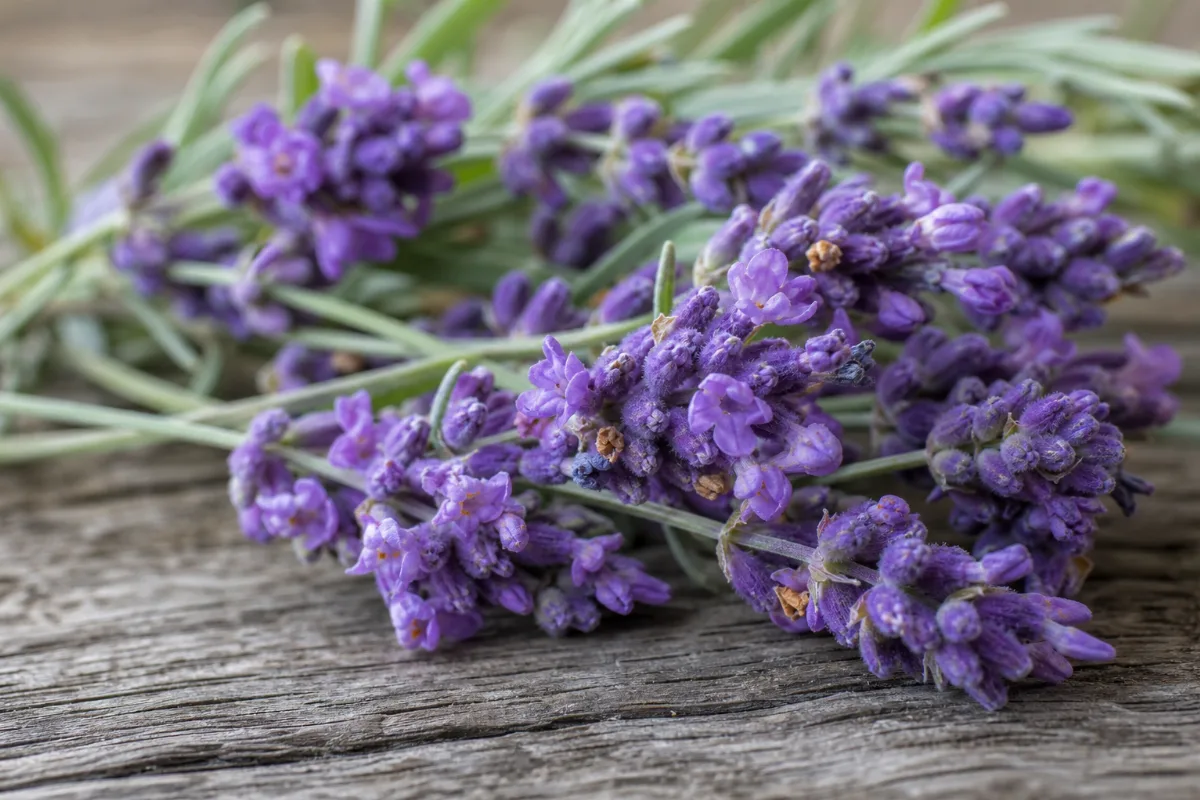
Lavender (Lavandula angustifolia, also called true or English lavender) is an evergreen, woody, strongly scented shrub in the mint family (Lamiaceae), grown for its purple flower spikes. It is cultivated widely, with Bulgaria, France, Spain, Ukraine and Poland named in the studies read. It is a plant of Mediterranean-type climates.
The flowers are dried for tea, tinctures, sachets and baths. The oil is steam-distilled from the flowering tops and is mostly linalool and linalyl acetate. Lavandin (a cheaper hybrid) and spike lavender are different plants with more camphor and cineole, and many bottles sold as lavender oil are not true lavender, so check the Latin name.
Silexan is a patented, standardised soft capsule of lavender oil, usually 80 mg. Most of the best human research is on this one product.
What makes it distinctive
Unlike most herbs, lavender is mainly studied as a standardised oil in capsules and as a smell. That matters: the capsule trials are the strongest and the smell trials are the weakest to interpret, because the scent makes it hard to hide who got lavender.
In lab and animal work, the oil lowers calcium entry into nerve cells somewhat like the drug pregabalin does, though at a different site. In 17 healthy men, 160 mg a day of Silexan for at least 8 weeks lowered serotonin-1A receptor binding on brain scans. Linalool also boosted GABA-A receptor currents in cells. Whether any of this explains the effect in anxious people has not been shown.
Historical and current uses
From the 1400s, distilled lavender water was a calming remedy in Europe, and the oil was evaporated into rooms to calm children. Early 20th-century German texts gave the oil on a sugar cube, a practice the EU agency's review records but we do not recommend copying. Lavender bath additives have been sold in Germany since 1976. The same EU review notes that older texts also called the oil strongly toxic at high doses, so old statements about safety should not be taken at face value.
In 2012 the EU herbal committee adopted traditional-use monographs for lavender flower and lavender oil: relief of mild mental stress and exhaustion and help with sleep, based on long use only. Oral use of the oil was not accepted as well-established. A Silexan capsule has been licensed in Germany since 2009 for anxious restlessness.
What the research shows
The strongest finding is for the oral capsule in anxiety: five 10-week placebo-controlled trials, 1,213 adults, a modest advantage over placebo, with placebo groups also improving a lot. It was also about as good as lorazepam in a 6-week trial and in the same range as paroxetine in a 539-person trial, though the lorazepam trial had no placebo group. Nearly all of these trials were run or co-written by the maker.
Sleep improved in these trials when anxiety improved, but no trial tested the capsule in insomnia without anxiety. For smelling the oil, a pooled review of 65 trials (7,993 people) found lower anxiety, but with very high variation between studies, low trial quality, and mostly self-rated outcomes. Sleep reviews are positive but vary just as much.
Pain around surgery, needles, labour and periods, plus menopause symptoms and cancer symptoms, are rated low. Mood is low, migraine and hair loss are very low, and memory, dementia restlessness and skin infection or wound healing do not have enough evidence. Reviews that pool many oils often cannot credit lavender by itself.
Root, leaf, powder, extract: what is the difference?
Silexan oral capsule
A patented soft capsule of one standardised oil from true lavender flowers, usually 80 mg once a day, 160 mg in some generalised anxiety trials. It has been licensed in Germany since 2009 for anxious restlessness.
All the moderate-certainty evidence is for this one product, mostly from one company's programme. A different lavender oil capsule is not proven to work the same way, and the safety record does not carry over to other products.
Essential oil smelled (diffuser, inhaler, drops on a cloth)
Steam-distilled flower oil breathed for minutes to hours, before procedures, at bedtime or during hospital stays.
Rated low or very low. Doses, devices and oils differ and are often not stated, the smell makes blinding hard, and the pooled results vary a lot. A scent trial says nothing about the capsule.
Massage or skin use in a carrier oil
Lavender oil diluted in a carrier oil and rubbed on the skin, sometimes in a blend with chamomile or other oils.
Trials are short and blends cannot be credited to lavender alone. Skin allergy from air-aged oil and the child breast-growth case reports are linked to skin products, so patch-test a small area and do not use undiluted oil.
Tea and tincture of the flowers
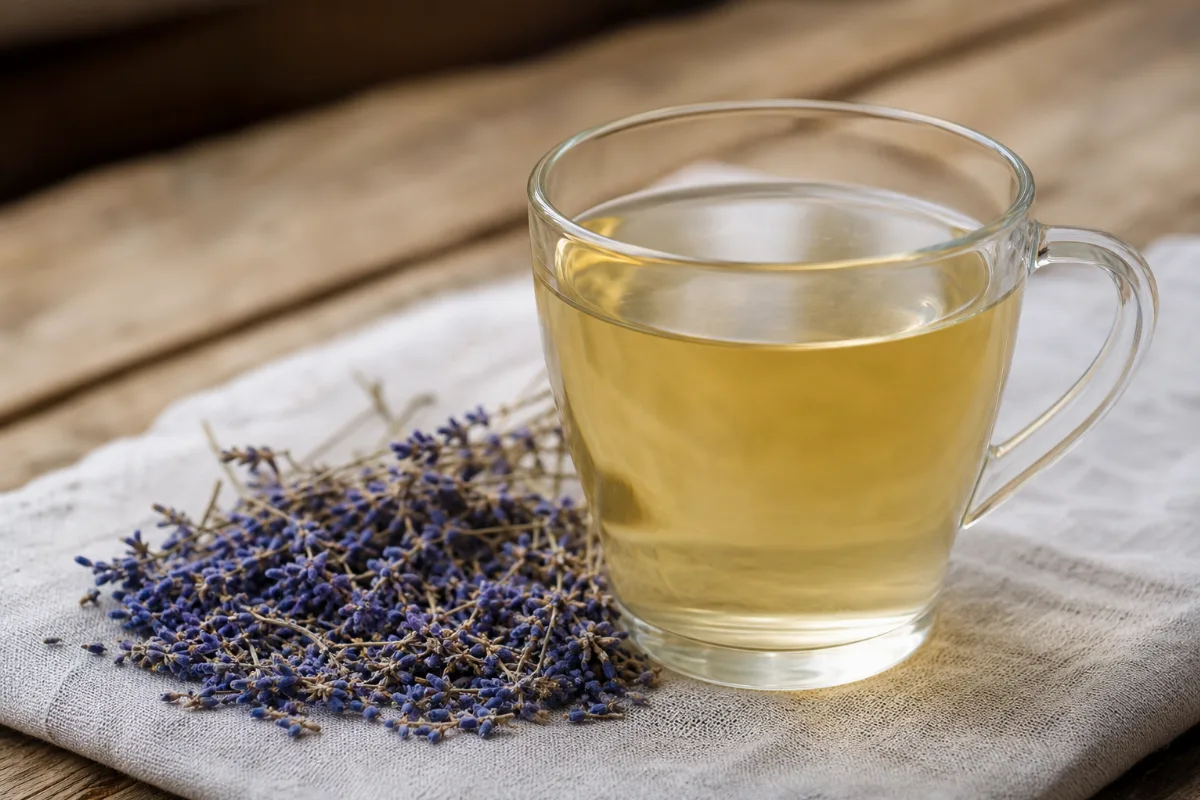
Traditional EU doses: 1 to 2 g of dried flowers in 150 ml of boiling water three times a day, or a 1:5 tincture in 50% to 60% alcohol, 2 to 4 ml three times a day.
Traditional use only. No placebo-controlled lavender tea or tincture trial was read. The tea holds water-soluble plant compounds that the distilled oil does not, and the tincture contains alcohol. Not recommended under 12 years.
Bath additive or lavender bath
15 to 30 ml of a bath product with 7% to 10% lavender oil per full bath (adults and adolescents over 12), or flowers in the bath. Traditional use for tiredness.
Dose comes from national products in the EU assessment report. Full baths are not suitable with open wounds, large skin injuries, acute skin disease, high fever, severe infection or heart failure.
Sachets, pillow sprays and dried flowers
Scent only: bags or sprays of flowers or oil kept near the bed.
No trial of sachets alone was read, so no benefit can be claimed for these forms. They are not comparable to the oil doses in inhaled trials.
At a glance
Traditional uses history, not proof
- Distilled lavender water was described in European texts as a calming remedy from the 1400s onward; the oil was evaporated into rooms to calm restless children (as reported by the EU medicines agency, quoting older sources)
- German and French herbal medicine used the tea for restlessness, sleeplessness and nervous stomach, and lavender baths for tiredness and circulation problems
- EU traditional use (2012): relief of mild mental stress and exhaustion and to help sleep, with a tea of the flowers, a tincture, or the oil by mouth or in a bath. This rests on long use, not on trials
- A standardised oil capsule (Silexan) has been licensed in Germany since 2009 for anxious restlessness, a modern product rather than a traditional one
Studied for research
- Anxiety, oral Silexan capsules, moderate certainty (five placebo-controlled trials, all from the maker's research programme)
- Sleep when anxiety is the problem, low certainty (the benefit seems to come through feeling less anxious)
- Anxiety, sleep and stress from smelling the oil, massage or tea, low to very low certainty
- Pain around surgery, needles, labour and periods, low certainty; migraine, very low
- Low mood, low certainty (one large trial of the capsule); memory and dementia agitation, insufficient evidence
Main compounds
- Linalool, usually 20% to 50% of the oil
- Linalyl acetate, usually 25% to 46% of the oil; the body converts part of it to linalool
- Minor oil parts such as lavandulol, terpinen-4-ol and ocimene; camphor and 1,8-cineole are much higher in lavandin and spike lavender
Common forms
- Oral capsule of one standardised lavender oil (Silexan), 80 mg once a day in most trials
- Essential oil smelled (diffuser, inhaler, drops on a cloth) or diluted in a carrier oil for massage
- Tea of 1 to 2 g of dried flowers in 150 ml of boiling water, or a tincture (traditional use only)
- Bath additives, sachets and pillow sprays
Research links: NIH NCCIH: Lavender · EU herbal monograph: lavender oil (EMA) · EU herbal monograph: lavender flower (EMA) · Research Library · Genes & Biomarkers Library
The plant and its history
- Accepted scientific name
- Lavandula angustifolia Mill.
- Naming authority
- Miller, Gard. Dict. ed. 8 (1768) (NCBI Taxonomy gives 'Mill., 1768'); GBIF accepted name 'Lavandula angustifolia Mill.' (usage key 2927305).
- Synonyms
- Lavandula officinalis Chaix ex Vill. (NCBI synonym; named in the EMA monographs as L. officinalis Chaix); Lavandula delphinensis Jord., 1859; Lavandula fragrans Jord., 1859; Lavandula vera var. ligustica DeNot.; Lavandula angustfolia (GBIF lists this misspelling as a synonym)
- Common names
- Lavender (English); True lavender (English); English lavender (English); Common lavender (English); Garden lavender (English); Narrow-leaved lavender (English); Lavanda (Spanish); Espliego (Spanish); Lavande vraie; lavande officinale (French); Echter Lavendel (German); Lavanda vera (Italian); Alfazema; lavanda (Portuguese)
- Botanical family
- Lamiaceae (the mint family, order Lamiales), per GBIF. Other familiar herbs in the same family are mint, rosemary, sage, thyme, basil and lemon balm. Many Lamiaceae plants carry volatile oils in glands on the flowers and leaves.
- Classification
- Plantae > Tracheophyta > Magnoliopsida > Lamiales > Lamiaceae > Lavandula > Lavandula angustifolia
- Native range
- Mediterranean basin (Wikipedia, secondary, citing Kew; NOT verified in a primary flora). It is grown commercially well outside that range (for example Bulgaria, France, Spain, Ukraine and Poland appear in the papers read here).
- Habitat
- Wikipedia (secondary): likes full sun and well-drained neutral to alkaline soil; does best in Mediterranean-type climates with wet winters and dry summers; hardy to roughly USDA zone 5; does not grow well in continuously damp soil. NOT verified in a primary source.
- What the plant looks like
- Roots: Not described in the sources read.; Stems: Woody-based, strongly aromatic shrub about 1-2 m tall (Wikipedia, secondary).; Leaves: Evergreen, narrow, about 2-6 cm long and 4-6 mm wide (Wikipedia, secondary).; Flowers: Typically purple (lavender-coloured) flowers on spikes 2-8 cm long at the top of slender leafless stems 10-30 cm long (Wikipedia, secondary). Volatile oil collects mainly in the calyx: in L. angustifolia and lavandin inflorescences the calyces were the main sites of volatile compound storage, and the mix of compounds changed as the flowers developed (p20002329).; Fruit: Not described in the sources read.
- Cultivation
- Wikipedia (secondary) describes many garden cultivars (for example Hidcote, Munstead, Sarah). Cultivar and growing site change the oil: new Ukrainian L. angustifolia cultivars grown on the same plots gave linalool anywhere from 26% to 57% and terpinen-4-ol from about 2% to 22% (p35408552), and Spanish oils gave linalool 37-54% (p26441063). So a label that just says "lavender oil" does not fix the chemistry.
- Harvest and processing
- The European Pharmacopoeia defines lavender flower as the dried flowers of L. angustifolia Miller (L. officinalis Chaix) with not less than 13 ml/kg essential oil on the dry drug, and lavender oil as the oil steam-distilled from the flowering tops (Ph. Eur. monographs 01/2008:1534 for the flower and 07/2010:1338 for the oil, as cited in the EMA monographs) (s-ema-ar-lavender-2012, s-ema-monograph-lavender-oil-2012, s-ema-monograph-lavender-flower-2012). The flower contains about 1-3% essential oil (EMA). Silexan, the oral preparation used in most modern trials, is a proprietary steam-distilled oil from the flowers; its exact make-up was not verified here.
- Look-alikes and adulterants
- Name: Lavandin (Lavandula x intermedia Emeric ex Loisel.); Note: A hybrid of true lavender and spike lavender (GBIF lists it as an accepted name, usage key 12021612). It is generally a larger plant that yields more oil and is the cheaper oil often sold as 'lavender' (general knowledge, not from a source read here). The EMA report warns the true species is regularly confused with lavandin and spike lavender, and that without detailed quality specifications a product may contain flowers of different species (s-ema-ar-lavender-2012). Chemically lavandin oil carries camphor (10.11-12.55%), borneol (5.49-8.71%) and eucalyptol (0.47-7.41%) as the typical extras listed for the lavandin cultivars, while the true lavender cultivars grown beside them were characterised by terpinen-4-ol, lavandulyl acetate and lavandulol (p35408552). Camphor and eucalyptol are therefore useful clues when checking an oil.; Name: Spike lavender (Lavandula latifolia Medik.); Note: Broad-leaved lavender from Spain and southern France (GBIF accepted name, key 2927304). Its oil is a different type: in Spanish samples linalool 35-51%, eucalyptol (1,8-cineole) 26-32% and camphor 10-18%, with no large linalyl acetate share (p26441063). The EMA report names it as a confusable species (s-ema-ar-lavender-2012). Oils sold as 'lavender' can include it.; Name: French or Spanish lavender (Lavandula stoechas L.); Note: A separate, easy-to-spot species with dense pine-cone-shaped flower heads topped by large leaf-like bracts, which is often grown in gardens (GBIF accepted name, key 2927303; the flower-head description is general botanical knowledge, not from a source read here). Its oil is chemically different: fenchone and camphor are the main compounds (fenchone 39.9% and camphor 24.2% in Greek inflorescences, p19768993; fenchone, camphor, bornyl acetate and others in Moroccan samples, p36987101), not linalool and linalyl acetate. It is not the species covered by the EMA lavender monographs, so evidence on L. angustifolia should not be applied to it.; Name: Lavender oil adulteration (not a plant); Note: Lavender oil is a known target for adulteration with synthetic linalool or linalyl acetate, cheaper oils or vegetable oil. One analytical study showed these can be detected from marker percentages, mirror-image (enantiomer) ratios and, for dilution with vegetable oil, absolute quantity measurement (p34577081). The main enantiomers expected in genuine L. angustifolia oil are (-)-linalool and (-)-linalyl acetate (p26441063).
- Sustainability and conservation
- Not verified. No IUCN assessment was retrieved. The plant is widely cultivated, and the oil used in medicines comes from cultivated crops (the EMA texts do not describe wild harvest).
The plant and the parts used

Traditional use and history history, not clinical proof
| Tradition or era | Documented use | Source |
|---|---|---|
| 15th-century Europe (Hildegard von Bingen, Matthiolus, Paracelsus) and early modern period | Soon after steam distillation was developed, distilled water saturated with lavender oil was described as a sedative ('Nervinum') and used against tooth- and headache, according to the EMA review citing Kroeber (1935) and Madaus (1938). Dodonaeus (1608) is said to have mentioned lavender water as a calming agent, even in epileptic seizures. The EMA text puts Hildegard's name beside the 15th century, although she lived earlier (12th century), so the dating in the secondary source is loose and is NOT verified at the original. | s-ema-ar-lavender-2012 |
| Traditional room use and calming of children (Europe, undated in the EMA text) | The oil was traditionally evaporated into rooms to calm 'excited' children. The EMA review also notes that narcotic effects were described at high concentrations (Guillemain 1989), and that Pabst (1888) counted the oil among strongly toxic substances, so old statements about safety should not be taken at face value. | s-ema-ar-lavender-2012 |
| Early 20th-century Germany | Oral use as 'five drops of essential oil on a sugar cube, two times a day' (Fischer 1939), and lavender in behavioural therapy (Pelikan 1958), as cited by the EMA review. Indications also included stomach and bowel complaints and musculoskeletal disorders. | s-ema-ar-lavender-2012 |
| German standard licence and French phytotherapy (20th century) | The German standard licence for lavender tea lists restlessness, sleeplessness, lack of appetite, nervous irritable stomach, bloating and nervous bowel disorders. The EMA review lists the tea dose as 1-2 teaspoons (about 0.8-1.6 g) in 150 ml water and the oil dose as 1-4 drops (about 20-80 mg). Leclerc (1966) is cited for French use of flowers for asthma, whooping cough, influenza and laryngitis (infusion 5 parts per 100, four cups a day), and Valnet (since 1964) for a wide list including irritability, insomnia, respiratory disease and rheumatism. These uses are historical records, not proof that they work. | s-ema-ar-lavender-2012 |
| Bath use in Germany (1976 onward; flower bath licence 1986) | Lavender oil has been marketed as a bath additive since 1976, and a German standard marketing authorisation for lavender flowers as a bath additive for functional circulatory disturbances dates from 1986 (EMA review and 2020 addendum market overview). | s-ema-addendum-lavender-flos-2021 |
| Oral capsules (Germany, 2009) | Soft capsules of lavender oil (Silexan) were authorised in Germany in 2009 for anxious restlessness, which is a modern licensed product, not a traditional use (EMA review). | s-ema-ar-lavender-2012 |
| EU herbal monographs (HMPC), adopted 27 March 2012; periodic review 2020 | HMPC adopted traditional-use monographs for lavender flower and lavender oil: relief of mild symptoms of mental stress and exhaustion and to aid sleep, based only on long-standing use. Oil: oral daily dose 20-80 mg or 1 to 3 g per full bath. Flower: tea 1-2 g in 150 ml boiling water three times daily, or tincture (1:5, ethanol 50-60%) 2-4 ml three times daily. Not recommended under 12 years. The 2020 review of the flower monograph found no new data that would change it. | s-ema-monograph-lavender-oil-2012 |
Traditional use shows how a plant was used. It does not show that a supplement works or is safe today.
What is inside, and how it may work
What the plant contains and how those compounds act in cells and animals. Laboratory and animal mechanisms are not proven effects in people.
Main compounds
| Compound | Family | Where it is concentrated | Activity studied | Level of evidence |
|---|---|---|---|---|
| Linalool PubChem 6549 | acyclic monoterpene alcohol | Flowers and flowering-top oil 20-50% of the oil according to the EMA report (s-ema-ar-lavender-2012); 26-57% across new Ukrainian L. angustifolia cultivars (p35408552); 37-54% in Spanish oils (p26441063), where the main form was (-)-linalool. CID 6549 is the general (unspecified-form) record; the (R)-(-) form is CID 443158 and the (S)-(+) form is CID 67179. | Positive modulator of GABA-A (alpha1 beta2 gamma2) currents in cells (p28680877); no direct binding to the GABA-A muscimol site or benzodiazepine site in membrane assays (p11507735, p28579958); inhibits NMDA-receptor binding only at millimolar concentrations (p11507735, p28579958); binds the serotonin transporter in rat brain membranes (p28579958); lowers TRPA1 and voltage-gated calcium channel responses in mouse sensory neurons (p37102121); protects neuronal cells from glutamate toxicity at 100 micromolar (p31545255). Linalool odour lowered anxiety-like behaviour in mice through the sense of smell and benzodiazepine-sensitive GABA-A (p30405369). Applied to the skin of 14 people it lowered systolic blood pressure (p15238993). 113 19 109 71 139 68 79 23 132 | Laboratory research |
| Linalyl acetate PubChem 8294 | monoterpene ester of linalool | Flowers and flowering-top oil 25-46% of the oil (EMA report); 9-24% in Ukrainian cultivars (p35408552); 21-36% in Spanish oil (p26441063); about 52% in the commercial oil used in p28579958 (higher than the EMA range, showing how much oils vary). | No significant change in GABA-A currents in cells (acetylated linalool derivatives, p28680877); did not bind the serotonin transporter, but did bind the NMDA receptor with a lower IC50 (0.74 mM) than linalool (2.97 mM) in rat membranes (p28579958). In human liver preparations it converted to linalool, so part of its action may be through linalool (p36677813). It weakly inhibited CYP3A4 in a test tube (IC50 4.75 microgram/ml) (p36677813). 113 109 114 132 23 | Laboratory research |
| Lavandulol PubChem 5464156 | irregular monoterpene alcohol | Flowers and flowering-top oil 1.30-3.14% in Ukrainian L. angustifolia cultivars (p35408552). CID 5464156 is the (R)-(-) form specifically. | Mainly a quality and identity marker; no pharmacology found in the sources read. The plant makes it through a specific enzyme (lavandulyl diphosphate synthase) (p23306202). 132 39 | Laboratory research |
| Lavandulyl acetate PubChem 30247 | irregular monoterpene ester | Flowers and flowering-top oil 2.12-10.23% in Ukrainian L. angustifolia cultivars (p35408552); listed among minor components by the EMA report. | Mainly a quality marker typical of true lavender; no pharmacology found in the sources read. 132 39 | Laboratory research |
| 1,8-Cineole (eucalyptol) PubChem 2758 | cyclic monoterpene ether | Oil; much higher in lavandin and spike lavender 0.47-7.41% in lavandin (L. x intermedia) cultivars (p35408552); 26-32% in Spanish spike lavender (p26441063); listed as a minor component of true lavender oil by the EMA report. | Little pharmacology of its own was read for lavender in this file; its main value here is as an identity marker for lavandin and spike lavender. A urine study shows it passes into urine after a meal (p37953385). 132 23 38 | Laboratory research |
| Camphor PubChem 2537 | bicyclic monoterpene ketone | Oil; much higher in lavandin and spike lavender 10.11-12.55% in lavandin cultivars (p35408552); 10-18% in Spanish spike lavender (p26441063); the form found in Spanish lavender oils was (+)-camphor (p26441063); listed as a minor component of true lavender oil by the EMA report. CID 2537 is the general record. | Identity marker. A higher camphor and cineole share points to lavandin or spike lavender rather than true lavender. No clinical effect of the camphor in lavender oil was assessed in the sources read. 132 23 | Laboratory research |
| Terpinen-4-ol PubChem 11230 | cyclic monoterpene alcohol | Oil 3-5% in the EMA description; 2.16-22.44% in new Ukrainian L. angustifolia cultivars, where high values were why the oils missed the industry standard (p35408552). | No pharmacology found for lavender in the sources read; a quality marker. 132 | Laboratory research |
| cis-Ocimene ((Z)-beta-ocimene) PubChem 5320250 | acyclic monoterpene hydrocarbon | Oil 3-7% (EMA report). CID 5320250 is the (3Z) form; the unspecified beta-ocimene is CID 18756. | Mainly an odour and identity component; no pharmacology found in the sources read. 33 | Laboratory research |
| 3-Octanone PubChem 246728 | aliphatic ketone | Oil Listed by the EMA report among non-terpene aliphatic components (no percentage given). | Minor identity component; no pharmacology found. 33 | Laboratory research |
| beta-Caryophyllene PubChem 5281515 | sesquiterpene | Oil 1-3% of Spanish L. angustifolia oil (p26441063) and 5.1% in the commercial oil of p28579958; the CID is the (-)-(E)-caryophyllene record; listed by the EMA report. Caryophyllene oxide helped tell lavender from lavandin in one cultivar comparison (p35408552). | Minor component; its own pharmacology was not assessed in the studies read here. 23 109 132 | Laboratory research |
| Geraniol PubChem 637566 | acyclic monoterpene alcohol | Oil Listed as a minor component by the EMA report (no percentage); geranyl acetate was 5.4% in the oil of p28579958 (a different compound, not given its own entry). | Minor component. Rat studies show geraniol and linalool are broken down by similar routes (p6475100). 25 | Animal research |
| Borneol PubChem 64685 | bicyclic monoterpene alcohol | Oil of lavandin 5.49-8.71% in lavandin cultivars (p35408552); not a main part of true lavender oil. | Identity marker for lavandin. 132 | Laboratory research |
| Umbelliferone PubChem 5281426 | simple coumarin (7-hydroxycoumarin) | Flowers (herb, not the distilled oil) Listed among coumarin derivatives of lavender flower by the EMA report; no content figure given. | No pharmacology in the sources read for this plant. Coumarins as a group matter for blood-thinner interaction questions, but the EMA monograph reports no interactions for the flower and lists none (s-ema-monograph-lavender-flower-2012), and no data on anticoagulant effect of lavender coumarins was found here. 33 34 | Authoritative guidance |
| Herniarin (7-methoxycoumarin) PubChem 10748 | simple coumarin | Flowers (herb, not the distilled oil) Listed among coumarin derivatives of lavender flower by the EMA report; no content figure given. PubChem titles this CID "Methylumbelliferone" (7-methoxycoumarin). | No pharmacology in the sources read for this plant. 33 | Authoritative guidance |
| Rosmarinic acid PubChem 5281792 | phenolic acid (caffeic acid ester) | Flowers (herb) Listed among phenylcarboxylic acids of lavender flower by the EMA report; tannins up to 13% of the herbal substance. No content figure for rosmarinic acid itself. | Water-soluble compounds like this are in tea and tincture but not in the distilled oil; no pharmacology of lavender rosmarinic acid was read. 33 | Authoritative guidance |
| Ursolic acid PubChem 64945 | triterpene acid | Flowers (traces) Triterpenes in traces (ursolic acid, mictomeric acid) per the EMA report. | Present only in traces; no pharmacology read for lavender. 33 | Authoritative guidance |
Mechanisms, receptors and pathways
| Target or pathway | Gene or receptor | What was found | Level |
|---|---|---|---|
| Voltage-dependent calcium channels (Silexan) | CACNA1B (N-type), CACNA1A (P/Q-type), CACNA1G/H/I (T-type) | Silexan reduced calcium entry through N-type, P/Q-type and T-type channels in synaptosomes, hippocampal neurons and cell lines, in the same range as pregabalin, but did not bind pregabalin's alpha-2-delta site. In hippocampal neurons the effect came mainly through N-type and P/Q-type channels (2013 paper); a later review by the same group says T-type and N-type matter most. Lab and animal tissue only; the authors estimate the nanomolar test range matches 80 mg per day in people, which is their calculation, not a measured human blood level. Linalool alone also lowered calcium-channel currents in mouse sensory neurons (p37102121). 145 120 71 | Laboratory research |
| Serotonin-1A receptor (Silexan, human brain imaging) | HTR1A | In 17 healthy men, 160 mg Silexan for at least 8 weeks lowered 5-HT1A receptor binding in the temporal gyrus, fusiform gyrus, hippocampus, insula and anterior cingulate compared with placebo. The abstract does not say whether this reflects more serotonin around, fewer receptors, or occupancy. In mice, lavender oil inhalation was blocked by a 5-HT1A blocker and a tiny dose of a 5-HT1A drug added to a tiny dose of oil (p23524167). 10 30 | Human data |
| Serotonin transporter (lavender oil and linalool) | SLC6A4 (SERT) | A commercial lavender oil, and linalool alone, displaced the SERT ligand citalopram from rat cortex membranes in a dose-dependent way (oil at 4 and 8 microlitre/ml left 78% and 38% binding). Linalyl acetate did not. This was ordinary lavender oil, not Silexan, so it has not been shown for Silexan. Test tube only. 109 | Laboratory research |
| NMDA glutamate receptor (lavender oil, linalool, linalyl acetate) | GRIN1 / GRIN2 subunits (NMDA receptor) | Lavender oil displaced an NMDA-site ligand (IC50 0.04 microlitre/ml); linalyl acetate (0.74 mM) and linalool (2.97 mM) did too, and linalool inhibited MK801 binding at 2.97 mM in mouse cortex membranes (p11507735). Millimolar concentrations are far above the nanogram-per-ml blood levels reported after skin or inhalation exposure (s-ema-ar-lavender-2012), so the effect in a living person at normal doses is unproven. Linalool also protected neurons from glutamate and NMDA damage at 100 micromolar (p31545255). 109 19 139 | Laboratory research |
| GABA-A receptor (linalool, positive modulation) | GABRA1 / GABRB2 / GABRG2 | Linalool increased GABA-evoked chloride current in cells with human alpha1 beta2 gamma2 receptors; its C8-hydroxylated and carboxylated breakdown products and acetylated forms did not (p28680877). So a positive allosteric action is shown in cells, and metabolism may weaken it. 113 | Laboratory research |
| GABA-A benzodiazepine site (conflict) | GABA-A benzodiazepine site | Results conflict. Linalool odour in mice was blocked by flumazenil and lost in anosmic mice (p30405369), pointing to smell-triggered benzodiazepine-site action. But lavender oil inhalation was not blocked by picrotoxin and did not change flunitrazepam binding in mice (p23524167), and lavender oil did not displace flumazenil from rat membranes (p28579958). Linalool did not displace muscimol (p11507735). Conclusion: unresolved. Do not describe lavender as working like a benzodiazepine drug. 68 30 109 19 | Mixed |
| Neuroplasticity: PKA, MAPK and CREB (Silexan) | PRKACA (PKA), MAPK1/3, CREB1 | Silexan raised phosphorylation of protein kinase A and then CREB, and promoted neurite outgrowth and synapse formation in neuronal cells; in rats it matched imipramine in the forced swim test after 9 days at 30 mg/kg. Authors suggest this signalling could link the calcium-channel and mood effects, a proposal, not shown in people. 57 120 | Animal research |
| Nociceptive ion channel TRPA1 (linalool) | TRPA1 | Linalool reduced TRPA1 responses to allyl isothiocyanate and carvacrol in mouse sensory neurons and in cells expressing TRPA1, did not affect TRPV1 responses, and reduced TRPA1-driven pain behaviour in mice. 71 | Animal research |
| Mitochondria and oxidative stress (linalool) | mitochondrial membrane potential, mitochondrial ROS and calcium | At 100 micromolar linalool lowered glutamate-induced cell death, mitochondrial ROS and mitochondrial calcium, kept membrane potential and raised uncoupled respiration. Lavender oil also improved the survival of human SH-SY5Y cells exposed to hydrogen peroxide (p28579958). Lab data; the concentration is high. 139 109 | Laboratory research |
| Monoamine oxidase A | MAOA | No MAO-A inhibition by lavender oil was detected in the assay (data not shown in the paper). 109 | Laboratory research |
| Drug-metabolising enzymes (CYP) and nuclear receptors | CYP3A4, CYP1A2, CYP2C9, CYP2C19, CYP2D6; PXR (NR1I2); AhR | In people, 160 mg Silexan for 11 days had no clinically relevant effect on CYP1A2, 2C9, 2D6 or 3A4 (the CYP2C19 result was borderline on one metric because of high variability) (p23401474), and had no effect on the pharmacokinetics of an ethinylestradiol/levonorgestrel pill (p25319228). In test tubes, lavender oil weakly inhibited CYP3A4 and CYP1A2 and linalyl acetate inhibited CYP3A4, with no meaningful PXR or AhR activation (p36677813). Rats fed linalool for 3 days had higher liver cytochrome P-450 (p6475100). 44 75 114 25 | Human data |
| Olfactory route (smell-triggered effect) | olfactory system | In mice, the anxiolytic effect of linalool odour was absent when the sense of smell was lost, so a part of an inhaled effect can come through the nose without blood absorption (p30405369). In people, linalool applied to the skin with breathing masks still lowered systolic blood pressure, so a smell-independent effect also exists (p15238993). 68 79 | Animal research |
Absorption, metabolism and elimination
- Absorption
- Inhalation: in mice exposed to lavender-oil atmosphere, linalool in plasma rose from about 0.9 ng/ml at 30 min to 2.7 at 60 min and 2.9 at 90 min (reported in the EMA review citing Buchbauer 1993; secondary). Skin: in one male volunteer, a massage oil with 2% lavender oil (about 25% linalool, 30% linalyl acetate) rubbed on the abdomen for 10 minutes gave trace amounts in blood within 5 minutes after finishing and peak plasma levels of 121 ng/ml linalool and 100 ng/ml linalyl acetate at 19 minutes (EMA review citing Jager 1992; secondary, single person). Skin application of (-)-linalool in 14 people also had measurable effects on blood pressure and skin temperature, so it does reach the body (p15238993). Swallowing: no human blood-level data for lavender oil capsules (including Silexan) were found. In rats, 55% of an oral labelled linalool dose appeared in urine as glucuronide, 23% in exhaled air and 15% in faeces within 72 h (EMA review citing Bickers 2003; secondary). In people who ate a curry dish, linalool reached urine, peaking about 2.5 hours after the meal (p37953385).
- Distribution
- No human tissue-distribution data found. Only 3% of an oral labelled linalool dose was found in rat tissues after 72 h (EMA review, secondary). Brain levels after Silexan are not known. The authors of the calcium-channel paper compare test concentrations to what an 80 mg dose could produce in the body, but give an estimate, not a measurement (p23637742).
- Metabolism
- Linalool is broken down fast. In rats, urinary metabolites after oral linalool were 8-hydroxy-linalool and 8-carboxy-linalool (p6475100). In human liver microsomes and S9 fractions linalool was unstable (intrinsic clearance 31.28 and 7.64 mL/min/kg) and linalyl acetate was converted to linalool, so the ester behaves partly like a pro-drug of linalool (p36677813). In people who ate a curry dish, urinary linalool was 23 times higher after glucuronidase, meaning most leaves as a glucuronide (p37953385). Those metabolites matter because C8-hydroxylated and carboxylated linalool lost its boosting effect on GABA-A currents (p28680877).
- Elimination
- From the single-person massage case the biological half-life of linalool and linalyl acetate was about 14 minutes and most of both had left the blood within 90 minutes (EMA review citing Jager 1992; secondary, n=1). In rats, 72-hour elimination was urine 55% (glucuronide), exhaled air 23% and faeces 15% of the dose (EMA review citing Bickers 2003; secondary). No human half-life after oral dosing was found.
- Bioavailability
- Not established in humans for any route. There is no intravenous comparison, and oral absorption of lavender oil capsules was not found in the sources read. Because the half-life after skin application was only about 14 minutes (one person) and liver breakdown is quick, blood exposure after oral dosing is likely short-lived, but that is an inference, not a measurement. A review of volatile terpenes says bioavailability and pharmacokinetic data for essential oils are sparse in general (p10985073, abstract).
Isolated compounds versus whole extracts
Lavender oil is mostly two compounds, linalool and linalyl acetate, but the evidence does not say linalool alone does the job. In test tubes, the whole oil bound the NMDA receptor at 0.04 microlitre/ml, while linalool needed 2.97 mM and linalyl acetate 0.74 mM, and units differ so potency cannot be compared directly (p28579958). Linalool bound the serotonin transporter and linalyl acetate did not (p28579958), yet linalool, not its acetate, boosted GABA-A currents in cells (p28680877). Linalyl acetate turns into linalool in human liver preparations, so the two are linked in the body (p36677813). In mice, whole lavender oil acted through serotonin-1A and not through GABA-A tools (p23524167), but linalool odour alone was blocked by flumazenil (p30405369), which suggests the pieces behave differently. Silexan is a standardised whole-oil product, and its calcium-channel and neuroplasticity work (p23637742, p33254260) was done with the oil, not with linalool. Practical points: (1) results on pure linalool do not transfer to the oil, or the reverse; (2) lavandin and spike lavender oils have a different make-up (camphor, 1,8-cineole) so they are not interchangeable with true lavender (p35408552, p26441063); (3) oil composition varies widely between cultivars, so a labelled linalool percentage matters (p35408552); (4) the herb tea and tincture contain water- and alcohol-soluble plant compounds (rosmarinic acid, coumarins, tannins) that the distilled oil does not (EMA report); no study here compared these forms directly.
Nutritional composition
A nutrient table is not meaningful for lavender. It is used in tiny amounts as dried flowers in tea, as a tincture, as a distilled oil (20-80 mg a day in the EU monograph) or for the bath, for its aroma and plant compounds, not as a food. The EMA report lists the flower's content as essential oil 1-3%, coumarins, flavonoids, tannins up to 13%, phenolic acids such as rosmarinic and caffeic acid, and traces of plant sterols and triterpenes, but no vitamin or mineral values were found or are claimed. Culinary lavender buds are used in cooking (general knowledge, not a source read here); the oil is not a cooking ingredient and should not be swallowed outside licensed products.
Products, quality and comparisons
Independent evidence comes first. Nothing in this section is a paid ranking. If a product link is added later, it will be marked clearly as an affiliate link and will never change what the research says.
Quality indicators
- Latin name Lavandula angustifolia (true or fine lavender), with part (flower) and extraction method (steam distilled) on the label; lavandin (Lavandula x intermedia) is a cheaper hybrid with more camphor and less linalyl acetate and is not the same product
- For capsules, the trial product name and amount per capsule should match the studied dose (80 mg); a generic oil capsule is not proven equal to Silexan
- Main markers are linalool and linalyl acetate; the EMA assessment lists linalool 20 to 50% and linalyl acetate 25 to 46% of the oil
Identity and authenticity
- A 2021 study of 72 lavender oil samples (GC/MS, NMR and chemometrics) found that existing standards and methods are not enough to catch adulteration and proposed a Q-Index; authentic oils scored above 100 and adulterated ones below, and a compound called trans-furano-linalool oxide acetate flagged synthetic additions (p33831738)
- A 2026 study of four lavender oils from the Egyptian market found two with higher linalool and linalyl acetate and others with unusual fatty acid esters and synthetic glycols, which suggests dilution or additives (p42000791). This is four products from one country, not a market survey
Standardization and extract strength
- ISO 3515 is the international standard for lavender oil. Secondary sources quote linalool 25 to 38% and linalyl acetate 25 to 45%; we did not read the standard, so check the current edition (s-iso-3515-secondary)
- The EU flower material is expected to comply with Ph. Eur. monograph 01/2008:1534 (stated in the EMA monograph)
Third-party testing
- Dietary supplements and essential oils in the US are not approved before sale; ask for a batch test report (GC-MS) listing linalool and linalyl acetate
- Independent testing programmes may exist for capsules; we did not verify any specific one
Contaminants and adulterants
- Pesticide residues and the carrier oil used for dilution are the usual checks; we found no lavender-specific contamination data in the sources read
- Topical products with lavender and tea tree oil were linked to breast growth in children in case reports (see notes); lab tests on pure linalool and linalyl acetate found no hormone activity, but that work was by employees of a chemical maker
Reading a product label
- Find Lavandula angustifolia (not lavandin or just 'lavender fragrance'), the part used, and the amount of oil per capsule or per drop
- Look for a batch number and a test report; 'fragrance' or 'parfum' means it is not pure essential oil
- Do not swallow ordinary essential oil sold for diffusers; look for a product made for oral use
Certifications and what they actually mean
| Certification | What it means | What it does not tell you |
|---|---|---|
| EU traditional herbal medicinal product registration | A European route for herbal medicines based on long use; lavender flower tea and tincture have an EMA monograph | Says the product is acceptable for mild stress and sleep on the basis of tradition; does not claim trial-proven benefit |
| German marketing authorisation for lavender oil 80 mg soft capsule (since 2009) | A national medicine authorisation for anxious restlessness, per the EMA assessment report | Applies to that licensed product, not to every lavender oil capsule sold |
| ISO 3515 or Ph. Eur. compliance statement | The oil or flower claims to meet a published composition standard | A claim on a label; ask for a batch test report. Compliance does not prove safety or effect |
| Organic certification | Farming practice standard | Does not guarantee linalool content or absence of adulteration |
Comparing price and servings
Do not compare bottle prices. Step 1: cost per serving = bottle price divided by servings in the bottle. Step 2: servings per day needed to reach the studied dose (for example 1 capsule of 80 mg). Step 3: cost per day = step 1 x step 2. For essential oil, compare price per 10 ml and the real number of uses. No prices are stored here.
Extract types compared
| Extract | Plant part | Standardization | Trials | Evidence note | Safety note | Limitations | Studies |
|---|---|---|---|---|---|---|---|
| Silexan (oral lavender oil capsule) | flower (essential oil) | Not in abstracts | Five 10-week placebo-controlled trials at 80 mg/day (n=1,213 pooled), GAD trials at 160 and 80 mg (n=539), versus lorazepam, paroxetine and placebo | Better than placebo on anxiety scores; the 2019 network meta-analysis put 160 mg slightly ahead of 80 mg and about equal to paroxetine; lorazepam comparison had no placebo arm | Adverse events similar to placebo in the pooled analysis; burping more common in one trial; no abuse potential in a single-dose test; no driving impairment at 80 mg; no withdrawal symptoms after abrupt stop at 1 week | Most data come from a small group of authors linked to the maker; 10-week durations; the results cannot be generalised to other lavender oil products (authors' statement) | 41 117 88 169 174 149 118 59 |
| Inhaled lavender essential oil (various oils) | flower (essential oil) | Rarely stated | 65 RCTs (7,993 people) in an anxiety review; 11 RCTs (628 adults) in a sleep review; 10 trials in older adults | Lowered anxiety (Hedges' g -0.73) and improved sleep quality (SMD -1.20 in older adults) but with very high variation | Not examined in the abstracts read | Smell makes blinding hard; heterogeneity (I2 87.5%) and low trial quality; dose seldom stated | 43 129 154 |
| Lavender flower tea and tincture (EU traditional) | flower | Ph. Eur. flower quality | No trial read | Traditional use only (EMA) | None known per EMA; not recommended under 12, in pregnancy or breastfeeding | No efficacy data | 53 |
Compare Lavender with another ingredient
Lavender vs Chamomile (Matricaria chamomilla)
Lavender in its capsule form has more consistent placebo-controlled anxiety data than chamomile extract, though much of it is linked to the maker. For sleep alone both have low-certainty evidence. No head-to-head trial was found.
| Lavender | Chamomile (Matricaria chamomilla) | |
|---|---|---|
| Benefits studied | Anxiety (generalized, subthreshold, mixed with low mood), anxiety-related restlessness and sleep with the oral capsule; inhaled oil for state anxiety and sleep quality; traditional tea for mild stress and sleep | Anxiety (generalized anxiety disorder), sleep quality, menopausal hot flushes and PMS in small trials; traditional tea for gut complaints |
| Evidence certainty | low to moderate for the oral capsule on anxiety scores (5 placebo-controlled trials, n=1,213, HAMA better than placebo; responder rate ratio 1.34), but nearly all trials are linked to the maker; low for inhaled oil (very high heterogeneity, hard to blind); traditional only for tea | low: a 2024 meta-analysis of 10 studies (772 people) found PSQI 1.88 points lower (95% CI -3.46 to -0.31, heterogeneity 88.4%); a 2022 network meta-analysis could not confirm or rule out an anxiety effect for chamomile (MD 0.54 vs placebo) |
| Typical studied dose | Silexan 80 mg once a day for 10 weeks (160 mg in GAD); inhaled oil amounts rarely stated; EU tea 1 to 2 g in 150 ml three times daily | Standardized extract about 270 to 1,500 mg a day for 4 to 12 weeks; EU traditional tea 1.5 to 4 g of flower in 150 ml water 3 to 4 times a day |
| Head-to-head trial | None found; indirect network meta-analyses only (Silexan vs paroxetine and lorazepam in separate trials) | None found against lavender |
| Safety and interactions | Silexan: adverse events similar to placebo in pooled analysis, burping reported, no abuse potential, no driving effect at 80 mg. EMA: may impair driving, not for under 12, pregnancy/breastfeeding not established, interactions none reported. Topical products with lavender and tea tree oil linked to breast growth in children (case reports) | Allergic reactions in case reports especially in people allergic to ragweed-family plants; possible effect on clotting tests and warfarin (NCCIH) |
| Forms | Oral oil capsule, essential oil, tea, tincture, bath, massage oil, sachets | Tea, capsule, liquid extract, essential oil, topical |
| Cost note | Use the price-per-day formula; no prices stored | Use the same formula |
Lavender vs Valerian
Valerian is mostly studied for sleep and lavender capsules mostly for anxiety, so they answer different questions. Both have low-certainty sleep evidence; no direct trial.
| Lavender | Valerian | |
|---|---|---|
| Benefits studied | Anxiety (generalized, subthreshold, mixed with low mood), anxiety-related restlessness and sleep with the oral capsule; inhaled oil for state anxiety and sleep quality; traditional tea for mild stress and sleep | Sleep quality, insomnia, menopausal sleep |
| Evidence certainty | low to moderate for the oral capsule on anxiety scores (5 placebo-controlled trials, n=1,213, HAMA better than placebo; responder rate ratio 1.34), but nearly all trials are linked to the maker; low for inhaled oil (very high heterogeneity, hard to blind); traditional only for tea | low: a 2024 umbrella review found no evidence of efficacy for insomnia treatment but possible subjective sleep-quality benefit |
| Typical studied dose | Silexan 80 mg once a day for 10 weeks (160 mg in GAD); inhaled oil amounts rarely stated; EU tea 1 to 2 g in 150 ml three times daily | about 300 to 1,060 mg a day of extract for 2 to 8 weeks |
| Head-to-head trial | None found; indirect network meta-analyses only (Silexan vs paroxetine and lorazepam in separate trials) | None found against lavender |
| Safety and interactions | Silexan: adverse events similar to placebo in pooled analysis, burping reported, no abuse potential, no driving effect at 80 mg. EMA: may impair driving, not for under 12, pregnancy/breastfeeding not established, interactions none reported. Topical products with lavender and tea tree oil linked to breast growth in children (case reports) | Drowsiness; rare liver injury reports; the 2015 herbal insomnia review found more adverse events per person with valerian than placebo |
| Forms | Oral oil capsule, essential oil, tea, tincture, bath, massage oil, sachets | Extract capsule or tablet, tincture, tea, powder |
| Cost note | Use the price-per-day formula; no prices stored | Use the same formula |
Lavender vs Passionflower (Passiflora incarnata)
In the network meta-analysis Silexan was the only herb with a clear anxiety effect, but this is an indirect comparison with different trial designs.
| Lavender | Passionflower (Passiflora incarnata) | |
|---|---|---|
| Benefits studied | Anxiety (generalized, subthreshold, mixed with low mood), anxiety-related restlessness and sleep with the oral capsule; inhaled oil for state anxiety and sleep quality; traditional tea for mild stress and sleep | Anxiety, sleep |
| Evidence certainty | low to moderate for the oral capsule on anxiety scores (5 placebo-controlled trials, n=1,213, HAMA better than placebo; responder rate ratio 1.34), but nearly all trials are linked to the maker; low for inhaled oil (very high heterogeneity, hard to blind); traditional only for tea | low: a 2020 systematic review of 9 trials (1 to 30 days) reported mostly reduced anxiety; in the 2022 network meta-analysis passionflower did not reach significance (MD -4.20, CrI -8.82 to 0.16) while Silexan did |
| Typical studied dose | Silexan 80 mg once a day for 10 weeks (160 mg in GAD); inhaled oil amounts rarely stated; EU tea 1 to 2 g in 150 ml three times daily | One trial used a cup of tea daily for a week; extract doses not read |
| Head-to-head trial | None found; indirect network meta-analyses only (Silexan vs paroxetine and lorazepam in separate trials) | None found against lavender |
| Safety and interactions | Silexan: adverse events similar to placebo in pooled analysis, burping reported, no abuse potential, no driving effect at 80 mg. EMA: may impair driving, not for under 12, pregnancy/breastfeeding not established, interactions none reported. Topical products with lavender and tea tree oil linked to breast growth in children (case reports) | No adverse effects reported in the 2020 review; interactions not verified here |
| Forms | Oral oil capsule, essential oil, tea, tincture, bath, massage oil, sachets | Tea, extract |
| Cost note | Use the price-per-day formula; no prices stored | Use the same formula |
Lavender vs Lemon balm (Melissa officinalis)
Both have small, low-certainty evidence; lavender has the larger set of placebo-controlled trials for the capsule. No head-to-head study was found.
| Lavender | Lemon balm (Melissa officinalis) | |
|---|---|---|
| Benefits studied | Anxiety (generalized, subthreshold, mixed with low mood), anxiety-related restlessness and sleep with the oral capsule; inhaled oil for state anxiety and sleep quality; traditional tea for mild stress and sleep | Anxiety, depression symptoms, sleep, mainly in short trials |
| Evidence certainty | low to moderate for the oral capsule on anxiety scores (5 placebo-controlled trials, n=1,213, HAMA better than placebo; responder rate ratio 1.34), but nearly all trials are linked to the maker; low for inhaled oil (very high heterogeneity, hard to blind); traditional only for tea | low: a 2021 meta-analysis found lower anxiety (SMD -0.98, 95% CI -1.63 to -0.33) and depression (SMD -0.47, CI -0.73 to -0.21) scores than placebo, with high heterogeneity and few trials |
| Typical studied dose | Silexan 80 mg once a day for 10 weeks (160 mg in GAD); inhaled oil amounts rarely stated; EU tea 1 to 2 g in 150 ml three times daily | Dose not read in the abstract |
| Head-to-head trial | None found; indirect network meta-analyses only (Silexan vs paroxetine and lorazepam in separate trials) | None found against lavender |
| Safety and interactions | Silexan: adverse events similar to placebo in pooled analysis, burping reported, no abuse potential, no driving effect at 80 mg. EMA: may impair driving, not for under 12, pregnancy/breastfeeding not established, interactions none reported. Topical products with lavender and tea tree oil linked to breast growth in children (case reports) | No serious side effects reported in the 2021 meta-analysis; interactions not re-verified here |
| Forms | Oral oil capsule, essential oil, tea, tincture, bath, massage oil, sachets | Tea, extract capsule, essential oil |
| Cost note | Use the price-per-day formula; no prices stored | Use the same formula |
Lavender vs Melatonin
Melatonin is a hormone aimed at sleep timing; lavender capsules were studied for anxiety with sleep as a secondary outcome. We found no direct comparison.
| Lavender | Melatonin | |
|---|---|---|
| Benefits studied | Anxiety (generalized, subthreshold, mixed with low mood), anxiety-related restlessness and sleep with the oral capsule; inhaled oil for state anxiety and sleep quality; traditional tea for mild stress and sleep | Sleep onset latency, total sleep time in insomnia |
| Evidence certainty | low to moderate for the oral capsule on anxiety scores (5 placebo-controlled trials, n=1,213, HAMA better than placebo; responder rate ratio 1.34), but nearly all trials are linked to the maker; low for inhaled oil (very high heterogeneity, hard to blind); traditional only for tea | mixed: a 2022 meta-analysis of 24 trials found melatonin not effective in adults with chronic insomnia without other illness (effective for sleep onset in children and adolescents and in insomnia with other conditions); a 2023 umbrella review found reduced sleep onset latency, with low study quality |
| Typical studied dose | Silexan 80 mg once a day for 10 weeks (160 mg in GAD); inhaled oil amounts rarely stated; EU tea 1 to 2 g in 150 ml three times daily | Not read in the abstracts used here |
| Head-to-head trial | None found; indirect network meta-analyses only (Silexan vs paroxetine and lorazepam in separate trials) | None found against lavender |
| Safety and interactions | Silexan: adverse events similar to placebo in pooled analysis, burping reported, no abuse potential, no driving effect at 80 mg. EMA: may impair driving, not for under 12, pregnancy/breastfeeding not established, interactions none reported. Topical products with lavender and tea tree oil linked to breast growth in children (case reports) | Not re-verified here |
| Forms | Oral oil capsule, essential oil, tea, tincture, bath, massage oil, sachets | Tablet, gummy, liquid |
| Cost note | Use the price-per-day formula; no prices stored | Use the same formula |
Lavender vs Magnesium
Magnesium has small trials for sleep in older adults, lavender for anxiety; the two are not interchangeable and no trial compares them.
| Lavender | Magnesium | |
|---|---|---|
| Benefits studied | Anxiety (generalized, subthreshold, mixed with low mood), anxiety-related restlessness and sleep with the oral capsule; inhaled oil for state anxiety and sleep quality; traditional tea for mild stress and sleep | Sleep, especially in older adults; restless legs |
| Evidence certainty | low to moderate for the oral capsule on anxiety scores (5 placebo-controlled trials, n=1,213, HAMA better than placebo; responder rate ratio 1.34), but nearly all trials are linked to the maker; low for inhaled oil (very high heterogeneity, hard to blind); traditional only for tea | low to very low: 3 trials in 151 older adults showed 17.36 minutes shorter sleep onset (95% CI -27.27 to -7.44) at moderate-to-high risk of bias; a 2026 review of 12 trials found inconsistent results |
| Typical studied dose | Silexan 80 mg once a day for 10 weeks (160 mg in GAD); inhaled oil amounts rarely stated; EU tea 1 to 2 g in 150 ml three times daily | Varies by trial and form |
| Head-to-head trial | None found; indirect network meta-analyses only (Silexan vs paroxetine and lorazepam in separate trials) | None found against lavender |
| Safety and interactions | Silexan: adverse events similar to placebo in pooled analysis, burping reported, no abuse potential, no driving effect at 80 mg. EMA: may impair driving, not for under 12, pregnancy/breastfeeding not established, interactions none reported. Topical products with lavender and tea tree oil linked to breast growth in children (case reports) | Not re-verified here |
| Forms | Oral oil capsule, essential oil, tea, tincture, bath, massage oil, sachets | Several salt forms with different absorption |
| Cost note | Use the price-per-day formula; no prices stored | Use the same formula |
Other supplements people compare it with
- Cognitive behavioural therapy for insomnia (CBT-I) (Chronic insomnia): A 2023 umbrella review describes CBT-I as the recommended first-line approach for insomnia disorder (see the umbrella review). Evidence: low. 48
- Sleep hygiene advice (Sleep): In the postmenopausal insomnia trials both lavender and placebo groups improved when given sleep hygiene advice and weekly follow-up, so the advice itself may account for a lot. Evidence: low. 108 45
- Prescription treatments for anxiety (SSRIs, benzodiazepines) (Anxiety disorders): Paroxetine 20 mg and lorazepam were used as comparators in Silexan trials; see a clinician for diagnosis and treatment of an anxiety disorder. Evidence: moderate. 88 169
- Lemon balm, passionflower, chamomile (Mild anxiety and sleep): Other calming herbs with smaller or less consistent evidence (see comparison tables). Evidence: low. 180
Where to buy
Check the label first. Whatever you buy, look for these:
- The plant part and the extract type or ratio on the label
- A standardized amount of the active compounds, where relevant
- A third-party testing mark (USP, NSF or ConsumerLab)
- Interactions: ask a pharmacist if you take medicines, are pregnant or have a medical condition
Talk to a pharmacist or doctor before you start any supplement, especially if you take medicines. See the Safety tab for interactions.
Support our free guides: as an Amazon Associate we earn from qualifying purchases. Full disclosure.
1 moderate certainty15 low certainty5 very low certainty4 not enough evidence
What was looked at
The 25 benefits and uses checked for Lavender, each with how strong the evidence is. Tap one to open it.
- Anxiety: oral lavender oil capsules (Silexan)Moderate certainty
- Anxiety: lavender aroma, massage and other non-oral useLow certainty
- Anxiety before surgery, dental work and proceduresLow certainty
- Sleep when anxiety is the problem (oral Silexan)Low certainty
- Sleep: lavender aroma, pillow sachets and massageLow certainty
- Depression and low mood: oral SilexanLow certainty
- Depression and low mood: lavender aroma, massage and teaLow certainty
- Everyday stress and nervesVery low certainty
- Pregnancy and the postpartum period: mood, stress and sleepLow certainty
- Agitation in dementiaNot enough evidence
- Memory and thinkingNot enough evidence
- Trauma-related and stress-disorder symptoms (limited evidence)Very low certainty
- Pain after surgeryLow certainty
- Pain from needles and proceduresLow certainty
- Labour painLow certainty
- Pain and healing after childbirth stitchesLow certainty
- Period pain (primary dysmenorrhea)Low certainty
- Migraine and headacheVery low certainty
- Menopause symptoms and hot flashesLow certainty
- Symptoms in people with cancerLow certainty
- Blood pressure and heart rateLow certainty
- Patchy hair loss (alopecia areata)Very low certainty
- Colic: crying babies and kidney-stone painVery low certainty
- Fighting germs on the skin (lab only)Not enough evidence
- Skin inflammation and wound healing (animal studies)Not enough evidence
Lab markers tracked in the studies
Hamilton Anxiety Rating Scale (HAMA)Pittsburgh Sleep Quality Index (PSQI)Montgomery-Asberg Depression Rating Scale (MADRS)State-Trait Anxiety Inventory (STAI)Cortisol (stress hormone)Blood pressure and heart rateSerotonin-1A receptor binding (brain scan)Computerised memory and attention testsWithdrawal symptom checklist (PWC-20)Pain score (0-10 scale)Painkiller (morphine) useHeart rateSystolic blood pressureDiastolic blood pressureCortisol (stress hormone)REEDA wound-healing scoreAmount of menstrual bleedingEstrogen in salivaTriglycerides and HDL cholesterol
What is Lavender good for?
The main proposed uses and how strong the human evidence is for each. Moderate is the best rating any lavender use reached, and only for the Silexan capsule in anxiety. Aroma, massage and tea uses are rated low or very low, pain and body uses low at best, and nothing else is above low. "Low", "very low" and "insufficient" mean few, small, mixed or product-specific studies, many of them unblinded because the smell gives it away. Nothing here is a proven treatment, and the ratings are this profile's reading of the reviews, not formal grades. Where the capsule and the smell were studied for the same problem they are listed together so you can see the difference.
Benefits, one by one
Each card is a research question, not a promise. Tap a goal to filter. Open a card to see the studies, doses and limits.
Anxiety: oral lavender oil capsules (Silexan)
Moderate certaintyOne specific lavender oil capsule, Silexan (80 mg a day), has been tested in several placebo-controlled trials in adults with anxiety and has shown a modest, steady benefit over 10 weeks. Almost all of this research comes from one company's trial programme, and it applies to this product only, not to lavender tea or shop-bought oils.
23 studiesSilexan 80 mg once a day (capsule) is the dose in most trials; 160 mg…
Studies, doses and limits
What the trials found
Individual trials: Kasper 2010 (221 adults with subsyndromal anxiety, 80 mg/day, 10 weeks): HAMA fell 16.0 vs 9.5 points; responders 76.9% vs 49.1%. Kasper 2015 (170 adults with anxiety-related restlessness and disturbed sleep): HAMA fell 12.0 vs 9.3 points (p=0.03). Kasper 2014 (539 adults with generalised anxiety disorder, 10 weeks): HAMA fell 14.1 (160 mg), 12.8 (80 mg), 11.3 (paroxetine 20 mg) and 9.5 (placebo) points; both Silexan doses beat placebo while paroxetine did not in the main analysis. Kasper 2016 (318 adults with mixed anxiety-depression): HAMA fell 10.8 vs 8.4. Woelk 2010 compared Silexan with lorazepam in GAD for 6 weeks (HAM-A fell 11.3 vs 11.6 points) but had no placebo group. Pooled analyses: Möller 2019 (697 people, three subthreshold-anxiety trials): HAMA 3.83 points better than placebo (CI 1.28 to 6.37). Dold 2023 (all five placebo-controlled trials, 1,213 adults, 80 mg/day): responder rate ratio 1.34 and CGI improvement rate ratio 1.51. Kasper 2017 (925 adults with GAD): 160 mg/day beat placebo on every outcome; 80 mg may be the lower end of the useful range. Independent summaries: Donelli 2019 pooled oral Silexan 80 mg for 6 weeks or more at 2.90 HAMA points (CI 0.95 to 4.86) over 1,173 people. Zhang 2022 (network meta-analysis of 12 herbs) found Silexan -3.84 HAMA (CrI -6.31 to -1.34). Müller 2026 (100 trials of anxiety drugs) called Silexan highly effective and as acceptable as placebo. The WFSBP/CANMAT guideline (Sarris 2022) rates lavender '++' (provisionally recommended) for anxiety disorders.
Results
Positive and fairly consistent across five trials, but the gain over placebo is about 2.5 to 4 HAMA points, a modest difference; placebo groups also improved a lot. The one study against a standard drug (lorazepam) had no placebo group.
Effect sizes as reported
HAMA difference vs placebo: 3.83 points (CI 1.28 to 6.37, Möller 2019, 697 people); Donelli 2019: 2.90 points (CI 0.95 to 4.86, 1,173 people); Zhang 2022: -3.84 (CrI -6.31 to -1.34); responder rate ratio 1.34 (Dold 2023).
Why this rating
Five placebo-controlled trials in over 1,200 people point the same way, and independent reviewers (Donelli 2019; Zhang 2022) and an international guideline (WFSBP/CANMAT '++') agree. It is held below 'high' because nearly all the trials were run by one company programme (several authors are company employees), the effect is modest, treatment lasted only 10 weeks, the lorazepam comparison had no placebo group, and no independent replication was found. None of the reviews gave a GRADE rating.
Form and dose studied
Silexan 80 mg once a day (capsule) is the dose in most trials; 160 mg a day was tested in GAD. Capsules give a different exposure from tea, aromatherapy oils or other lavender oil products; the authors of Möller 2019 state the results cannot be generalised to other lavender oil products.
Who was studied
Adults with subsyndromal anxiety, generalised anxiety disorder or mixed anxiety-depression, mainly outpatients in Germany and neighbouring countries. Few data in older adults, adolescents (only a real-world database study), pregnancy or severe anxiety.
Limits
Sponsor-linked evidence; 10-week trials; baseline severity matters (greater benefit when more severe, Dold 2024). The abstracts rarely give the number of dropouts. Not tested against other anxiety treatments with a placebo group in the same trial except paroxetine.
Why researchers looked
Silexan has been authorized in Germany as a medicine for 'states of restlessness during anxious mood' (Uehleke 2012; Baldinger 2014), so it has been tested more thoroughly than most herbs.
Traditional use
Lavender flowers have a long traditional use in Europe and the Mediterranean as a calming herb, in baths, sachets, teas and pillows, and for restlessness and trouble sleeping. Silexan is a standardised oil from Lavandula angustifolia flowers taken as a capsule.
Proposed mechanism Preliminary mechanism
Lab and animal work suggests Silexan (main constituents linalool and linalyl acetate) lowers calcium entry into nerve cells through several types of voltage-dependent calcium channels, somewhat like the drug pregabalin but at a different site (Schuwald 2013; Mueller 2021). In 17 healthy men, 160 mg/day of Silexan for at least 8 weeks also lowered serotonin-1A receptor binding on brain scans (Baldinger 2014). Whether either action explains the effect in anxious people is not shown.
A proposed mechanism does not show that the effect happens in people.
Reported side effects in the trials were similar to placebo overall; burping (eructation) was clearly more common on Silexan in two trials (Kasper 2016, Kasper 2025). No abuse potential (Seifritz 2021), no withdrawal effects after sudden stopping in a one-week follow-up (Gastpar 2017), and no effect on simulated driving (Möller 2021). See the safety tab.
87 169 88 89 90 91 117 41 42 182 174 43 180 142 121 144 10 145 120 149 59 118 166
Anxiety: lavender aroma, massage and other non-oral use
Low certaintySmelling lavender oil or having it in a massage often lowers self-rated anxiety in short studies, but the studies are small, often not blinded and mostly of low quality. It is a different thing from the Silexan capsule, and there is no head-to-head comparison of the two.
11 studiesInhaled drops (often 2-5 drops, 15-30 minutes), massage with diluted …
Studies, doses and limits
What the trials found
Donelli 2019 (65 RCTs with 7,993 people; 37 RCTs pooled): lavender inhalation lowered anxiety (Hedges g -0.73, CI -1.00 to -0.46; 1,682 people) and STAI-State by 5.99 points (CI 2.59 to 9.39); lavender massage g -0.66 (CI -0.97 to -0.35). The reviewers say most included RCTs had a high overall risk of bias. Kim 2021 found a depression and anxiety benefit versus placebo or no treatment, with small and inconsistent effects on blood pressure. Tan 2023 (44 RCTs, 3,419 people): lavender state anxiety WMD -5.41 (CrI -7.86 to -2.98); citrus aurantium (bitter orange) ranked higher. Sayed 2020 (network meta-analysis, 32 trials): inhaled aromatherapy looked best in the first week (SMD -0.57, CI -1.14 to 0.01), massage with foot bath best at the end of the studies, and Silexan 80 mg preferred for longer treatment. Li 2022 (cancer patients): anxiety SMD -0.49; lavender subgroup -1.12. Single trials: Wang 2025 (58 adults with hypertension, 15-minute daily inhalation, 7 days): STAI fell 15.6 vs 0.6 points. Karimzadeh 2021 (150 ICU patients): lavender and bitter orange both lowered anxiety versus saline, with no difference between them. Ebrahimi 2022 (183 older adults, 30 nights): lavender and chamomile both lowered depression, anxiety and stress versus water. Bazrafshan 2020 (60 older adults, 2 g lavender tea twice daily for 2 weeks): state anxiety 6.4 points lower than control; no placebo. Özkaraman 2018: state anxiety did not differ between lavender, tea tree and control groups in chemotherapy.
Results
Mostly positive on self-rated scales in short studies, with null results in some trials. Effects on blood pressure are small.
Effect sizes as reported
Inhaled lavender: Hedges g -0.73 (CI -1.00 to -0.46, Donelli 2019); massage g -0.66; STAI-State difference -5.99 points (CI -9.39 to -2.59).
Why this rating
The pooled numbers look large, but the reviewers themselves point to the low average quality and high risk of bias of the included randomized trials, and big differences between studies; many control groups got nothing, so expectation cannot be separated. Different oils, doses and delivery methods are mixed together. Pooled effects of this size in low-quality trials are likely to be overestimated.
Form and dose studied
Inhaled drops (often 2-5 drops, 15-30 minutes), massage with diluted oil (often 1-2%), foot baths, pillow sachets, tea (2 g tea bag in the one tea trial). No standard dose.
Who was studied
Adults in hospital, people with cancer, older adults, students and healthy volunteers, mostly in Turkey, Iran, Taiwan, Korea and China.
Limits
Unblinded or poorly blinded; self-rated outcomes; small samples; publication bias is possible; short follow-up; many Iranian and Turkish nursing trials with similar designs.
Why researchers looked
Lavender aromatherapy is cheap, popular and used by nurses in hospitals, so many small trials exist.
Traditional use
Lavender flowers have a long traditional use in Europe and the Mediterranean as a calming herb, in baths, sachets, teas and pillows, and for restlessness and trouble sleeping.
Proposed mechanism Pharmacological theory
The smell reaches brain areas involved in emotion; animal work suggests linalool has calming actions. Expectation (people who like the smell expecting to feel calmer) is hard to rule out because the scent cannot be hidden from the person smelling it. This is mechanism theory, not shown in these trials.
A proposed mechanism does not show that the effect happens in people.
Skin contact with undiluted oil can irritate or cause allergic reactions; see the safety tab. Few adverse events were reported in these trials.
Anxiety before surgery, dental work and procedures
Low certaintyMany short studies tested lavender smelled or applied before an operation, a tooth extraction or a medical test. Pooled results favour lavender for self-rated anxiety, but some well-run single trials found no difference.
10 studiesInhalation 3-30 minutes before a procedure (3 minutes of 100% oil in …
Studies, doses and limits
What the trials found
Guo 2020 (20 RCTs, 1,717 adults awaiting surgery; aromatherapy of various oils): anxiety lower than controls (SMD -0.57, CI -0.75 to -0.39); lavender, citrus and rose were the commonest oils; short inhalation sessions worked better than sessions over 20 minutes. Kulakaç 2024 (20 studies, lavender alone): SMD -5.40 (CI -8.76 to -2.04), an unusually large number that the abstract does not explain. Individual trials: Arslan 2020 (126 children, 3 minutes of 100% lavender oil before tooth extraction): lower anxiety and pain scores than no treatment. Ghaderi 2020 (24 children, crossover): salivary cortisol 8.01 nmol/L lower, pulse 11.17 beats per minute lower, injection pain lower (P<0.001). Özel 2021 (78 women during urodynamic testing): anxiety fell 2 vs 0.5 points (P=0.01). Argueta-Figueroa 2026 (third-molar surgery): dental anxiety score did not differ (p=0.268), but heart rate, breathing rate, cortisol (p<0.0001) and local anaesthetic use were lower. Patsalis 2022 (80 cardiology patients, lavender plus ear acupuncture vs sham both): STAI 4.18 points lower (CI 0.05 to 8.31, p=0.047), but the effect of lavender alone cannot be separated. Nouira 2024 (100 women after caesarean, inhaled lavender): pain and anxiety lower than distilled water (p<0.001 and p=0.03). Mousavi 2025 (72 root-canal patients): blood pressure and heart rate did not drop significantly more than control. Shammas 2021 (49 women after breast reconstruction): no difference in anxiety, depression, sleep or pain versus coconut oil.
Results
Mixed. Pooled analyses favour lavender, but several well-controlled single trials are null and the effects that are positive are usually small or short-lasting.
Effect sizes as reported
SMD -0.57 (CI -0.75 to -0.39) for all aromatherapy before surgery (Guo 2020); SMD -5.40 (CI -8.76 to -2.04) for lavender oil (Kulakaç 2024); STAI -4.18 points (CI -8.31 to -0.05) with acupuncture combination.
Why this rating
The reviews are consistent in direction, but the studies are small, mostly self-rated, with single sessions, and the pooled size in Kulakaç 2024 is implausibly large. Null trials exist (Shammas 2021; Mousavi 2025). Heterogeneity and risk of bias are not reported in the abstracts.
Form and dose studied
Inhalation 3-30 minutes before a procedure (3 minutes of 100% oil in the children's trial; 5 drops in a humidifier in the dental trial); massage and sachets in others.
Who was studied
Adults awaiting surgery, children before dental work, women in labour or after caesarean, cardiology patients.
Limits
Single sessions; a scent cannot be fully hidden from the person smelling it, so some effect may be expectation; measures differ.
Why researchers looked
Waiting for a procedure causes anxiety that can affect recovery, so cheap non-drug options are attractive.
Traditional use
Lavender flowers have a long traditional use in Europe and the Mediterranean as a calming herb, in baths, sachets, teas and pillows, and for restlessness and trouble sleeping.
Proposed mechanism Pharmacological theory
Aroma of lavender may calm the autonomic nervous system and lower heart rate and blood pressure; evidence of the pathway comes from lab and small human physiological studies.
A proposed mechanism does not show that the effect happens in people.
Generally few side effects reported; undiluted oil on skin or children's use needs caution (see safety tab).
Sleep when anxiety is the problem (oral Silexan)
Low certaintyIn people with anxiety, Silexan capsules improved sleep scores along with anxiety. The sleep benefit seems to come from feeling less anxious, not from a direct sleep-inducing effect. There are no trials of oral lavender oil in people whose main problem is insomnia.
7 studiesSilexan 80 mg/day capsule, 10 weeks. Sleep was not the primary target…
Studies, doses and limits
What the trials found
Kasper 2010: PSQI fell 5.5 vs 3.8 points with Silexan 80 mg vs placebo in 221 adults with subsyndromal anxiety. Seifritz 2019 (212 people from a Silexan vs placebo trial): Silexan beat placebo on PSQI (p=0.002); about 98% of the effect was explained by lower anxiety, the direct effect on sleep was not significant (p=0.958). Seifritz 2022 (narrative review including all placebo-controlled Silexan trials with the HAMA 'insomnia' item) reached the same conclusion. von Känel 2021 meta-analysis (5 trials): clinically meaningful benefits on insomnia complaints and fatigue. Zhang 2022 network meta-analysis: insomnia SMD -0.48 (CI -0.76 to -0.21). Kasper 2015: restlessness and sleep disturbance trial (170 people): HAMA improved; PSQI improved more than placebo. Greenberg 2018 (JBI systematic review) found no study comparing oral Silexan with inhaled lavender for sleep.
Results
Sleep scores improve alongside anxiety; there is no evidence from people who have insomnia without anxiety.
Effect sizes as reported
PSQI fall 5.5 vs 3.8 points (Kasper 2010); mediation ratio 0.984 (Seifritz 2019); insomnia SMD -0.48 (CI -0.76 to -0.21, Zhang 2022).
Why this rating
The data are secondary outcomes in anxiety trials run by the same programme, rather than trials of sleep problems; the best explanation (anxiety mediates sleep) also means it may not help insomnia on its own. Reviews rely on the company's trials.
Form and dose studied
Silexan 80 mg/day capsule, 10 weeks. Sleep was not the primary target in most trials.
Who was studied
Adults with anxiety disorders and poor sleep.
Limits
Sleep was measured mostly with a self-rated questionnaire (PSQI) and an item of an anxiety scale; no sleep-lab data; no trial in insomnia without anxiety.
Why researchers looked
Poor sleep is a core symptom of anxiety, and a calming herb that does not make people sleepy is of interest.
Traditional use
Lavender flowers have a long traditional use in Europe and the Mediterranean as a calming herb, in baths, sachets, teas and pillows, and for restlessness and trouble sleeping.
Proposed mechanism Preliminary mechanism
A mediation analysis found that 98.4% of the sleep improvement was explained by the improvement in anxiety (Seifritz 2019), meaning Silexan did not appear to act as a direct sedative.
A proposed mechanism does not show that the effect happens in people.
No sedation was seen in the trials and driving was not impaired (Möller 2021), but individuals may differ; see the safety tab.
Sleep: lavender aroma, pillow sachets and massage
Low certaintyMany small trials found that sleeping with lavender oil nearby gives better self-rated sleep, especially in hospital patients and older adults. Reviews are positive but heterogeneous, the studies are low quality, and a few controlled trials found no difference from placebo.
14 studiesTypically a few drops on a pillow, cotton ball or diffuser at bedtime…
Studies, doses and limits
What the trials found
Reviews: Her 2021 (30 studies of aromatherapy, many oils): effect size 0.74. Cheong 2021 (34 studies of inhaled aromatherapy): effect size 0.65; lavender was the strongest single oil. Shen 2026 (11 RCTs, 628 adults, lavender essential oil): SMD -0.56 (CI -0.96 to -0.17, P=.005). Ostovar 2025 (10 trials, adults over 60, all inhaled): SMD -1.20 (CI -1.73 to -0.68) with very high heterogeneity (I2 87.5%). Xu 2024 (older adults): lavender alone SMD -1.39 (CI -2.06 to -0.72). Cheng 2022 (cancer patients, 10 RCTs): lavender SMD -1.06 (CI -1.49 to -0.63) while mixed oils did not help (-0.21). Chen 2022 (20 RCTs in people without insomnia): 14 positive. Individual trials: Karadag 2017 (60 coronary ICU patients, 2% lavender, 15 days): better sleep (PSQI) and anxiety than no inhalation. Yildirim 2020 (68 palliative-care patients): better sleep, fewer awakenings. Yildirim 2025 (100 chemotherapy patients, 5 nights): better sleep and less fatigue than saline. Yin 2024 (40 stroke patients with depression, pillow sachet for 4 weeks): better sleep and depression scores than an empty sachet. Null or mixed: Lucena 2021 (35 postmenopausal women with insomnia, 29 nights): no difference from sunflower oil on the PSQI (P=0.22), both groups improved; Özkaraman 2018: mixed result in chemotherapy patients. The 2018 JBI review found no head-to-head trial against oral Silexan.
Results
Reviews are positive, with large but heterogeneous effects; individual controlled trials are mixed. Sleep measures are mostly self-rated.
Effect sizes as reported
SMD -0.56 (CI -0.96 to -0.17, Shen 2026); SMD -1.20 (CI -1.73 to -0.68, Ostovar 2025, I2 87.5%); lavender subgroup SMD -1.39 (CI -2.06 to -0.72, Xu 2024); lavender in cancer SMD -1.06 (CI -1.49 to -0.63).
Why this rating
Effects in the reviews are large but come from small, often unblinded trials with high heterogeneity and self-rated sleep; many control groups got no scent. Null results from a placebo-controlled trial with sleep-lab measures (Lucena 2021) and mixed outcomes in others lower confidence. Reviewers themselves say higher-quality studies are needed.
Form and dose studied
Typically a few drops on a pillow, cotton ball or diffuser at bedtime, from 5 nights to 8 weeks; 15-minute daily inhalation in one trial; a 1.5 g sachet of microencapsulated oil in another.
Who was studied
Hospital patients, cancer patients, older adults, women after childbirth, people with high blood pressure.
Limits
Mainly self-rated sleep; short follow-up; heterogeneity; some trials had scent-less controls; many are by similar nursing research groups.
Why researchers looked
Lavender sachets and pillow sprays are among the most common home remedies for sleep.
Traditional use
Lavender flowers have a long traditional use in Europe and the Mediterranean as a calming herb, in baths, sachets, teas and pillows, and for restlessness and trouble sleeping.
Proposed mechanism Pharmacological theory
Proposed explanations include a calming effect of the aroma on the nervous system and a relaxation conditioning effect. This is theory, not shown in these trials.
A proposed mechanism does not show that the effect happens in people.
Few adverse events reported; headaches and sneezing were noted in one cancer-patient trial in Cheng 2022. See the safety tab for skin and allergy cautions.
Depression and low mood: oral Silexan
Low certaintyOne large company-funded trial (498 people) found Silexan 80 mg a day modestly better than placebo in mild to moderate major depression, about as good as the antidepressant sertraline at a low dose, and a pooled analysis found low mood improved in people with anxiety. This is promising but rests on one depression trial.
10 studiesSilexan 80 mg once a day for 8 weeks.
Studies, doses and limits
What the trials found
Kasper 2025 (498 adults with mild or moderate major depression, MADRS 19-34): Silexan 80 mg and sertraline 50 mg both beat placebo after 8 weeks; the gains over placebo were 2.17 MADRS points for Silexan (CI 0.58 to 3.76) and 2.59 for sertraline (CI 1.02 to 4.17); Silexan also improved functioning on the Sheehan Disability Scale by 2.40 points. Möller 2026: in an item-level analysis, Silexan beat placebo on 5 of 9 MADRS items (sadness, appetite, concentration, lassitude). Kasper 2016 (318 people with mixed anxiety-depression): MADRS fell 9.2 vs 6.1 points. Bartova 2023 meta-analysis of five anxiety trials: depressed mood item and MADRS/HAMD totals improved more than placebo (p=0.01 for the item). Fißler 2014: case series of 8 people with major depression given Silexan plus an antidepressant; 6 improved, with no control group. Uehleke 2012: open-label 6-week trial in 47 people with neurasthenia, PTSD or somatization: depression score fell 32.7%. The WFSBP/CANMAT guideline (Sarris 2022) grades lavender '+' (weakly recommended) for unipolar depression, before the 2025 trial appeared.
Results
Positive in the single depression trial and in analyses of anxiety trials. A difference of about 2 MADRS points is small and the trial is the only one in major depression.
Effect sizes as reported
MADRS difference to placebo 2.17 points (CI 0.58 to 3.76) at 8 weeks; sertraline 2.59 (CI 1.02 to 4.17).
Why this rating
Only one randomized trial in major depression (498 people), run by the company; the effect is small; sertraline's effect was also small; no replication or long-term data. The anxiety-trial analyses concern people who were mainly anxious, not diagnosed with depression.
Form and dose studied
Silexan 80 mg once a day for 8 weeks.
Who was studied
Adults with mild or moderate major depression; adults with anxiety who also had low mood.
Limits
One depression RCT; sponsor-linked; short; excludes severe depression; no comparison with long-term outcomes.
Why researchers looked
Anxiety and depression overlap, and Silexan reduces depressed mood in anxious people, so it was tested in depression.
Traditional use
Lavender flowers have a long traditional use in Europe and the Mediterranean as a calming herb, in baths, sachets, teas and pillows, and for restlessness and trouble sleeping.
Proposed mechanism Preliminary mechanism
In rats and cell models Silexan acted like an antidepressant and promoted nerve-cell growth and synapse formation through the PKA/CREB pathway (Friedland 2021); in healthy men it changed serotonin-1A receptor binding (Baldinger 2014). These are indirect clues, not proof for depression.
A proposed mechanism does not show that the effect happens in people.
Eructation (burping) was the most frequent side effect in the depression trial. Lavender capsules should not replace treatment of severe depression or suicidal thoughts; see the safety tab.
Depression and low mood: lavender aroma, massage and tea
Low certaintySmall trials suggest lavender aromatherapy or tea may lower depression scores, but results are mixed, trials are small, and blends of oils did as well or better than lavender alone.
10 studiesInhaled drops or a 1.5 g sachet nightly; 2 g tea twice daily for 2 we…
Studies, doses and limits
What the trials found
Cho 2023 (32 trials of aromatherapy for depression, 27 studies): overall SMD -0.56 (CI -0.69 to -0.43); inhalation was best and blended oils beat lavender or other single oils; no effect in pregnant or postpartum women. Kim 2021: lavender superior to placebo/no treatment for depression (Hedges g -0.43, CI -0.59 to -0.27), but the authors note few trials. Jafari-Koulaee 2020 (9 studies): some positive, some not. Li 2022: no benefit on depression in cancer patients. Individual trials: Ebrahimi 2022 (183 older adults): lower depression with lavender or chamomile than water inhalation (p<0.01). Xiong 2018 (60 older adults with depressive symptoms): a lavender/sweet orange/bergamot blend by massage or inhalation lowered scores to 18 weeks (blend, no pure lavender group). Yin 2024 (40 stroke patients): lower depression scores with lavender pillow sachets than an empty sachet. Bazrafshan 2020: lavender tea lowered the Beck Depression score by 2 points more than no treatment (no placebo). Lucena 2021: depression fell from baseline in the lavender group in postmenopausal women. Shammas 2021: no difference after breast reconstruction.
Results
Mixed. A modest pooled benefit for aromatherapy overall, less clear for lavender alone and not in pregnancy or postpartum.
Effect sizes as reported
SMD -0.56 (CI -0.69 to -0.43) aromatherapy overall (Cho 2023); lavender g -0.43 (CI -0.59 to -0.27, Kim 2021).
Why this rating
Pooled effects are moderate but the trials are small and unblinded, blends outperform lavender alone, and the review authors describe lavender-specific depression trials as scarce.
Form and dose studied
Inhaled drops or a 1.5 g sachet nightly; 2 g tea twice daily for 2 weeks; massage 30 minutes twice weekly (blend).
Who was studied
Older adults, stroke patients, cancer patients, people with heart disease.
Limits
Self-rated scales; no placebo in several; a blend rather than lavender alone in some trials.
Why researchers looked
Aromatherapy is used as a low-cost add-on for low mood in older adults, hospital patients and new mothers.
Traditional use
Lavender flowers have a long traditional use in Europe and the Mediterranean as a calming herb, in baths, sachets, teas and pillows, and for restlessness and trouble sleeping.
Proposed mechanism Preliminary mechanism
Not established. Suggested actions include effects on serotonin and stress responses; one small trial measured serotonin concentration, which rose after an aromatherapy blend (Xiong 2018).
A proposed mechanism does not show that the effect happens in people.
Few side effects reported. Lavender aromatherapy is not a substitute for treatment of depression.
Everyday stress and nerves
Very low certaintyLavender aromatherapy and tea lowered stress scores in a handful of small studies in nurses, older adults and new mothers. The studies are weak and results do not show lasting effects.
5 studiesAroma sessions 20 minutes weekly (nurses); 3 drops inhaled every 8 ho…
Studies, doses and limits
What the trials found
Yang 2025 (60 nurses, weekly 20-minute lavender aroma sessions for 6 weeks, with or without music; no non-intervention control): stress, anxiety and depression scores fell after sessions in both groups. Ebrahimi 2022 (183 older adults): stress scores lower than control after 30 nights, and a month later. Kianpour 2016 (140 women after childbirth; 3 drops of lavender every 8 hours for 4 weeks): stress, anxiety and depression lower than routine care at 2 weeks, 1 month and 3 months. Effati-Daryani 2015 (141 pregnant women; lavender cream 2 g nightly): stress score 3.1 (foot bath group) and 2.7 points lower than placebo at 8 weeks. Moss 2003 (144 healthy adults) found people in a lavender-scented room felt more content than controls, but performed worse on memory tasks.
Results
Mostly positive on self-rated stress, mainly in uncontrolled or lightly controlled trials.
Effect sizes as reported
Stress score 3.1 and 2.7 points lower than placebo cream at week 8 (Effati-Daryani 2015).
Why this rating
Small trials with unblinded or non-placebo control groups, a trial with no non-intervention control, self-rated outcomes, and short durations; the best-controlled trial (placebo cream in pregnancy) is not an inhalation or oral trial.
Form and dose studied
Aroma sessions 20 minutes weekly (nurses); 3 drops inhaled every 8 hours (postpartum); lavender cream 2 g nightly (pregnancy).
Who was studied
Nurses, older adults, pregnant and postpartum women.
Limits
Self-rated; no scent-free blinding; short follow-up.
Why researchers looked
Stress is the most common reason people reach for calming herbs.
Traditional use
Lavender flowers have a long traditional use in Europe and the Mediterranean as a calming herb, in baths, sachets, teas and pillows, and for restlessness and trouble sleeping.
Proposed mechanism Pharmacological theory
Same as for anxiety: not established in humans.
A proposed mechanism does not show that the effect happens in people.
Few side effects reported.
Pregnancy and the postpartum period: mood, stress and sleep
Low certaintySeveral small trials in pregnant and new mothers report better sleep, mood and stress with lavender aroma, cream or tea. A review of pregnancy trials found no adverse effects, but the number of women is small and the trials are weak. Lavender oil capsules have not been tested in pregnancy.
7 studiesFragrance by the pillow; inhaled drops; cream 2 g nightly; tea once d…
Studies, doses and limits
What the trials found
Seiiedi-Biarag 2023 (3 trials, postpartum sleep): SMD -0.61 (CI -1.07 to -0.15, p=0.01), heterogeneity high (I2 75%). Vidal-García 2024 (6 trials, 413 pregnant women, second or third trimester): all trials reported improvement and no adverse effects; the authors call the evidence limited. Keshavarz Afshar 2015 (158 postpartum mothers, fragrance by the pillow, 8 weeks): PSQI 8.29 to 6.80 (p<0.05) vs 8.46 to 7.57 (not significant) in the placebo group. Kianpour 2016 (140 women): lower stress, anxiety, depression for up to 3 months. Chen 2015 (80 postnatal women with poor sleep, one cup of lavender tea daily for 2 weeks): less fatigue (p=0.014), less depression (p=0.033), better bonding (p=0.049) than routine care, but no differences at 4 weeks. Effati-Daryani 2015 (141 pregnant women, cream): depression -3.3 and -2.4, anxiety -1.4 and -1.7 points versus placebo at 8 weeks. Cho 2023 found no effect of aromatherapy on depression in pregnant or postpartum women across trials.
Results
Small positive findings on sleep and anxiety; depression findings are conflicting between single trials and the pooled review.
Effect sizes as reported
Postpartum sleep SMD -0.61 (CI -1.07 to -0.15); PSQI 8.29 to 6.80 vs 8.46 to 7.57.
Why this rating
Few trials, small, with high heterogeneity, no scent placebo in several; the conflicting depression results (single positive trials vs Cho 2023) reduce confidence.
Form and dose studied
Fragrance by the pillow; inhaled drops; cream 2 g nightly; tea once daily. No oral oil capsule data.
Who was studied
Pregnant women in the second and third trimester; mothers in the first months after birth.
Limits
Mostly Iranian and Taiwanese trials; short follow-up; no data on infant outcomes beyond bonding.
Why researchers looked
Many medicines are avoided in pregnancy and breastfeeding, so non-drug options are sought.
Traditional use
Lavender flowers have a long traditional use in Europe and the Mediterranean as a calming herb, in baths, sachets, teas and pillows, and for restlessness and trouble sleeping.
Proposed mechanism Pharmacological theory
Not established.
A proposed mechanism does not show that the effect happens in people.
Essential oils and herbal products in pregnancy and breastfeeding need care; no oral capsule data. See the safety tab.
Agitation in dementia
Not enough evidenceAromatherapy, often with lavender, has been tried for restlessness in people with dementia. The most careful Cochrane review found no convincing benefit, while a newer meta-analysis was positive. Evidence is inconsistent.
4 studiesInhaled or applied to skin; no standard dose.
Studies, doses and limits
What the trials found
Ball 2020 (Cochrane, 13 RCTs, 708 people in care homes; lavender in 8, lemon balm in 4): no convincing evidence of benefit. Of five better-quality trials on agitation, four showed no effect and one showed a benefit; on overall behavioural symptoms four of five showed a benefit; no effect on cognition, quality of life or sleep; harms poorly reported. The earlier 2014 Cochrane version had 7 trials: one (n=71) showed less agitation (MD -11.1, CI -19.9 to -2.2), another (n=63) none. Xiao 2025 (meta-analysis of 15 RCTs, 693 people with cognitive impairment): aromatherapy reduced agitation and aggression, including lavender oil, especially courses of 4 weeks or less. Karimzadeh 2021 (ICU patients): agitation fell in all groups with no significant difference from placebo.
Results
Inconsistent. The two reviews disagree: Cochrane found no convincing benefit, the 2025 meta-analysis found a benefit.
Effect sizes as reported
No pooled estimate in the Cochrane review; Ballard 2002 data: MD -11.1 (CI -19.9 to -2.2) in one trial of 71 people.
Why this rating
Small trials, half with poor reporting, inconsistent results and conflicting reviews. Not enough to say whether lavender helps dementia agitation.
Form and dose studied
Inhaled or applied to skin; no standard dose.
Who was studied
People with dementia in care homes, mostly with agitation.
Limits
Poor reporting; no long-term data; the smell cannot be hidden from staff; no data on oral lavender in dementia.
Why researchers looked
Agitation is one of the hardest symptoms of dementia, and drugs for it have risks, so non-drug options are tried.
Traditional use
Lavender flowers have a long traditional use in Europe and the Mediterranean as a calming herb, in baths, sachets, teas and pillows, and for restlessness and trouble sleeping.
Proposed mechanism Pharmacological theory
Not established. Smell and touch may calm through relaxation rather than a drug-like action.
A proposed mechanism does not show that the effect happens in people.
Harms were poorly reported in dementia trials; skin irritation and allergy should be watched in frail people.
Memory and thinking
Not enough evidenceThere is no good evidence that lavender improves memory or thinking. In a classic study the smell of lavender made healthy people slower on memory tasks. A small trial in older adults with diabetes suggested benefit, but it compared groups mainly with their own starting scores.
4 studiesAmbient aroma in a room; inhaled for 4 weeks in older adults.
Studies, doses and limits
What the trials found
Moss 2003 (144 healthy adults in a scented cubicle): lavender produced a significant decrement in working memory and slower reaction times on memory and attention tasks than no odour, while rosemary improved some memory measures; lavender and rosemary improved how content people felt compared with control. Can 2024 (63 older adults with diabetes, 4 weeks of lavender or rosemary inhalation): cognitive function, anxiety and sleep improved from baseline in both oil groups (mostly within-group comparisons). Ball 2020 (Cochrane): of three dementia trials that assessed cognition, one gave no data and two found no significant effect of aromatherapy. No randomized trial of oral lavender oil on thinking skills was found; Silexan driving tests showed no impairment (Möller 2021).
Results
No consistent benefit. One controlled trial in healthy adults found slower and worse performance with lavender.
Effect sizes as reported
No pooled effect sizes; Moss 2003 reported significant decrements in working memory (statistics not in the abstract).
Why this rating
One older controlled trial pointing the wrong way, one small trial with mainly within-group comparisons, and no trial of oral lavender. Not enough human evidence for any claim of improved thinking.
Form and dose studied
Ambient aroma in a room; inhaled for 4 weeks in older adults.
Who was studied
Healthy young adults; older adults with diabetes; dementia care-home residents.
Limits
Small, short and old; no long-term trials; no oral-oil trials.
Why researchers looked
Aromas are often claimed to sharpen or calm the mind.
Traditional use
Lavender is traditionally a calming rather than a stimulating herb.
Proposed mechanism Pharmacological theory
Not established. The 2003 study suggested a calming or slowing effect on reaction times; the older-adult study found improvements that may reflect expectation.
A proposed mechanism does not show that the effect happens in people.
Avoid relying on lavender for alertness: it may slow reaction times in some settings (Moss 2003), though Silexan capsules did not impair driving (Möller 2021).
Trauma-related and stress-disorder symptoms (limited evidence)
Very low certaintySilexan has only been tried in a small, uncontrolled study in post-traumatic stress and related conditions, with improvements reported, and a randomized trial in PTSD is only at the planning stage. This is a research idea, not an established use.
2 studiesSilexan 80 mg once a day for 6 weeks.
Studies, doses and limits
What the trials found
Uehleke 2012 (open-label, 6 weeks, 80 mg/day in 47 analysable patients with neurasthenia, PTSD or somatization disorder): depression score fell 32.7%, general symptom index 36.4%, quality of life rose; patients with neurasthenia or PTSD showed comparable improvements; side effects mild or moderate and mostly stomach complaints. Roebuck 2026 published a plan for a randomized PTSD trial of add-on Silexan (results not available). No randomized results exist.
Results
Open-label improvement only.
Effect sizes as reported
Depression score -32.7%; SCL-90-R -36.4% (uncontrolled).
Why this rating
One small uncontrolled trial with no placebo; improvement may be natural recovery or expectation; the randomized trial has no results yet.
Form and dose studied
Silexan 80 mg once a day for 6 weeks.
Who was studied
Adults with neurasthenia, PTSD or somatization disorder with restlessness.
Limits
No control group, small, short.
Why researchers looked
Restlessness and poor sleep are central in post-traumatic stress disorder, which Silexan targets in anxiety.
Traditional use
Lavender flowers have a long traditional use in Europe and the Mediterranean as a calming herb, in baths, sachets, teas and pillows, and for restlessness and trouble sleeping.
Proposed mechanism Pharmacological theory
Not established.
A proposed mechanism does not show that the effect happens in people.
Not for use in place of trauma treatment.
Pain after surgery
Low certaintySmelling lavender oil for a few minutes after an operation was linked to lower pain scores in a 2025 review of 15 trials. The trials are small, mostly from Iran, and patients can usually tell they are smelling lavender, so this is low-certainty evidence. Whether it also cuts the need for painkillers is unclear.
8 studiesInhaled, usually 2% (or up to 10%) lavender oil, 2-4 drops on a mask …
Studies, doses and limits
What the trials found
A 2025 systematic review of 15 randomized trials (cardiac and abdominal surgery mostly; 9 from Iran) found that inhaled lavender significantly reduced postoperative pain in adults. For painkiller use, 3 studies found less and 3 found no clear effect, so the review calls that unproven. A separate 2025 review of 7 recovery-room trials (several oils) found less pain in 6 of 7. Single trials: after hernia surgery (n=90) pain was lower than oxygen alone at all four checks (P<.001); after caesarean section (n=60, a blend with lavender) pain was lower at 4, 8 and 12 hours and fewer women needed a diclofenac suppository; after heart bypass (n=50) pain was lower at 30 and 60 minutes; after gastric banding (n=54) 46% needed painkillers with lavender versus 82% with placebo and average morphine was 2.38 mg versus 4.26 mg. A meta-analysis of 9 heart surgery trials (n=656) found a small drop in pain (mean difference -0.83 points, 95% CI -1.59 to -0.07). A breast reconstruction trial (n=49) found no difference in pain (p=0.30).
Results
Pain scores were lower with inhaled lavender in most trials, usually by a small amount and for a short time (up to about 24 hours). Painkiller savings are inconsistent.
Effect sizes as reported
Heart surgery meta-analysis: pain -0.83 points (95% CI -1.59 to -0.07, p=0.03), a small effect close to the edge of no effect. Gastric banding trial: morphine 2.38 mg vs 4.26 mg (P=.04). The main 2025 review gives no pooled number in its abstract.
Why this rating
Many trials, but small, short and mostly from one country. Pain is self-rated and the smell makes blinding hard. The 2025 review used the GRADE method, but its abstract does not report the rating, so the low rating here is the compiler's. One breast-surgery trial found no effect.
Form and dose studied
Inhaled, usually 2% (or up to 10%) lavender oil, 2-4 drops on a mask or pad for 5-20 minutes, sometimes repeated every 15 minutes or at set hours. Lavender in oxygen masks was used in several trials.
Who was studied
Adults after hernia, caesarean, heart bypass, gastric banding and other surgery. Mostly Iran and the USA.
Limits
Effect sizes are small. Follow-up is hours, not days. Often compared with plain oxygen or placebo oil that smells different. It is an extra, not a replacement for prescribed pain care.
Why researchers looked
Pain after surgery is common, and people look for gentle extras that might reduce the need for strong painkillers.
Traditional use
Lavender has long been used in folk practice as a calming, soothing oil. Using it for pain after an operation is a modern nursing practice, not a long traditional use.
Proposed mechanism Pharmacological theory
Lavender oil's main parts, linalool and linalyl acetate, are thought to act on the nervous system and the sense of smell. How this would ease pain in people has not been shown in these trials. Part of the effect may come from relaxation, expectation and the pleasant smell.
A proposed mechanism does not show that the effect happens in people.
Lavender oil is for smelling or, well diluted, for the skin; it is not for swallowing. The abstracts report few side effects, but they were not safety studies. Undiluted oil can irritate skin. See the safety file. Do not use it instead of prescribed pain treatment, and ask the hospital team before using aromatherapy in a ward.
Pain from needles and procedures
Low certaintyA 2025 review of 9 studies found aromatherapy, including lavender, lowered pain and worry during needle procedures such as dialysis fistula needles. A trial in 90 dialysis patients found about half the pain with lavender oil. The methods differ a lot between studies, so this is low-certainty.
2 studiesInhaled or applied to the skin just before the needle, for 3 to 5 min…
Studies, doses and limits
What the trials found
Meta-analysis of 9 trials: pain fell by 1.82 points (95% CI -2.35 to -1.30, p<0.00001) and anxiety fell (SMD -0.92, 95% CI -1.71 to -0.14). Lavender oil lowered both pain and anxiety; breathing it in and putting it on the skin both lowered pain. Trial (n=90, haemodialysis, Turkey): average pain after treatment was 22.66 (inhaler), 16.33 (skin) and 45.33 (no treatment).
Results
Lower pain scores around needle insertion, mostly a single dose just before the needle.
Effect sizes as reported
Pain 1.82 points lower (95% CI -2.35 to -1.30). The dialysis trial showed roughly half the pain score in the lavender groups.
Why this rating
A pooled analysis plus a decent-sized trial point the same way, but heterogeneity is high, the reviews mix several aromatherapy oils and the smell makes blinding hard. Rating is the compiler's.
Form and dose studied
Inhaled or applied to the skin just before the needle, for 3 to 5 minutes (5 minutes worked better than 3 in the review). The dialysis trial used 100% oil, which is much stronger than usual home use.
Who was studied
Adults having fistula needles, catheters or ports.
Limits
Only the moment of the needle was studied. Doses vary a lot.
Why researchers looked
People on dialysis have large needles put into their arm many times, so even a small drop in pain matters.
Traditional use
No traditional use for this; it is a modern nursing idea.
Proposed mechanism Pharmacological theory
Lavender oil's main parts, linalool and linalyl acetate, are thought to act on the nervous system and the sense of smell. How this would ease pain in people has not been shown in these trials.
A proposed mechanism does not show that the effect happens in people.
Undiluted (100%) oil on skin is not advised for home use. Skin irritation and allergy are possible. Ask your dialysis or nursing team.
Labour pain
Low certaintyMany small trials, most from Iran, report less labour pain when women smell lavender. Reviews also found this, but they combine many oils and the studies vary a lot, so the evidence is low-certainty. Lavender did not shorten labour.
4 studies2 drops of lavender essence inhaled at set stages of labour; other tr…
Studies, doses and limits
What the trials found
A 2023 meta-analysis of 14 trials of aromatherapy (lavender, jasmine, rose, chamomile, bitter orange, boswellia) found lower labour pain in 11 trials and no effect in 3; overall the pooled result favoured aromatherapy. A 2020 review of 33 studies (lavender in 13) found most reported less labour pain and anxiety. A 2020 meta-analysis of 13 Iranian trials (794 vs 795 women) of lavender (the title names Lavandula stoechas, a different lavender species) found average pain 5.4 versus 7.2. A trial of 120 first-time mothers (2 drops inhaled at 4-5, 6-7 and 8-9 cm dilation) found less pain than distilled water (P=0.001) but no change in how long the active phase or pushing stage lasted.
Results
Lower pain scores in most trials; no shortening of labour.
Effect sizes as reported
Pooled average pain 5.4 vs 7.2 on a 10-point scale in the lavender-stoechas meta-analysis (confidence interval not in the abstract). The 2023 and 2020 reviews give no numbers in their abstracts.
Why this rating
Many trials, but nearly all from Iran, mostly unblinded or single-blind, with large differences between trials. The best-known pooled number is for a different lavender species. Rating is the compiler's.
Form and dose studied
2 drops of lavender essence inhaled at set stages of labour; other trials used massage or footbaths. Strengths are not stated in the abstracts.
Who was studied
Women in labour (mostly first-time mothers), mainly Iran.
Limits
Pain is self-rated. No information on baby outcomes in these abstracts. Different oils mixed in the reviews.
Why researchers looked
Childbirth pain is strong, and women ask about safe, drug-free ways to cope.
Traditional use
Lavender has a long place in midwifery and herbal care as a soothing scent, but there is no traditional record for treating labour pain that is verified here.
Proposed mechanism Pharmacological theory
Lavender oil's main parts, linalool and linalyl acetate, are thought to act on the nervous system and the sense of smell. How this would ease pain in people has not been shown in these trials. Calmer breathing and less fear may lower how pain is felt.
A proposed mechanism does not show that the effect happens in people.
Talk to your midwife or doctor first; essential oils are not advised for swallowing in pregnancy. Skin contact and strong smells can bother some women. See the safety file.
Pain and healing after childbirth stitches
Low certaintyA 2020 review of 6 trials (415 women) found lavender was linked to less pain and better healing of episiotomy wounds. But the biggest trial (635 women) found no clear difference in discomfort from lavender in the bath. So the evidence is mixed and low-certainty.
3 studiesBath additive, oil or spray on the perineum; strengths and amounts ar…
Studies, doses and limits
What the trials found
Systematic review of 6 trials (415 women, all from developing countries): lavender in any form reduced episiotomy pain (95% CI -1.06 to -0.32) and improved healing on the REEDA scale (95% CI -2.13 to -1.34) compared with placebo, though pain results differed a lot between trials. A 2012 trial (60 first-time mothers) found less pain at 4 hours (p=0.002) and 5 days (p<0.001) and a better healing score at 5 days; the control group got usual hospital care. The 1994 trial (635 women, lavender bath additive for 10 days) found no significant difference in discomfort between pure lavender, synthetic lavender and an inert additive, though pure lavender scores were somewhat lower on days 3 and 5; no side effects were found.
Results
Positive in the review and one small trial; no significant difference in the largest, oldest trial.
Effect sizes as reported
Pain: 95% CI -1.06 to -0.32. Healing (REEDA): 95% CI -2.13 to -1.34. Both are standardized differences from the review, not points on a pain scale.
Why this rating
Small trials, mostly unblinded and from developing countries; the largest trial was negative. The review itself urges caution. Rating is the compiler's.
Form and dose studied
Bath additive, oil or spray on the perineum; strengths and amounts are not in the abstracts. Lavender was given in many forms in the review.
Who was studied
Women after vaginal birth with a cut or tear, mainly Iran and England.
Limits
Healing scales are scored by the study team, not by lab tests. Little on long-term healing.
Why researchers looked
The cut made at some births (episiotomy) can stay sore and slow to heal, and women look for gentle care that is safe while breastfeeding.
Traditional use
Lavender has been used as an antiseptic and soothing bath additive in midwifery, but the trials do not prove those claims.
Proposed mechanism Preliminary mechanism
Lavender oil is said to be soothing and mildly antimicrobial. These trials did not test how it might heal tissue.
A proposed mechanism does not show that the effect happens in people.
Use only a product made for this purpose, well diluted. Do not put essential oil directly on open stitches without asking your midwife or doctor.
Period pain (primary dysmenorrhea)
Low certaintyFour small trials with young women in Iran found less period pain with lavender, either smelled or used in a belly massage. These trials are small and short, and massage and smell are hard to blind, so the evidence is low-certainty. No systematic review was found.
3 studiesInhaled for 30 minutes a day on the first 3 days of the period for 2 …
Studies, doses and limits
What the trials found
Trial of 96 students over 4 cycles: inhaled lavender in sesame oil lowered period symptoms compared with sesame oil alone (p<0.001), bleeding was lower but not significantly (p=0.25) and clots did not differ. Trial of 200 students: smelling lavender 30 minutes a day on the first 3 days of two periods gave less pain than diluted milk (P<0.01). Trial of 80 students (cross-over): lavender abdominal massage lowered pain more than placebo massage (P<0.001), though placebo massage also lowered pain.
Results
Less period pain in three randomized trials; no clear change in bleeding.
Effect sizes as reported
No effect sizes in the abstracts; only p-values (for example p<0.001, P<0.01).
Why this rating
All trials are small, from Iran, with young single students, questionnaire-based, and the smell or massage makes blinding hard. One author of the first trial works for a pharmaceutical firm. Rating is the compiler's.
Form and dose studied
Inhaled for 30 minutes a day on the first 3 days of the period for 2 cycles; or abdominal massage with lavender oil. Strengths not in the abstracts.
Who was studied
Young women with moderate to severe primary dysmenorrhea, Iran.
Limits
No comparison with ibuprofen or similar. Only 2-4 cycles of follow-up.
Why researchers looked
Period pain is very common and many young women look for options other than anti-inflammatory pills.
Traditional use
Lavender is a traditional calming herb. Using it for period cramps is a modern question, not an established traditional use.
Proposed mechanism Pharmacological theory
Lavender oil's main parts, linalool and linalyl acetate, are thought to act on the nervous system and the sense of smell. How this would ease pain in people has not been shown in these trials. Lavender oil's muscle-relaxing action has mostly been seen in lab tissue, not shown in these women.
A proposed mechanism does not show that the effect happens in people.
No side effects were reported in the abstracts, but they were not safety studies. Talk to a doctor if pain is severe, new or getting worse.
Migraine and headache
Very low certaintyOne small trial (47 people) found that breathing lavender for 15 minutes lowered migraine headache more than a placebo smell over two hours. Mouse studies are starting to show how it might work. One trial is too little to be confident, so this is very-low-certainty.
2 studiesInhaled for 15 minutes during an attack. The oil strength is not in t…
Studies, doses and limits
What the trials found
Trial (Mashhad, Iran, 47 people with migraine): breathing lavender oil for 15 minutes versus liquid paraffin. Headache severity on a 0-10 scale fell by 3.6 (SD 2.8) with lavender versus 1.6 (SD 1.6) with paraffin (p<0.0001). Of 129 attacks in the lavender group, 92 responded fully or partly; in the control group, 32 of 68 did (p=0.001). The same search found two 2025 trials of lavender for headache after spinal anaesthesia and nitroglycerin; they were not read for this profile.
Results
Larger drop in headache scores with lavender than with placebo smell, within 2 hours.
Effect sizes as reported
Severity drop 3.6 vs 1.6 points; 92/129 attacks responded vs 32/68.
Why this rating
One small trial from one centre with a strongly scented oil, self-recorded scores and short follow-up. No repeat trial was verified. The mouse study is background only.
Form and dose studied
Inhaled for 15 minutes during an attack. The oil strength is not in the abstract.
Who was studied
Adults with a confirmed migraine diagnosis, Iran.
Limits
Counts are attacks, not people, and the same person's attacks are not independent. No follow-up beyond 2 hours.
Why researchers looked
Migraine is painful and people look for options that work quickly and without medicines.
Traditional use
Lavender has a folk reputation for headaches, but no traditional record is verified here.
Proposed mechanism Animal research
A 2026 mouse study found that inhaled lavender oil eased migraine-like behaviour by waking up a chain of brain cells that use the chemical orexin; blocking that chain stopped the effect. This explains one possible route in mice, not proof for people.
A proposed mechanism does not show that the effect happens in people.
Strong smells can themselves trigger migraine in some people. Seek medical help for a sudden severe headache or one with weakness, confusion or fever.
Menopause symptoms and hot flashes
Low certaintyA 2020 review of menopause studies found lower overall symptom scores with lavender aromatherapy, and reported benefit for hot flashes, but results varied a lot and many studies were small and poorly controlled. Low-certainty evidence.
4 studiesLavender oil inhaled 20 minutes once or twice a day for 1 to 3 months…
Studies, doses and limits
What the trials found
Systematic review and meta-analysis (16 studies, 1092 women; 8 studies, 493 women pooled): menopausal symptom scores were lower with lavender (standardized difference -1.39, 95% CI -1.98 to -0.80, but heterogeneity I2 76% across 4 trials). The authors also report positive effects on hot flashes, sexual function, self-esteem and anxiety. Trial (62 women, 2% lavender inhaled for 20 minutes nightly for 1 month): better total quality-of-life score and better hot-flash (vasomotor) score than distilled water (P<0.001). Trial (100 women, 12 weeks, twice-daily smelling): menopause symptom score fell compared with diluted milk. Sleep results are in the mind file.
Results
Lower symptom scores in most small trials.
Effect sizes as reported
Overall symptoms SMD -1.39 (95% CI -1.98 to -0.80). The hot flash result in the review has no number in its abstract.
Why this rating
Many studies, but small, short (1-3 months), questionnaire-based, from Iran, partly non-randomized and with very high heterogeneity. Rating is the compiler's.
Form and dose studied
Lavender oil inhaled 20 minutes once or twice a day for 1 to 3 months, at about 2%.
Who was studied
Postmenopausal women, mainly Iran.
Limits
Symptom scores are self-reported. No objective hot-flash counts in the abstracts.
Why researchers looked
Hot flashes, poor sleep and low mood are common at menopause, and some women prefer to avoid hormone therapy.
Traditional use
Lavender is a traditional calming herb; its use for menopause symptoms is modern.
Proposed mechanism Preliminary mechanism
The mechanism is not shown. A Japanese study of 10 oils found estrogen in saliva rose after geranium and rose otto, but not after lavender in the abstract. Lavender is not thought to work as an estrogen.
A proposed mechanism does not show that the effect happens in people.
The review reports a negative change in triglycerides and HDL, but its abstract does not say which way. See the lipid biomarker note. No safety conclusion can be drawn from these trials.
Symptoms in people with cancer
Low certaintyA 2022 review of 13 studies found lavender, mostly inhaled, helped with pain, worry and sleep in many people with cancer. Newer randomized trials are mixed: a 2025 breast cancer trial found less pain, a 2021 trial found no benefit. Low-certainty evidence.
4 studiesInhaled or massage; other oils used as controls in one trial. Strengt…
Studies, doses and limits
What the trials found
Systematic review of 13 studies (838 patients; 9 randomized): in most, lavender significantly reduced anxiety and pain and improved sleep and vital signs; no pooling was possible. A 2025 trial in 96 women with breast cancer on chemotherapy found lavender massage versus almond-oil massage gave a lower pain score at week 4 (6.66 vs 7.41, P=0.006), plus better sleep and anxiety but no change in depression or thinking tests. A 2021 trial in 49 women after breast reconstruction found no difference in pain (p=0.30), anxiety, depression or sleep. A 2026 four-arm trial of 91 patients on chemotherapy showed aromatherapy inhalers were feasible and the combined symptom score fell by 1.38 (SE 0.54) across all oils together; lavender was not reported separately in the abstract.
Results
Pain scores were slightly lower in some trials; one trial found no effect.
Effect sizes as reported
2025 trial: pain 6.66 vs 7.41 at week 4 (0.75 points). The 2022 review has no pooled numbers.
Why this rating
Mixed and small trials with different cancers and methods. The pain difference in the best recent trial is under one point. The 2022 review pooled no data.
Form and dose studied
Inhaled or massage; other oils used as controls in one trial. Strengths not in the abstracts.
Who was studied
Adults (and children 8 and older in one trial) with cancer; mostly China, Iran and the USA.
Limits
Pain changes are small. No survival or treatment outcomes studied.
Why researchers looked
Chemotherapy and cancer surgery bring pain, poor sleep, nausea and worry, and patients want gentle extras to ease them.
Traditional use
No traditional use for cancer symptoms.
Proposed mechanism Pharmacological theory
Lavender oil's main parts, linalool and linalyl acetate, are thought to act on the nervous system and the sense of smell. How this would ease pain in people has not been shown in these trials.
A proposed mechanism does not show that the effect happens in people.
Tell the cancer team before using essential oils; some oils and strong smells can worsen nausea. See the safety file.
Blood pressure and heart rate
Low certaintySmelling lavender may lower blood pressure and heart rate a little in the short term, but results are inconsistent. A hypertension trial found a drop over 7 days. One small cardiac rehabilitation trial found no difference from plain air. This is mixed, low-certainty evidence.
6 studiesInhaled 8-20 minutes once or daily for up to 7 days to a few weeks.
Studies, doses and limits
What the trials found
A 2021 meta-analysis found lavender lowered systolic blood pressure by a small amount (Hedges g -0.23, 95% CI -0.41 to -0.05), with small and inconsistent effects on body measures. A 2020 menopause meta-analysis found systolic pressure fell 5.34 mmHg and diastolic 5.06 mmHg (two trials, 114 women). A 2020 heart surgery meta-analysis (9 trials) found heart rate fell by 5.49 beats per minute (95% CI -9.07 to -1.81) but no significant change in systolic or diastolic pressure. A 2025 trial in 58 adults with hypertension found lower systolic (p=.025) and later also diastolic (p=.033) pressure than almond oil after 7 days of daily 15-minute inhalation. A 2022 trial in people with hypertension says lavender lowered blood pressure, heart rate, cortisol and anxiety, but its abstract gives no numbers. A 2024 pilot (n=25) in cardiac rehabilitation found blood pressure and pulse fell after both lavender and plain sessions with no difference.
Results
Small and inconsistent drops in blood pressure and heart rate.
Effect sizes as reported
Systolic g -0.23 (95% CI -0.41 to -0.05); menopause pooled systolic -5.34 mmHg (95% CI -7.40 to -3.29); heart surgery pooled heart rate -5.49 bpm (95% CI -9.07 to -1.81).
Why this rating
Effects are small, several trials are small or pilot studies, and the largest pooled analyses disagree. Blood pressure readings fall with relaxation anyway. Not a replacement for blood pressure care. Rating is the compiler's.
Form and dose studied
Inhaled 8-20 minutes once or daily for up to 7 days to a few weeks.
Who was studied
Adults with hypertension, heart surgery patients, postmenopausal women.
Limits
Short effects only; no trial showed a lasting blood-pressure control or fewer heart problems.
Why researchers looked
Lavender is often called relaxing, and relaxation can lower heart rate and blood pressure for a while.
Traditional use
No traditional use for blood pressure is verified here.
Proposed mechanism Preliminary mechanism
The suggested route is calming of the body's stress response through smell and relaxation. In a hypertension trial blood cortisol was reported lower, but the abstract gives no numbers.
A proposed mechanism does not show that the effect happens in people.
Do not stop or change blood-pressure medicine because of lavender. Talk to your doctor.
Patchy hair loss (alopecia areata)
Very low certaintyOne randomized trial from 1998 (86 people) found more regrowth with a scalp-massage blend of four oils (thyme, rosemary, lavender and cedarwood) than with the carrier oil alone. Lavender was only one ingredient and no repeat trial was found, so this is very-low-certainty for lavender.
1 studiesDaily scalp massage with a mixed essential-oil blend in jojoba and gr…
Studies, doses and limits
What the trials found
Trial (Aberdeen, Scotland; 86 people, 7 months): daily scalp massage with essential oils (thyme, rosemary, lavender, cedarwood) in jojoba and grapeseed carrier oil versus carrier oils alone. 19 of 43 (44%) in the oil group improved versus 6 of 41 (15%) with carrier oil (P=.008), judged by two dermatologists on photographs. No other trial of lavender alone for hair loss was found.
Results
More people regrew hair with the four-oil blend, but lavender cannot be credited separately.
Effect sizes as reported
44% (19/43) improved vs 15% (6/41); P=.008.
Why this rating
One trial, over 25 years old, with a four-oil blend, so lavender alone is untested. Massage with carrier oil may itself help. No confirming study found.
Form and dose studied
Daily scalp massage with a mixed essential-oil blend in jojoba and grapeseed oil for 7 months; amounts not in abstract.
Who was studied
Adults with alopecia areata, Scotland.
Limits
Only one centre. Results may not apply to other types of hair loss.
Why researchers looked
Alopecia areata (patchy hair loss) is hard to treat, and people look for gentle options.
Traditional use
Aromatic oils have long been used on the scalp in folk practice; the trial did not test a traditional recipe.
Proposed mechanism Pharmacological theory
The abstract does not explain how the blend might work.
A proposed mechanism does not show that the effect happens in people.
Essential oils on the scalp can cause allergy or irritation; use only well diluted. A nanoparticle lavender study for hair-growth (2026) was not read.
Colic: crying babies and kidney-stone pain
Very low certaintyTwo small trials suggest lavender may help: one in babies with colic (less crying) and one in adults with kidney-stone pain (slightly lower pain at 30 minutes). Both are too small to rely on, so this is very-low-certainty. No human trial for irritable bowel or stomach upset was found.
2 studiesLow-concentration lavender oil inhaled for 7 days (babies); aromather…
Studies, doses and limits
What the trials found
Infant colic trial (Shiraz, Iran, double-blind): lavender inhalation versus almond oil inhalation for 7 days gave shorter crying on all seven days (P<0.001) and improved maternal mood; number of babies not in the abstract. Kidney-stone trial (100 adults, Turkey): lavender aromatherapy added to a diclofenac injection gave pain 2.20 versus 2.89 at 30 minutes (significant); no difference at the start or at 10 minutes, with the benefit mainly in women.
Results
Less crying in babies and a small extra pain relief at 30 minutes in adults.
Effect sizes as reported
Colic: crying time lower on all 7 days, no numbers in abstract. Kidney stone: 2.20 vs 2.89 points.
Why this rating
One trial each, little detail, crying reported by mothers over the phone, and in the kidney-stone trial the control group had no placebo smell.
Form and dose studied
Low-concentration lavender oil inhaled for 7 days (babies); aromatherapy added to injection (adults).
Who was studied
Infants with colic; adults with renal colic. Iran and Turkey.
Limits
Safety of essential oils for babies is a concern; see the safety file. Not tested for gut problems.
Why researchers looked
Colic in babies is stressful for parents, and kidney-stone pain is severe.
Traditional use
Lavender has been used traditionally to ease spasms and gas, but no human trial for gut cramps was found.
Proposed mechanism Pharmacological theory
Lavender is said to relax smooth muscle in lab tissue; these trials did not test that.
A proposed mechanism does not show that the effect happens in people.
Essential oils are not recommended for young babies without advice from a paediatrician. Kidney-stone pain needs medical care.
Fighting germs on the skin (lab only)
Not enough evidenceIn the lab, lavender oil can make MRSA bacteria more sensitive to an antiseptic. No clinical trial shows lavender treats or prevents an infection in people, so the evidence is insufficient. A 2002 review called the antimicrobial data inconclusive.
2 studiesNot applicable; lab tests only.
Studies, doses and limits
What the trials found
No trial in people was found. A lab study showed lavender oil raised MRSA susceptibility to octenidine. A 2002 review of antibacterial, antifungal and other claims found some support for traditional uses but called the data inconclusive and often controversial, with oil-identification problems.
Results
No human results.
Effect sizes as reported
Lab finding only; no numbers in the abstract.
Why this rating
Only test-tube work and an old narrative review. Nothing shows lavender prevents or clears an infection.
Limits
Test-tube results often do not carry over to skin or wounds.
Why researchers looked
Resistant bacteria are a growing problem, and plant oils are being tested as helpers for antiseptics.
Traditional use
Lavender has a long history as an antiseptic and for burns and insect bites, but this is traditional use and a review found modern evidence inconclusive.
Proposed mechanism Laboratory research
In test tubes, lavender oil changed MRSA cell walls and made them more sensitive to octenidine antiseptic.
A proposed mechanism does not show that the effect happens in people.
Do not use lavender oil in place of medical treatment for an infected wound.
Skin inflammation and wound healing (animal studies)
Not enough evidenceIn rats and mice, lavender oil on the skin helped wounds close faster and eased psoriasis-like inflammation. These are animal studies only. No human trial of lavender for eczema, psoriasis, acne or general wound healing was found, so the evidence is insufficient.
2 studiesNot applicable.
Studies, doses and limits
What the trials found
Rat study: a lavender-licorice nanoemulsion cream shrank deep wounds more than other treatments. Mouse study: 10% lavender oil restored a psoriasis score by 73.67% and Th-17 signals by 87% towards normal; linalool and linalyl acetate (2%) also helped, but 10% oil was slightly irritating to the skin. A burn-patient meta-analysis was retracted in 2025 and is not used.
Results
Animal findings only.
Effect sizes as reported
Improvements in mice and rats; no human numbers.
Why this rating
Only animal studies, using special formulas and doses. No human trial found.
Limits
Results in animals often do not hold in people. The 10% oil irritated mouse skin.
Why researchers looked
Lavender is a common ingredient in skin care and traditionally used for burns and skin irritation.
Traditional use
Traditionally applied to minor burns, insect bites and skin irritation; modern trials of these uses were not found.
Proposed mechanism Animal research
In mice the oil and its main parts, linalool and linalyl acetate, lowered inflammatory signals and in rats a lavender-licorice cream raised collagen and growth-factor gene activity.
A proposed mechanism does not show that the effect happens in people.
Lavender oil can cause allergic skin reactions. Test on a small patch and keep it diluted.
Connections to the rest of health
How Lavender connects to the rest of our health knowledge graph. Every link says what kind of connection it is. A safety link (for example to the liver) is a warning, not a benefit. A study that merely mentions a topic never creates a benefit link.
Explore every connection: goals, body systems, organs, symptoms, genes
A. Wellness goals
| Connected to | Kind of connection | Evidence status | Context | Studies |
|---|---|---|---|---|
| Anxiety Support | Demonstrated clinical effect | Moderate certainty | Anxiety: oral lavender oil capsules (Silexan): One specific lavender oil capsule, Silexan (80 mg a day), has been tested in several placebo-controlled trials in adults with anxiety and has shown a modest, steady benefit over 10 weeks. Almost all of this research comes from one company's trial programme, and it applies to this product only, not to lavender tea or shop-bought oils. | 87 169 88 89 90 91 117 41 42 182 174 43 180 142 121 144 10 145 120 149 59 118 166 |
| Calm Relaxation | Demonstrated clinical effect | Moderate certainty | Anxiety: oral lavender oil capsules (Silexan): One specific lavender oil capsule, Silexan (80 mg a day), has been tested in several placebo-controlled trials in adults with anxiety and has shown a modest, steady benefit over 10 weeks. Almost all of this research comes from one company's trial programme, and it applies to this product only, not to lavender tea or shop-bought oils. | 87 169 88 89 90 91 117 41 42 182 174 43 180 142 121 144 10 145 120 149 59 118 166 |
| Stress Reduction | Demonstrated clinical effect | Moderate certainty | Anxiety: oral lavender oil capsules (Silexan): One specific lavender oil capsule, Silexan (80 mg a day), has been tested in several placebo-controlled trials in adults with anxiety and has shown a modest, steady benefit over 10 weeks. Almost all of this research comes from one company's trial programme, and it applies to this product only, not to lavender tea or shop-bought oils. | 87 169 88 89 90 91 117 41 42 182 174 43 180 142 121 144 10 145 120 149 59 118 166 |
| Anxiety Support | Potential benefit | Low certainty | Anxiety: lavender aroma, massage and other non-oral use: Smelling lavender oil or having it in a massage often lowers self-rated anxiety in short studies, but the studies are small, often not blinded and mostly of low quality. It is a different thing from the Silexan capsule, and there is no head-to-head comparison of the two. Anxiety before surgery, dental work and procedures: Many short studies tested lavender smelled or applied before an operation, a tooth extraction or a medical test. Pooled results favour lavender for self-rated anxiety, but some well-run single trials found no difference. | 43 101 160 144 106 168 86 46 14 130 63 65 103 5 60 4 116 131 183 127 152 87 148 89 150 182 180 92 119 90 13 55 163 142 10 57 120 138 |
| Calm Relaxation | Potential benefit | Low certainty | Anxiety: lavender aroma, massage and other non-oral use: Smelling lavender oil or having it in a massage often lowers self-rated anxiety in short studies, but the studies are small, often not blinded and mostly of low quality. It is a different thing from the Silexan capsule, and there is no head-to-head comparison of the two. Anxiety before surgery, dental work and procedures: Many short studies tested lavender smelled or applied before an operation, a tooth extraction or a medical test. Pooled results favour lavender for self-rated anxiety, but some well-run single trials found no difference. | 43 101 160 144 106 168 86 46 14 130 63 65 103 5 60 4 116 131 183 127 152 78 29 154 129 172 28 27 85 178 176 177 45 31 83 171 173 99 47 115 11 56 170 |
| Stress Reduction | Potential benefit | Low certainty | Anxiety: lavender aroma, massage and other non-oral use: Smelling lavender oil or having it in a massage often lowers self-rated anxiety in short studies, but the studies are small, often not blinded and mostly of low quality. It is a different thing from the Silexan capsule, and there is no head-to-head comparison of the two. Everyday stress and nerves: Lavender aromatherapy and tea lowered stress scores in a handful of small studies in nurses, older adults and new mothers. The studies are weak and results do not show lasting effects. | 43 101 160 144 106 168 86 46 14 130 63 173 99 47 115 151 165 98 26 31 |
| Better Sleep | Potential benefit | Low certainty | Sleep when anxiety is the problem (oral Silexan): In people with anxiety, Silexan capsules improved sleep scores along with anxiety. The sleep benefit seems to come from feeling less anxious, not from a direct sleep-inducing effect. There are no trials of oral lavender oil in people whose main problem is insomnia. Sleep: lavender aroma, pillow sachets and massage: Many small trials found that sleeping with lavender oil nearby gives better self-rated sleep, especially in hospital patients and older adults. Reviews are positive but heterogeneous, the studies are low quality, and a few controlled trials found no difference from placebo. | 87 148 89 150 182 180 63 78 29 154 129 172 28 27 85 178 176 177 45 130 168 151 165 98 99 26 47 31 |
| Sleep Quality | Potential benefit | Low certainty | Sleep when anxiety is the problem (oral Silexan): In people with anxiety, Silexan capsules improved sleep scores along with anxiety. The sleep benefit seems to come from feeling less anxious, not from a direct sleep-inducing effect. There are no trials of oral lavender oil in people whose main problem is insomnia. Sleep: lavender aroma, pillow sachets and massage: Many small trials found that sleeping with lavender oil nearby gives better self-rated sleep, especially in hospital patients and older adults. Reviews are positive but heterogeneous, the studies are low quality, and a few controlled trials found no difference from placebo. | 87 148 89 150 182 180 63 78 29 154 129 172 28 27 85 178 176 177 45 130 168 |
| Mood Balance | Potential benefit | Low certainty | Depression and low mood: oral Silexan: One large company-funded trial (498 people) found Silexan 80 mg a day modestly better than placebo in mild to moderate major depression, about as good as the antidepressant sertraline at a low dose, and a pooled analysis found low mood improved in people with anxiety. This is promising but rests on one depression trial. Depression and low mood: lavender aroma, massage and tea: Small trials suggest lavender aromatherapy or tea may lower depression scores, but results are mixed, trials are small, and blends of oils did as well or better than lavender alone. | 92 119 90 13 55 163 142 10 57 120 31 101 83 106 46 171 177 14 45 152 151 165 98 99 26 47 |
| Resilience Support | Potential benefit | Very low certainty | Everyday stress and nerves: Lavender aromatherapy and tea lowered stress scores in a handful of small studies in nurses, older adults and new mothers. The studies are weak and results do not show lasting effects. Trauma-related and stress-disorder symptoms (limited evidence): Silexan has only been tried in a small, uncontrolled study in post-traumatic stress and related conditions, with improvements reported, and a randomized trial in PTSD is only at the planning stage. This is a research idea, not an established use. | 173 46 99 47 115 163 138 |
| Womens Wellness | Potential benefit | Low certainty | Pregnancy and the postpartum period: mood, stress and sleep: Several small trials in pregnant and new mothers report better sleep, mood and stress with lavender aroma, cream or tea. A review of pregnancy trials found no adverse effects, but the number of women is small and the trials are weak. Lavender oil capsules have not been tested in pregnancy. Labour pain: Many small trials, most from Iran, report less labour pain when women smell lavender. Reviews also found this, but they combine many oils and the studies vary a lot, so the evidence is low-certainty. Lavender did not shorten labour. | 151 165 98 99 26 47 31 94 159 97 175 2 153 37 135 125 9 141 8 126 155 |
| Brain Health | Potential benefit | Not enough evidence | Agitation in dementia: Aromatherapy, often with lavender, has been tried for restlessness in people with dementia. The most careful Cochrane review found no convincing benefit, while a newer meta-analysis was positive. Evidence is inconsistent. | 11 56 170 86 |
| Memory Support | Potential benefit | Not enough evidence | Memory and thinking: There is no good evidence that lavender improves memory or thinking. In a classic study the smell of lavender made healthy people slower on memory tasks. A small trial in older adults with diabetes suggested benefit, but it compared groups mainly with their own starting scores. | 115 21 11 118 |
| Cognitive Performance | Potential benefit | Not enough evidence | Memory and thinking: There is no good evidence that lavender improves memory or thinking. In a classic study the smell of lavender made healthy people slower on memory tasks. A small trial in older adults with diabetes suggested benefit, but it compared groups mainly with their own starting scores. | 115 21 11 118 |
| Mental Clarity | Potential benefit | Not enough evidence | Memory and thinking: There is no good evidence that lavender improves memory or thinking. In a classic study the smell of lavender made healthy people slower on memory tasks. A small trial in older adults with diabetes suggested benefit, but it compared groups mainly with their own starting scores. | 115 21 11 118 |
| Menopause Support | Potential benefit | Low certainty | Menopause symptoms and hot flashes: A 2020 review of menopause studies found lower overall symptom scores with lavender aromatherapy, and reported benefit for hot flashes, but results varied a lot and many studies were small and poorly controlled. Low-certainty evidence. | 141 8 126 155 |
| Blood Pressure Support | Potential benefit | Low certainty | Blood pressure and heart rate: Smelling lavender may lower blood pressure and heart rate a little in the short term, but results are inconsistent. A hypertension trial found a drop over 7 days. One small cardiac rehabilitation trial found no difference from plain air. This is mixed, low-certainty evidence. | 101 141 1 168 22 146 |
| Heart Health | Potential benefit | Low certainty | Blood pressure and heart rate: Smelling lavender may lower blood pressure and heart rate a little in the short term, but results are inconsistent. A hypertension trial found a drop over 7 days. One small cardiac rehabilitation trial found no difference from plain air. This is mixed, low-certainty evidence. | 101 141 1 168 22 146 |
| Hair Support | Potential benefit | Very low certainty | Patchy hair loss (alopecia areata): One randomized trial from 1998 (86 people) found more regrowth with a scalp-massage blend of four oils (thyme, rosemary, lavender and cedarwood) than with the carrier oil alone. Lavender was only one ingredient and no repeat trial was found, so this is very-low-certainty for lavender. | 74 |
| Healthy Skin | Preliminary mechanism | Not enough evidence | Skin inflammation and wound healing (animal studies): In rats and mice, lavender oil on the skin helped wounds close faster and eased psoriasis-like inflammation. These are animal studies only. No human trial of lavender for eczema, psoriasis, acne or general wound healing was found, so the evidence is insufficient. | 95 134 |
| Inflammation Balance | Preliminary mechanism | Not enough evidence | Skin inflammation and wound healing (animal studies): In rats and mice, lavender oil on the skin helped wounds close faster and eased psoriasis-like inflammation. These are animal studies only. No human trial of lavender for eczema, psoriasis, acne or general wound healing was found, so the evidence is insufficient. | 95 134 |
B. Body systems
| Connected to | Kind of connection | Evidence status | Context | Studies |
|---|---|---|---|---|
| Integumentary system (skin) | Adverse effect or risk | Low certainty | Sensitising potency rises with oxidation Preparation or compound: Air-exposed lavender oil |
66 156 |
| Digestive system | Adverse effect or risk | Low certainty | Belching 16.5% in one trial; mild nausea or diarrhea Belching in 16.5% of one trial's capsule group; mild nausea or diarrhoea. Preparation or compound: Oral Silexan capsule 80 mg |
92 41 123 |
| Endocrine system | Biological association | Very low certainty | Possible hormone-like effect behind reported breast growth in children; unconfirmed in guideline tests Case reports of breast growth in prepubertal children using lavender and tea tree products; causation disputed. Preparation or compound: Lavender and tea tree oils on skin; components in cell tests |
77 136 72 70 123 50 141 8 126 155 |
| Nervous system | Drug or supplement interaction | Very low certainty | Theory of added drowsiness; Silexan trials showed no sedation or driving impairment Added drowsiness with sedatives is theoretical; capsule trials showed no impairment. Preparation or compound: Lavender oil with sedatives |
118 149 50 |
| Reproductive system | Contraindication | Not enough evidence | Not recommended because safety is not established Preparation or compound: Oral lavender during pregnancy or breastfeeding |
51 123 |
| Skin | Adverse effect or risk | Low certainty | Allergic contact dermatitis, mainly from air-aged oil; patch-test clinic reactions of about 2% to 3%. Preparation or compound: Oxidised lavender oil, linalool and linalyl acetate |
66 156 67 |
| Nervous System | Biological association | Moderate certainty | Studied for: Anxiety: oral lavender oil capsules (Silexan) Studied for: Anxiety: lavender aroma, massage and other non-oral use | 87 169 88 89 90 91 117 41 42 182 174 43 180 142 121 144 10 145 120 149 59 118 166 101 160 106 168 86 46 14 130 63 65 103 5 60 4 116 131 183 127 152 148 150 78 29 154 129 172 28 27 85 178 176 177 45 92 119 13 55 163 57 11 56 170 115 21 137 16 7 128 76 100 1 158 161 143 81 112 181 61 141 22 146 |
| Stress Mood | Biological association | Moderate certainty | Studied for: Anxiety: oral lavender oil capsules (Silexan) Studied for: Anxiety: lavender aroma, massage and other non-oral use | 87 169 88 89 90 91 117 41 42 182 174 43 180 142 121 144 10 145 120 149 59 118 166 101 160 106 168 86 46 14 130 63 65 103 5 60 4 116 131 183 127 152 92 119 13 55 163 57 31 83 171 177 45 173 99 47 115 151 165 98 26 138 |
| Sleep Recovery | Biological association | Low certainty | Studied for: Sleep when anxiety is the problem (oral Silexan) Studied for: Sleep: lavender aroma, pillow sachets and massage | 87 148 89 150 182 180 63 78 29 154 129 172 28 27 85 178 176 177 45 130 168 151 165 98 99 26 47 31 |
| Reproductive System | Biological association | Low certainty | Studied for: Pregnancy and the postpartum period: mood, stress and sleep Studied for: Labour pain | 151 165 98 99 26 47 31 94 159 97 175 2 153 37 135 125 9 141 8 126 155 |
| Integumentary System | Biological association | Low certainty | Studied for: Pain and healing after childbirth stitches Studied for: Patchy hair loss (alopecia areata) | 2 153 37 74 104 24 95 134 |
| Immune System | Biological association | Low certainty | Studied for: Symptoms in people with cancer Studied for: Fighting germs on the skin (lab only) | 112 181 152 61 104 24 |
| Cardiovascular System | Biological association | Low certainty | Studied for: Blood pressure and heart rate | 101 141 1 168 22 146 |
| Digestive System | Biological association | Very low certainty | Studied for: Colic: crying babies and kidney-stone pain | 140 82 |
| Urinary System | Biological association | Very low certainty | Studied for: Colic: crying babies and kidney-stone pain | 140 82 |
C. Body parts and organs
D. Symptoms
| Connected to | Kind of connection | Evidence status | Context | Studies |
|---|---|---|---|---|
| Anxiety | Potential benefit | Moderate certainty | Modest benefit over placebo in five 10-week trials of the oral capsule; nearly all from the maker's programme. Preparation or compound: Silexan oral lavender oil capsule, 80 mg a day |
87 88 89 90 91 |
| Anxiety (smell, massage) | Potential benefit | Low certainty | Short, small, mostly unblinded studies with high variation. Preparation or compound: Inhaled or massaged lavender oil |
43 101 144 160 |
| Sleep problems | Potential benefit | Low certainty | Sleep improved with the capsule alongside anxiety; smell trials mixed. Preparation or compound: Silexan capsule; inhaled oil |
87 89 78 45 |
| Low mood | Potential benefit | Low certainty | One large capsule trial in mild to moderate depression; aroma trials mixed. Preparation or compound: Silexan 80 mg a day |
92 119 90 |
| Pain after surgery, needles and labour | Potential benefit | Low certainty | Small drops in pain scores in short studies; expectation may play a part. Preparation or compound: Inhaled lavender oil |
137 158 94 |
| Migraine | Potential benefit | Very low certainty | One small trial of 15 minutes of inhaling. Preparation or compound: Inhaled lavender oil |
143 |
| Dementia restlessness | Potential benefit | Not enough evidence | Cochrane review found no convincing benefit; a newer meta-analysis was positive. Preparation or compound: Aromatherapy |
11 56 |
I. Biomarkers
| Connected to | Kind of connection | Evidence status | Context | Studies |
|---|---|---|---|---|
| Hamilton Anxiety Rating Scale (HAMA) | Biological association | Moderate certainty | Measured in trials: lowered. A lab change is not the same as a health benefit. | 87 88 89 90 169 117 43 180 |
| Pittsburgh Sleep Quality Index (PSQI) | Biological association | Low certainty | Measured in trials: mixed. A lab change is not the same as a health benefit. | 87 148 98 85 177 45 130 |
| Montgomery-Asberg Depression Rating Scale (MADRS) | Biological association | Low certainty | Measured in trials: lowered. A lab change is not the same as a health benefit. | 92 90 119 |
| State-Trait Anxiety Inventory (STAI) | Biological association | Low certainty | Measured in trials: mixed. A lab change is not the same as a health benefit. | 43 160 168 131 130 86 |
| Cortisol (stress hormone) | Biological association | Very low certainty | Measured in trials: mixed. A lab change is not the same as a health benefit. Measured in trials: lowered. A lab change is not the same as a health benefit. | 60 4 69 22 |
| Blood pressure and heart rate | Biological association | Low certainty | Measured in trials: mixed. A lab change is not the same as a health benefit. | 43 101 5 168 116 178 |
| Serotonin-1A receptor binding (brain scan) | Biological association | Low certainty | Measured in trials: lowered. A lab change is not the same as a health benefit. | 10 |
| Computerised memory and attention tests | Biological association | Not enough evidence | Measured in trials: mixed. A lab change is not the same as a health benefit. | 115 21 118 |
| Withdrawal symptom checklist (PWC-20) | Biological association | Low certainty | Measured in trials: no-change. A lab change is not the same as a health benefit. | 59 149 |
| Pain score (0-10 scale) | Biological association | Low certainty | Measured in trials: lowered. A lab change is not the same as a health benefit. | 1 143 97 181 82 |
| Painkiller (morphine) use | Biological association | Low certainty | Measured in trials: mixed. A lab change is not the same as a health benefit. | 100 137 |
| Heart rate | Biological association | Low certainty | Measured in trials: mixed. A lab change is not the same as a health benefit. | 1 128 146 |
| Systolic blood pressure | Biological association | Low certainty | Measured in trials: mixed. A lab change is not the same as a health benefit. | 141 101 168 1 146 |
| Diastolic blood pressure | Biological association | Low certainty | Measured in trials: mixed. A lab change is not the same as a health benefit. | 141 168 1 |
| REEDA wound-healing score | Biological association | Low certainty | Measured in trials: lowered. A lab change is not the same as a health benefit. | 2 153 |
| Amount of menstrual bleeding | Biological association | Not enough evidence | Measured in trials: no-change. A lab change is not the same as a health benefit. | 135 |
| Estrogen in saliva | Biological association | Not enough evidence | Measured in trials: no-change. A lab change is not the same as a health benefit. | 155 |
| Triglycerides and HDL cholesterol | Biological association | Not enough evidence | Measured in trials: mixed. A lab change is not the same as a health benefit. | 141 |
J. Genes, receptors and enzymes
| Connected to | Kind of connection | Evidence status | Context | Studies |
|---|---|---|---|---|
| CACNA1B / CACNA1A / CACNA1G (calcium channel subunits for N-, P/Q- and T-type channels) | Preliminary mechanism | In vitro | Silexan reduces calcium influx through N-, P/Q- and T-type channels; it did not bind the alpha-2-delta site (CACNA2D1) where pregabalin binds. | 145 120 |
| Serotonin 5-HT1A receptor (HTR1A) | Preliminary mechanism | Human | Silexan lowered 5-HT1A binding in several brain regions in healthy men (PET); in mice the 5-HT1A blocker WAY100635 cancelled the oil's anxiolytic effect. | 10 30 |
| SLC6A4 (serotonin transporter, SERT) | Preliminary mechanism | In vitro | Lavender oil and linalool, but not linalyl acetate, displaced citalopram from rat cortex membranes. Not tested with Silexan. | 109 |
| NMDA receptor (GRIN1, GRIN2A/B) | Preliminary mechanism | In vitro | Lavender oil, linalool and linalyl acetate displaced NMDA-site ligands at millimolar (pure compounds) or microlitre/ml (oil) concentrations; linalool protected neurons from NMDA damage in slices. | 109 19 139 |
| GABA-A receptor (GABRA1, GABRB2, GABRG2) | Preliminary mechanism | Mixed findings | Linalool boosted GABA-induced chloride current in alpha1 beta2 gamma2 cells; whole oil did not bind the benzodiazepine site in rat membranes; results in mice conflict. | 113 109 30 68 |
| TRPA1 | Preliminary mechanism | Animal | Linalool reduced TRPA1 responses in mouse sensory neurons and reduced TRPA1-linked pain behaviour. | 71 |
| MAOA | Preliminary mechanism | In vitro | No MAO-A inhibition by lavender oil detected (data not shown in paper). | 109 |
| CYP3A4 and CYP1A2 | Preliminary mechanism | Human | Weak inhibition in test tubes by lavender oil (IC50 12.0 and 21.5 microgram/ml) and by linalyl acetate for CYP3A4 (4.75); no clinically relevant change with 160 mg Silexan for 11 days in people. | 114 44 |
| CYP2C9, CYP2C19, CYP2D6 | Preliminary mechanism | Human | 160 mg Silexan for 11 days: no relevant effect on CYP2C9 or CYP2D6 in people; CYP2C19 had one borderline metric attributed to variability. | 44 |
| PXR (NR1I2) and AhR | Preliminary mechanism | In vitro | Lavender oil and constituents did not meaningfully activate PXR and did not activate AhR in reporter assays. | 114 |
| LaLINS (linalool synthase) and LaLIMS (limonene synthase) in the plant | Preliminary mechanism | In vitro | Plant terpene-synthase genes whose activity tracked linalool and limonene build-up during flowering; useful when thinking about harvest timing. | 64 |
| Lavandulyl diphosphate synthase (LPPS, from lavandin) | Preliminary mechanism | In vitro | The plant enzyme that starts the pathway to lavandulol and lavandulyl acetate. | 39 |
K. Biological pathways
| Connected to | Kind of connection | Evidence status | Context | Studies |
|---|---|---|---|---|
| cAMP / PKA / CREB signalling and neuroplasticity | Preliminary mechanism | In vitro | Silexan raised PKA and CREB phosphorylation, neurite outgrowth and synapses in cells. | 57 120 |
| MAPK signalling | Preliminary mechanism | In vitro | Authors suggest MAPK (with PKA) may link Silexan to CREB and calcium-channel effects. | 120 |
| Glutamate excitotoxicity and mitochondrial oxidative stress | Preliminary mechanism | In vitro | Linalool at 100 micromolar protected neuronal cells and brain slices from glutamate/NMDA damage; lavender oil improved survival of cells exposed to hydrogen peroxide. | 139 109 |
| Phase II conjugation: glucuronidation | Preliminary mechanism | Human | Most absorbed linalool leaves as a glucuronide (rat 55% of dose; human food study 23-fold rise after glucuronidase); relevant to UGT enzymes, not yet tested by gene. | 38 33 |
| Oxidation of linalool at carbon 8 | Preliminary mechanism | Animal | Rats and human-liver preparations: 8-hydroxy and 8-carboxy linalool; these had much less effect on GABA-A currents than linalool. | 25 113 |
L. Active compounds
| Connected to | Kind of connection | Evidence status | Context | Studies |
|---|---|---|---|---|
| Linalool | Biological association | In vitro | Positive modulator of GABA-A (alpha1 beta2 gamma2) currents in cells (p28680877); no direct binding to the GABA-A muscimol site or benzodiazepine site in membrane assays (p11507735, p28579958); inhibits NMDA-receptor binding only at millimolar concentrations (p11507735, p28579958); binds the serotonin transporter in rat brain membranes (p28579958); lowers TRPA1 and voltage-gated calcium channel responses in mouse sensory neurons (p37102121); protects neuronal cells from glutamate toxicity at 100 micromolar (p31545255). Linalool odour lowered anxiety-like behaviour in mice through the sense of smell and benzodiazepine-sensitive GABA-A (p30405369). Applied to the skin of 14 people it lowered systolic blood pressure (p15238993). Preparation or compound: Flowers and flowering-top oil |
113 19 109 71 139 68 79 23 132 |
| Linalyl acetate | Biological association | In vitro | No significant change in GABA-A currents in cells (acetylated linalool derivatives, p28680877); did not bind the serotonin transporter, but did bind the NMDA receptor with a lower IC50 (0.74 mM) than linalool (2.97 mM) in rat membranes (p28579958). In human liver preparations it converted to linalool, so part of its action may be through linalool (p36677813). It weakly inhibited CYP3A4 in a test tube (IC50 4.75 microgram/ml) (p36677813). Preparation or compound: Flowers and flowering-top oil |
113 109 114 132 23 |
| Lavandulol | Biological association | In vitro | Mainly a quality and identity marker; no pharmacology found in the sources read. The plant makes it through a specific enzyme (lavandulyl diphosphate synthase) (p23306202). Preparation or compound: Flowers and flowering-top oil |
132 39 |
| Lavandulyl acetate | Biological association | In vitro | Mainly a quality marker typical of true lavender; no pharmacology found in the sources read. Preparation or compound: Flowers and flowering-top oil |
132 39 |
| 1,8-Cineole (eucalyptol) | Biological association | In vitro | Little pharmacology of its own was read for lavender in this file; its main value here is as an identity marker for lavandin and spike lavender. A urine study shows it passes into urine after a meal (p37953385). Preparation or compound: Oil; much higher in lavandin and spike lavender |
132 23 38 |
| Camphor | Biological association | In vitro | Identity marker. A higher camphor and cineole share points to lavandin or spike lavender rather than true lavender. No clinical effect of the camphor in lavender oil was assessed in the sources read. Preparation or compound: Oil; much higher in lavandin and spike lavender |
132 23 |
| Terpinen-4-ol | Biological association | In vitro | No pharmacology found for lavender in the sources read; a quality marker. Preparation or compound: Oil |
132 |
| cis-Ocimene ((Z)-beta-ocimene) | Biological association | In vitro | Mainly an odour and identity component; no pharmacology found in the sources read. Preparation or compound: Oil |
33 |
| 3-Octanone | Biological association | In vitro | Minor identity component; no pharmacology found. Preparation or compound: Oil |
33 |
| beta-Caryophyllene | Biological association | In vitro | Minor component; its own pharmacology was not assessed in the studies read here. Preparation or compound: Oil |
23 109 132 |
| Geraniol | Biological association | Animal | Minor component. Rat studies show geraniol and linalool are broken down by similar routes (p6475100). Preparation or compound: Oil |
25 |
| Borneol | Biological association | In vitro | Identity marker for lavandin. Preparation or compound: Oil of lavandin |
132 |
| Umbelliferone | Biological association | Authoritative guidance | No pharmacology in the sources read for this plant. Coumarins as a group matter for blood-thinner interaction questions, but the EMA monograph reports no interactions for the flower and lists none (s-ema-monograph-lavender-flower-2012), and no data on anticoagulant effect of lavender coumarins was found here. Preparation or compound: Flowers (herb, not the distilled oil) |
33 34 |
| Herniarin (7-methoxycoumarin) | Biological association | Authoritative guidance | No pharmacology in the sources read for this plant. Preparation or compound: Flowers (herb, not the distilled oil) |
33 |
| Rosmarinic acid | Biological association | Authoritative guidance | Water-soluble compounds like this are in tea and tincture but not in the distilled oil; no pharmacology of lavender rosmarinic acid was read. Preparation or compound: Flowers (herb) |
33 |
| Ursolic acid | Biological association | Authoritative guidance | Present only in traces; no pharmacology read for lavender. Preparation or compound: Flowers (traces) |
33 |
Each connection is stored with the ingredient, the connected record, the kind of connection, the evidence status, the supporting studies, the preparation or compound involved, and a review date (last reviewed October 24, 2026).
The evidence
The research centre for Lavender. Every record here was checked against PubMed or the publisher's page; we never list a study we have not verified.
Evidence by outcome
Bars show how many studies we found for each outcome, not how well it works. People are added up across trials only (reviews are not added, to avoid double counting).
How we rate evidence
High certainty
Several well-run trials or reviews agree; further research is unlikely to change the picture much.
Moderate certainty
Good trials point the same way, but some doubt remains.
Low certainty
Small, short or inconsistent trials. The finding could change with better research.
Very low certainty
Very little or very weak human data. Treat as a possibility only.
Mixed findings
Trials or reviews disagree with each other.
Not enough evidence
Not enough human research to say either way.
Evidence against
Good research found no benefit, or found harm.
We take the reviewers' own risk-of-bias and GRADE statements where they exist, and otherwise judge from study size, design, consistency, directness and whether a product matches what is sold. Many publications do not make evidence high. Method note: We searched PubMed, NIH NCCIH, the EU herbal monographs and assessment reports, and regulators' pages, opened each source and recorded the study design, people, product, dose and result as reported. Most studies were read as abstracts only; the EU monographs and assessment report were read in full. The NIH LactMed entry, the EU cosmetics regulation and the NIH LiverTox entry could not be read directly, and nothing is claimed about them beyond what is marked. Facts about early European history rest on the EU assessment report and are marked as not verified at source. Details of the plant's range and habit come from encyclopedia summaries and are not verified in a botanical flora. No study is cited that we could not verify.
Study library: every study we checked 184
| Study | Design | People | Product, dose, length | Result |
|---|---|---|---|---|
| Abdelhakim 2020 The effect of inhalation aromatherapy in patients undergoing cardiac surgery: A systematic review and meta-analysis of randomized controlled trials. Complement Ther Med · PMID 31987220 · DOI |
Meta-analysis |
656 Adults having heart surgery; 9 randomized trials |
Inhaled aromatherapy (mostly lavender, per the authors) unspecified (essential oil) Varied Varied · vs Control (placebo or usual care) |
Pain fell (mean difference -0.83, 95% CI -1.59 to -0.07, p=0.03) and heart rate fell (-5.49, 95% CI -9.07 to -1.81, p=0.003). Anxiety fell. Mental stress, systolic and diastolic blood pressure showed no significant difference. Pain -0.83 points; heart rate -5.49 beats per minute (Pain -1.59 to -0.07; heart rate -9.07 to -1.81) Methods, limits and fundingOutcomes: Anxiety, pain, stress, heart rate, blood pressure Limitations: Small effect with a confidence interval close to zero. Not lavender-only. Trial quality not reported in abstract. Read: abstract |
| Abedian 2020 The effect of Lavender on pain and healing of episiotomy: A systematic review. Complement Ther Med · PMID 33066851 · DOI |
Systematic review |
415 Women after episiotomy (a cut made in childbirth); 6 trials, all from developing countries |
Lavender in any form (bath, oil, cream, spray) unspecified Varied Varied · vs Placebo or usual care |
Lavender reduced episiotomy pain (95% CI -1.06 to -0.32) and improved healing (95% CI -2.13 to -1.34) compared with placebo. Pain results varied a lot between trials; healing results did not. Less pain and better healing (Pain -1.06 to -0.32; healing -2.13 to -1.34) Methods, limits and fundingOutcomes: Pain (visual analogue scale); wound healing (REEDA scale) Limitations: All six trials from developing countries; high heterogeneity for pain, so the authors urge caution. Many forms of lavender were combined. Registration: PROSPERO CRD42020140623 Read: abstract |
| Abouelela 2026 Uncovering adulteration and quality variations in commercial lavender essential oils from the Egyptian market using GC-MS and chemometrics Sci Rep · PMID 42000791 · DOI |
Other in-vitro |
4 Four commercial lavender oils from the Egyptian market |
Lavender essential oils (lab analysis) flower (oil) |
Linalool and linalyl acetate varied between oils (linalool 33.6% and 46.1% in the two best samples). Some samples had unusual fatty-acid esters and synthetic glycols, which the authors suggest may mean dilution or adulteration with carrier oils or additives. Quality varied between products Methods, limits and fundingOutcomes: Chemical profile Limitations: Only four products from one market; 'suggest possible' adulteration; not a safety outcome study. Funding and conflicts: No competing interests declared Read: abstract |
| Argueta-Figueroa 2026 Aromatherapy with lavender essential oil for the control of dental anxiety in patients undergoing dental surgery: A triple-blind randomized clinical trial. Dent Med Probl · PMID 41553229 · DOI |
Controlled trial |
Adults having impacted lower third molar surgery | Lavender essential oil aromatherapy unspecified Not in the abstract Pre-operative · vs Control |
MDAS scores before surgery did not differ (p=0.268), but heart rate, breathing rate, cortisol (p<0.0001) and local anaesthetic cartridges needed were lower with lavender. MDAS p=0.268; cortisol p<0.0001 Methods, limits and fundingOutcomes: Modified Dental Anxiety Scale, vital signs, cortisol, anaesthetic use Limitations: Number of people not given in the abstract; anxiety score itself did not differ. Funding and conflicts: Not stated in the abstract. Read: abstract |
| Arslan 2020 Can lavender oil inhalation help to overcome dental anxiety and pain in children? A randomized clinical trial. Eur J Pediatr · PMID 32030454 · DOI |
Controlled trial |
126 Children aged 6-12 awaiting tooth extraction |
Lavender oil, inhaled (100%) unspecified 3 minutes inhalation before the procedure Single session · vs No prior application |
Lavender group had lower anxiety and pain scores after extraction (p<0.05), lower blood pressure and pulse after inhalation. Significant (p<0.05); numbers not in the abstract Methods, limits and fundingOutcomes: Face image scale, FLACC, Wong-Baker pain, vital signs Limitations: Control group got nothing (no scent placebo), so the groups could not be fully blinded. Funding and conflicts: Not stated in the abstract. Registration: NCT04115891 Read: abstract |
| Austrian Agency for Health and Food Safety (AGES) 2023 EU Regulation 2023/1545 on fragrance allergen labelling in cosmetics (secondary summary by AGES Austria) AGES web page summarising the regulation · Source |
Authoritative guidance |
General public | Lavandula angustifolia flower / flowering tops / oil |
NOT verified against the Official Journal text. The AGES summary says new products must comply by 31 July 2026 and products already on the market by 31 July 2028; thresholds 0.001% (leave-on) and 0.01% (rinse-off); and its worked example says both 'lavandula oil/extract (= group name)' and linalool must be declared when over the threshold. Methods, limits and fundingOutcomes: Safety summary Limitations: Secondary summary; the regulation's annex was not read because the EUR-Lex page could not be fetched. Read: summary-only |
| Bagheri 2020 The Effects of Inhalation Aromatherapy Using Lavender Essential Oil on Postoperative Pain of Inguinal Hernia: A Randomized Controlled Trial. J Perianesth Nurs · PMID 32709507 · DOI |
Controlled trial |
90 Adults after inguinal hernia surgery, Shahroud, Iran |
Lavender essential oil 2%, inhaled with oxygen unspecified (essential oil) 4 drops of 2% oil with oxygen for 20 minutes Pain checked at 0 min, 2 h, 6 h and 24 h after arrival on the ward · vs Oxygen only |
Pain was lower with lavender than oxygen alone at all four checks (P<.001). Lower pain at every check; size not given in abstract Methods, limits and fundingOutcomes: Pain on the 0-10 visual analogue scale Limitations: Abstract gives no mean scores. Single centre. Patients could probably smell the difference from plain oxygen. Read: abstract |
| Bakhtiari 2019 Effect of lavender aromatherapy through inhalation on quality of life among postmenopausal women covered by a governmental health center in Isfahan, Iran: A single-blind clinical trial. Complement Ther Clin Pract · PMID 30712745 · DOI |
Controlled trial |
62 Postmenopausal women, Isfahan, Iran |
Lavender essential oil 2%, inhaled unspecified (essential oil) 20 minutes every night before bed 1 month · vs Distilled water |
Total quality-of-life score and the hot-flash (vasomotor), psychosocial, physical and sexual parts all improved more with lavender (P<0.001). Better quality-of-life scores Methods, limits and fundingOutcomes: Menopause-Specific Quality of Life questionnaire (MENQOL) Limitations: Single-blind, 62 women, one month. Abstract gives no scores. Questionnaire-based. Read: abstract |
| Bakhtshirin 2015 The effect of aromatherapy massage with lavender oil on severity of primary dysmenorrhea in Arsanjan students. Iran J Nurs Midwifery Res · PMID 25709705 |
Controlled trial |
80 Nursing and midwifery students with primary dysmenorrhea, Arsanjan, Iran |
Lavender oil massage on the abdomen unspecified (essential oil) Massage on the first days of the period; oil strength not in abstract 2 cycles (cross-over: each woman had lavender and placebo massage) · vs Placebo oil massage |
Pain fell more after lavender massage than after placebo massage (P<0.001). Pain also fell after placebo massage. Bigger drop in pain than placebo massage Methods, limits and fundingOutcomes: Pain on the visual analogue scale before and 30 minutes after Limitations: Massage itself eases pain, so the lavender part is hard to separate. Pain only checked 30 minutes after. Read: abstract |
| Baldinger 2014 Effects of Silexan on the serotonin-1A receptor and microstructure of the human brain: a randomized, placebo-controlled, double-blind, cross-over study with molecular and structural neuroimaging. Int J Neuropsychopharmacol · PMID 25522403 · DOI |
Controlled trial |
17 Healthy men, randomized crossover with brain PET imaging |
Silexan (oral lavender oil capsule, Lavandula angustifolia) flower 160 mg/day At least 8 weeks · vs Placebo |
Receptor binding was lower after Silexan than placebo in temporal/hippocampal and insula/anterior cingulate regions; no change in grey matter volume. Binding potential reduced in two large brain-region clusters Methods, limits and fundingOutcomes: Serotonin-1A receptor binding by PET; grey matter volume Limitations: 17 healthy men only; shows an effect on a brain receptor, not that this causes the anxiolytic effect. Funding and conflicts: Authors include academic psychiatrists; sponsor not stated in the abstract. Registration: ISRCTN30885829 Read: abstract |
| Ball 2020 Aromatherapy for dementia. Cochrane Database Syst Rev · PMID 32813272 · DOI |
Systematic review |
708 13 RCTs in people with dementia (mostly in care homes); lavender in 8 |
Aromatherapy (lavender, lemon balm and others) unspecified Various Various · vs Placebo aromatherapy or usual care |
No convincing evidence of benefit. Of five better-quality trials, four showed no effect on agitation and one a benefit; behaviour overall: four of five benefited. Cognition: no effect. Harms poorly reported. No pooled estimate Methods, limits and fundingOutcomes: Agitation, behavioural symptoms, adverse events Limitations: Small trials; half could not contribute because of poor reporting. Funding and conflicts: Cochrane review; academic authors. Read: abstract |
| Barbaud 2023 Allergic contact dermatitis from essential oil in consumer products: Mode of uses and value of patch tests with an essential oil series (French DAG study) Contact Dermatitis · PMID 37403438 · DOI |
Case series |
42 Adults with allergic contact dermatitis who had used essential oils (79% women, average age 50) |
Essential oils used by the patients, mainly lavender, tea tree and ravintsara unspecified Skin use |
All 42 were sensitised to an essential oil they used, mainly lavender (Lavandula angustifolia), tea tree and ravintsara. 8 needed hospital admission. 40% did not mention essential-oil use unprompted and only 33% had received advice at purchase. Descriptive Methods, limits and fundingOutcomes: Patch-test results and use patterns Limitations: Referral-centre case series; no denominator of users. Funding and conflicts: Not stated in abstract Read: abstract |
| Bartova 2023 Beneficial effects of Silexan on co-occurring depressive symptoms in patients with subthreshold anxiety and anxiety disorders: randomized, placebo-controlled trials revisited. Eur Arch Psychiatry Clin Neurosci · PMID 35262795 · DOI |
Meta-analysis |
Five placebo-controlled trials of Silexan in subthreshold anxiety (3) and anxiety disorders (2) | Silexan (oral lavender oil capsule, Lavandula angustifolia) flower 80 mg/day 10 weeks · vs Placebo |
Silexan reduced the HAMA 'depressed mood' item more than placebo (p=0.01) and also MADRS/HAMD totals; patients with more depressive symptoms at baseline improved more. HAMA item 'depressed mood': p=0.01 Methods, limits and fundingOutcomes: HAMA item 'depressed mood'; MADRS or HAMD total in three trials Limitations: These are people with anxiety who also had some low mood, not people diagnosed with depression. Funding and conflicts: Funding not stated in the abstract; the authors are the investigators of the Silexan trials. Read: abstract |
| Bazrafshan 2020 The effect of lavender herbal tea on the anxiety and depression of the elderly: A randomized clinical trial. Complement Ther Med · PMID 32444033 · DOI |
Controlled trial |
60 Older adults (30 per group), no placebo |
Lavender herbal tea (2 g tea bag decoction), oral flower 2 g tea, twice daily 2 weeks · vs No intervention |
Depression 16.33 vs 18.33 (difference -2.00, CI -2.86 to -1.13); state anxiety difference -6.40 (CI -9.43 to -3.36); trait anxiety -4.13 (CI -7.66 to -0.60). Depression MD -2.00; state anxiety -6.40; trait -4.13 (Depression -2.86 to -1.13) Methods, limits and fundingOutcomes: Beck Depression Inventory; Spielberger anxiety Limitations: No placebo; single-blind; short; a tea is a different thing from oil capsules. Funding and conflicts: Not stated in the abstract. Read: abstract |
| Beale 2017 Chemometric Analysis of Lavender Essential Oils Using Targeted and Untargeted GC-MS Acquired Data for the Rapid Identification and Characterization of Oil Quality Molecules · PMID 28800104 · DOI |
Laboratory research in-vitro |
Lavender (Lavandula angustifolia) oil samples analysed by GC-MS | Lavender essential oil (lab analysis) flower (oil) |
The standard ISO 11024 test identifies the oil but may misclassify its quality; a 15-compound model separated two quality classes with 100% matching in their test. Standard test may miss quality differences Methods, limits and fundingOutcomes: Whether the standard ISO 11024 test can tell oil quality Limitations: Method paper; sample number not given in the abstract. Funding and conflicts: No conflicts declared Read: abstract |
| Biachi 2025 Effect of Aromatherapy for Postoperative Pain Management in the Postanesthesia Recovery Room: A Systematic Review. J Perianesth Nurs · PMID 39772374 · DOI |
Systematic review |
Adults in the post-anaesthesia recovery room; 7 trials (lavender, lemon, sweet orange, geranium, clary sage and damask rose oils) | Inhaled aromatherapy (several oils, lavender among them) unspecified (essential oil) Not given Not given · vs Placebo or usual care |
Six of seven trials found less pain with aromatherapy. Some also saw lower blood pressure, heart rate and nausea. Less pain in 6 of 7 trials (Not given in abstract) Methods, limits and fundingOutcomes: Pain (mostly visual analogue scale); blood pressure; heart rate; nausea Limitations: Mixed oils, so lavender alone cannot be separated. No pooled numbers in the abstract. Small number of trials. Registration: PROSPERO CRD42023493421 Read: abstract |
| Bingham 2019 Contact allergy and allergic contact dermatitis caused by lavender: A retrospective study from an Australian clinic Contact Dermatitis · PMID 30779160 · DOI |
Case series |
2178 Patients attending patch-testing clinics in Victoria, Australia, 1993 to 2017, tested with lavender |
Lavender patch-test preparations (74% of the allergic patients were tested with lavender absolute) unspecified Patch test 1993-2017 (retrospective) |
58 positive reactions in 49 people (2.2% of those tested); 27 were diagnosed with allergic contact dermatitis. Common sources were personal-care products and essential oils. The authors call lavender an uncommon but important cause. 2.2% positive among patients tested Methods, limits and fundingOutcomes: Positive reactions and diagnosed allergic contact dermatitis Limitations: Retrospective clinic data from people already suspected of allergy; not a population rate. Funding and conflicts: Not stated in abstract Read: abstract |
| Botvid 2026 Repeated Exposure to Hydroperoxides of Linalool Induces Immunologically Verified Allergic Contact Dermatitis Contact Dermatitis · PMID 41713461 · DOI |
Clinical trial |
32 12 people with known contact allergy to linalool hydroperoxides and 20 healthy controls |
Linalool hydroperoxides in a simulated perfume at 3 strengths unspecified Skin, twice daily open application 21 days · vs Healthy controls |
Positive reactions in 4 of 12 allergic people at 0.163%, 2 of 12 at 0.054%, 1 of 12 at 0.018%; none in controls. Skin biopsies showed immune activation typical of fragrance allergy. Dose-dependent reactions in sensitised people Methods, limits and fundingOutcomes: Patch-test reliability and reactions in a repeated-use test Limitations: Small study of already-sensitised volunteers using purified linalool hydroperoxides, not lavender oil itself; shows linalool oxidation products can cause allergy at low strengths. Funding and conflicts: Authors declare no conflicts Read: abstract |
| Brum 2001 Effects of linalool on [(3)H]MK801 and [(3)H] muscimol binding in mouse cortical membranes. Phytother Res · PMID 11507735 · DOI |
Laboratory research in-vitro |
Mouse cortical membranes | Linalool IC50 for NMDA ligand 2.97 mM acute |
Linalool inhibited [3H]MK801 binding non-competitively and dose-dependently (IC50 2.97 mM). It had no effect on [3H]muscimol binding, so the authors did not find direct GABA-A binding. IC50 2.97 mM Methods, limits and fundingOutcomes: Binding of [3H]MK801 (NMDA channel) and [3H]muscimol (GABA-A) Limitations: A millimolar IC50 is a high concentration; a binding assay is not proof of a brain effect at ordinary doses. Read: abstract |
| Burkev 2026 The Effect of Aromatherapy on Fatigue and Sleep Quality in Intensive Care Nurses: A Randomised Placebo-Controlled Trial. Nurs Crit Care · PMID 42630137 · DOI |
Controlled trial |
96 96 intensive-care nurses completed (36 per arm enrolled) |
Chamomile-lavender essential oil blend massage, or vetiver oil massage unspecified Once daily before bed 4 weeks · vs Jojoba oil massage |
PSQI fell from 10.41 to 4.69 (chamomile-lavender), 10.91 to 4.63 (vetiver) and 10.78 to 6.84 (placebo); group effect p=0.018. Fatigue also fell more with the oils. PSQI 4.69 vs 6.84 after 4 weeks Methods, limits and fundingOutcomes: Pittsburgh Sleep Quality Index (PSQI), fatigue VAS, Piper Fatigue Scale Limitations: Single-blind; massage plus oil blend, so chamomile cannot be isolated; placebo group also improved a lot; self-reported. Only abstract read. Registration: NCT06474793 Read: abstract |
| Can 2024 The effect of lavender and rosemary aromatherapy application on cognitive functions, anxiety, and sleep quality in the elderly with diabetes. Explore (NY) · PMID 39047346 · DOI |
Controlled trial |
63 Adults aged 65+ with diabetes (lavender, rosemary, control) |
Lavender oil, inhaled unspecified Not in the abstract 4 weeks · vs Control |
Cognition, anxiety and sleep quality improved from baseline in both oil groups; control anxiety rose. Improved vs baseline Methods, limits and fundingOutcomes: Blessed Orientation-Concentration test, anxiety, PSQI Limitations: Comparisons were largely within-group; small groups. Funding and conflicts: Not stated in the abstract. Read: abstract |
| Can Çiçek 2022 The Effect of Aromatherapy on Blood Pressure and Stress Responses by Inhalation and Foot Massage in Patients With Essential Hypertension: Randomized Clinical Trial. Holist Nurs Pract · PMID 35708557 · DOI |
Controlled trial |
Adults with essential hypertension, Bolu, Turkey | Lavender oil, inhaled and by foot massage (3-arm trial) unspecified (essential oil) Not given in the abstract I read Not given in abstract · vs Not given in abstract |
The abstract states that lavender oil reduced blood pressure, heart rate, serum cortisol and subjective anxiety in hypertensive patients. No numbers are in the abstract. Lower BP, heart rate and cortisol (no numbers in abstract) Methods, limits and fundingOutcomes: Blood pressure, heart rate, serum cortisol, anxiety Limitations: The abstract is a two-sentence summary with no sample size or numbers. Details not verified. Read: abstract |
| Carrasco 2016 Lavandula angustifolia and Lavandula latifolia Essential Oils from Spain: Aromatic Profile and Bioactivities. Planta Med · PMID 26441063 · DOI |
Composition analysis n/a (plant chemistry) |
True lavender and spike lavender oils from south-east Spain | Steam-distilled essential oils flower |
L. angustifolia: linalool 37-54%, linalyl acetate 21-36%, E-beta-caryophyllene 1-3%. L. latifolia (spike lavender): linalool 35-51%, eucalyptol 26-32%, camphor 10-18%. Main enantiomers found: (-)-linalool, (-)-linalyl acetate, (+)-camphor. Oils inhibited lipoxygenase in test tubes. Eucalyptol and camphor high in spike lavender, linalyl acetate absent from its main list Methods, limits and fundingOutcomes: Composition by GC-MS and chiral GC; antioxidant and lipoxygenase tests Limitations: Samples from one region. Read: abstract |
| Cavanagh 2002 Biological activities of lavender essential oil. Phytother Res · PMID 12112282 · DOI |
Narrative review |
Review of lavender oil research (antibacterial, antifungal, calming, burns, insect bites) | Lavender essential oils (mostly L. angustifolia, also L. latifolia, L. stoechas and L. x intermedia) unspecified (essential oil) |
Found both scientific and clinical data supporting some traditional uses, but called the data inconclusive and often controversial. The authors say method and oil-identification problems hampered the research. Inconclusive Methods, limits and fundingOutcomes: Evidence for the traditional claims Limitations: A 2002 narrative review. Newer trials have appeared since. Read: abstract |
| Chadha 1984 Metabolism of geraniol and linalool in the rat and effects on liver and lung microsomal enzymes. Xenobiotica · PMID 6475100 · DOI |
Animal research animal |
Rats | Oral linalool (and geraniol) 3 to 6 days |
Linalool was converted to 8-hydroxy-linalool and 8-carboxy-linalool in urine. After 3 days of feeding, liver microsomal cytochrome P-450 rose; lung enzymes were unchanged. Not given in the abstract Methods, limits and fundingOutcomes: Urinary metabolites; liver enzymes Limitations: Old rat study from 1984; abstract only. Read: abstract |
| Chen 2015 Effects of Lavender Tea on Fatigue, Depression, and Maternal-Infant Attachment in Sleep-Disturbed Postnatal Women. Worldviews Evid Based Nurs · PMID 26523950 · DOI |
Controlled trial |
80 Postnatal women with poor sleep (40 per group) |
Lavender tea (one cup daily after smelling the aroma) flower 1 cup/day 2 weeks · vs Routine care only |
Less fatigue (p=0.014), less depression (p=0.033) and better bonding (p=0.049) than control at 2 weeks; no differences by 4 weeks. Fatigue F=6.281; depression F=4.731 Methods, limits and fundingOutcomes: Fatigue, depression (EPDS), bonding Limitations: No placebo; effect did not last to 4 weeks; the aroma and drink effect cannot be separated. Funding and conflicts: Not stated in the abstract. Read: abstract |
| Chen 2022 The Effect of Lavender on Sleep Quality in Individuals Without Insomnia: A Systematic Review. Holist Nurs Pract · PMID 35708558 · DOI |
Systematic review |
20 RCTs of lavender oil and sleep in adults without insomnia | Lavender essential oil unspecified Various Various · vs Control |
Fourteen of 20 trials were positive. 14 of 20 positive Methods, limits and fundingOutcomes: Subjective and objective sleep Limitations: Count of positive trials, not a pooled effect. Funding and conflicts: Academic authors (no funding stated in the abstract). Read: abstract |
| Cheng 2022 Aromatherapy with single essential oils can significantly improve the sleep quality of cancer patients: a meta-analysis. BMC Complement Med Ther · PMID 35836211 · DOI |
Meta-analysis |
933 10 RCTs in cancer patients with sleep problems |
Aromatherapy; single oils; lavender subgroup unspecified Various Various · vs Control |
Aromatherapy overall SMD -0.79 (CI -0.93 to -0.66); lavender -1.06 (CI -1.49 to -0.63); compound oils -0.21 (no effect). Only one RCT reported headache and sneezing. Lavender SMD -1.06 (-1.49 to -0.63) Methods, limits and fundingOutcomes: Sleep quality (SMD) Limitations: Risk of bias rated moderate; small trials. Funding and conflicts: Academic authors (no funding stated in the abstract). Read: abstract |
| Cheong 2021 A systematic literature review and meta-analysis of the clinical effects of aroma inhalation therapy on sleep problems. Medicine (Baltimore) · PMID 33655928 · DOI |
Meta-analysis |
34 studies of inhaled aromatherapy for sleep problems | Aroma inhalation (many oils) unspecified Various Various · vs Control |
Effect size 0.6491; single-oil inhalation beat mixed oils; among single oils the lavender effect was the greatest. Effect size 0.65 Methods, limits and fundingOutcomes: Sleep problems (effect size) Limitations: Mixed oils and designs; risk-of-bias details not in the abstract. Funding and conflicts: Academic authors (no funding stated in the abstract). Registration: PROSPERO CRD42020142120 Read: abstract |
| Chioca 2013 Anxiolytic-like effect of lavender essential oil inhalation in mice: participation of serotonergic but not GABAA/benzodiazepine neurotransmission. J Ethnopharmacol · PMID 23524167 · DOI |
Animal research animal |
Male Swiss mice | Lavender essential oil by inhalation (1-5%), species L. angustifolia unspecified 1-5% in air, 15 min acute · vs amyl acetate (neutral odour) and water |
Lavender oil reduced buried marbles and increased open-arm time. The GABA-A blocker picrotoxin did not change the effect, and the oil did not change flunitrazepam binding at the benzodiazepine site. The 5-HT1A blocker WAY100635 blocked the effect, and a tiny dose of oil plus a tiny dose of a 5-HT1A drug worked together. Oil also reduced a drug-induced serotonin syndrome. Not given in the abstract Methods, limits and fundingOutcomes: Marble-burying and elevated plus maze; role of GABA-A/benzodiazepine and 5-HT1A receptors Limitations: Mouse inhalation study; one oil, species composition not given in the abstract. Conflicts with the linalool-odour study (p30405369), which found a flumazenil-blocked effect. Read: abstract |
| Cho 2023 Effects of aromatherapy on depression: A meta-analysis of randomized controlled trials. Gen Hosp Psychiatry · PMID 37619300 · DOI |
Meta-analysis |
32 clinical trials (27 studies) of aromatherapy for depression in adults | Aromatherapy (lavender, blends, others) unspecified Various Various · vs Control |
Overall SMD -0.56 (CI -0.69 to -0.43). Inhalation worked best; blended oils beat lavender or other single oils. No effect in postpartum or pregnant women. SMD -0.56 (-0.69 to -0.43) Methods, limits and fundingOutcomes: Depressive symptoms (SMD) Limitations: Mixes many oils; lavender alone was less effective than blends in this analysis; many small trials. Funding and conflicts: Academic authors (no funding stated in the abstract). Read: abstract |
| Choi 2022 Efficacy of melatonin for chronic insomnia: Systematic reviews and meta-analyses. Sleep Med Rev · PMID 36179487 · DOI |
Meta-analysis |
Chronic insomnia; 24 RCTs | Melatonin Varied Varied · vs Placebo |
Not significantly effective in adults with non-comorbid insomnia; possibly effective in children and adolescents. Methods, limits and fundingOutcomes: Sleep onset latency, total sleep time Limitations: Heterogeneity. Read: abstract |
| Committee on Herbal Medicinal Products (HMPC) 2012 Assessment report on Lavandula angustifolia Miller, aetheroleum and Lavandula angustifolia Miller, flos (EMA/HMPC/143183/2010, final, adopted 27 March 2012) EMA (PDF) · Source |
Authoritative guidance n/a |
n/a unspecified |
Read as full text (46 pages). Gives the Ph. Eur. definition of flower and oil, oil composition ranges (linalool 20-50%, linalyl acetate 25-46% of the oil), the warning that the species is confused with lavandin (L. x intermedia) and spike lavender (L. latifolia), historical use from the 15th century, and animal and one-person human pharmacokinetic data. Secondary citations inside it (for example Jager 1992, Buchbauer 1993, Bickers 2003) were not checked at the original source. Methods, limits and fundingOutcomes: Description, composition, history, pharmacology, pharmacokinetics, toxicology, clinical data review Limitations: A regulatory review of data up to about 2011; secondary citations are not independently verified here. Read: full-text | |
| Committee on Herbal Medicinal Products (HMPC) 2012 Community herbal monograph on Lavandula angustifolia Miller, flos (EMA/HMPC/734125/2010, final) EMA (PDF) · Source |
Authoritative guidance n/a |
n/a unspecified |
Read as full text. Traditional use for mild symptoms of mental stress and exhaustion and to aid sleep. Herbal tea 1-2 g in 150 ml boiling water, 3 times daily; tincture (1:5, ethanol 50-60%) 2-4 ml, 3 times daily. Not recommended under 12 years. Material complies with Ph. Eur. 01/2008:1534. Methods, limits and fundingOutcomes: Traditional-use indication, dose, safety statements for lavender flower Limitations: Traditional-use status only. Read: full-text | |
| Committee on Herbal Medicinal Products (HMPC) 2012 Community herbal monograph on Lavandula angustifolia Miller, aetheroleum (EMA/HMPC/143181/2010, final) EMA (PDF) · Source |
Authoritative guidance n/a |
n/a unspecified |
Read as full text. Traditional herbal medicinal product for relief of mild symptoms of mental stress and exhaustion and to aid sleep, based only on long-standing use. Oral daily dose 20-80 mg; bath additive 1 to 3 g per full bath. Not recommended under 12 years. Oil defined as steam distillation of flowering tops (Ph. Eur. 07/2010:1338). Methods, limits and fundingOutcomes: Traditional-use indication, dose, safety statements for lavender oil Limitations: Traditional-use status means efficacy is accepted from long use, not proven by trials. Read: full-text | |
| Committee on Herbal Medicinal Products (HMPC) 2020 Addendum to Assessment report on Lavandula angustifolia Mill. (L. officinalis Chaix), flos (EMA/HMPC/487394/2020) EMA (PDF) · Source |
Authoritative guidance n/a |
n/a unspecified |
Read as full text. HMPC reviewed new data 2012-2020 and found nothing likely to change the monograph. EudraVigilance search 1996-2020 gave 6 hits for Lavandula angustifolia, all in multi-herb products, and no need to revise for safety. Methods, limits and fundingOutcomes: Periodic review of the flower monograph Limitations: A short review; it adds no new mechanism or pharmacokinetic data. Read: full-text | |
| Dale 1994 The role of lavender oil in relieving perineal discomfort following childbirth: a blind randomized clinical trial. J Adv Nurs · PMID 8138636 · DOI |
Controlled trial |
635 Women after normal childbirth, England |
Pure lavender oil bath additive, versus synthetic lavender oil, versus an inert additive unspecified (essential oil) Bath additive at low dilution 10 days · vs Inert bath additive; synthetic lavender oil |
No statistically significant difference between groups. Women using pure lavender had somewhat lower scores on days 3 and 5, but this was not significant. No side effects were found. No significant difference Methods, limits and fundingOutcomes: Daily perineal discomfort score Limitations: Blind randomized trial from 1994, a null result. The authors stress that the dilution used may have been too low to matter. Read: abstract |
| Debong 2024 Linalool, 1,8-Cineole, and Eugenol Transfer from a Curry Dish into Human Urine. Mol Nutr Food Res · PMID 37953385 · DOI |
Human food study |
18 Lactating mothers (n=18); second group n=6 for glucuronide analysis |
Linalool, 1,8-cineole and eugenol eaten as part of a standard curry dish a curry meal (not a lavender product) single meal |
Up to 6 microgram per g creatinine reached urine for linalool, 1,8-cineole and eugenol. Linalool peaked about 2.5 h after the meal. Linalool was 23 times higher after glucuronidase treatment, showing it leaves mostly as a glucuronide. Peak about 2.5 h Methods, limits and fundingOutcomes: Urine concentrations of food odorants Limitations: Linalool eaten in food, not lavender oil; small, nursing women only. Read: abstract |
| Demissie 2013 The biosynthetic origin of irregular monoterpenes in Lavandula: isolation and biochemical characterization of a novel cis-prenyl diphosphate synthase gene, lavandulyl diphosphate synthase. J Biol Chem · PMID 23306202 · DOI |
Plant biochemistry n/a (plant biology) |
Enzyme from L. x intermedia expressed in E. coli | Recombinant lavandulyl diphosphate synthase (LiLPPS) |
Identified the enzyme that makes the irregular monoterpene precursor of lavandulol and lavandulyl acetate; lavender oil also contains regular monoterpenes such as linalool, 1,8-cineole and camphor. Not applicable Methods, limits and fundingOutcomes: How the plant makes lavandulol and lavandulyl acetate Limitations: Plant enzyme study from lavandin, not L. angustifolia itself. Read: abstract |
| Diaz 2016 Prepubertal gynecomastia and chronic lavender exposure: report of three cases J Pediatr Endocrinol Metab · PMID 26353172 · DOI |
Case series |
3 Three boys with prepubertal breast growth and long-term lavender exposure; two used a violet-scented cologne ('agua de violetas') |
Lavender-containing cologne or products unspecified Chronic exposure; amounts not given in the abstract |
One cologne sample was analysed and judged to contain lavender. The authors suggest asking about lavender exposure in children with unexplained breast growth. Association in 3 cases Methods, limits and fundingOutcomes: Breast growth; chemical analysis of one cologne Limitations: Three cases, no control group; the abstract does not say whether the breast growth resolved after stopping, and the analysis of one product cannot be generalised. Funding and conflicts: Not stated in abstract Read: abstract |
| Dold 2023 Efficacy of Silexan in patients with anxiety disorders: a meta-analysis of randomized, placebo-controlled trials. Eur Arch Psychiatry Clin Neurosci · PMID 36717399 · DOI |
Meta-analysis |
1213 Five double-blind placebo-controlled trials of Silexan 80 mg/day in subthreshold anxiety, mixed anxiety-depression and GAD (adult outpatients) |
Silexan (oral lavender oil capsule, Lavandula angustifolia) flower 80 mg/day 10 weeks · vs Placebo |
Silexan beat placebo on HAMA total, psychic and somatic subscores and self-rated anxiety. Responder rate ratio 1.34; CGI 'much or very much improved' rate ratio 1.51. No significant difference in adverse events, serious adverse events or drop-outs for adverse events. Responder rate ratio 1.34; CGI rate ratio 1.51 Methods, limits and fundingOutcomes: HAMA, self-rated anxiety, CGI, SF-36 Limitations: All five trials are from one company programme; only 80 mg/day included; 10 weeks; effect sizes for the HAMA not in the abstract. Funding and conflicts: Authors include employees or paid consultants of the Silexan maker (author list and affiliation). Read: abstract |
| Dold 2024 Baseline symptom severity and efficacy of Silexan in patients with anxiety disorders: A symptom-based, patient-level analysis of randomized, placebo-controlled trials. Eur Psychiatry · PMID 38425206 · DOI |
Meta-analysis |
1172 Patient-level data from five placebo-controlled trials in anxiety disorders |
Silexan (oral lavender oil capsule, Lavandula angustifolia) flower 80 mg/day 10 weeks · vs Placebo |
Greater baseline severity went with larger treatment effect on the HAMA (p<0.001); benefits on CGI global improvement were seen in mild, moderate and severe groups. Severity-effect association p<0.001 Methods, limits and fundingOutcomes: HAMA by baseline severity (mild, moderate, severe) Limitations: Post-hoc subgroup analysis. Funding and conflicts: Funding not stated in the abstract; the authors are investigators of the Silexan trials. Read: abstract |
| Donelli 2019 Effects of lavender on anxiety: A systematic review and meta-analysis. Phytomedicine · PMID 31655395 · DOI |
Meta-analysis |
7993 65 RCTs (7,993 people) and 25 non-randomized studies of lavender in any form for anxiety; 37 RCTs (3,964 people) pooled |
Lavender (inhaled, oral Silexan 80 mg, massage) unspecified Various Various · vs Control, placebo or usual care |
Inhaled lavender lowered anxiety on validated scales (Hedges g -0.73, CI -1.00 to -0.46; 1,682 people) and STAI-State (-5.99, CI -9.39 to -2.59). Oral Silexan 80 mg for at least 6 weeks lowered HAMA by 2.90 (CI -4.86 to -0.95; 1,173 people). Massage with lavender oil: g -0.66 (-0.97 to -0.35). Inhalation did not lower systolic blood pressure significantly. Most included RCTs had a high overall risk of bias. Inhaled g -0.73; STAI-State MD -5.99; Silexan HAMA MD -2.90; massage g -0.66 (Inhaled -1.00 to -0.46; Silexan -4.86 to -0.95) Methods, limits and fundingOutcomes: Anxiety scales (Hedges g), STAI, HAMA, blood pressure Limitations: Low average study quality, many high-risk-of-bias RCTs, differences in design; not a funded review. Funding and conflicts: Review was not funded (abstract). Registration: PROSPERO CRD42019130126 Read: abstract |
| Doroshyenko 2013 Drug cocktail interaction study on the effect of the orally administered lavender oil preparation silexan on cytochrome P450 enzymes in healthy volunteers Drug Metab Dispos · PMID 23401474 · DOI |
Controlled trial |
16 Healthy adults |
Silexan 160 mg once daily flower (oil) 160 mg/day 11 days · vs Placebo (crossover) |
No relevant effect on CYP1A2, 2C9, 2D6 and 3A4. For the 2C19 test drug omeprazole, one measure was above the pre-set limit, which the authors put down to omeprazole's high variability; other omeprazole measures were close to no change. The authors conclude no clinically relevant inhibition or induction. No relevant enzyme effect at 160 mg/day (Predefined no-interaction range for AUC ratio 0.70 to 1.43) Methods, limits and fundingOutcomes: Effect on drug-processing enzymes CYP1A2, 2C9, 2C19, 2D6, 3A4 using test drugs Limitations: 16 people, 11 days; only Silexan, not other lavender products; manufacturer-linked. Funding and conflicts: Some authors are Schwabe employees Read: abstract |
| Dos Reis Lucena 2021 Lavender essential oil on postmenopausal women with insomnia: Double-blind randomized trial. Complement Ther Med · PMID 33905827 · DOI |
Controlled trial |
35 Postmenopausal women with insomnia |
Lavender oil, inhaled unspecified Nightly 29 days · vs Sunflower oil |
No significant difference between groups on PSQI (P=0.22); both groups improved. Sleep efficiency and sleep latency improved from baseline in the lavender group only; wake after sleep onset trended better (P=0.07). PSQI difference P=0.22 Methods, limits and fundingOutcomes: PSQI, polysomnography Limitations: Small; sleep hygiene advice for both groups. Funding and conflicts: Not stated in the abstract. Registration: RBR-5q5t5z Read: abstract |
| Ebrahimi 2022 The effects of Lavender and Chamomile essential oil inhalation aromatherapy on depression, anxiety and stress in older community-dwelling people: A randomized controlled trial. Explore (NY) · PMID 33454232 · DOI |
Controlled trial |
183 Community-dwelling older adults |
Lavender or chamomile oil, 1.5%, inhaled unspecified 3 drops nightly 30 nights · vs Distilled water inhalation |
Depression, anxiety and stress were lower than control immediately and one month later for both lavender and chamomile (p<0.01). p<0.01, numbers not in the abstract Methods, limits and fundingOutcomes: DASS-21 depression, anxiety, stress Limitations: Lavender and chamomile results are given together; self-reported scales. Funding and conflicts: Not stated in the abstract. Read: abstract |
| Effati-Daryani 2015 Effect of Lavender Cream with or without Foot-bath on Anxiety, Stress and Depression in Pregnancy: a Randomized Placebo-Controlled Trial. J Caring Sci · PMID 25821760 · DOI |
Controlled trial |
141 Pregnant women at 25-28 weeks |
Lavender cream, with or without foot bath, applied topically unspecified 2 g every night 8 weeks · vs Placebo cream |
At week 8 depression, anxiety and stress were lower than placebo: depression -3.3 (CI -4.6 to -1.9; foot bath) and -2.4 (CI -3.7 to -1.0; cream alone); anxiety -1.4 and -1.7; stress -3.1 and -2.7. Depression -3.3 / -2.4 points (-4.6 to -1.9 / -3.7 to -1.0) Methods, limits and fundingOutcomes: DASS-21 Limitations: Topical cream, not inhaled or swallowed. Funding and conflicts: Not stated in the abstract. Read: abstract |
| Ell 2023 Complementary and alternative treatments for insomnia disorder: a systematic umbrella review. J Sleep Res · PMID 37527850 · DOI |
Umbrella review |
Insomnia disorder; 15 reviews | Alternative treatments including melatonin Varied Varied · vs Placebo or wait list |
Melatonin reduced self-reported and objective sleep onset latency; overall study quality low. Methods, limits and fundingOutcomes: Sleep Limitations: Umbrella review. Read: abstract |
| European Medicines Agency 2010 Assessment report on Lavandula angustifolia Mill., aetheroleum and flos (draft), EMA/HMPC/143183/2010, and addendum EMA |
Authoritative guidance |
Regulatory review | Lavender oil and flower oil, flower Summarises national products: 80 mg oil soft capsule 1 a day (Germany, adults 18+); bath additive 15-30 ml of 7-10% oil per full bath 35-38 C for 10-20 minutes; drops on sugar 1-4 drops (20-80 mg) per Commission E |
Draft assessment report read for posology; says soft capsules with lavender oil have been authorised in Germany since 2009 for anxious restlessness, and bath additives since at least 1976 for exhaustion. The addendum quotes an old German standard flower bath (10-50 g per 10 l; contraindications skin injury, acute skin disease, fever, heart failure, high blood pressure). Authoritative summary Methods, limits and fundingOutcomes: National authorisations and traditional dosing across Europe Limitations: Draft text; bath preparations listed here are not in the final flower monograph Read: full-text |
| European Medicines Agency 2012 EMA assessment report on Lavandula angustifolia Miller, aetheroleum and flos, EMA/HMPC/143183/2010 EMA assessment report (final, 13 June 2012) · Source |
Authoritative guidance |
General public | Lavender oil and flower oil and flower |
Read the safety and conclusion sections. Rodent oral LD50 of lavender oil above 5 g/kg (other values 3 to 9 g/kg or ml/kg reported); oil and linalool not mutagenic in the bacterial tests it cites, but tests did not meet current guidelines; reports of rare contact dermatitis, including two 'pillow' dermatitis cases and an aromatherapy student with hand and arm swelling and breathlessness after a mixed Lavandula, Origanum and Juniperus massage oil; accepts causality for the three Henley gynecomastia cases; concludes 'no major concern' about human toxicity and that oral use cannot be accepted as well-established use because the evidence is not enough. Methods, limits and fundingOutcomes: Safety summary Limitations: Compiled in 2010-2012; later studies are not included. Read: full-text |
| European Medicines Agency 2012 EU herbal monograph on Lavandula angustifolia Miller, aetheroleum (lavender oil), EMA/HMPC/143181/2010 EMA final monograph, adopted 27 March 2012 (published 13 June 2012) · Source |
Authoritative guidance |
General public | Lavender oil oil (steam-distilled flowering tops) |
Full monograph read. Traditional use only: relief of mild symptoms of mental stress and exhaustion and to aid sleep; oral 20-80 mg a day, or 1-3 g per full bath; not recommended under 12; contraindicated with hypersensitivity, and baths contraindicated with open wounds, large skin injuries, acute skin disease, high fever, severe infection, severe circulatory disturbance or heart failure; interactions none reported; pregnancy and breastfeeding not recommended; may impair driving, 'No studies' performed; undesirable effects none known; no case of overdose reported; genotoxicity, carcinogenicity and reproductive toxicity tests not performed. Methods, limits and fundingOutcomes: Safety summary Limitations: Traditional-use monograph; the oil periodic-review outcome after the 2020 call for data was not read. Read: full-text |
| European Medicines Agency 2012 EU herbal monograph on Lavandula angustifolia Miller, flos (lavender flower), EMA/HMPC/734125/2010 EMA final monograph, adopted 27 March 2012 (published 13 June 2012) · Source |
Authoritative guidance |
General public | Lavender flower (tea, tincture) flower |
Full monograph read. Traditional use for mild mental stress and exhaustion and to aid sleep; tea 1-2 g in 150 ml boiling water three times daily or tincture 2-4 ml three times daily; not recommended under 12; hypersensitivity contraindicated; pregnancy and breastfeeding not recommended; may impair driving, no studies performed; undesirable effects none known; no overdose reported; reproductive, genotoxicity and carcinogenicity tests not performed. Methods, limits and fundingOutcomes: Safety summary Limitations: Traditional-use monograph. Read: full-text |
| European Medicines Agency 2012 Community herbal monograph on Lavandula angustifolia Miller, flos (final), EMA/HMPC/734125/2010 EMA |
Authoritative guidance |
Adolescents, adults and elderly (traditional use) | Lavender flower (tea) and tincture 1:5 in 50-60% ethanol flower Tea 1-2 g in 150 ml boiling water 3 times daily; tincture 2-4 ml 3 times daily |
Traditional use only. Not recommended under 12 years; pregnancy and lactation not established; may impair driving; interactions none reported; undesirable effects none known; no overdose reported; material complies with Ph. Eur. monograph 01/2008:1534. Authoritative guidance, no efficacy claim Methods, limits and fundingOutcomes: Traditional use: relief of mild mental stress and exhaustion and to aid sleep Limitations: Based on long-standing use, not trials Read: full-text |
| European Medicines Agency 2020 Addendum to assessment report on Lavandula angustifolia Mill., flos, EMA/HMPC/487394/2020 EMA addendum, adopted 18 November 2020 · Source |
Authoritative guidance |
General public | Lavender flower flower |
Read. Periodic review 2012-2020: EudraVigilance search 1996-2020 found 6 reports on 'Lavandula angustifolia', all with other herbs, and the HMPC found no need to change the flower monograph for safety reasons; no new safety data likely to change it. Methods, limits and fundingOutcomes: Safety summary Limitations: Covers the flower monograph only; its tables are largely check-box ticks. Read: full-text |
| Fißler 2014 A case series on the use of lavendula oil capsules in patients suffering from major depressive disorder and symptoms of psychomotor agitation, insomnia and anxiety. Complement Ther Med · PMID 24559818 · DOI |
Case series |
8 Patients with major depression, agitation, anxiety and insomnia treated at one clinic |
Lavender oil capsules ("Lasea", the Silexan product) with an antidepressant flower Dose reported in the paper but not in the abstract Not in the abstract |
In 6 of 8 cases the combination reduced depression; agitation fell in 6; sleep-onset and sleep-maintenance insomnia improved in 3 each. Counts only (6 of 8) Methods, limits and fundingOutcomes: HAMD-17 Limitations: Eight cases, retrospective, everyone also took an antidepressant, no control. Funding and conflicts: Not stated in the abstract. Read: abstract |
| Forrester 2014 Aromatherapy for dementia. Cochrane Database Syst Rev · PMID 24569873 · DOI |
Systematic review |
428 7 trials in people with dementia (earlier Cochrane version) |
Aromatherapy (lavender, lemon balm) unspecified Various Various · vs Control |
One trial (n=71, Ballard 2002) showed less agitation (MD -11.1, CI -19.9 to -2.2); another (n=63) showed none. MD -11.1 in one trial (-19.9 to -2.2) Methods, limits and fundingOutcomes: Agitation, behaviour Limitations: Superseded by the 2020 update; only two trials had usable results. Funding and conflicts: Cochrane review; academic authors. Read: abstract |
| Friedland 2021 Neurotrophic Properties of Silexan, an Essential Oil from the Flowers of Lavender-Preclinical Evidence for Antidepressant-Like Properties. Pharmacopsychiatry · PMID 33254260 · DOI |
Animal research animal |
Rats (forced swimming test) and neuronal cell models | Silexan (oral lavender oil capsule, Lavandula angustifolia) flower 30 mg/kg body weight in rats 9 days · vs Imipramine 20 mg/kg |
Silexan's effect in the rat forced swimming test was comparable to imipramine; it triggered nerve-cell growth and synapse formation in cell models and activated the PKA/CREB signalling pathway. Not applicable (animal/cell study) Methods, limits and fundingOutcomes: Antidepressant-like behaviour; neurite growth and synapse formation Limitations: Animals and cells only; rat forced swimming test is a rough model of depression. Funding and conflicts: Authors from a university and the Silexan maker's research group (Koch E, Nöldner M, per author list); funding not stated in the abstract. Read: abstract |
| GBIF Secretariat 2026 GBIF Backbone Taxonomy: Lavandula angustifolia Mill. (usage key 2927305) GBIF API (api.gbif.org), read 2026-10-24 · Source |
Database record n/a |
n/a unspecified |
Accepted species, family Lamiaceae, order Lamiales. Synonyms returned: Lavandula angustfolia (a misspelling), L. delphinensis Jord., L. fragrans Jord., L. vera var. ligustica DeNot. Related species also checked and returned as accepted: L. x intermedia Emeric ex Loisel. (key 12021612), L. stoechas L. (2927303), L. latifolia Medik. (2927304). Methods, limits and fundingOutcomes: Accepted name, family, synonyms, vernacular names Limitations: The synonym list is as GBIF returns it and may be partial. Plants of the World Online (Kew) was not checked directly here. Read: summary-only | |
| Gastpar 2017 Silexan does not cause withdrawal symptoms even when abruptly discontinued. Int J Psychiatry Clin Pract · PMID 28319423 · DOI |
Controlled trial |
Adults with GAD finishing a 10-week trial; 1-week follow-up after stopping | Silexan (oral lavender oil capsule, Lavandula angustifolia) flower 80 or 160 mg/day (stopped abruptly) 1-week follow-up · vs Placebo; paroxetine (tapered) |
No withdrawal effects in any group after stopping: median change 0.00 in all groups. PWC-20 mean change 0.23 (80 mg) and 0.65 (160 mg) vs 0.19 (placebo) Methods, limits and fundingOutcomes: Physician Withdrawal Checklist (PWC-20) Limitations: One week of follow-up only; number of people not given in the abstract. Funding and conflicts: Funding not stated in the abstract. Read: abstract |
| Ghaderi 2020 The effects of lavender aromatherapy on stress and pain perception in children during dental treatment: A randomized clinical trial. Complement Ther Clin Pract · PMID 32891272 · DOI |
Controlled trial |
24 Children aged 7-9 having dental restorations, crossover |
Lavender aromatherapy (inhaled) unspecified During treatment Single sessions · vs No aroma |
Treatment effect: salivary cortisol -8.01 nmol/L, pulse -11.17 per minute, pain score -2.00 (all P<0.001). Cortisol -8.01 nmol/L; pulse -11.17; FRS -2.00 Methods, limits and fundingOutcomes: Salivary cortisol, pulse rate, injection pain (Face Rating Scale) Limitations: 24 children; crossover without a scent-placebo. Funding and conflicts: Not stated in the abstract. Read: abstract |
| Ghaffar 2026 Effects of aromatherapy on chemotherapy-related symptom management. Support Care Cancer · PMID 42624952 · DOI |
Controlled trial |
91 People aged 8 or older having chemotherapy for cancer, Rochester, USA |
Aromatherapy inhalers: lavender, jojoba (placebo), orange or ginger unspecified (essential oil) Inhaler at least 4 times a day 7 days per chemotherapy cycle, 2 cycles · vs Jojoba inhaler; own baseline cycle with no aromatherapy |
Feasible: 81% stayed in the study. Across all four arms, the combined symptom score fell by an average 1.38 (SE 0.54). The abstract does not report lavender separately. Combined score -1.38 (SE 0.54), all oils together Methods, limits and fundingOutcomes: Feasibility (staying in the study; using the inhaler) and a 0-10 symptom score for nausea, vomiting, pain, anxiety, fatigue, sleep and appetite Limitations: A feasibility trial with a small number in each arm. Lavender cannot be separated from the other oils. Registered. Registration: NCT03449511 Read: abstract |
| Ghazizadeh 2021 The effects of lemon balm (Melissa officinalis L.) on depression and anxiety in clinical trials: A systematic review and meta-analysis. Phytother Res · PMID 34449930 · DOI |
Meta-analysis |
Randomized trials of lemon balm in people with anxiety or depression symptoms | Lemon balm leaf Varied Varied · vs Placebo |
Anxiety SMD -0.98 (-1.63 to -0.33); depression SMD -0.47 (-0.73 to -0.21); high heterogeneity. SMD -0.98 (-1.63 to -0.33) Methods, limits and fundingOutcomes: Anxiety and depression scores Limitations: Few trials. Read: abstract |
| Greenberg 2018 Effectiveness of Silexan oral lavender essential oil compared to inhaled lavender essential oil aromatherapy for sleep in adults: a systematic review. JBI Database System Rev Implement Rep · PMID 30439747 · DOI |
Systematic review |
0 Adults; searched for head-to-head studies of oral Silexan vs inhaled lavender for sleep and anxiety |
Silexan (oral lavender oil capsule, Lavandula angustifolia) versus inhaled lavender unspecified |
No studies met the criteria: no one has compared oral Silexan with inhaled lavender directly. None Methods, limits and fundingOutcomes: Sleep latency, duration, quality, anxiety Limitations: An empty review; useful only to show that the two forms have never been compared head to head. Funding and conflicts: Academic review (no funding stated in the abstract). Read: abstract |
| Guitton 2010 Differential accumulation of volatile terpene and terpene synthase mRNAs during lavender (Lavandula angustifolia and L. x intermedia) inflorescence development. Physiol Plant · PMID 20002329 · DOI |
Plant biology n/a (plant biology) |
L. angustifolia and L. x intermedia inflorescences at different stages | Plant tissue analysis flower |
Calyces were the main sites of volatile accumulation. Expression of two terpene-synthase genes, LaLIMS (limonene synthase) and LaLINS (linalool synthase), tracked their products during flower development. Not applicable Methods, limits and fundingOutcomes: Where volatile compounds are made; terpene synthase gene activity Limitations: Plant biology only; no human relevance on its own. Read: abstract |
| Guo 2020 The effectiveness of aromatherapy on preoperative anxiety in adults: A systematic review and meta-analysis of randomized controlled trials. Int J Nurs Stud · PMID 32861206 · DOI |
Meta-analysis |
1717 20 RCTs of aromatherapy for preoperative anxiety in adults |
Aromatherapy (lavender, citrus, rose) unspecified Various Various · vs Placebo, usual care or no intervention |
Anxiety fell (SMD -0.57, CI -0.75 to -0.39). Lavender, citrus and rose were the commonest oils. Short inhalation sessions did better (mean difference -5.84 on an anxiety scale, CI -8.09 to -3.59) than sessions over 20 minutes (-2.15, CI -3.81 to -0.49). SMD -0.57 (-0.75 to -0.39) Methods, limits and fundingOutcomes: Preoperative anxiety (SMD) Limitations: Risk-of-bias and heterogeneity issues are mentioned by the authors; the authors ask for better trials. Funding and conflicts: Academic authors (no funding stated in the abstract). Read: abstract |
| Hagvall 2008 Lavender oil lacks natural protection against autoxidation, forming strong contact allergens on air exposure Contact Dermatitis · PMID 18759894 · DOI |
Laboratory research |
Chemical analysis, mouse lymph-node assay, and patch testing of patients already allergic to oxidized linalool | Lavender oil, fresh and air-exposed unspecified Air exposure over time · vs Fresh lavender oil |
Lavender oil oxidised in air at the same rate as its pure components and formed the same oxidation products. Its skin-sensitising strength in mice rose with air exposure. Patients allergic to oxidized linalool reacted to air-exposed lavender oil and to oxidized linalyl acetate. Sensitising potency increased after air exposure Methods, limits and fundingOutcomes: Oxidation products; allergen potency in mice; patch-test reactions in people Limitations: Lab, mouse and a selected group of already-allergic patients; says nothing about how common the problem is in the general public. Funding and conflicts: Not stated in abstract Read: abstract |
| Hagvall 2016 Patch Testing with Main Sensitizers Does Not Detect All Cases of Contact Allergy to Oxidized Lavender Oil Acta Derm Venereol · PMID 26671837 · DOI |
Cross sectional survey |
Consecutive patients with suspected allergic contact dermatitis, patch-tested (number not given in the abstract) | Oxidized lavender oil 6% in petrolatum, plus oxidized linalyl acetate and oxidized linalool at 6% unspecified Patch test |
2.8% of tested patients reacted to oxidized lavender oil. Of those, 56% also reacted to oxidized linalool and/or oxidized linalyl acetate, and 52% reacted to fragrance markers in the standard series. Oxidized lavender oil was among the most frequent essential-oil allergies. 2.8% positive among patients already suspected of contact allergy Methods, limits and fundingOutcomes: Frequency of positive patch tests Limitations: Patients were referred because of suspected allergy, so 2.8% does not apply to the general public. Number tested not in the abstract. Funding and conflicts: Not stated in abstract Read: abstract |
| Harada 2018 Linalool Odor-Induced Anxiolytic Effects in Mice. Front Behav Neurosci · PMID 30405369 · DOI |
Animal research animal |
Mice (normal and anosmic) | Linalool odour odour exposure acute · vs flumazenil to block benzodiazepine site |
Linalool odour reduced anxiety-like behaviour without slowing movement. The effect was absent in mice with no sense of smell and was blocked by flumazenil, pointing to benzodiazepine-site GABA-A receptors. Not given in the abstract Methods, limits and fundingOutcomes: Light/dark box and elevated plus maze Limitations: Mouse odour study; conflicts with p23524167 (lavender oil, not blocked by GABA-A tools). It was the smell, via the nose, not blood absorption, that triggered the effect. Read: abstract |
| Haramshahi 2024 The efficacy of oral Lavandula angustifolia Mill. essential oil on menopausal symptoms, serum lipid profile, and cortisol concentration in postmenopausal women: A triple-blind, randomized, controlled trial. Complement Ther Med · PMID 38754638 · DOI |
Controlled trial |
72 Postmenopausal women |
Oral lavender essential oil soft gel unspecified 80 mg/day 60 days · vs Placebo |
Cortisol and lipids did not change versus placebo; menopause symptoms improved in both groups, with the difference only on sexual function. No difference for cortisol (p>0.05) Methods, limits and fundingOutcomes: Greene menopause scale, cortisol, lipids Limitations: Menopause cohort, not an anxiety trial; shown here as a cortisol (stress hormone) result only. Funding and conflicts: Authors declare no conflict of interest. Read: abstract |
| Hareng 2024 Critical assessment of the endocrine potential of Linalool and Linalyl acetate: proactive testing strategy assessing estrogenic and androgenic activity of Lavender oil main components Arch Toxicol · PMID 37906319 · DOI |
Laboratory research animal |
Cell-based assays and rat guideline studies (uterotrophic, Hershberger, reproductive screening) | Linalool and linalyl acetate (not whole lavender oil) unspecified · vs Vehicle controls |
Guideline cell assays found no relevant estrogen or androgen receptor activity; a yeast screening test hinted at anti-androgen activity that was not confirmed. Rat studies with linalool showed no dose-related changes in hormone-sensitive organ weights, fertility or offspring. The authors conclude the earlier concerns were 'not confirmed'. No endocrine activity found for the two main components in guideline tests Methods, limits and fundingOutcomes: Estrogen and androgen activity Limitations: Tested two single components, not whole lavender oil or finished products; animal and cell tests, not children. All authors are employees of a chemical company that makes linalool and linalyl acetate. Funding and conflicts: Authors are employees of BASF SE, which produces linalool and linalyl acetate Read: abstract |
| Hashimoto 2023 Inhibitory effects of linalool, an essential oil component of lavender, on nociceptive TRPA1 and voltage-gated Ca(2+) channels in mouse sensory neurons. Biochem Biophys Rep · PMID 37102121 · DOI |
In vitro and animal in-vitro |
Mouse sensory neurons; cells expressing TRPA1; mice | Linalool low concentrations that did not themselves raise calcium acute |
Linalool did not affect TRPV1 responses but reduced TRPA1 responses to AITC and carvacrol, reduced calcium-channel currents and only slightly reduced sodium currents; it reduced TRPA1-linked pain behaviour in mice. Not given in the abstract Methods, limits and fundingOutcomes: TRPA1 and voltage-gated calcium responses; pain behaviour Limitations: Mouse sensory-neuron work; pain pathway rather than anxiety. Adds to evidence that calcium channels are a target of linalool. Funding and conflicts: No conflict of interest declared. Read: abstract |
| Hawkins 2020 The relationship between lavender and tea tree essential oils and pediatric endocrine disorders: A systematic review of the literature Complement Ther Med · PMID 32147050 · DOI |
Systematic review |
11 Prepubertal children with gynecomastia or premature thelarche exposed to lavender or tea tree oil (4 manuscripts, 11 cases) |
Lavender or tea tree essential oil unspecified |
Four manuscripts describing 11 exposed cases. Reporting of inclusion, demographics, clinical data and causal evidence was found insufficient. No evidence to support a link for tea tree oil, and 'little to no evidence' to support the link for lavender oil. No causal link shown by the reviewers' appraisal tools Methods, limits and fundingOutcomes: Whether the published cases support a causal link Limitations: Review of case reports only; the authors call for epidemiological research. Authors are from an integrative-health school; no conflicts declared. Funding and conflicts: No competing interests declared Read: abstract |
| Hawkins 2022 Prevalence of endocrine disorders among children exposed to Lavender Essential Oil and Tea Tree Essential Oils Int J Pediatr Adolesc Med · PMID 35663791 · DOI |
Cross sectional survey |
556 US children aged 2 to 15 years (mean age 6.33), reported by parents |
Regular exposure to lavender or tea tree essential oil products (by parent report) unspecified · vs Children not regularly exposed |
No cases of prepubertal gynecomastia in either group. Endocrine-disorder risk was 0.0194 in exposed and 0.0069 in unexposed children; risk ratio 2.796. Risk ratio 2.796; not significant (p = 0.458) (0.352 to 22.163) Methods, limits and fundingOutcomes: Prevalence of endocrine disorders including prepubertal gynecomastia Limitations: Parent-reported survey; very few cases overall, so the confidence interval is extremely wide and cannot rule out either no effect or a large increase. Cannot show absence of harm. Funding and conflicts: No competing interests; no significant financial support declared Read: abstract |
| Hay 1998 Randomized trial of aromatherapy. Successful treatment for alopecia areata. Arch Dermatol · PMID 9828867 · DOI |
Controlled trial |
86 Adults with alopecia areata (patchy hair loss), Aberdeen, Scotland |
Essential-oil blend: thyme, rosemary, lavender and cedarwood in jojoba and grapeseed carrier oils unspecified (essential oils) Daily scalp massage; strength not in abstract 7 months · vs Carrier oils only |
19 of 43 (44%) in the oil group improved versus 6 of 41 (15%) with carrier oil (P=.008). Improved: 44% vs 15% Methods, limits and fundingOutcomes: Hair regrowth judged from photographs by two dermatologists Limitations: Four oils in one mixture, so lavender alone cannot be judged. Single centre from 1998. Only 84 of 86 analysed. Carrier-oil massage alone may help too. Read: abstract |
| Heger-Mahn 2014 No interacting influence of lavender oil preparation silexan on oral contraception using an ethinyl estradiol/levonorgestrel combination. Drugs R D · PMID 25319228 · DOI |
Rct crossover |
24 24 healthy fertile women |
Silexan flower 160 mg per day 2 cycles of 28 days · vs placebo |
Ratios of AUC and Cmax stayed within 0.80-1.25. Point estimates Silexan/placebo: AUC EE 0.97, LNG 0.94; Cmax EE 0.99, LNG 0.96. No sign of weaker contraception on follicle size, endometrial thickness or hormone levels. Ratios 0.94-0.99 Methods, limits and fundingOutcomes: Blood levels (AUC, Cmax) of ethinylestradiol and levonorgestrel; ovulation markers Limitations: Small; one contraceptive pill. Funding and conflicts were not stated in the abstract and were not checked. Read: abstract |
| Heidari Gorji 2015 The effectiveness of lavender essence on strernotomy related pain intensity after coronary artery bypass grafting. Adv Biomed Res · PMID 26261829 · DOI |
Controlled trial |
50 Adults after coronary artery bypass surgery, Sari, Iran |
Lavender essential oil 2%, inhaled through an oxygen mask unspecified (essential oil) 2 drops of 2% oil every 15 minutes with oxygen Pain checked before and 5, 30 and 60 minutes after · vs Oxygen only |
Pain was lower with lavender at 30 and 60 minutes (P<0.0001); not significant at 5 minutes. Lower pain at 30 and 60 minutes Methods, limits and fundingOutcomes: Breastbone (sternotomy) pain, visual analogue scale Limitations: Small; abstract gives no mean scores. Only one hour of follow-up. Read: abstract |
| Henley 2007 Prepubertal gynecomastia linked to lavender and tea tree oils N Engl J Med · PMID 17267908 · DOI |
Case series |
3 Three otherwise healthy prepubertal boys with breast tissue growth and normal steroid hormone levels |
Topical products containing lavender and tea tree oils unspecified Repeated topical use; amounts not given in the abstract |
Breast growth coincided with use of products containing lavender and tea tree oils and resolved shortly after the products were stopped in all three boys. In cell-line tests both oils showed estrogen-like and anti-androgen-like activity. The authors concluded repeated topical exposure 'probably caused' the gynecomastia. Association in 3 cases plus laboratory cell tests Methods, limits and fundingOutcomes: Breast growth (gynecomastia) in boys; hormone-like activity of the oils in human cell lines Limitations: Three cases, no control group, mixed products (lavender and tea tree), no re-challenge described in the abstract, cell-line results do not show that skin exposure reaches hormone-active levels in a child. A reply letter exchange followed in the same journal. Funding and conflicts: Not stated in abstract Read: abstract |
| Her 2021 Effect of aromatherapy on sleep quality of adults and elderly people: A systematic literature review and meta-analysis. Complement Ther Med · PMID 34166869 · DOI |
Meta-analysis |
30 studies of aromatherapy and sleep quality in adults and older adults (2011-2019) | Aromatherapy (many oils) unspecified Various Various · vs Control |
Overall effect size 0.74; larger for aroma massage (1.30) and quasi-experimental designs (1.24). Not specific to lavender. Effect size 0.74 Methods, limits and fundingOutcomes: Sleep quality (effect size) Limitations: Mixes many oils; many quasi-experimental studies. Funding and conflicts: Academic authors (no funding stated in the abstract). Read: abstract |
| Heuberger 2004 Transdermal absorption of (-)-linalool induces autonomic deactivation but has no impact on ratings of well-being in humans. Neuropsychopharmacology · PMID 15238993 · DOI |
Controlled trial |
14 14 healthy adults, breathing masks worn to stop inhalation |
(-)-Linalool applied to the skin dose not stated in the abstract single session · vs placebo group |
Systolic blood pressure fell and skin temperature dropped less than in the placebo group. Nothing changed in ratings of well-being. Not given in the abstract Methods, limits and fundingOutcomes: Blood pressure, pulse, skin temperature, breathing, muscle activity, mood ratings Limitations: Small study; shows linalool applied to skin has a body effect without smelling it, but does not measure how much entered the blood. Read: abstract |
| Hieu 2019 Therapeutic efficacy and safety of chamomile for state anxiety, generalized anxiety disorder, insomnia, and sleep quality: A systematic review and meta-analysis of randomized trials and quasi-randomized trials. Phytother Res · PMID 31006899 · DOI |
Meta-analysis |
12 randomised or quasi-randomised trials, state anxiety, generalised anxiety disorder, insomnia, sleep quality | Chamomile (various) unspecified · vs Placebo or other |
Mild adverse events were reported by only three of the trials. Sleep quality improved (SMD -0.73, 95% CI -1.23 to -0.23) and GAD scores improved on HAM-A at 2 and 4 weeks; no difference in state anxiety in three trials. Authors conclude chamomile appears safe for sleep quality and GAD; larger trials needed. (-1.23 to -0.23 (sleep quality SMD)) Methods, limits and fundingOutcomes: Efficacy and safety Limitations: Few trials; mixed products and populations. Read: abstract |
| Huang 2026 An orexinergic circuit driving migraine relief by lavender essential oil. Curr Biol · PMID 42425080 · DOI |
Animal research animal |
Mice with nitroglycerin-induced chronic migraine-like behaviour | Lavender essential oil, inhaled unspecified (essential oil) Not given in abstract Not given in abstract · vs Control mice; blocking experiments |
Inhaled lavender oil reduced migraine-like behaviour by activating a chain of brain cells that involves orexin signalling; blocking that chain removed the effect. Mechanism in mice Methods, limits and fundingOutcomes: Pain-like behaviour and brain circuits Limitations: Mouse study; it explains a possible route but does not show that lavender treats migraine in people. Read: abstract |
| Irmak Sapmaz 2015 The Effect of Lavender Oil in Patients with Renal Colic: A Prospective Controlled Study Using Objective and Subjective Outcome Measurements. J Altern Complement Med · PMID 26222759 · DOI |
Controlled trial |
100 Adults with kidney-stone pain (renal colic), Tokat, Turkey |
Lavender oil aromatherapy added to diclofenac injection unspecified (essential oil) Not given in abstract 30 minutes · vs Diclofenac injection alone |
No difference at the start or at 10 minutes. At 30 minutes pain was 2.20 with lavender plus diclofenac versus 2.89 with diclofenac alone (reported as significant). The authors say the effect was mainly in women. Pain 2.20 vs 2.89 at 30 minutes Methods, limits and fundingOutcomes: Pain on the 0-10 visual analogue scale Limitations: The control group got no placebo smell, so people knew which group they were in. The benefit was only at 30 minutes and, per the authors, mainly in women. Read: abstract |
| Jafari-Koulaee 2020 A Systematic Review of the Effects of Aromatherapy with Lavender Essential Oil on Depression. Cent Asian J Glob Health · PMID 35866093 · DOI |
Systematic review |
9 studies of lavender aromatherapy for depression (migraine, acute coronary syndrome, haemodialysis, older adults, postpartum) | Lavender essential oil by inhalation or massage unspecified Various Various · vs Various |
Some studies showed benefit and some did not (narrative). The authors suggest lavender may help mild to moderate depression as a complementary method. Not pooled Methods, limits and fundingOutcomes: Depression scales Limitations: Only 9 small studies, not pooled. Funding and conflicts: Academic authors (no funding stated in the abstract). Read: abstract |
| Janda 2020 Passiflora incarnata in Neuropsychiatric Disorders-A Systematic Review. Nutrients · PMID 33352740 · DOI |
Systematic review |
9 clinical trials | Passiflora incarnata unspecified Varied 1 to 30 days · vs Varied |
Most studies reported reduced anxiety; no adverse effects observed. Methods, limits and fundingOutcomes: Anxiety, sleep Read: abstract |
| Karadag 2017 Effects of aromatherapy on sleep quality and anxiety of patients. Nurs Crit Care · PMID 26211735 · DOI |
Controlled trial |
60 Coronary intensive-care patients |
2% lavender oil, inhaled unspecified Daily, 2% 15 days · vs No inhalation |
Sleep quality and anxiety improved more in the lavender group (p<0.05). p<0.05 Methods, limits and fundingOutcomes: PSQI, Beck Anxiety Inventory Limitations: Control got no scent placebo. Funding and conflicts: Not stated in the abstract. Read: abstract |
| Karimzadeh 2021 The Effects of Lavender and Citrus aurantium on Anxiety and Agitation of the Conscious Patients in Intensive Care Units: A Parallel Randomized Placebo-Controlled Trial. Biomed Res Int · PMID 34222473 · DOI |
Controlled trial |
150 Conscious ICU patients with anxiety and agitation |
Lavender or Citrus aurantium oil, inhaled unspecified 5 drops for 30 minutes Single session · vs Saline (5 drops) |
Anxiety lower than placebo immediately and at 3 hours for both oils (P<0.05); agitation fell in all groups, with no significant difference between the three groups. Anxiety P<0.05; agitation no significant difference Methods, limits and fundingOutcomes: State anxiety (STAI), agitation (RASS) Limitations: Citrus aurantium worked similarly, so the result is not specific to lavender. Funding and conflicts: Not stated in the abstract. Read: abstract |
| Kasper 2010 Silexan, an orally administered Lavandula oil preparation, is effective in the treatment of 'subsyndromal' anxiety disorder: a randomized, double-blind, placebo controlled trial. Int Clin Psychopharmacol · PMID 20512042 · DOI |
Controlled trial |
221 Adults with anxiety disorder not otherwise specified (subsyndromal anxiety), HAMA 18 or more, 27 practices |
Silexan (oral lavender oil capsule, Lavandula angustifolia) flower 80 mg/day 10 weeks · vs Placebo |
HAMA fell 16.0 points (59.3%) on Silexan vs 9.5 (35.4%) on placebo; PSQI fell 5.5 vs 3.8 points. Responders 76.9% vs 49.1%; remitters 60.6% vs 42.6%. HAMA drop 16.0 vs 9.5 points; PSQI drop 5.5 vs 3.8; responders 76.9% vs 49.1% (P<0.001) Methods, limits and fundingOutcomes: HAMA and PSQI total score change Limitations: Primary significance was one-sided (P<0.01); single sponsor; 10 weeks only. Funding and conflicts: Funding not stated in the abstract (Silexan is made by Dr. Willmar Schwabe GmbH & Co. KG; sponsor of this trial not confirmed from the abstract). Read: abstract |
| Kasper 2014 Lavender oil preparation Silexan is effective in generalized anxiety disorder--a randomized, double-blind comparison to placebo and paroxetine. Int J Neuropsychopharmacol · PMID 24456909 · DOI |
Controlled trial |
539 Adults with GAD (DSM-5), HAMA 18 or more, multicentre |
Silexan (oral lavender oil capsule, Lavandula angustifolia) flower 80 or 160 mg/day 10 weeks · vs Placebo and paroxetine 20 mg/day (double-dummy) |
HAMA fell 14.1 (Silexan 160 mg), 12.8 (80 mg), 11.3 (paroxetine) and 9.5 (placebo) points. Both Silexan doses beat placebo (p<0.01); paroxetine did not in the main analysis (p=0.10). Response (50%+ fall): 60.3%, 51.9%, 43.2%, 37.8%. HAMA drop 14.1 / 12.8 / 11.3 / 9.5 points (The abstract does not give confidence intervals) Methods, limits and fundingOutcomes: HAMA total score change Limitations: Paroxetine did not beat placebo in the main analysis, which weakens the comparison; 10 weeks only; single sponsor. Funding and conflicts: Authors include employees of Dr. Willmar Schwabe GmbH & Co. KG, the maker of Silexan (author affiliations in the abstract); the abstract does not itself state who paid. Read: abstract |
| Kasper 2015 Efficacy of orally administered Silexan in patients with anxiety-related restlessness and disturbed sleep--A randomized, placebo-controlled trial. Eur Neuropsychopharmacol · PMID 26293583 · DOI |
Controlled trial |
170 Outpatients with anxiety-related restlessness and disturbed sleep (ICD-10 R45.1), HAMA 18 or more |
Silexan (oral lavender oil capsule, Lavandula angustifolia) flower 80 mg/day 10 weeks · vs Placebo |
HAMA fell 12.0 vs 9.3 points (marginal means, p=0.03). Responders 48.8% vs 33.3% (p=0.04); remission 31.4% vs 22.6% (p=0.20, not significant). Adverse events 33.7% vs 35.7%. HAMA group difference about 2.7 points (12.0 vs 9.3), p=0.03 Methods, limits and fundingOutcomes: HAMA, PSQI, Zung anxiety, state check, CGI Limitations: Modest difference; remission not significantly different; single sponsor. Funding and conflicts: Authors include employees of Dr. Willmar Schwabe GmbH & Co. KG, the maker of Silexan (author affiliations in the abstract); the abstract does not itself state who paid. Read: abstract |
| Kasper 2016 Efficacy of Silexan in mixed anxiety-depression--A randomized, placebo-controlled trial. Eur Neuropsychopharmacol · PMID 26718792 · DOI |
Controlled trial |
318 Adults with mixed anxiety and depressive disorder (ICD-10 F41.2), HAMA 18 or more |
Silexan (oral lavender oil capsule, Lavandula angustifolia) flower 80 mg/day 70 days · vs Placebo |
HAMA fell 10.8 vs 8.4 points (p<0.01, one-sided); MADRS fell 9.2 vs 6.1 points (p<0.001). Eructation (burping) was the only adverse event clearly more common on Silexan. HAMA drop 10.8 vs 8.4; MADRS drop 9.2 vs 6.1 Methods, limits and fundingOutcomes: HAMA and MADRS total score change Limitations: HAMA test was one-sided; 10 weeks only; single sponsor. Funding and conflicts: Authors include employees of Dr. Willmar Schwabe GmbH & Co. KG, the maker of Silexan (author affiliations in the abstract); the abstract does not itself state who paid. Read: abstract |
| Kasper 2017 Silexan in generalized anxiety disorder: investigation of the therapeutic dosage range in a pooled data set. Int Clin Psychopharmacol · PMID 28379882 · DOI |
Controlled trial |
925 Pooled analysis of two RCTs in adults with GAD (HAMA 18 or more) |
Silexan (oral lavender oil capsule, Lavandula angustifolia) flower 10, 40, 80 or 160 mg/day 10 weeks · vs Placebo |
160 mg/day beat placebo on every outcome (responder rates above 60% on HAMA and CGI). 80 mg beat placebo in one trial and in the pooled analysis. Adverse events similar to placebo at all doses. 160 mg/day superior to placebo on all outcomes; numbers not in the abstract Methods, limits and fundingOutcomes: HAMA, Covi, CGI, Sheehan, SF-36 Limitations: Pooled data from the company's own trials; 10 weeks only. Funding and conflicts: Authors include a Silexan-maker employee (Schlaefke S, Dienel A). Read: abstract |
| Kasper 2025 Lavender oil preparation Silexan is effective in mild-to-moderate major depression: a randomized, placebo- and reference-controlled trial. Eur Arch Psychiatry Clin Neurosci · PMID 38558147 · DOI |
Controlled trial |
498 Adults with mild or moderate major depression, MADRS 19-34 |
Silexan (oral lavender oil capsule, Lavandula angustifolia) flower 80 mg/day (sertraline 50 mg/day as reference) 56 days (8 weeks) · vs Placebo and sertraline 50 mg (double-dummy) |
Silexan beat placebo by 2.17 MADRS points; sertraline by 2.59. Silexan also beat placebo on the Sheehan Disability Scale (difference 2.40). Eructation was the most frequent adverse effect of Silexan. MADRS difference to placebo 2.17 points (silexan), 2.59 (sertraline); Sheehan 2.40 (1.04 to 3.76) (Silexan 0.58 to 3.76; sertraline 1.02 to 4.17) Methods, limits and fundingOutcomes: MADRS total score change Limitations: A difference of about 2 MADRS points is small; one trial, 8 weeks only; the sponsor is the maker of Silexan. Funding and conflicts: Sponsor is Dr. Willmar Schwabe GmbH & Co. KG; two authors are its employees (conflict statement). Registration: EudraCT 2020-000688-22 Read: abstract |
| Kasper 2025 Silexan in anxiety, depression, and related disorders: pharmacological background and clinical data Eur Arch Psychiatry Clin Neurosci · PMID 39453446 · DOI |
Narrative review |
Review of Silexan clinical trials and lab studies | Silexan flower (oil) Mainly 80 mg/day Up to 10 weeks · vs Placebo, lorazepam, paroxetine, sertraline (in the trials reviewed) |
The authors state Silexan adverse events were limited to belching and mild, short gastrointestinal complaints, and that it was not associated with drug interactions, sedation, sleep disturbance, dependence or abuse potential, sexual dysfunction, weight gain or withdrawal symptoms. Narrative statement Methods, limits and fundingOutcomes: Efficacy and safety Limitations: Narrative review by authors with manufacturer ties; summarises mostly manufacturer-sponsored trials. Funding and conflicts: Authors are consultants/grant recipients of Schwabe and other firms Read: abstract |
| Kaya 2023 The effectiveness of aromatherapy in the management of labor pain: A meta-analysis. Eur J Obstet Gynecol Reprod Biol X · PMID 37954534 · DOI |
Meta-analysis |
Women in labour; 14 randomized trials (aromatherapy by massage or inhalation; lavender, jasmine, rose, chamomile, bitter orange, boswellia) | Aromatherapy with several oils (lavender among them) unspecified (essential oil) Varied During labour · vs Control |
Labour pain was lower in the aromatherapy groups in 11 of 14 trials; 3 found no effect. The pooled result favoured aromatherapy. Lower labour pain overall (size not given in abstract) (Not given in abstract) Methods, limits and fundingOutcomes: Labour pain Limitations: Many oils mixed together. Abstract gives no numbers. Read: abstract |
| Kazemi 2020 Deep skin wound healing potential of lavender essential oil and licorice extract in a nanoemulsion form: Biochemical, histopathological and gene expression evidences. J Tissue Viability · PMID 32204968 · DOI |
Animal research animal |
85 Rats with surgically made deep skin wounds |
Lavender essential oil with licorice extract in a nanoemulsion cream unspecified (essential oil) Not given in abstract 14 days · vs Vehicle ointment; phenytoin 1% as a positive control; untreated |
The nanoemulsion cream shrank the wounds more and raised collagen and TGF-beta gene activity, with faster tissue repair. Faster healing in rats Methods, limits and fundingOutcomes: Wound area; collagen and TGF-beta gene activity; oxidative stress; tissue look Limitations: Rat study. The cream combined lavender with licorice, so lavender alone is not isolated. Read: abstract |
| Kazemi 2024 Effects of chamomile (Matricaria chamomilla L.) on sleep: A systematic review and meta-analysis of clinical trials. Complement Ther Med · PMID 39106912 · DOI |
Meta-analysis |
772 10 clinical trials in adults, healthy or with conditions; sleep outcomes |
Chamomile (Matricaria chamomilla L.) unspecified · vs Placebo or control |
No adverse events were reported in any of the ten studies, although passive surveillance was used to assess adverse effects in all but one. Only one study surveyed blinding success and tested purity or potency of the product. PSQI score fell (WMD -1.88, 95% CI -3.46 to -0.31; I2 88.4%). Absence of reported events in passively monitored trials is weak evidence of safety. (-3.46 to -0.31 (PSQI WMD)) Methods, limits and fundingOutcomes: Sleep, adverse events Limitations: High heterogeneity; adverse events not actively collected. Read: abstract |
| Kazeminia 2020 The Effect of Lavender (Lavandula stoechas L.) on Reducing Labor Pain: A Systematic Review and Meta-Analysis. Evid Based Complement Alternat Med · PMID 33224252 · DOI |
Meta-analysis |
1589 Women in labour, Iran; 13 trials (794 lavender, 795 control) |
Lavender (the title says Lavandula stoechas L.) unspecified Varied Varied · vs Control |
Average pain was 5.4 with lavender versus 7.2 in the control group (p<=0.001). Average pain 5.4 vs 7.2 (about 1.8 points lower) Methods, limits and fundingOutcomes: Labour pain score Limitations: Title names Lavandula stoechas, a different species from L. angustifolia, so it may not apply to common lavender. Iranian studies only; heterogeneity noted. Confidence interval not given in abstract. Read: abstract |
| Keshavarz Afshar 2015 Lavender fragrance essential oil and the quality of sleep in postpartum women. Iran Red Crescent Med J · PMID 26023343 · DOI |
Controlled trial |
158 Postpartum mothers |
Lavender fragrance (Barij Essence) unspecified Ten deep breaths nightly, bottle by pillow, 4 times a week 8 weeks · vs Placebo fragrance |
PSQI improved from 8.29 to 6.80 in the lavender group (P<0.05); the control group's change was not significant and the difference between groups at 8 weeks was significant. PSQI 8.29 to 6.80 Methods, limits and fundingOutcomes: Pittsburgh Sleep Quality Index Limitations: Self-reported sleep; regional product. Funding and conflicts: Not stated in the abstract. Read: abstract |
| Kianpour 2016 Effect of lavender scent inhalation on prevention of stress, anxiety and depression in the postpartum period. Iran J Nurs Midwifery Res · PMID 27095995 · DOI |
Controlled trial |
140 Women admitted after delivery |
Lavender oil inhalation (3 drops every 8 hours) unspecified 3 drops every 8 h 4 weeks (assessed to 3 months) · vs Routine care, telephone follow-up only |
Stress, anxiety and depression were lower in the lavender group at 2 weeks (P=0.012, <0.0001, 0.003), 1 month and 3 months (P<0.0001). P-values as listed Methods, limits and fundingOutcomes: DASS-21 stress, anxiety, depression Limitations: No scent placebo; self-reported; all assessments by unblinded questionnaire. Funding and conflicts: Not stated in the abstract. Read: abstract |
| Kim 2007 Treatment with lavender aromatherapy in the post-anesthesia care unit reduces opioid requirements of morbidly obese patients undergoing laparoscopic adjustable gastric banding. Obes Surg · PMID 17894152 · DOI |
Controlled trial |
54 Severely obese adults after laparoscopic gastric banding, New York, USA |
Lavender oil on the oxygen face mask unspecified (essential oil) Applied to the oxygen mask in the recovery room; amount not given in abstract Recovery-room stay (pain checked at 5, 30 and 60 minutes) · vs Unscented baby oil on the mask |
Fewer people needed painkillers with lavender (12 of 26, 46%) than with placebo (22 of 27, 82%) (P=.007). Average morphine was 2.38 mg versus 4.26 mg (P=.04). No difference in anti-sickness or blood pressure drugs or discharge time. Less morphine: 2.38 mg vs 4.26 mg Methods, limits and fundingOutcomes: Morphine given; pain score 0-10; sedation; side effects Limitations: Small, one operation type, only the recovery room period. Done in 2007. Read: abstract |
| Kim 2021 Effects of Lavender on Anxiety, Depression, and Physiological Parameters: Systematic Review and Meta-Analysis. Asian Nurs Res (Korean Soc Nurs Sci) · PMID 34775136 · DOI |
Meta-analysis |
RCTs of lavender (mostly aromatherapy) for anxiety, depression or physiological measures | Lavender (mostly aromatherapy) unspecified Various Various · vs Placebo or no treatment |
Lavender beat placebo/no treatment for anxiety (the anxiety number is cut off in the text read, so it is not quoted), depression (g -0.43, CI -0.59 to -0.27) and systolic blood pressure (g -0.23, CI -0.41 to -0.05). The authors say trials on depression were scarce and effects on physiological measures were small and inconsistent. Depression g -0.43; systolic BP g -0.23 (Depression -0.59 to -0.27; SBP -0.41 to -0.05) Methods, limits and fundingOutcomes: Anxiety, depression, blood pressure Limitations: Few depression trials; the anxiety number is truncated in the text read, so it is not quoted. Funding and conflicts: Academic authors (no funding stated in the abstract). Read: abstract |
| Kohlert 2000 Bioavailability and pharmacokinetics of natural volatile terpenes in animals and humans. Planta Med · PMID 10985073 · DOI |
Narrative review mixed |
Literature on natural volatile terpenes | Terpenes including components of essential oils |
Review says few studies of bioavailability and pharmacokinetics of essential oil volatiles exist and that more data are needed, including for safety. The abstract gives no values for linalool. Not applicable Methods, limits and fundingOutcomes: State of knowledge of systemic availability Limitations: Only the abstract was read; the full tables were not available. Read: abstract |
| Kulakaç 2024 Effect of Lavender Oil on Preoperative Anxiety: Systematic Review and Meta-analysis. J Perianesth Nurs · PMID 37966400 · DOI |
Meta-analysis |
20 studies of lavender oil before surgery | Lavender oil (inhaled or applied) unspecified Various Various · vs Control |
Anxiety was lower with lavender oil than control, SMD -5.40 (CI -8.76 to -2.04). Authors call lavender a potential standalone treatment. SMD -5.40 (-8.76 to -2.04) Methods, limits and fundingOutcomes: Preoperative anxiety (SMD) Limitations: An SMD this large is unusual and suggests very uneven trials; the abstract does not give heterogeneity or risk of bias, so the size should be treated with caution. Funding and conflicts: Academic authors (no funding stated in the abstract). Read: abstract |
| Kwiatkowski 2019 The Antibacterial Activity of Lavender Essential Oil Alone and In Combination with Octenidine Dihydrochloride against MRSA Strains. Molecules · PMID 31888005 · DOI |
Laboratory research in-vitro |
Methicillin-resistant Staphylococcus aureus (MRSA) bacteria grown in the lab | Lavender essential oil with octenidine antiseptic unspecified (essential oil) Not given in abstract · vs Antiseptic alone |
Lavender oil made MRSA strains more sensitive to octenidine in the test tube. Lab finding only Methods, limits and fundingOutcomes: Whether lavender oil makes MRSA more sensitive to the antiseptic Limitations: Test-tube study. Does not show any effect on infections in people. Read: abstract |
| Lee 2020 Effects of Passiflora incarnata Linnaeus on polysomnographic sleep parameters in subjects with insomnia disorder: a double-blind randomized placebo-controlled study. Int Clin Psychopharmacol · PMID 31714321 · DOI |
Controlled trial |
110 Adults with insomnia disorder |
Passionflower extract unspecified Not in abstract 2 weeks · vs Placebo |
TST +23.05 vs -0.16 min (P=0.049). +23.05 min vs -0.16 min Methods, limits and fundingOutcomes: Polysomnography Limitations: Short. Read: abstract |
| Li 2022 The Effects of Aromatherapy on Anxiety and Depression in People With Cancer: A Systematic Review and Meta-Analysis. Front Public Health · PMID 35757624 · DOI |
Meta-analysis |
17 studies (10 pooled) of aromatherapy in people with cancer | Aromatherapy (lavender subgroup) unspecified Various Various · vs Control |
Anxiety fell (SMD -0.49); lavender subgroup SMD -1.12, aromatic massage SMD -0.70. No beneficial effect on depression. Anxiety SMD -0.49; lavender subgroup -1.12 Methods, limits and fundingOutcomes: Anxiety, depression Limitations: Small number of studies; subgroup results less certain. Funding and conflicts: Academic authors (no funding stated in the abstract). Registration: PROSPERO CRD42021272465 Read: abstract |
| Lopresti 2026 Magnesium Supplementation for Sleep in Adults: A Systematic Review of Randomized Controlled Trials. J Diet Suppl · PMID 42661485 · DOI |
Systematic review |
Adults (12 RCTs in main synthesis) | Magnesium alone Varied Varied · vs Placebo |
Inconsistent findings; certainty low to very low. Methods, limits and fundingOutcomes: Sleep Limitations: Heterogeneous. Read: abstract |
| Lucena 2024 Effect of a lavender essential oil and sleep hygiene protocol on insomnia in postmenopausal women: A pilot randomized clinical trial. Explore (NY) · PMID 37495431 · DOI |
Controlled trial |
35 Postmenopausal women with insomnia |
Lavandula angustifolia essential oil, inhaled before bed flower oil Amount not in abstract 29 days · vs Sunflower oil placebo; both groups got sleep hygiene advice |
Everyone improved on total sleep time and efficiency; only the lavender group improved overall quality of life over time; no differences in hot flashes or daytime sleepiness. Not between-group for sleep Methods, limits and fundingOutcomes: Quality of life, sleep diary, hot flashes Limitations: Pilot, 35 women; benefit appears to come partly from sleep-hygiene advice Read: abstract |
| López 2017 Exploring Pharmacological Mechanisms of Lavender (Lavandula angustifolia) Essential Oil on Central Nervous System Targets. Front Pharmacol · PMID 28579958 · DOI |
In vitro and ex vivo pharmacology in-vitro |
Rat brain membranes, human SH-SY5Y cells | Lavender (L. angustifolia) essential oil (about 52% linalyl acetate, 37% linalool by their GC-MS); linalool; linalyl acetate unspecified oil 0.8-8 microlitre/ml in the SERT assay acute |
No MAO-A inhibition. The oil displaced the SERT ligand citalopram dose-dependently (binding fell to 78% at 4 microlitre/ml and 38% at 8 microlitre/ml); linalool did the same, linalyl acetate did not. No affinity for the GABA-A benzodiazepine site. NMDA binding: oil IC50 0.04 microlitre/ml; linalool IC50 2.97 mM; linalyl acetate IC50 0.74 mM. Oil did not add to neurotoxicity and improved viability of cells exposed to hydrogen peroxide. Not applicable Methods, limits and fundingOutcomes: Binding to MAO-A, SERT, GABA-A (benzodiazepine site) and NMDA receptor; protection against hydrogen peroxide Limitations: Test-tube study with an ordinary commercial oil, not Silexan. Units differ between oil (volume) and pure compounds (millimolar), so the potency cannot be compared directly. Read: full-text |
| Mah 2021 Oral magnesium supplementation for insomnia in older adults: a Systematic Review & Meta-Analysis. BMC Complement Med Ther · PMID 33865376 · DOI |
Meta-analysis |
151 Older adults with insomnia (3 RCTs) |
Oral magnesium Varied Varied · vs Placebo |
17.36 minutes shorter sleep onset latency; low to very low certainty. MD -17.36 min (-27.27 to -7.44) Methods, limits and fundingOutcomes: Sleep onset latency Limitations: High risk of bias. Read: abstract |
| Marchevsky 2024 Real-world outcomes of long-term use of silexan in patients with anxiety disorders: a single-centre experience Int J Psychiatry Clin Pract · PMID 39154289 · DOI |
Case series |
50 Patients with anxiety disorders in a day centre in Israel |
Silexan flower (oil) Not given in abstract Median not given; 25 patients used it more than 12 weeks |
No adverse events were reported during the study period. None reported Methods, limits and fundingOutcomes: Anxiety scores; reported adverse events Limitations: Small retrospective chart review; no control group; adverse events may be under-recorded. Funding and conflicts: Not stated in abstract Read: abstract |
| Mardani 2022 A systematic review of the effect of lavender on cancer complications. Complement Ther Med · PMID 35462027 · DOI |
Systematic review |
838 People with cancer; 13 studies (9 randomized trials), mostly several cancer types |
Lavender, mostly inhaled unspecified (essential oil) Varied Varied · vs Varied |
In most studies lavender significantly lowered anxiety and pain and improved sleep quality and vital signs. Mostly positive (Not applicable (no pooled analysis)) Methods, limits and fundingOutcomes: Anxiety, pain, sleep, vital signs Limitations: No meta-analysis was possible. Mixed designs and cancers. Abstract gives no numbers. Read: abstract |
| Milanos 2017 Metabolic Products of Linalool and Modulation of GABA(A) Receptors. Front Chem · PMID 28680877 · DOI |
Laboratory research in-vitro |
Cells overexpressing human GABA-A receptors (alpha1 beta2 gamma2; whole-cell recordings) | Linalool and its metabolites (hydroxylated, carboxylated, acetylated) GABA at EC10-30 plus test substance acute |
Linalool itself significantly increased GABA-driven currents (positive allosteric effect). Of its derivatives, only those oxygenated at carbon 8 helped; those hydroxylated or carboxylated at C8 were largely ineffective, and acetylated derivatives gave no significant change. The authors conclude that metabolism reduces linalool's effect at this receptor. Not given in the abstract Methods, limits and fundingOutcomes: Chloride current through GABA-A receptors Limitations: Cell model, not whole animals or people; does not show that linalool reaches GABA-A receptors in the brain at useful levels. Read: abstract |
| Mondal 2023 In Vitro Metabolism and CYP-Modulating Activity of Lavender Oil and Its Major Constituents. Molecules · PMID 36677813 · DOI |
Laboratory research in-vitro |
Human liver microsomes and S9 fractions; reporter cells | Lavender oil, linalool, linalyl acetate acute |
Linalool was unstable in liver microsomes (clearance 31.28 mL/min/kg) and S9 (7.64). Linalyl acetate converted to linalool in both. Lavender oil weakly inhibited CYP3A4 (IC50 12.0 microgram/ml) and CYP1A2 (21.5); linalyl acetate inhibited CYP3A4 (4.75); linalool inhibited none of the enzymes tested. No meaningful PXR or AhR activation. Not applicable Methods, limits and fundingOutcomes: Metabolic stability, CYP inhibition, PXR and AhR activation Limitations: Test-tube liver preparations; the authors concluded low interaction potential but this is not a human trial. Funding and conflicts: No conflict declared. Read: abstract |
| Moss 2003 Aromas of rosemary and lavender essential oils differentially affect cognition and mood in healthy adults. Int J Neurosci · PMID 12690999 · DOI |
Controlled trial |
144 Healthy adult volunteers, three groups (lavender, rosemary, no odour) |
Lavender essential oil aroma in a cubicle unspecified Ambient aroma During one test session · vs No odour |
Lavender made working memory worse and slowed reaction times on memory and attention tasks compared with control; mood content improved relative to control. Significant decrements; numbers not in the abstract Methods, limits and fundingOutcomes: Cognitive Drug Research battery, mood scales Limitations: Healthy young volunteers; single session; participants were not told the aim. Funding and conflicts: Not stated in the abstract. Read: abstract |
| Mousavi 2025 Effects of Music and Aromatherapy on Blood Pressure and Heart Rate Among Endodontic Patients: A Randomized Clinical Trial. Clin Exp Dent Res · PMID 40497523 · DOI |
Controlled trial |
72 Adults having root-canal treatment |
Lavender oil via humidifier (5 drops), alone or with music unspecified 5 drops in a humidifier Single session · vs Control; music alone |
Blood pressure and heart rate fell in the intervention groups, but not significantly more than control (p>0.05). No significant difference (p>0.05) Methods, limits and fundingOutcomes: Blood pressure and heart rate Limitations: Small groups (about 18 per arm); measures were vital signs, not a validated anxiety scale. Funding and conflicts: The PubMed record lists research support; details not in the abstract. Registration: IRCT20191228045910N1 Read: abstract |
| Möller 2019 Efficacy of Silexan in subthreshold anxiety: meta-analysis of randomised, placebo-controlled trials. Eur Arch Psychiatry Clin Neurosci · PMID 29150713 · DOI |
Meta-analysis |
697 Three placebo-controlled trials in subthreshold anxiety (anxiety NOS, restlessness, mixed anxiety-depression); individual patient data |
Silexan (oral lavender oil capsule, Lavandula angustifolia) flower 80 mg/day 10 weeks · vs Placebo |
HAMA total score fell 3.83 points more than placebo (95% CI 1.28 to 6.37). Adverse event risk ratio 1.06 (0.85 to 1.33). The authors say results cannot be generalised to other lavender oil products. Mean difference 3.83 HAMA points (1.28 to 6.37) Methods, limits and fundingOutcomes: HAMA total score Limitations: Same company programme; results apply to this product only. Funding and conflicts: Authors include employees of the Silexan maker (affiliation). Read: abstract |
| Möller 2021 Silexan does not affect driving performance after single and multiple dose applications: Results from a double-blind, placebo and reference-controlled study in healthy volunteers. J Psychiatr Res · PMID 33221027 · DOI |
Controlled trial |
75 Healthy volunteers in a driving simulator, crossover |
Silexan (oral lavender oil capsule, Lavandula angustifolia) flower 80 mg/day for 7 days; single 160 and 320 mg Single doses and 7 days · vs Placebo and lorazepam 1 mg |
Silexan 80 mg was equivalent to placebo; 160 and 320 mg were better than lorazepam (difference in SDLP about -8.6 to -5.4 cm, p<0.001). Part 2 SDLP difference vs lorazepam: 160 mg -8.58 to -5.42 cm (As quoted) Methods, limits and fundingOutcomes: Standard deviation of lane position (SDLP) Limitations: Simulator, healthy people, not people with anxiety. Funding and conflicts: Not stated in the abstract. Read: abstract |
| Möller 2026 Effects of lavender oil preparation silexan on different symptoms of major depression - results from a randomized, controlled trial. Int J Neuropsychopharmacol · PMID 42550483 · DOI |
Controlled trial |
498 Same trial: adults with mild or moderate major depression (item-level analysis) |
Silexan (oral lavender oil capsule, Lavandula angustifolia) flower 80 mg/day 8 weeks · vs Placebo and sertraline |
Silexan beat placebo on 5 of 9 items (apparent sadness, reported sadness, reduced appetite, concentration difficulties, lassitude; P<0.05); differences above 0.2 points on 7 of 9. 5 of 9 MADRS items significant (P<0.05) Methods, limits and fundingOutcomes: Pre-planned exploratory analysis of the 9 MADRS items Limitations: Exploratory, no correction for multiple testing; same single trial as 38558147. Funding and conflicts: Sponsor is the maker of Silexan; one author is a salaried employee (conflict statement). Registration: EudraCT 2020-000688-22 Read: abstract |
| Müller 2021 Pharmacological basis of the anxiolytic and antidepressant properties of Silexan®, an essential oil from the flowers of lavender. Neurochem Int · PMID 33181239 · DOI |
Review in-vitro |
Review of lab and clinical background of Silexan | Silexan (oral lavender oil capsule, Lavandula angustifolia) flower |
Summarises that Silexan moderately inhibits T-type and N-type (and some P/Q-type) calcium channels and improves neuroplasticity through CREB activation, and is free of sedative effects and abuse potential in the reviewers' account. Not applicable Methods, limits and fundingOutcomes: Mechanism Limitations: A narrative review by the researchers who developed the product; not an independent source. Funding and conflicts: Funding not stated in the abstract. Read: abstract |
| Müller 2026 Comparative efficacy and acceptability of anxiolytic drugs for the treatment of anxiety disorders: a systematic review and network meta-analysis. Eur Arch Psychiatry Clin Neurosci · PMID 40788541 · DOI |
Network meta analysis |
28637 100 trials of anxiolytic drugs in adults with anxiety disorders |
Silexan (oral lavender oil capsule, Lavandula angustifolia) among conventional drugs flower Various Various · vs Placebo and other drugs |
Silexan was the only phytopharmaceutical in the analysis; it was 'highly effective' and as acceptable as placebo; only diazepam, agomelatine, clobazam and Silexan had fewer adverse events than placebo. Not given in the abstract Methods, limits and fundingOutcomes: HAM-A efficacy; acceptability (discontinuation) Limitations: Silexan's data are from the same company trials; the abstract gives no numbers; some authors are also Silexan consultants. Funding and conflicts: Funding not stated in the abstract; some authors are also Silexan trial investigators. Read: abstract |
| NCBI Taxonomy 2026 NCBI Taxonomy: Lavandula angustifolia (TaxId 39329) NCBI Taxonomy (efetch), read 2026-10-24 · Source |
Database record n/a |
n/a unspecified |
Scientific name Lavandula angustifolia; authority Lavandula angustifolia Mill., 1768; synonym Lavandula officinalis (authority Chaix ex Vill.); common name lavender; rank species. Methods, limits and fundingOutcomes: Scientific name, authority, synonyms Limitations: Taxonomy database entry only. Read: summary-only | |
| National Center for Complementary and Integrative Health (NIH) 2025 Lavender (NCCIH Herbs at a Glance) NCCIH web page (last updated February 2025) · Source |
Authoritative guidance |
General public | Lavandula angustifolia flower / flowering tops / oil |
Read. Says some people may have diarrhea, headache, nausea or burping; little is known about safety in pregnancy or breastfeeding; a few cases of breast-tissue swelling have been reported in children using topical lavender products; likely safe to consume in the amounts typically used in foods. Silexan appears only in a reference title. Methods, limits and fundingOutcomes: Safety summary Limitations: Consumer fact sheet without numbers or frequencies. Read: full-text |
| National Library of Medicine (NIH) LactMed: Lavender (NIH Drugs and Lactation Database) NCBI Bookshelf, LactMed · Source |
Authoritative guidance |
Breastfeeding mothers | Lavandula angustifolia flower / flowering tops / oil |
NOT verified from the page itself (it blocked automated access). A web-search summary says the entry reports no data on safety and efficacy in nursing mothers or infants, that lavender components can appear in milk after oral oil, that lavender is GRAS, and that because of estrogen-like and anti-androgen-like activity, topical use around the breast should be avoided. Methods, limits and fundingOutcomes: Safety summary Limitations: Second-hand summary only. Read: summary-only |
| Nikjou 2016 The Effect of Lavender Aromatherapy on the Pain Severity of Primary Dysmenorrhea: A Triple-blind Randomized Clinical Trial. Ann Med Health Sci Res · PMID 28480095 · DOI |
Controlled trial |
200 Female students with primary dysmenorrhea, Ardabil, Iran |
Lavender, smelled unspecified (essential oil) Smelled 30 minutes a day for the first 3 days of the period 2 menstrual cycles · vs Diluted milk |
The lavender group had less pain than the control group after two months (P<0.01). Less pain after 2 months Methods, limits and fundingOutcomes: Pain on the visual analogue scale Limitations: Abstract gives no mean scores. Placebo (milk) smells different from lavender, so blinding may have been imperfect. Read: abstract |
| Nikjou 2018 The Effect of Lavender Aromatherapy on the Symptoms of Menopause. J Natl Med Assoc · PMID 29778129 · DOI |
Controlled trial |
100 Menopausal women, Ardabil, Iran |
Lavender, smelled unspecified (essential oil) Twice daily for 20 minutes 12 weeks · vs Diluted milk (cross-over) |
Symptoms fell more with lavender than with the control (P=0.000). Lower symptom score Methods, limits and fundingOutcomes: Menopause symptoms (Greene questionnaire) Limitations: Abstract gives no scores. The abstract lists an impossible age range ("45 and 155"), so some details in it are unreliable. Questionnaire-based. Read: abstract |
| Nouira 2024 Aromatherapy Using Lavender Oil Effectiveness on Pain and Anxiety After C-Section: A Randomized Controlled Trial. J Epidemiol Glob Health · PMID 39400653 · DOI |
Controlled trial |
100 Women after caesarean section under spinal anaesthesia |
Inhaled lavender essential oil unspecified Not in the abstract Single session · vs Distilled water |
Pain at rest and after mobilization were lower with lavender (p<0.001), and anxiety was lower (p=0.03). No adverse effects reported. Anxiety p=0.03; pain p<0.001 Methods, limits and fundingOutcomes: Pain at rest and on movement; anxiety Limitations: Single hospital; the abstract does not say which group each printed value belongs to, so only p values and the authors' direction are used. Funding and conflicts: Not stated in the abstract. Registration: NCT06387849 Read: abstract |
| Olapour 2013 The Effect of Inhalation of Aromatherapy Blend containing Lavender Essential Oil on Cesarean Postoperative Pain. Anesth Pain Med · PMID 24223363 · DOI |
Controlled trial |
60 Women after caesarean section, Ahvaz, Iran |
Aromatherapy blend containing lavender essential oil 10% unspecified (essential oil) About 3 drops of 10% oil inhaled for 5 minutes from 10 cm away, at the start of post-operative pain and again at 4, 8 and 12 hours 12 hours · vs Placebo drops |
Less pain in the lavender group at 4 h (P=0.008), 8 h (P=0.024) and 12 h (P=0.011). Heart rate fell more and satisfaction was higher (P=0.001). Fewer needed a diclofenac suppository (P=0.008). Authors say it should not be the only pain treatment. Lower pain at three time points Methods, limits and fundingOutcomes: Pain (visual analogue scale); heart rate; satisfaction; extra painkiller Limitations: The paper calls the product a blend containing lavender, so lavender alone cannot be separated. Small; one hospital. Read: abstract |
| Ostovar 2025 A systematic review and meta-analysis of clinical trials on lavender for sleep disorders in older adults. Exp Gerontol · PMID 41057090 · DOI |
Meta-analysis |
10 clinical trials in adults over 60; all used inhaled lavender | Lavender, inhaled unspecified Various Various · vs Control |
Nine of ten trials showed improvement; pooled SMD -1.20 (CI -1.73 to -0.68), heterogeneity I2 87.5%. SMD -1.20 (-1.73 to -0.68) Methods, limits and fundingOutcomes: Sleep quality (mostly PSQI) Limitations: Very high heterogeneity; small trials. Funding and conflicts: Academic authors (no funding stated in the abstract). Read: abstract |
| Ozkaraman 2018 Aromatherapy: The Effect of Lavender on Anxiety and Sleep Quality in Patients Treated With Chemotherapy. Clin J Oncol Nurs · PMID 29547610 · DOI |
Controlled trial |
70 Chemotherapy patients (lavender, tea-tree and control groups) |
Lavender oil, inhaled unspecified Not in the abstract During chemotherapy · vs No oil; tea-tree oil |
State anxiety did not differ among groups; trait anxiety and PSQI changed significantly in the lavender group. State anxiety no difference Methods, limits and fundingOutcomes: State/trait anxiety, PSQI Limitations: Mixed result; small groups. Funding and conflicts: Not stated in the abstract. Read: abstract |
| Patsalis 2022 Efficacy of Auricular Acupuncture and Lavender Oil Aromatherapy in Reducing Preinterventional Anxiety in Cardiovascular Patients: A Randomized Single-Blind Placebo-Controlled Trial. J Integr Complement Med · PMID 35085018 · DOI |
Controlled trial |
80 Adults before heart catheterisation or valve repair |
Lavender oil (inhaled/applied to chest) plus ear acupuncture unspecified Not in the abstract Single session · vs Sham acupuncture plus placebo oil |
Anxiety fell more with the combined treatment (STAI difference -4.18, CI -8.31 to -0.05, p=0.047); 87.2% vs 65.9% reported treatment success. No difference in intervention-specific anxiety or blood pressure. STAI difference -4.18 (-8.31 to -0.05) Methods, limits and fundingOutcomes: State anxiety (STAI) Limitations: Cannot separate lavender from acupuncture; borderline p value. Funding and conflicts: Not stated in the abstract. Registration: DRKS00023686 Read: abstract |
| Pokajewicz 2022 Comparative Evaluation of the Essential Oil of the New Ukrainian Lavandula angustifolia and Lavandula x intermedia Cultivars Grown on the Same Plots. Molecules · PMID 35408552 · DOI |
Composition analysis n/a (plant chemistry) |
Oils from 7 new L. angustifolia and 8 new L. x intermedia cultivars grown on the same plots in Ukraine | Steam-distilled essential oils flower |
71 compounds. Linalool 26.14-57.07% and linalyl acetate 9.08-24.45% in both species. In L. angustifolia: terpinen-4-ol 2.16-22.44%, lavandulyl acetate 2.12-10.23%, lavandulol 1.30-3.14%. In L. x intermedia: camphor 10.11-12.55%, borneol 5.49-8.71%, eucalyptol 0.47-7.41%. The oils did not meet the industry standard mainly because of high terpinen-4-ol. Camphor and eucalyptol (1,8-cineole) mark lavandin Methods, limits and fundingOutcomes: Chemical makeup by GC-MS Limitations: Specific new cultivars from one region and one year; not a global average. Funding and conflicts: No conflict declared. Read: abstract |
| Rafii 2020 The effect of aromatherapy massage with lavender and chamomile oil on anxiety and sleep quality of patients with burns. Burns · PMID 31859096 · DOI |
Quasi experimental |
105 105 patients with burns in Tehran |
Aromatherapy massage with lavender plus chamomile oils unspecified 20 minutes before bed, 3 sessions in a week 1 week · vs Placebo massage and routine care |
Differences among the three groups for anxiety (P<0.001) and sleep quality (P=0.027) after the intervention. Massage alone also lowered anxiety. Group differences P<0.001 (anxiety), P=0.027 (sleep) Methods, limits and fundingOutcomes: Spielberger anxiety scale; Pittsburgh Sleep Quality Index Limitations: Quasi-experimental (not randomised); blend of two oils plus massage; convenience sample. Only abstract read. Read: abstract |
| Rai 2020 Anti-psoriatic effect of Lavandula angustifolia essential oil and its major components linalool and linalyl acetate. J Ethnopharmacol · PMID 32623016 · DOI |
Animal research animal |
Mice with imiquimod-induced psoriasis-like skin inflammation | Lavender essential oil 10% and its main parts linalool and linalyl acetate (2%), applied to the skin unspecified (essential oil) 10% oil; 2% linalool or linalyl acetate Not given in abstract · vs Untreated diseased mice |
10% lavender oil restored PASI by 73.67% and Th-17 signals by 87% towards normal. Linalool and linalyl acetate also helped. At 10% the oil was a slight skin irritant; at 2% the two compounds were not. Large improvement in mice Methods, limits and fundingOutcomes: Psoriasis score (PASI), inflammatory signals (Th-1 and Th-17 cytokines) Limitations: Mouse study; not tested in people with psoriasis. The 10% oil irritated the skin slightly. Read: abstract |
| Raisi Dehkordi 2014 Effect of lavender inhalation on the symptoms of primary dysmenorrhea and the amount of menstrual bleeding: A randomized clinical trial. Complement Ther Med · PMID 24731891 · DOI |
Controlled trial |
96 Female university students with moderate to severe period pain, Tehran, Iran |
Lavender oil in a sesame-oil base, inhaled unspecified (essential oil) Not given in abstract 4 menstrual cycles · vs Sesame oil only |
Symptoms were lower with lavender (p<0.001). Bleeding was lower but not significantly (p=0.25); clots did not differ (p=0.666). Less period pain; bleeding no clear change Methods, limits and fundingOutcomes: Period pain symptoms (questionnaire); menstrual bleeding (pads used); blood clots Limitations: Young single students only. Questionnaire-based. One author is affiliated with a pharmaceutical company; the abstract does not say whether it supplied the oil. Funding and conflicts: One author is affiliated with Barij Essence Pharmaceutical Company; the abstract does not say whether the company funded the study or supplied the oil. Read: abstract |
| Ramsey 2019 Lavender Products Associated With Premature Thelarche and Prepubertal Gynecomastia: Case Reports and Endocrine-Disrupting Chemical Activities J Clin Endocrinol Metab · PMID 31393563 · DOI |
Case series |
4 Three prepubertal girls with premature breast development and one boy with gynecomastia; all with continuous exposure to lavender-fragranced products |
Lavender-containing fragrances unspecified Continuous exposure; amounts not given in the abstract |
Breast growth went away in all four children when the fragranced products were stopped. Some oil components showed estrogen-like and anti-androgen-like activity in cell tests. The authors say it is unknown whether lavender's hormone-like potency is strong enough to cause these effects. Association in 4 cases plus cell tests Methods, limits and fundingOutcomes: Breast growth in children; estrogen and androgen receptor activity of eight oil components in human cell lines Limitations: Four cases, no control group, and the cause may be multifactorial (the authors' word). Cell results are not proof of effects in a child. Funding and conflicts: Not stated in abstract Read: abstract |
| Ren 2025 Inhalation Aromatherapy With Lavender for Postoperative Pain Management: A Systematic Review of Randomized Controlled Trials. Pain Manag Nurs · PMID 40187937 · DOI |
Systematic review |
Adults after surgery; 15 randomized trials (cardiac and abdominal surgery mostly; 9 from Iran, 5 from the USA) | Inhaled lavender essential oil unspecified (essential oil) Not pooled in abstract Pain checked 5, 30 and 60 minutes after inhaling · vs Placebo, oxygen or no aromatherapy |
Inhaled lavender significantly reduced postoperative pain. For painkiller use, 3 studies found less and 3 found no clear effect. Pain lower; painkiller effect not confirmed (Not given in abstract) Methods, limits and fundingOutcomes: Pain score; painkiller use Limitations: Abstract gives no effect size. Pain was self-rated and patients usually knew what they were smelling. Mostly Iranian trials. Authors call for higher-quality trials. Read: abstract |
| Roebuck 2026 The Silexan in the Treatment Of Posttraumatic stress disorder (STOP) trial: protocol for a 12-week randomised controlled trial of adjunctive Silexan for PTSD. BMC Complement Med Ther · PMID 41736003 · DOI |
Protocol |
Planned 12-week randomized placebo-controlled trial of adjunctive Silexan in PTSD | Silexan (oral lavender oil capsule, Lavandula angustifolia) flower Not in the abstract 12 weeks (planned) · vs Placebo |
Protocol only: no results. It describes Silexan's main constituents as linalool and linalyl acetate. No results Methods, limits and fundingOutcomes: PTSD symptoms (planned) Limitations: No data yet. Funding and conflicts: Funding not stated in the abstract. Read: abstract |
| Sabogal-Guáqueta 2019 Linalool attenuates oxidative stress and mitochondrial dysfunction mediated by glutamate and NMDA toxicity. Biomed Pharmacother · PMID 31545255 · DOI |
In vitro and ex vivo in-vitro |
HT-22 mouse neuronal cells; organotypic mouse hippocampal slices | Linalool 100 micromolar hours |
Linalool reduced glutamate-induced cell death, reduced mitochondrial reactive oxygen species and calcium, kept mitochondrial membrane potential and protected slices from NMDA damage. Not given in the abstract Methods, limits and fundingOutcomes: Cell death and mitochondrial function after glutamate or NMDA Limitations: Lab only; 100 micromolar is far above what blood levels reported from inhalation or skin application suggest (nanogram per ml range). Read: abstract |
| Sahebkaram 2022 Efficacy of Aromatherapy for Night Crying in Infants with Infantile Colic: A Double-Blind Randomized Controlled Trial. Int J Prev Med · PMID 36910997 · DOI |
Controlled trial |
Infants with colic, Shiraz, Iran | Lavender oil, inhaled unspecified (essential oil) Low concentration; amount not in abstract 7 days · vs Sweet almond oil inhalation |
Crying time was lower with lavender on all seven days (P<0.001) and maternal mood improved. Shorter night crying Methods, limits and fundingOutcomes: Daily crying time; mother's mood Limitations: Crying time was reported by mothers over the phone. Number of infants and the amounts are not in the abstract. Safety of lavender oil for babies is not covered here. Read: abstract |
| Salehi-Pourmehr 2020 Does aromatherapy with lavender affect physical and psychological symptoms of menopausal women? A systematic review and meta-analysis. Complement Ther Clin Pract · PMID 32379682 · DOI |
Meta-analysis |
1092 Postmenopausal women; 16 studies in the review, 8 (493 women) in the meta-analysis |
Lavender aromatherapy, alone or with other aromas unspecified (essential oil) Varied Varied · vs Placebo or control |
Menopausal symptoms were lower (SMD -1.39, 95% CI -1.98 to -0.80, I2 76%, four trials, 236 women). Sleep quality improved (SMD -2.16, 95% CI -3.77 to -0.54, I2 95%). Systolic blood pressure fell 5.34 mmHg (95% CI -7.40 to -3.29; two studies, 114 women) and diastolic 5.06 mmHg (95% CI -7.55 to -2.57). The authors also report positive effects on hot flashes, sexual function, self-esteem and anxiety, and a negative effect on triglycerides and HDL (p<0.05). Symptom score SMD -1.39; systolic -5.34 mmHg (Symptoms -1.98 to -0.80; systolic -7.40 to -3.29) Methods, limits and fundingOutcomes: Menopausal symptom scores; sleep; blood pressure; hot flashes; sexual function; self-esteem; anxiety; lipids Limitations: Very high heterogeneity (I2 76% to 95%). Included non-randomized studies and lavender mixed with other scents. Small numbers. The abstract does not say which direction the triglyceride and HDL change went. Read: abstract |
| Sarris 2022 Clinician guidelines for the treatment of psychiatric disorders with nutraceuticals and phytoceuticals: The World Federation of Societies of Biological Psychiatry (WFSBP) and Canadian Network for Mood and Anxiety Treatments (CANMAT) Taskforce. World J Biol Psychiatry · PMID 35311615 · DOI |
Authoritative guidance |
International guideline (WFSBP and CANMAT) on nutraceuticals and phytoceuticals for psychiatric disorders | Silexan (oral lavender oil capsule, Lavandula angustifolia) and other agents unspecified Various Various |
Lavender was graded '++' (provisionally recommended) for anxiety disorders and '+' (weakly recommended) for unipolar depression; ashwagandha ++, galphimia +, kava minus, chamomile +/- for GAD. Lavender: ++ for anxiety, + for depression Methods, limits and fundingOutcomes: Grade of recommendation Limitations: A guideline grades the evidence; it is not a trial. It refers to oral lavender preparations such as Silexan, as the grading is based on RCT meta-analyses. Funding and conflicts: Funding not stated in the abstract. Read: abstract |
| Sasannejad 2012 Lavender essential oil in the treatment of migraine headache: a placebo-controlled clinical trial. Eur Neurol · PMID 22517298 · DOI |
Controlled trial |
47 People with migraine, Mashhad, Iran |
Lavender essential oil, inhaled unspecified (essential oil) Inhaled for 15 minutes 2 hours of headache records at 30-minute steps · vs Liquid paraffin |
Headache severity fell by 3.6 points (SD 2.8) with lavender versus 1.6 (SD 1.6) with paraffin (p<0.0001). Of 129 attacks in the lavender group, 92 responded fully or partly; in the control group 32 of 68 did (p=0.001). Severity drop 3.6 vs 1.6 points; responders 92/129 vs 32/68 Methods, limits and fundingOutcomes: Headache severity (visual analogue scale); response rate Limitations: Very small. Patients recorded their own scores and the oil has a strong smell, so blinding was hard. Counts are attacks, not people. No follow-up beyond 2 hours. Read: abstract |
| Sayed 2020 The best route of administration of lavender for anxiety: a systematic review and network meta-analysis. Gen Hosp Psychiatry · PMID 32088511 · DOI |
Network meta analysis |
40 randomized trials (32 in the quantitative analysis) of lavender in any form for anxiety | Lavender by inhalation, massage, foot bath, and oral Silexan 80 mg unspecified Various Short to long · vs Placebo or no treatment |
Aromatherapy (inhaled) looked best at week 1 (SMD -0.57, CI -1.14 to 0.01); massage with foot bath looked best at the end of the studies; meta-regression favoured Silexan 80 mg for longer treatment. One end-of-study estimate has a very wide interval (-7.41 to 5.21). Aromatherapy week 1 SMD -0.57 (-1.14 to 0.01) Methods, limits and fundingOutcomes: Anxiety scales (SMD) Limitations: Mixes very different routes and trial qualities; some intervals are extremely wide. Funding and conflicts: Academic authors (no funding stated in the abstract). Registration: PROSPERO CRD42017076711 Read: abstract |
| Schuwald 2013 Lavender oil-potent anxiolytic properties via modulating voltage dependent calcium channels. PLoS One · PMID 23637742 · DOI |
Laboratory research in-vitro |
Cell, nerve-ending and rodent experiments (physiological nanomolar concentrations matching an 80 mg/day human dose) | Silexan (oral lavender oil capsule, Lavandula angustifolia) flower Nanomolar concentrations Lab experiments · vs Pregabalin as reference |
Lavender oil (Silexan) reduced calcium entry through several voltage-dependent calcium channel types (N-, P/Q- and T-type), somewhat like pregabalin but without binding pregabalin's site (the alpha-2-delta subunit). Not applicable (lab study) Methods, limits and fundingOutcomes: Voltage-dependent calcium channel activity; behaviour Limitations: Lab and animal work; does not prove the same happens in people at the dose taken. Funding and conflicts: Authors are academic scientists; funding not stated in the abstract. Read: abstract |
| Sebastian 2024 The Effect of Lavender Aromatherapy on Heart Rate, Blood Pressure, and Perceived Stress Among Cardiac Rehabilitation Patients: A Pilot Study. Holist Nurs Pract · PMID 33534425 · DOI |
Quasi experimental |
25 Cardiac rehabilitation patients, Pennsylvania, USA |
Lavender essential oil, inhaled unspecified (essential oil) 8 minutes before a rehabilitation session Single sessions · vs Same routine without the oil |
Blood pressure and pulse fell after both the lavender and no-oil sessions with no significant difference between them. Negative mood changed more after lavender. No difference in blood pressure or pulse Methods, limits and fundingOutcomes: Blood pressure, pulse, stress, mood (PANAS) Limitations: Quasi-experimental pilot, 25 people, not randomized. Read: abstract |
| Secondary web sources (supplier and journal tables) ISO 3515 lavender oil limits as quoted by secondary sources Not applicable |
Authoritative guidance |
Quality standard | Lavender oil oil |
Secondary sources quote ISO 3515 limits of linalool 25 to 38% and linalyl acetate 25 to 45%. The ISO document itself was not read. NOT verified from the standard itself Methods, limits and fundingOutcomes: Linalool and linalyl acetate limits Limitations: Quoted from tables and supplier pages, not the standard Read: summary-only |
| Seifritz 2019 Beneficial effects of Silexan on sleep are mediated by its anxiolytic effect. J Psychiatr Res · PMID 31121394 · DOI |
Controlled trial |
212 Adults with anxiety and disturbed sleep (secondary analysis of the 80 mg Silexan versus placebo trial) |
Silexan (oral lavender oil capsule, Lavandula angustifolia) flower 80 mg/day 10 weeks · vs Placebo |
Silexan beat placebo on HAMA (p<0.001) and PSQI (p=0.002). 98.4% of the sleep benefit was explained by the fall in anxiety; the direct effect on sleep was not significant (p=0.958). Indirect (anxiety-mediated) share of the sleep effect 0.984 Methods, limits and fundingOutcomes: Mediation analysis of PSQI change through HAMA change Limitations: Secondary analysis of one trial; shows how the sleep benefit arises but not that it would occur without anxiety. Funding and conflicts: Author affiliation includes the Silexan maker's employee (Schlaefke S). Read: abstract |
| Seifritz 2021 No Abuse Potential of Silexan in Healthy Recreational Drug Users: A Randomized Controlled Trial. Int J Neuropsychopharmacol · PMID 33300578 · DOI |
Controlled trial |
40 Healthy recreational users of central nervous system depressants (34 evaluable), 5-way crossover |
Silexan (oral lavender oil capsule, Lavandula angustifolia) flower Single doses 80 mg and 640 mg (lorazepam 2 and 4 mg as control) Single doses · vs Placebo and lorazepam |
Both Silexan doses were rated similar to placebo; lorazepam differed from both (P<0.001). No sedation from Silexan. Silexan liking similar to placebo Methods, limits and fundingOutcomes: Drug-liking visual analogue scale and other abuse-liability measures Limitations: Single-dose lab study in healthy volunteers, not a treatment trial. Funding and conflicts: Funding not stated in the abstract. Read: abstract |
| Seifritz 2022 Effect of anxiolytic drug silexan on sleep - a narrative review. World J Biol Psychiatry · PMID 36259937 · DOI |
Systematic review |
Narrative review of Silexan and sleep, with a meta-analysis of the HAMA 'insomnia' item | Silexan (oral lavender oil capsule, Lavandula angustifolia) flower 80 mg/day 10 weeks · vs Placebo |
In placebo-controlled trials in anxiety disorders, Silexan improved sleep along with anxiety; more than 98% of the sleep effect was mediated by anxiety reduction. 98% of the sleep effect mediated by anxiety Methods, limits and fundingOutcomes: Sleep outcomes; mediation analysis Limitations: Narrative review by the programme's investigators; no trial in people whose main problem is insomnia without anxiety. Funding and conflicts: Funding not stated in the abstract; the authors are investigators of the Silexan trials. Read: abstract |
| Seiiedi-Biarag 2023 The effect of lavender on mothers sleep quality in the postpartum period: a systematic review and meta-analysis. J Complement Integr Med · PMID 35080353 · DOI |
Meta-analysis |
3 trials of lavender for sleep in postpartum mothers | Lavender (various forms) unspecified Various Various · vs Control |
SMD -0.61 (CI -1.07 to -0.15, p=0.01) favouring lavender; heterogeneity high (I2 75%). SMD -0.61 (-1.07 to -0.15) Methods, limits and fundingOutcomes: Sleep quality (SMD) Limitations: Only 3 trials; high heterogeneity. Funding and conflicts: Academic authors (no funding stated in the abstract). Read: abstract |
| Shammas 2021 The Effect of Lavender Oil on Perioperative Pain, Anxiety, Depression, and Sleep after Microvascular Breast Reconstruction: A Prospective, Single-Blinded, Randomized, Controlled Trial. J Reconstr Microsurg · PMID 33548936 · DOI |
Controlled trial |
49 Women after microvascular breast reconstruction (27 lavender, 22 control) |
Lavender oil (inhaled/topical) vs coconut oil placebo unspecified Throughout hospital stay Hospital stay · vs Coconut oil |
No significant differences between groups on anxiety, depression, sleep or pain; no adverse events. No difference Methods, limits and fundingOutcomes: HADS anxiety/depression, sleep, pain Limitations: Small; shows a null result. Funding and conflicts: Not stated in the abstract. Read: abstract |
| Sheikhan 2012 Episiotomy pain relief: Use of Lavender oil essence in primiparous Iranian women. Complement Ther Clin Pract · PMID 22196577 · DOI |
Controlled trial |
60 First-time mothers after episiotomy, Karaj, Iran |
Lavender oil essence unspecified (essential oil) Not given in abstract 5 days · vs Usual hospital care |
Pain was lower with lavender at 4 hours (p=0.002) and 5 days (p<0.001) but not at 12 hours (p=0.066). REEDA healing score was lower (better) at 5 days (p<0.001). Less pain and better healing at day 5 Methods, limits and fundingOutcomes: Pain (visual analogue scale); wound healing (REEDA scale) Limitations: Control group got usual care, not a placebo, so people knew which group they were in. Amount and form of oil not in the abstract. Read: abstract |
| Shen 2026 The Sleep-Enhancing Effect of Lavender Essential Oil in Adults: A Systematic Review and Meta-Analysis. Holist Nurs Pract · PMID 40600743 · DOI |
Meta-analysis |
628 11 RCTs in adults (2014-2024) |
Lavender essential oil unspecified Various Various · vs Control |
SMD -0.56 (CI -0.96 to -0.17, P=.005); the authors say more high-quality studies are needed. SMD -0.56 (-0.96 to -0.17) Methods, limits and fundingOutcomes: Sleep quality (SMD) Limitations: Small number of trials; quality constraints noted by authors. Funding and conflicts: Academic authors (no funding stated in the abstract). Read: abstract |
| Shinohara 2017 Effects of essential oil exposure on salivary estrogen concentration in perimenopausal women. Neuro Endocrinol Lett · PMID 28326753 |
Controlled trial |
Perimenopausal women, Nagasaki, Japan | Ten essential oils including lavender, smelled unspecified (essential oil) Not given in abstract Single exposure · vs Control odour |
Salivary estrogen rose after geranium and rose otto but the abstract names no rise for lavender. No rise reported for lavender Methods, limits and fundingOutcomes: Salivary estrogen Limitations: Number of women not given in the abstract. A short exposure; a spit hormone test is not a symptom outcome. Read: abstract |
| Sköld 2008 Autoxidation of linalyl acetate, the main component of lavender oil, creates potent contact allergens Contact Dermatitis · PMID 18154552 · DOI |
Animal research animal |
Mouse local lymph node assay and chemical analysis | Linalyl acetate, fresh and air-oxidised unspecified Up to 10 weeks of air exposure · vs High-purity linalyl acetate |
High-purity linalyl acetate was a weak sensitiser (EC3 25%). After 10 weeks of air oxidation the potency was stronger (EC3 3.6%). Hydroperoxides were the most potent oxidation products. EC3 25% fresh versus 3.6% oxidised (lower EC3 = stronger allergen) Methods, limits and fundingOutcomes: Sensitising potency (EC3) in mice Limitations: Mouse test on a single component; not a human prevalence study. Funding and conflicts: Not stated in abstract Read: abstract |
| Stea 2014 Essential oils for complementary treatment of surgical patients: state of the art Evid Based Complement Alternat Med · PMID 24707312 · DOI |
Narrative review |
Surgical patients | Essential oils including lavender (aromatherapy) unspecified · vs Various |
Lavender studies for anxiety were positive; pain control results uncertain. The authors remind readers that allergic reactions and toxicity can occur after swallowing essential oils and that use should follow clinical safety standards. Narrative statement Methods, limits and fundingOutcomes: Anxiety, nausea, pain, wound care Limitations: Narrative review; says nothing specific about lavender with anaesthetic drugs. Funding and conflicts: Not stated in abstract Read: abstract |
| Sun 2025 The Efficacy of Aromatherapy on Pain and Anxiety During Needle-Related Procedures in Adults: A Systematic Review and Meta-Analysis. J Pain Res · PMID 40827258 · DOI |
Meta-analysis |
Adults having needle-related procedures (fistula needles, catheters); 9 studies | Aromatherapy; lavender oil had effects on pain and anxiety unspecified (essential oil) Inhaled or applied to the skin; 5 minutes worked better than 3 Single procedures · vs Placebo and usual care |
Pain was lower (MD -1.82, 95% CI -2.35 to -1.30, p<0.00001) and anxiety lower (SMD -0.92, 95% CI -1.71 to -0.14, p=0.02). Lavender oil lowered both pain and anxiety. Both inhaling and skin application reduced pain. Pain 1.82 points lower (-2.35 to -1.30) Methods, limits and fundingOutcomes: Pain; anxiety Limitations: High heterogeneity. Several aromatherapy oils pooled. Methods differ between trials, as the authors note. Read: abstract |
| Tabatabaeichehr 2020 The Effectiveness of Aromatherapy in the Management of Labor Pain and Anxiety: A Systematic Review. Ethiop J Health Sci · PMID 32874088 · DOI |
Systematic review |
Women in labour; 33 studies, mostly from Iran (lavender in 13 of them, alone or mixed) | Aromatherapy by inhalation, massage, footbath, birthing pool, acupressure or compress unspecified (essential oil) Varied Varied · vs Varied |
Most included studies found aromatherapy reduced labour pain and anxiety. Most studies positive Methods, limits and fundingOutcomes: Labour pain and anxiety Limitations: Wide mix of oils, methods and quality. Abstract gives no pooled numbers. Searched up to December 2019. Read: abstract |
| Tan 2023 Essential oils for treating anxiety: a systematic review of randomized controlled trials and network meta-analysis. Front Public Health · PMID 37325306 · DOI |
Network meta analysis |
3419 44 RCTs of 10 essential oils in people with anxiety |
Essential oils (lavender among 10) unspecified Various Various · vs Control |
Essential oils overall lowered state anxiety (WMD -6.63, CI -8.17 to -5.08) and trait anxiety. Lavender: state-anxiety WMD -5.41 (CrI -7.86 to -2.98). Citrus aurantium ranked best. Lavender state anxiety WMD -5.41 (CrI -7.86 to -2.98) Methods, limits and fundingOutcomes: State and trait anxiety (STAI), blood pressure Limitations: Many small trials; ranking among oils is uncertain. Funding and conflicts: Academic authors (no funding stated in the abstract). Registration: PROSPERO CRD42022331319 Read: abstract |
| Tüzün Özdemir 2023 Effect of inhaler and topical lavender oil on pain management of arteriovenous fistula cannulation. J Vasc Access · PMID 34396816 · DOI |
Controlled trial |
90 People on haemodialysis with an arteriovenous fistula, Izmir, Turkey |
100% lavender essential oil, either inhaled or applied to the skin unspecified (essential oil) Inhaler or skin application of 100% oil before needle insertion Single dialysis session · vs Water placebo; a no-treatment group |
Average pain after treatment was 22.66 (inhaler) and 16.33 (skin) versus 45.33 in the control group. Pain was lower in both lavender groups. Pain about half in lavender groups Methods, limits and fundingOutcomes: Needle-insertion pain Limitations: The abstract mixes up some pre-treatment numbers. The scale (probably 0-100) is not stated. Three groups, 90 people in all. Undiluted oil on skin carries a skin-irritation risk. Read: abstract |
| US Food and Drug Administration (eCFR) 2026 21 CFR 182.20 Essential oils, oleoresins (solvent-free), and natural extractives (US FDA, GRAS list) Code of Federal Regulations, Title 21, section 182.20 · Source |
Authoritative guidance |
General public | Lavender essential oil and extracts oil / extracts |
The section lists lavender (Lavandula officinalis Chaix) among substances generally recognized as safe for their intended use in food; lavender spike (Lavandula latifolia) and lavandin (hybrid) are separate entries. Methods, limits and fundingOutcomes: Safety summary Limitations: Read through an automated page summary of the eCFR text. GRAS status concerns food use and says nothing about medicinal use of concentrated oil. Read: summary-only |
| Uehleke 2012 Phase II trial on the effects of Silexan in patients with neurasthenia, post-traumatic stress disorder or somatization disorder. Phytomedicine · PMID 22475718 · DOI |
Open label trial |
47 Patients with neurasthenia, post-traumatic stress disorder or somatization disorder with restlessness (50 enrolled) |
Silexan (oral lavender oil capsule, Lavandula angustifolia) flower 80 mg/day 6 weeks |
Depression score fell 32.7%, SCL-90-R severity index 36.4%, SF-36 mental score rose 48.2% (all p<0.001). Waking frequency and duration and morning tiredness fell. Side effects mild or moderate, mostly stomach complaints. D-S depression score -32.7%; SCL-90-R -36.4% Methods, limits and fundingOutcomes: SCL-90-R, depression scale, SF-36, sleep diary Limitations: No control group, open-label, small: the results cannot be separated from natural improvement or expectation. Funding and conflicts: Funding not stated in the abstract. Read: abstract |
| Valente 2024 Does valerian work for insomnia? An umbrella review of the evidence. Eur Neuropsychopharmacol · PMID 38359657 · DOI |
Systematic review |
Umbrella review of 8 reviews | Valerian unspecified Varied Varied · vs Placebo |
Good safety profile; no evidence of efficacy for insomnia treatment; possible subjective sleep-quality benefit but not shown on objective measures; trials low quality. Methods, limits and fundingOutcomes: Insomnia Read: abstract |
| Vidal-García 2024 Efficacy of Lavender Essential Oil in Reducing Stress, Insomnia, and Anxiety in Pregnant Women: A Systematic Review. Healthcare (Basel) · PMID 39685078 · DOI |
Systematic review |
413 6 trials of lavender oil in pregnant women (second or third trimester) |
Lavender essential oil unspecified Various Various · vs Various |
All six trials reported improvement (at least p<0.05) and no adverse effects. Not pooled Methods, limits and fundingOutcomes: Sleep, anxiety, stress Limitations: Small number of participants; the authors call for more studies. Funding and conflicts: Academic authors (no funding stated in the abstract). Read: abstract |
| Volz 2026 Silexan is well-tolerated for long-term use in adults and for treatment of adolescents: a real-world data analysis. Eur Arch Psychiatry Clin Neurosci · PMID 39954047 · DOI |
Real world cohort |
67340 Adults with a Silexan prescription in German (36,664) and Swiss (30,676) databases; adolescents aged 12-17 also examined |
Silexan (oral lavender oil capsule, Lavandula angustifolia) flower Prescribed doses (not given in the abstract) Long-term use (over 3 and 6 months) |
Adverse effects were rare among long-term and adolescent users and did not differ significantly between the period on Silexan and an equivalent period before it (abstract). Not given in the abstract (null) Methods, limits and fundingOutcomes: Share on long-term therapy; adverse-effect diagnoses before vs after starting Limitations: Database study of prescriptions and doctor diagnoses; no control group; cannot detect mild side effects that do not lead to a diagnosis. Funding and conflicts: Not stated in the abstract. Read: abstract |
| Wang 2021 A novel approach for lavender essential oil authentication and quality assessment. J Pharm Biomed Anal · PMID 33831738 · DOI |
Lab analysis in-vitro |
72 72 lavender essential oil samples |
Lavandula angustifolia essential oil, GC/MS, NMR and chemometrics flower oil |
Fourteen markers plus trans-furano-linalool oxide acetate (a sign of synthetic additions) separated authentic from adulterated oils; all authentic oils scored Q-Index above 100, adulterated or poor ones below 100. The authors say existing standards and methods are not enough for quality evaluation. Not applicable Methods, limits and fundingOutcomes: Marker compounds, Q-Index Limitations: A research method, not a retail test; not a routine consumer check Read: abstract |
| Wang 2025 Short- and long-term effects of inhaled lavender essential oil on anxiety, fatigue, blood pressure, and sleep quality in middle-aged adults with hypertension: A randomized placebo-controlled pilot study. Complement Ther Med · PMID 41177368 · DOI |
Controlled trial |
58 Adults aged 40-60 with high blood pressure |
Lavender oil via a magnetic mask clip unspecified 15 minutes daily 7 days · vs Sweet almond oil |
Anxiety fell 15.7 vs 0.9 points after one session and 15.6 vs 0.6 after 7 days (p<0.001); sleep, fatigue and blood pressure improved too. STAI -15.7 vs -0.9 Methods, limits and fundingOutcomes: STAI, fatigue, blood pressure, sleep scale Limitations: Pilot; only 58 people; very large effects in small samples should be treated with care. Funding and conflicts: Not stated in the abstract. Read: abstract |
| Woelk 2010 A multi-center, double-blind, randomised study of the Lavender oil preparation Silexan in comparison to Lorazepam for generalized anxiety disorder. Phytomedicine · PMID 19962288 · DOI |
Controlled trial |
Adults with generalised anxiety disorder (GAD), multicentre, HAM-A about 25 at start | Silexan (oral lavender oil capsule, Lavandula angustifolia) flower Dose not stated in the abstract 6 weeks · vs Lorazepam (dose not stated in the abstract) |
HAM-A fell 11.3 points (45%) on Silexan and 11.6 points (46%) on lorazepam, from about 25; the abstract says the effect was comparable and no sedation was seen. HAM-A drop 11.3 vs 11.6 points Methods, limits and fundingOutcomes: HAM-A total score change Limitations: No placebo group, so this cannot show that either drug beat placebo; the number of people is not given in the abstract; comparison trial of a type that can favour 'no difference'. Funding and conflicts: Funding not stated in the abstract. Read: abstract |
| Xiao 2025 Effects of aromatherapy on agitation and aggression in cognitive impairment: A meta-analysis. J Clin Nurs · PMID 34355444 · DOI |
Meta-analysis |
693 15 RCTs of aromatherapy for agitation and aggression in cognitive impairment |
Aromatherapy (lavender subgroup) unspecified Various Various · vs Control |
Aromatherapy reduced agitation and aggression; lavender oil subgroup significantly improved; shorter courses (4 weeks or less) did better. Significant; numbers not in the abstract Methods, limits and fundingOutcomes: Agitation, aggression Limitations: The abstract gives no effect sizes; conflicts with the stricter Cochrane review. Funding and conflicts: Academic authors; research support noted. Read: abstract |
| Xiong 2018 Effectiveness of Aromatherapy Massage and Inhalation on Symptoms of Depression in Chinese Community-Dwelling Older Adults. J Altern Complement Med · PMID 29565630 · DOI |
Controlled trial |
60 Chinese older adults with depressive symptoms (20 per arm) |
Blend of lavender, sweet orange and bergamot (2:1:1), massage or inhalation unspecified 1% dilution; twice weekly 8 weeks + 10-week follow-up · vs No intervention |
Massage and inhalation groups had lower depression scores than control, stayed lower to 18 weeks, and serotonin rose. Significant differences; numbers not in the abstract Methods, limits and fundingOutcomes: GDS-SF, PHQ-9, serum serotonin Limitations: A blend, not lavender alone; control got nothing; very small groups. Funding and conflicts: Not stated in the abstract. Read: abstract |
| Xu 2024 Effects of aromatherapy on sleep quality in older adults: A meta-analysis. Medicine (Baltimore) · PMID 39654196 · DOI |
Meta-analysis |
RCTs of aromatherapy and sleep in older adults | Aromatherapy (lavender subgroup) unspecified Various Various · vs Control |
Overall SMD -1.02 (CI -1.38 to -0.66); lavender alone SMD -1.39 (CI -2.06 to -0.72); non-inhaled routes did better than inhaled (SMD -1.73). Effect on anxiety not clearly established; depression improved. Lavender SMD -1.39 (-2.06 to -0.72) Methods, limits and fundingOutcomes: Sleep quality (SMD) Limitations: Surprising that non-inhaled forms did best; subgroups. Funding and conflicts: Academic authors (no funding stated in the abstract). Read: abstract |
| Yang 2025 Evaluating the impact of lavender aromatherapy and music therapy on reducing stress, anxiety, and depression in female nurses during the COVID-19 pandemic. Complement Ther Clin Pract · PMID 40127529 · DOI |
Non randomized trial |
60 Female nurses |
Lavender aroma with or without music unspecified 20 minutes weekly 6 weeks · vs The two arms received the intervention (no non-intervention control) |
Stress, anxiety and depression scores fell after sessions in both groups. Within-group reductions p<0.05 Methods, limits and fundingOutcomes: Nursing Stress Scale, BAI, BDI, blood pressure Limitations: Described as quasi-experimental with no non-intervention control; cannot show lavender caused the change. Funding and conflicts: Research support noted. Read: abstract |
| Yap 2019 Efficacy and safety of lavender essential oil (Silexan) capsules among patients suffering from anxiety disorders: A network meta-analysis. Sci Rep · PMID 31792285 · DOI |
Network meta analysis |
Five studies, 524 people on Silexan 80 mg and 121 on 160 mg, with placebo, paroxetine or lorazepam | Silexan (oral lavender oil capsule, Lavandula angustifolia) flower 80 or 160 mg/day 6-10 weeks · vs Placebo, paroxetine, lorazepam |
160 mg/day gave a greater HAMA fall than 80 mg, placebo and the other drugs in the network; the paper says no improvement for lorazepam 0.5 mg compared with Silexan. One estimate is quoted as WMD -1.14 (-1.10 to 3.39), whose interval as printed is odd and is not interpreted here. Not clearly reported in the abstract Methods, limits and fundingOutcomes: HAMA Limitations: Small number of trials; indirect comparisons; abstract text is partly garbled so only the direction is reported. Funding and conflicts: Academic authors (no funding stated in the abstract). Read: abstract |
| Yazdkhasti 2016 The effect of aromatherapy with lavender essence on severity of labor pain and duration of labor in primiparous women. Complement Ther Clin Pract · PMID 27863615 · DOI |
Controlled trial |
120 First-time mothers in labour, Iran |
Lavender essence, inhaled unspecified (essence) 2 drops at 4-5 cm, 6-7 cm and 8-9 cm of dilation During labour · vs Distilled water drops |
Pain differed between the groups after the intervention (P=0.001). The length of the active phase and second stage did not differ. Less pain; labour length unchanged Methods, limits and fundingOutcomes: Labour pain; length of active phase and second stage of labour Limitations: Single-blind. Abstract gives no pain scores. Single country. Read: abstract |
| Yildirim 2025 The efficacy of lavender oil on fatigue and sleep quality in patients with hematological malignancy receiving chemotherapy: a single-blind randomized controlled trial. Support Care Cancer · PMID 39775962 · DOI |
Controlled trial |
100 Adults with blood cancers on chemotherapy |
Lavender oil, inhaled unspecified 20 minutes before bed 5 nights · vs Saline |
Sleep quality and fatigue were better with lavender (p<0.05). p<0.05 Methods, limits and fundingOutcomes: Richards-Campbell Sleep Questionnaire, Piper Fatigue Scale Limitations: Only 5 nights. Funding and conflicts: Not stated in the abstract. Read: abstract |
| Yin 2024 Effects of lavender essential oil inhalation aromatherapy on depression and sleep quality in stroke patients: A single-blind randomized controlled trial. Complement Ther Clin Pract · PMID 38241803 · DOI |
Controlled trial |
40 Patients with post-stroke depression |
Microencapsulated lavender essential oil in a pillow bag unspecified About 1.5 g oil in a pillow sachet nightly 4 weeks · vs Empty sachet |
HAMD, SDS and PSQI were each significantly better than placebo (P<0.05). P<0.05 on HAMD-17, SDS and PSQI; numbers not in the abstract Methods, limits and fundingOutcomes: HAMD-17, SDS, PSQI Limitations: Small trial (40); single-blind. Funding and conflicts: Not stated in the abstract. Read: abstract |
| Yıldırım 2020 The Effect of Lavender Oil on Sleep Quality and Vital Signs in Palliative Care: A Randomized Clinical Trial. Complement Med Res · PMID 32396914 · DOI |
Controlled trial |
68 Palliative care patients |
Lavender oil, inhaled unspecified Not in the abstract Several nights · vs Control |
Sleep quality improved (p<0.05) with fewer awakenings; vital signs did not change. p<0.05 on sleep scores Methods, limits and fundingOutcomes: Richards-Campbell Sleep Questionnaire, vital signs Limitations: Small; subjective sleep scores. Funding and conflicts: Not stated in the abstract. Read: abstract |
| Zampieri 2025 Exploring the Effects of a Calming Herbal Tea Blend on Perioperative Anxiety: A Randomized Clinical Trial. J Med Food · PMID 39514279 · DOI |
Controlled trial |
210 210 adults before elective surgery in Erechim, Brazil |
Calming tea blend of Matricaria recutita, Passiflora incarnata and Pimpinella anisum (combination product) unspecified Around the surgery (single occasion) · vs Placebo tea with lemon |
No significant difference in anxiety between herbal tea and placebo tea. The herbal tea group had more positive feelings about the surgery (P=0.0009). The authors say both teas were associated with lower anxiety. No significant anxiety difference Methods, limits and fundingOutcomes: Anxiety on DASS-21 (Portuguese adaptation) after surgery Limitations: Blend, so chamomile cannot be separated out; anxiety measured after the operation; no no-tea group. Only abstract read. Read: abstract |
| Zhang 2022 Medicinal herbs for the treatment of anxiety: A systematic review and network meta-analysis. Pharmacol Res · PMID 35378276 · DOI |
Network meta analysis |
29 trials of 12 medicinal herbs in adults with diagnosed or subthreshold anxiety | Silexan (oral lavender oil capsule, Lavandula angustifolia) and other herbs unspecified Various Various · vs Placebo or standard treatment |
Silexan lowered HAMA by 3.84 points versus comparator (95% CrI -6.31 to -1.34) and may also help depression (SMD -0.37, CI -0.53 to -0.20) and insomnia (SMD -0.48, CI -0.76 to -0.21). All herbs were well tolerated. The authors call the results preliminary because sample sizes were unconvincing and placebo effects can be large. HAMA MD -3.84 points (CrI -6.31 to -1.34) Methods, limits and fundingOutcomes: HAMA; acceptability Limitations: Small trials for most herbs; depression and insomnia results come from secondary outcomes. Funding and conflicts: Academic authors (no funding stated in the abstract). Read: abstract |
| Zhang 2025 Effect of aromatherapy massage with lavender essential oil on sleep quality, pain, and mental and psychiatric disorders among breast cancer patients undergoing chemotherapy: a randomized controlled trial. Support Care Cancer · PMID 40653563 · DOI |
Controlled trial |
96 Women with breast cancer having chemotherapy, Shandong, China |
Lavender essential oil aromatherapy massage unspecified (essential oil) Whole-body massage (lumbosacral area to the soles; shoulders to the palms); oil strength not in abstract 4 weeks after the intervention · vs Sweet almond oil massage |
At week 4: sleep score 7.51 vs 9.71 (P<0.001), anxiety 20.26 vs 24.10 (P=0.005), pain 6.66 vs 7.41 (P=0.006). No difference in depression (P=0.286) or thinking tests (P=0.128). Pain 6.66 vs 7.41 (0.75 points lower) Methods, limits and fundingOutcomes: Sleep (PSQI), pain (VAS), anxiety (BAI), depression (BDI-II), thinking (MMSE) Limitations: Small. The pain difference is under one point. Sleep and anxiety are covered in the mind file. A double-blind trial that was registered. Registration: NCT06338527 Read: abstract |
| von Känel 2021 Therapeutic effects of Silexan on somatic symptoms and physical health in patients with anxiety disorders: A meta-analysis. Brain Behav · PMID 33638614 · DOI |
Meta-analysis |
Five placebo-controlled trials of Silexan 80 mg/day (3 subthreshold anxiety, 2 GAD) | Silexan (oral lavender oil capsule, Lavandula angustifolia) flower 80 mg/day 10 weeks · vs Placebo |
Silexan beat placebo on somatic anxiety (-0.31, 95% CI -0.52 to -0.10, p=0.004) and on physical health, bodily pain, insomnia complaints and fatigue (small to medium effects). Somatic anxiety -0.31 as reported (units not stated in the abstract) (-0.52 to -0.10) Methods, limits and fundingOutcomes: Somatic anxiety (HAMA somatic subscore), SF-36 physical health, insomnia, fatigue Limitations: Same trial programme as other Silexan analyses. Funding and conflicts: Not stated in the abstract. Read: abstract |
| Özel 2021 Lavender Aromatherapy for Anxiety and Pain During Multichannel Urodynamics: A Randomized Controlled Pilot Trial. Female Pelvic Med Reconstr Surg · PMID 33626029 · DOI |
Controlled trial |
78 Women having urodynamic testing (40 lavender, 38 placebo) |
Lavender aromatherapy unspecified During the test Single session · vs Placebo aroma |
Anxiety fell more with lavender (-2 vs -0.5 points, P=0.01); post-procedure anxiety lower (0 vs 0.5, P=0.001). Pain did not differ. Anxiety change -2 vs -0.5 Methods, limits and fundingOutcomes: Anxiety and pain scores Limitations: Pilot trial; scores on a small numeric scale. Funding and conflicts: Not stated in the abstract. Read: abstract |
| Şahin 2023 The effect of a combined treatment of foot soak and lavender oil inhalation therapy on the severity of insomnia of patients with cancer: Randomized interventional study. Explore (NY) · PMID 36270928 · DOI |
Controlled trial |
45 Cancer patients with moderate insomnia |
Lavender oil inhalation (5 minutes), foot soak (20 minutes), or both flower oil 5 min inhalation 14 days · vs Foot soak alone (3 arms) |
Insomnia fell in the lavender and combined groups (p<0.05 within group) but not foot soak alone; combined effect size d=0.684. d=0.684 (combined) Methods, limits and fundingOutcomes: Insomnia Severity Index Limitations: 45 people, no placebo or blinding; within-group comparison Funding and conflicts: None stated Read: abstract |
What we do not know yet
- Independent repeat of the oral capsule trials: nearly all come from the maker's programme, and funding statements are missing from most abstracts.
- No placebo-controlled trial of lavender tea, tincture, pillow sachets or pillow sprays was found, and no trial of the capsule in insomnia without anxiety.
- Dose, oil source and device are missing from most smell-trial abstracts, and the smell makes blinding hard.
- No head-to-head trial of lavender against chamomile, valerian, passionflower, lemon balm, melatonin or magnesium.
- Whether lavender causes breast growth in young children is unresolved: no controlled study, mixed products in the cases, and the lab and guideline tests disagree.
- No data on pregnancy outcomes, breast-milk safety, children, or oral use beyond 10 weeks; no study of lavender with alcohol, sedatives or anaesthetics.
- No side-effect rates for ordinary lavender tea, tincture, aromatherapy oil or skin products, and no lavender-specific poisoning series or toxic dose in people.
- No data on heavy metals, pesticides or how often lavandin or synthetic linalool is sold as true lavender.
- Several safety sources were read only second-hand or not at all (the NIH LactMed entry, the NIH LiverTox entry, the EU cosmetics allergen regulation and the EMA 2020 review for the oil), so they are marked as not verified.
- The studies on pain, menopause, period pain and cancer symptoms are small, mostly from a few countries and rely on self-rated scores.
How new research is added
New studies are found by a saved PubMed search and are placed in a review queue. A person reads each one before it changes any evidence rating, safety wording or dose information. New publications never change ratings automatically.
Lab markers
What changed in blood or saliva tests during trials. A changed number is not the same as feeling or being healthier, and we give no "normal ranges".
Hormonal 3
Cortisol (stress hormone)
Mixed results in trials
A hormone released during stress, measured in saliva or blood.
Very low certaintyResults and what it means
Why it was measured
Used as a body signal of stress in some dental and menopause trials.
Statistical vs. clinical meaning
Two short procedure studies show lower cortisol; the one oral long-term study found none.
Safety implication
A single stress reading around a procedure does not equal long-term stress control.
| Study | Result | People | Product |
|---|---|---|---|
| 60 | Salivary cortisol 8.01 nmol/L lower with lavender aromatherapy (P<0.001) | 24 children having dental treatment | Inhaled lavender |
| 4 | Cortisol lower with lavender (p<0.0001), although the anxiety score did not differ | Adults having third-molar surgery | Lavender aromatherapy |
| 69 | No change in cortisol or lipids vs placebo after 60 days | 72 postmenopausal women | Oral lavender oil 80 mg/day |
Cortisol (stress hormone)
Lowered in trials
A hormone the body releases under stress; it can be measured in blood or saliva.
Not enough evidenceResults and what it means
Why it was measured
Used to see if lavender calms the body's stress response.
Statistical vs. clinical meaning
One trial reported by a two-sentence abstract with no numbers; I could not check the size of the change.
Safety implication
None noted.
| Study | Result | People | Product |
|---|---|---|---|
| 22 | Reported lower serum cortisol; values not given in the abstract | Adults with essential hypertension | Lavender oil inhaled and by foot massage |
Estrogen in saliva
No clear change in trials
Estrogen hormone measured in a spit sample.
Not enough evidenceResults and what it means
Why it was measured
Tested to see if a scent could change hormones in women near menopause.
Statistical vs. clinical meaning
Single short exposure; number of women not in the abstract.
Safety implication
None noted.
| Study | Result | People | Product |
|---|---|---|---|
| 155 | Rose otto and geranium raised salivary estrogen; the abstract reports no rise for lavender | Perimenopausal women | Smelling lavender (and nine other oils) |
Metabolic 1
Triglycerides and HDL cholesterol
Mixed results in trials
Blood fats; HDL is the "good" cholesterol.
Not enough evidenceResults and what it means
Why it was measured
A menopause meta-analysis reported changes in these.
Statistical vs. clinical meaning
The abstract does not say whether levels rose or fell, so the meaning cannot be judged. Needs checking in the full paper.
Safety implication
Possible lipid effect not understood; unverified.
| Study | Result | People | Product |
|---|---|---|---|
| 141 | Reported a "negative impact" on triglycerides and HDL versus placebo (p<0.05); direction not stated in the abstract | Postmenopausal women | Lavender aromatherapy |
Other 15
Hamilton Anxiety Rating Scale (HAMA)
Lowered in trials
A 14-item scale where a clinician rates anxiety symptoms; higher scores mean more anxiety. Trials usually enrolled people scoring 18 or more.
Moderate certaintyResults and what it means
Why it was measured
The standard main outcome in the Silexan anxiety trials.
Statistical vs. clinical meaning
A 3-4 point difference over placebo on a 56-point scale is modest, though it is called clinically meaningful by the trial authors; placebo groups also improved by 8 to 10 points.
Safety implication
Lowering of the score is a symptom measure, not proof of curing an anxiety disorder; trial doctors, not the participants alone, rated it.
| Study | Result | People | Product |
|---|---|---|---|
| 87 | Total score fell 16.0 points (59.3%) vs 9.5 (35.4%) on placebo; responders 76.9% vs 49.1% | 221 adults with subsyndromal anxiety | Silexan 80 mg/day, 10 weeks |
| 88 | Fell 14.1 (160 mg), 12.8 (80 mg), 11.3 (paroxetine 20 mg), 9.5 (placebo) points | 539 adults with GAD | Silexan 80 or 160 mg/day, 10 weeks |
| 89 | Fell 12.0 vs 9.3 points (marginal means, p=0.03) | 170 adults with anxiety-related restlessness | Silexan 80 mg/day, 10 weeks |
| 90 | Fell 10.8 vs 8.4 points (p<0.01 one-sided) | 318 adults with mixed anxiety-depression | Silexan 80 mg/day, 10 weeks |
| 169 | Fell 11.3 points on Silexan and 11.6 on lorazepam (no placebo group) | Adults with GAD | Silexan vs lorazepam, 6 weeks |
| 117 | Difference to placebo 3.83 points (CI 1.28 to 6.37) | 697 people in three subthreshold-anxiety trials | Silexan 80 mg/day, 10 weeks |
| 43 | Pooled HAMA mean difference -2.90 (CI -4.86 to -0.95) for oral Silexan 80 mg | 1,173 people | Silexan 80 mg/day, 6 weeks or more |
| 180 | Mean difference -3.84 (CrI -6.31 to -1.34) vs comparator | Adults with anxiety in a network of 29 herb trials | Silexan |
Pittsburgh Sleep Quality Index (PSQI)
Mixed results in trials
A questionnaire where people rate their own sleep over the past month; higher scores mean worse sleep.
Low certaintyResults and what it means
Why it was measured
The usual way to measure self-rated sleep in both oral Silexan and aromatherapy trials.
Statistical vs. clinical meaning
Oral Silexan gives consistent score falls in anxious people; aromatherapy trials are mostly small and mixed.
Safety implication
The score is self-rated and a lower number does not by itself mean more measured sleep; the one trial with sleep-lab recording (Lucena 2021) found no between-group difference.
| Study | Result | People | Product |
|---|---|---|---|
| 87 | Fell 5.5 points vs 3.8 on placebo | 221 adults with subsyndromal anxiety | Silexan 80 mg/day, 10 weeks |
| 148 | Silexan beat placebo (p=0.002); 98.4% of the effect was explained by lower anxiety | 212 adults with anxiety | Silexan 80 mg/day, 10 weeks |
| 98 | 8.29 to 6.80 (p<0.05) vs 8.46 to 7.57 (not significant) in controls | 158 postpartum mothers | Lavender fragrance by the pillow, 8 weeks |
| 85 | Better sleep and anxiety scores than no inhalation (p<0.05) | 60 coronary ICU patients | 2% lavender oil inhaled, 15 days |
| 177 | PSQI better than placebo sachet (P<0.05) | 40 stroke patients with depression | Lavender pillow sachet, 4 weeks |
| 45 | No difference between groups (P=0.22); both improved | 35 postmenopausal women with insomnia | Inhaled lavender oil, 29 nights |
| 130 | PSQI changed significantly in the lavender group; state anxiety did not differ among groups | 70 chemotherapy patients | Inhaled lavender oil |
Montgomery-Asberg Depression Rating Scale (MADRS)
Lowered in trials
A 10-item scale where a clinician rates depression; higher scores mean more depression.
Low certaintyResults and what it means
Why it was measured
Main outcome in the Silexan depression trial.
Statistical vs. clinical meaning
A drop of about 2 points over placebo on a 60-point scale is small; only one major-depression trial.
Safety implication
Same sponsor for all trials; a modest effect that has not been replicated independently.
| Study | Result | People | Product |
|---|---|---|---|
| 92 | Silexan beat placebo by 2.17 points (CI 0.58 to 3.76); sertraline by 2.59 (CI 1.02 to 4.17) | 498 adults with mild or moderate major depression | Silexan 80 mg/day, 8 weeks |
| 90 | Fell 9.2 vs 6.1 points (p<0.001) | 318 adults with mixed anxiety-depression | Silexan 80 mg/day, 10 weeks |
| 119 | Silexan beat placebo on 5 of 9 items (sadness, appetite, concentration, lassitude) | Same 498 adults | Silexan 80 mg/day, 8 weeks |
State-Trait Anxiety Inventory (STAI)
Mixed results in trials
A questionnaire where people rate how anxious they feel right now (state) or in general (trait).
Low certaintyResults and what it means
Why it was measured
Standard outcome in lavender aromatherapy and pre-operative trials.
Statistical vs. clinical meaning
Statistically significant falls in most aromatherapy trials, but these are self-rated, unblinded and short.
Safety implication
Short-lived scores on a self-rating questionnaire do not show lasting anxiety relief.
| Study | Result | People | Product |
|---|---|---|---|
| 43 | STAI-State mean difference -5.99 points (CI -9.39 to -2.59) with inhaled lavender | 901 people in pooled trials | Inhaled lavender |
| 160 | Lavender state anxiety WMD -5.41 (CrI -7.86 to -2.98) | Network of 44 essential-oil RCTs | Lavender oil |
| 168 | STAI fell 15.6 vs 0.6 points after 7 days (p<0.001) | 58 adults with hypertension | Inhaled lavender, 15 minutes daily |
| 131 | STAI 4.18 points lower than sham (CI 0.05 to 8.31) | 80 cardiology patients | Lavender plus ear acupuncture |
| 130 | State anxiety did not differ among groups | 70 chemotherapy patients | Inhaled lavender |
| 86 | State anxiety lower than placebo immediately and at 3 hours (P<0.05) | 150 ICU patients | Inhaled lavender or bitter orange |
Blood pressure and heart rate
Mixed results in trials
Everyday vital signs that rise with stress or anxiety.
Low certaintyResults and what it means
Why it was measured
Used as a physical sign of anxiety in aromatherapy trials.
Statistical vs. clinical meaning
Mixed: significant in some trials, not in pooled analyses or others.
Safety implication
Small differences in single-day readings do not show a lasting blood-pressure effect.
| Study | Result | People | Product |
|---|---|---|---|
| 43 | Inhalation did not significantly lower systolic blood pressure | Pooled trials | Inhaled lavender |
| 101 | Systolic blood pressure Hedges g -0.23 (CI -0.41 to -0.05); small and inconsistent | Pooled trials | Lavender aromatherapy |
| 5 | Lower blood pressure and pulse after inhalation | 126 children before extraction | 100% lavender oil, 3 minutes |
| 168 | Systolic and diastolic blood pressure lower than placebo after 7 days (p=0.002; p=0.033) | 58 adults with hypertension | Inhaled lavender, 15 minutes daily |
| 116 | No significant difference from control | 72 root-canal patients | Lavender oil in a humidifier |
| 178 | No change in vital signs | 68 palliative-care patients | Inhaled lavender |
Serotonin-1A receptor binding (brain scan)
Lowered in trials
How much of a radioactive tracer sticks to serotonin-1A receptors in the brain, measured by PET scan.
Low certaintyResults and what it means
Why it was measured
A research measure to see if Silexan acts on the serotonin system.
Statistical vs. clinical meaning
Shows the capsules change a brain receptor measure in healthy men; says nothing about the size of any benefit.
Safety implication
Not a clinical outcome.
| Study | Result | People | Product |
|---|---|---|---|
| 10 | Binding potential lower after Silexan than placebo in temporal/hippocampal and insula/anterior cingulate regions; no grey-matter change | 17 healthy men | Silexan 160 mg/day, at least 8 weeks |
Computerised memory and attention tests
Mixed results in trials
Tasks such as working memory and reaction time given on a computer.
Not enough evidenceResults and what it means
Why it was measured
To test whether lavender smells sharpen or dull thinking.
Statistical vs. clinical meaning
Results point in different directions; not enough human data.
Safety implication
Showing that lavender does not slow driving after capsules is a safety finding, not a benefit.
| Study | Result | People | Product |
|---|---|---|---|
| 115 | Lavender worsened working memory and slowed reaction times vs no odour; mood contentment higher | 144 healthy adults | Lavender aroma in a room |
| 21 | Cognitive scores improved from baseline in lavender and rosemary groups | 63 older adults with diabetes | Inhaled lavender, 4 weeks |
| 118 | Driving simulator lane-position deviation equivalent to placebo at 80 mg; better than lorazepam at 160 and 320 mg | 75 healthy volunteers | Oral Silexan |
Withdrawal symptom checklist (PWC-20)
No clear change in trials
A checklist doctors use to detect withdrawal symptoms after stopping a drug.
Low certaintyResults and what it means
Why it was measured
To test whether stopping Silexan suddenly causes withdrawal.
Statistical vs. clinical meaning
Reassuring but based on one week of follow-up and single-dose lab testing.
Safety implication
One week of follow-up and company-affiliated authors; long-term dependence has not been tested.
| Study | Result | People | Product |
|---|---|---|---|
| 59 | No withdrawal effects; median change 0.00 in all groups after stopping | Adults with GAD finishing a 10-week trial | Silexan 80 or 160 mg/day stopped abruptly |
| 149 | Liking of Silexan (80 mg and 640 mg) similar to placebo; lorazepam differed | 40 recreational users of sedatives | Single oral doses |
Pain score (0-10 scale)
Lowered in trials
A rating, usually from 0 (no pain) to 10 (worst pain), that people give themselves.
Low certaintyResults and what it means
Why it was measured
It is how most of the trials above measure pain.
Statistical vs. clinical meaning
A pain rating is how patients feel, so it is a real outcome, but differences under about one point are small. Blinding is hard with a smell.
Safety implication
Not a safety measure.
| Study | Result | People | Product |
|---|---|---|---|
| 1 | Mean difference -0.83 points (95% CI -1.59 to -0.07) | Adults having heart surgery (9 trials, n=656) | Inhaled aromatherapy, mostly lavender |
| 143 | Headache severity fell 3.6 vs 1.6 points | People with migraine (n=47) | Lavender oil inhaled 15 minutes vs liquid paraffin |
| 97 | Average labour pain 5.4 vs 7.2 | Women in labour (13 Iranian trials) | Lavender vs control |
| 181 | Pain 6.66 vs 7.41 at week 4 | Women with breast cancer on chemotherapy (n=96) | Lavender massage vs almond oil massage |
| 82 | Pain 2.20 vs 2.89 at 30 minutes | Adults with kidney-stone pain (n=100) | Lavender plus diclofenac vs diclofenac |
Painkiller (morphine) use
Mixed results in trials
The amount of strong painkiller a patient needs after surgery.
Low certaintyResults and what it means
Why it was measured
Less opioid means fewer side effects such as drowsiness and sickness.
Statistical vs. clinical meaning
Fewer opioids is clinically meaningful, but the evidence is one small trial and a mixed review.
Safety implication
Reducing opioids could reduce side effects, but safety was not studied.
Heart rate
Mixed results in trials
How many times the heart beats per minute.
Low certaintyResults and what it means
Why it was measured
Used as a sign of relaxation and stress.
Statistical vs. clinical meaning
A small drop in heart rate may reflect relaxation. It is not by itself a health benefit.
Safety implication
None noted.
| Study | Result | People | Product |
|---|---|---|---|
| 1 | -5.49 beats per minute (95% CI -9.07 to -1.81) | Adults having heart surgery (9 trials) | Inhaled aromatherapy, mostly lavender |
| 128 | Heart rate fell more with lavender (P=0.001); values not given | Women after caesarean (n=60) | Lavender blend vs placebo |
| 146 | Fell equally with and without lavender | Cardiac rehabilitation patients (n=25) | Lavender vs no oil |
Systolic blood pressure
Mixed results in trials
The top number of a blood pressure reading: pressure in the arteries when the heart beats.
Low certaintyResults and what it means
Why it was measured
Used to see if lavender relaxation changes blood pressure.
Statistical vs. clinical meaning
Pooled changes are small and some trials found none. Blood pressure readings drop with rest alone. A drop of 5 mmHg may be meaningful over time, but these were short studies.
Safety implication
No safety signal reported; do not stop prescribed medicines.
| Study | Result | People | Product |
|---|---|---|---|
| 141 | -5.34 mmHg (95% CI -7.40 to -3.29) | Postmenopausal women (2 trials, 114 women) | Lavender aromatherapy vs placebo |
| 101 | Hedges g -0.23 (95% CI -0.41 to -0.05) | Adults in randomized trials | Lavender |
| 168 | Lower than placebo after one session (p=.025) and after 7 days (p=.002); mmHg not in abstract | Adults with hypertension (n=58) | Lavender inhalation 15 min daily |
| 1 | No significant difference | Heart surgery patients (9 trials) | Inhaled aromatherapy |
| 146 | No significant difference between lavender and plain sessions | Cardiac rehabilitation patients (n=25) | Lavender vs no oil |
Diastolic blood pressure
Mixed results in trials
The bottom number of a blood pressure reading: pressure between heartbeats.
Low certaintyResults and what it means
Why it was measured
Reported alongside systolic pressure.
Statistical vs. clinical meaning
Same limits as systolic pressure.
Safety implication
No safety signal reported.
| Study | Result | People | Product |
|---|---|---|---|
| 141 | -5.06 mmHg (95% CI -7.55 to -2.57) | Postmenopausal women (2 trials, 114 women) | Lavender aromatherapy vs placebo |
| 168 | Lower than placebo after 7 days (p=.033) | Adults with hypertension (n=58) | Lavender inhalation daily |
| 1 | No significant difference | Heart surgery patients (9 trials) | Inhaled aromatherapy |
REEDA wound-healing score
Lowered in trials
A nurse-scored checklist of Redness, Edema (swelling), Ecchymosis (bruising), Discharge and Approximation (how well wound edges meet). Lower is better.
Low certaintyResults and what it means
Why it was measured
Used to judge healing of the childbirth cut.
Statistical vs. clinical meaning
A study-team-scored scale, not a lab test. Controls got usual care, not a placebo.
Safety implication
None noted.
Amount of menstrual bleeding
No clear change in trials
Measured by number of sanitary pads used.
Not enough evidenceResults and what it means
Why it was measured
Checked alongside period pain.
Statistical vs. clinical meaning
One trial; the difference was not statistically significant.
Safety implication
None noted.
| Study | Result | People | Product |
|---|---|---|---|
| 135 | Lower with lavender but not significant (p=0.25); clots did not differ (p=0.666) | Female students with dysmenorrhea (n=96) | Lavender inhalation vs sesame oil, 4 cycles |
Dosage and forms
What researchers actually gave people in trials. These are study numbers, not advice for you.
Study doses are not advice and may not suit you. Ask a clinician or pharmacist.
How to read these numbers: four different kinds of dose
Four different kinds of numbers must not be mixed. (1) Studied doses: the best-studied oral form is a single patented lavender oil capsule called Silexan, 80 mg once a day for 10 weeks in anxiety trials, and 160 mg once a day in generalized anxiety disorder, where a pooled analysis called 160 mg effective and 80 mg the lower end of the range. These results belong to that one product; the 2019 meta-analysis authors say they cannot be generalised to other lavender oil products. (2) Inhaled lavender: trials use drops or a short inhalation (for example 5 minutes daily for 14 days, or inhaled before bed for 29 days) but the abstracts we read give few amounts, and the studies are small, often unblinded because lavender smells strong. (3) Traditional doses from the EU monograph: tea of 1 to 2 g of flower in 150 ml of boiling water three times a day, or a tincture of 2 to 4 ml three times a day. These rest on long use for mild stress and sleep, not on trials, and the monograph says it is a traditional use with no efficacy claim. (4) Label doses: a bottle of essential oil is not a capsule of Silexan. Essential oil swallowed by the spoonful is not what the trials used. Regulators: Germany has authorised an 80 mg lavender oil soft capsule once a day for adults over 18 with anxious restlessness since 2009 (EMA assessment report). The EMA flower monograph says use under 12 years is not recommended, safety in pregnancy and breastfeeding has not been established, and the product may impair driving, although a 2021 driving simulator study of Silexan found no effect at 80 mg a day. This is education, not a prescription: talk to a clinician if you are on medicines or have a health condition.
Doses used in studies 4
Anxiety and anxiety-related disturbed sleep
221 adults with anxiety disorder not otherwise specified, HAMA >=18 and PSQI >5 · 221 people · compared with placebo
Once daily · 10 weeks
Silexan (oral lavender oil capsule) · flower (essential oil)
What the trial found
HAMA fell 16.0 vs 9.5 points; responders 76.9% vs 49.1%
Restlessness, anxiety and sleep
170 out-patients with anxiety-related restlessness and disturbed sleep · 170 people · compared with placebo
Once daily · 10 weeks
Silexan · flower (essential oil)
What the trial found
HAMA group difference p=0.03; responders 48.8% vs 33.3% (p=0.04); remission 31.4% vs 22.6% (p=0.20)
Mixed anxiety-depression
318 adults with mixed anxiety and depressive disorder · 318 people · compared with placebo
Once daily · 70 days
Silexan · flower (essential oil)
What the trial found
HAMA fell 10.8 vs 8.4; MADRS fell 9.2 vs 6.1 points
Brain imaging, not symptoms
17 healthy men (cross-over) · 17 people · compared with placebo
Daily · At least 8 weeks
Silexan · flower (essential oil)
What the trial found
Lower serotonin-1A receptor binding on PET
Traditional preparations Ayurveda, not clinical dosing
Herbal tea (infusion) of lavender flower
European (EMA/HMPC traditional herbal medicine monograph)
1 to 2 g of the herbal substance in 150 ml of boiling water as an infusion, 3 times daily (adolescents, adults and elderly)
From the final 2012 EMA monograph. Use is based on long-standing use for mild mental stress, exhaustion and to aid sleep; it is not a trial-proven dose. Not recommended under 12 years; not recommended in pregnancy or breastfeeding.
Tincture of lavender flower (1:5 in 50-60% ethanol)
European (EMA/HMPC traditional herbal medicine monograph)
2 to 4 ml, 3 times daily (adolescents, adults and elderly)
Contains alcohol; the monograph requires ethanol labelling for tinctures.
Lavender oil bath additive
German and Austrian authorised products, reviewed by EMA
15 to 30 ml of a bath additive containing 7 to 10% lavender oil per full bath at 35-38 C for 10-20 minutes (adults and adolescents over 12); an Austrian 5% product uses the same directions
Traditionally used to improve the feeling in states of exhaustion. Taken from the EMA draft assessment report summary of national products, not from the final flower monograph.
Lavender flower bath (older German standard)
German standard marketing authorisation, 1986, quoted in the EMA addendum
10 to 50 g of flowers per 10 litres of water
Listed for functional circulatory disturbances. Contraindicated with major skin injury, acute skin disease, severe fever or infection, heart failure and high blood pressure. Historical; do not treat as a medical dose.
Lavender oil drops on a sugar cube
European herbal books (Commission E, ESCOP, British pharmacopoeias) as summarised by EMA
1 to 4 drops (about 20 to 80 mg) of essential oil, for example on a sugar cube (Commission E); the 1973 British Pharmaceutical Codex gives 0.06 to 0.2 ml three times daily
Historical oral use of undiluted essential oil. We do not recommend copying it: essential oils are concentrated and the amount per drop varies.
Forms and preparations
Oral capsule of a standardized lavender oil (Silexan type)
Soft capsule with a defined lavender oil from Lavandula angustifolia flowers; 80 mg is the common dose
Studied for, and limits
Studied for
Anxiety, anxiety-related restlessness and sleep, mixed anxiety-depression (10-week trials)
Can results be compared?
All the strong trial data are for this one preparation; other capsules may differ in oil source and content
Limits
Trials are from one company-linked programme; large placebo responses; 10 weeks of data in the trials we read
Essential oil for inhalation (diffuser, drops on a cloth, inhaler)
Steam-distilled flower oil smelled for minutes to hours
Studied for, and limits
Studied for
State anxiety around procedures, sleep quality in older adults, ICU patients, postmenopausal insomnia
Can results be compared?
Doses, devices and oils differ between trials and are often not stated
Limits
Hard to blind because of the smell; many small trials; heterogeneity is very high (I2 87.5% in older adults)
Massage or topical essential oil in a carrier oil
Diluted oil rubbed in; sometimes a lavender-chamomile blend
Studied for, and limits
Herbal tea (dried flowers)
1 to 2 g in 150 ml boiling water
Studied for, and limits
Studied for
Traditional use for mild stress, exhaustion and sleep
Can results be compared?
EU traditional dose; no placebo-controlled lavender tea trial was read
Limits
No trials read; flower quality and oil content vary
Tincture
1:5 in 50-60% ethanol, 2 to 4 ml three times daily (traditional)
Studied for, and limits
Bath additive or lavender bath
Oil-based bath product or flowers in the bath
Studied for, and limits
Studied for
Traditional use for exhaustion; massage with foot bath ranked high in one network meta-analysis for anxiety
Can results be compared?
Bath dose in the EU assessment is for national products, not the flower monograph
Limits
Network rankings had very wide confidence intervals; bath not suitable with some skin and heart conditions per the German listing
Sachets, pillow sprays and dried flowers
Scent only
Studied for, and limits
Studied for
No trial of sachets alone was read
Can results be compared?
Not comparable to inhaled oil trial doses
Limits
No evidence read for these forms
Safety
What studies and official sources say about side effects, medicines and who should check first. Each point shows what kind of evidence it comes from.
Main points to know 11
- Oral Silexan capsules look well tolerated in trials of up to 10 weeks; long-term trial data are limited. Silexan is a standardised lavender oil capsule (usually 80 mg a day) and almost all the oral safety data come from it. In a meta-analysis of 5 placebo-controlled trials (1,213 adults, 10 weeks), side effects overall were not significantly more frequent than with placebo (odds ratio 1.16), serious side effects were 1.0% versus 0.8%, and stopping because of side effects was 2.6% versus 2.3%. A real-world prescription-database study of 67,340 adults, including long-term users and 483 adolescents, found no significant rise in complaints compatible with side effects compared with before treatment, and a small chart review (50 people) reported none. Much of this work was funded or co-written by the manufacturer. These findings cannot rule out uncommon reactions, and they do not apply to ordinary aromatherapy oil, tea or other lavender products. Meta-analysis 41 166 111 93
- Common oral side effects are belching and mild stomach or gut upset. NCCIH lists diarrhea, headache, nausea and burping. In an 8-week trial against sertraline and placebo (498 people with depression), belching was the most frequent Silexan effect, reported by 28 of 170 people (16.5%); possibly treatment-related side effects overall were 32.9% on Silexan, 28.7% on sertraline and 27.4% on placebo. The meta-analysis authors describe Silexan side effects as mainly mild and short-lived gut effects such as nausea or belching. Taking the capsule with food is a common practical step, but we found no trial testing that. Controlled trial 123 92 41 93
- Skin allergy is the best-documented problem, mostly from air-exposed (oxidised) oil on the skin. Lavender oil and its two main components, linalool and linalyl acetate, react with oxygen in the air and form hydroperoxides that are strong skin allergens. Air-exposed lavender oil was more sensitising in mice and caused patch-test reactions in people already allergic to oxidised linalool. In patch-test clinics 2.2% of 2,178 people tested with lavender (Australia) and 2.8% of patients tested with oxidised lavender oil reacted. These are patients already suspected of allergy, so they do not give a rate for the general public. In a French series of 42 people with contact dermatitis from their own essential oils, lavender was the most common culprit and 8 needed hospital admission. The EU assessment report calls allergic reactions 'very rare' but possible, including facial 'pillow' dermatitis. Old, opened bottles of oil are the main practical concern. Case series 66 156 67 17 12 18 50
- Do not swallow ordinary lavender essential oil; the studied oral doses are for a specific capsule. The oral doses tested in trials (80 to 160 mg a day, single doses up to 640 mg) are of a specific standardised product. The EU monograph's traditional oral dose is 20 to 80 mg of oil a day and states that no case of overdose has been reported, and rodent studies put the lethal oral dose above 5 g per kg body weight. We found no lavender-specific poisoning case series in children or adults, so there is no measured safe or toxic amount for ordinary aromatherapy oil. Aromatherapy oils are not made or tested as swallowed products, so this is a precaution rather than a measured risk: keep bottles out of children's reach, do not drink or cook with aromatherapy oil, and call a poison centre if a child swallows it. Authoritative guidance 51 50 149 157
- Breast growth in children: case reports link it to lavender and tea tree oil, but causation is disputed. In 2007 three prepubertal boys developed breast tissue growth (gynecomastia) while using products containing lavender and tea tree oils, and it settled after stopping. Later reports added 3 more boys and 3 girls (premature breast development), mostly exposed to lavender-scented products. Cell tests showed the oils have estrogen-like and anti-androgen-like activity. A 2020 systematic review of 11 cases found 'little to no evidence' for a link with lavender, because the reports lacked detail; a 2022 parent survey of 556 children found no cases but was too small to settle the question (risk ratio 2.8, interval 0.35 to 22.2). A 2024 industry-funded study found no hormone activity of linalool or linalyl acetate in guideline cell and rat tests. NCCIH mentions the cases; the EU assessment report accepted causality for the original cases, yet the EU monographs list undesirable effects as 'none known'. This is a possible but unproven risk, based on case reports and lab tests only. Case series 77 40 136 72 73 70 123 50
- Sedation and drug interactions: the theory is cautious, the trials with Silexan found none. Animal work cited by the EU assessment report found lavender oil prolonged pentobarbital sleep in mice, and the EU monographs say lavender may impair driving, while stating that no studies were done. In human trials, Silexan at up to 640 mg once and 80 mg a day showed no sedation or abuse potential compared with placebo, while lorazepam did. A 16-person study found no relevant effect of 160 mg a day on five major drug-processing (CYP) enzymes. The EU monographs list no known interactions. These trials were small, short and mostly manufacturer-linked, and say nothing about taking lavender with alcohol, sleeping pills or other sedatives. Treat extra drowsiness as possible, not proven. Pharmacological theory 50 51 149 118 44 169 93
- Driving: trials show no impairment, the regulator still advises caution. A driving-simulator trial of 75 healthy volunteers found Silexan 80 mg a day (single dose and 7 days) equivalent to placebo, and single doses of 160 and 320 mg better than lorazepam 1 mg. The EU lavender monographs say lavender may impair the ability to drive and use machines and that affected patients should not drive, while noting no studies had been performed when they were written in 2012. The simulator trial came later. It does not cover other lavender products, long-term use or people also taking sedatives. Wait until you know how you react. Controlled trial 118 51 52
- Pregnancy and breastfeeding: not recommended because safety has not been shown. The EU monographs for lavender oil and flower say safety in pregnancy and breastfeeding has not been established, use is not recommended, and no fertility data are available. NCCIH says little is known. A web summary of the LactMed entry (not read directly) says there are no data in nursing mothers or infants and that topical oil should be kept away from the breast. We found no human pregnancy-outcome trial of oral lavender oil. In rat guideline studies linalool, one component, showed no fertility or offspring effects. This is a precaution, not evidence of harm. Authoritative guidance 51 52 123 124 70
- Children: oral use under 12 is not recommended; avoid long-term skin use of scented lavender products. The EU monographs do not recommend oral lavender (oil, tea or tincture) under 12 because of a lack of data. Real-world prescription data include 483 adolescents aged 12 to 17 without a significant rise in side-effect-type complaints, but this was a database analysis. For young children the specific worry is the breast-growth case reports linked to lavender and tea tree products on skin and hair, described above, which resolved in the reported cases after stopping the products. Authoritative guidance 51 52 166 77 136 123
- Surgery and anaesthesia: no direct evidence; tell the team. We found no study or guideline on stopping lavender before surgery or on lavender with anaesthetic drugs. The concern is theoretical: lavender oil showed sleep-prolonging effects in mice and may add to sedatives. Reviews of aromatherapy in surgical patients mainly study smelling the oil to ease anxiety, and remind readers that allergic reactions can occur and that swallowed essential oils can be toxic. Tell the surgical team about any lavender capsules, tea or oil you use. Any rule about when to stop would be our general precaution, not a sourced recommendation. Pharmacological theory 157 50
- Product quality varies: oil can oxidise, be diluted or be mislabelled. A 2026 chemical analysis of four commercial lavender oils from one market found different linalool and linalyl acetate levels and, in some, unusual fatty-acid esters and synthetic glycols that suggest dilution or adulteration. The standard ISO test may miss quality differences. Lavandin (a hybrid) and lavender spike are separate plants listed separately by the FDA, and we did not find a study that measures how often they are sold as true lavender. Synthetic linalool as an additive is likewise not documented in the sources we read. Choose products that name Lavandula angustifolia, the part used, and the extract; store oils closed and cool, and replace old ones. Laboratory research 3 15 162
Side effects 10
| Effect | How often | Severity and recovery | Evidence |
|---|---|---|---|
| Belching (eructation) 28 of 170 people (16.5%) on Silexan 80 mg a day over 8 weeks in the depression trial; counts for placebo were not found in the text we read. NCCIH also lists burping. | 16.5% (Silexan 80 mg, one 8-week trial) | mild Reversible, presumed | Controlled trial 92 123 41 |
| Nausea, diarrhea, stomach or gut upset Named by NCCIH and described as mild and short-lived in the Silexan literature. No percentages per symptom were available. | Not established | mild Reversible, presumed | Authoritative guidance 123 41 93 |
| Headache Listed by NCCIH. In the depression trial headache was reported on sertraline (6.4%) rather than named for Silexan; no Silexan figure was found. | Not established | mild Reversible, presumed | Authoritative guidance 123 |
| Cold-like symptoms (nasopharyngitis) 6 of 170 on Silexan (3.5%) in one trial; probably chance or unrelated, and the text does not say whether placebo differed. | 3.5% (one trial) | mild Not stated | Controlled trial 92 |
| Allergic skin reaction (contact dermatitis) to lavender oil, products or air-exposed oil on the skin 2.2% to 2.8% of patch-tested clinic patients reacted; not a general-population rate. The EU report says 'very rare cases'. Oxidised oil is more allergenic than fresh oil. | Not established | moderate Usually clears after stopping the product; some French cases needed hospital admission | Case series 17 67 12 66 50 |
| Severe allergic reaction (swelling, tingling, shortness of breath) after skin contact with a blend including lavender One aromatherapy student after massaging with a mixture of lavender, oregano and juniper oils (cited in the EU assessment report); lavender cannot be singled out as the cause. | Not established | serious Reversible after washing off in the one case described | Case report 50 |
| Breast tissue growth in prepubertal children (boys: gynecomastia; girls: premature thelarche) About 11 cases in 4 reports (2020 review) plus later cases. Cell tests show hormone-like activity; guideline tests on linalool and a parent survey did not confirm a link. Evidence is weak and causation unproven. | Not established | moderate Resolved after stopping the products in all reported cases | Case series 77 40 136 72 73 70 |
| Drowsiness or impaired driving The EU monographs advise caution but did not cite a study. Silexan trials showed no impairment or sedation versus placebo. | Not established | unknown Not stated | Pharmacological theory 51 118 149 |
| Withdrawal symptoms after stopping No withdrawal effects in the one-week follow-up after abruptly stopping Silexan 80 or 160 mg after 10 weeks. | Not established | not seen Not applicable | Controlled trial 59 |
| Overdose The EU monograph says no case of overdose has been reported. Rodent lethal doses are above 5 g per kg. No human data on swallowing ordinary oil. | Not established | unknown Not applicable | Authoritative guidance 51 50 |
Liver
We found no published case of liver injury linked to lavender in our PubMed searches, and no reviews of its liver safety. That is an absence of evidence we found, not proof of safety: the NIH LiverTox entry was not read. The EU assessment report notes only mild adverse events in the human studies it reviewed and no major toxicity concern; in the Silexan depression trial routine laboratory tests were reported as comparable across groups, without detail. Rodent studies in the EU report found low acute toxicity. If you notice yellow skin or eyes, dark urine or severe itching, stop the product and seek care. 50 92
How often. No frequency can be given because no liver-injury cases were found.
Monitoring. No guideline recommends routine liver tests for ordinary lavender use.
This is a safety connection. It is not evidence that Lavender supports liver health.
Medicines and supplements 7
| With | Why it matters | Importance | Evidence | What to do |
|---|---|---|---|---|
| Alcohol, sleeping pills, benzodiazepines (for example lorazepam), opioids and other sedating medicines prescription | Theory: lavender oil prolonged drug-induced sleep in mice (EU assessment report), so it could add to sedation. In people, Silexan showed no sedation or abuse potential in single-dose and 7-day trials and was compared with lorazepam rather than combined with it. | No trial gave lavender together with sedatives. The EU monographs list 'none reported'. | Pharmacological theory Very low certainty 50 51 149 118 169 | Be cautious with alcohol or sedating medicines until you know how you respond; do not stop a prescribed sedative or anxiety medicine to switch to lavender without your prescriber. |
| Medicines handled by liver enzymes CYP1A2, 2C9, 2C19, 2D6 and 3A4 prescription | A crossover study of 16 healthy adults gave Silexan 160 mg a day for 11 days with test drugs for five enzymes and found no relevant inhibition or induction; one omeprazole measure (CYP2C19) exceeded the pre-set limit, which the authors blamed on omeprazole's variability. | Reassuring for the Silexan capsule at 160 mg; says little about other lavender products, teas or higher doses. | Controlled trial Low certainty 44 93 | No special action is needed for Silexan based on this study; mention any lavender product to your pharmacist if you take narrow-margin drugs such as warfarin or transplant medicines. |
| Antidepressants such as sertraline or paroxetine prescription | Silexan has been compared head to head with these drugs, not combined with them. | We found no trial or case report of combining them in the sources read. | Controlled trial Not enough evidence 92 59 93 | Tell your prescriber if you want to add lavender to an antidepressant. |
| Other calming herbs and supplements (valerian, kava, melatonin, hops, lemon balm, GABA products) herb | Possible additive drowsiness; this is an assumption from similar calming actions. | No interaction study found. | Pharmacological theory Very low certainty 50 | Add one calming product at a time and watch for drowsiness. |
| Fragrance and cosmetic products that also contain linalool or oxidised oils otc | Added exposure to the same allergens can push a sensitised person over their threshold. Repeated use of linalool hydroperoxides caused reactions in sensitised volunteers at low strengths. | Relevant if you already react to perfumes or fragrance mixes. | Case series Low certainty 18 66 67 | If you react to fragrances, avoid lavender oils and linalool-containing products and patch-test a small area first. |
| Anaesthetic and surgical medicines prescription | Theory only: lavender may add to the sedative effects of anaesthetics. No study was found. | No direct data. | Pharmacological theory Very low certainty 157 50 | Tell the anaesthetist or surgeon about lavender capsules, tea or oil before an operation. |
| Hormone medicines, birth control, and hormone-sensitive conditions prescription | Theory from cell tests of estrogen-like and anti-androgen-like activity in lavender oil components; guideline tests on linalool and linalyl acetate did not confirm it. No human study of this question in adults. | No interaction reports found. | Pharmacological theory Not enough evidence 136 70 | No action is needed on this evidence for adults; ask your doctor if you have a hormone-sensitive cancer and want to use concentrated lavender oil regularly. |
Who should check first 7
| Situation | Advice | Evidence |
|---|---|---|
| Allergy to lavender (or a known fragrance or linalool allergy) | Do not use. The EU monographs list hypersensitivity as a contraindication. People already allergic to oxidised linalool reacted to air-exposed lavender oil. | Authoritative guidance 51 52 66 |
| Pregnancy and breastfeeding (oral lavender) | Not recommended: safety has not been established. Keep topical oil away from the breast while breastfeeding (second-hand LactMed summary). | Authoritative guidance 51 52 124 123 |
| Children under 12 (oral use) | Not recommended without a doctor: not enough data. | Authoritative guidance 51 52 |
| Prepubertal children with unexplained breast growth | Ask the paediatrician and stop scented lavender and tea tree products while it is checked; this follows the case reports, not a proven link. | Case report 77 136 40 72 |
| Lavender oil bath additive with open wounds, large skin injuries, acute skin disease, high fever, severe infection, severe circulatory disturbance or heart failure | Do not use full baths. This is listed in the EU lavender oil monograph. | Authoritative guidance 51 |
| Swallowing aromatherapy or essential oil | Do not. There is no measured safe amount; the studied oral dose is a standardised capsule. | Authoritative guidance 51 157 |
| Before surgery | Tell the surgical team; no sourced rule for when to stop. | Pharmacological theory 157 |
Overdose, product quality and regulators
Summary. Lavender oil has low acute toxicity in animals and no overdose case has been reported to the EU regulator. We found no lavender-specific human poisoning series, so the toxic amount in a swallowed child or adult is not known. The EU report says its genotoxicity testing did not meet current guidelines and the monographs state that reproductive and carcinogenicity tests have not been performed.
Animal. Rat oral lethal dose (LD50) of lavender oil reported above 5 g per kg and also 5 to 9 g or ml per kg in older studies; linalool 2.2 to 3.9 g per kg in rodents; linalyl esters 5.0 to 48.8 g per kg. In a 90-day rat skin study of linalool, the highest dose (4,000 mg per kg) killed 11 animals. Lavender oil and linalool were not mutagenic in the limited bacterial tests cited. In mice impaired balance, hair standing up and drooling sometimes occurred at high doses.
Human doses studied. Silexan 80 mg a day for up to 10 weeks (trials), 160 mg a day for 11 days (enzyme study), single doses up to 640 mg (abuse study); EU traditional dose 20 to 80 mg of oil a day, 1 to 3 g per bath, tea 1 to 2 g three times daily. Silexan has been prescribed long term in real-world databases (more than 3 months in 4.0% of German and 27.6% of Swiss users).
High dose or long term signals. No long-term controlled safety trial. Skin allergy and (unproven) breast-growth reports relate to skin use over weeks to months.
Overdose response. No case of overdose reported (EU monographs). No management data found; call a poison centre if a child swallows oil.
Genotoxicity. Not appropriately tested according to the EU assessment report (limited bacterial tests, negative); a Community list entry could not be established for that reason.
The main documented problems are air oxidation of the oil (which raises its allergen strength) and variable quality or dilution of commercial oils. We found no study of heavy metals, pesticides or pyrrolizidine alkaloids in lavender products. Lavandin (Lavandula hybrida) and lavender spike are different plants; we did not find a measured rate of substitution.
Oxidation of linalool and linalyl acetate. Lavender oil oxidises in air at the same rate as its pure components, forming hydroperoxides; after 10 weeks of air oxidation linalyl acetate's mouse allergen strength rose from EC3 25% to 3.6%. Patch-test reactions to oxidised linalool and linalyl acetate occur in some patients. 66 156 67
Dilution or additives in commercial oils. In four commercial oils from one market, some had unusual fatty-acid esters and synthetic glycols that the authors say may mean dilution with carrier oils or additives. Linalool ranged 33.6% to 46.1% and linalyl acetate 24.7% to 32.7% in the two best samples. 3
Standard quality test limits. The ISO 11024 identification method may misclassify oil quality, and a model using 15 compounds separated two quality classes in the authors' sample. 15
Lavandin and synthetic linalool. NOT verified: we read no study measuring lavandin or synthetic linalool being passed off as true lavender. The FDA GRAS list treats lavender, lavender spike and lavandin as separate entries. 162
| Body | Action | Date |
|---|---|---|
| European Medicines Agency, Committee on Herbal Medicinal Products (HMPC) (European Union) | Herbal monograph, Lavandula angustifolia Miller, aetheroleum (lavender oil): traditional use for relief of mild mental stress and exhaustion and to aid sleep; oral 20-80 mg a day or bath 1-3 g; under 12 not recommended; hypersensitivity contraindicated; pregnancy and breastfeeding not recommended; may impair driving; undesirable effects none known; no overdose reported. Oral use was not accepted as well-established use. source | 2012-03-27 |
| European Medicines Agency, HMPC (European Union) | Herbal monograph, Lavandula angustifolia Miller, flos (lavender flower): tea 1-2 g in 150 ml three times daily or tincture 2-4 ml three times daily; same warnings as for the oil. 2020 periodic review: no change needed, EudraVigilance showed 6 reports (1996-2020) all with other herbs. source | 2012-03-27 (reviewed 2020-11-18) |
| US Food and Drug Administration (United States) | Lavender (Lavandula officinalis Chaix) essential oil, oleoresin and extracts are listed as generally recognized as safe (GRAS) for food use at intended levels; lavender spike and lavandin are separate entries. This is a food status, not approval as a medicine. source | current (eCFR) |
| National Center for Complementary and Integrative Health (NIH) (United States) | Fact sheet: possible diarrhea, headache, nausea, burping; little known about pregnancy or breastfeeding; a few cases of breast-tissue swelling in children using topical lavender; likely safe in food amounts. source | 2025-02 |
When to get medical help
- Swelling of the lips, face or throat, trouble breathing, wheeze, hives all over, or faintness after using lavender (call emergency services).
- A spreading, blistering, weeping or very itchy rash where oil or a lavender product touched the skin: stop the product and see a doctor.
- A child (or anyone) who has swallowed lavender or any essential oil: call your local poison centre or emergency services; in the US call 1-800-222-1222. Do not make them vomit.
- Oil in the eye: rinse with plenty of water and get medical advice if it keeps stinging.
- Breast tissue growth, a lump or tenderness in a child using lavender or tea tree products: stop them and see a paediatrician.
- Marked drowsiness, confusion or unsteadiness, especially with alcohol or sedatives: do not drive and seek advice.
- Yellow skin or eyes, dark urine or severe itching: stop and get care (precaution; no lavender cases were found).
- Worsening anxiety or low mood, or thoughts of self-harm: lavender is not a replacement for care; seek help promptly.
Stop the supplement and contact a clinician or emergency service. In the US, Poison Control is 1-800-222-1222.
General information only, not medical advice. Ask a clinician or pharmacist before use, especially with medicines, in pregnancy or with a health condition. See the Natural Remedy Safety guide.
Frequently asked questions
Does lavender help with anxiety?
One product does, to a modest degree: Silexan, an oral lavender oil capsule, was better than placebo in five 10-week trials of 1,213 adults, at 80 mg a day. Almost all of those trials come from the maker's research programme, so independent repeats are still needed, and the result belongs to that capsule. Smelling lavender or massage often lowers self-rated anxiety in short studies, but those studies are small, often unblinded and low quality. Lavender is not a replacement for care if your anxiety is severe.
Does lavender help with sleep?
Mostly when anxiety is the problem. In people with anxiety, the capsule improved sleep scores along with anxiety, so the sleep benefit seems to come from feeling calmer, and no trial has tested it in insomnia without anxiety. Reviews of lavender aroma and sleep are positive but vary a lot and are low quality. In one small trial in postmenopausal women with insomnia, both lavender and placebo groups improved and the main sleep score did not differ.
What is the difference between oral lavender capsules and aromatherapy?
They are different products with different evidence. The capsule is a standardised oil swallowed daily for weeks and has the strongest trials. Aromatherapy means smelling the oil or rubbing it in diluted, which has many small, short, mostly unblinded studies rated low or very low. Nobody has compared the two directly. Never swallow aromatherapy oil in place of the capsule.
What is Silexan?
Silexan is a patented, standardised lavender oil in a soft capsule, taken once a day, usually 80 mg. It has been licensed in Germany since 2009 for anxious restlessness. Almost all the research on it comes from the maker's programme, and the researchers of the 2019 pooled analysis say its results cannot be generalised to other lavender oil products.
How much lavender should I take?
In trials, Silexan was taken at 80 mg once a day for 10 weeks, and 160 mg once a day in some generalised anxiety trials. For the traditional EU uses, the tea is 1 to 2 g of flowers in 150 ml of boiling water three times a day, or a tincture of 2 to 4 ml three times a day; the oral oil dose is 20 to 80 mg a day. These traditional doses rest on long use, not trials. Inhaled doses are rarely stated. This is education, not a prescription, so talk to a clinician if you take medicines or have a health condition.
What are the side effects?
For the capsule, the most common are belching (16.5% in one 8-week trial) and mild stomach upset, nausea, diarrhoea or headache, and in the pooled trials overall side effects were not significantly more common than with placebo. For lavender on the skin, allergic rash is the main concern, especially from old air-exposed oil. Stop and seek care for swelling of the face or throat, trouble breathing, or a spreading blistering rash.
Is lavender safe in pregnancy or while breastfeeding?
Oral lavender is not recommended because safety has not been shown: the EU monographs say so and the NIH says little is known. Small trials of smelling lavender in pregnant and new mothers report better sleep and mood and no adverse effects, but they are few and weak. The capsule has not been tested in pregnancy. This is a precaution rather than evidence of harm. Ask your midwife or doctor.
Is lavender safe for children?
Oral lavender (oil, tea or tincture) is not recommended under 12 because of lack of data. For young children the specific worry is the case reports of breast growth in boys and girls using lavender and tea tree products on skin and hair, which settled after stopping. A 2020 review of 11 cases found little to no evidence for a link, a small 2022 parent survey could not settle it, and a 2024 industry-funded test found no hormone activity of two main oil components. It is a possible but unproven risk. Keep bottles out of reach and call a poison centre if a child swallows oil.
Can I put lavender oil on my skin?
Diluted in a carrier oil is the usual way, but skin allergy is the best-documented problem, especially from old oil that has been in contact with air. People who react to fragrances or linalool are most at risk. Patch-test a small area first, keep bottles closed and cool, replace old ones, and do not use it near open wounds or on a child's skin and hair for weeks without advice. Never use it as a wound treatment on the strength of lab results, since there is no human trial for that.
Is lavender essential oil safe to swallow?
No. The oral doses in trials are for a specific standardised capsule. Ordinary aromatherapy oil is not made or tested as something to swallow, and there is no measured safe amount. No overdose has been reported to the EU regulator and the rodent lethal dose is high, but that is not a safe-use guide. Do not drink it, cook with it or add it to water. If a child swallows it, call a poison centre or emergency services and do not make them vomit.
Is lavender safe for driving, and can it be abused?
In trials of the capsule, a driving-simulator study of 75 healthy volunteers found 80 mg a day equal to placebo, and an abuse-potential study of 40 recreational drug users found drug liking similar to placebo at 80 and 640 mg, whereas lorazepam differed. Stopping 80 or 160 mg after 10 weeks caused no withdrawal effects in one week of follow-up. The EU monographs still say lavender may affect driving, so wait until you know how you react. Those trials were small, short and mostly from the maker.
Does lavender interact with medicines?
No interactions are listed in the EU monographs, and in 16 healthy adults Silexan 160 mg a day had no relevant effect on five major drug-processing enzymes. But nobody has tested lavender together with alcohol, sleeping pills, benzodiazepines, opioids, antidepressants or anaesthetics. Added drowsiness is possible in theory because lavender oil prolonged sleep in mice. Add one calming product at a time, do not stop a prescribed medicine to switch to lavender, and tell your pharmacist, doctor or surgical team about lavender capsules, tea or oil.
Explore by health goal
Calm RelaxationAnxiety SupportWomens WellnessStress ReductionBetter SleepMood BalanceSleep QualityResilience SupportBrain HealthMemory SupportCognitive PerformanceMental ClarityMenopause SupportBlood Pressure SupportHeart HealthHair SupportHealthy SkinInflammation Balance
Editorial transparency
- Written by
- AlternativeMed editorial team. Research compiled with AI assistance, then checked against PubMed records.
- Medical review
- None. This page has not been reviewed by a physician or pharmacist.
- First published
- 2026-10-24
- Last substantive update
- 2026-10-24
- How we research
- We searched PubMed, NIH NCCIH, the EU herbal monographs and assessment reports, and regulators' pages, opened each source and recorded the study design, people, product, dose and result as reported. Most studies were read as abstracts only; the EU monographs and assessment report were read in full. The NIH LactMed entry, the EU cosmetics regulation and the NIH LiverTox entry could not be read directly, and nothing is claimed about them beyond what is marked. Facts about early European history rest on the EU assessment report and are marked as not verified at source. Details of the plant's range and habit come from encyclopedia summaries and are not verified in a botanical flora. No study is cited that we could not verify.
- How we rate evidence
- See "How we rate evidence" in the Evidence tab.
- Independence
- No product is promoted on this page. No affiliate links are shown. If one is added later it will be labelled and kept apart from the evidence.
Sources 184
Each source was opened and checked. Where we read only the abstract, it says so. The small numbers in the text point here.
- Abdelhakim AM, Hussein AS, Doheim MF, et al.. The effect of inhalation aromatherapy in patients undergoing cardiac surgery: A systematic review and meta-analysis of randomized controlled trials.. Complement Ther Med. 2020. PMID 31987220. DOI 10.1016/j.ctim.2019.102256. (abstract)
- Abedian S, Abedi P, Jahanfar S, et al.. The effect of Lavender on pain and healing of episiotomy: A systematic review.. Complement Ther Med. 2020. PMID 33066851. DOI 10.1016/j.ctim.2020.102510. (abstract)
- Abouelela MB, El-Taher EM, Shawky EM, et al.. Uncovering adulteration and quality variations in commercial lavender essential oils from the Egyptian market using GC-MS and chemometrics. Sci Rep. 2026. PMID 42000791. DOI 10.1038/s41598-026-45972-6. (abstract)
- Argueta-Figueroa L, Ávila-Curiel BX, Vera-Juárez EM, et al. Aromatherapy with lavender essential oil for the control of dental anxiety in patients undergoing dental surgery: A triple-blind randomized clinical trial.. Dent Med Probl. 2026. PMID 41553229. DOI 10.17219/dmp/186872. (abstract)
- Arslan I, Aydinoglu S, Karan NB. Can lavender oil inhalation help to overcome dental anxiety and pain in children? A randomized clinical trial.. Eur J Pediatr. 2020. PMID 32030454. DOI 10.1007/s00431-020-03595-7. (abstract)
- Austrian Agency for Health and Food Safety (AGES), summarising Regulation (EU) 2023/1545. EU Regulation 2023/1545 on fragrance allergen labelling in cosmetics (secondary summary by AGES Austria). AGES web page summarising the regulation. 2023. (summary-only)
- Bagheri H, Salmani T, Nourian J, et al.. The Effects of Inhalation Aromatherapy Using Lavender Essential Oil on Postoperative Pain of Inguinal Hernia: A Randomized Controlled Trial.. J Perianesth Nurs. 2020. PMID 32709507. DOI 10.1016/j.jopan.2020.03.003. (abstract)
- Bakhtiari S, Paki S, Khalili A, et al.. Effect of lavender aromatherapy through inhalation on quality of life among postmenopausal women covered by a governmental health center in Isfahan, Iran: A single-blind clinical trial.. Complement Ther Clin Pract. 2019. PMID 30712745. DOI 10.1016/j.ctcp.2018.11.001. (abstract)
- Bakhtshirin F, Abedi S, YusefiZoj P, et al.. The effect of aromatherapy massage with lavender oil on severity of primary dysmenorrhea in Arsanjan students.. Iran J Nurs Midwifery Res. 2015. PMID 25709705. (abstract)
- Baldinger P, Höflich AS, Mitterhauser M, et al. Effects of Silexan on the serotonin-1A receptor and microstructure of the human brain: a randomized, placebo-controlled, double-blind, cross-over study with molecular and structural neuroimaging.. Int J Neuropsychopharmacol. 2014. PMID 25522403. DOI 10.1093/ijnp/pyu063. (abstract)
- Ball EL, Owen-Booth B, Gray A, et al. Aromatherapy for dementia.. Cochrane Database Syst Rev. 2020. PMID 32813272. DOI 10.1002/14651858.CD003150.pub3. (abstract)
- Barbaud A, Kurihara F, Raison-Peyron N, et al.. Allergic contact dermatitis from essential oil in consumer products: Mode of uses and value of patch tests with an essential oil series (French DAG study). Contact Dermatitis. 2023. PMID 37403438. DOI 10.1111/cod.14377. (abstract)
- Bartova L, Dold M, Volz HP, et al. Beneficial effects of Silexan on co-occurring depressive symptoms in patients with subthreshold anxiety and anxiety disorders: randomized, placebo-controlled trials revisited.. Eur Arch Psychiatry Clin Neurosci. 2023. PMID 35262795. DOI 10.1007/s00406-022-01390-z. (abstract)
- Bazrafshan MR, Jokar M, Shokrpour N, et al. The effect of lavender herbal tea on the anxiety and depression of the elderly: A randomized clinical trial.. Complement Ther Med. 2020. PMID 32444033. DOI 10.1016/j.ctim.2020.102393. (abstract)
- Beale DJ, Morrison PD, Karpe AV, Dunn MS. Chemometric Analysis of Lavender Essential Oils Using Targeted and Untargeted GC-MS Acquired Data for the Rapid Identification and Characterization of Oil Quality. Molecules. 2017. PMID 28800104. DOI 10.3390/molecules22081339. (abstract)
- Biachi FB, de Oliveira Faria MF, Oliveira RA, et al.. Effect of Aromatherapy for Postoperative Pain Management in the Postanesthesia Recovery Room: A Systematic Review.. J Perianesth Nurs. 2025. PMID 39772374. DOI 10.1016/j.jopan.2024.09.011. (abstract)
- Bingham LJ, Tam MM, Palmer AM, et al.. Contact allergy and allergic contact dermatitis caused by lavender: A retrospective study from an Australian clinic. Contact Dermatitis. 2019. PMID 30779160. DOI 10.1111/cod.13247. (abstract)
- Botvid S, Bennike NH, Johansen JD, et al.. Repeated Exposure to Hydroperoxides of Linalool Induces Immunologically Verified Allergic Contact Dermatitis. Contact Dermatitis. 2026. PMID 41713461. DOI 10.1111/cod.70119. (abstract)
- Brum LF, Elisabetsky E, Souza D. Effects of linalool on [(3)H]MK801 and [(3)H] muscimol binding in mouse cortical membranes.. Phytother Res. 2001. PMID 11507735. DOI 10.1002/ptr.973. (abstract)
- Burkev FG, Taşci S, Çetinkaya A, et al. The Effect of Aromatherapy on Fatigue and Sleep Quality in Intensive Care Nurses: A Randomised Placebo-Controlled Trial.. Nurs Crit Care. 2026. PMID 42630137. DOI 10.1111/nicc.70602. (abstract)
- Can S, Yildirim Usta Y, Yildiz S, et al. The effect of lavender and rosemary aromatherapy application on cognitive functions, anxiety, and sleep quality in the elderly with diabetes.. Explore (NY). 2024. PMID 39047346. DOI 10.1016/j.explore.2024.103033. (abstract)
- Can Çiçek S, Demir Ş, Yılmaz D, et al.. The Effect of Aromatherapy on Blood Pressure and Stress Responses by Inhalation and Foot Massage in Patients With Essential Hypertension: Randomized Clinical Trial.. Holist Nurs Pract. 2022. PMID 35708557. DOI 10.1097/HNP.0000000000000526. (abstract)
- Carrasco A, Martinez-Gutierrez R, Tomas V et al.. Lavandula angustifolia and Lavandula latifolia Essential Oils from Spain: Aromatic Profile and Bioactivities.. Planta Med. 2016. PMID 26441063. DOI 10.1055/s-0035-1558095. (abstract)
- Cavanagh HM, Wilkinson JM. Biological activities of lavender essential oil.. Phytother Res. 2002. PMID 12112282. DOI 10.1002/ptr.1103. (abstract)
- Chadha A, Madyastha KM. Metabolism of geraniol and linalool in the rat and effects on liver and lung microsomal enzymes.. Xenobiotica. 1984. PMID 6475100. DOI 10.3109/00498258409151425. (abstract)
- Chen SL, Chen CH. Effects of Lavender Tea on Fatigue, Depression, and Maternal-Infant Attachment in Sleep-Disturbed Postnatal Women.. Worldviews Evid Based Nurs. 2015. PMID 26523950. DOI 10.1111/wvn.12122. (abstract)
- Chen TY, Hiyama A, Muramatsu M, et al. The Effect of Lavender on Sleep Quality in Individuals Without Insomnia: A Systematic Review.. Holist Nurs Pract. 2022. PMID 35708558. DOI 10.1097/HNP.0000000000000528. (abstract)
- Cheng H, Lin L, Wang S, et al. Aromatherapy with single essential oils can significantly improve the sleep quality of cancer patients: a meta-analysis.. BMC Complement Med Ther. 2022. PMID 35836211. DOI 10.1186/s12906-022-03668-0. (abstract)
- Cheong MJ, Kim S, Kim JS, et al. A systematic literature review and meta-analysis of the clinical effects of aroma inhalation therapy on sleep problems.. Medicine (Baltimore). 2021. PMID 33655928. DOI 10.1097/MD.0000000000024652. (abstract)
- Chioca LR, Ferro MM, Baretta IP et al.. Anxiolytic-like effect of lavender essential oil inhalation in mice: participation of serotonergic but not GABAA/benzodiazepine neurotransmission.. J Ethnopharmacol. 2013. PMID 23524167. DOI 10.1016/j.jep.2013.03.028. (abstract)
- Cho K, Kim M. Effects of aromatherapy on depression: A meta-analysis of randomized controlled trials.. Gen Hosp Psychiatry. 2023. PMID 37619300. DOI 10.1016/j.genhosppsych.2023.08.003. (abstract)
- Choi K, Lee YJ, Park S et al.. Efficacy of melatonin for chronic insomnia: Systematic reviews and meta-analyses.. Sleep Med Rev. 2022. PMID 36179487. DOI 10.1016/j.smrv.2022.101692. (abstract)
- Committee on Herbal Medicinal Products (HMPC), European Medicines Agency. Assessment report on Lavandula angustifolia Miller, aetheroleum and Lavandula angustifolia Miller, flos (EMA/HMPC/143183/2010, final, adopted 27 March 2012). EMA (PDF). 2012. (full-text)
- Committee on Herbal Medicinal Products (HMPC), European Medicines Agency. Community herbal monograph on Lavandula angustifolia Miller, flos (EMA/HMPC/734125/2010, final). EMA (PDF). 2012. (full-text)
- Committee on Herbal Medicinal Products (HMPC), European Medicines Agency. Community herbal monograph on Lavandula angustifolia Miller, aetheroleum (EMA/HMPC/143181/2010, final). EMA (PDF). 2012. (full-text)
- Committee on Herbal Medicinal Products (HMPC), European Medicines Agency. Addendum to Assessment report on Lavandula angustifolia Mill. (L. officinalis Chaix), flos (EMA/HMPC/487394/2020). EMA (PDF). 2020. (full-text)
- Dale A, Cornwell S. The role of lavender oil in relieving perineal discomfort following childbirth: a blind randomized clinical trial.. J Adv Nurs. 1994. PMID 8138636. DOI 10.1111/j.1365-2648.1994.tb01056.x. (abstract)
- Debong MW, N'Diaye K, Schöberl D et al.. Linalool, 1,8-Cineole, and Eugenol Transfer from a Curry Dish into Human Urine.. Mol Nutr Food Res. 2024. PMID 37953385. DOI 10.1002/mnfr.202300396. (abstract)
- Demissie ZA, Erland LA, Rheault MR et al.. The biosynthetic origin of irregular monoterpenes in Lavandula: isolation and biochemical characterization of a novel cis-prenyl diphosphate synthase gene, lavandulyl diphosphate synthase.. J Biol Chem. 2013. PMID 23306202. DOI 10.1074/jbc.M112.431171. (abstract)
- Diaz A, Luque L, Badar Z, et al.. Prepubertal gynecomastia and chronic lavender exposure: report of three cases. J Pediatr Endocrinol Metab. 2016. PMID 26353172. DOI 10.1515/jpem-2015-0248. (abstract)
- Dold M, Bartova L, Volz HP, et al. Efficacy of Silexan in patients with anxiety disorders: a meta-analysis of randomized, placebo-controlled trials.. Eur Arch Psychiatry Clin Neurosci. 2023. PMID 36717399. DOI 10.1007/s00406-022-01547-w. (abstract)
- Dold M, Möller HJ, Volz HP, et al. Baseline symptom severity and efficacy of Silexan in patients with anxiety disorders: A symptom-based, patient-level analysis of randomized, placebo-controlled trials.. Eur Psychiatry. 2024. PMID 38425206. DOI 10.1192/j.eurpsy.2024.16. (abstract)
- Donelli D, Antonelli M, Bellinazzi C, et al. Effects of lavender on anxiety: A systematic review and meta-analysis.. Phytomedicine. 2019. PMID 31655395. DOI 10.1016/j.phymed.2019.153099. (abstract)
- Doroshyenko O, Rokitta D, Zadoyan G, et al.. Drug cocktail interaction study on the effect of the orally administered lavender oil preparation silexan on cytochrome P450 enzymes in healthy volunteers. Drug Metab Dispos. 2013. PMID 23401474. DOI 10.1124/dmd.112.050203. (abstract)
- Dos Reis Lucena L, Dos Santos-Junior JG, Tufik S, et al. Lavender essential oil on postmenopausal women with insomnia: Double-blind randomized trial.. Complement Ther Med. 2021. PMID 33905827. DOI 10.1016/j.ctim.2021.102726. (abstract)
- Ebrahimi H, Mardani A, Basirinezhad MH, et al. The effects of Lavender and Chamomile essential oil inhalation aromatherapy on depression, anxiety and stress in older community-dwelling people: A randomized controlled trial.. Explore (NY). 2022. PMID 33454232. DOI 10.1016/j.explore.2020.12.012. (abstract)
- Effati-Daryani F, Mohammad-Alizadeh-Charandabi S, Mirghafourvand M, et al. Effect of Lavender Cream with or without Foot-bath on Anxiety, Stress and Depression in Pregnancy: a Randomized Placebo-Controlled Trial.. J Caring Sci. 2015. PMID 25821760. DOI 10.5681/jcs.2015.007. (abstract)
- Ell J, Schmid SR, Benz F et al.. Complementary and alternative treatments for insomnia disorder: a systematic umbrella review.. J Sleep Res. 2023. PMID 37527850. DOI 10.1111/jsr.13979. (abstract)
- European Medicines Agency, HMPC. Assessment report on Lavandula angustifolia Mill., aetheroleum and flos (draft), EMA/HMPC/143183/2010, and addendum. EMA. 2010. (full-text)
- European Medicines Agency, HMPC. EMA assessment report on Lavandula angustifolia Miller, aetheroleum and flos, EMA/HMPC/143183/2010. EMA assessment report (final, 13 June 2012). 2012. (full-text)
- European Medicines Agency, Committee on Herbal Medicinal Products (HMPC). EU herbal monograph on Lavandula angustifolia Miller, aetheroleum (lavender oil), EMA/HMPC/143181/2010. EMA final monograph, adopted 27 March 2012 (published 13 June 2012). 2012. (full-text)
- European Medicines Agency, Committee on Herbal Medicinal Products (HMPC). EU herbal monograph on Lavandula angustifolia Miller, flos (lavender flower), EMA/HMPC/734125/2010. EMA final monograph, adopted 27 March 2012 (published 13 June 2012). 2012. (full-text)
- European Medicines Agency, HMPC. Community herbal monograph on Lavandula angustifolia Miller, flos (final), EMA/HMPC/734125/2010. EMA. 2012. (full-text)
- European Medicines Agency, HMPC. Addendum to assessment report on Lavandula angustifolia Mill., flos, EMA/HMPC/487394/2020. EMA addendum, adopted 18 November 2020. 2020. (full-text)
- Fißler M, Quante A. A case series on the use of lavendula oil capsules in patients suffering from major depressive disorder and symptoms of psychomotor agitation, insomnia and anxiety.. Complement Ther Med. 2014. PMID 24559818. DOI 10.1016/j.ctim.2013.11.008. (abstract)
- Forrester LT, Maayan N, Orrell M, et al. Aromatherapy for dementia.. Cochrane Database Syst Rev. 2014. PMID 24569873. DOI 10.1002/14651858.CD003150.pub2. (abstract)
- Friedland K, Silani G, Schuwald A, et al. Neurotrophic Properties of Silexan, an Essential Oil from the Flowers of Lavender-Preclinical Evidence for Antidepressant-Like Properties.. Pharmacopsychiatry. 2021. PMID 33254260. DOI 10.1055/a-1293-8585. (abstract)
- GBIF Secretariat. GBIF Backbone Taxonomy: Lavandula angustifolia Mill. (usage key 2927305). GBIF API (api.gbif.org), read 2026-10-24. 2026. (summary-only)
- Gastpar M, Müller WE, Volz HP, et al. Silexan does not cause withdrawal symptoms even when abruptly discontinued.. Int J Psychiatry Clin Pract. 2017. PMID 28319423. DOI 10.1080/13651501.2017.1301488. (abstract)
- Ghaderi F, Solhjou N. The effects of lavender aromatherapy on stress and pain perception in children during dental treatment: A randomized clinical trial.. Complement Ther Clin Pract. 2020. PMID 32891272. DOI 10.1016/j.ctcp.2020.101182. (abstract)
- Ghaffar A, Strawderman M, Love T, et al.. Effects of aromatherapy on chemotherapy-related symptom management.. Support Care Cancer. 2026. PMID 42624952. DOI 10.1007/s00520-026-11118-7. (abstract)
- Ghazizadeh J, Sadigh-Eteghad S, Marx W, et al. The effects of lemon balm (Melissa officinalis L.) on depression and anxiety in clinical trials: A systematic review and meta-analysis.. Phytother Res. 2021. PMID 34449930. DOI 10.1002/ptr.7252. (abstract)
- Greenberg MJ, Slyer JT. Effectiveness of Silexan oral lavender essential oil compared to inhaled lavender essential oil aromatherapy for sleep in adults: a systematic review.. JBI Database System Rev Implement Rep. 2018. PMID 30439747. DOI 10.11124/JBISRIR-2017-003823. (abstract)
- Guitton Y, Nicolè F, Moja S et al.. Differential accumulation of volatile terpene and terpene synthase mRNAs during lavender (Lavandula angustifolia and L. x intermedia) inflorescence development.. Physiol Plant. 2010. PMID 20002329. DOI 10.1111/j.1399-3054.2009.01315.x. (abstract)
- Guo P, Li P, Zhang X, et al. The effectiveness of aromatherapy on preoperative anxiety in adults: A systematic review and meta-analysis of randomized controlled trials.. Int J Nurs Stud. 2020. PMID 32861206. DOI 10.1016/j.ijnurstu.2020.103747. (abstract)
- Hagvall L, Sköld M, Bråred-Christensson J, et al.. Lavender oil lacks natural protection against autoxidation, forming strong contact allergens on air exposure. Contact Dermatitis. 2008. PMID 18759894. DOI 10.1111/j.1600-0536.2008.01402.x. (abstract)
- Hagvall L, Christensson JB. Patch Testing with Main Sensitizers Does Not Detect All Cases of Contact Allergy to Oxidized Lavender Oil. Acta Derm Venereol. 2016. PMID 26671837. DOI 10.2340/00015555-2319. (abstract)
- Harada H, Kashiwadani H, Kanmura Y et al.. Linalool Odor-Induced Anxiolytic Effects in Mice.. Front Behav Neurosci. 2018. PMID 30405369. DOI 10.3389/fnbeh.2018.00241. (abstract)
- Haramshahi M, Babaie S, Shahnazi M, et al. The efficacy of oral Lavandula angustifolia Mill. essential oil on menopausal symptoms, serum lipid profile, and cortisol concentration in postmenopausal women: A triple-blind, randomized, controlled trial.. Complement Ther Med. 2024. PMID 38754638. DOI 10.1016/j.ctim.2024.103050. (abstract)
- Hareng L, Kolle SN, Gomes C, et al.. Critical assessment of the endocrine potential of Linalool and Linalyl acetate: proactive testing strategy assessing estrogenic and androgenic activity of Lavender oil main components. Arch Toxicol. 2024. PMID 37906319. DOI 10.1007/s00204-023-03623-z. (abstract)
- Hashimoto M, Takahashi K, Ohta T. Inhibitory effects of linalool, an essential oil component of lavender, on nociceptive TRPA1 and voltage-gated Ca(2+) channels in mouse sensory neurons.. Biochem Biophys Rep. 2023. PMID 37102121. DOI 10.1016/j.bbrep.2023.101468. (abstract)
- Hawkins J, Hires C, Dunne E, et al.. The relationship between lavender and tea tree essential oils and pediatric endocrine disorders: A systematic review of the literature. Complement Ther Med. 2020. PMID 32147050. DOI 10.1016/j.ctim.2019.102288. (abstract)
- Hawkins J, Hires C, Dunne E, et al.. Prevalence of endocrine disorders among children exposed to Lavender Essential Oil and Tea Tree Essential Oils. Int J Pediatr Adolesc Med. 2022. PMID 35663791. DOI 10.1016/j.ijpam.2021.10.001. (abstract)
- Hay IC, Jamieson M, Ormerod AD. Randomized trial of aromatherapy. Successful treatment for alopecia areata.. Arch Dermatol. 1998. PMID 9828867. DOI 10.1001/archderm.134.11.1349. (abstract)
- Heger-Mahn D, Pabst G, Dienel A et al.. No interacting influence of lavender oil preparation silexan on oral contraception using an ethinyl estradiol/levonorgestrel combination.. Drugs R D. 2014. PMID 25319228. DOI 10.1007/s40268-014-0065-5. (abstract)
- Heidari Gorji MA, Ashrastaghi OG, Habibi V, et al.. The effectiveness of lavender essence on strernotomy related pain intensity after coronary artery bypass grafting.. Adv Biomed Res. 2015. PMID 26261829. DOI 10.4103/2277-9175.158050. (abstract)
- Henley DV, Lipson N, Korach KS, et al.. Prepubertal gynecomastia linked to lavender and tea tree oils. N Engl J Med. 2007. PMID 17267908. DOI 10.1056/NEJMoa064725. (abstract)
- Her J, Cho MK. Effect of aromatherapy on sleep quality of adults and elderly people: A systematic literature review and meta-analysis.. Complement Ther Med. 2021. PMID 34166869. DOI 10.1016/j.ctim.2021.102739. (abstract)
- Heuberger E, Redhammer S, Buchbauer G. Transdermal absorption of (-)-linalool induces autonomic deactivation but has no impact on ratings of well-being in humans.. Neuropsychopharmacology. 2004. PMID 15238993. DOI 10.1038/sj.npp.1300521. (abstract)
- Hieu TH, Dibas M, Surya Dila KA, et al.. Therapeutic efficacy and safety of chamomile for state anxiety, generalized anxiety disorder, insomnia, and sleep quality: A systematic review and meta-analysis of randomized trials and quasi-randomized trials.. Phytother Res. 2019. PMID 31006899. DOI 10.1002/ptr.6349. (abstract)
- Huang H, Li Y, Liu A, et al.. An orexinergic circuit driving migraine relief by lavender essential oil.. Curr Biol. 2026. PMID 42425080. DOI 10.1016/j.cub.2026.06.040. (abstract)
- Irmak Sapmaz H, Uysal M, Taş U, et al.. The Effect of Lavender Oil in Patients with Renal Colic: A Prospective Controlled Study Using Objective and Subjective Outcome Measurements.. J Altern Complement Med. 2015. PMID 26222759. DOI 10.1089/acm.2015.0112. (abstract)
- Jafari-Koulaee A, Elyasi F, Taraghi Z, et al. A Systematic Review of the Effects of Aromatherapy with Lavender Essential Oil on Depression.. Cent Asian J Glob Health. 2020. PMID 35866093. DOI 10.5195/cajgh.2020.442. (abstract)
- Janda K, Wojtkowska K, Jakubczyk K et al.. Passiflora incarnata in Neuropsychiatric Disorders-A Systematic Review.. Nutrients. 2020. PMID 33352740. DOI 10.3390/nu12123894. (abstract)
- Karadag E, Samancioglu S, Ozden D, et al. Effects of aromatherapy on sleep quality and anxiety of patients.. Nurs Crit Care. 2017. PMID 26211735. DOI 10.1111/nicc.12198. (abstract)
- Karimzadeh Z, Azizzadeh Forouzi M, Rahiminezhad E, et al. The Effects of Lavender and Citrus aurantium on Anxiety and Agitation of the Conscious Patients in Intensive Care Units: A Parallel Randomized Placebo-Controlled Trial.. Biomed Res Int. 2021. PMID 34222473. DOI 10.1155/2021/5565956. (abstract)
- Kasper S, Gastpar M, Müller WE, et al. Silexan, an orally administered Lavandula oil preparation, is effective in the treatment of 'subsyndromal' anxiety disorder: a randomized, double-blind, placebo controlled trial.. Int Clin Psychopharmacol. 2010. PMID 20512042. DOI 10.1097/YIC.0b013e32833b3242. (abstract)
- Kasper S, Gastpar M, Müller WE, et al. Lavender oil preparation Silexan is effective in generalized anxiety disorder--a randomized, double-blind comparison to placebo and paroxetine.. Int J Neuropsychopharmacol. 2014. PMID 24456909. DOI 10.1017/S1461145714000017. (abstract)
- Kasper S, Anghelescu I, Dienel A. Efficacy of orally administered Silexan in patients with anxiety-related restlessness and disturbed sleep--A randomized, placebo-controlled trial.. Eur Neuropsychopharmacol. 2015. PMID 26293583. DOI 10.1016/j.euroneuro.2015.07.024. (abstract)
- Kasper S, Volz HP, Dienel A, et al. Efficacy of Silexan in mixed anxiety-depression--A randomized, placebo-controlled trial.. Eur Neuropsychopharmacol. 2016. PMID 26718792. DOI 10.1016/j.euroneuro.2015.12.002. (abstract)
- Kasper S, Möller HJ, Volz HP, et al. Silexan in generalized anxiety disorder: investigation of the therapeutic dosage range in a pooled data set.. Int Clin Psychopharmacol. 2017. PMID 28379882. DOI 10.1097/YIC.0000000000000176. (abstract)
- Kasper S, Volz HP, Möller HJ, et al. Lavender oil preparation Silexan is effective in mild-to-moderate major depression: a randomized, placebo- and reference-controlled trial.. Eur Arch Psychiatry Clin Neurosci. 2025. PMID 38558147. DOI 10.1007/s00406-024-01783-2. (abstract)
- Kasper S, Eckert A. Silexan in anxiety, depression, and related disorders: pharmacological background and clinical data. Eur Arch Psychiatry Clin Neurosci. 2025. PMID 39453446. DOI 10.1007/s00406-024-01923-8. (abstract)
- Kaya A, Yeşildere Sağlam H, Karadağ E, et al.. The effectiveness of aromatherapy in the management of labor pain: A meta-analysis.. Eur J Obstet Gynecol Reprod Biol X. 2023. PMID 37954534. DOI 10.1016/j.eurox.2023.100255. (abstract)
- Kazemi M, Mohammadifar M, Aghadavoud E, et al.. Deep skin wound healing potential of lavender essential oil and licorice extract in a nanoemulsion form: Biochemical, histopathological and gene expression evidences.. J Tissue Viability. 2020. PMID 32204968. DOI 10.1016/j.jtv.2020.03.004. (abstract)
- Kazemi A, Shojaei-Zarghani S, Eskandarzadeh P, et al.. Effects of chamomile (Matricaria chamomilla L.) on sleep: A systematic review and meta-analysis of clinical trials.. Complement Ther Med. 2024. PMID 39106912. DOI 10.1016/j.ctim.2024.103071. (abstract)
- Kazeminia M, Abdi A, Vaisi-Raygani A, et al.. The Effect of Lavender (Lavandula stoechas L.) on Reducing Labor Pain: A Systematic Review and Meta-Analysis.. Evid Based Complement Alternat Med. 2020. PMID 33224252. DOI 10.1155/2020/4384350. (abstract)
- Keshavarz Afshar M, Behboodi Moghadam Z, Taghizadeh Z, et al. Lavender fragrance essential oil and the quality of sleep in postpartum women.. Iran Red Crescent Med J. 2015. PMID 26023343. DOI 10.5812/ircmj.17(4)2015.25880. (abstract)
- Kianpour M, Mansouri A, Mehrabi T, et al. Effect of lavender scent inhalation on prevention of stress, anxiety and depression in the postpartum period.. Iran J Nurs Midwifery Res. 2016. PMID 27095995. DOI 10.4103/1735-9066.178248. (abstract)
- Kim JT, Ren CJ, Fielding GA, et al.. Treatment with lavender aromatherapy in the post-anesthesia care unit reduces opioid requirements of morbidly obese patients undergoing laparoscopic adjustable gastric banding.. Obes Surg. 2007. PMID 17894152. DOI 10.1007/s11695-007-9170-7. (abstract)
- Kim M, Nam ES, Lee Y, et al. Effects of Lavender on Anxiety, Depression, and Physiological Parameters: Systematic Review and Meta-Analysis.. Asian Nurs Res (Korean Soc Nurs Sci). 2021. PMID 34775136. DOI 10.1016/j.anr.2021.11.001. (abstract)
- Kohlert C, van Rensen I, März R et al.. Bioavailability and pharmacokinetics of natural volatile terpenes in animals and humans.. Planta Med. 2000. PMID 10985073. DOI 10.1055/s-2000-8616. (abstract)
- Kulakaç N, Sayılan AA. Effect of Lavender Oil on Preoperative Anxiety: Systematic Review and Meta-analysis.. J Perianesth Nurs. 2024. PMID 37966400. DOI 10.1016/j.jopan.2023.07.016. (abstract)
- Kwiatkowski P, Łopusiewicz Ł, Kostek M, et al.. The Antibacterial Activity of Lavender Essential Oil Alone and In Combination with Octenidine Dihydrochloride against MRSA Strains.. Molecules. 2019. PMID 31888005. DOI 10.3390/molecules25010095. (abstract)
- Lee J, Jung HY, Lee SI et al.. Effects of Passiflora incarnata Linnaeus on polysomnographic sleep parameters in subjects with insomnia disorder: a double-blind randomized placebo-controlled study.. Int Clin Psychopharmacol. 2020. PMID 31714321. DOI 10.1097/YIC.0000000000000291. (abstract)
- Li D, Li Y, Bai X, et al. The Effects of Aromatherapy on Anxiety and Depression in People With Cancer: A Systematic Review and Meta-Analysis.. Front Public Health. 2022. PMID 35757624. DOI 10.3389/fpubh.2022.853056. (abstract)
- Lopresti AL, Smith SJ, Drummond PD et al.. Magnesium Supplementation for Sleep in Adults: A Systematic Review of Randomized Controlled Trials.. J Diet Suppl. 2026. PMID 42661485. DOI 10.1080/19390211.2026.2719670. (abstract)
- Lucena L, Santos-Junior JG, Tufik S, et al.. Effect of a lavender essential oil and sleep hygiene protocol on insomnia in postmenopausal women: A pilot randomized clinical trial.. Explore (NY). 2024. PMID 37495431. DOI 10.1016/j.explore.2023.07.004. (abstract)
- López V, Nielsen B, Solas M et al.. Exploring Pharmacological Mechanisms of Lavender (Lavandula angustifolia) Essential Oil on Central Nervous System Targets.. Front Pharmacol. 2017. PMID 28579958. DOI 10.3389/fphar.2017.00280. (full-text)
- Mah J, Pitre T et al.. Oral magnesium supplementation for insomnia in older adults: a Systematic Review & Meta-Analysis.. BMC Complement Med Ther. 2021. PMID 33865376. DOI 10.1186/s12906-021-03297-z. (abstract)
- Marchevsky S. Real-world outcomes of long-term use of silexan in patients with anxiety disorders: a single-centre experience. Int J Psychiatry Clin Pract. 2024. PMID 39154289. DOI 10.1080/13651501.2024.2391301. (abstract)
- Mardani A, Maleki M, Hanifi N, et al.. A systematic review of the effect of lavender on cancer complications.. Complement Ther Med. 2022. PMID 35462027. DOI 10.1016/j.ctim.2022.102836. (abstract)
- Milanos S, Elsharif SA, Janzen D et al.. Metabolic Products of Linalool and Modulation of GABA(A) Receptors.. Front Chem. 2017. PMID 28680877. DOI 10.3389/fchem.2017.00046. (abstract)
- Mondal G, Dale OR, Wang YH et al.. In Vitro Metabolism and CYP-Modulating Activity of Lavender Oil and Its Major Constituents.. Molecules. 2023. PMID 36677813. DOI 10.3390/molecules28020755. (abstract)
- Moss M, Cook J, Wesnes K, et al. Aromas of rosemary and lavender essential oils differentially affect cognition and mood in healthy adults.. Int J Neurosci. 2003. PMID 12690999. DOI 10.1080/00207450390161903. (abstract)
- Mousavi SA, Nasiri F, Kashani MSA, et al. Effects of Music and Aromatherapy on Blood Pressure and Heart Rate Among Endodontic Patients: A Randomized Clinical Trial.. Clin Exp Dent Res. 2025. PMID 40497523. DOI 10.1002/cre2.70156. (abstract)
- Möller HJ, Volz HP, Dienel A, et al. Efficacy of Silexan in subthreshold anxiety: meta-analysis of randomised, placebo-controlled trials.. Eur Arch Psychiatry Clin Neurosci. 2019. PMID 29150713. DOI 10.1007/s00406-017-0852-4. (abstract)
- Möller HJ, Volz HP, Seifritz E, et al. Silexan does not affect driving performance after single and multiple dose applications: Results from a double-blind, placebo and reference-controlled study in healthy volunteers.. J Psychiatr Res. 2021. PMID 33221027. DOI 10.1016/j.jpsychires.2020.10.028. (abstract)
- Möller HJ, Anghelescu IG, Volz HP, et al. Effects of lavender oil preparation silexan on different symptoms of major depression - results from a randomized, controlled trial.. Int J Neuropsychopharmacol. 2026. PMID 42550483. DOI 10.1093/ijnp/pyag041. (abstract)
- Müller WE, Sillani G, Schuwald A, et al. Pharmacological basis of the anxiolytic and antidepressant properties of Silexan®, an essential oil from the flowers of lavender.. Neurochem Int. 2021. PMID 33181239. DOI 10.1016/j.neuint.2020.104899. (abstract)
- Müller TJ, Künzi A, Heitlinger E, et al. Comparative efficacy and acceptability of anxiolytic drugs for the treatment of anxiety disorders: a systematic review and network meta-analysis.. Eur Arch Psychiatry Clin Neurosci. 2026. PMID 40788541. DOI 10.1007/s00406-025-02082-0. (abstract)
- NCBI Taxonomy. NCBI Taxonomy: Lavandula angustifolia (TaxId 39329). NCBI Taxonomy (efetch), read 2026-10-24. 2026. (summary-only)
- National Center for Complementary and Integrative Health (NIH). Lavender (NCCIH Herbs at a Glance). NCCIH web page (last updated February 2025). 2025. (full-text)
- National Library of Medicine (NIH). LactMed: Lavender (NIH Drugs and Lactation Database). NCBI Bookshelf, LactMed. . (summary-only)
- Nikjou R, Kazemzadeh R, Rostamnegad M, et al.. The Effect of Lavender Aromatherapy on the Pain Severity of Primary Dysmenorrhea: A Triple-blind Randomized Clinical Trial.. Ann Med Health Sci Res. 2016. PMID 28480095. DOI 10.4103/amhsr.amhsr_527_14. (abstract)
- Nikjou R, Kazemzadeh R, Asadzadeh F, et al.. The Effect of Lavender Aromatherapy on the Symptoms of Menopause.. J Natl Med Assoc. 2018. PMID 29778129. DOI 10.1016/j.jnma.2017.06.010. (abstract)
- Nouira M, Souayeh N, Kanzari SA, et al. Aromatherapy Using Lavender Oil Effectiveness on Pain and Anxiety After C-Section: A Randomized Controlled Trial.. J Epidemiol Glob Health. 2024. PMID 39400653. DOI 10.1007/s44197-024-00305-6. (abstract)
- Olapour A, Behaeen K, Akhondzadeh R, et al.. The Effect of Inhalation of Aromatherapy Blend containing Lavender Essential Oil on Cesarean Postoperative Pain.. Anesth Pain Med. 2013. PMID 24223363. DOI 10.5812/aapm.9570. (abstract)
- Ostovar M, Khademizadeh MH, Namjoyan F, et al. A systematic review and meta-analysis of clinical trials on lavender for sleep disorders in older adults.. Exp Gerontol. 2025. PMID 41057090. DOI 10.1016/j.exger.2025.112919. (abstract)
- Ozkaraman A, Dügüm Ö, Özen Yılmaz H, et al. Aromatherapy: The Effect of Lavender on Anxiety and Sleep Quality in Patients Treated With Chemotherapy.. Clin J Oncol Nurs. 2018. PMID 29547610. DOI 10.1188/18.CJON.203-210. (abstract)
- Patsalis PC, Malik-Patsalis AB, Rauscher HG, et al. Efficacy of Auricular Acupuncture and Lavender Oil Aromatherapy in Reducing Preinterventional Anxiety in Cardiovascular Patients: A Randomized Single-Blind Placebo-Controlled Trial.. J Integr Complement Med. 2022. PMID 35085018. DOI 10.1089/jicm.2021.0171. (abstract)
- Pokajewicz K, Białoń M, Svydenko L et al.. Comparative Evaluation of the Essential Oil of the New Ukrainian Lavandula angustifolia and Lavandula x intermedia Cultivars Grown on the Same Plots.. Molecules. 2022. PMID 35408552. DOI 10.3390/molecules27072152. (abstract)
- Rafii F, Ameri F, Haghani H, et al. The effect of aromatherapy massage with lavender and chamomile oil on anxiety and sleep quality of patients with burns.. Burns. 2020. PMID 31859096. DOI 10.1016/j.burns.2019.02.017. (abstract)
- Rai VK, Sinha P, Yadav KS, et al.. Anti-psoriatic effect of Lavandula angustifolia essential oil and its major components linalool and linalyl acetate.. J Ethnopharmacol. 2020. PMID 32623016. DOI 10.1016/j.jep.2020.113127. (abstract)
- Raisi Dehkordi Z, Hosseini Baharanchi FS, Bekhradi R. Effect of lavender inhalation on the symptoms of primary dysmenorrhea and the amount of menstrual bleeding: A randomized clinical trial.. Complement Ther Med. 2014. PMID 24731891. DOI 10.1016/j.ctim.2013.12.011. (abstract)
- Ramsey JT, Li Y, Arao Y, et al.. Lavender Products Associated With Premature Thelarche and Prepubertal Gynecomastia: Case Reports and Endocrine-Disrupting Chemical Activities. J Clin Endocrinol Metab. 2019. PMID 31393563. DOI 10.1210/jc.2018-01880. (abstract)
- Ren Y, Xiang Y, Li Z, et al.. Inhalation Aromatherapy With Lavender for Postoperative Pain Management: A Systematic Review of Randomized Controlled Trials.. Pain Manag Nurs. 2025. PMID 40187937. DOI 10.1016/j.pmn.2025.03.005. (abstract)
- Roebuck G, Parkin GM, O'Donnell M, et al. The Silexan in the Treatment Of Posttraumatic stress disorder (STOP) trial: protocol for a 12-week randomised controlled trial of adjunctive Silexan for PTSD.. BMC Complement Med Ther. 2026. PMID 41736003. DOI 10.1186/s12906-026-05312-7. (abstract)
- Sabogal-Guáqueta AM, Hobbie F, Keerthi A et al.. Linalool attenuates oxidative stress and mitochondrial dysfunction mediated by glutamate and NMDA toxicity.. Biomed Pharmacother. 2019. PMID 31545255. DOI 10.1016/j.biopha.2019.109295. (abstract)
- Sahebkaram Z, Bahrami R, Azima S, et al.. Efficacy of Aromatherapy for Night Crying in Infants with Infantile Colic: A Double-Blind Randomized Controlled Trial.. Int J Prev Med. 2022. PMID 36910997. DOI 10.4103/ijpvm.IJPVM_538_20. (abstract)
- Salehi-Pourmehr H, Ostadrahimi A, Ebrahimpour-Mirzarezaei M, et al.. Does aromatherapy with lavender affect physical and psychological symptoms of menopausal women? A systematic review and meta-analysis.. Complement Ther Clin Pract. 2020. PMID 32379682. DOI 10.1016/j.ctcp.2020.101150. (abstract)
- Sarris J, Ravindran A, Yatham LN, et al. Clinician guidelines for the treatment of psychiatric disorders with nutraceuticals and phytoceuticals: The World Federation of Societies of Biological Psychiatry (WFSBP) and Canadian Network for Mood and Anxiety Treatments (CANMAT) Taskforce.. World J Biol Psychiatry. 2022. PMID 35311615. DOI 10.1080/15622975.2021.2013041. (abstract)
- Sasannejad P, Saeedi M, Shoeibi A, et al.. Lavender essential oil in the treatment of migraine headache: a placebo-controlled clinical trial.. Eur Neurol. 2012. PMID 22517298. DOI 10.1159/000335249. (abstract)
- Sayed AM, Morsy S, Tawfik GM, et al. The best route of administration of lavender for anxiety: a systematic review and network meta-analysis.. Gen Hosp Psychiatry. 2020. PMID 32088511. DOI 10.1016/j.genhosppsych.2020.02.001. (abstract)
- Schuwald AM, Nöldner M, Wilmes T, et al. Lavender oil-potent anxiolytic properties via modulating voltage dependent calcium channels.. PLoS One. 2013. PMID 23637742. DOI 10.1371/journal.pone.0059998. (abstract)
- Sebastian LA, Kear T. The Effect of Lavender Aromatherapy on Heart Rate, Blood Pressure, and Perceived Stress Among Cardiac Rehabilitation Patients: A Pilot Study.. Holist Nurs Pract. 2024. PMID 33534425. DOI 10.1097/HNP.0000000000000430. (abstract)
- Secondary web sources (supplier and journal tables). ISO 3515 lavender oil limits as quoted by secondary sources. Not applicable. . (summary-only)
- Seifritz E, Schläfke S, Holsboer-Trachsler E. Beneficial effects of Silexan on sleep are mediated by its anxiolytic effect.. J Psychiatr Res. 2019. PMID 31121394. DOI 10.1016/j.jpsychires.2019.04.013. (abstract)
- Seifritz E, Möller HJ, Volz HP, et al. No Abuse Potential of Silexan in Healthy Recreational Drug Users: A Randomized Controlled Trial.. Int J Neuropsychopharmacol. 2021. PMID 33300578. DOI 10.1093/ijnp/pyaa064. (abstract)
- Seifritz E, Kasper S, Möller HJ, et al. Effect of anxiolytic drug silexan on sleep - a narrative review.. World J Biol Psychiatry. 2022. PMID 36259937. DOI 10.1080/15622975.2021.2013092. (abstract)
- Seiiedi-Biarag L, Mirghafourvand M. The effect of lavender on mothers sleep quality in the postpartum period: a systematic review and meta-analysis.. J Complement Integr Med. 2023. PMID 35080353. DOI 10.1515/jcim-2021-0192. (abstract)
- Shammas RL, Marks CE, Broadwater G, et al. The Effect of Lavender Oil on Perioperative Pain, Anxiety, Depression, and Sleep after Microvascular Breast Reconstruction: A Prospective, Single-Blinded, Randomized, Controlled Trial.. J Reconstr Microsurg. 2021. PMID 33548936. DOI 10.1055/s-0041-1724465. (abstract)
- Sheikhan F, Jahdi F, Khoei EM, et al.. Episiotomy pain relief: Use of Lavender oil essence in primiparous Iranian women.. Complement Ther Clin Pract. 2012. PMID 22196577. DOI 10.1016/j.ctcp.2011.02.003. (abstract)
- Shen H, Zhang LJ, Zhu WY. The Sleep-Enhancing Effect of Lavender Essential Oil in Adults: A Systematic Review and Meta-Analysis.. Holist Nurs Pract. 2026. PMID 40600743. DOI 10.1097/HNP.0000000000000734. (abstract)
- Shinohara K, Doi H, Kumagai C, et al.. Effects of essential oil exposure on salivary estrogen concentration in perimenopausal women.. Neuro Endocrinol Lett. 2017. PMID 28326753. (abstract)
- Sköld M, Hagvall L, Karlberg AT. Autoxidation of linalyl acetate, the main component of lavender oil, creates potent contact allergens. Contact Dermatitis. 2008. PMID 18154552. DOI 10.1111/j.1600-0536.2007.01262.x. (abstract)
- Stea S, Beraudi A, De Pasquale D. Essential oils for complementary treatment of surgical patients: state of the art. Evid Based Complement Alternat Med. 2014. PMID 24707312. DOI 10.1155/2014/726341. (abstract)
- Sun C, Fei C, Lin R, et al.. The Efficacy of Aromatherapy on Pain and Anxiety During Needle-Related Procedures in Adults: A Systematic Review and Meta-Analysis.. J Pain Res. 2025. PMID 40827258. DOI 10.2147/JPR.S533076. (abstract)
- Tabatabaeichehr M, Mortazavi H. The Effectiveness of Aromatherapy in the Management of Labor Pain and Anxiety: A Systematic Review.. Ethiop J Health Sci. 2020. PMID 32874088. DOI 10.4314/ejhs.v30i3.16. (abstract)
- Tan L, Liao FF, Long LZ, et al. Essential oils for treating anxiety: a systematic review of randomized controlled trials and network meta-analysis.. Front Public Health. 2023. PMID 37325306. DOI 10.3389/fpubh.2023.1144404. (abstract)
- Tüzün Özdemir S, Akyol A. Effect of inhaler and topical lavender oil on pain management of arteriovenous fistula cannulation.. J Vasc Access. 2023. PMID 34396816. DOI 10.1177/11297298211031086. (abstract)
- US Food and Drug Administration (eCFR). 21 CFR 182.20 Essential oils, oleoresins (solvent-free), and natural extractives (US FDA, GRAS list). Code of Federal Regulations, Title 21, section 182.20. 2026. (summary-only)
- Uehleke B, Schaper S, Dienel A, et al. Phase II trial on the effects of Silexan in patients with neurasthenia, post-traumatic stress disorder or somatization disorder.. Phytomedicine. 2012. PMID 22475718. DOI 10.1016/j.phymed.2012.02.020. (abstract)
- Valente V, Machado D, Jorge S et al.. Does valerian work for insomnia? An umbrella review of the evidence.. Eur Neuropsychopharmacol. 2024. PMID 38359657. DOI 10.1016/j.euroneuro.2024.01.008. (abstract)
- Vidal-García E, Vallhonrat-Bueno M, Pla-Consuegra F, et al. Efficacy of Lavender Essential Oil in Reducing Stress, Insomnia, and Anxiety in Pregnant Women: A Systematic Review.. Healthcare (Basel). 2024. PMID 39685078. DOI 10.3390/healthcare12232456. (abstract)
- Volz HP, Rosemann T, Burkart M, et al. Silexan is well-tolerated for long-term use in adults and for treatment of adolescents: a real-world data analysis.. Eur Arch Psychiatry Clin Neurosci. 2026. PMID 39954047. DOI 10.1007/s00406-025-01967-4. (abstract)
- Wang M, Zhao J, Ali Z, et al.. A novel approach for lavender essential oil authentication and quality assessment.. J Pharm Biomed Anal. 2021. PMID 33831738. DOI 10.1016/j.jpba.2021.114050. (abstract)
- Wang YR, Ho YC, Yeh YC. Short- and long-term effects of inhaled lavender essential oil on anxiety, fatigue, blood pressure, and sleep quality in middle-aged adults with hypertension: A randomized placebo-controlled pilot study.. Complement Ther Med. 2025. PMID 41177368. DOI 10.1016/j.ctim.2025.103296. (abstract)
- Woelk H, Schläfke S. A multi-center, double-blind, randomised study of the Lavender oil preparation Silexan in comparison to Lorazepam for generalized anxiety disorder.. Phytomedicine. 2010. PMID 19962288. DOI 10.1016/j.phymed.2009.10.006. (abstract)
- Xiao S, Wang Y, Duan S, et al. Effects of aromatherapy on agitation and aggression in cognitive impairment: A meta-analysis.. J Clin Nurs. 2025. PMID 34355444. DOI 10.1111/jocn.15984. (abstract)
- Xiong M, Li Y, Tang P, et al. Effectiveness of Aromatherapy Massage and Inhalation on Symptoms of Depression in Chinese Community-Dwelling Older Adults.. J Altern Complement Med. 2018. PMID 29565630. DOI 10.1089/acm.2017.0320. (abstract)
- Xu K, Wang S, Ji Q, et al. Effects of aromatherapy on sleep quality in older adults: A meta-analysis.. Medicine (Baltimore). 2024. PMID 39654196. DOI 10.1097/MD.0000000000040688. (abstract)
- Yang HJ, Li MW, Chen TC. Evaluating the impact of lavender aromatherapy and music therapy on reducing stress, anxiety, and depression in female nurses during the COVID-19 pandemic.. Complement Ther Clin Pract. 2025. PMID 40127529. DOI 10.1016/j.ctcp.2025.101973. (abstract)
- Yap WS, Dolzhenko AV, Jalal Z, et al. Efficacy and safety of lavender essential oil (Silexan) capsules among patients suffering from anxiety disorders: A network meta-analysis.. Sci Rep. 2019. PMID 31792285. DOI 10.1038/s41598-019-54529-9. (abstract)
- Yazdkhasti M, Pirak A. The effect of aromatherapy with lavender essence on severity of labor pain and duration of labor in primiparous women.. Complement Ther Clin Pract. 2016. PMID 27863615. DOI 10.1016/j.ctcp.2016.08.008. (abstract)
- Yildirim D, Harman Ozdogan M, Erdal S, et al. The efficacy of lavender oil on fatigue and sleep quality in patients with hematological malignancy receiving chemotherapy: a single-blind randomized controlled trial.. Support Care Cancer. 2025. PMID 39775962. DOI 10.1007/s00520-024-09143-5. (abstract)
- Yin XJ, Lin GP, Wu XY, et al. Effects of lavender essential oil inhalation aromatherapy on depression and sleep quality in stroke patients: A single-blind randomized controlled trial.. Complement Ther Clin Pract. 2024. PMID 38241803. DOI 10.1016/j.ctcp.2024.101828. (abstract)
- Yıldırım D, Kocatepe V, Can G, et al. The Effect of Lavender Oil on Sleep Quality and Vital Signs in Palliative Care: A Randomized Clinical Trial.. Complement Med Res. 2020. PMID 32396914. DOI 10.1159/000507319. (abstract)
- Zampieri VC, Gonçalves IL, Lira AL, et al. Exploring the Effects of a Calming Herbal Tea Blend on Perioperative Anxiety: A Randomized Clinical Trial.. J Med Food. 2025. PMID 39514279. DOI 10.1089/jmf.2024.0170. (abstract)
- Zhang W, Yan Y, Wu Y, et al. Medicinal herbs for the treatment of anxiety: A systematic review and network meta-analysis.. Pharmacol Res. 2022. PMID 35378276. DOI 10.1016/j.phrs.2022.106204. (abstract)
- Zhang F, Cheng L, Qin S, et al.. Effect of aromatherapy massage with lavender essential oil on sleep quality, pain, and mental and psychiatric disorders among breast cancer patients undergoing chemotherapy: a randomized controlled trial.. Support Care Cancer. 2025. PMID 40653563. DOI 10.1007/s00520-025-09741-x. (abstract)
- von Känel R, Kasper S, Bondolfi G, et al. Therapeutic effects of Silexan on somatic symptoms and physical health in patients with anxiety disorders: A meta-analysis.. Brain Behav. 2021. PMID 33638614. DOI 10.1002/brb3.1997. (abstract)
- Özel BZ, Quevedo A, Jung C, et al. Lavender Aromatherapy for Anxiety and Pain During Multichannel Urodynamics: A Randomized Controlled Pilot Trial.. Female Pelvic Med Reconstr Surg. 2021. PMID 33626029. DOI 10.1097/SPV.0000000000001032. (abstract)
- Şahin F, Özkaraman A, Irmak Kaya Z. The effect of a combined treatment of foot soak and lavender oil inhalation therapy on the severity of insomnia of patients with cancer: Randomized interventional study.. Explore (NY). 2023. PMID 36270928. DOI 10.1016/j.explore.2022.09.003. (abstract)


