
Herbs & Botanicals · Herbs · Lemon-scented calming herb with low-certainty evidence and mild side effects
Lemon Balm
Melissa officinalis L. · also called Balm, common balm, sweet balm, melissa, toronjil and limoncillo (Spanish), Zitronenmelisse (German), mélisse officinale (French), erva-cidreira (Portuguese)
Lemon balm is a lemon-scented leafy herb in the mint family. Its leaves are taken as tea, extracts and capsules, mostly for stress, restlessness and poor sleep. It has a long tradition of use, but nothing about it is rated above low certainty. For anxiety, mood and sleep by mouth the evidence is low, and the newest placebo-controlled stress trial was negative on its main measure. No lemon-balm-only trial in people with a diagnosed anxiety disorder or major depression was found, so it should not replace care from a doctor. Side effects in trials were mild; lower alertness after a single high amount is the main one.
General information, not medical advice. Last substantive update · Not medically reviewed. A named clinician has not signed off on this page. How this page is made
About Lemon Balm
Lemon balm (Melissa officinalis) is a lemon-scented leafy herb in the mint family, used for centuries as a calming tea and for restlessness, poor sleep and mild stomach upset. Nothing about it is rated above low certainty. For anxiety and stress by mouth, low mood and sleep the evidence is low, and the newest placebo-controlled stress trial was negative on its main measure. For memory, Alzheimer's and agitation in dementia the results are mixed. Cold sores (as a cream) are low. Results for colic, indigestion and irritable bowel come only from multi-herb products. Side effects in trials were mild, and lower alertness after a single high amount is the main one. A laboratory thyroid signal has never been tested in people.
What it is
Lemon balm (Melissa officinalis) is a perennial herb in the mint family. It has four-sided stems, soft heart-shaped leaves with scalloped edges, and a mild lemon scent when crushed. It is grown widely and has spread well beyond its home range around the Mediterranean and western Asia.
The leaf is the part used. It is taken as tea, as a liquid extract or tincture, in capsules, and as a standardised or branded extract, and the essential oil is used in skin products and aromatherapy. These are different products, and results from one do not carry over to another.
What makes it distinctive
Lemon balm is a long-standing European calming herb. Its main studied ingredient is rosmarinic acid, a plant polyphenol, along with lemon-smelling oil compounds such as citral and citronellal.
In test tubes and animals, extracts act on several brain chemicals linked to calm and memory, including the GABA system and acetylcholine receptors. None of this has been shown to happen in people's brains, and the results depend a lot on which preparation is tested.
Historical and current uses
European herbal handbooks going back to the 1930s describe lemon balm leaf tea and extracts for nervous restlessness, trouble sleeping and mild stomach complaints such as bloating. The EU herbal committee accepted it as a traditional herbal medicine for mild stress, to aid sleep, and for mild stomach complaints, based on long use rather than strong trial evidence. It did not accept a 'well-established use' because the clinical evidence is not enough.
Today it is also sold in herb mixes with valerian, chamomile or fennel, and as branded extracts. A purified cream made from the leaf is sold in some European countries for cold sores.
What the research shows
Nothing is rated above low certainty. For anxiety and stress by mouth, mood, and sleep the evidence is low: most small placebo-controlled trials report calmer self-ratings, and a 2021 pooled analysis found lower anxiety and depression scores. But the trials are few and small, and the newest placebo-controlled stress trial (106 stressed young adults) was negative on its main measure. We found no lemon-balm-only trial in people with a diagnosed anxiety disorder or major depression.
For memory the picture is mixed. Single doses in healthy adults helped some tests and hurt others, and a 96-week trial in older adults with mild memory complaints found no thinking benefit. Alzheimer's results are mixed, and agitation in dementia is inconsistent. Inhaled oil, children's studies and premenstrual symptoms rest on very low certainty.
A cream made from the leaf sped up cold sore symptom scores in a small trial, with low certainty. Results for infant colic, indigestion and irritable bowel come only from multi-herb products, so lemon balm's own part is unknown. Blood pressure, cholesterol and blood sugar findings are small or mixed.
At a glance
Traditional uses history, not proof
- European folk and handbook use of the leaf as a calming tea for nervous restlessness and trouble sleeping.
- EU traditional use for mild symptoms of mental stress and to aid sleep, and for mild stomach complaints such as bloating (adults and children over 12).
- A purified leaf extract used as a cream for cold sores in some European countries.
- Flavouring for foods, teas and drinks.
Studied for research
- Anxiety and stress by mouth, low certainty (small trials; the newest placebo-controlled stress trial was negative on its main measure)
- Low mood and sleep, low certainty
- Memory, Alzheimer's and agitation in dementia, mixed results
- Cold sores as a cream, low certainty
- Inhaled oil for anxiety, children, and premenstrual symptoms, very low certainty
- Colic, indigestion and irritable bowel, results only from multi-herb products
- Blood pressure, cholesterol and blood sugar, low or mixed (small trials)
Main compounds
- Rosmarinic acid (the most studied polyphenol in the leaf)
- Other phenolic acids such as caffeic, chlorogenic and ferulic acid
- Flavonoids, including luteolin, quercetin and apigenin glycosides
- Essential oil compounds that give the lemon smell: geranial and neral (together called citral) and citronellal
- Triterpenes such as ursolic and oleanolic acid, and tannins
Common forms
- Leaf tea and dried or powdered leaf
- Liquid extracts and alcohol-based tinctures
- Standardised dry extracts in capsules, including branded and phospholipid-bound extracts
- Cream made from a purified leaf extract (for cold sores)
- Essential oil for skin or inhaling
- Mixes with valerian, chamomile, fennel and other herbs
Research links: EU herbal monograph on Melissa officinalis leaf (EMA/HMPC, 2013) · EU assessment report on Melissa officinalis leaf (EMA/HMPC, 2013) · EMA herbal medicine page: Melissae folium · NIH LiverTox: Lemon Balm · NIH LactMed: Lemon Balm · Research Library · Genes & Biomarkers Library
The plant and its history
- Accepted scientific name
- Melissa officinalis L.
- Naming authority
- L. (Linnaeus), published in Species Plantarum, page 592 (1753) (GBIF). NCBI Taxonomy record read did not show the authority string.
- Synonyms
- Faucibarba officinalis (L.) Dulac; Mutelia officinalis (L.) Gren.; Mutelia officinalis (L.) Gren. ex Mutel; Thymus melissa E.H.L.Krause
- Common names
- Lemon balm (English); Balm (English); Common balm (English); Sweet balm (English); Bee balm (GBIF lists it for this species; also the common name of Monarda, see look-alikes) (English); Toronjil (Spanish); Limoncillo (Spanish); Melisa (Spanish (GBIF lists "Melisa" under Croatian; the Spanish use is common but was not confirmed in a source here)); Zitronenmelisse (German); Melisse officinale (French); Melissa vera (Italian); Erva-cidreira (Portuguese); Citroenmelisse (Dutch); Badranjboye (Persian (Iran; from p36517737)); Мелисса лекарственная (Melissa lekarstvennaya) (Russian); 香蜂草 (xiang feng cao); 蜜蜂花 (Chinese); レモンバーム (Japanese)
- Botanical family
- Lamiaceae (the mint family, order Lamiales; subfamily Nepetoideae, tribe Mentheae per NCBI). Many mint-family plants have square stems and aromatic oils; the 2026 review (p41754356) describes lemon balm stems as erect, branched and four-angled. Older papers may write 'Labiatae' or the misspelling 'Laminaceae' (p6745167).
- Classification
- Plantae > Tracheophyta > Magnoliopsida > Lamiales > Lamiaceae > Melissa > Melissa officinalis
- Native range
- Secondary sources only (Wikipedia, s-wikipedia-lemon-balm): native to south-central Europe, the Mediterranean, Central Asia and Iran, and naturalised in the Americas and elsewhere. The 2026 review (p41754356) describes it as widely grown and naturalised beyond its Mediterranean origin. The Plants of the World Online range map could not be read (site blocks automated access), so the exact native range is NOT verified.
- Habitat
- Wikipedia (secondary) says it grows easily from seed in rich, moist soil, forms clumps and spreads from fragments, and the stems die back in winter in mild temperate zones. Wild habitat descriptions from a botanical flora were not retrieved.
- What the plant looks like
- Roots: Not described in the sources read. The leaf is the part used medicinally (EMA, European Pharmacopoeia).; Stems: Erect, branched, four-angled and usually hairless, usually 30-150 cm tall (p41754356); Wikipedia gives a maximum of about 100 cm.; Leaves: Opposite pairs, stalked and egg- or heart-shaped with scalloped edges, soft and hairy, about 2-8 cm long with a mild lemon scent when crushed (Wikipedia; p41754356 for the paired, stalked, ovate shape).; Flowers: Small white or pale pink flowers appear in summer (Wikipedia).; Fruit: Not described in the sources read.
- Cultivation
- Grown commercially for leaf and, in small quantity, for essential oil. Wikipedia reports leaves are cut by hand in June and August in the northern hemisphere and the crop is replaced after about five years; the Austrian/German collection in p29385035 also took two cuts (June and August) and found that the first cut had more oil and more rosmarinic acid. Plants occur as diploids (32 chromosomes), triploids (48, sterile) and tetraploids (64) (p26300974), which breeders use. Cultivars named by Wikipedia include 'Citronella', 'Lemonella', 'Quedlinburger', 'Lime', 'Mandarina', 'Variegata' and 'Aurea'.
- Harvest and processing
- The European Pharmacopoeia defines the herbal drug as the dried leaf and requires at least 1% rosmarinic acid in the dried drug (as quoted by EMA, s-ema-ar-melissa-2013). Preparations listed by HMPC: cut or powdered leaf (tea or capsules), 1:1 liquid extract and 1:5 tincture in 45-53% ethanol, and dried water or ethanol extracts. Fresh versus dried matters: commercial tinctures from dried plant had far more rosmarinic acid than fresh-plant tinctures (p18261367). Essential oil yield is low: EMA gives 0.06-0.8% of the dried leaf (ESCOP), and Wikipedia gives 0.014% (fresh) and 0.112% (dried).
- Look-alikes and adulterants
- Name: Subspecies naming: 'altissima' versus 'inodora'; Note: Papers use 'Melissa officinalis subsp. altissima' for plants whose leaf oil is poorer in lemon-scented citral and richer in beta-caryophyllene, caryophyllene oxide and germacrene D, with less rosmarinic acid than subsp. officinalis (p29385035, p41700802). GBIF files the name altissima as a synonym of subsp. officinalis and recognises subsp. inodora Bornm. as the second accepted subspecies. So 'altissima' in a paper may or may not match GBIF's subspecies; check the paper's own description. Product labels rarely say which one was used.; Name: Melissa romana Mill. (Roman balm); Note: A Sardinian study found Melissa romana differs from Melissa officinalis in leaf hairs and in essential oil composition at every stage tested (p27449960). GBIF lists M. romana as a synonym of M. officinalis subsp. officinalis, so whether it is a separate species is not settled in the sources read.; Name: Other Melissa species; Note: GBIF lists other accepted Melissa species such as Melissa flava, M. axillaris, M. yunnanensis, M. arborescens, M. cretica and M. fruticosa (default GBIF backbone listing). The research cited in this file is on M. officinalis; data on those other species should not be used for lemon balm.; Name: Mint-family plants sold as lemon balm in Iran (Dracocephalum, Hymenocrater, Nepeta, Stachys); Note: A DNA-barcoding study found species of these four genera mistakenly sold as badranjboye (lemon balm) in Iranian herb markets; they have different pharmaceutical properties. ITS and psbA-trnH DNA sequences can tell true Melissa officinalis from them (p36517737). The share of mislabelled samples is not in the abstract.; Name: Bee balm (Monarda) and other lemon-scented plants; Note: Wikipedia warns that lemon balm is not bee balm (genus Monarda), although GBIF also lists 'bee balm' as a common name for Melissa officinalis. Other plants smell of lemon because they also make citral (for example lemongrass, lemon verbena, lemon thyme); this is general knowledge, not checked in a source here. They are not the same plant and their oils and safety data are separate.
- Sustainability and conservation
- Not verified. No IUCN assessment was retrieved. Lemon balm is widely cultivated and naturalised, so wild harvest is probably not the main supply, but this was not confirmed in a source.
The plant and the parts used
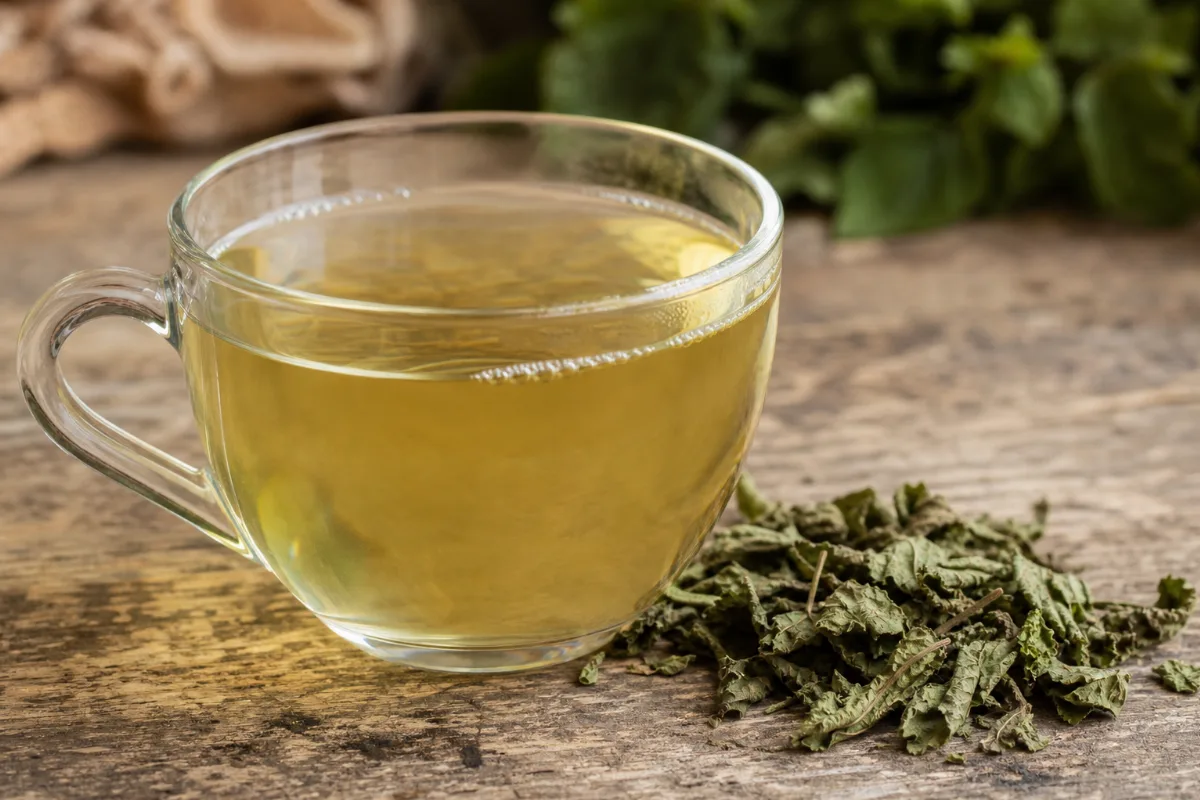
Traditional use and history history, not clinical proof
| Tradition or era | Documented use | Source |
|---|---|---|
| European herbal handbooks, 1938 to 2006 (documented by EMA/HMPC) | The EMA assessment report says a long traditional use of lemon balm leaf in Europe, as herbal tea, powdered leaf and water or alcohol extracts, is well documented in handbooks for the relief of mild symptoms of mental stress and to aid sleep, and for mild stomach and gut complaints including bloating and wind. Handbooks it cites include Madaus (1938), Hoppe (1958), Steinegger and Hansel (1972), the British Herbal Pharmacopoeia (1983), Hagers Handbuch (Hansel 1993) and ESCOP (2003). Other handbooks cited describe it as a carminative, antispasmodic or stomach-settling herb. | s-ema-ar-melissa-2013 |
| Germany, Commission E monograph (published in the Federal Gazette in 1984) | EMA cites the German Commission E monograph (Blumenthal 1998 translation) among the records of medicinal use of lemon balm leaf, for nervous complaints and sleep and, separately, for functional gastrointestinal complaints. The Commission E text itself was not read here; only EMA's summary of it. | s-ema-ar-melissa-2013 |
| EU traditional-use registrations and products (some since 1981) | EMA lists products on the market in EU member states: for example a powdered-leaf capsule marketed in France and Spain since 1981 (authorised in France in 1989); a German tea on the market since 1993 and coated tablets since 1990, both registered in 2010; aqueous extracts sold since 1994 in one country; a Polish leaf tea in use before 1980. Many lemon balm products in Europe are combinations with other herbs. | s-ema-ar-melissa-2013 |
| EMA/HMPC community herbal monograph (first adopted 2007, revised 14 May 2013) | The HMPC accepted lemon balm leaf as a traditional herbal medicine for mild stress, to aid sleep, and for mild digestive complaints including bloating and wind, in adults and children over 12, on the basis of at least 30 years of use (15 in the EU). It did NOT accept a 'well-established use' because clinical evidence is insufficient. The public page says that if symptoms last over 2 weeks a doctor should be consulted. | s-ema-melissa-leaf-page |
| Late 20th century: a special purified leaf extract for herpes sores (Germany and other EU states) | EMA describes a purified dry aqueous leaf extract (70:1) sold in some EU states for herpes infections. Clinical trials on this one product (Vogt 1991, Wolbling and Leonhardt 1994, Koytchev 1999) are not considered transferable to other lemon balm products. Its manufacture is only partly public. | s-ema-ar-melissa-2013 |
| Name and early use: Greek, medieval and Tudor claims (NOT verified) | Wikipedia says the genus name comes from the Greek word for honey bee because bees visit the flowers, and that lemon balm was known to the Greeks and Romans (Theophrastus, about 300 BC, as 'bee-leaf'), introduced into Europe in the 7th century, grown by Tudor households and John Gerard in the 1590s, and made into 'Aqua Melissa' balm water by the 18th century. None of these dates or names was confirmed in a primary source or in the EMA report, which only cites handbooks from 1938 onward. Treat them as unverified; the first (bee-linked name) is well known but was only read in a secondary source. | s-wikipedia-lemon-balm |
Traditional use shows how a plant was used. It does not show that a supplement works or is safe today.
What is inside, and how it may work
What the plant contains and how those compounds act in cells and animals. Laboratory and animal mechanisms are not proven effects in people.
Main compounds
| Compound | Family | Where it is concentrated | Activity studied | Level of evidence |
|---|---|---|---|---|
| Rosmarinic acid PubChem 5281792 | phenolic acid (caffeic acid ester; hydroxycinnamic acid derivative) | Leaf EMA: up to 6% of dried leaf (quoting ESCOP and WHO); European Pharmacopoeia minimum 1% in the dried leaf. One methanol extract study: about 1.5% of dry leaf mass (p19165747). A hydroalcoholic extract: 4.1% w/w (p19023806). Dried-plant tinctures held 2.96-22.18 mg/mL, fresh-plant tinctures 0.92 mg/mL or less (p18261367). Higher in subsp. officinalis than subsp. altissima and in first-cut leaves (p29385035). | The most studied constituent. In test tubes it inhibited GABA transaminase (about 40% at 100 ug/mL), inhibited acetylcholinesterase-guided fractions, and blocked attachment of herpes simplex virus and enterovirus 71 to cells. In mice it reduced glutamate-induced pain (ID50 2.64 mg/kg) and acted on adenosine and melatonin receptor pathways inside a lemon balm plus St John's wort mixture. Single 500 mg RA doses in extract reached serum in people (peak at 1 h, 162.20 nmol/L). 17 32 13 12 29 42 48 80 93 30 115 | Animal research |
| Caffeic acid PubChem 689043 | phenolic acid (hydroxycinnamic acid) | Leaf Present (EMA lists it among hydroxycinnamic derivatives); amounts not given in the sources read. Also detected by NMR in subsp. altissima (p41700802). | Tested next to rosmarinic acid against herpes simplex virus: the pure compound needed about 100 times higher concentration than the whole extract for a virus-killing effect (p22377592). In rats, absorbed about 9.7 times more efficiently than rosmarinic acid (p15941309). Also a breakdown product of rosmarinic acid in people (p15309457). 12 13 60 19 8 115 | Laboratory research |
| Chlorogenic acid PubChem 1794427 | phenolic acid (caffeoylquinic acid) | Leaf Present per EMA (ESCOP) and found by NMR in subsp. altissima (p41700802); amounts not stated in the sources read. EMA says the purified herpes extract contains caffeic, chlorogenic and rosmarinic acids as major components. | No specific activity of chlorogenic acid from lemon balm was found in the studies read; it contributes to the total phenolic content. 8 115 | Laboratory research |
| p-Coumaric acid PubChem 637542 | phenolic acid (hydroxycinnamic acid) | Leaf Tested as an extract phenolic in the herpes studies; amount not given in the abstracts. | Pure p-coumaric acid showed no activity on infected cells in the herpes studies and needed very high concentrations for virus-killing effects. 12 13 | Laboratory research |
| Ferulic acid PubChem 445858 | phenolic acid (hydroxycinnamic acid) | Leaf Detected by thin-layer chromatography (p8390134); amounts not given. | Detected with caffeic and rosmarinic acids; its role in the antiviral effect was only discussed. It also appears as a metabolite of rosmarinic acid in people (Perilla study, p15309457). 35 19 | Laboratory research |
| Luteolin glycosides PubChem 5280445 | flavonoid (flavone glycosides) | Leaf EMA (ESCOP): glycosides of luteolin, quercetin, apigenin and kaempferol are present; amounts not given. CID and formula are for the luteolin aglycone (parent compound), which is the form measured after hydrolysis; the plant holds the sugar-attached forms (for example luteolin 7-glucoside CID 5280637). | No activity of lemon balm flavonoids was proven in the studies read; flavonoid content is cited by EMA as a possible contributor to stomach-lining (anti-ulcer) effects in rats seen in one old study (via ESCOP). 115 | Animal research |
| Quercetin glycosides PubChem 5280343 | flavonoid (flavonol glycosides) | Leaf Present per EMA (ESCOP); amounts not given. CID is for the quercetin aglycone. | See luteolin glycosides: no specific effect shown for lemon balm quercetin. 115 | Animal research |
| Apigenin glycosides PubChem 5280443 | flavonoid (flavone glycosides) | Leaf Present per EMA (ESCOP); amounts not given. CID is for the apigenin aglycone. | No lemon-balm-specific effect shown in the studies read. 115 | Animal research |
| Kaempferol glycosides PubChem 5280863 | flavonoid (flavonol glycosides) | Leaf Present per EMA (ESCOP); amounts not given. CID is for the kaempferol aglycone. | No lemon-balm-specific effect shown in the studies read. 115 | Animal research |
| Geranial (citral a) PubChem 638011 | monoterpene aldehyde (essential oil) | Leaf (volatile oil) Oil is 0.06-0.8% of the dried leaf (EMA/ESCOP). In the second cut of subsp. officinalis, geranial plus neral made up 80-90% of the oil (p29385035). Subsp. altissima oil has much less (p29385035). Amount depends on subspecies, cut, season and fresh versus dried (p27449960). | Gives the lemon smell. The whole oil, with citral a and b and citronellal as main parts, killed herpes simplex virus particles before attachment in cell tests (p18693101) and reduced gut and heart tissue contractions in mouse tissue (p34718102). The oil, not isolated geranial, was tested in most papers. PubChem lists CID 638011 under the title 'Citral' with the (2E) structure, which is geranial. 97 6 104 30 106 115 | Laboratory research |
| Neral (citral b) PubChem 643779 | monoterpene aldehyde (essential oil) | Leaf (volatile oil) Together with geranial 80-90% of the second-cut oil of subsp. officinalis (p29385035); individual shares not given in the abstract. | See geranial; tested as part of the whole oil. 97 30 115 | Laboratory research |
| Citronellal PubChem 7794 | monoterpene aldehyde (essential oil) | Leaf (volatile oil) Main oil component in some plants and first cuts (p29385035); share varies widely. | In mouse tissue the oil and citronellal slowed heart-atria contractions and relaxed ileum; citronellal alone showed some muscle-function inhibition in mice (p34718102). 104 97 30 | Animal research |
| Beta-caryophyllene PubChem 5281515 | sesquiterpene (essential oil) | Leaf (volatile oil) About 10% of the oil per EMA (quoting Wichtl 2004); higher in subsp. altissima oils (p29385035). | Present; no lemon-balm-specific effect was shown. PubChem record verified is the (-)-isomer. 30 8 115 | Laboratory research |
| Caryophyllene oxide PubChem 1742210 | sesquiterpene oxide (essential oil) | Leaf (volatile oil) Found in subsp. altissima oils (p29385035); amount not given in the abstract. | No specific effect shown in the studies read. 30 | Laboratory research |
| Germacrene D PubChem 5317570 | sesquiterpene (essential oil) | Leaf (volatile oil) About 10% of the oil per EMA (Wichtl 2004); found in subsp. altissima oils (p29385035, p41700802). | No specific effect shown in the studies read. 30 8 115 | Laboratory research |
| Ursolic acid PubChem 64945 | pentacyclic triterpenoid acid | Leaf Present (EMA via ESCOP; isolated in p19165747); amount not given in the abstracts. | Isolated with oleanolic acid as an active principle for GABA-T inhibition in the bioassay-guided study. Ibarra et al. link their extract's anxiolytic-like effect in mice to RA plus these two acids. 17 47 115 | Laboratory research |
| Oleanolic acid PubChem 10494 | pentacyclic triterpenoid acid | Leaf Present (EMA via ESCOP; isolated in p19165747); amount not given in the abstracts. | See ursolic acid. 17 47 115 | Laboratory research |
| Sulfated triterpenes | triterpenoid sulfates (newly described) | Fresh leaf and stem Two new sulfated triterpenes were isolated from fresh leaves and stems in 2009 (p19653667); EMA says six new triterpenes (five sulfated) were isolated by Mencherini et al. (2007 and 2009). No PubChem CID was looked up for these; amounts are not given. | Did not harm cells or trigger inflammatory markers in a reconstituted human skin model (p19653667). Other effects unknown. 75 115 | Laboratory research |
| Tannins | plant polyphenol class | Leaf Listed by EMA (Hansel 1993); no amount or specific compound given. | Not studied separately in the sources read. 115 | Laboratory research |
| Monoterpene glycosides | sugar-bound monoterpenes | Leaf Listed by EMA (ESCOP 2003); no amounts or names given. | Not studied separately in the sources read. 115 | Laboratory research |
Mechanisms, receptors and pathways
| Target or pathway | Gene or receptor | What was found | Level |
|---|---|---|---|
| GABA transaminase (GABA-T), the enzyme that breaks down GABA | ABAT (GABA transaminase) | LAB (rat brain extract): the water extract of lemon balm was the strongest GABA-T inhibitor among many anxiolytic herbs tested (IC50 0.35 mg/mL, p18066140). A methanol extract also inhibited it; rosmarinic acid accounted for about 40% inhibition at 100 ug/mL, with ursolic and oleanolic acids also active (p19165747). A phospholipid-carrier extract was about 4 times stronger than the plain dry extract (IC50 0.064 vs 0.27 mg/mL, p38545418). ANIMAL: in middle-aged mice a 3-week extract lowered GABA-T in the hippocampus and lowered blood corticosterone (p21076869). HUMAN: not shown; no study measured brain GABA in people taking lemon balm. 16 17 51 113 115 | Laboratory research |
| GABA-A receptor (the main calming receptor) | GABA-A receptor (TBPS site; not subunit-resolved) | LAB (rat): the essential oil blocked binding at the channel site (TBPS, IC50 0.040 mg/mL) and reduced GABA-driven currents in cultured cortical neurons, with a net depressant effect on nerve signalling; the authors said the effect in agitated patients is unlikely to be a simple sedative action on these channels (p18284819). Methanol and water extracts showed no activity in a GABA-A benzodiazepine-site binding test (p19760174). So the extract acts on GABA mainly through enzymes, not by binding the receptor, while the oil may act on the receptor channel. 1 67 115 | Laboratory research |
| Nicotinic acetylcholine receptors | CHRN (nicotinic receptor family; subtypes not resolved) | LAB (human cortex tissue): a dried-leaf extract displaced radio-labelled nicotine (IC50 0.18 mg/mL) (p12888775); one lemon balm accession was the best of many plants, but plants of the same species varied a lot (p10687867); a commercial extract bound weakly (p12062586). Binding is not the same as switching the receptor on or off. HUMAN: the same dried leaf, 1600 mg once, gave better memory performance and more calmness in 20 healthy young adults (p12888775). ANIMAL: mecamylamine (nicotinic blocker) reduced the pain-relieving effect of the extract in mice (p19358864). 55 110 54 42 | Laboratory research |
| Muscarinic acetylcholine receptors | CHRM (muscarinic receptor family; subtypes not resolved) | LAB (human cortex tissue): the dried-leaf extract displaced radio-labelled scopolamine much more weakly (IC50 3.47 mg/mL) than nicotine (p12888775). ANIMAL: atropine reduced the pain-relieving effect of the extract in mice (p19358864); the essential oil and citronellal slowed isolated mouse atria and relaxed ileum, which the authors link to muscarinic receptors or calcium channels (p34718102). 55 42 104 | Laboratory research |
| Acetylcholinesterase (AChE), the enzyme that breaks down acetylcholine | ACHE | MIXED, and depends on the preparation. LAB: an extract inhibited AChE in a time- and dose-dependent way, with rosmarinic acid isomers in the most potent fraction (p19070498). But a dried-leaf extract with receptor binding showed no cholinesterase inhibition (p12888775), and methanolic and aqueous extracts showed none in another assay (p19760174). The essential oil was a very weak inhibitor (p34718102), yet in zebrafish it lowered brain AChE activity after 21 days (p41174143). HUMAN: no study measured AChE in people taking lemon balm. 32 55 67 104 25 | Laboratory research |
| Monoamine oxidase A (MAO-A) | MAOA | LAB: methanolic and aqueous extracts inhibited MAO-A in an enzyme assay (p19760174); a phospholipid-carrier extract showed similar inhibition (p38545418). No animal or human data on this target were found in the studies read. 67 51 | Laboratory research |
| Adenosine and melatonin receptors (sleep signalling) | ADORA1, ADORA2A, MTNR1A, MTNR1B | ANIMAL (mice), MIXTURE ONLY: a combination of St John's wort and lemon balm extracts shortened sleep onset and lengthened sleep in a pentobarbital test, effects blocked via adenosine and melatonin receptor pathways; rosmarinic acid acted on both pathways (p42280309). Because St John's wort was in the mixture and company employees took part, this cannot be credited to lemon balm alone. HUMAN: not shown. 48 | Animal research |
| Stress-hormone axis and new nerve cells in the hippocampus | corticosterone (rodent cortisol); markers Ki67, doublecortin | ANIMAL (middle-aged mice): 50 and 200 mg/kg for 3 weeks raised cell proliferation markers to about 2.4 and 7.6 times the control, raised new nerve cells and lowered blood corticosterone (p21076869). Authors link this to GABA. HUMAN: salivary cortisol and sleep have been studied with a phospholipid lemon balm extract in newer trials (not read here). 113 | Animal research |
| Glutamate and L-arginine-nitric oxide pain pathways | NMDA/glutamate signalling and nitric oxide synthase (inferred from drug-blocking tests) | ANIMAL (mice): an ethanolic leaf extract and rosmarinic acid (ID50 2.64 mg/kg) reduced glutamate-induced pain; L-arginine reduced the effect, suggesting a nitric oxide link, while naloxone did not, so opioid receptors are not involved (p19358864). HUMAN: not shown. 42 | Animal research |
| Gut and heart smooth muscle (calcium channels, muscarinic receptors) | voltage-gated calcium channels (suggested), muscarinic receptors | ANIMAL TISSUE: the essential oil above 1 ug/mL inhibited spontaneous and induced mouse ileum contractions and slowed isolated atria; citronellal did too (p34718102). EMA also quotes older guinea-pig and rat gut-muscle relaxation by the oil and by citral. A 30% ethanol extract showed no antispasmodic effect on guinea-pig ileum in the ESCOP-cited test (via EMA). HUMAN: not shown. 104 115 | Animal research |
| Herpes simplex virus (HSV) attachment and virus particles | viral envelope/attachment step (host receptor not identified in the abstracts) | LAB: water extract killed free HSV-1 particles at 1.5 ug/mL and blocked attachment and penetration, including acyclovir-resistant strains (IC50 0.13 and 0.23 ug/mL); it did nothing once the virus was inside cells (p22377592, p24817544). Rosmarinic acid contributed but the whole extract was more selective (selectivity index 875 for the extract). The essential oil worked only before attachment (p18693101); a hydroalcoholic extract acted after entry in HSV-2 (p19023806), so the sources disagree on the step. HUMAN: one small RCT (66 people) of a 1% cream of a special 70:1 extract lowered the day-2 symptom score (4.03 vs 4.94, p10589440); a 2025 systematic review of 7 herbal trials (4 products) says lemon balm creams reduced pain and swelling, with limited trial quality (p40526027). 12 13 71 97 6 35 62 112 10 115 | Human data |
| Other viruses (enterovirus 71, influenza, coronaviruses) | EV71 host signalling: p38 MAPK, EPS15, eIF4G, hnRNP A1 (from p28947773) | LAB only: methanol extract and rosmarinic acid reduced EV71 attachment, entry and cell damage and calmed ROS-driven p38 signalling (p28947773). A Saudi study found water and methanol extracts inhibited H1N1, SARS-CoV-2 and MERS-CoV in cell culture; docking is only a computer prediction (p40204903, with an erratum). No animal or human antiviral data were found for these viruses in the studies read. 29 7 | Laboratory research |
| Thyroid-stimulating hormone (TSH) binding to its receptor | TSHR (TSH receptor) | LAB: freeze-dried water extracts of lemon balm, bugleweed (Lycopus) and Lithospermum blocked binding of TSH to human thyroid membranes (half-maximal inhibition at 10-30 ug/mL) and reduced the effect of Graves' disease antibodies (p6745167, p2985357); a human TSH-receptor cell test also showed dose-dependent inhibition of TSH signalling by Melissa officinalis (p14759065). EMA records that the clinical relevance is not known. This is a safety flag for people with thyroid conditions or thyroid medicines; it is not proof of harm. 14 15 94 115 | Laboratory research |
| Antioxidant and nerve-cell protection | BDNF, TNF-alpha, IL-6, NOS2 (gene expression in lab tests) | LAB: extracts protected PC12 and SH-SY5Y cells from hydrogen peroxide (p19760174, p38545418), and a wild subsp. altissima extract changed expression of TNF-alpha, NOS-2, IL-6, BDNF and AChE in ex vivo assays (p41700802). The phospholipid-carrier extract raised BDNF expression in SH-SY5Y cells (p38545418). Protective effects in test tubes are early-stage and do not show brain protection in people. 67 51 8 | Laboratory research |
| Acute mood and thinking in healthy adults | not a molecular target; linked by authors to cholinergic binding | HUMAN (two crossover RCTs, 20 healthy young adults each): a standardised extract at 600 mg improved accuracy of attention but reduced working and secondary memory factors; calmness rose at low dose and alertness fell at the highest dose (p12062586). Dried leaf, 1600 mg, improved memory performance and calmness, while lower doses slowed timed tasks (p12888775). These are single-dose, short-term findings in healthy people, not treatment trials for anxiety or sleep; dose effects are inconsistent between preparations. 54 55 | Human data |
Absorption, metabolism and elimination
- Absorption
- Only rosmarinic acid (RA) has been measured in people. In a two-part trial in healthy adults (11 in total), a lemon balm extract containing 500 mg RA gave a serum peak of total RA at 1 hour in the fasted state (Cmax 162.20 nmol/L); AUC of intact RA was 832.13 nmol.h/L. Eating raised the AUC and delayed the peak (p25978046). In rats, pure RA reached 1.36 micromol/L in portal blood at 10 min after 100 micromol/kg, and caffeic acid was absorbed about 9.7 times more efficiently; both pass through the gut wall mainly between cells (p15941309). Absorption of the volatile oil compounds (citral, citronellal) and triterpenes in people was not found.
- Distribution
- No human tissue-distribution data found for any lemon balm constituent. A computer prediction in the zebrafish paper (p41174143) said oil constituents would cross the blood-brain barrier, but that is an estimate, not a measurement. NOT verified.
- Metabolism
- Not studied with lemon balm itself in the abstracts read. In six men given a Perilla (a related mint-family plant) extract with 200 mg RA, RA was partly methylated and broken into caffeic acid, ferulic acid and traces of m-coumaric acid; most compounds in blood and urine were conjugated (glucuronide and/or sulfate) (p15309457). Lemon balm RA is probably handled the same way, but this is an assumption (same compound, different plant).
- Elimination
- From the Perilla study, RA and related compounds in urine amounted to 6.3 +/- 2.2% of the dose, with about 75% of that excreted within 6 hours (p15309457). The half-life of RA after lemon balm was not reported in the abstract read (p25978046). The EMA assessment report (2013) stated that no pharmacokinetic data were available at that time (s-ema-ar-melissa-2013).
- Bioavailability
- Low for intact RA: even a 500 mg RA dose gave low serum levels (Cmax 162.20 nmol/L), and rat work shows low absorption relative to caffeic acid. Absolute bioavailability is unknown because no intravenous comparison in people was found. Food changes exposure (more absorbed, slower peak). A phospholipid-carrier (phytosome) extract is made to improve delivery, and was stronger in a cell test (p38545418), but human blood-level data for it were not found in the sources read.
Isolated compounds versus whole extracts
Lemon balm is a good example of why the whole preparation matters. (1) Rosmarinic acid carries much of the GABA-T and antiviral effect in test tubes, but the authors of the GABA-T study say synergy with the triterpenes may also play a role (p19165747), and the whole herpes extract was far more selective and potent than the pure phenolic compounds, which needed about 100 times higher concentrations (p22377592). (2) Different products from the same plant behave differently: a dried-leaf sample had strong nicotinic binding while a commercial extract bound weakly (p12888775, p12062586), and receptor binding varied between accessions of the same species (p10687867). (3) AChE results flip depending on what is tested: extract fractions with rosmarinic acid isomers inhibit it (p19070498), but other extracts and the essential oil barely do (p19760174, p34718102). (4) The essential oil (citral, citronellal) and the polyphenol extract are chemically different products with different test-tube effects: the oil acted on the GABA-A channel and killed herpes virus before attachment, while the extract inhibited enzymes (p18284819, p18693101, p19165747); a 2026 review stresses this preparation-dependence (p41754356). (5) How the herb is prepared changes the dose of the main marker: dried-plant tinctures held up to about 24 times more RA than fresh-plant ones (p18261367), and RA and oil content differ by subspecies, cut and season (p29385035). (6) A phospholipid-carrier extract inhibited GABA-T about 4 times more strongly than the plain extract in a cell test (p38545418). Practical point: results from one extract, oil or isolated compound should not be assumed for another. Tea, tinctures, standardised capsules and the herpes cream are not interchangeable.
Nutritional composition
A nutrient table is not meaningful for lemon balm: the leaf is taken as tea, tincture, capsule or extract for its plant compounds, and as a flavouring in food, not as a vitamin or mineral source. EMA notes it is used to flavour wine, tea and beer, is on the Council of Europe list of natural flavouring sources (category N2), and is listed as GRAS by the US FDA (via Barnes 2002, as quoted by EMA). No vitamin or mineral values were verified here and none are claimed.
4 mixed findings13 low certainty3 very low certainty3 not enough evidence
What was looked at
The 23 benefits and uses checked for Lemon Balm, each with how strong the evidence is. Tap one to open it.
- Anxiety and stress (taken by mouth)Low certainty
- Anxiety and stress (inhaled lemon balm oil)Very low certainty
- Anxiety and stress (combination products)Low certainty
- Low mood and depression symptomsLow certainty
- Sleep quality and insomnia (lemon balm on its own)Low certainty
- Sleep (lemon balm combined with valerian or other herbs)Low certainty
- Memory and thinking (single doses in healthy adults)Mixed findings
- Alzheimer's disease and age-related memory declineMixed findings
- Agitation in dementiaMixed findings
- Restlessness, sleep trouble and poor focus in childrenVery low certainty
- Premenstrual mood and symptomsVery low certainty
- Cold sores (herpes labialis), as a creamLow certainty
- Infant colic (in combination products)Low certainty
- Indigestion (functional dyspepsia), in Iberogast-type combinationsLow certainty
- Irritable bowel syndrome (pain and bloating)Not enough evidence
- High blood pressureLow certainty
- Heart palpitations and extra heartbeatsLow certainty
- Cholesterol and blood fatsLow certainty
- Blood sugar and type 2 diabetesMixed findings
- Fatty liver (NAFLD) with a special extractNot enough evidence
- Painful periods (dysmenorrhea)Low certainty
- Premenstrual syndrome (PMS)Low certainty
- Overactive thyroid (hyperthyroidism): lab and case evidence onlyNot enough evidence
Lab markers tracked in the studies
Cortisol (saliva)Pittsburgh Sleep Quality Index (PSQI)Insomnia Severity Index (ISI)ADAS-cog (thinking test) and CDR-SBAgitation scales (CMAI, Pittsburgh Agitation Scale, NPI)Systolic blood pressureDiastolic blood pressureTotal cholesterolTriglyceridesLDL cholesterolHDL cholesterolFasting blood glucoseHbA1cPremature ventricular beats in 24 hoursPalpitation episodes per weekLiver fat (MRI-PDFF)ALT (liver enzyme)TSH and thyroid hormones (T3, T4)Daily crying time in colicky infantsDyspepsia symptom score
What is Lemon Balm good for?
The main proposed uses and how strong the human evidence is for each. "Low" is the best rating found for any use, and several are lower. Many results come from small trials, branded extracts or herb mixes.
Benefits, one by one
Each card is a research question, not a promise. Tap a goal to filter. Open a card to see the studies, doses and limits.
Anxiety and stress (taken by mouth)
Low certaintySeveral small trials found that lemon balm taken by mouth made healthy people or people with mild stress feel calmer. A 2021 pooled analysis found lower anxiety scores than placebo, but the trials were few, small and quite different from each other, and one of the newest and best-designed trials did not find more calmness on its main measure.
13 studiesTrials used single doses of 300 to 1,600 mg of extract or dried leaf,…
Studies, doses and limits
What the trials found
Early lab-stress studies: Kennedy 2004 (18 healthy adults, single doses) found 600 mg of a standardised extract raised calmness and cut alertness during a stress test, and 300 mg sped up maths work. Kennedy 2002 and 2003 (20 healthy young adults each, single doses) found more calmness in some conditions, but also slower or worse memory and attention test results at some doses and times. Scholey 2014 (two crossover studies of a lemon balm drink and yoghurt) found mood or thinking gains with some costs at other doses. Pooled analysis: Ghazizadeh 2021 found lower anxiety (SMD -0.98, 95% CI -1.63 to -0.33) and depression scores than placebo, without serious side effects, but with high differences between trials and few trials. Longer or patient trials: Bano 2023 (100 adults with distress or poor sleep, 400 mg/day of a phospholipid extract, 3 weeks) found improved anxiety and stress scores (p<0.001); Haybar 2018 (80 people with angina, 3 g/day, 8 weeks) found lower anxiety, stress and depression scores than placebo (P<0.05); Safari 2023 (60 people with diabetes and depression, 700 mg/day, 12 weeks) found lower anxiety scores (p=0.04 between groups). Open studies without a placebo: Cases 2011 (20 people, 15 days) and Rondanelli 2026 (32 people, 3 weeks) reported falls in anxiety and stress scores, which cannot be separated from the effect of expecting to feel better. Newest placebo-controlled trial: Mathews 2026 (106 stressed young adults, a single 300 mg dose) found no change in overall calmness (its main measure), though hard attention tasks went better at 5 hours and calmness recovered after mental effort. Reviews: Savage 2018 listed lemon balm among 10 herbs with lab and clinical GABA-related anxiety evidence; Mathews 2024 (a narrative review) calls it promising and asks for more robust trials.
Results
Mixed to mildly positive. Most placebo-controlled trials report lower self-rated anxiety or stress, usually in small trials, in patients with another illness, or with a branded extract. The most recent, largest trial in stressed healthy adults did not meet its main goal.
Effect sizes as reported
Anxiety SMD -0.98 (95% CI -1.63 to -0.33), depression SMD -0.47 (95% CI -0.73 to -0.21) vs placebo, Ghazizadeh 2021. Individual trials mostly report significance values only (for example p<0.001 in Bano 2023; P<0.05 in Haybar 2018).
Why this rating
Many small trials with different extracts and doses, a pooled analysis with high differences between trials, self-rated outcomes, brand-specific extracts, several trials in people with another illness, and a null primary result in the largest recent acute trial. None of the sources gave a formal GRADE rating.
Form and dose studied
Trials used single doses of 300 to 1,600 mg of extract or dried leaf, daily doses of about 400 mg to 3 g for 3 to 12 weeks, and branded extracts (Cyracos, Relissa/Melissa phospholipids, Zensera). Results from one extract do not carry to another.
Who was studied
Healthy young adults (lab stress), adults with distress or poor sleep, people with angina, people with type 2 diabetes and depression. Few trials in older adults and none in children for anxiety.
Limits
Small samples; short; lab-made stress is not the same as anxiety disorders; the pooled analysis reports high differences between trials; some trials were funded or co-written by extract makers; two of the three longer trials were in patients with another illness.
Why researchers looked
Lemon balm is widely sold as a calming herb, so stress and anxiety are the main reason it is studied.
Traditional use
Lemon balm has a long use in European herbal medicine as a calming herb for nervous restlessness and trouble sleeping.
Proposed mechanism Preliminary mechanism
Lemon balm contains rosmarinic acid and other compounds. Lab and animal work suggests they slow the breakdown of GABA (the brain's main calming chemical), and one lab study found the extract binds to nicotine- and scopolamine-type receptors in human brain tissue. Whether this explains any effect in people is not shown. Different extracts bound these receptors very differently.
A proposed mechanism does not show that the effect happens in people.
In these trials lemon balm was generally well tolerated, and the studies that reported side effects found no serious ones. Safety is covered in full on the safety tab.
Anxiety and stress (inhaled lemon balm oil)
Very low certaintyThree small trials found that breathing lemon balm essential oil lowered anxiety or stress scores in hospital patients and IVF patients. The comparison was a different smell, and what people smell is hard to hide, so these results are weak.
3 studiesLemon balm essential oil inhaled during dialysis, IVF treatment or a …
Studies, doses and limits
What the trials found
Pasyar 2025 (68 haemodialysis patients, inhaled during dialysis 3 times a week for a month, almond oil as control) found lower state and trait anxiety and several symptoms than control (P<0.05). Senu 2025 (86 women having IVF, inhaled twice a day for 2 weeks) found lower perceived stress than the placebo group (p<0.001). Veiskaramian 2021 (72 patients with acute coronary syndrome in an emergency department, two 10-minute sessions) found lower stress and heart rate at two time points (p<0.001), although the abstract also says the mean changes between the two groups did not differ significantly (P>0.05), so its result is unclear.
Results
Small positive findings in self-rated stress and anxiety. One trial's abstract contradicts itself.
Effect sizes as reported
Significance values only; no effect sizes in the abstracts.
Why this rating
Three small trials in unusual settings, outcomes rated by the patients themselves, a strong smell that makes true blinding doubtful, one contradictory abstract, and no formal GRADE rating.
Form and dose studied
Lemon balm essential oil inhaled during dialysis, IVF treatment or a hospital visit; doses and oil strengths are not in the abstracts.
Who was studied
Haemodialysis patients, women having IVF, emergency heart patients.
Limits
Small samples; smell-based so patients may guess what they received; short; each from one hospital or centre; results do not apply to lemon balm capsules or tea.
Why researchers looked
Essential oils are used as a drug-free way to ease worry in hospital and clinic settings.
Traditional use
Lemon balm is used as an aromatic calming herb in traditional European medicine.
Proposed mechanism Preliminary mechanism
Citronellal and other scented compounds in the oil are thought to act on calming pathways, based on lab and animal studies; this was not tested in these trials.
A proposed mechanism does not show that the effect happens in people.
No serious problems were reported in the abstracts of these trials. The oil is not the same as the tea or capsules.
Anxiety and stress (combination products)
Low certaintySeveral herb mixes that include lemon balm lowered anxiety scores in lab-stress and patient trials, but the mix always contains valerian or other herbs, so lemon balm's own part cannot be known. One trial with butterbur showed a bigger effect than the same mix without it.
6 studiesZe 185 is a Max Zeller branded mix. Kennedy 2006 used a standardised …
Studies, doses and limits
What the trials found
All results here are for COMBINATION products, not lemon balm alone. Kennedy 2006 (24 healthy adults, a valerian and lemon balm product at 600, 1200 and 1800 mg, placebo-controlled crossover) found 600 mg reduced the rise in anxiety during a lab stress test, but 1800 mg was linked to more anxiety at one test session and all doses made performance on a Stroop task worse. Meier 2018 (72 healthy men, Ze 185: valerian, passionflower, lemon balm and butterbur, 4 days) found lower self-reported anxiety to a social stress test than placebo (p=0.03) but no difference in salivary cortisol. Melzer 2009 (182 people with somatoform disorders, 2 weeks) found the four-herb Ze 185 beat the same mix without butterbur, which in turn beat placebo, on anxiety, depression and global impression. Keck 2020 (a records study of 3,252 hospital psychiatric patients) found fewer benzodiazepine prescriptions among those given Ze 185 (p=.006) with similar clinical effectiveness; it was not randomised. Dimpfel 2004 (16 healthy adults) found a lozenge of lavender oil, hops, lemon balm and oat changed brain-wave patterns in a way the authors read as relaxation. Azimi 2024 (96 people with constipation-type IBS, a lemon balm, anise and damask rose formula, 4 weeks) found lower anxiety and depression scores, but the confidence intervals the abstract gives for the differences include zero.
Results
Positive on some measures in each trial, with no clear role for lemon balm itself, and one dose that went the wrong way.
Effect sizes as reported
Anxiety response in Meier 2018: F=3.33, p=0.03 vs placebo; Keck 2020 benzodiazepine prescriptions p=.006; Melzer 2009 and Dimpfel 2004 give significance only.
Why this rating
Combination products, small or short trials, a records study that could not randomise, makers' staff involved in several studies, and a higher dose that did worse than a lower one. No formal GRADE rating.
Form and dose studied
Ze 185 is a Max Zeller branded mix. Kennedy 2006 used a standardised valerian-lemon balm product. Doses of the mixes were mostly not in the abstracts.
Who was studied
Healthy adults, adults with somatoform disorders, hospital psychiatric patients, people with IBS.
Limits
Combination products; lemon balm cannot be credited; butterbur adds benefit in Ze 185 and has its own safety questions; small trials; one study is a records review; manufacturer involvement.
Why researchers looked
Lemon balm is most often sold together with valerian, passionflower or hops, so makers test the mixes as single products.
Traditional use
Lemon balm and valerian are traditional partners for nervousness and restlessness in Europe.
Proposed mechanism Pharmacological theory
Both herbs are thought to have mild calming effects through the GABA system. That the two add up is a theory and was not tested in these trials.
A proposed mechanism does not show that the effect happens in people.
One trial found 9 mild non-serious adverse events spread evenly across groups (Melzer 2009). See the safety tab for butterbur and valerian.
Low mood and depression symptoms
Low certaintyA pooled analysis found lemon balm lowered depression scores a little more than placebo, and a few small trials agree. These are mild symptoms in specific groups, not a treatment for clinical depression.
6 studiesExtracts of about 400 mg to 3 g/day for 3 to 12 weeks.
Studies, doses and limits
What the trials found
Ghazizadeh 2021 (pooled analysis of trials in people with depression or anxiety symptoms) found lower depression scores than placebo (SMD -0.47, 95% CI -0.73 to -0.21) with high differences between trials. Safari 2023 (60 adults with type 2 diabetes and depression symptoms, 700 mg/day extract, 12 weeks, 44 finished) found lower depression scores than placebo (p<0.001). Bano 2023 (100 distressed adults, 3 weeks) found improved depressive mood (p<0.001). Haybar 2018 (80 angina patients, 3 g/day, 8 weeks) found lower depression scores (P<0.05). Ranjbar 2018b (67 people with insomnia, a lemon balm and Nepeta combination, 4 weeks) found lower depression scores than placebo (p<0.001), but that is a two-herb mix. Rondanelli 2026 (open, no placebo, 32 adults) saw depression scores fall 26% at 400 mg/day. No trial in people with a diagnosed major depressive disorder was found.
Results
Small improvements in depression symptom scores in people with mild symptoms or another illness.
Effect sizes as reported
Depression SMD -0.47 (95% CI -0.73 to -0.21) vs placebo, Ghazizadeh 2021.
Why this rating
A single pooled analysis with high differences between trials and few trials, small trials in people with other conditions, and no trials in diagnosed major depression. No formal GRADE rating.
Form and dose studied
Extracts of about 400 mg to 3 g/day for 3 to 12 weeks.
Who was studied
Adults with mild mood or distress symptoms, people with diabetes or angina.
Limits
Not studied in clinical depression; self-rated scales; small trials; many with an extract maker involved.
Why researchers looked
Mood and anxiety often go together, and lemon balm's calming reputation led researchers to measure mood.
Traditional use
Lemon balm has a long use in European herbal medicine as a calming herb for nervous restlessness and trouble sleeping.
Proposed mechanism Preliminary mechanism
Lab and animal studies suggest effects on GABA and possibly serotonin pathways; this has not been shown in people.
A proposed mechanism does not show that the effect happens in people.
In these trials lemon balm was generally well tolerated, and the studies that reported side effects found no serious ones. Safety is covered in full on the safety tab. Lemon balm should not replace treatment for depression; see a doctor if low mood is lasting or severe.
Sleep quality and insomnia (lemon balm on its own)
Low certaintyA few trials found that standardised lemon balm extracts improved sleep scores, mostly in small trials or with branded extracts. One diabetes trial found no sleep difference. The evidence is too thin to call it a proven sleep aid.
10 studiesExtracts at about 400 mg/day for 3 weeks (phospholipid-bound forms) o…
Studies, doses and limits
What the trials found
Di Pierro 2024 (crossover, lemon balm in Phytosome form) found the Insomnia Severity Index averaged 6.8 on lemon balm vs 9.7 on placebo (2.9 points lower, p=0.003), with more slow-wave sleep, and 87% vs 30% reporting better sleep, but the abstract does not give the number of people, dose or length. Haybar 2018 (80 angina patients, 3 g/day, 8 weeks) found lower total sleep-disturbance scores than placebo (P<0.05). Bano 2023 (100 adults, 3 weeks) used the PSQI as one of the entry measures and found better wellbeing scores overall. Rondanelli 2026 (open, 32 adults, 3 weeks) found the PSQI improved over time (P<0.0001), more at 400 mg/day (-30% vs -15%), but with no placebo group. Cases 2011 (open, 20 people, 15 days) saw insomnia scores fall 42%, also without a placebo. A diabetes trial (Safari 2023, 44 finishers) found no difference in sleep quality (PSQI) at 12 weeks. Reviews: Oliveira 2025 (narrative) says lemon balm may improve sleep but more rigorous trials are needed; a 2025 scoping review of 51 over-the-counter insomnia trials called some herbal products promising but inconclusive, naming a lemon balm and fennel product; Bruni 2021 (a review of herbs and GABA receptors) says how these herbs affect sleep is not fully understood.
Results
Mixed. Self-rated sleep scores improved in the positive trials, but several have no placebo group, one placebo-controlled trial found no sleep difference, and none of the lemon balm-only trials in this section used a sleep-tracking device according to their abstracts.
Effect sizes as reported
ISI 6.8 vs 9.7 (2.9 points lower, p=0.003) Di Pierro 2024; PSQI -30% vs -15% by dose, open study, Rondanelli 2026.
Why this rating
Few trials, several without a placebo, brand-specific extracts, missing details in the abstracts, one null result, and no formal GRADE rating.
Form and dose studied
Extracts at about 400 mg/day for 3 weeks (phospholipid-bound forms) or 3 g/day dried leaf for 8 weeks; forms are not interchangeable.
Who was studied
Adults with poor sleep or distress, people with angina or diabetes.
Limits
Small and short trials; some open-label; sleep mostly self-reported; manufacturer involvement in several; results are for specific extracts.
Why researchers looked
Lemon balm is traditionally used as a mild bedtime herb, and sleep is one of the most common reasons people buy it.
Traditional use
Used traditionally in Europe and Persian medicine as a calming herb to help sleep.
Proposed mechanism Preliminary mechanism
Rosmarinic acid is thought to slow the breakdown of GABA in the brain, which could favour sleep. A 2026 mouse study of a lemon balm and St John's wort mix pointed to adenosine and melatonin receptor pathways. Both are animal or lab findings; neither has been shown in people.
A proposed mechanism does not show that the effect happens in people.
In these trials lemon balm was generally well tolerated, and the studies that reported side effects found no serious ones. Safety is covered in full on the safety tab.
Sleep (lemon balm combined with valerian or other herbs)
Low certaintyMixes of lemon balm with valerian, fennel or Nepeta improved sleep scores in small trials, especially around menopause and in people with insomnia. One recent study of a theanine, lemon balm, valerian and saffron mix found no benefit over placebo, and in all of them lemon balm's own part is unknown.
6 studiesValerian plus lemon balm (doses not in abstract); lemon balm 1,000 mg…
Studies, doses and limits
What the trials found
All results here are for COMBINATION products. Taavoni 2013 (100 women aged 50 to 60 with sleep problems, valerian plus lemon balm vs placebo) found lower sleep-disorder scores on the PSQI, but the abstract gives no numbers, dose or duration. Shirazi 2021 (60 postmenopausal women with sleep disturbance, a lemon balm and fennel product 500 mg/day, citalopram 30 mg, or placebo, 8 weeks) found better quality-of-life scores with the herbal product than with citalopram or placebo (p<0.001); the paper's trial registration lists a different product (Asperugo procumbens and fennel), so what was tested is not fully clear. Ranjbar 2018a (lemon balm 1,000 mg plus Nepeta menthoides 400 mg nightly, 4 weeks) found ISI fell 4.97 vs 1.60 points and PSQI 4.14 vs 1.42 points, with more diary sleep time (p<0.001); Ranjbar 2018b (67 people, same mix) found ISI improved (p=0.008). Gutierrez-Romero 2024 (64 adults with poor sleep, L-theanine plus lemon balm, valerian and saffron, 6 weeks, tracker-measured) found no benefit over placebo: sleep efficiency p=0.49, PSQI fell 3.11 vs 3.86 points (p=0.41). Ze 185 and a lozenge with hops did not report sleep as a main finding. Müller 2006 and Gromball 2014 report better sleep in children and are in the children section.
Results
Mixed: positive in several small combination trials, none in the one tracker-measured trial.
Effect sizes as reported
ISI -4.97 vs -1.60, PSQI -4.14 vs -1.42 (Ranjbar 2018a); PSQI -3.11 vs -3.86, p=0.41 (Gutierrez-Romero 2024). Other trials give significance only.
Why this rating
Combination products so lemon balm's role is unknown, small trials, a registration mismatch in one, the one objectively measured trial was null, and no formal GRADE rating. Menopause-related sleep data are covered here only for sleep; hot flushes and other menopause symptoms are covered under body uses.
Form and dose studied
Valerian plus lemon balm (doses not in abstract); lemon balm 1,000 mg plus Nepeta 400 mg; lemon balm and fennel 500 mg/day; a four-ingredient supplement.
Who was studied
Postmenopausal women, adults with insomnia, adults with poor sleep.
Limits
Mixes cannot show lemon balm's own effect; several trials from one region; some give few details; sponsor involvement in one.
Why researchers looked
Makers combine lemon balm with other traditional sleep herbs, and trials test the whole product.
Traditional use
Lemon balm and valerian are a classic European pairing for sleep trouble.
Proposed mechanism Pharmacological theory
The herbs in these mixes are each thought to nudge the GABA system. That they add together is a theory, not shown by these trials.
A proposed mechanism does not show that the effect happens in people.
In these trials lemon balm was generally well tolerated, and the studies that reported side effects found no serious ones. Safety is covered in full on the safety tab.
Memory and thinking (single doses in healthy adults)
Mixed findingsSingle doses of lemon balm in healthy young adults had mixed effects on memory and attention: better memory and calmness at a high dose in one study, but slower or worse performance at other doses and in another preparation. It does not look like a reliable brain booster.
6 studiesSingle doses between 300 mg and 1,600 mg of extract or dried leaf; br…
Studies, doses and limits
What the trials found
Kennedy 2002 (20 healthy young adults, 300, 600, 900 mg of a standardised extract) found better accuracy of attention after 600 mg but worse memory scores at some doses and times. Kennedy 2003 (20 healthy young adults, 600, 1000, 1600 mg of dried leaf) found better memory performance and more calmness at 1600 mg, but slower timed memory and attention scores at lower doses. Scholey 2014 (two crossover studies of lemon balm in a drink and in yoghurt) found some mood or thinking gains and some costs. Mathews 2026 (106 young adults under moderate stress, a single 300 mg dose of Zensera) found no change in the main outcome of overall calmness, but better performance on the hardest executive tasks at 5 hours. Perry 2018 (44 healthy adults, average age 61, a sage-rosemary-lemon balm mix, 2 weeks) found no overall difference in word recall; a subgroup under 63 did better on delayed recall (d=0.92), which was not the main comparison. Mathews 2024 (a narrative review) notes cognitive and mood improvements but asks for stronger trials.
Results
Mixed: gains and losses depended on dose, time after dosing and preparation.
Effect sizes as reported
Perry 2018 subgroup effect size d=0.92 (under 63, secondary comparison); others give significance only.
Why this rating
Small crossover studies of single doses in healthy young adults, different products giving different results, and a negative primary result in the largest. No formal GRADE rating.
Form and dose studied
Single doses between 300 mg and 1,600 mg of extract or dried leaf; branded extracts differ.
Who was studied
Healthy young adults mainly; one mixed-age pilot with a three-herb mix.
Limits
Tiny samples; tests right after one dose; no long-term data; extract makers involved in some; results may not apply to tea.
Why researchers looked
Lemon balm was traditionally linked to memory, and lab work showing it binds brain receptors prompted tests of mood and thinking in healthy people.
Traditional use
Historic European herbals describe lemon balm as a herb for the head and memory.
Proposed mechanism Laboratory research
A dried leaf sample bound nicotine and scopolamine-type receptors in human brain tissue in the lab (Kennedy 2003), but did not block the enzyme that breaks down acetylcholine. This link to thinking in people is unproven.
A proposed mechanism does not show that the effect happens in people.
In these trials lemon balm was generally well tolerated, and the studies that reported side effects found no serious ones. Safety is covered in full on the safety tab.
Alzheimer's disease and age-related memory decline
Mixed findingsOne small Iranian trial found lemon balm tincture helped thinking scores in mild to moderate Alzheimer's, but a Japanese rosmarinic-acid extract trial found no thinking benefit in either people with mild Alzheimer's or older adults with mild memory complaints. The evidence does not show that lemon balm helps memory loss.
4 studiesTincture 60 drops/day for 4 months; extract with 500 mg rosmarinic ac…
Studies, doses and limits
What the trials found
Akhondzadeh 2003 (42 people aged 65 to 80 with mild to moderate Alzheimer's, 60 drops/day of lemon balm tincture, 4 months) found better ADAS-cog (p=0.01) and CDR-SB (p<0.0001) than placebo, and less agitation. Noguchi-Shinohara 2020 (23 people with mild Alzheimer's dementia, extract with 500 mg rosmarinic acid/day, 24 weeks) found it was safe and well tolerated but no difference on thinking tests or biomarkers; the NPI-Q behaviour score changed -0.5 vs +0.7 points (P=0.012). Noguchi-Shinohara 2023 (323 older adults with subjective or mild cognitive impairment, 96 weeks) found no difference on the main thinking measure; one subgroup without high blood pressure had a small difference in CDR-SB (p=0.036), which was not the primary question. Oliveira 2025 (a narrative review) says rosmarinic-acid extracts 'stabilised' thinking, a stronger reading than the trial above supports.
Results
Mostly negative or inconclusive on thinking; one small positive trial from 2003.
Effect sizes as reported
ADAS-cog F=6.93, p=0.01; CDR-SB F=16.87, p<0.0001 in Akhondzadeh 2003 (42 people); NPI-Q -0.5 vs +0.7, P=0.012 (23 people); CDR-SB subgroup +0.006 vs -0.085, p=0.036 (323 people).
Why this rating
One small positive trial, two larger or cleaner negative primary results, and benefit only on secondary outcomes or subgroups. No formal GRADE rating.
Form and dose studied
Tincture 60 drops/day for 4 months; extract with 500 mg rosmarinic acid/day for 24 to 96 weeks.
Who was studied
Older adults with mild to moderate Alzheimer's, mild cognitive impairment or subjective memory complaints.
Limits
Few trials; small samples in the positive one; subgroup results; different products used.
Why researchers looked
Lab findings on brain receptors and rosmarinic acid sparked tests in Alzheimer's and in memory decline.
Traditional use
Lemon balm was traditionally regarded as good for the head and memory.
Proposed mechanism Laboratory research
Rosmarinic acid reduced clumping of amyloid-beta protein in lab and animal models (as described in the 2023 trial's background). That has not been shown to help people.
A proposed mechanism does not show that the effect happens in people.
No serious adverse events in the rosmarinic-acid trials; the 2003 trial reported more agitation in the placebo group.
Agitation in dementia
Mixed findingsEarly trials found that rubbing lemon balm oil lotion on the skin reduced agitation in people with severe dementia. A better-blinded trial later found no difference from placebo or donepezil. Overall the evidence is inconsistent, and the Cochrane review found no convincing benefit for aromatherapy in dementia.
5 studiesLemon balm essential oil in a lotion or sprayed, applied once or twic…
Studies, doses and limits
What the trials found
Ballard 2002 (72 care-home residents with severe dementia, lemon balm oil in lotion twice a day, 4 weeks) found 60% vs 14% had a 30% fall in agitation score, with 35% vs 11% average reduction (p<0.0001). Burns 2011 (114 residents with Alzheimer's and agitation, aromatherapy vs donepezil vs placebo, raters wore nose clips for better blinding) found no difference between groups at 4 or 12 weeks, with all groups improving. Watson 2019 (49 nursing-home residents, 2 weeks each of lavender, lemon balm or sunflower oil) found no reduction in agitation compared with placebo overall, and lemon balm did better in residents without dementia and worse for irritability in residents with dementia. Cochrane 2020 (13 trials, 708 people, four with lemon balm) found no convincing benefit and poor reporting of harms. Alikiaie 2021 (53 ICU patients with delirium, a valerian-lemon balm syrup added to quetiapine, 5 days) found fewer agitated patients and shorter ICU stay, but this is a combination in a different setting.
Results
Inconsistent: strongly positive in the earliest trial, negative in the better-blinded trial, and no benefit overall in the Cochrane review.
Effect sizes as reported
CMAI mean reduction 35% vs 11% (Ballard 2002); no differences between arms at 4 and 12 weeks (Burns 2011).
Why this rating
Positive and negative trials of the same oil, a review finding no convincing benefit, and blinding that is hard to protect with strong smells. The Cochrane review used GRADE for its own conclusions, but not for lemon balm separately.
Form and dose studied
Lemon balm essential oil in a lotion or sprayed, applied once or twice a day for 2 to 4 weeks. The ICU trial used a syrup.
Who was studied
Care-home residents with dementia or agitation; adult ICU patients with delirium (a different condition).
Limits
Small samples; smell-based blinding; wide variety of methods; the ICU trial uses a combination.
Why researchers looked
Agitation is hard to treat in dementia, and drugs for it carry risks, so carers look for gentle options like aromatherapy.
Traditional use
Lemon balm and lavender oils are used traditionally as calming scents.
Proposed mechanism Preliminary mechanism
A lab study of a lemon balm oil and lavender oil reported actions on receptor channels linked to calming (not reviewed here). Whether this works in dementia is unknown.
A proposed mechanism does not show that the effect happens in people.
No serious side effects were noted in the trials above.
Restlessness, sleep trouble and poor focus in children
Very low certaintyTwo uncontrolled studies from the manufacturer of a valerian plus lemon balm syrup found that most children improved on it. With no placebo group, these results cannot show the product works, and they do not show lemon balm alone helps ADHD.
3 studiesValerian plus lemon balm syrup or tablets (a German brand), doses set…
Studies, doses and limits
What the trials found
Both studies are of a COMBINATION product and have no control group. Müller 2006 (918 children under 12 with restlessness and sleep trouble, Euvegal forte, open study) found 80.9% with sleep trouble and 70.4% with restlessness improved, and no adverse events judged related to the product. Gromball 2014 (169 primary school children with poor focus and hyperactivity who did not meet ADHD criteria; valerian root extract WS 1014 640 mg plus lemon balm extract WS 1303 320 mg a day; 7 weeks) found strong poor focus fell from 75% to 14%, hyperactivity from 61% to 13% and impulsiveness from 59% to 22%, with mild passing side effects in two children. A 2015 nursing-journal paper by Ross carries the same title idea but has no abstract, so it could not be checked. No randomised placebo-controlled trial of lemon balm for ADHD was found.
Results
Large improvement rates in uncontrolled studies; not proof of effect.
Effect sizes as reported
80.9% and 70.4% improved (Müller 2006, no control); strong symptom rates 75% to 14%, 61% to 13%, 59% to 22% (Gromball 2014, no control).
Why this rating
Uncontrolled open studies, doctor and parent ratings with no blinding, a combination product, and the manufacturer involved. Any improvement could be natural change or expectation.
Form and dose studied
Valerian plus lemon balm syrup or tablets (a German brand), doses set by doctors in one study and 640 mg valerian plus 320 mg lemon balm extract a day in the other.
Who was studied
Children under 12 with restlessness, sleep trouble or poor focus; children with a formal ADHD diagnosis were not included in Gromball 2014.
Limits
No placebo group; combination product; maker-sponsored; short; not ADHD-diagnosed children.
Why researchers looked
Parents and doctors look for gentle options for restless children, and a German manufacturer tested a valerian plus lemon balm preparation.
Traditional use
Valerian and lemon balm are traditional European remedies for nervousness and sleep trouble in children.
Proposed mechanism Pharmacological theory
No mechanism was tested in these studies.
A proposed mechanism does not show that the effect happens in people.
Few side effects were reported in these studies, but safety in children is covered on the safety tab; a doctor should guide use in children.
Premenstrual mood and symptoms
Very low certaintyTwo trials in teenage girls from the same research group found that lemon balm capsules lowered premenstrual and mental-strain symptom scores. They are the only ones found, and they have not been repeated by anyone else.
2 studies1,200 mg/day of lemon balm capsules taken during the whole cycle for …
Studies, doses and limits
What the trials found
Akbarzadeh 2015 (100 high school girls, 1,200 mg/day for the whole cycle over 3 cycles, vs placebo) found premenstrual symptom scores fell from 42.56 to 13.90 in the lemon balm group over three months (P<0.001 over time); the abstract does not report the placebo numbers. Heydari 2018 (100 girls with PMS, two 600 mg capsules a day for 3 cycles) found lower scores for bodily symptoms of mental strain (p<0.001), anxiety and sleeping disorder (p<0.001) and social function (p=0.021) than placebo.
Results
Positive in both small trials, from one research group, in teenagers.
Effect sizes as reported
Score fell from 42.56 to 13.90 (lemon balm group, Akbarzadeh 2015); between-group significance values only for Heydari 2018.
Why this rating
Two small trials by one research group in one country, similar population, self-reported symptoms, and abstracts that omit the placebo numbers. No formal GRADE rating.
Form and dose studied
1,200 mg/day of lemon balm capsules taken during the whole cycle for three cycles.
Who was studied
Teenage girls (high school students) with premenstrual syndrome.
Limits
Teenagers only; same group; no independent replication; self-reported; abstract incomplete.
Why researchers looked
Premenstrual syndrome often includes irritability and low mood, and lemon balm is traditionally a calming herb for women.
Traditional use
Traditional European use of lemon balm includes nervous complaints.
Proposed mechanism Pharmacological theory
No mechanism was tested in these trials.
A proposed mechanism does not show that the effect happens in people.
No adverse effects are mentioned in these abstracts. Lemon balm in pregnancy is covered on the safety tab.
Cold sores (herpes labialis), as a cream
Low certaintyA small trial from 1999 found that a lemon balm leaf cream cleared cold sore symptoms faster than a dummy cream. A 2025 review of seven herbal cream trials also found lemon balm creams reduced pain and swelling. The trials are small, so this is early support, not proof.
2 studiesCream with 1% dried lemon balm leaf extract (70:1) four times a day f…
Studies, doses and limits
What the trials found
Trial (1999, one centre, 66 adults with at least 4 cold sores a year): 1% Lo-701 cream (dried lemon balm leaf extract, 70:1) applied four times a day for 5 days versus placebo cream. On day 2, the combined symptom score (complaints, size, blisters) was 4.03 +/- 0.33 (median 3.0) with the lemon balm cream and 4.94 +/- 0.40 (median 5.0) with placebo; the authors report this as significant. Systematic review (2025): seven randomized trials of herbal creams for cold sores (1,250 people in all), including lemon balm; lemon balm preparations consistently reduced pain and swelling, and some trials also reduced lesion size versus placebo or aciclovir; side effects were minimal or absent. Risk of bias was low in 2 of the 7 trials and raised some concerns in the other 5.
Results
Faster improvement of symptoms than placebo in the trial that gives numbers; the review reports less pain and swelling.
Effect sizes as reported
Day-2 combined symptom score 4.03 +/- 0.33 versus 4.94 +/- 0.40 (mean +/- SEM); no p-value or confidence interval in the abstract. The review gives no pooled numbers in its abstract.
Why this rating
Small trials, mostly old, with different creams and outcome measures; the review itself says the total sample is small and risk of bias raised concerns in 5 of 7 trials. This rating is the compiler's.
Form and dose studied
Cream with 1% dried lemon balm leaf extract (70:1) four times a day for 5 days in the 1999 trial. Other trials used different creams.
Who was studied
Adults with repeated cold sores. Children are under-represented.
Limits
Healing time and attack-free time are not clearly shown in the numbers I read. Creams in shops may differ from the studied ones. Aciclovir (acyclovir) and other antivirals have much more research.
Why researchers looked
Cold sores come back in many people, and creams are used on the lip at the first tingle. Lemon balm leaf has long been used on skin and sores, and lab tests have looked at its effect on herpes viruses.
Traditional use
Lemon balm leaf has been used in European folk medicine as a poultice or wash for sores and skin problems. This is general traditional use; no specific cold sore recipe is documented here.
Proposed mechanism Laboratory research
Lab studies in cell culture have tested lemon balm extracts against herpes simplex virus; I did not read those studies in detail here, so this is only a possible explanation. The 1999 trial's authors suggest a different action from antiviral drugs, but their abstract shows no data on that.
A proposed mechanism does not show that the effect happens in people.
Side effects were minimal or absent in the review. A skin rash or irritation is possible with any cream; stop if it appears. See a doctor for sores that spread, last more than about 10 days, or occur near the eyes, or if you have a weak immune system.
Infant colic (in combination products)
Low certaintyTwo trials of herbal drops that contain lemon balm together with chamomile (and fennel or a probiotic) found less crying in colicky babies. Lemon balm cannot be separated from the other ingredients in these products. Always ask a paediatrician before giving any herb to a baby.
2 studiesStandardised liquid or drop products given by a doctor or pharmacist'…
Studies, doses and limits
What the trials found
Trial 1 (2005, Turin, 93 breastfed colicky babies, 88 finished): an extract of chamomile, fennel and lemon balm (ColiMil) twice a day for 1 week versus placebo. Daily crying fell from 201.2 to 76.9 minutes with the extract and from 198.7 to 169.9 with placebo (p<0.005); 85.4% versus 48.9% improved (p<0.005); no side effects were reported. Trial 2 (2017, Italy, open randomized, 176 babies finished): chamomile plus lemon balm plus heat-killed Lactobacillus acidophilus for 28 days. Crying was lower than with simethicone (-44 minutes, 95% CI -58 to -30) and similar to Lactobacillus reuteri (-9 minutes, 95% CI -23 to +5). Responders: 95% (herbal mix), 86.4% (L. reuteri), 68.4% (simethicone).
Results
Less daily crying with the herb mixes than placebo (trial 1) or simethicone (trial 2).
Effect sizes as reported
Trial 1: about 77 versus 170 minutes of crying per day at 1 week. Trial 2: -44 min (95% CI -58 to -30) versus simethicone.
Why this rating
Only two trials, both of three-ingredient mixes; one was open-label (no blinding, no placebo); lemon balm's own part is unknown; crying time is reported by parents. This rating is the compiler's.
Form and dose studied
Standardised liquid or drop products given by a doctor or pharmacist's advice; the abstracts do not give doses.
Who was studied
Colicky breastfed (trial 1) and young infants (trial 2).
Limits
Mixed products; short trials; no long-term follow-up in the abstracts; both are from Italy.
Why researchers looked
Colic means long periods of crying in an otherwise healthy young baby. It is exhausting for parents and has few proven treatments, so mixed herbal products have been tried.
Traditional use
Herbal teas such as chamomile, fennel and lemon balm have long been given for babies' stomach discomfort in European folk medicine. No specific traditional dose for babies is documented here.
Proposed mechanism Pharmacological theory
Lemon balm is traditionally said to ease gut spasm and calm; no mechanism in babies has been shown. Any effect could come from chamomile, fennel or the probiotic instead.
A proposed mechanism does not show that the effect happens in people.
No side effects were reported in trial 1; trial 2's abstract reports none. Babies are a special group: use only under a paediatrician's advice, and see a doctor at once for fever, vomiting, blood in the stool or poor feeding.
Indigestion (functional dyspepsia), in Iberogast-type combinations
Low certaintyIberogast (STW 5) and its newer version STW 5-II are liquid mixes of several herbs that include lemon balm. Trials found modest improvement in indigestion symptoms over placebo, but the evidence is rated low to very low by Cochrane and lemon balm cannot be credited alone.
4 studiesBranded liquid mixes (STW 5, STW 5-II). Lemon balm alone has not been…
Studies, doses and limits
What the trials found
Cochrane review (2023, 41 trials, 4,477 people, 27 herbal products): STW5 (Iberogast) may moderately improve overall dyspepsia symptoms versus placebo at 28 to 56 days (MD -2.64, 95% CI -4.39 to -0.90; 5 studies, 814 people; I2 87%; very low certainty). Improvement rate RR 1.55 (95% CI 0.98 to 2.47; 2 studies; low certainty); side effects RR 0.92 (95% CI 0.52 to 1.64; low certainty). STW 5-II patient-data meta-analysis (2024, 4 trials, 613 people, 2 eligible for efficacy): the symptom sum score improved more than placebo (difference 1.74 at 4 weeks and 2.07 at 8 weeks). 8-week trial (2024, 272 people): response rate 61.2% versus 45.1% with placebo (P=0.008), but the average score difference was not significant (P=0.07). Lemon balm is one of the herbs in these products according to product labelling; the abstracts I read do not list the herbs.
Results
Modest improvement over placebo in symptoms and response rates, with large differences between trials.
Effect sizes as reported
Cochrane: MD -2.64 (95% CI -4.39 to -0.90), very low certainty; response RR 1.55 (95% CI 0.98 to 2.47), low certainty. STW 5-II: +1.74 and +2.07 points at 4 and 8 weeks.
Why this rating
Cochrane graded the STW5 findings very low to low certainty because of large differences between trials. Several of the newer analyses are by authors linked to the maker. Lemon balm cannot be separated from the other herbs.
Form and dose studied
Branded liquid mixes (STW 5, STW 5-II). Lemon balm alone has not been tested for indigestion in the trials found.
Who was studied
Adults with functional dyspepsia, mostly in Europe.
Limits
Multi-herb product; maker-supported research; trials up to 8 weeks.
Why researchers looked
Functional dyspepsia means fullness, early satiety or upper-belly pain with no clear cause on tests. Medicine options are limited, so a multi-herb liquid used for decades in Germany has been tested.
Traditional use
Lemon balm tea has long been used in Europe for nervous stomach and wind. Iberogast is a modern product based on that tradition.
Proposed mechanism Preliminary mechanism
Several herbs in these mixes relax the gut or reduce wind in lab tests; lemon balm's own role is not isolated in the abstracts read.
A proposed mechanism does not show that the effect happens in people.
Side effects did not differ from placebo in the trials above. A 2022 case report describes severe liver injury after Iberogast (a nine-plant version that includes greater celandine); one case cannot show lemon balm was the cause. Stop and see a doctor for yellow skin or eyes, dark urine or severe tummy pain.
Irritable bowel syndrome (pain and bloating)
Not enough evidenceOne small pilot trial (32 people) of a mix of lemon balm, spearmint and coriander (Carmint) found less belly pain and bloating than placebo. That is too little to draw conclusions.
1 studiesNot stated in the abstract.
Studies, doses and limits
What the trials found
Pilot trial (2006, Tehran, 32 people with IBS): Carmint (lemon balm, spearmint, coriander extracts) or placebo for 8 weeks, each added to loperamide or psyllium depending on bowel pattern. Pain severity (P=0.016) and frequency (P=0.001) and bloating severity (P=0.02) and frequency (P=0.002) were lower with Carmint.
Results
Less pain and bloating in a very small pilot trial.
Effect sizes as reported
Only p-values in the abstract.
Why this rating
One 32-person pilot trial, three herbs, no replication found.
Who was studied
Adults with IBS, Iran.
Limits
Pilot trial; mixed herbs; added to standard medicines.
Why researchers looked
Irritable bowel syndrome (IBS) causes pain, bloating and bowel changes. Lemon balm, spearmint and coriander are traditionally used for gut spasm and wind.
Traditional use
Lemon balm tea is a traditional European remedy for gut cramps and wind; no specific IBS use is documented here.
Proposed mechanism Pharmacological theory
The Carmint authors describe the three herbs as antispasmodic, wind-relieving and calming; their abstract does not show how this works.
A proposed mechanism does not show that the effect happens in people.
The abstract reports no safety details.
High blood pressure
Low certaintySmall trials from Iran found that lemon balm lowered blood pressure in people with mild or stage 1 high blood pressure, and a meta-analysis found a lower systolic pressure. The studies are small and rated at high risk of bias, so it is not a replacement for blood pressure medicines.
3 studiesCapsules 400 mg (three times a day as worded) or 10 mL daily liquid e…
Studies, doses and limits
What the trials found
Crossover trial (2021, 49 adults with high blood pressure): lemon balm capsules (400 mg, three times a day as worded) for 4 weeks versus placebo, with a 2-week washout. Blood pressure fell more on lemon balm than placebo (p=.005): about 152/95 to 130/80 mmHg in one order group and 152/94 to 132/81 in the other. Triple-blind trial (2025, 105 adults with stage 1 high blood pressure): 10 mL lemon balm extract daily for 4 weeks fell about 8 mmHg systolic and 4 mmHg diastolic and beat placebo and Echium amoenum at weeks 2 to 4 (p<0.001). Meta-analysis (2020, 7 trials, all cardiometabolic outcomes): systolic pressure lower (SMD -0.56, 95% CI -0.85 to -0.27; 3 trials); diastolic pressure not significantly changed.
Results
Lower systolic pressure in small trials; the pooled analysis found no clear diastolic change.
Effect sizes as reported
SBP SMD -0.56 (95% CI -0.85 to -0.27, 3 trials); 2025 trial about 8/4 mmHg.
Why this rating
Few, small, short trials from one country; the meta-analysis authors state high risk of bias; the very large falls in one trial need repeating. This rating is the compiler's.
Form and dose studied
Capsules 400 mg (three times a day as worded) or 10 mL daily liquid extract for 4 weeks. Extract type is not stated in the abstracts.
Who was studied
Adults with stage 1 or essential high blood pressure, Iran.
Limits
No long-term data; no heart attack or stroke outcomes.
Why researchers looked
Lemon balm has a traditional name as a heart tonic and calming herb, and relaxation might lower blood pressure.
Traditional use
Traditional Iranian and European medicine have used lemon balm for the heart. This is traditional use, not proof.
Proposed mechanism Pharmacological theory
Not shown in people. Calming effects or direct relaxation of blood vessels are possible explanations. A rat study found no change in blood pressure after one week.
A proposed mechanism does not show that the effect happens in people.
Do not stop blood pressure medicines or add lemon balm without your doctor; effects may add up, and blood pressure can drop too far. No serious side effects were reported in the trials.
Heart palpitations and extra heartbeats
Low certaintyTwo small trials found fewer harmless palpitations or fewer premature ventricular beats with lemon balm. Neither is strong evidence, and palpitations can sometimes signal a serious heart problem that needs a doctor.
3 studies500 mg freeze-dried leaf extract twice a day for 14 days; or 2 g leaf…
Studies, doses and limits
What the trials found
Trial 1 (2015, Tehran, 71 adults with benign palpitations, 55 finished): freeze-dried water extract of lemon balm leaf 500 mg twice a day for 14 days versus placebo. Fewer palpitation episodes per week (P=0.0001) and fewer anxious patients (P=0.004); no serious side effects. Trial 2 (2021, 60 adults with low-to-moderate premature ventricular contractions, open-label): lemon balm tea (2 g leaf per 250 mL) twice a day plus lifestyle advice for 12 weeks versus lifestyle advice only. Premature beats in 24 hours were 2142 versus 3126 (P=.017) on Holter monitoring.
Results
Fewer palpitations or extra beats than the comparison group.
Effect sizes as reported
Trial 2: 2142 versus 3126 premature beats per 24 hours (adjusted means); trial 1 gives p-values only.
Why this rating
Two small trials; one open-label with no placebo; palpitation counts are self-reported in trial 1; only 2 to 12 weeks.
Form and dose studied
500 mg freeze-dried leaf extract twice a day for 14 days; or 2 g leaf as tea twice a day for 12 weeks.
Who was studied
Adults with benign palpitations or low-to-moderate PVCs, Iran.
Limits
Anxiety effects may explain part of palpitation relief. No studies of dangerous rhythm problems.
Why researchers looked
In traditional Iranian medicine lemon balm is a standard remedy for palpitations. Anxiety can worsen palpitations, and lemon balm is also used for calm.
Traditional use
Traditional Iranian Medicine commonly regards lemon balm as a treatment for heart palpitations (stated in the trial abstract).
Proposed mechanism Animal research
Unknown in people. A rat study found lengthened ECG intervals (QRS, QTc) after a week of lemon balm extract, so effects on heart rhythm are not simple.
A proposed mechanism does not show that the effect happens in people.
Palpitations with chest pain, fainting, breathlessness or a family history of sudden death need a doctor first. A rat study showed longer ECG intervals; whether this matters in people is unknown, so people with heart rhythm problems or QT-prolonging medicines should ask a doctor.
Cholesterol and blood fats
Low certaintyTwo meta-analyses of small trials disagree: the 2024 one found lower triglycerides, total cholesterol and LDL with lemon balm, while the 2020 one found lower total cholesterol only. The trials are few and small, so the evidence is weak.
4 studiesTea (2 g leaf twice a day) or capsules around 1000 mg a day in trials…
Studies, doses and limits
What the trials found
Meta-analysis (2024, 5 trials, 302 people): triglycerides SMD -0.396 (95% CI -0.620 to -0.173), total cholesterol SMD -0.416 (-0.641 to -0.192), LDL SMD -0.23 (-0.45 to -0.008); HDL SMD 0.336 (-0.091 to 0.767), not significant. Meta-analysis (2020, 7 trials): total cholesterol SMD -0.26 (-0.52 to -0.01), but triglycerides, LDL and HDL not significantly changed. Lemon balm tea trial (2021, 60 people with premature ventricular contractions, open-label): triglycerides 144.75 versus 174.27 mg/dL and total cholesterol 155.35 versus 171.99 mg/dL versus the control group (P<=.042); LDL and HDL not changed. Diabetes trial (2019, 32 people): triglycerides fell in the lemon balm group, but no significant metabolic change compared with the control group.
Results
Small average falls in total cholesterol; triglycerides and LDL less consistent.
Effect sizes as reported
TC SMD -0.42 (2024) and -0.26 (2020); TG SMD -0.40 (2024) but not significant in 2020.
Why this rating
Two reviews give different answers on triglycerides and LDL; trials are few, small, from one region and of mixed quality.
Form and dose studied
Tea (2 g leaf twice a day) or capsules around 1000 mg a day in trials; extracts vary.
Who was studied
Adults with various conditions, mostly Iran.
Limits
Standardised mean differences are hard to turn into mg/dL; no heart outcomes.
Why researchers looked
Lemon balm has a traditional name as a blood-cleansing and heart herb, and its antioxidant compounds have been linked to fat metabolism.
Traditional use
Traditional medicine has said lemon balm removes harmful substances from the blood and is a cardiac tonic (as quoted in the 2024 meta-analysis).
Proposed mechanism Pharmacological theory
Not shown in people. Antioxidant plant compounds are suggested.
A proposed mechanism does not show that the effect happens in people.
No serious side effects reported in the reviews. Statin and other cholesterol medicines should not be changed without your doctor.
Blood sugar and type 2 diabetes
Mixed findingsThe best summary, a 2020 meta-analysis, found no clear change in fasting glucose, HbA1c or insulin with lemon balm. One tea trial found lower fasting glucose, but it was open-label. The evidence is mixed and weak.
3 studiesTea 2 g leaf twice a day, or 1000 mg a day capsules.
Studies, doses and limits
What the trials found
Meta-analysis (2020, 7 trials): no significant change in fasting blood sugar, HbA1c or insulin. Tea trial (2021, 60 people, open-label): fasting glucose 90.85 versus 99.84 mg/dL versus the control group (P<=.042). Diabetes trial (2019, 37 randomized, 32 finished, two 500 mg capsules daily for 3 months): triglycerides fell within the lemon balm group; the abstract states no significant metabolic changes compared with the control group.
Results
No consistent change in blood sugar markers across trials.
Effect sizes as reported
Meta-analysis: not significant (numbers not in the abstract).
Why this rating
Review: null; one open-label trial: lower glucose; one small diabetes trial: no difference.
Form and dose studied
Tea 2 g leaf twice a day, or 1000 mg a day capsules.
Who was studied
Mixed adults, Iran.
Limits
Very small; the diabetes trial had 16 per group.
Why researchers looked
Animal studies and traditional use suggest lemon balm might help blood sugar; the human trials mostly looked at blood fats in people with diabetes.
Traditional use
No specific traditional diabetes use is documented here.
Proposed mechanism Animal research
Animal research with a lemon balm extract (ALS-L1023) suggests effects on weight and sugar handling, but this is not shown in people.
A proposed mechanism does not show that the effect happens in people.
People on diabetes medicines should ask a doctor first, as any herb that lowers sugar could add to the medicine's effect. The trials report no serious side effects.
Fatty liver (NAFLD) with a special extract
Not enough evidenceA phase 2a study of a lemon balm leaf extract developed as a drug (ALS-L1023) found less liver fat and liver stiffness in some dose groups of 57 people with fatty liver. It is early drug research, not evidence for lemon balm tea or ordinary supplements.
1 studiesALS-L1023 1200 or 1800 mg a day for 24 weeks (a drug-style extract).
Studies, doses and limits
What the trials found
Phase 2a trial (2023, Korea, 57 adults with fatty liver on MRI): ALS-L1023 1200 mg or 1800 mg a day, or placebo, for 24 weeks. In the 1800 mg group liver fat fell 15.0% from baseline (p=0.03); in the 1200 mg group liver stiffness fell 10.7% (p=0.03). ALT fell 12.4% (1800 mg), 29.8% (1200 mg) and 4.9% (placebo). Well tolerated, with no difference in side effects.
Results
Some improvement from baseline in liver fat and stiffness; not clearly better than placebo in the abstract.
Effect sizes as reported
Liver fat -15.0% (1800 mg); stiffness -10.7% (1200 mg); ALT -12.4% and -29.8% versus -4.9% placebo.
Why this rating
One small phase 2a study (17 to 21 per group) of a special extract, with within-group changes.
Form and dose studied
ALS-L1023 1200 or 1800 mg a day for 24 weeks (a drug-style extract).
Who was studied
Korean adults with NAFLD.
Limits
Not the same as common products.
Why researchers looked
Fatty liver is common with obesity and has few approved medicines. Animal work suggested the extract reduces visceral fat and liver fat.
Traditional use
No traditional fatty liver use is documented here.
Proposed mechanism Animal research
Animal studies describe an effect on blood vessel growth in fat tissue; two of these papers show as retracted in PubMed, so this explanation is not reliable.
A proposed mechanism does not show that the effect happens in people.
Well tolerated in the trial. See the safety file for liver details. Do not use a supplement as treatment for liver disease without a doctor.
Painful periods (dysmenorrhea)
Low certaintyA trial of 110 students found that lemon balm capsules reduced period pain more than placebo, and a second trial found less lethargy. The trials are small and from the same group in Iran.
2 studies330 mg three times a day for 3 days at the start of bleeding (trial 1…
Studies, doses and limits
What the trials found
Trial 1 (2017, Zanjan, 110 students): lemon balm capsules 330 mg three times a day for 3 days from the start of bleeding versus corn starch placebo. Pain on a 0 to 10 cm scale fell in both groups (P<0.001) but more with lemon balm (P<0.05); the size of the difference is not in the abstract. Trial 2 (2018, 90 students, two cycles): body symptoms fell in both groups (P=0.001); lethargy was lower with lemon balm than placebo in cycle 1 (P=0.05) and cycle 2 (P=0.001); bleeding was not increased.
Results
Greater pain relief than placebo in one trial; less lethargy in another.
Effect sizes as reported
p-values only in the abstracts.
Why this rating
Small trials from the same research network, in students, with placebo groups that also improved.
Form and dose studied
330 mg three times a day for 3 days at the start of bleeding (trial 1).
Who was studied
Young women with period pain, Iran.
Limits
No comparison with ibuprofen; short follow-up.
Why researchers looked
Lemon balm is thought to calm and relax smooth muscle, which may help period cramps.
Traditional use
No specific traditional dose for period pain is documented here.
Proposed mechanism Pharmacological theory
The trial authors suggest an antispasmodic effect; this is not shown in the abstract.
A proposed mechanism does not show that the effect happens in people.
No side effects reported in the abstracts. Severe or new period pain needs a doctor.
Premenstrual syndrome (PMS)
Low certaintyOne trial of 100 high school girls found lower PMS symptom scores after three cycles of lemon balm capsules. The abstract does not give the placebo group's numbers, so this is early evidence.
1 studies1200 mg a day through the cycle (the abstract does not say how it was…
Studies, doses and limits
What the trials found
Trial (2015, Shiraz, 100 girls): 1200 mg lemon balm essence a day through the cycle for 3 cycles versus placebo. PMS symptom scores in the lemon balm group fell from 42.56 +/- 15.73 to 32.72, 30.02 and 13.90 at months 1, 2 and 3 (P<0.001). The abstract does not give the placebo-group scores.
Results
Lower PMS symptom scores.
Effect sizes as reported
Score 42.56 to 13.90 in the lemon balm group over 3 months; no between-group number in the abstract.
Why this rating
Single trial, young students, incomplete reporting in the abstract.
Form and dose studied
1200 mg a day through the cycle (the abstract does not say how it was split).
Who was studied
High school girls, Iran.
Limits
A second trial of mood in teens with PMS is covered in the mind file.
Why researchers looked
Lemon balm is used for calm and sleep, which could ease the mood and body symptoms of PMS.
Traditional use
No specific traditional PMS use is documented here.
Proposed mechanism Pharmacological theory
Calming action is suggested by the authors; not shown.
A proposed mechanism does not show that the effect happens in people.
No side effects reported in the abstract.
Overactive thyroid (hyperthyroidism): lab and case evidence only
Not enough evidenceIn test tubes, lemon balm extracts block thyroid-stimulating hormone and the antibodies of Graves' disease, and one rat study and one case report suggest benefit. No controlled trial in people exists in the searches. Anyone with thyroid disease should ask a doctor before using it.
4 studiesTea (case report); dose not stated in the abstract.
Studies, doses and limits
What the trials found
No controlled human trial was found. Case report (2024, Iran): a 27-year-old woman with long-term overactive thyroid not controlled on prednisolone and methimazole took lemon balm tea, Persian barley water and lifestyle changes; TSH, T3 and T4 were normal after 3 months and at 1 year, and palpitations and anxiety improved. Rat study (2024): lemon balm extract 75 mg/kg/day for a week moved thyroid hormones and liver damage markers back toward normal in rats made overactive. Lab (1984, 1985): extracts blocked TSH and Graves' antibody binding.
Results
Lab, animal and one case suggest effects on thyroid hormone; no proof in people.
Why this rating
Only test-tube, rat and one-person evidence; the case changed three things at once.
Form and dose studied
Tea (case report); dose not stated in the abstract.
Who was studied
One young woman; rats; lab tissue.
Limits
No trial; effect could also lower thyroid function in healthy people or interact with thyroid medicines.
Why researchers looked
Related plants (bugleweed, Lycopus) have been used for mild overactive thyroid in Europe, and lemon balm was found to act on thyroid hormone binding in the lab.
Traditional use
Traditional Persian medicine uses lemon balm tea in some thyroid advice (as in the case report).
Proposed mechanism Laboratory research
In 1984 and 1985 lab studies, freeze-dried lemon balm extracts formed a complex with TSH and reduced TSH and Graves' antibody binding to human thyroid membranes. These are test-tube findings.
A proposed mechanism does not show that the effect happens in people.
In the lab it blocks TSH, so people with any thyroid disease or on thyroid medicine (levothyroxine, methimazole) should ask a doctor first. Never replace thyroid medicine with a herb.
Connections to the rest of health
How Lemon Balm connects to the rest of our health knowledge graph. Every link says what kind of connection it is. A safety link (for example to the liver) is a warning, not a benefit. A study that merely mentions a topic never creates a benefit link.
Explore every connection: goals, body systems, organs, symptoms, genes
A. Wellness goals
| Connected to | Kind of connection | Evidence status | Context | Studies |
|---|---|---|---|---|
| Better sleep | Potential benefit | Low certainty | Self-rated sleep improved in small trials; one placebo-controlled trial found no difference. Sleep quality and insomnia (lemon balm on its own): A few trials found that standardised lemon balm extracts improved sleep scores, mostly in small trials or with branded extracts. One diabetes trial found no sleep difference. The evidence is too thin to call it a proven sleep aid. Preparation or compound: Standardised extracts |
34 44 23 89 28 91 83 92 26 48 105 103 88 87 43 78 41 90 |
| Stress Reduction | Potential benefit | Low certainty | Anxiety and stress (taken by mouth): Several small trials found that lemon balm taken by mouth made healthy people or people with mild stress feel calmer. A 2021 pooled analysis found lower anxiety scores than placebo, but the trials were few, small and quite different from each other, and one of the newest and best-designed trials did not find more calmness on its main measure. Anxiety and stress (inhaled lemon balm oil): Three small trials found that breathing lemon balm essential oil lowered anxiety or stress scores in hospital patients and IVF patients. The comparison was a different smell, and what people smell is hard to hide, so these results are weak. | 56 54 55 98 40 23 44 91 28 89 70 95 69 85 100 107 57 73 74 53 36 18 87 2 46 |
| Anxiety Support | Potential benefit | Low certainty | Anxiety and stress (taken by mouth): Several small trials found that lemon balm taken by mouth made healthy people or people with mild stress feel calmer. A 2021 pooled analysis found lower anxiety scores than placebo, but the trials were few, small and quite different from each other, and one of the newest and best-designed trials did not find more calmness on its main measure. Anxiety and stress (inhaled lemon balm oil): Three small trials found that breathing lemon balm essential oil lowered anxiety or stress scores in hospital patients and IVF patients. The comparison was a different smell, and what people smell is hard to hide, so these results are weak. | 56 54 55 98 40 23 44 91 28 89 70 95 69 85 100 107 57 73 74 53 36 18 |
| Calm Relaxation | Potential benefit | Low certainty | Anxiety and stress (taken by mouth): Several small trials found that lemon balm taken by mouth made healthy people or people with mild stress feel calmer. A 2021 pooled analysis found lower anxiety scores than placebo, but the trials were few, small and quite different from each other, and one of the newest and best-designed trials did not find more calmness on its main measure. Anxiety and stress (inhaled lemon balm oil): Three small trials found that breathing lemon balm essential oil lowered anxiety or stress scores in hospital patients and IVF patients. The comparison was a different smell, and what people smell is hard to hide, so these results are weak. | 56 54 55 98 40 23 44 91 28 89 70 95 69 85 100 107 57 73 74 53 36 18 34 83 92 26 48 22 27 111 21 5 78 41 90 |
| Mood Balance | Potential benefit | Low certainty | Low mood and depression symptoms: A pooled analysis found lemon balm lowered depression scores a little more than placebo, and a few small trials agree. These are mild symptoms in specific groups, not a treatment for clinical depression. Premenstrual mood and symptoms: Two trials in teenage girls from the same research group found that lemon balm capsules lowered premenstrual and mental-strain symptom scores. They are the only ones found, and they have not been repeated by anyone else. | 40 91 23 44 87 89 2 46 |
| Sleep Quality | Potential benefit | Low certainty | Sleep quality and insomnia (lemon balm on its own): A few trials found that standardised lemon balm extracts improved sleep scores, mostly in small trials or with branded extracts. One diabetes trial found no sleep difference. The evidence is too thin to call it a proven sleep aid. Sleep (lemon balm combined with valerian or other herbs): Mixes of lemon balm with valerian, fennel or Nepeta improved sleep scores in small trials, especially around menopause and in people with insomnia. One recent study of a theanine, lemon balm, valerian and saffron mix found no benefit over placebo, and in all of them lemon balm's own part is unknown. | 34 44 23 89 28 91 83 92 26 48 105 103 88 87 43 |
| Menopause Support | Potential benefit | Low certainty | Sleep (lemon balm combined with valerian or other herbs): Mixes of lemon balm with valerian, fennel or Nepeta improved sleep scores in small trials, especially around menopause and in people with insomnia. One recent study of a theanine, lemon balm, valerian and saffron mix found no benefit over placebo, and in all of them lemon balm's own part is unknown. | 105 103 88 87 43 92 |
| Memory Support | Potential benefit | Mixed findings | Memory and thinking (single doses in healthy adults): Single doses of lemon balm in healthy young adults had mixed effects on memory and attention: better memory and calmness at a high dose in one study, but slower or worse performance at other doses and in another preparation. It does not look like a reliable brain booster. Alzheimer's disease and age-related memory decline: One small Iranian trial found lemon balm tincture helped thinking scores in mild to moderate Alzheimer's, but a Japanese rosmarinic-acid extract trial found no thinking benefit in either people with mild Alzheimer's or older adults with mild memory complaints. The evidence does not show that lemon balm helps memory loss. | 54 55 98 70 86 69 3 81 82 83 |
| Cognitive Performance | Potential benefit | Mixed findings | Memory and thinking (single doses in healthy adults): Single doses of lemon balm in healthy young adults had mixed effects on memory and attention: better memory and calmness at a high dose in one study, but slower or worse performance at other doses and in another preparation. It does not look like a reliable brain booster. | 54 55 98 70 86 69 |
| Mental Clarity | Potential benefit | Mixed findings | Memory and thinking (single doses in healthy adults): Single doses of lemon balm in healthy young adults had mixed effects on memory and attention: better memory and calmness at a high dose in one study, but slower or worse performance at other doses and in another preparation. It does not look like a reliable brain booster. | 54 55 98 70 86 69 |
| Brain Health | Potential benefit | Mixed findings | Alzheimer's disease and age-related memory decline: One small Iranian trial found lemon balm tincture helped thinking scores in mild to moderate Alzheimer's, but a Japanese rosmarinic-acid extract trial found no thinking benefit in either people with mild Alzheimer's or older adults with mild memory complaints. The evidence does not show that lemon balm helps memory loss. Agitation in dementia: Early trials found that rubbing lemon balm oil lotion on the skin reduced agitation in people with severe dementia. A better-blinded trial later found no difference from placebo or donepezil. Overall the evidence is inconsistent, and the Cochrane review found no convincing benefit for aromatherapy in dementia. | 3 81 82 83 22 27 111 21 5 |
| Healthy Aging | Potential benefit | Mixed findings | Alzheimer's disease and age-related memory decline: One small Iranian trial found lemon balm tincture helped thinking scores in mild to moderate Alzheimer's, but a Japanese rosmarinic-acid extract trial found no thinking benefit in either people with mild Alzheimer's or older adults with mild memory complaints. The evidence does not show that lemon balm helps memory loss. | 3 81 82 83 |
| Better Focus | Potential benefit | Very low certainty | Restlessness, sleep trouble and poor focus in children: Two uncontrolled studies from the manufacturer of a valerian plus lemon balm syrup found that most children improved on it. With no placebo group, these results cannot show the product works, and they do not show lemon balm alone helps ADHD. | 78 41 90 |
| Womens Wellness | Potential benefit | Very low certainty | Premenstrual mood and symptoms: Two trials in teenage girls from the same research group found that lemon balm capsules lowered premenstrual and mental-strain symptom scores. They are the only ones found, and they have not been repeated by anyone else. Painful periods (dysmenorrhea): A trial of 110 students found that lemon balm capsules reduced period pain more than placebo, and a second trial found less lethargy. The trials are small and from the same group in Iran. | 2 46 76 77 |
| Immune Support | Potential benefit | Low certainty | Cold sores (herpes labialis), as a cream: A small trial from 1999 found that a lemon balm leaf cream cleared cold sore symptoms faster than a dummy cream. A 2025 review of seven herbal cream trials also found lemon balm creams reduced pain and swelling. The trials are small, so this is early support, not proof. | 62 10 |
| Healthy Skin | Potential benefit | Low certainty | Cold sores (herpes labialis), as a cream: A small trial from 1999 found that a lemon balm leaf cream cleared cold sore symptoms faster than a dummy cream. A 2025 review of seven herbal cream trials also found lemon balm creams reduced pain and swelling. The trials are small, so this is early support, not proof. | 62 10 |
| Digestive Support | Potential benefit | Low certainty | Infant colic (in combination products): Two trials of herbal drops that contain lemon balm together with chamomile (and fennel or a probiotic) found less crying in colicky babies. Lemon balm cannot be separated from the other ingredients in these products. Always ask a paediatrician before giving any herb to a baby. Indigestion (functional dyspepsia), in Iberogast-type combinations: Iberogast (STW 5) and its newer version STW 5-II are liquid mixes of several herbs that include lemon balm. Trials found modest improvement in indigestion symptoms over placebo, but the evidence is rated low to very low by Cochrane and lemon balm cannot be credited alone. | 96 68 20 9 109 64 108 |
| Gut Health | Potential benefit | Low certainty | Infant colic (in combination products): Two trials of herbal drops that contain lemon balm together with chamomile (and fennel or a probiotic) found less crying in colicky babies. Lemon balm cannot be separated from the other ingredients in these products. Always ask a paediatrician before giving any herb to a baby. Indigestion (functional dyspepsia), in Iberogast-type combinations: Iberogast (STW 5) and its newer version STW 5-II are liquid mixes of several herbs that include lemon balm. Trials found modest improvement in indigestion symptoms over placebo, but the evidence is rated low to very low by Cochrane and lemon balm cannot be credited alone. | 96 68 20 9 109 64 108 |
| Blood Pressure Support | Potential benefit | Low certainty | High blood pressure: Small trials from Iran found that lemon balm lowered blood pressure in people with mild or stage 1 high blood pressure, and a meta-analysis found a lower systolic pressure. The studies are small and rated at high risk of bias, so it is not a replacement for blood pressure medicines. | 102 33 45 |
| Heart Health | Potential benefit | Low certainty | High blood pressure: Small trials from Iran found that lemon balm lowered blood pressure in people with mild or stage 1 high blood pressure, and a meta-analysis found a lower systolic pressure. The studies are small and rated at high risk of bias, so it is not a replacement for blood pressure medicines. Heart palpitations and extra heartbeats: Two small trials found fewer harmless palpitations or fewer premature ventricular beats with lemon balm. Neither is strong evidence, and palpitations can sometimes signal a serious heart problem that needs a doctor. | 102 33 45 4 58 49 101 79 |
| Cholesterol Balance | Potential benefit | Low certainty | Cholesterol and blood fats: Two meta-analyses of small trials disagree: the 2024 one found lower triglycerides, total cholesterol and LDL with lemon balm, while the 2020 one found lower total cholesterol only. The trials are few and small, so the evidence is weak. | 101 45 58 79 |
| Metabolic Health | Potential benefit | Low certainty | Cholesterol and blood fats: Two meta-analyses of small trials disagree: the 2024 one found lower triglycerides, total cholesterol and LDL with lemon balm, while the 2020 one found lower total cholesterol only. The trials are few and small, so the evidence is weak. Blood sugar and type 2 diabetes: The best summary, a 2020 meta-analysis, found no clear change in fasting glucose, HbA1c or insulin with lemon balm. One tea trial found lower fasting glucose, but it was open-label. The evidence is mixed and weak. | 101 45 58 79 59 |
| Blood Sugar Balance | Potential benefit | Mixed findings | Blood sugar and type 2 diabetes: The best summary, a 2020 meta-analysis, found no clear change in fasting glucose, HbA1c or insulin with lemon balm. One tea trial found lower fasting glucose, but it was open-label. The evidence is mixed and weak. | 45 58 79 |
| Liver Support | Potential benefit | Not enough evidence | Fatty liver (NAFLD) with a special extract: A phase 2a study of a lemon balm leaf extract developed as a drug (ALS-L1023) found less liver fat and liver stiffness in some dose groups of 57 people with fatty liver. It is early drug research, not evidence for lemon balm tea or ordinary supplements. | 59 |
| Hormone Balance | Potential benefit | Low certainty | Premenstrual syndrome (PMS): One trial of 100 high school girls found lower PMS symptom scores after three cycles of lemon balm capsules. The abstract does not give the placebo group's numbers, so this is early evidence. | 2 |
| Thyroid Support | Preliminary mechanism | Not enough evidence | Overactive thyroid (hyperthyroidism): lab and case evidence only: In test tubes, lemon balm extracts block thyroid-stimulating hormone and the antibodies of Graves' disease, and one rat study and one case report suggest benefit. No controlled trial in people exists in the searches. Anyone with thyroid disease should ask a doctor before using it. | 84 52 14 15 |
B. Body systems
| Connected to | Kind of connection | Evidence status | Context | Studies |
|---|---|---|---|---|
| Endocrine system | Preliminary mechanism | Very low certainty | Thyroid-related laboratory findings only; see thyroid entry. Preparation or compound: Water extracts |
15 37 |
| Nervous system | Adverse effect or risk | Low certainty | Lower self-rated alertness at 600 to 900 mg, and some dose-specific memory-task changes, in healthy adults; EU driving warning. Lower self-rated alertness, and some dose-specific memory-task changes, in healthy adults; EU driving warning. Preparation or compound: Standardised extracts and dried leaf, single doses 300 to 1600 mg |
54 56 55 37 |
| Digestive system | Adverse effect or risk | Very low certainty | Nausea, vomiting and abdominal pain were listed as occasional in LactMed and in the Alzheimer's trial quoted by the EU report. Preparation or compound: Alcohol-based liquid extract (one trial) |
3 63 38 |
| Reproductive system | Contraindication | Not enough evidence | Pregnancy and breastfeeding use is not recommended because safety data are lacking; no reproductive toxicity tests exist. Preparation or compound: All forms |
37 63 |
| Cardiovascular system | Drug or supplement interaction | Very low certainty | Blood pressure fell versus placebo in one small trial of 49 people with high blood pressure; relevant to people on blood pressure medicine. Preparation or compound: Capsules, 400 mg three times daily |
102 |
| Stress Mood | Biological association | Low certainty | Studied for: Anxiety and stress (taken by mouth) Studied for: Anxiety and stress (inhaled lemon balm oil) | 56 54 55 98 40 23 44 91 28 89 70 95 69 85 100 107 57 73 74 53 36 18 87 2 46 |
| Nervous System | Biological association | Low certainty | Studied for: Anxiety and stress (taken by mouth) Studied for: Anxiety and stress (inhaled lemon balm oil) | 56 54 55 98 40 23 44 91 28 89 70 95 69 85 100 107 57 73 74 53 36 18 87 34 83 92 26 48 105 103 88 43 86 3 81 82 22 27 111 21 5 78 41 90 4 58 49 |
| Sleep Recovery | Biological association | Low certainty | Studied for: Sleep quality and insomnia (lemon balm on its own) Studied for: Sleep (lemon balm combined with valerian or other herbs) | 34 44 23 89 28 91 83 92 26 48 105 103 88 87 43 78 41 90 |
| Reproductive System | Biological association | Very low certainty | Studied for: Premenstrual mood and symptoms Studied for: Painful periods (dysmenorrhea) | 2 46 76 77 |
| Integumentary System | Biological association | Low certainty | Studied for: Cold sores (herpes labialis), as a cream | 62 10 |
| Immune System | Biological association | Low certainty | Studied for: Cold sores (herpes labialis), as a cream | 62 10 |
| Digestive System | Biological association | Low certainty | Studied for: Infant colic (in combination products) Studied for: Indigestion (functional dyspepsia), in Iberogast-type combinations | 96 68 20 9 109 64 108 |
| Cardiovascular System | Biological association | Low certainty | Studied for: High blood pressure Studied for: Heart palpitations and extra heartbeats | 102 33 45 4 58 49 101 79 |
| Metabolism Weight | Biological association | Low certainty | Studied for: Cholesterol and blood fats Studied for: Blood sugar and type 2 diabetes | 101 45 58 79 59 |
| Endocrine System | Biological association | Mixed findings | Studied for: Blood sugar and type 2 diabetes Studied for: Overactive thyroid (hyperthyroidism): lab and case evidence only | 45 58 79 84 52 14 15 |
| Hepatic System | Biological association | Not enough evidence | Studied for: Fatty liver (NAFLD) with a special extract | 59 |
C. Body parts and organs
| Connected to | Kind of connection | Evidence status | Context | Studies |
|---|---|---|---|---|
| Thyroid | Preliminary mechanism | Very low certainty | Laboratory finding that extracts block TSH binding; EU monograph says clinical relevance is not known; no human data. A caution, not a demonstrated effect. Preparation or compound: Water (freeze-dried aqueous) extracts |
14 15 94 37 |
| Liver | Contraindication | Not enough evidence | No liver injury signal found (LiverTox); no liver contraindication is stated by any source we read. Preparation or compound: All forms |
65 38 |
D. Symptoms
| Connected to | Kind of connection | Evidence status | Context | Studies |
|---|---|---|---|---|
| Anxiety and stress | Potential benefit | Low certainty | Small trials and a 2021 pooled analysis found lower anxiety scores; the newest placebo-controlled stress trial was negative on its main measure. Preparation or compound: Oral extracts and tea |
56 54 55 98 40 23 44 91 |
| Low mood | Potential benefit | Low certainty | Slightly lower depression scores in mild symptoms; not studied in diagnosed major depression. Preparation or compound: Standardised extracts |
40 91 23 44 87 89 |
| Cold sores | Potential benefit | Low certainty | A small trial of a purified leaf cream and a 2025 review of herbal creams found faster symptom improvement. Preparation or compound: Leaf cream |
62 10 |
| Memory loss and Alzheimer's | Potential benefit | Mixed findings | One small positive trial; two later trials found no thinking benefit. Preparation or compound: Liquid extract and rosmarinic acid extract |
3 81 82 83 |
| Infant colic | Potential benefit | Low certainty | Less crying with herb mixes containing lemon balm; the lemon balm part cannot be separated. Preparation or compound: Multi-herb drops |
96 68 |
| Indigestion | Potential benefit | Low certainty | Modest improvement with multi-herb liquid products that include lemon balm. Preparation or compound: Multi-herb liquid (STW 5 type) |
20 9 109 64 |
| High blood pressure | Potential benefit | Low certainty | Lower systolic pressure in small trials at high risk of bias. Preparation or compound: Capsules |
102 33 45 |
I. Biomarkers
| Connected to | Kind of connection | Evidence status | Context | Studies |
|---|---|---|---|---|
| TSH | Preliminary mechanism | Very low certainty | Extracts interfere with TSH binding in laboratory assays; no human TSH measurements after lemon balm were found. Preparation or compound: Water extracts |
14 94 37 |
| Blood glucose | Drug or supplement interaction | Very low certainty | Fasting blood sugar fell versus placebo in one small trial; relevant to people on diabetes medicine. Preparation or compound: Hydroalcoholic extract 700 mg twice daily |
11 |
| Cortisol (saliva) | Biological association | Low certainty | Measured in trials: mixed. A lab change is not the same as a health benefit. | 72 73 43 |
| Pittsburgh Sleep Quality Index (PSQI) | Biological association | Low certainty | Measured in trials: mixed. A lab change is not the same as a health benefit. | 105 88 44 89 91 43 |
| Insomnia Severity Index (ISI) | Biological association | Low certainty | Measured in trials: lowered. A lab change is not the same as a health benefit. | 34 88 87 |
| ADAS-cog (thinking test) and CDR-SB | Biological association | Mixed findings | Measured in trials: mixed. A lab change is not the same as a health benefit. | 3 81 82 |
| Agitation scales (CMAI, Pittsburgh Agitation Scale, NPI) | Biological association | Mixed findings | Measured in trials: mixed. A lab change is not the same as a health benefit. | 22 27 111 81 |
| Systolic blood pressure | Biological association | Low certainty | Measured in trials: lowered. A lab change is not the same as a health benefit. | 45 102 33 |
| Diastolic blood pressure | Biological association | Low certainty | Measured in trials: mixed. A lab change is not the same as a health benefit. | 45 33 |
| Total cholesterol | Biological association | Low certainty | Measured in trials: lowered. A lab change is not the same as a health benefit. | 101 45 58 |
| Triglycerides | Biological association | Low certainty | Measured in trials: mixed. A lab change is not the same as a health benefit. | 101 45 58 79 |
| LDL cholesterol | Biological association | Low certainty | Measured in trials: mixed. A lab change is not the same as a health benefit. | 101 45 58 |
| HDL cholesterol | Biological association | Low certainty | Measured in trials: no-change. A lab change is not the same as a health benefit. | 101 45 |
| Fasting blood glucose | Biological association | Not enough evidence | Measured in trials: mixed. A lab change is not the same as a health benefit. | 45 58 |
| HbA1c | Biological association | Not enough evidence | Measured in trials: no-change. A lab change is not the same as a health benefit. | 45 |
| Premature ventricular beats in 24 hours | Biological association | Not enough evidence | Measured in trials: lowered. A lab change is not the same as a health benefit. | 58 49 |
| Palpitation episodes per week | Biological association | Low certainty | Measured in trials: lowered. A lab change is not the same as a health benefit. | 4 |
| Liver fat (MRI-PDFF) | Biological association | Not enough evidence | Measured in trials: lowered. A lab change is not the same as a health benefit. | 59 |
| ALT (liver enzyme) | Biological association | Not enough evidence | Measured in trials: lowered. A lab change is not the same as a health benefit. | 59 |
| TSH and thyroid hormones (T3, T4) | Biological association | Not enough evidence | Measured in trials: mixed. A lab change is not the same as a health benefit. | 84 52 14 15 |
| Daily crying time in colicky infants | Biological association | Low certainty | Measured in trials: lowered. A lab change is not the same as a health benefit. | 96 68 |
| Dyspepsia symptom score | Biological association | Low certainty | Measured in trials: lowered. A lab change is not the same as a health benefit. | 20 9 109 |
J. Genes, receptors and enzymes
| Connected to | Kind of connection | Evidence status | Context | Studies |
|---|---|---|---|---|
| ABAT (GABA transaminase) | Preliminary mechanism | In vitro | Water and methanol extracts, rosmarinic acid, ursolic and oleanolic acids inhibited rat brain GABA-T in vitro (IC50 0.35 mg/mL for the water extract); mouse hippocampus GABA-T fell after 3 weeks of extract | 16 17 113 51 |
| GAD1 / GAD67 (glutamic acid decarboxylase) | Preliminary mechanism | Animal | GAD67 was measured in the mouse dentate gyrus alongside GABA-T (p21076869); in the rat-brain screen, lemon balm stood out for GABA-T inhibition, while the GAD effects reported were for valerian, gotu kola, chamomile and hops (p18066140) | 113 16 |
| MAOA (monoamine oxidase A) | Preliminary mechanism | In vitro | Methanolic and aqueous extracts and a phospholipid extract inhibited MAO-A in enzyme tests | 67 51 |
| ACHE (acetylcholinesterase) | Preliminary mechanism | In vitro | Inhibited by some extract fractions (rosmarinic acid isomers) but not by other extracts; the oil was very weak in vitro and lowered AChE in zebrafish; ex vivo gene expression of AChE changed with subsp. altissima extract | 32 55 67 104 25 8 |
| BDNF (brain-derived neurotrophic factor) | Preliminary mechanism | In vitro | Expression rose in SH-SY5Y cells with a phospholipid extract and was modulated by subsp. altissima extract in ex vivo assays | 51 8 |
| TSHR (thyroid-stimulating hormone receptor) | Preliminary mechanism | In vitro | Extract blocked TSH binding to the human TSH receptor and reduced Graves' antibody effects in cell and membrane tests; clinical relevance unknown per EMA | 14 15 94 115 |
| TNF, IL6, NOS2 (inflammation genes) | Preliminary mechanism | In vitro | Expression modulated by a subsp. altissima hydroalcoholic extract in ex vivo mouse assays | 8 |
| ADORA1 / ADORA2A (adenosine A1 and A2A receptors) and MTNR1A / MTNR1B (melatonin MT1 and MT2) | Preliminary mechanism | Animal | Cortical mRNA increased in mice given a lemon balm plus St John's wort mixture; mixture, not lemon balm alone | 48 |
| GABA-A receptor (channel site) | Preliminary mechanism | In vitro | The essential oil blocked TBPS binding (IC50 0.040 mg/mL) and GABA-driven currents in rat neurons; extracts showed no benzodiazepine-site binding | 1 67 |
| Nicotinic acetylcholine receptors | Preliminary mechanism | In vitro | Dried-leaf extract displaced nicotine in human cortex (IC50 0.18 mg/mL); mecamylamine reduced extract-induced pain relief in mice | 55 110 54 42 |
| Muscarinic acetylcholine receptors | Preliminary mechanism | In vitro | Weaker binding (IC50 3.47 mg/mL); atropine reduced the extract's pain effect in mice; oil and citronellal affected ileum and atria | 55 42 104 |
K. Biological pathways
| Connected to | Kind of connection | Evidence status | Context | Studies |
|---|---|---|---|---|
| GABA metabolism (the GABA shunt) | Preliminary mechanism | In vitro | Lemon balm lowers the activity of the enzyme that removes GABA in lab and mouse tests, which could raise GABA; not shown in people | 16 17 113 47 |
| Stress-hormone (HPA) axis | Preliminary mechanism | Animal | Lowered serum corticosterone in mice at 50-200 mg/kg for 3 weeks (rodent). A human salivary cortisol trial with a phospholipid extract exists (PMID 42232738; not read) | 113 |
| L-arginine / nitric oxide pathway | Preliminary mechanism | Animal | L-arginine reduced the extract's pain-relieving effect in mice, suggesting nitric oxide involvement | 42 |
| p38 MAPK and EPS15 signalling (enterovirus 71 infection) | Preliminary mechanism | In vitro | Rosmarinic acid limited ROS-driven p38 kinase activation and EPS15-regulated trafficking in EV71-infected cells | 29 |
| Herpes simplex virus attachment and penetration | Preliminary mechanism | In vitro | Extract and rosmarinic acid blocked attachment; extract blocked penetration; oil acted before attachment | 12 13 97 |
L. Active compounds
| Connected to | Kind of connection | Evidence status | Context | Studies |
|---|---|---|---|---|
| Rosmarinic acid | Biological association | Animal | The most studied constituent. In test tubes it inhibited GABA transaminase (about 40% at 100 ug/mL), inhibited acetylcholinesterase-guided fractions, and blocked attachment of herpes simplex virus and enterovirus 71 to cells. In mice it reduced glutamate-induced pain (ID50 2.64 mg/kg) and acted on adenosine and melatonin receptor pathways inside a lemon balm plus St John's wort mixture. Single 500 mg RA doses in extract reached serum in people (peak at 1 h, 162.20 nmol/L). Preparation or compound: Leaf |
17 32 13 12 29 42 48 80 93 30 115 |
| Caffeic acid | Biological association | In vitro | Tested next to rosmarinic acid against herpes simplex virus: the pure compound needed about 100 times higher concentration than the whole extract for a virus-killing effect (p22377592). In rats, absorbed about 9.7 times more efficiently than rosmarinic acid (p15941309). Also a breakdown product of rosmarinic acid in people (p15309457). Preparation or compound: Leaf |
12 13 60 19 8 115 |
| Chlorogenic acid | Biological association | In vitro | No specific activity of chlorogenic acid from lemon balm was found in the studies read; it contributes to the total phenolic content. Preparation or compound: Leaf |
8 115 |
| p-Coumaric acid | Biological association | In vitro | Pure p-coumaric acid showed no activity on infected cells in the herpes studies and needed very high concentrations for virus-killing effects. Preparation or compound: Leaf |
12 13 |
| Ferulic acid | Biological association | In vitro | Detected with caffeic and rosmarinic acids; its role in the antiviral effect was only discussed. It also appears as a metabolite of rosmarinic acid in people (Perilla study, p15309457). Preparation or compound: Leaf |
35 19 |
| Luteolin glycosides | Biological association | Animal | No activity of lemon balm flavonoids was proven in the studies read; flavonoid content is cited by EMA as a possible contributor to stomach-lining (anti-ulcer) effects in rats seen in one old study (via ESCOP). Preparation or compound: Leaf |
115 |
| Quercetin glycosides | Biological association | Animal | See luteolin glycosides: no specific effect shown for lemon balm quercetin. Preparation or compound: Leaf |
115 |
| Apigenin glycosides | Biological association | Animal | No lemon-balm-specific effect shown in the studies read. Preparation or compound: Leaf |
115 |
| Kaempferol glycosides | Biological association | Animal | No lemon-balm-specific effect shown in the studies read. Preparation or compound: Leaf |
115 |
| Geranial (citral a) | Biological association | In vitro | Gives the lemon smell. The whole oil, with citral a and b and citronellal as main parts, killed herpes simplex virus particles before attachment in cell tests (p18693101) and reduced gut and heart tissue contractions in mouse tissue (p34718102). The oil, not isolated geranial, was tested in most papers. PubChem lists CID 638011 under the title 'Citral' with the (2E) structure, which is geranial. Preparation or compound: Leaf (volatile oil) |
97 6 104 30 106 115 |
| Neral (citral b) | Biological association | In vitro | See geranial; tested as part of the whole oil. Preparation or compound: Leaf (volatile oil) |
97 30 115 |
| Citronellal | Biological association | Animal | In mouse tissue the oil and citronellal slowed heart-atria contractions and relaxed ileum; citronellal alone showed some muscle-function inhibition in mice (p34718102). Preparation or compound: Leaf (volatile oil) |
104 97 30 |
| Beta-caryophyllene | Biological association | In vitro | Present; no lemon-balm-specific effect was shown. PubChem record verified is the (-)-isomer. Preparation or compound: Leaf (volatile oil) |
30 8 115 |
| Caryophyllene oxide | Biological association | In vitro | No specific effect shown in the studies read. Preparation or compound: Leaf (volatile oil) |
30 |
| Germacrene D | Biological association | In vitro | No specific effect shown in the studies read. Preparation or compound: Leaf (volatile oil) |
30 8 115 |
| Ursolic acid | Biological association | In vitro | Isolated with oleanolic acid as an active principle for GABA-T inhibition in the bioassay-guided study. Ibarra et al. link their extract's anxiolytic-like effect in mice to RA plus these two acids. Preparation or compound: Leaf |
17 47 115 |
| Oleanolic acid | Biological association | In vitro | See ursolic acid. Preparation or compound: Leaf |
17 47 115 |
| Sulfated triterpenes | Biological association | In vitro | Did not harm cells or trigger inflammatory markers in a reconstituted human skin model (p19653667). Other effects unknown. Preparation or compound: Fresh leaf and stem |
75 115 |
| Tannins | Biological association | In vitro | Not studied separately in the sources read. Preparation or compound: Leaf |
115 |
| Monoterpene glycosides | Biological association | In vitro | Not studied separately in the sources read. Preparation or compound: Leaf |
115 |
Each connection is stored with the ingredient, the connected record, the kind of connection, the evidence status, the supporting studies, the preparation or compound involved, and a review date (last reviewed October 24, 2026).
Evidence at a glance: what changed in 20 lab markers
Tap a number to show only those markers. Counts are markers, not people.
The evidence
The research centre for Lemon Balm. Every record here was checked against PubMed or the publisher's page; we never list a study we have not verified.
Evidence by outcome
Bars show how many studies we found for each outcome, not how well it works. People are added up across trials only (reviews are not added, to avoid double counting).
How we rate evidence
High certainty
Several well-run trials or reviews agree; further research is unlikely to change the picture much.
Moderate certainty
Good trials point the same way, but some doubt remains.
Low certainty
Small, short or inconsistent trials. The finding could change with better research.
Very low certainty
Very little or very weak human data. Treat as a possibility only.
Mixed findings
Trials or reviews disagree with each other.
Not enough evidence
Not enough human research to say either way.
Evidence against
Good research found no benefit, or found harm.
We take the reviewers' own risk-of-bias and GRADE statements where they exist, and otherwise judge from study size, design, consistency, directness and whether a product matches what is sold. Many publications do not make evidence high. Method note: We searched PubMed, the EU herbal monograph and assessment report, NIH LiverTox and LactMed, and plant-name databases, and recorded each study's design, people, product and result as reported. Only abstracts were read for most studies; the EU documents were read in full. Some sources (NCCIH, the German Commission E, the WHO monograph and the FDA's own listing) were not opened and are marked not verified. Certainty ratings for many uses are the compiler's own reading, not formal grades. No study is cited that we could not verify.
Study library: every study we checked 119
| Study | Design | People | Product, dose, length | Result |
|---|---|---|---|---|
| Abuhamdah 2008 Pharmacological profile of an essential oil derived from Melissa officinalis with anti-agitation properties: focus on ligand-gated channels. J Pharm Pharmacol · PMID 18284819 · DOI |
In vitro receptor binding and electrophysiology study in-vitro |
Rat forebrain membranes and rat cortical neurons in culture | Chemically validated Melissa officinalis essential oil aerial parts (oil) IC50 for TBPS binding 0.040 mg/mL; currents tested at 0.01-1 mg/mL · vs picrotoxinin as comparison |
The oil inhibited TBPS binding to the GABA-A receptor channel (IC50 0.040 mg/mL) and reversibly inhibited GABA-induced currents, but did not affect NMDA, AMPA or nicotinic receptors. It reduced both inhibitory and excitatory signalling with a net depressant effect. The authors say the anti-agitation effects seen in patients are unlikely to be a sedative action on these receptors. Methods, limits and fundingOutcomes: Ligand-gated channel binding and currents Limitations: Rat tissue and cell study of the essential oil. Read: abstract |
| Akbarzadeh 2015 Effect of Melissa officinalis Capsule on the Intensity of Premenstrual Syndrome Symptoms in High School Girl Students. Nurs Midwifery Stud · PMID 26339667 · DOI |
Controlled trial |
100 100 high school girls with premenstrual syndrome |
Lemon balm capsules ('essence') unspecified 1,200 mg a day from first to last day of each cycle 3 menstrual cycles · vs Placebo |
Premenstrual symptom scores fell in the lemon balm group (from 42.56 to 13.90 by the third month, P<0.001 over time) versus the placebo group. The abstract gives the group means for lemon balm only. Lemon balm score 42.56 to 13.90 Methods, limits and fundingOutcomes: Premenstrual Symptoms Screening Tool Limitations: Abstract does not give the placebo numbers; teenagers only; one setting; scores are self-reported symptoms. Read: abstract |
| Akhondzadeh 2003 Melissa officinalis extract in the treatment of patients with mild to moderate Alzheimer's disease: a double blind, randomised, placebo controlled trial. J Neurol Neurosurg Psychiatry · PMID 12810768 · DOI |
Controlled trial |
42 42 people aged 65 to 80 with mild to moderate Alzheimer's disease |
Lemon balm extract (tincture) unspecified 60 drops a day 4 months · vs Placebo |
At 4 months, the lemon balm group did better on both scales (ADAS-cog p=0.01; CDR-SB p<0.0001). Agitation was more common in the placebo group (p=0.03). Other side effects did not differ. ADAS-cog F=6.93; CDR-SB F=16.87 Methods, limits and fundingOutcomes: ADAS-cog and Clinical Dementia Rating Sum of Boxes (CDR-SB) Limitations: Small trial (42) in Iran; short; this result has not been repeated in a larger trial in this form; abstract gives no score changes. Read: abstract |
| Alijaniha 2015 Heart palpitation relief with Melissa officinalis leaf extract: double blind, randomized, placebo controlled trial of efficacy and safety. J Ethnopharmacol · PMID 25680840 · DOI |
Controlled trial |
71 Adults with benign palpitations, Tehran, Iran (55 completed) |
Freeze-dried water extract of lemon balm leaf leaf 500 mg twice a day 14 days · vs Placebo |
Fewer palpitation episodes (P=0.0001) and fewer anxious patients (P=0.004) than placebo; no serious side effects. Fewer weekly palpitation episodes than placebo Methods, limits and fundingOutcomes: Palpitation episodes per week (diary) and intensity (VAS); General Health Questionnaire Limitations: Small; 16 of 71 did not finish; self-reported diaries; only 2 weeks; effects on anxiety may drive part of the result. Read: abstract |
| Alikiaie 2021 Addition of Valerian and Lemon Balm Extract to Quetiapine Reduces Agitation in Critically Ill Patients with Delirium: A Pilot Randomized Clinical Trial. Indian J Crit Care Med · PMID 34316173 · DOI |
Controlled trial |
53 53 adults in intensive care being treated for delirium |
Valerian plus lemon balm syrup (Neurogol), added to quetiapine unspecified 5 mL every 12 hours 5 days · vs Placebo syrup, both groups also got quetiapine |
Fewer agitated patients in the herbal group (p=0.000 as reported); shorter ICU stay (p=0.001); Glasgow Coma Scale better at day 5 (p=0.04). No difference in delirium improvement (p=0.14). Significance values only. Methods, limits and fundingOutcomes: Agitation on the Richmond Sedation and Restlessness Scale Limitations: Pilot, small, five days; combination product; exact p-values reported as 0.000. Read: abstract |
| Allahverdiyev 2004 Antiviral activity of the volatile oils of Melissa officinalis L. against Herpes simplex virus type-2. Phytomedicine · PMID 15636181 · DOI |
In vitro antiviral study of volatile oil in-vitro |
HSV-2 in HEp-2 cells | Volatile oils of Melissa officinalis aerial parts (oil) 25-200 ug/mL; non-toxic up to 100 ug/mL |
Oil was non-toxic up to 100 ug/mL and inhibited replication of HSV-2 at non-toxic concentrations. Methods, limits and fundingOutcomes: HSV-2 replication Limitations: Cell culture only; abstract gives no percentage inhibition. Read: abstract |
| Alsahafi 2025 Antiviral potential of Melissa officinalis extracts against influenza and emerging coronaviruses. Sci Rep · PMID 40204903 · DOI |
In vitro antiviral study with docking and GC MS in-vitro |
Vero E6, MDCK cells infected with SARS-CoV-2, MERS-CoV and influenza A (H1N1) | Water, acetone, alkaloid, non-alkaloid, ethanol and methanol extracts of Melissa officinalis IC50 values as stated |
Water extract: SARS-CoV-2 IC50 421.9 ug/mL, MERS-CoV 222.1 ug/mL, H1N1 57.30 ug/mL. Methanol extract was strongest: H1N1 IC50 2.549 ug/mL (SI 230), SARS-CoV-2 10.83 ug/mL, MERS-CoV 9.82 ug/mL. Docking (computer model) suggested several compounds could bind spike proteins. methanol extract H1N1 IC50 2.549 ug/mL Methods, limits and fundingOutcomes: Antiviral IC50, cytotoxicity (CC50), docking Limitations: Cells and computer modelling only. An erratum was published (Sci Rep 2025;15:20076); docking results are predictions, not measured binding. Funding and conflicts: Not stated in abstract. Read: abstract |
| Ambroselli 2026 From wild plant to functional ingredient: phytochemical insights and neuroprotective activity of Melissa officinalis subsp. altissima. Food Funct · PMID 41700802 · DOI |
Phytochemical and ex vivo study in-vitro |
Rat hypothalamic cells and ex vivo mouse assays | Wild Melissa officinalis subsp. altissima from Corsica: hydroalcoholic extract and essential oils aerial parts not given in abstract |
NMR found rosmarinic, chlorogenic, caffeic and caftaric acids. The oil contained germacrene-D, alpha,tau-cadinol, beta-caryophyllene and beta-ocimene. The extract protected cells from hydrogen peroxide and modulated expression of TNF-alpha, NOS-2, IL-6, BDNF and AChE in ex vivo assays. Methods, limits and fundingOutcomes: NMR and GC-MS profiling; antioxidant, anti-inflammatory and neuroprotective tests; gene expression Limitations: Laboratory and tissue study of one wild subspecies. Read: abstract |
| Andresen 2024 Efficacy and Safety of STW 5-II for Functional Dyspepsia Treatment: A Patient Data-Based Meta-Analysis. Digestion · PMID 38246134 · DOI |
Meta-analysis |
613 Adults with functional dyspepsia (Rome IV); 4 trials (613 patients), 2 eligible for efficacy |
STW 5-II, a six-herb liquid combination unspecified Per product 4 and 8 weeks · vs Placebo |
Symptom sum score improved more than placebo (difference 1.74 at 4 weeks, 2.07 at 8 weeks), plus fullness, early satiety and upper-abdominal pain. Side effects did not differ from placebo. Mean difference 1.74 (4 wk) and 2.07 (8 wk) on the symptom sum score Methods, limits and fundingOutcomes: Symptom sum score and single symptoms Limitations: Only 2 trials used for efficacy; two authors work for the maker (Steigerwald) and the analysis was paid for by the maker; the abstract does not list the herbs, so lemon balm's own part cannot be separated. Funding and conflicts: Two authors are employees of Steigerwald Arzneimittelwerk (maker of STW 5-II); analysis funded by Steigerwald; other authors report fees from drug companies Read: abstract |
| Anheyer 2025 Herbal Medicine for Treating Herpes Labialis: A Systematic Review. J Integr Complement Med · PMID 40526027 · DOI |
Systematic review |
1250 7 randomized trials (1,250 people) of herbal creams for cold sores |
Topical lemon balm, olive leaf, propolis, sage-rhubarb creams leaf Varied Varied · vs Placebo or aciclovir (acyclovir) |
Lemon balm preparations consistently reduced pain and swelling, and some trials also reduced lesion size, versus placebo or aciclovir; adverse events minimal or absent. Risk of bias low in 2 trials, 'some concerns' in 5 (all herbs together). Qualitative summary; no pooled numbers in the abstract Methods, limits and fundingOutcomes: Pain, swelling, lesion size, healing time Limitations: Small total sample; very different treatment plans and outcome measures; few children; the abstract does not say how many of the 7 trials were lemon balm. Registration: Prospectively registered (stated in abstract) Read: abstract |
| Asadi 2019 Efficacy of Melissa officinalis L. (lemon balm) extract on glycemic control and cardiovascular risk factors in individuals with type 2 diabetes: A randomized, double-blind, clinical trial Phytotherapy Research · PMID 30548118 · DOI |
Controlled trial |
62 Adults with type 2 diabetes |
Hydroalcoholic M. officinalis extract capsules unspecified 700 mg twice daily 12 weeks · vs Placebo |
Fasting blood sugar (P = 0.007) and HbA1c (P = 0.002) differed significantly from placebo. No adverse effects were observed. Methods, limits and fundingOutcomes: Blood sugar, lipids, inflammation, blood pressure Limitations: Small trial; blood sugar fall is the reason for caution with diabetes medicines, not a proven interaction. Read: abstract |
| Astani 2012 Melissa officinalis extract inhibits attachment of herpes simplex virus in vitro. Chemotherapy · PMID 22377592 · DOI |
In vitro antiviral study in-vitro |
HSV-1 in cell culture | Aqueous extract of Melissa officinalis; caffeic, p-coumaric and rosmarinic acid virucidal at 1.5 ug/mL |
No effect when added to already-infected cells. The extract killed virus particles directly at low concentrations (1.5 ug/mL), while the pure phenolic compounds needed about 100 times more. Extract and rosmarinic acid reduced attachment to host cells. The extract selectivity index was 875, better than that of single constituents. Selectivity index 875 Methods, limits and fundingOutcomes: Plaque reduction, viral protein ICP0, virucidal and attachment assays Limitations: Cell culture only. Read: abstract |
| Astani 2014 Attachment and penetration of acyclovir-resistant herpes simplex virus are inhibited by Melissa officinalis extract. Phytother Res · PMID 24817544 · DOI |
In vitro antiviral study in-vitro |
HSV-1 acyclovir-sensitive and acyclovir-resistant strains in cell culture | Aqueous extract of Melissa officinalis; caffeic, p-coumaric and rosmarinic acid IC50 0.13 and 0.23 ug/mL on free resistant virus · vs acyclovir-sensitive strains |
No effect when added during replication inside infected cells. The extract acted directly on free virus particles of two acyclovir-resistant HSV strains (IC50 0.13 and 0.23 ug/mL; selectivity indices 2692 and 1522). Extract and rosmarinic acid blocked attachment of HSV-1 to host cells; extract blocked penetration by 80% and 96% for sensitive and resistant virus. Rosmarinic acid was judged the main active part. IC50 0.13 and 0.23 ug/mL; penetration inhibition 80% and 96% Methods, limits and fundingOutcomes: Plaque reduction; attachment and penetration assays Limitations: Cell culture only; works on the free virus, so a person would need the extract to reach the virus on skin. Read: abstract |
| Auf'mkolk 1984 Inhibition by certain plant extracts of the binding and adenylate cyclase stimulatory effect of bovine thyrotropin in human thyroid membranes. Endocrinology · PMID 6745167 · DOI |
Laboratory research in-vitro |
Laboratory test on human thyroid membranes | Freeze-dried water extracts of Lycopus species, lemon balm and Lithospermum officinale unspecified About 10 to 30 micrograms/mL for half-maximal block Lab incubation · vs Verbena extract (no effect) |
The extracts blocked TSH binding in a dose-related way, apparently by forming a complex with TSH itself rather than damaging the receptor. Lab effect only Methods, limits and fundingOutcomes: Binding of thyroid-stimulating hormone (TSH) to thyroid membranes Limitations: Test tube study from 1984; the abstract is cut off in PubMed; says nothing about effects in the body. Read: abstract |
| Auf'mkolk 1985 Extracts and auto-oxidized constituents of certain plants inhibit the receptor-binding and the biological activity of Graves' immunoglobulins. Endocrinology · PMID 2985357 · DOI |
Laboratory research in-vitro |
Laboratory test with antibodies from people with Graves' disease | Freeze-dried extracts of Lycopus species, lemon balm and Lithospermum officinale, and their oxidised parts unspecified Dose-dependent Lab incubation · vs Inactive extracts |
Active extracts reduced the antibodies' binding and their ability to stimulate thyroid tissue in the lab. The authors call the clinical use of such extracts 'poorly documented'. Lab effect only Methods, limits and fundingOutcomes: Binding and activity of Graves' disease thyroid-stimulating antibodies Limitations: Test tube study; the abstract does not say which result came from lemon balm versus the other plants; not a trial in people. Read: abstract |
| Awad 2007 Effects of traditionally used anxiolytic botanicals on enzymes of the gamma-aminobutyric acid (GABA) system. Can J Physiol Pharmacol · PMID 18066140 · DOI |
In vitro screening of botanical extracts on rat brain enzymes in-vitro |
Rat brain homogenate (GABA-T and GAD assays) | Aqueous and ethanolic extracts of many anxiolytic botanicals including Melissa officinalis aerial parts/leaf (not specified in abstract) IC50 and % effects as stated · vs other botanicals |
About 70% of extracts showed little or no inhibition (IC50 above 1 mg/mL). The aqueous extract of Melissa officinalis showed the greatest inhibition of GABA-T (IC50 = 0.35 mg/mL). In the same screen, valerian and gotu kola stimulated GAD by over 40% at 1 mg/mL, and chamomile and hops inhibited GAD. GABA-T IC50 = 0.35 mg/mL (aqueous extract) Methods, limits and fundingOutcomes: Inhibition of GABA-T and GAD Limitations: Enzyme test in rat brain homogenate; effect on brain GABA in living people not shown. Read: abstract |
| Awad 2009 Bioassay-guided fractionation of lemon balm (Melissa officinalis L.) using an in vitro measure of GABA transaminase activity. Phytother Res · PMID 19165747 · DOI |
In vitro enzyme assay with bioassay guided fractionation in-vitro |
Rat brain homogenate enzyme assay | Methanol extract of lemon balm leaf; isolated rosmarinic, ursolic and oleanolic acids leaf RA 100 ug/mL gave 40% GABA-T inhibition |
Methanol extract was a potent in vitro inhibitor of rat brain GABA-T. Fractionation isolated rosmarinic acid (RA) and the triterpenoids ursolic acid (UA) and oleanolic acid (OA) as active principles. RA was judged the main contributor (40% inhibition at 100 ug/mL; about 1.5% of leaf dry mass). The authors say synergy may also play a role. 40% GABA-T inhibition by RA at 100 ug/mL Methods, limits and fundingOutcomes: GABA transaminase (GABA-T) inhibition Limitations: Test tube on rat brain enzyme; not shown to happen in a person who drinks tea or takes a capsule; abstract gives no IC50 for the whole extract. Read: abstract |
| Azimi 2024 Effects of a traditional herbal formula containing Melissa officinalis, Pimpinella anisum, and Rosa damascena on anxiety and depression in patients with constipation-predominant irritable bowel syndrome (IBS-C): A double-blind randomized clinical trial. Explore (NY) · PMID 38937193 · DOI |
Controlled trial |
96 96 adults with constipation-predominant irritable bowel syndrome (88 finished) |
Traditional formula of lemon balm, anise and damask rose unspecified 500 mg twice a day 4 weeks · vs Placebo (cornstarch) |
Anxiety and depression scores improved in the formula group (Cohen's d -1.19 and -1.93). The reported 95% confidence intervals for the differences (-4.49 to 2.13 and -4.32 to 2.79) include zero, so the abstract's wording of 'considerable improvement' is stronger than those intervals support. Cohen's d -1.19 (anxiety), -1.93 (depression) (Anxiety -4.49 to 2.13; depression -4.32 to 2.79) Methods, limits and fundingOutcomes: Hospital Anxiety and Depression Scale Limitations: Three-herb formula; the confidence intervals cross zero; irritable bowel patients. Read: abstract |
| Baba 2005 Absorption, metabolism, degradation and urinary excretion of rosmarinic acid after intake of Perilla frutescens extract in humans. Eur J Nutr · PMID 15309457 · DOI |
Human crossover pharmacokinetic study |
6 Six healthy men (mean age 37.2 +/- 6.2 y) |
Perilla frutescens extract containing 200 mg rosmarinic acid (not lemon balm) leaf 200 mg RA, single intake urine to 48 h · vs placebo |
RA, methylated RA, caffeic acid, ferulic acid and a trace of m-coumaric acid were found in urine; RA, methyl-RA and ferulic acid in plasma, peaking at 0.5, 2 and 0.5 h. Most were conjugated (glucuronide and/or sulfate). About 6.3 +/- 2.2% of the dose was excreted in urine, about 75% of that within 6 h. 6.3 +/- 2.2% of the dose in urine Methods, limits and fundingOutcomes: RA and metabolites in plasma and urine by LC-MS Limitations: Perilla (a related mint-family plant), not lemon balm; six men; the lemon balm extract may contain other compounds that change absorption. Read: abstract |
| Baez 2023 Non-Chinese herbal medicines for functional dyspepsia. Cochrane Database Syst Rev · PMID 37323050 · DOI |
Systematic review |
4477 People with functional dyspepsia; 41 trials of 27 herbal medicines |
STW5 (Iberogast) and other herbal products unspecified Varied 28 to 56 days for STW5 · vs Placebo or other treatments |
STW5 may moderately improve overall symptoms versus placebo (MD -2.64, 95% CI -4.39 to -0.90; 5 studies, 814 people; I2 87%; very low certainty). Improvement rate RR 1.55 (95% CI 0.98 to 2.47; 2 studies, 324 people; low certainty). Side effects RR 0.92 (95% CI 0.52 to 1.64; low certainty). Quality of life: little or no difference (low certainty). STW5: MD -2.64 on the symptom scale (-4.39 to -0.90) Methods, limits and fundingOutcomes: Overall dyspepsia symptoms, side effects, quality of life Limitations: Reviewers rate the STW5 evidence as very low to low certainty; large differences between trials (I2 87%). Read: abstract |
| Ball 2020 Aromatherapy for dementia. Cochrane Database Syst Rev · PMID 32813272 · DOI |
Systematic review |
708 13 trials (708 people) of aromatherapy in dementia; four used lemon balm |
Aromatherapy (lavender in 8, lemon balm in 4, others in 1 each) unspecified · vs Placebo aromatherapy or usual care |
No convincing evidence that aromatherapy helps people with dementia. Of the five trials with moderate or low confidence for agitation, four found no effect and one found a benefit. Harms were poorly reported. No pooled result (the trials differed too much). Methods, limits and fundingOutcomes: Agitation; behaviour and psychological symptoms; adverse effects Limitations: The abstract does not split out the lemon balm trials; most trials are small. Read: abstract |
| Ballard 2002 Aromatherapy as a safe and effective treatment for the management of agitation in severe dementia: the results of a double-blind, placebo-controlled trial with Melissa. J Clin Psychiatry · PMID 12143909 · DOI |
Controlled trial |
72 72 care-home residents with severe dementia and agitation |
Lemon balm essential oil in a lotion, applied to face and arms unspecified Applied twice a day by staff 4 weeks · vs Sunflower oil in the same lotion |
60% (21/35) of the lemon balm group had a 30% fall in CMAI score vs 14% (5/36) on placebo. Average agitation fell 35% vs 11% (p<0.0001). Social withdrawal and constructive activity also improved more. Mean CMAI reduction 35% vs 11% Methods, limits and fundingOutcomes: Cohen-Mansfield Agitation Inventory (CMAI); time spent withdrawn or in constructive activity Limitations: Smell and touch cannot be blinded well. A later, more rigorous trial of the same kind found no benefit over placebo (Burns 2011). Single-site UK care homes. Read: abstract |
| Bano 2023 The possible "calming effect" of subchronic supplementation of a standardised phospholipid carrier-based Melissa officinalis L. extract in healthy adults with emotional distress and poor sleep conditions: results from a prospective, randomised, double-blinded, placebo-controlled clinical trial. Front Pharmacol · PMID 37927585 · DOI |
Controlled trial |
100 100 healthy adults with moderate depression, anxiety or stress scores or poor sleep |
Phospholipid-carrier lemon balm aqueous extract (Relissa) unspecified 200 mg twice a day (400 mg a day) 3 weeks · vs Placebo |
Improved depressive mood, anxiety, stress, mood feelings, wellbeing and quality of life (all p<0.001). Well tolerated, no serious adverse events. Significance values only in the abstract. Methods, limits and fundingOutcomes: DASS-42 (mood, anxiety, stress); PSQI sleep; wellbeing scales Limitations: Brand-specific formulation (phospholipid-bound extract) not the same as ordinary leaf or tea. Short. Abstract gives no sizes of the difference. Registration: NCT05602688 Read: abstract |
| Bodi 2014 Determination of pyrrolizidine alkaloids in tea, herbal drugs and honey Food Additives and Contaminants Part A · PMID 25222912 · DOI |
Other |
274 Tea samples from Berlin retail market (including melissa) and 87 honey samples |
Teas including melissa leaf |
Total pyrrolizidine alkaloids in tea ranged from below detection to 5647 micrograms/kg. The authors suggest they are most likely contamination from co-harvested alkaloid-producing weeds. Melissa-specific results are not given in the abstract. Methods, limits and fundingOutcomes: Pyrrolizidine alkaloid content Limitations: Abstract gives no separate figure for melissa tea. Read: abstract |
| Brinza 2025 Melissa officinalis essential oil modulates oxidative balance, cholinergic activity, and cognitive performance in a scopolamine-induced zebrafish model: implications for neuroprotective strategies in cognitive disorders. Sci Rep · PMID 41174143 · DOI |
Animal study (zebrafish) animal |
Adult zebrafish given scopolamine to impair memory | Melissa officinalis essential oil aerial parts (oil) 150 and 300 uL/L in water 21 days · vs galantamine and scopolamine control |
The oil reduced scopolamine-induced memory problems and anxiety-like behaviour, inhibited brain acetylcholinesterase and lowered oxidative stress markers. In silico (computer) predictions for its main constituents (citral, beta-caryophyllene, limonene, alpha-pinene) suggested good absorption and brain access. Methods, limits and fundingOutcomes: Y-maze, novel object recognition, anxiety tests, brain AChE, oxidative markers Limitations: Fish model; computer predictions are not evidence of absorption in people. Funding and conflicts: No competing interests declared. Read: abstract |
| Bruni 2021 Herbal Remedies and Their Possible Effect on the GABAergic System and Sleep. Nutrients · PMID 33561990 · DOI |
Systematic review |
Review of studies of how herbs including valerian, passionflower, lemon balm, lavender and Californian poppy act on GABA receptors | Lemon balm among several herbs unspecified |
Herbal extracts may work partly by acting on GABA receptors, but how they treat insomnia is not fully understood. Not applicable. Methods, limits and fundingOutcomes: Mechanism (GABA receptors) and sleep Limitations: Mostly about mechanism; two authors work for a drug company (Sanofi). Funding and conflicts: Two authors are employees of Sanofi. Read: abstract |
| Burns 2011 A double-blind placebo-controlled randomized trial of Melissa officinalis oil and donepezil for the treatment of agitation in Alzheimer's disease. Dement Geriatr Cogn Disord · PMID 21335973 · DOI |
Controlled trial |
114 114 care-home residents with Alzheimer's disease and agitation (94 finished week 4) |
Lemon balm essential oil aromatherapy; donepezil (comparison drug) unspecified 4 weeks, follow-up at 12 weeks · vs Placebo aromatherapy and placebo tablets; donepezil arm |
No difference between lemon balm aromatherapy, donepezil and placebo at 4 or 12 weeks. All three groups improved (18% on the Pittsburgh scale and 37% on the Neuropsychiatric Inventory over 12 weeks). 18% and 37% improvement in all arms; no significant group differences Methods, limits and fundingOutcomes: Pittsburgh Agitation Scale (main outcome); Neuropsychiatric Inventory Limitations: Sizeable dropout. The authors had raters wear nose clips to keep blinding. Read: abstract |
| Cases 2011 Pilot trial of Melissa officinalis L. leaf extract in the treatment of volunteers suffering from mild-to-moderate anxiety disorders and sleep disturbances. Med J Nutrition Metab · PMID 22207903 · DOI |
Open label study |
20 20 volunteers with mild to moderate anxiety and sleep problems |
Cyracos, a standardised lemon balm leaf extract leaf 15 days |
Anxiety signs fell 18% (p<0.01), anxiety-related symptoms 15% (p<0.01), insomnia 42% (p<0.01). 95% (19/20) were counted as responders and 70% had full remission of anxiety. 18%, 15% and 42% falls; no control group. Methods, limits and fundingOutcomes: Clinician-rated anxiety and sleep scales Limitations: No placebo group, 20 people, short, brand-specific product; the authors say a placebo and stress markers are needed. Read: abstract |
| Chen 2017 Anti-enterovirus 71 activities of Melissa officinalis extract and its biologically active constituent rosmarinic acid. Sci Rep · PMID 28947773 · DOI |
In vitro antiviral study in-vitro |
Enterovirus 71 (EV71)-infected cells | Aqueous solution of concentrated methanolic Melissa officinalis extract (MOM); rosmarinic acid not given in abstract |
The extract inhibited plaque formation, cell damage and viral protein synthesis. Rosmarinic acid was identified as an active constituent; it reduced viral attachment and entry, eIF4G cleavage, reactive oxygen species, hnRNP A1 movement from the nucleus, and p38 kinase and EPS15 phosphorylation. Methods, limits and fundingOutcomes: Plaque formation, cytopathic effect, viral protein, attachment, signalling Limitations: Cell culture only. Funding and conflicts: No competing interests declared. Read: abstract |
| Chizzola 2018 Biodiversity within Melissa officinalis: Variability of Bioactive Compounds in a Cultivated Collection. Molecules · PMID 29385035 · DOI |
Cultivated collection chemical analysis n/a |
28 28 accessions in a five-year-old collection (15 subsp. officinalis, 13 subsp. altissima) |
Leaf and stem oils and extracts leaf and stem two cuts (June and August) · vs between subspecies and cuts |
Subsp. officinalis leaf oils were rich in geranial, neral and citronellal in varying proportions in the first cut; in the second cut all accessions had 80-90% geranial plus neral. Subsp. altissima leaf oils held sesquiterpenes (beta-caryophyllene, caryophyllene oxide, germacrene D) and more other monoterpenes in the second cut. Leaves had more rosmarinic acid than stems, subsp. officinalis more than altissima, and the first cut more than the second. Methods, limits and fundingOutcomes: Essential oil composition; rosmarinic acid; total phenolics Limitations: One collection grown in one place. Funding and conflicts: No conflict declared. Read: abstract |
| Cîmpeanu 2026 Melissa officinalis L. (Lemon Balm): An Integrative Review of Phytochemistry and Evidence from Preclinical Research to Clinical Studies. Plants (Basel) · PMID 41754356 · DOI |
Integrative narrative review n/a |
Review of preclinical and clinical studies of lemon balm | Various lemon balm preparations various |
The review says bioactivities depend strongly on the preparation (polyphenol-rich extract versus volatile oil). Preclinical work most consistently shows antioxidant and anti-inflammatory signals. The most consistent clinical signals are for anxiety/stress and sleep outcomes, while evidence for other uses is mixed or unconfirmed; standardised preparations and mechanism-based trials are needed. Methods, limits and fundingOutcomes: Overview of phytochemistry and evidence Limitations: Narrative review; not a systematic review. Funding and conflicts: No conflict declared. Read: abstract |
| Dastmalchi 2009 Acetylcholinesterase inhibitory guided fractionation of Melissa officinalis L. Bioorg Med Chem · PMID 19070498 · DOI |
In vitro enzyme assay with fractionation in-vitro |
Acetylcholinesterase enzyme assay | Melissa officinalis extract and fractions extract activity 1.72 +/- 0.16 ug physostigmine equivalents/mg at 10 min time- and dose-dependent · vs physostigmine as reference unit |
The extract inhibited the enzyme in a time- and dose-dependent manner. Most fractions were more potent than the whole extract. The most potent fraction contained cis- and trans-rosmarinic acid isomers and a rosmarinic acid derivative. 1.72 +/- 0.16 ug physostigmine equivalents/mg extract at 10 min Methods, limits and fundingOutcomes: Acetylcholinesterase inhibition Limitations: Enzyme tube test. The same abstract also mentions a clinical trial in Alzheimer's patients by others; that trial is not assessed here. Read: abstract |
| Dehnayebi 2025 Comparison of the effects of Echium amoenum and Melissa officinalis on hypertension in stage 1 hypertensive patients: A randomized, triple-blind, three-arm clinical trial. Complement Ther Med · PMID 41101745 · DOI |
Controlled trial |
105 Adults with stage 1 high blood pressure, Iran |
Lemon balm liquid extract unspecified 10 mL daily 4 weeks · vs Placebo; Echium amoenum extract (third arm) |
Lemon balm group fell most: about 8 mmHg systolic and 4 mmHg diastolic; between-group differences favoured lemon balm at weeks 2, 3 and 4 (p<0.001). About 8 mmHg systolic, 4 mmHg diastolic fall with lemon balm Methods, limits and fundingOutcomes: Systolic and diastolic blood pressure weekly Limitations: Short; the extract strength is not stated in the abstract; non-parametric tests with no confidence interval; one country. Read: abstract |
| Di Pierro 2024 Effects of Melissa officinalis Phytosome on Sleep Quality: Results of a Prospective, Double-Blind, Placebo-Controlled, and Cross-Over Study. Nutrients · PMID 39683592 · DOI |
Controlled trial |
Adults with poor sleep (number not in the abstract) | Lemon balm extract in Phytosome form (MOP) unspecified · vs Placebo |
Insomnia Severity Index averaged 6.8 on lemon balm vs 9.7 on placebo (2.9 points lower, p=0.003). Slow-wave sleep up about 15% and REM down about 10%. 87% vs 30% said sleep quality improved. No change in anxiety. ISI difference 2.9 points, p=0.003 Methods, limits and fundingOutcomes: Insomnia Severity Index; sleep-stage data Limitations: Brand-specific extract; abstract gives no n, dose or duration; consultants to the manufacturer among authors. Funding and conflicts: Two authors are consultants to Pharmextracta. Read: abstract |
| Dimitrova 1993 Antiherpes effect of Melissa officinalis L. extracts. Acta Microbiol Bulg · PMID 8390134 |
In vitro study in-vitro |
HSV-1 in cell culture and in vivo model (as stated) | Four Melissa officinalis extracts (M1-M4) not given in abstract 3-24 h |
One extract (M4) was virucidal within 3 to 6 hours; the others inactivated the virus at 12 to 24 hours. The three other extracts did not significantly inhibit the virus in vitro or in vivo. Caffeic, rosmarinic and ferulic acids were detected by thin-layer chromatography. Methods, limits and fundingOutcomes: Virucidal and antiviral effects on HSV-1 Limitations: Old study with sparse methods in the abstract. Read: abstract |
| Dimpfel 2004 Effects of lozenge containing lavender oil, extracts from hops, lemon balm and oat on electrical brain activity of volunteers. Eur J Med Res · PMID 15546807 |
Controlled trial |
16 16 healthy volunteers |
Lozenge with lavender oil plus hops, lemon balm and oat extracts unspecified Two lozenges, 2 hours apart One session (crossover) · vs Placebo lozenge |
Increases in alpha 1, alpha 2 and beta 1 brain-wave power, read by the authors as a relaxed state. EEG power changes; no numbers in the abstract. Methods, limits and fundingOutcomes: Brain-wave (EEG) recordings Limitations: Four-ingredient lozenge; brain waves are not the same as feeling less anxious; 16 people; one session. Read: abstract |
| European Medicines Agency 2013 Community herbal monograph on Melissa officinalis L., folium (Melissa leaf), final EMA/HMPC/196745/2012, adopted 14 May 2013 · Source |
Authoritative guidance |
Melissa officinalis leaf (tea, powder, liquid extract, tincture, dried extracts) leaf |
Read in full (7 pages). Contraindication: hypersensitivity. Not recommended under 12 years (lack of data). Pregnancy and breastfeeding: safety not established, use not recommended. May impair ability to drive and use machines. Interactions: no data. Undesirable effects: none known. Overdose: no case reported. Preclinical: in vitro and animal data indicate the water extract may inhibit thyroid stimulating hormone (TSH) activity, clinical relevance not known. Adequate genotoxicity tests not performed; reproductive toxicity and carcinogenicity tests not performed. See a doctor if symptoms last more than 2 weeks. Methods, limits and fundingOutcomes: Traditional-use monograph (mild mental stress, sleep, mild stomach complaints) Limitations: Traditional-use monograph based on long use, not on conventional clinical safety trials. Read: full-text | |
| European Medicines Agency 2013 Assessment report on Melissa officinalis L., folium (final) EMA/HMPC/196746/2012, 14 May 2013 · Source |
Authoritative guidance |
Melissa officinalis leaf leaf |
Sections on safety, toxicology and pharmacology read. Says very little toxicity information exists and only a few small clinical studies were published. No case reports of adverse reactions or other safety signals were found in the literature or the WHO database; no serious events or deaths reported. Reviews trial adverse events (see Kennedy and Akhondzadeh entries). Ames test negative for an aqueous-ethanolic tincture; mouse micronucleus and comet assays showed no mutagenicity but were judged inadequate (only males, low doses, few cells counted, weak positive control). No reproductive, developmental or carcinogenicity data. Because of the herb's recognised sedative properties a driving and machinery warning is advisable. Notes lemon balm is listed as GRAS by the US FDA (citing Barnes 2002). Methods, limits and fundingOutcomes: Safety and pharmacovigilance review behind the monograph Limitations: Regulatory summary; relies on small trials. Some figures are second-hand accounts of papers we did not read in full (Akhondzadeh counts, Cases 2011). Read: full-text | |
| Fatemi 2024 Phytochemical and Toxicological Analyses of Herbal Mixtures Containing Hypericum perforatum and Melissa officinalis Turkish Journal of Pharmaceutical Sciences · PMID 39224842 · DOI |
Animal research animal |
Rats; cell line | St John's wort and lemon balm mixture unspecified |
In rats the mixture's LD50 was 695.2 mg/kg; no cell toxicity in a cell line at up to about 5% by volume; microbial tests for four bacteria were negative. Methods, limits and fundingOutcomes: Acute toxicity and microbial load Limitations: Two-herb mixture, so the figure cannot be assigned to lemon balm alone; not comparable to human doses. Read: abstract |
| Ghazizadeh 2021 The effects of lemon balm (Melissa officinalis L.) on depression and anxiety in clinical trials: A systematic review and meta-analysis. Phytother Res · PMID 34449930 · DOI |
Meta-analysis |
Adults with symptoms of anxiety or depression; number of trials and people not given in the abstract | Lemon balm (various forms) unspecified Varied Varied · vs Placebo |
Lemon balm lowered anxiety scores (SMD -0.98, 95% CI -1.63 to -0.33, p=0.003) and depression scores (SMD -0.47, 95% CI -0.73 to -0.21, p=0.0005) versus placebo, without serious side effects. The authors say benefit looks clearest in the short term (acute setting). Anxiety SMD -0.98; depression SMD -0.47 (Anxiety -1.63 to -0.33; depression -0.73 to -0.21) Methods, limits and fundingOutcomes: Anxiety and depression scores Limitations: The authors flag high differences between trials and a small number of trials. The abstract does not give the number of trials, GRADE or risk-of-bias ratings. Read: abstract |
| Gromball 2014 Hyperactivity, concentration difficulties and impulsiveness improve during seven weeks' treatment with valerian root and lemon balm extracts in primary school children. Phytomedicine · PMID 24837472 · DOI |
Case series |
169 169 primary school children with poor focus and hyperactivity who did not meet ADHD criteria |
Fixed combination: valerian root extract WS 1014 (640 mg) plus lemon balm extract WS 1303 (320 mg) (Sandrin) unspecified Recommended 640 mg valerian plus 320 mg lemon balm extract a day 7 weeks (checks at weeks 2 and 7) |
Children with strong or very strong poor focus fell from 75% to 14%, hyperactivity from 61% to 13%, impulsiveness from 59% to 22%. Mild passing side effects in two children. Percent of children with strong symptoms before vs after; no control group. Methods, limits and fundingOutcomes: Doctor and parent questionnaires on focus, hyperactivity, impulsiveness, sleep Limitations: Observational study with no placebo group; rated by doctors and parents who knew the treatment; combination product; funded or co-authored by the maker. Funding and conflicts: Two authors work for Dr. Willmar Schwabe, the maker. Read: abstract |
| Guginski 2009 Mechanisms involved in the antinociception caused by ethanolic extract obtained from the leaves of Melissa officinalis (lemon balm) in mice. Pharmacol Biochem Behav · PMID 19358864 · DOI |
Animal study (mice) animal |
Mice in chemical pain tests | Ethanolic extract of Melissa officinalis leaves and rosmarinic acid leaf extract 3-1000 mg/kg by mouth; RA 0.3-3 mg/kg acute · vs vehicle; antagonists atropine, mecamylamine, naloxone, L-/D-arginine |
The extract reduced pain behaviour in a dose-related way (ID50 241.9 mg/kg acetic acid test; 198.5 mg/kg glutamate test). Rosmarinic acid reduced glutamate-induced pain with ID50 2.64 mg/kg. The extract effect was reduced by atropine, mecamylamine and L-arginine but not by naloxone, pointing to muscarinic and nicotinic acetylcholine receptors and the L-arginine-nitric oxide pathway. It was not caused by sedation or muscle relaxation. ID50 241.9 mg/kg (acetic acid); 198.5 mg/kg (glutamate); RA 2.64 mg/kg (glutamate) Methods, limits and fundingOutcomes: Acetic acid, formalin and glutamate pain tests Limitations: Mouse chemical pain models; pain relief in people not shown. Read: abstract |
| Gutiérrez-Romero 2024 Effect of a nutraceutical combination on sleep quality among people with impaired sleep: a randomised, placebo-controlled trial. Sci Rep · PMID 38580720 · DOI |
Controlled trial |
64 64 adults with poor sleep (PSQI 5 or more); 58 finished |
Combination: L-theanine plus lemon balm, valerian and saffron extracts unspecified 6 weeks · vs Placebo infusion |
No benefit over placebo: sleep efficiency (p=0.49), total sleep time (p=0.66), time awake after falling asleep (p=0.33), PSQI fell 3.11 vs 3.86 points (p=0.41). Salivary cortisol unchanged. PSQI change 3.11 vs 3.86 points, p=0.41 Methods, limits and fundingOutcomes: Wrist-worn sleep tracker (actigraphy) and PSQI Limitations: Mixed supplement so a lemon balm effect cannot be isolated; small; both groups improved a lot. Funding and conflicts: Funded by Team Foods Colombia (sponsor not involved in conduct or analysis). Read: abstract |
| Haybar 2018 The effects of Melissa officinalis supplementation on depression, anxiety, stress, and sleep disorder in patients with chronic stable angina. Clin Nutr ESPEN · PMID 29908682 · DOI |
Controlled trial |
80 80 patients with chronic stable angina |
Lemon balm supplement (capsules) unspecified 3 g a day 8 weeks · vs Placebo |
Lemon balm group had lower depression, anxiety, stress and total sleep disturbance scores than placebo (P<0.05). Significance values only. Methods, limits and fundingOutcomes: DASS-21 (depression, anxiety, stress) and PSQI Limitations: Heart patients only; a high dose (3 g); abstract gives no score changes. Read: abstract |
| Heshmati 2020 Effects of Melissa officinalis (Lemon Balm) on cardio-metabolic outcomes: A systematic review and meta-analysis. Phytother Res · PMID 32614129 · DOI |
Meta-analysis |
7 randomized trials of lemon balm, cardiometabolic outcomes | Lemon balm (various forms) unspecified Varied Varied · vs Placebo or control |
Total cholesterol lower (SMD -0.26, 95% CI -0.52 to -0.01; k=6); systolic blood pressure lower (SMD -0.56, 95% CI -0.85 to -0.27; k=3). No significant change in triglycerides, LDL, HDL, diastolic pressure, CRP, fasting glucose, HbA1c or insulin. No serious adverse events. TC SMD -0.26; SBP SMD -0.56 (TC -0.52 to -0.01; SBP -0.85 to -0.27) Methods, limits and fundingOutcomes: Cholesterol, blood fats, blood pressure, glucose, HbA1c, insulin, CRP Limitations: Only 3 to 6 trials per outcome; the authors state high risk of bias in many trials. Read: abstract |
| Heydari 2018 Effect of Melissa officinalis capsule on the mental health of female adolescents with premenstrual syndrome: a clinical trial study. Int J Adolesc Med Health · PMID 29369810 · DOI |
Controlled trial |
100 100 female adolescents with premenstrual syndrome |
Lemon balm capsules unspecified Two 600 mg capsules a day 3 consecutive cycles · vs Placebo |
Lower scores on bodily symptoms of mental strain (p<0.001), anxiety and sleep problems (p<0.001) and social function problems (p=0.021) in the lemon balm group. Significance values only. Methods, limits and fundingOutcomes: General Health Questionnaire (mental health) Limitations: Teenagers only; the same research group as the 2015 PMS trial; general health questionnaire, not a PMS-specific tool. Read: abstract |
| Ibarra 2010 Effects of chronic administration of Melissa officinalis L. extract on anxiety-like reactivity and on circadian and exploratory activities in mice. Phytomedicine · PMID 20171069 · DOI |
Animal study (mice) animal |
C57BL/6 mice | Cyracos (Naturex), a standardised lemon balm extract containing rosmarinic, oleanolic and ursolic acids leaf several oral doses 15 consecutive days · vs vehicle |
Anxiety-like behaviour in the elevated plus maze fell dose-dependently; no significant effect in the open field; the effective dose did not change exploratory or circadian activity. The authors link the effect to the GABA-T inhibition reported earlier by Awad et al. Methods, limits and fundingOutcomes: Elevated plus maze and open field anxiety tests; circadian and exploratory activity Limitations: Mouse behaviour tests; mechanism only inferred; EMA lists doses of 120, 240 and 360 mg/kg for this study. Funding and conflicts: Authors are affiliated with Naturex, the extract maker. Read: abstract |
| Jee 2026 Hypnotic Effects of Hypericum perforatum L. and Melissa officinalis L. Through Adenosine and Melatonin Receptors. Nutrients · PMID 42280309 · DOI |
Animal research animal |
Male ICR and C57BL/6 mice | Mixture of St John's wort and lemon balm extract (HME) unspecified |
In mice, the mixture shortened time to fall asleep and lengthened sleep, and the effects were linked to adenosine and melatonin receptor pathways. Rosmarinic acid and hyperoside were its main compounds. Animal findings, no human data. Methods, limits and fundingOutcomes: Sleep onset, sleep time, receptor pathways Limitations: Mouse study of a two-herb mixture; cannot be applied to people. Two authors work for the company that supplied the materials. Funding and conflicts: Materials and component analysis supplied by Maeil Health Nutrition Co., Ltd., which employs three authors. Read: abstract |
| Joukar 2015 Evaluation of Melissa officinalis (Lemon Balm) Effects on Heart Electrical System. Res Cardiovasc Med · PMID 26396973 · DOI |
Animal research animal |
Rats | Lemon balm water extract unspecified 50, 100 or 200 mg/kg/day 1 week · vs Tap water |
The extract lengthened the QRS, QTc, JT and TpTe intervals on the ECG; heart rate, PR interval and blood pressure did not change. Animal safety signal Methods, limits and fundingOutcomes: ECG and blood pressure Limitations: Rat study; the meaning for people is unknown, the authors say more studies are needed. Read: abstract |
| Kaczynski 2024 Pesticide residues in common and herbal teas combined with risk assessment and transfer to the infusion Chemosphere · PMID 39426745 · DOI |
Other |
64 Black, green, red, white teas and herbal teas (lemon balm and mint) |
Teas including lemon balm leaf |
Of 64 tea samples, 47% had pesticide residues and 2% exceeded the EU maximum residue level (the exceedance cited was linuron in mint). The highest mean level found in lemon balm was MCPA at 108.4 ng/g. Brewing for 5 minutes moved most pesticides into the infusion. Methods, limits and fundingOutcomes: Pesticide residues Limitations: One study; the abstract does not give how many samples were lemon balm. Read: abstract |
| Kara 2024 An in vitro analysis of an innovative standardized phospholipid carrier-based Melissa officinalis L. extract as a potential neuromodulator for emotional distress and related conditions. Front Mol Biosci · PMID 38545418 · DOI |
In vitro study of a phospholipid carrier extract in-vitro |
Enzyme assays and SH-SY5Y human nerve cells | Phytosome (phospholipid carrier) Melissa officinalis extract (Relissa) versus unformulated dry extract leaf IC50 values · vs unformulated dry extract |
The phytosome extract inhibited GABA-T more strongly (IC50 0.064 mg/mL) than the unformulated dry extract (0.27 mg/mL) and showed similar MAO-A inhibition. It gave stronger protection of cells from hydrogen peroxide and higher BDNF expression. GABA-T IC50 0.064 vs 0.27 mg/mL Methods, limits and fundingOutcomes: GABA-T and MAO-A inhibition; BDNF expression; antioxidant tests Limitations: Cell and enzyme tests of a branded product; effect in the body not shown. Funding and conflicts: Authors declare no competing interests. Read: abstract |
| Kawara 2024 Melissa officinalis extract palliates redox imbalance and inflammation associated with hyperthyroidism-induced liver damage by regulating Nrf-2/Keap-1 gene expression in gamma-irradiated rats. BMC Complement Med Ther · PMID 38303002 · DOI |
Animal research animal |
Rats made overactive-thyroid with thyroxine plus radiation | Lemon balm extract unspecified 75 mg/kg/day 1 week · vs Untreated rats |
The extract moved thyroid hormones and liver damage markers back toward normal in the rats. Animal result only Methods, limits and fundingOutcomes: Thyroid hormones, liver enzymes, antioxidant and inflammation markers Limitations: Animal model with an unusual induction method (thyroxine plus radiation); not a trial in people. Read: abstract |
| Keck 2020 Effect of the fixed combination of valerian, lemon balm, passionflower, and butterbur extracts (Ze 185) on the prescription pattern of benzodiazepines in hospitalized psychiatric patients-A retrospective case-control investigation. Phytother Res · PMID 31985131 · DOI |
Case control |
3252 3,252 hospitalised psychiatric patients: 1,548 given Ze 185 and 1,704 matched controls |
Fixed combination Ze 185: valerian, lemon balm, passionflower and butterbur extracts unspecified Prescribed in hospital (doses not in the abstract) Over 3.5 years of records · vs Matched patients without Ze 185 |
Similar clinical effectiveness, with fewer benzodiazepine prescriptions in the Ze 185 group (p=.006). p=.006 Methods, limits and fundingOutcomes: Benzodiazepine prescriptions; clinical effectiveness Limitations: Records review, not randomised, so doctors' choices can explain the difference. Combination product. The authors call for a randomised trial. Funding and conflicts: Employees of Max Zeller Soehne AG, the maker, took part in the analysis. Read: abstract |
| Kennedy 2002 Modulation of mood and cognitive performance following acute administration of Melissa officinalis (lemon balm). Pharmacol Biochem Behav · PMID 12062586 · DOI |
Controlled trial |
20 20 healthy young adults |
Standardised lemon balm extract (Pharmaton) unspecified Single doses of 300, 600 and 900 mg Single doses 7 days apart (crossover) · vs Placebo |
After 600 mg, sustained better accuracy of attention. Memory factors (secondary and working memory) got worse at some times and doses. Self-rated calmness rose at the earliest time points after the lowest dose; alertness fell at all time points after the highest dose. Statistical results only; no effect sizes in the abstract. Methods, limits and fundingOutcomes: Computerised attention and memory tests; self-rated mood Limitations: Tiny crossover study of healthy young adults; one-off doses; mixed gains and losses; abstract only. Read: abstract |
| Kennedy 2003 Modulation of mood and cognitive performance following acute administration of single doses of Melissa officinalis (Lemon balm) with human CNS nicotinic and muscarinic receptor-binding properties. Neuropsychopharmacology · PMID 12888775 · DOI |
Controlled trial |
20 20 healthy young adults |
Dried lemon balm leaf (chosen by lab screening for receptor binding) leaf Single doses of 600, 1000 and 1600 mg Single doses 7 days apart (crossover); tests at 1, 3, 6 h · vs Placebo |
Best results at 1600 mg: better memory performance and more self-rated calmness at all time points. At lower doses, speed on timed memory and attention tasks was worse, and more so the lower the dose. Statistical results only; no effect sizes in the abstract. Methods, limits and fundingOutcomes: Computerised attention and memory tests; self-rated mood Limitations: Tiny crossover study of healthy young adults; one-off doses; a different preparation from the 2002 study gave different results, so findings do not carry between products. Read: abstract |
| Kennedy 2004 Attenuation of laboratory-induced stress in humans after acute administration of Melissa officinalis (Lemon Balm). Psychosom Med · PMID 15272110 · DOI |
Controlled trial |
18 18 healthy volunteers |
Standardised lemon balm extract unspecified Single doses of 300 mg and 600 mg Single doses 7 days apart (crossover); tests 1 hour after dosing · vs Placebo |
600 mg reduced the bad mood effects of the stress test: higher self-rated calmness and lower self-rated alertness. 300 mg was linked to faster maths processing with no loss of accuracy. Statistical results only; no effect sizes in the abstract. Methods, limits and fundingOutcomes: Mood and mental task performance during a 20-minute lab stress test Limitations: Very small, one-off doses, lab-made stress in healthy people, not people with anxiety. Read: abstract |
| Kennedy 2006 Anxiolytic effects of a combination of Melissa officinalis and Valeriana officinalis during laboratory induced stress. Phytother Res · PMID 16444660 · DOI |
Controlled trial |
24 24 healthy volunteers |
Fixed combination of lemon balm and valerian extracts (standardised product) unspecified Single doses of 600, 1200 and 1800 mg of the combination Single doses 7 days apart (crossover); tests at 1, 3, 6 h · vs Placebo |
600 mg reduced the rise in anxiety caused by the stress test. The highest dose (1800 mg) was linked to MORE anxiety at one test session. All three doses made performance on a Stroop task worse, and the two lower doses lowered the battery's overall score. Statistical results only; no effect sizes in the abstract. Methods, limits and fundingOutcomes: Anxiety and mood during a 20-minute lab stress test; task performance Limitations: Combination product, so lemon balm's own share is unknown; small; one-off doses; a higher dose did worse than a lower one. Read: abstract |
| Kheirkhah 2021 Melissa officinalis tea favourably affects the frequency of premature ventricular beats and cardiometabolic profile among patients with premature ventricular contraction: A randomised open-label controlled trial. Int J Clin Pract · PMID 34309987 · DOI |
Controlled trial |
60 Adults with low-to-moderate premature ventricular contractions, Iran |
Lemon balm tea bags (2 g dried leaves per 250 mL) leaf One cup twice a day, plus lifestyle advice 12 weeks · vs Lifestyle advice only (no placebo) |
Adjusted means, tea versus control: premature beats per 24 h 2142 vs 3126 (P=.017); triglycerides 144.75 vs 174.27 mg/dL; total cholesterol 155.35 vs 171.99 mg/dL; fasting glucose 90.85 vs 99.84 mg/dL (P<=.042). LDL and HDL not significantly changed. Fewer premature ventricular beats in 24 hours Methods, limits and fundingOutcomes: Premature beats and heart rate on 24-hour Holter; blood fats and fasting glucose Limitations: Open-label with no placebo, so expectation can affect results; small; only 12 weeks. Read: abstract |
| Kim 2023 A Phase 2a, Randomized, Double-Blind, Placebo-Controlled Study to Assess the Efficacy and Safety of ALS-L1023 in Non-Alcoholic Fatty Liver Disease. Pharmaceuticals (Basel) · PMID 37111380 · DOI |
Controlled trial |
57 Adults with fatty liver (MRI fat 8% or more, some scarring), Korea |
ALS-L1023, a lemon balm leaf extract developed as a drug candidate leaf 1200 mg or 1800 mg a day 24 weeks · vs Placebo |
1800 mg: liver fat down 15.0% from baseline (p=0.03). 1200 mg: liver stiffness down 10.7% (p=0.03). ALT fell 12.4% (1800 mg), 29.8% (1200 mg) and 4.9% (placebo). Well tolerated. Relative liver fat -15.0% (1800 mg) from baseline Methods, limits and fundingOutcomes: Liver fat (MRI-PDFF), liver stiffness (MRE), liver enzymes Limitations: Phase 2a with 17 to 21 per group; changes from baseline, not clearly better than placebo; this is a drug-style extract, not tea or ordinary capsules; two earlier animal papers on the same extract show as retracted in PubMed. Read: abstract |
| Konishi 2005 Pharmacokinetic study of caffeic and rosmarinic acids in rats after oral administration. J Agric Food Chem · PMID 15941309 · DOI |
Animal pharmacokinetic study (rats) animal |
Rats | Pure caffeic acid and pure rosmarinic acid 100 micromol/kg by mouth portal vein and artery sampling · vs caffeic vs rosmarinic acid |
Intact RA in portal blood peaked at 10 min with Cmax 1.36 micromol/L (caffeic acid 11.24 micromol/L). AUC was 60.4 for RA versus 585.0 for caffeic acid (micromol.min/L), so caffeic acid was absorbed about 9.7-fold more efficiently. Both are absorbed mainly by diffusion between cells rather than by transporters. Cmax RA 1.36 micromol/L; absorption efficiency caffeic acid about 9.7x RA Methods, limits and fundingOutcomes: Serum concentrations of intact compounds and metabolites Limitations: Rat study with pure compounds, not lemon balm extract. Read: abstract |
| Koohdar 2022 Molecular barcoding of Melissa officinalis L. (badranjboye) in Iran and identification of adulteration in its medicinal services. BMC Plant Biol · PMID 36517737 · DOI |
DNA barcoding study n/a |
Market samples of "badranjboye" in Iran and reference plants | ITS and chloroplast DNA (psbA-trnH, trnL-trnF) sequences leaf · vs reference Melissa vs market samples |
Species of Dracocephalum, Hymenocrater, Nepeta and Stachys are mistakenly sold as badranjboye (lemon balm) in Iran. ITS and psbA-trnH sequences separated Melissa officinalis from other species. Methods, limits and fundingOutcomes: Identification of adulteration Limitations: One country's herb market; the abstract does not give the share of mislabelled samples. Funding and conflicts: No conflict declared. Read: abstract |
| Koytchev 1999 Balm mint extract (Lo-701) for topical treatment of recurring herpes labialis. Phytomedicine · PMID 10589440 · DOI |
Controlled trial |
66 Adults with recurrent cold sores (at least 4 episodes a year), one centre |
1% Lo-701 cream (dried lemon balm leaf extract, 70:1) leaf Cream applied to the sore 4 times a day 5 days · vs Placebo cream |
Day-2 score: lemon balm 4.03 +/- 0.33 (median 3.0) versus placebo 4.94 +/- 0.40 (median 5.0), mean +/- SEM; difference reported as significant Lower combined symptom score on day 2 than placebo (34 treated, 32 placebo) Methods, limits and fundingOutcomes: Combined symptom score (complaints, size of affected area, blisters) on day 2 Limitations: Single centre, small, 1999; the abstract gives no p-value or confidence interval; statements about healing time, resistance and longer gaps between attacks are the authors' claims and are not backed by numbers in the abstract. Read: abstract |
| LactMed 2026 Lemon Balm (LactMed: Drugs and Lactation Database) LactMed (NCBI Bookshelf), updated 2026 Oct 15 · PMID 30000901 |
Authoritative guidance |
Melissa officinalis unspecified |
Abstract read: no data exist on excretion of lemon balm components into breastmilk, or on safety and efficacy of lemon balm alone in nursing mothers or infants. Purported galactogogue with weak supporting evidence. Used with other herbs in infants for colic and diarrhoea, so smaller amounts expected in milk are likely not harmful at usual maternal doses (an expectation, not demonstrated). GRAS as a food flavouring (FDA). As a drug generally well tolerated in adults, with nausea, vomiting, abdominal pain, dizziness and wheezing reported occasionally. Methods, limits and fundingOutcomes: Breastfeeding safety summary Limitations: Summary text only; no numbers. Read: abstract | |
| Leroy 2022 Iberogast-Induced Acute Liver Injury-A Case Report. Gastro Hep Adv · PMID 39132058 · DOI |
Case report |
1 32-year-old woman, Switzerland |
Iberogast (nine plant extracts, including greater celandine) unspecified |
Severe acute hepatitis with jaundice after Iberogast, other causes excluded; resolved on its own 5 weeks after stopping. Single case Methods, limits and fundingOutcomes: Liver blood tests and symptoms Limitations: One case; the abstract points to the product as a whole, and it contains greater celandine; it cannot show lemon balm was the cause. Read: abstract |
| LiverTox 2024 Lemon Balm (LiverTox: Clinical and Research Information on Drug-Induced Liver Injury) LiverTox (NCBI Bookshelf), updated 2024 Feb 10 · PMID 38381912 |
Authoritative guidance |
Melissa officinalis leaf extracts leaf |
Abstract read: lemon balm extracts are generally recognised as safe and have not been linked to serum aminotransferase elevations during treatment or to clinically apparent acute liver injury. Methods, limits and fundingOutcomes: Liver safety summary Limitations: Only the opening summary was read; no case list or likelihood score seen. Read: abstract | |
| Lobach 2024 Toxicological safety evaluation of an aqueous lemon balm (Melissa officinalis) extract Food and Chemical Toxicology · PMID 38461950 · DOI |
Animal research animal |
Rats; bacterial and mammalian cell tests | Aqueous lemon balm leaf extract leaf 0, 0.5, 1.6 or 5.0% of the diet 90 days |
Not genotoxic up to 5000 micrograms per plate or per ml. No extract-related adverse effects on clinical, blood, biochemical, macroscopic or tissue measures. No-observed-adverse-effect level at least 3046.1 mg/kg body weight per day (males) and 3720.9 mg/kg (females), the highest doses tested. Methods, limits and fundingOutcomes: Genotoxicity and 90-day toxicity Limitations: Animal and cell tests of one aqueous extract; all authors work for the company that makes the extract. Funding and conflicts: All authors are employees of Givaudan, which manufactures the test substance. Read: abstract |
| López 2009 Neuroprotective and neurological properties of Melissa officinalis. Neurochem Res · PMID 19760174 · DOI |
In vitro study in-vitro |
PC12 cell line; enzyme and receptor-binding assays | Methanolic and aqueous extracts of Melissa officinalis extract concentrations not given in abstract |
Both extracts protected PC12 cells from hydrogen peroxide damage, were good free-radical scavengers and inhibited MAO-A. No activity was found in the acetylcholinesterase assay or the GABA-A benzodiazepine-site assay. The methanolic extract was more effective than the aqueous. Methods, limits and fundingOutcomes: Protection against hydrogen peroxide, radical scavenging, MAO-A inhibition, acetylcholinesterase inhibition, GABA-A benzodiazepine-site affinity Limitations: Cell and enzyme tests only. Read: abstract |
| Martinelli 2017 Efficacy of a standardized extract of Matricariae chamomilla L., Melissa officinalis L. and tyndallized Lactobacillus acidophilus (HA122) in infantile colic: An open randomized controlled trial. Neurogastroenterol Motil · PMID 28665038 · DOI |
Controlled trial |
176 Infants with colic (Rome III criteria), Italy, multicentre |
Chamomile + lemon balm + heat-killed Lactobacillus acidophilus (Colimil Plus) unspecified 28 days · vs L. reuteri DSM 17938 drops; simethicone |
Crying time at day 28 was lower with the herb mix than simethicone (-44 min, 95% CI -58 to -30, P<.001) and not different from L. reuteri (-9 min, 95% CI -23 to +5, P=.205). Responders: 95% herb mix, 86.4% L. reuteri, 68.4% simethicone (P<.001). Herb-probiotic mix about 44 minutes less crying per day than simethicone (-58 to -30 min (vs simethicone)) Methods, limits and fundingOutcomes: Daily crying time; responder rate at day 28 Limitations: Open-label (parents and doctors knew the treatment); no placebo group; lemon balm cannot be separated from chamomile and the probiotic. Registration: NCT02708238 Read: abstract |
| Mathews 2024 Clinical Efficacy and Tolerability of Lemon Balm (Melissa officinalis L.) in Psychological Well-Being: A Review. Nutrients · PMID 39458539 · DOI |
Narrative review |
Review of lemon balm studies on psychological wellbeing | Lemon balm unspecified |
The authors conclude lemon balm shows promise as a calming herb with possible anxiety-reducing, mood-lifting, thinking and sleep benefits, and that more robust trials are needed. Not applicable (narrative review). Methods, limits and fundingOutcomes: Anxiety, mood, cognition, sleep Limitations: Narrative review with no pooled numbers in the abstract; funded by Givaudan France Naturals, which employs two of the authors. Funding and conflicts: Funded by Givaudan France Naturals, whose employees co-authored it. Read: abstract |
| Mathews 2026 The acute effects of Zensera™ (Melissa officinalis L.) extract on mood and cognitive performance during cognitive overload: a randomised placebo-controlled, double-blind study in healthy young adults with moderate subjective stress. Ther Adv Psychopharmacol · PMID 41782777 · DOI |
Controlled trial |
106 106 healthy young adults with moderate stress complaints |
Zensera lemon balm extract unspecified 300 mg, one dose One day (tests at 1, 3, 5 h) · vs Matched placebo |
The main outcome (overall calmness) did not change. Better scores on the hardest executive-function trials at 5 hours, and calmness recovered after mental effort in the lemon balm group but not with placebo. Significance values only in the abstract. Methods, limits and fundingOutcomes: Calmness (main outcome), fatigue, mood and attention/executive tests during mental overload Limitations: The main outcome was negative; the helpful findings are secondary and may be chance; one dose, one day; brand-specific extract. Funding and conflicts: Two authors were employed by Givaudan France Naturals, the extract's maker. Registration: NCT06183372 Read: abstract |
| Mazzanti 2008 Inhibitory activity of Melissa officinalis L. extract on Herpes simplex virus type 2 replication. Nat Prod Res · PMID 19023806 · DOI |
In vitro antiviral study in-vitro |
HSV-2 on Vero cells | Hydroalcoholic extract of lemon balm leaves (rosmarinic acid 4.1% w/w) leaf 0.025-1 mg/mL (non-toxic range) · vs acyclovir |
The extract reduced the cytopathic effect of HSV-2; the maximum effect (60%) was at 0.5 mg/mL. The viral binding assay showed it did not prevent virus entry, so the authors suggest an action after penetration. Rosmarinic acid made up 4.1% of the extract. maximum 60% inhibition at 0.5 mg/mL Methods, limits and fundingOutcomes: Cytopathic effect inhibition; viral binding assay Limitations: Cell culture only; a different mechanism than the attachment block reported by Astani et al. Read: abstract |
| Mazzola 2026 Salivary cortisol dynamics and their relationship with sleep and mental well-being in adults receiving a phospholipid-based Melissa officinalis supplement: a secondary analysis in a subpopulation. Food Nutr Res · PMID 42232738 · DOI |
Cohort secondary analysis |
12 12 adults in a subgroup of an open-label trial |
Phospholipid-carrier lemon balm extract unspecified 400 mg a day 3 weeks |
Cortisol in saliva fell over the 3 weeks (P<0.001 for time), and cortisol changes tracked improvements in sleep and mood scores. Time effect P<0.001; no values given in the abstract. Methods, limits and fundingOutcomes: Salivary cortisol at baseline, week 1 and week 3 Limitations: Only 12 people, no control group, a secondary analysis, and one of the authors works for the product's owner. Funding and conflicts: One author is an Indena employee. Read: abstract |
| Meier 2018 Effects of a fixed herbal drug combination (Ze 185) to an experimental acute stress setting in healthy men - An explorative randomized placebo-controlled double-blind study. Phytomedicine · PMID 29433687 · DOI |
Controlled trial |
72 72 healthy men |
Fixed combination Ze 185: valerian, passionflower, lemon balm and butterbur extracts unspecified 4 days before a stress test · vs Placebo, and a no-treatment group |
Cortisol response did not differ. Self-reported anxiety response was smaller with Ze 185 than with placebo (p=0.03) and no treatment (p=0.05). Anxiety: p=0.03 vs placebo Methods, limits and fundingOutcomes: Salivary cortisol and self-reported anxiety after a standard social stress test Limitations: Four-herb mix; men only; healthy; exploratory study; the cortisol (body) result was null. Read: abstract |
| Melzer 2009 Fixed herbal drug combination with and without butterbur (Ze 185) for the treatment of patients with somatoform disorders: randomized, placebo-controlled pharmaco-clinical trial. Phytother Res · PMID 19274698 · DOI |
Controlled trial |
182 182 patients with somatoform disorders (physical symptoms linked to stress) |
Ze 185 (valerian, passionflower, lemon balm and butterbur) versus the same three herbs without butterbur unspecified 2 weeks · vs Placebo, and a 3-herb version without butterbur |
The four-herb mix beat the three-herb mix, which beat placebo, on all measures. No serious adverse events; 9 minor ones that did not differ by group. Order 4-herb > 3-herb > placebo; no numbers in the abstract. Methods, limits and fundingOutcomes: Anxiety (visual scale), Beck Depression Inventory, Clinical Global Impression Limitations: Multi-herb product; butterbur added further benefit on top of the other three herbs, so the result cannot be credited to lemon balm; only 2 weeks. Read: abstract |
| Mencherini 2009 Composition of the fresh leaves and stems of Melissa officinalis and evaluation of skin irritation in a reconstituted human epidermis model. J Nat Prod · PMID 19653667 · DOI |
Phytochemical study with reconstituted human epidermis test in-vitro |
Reconstituted human epidermis (Episkin) | Centrifuged product from fresh leaves and stems; ethanol-water extract of dried plant leaf and stem · vs ethanol-water extract |
Two new sulfated triterpenes and two ionol derivatives were isolated from Melissa officinalis for the first time, together with caffeic and rosmarinic acids. Neither the product nor its main constituents lowered cell viability or released inflammatory mediators in the epidermis model. Methods, limits and fundingOutcomes: Isolation of constituents; skin irritation markers Limitations: Chemistry and a skin model; no human skin trial. Read: abstract |
| Mirabi 2017 The Effect of Melissa Officinalis Extract on the Severity of Primary Dysmenorrha. Iran J Pharm Res · PMID 29844788 |
Controlled trial |
110 Female university students with painful periods, Zanjan, Iran |
Lemon balm capsules unspecified 330 mg three times a day for 3 days from the start of bleeding One cycle · vs Corn starch placebo |
Pain fell in both groups (P<0.001) but more with lemon balm (P<0.05). No numbers for the size of the difference in the abstract. Greater pain fall than placebo; size not given Methods, limits and fundingOutcomes: Pain on a 0 to 10 cm scale (VAS) Limitations: Single cycle; no effect size in the abstract; students only. Read: abstract |
| Mirabi 2018 The Effects of Lemon balm on Menstrual Bleeding and the Systemic Manifestation of Dysmenorrhea. Iran J Pharm Res · PMID 31011354 |
Controlled trial |
90 Female students with painful periods, Iran |
Lemon balm (capsules) unspecified 2 consecutive menstrual cycles · vs Placebo |
Body symptoms fell in both groups (P=0.001). Lethargy was lower with lemon balm than placebo in cycle 1 (P=0.05) and cycle 2 (P=0.001); fatigue did not differ. Bleeding amount and length of period were not increased. Less lethargy than placebo; other differences not clear Methods, limits and fundingOutcomes: Bleeding and body symptoms of periods (pictogram and verbal scale) Limitations: Dose not in the abstract; placebo group also improved; small; one setting. Read: abstract |
| Müller 2006 A combination of valerian and lemon balm is effective in the treatment of restlessness and dyssomnia in children. Phytomedicine · PMID 16487692 · DOI |
Case series |
918 918 children under 12 with restlessness and sleep trouble |
Fixed valerian plus lemon balm preparation (Euvegal forte) unspecified Set individually by the doctors |
80.9% of children with sleep trouble improved and 70.4% of those with restlessness clearly improved. Parents and doctors rated it 'very good' or 'good' in 60.5% and 67.7% of children. No adverse events were judged to be related to the product. 80.9% and 70.4% improvement rates, no comparison group. Methods, limits and fundingOutcomes: Doctor and parent ratings of restlessness, sleep trouble and other symptoms Limitations: Open study with no control group, so any change over time or expectation effect is mixed in. Combination product. Study duration is not stated in the abstract. Funding and conflicts: Author affiliated with the manufacturer (Dr. Willmar Schwabe Pharmaceuticals). Read: abstract |
| Nayebi 2019 The effects of a Melissa officinalis L. based product on metabolic parameters in patients with type 2 diabetes mellitus: A randomized double-blinded controlled clinical trial. J Complement Integr Med · PMID 30681971 · DOI |
Controlled trial |
37 Adults with type 2 diabetes and abnormal blood fats, Iran (32 completed) |
Lemon balm based product (capsules) unspecified Two 500 mg capsules daily 3 months · vs Placebo |
Triglycerides fell in the lemon balm group after 2 months (p=0.02) and, in people with baseline TG of 200 mg/dL or more, after 3 months (p=0.04). The abstract states no significant metabolic changes compared with the control group. Blood pressure fell from baseline only in people with high starting values (p=0.02). No significant difference versus control group Methods, limits and fundingOutcomes: Blood fats, glucose, blood pressure Limitations: Very small (16 per group); the main comparison with placebo was not significant; within-group changes can be chance. Read: abstract |
| Noguchi-Shinohara 2015 Pharmacokinetics, Safety and Tolerability of Melissa officinalis Extract which Contained Rosmarinic Acid in Healthy Individuals: A Randomized Controlled Trial PLoS One · PMID 25978046 · DOI |
Controlled trial |
11 Healthy individuals |
M. officinalis extract containing rosmarinic acid unspecified Single dose with 500 mg rosmarinic acid Single dose, fasted and fed studies |
Liver, kidney and blood cell function parameters were not affected. No adverse event was reported by any participant. Food increased exposure and delayed absorption. Methods, limits and fundingOutcomes: Safety, tolerability and blood levels Limitations: Eleven people, single dose. Read: abstract |
| Noguchi-Shinohara 2020 Safety and efficacy of Melissa officinalis extract containing rosmarinic acid in the prevention of Alzheimer's disease progression. Sci Rep · PMID 33122694 · DOI |
Controlled trial |
23 23 people with mild dementia due to Alzheimer's disease |
Lemon balm extract rich in rosmarinic acid unspecified 500 mg rosmarinic acid a day 24 weeks · vs Placebo |
Safe and well tolerated with no serious adverse events. No difference on thinking tests or biomarkers. The Neuropsychiatric Inventory Questionnaire (NPI-Q) score improved by 0.5 points in the lemon balm group and worsened by 0.7 points in placebo (P=0.012). NPI-Q: -0.5 vs +0.7 points, P=0.012 Methods, limits and fundingOutcomes: Safety (main outcome); cognitive tests; NPI-Q; blood and brain biomarkers Limitations: Only 23 people; the helpful finding is on a secondary outcome; no thinking benefit. Registration: UMIN000007734 Read: abstract |
| Noguchi-Shinohara 2023 Effects of Melissa officinalis Extract Containing Rosmarinic Acid on Cognition in Older Adults Without Dementia: A Randomized Controlled Trial. J Alzheimers Dis · PMID 36502333 · DOI |
Controlled trial |
323 323 older adults with subjective or mild cognitive impairment (no dementia) |
Lemon balm extract rich in rosmarinic acid unspecified 500 mg rosmarinic acid a day 96 weeks, then a 24-week washout · vs Placebo |
No difference on the main thinking measure at 96 weeks. In a subgroup without high blood pressure, the Clinical Dementia Rating Sum of Boxes score changed by +0.006 vs -0.085 (p=0.036), which the authors read as slowing decline. No differences in vital signs or hippocampal volume. CDR-SB subgroup: +0.006 vs -0.085, p=0.036 Methods, limits and fundingOutcomes: ADAS-cog (main outcome); other cognitive measures; safety Limitations: Main outcome negative; the positive finding is from a subgroup that was not the main question and could be chance. Read: abstract |
| Oliveira 2025 Unraveling the Effects of Melissa officinalis L. on Cognition and Sleep Quality: A Narrative Review. Int J Mol Sci · PMID 41226605 · DOI |
Narrative review |
Narrative review of human trials of lemon balm on thinking and sleep | Lemon balm unspecified |
The authors say lemon balm may improve cognition and sleep quality and that rosmarinic-acid extracts stabilised thinking and reduced agitation in people with early Alzheimer's or mild cognitive impairment, but that more rigorous trials are needed. Not applicable (narrative review). Methods, limits and fundingOutcomes: Cognition and sleep Limitations: Narrative review; its statement about 'stabilised cognitive functions' is stronger than the 2023 trial in older adults without dementia, which found no difference on the main measure. Read: abstract |
| Parvizi 2024 Successful Maintenance Treatment of a Patient with Resistant Hyperthyroidism with Traditional Persian Medicine Recommendations: A Case Report and Literature Review. Complement Med Res · PMID 39236697 · DOI |
Case report |
1 27-year-old woman with long-term overactive thyroid, Iran |
Lemon balm tea plus Persian barley water plus lifestyle changes leaf Followed for 1 year |
TSH rose and T3/T4 fell within 2 months and were in the normal range after 3 months and at 1 year; palpitations, anxiety and sleep improved. She had been on prednisolone and methimazole for up to a year without good control. Single case Methods, limits and fundingOutcomes: TSH, T3, T4 and symptoms Limitations: One person; three changes at once (tea, barley water, lifestyle), so the tea cannot be credited; the abstract does not say what happened to her medicines. Read: abstract |
| Pasyar 2025 The effectiveness of Melissa officinalis L. essential oil inhalation on anxiety and symptom burden of hemodialysis patients: a randomized trial study. BMC Complement Med Ther · PMID 40082838 · DOI |
Controlled trial |
68 68 haemodialysis patients |
Lemon balm essential oil, inhaled during dialysis unspecified Inhaled 3 times a week 1 month · vs Sweet almond oil (inhaled) |
Both state and trait anxiety, and many symptoms (including worry, nervousness, trouble staying asleep), differed between groups after the month (P<0.05). Significance values only in the abstract. Methods, limits and fundingOutcomes: State-Trait Anxiety Inventory and Dialysis Symptom Index Limitations: Smell-based, a very different product from capsules; patients may guess which oil they got; one setting. Registration: IRCT20191021045178N3 Read: abstract |
| Perry 2018 A randomised double-blind placebo-controlled pilot trial of a combined extract of sage, rosemary and melissa, traditional herbal medicines, on the enhancement of memory in normal healthy subjects, including influence of age. Phytomedicine · PMID 29433682 · DOI |
Controlled trial |
44 44 healthy adults, average age 61 |
Combined extract of sage, rosemary and lemon balm unspecified 2 weeks · vs Myrrhis odorata extract |
Overall no difference. In a subgroup under 63 (not a planned main comparison), delayed word recall was better (p<0.0123; effect size d=0.92). Cohen's d 0.92 in the under-63 subgroup Methods, limits and fundingOutcomes: Word recall (immediate and delayed) Limitations: Three-herb mix; main result negative; the positive result is a subgroup of 23 people. Read: abstract |
| Ranjbar 2018 Effects of Herbal combination (Melissa officinalis L. and Nepeta menthoides Boiss. & Buhse) on insomnia severity, anxiety and depression in insomniacs: Randomized placebo controlled trial. Integr Med Res · PMID 30591886 · DOI |
Controlled trial |
67 67 adults with insomnia |
Lemon balm plus Nepeta menthoides unspecified 4 weeks · vs Placebo |
Insomnia, anxiety and depression scores were better than placebo after 4 weeks (ISI p=0.008, BAI p=0.005, BDI p<0.001). Significance values only. Methods, limits and fundingOutcomes: ISI, Beck Anxiety Inventory (BAI), Beck Depression Inventory (BDI) Limitations: Two-herb combination; per-protocol analysis (only those who finished); likely the same research programme as the 2018 JACM trial. Read: abstract |
| Ranjbar 2018 Efficacy of a Combination of Melissa officinalis L. and Nepeta Menthoides Boiss. & Buhse on Insomnia: A Triple-Blind, Randomized Placebo-Controlled Clinical Trial. J Altern Complement Med · PMID 29741926 · DOI |
Controlled trial |
Adults with insomnia (number not in the abstract) | Lemon balm dry powder plus Nepeta menthoides aqueous extract unspecified 1000 mg lemon balm plus 400 mg Nepeta nightly 4 weeks · vs Placebo |
ISI fell by 4.97 vs 1.60 points and PSQI by 4.14 vs 1.42 points (treatment vs placebo; p=0.002 and p=0.001). Diary total sleep time rose (p<0.001). ISI -4.97 vs -1.60; PSQI -4.14 vs -1.42 Methods, limits and fundingOutcomes: Insomnia Severity Index (ISI), PSQI, sleep diary Limitations: A two-herb combination, so lemon balm's own part is unknown; the abstract gives no number of people. Read: abstract |
| Rondanelli 2026 Melissa phospholipids improves sleep quality and mental well-being: concluding results from clinical study in adults with emotional distress. Food Nutr Res · PMID 41777239 · DOI |
Open label study |
32 32 adults with poor sleep and/or emotional distress |
Phospholipid-carrier lemon balm extract (Melissa phospholipids) unspecified 200 or 400 mg a day 3 weeks |
PSQI improved over time (P<0.0001), more at 400 mg (-30% vs -15%; P<0.05). At 400 mg: depression -26%, anxiety -18%, stress -22% (all P<0.001). No safety signals on liver and kidney blood tests; no adverse effects reported. Percent changes as reported. Methods, limits and fundingOutcomes: PSQI sleep quality; DASS depression, anxiety and stress; wellbeing Limitations: No placebo group, so expectation and natural change cannot be separated. Small. The authors say placebo-controlled trials are needed. Funding and conflicts: Indena S.p.A. owns the trademarks of the test product; one author is an Indena employee in the companion paper. Read: abstract |
| Ross 2015 Valerian Root and Lemon Balm Extracts: A Phytomedicine Compound Improves Symptoms of Hyperactivity, Attention Deficits, and Impulsivity in Children. Holist Nurs Pract · PMID 26465629 · DOI |
Review |
Not stated (abstract not available on PubMed) | Valerian plus lemon balm unspecified |
Only the title and journal could be checked; there is no abstract. The paper's content could not be checked. Not verified. Methods, limits and fundingOutcomes: Hyperactivity, attention, impulsivity in children Limitations: Not verified beyond the title. Read: summary-only |
| Safari 2023 The effects of melissa officinalis on depression and anxiety in type 2 diabetes patients with depression: a randomized double-blinded placebo-controlled clinical trial. BMC Complement Med Ther · PMID 37131158 · DOI |
Controlled trial |
60 60 adults with type 2 diabetes and depression symptoms (44 finished) |
Lemon balm hydroalcoholic extract unspecified 700 mg a day 12 weeks · vs 700 mg a day of toasted flour |
Depression and anxiety scores changed more than placebo (p<0.001 and p=0.04). No difference in sleep quality (PSQI), blood sugar, hs-CRP or blood pressure. Significance values only in the abstract. Methods, limits and fundingOutcomes: Beck Depression Inventory II, Beck Anxiety Inventory, PSQI Limitations: People with diabetes, small, a quarter dropped out; not general adults. Registration: IRCT201709239472N16 Read: abstract |
| Salame 2025 Over-the-counter products for insomnia in adults: A scoping review of randomised controlled trials. Sleep Med · PMID 40054227 · DOI |
Scoping review |
51 randomised trials of over-the-counter insomnia products in adults aged 18 to 65 | Herbal, supplement and drug products; lemon balm plus fennel was one product group unspecified · vs Placebo |
41 of 51 trials reported positive effects. Valerian and melatonin had the most evidence. Lemon balm plus fennel was named among 'promising' products. Side effects were mostly mild. Not applicable (descriptive). Methods, limits and fundingOutcomes: Insomnia symptoms and safety Limitations: A scoping review describes the research landscape; it does not rate quality or pool results, and the lemon balm and fennel product is not lemon balm alone. Read: abstract |
| Sanchez-Medina 2007 Comparison of rosmarinic acid content in commercial tinctures produced from fresh and dried lemon balm (Melissa officinalis). J Pharm Pharm Sci · PMID 18261367 · DOI |
Laboratory analysis of commercial products n/a |
8 Eight commercial lemon balm tinctures (5 fresh-plant, 3 dried-plant) |
Tinctures from fresh or dried Melissa officinalis herb herb · vs fresh vs dried tinctures |
Tinctures made from dried plant had much more rosmarinic acid (2.96 to 22.18 mg/mL) than fresh-plant tinctures (0.92 mg/mL or less). dried 2.96-22.18 mg/mL vs fresh up to 0.92 mg/mL Methods, limits and fundingOutcomes: Rosmarinic acid content by HPLC Limitations: Only eight products from one market. Read: abstract |
| Santini 2003 In vitro assay of thyroid disruptors affecting TSH-stimulated adenylate cyclase activity Journal of Endocrinological Investigation · PMID 14759065 · DOI |
Laboratory research in-vitro |
Hamster cells carrying the human TSH receptor | Melissa officinalis (preparation not described in the abstract), DDT, Aroclor 1254 unspecified |
Melissa officinalis dose-dependently inhibited TSH-stimulated cAMP production and TSH-receptor-antibody-stimulated production, and significantly inhibited TSH binding to its receptor and antibody binding to TSH. Authors suggest principles in the herb may block TSH binding by acting on both the hormone and the receptor. Methods, limits and fundingOutcomes: TSH-stimulated cAMP production and TSH binding Limitations: Cell experiment; no human data. Read: abstract |
| Savage 2018 GABA-modulating phytomedicines for anxiety: A systematic review of preclinical and clinical evidence. Phytother Res · PMID 29168225 · DOI |
Systematic review |
Ten phytomedicines with lab and human evidence for anxiety, including lemon balm | Lemon balm among ten herbs (kava, valerian, pennywort, hops, chamomile, ginkgo, passionflower, ashwagandha, skullcap, lemon balm) unspecified |
The review found lab and clinical evidence that these herbs act on GABA pathways, with comparable anxiolytic effect to current drugs and good safety, but gives no lemon balm-specific numbers in the abstract. No numbers in the abstract. Methods, limits and fundingOutcomes: Anxiety; GABA activity Limitations: Abstract does not separate lemon balm from the others; 'comparable to drugs' is the reviewers' own reading. Read: abstract |
| Savino 2005 A randomized double-blind placebo-controlled trial of a standardized extract of Matricariae recutita, Foeniculum vulgare and Melissa officinalis (ColiMil) in the treatment of breastfed colicky infants. Phytother Res · PMID 16041731 · DOI |
Controlled trial |
93 Breastfed colicky infants (Wessel criteria), Turin, Italy |
Chamomile + fennel + lemon balm extract (ColiMil) unspecified 1 week · vs Placebo |
Crying time fell from 201.2 (SD 18.3) to 76.9 (SD 23.5) min/day with the extract versus 198.7 (SD 16.9) to 169.9 (SD 23.1) with placebo (p<0.005). Improved: 85.4% versus 48.9% (p<0.005). No side effects reported. 88 of 93 completed (41 extract, 47 placebo). About 95 minutes more reduction in daily crying than placebo (calculated from the reported means) Methods, limits and fundingOutcomes: Daily crying time; share of infants improving Limitations: Small; one week; crying time reported by parents; three herbs together so lemon balm's own part is unknown. Read: abstract |
| Schnitzler 2008 Melissa officinalis oil affects infectivity of enveloped herpesviruses. Phytomedicine · PMID 18693101 · DOI |
In vitro antiviral study of essential oil in-vitro |
HSV-1 and HSV-2 in monkey kidney cells | Melissa officinalis essential oil (citral a, citral b and citronellal as main components) aerial parts (oil) IC50 0.0004% (HSV-1) and 0.00008% (HSV-2) |
At non-toxic concentrations the oil reduced plaque formation by 98.8% (HSV-1) and 97.2% (HSV-2). Pre-treating the virus worked; adding the oil after the virus had entered cells did not, so the oil acts on the virus before it attaches. plaque reduction 98.8% (HSV-1), 97.2% (HSV-2) Methods, limits and fundingOutcomes: Plaque reduction; time-of-addition Limitations: Cell culture only; essential oil, not tea or cream. Read: abstract |
| Scholey 2014 Anti-stress effects of lemon balm-containing foods. Nutrients · PMID 25360512 · DOI |
Controlled trial |
Healthy young adults in two crossover studies (a drink and a yoghurt) | Standardised lemon balm preparation in a drink and in yoghurt unspecified Several doses (not stated in the abstract) Single doses; tests 1 and 3 hours after · vs Placebo |
Both lemon balm versions were generally linked to better mood and/or cognition, with some 'costs' at other doses, and the effect depended partly on the food it was given in. Not given in the abstract. Methods, limits and fundingOutcomes: Self-rated mood before and after a multitasking test; cognitive performance Limitations: Abstract gives no numbers, doses or sample sizes; authors include food-industry staff. Read: abstract |
| Schulz 2015 Detection of pyrrolizidine alkaloids in German licensed herbal medicinal teas Phytomedicine · PMID 26055130 · DOI |
Other |
169 Commercial medicinal teas (19 nettle, 12 fennel, 14 chamomile, 11 melissa, 4 peppermint, 109 mixtures) |
Herbal teas including 11 melissa teas leaf |
Of all single-ingredient teas, 30% had pyrrolizidine alkaloids above 10 micrograms/kg; mixtures were higher (56.9%), and single-ingredient teas generally had much less or none. Melissa-specific results are not given in the abstract. Methods, limits and fundingOutcomes: Pyrrolizidine alkaloid content Limitations: Abstract gives no separate figure for melissa teas. Read: abstract |
| Senu 2025 The effect of inhalation aromatherapy with lemon balm essential oil on perceived stress in infertile women undergoing in vitro fertilization: An RCT. Int J Reprod Biomed · PMID 40959130 · DOI |
Controlled trial |
86 86 infertile women having IVF |
Lemon balm essential oil, inhaled unspecified Inhaled twice a day 2 weeks · vs Placebo |
Perceived stress differed between groups after 2 weeks (p<0.001). Significance value only in the abstract. Methods, limits and fundingOutcomes: Fertility Problem Inventory (perceived stress) Limitations: Smell-based; the trial's own 'placebo' smell may be detectable; self-rated stress; one centre. Read: abstract |
| Shahsavari 2024 Effects of Melissa officinalis (lemon balm) consumption on serum lipid profile: a meta-analysis of randomized controlled trials. BMC Complement Med Ther · PMID 38575930 · DOI |
Meta-analysis |
302 5 randomized trials (302 people) |
Lemon balm (various forms) unspecified Varied Varied · vs Placebo |
Lower triglycerides (SMD -0.396, 95% CI -0.620 to -0.173), total cholesterol (SMD -0.416, 95% CI -0.641 to -0.192) and LDL (SMD -0.23, 95% CI -0.45 to -0.008). HDL not significantly changed (SMD 0.336, 95% CI -0.091 to 0.767). TG SMD -0.40; TC SMD -0.42; LDL SMD -0.23 (TG -0.62 to -0.17; TC -0.64 to -0.19; LDL -0.45 to -0.008) Methods, limits and fundingOutcomes: Triglycerides, total cholesterol, LDL, HDL Limitations: Only 5 small trials; the trials differ in product, dose and people; the 2020 meta-analysis found no change in triglycerides or LDL, so reviews disagree. Read: abstract |
| Shekarriz 2021 Effect of Melissa officinalis on systolic and diastolic blood pressures in essential hypertension: A double-blind crossover clinical trial. Phytother Res · PMID 34766389 · DOI |
Controlled trial |
49 Adults with essential high blood pressure, Iran |
Lemon balm capsules unspecified 400 mg capsules, three times per day (as worded in the abstract) 4 weeks, 2-week washout, 4 weeks on the other treatment · vs Placebo (crossover) |
Blood pressure fell more with lemon balm than placebo (p=.005). Group A: 152.30/95.52 to 129.88/80.13 mmHg; group B: 152.26/94.44 to 131.77/81.46 mmHg. No significant side effects. Roughly 20 mmHg systolic fall on treatment in both order groups; no between-group confidence interval in the abstract Methods, limits and fundingOutcomes: Systolic and diastolic blood pressure every 2 weeks Limitations: Small; 4 weeks; the abstract does not give the preparation or a clear dose schedule; falls of this size are larger than usual for herbs, so the result needs repeating. Read: abstract |
| Shirazi 2021 The Effectiveness of Melissa Officinalis L. versus Citalopram on Quality of Life of Menopausal Women with Sleep Disorder: A Randomized Double-Blind Clinical Trial. Rev Bras Ginecol Obstet · PMID 33465795 · DOI |
Controlled trial |
60 60 postmenopausal women with sleep problems |
Lemon balm plus fennel fruit extract (labelled 'Melissa officinalis L.' in the paper) unspecified 500 mg a day 8 weeks · vs Citalopram 30 mg a day, and placebo |
All MENQOL areas improved more with the lemon balm product than with citalopram or placebo (p<0.001). Example: vasomotor area 2.2 vs 0.56 vs 0.36 (lemon balm vs citalopram vs placebo). Group means as above; no confidence intervals in the abstract. Methods, limits and fundingOutcomes: Menopause-Specific Quality of Life (MENQOL) questionnaire Limitations: Quality of life, not sleep itself, was the measure. A lemon balm and fennel mix, not lemon balm alone. The trial was registered under a different name (a product of Asperugo procumbens and fennel), which raises a question about what was tested. Small; Iran. Registration: IRCT2013072714174N1 Read: abstract |
| Stojanović 2022 Lemon balm (Melissa officinalis L.) essential oil and citronellal modulate anxiety-related symptoms - In vitro and in vivo studies. J Ethnopharmacol · PMID 34718102 · DOI |
In vitro tissue and animal study animal |
BALB/c mice; isolated mouse ileum and atria | Melissa officinalis essential oil and citronellal aerial parts (oil) 25 mg/kg oil in mice; tissue exposures above 1 ug/mL acute · vs untreated or vehicle |
The oil reduced the motor impairment of acute anxiety at 25 mg/kg without hurting balance or strength; it inhibited ileum contractions above 1 ug/mL and slowed isolated atria. Citronellal alone also reduced atrial rate and force and showed some muscle-function inhibition. The oil was a very weak acetylcholinesterase inhibitor, so the authors point to calcium channels or muscarinic receptors instead. Methods, limits and fundingOutcomes: Open field, rota-rod, wire tests; ileum and atria contraction; acetylcholinesterase inhibition Limitations: Mouse and isolated tissue study of the essential oil, not of tea or leaf extract. Read: abstract |
| Taavoni 2013 Valerian/lemon balm use for sleep disorders during menopause. Complement Ther Clin Pract · PMID 24199972 · DOI |
Controlled trial |
100 100 women aged 50 to 60 with sleep problems around menopause |
Valerian plus lemon balm combination unspecified · vs Placebo |
Sleep problem scores were significantly lower in the valerian/lemon balm group than in the placebo group. No numbers in the abstract. Methods, limits and fundingOutcomes: Pittsburgh Sleep Quality Index (PSQI) Limitations: Abstract gives no doses, duration or scores. Combination product. Small single-setting trial. Read: abstract |
| Usai 2016 A Comparative Study on Essential Oil Intraspecific and Seasonal Variations: Melissa romana Mill. and Melissa officinalis L. from Sardinia. Chem Biodivers · PMID 27449960 · DOI |
Comparative oil analysis n/a |
Melissa romana and Melissa officinalis populations in Sardinia | Essential oils from fresh and dried plants at different stages aerial parts different seasons · vs M. romana vs M. officinalis |
The two entities differ in leaf hair structures and in essential oil composition; M. romana oil never resembled M. officinalis oil at any stage. Fresh and dry plants and seasons also differ strongly. Methods, limits and fundingOutcomes: Leaf hair types and oil composition Limitations: Local Sardinian populations. GBIF treats Melissa romana Mill. as a synonym of subsp. officinalis, so the naming is not settled. Read: abstract |
| Veiskaramian 2021 Effect of aromatherapy with Melissa essential oil on stress and hemodynamic parameters in acute coronary syndrome patients: A clinical trial in the emergency department. Complement Ther Clin Pract · PMID 34247027 · DOI |
Controlled trial |
72 72 patients with acute coronary syndrome in an emergency department |
Lemon balm essential oil, inhaled (two drops) unspecified Two drops, inhaled for 10 minutes in two sessions 90 minutes apart Hours (emergency visit) · vs Sunflower oil inhaled |
Stress score and heart rate fell more in the lemon balm group at two time points (p<0.001), and mean arterial pressure fell at one time point (p<0.001). The abstract also says the mean changes between the two groups were not significantly different (P>0.05), so the findings are internally unclear. Significance values only in the abstract. Methods, limits and fundingOutcomes: DASS-21 stress; heart rate; blood pressure Limitations: The abstract contradicts itself on whether the groups differed. Emergency patients; smell-based. Read: abstract |
| Vejdani 2006 The efficacy of an herbal medicine, Carmint, on the relief of abdominal pain and bloating in patients with irritable bowel syndrome: a pilot study. Dig Dis Sci · PMID 16868824 · DOI |
Controlled trial |
32 Adults with irritable bowel syndrome, Tehran, Iran |
Carmint: extracts of lemon balm, spearmint and coriander unspecified 8 weeks · vs Placebo (plus loperamide or psyllium) |
Pain severity (P=0.016) and frequency (P=0.001) and bloating severity (P=0.02) and frequency (P=0.002) were lower with Carmint than placebo. Lower pain and bloating scores Methods, limits and fundingOutcomes: Severity and frequency of abdominal pain and bloating Limitations: Pilot trial with only 32 people; three herbs together; t-tests with no effect sizes; not replicated that I could find. Read: abstract |
| Vinson 2024 Double-blind, randomized, 8-week multicenter study of the efficacy and safety of STW 5-II versus placebo in functional dyspepsia. JGH Open · PMID 38699471 · DOI |
Controlled trial |
272 Adults with functional dyspepsia (Rome II; post hoc Rome IV) |
STW 5-II, six-herb liquid combination unspecified Per product 8 weeks · vs Placebo |
Responders: 61.2% with STW 5-II versus 45.1% with placebo (P=0.008). Average score change 7.9 +/- 4.41 versus 6.7 +/- 4.91 (P=0.07, not significant). No safety difference. Response rate about 16 points higher than placebo Methods, limits and fundingOutcomes: Response rate (at least 50% improvement on the Gastrointestinal Symptom Score in at least 3 of 4 checks) Limitations: Response measure was chosen by the study; the average score difference was not significant; maker-linked authors; lemon balm's own part cannot be separated. Funding and conflicts: Authors from Bayer Consumer Health / Steigerwald (the maker) Read: abstract |
| Wake 2000 CNS acetylcholine receptor activity in European medicinal plants traditionally used to improve failing memory. J Ethnopharmacol · PMID 10687867 · DOI |
In vitro receptor binding screen of plant extracts in-vitro |
Homogenates of human cerebral cortical membranes | Ethanolic extracts of European medicinal plants including several Melissa officinalis accessions IC50 values · vs carbamylcholine as reference |
The most potent extracts (one Melissa officinalis accession, three Salvia species, Artemisia absinthium) had IC50 below 1 mg/mL; Melissa officinalis 0033 had the highest nicotine-displacement value. There was considerable variation between accessions of one species. Choline in the extracts could not explain more than about 5% of the displacement. Methods, limits and fundingOutcomes: Displacement of [3H]nicotine and [3H]scopolamine Limitations: Binding in cell membranes only; one accession; variation between plants of the same species is large. Read: abstract |
| Watson 2019 A randomised controlled trial of Lavender (Lavandula Angustifolia) and Lemon Balm (Melissa Officinalis) essential oils for the treatment of agitated behaviour in older people with and without dementia. Complement Ther Med · PMID 30670268 · DOI |
Controlled trial |
49 49 nursing-home residents with agitation (39 with dementia, 10 without) |
Lemon balm essential oil; lavender essential oil unspecified Once a day 2 weeks each, with 2-week washouts · vs Sunflower oil |
No reduction in agitation compared with placebo overall. Lemon balm did better in residents without dementia (NPI agitation p=.04) and worse in dementia (NPI irritability p=.01). Significance values only. Methods, limits and fundingOutcomes: Neuropsychiatric Inventory (NPI) and Cohen-Mansfield Agitation Inventory (CMAI) Limitations: Small; two groups of different size; the opposite effects in the two groups could be chance. Read: abstract |
| Wölbling 1994 Local therapy of herpes simplex with dried extract from Melissa officinalis. Phytomedicine · PMID 23195812 · DOI |
Open multicentre study plus placebo controlled double blind study (as reported) |
231 Patients with herpes simplex infections (115 in an open study and 116 in a later double-blind study) |
Special dried extract of Melissa leaf, applied locally leaf not given in abstract not given in abstract · vs placebo (second study) |
The authors report that the extract gave protection against herpes simplex infections, with the best results when treatment started very early. The abstract gives no numbers. Methods, limits and fundingOutcomes: Course of herpes simplex lesions Limitations: Abstract has no data; old trial of a specific purified product (70:1 extract) that EMA says is not transferable to other lemon balm products; n is the sum of the two groups described. Funding and conflicts: Not stated in abstract. Read: abstract |
| Yoo 2011 Effects of Melissa officinalis L. (lemon balm) extract on neurogenesis associated with serum corticosterone and GABA in the mouse dentate gyrus. Neurochem Res · PMID 21076869 · DOI |
Animal study (mice) animal |
Middle-aged mice (12 months old) | Melissa officinalis extract (MOE) leaf 50 or 200 mg/kg once daily 3 weeks · vs vehicle |
MOE raised Ki67-positive cells to 244.1% (50 mg/kg) and 763.9% (200 mg/kg) of the vehicle group and increased new immature neurons. It lowered serum corticosterone and decreased GABA-T levels in the dentate gyrus. The authors conclude that MOE increases neurogenesis by lowering corticosterone and raising GABA. Ki67 positive nuclei 244.1% and 763.9% of control Methods, limits and fundingOutcomes: Hippocampal cell proliferation (Ki67), new neurons (DCX, BrdU), serum corticosterone, GAD67 and GABA-T in the dentate gyrus Limitations: Mouse brain tissue study; doses in mg/kg are not comparable to human doses; GABA itself was not reported as measured in the abstract. Read: abstract |
| de Carvalho 2011 Evaluation of the genotoxic and antigenotoxic potential of Melissa officinalis in mice Genetics and Molecular Biology · PMID 21734832 · DOI |
Animal research animal |
Male mice | Ethanolic and aqueous M. officinalis extracts aerial parts Ethanolic 250 or 500 mg/kg; aqueous 100 mg/kg 2 weeks |
No genotoxic or mutagenic effects in blood or bone marrow at any dose tested. Methods, limits and fundingOutcomes: Micronucleus and comet assays Limitations: The EMA assessment judged this study inadequate to settle genotoxic potential (only males, low doses, few cells counted, weak positive control). Read: abstract |
| s-ema-ar-melissa-2013 EMA/HMPC assessment report on Melissa officinalis L., folium (EMA/HMPC/196746/2012, final, 14 May 2013) · Source |
Regulatory assessment n/a |
Methods, limits and fundingRead: full-text | ||
| s-ema-melissa-leaf-page EMA herbal medicine page: Melissae folium (melissa leaf), HMPC conclusions summary · Source |
Regulatory summary n/a |
Methods, limits and fundingRead: full-text | ||
| s-ema-monograph-melissa-2013 EMA/HMPC Community herbal monograph on Melissa officinalis L., folium (EMA/HMPC/196745/2012, final, adopted 14 May 2013) · Source |
Regulatory assessment n/a |
Methods, limits and fundingRead: full-text | ||
| s-gbif-melissa-officinalis GBIF Backbone: Melissa officinalis L. (usageKey 5341501) · Source |
Reference database n/a |
Methods, limits and fundingRead: full-text | ||
| s-ncbi-taxonomy-39338 NCBI Taxonomy: Melissa officinalis (taxid 39338) · Source |
Reference database n/a |
Methods, limits and fundingRead: full-text |
What we do not know yet
- What the evidence supports: calmer self-ratings and slightly lower anxiety and depression scores in small trials, and faster cold sore symptom scores with one cream, all low certainty. Nothing about lemon balm is rated above low.
- What is uncertain: the newest placebo-controlled stress trial was negative on its main measure, and it has not been reconciled with the earlier positive trials. Memory, Alzheimer's and dementia agitation results are mixed.
- No lemon-balm-only trial in people with a diagnosed anxiety disorder or major depression was found. The anxiety and mood findings come from healthy people, mild symptoms or people with another illness.
- Results for colic, indigestion and irritable bowel come only from multi-herb products, and the children's studies had no placebo group, so lemon balm's own part is unknown.
- No human study measured thyroid hormones, TSH or thyroid antibodies after lemon balm. The thyroid concern rests on laboratory work from 1984 to 2003, and we found no cases of harm.
- No human study found measured brain GABA, acetylcholine or stress hormones after lemon balm. The mechanisms listed are from test tubes, tissues or rodents, except two small trials of mood and thinking.
- No herb-drug interaction studies were found. Long-term safety beyond 96 weeks, safety in pregnancy and breastfeeding, and lemon balm alone in children are not studied.
- Many trials used branded or proprietary extracts (some written up with the makers' involvement), and very few say which subspecies or chemical type of lemon balm was used, so results cannot be pooled safely across products.
- No survey of contaminants in lemon balm capsules or extracts was found; tea studies found pesticide residues and, in some mixtures, weed-derived plant toxins.
- Two lemon balm review articles carry retraction notices and were not used as sources. Several regulator pages (NCCIH, Commission E, WHO monograph, the FDA listing itself) were not opened and are not relied on.
How new research is added
New studies are found by a saved PubMed search and are placed in a review queue. A person reads each one before it changes any evidence rating or safety wording. New publications never change ratings automatically.
Lab markers
What changed in blood or saliva tests during trials. A changed number is not the same as feeling or being healthier, and we give no "normal ranges".
Hormonal 2
Cortisol (saliva)
Mixed results in trials
A stress hormone the body makes, which follows a daily rhythm. Saliva tests give a rough picture of how active the stress system is.
Low certaintyResults and what it means
Why it was measured
Used to see whether a calming herb changes the body's stress response, not just how people feel.
Statistical vs. clinical meaning
A fall in cortisol with no comparison group in 12 people is not strong. The two controlled trials of mixes found no cortisol change. Falling cortisol is not itself a health benefit.
Safety implication
None.
| Study | Result | People | Product |
|---|---|---|---|
| 72 | Salivary cortisol fell progressively over 3 weeks (time effect P<0.001); changes tracked sleep and mood score improvements | 12 adults in an open-label subgroup | 400 mg/day phospholipid lemon balm extract, 3 weeks, no placebo |
| 73 | No difference in the cortisol response to stress between Ze 185 (a four-herb mix), placebo and no treatment | 72 healthy men | Ze 185 for 4 days |
| 43 | Salivary cortisol unchanged in both groups | 64 adults with poor sleep | L-theanine plus lemon balm, valerian and saffron, 6 weeks |
TSH and thyroid hormones (T3, T4)
Mixed results in trials
TSH is the pituitary hormone that tells the thyroid to work; T3 and T4 are the thyroid hormones.
Not enough evidenceResults and what it means
Why it was measured
Used to judge thyroid function.
Statistical vs. clinical meaning
Case, rat and lab only; no trial in people.
Safety implication
Could affect thyroid function; ask a doctor if you have thyroid disease or take thyroid medicine.
| Study | Result | People | Product |
|---|---|---|---|
| 84 | TSH up, T3 and T4 down to normal over 3 months (one patient) | 27-year-old woman with overactive thyroid | Lemon balm tea plus barley water plus lifestyle |
| 52 | Thyroid hormones moved toward normal in rats | Rats with induced overactive thyroid | Extract 75 mg/kg/day for 1 week |
| 14 | Extracts blocked TSH binding to human thyroid tissue in the lab | Test tube | Extracts at about 10 to 30 micrograms/mL |
Metabolic 6
Total cholesterol
Lowered in trials
All cholesterol carried in the blood.
Low certaintyResults and what it means
Why it was measured
A common heart risk marker.
Statistical vs. clinical meaning
Small average fall; a number on a blood test is not the same as fewer heart attacks.
Safety implication
Do not change cholesterol medicine without a doctor.
| Study | Result | People | Product |
|---|---|---|---|
| 101 | SMD -0.416 (95% CI -0.641 to -0.192) | 302 people in 5 trials | Lemon balm vs placebo |
| 45 | SMD -0.26 (95% CI -0.52 to -0.01), 6 trials | Adults in 7 trials | Lemon balm vs control |
| 58 | 155.35 vs 171.99 mg/dL (adjusted means, P<=.042) | 60 people with extra heartbeats | Tea twice a day for 12 weeks, open-label |
Triglycerides
Mixed results in trials
Fats in the blood.
Low certaintyResults and what it means
Why it was measured
Raised levels go with heart and metabolic risk.
Statistical vs. clinical meaning
Two reviews disagree.
Safety implication
None reported.
| Study | Result | People | Product |
|---|---|---|---|
| 101 | SMD -0.396 (95% CI -0.620 to -0.173) | 302 people in 5 trials | Lemon balm vs placebo |
| 45 | Not significantly changed | Adults in 7 trials | Lemon balm vs control |
| 58 | 144.75 vs 174.27 mg/dL (adjusted means) | 60 people | Tea, open-label |
| 79 | Fell within the lemon balm group, but no significant difference versus control | 32 people with type 2 diabetes | About 1000 mg a day for 3 months |
LDL cholesterol
Mixed results in trials
The cholesterol carried in LDL particles ('bad cholesterol').
Low certaintyResults and what it means
Why it was measured
Main target of cholesterol medicines.
Statistical vs. clinical meaning
Borderline in one review and null in the other.
Safety implication
None reported.
HDL cholesterol
No clear change in trials
The cholesterol carried in HDL particles ('good cholesterol').
Low certaintyResults and what it means
Why it was measured
Part of the standard lipid panel.
Statistical vs. clinical meaning
No clear effect.
Safety implication
None reported.
Fasting blood glucose
Mixed results in trials
Blood sugar after an overnight fast.
Not enough evidenceResults and what it means
Why it was measured
Checks for effect on blood sugar.
Statistical vs. clinical meaning
Reviews found no effect; one open-label trial found a lower value.
Safety implication
People on diabetes medicines should ask a doctor.
HbA1c
No clear change in trials
Average blood sugar over about 3 months.
Not enough evidenceOrgan function 1
ALT (liver enzyme)
Lowered in trials
A liver enzyme that rises with liver damage.
Not enough evidenceResults and what it means
Why it was measured
Used here as an efficacy marker in fatty liver; its role in safety is in the safety file.
Statistical vs. clinical meaning
The abstract does not say whether the differences from placebo are significant.
Safety implication
None reported.
| Study | Result | People | Product |
|---|---|---|---|
| 59 | -12.4% (1800 mg), -29.8% (1200 mg), -4.9% (placebo); significance not stated in the abstract | 57 adults with NAFLD | ALS-L1023 for 24 weeks |
Other 11
Pittsburgh Sleep Quality Index (PSQI)
Mixed results in trials
A questionnaire where people score their own sleep over the past month. Lower scores mean better sleep.
Low certaintyResults and what it means
Why it was measured
The most common way to measure self-rated sleep quality in sleep trials.
Statistical vs. clinical meaning
Four trials show lower scores, two show no benefit, and one has no placebo. A questionnaire change is a feeling, not an objective measure of sleep.
Safety implication
None.
| Study | Result | People | Product |
|---|---|---|---|
| 105 | Sleep-disorder scores lower than placebo (numbers not in the abstract) | 100 women aged 50 to 60 with sleep problems | Valerian plus lemon balm |
| 88 | PSQI fell 4.14 vs 1.42 points (p=0.001) | Adults with insomnia | Lemon balm 1,000 mg plus Nepeta 400 mg nightly, 4 weeks |
| 44 | Total sleep-disturbance score lower than placebo (P<0.05) | 80 patients with angina | Lemon balm 3 g/day, 8 weeks |
| 89 | PSQI improved over time (P<0.0001), -30% at 400 mg vs -15% at 200 mg | 32 adults with poor sleep or distress | Phospholipid lemon balm extract, 3 weeks, no placebo |
| 91 | No significant difference in sleep quality | 44 finishers with type 2 diabetes and depression | 700 mg/day lemon balm extract, 12 weeks |
| 43 | PSQI fell 3.11 points on active vs 3.86 on placebo (p=0.41) | 58 finishers with impaired sleep | L-theanine plus lemon balm, valerian, saffron, 6 weeks |
Insomnia Severity Index (ISI)
Lowered in trials
A short questionnaire scoring how bad insomnia is. Lower scores mean milder insomnia.
Low certaintyResults and what it means
Why it was measured
Used in trials of people with insomnia to measure severity.
Statistical vs. clinical meaning
The scores moved in the right direction in three trials from two research programmes, but two of them tested a two-herb mix and the abstracts omit key details.
Safety implication
None.
| Study | Result | People | Product |
|---|---|---|---|
| 34 | ISI 6.8 on lemon balm vs 9.7 on placebo, a 2.9-point reduction (p=0.003) | Adults with poor sleep (n not in abstract) | Lemon balm Phytosome extract (crossover) |
| 88 | ISI fell 4.97 vs 1.60 points (p=0.002) | Adults with insomnia | Lemon balm plus Nepeta, 4 weeks |
| 87 | ISI better than placebo after 4 weeks (p=0.008) | 67 adults with insomnia | Lemon balm plus Nepeta |
ADAS-cog (thinking test) and CDR-SB
Mixed results in trials
Tests used in Alzheimer's research. ADAS-cog scores thinking and memory tasks. CDR-SB rates how much daily life is affected. For both, higher scores mean more impairment.
Mixed findingsResults and what it means
Why it was measured
Used to measure whether a treatment slows or improves memory and thinking in dementia or memory decline.
Statistical vs. clinical meaning
One small positive trial and two negative primary results. The subgroup finding was not the main question and could be chance.
Safety implication
None.
| Study | Result | People | Product |
|---|---|---|---|
| 3 | Lemon balm did better than placebo on ADAS-cog (p=0.01) and CDR-SB (p<0.0001) at 4 months | 42 people with mild to moderate Alzheimer's | 60 drops/day lemon balm tincture |
| 81 | No significant difference in cognitive measures | 23 people with mild Alzheimer's dementia | Extract with 500 mg rosmarinic acid/day, 24 weeks |
| 82 | No difference in ADAS-cog (main outcome) at 96 weeks; small CDR-SB difference in a subgroup without hypertension (p=0.036) | 323 older adults with subjective or mild cognitive impairment | Extract with 500 mg rosmarinic acid/day |
Agitation scales (CMAI, Pittsburgh Agitation Scale, NPI)
Mixed results in trials
Rating scales that carers or observers use to score restless, aggressive or distressed behaviour in dementia. Higher scores mean more agitation.
Mixed findingsResults and what it means
Why it was measured
Used to see whether a treatment calms behaviour in people with dementia.
Statistical vs. clinical meaning
Observers rated the scales and blinding with strong smells is hard; the better-blinded trial was negative, and large placebo improvements show these scales respond to attention and touch.
Safety implication
None.
| Study | Result | People | Product |
|---|---|---|---|
| 22 | CMAI fell 35% on lemon balm oil vs 11% on placebo (p<0.0001) | 72 residents with severe dementia | Lemon balm oil lotion, 4 weeks |
| 27 | No differences between aromatherapy, donepezil and placebo at 4 or 12 weeks (all groups improved) | 114 residents with Alzheimer's and agitation | Lemon balm oil aromatherapy |
| 111 | No reduction versus placebo overall; opposing effects by dementia status | 49 nursing-home residents | Lemon balm oil, 2 weeks |
| 81 | NPI-Q score -0.5 vs +0.7 points (P=0.012), a secondary outcome | 23 people with mild Alzheimer's | Extract with 500 mg rosmarinic acid/day, 24 weeks |
Systolic blood pressure
Lowered in trials
The pressure in the arteries when the heart beats, measured with a cuff.
Low certaintyResults and what it means
Why it was measured
The most common reason lemon balm was tested in the heart trials.
Statistical vs. clinical meaning
Statistically significant but based on a few small, short trials at high risk of bias; not a replacement for medicine.
Safety implication
May add to blood pressure medicines; ask a doctor.
| Study | Result | People | Product |
|---|---|---|---|
| 45 | SMD -0.56 (95% CI -0.85 to -0.27), 3 trials | Adults in 7 cardiometabolic trials | Lemon balm vs control |
| 102 | About 152 to 130 mmHg on lemon balm; p=.005 versus placebo | 49 adults with high blood pressure | Capsules 4 weeks, crossover |
| 33 | About 8 mmHg fall; better than placebo at weeks 2 to 4 (p<0.001) | 105 adults with stage 1 hypertension | 10 mL extract daily for 4 weeks |
Diastolic blood pressure
Mixed results in trials
The pressure in the arteries between heartbeats.
Low certaintyResults and what it means
Why it was measured
Reported alongside systolic pressure.
Statistical vs. clinical meaning
The pooled review found no clear change; single trials show small falls.
Safety implication
Same as systolic.
Premature ventricular beats in 24 hours
Lowered in trials
Extra early heartbeats counted on a 24-hour heart monitor (Holter).
Not enough evidenceResults and what it means
Why it was measured
Measures the heart-rhythm problem treated in the tea trial.
Statistical vs. clinical meaning
One open-label trial of 60 people.
Safety implication
Rat study showed longer ECG intervals; human meaning unknown.
| Study | Result | People | Product |
|---|---|---|---|
| 58 | 2142 vs 3126 beats per 24 hours (adjusted means, P=.017) | 60 people with low-to-moderate PVCs | Tea twice a day for 12 weeks, open-label |
Palpitation episodes per week
Lowered in trials
Diary count of how often a person felt their heart racing or pounding.
Low certaintyResults and what it means
Why it was measured
Main outcome of the palpitation trial.
Statistical vs. clinical meaning
Self-reported, small trial.
Safety implication
No serious side effects reported.
| Study | Result | People | Product |
|---|---|---|---|
| 4 | Fewer episodes than placebo (P=0.0001) | 55 adults with benign palpitations | 500 mg leaf extract twice a day for 14 days |
Liver fat (MRI-PDFF)
Lowered in trials
Fat in the liver measured by MRI scan.
Not enough evidenceResults and what it means
Daily crying time in colicky infants
Lowered in trials
Minutes of crying per day recorded by parents.
Low certaintyResults and what it means
Why it was measured
Main outcome of colic trials.
Statistical vs. clinical meaning
Parent-reported; open-label in one trial; mixed products.
Safety implication
No side effects reported in trial 1.
Dyspepsia symptom score
Lowered in trials
Questionnaire score for fullness, early satiety and upper-belly pain.
Low certaintyResults and what it means
Why it was measured
Main outcome of the Iberogast-type trials.
Statistical vs. clinical meaning
Cochrane rates it very low certainty because of differences between trials.
Safety implication
Side effects like placebo.
Safety
What studies and official sources say about side effects, medicines and who should check first. Each point shows what kind of evidence it comes from.
Main points to know 5
- Short trials report few or no side effects, but they are small and short. The EU herbal assessment (2013) found that in four small trials of healthy volunteers and people with early Alzheimer's disease, no or few adverse effects were reported, that no case reports of adverse reactions or other safety signals were found in the literature or the WHO database, and that no serious events or deaths were reported. Later trials agree: a 14-day trial of 71 adults with palpitations, a 4-week crossover in 49 people with high blood pressure, a 12-week trial in 62 people with type 2 diabetes and a single-dose trial in 11 healthy people reported no serious side effects. A 96-week trial of 323 older adults found no differences in vital signs or exam findings between groups. All of this involves small numbers and mostly short periods, so it cannot rule out rare reactions or problems after years of use. The EU assessor wrote that conventional clinical safety data are absent. Systematic review 38 4 102 11 80 82
- Possible drowsiness or lower alertness, especially at higher amounts. In a trial of 20 healthy young adults, self-rated alertness was significantly lower at all time points after a 900 mg single dose of a standardised extract. A second trial of 18 volunteers found self-rated alertness was lower after 600 mg. Calmness rose in both. Because of this sedating effect, the EU monograph says lemon balm may impair the ability to drive and use machines, and that affected people should not drive or operate machinery. These were single doses in healthy young people, so the size of the effect in everyday use is unknown. Controlled trial 54 56 37
- Laboratory work shows lemon balm extract can block thyroid-stimulating hormone; whether this matters in people is unknown. Laboratory studies from 1984 to 2003 found that water extracts of lemon balm stop TSH, the pituitary signal that tells the thyroid to work, from binding to its receptor, and also reduced the effect of the antibodies found in Graves' disease. The EU monograph repeats this and states that the clinical relevance is not known. We found no human trial that measured thyroid hormones or TSH after lemon balm, and, in our searches, no published case of thyroid harm. Until that is studied, people with a thyroid condition, or who take thyroid medicine, have reason to ask their doctor first. This is a precaution based on laboratory results, not a proven human effect. Laboratory research 14 15 94 37
- No liver injury signal was found. NIH LiverTox says lemon balm extracts are generally recognised as safe and have not been linked to blood liver enzyme rises during treatment or to clinically apparent acute liver injury. The EU assessment found no case reports of adverse reactions, and in an 11-person single-dose trial liver, kidney and blood-cell tests were unchanged. Absence of reports is not proof of safety, but there is no liver warning to give. Authoritative guidance 65 38 80
- Pregnancy, breastfeeding and children under 12: not enough data. The EU monograph says safety in pregnancy and breastfeeding has not been established and use is not recommended, and that use under 12 years is not recommended for lack of data. No animal reproduction studies were found by the EU assessor. LactMed says there are no data on lemon balm alone in nursing mothers or infants. Combination products with valerian or with chamomile and fennel were well tolerated in open or short studies of children and infants, but these cannot show that lemon balm alone is safe. Authoritative guidance 37 38 63 78 41 96
Side effects 7
| Effect | How often | Severity and recovery | Evidence |
|---|---|---|---|
| Lower alertness or drowsiness Self-rated alertness was significantly lower after 900 mg (20 healthy adults) and after 600 mg (18 volunteers); the EU monograph warns it may impair driving and use of machines. These measures were of mood and testing in healthy young people, single doses only. No percentage of people affected is available. | Not established | mild Self-rated measures; time course up to 6 hours in the trials | Controlled trial 54 56 37 |
| Worse timed memory and attention-task speed at some single doses In the 2002 trial (300, 600 and 900 mg) time- and dose-specific reductions in secondary and working memory factors were seen; in the 2003 trial (600, 1000 and 1600 mg of dried leaf) the speed of timed memory and rapid visual processing tasks was worse at lower doses, with the 1600 mg dose looking favourable. Results differ between preparations and no consistent pattern was shown. | Not established | mild Single-dose effects measured up to 6 hours | Controlled trial 54 55 |
| Nausea, vomiting, abdominal pain In the 4-month Alzheimer's trial the EU assessment (quoting a second publication) lists vomiting (3 people), nausea (1) and abdominal pain (2) among adverse effects across the study; the abstract we read says the groups did not differ except for agitation. LactMed lists nausea, vomiting and abdominal pain as occasionally reported. Which group each case was in is not clear from what we read. | Not established | mild to moderate Not reported | Controlled trial 3 38 63 |
| Dizziness One case of dizziness in the Alzheimer's trial (as quoted by the EU assessment); LactMed lists dizziness as occasionally reported. No rate in the general public is available. | Not established | mild Not reported | Controlled trial 3 38 63 |
| Wheezing Two cases of wheezing were listed in the Alzheimer's trial (as quoted by the EU assessment) and LactMed lists wheezing as occasionally reported. Whether it was an allergic reaction was not stated. People with asthma or known plant allergies should be careful. | Not established | unknown Not reported | Controlled trial 3 38 63 |
| Agitation (reported more often on placebo) Agitation was more common in the placebo group (p = 0.03); it is listed here because it was recorded as an adverse effect, not because lemon balm caused it. | Not established | mild Not reported | Controlled trial 3 |
| Mild short-lived reactions in children taking combinations Two of 169 school children taking a valerian and lemon balm combination for 7 weeks had mild transient adverse reactions; no medication-related adverse events were recorded in 918 children in another open study. Both are combination products with no control group. | 2 of 169 children in one open study | mild Transient | Case series 41 78 |
Liver
We found no published case of liver injury from lemon balm. NIH LiverTox states that lemon balm extracts are generally recognised as safe and have not been linked to blood liver enzyme rises during treatment or to instances of clinically apparent acute liver injury; we read the opening summary only, not a full case list. The EU assessment found no adverse-reaction case reports in the literature or the WHO database. In 11 healthy people given one dose of an extract with 500 mg rosmarinic acid, liver, kidney and blood cell tests were unchanged. In a 90-day rat study of an aqueous extract, no liver or other tissue effects were seen at up to about 3 to 3.7 g per kg a day. These findings are reassuring but limited: the human data are small and short, long-term liver effects have not been studied, and herbal products in general vary in quality. 65 38 80 66
How often. No cases found, so no rate can be given. Do not describe lemon balm as risk-free for the liver; say only that no signal has been reported.
Monitoring. No guideline on routine liver tests for ordinary lemon balm users was found. People with known liver disease can ask their doctor about any herbal product.
This is a safety connection. It is not evidence that Lemon Balm supports liver health.
Medicines and supplements 8
| With | Why it matters | Importance | Evidence | What to do |
|---|---|---|---|---|
| Alcohol, sleeping pills, benzodiazepines (for example diazepam, lorazepam), sedating antihistamines and other drugs that cause drowsiness prescription | Lemon balm has sedating and calming effects in people (lower alertness at 600 to 900 mg single doses), so effects could add together. This is a theory from its own effect, not a tested interaction. | No human interaction trial was found. The EU monograph lists interaction data as none available, but advises a driving warning. | Pharmacological theory Very low certainty 54 56 37 38 | Avoid combining with alcohol or sedatives unless a doctor or pharmacist agrees, and do not drive if you feel drowsy. |
| Thyroid medicines (levothyroxine, carbimazole, methimazole, propylthiouracil) and thyroid conditions prescription | Laboratory studies show lemon balm water extracts block TSH binding to its receptor and reduce the stimulating effect of Graves' antibodies. If this happened in people it could in theory work against thyroid replacement or alter the effect of anti-thyroid treatment. | Not shown in humans. The EU monograph says the clinical relevance is not known. No human trial of thyroid hormone levels was found. | Laboratory research Very low certainty 14 15 94 37 | If you have an under- or overactive thyroid or take thyroid medicine, ask your doctor before using lemon balm regularly, and tell them if you do so they can interpret thyroid blood tests. |
| Blood pressure medicines prescription | In a small crossover trial in people with high blood pressure, lemon balm capsules lowered blood pressure compared with placebo. Added to blood pressure drugs it could in theory lower it further. | One small trial of 49 people; no interaction study. The size of the effect with medicines is unknown. | Controlled trial Very low certainty 102 | If you take blood pressure medicine, tell your doctor or pharmacist; check your pressure if you notice dizziness or light-headedness. |
| Diabetes medicines (insulin, metformin, others) prescription | In a 12-week trial in 62 people with type 2 diabetes, lemon balm extract lowered fasting blood sugar and HbA1c versus placebo. In theory this could add to diabetes drugs and lower sugar too far. | One small trial; no interaction study; no episodes of low blood sugar were reported in the abstract we read. | Controlled trial Very low certainty 11 | If you take diabetes medicine, tell your doctor before starting and watch your blood sugar more closely. |
| Anaesthetics and surgery prescription | Theory only: a sedating herb could add to the effect of anaesthetic and pain-relief drugs. | No surgery-specific study or case report was found. | Pharmacological theory Not enough evidence 38 | Tell the surgical and anaesthesia team that you take lemon balm, and ask whether to stop it ahead of surgery. |
| Drugs that act on acetylcholine (for example donepezil) and anticholinergic drugs prescription | In laboratory tests a lemon balm sample bound to nicotinic and muscarinic receptors from human brain tissue, but showed no cholinesterase inhibition. Whether this matters in people is not known. | Laboratory theory only. In a trial of lemon balm oil with donepezil, the oil and donepezil were both well tolerated, but they were tested in separate groups, not together. | Laboratory research Very low certainty 55 27 | No specific restriction can be given; mention lemon balm to the prescriber. |
| Drugs processed by liver enzymes (CYP) or moved by transporters prescription | No data on lemon balm and these systems were found in the sources we read. | The EU monograph says interaction data are not available. | Authoritative guidance Not enough evidence 37 | No evidence of an interaction, but this has not been tested; ask a pharmacist if you take a narrow-margin medicine. |
| Other calming herbs and supplements (valerian, hops, St John's wort, melatonin, GABA) supplement | Combined calming effects are possible in theory. Valerian plus lemon balm has been used together in children's studies with good tolerability. | No interaction trials; the children's studies were open and uncontrolled. | Pharmacological theory Very low certainty 78 41 | If you combine calming products, start with small amounts and watch for drowsiness. |
Who should check first 10
| Situation | Advice | Evidence |
|---|---|---|
| Allergy to lemon balm or its plant family (mint family) | Do not use. The EU monograph lists hypersensitivity to the active substance as a contraindication. No allergy case reports were found in our search of the literature, so how common it is is unknown. | Authoritative guidance 37 38 |
| Pregnancy | Not recommended. Safety has not been established; no animal reproduction studies were found by the EU assessor. | Authoritative guidance 37 38 |
| Breastfeeding | Not recommended by the EU monograph. LactMed notes no data on lemon balm alone in nursing mothers or infants, but expects small amounts in milk to be unlikely to harm at usual doses (not demonstrated). | Authoritative guidance 37 63 |
| Children under 12 | Not recommended without medical advice, for lack of data. Combination products with valerian were tolerated well in open, uncontrolled studies of 918 and 169 children, and a chamomile, fennel and lemon balm product in 88 infants with colic had no reported side effects, but none of these tested lemon balm alone. | Authoritative guidance 37 78 41 96 |
| Thyroid disease or thyroid medicine | Ask your doctor before regular use. Based on laboratory results and an EU monograph statement that the clinical relevance is not known; no human thyroid data exist. | Laboratory research 14 15 94 37 |
| Driving and operating machinery | The EU monograph says lemon balm may impair the ability to drive and use machines; affected people should not drive or operate machinery. Alertness fell after single doses of 600 to 900 mg in trials of healthy adults. | Authoritative guidance 37 54 56 |
| Planned surgery or anaesthesia | Tell the surgical and anaesthesia team. Based on lemon balm's sedating effect; no surgery-specific evidence was found. | Pharmacological theory 38 |
| Low blood pressure, or treated high blood pressure | Use with care and watch for dizziness. Based on one small trial in which lemon balm lowered blood pressure. | Controlled trial 102 |
| Diabetes treated with medicine | Monitor blood sugar if you start lemon balm. Based on one small trial in which lemon balm lowered fasting blood sugar. | Controlled trial 11 |
| Glaucoma or raised eye pressure | No lemon balm evidence was found on eye pressure, so no warning can be backed by sources we read. The idea that it could matter comes only from lemon balm's laboratory acetylcholine-receptor binding, which is a theory, not a finding. | Pharmacological theory 55 |
Overdose, product quality and regulators
Summary. Laboratory and animal tests show low toxicity for an aqueous lemon balm leaf extract, and no overdose case has been reported to the EU authorities. These tests do not show what happens with years of use in people, and the EU assessor found that genotoxicity, reproductive toxicity and carcinogenicity data are inadequate or absent.
Animal. A 2024 company-run study of an aqueous leaf extract (all authors work for the manufacturer): not genotoxic in a bacterial reverse-mutation test or an in vitro micronucleus test up to 5000 micrograms per plate or per ml; a 90-day rat feeding study at 0.5, 1.6 and 5% of the diet showed no extract-related effects, with a no-observed-adverse-effect level of at least 3046.1 mg/kg/day in males and 3720.9 mg/kg/day in females (the highest doses tested). Older mouse studies at 100 to 500 mg/kg found no genotoxic effects, but the EU assessor judged them inadequate. A two-herb mixture of St John's wort and lemon balm had an acute LD50 of 695.2 mg/kg in rats, but this cannot be assigned to lemon balm alone.
Human doses studied. Single doses of 300 to 1600 mg of extract or dried leaf; 700 mg twice daily for 12 weeks; 400 mg three times daily for 4 weeks; 500 mg twice daily for 14 days; extract with 500 mg rosmarinic acid daily for 96 weeks. No dosage recommendation is made on this page.
High dose or long term signals. Self-rated alertness fell after single doses of 600 to 900 mg in healthy young adults. A 96-week trial in 323 older adults reported no differences in vital signs or exam findings between groups. Long-term use beyond that has not been studied.
Overdose response. The EU monograph states that no case of overdose has been reported. No poison-centre data were found.
Genotoxicity. Ames test negative for a 70% aqueous-ethanol tincture (ESCOP, quoted in the EU report); no genotoxicity in the 2024 battery for an aqueous extract; mouse micronucleus and comet assays negative but judged inadequate by the EU assessor. The EU monograph says adequate genotoxicity tests have not been performed.
No survey of contaminants in lemon balm capsules or extracts was found. Teas that include lemon balm have been tested in studies that found pesticide residues and, in German retail teas, pyrrolizidine alkaloids (weed-derived liver-toxic plant compounds), but the abstracts we read do not give separate lemon balm figures for the alkaloids.
Pesticide residues in lemon balm tea. In 64 tea samples (including lemon balm and mint herbal teas) 47% had pesticide residues and 2% exceeded the EU maximum residue level; the exceedance named was linuron in mint. The highest mean level found in lemon balm was 108.4 ng/g of the herbicide MCPA. A 5-minute brew moved most pesticides into the drink more than a 30-minute brew. 50
Pyrrolizidine alkaloids in medicinal teas. In 169 German medicinal teas (including 11 melissa teas), 30% of single-ingredient teas had pyrrolizidine alkaloids above 10 micrograms/kg, with much more in mixtures; levels up to 5668 micrograms/kg were found in mixtures. In a Berlin retail study of 274 teas that also included melissa, totals reached 5647 micrograms/kg; the authors think the source is weeds harvested with the herb. We could not read the melissa-specific results. 99 24
Differences between preparations. Different preparations from the same plant behaved differently in the laboratory and in volunteers (a standardised extract and a dried leaf differed in receptor-binding and in dose-response), so one product's results may not apply to another. 54 55
| Body | Action | Date |
|---|---|---|
| European Medicines Agency, Committee on Herbal Medicinal Products (HMPC) (European Union) | Community herbal monograph on Melissa officinalis leaf: traditional herbal medicine for relief of mild symptoms of mental stress and to aid sleep, and for mild stomach complaints including bloating and flatulence. Contraindicated with hypersensitivity. Not recommended under 12 years or in pregnancy and breastfeeding (safety not established). May impair driving and use of machines. No interaction data. Undesirable effects none known. Preclinical data suggest the water extract may inhibit TSH, clinical relevance not known. See a doctor if symptoms last more than 2 weeks. source | 2013-05-14 |
| NIH LiverTox (United States) | Lemon balm extracts generally recognised as safe; not linked to enzyme elevations or clinically apparent acute liver injury. source | 2024-02-10 |
| NIH LactMed (United States) | No data on excretion into breastmilk or safety of lemon balm alone in nursing mothers or infants; purported galactogogue with weak evidence; small amounts in milk likely not harmful at usual doses (not demonstrated). source | 2026-10-15 |
When to get medical help
- Swelling of the face, lips or throat, trouble breathing, wheezing or a widespread rash after taking lemon balm: stop it and get emergency care immediately.
- Severe dizziness, fainting, a very slow heartbeat or extreme drowsiness that makes you hard to wake: stop lemon balm and get medical care the same day.
- Sudden symptoms of an overactive or underactive thyroid (racing heart, tremor, heat or cold intolerance, marked tiredness or weight change) while taking lemon balm and thyroid medicine: stop and tell your doctor.
- Yellow skin or eyes, dark urine, pale stools or severe itching: stop lemon balm and get medical care the same day (no lemon-balm liver cases are known, but these signs need prompt checking).
- Low blood sugar signs (shakiness, sweating, confusion) if you take diabetes medicine: treat as your doctor has told you and call them.
- If you are pregnant, breastfeeding or caring for a child under 12 and have given lemon balm: stop and ask your doctor or pharmacist before using more.
Stop the supplement and contact a clinician or emergency service. In the US, Poison Control is 1-800-222-1222.
General information only, not medical advice. Ask a clinician or pharmacist before use, especially with medicines, in pregnancy or with a health condition. See the Natural Remedy Safety guide.
Frequently asked questions
Does lemon balm help anxiety?
It may help a little, and the evidence is low certainty. Several small trials found calmer self-ratings, and a 2021 pooled analysis found lower anxiety scores than placebo. But the trials were few, small and different from each other, and the newest placebo-controlled stress trial was negative on its main measure. We found no lemon-balm-only trial in people with a diagnosed anxiety disorder, so it should not replace treatment from a doctor.
Does lemon balm help you sleep?
The evidence is low. A few small trials found better self-rated sleep with standardised extracts, but several had no placebo group and one placebo-controlled trial found no sleep difference. Mixes with valerian also showed small gains, yet lemon balm's own part is unknown. It is too early to call it a proven sleep aid.
Can lemon balm treat cold sores?
Possibly, as a cream, with low certainty. A small 1999 trial of 66 people found a lemon balm leaf cream improved symptom scores on day 2 more than a dummy cream, and a 2025 review of seven herbal cream trials found less pain and swelling. These trials are small and used specific creams, which may differ from shop products. Antiviral medicines have far more research behind them.
Does lemon balm improve memory?
Not reliably. Single doses in healthy young adults helped some tests and slowed others. In Alzheimer's, one small 2003 trial was positive while two later trials found no thinking benefit, including a 96-week trial in 323 older adults with mild memory complaints. The evidence does not show that lemon balm helps memory loss.
Is lemon balm safe for your thyroid?
Nobody knows. In test tubes, water extracts of lemon balm stop thyroid-stimulating hormone from binding to its receptor, and the EU monograph says the clinical relevance is not known. We found no human study of thyroid hormones after lemon balm and no cases of harm. It is a possibility, not a proven risk. If you have thyroid disease or take thyroid medicine, ask your doctor before regular use.
What are the side effects of lemon balm?
Short trials report few and mild effects. The main one is lower alertness or drowsiness after a single high amount, and the EU monograph warns it may affect driving and using machines. Nausea, belly pain, dizziness and wheezing have been reported occasionally. We found no cases of liver injury. The trials are small and short, so long-term safety is not well known.
Can I take lemon balm with sleeping pills or other sedatives?
Ask your doctor or pharmacist first. No interaction study was found, but lemon balm can lower alertness and could add to the drowsiness caused by alcohol, sleeping pills, benzodiazepines and sedating antihistamines. If you take several calming products, watch for drowsiness and do not drive if you feel drowsy.
Is lemon balm safe in pregnancy or while breastfeeding?
Can children take lemon balm?
Not without medical advice. The EU monograph does not recommend it under 12 because there are not enough data. Mixes with valerian, or with chamomile and fennel, were tolerated in open or short studies of children and infants, but those studies did not test lemon balm alone and had no control group. Always ask a paediatrician before giving any herb to a child.
Is lemon balm tea the same as lemon balm supplements?
No. Tea, liquid extracts, capsules, branded extracts and essential oil are different products, and most trial results come from specific extracts or mixes rather than ordinary tea. The traditional use in Europe is for the leaf as tea and extracts. Tea can also carry pesticide residues, and some herbal teas contain weed-derived plant toxins, so it is worth buying from a reliable source. For amounts, ask a doctor or pharmacist.
Lemon balm or valerian: which is better?
No trial that we found compares them head to head in a way that answers this. Both are calming herbs with low-certainty evidence, and many studies use the two together, which makes lemon balm's own part impossible to separate. A separate valerian page and a three-way comparison with lavender and passionflower are linked under Related.
Who should avoid lemon balm?
Avoid it if you are allergic to lemon balm or other mint-family plants. It is not recommended in pregnancy, while breastfeeding, or under age 12. Ask a doctor first if you have thyroid disease or take thyroid medicine, take blood pressure or diabetes medicine, take sedatives or drink alcohol often, or have surgery planned. Do not drive if you feel drowsy.
Explore by health goal
Calm RelaxationStress ReductionAnxiety SupportBetter SleepWomens WellnessDigestive SupportGut HealthHeart HealthMetabolic HealthMood BalanceSleep QualityMemory SupportBrain HealthMenopause SupportCognitive PerformanceMental ClarityHealthy AgingBetter FocusImmune SupportHealthy SkinBlood Pressure SupportCholesterol BalanceBlood Sugar BalanceLiver SupportHormone BalanceThyroid Support
Editorial transparency
- Written by
- AlternativeMed editorial team. Research compiled with AI assistance, then checked against PubMed records.
- Medical review
- None. This page has not been reviewed by a physician or pharmacist.
- First published
- 2026-10-24
- Last substantive update
- 2026-10-24
- How we research
- We searched PubMed, the EU herbal monograph and assessment report, NIH LiverTox and LactMed, and plant-name databases, and recorded each study's design, people, product and result as reported. Only abstracts were read for most studies; the EU documents were read in full. Some sources (NCCIH, the German Commission E, the WHO monograph and the FDA's own listing) were not opened and are marked not verified. Certainty ratings for many uses are the compiler's own reading, not formal grades. No study is cited that we could not verify.
- How we rate evidence
- See "How we rate evidence" in the Evidence tab.
- Independence
- No product is promoted on this page. No affiliate links are shown. If one is added later it will be labelled and kept apart from the evidence.
Sources 119
Each source was opened and checked. Where we read only the abstract, it says so. The small numbers in the text point here.
- Abuhamdah S, Huang L, Elliott MS et al.. Pharmacological profile of an essential oil derived from Melissa officinalis with anti-agitation properties: focus on ligand-gated channels.. J Pharm Pharmacol. 2008. PMID 18284819. DOI 10.1211/jpp.60.3.0014. (abstract)
- Akbarzadeh M, Dehghani M, Moshfeghy Z, et al.. Effect of Melissa officinalis Capsule on the Intensity of Premenstrual Syndrome Symptoms in High School Girl Students.. Nurs Midwifery Stud. 2015. PMID 26339667. DOI 10.17795/nmsjournal27001. (abstract)
- Akhondzadeh S, Noroozian M, Mohammadi M, et al.. Melissa officinalis extract in the treatment of patients with mild to moderate Alzheimer's disease: a double blind, randomised, placebo controlled trial.. J Neurol Neurosurg Psychiatry. 2003. PMID 12810768. DOI 10.1136/jnnp.74.7.863. (abstract)
- Alijaniha F, Naseri M, Afsharypuor S, et al.. Heart palpitation relief with Melissa officinalis leaf extract: double blind, randomized, placebo controlled trial of efficacy and safety.. J Ethnopharmacol. 2015. PMID 25680840. DOI 10.1016/j.jep.2015.02.007. (abstract)
- Alikiaie B, Shahmoradi E, Yekdaneh A, et al.. Addition of Valerian and Lemon Balm Extract to Quetiapine Reduces Agitation in Critically Ill Patients with Delirium: A Pilot Randomized Clinical Trial.. Indian J Crit Care Med. 2021. PMID 34316173. DOI 10.5005/jp-journals-10071-23854. (abstract)
- Allahverdiyev A, Duran N, Ozguven M et al.. Antiviral activity of the volatile oils of Melissa officinalis L. against Herpes simplex virus type-2.. Phytomedicine. 2004. PMID 15636181. DOI 10.1016/j.phymed.2003.07.014. (abstract)
- Alsahafi T, Bouback T, Albeshri A et al.. Antiviral potential of Melissa officinalis extracts against influenza and emerging coronaviruses.. Sci Rep. 2025. PMID 40204903. DOI 10.1038/s41598-025-96417-5. (abstract)
- Ambroselli D, Masciulli F, El Ali M et al.. From wild plant to functional ingredient: phytochemical insights and neuroprotective activity of Melissa officinalis subsp. altissima.. Food Funct. 2026. PMID 41700802. DOI 10.1039/d5fo04584c. (abstract)
- Andresen V, Shah A, Fink C, et al.. Efficacy and Safety of STW 5-II for Functional Dyspepsia Treatment: A Patient Data-Based Meta-Analysis.. Digestion. 2024. PMID 38246134. DOI 10.1159/000535672. (abstract)
- Anheyer M, Cramer H, Ostermann T, et al.. Herbal Medicine for Treating Herpes Labialis: A Systematic Review.. J Integr Complement Med. 2025. PMID 40526027. DOI 10.1089/jicm.2025.0131. (abstract)
- Asadi A, Shidfar F, Safari M, et al.. Efficacy of Melissa officinalis L. (lemon balm) extract on glycemic control and cardiovascular risk factors in individuals with type 2 diabetes: A randomized, double-blind, clinical trial. Phytotherapy Research. 2019. PMID 30548118. DOI 10.1002/ptr.6254. (abstract)
- Astani A, Reichling J, Schnitzler P. Melissa officinalis extract inhibits attachment of herpes simplex virus in vitro.. Chemotherapy. 2012. PMID 22377592. DOI 10.1159/000335590. (abstract)
- Astani A, Navid MH, Schnitzler P. Attachment and penetration of acyclovir-resistant herpes simplex virus are inhibited by Melissa officinalis extract.. Phytother Res. 2014. PMID 24817544. DOI 10.1002/ptr.5166. (abstract)
- Auf'mkolk M, Ingbar JC, Amir SM, et al.. Inhibition by certain plant extracts of the binding and adenylate cyclase stimulatory effect of bovine thyrotropin in human thyroid membranes.. Endocrinology. 1984. PMID 6745167. DOI 10.1210/endo-115-2-527. (abstract)
- Auf'mkolk M, Ingbar JC, Kubota K, et al.. Extracts and auto-oxidized constituents of certain plants inhibit the receptor-binding and the biological activity of Graves' immunoglobulins.. Endocrinology. 1985. PMID 2985357. DOI 10.1210/endo-116-5-1687. (abstract)
- Awad R, Levac D, Cybulska P et al.. Effects of traditionally used anxiolytic botanicals on enzymes of the gamma-aminobutyric acid (GABA) system.. Can J Physiol Pharmacol. 2007. PMID 18066140. DOI 10.1139/Y07-083. (abstract)
- Awad R, Muhammad A, Durst T et al.. Bioassay-guided fractionation of lemon balm (Melissa officinalis L.) using an in vitro measure of GABA transaminase activity.. Phytother Res. 2009. PMID 19165747. DOI 10.1002/ptr.2712. (abstract)
- Azimi M, Shahrbabaki HKD, Raeiszadeh M, et al.. Effects of a traditional herbal formula containing Melissa officinalis, Pimpinella anisum, and Rosa damascena on anxiety and depression in patients with constipation-predominant irritable bowel syndrome (IBS-C): A double-blind randomized clinical trial.. Explore (NY). 2024. PMID 38937193. DOI 10.1016/j.explore.2024.05.011. (abstract)
- Baba S, Osakabe N, Natsume M et al.. Absorption, metabolism, degradation and urinary excretion of rosmarinic acid after intake of Perilla frutescens extract in humans.. Eur J Nutr. 2005. PMID 15309457. DOI 10.1007/s00394-004-0482-2. (abstract)
- Baez G, Vargas C, Arancibia M, et al.. Non-Chinese herbal medicines for functional dyspepsia.. Cochrane Database Syst Rev. 2023. PMID 37323050. DOI 10.1002/14651858.CD013323.pub2. (abstract)
- Ball EL, Owen-Booth B, Gray A, et al.. Aromatherapy for dementia.. Cochrane Database Syst Rev. 2020. PMID 32813272. DOI 10.1002/14651858.CD003150.pub3. (abstract)
- Ballard CG, O'Brien JT, Reichelt K, et al.. Aromatherapy as a safe and effective treatment for the management of agitation in severe dementia: the results of a double-blind, placebo-controlled trial with Melissa.. J Clin Psychiatry. 2002. PMID 12143909. DOI 10.4088/jcp.v63n0703. (abstract)
- Bano A, Hepsomali P, Rabbani F, et al.. The possible "calming effect" of subchronic supplementation of a standardised phospholipid carrier-based Melissa officinalis L. extract in healthy adults with emotional distress and poor sleep conditions: results from a prospective, randomised, double-blinded, placebo-controlled clinical trial.. Front Pharmacol. 2023. PMID 37927585. DOI 10.3389/fphar.2023.1250560. (abstract)
- Bodi D, Ronczka S, Gottschalk C, et al.. Determination of pyrrolizidine alkaloids in tea, herbal drugs and honey. Food Additives and Contaminants Part A. 2014. PMID 25222912. DOI 10.1080/19440049.2014.964337. (abstract)
- Brinza I, Boiangiu RS, Bagci E et al.. Melissa officinalis essential oil modulates oxidative balance, cholinergic activity, and cognitive performance in a scopolamine-induced zebrafish model: implications for neuroprotective strategies in cognitive disorders.. Sci Rep. 2025. PMID 41174143. DOI 10.1038/s41598-025-22125-9. (abstract)
- Bruni O, Ferini-Strambi L, Giacomoni E, et al.. Herbal Remedies and Their Possible Effect on the GABAergic System and Sleep.. Nutrients. 2021. PMID 33561990. DOI 10.3390/nu13020530. (abstract)
- Burns A, Perry E, Holmes C, et al.. A double-blind placebo-controlled randomized trial of Melissa officinalis oil and donepezil for the treatment of agitation in Alzheimer's disease.. Dement Geriatr Cogn Disord. 2011. PMID 21335973. DOI 10.1159/000324438. (abstract)
- Cases J, Ibarra A, Feuillère N, et al.. Pilot trial of Melissa officinalis L. leaf extract in the treatment of volunteers suffering from mild-to-moderate anxiety disorders and sleep disturbances.. Med J Nutrition Metab. 2011. PMID 22207903. DOI 10.1007/s12349-010-0045-4. (abstract)
- Chen SG, Leu YL, Cheng ML et al.. Anti-enterovirus 71 activities of Melissa officinalis extract and its biologically active constituent rosmarinic acid.. Sci Rep. 2017. PMID 28947773. DOI 10.1038/s41598-017-12388-2. (abstract)
- Chizzola R, Lohwasser U, Franz C. Biodiversity within Melissa officinalis: Variability of Bioactive Compounds in a Cultivated Collection.. Molecules. 2018. PMID 29385035. DOI 10.3390/molecules23020294. (abstract)
- Cîmpeanu IA, Boru C, Dehelean CA et al.. Melissa officinalis L. (Lemon Balm): An Integrative Review of Phytochemistry and Evidence from Preclinical Research to Clinical Studies.. Plants (Basel). 2026. PMID 41754356. DOI 10.3390/plants15040650. (abstract)
- Dastmalchi K, Ollilainen V, Lackman P et al.. Acetylcholinesterase inhibitory guided fractionation of Melissa officinalis L.. Bioorg Med Chem. 2009. PMID 19070498. DOI 10.1016/j.bmc.2008.11.034. (abstract)
- Dehnayebi MJ, Zeidy P, Shamsikhani S, et al.. Comparison of the effects of Echium amoenum and Melissa officinalis on hypertension in stage 1 hypertensive patients: A randomized, triple-blind, three-arm clinical trial.. Complement Ther Med. 2025. PMID 41101745. DOI 10.1016/j.ctim.2025.103266. (abstract)
- Di Pierro F, Sisti D, Rocchi M, et al.. Effects of Melissa officinalis Phytosome on Sleep Quality: Results of a Prospective, Double-Blind, Placebo-Controlled, and Cross-Over Study.. Nutrients. 2024. PMID 39683592. DOI 10.3390/nu16234199. (abstract)
- Dimitrova Z, Dimov B, Manolova N et al.. Antiherpes effect of Melissa officinalis L. extracts.. Acta Microbiol Bulg. 1993. PMID 8390134. (abstract)
- Dimpfel W, Pischel I, Lehnfeld R. Effects of lozenge containing lavender oil, extracts from hops, lemon balm and oat on electrical brain activity of volunteers.. Eur J Med Res. 2004. PMID 15546807. (abstract)
- European Medicines Agency, Committee on Herbal Medicinal Products (HMPC). Community herbal monograph on Melissa officinalis L., folium (Melissa leaf), final. EMA/HMPC/196745/2012, adopted 14 May 2013. 2013. (full-text)
- European Medicines Agency, Committee on Herbal Medicinal Products (HMPC). Assessment report on Melissa officinalis L., folium (final). EMA/HMPC/196746/2012, 14 May 2013. 2013. (full-text)
- Fatemi F, Zamany M, Farahmand S, et al.. Phytochemical and Toxicological Analyses of Herbal Mixtures Containing Hypericum perforatum and Melissa officinalis. Turkish Journal of Pharmaceutical Sciences. 2024. PMID 39224842. DOI 10.4274/tjps.galenos.2023.28092. (abstract)
- Ghazizadeh J, Sadigh-Eteghad S, Marx W, et al.. The effects of lemon balm (Melissa officinalis L.) on depression and anxiety in clinical trials: A systematic review and meta-analysis.. Phytother Res. 2021. PMID 34449930. DOI 10.1002/ptr.7252. (abstract)
- Gromball J, Beschorner F, Wantzen C, et al.. Hyperactivity, concentration difficulties and impulsiveness improve during seven weeks' treatment with valerian root and lemon balm extracts in primary school children.. Phytomedicine. 2014. PMID 24837472. DOI 10.1016/j.phymed.2014.04.004. (abstract)
- Guginski G, Luiz AP, Silva MD et al.. Mechanisms involved in the antinociception caused by ethanolic extract obtained from the leaves of Melissa officinalis (lemon balm) in mice.. Pharmacol Biochem Behav. 2009. PMID 19358864. DOI 10.1016/j.pbb.2009.03.014. (abstract)
- Gutiérrez-Romero SA, Torres-Narváez ES, Zamora-Gómez AC, et al.. Effect of a nutraceutical combination on sleep quality among people with impaired sleep: a randomised, placebo-controlled trial.. Sci Rep. 2024. PMID 38580720. DOI 10.1038/s41598-024-58661-z. (abstract)
- Haybar H, Javid AZ, Haghighizadeh MH, et al.. The effects of Melissa officinalis supplementation on depression, anxiety, stress, and sleep disorder in patients with chronic stable angina.. Clin Nutr ESPEN. 2018. PMID 29908682. DOI 10.1016/j.clnesp.2018.04.015. (abstract)
- Heshmati J, Morvaridzadeh M, Sepidarkish M, et al.. Effects of Melissa officinalis (Lemon Balm) on cardio-metabolic outcomes: A systematic review and meta-analysis.. Phytother Res. 2020. PMID 32614129. DOI 10.1002/ptr.6744. (abstract)
- Heydari N, Dehghani M, Emamghoreishi M, et al.. Effect of Melissa officinalis capsule on the mental health of female adolescents with premenstrual syndrome: a clinical trial study.. Int J Adolesc Med Health. 2018. PMID 29369810. DOI 10.1515/ijamh-2017-0015. (abstract)
- Ibarra A, Feuillere N, Roller M et al.. Effects of chronic administration of Melissa officinalis L. extract on anxiety-like reactivity and on circadian and exploratory activities in mice.. Phytomedicine. 2010. PMID 20171069. DOI 10.1016/j.phymed.2010.01.012. (abstract)
- Jee HJ, Lee SJ, Yoo JR, et al.. Hypnotic Effects of Hypericum perforatum L. and Melissa officinalis L. Through Adenosine and Melatonin Receptors.. Nutrients. 2026. PMID 42280309. DOI 10.3390/nu18111666. (abstract)
- Joukar S, Asadipour H. Evaluation of Melissa officinalis (Lemon Balm) Effects on Heart Electrical System.. Res Cardiovasc Med. 2015. PMID 26396973. DOI 10.5812/cardiovascmed.4(2)2015.27013. (abstract)
- Kaczynski P, Iwaniuk P, Jankowska M, et al.. Pesticide residues in common and herbal teas combined with risk assessment and transfer to the infusion. Chemosphere. 2024. PMID 39426745. DOI 10.1016/j.chemosphere.2024.143550. (abstract)
- Kara M, Sahin S, Rabbani F et al.. An in vitro analysis of an innovative standardized phospholipid carrier-based Melissa officinalis L. extract as a potential neuromodulator for emotional distress and related conditions.. Front Mol Biosci. 2024. PMID 38545418. DOI 10.3389/fmolb.2024.1359177. (abstract)
- Kawara RS, Moawed FS, Elsenosi Y, et al.. Melissa officinalis extract palliates redox imbalance and inflammation associated with hyperthyroidism-induced liver damage by regulating Nrf-2/Keap-1 gene expression in gamma-irradiated rats.. BMC Complement Med Ther. 2024. PMID 38303002. DOI 10.1186/s12906-024-04370-z. (abstract)
- Keck ME, Nicolussi S, Spura K, et al.. Effect of the fixed combination of valerian, lemon balm, passionflower, and butterbur extracts (Ze 185) on the prescription pattern of benzodiazepines in hospitalized psychiatric patients-A retrospective case-control investigation.. Phytother Res. 2020. PMID 31985131. DOI 10.1002/ptr.6618. (abstract)
- Kennedy DO, Scholey AB, Tildesley NT, et al.. Modulation of mood and cognitive performance following acute administration of Melissa officinalis (lemon balm).. Pharmacol Biochem Behav. 2002. PMID 12062586. DOI 10.1016/s0091-3057(02)00777-3. (abstract)
- Kennedy DO, Wake G, Savelev S, et al.. Modulation of mood and cognitive performance following acute administration of single doses of Melissa officinalis (Lemon balm) with human CNS nicotinic and muscarinic receptor-binding properties.. Neuropsychopharmacology. 2003. PMID 12888775. DOI 10.1038/sj.npp.1300230. (abstract)
- Kennedy DO, Little W, Scholey AB. Attenuation of laboratory-induced stress in humans after acute administration of Melissa officinalis (Lemon Balm).. Psychosom Med. 2004. PMID 15272110. DOI 10.1097/01.psy.0000132877.72833.71. (abstract)
- Kennedy DO, Little W, Haskell CF, et al.. Anxiolytic effects of a combination of Melissa officinalis and Valeriana officinalis during laboratory induced stress.. Phytother Res. 2006. PMID 16444660. DOI 10.1002/ptr.1787. (abstract)
- Kheirkhah J, Ghorbani Z, Salari A, et al.. Melissa officinalis tea favourably affects the frequency of premature ventricular beats and cardiometabolic profile among patients with premature ventricular contraction: A randomised open-label controlled trial.. Int J Clin Pract. 2021. PMID 34309987. DOI 10.1111/ijcp.14644. (abstract)
- Kim GA, Cho HC, Jeong SW, et al.. A Phase 2a, Randomized, Double-Blind, Placebo-Controlled Study to Assess the Efficacy and Safety of ALS-L1023 in Non-Alcoholic Fatty Liver Disease.. Pharmaceuticals (Basel). 2023. PMID 37111380. DOI 10.3390/ph16040623. (abstract)
- Konishi Y, Hitomi Y, Yoshida M et al.. Pharmacokinetic study of caffeic and rosmarinic acids in rats after oral administration.. J Agric Food Chem. 2005. PMID 15941309. DOI 10.1021/jf0478307. (abstract)
- Koohdar F, Sheidai M. Molecular barcoding of Melissa officinalis L. (badranjboye) in Iran and identification of adulteration in its medicinal services.. BMC Plant Biol. 2022. PMID 36517737. DOI 10.1186/s12870-022-03957-3. (abstract)
- Koytchev R, Alken RG, Dundarov S. Balm mint extract (Lo-701) for topical treatment of recurring herpes labialis.. Phytomedicine. 1999. PMID 10589440. DOI 10.1016/S0944-7113(99)80013-0. (abstract)
- LactMed, NICHD. Lemon Balm (LactMed: Drugs and Lactation Database). LactMed (NCBI Bookshelf), updated 2026 Oct 15. 2026. PMID 30000901. (abstract)
- Leroy A, Perrin H, Porret R, et al.. Iberogast-Induced Acute Liver Injury-A Case Report.. Gastro Hep Adv. 2022. PMID 39132058. DOI 10.1016/j.gastha.2022.02.020. (abstract)
- LiverTox, NIDDK. Lemon Balm (LiverTox: Clinical and Research Information on Drug-Induced Liver Injury). LiverTox (NCBI Bookshelf), updated 2024 Feb 10. 2024. PMID 38381912. (abstract)
- Lobach AR, Schmidt F, Fedrizzi D, et al.. Toxicological safety evaluation of an aqueous lemon balm (Melissa officinalis) extract. Food and Chemical Toxicology. 2024. PMID 38461950. DOI 10.1016/j.fct.2024.114565. (abstract)
- López V, Martín S, Gómez-Serranillos MP et al.. Neuroprotective and neurological properties of Melissa officinalis.. Neurochem Res. 2009. PMID 19760174. DOI 10.1007/s11064-009-9981-0. (abstract)
- Martinelli M, Ummarino D, Giugliano FP, et al.. Efficacy of a standardized extract of Matricariae chamomilla L., Melissa officinalis L. and tyndallized Lactobacillus acidophilus (HA122) in infantile colic: An open randomized controlled trial.. Neurogastroenterol Motil. 2017. PMID 28665038. DOI 10.1111/nmo.13145. (abstract)
- Mathews IM, Eastwood J, Lamport DJ, et al.. Clinical Efficacy and Tolerability of Lemon Balm (Melissa officinalis L.) in Psychological Well-Being: A Review.. Nutrients. 2024. PMID 39458539. DOI 10.3390/nu16203545. (abstract)
- Mathews I, Eastwood J, Bell L, et al.. The acute effects of Zensera™ (Melissa officinalis L.) extract on mood and cognitive performance during cognitive overload: a randomised placebo-controlled, double-blind study in healthy young adults with moderate subjective stress.. Ther Adv Psychopharmacol. 2026. PMID 41782777. DOI 10.1177/20451253261415706. (abstract)
- Mazzanti G, Battinelli L, Pompeo C et al.. Inhibitory activity of Melissa officinalis L. extract on Herpes simplex virus type 2 replication.. Nat Prod Res. 2008. PMID 19023806. DOI 10.1080/14786410802075939. (abstract)
- Mazzola G, Rondanelli M, Lazzarotti A, et al.. Salivary cortisol dynamics and their relationship with sleep and mental well-being in adults receiving a phospholipid-based Melissa officinalis supplement: a secondary analysis in a subpopulation.. Food Nutr Res. 2026. PMID 42232738. DOI 10.29219/fnr.v70.14023. (abstract)
- Meier S, Haschke M, Zahner C, et al.. Effects of a fixed herbal drug combination (Ze 185) to an experimental acute stress setting in healthy men - An explorative randomized placebo-controlled double-blind study.. Phytomedicine. 2018. PMID 29433687. DOI 10.1016/j.phymed.2017.12.005. (abstract)
- Melzer J, Schrader E, Brattström A, et al.. Fixed herbal drug combination with and without butterbur (Ze 185) for the treatment of patients with somatoform disorders: randomized, placebo-controlled pharmaco-clinical trial.. Phytother Res. 2009. PMID 19274698. DOI 10.1002/ptr.2771. (abstract)
- Mencherini T, Picerno P, Russo P et al.. Composition of the fresh leaves and stems of Melissa officinalis and evaluation of skin irritation in a reconstituted human epidermis model.. J Nat Prod. 2009. PMID 19653667. DOI 10.1021/np9003195. (abstract)
- Mirabi P, Namdari M, Alamolhoda S, et al.. The Effect of Melissa Officinalis Extract on the Severity of Primary Dysmenorrha.. Iran J Pharm Res. 2017. PMID 29844788. (abstract)
- Mirabi P, Alamolhoda SH, Yazdkhasti M, et al.. The Effects of Lemon balm on Menstrual Bleeding and the Systemic Manifestation of Dysmenorrhea.. Iran J Pharm Res. 2018. PMID 31011354. (abstract)
- Müller SF, Klement S. A combination of valerian and lemon balm is effective in the treatment of restlessness and dyssomnia in children.. Phytomedicine. 2006. PMID 16487692. DOI 10.1016/j.phymed.2006.01.013. (abstract)
- Nayebi N, Esteghamati A, Meysamie A, et al.. The effects of a Melissa officinalis L. based product on metabolic parameters in patients with type 2 diabetes mellitus: A randomized double-blinded controlled clinical trial.. J Complement Integr Med. 2019. PMID 30681971. DOI 10.1515/jcim-2018-0088. (abstract)
- Noguchi-Shinohara M, Ono K, Hamaguchi T, et al.. Pharmacokinetics, Safety and Tolerability of Melissa officinalis Extract which Contained Rosmarinic Acid in Healthy Individuals: A Randomized Controlled Trial. PLoS One. 2015. PMID 25978046. DOI 10.1371/journal.pone.0126422. (abstract)
- Noguchi-Shinohara M, Ono K, Hamaguchi T, et al.. Safety and efficacy of Melissa officinalis extract containing rosmarinic acid in the prevention of Alzheimer's disease progression.. Sci Rep. 2020. PMID 33122694. DOI 10.1038/s41598-020-73729-2. (abstract)
- Noguchi-Shinohara M, Hamaguchi T, Sakai K, et al.. Effects of Melissa officinalis Extract Containing Rosmarinic Acid on Cognition in Older Adults Without Dementia: A Randomized Controlled Trial.. J Alzheimers Dis. 2023. PMID 36502333. DOI 10.3233/JAD-220953. (abstract)
- Oliveira MVB, Garguerra JA, Lamas CB, et al.. Unraveling the Effects of Melissa officinalis L. on Cognition and Sleep Quality: A Narrative Review.. Int J Mol Sci. 2025. PMID 41226605. DOI 10.3390/ijms262110566. (abstract)
- Parvizi MM, Foolad S, Zeighami A, et al.. Successful Maintenance Treatment of a Patient with Resistant Hyperthyroidism with Traditional Persian Medicine Recommendations: A Case Report and Literature Review.. Complement Med Res. 2024. PMID 39236697. DOI 10.1159/000541255. (abstract)
- Pasyar N, Aghababaei M, Rambod M, et al.. The effectiveness of Melissa officinalis L. essential oil inhalation on anxiety and symptom burden of hemodialysis patients: a randomized trial study.. BMC Complement Med Ther. 2025. PMID 40082838. DOI 10.1186/s12906-025-04840-y. (abstract)
- Perry NSL, Menzies R, Hodgson F, et al.. A randomised double-blind placebo-controlled pilot trial of a combined extract of sage, rosemary and melissa, traditional herbal medicines, on the enhancement of memory in normal healthy subjects, including influence of age.. Phytomedicine. 2018. PMID 29433682. DOI 10.1016/j.phymed.2017.08.015. (abstract)
- Ranjbar M, Firoozabadi A, Salehi A, et al.. Effects of Herbal combination (Melissa officinalis L. and Nepeta menthoides Boiss. & Buhse) on insomnia severity, anxiety and depression in insomniacs: Randomized placebo controlled trial.. Integr Med Res. 2018. PMID 30591886. DOI 10.1016/j.imr.2018.08.001. (abstract)
- Ranjbar M, Salehi A, Rezaeizadeh H, et al.. Efficacy of a Combination of Melissa officinalis L. and Nepeta Menthoides Boiss. & Buhse on Insomnia: A Triple-Blind, Randomized Placebo-Controlled Clinical Trial.. J Altern Complement Med. 2018. PMID 29741926. DOI 10.1089/acm.2017.0153. (abstract)
- Rondanelli M, Mazzola G, Barrile GC, et al.. Melissa phospholipids improves sleep quality and mental well-being: concluding results from clinical study in adults with emotional distress.. Food Nutr Res. 2026. PMID 41777239. DOI 10.29219/fnr.v70.13729. (abstract)
- Ross SM. Valerian Root and Lemon Balm Extracts: A Phytomedicine Compound Improves Symptoms of Hyperactivity, Attention Deficits, and Impulsivity in Children.. Holist Nurs Pract. 2015. PMID 26465629. DOI 10.1097/HNP.0000000000000118. (summary-only)
- Safari M, Asadi A, Aryaeian N, et al.. The effects of melissa officinalis on depression and anxiety in type 2 diabetes patients with depression: a randomized double-blinded placebo-controlled clinical trial.. BMC Complement Med Ther. 2023. PMID 37131158. DOI 10.1186/s12906-023-03978-x. (abstract)
- Salame A, Mathew S, Bhanu C, et al.. Over-the-counter products for insomnia in adults: A scoping review of randomised controlled trials.. Sleep Med. 2025. PMID 40054227. DOI 10.1016/j.sleep.2025.02.027. (abstract)
- Sanchez-Medina A, Etheridge CJ, Hawkes GE et al.. Comparison of rosmarinic acid content in commercial tinctures produced from fresh and dried lemon balm (Melissa officinalis).. J Pharm Pharm Sci. 2007. PMID 18261367. DOI 10.18433/j3h59r. (abstract)
- Santini F, Vitti P, Ceccarini G, et al.. In vitro assay of thyroid disruptors affecting TSH-stimulated adenylate cyclase activity. Journal of Endocrinological Investigation. 2003. PMID 14759065. DOI 10.1007/BF03348190. (abstract)
- Savage K, Firth J, Stough C, et al.. GABA-modulating phytomedicines for anxiety: A systematic review of preclinical and clinical evidence.. Phytother Res. 2018. PMID 29168225. DOI 10.1002/ptr.5940. (abstract)
- Savino F, Cresi F, Castagno E, et al.. A randomized double-blind placebo-controlled trial of a standardized extract of Matricariae recutita, Foeniculum vulgare and Melissa officinalis (ColiMil) in the treatment of breastfed colicky infants.. Phytother Res. 2005. PMID 16041731. DOI 10.1002/ptr.1668. (abstract)
- Schnitzler P, Schuhmacher A, Astani A et al.. Melissa officinalis oil affects infectivity of enveloped herpesviruses.. Phytomedicine. 2008. PMID 18693101. DOI 10.1016/j.phymed.2008.04.018. (abstract)
- Scholey A, Gibbs A, Neale C, et al.. Anti-stress effects of lemon balm-containing foods.. Nutrients. 2014. PMID 25360512. DOI 10.3390/nu6114805. (abstract)
- Schulz M, Meins J, Diemert S, et al.. Detection of pyrrolizidine alkaloids in German licensed herbal medicinal teas. Phytomedicine. 2015. PMID 26055130. DOI 10.1016/j.phymed.2015.03.020. (abstract)
- Senu NA, Salari R, Ghavami V, et al.. The effect of inhalation aromatherapy with lemon balm essential oil on perceived stress in infertile women undergoing in vitro fertilization: An RCT.. Int J Reprod Biomed. 2025. PMID 40959130. DOI 10.18502/ijrm.v23i7.19490. (abstract)
- Shahsavari K, Shams Ardekani MR, Khanavi M, et al.. Effects of Melissa officinalis (lemon balm) consumption on serum lipid profile: a meta-analysis of randomized controlled trials.. BMC Complement Med Ther. 2024. PMID 38575930. DOI 10.1186/s12906-024-04442-0. (abstract)
- Shekarriz Z, Shorofi SA, Nabati M, et al.. Effect of Melissa officinalis on systolic and diastolic blood pressures in essential hypertension: A double-blind crossover clinical trial.. Phytother Res. 2021. PMID 34766389. DOI 10.1002/ptr.7251. (abstract)
- Shirazi M, Jalalian MN, Abed M, et al.. The Effectiveness of Melissa Officinalis L. versus Citalopram on Quality of Life of Menopausal Women with Sleep Disorder: A Randomized Double-Blind Clinical Trial.. Rev Bras Ginecol Obstet. 2021. PMID 33465795. DOI 10.1055/s-0040-1721857. (abstract)
- Stojanović NM, Mladenović MZ, Maslovarić A et al.. Lemon balm (Melissa officinalis L.) essential oil and citronellal modulate anxiety-related symptoms - In vitro and in vivo studies.. J Ethnopharmacol. 2022. PMID 34718102. DOI 10.1016/j.jep.2021.114788. (abstract)
- Taavoni S, Nazem Ekbatani N, Haghani H. Valerian/lemon balm use for sleep disorders during menopause.. Complement Ther Clin Pract. 2013. PMID 24199972. DOI 10.1016/j.ctcp.2013.07.002. (abstract)
- Usai M, Atzei AD, Marchetti M. A Comparative Study on Essential Oil Intraspecific and Seasonal Variations: Melissa romana Mill. and Melissa officinalis L. from Sardinia.. Chem Biodivers. 2016. PMID 27449960. DOI 10.1002/cbdv.201500507. (abstract)
- Veiskaramian A, Gholami M, Yarahmadi S, et al.. Effect of aromatherapy with Melissa essential oil on stress and hemodynamic parameters in acute coronary syndrome patients: A clinical trial in the emergency department.. Complement Ther Clin Pract. 2021. PMID 34247027. DOI 10.1016/j.ctcp.2021.101436. (abstract)
- Vejdani R, Shalmani HR, Mir-Fattahi M, et al.. The efficacy of an herbal medicine, Carmint, on the relief of abdominal pain and bloating in patients with irritable bowel syndrome: a pilot study.. Dig Dis Sci. 2006. PMID 16868824. DOI 10.1007/s10620-006-9079-3. (abstract)
- Vinson B, Fink C, Wargenau M, et al.. Double-blind, randomized, 8-week multicenter study of the efficacy and safety of STW 5-II versus placebo in functional dyspepsia.. JGH Open. 2024. PMID 38699471. DOI 10.1002/jgh3.13054. (abstract)
- Wake G, Court J, Pickering A et al.. CNS acetylcholine receptor activity in European medicinal plants traditionally used to improve failing memory.. J Ethnopharmacol. 2000. PMID 10687867. DOI 10.1016/s0378-8741(99)00113-0. (abstract)
- Watson K, Hatcher D, Good A. A randomised controlled trial of Lavender (Lavandula Angustifolia) and Lemon Balm (Melissa Officinalis) essential oils for the treatment of agitated behaviour in older people with and without dementia.. Complement Ther Med. 2019. PMID 30670268. DOI 10.1016/j.ctim.2018.12.016. (abstract)
- Wölbling RH, Leonhardt K. Local therapy of herpes simplex with dried extract from Melissa officinalis.. Phytomedicine. 1994. PMID 23195812. DOI 10.1016/S0944-7113(11)80019-X. (abstract)
- Yoo DY, Choi JH, Kim W et al.. Effects of Melissa officinalis L. (lemon balm) extract on neurogenesis associated with serum corticosterone and GABA in the mouse dentate gyrus.. Neurochem Res. 2011. PMID 21076869. DOI 10.1007/s11064-010-0312-2. (abstract)
- de Carvalho NC, Correa-Angeloni MJ, Leffa DD, et al.. Evaluation of the genotoxic and antigenotoxic potential of Melissa officinalis in mice. Genetics and Molecular Biology. 2011. PMID 21734832. DOI 10.1590/s1415-47572011000200021. (abstract)
- . EMA/HMPC assessment report on Melissa officinalis L., folium (EMA/HMPC/196746/2012, final, 14 May 2013). . . (full-text)
- . EMA herbal medicine page: Melissae folium (melissa leaf), HMPC conclusions summary. . . (full-text)
- . EMA/HMPC Community herbal monograph on Melissa officinalis L., folium (EMA/HMPC/196745/2012, final, adopted 14 May 2013). . . (full-text)
- . GBIF Backbone: Melissa officinalis L. (usageKey 5341501). . . (full-text)
- . NCBI Taxonomy: Melissa officinalis (taxid 39338). . . (full-text)
Where to buy
Check the label first. Whatever you buy, look for these:
- The plant part and the extract type or ratio on the label
- A standardized amount of the active compounds, where relevant
- A third-party testing mark (USP, NSF or ConsumerLab)
- Interactions: ask a pharmacist if you take medicines, are pregnant or have a medical condition
Talk to a pharmacist or doctor before you start any supplement, especially if you take medicines. See the Safety tab for interactions.
Support our free guides: as an Amazon Associate we earn from qualifying purchases. Full disclosure.


