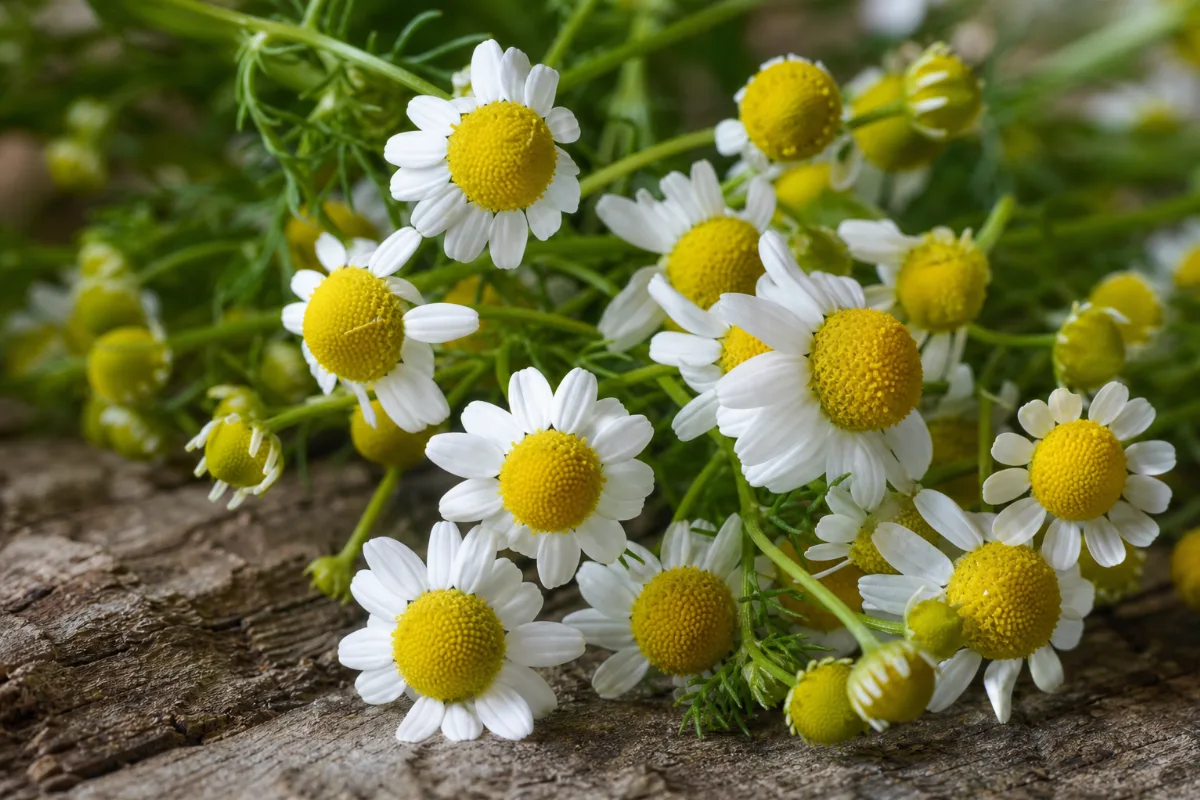
Herbs & Botanicals · Herbs · Calming daisy-family flower
Chamomile
Matricaria chamomilla L. · also called German chamomile, Matricaria recutita, Chamomilla recutita, Kamille (German), manzanilla (Spanish)
Chamomile is a daisy-family plant whose dried flower heads are used as a tea, extract, oil or mouth rinse. In Europe it has long been used for minor stomach complaints, according to the EU herbal monograph. Human trials for anxiety and sleep are small and mixed. Allergy is the main real risk.
General information, not medical advice. Last substantive update · Not medically reviewed. A named clinician has not signed off on this page. How this page is made
About Chamomile
Chamomile (here, German chamomile, Matricaria chamomilla) is a daisy-family plant whose flower heads are one of the most common herbal teas. The EU lists it for traditional use in minor stomach complaints. Modern trials have tested it for anxiety, sleep, period pain, blood sugar and mouth sores. The evidence is low or very low certainty for every use, and for several it is mixed or null. Most side effects are mild. Allergy, especially in people sensitive to ragweed and other daisy-family plants, is the main real risk.
What it is
Chamomile here means German chamomile, Matricaria chamomilla, also called Matricaria recutita. It belongs to the daisy family, Asteraceae.
The part used is the dried flower head. It has yellow centre florets, often with white petals around them. The European standard says the centre is hollow and cone-shaped.
Do not confuse it with Roman chamomile, Chamaemelum nobile. It is a different plant with a different oil. Labels often say only "chamomile", so check the Latin name.
What makes it distinctive
The best-known compound is apigenin, a flavonoid. In tea it is mostly bound to a sugar as apigenin-7-glucoside. The oil holds bisabolol and matricin. The blue colour of the oil comes from chamazulene, which forms mainly when the flowers are steam distilled.
In test tubes, apigenin binds a calming site on the brain's GABA receptor, but only weakly. Mouse results are mixed. No human study shows that apigenin from tea reaches the brain or acts there. So "chamomile works like a mild sedative" is an unproven idea.
Tea, extracts and oil contain different mixes of compounds. Results from one form should not be assumed for another.
Historical and current uses
European herbals from the 1500s and 1700s describe chamomile on the skin for wounds, in the mouth for ulcers, and by mouth for stomach and bowel complaints and spasms.
In 2015 the EU committee accepted chamomile flower as a traditional herbal medicine for minor digestive complaints, cold symptoms, minor mouth and throat inflammation and skin irritation. The committee judged the clinical studies insufficient as proof.
Calming and sleep use is a folk tradition. Many popular claims about ancient Egypt, Hippocrates and Galen were not confirmed in a primary source, so they are left out.
What the research shows
Anxiety has the most research, almost all from one US group using a standardised extract. A first placebo-controlled trial of 57 people found a small benefit. A longer trial did not prove it prevents relapse. A 2022 network review could not tell chamomile from placebo, and a 2022 guideline says it is not currently recommended for generalized anxiety disorder.
For sleep, people often report sleeping better and two reviews found better sleep-quality scores. But the one trial in long-term insomnia found no clear difference from placebo, and an older review found no significant benefit. Depression has no trial of chamomile alone.
Body uses are thinner. Period pain, PMS, blood sugar and mouth sores have low-certainty support from small trials, many from Iran. Skin reactions from radiotherapy showed no significant difference. Most other uses rest on a single small trial.
Many control groups received nothing, so expectation is not ruled out. Only abstracts were read for most studies, and trials were short.
Root, leaf, powder, extract: what is the difference?
Tea bags and loose flowers
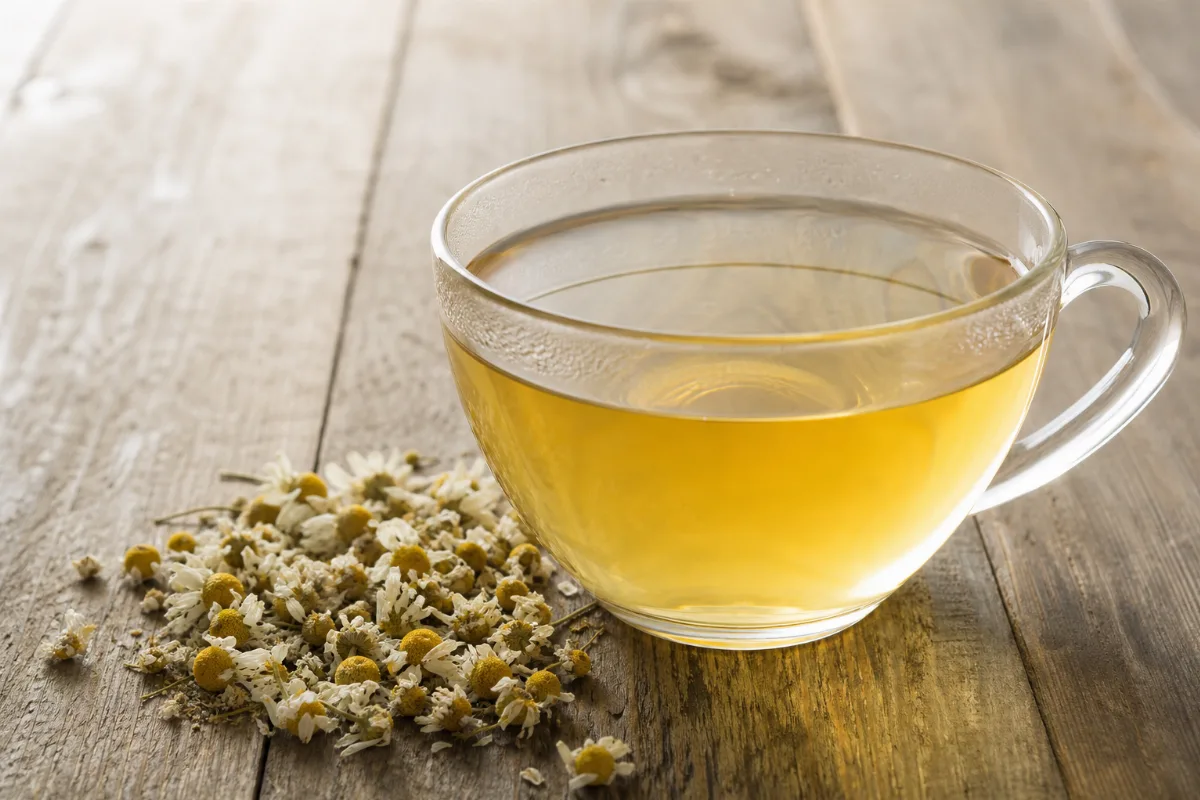
Dried flower heads steeped in hot water. The EU traditional dose is 1.5 to 4 g of flower in 150 ml, 3 to 4 times a day.
Strength depends on the flower per bag and steeping time, and cannot be compared in milligrams with capsules. A 2025 test of 22 teas found most tea bags below the European essential oil minimum, and loose teas more consistent.
Standardised extract capsules
Concentrated flower extract, in the best-known trials standardised to 1.2% apigenin.
Used in the anxiety, insomnia and PMS trials at about 270 to 1,500 mg a day. Different extracts were used, so one brand's results do not carry to another.
Liquid extracts and tinctures
Flower extracted in water or alcohol, taken as drops.
Strength varies by maker. The EU monograph reports severe allergic reactions after mucosal contact with liquid preparations, frequency not known.
Essential oil (smelled or massaged)
Steam-distilled flower oil, used for inhaling or in massage oil.
Small trials of calm and sleep were positive against doing nothing, with a smaller edge over a placebo oil.
Mouth rinses, creams and gels
Chamomile in a mouthwash, cream or gel applied where needed.
Studied for mouth sores, gum health and stitches pain in single small trials. Do not apply near the eyes.
Blends and combination products
Chamomile with other herbs, apple pectin or probiotics.
Results cannot be credited to chamomile alone, for example the apple pectin and chamomile medicine for children's diarrhea.
At a glance
Traditional uses history, not proof
- A tea for minor stomach and gut complaints such as bloating and mild spasms (EU traditional use)
- Steam inhalation for cold symptoms, and rinses and gargles for minor mouth and throat inflammation
- On the skin for irritation and small wounds, and a folk tea for calm and sleep
Studied for research
- Anxiety (generalized anxiety disorder), low certainty
- Sleep quality, low certainty
- Period pain and PMS, low certainty
- Blood sugar in type 2 diabetes, low certainty
- Mouth sores from cancer treatment, low certainty
- Diarrhea in young children, as a pectin-chamomile mix
Main compounds
- Apigenin and apigenin-7-glucoside (flavonoids; the best-known trials standardised to 1.2% apigenin)
- Bisabolol, matricin and chamazulene (in the essential oil; chamazulene forms mainly during distillation)
- Other flavonoids such as luteolin, plus coumarins and mucilage
Common forms
- Tea bags and loose whole flowers
- Standardised extract capsules or tablets (used in most anxiety trials)
- Liquid extracts, tinctures and drops
- Essential oil for inhaling or massage, mouth rinses, and creams or gels
Research links: NIH NCCIH: Chamomile · EU herbal monograph on chamomile flower (EMA) · PubMed: Chamomile, a systematic review of adverse events (2025) · PubMed: chamomile randomized trials · Research Library · Genes & Biomarkers Library
The plant and its history
- Accepted scientific name
- Matricaria chamomilla L.
- Naming authority
- L. (Linnaeus). GBIF treats Matricaria recutita L. as a synonym of Matricaria chamomilla L.; the European Pharmacopoeia and EMA still use the name Matricaria recutita L. (syn. Chamomilla recutita (L.) Rauschert).
- Synonyms
- Matricaria recutita L.; Chamomilla recutita (L.) Rauschert; Chamomilla chamomilla (L.) Rydb.; Chrysanthemum chamomilla (L.) Bernh.; Chamaemelum chamomilla (L.) E.H.L.Krause; Anthemis vulgaris L.; Chamomilla vulgaris (L. ex Steud.) Gray; Chamomilla officinalis K.Koch; Matricaria chamaemilla Hill; Matricaria bayeri Kanitz
- Common names
- German chamomile (English); Chamomile (usually means German chamomile in tea and supplements) (English); Kamille; Kamillenblueten (flowers) (German (EMA assessment report)); Camomille allemande; fleur de camomille (French (EMA assessment report)); Manzanilla comun; manzanilla ordinaria; manzanilla de Aragon (Spanish (search terms listed in the EMA assessment report)); Camomilla comune (Italian (EMA assessment report))
- Botanical family
- Asteraceae (daisy or sunflower family, also called Compositae). People allergic to other daisy-family plants can react to chamomile; the EMA monograph lists this as a contraindication (EMA summary page; McKay 2006).
- Classification
- Plantae > Tracheophyta > Magnoliopsida > Asterales > Asteraceae > Matricaria > Matricaria chamomilla
- Native range
- Not verified from a primary source. Kew POWO / GBIF distribution data were not retrieved. The EMA says the herbal drug comes from cultivated or wild plants (EMA summary page).
- Habitat
- Not verified.
- What the plant looks like
- Roots: Not verified.; Stems: Not verified.; Leaves: Not verified.; Flowers: The herbal substance is the dried flower head (capitulum): yellow tubular florets in the centre, often surrounded by a ring of white strap-shaped (ligulate) florets, on a sharply conical, hollow receptacle with no scales between the florets (EMA assessment report, Ph. Eur. definition). The hollow receptacle is the classic way to tell it from some look-alikes (stated in the EMA text as a characteristic of the drug).; Fruit: Not verified.
- Cultivation
- Grown and also collected wild for the flower heads (EMA summary page). Details of cultivars: the EMA report notes that cultivars and origins differ substantially in composition and that the Ph. Eur. oil monograph separates oils rich in bisabolol oxides from oils rich in (-)-alpha-bisabolol. Agronomy (sowing, yield) was not verified.
- Harvest and processing
- The flower heads are dried for tea, extracts and powders. The blue essential oil is made by steam distillation of fresh or dried flower heads (Ph. Eur., quoted in the EMA report). The blue colour comes mostly from chamazulene, which is formed from the colourless matricin during distillation (EMA assessment report says matricin is 'at least partially' converted). Details of drying temperatures and times were not verified.
- Look-alikes and adulterants
- Name: Roman chamomile, Chamaemelum nobile (L.) All.; Note: A different plant in the same family and the best-known 'other chamomile'. GBIF accepted species 5391599, NCBI taxid 99037, genus Chamaemelum. Roman chamomile has an ester-rich essential oil and different sesquiterpene lactones (nobilin derivatives), unlike German chamomile, whose oil is rich in bisabolol and chamazulene; a 2026 review says the two should not be treated as interchangeable (p42451181). Many human trials and the EMA monograph on chamomile are for German chamomile only.; Name: Other plants sold or called 'chamomile' or looking similar; Note: Pineapple weed (Matricaria discoidea DC., GBIF 3103791), corn chamomile (Anthemis arvensis L., GBIF 3102781), stinking mayweed (Anthemis cotula L., GBIF 8035698), scentless mayweed (Tripleurospermum inodorum, GBIF 3104179) and golden or dyer's chamomile (Cota tinctoria (L.) J.Gay, GBIF 5390618) are all accepted Asteraceae species. That they are confused with, or sold as, chamomile was not verified in a source I read, and I did not find analysis data on adulteration rates in this pass.; Name: Product labels that say only 'chamomile'; Note: Tea and supplement labels often do not say which species. German chamomile is the species that the EMA monograph and most clinical trials in this profile cover. Quantitative data on how often products are mislabelled were not found.
- Sustainability and conservation
- Not verified (IUCN status not retrieved).
The plant and the parts used
Traditional use and history history, not clinical proof
| Tradition or era | Documented use | Source |
|---|---|---|
| Ancient Greece, Rome and Egypt (general statement) | Chamomile (German and Roman kinds taken together) is said in a 2022 review to have been used for thousands of years in Greece, Rome and ancient Egypt for stomach problems, cramps, dermatitis and minor infections. The review does not separate the two species in this statement and does not name specific ancient texts in its abstract. | p36615326 (abstract) |
| Classical antiquity: Dioscorides | The EMA assessment report says Dioscorides mentioned the medical use of the plant, but gives no detail in the passage I read. It does not say which plant Dioscorides described, and ancient 'chamomile' names may cover more than one species. I did not read Dioscorides myself. | s-ema-ar-matricaria-2016 |
| European herbals of the 16th to 18th centuries | The EMA report, citing Benedum (2006), lists Hieronymus Bock (1539), Leonhard Fuchs (1543), Matthiolus (1571), Tabernaemontanus (1613) and Lonicerus (1737) as historical sources. Across them the report finds consistent use on the skin for wound healing, in the mouth for aphthae (mouth ulcers), and by mouth for stomach and bowel complaints and spasms. | s-ema-ar-matricaria-2016 |
| Modern European phytotherapy (German Commission E 1984, WHO 1999, ESCOP 2003) | The EMA report lists these monographs. Traditional uses: externally for inflammation of skin and mucous membranes, bacterial skin disease including mouth and gums, inhalation for respiratory irritation, baths and irrigation for the anal and genital area; internally for spasms and inflammation of the digestive tract. A typical tea is about 3 g of flowers in about 150 ml of hot water, covered 5 to 10 minutes, one cup 3 to 4 times a day between meals. | s-ema-ar-matricaria-2016 |
| EU herbal monograph (EMA/HMPC, adopted 2016) | The EU committee (HMPC) accepted German chamomile flowers as a 'traditional use' herbal medicine, not as a proven treatment. The effect is called plausible and safe use over at least 30 years (15 in the EU) is documented. The committee looked at clinical studies but judged them insufficient as evidence, mainly because chamomile was not compared with another treatment. Listed traditional uses: minor digestive complaints such as bloating and mild spasms; common-cold symptoms; minor mouth and throat inflammation; add-on care for skin, anal and genital irritation after a doctor has excluded serious causes; sunburn, small superficial wounds and small boils. Monograph reference EMA/HMPC/55843/2011; assessment report EMA/HMPC/55837/2011; a periodic review began in 2022. | s-ema-page-matricariae-flos; s-ema-ar-matricaria-2016 |
| Sleep and calming (folk use) | A 1995 paper opens by saying dried flower heads are used in folk medicine to make a spasm-relieving and sedative tea. A 2006 review adds that it was, at that time, not possible to find clinical trials of the sedative effect of chamomile tea. Sleep and calm uses are therefore traditional; the human trials that exist mostly used concentrated extracts (see other profile files). | p7617761 (abstract); p16628544 (abstract) |
| Hippocrates, Galen, Egyptian sun-god and other popular history | Popular sources repeat many specific historical claims. I did not verify any of them in a primary source, and Wikipedia was not used, so they are left out rather than repeated. | NOT verified |
Traditional use shows how a plant was used. It does not show that a supplement works or is safe today.
What is inside, and how it may work
What the plant contains and how those compounds act in cells and animals. Laboratory and animal mechanisms are not proven effects in people.
Main compounds
| Compound | Family | Where it is concentrated | Activity studied | Level of evidence |
|---|---|---|---|---|
| Apigenin PubChem 5280443 | flavone (flavonoid) | Flower heads; present mostly as sugar-bound forms (glycosides), free apigenin is a smaller part Total flavonoids up to about 6% of dried flowers; apigenin and its glucosides together are named among them (EMA report). No separate figure for free apigenin was found in sources I read. | Binds the benzodiazepine site of the GABA-A receptor in test tubes (Ki about 4 micromolar). Mouse behaviour studies are mixed: one reports an anxiolytic effect at about 3 mg/kg by injection, others find no anxiolytic effect. Lowers COX-2 and iNOS expression and blocks NF-kB signalling in mouse macrophage cells. 120 13 95 60 45 36 | Laboratory research |
| Apigenin-7-O-glucoside (apigenin 7-glucoside) PubChem 5280704 | flavone glycoside | Flower heads; the main apigenin form in chamomile and in tea About 0.5% of the dried flowers is quoted in the EMA report; the European Pharmacopoeia requires at least 0.25% of the dried drug. | The form people actually swallow in tea. In a human study of chamomile tea, apigenin metabolites appeared in blood after about 2 hours, and the amount excreted in urine was equal to 34% of the intake (as apigenin glucoside equivalents). In mouse ear swelling tests, free apigenin was more effective than its 7-glycoside (reported in the EMA report). 19 36 | Human data |
| Luteolin and its glycosides PubChem 5280445 | flavone (flavonoid) | Flower heads Named as a minor flavonoid in the EMA report; no amount given. | Named in the reviews as a constituent; effects specific to luteolin from chamomile were not examined in this file. 36 67 | Laboratory research |
| Quercetin PubChem 5280343 | flavonol (flavonoid) | Flower heads Listed as a constituent in the McKay 2006 review; amount not found. | In a rat study, quercetin did not share apigenin's benzodiazepine-like behaviour effects (p9408191 abstract). 67 95 | Laboratory research |
| Patuletin PubChem 5281678 | flavonol (flavonoid) | Flower heads Listed in the McKay 2006 review; amount not found. | No specific activity examined in the sources read. 67 | Laboratory research |
| Matricin (matricine) PubChem 92265 | proazulene sesquiterpene lactone | Flower heads; extracted into hot-water tea in pharmaceutically relevant amounts (EMA report) 0.03-0.2% of dried flowers (EMA report). | Colourless parent (prodrug) of chamazulene and of chamazulene carboxylic acid. In test tubes it lowered NF-kB-driven ICAM-1 production in human endothelial cells at 10-75 micromolar; it did not inhibit COX or 12-lipoxygenase in human platelets up to 200 micromolar. In artificial stomach fluid it turned into chamazulene carboxylic acid, and after people took matricin by mouth, the acid was found in blood at micromolar levels. 40 93 91 36 | Laboratory research |
| Chamazulene PubChem 10719 | azulene (blue sesquiterpene) | Mostly formed during steam distillation of the flowers; the blue colour of the oil Azulenes make up 2-18% of the essential oil, mainly chamazulene (EMA report). Very little is expected in an ordinary tea, as the report says tea carries only about 10-15% of the oil constituents. | Blocked leukotriene B4 formation (IC50 about 10-15 micromolar) and chemical peroxidation of arachidonic acid (IC50 about 2 micromolar) in test-tube systems. Strongly inhibits the liver enzymes CYP1A2 (IC50 4.4 micromolar) and CYP2D6 (1.1 micromolar) in recombinant enzyme tests. 93 41 36 | Laboratory research |
| Chamazulene carboxylic acid PubChem 3083593 | chamazulene derivative (natural 'profen') | Found in chamomile (and yarrow) as a breakdown product of matricin Amount in chamomile not found in the abstract. | Inhibited COX-2 but not COX-1 in the authors' assays and showed anti-inflammatory activity in several animal models. Measured in human blood after oral matricin. 91 | Animal research |
| (-)-alpha-Bisabolol (levomenol) PubChem 442343 | monocyclic sesquiterpene alcohol | Essential oil; amount depends strongly on the cultivar (oils are either bisabolol-oxide-rich or bisabolol-rich) Up to about 50% of the essential oil (EMA report). In a hydroalcoholic extract used in a mouse study: 0.05 mg/ml. | In reviews of mostly cell and animal work, lowers TNF-alpha, IL-1beta, IL-6, iNOS and COX-2 and suppresses NF-kB. Inhibited CYP2D6 in test tubes (IC50 2.2 micromolar). PubChem lists a separate record for the other mirror-image form (CID 1549992); natural chamomile bisabolol is the (-) form as named in the EMA report. 92 32 41 36 | Laboratory research |
| Bisabolol oxides A and B PubChem 13092559 | sesquiterpene oxides | Essential oil (CID is for bisabolol oxide A; I did not verify a CID for oxide B) Named as major oil components; amounts vary with cultivar. | In mouse ear swelling tests, bisabolol oxides A and B were about as anti-inflammatory as bisabolol (EMA report). 36 | Animal research |
| En-yne-dicycloethers (spiroethers; cis and trans) PubChem 103031 | polyacetylene spiroethers | Essential oil (CID is for the 2-(2,4-hexadiynylidene)-1,6-dioxaspiro[4.4]non-3-ene entry; I did not check which cis/trans form) 20-30% of the essential oil (EMA report). | Potent inhibitors of CYP1A2 in recombinant enzyme tests (IC50 2.0 micromolar cis, 0.47 micromolar trans) and also active on CYP3A4. 41 36 | Laboratory research |
| trans-beta-Farnesene | sesquiterpene hydrocarbon | Essential oil Up to about 45% of the oil (EMA report); an (E)-beta-farnesene-rich chemotype exists (title of PMID 26434140, not read). | No activity examined here. PubChem CID not verified. 36 | Laboratory research |
| Herniarin and umbelliferone PubChem 10748 | coumarins | Flower heads; soluble in hot water 0.01-0.08% of dried flowers (EMA report). CID shown is herniarin (7-methoxycoumarin); umbelliferone is CID 5281426 (C9H6O3). | Named in the EMA report as hot-water soluble. Herniarin has been studied as a contact allergen in chamomile (title only, not read). 36 | Laboratory research |
| Mucilage polysaccharides and phenolic acids | polysaccharides; phenolic acids | Flower heads Listed in the EMA report as constituents; no figures. | The EMA report says tea is mainly flavonoids and mucilage; a soothing effect on the mouth or gut lining is a traditional idea not tested in the sources I read. 36 | Laboratory research |
Mechanisms, receptors and pathways
| Target or pathway | Gene or receptor | What was found | Level |
|---|---|---|---|
| GABA-A receptor, benzodiazepine binding site | GABA-A receptor (benzodiazepine site); specific subunits not established for chamomile | Apigenin competed with a radiolabelled benzodiazepine (flunitrazepam) for the binding site, Ki about 4 micromolar, which is weak compared with drugs of the benzodiazepine class (that comparison is general pharmacology, not stated in the paper). It did not change muscimol binding. In mice, a fraction with apigenin acted as an anxiolytic at about 3 mg/kg by injection (elevated plus-maze) with sedation only at 10 times higher dose (Viola 1995). Evidence is mixed: Avallone 2000 found that apigenin displaced the benzodiazepine ligand but REDUCED GABA-activated chloride currents in rat cerebellar cells (the opposite of a benzodiazepine-like boost), and in rats found no anxiolytic effect, only less movement that a benzodiazepine blocker did not reverse. Salgueiro 1997 found no anxiolytic effect of apigenin in the rat plus-maze either. Separately, chamomile water extract and chamomile oil vapour had effects that the benzodiazepine blocker flumazenil reduced in rodent studies (Shinomiya 2005; Yamada 1996, both as reported in the EMA assessment report, not read directly). No human study shows that apigenin from tea reaches the brain or acts on this site. Treat 'chamomile works like a mild benzodiazepine' as an unproven idea. 120 13 95 45 36 | Laboratory research |
| Cyclooxygenase-2 (COX-2) and prostaglandin E2 | PTGS2 (COX-2) | A chamomile extract lowered LPS-triggered prostaglandin E2 in mouse macrophage cells by reducing COX-2 enzyme activity and COX-2 mRNA and protein, with no change in COX-1 (Srivastava 2009). Apigenin on its own lowered COX-2 and iNOS expression with IC50 below 15 micromolar by blocking IkB kinase and NF-kB (Liang 1999). Chamazulene carboxylic acid, a derivative of matricin, inhibited COX-2 but not COX-1 and was found in human blood after oral matricin (Ramadan 2006). Cell, animal and one small human blood-level finding only; none shows anti-inflammatory benefit in people drinking tea. Concentrations used in cells are often much higher than blood levels expected from a cup of tea (EMA assessors also call doses 'relatively high'). 108 60 91 36 | Laboratory research |
| NF-kB signalling and adhesion molecules | NFKB1 / RELA, IKBKB (IKK beta), ICAM1 | Apigenin blocked NF-kB activation by preventing IkB breakdown and inhibiting IkB kinase (Liang 1999, cells). Matricin (not chamazulene) reduced TNF-alpha- and LPS-induced ICAM-1 on human endothelial cells and NF-kB activity at 10-75 micromolar by a mechanism the authors say is unknown (Flemming 2015). Apigenin reduced ICAM-1 rise in rats given TNF at 100 mg/kg by injection (Panes 1996, as reported in the EMA report). 60 40 36 | Laboratory research |
| Leukotriene B4 formation (5-lipoxygenase pathway) and lipid peroxidation | ALOX5 pathway | Chamazulene (not matricin) blocked leukotriene B4 formation in neutrophils (IC50 15 micromolar) and in a cell-free fraction (IC50 10 micromolar), and chemically blocked arachidonic acid peroxidation (IC50 2 micromolar). Matricin did not affect COX or 12-lipoxygenase in platelets. This matters because tea contains little chamazulene (see isolated_vs_whole). 93 36 | Laboratory research |
| alpha-Bisabolol: inflammation and oxidative stress | TNF, IL1B, IL6, NOS2 (iNOS), PTGS2 (COX-2), NF-kB, MAPKs (ERK1/2, JNK, p38) | Two 2022 reviews of mostly cell and animal work report that alpha-bisabolol lowers TNF-alpha, IL-1beta, IL-6, iNOS and COX-2, suppresses NF-kB, ERK1/2, JNK and p38, and reduces oxidative-stress markers; both call for clinical trials. In a rat paw swelling test (reported in the EMA report) (-)-alpha-bisabolol reduced white-cell migration, leakage of protein and TNF-alpha. Bisabolol is mostly in the oil, so a tea carries little of it. 92 32 36 | Animal research |
| Liver drug-metabolising enzymes (CYP1A2 and others) | CYP1A2, CYP3A4, CYP2C9, CYP2D6 | Essential oil strongly inhibited CYP1A2 (IC50 1.59 microgram/ml) and CYP3A4 (4.97 microgram/ml) in recombinant enzymes; chamazulene, cis- and trans-spiroether were potent CYP1A2 inhibitors; chamazulene and alpha-bisabolol also inhibited CYP2D6 (Ganzera 2006). Rats drinking 2% chamomile tea for 4 weeks had CYP1A2 activity at 39% of control (Maliakal and Wanwimolruk 2001, as reported in the EMA report, not read directly). The EMA assessors say only anecdotal clinical evidence exists, and a case report authors ruled out a pharmacokinetic cause (EMA report). Whether a cup of tea inhibits CYP1A2 in people is not established. 41 36 | Laboratory research |
| Human whole-body metabolic signature of chamomile tea | Urinary metabolites (hippurate, glycine, creatinine) | In volunteers who drank chamomile tea daily for 2 weeks, urine NMR profiles shifted: more hippurate and glycine, less creatinine; the shift lasted up to 2 weeks after stopping. Hippurate is made from gut-microbe breakdown products of plant phenols, so this suggests the tea's polyphenols were processed by gut bacteria. The study cannot say if any of this is beneficial, and it noted large differences between people. 122 | Human data |
| Other effects reported in reviews (not examined here) | Various | The 2022 reviews of Dai and El Mihyaoui list antioxidant, antibacterial, antifungal, anti-diabetic, anti-cancer and other activities in laboratory work. I did not read the primary studies behind them and do not repeat the claims; they are cell or animal data unless stated otherwise. 27 33 67 | Laboratory research |
Absorption, metabolism and elimination
- Absorption
- Human data exist for the flavonoid, not for the oil or matricin. In healthy men who drank chamomile tea (apigenin-7-glucoside), apigenin appeared in blood mainly as apigenin-4'-glucuronide, peaking at about 2 hours, which points to absorption in the upper gut; urinary metabolites equalled 34% of the intake. By comparison, apigenin itself (not sugar-bound) was poorly absorbed, with metabolites equal to only 0.5% of intake in urine, and a parsley apigenin glycoside peaked at 4 hours and gave 11.2% in urine (Borges 2022; abstract only, number of volunteers not given in the abstract). The EMA report says it found no absorption, distribution, metabolism or elimination data for the herbal preparations. A 1993 German paper measured absorption and excretion of apigenin, apigenin-7-glycoside and herniarin after oral chamomile extracts in humans or animals, but only the title is available to me and the results were not read (p8415854).
- Distribution
- Not found. No human data on how much apigenin or any other chamomile compound reaches the brain or other tissues. This matters for the GABA-A idea, which needs brain exposure.
- Metabolism
- Apigenin is mainly conjugated to glucuronide and sulfate: apigenin-4'-glucuronide, apigenin-7-glucuronide and apigenin-7-sulfate were identified in humans (Borges 2022). A review of apigenin pharmacokinetics (Tang 2017) says it is mostly present as sugar-bound forms in plants and that absorption and bioavailability are limited. Matricin turned into chamazulene carboxylic acid in artificial stomach fluid but not in artificial intestinal fluid, and the acid was found in human blood after oral matricin (Ramadan 2006). Daily tea drinking raised urinary hippurate and glycine (Wang 2005), consistent with gut-microbe processing of plant phenols.
- Elimination
- Mostly urine as glucuronide and sulfate conjugates for apigenin. Half-lives were not given in the abstracts I read and are not stated here.
- Bioavailability
- Very product- and form-dependent. Apigenin without its sugar is poorly absorbed (0.5% as urinary metabolites), while chamomile tea, rich in apigenin-7-glucoside, gave 34% of intake as urinary metabolites in one small study, so the sugar-bound form in tea seems to be absorbed much better. Tea carries mainly flavonoids and mucilage with only about 10-15% of the oil constituents (EMA report); oil compounds such as bisabolol and chamazulene therefore reach the body mainly from oil, ethanol extracts or topical products.
Isolated compounds versus whole extracts
Which form you use changes what you get. (1) Tea is water-based: mostly flavonoids (apigenin-7-glucoside), mucilage, coumarins and some matricin, but only about 10-15% of the oil constituents (EMA report). Chamazulene is largely an artefact of steam distillation, formed from matricin, so a tea or a fresh flower contains little of it while the blue oil contains a lot. (2) Ethanol extracts carry more bisabolol and other oil compounds; one mouse extract contained 0.05 mg/ml (-)-alpha-bisabolol, 0.45 mg/ml bisabolol oxides, 0.4 mg/ml apigenin plus glucosides and 0.8 mg/ml spiroethers and reduced ear swelling by 23.4% at 0.75 mg (EMA report, Tubaro 1984). (3) Pure oil put on mouse ears did not reduce swelling in one test (6.6% inhibition) while a fresh-flower extract matched the reference drug benzydamine (EMA report, Della Loggia 1990), suggesting that the oil's bisabolol and chamazulene are not the whole story and that matricin and flavonoids matter. (4) In another mouse model free apigenin was more active than its glycoside, but in people the glycoside from tea was far better absorbed than free apigenin (Borges 2022). Results from one compound, one extract or the oil should not be assumed to apply to a cup of tea or to another product. The Roman chamomile plant has a very different oil (ester-rich) and should not be treated as the same ingredient (Such 2026).
Nutritional composition
Chamomile is used as a tea, extract or oil, not as a food that supplies meaningful amounts of vitamins, minerals or calories. The EMA report and reviews give contents of active compounds (for example about 0.5% apigenin-7-glucoside in the dried flowers), but no vitamin or mineral table was found in the sources read, so none is given. A tea cup (about 3 g in 150 ml) is a very small amount of plant material.
Products, quality and comparisons
Independent evidence comes first. Nothing in this section is a paid ranking. If a product link is added later, it will be marked clearly as an affiliate link and will never change what the research says.
Quality indicators
- Plant named as Matricaria chamomilla (also written Matricaria recutita or Chamomilla recutita) German chamomile, with the part (flower heads) stated; Roman chamomile (Chamaemelum nobile) is a different plant
- Form stated: tea (loose or bag, grams of flower per serving), dry extract (mg and extract ratio) or tincture (strength, alcohol)
- Apigenin or apigenin-7-glucoside shown as a percentage (the best-known trials used 1.2% apigenin) with the test method
- Essential oil content stated, with the amount compared with the Ph. Eur. minimum of 4 mL per kg for whole flower heads
- Other herbs listed separately, not hidden in a blend
- Lot number and a certificate of analysis available on request, including tests for pyrrolizidine alkaloids, pesticides and heavy metals
- Seal or registration checked on the certifier's or regulator's own website
Identity and authenticity
- German and Roman chamomile are both sold as 'chamomile' but differ in chemistry, so they should not be treated as interchangeable (2026 review, p42451181).
- A 2024 gas chromatography study of the essential oil from 21 chamomile tea brands sold in Mexico found one (S2) whose oil was mostly anethole (62.28%), which the authors take as a sign of adulteration or substitution; three others were rich in bisabolol oxide A and only two of those contained chamazulene (p38502786).
- A 2020 Spanish study that used DNA barcoding and UHPLC-MS on 33 samples of valerian, linden, tea and chamomile bought in pharmacies, supermarkets and herbal shops found two samples (a tea and a linden) that were not the plant on the label; the abstract does not say how many of the 33 were chamomile (p33218119).
- These findings describe the samples tested and cannot be applied to any one brand.
Standardization and extract strength
- The European Pharmacopoeia sets the material standard for chamomile flower (monograph 0404, cited by the EMA monograph).
- A 2025 study of 22 commercial chamomile flower teas found essential oil content from 0.75 to 5.34 mL per kg; only five loose teas reached the Ph. Eur. minimum of 4 mL per kg and most tea bags did not. Flavonoid content measured 0.17 to 0.55%, and apigenin-7-glucoside in tea bags often missed pharmacopoeial standards. All oils were of the bisabolol oxide-rich type (p41190721).
- The best-known anxiety and menopause trials used extract standardized to 1.2% apigenin (p22894890, p39836709, p41761999); the 2009 trial's abstract does not give the daily dose.
- A 2024 review found that only one of ten sleep studies tested the purity or potency of the product used (p39106912).
- Serving size and extract ratio differ between brands, so compare mg of extract per day, not bottle prices.
Third-party testing
- US dietary supplements are not approved by the FDA before sale. Testing of one product does not apply to another.
- Independent testing programmes (USP, NSF, ConsumerLab and others) differ in what they test, and a seal is a statement about that programme, not a guarantee of effect. We did not re-read their test lists for chamomile in this file.
- In the EU, a 'traditional herbal registration' is a regulator's quality-and-safety route based on long use, not proof of efficacy.
Contaminants and adulterants
- Pyrrolizidine alkaloids (PAs): plant toxins from weeds that can be harvested with the herb. A survey of 70 pre-packed tea bags in Israel found PAs in almost all chamomile, peppermint and rooibos samples (20 to 1,729 micrograms per kg across those three) (p26365752). A German survey of 169 licensed medicinal teas, including 14 chamomile, found PAs above 10 micrograms per kg in 30% of single-ingredient teas and in more of the mixtures; single-herb teas had much less than mixtures (p26055130; the abstract does not give chamomile separately). A Turkish survey found PAs in all 11 types of herbal tea and herb tested, chamomile among them (p37835225). The German BfR recommended no more than 0.007 micrograms per kg body weight a day (p26055130).
- Pesticides: a survey of 75 tea and chamomile samples from ten countries found many contained pesticides not approved for use or above EU limits (p23127810). It does not report chamomile separately.
- Heavy metals and mycotoxins in chamomile products were not covered by the studies we read in detail.
- Pollen/allergen cross-reactivity is a safety matter, not a contaminant; see the safety section.
Reading a product label
- Find Matricaria chamomilla / recutita (German chamomile) and the part (flower).
- Tea: grams of flower per bag or per serving; loose whole flowers versus broken tea-bag dust. Extract: mg per capsule, ratio, apigenin percent and test method.
- Compare mg per day and extract type with a trial, not with another bottle.
- Check whether passionflower, lemon balm, valerian or others are in the blend, and how much.
- Check cautions: allergy to ragweed, daisy, chrysanthemum or marigold; warfarin and other medicines; pregnancy and breastfeeding; use near the eyes.
- Look for a lot number, certificate of analysis and tests for pyrrolizidine alkaloids and pesticides.
- Check any seal or registration on the certifier's own site.
Certifications and what they actually mean
| Certification | What it means | What it does not tell you |
|---|---|---|
| EU traditional herbal medicinal product registration | A European regulator route for herbal medicines based on long-standing use; the EU monograph covers tea, inhalation, rinse, compress, bath, extracts and cream for set doses. | Says the product is acceptable for the stated mild indication on the basis of tradition; does not claim trial-proven benefit. |
| European Pharmacopoeia monograph compliance (Ph. Eur. 0404, chamomile flower) | The flowers meet the pharmacopoeia standard, including essential oil and apigenin-7-glucoside content. | A maker's statement; the 2025 survey shows many commercial tea bags do not meet it, so check a certificate of analysis. |
| Third-party quality seals (USP, NSF, ConsumerLab and similar) | Independent programmes that test selected label and contaminant points. | What each programme tests differs; test lists were not re-read for this file. |
| Organic certification | Grown and processed under organic rules (pesticide use restricted). | We did not find a study showing organic chamomile is free of pyrrolizidine alkaloids or has more active compounds; verify with the certifier. |
Comparing price and servings
Do not compare bottle prices. Step 1: cost per serving = package price / servings (cups or capsules). Step 2: servings per day to reach the studied amount (studied mg per day / mg of extract per capsule; for tea, grams of flower per cup from the label). Step 3: cost per day = cost per serving x servings per day. For extracts with a stated apigenin percentage, cost per mg of apigenin = package price / (servings x mg per serving x percent / 100); only compare products of the same extract type. Leave prices blank until a real current product is entered; no prices are included here.
Extract types compared
| Extract | Plant part | Standardization | Trials | Evidence note | Safety note | Limitations | Studies |
|---|---|---|---|---|---|---|---|
| Pharmaceutical-grade chamomile extract, 1.2% apigenin capsules (University of Pennsylvania trials) | flower | 1.2% apigenin, 220 mg capsules (p22894890); 500 mg capsules at 1,500 mg a day in the later trials | Amsterdam 2009 (8 weeks, 57 adults, placebo); Keefe 2016 (open label, up to 8 weeks, 179); Mao 2016 (12 weeks open label then 26 weeks randomized, 93); Amsterdam 2012 and 2020 (depression sub-analyses) | Small benefit over placebo for HAM-A in 2009 (P=0.047); open-label response 58.1%; relapse prevention not significant (HR 0.52, CI 0.20 to 1.33). | Adverse events 11.7% in the open-label phase, none serious; similar low rates versus placebo in the randomized phases. | Single research group; the 2009 trial was small; the abstracts give 220 mg capsules and 500 mg capsules but not the same brand details. | 8 51 65 9 10 |
| Standardized chamomile extract capsule (270 mg) | flower | Described as standardized; percentage not in abstract | Zick 2011 (270 mg twice a day, 28 days, 34 adults with chronic insomnia, placebo) | No significant difference from placebo on any sleep diary measure; modest, non-significant benefit on daytime function. | No difference in adverse events from placebo. | Pilot with 34 people. | 129 |
| Chamomile extract capsules, 100 to 200 mg, Iranian trials | flower | 1.2% apigenin in the two menopause trials; not stated in the others' abstracts | Adib-Hajbaghery 2017 (200 mg twice a day, 28 days, 60 older adults); Sharifi 2014 (100 mg three times a day vs mefenamic acid, 90 women); Mohsenzadeh-Ledari 2025 and 2026 (100 mg four times a day, 12 weeks, 80 women) | Sleep quality better than wheat flour capsules (P<0.05); emotional PMS symptoms down 30 to 33% vs about 11% with mefenamic acid; menopausal symptom score and hot flush domain better than placebo. | Two women withdrew for mouth sores, skin spots and itching in the menopause trial. | All from Iranian groups; two papers appear to report the same 80 women; no placebo in the PMS trial. | 2 104 72 73 |
| Chamomile tea | flower | Not applicable | Chang 2016 (2 weeks, 80 postnatal women, no placebo tea); Kimura 2024 (single 3 g tea, 8 healthy adults); Zampieri 2025 (three-herb blend) | Short-term sleep and mood gains in an unblinded trial that faded by week 4; blend tea no different from placebo tea for pre-operative anxiety. | Single cup of tea raised prothrombin time by 0.7 s on average (below the authors' 10% threshold). | Dose of tea not stated in two abstracts; blends cannot be credited to chamomile alone. | 24 56 125 |
| Chamomile essential oil (inhaled) | flower (essential oil) | Not applicable | Deepa 2025 (10 minutes a day for 15 days, 80 adults with insomnia); Pourshaikhian 2024 (7 drops of 10% oil on two nights, 154 hospital patients, sesame oil placebo) | Lower insomnia scores versus no-treatment control; lower anxiety, blood pressure and heart rate versus placebo oil. | No adverse events reported in the insomnia trial. | Oil composition varies by chamomile type; one trial had no placebo scent. | 28 87 88 |
| Chamomile with L-theanine drink and other blends | flower plus other ingredients | Not stated | Soh 2025 (5 days, 30 young women); Zampieri 2025 (chamomile, passionflower, anise tea, 210 adults) | Pain scores fell in the L-theanine drink group; tea blend equal to placebo tea for anxiety. | Not reported in the abstracts. | Effects cannot be assigned to chamomile. | 106 125 |
Compare Chamomile with another ingredient
Chamomile vs Valerian
Neither herb has strong evidence for insomnia, and no study compares them. Both show small gains in self-rated sleep quality in some trials. Chamomile has more anxiety data (GAD trials) than valerian; valerian carries more reports of side effects in the 2015 review.
| Chamomile | Valerian | |
|---|---|---|
| Benefits studied | Anxiety (generalized anxiety disorder), sleep quality, menopausal hot flushes and PMS in small trials; traditional tea for gut complaints | Sleep quality, insomnia, menopausal sleep |
| Evidence certainty | low: a 2024 meta-analysis of 10 studies (772 people) found PSQI 1.88 points lower (95% CI -3.46 to -0.31, heterogeneity 88.4%); a 2019 meta-analysis found better sleep quality (SMD -0.73, CI -1.23 to -0.23) and a small HAM-A gain in GAD, but no clear effect on state anxiety or insomnia severity; a 2022 network meta-analysis could not confirm or rule out an anxiety effect (MD 0.54 vs placebo, CrI -5.13 to 6.25); a 2015 herbal insomnia review found no significant difference from placebo | low: a 2024 umbrella review found no evidence of efficacy for insomnia treatment but possible subjective sleep-quality benefit; reviews rate trials low quality |
| Typical studied dose | Standardized extract about 270 to 1,500 mg a day for 4 to 12 weeks (1,500 mg a day in anxiety trials); tea amount not stated in the trial abstracts; EU traditional tea dose 1.5 to 4 g of flower in 150 ml water 3 to 4 times a day | about 300 to 1,060 mg a day of extract for 2 to 8 weeks |
| Head-to-head trial | None found | None found against chamomile |
| Safety and interactions | No adverse events in 10 sleep studies (passive monitoring); 65 adverse events across 2,896 treated people in a 2025 review, mostly stomach upset and drowsiness; allergic reactions in case reports (3 anaphylaxis) especially in people allergic to Asteraceae plants such as ragweed; possible effect on clotting tests and on warfarin (NCCIH); EMA notes CYP450 interactions in kidney transplant patients | Drowsiness; rare liver injury reports; the 2015 herbal insomnia review found more adverse events per person with valerian than placebo |
| Forms | Tea bags, loose flowers, extract capsule, liquid extract, essential oil, rinse, topical | Extract capsule or tablet, tincture, tea, powder |
| Cost note | Use the price-per-day formula; no prices stored | Use the same formula |
Chamomile vs Lavender (oral Silexan capsule)
Silexan is a specific patented lavender oil capsule. It has more consistent placebo-controlled anxiety data, much of it company-linked, than chamomile extract. Lavender tea or inhaled oil should not be assumed to match the capsule. No direct head-to-head trial was found.
| Chamomile | Lavender (oral Silexan capsule) | |
|---|---|---|
| Benefits studied | Anxiety, sleep (chamomile: Anxiety (generalized anxiety disorder), sleep quality, menopausal hot flushes and PMS in small trials; traditional tea for gut complaints) | Anxiety disorders, anxiety-related restlessness and sleep, mild depression |
| Evidence certainty | low to moderate for anxiety: a 2022 network meta-analysis of 29 trials rated Silexan the only herb with a clear HAM-A effect (MD -3.84, CrI -6.31 to -1.34); chamomile could not be distinguished from placebo in that analysis (MD 0.54, CrI -5.13 to 6.25). Chamomile's own GAD trials are small and mixed | A meta-analysis of 5 placebo-controlled trials (n=1,213) found Silexan better than placebo for HAM-A and self-rated anxiety after 10 weeks; a Schwabe employee is among the authors |
| Typical studied dose | Standardized extract about 270 to 1,500 mg a day for 4 to 12 weeks (1,500 mg a day in anxiety trials); tea amount not stated in the trial abstracts; EU traditional tea dose 1.5 to 4 g of flower in 150 ml water 3 to 4 times a day | Silexan 80 mg once a day for 10 weeks in the 5 pooled trials |
| Head-to-head trial | None found; compared indirectly in a network meta-analysis only | None found; indirect comparison only |
| Safety and interactions | No adverse events in 10 sleep studies (passive monitoring); 65 adverse events across 2,896 treated people in a 2025 review, mostly stomach upset and drowsiness; allergic reactions in case reports (3 anaphylaxis) especially in people allergic to Asteraceae plants such as ragweed; possible effect on clotting tests and on warfarin (NCCIH); EMA notes CYP450 interactions in kidney transplant patients | No significant difference from placebo in adverse events, serious adverse events or withdrawals in the pooled analysis |
| Forms | Tea bags, loose flowers, extract capsule, liquid extract, essential oil, rinse, topical | Oral capsule of a specific lavender oil (Silexan); essential oil for inhalation; tea |
| Cost note | Use the price-per-day formula; no prices stored | Use the same formula |
Chamomile vs Lemon balm (Melissa officinalis)
Both herbs have small, mixed trials for anxiety and mood. The lemon balm meta-analysis reports a larger average effect, but with high variation and few trials; the two have not been tested against each other.
| Chamomile | Lemon balm (Melissa officinalis) | |
|---|---|---|
| Benefits studied | Anxiety (generalized anxiety disorder), sleep quality, menopausal hot flushes and PMS in small trials; traditional tea for gut complaints | Anxiety, depression symptoms, sleep, mainly in short trials |
| Evidence certainty | low: a 2024 meta-analysis of 10 studies (772 people) found PSQI 1.88 points lower (95% CI -3.46 to -0.31, heterogeneity 88.4%); a 2019 meta-analysis found better sleep quality (SMD -0.73, CI -1.23 to -0.23) and a small HAM-A gain in GAD, but no clear effect on state anxiety or insomnia severity; a 2022 network meta-analysis could not confirm or rule out an anxiety effect (MD 0.54 vs placebo, CrI -5.13 to 6.25); a 2015 herbal insomnia review found no significant difference from placebo | low: a 2021 meta-analysis found lower anxiety (SMD -0.98, 95% CI -1.63 to -0.33) and depression (SMD -0.47, CI -0.73 to -0.21) scores than placebo, with high heterogeneity and few trials; authors say interpret with caution |
| Typical studied dose | Standardized extract about 270 to 1,500 mg a day for 4 to 12 weeks (1,500 mg a day in anxiety trials); tea amount not stated in the trial abstracts; EU traditional tea dose 1.5 to 4 g of flower in 150 ml water 3 to 4 times a day | Dose not read in the abstract |
| Head-to-head trial | None found | None found against chamomile |
| Safety and interactions | No adverse events in 10 sleep studies (passive monitoring); 65 adverse events across 2,896 treated people in a 2025 review, mostly stomach upset and drowsiness; allergic reactions in case reports (3 anaphylaxis) especially in people allergic to Asteraceae plants such as ragweed; possible effect on clotting tests and on warfarin (NCCIH); EMA notes CYP450 interactions in kidney transplant patients | No serious side effects reported in the 2021 meta-analysis; interactions not re-verified here |
| Forms | Tea bags, loose flowers, extract capsule, liquid extract, essential oil, rinse, topical | Tea, extract capsule, essential oil |
| Cost note | Use the price-per-day formula; no prices stored | Use the same formula |
Chamomile vs Passionflower (Passiflora incarnata)
Both have few, small, short trials and neither is established for insomnia. They have not been compared directly; one tea blend containing both did not beat placebo tea.
| Chamomile | Passionflower (Passiflora incarnata) | |
|---|---|---|
| Benefits studied | Anxiety (generalized anxiety disorder), sleep quality, menopausal hot flushes and PMS in small trials; traditional tea for gut complaints | Anxiety, sleep |
| Evidence certainty | low: a 2024 meta-analysis of 10 studies (772 people) found PSQI 1.88 points lower (95% CI -3.46 to -0.31, heterogeneity 88.4%); a 2019 meta-analysis found better sleep quality (SMD -0.73, CI -1.23 to -0.23) and a small HAM-A gain in GAD, but no clear effect on state anxiety or insomnia severity; a 2022 network meta-analysis could not confirm or rule out an anxiety effect (MD 0.54 vs placebo, CrI -5.13 to 6.25); a 2015 herbal insomnia review found no significant difference from placebo | low: a 2020 systematic review of 9 trials (1 to 30 days) reported mostly reduced anxiety; one 110-person trial found 23 more minutes of total sleep time than placebo on lab recording (p=0.049) after 2 weeks. In the 2022 network meta-analysis passionflower did not reach significance (MD -4.20, CrI -8.82 to 0.16) |
| Typical studied dose | Standardized extract about 270 to 1,500 mg a day for 4 to 12 weeks (1,500 mg a day in anxiety trials); tea amount not stated in the trial abstracts; EU traditional tea dose 1.5 to 4 g of flower in 150 ml water 3 to 4 times a day | One trial used a cup of tea daily for a week; extract doses not read |
| Head-to-head trial | None found | None found against chamomile (one tea blend of both plus anise did not beat placebo tea, p39514279) |
| Safety and interactions | No adverse events in 10 sleep studies (passive monitoring); 65 adverse events across 2,896 treated people in a 2025 review, mostly stomach upset and drowsiness; allergic reactions in case reports (3 anaphylaxis) especially in people allergic to Asteraceae plants such as ragweed; possible effect on clotting tests and on warfarin (NCCIH); EMA notes CYP450 interactions in kidney transplant patients | No adverse effects reported in the 2020 review; interactions not verified here |
| Forms | Tea bags, loose flowers, extract capsule, liquid extract, essential oil, rinse, topical | Tea, extract |
| Cost note | Use the price-per-day formula; no prices stored | Use the same formula |
Chamomile vs Magnesium
Magnesium is a mineral and chamomile an herb. Evidence for each in sleep is low certainty and no trial compares them. Magnesium makes most sense if intake is low (our comment, not from the reviews).
| Chamomile | Magnesium | |
|---|---|---|
| Benefits studied | Anxiety (GAD trials), sleep quality, menopausal hot flushes and PMS in small trials; traditional tea for gut complaints | Sleep, especially in older adults; restless legs |
| Evidence certainty | low: a 2024 meta-analysis of 10 studies (772 people) found PSQI 1.88 points lower (95% CI -3.46 to -0.31, heterogeneity 88.4%); a 2019 meta-analysis found better sleep quality (SMD -0.73, CI -1.23 to -0.23) and a small HAM-A gain in GAD, but no clear effect on state anxiety or insomnia severity; a 2022 network meta-analysis could not confirm or rule out an anxiety effect (MD 0.54 vs placebo, CrI -5.13 to 6.25); a 2015 herbal insomnia review found no significant difference from placebo | low to very low: 3 trials in 151 older adults showed 17.36 minutes shorter sleep onset (95% CI -27.27 to -7.44) at moderate-to-high risk of bias; a 2026 review of 12 trials found inconsistent results and does not support magnesium as a routine insomnia treatment |
| Typical studied dose | Standardized extract about 270 to 1,500 mg a day for 4 to 12 weeks (1,500 mg a day in anxiety trials); tea amount not stated in the trial abstracts; EU traditional tea dose 1.5 to 4 g of flower in 150 ml water 3 to 4 times a day | Varies by trial and form; elemental dose not tabulated here |
| Head-to-head trial | None found | None found against chamomile |
| Safety and interactions | No adverse events in 10 sleep studies (passive monitoring); 65 adverse events across 2,896 treated people in a 2025 review, mostly stomach upset and drowsiness; allergic reactions in case reports (3 anaphylaxis) especially in people allergic to Asteraceae plants such as ragweed; possible effect on clotting tests and on warfarin (NCCIH); EMA notes CYP450 interactions in kidney transplant patients | Not re-verified here |
| Forms | Tea bags, loose flowers, extract capsule, liquid extract, essential oil, rinse, topical | Several salt forms with different absorption (not compared here) |
| Cost note | Use the price-per-day formula; no prices stored | Use the same formula |
Chamomile vs L-theanine
L-theanine is a single amino acid with small effects on sleep in a recent meta-analysis; chamomile is a multi-compound herb with mixed trials. They have not been tested against each other.
| Chamomile | L-theanine | |
|---|---|---|
| Benefits studied | Anxiety (GAD trials), sleep quality, menopausal hot flushes and PMS in small trials; traditional tea for gut complaints | Sleep, stress |
| Evidence certainty | low: a 2024 meta-analysis of 10 studies (772 people) found PSQI 1.88 points lower (95% CI -3.46 to -0.31, heterogeneity 88.4%); a 2019 meta-analysis found better sleep quality (SMD -0.73, CI -1.23 to -0.23) and a small HAM-A gain in GAD, but no clear effect on state anxiety or insomnia severity; a 2022 network meta-analysis could not confirm or rule out an anxiety effect (MD 0.54 vs placebo, CrI -5.13 to 6.25); a 2015 herbal insomnia review found no significant difference from placebo | low: a 2025 meta-analysis of 18 trials (897 people) found small gains in subjective sleep onset (SMD 0.15, CI 0.01 to 0.29) and sleep quality (0.43, CI 0.04 to 0.83); L-theanine did not beat placebo for anxiety in the 2022 network meta-analysis (MD -0.49, CrI -6.54 to 5.57) |
| Typical studied dose | Standardized extract about 270 to 1,500 mg a day for 4 to 12 weeks (1,500 mg a day in anxiety trials); tea amount not stated in the trial abstracts; EU traditional tea dose 1.5 to 4 g of flower in 150 ml water 3 to 4 times a day | 200 to 450 mg a day suggested by a 2026 review; trials ranged 50 to 900 mg a day |
| Head-to-head trial | None found; one small drink combining chamomile and L-theanine for period pain (p41525193) cannot separate them | None found against chamomile alone |
| Safety and interactions | No adverse events in 10 sleep studies (passive monitoring); 65 adverse events across 2,896 treated people in a 2025 review, mostly stomach upset and drowsiness; allergic reactions in case reports (3 anaphylaxis) especially in people allergic to Asteraceae plants such as ragweed; possible effect on clotting tests and on warfarin (NCCIH); EMA notes CYP450 interactions in kidney transplant patients | Called safe in the 2026 review |
| Forms | Tea bags, loose flowers, extract capsule, liquid extract, essential oil, rinse, topical | Capsule, tablet, tea |
| Cost note | Use the price-per-day formula; no prices stored | Use the same formula |
Other supplements people compare it with
- Valerian (Sleep quality): Small gains in subjective sleep quality; reviews say no evidence of efficacy for insomnia treatment; see the valerian profile. Evidence: low. 118 35
- Lavender oil capsule (Silexan) (Anxiety, anxiety-related sleep problems): Best placebo-controlled anxiety data among the herbs reviewed, but from one patented product and with company-linked authors. Evidence: moderate. 29 127
- Lemon balm (Mild anxiety, mood): Meta-analysis shows lower anxiety and depression scores than placebo with high heterogeneity. Evidence: low. 42
- Passionflower (Anxiety, sleep): Few and short trials; one 2-week lab-recorded trial. Evidence: low. 48 58
- Magnesium (Sleep in older adults): Low to very low certainty; useful mainly if intake is low (our comment, not from the reviews). Evidence: very-low. 64 61
- L-theanine (Calm, sleep quality): Small effects in a 2025 meta-analysis. Evidence: low. 21 26
- Cognitive behavioural therapy for insomnia (CBT-I) (Chronic insomnia): A 2023 umbrella review describes CBT-I as the recommended first-line treatment but hard to access; the review itself rated the studies of alternative treatments mostly low quality. Evidence: low. 35
Where to buy
Check the label first. Whatever you buy, look for these:
- The plant part and the extract type or ratio on the label
- A standardized amount of the active compounds, where relevant
- A third-party testing mark (USP, NSF or ConsumerLab)
- Interactions: ask a pharmacist if you take medicines, are pregnant or have a medical condition
Talk to a pharmacist or doctor before you start any supplement, especially if you take medicines. See the Safety tab for interactions.
Support our free guides: as an Amazon Associate we earn from qualifying purchases. Full disclosure.
8 low certainty11 very low certainty1 not enough evidence
What was looked at
The 20 benefits and uses checked for Chamomile, each with how strong the evidence is. Tap one to open it.
- Generalized anxiety disorder (GAD)Low certainty
- Depression and low moodVery low certainty
- Sleep quality and insomniaLow certainty
- Poor sleep and low mood after childbirthVery low certainty
- Short-term nerves around surgery, dental visits and illnessVery low certainty
- Sleep with chamomile oil (inhaled or massaged)Very low certainty
- Mood symptoms before a periodVery low certainty
- Mouth sores from cancer treatment (oral mucositis)Low certainty
- Diarrhea in young children (apple pectin plus chamomile)Low certainty
- Infant colic (chamomile-lemon balm-probiotic mix)Very low certainty
- Gas and nausea after surgeryVery low certainty
- Period pain (primary dysmenorrhea) and endometriosis painLow certainty
- Premenstrual syndrome (PMS) symptomsLow certainty
- Blood sugar and insulin in type 2 diabetesLow certainty
- Cholesterol and blood fats in type 2 diabetesVery low certainty
- Skin reactions from radiotherapy (radiation dermatitis)Not enough evidence
- Pain after episiotomy (stitches after birth)Low certainty
- Gum inflammation and plaque (mouthwash)Very low certainty
- Nerve symptoms in diabetes (topical chamomile oil)Very low certainty
- Polycystic ovary syndrome (PCOS) symptomsVery low certainty
Lab markers tracked in the studies
Hamilton Anxiety Rating Scale (HAM-A)GAD-7 questionnaireSalivary cortisolPittsburgh Sleep Quality Index (PSQI)Sleep diary measures (time asleep, time to fall asleep, awakenings)Depression scores (HAM-D, HRSD, PHQ-9, Edinburgh scale)Blood markers: BDNF, CRP and tryptophanHeart rate and blood pressure (with inhaled oil or long-term extract)HbA1c (average blood sugar over about 3 months)Fasting blood glucoseInsulin and insulin resistance (HOMA-IR)Total cholesterolTriglycerides (blood fat)LDL cholesterolHDL cholesterolTestosterone (in women with PCOS)Antioxidant enzymes and malondialdehyde (oxidative stress)Prothrombin time (blood clotting test)
What is Chamomile good for?
The main proposed uses and how strong the human evidence is for each. "Low" and "very low" certainty mean small or inconsistent trials and a result that could change. "Insufficient" means the trials found no clear difference. Open any use for the studies, doses and limits.
Benefits, one by one
Each card is a research question, not a promise. Tap a goal to filter. Open a card to see the studies, doses and limits.
Generalized anxiety disorder (GAD)
Low certaintyChamomile has the most human research for ongoing anxiety (GAD), almost all from one US research group using a standardised extract. A first placebo-controlled trial found a small benefit, and a later open trial saw many people improve, but a longer trial did not prove it prevents relapse, and a major guideline does not currently recommend it for GAD.
9 studiesChamomile pharmaceutical-grade extract, 1,500 mg/day (500 mg three ti…
Studies, doses and limits
What the trials found
Amsterdam 2009 (57 people with mild to moderate GAD, 8 weeks, chamomile extract capsules of 220 mg standardised to 1.2% apigenin vs placebo) found a bigger drop in the Hamilton anxiety score with chamomile (P=0.047); other measures moved the same way but the study was not powered for them. Keefe 2016 (179 people with moderate to severe GAD, open label, 1,500 mg/day for up to 8 weeks) found 58.1% responded (95% CI 50.9% to 65.5%) and GAD-7 fell (beta -8.4); there was no placebo group. Mao 2016 (the second phase, 93 responders randomised to keep chamomile or switch to placebo for 26 weeks) found relapse in 7 of 46 on chamomile vs 12 of 47 on placebo, but the main result was not significant (hazard ratio 0.52, CI 0.20 to 1.33, P=0.16); symptoms stayed lower on chamomile (P=0.0032). Keefe 2017 showed that people who expected to benefit improved more (GAD-7 adjusted beta -0.19), which matters for open-label results. Pooled: Hieu 2019 (12 trials) found a HAM-A improvement in GAD at 2 weeks (MD -1.43, CI -2.47 to -0.39) and 4 weeks (MD -1.79, CI -3.14 to -0.43) but no difference in state anxiety (3 trials, SMD -0.15, CI -0.46 to 0.16). Zhang 2022 (network meta-analysis, 29 trials) could not tell chamomile from placebo for anxiety (HAMA MD 0.54, CrI -5.13 to 6.25). The WFSBP/CANMAT guideline (2022) rates chamomile 'not currently recommended' for GAD.
Results
Mixed and weak. One small placebo-controlled trial and one meta-analysis show a modest HAM-A benefit; an open-label study shows many responders but cannot separate chamomile from placebo or expectation; the long-term trial missed its main goal; a network meta-analysis and a guideline are not supportive.
Effect sizes as reported
HAM-A: P=0.047 (Amsterdam 2009; size not in abstract); MD -1.43 (CI -2.47 to -0.39) at 2 weeks and -1.79 (CI -3.14 to -0.43) at 4 weeks (Hieu 2019); response 58.1% (CI 50.9% to 65.5%, open label); relapse HR 0.52 (CI 0.20 to 1.33, P=0.16); network meta-analysis vs placebo MD 0.54 (CrI -5.13 to 6.25).
Why this rating
Few randomised trials, the key ones small and from one research group, a borderline p-value, a missed primary outcome in the long trial, and conflicting reviews. No GRADE rating was found in the sources read, so this rating is the compiler's own.
Form and dose studied
Chamomile pharmaceutical-grade extract, 1,500 mg/day (500 mg three times daily) in the open and long trials; 220 mg capsules standardised to 1.2% apigenin in the 2009 trial (total daily dose not in the abstract). These results do not apply to tea or to other extracts.
Who was studied
Adults with diagnosed GAD, mild to moderate (2009 trial) and moderate to severe (2016 trials), recruited at one US academic centre. Not tested in children, older adults on their own, or other anxiety disorders such as panic or social anxiety.
Limits
Small randomised sample (57 and 93), single centre, an open-label phase without a placebo, and a primary outcome that was not met in the long trial. Only abstracts were read for this profile.
Why researchers looked
Chamomile tea is one of the most common folk remedies for nerves, so researchers tested a standardised extract in people with diagnosed GAD.
Traditional use
Chamomile flower has long been used in Europe and the Middle East as a calming tea and for nervous restlessness.
Proposed mechanism Preliminary mechanism
Chamomile's flavonoid apigenin is thought to bind benzodiazepine-type sites on the brain's GABA receptors, a calming system, and other compounds may act too. This comes mainly from lab and animal work. A 2018 review lists chamomile among ten plants with lab evidence of GABA activity and human trials, but a 2023 review of animal studies found only one chamomile study that showed a sedative effect. How much of this happens in people at normal doses is not shown.
A proposed mechanism does not show that the effect happens in people.
Adverse events were low and similar to placebo in the randomised trials (11.7% had any in the open-label phase, none serious). The long trial also saw lower weight and blood pressure with chamomile (P=0.046 and P=0.0063), which people on blood-pressure medicine should know about. See the safety tab.
Depression and low mood
Very low certaintyThere is no trial of chamomile alone in people whose main problem is depression. Hints come from re-analyses of the anxiety trials, from two Pakistani trials of a chamomile-and-saffron tea added to usual medicine, and from a postpartum tea trial. None is strong.
7 studiesChamomile extract 1,500 mg/day (open label); chamomile 20 mg plus saf…
Studies, doses and limits
What the trials found
Amsterdam 2012 re-analysed the 2009 trial (57 people with anxiety): total Hamilton depression score fell more with chamomile than placebo (P<.05), but only a non-significant trend in the 19 with current depression (P=.062). Amsterdam 2020 (179 people with GAD, open label, 1,500 mg/day for 8 weeks; 79 had depression) found a greater fall in core depression symptoms in those with depression (P<0.023), but total HRSD (P=0.14) did not reach significance; there was no placebo group. Ahmad 2022 (120 people with mild to moderate depression, tea sachet of chamomile 20 mg plus saffron 1 mg twice daily for a month, added to usual medicine, vs medicine alone) reported better PHQ-9, higher BDNF and lower CRP and tryptophan; both groups improved. Ahmad 2023 (50 people, same tea) reported better depression and cholesterol values. Chang 2016 (80 postnatal women, chamomile tea for 2 weeks vs usual care) found fewer depression symptoms (P=0.020) at 2 weeks that were gone by 4 weeks. Ebrahimi 2022 (183 older adults, chamomile oil inhalation for 30 nights) found lower DASS depression scores than distilled water (p<0.01). The WFSBP/CANMAT guideline supports saffron, St John's wort, curcumin and lavender for depression but does not list chamomile as supported.
Results
Suggestive only. Depression scores improved in several small or exploratory studies, but none tested chamomile alone against placebo in a depressed population.
Effect sizes as reported
Core HRSD subgroup difference p<0.023; HAM-D chamomile vs placebo P<.05 (overall) and P=.062 (current depression); depression symptoms t=-2.372, P=0.020 at 2 weeks (tea vs usual care); PHQ-9 and BDNF improvements without numbers in the abstracts.
Why this rating
Post-hoc re-analyses, open-label designs, combination with saffron, no placebo in the tea trials, and no trial in primary depression.
Form and dose studied
Chamomile extract 1,500 mg/day (open label); chamomile 20 mg plus saffron 1 mg tea sachets twice daily as an add-on; chamomile tea for 2 weeks; 1.5% chamomile oil inhaled nightly.
Who was studied
People with GAD, people with mild to moderate depression on medication in Karachi, postnatal women in Taiwan, older adults in Iran.
Limits
Secondary or post-hoc outcomes; combination product; open designs; self-ratings; short follow-up. Only abstracts were read.
Why researchers looked
Anxiety and depression often occur together, and researchers checked whether the anxiety trials also showed an effect on depression scores.
Proposed mechanism Preliminary mechanism
Proposed explanations include GABA effects and anti-inflammatory action. The saffron-chamomile trial measured BDNF (a brain-growth protein), CRP (an inflammation marker) and tryptophan in blood and reported changes, but this does not show that chamomile caused them.
A proposed mechanism does not show that the effect happens in people.
No safety signal in these studies. Chamomile should not be swapped for prescribed antidepressants; see the safety tab for interactions.
Sleep quality and insomnia
Low certaintyPeople often report sleeping better on chamomile, and two reviews found better sleep-quality scores. But the one clinical trial in people with long-term insomnia found no clear difference from placebo, and an older review found nothing significant. Chamomile looks like a mild help for how rested people feel, not a proven treatment for insomnia.
5 studiesStandardised extract 200 to 270 mg twice daily for 28 days in these t…
Studies, doses and limits
What the trials found
Reviews: Kazemi 2024 (10 studies, 772 people) found a lower Pittsburgh Sleep Quality Index (PSQI) score (WMD -1.88, CI -3.46 to -0.31, 5 studies, I2 88.4%); sleep onset or ease of sleep improved in 3 of 4 studies and awakenings in 2 of 3, but sleep length, efficiency and daytime function did not improve. Hieu 2019 found better sleep quality (SMD -0.73, CI -1.23 to -0.23) but one insomnia trial with no change. Leach 2015 (14 herbal trials in insomnia, 1,602 people) found no significant difference from placebo for any herbal medicine including chamomile, on any of 13 efficacy measures. Trials: Zick 2011 (34 adults with chronic primary insomnia, 270 mg standardised extract twice daily, 28 days, placebo-controlled) found no significant differences in any sleep-diary measure, with small to moderate effects that went in both directions. Adib-Hajbaghery 2017 (60 older adults in Iranian nursing-home day care, 200 mg extract capsules twice daily for 28 days vs wheat-flour capsules, single-blind) found better PSQI sleep quality after treatment (P<0.05).
Results
Mixed. Self-rated sleep quality tends to improve, but objective gains in sleep length and efficiency are missing, the one placebo-controlled insomnia pilot was null, and an older review of insomnia trials found no significant benefit.
Effect sizes as reported
PSQI WMD -1.88 (CI -3.46 to -0.31; I2 88.4%) Kazemi 2024; sleep quality SMD -0.73 (CI -1.23 to -0.23) Hieu 2019; Zick 2011 no significant differences, Cohen d under 0.60; Adib-Hajbaghery 2017 P<0.05 (size not in abstract).
Why this rating
Reviews are positive for self-rated sleep quality but with very high heterogeneity and weak product testing, while the best-controlled insomnia trial is null. No GRADE rating in the sources read; the rating is the compiler's own.
Form and dose studied
Standardised extract 200 to 270 mg twice daily for 28 days in these trials. Tea doses were not given in the abstracts read. Results from one product do not carry to another.
Who was studied
Adults with chronic insomnia (US pilot), older adults in a nursing-home day-care centre (Iran), and women with disturbed postnatal sleep (see postpartum entry).
Limits
Small trials, mostly self-reported scales, very high variation between studies, and limited checks of blinding or product quality. Only abstracts were read.
Why researchers looked
Chamomile is probably the most widely used herbal tea for sleep, so researchers tested both tea and extracts.
Traditional use
Chamomile tea at bedtime is a long-standing household remedy for restlessness and sleeplessness.
Proposed mechanism Preliminary mechanism
Apigenin and related compounds are thought to give a mild sedative effect through the brain's GABA receptors. This is based on lab and animal work and has not been confirmed as the cause of sleep changes in people.
A proposed mechanism does not show that the effect happens in people.
No adverse events were reported in the reviewed studies, though most used passive monitoring (Kazemi 2024). See the safety tab.
Poor sleep and low mood after childbirth
Very low certaintyOne Taiwanese trial found that two weeks of chamomile tea eased sleep problems and depression symptoms in new mothers, but the benefit was gone two weeks after stopping, and the comparison group got no tea at all.
1 studiesChamomile tea daily for 2 weeks; amount per day not given in the abst…
Studies, doses and limits
What the trials found
Chang 2016: 80 Taiwanese postnatal women with poor sleep were assigned to drink chamomile tea for 2 weeks or receive routine postpartum care. Right after the 2 weeks, the tea group had less physical-symptom sleep inefficiency (t=-2.482, P=0.015) and fewer depression symptoms (t=-2.372, P=0.020). Scores on the sleep, depression and fatigue measures were similar in both groups at 4 weeks.
Results
A short-lived improvement in one trial that was not blinded and had no placebo tea.
Effect sizes as reported
Sleep inefficiency P=0.015; depression P=0.020; no group differences at 4 weeks. Effect sizes are not in the abstract.
Why this rating
One trial, systematic allocation with a random start rather than full randomisation, no blinding or placebo, and the effect did not last.
Form and dose studied
Chamomile tea daily for 2 weeks; amount per day not given in the abstract.
Who was studied
80 postnatal women with poor sleep in Taiwan. Safety in breastfeeding is not addressed in this abstract.
Limits
Single trial; no placebo drink; attention and ritual effects possible. Only the abstract was read.
Why researchers looked
New mothers often sleep badly and are at risk of low mood, and many want a gentle option while breastfeeding.
Traditional use
Herbal teas, including chamomile, are commonly used after birth in many cultures.
Proposed mechanism Pharmacological theory
Not tested in this study. A calming effect from the drink itself, the bedtime ritual or the attention received could also explain the result.
A proposed mechanism does not show that the effect happens in people.
The abstract reports no safety data. Check the safety tab before use while breastfeeding.
Short-term nerves around surgery, dental visits and illness
Very low certaintySmelling chamomile oil or having it in a massage lowered anxiety scores in a string of small trials, mostly from Iran, in hospital patients, nurses and children. A tea blend before surgery did no better than a placebo tea. These studies are short and mostly self-rated.
8 studiesEssential oil by inhalation (1.5% to 40% solutions, 3 to 7 drops, 10 …
Studies, doses and limits
What the trials found
Chamomile oil inhaled alone: Pourshaikhian 2024 (154 people with acute coronary syndrome, 7 drops of 10% oil for 2 nights vs sesame oil) found the anxiety score fell 5.2 (SD 1.9) vs 1.0 (SD 1.18) with placebo, with lower blood pressure and heart rate (P<0.001). Bahrami 2024 (90 emergency orthopedic patients, 40% oil, 3 drops hourly for 3 hours) found less anxiety than control (P<.001), though damask rose acted faster. Abdel Rehim 2025 (100 children aged 6 to 9 having pulp therapy, nebulised oil) found anxiety fell 2.04 points with chamomile (SD 0.79) vs rising 0.04 in controls, and pulse fell 22.84 beats/min (P<0.001). Ebrahimi 2022 (183 older adults, 30 nights of 1.5% oil) found lower DASS anxiety and stress than distilled water (p<0.01), including one month later. Blends with lavender: Zamanifar 2020 (120 nurses) found Beck anxiety 37.82 vs 56.08 in controls (p<0.0001); Rafii 2020 (105 burn patients, massage, quasi-experimental) found less anxiety (P<0.001); Iravani 2026 (154 first-time mothers in labour, massage with chamomile oil) found the largest drop in anxiety, depression and stress with chamomile oil (p<0.001). Tea: Zampieri 2025 (210 people before elective surgery, chamomile-passionflower-anise tea vs placebo lemon tea) found no significant difference in anxiety (DASS-21), though the herbal group felt better about the operation (P=0.0009).
Results
Positive in most oil-inhalation and massage trials; null for a tea blend against a placebo tea. Most control groups got nothing or water, so expectation is not excluded.
Effect sizes as reported
Anxiety fall 5.2 (SD 1.9) vs 1.0 (SD 1.18) Pourshaikhian 2024; -2.04 (SD 0.79) vs +0.04 (SD 0.84) Abdel Rehim 2025; Beck anxiety 37.82 vs 56.08 Zamanifar 2020; other trials report significance only.
Why this rating
Small trials, short follow-up, self-reported measures, unblinded or weakly blinded designs, and several used blends with lavender. No GRADE rating in the sources read.
Form and dose studied
Essential oil by inhalation (1.5% to 40% solutions, 3 to 7 drops, 10 minutes to repeated hourly) or in massage. These are oils for smelling or skin, not for swallowing. Tea blend dose not given in the abstract.
Who was studied
Hospital patients, nurses, children, older adults and women in labour, mostly in Iran. Not tested in healthy people at home.
Limits
Short interventions; self-report; unclear blinding; blends confound the result; the trials are mostly from a small number of regions. Only abstracts were read.
Why researchers looked
Nurses and hospital teams look for gentle, drug-free ways to ease nerves before procedures, and chamomile oil is a common aromatherapy choice.
Traditional use
Chamomile is a traditional calming scent and tea.
Proposed mechanism Pharmacological theory
Not established. Smell, touch from massage, expectation and attention could all contribute.
A proposed mechanism does not show that the effect happens in people.
No adverse effects reported in the abstracts that mentioned safety. Essential oil must not be swallowed; people allergic to daisy-family plants should be careful (see safety tab).
Sleep with chamomile oil (inhaled or massaged)
Very low certaintyChamomile oil, on its own or blended with lavender, has been tested for sleep in a few small trials, with better scores than control in each. The controls did little (usual routine, or a placebo oil that also improved a lot), so the real effect is uncertain.
4 studiesChamomile oil inhaled 10 minutes a day for 15 days (Deepa 2025); cham…
Studies, doses and limits
What the trials found
Deepa 2025 (80 adults aged 18 to 35 with insomnia, chamomile oil inhaled for 10 minutes daily for 15 days vs normal routine) found lower PSQI and Insomnia Severity Index than controls (P<0.001 for both); there was no active or placebo-scent control. Burkev 2026 (96 intensive-care nurses, 4 weeks of nightly massage with a chamomile-lavender blend, vetiver oil or jojoba oil) found PSQI fell from 10.41 to 4.69 with the blend vs 10.78 to 6.84 with jojoba oil (group effect p=0.018); the placebo group also improved by about 4 points. Rafii 2020 (105 burn patients, 3 massages in a week) found better PSQI sleep quality (P=0.027). Fang 2025 (network meta-analysis, 11 trials, 690 ICU patients) ranked an inhaled blend of lavender, Matricaria recutita and neroli (6:2:0.5) first for sleep quality versus usual care, with low certainty.
Results
Better than doing nothing, with a smaller edge over a placebo oil.
Effect sizes as reported
PSQI 4.69 vs 6.84 after 4 weeks (blend vs jojoba, p for group effect 0.018) Burkev 2026; PSQI and ISI p<0.001 vs routine Deepa 2025.
Why this rating
Small unblinded or single-blind trials, self-reported scores, blends confound chamomile's role, large improvement in placebo groups, and the network meta-analysis itself rated certainty low.
Form and dose studied
Chamomile oil inhaled 10 minutes a day for 15 days (Deepa 2025); chamomile-lavender oil massage nightly for 4 weeks (Burkev 2026).
Who was studied
Young adults with insomnia, ICU nurses, burn patients, ICU patients.
Limits
No active control in some trials; self-reported sleep; combination products; most data from a few countries. Only abstracts were read.
Why researchers looked
Aromatherapy is a low-risk option for poor sleep in hospitals and workplaces.
Proposed mechanism Pharmacological theory
Not established. Calming scent, touch and bedtime routine may all play a part.
A proposed mechanism does not show that the effect happens in people.
No adverse events were reported in Deepa 2025. Essential oils are not for swallowing; patch-test before skin use.
Mood symptoms before a period
Very low certaintyA trial in 118 students found chamomile capsules reduced mood symptoms in the week before a period more than placebo. A small review of PMS trials is positive but shows few numbers. This is the weakest of the mind uses and the physical side is covered on the body tab.
3 studiesChamomile capsules every 8 hours for 7 days before expected bleeding …
Studies, doses and limits
What the trials found
Najafi Mollabashi 2021 (118 university students, chamomile capsules every 8 hours for 7 days before expected bleeding vs placebo) found lower mood scores on the Premenstrual Symptoms Screening Tool (p<0.001; p<0.05 after adjustment). Khalesi 2019 (systematic review of 8 RCTs) concluded chamomile is effective for PMS without pooled numbers in the abstract. Soh 2025 (30 young women with painful periods, chamomile plus L-theanine drink for 5 days per cycle) reported within-group falls in depression (49.46%) and irritability (45.11%) items, but no between-group mood test in the abstract.
Results
Positive in a single placebo-controlled trial; a review agrees but is thinly reported.
Effect sizes as reported
PSST mood p<0.001 (unadjusted), p<0.05 (adjusted); sizes not in abstracts.
Why this rating
One placebo-controlled trial in one student group, review conclusions not backed by numbers in the abstract, and a combination trial with no mood comparison.
Form and dose studied
Chamomile capsules every 8 hours for 7 days before expected bleeding (strength not given in the abstract).
Who was studied
Female university students; young women with painful periods.
Limits
Short exposure; one setting; no pooled numbers. Only abstracts were read.
Why researchers looked
Many women have irritability and low mood before menstruation and look for natural options.
Traditional use
Chamomile has been used traditionally for menstrual complaints.
Proposed mechanism Pharmacological theory
Not tested; proposed calming, anti-inflammatory and antispasmodic actions are theory.
A proposed mechanism does not show that the effect happens in people.
Chamomile in pregnancy is covered on the safety tab; trials above did not report side effects in the abstracts.
Mouth sores from cancer treatment (oral mucositis)
Low certaintySeveral small trials, and reviews of them, found chamomile mouth gels, rinses or ice chips tended to lower the number or severity of mouth sores caused by chemotherapy. The trials are small and mixed, and chamomile ranked in the middle of other natural products. Low certainty.
7 studiesChamomile 1% to 2.5% mouthwash or gel; 3% oral gel for 3 weeks; chamo…
Studies, doses and limits
What the trials found
A 2022 systematic review of 6 randomized trials (492 patients) found topical chamomile (1% to 2.5%, used once up to 4 times a day) helped prevent or treat mucositis in 4 of the 6. A 2022 trial of 45 chemotherapy patients (Egypt) tested a 3% chamomile oral gel for 3 weeks against usual symptom care: no one in the chamomile groups went above grade II, while 6.7% of the usual-care group reached grade III, but mean pain scores did not differ between groups. A 2016 pilot of 38 people on 5-fluorouracil compared chamomile ice chips with plain-water ice chips: mucositis developed in 30% versus 50%, and mouth pain was lower at day 8 (p=0.02). Two newer network meta-analyses place chamomile among the natural products that seem to help, but not at the top: one of 36 trials (2,083 patients) lists chamomile as showing significant reduction of mucositis incidence (no chamomile number in the abstract) while honey had the clearest result (RR 0.80, 95% CI 0.67-0.96); another of 13 mouthwashes ranks chamomile 6th, behind aloe vera juice and honey. A 2025 meta-analysis of 11 chamomile trials reported significant falls in mucositis severity and pain.
Results
Fewer or milder mouth sores than comparison in most small trials; pain relief less consistent.
Effect sizes as reported
Systematic review: effective in 4 of 6 trials. Pilot trial: 30% vs 50% mucositis. Egypt trial: grade III in 6.7% of usual-care group vs none in chamomile groups; pain not significantly different. Network meta-analyses: chamomile significant for incidence (no number given) or ranked 6th of 13. No pooled chamomile effect size in any abstract read.
Why this rating
Trials are small, often not blinded, use different products and regimens, and compare against different things (water ice, usual care, other rinses). The reviews' abstracts give no pooled chamomile effect size, and honey and aloe vera rank higher. Mouth-rinse trials in cancer patients are also easily influenced by cooling and mouth care. This rating is the compiler's.
Form and dose studied
Chamomile 1% to 2.5% mouthwash or gel; 3% oral gel for 3 weeks; chamomile infusion ice chips swished for at least 30 minutes during chemotherapy. Exact products differ between trials.
Who was studied
Adults on chemotherapy (and some radiotherapy). Children are not covered by the abstracts read.
Limits
Few trials are blinded with a true placebo. Results vary between trials. It is not shown to replace standard mouth care or medical treatment. Do not rely on chamomile alone for severe mouth sores.
Why researchers looked
Chemotherapy and radiotherapy often damage the lining of the mouth, causing painful sores that make eating hard. Cheap, gentle rinses are attractive to try.
Traditional use
Chamomile is a long-standing European home remedy for mouth and throat irritation, usually as a rinse or gargle.
Proposed mechanism Pharmacological theory
Chamomile's plant chemicals (for example bisabolol, chamazulene and apigenin) are described in some reviews as calming to inflammation. The abstracts read here do not test how chamomile works in the mouth.
A proposed mechanism does not show that the effect happens in people.
No chamomile toxicity was identified in the cryotherapy pilot. Chamomile is a daisy-family plant. People allergic to ragweed, daisies or related plants can react to it; a systematic review found allergic reactions, including anaphylaxis, only in case reports (see the safety file). Ask a doctor or pharmacist before using it for a child, in pregnancy, or alongside blood thinners. Tell the cancer team before using any rinse during treatment.
Diarrhea in young children (apple pectin plus chamomile)
Low certaintyTwo double-blind trials of a prepared apple pectin and chamomile medicine, given to young children with sudden diarrhea, found it ended diarrhea sooner than placebo. Because apple pectin is in the mix, the benefit cannot be credited to chamomile alone. Low certainty for the combination, and nothing for chamomile tea or chamomile alone.
4 studiesApple pectin-chamomile extract preparation (brand named in the abstra…
Studies, doses and limits
What the trials found
A 1997 double-blind trial in 79 children aged 6 months to 5.5 years with acute uncomplicated diarrhea: after 3 days diarrhea had ended in 33 of 39 given pectin-chamomile and 23 of 40 on placebo (p<0.05), and the illness was at least 5.2 hours shorter (p<0.05). A 2006 follow-up trial (DIALOG II) in 255 outpatient children aged 6 months to 6 years, all given a glucose-electrolyte solution on day 1, found significantly lower stool frequency with the apple pectin-chamomile preparation than placebo and similar side effects. A 2017 systematic review of herbal medicines for children's gut disorders (14 trials, 1,927 children) rated evidence for an herbal compound containing Matricaria chamomilla in diarrhea as promising, with no serious adverse events.
Results
Quicker recovery and less frequent stools than placebo with the combination product.
Effect sizes as reported
33/39 vs 23/40 recovered by day 3; at least 5.2 hours shorter. The 255-child trial reports a significant stool-frequency benefit without numbers in the abstract.
Why this rating
Two double-blind placebo-controlled trials point the same way, but both tested the same kind of combination product (apple pectin with chamomile), the abstracts give few numbers, and a gain of a few hours is small. The review calls the evidence promising and limited. This rating is the compiler's.
Form and dose studied
Apple pectin-chamomile extract preparation (brand named in the abstract: Diarrhoesan), with rehydration fluid. Dose and form not stated in the abstracts.
Who was studied
Children aged 6 months to 6 years with sudden, uncomplicated diarrhea.
Limits
Chamomile's own contribution is unknown. Nothing here supports chamomile tea for diarrhea. Rehydration is the main treatment.
Why researchers looked
Sudden diarrhea is one of the most common illnesses in small children. Parents look for gentle remedies alongside fluids.
Traditional use
Chamomile has been used for tummy upsets in Europe for centuries, usually as tea; the trials, however, used a pharmacy product that combines apple pectin and a chamomile extract.
Proposed mechanism Animal research
In mice, a crude chamomile extract reduced castor-oil diarrhea and intestinal fluid build-up, and relaxed isolated rabbit gut muscle, apparently through potassium channels. This is animal and tissue work and not proof for people. Pectin, the other ingredient, is a fibre that thickens stools.
A proposed mechanism does not show that the effect happens in people.
Adverse events were similar to placebo in the 255-child trial. Diarrhea in a baby or small child can dehydrate quickly; see a doctor for blood in stools, fever, vomiting or signs of dehydration. Chamomile is a daisy-family plant. People allergic to ragweed, daisies or related plants can react to it; a systematic review found allergic reactions, including anaphylaxis, only in case reports (see the safety file). Ask a doctor or pharmacist before using it for a child, in pregnancy, or alongside blood thinners.
Infant colic (chamomile-lemon balm-probiotic mix)
Very low certaintyOne open trial found a herb-and-probiotic mix containing chamomile cut crying time in colicky babies more than simethicone did. Chamomile cannot be singled out from the three-part mix, and the trial was not blinded. Very low certainty for chamomile.
2 studiesStandardized chamomile-lemon balm extract with tyndallized L. acidoph…
Studies, doses and limits
What the trials found
A 2017 open randomized trial in Italy (176 infants who finished, Rome III colic) compared a standardized extract of chamomile, lemon balm and heat-killed Lactobacillus acidophilus (HA122) with simethicone, with Lactobacillus reuteri as a further comparison, for 28 days. Mean daily crying time at day 28 was lower than with simethicone by 44 minutes with the mix (95% CI -58 to -30, P<.001) and by 35 minutes with L. reuteri (95% CI -49 to -20, P<.001), with no clear difference between the mix and L. reuteri. A 2017 review of children's herbal medicines found evidence for fennel in colic and did not single out chamomile.
Results
Less daily crying than with simethicone with the mix; no placebo comparison.
Effect sizes as reported
Crying time at day 28: -44 min (95% CI -58 to -30) for the mix vs simethicone.
Why this rating
One open-label trial, no placebo, chamomile mixed with other active ingredients, and the comparison drug (simethicone) is itself of doubtful benefit. Chamomile alone has not been tested in colic in the studies found. This rating is the compiler's.
Form and dose studied
Standardized chamomile-lemon balm extract with tyndallized L. acidophilus HA122 for 28 days; dose not stated in the abstract.
Who was studied
Breast- and formula-fed infants with colic by Rome III criteria, Italy.
Limits
Open trial; mixed product; 4 weeks; colic often settles by itself with age, which an unblinded trial cannot rule out.
Why researchers looked
Colic means long spells of crying in an otherwise healthy baby. It is distressing for families and has few proven treatments.
Traditional use
Chamomile tea has been given to babies with tummy troubles in some European and Middle Eastern traditions. The trial here tested a prepared product, not tea.
Proposed mechanism Pharmacological theory
Chamomile is described as calming to gut muscle, but the abstract does not test mechanism. The mix also had a probiotic and lemon balm.
A proposed mechanism does not show that the effect happens in people.
Give babies nothing herbal without asking a paediatrician. Chamomile tea is not recommended in this file for infants; a 2025 safety review says there is not enough data in pregnancy and breastfeeding, and the abstracts say nothing on infant tea. Chamomile is a daisy-family plant. People allergic to ragweed, daisies or related plants can react to it; a systematic review found allergic reactions, including anaphylaxis, only in case reports (see the safety file). Ask a doctor or pharmacist before using it for a child, in pregnancy, or alongside blood thinners.
Gas and nausea after surgery
Very low certaintyTwo small Iranian trials gave chamomile drops before surgery. One found less gas after gallbladder keyhole surgery; the other found less nausea at one time point only after middle-ear surgery. Very low certainty.
3 studiesChamomile drops 500 mg about an hour before surgery (ear surgery tria…
Studies, doses and limits
What the trials found
A 2023 triple-blind placebo-controlled trial (Isfahan) gave chamomile drops to patients having laparoscopic gallbladder removal (chamomile group 32 people). Flatulence frequency in the ward was lower with chamomile than placebo, and severity rose less. A 2024 triple-blind trial of 110 patients having middle-ear surgery gave chamomile drops (500 mg) or cornstarch one hour before surgery: nausea and vomiting did not differ at recovery, 1, 2 or 6 hours, and nausea was lower with chamomile only at 4 hours (P=0.03). No gastrointestinal side effects were reported.
Results
Less gas after laparoscopic gallbladder surgery; nausea lower at 1 of 5 time points after ear surgery.
Effect sizes as reported
No numbers in the gas-trial abstract; ear surgery trial: one significant time point of five (P=0.03).
Why this rating
Single-centre, small trials with self-rated scores; one has only one significant time point out of five; neither has been repeated. This rating is the compiler's.
Form and dose studied
Chamomile drops 500 mg about an hour before surgery (ear surgery trial); the gas trial gives no dose in its abstract.
Who was studied
Adults having surgery in Iran.
Limits
Findings are tied to hospital settings and single doses. They do not show chamomile tea helps everyday indigestion.
Why researchers looked
Gas, bloating and nausea are common after anaesthesia and abdominal surgery, and doctors look for low-cost helpers.
Traditional use
Chamomile tea is a widely used home remedy for wind and upset stomach.
Proposed mechanism Pharmacological theory
Chamomile is said to relax gut muscle and calm inflammation, but neither abstract tests how.
A proposed mechanism does not show that the effect happens in people.
No gastrointestinal side effects were reported in the ear surgery trial. Always tell the surgical team about herbal products before an operation; a small 2024 crossover trial found chamomile tea lengthened prothrombin time by 0.7 seconds (see blood tests below). Chamomile is a daisy-family plant. People allergic to ragweed, daisies or related plants can react to it; a systematic review found allergic reactions, including anaphylaxis, only in case reports (see the safety file). Ask a doctor or pharmacist before using it for a child, in pregnancy, or alongside blood thinners.
Period pain (primary dysmenorrhea) and endometriosis pain
Low certaintyReviews of mostly Iranian trials conclude chamomile eased period pain, and a trial in women with endometriosis found lower pain with chamomile capsules than placebo. The abstracts give few numbers, so this is early evidence, low certainty.
2 studiesChamomile capsules 1000 mg three times a day for 8 weeks (endometrios…
Studies, doses and limits
What the trials found
A 2021 systematic review of 7 clinical trials (1,033 women) found most reported chamomile helped period pain and reduced bleeding (2 trials on pain, 2 on bleeding, 3 on both); no pooled numbers appear in the abstract. A 2024 trial of 102 women with endometriosis in Qom gave chamomile or flaxseed capsules (1000 mg three times a day) or placebo for 8 weeks: pelvic pain, painful sex and period pain at 1 and 2 months were lower in both herb groups than placebo (p<0.001), measured by a 0-10 style visual analog scale.
Results
Lower pain scores than placebo in the endometriosis trial; most dysmenorrhea trials in the review favoured chamomile.
Effect sizes as reported
No pooled effect sizes or mean differences in the abstracts. The endometriosis trial reports very large F statistics (F = 383 to 479), which look unusual and should be checked in the full paper.
Why this rating
Small, mostly Iranian trials, self-rated pain, no pooled analysis in the review abstract, and no standard-drug comparison in the endometriosis trial. This rating is the compiler's.
Form and dose studied
Chamomile capsules 1000 mg three times a day for 8 weeks (endometriosis trial). Other trials in the review used extracts or capsules of varied doses.
Who was studied
Women with primary period pain; women with endometriosis.
Limits
Unclear whether benefit is as large as common pain relievers. Endometriosis should be managed by a doctor.
Why researchers looked
Many women look for gentle alternatives to anti-inflammatory painkillers for period cramps.
Traditional use
Chamomile tea is a traditional European remedy for menstrual cramps.
Proposed mechanism Pharmacological theory
Reviews suggest chamomile limits prostaglandin and leukotriene production and relaxes smooth muscle. These are laboratory-based theories, not shown in the trials read here.
A proposed mechanism does not show that the effect happens in people.
Not enough is known about chamomile in pregnancy; avoid medicinal doses when pregnant or trying to conceive unless a doctor agrees. Chamomile is a daisy-family plant. People allergic to ragweed, daisies or related plants can react to it; a systematic review found allergic reactions, including anaphylaxis, only in case reports (see the safety file). Ask a doctor or pharmacist before using it for a child, in pregnancy, or alongside blood thinners.
Premenstrual syndrome (PMS) symptoms
Low certaintyA systematic review of 8 small trials concluded chamomile helped PMS, and two trials in students found it lowered mood and emotional symptoms more than a painkiller or a placebo, but not physical symptoms. Mood effects are covered in the mind profile. Low certainty.
3 studiesChamomile capsule 100 mg three times a day for two cycles; capsules t…
Studies, doses and limits
What the trials found
A 2019 systematic review of 8 randomized trials concluded chamomile is effective for PMS (no numbers in the abstract). A 2014 double-blind trial in 90 dorm students in Iran compared chamomile 100 mg three times a day with mefenamic acid 250 mg three times a day for two cycles: emotional symptoms fell more with chamomile (p<0.001), physical symptoms did not differ (p>0.05). A 2021 trial in 118 students gave one chamomile capsule or placebo every 8 hours for the 7 days before the expected period and found lower mood symptoms with chamomile (p<0.001).
Results
Emotional PMS symptoms improved more than with mefenamic acid or placebo; physical symptoms no different from mefenamic acid.
Effect sizes as reported
p-values only (p<0.001 for emotional symptoms in both individual trials); no confidence intervals in abstracts.
Why this rating
Trials are small, from a few Iranian groups, in students, use self-rated symptom scores, and one has no placebo. Physical symptoms did not clearly improve. This rating is the compiler's.
Form and dose studied
Chamomile capsule 100 mg three times a day for two cycles; capsules three times a day for the 7 days before a period (dose per capsule not in the abstract).
Who was studied
University students with PMS in Iran.
Limits
Mostly emotional symptoms improved; results may not apply to women outside student groups.
Why researchers looked
PMS includes cramps, bloating and mood swings; many women try herbs before medicines.
Traditional use
Chamomile tea is a traditional European remedy for menstrual cramps.
Proposed mechanism Pharmacological theory
Reviews suggest anti-inflammatory and calming effects, but the abstracts do not test them.
A proposed mechanism does not show that the effect happens in people.
Chamomile is a daisy-family plant. People allergic to ragweed, daisies or related plants can react to it; a systematic review found allergic reactions, including anaphylaxis, only in case reports (see the safety file). Ask a doctor or pharmacist before using it for a child, in pregnancy, or alongside blood thinners.
Blood sugar and insulin in type 2 diabetes
Low certaintySmall trials in people with type 2 diabetes found daily chamomile tea or extract lowered HbA1c and fasting glucose compared with water or controls over about 8 weeks. Only four human trials exist and two of them look like the same study, so this is low-certainty evidence and not a replacement for diabetes treatment.
3 studiesChamomile tea 3 g per 150 mL cup, three times a day after meals, for …
Studies, doses and limits
What the trials found
A 2024 meta-analysis (J Diabetes Metab Disord) pooled 4 human trials and 8 animal studies. In humans, fasting blood glucose fell (SMD -0.65, 95% CI -1.00 to -0.29, I2=0%) and HbA1c fell (SMD -0.90, 95% CI -1.39 to -0.40, I2=45.4%); in animals the glucose fall was far larger (SMD -4.37, 95% CI -5.76 to -2.98). Two papers from Tabriz, Iran describe an 8-week single-blind trial in 64 adults aged 30-60 with type 2 diabetes: chamomile tea (3 g in 150 mL hot water, three times a day after meals) versus water. Chamomile tea lowered HbA1c (p=0.03), insulin (p<0.001) and insulin resistance (HOMA-IR, p<0.001) and raised antioxidant enzymes. The two papers share design and sample size, so they are probably one trial reported twice.
Results
Lower HbA1c, fasting glucose and insulin than control over 8 weeks.
Effect sizes as reported
Meta-analysis (humans): fasting glucose SMD -0.65 (95% CI -1.00 to -0.29); HbA1c SMD -0.90 (95% CI -1.39 to -0.40). Individual trial: HbA1c p=0.03, insulin p<0.001, HOMA-IR p<0.001; no raw values in abstracts.
Why this rating
Only four human trials, short (about 8 weeks), small, water or unmatched control, and the two best-known papers probably come from one trial. Standardized mean differences are not in familiar units like percentage points of HbA1c, so the clinical size is unclear. Animal results do not predict human results. This rating is the compiler's.
Form and dose studied
Chamomile tea 3 g per 150 mL cup, three times a day after meals, for 8 weeks; extract doses in other trials are not in the abstracts.
Who was studied
Adults aged 30-60 with type 2 diabetes in Iran; some on diabetes medicines.
Limits
Not tested over the long term, with complications, or for prevention. Not a substitute for diabetes medicines.
Why researchers looked
Type 2 diabetes is common, and people ask whether everyday herbal drinks can help control blood sugar.
Traditional use
Chamomile tea is a common household drink in Iran and Europe; its use for diabetes is a modern question and not an established traditional indication.
Proposed mechanism Animal research
In animals, chamomile extracts lowered blood glucose in studies pooled in the meta-analysis (SMD -4.37). Proposed explanations include antioxidant and anti-inflammatory effects, but these are not proven in people.
A proposed mechanism does not show that the effect happens in people.
People on diabetes medicines should check blood sugar if they start drinking medicinal quantities of chamomile, because the sugar effect could add to their medicine; the abstracts did not report low blood sugar events. Chamomile is a daisy-family plant. People allergic to ragweed, daisies or related plants can react to it; a systematic review found allergic reactions, including anaphylaxis, only in case reports (see the safety file). Ask a doctor or pharmacist before using it for a child, in pregnancy, or alongside blood thinners.
Cholesterol and blood fats in type 2 diabetes
Very low certaintyOne trial (reported in a paper on lipids) found chamomile tea lowered total cholesterol, triglycerides and LDL cholesterol compared with water in people with type 2 diabetes over 8 weeks, but not HDL. In women with PCOS, chamomile capsules did not change lipids compared with placebo. Very low certainty.
2 studiesChamomile tea 3 g per 150 mL, three times a day, for 8 weeks.
Studies, doses and limits
What the trials found
In the 8-week Tabriz trial (64 adults with type 2 diabetes; chamomile tea 3 g in 150 mL, three times a day) chamomile lowered total cholesterol (p=0.001), triglycerides (p<0.001) and LDL cholesterol (p=0.05) compared with the water group; HDL did not change. In a 70-woman PCOS trial, 2 x 500 mg chamomile capsules for 3 months did not change HDL (p=0.224), cholesterol (p=0.99) or triglycerides compared with placebo (abstract text partly garbled).
Results
Lipids improved with tea in diabetes; no lipid change with capsules in PCOS.
Effect sizes as reported
p-values only: total cholesterol p=0.001, triglycerides p<0.001, LDL p=0.05; no raw values in the abstract.
Why this rating
One small single-blind trial, water as control, no raw values, and a null result in a second population. This rating is the compiler's.
Form and dose studied
Chamomile tea 3 g per 150 mL, three times a day, for 8 weeks.
Who was studied
Adults with type 2 diabetes; women with PCOS.
Limits
Short, small, single-blind; LDL result sits at the p=0.05 borderline.
Why researchers looked
People with diabetes have a higher chance of heart disease, so cholesterol matters as well as sugar.
Traditional use
Not a traditional use; this is a modern research question.
Proposed mechanism Pharmacological theory
Antioxidant and anti-inflammatory ideas are given in the papers, but the abstracts do not show how chamomile might change blood fats.
A proposed mechanism does not show that the effect happens in people.
Chamomile is a daisy-family plant. People allergic to ragweed, daisies or related plants can react to it; a systematic review found allergic reactions, including anaphylaxis, only in case reports (see the safety file). Ask a doctor or pharmacist before using it for a child, in pregnancy, or alongside blood thinners.
Skin reactions from radiotherapy (radiation dermatitis)
Not enough evidenceTwo randomized trials added chamomile to a moisturizing liposomal gel in people having radiotherapy. Neither found a statistically significant difference in skin reactions, although the chamomile groups reported fewer symptoms such as itching. Insufficient evidence that chamomile helps.
2 studiesChamomile extract in a liposomal gel during radiotherapy; extract str…
Studies, doses and limits
What the trials found
A 2024 double-blind trial in 60 head and neck cancer patients compared liposomal gel with and without chamomile: dry skin peeling occurred in 76.9% (95% CI 57.9-89.0) with chamomile and 88.9% (95% CI 71.9-96.1) without (p=0.43); fewer symptoms were reported with chamomile. A 2025 double-blind trial in 100 breast cancer patients found dry peeling in 6.0% with chamomile gel versus 12.2% with plain gel (p=0.32), no differences in redness or moist peeling, and a lower proportion of reported symptoms in the first 3 weeks, especially itching (p=0.05). A third trial listed in PubMed (2026) is only a protocol, with no results.
Results
No significant difference in the main skin outcome in either trial; fewer symptoms reported with chamomile, itching borderline (p=0.05).
Effect sizes as reported
Head and neck: 76.9% vs 88.9% dry peeling (p=0.43). Breast: 6.0% vs 12.2% (p=0.32).
Why this rating
The main outcome was not significant in either trial, the comparison gel was already a moisturizing product, and the symptom differences are secondary results. This rating is the compiler's.
Form and dose studied
Chamomile extract in a liposomal gel during radiotherapy; extract strength not given in the abstracts.
Who was studied
Adults with head and neck cancer or breast cancer having radiotherapy, Brasilia.
Limits
Neither trial was designed to show chamomile beats a plain moisturizer. Do not use anything on irradiated skin without asking the radiotherapy team.
Why researchers looked
Radiotherapy often causes red, dry, peeling and itchy skin. Gentle creams are used to protect it.
Traditional use
Chamomile creams have long been used on irritated and inflamed skin in Europe.
Proposed mechanism Pharmacological theory
Chamomile is described as anti-inflammatory, but the trials did not test a mechanism.
A proposed mechanism does not show that the effect happens in people.
Chamomile is a daisy-family plant. People allergic to ragweed, daisies or related plants can react to it; a systematic review found allergic reactions, including anaphylaxis, only in case reports (see the safety file). Ask a doctor or pharmacist before using it for a child, in pregnancy, or alongside blood thinners. Radiotherapy teams usually give specific instructions on what may go on treated skin.
Pain after episiotomy (stitches after birth)
Low certaintyOne triple-blind trial in Iran found a chamomile cream on the stitches lowered pain scores from the first week after birth compared with a placebo cream. A single trial, low certainty.
1 studiesChamomile cream 0.5 g on the stitches twice a day for 10 days; streng…
Studies, doses and limits
What the trials found
A 2017 triple-blind trial in 114 first-time mothers (Mashhad) applied 0.5 g of chamomile cream or placebo cream to the stitches twice a day for 10 days. Pain on the McGill questionnaire did not differ before treatment, at 12 hours or on day 1, but was lower with chamomile on days 7, 10 and 14 after birth. The abstract's printed means are hard to match to groups and days, so they are not given here.
Results
Lower pain scores from day 7 to day 14.
Effect sizes as reported
p-values for later days only in the abstract; one printed day 7 mean (SD) of 11.36 (5.04).
Why this rating
A single, moderately sized trial (114 women), self-rated pain, no repeat study found, and a confusing numbers table in the abstract. This rating is the compiler's.
Form and dose studied
Chamomile cream 0.5 g on the stitches twice a day for 10 days; strength not stated in the abstract.
Who was studied
First-time mothers after episiotomy.
Limits
Pain at 1 week is also affected by natural healing. The abstract does not report side effects.
Why researchers looked
Many women have sore stitches for weeks after childbirth, and prefer to avoid extra medicines while breastfeeding.
Traditional use
Chamomile has been used in baths and compresses for soreness and wounds in traditional European medicine.
Proposed mechanism Pharmacological theory
Not tested in the trial; described elsewhere as calming to inflamed tissue.
A proposed mechanism does not show that the effect happens in people.
Chamomile is a daisy-family plant. People allergic to ragweed, daisies or related plants can react to it; a systematic review found allergic reactions, including anaphylaxis, only in case reports (see the safety file). Ask a doctor or pharmacist before using it for a child, in pregnancy, or alongside blood thinners.
Gum inflammation and plaque (mouthwash)
Very low certaintyA small pilot trial in people with braces found a 1% chamomile mouthwash cut plaque and gum bleeding compared with placebo over 15 days, though chlorhexidine worked more. Very low certainty.
1 studies1% Matricaria chamomilla mouthwash, 15 mL, 1 minute, twice a day afte…
Studies, doses and limits
What the trials found
A pilot randomized, double-blind trial in 30 people aged 10-40 with fixed orthodontic braces (10 per group) rinsed with 15 mL of placebo, 0.12% chlorhexidine, or 1% Matricaria chamomilla mouthwash twice a day after brushing for 15 days. With placebo, visible plaque rose 10.2% and gum bleeding rose 23.1%. With chamomile, plaque fell 25.6% and bleeding 29.9%; with chlorhexidine they fell 39.9% and 32.0%.
Results
Plaque and gum bleeding fell with chamomile compared with a rise on placebo.
Effect sizes as reported
Chamomile: plaque -25.6%, bleeding -29.9%; placebo: +10.2% and +23.1%; chlorhexidine: -39.9% and -32.0%.
Why this rating
Pilot with 10 per group, 15 days, single trial found, and chlorhexidine performed better for plaque. This rating is the compiler's.
Form and dose studied
1% Matricaria chamomilla mouthwash, 15 mL, 1 minute, twice a day after brushing.
Who was studied
Teenagers and adults with fixed braces, Brazil.
Limits
Short pilot in a special group; unclear for people without braces.
Why researchers looked
Braces make plaque control hard, and some people want an alternative to chlorhexidine, which can stain teeth.
Traditional use
Chamomile rinses and gargles are traditional for sore gums and mouth.
Proposed mechanism Pharmacological theory
The authors suggest antimicrobial and anti-inflammatory action; the trial did not test it.
A proposed mechanism does not show that the effect happens in people.
Chamomile is a daisy-family plant. People allergic to ragweed, daisies or related plants can react to it; a systematic review found allergic reactions, including anaphylaxis, only in case reports (see the safety file). Ask a doctor or pharmacist before using it for a child, in pregnancy, or alongside blood thinners.
Nerve symptoms in diabetes (topical chamomile oil)
Very low certaintyOne small, very recent Iranian trial found rubbing chamomile oil on the skin lowered nerve damage scores in people with diabetic neuropathy who also took gabapentin. A single trial, not yet repeated. Very low certainty.
1 studiesTopical chamomile oil; amount and duration not stated in the abstract.
Studies, doses and limits
What the trials found
A 2025 randomized double-blind trial in 72 people with diabetic neuropathy continuing gabapentin (Shiraz, registered IRCT20240611062090N1) compared topical chamomile oil with a placebo oil. After treatment, the chamomile group had lower Neurothesiometer scores (mean difference -1.14, SD 0.42), MNSI scores (-1.89, SD 0.31) and DN4 scores (-1.97, SD 0.28), with no comparable changes in controls (p<0.05).
Results
Lower neuropathy scores than placebo oil.
Effect sizes as reported
Neurothesiometer -1.14 (0.42); MNSI -1.89 (0.31); DN4 -1.97 (0.28) as printed; ANCOVA F=6.72, p=0.012.
Why this rating
One trial, 72 people, short, duration and dose missing from the abstract, no replication yet. This rating is the compiler's.
Form and dose studied
Topical chamomile oil; amount and duration not stated in the abstract.
Who was studied
Adults with controlled diabetes and neuropathy on gabapentin, Iran.
Limits
Findings depend on a single report; the abstract's numbers seem small relative to the scales used and the clinical meaning is not given.
Why researchers looked
Diabetic neuropathy causes burning, numbness and pain in the feet and hands, and standard medicines have side effects.
Traditional use
Topical oils are used in Persian traditional medicine for pain; the abstract does not give the details.
Proposed mechanism Pharmacological theory
The authors suggest oxidative stress and inflammation pathways but did not test them.
A proposed mechanism does not show that the effect happens in people.
Chamomile is a daisy-family plant. People allergic to ragweed, daisies or related plants can react to it; a systematic review found allergic reactions, including anaphylaxis, only in case reports (see the safety file). Ask a doctor or pharmacist before using it for a child, in pregnancy, or alongside blood thinners.
Polycystic ovary syndrome (PCOS) symptoms
Very low certaintyOne small trial in women with PCOS found chamomile capsules reduced excess hair growth more than placebo; hormone and blood-sugar markers did not differ between groups. Very low certainty.
1 studiesChamomile capsules, 2 x 500 mg daily for 3 months.
Studies, doses and limits
What the trials found
A 2022 randomized trial in 70 women with PCOS (Rotterdam criteria, Mashhad) gave two 500 mg chamomile capsules or placebo for 3 months. Hirsutism improved in the chamomile group (p<0.001 within group) and differed between groups (p=0.028). Fasting glucose (p=0.06), HDL (p=0.224), cholesterol (p=0.99) and triglycerides did not differ between groups, and testosterone fell in both the placebo (p=0.005) and chamomile (p=0.001) groups. The menstrual-cycle result is not clear in the abstract.
Results
Less hirsutism than placebo; no between-group difference in hormones or lipids.
Effect sizes as reported
Hirsutism between-group p=0.028; testosterone fell in both groups.
Why this rating
One small trial, 3 months, garbled abstract text, and placebo group also showed testosterone fall. This rating is the compiler's.
Form and dose studied
Chamomile capsules, 2 x 500 mg daily for 3 months.
Who was studied
Women with PCOS diagnosed by Rotterdam criteria, Iran.
Limits
Small; no replication; limited outcomes.
Why researchers looked
PCOS often brings irregular periods, unwanted hair and metabolic changes. Women look for adjuncts to standard care.
Traditional use
Not an established traditional indication.
Proposed mechanism Pharmacological theory
Not tested in the trial; phytoestrogen-like and anti-androgen ideas are theories.
A proposed mechanism does not show that the effect happens in people.
Chamomile is described by some authors as having phytoestrogen-like action; the abstracts do not test this, so women on hormone treatment should ask a doctor first. Chamomile is a daisy-family plant. People allergic to ragweed, daisies or related plants can react to it; a systematic review found allergic reactions, including anaphylaxis, only in case reports (see the safety file). Ask a doctor or pharmacist before using it for a child, in pregnancy, or alongside blood thinners.
Connections to the rest of health
How Chamomile connects to the rest of our health knowledge graph. Every link says what kind of connection it is. A safety link (for example to the liver) is a warning, not a benefit. A study that merely mentions a topic never creates a benefit link.
Explore every connection: goals, body systems, organs, symptoms, genes
A. Wellness goals
| Connected to | Kind of connection | Evidence status | Context | Studies |
|---|---|---|---|---|
| Anxiety Support | Potential benefit | Low certainty | Generalized anxiety disorder (GAD): Chamomile has the most human research for ongoing anxiety (GAD), almost all from one US research group using a standardised extract. A first placebo-controlled trial found a small benefit, and a later open trial saw many people improve, but a longer trial did not prove it prevents relapse, and a major guideline does not currently recommend it for GAD. Short-term nerves around surgery, dental visits and illness: Smelling chamomile oil or having it in a massage lowered anxiety scores in a string of small trials, mostly from Iran, in hospital patients, nurses and children. A tea blend before surgery did no better than a placebo tea. These studies are short and mostly self-rated. | 8 51 65 52 46 127 99 100 69 87 14 1 31 124 89 47 125 |
| Calm Relaxation | Potential benefit | Low certainty | Generalized anxiety disorder (GAD): Chamomile has the most human research for ongoing anxiety (GAD), almost all from one US research group using a standardised extract. A first placebo-controlled trial found a small benefit, and a later open trial saw many people improve, but a longer trial did not prove it prevents relapse, and a major guideline does not currently recommend it for GAD. Depression and low mood: There is no trial of chamomile alone in people whose main problem is depression. Hints come from re-analyses of the anxiety trials, from two Pakistani trials of a chamomile-and-saffron tea added to usual medicine, and from a postpartum tea trial. None is strong. | 8 51 65 52 46 127 99 100 69 9 10 4 5 24 31 50 57 129 2 87 14 1 124 89 47 125 28 22 39 66 11 |
| Stress Reduction | Potential benefit | Low certainty | Generalized anxiety disorder (GAD): Chamomile has the most human research for ongoing anxiety (GAD), almost all from one US research group using a standardised extract. A first placebo-controlled trial found a small benefit, and a later open trial saw many people improve, but a longer trial did not prove it prevents relapse, and a major guideline does not currently recommend it for GAD. Short-term nerves around surgery, dental visits and illness: Smelling chamomile oil or having it in a massage lowered anxiety scores in a string of small trials, mostly from Iran, in hospital patients, nurses and children. A tea blend before surgery did no better than a placebo tea. These studies are short and mostly self-rated. | 8 51 65 52 46 127 99 100 69 87 14 1 31 124 89 47 125 |
| Mood Balance | Potential benefit | Very low certainty | Depression and low mood: There is no trial of chamomile alone in people whose main problem is depression. Hints come from re-analyses of the anxiety trials, from two Pakistani trials of a chamomile-and-saffron tea added to usual medicine, and from a postpartum tea trial. None is strong. Poor sleep and low mood after childbirth: One Taiwanese trial found that two weeks of chamomile tea eased sleep problems and depression symptoms in new mothers, but the benefit was gone two weeks after stopping, and the comparison group got no tea at all. | 9 10 4 5 24 31 99 75 55 106 |
| Better Sleep | Potential benefit | Low certainty | Sleep quality and insomnia: People often report sleeping better on chamomile, and two reviews found better sleep-quality scores. But the one clinical trial in people with long-term insomnia found no clear difference from placebo, and an older review found nothing significant. Chamomile looks like a mild help for how rested people feel, not a proven treatment for insomnia. Poor sleep and low mood after childbirth: One Taiwanese trial found that two weeks of chamomile tea eased sleep problems and depression symptoms in new mothers, but the benefit was gone two weeks after stopping, and the comparison group got no tea at all. | 50 46 57 129 2 24 28 22 89 39 |
| Sleep Quality | Potential benefit | Low certainty | Sleep quality and insomnia: People often report sleeping better on chamomile, and two reviews found better sleep-quality scores. But the one clinical trial in people with long-term insomnia found no clear difference from placebo, and an older review found nothing significant. Chamomile looks like a mild help for how rested people feel, not a proven treatment for insomnia. Sleep with chamomile oil (inhaled or massaged): Chamomile oil, on its own or blended with lavender, has been tested for sleep in a few small trials, with better scores than control in each. The controls did little (usual routine, or a placebo oil that also improved a lot), so the real effect is uncertain. | 50 46 57 129 2 28 22 89 39 |
| Womens Wellness | Potential benefit | Very low certainty | Poor sleep and low mood after childbirth: One Taiwanese trial found that two weeks of chamomile tea eased sleep problems and depression symptoms in new mothers, but the benefit was gone two weeks after stopping, and the comparison group got no tea at all. Mood symptoms before a period: A trial in 118 students found chamomile capsules reduced mood symptoms in the week before a period more than placebo. A small review of PMS trials is positive but shows few numbers. This is the weakest of the mind uses and the physical side is covered on the body tab. | 24 75 55 106 79 54 104 12 3 |
| Hormone Balance | Potential benefit | Very low certainty | Mood symptoms before a period: A trial in 118 students found chamomile capsules reduced mood symptoms in the week before a period more than placebo. A small review of PMS trials is positive but shows few numbers. This is the weakest of the mind uses and the physical side is covered on the body tab. Period pain (primary dysmenorrhea) and endometriosis pain: Reviews of mostly Iranian trials conclude chamomile eased period pain, and a trial in women with endometriosis found lower pain with chamomile capsules than placebo. The abstracts give few numbers, so this is early evidence, low certainty. | 75 55 106 79 54 104 3 |
| Immune Support | Potential benefit | Low certainty | Mouth sores from cancer treatment (oral mucositis): Several small trials, and reviews of them, found chamomile mouth gels, rinses or ice chips tended to lower the number or severity of mouth sores caused by chemotherapy. The trials are small and mixed, and chamomile ranked in the middle of other natural products. Low certainty. | 130 34 30 59 128 119 81 |
| Inflammation Balance | Potential benefit | Low certainty | Mouth sores from cancer treatment (oral mucositis): Several small trials, and reviews of them, found chamomile mouth gels, rinses or ice chips tended to lower the number or severity of mouth sores caused by chemotherapy. The trials are small and mixed, and chamomile ranked in the middle of other natural products. Low certainty. Skin reactions from radiotherapy (radiation dermatitis): Two randomized trials added chamomile to a moisturizing liposomal gel in people having radiotherapy. Neither found a statistically significant difference in skin reactions, although the chamomile groups reported fewer symptoms such as itching. Insufficient evidence that chamomile helps. | 130 34 30 59 128 119 81 71 70 |
| Digestive Support | Potential benefit | Low certainty | Mouth sores from cancer treatment (oral mucositis): Several small trials, and reviews of them, found chamomile mouth gels, rinses or ice chips tended to lower the number or severity of mouth sores caused by chemotherapy. The trials are small and mixed, and chamomile ranked in the middle of other natural products. Low certainty. Diarrhea in young children (apple pectin plus chamomile): Two double-blind trials of a prepared apple pectin and chamomile medicine, given to young children with sudden diarrhea, found it ended diarrhea sooner than placebo. Because apple pectin is in the mix, the benefit cannot be credited to chamomile alone. Low certainty for the combination, and nothing for chamomile tea or chamomile alone. | 130 34 30 59 128 119 81 131 15 11 68 66 96 98 56 43 |
| Gut Health | Potential benefit | Low certainty | Diarrhea in young children (apple pectin plus chamomile): Two double-blind trials of a prepared apple pectin and chamomile medicine, given to young children with sudden diarrhea, found it ended diarrhea sooner than placebo. Because apple pectin is in the mix, the benefit cannot be credited to chamomile alone. Low certainty for the combination, and nothing for chamomile tea or chamomile alone. | 131 15 11 68 |
| Blood Sugar Balance | Potential benefit | Low certainty | Blood sugar and insulin in type 2 diabetes: Small trials in people with type 2 diabetes found daily chamomile tea or extract lowered HbA1c and fasting glucose compared with water or controls over about 8 weeks. Only four human trials exist and two of them look like the same study, so this is low-certainty evidence and not a replacement for diabetes treatment. Nerve symptoms in diabetes (topical chamomile oil): One small, very recent Iranian trial found rubbing chamomile oil on the skin lowered nerve damage scores in people with diabetic neuropathy who also took gabapentin. A single trial, not yet repeated. Very low certainty. | 6 126 90 7 |
| Metabolic Health | Potential benefit | Low certainty | Blood sugar and insulin in type 2 diabetes: Small trials in people with type 2 diabetes found daily chamomile tea or extract lowered HbA1c and fasting glucose compared with water or controls over about 8 weeks. Only four human trials exist and two of them look like the same study, so this is low-certainty evidence and not a replacement for diabetes treatment. | 6 126 90 |
| Cholesterol Balance | Potential benefit | Very low certainty | Cholesterol and blood fats in type 2 diabetes: One trial (reported in a paper on lipids) found chamomile tea lowered total cholesterol, triglycerides and LDL cholesterol compared with water in people with type 2 diabetes over 8 weeks, but not HDL. In women with PCOS, chamomile capsules did not change lipids compared with placebo. Very low certainty. | 90 3 |
| Heart Health | Potential benefit | Very low certainty | Cholesterol and blood fats in type 2 diabetes: One trial (reported in a paper on lipids) found chamomile tea lowered total cholesterol, triglycerides and LDL cholesterol compared with water in people with type 2 diabetes over 8 weeks, but not HDL. In women with PCOS, chamomile capsules did not change lipids compared with placebo. Very low certainty. | 90 3 |
| Healthy Skin | Potential benefit | Not enough evidence | Skin reactions from radiotherapy (radiation dermatitis): Two randomized trials added chamomile to a moisturizing liposomal gel in people having radiotherapy. Neither found a statistically significant difference in skin reactions, although the chamomile groups reported fewer symptoms such as itching. Insufficient evidence that chamomile helps. Pain after episiotomy (stitches after birth): One triple-blind trial in Iran found a chamomile cream on the stitches lowered pain scores from the first week after birth compared with a placebo cream. A single trial, low certainty. | 71 70 12 |
| Healthy Aging | Potential benefit | Very low certainty | Nerve symptoms in diabetes (topical chamomile oil): One small, very recent Iranian trial found rubbing chamomile oil on the skin lowered nerve damage scores in people with diabetic neuropathy who also took gabapentin. A single trial, not yet repeated. Very low certainty. | 7 |
| Fertility Support | Potential benefit | Very low certainty | Polycystic ovary syndrome (PCOS) symptoms: One small trial in women with PCOS found chamomile capsules reduced excess hair growth more than placebo; hormone and blood-sugar markers did not differ between groups. Very low certainty. | 3 |
B. Body systems
| Connected to | Kind of connection | Evidence status | Context | Studies |
|---|---|---|---|---|
| Nervous System | Biological association | Low certainty | Studied for: Generalized anxiety disorder (GAD) Studied for: Depression and low mood | 8 51 65 52 46 127 99 100 69 9 10 4 5 24 31 50 57 129 2 87 14 1 124 89 47 125 7 |
| Stress Mood | Biological association | Low certainty | Studied for: Generalized anxiety disorder (GAD) Studied for: Depression and low mood | 8 51 65 52 46 127 99 100 69 9 10 4 5 24 31 87 14 1 124 89 47 125 75 55 106 |
| Sleep Recovery | Biological association | Low certainty | Studied for: Sleep quality and insomnia Studied for: Poor sleep and low mood after childbirth | 50 46 57 129 2 24 28 22 89 39 |
| Reproductive System | Biological association | Very low certainty | Studied for: Mood symptoms before a period Studied for: Period pain (primary dysmenorrhea) and endometriosis pain | 75 55 106 79 54 104 12 3 |
| Digestive System | Biological association | Low certainty | Studied for: Mouth sores from cancer treatment (oral mucositis) Studied for: Diarrhea in young children (apple pectin plus chamomile) | 130 34 30 59 128 119 81 131 15 11 68 66 96 98 56 43 |
| Immune System | Biological association | Low certainty | Studied for: Mouth sores from cancer treatment (oral mucositis) | 130 34 30 59 128 119 81 |
| Endocrine System | Biological association | Low certainty | Studied for: Premenstrual syndrome (PMS) symptoms Studied for: Blood sugar and insulin in type 2 diabetes | 55 104 75 6 126 90 7 3 |
| Metabolism Weight | Biological association | Low certainty | Studied for: Blood sugar and insulin in type 2 diabetes Studied for: Cholesterol and blood fats in type 2 diabetes | 6 126 90 3 |
| Cardiovascular System | Biological association | Very low certainty | Studied for: Cholesterol and blood fats in type 2 diabetes | 90 3 |
| Integumentary System | Biological association | Not enough evidence | Studied for: Skin reactions from radiotherapy (radiation dermatitis) Studied for: Pain after episiotomy (stitches after birth) | 71 70 12 |
C. Body parts and organs
| Connected to | Kind of connection | Evidence status | Context | Studies |
|---|---|---|---|---|
| Liver | Drug or supplement interaction | Very low certainty | CYP3A4 inhibition in the test tube; no liver injury case found. Preparation or compound: Tincture extract |
20 |
| Skin | Adverse effect or risk | Low certainty | Contact dermatitis and urticaria from sesquiterpene lactones and herniarin. Preparation or compound: Topical products and tea contact |
83 84 78 132 |
| Blood | Drug or supplement interaction | Very low certainty | Slight prothrombin-time lengthening after one dose of tea in healthy volunteers, below the clinical threshold; not seen after 7 days. Preparation or compound: Tea |
56 102 |
D. Symptoms
| Connected to | Kind of connection | Evidence status | Context | Studies |
|---|---|---|---|---|
| Anxiety (generalized anxiety disorder) | Potential benefit | Low certainty | One small placebo trial found a modest benefit; a later trial did not prove it prevents relapse and a network review could not confirm an effect. Preparation or compound: Standardised extract about 1,500 mg a day in most trials |
8 51 65 127 99 |
| Difficulty sleeping | Potential benefit | Low certainty | Sleep-quality scores often improve, but the one insomnia trial was null and objective sleep measures did not improve. Preparation or compound: Extract about 270 to 540 mg a day; tea amounts not stated |
50 46 129 2 57 |
| Period pain | Potential benefit | Low certainty | Reviews of mostly Iranian trials favoured chamomile and one endometriosis trial found less pain than placebo; few numbers in the abstracts. Preparation or compound: Capsules or tea |
79 54 |
| Premenstrual syndrome (PMS) | Potential benefit | Low certainty | Emotional symptoms improved more than with a painkiller or placebo; physical symptoms did not. Preparation or compound: About 300 mg a day in a trial |
55 104 75 |
| High blood sugar in type 2 diabetes | Potential benefit | Low certainty | Lower HbA1c and fasting glucose than control over about 8 weeks in a few small trials. Preparation or compound: Daily tea or extract |
6 126 90 |
| Mouth sores from cancer treatment | Potential benefit | Low certainty | Most small trials found fewer or milder mouth sores with chamomile gels, rinses or ice chips. Preparation or compound: Mouth gel, rinse or ice chips |
130 34 30 |
| Diarrhea in young children | Potential benefit | Low certainty | Two double-blind trials of an apple pectin and chamomile medicine ended diarrhea sooner than placebo; the pectin may be doing the work. Preparation or compound: Apple pectin plus chamomile extract |
131 15 |
E. Health conditions
| Connected to | Kind of connection | Evidence status | Context | Studies |
|---|---|---|---|---|
| Allergy | Adverse effect or risk | Low certainty | Anaphylaxis and contact allergy case reports; ragweed and mugwort cross-reactivity shown in the lab. A safety relationship, not a benefit. Frequency unknown. Preparation or compound: Tea, extracts, topical products |
81 109 121 110 37 |
| Ragweed and mugwort allergy | Contraindication | Low certainty | Cross-reactivity between chamomile, giant ragweed and mugwort pollen shown by ELISA-inhibition in one case; EU monograph contraindicates in Asteraceae hypersensitivity. Preparation or compound: Chamomile tea |
109 86 37 |
| Pregnancy | Contraindication | Low certainty | Tea established as safe by the EU monograph, extracts not recommended; very limited data. Preparation or compound: Extracts; tea per EMA is established |
37 77 74 107 |
| Breastfeeding | Contraindication | Low certainty | No data; usual doses likely not harmful; skin products can sensitise. Preparation or compound: Tea and skin products |
132 37 |
| Infant botulism | Adverse effect or risk | Very low certainty | Botulism spores found in 7.5% of 200 samples; causal link to illness not shown in that study. Preparation or compound: Loose chamomile |
17 132 |
| Estrogen-sensitive cancers | Contraindication | Not enough evidence | NCCIH caution based on theoretical estrogen-like activity; mouse data on apigenin only. Preparation or compound: Chamomile extracts |
77 123 |
I. Biomarkers
| Connected to | Kind of connection | Evidence status | Context | Studies |
|---|---|---|---|---|
| Hamilton Anxiety Rating Scale (HAM-A) | Biological association | Low certainty | Measured in trials: mixed. A lab change is not the same as a health benefit. | 8 46 127 |
| GAD-7 questionnaire | Biological association | Very low certainty | Measured in trials: lowered. A lab change is not the same as a health benefit. | 51 52 |
| Salivary cortisol | Biological association | Not enough evidence | Measured in trials: mixed. A lab change is not the same as a health benefit. | 53 |
| Pittsburgh Sleep Quality Index (PSQI) | Biological association | Low certainty | Measured in trials: lowered. A lab change is not the same as a health benefit. | 50 2 28 22 |
| Sleep diary measures (time asleep, time to fall asleep, awakenings) | Biological association | Low certainty | Measured in trials: no-change. A lab change is not the same as a health benefit. | 129 50 57 |
| Depression scores (HAM-D, HRSD, PHQ-9, Edinburgh scale) | Biological association | Very low certainty | Measured in trials: mixed. A lab change is not the same as a health benefit. | 9 10 5 24 |
| Blood markers: BDNF, CRP and tryptophan | Biological association | Very low certainty | Measured in trials: mixed. A lab change is not the same as a health benefit. | 4 |
| Heart rate and blood pressure (with inhaled oil or long-term extract) | Biological association | Very low certainty | Measured in trials: lowered. A lab change is not the same as a health benefit. | 87 1 65 |
| HbA1c (average blood sugar over about 3 months) | Biological association | Low certainty | Measured in trials: lowered. A lab change is not the same as a health benefit. | 6 90 126 |
| Fasting blood glucose | Biological association | Low certainty | Measured in trials: lowered. A lab change is not the same as a health benefit. | 6 3 |
| Insulin and insulin resistance (HOMA-IR) | Biological association | Low certainty | Measured in trials: lowered. A lab change is not the same as a health benefit. | 90 126 |
| Total cholesterol | Biological association | Very low certainty | Measured in trials: mixed. A lab change is not the same as a health benefit. | 90 3 |
| Triglycerides (blood fat) | Biological association | Very low certainty | Measured in trials: mixed. A lab change is not the same as a health benefit. | 90 3 |
| LDL cholesterol | Biological association | Very low certainty | Measured in trials: lowered. A lab change is not the same as a health benefit. | 90 |
| HDL cholesterol | Biological association | Low certainty | Measured in trials: no-change. A lab change is not the same as a health benefit. | 90 3 |
| Testosterone (in women with PCOS) | Biological association | Very low certainty | Measured in trials: no-change. A lab change is not the same as a health benefit. | 3 |
| Antioxidant enzymes and malondialdehyde (oxidative stress) | Biological association | Very low certainty | Measured in trials: mixed. A lab change is not the same as a health benefit. | 126 |
| Prothrombin time (blood clotting test) | Biological association | Low certainty | Measured in trials: raised. A lab change is not the same as a health benefit. | 56 |
J. Genes, receptors and enzymes
| Connected to | Kind of connection | Evidence status | Context | Studies |
|---|---|---|---|---|
| GABA-A receptor (benzodiazepine site) | Preliminary mechanism | In vitro | Apigenin binds in test tubes (Ki about 4 micromolar); effect on receptor function and behaviour is mixed and not shown in humans | 120 13 45 |
| PTGS2 (COX-2) | Preliminary mechanism | In vitro | Chamomile extract and chamazulene carboxylic acid inhibit COX-2 (not COX-1) in cell and animal systems | 108 91 60 |
| NOS2 (iNOS) | Preliminary mechanism | In vitro | Apigenin lowers LPS-induced iNOS expression in mouse macrophages | 60 |
| IKBKB (IKK beta) | Preliminary mechanism | In vitro | Apigenin inhibits IkB kinase activity in cells, reducing NF-kB activation | 60 |
| NFKB1 / RELA (NF-kB pathway) | Preliminary mechanism | In vitro | Reduced by apigenin and by matricin in cell studies | 60 40 |
| ICAM1 | Preliminary mechanism | In vitro | Matricin lowered TNF- and LPS-induced ICAM-1 in human endothelial cells | 40 |
| IL6, TNF, IL1B | Preliminary mechanism | Animal | Lowered by apigenin (mice, EMA report) and alpha-bisabolol (reviews of cell and animal work) | 92 32 36 |
| ALOX5 pathway (leukotriene B4 formation) | Preliminary mechanism | In vitro | Chamazulene blocked LTB4 formation in neutrophils | 93 |
| CYP1A2 | Preliminary mechanism | In vitro | Strongly inhibited in test tubes by chamazulene and spiroethers; reduced in rats by chamomile tea; human relevance not established | 41 36 |
| CYP3A4 | Preliminary mechanism | In vitro | Inhibited by essential oil and spiroethers in recombinant enzyme tests | 41 36 |
| CYP2D6 and CYP2C9 | Preliminary mechanism | In vitro | Inhibited by chamazulene and alpha-bisabolol (CYP2D6) in test tubes; CYP2C9 less affected | 41 |
K. Biological pathways
| Connected to | Kind of connection | Evidence status | Context | Studies |
|---|---|---|---|---|
| Gut-microbiome phenol metabolism (hippurate) | Preliminary mechanism | Human | Urinary hippurate and glycine rose after 2 weeks of chamomile tea | 122 |
| Arachidonic acid cascade (prostaglandins and leukotrienes) | Preliminary mechanism | In vitro | Chamomile compounds act at COX-2 and 5-lipoxygenase steps in laboratory systems | 108 93 |
L. Active compounds
| Connected to | Kind of connection | Evidence status | Context | Studies |
|---|---|---|---|---|
| Apigenin | Biological association | In vitro | Binds the benzodiazepine site of the GABA-A receptor in test tubes (Ki about 4 micromolar). Mouse behaviour studies are mixed: one reports an anxiolytic effect at about 3 mg/kg by injection, others find no anxiolytic effect. Lowers COX-2 and iNOS expression and blocks NF-kB signalling in mouse macrophage cells. Preparation or compound: Flower heads; present mostly as sugar-bound forms (glycosides), free apigenin is a smaller part |
120 13 95 60 45 36 |
| Apigenin-7-O-glucoside (apigenin 7-glucoside) | Biological association | Human | The form people actually swallow in tea. In a human study of chamomile tea, apigenin metabolites appeared in blood after about 2 hours, and the amount excreted in urine was equal to 34% of the intake (as apigenin glucoside equivalents). In mouse ear swelling tests, free apigenin was more effective than its 7-glycoside (reported in the EMA report). Preparation or compound: Flower heads; the main apigenin form in chamomile and in tea |
19 36 |
| Luteolin and its glycosides | Biological association | In vitro | Named in the reviews as a constituent; effects specific to luteolin from chamomile were not examined in this file. Preparation or compound: Flower heads |
36 67 |
| Quercetin | Biological association | In vitro | In a rat study, quercetin did not share apigenin's benzodiazepine-like behaviour effects (p9408191 abstract). Preparation or compound: Flower heads |
67 95 |
| Patuletin | Biological association | In vitro | No specific activity examined in the sources read. Preparation or compound: Flower heads |
67 |
| Matricin (matricine) | Biological association | In vitro | Colourless parent (prodrug) of chamazulene and of chamazulene carboxylic acid. In test tubes it lowered NF-kB-driven ICAM-1 production in human endothelial cells at 10-75 micromolar; it did not inhibit COX or 12-lipoxygenase in human platelets up to 200 micromolar. In artificial stomach fluid it turned into chamazulene carboxylic acid, and after people took matricin by mouth, the acid was found in blood at micromolar levels. Preparation or compound: Flower heads; extracted into hot-water tea in pharmaceutically relevant amounts (EMA report) |
40 93 91 36 |
| Chamazulene | Biological association | In vitro | Blocked leukotriene B4 formation (IC50 about 10-15 micromolar) and chemical peroxidation of arachidonic acid (IC50 about 2 micromolar) in test-tube systems. Strongly inhibits the liver enzymes CYP1A2 (IC50 4.4 micromolar) and CYP2D6 (1.1 micromolar) in recombinant enzyme tests. Preparation or compound: Mostly formed during steam distillation of the flowers; the blue colour of the oil |
93 41 36 |
| Chamazulene carboxylic acid | Biological association | Animal | Inhibited COX-2 but not COX-1 in the authors' assays and showed anti-inflammatory activity in several animal models. Measured in human blood after oral matricin. Preparation or compound: Found in chamomile (and yarrow) as a breakdown product of matricin |
91 |
| (-)-alpha-Bisabolol (levomenol) | Biological association | In vitro | In reviews of mostly cell and animal work, lowers TNF-alpha, IL-1beta, IL-6, iNOS and COX-2 and suppresses NF-kB. Inhibited CYP2D6 in test tubes (IC50 2.2 micromolar). PubChem lists a separate record for the other mirror-image form (CID 1549992); natural chamomile bisabolol is the (-) form as named in the EMA report. Preparation or compound: Essential oil; amount depends strongly on the cultivar (oils are either bisabolol-oxide-rich or bisabolol-rich) |
92 32 41 36 |
| Bisabolol oxides A and B | Biological association | Animal | In mouse ear swelling tests, bisabolol oxides A and B were about as anti-inflammatory as bisabolol (EMA report). Preparation or compound: Essential oil (CID is for bisabolol oxide A; I did not verify a CID for oxide B) |
36 |
| En-yne-dicycloethers (spiroethers; cis and trans) | Biological association | In vitro | Potent inhibitors of CYP1A2 in recombinant enzyme tests (IC50 2.0 micromolar cis, 0.47 micromolar trans) and also active on CYP3A4. Preparation or compound: Essential oil (CID is for the 2-(2,4-hexadiynylidene)-1,6-dioxaspiro[4.4]non-3-ene entry; I did not check which cis/trans form) |
41 36 |
| trans-beta-Farnesene | Biological association | In vitro | No activity examined here. PubChem CID not verified. Preparation or compound: Essential oil |
36 |
| Herniarin and umbelliferone | Biological association | In vitro | Named in the EMA report as hot-water soluble. Herniarin has been studied as a contact allergen in chamomile (title only, not read). Preparation or compound: Flower heads; soluble in hot water |
36 |
| Mucilage polysaccharides and phenolic acids | Biological association | In vitro | The EMA report says tea is mainly flavonoids and mucilage; a soothing effect on the mouth or gut lining is a traditional idea not tested in the sources I read. Preparation or compound: Flower heads |
36 |
Each connection is stored with the ingredient, the connected record, the kind of connection, the evidence status, the supporting studies, the preparation or compound involved, and a review date (last reviewed October 24, 2026).
The evidence
The research centre for Chamomile. Every record here was checked against PubMed or the publisher's page; we never list a study we have not verified.
Evidence by outcome
Bars show how many studies we found for each outcome, not how well it works. People are added up across trials only (reviews are not added, to avoid double counting).
How we rate evidence
High certainty
Several well-run trials or reviews agree; further research is unlikely to change the picture much.
Moderate certainty
Good trials point the same way, but some doubt remains.
Low certainty
Small, short or inconsistent trials. The finding could change with better research.
Very low certainty
Very little or very weak human data. Treat as a possibility only.
Mixed findings
Trials or reviews disagree with each other.
Not enough evidence
Not enough human research to say either way.
Evidence against
Good research found no benefit, or found harm.
We take the reviewers' own risk-of-bias and GRADE statements where they exist, and otherwise judge from study size, design, consistency, directness and whether a product matches what is sold. Many publications do not make evidence high. Method note: We searched PubMed, NIH NCCIH, LactMed, the EU herbal monograph and other regulators' pages, opened each source and recorded the study design, people, product, dose and result as reported. Abstracts only for most studies; full texts for a few guidance pages. Some sources (for example the NIH LiverTox entry and older monographs) could not be read directly, and what we say about them is second-hand and marked as such. No study is cited that we could not verify.
Study library: every study we checked 132
| Study | Design | People | Product, dose, length | Result |
|---|---|---|---|---|
| Abdel Rehim 2025 The effects of lavender, chamomile and peppermint inhalation aromatherapy on dental anxiety in children: A randomized controlled trial. J Dent Sci · PMID 40654405 · DOI |
Controlled trial |
100 100 children aged 6 to 9 receiving pulp therapy |
Chamomile essential oil by nebuliser, compared with lavender and peppermint flower Dose not stated in the abstract Single dental visit · vs No essential oil |
Anxiety score changed -2.04 (SD 0.79) with chamomile and -1.80 (SD 0.91) with lavender against +0.04 (SD 0.84) in controls (P<0.001). Pulse fell 22.84 beats/min with chamomile (largest, P<0.001). Oxygen saturation did not differ. Anxiety change -2.04 vs +0.04 Methods, limits and fundingOutcomes: Dental anxiety on an animated emoji scale; pulse rate; oxygen saturation Limitations: Single visit; children rated their own anxiety on an emoji scale; open to expectation. Only abstract read. Read: abstract |
| Adib-Hajbaghery 2017 The effects of chamomile extract on sleep quality among elderly people: A clinical trial. Complement Ther Med · PMID 29154054 · DOI |
Controlled trial |
60 60 people aged 60 or over in a day-care nursing home in Karaj, Iran |
Chamomile extract capsules unspecified 200 mg twice daily 28 days (assessed again 2 weeks after) · vs Wheat-flour capsules |
Sleep quality was better with chamomile than control after the intervention (P<0.05). PSQI group difference P<0.05 (size not in abstract) Methods, limits and fundingOutcomes: Pittsburgh Sleep Quality Index (PSQI) Limitations: Single-blind; small; one site; sizes not in abstract. Only abstract read. Read: abstract |
| Afiat 2022 Examining the Effect of Chamomile on Clinical Symptoms and Hormonal Parameters Among Patients With Polycystic Ovarian Syndrome. J Family Reprod Health · PMID 37465426 · DOI |
Controlled trial |
70 Women with polycystic ovary syndrome, Mashhad, Iran |
Chamomile capsules unspecified 2 capsules of 500 mg 3 months · vs Placebo capsules |
Hirsutism improved in the chamomile group (p<0.001) and differed between groups (p=0.028). Fasting sugar (p=0.06), HDL (p=0.224), cholesterol (p=0.99) and triglycerides showed no significant between-group difference. Testosterone fell in both placebo (p=0.005) and chamomile (p=0.001) groups. Hirsutism difference p=0.028; metabolic and hormone markers not different between groups Methods, limits and fundingOutcomes: Hirsutism, oligomenorrhea, fasting glucose, lipids, testosterone Limitations: Small; short; testosterone fell in placebo too; abstract text is partly garbled; menstrual-cycle result not clearly given. Read: abstract |
| Ahmad 2022 A randomized clinical trial to test efficacy of chamomile and saffron for neuroprotective and anti-inflammatory responses in depressive patients. Heliyon · PMID 36217471 · DOI |
Controlled trial |
120 120 people with mild to moderate depression (60 per group) |
Herbal tea sachets: chamomile 20 mg plus saffron 1 mg (combination product) unspecified One sachet twice daily, as add-on to usual medicines 1 month · vs Usual medicines only (no placebo) |
Depressive symptoms improved significantly in both groups. The herbs plus medicine gave a further improvement in PHQ-9 and BDNF and lowered CRP and plasma tryptophan. Improvements reported; numbers not in abstract Methods, limits and fundingOutcomes: PHQ-9; BDNF, CRP and tryptophan in blood Limitations: Open (non-placebo) design; combination with saffron; numbers not given in the abstract; the abstract describes it as randomised, open, blinded. Only abstract read. Read: abstract |
| Ahmad 2023 Co-administration of saffron and chamomile: to determine the efficacy as an adjuvant therapy for mild to moderate depression in human subjects. A pilot randomized clinical trial. J Pak Med Assoc · PMID 37427624 · DOI |
Controlled trial |
50 50 adults with mild to moderate depression (with or without diabetes, hypertension, dyslipidaemia), Karachi |
Herbal tea sachets: chamomile 20 mg plus saffron 1 mg (combination product) unspecified One sachet twice daily, as add-on to usual medicines 1 month · vs Usual medicines only (no placebo) |
Depression score and lipid values were better in the herbal group than in the control group (p<0.05). p<0.05 (sizes not in abstract) Methods, limits and fundingOutcomes: PHQ-9 depression score; cholesterol, HDL, LDL Limitations: Pilot, open control, blinded end-point; chamomile cannot be separated from saffron; sizes not in abstract. Only abstract read. Read: abstract |
| Akhgarjand 2024 The effect of chamomile consumption on glycemic markers in humans and animals: a systematic review and meta-analysis. J Diabetes Metab Disord · PMID 38932814 · DOI |
Meta-analysis |
Humans (4 randomized trials) and animals (8 studies) | Chamomile (tea and extracts) unspecified Varied; animal analysis estimated 100 mg/day steps Varied · vs Control groups |
In the 4 human trials, fasting glucose: SMD -0.65 (95% CI -1.00 to -0.29, P<0.001; I2=0%). HbA1c: SMD -0.90 (95% CI -1.39 to -0.40, P<0.001; I2=45.4%). In animals, glucose SMD -4.37 (95% CI -5.76 to -2.98). SMD -0.65 fasting glucose; -0.90 HbA1c (human trials) (Fasting glucose -1.00 to -0.29; HbA1c -1.39 to -0.40 (SMD)) Methods, limits and fundingOutcomes: Fasting blood glucose and HbA1c Limitations: Only 4 human trials; two of the four human trials may be the same study published twice (compiler's observation); animal result is not evidence for people; authors say more trials are needed. Read: abstract |
| Amiri 2025 Topical chamomile oil as a novel therapeutic intervention for diabetic neuropathy: A randomized double-blind controlled clinical trial. Explore (NY) · PMID 40440968 · DOI |
Controlled trial |
72 People with diabetic neuropathy already on gabapentin, Shiraz, Iran |
Topical chamomile oil unspecified Dose not stated in abstract · vs Placebo oil |
Reductions in the chamomile oil group: Neurothesiometer -1.14 (SD 0.42), MNSI -1.89 (SD 0.31), DN4 -1.97 (SD 0.28); no comparable changes in controls (p<0.05). Lower neuropathy scores; single published trial Methods, limits and fundingOutcomes: Neurothesiometer score, Michigan Neuropathy Screening Instrument, DN4 neuropathic pain questionnaire Limitations: Registered Iranian trial (IRCT20240611062090N1); duration and dose not in abstract; single centre; small; very recent and not yet replicated. Registration: IRCT20240611062090N1 Read: abstract |
| Amsterdam 2009 A randomized, double-blind, placebo-controlled trial of oral Matricaria recutita (chamomile) extract therapy for generalized anxiety disorder. J Clin Psychopharmacol · PMID 19593179 · DOI |
Controlled trial |
57 57 outpatients with mild to moderate generalized anxiety disorder (GAD), 28 chamomile vs 29 placebo |
Chamomile (Matricaria recutita) oral extract, 220 mg capsules standardised to 1.2% apigenin (per the 2012 re-analysis abstract) unspecified Total daily dose not stated in the abstract read 8 weeks · vs Placebo (lactose) |
Greater fall in total HAM-A with chamomile than placebo (P=0.047). Secondary outcomes moved in the same direction but the trial was not powered for them. One person in each group stopped for adverse events. HAM-A group difference P=0.047 (size not in abstract) Methods, limits and fundingOutcomes: Change in Hamilton Anxiety Rating (HAM-A); Beck Anxiety Inventory, well-being, clinical global severity Limitations: Small; borderline p-value; mild to moderate GAD only; single centre; only abstract read. Read: abstract |
| Amsterdam 2012 Chamomile (Matricaria recutita) may provide antidepressant activity in anxious, depressed humans: an exploratory study. Altern Ther Health Med · PMID 22894890 |
Post hoc analysis |
57 57 people with anxiety from the 2009 trial: 19 with current depression, 16 with past depression, 22 with none |
Chamomile extract, 220-mg capsules standardised to 1.2% apigenin unspecified Total daily dose not stated in the abstract read 8 weeks (2009 trial) · vs Placebo (lactose) |
Greater fall in total HAM-D with chamomile vs placebo across all participants (P<.05); trend only in those with current depression (P=.062). HAM-D difference P<.05 overall Methods, limits and fundingOutcomes: Hamilton Depression Rating (HAM-D) total and core mood items Limitations: Exploratory re-analysis of a small trial not designed for depression. Only abstract read. Read: abstract |
| Amsterdam 2020 Putative Antidepressant Effect of Chamomile (Matricaria chamomilla L.) Oral Extract in Subjects with Comorbid Generalized Anxiety Disorder and Depression. J Altern Complement Med · PMID 31808709 · DOI |
Post hoc analysis |
179 179 people with GAD: 100 without and 79 with depression |
Chamomile pharmaceutical-grade extract unspecified 1500 mg/day 8 weeks |
Similar anxiety improvement in both subgroups. Greater fall in the core depression-symptom score in those with depression (p<0.023); total HRSD (p=0.14) and a second depression measure (p=0.060) did not reach significance. Core HRSD subgroup difference p<0.023 Methods, limits and fundingOutcomes: Anxiety scales and depression scales (HRSD, core HRSD, BDI) Limitations: Exploratory subgroup analysis of an open-label phase; no placebo; authors call for trials in primary major depression. Only abstract read. Registration: NCT01072344 Read: abstract |
| Anheyer 2017 Herbal Medicines for Gastrointestinal Disorders in Children and Adolescents: A Systematic Review. Pediatrics · PMID 28562281 · DOI |
Systematic review |
1927 Children and adolescents with gastrointestinal disorders (14 randomized trials) |
Various herbs; includes a herbal compound containing chamomile for diarrhea unspecified Varied Varied · vs Placebo, no treatment or medicines |
Promising evidence was found for an herbal compound preparation including Matricaria chamomilla in treating diarrhea. Fennel preparations had evidence for colic. No serious adverse events were reported. Promising evidence for a chamomile-containing compound in diarrhea Methods, limits and fundingOutcomes: Effectiveness and safety of herbal treatments Limitations: Few studies per condition; results to be interpreted carefully (authors). Read: abstract |
| Aradmehr 2017 The Effect of Chamomile Cream on Episiotomy Pain in Primiparous Women: A Randomized Clinical Trial. J Caring Sci · PMID 28299294 · DOI |
Controlled trial |
114 First-time mothers after episiotomy, Mashhad, Iran |
Chamomile cream unspecified 0.5 g on the stitches twice a day 10 days · vs Placebo cream |
No significant difference before treatment, at 12 hours or on day 1. A significant difference favoured chamomile on days 7, 10 and 14 after delivery. McGill mean (SD) scores printed in the abstract are 11.36 (5.04) for day 7 in the chamomile group, and 4.44 and 9.96 (4.81) for later values, but the abstract text does not make clear which group and day each number belongs to. Lower pain from day 7 onward Methods, limits and fundingOutcomes: Episiotomy pain on the McGill questionnaire (12 hours, then days 1, 7, 10, 14) Limitations: The abstract's numbers are hard to match to groups and days; single centre; self-rated pain; follows women for 14 days only. Read: abstract |
| Avallone 2000 Pharmacological profile of apigenin, a flavonoid isolated from Matricaria chamomilla. Biochem Pharmacol · PMID 10751547 · DOI |
In vitro electrophysiology plus rat behaviour animal |
rat cultured cerebellar granule cells; rats | Apigenin isolated from methanolic extract of M. chamomilla flowers flowers 0.5-50 mg/kg i.p. in animals acute · vs Ro 15-1788 (flumazenil) co-application |
Apigenin displaced [3H]Ro 15-1788 from the benzodiazepine site, but reduced GABA-activated chloride currents; effect blocked by Ro 15-1788. Reduced time to picrotoxin convulsions. In rats it reduced locomotion but showed no anxiolytic, muscle-relaxant or anticonvulsant effect. The locomotion effect was not blocked by the antagonist. Mixed: binding yes, benzodiazepine-like boost no Methods, limits and fundingOutcomes: GABA currents; behaviour Limitations: Contradicts Viola 1995; abstract only. Read: abstract |
| Bahrami 2024 Comparison of the Effects of Aromatherapy With Damask Rose and Chamomile Essential Oil on Preoperative Pain and Anxiety in Emergency Orthopedic Surgery: A Randomized Controlled Trial. J Perianesth Nurs · PMID 38300194 · DOI |
Controlled trial |
90 90 emergency orthopedic surgery patients |
Chamomile essential oil (40%) by inhalation, compared with damask rose flower 3 drops every hour for 3 hours 3 hours · vs No-intervention control |
Both oils lowered anxiety and pain more than control over time (P<.001). Rose lowered anxiety faster than chamomile immediately after (P=.01); the two did not differ one hour later (P=.07). p<.001 vs control Methods, limits and fundingOutcomes: Visual Analog Scales for anxiety and pain Limitations: Small groups of 30; visual-analog self-ratings; no placebo scent. Only abstract read. Read: abstract |
| Becker 2006 Double-blind, randomized evaluation of clinical efficacy and tolerability of an apple pectin-chamomile extract in children with unspecific diarrhea. Arzneimittelforschung · PMID 16889120 · DOI |
Controlled trial |
255 Children aged 6 months to 6 years with acute diarrhea, outpatient |
Apple pectin-chamomile extract (Diarrhoesan) unspecified · vs Placebo; all children also got a glucose-electrolyte solution on day 1 |
Superior to placebo with significantly lower stool frequency; adverse events similar to placebo. Significantly less stool frequency than placebo; numbers not in abstract Methods, limits and fundingOutcomes: Combined score of stool frequency and stool consistency Limitations: Combination product; chamomile cannot be separated from apple pectin; numbers not in the abstract. Read: abstract |
| Benner 1973 Anaphylactic reaction to chamomile tea. J Allergy Clin Immunol · PMID 4746793 · DOI |
Case report |
Not available | Chamomile tea flower |
Title: 'Anaphylactic reaction to chamomile tea' (1973). No abstract available; details not read. Single case Methods, limits and fundingOutcomes: Anaphylaxis Limitations: Only the title was read. Read: summary-only |
| Bianco 2008 Presence of Clostridium botulinum spores in Matricaria chamomilla (chamomile) and its relationship with infant botulism. Int J Food Microbiol · PMID 18068252 · DOI |
Other |
200 200 chamomile samples (herbal-store loose chamomile and tea bags), Argentina |
Chamomile for tea flower |
7.5% of samples contained botulinum spores (types A, B and F), more often in unwrapped chamomile sold by weight than in tea bags (p=0.0055); spore load 0.3 to 0.4 spores per gram. Authors conclude chamomile, mainly unwrapped, may be a vehicle for spores and chamomile tea given to infants could present a risk of infant botulism. Spores found; no illness case linked in this study Methods, limits and fundingOutcomes: Clostridium botulinum spores Limitations: Argentine market, 2008; infant botulism link is a possibility, not shown for this study. Read: abstract |
| Blažeković 2025 Chemometrically-supported quality assessment of chamomile tea. Acta Pharm · PMID 41190721 · DOI |
Analytical survey in-vitro |
22 22 commercial chamomile flower teas |
Chamomile tea (loose and tea bags) flower |
Essential oil 0.75 to 5.34 mL/kg; only five loose teas met the Ph. Eur. minimum of 4 mL/kg; most tea bags did not; loose teas more consistent. Methods, limits and fundingOutcomes: Essential oil, flavonoids Limitations: Single market survey. Read: abstract |
| Borges 2022 Absorption, distribution, metabolism and excretion of apigenin and its glycosides in healthy male adults. Free Radic Biol Med · PMID 35452808 · DOI |
Human absorption and excretion study |
healthy adult men (number not stated in abstract) | Chamomile tea (apigenin-7-O-glucoside), parsley drink, parsley powder flowers single intake · vs parsley sources |
Chamomile tea gave a 2 h Cmax of apigenin-4'-glucuronide and urinary excretion equal to 34% of intake; apigenin itself 0.5%; parsley drink 11.2%. Methods, limits and fundingOutcomes: Apigenin glucuronide/sulfate metabolites in plasma and urine Limitations: Abstract only; small, male-only study. Registration: NCT03526081 Read: abstract |
| Budzinski 2000 An in vitro evaluation of human cytochrome P450 3A4 inhibition by selected commercial herbal extracts and tinctures. Phytomedicine · PMID 10969720 · DOI |
Laboratory research in-vitro |
Fluorometric CYP3A4 assay of 21 commercial ethanolic herbal extracts | Ethanolic Matricaria chamomilla (chamomile) tincture unspecified · vs Ketoconazole as positive control |
Roughly 75% of products inhibited CYP3A4. Chamomile was among those with IC50 of 1-2% of full strength (behind goldenseal, St John's wort and cat's claw at under 1%). Test-tube inhibition only Methods, limits and fundingOutcomes: CYP3A4 inhibition (IC50) Limitations: Concentrated alcohol tincture, not tea; no human data. Read: abstract |
| Bulman 2025 The effects of L-theanine consumption on sleep outcomes: A systematic review and meta-analysis. Sleep Med Rev · PMID 40056718 · DOI |
Meta-analysis |
897 19 articles (18 in meta-analysis) |
L-theanine Varied Varied · vs Placebo |
SMD 0.15 (0.01 to 0.29) onset; 0.43 (0.04 to 0.83) quality. SMD 0.43 sleep quality (0.04 to 0.83) Methods, limits and fundingOutcomes: Sleep onset, quality Read: abstract |
| Burkev 2026 The Effect of Aromatherapy on Fatigue and Sleep Quality in Intensive Care Nurses: A Randomised Placebo-Controlled Trial. Nurs Crit Care · PMID 42630137 · DOI |
Controlled trial |
96 96 intensive-care nurses completed (36 per arm enrolled) |
Chamomile-lavender essential oil blend massage, or vetiver oil massage unspecified Once daily before bed 4 weeks · vs Jojoba oil massage |
PSQI fell from 10.41 to 4.69 (chamomile-lavender), 10.91 to 4.63 (vetiver) and 10.78 to 6.84 (placebo); group effect p=0.018. Fatigue also fell more with the oils. PSQI 4.69 vs 6.84 after 4 weeks Methods, limits and fundingOutcomes: Pittsburgh Sleep Quality Index (PSQI), fatigue VAS, Piper Fatigue Scale Limitations: Single-blind; massage plus oil blend, so chamomile cannot be isolated; placebo group also improved a lot; self-reported. Only abstract read. Registration: NCT06474793 Read: abstract |
| Casterline 1980 Allergy to chamomile tea. JAMA · PMID 7392117 |
Case report |
Not available | Chamomile tea flower |
Title: 'Allergy to chamomile tea' (JAMA 1980). No abstract available; details not read. Single case Methods, limits and fundingOutcomes: Allergy Limitations: Only the title was read. Read: summary-only |
| Chang 2016 Effects of an intervention with drinking chamomile tea on sleep quality and depression in sleep disturbed postnatal women: a randomized controlled trial. J Adv Nurs · PMID 26483209 · DOI |
Controlled trial |
80 80 Taiwanese postnatal women with poor sleep (PSQS 16 or more) |
Chamomile tea flower 2 weeks · vs Routine postpartum care only (no placebo tea) |
Lower physical-symptom sleep inefficiency (t=-2.482, P=0.015) and fewer depression symptoms (t=-2.372, P=0.020) than controls right after the 2 weeks. At 4 weeks all three scores were similar in both groups. Sleep inefficiency P=0.015; depression P=0.020; gone at 4 weeks Methods, limits and fundingOutcomes: Postpartum Sleep Quality Scale, Edinburgh Postnatal Depression Scale, Postpartum Fatigue Scale Limitations: Systematic allocation with a random start (not full randomisation); no placebo or blinding, so tea-drinking ritual and attention may explain the effect; effect did not last. Only abstract read. Read: abstract |
| Colombo 2014 Cyclosporine and herbal supplement interactions. J Toxicol · PMID 24527031 · DOI |
Systematic review |
Review of cyclosporine-herbal interactions | Chamomile among other herbs unspecified |
Per the full text (read through PMC): chamomile listed as raising cyclosporine levels via CYP3A4 inhibition, evidence level 'human (case report)'. Cites an in-vitro CYP3A4 study (Budzinski), one patient in an Israeli survey of 299 with a potential interaction, and a renal-transplant case report (Nowack and Nowak) where cyclosporine level was 180-200 ng/mL on regular chamomile tea and fell to 50 ng/mL on the same dose after stopping. Review advises not combining chamomile with cyclosporine. Review depends on one case report, one survey patient and test-tube data. (full-text) Methods, limits and fundingOutcomes: Cyclosporine levels Read: Full text read via PMC extraction; underlying Nowack letter not read. |
| Cotter 2026 Examining the effect of L-theanine on sleep: a systematic review of dietary supplementation trials. Nutr Neurosci · PMID 41176609 · DOI |
Systematic review |
550 13 trials |
L-theanine 200 to 450 mg/day suggested (trials 50 to 900) Varied · vs Varied |
Authors report supplementation appears safe and effective at 200 to 450 mg/day. Methods, limits and fundingOutcomes: Sleep Read: abstract |
| Dai 2022 Chamomile: A Review of Its Traditional Uses, Chemical Constituents, Pharmacological Activities and Quality Control Studies. Molecules · PMID 36615326 · DOI |
Narrative review in-vitro |
literature | M. chamomilla and Chamaemelum nobile flowers |
Used for thousands of years in Greece, Rome and ancient Egypt; the authors call for more toxicity testing and concrete evidence. Methods, limits and fundingOutcomes: Traditional uses, constituents, pharmacology Limitations: Narrative review. Read: abstract |
| Deepa 2025 Effects of chamomile oil inhalation on sleep quality in young adults with insomnia: A randomized controlled trial. Int J Psychiatry Med · PMID 39545336 · DOI |
Controlled trial |
80 80 adults aged 18 to 35 with insomnia |
Chamomile essential oil by inhalation flower 10 minutes a day 15 days · vs No intervention (normal routine) |
PSQI and ISI both fell more with chamomile oil than in controls (P<0.001 for both). No adverse events. p<0.001 vs control Methods, limits and fundingOutcomes: PSQI and Insomnia Severity Index (ISI) Limitations: No active or placebo-scent control (authors say so); self-reported; young adults only. Only abstract read. Read: abstract |
| Dold 2023 Efficacy of Silexan in patients with anxiety disorders: a meta-analysis of randomized, placebo-controlled trials. Eur Arch Psychiatry Clin Neurosci · PMID 36717399 · DOI |
Meta-analysis |
1213 5 placebo-controlled trials in adults with anxiety |
Silexan lavender oil capsule flower (lavender) 80 mg/day 10 weeks · vs Placebo |
Silexan better than placebo for HAM-A; responder rate ratio 1.34; adverse events no different. Methods, limits and fundingOutcomes: HAM-A, self-rated anxiety Limitations: One product; a Schwabe employee is an author. Read: abstract |
| Dos Reis 2016 Chamomile infusion cryotherapy to prevent oral mucositis induced by chemotherapy: a pilot study. Support Care Cancer · PMID 27189615 · DOI |
Controlled trial |
38 Adults with cancer receiving 5-fluorouracil and leucovorin, Brasilia |
Chamomile infusion ice (cryotherapy) flower Swish the ice in the mouth for at least 30 minutes during chemotherapy Assessed days 8, 15, 22 · vs Ice made with plain water (n=18); chamomile n=20 |
Mucositis occurred in 50% of controls and 30% with chamomile. Mouth pain was higher in controls (p=0.02 day 8, p=0.09 day 15, p=0.14 day 22). No grade 2 or higher mucositis with chamomile. Ulcers day 8: 16% control vs 0% chamomile (p=0.10). No chamomile toxicity identified. 30% vs 50% mucositis; only day-8 pain difference reached p<0.05 Methods, limits and fundingOutcomes: Oral mucositis occurrence, mouth pain, ulceration Limitations: Pilot study of 38 people; most differences did not reach statistical significance; cooling itself may help, and both groups had it. Read: abstract |
| Ebrahimi 2022 The effects of Lavender and Chamomile essential oil inhalation aromatherapy on depression, anxiety and stress in older community-dwelling people: A randomized controlled trial. Explore (NY) · PMID 33454232 · DOI |
Controlled trial |
183 183 community-dwelling older adults in Iran (61 per group) |
Chamomile essential oil by inhalation (1.5%), compared with lavender oil and distilled water flower 3 drops of 1.5% oil, inhaled nightly 30 nights, followed one month after · vs Distilled water |
Depression, anxiety and stress were lower in the chamomile and lavender groups than in controls both right after the 30 nights and one month later (p<0.01). p<0.01 vs control (sizes not in abstract) Methods, limits and fundingOutcomes: Depression, Anxiety and Stress Scale (DASS) Limitations: Self-reported scales; sizes not in abstract; essential-oil inhalation, not oral chamomile. Only abstract read. Read: abstract |
| Eddin 2022 Health Benefits, Pharmacological Effects, Molecular Mechanisms, and Therapeutic Potential of α-Bisabolol. Nutrients · PMID 35405982 · DOI |
Narrative review animal |
literature | alpha-Bisabolol |
Studies are mostly on cell lines or animals; more pharmaceutical, pharmacological and toxicological work is needed before clinical or nutritional use. Methods, limits and fundingOutcomes: Pharmacological effects of bisabolol Limitations: Review, preclinical. Read: abstract |
| El Mihyaoui 2022 Chamomile (Matricaria chamomilla L.): A Review of Ethnomedicinal Use, Phytochemistry and Pharmacological Uses. Life (Basel) · PMID 35454969 · DOI |
Narrative review in-vitro |
literature | M. chamomilla flowers |
Over 120 constituents; oils dominated by alpha-bisabolol and its oxides, chamazulene, beta-farnesene; extracts by phenolics. Many activities reported mostly in preclinical models. Methods, limits and fundingOutcomes: Ethnomedicine, phytochemistry, pharmacology Limitations: Narrative review. Read: abstract |
| Elhadad 2022 The effect of topical chamomile in the prevention of chemotherapy-induced oral mucositis: A randomized clinical trial. Oral Dis · PMID 33290635 · DOI |
Controlled trial |
45 Adults on chemotherapy, Alexandria, Egypt |
Chamomile 3% topical oral gel unspecified 3% gel (frequency not stated in abstract) 3 weeks · vs Group I: usual symptom care (antifungal gel, topical anaesthetic, anti-inflammatory spray); Group III: usual care plus chamomile gel |
Most patients developed some mucositis. Grade III in 6.7% of the usual-care group; neither chamomile group went above grade II. Mean pain scores did not differ significantly between groups; within the usual-care group pain rose more over time. Lower severity with chamomile; between-group pain difference not significant Methods, limits and fundingOutcomes: Mucositis severity and pain at 1, 2 and 3 weeks Limitations: Small (45 in three groups), single-blind, one centre; no effect sizes or confidence intervals in the abstract; usual-care group was not a placebo. Read: abstract |
| Ell 2023 Complementary and alternative treatments for insomnia disorder: a systematic umbrella review. J Sleep Res · PMID 37527850 · DOI |
Systematic review |
Umbrella review of 15 reviews on alternative treatments for insomnia | Valerian, melatonin, acupuncture, others unspecified Varied Varied · vs Placebo or waitlist |
Melatonin reduced sleep onset latency; valerian and light exposure did not significantly improve sleep; study quality low. Methods, limits and fundingOutcomes: Insomnia outcomes Limitations: Authors rated quality low. Read: abstract |
| European Medicines Agency Assessment report on Matricaria recutita L., flos and Matricaria recutita L., aetheroleum (EMA/HMPC/55837/2011), final, 5 April 2016 · Source |
Regulatory assessment report not-applicable |
flowers |
Source for the Ph. Eur. definition, constituent amounts, historical herbals, non-clinical anti-inflammatory and GABA-related studies, CYP data and the statement that no ADME data exist. I extracted the text of the 57-page PDF and read the parts quoted. Studies it cites (for example Shinomiya 2005, Yamada 1996, Della Loggia 1990, Panes 1996, Maliakal 2001) were not read in the original. Methods, limits and fundingLimitations: Secondary report; Annual periodic review began 2022. Cited studies not re-verified. Read: full-text | |
| European Medicines Agency 2015 European Union herbal monograph on Matricaria recutita L., flos (EMA/HMPC/55843/2011) EMA monograph, adopted by HMPC 7 July 2015 (final) · Source |
Authoritative guidance |
Matricaria flower (German chamomile) flower |
Read in full. Traditional-use indications only (minor gastrointestinal complaints, common cold inhalation, mouth and throat inflammation, skin and mucosa irritation, minor skin inflammation). Contraindication: hypersensitivity to the active substance and to other plants of the Asteraceae (Compositae) family; some bath restrictions. Oral use as herbal tea for children under 6 months not established. Interactions: 'For patients after renal transplantation taking high dosages for longer periods (about two months) interactions based on effects on CYP450 have been reported'; none reported for skin, mouth, inhalation or bath use. Pregnancy and lactation: safety of the herbal tea (comminuted substance) 'has been established'; for the liquid and dry extracts b) to o) safety has not been established and use is not recommended; no fertility data. Undesirable effects: hypersensitivity reactions including severe allergic reaction (dyspnoea, Quincke's disease, vascular collapse, anaphylactic shock) after mucosal contact with liquid chamomile preparations, frequency not known. Overdose: no case reported. No studies on driving. Methods, limits and fundingOutcomes: Contraindications, warnings, interactions, pregnancy, undesirable effects Limitations: The monograph is for traditional use; it does not say which study the renal-transplant statement rests on. Read: full-text | |
| European Medicines Agency 2015 European Union herbal monograph on Matricaria recutita L., flos (EMA/HMPC/55843/2011), final, 7 July 2015 · Source |
Authoritative guidance |
Matricaria recutita L., flos flower Tea 1.5 to 4 g in 150 ml, 3 to 4 times daily; inhalation 3 to 10 g in 100 ml; rinse 1 to 5 g in 100 ml; compress 3 to 10 g in 100 ml See a doctor if symptoms persist more than one week |
Traditional use only (no well-established use column filled), based on long-standing use: minor gut complaints, common cold, mouth and throat inflammation, anal and genital irritation, minor skin inflammation. Contraindication: allergy to Asteraceae. Severe allergic reactions reported after mucosal contact with liquid preparations (frequency not known). CYP450 interactions reported in renal transplant patients on high doses for about two months. Pregnancy and lactation not recommended for preparations b to o; tea (a) stated as established. Methods, limits and fundingLimitations: Read from the downloaded PDF; the separate EMA assessment report and essential oil monograph were not read. Read: full-text | |
| Fang 2025 Effect of inhaled aromatherapy on sleep quality in critically ill patients: A systematic review and network meta-analysis. J Clin Nurs · PMID 39041491 · DOI |
Meta-analysis |
690 11 trials of inhaled aromatherapy in critically ill patients |
Inhaled blend of lavender, Matricaria recutita and neroli oils (ratio 6:2:0.5), among others unspecified Various Various · vs Usual care |
The lavender-chamomile-neroli blend ranked as giving the largest sleep-quality improvement versus usual care. Authors rate certainty low. Ranking only in abstract Methods, limits and fundingOutcomes: Sleep quality Limitations: Blend, so chamomile cannot be isolated; low certainty (CINeMA). Only abstract read. Registration: PROSPERO CRD42023433194 Read: abstract |
| Flemming 2015 Revisited anti-inflammatory activity of matricine in vitro: Comparison with chamazulene. Fitoterapia · PMID 26304764 · DOI |
In vitro cell study in-vitro |
human endothelial cells (HMEC-1) | Matricin vs chamazulene 10-100 micromolar hours · vs chamazulene |
Matricin reduced TNF- and LPS-induced ICAM-1 and NF-kB activity; chamazulene did not. ICAM-1 fell to 52.7% (TNF) and 20.4% (LPS) of control at 75 micromolar. Methods, limits and fundingOutcomes: ICAM-1 protein and mRNA; NF-kB promoter and translocation Limitations: Cell study; mechanism unknown. Read: abstract |
| Ganzera 2006 Inhibitory effects of the essential oil of chamomile (Matricaria recutita L.) and its major constituents on human cytochrome P450 enzymes. Life Sci · PMID 16137701 · DOI |
In vitro enzyme study in-vitro |
recombinant human CYP1A2, 2C9, 2D6, 3A4 | Chamomile essential oil and constituents IC50 values in-vitro · vs positive controls |
Crude oil inhibited all four enzymes, CYP1A2 most. Chamazulene IC50 4.41 micromolar, cis-spiroether 2.01 micromolar, trans-spiroether 0.47 micromolar (CYP1A2); chamazulene 1.06 and alpha-bisabolol 2.18 micromolar (CYP2D6). Strong in vitro CYP1A2 inhibition Methods, limits and fundingOutcomes: CYP inhibition Limitations: Oil concentrations far above what tea delivers; no clinical test. Read: abstract |
| Ghazizadeh 2021 The effects of lemon balm (Melissa officinalis L.) on depression and anxiety in clinical trials: A systematic review and meta-analysis. Phytother Res · PMID 34449930 · DOI |
Meta-analysis |
Randomized trials of lemon balm in people with anxiety or depression symptoms | Lemon balm leaf Varied Varied · vs Placebo |
Anxiety SMD -0.98 (-1.63 to -0.33); depression SMD -0.47 (-0.73 to -0.21); high heterogeneity. SMD -0.98 (-1.63 to -0.33) Methods, limits and fundingOutcomes: Anxiety and depression scores Limitations: Few trials. Read: abstract |
| Goes 2016 Clinical efficacy of a 1% Matricaria chamomile L. mouthwash and 0.12% chlorhexidine for gingivitis control in patients undergoing orthodontic treatment with fixed appliances. J Oral Sci · PMID 28025442 · DOI |
Controlled trial |
30 People aged 10-40 with fixed orthodontic braces and gingivitis, Brazil |
1% Matricaria chamomilla mouthwash unspecified 15 mL rinse twice a day after brushing, 1 minute 15 days · vs Placebo; 0.12% chlorhexidine |
Placebo group worsened (+10.2% plaque, +23.1% bleeding). Chamomile reduced plaque -25.6% and bleeding -29.9%; chlorhexidine reduced them -39.9% and -32.0%. Chamomile: plaque -25.6%, bleeding -29.9% vs placebo rising Methods, limits and fundingOutcomes: Visible plaque index and gingival bleeding index Limitations: Pilot with 10 per group; 15 days only; chlorhexidine reduced plaque more than chamomile. Read: abstract |
| Gumus 2023 Assessment of Toxic Pyrrolizidine and Tropane Alkaloids in Herbal Teas and Culinary Herbs Using LC-Q-ToF/MS. Foods · PMID 37835225 · DOI |
Analytical survey in-vitro |
Herbal teas and culinary herbs sold in Turkey incl. chamomile | Herbal teas flower |
Alkaloids detected in all products tested; totals ranged from 4.6 to 1054.5 ng/g across tea types. Methods, limits and fundingOutcomes: PAs, PANOs, tropane alkaloids Limitations: Chamomile result not separate. Read: abstract |
| Hanrahan 2011 Flavonoid modulation of GABA(A) receptors. Br J Pharmacol · PMID 21244373 · DOI |
Narrative review in-vitro |
literature | Flavonoids at GABA-A receptors |
Describes subtype-selective, flumazenil-insensitive and second-order modulation of GABA-A receptors by flavonoids and notes that flavonoids have many other targets. Methods, limits and fundingOutcomes: GABA-A receptor modulation by flavonoids Limitations: Review; abstract does not discuss apigenin from chamomile specifically. Read: abstract |
| Hieu 2019 Therapeutic efficacy and safety of chamomile for state anxiety, generalized anxiety disorder, insomnia, and sleep quality: A systematic review and meta-analysis of randomized trials and quasi-randomized trials. Phytother Res · PMID 31006899 · DOI |
Meta-analysis |
12 randomised and quasi-randomised trials of chamomile for anxiety, GAD, insomnia and sleep quality | Chamomile (various) unspecified Various Various · vs Placebo or control |
No difference in state anxiety (3 trials). HAM-A improved in GAD after 2 and 4 weeks. Sleep quality improved. One trial on insomnia showed no change. Mild adverse events in three trials. State anxiety SMD -0.15; HAM-A MD -1.43 (2 wks), -1.79 (4 wks); sleep quality SMD -0.73 (State anxiety CI -0.46 to 0.16; HAM-A CI -2.47 to -0.39 and -3.14 to -0.43; sleep quality CI -1.23 to -0.23) Methods, limits and fundingOutcomes: State anxiety, GAD (HAM-A), insomnia, sleep quality Limitations: Few trials per outcome; the authors say larger trials are needed. Only abstract read. Read: abstract |
| Iravani 2026 Examining the Impact of Swedish Massage with Chamomile Oil During Labor on Fear of Childbirth, Anxiety, Depression, and Stress in Primiparous Women: A Randomized Controlled Clinical Trial. Iran J Nurs Midwifery Res · PMID 42866805 · DOI |
Controlled trial |
154 154 first-time mothers in labour, Iran |
Swedish massage with or without chamomile oil unspecified Massage from active phase of labour onward During labour · vs Routine care |
All scores lower in the massage groups than in controls, with the largest drop in the chamomile-oil massage group (p<0.001). p<0.001 vs control Methods, limits and fundingOutcomes: DASS-21 and fear-of-childbirth scale Limitations: Massage is the main intervention; chamomile contribution not isolated. Only abstract read. Read: abstract |
| Janda 2020 Passiflora incarnata in Neuropsychiatric Disorders-A Systematic Review. Nutrients · PMID 33352740 · DOI |
Systematic review |
9 clinical trials | Passiflora incarnata unspecified Varied 1 to 30 days · vs Varied |
Most studies reported reduced anxiety; no adverse effects observed. Methods, limits and fundingOutcomes: Anxiety, sleep Read: abstract |
| Jensen-Jarolim 1998 Fatal outcome of anaphylaxis to camomile-containing enema during labor: a case study. J Allergy Clin Immunol · PMID 9847448 · DOI |
Case report |
1 Woman in labour |
Chamomile-containing enema unspecified |
Title: 'Fatal outcome of anaphylaxis to camomile-containing enema during labor: a case study.' No abstract available; details not read. Single fatal case; route was an enema, not tea Methods, limits and fundingOutcomes: Anaphylaxis, fatal outcome Limitations: Only the title was read. Read: summary-only |
| Kazemi 2024 Effects of chamomile (Matricaria chamomilla L.) on sleep: A systematic review and meta-analysis of clinical trials. Complement Ther Med · PMID 39106912 · DOI |
Meta-analysis |
772 10 clinical trials of chamomile on sleep in adults |
Chamomile (various) unspecified Various Various · vs Placebo or control |
PSQI fell (WMD -1.88, n=5 trials, I2 88.4%). Sleep onset or ease of sleep improved in 3 of 4 studies; awakenings improved in 2 of 3. No gain in sleep length, efficiency or daytime function. Only one study checked blinding or product purity. PSQI WMD -1.88 (95% CI -3.46 to -0.31) Methods, limits and fundingOutcomes: PSQI; sleep length; latency; awakenings; efficiency Limitations: Very high heterogeneity; mostly subjective measures; weak product testing and blinding checks. Only abstract read. Read: abstract |
| Keefe 2016 Short-term open-label chamomile (Matricaria chamomilla L.) therapy of moderate to severe generalized anxiety disorder. Phytomedicine · PMID 27912871 · DOI |
Open label trial |
179 179 people with moderate to severe GAD |
Chamomile pharmaceutical-grade extract unspecified 1500 mg/day Up to 8 weeks |
58.1% met response criteria; GAD-7 fell (beta -8.4); 15.6% stopped early; adverse events in 11.7%, none serious. Response 58.1%; GAD-7 beta -8.4 (Response 95% CI 50.9% to 65.5%; GAD-7 beta CI -9.1 to -7.7) Methods, limits and fundingOutcomes: Clinical response and GAD-7 Limitations: No control group, so improvement cannot be separated from placebo response, natural recovery or expectation. Only abstract read. Registration: NCT01072344 Read: abstract |
| Keefe 2017 Specific expectancies are associated with symptomatic outcomes and side effect burden in a trial of chamomile extract for generalized anxiety disorder. J Psychiatr Res · PMID 27716513 · DOI |
Cohort study |
179 People starting the open-label chamomile phase for GAD |
Chamomile extract unspecified 1500 mg/day 8 weeks |
Higher expectation of benefit predicted greater GAD-7 change (adjusted beta -0.19, p=0.011) and more chance of response (adjusted OR 1.69, p=0.002). Higher side-effect expectation predicted more reported side effects. Expectancy-outcome association Methods, limits and fundingOutcomes: Whether expectations predicted GAD-7 change and side effects Limitations: Shows expectation matters in an open-label design; supports caution reading uncontrolled gains. Only abstract read. Registration: NCT01072344 Read: abstract |
| Keefe 2018 An exploratory study of salivary cortisol changes during chamomile extract therapy of moderate to severe generalized anxiety disorder. J Psychiatr Res · PMID 29080520 · DOI |
Cohort study |
45 45 people with GAD in the open-label chamomile trial |
Chamomile pharmaceutical-grade extract unspecified 1500 mg/day (from the parent trial) 8 weeks |
Greater symptom improvement went with a rise in morning cortisol (beta 0.48, p<0.001) and a steeper fall from morning to the rest of the day (beta 0.55, p<0.001). Lower baseline cortisol predicted more improvement (beta -0.24, p=0.023). Associations, not group differences Methods, limits and fundingOutcomes: Salivary cortisol (8am, 12pm, 4pm, 8pm over three days, before and after treatment) Limitations: Exploratory; no placebo control, so the cortisol change cannot be credited to chamomile; sleep and other confounders not ruled out (authors). Only abstract read. Registration: NCT01072344 Read: abstract |
| Khalajinia 2024 The Effects of Chamomile and Flaxseed on Pelvic Pain, Dyspareunia, and Dysmenorrhea in Endometriosis: A Controlled Randomized Clinical Trial. Iran J Nurs Midwifery Res · PMID 39759908 · DOI |
Controlled trial |
102 Women with endometriosis, Qom, Iran |
Chamomile capsules (also a flaxseed arm) unspecified 1000 mg three times a day 8 weeks · vs Placebo |
Pelvic pain, painful sex and period pain at 1 and 2 months were lower in the chamomile and flaxseed groups than placebo (F values 383, 479 and 386; p<0.001). Lower pain scores than placebo; very large test statistics but no mean differences given in the abstract Methods, limits and fundingOutcomes: Pelvic pain, dyspareunia (painful sex) and dysmenorrhea on a visual analog scale Limitations: Self-rated pain; F values are unusually large and the abstract does not give means; single centre; check the full paper before relying on it. Read: abstract |
| Khalesi 2019 Efficacy of Chamomile in the Treatment of Premenstrual Syndrome: A Systematic Review. J Pharmacopuncture · PMID 31970017 · DOI |
Systematic review |
Eight RCTs on chamomile and premenstrual syndrome (27 studies screened) | Chamomile (various) unspecified · vs Various |
The authors conclude chamomile is effective for PMS. Not given in abstract Methods, limits and fundingOutcomes: Premenstrual syndrome symptoms Limitations: Abstract gives no pooled numbers, quality ratings or certainty; author conclusion is strongly worded relative to the data shown. Only abstract read. Read: abstract |
| Kimura 2024 The Acute Effect of Chamomile Intake on Blood Coagulation Tests in Healthy Volunteers: A Randomized Trial. J Appl Lab Med · PMID 38300838 · DOI |
Controlled trial |
8 Healthy volunteers, New York, crossover |
Chamomile tea and chamomile extract capsule (500 mg) unspecified Tea (amount not stated in abstract); capsule 500 mg Single dose; blood at 0, 2 and 4 hours · vs Crossover: tea vs capsule; at least 3 days apart |
Tea raised maximum PT by 0.7 s (SD 0.2; P=0.0078). Capsule raised it by 0.3 s (SD 0.2; P=0.06). Neither reached the predefined 10% threshold for clinical significance. No other test changed significantly. PT +0.7 s (tea), +0.3 s (capsule) Methods, limits and fundingOutcomes: Prothrombin time (PT), INR, aPTT, thrombin time, reptilase time, fibrinogen Limitations: Only 8 volunteers; one dose; healthy people; clinical meaning unknown; authors say it needs further study. Registration: ClinicalTrials.gov NCT05272475 Read: abstract |
| Leach 2015 Herbal medicine for insomnia: A systematic review and meta-analysis. Sleep Med Rev · PMID 25644982 · DOI |
Meta-analysis |
1602 14 RCTs of herbal medicine for insomnia (valerian, chamomile, kava, wuling) |
Herbal monopreparations incl. chamomile unspecified Various Various · vs Placebo or active control |
No statistically significant difference between any herbal medicine and placebo or active control. Chamomile had similar or fewer adverse events per person than placebo. No significant differences Methods, limits and fundingOutcomes: 13 clinical efficacy measures Limitations: Few chamomile trials pooled; authors conclude evidence insufficient. Only abstract read. Read: abstract |
| Lee 2020 Effects of Passiflora incarnata Linnaeus on polysomnographic sleep parameters in subjects with insomnia disorder: a double-blind randomized placebo-controlled study. Int Clin Psychopharmacol · PMID 31714321 · DOI |
Controlled trial |
110 Adults with insomnia disorder |
Passionflower extract unspecified Not in abstract 2 weeks · vs Placebo |
TST +23.05 vs -0.16 min (P=0.049). +23.05 min vs -0.16 min Methods, limits and fundingOutcomes: Polysomnography Limitations: Short. Read: abstract |
| Lee 2024 Efficacy of natural products in preventing oral mucositis resulting from cancer therapies: A network meta-analysis of randomized controlled trials. Crit Rev Oncol Hematol · PMID 38710295 · DOI |
Meta-analysis |
2083 Cancer patients (36 randomized trials in total, across all natural products) |
Natural products incl. honey, propolis, chamomile, Plantago major unspecified Varied Varied · vs Placebo or standard care |
Chamomile, with propolis, honey and P. major, was reported to reduce incidence of oral mucositis significantly. Honey had the clearest effect (overall RR 0.80, 95% CI 0.67-0.96). Chamomile-specific numbers are not in the abstract. Chamomile: significant reduction in incidence (no number in abstract) Methods, limits and fundingOutcomes: Incidence and severity of oral mucositis; pain Limitations: Network meta-analysis across many products; chamomile-specific effect size and confidence not available from the abstract. Registration: PROSPERO CRD42021285433 Read: abstract |
| Liang 1999 Suppression of inducible cyclooxygenase and inducible nitric oxide synthase by apigenin and related flavonoids in mouse macrophages. Carcinogenesis · PMID 10506109 · DOI |
In vitro cell study in-vitro |
LPS-activated RAW 264.7 macrophages | Apigenin and other flavonoids IC50 below 15 micromolar hours · vs other flavonoids |
Apigenin was the most potent flavonoid at blocking COX-2 and iNOS expression via inhibition of IkB kinase and NF-kB. IC50 <15 micromolar Methods, limits and fundingOutcomes: COX-2, iNOS promoter activity, NF-kB, IKK Limitations: Cell study; chamomile not used, only pure apigenin. Read: abstract |
| Lopresti 2026 Magnesium Supplementation for Sleep in Adults: A Systematic Review of Randomized Controlled Trials. J Diet Suppl · PMID 42661485 · DOI |
Systematic review |
12 RCTs main synthesis | Oral magnesium Varied Varied · vs Placebo |
Inconsistent; certainty low to very low; does not support routine use for insomnia. Methods, limits and fundingOutcomes: Sleep Read: abstract |
| Lozano 2012 Pesticide analysis in teas and chamomile by liquid chromatography and gas chromatography tandem mass spectrometry using a modified QuEChERS method: validation and pilot survey in real samples. J Chromatogr A · PMID 23127810 · DOI |
Analytical survey in-vitro |
75 75 tea and chamomile samples from ten countries |
Teas and chamomile flower |
Many samples contained unapproved pesticides or levels above EU limits. Methods, limits and fundingOutcomes: Pesticide residues Limitations: Chamomile not reported separately in abstract. Read: abstract |
| Lundh 2020 Oral provocation of patients allergic to sesquiterpene lactones with German chamomile tea to demonstrate possible systemic allergic dermatitis. Contact Dermatitis · PMID 32087031 · DOI |
Controlled trial |
People with and without contact allergy to sesquiterpene lactone mix (SLM), patch tested with German chamomile tea extract | Freeze-dried German chamomile tea capsules vs lactose placebo flower Single oral provocation, double-blind · vs Lactose placebo |
No one had a flare-up of healed patch-test reactions. SLM-positive people reported worse hand eczema whether they received chamomile or lactose. Authors found no evidence of systemic allergic dermatitis from German chamomile tea. No chamomile-specific worsening Methods, limits and fundingOutcomes: Flare-up of healed patch-test reactions and hand eczema score Limitations: Number of participants not given in abstract; short provocation; skin outcome only. Read: abstract |
| Mah 2021 Oral magnesium supplementation for insomnia in older adults: a Systematic Review & Meta-Analysis. BMC Complement Med Ther · PMID 33865376 · DOI |
Meta-analysis |
151 3 RCTs, older adults with insomnia |
Oral magnesium Varied Varied · vs Placebo |
17.36 min shorter (95% CI -27.27 to -7.44); low to very low certainty. -17.36 min (-27.27 to -7.44) Methods, limits and fundingOutcomes: Sleep onset latency Read: abstract |
| Mao 2016 Long-term chamomile (Matricaria chamomilla L.) treatment for generalized anxiety disorder: A randomized clinical trial. Phytomedicine · PMID 27912875 · DOI |
Controlled trial |
179 179 with moderate to severe GAD enrolled; 93 responders randomised (46 chamomile, 47 placebo) |
Chamomile pharmaceutical-grade extract unspecified 1500 mg/day (500 mg three times daily) in phase 1; same continued vs placebo in phase 2 12 weeks open-label, then 26 weeks double-blind · vs Placebo substitution in responders |
Relapse 7/46 (15.2%) on chamomile vs 12/47 (25.5%) on placebo; difference in the primary outcome was not statistically significant. GAD symptoms stayed lower on chamomile (P=0.0032). Weight and mean arterial pressure fell more on chamomile. Adverse events were low in both groups. Relapse hazard ratio 0.52, P=0.16 (HR 95% CI 0.20 to 1.33) Methods, limits and fundingOutcomes: Time to relapse (primary); relapse proportion; adverse events; vital signs Limitations: Primary outcome not significant; sample smaller than planned and placebo relapse lower than expected (authors). Only abstract read. Registration: NCT01072344 Read: abstract |
| Martinelli 2017 Efficacy of a standardized extract of Matricariae chamomilla L., Melissa officinalis L. and tyndallized Lactobacillus acidophilus (HA122) in infantile colic: An open randomized controlled trial. Neurogastroenterol Motil · PMID 28665038 · DOI |
Controlled trial |
176 Infants with colic (Rome III criteria), Italy |
Standardized extract of chamomile, lemon balm and tyndallized Lactobacillus acidophilus (HA122) unspecified 28 days · vs Simethicone; Lactobacillus reuteri DSM 17938 as a second active comparison |
At day 28, daily crying time was lower with the herb-probiotic mix than with simethicone (-44 minutes, 95% CI -58 to -30, P<.001) and lower with L. reuteri than simethicone (-35 minutes, 95% CI -49 to -20, P<.001). No significant difference between the two active treatments. The abstract text on responder counts is garbled and is not used here. Mean crying time reduction vs simethicone of 44 min/day (the mix) (-58 to -30 minutes (mix vs simethicone)) Methods, limits and fundingOutcomes: Daily crying time at day 28 Limitations: Open-label (not blinded), no placebo, three-part mixture so chamomile cannot be separated; simethicone itself has weak evidence; abstract text partly garbled. Registration: ClinicalTrials.gov NCT02708238 Read: abstract |
| McKay 2006 A review of the bioactivity and potential health benefits of chamomile tea (Matricaria recutita L.). Phytother Res · PMID 16628544 · DOI |
Narrative review |
literature | Chamomile tea flowers |
Lists flavonoids and oil terpenoids; moderate antioxidant and antimicrobial activity, strong antiplatelet activity in vitro; animal anti-inflammatory, antispasmodic, anxiolytic effects; human studies limited; no trials on sedative effects of chamomile tea (as of 2006); allergic reactions in people allergic to Asteraceae. Methods, limits and fundingOutcomes: Bioactivity and health benefits Limitations: Dated 2006. Read: abstract |
| Mehmood 2015 Antidiarrhoeal, antisecretory and antispasmodic activities of Matricaria chamomilla are mediated predominantly through K(+)-channels activation. BMC Complement Altern Med · PMID 25886126 · DOI |
Animal research animal |
Mice and isolated rabbit gut tissue | Crude aqueous-methanolic chamomile extract (Mc.Cr) unspecified 150 and 300 mg/kg by mouth in mice; 0.3-3 mg/ml on rabbit gut tissue Acute · vs Loperamide and cromakalim (positive controls) |
The extract reduced castor-oil diarrhea and fluid accumulation in mice and relaxed isolated rabbit gut muscle. Effects were reduced by potassium-channel blockers, pointing to potassium channels as the main route, with a weak calcium-blocking effect. Dose-dependent antidiarrheal and gut-relaxing effects in animals and tissue Methods, limits and fundingOutcomes: Castor-oil diarrhea, fluid build-up in the gut, gut muscle contractions Limitations: Animal and tissue study only; not evidence that chamomile treats diarrhea in people. Read: abstract |
| Meneses 2023 Systematic review on the anxiolytic and hypnotic effects of flower extracts in in vivo pre-clinical studies published from 2010 to 2020. Phytother Res · PMID 37039741 · DOI |
Systematic review animal |
24 animal studies of flower extracts for anxiety/sedation (2010-2020) | Flower extracts incl. Matricaria chamomilla flower Various Various · vs Diazepam and controls |
Of 10 studies that checked sedation, only one (Matricaria chamomilla) found a sedative effect. Some flower extracts matched diazepam in animals, but human usefulness is unproven. Not given in abstract Methods, limits and fundingOutcomes: Elevated plus maze, open field, light-dark box, locomotor activity Limitations: Animal data; chamomile only a small part of the review. Only abstract read. Read: abstract |
| Meneses 2025 Comparison of liposomal gel with and without chamomile to prevent radiation dermatitis in breast cancer patients: a randomized controlled trial. Strahlenther Onkol · PMID 39283344 · DOI |
Controlled trial |
100 Women with breast cancer starting radiotherapy, Brasilia |
Chamomile extract in a liposomal gel unspecified During radiotherapy · vs Liposomal gel without chamomile |
Dry desquamation in 6.0% (chamomile gel) vs 12.2% (plain gel), p=0.32. Mean dose at first dry desquamation 45.1 Gy vs 43.7 Gy. No differences in erythema, moist desquamation or overall radiation dermatitis. Fewer symptoms reported with chamomile in the first 3 weeks, especially itching (p=0.05). No significant difference in skin outcomes (p=0.32); possible less itching (p=0.05) Methods, limits and fundingOutcomes: Dry desquamation, dose at first occurrence, erythema, itching and other symptoms Limitations: Primary outcome not significant; both groups used an active-looking gel; authors suggest both may work, which is a guess. Read: abstract |
| Menêses 2024 Comparison of liposomal gel with and without addition of chamomile for prevention of radiation dermatitis in head and neck cancer patients: A randomized controlled trial. Radiother Oncol · PMID 39032836 · DOI |
Controlled trial |
60 Head and neck cancer patients starting radiotherapy, Brasilia |
Chamomile extract in a liposomal gel unspecified During radiotherapy · vs Liposomal gel without chamomile |
Dry desquamation in 76.9% (95% CI 57.9-89.0) with chamomile gel versus 88.9% (95% CI 71.9-96.1) without (p=0.43). Median dose at first dry desquamation 48.0 Gy vs 40.0 Gy. Fewer symptoms were reported with chamomile. No significant difference between gels (p=0.43) (76.9% (57.9-89.0) vs 88.9% (71.9-96.1)) Methods, limits and fundingOutcomes: Dry desquamation (skin peeling), dose at first dry desquamation, erythema, symptoms Limitations: Primary outcome not significant; the comparator was already a liposomal gel; small; authors call for further testing. Read: abstract |
| Mohsenzadeh-Ledari 2025 Efficacy and safety of Matricaria chamomilla intervention in managing menopausal symptoms: a triple-blind clinical trial. Menopause · PMID 39836709 · DOI |
Controlled trial |
80 Postmenopausal women aged 47-62 |
Chamomile capsules 100 mg with 1.2% apigenin, four times daily unspecified 400 mg/day 12 weeks · vs Placebo |
Symptom score improved versus placebo. Two participants in the chamomile group had side effects (mouth sores, skin spots, itching) and dropped out. Authors say chamomile shows promise but warrants caution because of side effects. Mouth sores, skin spots and itching in 2 of the chamomile group Methods, limits and fundingOutcomes: Menopausal symptom score; side effects every 4 weeks Limitations: Single-centre trial; side effects were few but led to withdrawal. Read: abstract |
| Mohsenzadeh-Ledari 2026 Effect of Matricaria chamomilla on the Quality of Life Among Women with Menopausal Symptoms: A Triple-Blind Randomized Controlled Trial. J Integr Complement Med · PMID 41761999 · DOI |
Controlled trial |
80 Postmenopausal women 47 to 62, Iran |
Chamomile capsules, 1.2% apigenin flower 400 mg/day 12 weeks · vs Placebo |
Vasomotor MD -0.82 (-1.25 to -0.39); no gain in other domains. MD -0.82 (-1.25 to -0.39) Methods, limits and fundingOutcomes: Menopause-specific quality of life Limitations: Probably the same participants as p39836709. Read: abstract |
| Moussally 2012 Exposure to specific herbal products during pregnancy and the risk of low birth weight. Altern Ther Health Med · PMID 22516883 |
Case control |
3183 Quebec women (3,183 analysed; 424 with low-birth-weight babies) |
Chamomile (Anthemis nobilis, i.e. Roman chamomile as named in the paper), flax, peppermint or green tea, alone or with other herbs, in the last two trimesters unspecified Last 2 trimesters |
After adjustment, no statistically significant link between use of chamomile (or any herbal product, flax, peppermint or green tea) in the last two trimesters and low birth weight. No increase in low birth weight detected Methods, limits and fundingOutcomes: Low birth weight (<2,500 g) Limitations: Survey response rate 38.5%; self-reported use; only one outcome; the chamomile named is Anthemis nobilis (Roman chamomile). Read: abstract |
| Najafi Mollabashi 2021 The effect of Matricaria chamomile on menstrual related mood disorders. Eur J Obstet Gynecol Reprod Biol X · PMID 34704015 · DOI |
Controlled trial |
118 118 university students with menstrual-related mood symptoms |
Chamomile capsules unspecified One capsule every 8 hours (capsule strength not stated in the abstract) 7 days before expected menstrual bleeding · vs Placebo capsules |
Chamomile was more effective than placebo in reducing menstrual-related mood symptoms (p<0.001 Mann-Whitney; p<0.05 after adjusting for other variables). PSST group difference p<0.001; adjusted p<0.05 Methods, limits and fundingOutcomes: Premenstrual Symptoms Screening Tool (PSST) mood symptoms Limitations: Students at one university; short exposure; sizes not in abstract. Only abstract read. Read: abstract |
| Nakagawa 2019 A case of anaphylactic reaction to chamomile tea in a patient with mugwort pollinosis. Allergol Int · PMID 30952586 · DOI |
Case report |
1 Patient with mugwort pollinosis |
Chamomile tea flower |
Case report of an anaphylactic reaction to chamomile tea in a patient with mugwort pollen allergy (title only; the PubMed record has no abstract). Single case Methods, limits and fundingOutcomes: Anaphylactic reaction Limitations: Abstract not available; only the title was read. Read: summary-only |
| National Center for Complementary and Integrative Health (NIH) 2024 Chamomile (NCCIH Herbs at a Glance / health page) NCCIH web page (last updated November 2024) · Source |
Authoritative guidance |
Chamomile (German and Roman) flower |
Text summarised from the page: likely safe orally in amounts found in teas and foods; medicinal oral use 'possibly safe' short term; side effects uncommon (nausea, dizziness, allergic reactions); severe hypersensitivity and anaphylaxis can occur; people allergic to related plants (ragweed, chrysanthemums, marigolds, daisies) more likely to react; might have some estrogen-like effects and may worsen estrogen-sensitive conditions such as breast or uterine cancer; preliminary studies suggest it might lessen the effect of birth control pills; reported interactions with some liver-metabolised drugs and warfarin; theoretical interaction with sedatives; little is known about pregnancy and breastfeeding safety. Methods, limits and fundingOutcomes: Safety summary Limitations: Read through a text extraction of the page, not the page itself; wording paraphrased. The page does not use the word Asteraceae. Read: summary-only | |
| Navarro-Triviño 2022 Contact urticaria caused by chamomile in a wet wipe. Contact Dermatitis · PMID 35122256 · DOI |
Case report |
1 Not available |
Chamomile in a wet wipe unspecified |
Title: 'Contact urticaria caused by chamomile in a wet wipe.' No abstract available; details not read. Single case; skin contact Methods, limits and fundingOutcomes: Contact urticaria Limitations: Only the title was read. Read: summary-only |
| Niazi 2021 The Effect of Chamomile on Pain and Menstrual Bleeding in Primary Dysmenorrhea: A Systematic Review. Int J Community Based Nurs Midwifery · PMID 34222539 · DOI |
Systematic review |
1033 Women with primary dysmenorrhea (7 clinical trials) |
Chamomile (various products) unspecified Varied Varied · vs Varied |
Most of the 7 trials found chamomile effective for period pain and for reducing bleeding. No pooled numbers in the abstract. Most trials favourable; no pooled effect size Methods, limits and fundingOutcomes: Pain and menstrual bleeding volume Limitations: Mostly Iranian trials; no pooled analysis or effect size in the abstract; the authors used the Cochrane risk-of-bias tool but the abstract gives no result. Read: abstract |
| Nowack 2005 Herbal teas interfere with cyclosporin levels in renal transplant patients. Nephrol Dial Transplant · PMID 16046518 · DOI |
Case report |
1 Renal transplant patient on cyclosporin |
Herbal (chamomile) tea flower |
Letter titled 'Herbal teas interfere with cyclosporin levels in renal transplant patients'; no abstract available. Details are as described in the 2014 Colombo review only (see p24527031). Single report Methods, limits and fundingOutcomes: Cyclosporin blood levels Limitations: Original not read; second-hand description. Read: summary-only |
| Ostovar 2025 Chamomile: A systematic review of adverse events. Complement Ther Med · PMID 40374153 · DOI |
Systematic review |
2896 People given chamomile in 72 trials and 11 case reports |
Chamomile alone (combination products excluded) unspecified Varied Varied · vs Varied |
65 adverse events were reported across 10 trials among 2,896 people given chamomile; 28 trials gave no adverse-event data. The most common were stomach and bowel complaints and drowsiness, self-limiting and non-serious. No allergic events in trials, but 6 of 11 case reports described allergic reactions, including 3 with anaphylaxis. Not enough data on pregnancy and breastfeeding. 65 events in 2,896 treated; allergic reactions only in case reports Methods, limits and fundingOutcomes: Adverse events Limitations: Incomplete reporting; case reports can't give frequency; English only. Safety details belong in the safety file; included here only to put the benefits in context. Read: abstract |
| Pallarés 2019 Occurrence of Mycotoxins in Botanical Dietary Supplement Infusion Beverages. J Nat Prod · PMID 30688071 · DOI |
Other |
52 52 commercial herbal tea beverage samples (chamomile, chamomile with anise or honey, linden, pennyroyal mint, thyme, valerian, horsetail) |
Ready-to-drink herbal infusions unspecified |
Of 16 mycotoxins tested, aflatoxins were detected in some samples (one aflatoxin at 19.1 to 134.7 ug/L, another at 2.2 to 13.5 ug/L, a third below the limit of quantification) and 15-acetyldeoxynivalenol in one sample at 112.5 ug/L. Pennyroyal mint and thyme had the highest levels. The risk assessment was negative: no health risk from the tea beverages tested. The abstract does not break results down by chamomile. No chamomile-specific numbers Methods, limits and fundingOutcomes: Mycotoxins Limitations: Abstract numbers are not split by herb or by named toxin. Read: abstract |
| Paulsen 2002 Contact sensitization from Compositae-containing herbal remedies and cosmetics. Contact Dermatitis · PMID 12492516 · DOI |
Systematic review |
Literature review of Compositae (Asteraceae) herbal remedies and cosmetics | Compositae species including German and Roman chamomile unspecified |
At least 15 Compositae species, including German and Roman chamomile, have been suspected of causing or provoking Compositae dermatitis. Epidemiological data exist for only arnica and German chamomile. Sensitisation occurs relatively frequently with a few species such as arnica and elecampane, and 'rarely with the majority, especially the widely used German chamomile'. Sesquiterpene lactones are the main allergens. The risk of provoking dermatitis in Compositae-sensitive people is 'by-and-large unknown'. Narrative review; most evidence anecdotal. (abstract) Methods, limits and fundingOutcomes: Contact sensitisation Read: Narrative review; skin contact allergy, not food allergy. |
| Paulsen 2010 The coumarin herniarin as a sensitizer in German chamomile [Chamomilla recutita (L.) Rauschert, Compositae]. Contact Dermatitis · PMID 20557339 · DOI |
Case series |
36 36 patients with known or suspected Compositae contact allergy, patch tested with herniarin 1% in petrolatum 1991-2009 |
Herniarin (7-methoxycoumarin), a constituent of German chamomile unspecified 1% patch test |
One positive and three doubtful positive reactions among 36 patients; all four had relevant contact allergy to German chamomile. Authors conclude herniarin is one of the non-sesquiterpene-lactone sensitisers in German chamomile; sensitisation may occur through external use of chamomile tea or topical herbal remedies. Described German chamomile as a weak sensitiser. Herniarin can sensitise Methods, limits and fundingOutcomes: Patch-test reactions Limitations: Selected patients, small numbers; skin contact allergy. Read: abstract |
| Paulsen 2017 Systemic allergic dermatitis caused by sesquiterpene lactones. Contact Dermatitis · PMID 27568784 · DOI |
Systematic review |
Review of systemic allergic dermatitis from sesquiterpene-lactone plants | Compositae plants including chamomile tea unspecified |
Patients with Compositae sensitisation are routinely warned against ingesting vegetables, spices, teas and herbal remedies from this family, but the evidence is mostly anecdotal. Some Compositae vegetables and teas, such as lettuce and chamomile tea, may induce systemic reactions through both humoral and cell-mediated mechanisms. Prevalence unknown. Narrative review; evidence mostly anecdotal. (abstract) Methods, limits and fundingOutcomes: Systemic allergic dermatitis Read: Review, no numbers on chamomile. |
| Popescu 2015 Cross-reactivity between aeroallergens and food allergens. World J Methodol · PMID 26140270 · DOI |
Systematic review |
Review of pollen-food cross-reactivity | Asteraceae pollen foods and teas unspecified |
Lists 'mugwort-chamomile' among recognised pollen-food associations in which people with respiratory allergy to mugwort or ragweed pollen may react to foods; reactions range from oral allergy syndrome to severe anaphylaxis. Narrative review Methods, limits and fundingOutcomes: Pollen-food syndromes Limitations: No chamomile-specific numbers. Read: abstract |
| Pourshaikhian 2024 Effects of aromatherapy with Matricaria chamomile essential oil on anxiety and hemodynamic indices in patients with acute coronary syndrome, 2021: a randomized controlled trial. BMC Complement Med Ther · PMID 38172912 · DOI |
Controlled trial |
154 154 patients with acute coronary syndrome in Rasht, Iran |
Chamomile essential oil (10%) by inhalation flower 7 drops on a cotton ball, inhaled 2 consecutive nights · vs Sesame oil on cotton ball |
Anxiety score fell 5.2 (SD 1.9) with chamomile vs 1.0 (SD 1.18) with placebo oil; systolic and diastolic blood pressure and heart rate were also lower (P<0.001 for the comparison with placebo). Anxiety fall 5.2 vs 1.0 points Methods, limits and fundingOutcomes: Spielberger 6-item anxiety; heart rate and blood pressure Limitations: Short (2 nights); one setting; essential-oil inhalation, not oral. Only abstract read. Registration: IRCT20080825001083N11 Read: abstract |
| Pérez-Vásquez 2024 GC-MS AND Chemometric Analysis of the Essential Oils Obtained from Mexican Commercial Chamomilla Recutita Teas. Chem Biodivers · PMID 38502786 · DOI |
Analytical survey in-vitro |
21 21 brands of chamomile tea sold in Mexico |
German chamomile tea essential oil flower |
One brand's oil was 62.28% anethole, suggesting adulteration; others bisabolol oxide A-rich, only some with chamazulene. Methods, limits and fundingOutcomes: Essential oil by GC-MS Limitations: Brands not named; no clinical outcome. Read: abstract |
| Rafii 2020 The effect of aromatherapy massage with lavender and chamomile oil on anxiety and sleep quality of patients with burns. Burns · PMID 31859096 · DOI |
Quasi experimental |
105 105 patients with burns in Tehran |
Aromatherapy massage with lavender plus chamomile oils unspecified 20 minutes before bed, 3 sessions in a week 1 week · vs Placebo massage and routine care |
Differences among the three groups for anxiety (P<0.001) and sleep quality (P=0.027) after the intervention. Massage alone also lowered anxiety. Group differences P<0.001 (anxiety), P=0.027 (sleep) Methods, limits and fundingOutcomes: Spielberger anxiety scale; Pittsburgh Sleep Quality Index Limitations: Quasi-experimental (not randomised); blend of two oils plus massage; convenience sample. Only abstract read. Read: abstract |
| Rafraf 2015 Effectiveness of chamomile tea on glycemic control and serum lipid profile in patients with type 2 diabetes. J Endocrinol Invest · PMID 25194428 · DOI |
Controlled trial |
64 People with type 2 diabetes aged 30-60, Tabriz, Iran |
Chamomile tea unspecified 3 g in 150 mL hot water, 3 times a day after meals 8 weeks · vs Water |
Versus control, chamomile tea lowered HbA1c (p=0.03), insulin (p<0.001), HOMA-IR (p<0.001), total cholesterol (p=0.001), triglycerides (p<0.001) and LDL cholesterol (p=0.05). HDL did not change. Lower HbA1c, insulin, HOMA-IR, total cholesterol, triglycerides, LDL; no HDL change; p-values only Methods, limits and fundingOutcomes: HbA1c, insulin, HOMA-IR and blood lipids Limitations: Single-blind; water control; small; 8 weeks; see note on overlap with PMID 26437613. Abstract gives no mean values. Read: abstract |
| Ramadan 2006 Chamazulene carboxylic acid and matricin: a natural profen and its natural prodrug, identified through similarity to synthetic drug substances. J Nat Prod · PMID 16872141 · DOI |
Chemistry plus animal plus small human study |
enzyme assays; animal models; human volunteers (number not given in abstract) | Chamazulene carboxylic acid; matricin oral matricin in volunteers (dose not in abstract) single dose |
Acid inhibited COX-2 not COX-1, was anti-inflammatory in animals, matricin turned into it in artificial gastric fluid, and plasma levels of the acid reached the micromolar range after oral matricin. COX-2 inhibition Methods, limits and fundingOutcomes: COX-1 and COX-2 inhibition; animal inflammation models; plasma levels Limitations: Abstract only; human sample size not stated. Read: abstract |
| Ramazani 2022 Pharmacological and biological effects of alpha-bisabolol: An updated review of the molecular mechanisms. Life Sci · PMID 35753438 · DOI |
Narrative review animal |
literature | alpha-Bisabolol |
Reports lowered TNF-alpha, IL-1beta, IL-6, iNOS, COX-2, NF-kB, ERK1/2, JNK and p38 in cell and animal models; calls for clinical trials. Methods, limits and fundingOutcomes: Molecular mechanisms 2010-2021 Limitations: Review of mostly preclinical work. Read: abstract |
| Safayhi 1994 Chamazulene: an antioxidant-type inhibitor of leukotriene B4 formation. Planta Med · PMID 7997466 · DOI |
In vitro biochemical study in-vitro |
rat peritoneal neutrophils; human platelets; cell-free systems | Chamazulene and matricin up to 200 micromolar minutes |
Chamazulene: LTB4 IC50 15 micromolar (cells) and 10 micromolar (cell-free); peroxidation IC50 2 micromolar. Matricin: no effect up to 200 micromolar; no effect on COX or 12-lipoxygenase. Chamazulene active; matricin inactive in these assays Methods, limits and fundingOutcomes: LTB4 formation, arachidonic acid peroxidation, COX, 12-LOX Limitations: Test-tube study. Read: abstract |
| Saghafi 2018 Effectiveness of Matricaria chamomilla (chamomile) extract on pain control of cyclic mastalgia: a double-blind randomised controlled trial. J Obstet Gynaecol · PMID 29072514 · DOI |
Controlled trial |
60 Women with cyclic mastalgia |
Chamomile extract drops flower 5 drops three times a day 2 months · vs Placebo drops |
Pain fell more on chamomile than placebo (p=0.007). Methods, limits and fundingOutcomes: Breast pain VAS and chart Limitations: Strength not in abstract. Read: abstract |
| Salgueiro 1997 Anxiolytic natural and synthetic flavonoid ligands of the central benzodiazepine receptor have no effect on memory tasks in rats. Pharmacol Biochem Behav · PMID 9408191 · DOI |
Rat behaviour study animal |
rats | Apigenin, chrysin, 6,3'-dinitroflavone unspecified up to above previously reported anxiolytic doses acute · vs diazepam; quercetin |
Unlike diazepam, these flavonoids did not impair learning; apigenin showed no anxiolytic action in the elevated plus-maze; no analgesic effect. No amnesia; no anxiolytic effect for apigenin in this test Methods, limits and fundingOutcomes: Learning and memory tasks; plus-maze; tail-flick Limitations: Rat study, abstract only. Read: abstract |
| Salimi Zadak 2023 The effect of chamomile on flatulence after the laparoscopic cholecystectomy: A randomized triple-blind placebo-controlled clinical trial. J Ayurveda Integr Med · PMID 37336118 · DOI |
Controlled trial |
Adults after laparoscopic gallbladder removal, Isfahan, Iran | Chamomile drops (Chamomilla recutita) unspecified Single pre-surgery dose · vs Placebo |
Flatulence frequency in the surgical ward was lower with chamomile than placebo; severity rose in both groups but less with chamomile. Lower frequency and severity of gas than placebo; no numbers in abstract Methods, limits and fundingOutcomes: Frequency and severity of flatulence on a visual analog scale Limitations: Chamomile group had 32 people; placebo group size and effect sizes are not given in the abstract; single centre; self-rated scale. Read: abstract |
| Salmani 2024 Comparison of Essential and Toxic Metals Levels in some Herbal Teas: a Systematic Review. Biol Trace Elem Res · PMID 37198356 · DOI |
Systematic review |
49 papers on metals in herbal teas, 2012-2023 | Herbal teas (search included chamomile) unspecified |
All commonly consumed herbal teas contained metals; none met WHO requirements, though more than 70% of the health risks were judged acceptable; risks from arsenic and lead in tea (and cadmium in black tea) were higher. The abstract does not name chamomile results. Not chamomile-specific (abstract) Methods, limits and fundingOutcomes: Metals Read: General herbal-tea review; chamomile not singled out in the abstract. |
| Sarkhosh 2024 Effectiveness of Chamomile in Reducing the Incidence and Severity of Nausea and Vomiting After Middle Ear Surgery: A Triple-Blind Randomized Study. Anesth Pain Med · PMID 40092536 · DOI |
Controlled trial |
110 Adults having middle ear surgery, Iran |
Chamomile drops 500 mg unspecified 500 mg one hour before surgery Single dose, followed 6 hours · vs Cornstarch in 30 mL water |
No significant difference at recovery, 1, 2 and 6 hours. At 4 hours nausea was lower with chamomile (P=0.03). No gastrointestinal side effects. One significant time point out of five (4 hours, P=0.03) Methods, limits and fundingOutcomes: Nausea severity and vomiting frequency (Rhodes Index) at 0, 1, 2, 4 and 6 hours Limitations: The authors conclude chamomile 'can be used', but only one of five time points was significant; several tests, no correction mentioned; single centre. Read: abstract |
| Sarris 2022 Clinician guidelines for the treatment of psychiatric disorders with nutraceuticals and phytoceuticals: The World Federation of Societies of Biological Psychiatry (WFSBP) and Canadian Network for Mood and Anxiety Treatments (CANMAT) Taskforce. World J Biol Psychiatry · PMID 35311615 · DOI |
Authoritative guidance |
International guideline on nutraceuticals and phytoceuticals for psychiatric disorders | Phytoceuticals incl. chamomile unspecified |
Chamomile rated "not currently recommended" (+/-) for generalised anxiety disorder; the guideline lists ashwagandha, galphimia and lavender as modestly supported for anxiety. Chamomile grade +/- Methods, limits and fundingOutcomes: Guideline grading for GAD Limitations: Guideline considered meta-analyses and multiple RCTs, not single trials; authors note absence of data does not mean absence of efficacy. Only abstract read. Read: abstract |
| Savage 2018 GABA-modulating phytomedicines for anxiety: A systematic review of preclinical and clinical evidence. Phytother Res · PMID 29168225 · DOI |
Systematic review |
Systematic review of GABA-modulating plant medicines for anxiety (preclinical and clinical) | Phytomedicines incl. chamomile unspecified |
Chamomile is one of ten plants with both lab evidence of GABA-system interaction and human trials; the authors report overall comparative anxiolytic effect with good tolerability. Not given in abstract Methods, limits and fundingOutcomes: Anxiolytic evidence per plant Limitations: Abstract gives no chamomile-specific numbers; "GABA-modulating" is a lab finding. Only abstract read. Read: abstract |
| Schulz 2015 Detection of pyrrolizidine alkaloids in German licensed herbal medicinal teas. Phytomedicine · PMID 26055130 · DOI |
Other |
169 169 licensed German medicinal teas (including 14 chamomile teas) |
Medicinal teas including Matricaria recutita flower |
Total pyrrolizidine alkaloids ranged 0-5,668 ug/kg. 30% of single-ingredient teas and 56.9% of mixtures were above the limit of quantification (10 ug/kg); 11 medicinal teas exceeded 300 ug/kg dry herb, above the BfR-recommended intake limit. Single-ingredient products generally contained much less. The abstract does not give the chamomile result separately. Chamomile-specific result not available from the abstract Methods, limits and fundingOutcomes: Pyrrolizidine alkaloids Limitations: Read to the abstract's truncated end only. Read: abstract |
| Schwartz 2023 Effect of chamomile intake on blood coagulation tests in healthy volunteers: a randomized, placebo-controlled, crossover trial. Perioper Med (Lond) · PMID 37730613 · DOI |
Controlled trial |
12 12 healthy volunteers |
Chamomile tea (9 tea bags a day) or chamomile extract capsules three times daily, vs placebo capsules unspecified Tea: 3 bags x 3 daily; capsule 3 times daily 7 days each, 7-day washout · vs Placebo capsule (crossover) |
PT change was -0.2 +/- 0.4 s (tea), -0.2 +/- 0.4 s (extract) and 0.1 +/- 0.5 s (placebo), p=0.34. INR change 0 for each (p=0.07). Other clotting tests did not change significantly. Authors conclude chamomile by tea or capsule does not prolong PT in these volunteers and that findings challenge the advice to avoid it before surgery in patients not taking warfarin. No PT prolongation over 7 days Methods, limits and fundingOutcomes: Change in prothrombin time (PT); INR, aPTT, thrombin time, reptilase time, fibrinogen Limitations: Healthy volunteers, not taking warfarin; 12 people; says nothing about people on warfarin. Registration: NCT05006378 Read: abstract |
| Segal 2006 Warfarin interaction with Matricaria chamomilla. CMAJ · PMID 16636327 · DOI |
Case report |
1 70-year-old woman on warfarin |
Chamomile tea and chamomile body lotion (Matricaria chamomilla) unspecified |
Admitted to hospital with multiple internal haemorrhages after using chamomile products (tea and body lotion) to soothe upper-respiratory symptoms while on warfarin. The authors note no earlier case had been reported and the risk was theoretical because the herb is thought to contain a coumarin constituent. Single case; cause not established. Methods, limits and fundingOutcomes: Bleeding while on warfarin Limitations: One case; abstract does not give INR values, other medicines, or the amount of chamomile used. Cannot show chamomile caused the bleeding. Read: abstract |
| Sharifi 2014 Comparison of the effects of Matricaria chamomila (Chamomile) extract and mefenamic acid on the intensity of premenstrual syndrome. Complement Ther Clin Pract · PMID 24439651 · DOI |
Controlled trial |
90 University dorm students with PMS, Iran |
Chamomile extract capsule unspecified 100 mg three times a day 2 consecutive menstrual cycles · vs Mefenamic acid 250 mg three times a day |
Emotional symptoms fell more with chamomile than mefenamic acid (p<0.001). Physical symptoms did not differ between groups (p>0.05). Greater fall in emotional symptoms; physical symptoms similar Methods, limits and fundingOutcomes: Daily PMS symptom intensity forms Limitations: No placebo group; students only; the abstract text for the percentage figures is garbled; emotional (mood) symptoms belong partly to the mind file. Read: abstract |
| Shimshoni 2015 Pyrrolizidine and tropane alkaloids in teas and the herbal teas peppermint, rooibos and chamomile in the Israeli market. Food Addit Contam Part A Chem Anal Control Expo Risk Assess · PMID 26365752 · DOI |
Other |
70 70 pre-packed teabags sold in Israel |
Chamomile, peppermint, rooibos and other teas flower |
Chamomile, peppermint and rooibos teas contained pyrrolizidine alkaloids in almost all samples, total 20 to 1,729 ug/kg. Mixed alkaloid patterns pointed to contamination by weed species during harvest or production. Tropane alkaloids were below the acute reference dose per teabag. Authors urge routine quality control and maximum limits. Quality-control signal, not a poisoning Methods, limits and fundingOutcomes: Pyrrolizidine and tropane alkaloids Limitations: Range pools chamomile, peppermint and rooibos; number of chamomile samples not in abstract. Read: abstract |
| Soh 2025 Effects of chamomile and -theanine beverage on menstrual pain, menstrual symptoms, mood, and sleep quality in young women experiencing primary dysmenorrhea: A randomized, double-blind, placebo-controlled study. J Food Drug Anal · PMID 41525193 · DOI |
Controlled trial |
30 30 young women with primary dysmenorrhea (15 per group) |
Chamomile plus L-theanine beverage unspecified Beverage dose not stated in the abstract 5 days per cycle (2 days before to day 3 of menstruation) · vs Chamomile-flavoured beverage |
The abstract reports within-group falls from baseline in pain and in depression (49.46%) and irritability (45.11%) items in the chamomile-L-theanine group; the abstract does not give a between-group test for mood. Within-group changes only Methods, limits and fundingOutcomes: Menstrual pain, mood items, daytime dysfunction Limitations: Very small; combination with L-theanine; no between-group mood result in the abstract. Mainly a body (menstrual pain) study. Only abstract read. Read: abstract |
| Sridharan 2009 Premature constriction of the fetal ductus arteriosus following the maternal consumption of camomile herbal tea. Ultrasound Obstet Gynecol · PMID 19705407 · DOI |
Case report |
1 Fetus whose mother drank chamomile tea |
Camomile herbal tea (maternal) flower |
Title: 'Premature constriction of the fetal ductus arteriosus following the maternal consumption of camomile herbal tea.' No abstract available; details not read. Single case; cause not established Methods, limits and fundingOutcomes: Premature constriction of fetal ductus arteriosus Limitations: Only the title was read. Read: summary-only |
| Srivastava 2009 Chamomile, a novel and selective COX-2 inhibitor with anti-inflammatory activity. Life Sci · PMID 19788894 · DOI |
In vitro cell study in-vitro |
LPS-activated RAW 264.7 mouse macrophages | Chamomile extract (aqueous) unspecified not given in abstract not given in abstract · vs sulindac; NS398 |
Chamomile inhibited LPS-induced PGE2 by reducing COX-2 enzyme activity and COX-2 mRNA and protein expression; COX-1 unchanged. Selective COX-2 reduction in cells Methods, limits and fundingOutcomes: PGE2, COX-2 activity, COX-2 mRNA and protein, COX-1 Limitations: Mouse cells, extract not standardised in the abstract. Read: abstract |
| Subiza 1989 Anaphylactic reaction after the ingestion of chamomile tea: a study of cross-reactivity with other composite pollens. J Allergy Clin Immunol · PMID 2674263 · DOI |
Case report |
1 8-year-old atopic boy with hay fever and asthma (grass, olive and mugwort pollen) |
Chamomile tea infusion, first ingestion flower |
Severe anaphylactic reaction after first ingestion of chamomile tea. Skin tests and passive transfer positive; IgE to chamomile tea and Matricaria pollen found. ELISA-inhibition showed cross-reactivity between chamomile tea extract and pollens of Matricaria chamomilla, Ambrosia trifida (giant ragweed) and Artemisia vulgaris (mugwort). Authors suggest type I IgE-mediated reaction in a child previously sensitised to mugwort pollen. Single case with laboratory work-up Methods, limits and fundingOutcomes: Anaphylaxis and cross-reactivity Limitations: One child; cross-reactivity shown in the laboratory. Read: abstract |
| Subiza 1990 Allergic conjunctivitis to chamomile tea. Ann Allergy · PMID 2382873 |
Case series |
7 Seven hay fever patients with conjunctivitis (two with eyelid swelling) after eye washing with chamomile tea; 100 hay fever controls |
Chamomile tea eye wash; skin prick and conjunctival tests flower · vs 100 hay-fever controls |
All seven had positive skin prick tests to chamomile tea, Matricaria chamomilla pollen and Artemisia vulgaris (mugwort) pollen; conjunctival provocation positive in all seven. No symptoms after oral challenge with the infusion. IgE to chamomile fully absorbed by Matricaria pollen extract, with cross-reactivity between the extracts. In controls, 15 of 100 reacted to Artemisia, 8 of them also to Matricaria pollen and 5 to chamomile tea. Authors conclude chamomile tea eye washing can cause allergic conjunctivitis; pollen in the infusion is the allergen. Eye washing with chamomile tea caused reactions in pollen-allergic people Methods, limits and fundingOutcomes: Allergic conjunctivitis Limitations: Small series; Madrid clinic; oral challenge negative in these seven. Read: abstract |
| Such 2026 German and Roman Chamomile: Species-Specific Phytochemical Profiles, Bioactive Potential, and Relevance for Functional Foods and Nutraceutical Development. Nutrients · PMID 42451181 · DOI |
Narrative review in-vitro |
literature | German vs Roman chamomile flowers |
German chamomile is richer in apigenin-related flavonoids, luteolin derivatives, alpha-bisabolol and matricin-derived chamazulene; Roman chamomile has an ester-rich oil and nobilin-type sesquiterpene lactones; they should not be treated as interchangeable; bioavailability and clinical validation needed. Methods, limits and fundingOutcomes: Species differences Limitations: Narrative review published July 2026. Read: abstract |
| Sánchez 2020 DNA-Based Authentication and Metabolomics Analysis of Medicinal Plants Samples by DNA Barcoding and Ultra-High-Performance Liquid Chromatography/Triple Quadrupole Mass Spectrometry (UHPLC-MS). Plants (Basel) · PMID 33218119 · DOI |
Analytical survey in-vitro |
33 33 samples of valerian, linden, tea and chamomile |
Herbal products root |
Two mislabelled; none met minimum content except valerenic acid in one valerian sample. Methods, limits and fundingOutcomes: DNA barcoding, UHPLC-MS Limitations: Number of valerian samples not in abstract. Read: abstract |
| Tan 2021 Warfarin and food, herbal or dietary supplement interactions: A systematic review. Br J Clin Pharmacol · PMID 32478963 · DOI |
Systematic review |
149 articles on 78 herbs, foods or supplements with warfarin | Various, including chamomile tea unspecified |
Names 'chamomile tea' among items for which healthcare professionals should be aware of an increased risk of bleeding with warfarin, together with Chinese wolfberry, cannabis, cranberry, chitosan, green tea, ginkgo, ginger, spinach, St John's wort, sushi and smoking tobacco. The abstract gives no chamomile-specific detail; the underlying evidence for chamomile is the single case report (Segal 2006). Abstract did not give chamomile detail; a review of reports, not a test of chamomile. (abstract) Methods, limits and fundingOutcomes: Warfarin interactions Read: Abstract only; chamomile row of the full paper not read. |
| Tang 2017 Pharmacokinetic properties and drug interactions of apigenin, a natural flavone. Expert Opin Drug Metab Toxicol · PMID 27766890 · DOI |
Narrative review |
literature | Apigenin |
Apigenin is mostly glycosylated in plants; absorption and bioavailability are limited; more ADME and interaction research is needed before clinical trials. Methods, limits and fundingOutcomes: ADME and drug interactions of apigenin Limitations: Review, abstract only. Read: abstract |
| Thien 2001 Chamomile tea enema anaphylaxis. Med J Aust · PMID 11476211 · DOI |
Case report |
1 Not available |
Chamomile tea enema unspecified |
Title: 'Chamomile tea enema anaphylaxis.' No abstract available; details not read. Single case; route was an enema Methods, limits and fundingOutcomes: Anaphylaxis Limitations: Only the title was read. Read: summary-only |
| Tschiersch 1993 [Absorption and excretion of apigenin, apigenin-7-glycoside and herniarin after oral administration of extracts of Matricaria recutita (L.) (syn. Chamomilla recutita (L.) Rauschert)]. Pharmazie · PMID 8415854 |
Pharmacokinetic study (title only) not-verified |
not available | Extracts of Matricaria recutita; apigenin, apigenin-7-glycoside, herniarin flowers not available not available · vs not available |
Not read: PubMed record has no abstract, German-language paper. Methods, limits and fundingOutcomes: Absorption and excretion Limitations: Cited by title only; results NOT verified. Read: summary-only |
| US Food and Drug Administration / eCFR 2024 21 CFR 182.10 Spices and other natural seasonings and flavorings (US FDA, GRAS list) Code of Federal Regulations, Title 21 (eCFR version dated 2024-04-01) · Source |
Authoritative guidance |
Camomile (chamomile), German or Hungarian (Matricaria chamomilla L.) and English or Roman (Anthemis nobilis L.) flower |
Both German or Hungarian chamomile (Matricaria chamomilla L.) and English or Roman chamomile (Anthemis nobilis L.) are listed among the substances in section 182.10, a list of substances generally recognised as safe (GRAS) when used for their intended purpose in food as spices and seasonings. Methods, limits and fundingOutcomes: Regulatory status as food flavouring Limitations: Applies to use as a spice, seasoning or flavouring in food, not to concentrated medicinal supplements. Entry text read through an automated extraction; the regulatory subpart heading and conditions were not independently checked. Read: summary-only | |
| Valente 2024 Does valerian work for insomnia? An umbrella review of the evidence. Eur Neuropsychopharmacol · PMID 38359657 · DOI |
Systematic review |
Umbrella review of 8 reviews | Valerian unspecified Varied Varied · vs Placebo |
Good safety profile; no evidence of efficacy for insomnia treatment; possible subjective sleep-quality benefit but not shown on objective measures; trials low quality. Methods, limits and fundingOutcomes: Insomnia Read: abstract |
| Valmy 2025 Anti-inflammatory effect of chamomile from randomized clinical trials: a systematic review and meta-analyses. Pharm Biol · PMID 40665590 · DOI |
Meta-analysis |
Patients in 11 randomized trials of chamomile (mostly mucositis) | Chamomile (various forms) unspecified Varied Varied · vs Varied |
Statistically significant reductions in mucositis severity and pain level with chamomile. Numbers are not given in the abstract. Significant reduction in severity and pain (numbers not in abstract) Methods, limits and fundingOutcomes: Mucositis severity and pain level Limitations: Abstract gives no effect sizes; search method used a few terms; small trials; authors call for larger studies. Registration: PROSPERO CRD42024566615 Read: abstract |
| Viola 1995 Apigenin, a component of Matricaria recutita flowers, is a central benzodiazepine receptors-ligand with anxiolytic effects. Planta Med · PMID 7617761 · DOI |
Laboratory research animal |
Mouse model and receptor-binding assay | Apigenin from Matricaria recutita flowers flower Mouse doses given in paper |
Apigenin competitively inhibited flunitrazepam binding at the central benzodiazepine receptor (Ki 4 microM) without affecting GABA-A muscimol binding. Anxiolytic in mice without sedation or muscle relaxation at classical doses; a 10-fold higher dose produced mild sedation (26% fall in locomotor activity). Not anticonvulsant. Basis for the sedative-interaction theory Methods, limits and fundingOutcomes: Benzodiazepine receptor binding; anxiety behaviour Limitations: Animal and test-tube work; not shown in people. Read: abstract |
| Wahl 2018 [Anaphylactic reaction to camomile tea]. Hautarzt · PMID 29737365 · DOI |
Case report |
1 Man |
Chamomile tea flower |
About 30 minutes after drinking chamomile tea he was hospitalised with itchy palms, swollen eyelids, upper lip and nasal lining, and a feeling of throat tightness. Hereditary angioedema was excluded and a skin prick test confirmed type I allergy to chamomile tea. Single case Methods, limits and fundingOutcomes: Type I allergy Limitations: One patient; article in German, abstract read. Read: abstract |
| Wang 2005 A metabonomic strategy for the detection of the metabolic effects of chamomile (Matricaria recutita L.) ingestion. J Agric Food Chem · PMID 15656647 · DOI |
Human metabonomics study |
volunteers (number not given in abstract) | Chamomile tea daily flowers not given in abstract 2 weeks of tea within a 6-week study · vs own baseline |
Increased urinary hippurate and glycine, depleted creatinine; effects persisted up to 2 weeks after stopping. Methods, limits and fundingOutcomes: Urinary NMR metabolite profile Limitations: Strong between-person variation; clinical meaning unknown. Read: abstract |
| Yao 2021 Apigenin acts as a partial agonist action at estrogen receptors in vivo. Eur J Pharmacol · PMID 34048736 · DOI |
Animal research animal |
Ovariectomised and oestrogen-treated mice | Apigenin (a flavone found in chamomile and many plants) unspecified |
Apigenin showed a 'double-directional' effect: it reversed uterine shrinkage in oestrogen-deprived mice and reduced effects of excess oestrogen, and raised oestrogen receptor alpha and beta expression, acting as a partial agonist at oestrogen receptors in vivo. Supports the theoretical oestrogen-like activity of a chamomile constituent Methods, limits and fundingOutcomes: Uterine and vaginal tissue effects Limitations: Mouse study of apigenin, not of chamomile; not tested in people. Read: abstract |
| Zamanifar 2020 The Effect of Music Therapy and Aromatherapy with Chamomile-Lavender Essential Oil on the Anxiety of Clinical Nurses: A Randomized and Double-Blind Clinical Trial. J Med Life · PMID 32341707 · DOI |
Controlled trial |
120 120 clinical nurses in Sanandaj, Iran |
Chamomile-lavender essential oil aromatherapy, music therapy, or both unspecified Three work shifts · vs No-intervention control |
Mean anxiety scores after the intervention were 37.82 (aromatherapy), 39.28 (music) and 40.03 (both), against 56.08 in controls (p<0.0001). Means 37.82 vs 56.08 (aromatherapy vs control) Methods, limits and fundingOutcomes: Beck Anxiety Inventory Limitations: Blend of two oils, so chamomile cannot be separated out; no placebo oil; short. Only abstract read. Read: abstract |
| Zampieri 2025 Exploring the Effects of a Calming Herbal Tea Blend on Perioperative Anxiety: A Randomized Clinical Trial. J Med Food · PMID 39514279 · DOI |
Controlled trial |
210 210 adults before elective surgery in Erechim, Brazil |
Calming tea blend of Matricaria recutita, Passiflora incarnata and Pimpinella anisum (combination product) unspecified Around the surgery (single occasion) · vs Placebo tea with lemon |
No significant difference in anxiety between herbal tea and placebo tea. The herbal tea group had more positive feelings about the surgery (P=0.0009). The authors say both teas were associated with lower anxiety. No significant anxiety difference Methods, limits and fundingOutcomes: Anxiety on DASS-21 (Portuguese adaptation) after surgery Limitations: Blend, so chamomile cannot be separated out; anxiety measured after the operation; no no-tea group. Only abstract read. Read: abstract |
| Zemestani 2016 Chamomile tea improves glycemic indices and antioxidants status in patients with type 2 diabetes mellitus. Nutrition · PMID 26437613 · DOI |
Controlled trial |
64 People with type 2 diabetes aged 30-60, Tabriz, Iran |
Chamomile tea unspecified 3 g in 150 mL hot water, 3 times a day after meals 8 weeks · vs Water |
HbA1c, insulin, HOMA-IR and malondialdehyde fell versus control (all P<0.05). Total antioxidant capacity rose 6.81%, SOD 26.16%, glutathione peroxidase 36.71% and catalase 45.06% compared with control. Lower HbA1c, insulin, HOMA-IR; higher antioxidant enzymes (numbers for HbA1c not in abstract) Methods, limits and fundingOutcomes: HbA1c, insulin, insulin resistance (HOMA-IR), oxidative stress markers Limitations: Single-blind; water control (no placebo tea); small; 8 weeks only; this paper and PMID 25194428 appear to report the same trial (same design and 64 participants), so they are not independent evidence (compiler's note). Read: abstract |
| Zhang 2022 Medicinal herbs for the treatment of anxiety: A systematic review and network meta-analysis. Pharmacol Res · PMID 35378276 · DOI |
Meta-analysis |
29 randomised trials of medicinal herbs for anxiety (12 herbs) | Network meta-analysis incl. chamomile unspecified Various Various · vs Placebo or standard treatment |
Chamomile versus placebo was inconclusive for anxiety (MD 0.54). Silexan, kava, ginkgo and ashwagandha showed significant effects; the authors call all results preliminary. Chamomile vs placebo HAMA MD 0.54 (95% CrI -5.13 to 6.25) Methods, limits and fundingOutcomes: HAM-A Limitations: Few chamomile trials in the network; wide interval; authors note small samples and placebo effect. Only abstract read. Read: abstract |
| Zhang 2025 The effect of different mouthwashes to prevent oral mucositis in patients with radiotherapy and chemotherapy: a network meta-analysis. BMC Complement Med Ther · PMID 40611101 · DOI |
Meta-analysis |
Patients on radiotherapy or chemotherapy (36 randomized trials, 13 mouthwashes) | 13 mouthwashes including chamomile unspecified Varied Varied · vs Placebo or other mouthwashes |
Chamomile ranked sixth of 13 mouthwashes by SUCRA value for preventing mucositis. Order from best to worst was aloe vera juice, Chinese herbal medicine, Bing Peng San, honey, Lactobacterium (as printed), chamomile, riboflavin, rehabilitation solution, benzydamine, turmeric, aluminum sulfide, povidone-iodine and chlorhexidine. The authors say larger trials are needed. Rank 6 of 13 by SUCRA; no chamomile effect size in abstract Methods, limits and fundingOutcomes: Prevention of oral mucositis ranked by SUCRA Limitations: Rankings, not effect sizes; many small trials; authors call for larger trials. Read: abstract |
| Zick 2011 Preliminary examination of the efficacy and safety of a standardized chamomile extract for chronic primary insomnia: a randomized placebo-controlled pilot study. BMC Complement Altern Med · PMID 21939549 · DOI |
Controlled trial |
34 34 adults aged 18-65 with primary insomnia for 6 months or more |
Chamomile standardised extract unspecified 270 mg twice daily 28 days · vs Placebo |
No significant differences between groups on any sleep-diary measure. Small to moderate effect sizes (Cohen d 0.20 to under 0.60) favoured chamomile for sleep latency, night awakenings and fatigue and favoured placebo for total sleep time. No difference in adverse events. Cohen d small to moderate; no significant differences Methods, limits and fundingOutcomes: Sleep diary: total sleep time, sleep efficiency, latency, wake after sleep onset, quality, awakenings; daytime function Limitations: Pilot; 34 people; underpowered; subjective sleep diary only. Only abstract read. Read: abstract |
| de Lima Dantas 2022 Action of Matricaria recutita (chamomile) in the management of radiochemotherapy oral mucositis: A systematic review. Phytother Res · PMID 35129844 · DOI |
Systematic review |
492 Cancer patients on chemotherapy or radiotherapy (6 randomized trials) |
Topical chamomile (mouthwash, gel or similar; products vary) unspecified 1% to 2.5%; single use up to 4 times a day Varied · vs Varied (placebo, standard care or other mouthwash) |
Topical chamomile was effective in 4 of 6 trials. The review judged use for chemotherapy mouth sores 'seems to be recommended'. Effective in 4 of 6 trials; no pooled effect size in the abstract Methods, limits and fundingOutcomes: Prevention or treatment of oral mucositis (mouth sores) using the same scale in all trials Limitations: Authors note the minimum age was not stated, sites involved and chemotherapy drugs were not specified; no pooled numbers or risk-of-bias result in the abstract. Registration: PROSPERO (number not given in abstract) Read: abstract |
| de la Motte 1997 [Double-blind comparison of an apple pectin-chamomile extract preparation with placebo in children with diarrhea]. Arzneimittelforschung · PMID 9463302 |
Controlled trial |
79 Children aged 6 months to 5.5 years with acute uncomplicated diarrhea (German article) |
Apple pectin plus chamomile extract preparation, with a re-feeding diet unspecified 3 days · vs Placebo plus re-feeding diet |
Diarrhea had ended in 33 of 39 with pectin-chamomile and 23 of 40 with placebo (p<0.05). Duration shortened by at least 5.2 hours (p<0.05). Parents were satisfied with the preparation more often (82%). 33/39 vs 23/40 recovered by day 3; at least 5.2 hours shorter Methods, limits and fundingOutcomes: Diarrhea ended by day 3; duration of diarrhea Limitations: Small; combination of apple pectin and chamomile, so chamomile's own part cannot be separated; abstract gives no confidence intervals. Read: abstract |
| p30000867 2006 Chamomile. · PMID 30000867 |
Authoritative guidance |
Breastfeeding mothers and infants (drug-information entry) | Chamomile (German Matricaria recutita and Roman Chamaemelum nobile) flower |
Entry (NIH LactMed, version dated 15 Oct 2026 in PubMed) says no data exist on safety of chamomile in nursing mothers or infants; chamomile has been used alone and with other herbs in infants for colic and diarrhoea, so the smaller amounts expected in breastmilk are 'likely not to be harmful' at usual maternal doses (not demonstrated). Chamomile is GRAS in the US as a spice, seasoning or flavouring. Rare sensitisation may occur; topical chamomile is a known sensitiser, including homeopathic products; two women had nipple dermatitis from a Roman-chamomile ointment (patch tested positive). Drinking chamomile tea can worsen topical rashes and has caused anaphylaxis in sensitised people; possible cross-reactivity with other aster-family plants (echinacea, feverfew, milk thistle). Botulism spores have been found in some loose-leaf chamomile teas. Treats German and Roman chamomile as having similar ingredients and effects. Drug-information database entry; the first part of the entry was read via the PubMed record, the citations behind each statement were not checked. Methods, limits and fundingOutcomes: Lactation safety summary Limitations: https://pubmed.ncbi.nlm.nih.gov/30000867/ Read: abstract |
What we do not know yet
- What the evidence supports: chamomile tea is a long-used, traditional herb, and short-term use is usually well tolerated. Sleep-quality scores and some body complaints such as period pain tend to improve in small trials.
- What is uncertain: whether chamomile helps anxiety or insomnia beyond placebo, since a network review and an insomnia trial found no clear difference and a guideline does not recommend it.
- Little or no human evidence: depression on its own, diabetic nerve symptoms, PCOS, gum health, and episiotomy pain each rest on one small trial or none. Skin reactions from radiotherapy showed no significant difference.
- No tea dose has been tested for sleep or anxiety: the tea amounts are not in the trial abstracts. Extract doses of 270 to 1,500 mg a day cannot be applied to tea.
- No long-term trials: studies ran up to about 12 weeks (with some follow-up to 26 weeks), and no long-term safety study exists.
- Safety gaps: how often allergy happens is unknown, no study tested chamomile with sedatives or alcohol, warfarin and transplant interactions rest on single cases, and 28 of 72 trials reported no adverse-event data.
- Many trials are small, from Iran or from one US research group, and have controls that did nothing. For most studies only abstracts were read, so funding, conflicts of interest and risk of bias are not verified.
How new research is added
New studies are found by a saved PubMed search and are placed in a review queue. A person reads each one before it changes any evidence rating, safety wording or dose information. New publications never change ratings automatically.
Lab markers
What changed in blood or saliva tests during trials. A changed number is not the same as feeling or being healthier, and we give no "normal ranges".
Hormonal 2
Salivary cortisol
Mixed results in trials
The stress hormone cortisol measured in saliva at set times of day.
Not enough evidenceResults and what it means
Why it was measured
Researchers wanted to see whether anxiety relief goes with a healthier daily cortisol pattern.
Statistical vs. clinical meaning
This is a link between cortisol and symptom change within chamomile-treated people, not a difference between chamomile and placebo. The authors say a placebo control is needed.
Safety implication
None.
| Study | Result | People | Product |
|---|---|---|---|
| 53 | Greater symptom improvement went with higher morning cortisol (beta 0.48, p<0.001) and a steeper drop through the day (beta 0.55, p<0.001); lower baseline cortisol predicted more improvement (beta -0.24, p=0.023) | 45 people with GAD | Chamomile extract, open label |
Testosterone (in women with PCOS)
No clear change in trials
A hormone that is raised in many women with PCOS.
Very low certaintyResults and what it means
Why it was measured
High levels in women cause hirsutism and irregular periods.
Statistical vs. clinical meaning
The placebo group also improved, so the fall cannot be credited to chamomile. One small trial.
Safety implication
Chamomile has been called phytoestrogen-like by some authors; not tested in the abstract.
| Study | Result | People | Product |
|---|---|---|---|
| 3 | Fell in both placebo (p=0.005) and chamomile (p=0.001) groups; no clear advantage for chamomile | Women with PCOS (n=70) | 2 x 500 mg chamomile capsules vs placebo, 3 months |
Metabolic 7
HbA1c (average blood sugar over about 3 months)
Lowered in trials
A blood test that shows the average sugar level over the past 2 to 3 months.
Low certaintyResults and what it means
Why it was measured
Used to judge long-term blood sugar control in diabetes.
Statistical vs. clinical meaning
Statistically significant, but standardized differences are not in percentage points, and two of the human papers likely describe one trial. Whether the fall matters for health is not shown.
Safety implication
No low-blood-sugar events are reported in the abstracts read; people on diabetes medicines should still monitor.
| Study | Result | People | Product |
|---|---|---|---|
| 6 | HbA1c fell: SMD -0.90 (95% CI -1.39 to -0.40), I2=45.4% | Pooled human trials (4 randomized trials in the meta-analysis) | Chamomile tea or extract vs control |
| 90 | HbA1c lower than control (p=0.03); raw values not in abstract | Adults aged 30-60 with type 2 diabetes (n=64), Iran | Chamomile tea 3 g/150 mL, three times a day, 8 weeks, vs water |
| 126 | HbA1c lower than control (P<0.05) | Adults aged 30-60 with type 2 diabetes (n=64), Iran | Chamomile tea 3 g/150 mL, three times a day, 8 weeks, vs water |
Fasting blood glucose
Lowered in trials
Blood sugar measured after an overnight fast.
Low certaintyResults and what it means
Why it was measured
Quick indicator of blood sugar control.
Statistical vs. clinical meaning
Mixed: pooled result favours chamomile in diabetes, but the PCOS trial showed no clear difference. Standardized units limit clinical interpretation.
Insulin and insulin resistance (HOMA-IR)
Lowered in trials
Fasting insulin and the HOMA-IR calculation, which estimates how well the body responds to insulin.
Low certaintyResults and what it means
Why it was measured
Insulin resistance underlies type 2 diabetes.
Statistical vs. clinical meaning
One small trial reported twice; p-values only in the abstracts.
| Study | Result | People | Product |
|---|---|---|---|
| 90 | Insulin (p<0.001) and HOMA-IR (p<0.001) lower than control | Adults aged 30-60 with type 2 diabetes (n=64), Iran | Chamomile tea 3 g/150 mL, three times a day, 8 weeks, vs water |
| 126 | Insulin and HOMA-IR lower than control (P<0.05) | Adults aged 30-60 with type 2 diabetes (n=64), Iran | Chamomile tea 3 g/150 mL, three times a day, 8 weeks, vs water |
Total cholesterol
Mixed results in trials
All cholesterol carried in the blood.
Very low certaintyResults and what it means
Why it was measured
A general marker of blood fat levels linked to heart disease risk.
Statistical vs. clinical meaning
Opposite results in two small trials, in different groups.
Triglycerides (blood fat)
Mixed results in trials
A type of fat in the blood.
Very low certaintyResults and what it means
Why it was measured
High levels raise heart risk.
Statistical vs. clinical meaning
One trial lower, one no change; raw values not given.
LDL cholesterol
Lowered in trials
The 'bad' cholesterol that can build up in artery walls.
Very low certaintyResults and what it means
Why it was measured
A main target in heart disease prevention.
Statistical vs. clinical meaning
Borderline p-value in one small trial; raw values not in abstract.
| Study | Result | People | Product |
|---|---|---|---|
| 90 | Lower than control (p=0.05) | Adults aged 30-60 with type 2 diabetes (n=64), Iran | Chamomile tea 3 g/150 mL, three times a day, 8 weeks, vs water |
HDL cholesterol
No clear change in trials
The 'good' cholesterol that helps clear fats.
Low certaintyResults and what it means
Why it was measured
Higher levels are linked to lower heart risk.
Statistical vs. clinical meaning
Two small trials agree: no change.
Other 9
Hamilton Anxiety Rating Scale (HAM-A)
Mixed results in trials
A clinician-rated score of anxiety severity. Lower means less anxiety.
Low certaintyResults and what it means
Why it was measured
The standard primary measure in anxiety drug and herb trials.
Statistical vs. clinical meaning
The pooled fall of 1.4 to 1.8 points is statistically significant but small on a scale that runs to 56; whether it matters to patients is not established. The network meta-analysis could not exclude no effect.
Safety implication
None.
| Study | Result | People | Product |
|---|---|---|---|
| 8 | Greater fall in total HAM-A with chamomile than placebo (P=0.047) | 57 outpatients with mild to moderate GAD | Chamomile extract 220 mg capsules, 8 weeks |
| 46 | Meta-analysis in GAD: MD -1.43 (CI -2.47 to -0.39) at 2 weeks; MD -1.79 (CI -3.14 to -0.43) at 4 weeks | Adults with GAD, pooled trials | Chamomile, various |
| 127 | Network meta-analysis chamomile vs placebo on HAMA: MD 0.54 (CrI -5.13 to 6.25) | Adults with anxiety, 29 trials across herbs | Chamomile, various |
GAD-7 questionnaire
Lowered in trials
A 7-question self-rating of anxiety over the past two weeks. Lower means less anxiety.
Very low certaintyResults and what it means
Why it was measured
A quick, widely used measure of anxiety severity and treatment response.
Statistical vs. clinical meaning
Large before-and-after change, but with no placebo group; expectation clearly influenced results, so the fall cannot be credited to chamomile alone.
Safety implication
None.
| Study | Result | People | Product |
|---|---|---|---|
| 51 | GAD-7 fell over 8 weeks (beta -8.4, CI -9.1 to -7.7); 58.1% met response criteria | 179 people with moderate to severe GAD | Chamomile extract 1,500 mg/day, open label |
| 52 | Higher expectation of benefit predicted a bigger GAD-7 fall (adjusted beta -0.19, p=0.011) | Same open-label phase | Chamomile 1,500 mg/day |
Pittsburgh Sleep Quality Index (PSQI)
Lowered in trials
A questionnaire where people rate their own sleep over the past month. Lower scores mean better sleep.
Low certaintyResults and what it means
Why it was measured
The most common way to measure self-rated sleep quality.
Statistical vs. clinical meaning
Pooled difference is modest and the studies differ greatly. It is a feeling-based score, not a measured sleep change. In the nurse trial the placebo oil group improved by about 4 points too.
Safety implication
None.
| Study | Result | People | Product |
|---|---|---|---|
| 50 | Pooled PSQI WMD -1.88 (CI -3.46 to -0.31; I2 88.4%, 5 studies) | Adults, 10 trials in the review | Chamomile, various |
| 2 | Better PSQI than control after treatment (P<0.05) | 60 older adults in day care | Extract 200 mg twice daily, 28 days |
| 28 | PSQI lower than control (P<0.001) | 80 young adults with insomnia | Chamomile oil inhalation 10 minutes daily, 15 days |
| 22 | PSQI 4.69 with chamomile-lavender massage vs 6.84 with jojoba oil; group effect p=0.018 | 96 ICU nurses | Chamomile-lavender oil massage, 4 weeks |
Sleep diary measures (time asleep, time to fall asleep, awakenings)
No clear change in trials
Daily self-recorded numbers for how long and how well a person slept.
Low certaintyResults and what it means
Why it was measured
Closer to everyday sleep than a questionnaire summary, but still self-reported.
Statistical vs. clinical meaning
Where sleep is measured in minutes, chamomile has not been shown to add sleep. The gains are in how sleep feels.
Safety implication
None.
| Study | Result | People | Product |
|---|---|---|---|
| 129 | No significant between-group differences in total sleep time, efficiency, latency, wake after sleep onset, quality or awakenings; moderate effects (Cohen d under 0.60) favoured chamomile for latency and awakenings and placebo for total sleep time | 34 adults with chronic primary insomnia | Chamomile extract 270 mg twice daily, 28 days |
| 50 | Sleep length and sleep efficiency did not improve; onset improved in 3 of 4 studies; awakenings in 2 of 3 | 10 trials | Chamomile, various |
| 57 | No significant difference from placebo on any of 13 efficacy measures for any herbal medicine in insomnia | 14 RCTs, 1,602 people | Valerian, chamomile, kava, wuling |
Depression scores (HAM-D, HRSD, PHQ-9, Edinburgh scale)
Mixed results in trials
Questionnaires or clinician ratings of depression symptoms. Lower means fewer symptoms.
Very low certaintyResults and what it means
Why it was measured
Show whether mood changes alongside anxiety.
Statistical vs. clinical meaning
Mostly secondary or post-hoc outcomes, and several trials had no placebo.
Safety implication
None.
| Study | Result | People | Product |
|---|---|---|---|
| 9 | Total HAM-D fell more with chamomile than placebo overall (P<.05); only a trend in those with current depression (P=.062) | 57 people with anxiety | Chamomile 220 mg capsules, 8 weeks |
| 10 | Core HRSD fell more in those with comorbid depression (p<0.023); total HRSD p=0.14 | 179 people with GAD (79 with depression) | Chamomile 1,500 mg/day, open label |
| 5 | PHQ-9 better with chamomile-saffron tea plus medicine than medicine alone (p<0.05) | 50 adults with mild to moderate depression | Chamomile 20 mg plus saffron 1 mg sachet twice daily, 1 month |
| 24 | Depression symptoms lower at 2 weeks (t=-2.372, P=0.020), no difference at 4 weeks | 80 postnatal women | Chamomile tea 2 weeks vs routine care |
Blood markers: BDNF, CRP and tryptophan
Mixed results in trials
BDNF is a protein involved in nerve-cell growth; CRP is a general inflammation marker; tryptophan is an amino acid used to make serotonin.
Very low certaintyResults and what it means
Why it was measured
Researchers looked for biological signs behind mood changes with chamomile and saffron.
Statistical vs. clinical meaning
Open, non-placebo trial with a saffron combination; marker changes do not prove a better mood and cannot be credited to chamomile.
Safety implication
None.
| Study | Result | People | Product |
|---|---|---|---|
| 4 | BDNF improved, CRP and plasma tryptophan lowered with herbs added to medicine (numbers not in abstract) | 120 people with mild to moderate depression | Chamomile 20 mg plus saffron 1 mg sachet twice daily, 1 month |
Heart rate and blood pressure (with inhaled oil or long-term extract)
Lowered in trials
Pulse and arterial pressure measured around anxious situations or during treatment.
Very low certaintyResults and what it means
Why it was measured
Physical signs of stress that often fall when people feel calmer.
Statistical vs. clinical meaning
Short-term pulse and pressure changes reflect calmness rather than a lasting effect on blood pressure.
Safety implication
People taking blood-pressure medicine should watch for additive effects; see the safety tab.
| Study | Result | People | Product |
|---|---|---|---|
| 87 | Systolic and diastolic blood pressure and heart rate lower than with sesame-oil placebo (P<0.05 for BP, P<0.001 for HR) | 154 acute coronary syndrome patients | 10% chamomile oil inhaled, 2 nights |
| 1 | Pulse fell 22.84 beats/min with chamomile (P<0.001), the biggest drop of three oils | 100 children in dental treatment | Chamomile oil nebulised |
| 65 | Mean arterial pressure (P=0.0063) and body weight (P=0.046) fell with chamomile continuation | 93 GAD responders | Chamomile 1,500 mg/day, 26 weeks |
Antioxidant enzymes and malondialdehyde (oxidative stress)
Mixed results in trials
Blood measures of oxidative damage (malondialdehyde) and the body's own antioxidant defences (total antioxidant capacity, SOD, glutathione peroxidase, catalase).
Very low certaintyResults and what it means
Why it was measured
Oxidative stress is thought to contribute to diabetes complications.
Statistical vs. clinical meaning
A lab marker change in one small trial; it does not show fewer complications.
| Study | Result | People | Product |
|---|---|---|---|
| 126 | Malondialdehyde fell; total antioxidant capacity +6.81%, SOD +26.16%, glutathione peroxidase +36.71%, catalase +45.06% vs control (all P<0.05) | Adults aged 30-60 with type 2 diabetes (n=64), Iran | Chamomile tea 3 g/150 mL, three times a day, 8 weeks, vs water |
Prothrombin time (blood clotting test)
Raised in trials
A blood test that shows how many seconds blood takes to clot through one pathway.
Low certaintyResults and what it means
Why it was measured
Used here because a theoretical bleeding risk makes some hospitals discourage chamomile before surgery.
Statistical vs. clinical meaning
A small, short change within a predefined range; clinical effect unknown.
Safety implication
Possible relevance for people on blood thinners such as warfarin or before surgery; tell the care team. Trial of 8 people is too small to settle this.
| Study | Result | People | Product |
|---|---|---|---|
| 56 | Tea increased maximum PT by 0.7 s (SD 0.2; P=0.0078); capsule 0.3 s (SD 0.2; P=0.06); neither met the 10% clinical threshold | Healthy volunteers (n=8), crossover | Single dose of chamomile tea or 500 mg extract capsule |
Dosage and forms
What researchers actually gave people in trials. These are study numbers, not advice for you.
Study doses are not advice and may not suit you. Ask a clinician or pharmacist.
How to read these numbers: four different kinds of dose
Four different kinds of numbers must not be mixed. (1) Studied doses are what volunteers took in trials. Standardized chamomile extract was taken at about 400 to 1,500 mg a day: 540 mg a day for 4 weeks in insomnia (270 mg twice a day), 400 mg a day for 4 weeks in older adults (200 mg twice a day), 300 mg a day for two cycles in PMS (100 mg three times a day), 400 mg a day for 12 weeks in menopause (100 mg four times a day, 1.2% apigenin), and 1,500 mg a day (500 mg three times a day) for 8 to 12 weeks, with some people continued 26 weeks, in anxiety. The 2009 anxiety trial used 220 mg capsules with 1.2% apigenin but its abstract gives no daily total. Chamomile tea was studied for 2 weeks in postnatal women, but the amount of tea is not in the abstract; a clotting test used a single 3 g tea in 150 ml water or a single 500 mg extract capsule. Inhaled essential oil was studied at 10 minutes a day for 15 days and at 7 drops of 10% oil for two nights. Milligrams of different extracts are not interchangeable. (2) Label serving sizes are chosen by the maker. A tea bag, capsule or tincture may hold a few hundred milligrams of flower or extract, may mix chamomile with other herbs, and need not match any trial. A 2025 study of 22 chamomile teas found most tea bags below the European Pharmacopoeia minimum essential oil content (see quality). (3) Official guidance: the European Medicines Agency herbal monograph (final, 7 July 2015) lists traditional use only, with a tea dose of 1.5 to 4 g of flower in 150 ml of boiling water, 3 to 4 times a day for minor stomach and gut complaints in adults. It advises seeing a doctor if symptoms last more than one week, lists allergy to chamomile or other Asteraceae plants as a contraindication, reports severe allergic reactions after mucosal contact with liquid preparations (frequency not known), notes CYP450 interactions reported in kidney transplant patients taking high doses for about two months, and says use in pregnancy and breastfeeding is not recommended for the extract preparations (it states safety for the tea has been established). NCCIH (National Center for Complementary and Integrative Health) page gives no doses, says chamomile is likely safe in food amounts, and says little is known about pregnancy and breastfeeding. (4) Traditional amounts are the tea, inhalation, rinse, compress and bath amounts in the traditional preparations list. A human absorption study found that after chamomile tea, the apigenin metabolite peaked in blood at about 2 hours and about 34% of the apigenin intake appeared in urine as metabolites, much more than for apigenin itself (0.5%); this describes absorption, not benefit. None of these four is a prescription. People who are allergic to ragweed, daisies or related plants, take warfarin or other medicines, or are pregnant or breastfeeding should ask a clinician first.
Doses used in studies 9
Anxiety (GAD-7, response rate)
Adults with moderate to severe GAD · 179 people · compared with none (open label, no placebo)
1,500 mg a day (500 mg capsule three times a day, per the linked trial p27912875) · Up to 8 weeks
Pharmaceutical-grade chamomile extract · flower
What the trial found
58.1% (95% CI 50.9 to 65.5) met response criteria; GAD-7 fell by 8.4 points (95% CI 7.7 to 9.1). 15.6% stopped early; adverse events in 11.7%, none serious.
Preventing relapse of anxiety
Adults with moderate to severe GAD (179 enrolled; 93 responders randomized) · 93 people · compared with placebo (switched at randomization)
500 mg capsule three times a day · 12 weeks open label, then 26 weeks randomized
Pharmaceutical-grade chamomile extract · flower
What the trial found
Relapse 15.2% (7 of 46) on chamomile versus 25.5% (12 of 47) on placebo; hazard ratio 0.52 (95% CI 0.20 to 1.33; P=0.16), not significant. Anxiety scores stayed lower on chamomile (P=0.0032). Weight and blood pressure fell more on chamomile (P=0.046 and P=0.0063).
Mood in people with anxiety plus low mood (exploratory)
Adults with GAD, with (n=79) or without (n=100) depression · 179 people · compared with none (subgroup comparison)
1,500 mg a day · 8 weeks open label
Chamomile extract · flower
What the trial found
Anxiety fell similarly in both groups. Depression core symptom scores fell more in the group with depression (p<0.023); total depression score and Beck score were trends only (p=0.14, p=0.060).
Sleep diary measures
Adults 18 to 65 with chronic primary insomnia for 6 months or more · 34 people · compared with placebo
270 mg twice a day · 28 days
Standardized chamomile extract · flower
What the trial found
No significant differences between groups on any sleep diary measure. Effect sizes small to moderate; sleep latency and night wakings leaned toward chamomile, total sleep time leaned toward placebo. Adverse events similar.
Sleep quality (PSQI)
Adults 60 or older in a nursing home day care, Iran · 60 people · compared with wheat flour capsules; single blind
200 mg twice a day · 28 days
Chamomile extract capsules · flower
What the trial found
Sleep quality better than control after the intervention (P<0.05).
PMS symptom intensity
Student women with premenstrual syndrome (PMS), Iran · 90 people · compared with mefenamic acid 250 mg three times a day (no placebo)
100 mg three times a day · 2 menstrual cycles
Chamomile extract capsule · flower
What the trial found
Emotional symptoms fell 30.1% and 33.4% with chamomile versus 11.6% and 10.7% with mefenamic acid (p<0.001). Physical symptoms did not differ between groups.
Menopausal symptoms (Australian Menopause Association scorecard)
Women 47 to 62 in perimenopause or menopause, Iran · 80 people · compared with placebo
100 mg four times a day · 12 weeks
Chamomile extract capsules · flower · 1.2% apigenin, 100 mg capsules
What the trial found
Total score difference -10.36 (95% CI -13.84 to -6.92; P<0.001); lower vasomotor, psychological, locomotor and urological sub-scores. Two women left the chamomile group for mouth sores, skin spots and itching.
Menopause-specific quality of life
Postmenopausal women 47 to 62, Iran · 80 people · compared with placebo
400 mg a day · 12 weeks
Chamomile extract capsules · flower · 1.2% apigenin
What the trial found
Vasomotor (hot flush) domain improved: mean difference -0.82 (95% CI -1.25 to -0.39; p<=0.001). No significant gain in psychological, physical, sexual or overall quality of life. Two withdrawals for mild side effects (mouth sores, skin spots).
Safety: blood clotting tests
8 healthy volunteers (crossover) · 8 people · compared with each person's own baseline
Single doses on separate days: one 500 mg extract capsule, or one tea of 3 g flower in 150 mL water (3 days or more apart) · Single doses, blood sampled up to 4 hours
Chamomile capsule and tea, single doses · Flower (tea and extract)
What the trial found
Tea raised prothrombin time by 0.7 s (SD 0.2; P=0.0078); capsule by 0.3 s (P=0.06). Neither reached the 10% change the authors set as clinically significant. Other clotting tests did not change.
Traditional preparations Ayurveda, not clinical dosing
Herbal tea (infusion) of the comminuted flower, drunk
European (EU herbal monograph, traditional use)
Adults, adolescents and elderly: 1.5 to 4 g of flower in 150 ml of boiling water as one cup, 3 to 4 times a day, for minor stomach and gut complaints such as bloating and minor spasms. Children 6 to 12 years: 1.5 to 3 g; 2 to 6 years: 1.0 to 1.5 g; 6 months to 2 years: 0.5 to 1.0 g, each 2 to 4 times a day.
Use rests only on long-standing use; the monograph says the indications are based exclusively on long use and gives no trial-proven efficacy. Oral tea for babies under 6 months is not established. See a doctor if symptoms last more than one week or get worse.
Steam inhalation of the flower infusion
European (EU herbal monograph, traditional use)
Adults, adolescents and elderly: 3 to 10 g of flower in 100 ml hot water, inhaled several times a day, for relief of common cold symptoms. Children 6 to 12 years: 2 to 5 g, 1 to 2 times a day. Steam inhalation of the flower under 6 years is not established.
Traditional use for cold symptoms. No trial of chamomile steam was found in our searches.
Mouth rinse or gargle made from the flower infusion
European (EU herbal monograph, traditional use)
Adults, adolescents and elderly: 1 to 5 g of flower in 100 ml water, for rinsing and gargling, several times a day, for minor ulcers and inflammation of the mouth and throat.
Use for children under 12 is not established for this preparation. Rinse and gargle, not swallow as the main use. See a doctor if symptoms last more than a week.
Compress, wash or impregnated dressing from the flower infusion
European (EU herbal monograph, traditional use)
Adults, adolescents and elderly: 3 to 10 g of flower in 100 ml water for washings and soaked dressings, several times a day, for minor skin inflammation (sunburn), superficial wounds and small boils. For irritation of skin and mucosae in the anal and genital region: 4.5 to 5 g of flower per 1 litre of water as an irrigation, several times a day, only after a doctor has excluded serious conditions.
Traditional use. The monograph lists allergic reactions to liquid chamomile preparations on mucous membranes. A 2025 review argues that chamomile tea poultices on the eye are not supported and carry allergy and infection risks (p40421213); the EMA monograph does not list an eye use.
Bath additive (liquid extract preparations)
European (EU herbal monograph, traditional use)
Adults: partial baths with liquid extract, for example 5 to 10 ml per litre of water or 15 to 30 ml per 5 litres, depending on the extract; one full-bath preparation lists 30 ml in 150 litres of water once a day (children 4 weeks to 12 years: 10 to 20 ml in 10 to 20 litres, once).
Strengths vary by extract type. Full baths are contraindicated with open wounds, large skin injuries, acute skin disease, high fever, severe infection, severe circulation problems and heart failure; partial and hip baths with open wounds, large skin injuries, acute skin disease, high fever and severe infection.
Liquid extracts taken by mouth in water
European (EU herbal monograph, traditional use)
Adults, adolescents and elderly: for example 5 ml of a liquid extract in 150 ml water up to 4 times a day, or 2.5 to 5 ml in 50 to 100 ml water 3 to 4 times a day, depending on the extract (the monograph lists many extract ratios and solvents).
The extract strengths differ and are not interchangeable; follow the product label. Tinctures contain alcohol, which the monograph says must be labelled.
Cream or semi-solid form for the skin
European (EU herbal monograph, traditional use)
Thin layer on the affected area 2 to 3 times a day for a preparation equal to about 8% flower (includes children from 4 weeks); several times a day for a preparation equal to about 5.5% flower (adolescents and adults).
Skin use for minor inflammation and wounds. For contact with the skin or nipples, the monograph advises cleaning products from the nipples before nursing.
Forms and preparations
Tea bags (comminuted flowers)
Dried flower heads cut or powdered and packed in bags; steeped in hot water.
Studied for, and limits
Studied for
Sleep quality and depression in postnatal women (2 weeks, unblinded); a single cup in a clotting test; the EU monograph lists the infusion for stomach and gut complaints.
Can results be compared?
Not comparable in milligrams with extract capsules. Strength depends on amount of flower per bag, steeping time and water.
Limits
A 2025 test of 22 teas found most tea bags below the Ph. Eur. essential oil minimum, and tea bags less consistent than loose tea. Dose is rarely stated on labels.
Loose whole flowers (tea)
Whole dried flower heads, steeped in hot water, then strained.
Studied for, and limits
Studied for
Same uses as tea bags; no trial found that compared loose flowers with tea bags for health outcomes.
Can results be compared?
Not comparable with capsules.
Limits
A 2025 chemical study found loose teas more consistent and of higher quality than tea bags; that is a quality finding, not a clinical one.
Standardized extract capsule or tablet
Concentrated flower extract, in the best-known trials standardized to 1.2% apigenin.
Studied for, and limits
Studied for
Generalized anxiety disorder (modest benefit in a small placebo-controlled trial, no clear effect on relapse), menopausal symptoms, PMS, sleep in older adults, chronic insomnia (pilot, no difference).
Can results be compared?
Trials used different extracts and daily amounts (270 to 500 mg per capsule, 400 to 1,500 mg a day). Results from one extract cannot be assumed for another.
Limits
Most trials are small and from a few research groups; reviews report high variation between trials.
Liquid extract, tincture or drops
Alcohol- or water-based liquid extracts taken in water or as drops.
Studied for, and limits
Studied for
Breast pain (drops, 2 months, one trial); the EU monograph lists many liquid extracts for oral use and rinsing.
Can results be compared?
Many different extract ratios and solvents; strengths are not interchangeable.
Limits
Drop strength is not in the breast-pain abstract. Products with alcohol must be labelled in the EU.
Essential oil (inhaled)
Steam-distilled oil from the flowers, used as a scent.
Studied for, and limits
Studied for
Sleep quality in young adults with insomnia, anxiety in hospital patients; blends with lavender were also studied in other trials.
Can results be compared?
Not comparable with oral products. Oil composition differs by chamomile type: German chamomile oil is rich in bisabolol oxides and chamazulene, Roman chamomile oil is ester-rich.
Limits
Inhalation trials lack placebo scents in at least one case (no-treatment control). We did not find a trial of swallowing the oil.
Mouthwash or rinse
Chamomile infusion or extract used to rinse the mouth.
Studied for, and limits
Studied for
Oral mucositis (mouth sores from cancer treatment); pooled in a 2025 meta-analysis of 11 randomized trials.
Can results be compared?
Preparations and strengths differ between trials.
Limits
The review mixed several outcomes and the authors call for larger trials.
Topical oil, cream or gel
Chamomile oil or extract applied to skin.
Studied for, and limits
Studied for
The EU monograph lists skin use for minor inflammation (sunburn), wounds and small boils. Trials of topical chamomile oil exist for several conditions (for example knee osteoarthritis, carpal tunnel, diabetic neuropathy) but their abstracts were not read for this file.
Can results be compared?
Not comparable with oral products.
Limits
See gaps.
Blends and combination products
Chamomile mixed with passionflower, lemon balm, fennel, L-theanine, hops or others.
Studied for, and limits
Safety
What studies and official sources say about side effects, medicines and who should check first. Each point shows what kind of evidence it comes from.
Main points to know 8
- Allergy is the main real risk, and severe reactions have been reported. Chamomile belongs to the daisy family (Asteraceae, also called Compositae). Case reports describe anaphylaxis after chamomile tea, for example an 8-year-old boy with pollen allergies on his first cup, and a man with swollen lips, eyelids and throat about 30 minutes after a cup. A 2025 review of adverse events found no allergic events in the clinical trials but six allergic reactions among eleven case reports, three of them anaphylaxis. The EMA monograph reports severe allergic reactions after mucosal contact with liquid chamomile preparations, frequency not known. No source we read gives how many users react, so we cannot say how common it is. Case report 81 109 121 76 16 23 37 77 132
- If you are allergic to ragweed, mugwort or other daisy-family plants, be careful. Laboratory work in one boy showed chamomile tea cross-reacted with giant ragweed and mugwort pollen, and seven hay-fever patients who washed their eyes with chamomile tea reacted to it and to mugwort pollen. The EU monograph lists hypersensitivity to other Asteraceae plants as a reason not to use chamomile, and NCCIH says people allergic to ragweed, chrysanthemums, marigolds or daisies are more likely to react. How often ragweed-allergic people react to chamomile has not been measured in the sources we read. Authoritative guidance 109 110 86 37 77 132
- Most trial side effects were mild and short-lived. A 2025 review of 72 trials (2,896 people given chamomile) found 65 adverse events across 10 trials, mostly stomach complaints and drowsiness that went away on their own. In 28 of the 72 trials no adverse-event data were reported at all. In an open-label anxiety study of 179 people taking 1500 mg a day of extract for up to 8 weeks, adverse events occurred in 11.7% and none were serious. These are short studies and cannot show what happens with long use or in rare cases. Systematic review 81 51 8 46 50
- Warfarin: one hospital case, a lab test that found little, and a standing caution. A 70-year-old woman on warfarin was admitted with multiple internal bleeds after using chamomile tea and lotion. The authors could not prove chamomile was the cause. In healthy volunteers not taking warfarin, 7 days of strong chamomile tea (9 bags a day) or capsules did not lengthen clotting time (prothrombin time), though a single cup of tea lengthened it by a small 0.7 seconds, below the study's clinical threshold. A review of warfarin interactions still names chamomile tea among items to be aware of. If you take warfarin, tell your prescriber before using chamomile regularly. Case report 103 102 56 113 77
- Pregnancy and breastfeeding: tea in food amounts is the best-supported, extracts are not. The EU monograph says safety in pregnancy and breastfeeding has been established for the herbal tea made from the flower, but not for liquid or dry extracts, and does not recommend those. NCCIH says little is known. LactMed finds no data in nursing mothers and calls usual maternal doses likely not to harm the baby, which is not demonstrated. A survey study of 3,183 Quebec women found no link between chamomile use in the last two trimesters and low birth weight. One case report is titled as a fetal heart-vessel (ductus arteriosus) constriction after maternal chamomile tea; we could read only the title. Authoritative guidance 37 77 132 74 107 81
- Possible interactions with transplant medicine and some liver-processed drugs. The EU monograph says that in kidney-transplant patients taking high doses for about two months, interactions through liver enzymes (CYP450) have been reported. A 2014 review describes one transplant patient whose cyclosporine level fell from 180-200 to 50 ng/mL on the same dose after stopping regular chamomile tea. A test-tube study found chamomile tincture inhibits CYP3A4. These rest on a single case and laboratory data. If you take cyclosporine or tacrolimus, ask your transplant team first. Case report 37 25 80 20 77
- Estrogen-like activity is a theory, not shown in people. NCCIH says chamomile might have some estrogen-like effects and may worsen estrogen-sensitive conditions such as breast or uterine cancer. A mouse study found apigenin, a chamomile compound, acted as a partial estrogen-receptor agonist. We found no human study showing chamomile changes hormone levels or cancer risk. People with hormone-sensitive cancers should ask their care team. Pharmacological theory 77 123
- Tea quality varies: some samples carry contaminants. Surveys found pyrrolizidine alkaloids (plant toxins from weeds) in chamomile teas, up to 1,729 ug/kg across chamomile, peppermint and rooibos in Israel, and botulism spores in 7.5% of 200 chamomile samples in Argentina, more often in loose chamomile than in tea bags. Aflatoxins were found in a minority of ready-to-drink herbal teas. Buying from a brand that tests its tea reduces this risk. Other 105 101 17 82
Side effects 11
| Effect | How often | Severity and recovery | Evidence |
|---|---|---|---|
| Stomach upset, nausea or other gastrointestinal complaints The 2025 review calls gastrointestinal complaints the most common events, mild and self-limiting. No percentage was given in the abstract. NCCIH lists nausea among uncommon side effects. | Not established | mild Reversible; self-limiting in the review | Systematic review 81 77 |
| Drowsiness or sleepiness Named with gastrointestinal complaints as the most common trial events; no rate given. | Not established | mild Reversible; self-limiting in the review | Systematic review 81 |
| Dizziness Listed by NCCIH as an uncommon side effect. Frequency not given. | Not established | mild Reversible | Authoritative guidance 77 |
| Allergic reaction: itching, hives, rash, runny nose Short-lasting acute rhinitis and contact urticaria are described in case reports. Frequency unknown. | Not established | mild to moderate Reversible after stopping | Case report 81 78 77 |
| Severe allergy: swelling of face or throat, trouble breathing, anaphylaxis Reported with tea, and with chamomile enemas (one fatal case in labour; we read only the title). The EU monograph states hypersensitivity incl. dyspnoea and anaphylactic shock after mucosal contact with liquid preparations, frequency not known. | Not established | severe Can be life-threatening; one fatal case reported with a chamomile enema | Case report 81 109 121 16 23 49 115 37 |
| Allergic conjunctivitis and eyelid swelling from chamomile tea eye washes Seven hay-fever patients; chamomile pollen in the infusion was the proposed allergen. NCCIH notes eye irritation may occur if used near the eyes. | Not established | moderate Reversible | Case series 110 |
| Contact dermatitis and skin sensitisation (skin products, tea used on skin) Sesquiterpene lactones and the coumarin herniarin can sensitise. A 2002 review calls sensitisation to German chamomile rare. Nipple dermatitis occurred with a Roman-chamomile ointment. | Not established | mild to moderate Usually reversible after stopping | Case series 83 84 85 63 132 |
| Mouth sores, skin spots and itching (extract capsules) Two women in the chamomile group of an 80-woman trial (400 mg/day with 1.2% apigenin for 12 weeks) developed mouth sores, skin spots and itching and dropped out. Group sizes were not given in the abstract. | Not established | mild to moderate Led to withdrawal in 2 women | Controlled trial 72 |
| Mouth or throat irritation from liquid preparations EU monograph describes hypersensitivity reactions after mucosal contact with liquid chamomile preparations. | Not established | unknown Unknown | Authoritative guidance 37 |
| Drug-level changes (cyclosporine) in transplant patients One transplant case, see interactions. | Not established | potentially serious Reversible after stopping in the case | Case report 25 37 |
| Bleeding in a person on warfarin A single case with several internal bleeds; cause not proven. | Not established | serious Hospital care needed in the case | Case report 103 |
Liver
We found no published case of liver injury linked to chamomile, and no systematic review of liver safety, in our PubMed searches. That is an absence of evidence we found, not proof of safety: the NIH LiverTox entry was not read. Chamomile trials of up to 12 weeks (including an 8-week open-label study at 1500 mg a day in 179 people) did not report liver problems in the abstracts we read, but routine liver tests were not described. Separately, teas can contain pyrrolizidine alkaloids, plant toxins that can harm the liver in high amounts; they were found in some chamomile teas and are a contamination issue, not a property of chamomile itself. The German BfR recommends not exceeding 0.007 ug per kg body weight a day; in a 2015 survey 11 of 169 German medicinal teas had levels above 300 ug/kg dry herb, exceeding that recommended intake limit (chamomile results not separated in the abstract). Practical points: buy tested tea, and stop and seek care for yellow skin or eyes, dark urine or severe itching. 51 105 101
This is a safety connection. It is not evidence that Chamomile supports liver health.
Medicines and supplements 8
| With | Why it matters | Importance | Evidence | What to do |
|---|---|---|---|---|
| Warfarin and other blood thinners (anticoagulants) prescription | One hospital case report of multiple internal bleeds in a woman on warfarin using chamomile tea and lotion. The theory is that chamomile contains coumarin-type compounds. In 12 healthy volunteers, 7 days of chamomile tea or capsules did not lengthen prothrombin time; after one dose of tea, the time rose 0.7 s, below the study's 10% threshold. NCCIH lists warfarin as a reported interaction. | One case plus a mixed lab picture. The volunteer trials did not include people on warfarin. | Case report Very low certainty 103 102 56 113 77 | If you take warfarin, tell your prescriber and have your INR checked if you start or stop regular chamomile. Do not use chamomile heavily without advice. |
| Cyclosporine, tacrolimus and other transplant medicines prescription | The EU monograph says CYP450-based interactions were reported in kidney-transplant patients taking high doses for about two months. A 2014 review lists one case where cyclosporine levels were 180-200 ng/mL on regular chamomile tea and 50 ng/mL after stopping. A test-tube study found chamomile tincture inhibits CYP3A4. The review summarises this as chamomile raising cyclosporine levels, which matches the case: the level fell after the tea was stopped. | One case plus authoritative note; mechanism unproven. | Case report Very low certainty 37 25 80 20 | If you have a transplant or take cyclosporine or tacrolimus, do not use chamomile regularly without your transplant team's agreement; they may check drug levels. |
| Drugs processed by liver enzymes (CYP3A4 and others) prescription | A test-tube study found ethanolic chamomile extract inhibits CYP3A4 (IC50 1-2% of full strength). NCCIH says interactions have been reported with some liver-processed drugs. We found no human study measuring chamomile's effect on CYP activity in healthy people. | Test-tube result from a concentrated tincture; relevance of tea unknown. | Laboratory research Very low certainty 20 77 37 | Ask a pharmacist if you take narrow-margin drugs and use chamomile extract regularly. |
| Sedatives, sleeping pills and benzodiazepines prescription | Apigenin binds the benzodiazepine receptor in test-tube work and has mild sedative effects in mice only at very high doses. NCCIH says chamomile might interact with sedatives, theoretical. Drowsiness was among the most common trial effects. We found no trial combining chamomile with sedatives. | Theory from lab and mouse data. | Pharmacological theory Very low certainty 120 77 81 | Use caution with sedating medicines or alcohol; be careful driving until you know how it affects you. |
| Alcohol otc | Both can cause sleepiness; no study examined chamomile with alcohol. Inference only. | None. | Pharmacological theory Not enough evidence 81 | Avoid combining before driving. |
| Birth control pills and estrogen-sensitive medicines prescription | NCCIH says preliminary studies suggest taking chamomile with birth control pills might decrease their effects and that chamomile might have estrogen-like effects. We did not locate the underlying studies. | Preliminary claim, source studies not located. | Authoritative guidance Not enough evidence 77 123 | If using hormonal contraception or hormone therapy, mention chamomile extract use to your prescriber. |
| Antiplatelet drugs, other herbs that thin blood, and surgery prescription | The common advice to stop chamomile before surgery came largely from one case report; two small volunteer trials found no lengthening of clotting times with 7 days of strong tea. They did not test people on blood thinners or surgical bleeding. | Clotting-time tests only. | Controlled trial Low certainty 102 56 103 | Tell your surgeon and anaesthetist about regular chamomile use, especially extracts or if you take warfarin. |
| Other daisy-family herbs (echinacea, feverfew, milk thistle, arnica) supplement | LactMed notes possible cross-reactivity with other aster-family plants. Combining them adds allergy exposure. | Allergy cross-reaction only. | Authoritative guidance Very low certainty 132 37 | If you react to one, avoid the others unless an allergist agrees. |
Who should check first 11
| Situation | Advice | Evidence |
|---|---|---|
| Allergy to chamomile or other daisy-family plants (ragweed, mugwort, arnica, marigold, chrysanthemum, daisy) | Do not use. The EU monograph lists hypersensitivity to chamomile and to other Asteraceae (Compositae) plants as a contraindication; NCCIH warns people allergic to related plants are more likely to react. | Authoritative guidance 37 77 109 |
| Pregnancy | Tea from the flower in food amounts: the EU monograph says safety has been established for the herbal tea. Extracts and liquid or dry preparations: not recommended; safety not established. NCCIH: little known. A Quebec survey found no link with low birth weight; one fetal ductus-constriction case report exists (title only read). | Authoritative guidance 37 77 74 107 81 |
| Breastfeeding | LactMed: no data on nursing mothers; usual amounts are likely not harmful but this is not demonstrated. Clean nipples of chamomile skin products before nursing to prevent sensitisation of the baby (EU monograph). | Authoritative guidance 132 37 77 |
| Babies under 6 months | The EU monograph says oral use of the herbal tea in children under 6 months is not established for general reasons of nutrition and fluid intake. Botulism spores have been found in some loose chamomile (7.5% of 200 samples), which is a concern for infants. | Authoritative guidance 37 17 132 |
| Children under 12 (extracts and tinctures) | Use of several liquid and dry extracts in children under 12 is not established due to lack of data (EU monograph). | Authoritative guidance 37 |
| Taking warfarin | Seek advice before regular use; one bleeding case report and a review caution. | Case report 103 113 |
| Transplant medicines (cyclosporine, tacrolimus) | Seek advice before regular use. | Authoritative guidance 37 25 |
| Hormone-sensitive cancer (breast, uterine) or hormone therapy | NCCIH advises caution; the estrogen-like effect is theory only. Ask your cancer team. | Pharmacological theory 77 123 |
| Before surgery | Tell the surgical team. Small trials found no clotting lengthening in healthy volunteers, but people on warfarin were not studied. | Controlled trial 102 56 |
| Open wounds, burns or broken skin; bath use | EU monograph: full baths contraindicated with open wounds, large skin injuries, acute skin disease, high fever, severe infection, severe circulatory disturbance or heart weakness. | Authoritative guidance 37 |
| Eyes | NCCIH says chamomile may irritate the eyes; tea eye washes caused allergic conjunctivitis in seven pollen-allergic people. | Case series 77 110 |
Overdose, product quality and regulators
Summary. We found no human overdose or lethal-dose data for chamomile, and the EU monograph says no overdose has been reported. No animal toxicity studies were located in our PubMed searches. Chamomile is a long-used food herb and flavouring (GRAS in the US), but rare severe allergy is the established serious risk.
Animal. No animal toxicity (acute, repeated-dose or reproductive) studies were found or read.
Human doses studied. Open-label extract 1500 mg/day for up to 8 weeks in 179 adults; capsules 100 mg with 1.2% apigenin four times daily (400 mg/day) for 12 weeks in 80 women; 9 tea bags a day for 7 days in 12 healthy volunteers. EU traditional posology for tea: 1.5-4 g in 150 mL, 3-4 times a day for adults.
High dose or long term signals. No long-term safety study was found. Mouth sores, skin spots and itching led to 2 withdrawals in a 12-week trial. Possible CYP450 effects in transplant patients taking high doses for about two months (EU monograph).
Overdose response. EU monograph: no case of overdose has been reported. No overdose management data found.
Genotoxicity. Not found.
Quality varies between teas. Documented problems: pyrrolizidine alkaloids from weeds in some teas, botulism spores in some loose chamomile, aflatoxins in a minority of ready-to-drink herbal teas, and metals in herbal teas generally. Not found in our searches: a large survey of pesticide residues or adulteration in chamomile; a pesticide method paper exists but results were not read.
Pyrrolizidine alkaloids. In 70 teabags in Israel, chamomile, peppermint and rooibos contained these plant toxins in almost all samples (20 to 1,729 ug/kg together), with mixed patterns suggesting weed contamination. In 169 German medicinal teas (14 chamomile) 30% of single-ingredient teas had detectable levels and 11 teas were over 300 ug/kg; single-ingredient teas generally had less. Chamomile-only results were not given in the abstracts. 105 101
Botulism spores. 7.5% of 200 chamomile samples in Argentina contained Clostridium botulinum spores, more in loose chamomile than in tea bags (p=0.0055); 0.3 to 0.4 spores per gram. Authors suggest a possible risk for infants given chamomile tea. LactMed also notes spores in some loose-leaf teas. 17 132
Mycotoxins. Among 52 ready-to-drink herbal tea beverages (chamomile among them) some aflatoxin and one deoxynivalenol result were found; the risk assessment found no health concern. Chamomile results were not separated in the abstract. 82
Heavy metals. A review of 49 papers found all herbal teas contain some metals and none met WHO requirements, but most risks were acceptable; arsenic and lead risk was higher in tea. Chamomile was not singled out. 97
Roman versus German chamomile. Two species are sold as chamomile: German (Matricaria recutita / chamomilla) and Roman (Chamaemelum nobile, also called Anthemis nobilis). LactMed treats them as having similar ingredients and effects. The US food list names both. The 2025 adverse-event review excluded Roman chamomile, so its figures apply to German chamomile only. The Quebec pregnancy study and the nipple-dermatitis cases in LactMed involved Roman chamomile. Labels may say only 'chamomile', so check the Latin name. 132 117 81 74
Adulteration and label accuracy. We found no published adulteration survey for chamomile. LactMed warns supplements often differ from their labels. A 2024 sleep review noted only one trial tested the purity or potency of its product. 132 50
| Body | Action | Date |
|---|---|---|
| European Medicines Agency, Committee on Herbal Medicinal Products (HMPC) (European Union) | Herbal monograph on Matricaria recutita L., flos. Traditional-use indications (minor gastrointestinal complaints, common cold inhalation, mouth and throat inflammation, skin irritation). Contraindicated with hypersensitivity to the plant or other Asteraceae. Safety in pregnancy and lactation established for the tea only; not recommended for extracts. Reports of CYP450 interactions in kidney-transplant patients on high doses for about two months. Severe allergic reactions after mucosal contact with liquid preparations, frequency not known. No overdose reported. source | Adopted by HMPC 7 July 2015 |
| US Food and Drug Administration (United States) | German or Hungarian chamomile (Matricaria chamomilla L.) and English or Roman chamomile (Anthemis nobilis L.) are listed in 21 CFR 182.10 among spices and natural seasonings generally recognised as safe (GRAS) for food use. This is a food-flavouring status, not an approval of supplements or medical claims. source | eCFR version dated 2024-04-01 |
| NIH National Center for Complementary and Integrative Health (NCCIH) (United States) | Likely safe orally in amounts found in teas and foods; medicinal oral use possibly safe short term for adults and children; side effects uncommon (nausea, dizziness, allergy); severe allergy and anaphylaxis can occur; interactions reported with warfarin and some liver-processed drugs; might have estrogen-like effects; little known about pregnancy and breastfeeding. source | Last updated November 2024 |
| NIH LactMed (Drugs and Lactation Database) (United States) | No data on safety in nursing mothers or infants; usual maternal doses are likely not harmful (not demonstrated); infants have used chamomile for colic; topical chamomile is a known sensitiser; possible cross-reactivity with aster-family plants; botulism spores in some loose-leaf tea. source | Entry version dated 15 Oct 2026 in PubMed |
When to get medical help
- Swelling of the lips, face, tongue or throat, trouble breathing, wheezing, a feeling of throat tightness, faintness or widespread hives after chamomile: call emergency services at once and do not use it again.
- Itchy, swollen, red or watery eyes after using chamomile tea as an eye wash: stop and seek advice.
- Unusual bleeding or bruising, black stools, blood in urine, or severe headache while taking warfarin and chamomile: get medical care the same day.
- After a transplant, if cyclosporine or tacrolimus levels change unexpectedly while using chamomile: tell your transplant team.
- Mouth sores, spreading rash or severe itching after chamomile products: stop and see a clinician.
- Yellow skin or eyes, dark urine or pale stools: stop and get medical care (no chamomile case is known, but tea can carry plant toxins).
- Baby under 12 months with constipation, weak cry or poor feeding after chamomile tea: seek care at once, botulism is a possibility.
Stop the supplement and contact a clinician or emergency service. In the US, Poison Control is 1-800-222-1222.
General information only, not medical advice. Ask a clinician or pharmacist before use, especially with medicines, in pregnancy or with a health condition. See the Natural Remedy Safety guide.
Frequently asked questions
What is chamomile good for?
Chamomile is a daisy-family flower used as a tea for centuries, mainly for calm and an upset stomach. In small trials it has been tested for anxiety, sleep, period pain, PMS, mouth sores and blood sugar. Most of the evidence is low or very low certainty, so it is a gentle traditional herb, not a proven treatment.
Does chamomile help with anxiety?
Maybe a little, but it is not proven. One small placebo trial of a standardised extract in generalized anxiety disorder found a modest benefit. A network review of 29 trials could not tell chamomile from placebo, and a 2022 guideline says it is not currently recommended for generalized anxiety disorder.
Does chamomile tea help you sleep?
What are the side effects of chamomile?
Who should not take chamomile?
Anyone allergic to chamomile or other daisy-family plants such as ragweed, mugwort, arnica, marigold or chrysanthemum should not use it. Ask for advice first if you take warfarin or transplant medicines. Extracts are not recommended in pregnancy; the EU monograph says the tea has established safety.
Is chamomile safe with blood thinners like warfarin?
Not certain. One hospital case report described serious bleeding in a woman on warfarin using chamomile tea and lotion. Two small volunteer studies found no lengthening of clotting time, but they did not include people on warfarin. If you take warfarin, tell your prescriber before regular use.
Is chamomile safe in pregnancy and breastfeeding?
How much chamomile should I take?
There is no proven dose. The EU traditional tea dose is 1.5 to 4 g of flower in 150 ml of boiling water, 3 to 4 times a day, for minor stomach complaints. Trials of standardised extract used about 270 to 1,500 mg a day. The 1,500 mg dose was used in anxiety trials. Milligrams of different extracts are not interchangeable.
Can I give chamomile tea to a baby?
Does chamomile lower blood sugar?
What is the difference between German and Roman chamomile?
They are two different plants in the daisy family. German chamomile (Matricaria chamomilla) is the one in most teas and the one studied in these trials. Roman chamomile (Chamaemelum nobile) has a different oil, and a 2026 review says they should not be treated as interchangeable. Labels may say only chamomile, so check the Latin name.
How do I choose a good chamomile tea or supplement?
Look for the Latin name, the part used (flower heads) and the form. A 2025 test of 22 chamomile teas found most tea bags below the European minimum for essential oil, and loose teas were more consistent. Teas can also carry plant toxins called pyrrolizidine alkaloids, so ask for lab tests on supplements.
Explore by health goal
Calm RelaxationWomens WellnessDigestive SupportHormone BalanceMood BalanceBetter SleepAnxiety SupportStress ReductionSleep QualityInflammation BalanceBlood Sugar BalanceHealthy SkinImmune SupportGut HealthMetabolic HealthCholesterol BalanceHeart HealthHealthy AgingFertility Support
Editorial transparency
- Written by
- AlternativeMed editorial team. Research compiled with AI assistance, then checked against PubMed records.
- Medical review
- None. This page has not been reviewed by a physician or pharmacist.
- First published
- 2026-10-24
- Last substantive update
- 2026-10-24
- How we research
- We searched PubMed, NIH NCCIH, LactMed, the EU herbal monograph and other regulators' pages, opened each source and recorded the study design, people, product, dose and result as reported. Abstracts only for most studies; full texts for a few guidance pages. Some sources (for example the NIH LiverTox entry and older monographs) could not be read directly, and what we say about them is second-hand and marked as such. No study is cited that we could not verify.
- How we rate evidence
- See "How we rate evidence" in the Evidence tab.
- Independence
- No product is promoted on this page. No affiliate links are shown. If one is added later it will be labelled and kept apart from the evidence.
Sources 132
Each source was opened and checked. Where we read only the abstract, it says so. The small numbers in the text point here.
- Abdel Rehim YM, Gadallah LK, El-Motayam AK. The effects of lavender, chamomile and peppermint inhalation aromatherapy on dental anxiety in children: A randomized controlled trial.. J Dent Sci. 2025. PMID 40654405. DOI 10.1016/j.jds.2024.12.004. (abstract)
- Adib-Hajbaghery M, Mousavi SN. The effects of chamomile extract on sleep quality among elderly people: A clinical trial.. Complement Ther Med. 2017. PMID 29154054. DOI 10.1016/j.ctim.2017.09.010. (abstract)
- Afiat M, Akbari Lor A, Najaf Najafi M, et al.. Examining the Effect of Chamomile on Clinical Symptoms and Hormonal Parameters Among Patients With Polycystic Ovarian Syndrome.. J Family Reprod Health. 2022. PMID 37465426. DOI 10.18502/jfrh.v16i4.11355. (abstract)
- Ahmad S, Azhar A, Tikmani P, et al. A randomized clinical trial to test efficacy of chamomile and saffron for neuroprotective and anti-inflammatory responses in depressive patients.. Heliyon. 2022. PMID 36217471. DOI 10.1016/j.heliyon.2022.e10774. (abstract)
- Ahmad S, Khan A, Rafique H, et al. Co-administration of saffron and chamomile: to determine the efficacy as an adjuvant therapy for mild to moderate depression in human subjects. A pilot randomized clinical trial.. J Pak Med Assoc. 2023. PMID 37427624. DOI 10.47391/JPMA.3915. (abstract)
- Akhgarjand C, Moludi J, Ebrahimi-Mousavi S, et al.. The effect of chamomile consumption on glycemic markers in humans and animals: a systematic review and meta-analysis.. J Diabetes Metab Disord. 2024. PMID 38932814. DOI 10.1007/s40200-023-01345-8. (abstract)
- Amiri M, Imani MH, Imani AH, et al.. Topical chamomile oil as a novel therapeutic intervention for diabetic neuropathy: A randomized double-blind controlled clinical trial.. Explore (NY). 2025. PMID 40440968. DOI 10.1016/j.explore.2025.103189. (abstract)
- Amsterdam JD, Li Y, Soeller I, et al. A randomized, double-blind, placebo-controlled trial of oral Matricaria recutita (chamomile) extract therapy for generalized anxiety disorder.. J Clin Psychopharmacol. 2009. PMID 19593179. DOI 10.1097/JCP.0b013e3181ac935c. (abstract)
- Amsterdam JD, Shults J, Soeller I, et al. Chamomile (Matricaria recutita) may provide antidepressant activity in anxious, depressed humans: an exploratory study.. Altern Ther Health Med. 2012. PMID 22894890. (abstract)
- Amsterdam JD, Li QS, Xie SX, et al. Putative Antidepressant Effect of Chamomile (Matricaria chamomilla L.) Oral Extract in Subjects with Comorbid Generalized Anxiety Disorder and Depression.. J Altern Complement Med. 2020. PMID 31808709. DOI 10.1089/acm.2019.0252. (abstract)
- Anheyer D, Frawley J, Koch AK, et al.. Herbal Medicines for Gastrointestinal Disorders in Children and Adolescents: A Systematic Review.. Pediatrics. 2017. PMID 28562281. DOI 10.1542/peds.2017-0062. (abstract)
- Aradmehr M, Azhari S, Ahmadi S, et al.. The Effect of Chamomile Cream on Episiotomy Pain in Primiparous Women: A Randomized Clinical Trial.. J Caring Sci. 2017. PMID 28299294. DOI 10.15171/jcs.2017.003. (abstract)
- Avallone R, Zanoli P, Puia G et al.. Pharmacological profile of apigenin, a flavonoid isolated from Matricaria chamomilla.. Biochem Pharmacol. 2000. PMID 10751547. DOI 10.1016/s0006-2952(00)00264-1. (abstract)
- Bahrami F, Hanifi N, Mardani A. Comparison of the Effects of Aromatherapy With Damask Rose and Chamomile Essential Oil on Preoperative Pain and Anxiety in Emergency Orthopedic Surgery: A Randomized Controlled Trial.. J Perianesth Nurs. 2024. PMID 38300194. DOI 10.1016/j.jopan.2023.10.021. (abstract)
- Becker B, Kuhn U, Hardewig-Budny B. Double-blind, randomized evaluation of clinical efficacy and tolerability of an apple pectin-chamomile extract in children with unspecific diarrhea.. Arzneimittelforschung. 2006. PMID 16889120. DOI 10.1055/s-0031-1296739. (abstract)
- Benner MH, Lee HJ. Anaphylactic reaction to chamomile tea.. J Allergy Clin Immunol. 1973. PMID 4746793. DOI 10.1016/0091-6749(73)90050-x. (summary-only)
- Bianco MI, Lúquez C, de Jong LI, et al.. Presence of Clostridium botulinum spores in Matricaria chamomilla (chamomile) and its relationship with infant botulism.. Int J Food Microbiol. 2008. PMID 18068252. DOI 10.1016/j.ijfoodmicro.2007.11.008. (abstract)
- Blažeković B, Čičin-Mašansker IJ, Kindl M, et al. Chemometrically-supported quality assessment of chamomile tea.. Acta Pharm. 2025. PMID 41190721. DOI 10.2478/acph-2025-0028. (abstract)
- Borges G, Fong RY, Ensunsa JL et al.. Absorption, distribution, metabolism and excretion of apigenin and its glycosides in healthy male adults.. Free Radic Biol Med. 2022. PMID 35452808. DOI 10.1016/j.freeradbiomed.2022.04.007. (abstract)
- Budzinski JW, Foster BC, Vandenhoek S, et al.. An in vitro evaluation of human cytochrome P450 3A4 inhibition by selected commercial herbal extracts and tinctures.. Phytomedicine. 2000. PMID 10969720. DOI 10.1016/S0944-7113(00)80044-6. (abstract)
- Bulman A, D'Cunha NM, Marx W et al.. The effects of L-theanine consumption on sleep outcomes: A systematic review and meta-analysis.. Sleep Med Rev. 2025. PMID 40056718. DOI 10.1016/j.smrv.2025.102076. (abstract)
- Burkev FG, Taşci S, Çetinkaya A, et al. The Effect of Aromatherapy on Fatigue and Sleep Quality in Intensive Care Nurses: A Randomised Placebo-Controlled Trial.. Nurs Crit Care. 2026. PMID 42630137. DOI 10.1111/nicc.70602. (abstract)
- Casterline CL. Allergy to chamomile tea.. JAMA. 1980. PMID 7392117. (summary-only)
- Chang SM, Chen CH. Effects of an intervention with drinking chamomile tea on sleep quality and depression in sleep disturbed postnatal women: a randomized controlled trial.. J Adv Nurs. 2016. PMID 26483209. DOI 10.1111/jan.12836. (abstract)
- Colombo D, Lunardon L, Bellia G. Cyclosporine and herbal supplement interactions.. J Toxicol. 2014. PMID 24527031. DOI 10.1155/2014/145325. (Full text read via PMC extraction; underlying Nowack letter not read.)
- Cotter J, Caddick CE, Harper JL et al.. Examining the effect of L-theanine on sleep: a systematic review of dietary supplementation trials.. Nutr Neurosci. 2026. PMID 41176609. DOI 10.1080/1028415X.2025.2556925. (abstract)
- Dai YL, Li Y, Wang Q et al.. Chamomile: A Review of Its Traditional Uses, Chemical Constituents, Pharmacological Activities and Quality Control Studies.. Molecules. 2022. PMID 36615326. DOI 10.3390/molecules28010133. (abstract)
- Deepa Y, Vijay A, Nivethitha L, et al. Effects of chamomile oil inhalation on sleep quality in young adults with insomnia: A randomized controlled trial.. Int J Psychiatry Med. 2025. PMID 39545336. DOI 10.1177/00912174241301279. (abstract)
- Dold M, Bartova L, Volz HP, et al. Efficacy of Silexan in patients with anxiety disorders: a meta-analysis of randomized, placebo-controlled trials.. Eur Arch Psychiatry Clin Neurosci. 2023. PMID 36717399. DOI 10.1007/s00406-022-01547-w. (abstract)
- Dos Reis PE, Ciol MA, de Melo NS, et al.. Chamomile infusion cryotherapy to prevent oral mucositis induced by chemotherapy: a pilot study.. Support Care Cancer. 2016. PMID 27189615. DOI 10.1007/s00520-016-3279-y. (abstract)
- Ebrahimi H, Mardani A, Basirinezhad MH, et al. The effects of Lavender and Chamomile essential oil inhalation aromatherapy on depression, anxiety and stress in older community-dwelling people: A randomized controlled trial.. Explore (NY). 2022. PMID 33454232. DOI 10.1016/j.explore.2020.12.012. (abstract)
- Eddin LB, Jha NK, Goyal SN et al.. Health Benefits, Pharmacological Effects, Molecular Mechanisms, and Therapeutic Potential of α-Bisabolol.. Nutrients. 2022. PMID 35405982. DOI 10.3390/nu14071370. (abstract)
- El Mihyaoui A, Esteves da Silva JCG, Charfi S et al.. Chamomile (Matricaria chamomilla L.): A Review of Ethnomedicinal Use, Phytochemistry and Pharmacological Uses.. Life (Basel). 2022. PMID 35454969. DOI 10.3390/life12040479. (abstract)
- Elhadad MA, El-Negoumy E, Taalab MR, et al.. The effect of topical chamomile in the prevention of chemotherapy-induced oral mucositis: A randomized clinical trial.. Oral Dis. 2022. PMID 33290635. DOI 10.1111/odi.13749. (abstract)
- Ell J, Schmid SR, Benz F et al.. Complementary and alternative treatments for insomnia disorder: a systematic umbrella review.. J Sleep Res. 2023. PMID 37527850. DOI 10.1111/jsr.13979. (abstract)
- European Medicines Agency, HMPC. Assessment report on Matricaria recutita L., flos and Matricaria recutita L., aetheroleum (EMA/HMPC/55837/2011), final, 5 April 2016. . . (full-text)
- European Medicines Agency, Committee on Herbal Medicinal Products (HMPC). European Union herbal monograph on Matricaria recutita L., flos (EMA/HMPC/55843/2011). EMA monograph, adopted by HMPC 7 July 2015 (final). 2015. (full-text)
- European Medicines Agency, Committee on Herbal Medicinal Products (HMPC). European Union herbal monograph on Matricaria recutita L., flos (EMA/HMPC/55843/2011), final, 7 July 2015. . 2015. (full-text)
- Fang CS, Tu YK, Chou FH, et al. Effect of inhaled aromatherapy on sleep quality in critically ill patients: A systematic review and network meta-analysis.. J Clin Nurs. 2025. PMID 39041491. DOI 10.1111/jocn.17368. (abstract)
- Flemming M, Kraus B, Rascle A et al.. Revisited anti-inflammatory activity of matricine in vitro: Comparison with chamazulene.. Fitoterapia. 2015. PMID 26304764. DOI 10.1016/j.fitote.2015.08.010. (abstract)
- Ganzera M, Schneider P, Stuppner H. Inhibitory effects of the essential oil of chamomile (Matricaria recutita L.) and its major constituents on human cytochrome P450 enzymes.. Life Sci. 2006. PMID 16137701. DOI 10.1016/j.lfs.2005.05.095. (abstract)
- Ghazizadeh J, Sadigh-Eteghad S, Marx W, et al. The effects of lemon balm (Melissa officinalis L.) on depression and anxiety in clinical trials: A systematic review and meta-analysis.. Phytother Res. 2021. PMID 34449930. DOI 10.1002/ptr.7252. (abstract)
- Goes P, Dutra CS, Lisboa MR, et al.. Clinical efficacy of a 1% Matricaria chamomile L. mouthwash and 0.12% chlorhexidine for gingivitis control in patients undergoing orthodontic treatment with fixed appliances.. J Oral Sci. 2016. PMID 28025442. DOI 10.2334/josnusd.16-0280. (abstract)
- Gumus ZP. Assessment of Toxic Pyrrolizidine and Tropane Alkaloids in Herbal Teas and Culinary Herbs Using LC-Q-ToF/MS.. Foods. 2023. PMID 37835225. DOI 10.3390/foods12193572. (abstract)
- Hanrahan JR, Chebib M, Johnston GA. Flavonoid modulation of GABA(A) receptors.. Br J Pharmacol. 2011. PMID 21244373. DOI 10.1111/j.1476-5381.2011.01228.x. (abstract)
- Hieu TH, Dibas M, Surya Dila KA, et al. Therapeutic efficacy and safety of chamomile for state anxiety, generalized anxiety disorder, insomnia, and sleep quality: A systematic review and meta-analysis of randomized trials and quasi-randomized trials.. Phytother Res. 2019. PMID 31006899. DOI 10.1002/ptr.6349. (abstract)
- Iravani M, Eskandari F, Mousavi P, et al. Examining the Impact of Swedish Massage with Chamomile Oil During Labor on Fear of Childbirth, Anxiety, Depression, and Stress in Primiparous Women: A Randomized Controlled Clinical Trial.. Iran J Nurs Midwifery Res. 2026. PMID 42866805. DOI 10.4103/ijnmr.ijnmr_359_24. (abstract)
- Janda K, Wojtkowska K, Jakubczyk K et al.. Passiflora incarnata in Neuropsychiatric Disorders-A Systematic Review.. Nutrients. 2020. PMID 33352740. DOI 10.3390/nu12123894. (abstract)
- Jensen-Jarolim E, Reider N, Fritsch R, et al.. Fatal outcome of anaphylaxis to camomile-containing enema during labor: a case study.. J Allergy Clin Immunol. 1998. PMID 9847448. DOI 10.1016/s0091-6749(98)70345-8. (summary-only)
- Kazemi A, Shojaei-Zarghani S, Eskandarzadeh P, et al. Effects of chamomile (Matricaria chamomilla L.) on sleep: A systematic review and meta-analysis of clinical trials.. Complement Ther Med. 2024. PMID 39106912. DOI 10.1016/j.ctim.2024.103071. (abstract)
- Keefe JR, Mao JJ, Soeller I, et al. Short-term open-label chamomile (Matricaria chamomilla L.) therapy of moderate to severe generalized anxiety disorder.. Phytomedicine. 2016. PMID 27912871. DOI 10.1016/j.phymed.2016.10.013. (abstract)
- Keefe JR, Amsterdam J, Li QS, et al. Specific expectancies are associated with symptomatic outcomes and side effect burden in a trial of chamomile extract for generalized anxiety disorder.. J Psychiatr Res. 2017. PMID 27716513. DOI 10.1016/j.jpsychires.2016.09.029. (abstract)
- Keefe JR, Guo W, Li QS, et al. An exploratory study of salivary cortisol changes during chamomile extract therapy of moderate to severe generalized anxiety disorder.. J Psychiatr Res. 2018. PMID 29080520. DOI 10.1016/j.jpsychires.2017.10.011. (abstract)
- Khalajinia Z, Falahieh FM, Aghaali M. The Effects of Chamomile and Flaxseed on Pelvic Pain, Dyspareunia, and Dysmenorrhea in Endometriosis: A Controlled Randomized Clinical Trial.. Iran J Nurs Midwifery Res. 2024. PMID 39759908. DOI 10.4103/ijnmr.ijnmr_110_23. (abstract)
- Khalesi ZB, Beiranvand SP, Bokaie M. Efficacy of Chamomile in the Treatment of Premenstrual Syndrome: A Systematic Review.. J Pharmacopuncture. 2019. PMID 31970017. DOI 10.3831/KPI.2019.22.028. (abstract)
- Kimura R, Schwartz JA, Romeiser JL, et al.. The Acute Effect of Chamomile Intake on Blood Coagulation Tests in Healthy Volunteers: A Randomized Trial.. J Appl Lab Med. 2024. PMID 38300838. DOI 10.1093/jalm/jfad120. (abstract)
- Leach MJ, Page AT. Herbal medicine for insomnia: A systematic review and meta-analysis.. Sleep Med Rev. 2015. PMID 25644982. DOI 10.1016/j.smrv.2014.12.003. (abstract)
- Lee J, Jung HY, Lee SI et al.. Effects of Passiflora incarnata Linnaeus on polysomnographic sleep parameters in subjects with insomnia disorder: a double-blind randomized placebo-controlled study.. Int Clin Psychopharmacol. 2020. PMID 31714321. DOI 10.1097/YIC.0000000000000291. (abstract)
- Lee CC, Chen YW, Kang YN, et al.. Efficacy of natural products in preventing oral mucositis resulting from cancer therapies: A network meta-analysis of randomized controlled trials.. Crit Rev Oncol Hematol. 2024. PMID 38710295. DOI 10.1016/j.critrevonc.2024.104373. (abstract)
- Liang YC, Huang YT, Tsai SH et al.. Suppression of inducible cyclooxygenase and inducible nitric oxide synthase by apigenin and related flavonoids in mouse macrophages.. Carcinogenesis. 1999. PMID 10506109. DOI 10.1093/carcin/20.10.1945. (abstract)
- Lopresti AL, Smith SJ, Drummond PD. Magnesium Supplementation for Sleep in Adults: A Systematic Review of Randomized Controlled Trials.. J Diet Suppl. 2026. PMID 42661485. DOI 10.1080/19390211.2026.2719670. (abstract)
- Lozano A, Rajski Ł, Belmonte-Valles N, et al. Pesticide analysis in teas and chamomile by liquid chromatography and gas chromatography tandem mass spectrometry using a modified QuEChERS method: validation and pilot survey in real samples.. J Chromatogr A. 2012. PMID 23127810. DOI 10.1016/j.chroma.2012.10.013. (abstract)
- Lundh K, Gruvberger B, Persson L, et al.. Oral provocation of patients allergic to sesquiterpene lactones with German chamomile tea to demonstrate possible systemic allergic dermatitis.. Contact Dermatitis. 2020. PMID 32087031. DOI 10.1111/cod.13499. (abstract)
- Mah J, Pitre T. Oral magnesium supplementation for insomnia in older adults: a Systematic Review & Meta-Analysis.. BMC Complement Med Ther. 2021. PMID 33865376. DOI 10.1186/s12906-021-03297-z. (abstract)
- Mao JJ, Xie SX, Keefe JR, et al. Long-term chamomile (Matricaria chamomilla L.) treatment for generalized anxiety disorder: A randomized clinical trial.. Phytomedicine. 2016. PMID 27912875. DOI 10.1016/j.phymed.2016.10.012. (abstract)
- Martinelli M, Ummarino D, Giugliano FP, et al.. Efficacy of a standardized extract of Matricariae chamomilla L., Melissa officinalis L. and tyndallized Lactobacillus acidophilus (HA122) in infantile colic: An open randomized controlled trial.. Neurogastroenterol Motil. 2017. PMID 28665038. DOI 10.1111/nmo.13145. (abstract)
- McKay DL, Blumberg JB. A review of the bioactivity and potential health benefits of chamomile tea (Matricaria recutita L.).. Phytother Res. 2006. PMID 16628544. DOI 10.1002/ptr.1900. (abstract)
- Mehmood MH, Munir S, Khalid UA, et al.. Antidiarrhoeal, antisecretory and antispasmodic activities of Matricaria chamomilla are mediated predominantly through K(+)-channels activation.. BMC Complement Altern Med. 2015. PMID 25886126. DOI 10.1186/s12906-015-0595-6. (abstract)
- Meneses C, Valdes-Gonzalez M, Garrido-Suárez BB, et al. Systematic review on the anxiolytic and hypnotic effects of flower extracts in in vivo pre-clinical studies published from 2010 to 2020.. Phytother Res. 2023. PMID 37039741. DOI 10.1002/ptr.7830. (abstract)
- Meneses AG, Ferreira EB, Vieira LAC, et al.. Comparison of liposomal gel with and without chamomile to prevent radiation dermatitis in breast cancer patients: a randomized controlled trial.. Strahlenther Onkol. 2025. PMID 39283344. DOI 10.1007/s00066-024-02293-9. (abstract)
- Menêses AG, Ferreira EB, Vieira LAC, et al.. Comparison of liposomal gel with and without addition of chamomile for prevention of radiation dermatitis in head and neck cancer patients: A randomized controlled trial.. Radiother Oncol. 2024. PMID 39032836. DOI 10.1016/j.radonc.2024.110440. (abstract)
- Mohsenzadeh-Ledari F, Agajani Delavar M, Moghadamnia AA, et al.. Efficacy and safety of Matricaria chamomilla intervention in managing menopausal symptoms: a triple-blind clinical trial.. Menopause. 2025. PMID 39836709. DOI 10.1097/GME.0000000000002496. (abstract)
- Mohsenzadeh-Ledari F, Delavar MA, Moghadamnia AA, et al. Effect of Matricaria chamomilla on the Quality of Life Among Women with Menopausal Symptoms: A Triple-Blind Randomized Controlled Trial.. J Integr Complement Med. 2026. PMID 41761999. DOI 10.1177/27683605261426288. (abstract)
- Moussally K, Berard A. Exposure to specific herbal products during pregnancy and the risk of low birth weight.. Altern Ther Health Med. 2012. PMID 22516883. (abstract)
- Najafi Mollabashi E, Ziaie T, Bostani Khalesi Z. The effect of Matricaria chamomile on menstrual related mood disorders.. Eur J Obstet Gynecol Reprod Biol X. 2021. PMID 34704015. DOI 10.1016/j.eurox.2021.100134. (abstract)
- Nakagawa M, Hanada M, Amano H. A case of anaphylactic reaction to chamomile tea in a patient with mugwort pollinosis.. Allergol Int. 2019. PMID 30952586. DOI 10.1016/j.alit.2019.02.011. (summary-only)
- National Center for Complementary and Integrative Health (NIH). Chamomile (NCCIH Herbs at a Glance / health page). NCCIH web page (last updated November 2024). 2024. (summary-only)
- Navarro-Triviño FJ, Ayén-Rodríguez Á, Ruiz-Villaverde R. Contact urticaria caused by chamomile in a wet wipe.. Contact Dermatitis. 2022. PMID 35122256. DOI 10.1111/cod.14067. (summary-only)
- Niazi A, Moradi M. The Effect of Chamomile on Pain and Menstrual Bleeding in Primary Dysmenorrhea: A Systematic Review.. Int J Community Based Nurs Midwifery. 2021. PMID 34222539. DOI 10.30476/ijcbnm.2021.87219.1417. (abstract)
- Nowack R, Nowak B. Herbal teas interfere with cyclosporin levels in renal transplant patients.. Nephrol Dial Transplant. 2005. PMID 16046518. DOI 10.1093/ndt/gfi003. (summary-only)
- Ostovar M, Rezaee Z, Najibi SM, et al.. Chamomile: A systematic review of adverse events.. Complement Ther Med. 2025. PMID 40374153. DOI 10.1016/j.ctim.2025.103192. (abstract)
- Pallarés N, Tolosa J, Mañes J, et al.. Occurrence of Mycotoxins in Botanical Dietary Supplement Infusion Beverages.. J Nat Prod. 2019. PMID 30688071. DOI 10.1021/acs.jnatprod.8b00283. (abstract)
- Paulsen E. Contact sensitization from Compositae-containing herbal remedies and cosmetics.. Contact Dermatitis. 2002. PMID 12492516. DOI 10.1034/j.1600-0536.2002.470401.x. (Narrative review; skin contact allergy, not food allergy.)
- Paulsen E, Otkjaer A, Andersen KE. The coumarin herniarin as a sensitizer in German chamomile [Chamomilla recutita (L.) Rauschert, Compositae].. Contact Dermatitis. 2010. PMID 20557339. DOI 10.1111/j.1600-0536.2010.01730.x. (abstract)
- Paulsen E. Systemic allergic dermatitis caused by sesquiterpene lactones.. Contact Dermatitis. 2017. PMID 27568784. DOI 10.1111/cod.12671. (Review, no numbers on chamomile.)
- Popescu FD. Cross-reactivity between aeroallergens and food allergens.. World J Methodol. 2015. PMID 26140270. DOI 10.5662/wjm.v5.i2.31. (abstract)
- Pourshaikhian M, Moghadamnia MT, Kazemnezhad Leyli E, et al. Effects of aromatherapy with Matricaria chamomile essential oil on anxiety and hemodynamic indices in patients with acute coronary syndrome, 2021: a randomized controlled trial.. BMC Complement Med Ther. 2024. PMID 38172912. DOI 10.1186/s12906-023-04326-9. (abstract)
- Pérez-Vásquez A, Peña-Álvarez A, Mata R. GC-MS AND Chemometric Analysis of the Essential Oils Obtained from Mexican Commercial Chamomilla Recutita Teas.. Chem Biodivers. 2024. PMID 38502786. DOI 10.1002/cbdv.202400333. (abstract)
- Rafii F, Ameri F, Haghani H, et al. The effect of aromatherapy massage with lavender and chamomile oil on anxiety and sleep quality of patients with burns.. Burns. 2020. PMID 31859096. DOI 10.1016/j.burns.2019.02.017. (abstract)
- Rafraf M, Zemestani M, Asghari-Jafarabadi M. Effectiveness of chamomile tea on glycemic control and serum lipid profile in patients with type 2 diabetes.. J Endocrinol Invest. 2015. PMID 25194428. DOI 10.1007/s40618-014-0170-x. (abstract)
- Ramadan M, Goeters S, Watzer B et al.. Chamazulene carboxylic acid and matricin: a natural profen and its natural prodrug, identified through similarity to synthetic drug substances.. J Nat Prod. 2006. PMID 16872141. DOI 10.1021/np0601556. (abstract)
- Ramazani E, Akaberi M, Emami SA et al.. Pharmacological and biological effects of alpha-bisabolol: An updated review of the molecular mechanisms.. Life Sci. 2022. PMID 35753438. DOI 10.1016/j.lfs.2022.120728. (abstract)
- Safayhi H, Sabieraj J, Sailer ER et al.. Chamazulene: an antioxidant-type inhibitor of leukotriene B4 formation.. Planta Med. 1994. PMID 7997466. DOI 10.1055/s-2006-959520. (abstract)
- Saghafi N, Rhkhshandeh H, Pourmoghadam N, et al. Effectiveness of Matricaria chamomilla (chamomile) extract on pain control of cyclic mastalgia: a double-blind randomised controlled trial.. J Obstet Gynaecol. 2018. PMID 29072514. DOI 10.1080/01443615.2017.1322045. (abstract)
- Salgueiro JB, Ardenghi P, Dias M et al.. Anxiolytic natural and synthetic flavonoid ligands of the central benzodiazepine receptor have no effect on memory tasks in rats.. Pharmacol Biochem Behav. 1997. PMID 9408191. DOI 10.1016/s0091-3057(97)00054-3. (abstract)
- Salimi Zadak R, Khalili G, Motamedi M, et al.. The effect of chamomile on flatulence after the laparoscopic cholecystectomy: A randomized triple-blind placebo-controlled clinical trial.. J Ayurveda Integr Med. 2023. PMID 37336118. DOI 10.1016/j.jaim.2023.100735. (abstract)
- Salmani MH, Gholami M, Ranjbar MJ, et al.. Comparison of Essential and Toxic Metals Levels in some Herbal Teas: a Systematic Review.. Biol Trace Elem Res. 2024. PMID 37198356. DOI 10.1007/s12011-023-03698-w. (General herbal-tea review; chamomile not singled out in the abstract.)
- Sarkhosh M, Rajabi Visroodi E, Samaee H, et al.. Effectiveness of Chamomile in Reducing the Incidence and Severity of Nausea and Vomiting After Middle Ear Surgery: A Triple-Blind Randomized Study.. Anesth Pain Med. 2024. PMID 40092536. DOI 10.5812/aapm-153566. (abstract)
- Sarris J, Ravindran A, Yatham LN, et al. Clinician guidelines for the treatment of psychiatric disorders with nutraceuticals and phytoceuticals: The World Federation of Societies of Biological Psychiatry (WFSBP) and Canadian Network for Mood and Anxiety Treatments (CANMAT) Taskforce.. World J Biol Psychiatry. 2022. PMID 35311615. DOI 10.1080/15622975.2021.2013041. (abstract)
- Savage K, Firth J, Stough C, et al. GABA-modulating phytomedicines for anxiety: A systematic review of preclinical and clinical evidence.. Phytother Res. 2018. PMID 29168225. DOI 10.1002/ptr.5940. (abstract)
- Schulz M, Meins J, Diemert S, et al.. Detection of pyrrolizidine alkaloids in German licensed herbal medicinal teas.. Phytomedicine. 2015. PMID 26055130. DOI 10.1016/j.phymed.2015.03.020. (abstract)
- Schwartz JA, Romeiser JL, Kimura R, et al.. Effect of chamomile intake on blood coagulation tests in healthy volunteers: a randomized, placebo-controlled, crossover trial.. Perioper Med (Lond). 2023. PMID 37730613. DOI 10.1186/s13741-023-00339-7. (abstract)
- Segal R, Pilote L. Warfarin interaction with Matricaria chamomilla.. CMAJ. 2006. PMID 16636327. DOI 10.1503/cmaj.051191. (abstract)
- Sharifi F, Simbar M, Mojab F, et al.. Comparison of the effects of Matricaria chamomila (Chamomile) extract and mefenamic acid on the intensity of premenstrual syndrome.. Complement Ther Clin Pract. 2014. PMID 24439651. DOI 10.1016/j.ctcp.2013.09.002. (abstract)
- Shimshoni JA, Duebecke A, Mulder PP, et al.. Pyrrolizidine and tropane alkaloids in teas and the herbal teas peppermint, rooibos and chamomile in the Israeli market.. Food Addit Contam Part A Chem Anal Control Expo Risk Assess. 2015. PMID 26365752. DOI 10.1080/19440049.2015.1087651. (abstract)
- Soh Z, Tan SC, Wong TH, et al. Effects of chamomile and -theanine beverage on menstrual pain, menstrual symptoms, mood, and sleep quality in young women experiencing primary dysmenorrhea: A randomized, double-blind, placebo-controlled study.. J Food Drug Anal. 2025. PMID 41525193. DOI 10.38212/2224-6614.3565. (abstract)
- Sridharan S, Archer N, Manning N. Premature constriction of the fetal ductus arteriosus following the maternal consumption of camomile herbal tea.. Ultrasound Obstet Gynecol. 2009. PMID 19705407. DOI 10.1002/uog.6453. (summary-only)
- Srivastava JK, Pandey M, Gupta S. Chamomile, a novel and selective COX-2 inhibitor with anti-inflammatory activity.. Life Sci. 2009. PMID 19788894. DOI 10.1016/j.lfs.2009.09.007. (abstract)
- Subiza J, Subiza JL, Hinojosa M, et al.. Anaphylactic reaction after the ingestion of chamomile tea: a study of cross-reactivity with other composite pollens.. J Allergy Clin Immunol. 1989. PMID 2674263. DOI 10.1016/0091-6749(89)90420-x. (abstract)
- Subiza J, Subiza JL, Alonso M, et al.. Allergic conjunctivitis to chamomile tea.. Ann Allergy. 1990. PMID 2382873. (abstract)
- Such S, Zaguła G, Puchalski C et al.. German and Roman Chamomile: Species-Specific Phytochemical Profiles, Bioactive Potential, and Relevance for Functional Foods and Nutraceutical Development.. Nutrients. 2026. PMID 42451181. DOI 10.3390/nu18132181. (abstract)
- Sánchez M, González-Burgos E, Divakar PK et al.. DNA-Based Authentication and Metabolomics Analysis of Medicinal Plants Samples by DNA Barcoding and Ultra-High-Performance Liquid Chromatography/Triple Quadrupole Mass Spectrometry (UHPLC-MS).. Plants (Basel). 2020. PMID 33218119. DOI 10.3390/plants9111601. (abstract)
- Tan CSS, Lee SWH. Warfarin and food, herbal or dietary supplement interactions: A systematic review.. Br J Clin Pharmacol. 2021. PMID 32478963. DOI 10.1111/bcp.14404. (Abstract only; chamomile row of the full paper not read.)
- Tang D, Chen K, Huang L et al.. Pharmacokinetic properties and drug interactions of apigenin, a natural flavone.. Expert Opin Drug Metab Toxicol. 2017. PMID 27766890. DOI 10.1080/17425255.2017.1251903. (abstract)
- Thien FC. Chamomile tea enema anaphylaxis.. Med J Aust. 2001. PMID 11476211. DOI 10.5694/j.1326-5377.2001.tb143521.x. (summary-only)
- Tschiersch K, Hölzl J. [Absorption and excretion of apigenin, apigenin-7-glycoside and herniarin after oral administration of extracts of Matricaria recutita (L.) (syn. Chamomilla recutita (L.) Rauschert)].. Pharmazie. 1993. PMID 8415854. (summary-only)
- US Food and Drug Administration / eCFR. 21 CFR 182.10 Spices and other natural seasonings and flavorings (US FDA, GRAS list). Code of Federal Regulations, Title 21 (eCFR version dated 2024-04-01). 2024. (summary-only)
- Valente V, Machado D, Jorge S et al.. Does valerian work for insomnia? An umbrella review of the evidence.. Eur Neuropsychopharmacol. 2024. PMID 38359657. DOI 10.1016/j.euroneuro.2024.01.008. (abstract)
- Valmy J, Greenfield S, Shindo S, et al.. Anti-inflammatory effect of chamomile from randomized clinical trials: a systematic review and meta-analyses.. Pharm Biol. 2025. PMID 40665590. DOI 10.1080/13880209.2025.2530995. (abstract)
- Viola H, Wasowski C, Levi de Stein M, et al.. Apigenin, a component of Matricaria recutita flowers, is a central benzodiazepine receptors-ligand with anxiolytic effects.. Planta Med. 1995. PMID 7617761. DOI 10.1055/s-2006-958058. (abstract)
- Wahl S, Sator PG. [Anaphylactic reaction to camomile tea].. Hautarzt. 2018. PMID 29737365. DOI 10.1007/s00105-018-4166-x. (abstract)
- Wang Y, Tang H, Nicholson JK et al.. A metabonomic strategy for the detection of the metabolic effects of chamomile (Matricaria recutita L.) ingestion.. J Agric Food Chem. 2005. PMID 15656647. DOI 10.1021/jf0403282. (abstract)
- Yao L, Fan Z, Han S, et al.. Apigenin acts as a partial agonist action at estrogen receptors in vivo.. Eur J Pharmacol. 2021. PMID 34048736. DOI 10.1016/j.ejphar.2021.174175. (abstract)
- Zamanifar S, Bagheri-Saveh MI, Nezakati A, et al. The Effect of Music Therapy and Aromatherapy with Chamomile-Lavender Essential Oil on the Anxiety of Clinical Nurses: A Randomized and Double-Blind Clinical Trial.. J Med Life. 2020. PMID 32341707. DOI 10.25122/jml-2019-0105. (abstract)
- Zampieri VC, Gonçalves IL, Lira AL, et al. Exploring the Effects of a Calming Herbal Tea Blend on Perioperative Anxiety: A Randomized Clinical Trial.. J Med Food. 2025. PMID 39514279. DOI 10.1089/jmf.2024.0170. (abstract)
- Zemestani M, Rafraf M, Asghari-Jafarabadi M. Chamomile tea improves glycemic indices and antioxidants status in patients with type 2 diabetes mellitus.. Nutrition. 2016. PMID 26437613. DOI 10.1016/j.nut.2015.07.011. (abstract)
- Zhang W, Yan Y, Wu Y, et al. Medicinal herbs for the treatment of anxiety: A systematic review and network meta-analysis.. Pharmacol Res. 2022. PMID 35378276. DOI 10.1016/j.phrs.2022.106204. (abstract)
- Zhang Z, Song J, Li L, et al.. The effect of different mouthwashes to prevent oral mucositis in patients with radiotherapy and chemotherapy: a network meta-analysis.. BMC Complement Med Ther. 2025. PMID 40611101. DOI 10.1186/s12906-025-04930-x. (abstract)
- Zick SM, Wright BD, Sen A, et al. Preliminary examination of the efficacy and safety of a standardized chamomile extract for chronic primary insomnia: a randomized placebo-controlled pilot study.. BMC Complement Altern Med. 2011. PMID 21939549. DOI 10.1186/1472-6882-11-78. (abstract)
- de Lima Dantas JB, Freire TFC, Sanches ACB, et al.. Action of Matricaria recutita (chamomile) in the management of radiochemotherapy oral mucositis: A systematic review.. Phytother Res. 2022. PMID 35129844. DOI 10.1002/ptr.7378. (abstract)
- de la Motte S, Böse-O'Reilly S, Heinisch M, et al.. [Double-blind comparison of an apple pectin-chamomile extract preparation with placebo in children with diarrhea].. Arzneimittelforschung. 1997. PMID 9463302. (abstract)
- . Chamomile.. . 2006. PMID 30000867. (abstract)


