Licorice Root (Glycyrrhiza glabra): Uses, Evidence and Safety
Licorice root (Glycyrrhiza glabra): what research and EU and NIH sources say, why glycyrrhizin can raise blood pressure and lower potassium, medicine interactions, and how DGL differs.
Content last updated . This page has not been medically reviewed.
Safety first. Supplements can cause side effects and interact with medicines. Read mushroom safety and interactions before you use any mushroom product.
What is Licorice root good for?
What the body uses it for, and how strong the evidence is. A normal job in the body is not proof that extra supplements add benefit; each card says which.
Mouth ulcers (canker sores)
Preliminary or mixedSome studies suggest a licorice mouth rinse or gargle may reduce ulcer size and pain in people with recurrent canker sores. NCCIH rates the overall evidence as not strong enough to clearly support use.
Supplements: Small studies; not established as an effective treatment.
Sore throat after a breathing tube
Preliminary or mixedA licorice gargle or lozenge used before surgery might prevent or lessen sore throat after a breathing tube. This is used only in hospital settings, decided by the anesthesia team.
Supplements: Might help; evidence limited.
Eczema and burns (topical gels)
Preliminary or mixedPreliminary evidence suggests licorice gels might help symptoms of atopic dermatitis and burn healing. More research on effects and safety is needed. Topical licorice may irritate the skin.
Supplements: Preliminary only.
Digestive symptoms
Not enough evidenceThe EU accepts licorice root as a traditional herbal medicine for burning sensation and indigestion, based only on long-standing use, for no more than 4 weeks. NCCIH says it is unclear whether licorice-only products help digestive symptoms.
Supplements: Traditional use only; not shown by trials in the sources read.
Cough with a cold (expectorant)
Not enough evidenceThe EU accepts licorice root as a traditional expectorant in cough with a cold, based only on long-standing use. No trial evidence for licorice alone was found in the sources read.
Supplements: Traditional use only.
Bad breath (mouthwash)
Preliminary or mixedOne preliminary study found a licorice-extract mouthwash might improve bad breath and reduce related bacteria.
Supplements: Preliminary; one study.
COVID-19
Not enough evidenceNCCIH says there is no good evidence that licorice helps with COVID-19.
Supplements: No good evidence of benefit.
DGL (glycyrrhizin removed)
Not enough evidenceIn deglycyrrhizinated licorice the glycyrrhizin has been removed. NCCIH says oral DGL products might be safe for up to 4 months; that is a safety statement, not evidence that DGL works.
Supplements: Safety statement only; benefit not assessed from sources read.
Connected topics
Open a group to see how each topic connects and how strong the evidence is.
Body systems (5)
- Cardiovascular SystemDocumented risk
Glycyrrhizin can cause high blood pressure and heart rhythm problems, especially with large amounts, long use or existing heart or blood pressure conditions.
- Heart & CirculationDocumented risk
Real licorice can raise blood pressure and lower potassium, which can lead to irregular heartbeat. This is a risk, not a benefit.
- Endocrine SystemDocumented risk
Glycyrrhizin can disturb the body's salt-holding hormone balance, which is how it raises blood pressure and lowers potassium. The EU monograph describes the resulting water retention and low potassium.
- Integumentary SystemPreliminary or mixed
Preliminary evidence suggests licorice gels might help eczema symptoms and burn healing; more research is needed and it can irritate skin.
- Reproductive SystemDocumented risk
Large amounts in pregnancy are linked to earlier delivery, and use in pregnancy is not recommended in the EU.
Body parts (3)
- HeartDocumented risk
Irregular heartbeat and cardiac arrest have been linked to glycyrrhizin, mostly with large amounts or long use.
- Blood VesselsDocumented risk
Pooled studies show higher blood pressure with regular glycyrrhizin intake (about 5 mm Hg systolic).
- SkinPreliminary or mixed
Topical licorice gels were preliminarily studied for eczema and burns; they may also irritate skin.
Root causes (1)
- Medication Side EffectsDocumented risk
Licorice can counteract blood pressure medicines and add to the potassium-lowering effect of water pills, corticosteroids and some laxatives. It may also modestly change how CYP3A4-processed medicines are handled.
Conditions & symptoms (8)
- Essential HypertensionDocumented risk
Licorice can raise blood pressure and may work against blood pressure medicines; people with high blood pressure are more sensitive.
- HypokalemiaDocumented risk
Regular intake of real licorice lowers blood potassium in pooled studies.
- Cardiac ArrhythmiaDocumented risk
Glycyrrhizin can cause irregular heartbeat, especially with large amounts or long use.
- Premature Obstetric LaborDocumented risk
Large amounts of oral licorice in pregnancy (about 250 g licorice per week) raise the risk of delivery before 38 weeks.
- Aphthous StomatitisPreliminary or mixed
A licorice rinse or gargle might reduce ulcer size and pain; evidence is limited.
- Cardiac ArrestDocumented risk
NCCIH lists cardiac arrest among serious effects of glycyrrhizin, mainly with large amounts or long use.
- EczemaPreliminary or mixed
Preliminary evidence suggests topical licorice gels might help atopic dermatitis symptoms.
- Sore ThroatPreliminary or mixed
A licorice gargle or lozenge before surgery might lessen sore throat after a breathing tube; limited evidence.
Documented risks and interactions (5)
- Raises blood pressure and lowers potassium. In pooled studies, regular intake of real licorice raised systolic blood pressure by about 5 mm Hg and lowered blood potassium. Glycyrrhizin, a compound in the root, can cause serious effects including irregular heartbeat and cardiac arrest, mostly with large amounts or long use.
- Medicine interactions. Licorice may work against blood pressure medicines. The EU monograph advises against using it with water pills, heart glycosides, corticosteroids, stimulant laxatives and other medicines that upset salt balance, and advises caution with medicines processed by the CYP3A4 liver enzyme.
- Who is more sensitive. Larger effects are reported in people who eat a lot of salt and in people with high blood pressure, heart or kidney conditions or low potassium. The EU monograph does not recommend licorice medication for these groups.
- Pregnancy and breastfeeding caution. NCCIH says large amounts of oral licorice extract in pregnancy (about 250 g of licorice per week) are unsafe and can raise the risk of delivery before 38 weeks. The EU monograph does not recommend use in pregnancy or breastfeeding.
- Quality and look-alike products. Many licorice-flavoured products in the US contain anise oil instead of licorice, and supplements are not approved by FDA before sale. Check the species and whether glycyrrhizin has been removed.
Safety first: real licorice can raise blood pressure and lower potassium. Licorice contains glycyrrhizin, which can cause serious effects such as irregular heartbeat and cardiac arrest, especially in large amounts or over a long time. [1] Even small amounts have been linked to severe effects in people who eat a lot of salt, people with high blood pressure and people with heart or kidney conditions. [1] If you have chest pain, a very irregular heartbeat, fainting or severe muscle weakness, call 911 (US). Ask a pharmacist before using licorice if you take diuretics ("water pills"), heart-rhythm medicines, corticosteroids or blood pressure medicines. See how herb and medicine interactions work.
Overview
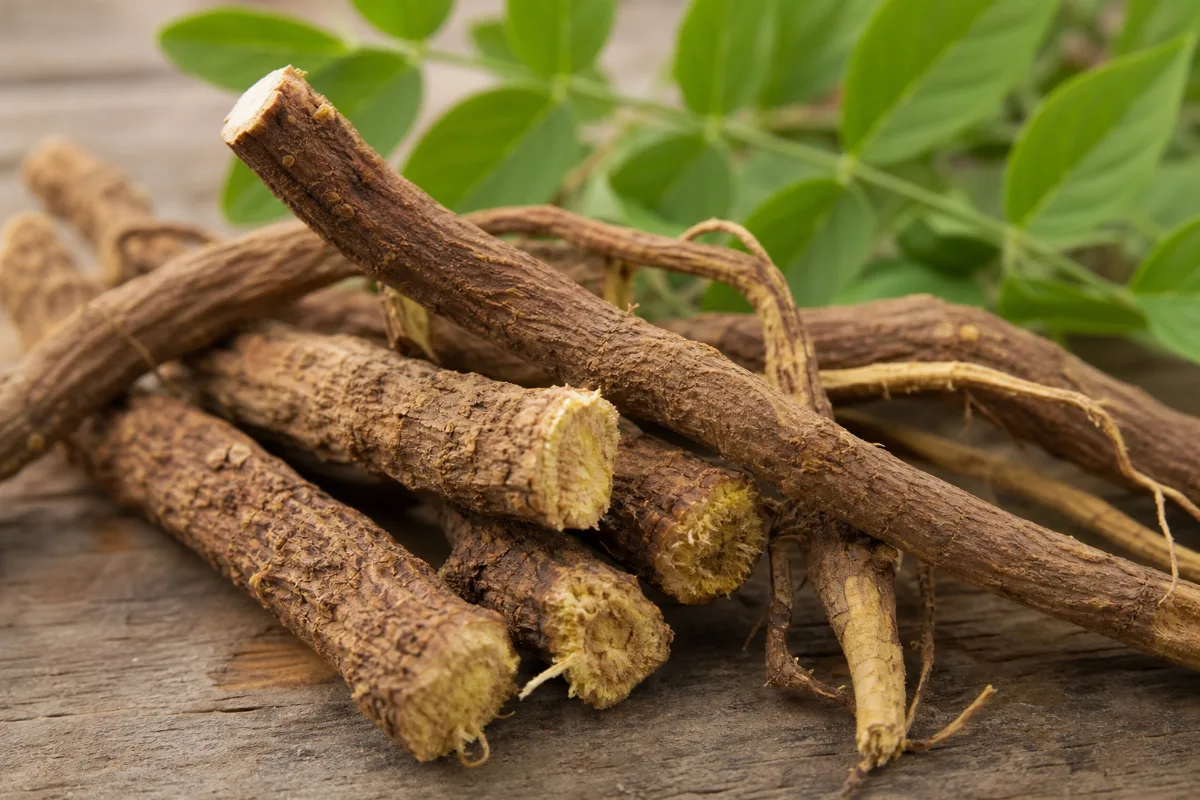
Licorice (also spelled liquorice) is a perennial herb whose root is used as a flavoring in candy, other foods and tobacco, and as a traditional medicine. [1] Many "licorice" products sold in the United States do not contain actual licorice; anise oil, which smells and tastes similar, is often used instead. [1] This page is about the root of the plant, not candy flavored with anise. Tea made from the root has its own page: licorice root tea. Licorice hidden in blends is covered in licorice in tea blends and blood pressure.Names, plant part and family
The accepted botanical name is Glycyrrhiza glabra L., in the pea family (Fabaceae). [2] The part used is the root. NCCIH also lists two other species under the same common name, Glycyrrhiza uralensis and Glycyrrhiza inflata. [1] The EU herbal monograph covers all three. [3] "Gan cao" is the Chinese name for licorice root. [1] Results for one species or one extract do not automatically carry over to another. For the traditions, see licorice in Chinese medicine and licorice (mulethi) in Ayurveda. Adaptogen-style claims for licorice are not assessed here; see Adaptogens.Traditional use (not proof)
NCCIH says licorice root has a long history of use going back to ancient Assyrian, Egyptian, Greek, Arab, Chinese, Tibetan and Indian cultures. [1] It was used in traditional medicine for coughing, asthma and wound healing, and for diseases of the lungs, liver and arteries. [1] In the European Union, a committee of the European Medicines Agency (the HMPC) accepts a traditional herbal use as an expectorant in cough associated with a cold, and for digestive symptoms, based only on long-standing use. [4] Long-standing use is not the same as trial evidence.What research shows
NCCIH says some studies in people have been done, but there is not enough high-quality evidence to clearly support licorice for any health condition. [1]| Use | What the source found | Strength of evidence | Form and population |
|---|---|---|---|
| Canker sores (mouth ulcers) | A mouth rinse or gargle might reduce ulcer size and pain. [1] | Promising but limited | Rinse, gargle or topical product in people with recurrent canker sores; not a swallowed product |
| Sore throat after a breathing tube in surgery | A gargle or lozenges before surgery might help prevent or lessen it. [1] | Promising but limited | Used in hospital settings; the anesthesia team decides |
| Digestive symptoms | Unclear whether products with licorice alone have an effect. [1] | Insufficient evidence | Oral products; blends excluded |
| Cough and colds | Proper evidence not found. We read the NCCIH page and searched PubMed for licorice or Glycyrrhiza glabra with cough or sore throat and randomized trials; the results did not include a trial of licorice alone for cough. | Traditional use only | EU status rests on long-standing use [4] |
| COVID-19 | No good evidence to support it. [1] | No good evidence of benefit | Oral licorice products |
| Eczema or burn skin gels | Preliminary evidence suggests topical gels might help, but more research on effects and safety is needed. [1] | Preliminary | Topical gels |
| Blood pressure | Pooled trials found that regular intake of a glycyrrhizin-containing product raised blood pressure and lowered potassium. [5] | Evidence of harm | 18 studies, 337 people; products with at least 100 mg glycyrrhizic acid daily [5] |
The blood pressure and potassium problem
A systematic review of 18 studies (337 people) found a rise in average systolic blood pressure of 5.45 mm Hg and a drop in plasma potassium after regular intake of a glycyrrhizic-acid product. [5] A later randomized crossover trial in 28 healthy volunteers tested a daily licorice intake containing 100 mg of glycyrrhizic acid for two weeks. Home systolic blood pressure rose and the hormones renin and aldosterone were suppressed. [6] The authors noted that the World Health Organization had suggested 100 mg a day would be unlikely to cause adverse effects, and concluded the trial found licorice more potent than previously known. [6] A review of 104 case reports found that continued intake of large amounts causes pseudo-hyperaldosteronism (a state that mimics excess of a salt-holding hormone) leading to high blood pressure and low potassium, and that some cases led to arrhythmias, muscle paralysis and coma. [7] Reports of lethal arrhythmia and cardiac arrest after heavy licorice use are listed by Memorial Sloan Kettering. [8] These figures describe study conditions, not an amount that is right for you.Forms and why the form matters
- Whole root, tea, extract or candy with real licorice: contains glycyrrhizin unless it has been removed.
- Deglycyrrhizinated licorice (DGL): glycyrrhizin has been removed. [9] NCCIH says oral DGL products might be safe for up to 4 months. [1] This is a statement about safety only; we did not assess whether DGL works for any use.
- Mouth rinse, gargle or topical gel: the studied forms for ulcers and skin. Topical licorice root may be safe short term but may irritate the skin. [1]
- Blends: research on a mix says little about licorice alone. [1]
Safety
- Medicines. The EU monograph says licorice may counteract the action of prescribed blood pressure medicines, and that using it with diuretics, cardiac glycosides, corticosteroids, stimulant laxatives or other medicines that can upset electrolytes is not recommended. [4] It also says caution is advised with medicines processed by the liver enzyme CYP3A4. [4] NCCIH reports interactions with corticosteroids. [1] Memorial Sloan Kettering lists further, less certain items: warfarin (clinical relevance not known), cyclosporine (a transplant medicine) and monoamine oxidase inhibitors. [8] Ask a pharmacist; do not change any prescribed medicine yourself.
- Heart, blood pressure, kidney, liver, low potassium. The EU monograph says licorice medication is not recommended in people with high blood pressure, kidney disease, liver or cardiovascular disorders or low potassium, because they are more sensitive to its effects. [4] The US liver database LiverTox says licorice has not been reported to cause liver enzyme rises or clinically apparent liver injury. [10] The kidney and heart cautions still apply. See herbs and kidney disease and herbs with diabetes, blood pressure and heart medicines.
- Pregnancy. NCCIH says oral licorice extract in large amounts (about 250 grams of licorice per week) is unsafe in pregnancy and can raise the risk of delivery before 38 weeks. [1] The EU monograph does not recommend use in pregnancy. [4] See pregnancy and breastfeeding.
- Breastfeeding. Glycyrrhizin is detectable in breastmilk of some women who take licorice. [9] The EU monograph does not recommend use while breastfeeding, and LactMed says long-term excessive use should probably be avoided during nursing. [4][9]
- Children. The EU monograph does not recommend use under 18 because of lack of data. [4] See children and teens.
- Duration. For the digestive use the EU monograph says not to use for more than 4 weeks. [4] It reports overdose cases with prolonged use or high intake. [4]
- Surgery. Tell the surgical team about any licorice product, especially if you also take blood pressure or heart medicines. See supplements before surgery.
- Allergy. The EU monograph lists hypersensitivity to licorice as a contraindication. [4]
Quality
Supplements are not approved by FDA before sale, and makers are responsible for safety and labeling. [1] Check the species and whether glycyrrhizin has been removed. See quality testing and certifications.Official statements
- European Medicines Agency, HMPC (EU), 2026: revised EU herbal monograph adopted 4 March 2026 for Glycyrrhiza glabra, G. inflata and G. uralensis root, as a traditional herbal medicinal product for digestive symptoms and as an expectorant in cough with a cold, with cautions above. [4]
- NCCIH (US National Institutes of Health): not enough high-quality evidence for any health condition; glycyrrhizin cautions. [1]
Frequently asked questions
Is licorice root safe to take every day?
Not necessarily. NCCIH links glycyrrhizin to serious effects such as irregular heartbeat, especially in large amounts or with long use. [1] A trial of 100 mg of glycyrrhizic acid daily for two weeks raised blood pressure in healthy volunteers. [6] Ask a pharmacist or clinician first.
Does licorice raise blood pressure?
Yes, in the studies we read. A pooled analysis of 18 studies found higher blood pressure and lower potassium with regular glycyrrhizic acid intake. [5]
Is deglycyrrhizinated licorice (DGL) safer?
NCCIH says oral DGL products might be safe for up to 4 months, because glycyrrhizin has been removed. [1][9] That is about safety, not proof that it works.
Does licorice help a cough or sore throat?
Proper evidence not found for licorice alone as a cough remedy in the sources we read. A licorice gargle or lozenge before surgery might lessen sore throat after a breathing tube. [1] See cough and sore throat remedies.
Can I use licorice in pregnancy or while breastfeeding?
NCCIH calls large amounts in pregnancy unsafe. [1] The EU monograph does not recommend it in pregnancy or breastfeeding. [4] Talk with your prenatal clinician.
References
- NCCIH (US National Institutes of Health), Licorice Root: Usefulness and Safety. Read 2026-10-23.
- GBIF Backbone Taxonomy, Glycyrrhiza glabra L.. Read 2026-10-23.
- European Medicines Agency, Liquiritiae radix - herbal medicinal product. Read 2026-10-23.
- European Medicines Agency, HMPC, European Union herbal monograph on Glycyrrhiza glabra L.; G. inflata Bat.; G. uralensis Fisch., radix, Final - Revision 1 (EMA/HMPC/108399/2024; adopted 4 March 2026). Read 2026-10-23.
- Penninkilampi R, Eslick EM, Eslick GD. The association between consistent licorice ingestion, hypertension and hypokalaemia: a systematic review and meta-analysis. J Hum Hypertens. 2017. Read 2026-10-23.
- Geijerstam PA, et al. A low dose of daily licorice intake affects renin, aldosterone, and home blood pressure in a randomized crossover trial. Am J Clin Nutr. 2024. Read 2026-10-23.
- Gabriele M, et al. Liquorice Toxicity: A Comprehensive Narrative Review. Nutrients. 2023. Read 2026-10-23.
- Memorial Sloan Kettering Cancer Center, Licorice (About Herbs). Read 2026-10-23.
- National Library of Medicine, Drugs and Lactation Database (LactMed): Licorice. Read via the PubMed Bookshelf record (PMID 30000900). Read 2026-10-23.
- National Library of Medicine, LiverTox: Licorice. Read via the PubMed Bookshelf record (PMID 37043593). Read 2026-10-23.