Herbal Teas & Extracts · Herbal tea
Licorice Root Tea
Glycyrrhiza glabra, G. uralensis, G. inflata · also called Licorice tea, liquorice root tea, sweet root tea, gan cao tea. Not the same as deglycyrrhizinated licorice (DGL) or anise-flavoured tea.
Licorice root tea is a sweet drink made by steeping the root of licorice plants. Its sweetness comes from glycyrrhizin, which can raise blood pressure, lower potassium and disturb the heart rhythm, and tea drinkers have been harmed. It is a traditional remedy for indigestion and cough, but no trial of the tea itself was found. Some people should avoid it, including people with high blood pressure or heart disease, anyone pregnant, and anyone taking water pills, digoxin or steroids.
General information, not medical advice. Last substantive update · Not medically reviewed. A named clinician has not signed off on this page. How this page is made
About Licorice Root Tea
Licorice root tea is a sweet herbal tea made from the root of licorice plants. The same chemical that makes it sweet, glycyrrhizin, can raise blood pressure, drain potassium and disturb the heart rhythm. People have been harmed by drinking the tea. The EU lists it as a traditional remedy for indigestion and cough based on long use only, and no trial of the tea was found. DGL (deglycyrrhizinated licorice) is a different product.
What it is
Licorice root tea is made from the root of Glycyrrhiza glabra, G. uralensis or G. inflata. GBIF accepts all three as species in the pea family (Fabaceae). The EU monograph covers all three together. Its main sweet compound is glycyrrhizin, which gut bacteria turn into glycyrrhetinic acid. The root also has flavonoids such as glabridin and isoliquiritigenin.
Many US products sold as licorice contain anise oil instead of licorice root, according to NCCIH. Licorice may also be one ingredient in a tea blend, so a person can drink glycyrrhizin without choosing a licorice tea.
Tea, DGL, extract or sweets?
A cup of tea is a water extract of the root, and its glycyrrhizin content varies. Deglycyrrhizinated licorice (DGL) has most of the glycyrrhizin removed. NCCIH says oral DGL might be safe for up to 4 months. Ordinary licorice tea is not DGL. One case report describes high blood pressure, low potassium and fainting after years of large amounts of DGL, and the sources read do not say how much glycyrrhizin DGL products still hold.
Extracts, gargles, lozenges, mouth rinses and purified glycyrrhizin were used in most benefit trials. Their results do not carry over to the tea. Licorice sweets are a separate source of glycyrrhizin and add to the total.
What the research shows
No trial of licorice root tea as a drink was found for any benefit. NCCIH says there is not enough high-quality evidence to clearly support licorice for any health condition.
The best-supported use is a licorice gargle or lozenge before surgery to prevent sore throat, in a review of 5 trials of 609 people. A single small trial supports a licorice rinse for canker sores. For indigestion there is a trial of a branded extract, an antibiotic add-on trial for H. pylori, and an old trial of a deglycyrrhizinated product that found no ulcer healing. Reviews of liver enzymes and body weight used purified or oil products, and the weight review also found higher blood pressure.
The EU monograph rests on long use alone. It limits the digestive use to 4 weeks and tells people with cough to see a doctor if symptoms last more than a week.
Quality and look-alikes
The amount of glycyrrhizinic acid in herbal teas varied widely in a survey the SCF cites: of 33 brands, 13 had under 10 mg per litre and 4 had over 100, with a maximum of 450. Teas with licorice averaged 126 mg per litre. No pesticide, heavy-metal or mould figures were read for licorice tea.
Read the ingredient list for licorice, liquorice, sweet root, gan cao or Glycyrrhiza. A herbal tea can hide licorice as one ingredient. Abrus precatorius, sometimes called Indian licorice, is a different plant.
Regulators and status
The EMA's committee (HMPC) adopted a final EU herbal monograph for liquorice root on 4 March 2026: traditional use for digestive symptoms and cough with a cold, with the warnings above. NCCIH, the EU Scientific Committee on Food and JECFA are the other sources read. LiverTox says licorice has not been reported to cause clinically apparent liver injury. EFSA and LactMed were not read, and the FDA black licorice warning of 2017 could not be verified.
At a glance
Traditional uses history, not proof
- NCCIH says licorice root has a long history in ancient Assyrian, Egyptian, Greek, Arab, Chinese, Tibetan and Indian cultures, used for coughing, asthma, wound healing and diseases of the lungs, liver and arteries.
- The EU accepts licorice root, including as a herbal tea, as a traditional medicine for digestive symptoms and for cough with a cold. That rests only on long use, not on trials.
Studied for research
- Sore throat after a breathing tube (gargle or lozenge, not tea), low
- Indigestion and burning (EU traditional use; tea untested), insufficient
- Cough with a cold (EU traditional use; tea untested), insufficient
- Canker sores (mouth rinse, not tea), very low
- Liver blood tests in liver disease (mostly purified glycyrrhizin, not tea), low
- Body weight (flavonoid oil, not tea), very low
Main compounds
- Glycyrrhizin (glycyrrhizic acid)
- Glycyrrhetinic acid
- Glabridin
- Isoliquiritigenin
- Liquiritigenin and liquiritin
Common forms
- Cut root steeped or simmered as a tea (the form this page is about)
- Tea bags, often blends in which licorice is one ingredient
- Deglycyrrhizinated licorice (DGL): glycyrrhizin mostly removed, a different product
- Extracts, lozenges, gargles and sweets: different products; trial results for them do not carry over to the tea
Research links: EMA: EU herbal monograph on liquorice root · NCCIH: Licorice Root, usefulness and safety · EU Scientific Committee on Food: opinion on glycyrrhizinic acid (2003) · JECFA (WHO/FAO): glycyrrhizinic acid evaluation · Meta-analysis: licorice, hypertension and low potassium (abstract) · Case report: hypertension induced by liquorice tea (abstract) · Research Library · Genes & Biomarkers Library
What it is and its history
- Accepted scientific name
- Glycyrrhiza glabra L.
- Naming authority
- L. (GBIF)
- Synonyms
- Glycyrrhiza glandulifera Waldst. & Kit. (listed in the herb file from GBIF; not re-checked this round)
- Common names
- Licorice (US) (English); Liquorice (UK) (English); Sweet root (English); Gan cao (Chinese (pinyin)); Regaliz (Spanish); Réglisse (French); Süßholz (German)
- Family or group
- Fabaceae (the pea or legume family). Three species are covered by the EU monograph: G. glabra L. (GBIF key 2965732), G. uralensis Fisch. ex DC. (key 7861283) and G. inflata Batalin (key 2965745); all three are accepted species in GBIF.
- Classification
- Plantae > Fabales > Fabaceae > Glycyrrhiza > Glycyrrhiza glabra
- Native range
- NCCIH says licorice is a perennial herb cultivated throughout Europe, Asia and the Middle East.
- Habitat
- Not checked.
- What it looks like
- Roots: The root (with rhizome) is the part used. The EU monograph is for "radix" and must meet European Pharmacopoeia monograph 01/2012:0277.; Stems: Not checked.; Leaves: Not used.; Flowers: Not checked.; Fruit: Not checked.
- Cultivation
- Not checked beyond the NCCIH statement above.
- Harvest and processing
- The EU monograph covers the cut root as a herbal tea and water soft extracts. Deglycyrrhizinated licorice (DGL) has most glycyrrhizin removed; how this is done and what is left were not found in the sources read.
- Look-alikes and adulterants
- Name: Anise-flavoured "licorice"; Note: NCCIH says many US licorice products contain anise oil rather than licorice root.; Name: Abrus precatorius (called Indian licorice); Note: A different plant. Not covered here and its toxicity was not read; do not confuse it with licorice root.; Name: Deglycyrrhizinated licorice (DGL); Note: A separate product with glycyrrhizin mostly removed; not the same as the tea.
- Sustainability and conservation
- Not checked.
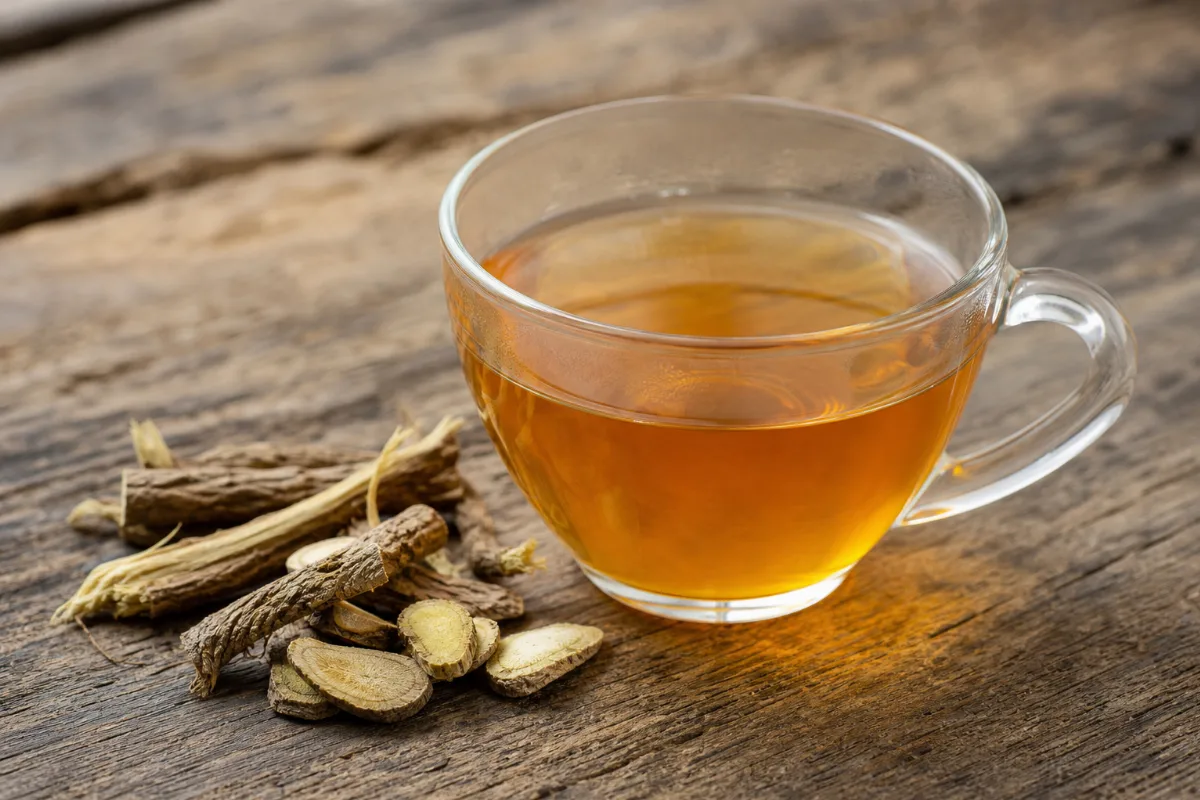
Photographs
Traditional use and history history, not clinical proof
| Tradition or era | Documented use | Source |
|---|---|---|
| Ancient Assyrian, Egyptian, Greek, Arab, Chinese, Tibetan and Indian cultures | NCCIH says licorice root has a long history for coughing, asthma, wound healing and diseases of the lungs, liver and arteries. | s-nccih-licorice-root |
| European traditional herbal medicine | The EU accepts liquorice root, including as a herbal tea, as a traditional medicine for digestive symptoms and for cough with a cold, based only on long use. First monograph 2012; revision adopted 4 March 2026. No other history source was read, so nothing further is claimed. | s-ema-hmpc-licorice-2026 |
Traditional use shows how it was used. It does not show that it works or is safe today.
What is inside, and how it may work
What it contains and how those compounds act in cells and animals. Laboratory and animal mechanisms are not proven effects in people.
Main compounds
| Compound | Family | Where it is concentrated | Activity studied | Level of evidence |
|---|---|---|---|---|
| Glycyrrhizin (glycyrrhizic or glycyrrhizinic acid) PubChem 14982 | triterpene saponin (the sweet compound) | Root The SCF opinion cites a survey of herbal teas with liquorice averaging 126 mg per litre of glycyrrhizinic acid (range 2 to 450). | Broken down in the gut to glycyrrhetinic acid, which blocks the kidney enzyme 11-beta-HSD2 and acts on mineralocorticoid receptors. This is the cause of the blood pressure and potassium effects. 13 35 30 | Human data |
| Glycyrrhetinic acid (18-beta) PubChem 10114 | triterpenoid, breakdown product of glycyrrhizin | Formed in the gut | Blocks 11-beta-HSD2 and binds mineralocorticoid receptors as an agonist; activated P-glycoprotein and CYP3A4 in a rat study. 35 18 | Human data |
| Glabridin PubChem 124052 | isoflavan | Root (G. glabra) | Competitively inhibited CYP3A4 in test tube work. 23 | Laboratory research |
| Liquiritigenin PubChem 114829 | flavanone | Root | Identity only; no activity claim made from the sources read. 27 | N/a |
| Isoliquiritigenin PubChem 638278 | chalcone | Root | Competitively inhibited CYP3A4 and inhibited CYP2C enzymes in test tube work. 23 | Laboratory research |
| Liquiritin PubChem 503737 | flavanone glycoside | Root | Identity only. 27 | N/a |
Mechanisms, receptors and pathways
| Target or pathway | Gene or receptor | What was found | Level |
|---|---|---|---|
| 11-beta-hydroxysteroid dehydrogenase type 2 and the mineralocorticoid receptor | HSD11B2; mineralocorticoid receptor | Glycyrrhetinic acid and its metabolites block the enzyme that turns cortisol into inactive cortisone in the kidney and also bind the receptor directly. Cortisol then acts like aldosterone, holding salt and water and wasting potassium. This is the explanation for the blood pressure, potassium and heart rhythm findings. Pooled studies also show renin and aldosterone fall. 35 30 1 | Human data |
| Drug-metabolising enzymes and transporters | CYP3A4, CYP2C9, P-glycoprotein | Pure glycyrrhizin modestly lowered midazolam exposure in people (CYP3A induction). Test-tube work showed enzyme inhibition by licorice extracts, with differences between species. In rats, licorice lowered ciclosporin levels. The direction is therefore mixed and not settled for tea. 42 23 18 | Human data |
Absorption, metabolism and elimination
- Absorption
- Not covered for tea.
- Distribution
- Not covered.
- Metabolism
- The SCF opinion reports that glycyrrhetic acid reaches blood after gut bacteria break glycyrrhizinic acid down; levels peaked hours after a dose and, in a small group, some people cleared it much more slowly (half-lives up to 35 hours). This helps explain why people differ.
- Elimination
- Slow in some people, per the SCF opinion.
- Bioavailability
- Varied by factors of about 4 to 5 between volunteers in one study cited by the SCF.
Isolated compounds versus whole extracts
A cup of licorice root tea is a water extract of the whole root. Glycyrrhizin tablets or injections, DGL, flavonoid oils, extracts, sweets and mouth gargles are different products. Benefit studies on gargles and extracts cannot be carried over to the tea, and DGL has most glycyrrhizin removed. The blood pressure and potassium findings come mostly from glycyrrhizin-containing products and sweets, but tea cases show the same effects.
Nutritional composition
Licorice root tea is not a source of nutrients worth relying on. The page makes no nutrient claim.
2 low certainty3 very low certainty2 not enough evidence
What was looked at
The 7 benefits and uses checked for Licorice Root Tea, each with how strong the evidence is. Tap one to open it.
- Sore throat after a breathing tube (gargle or lozenge)Low certainty
- Indigestion and burning sensation in the stomachNot enough evidence
- Cough with a coldNot enough evidence
- Canker sores (mouth ulcers)Very low certainty
- Liver blood tests in people with liver diseaseLow certainty
- Body weightVery low certainty
- Tooth decay bacteria in childrenVery low certainty
Lab markers tracked in the studies
Sore throat after surgeryIndigestion symptom scoreH. pylori eradicationLiver enzymes (ALT and AST)Blood pressure (a harm signal)Testosterone
What is Licorice Root Tea good for?
The uses people ask about, and how strong the human evidence is for each. For almost all of them the studies used a gargle, a lozenge, an extract or a purified compound, not tea, so none of these results shows that a cup of licorice root tea helps.
Benefits, one by one
Each card is a research question, not a promise. Tap a goal to filter. Open a card to see the studies, doses and limits.
Sore throat after a breathing tube (gargle or lozenge)
Low certaintyA review of 5 trials found that a licorice gargle or lozenge before surgery meant fewer and milder sore throats afterward. It is a mouth treatment, not tea.
2 studiesGargle or lozenge made from licorice root extract. It was not tea and…
Studies, doses and limits
What the trials found
A 2019 meta-analysis of 5 randomised trials (609 people) of topical licorice before general anaesthesia found fewer sore throats and milder ones 24 hours later. NCCIH says a gargle or lozenge before surgery might help.
Results
Risk ratio 0.44 (95% CI 0.28 to 0.69) for sore throat; severity SMD -0.69 (-0.96 to -0.43). No significant adverse events in the 4 trials that reported them.
Effect sizes as reported
Large relative drop in sore throat in short trials.
Why this rating
Five trials, a hospital setting, controls that received no pain treatment, and a mouth product rather than a drink. NCCIH says the evidence is not enough to clearly support use for any condition.
Form and dose studied
Gargle or lozenge made from licorice root extract. It was not tea and was not swallowed as a daily drink. No amounts are given here.
Who was studied
Adults having general anaesthesia with a breathing tube.
Limits
Does not show that licorice beats other sore-throat measures. Result may not apply to a cup of tea.
Why researchers looked
A breathing tube during surgery can irritate the throat, and licorice root has anti-inflammatory chemicals.
Traditional use
NCCIH lists licorice for cough and lung problems in many old traditions.
Proposed mechanism Not established
Anti-inflammatory plant chemicals are suggested; the review did not test a mechanism.
A proposed mechanism does not show that the effect happens in people.
A mouth gargle used once before surgery is not the same exposure as daily tea. Licorice root tea has glycyrrhizin, which can raise blood pressure and lower potassium. See the Safety tab before using it for any reason.
Indigestion and burning sensation in the stomach
Not enough evidenceThe EU lists licorice root tea as a traditional remedy for these symptoms, based only on long use. No trial of the tea was found. A trial of a different extract and one old trial of a deglycyrrhizinated product point different ways.
5 studiesCut root as tea (EU traditional use); extracts and DGL in the trials.…
Studies, doses and limits
What the trials found
The EU monograph includes herbal tea as a form but rests on long use, not trials. A 30-day placebo-controlled trial of the GutGard extract in functional dyspepsia reported lower symptom scores. A 120-person trial found more H. pylori cleared when licorice was added to antibiotics. A 1973 crossover trial of deglycyrrhizinated liquorice in gastric ulcer found no healing benefit.
Results
No trial of licorice root tea itself was found for this use. The results below are for other licorice products and must not be carried over to the tea. GutGard: lower symptom scores than placebo (abstract gives no numbers). H. pylori add-on: 83.3% vs 62.5% eradication. DGL ulcer trial: no difference from placebo.
Effect sizes as reported
Mixed and indirect; tea itself untested.
Why this rating
For the tea: no trial. For extracts: one trial with unstated size and funding, one add-on trial, one old null trial. The monograph is a regulatory category based on long use, not proof of benefit.
Form and dose studied
Cut root as tea (EU traditional use); extracts and DGL in the trials. No amounts are given here.
Who was studied
Adults with dyspepsia, H. pylori, or gastric ulcer in the trials.
Limits
Different products, mixed results, tiny evidence base.
Why researchers looked
Licorice has long been used for stomach complaints.
Traditional use
The EU accepts licorice root as a traditional herbal medicine for digestive symptoms including burning sensation and dyspepsia, for no more than 4 weeks, based only on long-standing use. NCCIH says it is unclear whether licorice alone helps digestive symptoms.
Proposed mechanism Not established
No mechanism was established in the sources read.
A proposed mechanism does not show that the effect happens in people.
The EU says not for more than 4 weeks for this use and not in people with high blood pressure, kidney, liver or heart disorders or low potassium. Licorice root tea has glycyrrhizin, which can raise blood pressure and lower potassium. See the Safety tab before using it for any reason.
Cough with a cold
Not enough evidenceThe EU lists licorice root tea as a traditional help to bring up mucus in a cough with a cold, again based only on long use. No human trial of the tea was found.
2 studiesCut root as tea (EU traditional use).
Studies, doses and limits
What the trials found
The EU monograph lists a traditional expectorant use in cough with a cold and advises seeing a doctor if breathlessness, fever or purulent sputum occurs. No trial of licorice tea for cough was read.
Results
No results to report.
Effect sizes as reported
Not measured.
Why this rating
Only a regulatory statement based on long use; no trial of the tea was found.
Form and dose studied
Cut root as tea (EU traditional use).
Who was studied
Adults (EU: not recommended under 18).
Limits
No human trial found.
Why researchers looked
Licorice has been used for coughs in many cultures.
Traditional use
NCCIH says licorice root has a long history for coughing, asthma and lung diseases in ancient Assyrian, Egyptian, Greek, Arab, Chinese, Tibetan and Indian traditions.
Proposed mechanism Not established
Not established in the sources read.
A proposed mechanism does not show that the effect happens in people.
See a doctor if symptoms last more than 1 week (EU) or if you have fever, breathlessness or coloured sputum. Licorice root tea has glycyrrhizin, which can raise blood pressure and lower potassium. See the Safety tab before using it for any reason.
Canker sores (mouth ulcers)
Very low certaintyOne small trial found that adding licorice extract to a mouth solution eased canker sore pain and healed sores about a day and a half sooner. NCCIH says a licorice rinse or gargle might help. This is a mouth product, not tea.
2 studiesLicorice extract rinse. Not tea. No amounts are given here.
Studies, doses and limits
What the trials found
A 70-person double-blind trial in Iran added 5% licorice extract to a diphenhydramine rinse. Pain was lower on days 1, 3 and 5 and healing about 1.5 days shorter than with the rinse alone. NCCIH says a rinse or gargle might reduce ulcer size and pain.
Results
Healing 1.5 days shorter (P = 0.0001); no adverse effects reported.
Effect sizes as reported
Modest, in one trial.
Why this rating
One small trial, active comparator, one site.
Form and dose studied
Licorice extract rinse. Not tea. No amounts are given here.
Who was studied
Adults with recurrent canker sores.
Limits
Single trial.
Why researchers looked
Licorice root has soothing and anti-inflammatory compounds.
Traditional use
NCCIH lists wound healing among traditional uses.
Proposed mechanism Not established
Not established.
A proposed mechanism does not show that the effect happens in people.
Do not swallow rinses meant for the mouth. Licorice root tea has glycyrrhizin, which can raise blood pressure and lower potassium. See the Safety tab before using it for any reason.
Liver blood tests in people with liver disease
Low certaintyTrials in people who already had liver disease found licorice preparations lowered liver enzymes. Most were purified glycyrrhizin or herb mixtures, not tea, and the same chemical can harm blood pressure and potassium.
2 studiesPurified and mixed preparations. Not tea.
Studies, doses and limits
What the trials found
A 2024 meta-analysis of 15 randomised trials (1,367 people) found ALT 15.63 U/L lower and AST 7.37 U/L lower than controls. Purified glycyrrhizic acid compounds did better; GGT and bilirubin did not change overall. LiverTox says licorice has not been reported to cause clinically apparent liver injury. The EU says licorice medicines are not recommended in people with liver disorders.
Results
ALT -15.63 U/L; AST -7.37 U/L; side effects mostly mild mineralocorticoid effects.
Effect sizes as reported
Lab marker changes; no liver outcomes.
Why this rating
Varied preparations (some purified or injected), heterogeneity and possible language bias. For tea: no trial.
Form and dose studied
Purified and mixed preparations. Not tea.
Who was studied
Adults with primary liver disease.
Limits
Enzymes are not outcomes; products differ from tea.
Why researchers looked
Glycyrrhizin is used in some countries as a medicine for liver disease.
Traditional use
A 2024 review calls licorice a cornerstone of traditional Chinese and Japanese medicine.
Proposed mechanism Not established
Not established.
A proposed mechanism does not show that the effect happens in people.
Treatment of liver disease belongs with a doctor. Licorice root tea has glycyrrhizin, which can raise blood pressure and lower potassium. See the Safety tab before using it for any reason.
Body weight
Very low certaintyA pooled analysis found tiny weight changes with licorice products. The same analysis found blood pressure rose.
1 studiesMainly licorice flavonoid oil. Not tea.
Studies, doses and limits
What the trials found
A 2018 meta-analysis of 26 trials (985 people) found body weight 0.43 kg lower and BMI 0.15 kg/m2 lower, with diastolic pressure 1.74 mmHg higher.
Results
Weight -0.433 kg (-0.683 to -0.183); BMI -0.150 kg/m2; DBP +1.737 mmHg.
Effect sizes as reported
Clinically trivial.
Why this rating
A fall of under half a kilogram while blood pressure went up. Mostly a flavonoid oil, not tea.
Form and dose studied
Mainly licorice flavonoid oil. Not tea.
Who was studied
Mixed adults.
Limits
Small effect; harm signal for blood pressure.
Why researchers looked
A licorice flavonoid oil has been sold for weight management.
Traditional use
Not described in the sources read.
Proposed mechanism Not established
Not established.
A proposed mechanism does not show that the effect happens in people.
The authors say people with high blood pressure should avoid licorice. Licorice root tea has glycyrrhizin, which can raise blood pressure and lower potassium. See the Safety tab before using it for any reason.
Tooth decay bacteria in children
Very low certaintyA review found licorice extracts lowered decay-causing bacteria counts in children. It did not show fewer cavities.
2 studiesExtracts in lollipops, gels and toothpaste. Not tea.
Studies, doses and limits
What the trials found
A 2020 systematic review of 6 articles (10 estimates) in children aged 3 to 15 concluded licorice extracts reduced S. mutans counts.
Results
Qualitative synthesis; no pooled number in the abstract.
Effect sizes as reported
Not pooled.
Why this rating
Bacterial counts rather than cavities; products such as lollipops and gels, not tea.
Form and dose studied
Extracts in lollipops, gels and toothpaste. Not tea.
Who was studied
Children 3 to 15.
Limits
Lab marker only. EU: licorice medicines are not recommended under 18.
Why researchers looked
Licorice root extract acts on the mouth biofilm in lab work.
Traditional use
Not described in the sources read.
Proposed mechanism Lab
The review says an action on biofilm limits the fall in acidity.
A proposed mechanism does not show that the effect happens in people.
Children should not be given licorice tea: the EU says use under 18 is not recommended. Licorice root tea has glycyrrhizin, which can raise blood pressure and lower potassium. See the Safety tab before using it for any reason.
Connections to the rest of health
How Licorice Root Tea connects to the rest of our health knowledge graph. Every link says what kind of connection it is. A safety link (for example to the liver) is a warning, not a benefit. A study that merely mentions a topic never creates a benefit link.
Explore every connection: goals, body systems, organs, symptoms, genes
A. Wellness goals
| Connected to | Kind of connection | Evidence status | Context | Studies |
|---|---|---|---|---|
| Immune Support | Low certainty | Sore throat after a breathing tube (gargle or lozenge): A review of 5 trials found that a licorice gargle or lozenge before surgery meant fewer and milder sore throats afterward. It is a mouth treatment, not tea. Canker sores (mouth ulcers): One small trial found that adding licorice extract to a mouth solution eased canker sore pain and healed sores about a day and a half sooner. NCCIH says a licorice rinse or gargle might help. This is a mouth product, not tea. | 22 26 2 41 14 | |
| Digestive Support | Not enough evidence | Indigestion and burning sensation in the stomach: The EU lists licorice root tea as a traditional remedy for these symptoms, based only on long use. No trial of the tea was found. A trial of a different extract and one old trial of a deglycyrrhizinated product point different ways. | 14 26 31 17 11 | |
| Immune Support | Not enough evidence | Cough with a cold: The EU lists licorice root tea as a traditional help to bring up mucus in a cough with a cold, again based only on long use. No human trial of the tea was found. | 14 26 | |
| Liver Support | Low certainty | Liver blood tests in people with liver disease: Trials in people who already had liver disease found licorice preparations lowered liver enzymes. Most were purified glycyrrhizin or herb mixtures, not tea, and the same chemical can harm blood pressure and potassium. | 16 14 | |
| Weight Management | Very low certainty | Body weight: A pooled analysis found tiny weight changes with licorice products. The same analysis found blood pressure rose. | 25 |
B. Body systems
| Connected to | Kind of connection | Evidence status | Context | Studies |
|---|---|---|---|---|
| Cardiovascular System | Adverse effect or risk | High certainty | Raises blood pressure and can cause dangerous heart rhythms via low potassium. Preparation or compound: Glycyrrhizin in licorice root tea |
30 1 28 |
| Respiratory System | Biological association | Low certainty | Studied for: Sore throat after a breathing tube (gargle or lozenge) Studied for: Cough with a cold | 22 26 14 |
| Digestive System | Biological association | Not enough evidence | Studied for: Indigestion and burning sensation in the stomach Studied for: Canker sores (mouth ulcers) | 14 26 31 17 11 2 41 |
| Hepatic System | Biological association | Low certainty | Studied for: Liver blood tests in people with liver disease | 16 14 |
| Metabolism Weight | Biological association | Very low certainty | Studied for: Body weight | 25 |
E. Health conditions
| Connected to | Kind of connection | Evidence status | Context | Studies |
|---|---|---|---|---|
| Low potassium (hypokalaemia) | Adverse effect or risk | Moderate certainty | Potassium fell in pooled studies; severe cases after tea. Preparation or compound: Glycyrrhizin in licorice root tea |
30 7 24 |
| High blood pressure | Contraindication | Moderate certainty | The EU does not recommend licorice for people with high blood pressure; they respond more strongly. Preparation or compound: Licorice root tea |
14 38 |
| Pregnancy | Contraindication | Low certainty | Linked with preterm birth and poorer child outcomes in observational studies; not recommended by the EU. Preparation or compound: Licorice (glycyrrhizin) |
14 40 32 |
I. Biomarkers
| Connected to | Kind of connection | Evidence status | Context | Studies |
|---|---|---|---|---|
| Sore throat after surgery | Biological association | Low certainty | Measured in trials: fewer cases. A lab change is not the same as a health benefit. | 22 |
| Indigestion symptom score | Biological association | Very low certainty | Measured in trials: lower than placebo. A lab change is not the same as a health benefit. | 31 |
| H. pylori eradication | Biological association | Very low certainty | Measured in trials: higher with licorice added. A lab change is not the same as a health benefit. | 17 |
| Liver enzymes (ALT and AST) | Biological association | Low certainty | Measured in trials: lowered in trials. A lab change is not the same as a health benefit. | 16 |
| Blood pressure (a harm signal) | Biological association | Moderate certainty | Measured in trials: raised. A lab change is not the same as a health benefit. | 25 30 |
| Testosterone | Biological association | Very low certainty | Measured in trials: lowered. A lab change is not the same as a health benefit. | 4 5 |
L. Active compounds
| Connected to | Kind of connection | Evidence status | Context | Studies |
|---|---|---|---|---|
| Glycyrrhizin (glycyrrhizic or glycyrrhizinic acid) | Biological association | Human | Broken down in the gut to glycyrrhetinic acid, which blocks the kidney enzyme 11-beta-HSD2 and acts on mineralocorticoid receptors. This is the cause of the blood pressure and potassium effects. Preparation or compound: Root |
13 35 30 |
| Glycyrrhetinic acid (18-beta) | Biological association | Human | Blocks 11-beta-HSD2 and binds mineralocorticoid receptors as an agonist; activated P-glycoprotein and CYP3A4 in a rat study. Preparation or compound: Formed in the gut |
35 18 |
| Glabridin | Biological association | In vitro | Competitively inhibited CYP3A4 in test tube work. Preparation or compound: Root (G. glabra) |
23 |
| Liquiritigenin | Biological association | N/a | Identity only; no activity claim made from the sources read. Preparation or compound: Root |
27 |
| Isoliquiritigenin | Biological association | In vitro | Competitively inhibited CYP3A4 and inhibited CYP2C enzymes in test tube work. Preparation or compound: Root |
23 |
| Liquiritin | Biological association | N/a | Identity only. Preparation or compound: Root |
27 |
Each connection is stored with the ingredient, the connected record, the kind of connection, the evidence status, the supporting studies, the preparation or compound involved, and a review date (last reviewed October 25, 2026).
The evidence
The research centre for Licorice Root Tea. Every record here was checked against PubMed or the publisher's page; we never list a study we have not verified.
Evidence by outcome
Bars show how many studies we found for each outcome, not how well it works. People are added up across trials only (reviews are not added, to avoid double counting).
How we rate evidence
High certainty
Several well-run trials or reviews agree; further research is unlikely to change the picture much.
Moderate certainty
Good trials point the same way, but some doubt remains.
Low certainty
Small, short or inconsistent trials. The finding could change with better research.
Very low certainty
Very little or very weak human data. Treat as a possibility only.
Mixed findings
Trials or reviews disagree with each other.
Not enough evidence
Not enough human research to say either way.
Evidence against
Good research found no benefit, or found harm.
We take the reviewers' own risk-of-bias and GRADE statements where they exist, and otherwise judge from study size, design, consistency, directness and whether a product matches what is sold. Many publications do not make evidence high. Method note: We read the EU herbal monograph, the NCCIH page, the EU Scientific Committee on Food opinion and the JECFA summary, and we read the abstracts of about 40 PubMed papers, checking each against PubMed records. Plant names were checked in GBIF and compounds in PubChem. Only abstracts were read for papers. Certainty ratings are the compiler's own reading. Funding was not stated in many abstracts, so industry links are not ruled out. One source, an FDA update on black licorice sweets, could not be opened and is marked not verified.
Study library: every study we checked 48
| Study | Design | People | Product, dose, length | Result |
|---|---|---|---|---|
| Af Geijerstam P et al 2024 A low dose of daily licorice intake affects renin, aldosterone, and home blood pressure in a randomized crossover trial. Am J Clin Nutr · PMID 38246526 · DOI |
Controlled trial |
28 Healthy young adults (median age 24); non-blinded crossover |
Licorice product with glycyrrhizic acid at the amount JECFA/WHO call unlikely to harm most adults (100 mg a day), 2 weeks, versus control product licorice product Not given here |
Home systolic pressure rose 3.1 mmHg versus -0.3 with control. Renin fell 30% and aldosterone 45%. In those with the largest suppression, NT-proBNP (a heart strain marker) rose. The authors say licorice was more potent than previously known. Higher home blood pressure at the WHO-quoted amount (SBP +3.1 mmHg (0.8 to 5.4) vs -0.3; renin -30%; aldosterone -45%) (SBP 3.1 (0.8, 5.4)) Methods, limits and fundingOutcomes: Home blood pressure, renin, aldosterone Limitations: Small, non-blinded, young healthy volunteers, 2 weeks. Government-supported (non-US). Not tea, but shows effects at the regulator figure. Funding and conflicts: Non-US government support listed in PubMed Read: abstract |
| Akbari N et al 2020 The effects of licorice containing diphenhydramine solution on recurrent aphthous stomatitis: A double-blind, randomized clinical trial. Complement Ther Med · PMID 32444056 · DOI |
Controlled trial |
70 Adults with recurrent canker sores (aphthous stomatitis), Iran; double-blind |
Diphenhydramine mouth solution with 5% hydroethanolic licorice extract, versus diphenhydramine solution alone root extract Not given here |
Pain scores were lower with licorice on days 1, 3 and 5 (for example day 5: 0.54 vs 1.71) and healing took 1.5 days less. No adverse effects were observed. The trial was registered (IRCT20180407039213N1). Less pain and about 1.5 days faster healing than the base solution (Healing time 1.5 days shorter (P = 0.0001)) (Healing time 1.5 days shorter (P = 0.0001)) Methods, limits and fundingOutcomes: Pain (VAS) and healing time Limitations: One small trial from one site; compared with an active mouth solution, not placebo; mouth rinse, not tea. Funding and conflicts: Not stated in the abstract Read: abstract |
| Allcock E et al 2015 Hypertension induced by liquorice tea. BMJ Case Rep · PMID 26077805 · DOI |
Case report |
1 45-year-old woman with high blood pressure and mild low potassium |
Licorice tea as a daily drink in place of caffeinated tea root (tea) Not given here |
She had been drinking licorice tea daily as a substitute for caffeinated tea and fruit infusions, with 4 months of hot flushes, sweating and headaches. She stopped the tea; within 2 weeks her symptoms, high blood pressure and low potassium had fully resolved. High blood pressure and low potassium from a tea; resolved on stopping Methods, limits and fundingOutcomes: Blood pressure and potassium Limitations: One case; shows harm can happen with a tea but not how often. Funding and conflicts: n/a Read: abstract |
| Armanini D et al 2003 Licorice consumption and serum testosterone in healthy man. Exp Clin Endocrinol Diabetes · PMID 14520600 · DOI |
Clinical trial |
Healthy men (small groups) | Licorice (form not stated in the abstract) root Not given here |
Mean testosterone fell by 26% after one week (P < 0.01); LH and 17-OHP rose. The authors say another study did not confirm the earlier result in saliva. Lower testosterone (-26% after 1 week) (-26% after 1 week) Methods, limits and fundingOutcomes: Testosterone and related hormones Limitations: Small hormone study; the abstract gives no numbers of men; an earlier finding was not confirmed by another group. Funding and conflicts: Not stated in the abstract; industry links not ruled out Read: abstract |
| Armanini D et al 2004 Licorice reduces serum testosterone in healthy women. Steroids · PMID 15579328 · DOI |
Clinical trial |
9 Nine healthy women aged 22 to 26 |
3.5 g a day of a commercial licorice preparation (7.6% glycyrrhizic acid) for two cycles root preparation Not given here |
Total testosterone fell from 27.8 to 19.0 and then 17.5 ng/dL and returned to pre-treatment levels after stopping. Renin and aldosterone were depressed. Lower testosterone, reversible (27.8 to 17.5 ng/dL) (27.8 to 17.5 ng/dL) Methods, limits and fundingOutcomes: Hormones Limitations: Nine women, no control group. Authors suggest licorice as an adjunct for hirsutism and PCOS; this is not shown by the study. Funding and conflicts: Not stated in the abstract; industry links not ruled out Read: abstract |
| Bernardi M et al 1994 Effects of prolonged ingestion of graded doses of licorice by healthy volunteers. Life Sci · PMID 8072387 · DOI |
Controlled trial |
24 24 healthy adults in four groups of six |
Dried aqueous extract of licorice root in graded amounts for 4 weeks root extract Not given here |
No significant effects in the two lower groups. Side effects leading to withdrawal occurred in the upper groups after 2 weeks: headache, high blood pressure in a man with family history of hypertension, and high pressure with low potassium and swelling in a woman also taking oral contraceptives. Renin was depressed in the upper two groups. Effects only at higher amounts; favoured by hidden disease or oral contraceptives Methods, limits and fundingOutcomes: Blood pressure, potassium, renin Limitations: Six per group. Funding and conflicts: Not stated in the abstract; industry links not ruled out Read: abstract |
| Chehri S et al 2021 [Pseudohyperaldosteronism with severe hypokalaemia and focal paresis triggered by licorice tea]. Ugeskr Laeger · PMID 33570024 |
Case report |
1 43-year-old otherwise healthy woman |
Licorice tea drunk daily for about eight weeks (large daily volume) root (tea) Not given here |
She had severe low potassium, muscle breakdown (rhabdomyolysis), ECG changes and focal weakness after drinking a large daily volume of licorice tea for about eight weeks. Severe low potassium and muscle breakdown from a tea Methods, limits and fundingOutcomes: Potassium, muscle damage, ECG Limitations: One case; a very heavy intake. Article is in Danish, abstract read in English. Funding and conflicts: n/a Read: abstract |
| Chen MF et al 1990 Effect of glycyrrhizin on the pharmacokinetics of prednisolone following low dosage of prednisolone hemisuccinate. Endocrinol Jpn · PMID 2253583 · DOI |
Clinical trial |
6 6 healthy men |
Glycyrrhizin with a low intravenous prednisolone dose pure compound Not given here |
Glycyrrhizin increased prednisolone levels and slowed clearance; only free-prednisolone changes were significant. Prednisolone stays longer in the body Methods, limits and fundingOutcomes: Prednisolone levels Limitations: Six men, a pure compound. Not tea. Funding and conflicts: Not stated in the abstract; industry links not ruled out Read: abstract |
| Chen MF et al 1991 Effect of oral administration of glycyrrhizin on the pharmacokinetics of prednisolone. Endocrinol Jpn · PMID 1752235 · DOI |
Clinical trial |
6 6 healthy men |
Oral glycyrrhizin before an intravenous prednisolone dose pure compound Not given here |
Glycyrrhizin raised blood levels of prednisolone and slowed its clearance, suggesting it inhibits the steroid's breakdown. Prednisolone stays longer in the body Methods, limits and fundingOutcomes: Prednisolone levels Limitations: Six men, a pure compound, one steroid. Not tea. Funding and conflicts: Not stated in the abstract; industry links not ruled out Read: abstract |
| Choi JS et al 2013 Fetal and neonatal outcomes in women reporting ingestion of licorice (Glycyrrhiza uralensis) during pregnancy. Planta Med · PMID 23299757 · DOI |
Cohort study |
555 185 pregnancies with licorice products and 370 controls, Korea |
Over-the-counter or naturopathic licorice (G. uralensis) products root products Not given here |
Stillbirths were marginally higher with licorice (OR 7.9, 95% CI 0.9 to 71.5) and significantly higher against the national population (OR 13.3). Other outcomes were similar; the authors conclude licorice is not a major teratogen but stillbirth needs study. Possible increase in stillbirth; very imprecise (OR 7.9 (0.9, 71.5)) (7.9 (0.9, 71.5)) Methods, limits and fundingOutcomes: Stillbirth and fetal outcomes Limitations: Few events, very wide interval; a products cohort, not tea. Funding and conflicts: Not stated in the abstract; industry links not ruled out Read: abstract |
| Engqvist A et al 1973 Double-blind trial of deglycyrrhizinated liquorice in gastric ulcer. Gut · PMID 4584640 · DOI |
Controlled trial |
38 Adults with chronic gastric ulcer; double-blind crossover |
Deglycyrrhizinated liquorice (DGL) extract, not tea root extract with glycyrrhizin removed Not given here |
No quicker ulcer healing than placebo in either 4-week period; no side effects were observed. The authors could not show a healing effect of the extract. No healing benefit shown (evidence against) (No difference in ulcer area or complete healing) (No difference in ulcer area or complete healing) Methods, limits and fundingOutcomes: Ulcer area change and complete healing Limitations: Old (1973) small trial. DGL is a different product from licorice tea. Funding and conflicts: Not stated in the abstract Read: abstract |
| Erkuş ME et al 2016 Atrial fibrillation due to licorice root syrup. Turk Kardiyol Dern Ars · PMID 27138313 · DOI |
Case report |
1 57-year-old man |
Licorice root syrup syrup Not given here |
Atrial fibrillation with potassium 2.0 mmol/L and suppressed renin and aldosterone. Atrial fibrillation Methods, limits and fundingOutcomes: Heart rhythm Limitations: One case; syrup, not tea. Funding and conflicts: n/a Read: abstract |
| European Commission 2003 Opinion of the Scientific Committee on Food on glycyrrhizinic acid and its ammonium salt European Commission · Source |
Authoritative guidance n/a |
n/a | n/a root |
The Committee could not set an acceptable daily intake because human toxicity studies were too limited. It considered that an upper limit for regular intake of 100 mg a day of glycyrrhizinic acid, counting all sources, gives sufficient protection for the majority of the population. It said some groups may not be protected: people with low 11-beta-HSD2 enzyme activity, slow gut transit, high blood pressure, or electrolyte or water balance conditions. The opinion also reports a survey of 33 herbal tea brands: 4 had more than 100 mg per litre and the maximum was 450 mg per litre; teas with liquorice had an average of 126 mg per litre (range 2 to 450), and it describes a case of low potassium and high blood pressure in a woman drinking 3 litres of liquorice tea a day. Methods, limits and fundingOutcomes: The Committee could not set an acceptable daily intake because human toxicity studies were too limited. It considered that an upper limit for regular intake of 100 mg a day of glycyrrhizinic acid, counting all sources, gives sufficient protection for the majority of the population. It said some groups may not be protected: people with low 11-beta-HSD2 enzyme activity, slow gut transit, high blood pressure, or electrolyte or water balance conditions. The opinion also reports a survey of 33 herbal tea brands: 4 had more than 100 mg per litre and the maximum was 450 mg per litre; teas with liquorice had an average of 126 mg per litre (range 2 to 450), and it describes a case of low potassium and high blood pressure in a woman drinking 3 litres of liquorice tea a day. Limitations: Terms of reference, discussion, conclusion and the tea exposure and case sections were read in a text extract of the PDF. The annexes were only searched. This is the EU Scientific Committee on Food, the older body that preceded EFSA; no EFSA opinion was found. Read: full-text |
| European Medicines Agency 2026 European Union herbal monograph on Glycyrrhiza glabra L.; Glycyrrhiza inflata Bat.; Glycyrrhiza uralensis Fisch., radix, Final, Revision 1 (EMA/HMPC/108399/2024) EMA · Source |
Authoritative guidance n/a |
n/a | n/a root |
Traditional use only (long use, no trial evidence) for digestive symptoms including burning sensation and dyspepsia, and as an expectorant in cough with a cold. Herbal tea is a listed form. Not for more than 4 weeks for the digestive use. Not recommended under 18, in pregnancy or breastfeeding, or with high blood pressure, kidney, liver or heart disorders or low potassium. Not to be used with diuretics, cardiac glycosides, corticosteroids, stimulant laxatives or other medicines that worsen electrolyte imbalance; may counteract blood pressure medicines; caution with CYP3A4 medicines. Other liquorice products must not be added on top. Overdose reports: water retention, low potassium, high blood pressure, heart rhythm disorders and hypertensive encephalopathy. Adopted 4 March 2026. Methods, limits and fundingOutcomes: Traditional use only (long use, no trial evidence) for digestive symptoms including burning sensation and dyspepsia, and as an expectorant in cough with a cold. Herbal tea is a listed form. Not for more than 4 weeks for the digestive use. Not recommended under 18, in pregnancy or breastfeeding, or with high blood pressure, kidney, liver or heart disorders or low potassium. Not to be used with diuretics, cardiac glycosides, corticosteroids, stimulant laxatives or other medicines that worsen electrolyte imbalance; may counteract blood pressure medicines; caution with CYP3A4 medicines. Other liquorice products must not be added on top. Overdose reports: water retention, low potassium, high blood pressure, heart rhythm disorders and hypertensive encephalopathy. Adopted 4 March 2026. Limitations: All 8 pages of the monograph were read. The assessment report was not read. The monograph gives herbal-tea amounts for medicines; this page gives none. Read: full-text |
| GBIF Secretariat 2026 GBIF backbone: Glycyrrhiza glabra L. (key 2965732), G. uralensis Fisch. ex DC. (key 7861283), G. inflata Batalin (key 2965745) GBIF API · Source |
Database record n/a |
n/a | n/a root |
All three names matched exactly and are accepted species in the pea family (Fabaceae). Checked through the GBIF species match API on 2026-10-25. Methods, limits and fundingOutcomes: All three names matched exactly and are accepted species in the pea family (Fabaceae). Checked through the GBIF species match API on 2026-10-25. Limitations: Name check only; no habitat or range data were taken from it. Read: full-text |
| Giangrandi I et al 2024 Licorice and liver function in patients with primary liver disease: A systematic review and meta-analysis of RCTs. Phytother Res · PMID 39079711 · DOI |
Meta-analysis |
1367 Adults with primary liver disease; 15 randomised trials |
Licorice preparations alone or with other herbs, including purified glycyrrhizic acid compounds (not tea) root preparations Not given here |
ALT was 15.63 U/L lower and AST 7.37 U/L lower than controls. GGT and total bilirubin did not change overall. Purified glycyrrhizic acid compounds showed larger reductions. Side effects were mostly mild and related to mineralocorticoid effects. Lower liver enzymes in liver disease patients (ALT -15.63 U/L (-25.08 to -6.18); AST -7.37 (-13.13 to -1.61)) (ALT -15.63 (-25.08, -6.18); AST -7.37 (-13.13, -1.61)) Methods, limits and fundingOutcomes: ALT, AST, GGT, bilirubin Limitations: Preparations varied widely; many were purified or injected glycyrrhizin or herb mixtures. The authors note heterogeneity and possible language bias. Enzymes are a lab marker, not liver outcomes. Not tea. Funding and conflicts: Not stated in the abstract; industry links not ruled out Read: abstract |
| Hajiaghamohammadi AA et al 2016 To evaluate of the effect of adding licorice to the standard treatment regimen of Helicobacter pylori. Braz J Infect Dis · PMID 27614124 · DOI |
Controlled trial |
120 Adults with dyspepsia and a positive H. pylori test |
Licorice (form not stated in the abstract) added to a standard clarithromycin-based triple antibiotic regimen root (form not stated) Not given here |
Eradication of H. pylori at 6 weeks was 83.3% with licorice added and 62.5% with antibiotics alone, a statistically significant difference. Higher eradication rate when added to antibiotics (83.3% vs 62.5%, P stated as significant) (83.3% vs 62.5%, P stated as significant) Methods, limits and fundingOutcomes: H. pylori eradication 6 weeks after therapy Limitations: Single trial; the abstract does not state the licorice form or blinding. Licorice was an add-on to antibiotics, not a stand-alone treatment, and not tea. Funding and conflicts: Not stated in the abstract; industry links not ruled out Read: abstract |
| Hou YC et al 2012 Liquorice reduced cyclosporine bioavailability by activating P-glycoprotein and CYP 3A. Food Chem · PMID 22980806 · DOI |
Animal research animal |
Rats | Licorice extract and glycyrrhizin with ciclosporin root extract Not given here |
Licorice extract and glycyrrhizin lowered ciclosporin blood levels in rats; glycyrrhetic acid activated P-glycoprotein and CYP3A4. Lower ciclosporin levels in rats Methods, limits and fundingOutcomes: Ciclosporin levels Limitations: Rat study only; no human data read. Funding and conflicts: Not stated in the abstract; industry links not ruled out Read: abstract |
| Hukkanen J et al 2009 Effects of low-dose liquorice alone or in combination with hydrochlorothiazide on the plasma potassium in healthy volunteers. Blood Press · PMID 19562574 · DOI |
Controlled trial |
10 10 healthy volunteers; crossover |
Liquorice alone, or liquorice with the thiazide diuretic hydrochlorothiazide, for 2 weeks liquorice Not given here |
Liquorice alone did not change potassium. With the diuretic, potassium fell 0.32 mmol/L and 2 of 10 became low in potassium within the first week, so the combination was stopped early. The authors advise asking about liquorice before starting thiazide medicines. Low potassium when combined with a diuretic (K -0.32 mmol/L, 2 of 10 hypokalaemic) (K -0.32 mmol/L, 2 of 10 hypokalaemic) Methods, limits and fundingOutcomes: Potassium Limitations: Ten people, open-label. Funding and conflicts: Not stated in the abstract; industry links not ruled out Read: abstract |
| Johns 2009 Glycyrrhizic acid toxicity caused by consumption of licorice candy cigars. CJEM · PMID 19166646 · DOI |
Case report |
1 49-year-old woman physician |
Licorice candy cigars sweets Not given here |
Swelling, weight gain and raised pressure from glycyrrhizic acid. The report lists herbal teas among everyday products that may contain it. Fluid retention and high blood pressure Methods, limits and fundingOutcomes: Blood pressure, swelling Limitations: One case; sweets. Funding and conflicts: n/a Read: abstract |
| Joint FAO/WHO Expert Committee on Food Additives (JECFA) 2004 JECFA evaluations: glycyrrhizinic acid (latest evaluation 2004; WHO TRS 928) INCHEM · Source |
Authoritative guidance n/a |
n/a | n/a root |
Available data suggest an intake of 100 mg a day would be unlikely to cause adverse effects in the majority of adults. In certain highly susceptible people, physiological effects could occur somewhat below that figure. Consumers with a high intake of liquorice sweets or herbal tea containing liquorice may be exposed to more than 100 mg a day. Methods, limits and fundingOutcomes: Available data suggest an intake of 100 mg a day would be unlikely to cause adverse effects in the majority of adults. In certain highly susceptible people, physiological effects could occur somewhat below that figure. Consumers with a high intake of liquorice sweets or herbal tea containing liquorice may be exposed to more than 100 mg a day. Limitations: The short INCHEM summary page was read in full; the full report (TRS 928) and monograph were not. Read: full-text |
| Kuriyama A et al 2019 Topical application of licorice for prevention of postoperative sore throat in adults: A systematic review and meta-analysis. J Clin Anesth · PMID 30391446 · DOI |
Meta-analysis |
609 Adults having surgery with a breathing tube under general anaesthesia; 5 randomised trials |
Topical licorice (gargle or lozenge; extracts, not tea) root extract Not given here |
Compared with a non-analgesic control, topical licorice cut the chance of sore throat 24 hours after surgery (risk ratio 0.44) and its severity (standardised mean difference -0.69). Four trials reported adverse events and none were significant. Sensitivity analyses without high or unclear risk-of-bias trials agreed. Fewer cases and milder sore throat after a breathing tube (RR 0.44 (95% CI 0.28 to 0.69); severity SMD -0.69 (-0.96 to -0.43)) (RR 0.44 (0.28, 0.69); SMD -0.69 (-0.96, -0.43)) Methods, limits and fundingOutcomes: Incidence and severity of sore throat at 24 hours; adverse events Limitations: Short hospital trials of a gargle or lozenge held in the mouth. Not tea. Control groups got no pain treatment, so it does not show licorice beats other options. Funding and conflicts: Not stated in the abstract Read: abstract |
| Li G et al 2017 Cytochrome P450 inhibition by three licorice species and fourteen licorice constituents. Eur J Pharm Sci · PMID 28774812 · DOI |
Laboratory research in-vitro |
Test tube enzyme assays | Extracts of G. glabra, G. uralensis and G. inflata and 14 constituents root Not given here |
G. glabra moderately inhibited CYP2C9 and other CYP2 enzymes and weakly CYP3A4; the other species inhibited more. The authors say the three species differ in drug-interaction potential. Possible enzyme inhibition in the test tube Methods, limits and fundingOutcomes: CYP inhibition Limitations: Test tube only; not shown in people. No human warfarin study was found. Funding and conflicts: Not stated in the abstract; industry links not ruled out Read: abstract |
| Lin SH et al 2003 An unusual cause of hypokalemic paralysis: chronic licorice ingestion. Am J Med Sci · PMID 12640291 · DOI |
Case report |
1 Elderly man with paralysis |
Tea flavoured with natural licorice root, daily for 3 years root (tea) Not given here |
Potassium was 1.8 mmol/L with high blood pressure (160/96) and paralysis. Blood tests showed suppressed renin and aldosterone. Kidney potassium loss and high pressure persisted for 2 weeks after stopping, despite potassium and spironolactone treatment. Paralysis from very low potassium Methods, limits and fundingOutcomes: Potassium, blood pressure Limitations: One case of long, heavy use. Funding and conflicts: n/a Read: abstract |
| Luís  et al 2018 Metabolic changes after licorice consumption: A systematic review with meta-analysis and trial sequential analysis of clinical trials. Phytomedicine · PMID 29433679 · DOI |
Meta-analysis |
985 Adults in 26 clinical trials of licorice products |
Licorice, mainly licorice flavonoid oil (not tea) root Not given here |
Body weight was 0.43 kg lower and BMI 0.15 kg/m2 lower with licorice. Diastolic blood pressure was 1.74 mmHg higher. The authors say licorice should be avoided by people with high blood pressure. Tiny fall in weight; small rise in diastolic blood pressure (Weight -0.433 kg (-0.683 to -0.183); DBP +1.737 mmHg (0.835 to 2.621)) (weight -0.433 (-0.683, -0.183) kg; DBP 1.737 (0.835, 2.621) mmHg) Methods, limits and fundingOutcomes: Weight, BMI, blood pressure Limitations: The weight change is under half a kilogram. Mostly a flavonoid oil that has glycyrrhizin removed; not tea. Funding and conflicts: Not stated in the abstract; industry links not ruled out Read: abstract |
| National Center for Complementary and Integrative Health (NCCIH) 2026 Licorice Root: Usefulness and Safety NCCIH · Source |
Authoritative guidance n/a |
n/a | n/a root |
Not enough high-quality evidence to clearly support licorice for any health condition. Gargle or mouth rinse might reduce canker sore size and pain; a gargle or lozenge before surgery might lessen sore throat after a breathing tube. Unclear whether licorice alone helps digestive symptoms. Glycyrrhizin can cause irregular heartbeat and cardiac arrest, especially in large amounts or over a long time; even small amounts have been linked to severe effects in people who eat a lot of salt, have high blood pressure, or have heart or kidney conditions. Deglycyrrhizinated licorice (DGL) might be safe up to 4 months. Interactions with corticosteroids reported. About 250 g of licorice a week in pregnancy is unsafe and can raise the risk of delivery before 38 weeks. Many US licorice products contain anise oil instead. Methods, limits and fundingOutcomes: Not enough high-quality evidence to clearly support licorice for any health condition. Gargle or mouth rinse might reduce canker sore size and pain; a gargle or lozenge before surgery might lessen sore throat after a breathing tube. Unclear whether licorice alone helps digestive symptoms. Glycyrrhizin can cause irregular heartbeat and cardiac arrest, especially in large amounts or over a long time; even small amounts have been linked to severe effects in people who eat a lot of salt, have high blood pressure, or have heart or kidney conditions. Deglycyrrhizinated licorice (DGL) might be safe up to 4 months. Interactions with corticosteroids reported. About 250 g of licorice a week in pregnancy is unsafe and can raise the risk of delivery before 38 weeks. Many US licorice products contain anise oil instead. Limitations: Full public page read on 2026-10-25. The page carries no review date. Read: full-text |
| National Library of Medicine 2026 PubChem compound records: glycyrrhizin (CID 14982), glycyrrhetinic acid (CID 10114), glabridin (CID 124052), liquiritigenin (CID 114829), isoliquiritigenin (CID 638278), liquiritin (CID 503737) PubChem API · Source |
Database record n/a |
n/a | n/a root |
Titles and molecular formulas checked through the PubChem API on 2026-10-25. Methods, limits and fundingOutcomes: Titles and molecular formulas checked through the PubChem API on 2026-10-25. Limitations: Identity check only. Read: full-text |
| Oztürk S et al 2013 Polymorphic ventricular tachycardia (Torsades de pointes) due to licorice root tea. Turk Kardiyol Dern Ars · PMID 23703562 · DOI |
Case report |
1 Adult admitted to emergency with a dangerous heart rhythm |
Licorice root tea drunk for constipation over 2 days (several glasses a day) root (tea) Not given here |
Torsades de pointes (a life-threatening fast heart rhythm) occurred after several glasses of licorice root tea a day for 2 days. The authors advise asking about licorice in anyone admitted with a heart rhythm problem. Dangerous heart rhythm Methods, limits and fundingOutcomes: Heart rhythm Limitations: One case; the abstract does not give the potassium level or other risk factors. Funding and conflicts: n/a Read: abstract |
| Patel P et al 2021 How Much Is Too Much? Exploring Pseudohyperaldosteronism in Glycyrrhizic Acid Toxicity From Chronic Licorice Root Consumption. Cureus · PMID 34422484 · DOI |
Case report |
1 Adult with sinus pause and fainting |
Large amounts of deglycyrrhizinated licorice (DGL) for many years DGL Not given here |
A patient who took a lot of DGL for years for stomach pain developed high blood pressure, low potassium, a sinus pause and fainting, showing a product labelled deglycyrrhizinated may still cause pseudohyperaldosteronism. Harm reported with a DGL product Methods, limits and fundingOutcomes: Blood pressure, potassium, rhythm Limitations: One case; the residual glycyrrhizin level is not stated in the abstract. Funding and conflicts: n/a Read: abstract |
| Penninkilampi R et al 2017 The association between consistent licorice ingestion, hypertension and hypokalaemia: a systematic review and meta-analysis. J Hum Hypertens · PMID 28660884 · DOI |
Meta-analysis |
337 18 studies of chronic ingestion of products with at least 100 mg glycyrrhizic acid daily |
Licorice products containing glycyrrhizic acid (not specifically tea) root products Not given here |
Systolic blood pressure rose 5.45 mmHg and diastolic 3.19 mmHg; potassium fell 0.33 mmol/L; renin and aldosterone fell. The effect on blood pressure rose with the daily glycyrrhizic acid amount. The authors write that there have been numerous case reports of severe adverse events including deaths, and that the effects occur even at modest doses. Higher blood pressure, lower potassium (SBP +5.45 (3.51 to 7.39); DBP +3.19 (0.10 to 6.29); K -0.33 mmol/L (-0.42 to -0.23)) (SBP 5.45 (3.51, 7.39); DBP 3.19 (0.10, 6.29)) Methods, limits and fundingOutcomes: BP, potassium, renin, aldosterone Limitations: Small studies, products differed; includes sweets and extracts, so tea intake cannot be read off. Funding and conflicts: Research support non-US government listed in PubMed Read: abstract |
| Raveendra KR et al 2012 An Extract of Glycyrrhiza glabra (GutGard) Alleviates Symptoms of Functional Dyspepsia: A Randomized, Double-Blind, Placebo-Controlled Study. Evid Based Complement Alternat Med · PMID 21747893 · DOI |
Controlled trial |
Adults with functional dyspepsia (indigestion without a found cause) | GutGard, a standardised Glycyrrhiza glabra extract (not tea) root extract Not given here |
Compared with placebo, the extract reduced total symptom scores and improved global assessment and a dyspepsia quality-of-life index at day 15 and day 30. The abstract states that it was well tolerated. Lower symptom scores than placebo over 30 days (P <= .05 at day 15 and day 30 (abstract gives no numbers)) (P <= .05 at day 15 and day 30 (abstract gives no numbers)) Methods, limits and fundingOutcomes: Symptom severity (Likert), global assessment, quality of life Limitations: Number of people not given in the abstract. Branded extract (glycyrrhizin is reduced in such products; not stated in the abstract). Not tea. Funding not stated, so industry links are not ruled out. Funding and conflicts: Not stated in the abstract; industry links not ruled out Read: abstract |
| Räikkönen K et al 2009 Maternal licorice consumption and detrimental cognitive and psychiatric outcomes in children. Am J Epidemiol · PMID 19808634 · DOI |
Cohort study |
321 321 Finnish children aged about 8 |
Mother's glycyrrhizin intake from licorice during pregnancy licorice (mostly sweets) Not given here |
Children of heavy consumers had lower verbal and visuospatial abilities and narrative memory, and more attention, rule-breaking and aggression problems (odds ratios 2.15 to 3.43). Effects on cognitive tests looked dose related. Poorer cognition and behaviour in children of heavy consumers (OR 2.15 to 3.43) (OR 2.15 to 3.43) Methods, limits and fundingOutcomes: Cognition and behaviour Limitations: Observational cohort; cannot prove cause; sweets, not tea. Funding and conflicts: Not stated in the abstract; industry links not ruled out Read: abstract |
| Räikkönen K et al 2010 Maternal prenatal licorice consumption alters hypothalamic-pituitary-adrenocortical axis function in children. Psychoneuroendocrinology · PMID 20510523 · DOI |
Cohort study |
321 321 Finnish children aged about 8 |
Mother's glycyrrhizin intake from licorice during pregnancy licorice (mostly sweets) Not given here |
Children of heavy consumers had higher cortisol readings (awakening peak up 19.2%, baseline stress-test level up 30.8%), dose related. Altered stress-hormone function in children (+19% to +33% cortisol measures) (+19% to +33% cortisol measures) Methods, limits and fundingOutcomes: Cortisol Limitations: Observational; PubMed lists this as a randomised trial type but it is a cohort comparison by intake. Funding and conflicts: Not stated in the abstract; industry links not ruled out Read: abstract |
| Räikkönen K et al 2017 Maternal Licorice Consumption During Pregnancy and Pubertal, Cognitive, and Psychiatric Outcomes in Children. Am J Epidemiol · PMID 28158597 · DOI |
Cohort study |
378 378 Finnish children aged about 12 |
Mother's glycyrrhizin intake from licorice during pregnancy licorice (mostly sweets) Not given here |
Children of heavy consumers scored about 7 IQ points lower, had poorer memory and 3.3 times the odds of ADHD problems (95% CI 1.4 to 7.7). Girls had more advanced puberty. Cortisol did not differ. Lower IQ, more attention problems (IQ -7 points (3.1 to 11.2); ADHD problems OR 3.3 (1.4, 7.7)) (IQ -7 points (3.1 to 11.2); ADHD problems OR 3.3 (1.4, 7.7)) Methods, limits and fundingOutcomes: Puberty, cognition, behaviour Limitations: Observational, one city; cannot prove cause. Funding and conflicts: Not stated in the abstract; industry links not ruled out Read: abstract |
| Sabbadin C et al 2019 Licorice: From Pseudohyperaldosteronism to Therapeutic Uses. Front Endocrinol (Lausanne) · PMID 31379750 · DOI |
Narrative review |
Review | Licorice root Not given here |
Glycyrrhetinic acid blocks 11 beta-hydroxysteroid dehydrogenase type 2 and also binds mineralocorticoid receptors directly as an agonist, causing pseudohyperaldosteronism. Mechanism Methods, limits and fundingOutcomes: Mechanism Limitations: Narrative review. Funding and conflicts: Not stated in the abstract Read: abstract |
| Sabbadin C et al 2024 Pseudohyperaldosteronism Due to Licorice: A Practice-Based Learning from a Case Series. Int J Mol Sci · PMID 39000561 · DOI |
Case report |
Case series of licorice-induced pseudohyperaldosteronism | Licorice products licorice Not given here |
The picture usually reverses on stopping licorice, but can persist for several weeks and need potassium and receptor-blocker treatment. Licorice should be avoided in people at higher risk or on interfering drugs. Reversible but sometimes slow Methods, limits and fundingOutcomes: Recovery Limitations: Case series. Funding and conflicts: Not stated in the abstract Read: abstract |
| Saito T et al 1994 An autopsy case of licorice-induced hypokalemic rhabdomyolysis associated with acute renal failure: special reference to profound calcium deposition in skeletal and cardiac muscle. Nihon Jinzo Gakkai Shi · PMID 7853765 |
Case report |
1 78-year-old man |
Glycyrrhizin for 7 years pure compound Not given here |
Potassium 1.9 mEq/L, muscle breakdown and acute kidney failure; the report is an autopsy case, so the man died. Death after muscle breakdown and kidney failure Methods, limits and fundingOutcomes: Potassium, kidney Limitations: One case; glycyrrhizin preparation, not tea. Japanese journal, abstract read. Funding and conflicts: n/a Read: abstract |
| Sigurjonsdottir HA et al 2003 Subjects with essential hypertension are more sensitive to the inhibition of 11 beta-HSD by liquorice. J Hum Hypertens · PMID 12574791 · DOI |
Clinical trial |
Healthy volunteers and people with essential high blood pressure | Liquorice sweets for 4 weeks liquorice Not given here |
Office systolic pressure rose 3.5 mmHg in people with normal pressure but 15.3 mmHg in those with high blood pressure. Women had more symptoms than men. Much larger rise in people with high blood pressure (SBP +15.3 vs +3.5 mmHg) (SBP +15.3 vs +3.5 mmHg) Methods, limits and fundingOutcomes: Blood pressure Limitations: Numbers of people not given in the abstract. Funding and conflicts: Not stated in the abstract; industry links not ruled out Read: abstract |
| Sigurjónsdóttir HA et al 2001 Liquorice-induced rise in blood pressure: a linear dose-response relationship. J Hum Hypertens · PMID 11494093 · DOI |
Clinical trial |
Healthy volunteers in Iceland and Sweden, each their own control | Liquorice sweets at graded amounts for 2 to 4 weeks liquorice Not given here |
Systolic pressure rose by 3.1 to 14.4 mmHg. The rise followed a straight-line dose response, with an effect after only 2 weeks and no special group of responders. Dose-linked rise in blood pressure (SBP +3.1 to +14.4 mmHg) (SBP +3.1 to +14.4 mmHg) Methods, limits and fundingOutcomes: Blood pressure Limitations: Volunteers were healthy; amounts of sweets were far above tea; number not stated in the abstract. Funding and conflicts: Not stated in the abstract; industry links not ruled out Read: abstract |
| Strandberg TE et al 2002 Preterm birth and licorice consumption during pregnancy. Am J Epidemiol · PMID 12396997 · DOI |
Case control |
202 95 Finnish women with preterm births and 107 controls |
Glycyrrhizin from licorice confectionery, estimated by questionnaire licorice (mostly sweets) Not given here |
Heavy consumption versus lower consumption was associated with more than twice the risk of preterm birth (under 37 weeks), and an odds ratio of 3.07 (1.17 to 8.05) for births before 34 weeks. About double the risk of preterm birth with heavy intake (OR 3.07 (1.17, 8.05) for <34 weeks) (3.07 (1.17, 8.05)) Methods, limits and fundingOutcomes: Preterm birth Limitations: Observational; intake by recall; sweets, not tea. Funding and conflicts: Not stated in the abstract; industry links not ruled out Read: abstract |
| Tharakan AP et al 2020 Effectiveness of licorice in preventing dental caries in children: A systematic review. J Indian Soc Pedod Prev Dent · PMID 33402612 · DOI |
Systematic review |
Children aged 3 to 15; 6 articles giving 10 estimates | Licorice extracts in products such as lollipops, gels and toothpaste (not tea) root extract Not given here |
The review concluded licorice extracts reduced Streptococcus mutans counts (a decay-causing bacterium). It did not measure cavities in its abstract. Fewer decay bacteria in the mouth (Qualitative synthesis only) (Qualitative synthesis only) Methods, limits and fundingOutcomes: S. mutans count Limitations: Bacterial counts are a lab marker, not cavities. Small, mixed products. Not tea. Funding and conflicts: Not stated in the abstract; industry links not ruled out Read: abstract |
| Tu JH et al 2010 Effect of glycyrrhizin on the activity of CYP3A enzyme in humans. Eur J Clin Pharmacol · PMID 20393696 · DOI |
Controlled trial |
16 16 healthy men; crossover |
Glycyrrhizin for 14 days, then midazolam (a medicine broken down by CYP3A) pure compound Not given here |
Midazolam exposure fell (AUC ratio 0.77, 90% CI 0.70 to 0.89), so glycyrrhizin modestly induced CYP3A. The authors call it clinically relevant by bioequivalence rules. Less exposure to a CYP3A medicine (AUC ratio 0.77 (0.70, 0.89)) (0.77 (0.70, 0.89)) Methods, limits and fundingOutcomes: Midazolam levels Limitations: Sixteen men; pure glycyrrhizin, not tea. Funding and conflicts: Not stated in the abstract; industry links not ruled out Read: abstract |
| U.S. Food and Drug Administration 2017 FDA consumer update on black licorice (October 2017) FDA · Source |
Authoritative guidance n/a |
n/a | n/a root |
NOT VERIFIED. Secondary news reports say the FDA warned that adults aged 40 or older eating about 2 ounces of black licorice a day for at least two weeks could develop an irregular heart rhythm. The FDA page itself could not be opened. Methods, limits and fundingOutcomes: NOT VERIFIED. Secondary news reports say the FDA warned that adults aged 40 or older eating about 2 ounces of black licorice a day for at least two weeks could develop an irregular heart rhythm. The FDA page itself could not be opened. Limitations: NOT VERIFIED. The fda.gov page was not found at the addresses tried, so only second-hand reports were seen. This is about black licorice sweets, not tea. Not used for any claim on the page except as an unverified pointer. Read: summary-only |
| Wu T et al 2024 Effects of Licorice Functional Components Intakes on Blood Pressure: A Systematic Review with Meta-Analysis and NETWORK Toxicology. Nutrients · PMID 39519602 · DOI |
Meta-analysis |
541 8 randomised trials |
Licorice or its components products Not given here |
Products dominated by glycyrrhizic acid raised systolic (WMD 3.48) and diastolic (1.27) pressure; those dominated by licorice flavonoids did not. GA raises BP; flavonoids no effect (SBP 3.48 (2.74, 4.21)) (SBP 3.48 (2.74, 4.21)) Methods, limits and fundingLimitations: Not tea. Includes network-toxicology modelling that is hypothesis only. Funding and conflicts: Not stated in the abstract; industry links not ruled out Read: abstract |
| Yasue H et al 2007 Severe hypokalemia, rhabdomyolysis, muscle paralysis, and respiratory impairment in a hypertensive patient taking herbal medicines containing licorice. Intern Med · PMID 17473492 · DOI |
Case report |
1 93-year-old hypertensive woman |
Licorice-containing herbal medicines for 7 years herbal medicines Not given here |
Potassium as low as 1.3 mEq/L with paralysis of all limbs and rhabdomyolysis; improved within 2 weeks after stopping and treatment. Paralysis and muscle breakdown Methods, limits and fundingOutcomes: Potassium Limitations: One case; herbal medicines, not tea. Funding and conflicts: n/a Read: abstract |
| Yoshida C et al 2022 Torsade de pointes in an older patient with Takotsubo cardiomyopathy caused by licorice-induced pseudoaldosteronism: A case report. Clin Case Rep · PMID 35865783 · DOI |
Case report |
1 Older patient with Takotsubo cardiomyopathy on several medicines |
Licorice-induced pseudoaldosteronism herbal medicine Not given here |
A fatal-type arrhythmia (torsade de pointes) in a patient on many medicines including yokukansan and galantamine. Torsade de pointes Methods, limits and fundingOutcomes: Heart rhythm Limitations: One case with polypharmacy. Funding and conflicts: n/a Read: abstract |
| Yu Z et al 2026 Adverse drug reactions associated with glycyrrhiza-containing Chinese patent medicines: a literature-based analysis of individual case reports and clinical trials. Ther Adv Drug Saf · PMID 42147407 · DOI |
Systematic review |
120 articles (110 case reports, 10 trials) on glycyrrhiza-containing Chinese patent medicines | Glycyrrhiza-containing medicines (not tea) root products Not given here |
Adverse reactions included low potassium, pseudohyperaldosteronism, allergic reactions including anaphylaxis, high blood pressure, arrhythmias and rhabdomyolysis. Most resolved after stopping; one fatal case was recorded. Higher-risk: men over 60, liver insufficiency, drug allergy, and use with thiazide diuretics or arrhythmia-causing drugs. Pattern of adverse reactions Methods, limits and fundingOutcomes: Adverse drug reactions Limitations: Mostly case reports; patent medicines. Funding and conflicts: Not stated in the abstract; industry links not ruled out Read: abstract |
| n/a 2012 Licorice. · PMID 37043593 |
Narrative review |
Review of liver safety (LiverTox) | Licorice (general) root Not given here |
Licorice has traditionally been used for stomach disorders, upper respiratory infections and menopausal symptoms. At high doses it has many serious adverse events, but it has not been reported to cause serum aminotransferase elevations or clinically apparent liver injury. No liver injury reports Methods, limits and fundingOutcomes: Liver injury reports Limitations: Database entry (record dated 2012 in PubMed). Authors not listed in the record. Funding and conflicts: n/a Read: abstract |
What we do not know yet
- What the evidence supports: licorice root tea has caused high blood pressure, low potassium and heart rhythm problems, and no benefit has been shown for the tea itself.
- No trial of licorice root tea as a drink was found for any benefit.
- The glycyrrhizin amount in a cup is not on labels and varies widely, so a safe amount for tea cannot be stated.
- No human study of licorice with warfarin or digoxin was found; those warnings rest on the EU monograph and pharmacology.
- EFSA and LactMed were not read, and the FDA black licorice warning could not be verified.
- Pregnancy evidence is observational and mostly about licorice sweets. Funding statements were missing from many abstracts.
How new research is added
New studies are found by a saved PubMed search and are placed in a review queue. A person reads each one before it changes any evidence rating or safety wording. New publications never change ratings automatically.
Lab markers
What changed in blood or saliva tests during trials. A changed number is not the same as feeling or being healthier, and we give no "normal ranges".
Hormonal 1
Testosterone
Lowered in trials
A sex hormone made by the testes and ovaries.
Very low certaintyResults and what it means
Why it was measured
Measured because licorice may block steps in making it.
Statistical vs. clinical meaning
Small studies; shows a hormone effect that could matter to some people.
Safety implication
See the Safety tab.
Other 5
Sore throat after surgery
Fewer cases in trials
The share of people with a sore throat 24 hours after surgery with a breathing tube.
Low certaintyResults and what it means
Why it was measured
To see whether a licorice gargle or lozenge prevents sore throat.
Statistical vs. clinical meaning
Large relative drop in a short hospital setting.
Safety implication
Mouth product, not tea; see the Safety tab for tea.
| Study | Result | People | Product |
|---|---|---|---|
| 22 | RR 0.44 (95% CI 0.28 to 0.69) | 609 adults in 5 trials | Topical licorice (gargle or lozenge) |
Indigestion symptom score
Lower than placebo in trials
A score of how bad indigestion symptoms are.
Very low certaintyResults and what it means
Why it was measured
To see whether licorice extract eases indigestion.
Statistical vs. clinical meaning
Single trial, size not given in the abstract.
Safety implication
Extract; not tea.
| Study | Result | People | Product |
|---|---|---|---|
| 31 | Significantly lower total symptom score at day 15 and day 30 (abstract gives no numbers) | Adults with functional dyspepsia | GutGard extract (not tea) |
H. pylori eradication
Higher with licorice added in trials
Whether a stomach infection with H. pylori was cleared 6 weeks after treatment.
Very low certaintyResults and what it means
Why it was measured
To see whether licorice helps antibiotics work.
Statistical vs. clinical meaning
One trial; licorice form not stated.
Safety implication
Not tea; antibiotics did the main work.
| Study | Result | People | Product |
|---|---|---|---|
| 17 | 83.3% vs 62.5% eradication | 120 adults with dyspepsia | Licorice added to triple antibiotic regimen |
Liver enzymes (ALT and AST)
Lowered in trials in trials
Blood tests that rise when liver cells are damaged.
Low certaintyResults and what it means
Why it was measured
To see whether licorice preparations lower liver enzymes in liver disease.
Statistical vs. clinical meaning
A lab marker, not a liver outcome.
Safety implication
Not tea.
| Study | Result | People | Product |
|---|---|---|---|
| 16 | ALT -15.63 U/L; AST -7.37 U/L | 1,367 adults with liver disease in 15 trials | Licorice preparations, often purified glycyrrhizin |
Blood pressure (a harm signal)
Raised in trials
The pressure of blood in the arteries.
Moderate certaintyResults and what it means
Why it was measured
Measured because glycyrrhizin raises it. Here a rise is harm, not benefit.
Statistical vs. clinical meaning
Rise is documented; see the Safety tab.
Safety implication
See the Safety tab.
Safety
What studies and official sources say about side effects, medicines and who should check first. Each point shows what kind of evidence it comes from.
Main points to know 7
- Licorice root tea contains glycyrrhizin, which can raise blood pressure, lower potassium and disturb heart rhythm. Glycyrrhizin and its breakdown product glycyrrhetinic acid block an enzyme in the kidney (11-beta-HSD2), so the stress hormone cortisol acts like a salt-holding hormone. This is called pseudohyperaldosteronism. The result can be high blood pressure, low potassium and fluid held in the body. A pooled analysis of 18 studies found systolic pressure up 5.45 mmHg and potassium down 0.33 mmol/L. A 2024 trial in 28 healthy young adults found a rise in home blood pressure of 3.1 mmHg and falls in renin and aldosterone at the 100 mg a day figure that WHO experts call unlikely to harm most adults. Meta-analysis 30 1 39 35 26
- Licorice tea itself has caused dangerous potassium loss, muscle breakdown and heart rhythm problems in case reports. Case reports describe high blood pressure and low potassium after daily licorice tea, severe low potassium with muscle breakdown after about eight weeks of heavy tea drinking, paralysis after three years of licorice-flavoured tea, and a life-threatening heart rhythm (torsades de pointes) after two days of several glasses a day. The EU monograph lists overdose signs of water retention, low potassium, high blood pressure, heart rhythm disorders and hypertensive encephalopathy. The 2017 meta-analysis says case reports include deaths, and one autopsy case of a man who took glycyrrhizin for years ended in death. Case reports show that harm happens. They cannot give a rate. Case report 3 7 28 24 37 30 14
- What regulators say about intake. The EU Scientific Committee on Food (2003) could not set an acceptable daily intake, but considered that a regular upper limit of 100 mg a day of glycyrrhizinic acid from all sources gives sufficient protection for most people. It said the limit may not protect people with high blood pressure, slow gut transit, low 11-beta-HSD2 activity or electrolyte conditions. JECFA (WHO and FAO, 2004) said 100 mg a day would be unlikely to cause harm in most adults, that highly susceptible people could be affected somewhat below that, and that heavy drinkers of licorice herbal tea may go above it. The SCF survey found licorice teas ranged from 2 to 450 mg per litre of glycyrrhizinic acid, so the amount in a cup varies a lot and is not on the label. The 2024 trial found effects at 100 mg a day, so its authors say the limit may need rethinking. We found no EFSA opinion. An FDA warning on black licorice sweets in 2017 is known to us only from news reports and is NOT VERIFIED. Authoritative guidance 13 21 1 43
- Some people are much more sensitive. The EU monograph does not recommend licorice medicines in people with high blood pressure, kidney, liver or heart disorders or low potassium. In one trial, daily liquorice sweets for 4 weeks raised office systolic pressure by 15.3 mmHg in people with high blood pressure versus 3.5 mmHg in people with normal pressure. NCCIH says even small amounts have been linked to severe effects in people who eat a lot of salt, have high blood pressure, or have heart or kidney conditions. A review of adverse reactions found higher risk in men over 60 and people with liver insufficiency. Authoritative guidance 14 38 26 47
- Pregnancy, breastfeeding and under 18. NCCIH says large amounts of licorice in pregnancy are unsafe and can raise the risk of delivery before 38 weeks, and that little is known about breastfeeding. The EU does not recommend licorice in pregnancy, while breastfeeding or under 18. Finnish studies link heavy glycyrrhizin intake in pregnancy with more preterm birth and with lower IQ and more attention problems in the children. These are observational and cannot prove cause. Cohort study 26 14 40 32 34
- Medicine interactions are the second big risk. The EU says licorice root should not be used with diuretics (water pills), digoxin-type heart medicines (cardiac glycosides), corticosteroids, stimulant laxatives or other medicines that upset salts in the blood, and that it may work against blood pressure medicines. In a trial, adding a thiazide diuretic to licorice dropped potassium in 2 of 10 people within a week. See the interaction list below. Authoritative guidance 14 19 26
- Deglycyrrhizinated licorice (DGL) is a different product, and the tea is not DGL. DGL is licorice with most glycyrrhizin removed. NCCIH says oral DGL might be safe for up to 4 months. A cup of ordinary licorice root tea is not DGL. Even so, one case report describes high blood pressure, low potassium and fainting in a person who took large amounts of DGL for years, and the amount of glycyrrhizin left in DGL products is not stated in the sources read. Many US "licorice" products contain anise oil instead of licorice root, and licorice can be one ingredient in a tea blend. Authoritative guidance 26 29 11
Side effects 6
| Effect | How often | Severity and recovery | Evidence |
|---|---|---|---|
| High blood pressure People who already have high blood pressure react more strongly. | Dose-related; no rate for tea. Pooled rise of 5.45 mmHg (systolic) in studies of products with glycyrrhizic acid. | moderate to serious Usually returns to normal within weeks of stopping; sometimes slowly | Meta-analysis 30 1 3 36 |
| Low potassium (hypokalaemia): muscle weakness, cramps, paralysis, muscle breakdown Combined with a diuretic, 2 of 10 healthy volunteers became low in potassium in a week. | Not known for tea. Potassium fell 0.33 mmol/L on average in pooled studies; severe cases are in reports. | serious Usually reversible with stopping and treatment | Case report 7 24 45 30 |
| Dangerous heart rhythm problems (torsades de pointes, atrial fibrillation) and cardiac arrest Low potassium is the usual route. | Rare as reports; no rate. | life-threatening Depends on the person | Case report 28 12 46 26 |
| Fluid retention: swelling, weight gain, headache | Seen in the higher groups of a graded-amount trial. | mild to moderate Usually resolves on stopping | Controlled trial 6 20 |
| Lower testosterone Small and not all confirmed. | Seen in small studies of men and women | uncertain Returned to normal after stopping in women | Clinical trial 4 5 |
| Allergic reactions EU: hypersensitivity to the plant is the only formal contraindication. | In a review of glycyrrhiza-containing patent medicines, including life-threatening anaphylaxis (medicines, not tea) | variable n/a | Systematic review 47 |
Liver
LiverTox says licorice has not been reported to cause clinically apparent liver injury. Trials in people with liver disease found lower liver enzymes with licorice preparations (mostly purified glycyrrhizin), but the EU still does not recommend licorice medicines for people with liver disorders because they are more sensitive to its effects. 48 16 14
How often. No liver injury rate for licorice tea was found.
Monitoring. No monitoring advice for tea was read.
This is a safety connection. It is not evidence that Licorice Root Tea supports liver health.
Medicines and supplements 9
| With | Why it matters | Importance | Evidence | What to do |
|---|---|---|---|---|
| Diuretics (water pills), especially thiazides and loop diuretics prescription | Both licorice and these medicines lower potassium. | In 10 healthy volunteers, licorice plus hydrochlorothiazide lowered potassium and 2 of 10 became low within a week. The EU says not to use licorice with diuretics. | Controlled trial Low certainty 14 19 | Do not combine unless your doctor knows. Tell them about any licorice tea. |
| Digoxin and other cardiac glycosides prescription | The EU lists cardiac glycosides as not to be used together. The usual reason is that low potassium makes these medicines more likely to disturb the heart, but that reasoning was not read in a source here. | No human study of licorice tea with digoxin was found. The warning rests on the EU monograph. | Authoritative guidance Low certainty 14 | Ask your doctor or pharmacist before any licorice tea if you take digoxin. |
| Corticosteroids (for example prednisolone) prescription | Glycyrrhizin slows the breakdown of prednisolone in small studies and adds to the same salt-holding effects. | In two studies of 6 men each, oral glycyrrhizin raised prednisolone levels. NCCIH reports interactions and the EU says not to use together. | Clinical trial Low certainty 14 26 9 8 | Do not combine unless your prescriber knows. |
| Blood pressure medicines prescription | Licorice raises blood pressure and holds fluid, working against them. | The EU says liquorice root may counteract blood pressure medicines. People with high blood pressure were far more sensitive in one trial. | Authoritative guidance Low certainty 14 38 | Tell your doctor before drinking licorice tea. Never change a prescribed medicine on your own. |
| Stimulant laxatives and other medicines that lower potassium or affect heart rhythm prescription | Added potassium loss and rhythm effects. | The EU says not to use licorice with them. A torsades case happened in an older patient on several medicines. A review lists drugs that cause arrhythmias or electrolyte disturbances as a risk factor. | Authoritative guidance Low certainty 14 46 47 | Tell your doctor about all medicines, including laxatives. |
| Warfarin and other anticoagulants prescription | Test-tube work shows G. glabra weakly to moderately inhibits CYP2C9, an enzyme that clears warfarin; the link to warfarin itself is general pharmacology not checked in a source here. | No human study of licorice with warfarin was found. Theory only. | Pharmacological theory Very low certainty 23 | Ask your anticoagulant clinic before using licorice tea regularly. |
| Medicines cleared by CYP3A4 (for example midazolam, omeprazole) and ciclosporin prescription | Glycyrrhizin appears to switch on CYP3A4 and a gut pump (P-glycoprotein), lowering levels of some medicines. | In 16 men, glycyrrhizin for 14 days lowered midazolam exposure (ratio 0.77). The EU advises caution. In rats, licorice lowered ciclosporin levels. | Controlled trial Low certainty 42 14 18 | Ask the prescriber, especially for narrow-margin medicines such as transplant drugs. |
| Oral contraceptives prescription | Not established. | In a 24-person trial, the one woman who developed high pressure, low potassium and swelling was also taking oral contraceptives, and the authors say they favoured the effects. One case only. | Controlled trial Very low certainty 6 | Tell your prescriber about licorice use. |
| Other licorice products (sweets, supplements, cough syrups, herbal medicines) supplement | Glycyrrhizin from all sources adds up. | The EU says people taking licorice medication should not take other licorice products. | Authoritative guidance Moderate certainty 14 13 | Count every licorice source, including sweets. |
Who should check first 6
| Situation | Advice | Evidence |
|---|---|---|
| High blood pressure, heart disease, kidney disease, liver disease or low potassium | The EU does not recommend licorice for people with these. NCCIH names high blood pressure, heart or kidney conditions and a high-salt diet as groups at risk even from small amounts. Ask your doctor first. | Authoritative guidance 14 26 38 |
| Pregnancy or planning pregnancy | Not recommended by the EU. NCCIH calls large amounts unsafe. Ask your midwife or doctor. | Cohort study 14 26 40 32 |
| Breastfeeding | Not recommended by the EU; glycyrrhizin is detectable in breast milk of some women; effects on babies are unknown. | Authoritative guidance 14 26 |
| Under 18 | Use is not recommended by the EU because there are not enough data. | Authoritative guidance 14 |
| Taking diuretics, digoxin, corticosteroids, stimulant laxatives or blood pressure medicines | Not to be combined (EU). | Authoritative guidance 14 |
| Allergy to licorice or Glycyrrhiza | Do not use. This is the one formal contraindication in the EU monograph. | Authoritative guidance 14 |
Overdose, product quality and regulators
Summary. The main toxicity is the glycyrrhizin effect on salt and potassium balance. It is dose-related, differs a lot between people, and is usually reversible on stopping, though deaths are reported.
Animal. The EU monograph reports reproductive toxicity in animals; a rat study showed lower ciclosporin levels with licorice. No other animal data were read.
Human doses studied. Not covered. This page gives no amounts. Regulators' population limit for glycyrrhizinic acid is quoted in the key points above.
High dose or long term signals. Heavy or long use of tea, sweets or herbal medicines is behind most severe cases. The EU notes overdose reports with prolonged use of more than 4 weeks or high amounts.
Overdose response. Stop and get medical help for chest pain, fainting, a very fast or irregular heartbeat, severe muscle weakness or paralysis.
Genotoxicity. Not read.
Toxic or hazardous parts. The root is the part used. No source read describes a toxic plant part. Abrus precatorius (called Indian licorice) is a different plant and should not be confused with it.
The main quality issue is that glycyrrhizin content varies. No pesticide, heavy-metal or mould figures for licorice tea were read.
Glycyrrhizinic acid content of herbal teas. A survey described in the SCF opinion of 33 herbal tea brands found 13 below 10 mg per litre, 16 between 10 and 100 and 4 above 100 with a maximum of 450. For teas with liquorice, the average was 126 mg per litre (range 2 to 450). The amount is not on labels. 13
Hidden or look-alike licorice. NCCIH says many US licorice products contain anise oil, not licorice root. Licorice can also be an ingredient in tea blends, so a person can get glycyrrhizin without choosing a licorice tea. 26 20
| Body | Action | Date |
|---|---|---|
| EMA / HMPC (European Union) | Final EU herbal monograph (revision 1) on liquorice root: traditional use for digestive symptoms and cough with a cold; not for more than 4 weeks (digestive use); not recommended under 18, in pregnancy, breastfeeding, high blood pressure, kidney, liver or heart disorders or low potassium; not with diuretics, cardiac glycosides, corticosteroids, stimulant laxatives; caution with CYP3A4 medicines. source | 2026-03-04 |
| EU Scientific Committee on Food (SCF) (European Union) | 2003 opinion on glycyrrhizinic acid: no acceptable daily intake could be set; an upper limit for regular intake of 100 mg a day from all sources was considered sufficient protection for most people but not for sensitive groups. source | 2003 |
| JECFA (FAO/WHO) (International) | 2004 evaluation: 100 mg a day of glycyrrhizinic acid unlikely to cause adverse effects in most adults; highly susceptible people could be affected somewhat below that; heavy consumers of liquorice sweets or herbal tea may exceed it. source | 2004 |
| NCCIH (NIH) (United States) | Not enough high-quality evidence for any condition; glycyrrhizin can cause irregular heartbeat and cardiac arrest; corticosteroid interactions; large amounts unsafe in pregnancy. source | page read 2026-10-25 (page carries no date) |
| LiverTox (NIDDK) (United States) | Licorice has not been reported to cause clinically apparent liver injury. source | 2012 record |
When to get medical help
- Chest pain, fainting, a very fast, pounding or irregular heartbeat: get emergency help.
- Severe muscle weakness, cramps or being unable to move your limbs, or dark urine.
- Headache with a high blood pressure reading, swelling of the legs or fast weight gain after drinking licorice tea.
- Very low urine output or severe tiredness after heavy use.
Stop using the product and contact a clinician or emergency service. In the US, Poison Control is 1-800-222-1222.
General information only, not medical advice. Ask a clinician or pharmacist before use, especially with medicines, in pregnancy or with a health condition. See the Natural Remedy Safety guide.
Frequently asked questions
What is licorice root tea?
Is licorice root tea safe?
Not for everyone. Glycyrrhizin can raise blood pressure, lower potassium and disturb the heart rhythm, and people have been harmed by drinking the tea. The EU does not recommend licorice for people with high blood pressure, kidney, liver or heart conditions or low potassium. If you are unsure, ask a doctor or pharmacist first.
Can licorice tea raise blood pressure?
Yes. A pooled analysis of 18 studies found systolic pressure up 5.45 mmHg with products containing glycyrrhizic acid, and a 2024 trial in 28 healthy adults found a rise at the 100 mg a day figure quoted by WHO experts. A case report describes high blood pressure and low potassium in a woman who drank licorice tea daily; both resolved within 2 weeks of stopping.
Can licorice tea cause heart rhythm problems or death?
It can. NCCIH says glycyrrhizin can cause irregular heartbeat and cardiac arrest, especially in large amounts or over a long time. A case report describes a life-threatening rhythm (torsades de pointes) after a short spell of heavy licorice root tea drinking. The 2017 meta-analysis says case reports include deaths. Case reports cannot give a rate.
What do the EU, WHO and others say about how much glycyrrhizin is too much?
The EU Scientific Committee on Food (2003) could not set an acceptable daily intake but said 100 mg a day of glycyrrhizinic acid from all sources protects most people, not sensitive groups. JECFA (WHO and FAO, 2004) said the same figure is unlikely to harm most adults and that heavy licorice tea drinkers may exceed it. A 2024 trial found effects at that figure. Tea content varies from 2 to 450 mg per litre and is not labelled. We found no EFSA opinion.
Which medicines does licorice tea interact with?
The EU says not to use licorice root with diuretics, digoxin-type heart medicines, corticosteroids, stimulant laxatives or other medicines that upset blood salts, and that it may work against blood pressure medicines. It may also lower levels of medicines cleared by CYP3A4. For warfarin there is only test-tube data. Ask your pharmacist before drinking it with any medicine.
Is licorice root tea safe in pregnancy or breastfeeding?
The EU does not recommend it in pregnancy or while breastfeeding, and NCCIH says large amounts in pregnancy are unsafe and can bring delivery before 38 weeks. Finnish studies link heavy licorice intake with preterm birth and with lower IQ and more attention problems in the children; they are observational and mostly about sweets. Ask your midwife or doctor.
Is licorice root tea safe for children?
Is DGL (deglycyrrhizinated licorice) the same as licorice tea?
Does licorice tea help with indigestion, heartburn or cough?
The EU lists it as a traditional remedy for both, based on long use alone, and limits the digestive use to 4 weeks. No trial of the tea was found. NCCIH says it is unclear whether licorice alone helps digestive symptoms. A trial of a branded extract reported lower symptom scores, and an old trial of a deglycyrrhizinated product found no ulcer healing.
Does licorice help sore throats or mouth sores?
Is licorice tea bad for the liver?
LiverTox says licorice has not been reported to cause clinically apparent liver injury. Licorice preparations lowered liver enzymes in people with liver disease in a 2024 review, but the EU still does not recommend licorice for people with liver disorders. Do not use tea to treat liver disease.
Explore by health goal
Immune SupportDigestive SupportLiver SupportWeight Management
Editorial transparency
- Written by
- AlternativeMed editorial team. Research compiled with AI assistance, then checked against PubMed records.
- Medical review
- None. This page has not been reviewed by a physician or pharmacist.
- First published
- 2026-10-25
- Last substantive update
- 2026-10-25
- How we research
- We read the EU herbal monograph, the NCCIH page, the EU Scientific Committee on Food opinion and the JECFA summary, and we read the abstracts of about 40 PubMed papers, checking each against PubMed records. Plant names were checked in GBIF and compounds in PubChem. Only abstracts were read for papers. Certainty ratings are the compiler's own reading. Funding was not stated in many abstracts, so industry links are not ruled out. One source, an FDA update on black licorice sweets, could not be opened and is marked not verified.
- How we rate evidence
- See "How we rate evidence" in the Evidence tab.
- Independence
- No product is promoted on this page. No affiliate links are shown. This page is information, not a recommendation to drink or take anything.
Sources 48
Each source was opened and checked. Where we read only the abstract, it says so. The small numbers in the text point here.
- Af Geijerstam P et al. A low dose of daily licorice intake affects renin, aldosterone, and home blood pressure in a randomized crossover trial.. Am J Clin Nutr. 2024. PMID 38246526. DOI 10.1016/j.ajcnut.2024.01.011. (abstract)
- Akbari N et al. The effects of licorice containing diphenhydramine solution on recurrent aphthous stomatitis: A double-blind, randomized clinical trial.. Complement Ther Med. 2020. PMID 32444056. DOI 10.1016/j.ctim.2020.102401. (abstract)
- Allcock E et al. Hypertension induced by liquorice tea.. BMJ Case Rep. 2015. PMID 26077805. DOI 10.1136/bcr-2015-209926. (abstract)
- Armanini D et al. Licorice consumption and serum testosterone in healthy man.. Exp Clin Endocrinol Diabetes. 2003. PMID 14520600. DOI 10.1055/s-2003-42724. (abstract)
- Armanini D et al. Licorice reduces serum testosterone in healthy women.. Steroids. 2004. PMID 15579328. DOI 10.1016/j.steroids.2004.09.005. (abstract)
- Bernardi M et al. Effects of prolonged ingestion of graded doses of licorice by healthy volunteers.. Life Sci. 1994. PMID 8072387. DOI 10.1016/0024-3205(94)90042-6. (abstract)
- Chehri S et al. [Pseudohyperaldosteronism with severe hypokalaemia and focal paresis triggered by licorice tea].. Ugeskr Laeger. 2021. PMID 33570024. (abstract)
- Chen MF et al. Effect of glycyrrhizin on the pharmacokinetics of prednisolone following low dosage of prednisolone hemisuccinate.. Endocrinol Jpn. 1990. PMID 2253583. DOI 10.1507/endocrj1954.37.331. (abstract)
- Chen MF et al. Effect of oral administration of glycyrrhizin on the pharmacokinetics of prednisolone.. Endocrinol Jpn. 1991. PMID 1752235. DOI 10.1507/endocrj1954.38.167. (abstract)
- Choi JS et al. Fetal and neonatal outcomes in women reporting ingestion of licorice (Glycyrrhiza uralensis) during pregnancy.. Planta Med. 2013. PMID 23299757. DOI 10.1055/s-0032-1328102. (abstract)
- Engqvist A et al. Double-blind trial of deglycyrrhizinated liquorice in gastric ulcer.. Gut. 1973. PMID 4584640. DOI 10.1136/gut.14.9.711. (abstract)
- Erkuş ME et al. Atrial fibrillation due to licorice root syrup.. Turk Kardiyol Dern Ars. 2016. PMID 27138313. DOI 10.5543/tkda.2015.74857. (abstract)
- European Commission, Scientific Committee on Food (SCF). Opinion of the Scientific Committee on Food on glycyrrhizinic acid and its ammonium salt. European Commission. 2003. (full-text)
- European Medicines Agency, Committee on Herbal Medicinal Products (HMPC). European Union herbal monograph on Glycyrrhiza glabra L.; Glycyrrhiza inflata Bat.; Glycyrrhiza uralensis Fisch., radix, Final, Revision 1 (EMA/HMPC/108399/2024). EMA. 2026. (full-text)
- GBIF Secretariat. GBIF backbone: Glycyrrhiza glabra L. (key 2965732), G. uralensis Fisch. ex DC. (key 7861283), G. inflata Batalin (key 2965745). GBIF API. 2026. (full-text)
- Giangrandi I et al. Licorice and liver function in patients with primary liver disease: A systematic review and meta-analysis of RCTs.. Phytother Res. 2024. PMID 39079711. DOI 10.1002/ptr.8288. (abstract)
- Hajiaghamohammadi AA et al. To evaluate of the effect of adding licorice to the standard treatment regimen of Helicobacter pylori.. Braz J Infect Dis. 2016. PMID 27614124. DOI 10.1016/j.bjid.2016.07.015. (abstract)
- Hou YC et al. Liquorice reduced cyclosporine bioavailability by activating P-glycoprotein and CYP 3A.. Food Chem. 2012. PMID 22980806. DOI 10.1016/j.foodchem.2012.07.061. (abstract)
- Hukkanen J et al. Effects of low-dose liquorice alone or in combination with hydrochlorothiazide on the plasma potassium in healthy volunteers.. Blood Press. 2009. PMID 19562574. DOI 10.1080/08037050903072515. (abstract)
- Johns C. Glycyrrhizic acid toxicity caused by consumption of licorice candy cigars.. CJEM. 2009. PMID 19166646. DOI 10.1017/s1481803500010988. (abstract)
- Joint FAO/WHO Expert Committee on Food Additives (JECFA). JECFA evaluations: glycyrrhizinic acid (latest evaluation 2004; WHO TRS 928). INCHEM. 2004. (full-text)
- Kuriyama A et al. Topical application of licorice for prevention of postoperative sore throat in adults: A systematic review and meta-analysis.. J Clin Anesth. 2019. PMID 30391446. DOI 10.1016/j.jclinane.2018.10.025. (abstract)
- Li G et al. Cytochrome P450 inhibition by three licorice species and fourteen licorice constituents.. Eur J Pharm Sci. 2017. PMID 28774812. DOI 10.1016/j.ejps.2017.07.034. (abstract)
- Lin SH et al. An unusual cause of hypokalemic paralysis: chronic licorice ingestion.. Am J Med Sci. 2003. PMID 12640291. DOI 10.1097/00000441-200303000-00008. (abstract)
- Luís  et al. Metabolic changes after licorice consumption: A systematic review with meta-analysis and trial sequential analysis of clinical trials.. Phytomedicine. 2018. PMID 29433679. DOI 10.1016/j.phymed.2017.12.010. (abstract)
- National Center for Complementary and Integrative Health (NCCIH). Licorice Root: Usefulness and Safety. NCCIH. 2026. (full-text)
- National Library of Medicine. PubChem compound records: glycyrrhizin (CID 14982), glycyrrhetinic acid (CID 10114), glabridin (CID 124052), liquiritigenin (CID 114829), isoliquiritigenin (CID 638278), liquiritin (CID 503737). PubChem API. 2026. (full-text)
- Oztürk S et al. Polymorphic ventricular tachycardia (Torsades de pointes) due to licorice root tea.. Turk Kardiyol Dern Ars. 2013. PMID 23703562. DOI 10.5543/tkda.2013.72547. (abstract)
- Patel P et al. How Much Is Too Much? Exploring Pseudohyperaldosteronism in Glycyrrhizic Acid Toxicity From Chronic Licorice Root Consumption.. Cureus. 2021. PMID 34422484. DOI 10.7759/cureus.16454. (abstract)
- Penninkilampi R et al. The association between consistent licorice ingestion, hypertension and hypokalaemia: a systematic review and meta-analysis.. J Hum Hypertens. 2017. PMID 28660884. DOI 10.1038/jhh.2017.45. (abstract)
- Raveendra KR et al. An Extract of Glycyrrhiza glabra (GutGard) Alleviates Symptoms of Functional Dyspepsia: A Randomized, Double-Blind, Placebo-Controlled Study.. Evid Based Complement Alternat Med. 2012. PMID 21747893. DOI 10.1155/2012/216970. (abstract)
- Räikkönen K et al. Maternal licorice consumption and detrimental cognitive and psychiatric outcomes in children.. Am J Epidemiol. 2009. PMID 19808634. DOI 10.1093/aje/kwp272. (abstract)
- Räikkönen K et al. Maternal prenatal licorice consumption alters hypothalamic-pituitary-adrenocortical axis function in children.. Psychoneuroendocrinology. 2010. PMID 20510523. DOI 10.1016/j.psyneuen.2010.04.010. (abstract)
- Räikkönen K et al. Maternal Licorice Consumption During Pregnancy and Pubertal, Cognitive, and Psychiatric Outcomes in Children.. Am J Epidemiol. 2017. PMID 28158597. DOI 10.1093/aje/kww172. (abstract)
- Sabbadin C et al. Licorice: From Pseudohyperaldosteronism to Therapeutic Uses.. Front Endocrinol (Lausanne). 2019. PMID 31379750. DOI 10.3389/fendo.2019.00484. (abstract)
- Sabbadin C et al. Pseudohyperaldosteronism Due to Licorice: A Practice-Based Learning from a Case Series.. Int J Mol Sci. 2024. PMID 39000561. DOI 10.3390/ijms25137454. (abstract)
- Saito T et al. An autopsy case of licorice-induced hypokalemic rhabdomyolysis associated with acute renal failure: special reference to profound calcium deposition in skeletal and cardiac muscle.. Nihon Jinzo Gakkai Shi. 1994. PMID 7853765. (abstract)
- Sigurjonsdottir HA et al. Subjects with essential hypertension are more sensitive to the inhibition of 11 beta-HSD by liquorice.. J Hum Hypertens. 2003. PMID 12574791. DOI 10.1038/sj.jhh.1001504. (abstract)
- Sigurjónsdóttir HA et al. Liquorice-induced rise in blood pressure: a linear dose-response relationship.. J Hum Hypertens. 2001. PMID 11494093. DOI 10.1038/sj.jhh.1001215. (abstract)
- Strandberg TE et al. Preterm birth and licorice consumption during pregnancy.. Am J Epidemiol. 2002. PMID 12396997. DOI 10.1093/aje/kwf130. (abstract)
- Tharakan AP et al. Effectiveness of licorice in preventing dental caries in children: A systematic review.. J Indian Soc Pedod Prev Dent. 2020. PMID 33402612. DOI 10.4103/JISPPD.JISPPD_100_20. (abstract)
- Tu JH et al. Effect of glycyrrhizin on the activity of CYP3A enzyme in humans.. Eur J Clin Pharmacol. 2010. PMID 20393696. DOI 10.1007/s00228-010-0814-5. (abstract)
- U.S. Food and Drug Administration. FDA consumer update on black licorice (October 2017). FDA. 2017. (summary-only)
- Wu T et al. Effects of Licorice Functional Components Intakes on Blood Pressure: A Systematic Review with Meta-Analysis and NETWORK Toxicology.. Nutrients. 2024. PMID 39519602. DOI 10.3390/nu16213768. (abstract)
- Yasue H et al. Severe hypokalemia, rhabdomyolysis, muscle paralysis, and respiratory impairment in a hypertensive patient taking herbal medicines containing licorice.. Intern Med. 2007. PMID 17473492. DOI 10.2169/internalmedicine.46.6316. (abstract)
- Yoshida C et al. Torsade de pointes in an older patient with Takotsubo cardiomyopathy caused by licorice-induced pseudoaldosteronism: A case report.. Clin Case Rep. 2022. PMID 35865783. DOI 10.1002/ccr3.6104. (abstract)
- Yu Z et al. Adverse drug reactions associated with glycyrrhiza-containing Chinese patent medicines: a literature-based analysis of individual case reports and clinical trials.. Ther Adv Drug Saf. 2026. PMID 42147407. DOI 10.1177/20420986261446460. (abstract)
- n/a. Licorice.. . 2012. PMID 37043593. (abstract)
Where to buy
Check the label first. Whatever you buy, look for these:
- The herb is the first or only ingredient
- Organic or lab-tested if that matters to you
- Loose leaf or tea bags, and how long they have been stored
- If you take medicines or are pregnant, ask a pharmacist about the herb first
Talk to a pharmacist or doctor before you start any supplement, especially if you take medicines. See the Safety tab for interactions.
Support our free guides: as an Amazon Associate we earn from qualifying purchases. Full disclosure.


