Herbal Teas & Extracts · Herbal tea
Hibiscus Tea
Hibiscus sabdariffa L. · also called Roselle, sour tea, red sorrel, Jamaica sorrel, karkade (Sudan, Egypt), zobo (Nigeria), flor de Jamaica and agua de jamaica (Spanish), bissap (Senegal).
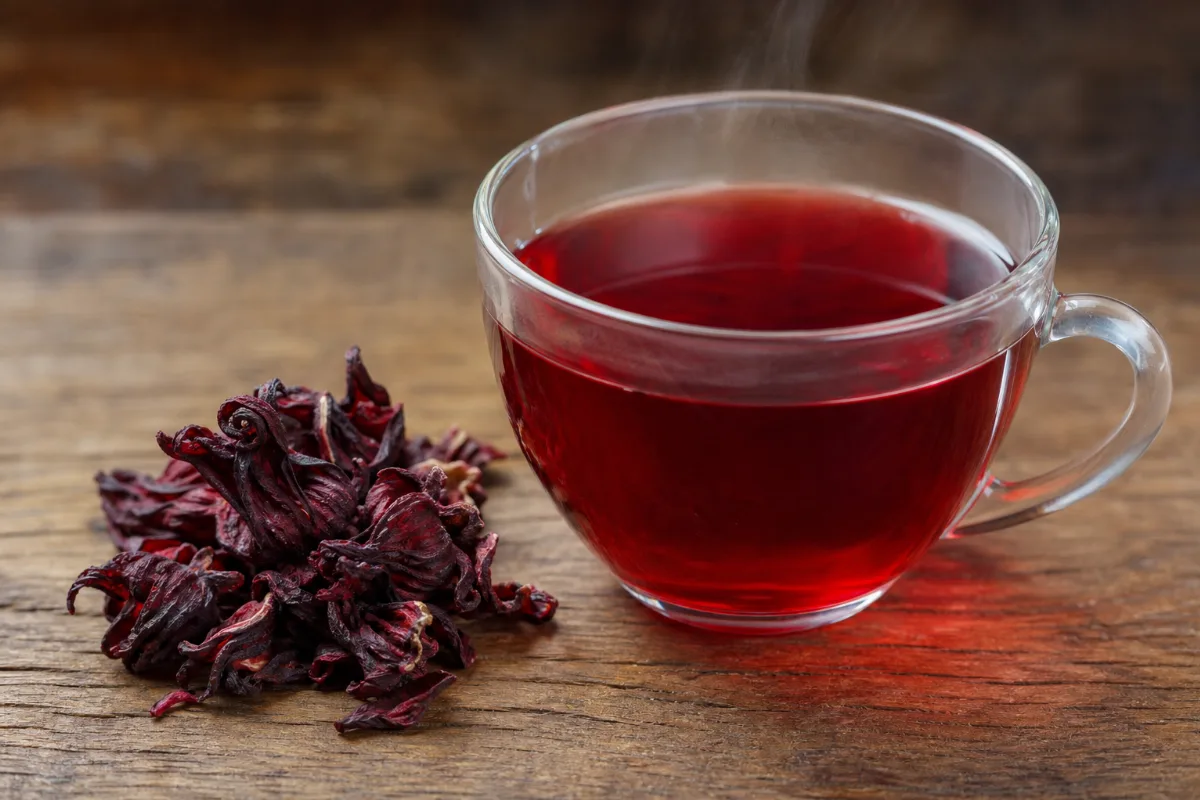
Hibiscus tea is a tart, deep-red drink made by steeping the dried calyces (the fleshy cups around the flower) of the roselle plant. It is caffeine-free. It is mostly studied for blood pressure, where small trials show lower readings but the best review rates the evidence very low. The main caution is that it can add to blood pressure medicines and may change how some medicines are absorbed.
General information, not medical advice. Last substantive update · Not medically reviewed. A named clinician has not signed off on this page. How this page is made
About Hibiscus Tea
Hibiscus tea is a tart, caffeine-free red drink made from the dried calyces of the roselle plant (Hibiscus sabdariffa), drunk around the world. Blood pressure is the most studied use. Small trials and pooled reviews found lower readings, but the trials disagree a lot, the best review found the evidence very low certainty, and no trial measured heart attacks, strokes or deaths. It should not replace blood pressure medicine. Cholesterol and blood sugar showed small changes at best, and weight showed none. It is usually well tolerated in short trials, but it can lower blood pressure further alongside medicine, and small studies suggest it may change how some medicines are absorbed.
What it is
Hibiscus sabdariffa, also called roselle, is a plant in the mallow family, the same family as okra and cotton. The part sold as hibiscus is the calyx, the fleshy red cup around the seed pod, not the petals. It is dried and steeped for tea or made into extracts. Traditional drinks include zobo, karkade, Caribbean sorrel and agua de jamaica.
Hibiscus sabdariffa is not the same plant as the showy garden hibiscus (Hibiscus rosa-sinensis) or the rose of Sharon (Hibiscus syriacus). Results from those plants do not apply to roselle.
Tea, extract and supplement: not the same thing
Hibiscus tea is the calyx steeped in water. An extract is a concentrated product made from the calyx, often sold as capsules or tablets, and a supplement may add other ingredients. The studies on this page used all of these, and the results of one do not automatically carry over to another.
One well-run trial tested brewed hibiscus tea itself against a placebo drink and saw a small fall in the top blood pressure number. The Cochrane review, in contrast, could include only one trial, which used extract capsules, and found no clear difference. Much of the safety data on liver enzymes in animals comes from high repeated amounts of concentrated extract, not from drinking tea. Medicine-interaction studies mostly used drinks or extracts in a few volunteers or animals.
What makes it distinctive
The deep red colour comes from anthocyanins, mainly delphinidin-3-sambubioside and cyanidin-3-sambubioside. The sour taste comes from organic acids, including hibiscus acid. The calyx also holds flavonoids and phenolic acids.
In test tubes, hibiscus extract blocked ACE, the enzyme that some blood pressure medicines block, and in animals it widened blood vessels and increased urine. In people the red pigments are barely absorbed (about 0.02 percent appears in urine) and gut bacteria break down most of the polyphenols, so which part does the work is unknown. The tea, an extract and a single compound should not be treated as the same thing.
Unlike green or black tea, hibiscus tea does not come from the tea plant. A lab analysis of 33 herbal teas that included hibiscus did not detect caffeine, theobromine or theophylline. Check the label on blends, which can contain other ingredients.
What it is used for and what the evidence shows
Blood pressure is the main studied area, and the rating is low. Pooled reviews report falls of about 5 to 8 mmHg on the top number, but trials disagree a lot with each other, and the Cochrane review found only one eligible placebo trial and rated the evidence very low certainty. No trial measured heart attacks, strokes or deaths. Several small trials compared hibiscus with blood pressure medicines, with mixed results; none show it is a safe substitute.
Cholesterol and fasting blood sugar fell a little in pooled analyses (LDL by about 7 to 9 mg/dL and fasting glucose by about 4 mg/dL), but several trials found no difference from placebo, and every rating is low, very low or insufficient. A pooled analysis of weight trials found no meaningful change. Other uses, such as fatty liver, skin, dry mouth and urinary infections, rest on one or two small studies, some of them branded combination products.
How strong is the research
Most trials were small, lasted 4 to 12 weeks (the longest 6 months) and tested different products: home-brewed tea, standardised extracts, tablets and blends with other plants. That makes results hard to combine, and it explains why pooled reviews disagree. Many outcomes were lab numbers, such as blood pressure readings or cholesterol, not illness or deaths.
The ratings on this page are our own reading of the evidence, not formal grades, unless a review's own grade is quoted. Only abstracts were read for most studies.
At a glance
Traditional uses history, not proof
- A cooling, sour red drink across West and North Africa, the Middle East, the Caribbean and Mexico: zobo in Nigeria, karkade in Sudan and Egypt, sorrel in the Caribbean, agua de jamaica in Mexico.
- Folk use as a diuretic and for high blood pressure, fever, liver complaints and high cholesterol, for example in Mexico and Senegal.
- Food use: jams, drinks and a natural red colouring.
Studied for research
- Blood pressure, low certainty (small trials pool to a fall of about 5 to 8 mmHg on the top number, but trials disagree a lot and a Cochrane review rated the evidence very low)
- Blood cholesterol and fasting blood sugar, small average drops in pooled analyses, low certainty and mixed
- Body weight and waist, no meaningful change in a pooled analysis of 6 trials
- Metabolic syndrome, fatty liver, urine flow and kidney tests, antioxidant markers, skin and dry mouth, very low to low certainty from small studies
- Memory, anxiety, mood and sleep, almost no human research
Main compounds
- Anthocyanins, the red pigments, mainly delphinidin-3-sambubioside and cyanidin-3-sambubioside
- Organic acids, including hibiscus acid, hydroxycitric, citric and malic acid, which give the sour taste
- Phenolic acids such as protocatechuic and chlorogenic acid
- Flavonols such as quercetin, gossypetin, hibiscetin and myricetin
- Small amounts of vitamin C and other nutrients
Common forms
- Dried calyces steeped as a hot or cold tea (the tea itself)
- Cold drinks made from calyces, such as zobo or agua de jamaica
- Water extracts and standardised calyx extracts in capsules or tablets (a concentrated product, not the same as tea)
- Powdered calyx
- Blends with other plants, for example hibiscus with lemon verbena or olive leaf
- Tablets that combine hibiscus with other ingredients
Research links: Cochrane review: roselle for high blood pressure (Pattanittum, 2021), PubMed record · NIH LactMed: Hibiscus · Research Library · Genes & Biomarkers Library
What it is and its history
- Accepted scientific name
- Hibiscus sabdariffa L.
- Naming authority
- L. (Linnaeus, 1753), accepted species in GBIF and NCBI Taxonomy
- Synonyms
- GBIF lists 20+ synonyms, e.g. Hibiscus sabbariffa L. (spelling variant), Furcaria sabdariffa (L.) Ulbr., Sabdariffa rubra Kostel., Hibiscus digitatus Cav., Hibiscus cruentus Bertol., Hibiscus fraternus L., Hibiscus gossypifolius Mill., Hibiscus sanguineus Griff., Hibiscus sabdariffa var. altissima Wester, var. ruber A.Howard & G.Howard, var. albus A.Howard & G.Howard
- Common names
- Hibiscus; roselle; Jamaica sorrel; red sorrel; Indian sorrel; sour tea; karkade; zobo (English); Flor de Jamaica; rosa de Jamaica; acedera de Guinea; sereni (Spanish); Oseille de Guinee; groseille; roselle (French); Rosella; Malventee; Hibiskus (German); Vinagreira; groselha; quiabo-roxo; rosela; caruru-azedo (Portuguese)
- Family or group
- Malvaceae (mallow family, order Malvales), which also holds okra, cotton, cacao and marshmallow.
- Classification
- Plantae > Tracheophyta > Magnoliopsida > Malvales > Malvaceae > Hibiscus > Hibiscus sabdariffa
- Native range
- Probably native to parts of Africa, and spread to Asia and the West Indies in the 16th and early 17th centuries, now grown and naturalised across the tropics (Wikipedia, secondary). Kew POWO was not checked.
- Habitat
- Warm tropical and subtropical regions (Wikipedia, secondary); detailed habitat not verified in a primary source.
- What it looks like
- Roots: Not part of the medicinal use; not described in a source read.; Stems: Annual or perennial herb or woody-based subshrub about 2 to 2.5 m tall; the stem yields a bast fibre (Wikipedia, secondary).; Leaves: Deeply 3 to 5-lobed, 8 to 15 cm long, alternate; young leaves are eaten as a sour green in some countries (Wikipedia, secondary).; Flowers: 8 to 10 cm wide, white to pale yellow with a dark red spot at the base of each petal (Wikipedia, secondary). The flowers themselves are not the part sold as 'hibiscus'.; Fruit: The part sold and used is the calyx: the sepals around the seed capsule swell as the fruit matures and become fleshy and deep crimson (Wikipedia, secondary). In trade 'hibiscus flowers' really means these calyces, sometimes with the small outer bracts (epicalyx). Seeds are also used for oil and food (not verified in a primary source).
- Cultivation
- China and Thailand are the largest producers, and many tropical countries grow it mostly for local use (Wikipedia, secondary). Agronomy details not verified.
- Harvest and processing
- Calyces are harvested when the fruit has formed, then dried; the dried calyces are steeped for a drink or made into extracts. Drying and extraction details were not verified in a source read. Water versus alcohol extraction changes the chemistry (p28873741).
- Look-alikes and adulterants
- Name: Hibiscus rosa-sinensis L. (Chinese hibiscus, the showy garden shrub); Note: Accepted species in GBIF (key 3152559), same family. A different plant with large showy flowers; its flowers and leaves are used in other traditions. It is not roselle and its calyx is not fleshy and sour. One lab paper tested H. rosa-sinensis for blood-pressure effects, but those results cannot be applied to roselle (PMID 35352670, title only seen).; Name: Hibiscus syriacus L. (rose of Sharon); Note: Accepted species in GBIF (key 3152583). An ornamental shrub or tree; not the tea plant.; Name: Hibiscus cannabinus L. (kenaf); Note: Accepted species in GBIF (key 3152547), same genus; grown for fibre and sometimes confused in names with roselle (both are called 'mesta' in parts of Asia; this naming is not verified here).; Name: Other red 'hibiscus' teas and blended products; Note: Retail 'hibiscus tea' should be roselle calyces. Mixed blends or other red petals can be sold under the same name; no adulteration survey was read for this file. Check the label for Hibiscus sabdariffa.
- Sustainability and conservation
- Not verified. A widely cultivated crop plant; no IUCN assessment was retrieved.
Photographs
Traditional use and history history, not clinical proof
| Tradition or era | Documented use | Source |
|---|---|---|
| West and North Africa, the Middle East and the Caribbean (food and drink) | Calyces are steeped into cold or hot sour red drinks: zobo in Nigeria, karkade in Sudan and Egypt, sorrel in the Caribbean, agua de jamaica in Mexico. Also used for jam and as a natural red food dye. | s-wikipedia-hibiscus-sabdariffa; p25038696 |
| Traditional medicine in several countries | Reviews list use as a cooling drink, diuretic, for high blood pressure, liver complaints, fever and cholesterol. In Mexico the drink is used as a diuretic and for stomach, liver, fever, cholesterol and blood-pressure problems; in Senegal it is used for high blood pressure. | p19808084; p19883513; p25038696 |
| Spread through the world | Reached Asia and the West Indies in the 16th and early 17th centuries. | s-wikipedia-hibiscus-sabdariffa (secondary) |
| Early lab research (France, 1990) | A crude calyx extract blocked ACE in a test tube; flavones were credited, and flavones and anthocyanins were credited for blood-vessel protection in animals. | p2355305 |
| Modern regulatory status (Europe) | I did not find an EMA/HMPC herbal monograph for Hibiscus sabdariffa. A secondary encyclopedia reports it as 'not processed' by HMPC and ESCOP, with a negative German Commission E monograph for lack of efficacy studies, and quality set by the European Pharmacopoeia. NOT verified in the EMA, BfArM or Pharmacopoeia originals. | s-altmeyers-hibisci-flos |
| Reviewers' overall safety statement | A 2014 review concluded that hibiscus has an 'excellent safety and tolerability record' and that better controlled trials with well-described products are needed. Safety detail belongs in the safety file. | p25038696 |
| Important note | The items above describe tradition and use, not proof. Clinical benefit is judged only by trials (see the benefits and biomarkers files). | n/a |
Traditional use shows how it was used. It does not show that it works or is safe today.
What is inside, and how it may work
What it contains and how those compounds act in cells and animals. Laboratory and animal mechanisms are not proven effects in people.
Main compounds
| Compound | Family | Where it is concentrated | Activity studied | Level of evidence |
|---|---|---|---|---|
| Delphinidin-3-sambubioside (delphinidin 3-O-sambubioside) PubChem 10196837 | anthocyanin (red pigment; the main one) | Calyx (the red fleshy sepals) In a human study the drink gave (p15647413). A food analysis found it the major anthocyanin in a water infusion and a water-alcohol extract (p28873741). No general percentage verified. | Gives hibiscus its deep red colour. Blocked the blood-pressure enzyme ACE in a test tube (IC50 84.5 ug/mL, p19808084). Reaches human blood only in tiny amounts (see pharmacokinetics). 85 35 50 24 | Laboratory research |
| Cyanidin-3-sambubioside (cyanidin 3-O-sambubioside) PubChem 3084569 | anthocyanin (red pigment) | Calyx the drink given to volunteers (p15647413). No general percentage verified. | Second main pigment. Blocked ACE in a test tube (IC50 68.4 ug/mL, p19808084). 85 35 24 | Laboratory research |
| Hibiscus acid (hibiscus acid lactone; a form of hydroxycitric acid lactone) PubChem 6481826 | organic acid (lactone) | Calyx; the most abundant organic acid in a hibiscus drink in one human study Most abundant organic acid in the drink studied in p37986526 (the 38 compounds in added total). Exact share not verified. | Relaxed rat aorta (blood vessel) in the lab, probably by limiting calcium entering the muscle cells; IC50 0.09 mg/mL (p30690125). A close relative, garcinia acid, acted almost identically. 104 9 105 | Animal research |
| Hydroxycitric acid (open form) and citric and malic acids PubChem 9856782 | organic acids | Calyx Not quantified in a source read, except that malic acid was the main organic acid in the analysis in p28873741 and hydroxycitric acid was among the main ones recovered in p37986526. | Give the drink its sour taste. Their roles in the body are largely untested. 50 9 | Laboratory research |
| Protocatechuic acid PubChem 72 | phenolic acid (breakdown product of anthocyanins and also present in the calyx) | Calyx Not quantified in a source read. | Called 'hibiscus protocatechuic acid' in older work. Reduced liver injury caused by a bacterial toxin in rats (p12491040). Not shown to act this way in people. Likely also made by gut bacteria from anthocyanins, but that exact point was not verified in a human study read here. 63 | Animal research |
| Chlorogenic and neochlorogenic acids PubChem 1794427 | hydroxycinnamic acids (phenolic acids) | Calyx Not quantified in a source read. | In one lab extraction study, chlorogenic and ferulic acids went along with stronger ACE blocking (p32422967). A link, not proof of cause. 88 9 | Laboratory research |
| Quercetin PubChem 5280343 | flavonol (flavonoid) | Calyx and leaf (present as sugar-attached forms) Not quantified in a source read. | One of three compounds picked for a computer prediction of targets (p38398890). Experimental work on hibiscus quercetin was not verified here. 105 | In silico |
| Gossypetin, hibiscetin, myricetin and kaempferol PubChem 5280647 | flavonols (flavonoids) | Calyx Not quantified in a source read. | Listed by reviews as flavonoids of hibiscus; kaempferol was linked to ACE blocking in one lab study (p32422967). Other CIDs: hibiscetin 15559735, myricetin 5281672, kaempferol 5280863. 88 24 | Laboratory research |
| Delphinidin, cyanidin (the pigment cores) and their glucosides PubChem 128853 | anthocyanidins / anthocyanins (minor) | Calyx Small amounts only; anthocyanidins and anthocyanins together were about 10% of the compounds counted in one drink (p37986526). | Delphinidin CID 128853, cyanidin CID 128861, delphinidin 3-glucoside CID 443650, cyanidin 3-glucoside CID 441667. 9 | Laboratory research |
| Ascorbic acid (vitamin C), tocopherol, sugars, fatty acids PubChem 54670067 | nutrients | Calyx and seed Glucose, malic acid, alpha-tocopherol and linoleic acid were the main members of their groups in p28873741; amounts per are not given here. | Normal food nutrients. After volunteers drank hibiscus extract, urine vitamin C rose (p22331521), but whether hibiscus itself supplied it was not tested. 50 36 | Laboratory research |
| Caffeine and other purine alkaloids | purine alkaloid (stimulant) | Not found in hibiscus Not detected in a lab analysis of 33 non-Camellia herbal teas that included Hibiscus sabdariffa (p27006902). | Hibiscus tea comes from a mallow-family plant, not the tea plant (Camellia sinensis), and the lab analysis found no caffeine, theobromine or theophylline in the non-Camellia teas it tested. So hibiscus tea is caffeine-free according to this analysis. Blends sold as hibiscus tea may contain other ingredients, so the ingredient list matters. 14 | Laboratory research |
Mechanisms, receptors and pathways
| Target or pathway | Gene or receptor | What was found | Level |
|---|---|---|---|
| Blocking angiotensin-converting enzyme (ACE), the same enzyme that blood-pressure drugs such as captopril and lisinopril block | ACE | In test tubes, hibiscus extract blocked ACE in a competitive way, and the two main pigments did too (IC50 84.5 and 68.4 ug/mL). Other extracts, including ones rich in flavonoids, blocked it more strongly. In a human trial, plasma ACE activity fell from 44.0 to 30.1 units after 4 weeks of an anthocyanin-standardized extract, but that trial had no placebo group, so the cause cannot be pinned on hibiscus alone. 85 89 88 54 46 | Laboratory research |
| Diuretic and natriuretic effect (more urine and sodium passing out) | Kidney handling of sodium and water (mechanism not pinned down) | In rats, the extract produced strong diuresis and sodium loss at 50, 100 and (animal). In people, a hibiscus infusion trial saw a rise in urinary sodium loss (natriuresis), and one trial saw serum chloride go up while serum potassium was unchanged. The size of the diuretic effect in people is not established. 89 45 46 | Animal research |
| Widening of blood vessels (vasodilation) through nitric oxide and calcium | Endothelial nitric oxide (NO)-cGMP pathway; voltage-gated calcium channels; potassium channels | In isolated rat aortas, calyx extract relaxed the vessel partly through the NO-cGMP route and by limiting calcium entry (animal tissue). Another group found the anthocyanin-rich fraction the most active (p19883513). Hibiscus acid alone relaxed the aorta, likely by blocking calcium channels (p30690125). All of this is tissue from rats, not people. 3 90 104 | Animal research |
| Antioxidant action | General redox balance (FRAP, malondialdehyde) | In 8 healthy volunteers, the extract raised blood antioxidant power and lowered urinary malondialdehyde, a marker of oxidative stress (human, small crossover study). Such markers are not the same as a health benefit. 36 | Controlled trial |
| Computer-predicted targets of three hibiscus compounds | PI3K-AKT pathway and others (prediction only) | A computer study predicted that delphinidin-3-sambubioside, quercetin and hibiscus acid act on genes of nitrogen and glucose metabolism, inflammation, cell growth and nerves. These are guesses to be tested, not findings. 105 | In silico |
| Protection against induced liver damage | iNOS (inducible nitric oxide synthase) | Protocatechuic acid lowered liver enzymes and iNOS in rats given a bacterial toxin (animal). Not tested in people. 63 | Animal research |
Absorption, metabolism and elimination
- Absorption
- Hibiscus pigments are taken up poorly. In 6 healthy volunteers who drank extract (cyanidin-3-sambubioside, delphinidin-3-sambubioside), the intact pigments reached their peak in blood at about 1.5 hours (median). Dose-normalized peak levels were 0.036 (cyanidin-3-sambubioside) and 0.015 (delphinidin-3-sambubioside) ng/mL per mg given, so blood levels were very low (p15647413).
- Distribution
- No human tissue-distribution data were found for hibiscus pigments or acids.
- Metabolism
- Gut bacteria change most of the polyphenols. In 12 volunteers, 25 different metabolites were found in blood and urine after a hibiscus drink (23 in plasma, 15 in urine), and the main drink compounds were extensively broken down; organic acids (hibiscus acid, hydroxycitric acid) were more abundant than the polyphenols (p37986526). Volunteers also passed more hippuric acid in urine, a marker of polyphenol breakdown by gut bacteria (p22331521). One glucuronide conjugate of an anthocyanin was found in urine.
- Elimination
- Intact pigments left the body quickly. Half-lives were 2.18 h (cyanidin-3-sambubioside), 3.34 h (delphinidin-3-sambubioside) and 2.63 h (total anthocyanins). Only about 0.016 to 0.021% of the dose appeared in urine as intact pigments within 7 hours (p15647413); about 0.02% in 24 hours in a second study (p22331521).
- Bioavailability
- Very low for intact anthocyanins (about 0.02% in urine). Whether the metabolites made by gut bacteria are the active part is not known; authors of two studies say this needs testing (p15647413, p37986526).
Isolated compounds versus whole extracts
Hibiscus is a mix of red pigments (anthocyanins), organic acids, flavonoids and phenolic acids, and no single compound has been proven to explain its effects. The two main pigments blocked ACE in a test tube, but other extracts, and fractions rich in flavonoids, blocked it more strongly (p19808084, p32422967, p2355305). Hibiscus acid relaxed rat blood vessels on its own (p30690125), while an anthocyanin-rich fraction was the most active in another rat-aorta study (p19883513). In people, the pigments are barely absorbed (about 0.02% in urine) and gut bacteria transform most of the polyphenols, so the active agents may be breakdown products, not the pigments (p15647413, p37986526). Reviewers add that many studies used poorly described extracts (p25038696). The tea, the standardized extract and a purified compound should not be treated as the same thing.
Nutritional composition
Hibiscus is mainly a drink and a colouring, so a nutrient table is not very meaningful. A food analysis found glucose, malic acid, alpha-tocopherol and linoleic acid to be the main members of their groups (p28873741). After volunteers drank an extract, their urine vitamin C rose (p22331521), but this does not show hibiscus is a good vitamin C source. No per- nutrient values were verified here.
9 low certainty10 very low certainty3 not enough evidence
What was looked at
The 22 benefits and uses checked for Hibiscus Tea, each with how strong the evidence is. Tap one to open it.
- High blood pressure: hibiscus tea or extract versus placebo or black teaLow certainty
- Hibiscus compared with blood-pressure medicines (captopril, lisinopril, ramipril, hydrochlorothiazide)Low certainty
- Pre-hypertension and normal-range blood pressureLow certainty
- 24-hour (ambulatory) blood pressureVery low certainty
- Added to blood-pressure medicine (kidney disease and diabetic kidney disease)Very low certainty
- Blood vessel function and the renin-angiotensin systemVery low certainty
- Memory and thinkingVery low certainty
- Anxiety, mood and sleepNot enough evidence
- Blood cholesterol (LDL and total)Low certainty
- Triglycerides and lipid-glucose indicesVery low certainty
- Fasting blood sugarLow certainty
- Type 2 diabetes (tea trials)Not enough evidence
- Metabolic syndrome (blood pressure, sugar, fats and waist together)Low certainty
- Body weight and waist size (hibiscus alone)Low certainty
- Appetite and body fat (hibiscus plus lemon verbena product)Low certainty
- Fatty liver (liver fat)Very low certainty
- Urine flow and kidney function testsVery low certainty
- Recurrent urinary tract infections (combination tablets)Very low certainty
- Antioxidant and inflammation markersLow certainty
- Physical fitness and muscle recoveryNot enough evidence
- Skin hydration and wrinklesVery low certainty
- Dry mouth and oral healthVery low certainty
Lab markers tracked in the studies
Systolic blood pressure (the top number)Diastolic blood pressure (the bottom number)Pulse pressure24-hour ambulatory blood pressureFlow-mediated dilation (FMD)Aldosterone, ACE and renin (blood-pressure hormones and enzyme)Sodium, chloride, potassium (blood and urine)Urine volume and creatinine clearanceDelayed word recall (memory test)LDL cholesterolTotal cholesterolHDL cholesterolTriglyceridesFasting blood glucoseInsulin and insulin resistance (HOMA-IR)Atherogenic index of plasma and triglyceride-glucose indexBody weight, BMI and waistAppetite hormones (ghrelin, GLP-1, leptin)Liver enzymes (ALT and AST)Urine volume and creatinine clearanceOxidative stress markers (malondialdehyde, antioxidant capacity)Inflammation markers (hs-CRP, MCP-1)CortisolSkin hydration, water loss and elasticitySaliva flow and pHStrength, balance and VO2max
What is Hibiscus Tea good for?
The main proposed uses and how strong the human evidence is for each. "Low" is the best rating found for any use, and many are lower. Some results come from tea, others from calyx extract, and each row says which. Hibiscus tea is not a replacement for medicine.
Benefits, one by one
Each card is a research question, not a promise. Tap a goal to filter. Open a card to see the studies, doses and limits.
High blood pressure: hibiscus tea or extract versus placebo or black tea
Low certaintySeveral small trials found that drinking hibiscus tea daily or taking calyx extract for 4 to 12 weeks lowered blood pressure more than placebo or black tea, often by 5 to 7 points on the top number. The strongest review (Cochrane 2021) says the evidence is too thin to be sure, because it found only one eligible placebo trial.
10 studiesTea (an infusion of dried calyces) in some trials; calyx extracts, po…
Studies, doses and limits
What the trials found
Five meta-analyses and reviews pooled randomised trials. Najafpour Boushehri 2020 (7 trials, 362 people): systolic -4.71 mmHg (CI -7.87 to -1.55) and diastolic -4.08 mmHg (CI -6.48 to -1.67). Serban 2015 (5 trials, 390 people): systolic -7.58 and diastolic -3.53 mmHg. Abdelmonem 2022 (13 trials, 1205 people): systolic -6.67 and diastolic -4.35 mmHg versus placebo, significant in high blood pressure alone but not in people who also had metabolic syndrome. Ellis 2022 (17 trials): systolic -7.10 mmHg (CI -13.00 to -1.20) with I2 95%, so trials disagreed a lot. Norouzzadeh 2025 (26 trials, 1797 people) found a dose-dependent fall versus placebo and other teas. Cochrane 2021 (Pattanittum) kept only one trial (60 people with type 2 diabetes, for 8 weeks) and found no clear difference (systolic 1.65 mmHg, CI -7.89 to 11.19) with very low certainty. Key individual trial: McKay 2010 (65 people with pre-hypertension or mild hypertension, tea a day, 6 weeks) found systolic -7.2 versus -1.3 mmHg on placebo (P=0.030) but no significant diastolic difference. Haji Faraji 1999 (54 people, 15 days) saw about 11% falls that reversed after stopping.
Results
Pooled non-Cochrane reviews show falls of about 5 to 8 mmHg systolic and 3 to 4 mmHg diastolic versus placebo or other tea; Cochrane judged the evidence too thin.
Effect sizes as reported
Systolic -4.71 to -7.58 mmHg; diastolic -3.53 to -4.35 mmHg (pooled reviews); Cochrane: systolic 1.65 mmHg (CI -7.89 to 11.19), very low certainty
Why this rating
Many small, short trials, strong disagreement between them (I2 up to 95%), mixed quality and publication bias possible. Cochrane 2021, the most careful GRADE review, rates the one eligible trial as very low certainty. The positive pooled results come from reviews with looser inclusion rules, so the overall picture is low certainty rather than high.
Form and dose studied
Tea (an infusion of dried calyces) in some trials; calyx extracts, powders, capsules or tablets in others. Amounts are not shown here; each study states what it used.
Who was studied
Adults with pre-hypertension, mild-to-moderate hypertension, and some with type 2 diabetes.
Limits
Trials are short (about 4 to 12 weeks), small, and several lack blinding or a true placebo. The effect is larger in people whose blood pressure starts high. Effects after stopping are not well studied, and the 1999 trial saw pressure rise within days of stopping. Pooled numbers mix tea, powders and extracts.
Why researchers looked
Hibiscus (roselle, sour tea, bissap, karkade) is a very widely drunk plant, and lowering blood pressure is its best-studied human use.
Traditional use
Hibiscus calyx tea is a traditional drink and folk remedy for high blood pressure in many countries, including Iran, Mexico, Senegal, Nigeria and Egypt.
Proposed mechanism Preliminary mechanism
Lab and animal work, and a few human blood tests, suggest hibiscus may act as a mild water pill, may slightly block an enzyme that tightens blood vessels (ACE), and its anthocyanins may protect the lining of blood vessels. These ideas are partly lab-based and are not shown to explain the blood pressure drops in people.
A proposed mechanism does not show that the effect happens in people.
Because it can lower blood pressure, people already on blood-pressure medicine should talk to a doctor or pharmacist before adding it; in these trials the abstracts report few or no side effects, but they are not designed to detect rare harms.
Hibiscus compared with blood-pressure medicines (captopril, lisinopril, ramipril, hydrochlorothiazide)
Low certaintyA handful of head-to-head trials compared hibiscus with common blood-pressure pills. Some found hibiscus roughly as good as captopril or hydrochlorothiazide over 4 weeks to 6 months, while others found it weaker than lisinopril or ramipril. None of these trials were large, and none show hibiscus is better or safe to replace medicine.
10 studiesTea (an infusion of dried calyces) in some trials; calyx extracts, po…
Studies, doses and limits
What the trials found
Herrera-Arellano 2004 (75 analysed, calyx infusion daily versus captopril, 4 weeks): systolic 139.05 to 123.73 mmHg and no significant difference from captopril at the end (effectiveness 78.95% versus 84.38%). Herrera-Arellano 2007 (193 enrolled, standardised extract with anthocyanins versus lisinopril, 4 weeks): fall 17.14/11.97 mmHg, but lisinopril worked better (P<0.05). Seck 2018 (125 people, calyx capsules twice daily versus ramipril, 4 weeks): systolic -11.2 versus -16.7 mmHg on ramipril (P=0.001); only 21% normalised on bissap versus 39% on ramipril. Bourqui 2021 (219 people, brew or tablets versus captopril, 6 months): systolic -19.5 versus -19.7 mmHg, with 75% of the bissap group reaching a 10 mmHg fall versus 65% with captopril. Nwachukwu 2015 (80 people, aqueous extract versus hydrochlorothiazide versus placebo, 4 weeks): both beat placebo; the authors called hibiscus 'more effective' than hydrochlorothiazide but the abstract gives no mmHg numbers. Soleimani 2015 (20 people, crossover, ambulatory BP, sour tea pill versus captopril, 6 weeks each): systolic -13.3 versus -7.75 mmHg. Elkafrawy 2020 (134 people, hibiscus plus olive leaf extract versus captopril, 8 weeks): falls of 15.4/9.6 and 14.9/9.4 versus 16.4/9.9 mmHg on captopril, no significant difference. Reviews: Wahabi 2010 (4 trials) found hibiscus less effective than ACE-inhibitors; Ellis 2022 and Abdelmonem 2022 found no significant difference from drugs.
Results
Roughly comparable to captopril or hydrochlorothiazide in some trials; weaker than lisinopril and ramipril in others. No trial showed it was better in a rigorous way.
Effect sizes as reported
Seck 2018 systolic -11.2 versus -16.7 mmHg (ramipril better); Bourqui 2021 -19.5 versus -19.7 mmHg (captopril, similar); Elkafrawy 2020 15.4/9.6 versus 16.4/9.9 mmHg (similar); Ellis 2022 versus medication: systolic 2.13 mmHg (CI -2.81 to 7.06), diastolic 1.10 mmHg (CI -1.55 to 3.74)
Why this rating
Trials are small, last 4 weeks to 6 months, and mostly lack a placebo arm, so people could have improved from usual care and the pills not being much better. Results conflict (similar to captopril, weaker than lisinopril and ramipril). A 'not significantly different' result in a small trial does not prove the two are equal.
Form and dose studied
Tea (an infusion of dried calyces) in some trials; calyx extracts, powders, capsules or tablets in others. Amounts are not shown here; each study states what it used.
Who was studied
Adults with mild-to-moderate or grade 1 to 2 hypertension, mostly untreated.
Limits
Small samples, short duration (mostly 4 to 8 weeks), mixed forms. Some abstracts give no numbers. Several trials come from the same few research groups in Mexico, Nigeria and Senegal.
Why researchers looked
Because many people use hibiscus instead of or alongside pills, researchers compared it with standard drugs.
Traditional use
In Senegal, Nigeria, Mexico and Iran hibiscus tea is a common home treatment for high blood pressure.
Proposed mechanism Preliminary mechanism
Lab and animal work, and a few human blood tests, suggest hibiscus may act as a mild water pill, may slightly block an enzyme that tightens blood vessels (ACE), and its anthocyanins may protect the lining of blood vessels. These ideas are partly lab-based and are not shown to explain the blood pressure drops in people.
A proposed mechanism does not show that the effect happens in people.
Blood-pressure medicines and hibiscus may add together, so low blood pressure is possible if they are taken together; do not stop or change medicine without a doctor.
Pre-hypertension and normal-range blood pressure
Low certaintyFor people whose blood pressure is only a little raised, the best trial of brewed hibiscus tea lowered the top number by about 6 points more than placebo after 6 weeks. In healthy people, one small trial reports a fall in blood pressure after 6 months of a roselle drink, but the abstract gives no numbers.
4 studiesTea (an infusion of dried calyces) in some trials; calyx extracts, po…
Studies, doses and limits
What the trials found
McKay 2010 (65 adults aged 30 to 70, pre- or mild hypertension, not on medicine; brewed hibiscus tea or placebo drink, 6 weeks): systolic -7.2 versus -1.3 mmHg (P=0.030); diastolic -3.1 versus -0.5 mmHg (P=0.160); people with higher starting pressure responded more (r=-0.421). Marhuenda 2021 (80 sedentary adults with pre- or stage 1 hypertension, hibiscus plus lemon verbena extract versus placebo, 84 days, ambulatory monitoring): significant fall in daytime systolic pressure (no numbers in the abstract). Chiu 2022 (39 healthy adults, crossover, roselle drink for 6 months): blood pressure fell compared with starting values (no numbers in the abstract). Ellis 2025 (20 overweight adults, single dose with breakfast): no change in blood pressure.
Results
A modest systolic drop in the best pre-hypertension trial; weaker or unclear in healthy people.
Effect sizes as reported
McKay 2010: systolic -7.2 versus -1.3 mmHg (P=0.030); diastolic -3.1 versus -0.5 mmHg (P=0.160). Other trials: no numbers in abstracts.
Why this rating
One decent placebo trial plus a blend trial and a small trial with no numbers. Small samples and short follow-up. A single dose showed nothing.
Form and dose studied
Tea (an infusion of dried calyces) in some trials; calyx extracts, powders, capsules or tablets in others. Amounts are not shown here; each study states what it used.
Who was studied
Pre-hypertensive and mildly hypertensive adults; healthy adults; overweight adults.
Limits
Small; 6 weeks to 6 months; the blend trial cannot tell hibiscus from lemon verbena; the healthy-adult trial compared with baseline.
Why researchers looked
Early, mild high blood pressure is where lifestyle changes (including drinks) are most often tried first.
Traditional use
Hibiscus tea is a common daily drink and is often said to help keep blood pressure steady.
Proposed mechanism Preliminary mechanism
Lab and animal work, and a few human blood tests, suggest hibiscus may act as a mild water pill, may slightly block an enzyme that tightens blood vessels (ACE), and its anthocyanins may protect the lining of blood vessels. These ideas are partly lab-based and are not shown to explain the blood pressure drops in people.
A proposed mechanism does not show that the effect happens in people.
People with normal or low blood pressure should be cautious, because a drink that lowers pressure could cause dizziness; the abstracts do not report such events, but this was not what they measured.
24-hour (ambulatory) blood pressure
Very low certaintyOnly two small trials measured blood pressure around the clock. A hibiscus-lemon verbena extract lowered daytime blood pressure over 84 days, and a hibiscus pill lowered 24-hour pressure about as much as a low dose of captopril.
2 studiesTea (an infusion of dried calyces) in some trials; calyx extracts, po…
Studies, doses and limits
What the trials found
Marhuenda 2021 (80 people, hibiscus plus lemon verbena extract versus placebo, 84 days): daytime pressure parameters, especially systolic, fell significantly. No numbers are given in the abstract. Soleimani 2015 (20 people, sour tea pill versus captopril, crossover, 6 weeks each, ambulatory monitoring): systolic -13.3 +/- 16.1 versus -7.75 +/- 8.3 mmHg; diastolic -5.8 +/- 7.8 versus -2.15 +/- 4.14 mmHg. No other 24-hour trial of hibiscus alone with a placebo was found.
Results
Falls in daytime pressure reported; night-time and 24-hour averages are not reported in the abstracts.
Effect sizes as reported
Soleimani 2015: systolic -13.3 +/- 16.1 mmHg (sour tea) versus -7.75 +/- 8.3 mmHg (captopril); Marhuenda 2021: daytime systolic fall significant, no numbers
Why this rating
Only two small trials, one a blend and one with 20 people and wide spread in results.
Form and dose studied
Tea (an infusion of dried calyces) in some trials; calyx extracts, powders, capsules or tablets in others. Amounts are not shown here; each study states what it used.
Who was studied
Adults with high blood pressure or pre-hypertension.
Limits
Very small evidence base; no true hibiscus-alone placebo trial with 24-hour monitoring was found.
Why researchers looked
Clinic readings can be unreliable, so 24-hour monitors give a better picture of day-to-day pressure.
Traditional use
Not a traditional claim; this is a modern measurement method.
Proposed mechanism Preliminary mechanism
Lab and animal work, and a few human blood tests, suggest hibiscus may act as a mild water pill, may slightly block an enzyme that tightens blood vessels (ACE), and its anthocyanins may protect the lining of blood vessels. These ideas are partly lab-based and are not shown to explain the blood pressure drops in people.
A proposed mechanism does not show that the effect happens in people.
Same as other blood-pressure uses: tell a doctor before combining with medicine.
Added to blood-pressure medicine (kidney disease and diabetic kidney disease)
Very low certaintyTwo small Iranian trials tested a hibiscus extract added to valsartan in people with kidney disease. Both groups improved on blood pressure; in the diabetic kidney trial the comparison group on a standard diuretic pill did better on blood pressure and blood sugar.
2 studiesTea (an infusion of dried calyces) in some trials; calyx extracts, po…
Studies, doses and limits
What the trials found
Dehkhoda 2024 (72 analysed of 80, mild chronic kidney disease with high blood pressure; hibiscus pill plus valsartan versus valsartan plus hydrochlorothiazide, 90 days): both groups had significant falls in blood pressure (P<0.001), no significant difference in kidney markers, and a significant lipid improvement in the hibiscus group; one author is CEO of the extract company. Kiani 2026 (70 people with type 2 diabetic nephropathy and hypertension; hibiscus extract plus valsartan versus valsartan plus hydrochlorothiazide, 3 months): the control group was more effective in lowering blood pressure and improving glucose; hibiscus had more effect on kidney function and lipids. The computer-docking parts of both papers are theoretical.
Results
No loss against the standard add-on in one trial and a weaker blood-pressure effect in the other; no numbers in abstracts.
Effect sizes as reported
Not given in abstracts; Dehkhoda 2024 both groups P<0.001 for blood pressure fall; Kiani 2026 control group lowered blood pressure more
Why this rating
Two small open comparisons without a placebo, numbers not in abstracts, one with a conflict of interest, and results point in different directions for blood pressure.
Form and dose studied
Tea (an infusion of dried calyces) in some trials; calyx extracts, powders, capsules or tablets in others. Amounts are not shown here; each study states what it used.
Who was studied
Adults with mild chronic kidney disease or type 2 diabetic nephropathy plus hypertension.
Limits
Very small trials, 3 months, from one research group in one region. Docking work is not human evidence.
Why researchers looked
People with kidney disease often need several drugs, so researchers tested whether a herbal add-on could help.
Traditional use
Not a traditional use; this is a modern add-on trial design.
Proposed mechanism Preliminary mechanism
Lab and animal work, and a few human blood tests, suggest hibiscus may act as a mild water pill, may slightly block an enzyme that tightens blood vessels (ACE), and its anthocyanins may protect the lining of blood vessels. These ideas are partly lab-based and are not shown to explain the blood pressure drops in people.
A proposed mechanism does not show that the effect happens in people.
People with kidney disease or on valsartan or other kidney-affecting drugs should not add hibiscus without medical advice; kidney and potassium monitoring matters in these patients.
Blood vessel function and the renin-angiotensin system
Very low certaintyA single glass of hibiscus extract widened an artery in the arm (a sign of healthy vessel lining) in 25 men for about four hours. Four-week trials in Nigeria found hibiscus lowered aldosterone, a blood-pressure hormone, about as much as lisinopril, and increased urine output.
5 studiesTea (an infusion of dried calyces) in some trials; calyx extracts, po…
Studies, doses and limits
What the trials found
Abubakar 2019 (25 men at low-to-moderate cardiovascular risk; aqueous calyx extract versus water with breakfast, crossover, single dose): % flow-mediated dilation rose significantly (P<0.001); blood pressure fell but not significantly; arterial stiffness did not change. Nwachukwu 2015 RAAS trial (78 people; aqueous extract versus lisinopril versus placebo, 4 weeks): aldosterone fell 32.06% (hibiscus) and 30.01% (lisinopril) versus placebo (P<0.001); ACE fell 6.63% and renin rose 2.77% (neither significant). Nwachukwu 2016 (same design): urine volume rose more on hibiscus than lisinopril, and creatinine clearance rose on hibiscus only. Herrera-Arellano 2007: blood ACE activity fell from 44.049 to 30.1 units on a standardised extract. Joven 2014 (31 patients with metabolic syndrome and rats; polyphenols, 4 weeks) reported lower blood pressure and better vessel function but the abstract does not describe the human comparison.
Results
Short-term gains in artery widening and lower aldosterone in small trials; ACE results are mixed.
Effect sizes as reported
FMD up (P<0.001, single dose); aldosterone -32.06% (hibiscus) versus -30.01% (lisinopril); ACE -6.63% (not significant); ACE 44.049 to 30.1 units in Herrera-Arellano 2007
Why this rating
Small trials, single-dose or four-week, with surrogate markers rather than heart attacks or strokes; ACE findings are inconsistent between trials.
Form and dose studied
Tea (an infusion of dried calyces) in some trials; calyx extracts, powders, capsules or tablets in others. Amounts are not shown here; each study states what it used.
Who was studied
Men with low-to-moderate risk; adults with hypertension; metabolic syndrome patients.
Limits
Surrogate markers only. One group produced the three Nigerian papers.
Why researchers looked
These tests check how hibiscus might work, not just whether blood pressure falls.
Proposed mechanism Preliminary mechanism
Hibiscus anthocyanins may help blood vessels relax through nitric oxide and may block some activity in the renin-angiotensin-aldosterone system; this is partly shown by lab tests and small human trials and is not proven to cause the blood pressure drop.
A proposed mechanism does not show that the effect happens in people.
Diuretic and ACE-type actions mean it may interact with blood-pressure drugs, diuretics and potassium or sodium balance; the Herrera trial found sodium and chloride shifts.
Memory and thinking
Very low certaintyOne small pilot found that a hibiscus drink slowed the post-breakfast slip in word recall in 20 overweight adults. Animal research is mixed. There are no long-term human trials.
2 studiesTea (an infusion of dried calyces) in some trials; calyx extracts, po…
Studies, doses and limits
What the trials found
Ellis 2025 (20 overweight adults, crossover, hibiscus-containing drink versus placebo with a high-carbohydrate breakfast; 2-hour follow-up): delayed word recall declined less after hibiscus and retroactive interference was lower; executive function and pattern separation improved but not significantly (p=0.063); blood sugar was lower at 30 and 45 minutes; no change in blood pressure. Olasehinde 2022 (10 animal and cell studies pooled): no significant pooled effect on memory, brain inflammation or oxidative stress, though individual studies reported benefits.
Results
A small acute memory signal in one human pilot; mixed animal data.
Effect sizes as reported
No numbers given in the abstract; pilot p=0.063 for executive function (not significant)
Why this rating
Only 20 people and a single meal; several cognitive tests were run, so a chance result is possible. Animal pooling found nothing.
Form and dose studied
Tea (an infusion of dried calyces) in some trials; calyx extracts, powders, capsules or tablets in others. Amounts are not shown here; each study states what it used.
Who was studied
Overweight adults aged around 35.
Limits
One pilot, no long-term trial, form and dose not described in abstract.
Why researchers looked
Researchers wanted to know if the same plant polyphenols that help blood vessels might help the brain.
Traditional use
No clear traditional claim for memory.
Proposed mechanism Animal research
Lab and animal studies suggest hibiscus compounds may protect brain cells from oxidative damage and inflammation, but a pooled analysis of ten animal studies found no overall effect.
A proposed mechanism does not show that the effect happens in people.
No safety problems were reported in the abstract, but a single-dose pilot cannot show safety.
Anxiety, mood and sleep
Not enough evidenceNo human trial of roselle (Hibiscus sabdariffa) for anxiety, depression or sleep was found. Animal tests suggest calming and sleep-lengthening effects, but that is not proof for people.
1 studiesTea (an infusion of dried calyces) in some trials; calyx extracts, po…
Studies, doses and limits
What the trials found
Fakeye 2008 (animal study): aqueous, hydroalcoholic and ethanolic calyx extracts raised open-arm time dose-dependently, and repeated doses of some extracts shortened sleep onset and lengthened sleep; one ethanol extract after several daily doses shortened sleeping time, and some doses did nothing. No human anxiety, mood or sleep trial of Hibiscus sabdariffa turned up in the PubMed searches. A sleep trial protocol on a different species (Hibiscus syriacus flower extract) exists but it is a different plant and is not evidence for roselle.
Results
No human results.
Why this rating
No human trial. Animal results are mixed and cannot be turned into advice.
Form and dose studied
Tea (an infusion of dried calyces) in some trials; calyx extracts, powders, capsules or tablets in others. Amounts are not shown here; each study states what it used.
Limits
No human data; animal doses cannot be converted to people.
Why researchers looked
Roselle's colourful polyphenols sometimes lead to calming-plant claims, so the question was searched.
Traditional use
Some folk uses mention a calming effect, but no source here documents it.
Proposed mechanism Animal research
In mice and rats, calyx extracts increased time in the open arms of a maze (a sign of less anxiety) and lengthened drug-induced sleep after repeated dosing; this is animal evidence only.
A proposed mechanism does not show that the effect happens in people.
None specific.
Blood cholesterol (LDL and total)
Low certaintyIn pooled analyses of small trials, hibiscus tea or extract lowered LDL (the 'bad' cholesterol) by roughly 7 to 9 mg/dL on average, and one analysis found total cholesterol about 15 mg/dL lower. Several newer or larger trials found no difference from placebo, and one trial using leaf extract found no effect. The evidence is mixed and the trials are small and short.
11 studiesTea (an infusion of dried calyces) in some trials; calyx extracts, po…
Studies, doses and limits
What the trials found
Pooled analyses: a 2020 meta-analysis of 9 trials (503 adults with metabolic syndrome and related conditions) found total cholesterol 14.66 mg/dL lower and LDL 9.46 mg/dL lower, with no change in triglycerides. A 2020 analysis found a fasting-glucose and LDL benefit (LDL -7.84 mg/dL) but no significant change in total cholesterol or HDL. A 2022 meta-analysis of 17 trials found LDL 6.76 mg/dL lower than with other teas or placebo (p=0.05). A 2020 analysis of 7 trials found only a trend for lower LDL (p=0.08) and no significant change in total cholesterol or HDL. A 2025 umbrella review of 26 trials reported lower total cholesterol and LDL and higher HDL. Individual trials: extract powder for one month lowered total cholesterol and raised HDL in people with metabolic syndrome (p<0.05); sour tea twice a day for one month improved HDL, LDL and total cholesterol in 53 people with type 2 diabetes compared with black tea; calyx extract for 12 weeks in 108 adults with mild metabolic syndrome did not change lipids versus placebo (LDL fell 7.98 mg/dL versus the person's own start); leaf extract for 90 days in 60 adults with high LDL did not beat placebo; a jelly drink of roselle plus passion fruit lowered LDL and triglycerides versus baseline.
Results
Often a small drop in LDL, not seen in every trial.
Effect sizes as reported
LDL about 7 to 9 mg/dL lower and total cholesterol about 15 mg/dL lower in some pooled analyses; the confidence ranges are wide and some analyses found no significant change.
Why this rating
Several meta-analyses point the same way for LDL, but they pool small, short trials of different teas and extracts with moderate to high heterogeneity, and two recent placebo-controlled trials found no benefit. This rating is the compiler's, based on the reviewers' own statements that more high-quality trials are needed.
Form and dose studied
Tea (an infusion of dried calyces) in some trials; calyx extracts, powders, capsules or tablets in others. Amounts are not shown here; each study states what it used.
Who was studied
Adults with metabolic syndrome, type 2 diabetes, high cholesterol or overweight.
Limits
Trials are short (1 to 3 months), usually under 110 people, and tea and extract products are not standardised. A lower cholesterol number has not been shown to prevent heart attacks in these trials.
Why researchers looked
High LDL cholesterol is a risk factor for heart disease, and hibiscus is a common drink in places where people look for natural ways to support cholesterol.
Traditional use
Hibiscus species are used in traditional medicine for many conditions (a 2021 review lists urinary, digestive, cough and heart uses) (traditional use; genus-level, from the review cited).
Proposed mechanism Preliminary mechanism
Hibiscus is rich in anthocyanins and other polyphenols. Proposed ideas include less fat absorption and less liver fat production, drawn mostly from animal and lab work. This has not been proven in people.
A proposed mechanism does not show that the effect happens in people.
People already taking cholesterol medicine should not swap it for hibiscus; interactions with medicines are covered in the safety file.
Triglycerides and lipid-glucose indices
Very low certaintyPooled analyses mostly found no clear fall in triglycerides (blood fats) from hibiscus. A few single trials saw lower triglycerides, and a 2025 trial of a hibiscus-and-inulin drink improved two calculated lipid-glucose scores. The evidence is thin and the changes are lab numbers.
5 studiesTea (an infusion of dried calyces) in some trials; calyx extracts, po…
Studies, doses and limits
What the trials found
A 2020 meta-analysis of 9 trials (503 adults) found triglycerides unchanged (WMD -0.77 mg/dL, 95% CI -7.87 to 6.33). Other pooled analyses also found no significant triglyceride change. Single trials: calyx powder for 4 weeks lowered triglycerides in 40 adults with metabolic syndrome (p=0.044) and lowered systolic pressure; sour tea lowered triglycerides in people with type 2 diabetes versus black tea; a roselle and passion fruit jelly drink lowered triglycerides versus baseline in 43 adults with dyslipidemia. In 100 overweight adults, a standardised hibiscus-inulin drink (, 8 weeks) lowered the atherogenic index of plasma by 0.09 and the triglyceride-glucose index by 0.14 versus placebo; the authors say this reflects lab responsiveness and not proven clinical benefit.
Results
No consistent effect on triglycerides; small gains in some single trials.
Effect sizes as reported
Pooled triglyceride change -0.77 mg/dL (not significant); hibiscus-inulin drink AIP -0.09 (95% CI -0.15 to -0.03), TyG -0.14 (95% CI -0.26 to -0.03).
Why this rating
Pooled analyses are null; positive results come from small single trials, one combined with inulin and one with passion fruit. This rating is the compiler's.
Form and dose studied
Tea (an infusion of dried calyces) in some trials; calyx extracts, powders, capsules or tablets in others. Amounts are not shown here; each study states what it used.
Who was studied
Adults with metabolic syndrome, dyslipidemia, overweight or obesity.
Limits
The composite indices have no established threshold for a worthwhile change over 8 weeks; combination products cannot separate hibiscus from other ingredients.
Why researchers looked
High triglycerides often travel with metabolic syndrome, so trials of hibiscus usually measure them.
Traditional use
Hibiscus species are used in traditional medicine for many conditions (a 2021 review lists urinary, digestive, cough and heart uses) (traditional use; genus-level, from the review cited).
Proposed mechanism Preliminary mechanism
Not established. Authors suggest polyphenols may affect fat handling, based mainly on animal and cell work.
A proposed mechanism does not show that the effect happens in people.
Fasting blood sugar
Low certaintyTwo pooled analyses found fasting blood glucose about 4 mg/dL lower with hibiscus tea or extract than with comparison drinks. That is a very small change. Several individual trials found no difference from placebo, and the long-term effect on diabetes is unknown.
8 studiesTea (an infusion of dried calyces) in some trials; calyx extracts, po…
Studies, doses and limits
What the trials found
A 2020 meta-analysis of 7 trials (362 participants) found fasting glucose 3.67 mg/dL lower (95% CI -7.07 to -0.27). A separate 2020 meta-analysis found fasting glucose 3.96 mg/dL lower (95% CI -6.23 to -1.70). A 2025 umbrella review of 26 trials also reported lower fasting glucose. A 2022 pooled analysis and a 2023 review of combinations with other plants reached similar broad conclusions. Trial results: extract powder for one month lowered glucose in people with metabolic syndrome; calyx extract for 12 weeks in 108 adults with mild metabolic syndrome did not change glucose markers or insulin resistance versus placebo; for 4 weeks (40 adults) did not change fasting glucose; a roselle jelly drink did not change glucose in 43 adults. A single dose of extract with breakfast gave a smaller (non-significant) rise in glucose and insulin after the meal in 25 men.
Results
Average fasting glucose about 4 mg/dL lower in two pooled analyses; several single trials found no difference.
Effect sizes as reported
Fasting glucose -3.67 mg/dL (95% CI -7.07 to -0.27) and -3.96 mg/dL (95% CI -6.23 to -1.70).
Why this rating
Two meta-analyses agree on a small average fall, but the change is small, trials are few and short, and recent placebo-controlled trials were null. This rating is the compiler's.
Form and dose studied
Tea (an infusion of dried calyces) in some trials; calyx extracts, powders, capsules or tablets in others. Amounts are not shown here; each study states what it used.
Who was studied
Mostly adults with metabolic syndrome or type 2 diabetes.
Limits
A 4 mg/dL change is within normal day-to-day variation. No trial measured HbA1c over months or diabetes complications.
Why researchers looked
Hibiscus is promoted for blood sugar in traditional and folk use, and metabolic syndrome trials measure fasting glucose.
Traditional use
Hibiscus species are used in traditional medicine for many conditions (a 2021 review lists urinary, digestive, cough and heart uses) (traditional use; genus-level, from the review cited).
Proposed mechanism Preliminary mechanism
Lab and animal studies suggest hibiscus compounds slow starch digestion and affect insulin signalling. In people this is unproven.
A proposed mechanism does not show that the effect happens in people.
People on diabetes medicines should talk to their doctor before using hibiscus in larger amounts; any extra sugar-lowering effect is not well studied.
Type 2 diabetes (tea trials)
Not enough evidenceTwo small trials gave sour tea to people with type 2 diabetes for 1 month. Cholesterol numbers improved in one, but in the other, insulin resistance was higher after sour tea than after green tea. There is not enough here to say hibiscus helps control diabetes.
2 studiesTea (an infusion of dried calyces) in some trials; calyx extracts, po…
Studies, doses and limits
What the trials found
In 60 adults with type 2 diabetes (53 finished), sour tea twice a day for 1 month increased HDL (p=0.002) and lowered total cholesterol, LDL, triglycerides and Apo-B100, while black tea only changed HDL. In 100 adults with type 2 diabetes, sour tea or green tea three times a day for 4 weeks raised HDL in both groups; fasting insulin rose in the sour tea group (median 8.2 to 16.3 microIU/mL) while it fell with green tea, and HOMA-IR (an insulin resistance estimate) was higher after sour tea than green tea (1.6 versus 1.1, p=0.004). The study authors still concluded both teas help insulin resistance, which does not match their own insulin numbers.
Results
Better lipids in one trial; worse insulin resistance than green tea in another.
Effect sizes as reported
HOMA-IR median 1.6 (sour tea) versus 1.1 (green tea), p=0.004; HDL up in both.
Why this rating
Only two small, 1 to 4 week trials, neither placebo-controlled, with conflicting results. This rating is the compiler's.
Form and dose studied
Tea (an infusion of dried calyces) in some trials; calyx extracts, powders, capsules or tablets in others. Amounts are not shown here; each study states what it used.
Who was studied
Adults with type 2 diabetes.
Limits
No placebo, short, small, and no blood sugar control measure over time (such as HbA1c).
Why researchers looked
People with type 2 diabetes often have high blood fats and are interested in tea-based support.
Traditional use
Hibiscus species are used in traditional medicine for many conditions (a 2021 review lists urinary, digestive, cough and heart uses) (traditional use; genus-level, from the review cited).
Proposed mechanism Preliminary mechanism
Not established in people. Antioxidant action on oxidative stress has been proposed.
A proposed mechanism does not show that the effect happens in people.
Diabetes treatment should not be replaced with hibiscus tea.
Metabolic syndrome (blood pressure, sugar, fats and waist together)
Low certaintyHibiscus has been tested in people with metabolic syndrome, the cluster of high blood pressure, high blood sugar, abnormal fats and extra belly fat. Small trials show mixed results: some improvements in fats or blood pressure, but the largest placebo-controlled trial (108 adults, 12 weeks) found no benefit on insulin resistance, waist or lipids.
6 studiesTea (an infusion of dried calyces) in some trials; calyx extracts, po…
Studies, doses and limits
What the trials found
A 2025 placebo-controlled trial gave calyx extract for 12 weeks to 108 adults in Thailand with abdominal obesity and mild metabolic syndrome: no significant change in insulin resistance, glucose markers, BMI, waist, lipids or blood pressure versus placebo, and no significant liver, kidney or blood-count changes. A 4-week trial of 40 people lowered triglycerides and systolic pressure only. A one-month study of extract powder lowered glucose and total cholesterol and raised HDL. A small 21-day tea study in 18 elderly women (not truly randomised) reported lower weight, glucose, triglycerides and cortisol but also lower HDL. A 2023 meta-analysis of 7 trials of hibiscus combined with other plant extracts (332 participants) found better body measures, blood pressure, LDL and total cholesterol than placebo. A 2021 review (68 articles on edible Hibiscus species, 18 in humans) called results promising but asked for larger human trials.
Results
Mixed; benefit most likely small.
Effect sizes as reported
No pooled numbers for hibiscus alone in metabolic syndrome were read; the 2025 trial found no significant change on its main measures.
Why this rating
Small and inconsistent trials; the largest recent placebo-controlled trial was null. This rating is the compiler's.
Form and dose studied
Tea (an infusion of dried calyces) in some trials; calyx extracts, powders, capsules or tablets in others. Amounts are not shown here; each study states what it used.
Who was studied
Adults with metabolic syndrome, including elderly women.
Limits
Small trials, some without proper randomisation; the 2021 review mixes species and animals.
Why researchers looked
Hibiscus affects several metabolic markers in lab and animal work, so trials test it against the whole cluster.
Traditional use
Hibiscus species are used in traditional medicine for many conditions (a 2021 review lists urinary, digestive, cough and heart uses) (traditional use; genus-level, from the review cited).
Proposed mechanism Preliminary mechanism
Not established in people; polyphenols may act on several pathways at once.
A proposed mechanism does not show that the effect happens in people.
No safety problems with liver or kidney tests were found in the 12-week trial.
Body weight and waist size (hibiscus alone)
Low certaintyA 2024 pooled analysis of 6 trials (339 adults) found no meaningful weight loss from hibiscus: about 0.3 kg less weight, 0.2 cm less waist, none statistically different from control. One small 12-week trial found lower weight and body fat, but it was small and the result has not been confirmed by larger trials.
3 studiesTea (an infusion of dried calyces) in some trials; calyx extracts, po…
Studies, doses and limits
What the trials found
A 2024 meta-analysis of 6 randomised trials (339 participants; 4 extract capsules versus placebo, 2 hibiscus tea versus black or green tea) found body weight -0.27 kg (95% CI -1.98 to 1.42), BMI -0.06 kg/m2 (-0.58 to 0.47) and waist -0.20 cm (-2.06 to 1.66); the authors concluded there was no clinical benefit. A 2014 trial of 36 adults with BMI 27 or more found 12 weeks of hibiscus extract lowered body weight, BMI, body fat and waist-to-hip ratio compared with a control group. The 2025 trial of for 12 weeks in 108 adults with abdominal obesity found no change in BMI or waist versus placebo.
Results
No clear weight loss in pooled data.
Effect sizes as reported
Weight -0.27 kg; BMI -0.06 kg/m2; waist -0.20 cm (all not significant).
Why this rating
A meta-analysis found no effect, one small trial found one, and the largest recent placebo trial was null. This rating is the compiler's.
Form and dose studied
Tea (an infusion of dried calyces) in some trials; calyx extracts, powders, capsules or tablets in others. Amounts are not shown here; each study states what it used.
Who was studied
Adults with overweight, obesity or abdominal obesity.
Limits
Small, short trials; the 2014 trial dose is not given in the abstract and its control may not have been a placebo.
Why researchers looked
Hibiscus is sold as a slimming tea and extract, and animal studies suggested it can reduce fat.
Traditional use
Hibiscus species are used in traditional medicine for many conditions (a 2021 review lists urinary, digestive, cough and heart uses) (traditional use; genus-level, from the review cited).
Proposed mechanism Preliminary mechanism
Lab and animal studies suggest hibiscus polyphenols can reduce fat cell formation. In people this has not been shown to change body fat.
A proposed mechanism does not show that the effect happens in people.
Appetite and body fat (hibiscus plus lemon verbena product)
Low certaintyThree trials tested one branded supplement that combines hibiscus with lemon verbena (Lippia citriodora) in overweight adults for about two months. People ate less at a test meal, reported feeling fuller, and some body measures improved. Because it is a two-plant product from the same research network, hibiscus cannot be credited on its own.
3 studiesTea (an infusion of dried calyces) in some trials; calyx extracts, po…
Studies, doses and limits
What the trials found
In 56 overweight and obese adults, the combined extract for 2 months lowered waist circumference by 6.79 cm versus 1.85 cm with placebo in overweight participants and lowered body fat percentage by 1.33 versus 0.66 points; changes were more modest in obese participants (partly funded by the maker). In 54 overweight adults, 60 days of the combination improved body measures and moved appetite hormones (ghrelin down, GLP-1 up). In a crossover trial of 33 overweight and obese adults, the combination raised satiety and people ate about 75 kcal less at a test meal (774 versus 850 kcal, p<0.004).
Results
Small gains in fullness and body measures.
Effect sizes as reported
Waist -6.79 cm versus -1.85 cm; test-meal calories 774 versus 850 kcal.
Why this rating
Three small trials on one product with industry involvement and no way to separate hibiscus from the second plant. This rating is the compiler's.
Form and dose studied
Tea (an infusion of dried calyces) in some trials; calyx extracts, powders, capsules or tablets in others. Amounts are not shown here; each study states what it used.
Who was studied
Overweight and obese adults on a calorie-controlled diet.
Limits
Two-plant product; small trials; maker-funded in at least one.
Why researchers looked
Researchers looked at whether the polyphenols in this combination change appetite hormones.
Traditional use
Hibiscus species are used in traditional medicine for many conditions (a 2021 review lists urinary, digestive, cough and heart uses) (traditional use; genus-level, from the review cited).
Proposed mechanism Preliminary mechanism
Authors suggest the polyphenols activate an energy-control enzyme (AMPK) and change appetite hormones such as ghrelin and GLP-1; this is a proposal, not proof.
A proposed mechanism does not show that the effect happens in people.
Fatty liver (liver fat)
Very low certaintyOnly one small human trial looked at fatty liver. In 36 adults with a BMI of 27 or more, 12 weeks of hibiscus extract was reported to improve liver steatosis (fat build-up) and lower body fat. There are no larger trials, so this is only a starting clue.
3 studiesTea (an infusion of dried calyces) in some trials; calyx extracts, po…
Studies, doses and limits
What the trials found
A 2014 trial randomised 36 adults with BMI 27 or more to a control group (17) or a hibiscus extract group (19) for 12 weeks. The extract group had lower weight, BMI, body fat, waist-to-hip ratio and free fatty acids, and the authors reported improved liver steatosis; there was no adverse effect. The abstract does not say how steatosis was measured or give numbers. In the 2025 trial in adults with abdominal obesity, for 12 weeks caused no significant liver function change versus placebo.
Results
One small positive trial.
Effect sizes as reported
No numeric values for liver fat read.
Why this rating
One small trial with no published numbers in the abstract, no placebo-matched control confirmed, and no replication. This rating is the compiler's.
Form and dose studied
Tea (an infusion of dried calyces) in some trials; calyx extracts, powders, capsules or tablets in others. Amounts are not shown here; each study states what it used.
Who was studied
Adults with BMI 27 or more.
Limits
Small, single trial; method of judging liver fat not described in the abstract.
Why researchers looked
Obesity often brings fatty liver, and animal studies suggested hibiscus protects the liver.
Traditional use
Hibiscus species are used in traditional medicine for many conditions (a 2021 review lists urinary, digestive, cough and heart uses) (traditional use; genus-level, from the review cited).
Proposed mechanism Preliminary mechanism
Animal studies suggest hibiscus polyphenols reduce liver fat and protect liver cells; this has not been shown in people beyond one small trial.
A proposed mechanism does not show that the effect happens in people.
Liver enzymes: a 2025 umbrella review found a minor, clinically insignificant AST rise; see the biomarker entry.
Urine flow and kidney function tests
Very low certaintyIn one 4-week trial of people with mild to moderate high blood pressure, hibiscus extract increased urine volume and creatinine clearance (a kidney filtering estimate) compared with placebo. That suggests a diuretic (water-passing) effect but is not evidence of kidney protection. No human trial of uric acid or kidney stones was found.
4 studiesTea (an infusion of dried calyces) in some trials; calyx extracts, po…
Studies, doses and limits
What the trials found
In 78 newly diagnosed, untreated Nigerian adults with mild to moderate high blood pressure, once-daily hibiscus extract for 4 weeks raised urine volume (p<0.001 versus placebo, and more than lisinopril) and creatinine clearance (p<0.001 versus placebo). In another 4-week trial of 80 adults with the same condition, hibiscus lowered serum sodium versus placebo and did not cause electrolyte imbalance or side effects, while hydrochlorothiazide changed sodium, chloride and potassium more. In the 108-adult Thai trial, for 12 weeks caused no significant kidney function change versus placebo. A 2025 rat study found that very heavy hibiscus infusion (6 percent) for a month shifted kidney vessel and antioxidant measures; this is animal data.
Results
More urine, no electrolyte problems in short trials.
Effect sizes as reported
Reported as p-values only (p<0.001) in the abstracts read.
Why this rating
Two short trials from one Nigerian group in people with high blood pressure, plus null safety tests in a Thai trial. This rating is the compiler's.
Form and dose studied
Tea (an infusion of dried calyces) in some trials; calyx extracts, powders, capsules or tablets in others. Amounts are not shown here; each study states what it used.
Who was studied
Adults with mild to moderate high blood pressure.
Limits
Only these populations; no kidney outcome trials; no human uric acid or kidney stone trial found.
Why researchers looked
Hibiscus is widely drunk as a tea and is traditionally used for urinary complaints (genus-level, from the 2021 review cited).
Traditional use
Hibiscus species are used in traditional medicine for many conditions (a 2021 review lists urinary, digestive, cough and heart uses) (traditional use; genus-level, from the review cited).
Proposed mechanism Preliminary mechanism
Hibiscus is thought to promote urine flow; the mechanism in people is not established.
A proposed mechanism does not show that the effect happens in people.
Very heavy intake caused kidney changes in rats; people with kidney disease should ask their doctor.
Recurrent urinary tract infections (combination tablets)
Very low certaintyTwo Italian studies tested tablets that combine hibiscus extract with other ingredients in women who often get urinary infections. Symptoms and quality of life improved, but neither study can show that hibiscus did the work, and the main trial had no placebo group.
2 studiesTea (an infusion of dried calyces) in some trials; calyx extracts, po…
Studies, doses and limits
What the trials found
In 93 women with recurrent uncomplicated UTI, a tablet of L-methionine, hibiscus and Boswellia extracts for 7 days was compared with a short antibiotic course: quality-of-life scores rose in both groups, and the supplement was judged not inferior for symptom relief; 12 of 46 supplement users (26 percent) later had bacteriuria without symptoms versus none on antibiotics. In an uncontrolled phase II study of 55 women, a tablet of hibiscus extract, vegetable proteases and myrrh taken in monthly cycles for 6 months was linked to fewer symptomatic infections (median 5 down to 2 per 6 months).
Results
Fewer symptoms reported with the combination tablets.
Effect sizes as reported
Median UTIs per 6 months from 5 to 2 (single-group study); QoL 94.3 to 99.1 (supplement group, 3 months).
Why this rating
Combination products, one trial without placebo and one without any control; the hibiscus share cannot be known. This rating is the compiler's.
Form and dose studied
Tea (an infusion of dried calyces) in some trials; calyx extracts, powders, capsules or tablets in others. Amounts are not shown here; each study states what it used.
Who was studied
Women with recurrent uncomplicated UTI.
Limits
Not placebo-controlled; same research group; a real infection needs medical care.
Why researchers looked
Recurrent infections are a common reason women look for antibiotic-sparing options.
Traditional use
Hibiscus species are used in traditional medicine for many conditions (a 2021 review lists urinary, digestive, cough and heart uses) (traditional use; genus-level, from the review cited).
Proposed mechanism Pharmacological theory
Hibiscus compounds may reduce bacteria sticking to the bladder wall; this is a proposed idea and was not tested in these studies.
A proposed mechanism does not show that the effect happens in people.
A urinary infection with fever, back pain or blood in the urine needs a doctor, not a supplement.
Antioxidant and inflammation markers
Low certaintyIn small trials, hibiscus drinks and extracts raised blood antioxidant measures and lowered a marker of oxidative damage (malondialdehyde) in healthy people and athletes. One dose lowered MCP-1, an inflammation signal. These are lab markers; no trial shows they translate into better health.
6 studiesTea (an infusion of dried calyces) in some trials; calyx extracts, po…
Studies, doses and limits
What the trials found
In 8 healthy volunteers (open-label crossover), an aqueous extract raised plasma antioxidant power and lowered urinary malondialdehyde versus water. In 54 male soccer players, sour tea extract for 6 weeks lowered malondialdehyde versus placebo (p=0.008) and raised total antioxidant capacity (p=0.01) but did not change muscle damage markers. In 39 healthy adults drinking roselle drink daily for 6 months, antioxidant markers (glutathione, SOD, TEAC) rose versus the person's starting values. In 25 men, one dose with breakfast improved antioxidant response (p=0.026) and a smaller non-significant rise in CRP after the meal. A single dose in healthy volunteers lowered plasma MCP-1 without changing other cytokines. In 40 adults with metabolic syndrome, for 4 weeks changed neither hs-CRP nor malondialdehyde versus placebo.
Results
Small improvements in lab antioxidant markers.
Effect sizes as reported
MDA lower than placebo p=0.008 in athletes; total antioxidant capacity higher p=0.01; MDA and hs-CRP unchanged in metabolic syndrome.
Why this rating
Several small trials agree on antioxidant markers, but markers differ, samples are small, and no health outcome was measured. This rating is the compiler's.
Form and dose studied
Tea (an infusion of dried calyces) in some trials; calyx extracts, powders, capsules or tablets in others. Amounts are not shown here; each study states what it used.
Who was studied
Healthy adults, athletes, men with low heart-disease risk, adults with metabolic syndrome.
Limits
Markers are not health outcomes; mixed markers and designs; some results compare with each person's own start rather than a control.
Why researchers looked
Hibiscus calyces are rich in anthocyanins and other polyphenols that act as antioxidants in the lab.
Traditional use
Hibiscus species are used in traditional medicine for many conditions (a 2021 review lists urinary, digestive, cough and heart uses) (traditional use; genus-level, from the review cited).
Proposed mechanism Preliminary mechanism
Hibiscus polyphenols neutralise reactive oxygen in test tubes. Human blood levels of the original compounds are low, and their breakdown products (such as gallic and hippuric acid) may carry the effect.
A proposed mechanism does not show that the effect happens in people.
Physical fitness and muscle recovery
Not enough evidenceOne uncontrolled study of 30 healthy adults found better strength, balance and aerobic fitness after a month of roselle tea, but with no comparison group it cannot be separated from practice and motivation. A placebo-controlled trial in soccer players found no change in muscle damage markers.
2 studiesTea (an infusion of dried calyces) in some trials; calyx extracts, po…
Studies, doses and limits
What the trials found
In 30 healthy adults, roselle tea morning and evening for 30 days was followed by higher strength (24.9 to 27.3 kg), balance (23.3 to 42.2 seconds) and VO2max (/kg/min); there was no control group. In 54 male soccer players, sour tea extract for 6 weeks did not change muscle damage markers (AST, creatine kinase, lactate dehydrogenase) versus placebo.
Results
Fitness gains in an uncontrolled study; no muscle-damage change in a controlled trial.
Effect sizes as reported
Strength +2.4 kg, VO2max + /kg/min before-and-after (no control).
Why this rating
One uncontrolled study and one null controlled study. This rating is the compiler's.
Form and dose studied
Tea (an infusion of dried calyces) in some trials; calyx extracts, powders, capsules or tablets in others. Amounts are not shown here; each study states what it used.
Who was studied
Healthy adults and male soccer players.
Limits
No control group in the fitness study; small samples.
Why researchers looked
Antioxidants have been tested for reducing exercise stress and improving performance.
Traditional use
Hibiscus species are used in traditional medicine for many conditions (a 2021 review lists urinary, digestive, cough and heart uses) (traditional use; genus-level, from the review cited).
Proposed mechanism Preliminary mechanism
Not established; the authors suggest antioxidants may ease exercise-related oxidative stress.
A proposed mechanism does not show that the effect happens in people.
Skin hydration and wrinkles
Very low certaintyTwo trials looked at skin. A 98-person trial of a hibiscus enzyme extract (VC-H1) taken by mouth for 12 weeks reported better skin hydration, elasticity and wrinkle depth than placebo, but it was a branded product with company-linked authors. A trial of roselle drink found higher skin moisture and redness readings.
2 studiesTea (an infusion of dried calyces) in some trials; calyx extracts, po…
Studies, doses and limits
What the trials found
In 98 adults aged 35 to 60 with dry skin and wrinkles around the eyes, VC-H1 (a hibiscus enzyme extract marketed as a collagen alternative) for 12 weeks increased hydration, deep moisture and elasticity, and reduced water loss and wrinkle depth compared with placebo; authors include employees of companies involved, and an erratum was later published. In 39 healthy adults, roselle drink daily for 6 months raised facial skin moisture and redness readings (compared with the person's starting values). A higher redness reading is not clearly good or bad.
Results
Better skin measures in one branded-extract trial.
Effect sizes as reported
Numeric effects not in the abstracts read.
Why this rating
One branded-product trial with company-linked authors and one trial with unclear skin outcomes. This rating is the compiler's.
Form and dose studied
Tea (an infusion of dried calyces) in some trials; calyx extracts, powders, capsules or tablets in others. Amounts are not shown here; each study states what it used.
Who was studied
Adults with dry or ageing skin; healthy adults.
Limits
Company involvement; numbers missing from abstracts; erratum published.
Why researchers looked
Skin ageing involves dryness and oxidative damage, and polyphenol-rich plants are tested as 'beauty from within' supplements.
Traditional use
Hibiscus species are used in traditional medicine for many conditions (a 2021 review lists urinary, digestive, cough and heart uses) (traditional use; genus-level, from the review cited).
Proposed mechanism Preliminary mechanism
Authors propose antioxidant action and effects on skin water loss; not proven in people.
A proposed mechanism does not show that the effect happens in people.
Dry mouth and oral health
Very low certaintyA 6-day trial of 60 people with mild to moderate dry mouth found a tablet of carnosine plus dried hibiscus calyx raised saliva flow by 56 percent (placebo 19 percent) and made saliva less acidic. Lab studies report that hibiscus extracts act against mouth bacteria, but no human trial of tooth or gum health was found.
2 studiesTea (an infusion of dried calyces) in some trials; calyx extracts, po…
Studies, doses and limits
What the trials found
In 60 adults with xerostomia (RTOG/EORTC grade 1 to 2), three tablets a day of carnosine plus hibiscus calyx for 6 days increased saliva pH from 6.2 to 6.4 and saliva production by 56 percent versus 19 percent with placebo, and improved dry mouth symptoms. A 2025 rat study found a hibiscus flower extract changed bone and inflammation markers during tooth movement; this is animal data only.
Results
More saliva in a short trial of a two-ingredient tablet.
Effect sizes as reported
Saliva production +56 percent versus +19 percent with placebo; saliva pH 6.2 to 6.4.
Why this rating
One 6-day trial of a two-ingredient tablet; no tooth or gum trials. This rating is the compiler's.
Form and dose studied
Tea (an infusion of dried calyces) in some trials; calyx extracts, powders, capsules or tablets in others. Amounts are not shown here; each study states what it used.
Who was studied
Adults with mild to moderate dry mouth.
Limits
Hibiscus cannot be separated from carnosine; only 6 days.
Why researchers looked
Hibiscus is acidic and antimicrobial in lab tests; a dry-mouth tablet uses the calyx for these reasons.
Traditional use
Hibiscus species are used in traditional medicine for many conditions (a 2021 review lists urinary, digestive, cough and heart uses) (traditional use; genus-level, from the review cited).
Proposed mechanism Laboratory research
Authors cite hibiscus calyx as a buffer and an antioxidant, antimicrobial and soothing ingredient; lab studies on mouth bacteria used mouthwash-type extracts.
A proposed mechanism does not show that the effect happens in people.
Connections to the rest of health
How Hibiscus Tea connects to the rest of our health knowledge graph. Every link says what kind of connection it is. A safety link (for example to the liver) is a warning, not a benefit. A study that merely mentions a topic never creates a benefit link.
Explore every connection: goals, body systems, organs, symptoms, genes
A. Wellness goals
| Connected to | Kind of connection | Evidence status | Context | Studies |
|---|---|---|---|---|
| Blood pressure support | Adverse effect or risk | Low certainty | Possible over-lowering of blood pressure with drugs or in people with low pressure. Preparation or compound: Calyx tea or extract |
46 45 |
| Women's wellness | Contraindication | Very low certainty | Avoid in pregnancy; breastfeeding safety unknown. Estrogen-like action is a computer prediction. Preparation or compound: Concentrated extracts |
99 61 |
| Blood Pressure Support | Demonstrated clinical effect | Low certainty | High blood pressure: hibiscus tea or extract versus placebo or black tea: Several small trials found that drinking hibiscus tea daily or taking calyx extract for 4 to 12 weeks lowered blood pressure more than placebo or black tea, often by 5 to 7 points on the top number. The strongest review (Cochrane 2021) says the evidence is too thin to be sure, because it found only one eligible placebo trial. Hibiscus compared with blood-pressure medicines (captopril, lisinopril, ramipril, hydrochlorothiazide): A handful of head-to-head trials compared hibiscus with common blood-pressure pills. Some found hibiscus roughly as good as captopril or hydrochlorothiazide over 4 weeks to 6 months, while others found it weaker than lisinopril or ramipril. None of these trials were large, and none show hibiscus is better or safe to replace medicine. | 87 29 1 76 92 80 69 43 72 100 45 46 91 16 82 96 28 |
| Heart Health | Demonstrated clinical effect | Low certainty | High blood pressure: hibiscus tea or extract versus placebo or black tea: Several small trials found that drinking hibiscus tea daily or taking calyx extract for 4 to 12 weeks lowered blood pressure more than placebo or black tea, often by 5 to 7 points on the top number. The strongest review (Cochrane 2021) says the evidence is too thin to be sure, because it found only one eligible placebo trial. Hibiscus compared with blood-pressure medicines (captopril, lisinopril, ramipril, hydrochlorothiazide): A handful of head-to-head trials compared hibiscus with common blood-pressure pills. Some found hibiscus roughly as good as captopril or hydrochlorothiazide over 4 weeks to 6 months, while others found it weaker than lisinopril or ramipril. None of these trials were large, and none show hibiscus is better or safe to replace medicine. | 87 29 1 76 92 80 69 43 72 100 45 46 91 16 82 96 28 |
| Blood Pressure Support | Potential benefit | Low certainty | Pre-hypertension and normal-range blood pressure: For people whose blood pressure is only a little raised, the best trial of brewed hibiscus tea lowered the top number by about 6 points more than placebo after 6 weeks. In healthy people, one small trial reports a fall in blood pressure after 6 months of a roselle drink, but the abstract gives no numbers. 24-hour (ambulatory) blood pressure: Only two small trials measured blood pressure around the clock. A hibiscus-lemon verbena extract lowered daytime blood pressure over 84 days, and a hibiscus pill lowered 24-hour pressure about as much as a low dose of captopril. | 69 68 23 30 96 26 57 84 82 21 67 |
| Heart Health | Potential benefit | Low certainty | Pre-hypertension and normal-range blood pressure: For people whose blood pressure is only a little raised, the best trial of brewed hibiscus tea lowered the top number by about 6 points more than placebo after 6 weeks. In healthy people, one small trial reports a fall in blood pressure after 6 months of a roselle drink, but the abstract gives no numbers. 24-hour (ambulatory) blood pressure: Only two small trials measured blood pressure around the clock. A hibiscus-lemon verbena extract lowered daytime blood pressure over 84 days, and a hibiscus pill lowered 24-hour pressure about as much as a low dose of captopril. | 69 68 23 30 96 26 57 103 17 29 76 80 41 73 21 60 56 10 70 |
| Heart Health | Biological association | Very low certainty | Blood vessel function and the renin-angiotensin system: A single glass of hibiscus extract widened an artery in the arm (a sign of healthy vessel lining) in 25 men for about four hours. Four-week trials in Nigeria found hibiscus lowered aldosterone, a blood-pressure hormone, about as much as lisinopril, and increased urine output. | 2 83 84 46 55 |
| Blood Pressure Support | Biological association | Very low certainty | Blood vessel function and the renin-angiotensin system: A single glass of hibiscus extract widened an artery in the arm (a sign of healthy vessel lining) in 25 men for about four hours. Four-week trials in Nigeria found hibiscus lowered aldosterone, a blood-pressure hormone, about as much as lisinopril, and increased urine output. | 2 83 84 46 55 |
| Memory Support | Potential benefit | Very low certainty | Memory and thinking: One small pilot found that a hibiscus drink slowed the post-breakfast slip in word recall in 20 overweight adults. Animal research is mixed. There are no long-term human trials. | 30 86 |
| Cognitive Performance | Potential benefit | Very low certainty | Memory and thinking: One small pilot found that a hibiscus drink slowed the post-breakfast slip in word recall in 20 overweight adults. Animal research is mixed. There are no long-term human trials. | 30 86 |
| Anxiety Support | Preliminary mechanism | Not enough evidence | Anxiety, mood and sleep: No human trial of roselle (Hibiscus sabdariffa) for anxiety, depression or sleep was found. Animal tests suggest calming and sleep-lengthening effects, but that is not proof for people. | 33 |
| Calm Relaxation | Preliminary mechanism | Not enough evidence | Anxiety, mood and sleep: No human trial of roselle (Hibiscus sabdariffa) for anxiety, depression or sleep was found. Animal tests suggest calming and sleep-lengthening effects, but that is not proof for people. | 33 |
| Better Sleep | Preliminary mechanism | Not enough evidence | Anxiety, mood and sleep: No human trial of roselle (Hibiscus sabdariffa) for anxiety, depression or sleep was found. Animal tests suggest calming and sleep-lengthening effects, but that is not proof for people. | 33 |
| Cholesterol Balance | Potential benefit | Low certainty | Blood cholesterol (LDL and total): In pooled analyses of small trials, hibiscus tea or extract lowered LDL (the 'bad' cholesterol) by roughly 7 to 9 mg/dL on average, and one analysis found total cholesterol about 15 mg/dL lower. Several newer or larger trials found no difference from placebo, and one trial using leaf extract found no effect. The evidence is mixed and the trials are small and short. Metabolic syndrome (blood pressure, sugar, fats and waist together): Hibiscus has been tested in people with metabolic syndrome, the cluster of high blood pressure, high blood sugar, abnormal fats and extra belly fat. Small trials show mixed results: some improvements in fats or blood pressure, but the largest placebo-controlled trial (108 adults, 12 weeks) found no benefit on insulin resistance, waist or lipids. | 103 17 29 76 80 41 73 21 60 56 10 102 39 52 |
| Metabolic Health | Potential benefit | Very low certainty | Triglycerides and lipid-glucose indices: Pooled analyses mostly found no clear fall in triglycerides (blood fats) from hibiscus. A few single trials saw lower triglycerides, and a 2025 trial of a hibiscus-and-inulin drink improved two calculated lipid-glucose scores. The evidence is thin and the changes are lab numbers. Fasting blood sugar: Two pooled analyses found fasting blood glucose about 4 mg/dL lower with hibiscus tea or extract than with comparison drinks. That is a very small change. Several individual trials found no difference from placebo, and the long-term effect on diabetes is unknown. | 103 10 56 70 73 76 17 80 41 21 2 74 102 39 52 27 22 |
| Blood Sugar Balance | Potential benefit | Low certainty | Fasting blood sugar: Two pooled analyses found fasting blood glucose about 4 mg/dL lower with hibiscus tea or extract than with comparison drinks. That is a very small change. Several individual trials found no difference from placebo, and the long-term effect on diabetes is unknown. Type 2 diabetes (tea trials): Two small trials gave sour tea to people with type 2 diabetes for 1 month. Cholesterol numbers improved in one, but in the other, insulin resistance was higher after sour tea than after green tea. There is not enough here to say hibiscus helps control diabetes. | 76 17 80 41 21 10 56 2 73 74 102 39 52 |
| Weight Management | Potential benefit | Low certainty | Body weight and waist size (hibiscus alone): A 2024 pooled analysis of 6 trials (339 adults) found no meaningful weight loss from hibiscus: about 0.3 kg less weight, 0.2 cm less waist, none statistically different from control. One small 12-week trial found lower weight and body fat, but it was small and the result has not been confirmed by larger trials. Appetite and body fat (hibiscus plus lemon verbena product): Three trials tested one branded supplement that combines hibiscus with lemon verbena (Lippia citriodora) in overweight adults for about two months. People ate less at a test meal, reported feeling fuller, and some body measures improved. Because it is a two-plant product from the same research network, hibiscus cannot be credited on its own. | 27 22 21 44 15 93 |
| Liver Support | Potential benefit | Very low certainty | Fatty liver (liver fat): Only one small human trial looked at fatty liver. In 36 adults with a BMI of 27 or more, 12 weeks of hibiscus extract was reported to improve liver steatosis (fat build-up) and lower body fat. There are no larger trials, so this is only a starting clue. | 22 21 80 |
| Womens Wellness | Potential benefit | Very low certainty | Recurrent urinary tract infections (combination tablets): Two Italian studies tested tablets that combine hibiscus extract with other ingredients in women who often get urinary infections. Symptoms and quality of life improved, but neither study can show that hibiscus did the work, and the main trial had no placebo group. | 18 19 |
| Immune Support | Potential benefit | Very low certainty | Recurrent urinary tract infections (combination tablets): Two Italian studies tested tablets that combine hibiscus extract with other ingredients in women who often get urinary infections. Symptoms and quality of life improved, but neither study can show that hibiscus did the work, and the main trial had no placebo group. | 18 19 |
| Inflammation Balance | Biological association | Low certainty | Antioxidant and inflammation markers: In small trials, hibiscus drinks and extracts raised blood antioxidant measures and lowered a marker of oxidative damage (malondialdehyde) in healthy people and athletes. One dose lowered MCP-1, an inflammation signal. These are lab markers; no trial shows they translate into better health. | 36 42 23 2 13 10 |
| Healthy Aging | Biological association | Low certainty | Antioxidant and inflammation markers: In small trials, hibiscus drinks and extracts raised blood antioxidant measures and lowered a marker of oxidative damage (malondialdehyde) in healthy people and athletes. One dose lowered MCP-1, an inflammation signal. These are lab markers; no trial shows they translate into better health. | 36 42 23 2 13 10 |
| Physical Stamina | Potential benefit | Not enough evidence | Physical fitness and muscle recovery: One uncontrolled study of 30 healthy adults found better strength, balance and aerobic fitness after a month of roselle tea, but with no comparison group it cannot be separated from practice and motivation. A placebo-controlled trial in soccer players found no change in muscle damage markers. | 64 42 |
| Muscle Recovery | Potential benefit | Not enough evidence | Physical fitness and muscle recovery: One uncontrolled study of 30 healthy adults found better strength, balance and aerobic fitness after a month of roselle tea, but with no comparison group it cannot be separated from practice and motivation. A placebo-controlled trial in soccer players found no change in muscle damage markers. | 64 42 |
| Healthy Skin | Potential benefit | Very low certainty | Skin hydration and wrinkles: Two trials looked at skin. A 98-person trial of a hibiscus enzyme extract (VC-H1) taken by mouth for 12 weeks reported better skin hydration, elasticity and wrinkle depth than placebo, but it was a branded product with company-linked authors. A trial of roselle drink found higher skin moisture and redness readings. | 11 23 |
| Healthy Aging | Potential benefit | Very low certainty | Skin hydration and wrinkles: Two trials looked at skin. A 98-person trial of a hibiscus enzyme extract (VC-H1) taken by mouth for 12 weeks reported better skin hydration, elasticity and wrinkle depth than placebo, but it was a branded product with company-linked authors. A trial of roselle drink found higher skin moisture and redness readings. | 11 23 |
| Digestive Support | Potential benefit | Very low certainty | Dry mouth and oral health: A 6-day trial of 60 people with mild to moderate dry mouth found a tablet of carnosine plus dried hibiscus calyx raised saliva flow by 56 percent (placebo 19 percent) and made saliva less acidic. Lab studies report that hibiscus extracts act against mouth bacteria, but no human trial of tooth or gum health was found. | 62 77 |
B. Body systems
| Connected to | Kind of connection | Evidence status | Context | Studies |
|---|---|---|---|---|
| Cardiovascular system | Drug or supplement interaction | Low certainty | Interactions with blood pressure drugs, diuretics, simvastatin and warfarin (case report). Preparation or compound: Calyx tea |
94 12 78 |
| Urinary system | Biological association | Low certainty | Diuretic and natriuretic effects; urine calcium, citrate and uric acid fell in healthy men, oxalate did not change. Studied for: Added to blood-pressure medicine (kidney disease and diabetic kidney disease) Preparation or compound: Calyx tea |
58 45 26 57 84 82 21 67 18 19 |
| Endocrine system | Biological association | Not enough evidence | Predicted estrogen-receptor binding; no estrogen-like uterine effect in a rat test. Studied for: Fasting blood sugar Preparation or compound: Anthocyanins (computer model) |
61 8 76 17 80 41 21 10 56 2 73 74 |
| Cardiovascular System | Biological association | Low certainty | Studied for: High blood pressure: hibiscus tea or extract versus placebo or black tea Studied for: Hibiscus compared with blood-pressure medicines (captopril, lisinopril, ramipril, hydrochlorothiazide) | 87 29 1 76 92 80 69 43 72 100 45 46 91 16 82 96 28 68 23 30 26 57 2 83 84 55 103 17 41 73 21 60 56 10 70 102 39 52 36 42 13 |
| Nervous System | Biological association | Very low certainty | Studied for: Memory and thinking Studied for: Anxiety, mood and sleep | 30 86 33 |
| Stress Mood | Biological association | Not enough evidence | Studied for: Anxiety, mood and sleep | 33 |
| Sleep Recovery | Biological association | Not enough evidence | Studied for: Anxiety, mood and sleep | 33 |
| Metabolism Weight | Biological association | Low certainty | Studied for: Blood cholesterol (LDL and total) Studied for: Triglycerides and lipid-glucose indices | 103 17 29 76 80 41 73 21 60 56 10 70 2 74 102 39 52 27 22 44 15 93 |
| Digestive System | Biological association | Low certainty | Studied for: Appetite and body fat (hibiscus plus lemon verbena product) Studied for: Fatty liver (liver fat) | 44 15 93 22 21 80 62 77 |
| Hepatic System | Biological association | Very low certainty | Studied for: Fatty liver (liver fat) | 22 21 80 |
| Immune System | Biological association | Very low certainty | Studied for: Recurrent urinary tract infections (combination tablets) Studied for: Antioxidant and inflammation markers | 18 19 36 42 23 2 13 10 |
| Musculoskeletal System | Biological association | Not enough evidence | Studied for: Physical fitness and muscle recovery | 64 42 |
| Integumentary System | Biological association | Very low certainty | Studied for: Skin hydration and wrinkles | 11 23 |
C. Body parts and organs
| Connected to | Kind of connection | Evidence status | Context | Studies |
|---|---|---|---|---|
| Blood vessels | Drug or supplement interaction | Moderate certainty | Lowers blood pressure; can add to blood pressure drugs. A safety relationship as well as a possible benefit. Preparation or compound: Calyx tea or extract |
92 1 |
| Liver | Adverse effect or risk | Low certainty | Raised enzymes in rats at high repeated doses; mixed with protective findings; human trials show a minor AST rise only. Preparation or compound: High-dose extract (animal) |
4 80 6 |
| Kidneys | Biological association | Low certainty | Aluminium content of infusion is notable; extract with valsartan did not worsen kidney markers in two small trials; hibiscus lowers urine calcium but not oxalate. Preparation or compound: Infusion |
66 26 58 |
| Reproductive organs | Adverse effect or risk | Low certainty | Reduced sperm counts and delayed puberty in rat offspring; genetic damage in newborn rats. No human data. Preparation or compound: High-dose extract in pregnant rats |
106 48 98 |
I. Biomarkers
| Connected to | Kind of connection | Evidence status | Context | Studies |
|---|---|---|---|---|
| Blood glucose | Biological association | Low certainty | Small average fall in fasting glucose; watch if on diabetes medicine. Preparation or compound: Calyx tea or extract |
76 30 |
| Systolic blood pressure (the top number) | Biological association | Low certainty | Measured in trials: lowered. A lab change is not the same as a health benefit. | 69 76 92 1 29 87 91 16 |
| Diastolic blood pressure (the bottom number) | Biological association | Low certainty | Measured in trials: lowered. A lab change is not the same as a health benefit. | 76 92 1 69 87 72 |
| Pulse pressure | Biological association | Very low certainty | Measured in trials: mixed. A lab change is not the same as a health benefit. | 72 |
| 24-hour ambulatory blood pressure | Biological association | Very low certainty | Measured in trials: lowered. A lab change is not the same as a health benefit. | 68 96 |
| Flow-mediated dilation (FMD) | Biological association | Very low certainty | Measured in trials: raised. A lab change is not the same as a health benefit. | 2 |
| Aldosterone, ACE and renin (blood-pressure hormones and enzyme) | Biological association | Very low certainty | Measured in trials: mixed. A lab change is not the same as a health benefit. | 83 46 |
| Sodium, chloride, potassium (blood and urine) | Biological association | Low certainty | Measured in trials: mixed. A lab change is not the same as a health benefit. | 46 82 91 |
| Urine volume and creatinine clearance | Biological association | Very low certainty | Measured in trials: raised. A lab change is not the same as a health benefit. | 84 21 67 |
| Delayed word recall (memory test) | Biological association | Very low certainty | Measured in trials: raised. A lab change is not the same as a health benefit. | 30 |
| LDL cholesterol | Biological association | Low certainty | Measured in trials: lowered. A lab change is not the same as a health benefit. | 103 17 29 21 60 56 |
| Total cholesterol | Biological association | Low certainty | Measured in trials: mixed. A lab change is not the same as a health benefit. | 103 17 76 41 56 |
| HDL cholesterol | Biological association | Very low certainty | Measured in trials: mixed. A lab change is not the same as a health benefit. | 80 73 17 41 102 |
| Triglycerides | Biological association | Very low certainty | Measured in trials: no-change. A lab change is not the same as a health benefit. | 103 17 10 73 56 |
| Fasting blood glucose | Biological association | Low certainty | Measured in trials: lowered. A lab change is not the same as a health benefit. | 76 17 41 10 21 |
| Insulin and insulin resistance (HOMA-IR) | Biological association | Very low certainty | Measured in trials: mixed. A lab change is not the same as a health benefit. | 21 74 10 2 |
| Atherogenic index of plasma and triglyceride-glucose index | Biological association | Very low certainty | Measured in trials: lowered. A lab change is not the same as a health benefit. | 70 |
| Body weight, BMI and waist | Biological association | Low certainty | Measured in trials: no-change. A lab change is not the same as a health benefit. | 27 22 21 44 |
| Appetite hormones (ghrelin, GLP-1, leptin) | Biological association | Very low certainty | Measured in trials: mixed. A lab change is not the same as a health benefit. | 15 93 |
| Liver enzymes (ALT and AST) | Biological association | Low certainty | Measured in trials: mixed. A lab change is not the same as a health benefit. | 80 21 42 |
| Oxidative stress markers (malondialdehyde, antioxidant capacity) | Biological association | Low certainty | Measured in trials: lowered. A lab change is not the same as a health benefit. | 36 42 23 10 |
| Inflammation markers (hs-CRP, MCP-1) | Biological association | Very low certainty | Measured in trials: mixed. A lab change is not the same as a health benefit. | 13 10 2 56 |
| Cortisol | Biological association | Not enough evidence | Measured in trials: lowered. A lab change is not the same as a health benefit. | 102 |
| Skin hydration, water loss and elasticity | Biological association | Very low certainty | Measured in trials: raised. A lab change is not the same as a health benefit. | 11 23 |
| Saliva flow and pH | Biological association | Very low certainty | Measured in trials: raised. A lab change is not the same as a health benefit. | 62 |
| Strength, balance and VO2max | Biological association | Not enough evidence | Measured in trials: raised. A lab change is not the same as a health benefit. | 64 |
J. Genes, receptors and enzymes
| Connected to | Kind of connection | Evidence status | Context | Studies |
|---|---|---|---|---|
| ACE (angiotensin-converting enzyme) | Preliminary mechanism | In vitro | Blocked by hibiscus extract and its two main pigments in test tubes; plasma ACE activity fell in one unblinded-to-placebo human trial. | 85 89 46 |
| NOS3 (endothelial nitric oxide synthase) and the nitric oxide-cGMP pathway | Preliminary mechanism | Animal | Relaxation of rat aorta by hibiscus extract was reduced by L-NAME (a nitric-oxide blocker) and methylene blue, pointing to this route. | 3 90 |
| Voltage-dependent calcium channels (L-type) | Preliminary mechanism | Animal | Hibiscus acid and the extract limited calcium entry into rat vessel muscle. | 104 3 |
| NOS2 (inducible nitric oxide synthase, iNOS) | Preliminary mechanism | Animal | Protocatechuic acid lowered liver iNOS in rats given a bacterial toxin. | 63 |
| Alpha-amylase, alpha-glucosidase, xanthine oxidase and lipoxygenase | Preliminary mechanism | In vitro | A hibiscus extract inhibited alpha-amylase, xanthine oxidase and lipoxygenase in a test tube; the review literature also describes alpha-glucosidase inhibition. | 89 24 |
K. Biological pathways
| Connected to | Kind of connection | Evidence status | Context | Studies |
|---|---|---|---|---|
| Renin-angiotensin-aldosterone system (blood pressure and salt balance) | Preliminary mechanism | Rct | ACE blocking is part of this system; the trial also noted a tendency for sodium to fall and no change in potassium. Aldosterone itself was not measured in the papers read. | 46 |
| PI3K-AKT signalling | Preliminary mechanism | In silico | Predicted as a target of delphinidin-3-sambubioside by a computer study; not experimentally confirmed in the papers read. | 105 |
| Gut-bacteria breakdown of polyphenols (hippuric acid pathway) | Preliminary mechanism | Rct | Hippuric acid in urine rose after hibiscus extract, showing gut microbial processing of its polyphenols. | 36 9 |
L. Active compounds
| Connected to | Kind of connection | Evidence status | Context | Studies |
|---|---|---|---|---|
| Delphinidin-3-sambubioside (delphinidin 3-O-sambubioside) | Biological association | In vitro | Gives hibiscus its deep red colour. Blocked the blood-pressure enzyme ACE in a test tube (IC50 84.5 ug/mL, p19808084). Reaches human blood only in tiny amounts (see pharmacokinetics). Preparation or compound: Calyx (the red fleshy sepals) |
85 35 50 24 |
| Cyanidin-3-sambubioside (cyanidin 3-O-sambubioside) | Biological association | In vitro | Second main pigment. Blocked ACE in a test tube (IC50 68.4 ug/mL, p19808084). Preparation or compound: Calyx |
85 35 24 |
| Hibiscus acid (hibiscus acid lactone; a form of hydroxycitric acid lactone) | Biological association | Animal | Relaxed rat aorta (blood vessel) in the lab, probably by limiting calcium entering the muscle cells; IC50 0.09 mg/mL (p30690125). A close relative, garcinia acid, acted almost identically. Preparation or compound: Calyx; the most abundant organic acid in a hibiscus drink in one human study |
104 9 105 |
| Hydroxycitric acid (open form) and citric and malic acids | Biological association | In vitro | Give the drink its sour taste. Their roles in the body are largely untested. Preparation or compound: Calyx |
50 9 |
| Protocatechuic acid | Biological association | Animal | Called 'hibiscus protocatechuic acid' in older work. Reduced liver injury caused by a bacterial toxin in rats (p12491040). Not shown to act this way in people. Likely also made by gut bacteria from anthocyanins, but that exact point was not verified in a human study read here. Preparation or compound: Calyx |
63 |
| Chlorogenic and neochlorogenic acids | Biological association | In vitro | In one lab extraction study, chlorogenic and ferulic acids went along with stronger ACE blocking (p32422967). A link, not proof of cause. Preparation or compound: Calyx |
88 9 |
| Quercetin | Biological association | In silico | One of three compounds picked for a computer prediction of targets (p38398890). Experimental work on hibiscus quercetin was not verified here. Preparation or compound: Calyx and leaf (present as sugar-attached forms) |
105 |
| Gossypetin, hibiscetin, myricetin and kaempferol | Biological association | In vitro | Listed by reviews as flavonoids of hibiscus; kaempferol was linked to ACE blocking in one lab study (p32422967). Other CIDs: hibiscetin 15559735, myricetin 5281672, kaempferol 5280863. Preparation or compound: Calyx |
88 24 |
| Delphinidin, cyanidin (the pigment cores) and their glucosides | Biological association | In vitro | Delphinidin CID 128853, cyanidin CID 128861, delphinidin 3-glucoside CID 443650, cyanidin 3-glucoside CID 441667. Preparation or compound: Calyx |
9 |
| Ascorbic acid (vitamin C), tocopherol, sugars, fatty acids | Biological association | In vitro | Normal food nutrients. After volunteers drank hibiscus extract, urine vitamin C rose (p22331521), but whether hibiscus itself supplied it was not tested. Preparation or compound: Calyx and seed |
50 36 |
| Caffeine and other purine alkaloids | Biological association | In vitro | Hibiscus tea comes from a mallow-family plant, not the tea plant (Camellia sinensis), and the lab analysis found no caffeine, theobromine or theophylline in the non-Camellia teas it tested. So hibiscus tea is caffeine-free according to this analysis. Blends sold as hibiscus tea may contain other ingredients, so the ingredient list matters. Preparation or compound: Not found in hibiscus |
14 |
Each connection is stored with the ingredient, the connected record, the kind of connection, the evidence status, the supporting studies, the preparation or compound involved, and a review date (last reviewed October 25, 2026).
Evidence at a glance: what changed in 26 lab markers
Tap a number to show only those markers. Counts are markers, not people.
The evidence
The research centre for Hibiscus Tea. Every record here was checked against PubMed or the publisher's page; we never list a study we have not verified.
Evidence by outcome
Bars show how many studies we found for each outcome, not how well it works. People are added up across trials only (reviews are not added, to avoid double counting).
How we rate evidence
High certainty
Several well-run trials or reviews agree; further research is unlikely to change the picture much.
Moderate certainty
Good trials point the same way, but some doubt remains.
Low certainty
Small, short or inconsistent trials. The finding could change with better research.
Very low certainty
Very little or very weak human data. Treat as a possibility only.
Mixed findings
Trials or reviews disagree with each other.
Not enough evidence
Not enough human research to say either way.
Evidence against
Good research found no benefit, or found harm.
We take the reviewers' own risk-of-bias and GRADE statements where they exist, and otherwise judge from study size, design, consistency, directness and whether a product matches what is sold. Many publications do not make evidence high. Method note: We searched PubMed and read the NIH LactMed entry, and checked plant-name databases. Only abstracts were read for most studies. The EMA and German Commission E documents, NCCIH and NIH LiverTox could not be read or found, so they are marked not verified. Certainty ratings are the compiler's own reading, not formal grades, unless a review's own grade is quoted. No study is cited that we could not verify.
Study library: every study we checked 106
| Study | Design | People | Product, dose, length | Result |
|---|---|---|---|---|
| Abdelmonem 2022 Efficacy of Hibiscus sabdariffa on Reducing Blood Pressure in Patients With Mild-to-Moderate Hypertension: A Systematic Review and Meta-Analysis of Published Randomized Controlled Trials. J Cardiovasc Pharmacol · PMID 34694241 · DOI |
Meta-analysis |
1205 Adults with mild-to-moderate high blood pressure, with or without metabolic syndrome (13 randomised trials) |
Hibiscus sabdariffa (forms vary) calyx (not stated in abstract) Not shown here; see the study Various · vs Placebo, antihypertensive drugs, or other herbal products |
Hibiscus lowered both numbers versus placebo. The effect was significant in people with high blood pressure alone but not in those with high blood pressure plus metabolic syndrome. Versus drugs or other herbs the difference was not significant. Systolic mean difference -6.67 mmHg (P=0.004); diastolic -4.35 mmHg (P=0.02) versus placebo (Not given in abstract) Methods, limits and fundingOutcomes: Change in systolic and diastolic blood pressure Limitations: Confidence intervals are not in the abstract. Long-term efficacy untested; the authors call for more trials. Not shown to be better than drugs. Funding and conflicts: One author gave paid consulting to a contract research organisation acting for Natural Wellness (a hibiscus product company); others none. Read: abstract |
| Abubakar 2019 Acute Effects of Hibiscus Sabdariffa Calyces on Postprandial Blood Pressure, Vascular Function, Blood Lipids, Biomarkers of Insulin Resistance and Inflammation in Humans. Nutrients · PMID 30764582 · DOI |
Controlled trial |
25 Men with 1 to 10% cardiovascular risk (QRISK2) |
Aqueous extract of hibiscus calyces calyx Not shown here; see the study 4 hours (acute, cross-over) · vs Water |
Blood-vessel widening (FMD) rose significantly. Blood pressure fell a little but not significantly. Arterial stiffness did not change. FMD increase P<0.001; systolic and diastolic: non-significant fall; arterial stiffness: no significant change (Not given in abstract) Methods, limits and fundingOutcomes: Blood pressure, brachial artery flow-mediated dilation (blood-vessel function), arterial stiffness, lipids, glucose, insulin, CRP Limitations: Single dose, men only, single-blinded. Does not show a lasting effect. Funding and conflicts: No competing interests declared; funders had no role. Registration: ClinicalTrials.gov NCT02165553 Read: abstract |
| Ajay 2007 Mechanisms of the anti-hypertensive effect of Hibiscus sabdariffa L. calyces. J Ethnopharmacol · PMID 16973321 · DOI |
Animal ex vivo animal |
Methods, limits and fundingRead: abstract | ||
| Akindahunsi 2003 Toxicological investigation of aqueous-methanolic extract of the calyces of Hibiscus sabdariffa L. Journal of Ethnopharmacology · PMID 14522449 · DOI |
Animal research animal |
24 Wistar rats, 4 per group |
Aqueous fraction of aqueous-methanol calyx extract, 1 to 15 doses of calyx Not shown here; see the study Repeated doses · vs Saline |
AST and ALT were significantly higher in all treated groups; ALP and LDH were not. Liver and heart tissue looked normal. The authors say prolonged use at the highest level could cause liver injury, while an average appears safe. AST and ALT raised in all dosed groups Methods, limits and fundingOutcomes: Blood liver enzymes, organ histology Limitations: Four rats per group; no tissue damage seen. Read: abstract |
| Al-Anbaki 2019 Treating Uncontrolled Hypertension with Hibiscus sabdariffa When Standard Treatment Is Insufficient: Pilot Intervention. Journal of Alternative and Complementary Medicine · PMID 31599646 · DOI |
Other |
38 Adults with blood pressure above 140/90; 72% of the 29 finishers already on blood pressure drugs |
Karkade tea calyx in, raised to / then / calyx Not shown here; see the study 3 weeks |
Generally well tolerated; 65% had systolic fall of at least 10 mmHg; 38% reached target. Generally well tolerated Methods, limits and fundingOutcomes: Blood pressure, side effects, interactions Limitations: No control group; 9 of 38 did not finish. Read: abstract |
| Ali 2003 The effect of a water extract and anthocyanins of hibiscus sabdariffa L on paracetamol-induced hepatoxicity in rats. Phytotherapy Research · PMID 12557248 · DOI |
Animal research animal |
Rats | Water extract or hibiscus anthocyanins calyx Not shown here; see the study 5 days to 4 weeks · vs Paracetamol alone |
4 weeks of extract improved some liver tests; anthocyanins at restored liver tissue and tests to normal after a paracetamol overdose in rats. Protective in rats Methods, limits and fundingOutcomes: Liver tests and tissue Limitations: Rat overdose model; not evidence for people. Shows the liver story is not all one direction. Read: abstract |
| Ali 2005 Phytochemical, pharmacological and toxicological aspects of Hibiscus sabdariffa L.: a review. Phytotherapy Research · PMID 16106391 · DOI |
Other |
Review of animal and human studies | Hibiscus calyx extracts calyx |
Calyx extracts have very low toxicity; the LD50 in rats was above. One report suggested excessive doses for a long period could harm rat testes. In healthy men, consumption lowered several urine chemicals (creatinine, uric acid, citrate, calcium, others) but not oxalate. LD50 above rats Methods, limits and fundingOutcomes: Toxicity and pharmacology Limitations: Narrative review from 2005; older. Read: abstract |
| Ali 2012 Effect of Hibiscus sabdariffa and its anthocyanins on some reproductive aspects in rats. Natural Product Communications · PMID 22428240 |
Animal research animal |
Male rats and immature female rats | Aqueous extract 10 to 20% in drinking water for 10 weeks; anthocyanins for 5 days calyx Not shown here; see the study 5 days to 10 weeks · vs Controls |
No significant change in testis weight or structure, testosterone, LH, estradiol, or uterus weight (a test for estrogen-like action). Extract slowed rat growth. No estrogen-like effect on uterus weight in immature rats Methods, limits and fundingOutcomes: Testis weight and structure, hormones, uterus weight Limitations: Rats; conflicts with other reports of effects on sperm. Read: abstract |
| Arce-Reynoso 2023 Bioavailability of bioactive compounds in Hibiscus sabdariffa beverage as a potential anti-inflammatory. Food Res Int · PMID 37986526 · DOI |
Human acute study |
12 |
Methods, limits and fundingRead: abstract | |
| Asgary 2016 Evaluation of the effects of roselle (Hibiscus sabdariffa L.) on oxidative stress and serum levels of lipids, insulin and hs-CRP in adult patients with metabolic syndrome: a double-blind placebo-controlled clinical trial. J Complement Integr Med · PMID 26982618 · DOI |
Controlled trial |
40 Adults with metabolic syndrome |
Hibiscus sabdariffa calyx powder (capsule) calyx Not shown here; see the study 4 weeks · vs Placebo |
Triglycerides (p=0.044) and systolic blood pressure (p=0.049) fell more than with placebo; all other measures were not significantly different. Triglycerides lower than placebo (p=0.044) Methods, limits and fundingOutcomes: Blood pressure, BMI, fasting glucose, insulin, lipids, hs-CRP, malondialdehyde Limitations: Small trial, 4 weeks; the fall in triglycerides was only just significant and numeric values were not given in the abstract. Read: abstract |
| Baek 2025 Hibiscus Collagen Alternative (VC-H1) as an Oral Skin Rejuvenating Agent: A 12-Week Pilot Study. Int J Mol Sci · PMID 40806423 · DOI |
Controlled trial |
98 Adults aged 35-60 with dry skin and wrinkles around the eyes |
VC-H1, a hibiscus enzyme extract sold as a plant-based collagen alternative unspecified Not shown here; see the study 12 weeks · vs Placebo |
Hydration, deep moisture and elasticity rose and wrinkle depth and water loss fell more than with placebo. Some authors work for companies involved in the product. Better hydration, elasticity and wrinkle depth than placebo Methods, limits and fundingOutcomes: Skin hydration, water loss, elasticity, wrinkle depth Limitations: Branded extract; employees of the research and product companies are among the authors; there is a published erratum; numeric values not in the abstract. Read: abstract |
| Bani Yaseen 2026 Possible Interaction Between Hibiscus and Warfarin Resulting in Severe International Normalized Ratio Elevation: A Case Report. Cureus · PMID 42367450 · DOI |
Case report |
1 59-year-old woman with a mechanical mitral valve on long-term warfarin |
Hibiscus tea calyx Not shown here; see the study Recent use |
INR rose markedly after recent hibiscus tea with no other clear cause found; warfarin was held, hibiscus stopped, oral vitamin K given, and INR returned to normal. One reported case Methods, limits and fundingOutcomes: INR (blood clotting test) Limitations: Single case; cause not proven; amount of tea not given in the abstract. Read: abstract |
| Beltrán-Debón 2010 The aqueous extract of Hibiscus sabdariffa calices modulates the production of monocyte chemoattractant protein-1 in humans. Phytomedicine · PMID 19765963 · DOI |
Controlled trial |
Healthy volunteers plus cell experiments | Aqueous Hibiscus sabdariffa calyx extract calyx Not shown here; see the study Single dose |
One dose was well tolerated and lowered plasma MCP-1 (an inflammation signal) without changing other cytokines. Lower MCP-1 after one dose Methods, limits and fundingOutcomes: Plasma cytokines including MCP-1 Limitations: Number of volunteers not given in the abstract; single dose. Read: abstract |
| Bi 2016 Investigation of free amino acid, total phenolics, antioxidant activity and purine alkaloids to assess the health properties of non-Camellia tea. Acta Pharm Sin B · PMID 27006902 · DOI |
Lab analysis lab |
33 non-Camellia herbal teas analysed in the lab, including Hibiscus sabdariffa | Herbal tea material (including hibiscus sabdariffa) · vs Camellia teas (green, pu-erh, black) |
Caffeine, theobromine and theophylline were not detected in the non-Camellia teas tested. Hibiscus sabdariffa tea was named among teas with high gamma-aminobutyric acid. Purine alkaloids not detected Methods, limits and fundingOutcomes: Amino acids, polyphenols, antioxidant activity, purine alkaloids Limitations: Lab chemistry on dried material; the abstract does not list results for each plant separately, and it does not describe how the hibiscus tea was prepared. Read: abstract |
| Boix-Castejón 2018 Hibiscus and lemon verbena polyphenols modulate appetite-related biomarkers in overweight subjects: a randomized controlled trial. Food Funct · PMID 29862395 · DOI |
Controlled trial |
54 Overweight adults |
Combination of Lippia citriodora and Hibiscus sabdariffa polyphenol extracts unspecified Not shown here; see the study 60 days · vs Placebo |
Body measures and blood pressure improved; the hunger hormone ghrelin fell and the fullness hormone GLP-1 rose. Direction only in the abstract Methods, limits and fundingOutcomes: Body measures, blood pressure, hunger and fullness scores, appetite hormones Limitations: Two-plant product; numeric values not in the abstract read. Read: abstract |
| Bourqui 2021 Hypertension treatment with Combretum micranthum or Hibiscus sabdariffa, as decoction or tablet: a randomized clinical trial. J Hum Hypertens · PMID 32948827 · DOI |
Controlled trial |
219 Adults in Senegal with uncomplicated hypertension (systolic 140 to 180 and/or diastolic 90 to 110 mmHg) |
Hibiscus (bissap) tablets and hibiscus brew (decoction) calyx Not shown here; see the study 6 months · vs Captopril; also kinkeliba arms |
Over 6 months herbal treatments and captopril gave a similar fall in systolic pressure. Fall of 10 mmHg or more was reached by 75% of the bissap group versus 65% with captopril. Target below 140/90 was reached by 49% (bissap) versus 40% (captopril). Herbal approach systolic -19.5 +/- 16.1 mmHg versus captopril -19.7 +/- 16.7 mmHg (both P<0.001) (Not given in abstract) Methods, limits and fundingOutcomes: Fall in systolic pressure, share reaching 10 mmHg fall, share reaching below 140/90 Limitations: No placebo group. Bissap and kinkeliba figures are partly pooled in the abstract. The authors suggest a lower brew dose might be tried next. Funding and conflicts: Not stated in abstract. Read: abstract |
| Bule 2020 The antidiabetic and antilipidemic effects of Hibiscus sabdariffa: A systematic review and meta-analysis of randomized clinical trials. Food Res Int · PMID 32156406 · DOI |
Meta-analysis |
Adults in randomised clinical trials (number of trials not stated in the abstract) | Hibiscus sabdariffa (mostly calyx tea or extract; forms differ between trials) calyx Not shown here; see the study varied by trial · vs Placebo |
Fasting glucose WMD -3.964 mg/dL and LDL WMD -7.843 mg/dL (both significant); no significant change in total cholesterol, HDL or triglycerides. Possible publication bias for total cholesterol. Fasting glucose -3.96 mg/dL; LDL -7.84 mg/dL (Fasting glucose -6.227 to -1.702; LDL -14.337 to -1.350) Methods, limits and fundingOutcomes: Fasting plasma glucose, total cholesterol, HDL, LDL, triglycerides Limitations: Number of trials and participants not given in the abstract read; possible publication bias for total cholesterol. Read: abstract |
| Cai 2018 L-Methionine associated with Hibiscus sabdariffa and Boswellia serrata extracts are not inferior to antibiotic treatment for symptoms relief in patients affected by recurrent uncomplicated urinary tract infections: Focus on antibiotic-sparing approach. Arch Ital Urol Androl · PMID 29974725 · DOI |
Controlled trial |
93 Women with recurrent uncomplicated urinary tract infection (46 supplement, 47 antibiotic) |
Tablet combining L-methionine, Hibiscus sabdariffa and Boswellia serrata extracts unspecified Not shown here; see the study 7 days · vs Short antibiotic course |
Quality-of-life scores improved in both groups; at 3 months scores were slightly higher with the supplement (99.1 versus 98.1, p<0.003) and 26 percent (12 of 46) of the supplement group had symptom-free bacteriuria versus none with antibiotics. Non-inferior to antibiotics for symptom relief in this trial Methods, limits and fundingOutcomes: Quality of life, symptoms, later bacteriuria Limitations: Three-ingredient tablet, so hibiscus cannot be isolated; not placebo-controlled; the authors' conclusion about prevention rests on small score differences. Read: abstract |
| Cai 2018 Hibiscus extract, vegetable proteases and Commiphora myrrha are useful to prevent symptomatic UTI episode in patients affected by recurrent uncomplicated urinary tract infections. Arch Ital Urol Androl · PMID 30362679 · DOI |
Case series |
55 Women with recurrent uncomplicated urinary tract infections |
Tablet combining Hibiscus extract, vegetable proteases and Commiphora myrrha extract unspecified Not shown here; see the study 6 months |
Median UTIs per 6 months fell from 5 to 2; about half of the 51 women analysed had no symptomatic episode and quality of life improved (p<0.001). Fewer UTI episodes than their own history Methods, limits and fundingOutcomes: Symptomatic UTI episodes, quality of life, urine culture Limitations: No control group; combination product; 4 of 55 women not analysed. Read: abstract |
| Campbell 2023 Hibiscus Tea, Hormone Balance, and Thrombosis: A Case Report. Integrative Medicine (Encinitas) · PMID 37363150 |
Case report |
1 42-year-old woman having IVF |
Hibiscus tea calyx Stopped before the clot |
A deep vein clot in the lower leg appeared after she stopped hibiscus tea during IVF. The authors suggest hibiscus phytoestrogens could both lower clot risk and interfere with IVF hormones; this is speculation, not shown. One reported case Methods, limits and fundingOutcomes: Deep vein clot Limitations: Single case; IVF itself raises clot risk; the idea of a protective estrogen-like effect is a theory. Read: abstract |
| Chaisungnern 2025 Efficacy of Hibiscus sabdariffa L. extract on metabolic parameters in participants with abdominal obesity and mild metabolic syndrome in Bangkok, Thailand: A double-blind, randomized, placebo-controlled trial. Complement Ther Med · PMID 40334927 · DOI |
Controlled trial |
108 Adults with abdominal obesity and mild metabolic syndrome (Thailand) |
Aqueous Hibiscus sabdariffa calyx extract (capsule) calyx Not shown here; see the study 12 weeks · vs Placebo |
No significant difference from placebo in HOMA-IR, glucose markers, BMI, waist, lipids or blood pressure. LDL fell 7.98 mg/dL from baseline in the hibiscus group. No significant liver, kidney or blood-count changes versus placebo. No difference from placebo (LDL -7.98 mg/dL versus baseline only) (LDL change from baseline -14.80 to -1.15) Methods, limits and fundingOutcomes: Insulin resistance (HOMA-IR), glucose markers, BMI, waist, lipids, blood pressure, liver, kidney and blood counts Limitations: Both groups improved; the extract was one dose in one population. Read: abstract |
| Chang 2014 Hibiscus sabdariffa extract inhibits obesity and fat accumulation, and improves liver steatosis in humans. Food Funct · PMID 24549255 · DOI |
Controlled trial |
36 Adults aged 18-65 with BMI 27 or more (control n=17, extract n=19) |
Hibiscus sabdariffa extract calyx Not shown here; see the study 12 weeks · vs Control group |
Extract group had lower body weight, BMI, body fat, waist-to-hip ratio and free fatty acids, and the authors reported improved liver steatosis. No adverse effect noted. Lower weight, BMI, body fat and waist-to-hip ratio than control Methods, limits and fundingOutcomes: Body weight, BMI, body fat, waist-to-hip ratio, free fatty acids, liver steatosis Limitations: Small trial; dose not given in the abstract; the control may not have been a matched placebo; liver steatosis was judged from anatomic changes whose method is not described in the abstract. Read: abstract |
| Chiu 2022 Improvement on blood pressure and skin using roselle drink: A clinical trial. J Food Biochem · PMID 35758855 · DOI |
Controlled trial |
39 Healthy adults (cross-over) |
Roselle drink (rich in phenolics and anthocyanins) calyx Not shown here; see the study 6 months · vs Placebo drink |
Blood pressure fell compared with the person's own starting value on roselle drink. The abstract gives no numbers or direct comparison with placebo. Significant fall in blood pressure versus pre-intervention values (no numbers in abstract) (Not given in abstract) Methods, limits and fundingOutcomes: Blood pressure, antioxidant markers, skin condition Limitations: Healthy people, not high blood pressure. Comparison was with before-treatment values, not stated versus placebo. No numbers in the abstract. Funding and conflicts: Not stated in abstract. Read: abstract |
| Da-Costa-Rocha 2014 Hibiscus sabdariffa L. - a phytochemical and pharmacological review. Food Chem · PMID 25038696 · DOI |
Narrative review n/a |
Methods, limits and fundingRead: abstract | ||
| Dada 2026 Edible Rose and Roselle: A Critical Review of Nutritional Composition, Safety, and Regulatory Considerations for Product Development. Journal of Food Science · PMID 42895182 · DOI |
Systematic review |
Review of roselle and rose | Roselle calyces calyx |
Notes cyanogenic glycoside variability, microbiological surveillance gaps and an almost complete absence of allergenicity data for roselle; calls for dose-specific toxicology and allergenicity data. Gaps in allergy and toxicology data Methods, limits and fundingOutcomes: Safety and regulation Limitations: Narrative review; abstract only. Read: abstract |
| Dehkhoda 2024 Roselle (Hibiscus sabdariffa L.) extract as an adjunct to valsartan in patients with mild chronic kidney disease: A double-blind randomized controlled clinical trial. Avicenna J Phytomed · PMID 38952776 · DOI |
Controlled trial |
72 Adults with mild chronic kidney disease and high blood pressure (80 started, 72 analysed), Iran |
Hibiscus sabdariffa extract pill added to valsartan calyx extract Not shown here; see the study 90 days · vs Valsartan plus hydrochlorothiazide |
Both groups showed significant blood pressure falls. No significant difference in kidney markers. The hibiscus group had lipid improvement. Both groups fell, P<0.001 (numbers not in abstract) (Not given in abstract) Methods, limits and fundingOutcomes: Blood pressure, protein in urine, kidney function, lipids, electrolytes Limitations: Small trial. Numbers not in abstract. One author is CEO of the company making the extract. The docking (computer) work on ACE is theoretical. Funding and conflicts: Conflict: M. H. Soleimani is CEO of Giah Essence Phytopharmaceutical Co. Read: abstract |
| Dilokthornsakul 2024 Clinical effects of Hibiscus sabdariffa Linn. on obesity treatment: A systematic review and meta-analysis of randomized controlled trials. Complement Ther Med · PMID 38878905 · DOI |
Meta-analysis |
339 Adults with overweight or obesity; 6 randomised trials (4 capsule extract versus placebo, 2 tea versus black or green tea) |
Hibiscus sabdariffa (mostly calyx tea or extract; forms differ between trials) calyx Not shown here; see the study varied by trial · vs Placebo or other teas |
Weight -0.27 kg, BMI -0.06 kg/m2 and waist -0.20 cm versus control, none significant. The authors found no clinical benefit for obesity. No safety concerns reported. Weight -0.27 kg; BMI -0.06; waist -0.20 cm (not significant) (Weight -1.98 to 1.42; BMI -0.58 to 0.47; waist -2.06 to 1.66) Methods, limits and fundingOutcomes: Body weight, BMI, waist circumference Limitations: Few and short trials, different doses and comparators. Registration: PROSPERO CRD42023408880 Read: abstract |
| Elkafrawy 2020 Antihypertensive efficacy and safety of a standardized herbal medicinal product of Hibiscus sabdariffa and Olea europaea extracts (NW Roselle): A phase-II, randomized, double-blind, captopril-controlled clinical trial. Phytother Res · PMID 32725873 · DOI |
Controlled trial |
134 Egyptian adults with grade 1 essential hypertension |
Combination product of hibiscus calyx and olive leaf extract (NW Roselle), low and high dose calyx + olive leaf Not shown here; see the study 8 weeks · vs Captopril |
All groups fell by similar amounts; the herbal product was not statistically different from captopril. Low dose also lowered triglycerides. Mean fall at 8 weeks: captopril 16.4/9.9; low-dose 15.4/9.6; high-dose 14.9/9.4 mmHg (all P<0.0001) (Not given in abstract) Methods, limits and fundingOutcomes: Systolic and diastolic blood pressure, safety Limitations: The product is a hibiscus plus olive leaf blend, so the effect cannot be credited to hibiscus alone. Phase II, no placebo. Funding and conflicts: Not stated in abstract. Read: abstract |
| Ellis 2022 A systematic review and meta-analysis of the effects of Hibiscus sabdariffa on blood pressure and cardiometabolic markers. Nutr Rev · PMID 34927694 · DOI |
Meta-analysis |
Adults in 17 chronic (repeated-dose) randomised trials, with and without high blood pressure | Hibiscus (mostly tea or drink, some extract) calyx (not stated in abstract) Not shown here; see the study Various (chronic trials) · vs Placebo, other teas, or blood-pressure medicine |
Hibiscus lowered systolic blood pressure more than placebo, with the largest drop in people whose blood pressure was already high. Compared with medicine, the difference was not statistically significant. Results varied a lot between trials. Systolic -7.10 mmHg versus placebo (I2 95%, P=0.02). Versus medication: systolic 2.13 mmHg, diastolic 1.10 mmHg, neither significant (Systolic -13.00 to -1.20; versus medication systolic -2.81 to 7.06, diastolic -1.55 to 3.74) Methods, limits and fundingOutcomes: Systolic and diastolic blood pressure, lipids, fasting glucose Limitations: Very high heterogeneity (I2 about 91 to 95%). Number of people and doses are not in the abstract. The authors say dose-response and treatment duration are not yet established. Funding and conflicts: Not stated in abstract. PROSPERO CRD42020167295 Registration: PROSPERO CRD42020167295 Read: abstract |
| Ellis 2025 Acute effects of Hibiscus sabdariffa on blood pressure and cognitive function. Nutr Neurosci · PMID 40009760 · DOI |
Controlled trial |
20 Overweight adults (age about 35, BMI about 30), cross-over pilot |
Hibiscus-containing beverage calyx Not shown here; see the study Single meal, 2-hour follow-up · vs Inert placebo drink |
No change in blood pressure. Lower blood sugar 30 and 45 minutes after the meal. Delayed word recall dropped less after hibiscus, and new learning interfered less with older memory. Executive function and pattern separation improved but not significantly (p=0.063). Blood pressure: no change; delayed word recall decline lessened (no values in abstract) (Not given in abstract) Methods, limits and fundingOutcomes: Blood sugar, blood pressure, cognitive tests (visual verbal learning, executive function) Limitations: Pilot with 20 people, one dose, 2 hours. Many cognitive outcomes were tested, so some positive findings could be chance. Funding and conflicts: Not stated in abstract. Read: abstract |
| European Medicines Agency (via Altmeyers Encyclopedia) EMA / HMPC status for hibiscus flower European Medicines Agency (via Altmeyers Encyclopedia) · Source |
Authoritative guidance |
Hibiscus sabdariffa calyx |
NOT verified at source: a secondary encyclopedia lists the HMPC status as 'not processed'. The EMA site was not checked directly. The same source notes a European Pharmacopoeia quality monograph exists (a quality standard, not a medical monograph). Methods, limits and fundingLimitations: See the note in the results field. Read: summary-only | |
| Fakeye 2007 Effects of water extract of Hibiscus sabdariffa, Linn (Malvaceae) 'Roselle' on excretion of a diclofenac formulation. Phytotherapy Research · PMID 17094172 · DOI |
Other |
Healthy volunteers | hibiscus beverage (anthocyanins) daily for 3 days with diclofenac calyx Not shown here; see the study 3 days · vs Diclofenac with water |
Less diclofenac was passed in urine after the hibiscus beverage (p < 0.05). The abstract does not give the actual amounts. Lower urinary excretion Methods, limits and fundingOutcomes: Diclofenac in 8-hour urine Limitations: Number of volunteers not given in the abstract. Urine only; blood levels were not measured, so the effect on the drug's action is unknown. Read: abstract |
| Fakeye 2008 Anxiolytic and sedative effects of extracts of Hibiscus sabdariffa Linn (family Malvaceae). Afr J Med Med Sci · PMID 18756855 |
Animal research animal |
Aqueous, hydroalcoholic and ethanolic extracts of hibiscus calyx calyx Not shown here; see the study Single and repeated doses · vs Vehicle control |
Extracts raised open-arm time in a dose-dependent way and, after repeated doses, shortened sleep onset and lengthened sleep. Some doses did nothing and one extract shortened sleep time. Dose-dependent anxiolytic-type effects; numbers not in abstract (Not given in abstract) Methods, limits and fundingOutcomes: Time in open arms (anxiety), sleep onset and duration Limitations: Animal study only. Not shown in people. Mixed results across extracts and doses. Funding and conflicts: Not stated in abstract. Read: abstract | |
| Fouda 2007 Inhibitory effects of aqueous extract of Hibiscus sabdariffa on contractility of the rat bladder and uterus. Canadian Journal of Physiology and Pharmacology · PMID 18066103 · DOI |
Animal research animal |
Anaesthetised rats | Aqueous calyx extract injected into an artery, calyx Not shown here; see the study Acute · vs Nifedipine comparison |
The extract reduced the rate and size of uterine contractions in a dose-dependent way. This is the opposite of the 'brings on a period' claim; it shows relaxing, not stimulating, action in rats. Lower uterine contraction in rats Methods, limits and fundingOutcomes: Bladder and uterine contractions Limitations: Injected, not drunk; rats. Read: abstract |
| Frank 2005 Pharmacokinetics of anthocyanidin-3-glycosides following consumption of Hibiscus sabdariffa L. extract. J Clin Pharmacol · PMID 15647413 · DOI |
Human pharmacokinetic study |
6 |
Methods, limits and fundingRead: abstract | |
| Frank 2012 Consumption of Hibiscus sabdariffa L. aqueous extract and its impact on systemic antioxidant potential in healthy subjects. J Sci Food Agric · PMID 22331521 · DOI |
Controlled trial |
8 Healthy volunteers (open-label crossover) |
Aqueous Hibiscus sabdariffa extract calyx Not shown here; see the study Single dose · vs Water |
Plasma antioxidant power was higher after the extract, and urinary malondialdehyde (an oxidative stress marker) was lower. Higher plasma antioxidant power; lower urinary MDA Methods, limits and fundingOutcomes: Plasma antioxidant power (FRAP), urinary antioxidants, malondialdehyde Limitations: Only 8 people, open-label, single dose; short-term lab markers. Read: abstract |
| Frankova 2016 In Vitro Digestibility of Aluminum from Hibiscus sabdariffa Hot Watery Infusion and Its Concentration in Urine of Healthy Individuals. Biological Trace Element Research · PMID 27107884 · DOI |
Other |
Healthy volunteers | Hibiscus infusion (aluminium 0.5 mg/L) calyx 16 days · vs Period without infusion |
Aluminium in urine rose (15 to 86 ug/L) during 16 days of infusion. More sensitive volunteers reported mild nausea and dizziness. The authors urge caution for pregnant women and people with kidney problems. Higher urine aluminium Methods, limits and fundingOutcomes: Urine aluminium; symptoms Limitations: Few volunteers; preliminary; symptom link to aluminium not shown. Read: abstract |
| Fresz 2014 The role of flavonoids in false positive digoxin assays caused by the consumption of hibiscus flower and rose hip tea. International Journal of Cardiology · PMID 24365615 · DOI |
Case report |
Not stated in the record | Hibiscus flower and rose hip tea calyx |
From the title: drinking hibiscus and rose hip tea caused false positive digoxin test results, linked to flavonoids. The PubMed record has no abstract, so numbers and details were not read. False positive digoxin assay (title) Methods, limits and fundingOutcomes: Digoxin blood test Limitations: No abstract available; title only was read. Read: summary-only |
| García-Muñoz 2023 Effect of the Combination of Hibiscus sabdariffa in Combination with Other Plant Extracts in the Prevention of Metabolic Syndrome: A Systematic Review and Meta-Analysis. Foods · PMID 37297513 · DOI |
Meta-analysis |
332 Adults; 7 randomised trials of hibiscus combined with other plant extracts |
Hibiscus sabdariffa (mostly calyx tea or extract; forms differ between trials) combined with other plant extracts unspecified Not shown here; see the study varied by trial · vs Placebo |
Combination products improved body measures, blood pressure, LDL and total cholesterol versus placebo. Direction only in the abstract Methods, limits and fundingOutcomes: Anthropometrics, blood pressure, lipids Limitations: Hibiscus always combined with other plants; abstract has no pooled numbers. Read: abstract |
| German Commission E (via Altmeyers Encyclopedia) German Commission E: Hibisci flos (hibiscus flowers) German Commission E (via Altmeyers Encyclopedia) · Source |
Authoritative guidance |
Hibiscus sabdariffa calyx |
NOT verified at source: only a secondary encyclopedia summary was seen, describing a negative monograph (no proof of efficacy; no risks known). The original Commission E text was not read. Methods, limits and fundingLimitations: See the note in the results field. Read: summary-only | |
| Gurrola-Díaz 2010 Effects of Hibiscus sabdariffa extract powder and preventive treatment (diet) on the lipid profiles of patients with metabolic syndrome (MeSy). Phytomedicine · PMID 19962289 · DOI |
Controlled trial |
People with and without metabolic syndrome (factorial follow-up study) | Hibiscus sabdariffa extract powder (capsule), with or without a diet plan calyx Not shown here; see the study 1 month · vs Diet alone |
In metabolic syndrome patients the extract lowered glucose and total cholesterol, raised HDL and improved the triglyceride-to-HDL ratio (t-test p<0.05). Triglycerides also fell with extract plus diet and in people without metabolic syndrome. Lower glucose and total cholesterol, higher HDL (p<0.05) Methods, limits and fundingOutcomes: Lipids, glucose, urea, creatinine, AST, ALT Limitations: Described as a follow-up study with a factorial design; number of participants and numeric values not given in the abstract; one month only. Read: abstract |
| Hadi 2017 The Effect of Green Tea and Sour Tea (Hibiscus sabdariffa L.) Supplementation on Oxidative Stress and Muscle Damage in Athletes. J Diet Suppl · PMID 27736246 · DOI |
Controlled trial |
54 Male soccer players |
Sour tea (hibiscus) extract compared with green tea extract calyx Not shown here; see the study 6 weeks · vs Maltodextrin placebo |
Malondialdehyde fell with sour tea and green tea versus placebo (p=0.008); total antioxidant capacity rose with sour tea (p=0.01). No effect on muscle damage markers. Lower MDA, higher antioxidant capacity; no muscle-damage change Methods, limits and fundingOutcomes: Malondialdehyde, total antioxidant capacity, muscle damage markers (AST, CK, LDH) Limitations: Male athletes only; markers, not performance. Read: abstract |
| Haji Faraji 1999 The effect of sour tea (Hibiscus sabdariffa) on essential hypertension. J Ethnopharmacol · PMID 10404421 · DOI |
Controlled trial |
54 31 treated and 23 control adults with moderate essential high blood pressure (older study, in Iran) |
Sour tea (hibiscus tea) calyx Not shown here; see the study 15 days of follow-up (BP measured before and after) · vs Control group (details not given in abstract) |
Pressure fell about 11% in the tea group and rose again after the tea was stopped. Systolic -11.2%, diastolic -10.7% in the tea group; after stopping, systolic +7.9% and diastolic +5.6% (Not given in abstract) Methods, limits and fundingOutcomes: Systolic and diastolic blood pressure Limitations: Very short and small. Dose, blinding and control treatment not clear from the abstract. Described as an experimental study. Funding and conflicts: Not stated in abstract. Read: abstract |
| Herranz-López 2019 Differential effects of a combination of Hibiscus sabdariffa and Lippia citriodora polyphenols in overweight/obese subjects: A randomized controlled trial. Sci Rep · PMID 30816148 · DOI |
Controlled trial |
56 Overweight and obese adults on an equal-calorie diet |
Combination of Lippia citriodora and Hibiscus sabdariffa polyphenol extracts unspecified Not shown here; see the study 2 months · vs Placebo |
Overweight participants lost more waist circumference (-6.79 cm versus -1.85 cm, p<0.001) and body fat percentage (-1.33 versus -0.66 percentage points, p<0.05) than controls; changes were more modest in obese participants. Waist -6.79 cm versus -1.85 cm (overweight group) Methods, limits and fundingOutcomes: Weight, waist, body fat, heart rate, blood pressure Limitations: Two-plant product, so the hibiscus share is unknown; partly funded by the maker (Monteloeder), which helped design the study. Read: abstract |
| Herrera-Arellano 2004 Effectiveness and tolerability of a standardized extract from Hibiscus sabdariffa in patients with mild to moderate hypertension: a controlled and randomized clinical trial. Phytomedicine · PMID 15330492 · DOI |
Controlled trial |
75 Adults aged 30 to 80 with diagnosed high blood pressure, untreated for at least 1 month (90 included, 75 analysed) |
Infusion of dry hibiscus calyx (standardised to total anthocyanins) calyx Not shown here; see the study 4 weeks · vs Captopril |
Hibiscus infusion lowered pressure and was not statistically different from captopril at the end. Tolerability was 100% in both groups. A sodium-losing (natriuretic) effect was seen. Systolic 139.05 to 123.73 mmHg (ANOVA p<0.03); diastolic 90.81 to 79.52 mmHg (p<0.06); effectiveness 78.95% hibiscus versus 84.38% captopril (p>0.560) (Not given in abstract) Methods, limits and fundingOutcomes: Therapeutic effectiveness (diastolic fall of 10 mmHg or more), tolerability, urinary electrolytes Limitations: Small; 15 people left for non-medical reasons. No placebo group; blinding is not described in the abstract. Funding and conflicts: Not stated in abstract. Read: abstract |
| Herrera-Arellano 2007 Clinical effects produced by a standardized herbal medicinal product of Hibiscus sabdariffa on patients with hypertension. A randomized, double-blind, lisinopril-controlled clinical trial. Planta Med · PMID 17315307 · DOI |
Controlled trial |
193 Adults 25 to 61 with stage I or II hypertension (193 started, 171 analysed) |
Standardised hibiscus calyx dried-extract product (HsHMP) calyx Not shown here; see the study 4 weeks · vs Lisinopril |
The hibiscus extract lowered blood pressure with 100% reported tolerability and safety, but the fall and the success rate were smaller than with lisinopril. ACE activity in blood fell and chloride rose. BP 146.48/97.77 to 129.89/85.96 mmHg (absolute fall 17.14/11.97); effectiveness 65.12%; ACE 44.049 to 30.1 units (p=0.0001); lisinopril was better (p<0.05) (Not given in abstract) Methods, limits and fundingOutcomes: Diastolic fall of 10 mmHg or more, safety (liver and kidney tests), electrolytes, ACE activity Limitations: Four weeks only. Lisinopril result numbers are not in the abstract. The authors call for dose-finding studies. Funding and conflicts: Not stated in abstract. Read: abstract |
| Igbinoba 2026 Assessment of Impacts of Clinically Effective Antihypertensive Herbal Medicines on the Activities of Major Drug Metabolizing Enzymes and Transport Proteins. Drug Metabolism and Bioanalysis · PMID 42489326 · DOI |
Other |
Review of herbal blood-pressure medicines | Hibiscus among others calyx |
Hibiscus is one of a few herbs with clinical trials in hypertension; the review says clinically significant herb-drug interactions, helpful or harmful, were identified across such herbs. Details for hibiscus were not in the abstract. Interaction potential varies by herb Methods, limits and fundingOutcomes: Herb-drug interactions Limitations: Abstract only. Read: abstract |
| Iyare 2008 Mechanism of the delayed puberty onset in offspring of rats that consumed aqueous extract of Hibiscus sabdariffa during pregnancy. Nigerian Journal of Physiological Sciences · PMID 19434218 · DOI |
Animal research animal |
18 Pregnant Sprague-Dawley rats |
Extract in drinking water calyx Not shown here; see the study Pregnancy · vs Tap water |
Delayed puberty and heavier offspring were linked to higher maternal sodium and corticosterone levels. Delayed puberty in pups Methods, limits and fundingOutcomes: Maternal sodium and corticosterone; pup puberty Limitations: Rat; mechanism linked, not proven. Read: abstract |
| Iyare 2008 Maternal consumption of an aqueous extract of Hibiscus sabdariffa during lactation accelerates postnatal weight and delays onset of puberty in female offspring. Nigerian Journal of Physiological Sciences · PMID 19434221 · DOI |
Animal research animal |
18 Nursing rats |
Extract in drinking water calyx Not shown here; see the study 21 days of nursing · vs Tap water |
Mothers ate and drank less; female pups gained more weight and reached puberty later. Delayed puberty in female pups Methods, limits and fundingOutcomes: Pup weight and puberty Limitations: Rat; high intake. Read: abstract |
| Jabeur 2017 Hibiscus sabdariffa L. as a source of nutrients, bioactive compounds and colouring agents. Food Res Int · PMID 28873741 · DOI |
Chemical analysis n/a |
Methods, limits and fundingRead: abstract | ||
| Jacquin-Porretaz 2017 Cutaneous Toxicity Induced by Hibiscus Tea in a Patient Treated with Erlotinib. Journal of Thoracic Oncology · PMID 28434514 · DOI |
Case report |
1 Patient with lung cancer treated with erlotinib |
Hibiscus tea calyx |
The title reports a skin toxicity linked to hibiscus tea in a patient on erlotinib. The PubMed record has no abstract, so details (dose, timing, mechanism, outcome) were not read. One reported case Methods, limits and fundingOutcomes: Skin reaction Limitations: No abstract available; title only was read. Read: summary-only |
| Jeffery 2021 A review of the effectiveness of hibiscus for treatment of metabolic syndrome. J Ethnopharmacol · PMID 33383111 · DOI |
Systematic review |
68 articles on edible Hibiscus species (18 in humans, 48 in animals); not limited to H. sabdariffa | Hibiscus species varied Not shown here; see the study varied · vs Varied |
The review concluded hibiscus often improved these markers but called for larger and more diverse human trials. Narrative conclusion only Methods, limits and fundingOutcomes: Blood glucose, lipids, blood pressure, weight Limitations: Narrative review using Google Scholar; mixes species and animal data. Read: abstract |
| Johnson 2013 In vitro inhibitory activities of the extract of Hibiscus sabdariffa L. (family Malvaceae) on selected cytochrome P450 isoforms. African Journal of Traditional, Complementary and Alternative Medicines · PMID 24146485 |
Laboratory research in-vitro |
Human liver microsomes | Ethanolic calyx extract calyx Not shown here; see the study Lab |
Inhibited all nine enzymes; strongest on CYP1A2, then CYP2C8 and CYP2D6. Authors say this may not be clinically significant but advise caution until clinical studies exist. IC50 306 to 1660 ug/mL Methods, limits and fundingOutcomes: Inhibition of nine CYP enzymes Limitations: Lab only; ethanol extract, not tea. Read: abstract |
| Jonadet 1990 In vitro enzyme inhibitory and in vivo cardioprotective activities of hibiscus (Hibiscus sabdariffa L.) [in French]. J Pharm Belg · PMID 2355305 |
In vitro and animal in-vitro |
Methods, limits and fundingRead: abstract | ||
| Joven 2014 Hibiscus sabdariffa extract lowers blood pressure and improves endothelial function. Mol Nutr Food Res · PMID 24668839 · DOI |
Other |
31 31 patients with metabolic syndrome plus spontaneously hypertensive rats |
Hibiscus sabdariffa calyx polyphenol extract calyx Not shown here; see the study 4 weeks in people |
The extract improved metabolism and lowered blood pressure in both people and rats; the authors suggest antioxidant, anti-inflammatory and vessel-lining effects matter more than diuresis or ACE inhibition. Blood pressure significantly lower (no numbers in abstract) (Not given in abstract) Methods, limits and fundingOutcomes: Blood pressure, endothelium function, inflammation, antioxidant markers Limitations: The human comparator is not described in the abstract, so the human result may be before-versus-after. Mixed human and rat paper. Funding and conflicts: Not stated in abstract. Read: abstract |
| Khongrum 2022 Antidyslipidemic, Antioxidant, and Anti-inflammatory Effects of Jelly Drink Containing Polyphenol-Rich Roselle Calyces Extract and Passion Fruit Juice with Pulp in Adults with Dyslipidemia: A Randomized, Double-Blind, Placebo-Controlled Trial. Oxid Med Cell Longev · PMID 36187334 · DOI |
Controlled trial |
43 Adults with dyslipidemia |
Jelly drink with roselle calyx extract and passion fruit juice with pulp calyx Not shown here; see the study 8 weeks · vs Placebo jelly drink |
LDL (128.43 to 107.63 mg/dL) and triglycerides (132.33 to 109.79 mg/dL) fell after 8 weeks versus baseline; malondialdehyde and TNF-alpha fell and glutathione rose. No significant treatment differences for glucose, total cholesterol, MCP-1, IL-6 or IL-10. LDL and triglycerides lower than baseline Methods, limits and fundingOutcomes: Glucose, lipids, oxidative stress and inflammation markers Limitations: Two ingredients (roselle and passion fruit), so the roselle effect cannot be separated; results quoted against baseline in the abstract. Read: abstract |
| Kiani 2026 Comparison of Hibiscus sabdariffa L. extract and hydrochlorothiazide as adjuncts to Valsartan in managing hypertension in type 2 diabetic nephropathy: A randomized clinical trial. Avicenna J Phytomed · PMID 42011348 · DOI |
Controlled trial |
70 Type 2 diabetic nephropathy patients with hypertension, Iran |
Hibiscus sabdariffa extract added to valsartan calyx extract Not shown here; see the study 3 months · vs Valsartan plus hydrochlorothiazide |
Both groups improved. The control (valsartan + hydrochlorothiazide) lowered blood pressure more and improved glucose handling more; hibiscus had a bigger effect on kidney function and lipids. Control group lowered blood pressure more than hibiscus (no numbers in abstract) (Not given in abstract) Methods, limits and fundingOutcomes: Blood pressure, kidney markers, lipids, HbA1c, glucose, electrolytes Limitations: Small trial; numbers not in abstract. Docking work is theoretical. Funding and conflicts: No conflicts of interest declared. Read: abstract |
| Kirdpon 1994 Changes in urinary chemical composition in healthy volunteers after consuming roselle (Hibiscus sabdariffa Linn.) juice. Journal of the Medical Association of Thailand · PMID 7869018 |
Other |
36 Healthy men |
Roselle juice or calyx Not shown here; see the study Two phases · vs Before and after |
Urine creatinine, uric acid, citrate, tartrate, calcium, sodium, potassium and phosphate fell; oxalate did not. The low dose lowered salt output more than the high dose. Stone formation was not measured. Lower urine calcium, uric acid and citrate; oxalate unchanged Methods, limits and fundingOutcomes: Urine chemistry Limitations: Urine chemistry only, not stones; 1994; healthy men. Read: abstract |
| Kolawole 2004 Effect of zobo drink (Hibiscus sabdariffa water extract) on the pharmacokinetics of acetaminophen in human volunteers. European Journal of Drug Metabolism and Pharmacokinetics · PMID 15151167 · DOI |
Other |
6 Healthy men, mean age 28.5 |
Zobo drink (sweetened water extract) 1.5 h before acetaminophen calyx Not shown here; see the study Single dose · vs Acetaminophen alone |
Absorption measures (peak, time to peak, AUC) did not change significantly. Elimination half-life and elimination rate changed significantly, and total clearance rose by 11.69%. Clearance +11.69% Methods, limits and fundingOutcomes: Acetaminophen blood levels Limitations: Only 6 men. Spectrophotometric method. Clinical meaning not tested. Read: abstract |
| Kuriyan 2010 An evaluation of the hypolipidemic effect of an extract of Hibiscus Sabdariffa leaves in hyperlipidemic Indians: a double blind, placebo controlled trial. BMC Complement Altern Med · PMID 20553629 · DOI |
Controlled trial |
60 Adults with LDL 130-190 mg/dL and no heart disease |
Hibiscus sabdariffa leaf extract leaf Not shown here; see the study 90 days · vs Maltodextrin placebo, both groups given diet and activity advice |
Weight, LDL and triglycerides fell in both groups with no significant difference between extract and placebo. The authors concluded the leaf extract did not lower blood lipids at this dose. No difference from placebo Methods, limits and fundingOutcomes: Body weight, LDL, triglycerides Limitations: This used leaf, not the calyx used in most studies; both groups followed lifestyle advice. Registration: REFCTRI2009000472 Read: abstract |
| Laskar 2023 Hibiscus sabdariffa anthocyanins are potential modulators of estrogen receptor alpha activity with favourable toxicology: a computational analysis using molecular docking, ADME/Tox prediction, 2D/3D QSAR and molecular dynamics simulation. Journal of Biomolecular Structure and Dynamics · PMID 34854367 · DOI |
Laboratory research in-vitro |
Computer modelling only | Hibiscus anthocyanins and other compounds (computer docking) calyx · vs Tamoxifen and raloxifene |
Computer modelling predicted that pelargonidin, delphinidin, cyanidin and hibiscetin bind estrogen receptor alpha well. No animal or human test was done. Predicted binding only Methods, limits and fundingOutcomes: Predicted binding to estrogen receptor alpha Limitations: Computer prediction; does not show an effect in the body. Read: abstract |
| Levrini 2020 The Efficacy of a Dietary Supplement with Carnosine and Hibiscus Sabdariffa L. (AqualiefTM) in Patients with Xerostomia: a Randomized, Placebo-Controlled, Double-Blind Trial. Clin Ter · PMID 32614361 · DOI |
Controlled trial |
60 Adults with mild to moderate dry mouth (xerostomia) |
Tablet of carnosine plus dried hibiscus calyx (Aqualief) calyx Not shown here; see the study 6 days · vs Placebo tablets |
Saliva flow rose 56 percent versus 19 percent with placebo; saliva pH rose from 6.2 to 6.4 (placebo 6.2 to 6.3). Saliva flow +56 percent (placebo +19 percent) Methods, limits and fundingOutcomes: Saliva pH, saliva flow, dry-mouth questionnaire Limitations: Carnosine and hibiscus together, so hibiscus cannot be isolated; only 6 days. Read: abstract |
| Lin 2003 Hibiscus protocatechuic acid inhibits lipopolysaccharide-induced rat hepatic damage. Arch Toxicol · PMID 12491040 · DOI |
Animal research animal |
Methods, limits and fundingRead: abstract | ||
| Lubis 2024 Roselle (Hibiscus sabdariffa L.) calyces tea improves physical fitness of healthy adults. Biomed Rep · PMID 38357241 · DOI |
Case series |
30 Healthy adults |
Roselle calyx tea calyx Not shown here; see the study 30 days |
Strength 24.9 to 27.3 kg (p=0.025), balance 23.3 to 42.2 seconds (p=0.004), VO2max /kg/min (p=0.014); grip and jump also improved. Before-and-after improvements in all fitness tests Methods, limits and fundingOutcomes: Strength, balance, grip, vertical jump, VO2max Limitations: No control group, so practice and motivation effects cannot be ruled out. Read: abstract |
| Mahmoud 1994 Significant reduction in chloroquine bioavailability following coadministration with the Sudanese beverages Aradaib, Karkadi and Lemon. Journal of Antimicrobial Chemotherapy · PMID 8089046 · DOI |
Other |
Healthy men | Karkadi (Hibiscus sabdariffa) beverage with chloroquine calyx Single co-administration · vs Drinking water |
Mean AUC was 7.52 mg.h/L with water and 2.16 mg.h/L with karkadi; mean peak concentration 553 with water and 148 with karkadi (units as printed in the abstract). Peak time did not change. The authors say a parallel fall in antimalarial effect might be expected. AUC about 71% lower with karkadi than with water (calculated from the abstract means) Methods, limits and fundingOutcomes: Chloroquine blood levels (AUC, peak, time to peak) Limitations: Number of volunteers not given in the abstract. Dose of karkadi not stated in the abstract. Aradaib and lemon drinks lowered it by a similar amount, so the effect may be partly due to the drinks, not only hibiscus. Efficacy against malaria was not measured. Read: abstract |
| Malik 2013 Aluminium and other elements in selected herbal tea plant species and their infusions. Food Chemistry · PMID 23561167 · DOI |
Other in-vitro |
Lab analysis of dry herbs and infusions | Hibiscus petals and five other herbs calyx · vs Other herbs |
Hibiscus and ginkgo held the most aluminium of the herbs tested; hibiscus infusion had up to 1.2 mg/L accessible aluminium. The authors advise sensitive people to limit the infusion including pregnant women, and none for children under 6 months or children with chronic kidney failure. Al up to 1.2 mg/L in infusion Methods, limits and fundingOutcomes: Metal and mineral content Limitations: One lab; few samples; authors' advice rather than a regulator's limit. Read: abstract |
| Manzano-Pech 2025 Impaired Renal Function Due to Reductive Stress Is Associated with Excessive Consumption of Hibiscus sabdariffa Linnaeus. Antioxidants (Basel) · PMID 40867880 · DOI |
Animal research animal |
21 Wistar rats |
6 percent Hibiscus sabdariffa infusion calyx Not shown here; see the study 1 month · vs Plain water |
Heavy intake over a month shifted kidney antioxidant balance and blood-vessel responses; the authors link this to excess antioxidants (reductive stress). Rat data only. Kidney changes in rats at high intake Methods, limits and fundingOutcomes: Kidney vessel responses and antioxidant enzymes Limitations: Animal study; not evidence for people, but a reason for caution with very high intakes. Read: abstract |
| Marhuenda 2021 A Randomized, Double-Blind, Placebo-Controlled Trial to Determine the Effectiveness of a Polyphenolic Extract (Hibiscus sabdariffa and Lippia citriodora) for Reducing Blood Pressure in Prehypertensive and Type 1 Hypertensive Subjects. Molecules · PMID 33810049 · DOI |
Controlled trial |
80 Pre-hypertensive and type 1 hypertensive sedentary adults |
Hibiscus plus lemon verbena (Lippia citriodora) polyphenol extract (MetabolAid) calyx extract blended with lemon verbena leaf Not shown here; see the study 84 days · vs Placebo |
The blend lowered daytime blood pressure measures and not the placebo. The clearest change was daytime systolic pressure. Statistically significant fall in daytime systolic pressure (no numbers in abstract) (Not given in abstract) Methods, limits and fundingOutcomes: 24-hour ambulatory blood pressure monitoring (diastolic, systolic, pulse pressure) Limitations: A blend, not hibiscus alone. Numbers not in the abstract. Funders had no role in design or reporting. Funding and conflicts: No conflict of interest declared; funders had no role. Read: abstract |
| McKay 2010 Hibiscus sabdariffa L. tea (tisane) lowers blood pressure in prehypertensive and mildly hypertensive adults. J Nutr · PMID 20018807 · DOI |
Controlled trial |
65 Pre-hypertensive and mildly hypertensive adults aged 30 to 70, not on blood-pressure medicine |
Brewed hibiscus tea (tisane) calyx Not shown here; see the study 6 weeks · vs Placebo drink |
Systolic pressure fell more on hibiscus tea than on placebo. Diastolic did not differ from placebo. People with higher starting systolic pressure responded more. Systolic -7.2 versus -1.3 mmHg (P=0.030); diastolic -3.1 versus -0.5 mmHg (P=0.160); mean arterial -4.5 versus -0.8 mmHg (P=0.054) (Not given in abstract) Methods, limits and fundingOutcomes: Systolic and diastolic blood pressure, mean arterial pressure Limitations: Small trial, 6 weeks. Dose of active compounds not given in abstract. Funding and conflicts: Not stated in abstract. Read: abstract |
| Mendivil 2025 Standardized Hibiscus-Inulin Shot Lowers Lipid-Glucose Indices in Adults with Overweight and Obesity: 8-Week Randomized Trial. Nutrients · PMID 41305605 · DOI |
Controlled trial |
100 Adults aged 18-50 with BMI 25 or more |
Standardised hibiscus-inulin drink (shot) calyx Not shown here; see the study 8 weeks · vs Matched placebo drink |
AIP -0.09 and TyG -0.14 versus placebo; blood pressure unchanged. The authors say these are index changes and not proven clinical benefits. AIP -0.09; TyG -0.14 versus placebo (AIP -0.15 to -0.03; TyG -0.26 to -0.03) Methods, limits and fundingOutcomes: Atherogenic index of plasma (AIP) and triglyceride-glucose index (TyG); blood pressure Limitations: Hibiscus was combined with inulin (a fibre); indices were pre-specified as exploratory; no clinical outcomes. Read: abstract |
| Montalvo-Gonzalez 2022 Physiological Effects and Human Health Benefits of Hibiscus sabdariffa: A Review of Clinical Trials. Pharmaceuticals (Basel) · PMID 35455462 · DOI |
Systematic review |
Human clinical trials of hibiscus | Calyx teas, extracts, capsules calyx · vs Various |
Narrative review; the authors state no adverse effects were reported during the clinical trials, and that trials had limitations and larger studies are needed. No adverse effects reported in the trials reviewed Methods, limits and fundingOutcomes: Health outcomes and adverse effects Limitations: Narrative review, not a pooled safety analysis. Read: abstract |
| Mozaffari-Khosravi 2009 The effects of sour tea (Hibiscus sabdariffa) on hypertension in patients with type II diabetes. J Hum Hypertens · PMID 18685605 · DOI |
Controlled trial |
60 Adults with type 2 diabetes and mild high blood pressure, not on blood-pressure or lipid medicine |
Sour tea infusion calyx Not shown here; see the study 1 month · vs Black tea infusion |
Systolic and pulse pressure fell on sour tea and rose on black tea. Diastolic did not change significantly in either group. Systolic 134.4 to 112.7 mmHg on sour tea (P<0.001); black tea group 118.6 to 127.3 mmHg (Not given in abstract) Methods, limits and fundingOutcomes: Systolic, diastolic and pulse pressure Limitations: Small. The two groups started with quite different systolic pressures in the abstract, which weakens a fair comparison. Cochrane rated a related trial as high risk for baseline imbalance. Funding and conflicts: Not stated in abstract. Read: abstract |
| Mozaffari-Khosravi 2009 Effects of sour tea (Hibiscus sabdariffa) on lipid profile and lipoproteins in patients with type II diabetes. J Altern Complement Med · PMID 19678781 · DOI |
Controlled trial |
60 Adults with type 2 diabetes (53 finished) |
Sour tea (hibiscus) infusion compared with black tea calyx Not shown here; see the study 1 month · vs Black tea |
In the sour tea group HDL rose (p=0.002) and total cholesterol, LDL, triglycerides and Apo-B100 fell significantly; black tea changed only HDL. HDL up; total cholesterol, LDL and triglycerides down Methods, limits and fundingOutcomes: Lipids, lipoproteins, apoproteins Limitations: Small; no placebo; numeric values not given in the abstract; 1 month. Read: abstract |
| Mozaffari-Khosravi 2014 The Effect of Green Tea versus Sour Tea on Insulin Resistance, Lipids Profiles and Oxidative Stress in Patients with Type 2 Diabetes Mellitus: A Randomized Clinical Trial. Iran J Med Sci · PMID 25242840 |
Controlled trial |
100 Adults with type 2 diabetes |
Sour tea (hibiscus) infusion compared with green tea calyx Not shown here; see the study 4 weeks · vs Green tea (no placebo) |
HDL rose in both groups. Fasting insulin rose in the sour tea group (median 8.2 to 16.3 microIU/mL) while it fell with green tea; HOMA-IR was higher after sour tea than green tea (1.6 versus 1.1, p=0.004). The authors nevertheless concluded both teas help insulin resistance. Insulin resistance marker worse than green tea Methods, limits and fundingOutcomes: Fasting glucose, insulin, HOMA-IR, lipids, malondialdehyde Limitations: No placebo; the abstract's conclusion appears at odds with its own insulin numbers; 4 weeks only. Registration: IRCT201107317161N1 Read: abstract |
| NIDDK LiverTox LiverTox: Hibiscus NIDDK LiverTox |
Authoritative guidance |
Hibiscus sabdariffa calyx |
NOT verified: the NCBI Bookshelf blocked automated access (verification screen) and a search found no LiverTox page for roselle, so no likelihood score is given. Methods, limits and fundingLimitations: See the note in the results field. Read: summary-only | |
| Najafpour Boushehri 2020 The efficacy of sour tea (Hibiscus sabdariffa L.) on selected cardiovascular disease risk factors: A systematic review and meta-analysis of randomized clinical trials. Phytother Res · PMID 31943427 · DOI |
Meta-analysis |
362 Adults in 7 randomised trials |
Sour tea (Hibiscus sabdariffa tea) calyx (not stated in abstract) Not shown here; see the study Various · vs Placebo or control |
Sour tea lowered systolic and diastolic blood pressure and fasting glucose versus control. LDL cholesterol showed only a trend. Systolic -4.71 mmHg; diastolic -4.08 mmHg (Systolic -7.87 to -1.55 (I2 53%); diastolic -6.48 to -1.67 (I2 14%)) Methods, limits and fundingOutcomes: Systolic and diastolic blood pressure, fasting glucose, lipids Limitations: Only seven trials and 362 people. Risk of bias was assessed but the ratings are not in the abstract. Searched to June 2019. Funding and conflicts: Not stated in abstract. Read: abstract |
| Narmada 2025 Effects of Roselle (Hibiscus sabdariffa Linn.) flower extracts on various inflammatory and bone apposition biomarkers during orthodontic tooth movement: An experimental animal study. J Oral Biol Craniofac Res · PMID 40083397 · DOI |
Animal research animal |
40 Male Wistar rats with orthodontic tooth movement |
Roselle flower extract applied to the gum flower Not shown here; see the study 21 days · vs Rats without extract |
Extract lowered TNF-alpha, NF-kB and HSP-70 and raised osteocalcin and ALP in the jaw bone of rats. Marker changes in rat jaw bone Methods, limits and fundingOutcomes: Inflammation and bone markers in the jaw bone Limitations: Animal study only; applied locally; not evidence for people. Read: abstract |
| Ndu 2011 Herb-drug interaction between the extract of Hibiscus sabdariffa L. and hydrochlorothiazide in experimental animals. Journal of Medicinal Food · PMID 21480802 · DOI |
Animal research animal |
Rats and rabbits | Hibiscus extract with hydrochlorothiazide calyx Not shown here; see the study 24-hour sampling · vs Hydrochlorothiazide alone |
Together they raised urine volume and lowered urine sodium, bicarbonate and chloride. Extract raised and prolonged blood levels of hydrochlorothiazide (AUC, volume of distribution) and lowered its clearance. Higher drug exposure with extract Methods, limits and fundingOutcomes: Urine volume and electrolytes; drug blood levels Limitations: Animals only. This is the study behind the hydrochlorothiazide warning; no human study of hibiscus with hydrochlorothiazide was found. Read: abstract |
| Njinga 2020 Toxicity assessment of sub-acute and sub-chronic oral administration and diuretic potential of aqueous extract of Hibiscus sabdariffa calyces. Heliyon · PMID 33005778 · DOI |
Animal research animal |
Wistar rats (20 per toxicity study) | Aqueous calyx extract 125, 250, calyx Not shown here; see the study 28 and 90 days · vs Control |
Acute toxicity above. Several blood and tissue enzyme levels changed, without a significant rise of liver enzymes in serum; liver and kidney tissue looked normal. Strong diuretic effect comparable to hydrochlorothiazide. The authors conclude it has some toxic effects on sub-chronic use and prolonged consumption may not be recommended. Diuretic effect similar to hydrochlorothiazide Methods, limits and fundingOutcomes: Blood tests, organ histology, urine Limitations: Rat study; abstract wording is internally inconsistent on direction of some changes. Read: abstract |
| Norouzzadeh 2025 Efficacy and safety of Hibiscus sabdariffa in cardiometabolic health: An overview of reviews and updated dose-response meta-analysis. Complement Ther Med · PMID 39870328 · DOI |
Systematic review |
1797 Umbrella review of meta-analyses plus updated dose-response meta-analysis; 26 randomised trials, 1797 people |
Hibiscus sabdariffa (forms vary) calyx (not stated in abstract) Not shown here; see the study Trials mostly over 4 weeks included · vs Placebo, other teas, or blood-pressure drugs |
Blood pressure fell in a dose-dependent way versus placebo and other teas, with no significant difference from blood-pressure drugs. Credibility was moderate for a drop of more than 10 mmHg, mainly in people over 50, in trials over 4 weeks and in low-bias trials. A small rise in AST (a liver enzyme) was seen without more side effects. Dose-dependent fall in systolic and diastolic pressure (exact numbers not in abstract) (Not given in abstract) Methods, limits and fundingOutcomes: Blood pressure, lipids, glucose, weight, inflammation, oxidative stress, liver enzymes Limitations: Only the abstract was read. Authors say long-term and therapeutic-dose safety need careful monitoring. Funding and conflicts: No competing interests declared. Read: abstract |
| Nurfaradilla 2020 Pharmacokinetic Herb-Drug Interaction between Hibiscus sabdariffa Calyces Aqueous Extract and Captopril in Rats. Evidence-Based Complementary and Alternative Medicine · PMID 32655663 · DOI |
Animal research animal |
12 Male Sprague Dawley rats |
Hibiscus aqueous extract for 2 weeks, then captopril calyx Not shown here; see the study 2 weeks · vs Captopril alone |
Extract lowered captopril AUC (geometric mean ratio 0.2119); the authors advise avoiding co-administration. AUC ratio 0.2119 (90% CI 0.1337 to 0.3359) Methods, limits and fundingOutcomes: Captopril blood levels Limitations: Rats; extract dose far above a cup of tea; not shown in people. Read: abstract |
| Nwachukwu 2015 Effect of Hibiscus sabdariffaon blood pressure and electrolyte profile of mild to moderate hypertensive Nigerians: A comparative study with hydrochlorothiazide. Niger J Clin Pract · PMID 26289514 · DOI |
Controlled trial |
80 Newly diagnosed, untreated adults with mild-to-moderate high blood pressure, Nigeria |
Aqueous extract of hibiscus (as consumed in Nigeria) calyx Not shown here; see the study 4 weeks, plus 1 week after stopping · vs Placebo, and hydrochlorothiazide (HCTZ) |
Both hibiscus and HCTZ lowered pressure and serum sodium versus placebo. HCTZ lowered sodium and chloride more. After stopping, the hibiscus group kept its lower pressure while the HCTZ group went back to baseline. No side effects were reported. Both lowered systolic, diastolic and mean arterial pressure versus placebo (P<0.001); numbers not in abstract (Not given in abstract) Methods, limits and fundingOutcomes: Blood pressure, mean arterial pressure, serum and urine electrolytes Limitations: Small trial; the abstract gives no mmHg values and says hibiscus was 'more effective' than HCTZ without stating a test for that difference. Funding and conflicts: Not stated in abstract. Read: abstract |
| Nwachukwu 2015 Effects of aqueous extract of Hibiscus sabdariffa on the renin-angiotensin-aldosterone system of Nigerians with mild to moderate essential hypertension: A comparative study with lisinopril. Indian J Pharmacol · PMID 26600645 · DOI |
Controlled trial |
78 Newly diagnosed, untreated adults with mild-to-moderate high blood pressure, Nigeria |
Aqueous extract of hibiscus calyx Not shown here; see the study 4 weeks · vs Placebo; lisinopril |
Aldosterone fell about the same with hibiscus and lisinopril versus placebo. Changes in ACE and renin were small and not significant. Aldosterone -32.06% (hibiscus) and -30.01% (lisinopril) versus placebo, P<0.001; ACE -6.63% and -5.67% (not significant); renin +2.77% and +5.36% (not significant) (Not given in abstract) Methods, limits and fundingOutcomes: Plasma renin, serum ACE, plasma aldosterone Limitations: Small; the abstract's conclusion that hibiscus 'reduced serum ACE' is not supported by its own significance result. Funding and conflicts: Not stated in abstract. Read: abstract |
| Nwachukwu 2017 Does consumption of an aqueous extract of Hibscus sabdariffa affect renal function in subjects with mild to moderate hypertension? J Physiol Sci · PMID 27221151 · DOI |
Controlled trial |
78 Newly diagnosed, untreated adults with mild-to-moderate high blood pressure, Nigeria |
Aqueous extract of hibiscus calyx Not shown here; see the study 4 weeks · vs Placebo; lisinopril |
Hibiscus and lisinopril increased urine volume versus placebo; hibiscus more than lisinopril. Creatinine clearance rose with hibiscus but not lisinopril. Urine volume up with both versus placebo (P<0.001); creatinine clearance up with hibiscus only (Not given in abstract) Methods, limits and fundingOutcomes: Urine volume, creatinine clearance (kidney indices) Limitations: Small; same research group and sample size as the other Nigerian trials, so the patients may overlap. Measures of urine output support a diuretic action but are not blood pressure outcomes. Funding and conflicts: No conflict declared. Read: abstract |
| Ojeda 2010 Inhibition of angiotensin convertin enzyme (ACE) activity by the anthocyanins delphinidin- and cyanidin-3-O-sambubiosides from Hibiscus sabdariffa. J Ethnopharmacol · PMID 19808084 · DOI |
Laboratory research in-vitro |
Methods, limits and fundingRead: abstract | ||
| Olasehinde 2023 Hibiscus sabdariffa (Roselle) calyx: a systematic and meta-analytic review of memory-enhancing, anti-neuroinflammatory and antioxidative activities. Inflammopharmacology · PMID 36436183 · DOI |
Meta-analysis animal |
Ten preclinical (animal and cell) studies of roselle calyx extract on memory, brain inflammation and oxidative damage | Roselle calyx extract (various) calyx Not shown here; see the study Various · vs Control animals or cells |
Individual studies reported better memory and less brain inflammation, but the pooled analysis found no significant effect. The authors blame the small number of studies. No significant pooled effect on memory, inflammation or oxidative stress markers (Not given in abstract) Methods, limits and fundingOutcomes: Memory tests (for example Morris water maze), inflammation and oxidative stress markers Limitations: Animal and cell work only; no human trial is included. Only ten articles were pooled. Funding and conflicts: Not stated in abstract. Read: abstract |
| Pattanittum 2021 Roselle for hypertension in adults. Cochrane Database Syst Rev · PMID 34837382 · DOI |
Systematic review |
52 Adults with high blood pressure; only one trial (60 people with type 2 diabetes and mild high blood pressure, 52 analysed) met the inclusion rules |
Roselle extract capsules (the one included trial) calyx (not stated in abstract) Not shown here; see the study 8 weeks · vs Placebo (lactose) |
Only one trial qualified. Blood pressure change versus placebo was small and not statistically different. The authors have very little confidence in the result and conclude the evidence is insufficient. Systolic mean difference 1.65 mmHg; diastolic 4.60 mmHg (both versus placebo; very low certainty) (Systolic -7.89 to 11.19; diastolic -1.38 to 10.58) Methods, limits and fundingOutcomes: Change in systolic and diastolic blood pressure; side-effect withdrawals, pulse pressure and heart rate were not reported Limitations: Searches ran to August 2021 and found just one eligible placebo or no-treatment trial. That trial had high risk of attrition, reporting and baseline-imbalance bias. Studies using other comparators (for example black tea) were outside its question. Funding and conflicts: Cochrane. All four authors: no conflict known. Read: abstract |
| Salem 2020 Optimization of an Extraction Solvent for Angiotensin-Converting Enzyme Inhibitors from Hibiscus sabdariffa L. Based on Its UPLC-MS/MS Metabolic Profiling. Molecules · PMID 32422967 · DOI |
Laboratory research in-vitro |
Methods, limits and fundingRead: abstract | ||
| Sanou 2024 In Vivo Diuretic Activity and Anti-Hypertensive Potential of Hibiscus sabdariffa Extract by Inhibition of Angiotensin-Converting Enzyme and Hypertension Precursor Enzymes. Foods · PMID 38397511 · DOI |
In vitro and animal animal |
Methods, limits and fundingRead: abstract | ||
| Sarr 2009 In vitro vasorelaxation mechanisms of bioactive compounds extracted from Hibiscus sabdariffa on rat thoracic aorta. Nutr Metab (Lond) · PMID 19883513 · DOI |
Animal ex vivo animal |
Methods, limits and fundingRead: abstract | ||
| Seck 2017 Clinical efficacy of African traditional medicines in hypertension: A randomized controlled trial with Combretum micranthum and Hibiscus sabdariffa. J Hum Hypertens · PMID 29311704 · DOI |
Controlled trial |
125 Adults with uncomplicated hypertension above 140/90 mmHg, Senegal |
Hibiscus (bissap) calyx powder capsules calyx Not shown here; see the study 4 weeks · vs Ramipril; also kinkeliba arm |
Blood pressure fell in all three groups, but ramipril lowered systolic pressure more than bissap. Diastolic drop on bissap was not statistically different from ramipril. Only 21% of the bissap group normalised blood pressure versus 39% on ramipril. A sodium-losing effect was seen with bissap. Systolic -11.2 +/- 3.3 mmHg (bissap) versus -16.7 +/- 8.4 (ramipril, P=0.001); diastolic -6.0 +/- 4.7 versus -6.7 +/- 3.6 (P=0.271) (Normalised BP: ramipril 39% (25.7 to 54.3); kinkeliba 37% (23.6 to 51.9); bissap 21% (11.7 to 35.9)) Methods, limits and fundingOutcomes: Weekly blood pressure, blood and urine tests Limitations: Four weeks only. No placebo group. Funding and conflicts: Not stated in abstract. Read: abstract |
| Serban 2015 Effect of sour tea (Hibiscus sabdariffa L.) on arterial hypertension: a systematic review and meta-analysis of randomized controlled trials. J Hypertens · PMID 25875025 · DOI |
Meta-analysis |
390 Adults in 5 randomised trials (7 treatment arms); 225 on hibiscus, 165 controls |
Sour tea (Hibiscus sabdariffa) supplementation calyx (not stated in abstract) Not shown here; see the study Various · vs Placebo or control |
Hibiscus lowered both numbers. The effect was bigger in people with higher starting blood pressure. Systolic -7.58 mmHg (P<0.00001); diastolic -3.53 mmHg (P<0.0001) (Systolic -9.69 to -5.46; diastolic -5.16 to -1.89) Methods, limits and fundingOutcomes: Systolic and diastolic blood pressure Limitations: Only five trials, searched to July 2014. A fixed-effect model was used, which is less cautious when trials differ. Authors call for better-designed trials. Funding and conflicts: Not stated in abstract. Read: abstract |
| Serna 2022 Effectiveness of a polyphenolic extract (Lippia citriodora and Hibiscus sabdariffa) on appetite regulation in overweight and obese grade I population: an 8-week randomized, double-blind, cross-over, placebo-controlled trial. Eur J Nutr · PMID 34591168 · DOI |
Controlled trial |
33 Overweight and obese grade I adults, both sexes |
Combination of Lippia citriodora and Hibiscus sabdariffa extracts unspecified Not shown here; see the study Two 60-day periods (crossover) · vs Placebo |
Satiety quotient higher with the extract (5.53 versus 3.36 %mm/kcal, p<0.0001); calories eaten at the meal lower (774 versus 850 kcal, p<0.004). About 75 kcal less at one test meal Methods, limits and fundingOutcomes: Appetite scores, calories eaten at a free meal, appetite hormones Limitations: Two-plant product; small crossover study; one test meal only. Read: abstract |
| Showande 2017 In vivo pharmacodynamic and pharmacokinetic interactions of Hibiscus sabdariffa calyces extracts with simvastatin. Journal of Clinical Pharmacy and Therapeutics · PMID 28925046 · DOI |
Other |
6 Rats (lipid part) and 6 healthy human volunteers (drug level part) |
Hibiscus beverage with simvastatin (human part) calyx Not shown here; see the study Single dose, crossover · vs Simvastatin alone |
In people, the beverage raised simvastatin clearance by 44.6% and lowered peak level by 18.0%. AUC ratio 0.646. AUC geometric mean ratio 0.646 (90% CI 0.564 to 0.758) Methods, limits and fundingOutcomes: Simvastatin blood levels Limitations: Only 6 volunteers, single dose. Cholesterol outcome not tested in people. Read: abstract |
| Showande 2019 In vitro modulation of cytochrome P450 isozymes and pharmacokinetics of caffeine by extracts of Hibiscus sabdariffa Linn calyx. Journal of Basic and Clinical Physiology and Pharmacology · PMID 30951501 · DOI |
Other |
6 Healthy volunteers (6) and lab tests |
Hibiscus beverage with caffeine calyx Not shown here; see the study Two-period crossover · vs Caffeine alone |
Aqueous extract weakly inhibited eight liver enzymes in the lab (IC50 above 100 ug/mL). In 6 people the beverage cut caffeine half-life by 13.6% and raised peak by 10.3%; AUC ratio 0.992. Peak ratio 1.142; AUC ratio 0.992 (90% CI 0.882 to 1.480 (peak); 0.745 to 1.320 (AUC)) Methods, limits and fundingOutcomes: Lab enzyme inhibition; caffeine blood levels Limitations: Only 6 people; intervals wide and outside the usual 0.8 to 1.25 range. Read: abstract |
| Soleimani 2015 Effect of sour tea (Lipicom) pill versus captopril on the treatment of hypertension. J Renal Inj Prev · PMID 26468478 · DOI |
Controlled trial |
20 20 adults with high blood pressure, crossover |
Sour tea pill (Lipicom) with extract calyx (not stated in abstract) Not shown here; see the study 6 weeks per treatment · vs Captopril |
Both treatments lowered pressure; the average fall was numerically larger with sour tea, but the authors do not claim it was better. Systolic -13.3 +/- 16.1 mmHg (sour tea) versus -7.75 +/- 8.3 mmHg (captopril); diastolic -5.8 +/- 7.8 versus -2.15 +/- 4.14 mmHg (Not given in abstract) Methods, limits and fundingOutcomes: 24-hour ambulatory blood pressure monitoring (ABPM) Limitations: Only 20 people. Large spread in results. Authors conclude only that it can be used as an add-on. No side effects in the sour tea period. Funding and conflicts: Not stated in abstract. Read: abstract |
| Thabit TMAM 2020 Determination of Some Common Heavy Metals and Radionuclides in Some Medicinal Herbs Using ICP-MS/MS. Journal of AOAC International · PMID 33241389 · DOI |
Other in-vitro |
Lab analysis of 10 herbs including roselle (Egypt) | Dry herbs calyx |
Arsenic was detected in roselle among other herbs (range for all herbs); cadmium, lead and other metals were detected in most samples of all herbs. Arsenic detected in roselle Methods, limits and fundingOutcomes: Metals and radionuclides Limitations: Abstract does not give roselle-specific values. Read: abstract |
| Tobanche Mireles 2025 Genomic and Cytotoxic Damage in Wistar Rats and Their Newborns After Transplacental Exposure to Hibiscus sabdariffa Hydroalcoholic Extract. International Journal of Molecular Sciences · PMID 40806573 · DOI |
Animal research animal |
15 Pregnant Wistar rats, 5 per group |
Hydroalcoholic calyx extract 500, 1000, calyx Not shown here; see the study Days 16 to 20 of pregnancy · vs Control |
Extract caused bone-marrow suppression in mothers and genetic damage in newborns, with raised oxidative-damage markers in maternal and neonatal tissues. The authors recommend use only under supervision of a health professional. Genotoxicity in newborn rats Methods, limits and fundingOutcomes: Micronucleus test, tissue MDA Limitations: Five rats per group; very high doses; alcohol extract. Read: abstract |
| US National Library of Medicine Hibiscus. Drugs and Lactation Database (LactMed) US National Library of Medicine · Source |
Authoritative guidance |
Hibiscus sabdariffa calyx |
Page text was fetched. It says hibiscus is purportedly used as a milk-boosting herb in some cultures; no valid clinical trials support that; no data exist on whether any component passes into breast milk or on safety for nursing mothers and infants; the FDA considers hibiscus generally recognized as safe as a food; allergic reactions are possible, including cross-reaction with other Malvaceae plants. A trial of a multi-herb tea with hibiscus (66 mothers) was mainly credited to fenugreek. Methods, limits and fundingLimitations: See the note in the results field. Read: summary-only | |
| Wahabi 2010 The effectiveness of Hibiscus sabdariffa in the treatment of hypertension: a systematic review. Phytomedicine · PMID 19801187 · DOI |
Systematic review |
390 Adults with primary high blood pressure (4 randomised trials) |
Hibiscus sabdariffa (tea and extract) calyx (not stated in abstract) Not shown here; see the study Mostly short · vs Black tea, captopril, lisinopril |
Hibiscus lowered pressure more than black tea but less than the ACE-inhibitor medicines (captopril, lisinopril). The reviewers did not think the evidence was reliable enough to recommend hibiscus. Direction only; no pooled numbers in abstract (Not given in abstract) Methods, limits and fundingOutcomes: Blood pressure reduction and safety Limitations: Searched to January 2009. All but one trial were short and of poor quality (Jadad score below 3). Funding and conflicts: Not stated in abstract. Read: abstract |
| Werdemberg Dos Santos 2022 Health Hazard Assessment Due to Slimming Medicinal Plant Intake. Biological Trace Element Research · PMID 34021873 · DOI |
Other in-vitro |
Lab analysis of slimming plants and teas (Brazil) | Several slimming plants including hibiscus tea calyx |
All plants and teas were within tolerable intake limits, but the hazard quotient was above 1 for almost all plants and for hibiscus tea regarding aluminium. Arsenic exceeded the Brazilian Pharmacopeia limit in raw plants. Hibiscus tea hazard quotient above 1 for aluminium Methods, limits and fundingOutcomes: Metals and metalloids Limitations: The abstract does not say arsenic was high in hibiscus specifically. Read: abstract |
| Yusni 2020 Action Mechanism of Rosella (Hibiscus sabdariffa L.) Used to Treat Metabolic Syndrome in Elderly Women. Evid Based Complement Alternat Med · PMID 33005201 · DOI |
Case series |
18 Elderly women with metabolic syndrome (quasi-experimental, about 8 per group) |
Rosella tea calyx Not shown here; see the study 21 days · vs Control group |
Weight, glucose, total cholesterol, triglycerides and cortisol fell and nitric oxide rose. HDL also fell, which is the opposite of the expected direction. Several markers lower than before treatment Methods, limits and fundingOutcomes: Weight, blood pressure, glucose, lipids, nitric oxide, cortisol Limitations: Very small and not truly randomised; HDL fell; 21 days. Read: abstract |
| Zhang 2020 Effect of Hibiscus sabdariffa (Roselle) supplementation in regulating blood lipids among patients with metabolic syndrome and related disorders: A systematic review and meta-analysis. Phytother Res · PMID 31833112 · DOI |
Meta-analysis |
503 Adults with metabolic syndrome and related conditions; 9 randomised trials |
Hibiscus sabdariffa (mostly calyx tea or extract; forms differ between trials) calyx Not shown here; see the study varied by trial · vs Control or placebo |
Total cholesterol WMD -14.66 mg/dL; LDL WMD -9.46 mg/dL; triglycerides WMD -0.77 mg/dL (not significant). No serious adverse reactions reported in the included trials. Total cholesterol -14.66 mg/dL; LDL -9.46 mg/dL; triglycerides no change (Total cholesterol -18.22 to -11.10; LDL -14.93 to -3.99; triglycerides -7.87 to 6.33) Methods, limits and fundingOutcomes: Total cholesterol, LDL, triglycerides Limitations: Authors call for more high-quality trials; forms and doses differed; heterogeneity moderate (I2 47% for cholesterol, 50% for LDL). Read: abstract |
| Zheoat 2019 Hibiscus acid from Hibiscus sabdariffa (Malvaceae) has a vasorelaxant effect on the rat aorta. Fitoterapia · PMID 30690125 · DOI |
Animal ex vivo animal |
Methods, limits and fundingRead: abstract | ||
| Zuniga-Hernandez 2024 Targets and Effects of Common Biocompounds of Hibiscus sabdariffa (Delphinidin-3-Sambubioside, Quercetin, and Hibiscus Acid) in Different Pathways of Human Cells According to a Bioinformatic Assay. Nutrients · PMID 38398890 · DOI |
In silico in-silico |
Methods, limits and fundingRead: abstract | ||
| de Arruda 2016 Safety assessment of Hibiscus sabdariffa after maternal exposure on male reproductive parameters in rats. Drug and Chemical Toxicology · PMID 25682722 · DOI |
Animal research animal |
Pregnant rats and their male offspring | Hibiscus extract calyx Not shown here; see the study Day 12 of pregnancy to day 21 of nursing · vs Vehicle |
Offspring had lower sperm counts at puberty and adulthood; puberty timing was not changed. The authors conclude maternal exposure can adversely affect the male reproductive system in rats. Lower sperm numbers in male pups Methods, limits and fundingOutcomes: Offspring reproductive organs and sperm Limitations: Rats; doses much higher than tea. Read: abstract |
What we do not know yet
- No trial measured heart attacks, strokes or deaths; blood pressure and cholesterol are stand-in measures.
- Blood pressure trials disagree a lot, and the Cochrane review found only one eligible placebo trial; the true size of the effect is uncertain.
- The medicine interaction studies (chloroquine, simvastatin, diclofenac, acetaminophen, caffeine) each used about 6 volunteers and a single dose; whether the changes matter in daily life is unknown.
- There is no controlled study of hibiscus with warfarin, only one case report, and no human study with hydrochlorothiazide (only rats and rabbits).
- No human data on pregnancy or breastfeeding; the pregnancy evidence is from rats.
- No large trial counted headaches, stomach upset or dizziness, so how common mild side effects are is unknown; the longest human trial was 6 months.
- No children's studies, no study of surgery outcomes and no human kidney stone trial.
- No survey of retail hibiscus tea for metals, pesticides or microbes was found, and the aluminium content of the infusion is notable.
- Which compound or breakdown product does the work in people is unknown, because the red pigments are barely absorbed.
- Several sources were not verified: no EMA herbal monograph for hibiscus was found (only a secondary encyclopedia was seen), the German Commission E text and NCCIH were not read, and the NIH LiverTox entry could not be read.
How new research is added
New studies are found by a saved PubMed search and are placed in a review queue. A person reads each one before it changes any evidence rating or safety wording. New publications never change ratings automatically.
Lab markers
What changed in blood or saliva tests during trials. A changed number is not the same as feeling or being healthier, and we give no "normal ranges".
Hormonal 1
Cortisol
Lowered in trials
The main stress hormone.
Not enough evidenceResults and what it means
Metabolic 6
LDL cholesterol
Lowered in trials
The 'bad' cholesterol carried in the blood; higher levels raise heart disease risk.
Low certaintyResults and what it means
Why it was measured
Hibiscus is tested as a cholesterol-lowering drink.
Statistical vs. clinical meaning
Statistically significant in pooled analyses, but the size (about 7 to 9 mg/dL) is small and two recent trials were null.
| Study | Result | People | Product |
|---|---|---|---|
| 103 | LDL WMD -9.46 mg/dL (95% CI -14.93 to -3.99) | Adults with metabolic syndrome and related disorders, 9 trials (503) | Hibiscus tea or extract versus control |
| 17 | LDL WMD -7.84 mg/dL (95% CI -14.34 to -1.35) | Adults in randomised trials | Hibiscus versus placebo |
| 29 | LDL -6.76 mg/dL (95% CI -13.45 to -0.07), p=0.05 | Adults, 17 chronic trials | Hibiscus versus other teas or placebo |
| 21 | No difference from placebo; fell 7.98 mg/dL from baseline (95% CI -14.80 to -1.15) | 108 adults with abdominal obesity and mild metabolic syndrome | calyx extract daily, 12 weeks |
| 60 | No significant difference from placebo; LDL fell in both groups | 60 adults with LDL 130-190 mg/dL | Leaf extract, 90 days |
| 56 | 128.43 to 107.63 mg/dL after 8 weeks (versus baseline) | 43 adults with dyslipidemia | Roselle and passion fruit jelly drink |
Total cholesterol
Mixed results in trials
All cholesterol in the blood (LDL, HDL and others).
Low certaintyResults and what it means
Why it was measured
A standard blood lipid measure.
Statistical vs. clinical meaning
Two analyses disagree: one found a clear fall, others found none.
| Study | Result | People | Product |
|---|---|---|---|
| 103 | WMD -14.66 mg/dL (95% CI -18.22 to -11.10) | Adults with metabolic syndrome and related disorders, 9 trials | Hibiscus versus control |
| 17 | WMD -30.38 mg/dL (95% CI -66.75 to 5.99), not significant | Adults in randomised trials | Hibiscus versus placebo |
| 76 | No significant effect | Adults, 7 trials (362) | Sour tea versus control |
| 41 | Fell significantly in people with metabolic syndrome (p<0.05) | People with metabolic syndrome | extract powder daily, 1 month |
| 56 | No significant treatment difference | 43 adults with dyslipidemia | Roselle and passion fruit jelly drink |
HDL cholesterol
Mixed results in trials
The 'good' cholesterol that helps clear fat from the blood.
Very low certaintyResults and what it means
Why it was measured
Raising HDL is often a goal alongside lowering LDL.
Statistical vs. clinical meaning
Inconsistent, including a fall in one small study.
| Study | Result | People | Product |
|---|---|---|---|
| 80 | Raised HDL (umbrella review of 26 trials; abstract gives no number) | Adults, 26 trials (1,797) | Hibiscus versus placebo or other teas |
| 73 | Rose (p=0.002) in both sour tea and black tea groups | 53 adults with type 2 diabetes | Sour tea twice a day, 1 month |
| 17 | No significant change (WMD 0.07 mg/dL) | Adults in randomised trials | Hibiscus versus placebo |
| 41 | Raised in people with metabolic syndrome | People with metabolic syndrome | extract powder daily, 1 month |
| 102 | HDL fell (p=0.001) | 18 elderly women with metabolic syndrome | Rosella tea, 21 days |
Triglycerides
No clear change in trials
The main fat in the blood; high levels travel with metabolic syndrome.
Very low certaintyResults and what it means
Why it was measured
A standard blood lipid measure.
Statistical vs. clinical meaning
Pooled analyses show no effect; single trials differ.
| Study | Result | People | Product |
|---|---|---|---|
| 103 | WMD -0.77 mg/dL (95% CI -7.87 to 6.33) | Adults, 9 trials (503) | Hibiscus versus control |
| 17 | No significant change (WMD -9.05 mg/dL) | Adults in randomised trials | Hibiscus versus placebo |
| 10 | Lower than placebo (p=0.044) | 40 adults with metabolic syndrome | calyx powder daily, 4 weeks |
| 73 | Fell significantly | 53 adults with type 2 diabetes | Sour tea twice a day, 1 month |
| 56 | 132.33 to 109.79 mg/dL (versus baseline) | 43 adults with dyslipidemia | Roselle and passion fruit jelly drink |
Fasting blood glucose
Lowered in trials
Blood sugar after an overnight fast; high levels indicate prediabetes or diabetes.
Low certaintyResults and what it means
Why it was measured
A core measure for diabetes and metabolic syndrome.
Statistical vs. clinical meaning
Small average fall of about 4 mg/dL; unlikely to matter on its own.
Safety implication
People on diabetes medicines should ask their doctor.
| Study | Result | People | Product |
|---|---|---|---|
| 76 | -3.67 mg/dL (95% CI -7.07 to -0.27) | Adults, 7 trials (362) | Sour tea versus control |
| 17 | -3.96 mg/dL (95% CI -6.23 to -1.70) | Adults in randomised trials | Hibiscus versus placebo |
| 41 | Lowered in people with metabolic syndrome (p<0.05) | People with metabolic syndrome | extract powder daily, 1 month |
| 10 | No significant change | 40 adults with metabolic syndrome | calyx powder daily, 4 weeks |
| 21 | No significant change in glucose markers | 108 adults with metabolic syndrome | extract daily, 12 weeks |
Insulin and insulin resistance (HOMA-IR)
Mixed results in trials
Insulin is the hormone that moves sugar into cells; HOMA-IR estimates how resistant the body is to it.
Very low certaintyResults and what it means
Why it was measured
Insulin resistance underlies type 2 diabetes and metabolic syndrome.
Statistical vs. clinical meaning
No evidence of improvement; one trial found worse insulin resistance than green tea.
| Study | Result | People | Product |
|---|---|---|---|
| 21 | No significant change in HOMA-IR versus placebo | 108 adults with metabolic syndrome | extract daily, 12 weeks |
| 74 | Fasting insulin rose (8.2 to 16.3 microIU/mL) and HOMA-IR was higher (1.6) than with green tea (1.1), p=0.004 | 100 adults with type 2 diabetes | Sour tea, 4 weeks |
| 10 | Insulin not significantly changed | 40 adults with metabolic syndrome | calyx powder daily, 4 weeks |
| 2 | Smaller post-meal insulin rise, not significant | 25 men | extract with breakfast |
Inflammatory 1
Inflammation markers (hs-CRP, MCP-1)
Mixed results in trials
CRP and MCP-1 are blood signals of inflammation.
Very low certaintyResults and what it means
Why it was measured
Measured to see whether hibiscus calms inflammation.
Statistical vs. clinical meaning
Findings are small, single-dose or against baseline only.
| Study | Result | People | Product |
|---|---|---|---|
| 13 | Plasma MCP-1 fell after a dose; other cytokines unchanged | Healthy volunteers | Aqueous extract, single dose |
| 10 | hs-CRP not significantly changed | 40 adults with metabolic syndrome | calyx powder daily, 4 weeks |
| 2 | Smaller post-meal CRP rise, not significant | 25 men | extract with breakfast |
| 56 | TNF-alpha lower; MCP-1 and IL-6 unchanged | 43 adults with dyslipidemia | Roselle and passion fruit jelly drink |
Other 18
Systolic blood pressure (the top number)
Lowered in trials
The pressure in the arteries when the heart beats, measured in mmHg.
Low certaintyResults and what it means
Why it was measured
The main outcome of nearly every hibiscus trial.
Statistical vs. clinical meaning
A drop of 5 to 8 mmHg is real but modest; Cochrane rates the placebo evidence as very low certainty, so this is a measured number, not a proven health benefit.
Safety implication
Watch for low blood pressure if combined with medicine.
| Study | Result | People | Product |
|---|---|---|---|
| 69 | -7.2 versus -1.3 mmHg on placebo (P=0.030) | 65 pre- or mildly hypertensive adults | Brewed hibiscus tea, 6 weeks |
| 76 | -4.71 mmHg (CI -7.87 to -1.55) pooled | 362 adults in 7 trials | Sour tea, various |
| 92 | -7.58 mmHg (CI -9.69 to -5.46) pooled | 390 adults in 5 trials | Sour tea, various |
| 1 | -6.67 mmHg pooled (P=0.004) | 1205 adults in 13 trials | Hibiscus, various |
| 29 | -7.10 mmHg (CI -13.00 to -1.20; I2 95%) | 17 chronic trials | Hibiscus, various |
| 87 | +1.65 mmHg (CI -7.89 to 11.19), no clear difference | 52 adults with type 2 diabetes | Capsules, over 8 weeks versus placebo |
| 91 | -11.2 +/- 3.3 mmHg versus -16.7 +/- 8.4 on ramipril | 125 adults with hypertension | Calyx powder, 4 weeks |
| 16 | -19.5 +/- 16.1 mmHg herbal approach versus -19.7 +/- 16.7 on captopril | 219 adults with hypertension | Bissap tablets or brew, 6 months |
Diastolic blood pressure (the bottom number)
Lowered in trials
The pressure in the arteries between heartbeats, in mmHg.
Low certaintyResults and what it means
Why it was measured
Reported alongside systolic pressure.
Statistical vs. clinical meaning
Falls are small; some single trials show no diastolic effect.
Safety implication
As above.
| Study | Result | People | Product |
|---|---|---|---|
| 76 | -4.08 mmHg (CI -6.48 to -1.67) pooled | 362 adults in 7 trials | Sour tea, various |
| 92 | -3.53 mmHg (CI -5.16 to -1.89) pooled | 390 adults in 5 trials | Sour tea, various |
| 1 | -4.35 mmHg pooled (P=0.02) | 1205 adults in 13 trials | Hibiscus, various |
| 69 | -3.1 versus -0.5 mmHg on placebo (P=0.160, not significant) | 65 pre- or mildly hypertensive adults | Hibiscus tea, 6 weeks |
| 87 | +4.60 mmHg (CI -1.38 to 10.58), no clear difference | 52 adults with type 2 diabetes | Capsules total, 8 weeks |
| 72 | No significant change in diastolic pressure in either group | 60 diabetics with mild hypertension | Sour tea twice daily, 1 month |
Pulse pressure
Mixed results in trials
Systolic minus diastolic pressure, a rough sign of how stiff arteries are.
Very low certaintyResults and what it means
Why it was measured
Reported in one trial in people with diabetes.
Statistical vs. clinical meaning
Single small trial with different starting values between groups; a Cochrane review judged a related trial to have baseline imbalance.
Safety implication
None specific.
| Study | Result | People | Product |
|---|---|---|---|
| 72 | Pulse pressure 52.2 +/- 12.2 to 34.5 +/- 9.3 mmHg on sour tea; black tea group rose 41.9 to 47.3 mmHg | 60 diabetic adults with mild hypertension | Sour tea infusion twice daily, 1 month |
24-hour ambulatory blood pressure
Lowered in trials
Blood pressure recorded automatically every 20 to 30 minutes over the day and night by a worn monitor.
Very low certaintyResults and what it means
Why it was measured
Gives a more reliable picture than clinic readings.
Statistical vs. clinical meaning
Two small trials; numbers incomplete.
Safety implication
None specific.
| Study | Result | People | Product |
|---|---|---|---|
| 68 | Daytime systolic pressure fell significantly versus placebo (no numbers in abstract) | 80 pre- and stage 1 hypertensive adults | Hibiscus plus lemon verbena extract, 84 days |
| 96 | Systolic -13.3 +/- 16.1 mmHg sour tea versus -7.75 +/- 8.3 captopril | 20 adults, crossover | Sour tea pill versus captopril, 6 weeks each |
Flow-mediated dilation (FMD)
Raised in trials
How much the arm artery widens after a short blockage of blood flow; a test of blood-vessel lining health.
Very low certaintyResults and what it means
Why it was measured
A measure of vessel health that may move before blood pressure does.
Statistical vs. clinical meaning
One acute crossover study in 25 men; short-lived effect is unknown.
Safety implication
None specific.
| Study | Result | People | Product |
|---|---|---|---|
| 2 | FMD rose significantly (P<0.001); no significant change in arterial stiffness | 25 men with 1 to 10% cardiovascular risk | aqueous calyx extract, single dose, 4 hours |
Aldosterone, ACE and renin (blood-pressure hormones and enzyme)
Mixed results in trials
Hormone and enzymes that help the body raise blood pressure by holding on to salt and tightening vessels.
Very low certaintyResults and what it means
Why it was measured
Tests one proposed way hibiscus might lower pressure.
Statistical vs. clinical meaning
Two inconsistent small findings; ACE result significant in one trial but not the other.
Safety implication
Changes in these hormones mean hibiscus might act on the same system as ACE-inhibitor medicines.
| Study | Result | People | Product |
|---|---|---|---|
| 83 | Aldosterone -32.06% (hibiscus) versus -30.01% (lisinopril), both P<0.001 versus placebo; ACE -6.63% and renin +2.77% (not significant) | 78 untreated adults with mild-to-moderate hypertension | Aqueous extract, 4 weeks |
| 46 | ACE activity 44.049 to 30.1 units (p=0.0001) | 171 analysed adults | Standardised anthocyanin extract, 4 weeks |
Sodium, chloride, potassium (blood and urine)
Mixed results in trials
Salts the kidneys balance; diuretics change them.
Low certaintyResults and what it means
Why it was measured
Hibiscus is said to have a mild diuretic action, so electrolytes are checked for safety.
Statistical vs. clinical meaning
Mild sodium loss appears in several trials; the abstracts do not show harmful electrolyte problems, but they are small and short.
Safety implication
People on diuretics or with kidney disease should be watched for sodium and potassium shifts.
| Study | Result | People | Product |
|---|---|---|---|
| 46 | Serum chloride rose 91.71 to 95.13 mmol/L (p=0.0001); sodium trended down (139.09 to 137.35, p=0.07); potassium unchanged | 171 analysed adults | Standardised extract, 4 weeks |
| 82 | Serum sodium fell with hibiscus and HCTZ versus placebo (P<0.001); HCTZ lowered sodium and chloride more and raised urinary potassium and chloride output more | 80 untreated adults | Aqueous extract versus HCTZ versus placebo, 4 weeks |
| 91 | Natriuretic (sodium-losing) effect seen with bissap, not ramipril | 125 adults | Calyx powder, 4 weeks |
Urine volume and creatinine clearance
Raised in trials
How much urine is made and how well the kidneys filter creatinine.
Very low certaintyResults and what it means
Why it was measured
Tests the diuretic idea.
Statistical vs. clinical meaning
Single small trial.
Safety implication
Extra urine could mean extra fluid loss in some people.
| Study | Result | People | Product |
|---|---|---|---|
| 84 | Urine volume up on hibiscus more than lisinopril (P<0.001 versus placebo); creatinine clearance up on hibiscus only | 78 adults with mild-to-moderate hypertension | Aqueous extract, 4 weeks |
Delayed word recall (memory test)
Raised in trials
How many words a person remembers after a delay, on a standard word-learning test.
Very low certaintyResults and what it means
Why it was measured
The main memory test in the only human cognition pilot.
Statistical vs. clinical meaning
One pilot of 20 people with many tests and one meal.
Safety implication
None specific.
| Study | Result | People | Product |
|---|---|---|---|
| 30 | Decline in delayed recall was smaller after hibiscus than placebo (no values in abstract); executive function p=0.063 (not significant) | 20 overweight adults, crossover | Hibiscus-containing drink with a high-carbohydrate breakfast, 2-hour follow-up |
Atherogenic index of plasma and triglyceride-glucose index
Lowered in trials
Calculated scores combining blood fats (and glucose) to estimate cardiometabolic risk.
Very low certaintyResults and what it means
Why it was measured
Used as quick risk scores in short trials.
Statistical vs. clinical meaning
Authors say no minimum meaningful change is established for 8 weeks; a lab-score change only.
| Study | Result | People | Product |
|---|---|---|---|
| 70 | AIP -0.09 (95% CI -0.15 to -0.03); TyG -0.14 (95% CI -0.26 to -0.03) versus placebo | 100 adults with BMI 25 or more | Hibiscus-inulin drink, 8 weeks |
Body weight, BMI and waist
No clear change in trials
Overall weight, weight for height, and belly size.
Low certaintyResults and what it means
Why it was measured
The main outcomes of an anti-obesity treatment.
Statistical vs. clinical meaning
The pooled analysis found no meaningful change.
| Study | Result | People | Product |
|---|---|---|---|
| 27 | Weight -0.27 kg; BMI -0.06 kg/m2; waist -0.20 cm (none significant) | 339 adults, 6 trials | Hibiscus extract or tea versus placebo or other teas |
| 22 | Lower weight, BMI, body fat and waist-to-hip ratio than control | 36 adults with BMI 27 or more | Hibiscus extract, 12 weeks |
| 21 | No change in BMI or waist | 108 adults with metabolic syndrome | extract daily, 12 weeks |
| 44 | Waist -6.79 cm versus -1.85 cm (overweight group) | 56 overweight and obese adults | Lemon verbena plus hibiscus extract, 2 months |
Appetite hormones (ghrelin, GLP-1, leptin)
Mixed results in trials
Hormones that signal hunger and fullness.
Very low certaintyResults and what it means
Why it was measured
Tested to see whether hibiscus-based products affect appetite.
Statistical vs. clinical meaning
The two trials disagree on GLP-1; both used a two-plant product.
| Study | Result | People | Product |
|---|---|---|---|
| 15 | Ghrelin (hunger) fell and GLP-1 (fullness) rose | 54 overweight adults | Lemon verbena plus hibiscus extract, 60 days |
| 93 | Leptin 12.06 versus 12.60 ng/mL (placebo), p<0.047; GLP-1 fell from 4.34 to 3.23 ng/mL on the extract (p<0.001); satiety quotient higher | 33 overweight and obese adults | Lemon verbena plus hibiscus extract, two 60-day crossover periods |
Liver enzymes (ALT and AST)
Mixed results in trials
Enzymes released from liver cells; high levels can signal liver strain.
Low certaintyResults and what it means
Why it was measured
Measured as a safety check; AST can also come from muscle.
Statistical vs. clinical meaning
A small AST rise was seen in pooled data; individual trials saw no liver changes. Safety, not benefit.
Safety implication
Long-term and high-dose safety needs monitoring according to the 2025 umbrella review authors.
| Study | Result | People | Product |
|---|---|---|---|
| 80 | A minor, clinically insignificant AST increase without more adverse events | Adults, 26 trials (1,797) | Hibiscus versus placebo or other teas |
| 21 | No significant liver function change versus placebo | 108 adults with metabolic syndrome | extract daily, 12 weeks |
| 42 | AST (as a muscle damage marker) not changed | 54 male soccer players | Sour tea extract, 6 weeks |
Urine volume and creatinine clearance
Raised in trials
How much urine is produced, and how well the kidneys clear creatinine from blood.
Very low certaintyResults and what it means
Why it was measured
Used to check for a diuretic effect and kidney safety.
Statistical vs. clinical meaning
A higher clearance in people with high blood pressure does not show kidney protection.
Safety implication
Very high intake caused kidney changes in rats; caution for kidney disease.
Oxidative stress markers (malondialdehyde, antioxidant capacity)
Lowered in trials
Malondialdehyde (MDA) is a by-product of cell fat damage; antioxidant capacity is the blood's ability to neutralise reactive molecules.
Low certaintyResults and what it means
Why it was measured
Hibiscus is rich in antioxidants, so trials check whether blood measures change.
Statistical vs. clinical meaning
Consistent in healthy people; not a measure of better health.
| Study | Result | People | Product |
|---|---|---|---|
| 36 | Plasma antioxidant power higher; urinary MDA lower vs water | 8 healthy volunteers | Aqueous extract, single dose |
| 42 | MDA lower than placebo (p=0.008); total antioxidant capacity higher (p=0.01) | 54 male soccer players | Sour tea extract, 6 weeks |
| 23 | Glutathione, SOD and TEAC rose vs starting values | 39 healthy adults | Roselle drink, 6 months |
| 10 | MDA not significantly changed | 40 adults with metabolic syndrome | calyx powder daily, 4 weeks |
Skin hydration, water loss and elasticity
Raised in trials
Instrument readings of how moist, springy and wrinkled the skin is.
Very low certaintyResults and what it means
Why it was measured
Used to test oral beauty supplements.
Statistical vs. clinical meaning
Instrument readings; branded product with company-linked authors.
Saliva flow and pH
Raised in trials
Amount and acidity of saliva.
Very low certaintyResults and what it means
Strength, balance and VO2max
Raised in trials
Hand-grip strength, balance time and the body's maximum oxygen use.
Not enough evidenceSafety
What studies and official sources say about side effects, medicines and who should check first. Each point shows what kind of evidence it comes from.
Main points to know 5
- Hibiscus tea can lower blood pressure, so people on blood pressure medicine should tell their prescriber. Pooled trials show hibiscus lowers blood pressure: about 7.6 mmHg systolic in one meta-analysis of 5 trials (390 people) and 6.7 mmHg in another of 13 trials (1,205 people). Trials that compared it with captopril, lisinopril or ramipril found hibiscus lowered pressure but usually less than the drug. That is good news for some, but the same effect can add to blood pressure medicines or cause light-headedness in people with already low pressure. No trial abstract read reports a case of dangerously low pressure, but trials mostly excluded complicated patients and ran 4 to 12 weeks (one 6 months). The Cochrane review, which found only one trial that met its strict rules, rates the evidence on blood pressure as very low certainty, so the size of the effect is uncertain. Meta-analysis 92 1 46 45 16 87
- Hibiscus can change how much of some medicines your body absorbs. Small studies in healthy volunteers found that drinking hibiscus tea lowered chloroquine levels sharply (AUC about 71% lower), lowered simvastatin exposure (ratio 0.646), reduced diclofenac passed in urine, and slightly changed acetaminophen clearance (+11.69%). Each study used 6 or a few volunteers and one dose. We do not know whether these changes matter in daily life. A simple precaution is to take medicines at a different time from hibiscus tea and to ask a pharmacist. Controlled trial 65 94 32 59
- Do not use hibiscus medicinally in pregnancy or while breastfeeding. No human study of hibiscus in pregnancy or nursing was found. LactMed says there are no data on safety for nursing mothers and infants and no valid trials of its use to boost milk. In pregnant rats, high doses harmed newborns' genetic material and male pups' sperm counts, and delayed puberty in pups. Rat doses were far above tea. Food amounts are probably low risk, but this is reasoning, not evidence. Animal research 99 98 106 48
- Very high or long-term doses of extracts raised liver enzymes in animals; human trials have not shown liver harm. In rats given repeated high doses of one calyx extract, AST and ALT were higher in every dosed group but liver tissue looked normal. A rat 90-day study by another group concluded prolonged consumption may not be recommended. In people, a 2025 summary of 26 trials found only a minor AST rise judged not clinically significant, with no higher adverse-event risk. In rats, other experiments found hibiscus extracts protected the liver from paracetamol overdose. So the picture is mixed and unresolved. Animal research 4 79 80 6
- Warfarin and other narrow-margin medicines need extra care. One 2026 case report describes a woman on warfarin whose INR rose markedly after hibiscus tea, with no other cause found, and returned to normal after stopping it. One case cannot prove cause. There is no controlled study of warfarin with hibiscus. If you take warfarin, mention hibiscus to your clinic before starting regular use. Case report 12
Side effects 7
| Effect | How often | Severity and recovery | Evidence |
|---|---|---|---|
| Generally well tolerated in trials A review of clinical trials states no adverse effects were reported; the captopril-controlled trial and the lisinopril-controlled trial both reported 100% tolerability, and a pilot of 38 people with high blood pressure called it generally well tolerated. These trials were short (mostly 4 to 12 weeks) and small, and many abstracts do not list side effects, so absence of reports is not proof of safety. | Not established | none to mild Not applicable | Systematic review 71 45 46 5 28 |
| Nausea and dizziness Reported by more sensitive volunteers drinking hibiscus infusion for 16 days. The authors say it could be related to plant properties; no frequency is given. We found no large trial that counted stomach upset, headache or dizziness, so we cannot say how common they are. | Not established | mild Not stated | Other 37 |
| Low blood pressure (lightheadedness) Blood pressure lowering is the main action. Trials report the pressure falls but we did not find reports of fainting. People with normal pressure, or already on blood pressure drugs, may notice dizziness; this is a logical expectation, not a counted side effect. | Not established | mild to moderate (expected, not directly measured) Expected to wear off when stopped | Meta-analysis 92 1 80 |
| Extra urine and sodium loss (diuretic effect) Natriuretic (sodium-losing) effects were measured in several trials and serum chloride rose in one. Rat studies show a strong diuretic effect comparable to hydrochlorothiazide. People on diuretics should watch for dizziness or cramps. | Not established | mild Expected to reverse when stopped | Controlled trial 45 91 46 |
| Small rise in liver enzyme AST Found in a 2025 overview of 26 trials. The size of the rise was not in the abstract. | Not established | minor, not clinically significant according to the authors Not stated | Meta-analysis 80 |
| Allergic reaction LactMed says allergic reactions are possible, including cross-reaction with other Malvaceae plants (the mallow family). A 2026 review says allergy data for roselle are almost entirely missing. | Not established | unknown Not stated | Authoritative guidance 99 25 |
| Skin reaction with a cancer medicine (erlotinib) One case report titled as skin toxicity from hibiscus tea in a patient taking erlotinib. No abstract exists, so details were not read. | Not established | not stated Not stated | Case report 51 |
Liver
No published case of liver injury in a person from hibiscus was found in the abstracts read, and the LiverTox page could not be opened, so its likelihood score is not given. Animal data point both ways. In rats given repeated doses of an aqueous-methanol calyx extract (, 1 to 15 doses), AST and ALT rose in every dosed group though liver tissue looked normal; the authors said prolonged use of high doses could injure the liver while an average appeared safe. A 90-day rat study found normal liver tissue and no significant rise of serum liver enzymes, but its authors still said prolonged consumption may not be recommended. By contrast, other rat studies found hibiscus extract and anthocyanins protected the liver from paracetamol overdose. In people, the 2025 overview of 26 trials found a minor AST rise that was not clinically significant, and the lisinopril-controlled trial reported no abnormal liver or kidney tests. Extract doses in animals are far above a cup of tea. 4 79 6 80 46 75
How often. No frequency of human liver injury is available. Not finding reports is not proof that none exist.
Monitoring. No agency monitoring advice was found. If you use concentrated extracts for a long time, ask your doctor about liver blood tests. Stop and seek care for yellow skin or eyes, dark urine, pale stools or severe itching.
This is a safety connection. It is not evidence that Hibiscus Tea supports liver health.
Medicines and supplements 11
| With | Why it matters | Importance | Evidence | What to do |
|---|---|---|---|---|
| Blood pressure medicines (ACE inhibitors such as lisinopril or captopril, ARBs such as valsartan, beta-blockers, calcium channel blockers) prescription | Pharmacological theory and trials: hibiscus lowers pressure and may block the ACE enzyme, so effects could add up. In rats, hibiscus lowered captopril exposure (ratio 0.2119), the opposite direction. | Two trials added hibiscus extract to valsartan (72 and 70 patients with kidney disease) with falls in blood pressure in both arms. Trials with pressure drugs as the comparison, not the add-on, tell us about each alone, not together. No dangerous episodes were reported in the abstracts. Effects together in the general public are unknown. | Pharmacological theory Low certainty 46 81 26 57 92 | Tell your prescriber before regular use. Check blood pressure at home, and report dizziness, fainting or a very low reading. |
| Hydrochlorothiazide and other diuretics prescription | Rat and rabbit study: hibiscus extract with hydrochlorothiazide increased urine volume, lowered urine sodium, and raised and prolonged blood levels of the drug. | No human study of hibiscus with hydrochlorothiazide was found. The only direct data are from animals (Ndu 2011). In a rat study, the diuretic effect of hibiscus alone was similar to hydrochlorothiazide, so effects may add. In two Iranian trials, hibiscus was an alternative to hydrochlorothiazide added to valsartan, not taken with it. | Animal research Very low certainty 78 79 26 57 | If you take a diuretic, check with your prescriber. Watch for dizziness, cramps, very frequent urination and thirst, and have potassium and sodium checked if you use hibiscus regularly. |
| Chloroquine (malaria and lupus medicine) prescription | Not known. In volunteers, karkadi given with the drug lowered chloroquine absorption. | Healthy men taking chloroquine with karkadi had mean AUC of 2.16 versus 7.52 mg.h/L with water and a lower peak. Aradaib and lemon drinks had a similar effect, so some of the effect may come from the drinks. Effect on malaria cure was not tested. | Controlled trial Low certainty 65 | If you take chloroquine, do not take it with hibiscus tea; separate them by several hours and ask your pharmacist. |
| Acetaminophen (paracetamol) over-the-counter | Not known. Zobo drink changed elimination of acetaminophen in volunteers. | In 6 men, zobo taken 1.5 h before acetaminophen did not change absorption but changed elimination half-life and raised clearance by 11.69%. In rats, hibiscus protected against acetaminophen liver damage. No clinical harm shown. | Controlled trial Low certainty 59 6 | Likely a small effect at usual doses. No change to normal use is needed on this evidence alone. |
| Diclofenac (anti-inflammatory) prescription | Not known. Less diclofenac appeared in urine after hibiscus beverage. | In healthy volunteers, hibiscus drink for 3 days reduced diclofenac excreted in urine. Blood levels and pain relief were not measured, so what it means is unclear. | Controlled trial Very low certainty 32 | Space the tea and the pill by several hours if you use both, and tell your pharmacist. |
| Simvastatin (cholesterol medicine) prescription | Not known. In volunteers, the beverage lowered simvastatin exposure; in rats the extract added to cholesterol lowering. | In 6 volunteers, simvastatin AUC ratio was 0.646 (90% CI 0.564 to 0.758) with the beverage, and clearance rose 44.6%. Effect on actual cholesterol in people was not tested. | Controlled trial Low certainty 94 | Mention hibiscus to the prescriber before regular use; the study authors discourage taking them together until more data exist. |
| Warfarin (blood thinner) prescription | Unknown. | One 2026 case report of a very high INR after hibiscus tea in a woman with a mechanical valve. There is no controlled data and the cause was not proven. | Case report Very low certainty 12 | If you take warfarin, tell your clinic and have the INR checked more often if you start or stop regular hibiscus. |
| Diabetes medicines (insulin, metformin, sulfonylureas) prescription | Theory: hibiscus may lower blood sugar a little. | A meta-analysis found fasting glucose fell by 3.67 mg/dL on average, and a pilot found lower sugar after a meal. These are small effects, and no hypoglycemia case was found. In a trial in type 2 diabetes with kidney disease, the hydrochlorothiazide group improved glucose more than the hibiscus group. | Pharmacological theory Low certainty 76 30 57 | If you take insulin or sugar-lowering pills, check sugar as usual and tell your doctor about regular hibiscus use. |
| Drugs cleared by liver enzymes (caffeine, CYP substrates) prescription | Lab study: hibiscus extract inhibits nine CYP enzymes in human liver preparations; weakly for water extract. | In 6 people, the beverage changed caffeine half-life and peak by 10 to 14%, with wide uncertainty. The lab authors say this may not be clinically significant but advise caution until clinical studies exist. | Laboratory research Very low certainty 53 95 47 | Probably minor at tea-drinking amounts; extra care with medicines with narrow safety margins. |
| Erlotinib (cancer medicine) prescription | Unknown. | A case report titled as skin toxicity from hibiscus tea in a patient on erlotinib. No abstract is available, so nothing more can be said. | Case report Very low certainty 51 | If you are on cancer treatment, ask your oncology team before drinking hibiscus tea. |
| Digoxin blood test laboratory test | Flavonoids in hibiscus and rose hip tea may cross-react with some digoxin tests. | A report titled 'false positive digoxin assays' links hibiscus and rose hip tea to false test readings. The record has no abstract. This concerns the test, not the drug's action. | Case report Very low certainty 38 | Tell the lab or doctor if you drink hibiscus tea before a digoxin level is measured. |
Who should check first 9
| Situation | Advice | Evidence |
|---|---|---|
| Allergy to hibiscus or other mallow-family (Malvaceae) plants | Do not use. LactMed notes allergic reactions are possible, including cross-reaction within the family. | Authoritative guidance 99 |
| Pregnancy | Avoid medicinal amounts and concentrated extracts. No human safety data; high-dose rat studies showed genetic damage in newborns, lower sperm counts in male offspring and delayed puberty. Rat doses far exceed tea. Do not use it to try to bring on a period: the idea that it brings on menstruation is traditional and no human study supports it, and in rats an extract relaxed uterine contractions. | Animal research 98 106 48 34 |
| Breastfeeding | Avoid regular or medicinal use. LactMed finds no data on safety or milk transfer and no valid trials showing it boosts milk. Occasional food amounts are probably low risk, but that is reasoning, not evidence. | Authoritative guidance 99 49 |
| Already low blood pressure, or taking blood pressure drugs or diuretics | Ask your prescriber first and check your pressure. Hibiscus lowers pressure and may act as a diuretic. | Meta-analysis 92 1 78 |
| Planned surgery | Stop medicinal use at least 2 weeks before as a general precaution, and tell the anaesthetist. This is a cautious precaution based on the blood pressure effect and not on any surgery study; none was found. | Pharmacological theory 92 1 |
| Kidney disease or very high intake of hibiscus infusion | Ask your kidney doctor. The aluminium content of the infusion is notable, and the authors of two lab studies advise sensitive people, including those with chronic kidney failure, to limit it. Two small trials in mild kidney disease found hibiscus extract used with valsartan did not worsen kidney markers over 3 months. | Other 66 37 26 57 |
| Children | No pediatric safety studies were found. Authors of a lab study advise excluding hibiscus infusion for babies under 6 months and children with chronic kidney failure because of aluminium. Use as a food drink only, and ask a pediatrician about medicinal use. | Authoritative guidance 66 |
| Taking warfarin or other narrow-margin medicines | Speak to the clinic first; one case report links hibiscus tea to a high INR. | Case report 12 |
| Fertility treatment or hormone-sensitive conditions | Human evidence is missing; the estrogen-like action is theory (computer model) and a rat test found no uterine effect. Check with your specialist before using concentrated products. | Pharmacological theory 61 8 20 |
Overdose, product quality and regulators
Summary. Hibiscus calyx is a widely eaten and drunk plant with low acute toxicity in rats (lethal dose above). Concerns come from repeated high-dose extracts in animals: raised liver enzymes, kidney and blood changes, and harm to offspring when given in pregnancy. No poisoning of a person from the calyx itself was found.
Animal. Acute oral toxicity was above rats, and an older review put the rat LD50 above. In 28-day and 90-day rat studies several blood and tissue enzyme levels changed; the authors concluded some toxic effects occurred in sub-chronic use. With repeated doses, AST and ALT rose in every group. In pregnant rats, a hydroalcoholic extract caused bone-marrow suppression in mothers and genetic damage and oxidative damage in newborns.
Human doses studied. Trials gave dried calyx as tea (in one pilot), tablets, standardised anthocyanin extract, other extracts, and capsules or tablets, for 4 weeks to 6 months. Amounts are not shown here.
High dose or long term signals. Longest trial: 6 months. Safety beyond that is not studied. Animal studies suggest prolonged high-dose use may affect liver and kidneys; whether this happens in people is unknown.
Overdose response. No human overdose of hibiscus calyx was found. A large drink of tea would be expected to lower blood pressure and increase urination; this is expectation, not data.
Genotoxicity. A 2025 rat study found genetic damage in newborns after high-dose maternal exposure to an alcohol extract. Other studies in rats found protective, antioxidant effects. No human data.
Toxic or hazardous parts. The edible part is the red fleshy calyx. Roselle seeds, leaves and other parts are not well studied for safety. A 2026 review notes variable cyanogenic glycosides in roselle, so unusual products need care.
No survey of retail hibiscus tea for heavy metals, pesticides or microbes was found. Lab studies show hibiscus holds more aluminium than many herbal teas, and metals such as arsenic, cadmium and lead have been detected in roselle samples. A 2026 review notes microbiological surveillance gaps.
Aluminium in hibiscus infusion. Hibiscus and ginkgo had the most aluminium of the six herbs tested; the infusion held up to 1.2 mg/L of accessible aluminium. In volunteers, 16 days of hibiscus infusion (0.5 mg/L) raised urine aluminium. A Brazilian study found the hazard quotient above 1 for aluminium in hibiscus tea. 66 37 101
Arsenic and other metals. In Egyptian herbs, arsenic was detected in roselle and cadmium, lead and other metals were detected in most samples of all herbs; roselle-specific values were not in the abstract. In the Brazilian study, arsenic exceeded the pharmacopeia limit in some raw plants (not specified for hibiscus). 97 101
Pesticides, microbes, mycotoxins. No pesticide or mold toxin survey of hibiscus products was read. A 2026 review points to microbiological surveillance gaps and cyanogenic glycoside variability in roselle. 25
| Body | Action | Date |
|---|---|---|
| US National Library of Medicine LactMed (United States) | Hibiscus: no data on safety or milk transfer during breastfeeding; no valid trials supporting use to increase milk; states the FDA considers hibiscus generally recognized as safe (GRAS) as a food; allergic reactions possible, including cross-reaction within the mallow family. source |
When to get medical help
- Fainting, severe dizziness or a very slow pulse after starting hibiscus, especially with blood pressure medicine or diuretics: sit or lie down and call your doctor or emergency services.
- Unusual bruising, black stools, nosebleeds or bleeding if you take warfarin and have started hibiscus: get your INR checked urgently.
- Yellow skin or eyes, dark urine, pale stools or severe itching: stop and seek care (possible liver problem).
- Hives, swelling of the lips or throat, trouble breathing after drinking hibiscus: call emergency services.
- Severe skin rash, especially if you take a cancer medicine: stop and tell your doctor.
- Vaginal bleeding or cramping during pregnancy after using hibiscus: contact your midwife or doctor now.
Stop using the product and contact a clinician or emergency service. In the US, Poison Control is 1-800-222-1222.
General information only, not medical advice. Ask a clinician or pharmacist before use, especially with medicines, in pregnancy or with a health condition. See the Natural Remedy Safety guide.
Frequently asked questions
Does hibiscus tea lower blood pressure?
It may lower it a little, but the certainty is low. Pooled reviews of small trials report falls of about 5 to 8 mmHg on the top number, and one good trial found about 6 points more than placebo after 6 weeks. But trials disagree a lot, and the Cochrane review found only one eligible placebo trial and rated the evidence very low certainty. No trial measured heart attacks, strokes or deaths. Hibiscus tea should not replace blood pressure medicine.
Does hibiscus tea contain caffeine?
No caffeine was found. A lab analysis of 33 herbal teas that were not made from the tea plant, hibiscus among them, did not detect caffeine, theobromine or theophylline. This is one analysis, and blends sold as hibiscus tea may include other ingredients, so read the label.
Is hibiscus tea the same as hibiscus extract or capsules?
No. The tea is the dried calyx steeped in water. Extracts and capsules are concentrated products, and some are mixed with other ingredients. A trial of brewed tea found a small blood pressure fall versus placebo, while the Cochrane review could include only one capsule trial and found no clear difference. Results from one form should not be assumed for another.
Can hibiscus lower cholesterol?
Does hibiscus help with blood sugar or diabetes?
Only very slightly, if at all. Two pooled analyses found fasting glucose about 4 mg/dL lower, which is a very small change, and several trials found no difference from placebo. Two small trials in type 2 diabetes were mixed, and insulin resistance was higher after sour tea than after green tea in one. Evidence for diabetes itself is insufficient. If you take diabetes medicine, tell your doctor about regular hibiscus use.
Can I drink hibiscus tea with blood pressure medicine?
Ask your prescriber or pharmacist first. Hibiscus can lower blood pressure, so the effects may add up and cause light-headedness. Two small trials added hibiscus extract to valsartan in people with kidney disease and reported falls in blood pressure in both groups, with no dangerous episodes noted in the abstracts, but this is not enough to say it is safe for everyone. Check your pressure at home, and report dizziness or fainting.
Does hibiscus interact with other medicines?
Possibly, but the human data are thin. Small studies in about 6 healthy volunteers each, using a single dose, found that hibiscus drinks lowered chloroquine and simvastatin exposure, reduced diclofenac passed in urine, and changed acetaminophen and caffeine handling a little. There is one case report of a high INR in a woman taking warfarin, which cannot prove cause. No human study of hibiscus with hydrochlorothiazide exists; only rat and rabbit data. Mention hibiscus to your pharmacist, especially if you take warfarin, simvastatin or chloroquine.
Is hibiscus safe in pregnancy?
It is best avoided in medicinal amounts. No human study of hibiscus in pregnancy was found. In pregnant rats, high doses harmed newborns' genetic material and lowered sperm counts and delayed puberty in male pups. Those doses were far above tea, so occasional food amounts are probably low risk, but that is reasoning, not evidence. Ask your midwife or doctor.
Can I drink hibiscus tea while breastfeeding?
What are the side effects of hibiscus?
In short trials it was generally well tolerated, and several trials reported no adverse effects. Possible effects include dizziness or light-headedness from lower blood pressure, mild nausea, and extra urine. Allergic reactions are possible, including in people allergic to other mallow-family plants. Side effects were rarely counted, so how common they are is unknown. Fainting, swelling of the lips or throat, or trouble breathing need urgent medical help.
Can hibiscus tea cause kidney stones or hurt the kidneys?
No human trial of kidney stones was found. One older study in healthy men found lower urine calcium and uric acid and no change in oxalate. The infusion holds a notable amount of aluminium, and lab authors advise people with chronic kidney failure and babies under 6 months to limit it. Two small trials in mild kidney disease found no worsening of kidney markers over 3 months when hibiscus extract was used with valsartan. If you have kidney disease, ask your kidney doctor.
Is hibiscus bad for the liver?
No human case of liver injury was found. In rats given high repeated doses of one calyx extract, liver enzymes rose, though liver tissue looked normal, while other rat studies found hibiscus protected the liver from paracetamol overdose. A 2025 overview of 26 human trials found a minor rise in AST that the authors judged not clinically significant. The NIH LiverTox entry could not be read, so no rating from it is given. Stop and get care for yellow skin or eyes, dark urine or severe itching.
Explore by health goal
Heart HealthBlood Pressure SupportMetabolic HealthBlood Sugar BalanceCholesterol BalanceWeight ManagementHealthy AgingMemory SupportCognitive PerformanceAnxiety SupportCalm RelaxationBetter SleepLiver SupportWomens WellnessImmune SupportInflammation BalancePhysical StaminaMuscle RecoveryHealthy SkinDigestive Support
Editorial transparency
- Written by
- AlternativeMed editorial team. Research compiled with AI assistance, then checked against PubMed records.
- Medical review
- None. This page has not been reviewed by a physician or pharmacist.
- First published
- 2026-10-25
- Last substantive update
- 2026-10-25
- How we research
- We searched PubMed and read the NIH LactMed entry, and checked plant-name databases. Only abstracts were read for most studies. The EMA and German Commission E documents, NCCIH and NIH LiverTox could not be read or found, so they are marked not verified. Certainty ratings are the compiler's own reading, not formal grades, unless a review's own grade is quoted. No study is cited that we could not verify.
- How we rate evidence
- See "How we rate evidence" in the Evidence tab.
- Independence
- No product is promoted on this page. No affiliate links are shown. If one is added later it will be labelled and kept apart from the evidence.
Sources 106
Each source was opened and checked. Where we read only the abstract, it says so. The small numbers in the text point here.
- Abdelmonem M, Ebada MA, Diab S, et al. Efficacy of Hibiscus sabdariffa on Reducing Blood Pressure in Patients With Mild-to-Moderate Hypertension: A Systematic Review and Meta-Analysis of Published Randomized Controlled Trials.. J Cardiovasc Pharmacol. 2022. PMID 34694241. DOI 10.1097/FJC.0000000000001161. (abstract)
- Abubakar SM, Ukeyima MT, Spencer JPE, et al. Acute Effects of Hibiscus Sabdariffa Calyces on Postprandial Blood Pressure, Vascular Function, Blood Lipids, Biomarkers of Insulin Resistance and Inflammation in Humans.. Nutrients. 2019. PMID 30764582. DOI 10.3390/nu11020341. (abstract)
- Ajay M, Chai HJ, Mustafa AM, Gilani AH, Mustafa MR.. Mechanisms of the anti-hypertensive effect of Hibiscus sabdariffa L. calyces.. J Ethnopharmacol. 2007. PMID 16973321. DOI 10.1016/j.jep.2006.08.005. (abstract)
- Akindahunsi AA, Olaleye MT.. Toxicological investigation of aqueous-methanolic extract of the calyces of Hibiscus sabdariffa L.. Journal of Ethnopharmacology. 2003. PMID 14522449. DOI 10.1016/s0378-8741(03)00276-9. (abstract)
- Al-Anbaki M, Nogueira RC, Cavin AL, et al.. Treating Uncontrolled Hypertension with Hibiscus sabdariffa When Standard Treatment Is Insufficient: Pilot Intervention.. Journal of Alternative and Complementary Medicine. 2019. PMID 31599646. DOI 10.1089/acm.2019.0220. (abstract)
- Ali BH, Mousa HM, El-Mougy S.. The effect of a water extract and anthocyanins of hibiscus sabdariffa L on paracetamol-induced hepatoxicity in rats.. Phytotherapy Research. 2003. PMID 12557248. DOI 10.1002/ptr.1084. (abstract)
- Ali BH, Al Wabel N, Blunden G.. Phytochemical, pharmacological and toxicological aspects of Hibiscus sabdariffa L.: a review.. Phytotherapy Research. 2005. PMID 16106391. DOI 10.1002/ptr.1628. (abstract)
- Ali BH, Al-Lawati I, Beegam S, et al.. Effect of Hibiscus sabdariffa and its anthocyanins on some reproductive aspects in rats.. Natural Product Communications. 2012. PMID 22428240. (abstract)
- Arce-Reynoso A, Mateos R, Mendivil EJ, et al.. Bioavailability of bioactive compounds in Hibiscus sabdariffa beverage as a potential anti-inflammatory.. Food Res Int. 2023. PMID 37986526. DOI 10.1016/j.foodres.2023.113581. (abstract)
- Asgary S, Soltani R, Zolghadr M et al.. Evaluation of the effects of roselle (Hibiscus sabdariffa L.) on oxidative stress and serum levels of lipids, insulin and hs-CRP in adult patients with metabolic syndrome: a double-blind placebo-controlled clinical trial.. J Complement Integr Med. 2016. PMID 26982618. DOI 10.1515/jcim-2015-0030. (abstract)
- Baek Y, Nguyen NH, Lee YI et al.. Hibiscus Collagen Alternative (VC-H1) as an Oral Skin Rejuvenating Agent: A 12-Week Pilot Study.. Int J Mol Sci. 2025. PMID 40806423. DOI 10.3390/ijms26157291. (abstract)
- Bani Yaseen K, Al-Radaideh M, Almadaineh M, et al.. Possible Interaction Between Hibiscus and Warfarin Resulting in Severe International Normalized Ratio Elevation: A Case Report.. Cureus. 2026. PMID 42367450. DOI 10.7759/cureus.109805. (abstract)
- Beltrán-Debón R, Alonso-Villaverde C, Aragonès G et al.. The aqueous extract of Hibiscus sabdariffa calices modulates the production of monocyte chemoattractant protein-1 in humans.. Phytomedicine. 2010. PMID 19765963. DOI 10.1016/j.phymed.2009.08.006. (abstract)
- Bi W, He C, Ma Y, et al. Investigation of free amino acid, total phenolics, antioxidant activity and purine alkaloids to assess the health properties of non-Camellia tea.. Acta Pharm Sin B. 2016. PMID 27006902. DOI 10.1016/j.apsb.2015.11.003. (abstract)
- Boix-Castejón M , Herranz-López M , Pérez Gago A et al.. Hibiscus and lemon verbena polyphenols modulate appetite-related biomarkers in overweight subjects: a randomized controlled trial.. Food Funct. 2018. PMID 29862395. DOI 10.1039/c8fo00367j. (abstract)
- Bourqui A, Niang EAB, Graz B, et al. Hypertension treatment with Combretum micranthum or Hibiscus sabdariffa, as decoction or tablet: a randomized clinical trial.. J Hum Hypertens. 2021. PMID 32948827. DOI 10.1038/s41371-020-00415-1. (abstract)
- Bule M, Albelbeisi AH, Nikfar S et al.. The antidiabetic and antilipidemic effects of Hibiscus sabdariffa: A systematic review and meta-analysis of randomized clinical trials.. Food Res Int. 2020. PMID 32156406. DOI 10.1016/j.foodres.2020.108980. (abstract)
- Cai T, Cocci A, Tiscione D et al.. L-Methionine associated with Hibiscus sabdariffa and Boswellia serrata extracts are not inferior to antibiotic treatment for symptoms relief in patients affected by recurrent uncomplicated urinary tract infections: Focus on antibiotic-sparing approach.. Arch Ital Urol Androl. 2018. PMID 29974725. DOI 10.4081/aiua.2018.2.97. (abstract)
- Cai T, Tiscione D, Cocci A et al.. Hibiscus extract, vegetable proteases and Commiphora myrrha are useful to prevent symptomatic UTI episode in patients affected by recurrent uncomplicated urinary tract infections.. Arch Ital Urol Androl. 2018. PMID 30362679. DOI 10.4081/aiua.2018.3.203. (abstract)
- Campbell D, Bates S, Hickmon A.. Hibiscus Tea, Hormone Balance, and Thrombosis: A Case Report.. Integrative Medicine (Encinitas). 2023. PMID 37363150. (abstract)
- Chaisungnern K, Rattananupong T, Klinhom R et al.. Efficacy of Hibiscus sabdariffa L. extract on metabolic parameters in participants with abdominal obesity and mild metabolic syndrome in Bangkok, Thailand: A double-blind, randomized, placebo-controlled trial.. Complement Ther Med. 2025. PMID 40334927. DOI 10.1016/j.ctim.2025.103185. (abstract)
- Chang HC, Peng CH, Yeh DM et al.. Hibiscus sabdariffa extract inhibits obesity and fat accumulation, and improves liver steatosis in humans.. Food Funct. 2014. PMID 24549255. DOI 10.1039/c3fo60495k. (abstract)
- Chiu HF, Liao YR, Shen YC, et al. Improvement on blood pressure and skin using roselle drink: A clinical trial.. J Food Biochem. 2022. PMID 35758855. DOI 10.1111/jfbc.14287. (abstract)
- Da-Costa-Rocha I, Bonnlaender B, Sievers H, Pischel I, Heinrich M.. Hibiscus sabdariffa L. - a phytochemical and pharmacological review.. Food Chem. 2014. PMID 25038696. DOI 10.1016/j.foodchem.2014.05.002. (abstract)
- Dada T, Neugart S, Engelhardt L.. Edible Rose and Roselle: A Critical Review of Nutritional Composition, Safety, and Regulatory Considerations for Product Development.. Journal of Food Science. 2026. PMID 42895182. DOI 10.1111/1750-3841.71524. (abstract)
- Dehkhoda B, Enayati A, Mirzaei H, et al. Roselle (Hibiscus sabdariffa L.) extract as an adjunct to valsartan in patients with mild chronic kidney disease: A double-blind randomized controlled clinical trial.. Avicenna J Phytomed. 2024. PMID 38952776. DOI 10.22038/AJP.2024.23871. (abstract)
- Dilokthornsakul P, Rattanachaisit N, Thimkorn P et al.. Clinical effects of Hibiscus sabdariffa Linn. on obesity treatment: A systematic review and meta-analysis of randomized controlled trials.. Complement Ther Med. 2024. PMID 38878905. DOI 10.1016/j.ctim.2024.103063. (abstract)
- Elkafrawy N, Younes K, Naguib A, et al. Antihypertensive efficacy and safety of a standardized herbal medicinal product of Hibiscus sabdariffa and Olea europaea extracts (NW Roselle): A phase-II, randomized, double-blind, captopril-controlled clinical trial.. Phytother Res. 2020. PMID 32725873. DOI 10.1002/ptr.6792. (abstract)
- Ellis LR, Zulfiqar S, Holmes M, et al. A systematic review and meta-analysis of the effects of Hibiscus sabdariffa on blood pressure and cardiometabolic markers.. Nutr Rev. 2022. PMID 34927694. DOI 10.1093/nutrit/nuab104. (abstract)
- Ellis L, Aragón-Rojas S, Dye L, et al. Acute effects of Hibiscus sabdariffa on blood pressure and cognitive function.. Nutr Neurosci. 2025. PMID 40009760. DOI 10.1080/1028415X.2025.2462944. (abstract)
- European Medicines Agency (via Altmeyers Encyclopedia). EMA / HMPC status for hibiscus flower. European Medicines Agency (via Altmeyers Encyclopedia). . (summary-only)
- Fakeye TO, Adegoke AO, Omoyeni OC, et al.. Effects of water extract of Hibiscus sabdariffa, Linn (Malvaceae) 'Roselle' on excretion of a diclofenac formulation.. Phytotherapy Research. 2007. PMID 17094172. DOI 10.1002/ptr.2019. (abstract)
- Fakeye TO, Pal A, Khanuja SP. Anxiolytic and sedative effects of extracts of Hibiscus sabdariffa Linn (family Malvaceae).. Afr J Med Med Sci. 2008. PMID 18756855. (abstract)
- Fouda AM, Daba MH, Dahab GM.. Inhibitory effects of aqueous extract of Hibiscus sabdariffa on contractility of the rat bladder and uterus.. Canadian Journal of Physiology and Pharmacology. 2007. PMID 18066103. DOI 10.1139/y07-093. (abstract)
- Frank T, Janssen M, Netzel M, et al.. Pharmacokinetics of anthocyanidin-3-glycosides following consumption of Hibiscus sabdariffa L. extract.. J Clin Pharmacol. 2005. PMID 15647413. DOI 10.1177/0091270004270561. (abstract)
- Frank T, Netzel G, Kammerer DR et al.. Consumption of Hibiscus sabdariffa L. aqueous extract and its impact on systemic antioxidant potential in healthy subjects.. J Sci Food Agric. 2012. PMID 22331521. DOI 10.1002/jsfa.5615. (abstract)
- Frankova A, Malik J, Drabek O, et al.. In Vitro Digestibility of Aluminum from Hibiscus sabdariffa Hot Watery Infusion and Its Concentration in Urine of Healthy Individuals.. Biological Trace Element Research. 2016. PMID 27107884. DOI 10.1007/s12011-016-0709-0. (abstract)
- Fresz T, Nagy E, Hilbert A, et al.. The role of flavonoids in false positive digoxin assays caused by the consumption of hibiscus flower and rose hip tea.. International Journal of Cardiology. 2014. PMID 24365615. DOI 10.1016/j.ijcard.2013.11.090. (summary-only)
- García-Muñoz AM, García-Guillén AI, Victoria-Montesinos D et al.. Effect of the Combination of Hibiscus sabdariffa in Combination with Other Plant Extracts in the Prevention of Metabolic Syndrome: A Systematic Review and Meta-Analysis.. Foods. 2023. PMID 37297513. DOI 10.3390/foods12112269. (abstract)
- German Commission E (via Altmeyers Encyclopedia). German Commission E: Hibisci flos (hibiscus flowers). German Commission E (via Altmeyers Encyclopedia). . (summary-only)
- Gurrola-Díaz CM, García-López PM, Sánchez-Enríquez S et al.. Effects of Hibiscus sabdariffa extract powder and preventive treatment (diet) on the lipid profiles of patients with metabolic syndrome (MeSy).. Phytomedicine. 2010. PMID 19962289. DOI 10.1016/j.phymed.2009.10.014. (abstract)
- Hadi A, Pourmasoumi M, Kafeshani M et al.. The Effect of Green Tea and Sour Tea (Hibiscus sabdariffa L.) Supplementation on Oxidative Stress and Muscle Damage in Athletes.. J Diet Suppl. 2017. PMID 27736246. DOI 10.1080/19390211.2016.1237400. (abstract)
- Haji Faraji M, Haji Tarkhani A. The effect of sour tea (Hibiscus sabdariffa) on essential hypertension.. J Ethnopharmacol. 1999. PMID 10404421. DOI 10.1016/s0378-8741(98)00157-3. (abstract)
- Herranz-López M, Olivares-Vicente M, Boix-Castejón M et al.. Differential effects of a combination of Hibiscus sabdariffa and Lippia citriodora polyphenols in overweight/obese subjects: A randomized controlled trial.. Sci Rep. 2019. PMID 30816148. DOI 10.1038/s41598-019-39159-5. (abstract)
- Herrera-Arellano A, Flores-Romero S, Chávez-Soto MA, et al. Effectiveness and tolerability of a standardized extract from Hibiscus sabdariffa in patients with mild to moderate hypertension: a controlled and randomized clinical trial.. Phytomedicine. 2004. PMID 15330492. DOI 10.1016/j.phymed.2004.04.001. (abstract)
- Herrera-Arellano A, Miranda-Sánchez J, Avila-Castro P, et al. Clinical effects produced by a standardized herbal medicinal product of Hibiscus sabdariffa on patients with hypertension. A randomized, double-blind, lisinopril-controlled clinical trial.. Planta Med. 2007. PMID 17315307. DOI 10.1055/s-2006-957065. (abstract)
- Igbinoba SI, Onyeji CO, Adegbola AJ, et al.. Assessment of Impacts of Clinically Effective Antihypertensive Herbal Medicines on the Activities of Major Drug Metabolizing Enzymes and Transport Proteins.. Drug Metabolism and Bioanalysis. 2026. PMID 42489326. DOI 10.2174/0118723128380660250717140750. (abstract)
- Iyare EE, Adegoke OA.. Mechanism of the delayed puberty onset in offspring of rats that consumed aqueous extract of Hibiscus sabdariffa during pregnancy.. Nigerian Journal of Physiological Sciences. 2008. PMID 19434218. DOI 10.4314/njps.v23i1-2.54929. (abstract)
- Iyare EE, Adegoke OA.. Maternal consumption of an aqueous extract of Hibiscus sabdariffa during lactation accelerates postnatal weight and delays onset of puberty in female offspring.. Nigerian Journal of Physiological Sciences. 2008. PMID 19434221. DOI 10.4314/njps.v23i1-2.54938. (abstract)
- Jabeur I, Pereira E, Barros L, et al.. Hibiscus sabdariffa L. as a source of nutrients, bioactive compounds and colouring agents.. Food Res Int. 2017. PMID 28873741. DOI 10.1016/j.foodres.2017.07.073. (abstract)
- Jacquin-Porretaz C, Gerard B, Nardin C, et al.. Cutaneous Toxicity Induced by Hibiscus Tea in a Patient Treated with Erlotinib.. Journal of Thoracic Oncology. 2017. PMID 28434514. DOI 10.1016/j.jtho.2017.01.010. (summary-only)
- Jeffery TD, Richardson ML. A review of the effectiveness of hibiscus for treatment of metabolic syndrome.. J Ethnopharmacol. 2021. PMID 33383111. DOI 10.1016/j.jep.2020.113762. (abstract)
- Johnson SS, Oyelola FT, Ari T, et al.. In vitro inhibitory activities of the extract of Hibiscus sabdariffa L. (family Malvaceae) on selected cytochrome P450 isoforms.. African Journal of Traditional, Complementary and Alternative Medicines. 2013. PMID 24146485. (abstract)
- Jonadet M, Bastide J, Bastide P, et al.. In vitro enzyme inhibitory and in vivo cardioprotective activities of hibiscus (Hibiscus sabdariffa L.) [in French].. J Pharm Belg. 1990. PMID 2355305. (abstract)
- Joven J, March I, Espinel E, et al. Hibiscus sabdariffa extract lowers blood pressure and improves endothelial function.. Mol Nutr Food Res. 2014. PMID 24668839. DOI 10.1002/mnfr.201300774. (abstract)
- Khongrum J, Yingthongchai P, Boonyapranai K et al.. Antidyslipidemic, Antioxidant, and Anti-inflammatory Effects of Jelly Drink Containing Polyphenol-Rich Roselle Calyces Extract and Passion Fruit Juice with Pulp in Adults with Dyslipidemia: A Randomized, Double-Blind, Placebo-Controlled Trial.. Oxid Med Cell Longev. 2022. PMID 36187334. DOI 10.1155/2022/4631983. (abstract)
- Kiani M, Mirzaei H, Enayati A, et al. Comparison of Hibiscus sabdariffa L. extract and hydrochlorothiazide as adjuncts to Valsartan in managing hypertension in type 2 diabetic nephropathy: A randomized clinical trial.. Avicenna J Phytomed. 2026. PMID 42011348. DOI 10.22038/ajp.2025.26575. (abstract)
- Kirdpon S, Nakorn SN, Kirdpon W.. Changes in urinary chemical composition in healthy volunteers after consuming roselle (Hibiscus sabdariffa Linn.) juice.. Journal of the Medical Association of Thailand. 1994. PMID 7869018. (abstract)
- Kolawole JA, Maduenyi A.. Effect of zobo drink (Hibiscus sabdariffa water extract) on the pharmacokinetics of acetaminophen in human volunteers.. European Journal of Drug Metabolism and Pharmacokinetics. 2004. PMID 15151167. DOI 10.1007/BF03190570. (abstract)
- Kuriyan R, Kumar DR, R R et al.. An evaluation of the hypolipidemic effect of an extract of Hibiscus Sabdariffa leaves in hyperlipidemic Indians: a double blind, placebo controlled trial.. BMC Complement Altern Med. 2010. PMID 20553629. DOI 10.1186/1472-6882-10-27. (abstract)
- Laskar YB, Mazumder PB, Talukdar AD. Hibiscus sabdariffa anthocyanins are potential modulators of estrogen receptor alpha activity with favourable toxicology: a computational analysis using molecular docking, ADME/Tox prediction, 2D/3D QSAR and molecular dynamics simulation.. Journal of Biomolecular Structure and Dynamics. 2023. PMID 34854367. DOI 10.1080/07391102.2021.2009914. (abstract)
- Levrini L, Azzi L, Bossi S. The Efficacy of a Dietary Supplement with Carnosine and Hibiscus Sabdariffa L. (AqualiefTM) in Patients with Xerostomia: a Randomized, Placebo-Controlled, Double-Blind Trial.. Clin Ter. 2020. PMID 32614361. DOI 10.7417/CT.2020.2231. (abstract)
- Lin WL, Hsieh YJ, Chou FP, Wang CJ, Cheng MT, Tseng TH.. Hibiscus protocatechuic acid inhibits lipopolysaccharide-induced rat hepatic damage.. Arch Toxicol. 2003. PMID 12491040. DOI 10.1007/s00204-002-0404-0. (abstract)
- Lubis L, Dewi GT, Supriyan AND et al.. Roselle (Hibiscus sabdariffa L.) calyces tea improves physical fitness of healthy adults.. Biomed Rep. 2024. PMID 38357241. DOI 10.3892/br.2024.1737. (abstract)
- Mahmoud BM, Ali HM, Homeida MM, et al.. Significant reduction in chloroquine bioavailability following coadministration with the Sudanese beverages Aradaib, Karkadi and Lemon.. Journal of Antimicrobial Chemotherapy. 1994. PMID 8089046. DOI 10.1093/jac/33.5.1005. (abstract)
- Malik J, Frankova A, Drabek O, et al.. Aluminium and other elements in selected herbal tea plant species and their infusions.. Food Chemistry. 2013. PMID 23561167. DOI 10.1016/j.foodchem.2013.02.013. (abstract)
- Manzano-Pech L, Soto ME, Castrejón-Tellez V et al.. Impaired Renal Function Due to Reductive Stress Is Associated with Excessive Consumption of Hibiscus sabdariffa Linnaeus.. Antioxidants (Basel). 2025. PMID 40867880. DOI 10.3390/antiox14080984. (abstract)
- Marhuenda J, Pérez-Piñero S, Arcusa R, et al. A Randomized, Double-Blind, Placebo-Controlled Trial to Determine the Effectiveness of a Polyphenolic Extract (Hibiscus sabdariffa and Lippia citriodora) for Reducing Blood Pressure in Prehypertensive and Type 1 Hypertensive Subjects.. Molecules. 2021. PMID 33810049. DOI 10.3390/molecules26061783. (abstract)
- McKay DL, Chen CY, Saltzman E, et al. Hibiscus sabdariffa L. tea (tisane) lowers blood pressure in prehypertensive and mildly hypertensive adults.. J Nutr. 2010. PMID 20018807. DOI 10.3945/jn.109.115097. (abstract)
- Mendivil EJ, Rivera-Iñiguez I, Arellano-Gómez LP et al.. Standardized Hibiscus-Inulin Shot Lowers Lipid-Glucose Indices in Adults with Overweight and Obesity: 8-Week Randomized Trial.. Nutrients. 2025. PMID 41305605. DOI 10.3390/nu17223556. (abstract)
- Montalvo-Gonzalez E, Villagran Z, Gonzalez-Torres S, et al.. Physiological Effects and Human Health Benefits of Hibiscus sabdariffa: A Review of Clinical Trials.. Pharmaceuticals (Basel). 2022. PMID 35455462. DOI 10.3390/ph15040464. (abstract)
- Mozaffari-Khosravi H, Jalali-Khanabadi BA, Afkhami-Ardekani M, et al. The effects of sour tea (Hibiscus sabdariffa) on hypertension in patients with type II diabetes.. J Hum Hypertens. 2009. PMID 18685605. DOI 10.1038/jhh.2008.100. (abstract)
- Mozaffari-Khosravi H, Jalali-Khanabadi BA, Afkhami-Ardekani M et al.. Effects of sour tea (Hibiscus sabdariffa) on lipid profile and lipoproteins in patients with type II diabetes.. J Altern Complement Med. 2009. PMID 19678781. DOI 10.1089/acm.2008.0540. (abstract)
- Mozaffari-Khosravi H, Ahadi Z, Fallah Tafti M. The Effect of Green Tea versus Sour Tea on Insulin Resistance, Lipids Profiles and Oxidative Stress in Patients with Type 2 Diabetes Mellitus: A Randomized Clinical Trial.. Iran J Med Sci. 2014. PMID 25242840. (abstract)
- NIDDK LiverTox. LiverTox: Hibiscus. NIDDK LiverTox. . (summary-only)
- Najafpour Boushehri S, Karimbeiki R, Ghasempour S, et al. The efficacy of sour tea (Hibiscus sabdariffa L.) on selected cardiovascular disease risk factors: A systematic review and meta-analysis of randomized clinical trials.. Phytother Res. 2020. PMID 31943427. DOI 10.1002/ptr.6541. (abstract)
- Narmada IB, Al-Gunaid TH, Aju Wahju Ardani IG et al.. Effects of Roselle (Hibiscus sabdariffa Linn.) flower extracts on various inflammatory and bone apposition biomarkers during orthodontic tooth movement: An experimental animal study.. J Oral Biol Craniofac Res. 2025. PMID 40083397. DOI 10.1016/j.jobcr.2025.02.004. (abstract)
- Ndu OO, Nworu CS, Ehiemere CO, et al.. Herb-drug interaction between the extract of Hibiscus sabdariffa L. and hydrochlorothiazide in experimental animals.. Journal of Medicinal Food. 2011. PMID 21480802. DOI 10.1089/jmf.2010.0117. (abstract)
- Njinga NS, Kola-Mustapha AT, Quadri AL, et al.. Toxicity assessment of sub-acute and sub-chronic oral administration and diuretic potential of aqueous extract of Hibiscus sabdariffa calyces.. Heliyon. 2020. PMID 33005778. DOI 10.1016/j.heliyon.2020.e04853. (abstract)
- Norouzzadeh M, Hasan Rashedi M, Azizi MH, et al. Efficacy and safety of Hibiscus sabdariffa in cardiometabolic health: An overview of reviews and updated dose-response meta-analysis.. Complement Ther Med. 2025. PMID 39870328. DOI 10.1016/j.ctim.2025.103135. (abstract)
- Nurfaradilla SA, Saputri FC, Harahap Y.. Pharmacokinetic Herb-Drug Interaction between Hibiscus sabdariffa Calyces Aqueous Extract and Captopril in Rats.. Evidence-Based Complementary and Alternative Medicine. 2020. PMID 32655663. DOI 10.1155/2020/5013898. (abstract)
- Nwachukwu DC, Aneke E, Nwachukwu NZ, et al. Effect of Hibiscus sabdariffaon blood pressure and electrolyte profile of mild to moderate hypertensive Nigerians: A comparative study with hydrochlorothiazide.. Niger J Clin Pract. 2015. PMID 26289514. DOI 10.4103/1119-3077.163278. (abstract)
- Nwachukwu DC, Aneke EI, Obika LF, et al. Effects of aqueous extract of Hibiscus sabdariffa on the renin-angiotensin-aldosterone system of Nigerians with mild to moderate essential hypertension: A comparative study with lisinopril.. Indian J Pharmacol. 2015. PMID 26600645. DOI 10.4103/0253-7613.165194. (abstract)
- Nwachukwu DC, Aneke EI, Nwachukwu NZ, et al. Does consumption of an aqueous extract of Hibscus sabdariffa affect renal function in subjects with mild to moderate hypertension?. J Physiol Sci. 2017. PMID 27221151. DOI 10.1007/s12576-016-0458-z. (abstract)
- Ojeda D, Jimenez-Ferrer E, Zamilpa A, Herrera-Arellano A, Tortoriello J, Alvarez L.. Inhibition of angiotensin convertin enzyme (ACE) activity by the anthocyanins delphinidin- and cyanidin-3-O-sambubiosides from Hibiscus sabdariffa.. J Ethnopharmacol. 2010. PMID 19808084. DOI 10.1016/j.jep.2009.09.059. (abstract)
- Olasehinde TA, Ekundayo TC, Okaiyeto K, et al. Hibiscus sabdariffa (Roselle) calyx: a systematic and meta-analytic review of memory-enhancing, anti-neuroinflammatory and antioxidative activities.. Inflammopharmacology. 2023. PMID 36436183. DOI 10.1007/s10787-022-01101-z. (abstract)
- Pattanittum P, Ngamjarus C, Buttramee F, et al. Roselle for hypertension in adults.. Cochrane Database Syst Rev. 2021. PMID 34837382. DOI 10.1002/14651858.CD007894.pub3. (abstract)
- Salem MA, Michel HE, Ezzat MI, et al.. Optimization of an Extraction Solvent for Angiotensin-Converting Enzyme Inhibitors from Hibiscus sabdariffa L. Based on Its UPLC-MS/MS Metabolic Profiling.. Molecules. 2020. PMID 32422967. DOI 10.3390/molecules25102307. (abstract)
- Sanou A, Konate K, Belemnaba L, et al.. In Vivo Diuretic Activity and Anti-Hypertensive Potential of Hibiscus sabdariffa Extract by Inhibition of Angiotensin-Converting Enzyme and Hypertension Precursor Enzymes.. Foods. 2024. PMID 38397511. DOI 10.3390/foods13040534. (abstract)
- Sarr M, Ngom S, Kane MO, et al.. In vitro vasorelaxation mechanisms of bioactive compounds extracted from Hibiscus sabdariffa on rat thoracic aorta.. Nutr Metab (Lond). 2009. PMID 19883513. DOI 10.1186/1743-7075-6-45. (abstract)
- Seck SM, Doupa D, Dia DG, et al. Clinical efficacy of African traditional medicines in hypertension: A randomized controlled trial with Combretum micranthum and Hibiscus sabdariffa.. J Hum Hypertens. 2017. PMID 29311704. DOI 10.1038/s41371-017-0001-6. (abstract)
- Serban C, Sahebkar A, Ursoniu S, et al. Effect of sour tea (Hibiscus sabdariffa L.) on arterial hypertension: a systematic review and meta-analysis of randomized controlled trials.. J Hypertens. 2015. PMID 25875025. DOI 10.1097/HJH.0000000000000585. (abstract)
- Serna A, Marhuenda J, Arcusa R et al.. Effectiveness of a polyphenolic extract (Lippia citriodora and Hibiscus sabdariffa) on appetite regulation in overweight and obese grade I population: an 8-week randomized, double-blind, cross-over, placebo-controlled trial.. Eur J Nutr. 2022. PMID 34591168. DOI 10.1007/s00394-021-02678-x. (abstract)
- Showande SJ, Adegbolagun OM, Igbinoba SI, et al.. In vivo pharmacodynamic and pharmacokinetic interactions of Hibiscus sabdariffa calyces extracts with simvastatin.. Journal of Clinical Pharmacy and Therapeutics. 2017. PMID 28925046. DOI 10.1111/jcpt.12629. (abstract)
- Showande JS, Igbinoba SI, Kajula M, et al.. In vitro modulation of cytochrome P450 isozymes and pharmacokinetics of caffeine by extracts of Hibiscus sabdariffa Linn calyx.. Journal of Basic and Clinical Physiology and Pharmacology. 2019. PMID 30951501. DOI 10.1515/jbcpp-2018-0206. (abstract)
- Soleimani AR, Akbari H, Soleimani S, et al. Effect of sour tea (Lipicom) pill versus captopril on the treatment of hypertension.. J Renal Inj Prev. 2015. PMID 26468478. DOI 10.12861/jrip.2015.15. (abstract)
- Thabit TMAM, Elgeddawy DIH, Shokr SA.. Determination of Some Common Heavy Metals and Radionuclides in Some Medicinal Herbs Using ICP-MS/MS.. Journal of AOAC International. 2020. PMID 33241389. DOI 10.1093/jaoacint/qsaa037. (abstract)
- Tobanche Mireles Y, Zamora-Perez AL, Galvan Valencia M, et al.. Genomic and Cytotoxic Damage in Wistar Rats and Their Newborns After Transplacental Exposure to Hibiscus sabdariffa Hydroalcoholic Extract.. International Journal of Molecular Sciences. 2025. PMID 40806573. DOI 10.3390/ijms26157448. (abstract)
- US National Library of Medicine. Hibiscus. Drugs and Lactation Database (LactMed). US National Library of Medicine. . (summary-only)
- Wahabi HA, Alansary LA, Al-Sabban AH, et al. The effectiveness of Hibiscus sabdariffa in the treatment of hypertension: a systematic review.. Phytomedicine. 2010. PMID 19801187. DOI 10.1016/j.phymed.2009.09.002. (abstract)
- Werdemberg Dos Santos LC, Granja Arakaki D, Silva de Padua Melo E, et al.. Health Hazard Assessment Due to Slimming Medicinal Plant Intake.. Biological Trace Element Research. 2022. PMID 34021873. DOI 10.1007/s12011-021-02732-z. (abstract)
- Yusni Y, Meutia F. Action Mechanism of Rosella (Hibiscus sabdariffa L.) Used to Treat Metabolic Syndrome in Elderly Women.. Evid Based Complement Alternat Med. 2020. PMID 33005201. DOI 10.1155/2020/5351318. (abstract)
- Zhang B, Yue R, Wang Y et al.. Effect of Hibiscus sabdariffa (Roselle) supplementation in regulating blood lipids among patients with metabolic syndrome and related disorders: A systematic review and meta-analysis.. Phytother Res. 2020. PMID 31833112. DOI 10.1002/ptr.6592. (abstract)
- Zheoat AM, Gray AI, Igoli JO, Ferro VA, Drummond RM.. Hibiscus acid from Hibiscus sabdariffa (Malvaceae) has a vasorelaxant effect on the rat aorta.. Fitoterapia. 2019. PMID 30690125. DOI 10.1016/j.fitote.2019.01.012. (abstract)
- Zuniga-Hernandez SR, Garcia-Iglesias T, Macias-Carballo M, et al.. Targets and Effects of Common Biocompounds of Hibiscus sabdariffa (Delphinidin-3-Sambubioside, Quercetin, and Hibiscus Acid) in Different Pathways of Human Cells According to a Bioinformatic Assay.. Nutrients. 2024. PMID 38398890. DOI 10.3390/nu16040566. (abstract)
- de Arruda A, Cardoso CA, Vieira MdoC, et al.. Safety assessment of Hibiscus sabdariffa after maternal exposure on male reproductive parameters in rats.. Drug and Chemical Toxicology. 2016. PMID 25682722. DOI 10.3109/01480545.2014.1003938. (abstract)
Where to buy
Check the label first. Whatever you buy, look for these:
- The herb is the first or only ingredient
- Organic or lab-tested if that matters to you
- Loose leaf or tea bags, and how long they have been stored
- If you take medicines or are pregnant, ask a pharmacist about the herb first
Talk to a pharmacist or doctor before you start any supplement, especially if you take medicines. See the Safety tab for interactions.
Support our free guides: as an Amazon Associate we earn from qualifying purchases. Full disclosure.


