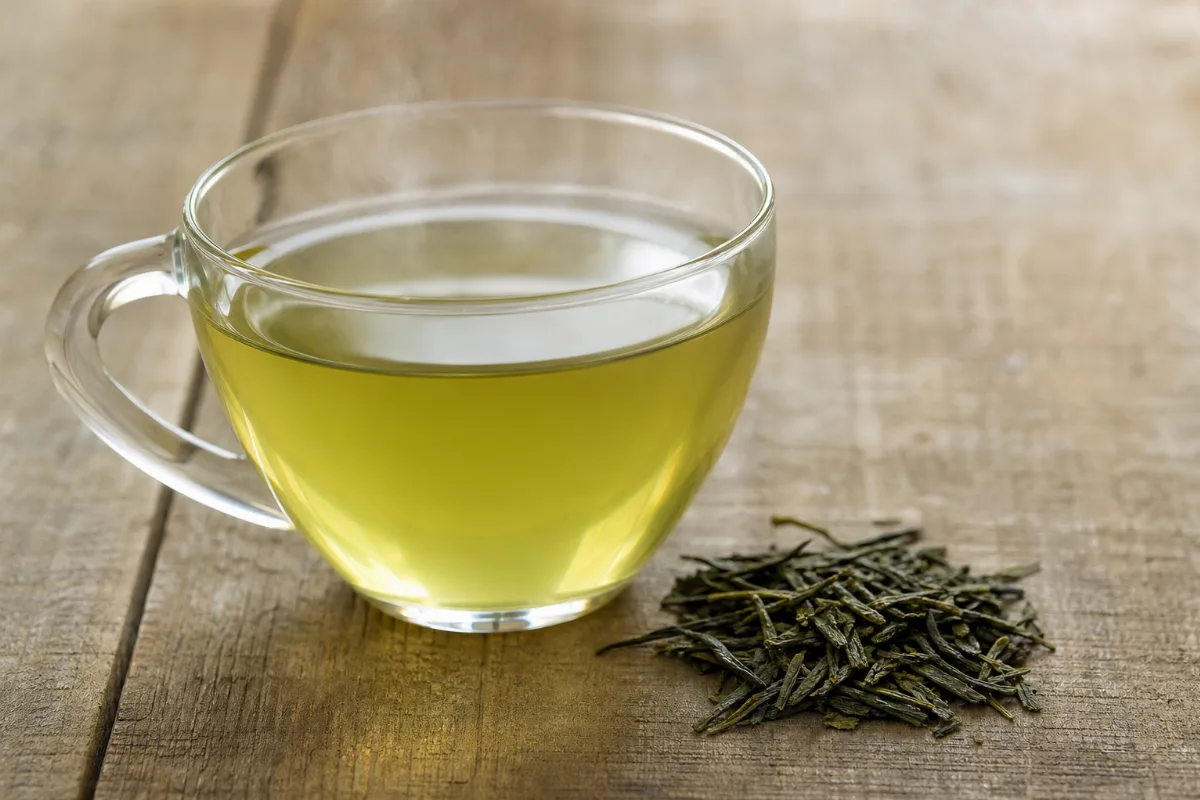
Herbal Teas & Extracts · Tea
Green Tea
Camellia sinensis · also called Green tea, tea (unfermented tea leaf). Not the same as green tea extract capsules.
Green tea is a drink made from the leaves of the tea plant, steamed or pan fried and dried but not fermented. People drink it for heart health, weight, focus and general wellbeing. Research shows small or uncertain effects at best, and most trials mix the drink with extracts. The drink has no safety concerns reported for adults apart from its caffeine, but concentrated extract capsules have been linked to rare serious liver injury.
General information, not medical advice. Last substantive update · Not medically reviewed. A named clinician has not signed off on this page. How this page is made
About Green Tea
Green tea is the drink from unfermented tea leaves. Research gives small or uncertain results for heart risk factors, almost nothing for weight or cancer, and no effect on blood sugar in trials. NCCIH reports no safety concerns for the drink in adults beyond caffeine. Concentrated extract capsules are a separate product: they have been linked to rare serious liver injury and should not be judged by tea results.
What it is
Green tea comes from the leaves of Camellia sinensis, a plant of the tea family (Theaceae) that GBIF accepts as a species. Green, black and oolong teas all come from this same plant and differ in how the leaves are processed. For green tea the leaves are steamed or pan fried and dried but not fermented.
The drink contains caffeine, L-theanine and catechins, mainly EGCG. Matcha is the whole leaf ground to powder, and extract capsules are concentrated catechins; each is a different product.
Tea, matcha or extract?
A cup of green tea is a weak water extract of the leaf. A capsule or tablet packs catechins into a concentrated pill. The liver warnings and many trial results belong to the concentrated form. A systematic review of 159 human studies found liver events came from concentrated, catechin-rich preparations taken in large single doses, and not from brewed tea or extracts used in drinks or food. Do not carry results from one form to the other.
What the research shows
Cochrane found small falls in cholesterol and blood pressure from a few green tea trials, but the results were not stable and no trial reported heart attacks or strokes. A later review of 14 shorter tea trials found no effect on lipids or blood pressure. Outside Japan green tea gave almost no weight loss.
Cochrane found inconsistent, low-certainty results for cancer. In eight Japanese cohorts, heavy drinkers had lower death rates, which shows a link and not a cause. For thinking, one review of mixed studies suggests a role for caffeine and L-theanine together. Trials of green tea supplements in type 2 diabetes found no effect on blood sugar.
Fluoride and brewing
Tea plants take up fluoride from the soil, and longer brewing releases more. A review of 88 studies found average fluoride was lower in green tea than in black or brick tea. Fluoride matters most for young children and very heavy tea drinkers. One lab study of Turkish green tea found 3 minutes in 85 C water gave the most EGCG with the best taste, but that is one tea and not a rule. No measured lead, cadmium or pesticide figures for green tea were found in the sources read.
Regulators and status
The EMA has an EU herbal monograph and assessment report for green tea leaf; only the web page was read. EFSA judged traditional infusions generally safe at European intakes. NCCIH notes that the FDA approved a green tea extract ointment as a prescription drug for genital warts, which is a topical medicine and not a drink or supplement.
At a glance
Traditional uses history, not proof
- Tea was first grown in China thousands of years ago, and NCCIH says it has been used for health purposes for about 3,000 years.
- Today green tea and its extracts are promoted as supplements for weight loss, lower cholesterol and prevention of chronic disease (NCCIH).
- The European Medicines Agency has an EU herbal monograph for green tea leaf (therapeutic area listed as fatigue and weakness).
Studied for research
- Cholesterol, low
- Blood pressure, low
- Body weight, low
- Heart disease and death rates in drinkers (an association), low
- Attention, memory and mood, low
- Cancer risk, insufficient
- Dementia risk, very low
- Blood sugar in type 2 diabetes, no effect found (against)
Main compounds
- Catechins, mainly EGCG
- Caffeine
- L-theanine
- Tannins and other polyphenols
Common forms
- Brewed tea from loose leaf or tea bags
- Matcha (whole leaf powder, separate page)
- Bottled and iced green tea
- Concentrated extract capsules and tablets (a different product with a liver warning)
Research links: NCCIH: Green Tea · EFSA opinion on green tea catechins (abstract) · Cochrane: green tea and heart disease prevention (abstract) · Cochrane: green tea and cancer prevention (abstract) · LiverTox: Green Tea (summary) · FDA: How much caffeine is too much · Research Library · Genes & Biomarkers Library
What it is and its history
- Accepted scientific name
- Camellia sinensis
- Naming authority
- (L.) Kuntze
- Synonyms
- Camellia bohea (L.) Sweet; Camellia chinensis (Sims) Kuntze; Camellia cantonensis Lour.
- Common names
- Green tea (English); Tea (English)
- Family or group
- Theaceae (the tea family)
- Classification
- Plantae > Ericales > Theaceae > Camellia > Camellia sinensis
- Native range
- Not checked in the sources read (NCCIH says tea was first cultivated in China thousands of years ago).
- Habitat
- Not checked.
- What it looks like
- Stems: Stems are present in some tea products (LactMed).; Leaves: The leaf is the part used; steamed, pan fried and dried but not fermented for green tea (NCCIH).; Flowers: Not checked.; Fruit: Not checked.
- Cultivation
- Not checked.
- Harvest and processing
- Green tea leaves are steamed, pan fried and dried but not fermented. Black tea is fermented and oolong partly fermented (NCCIH).
- Look-alikes and adulterants
- Name: Green tea extract and other tea types; Note: Matcha, black tea and oolong come from the same plant but are different products; extract capsules are concentrated and behave differently from brewed tea.
- Sustainability and conservation
- Not checked.
Photographs
Traditional use and history history, not clinical proof
| Tradition or era | Documented use | Source |
|---|---|---|
| China, early use | NCCIH says tea was first cultivated in China thousands of years ago and that tea was used for health purposes for about 3,000 years. | s-nccih-green-tea |
| European herbal medicine | EMA has an EU herbal monograph and assessment report for green tea leaf (Camelliae sinensis non fermentatum folium) with therapeutic area "Fatigue and weakness". The wording of the monograph was not read. | s-ema-hmpc-green-tea |
| Today | NCCIH says green tea and extracts are promoted as supplements for weight loss, lower cholesterol and prevention of chronic disease, and that the FDA approved a topical green tea extract ointment for genital warts. | s-nccih-green-tea |
Traditional use shows how it was used. It does not show that it works or is safe today.
What is inside, and how it may work
What it contains and how those compounds act in cells and animals. Laboratory and animal mechanisms are not proven effects in people.
Main compounds
| Compound | Family | Where it is concentrated | Activity studied | Level of evidence |
|---|---|---|---|---|
| Epigallocatechin gallate (EGCG) PubChem 65064 | catechin (polyphenol) | Leaf The main catechin in green tea (EFSA). One lab study measured it in a Turkish green tea brew; the amount depends on brewing. | Liver effects at high supplement doses; other actions not established in the sources read. 28 4 20 | Human data |
| Caffeine PubChem 2519 | purine alkaloid | Leaf 37 mg per 12 fl oz drink (FDA). | Stimulant; see Safety tab. 29 24 | Human data |
| L-theanine PubChem 439378 | amino acid | Leaf Not given in the sources read. | Reviewers link benefits for attention to caffeine and L-theanine together. 30 14 15 | Human data |
| Tannins and other polyphenols | polyphenols | Leaf and stem Not given. | Tea polyphenols lower iron absorption (radio-iron study, black and herb teas). 15 9 | Human data |
Mechanisms, receptors and pathways
| Target or pathway | Gene or receptor | What was found | Level |
|---|---|---|---|
| Energy use (hypothesis) | n/a | The Cochrane weight review states that catechins and caffeine are believed to increase energy metabolism; it found almost no weight change outside Japan. 12 | Hypothesis by reviewers |
| Liver injury from concentrated EGCG | UGT1A4 and COMT variants (secondary trial analysis); an immune-related gene variant (NCCIH) | Toxicology review: liver is the target organ in lab studies, tied to large single doses and fasting and to EGCG content. In a secondary trial analysis, women with the UGT1A4 A/C variant had larger ALT rises on high-dose extract. 8 2 25 | Lab and human |
| Caffeine plus L-theanine on attention | n/a | Cognitive benefits were seen with caffeine and L-theanine together and less with either alone. 14 | Human review |
| Iron absorption | n/a | Tea polyphenols reduce absorption of non-haem iron in a dose-related way (radio-iron study of black and herb teas). 9 | Human data |
Absorption, metabolism and elimination
- Absorption
- Not covered in the sources read.
- Distribution
- Not covered.
- Metabolism
- A secondary trial analysis links the enzymes COMT and UGT1A4 with liver enzyme changes on high-dose extract.
- Elimination
- Not covered.
- Bioavailability
- Not covered.
Isolated compounds versus whole extracts
Brewed tea, powdered whole leaf (matcha), liquid extracts and concentrated EGCG capsules are different products. EFSA estimates that supplements can deliver far more EGCG than infusions do; liver warnings come from the concentrated form. Hu and colleagues found liver events from concentrated preparations in large single doses, not from brewed tea. Trial results for extract cannot be applied to the drink, or the other way round.
Nutritional composition
Green tea is not a source of essential nutrients in the sources read. It contains caffeine, L-theanine, catechins and tannins.
5 low certainty1 very low certainty1 not enough evidence1 evidence against
What was looked at
The 8 benefits and uses checked for Green Tea, each with how strong the evidence is. Tap one to open it.
- CholesterolLow certainty
- Blood pressureLow certainty
- Body weightLow certainty
- Cancer riskNot enough evidence
- Heart disease and death rates in drinkersLow certainty
- Attention, memory and moodLow certainty
- Dementia and memory loss riskVery low certainty
- Blood sugar in type 2 diabetesEvidence against
Lab markers tracked in the studies
LDL cholesterolSystolic blood pressureBody weightDeath from any causeHbA1cAttention and memory tests
What is Green Tea good for?
The uses people ask about and how strong the human evidence is for each. Most trials mix the drink with extracts, so none of these results is a clean answer about a cup of tea.
Benefits, one by one
Each card is a research question, not a promise. Tap a goal to filter. Open a card to see the studies, doses and limits.
Cholesterol
Low certaintyPooled trials of green tea drinks and extracts show a small average fall in total and LDL cholesterol. Two reviews disagree, and most of the trial data comes from extract or mixed products, so the result for a cup of tea is uncertain.
4 studiesMixed: drinks and extracts. Not a drink-only result.
Studies, doses and limits
What the trials found
A 2011 meta-analysis of 14 trials (1,136 people) of green tea drinks or extracts found a small fall in total and LDL cholesterol and no change in HDL. A Cochrane review of 7 green tea trials found larger falls that were not stable when checked. A 2020 review of 14 shorter trials of green or black tea (4 to 24 weeks) found no significant effect. NCCIH says most trials tested extract supplements, not the drink.
Results
Total cholesterol -7.20 mg/dL (95% CI -8.19 to -6.21) and LDL -2.19 mg/dL (-3.16 to -1.21) in the 2011 pooled trials; Cochrane green tea: total -0.62 mmol/L and LDL -0.64 mmol/L, not stable to sensitivity analysis; 2020 review: no significant change.
Effect sizes as reported
Small average falls; reviewers disagree on whether they are real in short trials.
Why this rating
Pooled drinks and extracts, small trials, results not stable, a later review found no effect.
Form and dose studied
Mixed: drinks and extracts. Not a drink-only result.
Who was studied
Healthy adults and adults at higher risk, mostly short trials.
Limits
Product types differ; most trials are short; no heart attack or stroke outcomes.
Why researchers looked
High LDL cholesterol is a risk factor for heart disease, and green tea catechins are often said to help.
Traditional use
Not described in the sources read.
Proposed mechanism Not established
No mechanism was established in the sources read.
A proposed mechanism does not show that the effect happens in people.
Brewed green tea has no safety concerns reported in adults (NCCIH) but contains caffeine. Concentrated extract capsules are a different product with rare serious liver injury reports. See the Safety tab.
Blood pressure
Low certaintyReviews find a very small average fall in blood pressure, with big differences between studies. One review of short trials found no effect.
3 studiesGreen tea supplementation; the 2025 abstract does not separate drink …
Studies, doses and limits
What the trials found
A 2025 meta-analysis of 36 trials of green tea supplementation found average falls of about 1 mmHg in both systolic and diastolic pressure with very high differences between trials. The Cochrane review found larger falls (about 3 mmHg) from a small number of green tea trials that were not stable. A 2020 review of 14 trials of green or black tea (4 to 24 weeks) found no significant effect.
Results
Systolic -1.08 mmHg (95% CI -1.98 to -0.18), diastolic -1.09 mmHg (-1.67 to -0.50) in 36 trials; Cochrane green tea systolic -3.18 mmHg, diastolic -3.42 mmHg, unstable; 2020 review: no significant effect.
Effect sizes as reported
About 1 to 3 mmHg at most.
Why this rating
Very large differences between trials (I2 74 to 85 percent), unstable Cochrane result, one review with no effect.
Form and dose studied
Green tea supplementation; the 2025 abstract does not separate drink from extract.
Who was studied
Adults, with stronger effects in people who started with raised blood pressure.
Limits
Heterogeneity; mixed forms; small average change that may not matter to health.
Why researchers looked
High blood pressure is a leading risk factor for heart disease and stroke.
Traditional use
Not described in the sources read.
Proposed mechanism Not established
No mechanism was established in the sources read.
A proposed mechanism does not show that the effect happens in people.
Brewed green tea has no safety concerns reported in adults (NCCIH) but contains caffeine. Concentrated extract capsules are a different product with rare serious liver injury reports. See the Safety tab. The authors call green tea a complementary approach, not a treatment for high blood pressure.
Body weight
Low certaintyA Cochrane review found almost no weight loss from green tea outside Japan. The Japanese trials were too different to combine and ranged from little change to a few kilograms.
2 studiesGreen tea preparations, drinks and extracts.
Studies, doses and limits
What the trials found
The review included trials of at least 12 weeks in overweight or obese adults: six outside Japan (532 people) and eight in Japan (1,030 people).
Results
Outside Japan: weight -0.04 kg (95% CI -0.5 to 0.4), BMI -0.2 kg/m2, waist -0.2 cm; none significant. Japanese trials ranged from -0.2 to -3.5 kg and could not be pooled.
Effect sizes as reported
No meaningful change outside Japan.
Why this rating
Short trials of 12 to 13 weeks, many preparation types, results differ by region.
Form and dose studied
Green tea preparations, drinks and extracts.
Who was studied
Overweight and obese adults.
Limits
Not a drink-only result; short.
Why researchers looked
Green tea contains catechins and caffeine, which reviewers say are believed to raise energy use.
Traditional use
NCCIH says green tea and extracts are promoted for weight loss.
Proposed mechanism Hypothesis
The Cochrane reviewers state a belief that catechins and caffeine may raise energy metabolism; they say the efficacy remains unclear.
A proposed mechanism does not show that the effect happens in people.
Brewed green tea has no safety concerns reported in adults (NCCIH) but contains caffeine. Concentrated extract capsules are a different product with rare serious liver injury reports. See the Safety tab.
Cancer risk
Not enough evidenceA large Cochrane review found inconsistent, low-certainty results. It does not show that green tea prevents cancer.
2 studiesExtract in trials; drinking in observational studies.
Studies, doses and limits
What the trials found
The review used 142 studies: 11 trials of green tea extract (1,795 people) and 131 observational studies (over 1,100,000 people).
Results
Extract trials: prostate cancer RR 0.50 (95% CI 0.18 to 1.36), gynaecological RR 1.50 (0.41 to 5.48), skin RR 1.00 (0.06 to 15.92). Observational highest versus lowest intake: cancer incidence RR 0.83 (0.65 to 1.07); cancer death RR 0.99 (0.91 to 1.07). Results conflicted between study designs for some cancers.
Effect sizes as reported
Intervals include no effect.
Why this rating
Low-certainty and inconsistent results; mostly observational; Asian populations.
Form and dose studied
Extract in trials; drinking in observational studies.
Who was studied
Adults, mostly in Asia.
Limits
Cannot show cause; trials used extract.
Why researchers looked
Lab studies have suggested catechins may slow cancer cell growth; population studies have asked whether tea drinkers get less cancer.
Traditional use
Not described in the sources read.
Proposed mechanism Lab only
Cochrane notes that laboratory studies have suggested catechins may inhibit cancer cell growth. This is lab work and not shown in people.
A proposed mechanism does not show that the effect happens in people.
Brewed green tea has no safety concerns reported in adults (NCCIH) but contains caffeine. Concentrated extract capsules are a different product with rare serious liver injury reports. See the Safety tab.
Heart disease and death rates in drinkers
Low certaintyIn Japan, people who drank five or more cups a day had somewhat lower death rates than people who drank less than one. This is an association and does not show tea caused it.
2 studiesGreen tea as a drink.
Studies, doses and limits
What the trials found
A pooled analysis of eight Japanese cohorts followed 313,381 people for a mean 17.3 years.
Results
Five or more cups a day versus less than one: all-cause death HR 0.90 (0.87 to 0.94) in men and 0.82 (0.74 to 0.90) in women; heart disease HR 0.82 and 0.75; stroke-type HR 0.76 and 0.78. In women only, total cancer death HR 0.89 (0.83 to 0.96) at 1 to 2 cups.
Effect sizes as reported
Roughly 10 to 18 percent lower all-cause death among the heaviest drinkers.
Why this rating
Observational; healthier lifestyle among drinkers cannot be ruled out; Japanese data.
Form and dose studied
Green tea as a drink.
Who was studied
Japanese adults.
Limits
Self-reported intake; cannot show cause; may not apply outside Japan.
Why researchers looked
Green tea is part of daily life in Japan, so large cohorts can compare heavy and light drinkers.
Traditional use
NCCIH notes that lower heart disease risk has been linked to green tea in Asian but not Western groups.
Proposed mechanism Not established
Not established. Observational data cannot identify a mechanism.
A proposed mechanism does not show that the effect happens in people.
Brewed green tea has no safety concerns reported in adults (NCCIH) but contains caffeine. Concentrated extract capsules are a different product with rare serious liver injury reports. See the Safety tab.
Attention, memory and mood
Low certaintyA systematic review found signs of better attention and memory and less anxiety, mostly in small or short studies. The effect seems to come from caffeine and L-theanine together.
1 studiesGreen tea, green tea extract, L-theanine and EGCG.
Studies, doses and limits
What the trials found
Mancini 2017 reviewed 21 studies (4 randomised trials, 12 crossover studies, 4 cross-sectional studies, 1 cohort) on green tea, green tea extract, L-theanine and EGCG.
Results
The reviewers report evidence of less anxiety, better memory and attention and brain-scan changes with working memory. The abstract gives no numbers.
Effect sizes as reported
Not given in the abstract.
Why this rating
Mixed products (drink, extract, isolated L-theanine), many short or single-dose studies, no numbers in abstract.
Form and dose studied
Green tea, green tea extract, L-theanine and EGCG.
Who was studied
Mostly healthy adults.
Limits
Not a drink-only result; PubMed only; reviewers own quality scores.
Why researchers looked
Green tea contains caffeine and L-theanine, and people drink it for alertness with calm.
Traditional use
Not described in the sources read.
Proposed mechanism Human study observation
The reviewers say the effect cannot be put down to one ingredient: benefits for cognition appeared with caffeine and L-theanine together and were smaller with either alone.
A proposed mechanism does not show that the effect happens in people.
Brewed green tea has no safety concerns reported in adults (NCCIH) but contains caffeine. Concentrated extract capsules are a different product with rare serious liver injury reports. See the Safety tab.
Dementia and memory loss risk
Very low certaintyObservational studies lean towards lower risk in green tea drinkers, but they are few and mixed, and cannot show that tea is the reason.
1 studiesGreen tea as a drink.
Studies, doses and limits
What the trials found
A 2019 systematic review found 3 cohort and 5 cross-sectional studies.
Results
One cohort and three cross-sectional studies supported a benefit, one cohort and one cross-sectional study partly supported it, and one of each found no link.
Effect sizes as reported
Not given in the abstract.
Why this rating
Eight observational studies, mixed results, cannot show cause.
Form and dose studied
Green tea as a drink.
Who was studied
Mostly Asian adults.
Limits
Observational; small number of studies.
Why researchers looked
Population studies in Asia asked whether regular green tea drinkers keep their memory longer.
Traditional use
Not described in the sources read.
Proposed mechanism Not established
Not established.
A proposed mechanism does not show that the effect happens in people.
Brewed green tea has no safety concerns reported in adults (NCCIH) but contains caffeine. Concentrated extract capsules are a different product with rare serious liver injury reports. See the Safety tab.
Blood sugar in type 2 diabetes
Evidence againstA meta-analysis of 14 trials found no significant effect of green tea supplements on blood sugar measures in people with type 2 diabetes.
1 studiesGreen tea supplementation; type not stated in the abstract.
Studies, doses and limits
What the trials found
A 2021 meta-analysis pooled 14 randomised trials in people with type 2 diabetes.
Results
No significant effect on fasting glucose, fasting insulin, HbA1c or insulin resistance (HOMA-IR).
Effect sizes as reported
No significant effect.
Why this rating
One meta-analysis of 14 trials found no effect; the abstract does not give the product type; small trials, so no effect is not proof of none.
Form and dose studied
Green tea supplementation; type not stated in the abstract.
Who was studied
Adults with type 2 diabetes.
Limits
Small trials; form unclear.
Why researchers looked
Catechins have been proposed to affect blood sugar and insulin.
Traditional use
Not described in the sources read.
Proposed mechanism Not established
Not established in the source read.
A proposed mechanism does not show that the effect happens in people.
Brewed green tea has no safety concerns reported in adults (NCCIH) but contains caffeine. Concentrated extract capsules are a different product with rare serious liver injury reports. See the Safety tab. People taking diabetes medicines should speak to their prescriber before using any supplement.
Connections to the rest of health
How Green Tea connects to the rest of our health knowledge graph. Every link says what kind of connection it is. A safety link (for example to the liver) is a warning, not a benefit. A study that merely mentions a topic never creates a benefit link.
Explore every connection: goals, body systems, organs, symptoms, genes
A. Wellness goals
| Connected to | Kind of connection | Evidence status | Context | Studies |
|---|---|---|---|---|
| Cholesterol Balance | Low certainty | Cholesterol: Pooled trials of green tea drinks and extracts show a small average fall in total and LDL cholesterol. Two reviews disagree, and most of the trial data comes from extract or mixed products, so the result for a cup of tea is uncertain. | 22 6 10 25 | |
| Heart Health | Low certainty | Cholesterol: Pooled trials of green tea drinks and extracts show a small average fall in total and LDL cholesterol. Two reviews disagree, and most of the trial data comes from extract or mixed products, so the result for a cup of tea is uncertain. Blood pressure: Reviews find a very small average fall in blood pressure, with big differences between studies. One review of short trials found no effect. | 22 6 10 25 18 | |
| Blood Pressure Support | Low certainty | Blood pressure: Reviews find a very small average fall in blood pressure, with big differences between studies. One review of short trials found no effect. | 18 6 10 | |
| Weight Management | Low certainty | Body weight: A Cochrane review found almost no weight loss from green tea outside Japan. The Japanese trials were too different to combine and ranged from little change to a few kilograms. | 12 25 | |
| Preventive Wellness | Not enough evidence | Cancer risk: A large Cochrane review found inconsistent, low-certainty results. It does not show that green tea prevents cancer. | 5 25 | |
| Heart Health | Biological association | Low certainty | Heart disease and death rates in drinkers: In Japan, people who drank five or more cups a day had somewhat lower death rates than people who drank less than one. This is an association and does not show tea caused it. | 1 25 |
| Longevity | Biological association | Low certainty | Heart disease and death rates in drinkers: In Japan, people who drank five or more cups a day had somewhat lower death rates than people who drank less than one. This is an association and does not show tea caused it. | 1 25 |
| Mental Clarity | Low certainty | Attention, memory and mood: A systematic review found signs of better attention and memory and less anxiety, mostly in small or short studies. The effect seems to come from caffeine and L-theanine together. | 14 | |
| Better Focus | Low certainty | Attention, memory and mood: A systematic review found signs of better attention and memory and less anxiety, mostly in small or short studies. The effect seems to come from caffeine and L-theanine together. | 14 | |
| Memory Support | Low certainty | Attention, memory and mood: A systematic review found signs of better attention and memory and less anxiety, mostly in small or short studies. The effect seems to come from caffeine and L-theanine together. | 14 | |
| Brain Health | Low certainty | Attention, memory and mood: A systematic review found signs of better attention and memory and less anxiety, mostly in small or short studies. The effect seems to come from caffeine and L-theanine together. | 14 | |
| Brain Health | Biological association | Very low certainty | Dementia and memory loss risk: Observational studies lean towards lower risk in green tea drinkers, but they are few and mixed, and cannot show that tea is the reason. | 13 |
| Healthy Aging | Biological association | Very low certainty | Dementia and memory loss risk: Observational studies lean towards lower risk in green tea drinkers, but they are few and mixed, and cannot show that tea is the reason. | 13 |
| Blood Sugar Balance | Evidence against | Blood sugar in type 2 diabetes: A meta-analysis of 14 trials found no significant effect of green tea supplements on blood sugar measures in people with type 2 diabetes. | 3 | |
| Metabolic Health | Evidence against | Blood sugar in type 2 diabetes: A meta-analysis of 14 trials found no significant effect of green tea supplements on blood sugar measures in people with type 2 diabetes. | 3 |
B. Body systems
| Connected to | Kind of connection | Evidence status | Context | Studies |
|---|---|---|---|---|
| Cardiovascular System | Biological association | Low certainty | Studied for: Cholesterol Studied for: Blood pressure | 22 6 10 25 18 1 |
| Metabolism Weight | Biological association | Low certainty | Studied for: Body weight Studied for: Blood sugar in type 2 diabetes | 12 25 3 |
| Cellular | Biological association | Not enough evidence | Studied for: Cancer risk | 5 25 |
| Brain Focus | Biological association | Low certainty | Studied for: Attention, memory and mood Studied for: Dementia and memory loss risk | 14 13 |
C. Body parts and organs
E. Health conditions
| Connected to | Kind of connection | Evidence status | Context | Studies |
|---|---|---|---|---|
| Pregnancy | Contraindication | Low certainty | Counts toward the caffeine limit. Preparation or compound: Green tea (caffeine) |
26 25 |
| Iron-deficiency anemia | Adverse effect or risk | Very low certainty | Tea can lower iron absorption; one case report. Preparation or compound: Green tea drink |
9 7 |
I. Biomarkers
| Connected to | Kind of connection | Evidence status | Context | Studies |
|---|---|---|---|---|
| LDL cholesterol | Biological association | Low certainty | Measured in trials: lowered. A lab change is not the same as a health benefit. | 22 10 6 |
| Systolic blood pressure | Biological association | Low certainty | Measured in trials: lowered. A lab change is not the same as a health benefit. | 18 10 6 |
| Body weight | Biological association | Low certainty | Measured in trials: unchanged. A lab change is not the same as a health benefit. | 12 |
| Death from any cause | Biological association | Low certainty | Measured in trials: lowered. A lab change is not the same as a health benefit. | 1 |
| HbA1c | Biological association | Evidence against | Measured in trials: unchanged. A lab change is not the same as a health benefit. | 3 |
| Attention and memory tests | Biological association | Low certainty | Measured in trials: raised. A lab change is not the same as a health benefit. | 14 |
J. Genes, receptors and enzymes
L. Active compounds
| Connected to | Kind of connection | Evidence status | Context | Studies |
|---|---|---|---|---|
| Caffeine | Adverse effect or risk | Moderate certainty | Counts toward daily caffeine; see FDA and NHS figures. Preparation or compound: Green tea |
24 26 |
| Epigallocatechin gallate (EGCG) | Biological association | Human | Liver effects at high supplement doses; other actions not established in the sources read. Preparation or compound: Leaf |
28 4 20 |
| Caffeine | Biological association | Human | Stimulant; see Safety tab. Preparation or compound: Leaf |
29 24 |
| L-theanine | Biological association | Human | Reviewers link benefits for attention to caffeine and L-theanine together. Preparation or compound: Leaf |
30 14 15 |
| Tannins and other polyphenols | Biological association | Human | Tea polyphenols lower iron absorption (radio-iron study, black and herb teas). Preparation or compound: Leaf and stem |
15 9 |
Each connection is stored with the ingredient, the connected record, the kind of connection, the evidence status, the supporting studies, the preparation or compound involved, and a review date (last reviewed October 25, 2026).
The evidence
The research centre for Green Tea. Every record here was checked against PubMed or the publisher's page; we never list a study we have not verified.
Evidence by outcome
Bars show how many studies we found for each outcome, not how well it works. People are added up across trials only (reviews are not added, to avoid double counting).
How we rate evidence
High certainty
Several well-run trials or reviews agree; further research is unlikely to change the picture much.
Moderate certainty
Good trials point the same way, but some doubt remains.
Low certainty
Small, short or inconsistent trials. The finding could change with better research.
Very low certainty
Very little or very weak human data. Treat as a possibility only.
Mixed findings
Trials or reviews disagree with each other.
Not enough evidence
Not enough human research to say either way.
Evidence against
Good research found no benefit, or found harm.
We take the reviewers' own risk-of-bias and GRADE statements where they exist, and otherwise judge from study size, design, consistency, directness and whether a product matches what is sold. Many publications do not make evidence high. Method note: We searched PubMed and read the abstracts of about 22 sources, read the NCCIH, FDA, NHS and EMA pages and the IARC press release, checked the plant name in GBIF and three compounds in PubChem, and looked for LiverTox and LactMed (summary records read; the full LiverTox page was not opened). Only abstracts were read for papers. Certainty ratings are the compiler's own reading. No funding statement was read for most papers, so industry links are not ruled out. No study is cited that we could not verify.
Study library: every study we checked 31
| Study | Design | People | Product, dose, length | Result |
|---|---|---|---|---|
| Abe 2019 Green tea consumption and mortality in Japanese men and women: a pooled analysis of eight population-based cohort studies in Japan European Journal of Epidemiology · PMID 31392470 · DOI |
Pooled cohort |
313381 313,381 Japanese adults in eight cohorts; 52,943 deaths over a mean 17.3 years |
Green tea drinking (self-reported) leaf (drink) Five or more cups a day versus less than one Mean follow-up 17.3 years · vs Drinking less than 1 cup a day |
Five or more cups a day versus less than one: all-cause death HR 0.90 (95% CI 0.87 to 0.94) in men and 0.82 (0.74 to 0.90) in women; heart disease HR 0.82 (0.75 to 0.90) men, 0.75 (0.68 to 0.84) women; stroke-type (cerebrovascular) HR 0.76 (0.68 to 0.85) men, 0.78 (0.68 to 0.89) women. In women, total cancer death HR 0.89 (0.83 to 0.96) at 1 to 2 cups and 0.91 (0.85 to 0.98) at 3 to 4 cups. Lower death rates among heavy green tea drinkers (an association) (All-cause HR 0.90 (0.87, 0.94) men; 0.82 (0.74, 0.90) women) Methods, limits and fundingOutcomes: Deaths from all causes, heart disease, stroke, cancer, respiratory disease Limitations: Observational: tea drinkers may differ in diet, exercise and health; Japanese data may not apply elsewhere Funding and conflicts: Not stated in the abstract Read: abstract |
| Acosta 2023 Hepatotoxicity with High-Dose Green Tea Extract: Effect of Catechol-O-Methyltransferase and Uridine 5-Diphospho-glucuronosyltransferase 1A4 Genotypes Journal of Dietary Supplements · PMID 36178169 · DOI |
Controlled trial |
1075 Postmenopausal women in the Minnesota Green Tea Trial (400 in the extract group), mean age 59.8 years |
High-dose green tea extract capsules (843 mg/day EGCG) versus placebo capsules extract 843 mg/day EGCG 12 months · vs Placebo capsules |
This is a secondary analysis. In the extract group, women with the UGT1A4 (rs6755571) A/C variant had larger rises in ALT (about +78% and +82% at months 6 and 9) than women with C/C (about +28% and +30%). The authors suggest this variant may be a risk factor for meaningful liver enzyme rises with 6 to 9 months of high-dose extract. Genes may affect who gets liver enzyme rises on high-dose extract (ALT change differences p<0.001 and p=0.004 (months 6 and 9)) Methods, limits and fundingOutcomes: Liver enzymes by gene variant Limitations: Secondary analysis; mostly white women; extract only; not about tea Funding and conflicts: Not stated in the abstract Read: abstract |
| Asbaghi 2021 Effect of green tea on glycemic control in patients with type 2 diabetes mellitus: A systematic review and meta-analysis Diabetes & Metabolic Syndrome · PMID 33285391 · DOI |
Meta-analysis |
14 randomised trials in people with type 2 diabetes | Green tea supplementary intake Differed Differed · vs Control |
Supplementary green tea had no significant effect on fasting glucose, fasting insulin, HbA1c or HOMA-IR. No significant effect found Methods, limits and fundingOutcomes: Fasting glucose, fasting insulin, HbA1c, HOMA-IR Limitations: Small trials; the abstract does not say whether the trials used drink or extract; no effect found is not proof of no effect Funding and conflicts: Not stated in the abstract Read: abstract |
| EFSA Panel on Food Additives and Nutrient Sources added to Food (ANS) 2018 Scientific opinion on the safety of green tea catechins EFSA Journal · PMID 32625874 · DOI |
Regulatory opinion |
Review of published studies, authority reports and submitted data | Green tea infusions, reconstituted drinks and food supplements containing catechins leaf (drink) and extract Mean EGCG intake from infusions in the EU 90 to 300 mg/day (up to 866 mg/day for high-level drinkers); supplements 5 to 1,000 mg/day |
Catechins from traditionally prepared green tea infusions, and reconstituted drinks of the same composition, are in general considered safe at the intakes reported in EU countries. Rare cases of liver injury have been reported after infusions, most probably an idiosyncratic (individual) reaction. Clinical trials show that EGCG at or above 800 mg a day taken as a food supplement raised liver enzymes (serum transaminases) compared with control. Drink generally safe at usual intakes; high-dose supplements raise liver enzymes Methods, limits and fundingOutcomes: Liver safety of catechins (EGCG) Limitations: Abstract only was read; the full opinion could not be opened Funding and conflicts: Regulator opinion Read: abstract |
| Filippini 2020 Green tea (Camellia sinensis) for the prevention of cancer Cochrane Database of Systematic Reviews · PMID 32118296 · DOI |
Systematic review |
142 studies: 11 randomised trials (1795 people, green tea extract versus placebo) and 131 observational studies (over 1,100,000 people) | Green tea extract in trials; drinking green tea in observational studies leaf (drink) and extract Differed Differed · vs Placebo (trials); lowest intake (cohorts) |
Trials of extract (low-certainty): prostate cancer RR 0.50 (95% CI 0.18 to 1.36), gynaecological cancer RR 1.50 (0.41 to 5.48), non-melanoma skin cancer RR 1.00 (0.06 to 15.92). Observational, highest versus lowest intake: overall cancer incidence RR 0.83 (0.65 to 1.07, three studies); cancer death RR 0.99 (0.91 to 1.07, eight studies); both low-certainty. Results conflicted by study design for oesophageal, prostate and urinary cancers and leukaemia. The authors call the evidence limited and inconsistent. Extract side effects included stomach and gut problems, raised liver enzymes and, more rarely, insomnia, raised blood pressure and skin reactions. No clear effect on cancer risk; inconsistent (Prostate RR 0.50 (0.18, 1.36); cancer incidence RR 0.83 (0.65, 1.07); cancer mortality RR 0.99 (0.91, 1.07)) Methods, limits and fundingOutcomes: Cancer incidence and death, adverse effects, quality of life Limitations: Most studies in Asian populations who drink a lot of green tea; observational studies cannot prove cause; trials used extract Funding and conflicts: Non-US government support listed in PubMed record Read: abstract |
| Hartley 2013 Green and black tea for the primary prevention of cardiovascular disease Cochrane Database of Systematic Reviews · PMID 23780706 · DOI |
Systematic review |
821 11 randomised trials of at least 3 months in healthy adults or adults at high risk of heart disease; 7 trials tested green tea, 4 black tea |
Green tea, black tea or tea extracts (doses and forms differed between trials) leaf (drink) and extracts Differed between trials At least 3 months · vs No intervention, placebo or minimal intervention |
No trial reported heart or blood vessel events. Green tea: total cholesterol -0.62 mmol/L (95% CI -0.77 to -0.46), LDL cholesterol -0.64 mmol/L (-0.77 to -0.52), systolic blood pressure -3.18 mmHg (-5.25 to -1.11), diastolic -3.42 (-4.54 to -2.30). The authors say only a small number of studies contributed and the green tea results were not stable to sensitivity analysis. Adverse events in five trials were judged unlikely to be due to the tea. Small lowering of cholesterol and blood pressure, unstable (TC MD -0.62 (-0.77, -0.46); LDL MD -0.64 (-0.77, -0.52); SBP MD -3.18 (-5.25, -1.11)) Methods, limits and fundingOutcomes: Heart disease events, blood pressure, cholesterol Limitations: Few trials per analysis, risk of bias, forms and doses mixed (drink and extract); no long-term follow-up Funding and conflicts: Non-US government support listed in PubMed record; no industry funding stated in the abstract Read: abstract |
| He 2024 Severe iron-deficiency anemia after short-term moderate consumption of green tea in woman: A rare case report Heliyon · PMID 39263133 · DOI |
Case report |
1 One woman who drank moderate amounts of green tea for about three months |
Green tea drink leaf (drink) Moderate (amount not given in the abstract) About 3 months |
Haemoglobin fell by 6.9 g/dl with severe iron-deficiency anemia. After she changed her tea habits there was no recurrence. The authors say clinicians should know even moderate tea intake can cause severe anemia in people who are especially vulnerable to its effect on iron absorption. One reported case of severe anemia Methods, limits and fundingOutcomes: Haemoglobin Limitations: Single case; other causes of iron loss are not described in the abstract Funding and conflicts: Not stated Read: abstract |
| Hu 2018 The safety of green tea and green tea extract consumption in adults - Results of a systematic review Regulatory Toxicology and Pharmacology · PMID 29580974 · DOI |
Systematic review |
Toxicology studies and adverse-event data from 159 human intervention studies | Brewed green tea, green tea in drinks or food, and concentrated catechin-rich preparations leaf (drink) and extract |
Liver was the target organ. Liver adverse events in humans came from a limited range of concentrated, catechin-rich preparations taken as large single doses, and not from brewed tea or extracts used in drinks or food. The authors derived a safe intake level for adults for solid single-dose preparations and a separate, higher observed safe level for beverage forms (the numbers are in the paper). Liver effects tied to concentrated bolus-dose preparations, not brewed tea Methods, limits and fundingOutcomes: Liver adverse events Limitations: Abstract only was read; the abstract does not state who funded the review Funding and conflicts: Funding and conflict-of-interest statement not read Read: abstract |
| Hurrell 1999 Inhibition of non-haem iron absorption in man by polyphenolic-containing beverages British Journal of Nutrition · PMID 10999016 |
Controlled trial |
Adult volunteers given a bread meal with radio-labelled iron | Black tea, herb teas (chamomile, vervain, lime flower, pennyroyal, peppermint), coffee and cocoa leaf (drink) Test beverages with different polyphenol amounts Single meals · vs Water control meal |
All the beverages reduced iron absorption in a way that depended on their polyphenol content. Black tea cut absorption by 79 to 94 percent, peppermint tea 84, pennyroyal 73, cocoa 71, vervain 59, lime flower 52 and camomile 47 percent. Milk made little difference. Green tea was NOT tested. Large drop in iron absorption from a meal Methods, limits and fundingOutcomes: Iron absorption from the meal Limitations: Green tea not tested; single meals in adults; applying this to green tea is an inference Funding and conflicts: Non-US government support listed in PubMed record Read: abstract |
| Igho-Osagie 2020 Short-Term Tea Consumption Is Not Associated with a Reduction in Blood Lipids or Pressure: A Systematic Review and Meta-Analysis of Randomized Controlled Trials Journal of Nutrition · PMID 33188386 · DOI |
Meta-analysis |
798 14 randomised trials in healthy adults and at-risk adults (obesity, prediabetes, borderline high cholesterol, metabolic syndrome) |
Green tea or black tea leaf (drink) Differed 4 to 24 weeks (mean 7.4) · vs Placebo or control |
No significant effect of tea on systolic or diastolic blood pressure, total, LDL or HDL cholesterol or triglycerides. Strength of evidence was low to moderate because the studies were small and underpowered. No significant effect in short trials (No significant effects (intervals not given in the abstract)) Methods, limits and fundingOutcomes: Blood pressure, total, LDL and HDL cholesterol, triglycerides Limitations: Small trials, short duration, green and black tea pooled; absence of effect is not proof of no effect Funding and conflicts: Non-US government support listed in PubMed record Read: abstract |
| Jayasingha 2025 Fluoride in tea: accumulation, dietary exposure, and future strategies for risk mitigation in food safety; a scoping review Critical Reviews in Food Science and Nutrition · PMID 40504749 · DOI |
Scoping review lab/food analysis |
88 studies worldwide on fluoride in tea | Tea (all types) leaf (drink) |
Tea plants take up fluoride from soil. Longer brewing released more fluoride. Average levels by type were brick tea 4.78 mg/L, black tea 2.73, green tea 1.37, white tea 0.49 and herbal tea 0.17. The review says black tea poses risks for children and for adults in high-intake regions; excessive intake may cause tooth and bone fluorosis and kidney disease. Green tea has less fluoride than black or brick tea but more than white or herbal tea Methods, limits and fundingOutcomes: Fluoride in brewed tea Limitations: Scoping review; averages mix many countries; local water also adds fluoride Funding and conflicts: Not stated Read: abstract |
| Jurgens 2012 Green tea for weight loss and weight maintenance in overweight or obese adults Cochrane Database of Systematic Reviews · PMID 23235664 · DOI |
Systematic review |
Randomised trials of at least 12 weeks in overweight or obese adults; six trials outside Japan (532 people) and eight in Japan (1030 people) | Green tea preparations (drink and extracts) leaf (drink) and extracts Differed 12 to 13 weeks · vs Control |
Outside Japan: weight difference -0.04 kg (95% CI -0.5 to 0.4), BMI -0.2 kg/m2 (-0.5 to 0.1), waist -0.2 cm (-1.4 to 0.9). The eight Japanese trials were too different to pool; weight differences ranged from -0.2 to -3.5 kg. Adverse events in four of eight trials that recorded them were mild to moderate; two needing hospital care were reported as not related. Almost no weight change outside Japan; mixed results in Japanese trials (Weight MD -0.04 kg (-0.5, 0.4) outside Japan) Methods, limits and fundingOutcomes: Weight, BMI, waist circumference, adverse events Limitations: Short trials; green tea preparations of many kinds; not a drink-only result Funding and conflicts: Non-US government support listed in PubMed record Read: abstract |
| Kakutani 2019 Green Tea Intake and Risks for Dementia, Alzheimer's Disease, Mild Cognitive Impairment, and Cognitive Impairment: A Systematic Review Nutrients · PMID 31137655 · DOI |
Systematic review |
3 cohort studies and 5 cross-sectional studies | Green tea drinking leaf (drink) · vs Lower or no intake |
One cohort and three cross-sectional studies supported a benefit, one cohort and one cross-sectional partly supported it, and one cohort and one cross-sectional found no association. The authors say well-designed cohort studies are needed. Mixed observational results Methods, limits and fundingOutcomes: Dementia, Alzheimer disease, mild cognitive impairment, cognitive impairment Limitations: Observational only; small number of studies; cannot show cause Funding and conflicts: Not stated in the abstract Read: abstract |
| Mancini 2017 Green tea effects on cognition, mood and human brain function: A systematic review Phytomedicine · PMID 28899506 · DOI |
Systematic review |
21 studies: 4 randomised trials, 12 crossover studies, 4 cross-sectional studies and 1 cohort | Green tea, green tea extract, L-theanine or EGCG leaf (drink), extract and isolated compounds Differed Differed · vs Differed |
The reviewers found evidence that green tea influences psychological symptoms (for example less anxiety), cognition (for example memory and attention) and brain function (for example working-memory activation on brain scans). Benefits on cognition were seen with caffeine and L-theanine together, with less effect from either alone, so the effect cannot be put down to one ingredient. Possible small effects on attention and memory Methods, limits and fundingOutcomes: Anxiety and mood, memory and attention, brain activity Limitations: Mixes drink, extract and isolated compounds; many short or single-dose studies; PubMed only; quality scores are the reviewers own Funding and conflicts: Not stated in the abstract Read: abstract |
| NICHD / 2006 Drugs and Lactation Database (LactMed): Green Tea LactMed (NCBI Bookshelf) · PMID 30000907 |
Database record |
n/a | Green tea leaves and stems leaf and stem |
Green tea leaves and stems contain caffeine, L-theanine, polyphenols and tannins. Fussiness, jitteriness and poor sleep have been reported in infants of mothers with extremely high caffeine intakes. Giving tea directly to infants can interfere with iron absorption and cause anemia, but anemia in breastfed infants has not been reported with maternal tea intake. Passage of L-theanine into breastmilk has not been studied. No studies of oral green tea extract in breastfeeding were found. No clear harm from usual maternal tea intake; caution at very high caffeine Methods, limits and fundingOutcomes: Breastfeeding safety Limitations: Summary record; no new data Funding and conflicts: Public database Read: abstract |
| NIDDK 2012 LiverTox: Green Tea (Clinical and Research Information on Drug-Induced Liver Injury) LiverTox (NCBI Bookshelf) · PMID 31643260 |
Database record |
n/a | Green tea extract and, more rarely, large amounts of green tea leaf and extract |
Green tea extract and, more rarely, ingestion of large amounts of green tea have been implicated in cases of clinically apparent acute liver injury, including instances of acute liver failure and either need for urgent liver transplantation or death. Rare but serious liver injury, mostly with extract Methods, limits and fundingOutcomes: Drug-induced liver injury Limitations: Only the PubMed summary was read; the full LiverTox page was not opened Funding and conflicts: Public database Read: abstract |
| Pillukat 2014 Concentrated green tea extract induces severe acute hepatitis in a 63-year-old woman - a case report with pharmaceutical analysis Journal of Ethnopharmacology · PMID 24862489 · DOI |
Case report |
1 A 63-year-old woman taking green tea capsules on the advice of a cancer support group |
Concentrated green tea extract capsules (EGCG 93.2% of the catechins found) extract Very high EGCG dose level per the analysis |
Severe hepatitis assessed as probably caused by the capsules (CIOMS/RUCAM score). The liver tissue pattern fit drug-induced hepatitis and other causes were excluded. After stopping, and a treatment called albumin dialysis, she recovered quickly and fully. Lab analysis of the capsules found no contaminants. Severe but reversible liver injury linked to concentrated extract Methods, limits and fundingOutcomes: Liver injury Limitations: Single case; extract, not brewed tea Funding and conflicts: Not stated Read: abstract |
| Rezaei 2025 Effect of green tea supplementation on blood pressure in adults: a GRADE-assessed systematic review and dose-response meta-analysis of randomised controlled trials Blood Pressure · PMID 40497293 · DOI |
Meta-analysis |
36 randomised trials in adults | Green tea supplementation (forms not broken out in the abstract) Not given here Studies of 8 weeks or less showed stronger effects · vs Control or placebo |
Systolic blood pressure fell by 1.08 mmHg (95% CI -1.98 to -0.18; I2 85%) and diastolic by 1.09 mmHg (-1.67 to -0.50; I2 74%). Effects were stronger in people with raised starting blood pressure, shorter studies, Asian populations and women. No clear link between size of change and dose or duration. The authors call green tea a complementary approach, not a treatment. Very small average blood pressure drop with large differences between studies (SBP -1.08 (-1.98, -0.18); DBP -1.09 (-1.67, -0.50)) Methods, limits and fundingOutcomes: Systolic and diastolic blood pressure Limitations: Very high heterogeneity; the abstract does not separate drink from extract; the GRADE rating is not given in the abstract Funding and conflicts: Not stated in the abstract Read: abstract |
| Rodriguez 2020 Human exposure to fluoride from tea (Camellia sinensis) in a volcanic region - Canary Islands, Spain Environmental Science and Pollution Research · PMID 32740848 · DOI |
Food analysis lab/food analysis |
90 90 tea samples (Canary Islands) |
Mixed, black and other teas prepared with local tap water leaf (drink) Two 250 mL cups a day assumed |
Mixed teas (2.82 mg/L) and black teas (2.28 mg/L) had the highest fluoride. Two daily cups of those teas made with local tap water would give children aged 4 to 8 a large share (74.4% and 63.6%) of the EFSA upper intake level. The authors advise less tea for children and in pregnancy. Fluoride in tea can matter for young children in some regions Methods, limits and fundingOutcomes: Fluoride in tea Limitations: Local water and region; green tea results are not given in the abstract Funding and conflicts: Not stated Read: abstract |
| Saklar 2015 Effects of different brewing conditions on catechin content and sensory acceptance in Turkish green tea infusions Journal of Food Science and Technology · PMID 26396411 · DOI |
Lab analysis lab/food analysis |
Turkish green tea brewed at 75, 85 and 95 C for 1 to 45 minutes; nine trained tasters | Brewed Turkish green tea leaf (drink) |
Brewing at 85 C for 3 minutes gave the most EGCG (50.69 mg per 100 ml) with the best taste scores. Brewing 30 and 45 minutes at 85 and 95 C tasted bitter and dark. Catechin level and taste depend on brewing time and heat Methods, limits and fundingOutcomes: Catechin content and taste Limitations: One tea, a laboratory study with nine tasters; not a rule for all green teas Funding and conflicts: Not stated Read: abstract |
| Taylor 1999 Probable antagonism of warfarin by green tea Annals of Pharmacotherapy · PMID 10332534 · DOI |
Case report |
1 A 44-year-old man with a mechanical aortic heart valve taking warfarin |
Green tea drink leaf (drink) Half a gallon to a gallon of green tea a day for about a week About 1 week before the low reading |
The INR fell from 3.79 to 1.37 about three weeks later, and was 1.14 a month after. He had started drinking one-half to one gallon of green tea a day about a week before the INR of 1.37. After stopping the tea the INR rose to 2.55. The authors suggested vitamin K in the tea. A drop in warfarin effect linked in time to a very large amount of green tea (INR 3.79 to 1.37) Methods, limits and fundingOutcomes: Blood clotting test (INR) Limitations: One case; cannot prove cause; very large amount of tea; vitamin K content was not measured Funding and conflicts: Not stated Read: abstract |
| Zheng 2011 Green tea intake lowers fasting serum total and LDL cholesterol in adults: a meta-analysis of 14 randomized controlled trials American Journal of Clinical Nutrition · PMID 21715508 · DOI |
Meta-analysis |
1136 14 randomised trials in adults |
Green tea beverage or green tea extract leaf (drink) and extract Differed Differed · vs Control |
Total cholesterol lowered by 7.20 mg/dL (95% CI -8.19 to -6.21) and LDL cholesterol by 2.19 mg/dL (-3.16 to -1.21); HDL cholesterol did not change significantly. The authors say changes were not influenced by type of intervention, dose, duration, health status or study quality. Small average drop in total and LDL cholesterol (TC -7.20 (-8.19, -6.21) mg/dL; LDL -2.19 (-3.16, -1.21) mg/dL) Methods, limits and fundingOutcomes: Total, LDL and HDL cholesterol Limitations: Mixes drinks and extracts; the abstract gives no separate drink-only result; later reviews found no effect in short trials (see Igho-Osagie 2020) Funding and conflicts: Non-US government support listed in PubMed record; funding details not in the abstract Read: abstract |
| n/a 2016 IARC (WHO): Press release no. 244, coffee, mate and very hot beverages (15 June 2016) n/a · Source |
Authoritative guidance n/a |
n/a | n/a |
IARC classified drinking very hot beverages as probably carcinogenic to humans (Group 2A), based on limited evidence from studies in places where tea or mate is drunk very hot, and said it is the temperature rather than the drink that appears responsible. Methods, limits and fundingOutcomes: IARC classified drinking very hot beverages as probably carcinogenic to humans (Group 2A), based on limited evidence from studies in places where tea or mate is drunk very hot, and said it is the temperature rather than the drink that appears responsible. Limitations: Press release read from the PDF on 2026-10-25; the exact temperature figure could not be read from the extracted text, so it is not quoted here. Read: full-text |
| n/a 2024 FDA: Spilling the Beans: How Much Caffeine Is Too Much? (content current as of 28 Aug 2024) n/a · Source |
Authoritative guidance n/a |
n/a | n/a |
Lists green tea at 37 mg caffeine per 12 fl oz drink. Cites 400 mg a day as an amount not generally linked with negative effects in most adults, with wide differences in sensitivity. Lists signs of too much caffeine (faster heart rate, palpitations, high blood pressure, insomnia, anxiety, jitters, upset stomach, nausea, headache). Says caffeinated drinks should be avoided for children younger than age 2 (quoting the Dietary Guidelines) and that pregnant or breastfeeding people should talk to a health professional. Methods, limits and fundingOutcomes: Lists green tea at 37 mg caffeine per 12 fl oz drink. Cites 400 mg a day as an amount not generally linked with negative effects in most adults, with wide differences in sensitivity. Lists signs of too much caffeine (faster heart rate, palpitations, high blood pressure, insomnia, anxiety, jitters, upset stomach, nausea, headache). Says caffeinated drinks should be avoided for children younger than age 2 (quoting the Dietary Guidelines) and that pregnant or breastfeeding people should talk to a health professional. Limitations: Consumer guidance page, not a trial. Read in full on 2026-10-25. Read: full-text |
| n/a 2025 NCCIH (NIH): Green Tea: Usefulness and Safety (last updated February 2025) n/a · Source |
Authoritative guidance n/a |
n/a | n/a |
Says definite conclusions cannot yet be reached on whether green tea helps for most uses. Cancer results inconsistent; lower heart disease risk seen in Asian but not Western groups; small cholesterol drops mostly from extract trials; no safety concerns reported for green tea as a drink in adults; liver injury uncommon and mostly with extract tablets or capsules; interactions with nadolol (high-dose green tea), atorvastatin (extract) and raloxifene; keep caffeine moderate in pregnancy. Methods, limits and fundingOutcomes: Says definite conclusions cannot yet be reached on whether green tea helps for most uses. Cancer results inconsistent; lower heart disease risk seen in Asian but not Western groups; small cholesterol drops mostly from extract trials; no safety concerns reported for green tea as a drink in adults; liver injury uncommon and mostly with extract tablets or capsules; interactions with nadolol (high-dose green tea), atorvastatin (extract) and raloxifene; keep caffeine moderate in pregnancy. Limitations: A regulator-style fact sheet, not a trial. Page text read in full on 2026-10-25. Read: full-text |
| n/a 2026 NHS (UK): Foods to avoid in pregnancy (page last reviewed 15 June 2026) n/a · Source |
Authoritative guidance n/a |
n/a | n/a |
Says you should not have more than 200 mg of caffeine a day in pregnancy, estimates about 75 mg in a cup of tea such as black or green tea, and says too much caffeine has been linked to a higher chance of miscarriage and stillbirth. Methods, limits and fundingOutcomes: Says you should not have more than 200 mg of caffeine a day in pregnancy, estimates about 75 mg in a cup of tea such as black or green tea, and says too much caffeine has been linked to a higher chance of miscarriage and stillbirth. Limitations: Public-health guidance, not a trial. Read in full on 2026-10-25. The per-cup figure is an estimate. Read: full-text |
| n/a 2026 EMA: Camelliae sinensis non fermentatum folium (green tea), herbal medicinal product page n/a · Source |
Authoritative guidance n/a |
n/a | n/a |
Page lists Camellia sinensis (L.) Kuntze, non fermentatum folium (green tea), therapeutic area "Fatigue and weakness", status "Assessment finalised", outcome "European Union herbal monograph". Documents: final EU herbal monograph (EMA/HMPC/283630/2012, published 29 April 2014), assessment report and an addendum to the assessment report (EMA/HMPC/30571/2022, published 26 September 2022). Methods, limits and fundingOutcomes: Page lists Camellia sinensis (L.) Kuntze, non fermentatum folium (green tea), therapeutic area "Fatigue and weakness", status "Assessment finalised", outcome "European Union herbal monograph". Documents: final EU herbal monograph (EMA/HMPC/283630/2012, published 29 April 2014), assessment report and an addendum to the assessment report (EMA/HMPC/30571/2022, published 26 September 2022). Limitations: Only the web page was read. The monograph and assessment-report PDFs were not opened, so the wording of the monograph is NOT verified. Read: abstract |
| n/a 2026 PubChem: epigallocatechin gallate (CID 65064), formula C22H18O11 n/a · Source |
Database record n/a |
n/a | n/a |
Compound record confirmed through the PubChem API on 2026-10-25. Methods, limits and fundingOutcomes: Compound record confirmed through the PubChem API on 2026-10-25. Limitations: Database record only. Read: full-text |
| n/a 2026 PubChem: caffeine (CID 2519), formula C8H10N4O2 n/a · Source |
Database record n/a |
n/a | n/a |
Compound record confirmed through the PubChem API on 2026-10-25. Methods, limits and fundingOutcomes: Compound record confirmed through the PubChem API on 2026-10-25. Limitations: Database record only. Read: full-text |
| n/a 2026 PubChem: L-theanine (CID 439378), formula C7H14N2O3 n/a · Source |
Database record n/a |
n/a | n/a |
Compound record confirmed through the PubChem API on 2026-10-25. Methods, limits and fundingOutcomes: Compound record confirmed through the PubChem API on 2026-10-25. Limitations: Database record only. Read: full-text |
| n/a 2026 GBIF Backbone Taxonomy: Camellia sinensis (L.) Kuntze (usage key 3189635), retrieved 2026-10-25 n/a · Source |
Database record n/a |
n/a | n/a |
Accepted species, family Theaceae, order Ericales, genus Camellia. Synonyms listed by the API include Camellia bohea (L.) Sweet, Camellia chinensis (Sims) Kuntze and Camellia cantonensis Lour. Methods, limits and fundingOutcomes: Accepted species, family Theaceae, order Ericales, genus Camellia. Synonyms listed by the API include Camellia bohea (L.) Sweet, Camellia chinensis (Sims) Kuntze and Camellia cantonensis Lour. Limitations: Taxonomic database record via the GBIF API. Read: full-text |
What we do not know yet
- What the evidence supports: low-certainty small effects on cholesterol and blood pressure; no clear effect on weight, cancer or blood sugar.
- No long-term trial of green tea as a drink (not extract) with heart attack, stroke or death as outcomes.
- Most trials mix drinks and extracts, so results cannot be assigned to a cup of tea.
- Most population data come from Japan and China; results may not apply elsewhere.
- No measured lead, cadmium, aluminium or pesticide values for green tea were found; the EMA monograph and LiverTox full text were not opened; Health Canada caffeine page did not load.
How new research is added
New studies are found by a saved PubMed search and are placed in a review queue. A person reads each one before it changes any evidence rating or safety wording. New publications never change ratings automatically.
Lab markers
What changed in blood or saliva tests during trials. A changed number is not the same as feeling or being healthier, and we give no "normal ranges".
Metabolic 3
LDL cholesterol
Lowered in trials
The cholesterol carried in the blood that is linked with higher heart disease risk.
Low certaintyResults and what it means
Why it was measured
To see whether green tea changes blood fats.
Statistical vs. clinical meaning
Small and inconsistent; a lab number, not a heart outcome.
Safety implication
None from the numbers; see the Safety tab for extract risks.
Body weight
Unchanged in trials
Weight in kilograms.
Low certaintyResults and what it means
Why it was measured
To see whether green tea helps with weight loss.
Statistical vs. clinical meaning
No meaningful change outside Japan.
Safety implication
None.
| Study | Result | People | Product |
|---|---|---|---|
| 12 | -0.04 kg (95% CI -0.5 to 0.4) outside Japan; -0.2 to -3.5 kg in Japanese trials, not pooled | Overweight adults, 12 to 13 weeks | Green tea preparations |
HbA1c
Unchanged in trials
A blood test that shows average blood sugar over about three months.
Evidence againstResults and what it means
Other 3
Systolic blood pressure
Lowered in trials
The top number in a blood pressure reading.
Low certaintyResults and what it means
Why it was measured
To see whether green tea changes blood pressure.
Statistical vs. clinical meaning
Very small and varied.
Safety implication
None from the numbers.
Death from any cause
Lowered in trials
The risk of dying from any cause during follow-up.
Low certaintyResults and what it means
Why it was measured
To see whether heavy green tea drinkers live longer.
Statistical vs. clinical meaning
Observational association only.
Safety implication
None.
| Study | Result | People | Product |
|---|---|---|---|
| 1 | HR 0.90 (0.87 to 0.94) men; 0.82 (0.74 to 0.90) women, 5+ cups a day versus under 1 | 313,381 Japanese adults | Self-reported green tea drinking |
Attention and memory tests
Raised in trials
Scores on computer or paper tests of attention and working memory.
Low certaintyResults and what it means
Why it was measured
To see whether green tea affects thinking.
Statistical vs. clinical meaning
Possible small effect.
Safety implication
None.
| Study | Result | People | Product |
|---|---|---|---|
| 14 | Reviewers report better memory and attention with caffeine and L-theanine together; no numbers in the abstract | 21 mixed studies | Green tea, extract, L-theanine, EGCG |
Safety
What studies and official sources say about side effects, medicines and who should check first. Each point shows what kind of evidence it comes from.
Main points to know 7
- A cup of tea and a green tea extract capsule are not the same thing. NCCIH reports no safety concerns for green tea drunk as a beverage by adults, apart from its caffeine. Liver injury is uncommon but has been reported, mostly with concentrated extract in tablets or capsules. EFSA judged traditionally prepared green tea infusions generally safe at the intakes seen in Europe, and found that high-dose EGCG supplements raised liver enzymes in trials. Do not carry safety or benefit results from one form to the other. Authoritative guidance 25 4 8
- Rare liver injury, mostly with extract. LiverTox says green tea extract, and more rarely large amounts of green tea, have been linked to clinically apparent liver injury, including liver failure needing transplant or ending in death. EFSA noted rare cases after infusions too, probably an individual reaction. A case report describes severe hepatitis from concentrated extract capsules that cleared after stopping them. Anyone with liver disease, or who has had liver trouble from a supplement, should ask a clinician before any extract. Case report 16 4 17
- Caffeine. Green tea contains caffeine. The FDA lists 37 mg in a 12 fl oz drink and says about 400 mg a day is not generally linked with harm in most adults, with wide differences in sensitivity. Too much can cause fast heartbeat, palpitations, high blood pressure, poor sleep, anxiety, jitters, upset stomach, nausea and headache. Authoritative guidance 24
- Pregnancy, breastfeeding and young children. The NHS says not to have more than 200 mg of caffeine a day in pregnancy and counts about 75 mg in a cup of black or green tea. NCCIH says to keep caffeine moderate in pregnancy and to ask your provider. LactMed reports fussiness, jitteriness and poor sleep in infants only with extremely high maternal caffeine, and says tea given directly to infants can interfere with iron absorption and cause anemia. The FDA quotes the Dietary Guidelines that caffeinated drinks should be avoided for children younger than age 2. Authoritative guidance 26 25 15 24
- Iron. Polyphenols in tea cut iron absorption from a meal in a radio-iron study, but that study did not test green tea. A 2024 case report describes severe iron-deficiency anemia in a woman after about three months of moderate green tea. If you have low iron or anemia, ask a clinician about tea around meals. Human study 9 7
- Medicines. NCCIH says high doses of green tea lowered blood levels of the heart medicine nadolol, green tea extract lowered levels of atorvastatin, and an NCCIH-funded study showed an interaction with raloxifene. One 1999 case report links very large amounts of green tea with weaker warfarin effect. Ask your pharmacist if you take any regular medicine. Authoritative guidance 25 21
- Very hot drinks. IARC classed drinking very hot beverages as probably carcinogenic to humans (Group 2A) for oesophageal cancer and said it is the temperature, not the drink, that appears responsible. This applies to hot tea as to any other very hot drink; letting a cup cool is a sensible step. Authoritative guidance 23
Side effects 6
| Effect | How often | Severity and recovery | Evidence |
|---|---|---|---|
| Caffeine effects (fast heartbeat, jitters, poor sleep, upset stomach) Listed by the FDA as signs of too much caffeine from any source. | Depends on how much caffeine you take and how sensitive you are; no rate in the sources read | mild to moderate Reversible when caffeine is cut back | Authoritative guidance 24 |
| Nausea, constipation, stomach discomfort and higher blood pressure (extract) NCCIH lists these for green tea extract supplements. | No rate in the sources read | mild Reversible after stopping (not stated) | Authoritative guidance 25 |
| Gut problems, raised liver enzymes, insomnia, raised blood pressure, skin reactions (extract) Cochrane lists these as adverse effects of green tea extract in trials. | Not given in the abstract | mild to moderate Not given | Systematic review 5 |
| Liver injury (mostly extract; rarely tea) High-dose extract raised liver enzymes in trials (EFSA, abstract). | Uncommon; no rate found | severe Mostly recovery after stopping; some cases need transplant or are fatal | Case report 25 16 17 4 |
| Lower iron absorption; anemia in a vulnerable person Green tea was not tested in the radio-iron study. | One case report | moderate to severe Improved after changing tea habits | Case report 9 7 |
| Fluoride intake from tea Green tea averaged 1.37 mg/L in a scoping review, below black and brick tea; the risk discussed is mainly for children and heavy drinkers. | Depends on tea type, brewing time and local water | not stated not stated | Food analysis 11 19 |
Liver
Liver injury linked to green tea is rare and mostly linked to concentrated extract capsules or tablets. LiverTox says extract, and more rarely very large amounts of tea, have been implicated in acute liver injury, including liver failure needing transplant or death. EFSA found raised liver enzymes with high-dose EGCG supplements in trials and noted rare liver injury after infusions, most probably an unusual individual reaction. A systematic review of 159 human studies found liver events came from concentrated, catechin-rich preparations taken in large single doses, not from brewed tea or extracts used in drinks or food. NCCIH says people with a specific immune-related gene variant seem especially susceptible, and a secondary analysis of a one-year extract trial found liver enzyme rises differed by gene variant. 16 4 8 17 2 25
How often. No rate in tea drinkers or extract users could be found in the sources read.
Monitoring. No monitoring advice was read from an agency. The Safety tab tells readers to stop extract and seek care if liver warning signs appear.
- p24862489.
This is a safety connection. It is not evidence that Green Tea supports liver health.
Medicines and supplements 6
| With | Why it matters | Importance | Evidence | What to do |
|---|---|---|---|---|
| Warfarin prescription | The case authors suggested vitamin K in the tea could counter warfarin; vitamin K was not measured. | One 1999 case report: INR fell from 3.79 to 1.37 after about a week of half a gallon to a gallon of green tea a day, and rose to 2.55 after stopping. It cannot prove cause and the amount was very large. | Case report Very low certainty 21 | Tell your prescriber about any big change in tea habits so your INR can be checked. |
| Nadolol (beta-blocker) prescription | Not described in the source read. | NCCIH says green tea at high doses reduced blood levels of nadolol and so its effectiveness. | Authoritative guidance Low certainty 25 | Ask your pharmacist if you take nadolol. |
| Atorvastatin (cholesterol medicine) prescription | Not described in the source read. | NCCIH says green tea extract can reduce blood levels of atorvastatin. This is about the extract. | Authoritative guidance Low certainty 25 | Ask your pharmacist before taking green tea extract with a statin. |
| Raloxifene (bone medicine) prescription | Not described in the source read. | NCCIH says a study it funded showed an interaction between green tea and raloxifene. Details were not given. | Authoritative guidance Low certainty 25 | Ask your pharmacist. |
| Iron supplements and iron-poor diets supplement | Tea polyphenols reduce iron absorption in general. | A radio-iron study showed black tea and herb teas cut iron absorption; green tea was not tested, and one case report links moderate green tea with severe anemia. | Human study Low certainty 9 7 | If you have low iron, ask a clinician about drinking tea away from meals. Whether that works was not tested in the sources read. |
| Other sources of caffeine food | Caffeine adds up across coffee, other teas, energy drinks and some supplements. | The FDA says its 400 mg figure is for all caffeine in a day. | Authoritative guidance Moderate certainty 24 26 | Count all caffeine sources, especially in pregnancy. |
Who should check first 6
| Situation | Advice | Evidence |
|---|---|---|
| Pregnancy | Green tea is not banned in pregnancy, but it counts toward the daily caffeine limit. No source read covers green tea extract capsules in pregnancy, so ask a clinician before using them. | Authoritative guidance 26 25 |
| Breastfeeding | LactMed reports infant fussiness and poor sleep only with extremely high maternal caffeine. No studies of green tea extract in breastfeeding were found. | Authoritative guidance 15 |
| Infants and young children | Do not give tea to infants. LactMed says it can interfere with iron absorption and cause anemia. Avoid caffeinated drinks for children under 2 (FDA, quoting the Dietary Guidelines). | Authoritative guidance 15 24 |
| Liver disease or past liver injury from a supplement | Ask a clinician before using green tea extract capsules or tablets, because of the liver injury reports. The sources read do not give a rule for brewed tea in liver disease. | Precaution from liver reports 16 4 |
| Low iron or anemia | Ask a clinician. Tea can lower iron absorption. | Human study 9 7 |
| Taking warfarin, nadolol, a statin or raloxifene | Ask your pharmacist or prescriber before changing how much green tea or extract you take. | Authoritative guidance 21 25 |
Overdose, product quality and regulators
Summary. Brewed green tea has no safety concerns reported for adults (NCCIH). The main toxicity concern is the liver, linked to concentrated catechin-rich extract taken in large single doses.
Animal. The Hu systematic review says lab studies show the liver as target organ, strongly tied to dosing conditions such as a large single dose by gavage and fasting, and to total catechin and EGCG content.
Human doses studied. EFSA found that high-dose EGCG taken as a food supplement raised liver enzymes in trials (the threshold is in the opinion). The Minnesota Green Tea Trial gave a high-dose extract for 12 months.
High dose or long term signals. Liver enzyme rises with long high-dose extract use; differences by gene variant in one secondary analysis.
Overdose response. Not described in the sources read.
Genotoxicity. Not read.
Toxic or hazardous parts. Leaf is the part used; stems are also in tea (LactMed). No source read compared other parts.
Quality problems were looked up only for fluoride. Sources read gave no measured lead, cadmium, aluminium or pesticide values for green tea, so that is unknown here, not shown safe.
Fluoride. Tea leaves take up fluoride. A scoping review of 88 studies gave average levels of brick tea 4.78 mg/L, black tea 2.73, green tea 1.37, white tea 0.49 and herbal tea 0.17; longer brewing released more. A Canary Islands study found black and mixed teas could give children aged 4 to 8 a large share of the EFSA upper limit; the abstract did not give green tea. 11 19
Heavy metals and pesticides. Not found in the sources read for green tea. Not described is not proof of none.
Supplement quality. LactMed notes that dietary supplements are not pre-approved by the FDA and labelled and actual ingredients and amounts can differ. In the case report, lab analysis of the capsules found no contaminants but a very high EGCG level. 15 17
| Body | Action | Date |
|---|---|---|
| NCCIH (NIH) (United States) | Says no safety concerns have been reported for green tea as a beverage in adults; lists extract side effects, rare liver injury, medicine interactions and a caffeine caution in pregnancy. Notes the FDA has approved a specific green tea extract ointment as a prescription drug for genital warts (a topical drug, not a drink or supplement). source | 2025-02 |
| EFSA (European Union) | Opinion on safety of green tea catechins: infusions prepared the traditional way are in general considered safe at EU intakes; rare liver injury after infusions; supplements providing 800 mg EGCG a day or more raised liver enzymes. source | 2018-04 |
| EMA / HMPC (European Union) | Has a final EU herbal monograph and assessment report for Camellia sinensis non fermentatum folium (green tea); EMA page lists the therapeutic area as "Fatigue and weakness". source | 2014-04-29 (monograph); 2022-09-26 (assessment addendum) |
| NICHD LactMed (United States) | Notes caffeine-related infant fussiness only at extremely high maternal intake; tea directly to infants can cause anemia; no oral extract data in breastfeeding. source | 2006 |
| NHS (United Kingdom) | Pregnancy: no more than 200 mg of caffeine a day; about 75 mg in a cup of black or green tea. source | 2026-06-15 |
| US FDA (United States) | Caffeine consumer update: green tea 37 mg per 12 fl oz; 400 mg a day not generally associated with harm in most adults; lists signs of too much caffeine. source | 2024-08-28 |
| IARC (WHO) (International) | Very hot beverages probably carcinogenic to humans (Group 2A); temperature, not the drink, appears responsible. source | 2016-06-15 |
When to get medical help
- Yellow skin or eyes, dark urine, pale stools, strong tiredness, itching or pain in the upper right belly while using green tea extract: stop it and get medical care now.
- Chest pain, a racing or irregular heartbeat, fainting: call emergency services.
- Black stools, unusual bruising or bleeding if you take warfarin: contact your prescriber or emergency services.
- Very pale skin, breathlessness or marked tiredness in someone who drinks a lot of tea and has low iron: see a clinician.
Stop using the product and contact a clinician or emergency service. In the US, Poison Control is 1-800-222-1222.
General information only, not medical advice. Ask a clinician or pharmacist before use, especially with medicines, in pregnancy or with a health condition. See the Natural Remedy Safety guide.
Frequently asked questions
What is green tea?
Is green tea the same as green tea extract?
Does green tea lower cholesterol or blood pressure?
Maybe slightly. A 2011 pooled analysis found small falls in total and LDL cholesterol, and a 2025 review of 36 trials found about 1 mmHg lower blood pressure, with big differences between trials. A 2020 review of short tea trials found no effect, and most trials mix drinks and extracts. Evidence is low.
Does green tea help you lose weight?
Not much. A Cochrane review of 12 to 13 week trials found almost no weight change outside Japan (-0.04 kg on average). Japanese trials varied and could not be pooled.
Does green tea prevent cancer?
Do people who drink green tea live longer?
Does green tea help focus, memory or mood?
Does green tea help with diabetes?
A meta-analysis of 14 trials found no significant effect of green tea supplements on fasting glucose, insulin or HbA1c in people with type 2 diabetes. Talk to your doctor before changing diabetes care.
Can green tea hurt the liver?
The drink rarely does. NCCIH reports no safety concerns for the beverage in adults, and liver injury is mostly linked to extract capsules and tablets. EFSA noted rare cases after infusions, likely an individual reaction. LiverTox lists liver failure and transplant for extracts. Stop any extract and get medical care if you notice yellow skin or eyes or dark urine.
Is green tea safe in pregnancy, breastfeeding or for children?
Green tea has caffeine, so it counts toward your daily limit. The NHS says no more than 200 mg of caffeine a day in pregnancy and estimates about 75 mg in a cup of black or green tea. LactMed reports infant fussiness only at extremely high maternal caffeine and no anemia in breastfed babies from maternal tea. Do not give tea to infants, and the FDA quotes guidance to avoid caffeinated drinks for children under 2. No source read covers extract capsules in pregnancy, so ask a clinician.
Does green tea interact with medicines?
Does tea affect iron, and is very hot tea a problem?
Tea polyphenols lowered iron absorption from a meal in a lab study (green tea was not tested), and a 2024 case report links moderate green tea with severe iron-deficiency anemia. IARC classed very hot beverages as probably carcinogenic to the oesophagus; it is the temperature, not the tea, so let a cup cool.
Explore by health goal
Heart HealthBrain HealthCholesterol BalanceBlood Pressure SupportWeight ManagementPreventive WellnessLongevityMental ClarityBetter FocusMemory SupportHealthy AgingBlood Sugar BalanceMetabolic Health
Editorial transparency
- Written by
- AlternativeMed editorial team. Research compiled with AI assistance, then checked against PubMed records.
- Medical review
- None. This page has not been reviewed by a physician or pharmacist.
- First published
- 2026-10-25
- Last substantive update
- 2026-10-25
- How we research
- We searched PubMed and read the abstracts of about 22 sources, read the NCCIH, FDA, NHS and EMA pages and the IARC press release, checked the plant name in GBIF and three compounds in PubChem, and looked for LiverTox and LactMed (summary records read; the full LiverTox page was not opened). Only abstracts were read for papers. Certainty ratings are the compiler's own reading. No funding statement was read for most papers, so industry links are not ruled out. No study is cited that we could not verify.
- How we rate evidence
- See "How we rate evidence" in the Evidence tab.
- Independence
- No product is promoted on this page. No affiliate links are shown. This page is information, not a recommendation to drink or take anything.
Sources 31
Each source was opened and checked. Where we read only the abstract, it says so. The small numbers in the text point here.
- Abe SK, Saito E, Sawada N, et al. Green tea consumption and mortality in Japanese men and women: a pooled analysis of eight population-based cohort studies in Japan. European Journal of Epidemiology. 2019. PMID 31392470. DOI 10.1007/s10654-019-00545-y. (abstract)
- Acosta L, Byham-Gray L, Kurzer M, et al. Hepatotoxicity with High-Dose Green Tea Extract: Effect of Catechol-O-Methyltransferase and Uridine 5-Diphospho-glucuronosyltransferase 1A4 Genotypes. Journal of Dietary Supplements. 2023. PMID 36178169. DOI 10.1080/19390211.2022.2128501. (abstract)
- Asbaghi O, Fouladvand F, Gonzalez MJ, et al. Effect of green tea on glycemic control in patients with type 2 diabetes mellitus: A systematic review and meta-analysis. Diabetes & Metabolic Syndrome. 2021. PMID 33285391. DOI 10.1016/j.dsx.2020.11.004. (abstract)
- EFSA Panel on Food Additives and Nutrient Sources added to Food (ANS), Younes M, Aggett P, et al. Scientific opinion on the safety of green tea catechins. EFSA Journal. 2018. PMID 32625874. DOI 10.2903/j.efsa.2018.5239. (abstract)
- Filippini T, Malavolti M, Borrelli F, et al. Green tea (Camellia sinensis) for the prevention of cancer. Cochrane Database of Systematic Reviews. 2020. PMID 32118296. DOI 10.1002/14651858.CD005004.pub3. (abstract)
- Hartley L, Flowers N, Holmes J, et al. Green and black tea for the primary prevention of cardiovascular disease. Cochrane Database of Systematic Reviews. 2013. PMID 23780706. DOI 10.1002/14651858.CD009934.pub2. (abstract)
- He Y, Chen J. Severe iron-deficiency anemia after short-term moderate consumption of green tea in woman: A rare case report. Heliyon. 2024. PMID 39263133. DOI 10.1016/j.heliyon.2024.e36666. (abstract)
- Hu J, Webster D, Cao J, et al. The safety of green tea and green tea extract consumption in adults - Results of a systematic review. Regulatory Toxicology and Pharmacology. 2018. PMID 29580974. DOI 10.1016/j.yrtph.2018.03.019. (abstract)
- Hurrell RF, Reddy M, Cook JD. Inhibition of non-haem iron absorption in man by polyphenolic-containing beverages. British Journal of Nutrition. 1999. PMID 10999016. (abstract)
- Igho-Osagie E, Cara K, Wang D, et al. Short-Term Tea Consumption Is Not Associated with a Reduction in Blood Lipids or Pressure: A Systematic Review and Meta-Analysis of Randomized Controlled Trials. Journal of Nutrition. 2020. PMID 33188386. DOI 10.1093/jn/nxaa295. (abstract)
- Jayasingha H, Amarasooriya G, Rajapaksha N, et al. Fluoride in tea: accumulation, dietary exposure, and future strategies for risk mitigation in food safety; a scoping review. Critical Reviews in Food Science and Nutrition. 2025. PMID 40504749. DOI 10.1080/10408398.2025.2516756. (abstract)
- Jurgens TM, Whelan AM, Killian L, et al. Green tea for weight loss and weight maintenance in overweight or obese adults. Cochrane Database of Systematic Reviews. 2012. PMID 23235664. DOI 10.1002/14651858.CD008650.pub2. (abstract)
- Kakutani S, Watanabe H, Murayama N. Green Tea Intake and Risks for Dementia, Alzheimer's Disease, Mild Cognitive Impairment, and Cognitive Impairment: A Systematic Review. Nutrients. 2019. PMID 31137655. DOI 10.3390/nu11051165. (abstract)
- Mancini E, Beglinger C, Drewe J, et al. Green tea effects on cognition, mood and human brain function: A systematic review. Phytomedicine. 2017. PMID 28899506. DOI 10.1016/j.phymed.2017.07.008. (abstract)
- NICHD / NLM. Drugs and Lactation Database (LactMed): Green Tea. LactMed (NCBI Bookshelf). 2006. PMID 30000907. (abstract)
- NIDDK. LiverTox: Green Tea (Clinical and Research Information on Drug-Induced Liver Injury). LiverTox (NCBI Bookshelf). 2012. PMID 31643260. (abstract)
- Pillukat MH, Bester C, Hensel A, et al. Concentrated green tea extract induces severe acute hepatitis in a 63-year-old woman - a case report with pharmaceutical analysis. Journal of Ethnopharmacology. 2014. PMID 24862489. DOI 10.1016/j.jep.2014.05.015. (abstract)
- Rezaei M, Akhavan N, Fathi F, et al. Effect of green tea supplementation on blood pressure in adults: a GRADE-assessed systematic review and dose-response meta-analysis of randomised controlled trials. Blood Pressure. 2025. PMID 40497293. DOI 10.1080/08037051.2025.2517122. (abstract)
- Rodriguez I, Burgos A, Rubio C, et al. Human exposure to fluoride from tea (Camellia sinensis) in a volcanic region - Canary Islands, Spain. Environmental Science and Pollution Research. 2020. PMID 32740848. DOI 10.1007/s11356-020-10319-9. (abstract)
- Saklar S, Ertas E, Ozdemir IS, et al. Effects of different brewing conditions on catechin content and sensory acceptance in Turkish green tea infusions. Journal of Food Science and Technology. 2015. PMID 26396411. DOI 10.1007/s13197-015-1746-y. (abstract)
- Taylor JR, Wilt VM. Probable antagonism of warfarin by green tea. Annals of Pharmacotherapy. 1999. PMID 10332534. DOI 10.1345/aph.18238. (abstract)
- Zheng XX, Xu YL, Li SH, et al. Green tea intake lowers fasting serum total and LDL cholesterol in adults: a meta-analysis of 14 randomized controlled trials. American Journal of Clinical Nutrition. 2011. PMID 21715508. DOI 10.3945/ajcn.110.010926. (abstract)
- n/a. IARC (WHO): Press release no. 244, coffee, mate and very hot beverages (15 June 2016). n/a. 2016. (full-text)
- n/a. FDA: Spilling the Beans: How Much Caffeine Is Too Much? (content current as of 28 Aug 2024). n/a. 2024. (full-text)
- n/a. NCCIH (NIH): Green Tea: Usefulness and Safety (last updated February 2025). n/a. 2025. (full-text)
- n/a. NHS (UK): Foods to avoid in pregnancy (page last reviewed 15 June 2026). n/a. 2026. (full-text)
- n/a. EMA: Camelliae sinensis non fermentatum folium (green tea), herbal medicinal product page. n/a. 2026. (abstract)
- n/a. PubChem: epigallocatechin gallate (CID 65064), formula C22H18O11. n/a. 2026. (full-text)
- n/a. PubChem: caffeine (CID 2519), formula C8H10N4O2. n/a. 2026. (full-text)
- n/a. PubChem: L-theanine (CID 439378), formula C7H14N2O3. n/a. 2026. (full-text)
- n/a. GBIF Backbone Taxonomy: Camellia sinensis (L.) Kuntze (usage key 3189635), retrieved 2026-10-25. n/a. 2026. (full-text)
Where to buy
Check the label first. Whatever you buy, look for these:
- The herb is the first or only ingredient
- Organic or lab-tested if that matters to you
- Loose leaf or tea bags, and how long they have been stored
- If you take medicines or are pregnant, ask a pharmacist about the herb first
Talk to a pharmacist or doctor before you start any supplement, especially if you take medicines. See the Safety tab for interactions.
Support our free guides: as an Amazon Associate we earn from qualifying purchases. Full disclosure.


