Herbal Teas & Extracts · Tea
Matcha
Camellia sinensis · also called Powdered green tea, ground green tea leaf. Not the same as green tea extract capsules.
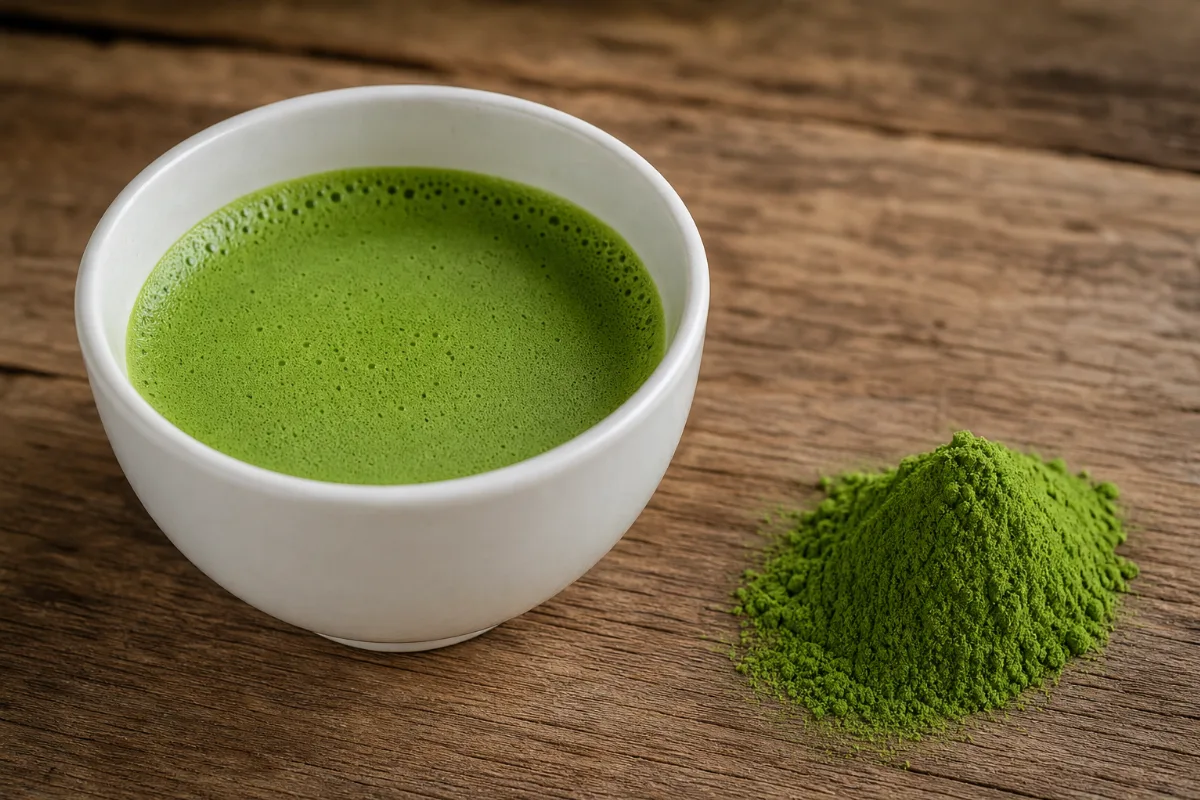
Matcha is green tea leaf ground to a fine powder and drunk with the leaf in it. People use it for calm, focus and general wellbeing. Research is limited to small trials with mixed results, several by researchers linked to tea companies. Because you swallow the whole leaf, you take in its caffeine and fluoride too, and concentrated green tea extract is a different product with rare serious liver reports.
General information, not medical advice. Last substantive update · Not medically reviewed. A named clinician has not signed off on this page. How this page is made
About Matcha
Matcha is powdered green tea leaf drunk whole. Trials are small and results are mixed: calmer feelings and steadier attention in a few, no change in the main measures in the longest. Because you swallow the leaf, caffeine, fluoride and catechins all go in. Green tea extract capsules are a separate product with rare serious liver reports and should not be judged by matcha results.
What it is
Matcha is green tea, Camellia sinensis, ground to a fine powder, so the whole leaf is taken. The fluoride study describes it as powdered green tea of the Tencha type. It contains caffeine, L-theanine and catechins such as EGCG.
The plant is the same one used for green and black tea. What differs is how the leaf is grown, processed and taken.
Tea, matcha or extract?
A steeped cup of green tea leaves the leaf behind. Matcha puts the leaf in your drink. Extract capsules and tablets are concentrated catechins. EFSA estimates supplements can deliver far more EGCG than infusions, and liver warnings come from the concentrated form. The sources we read do not say where a whole-leaf powder falls between the two, so do not assume tea or extract results apply.
What the research shows
Eight human matcha trials are covered. In the 12-month trial in 99 older adults, the main cognitive scores did not change. In 39 adults, a specially selected matcha gave lower anxiety than placebo matcha. A 4-week trial found no change in EEG sleep. Several of these papers have authors from ITO EN, a tea company.
Two reviews of caffeine and theanine as compounds found small short-term gains, but they did not test matcha, and one was funded by Lipton Teas and Infusions.
Regulators and status
No regulator statement about matcha itself was found. NCCIH, EFSA, the NHS, the FDA and IARC are quoted above for green tea, caffeine and very hot drinks. Health Canada's caffeine page did not load and is not quoted.
At a glance
Traditional uses history, not proof
- The 2018 stress paper describes matcha as theanine-rich powdered green tea that is abundant in caffeine.
- No source we read described matcha's history, so we do not state one here.
Studied for research
- Stress and anxiety, very low
- Attention after a stressful task, low
- Memory and thinking in older adults, mixed
- Caffeine plus L-theanine (the compounds), low
- Sleep and mood in healthy adults, mixed
- Gut bacteria, insufficient
Main compounds
- Caffeine
- L-theanine
- Catechins, mainly EGCG
- Fluoride
Common forms
- Matcha powder drunk as a tea
- Ready-to-drink and cafe matcha drinks (sugar, milk and caffeine vary)
- Matcha in foods and sweets
- Green tea extract capsules and tablets (a different product with a liver warning)
Research links: NCCIH: Green Tea · EFSA opinion on green tea catechins (abstract) · LiverTox: Green Tea (summary) · Fluoride content of matcha (abstract) · NHS: foods to avoid in pregnancy · FDA: How much caffeine is too much · Research Library · Genes & Biomarkers Library
What it is and its history
- Accepted scientific name
- Camellia sinensis
- Naming authority
- (L.) Kuntze
- Common names
- Matcha (Japanese (used in English)); Powdered green tea (English)
- Family or group
- Theaceae (the tea family)
- Classification
- Plantae > Theaceae > Camellia > Camellia sinensis
- Native range
- Not checked in the sources read.
- Habitat
- Not checked.
- What it looks like
- Leaves: The leaf is the part used; matcha is powdered green tea leaf.; Flowers: Not checked.; Fruit: Not checked.
- Cultivation
- Not described in the sources read (shade-growing is often said of matcha but was not verified).
- Harvest and processing
- The fluoride study says matcha is powdered green tea of the Tencha type and that its cultivation method is unique. Details of shading, steaming and milling were not read.
- Look-alikes and adulterants
- Name: Green tea extract and other tea types; Note: Matcha, green tea drink, black tea and extract capsules come from the same plant but are different products; capsules are concentrated and carry liver warnings.
- Sustainability and conservation
- Not checked.
Photographs
Traditional use and history history, not clinical proof
| Tradition or era | Documented use | Source |
|---|---|---|
| Today | Matcha is described in the 2018 stress paper as theanine-rich powdered green tea that is abundant in caffeine. | p30308973 |
| Origins | No source we read described the history of matcha. Claims about its origin or ceremonial use were not verified and are left out. | p35745280 |
Traditional use shows how it was used. It does not show that it works or is safe today.
What is inside, and how it may work
What it contains and how those compounds act in cells and animals. Laboratory and animal mechanisms are not proven effects in people.
Main compounds
| Compound | Family | Where it is concentrated | Activity studied | Level of evidence |
|---|---|---|---|---|
| Caffeine PubChem 2519 | purine alkaloid | Leaf Not given as a standard value in the sources read; one trial reported the caffeine content of its own serving. | Stimulant; works against theanine according to the 2018 paper. 21 16 18 | Human data |
| L-theanine PubChem 439378 | amino acid | Leaf Matcha is described as theanine-rich. | Thought to reduce stress; reviews link benefits to caffeine and theanine together. 22 16 11 | Human review |
| Epigallocatechin gallate (EGCG) PubChem 65064 | catechin (polyphenol) | Leaf The main green tea catechin (EFSA). | Liver effects at high supplement intakes. 23 5 | Human data |
| Fluoride | mineral | Leaf 118.39 to 121.65 mg/kg in dry matcha powder in one study. | See Safety tab. 8 | Lab/food analysis |
Mechanisms, receptors and pathways
| Target or pathway | Gene or receptor | What was found | Level |
|---|---|---|---|
| Caffeine against theanine on stress | n/a | Mouse experiments linked the stress effect to a low ratio of caffeine and EGCG to theanine and arginine (lab evidence). 16 | Animal research |
| Caffeine and L-theanine on attention | n/a | Reviews find small short-term gains for the pair; a 2014 review suggested caffeine dose mattered more than theanine dose. 4 11 | Human review |
| Liver injury from concentrated EGCG | an immune-related gene variant (NCCIH) | Lab studies point to the liver as target organ for concentrated catechins in large single doses; NCCIH says people with a specific immune gene variant appear especially susceptible. 6 19 | Lab and human |
| Iron absorption | n/a | Tea polyphenols reduced non-haem iron absorption in a dose-related way in a radio-iron study of black and herbal teas. 7 | Human data |
Absorption, metabolism and elimination
- Absorption
- Not covered in the sources read.
- Distribution
- Not covered.
- Metabolism
- Not covered.
- Elimination
- Not covered.
- Bioavailability
- Not covered.
Isolated compounds versus whole extracts
Brewed tea, powdered whole leaf (matcha), liquid extracts and concentrated EGCG capsules are different products. A steeped cup leaves the leaf behind; matcha is swallowed whole. EFSA says supplements can deliver far more EGCG than infusions, and liver warnings come from the concentrated form. Results for extract cannot be applied to matcha, or the other way round.
Nutritional composition
Matcha is not a source of essential nutrients in the sources read. The 2020 older-adults paper notes it contains catechins, lutein and vitamin K.
2 mixed findings2 low certainty1 very low certainty1 not enough evidence
What was looked at
The 6 benefits and uses checked for Matcha, each with how strong the evidence is. Tap one to open it.
- Stress and anxietyVery low certainty
- Attention after a stressful taskLow certainty
- Memory and thinking in older adultsMixed findings
- Caffeine plus L-theanine (what matcha contains)Low certainty
- Sleep and mood in healthy adultsMixed findings
- Gut bacteriaNot enough evidence
Lab markers tracked in the studies
Anxiety scoreStroop reaction timeMontreal Cognitive Assessment (MoCA)Sleep measured by EEGGut bacteria mix (beta-diversity)
What is Matcha good for?
The uses people ask about and how strong the human evidence is for each. Matcha trials are small, mostly from Japan, and several have authors who work for tea companies.
Benefits, one by one
Each card is a research question, not a promise. Tap a goal to filter. Open a card to see the studies, doses and limits.
Stress and anxiety
Very low certaintyOne small trial of a specially chosen matcha found lower anxiety than placebo matcha. A second trial paired matcha with guided meditation, and stress fell, but about as much as with breathing meditation alone. Ordinary matcha has not been shown to ease anxiety.
2 studiesResearch-selected matcha powder; matcha drink with a meditation app.
Studies, doses and limits
What the trials found
In 39 adults, a test matcha chosen for a low caffeine-and-EGCG to theanine-and-arginine ratio gave significantly lower anxiety than a placebo matcha. In 100 healthy volunteers, guided tea meditation with matcha lowered stress at weeks 4 and 8, similar to breathing meditation without matcha; there was no matcha-free comparison.
Results
Anxiety significantly lower with test matcha than placebo matcha (n=39). Stress fell in both meditation groups (n=100) with no clear difference between them.
Effect sizes as reported
Not given in the abstracts.
Why this rating
One small trial of a research-selected matcha, mouse data, and a second trial that cannot separate matcha from meditation.
Form and dose studied
Research-selected matcha powder; matcha drink with a meditation app.
Who was studied
Healthy adults in Japan and the USA.
Limits
Small; the matcha was chosen for its makeup; the second trial was unblinded with no matcha-free group; authors in the second trial are linked to Otsuka companies.
Why researchers looked
Matcha is rich in L-theanine, an amino acid thought to be calming, and also carries caffeine, which is thought to work against it.
Traditional use
Not described in the sources read.
Proposed mechanism Animal research
Mouse experiments in the same paper linked the stress effect to the ratio of caffeine and EGCG to theanine and arginine; this is lab evidence.
A proposed mechanism does not show that the effect happens in people.
Matcha is the whole leaf, so it carries caffeine. Count it in the day's caffeine total. Concentrated green tea extract capsules are a different product with rare serious liver injury reports. See the Safety tab.
Attention after a stressful task
Low certaintyTwo small trials by researchers linked to a tea company found that matcha kept attention steadier after a mild stress task. Part of this looked like the effect of caffeine alone.
2 studiesMatcha powder against placebo and against caffeine alone.
Studies, doses and limits
What the trials found
In 42 adults aged 25 to 34, two weeks of matcha gave faster Stroop attention reaction times and better emotion recognition than placebo; other tests showed no difference. In a trial in middle-aged and older adults, a single dose of caffeine improved attention under stress, the quicker reaction after a single matcha dose was likely due to caffeine, and after continued intake the matcha group did more work in a stress task.
Results
Stroop reaction times lower with matcha than placebo (n=42); no difference in other tests. Matcha group increased work output after continued intake; caffeine group only after a single dose.
Effect sizes as reported
Not given in the abstracts.
Why this rating
Small trials with many tests, short, authors linked to the tea company ITO EN.
Form and dose studied
Matcha powder against placebo and against caffeine alone.
Who was studied
Healthy young adults; middle-aged and older adults.
Limits
Group size is not given for the second trial; lab stress tasks are not daily life; sponsor-linked authors.
Why researchers looked
Matcha holds caffeine and theanine together, and the pair is studied for alertness.
Traditional use
Not described in the sources read.
Proposed mechanism Not established
Not established in these abstracts. The authors point to caffeine, theanine and catechins.
A proposed mechanism does not show that the effect happens in people.
Matcha is the whole leaf, so it carries caffeine. Count it in the day's caffeine total. Concentrated green tea extract capsules are a different product with rare serious liver injury reports. See the Safety tab.
Memory and thinking in older adults
Mixed findingsA 12-month trial in older adults with memory complaints found no change in its two main scores. A shorter trial reported a gain in one test in women only. Results are mixed.
2 studiesMatcha powder against placebo powder.
Studies, doses and limits
What the trials found
In 99 older adults with subjective cognitive decline or mild cognitive impairment, 12 months of matcha did not change the Montreal Cognitive Assessment or daily-living scores (the main outcomes). A social acuity score improved (P=0.028) and sleep quality showed a trend that was not significant. In 61 community-dwelling older adults over 12 weeks, MoCA improved only in women in a sex-split analysis.
Results
12-month trial: primary outcomes no significant change; social acuity improved. 12-week trial: MoCA improved in women only.
Effect sizes as reported
Not given in the abstracts.
Why this rating
Main outcomes were negative in the larger and longer trial; the positive result in the other trial came from a subgroup.
Form and dose studied
Matcha powder against placebo powder.
Who was studied
Older adults in Japan with and without cognitive decline.
Limits
Small; secondary or subgroup results; authors in the 12-month trial work at ITO EN; the 12-week trial lists Nestle Japan and Mitsui Fudosan affiliations.
Why researchers looked
Tea catechins, theanine and caffeine are being studied for healthy ageing of the brain.
Traditional use
Not described in the sources read.
Proposed mechanism Not established
Not established.
A proposed mechanism does not show that the effect happens in people.
Matcha is the whole leaf, so it carries caffeine. Count it in the day's caffeine total. Concentrated green tea extract capsules are a different product with rare serious liver injury reports. See the Safety tab.
Caffeine plus L-theanine (what matcha contains)
Low certaintyReviews of trials of the compounds, not of matcha, find small short-term gains in attention and alertness in the first hours when caffeine and theanine are taken together. The reviews say the evidence is uncertain and more research with tea drinks is needed.
2 studiesIsolated L-theanine and caffeine, and tea drinks; not matcha specific…
Studies, doses and limits
What the trials found
A 2025 meta-analysis of 50 trials found small-to-moderate differences favouring theanine plus caffeine in the first two hours (for example attention-switching accuracy at hour 2, SMD 0.33, 95% CI 0.13 to 0.54), with wide intervals in several outcomes. A 2014 meta-analysis of 11 acute studies found moderate effects for the pair on alertness and attention-switching accuracy in the first two hours.
Results
SMD 0.33 (0.13 to 0.54) for attention switching at hour 2; moderate effect sizes in the 2014 review.
Effect sizes as reported
Small to moderate.
Why this rating
Mostly isolated compounds, short single-dose studies, wide intervals; not matcha. The 2025 review was funded by Lipton Teas and Infusions.
Form and dose studied
Isolated L-theanine and caffeine, and tea drinks; not matcha specifically.
Who was studied
Healthy adults.
Limits
Cannot be applied to matcha without a matcha trial; industry funding for one review.
Why researchers looked
Matcha is a whole-leaf source of both compounds.
Traditional use
Not described in the sources read.
Proposed mechanism Human trial hypothesis
Not established in the abstracts; one review found the caffeine dose seemed to matter more than the theanine dose.
A proposed mechanism does not show that the effect happens in people.
Matcha is the whole leaf, so it carries caffeine. Count it in the day's caffeine total. Concentrated green tea extract capsules are a different product with rare serious liver injury reports. See the Safety tab.
Sleep and mood in healthy adults
Mixed findingsIn a 4-week trial, matcha did not change sleep measured by brain-wave recording. A questionnaire and wake-up time showed small differences, and mood scores tended to improve, but these were only trends.
2 studiesMatcha powder against placebo.
Studies, doses and limits
What the trials found
In healthy Japanese adults aged 27 to 64, 4 weeks of matcha caused no significant change in total sleep time, sleep latency, time awake after falling asleep or sleep efficiency on EEG. Wake-up time after waking was shorter on EEG (p<0.05), and sleep satisfaction and depression scores tended to improve (p<0.1). In the 12-month trial in older adults, a sleep quality score showed a trend that was not significant (P=0.088).
Results
EEG sleep measures: no significant difference. Wake-up time shorter (p<0.05). Sleep satisfaction and Beck Depression Inventory-II: trends (p<0.1).
Effect sizes as reported
Not given in the abstract.
Why this rating
No change in the objective sleep measures; benefits only as trends in questionnaires; authors linked to ITO EN.
Form and dose studied
Matcha powder against placebo.
Who was studied
Healthy Japanese adults; older adults with memory complaints.
Limits
Many outcomes tested; trends are not firm findings; sponsor-linked authors.
Why researchers looked
Matcha has theanine, linked to sleep quality, and caffeine, which can disturb sleep.
Traditional use
Not described in the sources read.
Proposed mechanism Not established
Not established.
A proposed mechanism does not show that the effect happens in people.
Caffeine can disturb sleep in some people. Matcha is the whole leaf, so it carries caffeine. Count it in the day's caffeine total. Concentrated green tea extract capsules are a different product with rare serious liver injury reports. See the Safety tab.
Gut bacteria
Not enough evidenceIn a small 2-week trial, matcha changed the overall mix of gut bacteria. Nobody measured whether this helped health.
1 studiesMatcha drink against placebo drink.
Studies, doses and limits
What the trials found
In 33 adults (17 matcha, 16 placebo), the overall bacteria mix changed in the matcha group but not the placebo group; Coprococcus rose and Fusobacterium fell. No symptom or health outcome was measured.
Results
Beta-diversity changed significantly in the matcha group (p<0.05); 30 bacterial genera changed versus 3 with placebo.
Why this rating
A change in bacteria is a lab marker, not a health benefit; small and short.
Form and dose studied
Matcha drink against placebo drink.
Who was studied
Adults in Japan.
Limits
Small; no health outcome; short.
Why researchers looked
Matcha is the whole leaf, so it carries fibre and catechins that reach the gut.
Traditional use
Not described in the sources read.
Proposed mechanism Not established
Not established.
A proposed mechanism does not show that the effect happens in people.
Matcha is the whole leaf, so it carries caffeine. Count it in the day's caffeine total. Concentrated green tea extract capsules are a different product with rare serious liver injury reports. See the Safety tab.
Connections to the rest of health
How Matcha connects to the rest of our health knowledge graph. Every link says what kind of connection it is. A safety link (for example to the liver) is a warning, not a benefit. A study that merely mentions a topic never creates a benefit link.
Explore every connection: goals, body systems, organs, symptoms, genes
A. Wellness goals
| Connected to | Kind of connection | Evidence status | Context | Studies |
|---|---|---|---|---|
| Anxiety Support | Very low certainty | Stress and anxiety: One small trial of a specially chosen matcha found lower anxiety than placebo matcha. A second trial paired matcha with guided meditation, and stress fell, but about as much as with breathing meditation alone. Ordinary matcha has not been shown to ease anxiety. | 16 13 | |
| Stress Reduction | Very low certainty | Stress and anxiety: One small trial of a specially chosen matcha found lower anxiety than placebo matcha. A second trial paired matcha with guided meditation, and stress fell, but about as much as with breathing meditation alone. Ordinary matcha has not been shown to ease anxiety. | 16 13 | |
| Calm Relaxation | Very low certainty | Stress and anxiety: One small trial of a specially chosen matcha found lower anxiety than placebo matcha. A second trial paired matcha with guided meditation, and stress fell, but about as much as with breathing meditation alone. Ordinary matcha has not been shown to ease anxiety. | 16 13 | |
| Better Focus | Low certainty | Attention after a stressful task: Two small trials by researchers linked to a tea company found that matcha kept attention steadier after a mild stress task. Part of this looked like the effect of caffeine alone. Caffeine plus L-theanine (what matcha contains): Reviews of trials of the compounds, not of matcha, find small short-term gains in attention and alertness in the first hours when caffeine and theanine are taken together. The reviews say the evidence is uncertain and more research with tea drinks is needed. | 1 2 11 4 | |
| Mental Clarity | Low certainty | Attention after a stressful task: Two small trials by researchers linked to a tea company found that matcha kept attention steadier after a mild stress task. Part of this looked like the effect of caffeine alone. Caffeine plus L-theanine (what matcha contains): Reviews of trials of the compounds, not of matcha, find small short-term gains in attention and alertness in the first hours when caffeine and theanine are taken together. The reviews say the evidence is uncertain and more research with tea drinks is needed. | 1 2 11 4 | |
| Memory Support | Mixed findings | Memory and thinking in older adults: A 12-month trial in older adults with memory complaints found no change in its two main scores. A shorter trial reported a gain in one test in women only. Results are mixed. | 15 12 | |
| Brain Health | Mixed findings | Memory and thinking in older adults: A 12-month trial in older adults with memory complaints found no change in its two main scores. A shorter trial reported a gain in one test in women only. Results are mixed. | 15 12 | |
| Sleep Quality | Mixed findings | Sleep and mood in healthy adults: In a 4-week trial, matcha did not change sleep measured by brain-wave recording. A questionnaire and wake-up time showed small differences, and mood scores tended to improve, but these were only trends. | 3 15 | |
| Mood Balance | Mixed findings | Sleep and mood in healthy adults: In a 4-week trial, matcha did not change sleep measured by brain-wave recording. A questionnaire and wake-up time showed small differences, and mood scores tended to improve, but these were only trends. | 3 15 | |
| Gut Health | Not enough evidence | Gut bacteria: In a small 2-week trial, matcha changed the overall mix of gut bacteria. Nobody measured whether this helped health. | 10 | |
| Microbiome Balance | Not enough evidence | Gut bacteria: In a small 2-week trial, matcha changed the overall mix of gut bacteria. Nobody measured whether this helped health. | 10 |
B. Body systems
| Connected to | Kind of connection | Evidence status | Context | Studies |
|---|---|---|---|---|
| Nervous System | Biological association | Very low certainty | Studied for: Stress and anxiety Studied for: Attention after a stressful task | 16 13 1 2 15 12 11 4 3 |
| Digestive System | Biological association | Not enough evidence | Studied for: Gut bacteria | 10 |
C. Body parts and organs
E. Health conditions
| Connected to | Kind of connection | Evidence status | Context | Studies |
|---|---|---|---|---|
| Pregnancy | Contraindication | Low certainty | Counts toward the caffeine limit. Preparation or compound: Matcha (caffeine) |
20 19 |
| Iron-deficiency anemia | Adverse effect or risk | Very low certainty | Tea lowers iron absorption in a lab study of black and herbal teas. Preparation or compound: Tea |
7 |
I. Biomarkers
| Connected to | Kind of connection | Evidence status | Context | Studies |
|---|---|---|---|---|
| Anxiety score | Biological association | Very low certainty | Measured in trials: lowered. A lab change is not the same as a health benefit. | 16 |
| Stroop reaction time | Biological association | Low certainty | Measured in trials: lowered (faster). A lab change is not the same as a health benefit. | 1 |
| Montreal Cognitive Assessment (MoCA) | Biological association | Mixed findings | Measured in trials: mixed. A lab change is not the same as a health benefit. | 15 12 |
| Sleep measured by EEG | Biological association | Mixed findings | Measured in trials: no change. A lab change is not the same as a health benefit. | 3 |
| Gut bacteria mix (beta-diversity) | Biological association | Not enough evidence | Measured in trials: changed. A lab change is not the same as a health benefit. | 10 |
L. Active compounds
| Connected to | Kind of connection | Evidence status | Context | Studies |
|---|---|---|---|---|
| Caffeine | Adverse effect or risk | Low certainty | Present in the whole leaf. Preparation or compound: Matcha |
18 |
| Caffeine | Biological association | Human | Stimulant; works against theanine according to the 2018 paper. Preparation or compound: Leaf |
21 16 18 |
| L-theanine | Biological association | Human review | Thought to reduce stress; reviews link benefits to caffeine and theanine together. Preparation or compound: Leaf |
22 16 11 |
| Epigallocatechin gallate (EGCG) | Biological association | Human | Liver effects at high supplement intakes. Preparation or compound: Leaf |
23 5 |
| Fluoride | Biological association | Lab/food analysis | See Safety tab. Preparation or compound: Leaf |
8 |
Each connection is stored with the ingredient, the connected record, the kind of connection, the evidence status, the supporting studies, the preparation or compound involved, and a review date (last reviewed October 25, 2026).
Evidence at a glance: what changed in 2 lab markers
Tap a number to show only those markers. Counts are markers, not people.
The evidence
The research centre for Matcha. Every record here was checked against PubMed or the publisher's page; we never list a study we have not verified.
Evidence by outcome
Bars show how many studies we found for each outcome, not how well it works. People are added up across trials only (reviews are not added, to avoid double counting).
How we rate evidence
High certainty
Several well-run trials or reviews agree; further research is unlikely to change the picture much.
Moderate certainty
Good trials point the same way, but some doubt remains.
Low certainty
Small, short or inconsistent trials. The finding could change with better research.
Very low certainty
Very little or very weak human data. Treat as a possibility only.
Mixed findings
Trials or reviews disagree with each other.
Not enough evidence
Not enough human research to say either way.
Evidence against
Good research found no benefit, or found harm.
We take the reviewers' own risk-of-bias and GRADE statements where they exist, and otherwise judge from study size, design, consistency, directness and whether a product matches what is sold. Many publications do not make evidence high. Method note: We searched PubMed and read the abstracts of 16 sources, read the NCCIH, FDA and NHS pages and the IARC press release, checked the plant name in GBIF and three compounds in PubChem, and read the EFSA abstract through Europe PMC. Certainty ratings are the compiler's own reading. Funding statements were not read; industry affiliations are noted where PubMed lists them. No study is cited that we could not verify.
Study library: every study we checked 24
| Study | Design | People | Product, dose, length | Result |
|---|---|---|---|---|
| Baba 2021 Matcha consumption maintains attentional function following a mild acute psychological stress without affecting a feeling of fatigue: A randomized placebo-controlled study in young adults Nutrition Research · PMID 33744591 · DOI |
Randomized trial |
42 42 adults aged 25 to 34 |
Matcha powder versus placebo leaf (whole powdered leaf) 2 weeks · vs Placebo |
Reaction times on the Stroop attention test were significantly lower with matcha than placebo, and correct hits in the emotion perception test were higher. No significant difference was found in the other tests. Faster Stroop reaction time and better emotion perception; other tests no difference Methods, limits and fundingOutcomes: Memory, attention, working memory, facial expression recognition, motor function after a mild stress task Limitations: Small; many tests (chance findings possible); short; lab stress task. Funding and conflicts: Authors are from the Central Research Institute of ITO EN, a tea company; funding statement not read. PubMed lists Research Support, Non-U.S. Gov't. Read: abstract |
| Baba 2021 Effects of Daily Matcha and Caffeine Intake on Mild Acute Psychological Stress-Related Cognitive Function in Middle-Aged and Older Adults: A Randomized Placebo-Controlled Study Nutrients · PMID 34067795 · DOI |
Randomized trial |
Middle-aged and older adults (number not given in the abstract) | Matcha versus caffeine alone versus placebo leaf (whole powdered leaf) Single dose and continued daily intake · vs Placebo |
A single dose of caffeine improved attention during or after stress. The faster reaction time after a single matcha dose was likely due to caffeine. After continued intake, the matcha group did more work in the stress task, while the caffeine group improved only after a single dose. The authors conclude matcha with caffeine improves attention and work performance under stress compared with caffeine alone. Attention and work output under mild stress; part of the effect is probably caffeine Methods, limits and fundingOutcomes: Attention and work performance after a mild stress task Limitations: Abstract gives no group sizes; short tests under lab stress; sponsor-linked authors. Funding and conflicts: Authors are from the Central Research Institute of ITO EN, a tea company; funding statement not read. Registration: UMIN000036578 Read: abstract |
| Baba 2024 Matcha Does Not Affect Electroencephalography during Sleep but May Enhance Mental Well-Being: A Randomized Placebo-Controlled Clinical Trial Nutrients · PMID 39275223 · DOI |
Randomized trial |
Healthy Japanese men and women aged 27 to 64 | Matcha versus placebo leaf (whole powdered leaf) 4 weeks · vs Placebo |
No significant differences in total sleep time, sleep latency, wake after sleep onset or sleep efficiency on EEG. The sleep questionnaire after waking showed a trend toward more satisfaction with sleep time (p<0.1), EEG showed shorter wake-up times (p<0.05), and depression scores tended to decrease (p<0.1). No change in measured sleep; some trends in questionnaires Methods, limits and fundingOutcomes: Sleep measured by EEG (total sleep time, latency, wake after onset, efficiency); sleep questionnaire; Beck Depression Inventory-II Limitations: Several outcomes were only trends; many outcomes tested; abstract gives no group sizes. Funding and conflicts: Authors are from the Central Research Institute of ITO EN, a tea company; funding statement not read. Read: abstract |
| Camfield 2014 Acute effects of tea constituents L-theanine, caffeine, and epigallocatechin gallate on cognitive function and mood: a systematic review and meta-analysis Nutrition Reviews · PMID 24946991 · DOI |
Meta-analysis human review |
11 randomised placebo-controlled human studies | L-theanine, caffeine and EGCG, alone or combined (not matcha) isolated compounds Differed Acute · vs Placebo |
Moderate effect sizes favoured caffeine plus L-theanine in the first two hours after taking it for alertness and attentional switching accuracy, and to a lesser extent some attention outcomes. Trends suggested the caffeine dose mattered more than the theanine dose, especially in the first hour. Moderate short-term effects for the pair Methods, limits and fundingOutcomes: Alertness, calmness, contentedness, state anxiety; attention tasks Limitations: Short acute studies of isolated compounds; not tea drinks or matcha. Funding and conflicts: PubMed lists Research Support, Non-U.S. Gov't; funding statement not read. Read: abstract |
| EFSA Panel on Food Additives and Nutrient Sources added to Food (ANS); Younes 2018 Scientific opinion on the safety of green tea catechins EFSA Journal · PMID 32625874 · DOI |
Regulatory opinion regulatory |
EU regulatory review of published studies and submitted data | Green tea catechins from infusions and food supplements leaf See opinion |
EFSA concluded that catechins from green tea infusions prepared in the traditional way, and reconstituted drinks of equivalent composition, are in general considered safe at the intakes reported in European countries. It also noted rare cases of liver injury after infusions, most probably an unusual individual reaction. Trials showed that high daily EGCG intakes taken as a food supplement raised liver enzymes (transaminases) compared with control. Infusions generally safe; concentrated supplements raise liver enzymes Methods, limits and fundingOutcomes: Liver safety of green tea catechins (EGCG) Limitations: Regulatory opinion; abstract read through Europe PMC (the EFSA site refused our request); full opinion not opened. It covers infusions and supplements, not matcha specifically. Funding and conflicts: Regulator; no industry funding. Read: abstract (Europe PMC record; EFSA site returned 403) |
| Hu 2018 The safety of green tea and green tea extract consumption in adults - Results of a systematic review Regulatory Toxicology and Pharmacology · PMID 29580974 · DOI |
Systematic review human review |
159 human intervention studies plus laboratory toxicology | Green tea, green tea extract and concentrated preparations leaf and extracts Differed Differed · vs Varied |
In lab studies the liver was the target organ. In human studies, liver adverse events occurred with a limited range of concentrated, catechin-rich preparations taken in large single doses, not with brewed tea or extracts used in drinks or food. Liver events with concentrated bolus preparations, not brewed tea Methods, limits and fundingOutcomes: Hepatic adverse events Limitations: All authors are employees of Herbalife Nutrition; covers tea and extract, not matcha specifically. Funding and conflicts: Industry-linked: authors' affiliations are Herbalife Nutrition. Read: abstract |
| Hurrell 1999 Inhibition of non-haem iron absorption in man by polyphenolic-containing beverages British Journal of Nutrition · PMID 10999016 |
Clinical trial |
Adult volunteers given a bread meal with radio-labelled iron | Black tea, herb teas (chamomile, vervain, lime flower, pennyroyal, peppermint), coffee and cocoa drinks Differed Single meals · vs Water |
All beverages tested reduced iron absorption from the bread meal in a dose-related way; black tea reduced it by 79 to 94 percent and peppermint tea by 84 percent. Green tea and matcha were not tested. Tea and herbal teas strongly lowered iron absorption Methods, limits and fundingOutcomes: Iron absorption Limitations: Black and herbal teas were tested, not green tea or matcha; single meals; 1999. Funding and conflicts: PubMed lists Research Support, Non-U.S. Gov't. Read: abstract |
| Jakubczyk 2022 Fluoride Content of Matcha Tea Depending on Leaf Harvest Time and Brewing Conditions Nutrients · PMID 35745280 · DOI |
Food analysis lab/food analysis |
Matcha infusions from different harvests brewed at four water temperatures | Matcha powder and infusions leaf (whole powdered leaf) |
Fluoride in the infusions ranged from 3.36 to 4.03 mg/L, depending on harvest time and brewing temperature, and in the dry powder from 118.39 to 121.65 mg/kg. The authors say matcha has a high fluoride content, with particularly high concentrations in the powder itself. High fluoride in matcha powder and infusions Methods, limits and fundingOutcomes: Fluoride content Limitations: One laboratory analysis, Polish university; fluoride intake from a real serving was not studied; no health outcome. Funding and conflicts: Not stated in the abstract. Read: abstract |
| LiverTox 2012 Green Tea (LiverTox) LiverTox: Clinical and Research Information on Drug-Induced Liver Injury · PMID 31643260 |
Authoritative guidance reference |
Reference summary of liver injury reports | Green tea and green tea extract leaf and extracts |
Green tea extract and, more rarely, ingestion of large amounts of green tea have been implicated in cases of clinically apparent acute liver injury, including instances of acute liver failure and either need for urgent liver transplantation or death. Rare but serious liver injury, mostly with extracts Methods, limits and fundingOutcomes: Drug- and supplement-induced liver injury Limitations: Only the PubMed summary was read; the full LiverTox page needs a human check and was not opened. Funding and conflicts: US government reference. Read: abstract |
| Morishima 2023 A randomized, double-blinded study evaluating effect of matcha green tea on human fecal microbiota Journal of Clinical Biochemistry and Nutrition · PMID 36936880 · DOI |
Randomized trial |
33 33 adults (17 matcha, 16 placebo) |
Matcha drink versus placebo drink leaf (whole powdered leaf) 2 weeks · vs Placebo drink |
The overall mix of gut bacteria (beta-diversity) changed significantly in the matcha group but not the placebo group. Coprococcus rose and Fusobacterium fell. No health outcome was measured. Changed bacteria mix; no health outcome Methods, limits and fundingOutcomes: Fecal bacteria composition by 16S rRNA sequencing Limitations: Small and short; a change in bacteria is a lab marker, not a benefit. Funding and conflicts: Funding not stated in the abstract (UMIN registered). Registration: UMIN000043857 Read: abstract |
| Payne 2025 Effects of Tea (Camellia sinensis) or its Bioactive Compounds l-Theanine or l-Theanine plus Caffeine on Cognition, Sleep, and Mood in Healthy Participants: A Systematic Review and Meta-Analysis of Randomized Controlled Trials Nutrition Reviews · PMID 40314930 · DOI |
Meta-analysis human review |
50 randomised trials in healthy people (15 eligible for at least one meta-analysis) | Tea, L-theanine alone, or L-theanine plus caffeine (not matcha specifically) tea leaf or isolated compounds Differed between trials Mostly acute · vs Placebo |
Theanine plus caffeine gave small-to-moderate differences versus placebo in the first two hours on some tests (for example attention switching accuracy SMD 0.33, 95% CI 0.13 to 0.54; digit vigilance accuracy SMD 0.20, 0.02 to 0.38; choice reaction time not clearly different, SMD -0.48, -1.01 to 0.05). Theanine alone improved choice reaction time at hour 1 (SMD -0.35, -0.61 to -0.10). The authors say the confidence intervals often show uncertainty and that more research with tea drinks is needed. Small-to-moderate short-term differences with theanine plus caffeine (Attention switching SMD 0.33 (0.13, 0.54)) Methods, limits and fundingOutcomes: Cognition, mood and sleep Limitations: Mostly isolated compounds, not tea or matcha; acute effects; wide intervals. Funding and conflicts: Funded by Lipton Teas and Infusions (a tea company) and the Scottish Government; some authors are affiliated with Lipton and Unilever. Read: abstract |
| Sakurai 2020 Effects of Matcha Green Tea Powder on Cognitive Functions of Community-Dwelling Elderly Individuals Nutrients · PMID 33256220 · DOI |
Randomized trial |
61 61 community-dwelling older adults in Japan |
Powder from fresh matcha versus placebo powder leaf (whole powdered leaf) 12 weeks · vs Placebo powder |
A significant improvement in MoCA score was seen in women in the matcha group in the sex-specific analysis. Dietary vitamin K intake outside the test drink was inversely related to MoCA change. MoCA improved in women only (subgroup) Methods, limits and fundingOutcomes: Cognitive test battery, including the Montreal Cognitive Assessment (MoCA) Limitations: Small; result found in a subgroup after splitting by sex; short. Funding and conflicts: Authors include affiliations with Mitsui Fudosan and Nestle Japan; funding statement not read. PubMed lists a JSPS research grant. Read: abstract |
| Tanaka-Kanegae 2024 Feasibility and Efficacy of a Novel Mindfulness App Used With Matcha Green Tea in Generally Healthy Adults: Randomized Controlled Trial JMIR mHealth and uHealth · PMID 39657179 · DOI |
Randomized trial |
100 100 healthy volunteers in the USA (49 guided tea meditation, 51 breathing meditation) |
Matcha drink with a guided tea-meditation app leaf (whole powdered leaf) 8 weeks · vs Breathing meditation without the app (active control, unblinded) |
Stress fell at weeks 4 and 8 in the matcha-meditation group, similar to the breathing meditation group. Between-group differences were not found for most outcomes, including meditation time (P=.15) and the exploratory wellbeing outcomes (P>.08). Pre-session relaxed and calm scores rose more in the matcha-meditation group (P=.04 and P=.048). Stress fell in both groups; no clear difference from breathing meditation Methods, limits and fundingOutcomes: Stress (Perceived Stress Scale-10), mood, meditation time and frequency Limitations: Unblinded; no group without matcha, so the effect of matcha itself cannot be separated from the meditation; self-reported outcomes. Funding and conflicts: Authors are affiliated with Otsuka Holdings, Otsuka Pharmaceutical and Biofortis; funding statement not read. PubMed lists Research Support, Non-U.S. Gov't. Registration: NCT05832645 Read: abstract |
| Taylor 1999 Probable antagonism of warfarin by green tea Annals of Pharmacotherapy · PMID 10332534 · DOI |
Case report human case |
1 One 44-year-old man on warfarin for a mechanical aortic valve |
Green tea drink (not matcha) leaf (drink) About one-half to one gallon a day About one week |
His INR fell from 3.79 to 1.37 about a week after he began drinking one-half to one gallon of green tea a day, and rose to 2.55 after he stopped. The authors suggest the vitamin K in the tea may have worked against warfarin. Case report: reduced warfarin effect with very large amounts of green tea Methods, limits and fundingOutcomes: INR (blood clotting test) Limitations: One patient; cause not proven; vitamin K not measured; very large amounts of a different preparation (steeped tea). Funding and conflicts: Not stated in the abstract. Read: abstract |
| Uchida 2024 Effect of matcha green tea on cognitive functions and sleep quality in older adults with cognitive decline: A randomized controlled study over 12 months PLoS One · PMID 39213264 · DOI |
Randomized trial |
99 99 older adults (64 with subjective cognitive decline, 35 with mild cognitive impairment) |
Matcha versus placebo leaf (whole powdered leaf) 12 months · vs Placebo |
The primary outcomes did not change significantly. Social acuity (perception of facial emotions) improved (P=0.028). Pittsburgh Sleep Quality Index showed a trend toward improvement (difference 0.86, 95% CI -0.002 to 1.71; P=0.088), which was not statistically significant. No effect on main outcomes; a secondary score improved (Sleep score difference 0.86 (-0.002, 1.71)) Methods, limits and fundingOutcomes: Montreal Cognitive Assessment and ADCS activities-of-daily-living (primary); social acuity and sleep quality (other) Limitations: Main outcomes negative; the authors' conclusion leans on secondary results; modest size. Funding and conflicts: Authors are from the Central Research Institute of ITO EN, a tea company; funding statement not read. Read: abstract |
| Unno 2018 Stress-Reducing Function of Matcha Green Tea in Animal Experiments and Clinical Trials Nutrients · PMID 30308973 · DOI |
Randomized trial plus animal human and mouse |
39 39 adult participants in the human trial; mouse experiments in the same paper |
Research-selected 'test' matcha versus placebo matcha leaf (whole powdered leaf) · vs Placebo matcha |
In mice, matcha with high theanine and arginine reduced stress-related adrenal enlargement, but only when the ratio of caffeine and EGCG to theanine and arginine was low. In 39 people, anxiety was significantly lower with the test matcha than with placebo matcha. The authors say caffeine strongly works against theanine. Lower anxiety with a specially selected matcha versus placebo matcha Methods, limits and fundingOutcomes: Anxiety score; adrenal enlargement in mice under stress Limitations: Small trial; the matcha was chosen for its makeup, so ordinary matcha may not act the same; mouse results do not prove the same in people. Funding and conflicts: Funded by a Japanese government research grant (KAKENHI) per the PubMed record; authors are university researchers. Read: abstract |
| n/a 2016 IARC (WHO): Press release 244: IARC Monographs evaluate drinking coffee, mate, and very hot beverages (15 June 2016) n/a · Source |
Authoritative guidance n/a |
n/a | n/a |
Very hot beverages (above 65 degrees C) classed as probably carcinogenic to humans (Group 2A), based on limited evidence from studies linking oesophageal cancer to drinking very hot beverages, in places where tea or mate is traditionally drunk at about 70 degrees C. IARC did not single out matcha. Methods, limits and fundingOutcomes: Very hot beverages (above 65 degrees C) classed as probably carcinogenic to humans (Group 2A), based on limited evidence from studies linking oesophageal cancer to drinking very hot beverages, in places where tea or mate is traditionally drunk at about 70 degrees C. IARC did not single out matcha. Limitations: Press release; limited evidence; temperature, not the drink, is what was classified. PDF text read on 2026-10-25. Read: full-text |
| n/a 2024 U.S. FDA: Spilling the Beans: How Much Caffeine Is Too Much? (content current as of 2024-08-28) n/a · Source |
Authoritative guidance n/a |
n/a | n/a |
FDA cites 400 mg a day as an amount not generally associated with negative effects in most adults; lists signs of too much caffeine (fast heartbeat, jitters, sleep problems, stomach upset). Lists 37 mg in 12 fl oz of green tea; matcha is not listed. Dietary Guidelines for Americans: avoid caffeinated drinks under age 2. People who are pregnant, trying to conceive or breastfeeding should talk to a health care provider about limiting caffeine. Methods, limits and fundingOutcomes: FDA cites 400 mg a day as an amount not generally associated with negative effects in most adults; lists signs of too much caffeine (fast heartbeat, jitters, sleep problems, stomach upset). Lists 37 mg in 12 fl oz of green tea; matcha is not listed. Dietary Guidelines for Americans: avoid caffeinated drinks under age 2. People who are pregnant, trying to conceive or breastfeeding should talk to a health care provider about limiting caffeine. Limitations: Consumer update; does not mention matcha. Page text read on 2026-10-25. Read: full-text |
| n/a 2025 NCCIH (NIH): Green Tea: Usefulness and Safety (last updated February 2025) n/a · Source |
Authoritative guidance n/a |
n/a | n/a |
No safety concerns reported for green tea as a beverage in adults, but it contains caffeine. Extract supplements: nausea, constipation, abdominal discomfort, higher blood pressure. Liver injury uncommon, mostly with extract tablets or capsules; people with a specific immune gene variant appear especially susceptible. High-dose green tea reduced blood levels of nadolol; extract can reduce atorvastatin levels; an NCCIH-funded study showed an interaction with raloxifene. Caffeine in pregnancy should not exceed moderate levels; caffeine passes into breast milk. Methods, limits and fundingOutcomes: No safety concerns reported for green tea as a beverage in adults, but it contains caffeine. Extract supplements: nausea, constipation, abdominal discomfort, higher blood pressure. Liver injury uncommon, mostly with extract tablets or capsules; people with a specific immune gene variant appear especially susceptible. High-dose green tea reduced blood levels of nadolol; extract can reduce atorvastatin levels; an NCCIH-funded study showed an interaction with raloxifene. Caffeine in pregnancy should not exceed moderate levels; caffeine passes into breast milk. Limitations: A fact sheet about green tea, not matcha; page text read in full on 2026-10-25. Read: full-text |
| n/a 2026 NHS (UK): Foods to avoid in pregnancy (page last reviewed 15 June 2026) n/a · Source |
Authoritative guidance n/a |
n/a | n/a |
Do not have more than 200 mg of caffeine a day in pregnancy; caffeine is found in coffee, tea, cola, energy drinks, chocolate and some supplements. Lists about 75 mg in a cup of tea such as black or green tea; matcha is not listed. Methods, limits and fundingOutcomes: Do not have more than 200 mg of caffeine a day in pregnancy; caffeine is found in coffee, tea, cola, energy drinks, chocolate and some supplements. Lists about 75 mg in a cup of tea such as black or green tea; matcha is not listed. Limitations: Page does not mention matcha; its per-cup tea figure is not a matcha figure. Page text read on 2026-10-25. Read: full-text |
| n/a 2026 PubChem: Caffeine (CID 2519) n/a · Source |
Database record n/a |
n/a | n/a |
Caffeine, C8H10N4O2. Methods, limits and fundingOutcomes: Caffeine, C8H10N4O2. Limitations: Compound record; API checked 2026-10-25. Read: api |
| n/a 2026 PubChem: L-Theanine (CID 439378) n/a · Source |
Database record n/a |
n/a | n/a |
L-Theanine, C7H14N2O3. Methods, limits and fundingOutcomes: L-Theanine, C7H14N2O3. Limitations: Compound record; API checked 2026-10-25. Read: api |
| n/a 2026 PubChem: Epigallocatechin Gallate (CID 65064) n/a · Source |
Database record n/a |
n/a | n/a |
EGCG, C22H18O11. Methods, limits and fundingOutcomes: EGCG, C22H18O11. Limitations: Compound record; API checked 2026-10-25. Read: api |
| n/a 2026 GBIF Backbone Taxonomy: Camellia sinensis (L.) Kuntze, accepted, family Theaceae (key 3189635) n/a · Source |
Database record n/a |
n/a | n/a |
Accepted name Camellia sinensis (L.) Kuntze; family Theaceae. Methods, limits and fundingOutcomes: Accepted name Camellia sinensis (L.) Kuntze; family Theaceae. Limitations: Taxonomy record retrieved from the GBIF API on 2026-10-25. Read: api |
What we do not know yet
- What the evidence supports: small trials with low or very low certainty; the longest and largest trial found no change in its main scores.
- No trial separated matcha's theanine from its caffeine and catechins.
- No matcha-specific liver, interaction or iron study was found.
- No measured lead, cadmium, arsenic, aluminium or pesticide values for matcha were found.
- Several trials have authors linked to tea companies; funding statements were not read for most papers. The EFSA full opinion, the full LiverTox page and Health Canada's caffeine page were not opened or did not load.
How new research is added
New studies are found by a saved PubMed search and are placed in a review queue. A person reads each one before it changes any evidence rating or safety wording. New publications never change ratings automatically.
Lab markers
What changed in blood or saliva tests during trials. A changed number is not the same as feeling or being healthier, and we give no "normal ranges".
Other 5
Anxiety score
Lowered in trials
A questionnaire score of how anxious a person feels.
Very low certaintyResults and what it means
Why it was measured
To see whether theanine-rich matcha calms people.
Statistical vs. clinical meaning
One small trial of a special matcha.
Safety implication
None from the number; caffeine can worsen anxiety in some people.
| Study | Result | People | Product |
|---|---|---|---|
| 16 | Significantly lower with test matcha than placebo matcha | 39 adults | Research-selected matcha |
Stroop reaction time
Lowered (faster) in trials
How quickly a person names ink colours when the word names a different colour; a test of attention.
Low certaintyMontreal Cognitive Assessment (MoCA)
Mixed results in trials
A short screening test of memory and thinking skills.
Mixed findingsResults and what it means
Why it was measured
To see whether matcha protects thinking skills in older adults.
Statistical vs. clinical meaning
Larger, longer trial was negative.
Safety implication
None.
Sleep measured by EEG
No change in trials
Total sleep time, time to fall asleep, time awake in the night and sleep efficiency, recorded by brain-wave sensors.
Mixed findingsGut bacteria mix (beta-diversity)
Changed in trials
How different one person's mix of gut bacteria is from another sample, here before and after the drink.
Not enough evidenceSafety
What studies and official sources say about side effects, medicines and who should check first. Each point shows what kind of evidence it comes from.
Main points to know 5
- Matcha is the whole leaf, so you swallow all of it. Brewed tea leaves the leaf behind; matcha is drunk with the leaf. So caffeine, catechins, fluoride and anything else in the leaf all go in. Sources about green tea are about steeped tea or extract. None of the sources we read tested matcha for liver safety, medicine interactions or iron, so those points rest on green tea and tea sources. Gap 19 8
- Tea, extract and concentrated supplements are three different products. NCCIH reports no safety concerns for green tea as a drink in adults apart from its caffeine. Liver injury has been reported mainly with green tea extract in tablets or capsules. EFSA judged traditionally prepared infusions generally safe and found that high daily EGCG intakes from food supplements raised liver enzymes. A whole-leaf powder sits between the two, and the sources we read do not say where it falls. Do not carry results from one form to another. Authoritative guidance 19 5 6 9
- Caffeine and pregnancy. The NHS says not to have more than 200 mg of caffeine a day in pregnancy. NCCIH says caffeine should not exceed moderate levels. No source gave a standard caffeine figure for a serving of matcha, so the amount depends on the product and how much powder is used. Authoritative guidance 20 19 18
- Medicines. High-dose green tea lowered nadolol levels (NCCIH) and one case report describes green tea working against warfarin. Tea polyphenols lowered iron absorption in a lab study of black and herbal teas. None of these was tested with matcha. Case report 19 14 7
- Fluoride. One laboratory study found high fluoride in matcha powder and in matcha infusions. It did not study health effects. Food analysis 8
Side effects 3
| Effect | How often | Severity and recovery | Evidence |
|---|---|---|---|
| Caffeine effects (fast heartbeat, jitters, poor sleep, upset stomach) Listed by the FDA as signs of too much caffeine from any source. | Depends on the amount and your sensitivity; no rate in the sources read | mild to moderate Reversible when caffeine is cut back | Authoritative guidance 18 |
| Nausea, constipation, abdominal discomfort and higher blood pressure (extract) NCCIH lists these for green tea extract supplements, not for matcha or the drink. | No rate in the sources read | mild Not stated | Authoritative guidance 19 |
| Liver injury (rare) Mostly with extract. No case report of matcha liver injury was read. | Rare; no rate found | can be severe Often recovers after stopping, but liver failure and transplant have been reported | Case report 9 5 |
Liver
Liver injury linked to green tea is rare and mostly linked to concentrated extract capsules or tablets. LiverTox says green tea extract, and more rarely large amounts of green tea, have been implicated in acute liver injury, including liver failure needing transplant or death (only the PubMed summary was read). EFSA concluded that traditionally prepared infusions are in general considered safe, noted rare liver injury after infusions most probably from an unusual individual reaction, and found that high daily EGCG intakes from food supplements raised liver enzymes. A systematic review (all authors work for Herbalife) found liver events from concentrated catechin-rich preparations taken in large single doses, not from brewed tea. NCCIH says people with a specific immune gene variant seem especially susceptible. Matcha has more catechins than a steeped cup because the leaf is eaten, but far less than concentrated capsules. No source we read says how this applies to matcha, so people with liver disease or taking liver-affecting medicines should ask a doctor or pharmacist. 9 5 6 19
How often. No rate in matcha drinkers could be found.
Monitoring. No monitoring advice was read from an agency. The Safety tab tells readers to seek care for liver warning signs.
This is a safety connection. It is not evidence that Matcha supports liver health.
Medicines and supplements 5
| With | Why it matters | Importance | Evidence | What to do |
|---|---|---|---|---|
| Warfarin prescription | The case authors suggested vitamin K in tea could work against warfarin; vitamin K was not measured. | One 1999 case report: INR fell from 3.79 to 1.37 about a week after a man began drinking one-half to one gallon of green tea a day, and rose to 2.55 after he stopped. Not a matcha study and not proof of cause. | Case report Very low certainty 14 | Tell your prescriber about any big change in tea habits so your INR can be checked. |
| Nadolol (beta-blocker) prescription | Not described in the source read. | NCCIH says green tea at high doses reduced blood levels of nadolol and so its effectiveness. | Authoritative guidance Low certainty 19 | Ask your pharmacist if you take nadolol. |
| Atorvastatin and raloxifene prescription | Not described. | NCCIH says green tea extract can reduce blood levels of atorvastatin, and an NCCIH-funded study showed an interaction with raloxifene. | Authoritative guidance Low certainty 19 | Ask your pharmacist if you take either. |
| Iron supplements and iron in food (iron deficiency) nutrient | Tea polyphenols bind iron in the gut. | In a radio-iron study, black tea and herbal teas lowered iron absorption from a meal in a dose-related way (black tea by 79 to 94 percent). Green tea and matcha were not tested. | Human trial Low certainty 7 | If you have low iron, ask a doctor or pharmacist about timing tea away from meals and iron. |
| Other caffeine sources and stimulant medicines general | Caffeine adds up across drinks. | The FDA says to keep track of total caffeine and notes some medications make people more sensitive to caffeine. No matcha-specific data. | Authoritative guidance Low certainty 18 | Ask a pharmacist if you take medicines that affect the heart or nerves. |
Who should check first 7
| Situation | Advice | Evidence |
|---|---|---|
| Pregnancy | Matcha is not named as banned, but it counts toward the daily caffeine limit (NHS: no more than 200 mg a day). No source covers green tea extract capsules in pregnancy. Ask a clinician. | Authoritative guidance 20 19 |
| Breastfeeding | NCCIH says caffeine passes into breast milk and high levels can cause fussiness and poor sleep in the infant; low-to-moderate maternal intake usually does not cause problems. | Authoritative guidance 19 |
| Babies and young children | The FDA quotes the Dietary Guidelines for Americans: avoid caffeinated drinks for children younger than age 2. No matcha-specific source was read for older children. | Authoritative guidance 18 |
| Liver disease, or past liver injury from supplements | No source gave a safe amount of matcha for these people. Ask a doctor. | Gap 9 |
| Low iron or iron-deficiency anemia | Tea lowers iron absorption in a lab study. Ask a doctor or pharmacist. | Human trial 7 |
| Taking warfarin, nadolol, atorvastatin or raloxifene | See the interactions above. Tell your prescriber about matcha. | Authoritative guidance 14 19 |
| Anxiety, fast heartbeat or trouble sleeping | Caffeine can worsen these (FDA). Ask a clinician. | Authoritative guidance 18 |
Overdose, product quality and regulators
Summary. The main toxicity concern is the liver, linked to concentrated catechin-rich extract taken in large amounts. Matcha toxicity data were not found.
Animal. The Hu systematic review says lab studies show the liver as target organ, strongly tied to dosing conditions such as a large single dose by gavage and fasting, and to EGCG content.
Human doses studied. EFSA found that high daily EGCG intakes taken as a food supplement raised liver enzymes in trials (the threshold is in the opinion, not repeated here).
High dose or long term signals. Liver enzyme rises with high-dose supplements.
Overdose response. Not described in the sources read.
Genotoxicity. Not read.
Toxic or hazardous parts. The whole leaf is used in matcha. No source compared other plant parts.
Because the leaf is eaten, anything the leaf holds is eaten too. Fluoride in matcha was measured in one study. We found no measured lead, cadmium, arsenic, aluminium or pesticide values for matcha in the sources read. That is a gap, not proof that there are none.
Fluoride. A Polish laboratory study found 3.36 to 4.03 mg/L fluoride in matcha infusions and 118.39 to 121.65 mg/kg in the dry powder, depending on harvest and brewing temperature, and called the content high. It did not study health effects. 8
Lead, cadmium, aluminium and pesticides. A PubMed search for matcha with these words found no matcha measurement study. Not found is not the same as none.
Product identity. Powdered tea can be plain matcha, a sweetened or flavoured mix, or a blend. Check the label for the plant name (Camellia sinensis) and any added ingredients.
| Body | Action | Date |
|---|---|---|
| EFSA (European Union) | Opinion on safety of green tea catechins: traditional infusions in general considered safe at EU intakes; rare liver injury after infusions; high-dose EGCG food supplements raised liver enzymes in trials. source | 2018-04 |
| NCCIH (NIH) (United States) | No safety concerns reported for green tea as a beverage in adults beyond caffeine; extract side effects, rare liver injury, interactions, caffeine caution in pregnancy. source | 2025-02 |
| NHS (United Kingdom) | Pregnancy: no more than 200 mg of caffeine a day. source | 2026-06-15 |
| US FDA (United States) | Caffeine update: about 400 mg a day not generally associated with negative effects in most adults; signs of too much; avoid caffeinated drinks under age 2 (Dietary Guidelines for Americans). source | 2024-08-28 |
| IARC (WHO) (International) | Very hot beverages (above 65 degrees C) probably carcinogenic to humans (Group 2A); based on limited evidence in places where tea or mate is drunk at about 70 degrees C. Matcha was not singled out. source | 2016-06-15 |
When to get medical help
- Yellow skin or eyes, dark urine, pale stools, strong tiredness, itching or pain in the upper right belly after using green tea products, especially extract: stop and get medical care.
- Chest pain, a racing or irregular heartbeat, fainting: call emergency services.
- Warfarin users: unusual bruising or bleeding, or a change in INR after a change in tea habits: call your prescriber.
- A child who has swallowed a large amount of caffeine-containing powder or drink and has a fast heartbeat, vomiting or shaking: call poison control or emergency services.
Stop using the product and contact a clinician or emergency service. In the US, Poison Control is 1-800-222-1222.
General information only, not medical advice. Ask a clinician or pharmacist before use, especially with medicines, in pregnancy or with a health condition. See the Natural Remedy Safety guide.
Frequently asked questions
What is matcha?
Is matcha the same as green tea extract?
Does matcha reduce stress or anxiety?
Does matcha improve focus or memory?
Does matcha help you sleep, or keep you awake?
Does matcha have more caffeine than other tea?
Can matcha hurt the liver?
Does matcha contain lead or pesticides?
We did not find measured values for matcha in the sources we read. That is a gap, not proof of none. One study did find high fluoride in matcha powder.
Is matcha safe in pregnancy, breastfeeding or for children?
Does matcha interact with medicines?
Does matcha affect iron?
In a lab study, black tea and herbal teas lowered iron absorption from a meal. Green tea and matcha were not tested. If you have low iron, ask a doctor.
Are very hot drinks a problem?
IARC classed drinking very hot beverages, above 65 degrees C, as probably carcinogenic to the oesophagus, based on limited evidence. It did not single out matcha.
Explore by health goal
Better FocusMental ClarityAnxiety SupportStress ReductionCalm RelaxationMemory SupportBrain HealthSleep QualityMood BalanceGut HealthMicrobiome Balance
Editorial transparency
- Written by
- AlternativeMed editorial team. Research compiled with AI assistance, then checked against PubMed records.
- Medical review
- None. This page has not been reviewed by a physician or pharmacist.
- First published
- 2026-10-25
- Last substantive update
- 2026-10-25
- How we research
- We searched PubMed and read the abstracts of 16 sources, read the NCCIH, FDA and NHS pages and the IARC press release, checked the plant name in GBIF and three compounds in PubChem, and read the EFSA abstract through Europe PMC. Certainty ratings are the compiler's own reading. Funding statements were not read; industry affiliations are noted where PubMed lists them. No study is cited that we could not verify.
- How we rate evidence
- See "How we rate evidence" in the Evidence tab.
- Independence
- No product is promoted on this page. No affiliate links are shown. This page is information, not a recommendation to drink or take anything.
Sources 24
Each source was opened and checked. Where we read only the abstract, it says so. The small numbers in the text point here.
- Baba Y, Kaneko T, Takihara T. Matcha consumption maintains attentional function following a mild acute psychological stress without affecting a feeling of fatigue: A randomized placebo-controlled study in young adults. Nutrition Research. 2021. PMID 33744591. DOI 10.1016/j.nutres.2020.12.024. (abstract)
- Baba Y, Inagaki S, Nakagawa S, et al. Effects of Daily Matcha and Caffeine Intake on Mild Acute Psychological Stress-Related Cognitive Function in Middle-Aged and Older Adults: A Randomized Placebo-Controlled Study. Nutrients. 2021. PMID 34067795. DOI 10.3390/nu13051700. (abstract)
- Baba Y, Takihara T, Okamura N. Matcha Does Not Affect Electroencephalography during Sleep but May Enhance Mental Well-Being: A Randomized Placebo-Controlled Clinical Trial. Nutrients. 2024. PMID 39275223. DOI 10.3390/nu16172907. (abstract)
- Camfield DA, Stough C, Farrimond J, et al. Acute effects of tea constituents L-theanine, caffeine, and epigallocatechin gallate on cognitive function and mood: a systematic review and meta-analysis. Nutrition Reviews. 2014. PMID 24946991. DOI 10.1111/nure.12120. (abstract)
- EFSA Panel on Food Additives and Nutrient Sources added to Food (ANS); Younes M, et al. Scientific opinion on the safety of green tea catechins. EFSA Journal. 2018. PMID 32625874. DOI 10.2903/j.efsa.2018.5239. (abstract (Europe PMC record; EFSA site returned 403))
- Hu J, Webster D, Cao J, et al. The safety of green tea and green tea extract consumption in adults - Results of a systematic review. Regulatory Toxicology and Pharmacology. 2018. PMID 29580974. DOI 10.1016/j.yrtph.2018.03.019. (abstract)
- Hurrell RF, Reddy M, Cook JD. Inhibition of non-haem iron absorption in man by polyphenolic-containing beverages. British Journal of Nutrition. 1999. PMID 10999016. (abstract)
- Jakubczyk K, Ligenza A, Gutowska I, et al. Fluoride Content of Matcha Tea Depending on Leaf Harvest Time and Brewing Conditions. Nutrients. 2022. PMID 35745280. DOI 10.3390/nu14122550. (abstract)
- LiverTox, NIDDK. Green Tea (LiverTox). LiverTox: Clinical and Research Information on Drug-Induced Liver Injury. 2012. PMID 31643260. (abstract)
- Morishima S, Kawada Y, Fukushima Y, et al. A randomized, double-blinded study evaluating effect of matcha green tea on human fecal microbiota. Journal of Clinical Biochemistry and Nutrition. 2023. PMID 36936880. DOI 10.3164/jcbn.22-81. (abstract)
- Payne ER, Aceves-Martins M, Dubost J, et al. Effects of Tea (Camellia sinensis) or its Bioactive Compounds l-Theanine or l-Theanine plus Caffeine on Cognition, Sleep, and Mood in Healthy Participants: A Systematic Review and Meta-Analysis of Randomized Controlled Trials. Nutrition Reviews. 2025. PMID 40314930. DOI 10.1093/nutrit/nuaf054. (abstract)
- Sakurai K, Shen C, Ezaki Y, et al. Effects of Matcha Green Tea Powder on Cognitive Functions of Community-Dwelling Elderly Individuals. Nutrients. 2020. PMID 33256220. DOI 10.3390/nu12123639. (abstract)
- Tanaka-Kanegae R, Yamada K, Cook CM, et al. Feasibility and Efficacy of a Novel Mindfulness App Used With Matcha Green Tea in Generally Healthy Adults: Randomized Controlled Trial. JMIR mHealth and uHealth. 2024. PMID 39657179. DOI 10.2196/63078. (abstract)
- Taylor JR, Wilt VM. Probable antagonism of warfarin by green tea. Annals of Pharmacotherapy. 1999. PMID 10332534. DOI 10.1345/aph.18238. (abstract)
- Uchida K, Meno K, Korenaga T, et al. Effect of matcha green tea on cognitive functions and sleep quality in older adults with cognitive decline: A randomized controlled study over 12 months. PLoS One. 2024. PMID 39213264. DOI 10.1371/journal.pone.0309287. (abstract)
- Unno K, Furushima D, Hamamoto S, et al. Stress-Reducing Function of Matcha Green Tea in Animal Experiments and Clinical Trials. Nutrients. 2018. PMID 30308973. DOI 10.3390/nu10101468. (abstract)
- n/a. IARC (WHO): Press release 244: IARC Monographs evaluate drinking coffee, mate, and very hot beverages (15 June 2016). n/a. 2016. (full-text)
- n/a. U.S. FDA: Spilling the Beans: How Much Caffeine Is Too Much? (content current as of 2024-08-28). n/a. 2024. (full-text)
- n/a. NCCIH (NIH): Green Tea: Usefulness and Safety (last updated February 2025). n/a. 2025. (full-text)
- n/a. NHS (UK): Foods to avoid in pregnancy (page last reviewed 15 June 2026). n/a. 2026. (full-text)
- n/a. PubChem: Caffeine (CID 2519). n/a. 2026. (api)
- n/a. PubChem: L-Theanine (CID 439378). n/a. 2026. (api)
- n/a. PubChem: Epigallocatechin Gallate (CID 65064). n/a. 2026. (api)
- n/a. GBIF Backbone Taxonomy: Camellia sinensis (L.) Kuntze, accepted, family Theaceae (key 3189635). n/a. 2026. (api)
Where to buy
Check the label first. Whatever you buy, look for these:
- The herb is the first or only ingredient
- Organic or lab-tested if that matters to you
- Loose leaf or tea bags, and how long they have been stored
- If you take medicines or are pregnant, ask a pharmacist about the herb first
Talk to a pharmacist or doctor before you start any supplement, especially if you take medicines. See the Safety tab for interactions.
Support our free guides: as an Amazon Associate we earn from qualifying purchases. Full disclosure.


