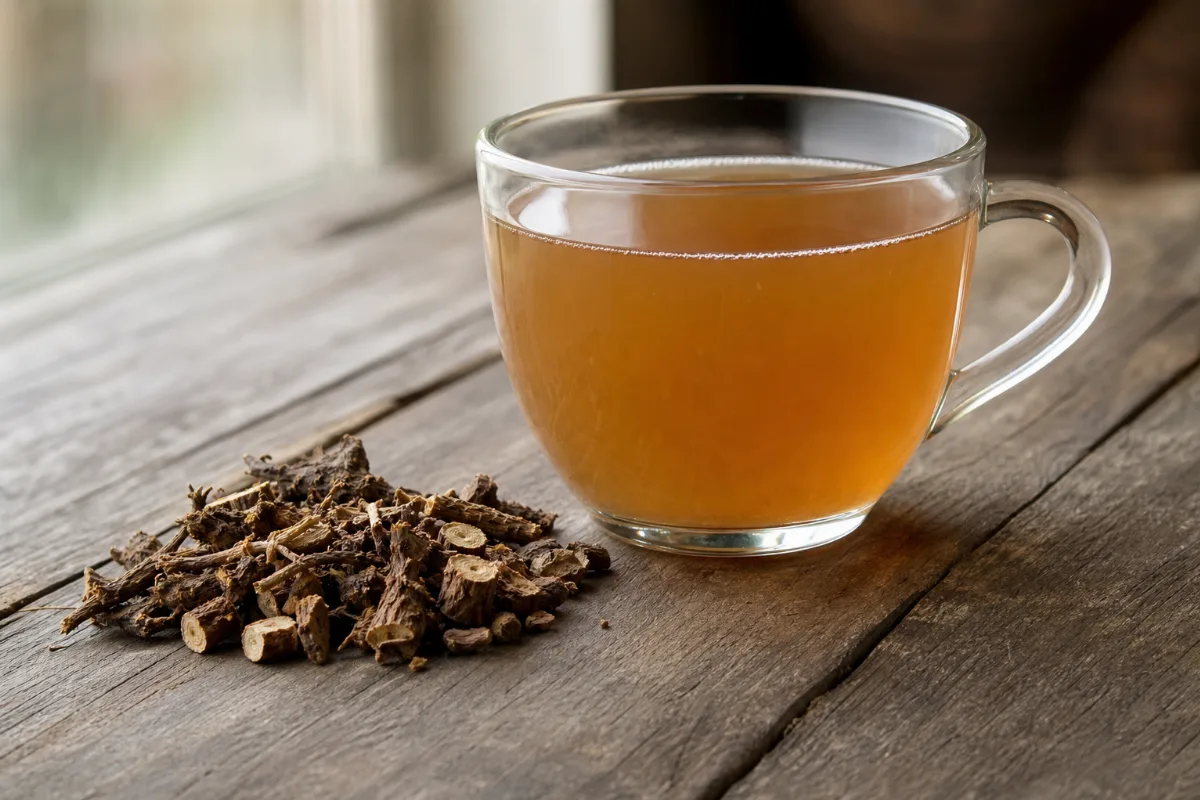
Herbal Teas & Extracts · Herbal tea
Dandelion Tea
Taraxacum officinale · also called Dandelion root tea, dandelion leaf tea, lion's tooth. Roasted dandelion 'coffee' is a related but different drink.
Dandelion tea is a drink made from the root, leaf or flower of the dandelion plant. People use it for digestion and as a gentle water pill. No trial of the tea itself was found, and the two small human studies of other forms were mixed. The main cautions are daisy-family allergy and gallstones or bile-duct disease, for which the EU advises against dandelion root.
General information, not medical advice. Last substantive update · Not medically reviewed. A named clinician has not signed off on this page. How this page is made
About Dandelion Tea
Dandelion tea is made from the root, leaf or flower of Taraxacum officinale. Nobody has tested the tea itself: NCCIH says very little research exists and none supports its use for any condition. The two small human studies used a leaf extract and root powder capsules, and gave mixed results. The tea is used traditionally, but people allergic to the daisy family, or with gallstones, bile-duct or liver disease, are told to avoid dandelion root.
What it is
Dandelion is Taraxacum officinale, a plant of the daisy family (Asteraceae) that GBIF accepts as a species name. NCCIH says it is native to Europe and found across the temperate Northern Hemisphere.
Extracts of the leaf and root contain phenolic acids such as chicoric, chlorogenic and caffeic acid. The root holds inulin, and the root contains a sesquiterpene lactone, taraxinic acid glucoside, which the EU assessor names among the compounds behind possible allergic reactions. The leaf is rich in potassium.
It is not the plant that black and green tea come from. No source we read gives a caffeine figure for dandelion tea, so we do not state one. Blends may add true tea, so read the label.
Tea, roasted 'coffee' or extract?
Dandelion tea can be made from the root, leaf or flower. The EU has separate monographs for root and leaf, and NCCIH does not separate them. Do not assume a finding for one part holds for another.
Roasted dandelion root is sold as a coffee-style drink. A review of old folk writing says coffee substitutes were among the traditional preparations. None of the sources we read tests roasted root, so its safety, and whether the allergy and bile cautions apply, are not covered here. Treat it as a separate product.
The two small human studies used an alcohol extract of leaf and capsules of root powder. Alcohol extracts, tinctures and capsules are not the same as tea, and their results cannot be read as results for tea.
What the research shows
Extra urine: one pilot of 17 people (leaf extract) saw more urination; one crossover trial of 14 people (root powder capsules) saw no significant extra urine. Very low certainty, and neither used tea.
Digestion and appetite: traditional EU use only. No trial.
Blood sugar: no human trial found. A 2016 review and a 2024 lab study point to early, test-tube-level work.
Liver cleanse: no evidence of benefit; a case of liver injury after a mixed detox tea.
Antioxidant and inflammation effects: lab and mouse-tissue results only.
Quality and contamination
Dandelion takes metals up from soil, most in the root. Wild plants in the EU report held lead up to 45 mg per kg at 29 US sites and up to 175 mg per kg at 13 Polish sites. A 2024 roadside study called it a lead hyperaccumulator.
In a 2026 Polish study of five plant species, 32% of samples were above the EU mercury limit, mostly the self-collected ones, with the highest mercury in roots.
These are plant analyses, not proof of harm from a cup of tea. If you pick your own, avoid roadsides, treated lawns and industrial ground. Check shop-bought packs for the part used and where it came from.
Pregnancy, breastfeeding and children
The EU root and leaf monographs say safety in pregnancy and breastfeeding has not been established and do not recommend use for lack of data. NCCIH says little is known about amounts above food levels.
LactMed finds no data on dandelion in nursing mothers or infants, calls dandelion generally recognized as safe as a food, and considers use while breastfeeding unlikely to harm the baby. The sources differ in tone, so talk with a midwife or doctor.
The EU does not recommend dandelion under 12 years.
At a glance
Traditional uses history, not proof
- NCCIH says the flowers, leaves and root have traditionally been used in Mexican and other North American medicine.
- The EU lists dandelion root tea as a traditional herbal medicine for mild digestive complaints and temporary loss of appetite, and dandelion root and leaf to increase urine, based only on long use.
- A 2024 review of old Central-Eastern European writings found dandelion used in many forms, including decoctions, infusions and coffee substitutes.
Studied for research
- Extra urine (diuretic), very low (small studies of an extract and root powder, not tea)
- Digestion and appetite, insufficient (traditional use only)
- Blood sugar, insufficient (lab and review only)
- Liver 'cleanse' or 'detox', insufficient (no evidence of benefit)
- Antioxidant and inflammation effects, insufficient (lab only)
Main compounds
- Chicoric, chlorogenic and caffeic acids
- Taraxinic acid glucoside (a sesquiterpene lactone)
- Inulin (root)
- Potassium (leaf)
Common forms
- Dried root, cut, simmered as a tea
- Leaf tea and flower tea (different parts, not covered by the root evidence)
- Tea bags and blends, which often mix several herbs
- Roasted root drinks sold as dandelion coffee (not studied in the sources read)
- Alcohol extracts, tinctures and root powder capsules (the forms the small studies used)
Research links: EU herbal monograph on dandelion root (EMA) · EU herbal monograph on dandelion leaf (EMA) · NCCIH: Dandelion · Leaf extract and urine: 2009 pilot (abstract) · Root powder and urine: 2026 crossover trial (abstract) · Liver injury after a mixed detox tea: case report (abstract) · Research Library · Genes & Biomarkers Library
What it is and its history
- Accepted scientific name
- Taraxacum officinale
- Naming authority
- Weber ex F.H.Wigg. (GBIF); EU documents write Weber ex Wigg.
- Synonyms
- Not listed here; GBIF holds the synonym list for usageKey 5394163.
- Common names
- Dandelion (English); Dandelion tea (English); Dandelion root tea (English); Lion's tooth (English); Blowball (English)
- Family or group
- Asteraceae (the daisy family, also called Compositae)
- Classification
- Plantae > Asterales > Asteraceae > Taraxacum > Taraxacum officinale
- Native range
- NCCIH says dandelion is native to Europe but found throughout temperate regions of the Northern Hemisphere.
- Habitat
- Not checked.
- What it looks like
- Roots: The root is the part covered by the EU root monograph.; Stems: Not checked.; Leaves: The leaf has its own EU monograph.; Flowers: Flowers are used in some teas; NCCIH says flowers, leaves and root have traditionally been used.; Fruit: Not checked.
- Cultivation
- Not checked.
- Harvest and processing
- The EU root monograph names comminuted (cut) dried root for a herbal tea made by decoction. No source read describes roasting.
- Look-alikes and adulterants
- Name: Other Taraxacum species (for example Taraxacum mongolicum); Note: Sold under the name dandelion in some places. The rat ciprofloxacin study used T. mongolicum, so it cannot be assumed to apply to T. officinale.
- Sustainability and conservation
- Not checked.
Photographs
Traditional use and history history, not clinical proof
| Tradition or era | Documented use | Source |
|---|---|---|
| Mexican and other North American medicine | NCCIH says the flowers, leaves and root have traditionally been used in Mexican and other North American medicine. | s-nccih-dandelion |
| Central-Eastern European folk medicine | A 2024 review of publications from the late 18th century to the early 21st century, mainly from Poland, found that dandelion latex, root, leaf and flower heads were used, as extracts, tinctures, decoctions, infusions, compresses, syrups, and even wine or coffee substitutes. The older literature it analysed did not mention the root. | p39795344 |
| European regulation today | The EU lists dandelion root (including as a herbal tea) and dandelion leaf as traditional herbal medicines, based only on long-standing use. | s-ema-hmpc-dandelion-root |
Traditional use shows how it was used. It does not show that it works or is safe today.
What is inside, and how it may work
What it contains and how those compounds act in cells and animals. Laboratory and animal mechanisms are not proven effects in people.
Main compounds
| Compound | Family | Where it is concentrated | Activity studied | Level of evidence |
|---|---|---|---|---|
| Chicoric acid PubChem 5281764 | phenolic acid (dicaffeoyltartaric acid) | Leaf and root extracts Highest in the mountain-grown plants in one study; amounts for tea were not found. | Found by HPLC with caftaric, chlorogenic and caffeic acids in leaf and root extracts that protected cells from oxidative damage in the lab. 8 21 | Laboratory research |
| Chlorogenic acid and caffeic acid PubChem 1794427 | phenolic acids | Leaf and root extracts Not captured. | Detected in dandelion extracts. LactMed also lists caffeic acid among dandelion's compounds. No separate activity claim is made here. 8 20 21 | Laboratory research |
| Taraxinic acid and its glucose ester (TA-G) PubChem 76566683 | sesquiterpene lactone | Root (high concentrations of TA-G) | A defence compound of the plant that deters root-eating insects (cockchafer larvae). The EU assessor names taraxinic acid glucoside among the sesquiterpene lactones that may cause allergic reactions. No human activity data. 5 17 21 | Laboratory research |
| Inulin | fructan fibre | Root LactMed says the root contains high concentrations of inulin; a 2024 lab study confirmed inulin in dandelion root extracts by a qualitative test. Amounts in tea were not found. | No dandelion-specific human data were found. Inulin is a mixture of polymers, so no single PubChem CID is given. 20 14 | Laboratory research |
| Potassium | mineral | Leaf (30 to 48 mg per g dried leaf in the EU report) 519 mg per litre in one leaf infusion (5 g leaf, 200 ml water, 2 hours at 70 degrees C). No root-tea figure was found. | The reason for the EU's kidney, diabetes and heart-failure caution for the leaf, and for its list of medicines to avoid. 17 16 | Food analysis |
Mechanisms, receptors and pathways
| Target or pathway | Gene or receptor | What was found | Level |
|---|---|---|---|
| Bile secretion | n/a | The EU root monograph says dandelion root may stimulate bile secretion, which is why it is not recommended with bile or liver disease. The EU leaf assessment cites rat work from 1959 in which a leaf decoction raised bile flow; that old study was not read directly. 18 17 | Animal research |
| Urine output | n/a | A rat study in the EU report found a very high urine and salt loss from a herb extract, which the assessor links to potassium; other animal studies could not confirm a diuretic effect. In people the data are mixed (17-person pilot positive, 14-person crossover not significant). 16 2 3 | Animal research |
| Oxidative stress and inflammation markers | TNF-alpha, NOS-2, BDNF | Leaf and root alcohol extracts lowered TNF-alpha and NOS-2 and raised BDNF in lipopolysaccharide-treated mouse brain tissue samples, and reduced hydrogen-peroxide damage in a cell line. 8 | Laboratory research |
| Starch-digesting enzyme (alpha-amylase) | alpha-amylase | Root extracts were tested for alpha-amylase activity in a test tube; dandelion's values were lower than burdock's. The authors say it is uncertain these plants can be recommended as antidiabetic agents without in-vivo studies. 14 | Laboratory research |
Absorption, metabolism and elimination
- Absorption
- Not covered for dandelion tea in the sources read.
- Distribution
- LactMed says no data exist on the excretion of dandelion's active components into breastmilk, apart from vitamins and minerals.
- Metabolism
- Not covered.
- Elimination
- Not covered.
- Bioavailability
- Not covered for tea.
Isolated compounds versus whole extracts
A cup of dandelion tea is a water extract of the root, leaf or flower, depending on the product. Most of the research uses alcohol extracts, freeze-dried extracts or capsules of root powder, which can hold different amounts of the same compounds. The two small human diuretic studies tested a leaf extract and root powder capsules, not tea. A roasted-root coffee-style drink is a third product: roasting is not discussed in any source read.
Nutritional composition
Dandelion tea is not described as a nutrient source in the sources read. The one mineral the EU reports quantify is potassium in the leaf. LactMed says the herb contains vitamins and minerals without giving amounts. Nutrient figures for dandelion greens eaten as food should not be carried over to a tea.
1 very low certainty4 not enough evidence
What was looked at
The 5 benefits and uses checked for Dandelion Tea, each with how strong the evidence is. Tap one to open it.
- Extra urine (diuretic effect)Very low certainty
- Digestion and appetiteNot enough evidence
- Blood sugar and diabetesNot enough evidence
- Liver 'cleanse' or 'detox'Not enough evidence
- Antioxidant and inflammation effects (lab work only)Not enough evidence
Lab markers tracked in the studies
Urination frequency and urine-to-fluid ratioUrine output over 4 hoursStarch-digesting enzyme (alpha-amylase) activity in a test tubeInflammation markers in mouse brain tissue (TNF-alpha, NOS-2, BDNF)
What is Dandelion Tea good for?
The uses people ask about and how strong the human evidence is for each. For none of them has the tea itself been tested, and each row says what was tested instead.
Benefits, one by one
Each card is a research question, not a promise. Tap a goal to filter. Open a card to see the studies, doses and limits.
Extra urine (diuretic effect)
Very low certaintyDandelion has long been called a natural water pill. Two small human studies exist, and neither tested tea. A 17-person pilot of a leaf extract saw more urination after the first two doses. A 14-person crossover trial of root powder capsules found no extra urine over 4 hours.
6 studiesLeaf alcohol extract (pilot) and root powder capsules (crossover). Da…
Studies, doses and limits
What the trials found
Two small human studies, both of other forms: a one-day pilot of a fresh-leaf extract in 17 people (no placebo group described) and an open-label crossover trial of root powder capsules in 14 young adults.
Results
Leaf extract: more frequent urination after dose 1 and a higher urine-to-fluid ratio after dose 2; no change after dose 3. Root powder: 105 g more urine over 4 hours than water alone, which was not statistically significant (95% CI -35 to 244 g).
Effect sizes as reported
Pilot: p < 0.05 for urination frequency after dose 1 and p < 0.001 for the excretion ratio after dose 2. Crossover: mean difference 105 g, 95% CI -35 to 244 g, g = 0.45.
Why this rating
Mixed and tiny: 17 people without a described control group, then 14 people with a result that was not significant. Neither studied tea. No trial of tea was found.
Form and dose studied
Leaf alcohol extract (pilot) and root powder capsules (crossover). Dandelion tea itself was not tested.
Who was studied
Healthy volunteers in the pilot; physically active young adults in the crossover trial.
Limits
Not tea. Very small. One day or one 4-hour window. Open-label crossover. Young, mostly male group. Results cannot be carried over to older adults or to people taking medicines.
Why researchers looked
The 2009 pilot authors say dandelion has been widely used as a diuretic in folk medicine and herbal practice in Europe, Asia and the Americas, without earlier clinical trials. The EU lists it as a traditional use.
Traditional use
The EU lists dandelion leaf and dandelion root as traditional herbal medicines to increase the amount of urine, as an add-on in minor urinary complaints, based only on long use.
Proposed mechanism Animal and lab
A rat study cited by the EU assessor found a very high urine and salt loss, which the assessor links to the plant's high potassium. Other rat studies could not confirm a diuretic action. Not shown for tea in people.
A proposed mechanism does not show that the effect happens in people.
A real water-pill effect would matter for people on lithium or diuretic medicines (see Safety). The EU says dandelion root is not recommended for people told to limit fluids.
Digestion and appetite
Not enough evidenceThe EU lists dandelion root tea as a traditional remedy for mild digestive discomfort (fullness, gas, slow digestion) and temporary loss of appetite. That is based on long use only. No trial of the tea was found.
2 studiesRoot tea (decoction) is the form the EU covers. Leaf tea and roasted …
Studies, doses and limits
Results
No tea trial results exist in the sources read.
Why this rating
The only support is tradition and a regulator listing. The EU monograph itself says the use rests on long use, not on trials.
Form and dose studied
Root tea (decoction) is the form the EU covers. Leaf tea and roasted root drinks are different products and are not covered by the root monograph.
Who was studied
Adolescents, adults and elderly (EU monograph); not recommended under 12.
Limits
No trials. The same bile-stimulating action is why people with gallstones or bile-duct disease are told to avoid it.
Why researchers looked
The EU monograph says dandelion root may stimulate bile secretion, which is the reasoning behind its digestive use.
Traditional use
The EU monograph for dandelion root covers the comminuted root as a herbal tea, and states the use is based exclusively on long-standing use. NCCIH says oral dandelion products are promoted for indigestion.
Proposed mechanism Hypothesis
The EU monograph says dandelion root may stimulate bile secretion. That is the reason it gives for several of its warnings. Not shown for tea in people.
A proposed mechanism does not show that the effect happens in people.
Not recommended with gallstones, bile-duct problems or liver disease (EU monograph). Allergy to the daisy family rules it out.
Blood sugar and diabetes
Not enough evidenceNo trial of dandelion tea on blood sugar was found. A 2016 review calls the early research promising but limited and asks for clinical studies. A 2024 lab study tested root extracts against a starch-digesting enzyme, and its authors say it is uncertain these plants can be recommended without studies in living bodies.
4 studiesRoot extracts in the lab; tea not studied.
Studies, doses and limits
What the trials found
No human trial of dandelion tea on blood sugar, HbA1c or diabetes was found. The 2016 review names no human trial in its abstract and asks for clinical research.
Results
No human results exist in the sources read.
Why this rating
Only lab work and a narrative review that asks for trials.
Form and dose studied
Root extracts in the lab; tea not studied.
Limits
Test-tube enzyme results are far from blood sugar in a person. A 2010 emergency-medicine case report of low blood sugar after eating dandelion exists, but only its title was available, so it is not used here.
Why researchers looked
A 2016 review attributes possible anti-diabetic properties to chicoric acid, taraxasterol, chlorogenic acid and sesquiterpene lactones found in dandelion.
Traditional use
Not described in the sources read for tea.
Proposed mechanism Animal and lab
Lab work: root extracts were tested for activity against alpha-amylase (a starch-digesting enzyme) in a test tube, and the 2016 review lists chicoric acid, taraxasterol, chlorogenic acid and sesquiterpene lactones as candidate actives. Not shown for tea in people.
A proposed mechanism does not show that the effect happens in people.
NCCIH lists antidiabetes drugs as a theoretical interaction with dandelion, and the older EU leaf monograph advises avoiding dandelion in diabetes because of potassium. People on diabetes medicines should ask a pharmacist first.
Liver 'cleanse' or 'detox'
Not enough evidenceDandelion is sold in many liver-cleanse teas. No source we read shows that it cleanses or helps the liver in people. The EU advises against dandelion root in liver disease, and one case report links a six-herb liver-detox tea to liver injury.
3 studiesMixed detox tea in the case report.
Studies, doses and limits
What the trials found
No human trial of dandelion tea for liver health was found. The only human liver report found is a case of liver injury after a mixed detox tea.
Results
A 36-year-old woman developed cholestatic acute liver injury after an over-the-counter liver-detox tea that included dandelion root among six ingredients. Dandelion cannot be blamed on its own.
Effect sizes as reported
One case; no rate can be calculated.
Why this rating
No evidence of benefit; one case report of harm from a mixed tea.
Form and dose studied
Mixed detox tea in the case report.
Who was studied
One adult woman.
Limits
A single case with six ingredients. Cannot show that dandelion caused it.
Why researchers looked
Dandelion is bitter and has been used traditionally to stimulate bile, which is where the liver link comes from.
Proposed mechanism Hypothesis
The EU root monograph says dandelion root may stimulate bile secretion. This is the reason for its warning, not a proven benefit.
A proposed mechanism does not show that the effect happens in people.
The EU says dandelion root is not recommended with liver disease, gallstones, cholangitis or bile-duct obstruction.
Antioxidant and inflammation effects (lab work only)
Not enough evidenceLab studies of dandelion leaf and root extracts found phenolic compounds and, in cells and mouse tissue, lower inflammation markers. This is the early research NCCIH describes. It says nothing yet about a cup of tea or about health in people.
2 studiesHydroalcoholic leaf and root extracts in the lab.
Studies, doses and limits
Results
Lab and mouse-tissue results only.
Why this rating
Cells and mouse tissue only; alcohol extracts rather than tea.
Form and dose studied
Hydroalcoholic leaf and root extracts in the lab.
Limits
Lab results rarely carry over to people. Tea may carry different amounts of these compounds.
Why researchers looked
Dandelion extracts contain phenolic acids such as chicoric and chlorogenic acid (found by HPLC in the 2025 study), which are being tested for antioxidant and anti-inflammatory effects.
Traditional use
Not described in the sources read.
Proposed mechanism Animal and lab
In cells and mouse tissue, alcohol extracts reduced oxidative damage and lowered TNF-alpha and NOS-2 while raising BDNF.
A proposed mechanism does not show that the effect happens in people.
None specific.
Connections to the rest of health
How Dandelion Tea connects to the rest of our health knowledge graph. Every link says what kind of connection it is. A safety link (for example to the liver) is a warning, not a benefit. A study that merely mentions a topic never creates a benefit link.
Explore every connection: goals, body systems, organs, symptoms, genes
A. Wellness goals
| Connected to | Kind of connection | Evidence status | Context | Studies |
|---|---|---|---|---|
| Detoxification Support | Very low certainty | Extra urine (diuretic effect): Dandelion has long been called a natural water pill. Two small human studies exist, and neither tested tea. A 17-person pilot of a leaf extract saw more urination after the first two doses. A 14-person crossover trial of root powder capsules found no extra urine over 4 hours. | 2 3 18 15 16 19 | |
| Digestive Support | Not enough evidence | Digestion and appetite: The EU lists dandelion root tea as a traditional remedy for mild digestive discomfort (fullness, gas, slow digestion) and temporary loss of appetite. That is based on long use only. No trial of the tea was found. | 18 19 | |
| Blood Sugar Balance | Not enough evidence | Blood sugar and diabetes: No trial of dandelion tea on blood sugar was found. A 2016 review calls the early research promising but limited and asks for clinical studies. A 2024 lab study tested root extracts against a starch-digesting enzyme, and its authors say it is uncertain these plants can be recommended without studies in living bodies. | 12 14 19 15 | |
| Liver Support | Not enough evidence | Liver 'cleanse' or 'detox': Dandelion is sold in many liver-cleanse teas. No source we read shows that it cleanses or helps the liver in people. The EU advises against dandelion root in liver disease, and one case report links a six-herb liver-detox tea to liver injury. | 9 18 19 | |
| Detoxification Support | Not enough evidence | Liver 'cleanse' or 'detox': Dandelion is sold in many liver-cleanse teas. No source we read shows that it cleanses or helps the liver in people. The EU advises against dandelion root in liver disease, and one case report links a six-herb liver-detox tea to liver injury. | 9 18 19 | |
| Inflammation Balance | Not enough evidence | Antioxidant and inflammation effects (lab work only): Lab studies of dandelion leaf and root extracts found phenolic compounds and, in cells and mouse tissue, lower inflammation markers. This is the early research NCCIH describes. It says nothing yet about a cup of tea or about health in people. | 8 19 |
B. Body systems
| Connected to | Kind of connection | Evidence status | Context | Studies |
|---|---|---|---|---|
| Kidney Urinary | Biological association | Very low certainty | Studied for: Extra urine (diuretic effect) | 2 3 18 15 16 19 |
| Digestive System | Biological association | Not enough evidence | Studied for: Digestion and appetite | 18 19 |
| Endocrine System | Biological association | Not enough evidence | Studied for: Blood sugar and diabetes | 12 14 19 15 |
| Hepatic System | Biological association | Not enough evidence | Studied for: Liver 'cleanse' or 'detox' | 9 18 19 |
| Immune System | Biological association | Not enough evidence | Studied for: Antioxidant and inflammation effects (lab work only) | 8 19 |
C. Body parts and organs
| Connected to | Kind of connection | Evidence status | Context | Studies |
|---|---|---|---|---|
| Gallbladder | Contraindication | Low certainty | Not recommended with gallstones or bile-duct disease (EU monographs). Preparation or compound: Dandelion root and leaf |
18 15 |
| Liver | Contraindication | Low certainty | Not recommended with liver disease (EU root monograph); one liver-injury case with a mixed detox tea. Preparation or compound: Dandelion root |
18 9 |
| Kidneys | Contraindication | Low certainty | Avoid in kidney failure because of possible high potassium (EU leaf monograph). Preparation or compound: Dandelion leaf |
15 17 |
E. Health conditions
| Connected to | Kind of connection | Evidence status | Context | Studies |
|---|---|---|---|---|
| Daisy-family (Asteraceae) allergy | Contraindication | Moderate certainty | Listed contraindication; skin patch-test reactions documented. Preparation or compound: Dandelion |
18 6 7 |
I. Biomarkers
| Connected to | Kind of connection | Evidence status | Context | Studies |
|---|---|---|---|---|
| Urination frequency and urine-to-fluid ratio | Biological association | Very low certainty | Measured in trials: raised after the first two doses of a leaf extract (not tea). A lab change is not the same as a health benefit. | 2 |
| Urine output over 4 hours | Biological association | Very low certainty | Measured in trials: no clear change with root powder capsules. A lab change is not the same as a health benefit. | 3 |
| Starch-digesting enzyme (alpha-amylase) activity in a test tube | Biological association | Not enough evidence | Measured in trials: measured in the lab; lower than burdock. A lab change is not the same as a health benefit. | 14 |
| Inflammation markers in mouse brain tissue (TNF-alpha, NOS-2, BDNF) | Biological association | Not enough evidence | Measured in trials: lower inflammation markers, higher BDNF (ex vivo only). A lab change is not the same as a health benefit. | 8 |
J. Genes, receptors and enzymes
| Connected to | Kind of connection | Evidence status | Context | Studies |
|---|---|---|---|---|
| TNF, NOS2, BDNF | Preliminary mechanism | In vitro | Changed in mouse brain tissue samples treated with dandelion leaf and root alcohol extracts (lab only). | 8 |
| Alpha-amylase | Preliminary mechanism | In vitro | Tested in a test tube with dandelion root extracts; no human data. | 14 |
L. Active compounds
| Connected to | Kind of connection | Evidence status | Context | Studies |
|---|---|---|---|---|
| Chicoric acid | Biological association | In vitro | Found by HPLC with caftaric, chlorogenic and caffeic acids in leaf and root extracts that protected cells from oxidative damage in the lab. Preparation or compound: Leaf and root extracts |
8 21 |
| Chlorogenic acid and caffeic acid | Biological association | In vitro | Detected in dandelion extracts. LactMed also lists caffeic acid among dandelion's compounds. No separate activity claim is made here. Preparation or compound: Leaf and root extracts |
8 20 21 |
| Taraxinic acid and its glucose ester (TA-G) | Biological association | In vitro | A defence compound of the plant that deters root-eating insects (cockchafer larvae). The EU assessor names taraxinic acid glucoside among the sesquiterpene lactones that may cause allergic reactions. No human activity data. Preparation or compound: Root (high concentrations of TA-G) |
5 17 21 |
| Inulin | Biological association | In vitro | No dandelion-specific human data were found. Inulin is a mixture of polymers, so no single PubChem CID is given. Preparation or compound: Root |
20 14 |
| Potassium | Biological association | Food analysis | The reason for the EU's kidney, diabetes and heart-failure caution for the leaf, and for its list of medicines to avoid. Preparation or compound: Leaf (30 to 48 mg per g dried leaf in the EU report) |
17 16 |
Each connection is stored with the ingredient, the connected record, the kind of connection, the evidence status, the supporting studies, the preparation or compound involved, and a review date (last reviewed October 25, 2026).
Evidence at a glance: what the research found for 5 outcomes
Each outcome below is one thing researchers measured. Certainty is how far the evidence can be trusted, not how well it works. The full studies are on the next tab.
The evidence
The research centre for Dandelion Tea. Every record here was checked against PubMed or the publisher's page; we never list a study we have not verified.
Evidence by outcome
Bars show how many studies we found for each outcome, not how well it works. People are added up across trials only (reviews are not added, to avoid double counting).
How we rate evidence
High certainty
Several well-run trials or reviews agree; further research is unlikely to change the picture much.
Moderate certainty
Good trials point the same way, but some doubt remains.
Low certainty
Small, short or inconsistent trials. The finding could change with better research.
Very low certainty
Very little or very weak human data. Treat as a possibility only.
Mixed findings
Trials or reviews disagree with each other.
Not enough evidence
Not enough human research to say either way.
Evidence against
Good research found no benefit, or found harm.
We take the reviewers' own risk-of-bias and GRADE statements where they exist, and otherwise judge from study size, design, consistency, directness and whether a product matches what is sold. Many publications do not make evidence high. Method note: We searched PubMed and read the abstracts of the studies listed, read the EU root and leaf monographs and the NCCIH page in full, read the safety passages of the EU assessment reports, read the PubMed record for LactMed (the full LactMed page was blocked), and checked the plant name in GBIF and four compounds in PubChem.
Study library: every study we checked 22
| Study | Design | People | Product, dose, length | Result |
|---|---|---|---|---|
| Brodziak-Dopierala 2026 Analysis of Mercury Content in Medicinal Plants Popular in Poland. Molecules · PMID 42883333 · DOI |
Lab analysis plant analysis |
Wild-collected plants and commercial herbal teas from five plant species including dandelion | Dried plant material and commercial teas root; herb; leaf; bud (varied) |
Across all samples the mean mercury level was 18.68 micrograms per kg (range 0.19 to 202.83). Dandelion's median was 13.00 micrograms per kg. Mercury was highest in roots. 32% of all samples exceeded the permitted limit, mostly self-collected ones. The authors say self-collecting medicinal plants such as dandelion may carry a mercury risk. 32% of samples (five species together) above the limit Methods, limits and fundingOutcomes: Mercury content against the EU limit (Regulation 2018/73) Limitations: Five species pooled; the abstract does not give a dandelion-only figure above the limit. Applies to the samples tested. Funding and conflicts: Not stated in the abstract Read: abstract |
| Clare 2009 The diuretic effect in human subjects of an extract of Taraxacum officinale folium over a single day. Journal of Alternative and Complementary Medicine · PMID 19678785 · DOI |
Pilot study |
17 17 volunteers (the abstract gives no age or sex details) |
Fresh leaf hydroethanolic (alcohol and water) extract, not tea leaf One day of dosing, with 2 baseline days before and 24 hours after |
Baseline was recorded for 2 days, then the extract was taken three times in one day. Urination frequency rose significantly (p < 0.05) in the 5 hours after the first dose, and the excretion ratio rose significantly (p < 0.001) in the 5 hours after the second dose. The third dose changed nothing measured. The authors call the extract promising and say further studies are needed. Significant rises after doses 1 and 2 only; no effect sizes in the abstract Methods, limits and fundingOutcomes: Urinary frequency and excretion ratio (urine volume divided by fluid intake) Limitations: Pilot study of an alcohol extract, not tea. Each person was compared with their own baseline days; the abstract describes no placebo group and no blinding. 17 people, one day. Funded in part by NIH (extramural), per the PubMed record. Funding and conflicts: Research support, N.I.H., Extramural (PubMed record) Read: abstract |
| Gavin 2026 Co-Ingestion of a Commercially Available Dandelion Root Powder Elicited No Additional Diuretic Effect Over 4 Hr Compared to Ingestion of Water Alone in Physically Active Young Adults. International Journal of Sport Nutrition and Exercise Metabolism · PMID 42398668 · DOI |
Crossover trial |
14 Physically active young adults (12 men, 2 women, age 25.5 +/- 4.7 years) |
Commercial dandelion root powder in capsules taken with a large drink of water, not tea root Two visits, 4 hours of urine collection each · vs Water alone |
Urine output was 1,164 +/- 244 g without dandelion and 1,268 +/- 213 g with dandelion root powder. The mean difference was 105 g (95% CI -35 to 244 g; p = .13; g = 0.45). The authors say this lacks support for the purported diuretic effect, and suggest other time courses, dosing strategies and dandelion sources should be studied. Mean difference 105 g, not statistically significant (-35 to 244 g) Methods, limits and fundingOutcomes: Cumulative urine output over 4 hours Limitations: Open-label (not blinded), counterbalanced crossover with two lab visits, only 14 people, mostly young men, one short measurement window. Root powder capsules, not tea. Funding and conflicts: Not stated in the abstract Read: abstract |
| Gruszecki 2024 Multilateral Use of Dandelion in Folk Medicine of Central-Eastern Europe. Plants (Basel) · PMID 39795344 · DOI |
Literature review human use (historical) |
Publications from the late 18th century to early 21st century, mainly from Poland, plus Belarus, Ukraine and European Russia | Dandelion (Taraxacum sect. Taraxacum) raw materials latex; root; leaf; flower; herb |
Dandelion gave many medicinal raw materials. The order they appeared in the sources was latex, then root, leaf and flower heads, then herb, then herb with flowers. The literature analysed did not mention the root, which is popular in natural medicine today. Preparations included extracts, tinctures, decoctions, infusions, compresses, syrups, and even wine or coffee substitutes. No effect sizes Methods, limits and fundingOutcomes: Traditional uses and preparations Limitations: A review of old folk-medicine publications from one region. It records tradition, not whether anything works. Funding and conflicts: Not stated in the abstract Read: abstract |
| Huber 2021 A beta-glucosidase of an insect herbivore determines both toxicity and deterrence of a dandelion defense metabolite. eLife · PMID 34632981 · DOI |
Lab study insect and plant |
Cockchafer larvae and dandelion roots | Taraxinic acid beta-D-glucopyranosyl ester (TA-G), a sesquiterpene lactone root |
TA-G is a sesquiterpene lactone of the common dandelion that deters its major root herbivore, the cockchafer larva. Dandelions make high concentrations of it in the roots. The study is about how the insect digests it; it has no human data. No human outcome Methods, limits and fundingOutcomes: Insect metabolism of a dandelion root defence compound Limitations: An insect-plant study. Used here only to say what TA-G is and where it is found. Funding and conflicts: Not stated in the abstract Read: abstract |
| Jovanovic 2004 Sesquiterpene lactone mix patch testing supplemented with dandelion extract in patients with allergic contact dermatitis, atopic dermatitis and non-allergic chronic inflammatory skin diseases. Contact Dermatitis · PMID 15479198 · DOI |
Patch test study |
235 235 adults at a skin clinic (patients with contact dermatitis, eczema, other chronic skin disease, plus 49 healthy volunteers) |
Dandelion ether extract applied to the skin (not swallowed) |
Overall, 4.7% had a Compositae (daisy-family) allergy. Of these, 3 people (1.3% of all tested) reacted to dandelion extract. Reactions to dandelion extract were seen only in patients with eczema. No irritant reaction to dandelion extract was recorded. SLs were detected in dandelion. 3 of 235 (1.3%) reacted to dandelion extract Methods, limits and fundingOutcomes: Allergic and irritant patch-test reactions Limitations: A clinic population, not the general public. Skin testing with an extract, not drinking tea. Funding and conflicts: Not stated in the abstract Read: abstract |
| Lovell 1991 Dandelion dermatitis. Contact Dermatitis · PMID 1838315 · DOI |
Case series |
7 7 people with a history suggesting dandelion dermatitis |
Dandelion extract applied to the skin as a patch test (not swallowed) |
All 7 were positive to dandelion extracts, but only 2 reacted to the standard sesquiterpene-lactone screening mix. The authors say the mix is useful for chrysanthemum dermatitis but may miss dandelion allergy. 7 of 7 positive to dandelion extract Methods, limits and fundingOutcomes: Skin patch-test reactions Limitations: Seven selected people who already had suspected dandelion dermatitis; skin contact, not drinking. Funding and conflicts: Not stated in the abstract Read: abstract |
| Masciulli 2025 Phytochemical composition and bioactivity of edible Taraxacum officinale: potential as an ingredient in brain health-oriented functional foods. Food & Function · PMID 40832870 · DOI |
Lab and ex vivo lab, mouse tissue |
Hypothalamic cells and mouse tissue samples; no people | Hydroalcoholic (alcohol and water) extracts of dandelion leaves and roots from three growing sites leaf; root |
HPLC found chicoric, caftaric, chlorogenic and caffeic acids, highest in the mountain-grown plants. Those extracts reduced hydrogen-peroxide cell damage in the cell line without toxicity. In lipopolysaccharide-treated mouse tissue they lowered TNF-alpha and NOS-2 and raised BDNF. The authors suggest dandelion is a candidate source for foods aimed at brain health. Lab and ex-vivo only Methods, limits and fundingOutcomes: Polyphenol content, protection of cells from oxidative stress, inflammation markers in mouse tissue Limitations: Cells and mouse tissue. Alcohol extracts, not tea. Shows nothing about effects in people. Funding and conflicts: Not stated in the abstract Read: abstract |
| Niazi 2022 Drug-Induced Liver Injury from Herbal Liver Detoxification Tea. Case Reports in Gastroenterology · PMID 36636365 · DOI |
Case report |
1 A 36-year-old woman |
Over-the-counter herbal 'liver detox' tea with six ingredients including dandelion root root (one of six ingredients) |
She developed clinically significant acute liver injury with a cholestatic (bile-flow) pattern after the tea. The six ingredients were burdock root, stinging nettle leaf, cleavers herb, dandelion root, lemon peel and lemon myrtle leaf. The authors say this is the first case reported of a hepatotoxic effect from any of these ingredients. One case Methods, limits and fundingOutcomes: Acute liver injury Limitations: A single case of a mixed product, so dandelion cannot be named as the cause. It also shows that a 'liver detox' tea was linked to liver injury, the opposite of the marketing claim. Funding and conflicts: Not stated in the abstract Read: abstract |
| Paulsen 2020 Compositae sensitization in Danish children and adolescents. Contact Dermatitis · PMID 32542786 · DOI |
Patch test study |
388 388 Danish children and adolescents under 18, tested 2007 to 2019 |
Dandelion extract applied to the skin (not swallowed) |
Of 388 children tested, 12 (3%) were sensitised to the daisy family. Dandelion extract caused a positive reaction in six of the 10 children tested with it. 11 of the 12 had a personal history of atopy (eczema-type allergy) and 11 had hand eczema. 6 of 10 tested reacted to dandelion extract Methods, limits and fundingOutcomes: Patch-test reactions to daisy-family (Compositae) allergens Limitations: Children at a skin clinic; only 10 were tested with dandelion extract. Skin testing, not drinking tea. Funding and conflicts: Not stated in the abstract Read: abstract |
| Vural 2024 Trace element accumulation behavior, ability, and propensity of Taraxacum officinale F.H. Wigg (Dandelion). Environmental Science and Pollution Research International · PMID 38319421 · DOI |
Lab analysis plant analysis |
34 34 dandelion samples and soils collected along roadsides |
Whole plant parts analysed (roots, stems, flowers) root; stem; flower |
Dandelion accumulated some trace elements in its roots, stems and flowers, with the highest concentrations in the roots. The study identified dandelion as a lead hyperaccumulator, with bioconcentration factors and concentrations above 1000 mg per kg. Lead hyperaccumulator in this study Methods, limits and fundingOutcomes: Trace element concentrations and accumulation factors Limitations: Roadside samples from metal-rich ground. Tells us the plant can take metals up, not how much a cup of tea contains. Funding and conflicts: Not stated in the abstract Read: abstract |
| Wirngo 2016 The Physiological Effects of Dandelion (Taraxacum Officinale) in Type 2 Diabetes. The Review of Diabetic Studies · PMID 28012278 · DOI |
Narrative review mostly lab and animal (reviewed) |
Published lab, animal and clinical work on dandelion and type 2 diabetes (the abstract gives no study count) | Dandelion and its chemical components, reviewed plant parts, mixed |
Attributes possible anti-diabetic properties to chicoric acid, taraxasterol, chlorogenic acid and sesquiterpene lactones. Says that, although initial research appears promising, data on the cellular impact of dandelion are limited, and that extensive in-vitro, in-vivo and clinical research is required. No effect sizes (narrative review) Methods, limits and fundingOutcomes: Anti-diabetic properties of dandelion and its bioactive components Limitations: A narrative review, not systematic. The abstract names no human trial and calls for clinical research. Funding and conflicts: Not stated in the abstract Read: abstract |
| Zhu 1999 Effects of taraxacum mongolicum on the bioavailability and disposition of ciprofloxacin in rats. Journal of Pharmaceutical Sciences · PMID 10350500 · DOI |
Animal study rat (Taraxacum mongolicum) |
Sprague Dawley rats, two groups | Aqueous extract of Taraxacum mongolicum (a relative sold as dandelion) given with ciprofloxacin |
The highest blood level (Cmax) of ciprofloxacin was 73% lower in rats given the extract. Apparent distribution volume and half-life rose about 3-fold. Overall exposure (AUC) stayed similar. The authors suggest a multi-factor interaction, note the high mineral content of the plant as a problem for quinolone absorption, and say the implications of dosing the two together should not be overlooked. Cmax lowered by 73%; AUC similar Methods, limits and fundingOutcomes: Blood and urine levels of the antibiotic ciprofloxacin Limitations: Rats, one dose, a different Taraxacum species, an extract rather than tea. No human study was found. Whether a lower peak matters for killing infections is unknown. Funding and conflicts: Not stated in the abstract Read: abstract |
| Zolotova 2024 Antidiabetic Properties of the Root Extracts of Dandelion (Taraxacum officinale) and Burdock (Arctium lappa). Plants (Basel) · PMID 38611548 · DOI |
Lab analysis lab |
Laboratory tests of root extracts; no people or animals | 70% alcohol extract and freeze-dried extract of dandelion and burdock roots root |
Inulin was confirmed in both roots. Burdock gave higher values than dandelion for phenolics, the antioxidant test and the alpha-amylase activity test, while dandelion had more total polysaccharides. The authors say it is uncertain whether these plants can be recommended as antidiabetic agents without in-vivo studies. No clinical outcome Methods, limits and fundingOutcomes: Chemical content (polysaccharides, phenolics, tannin, inulin), antioxidant test, and starch-digesting enzyme (alpha-amylase) activity Limitations: Test-tube chemistry only. Says nothing about blood sugar in people, and the extracts were alcohol and freeze-dried extracts, not tea. Funding and conflicts: Not stated in the abstract Read: abstract |
| n/a 2009 EMA/HMPC: Community herbal monograph on Taraxacum officinale Weber ex Wigg., folium (dandelion leaf), EMA/HMPC/579636/2008, adopted 12 November 2009 n/a · Source |
Authoritative guidance n/a |
n/a | n/a |
Lists dandelion leaf (as an infusion and other preparations) as a traditional herbal medicine to increase urine as an add-on in minor urinary complaints, based only on long-standing use. Contraindicated with allergy to the plant or to Asteraceae (Compositae) plants, and with obstruction of the bile ducts, cholangitis, liver diseases, gallstones, active peptic ulcer and any other biliary disease. Use should be avoided with kidney failure, diabetes or heart failure because of possible risks from high blood potassium (hyperkalaemia). Not established under 12 years. Pregnancy and breastfeeding: safety not established, use not recommended. Interactions: none reported. Allergic reactions may occur, frequency not known. No case of overdose reported. Tests for genotoxicity (adequate ones), reproductive toxicity and cancer have not been done. Methods, limits and fundingOutcomes: Traditional use, contraindications, warnings, interactions, pregnancy, side effects for the leaf. Limitations: A regulator monograph, not a trial; the leaf is a different part from the root. PDF read in full on 2026-10-25. Older (2009). Read: full-text |
| n/a 2009 EMA/HMPC: Assessment report on Taraxacum officinale Weber ex Wigg., radix cum herba, EMA/HMPC/212897/2008 (12 November 2009) n/a · Source |
Authoritative guidance n/a |
n/a | n/a |
Repeats the potassium reasoning (leaf figures) and the same list of medicines whose use with dandelion tea should be avoided. Repeats the lithium theory. Rat studies on a diuretic effect conflict: one herb extract gave a very high urine and salt loss which the report links to the plant's 4.25% potassium, while two other groups could not confirm a diuretic action of root extracts. No overdose or toxic effect documented. No pregnancy or breastfeeding data. Methods, limits and fundingOutcomes: Safety, potassium, metals, theoretical interactions (root with herb). Limitations: Assessment report on the older root-with-herb monograph. Passages found by keyword search (potassium, lithium, diuretic, metals, pregnancy) were read; not every page was read. Read: partial-text |
| n/a 2009 EMA/HMPC: Assessment report on Taraxacum officinale Weber ex Wigg., folium, EMA/HMPC/579634/2008 (12 November 2009) n/a · Source |
Authoritative guidance n/a |
n/a | n/a |
Leaf potassium is high: 30.37 to 47.73 mg per g of dried leaf in a three-year experiment it cites. An infusion made from 5 g of Spanish leaves in 200 ml of water (70 degrees C, 2 hours) held 519 mg/l of potassium. The assessor concludes harm from high potassium is possible in kidney failure, diabetes or heart failure, and that drinking dandelion tea together with beta-blockers, ACE inhibitors, ciclosporin, digitalis, heparin, ketoconazole, NSAIDs, pentamidine, potassium-sparing diuretics, tacrolimus or trimethoprim should be avoided. States that in theory people on lithium who use a diuretic herb such as dandelion may become dehydrated and develop lithium toxicity (citing a 2003 reference). Names anaphylaxis and pseudo-allergic contact dermatitis as possible, attributed to sesquiterpene lactones, and describes one 52-year-old woman with erythema multiforme after garden-weed contact who reacted to fresh dandelion leaf on patch testing. Wild plants from 29 US sites held lead 0.50 to 45.00 and cadmium 0.55 to 3.11 mg/kg; plants from 13 Polish sites held lead 3.3 to 175.3 mg/kg. No use-in-pregnancy data. No overdose documented. Methods, limits and fundingOutcomes: Safety, potassium, metals, theoretical interactions (leaf). Limitations: Assessment report summarising older studies. Searched by keyword for the potassium, lithium, interaction, metal, adverse-event and pregnancy passages and read those passages; not every page was read. Leaf figures cannot be applied to root tea. Read: partial-text |
| n/a 2021 EMA/HMPC: European Union herbal monograph on Taraxacum officinale F.H. Wigg., radix (dandelion root), EMA/HMPC/475726/2020, adopted 24 November 2021 n/a · Source |
Authoritative guidance n/a |
n/a | n/a |
Lists dandelion root (as a herbal tea made by decoction, and as liquid preparations) as a traditional herbal medicine for mild digestive complaints (fullness, gas, slow digestion), for temporary loss of appetite, and to increase urine as an add-on in minor urinary complaints, based only on long-standing use. Contraindication: allergy to the plant or to plants of the daisy family (Asteraceae/Compositae). Because it may stimulate bile secretion it is not recommended with bile-duct obstruction, cholangitis, liver disease, gallstones or any other bile disease. Not recommended for people told to limit fluids. Not established under 12 years. Pregnancy and breastfeeding: safety not established, use not recommended for lack of data; no fertility data. Interactions: none reported. Side effect: allergic reactions, frequency not known. No case of overdose reported. Tests on reproductive toxicity, genotoxicity and cancer have not been done. See a doctor if symptoms last longer than 2 weeks. Methods, limits and fundingOutcomes: Traditional uses, contraindications, warnings, interactions, pregnancy, side effects. Limitations: A regulator monograph, not a trial. It rests on long use, not on trials of the tea. PDF read in full on 2026-10-25. It does not repeat the potassium caution found in the older leaf monograph. Read: full-text |
| n/a 2024 NCCIH (NIH): Dandelion, Usefulness and Safety (last updated November 2024) n/a · Source |
Authoritative guidance n/a |
n/a | n/a |
Says we know very little about dandelion and there is no compelling scientific evidence for any health condition. Preliminary lab studies tested extracts for anti-inflammatory, antioxidant and antiviral properties. Dandelion in food amounts is considered likely safe; less is known about larger amounts. Topical dandelion may cause an allergic reaction in people with eczema. Evidence conflicts on reactions in people sensitive to ragweed, chrysanthemums, marigolds and daisies. There are theoretical reasons to suspect interactions with antidiabetes, anticoagulant, antiplatelet and water pill drugs, among others. Little is known about use above food amounts in pregnancy or breastfeeding. Says oral products are promoted for indigestion. Methods, limits and fundingOutcomes: Evidence summary and safety notes for dandelion. Limitations: A government fact sheet, not a trial. Page text read in full on 2026-10-25. It does not separate root, leaf or flower, and does not discuss tea specifically. Read: full-text |
| n/a 2024 Dandelion. Drugs and Lactation Database (LactMed). Drugs and Lactation Database (LactMed) · PMID 30000932 |
Authoritative guidance human (lactation) |
Breastfeeding mothers and infants | Dandelion herb herb; root (inulin) |
Says dandelion herb contains vitamins, minerals, terpenoids and caffeic acid, and that the root contains high concentrations of inulin. Calls it a purported galactogogue with no scientifically valid trials supporting that use. No data exist on the safety of dandelion in nursing mothers or infants. It is 'generally recognized as safe' (GRAS) as a food by the US FDA, rarely can cause allergic reactions, diarrhea and stomach upset, and use during lactation is unlikely to harm the breastfed infant. Methods, limits and fundingOutcomes: Safety in lactation Limitations: Read from the PubMed record of the LactMed chapter (record updated 2024-05-15); the full LactMed web page was blocked by a bot check. The GRAS wording is as LactMed quotes it; the FDA's own page was not checked. Funding and conflicts: US government database Read: abstract |
| n/a 2026 PubChem compound records (CIDs 5281764, 1794427, 689043, 76566683) n/a · Source |
Database n/a |
n/a | n/a |
Confirmed through the PubChem API on 2026-10-25: chicoric acid CID 5281764 (C22H18O12); chlorogenic acid CID 1794427 (C16H18O9); caffeic acid CID 689043 (C9H8O4); taraxinic acid CID 76566683 (C15H18O4). Methods, limits and fundingOutcomes: Compound identity and formula Limitations: Identity check only. Read: full-text |
| n/a 2026 GBIF Backbone Taxonomy: Taraxacum officinale Weber ex F.H.Wigg. (usageKey 5394163) n/a · Source |
Database Taraxacum officinale |
n/a | n/a |
GBIF API returned scientificName 'Taraxacum officinale Weber ex F.H.Wigg.', status ACCEPTED, rank SPECIES, family Asteraceae, order Asterales, published in Prim. Fl. Holsat. 56 (1780). Methods, limits and fundingOutcomes: Accepted name, rank, family, order Limitations: Queried through the GBIF API on 2026-10-25. EU documents write the authority as Weber ex Wigg. Read: full-text |
What we do not know yet
- What the evidence supports: traditional EU uses for digestion, appetite and urine, one small pilot and one small non-significant trial on urine (neither of tea), and documented skin allergy.
- No clinical trial of dandelion tea (root, leaf, flower or roasted) was found for any condition.
- No human trial of dandelion for blood sugar or liver health was found.
- No potassium measurement for dandelion root tea was found; the potassium figures are for leaf.
- Safety in pregnancy and breastfeeding has not been studied for the tea, and no source covers roasted dandelion root drinks.
- No source gave a caffeine measurement for dandelion tea.
How new research is added
New studies are found by a saved PubMed search and are placed in a review queue. A person reads each one before it changes any evidence rating or safety wording. New publications never change ratings automatically.
Lab markers
What changed in blood or saliva tests during trials. A changed number is not the same as feeling or being healthier, and we give no "normal ranges".
Other 4
Urination frequency and urine-to-fluid ratio
Raised after the first two doses of a leaf extract (not tea) in trials
How often a person passes urine, and how much urine they pass compared with how much they drink.
Very low certaintyResults and what it means
Why it was measured
These were the pilot study's simple tests of whether an extract acts as a diuretic.
Statistical vs. clinical meaning
People recorded their own urine and fluid intake. There is no placebo group described, and it is one day.
Safety implication
A diuretic effect, if real, matters for people on lithium or water pills.
| Study | Result | People | Product |
|---|---|---|---|
| 2 | Urination frequency rose in the 5 hours after dose 1 (p < 0.05); the excretion ratio rose in the 5 hours after dose 2 (p < 0.001); dose 3 changed nothing measured. | 17 volunteers | Fresh leaf alcohol extract, not tea |
Urine output over 4 hours
No clear change with root powder capsules in trials
The total weight of urine collected over the 4 hours after a large drink of water, with or without dandelion.
Very low certaintyResults and what it means
Why it was measured
The trial asked whether dandelion adds to the urine a large drink of water already causes.
Statistical vs. clinical meaning
The authors say the result lacks support for the purported diuretic effect. A small trial can miss a modest effect, which is why the interval is wide.
Safety implication
None reported in the abstract.
| Study | Result | People | Product |
|---|---|---|---|
| 3 | 1,164 +/- 244 g without dandelion versus 1,268 +/- 213 g with it; mean difference 105 g (95% CI -35 to 244 g), p = .13 | 14 physically active young adults, crossover | Dandelion root powder capsules with water, not tea |
Starch-digesting enzyme (alpha-amylase) activity in a test tube
Measured in the lab; lower than burdock in trials
A lab test of whether a plant extract slows an enzyme that breaks starch into sugar.
Not enough evidenceResults and what it means
Why it was measured
Blocking this enzyme is one way some anti-diabetes products are thought to work.
Statistical vs. clinical meaning
A test-tube result, not a human blood-sugar measure.
Safety implication
None stated.
| Study | Result | People | Product |
|---|---|---|---|
| 14 | Burdock root extracts gave higher alpha-amylase activity-test values than dandelion root extracts; the authors say it is uncertain these plants can be recommended as antidiabetic agents without in-vivo studies. | No people (laboratory) | Dandelion root alcohol and freeze-dried extracts, not tea |
Inflammation markers in mouse brain tissue (TNF-alpha, NOS-2, BDNF)
Lower inflammation markers, higher BDNF (ex vivo only) in trials
Chemical signals of inflammation and nerve support measured in brain tissue taken from mice and treated in the lab.
Not enough evidenceResults and what it means
Why it was measured
The study asked whether dandelion extracts calm inflammation that is linked to brain ageing.
Statistical vs. clinical meaning
Tissue in a dish; not a result in a living animal or a person.
Safety implication
None stated.
| Study | Result | People | Product |
|---|---|---|---|
| 8 | The extracts downregulated TNF-alpha and NOS-2 and upregulated BDNF in lipopolysaccharide-treated prefrontal cortex and hypothalamus samples. | Mouse tissue samples (no people) | Leaf and root hydroalcoholic extracts, not tea |
Safety
What studies and official sources say about side effects, medicines and who should check first. Each point shows what kind of evidence it comes from.
Main points to know 8
- Daisy-family allergy: do not use if you are allergic to dandelion or to plants in the daisy family. Dandelion belongs to the daisy family (Asteraceae, also called Compositae), which includes ragweed, chrysanthemum, marigold, daisy and chamomile. The EU root and leaf monographs both list allergy to the plant or to this family as a contraindication, and list allergic reactions as a side effect of unknown frequency. The documented problem is skin allergy from touching the plant or its extract. In 7 people with suspected dandelion dermatitis, all 7 reacted to dandelion extract on a patch test. In 235 adults at one skin clinic, 3 (1.3%) reacted, all with eczema. In 388 Danish children, 6 of the 10 tested with dandelion extract reacted. These are skin tests in selected clinic patients, not drinking tea, and not the rate in the general public. NCCIH says evidence conflicts on whether dandelion triggers reactions in people sensitive to ragweed, chrysanthemums, marigolds and daisies. The EU assessor says anaphylaxis is possible in theory because of sesquiterpene lactones. Case series 18 15 17 19 7 6 10
- Gallstones, bile-duct problems and liver disease: the EU advises against dandelion root. The 2021 EU root monograph says that, because dandelion root may stimulate bile secretion, it is not recommended with obstruction of the bile duct, cholangitis, liver disease, gallstones or any other bile disease. The older leaf monograph goes further and lists these, plus active peptic ulcer, as contraindications. This is the regulator's reasoning, not a list of injuries in people. The EU root monograph also says people told to limit their fluids should not use it for the urine indication, because it needs enough fluid to work. Authoritative guidance 18 15
- Potassium: kidney failure, diabetes and heart failure. The older EU leaf monograph says use should be avoided with kidney failure, diabetes or heart failure because of possible high blood potassium (hyperkalaemia). The assessment reports explain why: dandelion leaf is rich in potassium (30 to 48 mg per g of dried leaf), and in the one tea they cite, 5 g of Spanish leaves steeped in 200 ml of water for 2 hours held 519 mg per litre. The assessor says tea made with such leaf should not be drunk together with potassium-raising medicines (listed under Medicines). These figures are for leaf, not root. The newer 2021 root monograph does not repeat this caution, and no figure for root tea was found. No case of high potassium caused by dandelion was found in the sources read. Authoritative guidance 15 17 16 18
- Medicines: water pills, lithium, potassium-raising drugs and ciprofloxacin. No interaction has been reported in people (EU root and leaf monographs). The theoretical concerns are: water pills and lithium (dehydration and lithium build-up, because dandelion is called a diuretic, although the human evidence for that is weak); potassium-raising medicines (potassium content, leaf-based); and antidiabetes, blood-thinning and antiplatelet drugs (NCCIH, theory only). The one measured interaction is in rats: a water extract of a relative, Taraxacum mongolicum, cut the peak level of the antibiotic ciprofloxacin by 73%. See the interaction entries for details. If you take regular medicine, ask a pharmacist. Pharmacological theory 19 17 16 18 13 2 3
- Pregnancy, breastfeeding and children: not enough data. The EU root and leaf monographs say safety in pregnancy and breastfeeding has not been established and do not recommend use for lack of data, and say use under 12 years has not been established. NCCIH says little is known about amounts above food levels in pregnancy and breastfeeding. LactMed finds no data on dandelion in nursing mothers or infants, calls dandelion generally recognized as safe as a food, and considers use while breastfeeding unlikely to harm the baby. Sources differ in tone; talk with a midwife or doctor. Authoritative guidance 18 15 19 20
- Tea, roasted 'coffee' and extracts are different products. The EU monograph covers dandelion root as a herbal tea made by decoction, and also as liquid extracts and tinctures that contain alcohol. Both small human diuretic studies used an extract or capsules, not tea. Roasted dandelion root is sold as a coffee-style drink; a review of old folk-medicine writing says wine or coffee substitutes were among the preparations, but none of the sources read tests or discusses the safety of roasted root, how roasting changes it, or whether the allergy and bile cautions apply to it. Leaf, root and flower teas are also different parts, and NCCIH does not separate them. Do not carry results from one product to another. Authoritative guidance 18 4 2 3 19
- Liver injury: one case with a mixed 'liver detox' tea. One case report describes a 36-year-old woman with acute liver injury (bile-flow pattern) after an over-the-counter liver-detox tea of six ingredients, one of them dandelion root. Dandelion cannot be blamed alone, and the authors say it was the first liver toxicity reported for any of the ingredients. No other liver report for dandelion was found, and LiverTox was not opened. Teas sold for 'detox' often mix several herbs. Case report 9 18
- Foraged dandelion can carry metals. Dandelion takes metals up from soil, most in the root. Wild plants in the EU report held lead up to 45 mg per kg (29 US sites) and 175 mg per kg (13 Polish sites). A 2024 roadside study called it a lead hyperaccumulator. In a 2026 Polish study, 32% of the samples from five plant species were above the EU mercury limit, mostly self-collected ones. If you pick your own, avoid roadsides and industrial ground. These are plant analyses, not harm in people. Food analysis 17 11 1
Side effects 3
| Effect | How often | Severity and recovery | Evidence |
|---|---|---|---|
| Allergic reactions LactMed says allergic reactions, diarrhea and stomach upset can rarely occur. | Not known (EU monographs) | mild to severe in theory Not described | Authoritative guidance 18 15 20 |
| Skin allergy on contact with the plant or extract (contact dermatitis) Skin tests in selected patients, not tea. NCCIH says topical dandelion may cause a reaction in people with eczema. | 3 of 235 skin-clinic adults reacted to dandelion extract on a patch test (1.3%), all with eczema | mild to moderate Not described | Case series 6 7 10 |
| Diarrhea and stomach upset Stated in the LactMed summary, with no rate. | Rare (LactMed) | mild Not described | Authoritative guidance 20 |
Liver
One published case links a six-herb liver-detox tea that contained dandelion root to acute liver injury with a bile-flow pattern. Dandelion cannot be blamed alone. The EU advises against dandelion root in liver disease and bile-duct disease. LiverTox was not opened. 9 18
How often. No rate could be found.
Monitoring. No monitoring advice was read from an agency.
- p36636365.
This is a safety connection. It is not evidence that Dandelion Tea supports liver health.
Medicines and supplements 7
| With | Why it matters | Importance | Evidence | What to do |
|---|---|---|---|---|
| Water pills (diuretics) and other diuretic herbs prescription | Dandelion is called a diuretic, so it could add to fluid and salt loss. NCCIH names water pills as a theoretical interaction. | Unknown. The human evidence that dandelion makes people pass more urine is weak: a 17-person pilot of a leaf extract saw more urination, while a 14-person trial of root powder found no significant extra urine. Neither used tea. | Pharmacological theory Very low certainty 19 2 3 | Ask the prescriber or pharmacist first. Never stop a prescribed water pill on your own. |
| Lithium prescription | The EU assessment reports state that, in theory, people on lithium who use a diuretic herb such as dandelion may become dehydrated and develop lithium toxicity (citing a 2003 reference). | Theory only; no case with dandelion was found. Lithium has a narrow safe range. | Pharmacological theory Very low certainty 17 16 | Avoid unless the prescriber agrees and can check lithium blood levels. |
| Medicines that raise blood potassium (potassium-sparing diuretics, ACE inhibitors, beta-blockers, digitalis, heparin, NSAIDs, ciclosporin, tacrolimus, trimethoprim, ketoconazole, pentamidine) prescription | Dandelion leaf is potassium-rich. The EU assessor says drinking dandelion tea with these medicines should be avoided. | A calculated precaution from leaf figures; no case or trial was found, and no root-tea figure exists. | Pharmacological theory Very low certainty 17 16 | Ask the prescriber or pharmacist, and tell them if you have kidney problems or diabetes. |
| Ciprofloxacin and other quinolone antibiotics prescription | In rats given ciprofloxacin with a water extract of Taraxacum mongolicum, the peak antibiotic level fell 73% and the half-life tripled, while total exposure stayed similar. The authors point to the plant's mineral content. | Rat data only, one dose, a relative species, an extract. No human study found. Whether the lower peak matters is unknown. | Animal research Not enough evidence 13 | Ask a pharmacist about timing if you are prescribed a quinolone. Do not skip antibiotic doses. |
| Diabetes medicines prescription | NCCIH lists antidiabetes drugs as a theoretical interaction. Lab work shows only enzyme-test activity of root extracts. | No human trial of dandelion with diabetes medicines was found. | Pharmacological theory Very low certainty 19 14 | If you take diabetes medicines, ask your prescriber first. |
| Blood thinners (anticoagulants) and antiplatelet drugs prescription | NCCIH names anticoagulant and antiplatelet drugs as theoretical interactions. | No bleeding case or human trial was found in the sources read. | Pharmacological theory Very low certainty 19 | Tell the prescriber you use dandelion if you take a blood thinner. |
| Medicines in general (EU position) prescription | Not established. | The EU root and leaf monographs state no interactions have been reported. NCCIH says anyone taking medicine should talk with a health provider before using any herbal product. | Authoritative guidance Not enough evidence 18 15 19 | Ask your doctor or pharmacist if you take regular medicine. |
Who should check first 7
| Situation | Advice | Evidence |
|---|---|---|
| Allergy to dandelion or to plants of the daisy family (Asteraceae/Compositae) | Do not use (EU monographs). | Authoritative guidance 18 15 |
| Bile-duct obstruction, cholangitis, liver disease, gallstones or any other bile disease | Not recommended (EU root monograph); a contraindication in the EU leaf monograph. | Authoritative guidance 18 15 |
| Active peptic ulcer | Contraindicated in the EU leaf monograph. | Authoritative guidance 15 |
| Kidney failure, diabetes or heart failure | Avoid (EU leaf monograph, because of possible high potassium). The newer root monograph does not repeat this. | Authoritative guidance 15 17 |
| Anyone told by a doctor to limit fluids | Not recommended (EU root monograph). | Authoritative guidance 18 |
| Pregnancy and breastfeeding | Safety not established; not recommended for lack of data (EU monographs). NCCIH: little known above food amounts. LactMed: unlikely to harm the breastfed infant. | Authoritative guidance 18 19 20 |
| Children under 12 | Not established or recommended (EU monographs). | Authoritative guidance 18 15 |
Overdose, product quality and regulators
Summary. No case of overdose has been reported (EU monographs). Reproductive toxicity and cancer tests have not been done, and genotoxicity tests have not been done (root monograph) or were not adequate (leaf monograph).
Animal. Not covered here beyond the rat ciprofloxacin study.
High dose or long term signals. Unknown. NCCIH says less is known about amounts larger than food.
Overdose response. No case reported.
Genotoxicity. Not tested (root) or not adequately tested (leaf) per the EU monographs.
Toxic or hazardous parts. The root, leaf and flower are used. No toxic part is named in the sources read.
Dandelion takes metals up from soil, so where it grew matters. These are plant analyses, not harm in a person.
Lead and cadmium in wild plants (EU assessment report). Wild plants from 29 US sites held lead 0.50 to 45.00 and cadmium 0.55 to 3.11 mg per kg; plants from 13 Polish sites held lead 3.3 to 175.3 mg per kg. 17
Lead hyperaccumulation. A study of 34 roadside samples found the highest trace-element levels in roots and called dandelion a lead hyperaccumulator. 11
Mercury. 32% of samples from five plant species (including dandelion) were above the EU mercury limit, mostly self-collected ones, and mercury was highest in roots. Dandelion's median was 13.00 micrograms per kg. 1
| Body | Action | Date |
|---|---|---|
| EMA / HMPC (European Union) | Adopted an EU herbal monograph on dandelion root: traditional herbal medicine for mild digestive complaints, temporary loss of appetite and, as an add-on, increased urine in minor urinary complaints, based only on long use. Not recommended with bile or liver disease or gallstones; contraindicated in allergy to the daisy family; not recommended in pregnancy and breastfeeding or under 12. source | 2021-11-24 |
| EMA / HMPC (European Union) | Community herbal monograph on dandelion leaf (traditional use to increase urine). Contraindicated in daisy-family allergy, bile-duct and liver disease, gallstones and active peptic ulcer; avoid in kidney failure, diabetes and heart failure (potassium); not recommended in pregnancy, breastfeeding or under 12. source | 2009-11-12 |
| National Center for Complementary and Integrative Health (NIH) (United States) | Herbs at a Glance: very little research; no compelling evidence for any condition; food amounts likely safe; possible allergy; theoretical interactions with antidiabetes, anticoagulant, antiplatelet and water pill drugs; little known in pregnancy and breastfeeding above food amounts. source | 2024-11 |
When to get medical help
- Swelling of the lips, face or tongue, hives, wheeze or trouble breathing after dandelion: get emergency help.
- Yellow skin or eyes, dark urine, pale stools or severe belly pain (general warning signs of liver or bile-duct trouble, not from a dandelion-specific source): get medical help.
- Fever, painful urination, spasms or blood in the urine while using it for urinary complaints: see a doctor (EU monograph).
- Dizziness, faintness or very dark urine if you also take lithium or a water pill: contact your prescriber.
Stop using the product and contact a clinician or emergency service. In the US, Poison Control is 1-800-222-1222.
General information only, not medical advice. Ask a clinician or pharmacist before use, especially with medicines, in pregnancy or with a health condition. See the Natural Remedy Safety guide.
Frequently asked questions
What is dandelion tea?
Is dandelion tea a diuretic?
Does dandelion tea help digestion?
Does dandelion tea cleanse or detox the liver?
Does dandelion tea lower blood sugar?
Who should not drink dandelion tea?
People allergic to dandelion or the daisy family (ragweed, chrysanthemum, marigold, chamomile), and people with gallstones, bile-duct problems or liver disease, for whom the EU advises against dandelion root. The older EU leaf monograph also says to avoid it with kidney failure, diabetes or heart failure because of potassium, and with active peptic ulcer.
Can dandelion tea cause an allergic reaction?
Yes, in some people. Allergic reactions are listed in the EU monographs with unknown frequency. Skin patch tests showed allergy to dandelion extract in 7 of 7 people with suspected dandelion dermatitis, in 3 of 235 adults at a skin clinic (all with eczema) and in 6 of 10 children tested. These were skin tests, not tea.
Does dandelion tea interact with medicines?
No interaction has been reported in people. In theory it could add to water pills and lithium, and the EU assessor says leaf tea should not be drunk with potassium-raising medicines. NCCIH lists diabetes, blood-thinning and antiplatelet drugs as theoretical. In rats, a relative species cut ciprofloxacin's peak level by 73%. Ask your pharmacist if you take regular medicine.
Is dandelion tea safe in pregnancy or while breastfeeding?
Is dandelion tea caffeine-free?
Is roasted dandelion 'coffee' the same as dandelion tea?
Is dandelion tea contaminated with anything?
It can be if the plant grew in polluted ground. Dandelion takes up metals, mostly in the root: wild plants held lead up to 45 mg per kg at 29 US sites, and 32% of samples across five species in a 2026 Polish study exceeded the EU mercury limit, mostly the self-collected ones. Avoid roadside plants.
Explore by health goal
Detoxification SupportDigestive SupportBlood Sugar BalanceLiver SupportInflammation Balance
Editorial transparency
- Written by
- AlternativeMed editorial team. Research compiled with AI assistance, then checked against PubMed records.
- Medical review
- None. This page has not been reviewed by a physician or pharmacist.
- First published
- 2026-10-25
- Last substantive update
- 2026-10-25
- How we research
- We searched PubMed and read the abstracts of the studies listed, read the EU root and leaf monographs and the NCCIH page in full, read the safety passages of the EU assessment reports, read the PubMed record for LactMed (the full LactMed page was blocked), and checked the plant name in GBIF and four compounds in PubChem.
- How we rate evidence
- See "How we rate evidence" in the Evidence tab.
- Independence
- No product is promoted on this page. No affiliate links are shown. This page is information, not a recommendation to drink or take anything.
Sources 22
Each source was opened and checked. Where we read only the abstract, it says so. The small numbers in the text point here.
- Brodziak-Dopierala B, Fischer A. Analysis of Mercury Content in Medicinal Plants Popular in Poland.. Molecules. 2026. PMID 42883333. DOI 10.3390/molecules31193569. (abstract)
- Clare BA, Conroy RS, Spelman K. The diuretic effect in human subjects of an extract of Taraxacum officinale folium over a single day.. Journal of Alternative and Complementary Medicine. 2009. PMID 19678785. DOI 10.1089/acm.2008.0152. (abstract)
- Gavin J, Caulfield C, Egan B. Co-Ingestion of a Commercially Available Dandelion Root Powder Elicited No Additional Diuretic Effect Over 4 Hr Compared to Ingestion of Water Alone in Physically Active Young Adults.. International Journal of Sport Nutrition and Exercise Metabolism. 2026. PMID 42398668. DOI 10.1123/ijsnem.2026-0001. (abstract)
- Gruszecki R, Walasek-Janusz M, Caruso G. Multilateral Use of Dandelion in Folk Medicine of Central-Eastern Europe.. Plants (Basel). 2024. PMID 39795344. DOI 10.3390/plants14010084. (abstract)
- Huber M, Roder T, Irmisch S. A beta-glucosidase of an insect herbivore determines both toxicity and deterrence of a dandelion defense metabolite.. eLife. 2021. PMID 34632981. DOI 10.7554/eLife.68642. (abstract)
- Jovanovic M, Poljacki M, Mimica-Dukic N. Sesquiterpene lactone mix patch testing supplemented with dandelion extract in patients with allergic contact dermatitis, atopic dermatitis and non-allergic chronic inflammatory skin diseases.. Contact Dermatitis. 2004. PMID 15479198. DOI 10.1111/j.0105-1873.2004.00413.x. (abstract)
- Lovell CR, Rowan M. Dandelion dermatitis.. Contact Dermatitis. 1991. PMID 1838315. DOI 10.1111/j.1600-0536.1991.tb01826.x. (abstract)
- Masciulli F, Ambroselli D, Libero ML. Phytochemical composition and bioactivity of edible Taraxacum officinale: potential as an ingredient in brain health-oriented functional foods.. Food & Function. 2025. PMID 40832870. DOI 10.1039/d5fo02646f. (abstract)
- Niazi B, Ahmed K, Ahmed M. Drug-Induced Liver Injury from Herbal Liver Detoxification Tea.. Case Reports in Gastroenterology. 2022. PMID 36636365. DOI 10.1159/000526311. (abstract)
- Paulsen E, Andersen KE. Compositae sensitization in Danish children and adolescents.. Contact Dermatitis. 2020. PMID 32542786. DOI 10.1111/cod.13639. (abstract)
- Vural A. Trace element accumulation behavior, ability, and propensity of Taraxacum officinale F.H. Wigg (Dandelion).. Environmental Science and Pollution Research International. 2024. PMID 38319421. DOI 10.1007/s11356-024-32293-2. (abstract)
- Wirngo FE, Lambert MN, Jeppesen PB. The Physiological Effects of Dandelion (Taraxacum Officinale) in Type 2 Diabetes.. The Review of Diabetic Studies. 2016. PMID 28012278. DOI 10.1900/RDS.2016.13.113. (abstract)
- Zhu M, Wong PY, Li RC. Effects of taraxacum mongolicum on the bioavailability and disposition of ciprofloxacin in rats.. Journal of Pharmaceutical Sciences. 1999. PMID 10350500. DOI 10.1021/js980367q. (abstract)
- Zolotova D, Teterovska R, Bandere D. Antidiabetic Properties of the Root Extracts of Dandelion (Taraxacum officinale) and Burdock (Arctium lappa).. Plants (Basel). 2024. PMID 38611548. DOI 10.3390/plants13071021. (abstract)
- n/a. EMA/HMPC: Community herbal monograph on Taraxacum officinale Weber ex Wigg., folium (dandelion leaf), EMA/HMPC/579636/2008, adopted 12 November 2009. n/a. 2009. (full-text)
- n/a. EMA/HMPC: Assessment report on Taraxacum officinale Weber ex Wigg., radix cum herba, EMA/HMPC/212897/2008 (12 November 2009). n/a. 2009. (partial-text)
- n/a. EMA/HMPC: Assessment report on Taraxacum officinale Weber ex Wigg., folium, EMA/HMPC/579634/2008 (12 November 2009). n/a. 2009. (partial-text)
- n/a. EMA/HMPC: European Union herbal monograph on Taraxacum officinale F.H. Wigg., radix (dandelion root), EMA/HMPC/475726/2020, adopted 24 November 2021. n/a. 2021. (full-text)
- n/a. NCCIH (NIH): Dandelion, Usefulness and Safety (last updated November 2024). n/a. 2024. (full-text)
- n/a. Dandelion. Drugs and Lactation Database (LactMed).. Drugs and Lactation Database (LactMed). 2024. PMID 30000932. (abstract)
- n/a. PubChem compound records (CIDs 5281764, 1794427, 689043, 76566683). n/a. 2026. (full-text)
- n/a. GBIF Backbone Taxonomy: Taraxacum officinale Weber ex F.H.Wigg. (usageKey 5394163). n/a. 2026. (full-text)
Where to buy
Check the label first. Whatever you buy, look for these:
- The herb is the first or only ingredient
- Organic or lab-tested if that matters to you
- Loose leaf or tea bags, and how long they have been stored
- If you take medicines or are pregnant, ask a pharmacist about the herb first
Talk to a pharmacist or doctor before you start any supplement, especially if you take medicines. See the Safety tab for interactions.
Support our free guides: as an Amazon Associate we earn from qualifying purchases. Full disclosure.


