Herbal Teas & Extracts · Herbal tea
Nettle Tea
Urtica dioica and Urtica urens (leaf) · also called Stinging nettle tea, nettle leaf tea, Urticae folium. Not the same as nettle root or nettle seed products.
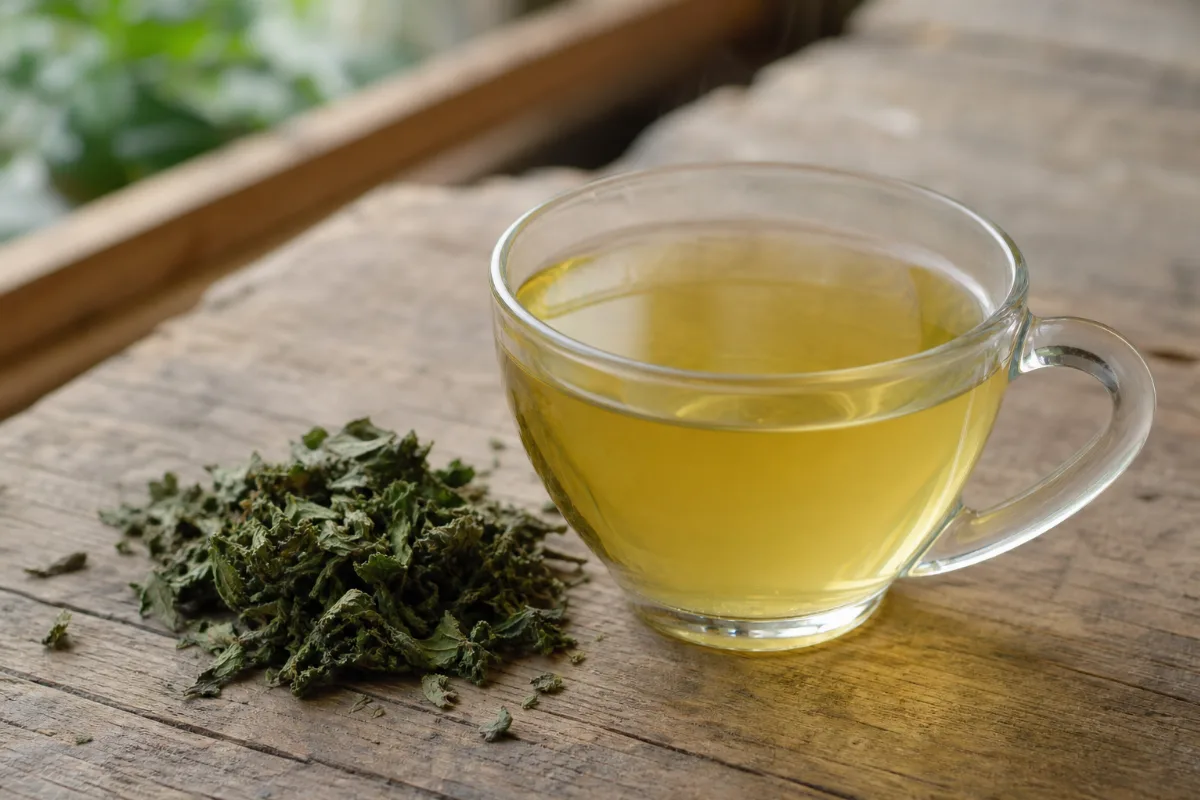
Nettle tea is a herbal infusion of dried stinging nettle leaf. It is used traditionally for joint aches and to increase urine, and for hay fever and blood sugar. Almost no trials used the tea itself: most used extracts, capsules, root or mixed products, so the evidence for the tea is thin. The main cautions are pregnancy and breastfeeding, conditions where fluids are limited, and a possible added effect with water pills, blood pressure, diabetes and warfarin-type medicines.
General information, not medical advice. Last substantive update · Not medically reviewed. A named clinician has not signed off on this page. How this page is made
About Nettle Tea
Nettle tea is a herbal infusion of dried stinging nettle leaf (Urtica dioica or Urtica urens). It is not a true tea from the tea plant. The EU accepts it for minor joint pain and for increasing urine, on long use only. Trials of nettle products are small and mostly not of the tea. The main safety points are pregnancy, fluid restriction, allergy and possible added effects with some medicines.
What it is
Nettle tea is made from the dried leaf of stinging nettle. GBIF lists Urtica dioica L. and Urtica urens L. as accepted species of the nettle family. The EU monograph covers either species or a mix of both.
The EMA assessment report lists flavonoids (1 to 2% of the leaf), silicates (1 to 4%), chlorophyll, scopoletin, plant sterols and caffeic acid esters. It also lists traces of nicotine. It does not list caffeine, and we found no direct caffeine test, so we say only that no caffeine is listed.
Tea, extract and root are different
The EU monograph lists nettle leaf as a herbal tea and also as liquid and dry extracts. Most of the trials we found used extracts or capsules (blood sugar), a root extract (the prostate and hay fever) or mixed products (joint pain). So a trial result for those does not tell you what the tea does.
Brewing also changes what ends up in the cup. The EMA report quotes a study that found far less sodium relative to potassium in a boiled nettle drink than in the plant itself. Nettle root, seed and the fresh sting are separate products again.
What the research shows
We found no trial of nettle leaf tea for a health outcome. The EU accepts the leaf on long use only, and the EMA assessor says joint pain trials are not enough for a well-established use.
Pooled trials of nettle products in type 2 diabetes show lower fasting blood sugar, but the trials differ a lot. Hay fever, joint pain and prostate trials are small and use root, freeze-dried or mixed products. A 2000 review found no convincing evidence for nettle alone for the prostate. A cell-culture or animal result is not a result for people.
Quality and purity
Studies of German medicinal teas, 19 of them nettle, found natural plant alkaloids in many products, and a second German study said Urtica dioica products were often above recommended values. Nettle also accumulates nitrate. In Polish samples nettle had the highest median mercury of five herbs, with most samples over the limit being wild-collected. An Iranian garden study found nettle took up cadmium strongly.
If you pick your own nettle, avoid roadsides and polluted soil. For shop tea, choose a label that names the plant and part.
At a glance
Traditional uses history, not proof
- The EU accepts nettle leaf as a traditional herbal medicine for minor joint pain and for increasing urine to flush the urinary tract in minor complaints, on long use only.
- The EMA assessment report quotes older sources using it for arthritis, allergies, high blood pressure and diabetes. These are statements in the report, not tests.
Studied for research
- Hay fever, very-low
- Joint pain: nettle sting on the skin, very-low
- Joint pain: nettle leaf by mouth, insufficient
- Enlarged prostate (nettle root, not tea), low
- Increasing urine (traditional use), insufficient
- Type 2 diabetes and blood sugar, low
- Blood pressure, very-low
- Cholesterol and blood fats, very-low
- Inflammation marker (CRP), very-low
Main compounds
- Flavonoids (rutin and quercetin, kaempferol and isorhamnetin glycosides)
- Caffeoylmalic acid (a caffeic acid ester; not caffeine)
- Scopoletin, beta-sitosterol, silicates and chlorophyll
Common forms
- Dried leaf tea (infusion)
- Leaf extracts and capsules (different product)
- Root extract (different product, studied for the prostate)
Research links: EMA: community herbal monograph on nettle leaf (2010) · EMA: assessment report on nettle leaf · Memorial Sloan Kettering: nettle · LiverTox: stinging nettle (abstract) · LactMed: stinging nettle (abstract) · Meta-analysis: nettle and metabolic profile in type 2 diabetes (abstract) · Research Library · Genes & Biomarkers Library
What it is and its history
- Accepted scientific name
- Urtica dioica
- Naming authority
- L.
- Synonyms
- Name: Urtica urens L.; Note: A separate species (small nettle). The EU monograph covers both species or a mix of the two, and the nettle tea page covers both.
- Common names
- Stinging nettle (English); Nettle leaf (English); Common nettle (English); Urticae folium (Latin (pharmacy name)); Ortie (feuille d') (French (EMA list)); Brennesselblätter (German (EMA list))
- Family or group
- Urticaceae (the nettle family)
- Classification
- Plantae > Tracheophyta > Magnoliopsida > Rosales > Urticaceae > Urtica > Urtica dioica
- Native range
- Not checked in the sources read.
- Habitat
- Not checked.
- What it looks like
- Roots: Not checked.; Stems: Not checked.; Leaves: The leaf is the part used for tea. The EMA assessment report describes stinging hairs on the plant.; Flowers: Not checked.; Fruit: Not checked.
- Cultivation
- Not checked.
- Harvest and processing
- The EU monograph describes the herbal substance as cut dried leaf. No source we read describes how any given tea bag was made.
- Look-alikes and adulterants
- Name: White deadnettle (Lamium album); Note: A non-stinging plant used as the placebo in a nettle sting trial. It is not a nettle.; Name: Nettle root and seed products; Note: Different parts, with different research (root for the prostate). Not covered by the leaf monograph.
- Sustainability and conservation
- Not checked.
Photographs
Traditional use and history history, not clinical proof
| Tradition or era | Documented use | Source |
|---|---|---|
| EU traditional herbal medicine | The EMA assessment report says nettle leaf has been in medical use for at least 30 years in the EU, as needed for a traditional herbal registration. It is accepted for minor joint pain and for increasing urine as an aid in minor urinary complaints. | s-ema-ar-nettle-leaf |
| Ancient and folk uses, as quoted in the EMA assessment report | The report quotes sources saying the ancient Greeks knew nettle and Dioscorides described it as a tonic and diuretic, and lists uses in several countries for arthritis, high blood pressure, allergies and diabetes. These are quoted statements in the report, not tests. | s-ema-ar-nettle-leaf |
| Hay fever and allergies in modern herbal practice | The EMA assessment report quotes a source saying nettle is used in some formulas for hay fever and other allergies. Not tested for tea. | s-ema-ar-nettle-leaf |
Traditional use shows how it was used. It does not show that it works or is safe today.
What is inside, and how it may work
What it contains and how those compounds act in cells and animals. Laboratory and animal mechanisms are not proven effects in people.
Main compounds
| Compound | Family | Where it is concentrated | Activity studied | Level of evidence |
|---|---|---|---|---|
| Flavonoids (rutin and glycosides of quercetin, kaempferol, isorhamnetin) PubChem 5280805 | Flavonoids | Leaf 1 to 2% of the leaf as flavonoids (EMA assessment report, quoting reference works). | Plant antioxidants; effect in tea not tested. 34 39 | Chemistry |
| Caffeoylmalic acid (caffeic acid ester) PubChem 6124299 | Phenolic acid | Leaf Not given. | Called a main phenolic constituent. It is NOT caffeine. A leaf extract and this acid partly blocked leukotriene synthesis in test-tube cells, per the EMA report. 34 39 | Lab |
| Scopoletin PubChem 5280460 | Coumarin | Leaf Not given. | Listed as characteristic of the leaf. 34 39 | Chemistry |
| Beta-sitosterol and its glucoside PubChem 222284 | Plant sterol | Leaf Not given. | Listed as characteristic of the leaf. 34 39 | Chemistry |
| Silicates | Mineral compounds | Leaf 1 to 4% as SiO2, partly water-soluble (EMA assessment report). | Not tested for effect. 34 | Chemistry |
| Chlorophyll | Pigment | Leaf About 2.7% (EMA assessment report). | The green colour; no effect tested. 34 | Chemistry |
| Vitamin K | Vitamin | Leaf The EMA report quotes 0.16 to 0.64 mg per 100 g of leaf from the literature. | Relevant to warfarin-type medicines in theory; see Safety. 34 | Chemistry |
| Nicotine (traces) PubChem 89594 | Alkaloid | Leaf Listed only as traces in the EMA report. | No effect from tea is described. 34 39 | Chemistry |
| Compounds in the stinging hairs | Irritant compounds | Stinging hairs Small amounts of acetylcholine, serotonin and formic acid (EMA report). | Cause the sting on the fresh plant. 34 | Chemistry |
Mechanisms, receptors and pathways
| Target or pathway | Gene or receptor | What was found | Level |
|---|---|---|---|
| Inflammation signals (leukotrienes, IL-1 beta, TNF-alpha) | 5-lipoxygenase; cytokines | The EMA assessment report describes test-tube work in which a nettle leaf hydro-ethanolic extract (not tea) and its main phenolic acid partly blocked leukotriene synthesis. The assessor says an extract of nettle leaf might be useful for arthrosis, and that this supports the plausibility of the traditional use. Not shown in people who drink tea. 34 | Lab |
| Allergy pathways | Histamine-1 receptor, mast cell tryptase, COX-1, COX-2, HPGDS | A nettle extract blocked each of these in test-tube assays. 20 | Lab |
| Kidney salt and water handling | n/a | In rats, a water extract of the aerial parts given into a vein raised urine volume and sodium loss and lowered blood pressure. 29 | Animal research |
| Drug-metabolizing liver enzymes (P450) | Cytochrome P450 and P450 reductase | A leaf extract lowered liver P450 and P450 reductase activity in mice. 17 | Animal research |
Absorption, metabolism and elimination
- Absorption
- Not described for nettle tea in the sources read.
- Distribution
- Not described.
- Metabolism
- Not described. The EU monograph says pharmacokinetic data are not required for a traditional product.
- Elimination
- Not described.
- Bioavailability
- Not described.
Isolated compounds versus whole extracts
Tea, extract and root are different products. The EU monograph lists the leaf as a herbal tea (cut dried leaf) and also separate liquid and dry leaf extracts made with water or alcohol. Most of the trials we found used extracts or capsules (blood sugar), a root extract (prostate, hay fever) or mixed products (joint pain), so results for them do not carry over to the tea. The EMA assessment report quotes a study that found a potassium to sodium ratio of 63 to 1 in the plant and 448 to 1 in a decoction (a boiled tea), so brewing changes what ends up in the cup. Nettle root, seed and the fresh sting are separate again.
Nutritional composition
The EMA assessment report lists nettle leaf as containing protein, fats, carbohydrates, chlorophyll, flavonoids, silicates and minerals including iron, calcium and potassium. It gives no amount for what ends up in a cup of tea. Nettle is not tea in the botanical sense: it does not come from the tea plant (Camellia sinensis). No source we read lists caffeine as a constituent of nettle leaf; the EMA report names caffeic acid esters (a different compound) and traces of nicotine. We did not find a direct caffeine measurement for nettle tea.
2 low certainty5 very low certainty2 not enough evidence
What was looked at
The 9 benefits and uses checked for Nettle Tea, each with how strong the evidence is. Tap one to open it.
- Hay fever (allergic rhinitis)Very low certainty
- Joint pain: nettle sting on the skinVery low certainty
- Joint pain: nettle leaf taken by mouth (tea, extract or mixed product)Not enough evidence
- Enlarged prostate (BPH): nettle root, a different product from leaf teaLow certainty
- Increasing urine and flushing the urinary tract (traditional use)Not enough evidence
- Type 2 diabetes and blood sugarLow certainty
- Blood pressureVery low certainty
- Cholesterol and blood fatsVery low certainty
- Inflammation marker (CRP)Very low certainty
Lab markers tracked in the studies
International Prostate Symptom Score (IPSS)Peak urine flow (Qmax)Eosinophils in nasal smearJoint pain score (WOMAC pain and visual pain scales)Fasting blood glucoseHbA1cSystolic blood pressureTriglyceridesC-reactive protein (CRP)
What is Nettle Tea good for?
What the research shows for each use, and how strong it is. Almost none of it tested nettle leaf tea, so none of it proves a benefit from the tea. Read the Safety tab first if you are pregnant, breastfeeding, or take medicines.
Benefits, one by one
Each card is a research question, not a promise. Tap a goal to filter. Open a card to see the studies, doses and limits.
Hay fever (allergic rhinitis)
Very low certaintyTwo small placebo-controlled trials were done, and neither used nettle leaf tea. One older trial of a freeze-dried nettle product rated it a little better than placebo. A newer trial of nettle root tablets found the placebo helped symptoms just as much.
4 studiesAmounts are not given here.
Studies, doses and limits
What the trials found
Two randomized trials (1990, 2017), one of a freeze-dried product and one of root extract tablets.
Results
1990: of 98 people who started, 69 finished; nettle was rated higher than placebo overall and only slightly higher in diaries. 2017: of 74 who started, 40 finished; symptoms improved in both groups (so the placebo did as well); nasal eosinophils were lower with nettle (P < .01); IgE and two interleukins did not change; interferon gamma differed (P = 0.017).
Effect sizes as reported
No numbers in the 1990 abstract. 2017: symptom change similar in both groups.
Why this rating
Two small trials with many dropouts, products that are not tea, and a placebo effect as large as the nettle effect in the newer one.
Form and dose studied
Amounts are not given here.
Who was studied
Adults with allergic rhinitis.
Limits
No trial of nettle tea. One trial gives no numbers. Root and freeze-dried leaf products are different from tea.
Why researchers looked
Nettle is a traditional hay fever remedy, and in test-tube work an extract blocked some allergy pathways.
Traditional use
The EMA assessment report notes that nettle leaf has been used for hay fever and allergies in several traditions. That is long use, not a test.
Proposed mechanism Lab
In test-tube assays a nettle extract blocked the histamine-1 receptor, mast cell tryptase and inflammation enzymes. This has not been shown to happen in people who drink the tea.
A proposed mechanism does not show that the effect happens in people.
Nettle pollen can itself cause hay fever in a few people; see Safety. Skin reactions are possible.
Joint pain: nettle sting on the skin
Very low certaintyTwo small trials looked at fresh nettle on the skin. A thumb trial found less pain than with a placebo leaf. A knee pilot found no difference. A Cochrane review calls the evidence very low quality. None of this is about tea.
3 studiesFresh leaf touched to the skin for a week. Amounts are not given here.
Studies, doses and limits
What the trials found
Two randomized trials (27 and 42 people) and one Cochrane review of topical herbs for osteoarthritis.
Results
Thumb or finger osteoarthritis (27 people, crossover): after one week pain and disability scores fell more with nettle than with white deadnettle leaf (P = 0.026 and P = 0.0027). Knee osteoarthritis (42 people, pilot): pain fell by 1.7 points with nettle and 1.6 with the placebo plant. The 2013 Cochrane review (7 studies, 785 people, six different plant products) says it is uncertain whether stinging nettle leaf helps, because the evidence is very low quality, and found no serious side effects.
Effect sizes as reported
Thumb: P = 0.026 pain, P = 0.0027 disability. Knee: 1.7 (95% CI 0.6 to 2.9) vs 1.6 (0.5 to 2.7).
Why this rating
Two very small trials that disagree, one a feasibility pilot, and a systematic review that rates the evidence very low.
Form and dose studied
Fresh leaf touched to the skin for a week. Amounts are not given here.
Who was studied
Adults with hand or knee osteoarthritis.
Limits
Not tea. A stinging plant is hard to blind. Short trials.
Why researchers looked
Nettle sting has been used for arthritis for a very long time, and trial authors wanted to test it.
Traditional use
Stinging yourself with fresh nettle for arthritis pain is an old folk practice, described in the trial papers as an ancient therapy.
Proposed mechanism Hypothesis
Not shown. The sting itself may act as a counterirritant, which the Cochrane review says is how some topical plant products work in part.
A proposed mechanism does not show that the effect happens in people.
The sting itself is a minor irritation in these trials. This is not a tea use.
Joint pain: nettle leaf taken by mouth (tea, extract or mixed product)
Not enough evidenceNo trial tested nettle leaf tea for joint pain. Two trials tested mixed products that contain nettle, and both beat placebo, but nettle alone cannot be judged from them. The EU accepts the leaf for minor joint pain on traditional use only.
5 studiesAmounts are not given here.
Studies, doses and limits
What the trials found
Two randomized trials of mixed products, one narrative review, and the EU monograph and assessment report.
Results
Phytalgic (fish oil, vitamin E and nettle), 81 people, 3 months: painkiller use 6.5 vs 16.5 tablets a week and NSAID use 0.4 vs 1.0 daily doses compared with placebo. MA212 (rosehip, nettle leaf extract, devil's claw root extract and vitamin D), 92 people with knee osteoarthritis, 12 weeks: pain score fell 29.87 points vs 10.23 with placebo. A 2007 review says clinical evidence beyond doubt is lacking. The EMA assessor says trials are not enough for a well-established use but support the plausibility of the traditional use.
Effect sizes as reported
Painkillers 6.5 vs 16.5 per week (P < 0.001); pain score change 29.87 vs 10.23.
Why this rating
No trial of nettle tea, and the two trials used mixtures, so any benefit cannot be credited to nettle.
Form and dose studied
Amounts are not given here.
Who was studied
Adults with knee or hip osteoarthritis.
Limits
Mixed products, short trials, no tea. Funding is not stated in the abstracts.
Why researchers looked
Nettle leaf is a traditional remedy for arthritis and rheumatism.
Traditional use
The EU lists nettle leaf as a traditional herbal medicine for minor joint pain, based on at least 30 years of use.
Proposed mechanism Lab
A nettle leaf extract and one of its main phenol compounds partly blocked inflammation signals in test-tube cells, as reported in the EMA assessment report. This was not tested with tea.
A proposed mechanism does not show that the effect happens in people.
The EU says to see a doctor if joint pain comes with swelling, redness or fever, and not to use it beyond 4 weeks for this purpose.
Enlarged prostate (BPH): nettle root, a different product from leaf tea
Low certaintyTrials of nettle root extract found modest symptom score improvements. Results are not consistent, and a review found no convincing evidence for nettle alone. This is root, not leaf, so it says little about tea.
4 studiesAmounts are not given here.
Studies, doses and limits
What the trials found
Three randomized trials of nettle (620, 246 and 60 men) and one older review.
Results
620 men (6 months): symptom score (IPSS) fell from 19.8 to 11.8 with nettle and from 19.2 to 17.7 with placebo (P = 0.002); peak flow rose 8.2 vs 3.4 mL/s; no side effects were found. 246 men (12 months, root extract): IPSS fell from 18.7 to 13.0 vs 18.5 to 13.8 (P = 0.0233); peak flow and residual urine did not differ from placebo. 60 men (12 weeks, root extract): the abstract reports an intermediate effect on IPSS, with no figures. A 2000 review of 44 studies of six plant products says there is no convincing evidence for Urtica dioica alone.
Effect sizes as reported
IPSS 19.8 to 11.8 vs 19.2 to 17.7 (P = 0.002); 18.7 to 13.0 vs 18.5 to 13.8 (P = 0.0233).
Why this rating
Consistent small gains in symptom score, but peak flow results disagree between trials, the largest trial is a single-author study, and the only review is from 2000. The products are root, not tea.
Form and dose studied
Amounts are not given here.
Who was studied
Men with symptoms from an enlarged prostate.
Limits
Root extract. Not tea. Placebo groups improved too. Funding is not stated in the abstracts.
Why researchers looked
Men with an enlarged prostate often look for plant remedies, and nettle root is a common one.
Traditional use
The EU lists the root, not the leaf, for urinary symptoms linked to an enlarged prostate. That is a different product from leaf tea.
Proposed mechanism Hypothesis
Not shown in these papers.
A proposed mechanism does not show that the effect happens in people.
Urinary symptoms need a doctor first. Blood in the urine, fever or pain on passing urine means seeing a doctor.
Increasing urine and flushing the urinary tract (traditional use)
Not enough evidenceNettle leaf is a traditional water-increasing herb, and the EU accepts it for that on long use alone. We found no human trial of the tea measuring urine output. The only measured effect is in rats, given a water extract by drip into a vein.
3 studiesAmounts are not given here.
Studies, doses and limits
Results
Rats (extract given into a vein): urine volume rose by 11% at the low dose and 84% at the high dose; sodium loss by 28% and 143%; blood pressure fell by 15% and 38%. The high-dose blood pressure effect lasted, which the authors say may be toxic. The EMA calls the traditional use plausible but not proven in trials.
Effect sizes as reported
Rats only: urine +11% and +84%.
Why this rating
No human trial found; only animal data with a route of giving that tea does not use.
Form and dose studied
Amounts are not given here.
Who was studied
No human population studied.
Limits
Animal study. Traditional use is not trial evidence.
Why researchers looked
It is one of the oldest uses of nettle leaf.
Traditional use
The EU accepts nettle leaf, as a herbal tea, to increase urine and flush the urinary tract in minor urinary complaints. It says this rests only on long-standing use.
Proposed mechanism Animal research
In anaesthetised rats, a water extract of the aerial parts given into a vein raised urine volume and sodium loss and lowered blood pressure.
A proposed mechanism does not show that the effect happens in people.
The EU says not for people told to limit fluids, for example with severe heart or kidney disease, and to see a doctor if there is fever, pain on passing urine, spasm or blood in the urine.
Type 2 diabetes and blood sugar
Low certaintyTwo meta-analyses found nettle products lowered fasting blood sugar in people with type 2 diabetes. The trials differ a lot, mostly use extracts or capsules, and none is clearly a tea.
5 studiesAmounts are not given here.
Studies, doses and limits
What the trials found
Two meta-analyses (13 and 8 trials) and two single trials of extracts.
Results
13 trials: fasting glucose fell by 17.17 mg/dl and HbA1c by 0.93, with insulin unchanged (very high heterogeneity). 8 trials (401 people): fasting glucose fell by 18.01 mg/dl, but HbA1c (-0.77%), insulin and the insulin resistance index did not change significantly. A 92-person trial of leaf extract capsules taken with usual drugs for 3 months found lower fasting glucose, 2-hour glucose and HbA1c than placebo.
Effect sizes as reported
Fasting glucose -17.17 mg/dl (95% CI -26.60 to -7.73) and -18.01 mg/dl (-30.04 to -5.97); HbA1c -0.93 (-1.66 to -0.17) in one review and -0.77% (-1.77 to 0.22, not significant) in the other.
Why this rating
Consistent drops in fasting glucose across trials, but very high heterogeneity (I2 about 93 to 95%), small trials, extract products, and disagreement on HbA1c.
Form and dose studied
Amounts are not given here.
Who was studied
Adults with type 2 diabetes, some already on drugs.
Limits
Not tea. Preparations differ. Heterogeneity very high. Funding not stated in the abstracts.
Why researchers looked
Nettle leaf is a traditional diabetes remedy, and lab work suggests it may affect sugar digestion and insulin release.
Traditional use
The EMA assessment report notes nettle leaf is used in several traditions for diabetes. That is long use, not a test.
Proposed mechanism Lab
One trial paper says nettle leaves have insulin-releasing, PPAR-gamma and alpha-glucosidase-blocking effects in lab work. Not shown in people.
A proposed mechanism does not show that the effect happens in people.
If you take diabetes medicines, ask your doctor or pharmacist before adding nettle. Low blood sugar is possible in theory.
Blood pressure
Very low certaintyA meta-analysis in people with type 2 diabetes found a small drop in the top blood pressure number and none in the bottom number. A tiny Lebanese trial reported drops. Rat studies show a drop with an extract given into a vein.
4 studiesAmounts are not given here.
Studies, doses and limits
What the trials found
One meta-analysis (in people with type 2 diabetes) and one very small trial in mild hypertension.
Results
Meta-analysis: systolic blood pressure fell by 5.03 mmHg; diastolic by 1.35 mmHg, which was not significant. Lebanese trial: 29 people with mild high blood pressure in four groups; the abstract reports drops for nettle with no figures. Rats: blood pressure fell by 15% and 38% with a water extract given into a vein.
Effect sizes as reported
Systolic -5.03 mmHg (95% CI -8.15 to -1.91); diastolic -1.35 mmHg (-2.86 to 0.17).
Why this rating
A small pooled effect in diabetic patients only, one trial of about seven people per group, and the rest animal data.
Form and dose studied
Amounts are not given here.
Who was studied
Adults with type 2 diabetes; adults with mild hypertension.
Limits
Not clearly tea. The blood pressure trial is tiny and does not describe the preparation.
Why researchers looked
Nettle is a traditional remedy for high blood pressure and also increases urine in animals.
Traditional use
The EMA assessment report notes the leaf has been used for high blood pressure in several traditions.
Proposed mechanism Animal research
In rats an extract lowered blood pressure along with raising urine volume. Not shown in people who drink tea.
A proposed mechanism does not show that the effect happens in people.
Do not stop or change blood pressure medicine because of nettle. Ask your doctor or pharmacist.
Cholesterol and blood fats
Very low certaintyIn people with type 2 diabetes, triglycerides were lower with nettle in one meta-analysis, but total, LDL and HDL cholesterol did not change significantly. A small trial of an alcohol-water extract found better triglycerides and HDL.
2 studiesAmounts are not given here.
Studies, doses and limits
What the trials found
One meta-analysis (13 trials) and one trial of 50 women, all in type 2 diabetes.
Results
Meta-analysis: triglycerides fell by 26.94 mg/dl; total cholesterol (-6.39), LDL (-1.30) and HDL (+6.95) did not change significantly. 50 women, 8 weeks, alcohol-water extract: triglycerides fell and HDL rose compared with control.
Effect sizes as reported
Triglycerides -26.94 mg/dl (95% CI -52.07 to -1.82; I2 90%).
Why this rating
Wide confidence interval, very high heterogeneity, and only one other small trial.
Form and dose studied
Amounts are not given here.
Who was studied
Adults with type 2 diabetes.
Limits
Not tea. People without diabetes are not covered.
Why researchers looked
Blood fats are often checked in the same trials as blood sugar.
Proposed mechanism Hypothesis
Not shown in people.
A proposed mechanism does not show that the effect happens in people.
Do not change cholesterol medicine because of nettle.
Inflammation marker (CRP)
Very low certaintyA meta-analysis found lower CRP, a blood marker of inflammation, in people with type 2 diabetes. A small root-extract prostate trial also reported a small effect on a related marker. Lower CRP is a lab result, not a proven health gain.
2 studiesAmounts are not given here.
Studies, doses and limits
What the trials found
One meta-analysis and one small trial of root extract.
Results
Meta-analysis (13 trials, type 2 diabetes): CRP fell by 1.09 mg/dl. Prostate trial of root extract (60 men): the abstract reports a small effect on hs-CRP with no figures.
Effect sizes as reported
CRP -1.09 mg/dl (95% CI -1.64 to -0.53; I2 0%).
Why this rating
A lab marker in one group of patients, with no link shown to feeling better.
Form and dose studied
Amounts are not given here.
Who was studied
Adults with type 2 diabetes; men with an enlarged prostate.
Limits
Lab marker only. Not tea.
Why researchers looked
Nettle is traditionally called anti-inflammatory.
Proposed mechanism Hypothesis
Not shown. The papers measure blood markers only.
A proposed mechanism does not show that the effect happens in people.
Connections to the rest of health
How Nettle Tea connects to the rest of our health knowledge graph. Every link says what kind of connection it is. A safety link (for example to the liver) is a warning, not a benefit. A study that merely mentions a topic never creates a benefit link.
Explore every connection: goals, body systems, organs, symptoms, genes
A. Wellness goals
| Connected to | Kind of connection | Evidence status | Context | Studies |
|---|---|---|---|---|
| Immune Support | Potential benefit | Very low certainty | Hay fever (allergic rhinitis): Two small placebo-controlled trials were done, and neither used nettle leaf tea. One older trial of a freeze-dried nettle product rated it a little better than placebo. A newer trial of nettle root tablets found the placebo helped symptoms just as much. | 15 3 20 34 |
| Seasonal Wellness | Potential benefit | Very low certainty | Hay fever (allergic rhinitis): Two small placebo-controlled trials were done, and neither used nettle leaf tea. One older trial of a freeze-dried nettle product rated it a little better than placebo. A newer trial of nettle root tablets found the placebo helped symptoms just as much. | 15 3 20 34 |
| Joint Support | Traditional use | Very low certainty | Joint pain: nettle sting on the skin: Two small trials looked at fresh nettle on the skin. A thumb trial found less pain than with a placebo leaf. A knee pilot found no difference. A Cochrane review calls the evidence very low quality. None of this is about tea. Joint pain: nettle leaf taken by mouth (tea, extract or mixed product): No trial tested nettle leaf tea for joint pain. Two trials tested mixed products that contain nettle, and both beat placebo, but nettle alone cannot be judged from them. The EU accepts the leaf for minor joint pain on traditional use only. | 18 19 6 10 16 7 35 34 |
| Inflammation Balance | Traditional use | Very low certainty | Joint pain: nettle sting on the skin: Two small trials looked at fresh nettle on the skin. A thumb trial found less pain than with a placebo leaf. A knee pilot found no difference. A Cochrane review calls the evidence very low quality. None of this is about tea. | 18 19 6 |
| Mens Vitality | Potential benefit | Low certainty | Enlarged prostate (BPH): nettle root, a different product from leaf tea: Trials of nettle root extract found modest symptom score improvements. Results are not consistent, and a review found no convincing evidence for nettle alone. This is root, not leaf, so it says little about tea. | 21 25 1 32 |
| Healthy Aging | Potential benefit | Low certainty | Enlarged prostate (BPH): nettle root, a different product from leaf tea: Trials of nettle root extract found modest symptom score improvements. Results are not consistent, and a review found no convincing evidence for nettle alone. This is root, not leaf, so it says little about tea. | 21 25 1 32 |
| Mens Vitality | Traditional use | Not enough evidence | Increasing urine and flushing the urinary tract (traditional use): Nettle leaf is a traditional water-increasing herb, and the EU accepts it for that on long use alone. We found no human trial of the tea measuring urine output. The only measured effect is in rats, given a water extract by drip into a vein. | 29 35 34 |
| Blood Sugar Balance | Potential benefit | Low certainty | Type 2 diabetes and blood sugar: Two meta-analyses found nettle products lowered fasting blood sugar in people with type 2 diabetes. The trials differ a lot, mostly use extracts or capsules, and none is clearly a tea. | 28 33 11 2 34 |
| Metabolic Health | Potential benefit | Low certainty | Type 2 diabetes and blood sugar: Two meta-analyses found nettle products lowered fasting blood sugar in people with type 2 diabetes. The trials differ a lot, mostly use extracts or capsules, and none is clearly a tea. Cholesterol and blood fats: In people with type 2 diabetes, triglycerides were lower with nettle in one meta-analysis, but total, LDL and HDL cholesterol did not change significantly. A small trial of an alcohol-water extract found better triglycerides and HDL. | 28 33 11 2 34 |
| Blood Pressure Support | Potential benefit | Very low certainty | Blood pressure: A meta-analysis in people with type 2 diabetes found a small drop in the top blood pressure number and none in the bottom number. A tiny Lebanese trial reported drops. Rat studies show a drop with an extract given into a vein. | 28 24 29 34 |
| Heart Health | Potential benefit | Very low certainty | Blood pressure: A meta-analysis in people with type 2 diabetes found a small drop in the top blood pressure number and none in the bottom number. A tiny Lebanese trial reported drops. Rat studies show a drop with an extract given into a vein. Cholesterol and blood fats: In people with type 2 diabetes, triglycerides were lower with nettle in one meta-analysis, but total, LDL and HDL cholesterol did not change significantly. A small trial of an alcohol-water extract found better triglycerides and HDL. | 28 24 29 34 2 |
| Cholesterol Balance | Potential benefit | Very low certainty | Cholesterol and blood fats: In people with type 2 diabetes, triglycerides were lower with nettle in one meta-analysis, but total, LDL and HDL cholesterol did not change significantly. A small trial of an alcohol-water extract found better triglycerides and HDL. | 28 2 |
| Inflammation Balance | Biological association | Very low certainty | Inflammation marker (CRP): A meta-analysis found lower CRP, a blood marker of inflammation, in people with type 2 diabetes. A small root-extract prostate trial also reported a small effect on a related marker. Lower CRP is a lab result, not a proven health gain. | 28 1 |
B. Body systems
| Connected to | Kind of connection | Evidence status | Context | Studies |
|---|---|---|---|---|
| Respiratory System | Biological association | Very low certainty | Studied for: Hay fever (allergic rhinitis) | 15 3 20 34 |
| Immune System | Biological association | Very low certainty | Studied for: Hay fever (allergic rhinitis) Studied for: Inflammation marker (CRP) | 15 3 20 34 28 1 |
| Musculoskeletal System | Biological association | Very low certainty | Studied for: Joint pain: nettle sting on the skin Studied for: Joint pain: nettle leaf taken by mouth (tea, extract or mixed product) | 18 19 6 10 16 7 35 34 |
| Urinary System | Biological association | Low certainty | Studied for: Enlarged prostate (BPH): nettle root, a different product from leaf tea Studied for: Increasing urine and flushing the urinary tract (traditional use) | 21 25 1 32 29 35 34 |
| Reproductive System | Biological association | Low certainty | Studied for: Enlarged prostate (BPH): nettle root, a different product from leaf tea | 21 25 1 32 |
| Endocrine System | Biological association | Low certainty | Studied for: Type 2 diabetes and blood sugar | 28 33 11 2 34 |
| Metabolism Weight | Biological association | Low certainty | Studied for: Type 2 diabetes and blood sugar Studied for: Cholesterol and blood fats | 28 33 11 2 34 |
| Cardiovascular System | Biological association | Very low certainty | Studied for: Blood pressure Studied for: Cholesterol and blood fats | 28 24 29 34 2 |
C. Body parts and organs
| Connected to | Kind of connection | Evidence status | Context | Studies |
|---|---|---|---|---|
| Kidneys and urinary tract | Biological association | Not enough evidence | Traditional water-increasing use; EU contraindication where less fluid is recommended; no human trial of urine output. Traditional water-increasing use; no human trial of urine output. Preparation or compound: Nettle leaf tea |
35 29 |
| Skin | Adverse effect or risk | Low certainty | Itching, rash and hives listed by the EU; one newborn case after nettle water. Preparation or compound: Nettle leaf, tea or nettle water |
35 31 |
I. Biomarkers
| Connected to | Kind of connection | Evidence status | Context | Studies |
|---|---|---|---|---|
| International Prostate Symptom Score (IPSS) | Biological association | Low certainty | Measured in trials: lowered. A lab change is not the same as a health benefit. | 21 25 1 |
| Peak urine flow (Qmax) | Biological association | Low certainty | Measured in trials: mixed. A lab change is not the same as a health benefit. | 21 25 |
| Eosinophils in nasal smear | Biological association | Very low certainty | Measured in trials: lowered. A lab change is not the same as a health benefit. | 3 |
| Joint pain score (WOMAC pain and visual pain scales) | Biological association | Very low certainty | Measured in trials: mixed. A lab change is not the same as a health benefit. | 18 19 |
| Fasting blood glucose | Biological association | Low certainty | Measured in trials: lowered. A lab change is not the same as a health benefit. | 28 33 11 |
| HbA1c | Biological association | Low certainty | Measured in trials: mixed. A lab change is not the same as a health benefit. | 28 33 11 |
| Systolic blood pressure | Biological association | Very low certainty | Measured in trials: lowered. A lab change is not the same as a health benefit. | 28 |
| Triglycerides | Biological association | Very low certainty | Measured in trials: lowered. A lab change is not the same as a health benefit. | 28 2 |
| C-reactive protein (CRP) | Biological association | Very low certainty | Measured in trials: lowered. A lab change is not the same as a health benefit. | 28 |
L. Active compounds
| Connected to | Kind of connection | Evidence status | Context | Studies |
|---|---|---|---|---|
| Flavonoids (rutin and glycosides of quercetin, kaempferol, isorhamnetin) | Biological association | Chemistry | Plant antioxidants; effect in tea not tested. Preparation or compound: Leaf |
34 39 |
| Caffeoylmalic acid (caffeic acid ester) | Biological association | Lab | Called a main phenolic constituent. It is NOT caffeine. A leaf extract and this acid partly blocked leukotriene synthesis in test-tube cells, per the EMA report. Preparation or compound: Leaf |
34 39 |
| Scopoletin | Biological association | Chemistry | Listed as characteristic of the leaf. Preparation or compound: Leaf |
34 39 |
| Beta-sitosterol and its glucoside | Biological association | Chemistry | Listed as characteristic of the leaf. Preparation or compound: Leaf |
34 39 |
| Silicates | Biological association | Chemistry | Not tested for effect. Preparation or compound: Leaf |
34 |
| Chlorophyll | Biological association | Chemistry | The green colour; no effect tested. Preparation or compound: Leaf |
34 |
| Vitamin K | Biological association | Chemistry | Relevant to warfarin-type medicines in theory; see Safety. Preparation or compound: Leaf |
34 |
| Nicotine (traces) | Biological association | Chemistry | No effect from tea is described. Preparation or compound: Leaf |
34 39 |
| Compounds in the stinging hairs | Biological association | Chemistry | Cause the sting on the fresh plant. Preparation or compound: Stinging hairs |
34 |
Each connection is stored with the ingredient, the connected record, the kind of connection, the evidence status, the supporting studies, the preparation or compound involved, and a review date (last reviewed October 25, 2026).
Evidence at a glance: what changed in 9 lab markers
Tap a number to show only those markers. Counts are markers, not people.
The evidence
The research centre for Nettle Tea. Every record here was checked against PubMed or the publisher's page; we never list a study we have not verified.
Evidence by outcome
Bars show how many studies we found for each outcome, not how well it works. People are added up across trials only (reviews are not added, to avoid double counting).
How we rate evidence
High certainty
Several well-run trials or reviews agree; further research is unlikely to change the picture much.
Moderate certainty
Good trials point the same way, but some doubt remains.
Low certainty
Small, short or inconsistent trials. The finding could change with better research.
Very low certainty
Very little or very weak human data. Treat as a possibility only.
Mixed findings
Trials or reviews disagree with each other.
Not enough evidence
Not enough human research to say either way.
Evidence against
Good research found no benefit, or found harm.
We take the reviewers' own risk-of-bias and GRADE statements where they exist, and otherwise judge from study size, design, consistency, directness and whether a product matches what is sold. Many publications do not make evidence high. Method note: We read PubMed abstracts of 33 papers, the PubMed records for LiverTox and LactMed, and the EMA monograph, EMA assessment report and Memorial Sloan Kettering page in full. We checked the plant name in GBIF and NCBI Taxonomy and compounds in PubChem. Certainty ratings are the compiler's own reading. Funding is not stated in most abstracts. No study is cited that we could not verify.
Study library: every study we checked 42
| Study | Design | People | Product, dose, length | Result |
|---|---|---|---|---|
| Akbar Karami 2020 Urtica Dioica Root Extract on Clinical and Biochemical Parameters in Patients with Benign Prostatic Hyperplasia, Randomized Controlled Trial. Pak J Biol Sci · PMID 32981268 · DOI |
Randomized controlled trial |
60 60 men with BPH |
Nettle ROOT extract tablets root Not given here 12 weeks · vs Placebo tablets |
The abstract says nettle root extract had an intermediate effect on IPSS, a small effect on hs-CRP and an intermediate-to-large effect on MDA and SOD. Other measures were negligible or not significant. No side effects were seen. Intermediate effect on IPSS (no figures in the abstract). Methods, limits and fundingOutcomes: IPSS; hs-CRP, MDA and SOD in blood Limitations: Small trial. Root extract, not leaf tea. Blood markers are not the same as feeling better. Funding and conflicts: Funding and conflicts of interest are not stated in the abstract. Read: abstract |
| Amiri Behzadi 2016 Effects of Urtica dioica supplementation on blood lipids, hepatic enzymes and nitric oxide levels in type 2 diabetic patients: A double blind, randomized clinical trial. Avicenna J Phytomed · PMID 28078249 |
Randomized controlled trial |
50 50 women with type 2 diabetes |
Hydro-alcoholic (water and alcohol) extract of Urtica dioica Not given here 8 weeks · vs Placebo |
After 8 weeks fasting glucose, triglycerides and SGPT fell, and HDL, nitric oxide and SOD rose, compared with the control group. Several blood measures better than control; no figures in the abstract. Methods, limits and fundingOutcomes: Fasting glucose, triglycerides, liver enzymes, HDL, LDL, antioxidant and nitric oxide markers Limitations: Small trial in women only. An alcohol-water extract, not a tea. Funding and conflicts: Funding and conflicts of interest are not stated in the abstract. Read: abstract |
| Bakhshaee 2017 Efficacy of Supportive Therapy of Allergic Rhinitis by Stinging Nettle (Urtica dioica) root extract: a Randomized, Double-Blind, Placebo- Controlled, Clinical Trial. Iran J Pharm Res · PMID 29844782 |
Randomized controlled trial |
74 74 people with allergic rhinitis and a positive skin prick test; 40 finished |
Nettle ROOT extract tablets root (not leaf) Not given here 1 month · vs Placebo tablets |
Symptoms improved in both groups (P < .001), so the placebo did as well. Nasal eosinophils fell with nettle (P < .01). IgE, IL-4 and IL-5 did not change (P > .1). Interferon gamma differed between the groups after treatment (P = 0.017). Symptom score: same improvement with placebo. Nasal eosinophils lower with nettle (P < .01). Methods, limits and fundingOutcomes: Symptom score (SNOT-22), nasal smear eosinophils, serum IgE and interleukins Limitations: Root extract tablets, not leaf tea. 34 of 74 did not finish. The authors say the limits call for larger, longer studies. Funding and conflicts: Funding and conflicts of interest are not stated in the abstract. Read: abstract |
| Boari 2013 Effect of cooking methods on antioxidant activity and nitrate content of selected wild Mediterranean plants. Int J Food Sci Nutr · PMID 23701122 · DOI |
Other plant |
Eight wild edible plants including Urtica dioica | Raw and cooked wild plants leaf as food Not given here |
Boiling lowered nitrate in all species except asparagus, and wiped out the measured antioxidant activity in Urtica dioica (100% loss on a dry weight basis). Boiling cuts nitrate; in nettle it also cut antioxidant activity. Methods, limits and fundingOutcomes: Antioxidant activity and nitrate after boiling, steaming and microwaving Limitations: Cooking a food, not brewing a tea. It does not give nettle nitrate amounts in its abstract. Funding and conflicts: Funding and conflicts of interest are not stated in the abstract. Read: abstract |
| Brodziak-Dopierała 2026 Analysis of Mercury Content in Medicinal Plants Popular in Poland. Molecules · PMID 42883333 · DOI |
Other |
Five Polish medicinal plants, wild-collected and as commercial herbal teas | Dried plant material and herbal teas leaf and other parts Not given here |
Common nettle had the highest median mercury (23.80 micrograms per kg) of the five plants. Overall, 32% of all samples exceeded the permitted limit, mostly self-collected ones. The authors say that self-collecting nettle may carry a mercury risk. Nettle median 23.80 micrograms per kg; 32% of all samples above the limit. Methods, limits and fundingOutcomes: Mercury content compared with the EU limit Limitations: Poland only. The abstract does not split commercial tea from wild samples for nettle. Funding and conflicts: Funding and conflicts of interest are not stated in the abstract. Read: abstract |
| Cameron 2013 Topical herbal therapies for treating osteoarthritis. Cochrane Database Syst Rev · PMID 23728701 · DOI |
Systematic review |
785 Seven studies of six topical plant products in osteoarthritis (785 people) |
Topical herbal products, including stinging nettle leaf various Not given here various · vs Placebo or active comparison |
The review says it is uncertain whether stinging nettle leaf on the skin helps osteoarthritis, because the evidence is very low quality and comes from single trials. No serious side effects were reported. Uncertain for nettle leaf (very low quality evidence). Methods, limits and fundingOutcomes: Pain and function in osteoarthritis Limitations: Covers products put on the skin. Its search ended in 2013. It says that more high-quality trials are needed. Funding and conflicts: Funding and conflicts of interest are not stated in the abstract. Read: abstract |
| Chrubasik 2007 A comprehensive review on nettle effect and efficacy profiles, Part I: herba urticae. Phytomedicine · PMID 17493795 · DOI |
Narrative review |
Review of nettle herb (aerial parts) studies | Nettle herb preparations aerial parts (herb) Not given here |
The authors say nettle herb is recommended for arthritis and urinary tract complaints. They conclude that some anti-inflammatory properties are suggested, but that clinical evidence beyond doubt is lacking. Clinical evidence beyond doubt is lacking. Methods, limits and fundingOutcomes: Anti-inflammatory and other effects Limitations: Narrative review from 2007. Does not pool results. Funding and conflicts: Funding and conflicts of interest are not stated in the abstract. Read: abstract |
| Easton 2021 Stinging Nettle (Urtica dioica): An Unusual Case of Galactorrhea. Am J Case Rep · PMID 34876549 · DOI |
Case report |
1 A 30-year-old woman with milk discharge (galactorrhea) |
Stinging nettle supplement (taken for environmental allergies) Not given here About 1 month |
The milk discharge resolved completely one week after nettle was stopped. Pregnancy test, prolactin and thyroid tests were normal. She also used a hormone implant and an echinacea product. One case; no rate. Methods, limits and fundingOutcomes: Resolution of galactorrhea after stopping Limitations: One case, a supplement rather than tea. Other products she used cannot be excluded. Funding and conflicts: Funding and conflicts of interest are not stated in the abstract. Read: abstract |
| Hurseresht 2026 Assessment of Trace and Macro Elements in Medicinal Plants: Implications for Safety and Phytoremediation. Biol Trace Elem Res · PMID 40601286 · DOI |
Other plant |
42 42 medicinal plant samples from one garden in Hamadan, Iran |
Aerial parts of medicinal plants aerial parts Not given here |
Urtica dioica had the highest calcium level among the plants and the highest cadmium uptake factor (0.92). The authors say it may be considered for cleaning contaminated soil, and that cadmium had the highest hazard quotient of the trace elements studied. Cadmium uptake factor 0.92 for nettle. Methods, limits and fundingOutcomes: Trace elements, including cadmium Limitations: One garden. It says nothing about tea made from commercial leaf. Funding and conflicts: Funding and conflicts of interest are not stated in the abstract. Read: abstract |
| Jacquet 2009 Phytalgic, a food supplement, vs placebo in patients with osteoarthritis of the knee or hip: a randomised double-blind placebo-controlled clinical trial. Arthritis Res Ther · PMID 20015358 · DOI |
Randomized controlled trial |
81 81 people with knee or hip osteoarthritis who regularly used painkillers or NSAIDs |
Phytalgic: a mixed food supplement of fish oil, vitamin E and Urtica dioica Not given here 3 months · vs Placebo |
After 3 months the mix group used fewer painkillers (6.5 vs 16.5 tablets a week) and fewer NSAIDs (0.4 vs 1.0 daily doses), and had lower WOMAC scores than placebo. Painkiller use 6.5 vs 16.5 per week (P < 0.001); NSAID use 0.4 vs 1.0 per day (P = 0.02). (Painkillers: -4.9 to -15.1; NSAIDs: -0.2 to -1.2) Methods, limits and fundingOutcomes: Use of NSAIDs and painkillers; WOMAC scores Limitations: A three-ingredient mix. The effect of nettle alone cannot be separated from fish oil and vitamin E. Not a tea. Funding and conflicts: Funding and conflicts of interest are not stated in the abstract. Registration: NCT00666523 Read: abstract |
| Kianbakht 2013 Improved glycemic control in patients with advanced type 2 diabetes mellitus taking Urtica dioica leaf extract: a randomized double-blind placebo-controlled clinical trial. Clin Lab · PMID 24273930 · DOI |
Randomized controlled trial |
92 92 people with type 2 diabetes needing insulin, 46 per group |
Nettle leaf extract in capsules, taken with usual diabetes drugs leaf extract (capsule) Not given here 3 months · vs Placebo |
Fasting glucose, 2-hour glucose and HbA1c were lower with nettle (P < 0.001, 0.009 and 0.006). Other measures were not different from placebo. Fasting glucose P < 0.001; 2-hour glucose P = 0.009; HbA1c P = 0.006. Methods, limits and fundingOutcomes: Fasting and after-meal glucose, HbA1c, creatinine, liver enzymes, blood pressure Limitations: A capsule extract taken on top of diabetes drugs, not a tea. Three months only. Part of a group of similar Iranian trials. Funding and conflicts: Funding and conflicts of interest are not stated in the abstract. Read: abstract |
| Letsyo 2017 Incidence of Pyrrolizidine Alkaloids in Herbal Medicines from German Retail Markets: Risk Assessments and Implications to Consumers. Phytother Res · PMID 28960556 · DOI |
Other |
98 98 herbal medicines from German shops and pharmacies |
Retail herbal products tested for pyrrolizidine alkaloids various Not given here |
About 63% of the 98 products were positive. The authors say that products with St John's wort, artichoke, Urtica dioica and some mixtures were frequently contaminated above the recommended values of the German and European medicines agencies. Alkaloids found in many products, nettle among the frequently affected. Methods, limits and fundingOutcomes: Alkaloid amounts Limitations: The abstract does not give the nettle product type (tea or capsule), number or amount. Funding and conflicts: Funding and conflicts of interest are not stated in the abstract. Read: abstract |
| Mekhfi 2004 Platelet anti-aggregant property of some Moroccan medicinal plants. J Ethnopharmacol · PMID 15325737 · DOI |
Laboratory research in vitro |
Test-tube platelets | Extract of Urtica dioica (and four other plants) Not given here |
All five plant extracts reduced platelet clumping in a dose-dependent way. The nettle extract needed a higher concentration for the same effect than the others. Lab only. Methods, limits and fundingOutcomes: Platelet clumping triggered by thrombin and ADP Limitations: Test tube. Not tea. It shows a possible effect only. Funding and conflicts: Funding and conflicts of interest are not stated in the abstract. Read: abstract |
| Mithril 2012 Safety evaluation of some wild plants in the New Nordic Diet. Food Chem Toxicol · PMID 23009884 · DOI |
Other |
Four wild plants used as food: stinging nettle, sorrel, chickweed, common lambsquarters | Wild food plants leaf as food Not given here |
For most compounds the hazards were minor. The one precaution found was for common lambsquarters because of its presumed high oxalic acid. The authors say better compositional analyses are needed before daily eating of large amounts of wild plants can be called safe. No oxalate precaution was raised for nettle in this evaluation. Methods, limits and fundingOutcomes: Bioactive compounds compared with those in common foods Limitations: About nettle as a food, not tea. The abstract gives no oxalate figure for nettle. Funding and conflicts: Funding and conflicts of interest are not stated in the abstract. Read: abstract |
| Mittman 1990 Randomized, double-blind study of freeze-dried Urtica dioica in the treatment of allergic rhinitis. Planta Med · PMID 2192379 · DOI |
Randomized controlled trial |
98 98 people with allergic rhinitis; 69 finished |
Freeze-dried preparation of Urtica dioica (stinging nettles) Not given here 1 week of treatment, follow-up at one week · vs Placebo |
Nettle was rated higher than placebo in the global assessments. In the diary data it was rated only slightly higher. The abstract gives no numbers. Better global rating than placebo; only slightly better in diaries (no figures given). Methods, limits and fundingOutcomes: Daily symptom diaries and a global rating at the follow-up visit Limitations: Old trial. 29 of 98 did not finish. The abstract gives no numbers and does not say which plant part was used. A freeze-dried product, not a tea. Funding and conflicts: Funding and conflicts of interest are not stated in the abstract. Read: abstract |
| Moré 2017 A Rosa canina - Urtica dioica - Harpagophytum procumbens/zeyheri Combination Significantly Reduces Gonarthritis Symptoms in a Randomized, Placebo-Controlled Double-Blind Study. Planta Med · PMID 28614869 · DOI |
Randomized controlled trial |
92 92 people with knee osteoarthritis (gonarthritis) |
MA212: rosehip puree/juice concentrate, nettle leaf extract and devil's claw root extract, plus vitamin D nettle leaf extract in a mixed drink Not given here 12 weeks · vs Placebo |
WOMAC pain improved by 29.87 points with the mix and by 10.23 with placebo (significant). Both groups improved. The authors say it was well tolerated. Pain score change 29.87 vs 10.23 (significant in favour of the mix). Methods, limits and fundingOutcomes: WOMAC pain score and others Limitations: A three-herb mix, so nettle alone cannot be judged. Placebo group also improved. The abstract does not say who paid for the study. Funding and conflicts: Funding and conflicts of interest are not stated in the abstract. Read: abstract |
| Ozen 2003 Modulatory effect of Urtica dioica L. (Urticaceae) leaf extract on biotransformation enzyme systems, antioxidant enzymes, lactate dehydrogenase and lipid peroxidation in mice. Phytomedicine · PMID 12834006 · DOI |
Animal research animal |
Swiss albino mice | 80% ethanol leaf extract of Urtica dioica, by mouth leaf extract Not given here 14 days · vs Control |
Cytochrome P450 and P450 reductase were lower in the liver of treated mice, while several other enzymes rose. Mice: lower P450 activity. Methods, limits and fundingOutcomes: Liver enzymes that break down drugs Limitations: Mouse study with an alcohol extract, not tea. Funding and conflicts: Funding and conflicts of interest are not stated in the abstract. Read: abstract |
| Randall 2000 Randomized controlled trial of nettle sting for treatment of base-of-thumb pain. J R Soc Med · PMID 10911825 · DOI |
Randomized controlled trial |
27 27 people with osteoarthritis pain at the base of the thumb or index finger |
Stinging nettle leaf (Urtica dioica) applied to the painful area fresh leaf, on the skin Not given here 1 week, then a 5-week washout, then 1 week of the other treatment (crossover) · vs White deadnettle leaf (Lamium album) |
After one week, pain and disability scores fell more with nettle sting than with the placebo leaf (P = 0.026 and P = 0.0027). Pain P = 0.026; disability P = 0.0027 (vs placebo leaf). Methods, limits and fundingOutcomes: Pain (visual analogue scale) and disability (health assessment questionnaire) Limitations: Very small crossover trial. The leaf was applied to the skin, not drunk. A stinging leaf is hard to blind. Funding and conflicts: Funding and conflicts of interest are not stated in the abstract. Read: abstract |
| Randall 2008 Nettle sting for chronic knee pain: a randomised controlled pilot study. Complement Ther Med · PMID 18514907 · DOI |
Randomized controlled trial |
42 42 people aged 55 to 80 with knee pain and likely knee osteoarthritis |
Stinging nettle (Urtica dioica) applied to the knee fresh plant, on the skin Not given here 1 week · vs Urtica galeopsifolia (a non-stinging nettle) as a placebo |
Pain scores fell by 1.7 points with nettle and by 1.6 points with the placebo plant. The study was a feasibility pilot. Pain change 1.7 vs 1.6 points (no difference). (Nettle 0.6 to 2.9; controls 0.5 to 2.7) Methods, limits and fundingOutcomes: WOMAC pain score; whether a larger trial is practical Limitations: A pilot study, not built to show a difference. Applied to the skin, not drunk. Funding and conflicts: Funding and conflicts of interest are not stated in the abstract. Read: abstract |
| Roschek 2009 Nettle extract (Urtica dioica) affects key receptors and enzymes associated with allergic rhinitis. Phytother Res · PMID 19140159 · DOI |
Laboratory research in vitro |
Test-tube and enzyme assays | Nettle extract Not given here |
In test systems the extract blocked the histamine-1 receptor, mast cell tryptase and several inflammation enzymes. Lab only; the abstract reports concentrations that block each target in the test system. Methods, limits and fundingOutcomes: Blocking of histamine-1 receptor, mast cell tryptase, COX-1, COX-2 and HPGDS Limitations: Lab study. It does not show any effect in people. Funding and conflicts: Funding and conflicts of interest are not stated in the abstract. Read: abstract |
| Safarinejad 2005 Urtica dioica for treatment of benign prostatic hyperplasia: a prospective, randomized, double-blind, placebo-controlled, crossover study. J Herb Pharmacother · PMID 16635963 |
Randomized controlled trial |
620 620 men with urinary symptoms from an enlarged prostate (BPH) |
Urtica dioica preparation (the abstract does not name the plant part or extract) Not given here 6 months, then both groups on nettle up to 18 months · vs Placebo |
At 6 months 81% of the nettle group reported better symptoms against 16% of the placebo group. IPSS fell from 19.8 to 11.8 with nettle and from 19.2 to 17.7 with placebo (P = 0.002). Peak flow rose by 8.2 mL/s with nettle and 3.4 with placebo. Residual urine fell from 73 to 36 mL. Prostate size went from 40.1 to 36.3 cc. PSA and testosterone did not change. No side effects were found. The author says more trials are needed before concluding it is effective. IPSS 19.8 to 11.8 vs 19.2 to 17.7 (P = 0.002); Qmax +8.2 vs +3.4 mL/s. Methods, limits and fundingOutcomes: IPSS symptom score, peak urine flow (Qmax), post-void residual urine, PSA, testosterone, prostate size Limitations: One author. The results are much larger than in the 12-month root trial, which found no flow benefit. The abstract does not name the plant part, so it cannot be linked to leaf or root. Funding and conflicts: Funding and conflicts of interest are not stated in the abstract. Read: abstract |
| Sahin 2007 Gynaecomastia in a man and hyperoestrogenism in a woman due to ingestion of nettle (Urtica dioica). N Z Med J · PMID 18264183 |
Case report |
2 A man with breast enlargement and a woman with milk discharge, Turkey |
Nettle tea leaf (sold as a herbal tea in Turkey) Not given here |
The authors report breast enlargement in a man and milk discharge in a woman in whom the only cause they found was nettle tea. Two cases; no rate. Methods, limits and fundingOutcomes: Breast changes after nettle tea Limitations: The abstract is brief and does not describe the tests. Two cases cannot show cause. Funding and conflicts: Funding and conflicts of interest are not stated in the abstract. Read: abstract |
| Sahiti 2023 Bioaccumulation and distribution of Pb, Ni, Zn and Fe in stinging nettle (Urtica dioica) tissues and heavy metal-contamination assessment in the industrial zone of smelter Ferronikeli (Drenas-Kosovo). J Environ Sci Health A · PMID 37463563 · DOI |
Other plant |
Nettle and soil near a nickel smelter, Kosovo | Nettle plant tissues leaf, stem, root Not given here |
The authors found that stinging nettle is not a hyperaccumulator (uptake factor below 1 for all four metals), even where soil metals were above allowed limits. Uptake factor below 1. Methods, limits and fundingOutcomes: Metal levels in nettle and soil Limitations: A polluted-site study, not a tea. Funding and conflicts: Funding and conflicts of interest are not stated in the abstract. Read: abstract |
| Samaha 2019 Antihypertensive Indigenous Lebanese Plants: Ethnopharmacology and a Clinical Trial. Biomolecules · PMID 31330767 · DOI |
Randomized controlled trial |
29 29 people with mild high blood pressure in four groups (three plants and placebo) |
Urtica dioica, Mentha longifolia or Viola odorata plant extract (amount not given here) Not given here 16 weeks · vs Placebo |
The abstract reports dose- and duration-related drops in blood pressure for the three plants, nettle among them, and calls them effective, safe and promising. It gives no figures for nettle. Significant drops reported (no figures for nettle in the abstract). Methods, limits and fundingOutcomes: Systolic, diastolic and mean arterial blood pressure Limitations: Only 29 people split over four groups, so about seven per group. The abstract does not describe the extract or the funding. Funding and conflicts: Funding and conflicts of interest are not stated in the abstract. Read: abstract |
| Schneider 2004 [Stinging nettle root extract (Bazoton-uno) in long term treatment of benign prostatic syndrome (BPS). Results of a randomized, double-blind, placebo controlled multicenter study after 12 months]. Urologe A · PMID 15045190 · DOI |
Randomized controlled trial |
246 246 men with BPH |
Nettle ROOT dry extract (Bazoton uno) root Not given here 12 months · vs Placebo |
IPSS fell from 18.7 to 13.0 with nettle and from 18.5 to 13.8 with placebo (P = 0.0233). Peak flow and residual urine did not differ significantly from placebo. The authors say a strong rise in peak flow or fall in residual urine is not to be expected. IPSS 18.7 to 13.0 vs 18.5 to 13.8 (P = 0.0233); no difference in Qmax or residual urine. Methods, limits and fundingOutcomes: IPSS, peak urine flow (Qmax), residual urine, adverse events Limitations: Root extract, a different product from leaf tea. The abstract does not say who paid. The placebo group improved almost as much. Funding and conflicts: Funding and conflicts of interest are not stated in the abstract (the product is named by its brand). Read: abstract |
| Schulz 2015 Detection of pyrrolizidine alkaloids in German licensed herbal medicinal teas. Phytomedicine · PMID 26055130 · DOI |
Other |
169 169 licensed medicinal teas, including 19 nettle teas |
Commercial herbal teas tested for 23 pyrrolizidine alkaloids leaf (nettle teas) and others Not given here |
Across all 169 teas, 30% of single-ingredient teas and 56.9% of mixtures had alkaloids above the lowest measurable amount. Eleven teas exceeded the recommended intake limit. Single-ingredient teas had much less or none. The abstract does not give results for the nettle teas separately. Nettle result not separated in the abstract. Methods, limits and fundingOutcomes: Alkaloid amounts in the dry herb and in prepared infusions Limitations: Germany only; the abstract does not say how the 19 nettle teas did. Funding and conflicts: Funding and conflicts of interest are not stated in the abstract. Read: abstract |
| Szabo 2006 Analysis of nitrate ion in nettle (Urtica dioica L.) by ion-pair chromatographic method on a C30 stationary phase. J Agric Food Chem · PMID 16756329 · DOI |
Other plant |
Nettle plant samples (a lab method paper) | Nettle plant material Not given here |
The authors focus on nettle because it has an increased ability to accumulate nitrate. The paper is a laboratory method for measuring it. Method paper; no amounts for tea. Methods, limits and fundingOutcomes: Nitrate measurement Limitations: It describes a method, not a safety finding for people. Funding and conflicts: Funding and conflicts of interest are not stated in the abstract. Read: abstract |
| Tabrizi 2022 Effects of Urtica dioica on Metabolic Profiles in Type 2 Diabetes: A Systematic Review and Meta-analysis of Clinical Trials. Mini Rev Med Chem · PMID 34587883 · DOI |
Meta-analysis |
13 clinical trials in people with type 2 diabetes | Urtica dioica products (the abstract does not separate tea from extracts) Not given here various · vs Control groups |
Compared with controls, nettle lowered fasting glucose by 17.17 mg/dl, HbA1c by 0.93, CRP by 1.09 mg/dl, triglycerides by 26.94 mg/dl and systolic blood pressure by 5.03 mmHg. It did not change insulin, total, LDL or HDL cholesterol, BMI or diastolic blood pressure. Heterogeneity was very high for glucose (I2 93.2%). FBG -17.17 mg/dl; HbA1c -0.93; CRP -1.09 mg/dl; TG -26.94 mg/dl; SBP -5.03 mmHg. (FBG -26.60 to -7.73; HbA1c -1.66 to -0.17; CRP -1.64 to -0.53; TG -52.07 to -1.82; SBP -8.15 to -1.91) Methods, limits and fundingOutcomes: Fasting glucose, HbA1c, CRP, blood fats, blood pressure Limitations: Trials differed a lot (I2 93.2% for glucose, 90% for triglycerides). Searches ended in December 2019. The abstract does not say how many trials used tea. Funding and conflicts: Funding and conflicts of interest are not stated in the abstract. Read: abstract |
| Tahri 2000 Acute diuretic, natriuretic and hypotensive effects of a continuous perfusion of aqueous extract of Urtica dioica in the rat. J Ethnopharmacol · PMID 11025144 · DOI |
Animal research animal |
Anaesthetised male Wistar rats | Aqueous (water) extract of Urtica dioica aerial parts, given into a vein aerial parts Not given here 1.25 hours · vs Furosemide (water pill) as a control |
Blood pressure fell by 15% and 38% at the low and high dose. Urine volume rose by 11% and 84%, and sodium loss by 28% and 143%. The high-dose blood pressure effect lasted, which the authors say may be toxic. Rats: urine volume +11% and +84%; blood pressure -15% and -38%. Methods, limits and fundingOutcomes: Blood pressure, urine volume, sodium in urine Limitations: Animal study with a drip into a vein, not a drink. It cannot be used to say what tea does in people. Funding and conflicts: Funding and conflicts of interest are not stated in the abstract. Read: abstract |
| Tiotiu 2016 Urtica dioica pollen allergy: Clinical, biological, and allergomics analysis. Ann Allergy Asthma Immunol · PMID 27788883 · DOI |
Case report |
2 Two adult men with nasal allergy to nettle pollen and/or leaves |
Exposure to nettle pollen pollen Not given here |
Allergic rhinitis was due to Urtica dioica pollen in both men. Four allergen proteins were found. The authors call nettle pollen poorly allergenic in general. Two cases. Methods, limits and fundingOutcomes: Allergy tests; nettle pollen allergens Limitations: Pollen, not tea. It shows allergy to the plant is possible but uncommon. Funding and conflicts: Funding and conflicts of interest are not stated in the abstract. Read: abstract |
| Uslu 2011 Urticaria due to Urtica dioica in a neonate. Eur J Pediatr · PMID 20953796 · DOI |
Case report |
1 A 17-day-old infant with hives |
Water boiled with stinging nettle put on the mother's nipples applied to skin Not given here 2 days |
The mother used nettle water on cracked nipples twice a day for 2 days. The infant developed generalized hives and had high total and nettle-specific IgE and a positive skin prick test to the nettle water. The rash cleared by the second day without treatment. One case. Methods, limits and fundingOutcomes: Hives in the infant; allergy tests Limitations: One case of skin use, not drinking. It shows allergy is possible. Funding and conflicts: Funding and conflicts of interest are not stated in the abstract. Read: abstract |
| Wilt 2000 Phytotherapy for benign prostatic hyperplasia. Public Health Nutr · PMID 11276294 · DOI |
Meta-analysis |
44 studies of six plant products for BPH | Plant preparations for BPH, including Urtica dioica various (nettle studies: mainly root) Not given here at least 30 days · vs Placebo or other BPH drugs |
The review says studies of Urtica dioica are limited and that nettle may work when combined with saw palmetto or Pygeum. It concludes there is no convincing evidence supporting Urtica dioica alone for BPH. Saw palmetto had the strongest evidence. No convincing evidence for nettle alone (2000). Methods, limits and fundingOutcomes: Urinary symptoms and flow Limitations: Old (searches to 1997). Many studies did not report results in a way that could be pooled. Funding and conflicts: Funding and conflicts of interest are not stated in the abstract. Read: abstract |
| Ziaei 2020 The effect of nettle (Urtica dioica) supplementation on the glycemic control of patients with type 2 diabetes mellitus: A systematic review and meta-analysis. Phytother Res · PMID 31802554 · DOI |
Meta-analysis |
401 Eight randomized trials, 401 adults with type 2 diabetes |
Nettle supplements Not given here various · vs Control groups |
Fasting blood sugar fell by 18.01 mg/dl. Insulin, the insulin resistance index and HbA1c did not fall significantly. Five trials were rated good quality, one fair and two poor. Heterogeneity was very high (I2 94.6%). FBS -18.01 mg/dl; HbA1c -0.77% (not significant). (FBS -30.04 to -5.97; HbA1c -1.77 to 0.22) Methods, limits and fundingOutcomes: Fasting blood sugar, insulin, insulin resistance index, HbA1c Limitations: Very high heterogeneity. The authors say more studies are needed. Funding and conflicts: Funding and conflicts of interest are not stated in the abstract. Read: abstract |
| n/a 2010 Assessment report on Urtica dioica L., Urtica urens L., folium (EMA/HMPC/508013/2007) European Medicines Agency (HMPC) · Source |
Authoritative guidance n/a |
n/a | n/a |
The assessor says clinical studies in joint pain are not enough for a well-established use, but support the plausibility of traditional use. The traditional use for minor urinary complaints is called plausible because of long use and the data for the whole herb. The report concludes nettle leaf preparations are well tolerated. Methods, limits and fundingOutcomes: Assessor's conclusions Limitations: The assessor's own overall view; the report summarizes studies of many kinds, including tests on cells and animals. Read: full-text |
| n/a 2010 Community herbal monograph on Urtica dioica L.; Urtica urens L., folium (nettle leaf) (EMA/HMPC/508015/2007), final, 14 January 2010 European Medicines Agency (HMPC) · Source |
Authoritative guidance n/a |
n/a | n/a |
The EU herbal committee lists cut dried nettle leaf as a herbal tea and as extracts. It accepts two traditional uses, based only on long use: relief of minor joint pain, and increasing the amount of urine to flush the urinary tract as an aid in minor urinary complaints. It says use should not go beyond 4 weeks for joint pain and 2 to 4 weeks for the urinary use, and that a doctor should be seen if symptoms persist. Methods, limits and fundingOutcomes: Accepted uses, limits and warnings Limitations: A traditional-use record. It is based on long use, not on trials. Read: full-text |
| n/a 2021 Nettle (About Herbs), Memorial Sloan Kettering Cancer Center, last updated 7 December 2021 Memorial Sloan Kettering Cancer Center · Source |
Authoritative guidance n/a |
n/a | n/a |
MSK lists, as reported adverse reactions, gynecomastia in a man and galactorrhea in a woman with nettle tea, urticaria in a breastfed infant after the mother used nettle water, allergic rhinitis from nettle pollen, and a severe reaction to a different Australian nettle tree. It lists possible interactions with CYP450 drugs (animal data), diuretics (additive effect in theory) and blood-pressure medicines (animal data), and says clinical relevance of each has yet to be determined. Methods, limits and fundingOutcomes: See results Limitations: A cancer-centre herb summary page. It cites the same case reports we read; clinical relevance is stated as unknown. Read: full-text |
| n/a 2023 Stinging Nettle (LiverTox: Clinical and Research Information on Drug-Induced Liver Injury) LiverTox, NIDDK · PMID 37011125 |
Authoritative guidance n/a |
n/a | n/a |
LiverTox says stinging nettle extracts of leaf or root are generally well tolerated and have not been implicated in serum enzyme rises or clinically apparent liver injury. Methods, limits and fundingOutcomes: See results Limitations: Read as the PubMed record's abstract; the full book page could not be opened (the NCBI site asked for a human check). Covers extracts, not tea specifically. Read: abstract |
| n/a 2026 Stinging Nettle (Drugs and Lactation Database, LactMed) LactMed, NICHD · PMID 30000836 |
Authoritative guidance n/a |
n/a | n/a |
LactMed says nettle has been used by nursing mothers as a tonic and as a milk-boosting herb, with only minimal scientific support for the latter. It notes that applying nettle to a mother's nipple led to an allergic skin rash in her breastfed infant, and says it is probably best not to apply stinging nettle to the breast while breastfeeding. It does not give a safe-or-unsafe verdict for drinking the tea. Methods, limits and fundingOutcomes: See results Limitations: Read as the PubMed record's abstract (record dated 15 October 2026); the full book page could not be opened (the NCBI site asked for a human check). Read: abstract |
| n/a 2026 PubChem compound records for compounds named in the EMA assessment report n/a · Source |
Database record n/a |
n/a | n/a |
PubChem name searches on 2026-10-25 returned: quercetin CID 5280343 (C15H10O7), rutin 5280805 (C27H30O16), kaempferol 5280863 (C15H10O6), isorhamnetin 5281654 (C16H12O7), scopoletin 5280460 (C10H8O4), beta-sitosterol 222284 (C29H50O), caffeoylmalic acid 6124299 (C13H12O8), nicotine 89594 (C10H14N2). Methods, limits and fundingOutcomes: Compound identifiers Limitations: Identifiers only; they say nothing about amounts in tea. Read: database |
| n/a 2026 GBIF Backbone Taxonomy: Urtica dioica L. (species match, accepted) n/a · Source |
Database record n/a |
n/a | n/a |
GBIF lists Urtica dioica L. as ACCEPTED (key 7960979), family Urticaceae, order Rosales, class Magnoliopsida, phylum Tracheophyta. Retrieved 2026-10-25 through the GBIF species-match API. Methods, limits and fundingOutcomes: Accepted name and classification Limitations: Taxonomy only. Read: database |
| n/a 2026 GBIF Backbone Taxonomy: Urtica urens L. (species match, accepted) n/a · Source |
Database record n/a |
n/a | n/a |
GBIF lists Urtica urens L. as ACCEPTED (key 5361815), family Urticaceae. Retrieved 2026-10-25 through the GBIF species-match API. Methods, limits and fundingOutcomes: Accepted name Limitations: Taxonomy only. Read: database |
| n/a 2026 NCBI Taxonomy: Urtica dioica (taxid 3501) and Urtica urens (taxid 473050) n/a · Source |
Database record n/a |
n/a | n/a |
NCBI Taxonomy lists Urtica dioica as a species (taxid 3501, common name great nettle, eudicots). A search for Urtica urens returned taxid 473050; only the first record was opened. Retrieved 2026-10-25 through the NCBI E-utilities. Methods, limits and fundingOutcomes: Species record Limitations: Only the Urtica dioica record was opened in full. Read: database |
What we do not know yet
- What the evidence supports: low at best, and mostly for products that are not the tea.
- No trial of nettle leaf tea for any health outcome in the sources we read.
- No human trial measuring urine output from nettle tea.
- No study of nettle tea with water pills, blood pressure, blood thinner or lithium medicines.
- No measured caffeine or oxalate content for nettle tea.
- The EMA's newer monograph for the aerial parts (herba) and the full LiverTox and LactMed book pages were not read.
How new research is added
New studies are found by a saved PubMed search and placed in a review queue. A person reads each one before it changes any rating or safety wording.
Lab markers
What changed in blood or saliva tests during trials. A changed number is not the same as feeling or being healthier, and we give no "normal ranges".
Metabolic 3
Fasting blood glucose
Lowered in trials
Blood sugar measured after an overnight fast.
Low certaintyResults and what it means
Why it was measured
The main measure of blood sugar control.
Statistical vs. clinical meaning
Consistent direction, very high heterogeneity.
Safety implication
Possible low blood sugar with diabetes medicines; not reported in the abstracts.
HbA1c
Mixed results in trials
A blood test that shows average blood sugar over about three months.
Low certaintyResults and what it means
Why it was measured
Used to judge long-term blood sugar control.
Statistical vs. clinical meaning
Reviews disagree on whether the drop is significant.
Safety implication
See fasting glucose.
Triglycerides
Lowered in trials
A type of fat in the blood.
Very low certaintyResults and what it means
Why it was measured
Raised levels are linked to heart disease risk.
Statistical vs. clinical meaning
Wide interval and high heterogeneity.
Safety implication
None noted.
Inflammatory 1
C-reactive protein (CRP)
Lowered in trials
A blood marker that rises with inflammation.
Very low certaintyOther 5
International Prostate Symptom Score (IPSS)
Lowered in trials
A questionnaire score of urinary symptoms; lower is better.
Low certaintyResults and what it means
Why it was measured
It is the standard way trials measure prostate-related urinary symptoms.
Statistical vs. clinical meaning
Small gains over placebo; placebo groups also improved.
Safety implication
None noted in the abstracts.
Peak urine flow (Qmax)
Mixed results in trials
The fastest rate of urine flow, in mL per second.
Low certaintyResults and what it means
Why it was measured
A measure of how freely urine passes.
Statistical vs. clinical meaning
The two trials disagree.
Safety implication
None noted in the abstracts.
Eosinophils in nasal smear
Lowered in trials
A type of white blood cell counted in nasal mucus; more suggests allergy.
Very low certaintyResults and what it means
Why it was measured
A lab marker of allergic inflammation in the nose.
Statistical vs. clinical meaning
A lab marker; symptom scores improved with placebo too.
Safety implication
None noted in the abstract.
| Study | Result | People | Product |
|---|---|---|---|
| 3 | Lower after treatment with nettle root extract (P < .01). | 74 people with allergic rhinitis, 40 finished | Nettle root extract tablets |
Joint pain score (WOMAC pain and visual pain scales)
Mixed results in trials
Questionnaire or scale scores of joint pain; lower is better.
Very low certaintyResults and what it means
Why it was measured
The way osteoarthritis trials judge pain.
Statistical vs. clinical meaning
One small trial positive, one pilot no difference.
Safety implication
The sting was a minor irritation.
Systolic blood pressure
Lowered in trials
The top number of a blood pressure reading.
Very low certaintyResults and what it means
Why it was measured
A main risk factor measure for heart disease and stroke.
Statistical vs. clinical meaning
One pooled result from diabetic patients.
Safety implication
Add-on effect with blood pressure medicines is unstudied.
| Study | Result | People | Product |
|---|---|---|---|
| 28 | -5.03 mmHg (95% CI -8.15 to -1.91). | People with type 2 diabetes | Nettle products |
Safety
What studies and official sources say about side effects, medicines and who should check first. Each point shows what kind of evidence it comes from.
Main points to know 5
- Pregnancy and breastfeeding: not recommended. The EU herbal committee says safety in pregnancy and breastfeeding has not been established and, for lack of data, use is not recommended. LactMed says nettle has been used by nursing mothers but with only minimal scientific support, and one baby developed hives after the mother used nettle water on her nipples. If you are pregnant or breastfeeding, ask your doctor, midwife or pharmacist before drinking nettle tea. Authoritative guidance 35 38 31
- Water pills, blood pressure, diabetes and blood thinner medicines. The EU monograph says no interactions have been reported, which means none were reported, not that none exist. Even so, nettle leaf is a traditional water-increasing herb, and the EMA assessment report quotes a warning that long use of any diuretic can upset body salts and minerals. Memorial Sloan Kettering lists possible added effects with diuretics and blood pressure medicines, based on theory and animal data. Pooled trials show nettle products lower blood sugar in people with type 2 diabetes, so low blood sugar is possible in theory with diabetes medicines. The EMA notes that nettle leaf contains some vitamin K, which German labels use as a reason to warn about warfarin-type medicines; the EMA assessor calculated the amount as very small and kept the wording "none reported". Ask your pharmacist if you take any of these medicines. Authoritative guidance 35 34 36 28 33
- People told to limit fluids: heart or kidney disease. The EU monograph lists as a contraindication any condition where less fluid is recommended, for example severe heart or kidney disease. This is about fluid, because the leaf is used to increase urine. A food safety review of wild plants, including nettle, raised an oxalic acid precaution for common lambsquarters but not for nettle; it was about nettle as a food and gives no oxalate figure for nettle. If you have kidney stones or kidney disease, ask your doctor. Authoritative guidance 35 14
- Allergy and skin reactions. The EU monograph lists allergy to the plant as a contraindication, and says itching, rash and hives can occur, frequency unknown. Case reports describe hives in a newborn after nettle water was put on the mother's nipples, and hay fever from nettle pollen in two men. Stop and ask a doctor if a rash or swelling appears. Authoritative guidance 35 31 30
- Children and teenagers under 12. The EU monograph says use under age 12 is not recommended because there are not enough data. Ask a doctor before giving nettle tea to a child. Authoritative guidance 35
Side effects 4
| Effect | How often | Severity and recovery | Evidence |
|---|---|---|---|
| Mild stomach and bowel upset (nausea, vomiting, diarrhoea) Listed in the EU monograph with unknown frequency. | Not known | Mild Not described | Authoritative guidance 35 |
| Skin reactions: itching, rash, hives One case was from skin use in a newborn. | Not known | Mild to moderate Hives cleared in about two days in one infant | Authoritative guidance 35 31 |
| Breast enlargement in a man and milk discharge in women Three people in two papers; the tea report is brief, and the supplement case also involved a hormone implant. Cause is not proven. | Rare case reports | Not described; the woman recovered in a week after stopping a nettle supplement Milk discharge resolved one week after stopping in the supplement case | Case report 22 8 36 |
| Hay fever or other nasal allergy from nettle pollen Two men. This is about pollen exposure, not tea. | Rare | Not described Not described | Case report 30 |
Liver
LiverTox says stinging nettle extracts (leaf or root) are generally well tolerated and have not been linked to liver enzyme rises or clinically apparent liver injury. A small mouse study and one small diabetes trial reported better, not worse, liver enzyme results; neither is a safety study. 37
How often. No cases found in LiverTox.
This is a safety connection. It is not evidence that Nettle Tea supports liver health.
Medicines and supplements 7
| With | Why it matters | Importance | Evidence | What to do |
|---|---|---|---|---|
| Diuretics (water pills such as furosemide and hydrochlorothiazide) and other water-increasing herbs drug | Nettle leaf is a traditional water-increasing herb. In anaesthetised rats a water extract given into a vein raised urine and sodium loss. Memorial Sloan Kettering says an added effect is possible in theory; the EMA assessment report quotes a warning that long use of any diuretic can cause salt and mineral imbalance. | Unknown in people. The EMA monograph says no interactions reported. | Animal research Very low certainty 29 36 34 35 | Ask your pharmacist or doctor before combining. |
| Blood pressure medicines drug | Animal data show nettle extract lowers blood pressure, and a pooled analysis in diabetic patients showed a small drop in the top number. Memorial Sloan Kettering says nettle may add to blood pressure medicines; clinical relevance not yet known. | Unknown. Do not change blood pressure medicine because of nettle. | Animal research Very low certainty 29 28 36 | Ask your doctor or pharmacist. |
| Diabetes medicines (insulin, tablets) and other blood-sugar-lowering herbs drug | Pooled trials show lower fasting blood sugar with nettle products in people with type 2 diabetes. The EMA assessment report quotes a handbook warning that heavy use may affect treatment of diabetes and high blood pressure, and the EMA reporter adds that no data support that statement. | Possible added effect; not measured as a drug interaction. | Meta-analysis Low certainty 28 33 34 | Tell your doctor or pharmacist if you drink nettle tea regularly and check your blood sugar plan. |
| Warfarin and similar vitamin K blockers (such as phenprocoumon) drug | The EMA assessment report says nettle leaf contains vitamin K and could in theory weaken warfarin-type medicines; German labelling carries this warning. Using the vitamin K content in the literature, the assessor calculated that nettle at the maximum daily amount would provide less than 1 percent of an effective vitamin K dose, and no clinical interactions have been reported. | Theoretical. No case report found in the sources we read. | Pharmacological theory Not enough evidence 34 35 | If you take warfarin, tell your clinic before drinking nettle tea regularly so any change can be watched. |
| Antiplatelet medicines and other blood thinners (aspirin, clopidogrel and others) drug | In test tubes, nettle extract reduced platelet clumping triggered by thrombin and ADP, with a weaker effect than four other plants tested. Not shown in people. | Unknown. | Laboratory research Not enough evidence 13 | Ask a pharmacist if you take blood thinners. |
| Lithium drug | No source we read mentions lithium and nettle. This is our reasoning, not a finding: lithium levels depend on body salt and water, and nettle is a traditional water-increasing herb, so a change is conceivable. Nothing has been reported. | Unknown. No report found. | Pharmacological theory Not enough evidence 34 | If you take lithium, ask your prescriber before drinking nettle tea regularly. |
| Medicines broken down by liver enzymes (CYP450) drug | In mice a leaf extract lowered liver P450 enzymes. Memorial Sloan Kettering says animal studies suggest this and that the clinical relevance is not known. | Unknown. | Animal research Not enough evidence 17 36 | Ask a pharmacist if your medicine has a narrow safety margin. |
Who should check first 5
| Situation | Advice | Evidence |
|---|---|---|
| Allergy to nettle | Do not use. The EU lists hypersensitivity as a contraindication. | Authoritative guidance 35 |
| Any condition where less fluid is recommended (for example severe heart or kidney disease) | The EU lists this as a contraindication. Ask your doctor. | Authoritative guidance 35 |
| Pregnancy and breastfeeding | The EU says use is not recommended for lack of data. Ask your doctor, midwife or pharmacist. | Authoritative guidance 35 38 |
| Children under 12 | The EU says use is not recommended for lack of data. Ask a doctor. | Authoritative guidance 35 |
| Joint pain with swelling, redness or fever, or urinary symptoms with fever, pain on passing urine, spasm or blood in the urine | The EU says see a doctor. These need a diagnosis, not a tea. | Authoritative guidance 35 |
Overdose, product quality and regulators
Summary. The EU monograph says no case of overdose has been reported, and that tests of reproductive toxicity, genotoxicity and carcinogenicity have not been performed. In rats, the highest dose of an extract given into a vein produced a lasting blood pressure drop that the authors say may be toxic. Nettle tea is not given into a vein, so this does not show tea is toxic.
Animal. Rat study (extract into a vein): possible toxic effect at the higher dose.
Human doses studied. Trials used extracts and capsules; amounts are not given here.
High dose or long term signals. The EU limits use to a few weeks for its traditional indications. No long-term safety study of the tea was found in the sources we read.
Overdose response. No case reported (EMA).
Genotoxicity. Not tested (EMA).
Toxic or hazardous parts. The fresh plant stings; the stinging hairs contain small amounts of acetylcholine, serotonin and formic acid, according to the EMA assessment report.
Herbal tea quality varies. For nettle, the papers we read describe four things: natural plant alkaloids, nitrate, heavy metals and wild-collection risks.
Pyrrolizidine alkaloids. A German study of 169 licensed medicinal teas, including 19 nettle teas, found alkaloids above the lowest measurable amount in 30% of single-ingredient products and 56.9% of mixtures. The abstract does not give nettle results separately. A second German study of 98 herbal products said that St John's wort, artichoke, Urtica dioica and mixed products were frequently above recommended values. The papers say these alkaloids can be toxic to the liver, can damage genes and can cause cancer. 26 12
Nitrate. A lab method paper says nettle has an increased ability to accumulate nitrate. A study of eight wild plants found boiling lowered nitrate in all but asparagus. The abstracts give no nitrate amounts for nettle tea. 27 4
Heavy metals. In Polish samples, common nettle had the highest median mercury of five herbs, and 32% of all samples were over the EU limit, mostly self-collected. In an Iranian garden, nettle took up cadmium the most among 42 plants. Near a nickel smelter in Kosovo nettle was not a hyperaccumulator. 5 9 23
Wild collection. The Polish mercury paper says that self-collecting nettle may carry a mercury risk. No paper we read compares shop tea with wild leaf for other contaminants. 5
| Body | Action | Date |
|---|---|---|
| European Medicines Agency (HMPC) (European Union) | Community herbal monograph on nettle leaf (Urtica dioica, Urtica urens). Accepts traditional use for minor joint pain and for increasing urine as an aid in minor urinary complaints, on long use only. Contraindicated in allergy and conditions with reduced fluid intake. Not recommended in pregnancy, breastfeeding or under 12. No interactions reported. Not for use beyond 4 weeks (joint pain) or 2 to 4 weeks (urinary use). source | 2010-01-14 |
| European Medicines Agency (HMPC), assessment report (European Union) | Assessor's conclusions: nettle leaf preparations are well tolerated; clinical trials are not enough for well-established use but support plausibility of the traditional uses. Notes the vitamin K warning on German labels and judges the amount small. source | 2010 |
| LiverTox (NIDDK) (United States) | Stinging nettle extracts generally well tolerated; no clinically apparent liver injury linked. source | 2023-03-03 |
| LactMed (NICHD) (United States) | Nettle used as a postpartum tonic and milk-boosting herb with only minimal scientific support; allergic rash in a breastfed infant after the mother put nettle on her nipple; probably best not to apply it to the breast. source | 2026-10-15 |
| Memorial Sloan Kettering Cancer Center (United States) | Lists adverse reactions from case reports and possible interactions (CYP450, diuretics, blood pressure medicines) with clinical relevance not determined. source | 2021-12-07 |
When to get medical help
- Swelling of the lips, tongue or face, wheezing, trouble breathing or hives after nettle: get emergency help now (call your local emergency number).
- Fever, pain on passing urine, spasm or blood in the urine while using nettle for urinary complaints: see a doctor.
- Joint pain with swelling, redness or fever: see a doctor.
- Very frequent urination with dizziness, weakness or muscle cramps, or signs of low blood sugar such as shaking, sweating and confusion if you have diabetes: get medical help.
Stop using the product and contact a clinician or emergency service. In the US, Poison Control is 1-800-222-1222.
General information only, not medical advice. Ask a clinician or pharmacist before use, especially with medicines, in pregnancy or with a health condition. See the Natural Remedy Safety guide.
Frequently asked questions
Is nettle tea caffeine-free?
Nettle is not a true tea from the tea plant. No source we read lists caffeine as a constituent of nettle leaf, and the EMA report names caffeic acid esters (a different compound) and traces of nicotine. We did not find a direct caffeine measurement for nettle tea, so this rests on the published constituent list.
Does nettle tea work as a water pill?
Nettle leaf is a traditional water-increasing herb, and the EU accepts it for flushing the urinary tract in minor complaints on long use only. No human trial of the tea measured urine output. In rats, an extract given into a vein raised urine. The EU says not to use it if you have been told to limit fluids.
Does nettle tea help with hay fever?
Does nettle tea help with arthritis or joint pain?
Is nettle tea good for the prostate?
Does nettle tea lower blood sugar or blood pressure?
Pooled trials in people with type 2 diabetes found lower fasting blood sugar and a small drop in the top blood pressure number with nettle products. Those products were mostly extracts or capsules, not tea. If you take diabetes or blood pressure medicine, ask your doctor or pharmacist before drinking nettle tea regularly.
Is nettle tea safe in pregnancy or while breastfeeding?
Can I give nettle tea to children?
The EU says use under age 12 is not recommended for lack of data. Ask a doctor.
Does nettle tea interact with medicines?
The EU monograph says none reported, which is not the same as none exist. Possible added effects are described in theory or animals for water pills and blood pressure medicines. Nettle leaf contains some vitamin K, which German labels use to warn about warfarin-type medicines, although the EMA assessor judged the amount small. No source we read mentions lithium. Ask your pharmacist.
Can nettle tea affect the liver or kidneys?
LiverTox says nettle extracts have not been linked to liver injury. The EU lists conditions where less fluid is advised, such as severe heart or kidney disease, as a contraindication. A food-safety review of wild plants raised an oxalic acid precaution for common lambsquarters, but not for nettle; it gives no oxalate figure for nettle.
What is the difference between nettle tea, nettle extract and nettle root?
Is nettle tea contaminated with anything?
Some herbal teas carry natural plant alkaloids. A German study of 169 medicinal teas, 19 of them nettle, found them in many products, and another study said Urtica dioica products were often above recommended values. Nettle also accumulates nitrate and, in some samples, mercury or cadmium. Wild-picked leaf was the main source of high mercury in a Polish study.
Explore by health goal
Joint SupportInflammation BalanceMens VitalityMetabolic HealthHeart HealthImmune SupportSeasonal WellnessHealthy AgingBlood Sugar BalanceBlood Pressure SupportCholesterol Balance
Editorial transparency
- Written by
- AlternativeMed editorial team. Research compiled with AI assistance, then checked against PubMed records.
- Medical review
- None. This page has not been reviewed by a physician or pharmacist.
- First published
- 2026-10-25
- Last substantive update
- 2026-10-25
- How we research
- We read PubMed abstracts of 33 papers, the PubMed records for LiverTox and LactMed, and the EMA monograph, EMA assessment report and Memorial Sloan Kettering page in full. We checked the plant name in GBIF and NCBI Taxonomy and compounds in PubChem. Certainty ratings are the compiler's own reading. Funding is not stated in most abstracts. No study is cited that we could not verify.
- How we rate evidence
- See "How we rate evidence" in the Evidence tab.
- Independence
- No product is promoted on this page. No affiliate links are shown.
Sources 42
Each source was opened and checked. Where we read only the abstract, it says so. The small numbers in the text point here.
- Akbar Karami A, Sheikhsoleimani M, Reza Memarzadeh M et al. Urtica Dioica Root Extract on Clinical and Biochemical Parameters in Patients with Benign Prostatic Hyperplasia, Randomized Controlled Trial.. Pak J Biol Sci. 2020. PMID 32981268. DOI 10.3923/pjbs.2020.1338.1344. (abstract)
- Amiri Behzadi A, Kalalian-Moghaddam H, Ahmadi AH. Effects of Urtica dioica supplementation on blood lipids, hepatic enzymes and nitric oxide levels in type 2 diabetic patients: A double blind, randomized clinical trial.. Avicenna J Phytomed. 2016. PMID 28078249. (abstract)
- Bakhshaee M, Mohammad Pour AH, Esmaeili M et al. Efficacy of Supportive Therapy of Allergic Rhinitis by Stinging Nettle (Urtica dioica) root extract: a Randomized, Double-Blind, Placebo- Controlled, Clinical Trial.. Iran J Pharm Res. 2017. PMID 29844782. (abstract)
- Boari F, Cefola M, Di Gioia F et al. Effect of cooking methods on antioxidant activity and nitrate content of selected wild Mediterranean plants.. Int J Food Sci Nutr. 2013. PMID 23701122. DOI 10.3109/09637486.2013.799125. (abstract)
- Brodziak-Dopierała B, Fischer A. Analysis of Mercury Content in Medicinal Plants Popular in Poland.. Molecules. 2026. PMID 42883333. DOI 10.3390/molecules31193569. (abstract)
- Cameron M, Chrubasik S. Topical herbal therapies for treating osteoarthritis.. Cochrane Database Syst Rev. 2013. PMID 23728701. DOI 10.1002/14651858.CD010538. (abstract)
- Chrubasik JE, Roufogalis BD, Wagner H et al. A comprehensive review on nettle effect and efficacy profiles, Part I: herba urticae.. Phytomedicine. 2007. PMID 17493795. DOI 10.1016/j.phymed.2007.03.004. (abstract)
- Easton L, Vaid S, Nagel AK et al. Stinging Nettle (Urtica dioica): An Unusual Case of Galactorrhea.. Am J Case Rep. 2021. PMID 34876549. DOI 10.12659/AJCR.933999. (abstract)
- Hurseresht Z, Jalali M. Assessment of Trace and Macro Elements in Medicinal Plants: Implications for Safety and Phytoremediation.. Biol Trace Elem Res. 2026. PMID 40601286. DOI 10.1007/s12011-025-04714-x. (abstract)
- Jacquet A, Girodet PO, Pariente A et al. Phytalgic, a food supplement, vs placebo in patients with osteoarthritis of the knee or hip: a randomised double-blind placebo-controlled clinical trial.. Arthritis Res Ther. 2009. PMID 20015358. DOI 10.1186/ar2891. (abstract)
- Kianbakht S, Khalighi-Sigaroodi F, Dabaghian FH. Improved glycemic control in patients with advanced type 2 diabetes mellitus taking Urtica dioica leaf extract: a randomized double-blind placebo-controlled clinical trial.. Clin Lab. 2013. PMID 24273930. DOI 10.7754/clin.lab.2012.121019. (abstract)
- Letsyo E, Jerz G, Winterhalter P et al. Incidence of Pyrrolizidine Alkaloids in Herbal Medicines from German Retail Markets: Risk Assessments and Implications to Consumers.. Phytother Res. 2017. PMID 28960556. DOI 10.1002/ptr.5935. (abstract)
- Mekhfi H, El Haouari M, Legssyer A et al. Platelet anti-aggregant property of some Moroccan medicinal plants.. J Ethnopharmacol. 2004. PMID 15325737. DOI 10.1016/j.jep.2004.06.005. (abstract)
- Mithril C, Dragsted LO. Safety evaluation of some wild plants in the New Nordic Diet.. Food Chem Toxicol. 2012. PMID 23009884. DOI 10.1016/j.fct.2012.09.016. (abstract)
- Mittman P. Randomized, double-blind study of freeze-dried Urtica dioica in the treatment of allergic rhinitis.. Planta Med. 1990. PMID 2192379. DOI 10.1055/s-2006-960881. (abstract)
- Moré M, Gruenwald J, Pohl U et al. A Rosa canina - Urtica dioica - Harpagophytum procumbens/zeyheri Combination Significantly Reduces Gonarthritis Symptoms in a Randomized, Placebo-Controlled Double-Blind Study.. Planta Med. 2017. PMID 28614869. DOI 10.1055/s-0043-112750. (abstract)
- Ozen T, Korkmaz H. Modulatory effect of Urtica dioica L. (Urticaceae) leaf extract on biotransformation enzyme systems, antioxidant enzymes, lactate dehydrogenase and lipid peroxidation in mice.. Phytomedicine. 2003. PMID 12834006. DOI 10.1078/0944-7113-00275. (abstract)
- Randall C, Randall H, Dobbs F et al. Randomized controlled trial of nettle sting for treatment of base-of-thumb pain.. J R Soc Med. 2000. PMID 10911825. DOI 10.1177/014107680009300607. (abstract)
- Randall C, Dickens A, White A et al. Nettle sting for chronic knee pain: a randomised controlled pilot study.. Complement Ther Med. 2008. PMID 18514907. DOI 10.1016/j.ctim.2007.01.012. (abstract)
- Roschek B, Fink RC, McMichael M et al. Nettle extract (Urtica dioica) affects key receptors and enzymes associated with allergic rhinitis.. Phytother Res. 2009. PMID 19140159. DOI 10.1002/ptr.2763. (abstract)
- Safarinejad MR. Urtica dioica for treatment of benign prostatic hyperplasia: a prospective, randomized, double-blind, placebo-controlled, crossover study.. J Herb Pharmacother. 2005. PMID 16635963. (abstract)
- Sahin M, Yilmaz H, Gursoy A et al. Gynaecomastia in a man and hyperoestrogenism in a woman due to ingestion of nettle (Urtica dioica).. N Z Med J. 2007. PMID 18264183. (abstract)
- Sahiti H, Bislimi K, Abdurrahmani Gagica N et al. Bioaccumulation and distribution of Pb, Ni, Zn and Fe in stinging nettle (Urtica dioica) tissues and heavy metal-contamination assessment in the industrial zone of smelter Ferronikeli (Drenas-Kosovo).. J Environ Sci Health A. 2023. PMID 37463563. DOI 10.1080/10934529.2023.2236535. (abstract)
- Samaha AA, Fawaz M, Salami A et al. Antihypertensive Indigenous Lebanese Plants: Ethnopharmacology and a Clinical Trial.. Biomolecules. 2019. PMID 31330767. DOI 10.3390/biom9070292. (abstract)
- Schneider T, Rübben H. [Stinging nettle root extract (Bazoton-uno) in long term treatment of benign prostatic syndrome (BPS). Results of a randomized, double-blind, placebo controlled multicenter study after 12 months].. Urologe A. 2004. PMID 15045190. DOI 10.1007/s00120-004-0532-7. (abstract)
- Schulz M, Meins J, Diemert S et al. Detection of pyrrolizidine alkaloids in German licensed herbal medicinal teas.. Phytomedicine. 2015. PMID 26055130. DOI 10.1016/j.phymed.2015.03.020. (abstract)
- Szabo Z, Böddi K, Mark L et al. Analysis of nitrate ion in nettle (Urtica dioica L.) by ion-pair chromatographic method on a C30 stationary phase.. J Agric Food Chem. 2006. PMID 16756329. DOI 10.1021/jf0524628. (abstract)
- Tabrizi R, Sekhavati E, Nowrouzi-Sohrabi P et al. Effects of Urtica dioica on Metabolic Profiles in Type 2 Diabetes: A Systematic Review and Meta-analysis of Clinical Trials.. Mini Rev Med Chem. 2022. PMID 34587883. DOI 10.2174/1389557521666210929143112. (abstract)
- Tahri A, Yamani S, Legssyer A et al. Acute diuretic, natriuretic and hypotensive effects of a continuous perfusion of aqueous extract of Urtica dioica in the rat.. J Ethnopharmacol. 2000. PMID 11025144. DOI 10.1016/s0378-8741(00)00270-1. (abstract)
- Tiotiu A, Brazdova A, Longé C et al. Urtica dioica pollen allergy: Clinical, biological, and allergomics analysis.. Ann Allergy Asthma Immunol. 2016. PMID 27788883. DOI 10.1016/j.anai.2016.09.426. (abstract)
- Uslu S, Bulbul A, Diler B et al. Urticaria due to Urtica dioica in a neonate.. Eur J Pediatr. 2011. PMID 20953796. DOI 10.1007/s00431-010-1327-z. (abstract)
- Wilt TJ, Ishani A, Rutks I et al. Phytotherapy for benign prostatic hyperplasia.. Public Health Nutr. 2000. PMID 11276294. DOI 10.1017/s1368980000000549. (abstract)
- Ziaei R, Foshati S, Hadi A et al. The effect of nettle (Urtica dioica) supplementation on the glycemic control of patients with type 2 diabetes mellitus: A systematic review and meta-analysis.. Phytother Res. 2020. PMID 31802554. DOI 10.1002/ptr.6535. (abstract)
- n/a. Assessment report on Urtica dioica L., Urtica urens L., folium (EMA/HMPC/508013/2007). European Medicines Agency (HMPC). 2010. (full-text)
- n/a. Community herbal monograph on Urtica dioica L.; Urtica urens L., folium (nettle leaf) (EMA/HMPC/508015/2007), final, 14 January 2010. European Medicines Agency (HMPC). 2010. (full-text)
- n/a. Nettle (About Herbs), Memorial Sloan Kettering Cancer Center, last updated 7 December 2021. Memorial Sloan Kettering Cancer Center. 2021. (full-text)
- n/a. Stinging Nettle (LiverTox: Clinical and Research Information on Drug-Induced Liver Injury). LiverTox, NIDDK. 2023. PMID 37011125. (abstract)
- n/a. Stinging Nettle (Drugs and Lactation Database, LactMed). LactMed, NICHD. 2026. PMID 30000836. (abstract)
- n/a. PubChem compound records for compounds named in the EMA assessment report. n/a. 2026. (database)
- n/a. GBIF Backbone Taxonomy: Urtica dioica L. (species match, accepted). n/a. 2026. (database)
- n/a. GBIF Backbone Taxonomy: Urtica urens L. (species match, accepted). n/a. 2026. (database)
- n/a. NCBI Taxonomy: Urtica dioica (taxid 3501) and Urtica urens (taxid 473050). n/a. 2026. (database)
Where to buy
Check the label first. Whatever you buy, look for these:
- The herb is the first or only ingredient
- Organic or lab-tested if that matters to you
- Loose leaf or tea bags, and how long they have been stored
- If you take medicines or are pregnant, ask a pharmacist about the herb first
Talk to a pharmacist or doctor before you start any supplement, especially if you take medicines. See the Safety tab for interactions.
Support our free guides: as an Amazon Associate we earn from qualifying purchases. Full disclosure.


