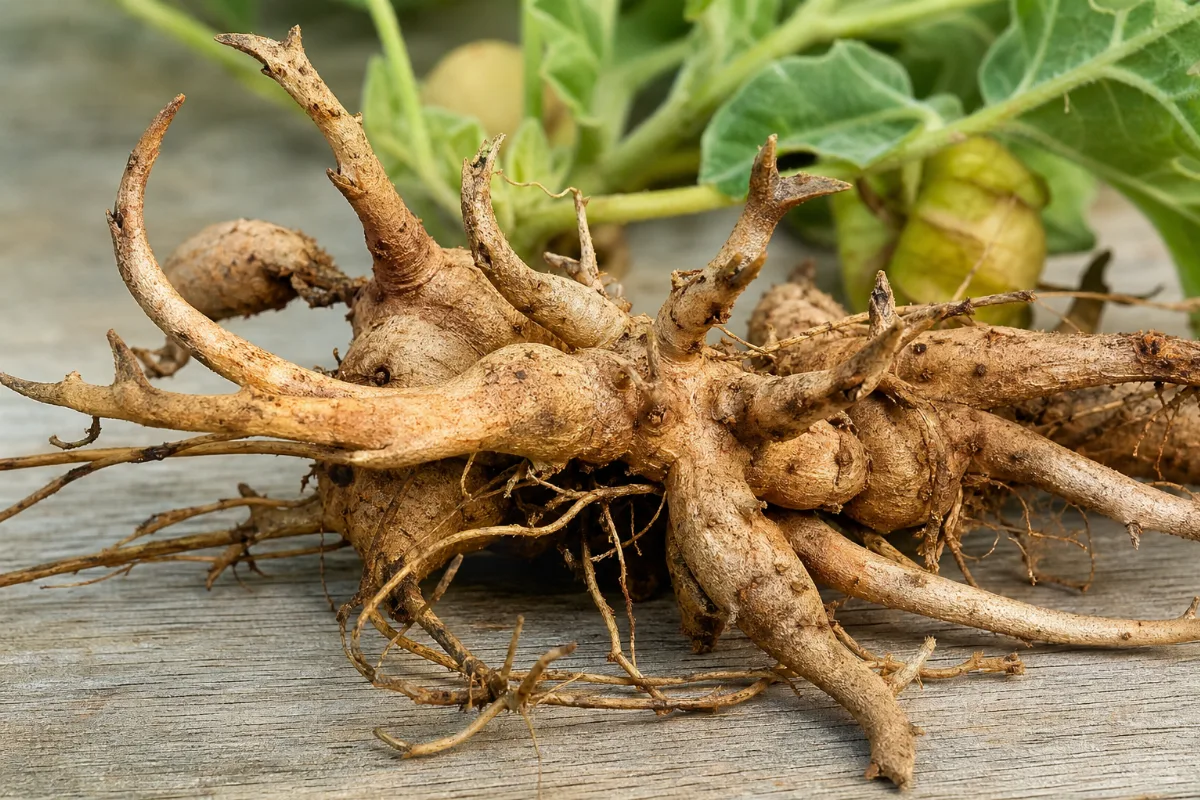
Herbs & Botanicals · Herbs · Traditional African root with low-certainty evidence for osteoarthritis and back pain; real cautions with stomach ulcers, pregnancy and some medicines
Devil's Claw
Harpagophytum procumbens (Burch.) DC. ex Meisn. · also called Devil's claw, grapple plant, Kalahari devil's claw, garra-do-diabo, Teufelskrallenwurzel, harpagofito
Devil's claw is a southern African plant in the sesame family. Its fleshy secondary tubers (roots) are used in teas, powders and extracts for joint and back pain. Trials in osteoarthritis and low back pain are small, short and of poor to low quality, and no trials were found for rheumatoid arthritis or tendon pain. It can upset the stomach and should not be used with an active stomach ulcer, in pregnancy or under 18.
General information, not medical advice. Last substantive update · Not medically reviewed. A named clinician has not signed off on this page. How this page is made
About Devil's Claw
Devil's claw (Harpagophytum procumbens) is a southern African plant whose fleshy secondary tubers (roots) are used in teas, powders and extracts for joint and back pain. The best-studied uses are knee and hip osteoarthritis and low back pain. Trials are small and short, mostly compare the root with another drug rather than with placebo, and use different branded products, so the evidence is rated low. For rheumatoid arthritis and tendon pain no trials were found. The main safety points are stomach and gut upset, a contraindication in active stomach or duodenal ulcer, a caution with gallstones, not using it in pregnancy, breastfeeding or under 18, uncertain effects with blood thinners, diabetes and heart or blood pressure medicines, and products that may contain the related H. zeyheri.
What it is
Devil's claw is Harpagophytum procumbens (Burch.) DC. ex Meisn., a plant of the sesame family (Pedaliaceae) that grows in the Kalahari region of southern Africa. The part used is the secondary tuber, a fleshy storage root. Namibia is the main exporter.
A close relative, Harpagophytum zeyheri, is often sold with it. The two are chemically different, and mixing is common in supplements.
Traditional and current uses
In southern Africa the root has long been used as a tonic and for arthritis, pain, fever, indigestion, sores and boils. In Europe it is sold for joint and back pain, and the EU herbal monograph (2016) lists traditional use for minor joint pain and mild digestive complaints, based on long use only.
People mainly take it for osteoarthritis and back pain. Demand has driven heavy wild harvest.
What is in it and how it works
The main bitter compound is harpagoside, with related iridoids such as harpagide, plus phenylethanoid glycosides such as acteoside. Harpagoside is the usual quality marker, but which compound causes any effect is not settled.
In the lab, extracts lowered inflammation signals such as leukotrienes, COX enzymes and TNF-alpha. In healthy men an oral extract reduced leukotriene formation in blood. These are indirect findings and do not show less pain in people.
What the research shows
Osteoarthritis: controlled trials compared devil's claw with diacerhein or meloxicam and found similar results, with no placebo group. Low back pain: a Cochrane review found some extracts may beat placebo for short-term pain, with low-quality evidence. Reviewers say trial quality is poor and that evidence does not carry over from one product to another.
For rheumatoid arthritis, tendon pain, blood sugar and blood pressure no human trials were found. Mixed products containing devil's claw were positive in two osteoarthritis trials but cannot show what devil's claw itself does.
At a glance
Traditional uses history, not proof
- Southern African medicine: arthritis, pain, fever, indigestion, sores and boils (2012 review)
- EU traditional use: minor joint pain and mild digestive complaints (2016 monograph)
- Traditional obstetric and diabetes uses in South Africa (animal study abstracts)
Studied for research
- Knee and hip osteoarthritis pain, low
- Low back pain flare-ups, low
- Muscle tension, low; inflammation chemistry in blood, low
- Rheumatoid arthritis, tendon pain, blood sugar and heart effects, insufficient
Main compounds
- Harpagoside, an iridoid glycoside (bitter compound)
- Harpagide and 8-p-coumaroylharpagide
- Acteoside (verbascoside) and related glycosides
- Cinnamic and caffeic acids
Common forms
- Dried root powder
- Dry extracts made with water or ethanol
- Herbal tea (EU traditional use)
- Mixed products with other herbs (not studied for devil's claw alone)
Research links: EMA: Devil's claw root, European Union herbal monograph · Cochrane review (2014): Herbal medicine for low-back pain (PubMed) · Systematic review on the safety of Harpagophytum preparations (PubMed) · Prescrire (2013): Devil's claw root, ulcers and gastrointestinal bleeding (PubMed) · German Society for Rheumatology (2026) phytotherapy recommendations (PubMed) · Hong 2026: Devil's claw in musculoskeletal disorders and comparison with NSAIDs (PubMed) · Research Library · Genes & Biomarkers Library
The plant and its history
- Accepted scientific name
- Harpagophytum procumbens (Burch.) DC. ex Meisn. (devil's claw)
- Naming authority
- (Burch.) DC. ex Meisn. NCBI lists the authority as 'DC. ex Meisn., 1840' with basionym Uncaria procumbens Burch., 1822. Accepted species in the GBIF backbone (key 3585335, match confidence 97, retrieved 2026-10-25).
- Synonyms
- Name: Harpagophytum burchellii Decne.; Status: SYNONYM (GBIF); Name: Uncaria procumbens Burch., 1822; Status: basionym / synonym (NCBI Taxonomy)
- Common names
- Devil's claw (English); Grapple plant (English); Kalahari devil's claw (English (NCBI common name)); Garra-do-diabo (Portuguese); Unha-do-diabo (Portuguese); Teufelskrallenwurzel (German (EU monograph)); Harpagofito (Spanish (EU monograph: harpagofito, raiz de)); Harpagophyton (French (EU monograph: harpagophyton, racine d'))
- Botanical family
- Pedaliaceae, the sesame family (order Lamiales), which also holds sesame.
- Classification
- Plantae > Tracheophyta > Magnoliopsida > Lamiales > Pedaliaceae > Harpagophytum > Harpagophytum procumbens (Burch.) DC. ex Meisn.
- Native range
- Southern Africa. A 2012 review places the plant in the Kalahari region, and Namibia is the main exporter, with lesser amounts from South Africa and Botswana (2005 review). Detailed range maps were not checked.
- Habitat
- Grows in the Kalahari region (2012 review). Cultivation trials grew it without water or fertiliser (2005 review).
- What the plant looks like
- Roots: The part used is the secondary tuber, a fleshy storage root that grows off the main root (EU monograph: 'tuberous secondary root').; Stems: Not described in what was read.; Leaves: Not described in what was read.; Flowers: Not described in what was read.; Fruit: Not described in what was read.; Seeds: Not described in what was read.
- Cultivation
- Wild harvest supplies most of the trade. Cultivation efforts have used micropropagation and growing without water or fertiliser, and moving from wild collection to cultivation has been debated for its effect on harvester incomes (2005 review).
- Harvest and processing
- Only the secondary tubers are used commercially, but the whole plant is often destroyed during harvest (2012 review). Preparations in the EU monograph include powder, teas and dry extracts made with water or ethanol of various strengths.
- Look-alikes and adulterants
- Name: Harpagophytum zeyheri Decne.; Note: A close relative, sold together with H. procumbens. The EU monograph and pharmacopoeia treat the two as sources of the same drug, but chemical studies find them different (8-p-coumaroylharpagide is a marker of H. zeyheri in one study) and one review says it has not been shown that both are equally safe and effective. A DNA test found mixing in US supplements.; Name: Cat's claw (Uncaria tomentosa and U. guianensis) and other plants called 'claw'; Note: Unrelated plants with similar nicknames. Research on one cannot be assumed to apply to another.
- Sustainability and conservation
- Over-harvesting has raised sustainability concerns (2012 review). In 2000 it was proposed for CITES Appendix II; the proposal was withdrawn in 2004 after southern African countries worked on sustainability (2005 review). Current IUCN and CITES status were not checked.
Traditional use and history history, not clinical proof
| Tradition or era | Documented use | Source |
|---|---|---|
| Southern Africa, traditional medicine | Used as a general health tonic and for arthritis, pain, fever, indigestion, blood diseases, urinary infections, pain after childbirth, sprains, sores, ulcers and boils, as infusions, decoctions, tinctures, powders and extracts (2012 review). | p22940241 |
| Obstetric use in South Africa | Some traditional health practitioners are said to use the secondary root to induce or speed labour and expel a retained placenta (2009 animal study abstract). | p19907121 |
| Folk use for type 2 diabetes | Used in some South African communities for adult-onset diabetes (2004 animal study abstract). | p15742343 |
| European commercialisation | In 2001 sales in Germany were estimated at 30 million euros, said to account for 74% of prescriptions for rheumatism (2005 review). In 2002, the peak export year, 1018 tonnes of dried tubers left southern Africa. | p16112533 |
| EU regulation | The HMPC adopted a monograph on 6 November 2008 and replaced it on 12 July 2016 with the current traditional-use monograph for minor joint pain and mild digestive complaints. | s-ema-hmpc-devils-claw-monograph |
| Modern research summaries | A 2021 bibliographic review counted close to 700 sources and called devil's claw one of the best-documented phytomedicines, while saying taxonomy, the active compound(s) and the equivalence of the two species remain open. | p34451822 |
Traditional use shows how a plant was used. It does not show that a supplement works or is safe today.
What is inside, and how it may work
What the plant contains and how those compounds act in cells and animals. Laboratory and animal mechanisms are not proven effects in people.
Main compounds
| Compound | Family | Where it is concentrated | Activity studied | Level of evidence |
|---|---|---|---|---|
| Harpagoside PubChem 5281542 | iridoid glycoside (bitter compound) | Secondary tuber 0.17 to 4.37% in wild H. procumbens samples; 0.00 to 3.07% in H. zeyheri; the pharmacopoeial specification is 1.2% or more (2014 study). | Used as the marker for quality and dosing in trials. In test tubes the harpagoside-rich fraction inhibited COX-1, COX-2 and nitric oxide; pure harpagoside was a weak elastase inhibitor and almost inactive on the drug pump P-glycoprotein. The 2012 review says isolated compounds were less effective than the whole extract. Whether harpagoside is the main active compound is not settled. 46 42 1 5 49 41 6 | Laboratory research |
| Harpagide PubChem 93045 | iridoid glycoside | Secondary tuber Not found. | Did not inhibit CYP3A4 in a test-tube screen. Its breakdown products are said to be more anti-inflammatory than the original (2012 review). 46 43 41 | Laboratory research |
| 8-p-Coumaroylharpagide PubChem 10324058 | iridoid glycoside | Secondary tuber Not found. | Reported as a marker of H. zeyheri only (1997 study) but also isolated from H. procumbens storage roots (2003 study); the two papers disagree. It inhibited human neutrophil elastase weakly (IC50 179 microgram/mL). 2 5 | Laboratory research |
| Acteoside (verbascoside) and related phenylethanoid glycosides PubChem 5281800 | phenylethanoid glycosides | Storage root Not found. | Acteoside, isoacteoside and 6'-O-acetylacteoside were isolated from storage roots (2003). The acetyl form was the most active elastase inhibitor tested (IC50 47 microgram/mL) and is absent from H. zeyheri. 5 46 | Laboratory research |
| Cinnamic acid and caffeic acid PubChem 444539 | phenolic acids | Storage root Not found. | A cinnamic-acid fraction reduced nitric oxide production by 67% in whole blood (2010); caffeic acid inhibited elastase (IC50 86 microgram/mL). 5 1 | Laboratory research |
| Aucubinine B (gut-bacteria product) | pyridine monoterpene alkaloid | Not in the plant: formed in the gut Not applicable. | Human faecal bacteria converted harpagide, harpagoside and 8-O-p-coumaroylharpagide into this compound in the lab. PubChem name search returned a record for the name, but it was not confirmed to be the same compound, so no CID is given. 3 | Laboratory research |
Mechanisms, receptors and pathways
| Target or pathway | Gene or receptor | What was found | Level |
|---|---|---|---|
| Inflammation chemistry in blood: leukotrienes | 5-lipoxygenase pathway (cysteinyl-leukotrienes) | In whole blood, WS 1531 inhibited stimulated cysteinyl-leukotriene formation more than pure harpagoside did, and after oral doses in healthy men basal formation fell by 28% and 58%. 38 | Human data |
| COX enzymes and nitric oxide | PTGS1 (COX-1), PTGS2 (COX-2), NOS | A harpagoside-rich fraction inhibited COX-1 by 37.2%, COX-2 by 29.5% and nitric oxide by 66% in whole blood; an iridoid fraction increased COX-2. Other components may oppose or add to the effect. 1 | Lab |
| Inflammatory messengers TNF-alpha, IL-6, IL-8 | TNF, IL6, CXCL8 | A tuber extract suppressed release of all three from stimulated human monocyte cells at 50 to 250 microgram/mL, and the effect held after liver-enzyme (S9) activation. 31 | Lab |
| Signalling pathways named by a 2026 review | NF-kB, AP-1, Nrf2/HO-1, PI3K/Akt, MAPKs | A review reports preclinical effects of harpagoside on these pathways at 10 to 50 micromolar, mostly in cells and animals. 34 | Lab |
| Human neutrophil elastase | ELANE | Weak, dose-dependent inhibition by water extracts of the root (IC50 542 microgram/mL for H. procumbens, 1012 for H. zeyheri). 5 | Lab |
| Pain and swelling in animals | Not specified | An injected water extract reduced pain responses in mice and paw swelling in rats. Water extracts of both Harpagophytum species showed similar effects in a separate animal study. 39 2 | Animal research |
| Heart rate, blood pressure and rhythm | Not specified | Lowered blood pressure and heart rate in rats at higher doses and protected isolated hearts against some chemically induced arrhythmias. 15 16 | Animal research |
| Drug pump P-glycoprotein | ABCB1 | Commercial preparations inhibited the pump and raised its amount in human kidney cells; pure harpagoside barely did. 49 | Lab |
| Liver drug-metabolising enzymes | CYP1A2, 2C8, 2C9, 2C19, 2D6, 3A4; PXR | Inhibited several CYP enzymes in test tubes; 5 of 10 products weakly inhibited CYP3A4 and 5 weakly activated PXR. 52 43 | Lab |
Absorption, metabolism and elimination
- Absorption
- In healthy men, plasma harpagoside peaked 1.3 to 2.5 hours after an oral WS 1531 extract, and the first peak level and AUC rose in a linear way with dose (2001). Numbers of volunteers and peak levels were not given in the abstract.
- Distribution
- Not found.
- Metabolism
- Human gut bacteria turned the iridoids harpagide, harpagoside and 8-O-p-coumaroylharpagide into the alkaloid aucubinine B in the lab (1999). A 2026 review says harpagoside acts like a prodrug and has poor oral bioavailability. Liver-enzyme (S9) treatment lowered the amounts of harpagoside and caffeic acid derivatives in a lab extract while keeping its cytokine-lowering effect.
- Elimination
- Not found for people.
- Bioavailability
- Described as poor for harpagoside (2026 review, not a measured percentage).
Isolated compounds versus whole extracts
The active principle is not settled. Harpagoside is the usual marker, and the harpagoside-rich fraction was the main inhibitor of COX and nitric oxide in one lab study, but a 2012 review says isolated compounds were less effective than the whole extract, one lab study found pure harpagoside nearly inactive on a drug pump where whole products were active, and the 2021 review says the active compound(s) still need to be shown. Clinical trials used different extracts (powder, water extracts, ethanol extracts) with different harpagoside amounts, and a 2003 review concluded that evidence does not transfer from product to product.
Nutritional composition
Devil's claw root is a medicinal plant, not a food. USDA FoodData Central and nutrient content were not consulted.
1 mixed findings5 low certainty5 very low certainty5 not enough evidence
What was looked at
The 16 benefits and uses checked for Devil's Claw, each with how strong the evidence is. Tap one to open it.
- Pain and stiffness in knee and hip osteoarthritisLow certainty
- Compared with osteoarthritis and anti-inflammatory drugsLow certainty
- Using less other pain medicine in osteoarthritisVery low certainty
- Osteoarthritis: products that mix devil's claw with other ingredientsVery low certainty
- Pain during a flare-up of low back painLow certainty
- Low back pain compared with an NSAID (rofecoxib)Very low certainty
- Needing less rescue pain medicine in back painMixed findings
- Chronic back pain in uncontrolled studiesVery low certainty
- Rheumatoid arthritis and other inflammatory joint diseaseNot enough evidence
- Muscle tension and mild muscle pain in the back, shoulders and neckLow certainty
- Tendon pain (tendinitis)Not enough evidence
- Knee discomfort in recreational runners (mixed supplement)Very low certainty
- Mild indigestion, bloating and loss of appetiteNot enough evidence
- Blood sugarNot enough evidence
- Blood pressure and heart rhythmNot enough evidence
- Inflammation chemicals in blood (leukotrienes)Low certainty
Lab markers tracked in the studies
Pain score (visual analogue scale)WOMAC osteoarthritis indexPain-free patients without rescue medicineUse of rescue painkillersArhus low back pain indexCysteinyl-leukotriene formation in bloodBlood glucose (animal only)Blood pressure and heart rate (animal only)COX enzymes and nitric oxide (lab)
What is Devil's Claw good for?
The main studied uses and how strong the human evidence is for each. "Mixed" means studies disagree; "low" or "very-low" means small or weak studies point one way; "insufficient" means too little human evidence. Nothing here is rated moderate or high. Ask a doctor or pharmacist about amounts.
Benefits, one by one
Each card is a research question, not a promise. Tap a goal to filter. Open a card to see the studies, doses and limits.
Pain and stiffness in knee and hip osteoarthritis
Low certaintyOsteoarthritis is wear in a joint. Some devil's claw products have been tested for knee and hip pain. Most trials compared them with another drug, or had no comparison group at all. Reviews call the evidence limited and of poor quality, so we rate it low.
9 studiesTested products were Harpadol (powdered root), Teltonal tablets and D…
Studies, doses and limits
What the trials found
No trial in this file compared a single-herb devil's claw product with placebo in osteoarthritis. Chantre 2000 and Leblan 2000 (the same trial, 122 people, 4 months) found root powder worked about as well as diacerhein, an osteoarthritis drug, with no significant difference in pain or function. Farpour 2021 (60 people with mild knee osteoarthritis) found devil's claw tablets and meloxicam improved scores to a similar degree. Wegener 2003 (75 people, about 12 weeks) was open-label: WOMAC scores fell about 23%. Reviews: Gagnier 2004 rated evidence limited to moderate depending on the product; Brien 2006 said trial quality was generally poor and could not say definitively whether it works; Moura 2017 found no difference from control in the one devil's claw trial it could pool and called the evidence insufficient; Hong 2026 said the evidence is limited by small samples, mixed products and short follow-up.
Results
In head-to-head trials devil's claw did about as well as the comparison drug. 'About as well' in trials with no placebo does not show it works better than doing nothing, because everyone in these studies improved.
Effect sizes as reported
Farpour 2021 at 8 weeks: VAS 4.80 (SD 1.80) devil's claw vs 5.06 (SD 1.43) meloxicam; WOMAC 25.73 vs 26.20. Wegener 2003 (open): WOMAC total -22.9%. No pooled effect sizes in the reviews' abstracts.
Why this rating
No placebo-controlled single-herb osteoarthritis trial was found among the abstracts read. The comparison trials were small, had no placebo group, and used products that differ from each other. Reviewers describe the quality as poor.
Form and dose studied
Tested products were Harpadol (powdered root), Teltonal tablets and Doloteffin (aqueous extract). Results from one product cannot be assumed for another (Chrubasik 2003).
Who was studied
Adults with knee and/or hip osteoarthritis, mostly mild to moderate; trials lasted 4 weeks to 4 months.
Limits
No placebo group in the controlled trials. The 2000 trial was reported twice. Authors of the 2000 trial gave the address of the product maker. Short trials in mild disease.
Why researchers looked
Osteoarthritis pain is common and long-term painkillers (NSAIDs) can upset the stomach, so people look for alternatives.
Traditional use
Devil's claw root (the secondary tuber) has been used in southern Africa for arthritis, pain, fever, indigestion, sores and other complaints, as teas, powders, tinctures and extracts (2012 review). In Europe it is sold for joint and back pain.
Proposed mechanism Preliminary mechanism
Lab and animal work suggests devil's claw root extracts, and its main bitter compound harpagoside, may dampen inflammation signals (for example COX-2, TNF-alpha and leukotrienes). In a small study of healthy men, an oral extract lowered leukotriene formation in blood samples. No study shows this is why people feel less pain.
A proposed mechanism does not show that the effect happens in people.
See the safety file: stomach and gut effects are the main complaint, and the EU monograph says not to use it with an active stomach or duodenal ulcer.
Compared with osteoarthritis and anti-inflammatory drugs
Low certaintyTwo trials set devil's claw against a drug: diacerhein (an osteoarthritis medicine) and meloxicam (an NSAID). Both found no significant difference in pain or function. That is encouraging for tolerability, but without a placebo group it does not prove devil's claw works.
4 studiesHarpadol root powder (Chantre) and Teltonal tablets (Farpour).
Studies, doses and limits
What the trials found
Chantre 2000 (same trial as Leblan 2000): 122 people, root powder vs diacerhein for 4 months; no difference in pain, function or Lequesne index; adverse events were significantly less frequent with devil's claw (diarrhoea 8.1% vs 26.7%). Farpour 2021: 60 people with mild knee osteoarthritis, devil's claw tablets for one month vs meloxicam for ten days; no significant difference at 8 weeks. The 2026 review by Hong and colleagues said there are few high-quality head-to-head trials against NSAIDs and that NSAIDs have a much stronger evidence base for pain relief, so devil's claw should not be seen as a general replacement.
Results
Similar pain and function scores to the comparison drugs; fewer adverse events than diacerhein in one trial.
Effect sizes as reported
No difference in pain or function (Chantre 2000; Farpour 2021). Diarrhoea 8.1% vs 26.7% (Chantre 2000).
Why this rating
Both trials are small to moderate, lacked placebo groups, and in Farpour 2021 the groups were treated for different lengths of time. Diacerhein is itself a weak drug.
Form and dose studied
Harpadol root powder (Chantre) and Teltonal tablets (Farpour).
Who was studied
Adults with knee or hip osteoarthritis (mild in Farpour 2021).
Limits
No placebo arm; different treatment durations in Farpour 2021; the 2000 trial is counted once.
Why researchers looked
People who cannot take NSAIDs well want to know if devil's claw is a fair substitute.
Traditional use
Devil's claw root (the secondary tuber) has been used in southern Africa for arthritis, pain, fever, indigestion, sores and other complaints, as teas, powders, tinctures and extracts (2012 review). In Europe it is sold for joint and back pain.
Proposed mechanism Preliminary mechanism
Lab and animal work suggests devil's claw root extracts, and its main bitter compound harpagoside, may dampen inflammation signals (for example COX-2, TNF-alpha and leukotrienes). In a small study of healthy men, an oral extract lowered leukotriene formation in blood samples. No study shows this is why people feel less pain.
A proposed mechanism does not show that the effect happens in people.
A lower rate of side effects than diacerhein in one trial does not mean devil's claw is free of risk; see the safety file.
Using less other pain medicine in osteoarthritis
Very low certaintyIn one 4-month trial, people on devil's claw root powder used significantly less painkiller and NSAID medicine than people on diacerhein. An open study in the UK found 60% of people reduced or stopped other pain medicine. The open study had no comparison group.
3 studiesHarpadol root powder (Chantre) and Bioforce Harpagophytum tablets (Wa…
Studies, doses and limits
What the trials found
Chantre 2000 and Leblan 2000 (one trial, 122 people): significantly less acetaminophen-caffeine and diclofenac use with devil's claw than with diacerhein. Warnock 2007: an 8-week open study of 259 UK adults with rheumatic disorders; 60% reduced or stopped other pain medicine.
Results
Less rescue medicine in the one controlled trial; the open study cannot be interpreted without a control group.
Effect sizes as reported
Significantly lower use than the diacerhein group (numbers not in the abstract); 60% reduced or stopped medicine in the open study.
Why this rating
One controlled trial against another drug (not placebo) plus an uncontrolled open study. Use of rescue medicine depends on patient and doctor choices and is easily influenced by expectations.
Form and dose studied
Harpadol root powder (Chantre) and Bioforce Harpagophytum tablets (Warnock).
Who was studied
Adults with osteoarthritis or general rheumatic disorders.
Limits
No placebo; open study; counts not given in the abstracts.
Why researchers looked
Using less painkiller medicine is a practical goal when long-term NSAIDs cause side effects.
Traditional use
Devil's claw root (the secondary tuber) has been used in southern Africa for arthritis, pain, fever, indigestion, sores and other complaints, as teas, powders, tinctures and extracts (2012 review). In Europe it is sold for joint and back pain.
Proposed mechanism Preliminary mechanism
Lab and animal work suggests devil's claw root extracts, and its main bitter compound harpagoside, may dampen inflammation signals (for example COX-2, TNF-alpha and leukotrienes). In a small study of healthy men, an oral extract lowered leukotriene formation in blood samples. No study shows this is why people feel less pain.
A proposed mechanism does not show that the effect happens in people.
Do not stop or cut other medicines without asking your doctor.
Osteoarthritis: products that mix devil's claw with other ingredients
Very low certaintyTwo placebo-controlled trials tested mixtures that include devil's claw in knee osteoarthritis. Both were positive for the mixture. One was planned and analysed by staff of a company linked to the sponsor, the other does not state its funding in the abstract, and each contains other active ingredients, so they cannot show what devil's claw itself does.
2 studiesMA212 (a drink with rosehip, nettle and devil's claw root extract) an…
Studies, doses and limits
What the trials found
Moré 2017: 92 people with knee osteoarthritis took 40 mL a day of MA212 (rosehip, nettle leaf extract, devil's claw root extract and vitamin D) or placebo for 12 weeks. WOMAC pain fell 29.87 points with MA212 vs 10.23 with placebo. The devil's claw used was 'procumbens and/or zeyheri'. Bender 2024: 88 people with knee osteoarthritis; physical therapy plus Loxacon (Boswellia plus devil's claw plus vitamins and minerals) improved function about twice as much as physical therapy alone or with placebo at the first follow-up.
Results
Both trials favoured the mixture. The effect cannot be assigned to devil's claw.
Effect sizes as reported
MA212: WOMAC pain change 29.87 vs 10.23 (Moré 2017). Loxacon: about twice the change in WOMAC function; no numbers in the abstract (Bender 2024).
Why this rating
Combination products, so devil's claw's own effect is unknown; one trial planned and analysed by employees of an affiliate of the product's sponsor; only abstracts read.
Form and dose studied
MA212 (a drink with rosehip, nettle and devil's claw root extract) and Loxacon (capsules with Boswellia and devil's claw extracts).
Who was studied
Adults with knee osteoarthritis.
Limits
Mixed ingredients; industry link in Moré 2017; Bender 2024 abstract has no numbers; neither isolates devil's claw.
Why researchers looked
Many supplements sold for joints combine devil's claw with other herbs.
Traditional use
Devil's claw root (the secondary tuber) has been used in southern Africa for arthritis, pain, fever, indigestion, sores and other complaints, as teas, powders, tinctures and extracts (2012 review). In Europe it is sold for joint and back pain.
Proposed mechanism Preliminary mechanism
Lab and animal work suggests devil's claw root extracts, and its main bitter compound harpagoside, may dampen inflammation signals (for example COX-2, TNF-alpha and leukotrienes). In a small study of healthy men, an oral extract lowered leukotriene formation in blood samples. No study shows this is why people feel less pain.
A proposed mechanism does not show that the effect happens in people.
Mixed products add the risks of each ingredient.
Pain during a flare-up of low back pain
Low certaintyA Cochrane review found that some devil's claw extracts may be better than placebo for short-term pain in low back pain, but it rated the evidence low quality. The best-known trial counted people who were pain-free without rescue medicine after 4 weeks: 3 on placebo versus 6 and 10 on two doses of the WS 1531 extract.
6 studiesWS 1531 and similar aqueous extracts providing 50 to 100 mg harpagosi…
Studies, doses and limits
What the trials found
The 2014 Cochrane review (14 trials of many herbs, 2050 people) found devil's claw extracts standardised to 50 or 100 mg harpagoside a day may be better than placebo for short-term pain (two trials, 315 people, low-quality evidence). Chrubasik 1999 (197 people, 4 weeks, WS 1531): pain-free without rescue medicine for 5 of the last 7 days in 3 (placebo), 6 and 10 (the two extract doses); one-tailed P = 0.027; the authors' sub-analyses were mixed. Chrubasik 1996 (118 people, 4 weeks): the planned outcome (tramadol use) did not differ; 9 of 51 on the extract vs 1 of 54 on placebo were pain-free at the end in a further analysis. Gagnier 2004 called the evidence for aqueous extracts at 50 mg harpagoside a day 'strong' for acute flare-ups of chronic low back pain, a more positive rating than the later Cochrane review. Chrubasik 2003 found most of the placebo-controlled trials lacked transparency.
Results
More people were pain-free with the extract, but the numbers are small and the trials had weaknesses.
Effect sizes as reported
Chrubasik 1999: 3, 6 and 10 pain-free patients (placebo, lower dose, higher dose). Chrubasik 1996: 9/51 vs 1/54 pain-free (further analysis).
Why this rating
The Cochrane reviewers graded the devil's claw placebo comparison low quality. Earlier reviewers (Gagnier 2004) were more positive; later ones less so. One of the best trials was done on a product not generally available (Chrubasik 2003).
Form and dose studied
WS 1531 and similar aqueous extracts providing 50 to 100 mg harpagoside a day in the trials. Results do not carry over from one product to another.
Who was studied
Adults with non-specific, mostly chronic, low back pain during a flare-up. Not studied for sciatica from a pinched nerve or for serious causes of back pain.
Limits
Short 4-week trials, small counts, one-tailed testing in the main trial, author overlap between the trials and the reviews, and no long-term trial.
Why researchers looked
Low back pain is one of the most common reasons people try herbal products.
Traditional use
Devil's claw root (the secondary tuber) has been used in southern Africa for arthritis, pain, fever, indigestion, sores and other complaints, as teas, powders, tinctures and extracts (2012 review). In Europe it is sold for joint and back pain.
Proposed mechanism Preliminary mechanism
Lab and animal work suggests devil's claw root extracts, and its main bitter compound harpagoside, may dampen inflammation signals (for example COX-2, TNF-alpha and leukotrienes). In a small study of healthy men, an oral extract lowered leukotriene formation in blood samples. No study shows this is why people feel less pain.
A proposed mechanism does not show that the effect happens in people.
No significant adverse events were noted in the trials the Cochrane review included.
Low back pain compared with an NSAID (rofecoxib)
Very low certaintyOne small pilot trial compared devil's claw with rofecoxib, an NSAID that has since been withdrawn. It found no significant difference. The trial was too small to prove the two are equal.
3 studiesDoloteffin aqueous extract, 60 mg harpagoside a day.
Studies, doses and limits
What the trials found
Chrubasik 2003: 88 people with a flare-up of low back pain took Doloteffin (60 mg harpagoside a day) or rofecoxib 12.5 mg a day for 6 weeks, with tramadol allowed as rescue. More than a 50% drop in pain: 18 of 44 on devil's claw and 12 of 44 on rofecoxib. Tramadol was used by 21 and 13 patients. The Cochrane review rated this trial very-low quality evidence of roughly equal effect.
Results
No significant difference between the groups; pilot size.
Effect sizes as reported
More than 50% pain reduction: 18/44 vs 12/44. Tramadol use: 21 vs 13 patients.
Why this rating
A single small pilot, no placebo, and the authors said much larger numbers would be needed to show equivalence. Cochrane graded it very low.
Form and dose studied
Doloteffin aqueous extract, 60 mg harpagoside a day.
Who was studied
Adults with a flare-up of low back pain.
Limits
Pilot; no placebo; rofecoxib is no longer on the market.
Why researchers looked
To see whether devil's claw could stand in for an NSAID for back pain flare-ups.
Traditional use
Devil's claw root (the secondary tuber) has been used in southern Africa for arthritis, pain, fever, indigestion, sores and other complaints, as teas, powders, tinctures and extracts (2012 review). In Europe it is sold for joint and back pain.
Proposed mechanism Preliminary mechanism
Lab and animal work suggests devil's claw root extracts, and its main bitter compound harpagoside, may dampen inflammation signals (for example COX-2, TNF-alpha and leukotrienes). In a small study of healthy men, an oral extract lowered leukotriene formation in blood samples. No study shows this is why people feel less pain.
A proposed mechanism does not show that the effect happens in people.
Fourteen patients in each group had adverse effects; 13 in the devil's claw group were judged possibly related to the treatment.
Needing less rescue pain medicine in back pain
Mixed findingsThe Cochrane review said devil's claw may reduce use of rescue painkillers in back pain. The individual trial results do not agree: in one trial rescue tramadol use did not differ between devil's claw and placebo, and in the rofecoxib pilot more people on devil's claw used tramadol.
3 studiesAqueous extracts providing 50 to 60 mg harpagoside a day.
Studies, doses and limits
What the trials found
Cochrane 2014: devil's claw 'may reduce use of rescue medication' (two trials, 315 people, low quality). Chrubasik 1996: tramadol use did not differ between devil's claw and placebo. Chrubasik 2003: tramadol was used by 21 of 44 on devil's claw and 13 of 44 on rofecoxib.
Results
Mixed; the rescue-medicine outcome was not consistently better with devil's claw.
Effect sizes as reported
No difference in tramadol use (Chrubasik 1996); 21 vs 13 users vs rofecoxib (Chrubasik 2003).
Why this rating
A review-level hint of benefit but individual trials disagree.
Form and dose studied
Aqueous extracts providing 50 to 60 mg harpagoside a day.
Who was studied
Adults with low back pain flare-ups.
Limits
Rescue medicine use depends on choice, not only pain.
Why researchers looked
Fewer rescue drugs is a practical measure of how well a treatment controls pain.
Traditional use
Devil's claw root (the secondary tuber) has been used in southern Africa for arthritis, pain, fever, indigestion, sores and other complaints, as teas, powders, tinctures and extracts (2012 review). In Europe it is sold for joint and back pain.
Proposed mechanism Preliminary mechanism
Lab and animal work suggests devil's claw root extracts, and its main bitter compound harpagoside, may dampen inflammation signals (for example COX-2, TNF-alpha and leukotrienes). In a small study of healthy men, an oral extract lowered leukotriene formation in blood samples. No study shows this is why people feel less pain.
A proposed mechanism does not show that the effect happens in people.
Tramadol and other painkillers have their own risks; ask your doctor before changing medicines.
Chronic back pain in uncontrolled studies
Very low certaintyTwo open studies, with no comparison group, found pain and movement improved over 8 weeks on devil's claw extracts, and about 10% reported minor side effects. Studies without a comparison group cannot tell treatment from natural recovery or placebo effects.
2 studiesLI 174 tablets; Doloteffin aqueous extract at 60 mg harpagoside a day.
Studies, doses and limits
What the trials found
Laudahn 2001: 130 people with chronic non-radicular back pain took LI 174 extract for 8 weeks; pain and spine movement improved and no serious side effects were seen. Chrubasik 2002: 250 people (104 with low back pain, 85 knee and 61 hip osteoarthritis) took Doloteffin for 8 weeks; all measures improved by week 4 and further by week 8; about 10% had minor adverse events that could be due to it.
Results
Improvement over time, with no control group.
Effect sizes as reported
Not given in the abstracts; the authors said 50 to 70% benefited (Chrubasik 2002).
Why this rating
Open, uncontrolled, and the conclusions were drawn by the teams running the studies.
Form and dose studied
LI 174 tablets; Doloteffin aqueous extract at 60 mg harpagoside a day.
Who was studied
Adults with chronic non-radicular back pain, or knee or hip osteoarthritis.
Limits
No control group; no blinding.
Why researchers looked
Real-world use shows what people experience, even though it is weak proof.
Traditional use
Devil's claw root (the secondary tuber) has been used in southern Africa for arthritis, pain, fever, indigestion, sores and other complaints, as teas, powders, tinctures and extracts (2012 review). In Europe it is sold for joint and back pain.
Proposed mechanism Preliminary mechanism
Lab and animal work suggests devil's claw root extracts, and its main bitter compound harpagoside, may dampen inflammation signals (for example COX-2, TNF-alpha and leukotrienes). In a small study of healthy men, an oral extract lowered leukotriene formation in blood samples. No study shows this is why people feel less pain.
A proposed mechanism does not show that the effect happens in people.
About 10% minor adverse events (Chrubasik 2002).
Rheumatoid arthritis and other inflammatory joint disease
Not enough evidenceDevil's claw is often sold for rheumatoid arthritis, but no trial in rheumatoid arthritis was found. In 2026 a German rheumatology committee said none of the 13 herbs it reviewed, devil's claw included, can be recommended for inflammatory joint diseases.
4 studiesNot applicable (no trial).
Studies, doses and limits
What the trials found
The 2026 German Society for Rheumatology committee reviewed devil's claw and 12 other plants. It found anti-inflammatory or immune effects in vitro or in animals but very limited evidence of clinical benefit, and said none can be recommended for inflammatory joint diseases. For degenerative joint disease taken on the patient's own initiative, rheumatologists need not advise against devil's claw if a sensible treatment plan is followed. A 2005 review of herbs for rheumatic disease named no rheumatoid arthritis result for devil's claw. The abstract of a 2007 review that mentions rheumatoid arthritis gives no results. The open study by Warnock 2007 included people with general rheumatic disorders and was not specific to rheumatoid arthritis.
Results
No rheumatoid arthritis trial of devil's claw was found. Guidance advises against relying on it for inflammatory joint disease.
Effect sizes as reported
No effect sizes; no trial found.
Why this rating
No human trial in rheumatoid arthritis was found in a PubMed search, and the 2026 committee judged clinical evidence very limited.
Who was studied
Adults with inflammatory joint disease were not studied.
Limits
Absence of trials, not proof of no effect. Abstracts only; the German paper's devil's claw detail was not read.
Why researchers looked
Rheumatoid arthritis is an autoimmune disease that damages joints; people look for natural add-ons.
Traditional use
Devil's claw root (the secondary tuber) has been used in southern Africa for arthritis, pain, fever, indigestion, sores and other complaints, as teas, powders, tinctures and extracts (2012 review). In Europe it is sold for joint and back pain.
Proposed mechanism Preliminary mechanism
Lab and animal work reports anti-inflammatory effects. Whether they matter in an autoimmune disease is unknown.
A proposed mechanism does not show that the effect happens in people.
Rheumatoid arthritis needs medical treatment to prevent joint damage. Do not replace prescribed medicine with a herb.
Muscle tension and mild muscle pain in the back, shoulders and neck
Low certaintyOne small German placebo-controlled trial of an extract called LI 174 found less muscle pain and stiffness after 4 weeks in people with mild to moderate muscle tension. The abstract gives no effect sizes and it is a single small study.
1 studiesLI 174 (Rivoltan) film tablets, 480 mg twice a day for 4 weeks.
Studies, doses and limits
What the trials found
Göbel 2001: 63 people with slight to moderate muscular tension or slight muscle pain of the back, shoulder and neck were randomised to LI 174 (480 mg twice a day) or placebo for 4 weeks. The extract group did better on the clinical global score, patient and physician ratings, pain scale, pressure pain, muscle stiffness and muscle blood flow tests. There was no difference in muscle reflex or EMG recordings. No serious adverse events.
Results
Better than placebo on several measures in one small trial.
Effect sizes as reported
Reported as 'highly significant' for several measures; effect sizes not given in the abstract.
Why this rating
A single small randomised trial (31 vs 32 people) read only as a German abstract, with no effect sizes and no confirming trial.
Form and dose studied
LI 174 (Rivoltan) film tablets, 480 mg twice a day for 4 weeks.
Who was studied
Adults with mild to moderate muscle tension or pain of the back, shoulders and neck.
Limits
Small; short; abstract only; one product; funding not stated in the abstract.
Why researchers looked
Muscle tension in the back, neck and shoulders is common and often treated with painkillers.
Traditional use
Devil's claw root (the secondary tuber) has been used in southern Africa for arthritis, pain, fever, indigestion, sores and other complaints, as teas, powders, tinctures and extracts (2012 review). In Europe it is sold for joint and back pain.
Proposed mechanism Preliminary mechanism
The trial's own tests suggest effects on pain sensitivity, muscle stiffness and blood flow in muscle, but not on protective muscle reflexes or electrical muscle activity. These are measures, not proof of how it works.
A proposed mechanism does not show that the effect happens in people.
No serious adverse events in the trial.
Tendon pain (tendinitis)
Not enough evidenceA review says harpagoside has been found effective for tendonitis, but we found no human trial of devil's claw for tendon pain. Traditionally it has been used for sprains. We rate the human evidence insufficient.
2 studiesNot applicable.
Studies, doses and limits
What the trials found
A 2005 review of the devil's claw trade (Stewart and Cole) states in its abstract that harpagoside has been found effective in tendonitis, among other conditions, but the abstract gives no trial. A search of PubMed for devil's claw (Harpagophytum) and tendon, tendinopathy, tendinitis or epicondylitis found no human study. The only trial involving a knee-pain group of active people was a pilot of a three-herb mix in runners (see the next item). The 2012 review of ethnobotany lists sprains among traditional uses.
Results
No human result for tendon pain.
Why this rating
No trial of devil's claw in tendon pain was found. The claim in the 2005 abstract is unsupported by any trial shown there.
Who was studied
Not studied.
Limits
Absence of trials. Only abstracts read.
Why researchers looked
Tendon pain, for example tennis elbow or Achilles tendon pain, is slow to heal and people ask about natural anti-inflammatories.
Traditional use
Used traditionally in southern Africa for sprains and sores, among many other uses (2012 review).
Proposed mechanism Pharmacological theory
Devil's claw's anti-inflammatory chemistry (lab work) is why it is suggested, but tendon healing is not helped by anti-inflammatory chemistry alone and was not tested.
A proposed mechanism does not show that the effect happens in people.
Do not delay medical review of a painful, swollen or suddenly weak tendon.
Knee discomfort in recreational runners (mixed supplement)
Very low certaintyA small pilot gave runners with knee discomfort a mix of devil's claw, ginger and annatto for 4 weeks. The groups could be told apart, and knee skin temperature and leg fat mass changed, but the abstract reports no pain score, so no pain benefit can be claimed.
1 studiesA three-ingredient supplement, 2 g a day in 6 doses.
Studies, doses and limits
What the trials found
González-Gross 2021: 28 men aged 40 to 60 with knee discomfort after running took a supplement of devil's claw, ginger and annatto (2 g a day) or placebo for 4 weeks. A machine-learning model separated the groups with median accuracy 0.857. Leg fat mass fell (p = 0.037) and knee thermograms cooled more (p < 0.05) in the supplement group. Safety blood tests showed no differences.
Results
Group differences in body measures; no pain result reported in the abstract.
Effect sizes as reported
Leg fat mass p = 0.037; knee temperature p < 0.05.
Why this rating
Tiny pilot, a three-herb mix, no pain outcome in the abstract, and a commercial interest (two authors worked for the maker).
Form and dose studied
A three-ingredient supplement, 2 g a day in 6 doses.
Who was studied
Healthy male recreational runners aged 40 to 60.
Limits
13 vs 15 people; mixed ingredients; industry link; abstract only.
Why researchers looked
Runners often get knee pain and may take anti-inflammatory supplements.
Traditional use
Devil's claw root (the secondary tuber) has been used in southern Africa for arthritis, pain, fever, indigestion, sores and other complaints, as teas, powders, tinctures and extracts (2012 review). In Europe it is sold for joint and back pain.
Proposed mechanism Pharmacological theory
Cooler knee skin was read by the authors as a sign of less inflammation. That is an indirect guess, not proof.
A proposed mechanism does not show that the effect happens in people.
No significant differences in safety blood markers.
Mild indigestion, bloating and loss of appetite
Not enough evidenceEuropean regulators list a traditional use of devil's claw root for mild indigestion, bloating, wind and temporary loss of appetite, based only on long use. We found no trial. Note also that stomach upset is the most common side effect.
2 studiesNot applicable.
Studies, doses and limits
What the trials found
The EU herbal monograph (2016) lists as a traditional-use indication the relief of mild digestive disorders such as bloating and flatulence, and temporary loss of appetite, based only on long-standing use and not on trials. The 2012 ethnobotany review lists dyspepsia among traditional uses. No human trial for digestion was found.
Results
Traditional use only.
Why this rating
Only traditional-use listing; no trials. The same root can also cause diarrhoea, nausea and stomach pain and is contraindicated in active stomach or duodenal ulcer.
Who was studied
Not studied.
Limits
Traditional-use listing is a lower standard than proof.
Why researchers looked
Bitter plants have long been used to stimulate appetite and digestion.
Traditional use
EU monograph (2016): traditional use for mild digestive complaints; 2012 review lists dyspepsia.
Proposed mechanism Pharmacological theory
Bitter compounds are thought to stimulate digestive secretions. Not tested for devil's claw in anything we read.
A proposed mechanism does not show that the effect happens in people.
Do not use with an active stomach or duodenal ulcer (EU monograph).
Blood sugar
Not enough evidenceIn rats, an injected water extract of devil's claw root lowered blood glucose, and the plant is used in South African folk medicine for type 2 diabetes. No human trial was found. This is a reason for care with diabetes medicines, not a reason to use it for diabetes.
2 studiesNot applicable.
Studies, doses and limits
What the trials found
Mahomed and Ojewole 2004: an aqueous extract of the secondary root, injected at 50 to 800 mg/kg into the abdomen, lowered blood glucose dose-dependently in fasted normal and fasted diabetic rats. The 2012 review lists anti-diabetic activity among the findings of scientific studies. No human study of blood glucose was found in PubMed.
Results
Animal result only.
Effect sizes as reported
Dose-dependent glucose lowering in rats (numbers not in the abstract).
Why this rating
Only injected doses in rats; no human data.
Who was studied
No human population studied.
Limits
Animal, injected, abstract only.
Why researchers looked
Folk use for 'adult-onset diabetes' in some communities of South Africa led to animal tests.
Traditional use
Folk use for type 2 diabetes in some communities of South Africa (per the 2004 animal paper).
Proposed mechanism Animal research
Unknown. Animal data only.
A proposed mechanism does not show that the effect happens in people.
If it lowers blood sugar in people, it could add to diabetes medicines. See the safety file.
Blood pressure and heart rhythm
Not enough evidenceIn rats and isolated hearts, root extract lowered blood pressure and heart rate and protected against some chemically induced rhythm disturbances. These are 1980s animal studies. One case report describes high blood pressure linked to devil's claw. We rate the human evidence insufficient.
3 studiesNot applicable.
Studies, doses and limits
What the trials found
Circosta 1984: methanol extract of the root lowered blood pressure in conscious rats in a dose-dependent way (significant only at higher doses, 400 mg/kg of dry extract by gavage) with a lower heart rate; in isolated rabbit hearts it slowed the rate and, at higher doses, weakened contraction. It protected against some induced arrhythmias. Costa De Pasquale 1985 found a protective effect against reperfusion arrhythmias in isolated rat hearts. A 2015 case report is titled as hypertension induced by devil's claw (only the title was seen). No human trial of blood pressure or rhythm was found.
Results
Animal results only; one human case report points the other way.
Effect sizes as reported
No human effect sizes.
Why this rating
Animal and isolated-heart data from the 1980s; a single case report of the opposite effect, details unknown.
Who was studied
No human population studied.
Limits
Old, small, animal; abstracts only; case report seen as title only.
Why researchers looked
A 1984 lab programme tested the heart effects of a traditional medicine.
Traditional use
Devil's claw root (the secondary tuber) has been used in southern Africa for arthritis, pain, fever, indigestion, sores and other complaints, as teas, powders, tinctures and extracts (2012 review). In Europe it is sold for joint and back pain.
Proposed mechanism Animal research
Animal and isolated-heart effects of the root extract and harpagoside on blood pressure, heart rate and rhythm. They do not predict what happens in people.
A proposed mechanism does not show that the effect happens in people.
People with heart or circulation problems should ask a doctor first (see the safety file).
Inflammation chemicals in blood (leukotrienes)
Low certaintyIn a laboratory and healthy-volunteer study, one extract (WS 1531) lowered leukotriene formation in blood. This is a blood-chemistry finding in healthy men and does not show less pain or disease.
3 studiesWS 1531 extract (oral) in Loew 2001; isolated fractions and extracts …
Studies, doses and limits
What the trials found
Loew 2001: in three small studies, healthy male volunteers took an oral WS 1531 extract and blood tests showed a two-phase fall of 28% and 58% in basal cysteinyl-leukotriene formation, not dose-dependent. Plasma harpagoside peaked 1.3 to 2.5 hours after the dose. Lab studies: a harpagoside-rich fraction inhibited COX-1 and COX-2 by 37.2% and 29.5% and nitric oxide by 66% in whole blood, while an iridoid fraction increased COX-2 (Anauate 2010); a tuber extract suppressed TNF-alpha, IL-6 and IL-8 release in a human cell line (Hostanska 2014).
Results
Blood chemistry changed in healthy men; lab results mixed by fraction.
Effect sizes as reported
Cys-LT formation -28% and -58% (Loew 2001); COX-1 -37.2%, COX-2 -29.5%, NO -66% in the best fraction (Anauate 2010).
Why this rating
Human data are from healthy men and measure blood chemistry, not symptoms. Lab data are indirect.
Form and dose studied
WS 1531 extract (oral) in Loew 2001; isolated fractions and extracts in the lab studies.
Who was studied
Healthy male volunteers (numbers not in the abstract) and cell or blood-sample tests.
Limits
Not clinical outcomes; abstracts only; small human numbers.
Why researchers looked
To find whether devil's claw reaches the body in an active form and acts on inflammation chemistry.
Traditional use
Devil's claw root (the secondary tuber) has been used in southern Africa for arthritis, pain, fever, indigestion, sores and other complaints, as teas, powders, tinctures and extracts (2012 review). In Europe it is sold for joint and back pain.
Proposed mechanism Preliminary mechanism
The extract inhibited formation of cysteinyl-leukotrienes in blood samples, more than pure harpagoside did. Other lab work suggests effects on COX enzymes, nitric oxide and TNF-alpha, with mixed results across fractions.
A proposed mechanism does not show that the effect happens in people.
None noted in the abstract.
Connections to the rest of health
How Devil's Claw connects to the rest of our health knowledge graph. Every link says what kind of connection it is. A safety link (for example to the liver) is a warning, not a benefit. A study that merely mentions a topic never creates a benefit link.
Explore every connection: goals, body systems, organs, symptoms, genes
A. Wellness goals
| Connected to | Kind of connection | Evidence status | Context | Studies |
|---|---|---|---|---|
| Joint Support | Potential benefit | Low certainty | Pain and stiffness in knee and hip osteoarthritis: Osteoarthritis is wear in a joint. Some devil's claw products have been tested for knee and hip pain. Most trials compared them with another drug, or had no comparison group at all. Reviews call the evidence limited and of poor quality, so we rate it low. Compared with osteoarthritis and anti-inflammatory drugs: Two trials set devil's claw against a drug: diacerhein (an osteoarthritis medicine) and meloxicam (an NSAID). Both found no significant difference in pain or function. That is encouraging for tolerability, but without a placebo group it does not prove devil's claw works. | 9 37 22 55 25 7 18 30 13 54 44 4 48 26 11 10 14 36 12 27 28 |
| Inflammation Balance | Potential benefit | Low certainty | Pain and stiffness in knee and hip osteoarthritis: Osteoarthritis is wear in a joint. Some devil's claw products have been tested for knee and hip pain. Most trials compared them with another drug, or had no comparison group at all. Reviews call the evidence limited and of poor quality, so we rate it low. Pain during a flare-up of low back pain: A Cochrane review found that some devil's claw extracts may be better than placebo for short-term pain in low back pain, but it rated the evidence low quality. The best-known trial counted people who were pain-free without rescue medicine after 4 weeks: 3 on placebo versus 6 and 10 on two doses of the WS 1531 extract. | 9 37 22 55 25 7 18 30 13 48 26 11 10 |
| Joint Support | Traditional use | Not enough evidence | Rheumatoid arthritis and other inflammatory joint disease: Devil's claw is often sold for rheumatoid arthritis, but no trial in rheumatoid arthritis was found. In 2026 a German rheumatology committee said none of the 13 herbs it reviewed, devil's claw included, can be recommended for inflammatory joint diseases. Tendon pain (tendinitis): A review says harpagoside has been found effective for tendonitis, but we found no human trial of devil's claw for tendon pain. Traditionally it has been used for sprains. We rate the human evidence insufficient. | 35 50 19 54 51 41 |
| Inflammation Balance | Traditional use | Not enough evidence | Rheumatoid arthritis and other inflammatory joint disease: Devil's claw is often sold for rheumatoid arthritis, but no trial in rheumatoid arthritis was found. In 2026 a German rheumatology committee said none of the 13 herbs it reviewed, devil's claw included, can be recommended for inflammatory joint diseases. | 35 50 19 54 |
| Calm Relaxation | Potential benefit | Low certainty | Muscle tension and mild muscle pain in the back, shoulders and neck: One small German placebo-controlled trial of an extract called LI 174 found less muscle pain and stiffness after 4 weeks in people with mild to moderate muscle tension. The abstract gives no effect sizes and it is a single small study. | 27 |
| Muscle Recovery | Traditional use | Not enough evidence | Tendon pain (tendinitis): A review says harpagoside has been found effective for tendonitis, but we found no human trial of devil's claw for tendon pain. Traditionally it has been used for sprains. We rate the human evidence insufficient. | 51 41 |
| Muscle Recovery | Potential benefit | Very low certainty | Knee discomfort in recreational runners (mixed supplement): A small pilot gave runners with knee discomfort a mix of devil's claw, ginger and annatto for 4 weeks. The groups could be told apart, and knee skin temperature and leg fat mass changed, but the abstract reports no pain score, so no pain benefit can be claimed. | 28 |
| Digestive Support | Traditional use | Not enough evidence | Mild indigestion, bloating and loss of appetite: European regulators list a traditional use of devil's claw root for mild indigestion, bloating, wind and temporary loss of appetite, based only on long use. We found no trial. Note also that stomach upset is the most common side effect. | 21 41 |
| Blood Sugar Balance | Preliminary mechanism | Not enough evidence | Blood sugar: In rats, an injected water extract of devil's claw root lowered blood glucose, and the plant is used in South African folk medicine for type 2 diabetes. No human trial was found. This is a reason for care with diabetes medicines, not a reason to use it for diabetes. | 39 41 |
| Heart Health | Preliminary mechanism | Not enough evidence | Blood pressure and heart rhythm: In rats and isolated hearts, root extract lowered blood pressure and heart rate and protected against some chemically induced rhythm disturbances. These are 1980s animal studies. One case report describes high blood pressure linked to devil's claw. We rate the human evidence insufficient. | 15 16 17 |
| Blood Pressure Support | Preliminary mechanism | Not enough evidence | Blood pressure and heart rhythm: In rats and isolated hearts, root extract lowered blood pressure and heart rate and protected against some chemically induced rhythm disturbances. These are 1980s animal studies. One case report describes high blood pressure linked to devil's claw. We rate the human evidence insufficient. | 15 16 17 |
| Inflammation Balance | Biological association | Low certainty | Inflammation chemicals in blood (leukotrienes): In a laboratory and healthy-volunteer study, one extract (WS 1531) lowered leukotriene formation in blood. This is a blood-chemistry finding in healthy men and does not show less pain or disease. | 38 1 31 |
B. Body systems
| Connected to | Kind of connection | Evidence status | Context | Studies |
|---|---|---|---|---|
| Musculoskeletal System | Biological association | Low certainty | Studied for: Pain and stiffness in knee and hip osteoarthritis Studied for: Compared with osteoarthritis and anti-inflammatory drugs | 9 37 22 55 25 7 18 30 13 54 44 4 48 26 11 10 14 36 12 35 50 19 27 51 41 28 21 39 15 16 17 38 1 31 |
C. Body parts and organs
| Connected to | Kind of connection | Evidence status | Context | Studies |
|---|---|---|---|---|
| Gut and stomach | Adverse effect or risk | Low certainty | Stomach and gut upset in about 3% in trials; EU contraindication in active ulcer; bleeding reports cited by Prescrire. Preparation or compound: Devil's claw root preparations |
21 53 47 |
| Heart and blood vessels | Biological association | Not enough evidence | Rat and isolated-heart studies of blood pressure and rhythm; one case report of hypertension. Preparation or compound: Root extract and harpagoside |
15 16 17 |
| Uterus | Contraindication | Very low certainty | Contracted rat uterine muscle in the lab; EU monograph advises against pregnancy use. Preparation or compound: Aqueous root extract |
40 21 |
I. Biomarkers
| Connected to | Kind of connection | Evidence status | Context | Studies |
|---|---|---|---|---|
| Pain score (visual analogue scale) | Biological association | Low certainty | Measured in trials: mixed. A lab change is not the same as a health benefit. | 22 55 9 |
| WOMAC osteoarthritis index | Biological association | Low certainty | Measured in trials: lowered. A lab change is not the same as a health benefit. | 55 22 44 4 |
| Pain-free patients without rescue medicine | Biological association | Low certainty | Measured in trials: raised. A lab change is not the same as a health benefit. | 11 10 |
| Use of rescue painkillers | Biological association | Mixed findings | Measured in trials: mixed. A lab change is not the same as a health benefit. | 9 10 14 48 |
| Arhus low back pain index | Biological association | Low certainty | Measured in trials: lowered. A lab change is not the same as a health benefit. | 14 10 36 |
| Cysteinyl-leukotriene formation in blood | Biological association | Low certainty | Measured in trials: lowered. A lab change is not the same as a health benefit. | 38 |
| Blood glucose (animal only) | Biological association | Not enough evidence | Measured in trials: lowered. A lab change is not the same as a health benefit. | 39 |
| Blood pressure and heart rate (animal only) | Biological association | Not enough evidence | Measured in trials: lowered. A lab change is not the same as a health benefit. | 15 17 |
| COX enzymes and nitric oxide (lab) | Biological association | Not enough evidence | Measured in trials: mixed. A lab change is not the same as a health benefit. | 1 |
J. Genes, receptors and enzymes
| Connected to | Kind of connection | Evidence status | Context | Studies |
|---|---|---|---|---|
| COX-1 and COX-2 (prostaglandin synthase) | Preliminary mechanism | Lab | Partly inhibited by a harpagoside-rich fraction in whole blood. | 1 |
| Human neutrophil elastase | Preliminary mechanism | Lab | Weakly inhibited by the root extract and by some isolated compounds. | 5 |
| CYP3A4 and other CYP enzymes; PXR receptor | Preliminary mechanism | Lab | Weak inhibition and weak activation in test tubes. | 52 43 |
K. Biological pathways
| Connected to | Kind of connection | Evidence status | Context | Studies |
|---|---|---|---|---|
| Leukotriene synthesis (5-lipoxygenase pathway) | Preliminary mechanism | Human | Cysteinyl-leukotriene formation reduced in blood after oral WS 1531 in healthy men. | 38 |
| TNF-alpha, IL-6, IL-8 | Preliminary mechanism | Lab | Release suppressed from stimulated human monocyte cells. | 31 |
| NF-kB and Nrf2 | Preliminary mechanism | Lab | Named in a 2026 review of harpagoside's mechanisms (mostly cell and animal work). | 34 |
| P-glycoprotein (ABCB1) | Preliminary mechanism | Lab | Activity inhibited and amount raised in kidney cells by commercial preparations. | 49 |
L. Active compounds
| Connected to | Kind of connection | Evidence status | Context | Studies |
|---|---|---|---|---|
| Harpagoside | Biological association | In vitro | Used as the marker for quality and dosing in trials. In test tubes the harpagoside-rich fraction inhibited COX-1, COX-2 and nitric oxide; pure harpagoside was a weak elastase inhibitor and almost inactive on the drug pump P-glycoprotein. The 2012 review says isolated compounds were less effective than the whole extract. Whether harpagoside is the main active compound is not settled. Preparation or compound: Secondary tuber |
46 42 1 5 49 41 6 |
| Harpagide | Biological association | In vitro | Did not inhibit CYP3A4 in a test-tube screen. Its breakdown products are said to be more anti-inflammatory than the original (2012 review). Preparation or compound: Secondary tuber |
46 43 41 |
| 8-p-Coumaroylharpagide | Biological association | In vitro | Reported as a marker of H. zeyheri only (1997 study) but also isolated from H. procumbens storage roots (2003 study); the two papers disagree. It inhibited human neutrophil elastase weakly (IC50 179 microgram/mL). Preparation or compound: Secondary tuber |
2 5 |
| Acteoside (verbascoside) and related phenylethanoid glycosides | Biological association | In vitro | Acteoside, isoacteoside and 6'-O-acetylacteoside were isolated from storage roots (2003). The acetyl form was the most active elastase inhibitor tested (IC50 47 microgram/mL) and is absent from H. zeyheri. Preparation or compound: Storage root |
5 46 |
| Cinnamic acid and caffeic acid | Biological association | In vitro | A cinnamic-acid fraction reduced nitric oxide production by 67% in whole blood (2010); caffeic acid inhibited elastase (IC50 86 microgram/mL). Preparation or compound: Storage root |
5 1 |
| Aucubinine B (gut-bacteria product) | Biological association | In vitro | Human faecal bacteria converted harpagide, harpagoside and 8-O-p-coumaroylharpagide into this compound in the lab. PubChem name search returned a record for the name, but it was not confirmed to be the same compound, so no CID is given. Preparation or compound: Not in the plant: formed in the gut |
3 |
Each connection is stored with the ingredient, the connected record, the kind of connection, the evidence status, the supporting studies, the preparation or compound involved, and a review date (last reviewed October 25, 2026).
The evidence
The research centre for Devil's Claw. Every record here was checked against PubMed or the publisher's page; we never list a study we have not verified.
Evidence by outcome
Bars show how many studies we found for each outcome, not how well it works. People are added up across trials only (reviews are not added, to avoid double counting).
How we rate evidence
High certainty
Several well-run trials or reviews agree; further research is unlikely to change the picture much.
Moderate certainty
Good trials point the same way, but some doubt remains.
Low certainty
Small, short or inconsistent trials. The finding could change with better research.
Very low certainty
Very little or very weak human data. Treat as a possibility only.
Mixed findings
Trials or reviews disagree with each other.
Not enough evidence
Not enough human research to say either way.
Evidence against
Good research found no benefit, or found harm.
We take the reviewers' own risk-of-bias and GRADE statements where they exist, and otherwise judge from study size, design, consistency, directness and whether a product matches what is sold. Many publications do not make evidence high. Method note: We searched PubMed and read abstracts (not full texts) for all papers. We read the final 2016 EU herbal monograph in full, checked plant names in GBIF and the NCBI taxonomy, and compounds in PubChem. Some sources were not verified: LiverTox (blocked), LactMed, NCCIH, FDA, Commission E, WHO and ESCOP. Some papers had no abstract and were used by title only. Certainty ratings are the compiler's own reading, using the reviewers' own grades where given. No study is cited that we could not verify.
Study library: every study we checked 55
| Study | Design | People | Product, dose, length | Result |
|---|---|---|---|---|
| Anauate 2010 Effect of isolated fractions of Harpagophytum procumbens D.C. (devil's claw) on COX-1, COX-2 activity and nitric oxide production on whole-blood assay. Phytother Res · PMID 20812280 · DOI |
Laboratory research in-vitro |
Whole blood from healthy donors in vitro | Isolated fractions of H. procumbens secondary tuber (root) · vs Indomethacin; etoricoxib |
The fraction richest in harpagoside inhibited both COX-1 and COX-2 (37.2% and 29.5%) and strongly inhibited nitric oxide production (66%). The fraction with the iridoid pool increased COX-2 activity. The authors said other components might oppose or increase the formation of inflammatory mediators. COX-1 -37.2%; COX-2 -29.5%; NO -66% (best fraction) Methods, limits and fundingOutcomes: COX-1, COX-2 and nitric oxide Limitations: Only the abstract was read. Test-tube blood assay. Read: abstract |
| Baghdikian 1997 An analytical study, anti-inflammatory and analgesic effects of Harpagophytum procumbens and Harpagophytum zeyheri. Planta Med · PMID 9140234 · DOI |
Animal research animal |
Laboratory analysis and animal tests | Aqueous extracts of H. procumbens and H. zeyheri secondary tuber (root) |
Harpagoside is the main iridoid in both; 8-p-coumaroylharpagide is found in H. zeyheri only, so the ratio can tell the species apart. Aqueous extracts of both showed similar analgesic and anti-inflammatory properties, and the authors said both should be accepted as sources of the drug. Commercial dried aqueous extracts probably come from a mixture of the two. n/a Methods, limits and fundingOutcomes: Chemistry, analgesic and anti-inflammatory effects Limitations: Only the abstract was read. Animal tests from 1997. Later work (Mncwangi 2014, Brendler 2021) argues the species are not interchangeable. Read: abstract |
| Baghdikian 1999 Formation of nitrogen-containing metabolites from the main iridoids of Harpagophytum procumbens and H. zeyheri by human intestinal bacteria. Planta Med · PMID 10193209 · DOI |
Laboratory research in-vitro |
Human faecal bacteria in the laboratory | Harpagide, harpagoside and 8-O-p-coumaroyl-harpagide secondary tuber (root) |
Human faecal flora and bacteria isolated from it converted the three iridoids into the pyridine alkaloid aucubinine B. n/a Methods, limits and fundingOutcomes: Gut-bacteria metabolism of the iridoids Limitations: Only the abstract was read. Laboratory study; whether this happens and matters in people was not tested here. Read: abstract |
| Bender 2024 Investigating the Additive Effects of Loxacon Food Supplement Capsules in Patients with Knee Osteoarthritis. A Multicenter, Randomized, Double-Blind, Controlled, Crossover, Follow-Up, Three-Arm Study. J Med Food · PMID 39446666 · DOI |
Controlled trial |
88 Adults with knee osteoarthritis |
Loxacon capsules: Boswellia serrata extract plus Harpagophytum procumbens extract plus vitamins and minerals root (devil's claw part) Not given in the abstract 5 weeks with physical therapy, then 60 days of capsules · vs Physical therapy alone; physical therapy plus placebo |
Function scores improved in all groups, but the change was about twice as large in the physical therapy plus Loxacon group at the first follow-up. The authors said the combination of boswellic acid and harpagosides was beneficial as an add-on therapy. About twice the change in WOMAC function (no numbers in abstract) Methods, limits and fundingOutcomes: WOMAC, quality of life, range of motion Limitations: Only the abstract was read. A two-herb supplement with vitamins and minerals, so the effect cannot be credited to devil's claw alone. Funding is not stated in the abstract. Read: abstract |
| Boje 2003 New and known iridoid- and phenylethanoid glycosides from Harpagophytum procumbens and their in vitro inhibition of human leukocyte elastase. Planta Med · PMID 14598207 · DOI |
Laboratory research in-vitro |
Laboratory isolation from storage roots; enzyme test | Compounds isolated from H. procumbens storage roots; aqueous extracts of H. procumbens and H. zeyheri storage root (secondary tuber) |
Ten compounds were isolated, including harpagoside, 8-p-coumaroylharpagide, acteoside (verbascoside), isoacteoside, cinnamic acid and caffeic acid; three were new natural products. Inhibition of the elastase enzyme was comparatively weak: IC50 542 microgram/mL for the H. procumbens extract and 1012 microgram/mL for H. zeyheri. 6'-O-acetylacteoside, absent from H. zeyheri, was the most active compound (IC50 47 microgram/mL). Harpagoside itself had an IC50 above 300 microgram/mL. IC50 542 vs 1012 microgram/mL Methods, limits and fundingOutcomes: Which compounds are present; inhibition of human neutrophil elastase Limitations: Only the abstract was read. Test-tube enzyme study. Read: abstract |
| Brendler 2021 From Bush Medicine to Modern Phytopharmaceutical: A Bibliographic Review of Devil's Claw (Harpagophytum spp.). Pharmaceuticals (Basel) · PMID 34451822 · DOI |
Narrative review |
Bibliographic review of close to 700 sources | Devil's claw (Harpagophytum spp.) secondary tuber (root) |
The author calls devil's claw one of the best-documented phytomedicines but says taxonomy is outdated and needs revision, that the active compound or compounds still need to be shown, and that, because of early substitution, intermixture and blending, it has not been shown beyond reasonable doubt that both species are equally and interchangeably safe and effective in clinical practice. n/a Methods, limits and fundingOutcomes: History, taxonomy, chemistry, pharmacology, toxicology, clinical evidence Limitations: Only the abstract was read. The author also co-wrote the 2006 Natural Standard review; no conflicts declared. Funding and conflicts: No conflicts declared in the abstract. Read: abstract |
| Brien 2006 Devil's Claw (Harpagophytum procumbens) as a treatment for osteoarthritis: a review of efficacy and safety. J Altern Complement Med · PMID 17212570 · DOI |
Systematic review |
Osteoarthritis; 14 studies (8 observational, 2 comparator trials, 4 double-blind placebo-controlled trials) | Devil's claw (Harpagophytum procumbens) preparations secondary tuber (root) Varied Varied · vs Placebo or active drugs |
Methodological quality of the trials was generally poor. Data from the higher-quality studies suggested devil's claw appeared effective in reducing pain. Safety assessment was limited by small populations; it appeared to carry minor risk relative to NSAIDs. The reviewers said the evidence could not give a definitive answer on whether it works or whether it is safe. Narrative Methods, limits and fundingOutcomes: Pain in osteoarthritis; safety Limitations: Only the abstract was read. Published 2006, so newer trials are not included. Read: abstract |
| Carvalho 2017 Syndrome of inappropriate antidiuretic hormone secretion induced by the phytotherapy Harpagophytum procumbers: case report. J Bras Nefrol · PMID 28355406 · DOI |
Case report |
1 A 65-year-old woman with high blood pressure |
Herbal medicine containing Harpagophytum procumbens, taken for osteoarthritis secondary tuber (root) Two episodes |
She developed low blood sodium due to SIADH (too much antidiuretic hormone) twice while using the herbal medicine; it recurred when devil's claw was restarted. The authors did not find this link reported before. n/a Methods, limits and fundingOutcomes: Low blood sodium (hyponatraemia) from SIADH Limitations: Only the abstract was read. One patient. The product and other medicines are not given in the abstract. Read: abstract |
| Chantre 2000 Efficacy and tolerance of Harpagophytum procumbens versus diacerhein in treatment of osteoarthritis. Phytomedicine · PMID 11185727 · DOI |
Controlled trial |
122 Adults with osteoarthritis of the knee and/or hip |
Harpadol: powdered cryoground Harpagophytum procumbens root secondary tuber (root) 6 capsules a day, each 435 mg of powder (2,610 mg a day) 4 months · vs Diacerhein 100 mg a day (an osteoarthritis drug) |
Pain and the Lequesne function index improved in both groups with no difference between them. Patients on devil's claw used significantly less NSAID and painkiller medicine, and had significantly fewer adverse events (diarrhoea in 8.1% on devil's claw vs 26.7% on diacerhein). No difference between groups in pain or function; fewer adverse events and less rescue medicine with devil's claw Methods, limits and fundingOutcomes: Pain and function on 10 cm visual scales; Lequesne index; use of other pain medicine; adverse events Limitations: Only the abstract was read. No placebo group, so the improvement cannot be separated from a placebo effect. Diacerhein is a weak drug. The same trial was also reported by Leblan 2000 (p11143915). The authors' address is Laboratoires Arkopharma. Funding and conflicts: Authors' address is Laboratoires Arkopharma; the tested product is Harpadol. Read: abstract |
| Chrubasik 1996 Effectiveness of Harpagophytum procumbens in treatment of acute low back pain. Phytomedicine · PMID 23194854 · DOI |
Controlled trial |
118 Adults with chronic back problems seeking treatment for acute attacks of pain |
Harpagophytum procumbens extract (extract type not stated in the abstract) secondary tuber (root) Equal to 6,000 mg crude preparation a day (50 mg harpagoside) 4 weeks · vs Placebo; tramadol allowed as rescue |
Tramadol use did not differ between the groups. Afterwards, 9 of 51 on the extract were pain-free at the end vs 1 of 54 on placebo. The Arhus index fell more with the extract but only at about 94% confidence. 109 of 118 completed. The authors called it a study showing that more definitive work is needed. 9/51 vs 1/54 pain-free (an after-the-fact analysis) Methods, limits and fundingOutcomes: Tramadol use (planned main outcome); pain-free at end; Arhus index Limitations: Only the abstract was read. The planned main outcome showed no difference; the pain-free result came from further analysis. Read: abstract |
| Chrubasik 1999 Effectiveness of Harpagophytum extract WS 1531 in the treatment of exacerbation of low back pain: a randomized, placebo-controlled, double-blind study. Eur J Anaesthesiol · PMID 10101629 · DOI |
Controlled trial |
197 Adults with chronic back pain susceptibility and a current flare-up (pain above 5 on a 0 to 10 scale) |
WS 1531: aqueous Harpagophytum extract secondary tuber (root) 600 mg or 1,200 mg a day (50 or 100 mg harpagoside) 4 weeks · vs Placebo; tramadol allowed as rescue |
Pain-free patients: 3 on placebo, 6 on the lower dose, 10 on the higher dose (P = 0.027, one-tailed test). 183 of 197 completed. The abstract's own sub-analyses gave a slightly different picture, with benefit seeming greatest in the lower dose group on one measure. No side effects clearly linked to the extract except possibly mild, infrequent stomach symptoms. 3 vs 6 vs 10 pain-free patients (placebo, lower dose, higher dose) Methods, limits and fundingOutcomes: Number of patients pain-free without tramadol for 5 of the last 7 days Limitations: Only the abstract was read. A one-tailed test was used. Small numbers of pain-free patients; short follow-up. Mixed sub-analyses. Read: abstract |
| Chrubasik 2002 Comparison of outcome measures during treatment with the proprietary Harpagophytum extract doloteffin in patients with pain in the lower back, knee or hip. Phytomedicine · PMID 12046857 · DOI |
Open label study |
250 Adults with non-specific low back pain (104), knee osteoarthritis (85) or hip osteoarthritis (61) |
Doloteffin: Harpagophytum extract secondary tuber (root) 60 mg harpagoside a day 8 weeks |
All measures improved by week 4 and further by week 8. About 10% of patients had minor adverse events possibly due to the extract. The authors said 50 to 70% of patients benefited. 50 to 70% of patients 'benefited' (authors' wording) Methods, limits and fundingOutcomes: Arhus index, WOMAC, HAQ and other measures Limitations: Only the abstract was read. Open and uncontrolled. The authors' conclusions were drawn by the trial's own team. Read: abstract |
| Chrubasik 2003 The quality of clinical trials with Harpagophytum procumbens. Phytomedicine · PMID 13678253 · DOI |
Systematic review |
20 studies of Harpagophytum products (powder, aqueous and ethanolic extracts) for flare-ups of chronic musculoskeletal pain | Harpagophytum products secondary tuber (root) Varied Varied · vs Placebo (8 trials) or NSAID-type comparators (2 trials) |
Of 8 double-blind placebo-controlled trials, 6 lacked transparency, one could not give definitive evidence from its main outcome, and one gave good evidence of a dose-dependent benefit over placebo but with a product not generally available. The reviewers concluded evidence is not transferable from product to product, and is better for products with at least 50 mg harpagoside a day than for ethanolic products with less. Narrative Methods, limits and fundingOutcomes: Quality of the trials Limitations: Only the abstract was read. The lead author ran several of the trials reviewed. Read: abstract |
| Chrubasik 2003 A randomized double-blind pilot study comparing Doloteffin and Vioxx in the treatment of low back pain. Rheumatology (Oxford) · PMID 12509627 · DOI |
Controlled trial |
88 Adults with an acute flare-up of low back pain |
Doloteffin: Harpagophytum extract secondary tuber (root) 60 mg harpagoside a day 6 weeks · vs Rofecoxib 12.5 mg a day; tramadol up to 400 mg a day as rescue |
No significant differences between groups. 18 of 44 on devil's claw and 12 of 44 on rofecoxib had more than a 50% pain drop. Tramadol was used by 21 vs 13 patients. 14 patients in each group had adverse effects (28 judged related to treatment; 13 in the devil's claw group). No significant difference vs rofecoxib Methods, limits and fundingOutcomes: Pain-free patients, 50% pain reduction, Arhus index, tramadol use, adverse events Limitations: Only the abstract was read. A pilot trial with no placebo group, too small to show equivalence (the authors said large numbers are needed). Rofecoxib was withdrawn from sale, so this comparison is of limited current use. Read: abstract |
| Circosta 1984 A drug used in traditional medicine: Harpagophytum procumbens DC. II. Cardiovascular activity. J Ethnopharmacol · PMID 6482477 · DOI |
Animal research animal |
Normotensive rats and isolated rabbit hearts | Methanolic extract of secondary root, harpagoside and harpagide secondary tuber (root) Up to 400 mg/kg by gavage in rats Single doses |
In rats the extract lowered blood pressure in a dose-dependent way, significant only at the higher doses, with a lower heart rate. In isolated rabbit hearts it mildly lowered heart rate with a mild positive effect on contraction at low doses and a marked negative effect at higher doses. The extract protected against some chemically induced arrhythmias. n/a Methods, limits and fundingOutcomes: Blood pressure, heart rate, heart contraction, arrhythmias Limitations: Only the abstract was read. 1984 animal and organ study; not applicable to human doses. Read: abstract |
| Costa De Pasquale 1985 A drug used in traditional medicine: Harpagophytum procumbens DC. III. Effects on hyperkinetic ventricular arrhythmias by reperfusion. J Ethnopharmacol · PMID 4021516 · DOI |
Animal research animal |
Isolated rat hearts (Langendorff) | Methanolic extract of secondary root and harpagoside secondary tuber (root) |
The extract and harpagoside showed a dose-dependent protective action against ventricular arrhythmias triggered by reperfusion in isolated rat hearts. n/a Methods, limits and fundingOutcomes: Rhythm disturbances after reperfusion Limitations: Only the abstract was read. Isolated-heart study from 1985. Read: abstract |
| Cuspidi 2015 Systemic Hypertension Induced by Harpagophytum procumbens (devil's claw): A Case Report. J Clin Hypertens (Greenwich) · PMID 26094951 · DOI |
Case report |
1 One patient (details not seen) |
Harpagophytum procumbens |
Only the title was seen: a case report titled as hypertension induced by devil's claw. n/a Methods, limits and fundingOutcomes: Blood pressure (per the title) Limitations: PubMed lists no abstract and the full text was not read, so the details of the case (dose, product, other medicines, whether blood pressure returned to normal) are unknown. The title is the only thing used. Read: title-only |
| Del Grossi Moura 2017 Oral herbal medicines marketed in Brazil for the treatment of osteoarthritis: A systematic review and meta-analysis. Phytother Res · PMID 28872719 · DOI |
Meta-analysis |
1741 Adults with osteoarthritis; 16 trials of 13 herbal medicines (devil's claw in 1 trial in the meta-analysis) |
Harpagophytum procumbens (one trial) among several herbs secondary tuber (root) · vs Placebo or active control |
No difference was observed for H. procumbens, turmeric and cat's claw (Uncaria guianensis) compared with control. The reviewers said the evidence was insufficient to support effective and safe use of these herbs because study quality was low. No difference for devil's claw (one trial) Methods, limits and fundingOutcomes: Pain, function, stiffness, adverse events Limitations: Only the abstract was read. Only one devil's claw trial was included, so this says little about devil's claw itself. Read: abstract |
| Denner 2007 A review of the efficacy and safety of devil's claw for pain associated with degenerative musculoskeletal diseases, rheumatoid, and osteoarthritis. Holist Nurs Pract · PMID 17627199 · DOI |
Narrative review |
Review | Devil's claw secondary tuber (root) |
The PubMed abstract says only that devil's claw has traditionally been used for pain, fevers and dyspepsia, that it has become popular for rheumatoid arthritis and osteoarthritis, and that no clear mechanism has been established. It gives no trial results. n/a Methods, limits and fundingOutcomes: Pain in degenerative and rheumatoid disease Limitations: Only the short abstract was read; no findings could be taken from it. Read: abstract |
| Diaz-Silveira 2021 DNA Barcode Authentication of Devil's Claw Herbal Dietary Supplements. Plants (Basel) · PMID 34685813 · DOI |
Other n/a |
23 23 devil's claw supplements bought in the United States |
Supplement products mixed |
PCR failed in 13% of products. Among the 20 products that could be analysed, H. procumbens was not detected in 75%; 25% contained both H. procumbens and H. zeyheri; none contained only H. procumbens. The authors noted that selling H. zeyheri as a supplement is not legal in the United States. 15 of 20 had no detectable H. procumbens; 5 of 20 both species Methods, limits and fundingOutcomes: Which species were in the products (DNA test) Limitations: Only the abstract was read. Small sample of US products from one time. 'Not detected' in a DNA test of an extract can also reflect processing, so it may overstate substitution. Funding and conflicts: No conflicts declared. Read: abstract |
| EMA Committee on Herbal Medicinal Products (HMPC) 2016 European Union herbal monograph on Harpagophytum procumbens DC. and/or Harpagophytum zeyheri Decne., radix (EMA/HMPC/627057/2015) European Medicines Agency · Source |
Authoritative guidance n/a |
n/a | Devil's claw root secondary tuber (root) |
Traditional-use monograph adopted 12 July 2016 (replacing the 2008 one): relief of minor joint pain, and mild digestive complaints such as bloating and loss of appetite, based on long-standing use only. Contraindicated in hypersensitivity and active gastric or duodenal ulcer. People with gallstones should consult a doctor first. Not established for under 18s. Pregnancy and lactation: not recommended for lack of data. Interactions: none reported. Undesirable effects (frequency not known): stomach and gut symptoms, headache, vertigo, allergic reactions. No overdose reported. Fertility, reproductive toxicity, genotoxicity and carcinogenicity tests have not been performed. If joint pain lasts over 4 weeks, see a doctor. n/a Methods, limits and fundingOutcomes: n/a Limitations: Read in full (8-page final monograph PDF, 2026-10-25). It covers both H. procumbens and H. zeyheri, and is a traditional-use (not well-established-use) monograph, which is a lower bar than proof of benefit. Read: full-text |
| Farpour 2021 The Efficacy of Harpagophytum procumbens (Teltonal) in Patients with Knee Osteoarthritis: A Randomized Active-Controlled Clinical Trial. Evid Based Complement Alternat Med · PMID 34712343 · DOI |
Controlled trial |
60 Adults aged 40 to 60 with mild painful knee osteoarthritis (Kellgren-Lawrence grades 1 to 2) |
Teltonal tablets (Harpagophytum procumbens) secondary tuber (root) 2 tablets of 480 mg a day 1 month of devil's claw; assessed to 8 weeks · vs Meloxicam 15 mg a day for 10 days |
Scores improved in both groups with no significant difference. At 8 weeks: VAS 4.80 (SD 1.80) with devil's claw vs 5.06 (SD 1.43) with meloxicam; WOMAC 25.73 vs 26.20. No significant difference between devil's claw and meloxicam Methods, limits and fundingOutcomes: Pain (VAS), WOMAC, Oxford Knee Score, patient satisfaction Limitations: Only the abstract was read. No placebo group. The two groups took their treatment for different lengths of time (1 month vs 10 days). Small, short, mild osteoarthritis only. Funding and conflicts: No conflicts declared in the abstract. Read: abstract |
| GBIF Secretariat 2026 GBIF Backbone Taxonomy: Harpagophytum procumbens (Burch.) DC. ex Meisn. GBIF API (species 3585335, retrieved 2026-10-25) · Source |
Database n/a |
n/a | Devil's claw root secondary tuber (root) |
Accepted species, family Pedaliaceae, order Lamiales, one listed synonym (Harpagophytum burchellii Decne.). Match confidence 97. n/a Methods, limits and fundingOutcomes: n/a Limitations: API output read directly. Read: api |
| GBIF Secretariat 2026 GBIF Backbone Taxonomy: Harpagophytum zeyheri Decne. GBIF API (species 3585330, retrieved 2026-10-25) · Source |
Database n/a |
n/a | Devil's claw root secondary tuber (root) |
Accepted species in the same genus and family (Pedaliaceae). n/a Methods, limits and fundingOutcomes: n/a Limitations: API output read directly. Read: api |
| Gagnier 2004 Harpgophytum procumbens for osteoarthritis and low back pain: a systematic review. BMC Complement Altern Med · PMID 15369596 · DOI |
Systematic review |
Adults with osteoarthritis or low back pain; 12 trials (6 in osteoarthritis, 4 in low back pain, 3 mixed pain) | Harpagophytum preparations (powder, aqueous and ethanolic extracts) secondary tuber (root) Varied; the reviewers grouped trials by harpagoside per day Varied · vs Placebo or active drugs |
Trials were too different to pool, so they were described one by one. The reviewers rated evidence as limited for an ethanolic extract with less than 30 mg harpagoside a day in knee and hip osteoarthritis, moderate for several aqueous extracts and a powder, and strong for an aqueous extract at 50 mg harpagoside a day in acute flare-ups of chronic low back pain. Narrative, no pooled numbers Methods, limits and fundingOutcomes: Pain in osteoarthritis and low back pain Limitations: Only the abstract was read. Evidence grades are product-specific. One author (Chrubasik) also ran several of the trials reviewed. Read: abstract |
| Gagnier 2016 Herbal Medicine for Low Back Pain: A Cochrane Review. Spine (Phila Pa 1976) · PMID 26630428 · DOI |
Systematic review |
2050 Same 14 trials as the 2014 Cochrane update (adults with non-specific low back pain) |
Harpagophytum procumbens among several herbs secondary tuber (root) · vs Placebo or active comparators |
Journal republication of the Cochrane review. Devil's claw 'seems to reduce pain more than placebo' but evidence for it was of moderate quality at best. No significant adverse events in the included trials. n/a Methods, limits and fundingOutcomes: Pain and function Limitations: Only the abstract was read. This is the same review as the 2014 Cochrane update, so it is not independent evidence. Read: abstract |
| Gobel 2001 [Effects of Harpagophytum procumbens LI 174 (devil's claw) on sensory, motor und vascular muscle reagibility in the treatment of unspecific back pain] Schmerz · PMID 11810324 · DOI |
Controlled trial |
63 Adults with slight to moderate muscular tension or slight muscle pain of the back, shoulder and neck |
LI 174 (Rivoltan): Harpagophytum dry extract secondary tuber (root) 480 mg twice a day 4 weeks · vs Placebo |
After 4 weeks there was clear benefit on the clinical global score and on patient and physician ratings, and highly significant effects on the pain scale, pressure algometer, muscle stiffness and ischaemia tests. No difference from placebo was found for protective muscle reflexes or EMG activity. No serious adverse events. Not given in the abstract (31 on extract, 32 on placebo) Methods, limits and fundingOutcomes: Pain scale, pressure pain, muscle stiffness, muscle blood flow tests, global rating Limitations: Only the German-language abstract was read. Small trial of mild muscle pain; effect sizes not given. Read: abstract |
| Gonzalez-Gross 2021 Analysis of Effectiveness of a Supplement Combining Harpagophytum procumbens, Zingiber officinale and Bixa orellana in Healthy Recreational Runners with Self-Reported Knee Pain: A Pilot, Randomized, Triple-Blind, Placebo-Controlled Trial. Int J Environ Res Public Health · PMID 34067240 · DOI |
Controlled trial |
28 Male recreational runners aged 40 to 60 with self-reported knee discomfort after training |
Supplement combining devil's claw, ginger and annatto (Bixa orellana) root (devil's claw part) 2 g a day in 6 doses 4 weeks · vs Placebo |
A machine-learning model could tell the groups apart with a median accuracy of 0.857. Leg fat mass fell (p = 0.037) and knee thermograms cooled more in the supplement group. No pain score is reported in the abstract. Leg fat mass p = 0.037; knee temperature p < 0.05 Methods, limits and fundingOutcomes: Blood markers, body composition, running biomechanics, knee skin temperature Limitations: Only the abstract was read. Tiny pilot (13 vs 15), a three-herb mix, no pain outcome in the abstract, so no pain benefit can be claimed. Funding and conflicts: Two authors were employed by Natural Origins, which has a commercial interest in the product. Read: abstract |
| Heck 2000 Potential interactions between alternative therapies and warfarin. Am J Health Syst Pharm · PMID 10902065 |
Narrative review |
Review of herbs and warfarin | Several herbs including devil's claw secondary tuber (root) |
The review listed devil's claw among products 'associated with documented reports of potential interactions with warfarin'. It said nearly all information is from in vitro data, animal studies or individual case reports, and more study is needed to assess clinical significance. n/a Methods, limits and fundingOutcomes: Herb-warfarin interactions Limitations: Only the abstract was read. The abstract does not describe the devil's claw reports, so what happened and how strong the evidence is cannot be judged. Read: abstract |
| Hong 2026 Harpagophytum procumbens in musculoskeletal disorders: current evidence and comparison with NSAIDs. Front Pharmacol · PMID 42394971 · DOI |
Narrative review |
Review of mechanisms, clinical efficacy, safety, pharmacokinetics and regulation | Harpagophytum procumbens preparations secondary tuber (root) · vs NSAIDs (discussion) |
Clinical studies, mainly in osteoarthritis and low back pain, suggest selected preparations may give symptom relief in some patients. The reviewers noted small samples, mixed formulations and doses, short follow-up and few head-to-head trials against NSAIDs. They said the evidence does not support using devil's claw as a general replacement for NSAIDs, and that it is generally well tolerated while product quality and long-term safety data vary. n/a Methods, limits and fundingOutcomes: Clinical efficacy and safety Limitations: Structured narrative review, not a systematic review; only the abstract was read. Authors from a Korean medicine research institute; no commercial conflicts declared. Read: abstract |
| Hostanska 2014 Alteration of anti-inflammatory activity of Harpagophytum procumbens (devil's claw) extract after external metabolic activation with S9 mix. J Pharm Pharmacol · PMID 25175765 · DOI |
Laboratory research in-vitro |
Human monocyte cell line (THP-1) | Devil's claw tuber extract, with and without liver-enzyme (S9) activation secondary tuber 50 to 250 microgram/mL on cells Hours |
The extract dose-dependently suppressed release of TNF-alpha, IL-6 and IL-8, and the effect held (and for TNF-alpha improved) after liver-enzyme activation, even though harpagoside and caffeic acid derivatives fell. The authors suggested other components contribute. TNF-alpha EC50 116 vs 49 microgram/mL (without vs with activation) Methods, limits and fundingOutcomes: TNF-alpha, IL-6 and IL-8 release Limitations: Only the abstract was read. Cell study. Read: abstract |
| Izzo 2005 Cardiovascular pharmacotherapy and herbal medicines: the risk of drug interaction. Int J Cardiol · PMID 15676159 · DOI |
Narrative review |
Review of 43 case reports and 8 clinical trials of herb-cardiovascular drug interactions | Several herbs including devil's claw secondary tuber (root) |
Warfarin was the drug most often involved. The review lists devil's claw among herbs found to interact with warfarin, resulting in over-anticoagulation. It said patients taking anticoagulants are at the highest risk. n/a Methods, limits and fundingOutcomes: Herb-drug interactions Limitations: Only the abstract was read. The abstract does not describe the devil's claw case itself, so the number and quality of reports are unknown. Read: abstract |
| Joshi 2020 Toxicology studies of aqueous-alcohol extracts of Harpagophytum procumbens subsp. procumbens (Burch.) DC.Ex Meisn. (Pedaliaceae) in female and male rats. BMC Complement Med Ther · PMID 32020872 · DOI |
Animal research animal |
Male and female Sprague Dawley rats | Aqueous-alcohol extracts of H. procumbens subsp. procumbens tubers secondary tuber 7 to 10 times the human-equivalent dose, in the diet 1 and 3 months · vs Control diet |
Sex-related differences in blood chemistry were found, but no significant tissue damage was found in heart, liver, lung, kidney, stomach or intestines. The authors judged that none of the effects suggested serious toxicity at these doses and durations. The abstract also states that clinical studies support general safety, with infrequent stomach upset, headache, vertigo and allergic reactions documented. n/a Methods, limits and fundingOutcomes: Blood chemistry and organ tissue examination Limitations: Only the abstract was read. Rats, up to 3 months. No conflicts declared. Read: abstract |
| Kaur 2026 Decoding the mechanistic landscape of harpagoside: From molecular targets to translational pharmacology. Fitoterapia · PMID 41391813 · DOI |
Narrative review |
Review of harpagoside's mechanisms | Harpagoside secondary tuber (root) |
Preclinical studies at 10 to 50 micromolar showed effects on pathways including NF-kB, AP-1, Nrf2/HO-1, PI3K/Akt and MAPKs. The review says harpagoside behaves like a prodrug, being converted to active metabolites, that its oral bioavailability is poor, and that pharmacokinetic and long-term safety data are limited and content varies between products. n/a Methods, limits and fundingOutcomes: Mechanisms and translation Limitations: Only the abstract was read. Mostly lab and animal work. Read: abstract |
| Keyßer 2026 [Recommendations of the German Society for Rheumatology committee for complementary treatment and nutrition on phytotherapy: Supplement on the use of selected phytotherapeutic agents and herbal preparations in rheumatology: extension to include 13 medicinal plants] Z Rheumatol · PMID 42448806 · DOI |
Authoritative guidance |
Committee review of 13 herbs used by people with rheumatic disease, including devil's claw | Devil's claw (Harpagophytum) among 13 plants |
For all the plants reviewed there are reports of anti-inflammatory or immune effects in vitro or in animals, but evidence of a clinically relevant benefit is very limited. None of the preparations can be recommended for inflammatory joint diseases. If devil's claw (and several others) is taken on the patient's own initiative for degenerative joint disease, rheumatologists need not advise against it, provided a sensible treatment plan is otherwise followed. n/a Methods, limits and fundingOutcomes: Recommendations for rheumatology practice Limitations: Only the English abstract was read (the paper is in German). It does not give devil's claw findings separately. Read: abstract |
| Laudahn 2001 Efficacy and tolerance of Harpagophytum extract LI 174 in patients with chronic non-radicular back pain. Phytother Res · PMID 11746846 · DOI |
Open label study |
130 Adults with chronic non-radicular back pain (117 evaluated for efficacy) |
LI 174: Harpagophytum extract tablets secondary tuber (root) 480 mg twice a day 8 weeks |
Pain and mobility improved significantly during treatment. No serious side effects were observed. Not given in the abstract Methods, limits and fundingOutcomes: Multidimensional Pain Scale, Arhus back pain index, spine mobility Limitations: Only the abstract was read. Open and uncontrolled. Read: abstract |
| Leblan 2000 Harpagophytum procumbens in the treatment of knee and hip osteoarthritis. Four-month results of a prospective, multicenter, double-blind trial versus diacerhein. Joint Bone Spine · PMID 11143915 |
Controlled trial |
122 Adults with hip and/or knee osteoarthritis (same 122-patient trial as Chantre 2000) |
Harpagophytum procumbens root powder secondary tuber (root) 2,610 mg a day 4 months · vs Diacerhein 100 mg a day |
After four months, symptoms improved a lot in both groups with no significant difference for pain, disability or Lequesne score. Use of acetaminophen-caffeine and diclofenac was significantly lower with devil's claw, and so was the rate of adverse events. No difference vs diacerhein; less rescue medicine Methods, limits and fundingOutcomes: Pain on a visual scale (primary), function, Lequesne score, rescue medicine, adverse events Limitations: Only the abstract was read. This is the same trial as Chantre 2000 (p11185727), so the two must not be counted as two trials. No placebo group. Funding and conflicts: Author address: Laboratoires Arkopharma. Read: abstract |
| Loew 2001 Investigations on the pharmacokinetic properties of Harpagophytum extracts and their effects on eicosanoid biosynthesis in vitro and ex vivo. Clin Pharmacol Ther · PMID 11372004 · DOI |
Clinical trial |
Human whole blood in vitro; healthy male volunteers in 3 studies (numbers not in abstract) | WS 1531 and other Harpagophytum extract fractions secondary tuber (root) Several single oral doses (not given in the abstract) Hours · vs Pure harpagoside; other fractions |
WS 1531 inhibited stimulated cysteinyl-leukotriene formation more than pure harpagoside; fractions without harpagoside had no pronounced effect. After oral intake, basal cysteinyl-leukotriene formation fell in two phases by 28% and 58%, not dose-dependently. Plasma harpagoside peaked at 1.3 to 2.5 hours, with a linear relationship between dose and the first peak level and AUC. Cys-LT down 28% and 58%; peak harpagoside at 1.3 to 2.5 h Methods, limits and fundingOutcomes: Leukotriene and thromboxane formation in blood; plasma harpagoside Limitations: Only the abstract was read. Healthy men, blood-chemistry outcomes rather than symptoms. Read: abstract |
| Mahomed 2004 Analgesic, antiinflammatory and antidiabetic properties of Harpagophytum procumbens DC (Pedaliaceae) secondary root aqueous extract. Phytother Res · PMID 15742343 · DOI |
Animal research animal |
Mice and rats (including streptozotocin-diabetic rats) | Aqueous extract of secondary root secondary tuber (root) 50 to 800 mg/kg injected into the abdomen Single doses · vs Diclofenac; chlorpropamide |
The extract reduced pain responses in mice, reduced paw swelling in rats, and dose-dependently lowered blood glucose in both normal and diabetic fasted rats. n/a Methods, limits and fundingOutcomes: Pain response, paw swelling, blood glucose Limitations: Only the abstract was read. Animals, injected (not eaten) doses; may not apply to people. Read: abstract |
| Mahomed 2009 Uterotonic effect of Harpagophytum procumbens DC (Pedaliaceae) secondary root aqueous extract on rat isolated uterine horns. J Smooth Muscle Res · PMID 19907121 · DOI |
Animal research animal |
Uterine muscle strips from non-pregnant and pregnant rats | Aqueous extract of secondary root secondary tuber (root) 10 to 1,000 microgram/mL on tissue Minutes |
The extract increased the baseline tone and caused strong rhythmic contractions of uterine muscle strips from non-pregnant rats and from rats in early, middle and late pregnancy. Some South African traditional practitioners are said to use the root to bring on labour and to expel retained placentas. n/a Methods, limits and fundingOutcomes: Uterine muscle contraction Limitations: Only the abstract was read. Isolated tissue from rats; it shows the extract can contract uterine muscle in a dish, not that it does so in a pregnant woman at normal intakes. Read: abstract |
| Mncwangi 2012 Devil's Claw-a review of the ethnobotany, phytochemistry and biological activity of Harpagophytum procumbens. J Ethnopharmacol · PMID 22940241 · DOI |
Narrative review |
Review of ethnobotany, chemistry and biology | Harpagophytum procumbens subsp. procumbens secondary tuber (root) |
Used in southern Africa as infusions, decoctions, tinctures, powders and extracts for arthritis and pain, and also for dyspepsia, fever, blood diseases, urinary infections, postpartum pain, sprains, sores, ulcers and boils. Iridoid glycosides such as harpagoside and harpagide are credited with the anti-inflammatory activity, and the breakdown products may be more active. The review says H. procumbens raw material is often intentionally adulterated with H. zeyheri, that demand has led to over-harvesting, and that although only the secondary tubers are used commercially the whole plant is often destroyed during harvest. n/a Methods, limits and fundingOutcomes: Traditional uses, chemistry, biological activity, supply Limitations: Only the abstract was read. Read: abstract |
| Mncwangi 2014 What the devil is in your phytomedicine? Exploring species substitution in Harpagophytum through chemometric modeling of 1H-NMR and UHPLC-MS datasets. Phytochemistry · PMID 25041697 · DOI |
Other n/a |
348 241 wild H. procumbens and 107 H. zeyheri plant samples |
Dried tubers (laboratory analysis) secondary tuber |
Harpagoside ranged from 0.17 to 4.37% in H. procumbens and 0.00 to 3.07% in H. zeyheri. Only 41% of H. procumbens samples and 17% of H. zeyheri samples met the pharmacopoeial specification of 1.2% or more. The two species were chemically separable and the authors concluded they are not chemically equivalent and should not be used interchangeably. 41% vs 17% met the 1.2% harpagoside specification Methods, limits and fundingOutcomes: Harpagoside content and chemical fingerprint Limitations: Only the abstract was read. Wild plant samples, not products. Read: abstract |
| Modarai 2011 The interaction potential of herbal medicinal products: a luminescence-based screening platform assessing effects on cytochrome P450 and its use with devil's claw (Harpagophyti radix) preparations. J Pharm Pharmacol · PMID 21749392 · DOI |
Laboratory research in-vitro |
Test-tube enzyme and reporter-gene assays | 10 commercial devil's claw preparations, harpagoside and harpagide secondary tuber (root) · vs Known interacting compound bergamottin |
Five preparations weakly inhibited CYP3A4 (IC50 124.2 to 327.6 microgram/mL) and five weakly activated PXR (EC50 10.21 to 169.3 microgram/mL). Harpagoside and harpagide did not inhibit CYP3A4. The authors concluded devil's claw preparations are unlikely to have a clinically relevant effect on CYP function. CYP3A4 IC50 124.2 to 327.6 microgram/mL Methods, limits and fundingOutcomes: CYP enzyme inhibition and PXR activation Limitations: Only the abstract was read. Test-tube study; the conclusion is the authors' inference, not tested in people. Read: abstract |
| More 2017 A Rosa canina - Urtica dioica - Harpagophytum procumbens/zeyheri Combination Significantly Reduces Gonarthritis Symptoms in a Randomized, Placebo-Controlled Double-Blind Study. Planta Med · PMID 28614869 · DOI |
Controlled trial |
92 Adults with knee osteoarthritis (gonarthritis) |
MA212 (Rosaxan): rosehip puree, nettle leaf extract and devil's claw root extract (H. procumbens and/or H. zeyheri) plus vitamin D, a drink root (devil's claw part) 40 mL a day 12 weeks · vs Placebo |
WOMAC pain fell by 29.87 points with MA212 vs 10.23 with placebo (significant). Quality of life improved more and analgesic use trended lower. Well tolerated. WOMAC pain change 29.87 vs 10.23 Methods, limits and fundingOutcomes: WOMAC pain (primary), other WOMAC scores, quality of life, analgesic use Limitations: Only the abstract was read. A combination of three plants plus vitamin D, so the result cannot be credited to devil's claw alone. The species of devil's claw is 'procumbens and/or zeyheri'. Industry study. Funding and conflicts: Planned and analysed by employees of the product company's affiliate; sponsored by MedAgil (the product's company), per the conflict statement. Read: abstract |
| NCBI 2026 NCBI Taxonomy: Harpagophytum procumbens (taxid 222879) NCBI Taxonomy (retrieved 2026-10-25) · Source |
Database n/a |
n/a | Devil's claw root secondary tuber (root) |
Species Harpagophytum procumbens (Burch.) DC. ex Meisn., 1840; synonym Uncaria procumbens Burch., 1822; common name Kalahari devil's claw. n/a Methods, limits and fundingOutcomes: n/a Limitations: Efetch record read directly. Read: api |
| NCBI PubChem 2026 PubChem compound records for harpagoside, harpagide, 8-p-coumaroylharpagide, acteoside (verbascoside) and cinnamic acid PubChem PUG REST (retrieved 2026-10-25) · Source |
Database n/a |
n/a | Devil's claw root secondary tuber (root) |
Harpagoside CID 5281542 (C24H30O11, 494.5); harpagide CID 93045 (C15H24O10, 364.34); 8-p-coumaroylharpagide CID 10324058 (C24H30O12, 510.5); acteoside (verbascoside) CID 5281800 (C29H36O15, 624.6); cinnamic acid CID 444539 (C9H8O2, 148.16). Looked up by name through the API. n/a Methods, limits and fundingOutcomes: n/a Limitations: Names resolved by PubChem name search; structures were not independently checked. Read: api |
| No authors listed (Prescrire) 2013 Devil's claw root: ulcers and gastrointestinal bleeding? Prescrire Int · PMID 24600731 |
Narrative review |
Review of case reports and about 20 randomised trials | Devil's claw root secondary tuber (root) |
Several cases of gastrointestinal bleeding associated with devil's claw root have been reported. The trial review showed mainly stomach effects (pain and indigestion). The reviewers concluded devil's claw exposes patients to the risk of sometimes serious upper gut disorders, and that it has no established efficacy beyond a placebo effect, and is best avoided. n/a Methods, limits and fundingOutcomes: Stomach and gut safety Limitations: Only the abstract was read. The case reports themselves were not read, so causation is not established. PubMed tags this record as a randomised trial, but it is a review. Read: abstract |
| Oltean 2014 Herbal medicine for low-back pain. Cochrane Database Syst Rev · PMID 25536022 · DOI |
Systematic review |
2050 Adults with acute, sub-acute or chronic non-specific low-back pain; 14 randomised trials of many herbs (devil's claw in 3 of them) |
Harpagophytum procumbens (devil's claw) among several herbal medicines secondary tuber (root) (as described by the reviewers: 'standardized' daily doses) Reviewers' wording: daily doses standardised to 50 mg or 100 mg harpagoside Short term (trial length not given in the abstract) · vs Placebo; one trial against rofecoxib 12.5 mg a day |
Two devil's claw trials (315 people) found it may be better than placebo for short-term pain and may reduce use of rescue medicine (low-quality evidence). One trial (88 people) found it roughly equal to rofecoxib 12.5 mg a day (very-low-quality evidence). No significant adverse events were noted in the included trials. The authors said evidence for devil's claw was of moderate quality at best. No pooled effect size for devil's claw in the abstract Methods, limits and fundingOutcomes: Pain and function in non-specific low-back pain Limitations: Only the abstract was read. Few trials per herb, poor reporting. The senior author formerly worked for a company that sold ingredients reviewed in the review (the review's own conflict statement says it did not seem a source of conflict). Funding and conflicts: Declared in the abstract: senior author previously worked as a scientist with a company that produced and sold ingredients reviewed. Read: abstract |
| Romiti 2009 Effects of Devil's Claw (Harpagophytum procumbens) on the multidrug transporter ABCB1/P-glycoprotein. Phytomedicine · PMID 19577448 · DOI |
Laboratory research in-vitro |
Human kidney (HK-2) cell line | Three commercial devil's claw preparations and pure harpagoside secondary tuber (root) Short exposure and 3 days |
The commercial preparations inhibited P-glycoprotein activity to different extents; pure harpagoside was almost ineffective. After three days, P-glycoprotein amount rose dose-dependently. The authors said this raises the possibility of herb-drug interactions to be explored. n/a Methods, limits and fundingOutcomes: P-glycoprotein (a drug pump) activity and amount Limitations: Only the abstract was read. Cell study only; no human data. Read: abstract |
| Setty 2005 Herbal medications commonly used in the practice of rheumatology: mechanisms of action, efficacy, and side effects. Semin Arthritis Rheum · PMID 15942912 · DOI |
Narrative review |
Review of herbs used for rheumatic conditions | Harpagophytum procumbens among several herbs secondary tuber (root) |
The reviewers said the anti-inflammatory action of devil's claw is due to its action on eicosanoid biosynthesis and that it may have a role in treating low back pain. They noted human studies of several other herbs for rheumatoid arthritis, but named no rheumatoid arthritis result for devil's claw. n/a Methods, limits and fundingOutcomes: Mechanisms, efficacy, toxicity Limitations: Only the abstract was read. Published 2005. Complementary-medicine studies to that date were described as often scientifically flawed. Read: abstract |
| Stewart 2005 The commercial harvest of devil's claw (Harpagophytum spp.) in southern Africa: the devil's in the details. J Ethnopharmacol · PMID 16112533 · DOI |
Narrative review |
Review of the devil's claw trade in southern Africa | Dried tubers (trade) secondary tuber |
Most of the world's supply comes from Namibia, with less from South Africa and Botswana. In 2002, the peak export year, 1018 tonnes of dried tubers were exported, representing the harvest of millions of plants. A 2000 recommendation to list devil's claw in CITES Appendix II was withdrawn in 2004 after range states worked on sustainability. Cultivation and community harvest policies were being developed. 1018 tonnes exported in 2002 Methods, limits and fundingOutcomes: Harvest and sustainability Limitations: Only the abstract was read. 2005 review; current population and trade status were not checked. Read: abstract |
| Unger 2004 Simultaneous determination of the inhibitory potency of herbal extracts on the activity of six major cytochrome P450 enzymes using liquid chromatography/mass spectrometry and automated online extraction. Rapid Commun Mass Spectrom · PMID 15384148 · DOI |
Laboratory research in-vitro |
Isolated human CYP enzymes (1A2, 2C8, 2C9, 2C19, 2D6, 3A4) in a test tube | Extracts of several herbs including devil's claw root secondary tuber (root) |
Devil's claw root was among the herbal remedies that inhibited the tested CYP enzymes, with IC50 values between 20 and 1000 microgram per mL (the abstract does not say which enzyme or the value for devil's claw). IC50 20 to 1000 microgram/mL across all herbs Methods, limits and fundingOutcomes: Inhibition of drug-metabolising enzymes Limitations: Only the abstract was read. Test-tube study; the abstract does not give devil's claw's own values. Read: abstract |
| Vlachojannis 2008 Systematic review on the safety of Harpagophytum preparations for osteoarthritic and low back pain. Phytother Res · PMID 18236448 · DOI |
Systematic review |
28 clinical trials of devil's claw in osteoarthritis and low back pain (20 reported adverse events) | Harpagophytum procumbens preparations secondary tuber (root) Mostly the lower end of the doses used Varied · vs Placebo and active controls |
In none of the double-blind studies was the rate of adverse events higher with devil's claw than with placebo. Minor adverse events occurred in around 3% of patients, mainly gastrointestinal. A few reports of acute toxicity were found but none of chronic toxicity. The authors said more safety data are urgently needed, since long-term use is advisable and the doses used were at the lower limit. About 3% minor adverse events, mainly stomach and gut Methods, limits and fundingOutcomes: Adverse events Limitations: Only the abstract was read. The trials were short. One author (Chrubasik) also ran several of the trials. Read: abstract |
| Warnock 2007 Effectiveness and safety of Devil's Claw tablets in patients with general rheumatic disorders. Phytother Res · PMID 17886223 · DOI |
Open label study |
259 Adults in the UK with arthritis and other rheumatic conditions |
Harpagophytum tablets (Bioforce) secondary tuber (root) Not given in the abstract 8 weeks |
Global pain, stiffness and function improved significantly. 60% of patients reduced or stopped other pain medicine. The authors described it as well tolerated. Improvement p < 0.0001 (no effect sizes in abstract) Methods, limits and fundingOutcomes: Pain, stiffness and function scales, WOMAC, quality of life, liver function tests Limitations: Only the abstract was read. Open, single-group, no control. Funding is not stated in the abstract. Read: abstract |
| Wegener 2003 Treatment of patients with arthrosis of hip or knee with an aqueous extract of devil's claw (Harpagophytum procumbens DC.). Phytother Res · PMID 14669250 · DOI |
Open label study |
75 Adults with osteoarthritis of the hip or knee |
Doloteffin: aqueous extract of Harpagophytum procumbens secondary tuber (root) 2,400 mg extract a day (50 mg harpagoside) About 12 weeks |
WOMAC total fell 22.9% (pain 23.8%, stiffness 22.2%, function 23.1%); pain scores fell about 23 to 26%. Two possible adverse reactions were reported (dyspepsia and a feeling of fullness). WOMAC total -22.9% Methods, limits and fundingOutcomes: WOMAC index, pain scale, physician findings, adverse events Limitations: Only the abstract was read. Open and uncontrolled, so placebo effect and natural change cannot be ruled out. Read: abstract |
What we do not know yet
- What the evidence supports: nothing is rated moderate or high. Osteoarthritis, low back pain, muscle tension and blood inflammation chemistry are low; rheumatoid arthritis, tendon pain, digestion, blood sugar and heart effects are insufficient.
- What is uncertain: trials are small, 4 weeks to 4 months, used different branded products, mostly had no placebo group in osteoarthritis, and several authors also wrote the reviews.
- What is unstudied: long-term safety and benefit, effects on joint damage, pregnancy, breastfeeding, children, gallstones, blood sugar and blood pressure in people, and head-to-head comparison of products.
- What could not be checked: LiverTox, LactMed, NCCIH, FDA, Commission E, WHO and ESCOP texts; the original case reports behind the gut-bleeding, warfarin and blood pressure statements; current conservation status.
How new research is added
New studies are found by a saved PubMed search and are placed in a review queue. A person reads each one before it changes any evidence rating or safety wording. New publications never change ratings automatically.
Lab markers
What changed in blood or saliva tests during trials. A changed number is not the same as feeling or being healthier, and we give no "normal ranges".
Metabolic 1
Blood glucose (animal only)
Lowered in trials
Sugar in the blood.
Not enough evidenceResults and what it means
Why it was measured
To test folk use for type 2 diabetes.
Statistical vs. clinical meaning
Animal data only.
Safety implication
Possible additive effect with diabetes medicines if it also happens in people.
| Study | Result | People | Product |
|---|---|---|---|
| 39 | Dose-dependent reductions in fasted normal and diabetic rats (numbers not in the abstract) | Rats | Aqueous root extract, 50 to 800 mg/kg injected |
Other 8
Pain score (visual analogue scale)
Mixed results in trials
A line from 'no pain' to 'worst pain' on which people mark how they feel. It is a symptom score, not a lab test.
Low certaintyResults and what it means
Why it was measured
The main outcome of most trials for joint and back pain.
Statistical vs. clinical meaning
Scores fell in all studies, but without a placebo group the change cannot be credited to devil's claw. Pain scales are partly subjective.
Safety implication
None directly.
| Study | Result | People | Product |
|---|---|---|---|
| 22 | VAS at 8 weeks 4.80 (SD 1.80) devil's claw vs 5.06 (SD 1.43) meloxicam; both improved | 60 adults with mild knee osteoarthritis | Teltonal tablets for 1 month vs meloxicam for 10 days |
| 55 | VAS pain scores down 25.8% (actual pain) and 24.5% (total) over about 12 weeks | 75 adults with hip or knee osteoarthritis, open study | Doloteffin aqueous extract |
| 9 | No significant difference in pain on a 10 cm scale vs diacerhein after 4 months | 122 adults with knee or hip osteoarthritis | Harpadol root powder vs diacerhein |
WOMAC osteoarthritis index
Lowered in trials
A questionnaire scoring knee and hip pain, stiffness and difficulty with daily tasks.
Low certaintyResults and what it means
Why it was measured
A standard measure of how osteoarthritis affects pain and daily life.
Statistical vs. clinical meaning
Only the mixture trial had a placebo arm, and it cannot isolate devil's claw.
Safety implication
None directly.
| Study | Result | People | Product |
|---|---|---|---|
| 55 | WOMAC total -22.9% (pain -23.8%, stiffness -22.2%, function -23.1%) | 75 adults with hip or knee osteoarthritis | Doloteffin (open study) |
| 22 | WOMAC 25.73 devil's claw vs 26.20 meloxicam at 8 weeks | 60 adults with mild knee osteoarthritis | Teltonal vs meloxicam |
| 44 | WOMAC pain change 29.87 with MA212 vs 10.23 placebo | 92 adults with knee osteoarthritis | Rosehip, nettle and devil's claw mix, 12 weeks |
Pain-free patients without rescue medicine
Raised in trials
The number of patients who reported no pain for several days without taking extra painkillers.
Low certaintyResults and what it means
Why it was measured
The main outcome chosen in the WS 1531 back-pain trial.
Statistical vs. clinical meaning
A count of a few people per group; a clinically meaningful but small and fragile result.
Safety implication
None directly.
| Study | Result | People | Product |
|---|---|---|---|
| 11 | 3 on placebo, 6 on the lower dose, 10 on the higher dose (P = 0.027, one-tailed) | 197 adults with a low back pain flare-up | WS 1531 for 4 weeks |
| 10 | 9 of 51 on extract vs 1 of 54 on placebo pain-free at the end (further analysis; the main planned outcome did not differ) | 118 adults with chronic back problems, acute attack | Harpagophytum extract for 4 weeks |
Use of rescue painkillers
Mixed results in trials
How much extra painkiller medicine (for example tramadol, diclofenac, acetaminophen-caffeine) people took during the trial.
Mixed findingsResults and what it means
Why it was measured
A practical sign of whether pain was controlled.
Statistical vs. clinical meaning
Trials point both ways.
Safety implication
None directly.
| Study | Result | People | Product |
|---|---|---|---|
| 9 | Significantly less analgesic and NSAID use with devil's claw than with diacerhein | 122 adults with knee or hip osteoarthritis | Harpadol root powder |
| 10 | Tramadol use did not differ from placebo | 118 adults with back pain flare-ups | Harpagophytum extract |
| 14 | Tramadol used by 21 on devil's claw vs 13 on rofecoxib | 88 adults with low back pain flare-ups | Doloteffin 60 mg harpagoside a day vs rofecoxib |
Arhus low back pain index
Lowered in trials
A questionnaire covering pain, disability and physical impairment from low back pain.
Low certaintyResults and what it means
Why it was measured
A standard score used in the German back-pain trials.
Statistical vs. clinical meaning
Similar to the NSAID; weakly different from placebo in the 1996 trial.
Safety implication
None directly.
| Study | Result | People | Product |
|---|---|---|---|
| 14 | Pain component fell 23% (SD 52) with devil's claw vs 26% (SD 43) with rofecoxib | 88 adults with low back pain flare-ups | Doloteffin vs rofecoxib |
| 10 | Greater percentage change with the extract than with placebo, but only about 94% confidence that it was not chance | 118 adults with back pain flare-ups | Harpagophytum extract vs placebo |
Cysteinyl-leukotriene formation in blood
Lowered in trials
Leukotrienes are chemical messengers made by white blood cells that drive inflammation. The test measures how much the blood makes.
Low certaintyResults and what it means
Why it was measured
To see whether an extract acts on an inflammation pathway.
Statistical vs. clinical meaning
A change in a blood chemistry marker, not a symptom or disease outcome.
Safety implication
None identified.
Blood pressure and heart rate (animal only)
Lowered in trials
Pressure in the arteries and beats per minute.
Not enough evidenceResults and what it means
Why it was measured
To study heart effects of a traditional medicine.
Statistical vs. clinical meaning
Animal data. One human case report is titled as the opposite (hypertension).
Safety implication
People with heart or blood pressure problems should ask a doctor first.
| Study | Result | People | Product |
|---|---|---|---|
| 15 | Significant dose-dependent fall in blood pressure in conscious rats, significant only at higher doses (400 mg/kg dried extract); heart rate also fell | Normotensive rats | Methanolic root extract by gavage |
COX enzymes and nitric oxide (lab)
Mixed results in trials
COX enzymes make prostaglandins (pain and inflammation signals); nitric oxide is another inflammation messenger.
Not enough evidenceResults and what it means
Why it was measured
To see how anti-inflammatory effects might arise.
Statistical vs. clinical meaning
Test-tube result; fractions differed in direction.
Safety implication
COX-1 inhibition is the pathway linked to stomach irritation by NSAIDs, but this was not shown for devil's claw in people.
| Study | Result | People | Product |
|---|---|---|---|
| 1 | Harpagoside-rich fraction: COX-1 -37.2%, COX-2 -29.5%, nitric oxide -66%; the iridoid fraction increased COX-2 | Whole blood from healthy donors, in vitro | Isolated fractions of devil's claw |
Safety
What studies and official sources say about side effects, medicines and who should check first. Each point shows what kind of evidence it comes from.
Main points to know 8
- Stomach and gut upset is the most common problem, and active ulcers are a firm reason not to use it. The EU herbal monograph (read in full) says people with an active stomach or duodenal ulcer should not use devil's claw root. A systematic review of 28 trials found minor side effects in around 3% of patients, mainly stomach and gut effects, and none higher than placebo in the double-blind trials. Prescrire (2013) concluded the root exposes people to the risk of sometimes serious upper gut problems, cited several reports of gut bleeding that we could not read, and advised avoiding it. Evidence for the bleeding reports is case-report level. Authoritative guidance 21 53 47 9
- Gallstones: talk to a doctor first. The EU monograph says people with gallstones should consult a doctor before using devil's claw. The monograph does not give its reason in the part we read, and we found no study of devil's claw in people with gallstones. Authoritative guidance 21
- Heart and blood pressure: unclear, so ask your doctor if you have a heart condition or take heart or blood pressure medicine. In rats the root extract lowered blood pressure and heart rate at higher doses, and in isolated hearts it changed heart rate and strength of contraction. A 2015 case report is titled as hypertension induced by devil's claw (only the title was seen). No human study of blood pressure or heart rhythm was found. The animal and case-report findings point in different directions, so the effect in people is unknown. Animal research 15 16 17
- Blood thinners such as warfarin: reported in reviews, not confirmed. Two reviews list devil's claw among herbs with documented reports of warfarin interactions, one describing over-anticoagulation. Their abstracts do not describe the cases, and the EU monograph says no interactions have been reported. The evidence is therefore weak and conflicting. Lab work shows a harpagoside-rich fraction can inhibit COX-1 (the platelet enzyme that NSAIDs block), which is a theoretical reason for care with blood thinners and NSAIDs. If you take warfarin or another blood thinner, tell the clinic that manages it before starting devil's claw. Case report 29 32 21 1
- Diabetes medicines: possible additive effect on blood sugar (animal evidence only). A water extract of the root lowered blood glucose in normal and diabetic rats. No human study of blood sugar was found. If it also lowers blood sugar in people it could add to diabetes medicines, so people on insulin or tablets should check their glucose more often and tell their doctor. Animal research 39
- Pregnancy and breastfeeding: not recommended. The EU monograph says safety in pregnancy and breastfeeding is not established and use is not recommended. In the lab, a water extract of the root made rat uterine muscle contract, including muscle from pregnant rats, and the authors note traditional use to bring on labour. That was in isolated tissue, so it does not show what happens in a pregnant woman, but it is a reason for caution. Authoritative guidance 21 40
- Not for people under 18; allergic reactions and a low-sodium case report. The monograph says use under 18 is not established. It lists rash, hives and facial swelling as possible allergic reactions (frequency not known). A case report describes a 65-year-old woman who twice developed dangerously low blood sodium (SIADH) while using a herbal product with devil's claw, and it recurred on restarting. Authoritative guidance 21 8
- What is in the bottle may not be what is on the label. A DNA test of 20 analysable US devil's claw supplements found no detectable Harpagophytum procumbens in 75% of them, and 25% contained both H. procumbens and the related H. zeyheri. Harpagoside content in wild plants varied widely, and only 41% of H. procumbens samples met the 1.2% specification. Results from one product do not carry over to another. Other 20 42 13
Side effects 7
| Effect | How often | Severity and recovery | Evidence |
|---|---|---|---|
| Diarrhoea, nausea, vomiting, stomach pain, indigestion In the double-blind trials adverse events were not more frequent than with placebo (Vlachojannis 2008). | Minor adverse events in around 3% of patients across trials, mainly gastrointestinal (systematic review); diarrhoea in 8.1% on one root powder in a 4-month trial; EMA: frequency not known | mild Usually settles on stopping (not described in detail in the abstracts) | Systematic review 21 53 9 55 |
| Stomach ulcer or gut bleeding Prescrire cites several reports of gut bleeding; we read only its abstract. Contraindicated with an active gastric or duodenal ulcer. | Not established | can be serious Not described | Case report 47 21 |
| Headache and dizziness (vertigo) Listed by the EU monograph with frequency not known. | Not established | mild Not described | Authoritative guidance 21 33 |
| Allergic reactions (rash, hives, swelling of the face) Frequency not known. | Not established | mild to potentially serious Stop use; seek care for swelling or trouble breathing | Authoritative guidance 21 33 |
| Low blood sodium (SIADH) One patient; the product and other medicines are not described in the abstract. | Not established | can be serious (confusion, fits if severe) Recurred when the herb was restarted in the one case | Case report 8 |
| High blood pressure Only the title of the 2015 case report was seen. | Not established | unknown Unknown | Case report 17 |
| Dyspepsia and a feeling of fullness The two possible reactions reported in the 12-week open study. | 2 of 75 people in an open study | mild Not described | Open label study 55 |
Liver
No case of liver injury from devil's claw was found in a PubMed search that included liver and hepatotoxicity terms. In rats fed 7 to 10 times the human-equivalent dose for 1 or 3 months, no significant tissue changes were seen in the liver or other organs examined, though blood chemistry differed by sex. In one open study (259 people, 8 weeks) liver function tests were part of the safety checks, and the authors reported it was well tolerated. LiverTox could not be read (the page was blocked), so its rating, if any, is unknown. This is absence of reports, not proof of liver safety. 33 54
How often. No frequency of liver injury could be given because no cases were found.
Monitoring. No agency monitoring advice was found. Stop and get medical help for yellow skin or eyes, dark urine, pale stools or severe tiredness.
This is a safety connection. It is not evidence that Devil's Claw supports liver health.
Medicines and supplements 6
| With | Why it matters | Importance | Evidence | What to do |
|---|---|---|---|---|
| Warfarin and other blood thinners (anticoagulants) prescription | Not established. Reviews list devil's claw among herbs with reports of warfarin interaction; a lab fraction rich in harpagoside inhibited COX-1 (platelet thromboxane). | Two reviews cite reports (one says over-anticoagulation); the abstracts do not describe the cases. The EU monograph says none reported. | Case report Very low certainty 29 32 21 1 | Tell the clinic that manages your blood thinner before starting. If you use it, have INR checks more often and report bruising or bleeding. |
| Aspirin, clopidogrel and other medicines that thin platelets; NSAIDs (ibuprofen, diclofenac, naproxen) prescription | Possible added effect on bleeding or on the stomach lining, because harpagoside-rich fractions inhibited COX-1 and COX-2 in the lab, and devil's claw itself is linked to stomach upset and bleeding reports. | Not tested in people. Theoretical. | Pharmacological theory Very low certainty 1 47 38 | Ask a doctor or pharmacist before combining. Do not stop prescribed medicines on your own. |
| Medicines broken down by liver CYP enzymes (CYP3A4, 2C9, 2C19 and others) prescription | In test-tube assays, devil's claw root inhibited several CYP enzymes (IC50 20 to 1000 microgram/mL, all herbs together) and 5 of 10 products weakly inhibited CYP3A4 and weakly activated the PXR receptor. Harpagoside itself did not inhibit CYP3A4. | The 2011 authors concluded a clinically relevant effect on CYP function is unlikely. No human interaction study was found. | Laboratory research Very low certainty 52 43 | Low concern from lab data, but tell your pharmacist if you take drugs with narrow safety margins. |
| Drugs moved by the P-glycoprotein pump (for example digoxin; example only, not tested with devil's claw) prescription | Commercial preparations inhibited P-glycoprotein activity in human kidney cells, and longer exposure increased the amount of the pump. | Cell study only. The authors said it raises the possibility of interactions to be explored. | Laboratory research Very low certainty 49 | Ask your pharmacist if you take such a drug. |
| Insulin and diabetes tablets prescription | A water extract lowered blood glucose in rats. | No human data. Possible added effect. | Animal research Not enough evidence 39 | Check blood sugar more often if you start it, and tell your doctor. |
| Blood pressure and heart rhythm medicines prescription | In rats the extract lowered blood pressure and heart rate; a case report is titled as hypertension caused by devil's claw. | Unknown in people; effects could go either way. | Animal research Not enough evidence 15 17 | Tell your doctor, and check blood pressure after starting. |
Who should check first 10
| Situation | Advice | Evidence |
|---|---|---|
| Active stomach (gastric) or duodenal ulcer | Do not use (EU monograph contraindication). | Authoritative guidance 21 47 |
| Allergy to devil's claw | Do not use (hypersensitivity is a contraindication). | Authoritative guidance 21 |
| Gallstones | See a doctor before using. | Authoritative guidance 21 |
| Pregnancy | Avoid. Safety not established (EU monograph); the root contracted rat uterine muscle in the lab. | Authoritative guidance 21 40 |
| Breastfeeding | Avoid. Safety not established (EU monograph). LactMed was not read. | Authoritative guidance 21 |
| Children and teenagers under 18 | Not established; do not use without medical advice (EU monograph). | Authoritative guidance 21 |
| Taking warfarin or other blood thinners | Ask the clinic that manages your medicine first. | Case report 29 32 |
| Diabetes treated with medicine | Ask your doctor; check blood sugar more often if you try it. | Animal research 39 |
| Heart condition or high or low blood pressure | Ask your doctor first; effects in people are unknown. | Animal research 15 17 |
| Joint pain with swelling, redness or fever | See a doctor; this may be inflammatory arthritis or infection and needs examination (EU monograph). | Authoritative guidance 21 |
Overdose, product quality and regulators
Summary. No toxic plant part is described in the sources read; the part used is the secondary tuber (root). Rat studies at 7 to 10 times the human-equivalent dose for up to 3 months showed no tissue damage and the authors saw no sign of serious toxicity, but the EU monograph says reproductive toxicity, genotoxicity and carcinogenicity tests have not been performed.
Animal. Joshi 2020: male and female rats fed aqueous-alcohol extracts of H. procumbens at 7 to 10 times the human-equivalent dose for 1 or 3 months had sex-related differences in blood chemistry but no significant tissue changes in heart, liver, lung, kidney, stomach or intestines.
Human doses studied. Trials used root powder at 2,610 mg a day for 4 months, aqueous extracts providing 50 to 100 mg harpagoside a day for 4 to 12 weeks, and tablets of 480 mg twice a day for 4 weeks. These are given only to show what was tested; the 2008 safety review noted that most studies used doses at the lower limit and long-term data are lacking.
High dose or long term signals. No signal in the trials read, but the longest was 4 months. Reports of upper gut bleeding (Prescrire) and low sodium (one case) have no stated dose.
Overdose response. The EU monograph states that no case of overdose has been reported. No treatment guidance was found.
Genotoxicity. Not tested according to the EU monograph (genotoxicity and carcinogenicity tests not performed).
Toxic plant parts. No toxic part was identified. Only the secondary tubers are used commercially (2012 review).
Mislabelling and mixing with a related species are the documented quality problems. No study of heavy metals, pesticides or undeclared drugs in devil's claw products was found.
Species substitution with Harpagophytum zeyheri. A DNA test of 23 US supplements: PCR failed in 13%; of the 20 analysable products, H. procumbens was not detected in 75% and 25% held both species; none held H. procumbens alone. A 2012 review says H. procumbens raw material is often intentionally adulterated with H. zeyheri. Chemical fingerprinting of 241 H. procumbens and 107 H. zeyheri wild samples found the two chemically different. A 1997 study found aqueous extracts of both similar in animal pain and inflammation tests and argued both could be used; Brendler 2021 says it is not proven that both species are equally safe and effective. 20 41 42 2 6
Harpagoside content varies. In wild plants harpagoside ranged from 0.17 to 4.37% in H. procumbens and 0.00 to 3.07% in H. zeyheri, and only 41% and 17% of samples met the 1.2% specification. 42
Legal status of H. zeyheri in the US. The 2021 DNA paper states that sale of H. zeyheri as a supplement is not legal in the United States, while the European pharmacopoeia and EU monograph treat the two as interchangeable. This was not checked against FDA texts. 20 21
| Body | Action | Date |
|---|---|---|
| European Medicines Agency, HMPC (EU herbal monograph EMA/HMPC/627057/2015) (European Union) | Traditional herbal medicine for minor joint pain and mild digestive complaints (based on long use only). Contraindicated in active gastric or duodenal ulcer and hypersensitivity; gallstones: consult a doctor; not for under 18; pregnancy and lactation not recommended; interactions none reported; side effects stomach and gut symptoms, headache, vertigo, allergy. Covers H. procumbens and/or H. zeyheri. source | 2016-07-12 |
| Prescrire International (France (independent drug bulletin)) | 2013 note concluded devil's claw root exposes patients to risk of sometimes serious upper gut disorders and is best avoided. source | 2013 |
| German Society for Rheumatology (DGRh) complementary medicine committee (Germany) | 2026 recommendation: none of the 13 herbs reviewed, devil's claw included, can be recommended for inflammatory joint disease; for degenerative joint disease taken by patients' own choice, rheumatologists need not advise against it. source | 2026-07-14 |
When to get medical help
- Black or tarry stools, vomiting blood, or severe stomach pain (possible ulcer or bleeding): get urgent care.
- Swelling of the face, lips or throat, trouble breathing, or widespread hives: get emergency care.
- New confusion, severe headache, fits or marked tiredness with vomiting (possible low blood sodium): get urgent care.
- Unusual bruising, nosebleeds or bleeding that will not stop, especially if you take warfarin or other blood thinners: contact your doctor or anticoagulant clinic the same day.
- Chest pain, fast or irregular heartbeat, fainting, or a sudden rise in blood pressure: get urgent care.
- Shakiness, sweating and confusion if you take diabetes medicines (possible low blood sugar): treat with fast sugar and get help.
- Joint pain with fever, red hot swollen joints, or numbness or weakness in the legs or loss of bladder control with back pain: see a doctor urgently rather than treating with a herb.
Stop the supplement and contact a clinician or emergency service. In the US, Poison Control is 1-800-222-1222.
General information only, not medical advice. Ask a clinician or pharmacist before use, especially with medicines, in pregnancy or with a health condition. See the Natural Remedy Safety guide.
Frequently asked questions
Does devil's claw work for osteoarthritis?
Possibly a little, but the evidence is weak. Trials of root powder and extracts found pain and function improved over weeks to months. The controlled trials compared devil's claw with another drug rather than with placebo, so the improvement cannot be separated from a placebo effect. Reviews call the quality poor to limited, and one pooled review found no difference from control. We rate it low.
Does devil's claw help low back pain?
It may help a little for a flare-up in the short term. The 2014 Cochrane review found that some extracts may be better than placebo for short-term pain, but it rated the evidence low quality. In the main 4-week trial, 3 of the placebo group, 6 of a lower-dose group and 10 of a higher-dose group were pain-free without rescue medicine. We rate it low. It has not been tested for long-term back pain with a placebo, and it is not a treatment for sciatica or serious causes of back pain.
Is devil's claw as good as an anti-inflammatory drug?
In small trials it did about as well as diacerhein (an osteoarthritis medicine), meloxicam (an NSAID) and rofecoxib (an NSAID since withdrawn), but none of these trials had a placebo group and one was a small pilot. A 2026 review said the evidence does not support using it as a general replacement for NSAIDs, which have a much stronger evidence base for pain relief.
Does devil's claw help rheumatoid arthritis?
We found no trial in rheumatoid arthritis. A 2026 German rheumatology committee reviewed 13 herbs, devil's claw included, and said none can be recommended for inflammatory joint diseases. Rheumatoid arthritis needs medical treatment to prevent joint damage, so do not replace prescribed medicine with a herb.
Does devil's claw help tendon pain?
We found no human trial of devil's claw for tendon pain. One review abstract says harpagoside has been found effective in tendonitis but gives no trial. A small pilot of a devil's claw, ginger and annatto mix in runners reported no pain results in its abstract. A painful, swollen or suddenly weak tendon should be seen by a doctor.
What are the side effects?
The most common are stomach and gut upset: diarrhoea, nausea, vomiting, stomach pain and indigestion. A review of 28 trials found minor side effects in around 3% of people, no more often than with placebo in the double-blind trials. The EU monograph also lists headache, dizziness and allergic reactions (rash, hives, facial swelling), with unknown frequency. Prescrire cited reports of stomach bleeding and advised avoiding the root. The longest trial lasted 4 months, so long-term safety is not well studied.
Who should not use devil's claw?
The EU monograph says not to use it with an active stomach or duodenal ulcer or an allergy to it, to see a doctor first if you have gallstones, and not to use it under age 18 or in pregnancy or breastfeeding because safety is not established. Also ask a doctor first if you take blood thinners or diabetes medicine, or have a heart or blood pressure condition.
Can I take devil's claw with warfarin or other blood thinners?
Ask first. Two reviews list devil's claw among herbs with reports of warfarin interactions, one describing over-anticoagulation, but their abstracts do not give the details, and the EU monograph says no interactions have been reported. The evidence is weak and conflicting. A lab fraction also inhibited COX-1, the platelet enzyme blocked by aspirin and NSAIDs, which is a theoretical reason for care. Tell the clinic that manages your blood thinner before starting.
Does devil's claw interact with other medicines?
Test-tube studies found weak effects on liver CYP enzymes and on the P-glycoprotein drug pump, and the authors of one study judged a clinically relevant CYP effect unlikely; no human interaction study was found. In rats the root lowered blood glucose and blood pressure, so it might add to diabetes or blood pressure medicines, which has not been tested in people. Tell your pharmacist what you take.
Is devil's claw safe in pregnancy or while breastfeeding?
It is not recommended. The EU monograph says safety in pregnancy and breastfeeding is not established, and a water extract of the root made rat uterine muscle contract in the lab, including muscle from pregnant rats. That was isolated tissue, so it does not prove harm, but it is a reason to avoid it.
Is the product I buy really devil's claw?
Not always. A DNA test of 20 analysable US supplements found no detectable Harpagophytum procumbens in 75%, and 25% contained both H. procumbens and the related H. zeyheri. Harpagoside content in wild plants also varied widely. Reviewers say it has not been shown that both species are equally safe and effective. Check that the label names the species, the plant part and the extract type.
Is devil's claw endangered?
Over-harvesting has raised sustainability concerns. In 2002, the peak export year, 1018 tonnes of dried tubers left southern Africa, mostly from Namibia, and the whole plant is often destroyed at harvest. A 2000 proposal to list it under CITES Appendix II was withdrawn in 2004 after range states worked on sustainability. Its current status was not checked.
Explore by health goal
Joint SupportInflammation BalanceMuscle RecoveryCalm RelaxationDigestive SupportBlood Sugar BalanceHeart HealthBlood Pressure Support
Editorial transparency
- Written by
- AlternativeMed editorial team. Research compiled with AI assistance, then checked against PubMed records.
- Medical review
- None. This page has not been reviewed by a physician or pharmacist.
- First published
- 2026-10-25
- Last substantive update
- 2026-10-25
- How we research
- We searched PubMed and read abstracts (not full texts) for all papers. We read the final 2016 EU herbal monograph in full, checked plant names in GBIF and the NCBI taxonomy, and compounds in PubChem. Some sources were not verified: LiverTox (blocked), LactMed, NCCIH, FDA, Commission E, WHO and ESCOP. Some papers had no abstract and were used by title only. Certainty ratings are the compiler's own reading, using the reviewers' own grades where given. No study is cited that we could not verify.
- How we rate evidence
- See "How we rate evidence" in the Evidence tab.
- Independence
- No product is promoted on this page. No affiliate links are shown. If one is added later it will be labelled and kept apart from the evidence.
Sources 55
Each source was opened and checked. Where we read only the abstract, it says so. The small numbers in the text point here.
- Anauate MC, Torres LM, de Mello SB. Effect of isolated fractions of Harpagophytum procumbens D.C. (devil's claw) on COX-1, COX-2 activity and nitric oxide production on whole-blood assay.. Phytother Res. 2010. PMID 20812280. DOI 10.1002/ptr.3124. (abstract)
- Baghdikian B, Lanhers MC, Fleurentin J, et al.. An analytical study, anti-inflammatory and analgesic effects of Harpagophytum procumbens and Harpagophytum zeyheri.. Planta Med. 1997. PMID 9140234. DOI 10.1055/s-2006-957638. (abstract)
- Baghdikian B, Guiraud-Dauriac H, Ollivier E, et al.. Formation of nitrogen-containing metabolites from the main iridoids of Harpagophytum procumbens and H. zeyheri by human intestinal bacteria.. Planta Med. 1999. PMID 10193209. DOI 10.1055/s-2006-960456. (abstract)
- Bender T, Somogyi P, Gogl A, et al.. Investigating the Additive Effects of Loxacon Food Supplement Capsules in Patients with Knee Osteoarthritis. A Multicenter, Randomized, Double-Blind, Controlled, Crossover, Follow-Up, Three-Arm Study.. J Med Food. 2024. PMID 39446666. DOI 10.1089/jmf.2024.0133. (abstract)
- Boje K, Lechtenberg M, Nahrstedt A. New and known iridoid- and phenylethanoid glycosides from Harpagophytum procumbens and their in vitro inhibition of human leukocyte elastase.. Planta Med. 2003. PMID 14598207. DOI 10.1055/s-2003-43225. (abstract)
- Brendler T. From Bush Medicine to Modern Phytopharmaceutical: A Bibliographic Review of Devil's Claw (Harpagophytum spp.).. Pharmaceuticals (Basel). 2021. PMID 34451822. DOI 10.3390/ph14080726. (abstract)
- Brien S, Lewith GT, McGregor G. Devil's Claw (Harpagophytum procumbens) as a treatment for osteoarthritis: a review of efficacy and safety.. J Altern Complement Med. 2006. PMID 17212570. DOI 10.1089/acm.2006.12.981. (abstract)
- Carvalho RR, Donadel CD, Cortez AF, et al.. Syndrome of inappropriate antidiuretic hormone secretion induced by the phytotherapy Harpagophytum procumbers: case report.. J Bras Nefrol. 2017. PMID 28355406. DOI 10.5935/0101-2800.20170013. (abstract)
- Chantre P, Cappelaere A, Leblan D, et al.. Efficacy and tolerance of Harpagophytum procumbens versus diacerhein in treatment of osteoarthritis.. Phytomedicine. 2000. PMID 11185727. DOI 10.1016/S0944-7113(00)80001-X. (abstract)
- Chrubasik S, Zimpfer C, Schutt U, et al.. Effectiveness of Harpagophytum procumbens in treatment of acute low back pain.. Phytomedicine. 1996. PMID 23194854. DOI 10.1016/S0944-7113(96)80003-1. (abstract)
- Chrubasik S, Junck H, Breitschwerdt H, et al.. Effectiveness of Harpagophytum extract WS 1531 in the treatment of exacerbation of low back pain: a randomized, placebo-controlled, double-blind study.. Eur J Anaesthesiol. 1999. PMID 10101629. DOI 10.1046/j.1365-2346.1999.00435.x. (abstract)
- Chrubasik S, Thanner J, Kunzel O, et al.. Comparison of outcome measures during treatment with the proprietary Harpagophytum extract doloteffin in patients with pain in the lower back, knee or hip.. Phytomedicine. 2002. PMID 12046857. DOI 10.1078/0944-7113-00140. (abstract)
- Chrubasik S, Conradt C, Black A. The quality of clinical trials with Harpagophytum procumbens.. Phytomedicine. 2003. PMID 13678253. DOI 10.1078/094471103322331647. (abstract)
- Chrubasik S, Model A, Black A, et al.. A randomized double-blind pilot study comparing Doloteffin and Vioxx in the treatment of low back pain.. Rheumatology (Oxford). 2003. PMID 12509627. DOI 10.1093/rheumatology/keg053. (abstract)
- Circosta C, Occhiuto F, Ragusa S, et al.. A drug used in traditional medicine: Harpagophytum procumbens DC. II. Cardiovascular activity.. J Ethnopharmacol. 1984. PMID 6482477. DOI 10.1016/0378-8741(84)90072-2. (abstract)
- Costa De Pasquale R, Busa G, Circosta C, et al.. A drug used in traditional medicine: Harpagophytum procumbens DC. III. Effects on hyperkinetic ventricular arrhythmias by reperfusion.. J Ethnopharmacol. 1985. PMID 4021516. DOI 10.1016/0378-8741(85)90006-6. (abstract)
- Cuspidi C, Sala C, Tadic M, et al.. Systemic Hypertension Induced by Harpagophytum procumbens (devil's claw): A Case Report.. J Clin Hypertens (Greenwich). 2015. PMID 26094951. DOI 10.1111/jch.12593. (title-only)
- Del Grossi Moura M, Lopes LC, Biavatti MW, et al.. Oral herbal medicines marketed in Brazil for the treatment of osteoarthritis: A systematic review and meta-analysis.. Phytother Res. 2017. PMID 28872719. DOI 10.1002/ptr.5910. (abstract)
- Denner SS. A review of the efficacy and safety of devil's claw for pain associated with degenerative musculoskeletal diseases, rheumatoid, and osteoarthritis.. Holist Nurs Pract. 2007. PMID 17627199. DOI 10.1097/01.HNP.0000280932.65581.72. (abstract)
- Diaz-Silveira GL, Deutsch J, Little DP. DNA Barcode Authentication of Devil's Claw Herbal Dietary Supplements.. Plants (Basel). 2021. PMID 34685813. DOI 10.3390/plants10102005. (abstract)
- EMA Committee on Herbal Medicinal Products (HMPC). European Union herbal monograph on Harpagophytum procumbens DC. and/or Harpagophytum zeyheri Decne., radix (EMA/HMPC/627057/2015). European Medicines Agency. 2016. (full-text)
- Farpour HR, Rajabi N, Ebrahimi B. The Efficacy of Harpagophytum procumbens (Teltonal) in Patients with Knee Osteoarthritis: A Randomized Active-Controlled Clinical Trial.. Evid Based Complement Alternat Med. 2021. PMID 34712343. DOI 10.1155/2021/5596892. (abstract)
- GBIF Secretariat. GBIF Backbone Taxonomy: Harpagophytum procumbens (Burch.) DC. ex Meisn.. GBIF API (species 3585335, retrieved 2026-10-25). 2026. (api)
- GBIF Secretariat. GBIF Backbone Taxonomy: Harpagophytum zeyheri Decne.. GBIF API (species 3585330, retrieved 2026-10-25). 2026. (api)
- Gagnier JJ, Chrubasik S, Manheimer E. Harpgophytum procumbens for osteoarthritis and low back pain: a systematic review.. BMC Complement Altern Med. 2004. PMID 15369596. DOI 10.1186/1472-6882-4-13. (abstract)
- Gagnier JJ, Oltean H, van Tulder MW, et al.. Herbal Medicine for Low Back Pain: A Cochrane Review.. Spine (Phila Pa 1976). 2016. PMID 26630428. DOI 10.1097/BRS.0000000000001310. (abstract)
- Gobel H, Heinze A, Ingwersen M, et al.. [Effects of Harpagophytum procumbens LI 174 (devil's claw) on sensory, motor und vascular muscle reagibility in the treatment of unspecific back pain]. Schmerz. 2001. PMID 11810324. DOI 10.1007/s004820170043. (abstract)
- Gonzalez-Gross M, Quesada-Gonzalez C, Rueda J, et al.. Analysis of Effectiveness of a Supplement Combining Harpagophytum procumbens, Zingiber officinale and Bixa orellana in Healthy Recreational Runners with Self-Reported Knee Pain: A Pilot, Randomized, Triple-Blind, Placebo-Controlled Trial.. Int J Environ Res Public Health. 2021. PMID 34067240. DOI 10.3390/ijerph18115538. (abstract)
- Heck AM, DeWitt BA, Lukes AL. Potential interactions between alternative therapies and warfarin.. Am J Health Syst Pharm. 2000. PMID 10902065. (abstract)
- Hong JY, Lee J, Kim H, et al.. Harpagophytum procumbens in musculoskeletal disorders: current evidence and comparison with NSAIDs.. Front Pharmacol. 2026. PMID 42394971. DOI 10.3389/fphar.2026.1839470. (abstract)
- Hostanska K, Melzer J, Rostock M, et al.. Alteration of anti-inflammatory activity of Harpagophytum procumbens (devil's claw) extract after external metabolic activation with S9 mix.. J Pharm Pharmacol. 2014. PMID 25175765. DOI 10.1111/jphp.12242. (abstract)
- Izzo AA, Di Carlo G, Borrelli F, et al.. Cardiovascular pharmacotherapy and herbal medicines: the risk of drug interaction.. Int J Cardiol. 2005. PMID 15676159. DOI 10.1016/j.ijcard.2003.06.039. (abstract)
- Joshi K, Parrish A, Grunz-Borgmann EA, et al.. Toxicology studies of aqueous-alcohol extracts of Harpagophytum procumbens subsp. procumbens (Burch.) DC.Ex Meisn. (Pedaliaceae) in female and male rats.. BMC Complement Med Ther. 2020. PMID 32020872. DOI 10.1186/s12906-019-2789-9. (abstract)
- Kaur H, Kumar D, Gauttam VK, et al.. Decoding the mechanistic landscape of harpagoside: From molecular targets to translational pharmacology.. Fitoterapia. 2026. PMID 41391813. DOI 10.1016/j.fitote.2025.107029. (abstract)
- Keyßer G, Sander O, Frohne I, et al.. [Recommendations of the German Society for Rheumatology committee for complementary treatment and nutrition on phytotherapy: Supplement on the use of selected phytotherapeutic agents and herbal preparations in rheumatology: extension to include 13 medicinal plants]. Z Rheumatol. 2026. PMID 42448806. DOI 10.1007/s00393-026-01840-2. (abstract)
- Laudahn D, Walper A. Efficacy and tolerance of Harpagophytum extract LI 174 in patients with chronic non-radicular back pain.. Phytother Res. 2001. PMID 11746846. DOI 10.1002/ptr.898. (abstract)
- Leblan D, Chantre P, Fournie B. Harpagophytum procumbens in the treatment of knee and hip osteoarthritis. Four-month results of a prospective, multicenter, double-blind trial versus diacerhein.. Joint Bone Spine. 2000. PMID 11143915. (abstract)
- Loew D, Mollerfeld J, Schrodter A, et al.. Investigations on the pharmacokinetic properties of Harpagophytum extracts and their effects on eicosanoid biosynthesis in vitro and ex vivo.. Clin Pharmacol Ther. 2001. PMID 11372004. DOI 10.1067/mcp.2001.115445. (abstract)
- Mahomed IM, Ojewole JA. Analgesic, antiinflammatory and antidiabetic properties of Harpagophytum procumbens DC (Pedaliaceae) secondary root aqueous extract.. Phytother Res. 2004. PMID 15742343. DOI 10.1002/ptr.1593. (abstract)
- Mahomed IM, Ojewole JA. Uterotonic effect of Harpagophytum procumbens DC (Pedaliaceae) secondary root aqueous extract on rat isolated uterine horns.. J Smooth Muscle Res. 2009. PMID 19907121. DOI 10.1540/jsmr.45.231. (abstract)
- Mncwangi N, Chen W, Vermaak I, et al.. Devil's Claw-a review of the ethnobotany, phytochemistry and biological activity of Harpagophytum procumbens.. J Ethnopharmacol. 2012. PMID 22940241. DOI 10.1016/j.jep.2012.08.013. (abstract)
- Mncwangi NP, Viljoen AM, Zhao J, et al.. What the devil is in your phytomedicine? Exploring species substitution in Harpagophytum through chemometric modeling of 1H-NMR and UHPLC-MS datasets.. Phytochemistry. 2014. PMID 25041697. DOI 10.1016/j.phytochem.2014.06.012. (abstract)
- Modarai M, Suter A, Kortenkamp A, et al.. The interaction potential of herbal medicinal products: a luminescence-based screening platform assessing effects on cytochrome P450 and its use with devil's claw (Harpagophyti radix) preparations.. J Pharm Pharmacol. 2011. PMID 21749392. DOI 10.1111/j.2042-7158.2010.01235.x. (abstract)
- More M, Gruenwald J, Pohl U, et al.. A Rosa canina - Urtica dioica - Harpagophytum procumbens/zeyheri Combination Significantly Reduces Gonarthritis Symptoms in a Randomized, Placebo-Controlled Double-Blind Study.. Planta Med. 2017. PMID 28614869. DOI 10.1055/s-0043-112750. (abstract)
- NCBI. NCBI Taxonomy: Harpagophytum procumbens (taxid 222879). NCBI Taxonomy (retrieved 2026-10-25). 2026. (api)
- NCBI PubChem. PubChem compound records for harpagoside, harpagide, 8-p-coumaroylharpagide, acteoside (verbascoside) and cinnamic acid. PubChem PUG REST (retrieved 2026-10-25). 2026. (api)
- No authors listed (Prescrire). Devil's claw root: ulcers and gastrointestinal bleeding?. Prescrire Int. 2013. PMID 24600731. (abstract)
- Oltean H, Robbins C, van Tulder MW, et al.. Herbal medicine for low-back pain.. Cochrane Database Syst Rev. 2014. PMID 25536022. DOI 10.1002/14651858.CD004504.pub4. (abstract)
- Romiti N, Tramonti G, Corti A, et al.. Effects of Devil's Claw (Harpagophytum procumbens) on the multidrug transporter ABCB1/P-glycoprotein.. Phytomedicine. 2009. PMID 19577448. DOI 10.1016/j.phymed.2009.05.001. (abstract)
- Setty AR, Sigal LH. Herbal medications commonly used in the practice of rheumatology: mechanisms of action, efficacy, and side effects.. Semin Arthritis Rheum. 2005. PMID 15942912. DOI 10.1016/j.semarthrit.2005.01.011. (abstract)
- Stewart KM, Cole D. The commercial harvest of devil's claw (Harpagophytum spp.) in southern Africa: the devil's in the details.. J Ethnopharmacol. 2005. PMID 16112533. DOI 10.1016/j.jep.2005.07.004. (abstract)
- Unger M, Frank A. Simultaneous determination of the inhibitory potency of herbal extracts on the activity of six major cytochrome P450 enzymes using liquid chromatography/mass spectrometry and automated online extraction.. Rapid Commun Mass Spectrom. 2004. PMID 15384148. DOI 10.1002/rcm.1621. (abstract)
- Vlachojannis J, Roufogalis BD, Chrubasik S. Systematic review on the safety of Harpagophytum preparations for osteoarthritic and low back pain.. Phytother Res. 2008. PMID 18236448. DOI 10.1002/ptr.2314. (abstract)
- Warnock M, McBean D, Suter A, et al.. Effectiveness and safety of Devil's Claw tablets in patients with general rheumatic disorders.. Phytother Res. 2007. PMID 17886223. DOI 10.1002/ptr.2288. (abstract)
- Wegener T, Lupke NP. Treatment of patients with arthrosis of hip or knee with an aqueous extract of devil's claw (Harpagophytum procumbens DC.).. Phytother Res. 2003. PMID 14669250. DOI 10.1002/ptr.1322. (abstract)
Where to buy
Check the label first. Whatever you buy, look for these:
- The plant part and the extract type or ratio on the label
- A standardized amount of the active compounds, where relevant
- A third-party testing mark (USP, NSF or ConsumerLab)
- Interactions: ask a pharmacist if you take medicines, are pregnant or have a medical condition
Talk to a pharmacist or doctor before you start any supplement, especially if you take medicines. See the Safety tab for interactions.
Support our free guides: as an Amazon Associate we earn from qualifying purchases. Full disclosure.


