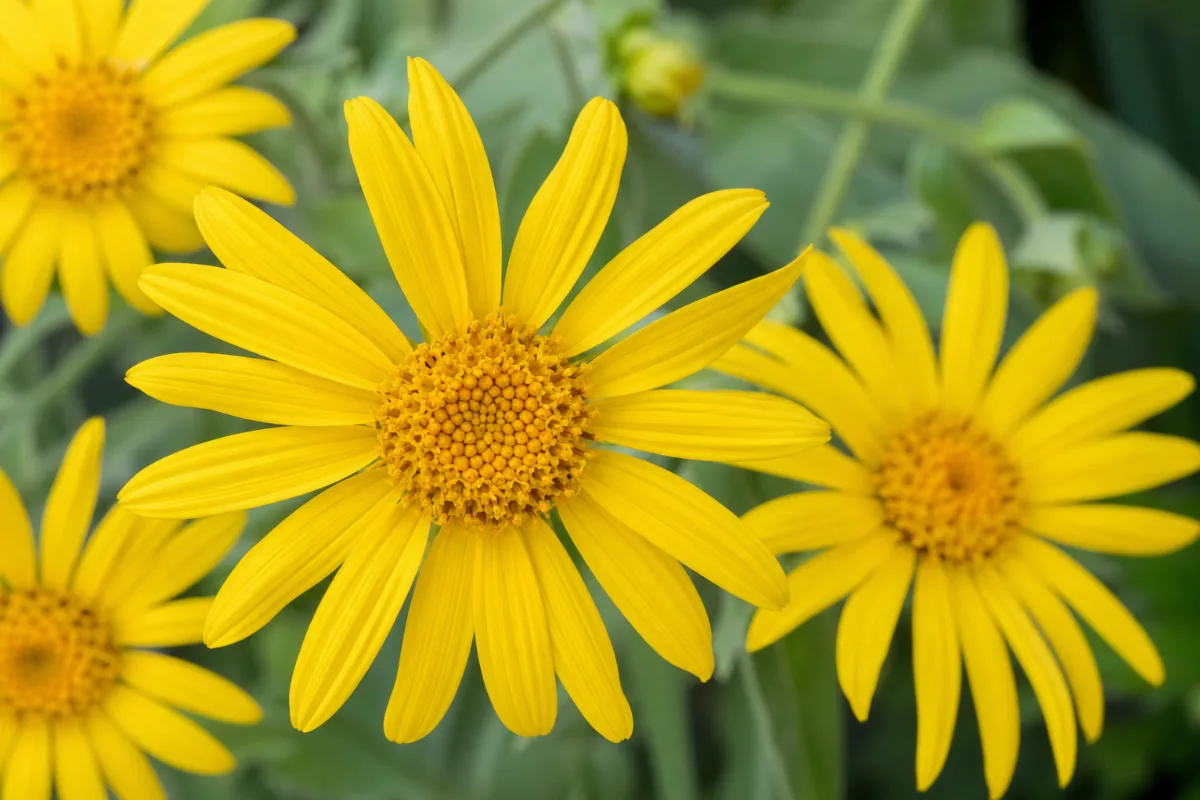
Herbs & Botanicals · Herbs · Mountain flower used on the skin for bruises and sore joints, with mixed evidence; not safe to swallow
Arnica
Arnica montana L. · also called Arnica, mountain arnica, European arnica, leopard's bane, wolf's bane, mountain tobacco; árnica (Spanish), arnica des montagnes (French), Arnika (German)
Arnica is a yellow, daisy-like flower of European mountains, used for centuries as a rub for bruises, sprains and sore muscles and joints. The dried flower head goes into gels, creams, ointments, oils and tinctures for the skin. Homeopathic arnica is a separate, very diluted product. Arnica plant material is poisonous if swallowed and can cause skin allergy.
General information, not medical advice. Last substantive update · Not medically reviewed. A named clinician has not signed off on this page. How this page is made
About Arnica
Arnica (Arnica montana) is a mountain flower of the daisy family. Its dried flower head is made into gels, creams, ointments and tinctures that are put on the skin for bruises, sprains and sore joints and muscles. Homeopathic arnica is a separate, very diluted product taken by mouth. The best-studied use is arnica gel for osteoarthritis, where one trial found it similar to ibuprofen gel; results for bruising and swelling are mixed. The EU recognises skin use as traditional. Arnica plant material is poisonous if swallowed, and on the skin it can cause allergy.
What it is
Arnica (Arnica montana) is a yellow, daisy-like flower of mountain meadows in Europe. It belongs to the daisy family (Asteraceae). The part used is the dried flower head. It is sold mainly as gels, creams, ointments, oils and tinctures to put on the skin. It is also the source of homeopathic arnica, a very diluted preparation sold as pills and drops.
This page covers herbal arnica for the skin and, separately, homeopathic arnica taken by mouth. They are different products. Arnica plant material should not be swallowed: it is poisonous.
Traditional and current uses
Arnica has been used on bruises, injuries, joint and muscle pain and swellings in Europe for centuries. The EU assessment report notes a wound-healing use recorded in 1613 and wider uses in the Middle Ages.
The EU herbal committee, in a monograph adopted on 6 May 2014, lists arnica flower for the skin as a traditional herbal medicine for bruises, sprains and local muscle pain. A draft revision released in March 2025 also lists inflammation from insect bites and small boils. These listings rest on long use, not on proof from clinical trials.
What is in it and how it works
The main active compounds in the flower head are helenalin-type sesquiterpene lactones. In the lab they block NF-kappa B, a switch that turns on many inflammation genes. The same compounds cause skin allergy and are toxic if swallowed.
Flowers from central and eastern Europe contain mostly helenalin esters, and flowers from the Iberian peninsula contain mostly dihydrohelenalin esters, so products can differ. In rat tests almost no helenalin-type compound reached the blood after skin use. All of this is lab or animal work; no study shows how arnica works in people.
What the research shows
The best-studied use is arnica gel on the skin. For osteoarthritis of the finger joints, one trial found it similar to ibuprofen gel. For bruises and swelling after procedures, results are mixed: negative in the largest placebo-controlled trial (eyelid surgery) and positive in smaller, unblinded ones.
Homeopathic arnica pills have been tested many times after surgery. Reviews find at most a small effect that does not clearly beat placebo. Nothing about arnica reaches high certainty. The best rating is moderate, and only for the claim that arnica gel is similar to ibuprofen gel in finger-joint osteoarthritis.
At a glance
Traditional uses history, not proof
- Europe, 1613 and the Middle Ages: used on the skin for wounds, bruises, injuries and rheumatism (EU assessment report, secondary source).
- Europe, 18th to early 19th century: used for injuries, phlebitis and rheumatic complaints; also swallowed in the past, which is now considered obsolete and unsafe.
- Today (EU): a traditional herbal medicine for the skin, for bruises, sprains and local muscle pain; a 2025 draft adds insect-bite inflammation and small boils.
Studied for research
- Hand osteoarthritis (gel versus ibuprofen gel), moderate
- Knee osteoarthritis, very low
- Sore muscles after exercise, mixed
- Bruising after laser or surgery (skin and pills), mixed
- Pain after tonsil, tooth and foot surgery, low
- Skin infection by Leishmania, very low
Main compounds
- Helenalin and related esters: sesquiterpene lactones that are anti-inflammatory in the lab, and also the main allergens and toxins
- 11,13-dihydrohelenalin esters: the main type in Iberian flowers
- Thymol-type volatile oil, coumarins (scopoletin, umbelliferone), flavonoids and phenolic acids
Common forms
- Gels, creams and ointments with arnica flower extract, for the skin
- Tinctures and oils for the skin; the EU says tinctures must be diluted
- Homeopathic arnica pills and drops, a different product
- Arnica tea and strong extracts for swallowing are not safe
Research links: EU herbal medicine page for arnica flower (European Medicines Agency) · EU draft herbal monograph on arnica flower, revision 1 (EMA) · EU public summary on arnica flower (EMA) · Cochrane review: topical herbal therapies for osteoarthritis · Research Library · Genes & Biomarkers Library
The plant and its history
- Accepted scientific name
- Arnica montana L.
- Naming authority
- L.; published in Species Plantarum, page 884 (1753) (GBIF).
- Synonyms
- GBIF lists Arnica helvetica G.Don ex Loudon (1830), Arnica montana var. montana and Arnica plantaginifolia Gilib. as synonyms.
- Common names
- Arnica; mountain arnica; European arnica; leopard's bane; wolf's bane; mountain tobacco (English); Arnica des montagnes (French); Arnika, Berg-Wohlverleih (German); Árnica, flor de (EU monograph name) (Spanish)
- Botanical family
- Asteraceae (daisy family, also called Compositae). Many plants of this family cause contact allergy through sesquiterpene lactones, which is why arnica allergy and cross-reactions matter.
- Classification
- Plantae > Tracheophyta > Magnoliopsida > Asterales > Asteraceae > Arnica > Arnica montana
- Native range
- Not verified from a primary botanical source in this file. The EU report and reviews describe a plant of European mountain meadows, with Iberian populations also discussed (Schmidt 2023).
- Habitat
- Not verified from a primary source for this file.
- What the plant looks like
- Roots: Roots and rhizomes are mentioned in cosmetic ingredient listings but are not the medicinal part in the EU monograph. Not verified further.; Stems: Not verified from a primary source.; Leaves: Not part of the EU medicinal use.; Flowers: The flower heads (Arnicae flos) are the medicinal part. The European Pharmacopoeia defines the herbal substance as the whole or partially broken, dried flower heads of Arnica montana, with at least 0.4% sesquiterpene lactones (EU report).; Fruit: Not relevant to the medicinal use; not verified.
- Cultivation
- Not verified from a primary source read.
- Harvest and processing
- The EU report describes Arnica tincture (European Pharmacopoeia) as one part dried flower to ten parts ethanol 60 to 70%, with at least 0.04% sesquiterpene lactones calculated as dihydrohelenalin tiglate. Cosmetic extracts are made by alcohol maceration or by soaking in soybean oil (CIR).
- Look-alikes and adulterants
- Name: Mexican arnica (Heterotheca inuloides); Note: The most common adulterant of arnica flowers according to the EU report. A different Asteraceae plant. GBIF: accepted, key 5401982.; Name: Arnica chamissonis (chamisso arnica); Note: A related Arnica species; the EU report lists a liquid extract of Arnica chamissonis flower among the products in its safety database search. GBIF: accepted species, key 5405938. It is not the plant covered by the EU monograph.; Name: Brazilian arnica (Solidago chilensis); Note: A different plant (goldenrod) sometimes called Brazilian arnica; trials of it exist but are not about Arnica montana. GBIF: accepted, key 5389072.; Name: Other flowers named as adulterants; Note: The EU report names Chrysanthemum segetum, Crepis biennis, Hieracium lachmalii, Hypochoeris species, Picris hieracioides, Taraxacum officinale and Tussilago farfara (GBIF key 3149879, accepted).
- Sustainability and conservation
- Not verified. No assessment was retrieved.
Traditional use and history history, not clinical proof
| Tradition or era | Documented use | Source |
|---|---|---|
| Europe, 1613 | The EU assessment report, quoting Madaus (1938), says a wound-healing effect was attributed to arnica in a manual by Tabernaemontanus in 1613. | s-ema-ar-arnica-2025-draft |
| Medieval Europe | The EU report says arnica was used as a medicinal plant in many ways: on the skin for bruises, injuries, varicose veins, phlebitis, gout and rheumatism, and by mouth for indigestion and heart complaints. Secondary-source statement; original texts were not checked. | s-ema-ar-arnica-2025-draft |
| Ancient Greece and Rome | The EU report quotes a review (Jennet-Siems 2019) that no references to arnica as a medicinal plant can be found in ancient Greek or Roman writings. Secondary-source statement. | s-ema-ar-arnica-2025-draft |
| 18th and early 19th centuries | Arnica gained importance as a remedy for phlebitis, injuries, bruises and rheumatic complaints, and was also taken by mouth as a stimulant and, abusively, to provoke abortion (EU report, citing Schmidt 2023 and others). Secondary-source statement. | s-ema-ar-arnica-2025-draft |
| 20th century to today | Arnica flower is covered by reference books and monographs: Hager, the German Commission E, ESCOP and WHO (2007), as listed in the EU report. The EU herbal committee adopted its monograph on 6 May 2014 for skin use for bruises, sprains and localised muscle pain; a draft revision followed on 19 March 2025. Not independently confirmed beyond the EMA documents. | s-ema-hmpc-arnica-monograph-2014 |
Traditional use shows how a plant was used. It does not show that a supplement works or is safe today.
What is inside, and how it may work
What the plant contains and how those compounds act in cells and animals. Laboratory and animal mechanisms are not proven effects in people.
Main compounds
| Compound | Family | Where it is concentrated | Activity studied | Level of evidence |
|---|---|---|---|---|
| Helenalin and its esters (e.g. helenalin isobutyrate, 6-O-acetylhelenalin) PubChem 23205 | sesquiterpene lactone (helenanolide type) | Flower head Total sesquiterpene lactones at least 0.4% of dried flower (Ph. Eur. as quoted by EMA); the proportion of helenalin esters varies with origin. | Blocks the inflammation switch NF-kappa B in cells by binding its p65 part; also the main allergen and toxic compound. Related esters: helenalin acetate PubChem CID 442142; helenalin isobutyrate CID 9996862. 31 27 10 43 33 14 | Laboratory research |
| 11,13-dihydrohelenalin and its esters (plenolin) PubChem 442294 | sesquiterpene lactone (helenanolide type) | Flower head Dominant type in flowers from the Iberian peninsula; helenalin esters predominate in central and eastern European flowers (Schmidt 2023). | Anti-inflammatory in lab tests, less potent than helenalin esters in some tests (Schmidt 2023); also a skin sensitiser. 43 33 14 | Laboratory research |
| Thymol and thymol derivatives PubChem 6989 | monoterpene phenol (volatile oil) | Flower head Not verified. | Named in the EU report as part of the flower's volatile oil. No arnica-specific activity read. 14 33 | Authoritative guidance |
| Scopoletin PubChem 5280460 | coumarin | Flower head Not verified. | Named in the EU report as a flower constituent. No arnica-specific activity read. 14 33 | Authoritative guidance |
| Umbelliferone PubChem 5281426 | coumarin | Flower head Not verified. | Named in the EU report as a flower constituent. No arnica-specific activity read. 14 33 | Authoritative guidance |
| Flavonoids and phenolic acids | polyphenols (compound group) | Flower head Not verified. | An arnica flower extract rich in phenolic acids reduced platelet clumping in the test tube. Flavonols were linked to an extract's positive Ames test in an old study quoted by the EU report. No single compound identified. 41 14 | Laboratory research |
Mechanisms, receptors and pathways
| Target or pathway | Gene or receptor | What was found | Level |
|---|---|---|---|
| NF-kappa B inflammation switch | NF-kB (p65 subunit) | Helenalin-type sesquiterpene lactones block NF-kappa B in cells by alkylating (chemically binding) its p65 part. Arnica tinctures suppressed NF-kappa B activation and the signal IL-12 in immune cells at high concentrations, and stimulated them at low concentrations. This is lab work and has not been shown to explain any effect in people. 27 31 10 | Laboratory research |
| NF-AT transcription factor | NFAT | A review says the lactones also inhibit NF-AT at micromolar concentrations in the lab. 31 | Laboratory research |
| Skin allergy balance | CD4 T cells, MHC II (mouse model) | In normal mice arnica tinctures and lactones did not cause contact allergy and even reduced a strong allergic reaction, probably through anti-inflammatory and immune-regulating effects. Allergy to arnica could be induced in mice with a weakened immune system. In people, allergy to arnica is documented in patients. 27 38 | Animal research |
| Platelet clumping | ADP-induced platelet aggregation | A phenolic-acid-rich arnica flower extract lowered ADP-induced platelet clumping and platelet reactivity in the test tube, with no platelet toxicity. No human test of skin or swallowed arnica on platelets was found. 41 | Laboratory research |
| Skin absorption and retention | skin layers, skin proteins | In lab skin samples 97.6 to 99.3% of the lactones entered the skin within 48 hours; at most 8.4% (pig), 14.6% and 36.4% (two human skin samples) passed through, and much was bound to skin proteins. In rats almost none reached the blood. 23 22 | Laboratory research |
| Anti-Leishmania activity | Leishmania parasite | The authors of the human trial say earlier lab work and a hamster model showed activity of arnica tincture against the parasite; the trial in people was small and open. 40 | Animal research |
Absorption, metabolism and elimination
- Absorption
- No human blood-level data for arnica products were found. In rats, 84% of applied lactones were absorbed into skin, but plasma, urine and faeces held less than 0.3 ng/mL. In lab diffusion cells, 8.4 to 36.4% passed through skin in 48 hours depending on the skin sample.
- Distribution
- Lactones accumulated in the outer skin (epidermis) in a fluorescence test and a large share bound irreversibly to skin proteins.
- Metabolism
- Extensive metabolism is the likely reason helenalin-type compounds could not be found in blood after skin use (rat study). The EU report quotes in-vitro metabolism studies in rat, pig and human preparations.
- Elimination
- Not known for people.
- Bioavailability
- Unknown in people; the EU monograph says pharmacokinetic studies are not required for traditional-use registration and none are available.
Isolated compounds versus whole extracts
The EU monograph covers whole-flower extracts (tinctures, fluid extracts, oil extracts), not isolated compounds. The main active compounds, helenalin-type lactones, are also the allergens and toxins. Their mix differs with where the flowers grew, and potency is reported to differ between types, so one product is not the same as another. Isolated helenalin is toxic enough that it has not been developed as a drug (Drogosz 2019).
Nutritional composition
Arnica is not a food. It is not eaten, and it contributes no nutrients. No nutrient or food-interaction data apply.
1 moderate certainty6 mixed findings4 low certainty3 very low certainty1 not enough evidence
What was looked at
The 15 benefits and uses checked for Arnica, each with how strong the evidence is. Tap one to open it.
- Osteoarthritis of the finger joints: arnica gel compared with ibuprofen gelModerate certainty
- Knee osteoarthritis: fresh-plant arnica gel (open trial)Very low certainty
- Muscle soreness after hard exercise: arnica on the skinMixed findings
- Bruises made by a laser or after laser treatmentMixed findings
- Bruising, swelling and pain after surgery: arnica creams and ointmentsMixed findings
- Bruises, sprains and local muscle pain: the traditional use and what reviews sayNot enough evidence
- Skin infection with Leishmania parasites: arnica tincture (early trial)Very low certainty
- Homeopathic arnica after surgery: reviews of the trialsMixed findings
- Knee swelling after knee surgeryLow certainty
- Bruising after face, eyelid and nose surgeryMixed findings
- Pain and bruising after hand surgery and varicose vein surgeryMixed findings
- Pain after tonsil, tooth and foot surgeryLow certainty
- Muscle soreness after long-distance runningLow certainty
- Bleeding after childbirth (arnica with Bellis perennis)Very low certainty
- Bleeding and blood clottingLow certainty
Lab markers tracked in the studies
Pain score (visual scale or WOMAC pain)WOMAC total score (knee)Hand function scoreBruise score (rater or photograph)Swelling (oedema) after surgeryC-reactive protein (CRP)Creatine kinase (CK) and myoglobinComplete healing of skin lesions (leishmaniasis)Knee circumference after surgeryBruise area and colour after face surgeryPain after surgery (scores and painkillers)Haemoglobin after childbirthBlood in surgical drainsBleeding time and clotting testsC-reactive protein (CRP) after heart surgeryMuscle soreness (VAS) after running
What is Arnica good for?
The main proposed uses and how strong the human evidence is for each. "Moderate" means one fair-quality trial, "low" or "very low" means small or flawed studies, "mixed" means trials disagree, and "insufficient" means no firm conclusion could be drawn. Arnica on the skin and homeopathic arnica pills are different products and are labelled in each row.
Benefits, one by one
Each card is a research question, not a promise. Tap a goal to filter. Open a card to see the studies, doses and limits.
Osteoarthritis of the finger joints: arnica gel compared with ibuprofen gel
Moderate certaintyOne 3-week trial of 204 people found arnica gel eased pain and improved hand function about as much as ibuprofen gel. There was no placebo gel, so it does not prove arnica beats placebo.
3 studiesArnica tincture gel on the finger joints, 3 weeks (trial form only).
Studies, doses and limits
What the trials found
Widrig 2007: 204 adults with X-ray confirmed, painful osteoarthritis of the finger joints were assigned by chance, with both groups unaware of which gel they had, to arnica gel (tincture 50 g per 100 g, drug-extract ratio 1:20) or 5% ibuprofen gel for 21 days. Pain and hand function improved to a similar degree in both groups. The Cochrane review of topical herbal treatments for osteoarthritis (Cameron 2013) rates this single trial as moderate-certainty evidence that arnica gel probably gives similar benefit to ibuprofen gel.
Results
Arnica gel was not worse than ibuprofen gel for pain or hand function over 21 days. Adverse events: 4.8% with arnica and 6.1% with ibuprofen in the trial; the Cochrane review reports 13% versus 8% (relative risk 1.65, 95% CI 0.72 to 3.76, not significant).
Effect sizes as reported
Cochrane: pain difference vs ibuprofen gel -3.8 points on a 0 to 100 scale (95% CI -10.1 to 2.5); hand function difference -0.4 points on a 0 to 30 scale (95% CI -1.75 to 0.95).
Why this rating
Cochrane rated it moderate certainty, but it rests on one trial and compares arnica with another gel, not with placebo. We apply "moderate" only to the claim that arnica gel is similar to ibuprofen gel in this setting.
Form and dose studied
Arnica tincture gel on the finger joints, 3 weeks (trial form only).
Who was studied
Adults with painful finger-joint osteoarthritis.
Limits
One trial; no placebo group; the two reports give different adverse-event rates; funding not stated in the abstract.
Why researchers looked
Osteoarthritis of the hands is common and painful, and people look for creams that are gentler than tablets.
Traditional use
Arnica flower heads have been rubbed on bruises and sore joints in Europe for centuries. The EU herbal committee lists arnica flower for the skin as a traditional medicine for bruises, sprains and local muscle pain, on the basis of long use and not on clinical-trial proof (EMA).
Proposed mechanism Preliminary mechanism
Lab studies show that helenalin-type compounds in arnica flowers block NF-kappa B, a switch that turns on many inflammation genes (Merfort 2003 review). This is lab work, and it has not been shown to explain any result in people.
A proposed mechanism does not show that the effect happens in people.
Safety is covered in the safety section. Arnica on the skin can cause allergic rash, especially in people allergic to daisy-family plants. Do not use on broken skin. Do not swallow arnica plant products.
Knee osteoarthritis: fresh-plant arnica gel (open trial)
Very low certaintyIn an open trial with no comparison group, 79 people using arnica gel for 6 weeks had lower knee-pain and stiffness scores. Without a control group this cannot show the gel was the cause.
2 studiesArnica fresh-plant gel on the knee, 6 weeks (trial form only).
Studies, doses and limits
What the trials found
Knuesel 2002: 26 men and 53 women with mild to moderate knee osteoarthritis used arnica fresh-plant gel twice a day. Total WOMAC scores (a joint pain, stiffness and function questionnaire) fell at 3 and 6 weeks (both P<0.0001). Local adverse events were 7.6%, including one allergic reaction.
Results
WOMAC scores fell. Nobody was left untreated for comparison and nobody was blinded.
Effect sizes as reported
Median WOMAC fall significant (P<0.0001) at 3 and 6 weeks; sizes not given in the abstract.
Why this rating
Single arm, no placebo, no blinding. Natural ups and downs of knee pain and expectation of help can produce this kind of change.
Form and dose studied
Arnica fresh-plant gel on the knee, 6 weeks (trial form only).
Who was studied
Adults with mild to moderate knee osteoarthritis.
Limits
No control group, no blinding, one study.
Why researchers looked
Knee osteoarthritis is a main reason people use pain gels.
Traditional use
Arnica flower heads have been rubbed on bruises and sore joints in Europe for centuries. The EU herbal committee lists arnica flower for the skin as a traditional medicine for bruises, sprains and local muscle pain, on the basis of long use and not on clinical-trial proof (EMA).
Proposed mechanism Preliminary mechanism
Lab studies show that helenalin-type compounds in arnica flowers block NF-kappa B, a switch that turns on many inflammation genes (Merfort 2003 review). This is lab work, and it has not been shown to explain any result in people.
A proposed mechanism does not show that the effect happens in people.
Safety is covered in the safety section. Arnica on the skin can cause allergic rash, especially in people allergic to daisy-family plants. Do not use on broken skin. Do not swallow arnica plant products.
Muscle soreness after hard exercise: arnica on the skin
Mixed findingsTwo small trials in healthy people give different answers: one found less pain three days after hard running, the other found more pain a day after calf exercises. A mud pack with menthol and arnica helped soreness in 10 men, but menthol may be the reason.
3 studiesArnica cream or gel after exercise; the mud pack was a combination.
Studies, doses and limits
What the trials found
Pumpa 2014: 20 trained men ran downhill, then used topical arnica or placebo for 96 hours. The arnica group reported less pain by VAS and tenderness at 72 hours. Performance tests and blood markers of inflammation and muscle damage (including CRP and creatine kinase) did not change. Adkison 2010: 53 volunteers did calf raises and put arnica cream on one leg and placebo on the other. Pain at 24 hours was higher with arnica (3.04 vs 2.36, p<0.005). There was no difference at later days, in tenderness or in ankle movement. Bartolomei 2022: a mud pack with menthol and arnica was used on the thighs of 10 men in a crossover; soreness and one slow-speed strength test were better with the pack, other tests not. Arnica cannot be separated from menthol and mud here.
Results
Inconsistent: one benefit at 72 hours, one worse result at 24 hours, and a combination product that helped.
Effect sizes as reported
Pumpa: pain lower at 72 hours; no change in markers. Adkison: 3.04 vs 2.36 at 24 hours in favour of placebo. Bartolomei: p=0.001 for soreness interaction (combination product).
Why this rating
Two single-arnica trials point in opposite directions, both are small and in healthy volunteers, and the third trial used a combination.
Form and dose studied
Arnica cream or gel after exercise; the mud pack was a combination.
Who was studied
Healthy, mostly male, exercise volunteers.
Limits
Small trials; unclear products and strengths; healthy volunteers; combination product.
Why researchers looked
Athletes use arnica creams for sore muscles after hard training.
Traditional use
Arnica flower heads have been rubbed on bruises and sore joints in Europe for centuries. The EU herbal committee lists arnica flower for the skin as a traditional medicine for bruises, sprains and local muscle pain, on the basis of long use and not on clinical-trial proof (EMA).
Proposed mechanism Preliminary mechanism
Lab studies show that helenalin-type compounds in arnica flowers block NF-kappa B, a switch that turns on many inflammation genes (Merfort 2003 review). This is lab work, and it has not been shown to explain any result in people.
A proposed mechanism does not show that the effect happens in people.
Safety is covered in the safety section. Arnica on the skin can cause allergic rash, especially in people allergic to daisy-family plants. Do not use on broken skin. Do not swallow arnica plant products.
Bruises made by a laser or after laser treatment
Mixed findingsIn one trial 20% arnica ointment cleared laser-made bruises better than plain petrolatum. A second trial, using arnica gel on face bruises after laser, found no difference from the plain base.
3 studies20% arnica ointment under cover (Leu); arnica gel (Alonso).
Studies, doses and limits
What the trials found
Leu 2010: four standard bruises were made on each volunteer's arms with a pulsed-dye laser. Each bruise got one of 20% arnica ointment, 5% vitamin K, 1% vitamin K with 0.3% retinol, or white petrolatum, under cover twice a day for 2 weeks. A dermatologist who did not know the treatment scored photographs. Arnica improved the bruise score more than petrolatum (P=0.003) and more than 1% vitamin K plus retinol (P=0.01), but not more than 5% vitamin K. Alonso 2002: 19 patients with facial thread veins used arnica gel in a split-face design for 2 weeks before or after pulsed-dye laser. There was no difference from vehicle either way (P=0.496 and P=0.359).
Results
One positive trial on made-up bruises and one null trial on real post-laser bruising.
Effect sizes as reported
Leu: significant difference from petrolatum (P=0.003) in rater bruise score; numbers not given in the abstract. Alonso: no difference.
Why this rating
Two small trials of different design disagree. The positive one used bruises created on healthy skin.
Form and dose studied
20% arnica ointment under cover (Leu); arnica gel (Alonso).
Who was studied
Healthy volunteers and patients treated with pulsed-dye laser.
Limits
Small, different designs; Leu number of volunteers not stated in abstract.
Why researchers looked
People want bruises from skin procedures to fade faster.
Traditional use
Arnica flower heads have been rubbed on bruises and sore joints in Europe for centuries. The EU herbal committee lists arnica flower for the skin as a traditional medicine for bruises, sprains and local muscle pain, on the basis of long use and not on clinical-trial proof (EMA).
Proposed mechanism Preliminary mechanism
Lab studies show that helenalin-type compounds in arnica flowers block NF-kappa B, a switch that turns on many inflammation genes (Merfort 2003 review). This is lab work, and it has not been shown to explain any result in people.
A proposed mechanism does not show that the effect happens in people.
Safety is covered in the safety section. Arnica on the skin can cause allergic rash, especially in people allergic to daisy-family plants. Do not use on broken skin. Do not swallow arnica plant products.
Bruising, swelling and pain after surgery: arnica creams and ointments
Mixed findingsA large trial found arnica ointment did nothing after eyelid surgery, but two trials without a placebo (nose surgery and wisdom-tooth surgery) found less bruising, swelling or pain than with no cream.
4 studiesArnica ointment 10% (van Exsel); arnica creams otherwise, strengths n…
Studies, doses and limits
What the trials found
van Exsel 2016: 136 people having upper eyelid surgery were assigned arnica ointment 10% or placebo ointment on one eyelid, with the other eyelid left untreated. Overall appearance at 3 days, 7 days and 6 weeks, and swelling, bruising, redness, pain and satisfaction, did not differ between arnica, placebo or no ointment. Simsek 2016: 108 people after open nose surgery used arnica cream, polysulfate cream or nothing; bruising and swelling fell faster with either cream than with nothing (p<0.005 on days 1, 5 and 7). Akay 2024: 60 people after lower wisdom-tooth removal used topical arnica or polysulfate on top of standard antibiotic and anti-inflammatory tablets. Pain was lower than standard care alone until day 5, and mouth opening was better with arnica. Neither of these two trials had a placebo cream.
Results
Conflicting: no benefit in the blinded placebo trial; benefit in two trials with no placebo, in which people knew whether they had a cream.
Effect sizes as reported
van Exsel: no difference from placebo on any measure. Simsek and Akay: significant differences from no extra treatment (p<0.005; p<0.05).
Why this rating
The only placebo-controlled trial found nothing; the positive trials could not blind people.
Form and dose studied
Arnica ointment 10% (van Exsel); arnica creams otherwise, strengths not stated.
Who was studied
Adults after eyelid, nose or wisdom-tooth surgery.
Limits
Different surgeries; no placebo in two trials; strengths not stated.
Why researchers looked
Surgeons and patients often use arnica to reduce bruising after cosmetic and dental surgery.
Traditional use
Arnica flower heads have been rubbed on bruises and sore joints in Europe for centuries. The EU herbal committee lists arnica flower for the skin as a traditional medicine for bruises, sprains and local muscle pain, on the basis of long use and not on clinical-trial proof (EMA).
Proposed mechanism Preliminary mechanism
Lab studies show that helenalin-type compounds in arnica flowers block NF-kappa B, a switch that turns on many inflammation genes (Merfort 2003 review). This is lab work, and it has not been shown to explain any result in people.
A proposed mechanism does not show that the effect happens in people.
Safety is covered in the safety section. Arnica on the skin can cause allergic rash, especially in people allergic to daisy-family plants. Do not use on broken skin. Do not swallow arnica plant products.
Bruises, sprains and local muscle pain: the traditional use and what reviews say
Not enough evidenceThe EU lists arnica flower skin products as a traditional medicine for bruises, sprains and local muscle pain, on the basis of long use. Reviews of the trials call the evidence mixed or too thin to confirm it.
10 studiesArnica flower tinctures and extracts in creams, gels and oils (EU mon…
Studies, doses and limits
What the trials found
The EU herbal committee concluded that, although a possible effect on pain and bruising was seen in some clinical studies, firm conclusions could not be drawn because the studies were small or had no controls, so the use rests on tradition (EMA public summary; assessment report). Systematic reviews: Ho 2016 found insufficient data to support arnica after skin procedures; the American Academy of Ophthalmology report (Tao 2022) found no or negligible benefit over placebo in 7 controlled studies for bruising after eye-area surgery or laser; Toma 2024 (42 papers) reports positive and negative results; Stack 2026 counted 15 of 27 surgical studies with a measurable benefit and 9 with none (oral and topical combined). Narrative reviews by Smith 2021 and Iannitti 2016 are more positive but are not systematic.
Results
No consistent proof of benefit; no proof of harm from skin use in unbroken skin apart from allergy.
Effect sizes as reported
No pooled effect size for topical arnica alone. Stack 2026: 55.6% of studies positive, 33.3% null (a count, not an effect).
Why this rating
Reviewers disagree and the best controlled trials are small or negative. EMA itself relies on traditional use.
Form and dose studied
Arnica flower tinctures and extracts in creams, gels and oils (EU monograph forms).
Who was studied
Adults and adolescents; the EU summary says from age 12.
Limits
Reviews mix oral and skin forms and homeopathic and herbal forms.
Why researchers looked
This is the main traditional use of arnica and the reason most people buy it.
Traditional use
Arnica flower heads have been rubbed on bruises and sore joints in Europe for centuries. The EU herbal committee lists arnica flower for the skin as a traditional medicine for bruises, sprains and local muscle pain, on the basis of long use and not on clinical-trial proof (EMA).
Proposed mechanism Preliminary mechanism
Lab studies show that helenalin-type compounds in arnica flowers block NF-kappa B, a switch that turns on many inflammation genes (Merfort 2003 review). This is lab work, and it has not been shown to explain any result in people.
A proposed mechanism does not show that the effect happens in people.
Safety is covered in the safety section. Arnica on the skin can cause allergic rash, especially in people allergic to daisy-family plants. Do not use on broken skin. Do not swallow arnica plant products.
Skin infection with Leishmania parasites: arnica tincture (early trial)
Very low certaintyIn a small open trial of 16 people, all 12 who finished follow-up were healed after 30 or 45 days of arnica tincture on the lesion. There was no comparison group.
2 studiesArnica tincture on the lesion, three times a day; this is a research …
Studies, doses and limits
What the trials found
Robledo 2025: 16 adults with proven simple cutaneous leishmaniasis in Colombia were randomly assigned to arnica tincture from flowers on the lesion three times a day for 30 or 45 days. Twelve finished the 180-day follow-up and all had complete healing. Four withdrew consent. Side effects at the application site were mild: redness, pain, swelling and burning.
Results
All 12 completers healed; the rate among everyone enrolled is not known.
Effect sizes as reported
100% healing in 12 completers; 4 of 16 dropped out.
Why this rating
Open label, 16 people, no comparison with standard treatment or with no treatment.
Form and dose studied
Arnica tincture on the lesion, three times a day; this is a research regimen and not a recommended use.
Who was studied
Adults with cutaneous leishmaniasis in Colombia.
Limits
Phase Ib/II study. No competing interests were declared.
Why researchers looked
Standard drugs for this parasite skin infection are toxic, so researchers tested a plant they had already found active against the parasite in the lab and in hamsters.
Traditional use
Arnica flower heads have been rubbed on bruises and sore joints in Europe for centuries. The EU herbal committee lists arnica flower for the skin as a traditional medicine for bruises, sprains and local muscle pain, on the basis of long use and not on clinical-trial proof (EMA).
Proposed mechanism Laboratory research
Lab and hamster work found that arnica tincture acts against the parasite, and rat studies found the helenalin-type compounds stay mostly in the skin and barely reach the blood (Jurgens 2022).
A proposed mechanism does not show that the effect happens in people.
Side effects were skin redness, pain, swelling and burning where the tincture was applied.
Homeopathic arnica after surgery: reviews of the trials
Mixed findingsTwo reviews of trials of homeopathic arnica around surgery found a small or no benefit over placebo. The newer meta-analysis found a small effect that did not reach statistical significance against placebo.
4 studiesHomeopathic dilutions (6C to 30C or 4D to 12D) in pills or globules. …
Studies, doses and limits
What the trials found
Ernst and Pittler 1998 reviewed 8 placebo-controlled trials, most with serious method flaws, and concluded they did not suggest homeopathic arnica works better than placebo. Gaertner 2021 (PROSPERO-registered) pooled 28 comparisons from 23 publications: placebo-controlled trials gave Hedges g 0.18 (95% CI -0.007 to 0.373; p=0.059), which includes zero; trials against active drugs gave g 0.26, mostly from non-randomised studies, and the effect moved towards zero in randomised ones. One author is a homeopathy-trained doctor. The review by Stack 2026 (oral and skin forms together) found 15 of 27 surgical studies positive and 9 null.
Results
Small at best; not clearly different from placebo.
Effect sizes as reported
Gaertner 2021: g=0.18 (95% CI -0.007 to 0.373) vs placebo.
Why this rating
Reviews of the same field disagree in tone, the pooled effect is not statistically significant, and trials are small and varied.
Form and dose studied
Homeopathic dilutions (6C to 30C or 4D to 12D) in pills or globules. No amount is advised here.
Who was studied
Adults having surgery.
Limits
Many trials are small and used different dilutions and surgeries.
Why researchers looked
Homeopathic arnica is the remedy most often tested against placebo, usually around surgery.
Traditional use
Homeopathic arnica is made from the arnica plant and is used by people who follow homeopathy for bruises and injuries. The EU herbal committee says homeopathic preparations are completely different from the herbal preparations it assessed (EMA).
Proposed mechanism Pharmacological theory
There is no accepted explanation for how very high dilutions might work. Lab and animal work on arnica compounds (helenalin-type compounds) concerns the herbal extract, not homeopathic dilutions.
A proposed mechanism does not show that the effect happens in people.
Safety is covered in the safety section. Homeopathic dilutions in tablets are generally mild, but swallowing a large amount of the pills by mistake caused serious illness in one reported case, and arnica plant material should not be swallowed.
Knee swelling after knee surgery
Low certaintyThree trials in 319 people after knee operations found a trend to less swelling with homeopathic arnica 30x, but only the smallest-effect trial of the three, in cruciate ligament repair, was significant.
1 studiesHomeopathic arnica 30x globules (trial form).
Studies, doses and limits
What the trials found
Brinkhaus 2006: three double-blind placebo-controlled trials with homeopathic arnica 30x started before surgery. Change in knee circumference was similar in arthroscopy (-0.25%, 95% CI -0.85 to 0.41; n=227) and knee replacement (-1.68%, -4.24 to 0.77; n=35). In cruciate ligament repair (n=57) arnica showed -1.80% (95% CI -3.30 to -0.30, p=0.019).
Results
One of three trials was significant.
Effect sizes as reported
Differences in knee circumference change: -0.25%, -1.68%, -1.80% (see CIs in text).
Why this rating
Single research group, three trials, one significant result of 319 people.
Form and dose studied
Homeopathic arnica 30x globules (trial form).
Who was studied
Adults having knee surgery.
Limits
Only three trials; small effects.
Why researchers looked
Swelling after knee surgery slows recovery.
Traditional use
Homeopathic arnica is made from the arnica plant and is used by people who follow homeopathy for bruises and injuries. The EU herbal committee says homeopathic preparations are completely different from the herbal preparations it assessed (EMA).
Proposed mechanism Pharmacological theory
There is no accepted explanation for how very high dilutions might work. Lab and animal work on arnica compounds (helenalin-type compounds) concerns the herbal extract, not homeopathic dilutions.
A proposed mechanism does not show that the effect happens in people.
Safety is covered in the safety section. Homeopathic dilutions in tablets are generally mild, but swallowing a large amount of the pills by mistake caused serious illness in one reported case, and arnica plant material should not be swallowed.
Bruising after face, eyelid and nose surgery
Mixed findingsTrials of homeopathic or oral arnica after face-lift, eyelid and nose surgery give mixed results; a review by eye surgeons found no or negligible benefit over placebo.
5 studiesOral or homeopathic arnica (forms differ; Chaiet used a named commerc…
Studies, doses and limits
What the trials found
Seeley 2006 (29 face-lift patients): no difference in colour or ratings, but a smaller bruised area on days 1 and 7. Kotlus 2010 (eyelid surgery, each person tested on both sides): no difference in bruise area, severity or resolution. Chaiet 2016 (22 nose-surgery patients): bruise extent 16.2%, 32.9% and 20.4% smaller on days 2 or 3, 7 and 9 or 10, significant on day 7 only at a cut-off of P<0.1. Totonchi 2007 (48 nose-surgery patients, arnica vs steroids vs nothing): less swelling on day 2 with arnica, no benefit for bruising. The American Academy of Ophthalmology report (Tao 2022) found no or negligible benefit versus placebo in 7 controlled studies.
Results
Small, scattered positive signs; the best-controlled eyelid trial was negative.
Effect sizes as reported
Chaiet: significant only at P=0.097 (loose threshold). Others no difference.
Why this rating
Small trials with different measures and thresholds; the AAO review does not support it.
Form and dose studied
Oral or homeopathic arnica (forms differ; Chaiet used a named commercial product).
Who was studied
Adults having face, eyelid or nose surgery.
Limits
Small samples, lenient cut-off in one trial, arnica form unclear in another.
Why researchers looked
People having cosmetic surgery want bruises to fade quickly.
Traditional use
Homeopathic arnica is made from the arnica plant and is used by people who follow homeopathy for bruises and injuries. The EU herbal committee says homeopathic preparations are completely different from the herbal preparations it assessed (EMA).
Proposed mechanism Pharmacological theory
There is no accepted explanation for how very high dilutions might work. Lab and animal work on arnica compounds (helenalin-type compounds) concerns the herbal extract, not homeopathic dilutions.
A proposed mechanism does not show that the effect happens in people.
Safety is covered in the safety section. Homeopathic dilutions in tablets are generally mild, but swallowing a large amount of the pills by mistake caused serious illness in one reported case, and arnica plant material should not be swallowed.
Pain and bruising after hand surgery and varicose vein surgery
Mixed findingsIn 3 small trials homeopathic arnica did not clearly help: no effect after carpal tunnel surgery, a non-significant trend after varicose vein surgery, and less pain at 2 weeks with arnica pills plus ointment.
3 studiesHomeopathic arnica 6C, 30C or D12; tablets plus ointment in one trial.
Studies, doses and limits
What the trials found
Stevinson 2003: 64 adults before carpal tunnel surgery took arnica 30C, arnica 6C or placebo; no group differences in pain (P=0.79), bruising (P=0.45), swelling or painkillers. Wolf 2003: 60 patients after varicose vein surgery took arnica D12 or placebo; bruise area fell 75.5% with arnica and 71.5% with placebo (p=0.4726), pain fall 1.0 vs 0.3 points (p=0.1977); authors saw a trend needing a larger trial. Jeffrey 2002: 37 patients after keyhole wrist release on both hands received homeopathic tablets plus herbal arnica ointment versus placebos; pain was lower at 2 weeks (P<0.03) with no difference in grip strength or wrist size. Two forms were given together.
Results
No clear benefit; trends only.
Effect sizes as reported
Stevinson: no difference. Wolf: p=0.47 and p=0.20. Jeffrey: pain lower at week 2 (P<0.03).
Why this rating
Three small trials; one combines pills and ointment.
Form and dose studied
Homeopathic arnica 6C, 30C or D12; tablets plus ointment in one trial.
Who was studied
Adults after hand or vein surgery.
Limits
Small trials, one combination.
Why researchers looked
These operations cause bruising and pain, and arnica is a common add-on.
Traditional use
Homeopathic arnica is made from the arnica plant and is used by people who follow homeopathy for bruises and injuries. The EU herbal committee says homeopathic preparations are completely different from the herbal preparations it assessed (EMA).
Proposed mechanism Pharmacological theory
There is no accepted explanation for how very high dilutions might work. Lab and animal work on arnica compounds (helenalin-type compounds) concerns the herbal extract, not homeopathic dilutions.
A proposed mechanism does not show that the effect happens in people.
Safety is covered in the safety section. Homeopathic dilutions in tablets are generally mild, but swallowing a large amount of the pills by mistake caused serious illness in one reported case, and arnica plant material should not be swallowed.
Pain after tonsil, tooth and foot surgery
Low certaintyFour small studies found less pain with homeopathic or oral arnica after throat, wisdom-tooth and bunion surgery, but one was not randomised, one had only 10 people and 4 in 10 questionnaires were missing in another.
4 studiesHomeopathic arnica 30c, 12 CH, D4; arnica tablets (Mawardi).
Studies, doses and limits
What the trials found
Robertson 2007: 190 adults after tonsillectomy took arnica 30c or placebo; of 111 who returned questionnaires, pain scores fell by 28.3 with arnica and 23.8 with placebo (p<0.05); painkiller use did not differ. Makary 2026: 10 people each had two wisdom-tooth operations (arnica 12 CH then placebo); pain was lower on days 1 to 5 and swelling lower on day 2, mouth opening not significantly different. Mawardi 2020: 23 patients, not randomised, arnica tablets vs a control group; day 2 pain 3.09 vs 4.75. Karow 2008: 88 patients after bunion surgery; arnica D4 was equivalent to diclofenac for redness, swelling, heat and mobility, but inferior for pain, and was better tolerated (4.5% vs 20.45% intolerance).
Results
Small pain benefits in small or flawed studies; equivalent to diclofenac on wound signs but worse for pain.
Effect sizes as reported
Robertson: 28.3 vs 23.8 fall in pain score (p<0.05). Karow: pain inferior to diclofenac.
Why this rating
Mixed designs; 41.6% missing data in one trial; one 10-person trial; one non-randomised.
Form and dose studied
Homeopathic arnica 30c, 12 CH, D4; arnica tablets (Mawardi).
Who was studied
Adults after throat, tooth or foot surgery.
Limits
Small, variable, one without randomisation.
Why researchers looked
Pain after surgery is a common reason to try an add-on remedy.
Traditional use
Homeopathic arnica is made from the arnica plant and is used by people who follow homeopathy for bruises and injuries. The EU herbal committee says homeopathic preparations are completely different from the herbal preparations it assessed (EMA).
Proposed mechanism Pharmacological theory
There is no accepted explanation for how very high dilutions might work. Lab and animal work on arnica compounds (helenalin-type compounds) concerns the herbal extract, not homeopathic dilutions.
A proposed mechanism does not show that the effect happens in people.
Safety is covered in the safety section. Homeopathic dilutions in tablets are generally mild, but swallowing a large amount of the pills by mistake caused serious illness in one reported case, and arnica plant material should not be swallowed.
Muscle soreness after long-distance running
Low certaintyA large trial of 519 runners found homeopathic arnica 30x did not reduce muscle soreness.
1 studiesHomeopathic arnica 30x.
Studies, doses and limits
What the trials found
Vickers 1998: 519 runners expecting soreness took homeopathic arnica 30x or placebo; 400 gave results. Mean 2-day soreness was 45.2 mm with arnica and 41.0 mm with placebo; the 95% confidence interval ran from 8.81 mm in favour of placebo to 0.51 mm in favour of arnica. Race time did not differ.
Results
No benefit.
Effect sizes as reported
Difference 4.2 mm (CI -8.81 to 0.51 mm).
Why this rating
One large, double-blind trial with 21% missing results.
Form and dose studied
Homeopathic arnica 30x.
Who was studied
Long-distance runners.
Limits
One trial from 1998.
Why researchers looked
This trial tested whether arnica eases the soreness that follows a long race.
Traditional use
Homeopathic arnica is made from the arnica plant and is used by people who follow homeopathy for bruises and injuries. The EU herbal committee says homeopathic preparations are completely different from the herbal preparations it assessed (EMA).
Proposed mechanism Pharmacological theory
There is no accepted explanation for how very high dilutions might work. Lab and animal work on arnica compounds (helenalin-type compounds) concerns the herbal extract, not homeopathic dilutions.
A proposed mechanism does not show that the effect happens in people.
Safety is covered in the safety section. Homeopathic dilutions in tablets are generally mild, but swallowing a large amount of the pills by mistake caused serious illness in one reported case, and arnica plant material should not be swallowed.
Bleeding after childbirth (arnica with Bellis perennis)
Very low certaintyIn 40 women a combination of homeopathic arnica and Bellis perennis was linked to a smaller fall in haemoglobin after birth. This is preliminary and not about arnica alone.
1 studiesHomeopathic combination, C6 or C30.
Studies, doses and limits
What the trials found
Oberbaum 2005: 40 women after birth were assigned to arnica C6 plus Bellis C6, arnica C30 plus Bellis C30, or double placebo. At 72 hours haemoglobin was 12.7 to 12.4 in the treated women versus 12.7 to 11.6 with placebo (p<0.05). The paper reports preliminary results.
Results
Smaller haemoglobin fall in a small preliminary trial.
Effect sizes as reported
Mean difference -0.29 (95% CI -1.09 to 0.52) treated vs -1.18 (95% CI -1.82 to -0.54) placebo.
Why this rating
40 women, a two-herb combination, preliminary results.
Form and dose studied
Homeopathic combination, C6 or C30.
Who was studied
Women after childbirth.
Limits
Preliminary; combination.
Why researchers looked
Arnica is used for bruising, and this trial tested whether it changes blood loss after birth.
Traditional use
Homeopathic arnica is made from the arnica plant and is used by people who follow homeopathy for bruises and injuries. The EU herbal committee says homeopathic preparations are completely different from the herbal preparations it assessed (EMA).
Proposed mechanism Pharmacological theory
There is no accepted explanation for how very high dilutions might work. Lab and animal work on arnica compounds (helenalin-type compounds) concerns the herbal extract, not homeopathic dilutions.
A proposed mechanism does not show that the effect happens in people.
Safety is covered in the safety section. Homeopathic dilutions in tablets are generally mild, but swallowing a large amount of the pills by mistake caused serious illness in one reported case, and arnica plant material should not be swallowed.
Bleeding and blood clotting
Low certaintyA homeopathic arnica and Bryonia combination did not reduce bleeding after heart-valve surgery, and homeopathic arnica did not change clotting tests in healthy volunteers.
2 studiesHomeopathic arnica or arnica plus Bryonia.
Studies, doses and limits
What the trials found
Cornu 2010: 92 adults having aortic valve surgery took a homeopathic combination of arnica and Bryonia alba or placebo from a day before to 4 days after surgery. Blood loss in drains did not differ at 12 h (P=0.19), 24 h (P=0.23) or at drain removal (P=0.35); CRP, troponin, temperature, pain and transfusions did not differ. Baillargeon 1993: a crossover trial in healthy volunteers found no significant effect of homeopathic arnica on bleeding time or other clotting tests just after dosing. Neither trial tested herbal arnica.
Results
No effect on bleeding or clotting in either trial.
Effect sizes as reported
Cornu: 362 vs 456 mL at 12 h (P=0.19).
Why this rating
One combination trial in surgery and a brief report in healthy volunteers.
Form and dose studied
Homeopathic arnica or arnica plus Bryonia.
Who was studied
Heart-surgery patients; healthy volunteers.
Limits
Does not apply to herbal arnica.
Why researchers looked
People ask whether arnica thins the blood or helps bleeding, so the studies looked at both.
Traditional use
Homeopathic arnica is made from the arnica plant and is used by people who follow homeopathy for bruises and injuries. The EU herbal committee says homeopathic preparations are completely different from the herbal preparations it assessed (EMA).
Proposed mechanism Pharmacological theory
There is no accepted explanation for how very high dilutions might work. Lab and animal work on arnica compounds (helenalin-type compounds) concerns the herbal extract, not homeopathic dilutions.
A proposed mechanism does not show that the effect happens in people.
Safety is covered in the safety section. Homeopathic dilutions in tablets are generally mild, but swallowing a large amount of the pills by mistake caused serious illness in one reported case, and arnica plant material should not be swallowed.
Connections to the rest of health
How Arnica connects to the rest of our health knowledge graph. Every link says what kind of connection it is. A safety link (for example to the liver) is a warning, not a benefit. A study that merely mentions a topic never creates a benefit link.
Explore every connection: goals, body systems, organs, symptoms, genes
A. Wellness goals
| Connected to | Kind of connection | Evidence status | Context | Studies |
|---|---|---|---|---|
| Joint Support | Demonstrated clinical effect | Moderate certainty | Osteoarthritis of the finger joints: arnica gel compared with ibuprofen gel: One 3-week trial of 204 people found arnica gel eased pain and improved hand function about as much as ibuprofen gel. There was no placebo gel, so it does not prove arnica beats placebo. | 54 7 46 |
| Inflammation Balance | Demonstrated clinical effect | Moderate certainty | Osteoarthritis of the finger joints: arnica gel compared with ibuprofen gel: One 3-week trial of 204 people found arnica gel eased pain and improved hand function about as much as ibuprofen gel. There was no placebo gel, so it does not prove arnica beats placebo. | 54 7 46 |
| Joint Support | Potential benefit | Very low certainty | Knee osteoarthritis: fresh-plant arnica gel (open trial): In an open trial with no comparison group, 79 people using arnica gel for 6 weeks had lower knee-pain and stiffness scores. Without a control group this cannot show the gel was the cause. Knee swelling after knee surgery: Three trials in 319 people after knee operations found a trend to less swelling with homeopathic arnica 30x, but only the smallest-effect trial of the three, in cruciate ligament repair, was significant. | 25 46 6 |
| Muscle Recovery | Potential benefit | Mixed findings | Muscle soreness after hard exercise: arnica on the skin: Two small trials in healthy people give different answers: one found less pain three days after hard running, the other found more pain a day after calf exercises. A mud pack with menthol and arnica helped soreness in 10 men, but menthol may be the reason. Bruising, swelling and pain after surgery: arnica creams and ointments: A large trial found arnica ointment did nothing after eyelid surgery, but two trials without a placebo (nose surgery and wisdom-tooth surgery) found less bruising, swelling or pain than with no cream. | 37 1 5 57 45 2 18 11 17 47 20 6 48 55 21 39 29 30 24 53 |
| Physical Stamina | Potential benefit | Mixed findings | Muscle soreness after hard exercise: arnica on the skin: Two small trials in healthy people give different answers: one found less pain three days after hard running, the other found more pain a day after calf exercises. A mud pack with menthol and arnica helped soreness in 10 men, but menthol may be the reason. | 37 1 5 |
| Healthy Skin | Potential benefit | Mixed findings | Bruises made by a laser or after laser treatment: In one trial 20% arnica ointment cleared laser-made bruises better than plain petrolatum. A second trial, using arnica gel on face bruises after laser, found no difference from the plain base. Skin infection with Leishmania parasites: arnica tincture (early trial): In a small open trial of 16 people, all 12 who finished follow-up were healed after 30 or 45 days of arnica tincture on the lesion. There was no comparison group. | 28 3 42 40 22 44 26 8 51 49 |
| Inflammation Balance | Potential benefit | Mixed findings | Bruising, swelling and pain after surgery: arnica creams and ointments: A large trial found arnica ointment did nothing after eyelid surgery, but two trials without a placebo (nose surgery and wisdom-tooth surgery) found less bruising, swelling or pain than with no cream. Homeopathic arnica after surgery: reviews of the trials: Two reviews of trials of homeopathic arnica around surgery found a small or no benefit over placebo. The newer meta-analysis found a small effect that did not reach statistical significance against placebo. | 57 45 2 18 11 17 47 20 |
| Muscle Recovery | Traditional use | Not enough evidence | Bruises, sprains and local muscle pain: the traditional use and what reviews say: The EU lists arnica flower skin products as a traditional medicine for bruises, sprains and local muscle pain, on the basis of long use. Reviews of the trials call the evidence mixed or too thin to confirm it. | 13 14 12 18 49 50 47 46 20 42 |
| Joint Support | Traditional use | Not enough evidence | Bruises, sprains and local muscle pain: the traditional use and what reviews say: The EU lists arnica flower skin products as a traditional medicine for bruises, sprains and local muscle pain, on the basis of long use. Reviews of the trials call the evidence mixed or too thin to confirm it. | 13 14 12 18 49 50 47 46 20 42 |
| Inflammation Balance | Traditional use | Not enough evidence | Bruises, sprains and local muscle pain: the traditional use and what reviews say: The EU lists arnica flower skin products as a traditional medicine for bruises, sprains and local muscle pain, on the basis of long use. Reviews of the trials call the evidence mixed or too thin to confirm it. | 13 14 12 18 49 50 47 46 20 42 |
| Immune Support | Potential benefit | Very low certainty | Skin infection with Leishmania parasites: arnica tincture (early trial): In a small open trial of 16 people, all 12 who finished follow-up were healed after 30 or 45 days of arnica tincture on the lesion. There was no comparison group. | 40 22 |
| Endurance Support | Potential benefit | Low certainty | Muscle soreness after long-distance running: A large trial of 519 runners found homeopathic arnica 30x did not reduce muscle soreness. | 53 |
| Womens Wellness | Potential benefit | Very low certainty | Bleeding after childbirth (arnica with Bellis perennis): In 40 women a combination of homeopathic arnica and Bellis perennis was linked to a smaller fall in haemoglobin after birth. This is preliminary and not about arnica alone. | 35 |
| Heart Health | Biological association | Low certainty | Bleeding and blood clotting: A homeopathic arnica and Bryonia combination did not reduce bleeding after heart-valve surgery, and homeopathic arnica did not change clotting tests in healthy volunteers. | 9 4 |
B. Body systems
| Connected to | Kind of connection | Evidence status | Context | Studies |
|---|---|---|---|---|
| Cardiovascular system | Drug or supplement interaction | Very low certainty | A test-tube antiplatelet effect and one case report of a high INR with heavy topical use; no established interaction. Preparation or compound: Arnica flower extract with anticoagulant drugs |
14 41 |
| Reproductive system | Contraindication | Not enough evidence | Safety is not established; use is not recommended (EMA). Preparation or compound: Arnica products in pregnancy and breastfeeding |
15 14 |
| Musculoskeletal System | Biological association | Moderate certainty | Studied for: Osteoarthritis of the finger joints: arnica gel compared with ibuprofen gel Studied for: Knee osteoarthritis: fresh-plant arnica gel (open trial) | 54 7 46 25 37 1 5 57 45 2 18 13 14 12 49 50 47 20 42 11 17 6 39 29 30 24 53 |
| Integumentary System | Biological association | Mixed findings | Studied for: Bruises made by a laser or after laser treatment Studied for: Bruising, swelling and pain after surgery: arnica creams and ointments | 28 3 42 57 45 2 18 13 14 12 49 50 47 46 20 40 22 11 17 44 26 8 51 48 55 21 |
| Immune System | Biological association | Very low certainty | Studied for: Skin infection with Leishmania parasites: arnica tincture (early trial) | 40 22 |
| Cardiovascular System | Biological association | Mixed findings | Studied for: Pain and bruising after hand surgery and varicose vein surgery Studied for: Bleeding and blood clotting | 48 55 21 9 4 |
| Nervous System | Biological association | Low certainty | Studied for: Pain after tonsil, tooth and foot surgery | 39 29 30 24 |
| Reproductive System | Biological association | Very low certainty | Studied for: Bleeding after childbirth (arnica with Bellis perennis) | 35 |
C. Body parts and organs
| Connected to | Kind of connection | Evidence status | Context | Studies |
|---|---|---|---|---|
| Skin | Adverse effect or risk | Moderate certainty | Allergic contact dermatitis is documented in patch-test series and case reports; frequency is not known (EMA). Preparation or compound: Arnica flower tincture, gel or cream; helenalin-type sesquiterpene lactones |
15 38 19 |
| Heart | Adverse effect or risk | Very low certainty | Fast or slow heart rate and collapse after swallowing arnica are quoted in the EU report from older sources. Preparation or compound: Swallowed arnica plant products; helenalin |
14 34 |
| Gut | Adverse effect or risk | Very low certainty | Severe gastroenteritis after swallowing, quoted in EU and cosmetic safety reports. Preparation or compound: Swallowed arnica plant products |
14 34 |
E. Health conditions
| Connected to | Kind of connection | Evidence status | Context | Studies |
|---|---|---|---|---|
| Daisy-family plant allergy | Contraindication | Moderate certainty | The EU monograph lists allergy to arnica or other Asteraceae as a contraindication; patch-test studies show cross-reaction. Preparation or compound: Arnica flower products |
15 36 |
I. Biomarkers
| Connected to | Kind of connection | Evidence status | Context | Studies |
|---|---|---|---|---|
| Pain score (visual scale or WOMAC pain) | Biological association | Low certainty | Measured in trials: mixed. A lab change is not the same as a health benefit. | 54 37 1 2 |
| WOMAC total score (knee) | Biological association | Very low certainty | Measured in trials: lowered. A lab change is not the same as a health benefit. | 25 |
| Hand function score | Biological association | Moderate certainty | Measured in trials: no-change. A lab change is not the same as a health benefit. | 54 7 |
| Bruise score (rater or photograph) | Biological association | Low certainty | Measured in trials: mixed. A lab change is not the same as a health benefit. | 28 3 57 |
| Swelling (oedema) after surgery | Biological association | Low certainty | Measured in trials: mixed. A lab change is not the same as a health benefit. | 45 2 57 |
| C-reactive protein (CRP) | Biological association | Very low certainty | Measured in trials: no-change. A lab change is not the same as a health benefit. | 37 |
| Creatine kinase (CK) and myoglobin | Biological association | Very low certainty | Measured in trials: no-change. A lab change is not the same as a health benefit. | 37 |
| Complete healing of skin lesions (leishmaniasis) | Biological association | Very low certainty | Measured in trials: raised. A lab change is not the same as a health benefit. | 40 |
| Knee circumference after surgery | Biological association | Low certainty | Measured in trials: mixed. A lab change is not the same as a health benefit. | 6 |
| Bruise area and colour after face surgery | Biological association | Low certainty | Measured in trials: mixed. A lab change is not the same as a health benefit. | 44 26 8 |
| Pain after surgery (scores and painkillers) | Biological association | Low certainty | Measured in trials: mixed. A lab change is not the same as a health benefit. | 39 48 29 |
| Haemoglobin after childbirth | Biological association | Very low certainty | Measured in trials: mixed. A lab change is not the same as a health benefit. | 35 |
| Blood in surgical drains | Biological association | Low certainty | Measured in trials: no-change. A lab change is not the same as a health benefit. | 9 |
| Bleeding time and clotting tests | Biological association | Low certainty | Measured in trials: no-change. A lab change is not the same as a health benefit. | 4 |
| C-reactive protein (CRP) after heart surgery | Biological association | Low certainty | Measured in trials: no-change. A lab change is not the same as a health benefit. | 9 |
| Muscle soreness (VAS) after running | Biological association | Low certainty | Measured in trials: no-change. A lab change is not the same as a health benefit. | 53 |
J. Genes, receptors and enzymes
| Connected to | Kind of connection | Evidence status | Context | Studies |
|---|---|---|---|---|
| NF-kappa B (p65 subunit) | Preliminary mechanism | In vitro | Helenalin-type lactones bind and block p65 in cells; lab work only. | 31 27 |
| NF-AT | Preliminary mechanism | In vitro | A second transcription factor inhibited by the lactones in the lab. | 31 |
| Liver cytochrome P450 enzymes | Preliminary mechanism | Animal | Lowered by injected helenalin in mice, quoted in the EU report. | 14 |
K. Biological pathways
| Connected to | Kind of connection | Evidence status | Context | Studies |
|---|---|---|---|---|
| Platelet activation (ADP pathway) | Preliminary mechanism | In vitro | Reduced by an arnica phenolic extract in the test tube. | 41 |
L. Active compounds
| Connected to | Kind of connection | Evidence status | Context | Studies |
|---|---|---|---|---|
| Helenalin and its esters (e.g. helenalin isobutyrate, 6-O-acetylhelenalin) | Biological association | In vitro | Blocks the inflammation switch NF-kappa B in cells by binding its p65 part; also the main allergen and toxic compound. Related esters: helenalin acetate PubChem CID 442142; helenalin isobutyrate CID 9996862. Preparation or compound: Flower head |
31 27 10 43 33 14 |
| 11,13-dihydrohelenalin and its esters (plenolin) | Biological association | In vitro | Anti-inflammatory in lab tests, less potent than helenalin esters in some tests (Schmidt 2023); also a skin sensitiser. Preparation or compound: Flower head |
43 33 14 |
| Thymol and thymol derivatives | Biological association | Authoritative guidance | Named in the EU report as part of the flower's volatile oil. No arnica-specific activity read. Preparation or compound: Flower head |
14 33 |
| Scopoletin | Biological association | Authoritative guidance | Named in the EU report as a flower constituent. No arnica-specific activity read. Preparation or compound: Flower head |
14 33 |
| Umbelliferone | Biological association | Authoritative guidance | Named in the EU report as a flower constituent. No arnica-specific activity read. Preparation or compound: Flower head |
14 33 |
| Flavonoids and phenolic acids | Biological association | In vitro | An arnica flower extract rich in phenolic acids reduced platelet clumping in the test tube. Flavonols were linked to an extract's positive Ames test in an old study quoted by the EU report. No single compound identified. Preparation or compound: Flower head |
41 14 |
Each connection is stored with the ingredient, the connected record, the kind of connection, the evidence status, the supporting studies, the preparation or compound involved, and a review date (last reviewed October 25, 2026).
Evidence at a glance: what changed in 16 lab markers
Tap a number to show only those markers. Counts are markers, not people.
The evidence
The research centre for Arnica. Every record here was checked against PubMed or the publisher's page; we never list a study we have not verified.
Evidence by outcome
Bars show how many studies we found for each outcome, not how well it works. People are added up across trials only (reviews are not added, to avoid double counting).
How we rate evidence
High certainty
Several well-run trials or reviews agree; further research is unlikely to change the picture much.
Moderate certainty
Good trials point the same way, but some doubt remains.
Low certainty
Small, short or inconsistent trials. The finding could change with better research.
Very low certainty
Very little or very weak human data. Treat as a possibility only.
Mixed findings
Trials or reviews disagree with each other.
Not enough evidence
Not enough human research to say either way.
Evidence against
Good research found no benefit, or found harm.
We take the reviewers' own risk-of-bias and GRADE statements where they exist, and otherwise judge from study size, design, consistency, directness and whether a product matches what is sold. Many publications do not make evidence high. Method note: We searched PubMed, read the EU draft herbal monograph, the final 2014 monograph, the draft assessment report and the public summary from the European Medicines Agency, and checked plant names in GBIF and the NCBI taxonomy and compounds in PubChem. Each cited study was looked up in PubMed and its abstract read; where only an abstract was read, numbers come from it alone. Certainty ratings are ours, using plain categories, except that we follow the Cochrane review for the hand osteoarthritis comparison.
Study library: every study we checked 57
| Study | Design | People | Product, dose, length | Result |
|---|---|---|---|---|
| Adkison 2010 The effect of topical arnica on muscle pain. Ann Pharmacother · PMID 20807867 · DOI |
Rct (double blind, placebo controlled, split body) |
53 53 volunteers; leg pain after standardised calf raises |
Topical arnica montana cream (strength not stated in abstract) applied after exercise and at 24 and 48 hours 72 hours of pain scores · vs placebo cream on the other leg |
Pain at 24 hours was higher with arnica than placebo (3.04 vs 2.36, p<0.005). No difference at days 3 and 4, in tenderness or in ankle range of motion. Arnica leg was more painful at 24 hours; no benefit at other times Methods, limits and fundingOutcomes: Pain scale (leg pain), muscle tenderness, ankle range of motion Limitations: Healthy volunteers, single exercise bout. The authors suggest a possible irritant effect but this was not tested. Read: abstract |
| Akay 2024 Can Topical Agents (Arnica and Mucopolysaccharide Polysulfate) Reduce Postoperative Pain, Edema and Trismus Following Mandibular Third Molar Surgery? J Oral Maxillofac Surg · PMID 37913818 · DOI |
Rct (three arm, standard therapy controlled) |
60 60 people after lower wisdom-tooth removal |
Topical arnica added to standard care (antibiotic plus anti-inflammatory tablets) 10 days (checks at days 1, 3, 5, 10) · vs standard care alone; standard care plus polysulfate cream |
Arnica and polysulfate groups felt less pain than standard care alone up to day 5 (P<0.05). Mouth opening was better with arnica on days 1, 3 and 5. Swelling was lower with polysulfate (not arnica). Less pain and stiffness of the jaw than standard care alone Methods, limits and fundingOutcomes: Pain (cm on a visual scale), mouth opening (trismus), swelling Limitations: No placebo; 60 people; patients knew their treatment. Read: abstract |
| Alonso 2002 Effects of topical arnica gel on post-laser treatment bruises. Dermatol Surg · PMID 12174058 · DOI |
Rct (double blind, placebo controlled, split face) |
19 19 patients with facial thread veins treated by pulsed-dye laser |
Topical arnica gel with vehicle (strength not stated in abstract) twice daily 2 weeks before or 2 weeks after laser · vs vehicle alone on the other side of the face |
No difference between arnica and vehicle, before the laser (P=0.496) or after it (P=0.359). No difference Methods, limits and fundingOutcomes: Bruising on a visual analog scale, rated by patient and physicians Limitations: Very small groups. Read: abstract |
| Baillargeon 1993 [The effects of Arnica Montana on blood coagulation. Randomized controlled trial]. Can Fam Physician · PMID 7903572 |
Crossover rct |
Healthy volunteers | Homeopathic Arnica montana whole plant (homeopathic) · vs placebo |
No significant effect on bleeding time or other clotting tests in healthy volunteers just after dosing. No effect Methods, limits and fundingOutcomes: Bleeding time and clotting tests Limitations: Brief abstract; number of people not given. Read: abstract |
| Bartolomei 2022 Mud Pack With Menthol and Arnica Montana Accelerates Recovery Following a High-Volume Resistance Training Session for Lower Body in Trained Men. J Strength Cond Res · PMID 32956264 · DOI |
Rct (crossover, placebo controlled) |
10 10 resistance-trained men after a high-volume leg workout |
Mud pack containing menthol and Arnica montana (a combination product, so the effect cannot be put down to arnica alone) applied 4 times over 45 hours (amount not stated in abstract) 48 hours · vs placebo pack |
Soreness (VAS) and one slow-speed strength test favoured the mud pack; jump power, isometric squat and muscle thickness did not differ. Small improvements in soreness and one strength measure Methods, limits and fundingOutcomes: Strength, muscle thickness, soreness (VAS) Limitations: Combination with menthol and mud; 10 men; arnica effect cannot be separated. Read: abstract |
| Brinkhaus 2006 Homeopathic arnica therapy in patients receiving knee surgery: results of three randomised double-blind trials. Complement Ther Med · PMID 17105693 · DOI |
Rct (three double blind, placebo controlled trials) |
319 227 people having knee arthroscopy, 35 having knee replacement, 57 having cruciate ligament repair |
Homeopathic arnica 30x (1:10^30 dilution) whole plant (homeopathic) 5 globules before surgery, then 15 globules daily after surgery, day 1 or 2 measure · vs placebo |
Arthroscopy: difference -0.25% (95% CI -0.85 to 0.41); knee replacement: -1.68% (95% CI -4.24 to 0.77); cruciate repair: -1.80% (95% CI -3.30 to -0.30, p=0.019). Only the cruciate trial was significant. Significant only in the smallest-effect trial of three (cruciate repair) Methods, limits and fundingOutcomes: Knee circumference after surgery relative to before Limitations: Three small sequential trials, one significant result. Read: abstract |
| Cameron 2013 Topical herbal therapies for treating osteoarthritis. Cochrane Database Syst Rev · PMID 23728701 · DOI |
Systematic review (Cochrane) |
785 People with osteoarthritis; 7 trials of topical plant products, 785 participants |
Topical herbal products; arnica gel in one trial various · vs placebo or active comparator |
For hand osteoarthritis, one trial of 174 people gave moderate-certainty evidence that arnica gel probably gives similar benefit to ibuprofen gel: pain difference -3.8 points on a 100-point scale (95% CI -10.1 to 2.5); adverse events 13% vs 8% (RR 1.65, 95% CI 0.72 to 3.76). Similar to ibuprofen gel; no placebo comparison Methods, limits and fundingOutcomes: Pain and function Limitations: Single trial per product; no pooling. Only the opening part of the abstract was read for the arnica result. Read: abstract |
| Chaiet 2016 Perioperative Arnica montana for Reduction of Ecchymosis in Rhinoplasty Surgery. Ann Plast Surg · PMID 25954844 · DOI |
Rct (double blind, placebo controlled) |
22 22 people having a nose job (rhinoplasty) with bone cuts |
Oral Arnica montana (a named commercial product) up to 9 to 10 days · vs placebo |
9 on arnica and 13 on placebo. Bruise extent was 16.2%, 32.9% and 20.4% smaller; significant on day 7 (P=0.097). The authors set the significance cut-off at P<0.1, looser than the usual 0.05. One person had itching and rash. Smaller bruises on day 7 at a loose significance level Methods, limits and fundingOutcomes: Bruise extent and colour on photographs Limitations: Very small; significance threshold was set at P<0.1. Read: abstract |
| Cornu 2010 No effect of a homoeopathic combination of Arnica montana and Bryonia alba on bleeding, inflammation, and ischaemia after aortic valve surgery. Br J Clin Pharmacol · PMID 20233176 · DOI |
Rct (double blind, placebo controlled) |
92 92 adults having heart-valve surgery |
Homeopathic combination of Arnica montana and Bryonia alba whole plant (homeopathic) 1 day before to 4 days after surgery · vs placebo |
No difference in blood loss at 12 hours, 24 hours or drain removal (P=0.19, 0.23, 0.35), nor in CRP, pain, troponin or transfusions. No effect Methods, limits and fundingOutcomes: Blood and fluid in the chest drains; CRP; pain; troponin Limitations: A combination product, so it says little about arnica on its own. Read: abstract |
| Drogosz 2019 Helenalin - A Sesquiterpene Lactone with Multidirectional Activity. Curr Drug Targets · PMID 30317996 · DOI |
Narrative review in-vitro |
Helenalin, the main active compound of arnica | Helenalin (isolated compound) flower head |
Review says helenalin is strongly anti-inflammatory, but its allergic reactions and toxicity to healthy tissues have so far stopped it being developed as a drug. Helenalin: potent but toxic Methods, limits and fundingOutcomes: Activity, mechanisms and toxicity of helenalin Limitations: Review of mostly lab work. Read: abstract |
| Ernst 1998 Efficacy of homeopathic arnica: a systematic review of placebo-controlled clinical trials. Arch Surg · PMID 9820349 · DOI |
Systematic review |
8 placebo-controlled trials of homeopathic arnica, mostly after tissue injury | Homeopathic arnica whole plant (homeopathic) various various · vs placebo |
Most trials had serious method problems. On balance they did not suggest homeopathic arnica works better than placebo. Not better than placebo Methods, limits and fundingOutcomes: Pain, bruising, swelling Limitations: Old search (1998); the trials since then are not included. Read: abstract |
| European Medicines Agency 2014 Community herbal monograph on Arnica montana L., flos (final, EMA/HMPC/198793/2012) EMA · Source |
Authoritative guidance |
Adults, adolescents and children over 3 years (topical use) | Arnica flower tinctures and liquid extracts for the skin flower head |
Adopted 6 May 2014. Traditional use for relief of bruises, sprains and localised muscle pain. Contraindicated in hypersensitivity to arnica or other Asteraceae (Compositae). Not for broken skin. Not recommended in pregnancy. Allergic reactions (itching, redness, eczema), frequency not known. No interactions reported. Traditional herbal medicine, skin use only Methods, limits and fundingOutcomes: Traditional use, warnings and side effects Limitations: Traditional use, not based on clinical trial proof. Read: full-text |
| European Medicines Agency 2016 Herbal medicine: summary for the public. Arnica flower (EMA/654173/2016) EMA · Source |
Authoritative guidance |
General public | Arnica flower skin preparations flower head |
HMPC concluded these skin preparations can be used for bruises, sprains and localised muscle pain on the basis of long-standing use. Use only from age 12 in that summary. See a doctor if symptoms last longer than 3 to 4 days. Allergic reactions such as itching, redness and eczema, frequency unknown. Insufficient clinical-trial evidence; studies had small numbers and lack of controls. Traditional use only Methods, limits and fundingOutcomes: Plain summary of HMPC conclusions Limitations: Public summary dated 2016, earlier than the 2025 draft. Read: full-text |
| European Medicines Agency 2025 Assessment report on Arnica montana L., flos (Draft, Revision 1, EMA/HMPC/432016/2024) EMA · Source |
Authoritative guidance |
Reports and papers reviewed by the HMPC | Arnica flower preparations flower head |
Says the HMPC saw clinical studies of arnica for bruises and joint or soft-tissue pain but firm conclusions could not be drawn, so use rests on tradition. Says arnica preparations can cause toxicity when taken by mouth and should not be used internally (no tea for drinking); internal use is obsolete. Quotes the Commission E and other texts on serious effects after swallowing (gastroenteritis, fast or slow heart rate, collapse, muscle paralysis, death), serious but non-fatal symptoms after 30 mL of a 20% tincture, a 9-day-old breastfed baby with haemolytic anaemia after the mother drank arnica flower tea, 96 spontaneous reports to EudraVigilance (mostly skin reactions) and one case report of high INR in a woman on warfarin using a large amount of topical arnica (original paper not read). Authoritative review of tradition and safety Methods, limits and fundingOutcomes: Efficacy evidence, toxicology, case reports, pharmacovigilance Limitations: Draft; several sources are quoted second-hand and were not opened by us. Read: full-text |
| European Medicines Agency 2025 European Union herbal monograph on Arnica montana L., flos (Draft, Revision 1, EMA/HMPC/524586/2024) EMA · Source |
Authoritative guidance |
Adolescents and adults (some preparations children over 3 years; not under 12 for oil and some extracts) | Arnica flower infusion, tincture, fluid extract and sunflower-oil extract for the skin flower head |
Draft dated 19 March 2025, consultation 15 April to 15 July 2025; final adoption not confirmed by us. Adds indications for insect-bite inflammation and small boils. Contraindicated in hypersensitivity to arnica or other Asteraceae. Do not use on broken skin or near eyes and mucous membranes; tincture must be diluted; see a doctor if symptoms last 3 to 4 days. Pregnancy and breastfeeding use not recommended. Allergic reactions, frequency not known. No overdose cases reported. No reproductive, genotoxicity or carcinogenicity tests done. Draft: topical traditional use Methods, limits and fundingOutcomes: Traditional use, warnings, side effects, pregnancy Limitations: Draft, not final. Read: full-text |
| GBIF Secretariat 2026 GBIF Backbone Taxonomy: Arnica montana L. (usageKey 5405976) GBIF API · Source |
Database |
not applicable | not applicable flower head |
Accepted species, family Asteraceae, order Asterales; published in Species Plantarum page 884 (1753). Synonyms listed include Arnica helvetica G.Don ex Loudon and Arnica plantaginifolia Gilib. Name verified Methods, limits and fundingOutcomes: Accepted name, family, synonyms and common names Limitations: Common names are as returned by the API. Read: full-text |
| Gaertner 2021 Is Homeopathic Arnica Effective for Postoperative Recovery? A Meta-analysis of Placebo-Controlled and Active Comparator Trials. Front Surg · PMID 34977136 · DOI |
Meta analysis (PROSPERO CRD42020131300) |
23 publications, 28 comparisons; surgery patients | Homeopathic Arnica montana (dilutions) versus placebo or an active drug whole plant (homeopathic) various dilutions various · vs placebo (18 comparisons), active drug (9), no treatment (1) |
Placebo-controlled trials: Hedges g 0.18 (95% CI -0.007 to 0.373; p=0.059), which crosses zero. Active-comparator trials g 0.26, mainly from non-randomised studies; in randomised trials the effect moved towards zero. Small, not statistically significant against placebo Methods, limits and fundingOutcomes: Inflammatory signs after surgery, e.g. bruising and swelling Limitations: Authors say small effect; one author is a homeopathy-trained doctor (declared). Funding and conflicts: One author is a doctor trained in homeopathy; the others declare no conflicts. Registration: CRD42020131300 Read: abstract |
| Ho 2016 Is There a Role for Arnica and Bromelain in Prevention of Post-Procedure Ecchymosis or Edema? A Systematic Review of the Literature. Dermatol Surg · PMID 27035499 · DOI |
Systematic review |
Trials of arnica or bromelain for bruising or swelling after skin procedures | Arnica (11 oral trials and 2 topical trials) and bromelain mixed various · vs various |
Mixed results: arnica improved things in 4 of 13 randomised trials. The authors found insufficient data to support arnica or bromelain after procedures. Insufficient data Methods, limits and fundingOutcomes: Bruising (ecchymosis) and swelling after cosmetic, laser or surgical skin procedures Limitations: Trials differed in product, dose and measure; search ran to March 2015. Read: abstract |
| Hörmann 1995 Allergie acute contact dermatitis due to Arnica tincture self-medication. Phytomedicine · PMID 23196021 · DOI |
Case report |
1 66-year-old with rosacea |
Arnica tincture used on the skin flower head (tincture) repeated use, then a single application |
Acute blistering allergic contact dermatitis after one application of arnica tincture to the back of the hand; delayed-type contact allergy proven by patch test. One case Methods, limits and fundingOutcomes: Skin reaction Limitations: One case. Read: abstract |
| Iannitti 2016 Effectiveness and Safety of Arnica montana in Post-Surgical Setting, Pain and Inflammation. Am J Ther · PMID 25171757 · DOI |
Narrative review |
Papers on arnica in pain and after surgery | Arnica montana, mainly homeopathic various · vs various |
The review says arnica was more effective than placebo for several conditions and may be an alternative to anti-inflammatory drugs in some. It also says doses and preparations differed widely and gave different results. Favourable overall; not a systematic or graded review Methods, limits and fundingOutcomes: Pain, swelling and bruising after injury or surgery Limitations: Narrative review, not a systematic search; conclusions are more positive than the systematic reviews. Authors include people linked to homeopathy (not detailed in abstract). Read: abstract |
| Jeffrey 2002 Use of Arnica to relieve pain after carpal-tunnel release surgery. Altern Ther Health Med · PMID 11892685 |
Rct (double blind) |
37 37 patients having keyhole release of both wrists for carpal tunnel |
Homeopathic arnica tablets plus herbal arnica ointment (a combination of two forms) whole plant (tablets) and flower head (ointment) 2 weeks · vs placebos |
No difference in grip strength or wrist size. Pain was lower at 2 weeks in the arnica group (P<0.03). Lower pain at week 2 only Methods, limits and fundingOutcomes: Grip strength, wrist size, pain at 1 and 2 weeks Limitations: Two forms given together; 37 people. Read: abstract |
| Jürgens 2022 Evaluation of Pharmacokinetic and Toxicological Parameters of Arnica Tincture after Dermal Application In Vivo. Pharmaceutics · PMID 36365196 · DOI |
Animal toxicology and absorption study animal |
Rats; dermal toxicity tests | Arnica tincture applied to the skin flower head (tincture) 1.0 mg of sesquiterpene lactones (absorption test) acute and repeated dermal dosing |
84% of the applied sesquiterpene lactones were absorbed into skin but blood, urine and faeces held less than 0.3 ng/mL. No irritation, corrosion or dermal toxicity at the amounts needed for the leishmaniasis use. The authors expect no toxicity other than the known sensitisation. No systemic toxicity expected from skin use in rats Methods, limits and fundingOutcomes: Absorption into blood, urine and faeces; skin irritation; dermal toxicity Limitations: Rats, not people; one tincture. Read: abstract |
| Jürgens 2022 Dermal Absorption of Sesquiterpene Lactones from Arnica Tincture. Pharmaceutics · PMID 35456576 · DOI |
In vitro skin absorption study in-vitro |
Pig skin and two human skin samples in a lab diffusion chamber | Arnica tincture flower head (tincture) 48 hours |
Within 48 hours at most 8.4% (pig), 14.6% (human skin A) and 36.4% (more permeable human skin B) passed through; over 97% entered the skin and much was bound to skin proteins. More passes through more permeable skin Methods, limits and fundingOutcomes: How much of the helenalin-type compounds crossed the skin Limitations: Lab skin samples, not living people. Read: abstract |
| Karow 2008 Efficacy of Arnica montana D4 for healing of wounds after Hallux valgus surgery compared to diclofenac. J Altern Complement Med · PMID 18199022 · DOI |
Rct (double blind, equivalence) |
88 88 patients 4 days after bunion (hallux valgus) surgery |
Arnica D4 (homeopathic) pillules versus diclofenac whole plant (homeopathic) 10 pillules 3 times daily (versus diclofenac 50 mg 3 times daily) 4 days · vs diclofenac sodium |
Arnica D4 was equivalent to diclofenac for wound redness, swelling, heat and mobility, but inferior for pain. Intolerance was reported by 2 people (4.5%) on arnica and 9 (20.45%) on diclofenac. Equivalent on wound signs; inferior for pain Methods, limits and fundingOutcomes: Wound irritation, mobility, pain, painkiller use Limitations: No placebo group; 4 days only. Funding not stated in the abstract. Read: abstract |
| Knuesel 2002 Arnica montana gel in osteoarthritis of the knee: an open, multicenter clinical trial. Adv Ther · PMID 12539881 · DOI |
Open label single arm trial |
79 26 men and 53 women with mild to moderate knee osteoarthritis |
Arnica montana fresh-plant gel flower head (fresh plant gel) applied twice daily (amount not stated in abstract) 6 weeks (checks at 3 and 6 weeks) |
WOMAC total scores fell at 3 and 6 weeks (both P<0.0001). Local adverse events 7.6%, including one allergic reaction. 87% rated tolerability good or fairly good. Significant fall in median WOMAC scores; no effect size with confidence interval in the abstract Methods, limits and fundingOutcomes: WOMAC total, pain, stiffness and function scores Limitations: No control group and no blinding, so natural change and expectation cannot be separated from the gel. Read: abstract |
| Kotlus 2010 Evaluation of homeopathic Arnica montana for ecchymosis after upper blepharoplasty: a placebo-controlled, randomized, double-blind study. Ophthalmic Plast Reconstr Surg · PMID 20683279 · DOI |
Rct (double blind, placebo controlled, each person tested both ways) |
People having upper eyelid surgery on each side at least a month apart | Homeopathic Arnica montana whole plant (homeopathic) days 3 and 7 assessed · vs placebo |
No difference in bruise area, severity rank, ease of recovery or speed of resolution. No difference Methods, limits and fundingOutcomes: Area and severity rank of bruising Limitations: Number of patients not given in the abstract. Read: abstract |
| Lass 2008 Anti-inflammatory and immune-regulatory mechanisms prevent contact hypersensitivity to Arnica montana L. Exp Dermatol · PMID 18341569 · DOI |
Animal and in vitro immunology study animal |
Mice and dendritic cells | Arnica tinctures and sesquiterpene lactones flower head (tincture) · vs TNCB (a strong skin allergen) |
In normal mice arnica did not induce contact allergy and even suppressed allergy to a strong allergen; allergy could be induced in mice with a weakened immune system. At low doses the compounds stimulated immune cells. Arnica did not cause allergy in healthy mice Methods, limits and fundingOutcomes: Contact allergy in mice Limitations: Mouse model; human allergy is documented separately in patients. Read: abstract |
| Leu 2010 Accelerated resolution of laser-induced bruising with topical 20% arnica: a rater-blinded randomized controlled trial. Br J Dermatol · PMID 20412090 · DOI |
Rct (double blind patient and rater, within person) |
Healthy volunteers aged 21 to 65; four standard laser-made bruises per person | Topical 20% arnica ointment (versus 5% vitamin K, 1% vitamin K with 0.3% retinol, and white petrolatum) flower head (ointment) 20% arnica under occlusion, twice a day 2 weeks · vs white petrolatum; vitamin K preparations |
Arnica improved the bruise score more than petrolatum (P=0.003) and more than 1% vitamin K plus 0.3% retinol (P=0.01), but not more than 5% vitamin K. Mean bruise score improved more with 20% arnica than with petrolatum Methods, limits and fundingOutcomes: Rater score of bruise (0 to 10) from photographs at week 2 Limitations: Bruises were made on healthy skin by a laser, not real injuries; number of volunteers not given in the abstract. Read: abstract |
| Makary 2026 Effect of Arnica Montana on postoperative edema, pain, and trismus following surgical extraction of impacted third molars: A double-blind clinical trial. J Stomatol Oral Maxillofac Surg · PMID 42173484 · DOI |
Rct (double blind, crossover) |
10 10 people each having two similar wisdom-tooth operations |
Arnica montana 12 CH (homeopathic) whole plant (homeopathic) from 1 day before to 7 days after surgery · vs placebo (at the second operation) |
Pain was lower on days 1 to 5; fewer painkillers; swelling lower on day 2 only; mouth opening not significantly different. Lower pain days 1 to 5; swelling on day 2 Methods, limits and fundingOutcomes: Pain, mouth opening, facial measurements Limitations: Only 10 people. Funding and conflicts: No financial interests declared. Read: abstract |
| Mawardi 2020 Systemic Use of Arnica Montana for the Reduction of Postsurgical Sequels following Extraction of Impacted Mandibular 3(rd) Molars: A Pilot Study. Evid Based Complement Alternat Med · PMID 33381206 · DOI |
Case control pilot (not randomised) |
23 23 people having impacted lower wisdom teeth removed (22 finished) |
Arnica montana tablets (systemic; strength not stated) as per manufacturer 7 days · vs control group without arnica |
On day 2 pain scores were lower with arnica (3.09 vs 4.75). Bleeding, bruising, swelling and mouth opening were reported as significantly better. Better on several measures at day 2 Methods, limits and fundingOutcomes: Pain, bleeding, bruising, swelling, mouth opening Limitations: Not randomised or blinded; small. Read: abstract |
| Merfort 2003 [Arnica: new insights on the molecular mode of action of a traditional medicinal plant]. Forsch Komplementarmed Klass Naturheilkd · PMID 12808362 · DOI |
Narrative review (German) in-vitro |
Mode of action of arnica sesquiterpene lactones | Arnica flower sesquiterpene lactones flower head |
Sesquiterpene lactones block the transcription factors NF-kappa B and NF-AT at micromolar concentrations, which control many inflammation genes. The author says first clinical studies suggest they can support rheumatic treatment. Lab mechanism Methods, limits and fundingOutcomes: Mechanism Limitations: Lab-based review; clinical claim is preliminary. Read: abstract |
| NCBI 2026 NCBI Taxonomy: Arnica montana (taxid 436207) NCBI Taxonomy · Source |
Database |
not applicable | not applicable flower head |
Active species-level record, eudicots, taxid 436207, confirmed through the E-utilities API. Name verified Methods, limits and fundingOutcomes: Species record Limitations: Basic record only. Read: summary-only |
| NCBI PubChem 2026 PubChem compound records for arnica constituents (CIDs 23205, 442294, 442142, 9996862, 5280460, 5281426, 6989) PubChem API · Source |
Database |
not applicable | Helenalin, plenolin (11,13-dihydrohelenalin), 6-O-acetylhelenalin, helenalin isobutyrate, scopoletin, umbelliferone, thymol flower head |
CIDs and formulas confirmed through the PubChem property API. Identifiers verified Methods, limits and fundingOutcomes: Identifier, formula and name checks Limitations: Names matched by PubChem name search; plenolin is the PubChem title for 11,13-dihydrohelenalin. Read: summary-only |
| No authors listed 2001 Final report on the safety assessment of Arnica montana extract and Arnica montana. Int J Toxicol · PMID 11558636 · DOI |
Safety assessment (cosmetic ingredient review) |
Arnica montana extract and plant in cosmetics | Arnica montana extract (dried flower heads) flower head |
Not toxic in acute animal tests, not irritating or phototoxic in mouse or guinea-pig skin, mutagenic in one Ames test (possibly from flavonoids), no carcinogenicity or reproductive data. Swallowing arnica products has caused severe gastroenteritis, nervousness, fast heart rate, muscle weakness and death. The panel judged the data insufficient to support safety in cosmetics. Insufficient data to support safety in cosmetics Methods, limits and fundingOutcomes: Toxicity, irritation, sensitisation and safety Limitations: Published 2001; since then more data exist. Read: abstract |
| Oberbaum 2005 The effect of the homeopathic remedies Arnica montana and Bellis perennis on mild postpartum bleeding--a randomized, double-blind, placebo-controlled study--preliminary results. Complement Ther Med · PMID 16036165 · DOI |
Rct (double blind, placebo controlled; preliminary results) |
40 40 women after childbirth |
Homeopathic Arnica montana C6 or C30 with Bellis perennis (a combination) whole plant (homeopathic) C6 or C30 48 hours (arnica), then Bellis to end of lochia · vs double placebo |
At 72 hours haemoglobin was 12.7 to 12.4 in the treated women and 12.7 to 11.6 in the placebo group (p<0.05). Smaller fall in haemoglobin Methods, limits and fundingOutcomes: Haemoglobin at 48 and 72 hours Limitations: Combination with Bellis; 40 women; preliminary. Read: abstract |
| Paulsen 2008 Cosmetics and herbal remedies with Compositae plant extracts - are they tolerated by Compositae-allergic patients? Contact Dermatitis · PMID 18154553 · DOI |
Patch test study |
Compositae-allergic patients (6 arnica-sensitive; 12 chamomile-sensitive) | Arnica-based and chamomile-based products tested on the skin flower head patch test |
5 of 6 arnica-sensitive people reacted to arnica-based products. The authors advise Compositae-allergic people against topical Compositae products. 5 of 6 reacted Methods, limits and fundingOutcomes: Reactions to finished products Limitations: Very small group. Read: abstract |
| Pumpa 2014 The effects of topical Arnica on performance, pain and muscle damage after intense eccentric exercise. Eur J Sport Sci · PMID 23947690 · DOI |
Rct (double blind, placebo controlled) |
20 20 well-trained young men; muscle soreness set off by downhill running |
Topical arnica (product and strength not stated in abstract) applied every 4 waking hours (amount not stated in abstract) 96 hours · vs placebo |
Less pain by VAS and tenderness at 72 hours with arnica. No effect on any performance test or blood marker of muscle damage or inflammation. Lower pain at 72 hours only; no change in markers Methods, limits and fundingOutcomes: Pain (VAS and tenderness), performance, blood markers (IL-1 beta, IL-6, TNF-alpha, CRP, myoglobin, creatine kinase) Limitations: Only 20 men; many outcomes tested; pain gain seen at one time point. Read: abstract |
| Reider 2001 The seamy side of natural medicines: contact sensitization to arnica (Arnica montana L.) and marigold (Calendula officinalis L.). Contact Dermatitis · PMID 11722485 · DOI |
Case series / patch test study |
443 443 consecutive dermatology patients patch-tested |
Arnica patch test with Compositae mix and other allergen series flower head patch test |
5 people (about 1.13%) reacted to arnica and 9 (2.03%) to marigold; 3 of the 5 arnica reactors also had a positive Compositae mix. About 1 in 100 tested patients reacted to arnica Methods, limits and fundingOutcomes: Positive patch tests Limitations: Patients referred to a skin clinic, not the general public. Read: abstract |
| Robertson 2007 Homeopathic Arnica montana for post-tonsillectomy analgesia: a randomised placebo control trial. Homeopathy · PMID 17227743 · DOI |
Rct (double blind, placebo controlled) |
190 190 adults after tonsil removal; 111 returned usable questionnaires |
Homeopathic Arnica 30c whole plant (homeopathic) 2 tablets 6 times on day 1, then twice daily for 7 days 14 days · vs placebo |
Pain scores fell more with arnica (28.3 vs 23.8, p<0.05). No difference in painkiller use or other measures. Small, significant fall in pain scores Methods, limits and fundingOutcomes: Pain scores, painkiller use, doctor visits Limitations: 41.6% of questionnaires were missing. Read: abstract |
| Robledo 2025 A phase Ib/II clinical study to evaluate the safety and efficacy of topical Arnica tincture to treat non-complicated cutaneous leishmaniasis in Colombia. PLoS Negl Trop Dis · PMID 40825042 · DOI |
Rct (open label, phase Ib/II, no comparison group) |
16 16 adults with proven simple cutaneous leishmaniasis (a parasite skin infection) in Colombia |
Arnica tincture from flower heads applied to the skin, 30 days versus 45 days flower head (tincture) 3 times a day 30 or 45 days, then 180 days of follow-up · vs two arnica regimens compared; no standard-drug comparison |
12 of 16 finished follow-up and all 12 healed. 4 people withdrew consent. Adverse events were mild: redness, pain, swelling and burning at the application site. All 12 who completed follow-up healed (100%) Methods, limits and fundingOutcomes: Complete healing of lesions; adverse events Limitations: Small, open-label, no comparison with standard treatment, 4 dropouts; the 100% rate is among completers only. Funding and conflicts: No competing interests declared. Registration: NCT05094908 Read: abstract |
| Rywaniak 2015 Comparison of cytotoxic and anti-platelet activities of polyphenolic extracts from Arnica montana flowers and Juglans regia husks. Platelets · PMID 24679412 · DOI |
In vitro study in-vitro |
Human blood platelets in the lab | Phenolic-acid-rich extract of arnica flowers (7.5 and 15 micrograms/mL) flower head · vs walnut husk extract |
The arnica extract reduced ADP-induced platelet clumping in whole blood and plasma and showed no toxicity to platelets in the test tube. Lowered platelet clumping in vitro Methods, limits and fundingOutcomes: Platelet clumping, platelet reactivity, cell damage Limitations: Test tube only; says nothing about arnica gel on skin or any effect on bleeding in people. Read: abstract |
| Ryzhaya 2025 Myth Versus Reality: A Review of Social Media Claims and Scientific Evidence for Arnica montana in Postinjectable Procedures. Dermatol Surg · PMID 40014034 · DOI |
Narrative review of the research plus a social media survey |
Reddit and TikTok posts, and published research on arnica around cosmetic injections | Arnica montana various |
Most posts (91.7% of TikTok, 58% of Reddit) endorsed arnica, mostly without evidence. The research was limited and mixed, with only one study on cosmetic injections. Inconclusive Methods, limits and fundingOutcomes: Whether the claims on social media match the research Limitations: Not a systematic review. Read: abstract |
| Schmidt 2023 Arnica montana L.: Doesn't Origin Matter? Plants (Basel) · PMID 37895999 · DOI |
Narrative review |
Arnica montana flowers from different regions | Arnica montana flower heads flower head |
The main active compounds are helenalin and dihydrohelenalin esters. Flowers from central and eastern Europe are mostly helenalin esters; those from the Iberian peninsula are almost only 11 alpha,13-dihydrohelenalin esters. The two types differ in potency, and two subspecies have been proposed. Origin affects the chemistry Methods, limits and fundingOutcomes: Whether the origin of the flowers matters Limitations: Review. Read: abstract |
| Seeley 2006 Effect of homeopathic Arnica montana on bruising in face-lifts: results of a randomized, double-blind, placebo-controlled clinical trial. Arch Facial Plast Surg · PMID 16415448 · DOI |
Rct (double blind, placebo controlled) |
29 29 people having a face-lift |
Homeopathic Arnica montana, taken around surgery whole plant (homeopathic) around surgery · vs placebo |
No difference in colour change or in patient and staff ratings. The arnica group had a smaller bruised area, significant on days 1 and 7 only. Smaller bruise area on 2 of 4 days; no other difference Methods, limits and fundingOutcomes: Bruise colour and area by computer analysis; patient and staff ratings Limitations: Tiny trial, many comparisons. Read: abstract |
| Simsek 2016 Topical Application of Arnica and Mucopolysaccharide Polysulfate Attenuates Periorbital Edema and Ecchymosis in Open Rhinoplasty: A Randomized Controlled Clinical Study. Plast Reconstr Surg · PMID 26910697 · DOI |
Rct (three arm, no placebo) |
108 108 people after open rhinoplasty |
Arnica cream (versus mucopolysaccharide polysulfate cream and no treatment) cream (amount not stated in abstract) 10 days of scoring · vs no local treatment; polysulfate cream |
Bruising and swelling went down faster with arnica cream and with polysulfate cream than with no treatment (p<0.005 on days 1, 5 and 7). The two creams did not differ. Faster fall in bruising and swelling than no treatment Methods, limits and fundingOutcomes: Ecchymosis and swelling on a 0 to 4 scale on days 1 to 10 Limitations: No placebo cream, so people knew they were being treated; scoring scale is coarse. Read: abstract |
| Smith 2021 Clinical Trials, Potential Mechanisms, and Adverse Effects of Arnica as an Adjunct Medication for Pain Management. Medicines (Basel) · PMID 34677487 · DOI |
Narrative review |
Clinical trials of arnica for pain after surgery, in arthritis, low back pain and muscle pain | Arnica products (extract, gel, cream) various · vs various |
The authors say trials show promising effects for pain and suggest arnica as an adjunct for pain. No effect sizes in the abstract. Described as promising Methods, limits and fundingOutcomes: Pain relief Limitations: Narrative review; no certainty rating in the abstract. Funding and conflicts: No conflict of interest declared. Read: abstract |
| Stack 2026 A Systematic Review of Arnica montana in Postoperative Recovery Across Surgical Specialties. Cureus · PMID 42698408 · DOI |
Systematic review (PRISMA, Cochrane risk of bias) |
27 studies of oral or topical arnica in surgical patients, searched June 2025 | Arnica montana, oral or topical various · vs various |
55.6% of studies (15) reported a measurable benefit, 33.3% (9) found no significant effect, and 11.1% (3) were ongoing without results. Plastic surgery showed the most benefit; other specialties were mixed. The authors call the potential moderate and call for standardisation. Mixed; counting of studies, not a pooled effect Methods, limits and fundingOutcomes: Postoperative bruising, swelling and pain Limitations: The tally counts positive and negative studies without weighting by size or quality; oral and topical forms are combined. Funding and conflicts: No financial support declared. Read: abstract |
| Stevinson 2003 Homeopathic arnica for prevention of pain and bruising: randomized placebo-controlled trial in hand surgery. J R Soc Med · PMID 12562974 · DOI |
Rct (double blind, three arms) |
64 64 adults having carpal tunnel surgery (62 analysed) |
Homeopathic arnica 30C or 6C whole plant (homeopathic) 3 tablets daily 7 days before and 14 days after surgery · vs placebo |
No difference in pain (P=0.79), bruising (P=0.45), swelling or painkiller use. No difference Methods, limits and fundingOutcomes: Pain (McGill) and bruising at day 4; swelling; painkiller use Limitations: Small trial, one surgery type. Read: abstract |
| Tao 2022 Homeopathic Agents or Vitamins in Reducing Ecchymosis after Oculofacial Surgery: A Report by the American Academy of Ophthalmology. Ophthalmology · PMID 34176651 · DOI |
Systematic review (American Academy of Ophthalmology report) |
11 studies of homeopathic agents or vitamins for bruising after eyelid or face surgery or laser | Oral or topical arnica, and other agents various · vs placebo |
In 7 controlled studies arnica gave no or negligible benefit compared with placebo. The authors conclude that the literature does not support arnica for reducing bruising after eye-area surgery or pulsed-dye laser. No serious side effects were found. No or negligible benefit versus placebo Methods, limits and fundingOutcomes: Bruising (ecchymosis) Limitations: Studies measured bruising in different ways. Read: abstract |
| Toma 2024 Effects of Arnica Phytotherapeutic and Homeopathic Formulations on Traumatic Injuries and Inflammatory Conditions: A Systematic Review. Plants (Basel) · PMID 39520030 · DOI |
Systematic review |
42 papers on arnica for sport and surgical injuries, arthritis and inflammation | Arnica alone and in mixtures; plant-extract and homeopathic forms various · vs various |
The review reports both positive and negative outcomes and gives no single pooled result in the abstract. Mixed Methods, limits and fundingOutcomes: Pain and signs of inflammation Limitations: Combination products included; abstract gives no effect sizes. Funding and conflicts: No conflicts declared. Read: abstract |
| Totonchi 2007 A randomized, controlled comparison between arnica and steroids in the management of postrhinoplasty ecchymosis and edema. Plast Reconstr Surg · PMID 17572575 · DOI |
Rct (three arm, blinded raters) |
48 48 people having a first nose job (rhinoplasty) |
Arnica (form and dose not stated), versus steroids, versus nothing 3 times a day for 4 days 8 days · vs steroids; no treatment |
Day 2 swelling was lower with arnica and steroids than with nothing (p<0.0001). Arnica gave no benefit for bruising extent or intensity. Less early swelling; no bruising benefit Methods, limits and fundingOutcomes: Bruising extent and intensity and swelling rated by blinded panel Limitations: Not placebo-controlled; arnica form not clear in the abstract. Read: abstract |
| Venkatramani 2013 Toxic optic neuropathy following ingestion of homeopathic medication Arnica-30. Cutan Ocul Toxicol · PMID 22877081 · DOI |
Case report |
1 One person who swallowed a large amount of a homeopathic product by mistake |
Arnica-30 (homeopathic) swallowed in large quantity whole plant (homeopathic) large quantity, exact amount not stated vision loss developing over weeks |
Severe vomiting needing hospital care, then sudden loss of vision in both eyes, with pale optic discs and thinning of the nerve-fibre layer; diagnosed as toxic optic neuropathy. One severe case Methods, limits and fundingOutcomes: Vision and eye tests Limitations: One case; cause is probable, not proven; exact product contents unknown. Read: abstract |
| Vickers 1998 Homeopathic Arnica 30x is ineffective for muscle soreness after long-distance running: a randomized, double-blind, placebo-controlled trial. Clin J Pain · PMID 9758072 · DOI |
Rct (double blind, placebo controlled) |
519 519 runners after long races; 400 gave results |
Homeopathic Arnica 30x whole plant (homeopathic) 5 days after the race · vs placebo |
Soreness 45.2 mm with arnica and 41.0 mm with placebo; 95% CI from 8.81 mm in favour of placebo to 0.51 mm in favour of arnica. No difference in race time. No benefit Methods, limits and fundingOutcomes: Muscle soreness scores (mean over 2 days) Limitations: 21% of runners did not return results. Read: abstract |
| Widrig 2007 Choosing between NSAID and arnica for topical treatment of hand osteoarthritis in a randomised, double-blind study. Rheumatol Int · PMID 17318618 · DOI |
Rct (double blind, non inferiority) |
204 204 adults with painful, X-ray confirmed osteoarthritis of finger joints |
Arnica gel (50 g tincture per 100 g, drug-extract ratio 1:20) versus ibuprofen 5% gel flower head (tincture) gel applied (amount not stated in abstract) 21 days · vs ibuprofen 5% gel |
No difference between arnica and ibuprofen gel in pain, hand function or secondary measures. Adverse events: 6 people (6.1%) on ibuprofen, 5 (4.8%) on arnica. Arnica gel judged not inferior to ibuprofen gel Methods, limits and fundingOutcomes: Pain intensity and hand function (primary); secondary measures Limitations: No placebo group, so it cannot show that either gel beats placebo. Funding not stated in the abstract. Read: abstract |
| Wolf 2003 [Efficacy of Arnica in varicose vein surgery: results of a randomized, double-blind, placebo-controlled pilot study]. Forsch Komplementarmed Klass Naturheilkd · PMID 14605480 · DOI |
Rct (double blind, placebo controlled pilot) |
60 60 patients after varicose vein surgery |
Arnica D12 (homeopathic) whole plant (homeopathic) 5 globules, up to 3 times daily 14 days · vs placebo |
Bruise area fell by 75.5% with arnica and 71.5% with placebo (p=0.4726). Pain fall 1.0 vs 0.3 points (p=0.1977). Authors say a trend that needs a larger trial. No significant difference Methods, limits and fundingOutcomes: Bruise area, wound healing, pain Limitations: Pilot; abstract in German original (English abstract read). Read: abstract |
| n/a 2026 Sources not opened: NCCIH, LiverTox and LactMed arnica entries; Commission E and WHO monographs n/a · Source |
Not read |
not applicable | not applicable flower head |
The NCCIH arnica page address we tried returned an error; the NCBI Bookshelf pages returned a bot-check page. Their content is cited only second-hand through the EMA assessment report and is marked not verified. Not verified Methods, limits and fundingOutcomes: Placeholder for sources not read Limitations: Not read. Read: summary-only |
| van Exsel 2016 Arnica Ointment 10% Does Not Improve Upper Blepharoplasty Outcome: A Randomized, Placebo-Controlled Trial. Plast Reconstr Surg · PMID 27348641 · DOI |
Rct (double blind, placebo controlled) |
136 136 people having upper eyelid surgery (blepharoplasty) |
Arnica ointment 10% 3 days, 7 days and 6 weeks of follow-up · vs placebo ointment, and an untreated side |
No difference between arnica, placebo and no ointment on any measure. No difference Methods, limits and fundingOutcomes: Overall look of the eyelids on photographs; swelling, bruising, redness, pain, satisfaction Limitations: One surgery type; ointment strength 10% only. Read: abstract |
What we do not know yet
- What the evidence supports: arnica gel was similar to ibuprofen gel in finger-joint osteoarthritis (moderate certainty, one trial, no placebo). Everything else is mixed, low, very low or insufficient.
- What is uncertain: whether arnica gel beats placebo for osteoarthritis, bruises or sore muscles; trial products and strengths differ; homeopathic pill trials are small and disagree; the frequency of allergy, and whether the 2025 draft EU monograph is final, are not known.
- No trial of arnica in pregnancy, breastfeeding or young children was found. No human study of arnica with blood thinners was found. LiverTox, LactMed, NCCIH, FDA, Commission E and WHO documents were not read directly.
How new research is added
New studies are found by a saved PubMed search and are placed in a review queue. A person reads each one before it changes any evidence rating or safety wording. New publications never change ratings automatically.
Lab markers
What changed in blood or saliva tests during trials. A changed number is not the same as feeling or being healthier, and we give no "normal ranges".
Inflammatory 2
C-reactive protein (CRP)
No clear change in trials
A blood protein that rises with inflammation.
Very low certaintyResults and what it means
Why it was measured
Used as a lab marker of body-wide inflammation.
Statistical vs. clinical meaning
One small trial.
Safety implication
None identified.
| Study | Result | People | Product |
|---|---|---|---|
| 37 | Topical arnica did not change blood markers of inflammation, which included CRP (values not given in the abstract). | 20 trained men after downhill running | Topical arnica vs placebo, 96 hours |
C-reactive protein (CRP) after heart surgery
No clear change in trials
Blood protein that rises with inflammation.
Low certaintyResults and what it means
Why it was measured
Marker of inflammation after surgery.
Statistical vs. clinical meaning
No difference.
Safety implication
None identified.
| Study | Result | People | Product |
|---|---|---|---|
| 9 | No significant difference in CRP pattern between arnica plus Bryonia and placebo. | 92 aortic valve surgery patients | Homeopathic arnica plus Bryonia |
Organ function 1
Haemoglobin after childbirth
Mixed results in trials
The protein in red blood cells that carries oxygen; a fall suggests blood loss.
Very low certaintyResults and what it means
Why it was measured
Used as an indirect measure of blood loss.
Statistical vs. clinical meaning
Preliminary, small, combination.
Safety implication
None identified.
| Study | Result | People | Product |
|---|---|---|---|
| 35 | Haemoglobin 12.7 to 12.4 with homeopathic arnica plus Bellis versus 12.7 to 11.6 with placebo at 72 hours (p<0.05). | 40 women after childbirth | Arnica plus Bellis C6 or C30 |
Other 13
Pain score (visual scale or WOMAC pain)
Mixed results in trials
How much pain a person reports on a scale from none to worst.
Low certaintyResults and what it means
Why it was measured
The main thing people want a pain gel to improve.
Statistical vs. clinical meaning
Statistical differences in small trials; the direction changes between trials.
Safety implication
Pain is a symptom, not a safety signal.
| Study | Result | People | Product |
|---|---|---|---|
| 54 | Hand osteoarthritis pain improved to a similar degree with arnica gel and ibuprofen gel over 21 days. | 204 adults, finger-joint osteoarthritis | Arnica gel vs ibuprofen 5% gel |
| 37 | Less pain by VAS and tenderness at 72 hours after hard running with arnica. | 20 trained men | Topical arnica vs placebo, 96 hours |
| 1 | Pain was higher on the arnica leg at 24 hours (3.04 vs 2.36); no difference at 72 and 96 hours. | 53 volunteers | Arnica cream vs placebo cream |
| 2 | Lower pain than standard care alone until day 5 after wisdom-tooth surgery. | 60 patients | Topical arnica plus standard care |
WOMAC total score (knee)
Lowered in trials
A questionnaire that adds up knee pain, stiffness and difficulty with daily tasks.
Very low certaintyResults and what it means
Why it was measured
Standard measure of osteoarthritis symptoms.
Statistical vs. clinical meaning
Statistically significant but with no control group.
Safety implication
None identified from this measure.
| Study | Result | People | Product |
|---|---|---|---|
| 25 | Median total score fell significantly at 3 and 6 weeks (both P<0.0001); values not given in the abstract. | 79 adults with knee osteoarthritis | Arnica fresh-plant gel twice daily, 6 weeks |
Hand function score
No clear change in trials
A questionnaire about how well the hand works in daily tasks.
Moderate certaintyResults and what it means
Why it was measured
Shows whether pain relief helps real use of the hand.
Statistical vs. clinical meaning
The comparison is arnica versus ibuprofen gel, not versus placebo.
Safety implication
None identified.
| Study | Result | People | Product |
|---|---|---|---|
| 54 | No difference between arnica gel and ibuprofen gel in function improvement. | 204 adults with finger-joint osteoarthritis | Arnica gel vs ibuprofen gel, 21 days |
| 7 | Cochrane: function 0.4 points different on a 0 to 30 scale (95% CI -1.75 to 0.95). | 174 people in the single included trial | Arnica gel vs ibuprofen gel |
Bruise score (rater or photograph)
Mixed results in trials
A doctor's or panel's rating of how large and dark a bruise looks.
Low certaintyResults and what it means
Why it was measured
Directly shows whether bruises fade faster.
Statistical vs. clinical meaning
Results split; the one positive trial used laser-made bruises.
Safety implication
None identified.
| Study | Result | People | Product |
|---|---|---|---|
| 28 | Arnica 20% improved the bruise score more than petrolatum (P=0.003). | Healthy volunteers with laser-made bruises | Arnica 20% ointment, 2 weeks |
| 3 | No difference between arnica gel and vehicle. | 19 patients after pulsed-dye laser | Arnica gel vs vehicle, 2 weeks |
| 57 | No difference between arnica 10% ointment, placebo or no ointment after eyelid surgery. | 136 eyelid surgery patients | Arnica ointment 10% vs placebo |
Swelling (oedema) after surgery
Mixed results in trials
Fluid build-up that makes a surgical area puffy.
Low certaintyResults and what it means
Why it was measured
A common aim of arnica after surgery.
Statistical vs. clinical meaning
Conflicting, small, mostly unblinded.
Safety implication
None identified.
| Study | Result | People | Product |
|---|---|---|---|
| 45 | Swelling regressed faster with arnica cream than with no cream (p<0.005 on days 1, 5 and 7). | 108 rhinoplasty patients | Arnica cream vs polysulfate cream vs none |
| 2 | Swelling was lower with polysulfate cream, not with arnica, in wisdom-tooth surgery. | 60 patients | Topical arnica or polysulfate plus standard care |
| 57 | No difference between arnica ointment and placebo for swelling. | 136 eyelid surgery patients | Arnica 10% ointment |
Creatine kinase (CK) and myoglobin
No clear change in trials
Muscle proteins that leak into blood after muscle damage.
Very low certaintyResults and what it means
Why it was measured
Objective sign of how much muscle was damaged by exercise.
Statistical vs. clinical meaning
One small trial.
Safety implication
None identified.
| Study | Result | People | Product |
|---|---|---|---|
| 37 | Topical arnica did not change creatine kinase or myoglobin (values not given in the abstract). | 20 trained men | Topical arnica vs placebo, 96 hours |
Complete healing of skin lesions (leishmaniasis)
Raised in trials
Whether the skin sore closes fully by the end of follow-up.
Very low certaintyResults and what it means
Why it was measured
The main outcome for a parasite skin infection.
Statistical vs. clinical meaning
Open label, no comparison group.
Safety implication
Mild application-site reactions in the trial.
| Study | Result | People | Product |
|---|---|---|---|
| 40 | All 12 people who finished 180-day follow-up had complete healing; 4 of 16 withdrew. | 16 adults with cutaneous leishmaniasis | Arnica tincture 30 or 45 days |
Knee circumference after surgery
Mixed results in trials
Distance around the knee, a simple measure of swelling.
Low certaintyResults and what it means
Why it was measured
Shows swelling after knee operations.
Statistical vs. clinical meaning
One of three trials significant.
Safety implication
None identified.
| Study | Result | People | Product |
|---|---|---|---|
| 6 | Change vs placebo: arthroscopy -0.25% (95% CI -0.85 to 0.41); knee replacement -1.68% (-4.24 to 0.77); cruciate repair -1.80% (-3.30 to -0.30, p=0.019). | 227 + 35 + 57 patients | Homeopathic arnica 30x |
Bruise area and colour after face surgery
Mixed results in trials
Size and colour of the bruise measured from photographs.
Low certaintyResults and what it means
Why it was measured
The main measure of bruising trials.
Statistical vs. clinical meaning
Significance only at loose thresholds or on some days.
Safety implication
One person had itching and rash with arnica in the Chaiet trial.
| Study | Result | People | Product |
|---|---|---|---|
| 44 | Smaller bruised area on days 1 and 7; no colour difference. | 29 face-lift patients | Homeopathic arnica |
| 26 | No difference in area or severity at days 3 and 7. | Eyelid surgery patients | Homeopathic arnica |
| 8 | Extent 16.2%, 32.9% and 20.4% smaller; significant on day 7 at P=0.097. | 22 nose-surgery patients | Oral arnica |
Pain after surgery (scores and painkillers)
Mixed results in trials
Pain reported by patients, and how many painkillers they used.
Low certaintyResults and what it means
Why it was measured
The most important outcome for patients after surgery.
Statistical vs. clinical meaning
Small differences in small trials.
Safety implication
None identified.
| Study | Result | People | Product |
|---|---|---|---|
| 39 | Pain score fell 28.3 with arnica vs 23.8 with placebo (p<0.05); painkiller use did not differ. | 111 tonsil-surgery patients with usable data | Homeopathic arnica 30c |
| 48 | No difference in pain at day 4 (P=0.79) or in painkiller use. | 62 carpal tunnel patients | Homeopathic arnica 30C or 6C |
| 29 | Lower pain on days 1 to 5; fewer painkillers. | 10 patients, two operations each | Arnica 12 CH |
Blood in surgical drains
No clear change in trials
Volume of blood and fluid collected in the drain after surgery.
Low certaintyResults and what it means
Why it was measured
Direct measure of bleeding after surgery.
Statistical vs. clinical meaning
No significant difference.
Safety implication
None identified.
| Study | Result | People | Product |
|---|---|---|---|
| 9 | 362 vs 456 mL at 12 h (P=0.19); 520 vs 620 mL at 24 h (P=0.23); 640 vs 796 mL at removal (P=0.35). | 92 aortic valve surgery patients | Homeopathic arnica plus Bryonia vs placebo |
Bleeding time and clotting tests
No clear change in trials
How long a small cut takes to stop bleeding, and blood clotting tests.
Low certaintyResults and what it means
Why it was measured
Tests whether arnica affects clotting.
Statistical vs. clinical meaning
Brief report.
Safety implication
No clotting signal seen with homeopathic arnica; this says nothing about herbal arnica.
| Study | Result | People | Product |
|---|---|---|---|
| 4 | No significant effect on bleeding time or other clotting tests just after dosing. | Healthy volunteers (number not in the abstract) | Homeopathic arnica, crossover |
Muscle soreness (VAS) after running
No clear change in trials
Soreness rated on a line from none to worst.
Low certaintyResults and what it means
Why it was measured
Direct measure of how sore runners feel.
Statistical vs. clinical meaning
No difference.
Safety implication
None identified.
| Study | Result | People | Product |
|---|---|---|---|
| 53 | 45.2 mm with arnica vs 41.0 mm with placebo; 95% CI 8.81 mm in favour of placebo to 0.51 mm in favour of arnica. | 400 runners with results | Homeopathic arnica 30x |
Safety
What studies and official sources say about side effects, medicines and who should check first. Each point shows what kind of evidence it comes from.
Main points to know 8
- Arnica is for unbroken skin only. Do not swallow arnica plant products.. The EU herbal committee only covers arnica flower products for the skin. It says arnica preparations can be toxic when taken by mouth and should not be used internally, including as tea, and calls internal use obsolete. Swallowing arnica products has caused severe gastroenteritis, nervousness, fast or slow heart rate, muscle weakness, collapse and death in older reports. The main toxic compound named is helenalin. Authoritative guidance 14 34
- Arnica on the skin can cause an allergic rash, especially in people allergic to daisy-family plants.. Arnica belongs to the daisy family (Asteraceae, also called Compositae). The EU monograph lists allergy to arnica or to other plants of this family as a reason not to use it. Itching, redness and eczema can happen; the frequency is not known. In one skin-clinic patch-test series 5 of 443 people (about 1.13%) reacted to arnica. Authoritative guidance 15 12 38 36
- Do not put arnica on broken skin, near the eyes or on mucous membranes.. The monograph says the preparation should not be used on broken skin or near the eyes or mucous membranes, and that tinctures must be diluted. Undiluted tincture or strong preparations can cause blistering or even tissue death in the skin according to the EU assessment report, which quotes older sources. Authoritative guidance 15 14
- Homeopathic arnica pills are a different product from herbal arnica, but a large swallowed amount caused serious harm in one case.. Homeopathic arnica is a very diluted product swallowed as pills or drops. The EU assessment report says it is completely different from the herbal preparations of the monograph. Pills at normal dilutions are generally mild in trials, but one person who mistakenly swallowed a large amount of Arnica-30 had severe vomiting and then lasting damage to the optic nerves in both eyes. Do not swallow large amounts of any arnica product. Case report 14 52
- Pregnancy and breastfeeding: use is not recommended because safety is not established.. The EU monograph says safety in pregnancy and breastfeeding has not been established and use is not recommended. No fertility, reproductive-toxicity, genotoxicity or carcinogenicity tests have been done on the monograph preparations. The assessment report also quotes an infant with haemolytic anaemia after the mother drank arnica flower tea. Authoritative guidance 15 14
- Blood thinners: a theory and one case report, not an established interaction.. A test-tube study found an arnica flower extract reduced platelet clumping, and the EU assessment report quotes one case of a raised INR in an 81-year-old woman on warfarin who used a large amount of topical arnica. The EU monograph says no interactions are reported. A trial of homeopathic arnica in healthy volunteers found no effect on clotting tests. If you take warfarin or other blood thinners, ask your doctor or pharmacist before using arnica. Pharmacological theory 15 14 41 4
- Skin use is meant to be short. See a doctor if symptoms last 3 to 4 days.. The EU monograph advises seeing a doctor if symptoms last more than 3 to 4 days or get worse. The assessment report says prolonged treatment can cause swollen, blistering dermatitis or eczema. Authoritative guidance 15 14
- A trial found more pain, not less, after arnica cream on exercised legs.. In one trial of 53 volunteers, leg pain 24 hours after calf exercises was higher on the arnica-treated leg than on the placebo leg (3.04 vs 2.36). This did not last to 48 hours. It shows results can go either way and that reactions to the cream are possible. Controlled trial 1
Side effects 9
| Effect | How often | Severity and recovery | Evidence |
|---|---|---|---|
| Allergic contact dermatitis from arnica on the skin: itching, redness, eczema, sometimes blistering EU monograph: frequency not known. Patch-test series: 5 of 443 skin-clinic patients (1.13%) reacted to arnica. Helenalin-type sesquiterpene lactones are thought to be the main allergens. The assessment report also mentions 1,280 patients in licensing safety data with skin reactions as the main finding, quoted as a frequency of about 1 in 100; because the monograph says frequency is not known, no frequency is claimed here. | Not established | moderate Reported to settle after stopping and treatment in the case reports; a case of blistering after one application of tincture improved with early diagnosis and treatment. | Authoritative guidance 15 38 19 36 14 |
| Skin irritation, blistering or tissue damage from undiluted tincture or strong preparations Quoted in the EU report from older sources (Willuhn 1983, Blumenthal 2000). Tinctures must be diluted before use. | Not established | moderate Not reported in the sources read. | Authoritative guidance 14 |
| Mild reactions where the tincture, gel or cream is applied: redness, pain, swelling, burning The knee trial reported one allergic reaction among 79 people. | 7.6% local events in an open knee gel trial; 4.8% in the hand osteoarthritis trial arm | mild Mild in the trials; follow-up outcomes not detailed in the abstracts. | Controlled trial 25 54 40 |
| Eye and mucous-membrane reactions after accidental contact (eyelid redness, itching) From the EudraVigilance safety database (96 spontaneous reports in total, mostly skin reactions). | Not established | moderate Not stated. | Authoritative guidance 14 |
| Severe poisoning from swallowing arnica plant products: gastroenteritis, nervous-system disturbance, fast or slow heart rate, collapse, muscle paralysis, death Details are quoted second-hand in the EU report from Commission E and reference books; no primary case could be read here. Helenalin is named as the toxic principle. | Not established | severe Death has been reported in older sources; serious but non-fatal symptoms followed ingestion of 30 mL of a 20% tincture. | Authoritative guidance 14 34 |
| Haemolytic anaemia in a 9-day-old breastfed baby after the mother drank arnica flower tea Quoted in the EU assessment report; we did not read the original report. | Not established | severe The anaemia corrected after exchange transfusion and phototherapy. | Case report 14 |
| Severe necrotic skin lesions with fever after a cream containing 1.5% arnica One woman, described in the EU report (Delmonte 1998) as a Sweet-syndrome-like reaction the authors linked to arnica; quoted second-hand. | Not established | severe Not stated in the report as quoted. | Case report 14 |
| Toxic optic neuropathy (vision loss) after mistakenly swallowing a large quantity of homeopathic Arnica-30 One case; the cause is probable, not proven. | Not established | severe Profound vision loss with pale optic discs was still present at 6 weeks. | Case report 52 |
| Itching or rash after oral (homeopathic) arnica in a surgery trial Very small trial. | 1 of 9 people on arnica in one trial | mild Resolved during the study period. | Controlled trial 8 |
Liver
We found no published human case of liver injury caused by arnica used on the skin. In mice, a single injected dose of helenalin (25 mg/kg) raised the liver marker ALT, though liver tissue itself showed no change on examination (quoted in the EU report). LiverTox was not read. 14 15
How often. No frequency of human liver injury was found. Absence of reports is not proof of safety, and no human liver test data from the trials are given in the abstracts read. The EU report says no data exist for people with impaired liver or kidney function.
Monitoring. No agency monitoring advice was found. People with liver disease should ask a doctor before using arnica, and should not swallow it.
This is a safety connection. It is not evidence that Arnica supports liver health.
Medicines and supplements 4
| With | Why it matters | Importance | Evidence | What to do |
|---|---|---|---|---|
| Blood thinners and antiplatelet drugs (warfarin, aspirin, clopidogrel and similar) prescription | Theory: a phenolic-acid-rich arnica flower extract reduced ADP-induced platelet clumping in the test tube. | The EU monograph says no interactions are reported. The EU assessment report quotes one case of a high INR in an 81-year-old woman on warfarin who used a large amount of topical arnica on her back; the original report was not read. Homeopathic arnica did not change clotting tests in healthy volunteers. | Pharmacological theory Very low certainty 15 14 41 4 | If you take a blood thinner, ask your doctor or pharmacist before using arnica, and avoid large areas or heavy daily use unless they agree. |
| Other medicines broken down by liver enzymes (cytochrome P450) prescription | In mice, injected helenalin lowered liver cytochrome P450 content and enzyme activity (quoted in the EU report). | No human data. The EU report says there are no specific data on interactions. The mouse doses were injected, not rubbed on the skin, and rat tests found almost no helenalin-type compounds in blood after skin use. | Animal research Very low certainty 14 22 | No action needed beyond the usual advice to tell your pharmacist about all products you use. |
| Other plants and cosmetics from the daisy family (chamomile, marigold, sunflower, tansy and similar) herb | Cross-allergy between sesquiterpene lactone-containing plants. | In allergic patients 5 of 6 arnica-sensitive people reacted to arnica products, and the EU monograph lists allergy to other Asteraceae as a contraindication. A case of sunflower allergy with cross-reaction to arnica is quoted in the EU report. | Case series Low certainty 15 36 38 14 | If you have reacted to a daisy-family plant, do not use arnica. |
| Other skin products used on the same spot (strong anti-inflammatory gels, steroid creams, perfumed products) prescription | Unknown; some patients with several contact allergies react to creams or perfumes in the base as well as to the plant. | Patch-test work found plant allergens and also fragrances, emulsifiers and preservatives caused reactions in multi-allergic patients. | Case series Very low certainty 36 | A reaction may come from the base of the product rather than arnica; ask a doctor or pharmacist if you react. |
Who should check first 8
| Situation | Advice | Evidence |
|---|---|---|
| Allergy to arnica or to other daisy-family (Asteraceae/Compositae) plants | Do not use. The EU monograph lists hypersensitivity to arnica and to other Asteraceae as a contraindication. | Authoritative guidance 15 12 36 |
| Broken, cut, scraped or inflamed skin and open wounds; near the eyes or mucous membranes | Do not use there. The monograph says not on broken skin and not near the eyes or mucous membranes. | Authoritative guidance 15 14 |
| Swallowing any arnica plant product (tea, tincture, extract, capsules) | Do not swallow. The EU report calls internal use obsolete and potentially unsafe, with serious and sometimes fatal poisoning reported in older sources. | Authoritative guidance 14 34 |
| Pregnancy | Use is not recommended: safety has not been established and there are no fertility or reproductive-toxicity data (EMA). Older literature quoted by the EU report mentions arnica swallowed to provoke abortion. | Authoritative guidance 15 14 |
| Breastfeeding | Use is not recommended by the EU monograph. The EU report quotes LactMed that skin use is usually safe while swallowing arnica plant products should be avoided, and describes a baby with haemolytic anaemia after the mother drank arnica tea. The two statements differ, so ask a doctor or midwife. | Authoritative guidance 15 14 |
| Children | The 2025 draft EU monograph says use under 3 years is not recommended for infusion, tincture and fluid-extract preparations, and under 12 years is not established for the oil extract and other extracts. The older 2016 public summary said from age 12. Ask a doctor or pharmacist. | Authoritative guidance 15 13 |
| A past rash or blisters from arnica | Do not use again; contact allergy to arnica is documented, including blistering after a single application of tincture. | Case report 19 |
| Fever or signs of worsening skin infection, or a boil on the face | The draft monograph says see a doctor for fever, worsening skin infection, or small boils on the face. | Authoritative guidance 15 |
Overdose, product quality and regulators
Summary. Arnica flower heads contain helenalin-type sesquiterpene lactones. These give the plant its anti-inflammatory activity and also its allergic and toxic effects. On the skin the main problems are allergy and irritation. Swallowed as plant material, arnica is poisonous.
Animal. Single-dose studies quoted in the EU report: the oral LD50 of an unspecified extract was more than 5 g/kg in rats and 123 mg/kg in mice. For helenalin injected into the abdomen the LD50 was 43 mg/kg in one mouse study, and 85 to 150 mg/kg (route not stated) across mice, rats, rabbits and hamsters. In mice a single injection of 25 mg/kg raised liver and kidney blood markers (ALT, LDH, BUN), repeated doses affected the thymus, spleen and lymph-node lymphocytes and lowered liver P450 enzymes. Rat tests of arnica tincture on the skin found most sesquiterpene lactones absorbed into the skin, blood levels below the detection limit and no irritation or dermal toxicity at the amounts tested.
Human doses studied. Skin gels, creams and ointments were studied for 2 to 6 weeks in trials. A tincture was used on the skin for 30 to 45 days in a small trial. No oral arnica plant-material doses were studied in the trials read; homeopathic dilutions were studied separately.
High dose or long term signals. The EU report says prolonged skin treatment can cause oedematous dermatitis with pustules, and eczema; and that higher concentrations can cause blistering or tissue damage. Serious but non-fatal symptoms followed swallowing 30 mL of a 20% tincture.
Overdose response. The EU report says no case of overdose with the monograph preparations (skin use) has been reported. Swallowed arnica has caused gastroenteritis, heart-rate changes, collapse and paralysis in older sources. For homeopathic Arnica-30, a case report describes vomiting and optic nerve damage after a large mistaken intake.
Genotoxicity. No guideline tests exist for the monograph preparations (EMA). An arnica extract was mutagenic in the Ames test, which the authors linked to flavonols; helenalin itself was not mutagenic in two Ames tests (quoted in the EU report). No carcinogenicity or reproductive toxicity data.
Toxic plant parts. The flower heads are the part used and contain the helenalin-type compounds; the EU report says the flower is irritant to mucous membranes. The cosmetic safety report notes that the name Arnica montana is also used for plant material from the roots or rhizomes. Use of the plant in teas or by mouth is the highest-risk exposure.
Arnica products vary in chemistry and may be adulterated or mislabelled.
Adulteration with other daisy-family flowers. The EU report lists adulteration with Chrysanthemum segetum, Crepis biennis, Hieracium, Hypochoeris, Picris hieracioides, Taraxacum officinalis and Tussilago farfara, and says the most common substitute is Mexican arnica (Heterotheca inuloides). 14
Chemistry depends on where the flowers grew. Flowers from central and eastern Europe contain mostly helenalin esters; flowers from the Iberian peninsula contain almost only 11 alpha,13-dihydrohelenalin esters, and the two types differ in potency. The European Pharmacopoeia requires at least 0.4% sesquiterpene lactones in the dried flower. 43 14
Homeopathic versus herbal products. Homeopathic arnica is made from different parts of the plant, often the whole plant, and is diluted. It is not the same as the flower-head preparations covered by the EU monograph. 14
| Body | Action | Date |
|---|---|---|
| European Medicines Agency, Committee on Herbal Medicinal Products (HMPC) (European Union) | Final Community herbal monograph on Arnica montana L., flos (EMA/HMPC/198793/2012), adopted 6 May 2014: traditional use for bruises, sprains and localised muscle pain; skin use only. source | 2014-05-06 |
| European Medicines Agency, HMPC (European Union) | Draft Revision 1 of the EU herbal monograph (EMA/HMPC/524586/2024), with draft assessment report (EMA/HMPC/432016/2024), released for consultation 19 March 2025 (consultation 15 April to 15 July 2025). Adds insect-bite inflammation and small boils and a sunflower-oil extract. Final adoption of the revision was not confirmed by us. source | 2025-03-19 |
| European Medicines Agency (European Union) | Herbal medicine: summary for the public, arnica flower (EMA/654173/2016). source | 2016-11-22 |
| Cosmetic Ingredient Review Expert Panel (United States) | Final report on the safety assessment of Arnica montana extract and Arnica montana: data judged insufficient to support safety in cosmetics. | 2001 |
When to get medical help
- Swelling of the face, lips or tongue, trouble breathing or a spreading hive-type rash after using arnica: get urgent medical help.
- Blisters, weeping or spreading rash, or skin that turns dark or breaks down where arnica was applied: stop using it and see a doctor.
- Anyone who has swallowed arnica plant products or a large amount of homeopathic arnica: vomiting, abdominal pain, a fast, slow or irregular heartbeat, weakness, confusion or collapse: call emergency services or a poison control centre.
- Sudden loss or dimming of vision, or eye pain, after swallowing arnica or after arnica reached the eye: emergency care.
- A breastfed baby who becomes pale, yellow or very sleepy after the mother used or drank an arnica product: seek medical help.
- Unusual bleeding, nosebleeds or bruising while taking a blood thinner and using arnica: contact your doctor.
Stop the supplement and contact a clinician or emergency service. In the US, Poison Control is 1-800-222-1222.
General information only, not medical advice. Ask a clinician or pharmacist before use, especially with medicines, in pregnancy or with a health condition. See the Natural Remedy Safety guide.
Frequently asked questions
Does arnica gel help bruises?
Maybe a little, but not reliably. One trial found 20% arnica ointment cleared laser-made bruises better than plain petrolatum, while another found no difference after laser treatment, and a 136-person trial found no benefit after eyelid surgery. Reviews call the evidence insufficient. The EU lists it as a traditional medicine for bruises on the basis of long use.
Does arnica help arthritis pain?
Does arnica help sore muscles after exercise?
Does arnica help after surgery?
Results are mixed. A review of surgical trials found 15 of 27 studies reported a benefit and 9 did not, and an eye-surgeon review found no or negligible benefit for bruising versus placebo. Small trials after nose, wisdom-tooth and knee surgery were more positive. Do not start arnica around surgery without telling your surgeon, especially if you take a blood thinner.
Is homeopathic arnica the same as arnica gel?
Is it safe to swallow arnica?
No. Arnica plant products, such as tea, tinctures and extracts, should not be swallowed. The EU report says swallowing arnica has caused severe gastroenteritis, heart-rate changes, collapse and death, and that the toxic compound is helenalin. Call a poison centre or emergency services if someone has swallowed it.
Can arnica cause an allergic reaction?
Yes. Itching, redness and eczema can occur, and blistering after a single use has been reported. In one skin-clinic patch-test series 5 of 443 people (about 1.13%) reacted to arnica. The EU says the frequency is not known. People allergic to daisy-family plants such as chamomile, marigold or sunflower should not use arnica.
Can I put arnica on a cut or broken skin?
Is arnica safe in pregnancy or breastfeeding?
Does arnica interact with blood thinners?
Not proven. An arnica flower extract reduced platelet clumping in a test-tube study, and one case report quoted by the EU describes a high INR in a woman on warfarin who used a lot of topical arnica. The EU monograph reports no interactions. If you take a blood thinner, ask your doctor or pharmacist before using arnica.
Is arnica safe for children?
What does the European Medicines Agency say about arnica?
The EU herbal committee lists arnica flower for the skin as a traditional herbal medicine for bruises, sprains and local muscle pain, on the basis of long use. It says clinical studies were too small or lacked controls to draw firm conclusions. See a doctor if symptoms last more than 3 to 4 days. A revised draft was released for comment in 2025; we have not confirmed it is final.
Explore by health goal
Muscle RecoveryJoint SupportInflammation BalanceHealthy SkinPhysical StaminaImmune SupportEndurance SupportWomens WellnessHeart Health
Editorial transparency
- Written by
- AlternativeMed editorial team. Research compiled with AI assistance, then checked against PubMed records.
- Medical review
- None. This page has not been reviewed by a physician or pharmacist.
- First published
- 2026-10-25
- Last substantive update
- 2026-10-25
- How we research
- We searched PubMed, read the EU draft herbal monograph, the final 2014 monograph, the draft assessment report and the public summary from the European Medicines Agency, and checked plant names in GBIF and the NCBI taxonomy and compounds in PubChem. Each cited study was looked up in PubMed and its abstract read; where only an abstract was read, numbers come from it alone. Certainty ratings are ours, using plain categories, except that we follow the Cochrane review for the hand osteoarthritis comparison.
- How we rate evidence
- See "How we rate evidence" in the Evidence tab.
- Independence
- No product is promoted on this page. No affiliate links are shown. If one is added later it will be labelled and kept apart from the evidence.
Sources 57
Each source was opened and checked. Where we read only the abstract, it says so. The small numbers in the text point here.
- Adkison JD, Bauer DW, Chang T. The effect of topical arnica on muscle pain.. Ann Pharmacother. 2010. PMID 20807867. DOI 10.1345/aph.1P071. (abstract)
- Akay N, Şanal KO. Can Topical Agents (Arnica and Mucopolysaccharide Polysulfate) Reduce Postoperative Pain, Edema and Trismus Following Mandibular Third Molar Surgery?. J Oral Maxillofac Surg. 2024. PMID 37913818. DOI 10.1016/j.joms.2023.10.003. (abstract)
- Alonso D, Lazarus MC, Baumann L. Effects of topical arnica gel on post-laser treatment bruises.. Dermatol Surg. 2002. PMID 12174058. DOI 10.1046/j.1524-4725.2002.02011.x. (abstract)
- Baillargeon L, Drouin J, Desjardins L et al.. [The effects of Arnica Montana on blood coagulation. Randomized controlled trial].. Can Fam Physician. 1993. PMID 7903572. (abstract)
- Bartolomei S, Nigro F, D'Amico A et al.. Mud Pack With Menthol and Arnica Montana Accelerates Recovery Following a High-Volume Resistance Training Session for Lower Body in Trained Men.. J Strength Cond Res. 2022. PMID 32956264. DOI 10.1519/JSC.0000000000003751. (abstract)
- Brinkhaus B, Wilkens JM, Lüdtke R et al.. Homeopathic arnica therapy in patients receiving knee surgery: results of three randomised double-blind trials.. Complement Ther Med. 2006. PMID 17105693. DOI 10.1016/j.ctim.2006.04.004. (abstract)
- Cameron M, Chrubasik S. Topical herbal therapies for treating osteoarthritis.. Cochrane Database Syst Rev. 2013. PMID 23728701. DOI 10.1002/14651858.CD010538. (abstract)
- Chaiet SR, Marcus BC. Perioperative Arnica montana for Reduction of Ecchymosis in Rhinoplasty Surgery.. Ann Plast Surg. 2016. PMID 25954844. DOI 10.1097/SAP.0000000000000312. (abstract)
- Cornu C, Joseph P, Gaillard S et al.. No effect of a homoeopathic combination of Arnica montana and Bryonia alba on bleeding, inflammation, and ischaemia after aortic valve surgery.. Br J Clin Pharmacol. 2010. PMID 20233176. DOI 10.1111/j.1365-2125.2009.03574.x. (abstract)
- Drogosz J, Janecka A. Helenalin - A Sesquiterpene Lactone with Multidirectional Activity.. Curr Drug Targets. 2019. PMID 30317996. DOI 10.2174/1389450119666181012125230. (abstract)
- Ernst E, Pittler MH. Efficacy of homeopathic arnica: a systematic review of placebo-controlled clinical trials.. Arch Surg. 1998. PMID 9820349. DOI 10.1001/archsurg.133.11.1187. (abstract)
- European Medicines Agency, HMPC. Community herbal monograph on Arnica montana L., flos (final, EMA/HMPC/198793/2012). EMA. 2014. (full-text)
- European Medicines Agency. Herbal medicine: summary for the public. Arnica flower (EMA/654173/2016). EMA. 2016. (full-text)
- European Medicines Agency, HMPC. Assessment report on Arnica montana L., flos (Draft, Revision 1, EMA/HMPC/432016/2024). EMA. 2025. (full-text)
- European Medicines Agency, HMPC. European Union herbal monograph on Arnica montana L., flos (Draft, Revision 1, EMA/HMPC/524586/2024). EMA. 2025. (full-text)
- GBIF Secretariat. GBIF Backbone Taxonomy: Arnica montana L. (usageKey 5405976). GBIF API. 2026. (full-text)
- Gaertner K, Baumgartner S, Walach H. Is Homeopathic Arnica Effective for Postoperative Recovery? A Meta-analysis of Placebo-Controlled and Active Comparator Trials.. Front Surg. 2021. PMID 34977136. DOI 10.3389/fsurg.2021.680930. (abstract)
- Ho D, Jagdeo J, Waldorf HA. Is There a Role for Arnica and Bromelain in Prevention of Post-Procedure Ecchymosis or Edema? A Systematic Review of the Literature.. Dermatol Surg. 2016. PMID 27035499. DOI 10.1097/DSS.0000000000000701. (abstract)
- Hörmann HP, Korting HC. Allergie acute contact dermatitis due to Arnica tincture self-medication.. Phytomedicine. 1995. PMID 23196021. DOI 10.1016/S0944-7113(11)80009-7. (abstract)
- Iannitti T, Morales-Medina JC, Bellavite P et al.. Effectiveness and Safety of Arnica montana in Post-Surgical Setting, Pain and Inflammation.. Am J Ther. 2016. PMID 25171757. DOI 10.1097/MJT.0000000000000036. (abstract)
- Jeffrey SL, Belcher HJ. Use of Arnica to relieve pain after carpal-tunnel release surgery.. Altern Ther Health Med. 2002. PMID 11892685. (abstract)
- Jürgens FM, Robledo SM, Schmidt TJ. Evaluation of Pharmacokinetic and Toxicological Parameters of Arnica Tincture after Dermal Application In Vivo.. Pharmaceutics. 2022. PMID 36365196. DOI 10.3390/pharmaceutics14112379. (abstract)
- Jürgens FM, Herrmann FC, Robledo SM et al.. Dermal Absorption of Sesquiterpene Lactones from Arnica Tincture.. Pharmaceutics. 2022. PMID 35456576. DOI 10.3390/pharmaceutics14040742. (abstract)
- Karow JH, Abt HP, Fröhling M et al.. Efficacy of Arnica montana D4 for healing of wounds after Hallux valgus surgery compared to diclofenac.. J Altern Complement Med. 2008. PMID 18199022. DOI 10.1089/acm.2007.0560. (abstract)
- Knuesel O, Weber M, Suter A. Arnica montana gel in osteoarthritis of the knee: an open, multicenter clinical trial.. Adv Ther. 2002. PMID 12539881. DOI 10.1007/BF02850361. (abstract)
- Kotlus BS, Heringer DM, Dryden RM. Evaluation of homeopathic Arnica montana for ecchymosis after upper blepharoplasty: a placebo-controlled, randomized, double-blind study.. Ophthalmic Plast Reconstr Surg. 2010. PMID 20683279. DOI 10.1097/IOP.0b013e3181cd93be. (abstract)
- Lass C, Vocanson M, Wagner S et al.. Anti-inflammatory and immune-regulatory mechanisms prevent contact hypersensitivity to Arnica montana L.. Exp Dermatol. 2008. PMID 18341569. DOI 10.1111/j.1600-0625.2008.00717.x. (abstract)
- Leu S, Havey J, White LE et al.. Accelerated resolution of laser-induced bruising with topical 20% arnica: a rater-blinded randomized controlled trial.. Br J Dermatol. 2010. PMID 20412090. DOI 10.1111/j.1365-2133.2010.09813.x. (abstract)
- Makary C, Balaa J, Mansour N et al.. Effect of Arnica Montana on postoperative edema, pain, and trismus following surgical extraction of impacted third molars: A double-blind clinical trial.. J Stomatol Oral Maxillofac Surg. 2026. PMID 42173484. DOI 10.1016/j.jormas.2026.102848. (abstract)
- Mawardi H, Ghazalh S, Shehatah A et al.. Systemic Use of Arnica Montana for the Reduction of Postsurgical Sequels following Extraction of Impacted Mandibular 3(rd) Molars: A Pilot Study.. Evid Based Complement Alternat Med. 2020. PMID 33381206. DOI 10.1155/2020/6725175. (abstract)
- Merfort I. [Arnica: new insights on the molecular mode of action of a traditional medicinal plant].. Forsch Komplementarmed Klass Naturheilkd. 2003. PMID 12808362. DOI 10.1159/000071692. (abstract)
- NCBI. NCBI Taxonomy: Arnica montana (taxid 436207). NCBI Taxonomy. 2026. (summary-only)
- NCBI PubChem. PubChem compound records for arnica constituents (CIDs 23205, 442294, 442142, 9996862, 5280460, 5281426, 6989). PubChem API. 2026. (summary-only)
- No authors listed. Final report on the safety assessment of Arnica montana extract and Arnica montana.. Int J Toxicol. 2001. PMID 11558636. DOI 10.1080/10915810160233712. (abstract)
- Oberbaum M, Galoyan N, Lerner-Geva L et al.. The effect of the homeopathic remedies Arnica montana and Bellis perennis on mild postpartum bleeding--a randomized, double-blind, placebo-controlled study--preliminary results.. Complement Ther Med. 2005. PMID 16036165. DOI 10.1016/j.ctim.2005.03.006. (abstract)
- Paulsen E, Chistensen LP, Andersen KE. Cosmetics and herbal remedies with Compositae plant extracts - are they tolerated by Compositae-allergic patients?. Contact Dermatitis. 2008. PMID 18154553. DOI 10.1111/j.1600-0536.2007.01250.x. (abstract)
- Pumpa KL, Fallon KE, Bensoussan A et al.. The effects of topical Arnica on performance, pain and muscle damage after intense eccentric exercise.. Eur J Sport Sci. 2014. PMID 23947690. DOI 10.1080/17461391.2013.829126. (abstract)
- Reider N, Komericki P, Hausen BM et al.. The seamy side of natural medicines: contact sensitization to arnica (Arnica montana L.) and marigold (Calendula officinalis L.).. Contact Dermatitis. 2001. PMID 11722485. DOI 10.1034/j.1600-0536.2001.450503.x. (abstract)
- Robertson A, Suryanarayanan R, Banerjee A. Homeopathic Arnica montana for post-tonsillectomy analgesia: a randomised placebo control trial.. Homeopathy. 2007. PMID 17227743. DOI 10.1016/j.homp.2006.10.005. (abstract)
- Robledo SM, López L, Quintero J et al.. A phase Ib/II clinical study to evaluate the safety and efficacy of topical Arnica tincture to treat non-complicated cutaneous leishmaniasis in Colombia.. PLoS Negl Trop Dis. 2025. PMID 40825042. DOI 10.1371/journal.pntd.0013123. (abstract)
- Rywaniak J, Luzak B, Podsedek A et al.. Comparison of cytotoxic and anti-platelet activities of polyphenolic extracts from Arnica montana flowers and Juglans regia husks.. Platelets. 2015. PMID 24679412. DOI 10.3109/09537104.2014.894970. (abstract)
- Ryzhaya N, Rivers JK. Myth Versus Reality: A Review of Social Media Claims and Scientific Evidence for Arnica montana in Postinjectable Procedures.. Dermatol Surg. 2025. PMID 40014034. DOI 10.1097/DSS.0000000000004599. (abstract)
- Schmidt TJ. Arnica montana L.: Doesn't Origin Matter?. Plants (Basel). 2023. PMID 37895999. DOI 10.3390/plants12203532. (abstract)
- Seeley BM, Denton AB, Ahn MS et al.. Effect of homeopathic Arnica montana on bruising in face-lifts: results of a randomized, double-blind, placebo-controlled clinical trial.. Arch Facial Plast Surg. 2006. PMID 16415448. DOI 10.1001/archfaci.8.1.54. (abstract)
- Simsek G, Sari E, Kilic R et al.. Topical Application of Arnica and Mucopolysaccharide Polysulfate Attenuates Periorbital Edema and Ecchymosis in Open Rhinoplasty: A Randomized Controlled Clinical Study.. Plast Reconstr Surg. 2016. PMID 26910697. DOI 10.1097/01.prs.0000479967.94459.1c. (abstract)
- Smith AG, Miles VN, Holmes DT et al.. Clinical Trials, Potential Mechanisms, and Adverse Effects of Arnica as an Adjunct Medication for Pain Management.. Medicines (Basel). 2021. PMID 34677487. DOI 10.3390/medicines8100058. (abstract)
- Stack ER, Spongberg CV, O'Neal K et al.. A Systematic Review of Arnica montana in Postoperative Recovery Across Surgical Specialties.. Cureus. 2026. PMID 42698408. DOI 10.7759/cureus.113960. (abstract)
- Stevinson C, Devaraj VS, Fountain-Barber A et al.. Homeopathic arnica for prevention of pain and bruising: randomized placebo-controlled trial in hand surgery.. J R Soc Med. 2003. PMID 12562974. DOI 10.1177/014107680309600203. (abstract)
- Tao JP, Aakalu VK, Freitag SK et al.. Homeopathic Agents or Vitamins in Reducing Ecchymosis after Oculofacial Surgery: A Report by the American Academy of Ophthalmology.. Ophthalmology. 2022. PMID 34176651. DOI 10.1016/j.ophtha.2021.05.018. (abstract)
- Toma CC, Marrelli M, Puticiu M et al.. Effects of Arnica Phytotherapeutic and Homeopathic Formulations on Traumatic Injuries and Inflammatory Conditions: A Systematic Review.. Plants (Basel). 2024. PMID 39520030. DOI 10.3390/plants13213112. (abstract)
- Totonchi A, Guyuron B. A randomized, controlled comparison between arnica and steroids in the management of postrhinoplasty ecchymosis and edema.. Plast Reconstr Surg. 2007. PMID 17572575. DOI 10.1097/01.prs.0000264397.80585.bd. (abstract)
- Venkatramani DV, Goel S, Ratra V et al.. Toxic optic neuropathy following ingestion of homeopathic medication Arnica-30.. Cutan Ocul Toxicol. 2013. PMID 22877081. DOI 10.3109/15569527.2012.708910. (abstract)
- Vickers AJ, Fisher P, Smith C et al.. Homeopathic Arnica 30x is ineffective for muscle soreness after long-distance running: a randomized, double-blind, placebo-controlled trial.. Clin J Pain. 1998. PMID 9758072. DOI 10.1097/00002508-199809000-00009. (abstract)
- Widrig R, Suter A, Saller R et al.. Choosing between NSAID and arnica for topical treatment of hand osteoarthritis in a randomised, double-blind study.. Rheumatol Int. 2007. PMID 17318618. DOI 10.1007/s00296-007-0304-y. (abstract)
- Wolf M, Tamaschke C, Mayer W et al.. [Efficacy of Arnica in varicose vein surgery: results of a randomized, double-blind, placebo-controlled pilot study].. Forsch Komplementarmed Klass Naturheilkd. 2003. PMID 14605480. DOI 10.1159/000074778. (abstract)
- n/a. Sources not opened: NCCIH, LiverTox and LactMed arnica entries; Commission E and WHO monographs. n/a. 2026. (summary-only)
- van Exsel DCE, Pool SMW, van Uchelen JH et al.. Arnica Ointment 10% Does Not Improve Upper Blepharoplasty Outcome: A Randomized, Placebo-Controlled Trial.. Plast Reconstr Surg. 2016. PMID 27348641. DOI 10.1097/PRS.0000000000002249. (abstract)
Where to buy
Check the label first. Whatever you buy, look for these:
- The plant part and the extract type or ratio on the label
- A standardized amount of the active compounds, where relevant
- A third-party testing mark (USP, NSF or ConsumerLab)
- Interactions: ask a pharmacist if you take medicines, are pregnant or have a medical condition
Talk to a pharmacist or doctor before you start any supplement, especially if you take medicines. See the Safety tab for interactions.
Support our free guides: as an Amazon Associate we earn from qualifying purchases. Full disclosure.


