Herbs & Botanicals · Herbs · Garden flower used in ointments, creams, rinses and tea, with only low-certainty evidence for any use
Calendula
Calendula officinalis L. · also called Pot marigold, calendula, garden marigold, Scotch marigold, caléndula, maravilla (Spanish). Not the same as French or African marigold (Tagetes).
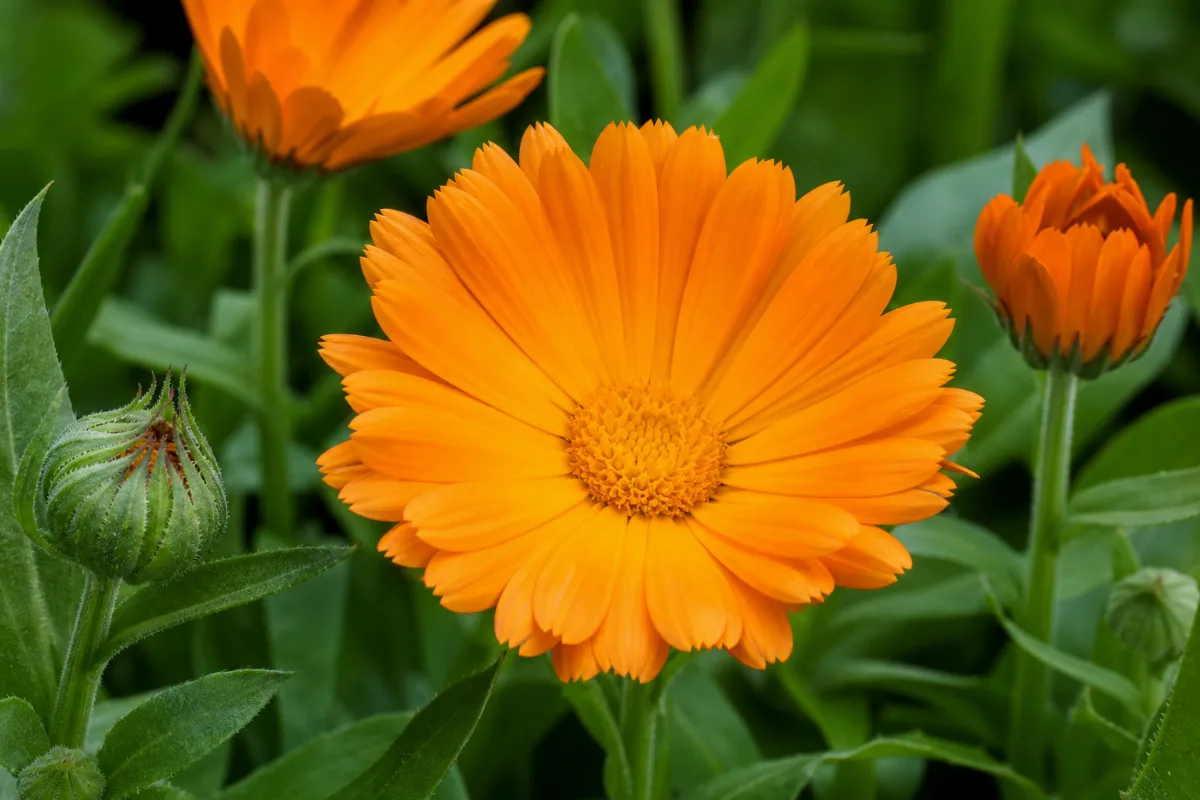
Calendula is a bright orange or yellow garden flower of the daisy family. Its flowers are made into ointments, creams, oils, mouth rinses and teas, and used for centuries on skin and wounds. This profile is about calendula as a health product. The main safety issue is allergy, because it belongs to the daisy (Asteraceae) family.
General information, not medical advice. Last substantive update · Not medically reviewed. A named clinician has not signed off on this page. How this page is made
About Calendula
Calendula (Calendula officinalis, pot marigold) is a garden flower of the daisy family, used in ointments, creams, oils, rinses and teas, mainly on skin and in the mouth. Nothing about it reaches more than low certainty. Minor wounds, diaper rash, mouth sores in radiotherapy and gum inflammation are low. Skin reactions from breast cancer radiotherapy are mixed, and guidelines do not support calendula for them. Episiotomy pain, leg ulcers, vaginal yeast infection and skin barrier are very low, and burns, diabetic foot ulcers, combination ear drops, prostatitis suppositories, sore nipples and sunburn are insufficient. The key safety fact is allergy: the EU monograph lists allergy to calendula or other daisy-family plants as a reason not to use it. Pregnancy and breastfeeding are not recommended, young children are advised against, and sedative and blood-sugar effects are only theory. For amounts, ask a doctor or pharmacist.
What it is
Calendula (Calendula officinalis L.), also called pot marigold, is an annual garden plant of the daisy family (Asteraceae) with orange or yellow flower heads. The flower is the medicinal part, used fresh or dried, or extracted into oil, ointment or tincture. The name 'marigold' can also mean French and African marigolds (Tagetes), which are a different genus; research and EU guidance on calendula do not apply to them. Field marigold (Calendula arvensis) is a different species.
This profile is about calendula as a health product: ointments, creams, rinses and infusions. Trials rarely give the strength or plant part, and some products are made from the whole aerial plant, not only the flower, so a result from one brand does not carry over to another.
Traditional and current uses
The EU assessment report says calendula flowers and ointments were used in medicine at least back to Hildegard von Bingen, and the flower has been in European handbooks and pharmacopoeias for minor skin and mouth inflammation and wounds. These statements are from a secondary source and were not checked against the old texts.
The EU herbal committee (2008, revised 2018) lists calendula flower as a traditional herbal medicine for minor skin inflammation such as sunburn, as an aid for healing minor wounds, and for minor inflammation of the mouth or throat, based only on long-standing use. A periodic review of the monograph is listed by the EMA, and we did not read its outcome. Today people mainly use calendula creams for wounds, diaper rash and sore or irritated skin, and calendula rinses for gums.
What is in it and how it works
Calendula flowers hold triterpene saponins and triterpene alcohols (such as faradiol and taraxasterol), orange carotenoids (mostly lutein and zeaxanthin), and flavonoids such as quercetin glycosides. The EU report says the sesquiterpene lactones that cause most daisy-family allergy are not genuine constituents of the flower.
In cells and animals, calendula extracts made skin fibroblasts multiply and move, raised repair proteins and helped mouse wounds close faster, and in one cell study they raised an early inflammation signal (NF-kB and IL-8) instead of calming it. Rats given a flower extract had a smaller rise in blood sugar after glucose. None of this was measured in the people in the trials, so none of it is shown to explain a benefit. Which compounds matter is not known.
What the research shows
Nothing about calendula reaches moderate certainty. For radiation skin reactions in breast cancer the trials disagree: a French trial of 254 women found less severe dermatitis with calendula than with trolamine (41% vs 63%), but a Swedish trial of 420 and an Australian trial of 81 found no difference from plain creams, pooled reviews found no clear effect, and a 2020 review reported a higher risk. For minor wounds, one trial of 40 people found faster new skin, but reviews call the evidence weak. Diaper rash, mouth sores in radiotherapy and gum inflammation are low, and many of these trials had no placebo group.
Other uses rest on one small trial each or on combination products: episiotomy pain, venous leg ulcers, vaginal yeast infection and skin barrier are very low, and burns, diabetic foot ulcers, ear drops, prostatitis suppositories, sore nipples and sunburn are insufficient. Results apply only to the named product and form.
At a glance
Traditional uses history, not proof
- Medieval Europe: the EU assessment report says calendula flowers and ointments were used at least back to Hildegard von Bingen. This is a secondary-source statement, not checked against the original.
- European handbooks and pharmacopoeias: used for minor skin and mouth inflammation, wounds and sore throats (EU report).
- European Union: calendula flower has a traditional-use herbal monograph (revised 2018) for minor skin inflammation such as sunburn, minor wounds, and minor mouth or throat inflammation. 'Traditional' means long use, not proof from modern trials.
Studied for research
- Minor wounds (hand wounds), low
- Diaper rash in babies, low (no placebo trials)
- Mouth sores during radiotherapy and gum inflammation, low
- Skin reactions from breast radiotherapy, mixed (one positive trial, later null trials, and guidelines that advise against)
- Radiotherapy skin reactions in head and neck cancer, very low
- Episiotomy pain, venous leg ulcers, vaginal yeast infection and skin barrier, very low
- Burns, diabetic foot ulcers, combination ear drops, prostatitis suppositories, sore nipples and sunburn, insufficient
Main compounds
- Triterpene saponins and triterpene alcohols such as faradiol and taraxasterol
- Carotenoids, mainly lutein and zeaxanthin, which give the orange colour
- Flavonoids including quercetin glycosides such as rutin and isoquercitrin
- The EU report says sesquiterpene lactones, the usual daisy-family allergens, are not genuine constituents of the flower
Common forms
- Ointments and creams
- Calendula oil (flowers in a fatty oil)
- Tincture and liquid extracts, often made with alcohol
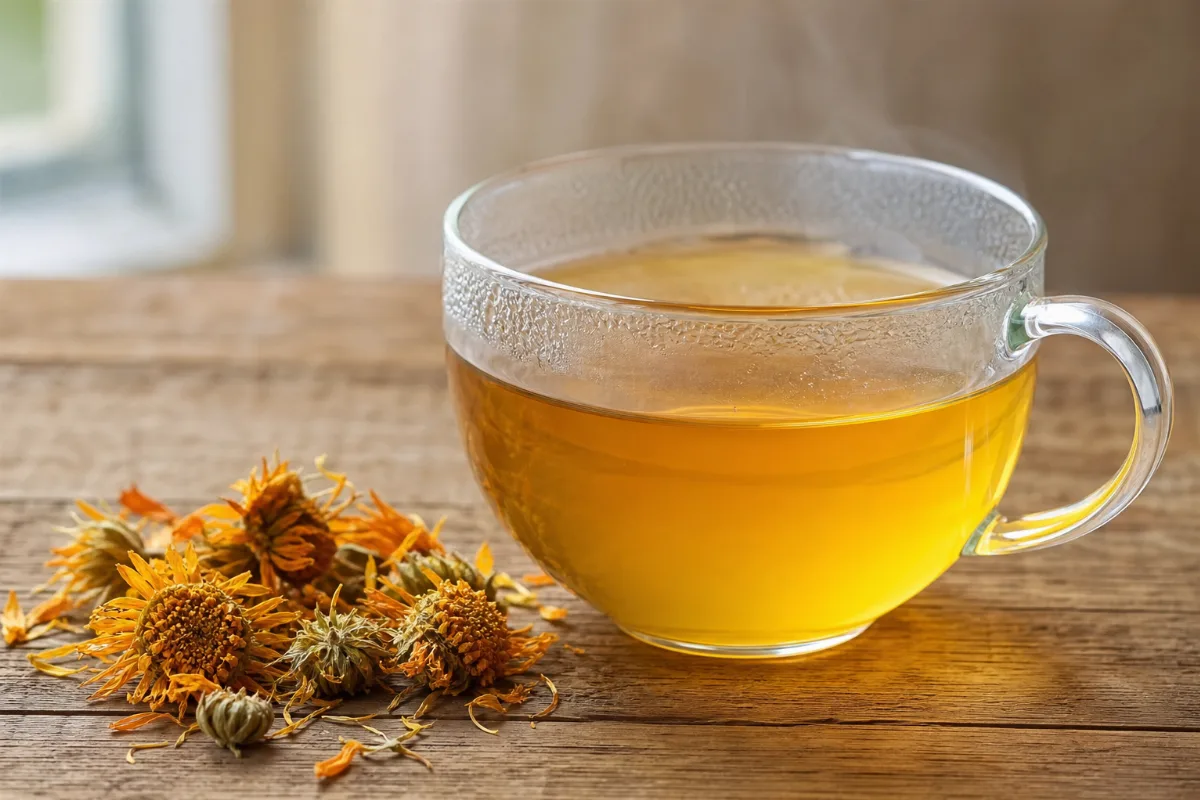
- Dried flowers for infusion used as a rinse, gargle or dressing soak
- Mouthwashes and gels
- Mixed products, for example ear drops or suppositories with other herbs
Research links: EU herbal monograph on calendula flower (European Medicines Agency) · EU assessment report on calendula flower (European Medicines Agency) · Calendula in the US Drugs and Lactation Database (LactMed) · Breast radiotherapy trial: calendula vs trolamine (abstract) · Review of natural agents for radiation dermatitis (abstract) · Systematic review of calendula for wound healing (abstract) · Research Library · Genes & Biomarkers Library
The plant and its history
- Accepted scientific name
- Calendula officinalis L.
- Naming authority
- L.; published in Species Plantarum, page 921 (1753) per GBIF
- Synonyms
- Calendula aurantiaca Kotschy (homotypic synonym); Calendula eriocarpa DC.; Calendula officinalis subsp. prolifera and several forms and varieties (GBIF lists about 20 synonyms)
- Common names
- Pot marigold (English); Calendula (English); Garden marigold (English); Scotch marigold (English); Caléndula (Spanish); Maravilla (Spanish)
- Botanical family
- Asteraceae (daisy family, also called Compositae). This is why people allergic to ragweed, daisies or chrysanthemums are told to be careful.
- Classification
- Plantae > Tracheophyta > Magnoliopsida > Asterales > Asteraceae > Calendula > Calendula officinalis
- Native range
- Not verified from a primary botanical source. The EU report calls it a Mediterranean-origin garden plant; the sources read describe it as widely cultivated.
- Habitat
- Not verified.
- What the plant looks like
- Roots: Not part of the medicinal use.; Stems: Not verified in detail.; Leaves: Leaves and stems are not the monograph part; some trials used preparations that included them.; Flowers: The medicinal part is the flower head (ray florets). The EU monograph refers to the Ph. Eur. definition.; Fruit: Not relevant.
- Cultivation
- Not verified.
- Harvest and processing
- The EU monograph lists preparations: comminuted flowers, liquid extracts (ethanol 40 to 50%), tincture (ethanol 70 to 90%), oil extract (fatty vegetable oil) and extracts in petroleum jelly or hardened fat.
- Look-alikes and adulterants
- Name: Tagetes erecta L. (African marigold) and other Tagetes (French marigold); Note: A different genus in the same family (GBIF key 3088488 for T. erecta). The research here is for Calendula officinalis only.; Name: Calendula arvensis L. (field marigold); Note: Same genus, different species (GBIF key 9182765); not the plant in the monograph.
- Sustainability and conservation
- Not verified.
The plant and the parts used
Traditional use and history history, not clinical proof
| Tradition or era | Documented use | Source |
|---|---|---|
| Medieval Europe | The EU assessment report says calendula flowers and ointments were used medicinally at least back to Hildegard von Bingen, citing a handbook (Mayer 2000). | s-ema-ar-calendula |
| Modern European pharmacopoeias | Calendula flowers have been in the Czech Pharmacopoeia since 1997 and are described in several handbooks for minor skin and mouth inflammation (EU report). | s-ema-ar-calendula |
| European Union (2008, revised 2018) | The EU herbal committee kept calendula flower as a traditional herbal medicine for minor skin inflammation, minor wounds and minor mouth or throat inflammation. 'Traditional' means long use, not modern proof. | s-ema-hmpc-calendula |
| Other claims | Other historical claims (for example Roman or ancient uses, or use as a food colour) were not checked against a reliable source and are NOT verified here. | s-ema-ar-calendula |
Traditional use shows how a plant was used. It does not show that a supplement works or is safe today.
What is inside, and how it may work
What the plant contains and how those compounds act in cells and animals. Laboratory and animal mechanisms are not proven effects in people.
Main compounds
| Compound | Family | Where it is concentrated | Activity studied | Level of evidence |
|---|---|---|---|---|
| Triterpene saponins (oleanolic acid glucuronides) PubChem 10494 | triterpene saponin | Flower 2 to 10% of the herbal substance (EU report) | Calendasaponins and related saponins lowered the rise in blood sugar in rats and slowed stomach emptying in mice (extract tests). Role in wound healing is uncertain; a 2017 cell study judged triterpenes to play only a small part. 15 55 35 | Animal research |
| Faradiol and other triterpene alcohols (esters) PubChem 9846222 | triterpene diol | Flower about 4% diols and about 0.8% monols such as taraxasterol (EU report) | Listed among the main flower triterpenes in the EU report; their effect has not been shown in people. 15 | Laboratory research |
| Taraxasterol PubChem 115250 | triterpene alcohol | Flower part of the monols (about 0.8%) | Listed among flower triterpenes (EU report). 15 | Laboratory research |
| Lutein PubChem 5281243 | carotenoid (xanthophyll) | Flower carotenoids up to 4.7% of flower; lutein and zeaxanthin together up to 92% of carotenoids (EU report) | Pigment and antioxidant. The 2017 cell study suggests carotenoid-type compounds deserve more study for wound healing. 15 35 | Laboratory research |
| Zeaxanthin PubChem 5280899 | carotenoid (xanthophyll) | Flower see lutein | Pigment and antioxidant. 15 | Laboratory research |
| Quercetin glycosides (including rutin, isoquercitrin) PubChem 5280343 | flavonol glycoside | Flower and leaf flavonoids 0.3 to 0.8% of flower (EU report) | Rutin and quercetin-3-O-glucoside were found in the fibroblast-stimulating water fraction; isoquercitrin and isorhamnetin glucosides from the leaf blocked amylase in the test tube. 15 11 36 | Laboratory research |
| Loliolide (sometimes called 'calendine') PubChem 100332 | terpenoid lactone | Flower not given | The EU report says 'calendine' is not a real plant constituent but a breakdown product of xanthophylls, identical to loliolide; true sesquiterpene lactones are not found in the flower. 15 | Laboratory research |
Mechanisms, receptors and pathways
| Target or pathway | Gene or receptor | What was found | Level |
|---|---|---|---|
| Skin cell (fibroblast) growth and migration | PI3K/Akt, FAK; CTGF; alpha-SMA | Calendula flower tincture and a water fraction of a hydroethanol extract made human skin fibroblasts multiply and migrate, raised CTGF and alpha-SMA, and speeded wound closure in mice. Rutin and quercetin-3-O-glucoside were found in the active fraction. 10 11 | Animal research |
| Inflammation signalling in skin cells | NF-kB, IL-8 | Hexane and ethanol flower extracts activated NF-kB and raised IL-8 in human keratinocytes. This is the early repair signal, not a simple anti-inflammatory effect. 35 | Laboratory research |
| Collagen turnover | collagenase (bacterial) and collagen | The ethanol extract blocked collagenase in the test tube and raised soluble collagen from fibroblasts. 35 | Laboratory research |
| New blood vessel growth and anti-bacterial action | not specified | A Brazilian flower extract promoted blood vessel growth in a chick membrane and in rat wounds and showed antibacterial activity. 38 | Animal research |
| Blood sugar and starch digestion | amylase (enzyme) | A flower methanol extract lowered the glucose rise in rats; ethanol LEAF extract compounds blocked amylase in the test tube. 55 36 | Animal research |
| Protection of DNA in liver cells | not specified | Water-based extracts reversed carcinogen-induced DNA repair synthesis at very low levels but produced DNA-damage signals at about a thousand times higher levels (rat liver cells). 40 | Laboratory research |
| Antioxidant capacity | not applicable | A 2% flower extract mouthwash had measurable total antioxidant, polyphenol and flavonoid content and quercetin; the authors suggest this may partly explain its effect in mouth sore patients, not tested in patients. 3 | Laboratory research |
Absorption, metabolism and elimination
- Absorption
- No pharmacokinetic study of calendula in people was found. The EU monograph states pharmacokinetic data are not required for traditional use.
- Distribution
- No human tissue-distribution data.
- Metabolism
- Not studied in people.
- Elimination
- Not studied in people.
- Bioavailability
- Unknown. Whether compounds from skin or mouth rinse reach the blood has not been measured.
Isolated compounds versus whole extracts
No single compound explains what calendula might do, and researchers have not shown that any one compound is responsible. Lab studies point to flavonol glycosides and, in one study, carotenoid-type compounds rather than triterpenes. The trials all used whole extracts, oils, ointments or creams, whose strength and plant part differ, so results cannot be moved from one product to another.
Nutritional composition
A nutrient table does not apply to calendula as a medicine. The flower petals are sold as a colouring and flavouring (LactMed notes a US 'generally recognised as safe' status as a seasoning), but their nutrient content was not looked up here.
1 mixed findings4 low certainty5 very low certainty5 not enough evidence
What was looked at
The 15 benefits and uses checked for Calendula, each with how strong the evidence is. Tap one to open it.
- Skin reactions from breast cancer radiotherapy (radiodermatitis)Mixed findings
- Skin reactions from head and neck radiotherapyVery low certainty
- Minor wounds: skin loss on the hand and fingersLow certainty
- Pain and healing after episiotomyVery low certainty
- Venous leg ulcers (slow-healing leg sores)Very low certainty
- Diabetic foot ulcersNot enough evidence
- BurnsNot enough evidence
- Diaper rash (diaper dermatitis) in babiesLow certainty
- Mouth sores during cancer treatment (oral mucositis)Low certainty
- Gum inflammation and dental plaqueLow certainty
- Vaginal yeast infection (candidiasis)Very low certainty
- Skin hydration and barrier recovery after irritationVery low certainty
- Ear pain in children with ear infection (combination drops only)Not enough evidence
- Chronic pelvic pain (prostatitis) with a curcumin and calendula suppositoryNot enough evidence
- Sore nipples and sunburn (traditional uses)Not enough evidence
Lab markers tracked in the studies
Radiation dermatitis grade 2 or worseTime to new skin cover (epithelialisation) and healing speedPain after episiotomy (verbal rating scale)Ulcer areaDiaper rash severity score and time to improvementOral mucositis score (OMAS)Plaque index and gingival indexNegative Candida testSkin hydration and water loss through the skin (TEWL)
What is Calendula good for?
The main proposed uses and how strong the human evidence is for each. 'Mixed' means trials disagree, 'low' means small or inconsistent studies, 'very low' means a single small or unclear study, and 'insufficient' means there is not enough to judge. Nothing about calendula is rated higher than low. These results come from specific ointments, creams, rinses and drops, many without a placebo group or using mixtures, and cannot be moved to other products or to calendula tea.
Benefits, one by one
Each card is a research question, not a promise. Tap a goal to filter. Open a card to see the studies, doses and limits.
Skin reactions from breast cancer radiotherapy (radiodermatitis)
Mixed findingsCalendula was tested to prevent red, sore skin during breast radiotherapy. One large French trial found it did better than trolamine. Two later trials found no difference from plain creams, and pooled reviews found no clear benefit. A cancer nursing guideline review even reported a higher risk. Mixed overall.
9 studiesCalendula ointment or cream from the manufacturers named in each tria…
Studies, doses and limits
What the trials found
Pommier 2004 (France, 254 women, calendula ointment vs trolamine): grade 2 or worse dermatitis in 41% vs 63%. Sharp 2013 (Sweden, 420 women, Weleda calendula cream vs Essex cream): no difference (23% vs 19% with severe reactions). Siddiquee 2021 (Australia, 82 women randomised, 81 analysed, calendula vs sorbolene): 53% vs 62%, not different, and underpowered. Pooled reviews: Robijns 2023 found no significant effect for calendula; Que 2024 found insufficient evidence; Baharara 2023 found conflicting data; Ginex 2020 (Oncology Nursing Society) reported that topical calendula increased the risk of radiodermatitis. The MASCC 2013 guideline recommends against calendula.
Results
One trial positive against trolamine, two trials not different from plain creams, and reviews and guidelines mostly not supportive.
Effect sizes as reported
Pommier: 41% vs 63% (P < .001). Siddiquee: 53% vs 62%, OR 0.87 (95% CI 0.36 to 2.09). Sharp: 23% vs 19%, no significant difference.
Why this rating
The one clearly positive trial compared calendula with trolamine, not with nothing, and used a product made from the whole aerial plant; later trials against plain creams were null; reviews and guidelines do not support it. Reviewers give no formal GRADE rating for calendula in the abstracts we read.
Form and dose studied
Calendula ointment or cream from the manufacturers named in each trial; strengths are not given in the abstracts.
Who was studied
Women having radiotherapy after breast cancer surgery (Europe, Australia).
Limits
Different products, different comparison creams, and low patient numbers. Results from one brand do not carry to other calendula products. Sharp's abstract prints the severe-reaction grade as '<=2' (as printed).
Why researchers looked
Radiotherapy often causes red, sore, peeling skin. Calendula creams are widely offered, so researchers tested whether they prevent it.
Traditional use
Calendula flowers and ointments have been used on the skin for a very long time. The EU assessment report traces medical use back at least to Hildegard von Bingen (secondary source, not checked against the original). The EU lists it as a traditional herbal medicine for minor skin inflammation and minor wounds.
Proposed mechanism Preliminary mechanism
In the lab, calendula flower extracts made skin cells (fibroblasts) multiply and move, raised collagen-related signals, and in animals helped wounds close faster (Dinda 2015 and 2016, Parente 2012). Lab work also found the ethanol extract raised an inflammatory signal (NF-kB, IL-8) in skin cells, so the effect on inflammation is not simply calming (Nicolaus 2017). None of this was measured in the people in the trials.
A proposed mechanism does not show that the effect happens in people.
Allergy to calendula or other daisy-family (Asteraceae) plants is a reason to avoid it; see the safety section. Not recommended in pregnancy or breastfeeding by the EU regulator. During radiotherapy, tell the radiation team before using anything on the treated skin.
Skin reactions from head and neck radiotherapy
Very low certaintyTwo small trials of people having radiotherapy for head and neck cancer. One favoured calendula over a fatty-acid product. The other used calendula only as the comparison cream, so it says nothing about whether calendula works.
4 studiesCalendula (Schneider: preparation not described in the abstract); cal…
Studies, doses and limits
What the trials found
Schneider 2015 (Brazil, 51 people): calendula did better than essential fatty acids; a larger share of the fatty-acid group reached grade 2 (P = 0.012) and grade 1 appeared later with calendula (P = 0.004). Ngan 2025 (Taiwan, 55 people): calendula cream was the comparison for a Chinese herbal ointment; grade 2+ dermatitis did not differ, and the herbal ointment reduced redness and improved moisture at week 3 (P = 0.02).
Results
One small positive trial against an unproven comparison; one trial that cannot test calendula.
Effect sizes as reported
Numbers are not in the Schneider abstract. Ngan: no difference in grade 2+ dermatitis.
Why this rating
Only one trial tests calendula, it has 51 people, and the comparison product is not an established treatment. The 2025 trial lacked a placebo or no-treatment group and was funded by the company behind the other ointment.
Form and dose studied
Calendula (Schneider: preparation not described in the abstract); calendula cream (Ngan).
Who was studied
People with head and neck cancer having radiotherapy.
Limits
Small, short, comparison products unproven.
Why researchers looked
Neck and face skin is often badly affected by radiotherapy.
Traditional use
Calendula flowers and ointments have been used on the skin for a very long time. The EU assessment report traces medical use back at least to Hildegard von Bingen (secondary source, not checked against the original). The EU lists it as a traditional herbal medicine for minor skin inflammation and minor wounds.
Proposed mechanism Preliminary mechanism
In the lab, calendula flower extracts made skin cells (fibroblasts) multiply and move, raised collagen-related signals, and in animals helped wounds close faster (Dinda 2015 and 2016, Parente 2012). Lab work also found the ethanol extract raised an inflammatory signal (NF-kB, IL-8) in skin cells, so the effect on inflammation is not simply calming (Nicolaus 2017). None of this was measured in the people in the trials.
A proposed mechanism does not show that the effect happens in people.
See the breast cancer entry. Tell the radiation team before using anything on treated skin.
Minor wounds: skin loss on the hand and fingers
Low certaintyOne randomised trial in 40 adults found hand wounds healing without stitches covered with new skin faster with a standardised calendula extract than with mineral oil. Reviews of calendula for wounds find weak evidence.
4 studiesStandardised calendula extract (SEC); strength not given in the abstr…
Studies, doses and limits
What the trials found
Giostri 2022 (Brazil, 40 patients, 19 wounds per group): new skin in 8.6 days with the standardised calendula extract against 13.2 days with mineral oil. Givol 2019 (systematic review of 14 studies, 7 animal and 7 human) found animal studies support faster inflammation resolution and more granulation tissue, with one randomised acute-wound trial agreeing. Leach 2008 (6 randomised trials) found only weak evidence, with only one trial of good quality. The EU monograph lists minor wounds as a traditional use only.
Results
Faster healing in one small trial; reviews say weak or limited.
Effect sizes as reported
8.6 ± 4.7 vs 13.2 ± 7.4 days to new skin; 9.5 ± 5.8 vs 6.2 ± 2.9 % per day (P < 0.05).
Why this rating
One randomised trial in people (small, single centre) fits with animal findings, but reviews describe the human evidence as weak and trials as few.
Form and dose studied
Standardised calendula extract (SEC); strength not given in the abstract.
Who was studied
Adults with small hand and finger wounds.
Limits
Small; compared with mineral oil, not an active dressing; one product. Seek medical care for deep, dirty or infected wounds.
Why researchers looked
Healing of small open wounds is slow and calendula has a long reputation for helping.
Traditional use
Calendula flowers and ointments have been used on the skin for a very long time. The EU assessment report traces medical use back at least to Hildegard von Bingen (secondary source, not checked against the original). The EU lists it as a traditional herbal medicine for minor skin inflammation and minor wounds.
Proposed mechanism Animal research
In the lab, calendula flower extracts made skin cells (fibroblasts) multiply and move, raised collagen-related signals, and in animals helped wounds close faster (Dinda 2015 and 2016, Parente 2012). Lab work also found the ethanol extract raised an inflammatory signal (NF-kB, IL-8) in skin cells, so the effect on inflammation is not simply calming (Nicolaus 2017). None of this was measured in the people in the trials.
A proposed mechanism does not show that the effect happens in people.
Allergy to calendula or other daisy-family (Asteraceae) plants is a reason to avoid it; see the safety section. Not recommended in pregnancy or breastfeeding by the EU regulator. Signs of infection or a wound that worsens need a doctor.
Pain and healing after episiotomy
Very low certaintyIn one trial of 100 women, calendula ointment lowered pain after a birth cut (episiotomy) compared with usual care, and redness and swelling improved too.
2 studiesCalendula ointment (brand not given in the abstract).
Studies, doses and limits
What the trials found
De Angelis 2022 (Italy, 100 women): calendula ointment 4 hours after the cut and every 8 hours for 10 days gave lower pain from day 2 and better redness and swelling than standard care.
Results
Lower pain and better healing signs in a single trial.
Effect sizes as reported
Pain lower from day 2 through follow-up (numbers not in the abstract).
Why this rating
One open trial against usual care; no placebo ointment; self-reported pain.
Form and dose studied
Calendula ointment (brand not given in the abstract).
Who was studied
Women after an episiotomy at term.
Limits
Single trial; no placebo.
Why researchers looked
Pain and slow healing after episiotomy are common.
Traditional use
Calendula flowers and ointments have been used on the skin for a very long time. The EU assessment report traces medical use back at least to Hildegard von Bingen (secondary source, not checked against the original). The EU lists it as a traditional herbal medicine for minor skin inflammation and minor wounds.
Proposed mechanism Animal research
In the lab, calendula flower extracts made skin cells (fibroblasts) multiply and move, raised collagen-related signals, and in animals helped wounds close faster (Dinda 2015 and 2016, Parente 2012). Lab work also found the ethanol extract raised an inflammatory signal (NF-kB, IL-8) in skin cells, so the effect on inflammation is not simply calming (Nicolaus 2017). None of this was measured in the people in the trials.
A proposed mechanism does not show that the effect happens in people.
The EU regulator does not recommend calendula during pregnancy or breastfeeding because safety is not established. This trial used it after birth; ask a midwife or doctor, especially if breastfeeding.
Venous leg ulcers (slow-healing leg sores)
Very low certaintyA small Brazilian study found ulcers treated with a calendula extract healed more often and faster than in controls. It was not clearly randomised, and the EU regulator says leg ulcers should not be self-treated.
3 studiesCalendula officinalis extract (Plenusdermax).
Studies, doses and limits
What the trials found
Buzzi 2016 (Brazil, 38 treated and 19 control patients, up to 30 weeks): 72% vs 32% fully healed; healing speed 7.4% vs 1.7% per week; no adverse events. The abstract does not describe how patients were allocated. Givol 2019 counts two controlled venous ulcer studies with smaller ulcers than controls.
Results
Faster healing in small controlled studies.
Effect sizes as reported
72% vs 32% healed; 7.4% vs 1.7% per week.
Why this rating
Few small studies, unclear allocation and blinding, one product, from one research region.
Form and dose studied
Calendula officinalis extract (Plenusdermax).
Who was studied
Adults with non-healing venous leg ulcers.
Limits
Small, not clearly randomised.
Why researchers looked
Leg ulcers can last months and need better options.
Traditional use
Calendula flowers and ointments have been used on the skin for a very long time. The EU assessment report traces medical use back at least to Hildegard von Bingen (secondary source, not checked against the original). The EU lists it as a traditional herbal medicine for minor skin inflammation and minor wounds.
Proposed mechanism Animal research
In the lab, calendula flower extracts made skin cells (fibroblasts) multiply and move, raised collagen-related signals, and in animals helped wounds close faster (Dinda 2015 and 2016, Parente 2012). Lab work also found the ethanol extract raised an inflammatory signal (NF-kB, IL-8) in skin cells, so the effect on inflammation is not simply calming (Nicolaus 2017). None of this was measured in the people in the trials.
A proposed mechanism does not show that the effect happens in people.
Leg ulcers need medical care. The EU assessment report says this use is not suited to self-treatment without supervision.
Diabetic foot ulcers
Not enough evidenceOne small trial combined calendula oil with a low-level laser. Because the laser was part of every active group, it cannot show whether calendula helps. A review mentions a separate trial that found no improvement.
2 studiesCalendula oil with low-level laser.
Studies, doses and limits
What the trials found
Carvalho 2016 (Brazil, 32 people in four groups, 30 days): ulcer area shrank in the laser plus calendula oil group (P = 0.0032) and the laser-only group (P = 0.0428); calendula alone is not reported in the abstract. Givol 2019 notes one randomised trial that found no improvement for calendula in diabetic leg ulcers.
Results
No clear benefit of calendula itself.
Effect sizes as reported
Area reduction P = 0.0032 (laser + oil) and P = 0.0428 (laser).
Why this rating
Calendula cannot be separated from laser; very small groups; a review notes a null trial.
Form and dose studied
Calendula oil with low-level laser.
Who was studied
People with diabetic foot ulcers.
Limits
Four groups of about 8 people.
Why researchers looked
Diabetic foot ulcers heal slowly and can have serious outcomes.
Traditional use
Calendula flowers and ointments have been used on the skin for a very long time. The EU assessment report traces medical use back at least to Hildegard von Bingen (secondary source, not checked against the original). The EU lists it as a traditional herbal medicine for minor skin inflammation and minor wounds.
Proposed mechanism Animal research
In the lab, calendula flower extracts made skin cells (fibroblasts) multiply and move, raised collagen-related signals, and in animals helped wounds close faster (Dinda 2015 and 2016, Parente 2012). Lab work also found the ethanol extract raised an inflammatory signal (NF-kB, IL-8) in skin cells, so the effect on inflammation is not simply calming (Nicolaus 2017). None of this was measured in the people in the trials.
A proposed mechanism does not show that the effect happens in people.
Diabetic foot ulcers need medical care.
Burns
Not enough evidenceReviews describe mixed results: animal studies suggest a protective effect, but a randomised burns trial found no benefit. We could not read the original trial.
2 studiesCalendula extract or ointment.
Studies, doses and limits
What the trials found
Givol 2019: a randomised trial of calendula extract in partial to full thickness burns showed no benefit versus controls; two animal studies showed protection when given before a burn. The EU assessment report describes a 1992 open trial (156 adults with second and third degree burns, 17 days) in which a calendula preparation made from flowers, leaves and stems was marginally better than vaseline (P = 0.05); the assessor calls its relevance limited because of the leaves and stems. We read these only through the review and the EU report, not the original paper.
Results
No benefit in one trial, borderline in another.
Effect sizes as reported
Marginal P = 0.05 versus vaseline in the 1992 trial.
Why this rating
Two trials with conflicting results, one with a mixed-plant product, read second-hand.
Form and dose studied
Calendula extract or ointment.
Who was studied
Adults with burns.
Limits
Original papers not read.
Why researchers looked
Calendula ointments are traditionally used on burns and scalds.
Traditional use
Calendula flowers and ointments have been used on the skin for a very long time. The EU assessment report traces medical use back at least to Hildegard von Bingen (secondary source, not checked against the original). The EU lists it as a traditional herbal medicine for minor skin inflammation and minor wounds.
Proposed mechanism Animal research
In the lab, calendula flower extracts made skin cells (fibroblasts) multiply and move, raised collagen-related signals, and in animals helped wounds close faster (Dinda 2015 and 2016, Parente 2012). Lab work also found the ethanol extract raised an inflammatory signal (NF-kB, IL-8) in skin cells, so the effect on inflammation is not simply calming (Nicolaus 2017). None of this was measured in the people in the trials.
A proposed mechanism does not show that the effect happens in people.
Burns need medical care; do not treat serious burns at home.
Diaper rash (diaper dermatitis) in babies
Low certaintyFour small trials from Iran compared calendula ointment with aloe, bentonite clay or olive ointment. It did better than aloe in one, about the same as olive ointment in one, and was slower than bentonite clay in two. None had a placebo or no-treatment group.
5 studiesCalendula ointment or cream applied to the diaper area (strengths giv…
Studies, doses and limits
What the trials found
Panahi 2012 (66 infants, 10 days): both calendula and aloe improved rash severity; calendula had fewer rash sites than aloe (P = 0.001); no side effects. Sharifi-Heris 2018 (children under 2, 1.5% ointments, 7 days): no difference between olive and calendula; no side effects. Mahmoudi 2015 (100 infants) and Adib-Hajbaghery 2014 (60 infants), apparently from the same team: bentonite clay worked faster; completely better within 3 days 86% vs 52% (2015) and 90% vs 36.7% (2014) in favour of bentonite.
Results
Calendula helped in comparison to aloe, equalled olive ointment, and was slower than bentonite clay.
Effect sizes as reported
Panahi: fewer rash sites with calendula than aloe (P = 0.001). Mahmoudi: complete improvement at 3 days 52% calendula vs 86% bentonite (P < 0.001).
Why this rating
Four small, short trials with no placebo group; improvement may partly be natural healing. Results point both ways depending on the comparison.
Form and dose studied
Calendula ointment or cream applied to the diaper area (strengths given only in one abstract: 1.5%).
Who was studied
Infants and children under 3 with diaper dermatitis in Iran.
Limits
No placebo; same-team trials may overlap; very short follow-up.
Why researchers looked
Diaper rash is very common in infants and parents look for gentle treatments.
Traditional use
Calendula flowers and ointments have been used on the skin for a very long time. The EU assessment report traces medical use back at least to Hildegard von Bingen (secondary source, not checked against the original). The EU lists it as a traditional herbal medicine for minor skin inflammation and minor wounds.
Proposed mechanism Preliminary mechanism
Lab work suggests calendula flower contains carotenoids, triterpene compounds and flavonoids with antioxidant and anti-inflammatory activity, but none of this was measured in the trial participants.
A proposed mechanism does not show that the effect happens in people.
Calendula should not be used on broken or infected skin; if the rash has blisters, bleeds or does not clear in a few days see a doctor. The EU regulator does not recommend skin use under age 6 because of lack of data, although the trials found no side effects. Babies who have reacted to daisy-family plants should avoid it.
Mouth sores during cancer treatment (oral mucositis)
Low certaintyOne small trial of a 2% calendula mouthwash found lower mucositis scores than placebo during head and neck radiotherapy. A larger trial of a four-ingredient mixture that included calendula found no benefit. Reviews are positive about herbs in general but give no clear calendula result.
4 studies2% calendula flower extract as mouthwash/oral gel; a mix of four agen…
Studies, doses and limits
What the trials found
Babaee 2013 (Iran, 40 people): mucositis scores were lower with calendula mouthwash at week 2 (5.5 vs 6.8), week 3 (8.25 vs 10.95) and week 6 (11.4 vs 13.35). Marucci 2017 (Italy, 107 randomised, double-blind): a mixture of propolis, aloe vera, calendula and chamomile did not reduce grade 3 mucositis (P = .65). Eubank 2021 (24 trials) found chamomile most promising and lists calendula among extracts that improved lesions. Pranadwista 2023 (12 trials) found 8 positive for natural products overall.
Results
One positive single-ingredient trial, one null mixture trial.
Effect sizes as reported
Babaee: OMAS lower at weeks 2, 3 and 6. Marucci: 61 of 104 with grade 3 mucositis, no difference between arms.
Why this rating
One small positive trial and one larger null trial of a mixture; reviews do not separate calendula.
Form and dose studied
2% calendula flower extract as mouthwash/oral gel; a mix of four agents in Marucci.
Who was studied
People with head and neck cancer having radiotherapy.
Limits
Small; blinding not described for the positive trial; mixture cannot be split.
Why researchers looked
Radiotherapy to the head and neck often causes painful mouth sores.
Traditional use
Calendula flowers and ointments have been used on the skin for a very long time. The EU assessment report traces medical use back at least to Hildegard von Bingen (secondary source, not checked against the original). The EU lists it as a traditional herbal medicine for minor skin inflammation and minor wounds.
Proposed mechanism Preliminary mechanism
The mouthwash in the Iranian trial had measurable antioxidant content, which the authors suggest may play a part; this was not tested in patients.
A proposed mechanism does not show that the effect happens in people.
Anaphylaxis after gargling a calendula tincture has been reported in one case with no details (EU report). Ask the cancer team before using any mouthwash during treatment.
Gum inflammation and dental plaque
Low certaintyOne six-month trial of 240 adults found a diluted calendula tincture rinse lowered plaque and gum inflammation scores compared with a water rinse. Other mouthwash and gel trials used mixtures, so calendula's own part is unknown.
4 studiesCalendula tincture diluted for rinsing (Khairnar); multi-herb product…
Studies, doses and limits
What the trials found
Khairnar 2013 (India, 240 adults, 6 months): without cleaning, plaque, gum and bleeding scores fell with calendula but not with the water rinse; after scaling at month 3 both improved, calendula more. Mahyari 2016 (Iran, 60 people, 2 weeks): a ginger, rosemary and calendula mouthwash matched chlorhexidine and beat placebo. Lauten 2005 (USA, tiny): a four-plant rinse showed no significant change. Figueiredo 2024 (10 per group): a five-ingredient gel matched toothpaste.
Results
One calendula-only trial positive; mixtures mixed.
Effect sizes as reported
Khairnar: significant reductions in plaque, gingival and bleeding indices vs none with placebo (P < 0.05).
Why this rating
One reasonably large single-ingredient trial; all others use mixtures or tiny samples.
Form and dose studied
Calendula tincture diluted for rinsing (Khairnar); multi-herb products in the others.
Who was studied
Adults with gingivitis (India, Iran, USA, Brazil).
Limits
Blinding not described for Khairnar; scores only; mixtures.
Why researchers looked
Gum disease is common and calendula is used in some mouthwashes.
Traditional use
Calendula flowers and ointments have been used on the skin for a very long time. The EU assessment report traces medical use back at least to Hildegard von Bingen (secondary source, not checked against the original). The EU lists it as a traditional herbal medicine for minor skin inflammation and minor wounds.
Proposed mechanism Preliminary mechanism
Lab work suggests calendula flower contains carotenoids, triterpene compounds and flavonoids with antioxidant and anti-inflammatory activity, but none of this was measured in the trial participants.
A proposed mechanism does not show that the effect happens in people.
The tincture contains alcohol. The EU regulator does not recommend mouth use under age 12.
Vaginal yeast infection (candidiasis)
Very low certaintyOne trial of 150 women compared calendula vaginal cream with clotrimazole. Calendula was slower to clear the yeast at first but looked better at the later check. No placebo group, and not repeated.
2 studiesCalendula vaginal cream, 5 g nightly for 7 nights (Saffari).
Studies, doses and limits
What the trials found
Saffari 2017 (Iran, 150 women, 7 nights): negative Candida tests 49% with calendula vs 74% with clotrimazole at the first check (OR 0.32, 95% CI 0.16 to 0.67) and 77% vs 34% at the second (OR 3.1, 95% CI 1.5 to 6.2). Durić 2021 (Bosnia, 210 women): multi-herb vaginal suppositories (including calendula) helped vaginitis, but calendula cannot be separated and tea tree oil worked best.
Results
Slower first, better later versus clotrimazole in one trial.
Effect sizes as reported
Negative test early 49% vs 74%; later 77% vs 34%.
Why this rating
One trial against a drug with an odd pattern, no placebo, not repeated; the other trial used a mix.
Form and dose studied
Calendula vaginal cream, 5 g nightly for 7 nights (Saffari).
Who was studied
Married women 18 to 45 with vaginal yeast infection.
Limits
No placebo; unusual pattern.
Why researchers looked
Women look for options to antifungal creams.
Traditional use
Calendula flowers and ointments have been used on the skin for a very long time. The EU assessment report traces medical use back at least to Hildegard von Bingen (secondary source, not checked against the original). The EU lists it as a traditional herbal medicine for minor skin inflammation and minor wounds.
Proposed mechanism Preliminary mechanism
Lab work suggests calendula flower contains carotenoids, triterpene compounds and flavonoids with antioxidant and anti-inflammatory activity, but none of this was measured in the trial participants.
A proposed mechanism does not show that the effect happens in people.
Pregnancy: the EU regulator does not recommend calendula in pregnancy. A first-time or repeat infection needs a proper diagnosis.
Skin hydration and barrier recovery after irritation
Very low certaintyTwo small studies in healthy volunteers measured skin moisture. A 20-person test found a calendula-extract cream restored hydration and barrier faster after a test irritation. Another found two of seven skin-firmness measures improved over 8 weeks. Neither involved people with a skin disease.
2 studies1% supercritical CO2 extract in a cream (Crnčević); cream with extrac…
Studies, doses and limits
What the trials found
Crnčević 2025 (Croatia, 20 healthy volunteers, 1% supercritical CO2 extract in an emollient): higher hydration than untreated (P = 0.017) and plain cream (P = 0.035) on day 4; lower water loss than untreated on day 3 (P = 0.022); redness unchanged. Akhtar 2011 (Pakistan, 21 volunteers, 8 weeks): two of seven Cutometer measures improved.
Results
Small gains in skin moisture and barrier measures.
Effect sizes as reported
Hydration higher on day 4 (P = 0.017 vs control, P = 0.035 vs placebo).
Why this rating
Very small studies in healthy skin using device measurements; no effect on redness.
Form and dose studied
1% supercritical CO2 extract in a cream (Crnčević); cream with extract (Akhtar).
Who was studied
Healthy volunteers.
Limits
Not patients; cosmetic measures.
Why researchers looked
Calendula extracts are common in moisturisers and are said to calm irritated skin.
Traditional use
Calendula flowers and ointments have been used on the skin for a very long time. The EU assessment report traces medical use back at least to Hildegard von Bingen (secondary source, not checked against the original). The EU lists it as a traditional herbal medicine for minor skin inflammation and minor wounds.
Proposed mechanism Preliminary mechanism
Lab work suggests calendula flower contains carotenoids, triterpene compounds and flavonoids with antioxidant and anti-inflammatory activity, but none of this was measured in the trial participants.
A proposed mechanism does not show that the effect happens in people.
No adverse events were reported in the 2025 study. Skin sensitisation is reported with calendula (frequency unknown).
Ear pain in children with ear infection (combination drops only)
Not enough evidenceTwo trials gave children herbal ear drops containing garlic, mullein, calendula and St John's wort. They worked about as well as anaesthetic drops. Calendula cannot be separated, and much of the pain eased by itself.
2 studiesOlive-oil herbal ear drops (combination).
Studies, doses and limits
What the trials found
Sarrell 2001 (Israel, 103 children aged 6 to 18): the herbal drops (garlic, mullein, calendula, St John's wort in olive oil) were as effective as anaesthetic drops. Sarrell 2003 (171 children aged 5 to 18; drops with lavender and vitamin E as well): pain improved in all groups, herbal drops did slightly better, and about 80% of the pain eased with time alone.
Results
Same as anaesthetic drops in one trial; slightly better in another.
Effect sizes as reported
No numbers in the abstracts beyond P = .007 for improvement over time.
Why this rating
A combination, calendula cannot be judged; improvement is largely natural recovery.
Form and dose studied
Olive-oil herbal ear drops (combination).
Who was studied
Children aged 5 to 18.
Limits
Combination; same research group.
Why researchers looked
Ear pain from middle-ear infection is common in children.
Traditional use
Calendula flowers and ointments have been used on the skin for a very long time. The EU assessment report traces medical use back at least to Hildegard von Bingen (secondary source, not checked against the original). The EU lists it as a traditional herbal medicine for minor skin inflammation and minor wounds.
Proposed mechanism Preliminary mechanism
Lab work suggests calendula flower contains carotenoids, triterpene compounds and flavonoids with antioxidant and anti-inflammatory activity, but none of this was measured in the trial participants.
A proposed mechanism does not show that the effect happens in people.
Never put drops in an ear with a possible burst eardrum or discharge; ear pain with fever needs a doctor. Drops into the ear are not an approved calendula use in the EU monograph.
Chronic pelvic pain (prostatitis) with a curcumin and calendula suppository
Not enough evidenceOne 60-man trial tested suppositories of curcumin plus calendula. The authors report benefit, but it is a mixture and the abstract is unclear on details.
1 studiesRectal suppository with curcumin extract and calendula extract.
Studies, doses and limits
What the trials found
Morgia 2017 (Italy, 60 men, 48 finished): curcumin 350 mg plus calendula extract 80 mg suppository once a day for a month versus placebo; the authors report better symptom scores than placebo. The abstract mixes up the group labels, so numbers are not relied on here.
Results
Reported benefit for the mixture.
Effect sizes as reported
Not reliably extractable from the abstract.
Why this rating
One small trial of a mixture with confusing reporting.
Form and dose studied
Rectal suppository with curcumin extract and calendula extract.
Who was studied
Men 20 to 50 with chronic pelvic pain.
Limits
Mixture; confusing reporting.
Why researchers looked
Chronic prostatitis has few good treatments.
Traditional use
Calendula flowers and ointments have been used on the skin for a very long time. The EU assessment report traces medical use back at least to Hildegard von Bingen (secondary source, not checked against the original). The EU lists it as a traditional herbal medicine for minor skin inflammation and minor wounds.
Proposed mechanism Preliminary mechanism
Lab work suggests calendula flower contains carotenoids, triterpene compounds and flavonoids with antioxidant and anti-inflammatory activity, but none of this was measured in the trial participants.
A proposed mechanism does not show that the effect happens in people.
Not a use supported by the EU monograph.
Sore nipples and sunburn (traditional uses)
Not enough evidenceCalendula creams are used for sore nipples and minor skin inflammation such as sunburn. The medical database for breastfeeding says little high-quality evidence supports the nipple use, and the EU lists minor skin inflammation as a traditional use only.
2 studiesTopical creams and ointments.
Studies, doses and limits
What the trials found
LactMed: topical calendula is used for sore and cracked nipples, but little high-quality evidence supports it; one uncontrolled series used a mixture. EU monograph: minor skin inflammation (such as sunburn) is a traditional use based on long-standing use only. We did not find a controlled trial of calendula alone for sunburn.
Results
No controlled trial found for these uses.
Why this rating
No trial; traditional use only.
Form and dose studied
Topical creams and ointments.
Who was studied
Breastfeeding women; people with mild sunburn.
Limits
No trial data.
Why researchers looked
Gentle skin soothers are wanted for nursing and sunburn.
Traditional use
Calendula flowers and ointments have been used on the skin for a very long time. The EU assessment report traces medical use back at least to Hildegard von Bingen (secondary source, not checked against the original). The EU lists it as a traditional herbal medicine for minor skin inflammation and minor wounds.
Proposed mechanism Preliminary mechanism
Lab work suggests calendula flower contains carotenoids, triterpene compounds and flavonoids with antioxidant and anti-inflammatory activity, but none of this was measured in the trial participants.
A proposed mechanism does not show that the effect happens in people.
Breastfeeding: wipe off any ointment before feeding and ask a midwife or doctor; the EU regulator does not recommend use in breastfeeding because safety is not established.
Connections to the rest of health
How Calendula connects to the rest of our health knowledge graph. Every link says what kind of connection it is. A safety link (for example to the liver) is a warning, not a benefit. A study that merely mentions a topic never creates a benefit link.
Explore every connection: goals, body systems, organs, symptoms, genes
A. Wellness goals
| Connected to | Kind of connection | Evidence status | Context | Studies |
|---|---|---|---|---|
| Healthy skin | Potential benefit | Low certainty | Small trials in wounds, diaper rash and skin barrier; mixed in radiation dermatitis. Skin reactions from breast cancer radiotherapy (radiodermatitis): Calendula was tested to prevent red, sore skin during breast radiotherapy. One large French trial found it did better than trolamine. Two later trials found no difference from plain creams, and pooled reviews found no clear benefit. A cancer nursing guideline review even reported a higher risk. Mixed overall. Preparation or compound: Calendula ointments and creams |
22 37 8 44 41 50 52 43 4 21 54 25 48 34 23 27 14 9 6 15 7 49 28 1 2 |
| Women's wellness | Potential benefit | Very low certainty | One trial each, both without a placebo. Preparation or compound: Calendula ointment (episiotomy) and vaginal cream |
9 45 |
| Inflammation balance | Preliminary mechanism | Very low certainty | Lab work found both pro- and anti-repair signals in skin cells; not shown in people. Preparation or compound: Calendula flower extracts |
35 10 |
| Inflammation Balance | Potential benefit | Mixed findings | Skin reactions from breast cancer radiotherapy (radiodermatitis): Calendula was tested to prevent red, sore skin during breast radiotherapy. One large French trial found it did better than trolamine. Two later trials found no difference from plain creams, and pooled reviews found no clear benefit. A cancer nursing guideline review even reported a higher risk. Mixed overall. | 41 50 52 44 43 4 21 54 25 |
| Womens Wellness | Potential benefit | Very low certainty | Pain and healing after episiotomy: In one trial of 100 women, calendula ointment lowered pain after a birth cut (episiotomy) compared with usual care, and redness and swelling improved too. Vaginal yeast infection (candidiasis): One trial of 150 women compared calendula vaginal cream with clotrimazole. Calendula was slower to clear the yeast at first but looked better at the later check. No placebo group, and not repeated. | 9 14 45 12 |
| Heart Health | Potential benefit | Very low certainty | Venous leg ulcers (slow-healing leg sores): A small Brazilian study found ulcers treated with a calendula extract healed more often and faster than in controls. It was not clearly randomised, and the EU regulator says leg ulcers should not be self-treated. | 6 23 15 |
| Blood Sugar Balance | Potential benefit | Not enough evidence | Diabetic foot ulcers: One small trial combined calendula oil with a low-level laser. Because the laser was part of every active group, it cannot show whether calendula helps. A review mentions a separate trial that found no improvement. | 7 23 |
| Immune Support | Potential benefit | Low certainty | Mouth sores during cancer treatment (oral mucositis): One small trial of a 2% calendula mouthwash found lower mucositis scores than placebo during head and neck radiotherapy. A larger trial of a four-ingredient mixture that included calendula found no benefit. Reviews are positive about herbs in general but give no clear calendula result. Ear pain in children with ear infection (combination drops only): Two trials gave children herbal ear drops containing garlic, mullein, calendula and St John's wort. They worked about as well as anaesthetic drops. Calendula cannot be separated, and much of the pain eased by itself. | 3 30 16 42 46 47 |
| Digestive Support | Potential benefit | Low certainty | Mouth sores during cancer treatment (oral mucositis): One small trial of a 2% calendula mouthwash found lower mucositis scores than placebo during head and neck radiotherapy. A larger trial of a four-ingredient mixture that included calendula found no benefit. Reviews are positive about herbs in general but give no clear calendula result. Gum inflammation and dental plaque: One six-month trial of 240 adults found a diluted calendula tincture rinse lowered plaque and gum inflammation scores compared with a water rinse. Other mouthwash and gel trials used mixtures, so calendula's own part is unknown. | 3 30 16 42 24 29 26 17 |
| Healthy Aging | Potential benefit | Very low certainty | Skin hydration and barrier recovery after irritation: Two small studies in healthy volunteers measured skin moisture. A 20-person test found a calendula-extract cream restored hydration and barrier faster after a test irritation. Another found two of seven skin-firmness measures improved over 8 weeks. Neither involved people with a skin disease. | 8 2 |
| Mens Vitality | Potential benefit | Not enough evidence | Chronic pelvic pain (prostatitis) with a curcumin and calendula suppository: One 60-man trial tested suppositories of curcumin plus calendula. The authors report benefit, but it is a mixture and the abstract is unclear on details. | 31 |
| Healthy Skin | Traditional use | Not enough evidence | Sore nipples and sunburn (traditional uses): Calendula creams are used for sore nipples and minor skin inflammation such as sunburn. The medical database for breastfeeding says little high-quality evidence supports the nipple use, and the EU lists minor skin inflammation as a traditional use only. | 33 14 |
| Womens Wellness | Traditional use | Not enough evidence | Sore nipples and sunburn (traditional uses): Calendula creams are used for sore nipples and minor skin inflammation such as sunburn. The medical database for breastfeeding says little high-quality evidence supports the nipple use, and the EU lists minor skin inflammation as a traditional use only. | 33 14 |
B. Body systems
| Connected to | Kind of connection | Evidence status | Context | Studies |
|---|---|---|---|---|
| Immune system | Adverse effect or risk | Low certainty | Allergic reactions including a single reported anaphylaxis after a gargle (no details). Allergic reactions reported, including one case of anaphylaxis after a gargle in a handbook cited by the EU report. Preparation or compound: Calendula preparations |
15 33 |
| Reproductive system | Contraindication | Very low certainty | Pregnancy and breastfeeding not recommended (EU); one rat study showed lower maternal weight gain in late pregnancy. EU: pregnancy and breastfeeding not recommended; one rat study showed lower maternal weight gain in late pregnancy. Preparation or compound: Calendula by mouth or on skin |
14 53 |
| Integumentary system | Potential benefit | Low certainty | EU traditional use for minor skin inflammation and wounds. Preparation or compound: Calendula flower preparations |
14 23 |
| Digestive system | Potential benefit | Low certainty | Lower plaque and gum scores in one 240-person trial; mouth sore scores lower in one 40-person trial. Preparation or compound: Calendula mouthwash or tincture rinse |
24 3 |
| Integumentary System | Biological association | Mixed findings | Studied for: Skin reactions from breast cancer radiotherapy (radiodermatitis) Studied for: Skin reactions from head and neck radiotherapy | 41 50 52 44 43 4 21 54 25 48 34 22 23 27 14 9 6 15 7 37 49 28 1 8 2 33 |
| Reproductive System | Biological association | Very low certainty | Studied for: Pain and healing after episiotomy Studied for: Vaginal yeast infection (candidiasis) | 9 14 45 12 31 |
| Cardiovascular System | Biological association | Very low certainty | Studied for: Venous leg ulcers (slow-healing leg sores) | 6 23 15 |
| Endocrine System | Biological association | Not enough evidence | Studied for: Diabetic foot ulcers | 7 23 |
| Digestive System | Biological association | Low certainty | Studied for: Mouth sores during cancer treatment (oral mucositis) Studied for: Gum inflammation and dental plaque | 3 30 16 42 24 29 26 17 |
| Immune System | Biological association | Low certainty | Studied for: Mouth sores during cancer treatment (oral mucositis) Studied for: Ear pain in children with ear infection (combination drops only) | 3 30 16 42 46 47 |
| Urinary System | Biological association | Not enough evidence | Studied for: Chronic pelvic pain (prostatitis) with a curcumin and calendula suppository | 31 |
C. Body parts and organs
| Connected to | Kind of connection | Evidence status | Context | Studies |
|---|---|---|---|---|
| Skin | Contraindication | Moderate certainty | Allergy to calendula or other daisy-family plants is a contraindication; skin sensitisation has been reported, frequency not known. Allergy to calendula or other daisy-family plants is a contraindication; skin sensitisation is reported, frequency unknown. A safety relationship, not a benefit. Preparation or compound: Calendula flower preparations on skin |
14 39 |
| Liver | Adverse effect or risk | Not enough evidence | No human liver injury found; high cell-culture concentrations caused DNA-damage signals. Preparation or compound: Calendula extracts |
40 |
| Skin | Adverse effect or risk | Low certainty | A guideline review reported higher risk of radiodermatitis with topical calendula; other reviews found no effect. Preparation or compound: Calendula during radiotherapy |
21 44 |
| Skin | Potential benefit | Low certainty | Faster new skin in one hand wound trial; diaper rash trials with no placebo. Not shown for radiation dermatitis. Preparation or compound: Calendula extract on minor wounds; creams for diaper rash |
22 37 28 |
I. Biomarkers
| Connected to | Kind of connection | Evidence status | Context | Studies |
|---|---|---|---|---|
| Blood glucose | Drug or supplement interaction | Very low certainty | Lowered the rise in blood sugar in rats after glucose; no human data. Lowered the glucose rise in rats; no human data. Preparation or compound: Calendula flower extract by mouth |
55 |
| Radiation dermatitis grade 2 or worse | Biological association | Mixed findings | Measured in trials: mixed. A lab change is not the same as a health benefit. | 41 52 50 44 |
| Time to new skin cover (epithelialisation) and healing speed | Biological association | Low certainty | Measured in trials: lowered. A lab change is not the same as a health benefit. | 22 6 |
| Pain after episiotomy (verbal rating scale) | Biological association | Very low certainty | Measured in trials: lowered. A lab change is not the same as a health benefit. | 9 |
| Ulcer area | Biological association | Very low certainty | Measured in trials: mixed. A lab change is not the same as a health benefit. | 7 6 |
| Diaper rash severity score and time to improvement | Biological association | Low certainty | Measured in trials: mixed. A lab change is not the same as a health benefit. | 37 49 28 1 |
| Oral mucositis score (OMAS) | Biological association | Low certainty | Measured in trials: lowered. A lab change is not the same as a health benefit. | 3 30 |
| Plaque index and gingival index | Biological association | Low certainty | Measured in trials: lowered. A lab change is not the same as a health benefit. | 24 29 |
| Negative Candida test | Biological association | Very low certainty | Measured in trials: mixed. A lab change is not the same as a health benefit. | 45 |
| Skin hydration and water loss through the skin (TEWL) | Biological association | Very low certainty | Measured in trials: raised. A lab change is not the same as a health benefit. | 8 |
J. Genes, receptors and enzymes
| Connected to | Kind of connection | Evidence status | Context | Studies |
|---|---|---|---|---|
| PI3K/Akt pathway (PIK3CA, AKT1) | Preliminary mechanism | In vitro | Calendula tincture promoted fibroblast growth and migration through PI3K in cells. | 10 |
| CTGF and ACTA2 (alpha-smooth-muscle actin) | Preliminary mechanism | Animal | Raised in cells and mouse wounds treated with the extract's water fraction. | 11 |
| NFKB1 (NF-kB) and CXCL8 (IL-8) | Preliminary mechanism | In vitro | Hexane and ethanol flower extracts raised NF-kB activity and IL-8 in skin keratinocytes. | 35 |
| Amylase (AMY1A/AMY2A) | Preliminary mechanism | In vitro | Leaf compounds blocked amylase in the test tube. | 36 |
L. Active compounds
| Connected to | Kind of connection | Evidence status | Context | Studies |
|---|---|---|---|---|
| Triterpene saponins (oleanolic acid glucuronides) | Biological association | Animal | Calendasaponins and related saponins lowered the rise in blood sugar in rats and slowed stomach emptying in mice (extract tests). Role in wound healing is uncertain; a 2017 cell study judged triterpenes to play only a small part. Preparation or compound: Flower |
15 55 35 |
| Faradiol and other triterpene alcohols (esters) | Biological association | In vitro | Listed among the main flower triterpenes in the EU report; their effect has not been shown in people. Preparation or compound: Flower |
15 |
| Taraxasterol | Biological association | In vitro | Listed among flower triterpenes (EU report). Preparation or compound: Flower |
15 |
| Lutein | Biological association | In vitro | Pigment and antioxidant. The 2017 cell study suggests carotenoid-type compounds deserve more study for wound healing. Preparation or compound: Flower |
15 35 |
| Zeaxanthin | Biological association | In vitro | Pigment and antioxidant. Preparation or compound: Flower |
15 |
| Quercetin glycosides (including rutin, isoquercitrin) | Biological association | In vitro | Rutin and quercetin-3-O-glucoside were found in the fibroblast-stimulating water fraction; isoquercitrin and isorhamnetin glucosides from the leaf blocked amylase in the test tube. Preparation or compound: Flower and leaf |
15 11 36 |
| Loliolide (sometimes called 'calendine') | Biological association | In vitro | The EU report says 'calendine' is not a real plant constituent but a breakdown product of xanthophylls, identical to loliolide; true sesquiterpene lactones are not found in the flower. Preparation or compound: Flower |
15 |
Each connection is stored with the ingredient, the connected record, the kind of connection, the evidence status, the supporting studies, the preparation or compound involved, and a review date (last reviewed October 25, 2026).
Evidence at a glance: what changed in 9 lab markers
Tap a number to show only those markers. Counts are markers, not people.
The evidence
The research centre for Calendula. Every record here was checked against PubMed or the publisher's page; we never list a study we have not verified.
Evidence by outcome
Bars show how many studies we found for each outcome, not how well it works. People are added up across trials only (reviews are not added, to avoid double counting).
How we rate evidence
High certainty
Several well-run trials or reviews agree; further research is unlikely to change the picture much.
Moderate certainty
Good trials point the same way, but some doubt remains.
Low certainty
Small, short or inconsistent trials. The finding could change with better research.
Very low certainty
Very little or very weak human data. Treat as a possibility only.
Mixed findings
Trials or reviews disagree with each other.
Not enough evidence
Not enough human research to say either way.
Evidence against
Good research found no benefit, or found harm.
We take the reviewers' own risk-of-bias and GRADE statements where they exist, and otherwise judge from study size, design, consistency, directness and whether a product matches what is sold. Many publications do not make evidence high. Method note: We searched PubMed, read the EU herbal monograph and the EU assessment report on calendula flower (as text extracted from the PDFs), the LactMed entry through its PubMed record, and checked plant names in GBIF and the NCBI taxonomy and compounds in PubChem. Only abstracts were read for nearly all studies. Some sources were not verified: no NCCIH page or LiverTox entry could be found, WHO, ESCOP and Commission E are known only through the EU report, the burns and diabetic ulcer trials are known only through a review and the EU report, and the outcome of the EU periodic review was not checked. Certainty ratings are the compiler's own reading, not formal grades. No study is cited that we could not verify.
Study library: every study we checked 55
| Study | Design | People | Product, dose, length | Result |
|---|---|---|---|---|
| Adib-Hajbaghery 2014 The effects of Bentonite and Calendula on the improvement of infantile diaper dermatitis. J Res Med Sci · PMID 25097603 |
Controlled trial |
60 Infants with diaper dermatitis (Iran) |
Calendula cream not given in abstract 3 days · vs Bentonite cream |
Bentonite was faster: 93.3% against 40% began recovering within 6 hours (P < 0.001), and 90% against 36.7% were completely better within 3 days (P < 0.001). Complete improvement at 3 days: 90% vs 36.7% Methods, limits and fundingOutcomes: Early recovery (first 6 hours) and complete improvement by day 3 Limitations: Same research team as the 2015 trial with a similar design; the two may overlap. No placebo group. Funding and conflicts: Conflict of interest: none declared. Read: abstract |
| Akhtar 2011 Calendula extract: effects on mechanical parameters of human skin. Acta Pol Pharm · PMID 21928714 |
Controlled trial |
21 Healthy volunteers (Pakistan) |
Cream with calendula extract applied to cheeks 8 weeks · vs Base cream |
Two of the measured values (R0 and R6) improved significantly; the others did not. The authors read this as better hydration and firmness. R0 and R6 significant (P < 0.05); five other measures not Methods, limits and fundingOutcomes: Skin firmness and hydration measured with a Cutometer Limitations: Small, healthy people, cosmetic measures only. Read: abstract |
| Babaee 2013 Antioxidant capacity of calendula officinalis flowers extract and prevention of radiation induced oropharyngeal mucositis in patients with head and neck cancers: a randomized controlled clinical study. Daru · PMID 23497687 · DOI |
Controlled trial |
40 Head and neck cancer patients having radiotherapy or chemoradiotherapy (Iran); 20 per group |
2% Calendula officinalis flower extract mouthwash (oral gel) flower not given in abstract through radiotherapy (4 to 7 weeks) · vs Placebo |
The calendula mouthwash lowered mucositis scores compared with placebo at week 2 (5.5 vs 6.8, P = 0.019), week 3 (8.25 vs 10.95, P < 0.0001) and week 6 (11.4 vs 13.35, P = 0.031). OMAS lower at weeks 2, 3 and 6 Methods, limits and fundingOutcomes: Oral mucositis score (OMAS) at weeks 2, 3 and 6; antioxidant content of the mouthwash Limitations: Small (40 people). The abstract does not describe blinding. Single trial. Read: abstract |
| Baharara 2023 The efficacy of medicinal plant preparations in the alleviation of radiodermatitis in patients with breast cancer: A systematic review of clinical trials. Phytother Res · PMID 37211432 · DOI |
Systematic review |
Breast cancer radiotherapy patients; 35 studies | Many herbal preparations, topical and oral varied varied · vs Control groups |
Henna ointments, silymarin gel and Juango cream were reported to reduce severity. The data on aloe gel and calendula ointment were conflicting. Calendula: conflicting data Methods, limits and fundingOutcomes: Radiodermatitis severity Limitations: Risk of bias was assessed but ratings are not in the abstract. Read: abstract |
| Bojadjiev 1964 On the sedative and hypotensive effect of preparations from the plant Calendula officinalis. Nauchni Tr Vissh Med Inst Sofiia · PMID 14221993 |
Not stated |
Not stated (title only) | Calendula officinalis preparations |
PubMed holds only the title; the content was not read, so nothing is claimed about its findings. It is listed because the title suggests an old sedative and blood-pressure-lowering claim. Methods, limits and fundingOutcomes: Not stated Limitations: Title only; no abstract. Read: summary-only |
| Buzzi 2016 Therapeutic effectiveness of a Calendula officinalis extract in venous leg ulcer healing. J Wound Care · PMID 27974009 · DOI |
Controlled trial |
57 People with non-healing venous leg ulcers (Brazil); 38 treated, 19 controls |
Calendula officinalis extract (Plenusdermax) not given in abstract every 2 weeks checks for up to 30 weeks · vs Control patients (treatment not specified in abstract) |
72% of the calendula group and 32% of controls had their ulcers fully covered with new skin. Weekly healing speed was 7.4% with calendula and 1.7% in controls. No adverse events were seen. The abstract gives the control healing time as '25 %', which is unclear, and about 12 weeks for the calendula group. Epithelialisation 72% vs 32%; healing speed 7.4% vs 1.7% per week Methods, limits and fundingOutcomes: Complete epithelialisation; healing time; weekly healing speed Limitations: The abstract does not say how people were allocated or whether anyone was blinded, so it may not be a true randomised trial. Small, single product. The EMA assessment report says venous leg ulcer is not suited to self-treatment without medical supervision. Funding and conflicts: Authors declare no conflict of interest. Read: abstract |
| Carvalho 2016 Low-level laser therapy and Calendula officinalis in repairing diabetic foot ulcers. Rev Esc Enferm USP · PMID 27680049 · DOI |
Controlled trial |
32 People with diabetic foot ulcers (Brazil), 4 groups |
Calendula officinalis oil, alone and with low-level laser (abstract calls it 'essential fatty acids' in places) not given in abstract 30 days · vs Laser alone and other groups |
Pain fell in the laser groups. Ulcer area shrank in the laser plus oil group (P = 0.0032) and the laser-only group (P = 0.0428). The abstract does not report a calendula-only result, so it cannot show calendula's own effect. Area reduction: laser + oil P = 0.0032; laser alone P = 0.0428 Methods, limits and fundingOutcomes: Pain, ankle-brachial index, lesion area at 30 days Limitations: With only 32 people in four groups each group is tiny. Calendula cannot be separated from the laser. The abstract is confusing about the oil used. Read: abstract |
| Crncevic 2025 Double-blind randomised controlled trial of an emollient cream with and without 1 % supercritical CO(2) extract of Calendula officinalis in contact dermatitis. Acta Pharm · PMID 41527980 · DOI |
Controlled trial |
20 Healthy volunteers with a chemical skin irritation test on the forearm (Croatia); three test sites each |
Emollient cream with 1% supercritical CO2 extract of calendula not given in abstract 8 days · vs Base emollient cream and untreated site |
After irritation, the calendula cream site had better hydration than both the untreated site (P = 0.017) and the plain cream (P = 0.035) on day 4, and lower water loss than untreated on day 3 (P = 0.022). Redness did not differ. No side effects. Hydration higher on day 4 (P = 0.017 vs control; P = 0.035 vs placebo) Methods, limits and fundingOutcomes: Skin hydration, water loss through the skin (TEWL), redness Limitations: Healthy volunteers with a test irritation, not people with dermatitis. Only 20 people. Read: abstract |
| De Angelis 2022 Use of calendula ointment after episiotomy: a randomized clinical trial. J Matern Fetal Neonatal Med · PMID 32460565 · DOI |
Controlled trial |
100 Women with a term birth and an episiotomy (Italy) |
Calendula ointment from 4 hours after the cut, then every 8 hours 10 days · vs Standard care (no ointment) |
Pain was lower with calendula from day 2 and through follow-up, and redness and swelling also improved. Pain lower from day 2 onward (numbers not in abstract) Methods, limits and fundingOutcomes: Pain on a verbal rating scale (primary); redness and swelling Limitations: No placebo ointment, so women knew what they were using; pain is self-reported. Read: abstract |
| Dinda 2015 PI3K-mediated proliferation of fibroblasts by Calendula officinalis tincture: implication in wound healing. Phytother Res · PMID 25641010 · DOI |
Laboratory research in-vitro |
Fibroblasts in culture | Calendula flower tincture flower |
The tincture made fibroblasts multiply and migrate through the PI3K signalling pathway. Flavonol glycosides were the main compounds found. Stimulated fibroblast growth Methods, limits and fundingOutcomes: Cell growth, migration and signalling Limitations: Cells only. Read: abstract |
| Dinda 2016 The Water Fraction of Calendula officinalis Hydroethanol Extract Stimulates In Vitro and In Vivo Proliferation of Dermal Fibroblasts in Wound Healing. Phytother Res · PMID 27426257 · DOI |
Animal research animal |
Human skin fibroblasts in culture and wounds in mice | Hydroethanol extract of calendula flowers and its water fraction, applied to the skin flower · vs Placebo |
The extract and its water fraction made human skin fibroblasts multiply and move, raised the proteins CTGF and alpha-SMA, and made mouse wounds heal faster. The water fraction held rutin and quercetin-3-O-glucoside. Faster wound closure in mice Methods, limits and fundingOutcomes: Cell growth and migration; wound closure; CTGF and alpha-SMA proteins Limitations: Cells and mice only. Read: abstract |
| Duric 2021 Efficacy and safety of three plant extracts based formulations of vagitories in the treatment of vaginitis: a randomized controlled trial. Med Glas (Zenica) · PMID 33269580 · DOI |
Controlled trial |
210 Women with vaginitis (Bosnia), 30 per subgroup |
Vaginal suppositories made with different plant mixes (the five-herb one includes calendula; also St John's wort, chamomile, yarrow, shepherd's purse; tea tree oil) mixed not given in abstract 5 days · vs Other formulas |
All three formulas helped. The tea tree oil one worked better than the St John's wort and five-herb ones. No serious side effects. All formulas improved symptoms; tea tree best Methods, limits and fundingOutcomes: Symptoms and signs of vaginitis Limitations: A mixture, so calendula cannot be judged alone; no placebo. Read: abstract |
| EMA 2024 EMA call for scientific data for the periodic review of the monograph on Calendulae flos EMA/91096/2024 (consultation 1 March to 31 May 2024) · Source |
Authoritative guidance |
n/a | The EMA page lists a periodic review of the calendula flower monograph, with a call for data (2024) and an addendum to the assessment report dated 3 October 2025 (EMA/HMPC/12880/2025). Neither the call nor the addendum was read; the review outcome is unknown to us. Methods, limits and fundingOutcomes: Periodic review of the monograph Limitations: Documents not read; only listed on the EMA page. Read: summary-only | |
| EMA Committee on Herbal Medicinal Products (HMPC) 2018 EU herbal monograph on Calendula officinalis L., flos (Revision 1) EMA/HMPC/437450/2017 (adopted 27 March 2018) · Source |
Authoritative guidance |
Children over 6 (skin), over 12 (mouth), adults; traditional use only | Traditional herbal medicine for minor skin inflammation (such as sunburn), minor wounds, and minor inflammation of the mouth or throat, based only on long use. Contraindicated in hypersensitivity to the plant and to other Asteraceae (Compositae). Pregnancy and breastfeeding not recommended. No interactions reported. Skin sensitisation reported, frequency not known. No case of overdose reported. See a doctor if symptoms last more than 1 week. Methods, limits and fundingOutcomes: Indications, contraindications, interactions, pregnancy, undesirable effects Limitations: Traditional-use document: long use is not proof from modern trials. Read: full-text | |
| EMA Committee on Herbal Medicinal Products (HMPC) 2018 EMA assessment report on Calendula officinalis L., flos (Revision 1) EMA/HMPC/603409/2017 · Source |
Authoritative guidance |
Adults and children; traditional-use assessment | The report reviews the traditional use, notes limited clinical data (trial products often made from whole aerial parts, not flowers only), reports low toxicity in animals, negative genotoxicity for a hydroethanolic liquid extract, a lack of fertility, pregnancy and carcinogenicity data, and describes skin sensitisation as weak but reported. Methods, limits and fundingOutcomes: History, constituents, pharmacology, toxicity, clinical data, safety Limitations: Traditional-use document: it does not prove that calendula works. The report was read as extracted text. Read: full-text | |
| Eubank 2021 Medicinal plants used for the treatment of mucositis induced by oncotherapy: a systematic review. Support Care Cancer · PMID 33988743 · DOI |
Systematic review |
Cancer patients with oral mucositis; 24 clinical studies from 893 articles | Medicinal plants; calendula among them varied varied · vs Controls |
Chamomile gave the most promising results. Calendula was among several plant extracts said to have improved lesions. The conclusion is that herbal options may be a complementary approach. Calendula: lesions improved (no numbers in abstract) Methods, limits and fundingOutcomes: Severity and pain of oral mucositis Limitations: Abstract gives no per-plant numbers. Read: abstract |
| Figueiredo 2024 The Effect of a Nature-Based Gel on Gingival Inflammation and the Proteomic Profile of Crevicular Fluid: A Randomized Clinical Trial. Gels · PMID 39727530 · DOI |
Controlled trial |
20 Adults with gingivitis (Brazil/Israel); 10 per group |
Gel with propolis, aloe vera, green tea, cranberry and calendula (combination) mixed not given in abstract 3 months · vs Conventional toothpaste |
Both groups improved by a similar amount. The gel changed the protein pattern in gum fluid, which the authors link to the body's own defences. Similar clinical benefit to toothpaste Methods, limits and fundingOutcomes: Gum health; proteins in gum fluid Limitations: Ten people per group; a five-ingredient mix; two authors work for a dental company. Funding and conflicts: Two authors were employed by Maccabi-Dent (declared). Read: abstract |
| GBIF Secretariat 2026 GBIF backbone: Calendula officinalis L. GBIF species 5391480 · Source |
Database |
n/a | Accepted species, family Asteraceae. Methods, limits and fundingOutcomes: Accepted name Limitations: Database record. Read: full-text | |
| GBIF Secretariat 2026 GBIF backbone: Tagetes erecta L. GBIF species 3088488 · Source |
Database |
n/a | Accepted species in family Asteraceae, genus Tagetes (African marigold), a different plant from calendula. Methods, limits and fundingOutcomes: Accepted name Limitations: Database record. Read: full-text | |
| GBIF Secretariat 2026 GBIF backbone: Calendula arvensis L. GBIF species 9182765 · Source |
Database |
n/a | Accepted species, field marigold, same genus but a different species. Methods, limits and fundingOutcomes: Accepted name Limitations: Database record. Read: full-text | |
| Ginex 2020 Radiodermatitis in Patients With Cancer: Systematic Review and Meta-Analysis. Oncol Nurs Forum · PMID 33063778 · DOI |
Meta-analysis |
Cancer patients having radiotherapy; literature to September 2019 (Oncology Nursing Society guideline review) | Many skin products; topical calendula is one varied varied · vs Standard care |
The authors state that topical calendula increased the risk of developing radiodermatitis. Topical steroids and dressings showed benefit. Calendula: higher risk of radiodermatitis (size not given in abstract) Methods, limits and fundingOutcomes: Development of radiodermatitis, moist desquamation, itching, pain Limitations: Abstract gives no numbers or GRADE rating for calendula. Read: abstract |
| Giostri 2022 Treatment of acute wounds in hand with Calendula officinalis L.: A randomized trial. Tissue Barriers · PMID 34674610 · DOI |
Controlled trial |
40 Adults with skin loss on the hand or fingers healing without stitches (Brazil); 19 wounds per group |
Standardised extract of Calendula officinalis (SEC) not given in abstract until healed · vs Mineral oil |
Healing was faster with the calendula extract: new skin in 8.6 days against 13.2 days, and 9.5% per day against 6.2%. 8.6 ± 4.7 vs 13.2 ± 7.4 days; 9.5 ± 5.8 vs 6.2 ± 2.9 %/day; P < 0.05 Methods, limits and fundingOutcomes: Time to new skin cover and healing speed by photo measurement Limitations: Small single-centre trial; comparison was mineral oil. An erratum was later published. One author (Buzzi) also wrote the venous ulcer study. Funding and conflicts: No conflict reported by the authors. Read: abstract |
| Givol 2019 A systematic review of Calendula officinalis extract for wound healing. Wound Repair Regen · PMID 31145533 · DOI |
Systematic review |
14 studies: 7 animal experiments and 7 clinical trials | Calendula officinalis flower extract used alone flower varied varied · vs Controls |
Animal studies gave moderate support for faster resolution of inflammation and more granulation tissue. In people: one randomised trial agreed for acute wounds; two controlled studies of venous ulcers showed smaller ulcers; one randomised trial of diabetic leg ulcers showed no improvement; a burns trial showed no benefit; the two radiation dermatitis trials went opposite ways. The authors call for larger well-designed trials. Mixed results; no pooled numbers in abstract Methods, limits and fundingOutcomes: Wound healing in acute wounds, venous ulcers, diabetic leg ulcers, burns, radiation dermatitis Limitations: Few and small human studies; results varied by wound type. Read: abstract |
| Khairnar 2013 Evaluation of Calendula officinalis as an anti-plaque and anti-gingivitis agent. J Indian Soc Periodontol · PMID 24554883 · DOI |
Controlled trial |
240 Adults aged 20 to 40 with gingivitis (India); 120 per group |
Calendula tincture, 2 ml in 6 ml water, used as a mouth rinse flower (tincture) twice daily 6 months · vs Distilled water rinse (placebo) |
Before any cleaning at the dentist, the calendula group had lower plaque, gum redness and bleeding scores, while the placebo group had no change. After scaling at month 3 both improved, and the calendula group improved more. Significant reductions in PI, GI and SBI with calendula vs none with placebo (P < 0.05) Methods, limits and fundingOutcomes: Plaque index, gingival index, bleeding index, oral hygiene index Limitations: Scores only; blinding not described in the abstract. Funding and conflicts: Conflict of interest: none declared. Read: abstract |
| Kodiyan 2015 A Review of the Use of Topical Calendula in the Prevention and Treatment of Radiotherapy-Induced Skin Reactions. Antioxidants (Basel) · PMID 26783706 · DOI |
Narrative review |
Review of lab and clinical work | Topical calendula |
The authors say lab work supports a protective action, but clinical studies have given mixed results. Methods, limits and fundingOutcomes: Radiotherapy skin reactions Limitations: Narrative review; abstract has no numbers. Read: abstract |
| Lauten 2005 A clinical study: Melaleuca, Manuka, Calendula and green tea mouth rinse. Phytother Res · PMID 16317652 · DOI |
Controlled trial |
32 Healthy adults; 15 in a safety phase and 17 in a placebo-controlled phase (USA) |
Mouth rinse with tea tree and manuka oils and calendula and green tea extracts (combination) mixed not given in abstract 12 weeks · vs Placebo rinse |
Gum and plaque scores and bacteria did not change significantly versus placebo (8 test vs 9 placebo subjects). Two people reported a minor side effect, one withdrew, and some disliked the taste. No lab changes. No significant difference vs placebo Methods, limits and fundingOutcomes: Safety; gingival index; plaque index; two gum bacteria Limitations: Tiny; a combination; mainly a safety study. Read: abstract |
| Leach 2008 Calendula officinalis and Wound Healing: A Systematic Review. Wounds · PMID 25941793 |
Systematic review |
6 randomised trials of topical calendula used alone for wounds of any type | Calendula officinalis single-ingredient topical products varied varied · vs Controls |
Only 1 of 6 trials was of good quality, so results could not be pooled. The author concludes there is only weak evidence for topical calendula in acute and chronic wounds. Weak evidence Methods, limits and fundingOutcomes: Wound healing Limitations: Review is from 2008; abstract has no numbers. Read: abstract |
| Mahmoudi 2015 Comparing the effects of Bentonite & Calendula on the improvement of infantile diaper dermatitis: A randomized controlled trial. Indian J Med Res · PMID 26831423 · DOI |
Controlled trial |
100 Infants with diaper dermatitis (Iran); 50 per group |
Calendula cream applied by mothers 3 days · vs Bentonite cream |
Bentonite worked faster and better than calendula: 88% against 54% began to improve within 6 hours (P < 0.001), and 86% against 52% were completely better within 3 days (P < 0.001). Complete improvement at 3 days: bentonite 86% vs calendula 52% Methods, limits and fundingOutcomes: Share of babies improving in the first 6 hours and fully improved by day 3 Limitations: Calendula was the comparison; no placebo group; very short. Funding and conflicts: Conflicts of interest: none declared. Registration: IRCT 2012112811593N1 Read: abstract |
| Mahyari 2016 Evaluation of the efficacy of a polyherbal mouthwash containing Zingiber officinale, Rosmarinus officinalis and Calendula officinalis extracts in patients with gingivitis: A randomized double-blind placebo-controlled trial. Complement Ther Clin Pract · PMID 26850813 · DOI |
Controlled trial |
60 Adults with gingivitis (Iran); 20 per group |
Mouthwash with ginger, rosemary and calendula extracts (5%); combination mixed extracts twice daily, 30 seconds 2 weeks · vs Chlorhexidine mouthwash and placebo mouthwash |
The herbal mouthwash improved gum and plaque scores more than placebo and about as well as chlorhexidine. No adverse reactions. Herbal = chlorhexidine; both better than placebo Methods, limits and fundingOutcomes: Gingival and plaque scores at days 7 and 14 Limitations: A combination; calendula's part is unknown. Short. Read: abstract |
| Marucci 2017 Double-blind randomized phase III study comparing a mixture of natural agents versus placebo in the prevention of acute mucositis during chemoradiotherapy for head and neck cancer. Head Neck · PMID 28560780 · DOI |
Controlled trial |
107 Head and neck cancer patients having chemo-radiotherapy (Italy); 104 assessed |
Mixture of propolis, aloe vera, calendula and chamomile (combination product) not given in abstract through chemo-radiotherapy · vs Matched placebo |
No difference: 61 of 104 people developed grade 3 mucositis, equally in both arms (P = .65). The authors conclude the natural agents do not prevent mucositis. Grade 3 mucositis 61 of 104 overall, P = .65 between arms Methods, limits and fundingOutcomes: Grade 3 mucositis (primary) Limitations: A mixture, so calendula cannot be judged alone; but the result is null for the mixture. Read: abstract |
| Morgia 2017 A phase II, randomized, single-blinded, placebo-controlled clinical trial on the efficacy of Curcumina and Calendula suppositories for the treatment of patients with chronic prostatitis/chronic pelvic pain syndrome type III. Arch Ital Urol Androl · PMID 28679180 · DOI |
Controlled trial |
60 Men aged 20 to 50 with chronic pelvic pain syndrome (Italy); 48 finished |
Rectal suppositories with curcumin extract and calendula extract (combination) mixed 1 a day 1 month treatment, results at 3 months · vs Placebo |
The authors report better symptom scores than placebo. The abstract is unclear about which group was which, so we do not rely on its details. Methods, limits and fundingOutcomes: NIH chronic prostatitis symptom score; pain; urinary flow Limitations: A combination with curcumin; abstract labelling is confusing; small. Read: abstract |
| NCBI 2026 NCBI Taxonomy: Calendula officinalis (taxid 41496) NCBI Taxonomy · Source |
Database |
n/a | Calendula officinalis, species, taxid 41496, status active. Methods, limits and fundingOutcomes: Accepted name and rank Limitations: Database record. Read: full-text | |
| National Institute of Child Health and Human Development 2021 Calendula (LactMed, Drugs and Lactation Database) LactMed (NBK, updated 2021-10-18) · Source |
Authoritative guidance |
Breastfeeding mothers and infants | Topical calendula has been used for sore nipples, but little high-quality evidence supports this. No information on oral use during breastfeeding. Listed as generally recognised as safe as a food seasoning or flavouring in the US. Allergic reactions, including cross-reactions to chrysanthemums, daisies and marigolds, occur rarely. Methods, limits and fundingOutcomes: Use in breastfeeding Limitations: Entry read as the PubMed abstract text (PMID 30000917). Read: abstract | |
| Ngan 2025 Bao Yuan Gao vs. Calendula cream for radiotherapy-induced skin toxicity in head and neck cancer: A randomized controlled trial. Radiother Oncol · PMID 40480289 · DOI |
Controlled trial |
55 Head and neck cancer patients having radiotherapy (Taiwan); 50 finished |
Calendula cream used as the comparison product 3 times daily through radiotherapy plus 2 weeks · vs Bao Yuan Gao (Chinese herbal ointment) |
Grade 2 or worse dermatitis did not differ between the two creams. The herbal ointment reduced redness and improved moisture at week 3 compared with calendula (P = 0.02). There was no untreated or placebo group, so this trial cannot show whether calendula helps. Grade 2+ dermatitis: no significant difference between groups Methods, limits and fundingOutcomes: Grade 2+ dermatitis (CTCAE); redness; skin moisture Limitations: Calendula was the comparison, not the product being tested. No placebo arm. Funding and conflicts: The president of the company behind Bao Yuan Gao is an author and funded the trial (declared). Read: abstract |
| Nicolaus 2017 In vitro studies to evaluate the wound healing properties of Calendula officinalis extracts. J Ethnopharmacol · PMID 27956358 · DOI |
Laboratory research in-vitro |
Human skin cells (keratinocytes and fibroblasts) in culture | Hexane, ethanol and water extracts of calendula flowers flower |
The hexane and ethanol extracts raised NF-kB activity and the signal protein IL-8 in keratinocytes (not a calming effect), only slightly affected cell migration, and the ethanol extract blocked collagenase and raised collagen in fibroblast medium. The authors think triterpenes play only a small part, and carotenoid-type compounds deserve study. Mixed: pro- and anti-wound-healing signals Methods, limits and fundingOutcomes: NF-kB activation, IL-8, cell migration, collagenase and collagen Limitations: Cells only. Read: abstract |
| Olennikov 2014 Componential profile and amylase inhibiting activity of phenolic compounds from Calendula officinalis L. leaves. ScientificWorldJournal · PMID 24683352 · DOI |
Laboratory research in-vitro |
Test-tube enzyme assay | Ethanol extract of calendula LEAVES and fractions leaf |
One new phenolic acid glucoside and 24 known compounds were found. The main ones, including isoquercitrin and isorhamnetin glucosides, blocked amylase in the test tube. Amylase blocked in vitro Methods, limits and fundingOutcomes: Compounds present; amylase (starch-digesting enzyme) inhibition Limitations: Leaves, not flowers; test tube only. Read: abstract |
| Panahi 2012 A randomized comparative trial on the therapeutic efficacy of topical aloe vera and Calendula officinalis on diaper dermatitis in children. ScientificWorldJournal · PMID 22606064 · DOI |
Controlled trial |
66 Infants under 3 years with diaper dermatitis (Iran) |
Calendula officinalis ointment 3 times a day 10 days · vs Aloe vera cream |
Both groups improved (P < 0.001). Babies using calendula had fewer rash sites than those using aloe (P = 0.001). No side effects in either group. Fewer rash sites with calendula than aloe, P = 0.001 Methods, limits and fundingOutcomes: Severity on a 5-point scale; number of rash sites; side effects Limitations: No placebo or no-treatment group, so improvement may partly be natural healing. Small. Read: abstract |
| Parente 2012 Wound Healing and Anti-Inflammatory Effect in Animal Models of Calendula officinalis L. Growing in Brazil. Evid Based Complement Alternat Med · PMID 22315631 · DOI |
Animal research animal |
Chick membranes and rats | Ethanol extract and fractions of calendula flowers flower |
The extract showed anti-inflammatory and antibacterial activity and promoted new blood vessels and fibroblast activity in rat wounds. Angiogenic and fibroplastic effects Methods, limits and fundingOutcomes: Blood vessel growth, wound healing, bacterial growth Limitations: Animals only. Read: abstract |
| Paulsen 2002 Contact sensitization from Compositae-containing herbal remedies and cosmetics. Contact Dermatitis · PMID 12492516 · DOI |
Narrative review |
Review of case reports and patch-test data on daisy-family (Compositae) herbal products | Compositae-family herbal remedies and cosmetics, including marigold (Calendula officinalis) |
At least 15 daisy-family species, including marigold (Calendula officinalis), arnica, chamomile, Echinacea and elecampane, have been suspected of causing sensitisation. Epidemiological data exist only for arnica and German chamomile; for the rest, including calendula, evidence is anecdotal. Sensitisation seems to occur frequently with a few species and rarely with most. Sesquiterpene lactones are the main allergens. The risk in already-sensitised people is largely unknown. No frequency for calendula Methods, limits and fundingOutcomes: Contact sensitisation Limitations: Abstract only; the calendula-specific text was not read. Funding and conflicts: Not stated in abstract. Read: abstract |
| Perez-Carreon 2002 Genotoxic and anti-genotoxic properties of Calendula officinalis extracts in rat liver cell cultures treated with diethylnitrosamine. Toxicol In Vitro · PMID 12020598 · DOI |
Laboratory research in-vitro |
Rat liver cell cultures | Water, water-ethanol, ethanol and chloroform extracts of calendula flowers flower ng/ml to 100 microg/ml acute |
At nanogram-per-ml levels the two water-based extracts fully reversed the effect of the carcinogen. At much higher levels (microgram-per-ml, about a thousand times more) the same extracts themselves caused DNA damage signals. Protective at low, genotoxic at very high concentrations Methods, limits and fundingOutcomes: DNA repair synthesis (a sign of DNA damage) with and without a known carcinogen Limitations: Cell culture only; concentrations not comparable to skin use. Read: abstract |
| Pommier 2004 Phase III randomized trial of Calendula officinalis compared with trolamine for the prevention of acute dermatitis during irradiation for breast cancer. J Clin Oncol · PMID 15084618 · DOI |
Controlled trial |
254 Women who had breast cancer surgery and were to have radiotherapy (France) |
Calendula ointment (Pommade au Calendula par digestion, Boiron); EMA assessment report describes it as 20% fresh aerial parts in petroleum jelly aerial parts (EMA report) applied to irradiated fields after each session during radiotherapy · vs Trolamine (Biafine) |
Grade 2 or higher dermatitis was 41% with calendula and 63% with trolamine (P < .001). Calendula users had fewer radiotherapy interruptions and less pain. Calendula was thought harder to apply, but self-rated satisfaction was greater. Grade 2+ dermatitis 41% vs 63%, P < .001 Methods, limits and fundingOutcomes: Acute dermatitis grade 2 or higher (primary); pain; interruption of radiotherapy; quantity used; satisfaction Limitations: The comparison was trolamine, not a placebo or no treatment, so it shows calendula did better than trolamine here, not that it beats nothing. The MASCC guideline later found insufficient evidence for trolamine itself. The EMA assessor noted the product was made from the whole aerial plant, not flowers only. Single-blind per EMA report. Read: abstract |
| Pranadwista 2023 Effectiveness of natural-based products for radiation-induced oral mucositis therapy: A systematic review. Cancer Treat Res Commun · PMID 37209466 · DOI |
Systematic review |
12 randomised trials in head and neck cancer | Natural products including manuka honey, thyme honey, aloe vera, calendula, turmeric and others varied varied · vs Controls |
Eight of twelve trials showed benefit on some measure. The authors conclude natural products are effective, but the abstract does not give calendula-specific results. 8 of 12 trials positive across all products Methods, limits and fundingOutcomes: Severity, incidence and pain of radiation-induced oral mucositis Limitations: Abstract does not separate calendula from the other products. Read: abstract |
| Que 2024 Evaluation of the effect of herbal agents as management of radiodermatitis in breast cancer patients: A systematic review and meta-analysis. Jpn J Nurs Sci · PMID 37816677 · DOI |
Meta-analysis |
1994 Breast cancer patients; 16 studies (1994 people); 10 trials (562 people) of calendula, silymarin or aloe vera |
Herbal agents including calendula, silymarin, aloe vera varied varied · vs Standard medication or placebo |
Silymarin showed positive effects. For calendula and aloe vera the authors say there was not enough evidence of benefit. Calendula: evidence judged insufficient Methods, limits and fundingOutcomes: Radiodermatitis prevention and treatment Limitations: Abstract gives no calendula-specific numbers. Read: abstract |
| Robijns 2023 Natural and miscellaneous agents for the prevention of acute radiation dermatitis: a systematic review and meta-analysis. Support Care Cancer · PMID 36859690 · DOI |
Meta-analysis |
Cancer patients having radiotherapy; 19 studies in the review, 16 in the pooled analysis | Aloe vera, oral enzymes, olive oil, calendula and curcumin (calendula as a topical) varied varied · vs Standard care or other comparison |
Only oral enzymes and olive oil significantly reduced grade 2+ dermatitis. The other agents, including calendula, showed no significant effect. The authors say evidence for natural agents is inconsistent because of few, low-quality, small studies. Calendula: no significant effect (calendula figures not given in abstract) Methods, limits and fundingOutcomes: Incidence of grade 2+ and grade 3+ radiation dermatitis (RTOG) Limitations: Abstract gives the pooled numbers only for oral enzymes (RR 0.42, 95% CI 0.30 to 0.58) and olive oil (RR 0.66, 0.51 to 0.85). Read: abstract |
| Saffari 2017 Comparing the effects of Calendula officinalis and clotrimazole on vaginal Candidiasis: A randomized controlled trial. Women Health · PMID 27880086 · DOI |
Controlled trial |
150 Married women aged 18 to 45 with vaginal candidiasis (Iran); 6 lost to follow-up |
Calendula officinalis vaginal cream 5 g nightly 7 nights · vs Clotrimazole vaginal cream |
Early on, fewer women tested negative with calendula than with clotrimazole (49% vs 74%; OR 0.32, 95% CI 0.16 to 0.67). At the later check, more did with calendula (77% vs 34%; OR 3.1, 95% CI 1.5 to 6.2). Symptoms were lower with calendula at the second check. Negative test: 49% vs 74% early; 77% vs 34% later (0.16 to 0.67 early; 1.5 to 6.2 later) Methods, limits and fundingOutcomes: Negative Candida tests at 10-15 and 30-35 days; symptoms; sexual function Limitations: No placebo group. The odd pattern (clotrimazole worse later) is unusual and has not been repeated. Read: abstract |
| Sarrell 2001 Efficacy of naturopathic extracts in the management of ear pain associated with acute otitis media. Arch Pediatr Adolesc Med · PMID 11434846 · DOI |
Controlled trial |
103 Children aged 6 to 18 with ear pain from acute middle-ear infection (Israel) |
Ear drops with garlic, mullein, calendula flowers and St John's wort in olive oil (combination) mixed into the ear canal 3 days · vs Anaesthetic ear drops |
The herbal drops worked about as well as the anaesthetic drops, and pain improved over the 3 days in both groups. Equivalent to anaesthetic drops (P = .007 for improvement over time) Methods, limits and fundingOutcomes: Ear pain scores Limitations: A combination; calendula's share is unknown; the comparison was another pain drop, not placebo. Read: abstract |
| Sarrell 2003 Naturopathic treatment for ear pain in children. Pediatrics · PMID 12728112 · DOI |
Controlled trial |
171 Children aged 5 to 18 with ear pain from middle-ear infection (Israel) |
Herbal ear drops with garlic, mullein, calendula, St John's wort, lavender and vitamin E in olive oil (combination) mixed 5 drops 3 times a day 3 days · vs Anaesthetic drops, with or without amoxicillin |
Pain improved in every group, and the herbal drops did a little better than the controls. The authors note that about 80% of the pain eased by itself with time. Herbal drops slightly better than controls; most improvement was natural Methods, limits and fundingOutcomes: Ear pain over 3 days Limitations: A combination; not calendula alone; time alone explains much of the improvement. Read: abstract |
| Schneider 2015 Usage of Calendula officinalis in the prevention and treatment of radiodermatitis: a randomized double-blind controlled clinical trial. Rev Esc Enferm USP · PMID 25992820 · DOI |
Controlled trial |
51 People with head and neck cancer having radiotherapy (Brazil); 24 calendula, 27 control |
Calendula officinalis (preparation not described in abstract) not given in abstract during radiotherapy · vs Essential fatty acids |
Calendula did better than the essential fatty acid product: a larger share of the fatty acid group reached grade 2 (P = 0.0120) and grade 1 appeared later with calendula (P = 0.00402). Grade 2 proportion P = 0.0120; Kaplan-Meier P = 0.00402 (numbers not in abstract) Methods, limits and fundingOutcomes: Radiodermatitis grade 1 and 2 over time Limitations: Small trial; the comparison product is not an established standard; counts and percentages are not given in the abstract. Registration: Brazilian Registry of Clinical Trials RBR-237v4b Read: abstract |
| Sharifi-Heris 2018 Comparison the effects of topical application of olive and calendula ointments on Children's diaper dermatitis: A triple-blind randomized clinical trial. Dermatol Ther · PMID 30311724 · DOI |
Controlled trial |
73 Children under 2 with mild, uninfected diaper dermatitis (Iran); 76 are listed by group in the abstract (37 olive, 39 calendula) |
1.5% calendula ointment not given in abstract 7 days · vs 1.5% olive ointment |
No significant difference between olive and calendula on any day. No side effects in either group. No difference in severity on days 3, 5 or 7 Methods, limits and fundingOutcomes: Severity on a six-point scale on days 3, 5 and 7 Limitations: No placebo group, so it cannot show whether either ointment beats no treatment. The group sizes in the abstract add to more than the stated 73 children. Read: abstract |
| Sharp 2013 No differences between Calendula cream and aqueous cream in the prevention of acute radiation skin reactions--results from a randomised blinded trial. Eur J Oncol Nurs · PMID 23245940 · DOI |
Controlled trial |
420 Women having adjuvant radiotherapy for breast cancer (Sweden); 411 analysed |
Calendula Weleda cream not given in abstract during radiotherapy · vs Essex (aqueous) cream |
No difference between the groups at any point. Severe reactions were 23% (45 women) with calendula and 19% (38 women) with Essex cream. Patients reported low levels of skin symptoms in both groups. Severe reaction 23% vs 19%, no significant difference Methods, limits and fundingOutcomes: Proportion with severe acute radiation skin reaction (RTOG/EORTC scale); patient-reported symptoms and quality of life Limitations: The abstract prints the grade as 'grade 2 or worse' as '<=2'; we report it as printed. Previous chemotherapy was not balanced between groups. Essex cream is a moisturiser, so this shows calendula was no better than a plain cream. Read: abstract |
| Shipochliev 1981 [Uterotonic action of extracts from a group of medicinal plants] Vet Med Nauki · PMID 7314446 |
Laboratory research in-vitro |
Isolated rabbit and guinea pig uterus tissue | Water extract (infusion) of Calendula officinalis, among other plants 1 to 2 mg crude drug per cm3 acute |
Calendula was second only to chamomile among the plants in raising uterine tone in isolated animal uterus. Raised uterine tone in tissue Methods, limits and fundingOutcomes: Uterine muscle tone Limitations: Isolated animal tissue, 1981, Bulgarian-language paper; abstract only. Funding and conflicts: Not stated. Read: abstract |
| Siddiquee 2021 Efficacy of topical Calendula officinalis on prevalence of radiation-induced dermatitis: A randomised controlled trial. Australas J Dermatol · PMID 32965030 · DOI |
Controlled trial |
82 Women having breast cancer radiotherapy (Australia); 81 analysed |
Topical Calendula officinalis (product details not given in abstract) not given in abstract during radiotherapy · vs Sorbolene cream (10% glycerine in cetomacrogol cream) |
No detectable difference: 53% with calendula and 62% with sorbolene. The trial recruited 82 of the 178 women it planned, so it was underpowered. OR 0.87 (95% CI 0.36 to 2.09), P = 0.92; adjusted analysis OR 0.40 (0.13 to 1.20), P = 0.10 (0.36 to 2.09) Methods, limits and fundingOutcomes: Prevalence of grade 2+ radiation dermatitis (RTOG) Limitations: Stopped short of the planned sample size, so a real effect could be missed. Read: abstract |
| Silva 2009 Reproductive assessment of hydroalcohol extract of Calendula officinalis L. in Wistar rats. Phytother Res · PMID 19288530 · DOI |
Animal research animal |
Male rats (60 days) and pregnant rats | Hydroalcohol extract of Calendula officinalis flowers, by mouth flower 0.25, 0.5 and 1.0 g/kg 60 days (males); pregnancy days 1-6, 7-14 or 15-19 · vs Untreated |
The extract did not affect male fertility or early and mid pregnancy. Given in the fetal period (days 15 to 19) it lowered maternal weight gain, which the authors call maternal toxicity. Reduced maternal weight gain in late pregnancy Methods, limits and fundingOutcomes: Male fertility; maternal and fetal measures Limitations: Rats, oral extract at gram-per-kilogram doses; not skin use. Read: abstract |
| Wong 2013 Clinical practice guidelines for the prevention and treatment of acute and late radiation reactions from the MASCC Skin Toxicity Study Group. Support Care Cancer · PMID 23942595 · DOI |
Authoritative guidance |
People having radiotherapy; expert panel guideline | Many agents |
The panel found insufficient evidence for calendula (and several other products) and recommends against its use for radiation dermatitis. Recommendation against calendula Methods, limits and fundingOutcomes: Recommendations on preventing and treating radiation dermatitis Limitations: Guideline is from 2013 and does not include newer trials. Read: abstract |
| Yoshikawa 2001 Medicinal flowers. III. Marigold. (1): hypoglycemic, gastric emptying inhibitory, and gastroprotective principles and new oleanane-type triterpene oligoglycosides, calendasaponins A, B, C, and D, from Egyptian Calendula officinalis. Chem Pharm Bull (Tokyo) · PMID 11456093 · DOI |
Animal research animal |
Rats and mice | Methanol extract of calendula flowers and its saponin fractions, by mouth flower acute |
The extract and its saponins lowered the rise in blood sugar in glucose-loaded rats, slowed stomach emptying in mice and protected against stomach lesions. Four new saponins (calendasaponins A to D) were described. Lowered glucose rise in rats Methods, limits and fundingOutcomes: Blood sugar after a glucose dose; gastric emptying; stomach lesions Limitations: Animal study; extract and doses not given in the abstract. Read: abstract |
What we do not know yet
- What the evidence supports: nothing about calendula is above low certainty. Minor wounds, diaper rash, mouth sores in radiotherapy and gum inflammation are low; skin reactions from breast radiotherapy are mixed; episiotomy pain, leg ulcers, vaginal yeast infection, skin barrier and head and neck radiotherapy skin reactions are very low; burns, diabetic foot ulcers, ear drops, prostatitis and sore nipples are insufficient.
- What is uncertain: the largest positive radiotherapy trial compared calendula with trolamine, not with nothing; later trials against plain creams were null; and a 2020 review and the 2013 MASCC guideline do not support calendula for this. Many trials had no placebo group, and several used mixtures, so calendula's own part is unknown.
- No study was found in pregnant or breastfeeding women, and the frequency of allergy to calendula is unknown. The only figure seen (2% of 443 patch-tested people) comes from a study the EU assessor judged of limited value.
- No study measured how much of calendula reaches the blood after skin or mouth use, and no pharmacokinetic data exist. The sedative and blood-sugar worries are from animal work and one 1964 paper seen only as a title.
- Not verified: no NCCIH page and no LiverTox entry for calendula were found; WHO, ESCOP and Commission E texts were seen only as quoted in the EU report; the burns and diabetic ulcer trials are known only through a review; and the outcome of the EU periodic review of the monograph was not read.
How new research is added
New studies are found by a saved PubMed search and are placed in a review queue. A person reads each one before it changes any evidence rating or safety wording. New publications never change ratings automatically.
Lab markers
What changed in blood or saliva tests during trials. A changed number is not the same as feeling or being healthier, and we give no "normal ranges".
Other 9
Radiation dermatitis grade 2 or worse
Mixed results in trials
The share of people whose skin reaches at least moderate redness with tenderness or patchy peeling (RTOG grading).
Mixed findingsResults and what it means
Why it was measured
The main measure in trials of skin products during radiotherapy.
Statistical vs. clinical meaning
Statistically different in one trial, not different in others; a clinical outcome that matters (treatment breaks, pain).
Safety implication
None from this measure; see safety section for allergy.
| Study | Result | People | Product |
|---|---|---|---|
| 41 | 41% with calendula vs 63% with trolamine (P < .001) | 254 women, breast radiotherapy | Calendula ointment vs trolamine |
| 52 | 53% with calendula vs 62% with sorbolene; OR 0.87 (95% CI 0.36 to 2.09) | 81 women analysed | Topical calendula vs sorbolene cream |
| 50 | Severe reactions 23% (45 women) with calendula vs 19% (38 women) with Essex cream; no significant difference | 411 women analysed | Calendula Weleda cream vs Essex cream |
| 44 | No significant effect of calendula in the pooled analysis | Cancer patients, 16 trials pooled | Calendula among five natural agents |
Time to new skin cover (epithelialisation) and healing speed
Lowered in trials
How many days a wound takes to be covered by new skin, and how fast its area shrinks.
Low certaintyResults and what it means
Why it was measured
Shows how quickly a wound closes.
Statistical vs. clinical meaning
Differences are statistically significant in small studies; clinical meaning is plausible (faster closure) but not shown to prevent infection or scarring.
Safety implication
None identified from this measure.
| Study | Result | People | Product |
|---|---|---|---|
| 22 | 8.6 ± 4.7 days with calendula extract vs 13.2 ± 7.4 days with mineral oil; 9.5 vs 6.2 % per day | 40 adults, hand wounds | Standardised calendula extract vs mineral oil |
| 6 | 72% fully covered vs 32% in controls; weekly healing speed 7.4% vs 1.7% | 57 patients, venous leg ulcers | Calendula extract vs controls |
Pain after episiotomy (verbal rating scale)
Lowered in trials
Self-reported pain level after a birth cut.
Very low certaintyResults and what it means
Why it was measured
How much discomfort women feel while healing.
Statistical vs. clinical meaning
Statistically significant per the abstract; no numbers.
Safety implication
None identified from this measure.
| Study | Result | People | Product |
|---|---|---|---|
| 9 | Lower pain from day 2 onward with calendula ointment; numbers not in the abstract | 100 women | Calendula ointment vs standard care |
Ulcer area
Mixed results in trials
Surface area of a leg or foot ulcer measured over time.
Very low certaintyResults and what it means
Why it was measured
Shows whether an ulcer is shrinking.
Statistical vs. clinical meaning
Small studies; calendula effect separable in only one of them.
Safety implication
None identified.
Diaper rash severity score and time to improvement
Mixed results in trials
Rash grade on a clinical scale and how quickly the rash improves.
Low certaintyResults and what it means
Why it was measured
The main measure in infant rash trials.
Statistical vs. clinical meaning
Depends entirely on the comparison used; no placebo.
Safety implication
None identified from this measure.
| Study | Result | People | Product |
|---|---|---|---|
| 37 | Both groups improved (P < 0.001); fewer rash sites with calendula than aloe (P = 0.001) | 66 infants | Calendula ointment vs aloe cream, 10 days |
| 49 | No significant difference in severity on days 3, 5, 7 | children under 2 | 1.5% calendula vs 1.5% olive ointment |
| 28 | Improved in first 6 hours: 54% calendula vs 88% bentonite; completely improved by day 3: 52% vs 86% | 100 infants | Calendula vs bentonite |
| 1 | Improved in first 6 hours: 40% calendula vs 93.3% bentonite; completely improved by day 3: 36.7% vs 90% | 60 infants | Calendula vs bentonite |
Oral mucositis score (OMAS)
Lowered in trials
A clinician's score of redness and ulcers in the mouth.
Low certaintyResults and what it means
Why it was measured
Tracks severity of mouth sores during radiotherapy.
Statistical vs. clinical meaning
Differences are small and the other trial was null.
Safety implication
None identified.
| Study | Result | People | Product |
|---|---|---|---|
| 3 | Week 2: 5.5 vs 6.8 (P = 0.019); week 3: 8.25 vs 10.95 (P < 0.0001); week 6: 11.4 vs 13.35 (P = 0.031) | 40 head and neck cancer patients | 2% calendula mouthwash vs placebo |
| 30 | Grade 3 mucositis in 61 of 104 overall, no difference between mixture and placebo (P = .65) | 104 assessed | Propolis, aloe, calendula, chamomile mixture |
Plaque index and gingival index
Lowered in trials
Dentist's scores for plaque on teeth and redness or bleeding of the gums.
Low certaintyResults and what it means
Why it was measured
Standard measures of gum health.
Statistical vs. clinical meaning
Scores are clinically meaningful for gums but come from one calendula-only trial.
Safety implication
None identified.
| Study | Result | People | Product |
|---|---|---|---|
| 24 | Significant fall in plaque, gingival and bleeding scores with calendula rinse before scaling; none with water rinse (P < 0.05) | 240 adults with gingivitis | Calendula tincture rinse, 6 months |
| 29 | Herbal mouthwash (with ginger, rosemary, calendula) lowered scores vs placebo, no different from chlorhexidine | 60 adults | Combination mouthwash, 2 weeks |
Negative Candida test
Mixed results in trials
Whether a swab shows no yeast after treatment.
Very low certaintyResults and what it means
Why it was measured
Shows whether the infection has cleared.
Statistical vs. clinical meaning
Single trial with an odd reversal.
Safety implication
None identified.
| Study | Result | People | Product |
|---|---|---|---|
| 45 | First check (10-15 days): 49% negative with calendula vs 74% with clotrimazole; second check (30-35 days): 77% vs 34% | 150 women | Calendula vaginal cream vs clotrimazole |
Skin hydration and water loss through the skin (TEWL)
Raised in trials
How well skin holds water and how much water escapes; a measure of the skin barrier.
Very low certaintyResults and what it means
Why it was measured
Shows barrier recovery after irritation.
Statistical vs. clinical meaning
Small; healthy skin; device measures.
Safety implication
No adverse events.
| Study | Result | People | Product |
|---|---|---|---|
| 8 | Hydration higher on day 4 vs untreated (P = 0.017) and vs plain cream (P = 0.035); TEWL lower than untreated on day 3 (P = 0.022); redness unchanged | 20 healthy volunteers | 1% calendula CO2 extract in emollient |
Safety
What studies and official sources say about side effects, medicines and who should check first. Each point shows what kind of evidence it comes from.
Main points to know 7
- On the skin, calendula looks gentle for most people, but allergy is the main risk. The EU regulator lists 'skin sensitization has been reported, frequency not known' as the only undesirable effect of calendula flower preparations, and says it is not an irritant in animal tests and the EU report found no evidence of phototoxic activity. Trials of calendula creams in babies and adults mostly reported no side effects. Skin reactions can still happen, especially in people allergic to plants in the daisy (Asteraceae) family. Authoritative guidance 14 15
- Do not use if you are allergic to calendula or other daisy-family plants. The EU monograph lists hypersensitivity to calendula and to other Asteraceae (Compositae) plants as a contraindication. This family includes ragweed, chrysanthemum, daisies, marigolds (Tagetes), arnica, chamomile and Echinacea. The EU report says cross-sensitivity with other family members cannot be excluded but has not been reported to date. A review in 2002 listed marigold among at least 15 daisy-family herbs suspected of causing allergy, but for calendula the evidence is anecdotal, and sesquiterpene lactones (the usual daisy-family allergens) are reported to be absent from the flowers. LactMed says allergic reactions, including cross-reactions to chrysanthemums, daisies and marigolds, occur rarely. Authoritative guidance 14 15 39 33
- Pregnancy and breastfeeding: not recommended by the EU regulator. The EU monograph says safety in pregnancy and breastfeeding has not been established and use is not recommended, and no fertility data exist. This rests on a lack of data and one rat study in which a calendula extract by mouth reduced the mother's weight gain in late pregnancy. An older ESCOP monograph, quoted in the EU report, sees no objection to skin use, but also has no data. LactMed says topical calendula is used for sore nipples, but little high-quality evidence supports it, and there is no information on oral use while breastfeeding. Ask a midwife or doctor first. Authoritative guidance 14 15 53 33
- Sedative and blood-sugar effects: theory only, no human evidence. There are old and animal reports of sedative, blood-pressure-lowering and blood-sugar-lowering effects of calendula, so people worry about adding to sedatives or diabetes medicines. A rat study found a flower extract lowered the blood sugar rise after glucose, and a 1964 paper has a title about sedative and hypotensive effects (we could only see the title). No human case or trial of an interaction was found, and the EU monograph says no interactions have been reported. Skin and mouth rinse use is unlikely to lead to relevant levels in the body, but absorption through skin has not been measured. If you take diabetes or sedative medicine and plan to drink calendula tea or take it by mouth, check with a pharmacist. Pharmacological theory 55 5 14
- EU monograph: a traditional medicine for minor skin and mouth problems, nothing more. The EU herbal committee (2018) lists calendula flower as a traditional herbal medicine for minor skin inflammation such as sunburn, as an aid for healing minor wounds, and for minor inflammation of the mouth or throat, based only on long use. It is not recommended on the skin under 6 years or in the mouth under 12 years because of too little data, and the committee says to see a doctor if symptoms last more than a week or if signs of skin infection appear. Authoritative guidance 14 15
- During radiotherapy: do not rely on calendula, and tell your radiation team. Cancer-nursing and supportive-care guidelines do not support calendula for radiation skin reactions: a 2020 guideline review reported that topical calendula increased the risk of radiodermatitis, and the 2013 MASCC guideline recommends against it. Other trials were neutral or positive against weak comparison products. Always tell the radiation team about anything you put on treated skin. Meta-analysis 21 54 44
- Other plants called marigold are different. Calendula (pot marigold) is not the same as the French or African marigold (Tagetes), which is a different genus; the research and the EU monograph apply to Calendula officinalis flowers only. Authoritative guidance 18 19
Side effects 5
| Effect | How often | Severity and recovery | Evidence |
|---|---|---|---|
| Skin sensitisation or allergic skin reaction The EU report calls the data controversial: weak sensitisation reported by WHO and ESCOP but no clearly recorded cases of contact dermatitis; one study cited in the report found 2% of 443 patients patch-testing positive to calendula (the assessor says this is of limited value because the whole aerial parts were tested, not flowers). Frequency in users is unknown. | Not established | mild to moderate Not described in the sources | Authoritative guidance 14 15 |
| Anaphylaxis after gargling calendula tincture One case is cited in the EU report from a handbook (Hansel 1992) with no details; we could not check the original. | Not established | serious Not stated | Case report 15 |
| Sticky or hard to apply; unpleasant taste of rinses Patients found the ointment harder to apply than trolamine in the radiotherapy trial. In a four-plant rinse trial, two people had a minor side effect and several disliked the taste. | Not established | minor Not applicable | Controlled trial 41 26 |
| No side effects reported in several trials Diaper rash trials (Panahi, Sharifi-Heris), a leg ulcer study (Buzzi) and a skin barrier test (Crncevic) reported no adverse events. These were small and short, so they cannot rule out rarer reactions. | Not established | none reported Not applicable | Controlled trial 37 49 6 8 |
| Possible worsening of radiation skin reaction The Oncology Nursing Society review states topical calendula increased the risk for development of radiodermatitis; the abstract gives no figure and other reviews found no significant effect. | Not established | moderate Not stated | Meta-analysis 21 |
Liver
No human case of liver injury from calendula was found in what we read. In rat liver cells, water-based extracts protected against a carcinogen at very low levels but caused DNA-damage signals at levels about a thousand times higher; this is cell-culture work and not comparable to use on the skin. Calendula is used on skin and mouth, where little reaches the blood. 40 15
How often. No frequency was found. LiverTox was not checked (entry not found).
Monitoring. No agency monitoring advice was found.
This is a safety connection. It is not evidence that Calendula supports liver health.
Medicines and supplements 3
| With | Why it matters | Importance | Evidence | What to do |
|---|---|---|---|---|
| Diabetes medicines prescription | Theory: a calendula flower extract lowered the rise in blood sugar in rats after glucose. | No human interaction reported. The EU monograph states none reported. | Animal research Very low certainty 55 14 | If you take diabetes medicine and plan to take calendula by mouth (tea or capsules), ask a doctor or pharmacist. Skin use is unlikely to matter. |
| Sedatives and blood pressure medicines prescription | Theory: a 1964 paper title mentions sedative and low blood pressure effects; content not read. | No human data found. | Pharmacological theory Very low certainty 5 | Use caution with calendula by mouth alongside sedatives or blood pressure medicines; ask a pharmacist. |
| Other skin and radiotherapy products topical | Not studied. | Nothing is known about calendula combined with steroid creams, other herbal creams or radiotherapy dressings. | Authoritative guidance Not enough evidence 14 15 | Tell the radiation or wound team what you use. The EU monograph states no interactions have been reported. |
Who should check first 5
| Situation | Advice | Evidence |
|---|---|---|
| Allergy to calendula or to other Asteraceae (Compositae) plants such as ragweed, chrysanthemum, daisy, arnica or chamomile | Do not use. This is the contraindication in the EU monograph. Consider a small skin test on the inner forearm first if you have any plant allergy, and ask a doctor. | Authoritative guidance 14 |
| Pregnancy and breastfeeding | Not recommended by the EU regulator because safety is not established. Ask a midwife or doctor. | Authoritative guidance 14 15 |
| Children: skin use under 6 years; mouth use under 12 years | The EU says use is not recommended because there is not enough data. Several infant diaper rash trials used it without side effects, but the regulator advice stands. | Authoritative guidance 14 15 37 |
| Infected, deep, heavy-bleeding or non-healing wounds, and leg or foot ulcers | See a doctor. The EU says to seek advice if signs of infection appear or if symptoms last more than a week, and the report says leg ulcers are not suited to self-treatment. | Authoritative guidance 14 15 |
| Radiotherapy | Ask the radiation team before applying it to the treated area; guidelines do not support its use for radiation dermatitis. | Authoritative guidance 54 21 |
Overdose, product quality and regulators
Summary. Animal tests with calendula flower preparations show low toxicity. No case of overdose has been reported in people (EU).
Animal. Single-dose and repeated-dose studies in animals showed low toxicity (EU assessment report). A rat study found a flower extract by mouth did not affect male fertility or early and mid pregnancy but lowered the mother's weight gain in late pregnancy; the EU assessor judged that test inadequate because the preparation was not well described. An isolated rabbit and guinea pig uterus responded to calendula infusion with higher muscle tone (1981).
Human doses studied. Trials used calendula on skin, as mouth rinses, as vaginal cream and in suppositories; none reported serious problems. Amounts are not discussed in this profile; ask a doctor or pharmacist.
Overdose response. No case of overdose has been reported (EU monograph).
Genotoxicity. A 60% ethanol liquid extract was not mutagenic in the Ames test and did not increase micronuclei in mouse bone marrow (EU report). In rat liver cells, water-based extracts caused DNA-damage signals only at very high levels. Adequate reproductive toxicity and carcinogenicity tests have not been performed (EU monograph); the EU report mentions negative carcinogenicity data in two species for some preparations.
Toxic plant parts. No toxic part is described for Calendula officinalis flowers. The research and monograph concern the flower (ray florets); some studies used whole aerial parts, which are not the same product.
We found no report of contamination in calendula products. The main quality issue is identity and plant part: trials and the EU monograph concern the flower, but some products and trials use whole aerial parts, leaves or stems.
Plant part and species. The EU assessor noted that the French radiotherapy trial and a burns trial used preparations made from more than the flower, so their results do not fit the flower monograph. 15
Other marigolds. Tagetes (French or African marigold) and Calendula arvensis (field marigold) are different plants; confusion on labels is possible. 19 20
| Body | Action | Date |
|---|---|---|
| European Medicines Agency, Committee on Herbal Medicinal Products (HMPC) (European Union) | EU herbal monograph on Calendula officinalis L., flos, Revision 1 (EMA/HMPC/437450/2017), adopted 27 March 2018; assessment report EMA/HMPC/603409/2017. Traditional use for minor skin inflammation, minor wounds and minor inflammation of the mouth or throat; contraindicated in hypersensitivity to Asteraceae; pregnancy and breastfeeding not recommended; skin under 6 and mouth under 12 not recommended. source | 2018-03-27 |
| LactMed (US National Library of Medicine) (United States) | Entry for calendula: topical use for sore nipples lacks high-quality evidence; no information on oral use in breastfeeding; allergic reactions rare including cross-reactions to chrysanthemums, daisies and marigolds. source | 2021-10-18 |
When to get medical help
- Swelling of the lips, tongue or throat, trouble breathing, wheezing or fainting after using calendula (especially a gargle or tincture): call emergency services.
- A spreading rash, hives or intense itching after use: stop and see a doctor.
- A wound with spreading redness, warmth, pus, red streaks or fever, or a burn that is large, deep or blistering: get medical care, do not rely on calendula.
- A baby's rash with blisters, bleeding or fever, or one that does not improve in a few days: see a doctor.
Stop the supplement and contact a clinician or emergency service. In the US, Poison Control is 1-800-222-1222.
General information only, not medical advice. Ask a clinician or pharmacist before use, especially with medicines, in pregnancy or with a health condition. See the Natural Remedy Safety guide.
Frequently asked questions
What is calendula, and is it the same as marigold?
Calendula (Calendula officinalis, pot marigold) is an orange or yellow garden flower in the daisy family. Its flowers are used in ointments, creams, teas and mouth rinses. It is not the same as the French or African marigolds (Tagetes) sold as bedding plants, which are a different genus. Research and EU guidance apply to Calendula officinalis flowers only.
Does calendula help radiation skin burns?
The evidence is mixed. One French trial of 254 breast cancer patients found less severe dermatitis with calendula than with trolamine, but two later trials against plain creams found no difference, reviews found no clear effect, and a 2020 cancer nursing guideline review reported a higher risk with calendula. The 2013 MASCC guideline recommends against it. Tell your radiation team before using anything on treated skin.
Does calendula heal wounds faster?
It might for minor wounds, but the evidence is weak. One trial of hand wounds found new skin in 8.6 days with a calendula extract against 13.2 days with mineral oil. A small leg ulcer study and animal and cell work agree, but reviews say there are too few good trials, and results for burns and diabetic foot ulcers are mixed or unclear. Deep, dirty, infected or non-healing wounds need a doctor.
Is calendula good for diaper rash?
Probably safe and helpful in small trials, but the certainty is low. In four Iranian trials calendula did better than aloe, about the same as olive ointment, and slower than bentonite clay. None had a placebo group. The EU regulator does not recommend skin use under age 6 because there is not enough data. See a doctor for blisters, bleeding, fever or a rash that does not improve.
Can calendula mouthwash help gums or mouth sores?
Possibly. One trial of 240 people found a diluted calendula tincture rinse lowered plaque and gum inflammation over 6 months, and one 40-person trial found a 2% calendula mouthwash lowered mouth sore scores during head and neck radiotherapy. A larger trial of a mixture including calendula found no benefit for mouth sores. Certainty is low. The EU does not recommend mouth use under age 12.
Is calendula safe if I am allergic to ragweed or daisies?
Be careful. Calendula is in the daisy (Asteraceae) family, and the EU monograph lists allergy to calendula and to other plants in this family as a reason not to use it. Reviews describe allergic reactions as weak and uncommon for calendula, but the frequency is unknown. If you have any plant allergy, ask a doctor and stop if a rash, itching or swelling appears.
Is calendula safe in pregnancy or while breastfeeding?
The EU regulator says safety has not been established and does not recommend it in pregnancy or breastfeeding. There are no studies in pregnant women. In one rat study a calendula extract by mouth lowered the mother's weight gain in late pregnancy. LactMed says calendula creams are used for sore nipples but little good evidence supports this. Ask a midwife or doctor first.
Does calendula make you sleepy or lower blood sugar?
These are theories, not proven. An old paper has a title about sedative and blood-pressure effects (we could only read the title), and a rat study found a flower extract lowered the blood sugar rise after glucose. No human case or trial was found, and the EU says no interactions have been reported. If you take sedatives or diabetes medicine and plan to take calendula by mouth, ask a pharmacist.
What does the EU say about calendula?
In 2018 the EU herbal committee kept calendula flower as a traditional herbal medicine for minor skin inflammation such as sunburn, for helping minor wounds heal, and for minor mouth or throat inflammation. 'Traditional' means long use, not proof from modern trials. It advises seeing a doctor if symptoms last more than a week or signs of infection appear, and lists skin sensitisation as a possible effect with unknown frequency. A review of the monograph is listed on the EMA page; we did not read its outcome.
Does calendula work for vaginal yeast infections?
One Iranian trial of 150 women found calendula vaginal cream cleared infections less often than clotrimazole at the first check but more often later. It had no placebo group and has not been repeated, so the certainty is very low. Get a proper diagnosis before treating a vaginal infection, and note the pregnancy advice above.
Is calendula tea useful?
We found no controlled trial of calendula tea for any health condition. The EU monograph lists an infusion of the flowers for cutaneous and mouth use (as a rinse or gargle) as a traditional preparation, not for drinking, and calendula by mouth has no information for breastfeeding (LactMed). People on diabetes or sedative medicine should ask a pharmacist before drinking it.
Is calendula safe for children and babies?
Several small diaper rash trials found no side effects, but the EU regulator does not recommend skin use under 6 years or mouth use under 12 years because adequate data are lacking. Avoid it in children with daisy-family allergies and ask a paediatrician or pharmacist about amounts and products.
Explore by health goal
Healthy SkinWomens WellnessImmune SupportDigestive SupportInflammation BalanceHeart HealthBlood Sugar BalanceHealthy AgingMens Vitality
Editorial transparency
- Written by
- AlternativeMed editorial team. Research compiled with AI assistance, then checked against PubMed records.
- Medical review
- None. This page has not been reviewed by a physician or pharmacist.
- First published
- 2026-10-25
- Last substantive update
- 2026-10-25
- How we research
- We searched PubMed, read the EU herbal monograph and the EU assessment report on calendula flower (as text extracted from the PDFs), the LactMed entry through its PubMed record, and checked plant names in GBIF and the NCBI taxonomy and compounds in PubChem. Only abstracts were read for nearly all studies. Some sources were not verified: no NCCIH page or LiverTox entry could be found, WHO, ESCOP and Commission E are known only through the EU report, the burns and diabetic ulcer trials are known only through a review and the EU report, and the outcome of the EU periodic review was not checked. Certainty ratings are the compiler's own reading, not formal grades. No study is cited that we could not verify.
- How we rate evidence
- See "How we rate evidence" in the Evidence tab.
- Independence
- No product is promoted on this page. No affiliate links are shown. If one is added later it will be labelled and kept apart from the evidence.
Sources 55
Each source was opened and checked. Where we read only the abstract, it says so. The small numbers in the text point here.
- Adib-Hajbaghery M, Mahmoudi M, Mashaiekhi M. The effects of Bentonite and Calendula on the improvement of infantile diaper dermatitis.. J Res Med Sci. 2014. PMID 25097603. (abstract)
- Akhtar N, Zaman SU, Khan BA, et al.. Calendula extract: effects on mechanical parameters of human skin.. Acta Pol Pharm. 2011. PMID 21928714. (abstract)
- Babaee N, Moslemi D, Khalilpour M, et al.. Antioxidant capacity of calendula officinalis flowers extract and prevention of radiation induced oropharyngeal mucositis in patients with head and neck cancers: a randomized controlled clinical study.. Daru. 2013. PMID 23497687. DOI 10.1186/2008-2231-21-18. (abstract)
- Baharara H, Rahsepar S, Emami SA, et al.. The efficacy of medicinal plant preparations in the alleviation of radiodermatitis in patients with breast cancer: A systematic review of clinical trials.. Phytother Res. 2023. PMID 37211432. DOI 10.1002/ptr.7894. (abstract)
- Bojadjiev C. On the sedative and hypotensive effect of preparations from the plant Calendula officinalis.. Nauchni Tr Vissh Med Inst Sofiia. 1964. PMID 14221993. (summary-only)
- Buzzi M, de Freitas F, de Barros Winter M. Therapeutic effectiveness of a Calendula officinalis extract in venous leg ulcer healing.. J Wound Care. 2016. PMID 27974009. DOI 10.12968/jowc.2016.25.12.732. (abstract)
- Carvalho AF, Feitosa MC, Coelho NP, et al.. Low-level laser therapy and Calendula officinalis in repairing diabetic foot ulcers.. Rev Esc Enferm USP. 2016. PMID 27680049. DOI 10.1590/S0080-623420160000500013. (abstract)
- Crncevic MS, Durdov T, Rusic D, et al.. Double-blind randomised controlled trial of an emollient cream with and without 1 % supercritical CO(2) extract of Calendula officinalis in contact dermatitis.. Acta Pharm. 2025. PMID 41527980. DOI 10.2478/acph-2025-0035. (abstract)
- De Angelis C, Di Stadio A, Vitale S, et al.. Use of calendula ointment after episiotomy: a randomized clinical trial.. J Matern Fetal Neonatal Med. 2022. PMID 32460565. DOI 10.1080/14767058.2020.1770219. (abstract)
- Dinda M, Dasgupta U, Singh N, et al.. PI3K-mediated proliferation of fibroblasts by Calendula officinalis tincture: implication in wound healing.. Phytother Res. 2015. PMID 25641010. DOI 10.1002/ptr.5293. (abstract)
- Dinda M, Mazumdar S, Das S, et al.. The Water Fraction of Calendula officinalis Hydroethanol Extract Stimulates In Vitro and In Vivo Proliferation of Dermal Fibroblasts in Wound Healing.. Phytother Res. 2016. PMID 27426257. DOI 10.1002/ptr.5678. (abstract)
- Duric K, Kovcic Hadziabdic S, Duric M, et al.. Efficacy and safety of three plant extracts based formulations of vagitories in the treatment of vaginitis: a randomized controlled trial.. Med Glas (Zenica). 2021. PMID 33269580. DOI 10.17392/1261-21. (abstract)
- EMA. EMA call for scientific data for the periodic review of the monograph on Calendulae flos. EMA/91096/2024 (consultation 1 March to 31 May 2024). 2024. (summary-only)
- EMA Committee on Herbal Medicinal Products (HMPC). EU herbal monograph on Calendula officinalis L., flos (Revision 1). EMA/HMPC/437450/2017 (adopted 27 March 2018). 2018. (full-text)
- EMA Committee on Herbal Medicinal Products (HMPC). EMA assessment report on Calendula officinalis L., flos (Revision 1). EMA/HMPC/603409/2017. 2018. (full-text)
- Eubank PLC, Abreu LG, Violante IP, et al.. Medicinal plants used for the treatment of mucositis induced by oncotherapy: a systematic review.. Support Care Cancer. 2021. PMID 33988743. DOI 10.1007/s00520-021-06247-0. (abstract)
- Figueiredo LC, Bueno-Silva B, Denuncio G, et al.. The Effect of a Nature-Based Gel on Gingival Inflammation and the Proteomic Profile of Crevicular Fluid: A Randomized Clinical Trial.. Gels. 2024. PMID 39727530. DOI 10.3390/gels10120772. (abstract)
- GBIF Secretariat. GBIF backbone: Calendula officinalis L.. GBIF species 5391480. 2026. (full-text)
- GBIF Secretariat. GBIF backbone: Tagetes erecta L.. GBIF species 3088488. 2026. (full-text)
- GBIF Secretariat. GBIF backbone: Calendula arvensis L.. GBIF species 9182765. 2026. (full-text)
- Ginex PK, Backler C, Croson E, et al.. Radiodermatitis in Patients With Cancer: Systematic Review and Meta-Analysis.. Oncol Nurs Forum. 2020. PMID 33063778. DOI 10.1188/20.ONF.E225-E236. (abstract)
- Giostri GS, Novak EM, Buzzi M, et al.. Treatment of acute wounds in hand with Calendula officinalis L.: A randomized trial.. Tissue Barriers. 2022. PMID 34674610. DOI 10.1080/21688370.2021.1994822. (abstract)
- Givol O, Kornhaber R, Visentin D, et al.. A systematic review of Calendula officinalis extract for wound healing.. Wound Repair Regen. 2019. PMID 31145533. DOI 10.1111/wrr.12737. (abstract)
- Khairnar MS, Pawar B, Marawar PP, et al.. Evaluation of Calendula officinalis as an anti-plaque and anti-gingivitis agent.. J Indian Soc Periodontol. 2013. PMID 24554883. DOI 10.4103/0972-124X.124491. (abstract)
- Kodiyan J, Amber KT. A Review of the Use of Topical Calendula in the Prevention and Treatment of Radiotherapy-Induced Skin Reactions.. Antioxidants (Basel). 2015. PMID 26783706. DOI 10.3390/antiox4020293. (abstract)
- Lauten JD, Boyd L, Hanson MB, et al.. A clinical study: Melaleuca, Manuka, Calendula and green tea mouth rinse.. Phytother Res. 2005. PMID 16317652. DOI 10.1002/ptr.1763. (abstract)
- Leach MJ. Calendula officinalis and Wound Healing: A Systematic Review.. Wounds. 2008. PMID 25941793. (abstract)
- Mahmoudi M, Adib-Hajbaghery M, Mashaiekhi M. Comparing the effects of Bentonite & Calendula on the improvement of infantile diaper dermatitis: A randomized controlled trial.. Indian J Med Res. 2015. PMID 26831423. DOI 10.4103/0971-5916.174567. (abstract)
- Mahyari S, Mahyari B, Emami SA, et al.. Evaluation of the efficacy of a polyherbal mouthwash containing Zingiber officinale, Rosmarinus officinalis and Calendula officinalis extracts in patients with gingivitis: A randomized double-blind placebo-controlled trial.. Complement Ther Clin Pract. 2016. PMID 26850813. DOI 10.1016/j.ctcp.2015.12.001. (abstract)
- Marucci L, Farneti A, Di Ridolfi P, et al.. Double-blind randomized phase III study comparing a mixture of natural agents versus placebo in the prevention of acute mucositis during chemoradiotherapy for head and neck cancer.. Head Neck. 2017. PMID 28560780. DOI 10.1002/hed.24832. (abstract)
- Morgia G, Russo GI, Urzi D, et al.. A phase II, randomized, single-blinded, placebo-controlled clinical trial on the efficacy of Curcumina and Calendula suppositories for the treatment of patients with chronic prostatitis/chronic pelvic pain syndrome type III.. Arch Ital Urol Androl. 2017. PMID 28679180. DOI 10.4081/aiua.2017.2.110. (abstract)
- NCBI. NCBI Taxonomy: Calendula officinalis (taxid 41496). NCBI Taxonomy. 2026. (full-text)
- National Institute of Child Health and Human Development. Calendula (LactMed, Drugs and Lactation Database). LactMed (NBK, updated 2021-10-18). 2021. (abstract)
- Ngan TH, Yeh SH, Tien HJ, et al.. Bao Yuan Gao vs. Calendula cream for radiotherapy-induced skin toxicity in head and neck cancer: A randomized controlled trial.. Radiother Oncol. 2025. PMID 40480289. DOI 10.1016/j.radonc.2025.110976. (abstract)
- Nicolaus C, Junghanns S, Hartmann A, et al.. In vitro studies to evaluate the wound healing properties of Calendula officinalis extracts.. J Ethnopharmacol. 2017. PMID 27956358. DOI 10.1016/j.jep.2016.12.006. (abstract)
- Olennikov DN, Kashchenko NI. Componential profile and amylase inhibiting activity of phenolic compounds from Calendula officinalis L. leaves.. ScientificWorldJournal. 2014. PMID 24683352. DOI 10.1155/2014/654193. (abstract)
- Panahi Y, Sharif MR, Sharif A, et al.. A randomized comparative trial on the therapeutic efficacy of topical aloe vera and Calendula officinalis on diaper dermatitis in children.. ScientificWorldJournal. 2012. PMID 22606064. DOI 10.1100/2012/810234. (abstract)
- Parente LM, Lino Junior Rde S, Tresvenzol LM, et al.. Wound Healing and Anti-Inflammatory Effect in Animal Models of Calendula officinalis L. Growing in Brazil.. Evid Based Complement Alternat Med. 2012. PMID 22315631. DOI 10.1155/2012/375671. (abstract)
- Paulsen E. Contact sensitization from Compositae-containing herbal remedies and cosmetics.. Contact Dermatitis. 2002. PMID 12492516. DOI 10.1034/j.1600-0536.2002.470401.x. (abstract)
- Perez-Carreon JI, Cruz-Jimenez G, Licea-Vega JA, et al.. Genotoxic and anti-genotoxic properties of Calendula officinalis extracts in rat liver cell cultures treated with diethylnitrosamine.. Toxicol In Vitro. 2002. PMID 12020598. DOI 10.1016/s0887-2333(02)00005-x. (abstract)
- Pommier P, Gomez F, Sunyach MP, et al.. Phase III randomized trial of Calendula officinalis compared with trolamine for the prevention of acute dermatitis during irradiation for breast cancer.. J Clin Oncol. 2004. PMID 15084618. DOI 10.1200/JCO.2004.07.063. (abstract)
- Pranadwista ZF, Nur'aeny N. Effectiveness of natural-based products for radiation-induced oral mucositis therapy: A systematic review.. Cancer Treat Res Commun. 2023. PMID 37209466. DOI 10.1016/j.ctarc.2023.100720. (abstract)
- Que S, Ma X, Yang T, et al.. Evaluation of the effect of herbal agents as management of radiodermatitis in breast cancer patients: A systematic review and meta-analysis.. Jpn J Nurs Sci. 2024. PMID 37816677. DOI 10.1111/jjns.12559. (abstract)
- Robijns J, Becherini C, Caini S, et al.. Natural and miscellaneous agents for the prevention of acute radiation dermatitis: a systematic review and meta-analysis.. Support Care Cancer. 2023. PMID 36859690. DOI 10.1007/s00520-023-07656-z. (abstract)
- Saffari E, Mohammad-Alizadeh-Charandabi S, Adibpour M, et al.. Comparing the effects of Calendula officinalis and clotrimazole on vaginal Candidiasis: A randomized controlled trial.. Women Health. 2017. PMID 27880086. DOI 10.1080/03630242.2016.1263272. (abstract)
- Sarrell EM, Mandelberg A, Cohen HA. Efficacy of naturopathic extracts in the management of ear pain associated with acute otitis media.. Arch Pediatr Adolesc Med. 2001. PMID 11434846. DOI 10.1001/archpedi.155.7.796. (abstract)
- Sarrell EM, Cohen HA, Kahan E. Naturopathic treatment for ear pain in children.. Pediatrics. 2003. PMID 12728112. DOI 10.1542/peds.111.5.e574. (abstract)
- Schneider F, Danski MT, Vayego SA. Usage of Calendula officinalis in the prevention and treatment of radiodermatitis: a randomized double-blind controlled clinical trial.. Rev Esc Enferm USP. 2015. PMID 25992820. DOI 10.1590/S0080-623420150000200006. (abstract)
- Sharifi-Heris Z, Farahani LA, Haghani H, et al.. Comparison the effects of topical application of olive and calendula ointments on Children's diaper dermatitis: A triple-blind randomized clinical trial.. Dermatol Ther. 2018. PMID 30311724. DOI 10.1111/dth.12731. (abstract)
- Sharp L, Finnila K, Johansson H, et al.. No differences between Calendula cream and aqueous cream in the prevention of acute radiation skin reactions--results from a randomised blinded trial.. Eur J Oncol Nurs. 2013. PMID 23245940. DOI 10.1016/j.ejon.2012.11.003. (abstract)
- Shipochliev T. [Uterotonic action of extracts from a group of medicinal plants]. Vet Med Nauki. 1981. PMID 7314446. (abstract)
- Siddiquee S, McGee MA, Vincent AD, et al.. Efficacy of topical Calendula officinalis on prevalence of radiation-induced dermatitis: A randomised controlled trial.. Australas J Dermatol. 2021. PMID 32965030. DOI 10.1111/ajd.13434. (abstract)
- Silva EJ, Costa-Silva JH, Evencio LB, et al.. Reproductive assessment of hydroalcohol extract of Calendula officinalis L. in Wistar rats.. Phytother Res. 2009. PMID 19288530. DOI 10.1002/ptr.2785. (abstract)
- Wong RK, Bensadoun RJ, Boers-Doets CB, et al.. Clinical practice guidelines for the prevention and treatment of acute and late radiation reactions from the MASCC Skin Toxicity Study Group.. Support Care Cancer. 2013. PMID 23942595. DOI 10.1007/s00520-013-1896-2. (abstract)
- Yoshikawa M, Murakami T, Kishi A, et al.. Medicinal flowers. III. Marigold. (1): hypoglycemic, gastric emptying inhibitory, and gastroprotective principles and new oleanane-type triterpene oligoglycosides, calendasaponins A, B, C, and D, from Egyptian Calendula officinalis.. Chem Pharm Bull (Tokyo). 2001. PMID 11456093. DOI 10.1248/cpb.49.863. (abstract)
Where to buy
Check the label first. Whatever you buy, look for these:
- The plant part and the extract type or ratio on the label
- A standardized amount of the active compounds, where relevant
- A third-party testing mark (USP, NSF or ConsumerLab)
- Interactions: ask a pharmacist if you take medicines, are pregnant or have a medical condition
Talk to a pharmacist or doctor before you start any supplement, especially if you take medicines. See the Safety tab for interactions.
Support our free guides: as an Amazon Associate we earn from qualifying purchases. Full disclosure.


