Herbal Teas & Extracts · Herbal tea
Horsetail Tea
Equisetum arvense L. (aerial parts; silica and flavonoid rich). Marsh horsetail (Equisetum palustre) is a different, toxic plant. · also called Field horsetail tea, common horsetail tea, Equiseti herba infusion, cola de caballo tea
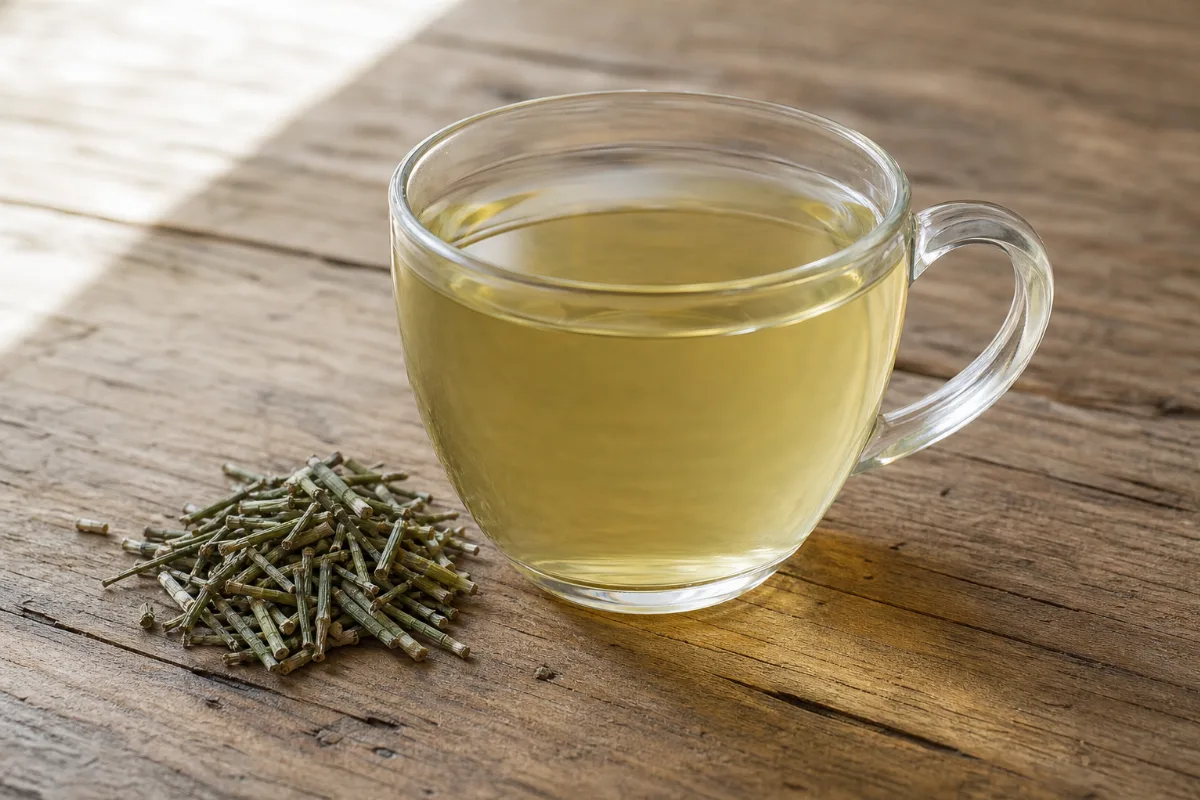
Horsetail tea is an infusion of the above-ground parts of field horsetail (Equisetum arvense). It is used traditionally as a mild diuretic. Two small trials of standardized extracts point to more urine and lower blood pressure, but trials of the tea itself are scarce. The main cautions are thiaminase (which can break down vitamin B1), toxic look-alike marsh horsetail, low sodium and potassium, and pregnancy, heart and kidney disease.
General information, not medical advice. Last substantive update · Not medically reviewed. A named clinician has not signed off on this page. How this page is made
About Horsetail Tea
Horsetail tea is an infusion of Equisetum arvense, a traditional diuretic and wound herb. Most trials used standardized extracts or ointment, not the tea. One small trial found more urine in healthy men, one trial found lower blood pressure in 58 adults with mild high blood pressure (no placebo), and one trial supports a wound ointment. Evidence for bones, hair, nails, joints and memory is lab, animal or combination-product work. Safety cautions matter: thiaminase, mix-ups with toxic marsh horsetail, low sodium and potassium, and use in pregnancy or heart and kidney disease.
What it is
Horsetail tea is made from Equisetum arvense, a non-flowering plant of the horsetail family (Equisetaceae). It reproduces by spores. The above-ground parts are the herb used in medicine. It is silica rich and contains flavonoids. Do not confuse it with marsh horsetail (Equisetum palustre), which poisons livestock and looks very alike, or with other horsetails such as giant horsetail or scouring rush.
Traditional and current uses
The EU herbal committee accepts horsetail herb only as a traditional herbal medicine, for flushing the urinary tract in minor complaints and for supportive treatment of superficial wounds. Reviews say its most widespread use worldwide is as a diuretic. It is also taken for kidney stones, inflammation, rheumatic problems and high blood pressure, and marketed for hair, nails and bones because of its silica. Most of those uses are traditional or marketing claims; we found no trial for hair, nails or bones.
What the research shows
A double-blind crossover trial gave 36 healthy men a standardized extract, placebo or hydrochlorothiazide for 4 days. The extract made more urine than placebo, about as much as the water pill, without a significant change in electrolytes. A 3-month trial in 58 adults with stage I high blood pressure compared the extract with hydrochlorothiazide: systolic fell 12.6 and diastolic 8.1 mmHg, with no placebo group. Both trials came from the same research group.
A 3% ointment lowered pain and improved healing after episiotomy in a 108-woman trial, and rat studies agree. A pilot trial showed silicon from horsetail tea is absorbed, but nobody has shown that it helps bones, hair or nails. A combination bladder product, a six-plant water-retention mixture, a pain capsule and a nail lacquer had positive results, but horsetail cannot be separated from the other ingredients.
The German Society for Rheumatology reviewed 13 herbs, horsetail included, and did not recommend any for inflammatory joint disease.
At a glance
Traditional uses history, not proof
- EU traditional herbal medicine (2016): to increase urine for flushing the urinary tract in minor complaints, and for supportive treatment of superficial wounds. Based on long use, not on proof.
- Worldwide traditional use (review): diuretic first, then kidney and urinary disease, kidney stones, inflammation, wound healing, rheumatic disease, prostatitis and high blood pressure.
- German Commission E (secondary page, not verified): swelling after injury, urinary irrigation, poorly healing wounds.
Studied for research
- Diuretic effect, low (one small trial in healthy men)
- Blood pressure, low (one 3-month trial, no placebo)
- Wound healing, low (one trial plus rat studies)
- Silicon absorption, low
- Bladder, water retention, pain and nails, very-low or insufficient (combination products)
- Bone, skin, memory, immune and DNA protection, insufficient (lab and animal work)
Main compounds
- Silicon (silica, about 10% minerals)
- Flavonol glycosides (kaempferol, quercetin)
- Other phenolic compounds
- Trace alkaloids reported on a secondary page
- Thiaminase (enzyme)
Common forms
- Tea (infusion) of the dried above-ground herb: the subject of this page
- Expressed juice and liquid extracts, some with alcohol or wine
- Standardized dried extracts (used in the human trials, not the same as tea)
- Ointment (3% in the wound trial) and cosmetic ingredients
- Combination capsules, lacquers and mixtures (cannot be credited to horsetail alone)
Research links: EU herbal monograph on Equisetum arvense herba (EMA, 2016) · PubMed search: Equisetum arvense · GBIF: Equisetum arvense L. · Diuretic trial in healthy men (2014) · Blood pressure trial (2022) · Marsh horsetail contamination of products (2022) · Research Library · Genes & Biomarkers Library
What it is and its history
- Accepted scientific name
- Equisetum arvense L.
- Naming authority
- L. (Linnaeus)
- Synonyms
- Allostelites arvense (Linnaeus) Börner; Equisetum arvense var. arvense
- Common names
- Field horsetail (English); Common horsetail (English); Horsetail herb (Equiseti herba) (English (EU monograph)); Cola de caballo (Spanish); Schachtelhalmkraut (German); Prêle (tige de) (French); Cavalinha (Portuguese); Equiseto, coda cavallina (Italian); Heermoes (Dutch); Åkerfräken (Swedish)
- Family or group
- Equisetaceae (horsetail family). Horsetails are non-flowering, spore-bearing plants related to ferns, not to the pines or grasses they resemble.
- Classification
- Plantae > Tracheophyta > Polypodiopsida > Equisetales > Equisetaceae > Equisetum > Equisetum arvense
- Native range
- Not covered in the sources we read; the genus is described as cosmopolitan (found worldwide).
- Habitat
- Not covered in the sources we read; a review says it looks very like marsh horsetail and shares habitats with it.
- What it looks like
- Roots: Not covered in the sources we read.; Stems: Not covered in the sources we read; the above-ground stems are the herb (herba).; Leaves: Not covered in the sources we read.; Flowers: None; horsetails reproduce by spores.; Fruit: None.
- Cultivation
- Not covered in the sources we read. Most horsetail herb for medicine is collected from wild plants (study on contamination).
- Harvest and processing
- The EU monograph lists comminuted herb for tea, expressed juice, aqueous, ethanol and wine extracts, and dry extracts. The European Pharmacopoeia monograph (ref. 1825) requires at least 95% Equisetum arvense and at most 5% foreign material.
- Look-alikes and adulterants
- Name: Marsh horsetail (Equisetum palustre L.); Note: Accepted species (GBIF key 2687932). Toxic to livestock because of alkaloids such as palustrine. Looks very like field horsetail and grows in similar places. In a 2022 study 26 of 34 shop products of horsetail herb contained its alkaloids.; Name: Giant horsetail (Equisetum telmateia Ehrh.); Note: Accepted species (GBIF key 2687943). A Spanish case report (title only) describes severe low sodium and low potassium after eating it.; Name: Rough horsetail or scouring rush (Equisetum hyemale L.); Note: Accepted species (GBIF key 2687927). Many lab papers use it, so check which species a study used.; Name: Other horsetails used in traditional medicine; Note: E. bogotense, E. myriochaetum, E. giganteum, E. ramosissimum and others appear in studies; they cannot be assumed to behave like E. arvense.
- Sustainability and conservation
- Not covered in the sources we read.
Photographs
Traditional use and history history, not clinical proof
| Tradition or era | Documented use | Source |
|---|---|---|
| European traditional herbal medicine (EU) | Accepted by the EU herbal committee (2008, reviewed 2016) as a traditional herbal medicine to increase urine and flush the urinary tract in minor complaints, and for supportive treatment of superficial wounds. Based on long-standing use, not on proof of effect. | s-ema-hmpc-equiseti-herba |
| German Commission E (as reported by a secondary page) | Internal use for post-traumatic or static edema and for urinary irrigation in infection or kidney gravel; external use for poorly healing wounds. The original Commission E text was not read. | s-altmeyers-equiseti-herba |
| Worldwide traditional medicine (reviews) | The most widespread traditional use is as a diuretic, then for kidney and urinary disease, kidney stones, inflammation, wound healing, rheumatic disease, prostatitis and high blood pressure. 16 species are widely used by different peoples. | p33747109 |
| Worldwide traditional medicine (genus review) | Species of Equisetum are used for genitourinary diseases, inflammatory and rheumatic problems, high blood pressure and wound healing. | p37207877 |
| Bone healing (lab paper introductions) | Horsetail preparations 'have long been used' to promote bone healing, according to 2012 lab papers' introductions. This is a statement in the papers, not a checked old source. | p22672309 |
| Wikipedia and popular claims | Claims from Wikipedia or retail sites about ancient Greek or Roman use were NOT verified and are not used. | s-search-regulatory-gaps |
Traditional use shows how it was used. It does not show that it works or is safe today.
What is inside, and how it may work
What it contains and how those compounds act in cells and animals. Laboratory and animal mechanisms are not proven effects in people.
Main compounds
| Compound | Family | Where it is concentrated | Activity studied | Level of evidence |
|---|---|---|---|---|
| Orthosilicic acid / silicon (silica) PubChem 14942 | mineral | aerial parts About 10% minerals including silicic acid and silicates (secondary page). Tea in one trial contained about 200,000 or 750,000 ug silicon per litre. | Absorbed from horsetail tea into blood; no known health effect shown. 53 10 2 | Human data |
| Kaempferol and its glycosides PubChem 5280863 | flavonol | aerial parts Flavonoid glycosides 0.2-0.9% of the herb, notably kaempferol and quercetin (secondary page). | Antioxidant in lab tests; no human trial of the compound from horsetail. 2 50 | Laboratory research |
| Quercetin and its glycosides (including isoquercitrin) PubChem 5280343 | flavonol | aerial parts See flavonoid range above. | Antioxidant in lab tests. 2 50 | Laboratory research |
| Flavonol glycosides and other phenolic compounds | flavonoids and phenolics | aerial parts Reviews say flavonol glycosides and flavonoids are the main group among 229 compounds found across the genus (genus review). | Antioxidant and anti-inflammatory activity in lab and animal work (genus review); individual compounds from E. arvense were not tested in people. 50 9 | Laboratory research |
| Palustrine (Equisetum alkaloid) PubChem 442867 | alkaloid | whole plant (marsh horsetail) 88 to 597 mg/kg dry weight of eight alkaloids in marsh horsetail samples; found in 26 of 34 horsetail herb products at 0.29-21.7 mg/kg. | Toxic to livestock in marsh horsetail. Several related alkaloids were found in marsh horsetail but not in field horsetail (2022 paper). 17 39 | Other |
| Nicotine (trace) PubChem 89594 | alkaloid | not stated Alkaloids such as nicotine are 'present in small quantities' (secondary page); no primary study read. | No effect shown at horsetail levels. 2 | Other |
| Thiaminase (enzyme) | enzyme | aerial parts (Equisetum) Activity measured in Equisetum ramosissimum (a different species): considerably higher than in alfalfa and others, with low thiamine. | Breaks down thiamine (vitamin B1). Reason for animal poisoning and for human safety concern. 34 40 | Other |
| Silicon dioxide (biogenic amorphous silica) | mineral | aerial parts Plant silica has the same structure as synthetic amorphous silica (review). | No health effect shown. 31 | Other |
Mechanisms, receptors and pathways
| Target or pathway | Gene or receptor | What was found | Level |
|---|---|---|---|
| Diuretic action (kidney) | unknown | Standardized dried extract increased urine output like hydrochlorothiazide in 36 healthy men without significant electrolyte changes. The authors say the mechanism needs more research. 12 | Human data |
| Tamm-Horsfall protein (uromodulin) | UMOD protein | An aqueous extract raised urine Tamm-Horsfall protein up to 300% in healthy volunteers and urine reduced E. coli sticking to bladder cells in the lab. 36 | Human data |
| Blood pressure | unknown | A standardized extract lowered systolic and diastolic pressure by 12.6 and 8.1 mmHg in adults with mild hypertension; mechanism not tested. 13 | Human data |
| T-cell activation | CD69, IL-2 receptor, IL-2, IFN-gamma, TNF-alpha | In human lymphocytes a standardized extract blocked T-cell growth and activation markers without killing cells. 21 | Laboratory research |
| Osteoclast formation | MEK, NF-kB, PGE2, RANKL/OPG | A hydromethanolic extract reduced human osteoclast formation in the dish; in rats with gum inflammation an extract lowered RANKL and raised OPG; in mice it preserved bone and muscle. 16 49 45 | Laboratory research |
| Bone-forming cells (osteoblasts) | ALP activity | Extracts raised osteoblast growth and ALP at moderate doses and harmed cells at 1000 ug/ml or more. 8 | Laboratory research |
| Wound repair | not studied | Ointments of 5-10% improved wound closure, new vessels and tissue regrowth in rats; a 3% ointment improved healing and pain in women after episiotomy. 42 43 4 | Animal research |
| Antioxidant effects and memory | TBARS, nitrite | Extract lowered oxidative markers in a dish and improved memory tasks in aged rats (injected). 22 | Animal research |
| Chromosome protection | cyclophosphamide damage | An ethanolic extract reduced chromosome damage from cyclophosphamide in mouse bone marrow. 29 | Animal research |
| Vitamin B1 breakdown | thiaminase | Thiaminase in Equisetum plants can destroy thiamine; shown in lab tests of a different species and in animal poisoning. 34 40 | Laboratory research |
| Skin protein enzymes (elastase) | elastase | A seven-plant complex with horsetail blocked pig and human elastase 41.0% and 50.0%. 7 | Laboratory research |
Absorption, metabolism and elimination
- Absorption
- Silicon from horsetail tea is absorbed: blood levels peaked at 2855 ug/L after the weaker tea (60 minutes) and 2498 ug/L after the stronger tea (120 minutes) in 12 men. In a 5-man crossover, about 32.4% of silicon from a horsetail-and-rosemary liquid appeared in urine within 6 hours. Absorption of flavonoids or other compounds was not studied in the papers we read.
- Distribution
- No data found.
- Metabolism
- No data found for horsetail flavonoids or alkaloids in people.
- Elimination
- Silicon is passed in urine: 109,000 and 142,000 ug in 24 hours after the two teas. Silicon did not build up over three days.
- Bioavailability
- Silicon from the weaker tea raised serum silicon significantly. No data on other compounds.
Isolated compounds versus whole extracts
Almost all human data are on whole preparations: standardized dried extracts, teas, juice and ointments. Silica, flavonoids and other single compounds have not been tested alone in people for health outcomes. Different extracts act differently: in one cell study two extracts of the same herb helped bone cells grow at moderate doses, and one of them slowed growth at 500 ug/ml and above. The nature of the active ingredient behind the diuretic or blood pressure effect is not established. Combination products (with palmitoylethanolamide, chitosan, other herbs) cannot say what horsetail adds.
Nutritional composition
Horsetail is not used as a food in the sources we read. Its silicon is absorbed from tea. We make no claim about horsetail as a food or as a mineral source.
4 low certainty3 very low certainty8 not enough evidence
What was looked at
The 15 benefits and uses checked for Horsetail Tea, each with how strong the evidence is. Tap one to open it.
- Diuretic effect (more urine)Low certainty
- Blood pressure (mild high blood pressure)Low certainty
- Urinary tract flushing, kidney gravel and urinary infectionsNot enough evidence
- Overactive bladder and leakage (combination product)Very low certainty
- Water retention and bloating (combination product)Very low certainty
- Swelling after injury or from fluid build-up (edema)Not enough evidence
- Silicon (silica) supplyLow certainty
- Bone strength and muscle (lab and animal work only)Not enough evidence
- Wound healing and pain on the skin (ointment)Low certainty
- Skin firmness and wrinkles (combination cosmetic)Not enough evidence
- Nails and hairNot enough evidence
- Joint and back pain, rheumatoid arthritisVery low certainty
- Inflammation and immune cells (lab work only)Not enough evidence
- Memory and ageing (rat study only)Not enough evidence
- Protection from chromosome damage (mouse study only)Not enough evidence
Lab markers tracked in the studies
Urine output (24-hour water balance)Urinary electrolytes (salt and potassium loss)Systolic blood pressureDiastolic blood pressureUrine Tamm-Horsfall protein (uromodulin)Daytime urinary frequency (combination product)Extracellular water (bio-impedance, combination product)Blood (serum) siliconUrine siliconJaw bone mineral density (rats)Wound healing and pain scores after episiotomyWound closure (rats)Nail Psoriasis Severity Index (combination lacquer)Pain on a 0-10 scale (combination capsule)TNF-alpha and IL-10 (inflammation signals)
What is Horsetail Tea good for?
The main proposed uses and how strong the human evidence is for each. "Low" means small or inconsistent studies, "very-low" means a single small or unclear study, and "insufficient" means there is not enough to judge because only lab or animal work, or only tradition, exists. Nothing about horsetail or its tea is rated higher than low. Ask a doctor or pharmacist about amounts.
Benefits, one by one
Each card is a research question, not a promise. Tap a goal to filter. Open a card to see the studies, doses and limits.
Diuretic effect (more urine)
Low certaintyOne small trial in 36 healthy men found a standardized horsetail extract increased urine output as much as a common water pill (hydrochlorothiazide) over 4 days, without changing salt and potassium loss. It is the main human evidence for the traditional diuretic use, and it is limited.
6 studiesStandardized dried extract of E. arvense in the trial. Amounts for pe…
Studies, doses and limits
What the trials found
In a double-blind crossover trial, 36 healthy men took a standardized dried E. arvense extract (900 mg/day), placebo (corn starch) or hydrochlorothiazide 25 mg/day, each for 4 days with a 10-day break. Urine and water balance over 24 hours showed the extract worked better than placebo and about the same as hydrochlorothiazide, without significant changes in electrolyte loss. A 2007 review of diuretic herbs named five other Equisetum species as promising and did not name Equisetum arvense; a 2021 kidney review says the diuretic effect of E. arvense was confirmed in animals and trials. A tea of a different species (Equisetum bogotense) was also tested in healthy volunteers in 1996; only the title could be read.
Results
One small acute trial points to a real diuretic effect in healthy men. It does not show benefit for anyone with swelling, kidney disease or urinary problems.
Effect sizes as reported
Diuretic effect greater than placebo and equivalent to hydrochlorothiazide; urine volumes not given in the abstract.
Why this rating
One small randomized crossover trial in healthy men with a short exposure, from the same research group that ran the blood pressure trial. No patients tested.
Form and dose studied
Standardized dried extract of E. arvense in the trial. Amounts for people are not covered here; ask a doctor or pharmacist.
Who was studied
Healthy adult men only.
Limits
No urine numbers in the abstract. Only 4 days. Not tested in women, older adults, or people on medicines. A more diuretic herb is not always a safer or better one.
Why researchers looked
Horsetail is best known as a traditional diuretic, so researchers measured urine output in healthy volunteers.
Traditional use
The EU herbal committee accepts horsetail herb as a traditional medicine to increase the amount of urine for flushing the urinary tract in minor urinary complaints. That is based on long use, not on trials.
Proposed mechanism Preliminary mechanism
How it makes more urine is not known; the trial authors say the mechanism still needs to be clarified. In a separate urine study, an aqueous extract also changed urine electrolytes in a way that suggested a diuretic effect.
A proposed mechanism does not show that the effect happens in people.
More urine can mean lower potassium or sodium over time and can interact with water pills and lithium. See the safety tab.
Blood pressure (mild high blood pressure)
Low certaintyOne 3-month trial in 58 adults with mild high blood pressure found a standardized horsetail extract lowered blood pressure about as much as hydrochlorothiazide. There was no placebo group, so the result is uncertain.
2 studiesStandardized dry E. arvense extract. Amounts for people are not cover…
Studies, doses and limits
What the trials found
In a double-blind randomized trial, 58 adults aged 25-65 with stage I high blood pressure took E. arvense standardized dry extract (900 mg/day) or hydrochlorothiazide 25 mg/day for 3 months. Systolic and diastolic pressure fell by an average of 12.6 and 8.1 mmHg in the horsetail group, to a casual average of 134.0/84.5 mmHg from 148.5/95.7. There was no significant difference from hydrochlorothiazide. Blood tests and signs of kidney, liver or blood problems showed no significant before/after change. Adverse events were 3.58% (horsetail) and 4.68% (hydrochlorothiazide).
Results
A positive result from one trial against an active drug, without a placebo group.
Effect sizes as reported
Systolic -12.6 mmHg, diastolic -8.1 mmHg (before-after in the horsetail group).
Why this rating
Single trial, no placebo group, 58 people, 3 months, mild high blood pressure only.
Form and dose studied
Standardized dry E. arvense extract. Amounts for people are not covered here; ask a doctor or pharmacist.
Who was studied
Adults 25-65 with stage I high blood pressure.
Limits
No placebo group. We found no second trial. Long-term effects, heart attacks and strokes were not measured. No blood pressure effect in people who already have normal pressure is known.
Why researchers looked
Because horsetail makes more urine, a researcher group asked if it also lowers blood pressure.
Traditional use
Traditional medicine reviews list high blood pressure among horsetail's folk uses (2021 review).
Proposed mechanism Pharmacological theory
Possibly through the diuretic effect, but the mechanism was not tested in the trial.
A proposed mechanism does not show that the effect happens in people.
Do not swap a prescribed blood pressure medicine for horsetail. Combining with other water pills could cause low potassium or low sodium.
Urinary tract flushing, kidney gravel and urinary infections
Not enough evidenceHorsetail is traditionally used to flush the urinary tract. A small study in healthy people found a horsetail extract raised a urine protein (uromodulin, or Tamm-Horsfall protein) that may help stop germs sticking to the bladder. No study has tested infections or stones in patients.
4 studiesAqueous E. arvense extract. Amounts for people are not covered here; …
Studies, doses and limits
What the trials found
Ten healthy volunteers per group took an aqueous E. arvense extract for 7 days. Urine Tamm-Horsfall protein rose significantly, up to 300% of untreated values, and urine samples reduced E. coli sticking to bladder cells in the lab. The urine did not stop E. coli growing or forming biofilm. No trial tested people with infection, kidney gravel or stones. The EU monograph says to see a doctor if fever, painful urination, spasm or blood in the urine occur.
Results
Biologically interesting but only a urine marker in healthy people.
Effect sizes as reported
Urine Tamm-Horsfall protein up to 300% of baseline (7 days).
Why this rating
No patient trial; the only human data is a marker in healthy volunteers (10 per group).
Form and dose studied
Aqueous E. arvense extract. Amounts for people are not covered here; ask a doctor or pharmacist.
Who was studied
Healthy volunteers.
Limits
A rise in a urine protein is not the same as fewer infections or stones. No placebo group is described.
Why researchers looked
European herbal practice uses horsetail to flush the urinary tract, so researchers looked for a way it might work.
Traditional use
The EU monograph accepts it as a traditional product to flush the urinary tract as an adjuvant in minor urinary complaints. Commission E, as summarised on a secondary page, lists irrigation of the urinary tract in infection or kidney gravel.
Proposed mechanism Preliminary mechanism
Tamm-Horsfall protein (uromodulin) is made in the kidney. In the lab, urine from treated volunteers reduced the sticking of a urinary E. coli strain to bladder cells.
A proposed mechanism does not show that the effect happens in people.
A urinary infection with fever or blood in the urine needs a doctor, not a herb.
Overactive bladder and leakage (combination product)
Very low certaintyA three-herb product that included horsetail stem reduced bladder frequency, night-time trips and leakage versus placebo in 150 adults. Horsetail cannot be separated from the other herbs, and the study is industry-linked.
1 studiesUrox (proprietary combination). Amounts for people are not covered he…
Studies, doses and limits
What the trials found
In a phase 2 randomized, double-blind placebo-controlled trial of 150 adults (59% women, mean age 63.5), the formula Urox (Crataeva nurvala stem bark, Equisetum arvense stem and Lindera aggregata root) was taken for 8 weeks. At week 8, day-time urinary frequency was 7.69 per day vs 10.95 with placebo; night-time visits were 2.16 vs 3.14. Urgency and incontinence were also lower and quality of life better. No side effects led to stopping.
Results
Better than placebo on every bladder measure listed, in one study of a combination product.
Effect sizes as reported
Day frequency 7.69 vs 10.95 per day; nocturia 2.16 vs 3.14 per night.
Why this rating
One trial, three-herb combination, patent holder and funder linked. The odds ratios in the abstract look extreme and should be checked in the full paper.
Form and dose studied
Urox (proprietary combination). Amounts for people are not covered here; ask a doctor or pharmacist.
Who was studied
Adults with overactive bladder or incontinence.
Limits
Horsetail's share is unknown. Run at two primary-care centres. No independent repeat found.
Why researchers looked
A company tested its three-herb bladder formula that contains horsetail.
Traditional use
Plant medicines have been used for bladder symptoms (trial introduction).
Proposed mechanism Preliminary mechanism
Not explained in the abstract.
A proposed mechanism does not show that the effect happens in people.
Anyone with new bladder symptoms, blood in urine or fever needs medical review first.
Water retention and bloating (combination product)
Very low certaintyA six-plant mixture with horsetail lowered the body's extracellular water measure in 19 women over 60 days. Bloating did not improve and there was no control group.
1 studiesSix-plant extract mixture with mannitol. Amounts for people are not c…
Studies, doses and limits
What the trials found
In an open-label study, 19 women with extracellular water over 45% took a mixture of ash (Fraxinus ornus), pineapple juice concentrate, birch, horsetail, nettle and Pilosella extracts plus mannitol. Extracellular water fell by 1.97% at 30 days and 2.30% at 60 days (p<0.01). The bloating questionnaire did not change at 60 days (p=0.422).
Results
A small drop in a body-water measure, with no change in bloating.
Effect sizes as reported
ECW -1.97% (30 days), -2.30% (60 days); bloating not significant.
Why this rating
19 women, no control group, six plants plus mannitol.
Form and dose studied
Six-plant extract mixture with mannitol. Amounts for people are not covered here; ask a doctor or pharmacist.
Who was studied
Women with high extracellular water.
Limits
Open label and uncontrolled. Horsetail cannot be singled out.
Why researchers looked
A mixture with horsetail and other 'drainage' herbs was tried in women with high body water.
Traditional use
Traditional use as a diuretic.
Proposed mechanism Pharmacological theory
Not explained.
A proposed mechanism does not show that the effect happens in people.
See the safety tab on diuretic cautions.
Swelling after injury or from fluid build-up (edema)
Not enough evidenceHorsetail is listed by Germany's Commission E for swelling after injury, but we found no trial of it for edema.
2 studiesNo data.
Studies, doses and limits
What the trials found
No trial of horsetail for edema after injury or for leg swelling was found in PubMed. The EU monograph does not list edema and says that for the urinary use horsetail should not be used where reduced fluid intake is recommended, for example severe heart or kidney disease.
Results
Tradition only.
Effect sizes as reported
No data.
Why this rating
No human trial.
Form and dose studied
No data.
Limits
Nothing to check against. Swelling can signal heart, kidney or vein disease and needs a doctor.
Why researchers looked
A traditional use listed in the German monograph.
Traditional use
The Commission E monograph, as summarised on a secondary page, lists 'post-traumatic or static edema'. We did not read the Commission E text itself.
Proposed mechanism Pharmacological theory
Any diuretic effect (see above) is the proposed reason; it was not tested for edema.
A proposed mechanism does not show that the effect happens in people.
Do not use horsetail for swelling from heart or kidney problems without a doctor's advice.
Silicon (silica) supply
Low certaintyHorsetail tea is very rich in silicon, and a small trial in 12 men showed the silicon is absorbed into the blood and passed in urine. Whether this does anything for bones, hair or nails has not been tested in people.
5 studiesHorsetail tea of known silicon content in the trial. Amounts for peop…
Studies, doses and limits
What the trials found
In a randomized three-arm pilot trial, 12 healthy men drank 1000 mL of horsetail tea (about 200,000 or 750,000 ug silicon/L) or low-silicon water on three days. Blood silicon peaked at 2855 and 2498 ug/L after 60 and 120 minutes, did not build up over three days, and was higher in urine after the stronger tea. The stronger tea caused diarrhoea in 4 of 12 men. In a 5-man crossover study, about 32.4% of the silicon from a horsetail-and-rosemary liquid with orthosilicic acid showed up in urine over 6 hours, similar to two other silicon products. A 2022 review reports that natural plant silica cannot be told apart from synthetic amorphous silica by structure (authors work for a silica maker).
Results
Silicon from horsetail tea gets into the blood. That is all the human data show.
Effect sizes as reported
Blood silicon peak 2855 ug/L (tea 1) vs about 294 ug/L with low-silicon water; urine silicon 109,000 vs 142,000 ug/24 h (tea 1 vs tea 2).
Why this rating
Two tiny pilot studies in healthy men; the second used a combination product. No outcome beyond absorption.
Form and dose studied
Horsetail tea of known silicon content in the trial. Amounts for people are not covered here; ask a doctor or pharmacist.
Who was studied
Healthy men.
Limits
Absorption is not benefit. No hair, nail or bone outcome was measured.
Why researchers looked
Horsetail is known as a plant rich in silica, so researchers measured how much silicon the body takes up.
Traditional use
Commission E, as summarised on a secondary page, notes about 10% minerals including silicic acid and silicates. Traditional use for bones, hair and nails is common but we found no old source we could verify.
Proposed mechanism Preliminary mechanism
The silicon is taken up from the gut and passed in urine. Silica in urine did not match the rise in urine Tamm-Horsfall protein in another study.
A proposed mechanism does not show that the effect happens in people.
The stronger tea caused diarrhoea in 4 of 12 men.
Bone strength and muscle (lab and animal work only)
Not enough evidenceHorsetail extracts changed bone cells in dishes and kept bone and muscle better in rats and mice. No trial in people has tested bone density or fractures.
7 studiesHydromethanolic, hydroalcoholic and other extracts in the lab. Amount…
Studies, doses and limits
What the trials found
No trial of horsetail for bone density, osteoporosis or fractures in people was found. In young rats, 120 mg/kg of an extract for 30 days raised jaw bone density versus control. In a rat osteoporosis model a nutrient mix plus horsetail acted like raloxifene, but the nutrient mix alone also worked. In mice, 500 mg/kg/day of a standardized extract for 3 months kept muscle mass and bone structure. In human cells, a hydromethanolic extract cut osteoclast formation from 0.004 mg/ml, and another set of extracts raised bone-cell growth at 50-500 ug/ml but harmed cells at 1000 ug/ml or more. A four-ingredient formula with horsetail lowered inflammation markers in rats.
Results
Consistent signals in cells and rodents, none in people.
Effect sizes as reported
Mandibular bone density higher at 120 mg/kg (rats); osteoclast formation reduced from 0.004 mg/ml (cells).
Why this rating
Cell and rodent work only, with different extracts and doses.
Form and dose studied
Hydromethanolic, hydroalcoholic and other extracts in the lab. Amounts for people are not covered here; ask a doctor or pharmacist.
Who was studied
Rats, mice and human cells in dishes.
Limits
Some lab doses harmed cells at high levels. Rodent doses cannot be turned into doses for people.
Why researchers looked
Horsetail is traditionally linked to bone healing and it is rich in silica, so researchers tested bone cells and animals.
Traditional use
A 2012 lab paper states that horsetail preparations have long been used to promote bone healing (paper introduction).
Proposed mechanism Laboratory research
Human bone-breakdown cells (osteoclasts) formed less in the dish. Some extracts boosted bone-building cells at moderate doses and harmed them at high doses. In mice an extract slowed age-related bone and muscle loss, and in rats with gum inflammation it improved the RANKL/OPG balance.
A proposed mechanism does not show that the effect happens in people.
Someone with osteoporosis should not replace prescribed treatment with horsetail.
Wound healing and pain on the skin (ointment)
Low certaintyA 3% horsetail ointment lowered pain and speeded healing after episiotomy in a 108-woman trial. In rats, 5-10% ointments closed wounds faster. This is the best human result outside the urinary tract, but it is one trial.
4 studies3% ointment in the trial; 5% and 10% ointments in rats. Amounts for p…
Studies, doses and limits
What the trials found
In a double-blind placebo-controlled trial in Iran, 108 first-time mothers used 3% E. arvense ointment (54) or placebo ointment (54) on an episiotomy wound for 10 days. Wound scores and pain were lower with horsetail at about day 5 and day 10. The adjusted pain score difference was -2.3 (95% CI -3.2 to -1.3) and -3.8 (95% CI -4.7 to -3.0). In rats, 5% and 10% ointments closed skin wounds faster than controls, including wounds in diabetic rats (99.71% and 99.93% closed at day 14).
Results
One human trial and two rat studies point the same way. We found no second human trial.
Effect sizes as reported
Pain difference -2.3 and -3.8 points (visual analogue scale); rat wound closure up to 99.96% at day 14.
Why this rating
One single-centre trial of 108 women, plus animal work. The abstract's painkiller counts appear to contradict its own conclusion.
Form and dose studied
3% ointment in the trial; 5% and 10% ointments in rats. Amounts for people are not covered here; ask a doctor or pharmacist.
Who was studied
Women after episiotomy; rats.
Limits
Only episiotomy wounds in humans. The EU monograph says to see a doctor if signs of skin infection appear.
Why researchers looked
The EU monograph lists a traditional use for supportive treatment of superficial wounds, so researchers tested ointments.
Traditional use
EU traditional use: a decoction for impregnated dressings and irrigation, or the expressed juice in water.
Proposed mechanism Preliminary mechanism
Not explained in the human trial; in rats the ointments increased tissue regrowth and new blood vessel growth.
A proposed mechanism does not show that the effect happens in people.
Allergic reactions such as rash and face swelling have been reported with horsetail products (EU monograph). Do not put on an infected or deep wound without advice.
Skin firmness and wrinkles (combination cosmetic)
Not enough evidenceA 1998 cosmetic study of a seven-plant complex that included horsetail reported better skin elasticity and fewer wrinkles. Horsetail cannot be singled out.
2 studies5% plant complex in a cosmetic. Amounts for people are not covered he…
Studies, doses and limits
What the trials found
A 5% plant complex (lady's thistle, lady's mantle, horsetail and germinated seeds) blocked pig and human elastase by 41.0% and 50.0% in the lab. A cosmetic with 5% of the complex improved skin elasticity, and wrinkles fell by 36.7% on image analysis. The abstract does not say how many volunteers took part or whether there was a control. A 2026 expert panel judged horsetail-derived ingredients safe in cosmetics at current use levels.
Results
Positive but cannot be tied to horsetail.
Effect sizes as reported
Elastase inhibition 41.0% / 50.0%; wrinkles -36.7%.
Why this rating
1998 cosmetic study, combination, volunteer numbers unknown.
Form and dose studied
5% plant complex in a cosmetic. Amounts for people are not covered here; ask a doctor or pharmacist.
Who was studied
Unstated volunteers.
Limits
Combination product, old paper.
Why researchers looked
Plant complexes that block skin-protein-breaking enzymes (elastase) were tested for anti-ageing creams.
Proposed mechanism Laboratory research
The complex blocked elastase in lab tests.
A proposed mechanism does not show that the effect happens in people.
The safety panel statement is about cosmetics only.
Nails and hair
Not enough evidenceHorsetail is popular for hair and nails, but we found no trial of horsetail alone for either. The one nail trial tested a combination lacquer in people with nail psoriasis.
2 studiesCombination lacquer applied to nails. Amounts for people are not cove…
Studies, doses and limits
What the trials found
In a controlled but not randomized trial, 30 adults with mild to moderate nail psoriasis (28 analysed) used a water-soluble nail lacquer containing hydroxypropyl chitosan, horsetail extract and methylsulphonylmethane daily for 24 weeks on left-hand nails; right-hand nails were the untreated control. NAPSI fell 65% from baseline, pitting 72%, onycholysis 63%, with no change in untreated nails and no adverse reactions. No trial of horsetail for hair loss, hair thickness or brittle nails was found.
Results
A combination lacquer improved psoriatic nails; nothing tests horsetail for ordinary hair or nail health.
Effect sizes as reported
NAPSI -65% (baseline 2.83); pitting -72%.
Why this rating
One small non-randomized, unblinded trial of a combination lacquer in psoriasis; no study of horsetail alone.
Form and dose studied
Combination lacquer applied to nails. Amounts for people are not covered here; ask a doctor or pharmacist.
Who was studied
Adults with nail psoriasis.
Limits
Not blinded and cannot be tied to horsetail. Psoriasis is different from brittle nails.
Why researchers looked
Horsetail's silica content is the reason it is marketed for hair and nails.
Traditional use
No traditional source for this use was verified.
Proposed mechanism Pharmacological theory
Silica supply is the proposed link; not shown to reach hair or nails.
A proposed mechanism does not show that the effect happens in people.
Horsetail tea or pills have not been shown to help hair or nails.
Joint and back pain, rheumatoid arthritis
Very low certaintyTwo small studies of horsetail products for pain or arthritis were positive but weak, and the German rheumatology society says none of the 13 herbs it reviewed, horsetail included, can be recommended for inflammatory joint disease.
5 studiesCombination capsule; unspecified 'mixture'. Amounts for people are no…
Studies, doses and limits
What the trials found
In an 8-week open single-arm study, 50 adults with chronic low back pain took a supplement of 600 mg palmitoylethanolamide plus 300 mg horsetail; pain scores fell 3.8 points (NRS), quality of life rose 35%, and no adverse events were reported. Palmitoylethanolamide is itself a pain ingredient, there was no control group, and authors include company staff. In a 60-person randomized trial from China, a 'horsetail mixture' had an 80% effective rate vs 16.67% in controls in rheumatoid arthritis, but the abstract does not say what was in the mixture, the control, the dose or the length. The 2026 German rheumatology guidance found only lab and animal evidence for the 13 plants it covered, including horsetail.
Results
Weak positive reports, one without control and one poorly described. The expert guidance does not support use for inflammatory joint disease.
Effect sizes as reported
Pain -3.8 NPRS points (combination, single-arm); effective rate 80% vs 16.67% (undefined mixture).
Why this rating
One uncontrolled combination study and one poorly reported mixture trial.
Form and dose studied
Combination capsule; unspecified 'mixture'. Amounts for people are not covered here; ask a doctor or pharmacist.
Who was studied
Adults with chronic low back pain or rheumatoid arthritis.
Limits
Cannot separate horsetail from other ingredients; reporting gaps.
Why researchers looked
Horsetail is traditionally used for inflammation and rheumatic problems.
Traditional use
Rheumatic complaints are among its listed folk uses (2021 review).
Proposed mechanism Laboratory research
Lab studies show horsetail extract blocks T-cell activation and lowers IFN-gamma, TNF-alpha and IL-2 production.
A proposed mechanism does not show that the effect happens in people.
Never replace prescribed arthritis treatment with horsetail. Horsetail's lab effect on T cells is a theoretical concern with immune medicines.
Inflammation and immune cells (lab work only)
Not enough evidenceIn dishes, a standardized horsetail extract calmed human T cells. This has not been tested in people.
1 studiesStandardized extract in cells. Amounts for people are not covered her…
Studies, doses and limits
What the trials found
A 2014 lab study found a standardized E. arvense extract inhibited T-cell proliferation in a dose-dependent way, compared with cyclosporine A. No human trial of horsetail for inflammation was found.
Results
A lab signal consistent with tradition.
Effect sizes as reported
Dose-dependent inhibition (numbers not in abstract).
Why this rating
One lab study.
Form and dose studied
Standardized extract in cells. Amounts for people are not covered here; ask a doctor or pharmacist.
Who was studied
Human lymphocytes in a dish.
Limits
Cell studies do not predict clinical effect.
Why researchers looked
European tradition treats inflammatory disorders with horsetail.
Traditional use
Traditional use for inflammatory disorders (paper introduction).
Proposed mechanism Laboratory research
The extract reduced T-cell growth, CD69 and IL-2 receptor signals, IL-2, IFN-gamma and TNF-alpha without killing the cells.
A proposed mechanism does not show that the effect happens in people.
The same lab finding is why people on immune-suppressing medicines should ask a doctor first.
Memory and ageing (rat study only)
Not enough evidenceIn one old rat study, injected horsetail extract improved memory tasks. No human has been tested.
1 studiesHydroalcoholic stem extract, injected. Amounts for people are not cov…
Studies, doses and limits
What the trials found
In aged rats, a hydroalcoholic extract of horsetail stems at 50 mg/kg injected into the abdomen improved short- and long-term memory tasks, with no toxicity signs. No human data.
Results
One rodent study, 2005.
Effect sizes as reported
Better performance (numbers not in abstract).
Why this rating
One animal study using injection.
Form and dose studied
Hydroalcoholic stem extract, injected. Amounts for people are not covered here; ask a doctor or pharmacist.
Who was studied
Aged rats.
Limits
Injection route; unreplicated.
Why researchers looked
Researchers looked for antioxidant extracts that could help memory in old rats.
Proposed mechanism Animal research
Lower oxidative markers (TBARS, nitrite) in the dish.
A proposed mechanism does not show that the effect happens in people.
None.
Protection from chromosome damage (mouse study only)
Not enough evidenceIn mice, a horsetail extract reduced chromosome damage from a chemotherapy drug. This is not evidence for use during cancer treatment.
1 studiesEthanolic extract in mice. Amounts for people are not covered here; a…
Studies, doses and limits
What the trials found
In mice given cyclophosphamide, an ethanolic extract was not cytotoxic or mutagenic itself and lowered chromosome damage before, during and after the drug. Nothing in people.
Results
One mouse study.
Effect sizes as reported
Protective effect (numbers not in abstract).
Why this rating
One animal study.
Form and dose studied
Ethanolic extract in mice. Amounts for people are not covered here; ask a doctor or pharmacist.
Who was studied
Mice.
Limits
An antioxidant herb could in theory interfere with chemotherapy; this was not tested.
Why researchers looked
Researchers tested whether horsetail extract protects DNA.
Proposed mechanism Animal research
Not explained in the abstract.
A proposed mechanism does not show that the effect happens in people.
People having chemotherapy should ask their oncology team before any herb.
Connections to the rest of health
How Horsetail Tea connects to the rest of our health knowledge graph. Every link says what kind of connection it is. A safety link (for example to the liver) is a warning, not a benefit. A study that merely mentions a topic never creates a benefit link.
Explore every connection: goals, body systems, organs, symptoms, genes
A. Wellness goals
| Connected to | Kind of connection | Evidence status | Context | Studies |
|---|---|---|---|---|
| Blood Pressure Support | Demonstrated clinical effect | Low certainty | Diuretic effect (more urine): One small trial in 36 healthy men found a standardized horsetail extract increased urine output as much as a common water pill (hydrochlorothiazide) over 4 days, without changing salt and potassium loss. It is the main human evidence for the traditional diuretic use, and it is limited. Blood pressure (mild high blood pressure): One 3-month trial in 58 adults with mild high blood pressure found a standardized horsetail extract lowered blood pressure about as much as hydrochlorothiazide. There was no placebo group, so the result is uncertain. | 12 54 9 30 36 18 13 |
| Heart Health | Demonstrated clinical effect | Low certainty | Blood pressure (mild high blood pressure): One 3-month trial in 58 adults with mild high blood pressure found a standardized horsetail extract lowered blood pressure about as much as hydrochlorothiazide. There was no placebo group, so the result is uncertain. | 13 9 |
| Joint Support | Preliminary mechanism | Not enough evidence | Bone strength and muscle (lab and animal work only): Horsetail extracts changed bone cells in dishes and kept bone and muscle better in rats and mice. No trial in people has tested bone density or fractures. | 3 28 16 8 45 49 33 |
| Healthy Aging | Preliminary mechanism | Not enough evidence | Bone strength and muscle (lab and animal work only): Horsetail extracts changed bone cells in dishes and kept bone and muscle better in rats and mice. No trial in people has tested bone density or fractures. | 3 28 16 8 45 49 33 |
| Healthy Skin | Demonstrated clinical effect | Low certainty | Wound healing and pain on the skin (ointment): A 3% horsetail ointment lowered pain and speeded healing after episiotomy in a 108-woman trial. In rats, 5-10% ointments closed wounds faster. This is the best human result outside the urinary tract, but it is one trial. | 4 42 43 18 |
| Healthy Skin | Preliminary mechanism | Not enough evidence | Skin firmness and wrinkles (combination cosmetic): A 1998 cosmetic study of a seven-plant complex that included horsetail reported better skin elasticity and fewer wrinkles. Horsetail cannot be singled out. | 7 25 |
| Hair Support | Potential benefit | Not enough evidence | Nails and hair: Horsetail is popular for hair and nails, but we found no trial of horsetail alone for either. The one nail trial tested a combination lacquer in people with nail psoriasis. | 11 53 |
| Healthy Skin | Potential benefit | Not enough evidence | Nails and hair: Horsetail is popular for hair and nails, but we found no trial of horsetail alone for either. The one nail trial tested a combination lacquer in people with nail psoriasis. | 11 53 |
| Joint Support | Potential benefit | Very low certainty | Joint and back pain, rheumatoid arthritis: Two small studies of horsetail products for pain or arthritis were positive but weak, and the German rheumatology society says none of the 13 herbs it reviewed, horsetail included, can be recommended for inflammatory joint disease. | 23 24 26 21 9 |
| Inflammation Balance | Potential benefit | Very low certainty | Joint and back pain, rheumatoid arthritis: Two small studies of horsetail products for pain or arthritis were positive but weak, and the German rheumatology society says none of the 13 herbs it reviewed, horsetail included, can be recommended for inflammatory joint disease. | 23 24 26 21 9 |
| Inflammation Balance | Preliminary mechanism | Not enough evidence | Inflammation and immune cells (lab work only): In dishes, a standardized horsetail extract calmed human T cells. This has not been tested in people. | 21 |
| Immune Support | Preliminary mechanism | Not enough evidence | Inflammation and immune cells (lab work only): In dishes, a standardized horsetail extract calmed human T cells. This has not been tested in people. | 21 |
| Memory Support | Preliminary mechanism | Not enough evidence | Memory and ageing (rat study only): In one old rat study, injected horsetail extract improved memory tasks. No human has been tested. | 22 |
| Longevity | Preliminary mechanism | Not enough evidence | Protection from chromosome damage (mouse study only): In mice, a horsetail extract reduced chromosome damage from a chemotherapy drug. This is not evidence for use during cancer treatment. | 29 |
B. Body systems
| Connected to | Kind of connection | Evidence status | Context | Studies |
|---|---|---|---|---|
| Urinary system | Traditional use | Low certainty | Traditional urinary flushing; one small trial shows more urine in healthy men. Preparation or compound: Standardized extract, tea |
12 18 |
| Urinary system | Adverse effect or risk | Very low certainty | Low sodium and potassium in case reports (titles only). Preparation or compound: Horsetail juice or tea |
20 35 |
| Liver | Adverse effect or risk | Very low certainty | One liver injury case report found by title only; not seen in trials. Preparation or compound: Horsetail product |
27 |
| Nervous system | Adverse effect or risk | Not enough evidence | Vitamin B1 depletion is a theory; marsh horsetail poisons livestock. Preparation or compound: Thiaminase (theory), marsh horsetail alkaloids |
40 17 |
| Reproductive system | Contraindication | Not enough evidence | EU says not recommended in pregnancy and lactation. Preparation or compound: Horsetail products |
18 |
| Immune system | Drug or supplement interaction | Not enough evidence | Lab T-cell inhibition could matter with immune medicines; untested. Preparation or compound: Standardized extract (cells) |
21 |
| Cardiovascular system | Drug or supplement interaction | Not enough evidence | Possible low potassium and sodium; theory. Preparation or compound: Horsetail with water pills or heart medicines |
13 35 |
| Cardiovascular system | Demonstrated clinical effect | Low certainty | Lowered blood pressure in one trial of 58 adults, without a placebo group. Preparation or compound: Standardized dry extract |
13 |
| Skin | Demonstrated clinical effect | Low certainty | Better healing and pain after episiotomy in one trial of 108 women. Preparation or compound: 3% ointment |
4 |
| Urinary System | Biological association | Low certainty | Studied for: Diuretic effect (more urine) Studied for: Urinary tract flushing, kidney gravel and urinary infections | 12 54 9 30 36 18 2 46 44 |
| Cardiovascular System | Biological association | Low certainty | Studied for: Blood pressure (mild high blood pressure) Studied for: Swelling after injury or from fluid build-up (edema) | 13 9 2 18 |
| Musculoskeletal System | Biological association | Low certainty | Studied for: Silicon (silica) supply Studied for: Bone strength and muscle (lab and animal work only) | 53 10 31 2 36 3 28 16 8 45 49 33 23 24 26 21 9 |
| Integumentary System | Biological association | Low certainty | Studied for: Wound healing and pain on the skin (ointment) Studied for: Skin firmness and wrinkles (combination cosmetic) | 4 42 43 18 7 25 11 53 |
| Immune System | Biological association | Not enough evidence | Studied for: Inflammation and immune cells (lab work only) Studied for: Protection from chromosome damage (mouse study only) | 21 29 |
| Nervous System | Biological association | Not enough evidence | Studied for: Memory and ageing (rat study only) | 22 |
I. Biomarkers
| Connected to | Kind of connection | Evidence status | Context | Studies |
|---|---|---|---|---|
| Urine output (24-hour water balance) | Biological association | Low certainty | Measured in trials: raised. A lab change is not the same as a health benefit. | 12 |
| Urinary electrolytes (salt and potassium loss) | Biological association | Low certainty | Measured in trials: no-change. A lab change is not the same as a health benefit. | 12 36 |
| Systolic blood pressure | Biological association | Low certainty | Measured in trials: lowered. A lab change is not the same as a health benefit. | 13 |
| Diastolic blood pressure | Biological association | Low certainty | Measured in trials: lowered. A lab change is not the same as a health benefit. | 13 |
| Urine Tamm-Horsfall protein (uromodulin) | Biological association | Very low certainty | Measured in trials: raised. A lab change is not the same as a health benefit. | 36 |
| Daytime urinary frequency (combination product) | Biological association | Very low certainty | Measured in trials: lowered. A lab change is not the same as a health benefit. | 46 |
| Extracellular water (bio-impedance, combination product) | Biological association | Very low certainty | Measured in trials: lowered. A lab change is not the same as a health benefit. | 44 |
| Blood (serum) silicon | Biological association | Low certainty | Measured in trials: raised. A lab change is not the same as a health benefit. | 53 |
| Urine silicon | Biological association | Low certainty | Measured in trials: raised. A lab change is not the same as a health benefit. | 53 10 |
| Jaw bone mineral density (rats) | Biological association | Not enough evidence | Measured in trials: raised. A lab change is not the same as a health benefit. | 3 |
| Wound healing and pain scores after episiotomy | Biological association | Low certainty | Measured in trials: lowered. A lab change is not the same as a health benefit. | 4 |
| Wound closure (rats) | Biological association | Not enough evidence | Measured in trials: raised. A lab change is not the same as a health benefit. | 42 43 |
| Nail Psoriasis Severity Index (combination lacquer) | Biological association | Very low certainty | Measured in trials: lowered. A lab change is not the same as a health benefit. | 11 |
| Pain on a 0-10 scale (combination capsule) | Biological association | Very low certainty | Measured in trials: lowered. A lab change is not the same as a health benefit. | 23 |
| TNF-alpha and IL-10 (inflammation signals) | Biological association | Not enough evidence | Measured in trials: mixed. A lab change is not the same as a health benefit. | 24 |
J. Genes, receptors and enzymes
| Connected to | Kind of connection | Evidence status | Context | Studies |
|---|---|---|---|---|
| UMOD (Tamm-Horsfall protein / uromodulin) | Preliminary mechanism | Human | Urine concentration rose after an aqueous extract in healthy volunteers. | 36 |
| Thiaminase | Preliminary mechanism | Other | Present in Equisetum; can destroy thiamine. | 34 |
| Elastase | Preliminary mechanism | In vitro | Blocked by a plant complex that includes horsetail. | 7 |
K. Biological pathways
| Connected to | Kind of connection | Evidence status | Context | Studies |
|---|---|---|---|---|
| RANKL/OPG | Preliminary mechanism | Animal | Extract changed the ratio in rats and cells. | 49 33 |
| NF-kB | Preliminary mechanism | In vitro | Reduced in cells and mice with extracts. | 45 49 |
| IL-2, IFN-gamma, TNF-alpha | Preliminary mechanism | In vitro | Lower in stimulated human T cells. | 21 |
L. Active compounds
| Connected to | Kind of connection | Evidence status | Context | Studies |
|---|---|---|---|---|
| Orthosilicic acid / silicon (silica) | Biological association | Human | Absorbed from horsetail tea into blood; no known health effect shown. Preparation or compound: aerial parts |
53 10 2 |
| Kaempferol and its glycosides | Biological association | In vitro | Antioxidant in lab tests; no human trial of the compound from horsetail. Preparation or compound: aerial parts |
2 50 |
| Quercetin and its glycosides (including isoquercitrin) | Biological association | In vitro | Antioxidant in lab tests. Preparation or compound: aerial parts |
2 50 |
| Flavonol glycosides and other phenolic compounds | Biological association | In vitro | Antioxidant and anti-inflammatory activity in lab and animal work (genus review); individual compounds from E. arvense were not tested in people. Preparation or compound: aerial parts |
50 9 |
| Palustrine (Equisetum alkaloid) | Biological association | Other | Toxic to livestock in marsh horsetail. Several related alkaloids were found in marsh horsetail but not in field horsetail (2022 paper). Preparation or compound: whole plant (marsh horsetail) |
17 39 |
| Nicotine (trace) | Biological association | Other | No effect shown at horsetail levels. | 2 |
| Thiaminase (enzyme) | Biological association | Other | Breaks down thiamine (vitamin B1). Reason for animal poisoning and for human safety concern. Preparation or compound: aerial parts (Equisetum) |
34 40 |
| Silicon dioxide (biogenic amorphous silica) | Biological association | Other | No health effect shown. Preparation or compound: aerial parts |
31 |
Each connection is stored with the ingredient, the connected record, the kind of connection, the evidence status, the supporting studies, the preparation or compound involved, and a review date (last reviewed October 25, 2026).
Evidence at a glance: what changed in 15 lab markers
Tap a number to show only those markers. Counts are markers, not people.
The evidence
The research centre for Horsetail Tea. Every record here was checked against PubMed or the publisher's page; we never list a study we have not verified.
Evidence by outcome
Bars show how many studies we found for each outcome, not how well it works. People are added up across trials only (reviews are not added, to avoid double counting).
How we rate evidence
High certainty
Several well-run trials or reviews agree; further research is unlikely to change the picture much.
Moderate certainty
Good trials point the same way, but some doubt remains.
Low certainty
Small, short or inconsistent trials. The finding could change with better research.
Very low certainty
Very little or very weak human data. Treat as a possibility only.
Mixed findings
Trials or reviews disagree with each other.
Not enough evidence
Not enough human research to say either way.
Evidence against
Good research found no benefit, or found harm.
We take the reviewers' own risk-of-bias and GRADE statements where they exist, and otherwise judge from study size, design, consistency, directness and whether a product matches what is sold. Many publications do not make evidence high. Method note: We searched PubMed for Equisetum and horsetail, read the full EU herbal monograph (2016), checked plant names in GBIF and NCBI Taxonomy and compounds in PubChem, and read abstracts only for studies. Several case reports and letters were read by title only. Not verified: LiverTox, German Commission E original, NCCIH, LactMed, FDA and WHO. Certainty ratings are the compiler's own reading, not formal grades. No study is cited that we could not verify.
Study library: every study we checked 54
| Study | Design | People | Product, dose, length | Result |
|---|---|---|---|---|
| Agustìn-Ubide 2004 Diagnostic approach to anaphylaxis by carrot, related vegetables and horsetail (Equisetum arvense) in a homemaker. Allergy · PMID 15180768 · DOI |
Case report |
1 One woman (homemaker) |
Carrot, related vegetables and horsetail (Equisetum arvense) Not available Not available |
Only the title and citation could be verified. The title describes a severe allergic reaction (anaphylaxis) to carrot, related vegetables and horsetail in one woman. Methods, limits and fundingOutcomes: Anaphylaxis (per title) Limitations: Letter without an abstract; route and details unknown. Read: summary-only |
| Altmeyers Encyclopedia 2024 Equiseti herba (Altmeyers Encyclopedia, summary of the German Commission E monograph) altmeyers.org · Source |
Other other |
Secondary encyclopedia page | Equiseti herba |
Reports the Commission E indications as internal use for post-traumatic or static edema and for irrigation of the urinary tract in infection or kidney gravel, and external use for poorly healing wounds. Lists about 10% minerals including silicic acid and silicates, flavonoid glycosides 0.2-0.9% (kaempferol, quercetin), and alkaloids in small amounts, such as nicotine. Warns about confusion with other horsetails such as swamp horsetail, which contains much more toxic alkaloids. Advises at least 2 litres of extra fluid a day during irrigation therapy. Methods, limits and fundingLimitations: A secondary summary; the original Commission E text was not opened, so the edema wording and the 'not for edema from heart or kidney weakness' exclusion are NOT verified. Read: summary-only |
| Arbabzadegan 2019 Effect of equisetum arvense extract on bone mineral density in Wistar rats via digital radiography. Caspian J Intern Med · PMID 31363396 · DOI |
Animal research animal |
50 50 young Wistar rats (25 male, 25 female), 5 groups |
Equisetum arvense extract 60, 90 or 120 mg/kg in the diet 30 days · vs Control and calcium plus vitamin D |
Serum calcium and phosphorus did not differ. Mandible bone density was higher with 120 mg/kg than control (p<0.01). The calcium plus vitamin D group had higher vitamin D. Higher mandibular BMD at 120 mg/kg Methods, limits and fundingOutcomes: Jaw bone mineral density (digital radiography); serum calcium, vitamin D, phosphorus Limitations: Young rats, 30 days, jaw bone only, not osteoporosis. Read: abstract |
| Asgharikhatooni 2015 The effect of equisetum arvense (horse tail) ointment on wound healing and pain intensity after episiotomy: a randomized placebo-controlled trial. Iran Red Crescent Med J · PMID 26019907 · DOI |
Controlled trial |
108 108 first-time mothers after episiotomy (54 horsetail, 54 placebo) |
3% Equisetum arvense ointment Ointment applied to the wound (amount not given in abstract) 10 days · vs Placebo ointment |
Healing and pain scores were lower (better) in the horsetail group at day 5 and day 10. Adjusted pain difference -2.3 (95% CI -3.2 to -1.3) at about day 5 and -3.8 (95% CI -4.7 to -3.0) at about day 10. Painkiller tablets used: 6.8 (control) vs 11.6 (horsetail) per the abstract. Pain difference -2.3 and -3.8 points (VAS) at days 5 and 10 (-3.2 to -1.3 (day 5); -4.7 to -3.0 (day 10)) Methods, limits and fundingOutcomes: Wound healing (REEDA scale), pain (visual analogue scale), painkiller use, adverse events Limitations: Single centre in Iran. The abstract's painkiller numbers appear reversed in its own wording (more tablets listed for the horsetail group), so we do not rely on them. No adverse-event numbers in the abstract. Read: abstract |
| Baracho 2009 Study of acute hepatotoxicity of Equisetum arvense L. in rats. Acta Cir Bras · PMID 20011829 · DOI |
Animal research animal |
50 50 Wistar rats, four groups |
Equisetum arvense L. 30, 50 and 100 mg/kg 14 days · vs Water control |
No change in liver enzymes and liver structure was preserved. No liver changes Methods, limits and fundingOutcomes: Liver enzymes (TGO, TGP, FA, DHL, GT-gamma); liver tissue Limitations: Rats, 14 days; authors say chronic effects still need study. Read: abstract |
| Bates 2021 Hyponatremia Secondary to Decreased Oral Intake and SIADH and Possibly Exacerbated by Horsetail (Equisetum arvense). Can J Hosp Pharm · PMID 34602627 · DOI |
Case report |
1 Case report; details not available |
Horsetail (Equisetum arvense) Not available Not available |
Only the title and citation could be verified. The title says low blood sodium was due to poor intake and SIADH and possibly made worse by horsetail. Methods, limits and fundingOutcomes: Low blood sodium (per title) Limitations: No abstract; the title itself says horsetail was only a possible contributor. Read: summary-only |
| Benaiges 1998 Study of the refirming effect of a plant complex. Int J Cosmet Sci · PMID 18505506 · DOI |
Other in-vitro |
Lab enzymes and a cosmetic skin test (number of volunteers not stated in abstract) | Plant complex of lady's thistle, lady's mantle (Alchemilla), horsetail (Equisetum arvense) and germinated seeds, in a 5% cosmetic formulation 5% complex in a cosmetic formulation |
The complex blocked elastase about 41.0% (pig) and 50.0% (human leukocyte enzyme). A cosmetic with 5% of the complex improved skin elasticity, and wrinkles fell 36.7% on image analysis. Elastase inhibition 41.0% / 50.0%; wrinkles -36.7% Methods, limits and fundingOutcomes: Elastase inhibition in vitro; skin elasticity (Cutometer); wrinkle image analysis Limitations: Old paper, combination of seven plants, number of volunteers not given, no control described in the abstract. Cannot be linked to horsetail alone. Read: abstract |
| Bessa Pereira 2012 Equisetum arvense hydromethanolic extracts in bone tissue regeneration: in vitro osteoblastic modulation and antibacterial activity. Cell Prolif · PMID 22672309 · DOI |
Laboratory research in-vitro |
Human bone-forming cells (osteoblasts) in a dish, and Staphylococcus aureus | Hydromethanolic extracts E1, E2 and EM of dried aerial parts of Equisetum arvense aerial parts 10-1000 ug/ml In vitro · vs Untreated cells |
E1 raised cell growth and ALP activity at 50-500 ug/ml and harmed cells at 1000 ug/ml or more. E2 slowed cell growth at 500 ug/ml or more. All extracts slowed S. aureus growth. E1 increased viability and ALP at 50-500 ug/ml Methods, limits and fundingOutcomes: Osteoblast growth and ALP activity; S. aureus growth Limitations: Cells in a dish only. Read: abstract |
| Boeing 2021 Phytochemistry and Pharmacology of the Genus Equisetum (Equisetaceae): A Narrative Review of the Species with Therapeutic Potential for Kidney Diseases. Evid Based Complement Alternat Med · PMID 33747109 · DOI |
Narrative review other |
Review of Equisetum species for kidney disease | Genus Equisetum, mainly E. arvense and E. bogotense |
Most widespread traditional use is as a diuretic, then for urinary tract disease, kidney stones, inflammation, wound healing, rheumatic disease, prostatitis and high blood pressure. The authors say the diuretic effect of E. arvense was confirmed in animal models and clinical trials. Qualitative Methods, limits and fundingOutcomes: Traditional uses; diuretic effect in animals and trials Limitations: Narrative review; abstract only. Funding and conflicts: No conflicts of interest declared (per record) Read: abstract |
| Boqué 2021 Relative absorption of silicon from different formulations of dietary supplements: a pilot randomized, double-blind, crossover post-prandial study. Sci Rep · PMID 34389753 · DOI |
Controlled trial |
5 5 healthy men |
Three silicon supplements at the same dose (21.6 mg silicon). One liquid contained orthosilicic acid with Equisetum arvense and rosemary (G5 Siliplant) 21.6 mg silicon, single dose 6-hour urine collection · vs Orthosilicic acid with aloe vera; orthosilicic acid with maltodextrin powder |
About 32.4% of the silicon from the horsetail-and-rosemary liquid appeared in urine over 6 hours (34.6% aloe, 27.2% powder). No significant differences between the three. No significant difference between products Methods, limits and fundingOutcomes: Urinary silicon over 6 hours Limitations: Five men. Combination product (horsetail plus rosemary plus orthosilicic acid), so it says nothing about horsetail alone. Funding and conflicts: No competing interests declared (per record) Read: abstract |
| Cantoresi 2009 Improvement of psoriatic onychodystrophy by a water-soluble nail lacquer. J Eur Acad Dermatol Venereol · PMID 19470045 · DOI |
Non randomized controlled |
28 30 adults with mild to moderate nail psoriasis (28 analysed) |
Water-soluble nail lacquer with hydroxypropyl chitosan, horsetail extract (Equisetum arvense) and methylsulphonylmethane Once daily on left-hand fingernails 24 weeks · vs Untreated right-hand nails of the same people |
NAPSI fell 65%; pitting 72%; leukonychia 66%; onycholysis 63%. No change in untreated nails. No adverse reactions reported. NAPSI -65% from baseline (baseline 2.83) Methods, limits and fundingOutcomes: Nail Psoriasis Severity Index (NAPSI), pitting, onycholysis, patient rating Limitations: Psoriatic nails only, not brittle nails. Combination lacquer, so horsetail cannot be singled out. Not blinded; the abstract does not mention a placebo. Read: abstract |
| Carneiro 2014 Randomized, Double-Blind Clinical Trial to Assess the Acute Diuretic Effect of Equisetum arvense (Field Horsetail) in Healthy Volunteers. Evid Based Complement Alternat Med · PMID 24723963 · DOI |
Controlled trial |
36 36 healthy men |
Standardized dried extract of Equisetum arvense (EADE) aerial parts (stated as horsetail herb extract; part not named in abstract) 900 mg/day 4 days per treatment step, 10-day washout between steps · vs Placebo (corn starch) and hydrochlorothiazide 25 mg/day (each man served as his own control) |
The extract produced a diuretic effect stronger than placebo and equivalent to hydrochlorothiazide, without significant changes in electrolyte elimination. No significant rise in urinary catabolites. Rare minor adverse events; clinical and lab checks showed no changes. Diuretic effect: greater than placebo, equivalent to hydrochlorothiazide (numbers not given in the abstract) Methods, limits and fundingOutcomes: 24-hour water balance (urine output); electrolyte and catabolite elimination; safety checks Limitations: Healthy men only, short (4 days per step), very small. The abstract gives no urine volumes. The authors say the way it works is still unclear. Read: abstract |
| Carneiro 2022 Antihypertensive effect of Equisetum arvense L.: a double-blind, randomized efficacy and safety clinical trial. Phytomedicine · PMID 35168030 · DOI |
Controlled trial |
58 58 adults aged 25-65 with stage I high blood pressure |
Standardized dry extract of Equisetum arvense 900 mg/day 3 months · vs Hydrochlorothiazide 25 mg/day (no placebo group) |
Horsetail extract lowered systolic pressure by 12.6 mmHg and diastolic by 8.1 mmHg on average, ending at a casual average of 134.0/84.5 mmHg (from 148.5/95.7). No significant difference from hydrochlorothiazide, and no significant before/after changes in blood tests or signs of kidney, liver or blood toxicity. Adverse events: 3.58% (horsetail) vs 4.68% (hydrochlorothiazide), not significantly different. SBP -12.6 mmHg, DBP -8.1 mmHg (before-after, horsetail group) Methods, limits and fundingOutcomes: Systolic and diastolic blood pressure; blood tests; heart checks; adverse events Limitations: No placebo group, so some of the fall may not be due to the herb. Only mild (stage I) high blood pressure. One research group has run both of the main human diuretic and blood pressure trials. Product maker not named in the abstract. Read: abstract |
| Cordova 2017 Possible Drug-Herb Interaction between Herbal Supplement Containing Horsetail ( Equisetum arvense) and Antiretroviral Drugs. J Int Assoc Provid AIDS Care · PMID 27903949 · DOI |
Case report |
2 Two HIV-positive patients on long-term stable treatment |
Herbal supplement containing horsetail (Equisetum arvense) taken with antiretrovirals (lamivudine/zidovudine/efavirenz; emtricitabine/tenofovir/efavirenz) |
Two patients on the same regimens for many years had virological breakthrough that may have been linked to the supplement. The authors advise avoiding the combination when possible until more data exist. None (2 cases) Methods, limits and fundingOutcomes: Virological breakthrough (virus level rising despite treatment) Limitations: Two cases; cause not proven and the supplement may have had other ingredients. Read: abstract |
| Cortinovis 2015 Alkaloid-Containing Plants Poisonous to Cattle and Horses in Europe. Toxins (Basel) · PMID 26670251 · DOI |
Narrative review other |
Review of poisoning of cattle and horses in Europe | Alkaloid plants including Equisetum palustre (marsh horsetail) |
Lists marsh horsetail among alkaloid-containing plants that poison cattle and horses in Europe, often when it contaminates hay or silage or when other feed is scarce. Qualitative Methods, limits and fundingOutcomes: Distribution, conditions of poisoning, toxic principles, signs Limitations: Only the abstract was read; it does not detail the signs for horsetail. Read: abstract |
| Costa-Rodrigues 2012 Inhibition of human in vitro osteoclastogenesis by Equisetum arvense. Cell Prolif · PMID 23106302 · DOI |
Laboratory research in-vitro |
Human bone-cell precursors in a dish | Hydromethanolic extract of Equisetum arvense 0.00016-0.5 mg/ml In vitro · vs Untreated cells |
The extract did not affect spontaneous osteoclast formation but reduced stimulated osteoclast formation in a dose-dependent way from 0.004 mg/ml. Significant inhibition at 0.004 mg/ml and above Methods, limits and fundingOutcomes: Osteoclast formation (bone-breakdown cells) Limitations: Cells in a dish only. Read: abstract |
| Cramer 2015 Structural and quantitative analysis of Equisetum alkaloids. Phytochemistry · PMID 25823584 · DOI |
Other other |
22 22 Equisetum palustre samples |
Equisetum palustre (marsh horsetail) alkaloids, including palustrine whole plant organs |
E. palustre is known to be toxic to livestock. Eight alkaloids were found in most parts of the plant, from 88 to 597 mg/kg dry weight, with palustrine and palustridiene the main ones. 88-597 mg/kg dry weight (E. palustre) Methods, limits and fundingOutcomes: Identity and amount of alkaloids Limitations: A different species (marsh horsetail), not the herb. It explains why mix-ups matter. Read: abstract |
| European Medicines Agency 2016 European Union herbal monograph on Equisetum arvense L., herba (EMA/HMPC/278091/2015) EMA · Source |
Authoritative guidance other |
EU traditional herbal medicine monograph, adopted 2 February 2016 | Equisetum arvense herba (horsetail herb) preparations |
Traditional use only. Indication 1: to increase urine amount to flush the urinary tract as an adjuvant in minor urinary complaints. Indication 2: supportive treatment of superficial wounds (cutaneous). Contraindicated in hypersensitivity, and for indication 1 in conditions where reduced fluid intake is recommended, for example severe cardiac or renal diseases. Not recommended under 12 years. Interactions: none reported. Pregnancy and lactation: safety not established, use not recommended; do not apply to the breast of breastfeeding women. Undesirable effects: mild gastrointestinal complaints and allergic reactions, frequency not known. No overdose reported. Genotoxicity tests are not adequate; reproductive toxicity and carcinogenicity not tested. Extracts containing ethanol need ethanol labelling. Methods, limits and fundingOutcomes: Regulatory position Limitations: Traditional-use monograph; no well-established use accepted. Dose tables exist in the document but are not repeated here. Read: full-text |
| GBIF 2026 GBIF backbone: Equisetum arvense L. GBIF API · Source |
Other other |
Taxonomy record | Equisetum arvense L. |
Accepted name, key 7924597, family Equisetaceae, order Equisetales, class Polypodiopsida, authority L.; checked by API on 2026-10-25. E. palustre L. (2687932), E. telmateia Ehrh. (2687943) and E. hyemale L. (2687927) are separate accepted species. Methods, limits and fundingLimitations: None Read: full-text |
| Grim 2018 Severe Hyponatremia After Drinking Horsetail Juice. Ann Intern Med · PMID 29809246 · DOI |
Case report |
1 Case report (letter); details not available |
Horsetail juice Not available Not available |
Only the title and citation could be verified. The title reports severe low blood sodium after drinking horsetail juice. Methods, limits and fundingOutcomes: Low blood sodium (per title) Limitations: Letter without an abstract; species of horsetail, amount and other causes unknown. Read: summary-only |
| Gründemann 2014 Equisetum arvense (common horsetail) modulates the function of inflammatory immunocompetent cells. BMC Complement Altern Med · PMID 25088216 · DOI |
Laboratory research in-vitro |
Human primary lymphocytes in a dish | Standardized commercial Equisetum arvense extract Dose-dependent In vitro · vs Cyclosporine A |
The extract blocked T-cell growth in a dose-dependent way without killing the cells, lowered CD69 and IL-2 receptor signals and IL-2 production, and reduced IFN-gamma and TNF-alpha. Dose-dependent inhibition (numbers not in abstract) Methods, limits and fundingOutcomes: T-cell proliferation, activation markers (CD69, IL-2), IFN-gamma, TNF-alpha Limitations: Cells in a dish; not shown in people. Raises a theoretical question about immune medicines, not proof of one. Read: abstract |
| Guilherme dos Santos J Jr 2005 Cognitive enhancement in aged rats after chronic administration of Equisetum arvense L. with demonstrated antioxidant properties in vitro. Pharmacol Biochem Behav · PMID 15972233 · DOI |
Animal research animal |
Aged rats vs young and aged controls | Hydroalcoholic extract of Equisetum arvense stems (HAE) stem 50 mg/kg, injected into the abdomen (i.p.), chronic Chronic (length not in abstract) · vs Young and aged control rats |
Treated aged rats did better on short- and long-term memory tasks. No toxicity signs. In the dish the extract lowered oxidative markers (TBARS, nitrite). Improved task performance (numbers not in abstract) Methods, limits and fundingOutcomes: Memory tasks (inhibitory avoidance, Morris water maze); antioxidant tests in vitro Limitations: Rats, given by injection (not eaten). Not shown in people. Read: abstract |
| Invernizzi 2025 Evaluation of the Clinical Efficacy of a Novel Palmitoylethanolamide-Equisetum arvense Supplement for the Management of Chronic Pain: Findings from a Prospective Clinical Trial. Med Sci (Basel) · PMID 40981167 · DOI |
Other |
50 50 adults with chronic low back pain and radiculopathy for 2 months |
Assonal PEA: 600 mg palmitoylethanolamide plus 300 mg Equisetum arvense L. (combination) Two tablets daily for 2 weeks, then one tablet daily 8 weeks |
Pain on the numeric scale fell by 3.8 points and verbal rating by 2.1 points (p<0.0001). Quality-of-life score rose 35%. No adverse events were reported; response rate 94%. NPRS -3.8; VRS -2.1; EQ-5D-5L +35% Methods, limits and fundingOutcomes: Numeric pain rating (NPRS), verbal rating, McGill pain questionnaire, quality of life (EQ-5D-5L) Limitations: No control group or placebo. Palmitoylethanolamide is a known pain ingredient, so the horsetail share cannot be separated. Industry-linked: authors include company staff and co-founders. Funding and conflicts: Industry-linked: authors include an employee and a co-founder of Noivita Srls and a medical manager of Agave Group srl Read: abstract |
| Jiang 2014 Horsetail mixture on rheumatoid arthritis and its regulation on TNF-α and IL-10. Pak J Pharm Sci · PMID 25410066 |
Controlled trial |
60 60 people with rheumatoid arthritis, randomly split into a treatment group and a control group |
'Horsetail mixture' (contents not described in abstract) · vs Control group (treatment not described in abstract) |
Total effective rate was 80% in the horsetail group vs 16.67% in the control group (p<0.01). TNF-alpha and IL-10 changed differently between groups. CRP did not differ between groups; ESR and rheumatoid factor did. Effective rate 80% vs 16.67% Methods, limits and fundingOutcomes: Overall effective rate, TNF-alpha, IL-10, CRP, ESR, rheumatoid factor Limitations: The abstract does not say what the mixture contained, what the control treatment was, the dose or the length, and one result is garbled in the abstract. Treat as very weak evidence. Read: abstract |
| Johnson 2026 Safety Assessment of Equisetum arvense-Derived Ingredients as Used in Cosmetics. Int J Toxicol · PMID 41069090 · DOI |
Other other |
Expert panel review of five horsetail-derived cosmetic ingredients | Equisetum arvense-derived cosmetic ingredients |
The Expert Panel for Cosmetic Ingredient Safety concluded that the five horsetail-derived ingredients are safe in cosmetics under present practices of use and concentration. This is about skin products, not tablets or teas. Qualitative Methods, limits and fundingOutcomes: Safety in cosmetics Limitations: Abstract only. Cosmetic use only; says nothing about tablets, teas or other products to swallow. Funding and conflicts: No conflicts declared (per record) Read: abstract |
| Keyßer 2026 [Recommendations of the German Society for Rheumatology committee for complementary treatment and nutrition on phytotherapy: Supplement on the use of selected phytotherapeutic agents and herbal preparations in rheumatology: extension to include 13 medicinal plants]. Z Rheumatol · PMID 42448806 · DOI |
Authoritative guidance other |
Rheumatology guidance covering 13 plants including horsetail | Thirteen herbal preparations, horsetail among them |
For all plants there are anti-inflammatory or immune effects in lab or animal models, but evidence of clinically relevant benefit is very limited. No preparation can be recommended for inflammatory joint disease. Horsetail is not on the list the committee says need not be advised against for joint wear. Qualitative Methods, limits and fundingOutcomes: Evidence for use in rheumatic disease Limitations: German-language article; the English abstract was read. Horsetail-specific conclusions were not separated in the abstract. Funding and conflicts: No conflicts of interest declared (per record) Read: abstract |
| Klnçalp 2012 Equisetum arvense (Field Horsetail)-induced liver injury. Eur J Gastroenterol Hepatol · PMID 22228296 · DOI |
Case report |
1 Case report (letter); details not available |
Equisetum arvense (field horsetail) Not available Not available |
Only the title and citation could be verified. The title attributes a liver injury to field horsetail. No abstract was available to read. Methods, limits and fundingOutcomes: Liver injury (per title) Limitations: Letter without an abstract; the product, amount, other medicines and recovery are unknown. Read: summary-only |
| Kotwal 2016 Anabolic therapy with Equisetum arvense along with bone mineralising nutrients in ovariectomized rat model of osteoporosis. Indian J Pharmacol · PMID 27298503 · DOI |
Animal research animal |
Rats with ovaries removed (osteoporosis model) | Equisetum arvense added to a nutrient mix (calcium, vitamin D, L-lysine, L-proline, L-arginine, ascorbic acid) · vs Raloxifene and nutrient mix without horsetail |
The nutrient mix plus horsetail changed bone markers and bone structure and was as effective as raloxifene in this rat model. The nutrient mix alone also had effects. Comparable to raloxifene (numbers not in abstract) Methods, limits and fundingOutcomes: Bone formation and resorption markers, cortical thickness, trabecular width, lipids Limitations: Horsetail was added to a mix, and the abstract does not show how much the horsetail alone added. Read: abstract |
| Kour 2017 Amelioration of the cyclophosphamide induced genotoxic damage in mice by the ethanolic extract of Equisetum arvense. Toxicol Rep · PMID 28959643 · DOI |
Animal research animal |
Mice given the chemotherapy drug cyclophosphamide | Ethanolic extract of Equisetum arvense Pre-, simultaneous and post-treatment protocols · vs Cyclophosphamide alone |
The extract was not cytotoxic or mutagenic itself and reduced the chromosome damage and cell toxicity caused by cyclophosphamide. Protective effect (numbers not in abstract) Methods, limits and fundingOutcomes: Chromosome damage and mitotic index in bone marrow cells Limitations: Mice. The authors suggest use alongside chemotherapy, but that is untested in people and could conflict with cancer treatment; nothing here supports it. Read: abstract |
| Lemus 1996 Diuretic activity of an Equisetum bogotense tea (Platero herb): evaluation in healthy volunteers. J Ethnopharmacol · PMID 8941869 · DOI |
Other |
Healthy volunteers (details not available) | Equisetum bogotense tea (a different horsetail species) Not available Not available · vs Not available |
Only the title and citation could be verified. PubMed lists it as a controlled clinical trial of a tea from a different horsetail (Equisetum bogotense) in healthy volunteers. No abstract available. Methods, limits and fundingOutcomes: Diuretic activity (per title) Limitations: A different species and no abstract, so no results were read. Read: summary-only |
| Lindner 2022 Comparison of Biogenic Amorphous Silicas Found in Common Horsetail and Oat Husk With Synthetic Amorphous Silicas. Front Public Health · PMID 35812489 · DOI |
Narrative review other |
Review plus lab analysis of silica in common horsetail and oat husk | Biogenic amorphous silica from common horsetail |
Natural silica found in plants cannot be told apart in structure from synthetic amorphous silica, and many foods that contain it are thought to be healthy. Qualitative Methods, limits and fundingOutcomes: Structure of natural vs synthetic silica Limitations: Written by employees of a synthetic-silica maker (industry-linked). Does not show any health benefit of horsetail. Funding and conflicts: Industry-linked: authors employed by Evonik Operations GmbH Read: abstract |
| LiverTox 2022 LiverTox: Horsetail (NCBI Bookshelf NBK583202) NCBI Bookshelf · Source |
Authoritative guidance other |
Online liver-safety database | Horsetail (Equisetum arvense) extract |
From a web-search summary only: oral forms have been linked to serum aminotransferase rises but not convincingly to clinically apparent liver injury with jaundice; the entry mentions a case of jaundice after drinking horsetail juice. The page itself could not be opened (browser check), so the likelihood score was not read. Methods, limits and fundingLimitations: NOT verified: the page was blocked and only a search summary was seen. Read: summary-only |
| Menghini 2016 A natural formula containing lactoferrin, Equisetum arvensis, soy isoflavones and vitamin D3 modulates bone remodeling and inflammatory markers in young and aged rats. J Biol Regul Homeost Agents · PMID 28078844 |
Animal research animal |
Cells and young and aged female rats | Formula: lactoferrin 12%, Equisetum arvensis extract 54%, soy isoflavones 34%, vitamin D3 0.002% (combination) 5 mg per rat 21 days · vs Control rats |
The formula lowered inflammatory markers (PGE2, NFkB) and raised the osteoprotegerin/RANKL ratio in aged rats only. Higher OPG/RANKL ratio in aged rats Methods, limits and fundingOutcomes: Inflammation and bone-turnover markers Limitations: Four-ingredient formula; horsetail cannot be singled out. Read: abstract |
| Meyer 1989 Thiaminase activities and thiamine content of Pteridium aquilinum, Equisetum ramosissimum, Malva parviflora, Pennisetum clandestinum and Medicago sativa. Onderstepoort J Vet Res · PMID 2748137 |
Other other |
Five plants tested in a lab | Equisetum ramosissimum (a different horsetail species) compared with bracken fern and others |
Bracken and Equisetum ramosissimum had considerably more thiaminase activity and less thiamine than the other three plants. Qualitative Methods, limits and fundingOutcomes: Thiaminase type 1 and 2 activity; thiamine content Limitations: A different horsetail species (E. ramosissimum). Equisetum arvense was not tested in this paper. Read: abstract |
| Miró 1996 [Severe hyponatremia and hypopotassemia induced by the consumption of Equisetum telmateia]. Med Clin (Barc) · PMID 8656776 |
Case report |
Case report (Spanish letter); details not available | Equisetum telmateia (giant horsetail, a different species) Not available Not available |
Only the title and citation could be verified. The title reports severe low blood sodium and low potassium from eating Equisetum telmateia, a different horsetail species. Methods, limits and fundingOutcomes: Low sodium and potassium (per title) Limitations: A different species; no abstract. Read: summary-only |
| Mo 2022 Aqueous extract from Equisetum arvense stimulates the secretion of Tamm-Horsfall protein in human urine after oral intake. Phytomedicine · PMID 35809378 · DOI |
Other |
10 Healthy volunteers, 10 per intervention group (six herbal extracts compared; horsetail one of them) |
Aqueous extract of Equisetum arvense, characterised by LC-MS herb (not further specified in abstract) 7 days by mouth; urine on days 1, 3, 6 and 8 · vs Untreated baseline (day 1) values |
Urine Tamm-Horsfall protein rose significantly, by up to 300% of untreated values, over 7 days. Urine samples reduced sticking of a urinary E. coli strain to bladder cells in the lab. Electrolyte content suggested a diuretic effect. Silica in urine did not match the protein levels. Tamm-Horsfall protein up to 300% of baseline Methods, limits and fundingOutcomes: Urine Tamm-Horsfall protein (uromodulin) by ELISA; antiadhesion of E. coli to bladder cells ex vivo; urine electrolytes Limitations: Healthy volunteers, no infection or stone patients. No placebo group is described (baseline was the control). A urine marker, not a clinical result. Read: abstract |
| NCBI 2026 NCBI Taxonomy: Equisetum arvense NCBI Taxonomy · Source |
Other other |
Taxonomy record | Equisetum arvense |
Taxonomy id 3258, species, division ferns; checked by API on 2026-10-25. Methods, limits and fundingLimitations: None Read: full-text |
| Natural Medicines (subscription database) Natural Medicines database: horsetail (not opened) naturalmedicines.therapeuticresearch.com · Source |
Other other |
Subscription database seen only in a search summary | Horsetail |
From a web-search summary only: rates long-term oral use as possibly unsafe because thiaminase could theoretically cause thiamine deficiency, and says horsetail with diuretic drugs might theoretically increase potassium loss. Methods, limits and fundingLimitations: NOT verified: subscription page not opened; wording is a secondhand summary. Read: summary-only |
| Nowak 2022 Biomarker-Based Determination of Equiseti herba Contamination by Equisetum palustre Using HPLC-MS/MS. Planta Med · PMID 34293807 · DOI |
Other other |
34 34 horsetail herb products from pharmacies, drug stores, supermarkets and web shops |
Equiseti herba (Equisetum arvense) products tested for Equisetum palustre alkaloids herb |
26 of 34 products tested positive for Equisetum alkaloids, at 0.29-21.7 mg per kg dry weight. About 42% (cold water) to 60% (hot water) of the alkaloids passed into the tea. The European Pharmacopoeia allows at least 95% E. arvense and at most 5% foreign material, which includes E. palustre. 26 of 34 positive; 0.29-21.7 mg/kg Methods, limits and fundingOutcomes: Presence and amount of E. palustre-specific alkaloids; transfer into tea Limitations: No toxicity testing of these products; the study does not say the alkaloid amounts harm people. Funding and conflicts: No conflict of interest declared (per record) Read: abstract |
| Ontario Ministry of Agriculture Toxicity of Equisetum to horses (Ontario Ministry of Agriculture) ontario.ca · Source |
Other animal |
Government animal-health page | Equisetum species in hay and pasture |
Says thiaminase is likely the main cause of signs in horses, because it inhibits vitamin B1. Young, fast-growing horses are mainly affected; cattle and sheep have also been reported. Early signs include a scruffy coat, weight loss, diarrhoea and slight clumsiness; untreated animals can stagger, have seizures and die. Poisoning is more often from contaminated hay than pasture; hay with 20% or more cut horsetail may cause intoxication within 1 to 4 weeks. The link between low thiamine and the nerve signs is poorly understood. Methods, limits and fundingLimitations: Animal health page, not about human use. It does not say which Equisetum species. Read: summary-only |
| Ortega García 2011 Prenatal exposure of a girl with autism spectrum disorder to 'horsetail' (Equisetum arvense) herbal remedy and alcohol: a case report. J Med Case Rep · PMID 21453474 · DOI |
Case report |
1 One mother and her daughter with autism spectrum disorder |
Horsetail (Equisetum arvense) herbal remedies, said to contain thiaminase 1200 mg/day reported by the mother, from a year before conception About a year before and during pregnancy |
The mother took horsetail while dieting, lost a lot of weight and reported B-vitamin deficiency; she also drank alcohol in pregnancy. The authors suggest thiamine deficiency worsened by horsetail's thiaminase and alcohol could have contributed. None (case report) Methods, limits and fundingOutcomes: Environmental history; possible vitamin B deficiency Limitations: One case with several other risks (weight loss, alcohol). It cannot show horsetail caused anything. It is a hypothesis. Read: abstract |
| Ozay 2010 Effects of Equisetum arvense Ointment on Dermal Wound Healing in Rats. Wounds · PMID 25901493 |
Animal research animal |
56 56 skin wounds in rats, 4 groups |
Equisetum arvense ointment (5% and 10%) 5% and 10% ointment 14 days · vs Untreated and Vaseline-lanolin base |
Wound closure was 95.26% and 99.96% with the two ointments at day 14, with better tissue regrowth. The plain ointment base also helped compared with no treatment. Closure 95.26% / 99.96% at day 14 Methods, limits and fundingOutcomes: Wound closure ratio, tissue studies Limitations: Rats. Part of the benefit came from the base ointment. Read: abstract |
| Ozay 2013 Effects of Equisetum arvense Ointment on Diabetic Wound Healing in Rats. Wounds · PMID 25867238 |
Animal research animal |
56 56 diabetic wounds in streptozotocin-diabetic rats, 8 groups |
Equisetum arvense ointment (5% and 10%) 5%-10% ointment 14 days · vs Untreated and petroleum jelly-lanolin base |
Wound closure was higher with 5-10% ointment than controls (p<0.05): 99.71% and 99.93% on day 14, with more tissue regrowth. Closure 99.71% / 99.93% at day 14 Methods, limits and fundingOutcomes: Wound closure ratio, tissue studies Limitations: Rats. Authors call for clinical studies. Read: abstract |
| Perna 2020 Effect of a mixture of botanicals extracts plus mannitol on hydration and bloating sensation. An open label study in women with high extra cellular water. Nat Prod Res · PMID 30602313 · DOI |
Other |
19 19 women with extracellular water over 45% |
Mixture of Fraxinus ornus, pineapple juice concentrate, Betula pendula, Equisetum arvense, Urtica dioica and Pilosella officinarum dry extracts, plus mannitol 30 and 60 days |
Extracellular water fell by 1.97% at 30 days and 2.30% at 60 days (p<0.01). Fat mass fell (p=0.057, not significant). Free-fat mass rose (p<0.05). The bloating questionnaire did not change at 60 days (p=0.422). ECW -1.97% (30 d), -2.30% (60 d) Methods, limits and fundingOutcomes: Extracellular water (bio-impedance), fat mass, free-fat mass, bloating questionnaire Limitations: Open label, no control group, 19 women, six-plant mixture plus mannitol. Horsetail effect cannot be separated. Read: abstract |
| Salvadori 2024 Equisetum arvense standardized dried extract hinders age-related osteosarcopenia. Biomed Pharmacother · PMID 38574619 · DOI |
Animal research animal |
Muscle and bone cells in a dish; pre-geriatric C57BL/6 mice | Standardized hydroalcoholic extract of Equisetum arvense (EQ) 500 mg/kg/day (mice) 3 months (mice) · vs Untreated mice |
In cells the extract reduced muscle-fibre shrinking and osteoclast formation. Treated mice kept muscle mass and performance, and bone connectivity density was better preserved. Preserved muscle and trabecular bone (numbers not in abstract) Methods, limits and fundingOutcomes: Muscle mass and performance, bone microstructure, inflammation Limitations: Mice and cells; the authors call it potentially valuable, which is a hope, not a result in people. Read: abstract |
| Schoendorfer 2018 Urox containing concentrated extracts of Crataeva nurvala stem bark, Equisetum arvense stem and Lindera aggregata root, in the treatment of symptoms of overactive bladder and urinary incontinence: a phase 2, randomised, double-blind placebo controlled trial. BMC Complement Altern Med · PMID 29385990 · DOI |
Controlled trial |
150 150 adults (59% women, mean age 63.5) with overactive bladder or urinary incontinence |
Urox: combination of Crataeva nurvala stem bark, Equisetum arvense stem and Lindera aggregata root extracts stem (horsetail); combination product 8 weeks · vs Identical placebo |
At week 8, day-time urinary frequency was 7.69 per day with treatment vs 10.95 with placebo; night-time visits 2.16 vs 3.14. Urgency and incontinence were also lower and quality of life better. No side effects led to withdrawal. Day frequency 7.69 vs 10.95 per day; nocturia 2.16 vs 3.14 per night (week 8) Methods, limits and fundingOutcomes: Self-reported urinary frequency (primary), nocturia, urgency, incontinence, quality of life Limitations: Three-herb combination, so the horsetail share cannot be separated. Industry-linked: one author holds the patent for the formula and the maker funded the study. The abstract's odds ratios look extreme and should be read with caution. Funding and conflicts: Industry-linked: inventor of the formula's patent is an author; Seipel Group funded the study and employs him Registration: NCT02396160 Read: abstract |
| Search 2026-10-25 2026 NCCIH and LactMed: no horsetail page found web search · Source |
Other other |
Search record | Equisetum arvense / horsetail |
Web searches on 2026-10-25 did not return an NCCIH page or a LactMed entry for horsetail. The NCCIH and LactMed sites were not browsed directly. Methods, limits and fundingLimitations: Absence from search results is not proof that no page exists. Read: not-found |
| Search 2026-10-25 2026 Regulatory gaps: FDA, WHO monograph, LactMed, NCCIH not read web search · Source |
Other other |
Search record | Horsetail |
No FDA, WHO monograph, NCCIH or LactMed text for horsetail was read. ESCOP was seen only in a search result summary (urinary irrigation, bacterial urinary infection adjuvant, topical wound healing). Methods, limits and fundingLimitations: Not verified. Read: not-found |
| Shiba 2022 Equisetum arvense Inhibits Alveolar Bone Destruction in a Rat Model with Lipopolysaccharide (LPS)-Induced Periodontitis. Int J Dent · PMID 36794024 · DOI |
Animal research animal |
Rats with gum inflammation caused by a bacterial toxin; osteoblasts in a dish | Equisetum arvense extract applied into the gum pocket Topical 3 days · vs Bacterial toxin alone |
Fewer bone-breakdown cells and a better RANKL/OPG balance in treated rats. Fewer osteoclasts (numbers not in abstract) Methods, limits and fundingOutcomes: Osteoclast count; RANKL and OPG levels Limitations: Rats, 3 days, applied to the gum, not swallowed. Read: abstract |
| Sureshkumar 2023 Genus Equisetum L: Taxonomy, toxicology, phytochemistry and pharmacology. J Ethnopharmacol · PMID 37207877 · DOI |
Narrative review other |
Review of Equisetum species (literature 1960-2022) | Genus Equisetum, all species |
41 species recognised; 16 widely used traditionally. 229 compounds found, mainly flavonol glycosides and flavonoids. Extracts showed antioxidant, antimicrobial, anti-inflammatory, diuretic and other effects in lab and animal work. The authors say a wide range of studies show safety, and call for more detailed study. Qualitative Methods, limits and fundingOutcomes: Traditional uses, compounds, pharmacology, toxicity Limitations: Genus-wide, mostly lab and animal work; the abstract's safety statement is general. Funding and conflicts: No competing interests declared (per record) Read: abstract |
| Tago 2010 Evaluation of the Subchronic Toxicity of Dietary Administered Equisetum arvense in F344 Rats. J Toxicol Pathol · PMID 22272034 · DOI |
Animal research animal |
Male and female F344 rats | Equisetum arvense in the diet 0, 0.3, 1 and 3% of diet 13 weeks · vs Control diet |
No toxicity was found. The no-observed-adverse-effect level was above 3% of the diet (over 1.79 g/kg a day in males and over 1.85 g/kg a day in females). NOAEL above 3% of diet Methods, limits and fundingOutcomes: Clinical signs, weight, blood and urine tests, organ weights, tissue studies Limitations: Rats, 13 weeks. Does not test thiaminase effects on vitamin B1, and rats are not people. Read: abstract |
| Téllez 2007 A phytotherapeutic extract of Equisetum myriochaetum is not genotoxic either in the in vivo wing somatic test of Drosophila or in the in vitro human micronucleus test. J Ethnopharmacol · PMID 17184944 · DOI |
Laboratory research in-vitro |
Fruit-fly wing test and human lymphocytes in a dish | Phytotherapeutic extract of Equisetum myriochaetum (a different Mexican horsetail species) Up to 500 ug/ml in genotoxicity tests In vitro · vs Water control |
No increase in genetic damage in either test. No genotoxic effect Methods, limits and fundingOutcomes: Genotoxicity Limitations: A different species (Equisetum myriochaetum), so it cannot be applied to E. arvense. Read: abstract |
| Waterstradt 2022 Silicon Resorption from Equisetum arvense Tea - A Randomized, Three-Armed Pilot Study. Planta Med · PMID 34706374 · DOI |
Controlled trial |
12 12 healthy men |
Equisetum arvense tea (TEA1 about 200,000 ug silicon/L; TEA2 about 750,000 ug silicon/L) herb (tea) 1000 mL tea on each of three consecutive days 3 days of tea; follow-up to day 8 · vs Low-silicon water |
Blood silicon peaked at 2855 ug/L (TEA1) and 2498 ug/L (TEA2), at 60 and 120 minutes. No build-up over three days. Urine silica over 24 hours was higher after TEA2 (142,000 vs 109,000 ug). Immune markers showed no sign of immune suppression. TEA1 was well tolerated; TEA2 caused diarrhoea in 4 subjects. Serum silicon rose significantly after TEA1 (and TEA2 at 120 min vs low-silicon water, p=0.029) Methods, limits and fundingOutcomes: Silicon in blood and urine; safety; immune markers Limitations: Pilot, 12 men, tiny. It shows silicon gets absorbed, not that bones, hair or nails benefit. Funding and conflicts: No conflict of interest declared (per record) Registration: DRKS00016628 Read: abstract |
| Wright 2007 Herbal medicines as diuretics: a review of the scientific evidence. J Ethnopharmacol · PMID 17804183 · DOI |
Narrative review other |
Review of studies of herbs said to be diuretics | Many herbs; Equisetum species named: bogotense, fluviatile, giganteum, hiemale var. affine, myriochaetum |
Among the most promising species the authors name five Equisetum species. Equisetum arvense is not among those named in the abstract. They say there are few studies and more are needed. Qualitative Methods, limits and fundingOutcomes: Urine output and urinary sodium Limitations: Written before the 2014 human trial of E. arvense; abstract only. Read: abstract |
What we do not know yet
- What the evidence supports: a diuretic effect in healthy men, a blood pressure fall in mild hypertension, and wound-ointment benefit are each low; everything else is very-low or insufficient.
- What is uncertain: the two human diuretic and blood pressure trials come from one group and the blood pressure trial had no placebo. No trial tests nails, hair, bone, kidney stones or infections with horsetail alone.
- What is missing: long-term safety, vitamin B1 levels in users, interaction studies with lithium and water pills, and pregnancy and children data.
- What was not verified: the LiverTox entry, the Commission E original, NCCIH, LactMed, FDA and WHO pages, and the contents of the case reports we read by title only.
How new research is added
New studies are found by a saved PubMed search and are placed in a review queue. A person reads each one before it changes any evidence rating or safety wording.
Lab markers
What changed in blood or saliva tests during trials. A changed number is not the same as feeling or being healthier, and we give no "normal ranges".
Other 15
Urine output (24-hour water balance)
Raised in trials
The amount of urine passed in 24 hours.
Low certaintyResults and what it means
Why it was measured
Direct measure of a diuretic effect.
Statistical vs. clinical meaning
Statistically greater than placebo; clinical meaning for patients unknown.
Safety implication
More urine does not mean better health; dehydration and salt loss are possible with long use.
| Study | Result | People | Product |
|---|---|---|---|
| 12 | Extract produced a diuretic effect greater than placebo and equivalent to hydrochlorothiazide; urine volumes not given in the abstract. | 36 healthy men | E. arvense standardized dried extract 900 mg/day for 4 days |
Urinary electrolytes (salt and potassium loss)
No clear change in trials
Sodium and potassium passed in urine.
Low certaintyResults and what it means
Why it was measured
To see if the extra urine also means more mineral loss.
Statistical vs. clinical meaning
Short studies in healthy people; says little about long use or about people on other diuretics.
Safety implication
Low sodium and potassium have been reported with horsetail in case reports (titles only).
| Study | Result | People | Product |
|---|---|---|---|
| 12 | No significant change in electrolyte elimination with the extract over 4 days. | 36 healthy men | E. arvense standardized dried extract 900 mg/day |
| 36 | Urine electrolyte content suggested a diuretic effect after 7 days (numbers not in abstract). | Healthy volunteers, 10 per group | Aqueous E. arvense extract |
Systolic blood pressure
Lowered in trials
The top number of a blood pressure reading.
Low certaintyResults and what it means
Why it was measured
Main target of the blood pressure trial.
Statistical vs. clinical meaning
Before-after change in one trial with no placebo.
Safety implication
Do not stop prescribed medicines.
| Study | Result | People | Product |
|---|---|---|---|
| 13 | Fell by an average of 12.6 mmHg; casual average 134.0/84.5 mmHg at the end, from 148.5/95.7. No significant difference from hydrochlorothiazide. | 58 adults with stage I high blood pressure | E. arvense standardized dry extract 900 mg/day for 3 months |
Diastolic blood pressure
Lowered in trials
The bottom number of a blood pressure reading.
Low certaintyResults and what it means
Why it was measured
Second target of the blood pressure trial.
Statistical vs. clinical meaning
Same trial; no placebo.
Safety implication
Same as above.
| Study | Result | People | Product |
|---|---|---|---|
| 13 | Fell by an average of 8.1 mmHg; no significant difference from hydrochlorothiazide. | 58 adults with stage I high blood pressure | E. arvense standardized dry extract 900 mg/day for 3 months |
Urine Tamm-Horsfall protein (uromodulin)
Raised in trials
A protein the kidney releases into urine that may help block germs from sticking to the bladder wall.
Very low certaintyResults and what it means
Why it was measured
Proposed way horsetail could help the urinary tract.
Statistical vs. clinical meaning
A urine marker; not shown to prevent infection or stones.
Safety implication
None specific.
| Study | Result | People | Product |
|---|---|---|---|
| 36 | Urine concentration rose significantly, up to 300% of untreated values, over 7 days; silica excretion did not match the protein levels. | Healthy volunteers, 10 per group | Aqueous E. arvense extract for 7 days |
Daytime urinary frequency (combination product)
Lowered in trials
How many times a day a person passes urine.
Very low certaintyResults and what it means
Why it was measured
Primary outcome of the bladder trial.
Statistical vs. clinical meaning
Self-reported; combination product; industry-linked.
Safety implication
None specific.
| Study | Result | People | Product |
|---|---|---|---|
| 46 | 7.69 per day with treatment vs 10.95 with placebo at week 8; night-time visits 2.16 vs 3.14. | 150 adults with overactive bladder or incontinence | Urox: Crataeva, Equisetum arvense stem and Lindera extracts for 8 weeks |
Extracellular water (bio-impedance, combination product)
Lowered in trials
The share of body water outside cells, estimated by a body-composition scale.
Very low certaintyResults and what it means
Why it was measured
Used to gauge water retention in the mixture study.
Statistical vs. clinical meaning
Open label, no control; bio-impedance is a rough estimate.
Safety implication
None specific.
| Study | Result | People | Product |
|---|---|---|---|
| 44 | -1.97% at 30 days and -2.30% at 60 days; bloating questionnaire unchanged at 60 days. | 19 women with extracellular water over 45% | Six-plant mixture including horsetail, plus mannitol |
Blood (serum) silicon
Raised in trials
The amount of silicon in the blood.
Low certaintyResults and what it means
Why it was measured
Shows whether silicon is absorbed from horsetail tea.
Statistical vs. clinical meaning
Shows absorption, not benefit.
Safety implication
Stronger tea caused diarrhoea in 4 of 12.
| Study | Result | People | Product |
|---|---|---|---|
| 53 | Peak 2855 ug/L after tea 1 and 2498 ug/L after tea 2 vs 294 ug/L with low-silicon water; no build-up over 3 days. | 12 healthy men | 1000 mL horsetail tea daily for 3 days |
Urine silicon
Raised in trials
Silicon passed in 24 hours of urine.
Low certaintyResults and what it means
Why it was measured
Another sign of how much was absorbed.
Statistical vs. clinical meaning
Tiny studies; second one is a combination product.
Safety implication
None specific.
Jaw bone mineral density (rats)
Raised in trials
How dense the jaw bone is on an X-ray.
Not enough evidenceResults and what it means
Why it was measured
Rat measure of bone effect.
Statistical vs. clinical meaning
Young rats, jaw bone only.
Safety implication
Rat dose is not a human dose.
| Study | Result | People | Product |
|---|---|---|---|
| 3 | Mandibular density higher with 120 mg/kg than control (p<0.01); serum calcium and phosphorus unchanged. | Young Wistar rats | E. arvense extract 60-120 mg/kg for 30 days |
Wound healing and pain scores after episiotomy
Lowered in trials
REEDA healing score and a 0-10 visual pain scale.
Low certaintyResults and what it means
Why it was measured
Primary outcomes in the ointment trial.
Statistical vs. clinical meaning
Single trial; the pain scale difference is large enough to matter if confirmed.
Safety implication
Allergic reactions possible with horsetail products.
| Study | Result | People | Product |
|---|---|---|---|
| 4 | Lower scores with horsetail at days 5 and 10; pain difference -2.3 (95% CI -3.2 to -1.3) and -3.8 (95% CI -4.7 to -3.0). | 108 postpartum women | 3% E. arvense ointment for 10 days |
Wound closure (rats)
Raised in trials
Share of the wound that has closed.
Not enough evidenceResults and what it means
Why it was measured
Rat wound healing marker.
Statistical vs. clinical meaning
Animal results.
Safety implication
None specific.
Nail Psoriasis Severity Index (combination lacquer)
Lowered in trials
A score of how affected a nail is by psoriasis.
Very low certaintyResults and what it means
Why it was measured
Primary outcome in the nail lacquer trial.
Statistical vs. clinical meaning
Combination, not blinded.
Safety implication
None reported.
| Study | Result | People | Product |
|---|---|---|---|
| 11 | 65% lower than baseline (baseline 2.83); pitting -72%; untreated nails unchanged. | 28 adults with nail psoriasis | Lacquer with hydroxypropyl chitosan, horsetail extract and MSM for 24 weeks |
Pain on a 0-10 scale (combination capsule)
Lowered in trials
Self-rated pain.
Very low certaintyResults and what it means
Why it was measured
Main outcome of the PEA plus horsetail study.
Statistical vs. clinical meaning
Single arm, combination, industry-linked authors.
Safety implication
No adverse events reported.
| Study | Result | People | Product |
|---|---|---|---|
| 23 | -3.8 points on NPRS and -2.1 on VRS; quality of life +35%. | 50 adults with chronic low back pain | 600 mg palmitoylethanolamide plus 300 mg horsetail, 8 weeks |
TNF-alpha and IL-10 (inflammation signals)
Mixed results in trials
Blood signals that go up or down with inflammation.
Not enough evidenceResults and what it means
Why it was measured
Mechanism measure in the arthritis trial.
Statistical vs. clinical meaning
Poorly reported; may not be reliable.
Safety implication
None.
| Study | Result | People | Product |
|---|---|---|---|
| 24 | Both differed between groups (TNF-alpha down, IL-10 changed); the abstract's numbers are garbled and incomplete. | 60 people with rheumatoid arthritis | 'Horsetail mixture' (undefined) |
Safety
What studies and official sources say about side effects, medicines and who should check first. Each point shows what kind of evidence it comes from.
Main points to know 8
- Short-term use in studies looked well tolerated, but long-term safety is unknown. In the human trials, horsetail extracts (900 mg/day standardized extract for 4 days, and 3 months in people with mild high blood pressure) did not cause significant changes in blood, kidney or liver tests, and adverse events were rare. These trials were small, used one type of extract and ran from days to 3 months. The EU monograph is for short use (2 to 4 weeks traditionally) and says to see a doctor if symptoms last more than a week. Controlled trial 12 13 18
- Thiaminase: horsetail can contain an enzyme that breaks down vitamin B1. Equisetum plants are known in animal health to carry thiaminase, which destroys thiamine (vitamin B1). Horses and some other animals get sick from horsetail in hay. A lab study found high thiaminase in a different horsetail (Equisetum ramosissimum). One case report links a mother's long use of horsetail pills (1200 mg/day), with dieting and alcohol, to B-vitamin deficiency before her daughter's autism diagnosis; the authors call this a possibility, not a proven cause. A database summary, which we could only see in a search result, rates long-term oral use as possibly unsafe because of this. We found no human trial that measured vitamin B1 in horsetail users. In some countries, products are required to be free of thiaminase activity (a search summary only; not verified). Case report 40 34 41 38
- Look-alike danger: marsh horsetail (Equisetum palustre) is toxic to livestock. Marsh horsetail contains alkaloids, mainly palustrine, and is known to poison cattle and horses. It looks very like field horsetail and often grows in the same places. A 2022 study found that 26 of 34 horsetail herb products bought from shops tested positive for marsh-horsetail alkaloids (0.29 to 21.7 mg/kg), and 42% to 60% of the alkaloids passed into tea. The study did not test whether those amounts harm people. A secondary encyclopedia page also warns about confusion with swamp horsetail, and says horsetail contains small amounts of alkaloids such as nicotine. Pick wild horsetail only if an expert identifies it. Other 39 17 15 2
- Water-pill effect: low sodium and low potassium are possible. Horsetail has a diuretic effect. Case reports (seen as titles only) describe severe low blood sodium after horsetail juice, low sodium made worse by horsetail in a hospital patient, and low sodium with low potassium after eating a different horsetail species (E. telmateia). In the 4-day healthy-men trial, electrolyte loss did not change significantly. Using it with other water pills, or with heavy sweating, vomiting or diarrhoea, could add to the risk. This is theory plus case reports. Case report 20 6 35 12
- Heart and kidney disease: the EU says not to use it for flushing the urinary tract. The EU monograph says horsetail for urinary flushing should not be used in conditions where reduced fluid intake is recommended, for example severe heart or kidney disease, because the flushing approach assumes extra fluids. The German Commission E monograph is reported on a secondary page to include a related caution about edema, but we could not read it, so we do not rely on it. Authoritative guidance 18 2
- Pregnancy and breastfeeding: not recommended. The EU monograph says safety in pregnancy and breastfeeding has not been established and use is not recommended; horsetail products should not be put on the breast of nursing women. There is no trial. One case report links pre-pregnancy horsetail, dieting and alcohol with a child's autism diagnosis; it cannot show cause. Authoritative guidance 18 41
- Extracts can contain alcohol. Several EU-listed liquid extracts use ethanol (for example 25%, 31.5% or 70% ethanol) or sweet wine, and the monograph says such products must carry ethanol labelling. This matters for children, pregnancy, people avoiding alcohol and people taking medicines that react with alcohol. Authoritative guidance 18
- A possible clash with HIV medicines. Two case reports describe HIV treatment failing (virus level rising) in people who were taking a supplement containing horsetail. The authors say a drug-herb interaction is possible and suggest avoiding the combination. Cause is not proven. Case report 14
Side effects 8
| Effect | How often | Severity and recovery | Evidence |
|---|---|---|---|
| Mild stomach and bowel complaints The EU monograph lists mild gastrointestinal complaints (frequency not known). The stronger tea in a pilot trial caused diarrhoea in 4 of 12 men. | Not established | Mild Not stated | Authoritative guidance 18 |
| Allergic reactions (rash, swelling of the face) The EU monograph lists allergic reactions (frequency not known). One woman had anaphylaxis to carrot, related vegetables and horsetail (title only was read). | Not established | Mild to severe Not stated | Authoritative guidance 18 1 |
| Low blood sodium (hyponatremia) Reported after horsetail juice and in a patient whose low sodium horsetail may have made worse. Only titles were read. | Not established | Severe in reported cases Not stated in titles | Case report 20 6 |
| Low sodium and potassium after a different horsetail (E. telmateia) A Spanish case report (title only); different species. | Not established | Severe in the reported case Not stated | Case report 35 |
| Liver injury A case report titled 'Equisetum arvense (field horsetail)-induced liver injury' exists; no details were available. A LiverTox entry exists but could not be opened. | Not established | Not stated Not stated | Case report 27 32 |
| Vitamin B1 (thiamine) deficiency Theory from the thiaminase enzyme and animal poisoning; one human case report suggests it, no human measurement exists. | Not established | Unknown Unknown | Pharmacological theory 40 41 |
| Loss of HIV drug effect Possible interaction; cause not proven. | Not established | Clinically significant in 2 cases Not stated | Case report 14 |
| Mild adverse events in trials 'Rare minor adverse events' in the healthy-men trial; 3.58% adverse events in the blood pressure trial, similar to the comparison drug (4.68%). | 3.58% in the 3-month blood pressure trial | Mild Not stated | Controlled trial 12 13 |
Liver
We found no clear liver signal in the human trials, which saw no significant change in liver tests (3-month trial of 58 adults). A one-case report titled 'Equisetum arvense (field horsetail)-induced liver injury' exists but only the title could be read. In rats, 14 days at 30-100 mg/kg caused no liver enzyme change or tissue damage, and 13 weeks at up to 3% of the diet caused no toxicity. A web search summary of the NIH LiverTox entry (not opened) says oral horsetail has been linked to liver enzyme rises but not convincingly to clinically apparent liver injury. 13 27 5 51 32
How often. Not known; one case report found by title.
Monitoring. No monitoring advice found. Yellow skin or eyes, dark urine, pale stools or severe itching mean stop and see a doctor.
- . 27
This is a safety connection. It is not evidence that Horsetail Tea supports liver health.
Medicines and supplements 6
| With | Why it matters | Importance | Evidence | What to do |
|---|---|---|---|---|
| Water pills (thiazides, loop diuretics) drug | Horsetail raises urine output, so using it with a diuretic could add to potassium and sodium loss. In the healthy-men trial horsetail acted like hydrochlorothiazide. | Possible; mostly theory plus case reports. | Pharmacological theory Very low certainty 12 13 20 | Do not combine without a doctor's advice; ask about blood potassium and sodium checks. |
| Lithium drug | A herb that makes you pass more urine or lose sodium could change how the body clears lithium. We found no study of horsetail with lithium and no source that names the interaction; this is a theory. | Unknown; lithium has a narrow safe range. | Pharmacological theory Not enough evidence 12 | Do not use horsetail with lithium unless your doctor supervises and checks lithium levels. |
| Heart medicines affected by low potassium (for example digoxin) and blood pressure medicines drug | Low potassium makes some heart medicines riskier, and horsetail lowered blood pressure in one trial. No study tested these combinations. | Unknown. | Pharmacological theory Not enough evidence 13 35 | Ask a doctor or pharmacist; do not replace blood pressure medicine with horsetail. |
| HIV medicines (lamivudine, zidovudine, efavirenz, emtricitabine, tenofovir) drug | Two patients on stable treatment had rising virus levels while taking a horsetail-containing supplement. Mechanism unknown. | Possible loss of treatment control. | Case report Very low certainty 14 | Avoid the combination when possible, as the case authors advise. |
| Immune-suppressing medicines drug | In a dish, horsetail extract blocked T-cell activation. No human study tested this with immune drugs. | Unknown; lab finding only. | Laboratory research Not enough evidence 21 | Ask a doctor before combining with immune-suppressing medicines. |
| Other diuretic herbs and heavy alcohol use herb | Adding diuretic herbs could add to fluid and salt loss. Alcohol and poor diet already lower thiamine; thiaminase in horsetail could add to that in theory. | Theory. | Pharmacological theory Not enough evidence 41 40 | Avoid stacking diuretic herbs. People who drink heavily or eat poorly should avoid long use. |
Who should check first 7
| Situation | Advice | Evidence |
|---|---|---|
| Severe heart or kidney disease, or any condition where reduced fluid intake is recommended (for urinary flushing use) | Do not use for urinary flushing. This is the EU monograph's contraindication for that use. | Authoritative guidance 18 |
| Allergy to horsetail (and a history of anaphylaxis to carrot-family foods and horsetail) | Do not use. | Authoritative guidance 18 1 |
| Pregnancy and breastfeeding | Avoid. Safety is not established. Do not apply horsetail products to the breast. | Authoritative guidance 18 |
| Children under 12 | The EU says use is not recommended because there is not enough data. | Authoritative guidance 18 |
| Low sodium or potassium, or taking lithium or other water pills | Avoid unless a doctor supervises. | Pharmacological theory 20 6 35 |
| Poor nutrition, heavy alcohol use or known vitamin B1 deficiency | Avoid long-term use because of thiaminase (theory from animal poisoning and one case report). | Pharmacological theory 40 41 |
| Fever, painful urination, spasm or blood in the urine | See a doctor; do not self-treat with horsetail. | Authoritative guidance 18 |
Overdose, product quality and regulators
Summary. The field horsetail used in medicine has low toxicity in rats and was well tolerated in short human trials. The main concerns are the thiaminase enzyme, mix-ups with marsh horsetail (Equisetum palustre), and fluid and salt loss.
Animal. Rats fed up to 3% of the diet for 13 weeks showed no toxic signs; the no-adverse-effect level was above 3% of the diet (over 1.79 g/kg a day in males and 1.85 g/kg a day in females). Rats given 30-100 mg/kg for 14 days had normal liver enzymes and tissue. Horses poisoned by horsetail in hay show thin coats, weight loss, diarrhoea, clumsiness, seizures and death; horsetail at 20% or more of the dry matter of hay may cause poisoning in 1 to 4 weeks (Ontario animal health page).
Human doses studied. Standardized extract 900 mg/day for 4 days (healthy men) and for 3 months (adults with mild high blood pressure); tea of 1000 mL a day for 3 days (12 men). No fatal or serious poisoning from field horsetail was found in the trials. The EU monograph reports no case of overdose.
High dose or long term signals. The stronger tea (about 750,000 ug silicon/L) caused diarrhoea in 4 of 12 men. No long-term human safety data were found. Thiamine deficiency with long use is a theory.
Overdose response. No overdose reported (EU monograph). Severe low sodium and low potassium were reported in case reports after juice or a different species (titles only).
Genotoxicity. The EU monograph says adequate genotoxicity tests have not been performed, and reproductive toxicity and carcinogenicity tests have not been done. A mouse study found an ethanolic E. arvense extract was not mutagenic and reduced chromosome damage from cyclophosphamide. A test of a different species (E. myriochaetum) found no genotoxicity.
Toxic or hazardous parts. The aerial (above-ground) parts are used. The most toxic horsetail is marsh horsetail, Equisetum palustre, whose alkaloids (palustrine and related ones, 88 to 597 mg/kg dry weight across all plant parts in one study) poison livestock. Small amounts of alkaloids such as nicotine are reported in field horsetail on a secondary page. All Equisetum plants may carry thiaminase.
Wild-picked horsetail is often mixed with marsh horsetail, and horsetail herb sold as a product can be contaminated with it.
Marsh horsetail (Equisetum palustre) in shop products. 26 of 34 horsetail herb products had E. palustre alkaloids (0.29 to 21.7 mg/kg dry weight). Cold and hot water moved 42% to 60% of them into the tea. The European Pharmacopoeia allows at most 5% foreign material. 39
Plant identity. The two species look alike and share habitats, so confusion is common. 39
| Body | Action | Date |
|---|---|---|
| European Medicines Agency, HMPC (European Union) | Traditional herbal medicine monograph on Equisetum arvense herba (adopted 2 February 2016, EMA/HMPC/278091/2015): traditional use to increase urine for flushing the urinary tract in minor complaints, and for supportive treatment of superficial wounds. Contraindicated in hypersensitivity and, for the urinary use, where reduced fluid intake is recommended (severe cardiac or renal diseases). Not recommended under 12 or in pregnancy and lactation. No interactions reported. Genotoxicity, reproductive toxicity and carcinogenicity not tested adequately. No well-established use is accepted. source | 2016-02-02 |
| Cosmetic Ingredient Review Expert Panel (United States) | Concluded in 2026 that five horsetail-derived cosmetic ingredients are safe in cosmetics under current use and concentration. source | 2026 |
When to get medical help
- Muscle weakness, confusion, seizures, very fast or irregular heartbeat or severe cramps after using horsetail (possible low sodium or potassium): get urgent medical help.
- Swelling of the face or lips, trouble breathing, or a spreading rash: stop and get urgent help.
- Yellow skin or eyes, dark urine or pale stools: stop and see a doctor.
- Numbness, unsteady walking, memory trouble, swelling, or fast heartbeat after weeks of use (possible vitamin B1 deficiency): see a doctor.
- Fever, painful urination or blood in the urine: see a doctor rather than treating with horsetail.
- Rising HIV virus level while taking horsetail: tell your HIV team.
Stop using the product and contact a clinician or emergency service. In the US, Poison Control is 1-800-222-1222.
General information only, not medical advice. Ask a clinician or pharmacist before use, especially with medicines, in pregnancy or with a health condition. See the Natural Remedy Safety guide.
Frequently asked questions
What is the difference between horsetail tea, juice and extract?
What is horsetail used for?
Is horsetail a diuretic?
Does horsetail lower blood pressure?
One 3-month trial in 58 adults with mild high blood pressure found a fall of 12.6/8.1 mmHg, about the same as a water pill. There was no placebo group and we found no second trial. Do not replace a prescribed medicine with it.
Does horsetail help hair and nails?
Does horsetail build bones?
Does horsetail help wounds?
What is the thiaminase warning?
Can horsetail be confused with a poisonous plant?
Can horsetail lower potassium or sodium?
Is horsetail safe with lithium, water pills or heart or kidney disease?
Ask a doctor. The EU says not to use it for urinary flushing where reduced fluid intake is recommended, such as severe heart or kidney disease. We found no study of horsetail with lithium; the concern is a theory.
Explore by health goal
Healthy SkinBlood Pressure SupportJoint SupportInflammation BalanceHeart HealthHealthy AgingHair SupportImmune SupportMemory SupportLongevity
Editorial transparency
- Written by
- AlternativeMed editorial team. Research compiled with AI assistance, then checked against PubMed records.
- Medical review
- None. This page has not been reviewed by a physician or pharmacist.
- First published
- 2026-10-25
- Last substantive update
- 2026-10-25
- How we research
- We searched PubMed for Equisetum and horsetail, read the full EU herbal monograph (2016), checked plant names in GBIF and NCBI Taxonomy and compounds in PubChem, and read abstracts only for studies. Several case reports and letters were read by title only. Not verified: LiverTox, German Commission E original, NCCIH, LactMed, FDA and WHO. Certainty ratings are the compiler's own reading, not formal grades. No study is cited that we could not verify.
- How we rate evidence
- See "How we rate evidence" in the Evidence tab.
- Independence
- No product is promoted on this page. No affiliate links are shown. If one is added later it will be labelled and kept apart from the evidence.
Sources 54
Each source was opened and checked. Where we read only the abstract, it says so. The small numbers in the text point here.
- Agustìn-Ubide MP, Martinez-Cócera C, Alonso-Llamazares A et al.. Diagnostic approach to anaphylaxis by carrot, related vegetables and horsetail (Equisetum arvense) in a homemaker.. Allergy. 2004. PMID 15180768. DOI 10.1111/j.1398-9995.2004.00321.x. (summary-only)
- Altmeyers Encyclopedia. Equiseti herba (Altmeyers Encyclopedia, summary of the German Commission E monograph). altmeyers.org. 2024. (summary-only)
- Arbabzadegan N, Moghadamnia AA, Kazemi S et al.. Effect of equisetum arvense extract on bone mineral density in Wistar rats via digital radiography.. Caspian J Intern Med. 2019. PMID 31363396. DOI 10.22088/cjim.10.2.176. (abstract)
- Asgharikhatooni A, Bani S, Hasanpoor S et al.. The effect of equisetum arvense (horse tail) ointment on wound healing and pain intensity after episiotomy: a randomized placebo-controlled trial.. Iran Red Crescent Med J. 2015. PMID 26019907. DOI 10.5812/ircmj.25637. (abstract)
- Baracho NC, Vicente BB, Arruda GD et al.. Study of acute hepatotoxicity of Equisetum arvense L. in rats.. Acta Cir Bras. 2009. PMID 20011829. DOI 10.1590/s0102-86502009000600005. (abstract)
- Bates D, Duong TB, Kheyson S et al.. Hyponatremia Secondary to Decreased Oral Intake and SIADH and Possibly Exacerbated by Horsetail (Equisetum arvense).. Can J Hosp Pharm. 2021. PMID 34602627. DOI 10.4212/cjhp.v74i4.3202. (summary-only)
- Benaiges A, Marcet P, Armengol R et al.. Study of the refirming effect of a plant complex.. Int J Cosmet Sci. 1998. PMID 18505506. DOI 10.1046/j.1467-2494.1998.176608.x. (abstract)
- Bessa Pereira C, Gomes PS, Costa-Rodrigues J et al.. Equisetum arvense hydromethanolic extracts in bone tissue regeneration: in vitro osteoblastic modulation and antibacterial activity.. Cell Prolif. 2012. PMID 22672309. DOI 10.1111/j.1365-2184.2012.00826.x. (abstract)
- Boeing T, Tafarelo Moreno KG, Gasparotto Junior A et al.. Phytochemistry and Pharmacology of the Genus Equisetum (Equisetaceae): A Narrative Review of the Species with Therapeutic Potential for Kidney Diseases.. Evid Based Complement Alternat Med. 2021. PMID 33747109. DOI 10.1155/2021/6658434. (abstract)
- Boqué N, Valls RM, Pedret A et al.. Relative absorption of silicon from different formulations of dietary supplements: a pilot randomized, double-blind, crossover post-prandial study.. Sci Rep. 2021. PMID 34389753. DOI 10.1038/s41598-021-95220-2. (abstract)
- Cantoresi F, Sorgi P, Arcese A et al.. Improvement of psoriatic onychodystrophy by a water-soluble nail lacquer.. J Eur Acad Dermatol Venereol. 2009. PMID 19470045. DOI 10.1111/j.1468-3083.2009.03209.x. (abstract)
- Carneiro DM, Freire RC, Honório TC et al.. Randomized, Double-Blind Clinical Trial to Assess the Acute Diuretic Effect of Equisetum arvense (Field Horsetail) in Healthy Volunteers.. Evid Based Complement Alternat Med. 2014. PMID 24723963. DOI 10.1155/2014/760683. (abstract)
- Carneiro DM, Jardim TV, Araújo YCL et al.. Antihypertensive effect of Equisetum arvense L.: a double-blind, randomized efficacy and safety clinical trial.. Phytomedicine. 2022. PMID 35168030. DOI 10.1016/j.phymed.2022.153955. (abstract)
- Cordova E, Morganti L, Rodriguez C. Possible Drug-Herb Interaction between Herbal Supplement Containing Horsetail ( Equisetum arvense) and Antiretroviral Drugs.. J Int Assoc Provid AIDS Care. 2017. PMID 27903949. DOI 10.1177/2325957416680295. (abstract)
- Cortinovis C, Caloni F. Alkaloid-Containing Plants Poisonous to Cattle and Horses in Europe.. Toxins (Basel). 2015. PMID 26670251. DOI 10.3390/toxins7124884. (abstract)
- Costa-Rodrigues J, Carmo SC, Silva JC et al.. Inhibition of human in vitro osteoclastogenesis by Equisetum arvense.. Cell Prolif. 2012. PMID 23106302. DOI 10.1111/j.1365-2184.2012.00848.x. (abstract)
- Cramer L, Ernst L, Lubienski M et al.. Structural and quantitative analysis of Equisetum alkaloids.. Phytochemistry. 2015. PMID 25823584. DOI 10.1016/j.phytochem.2015.03.003. (abstract)
- European Medicines Agency, HMPC. European Union herbal monograph on Equisetum arvense L., herba (EMA/HMPC/278091/2015). EMA. 2016. (full-text)
- GBIF. GBIF backbone: Equisetum arvense L.. GBIF API. 2026. (full-text)
- Grim CCA, Meynaar IA, Hammer S et al.. Severe Hyponatremia After Drinking Horsetail Juice.. Ann Intern Med. 2018. PMID 29809246. DOI 10.7326/L18-0028. (summary-only)
- Gründemann C, Lengen K, Sauer B et al.. Equisetum arvense (common horsetail) modulates the function of inflammatory immunocompetent cells.. BMC Complement Altern Med. 2014. PMID 25088216. DOI 10.1186/1472-6882-14-283. (abstract)
- Guilherme dos Santos J Jr, Hoffmann Martins do Monte F, Marcela Blanco M et al.. Cognitive enhancement in aged rats after chronic administration of Equisetum arvense L. with demonstrated antioxidant properties in vitro.. Pharmacol Biochem Behav. 2005. PMID 15972233. DOI 10.1016/j.pbb.2005.04.012. (abstract)
- Invernizzi M, Mulè S, Lippi L et al.. Evaluation of the Clinical Efficacy of a Novel Palmitoylethanolamide-Equisetum arvense Supplement for the Management of Chronic Pain: Findings from a Prospective Clinical Trial.. Med Sci (Basel). 2025. PMID 40981167. DOI 10.3390/medsci13030169. (abstract)
- Jiang X, Qu Q, Li M et al.. Horsetail mixture on rheumatoid arthritis and its regulation on TNF-α and IL-10.. Pak J Pharm Sci. 2014. PMID 25410066. (abstract)
- Johnson W, Bergfeld WF, Belsito DV et al.. Safety Assessment of Equisetum arvense-Derived Ingredients as Used in Cosmetics.. Int J Toxicol. 2026. PMID 41069090. DOI 10.1177/10915818251375449. (abstract)
- Keyßer G, Sander O, Frohne I et al.. [Recommendations of the German Society for Rheumatology committee for complementary treatment and nutrition on phytotherapy: Supplement on the use of selected phytotherapeutic agents and herbal preparations in rheumatology: extension to include 13 medicinal plants].. Z Rheumatol. 2026. PMID 42448806. DOI 10.1007/s00393-026-01840-2. (abstract)
- Klnçalp S, Ekiz F, Başar Ö et al.. Equisetum arvense (Field Horsetail)-induced liver injury.. Eur J Gastroenterol Hepatol. 2012. PMID 22228296. DOI 10.1097/MEG.0b013e32834e7ff0. (summary-only)
- Kotwal SD, Badole SR. Anabolic therapy with Equisetum arvense along with bone mineralising nutrients in ovariectomized rat model of osteoporosis.. Indian J Pharmacol. 2016. PMID 27298503. DOI 10.4103/0253-7613.182880. (abstract)
- Kour J, Ali MN, Ganaie HA et al.. Amelioration of the cyclophosphamide induced genotoxic damage in mice by the ethanolic extract of Equisetum arvense.. Toxicol Rep. 2017. PMID 28959643. DOI 10.1016/j.toxrep.2017.05.001. (abstract)
- Lemus I, García R, Erazo S et al.. Diuretic activity of an Equisetum bogotense tea (Platero herb): evaluation in healthy volunteers.. J Ethnopharmacol. 1996. PMID 8941869. DOI 10.1016/0378-8741(96)01444-4. (summary-only)
- Lindner GG, Drexel CP, Sälzer K et al.. Comparison of Biogenic Amorphous Silicas Found in Common Horsetail and Oat Husk With Synthetic Amorphous Silicas.. Front Public Health. 2022. PMID 35812489. DOI 10.3389/fpubh.2022.909196. (abstract)
- LiverTox, NIDDK and NLM. LiverTox: Horsetail (NCBI Bookshelf NBK583202). NCBI Bookshelf. 2022. (summary-only)
- Menghini L, Ferrante C, Leporini L et al.. A natural formula containing lactoferrin, Equisetum arvensis, soy isoflavones and vitamin D3 modulates bone remodeling and inflammatory markers in young and aged rats.. J Biol Regul Homeost Agents. 2016. PMID 28078844. (abstract)
- Meyer P. Thiaminase activities and thiamine content of Pteridium aquilinum, Equisetum ramosissimum, Malva parviflora, Pennisetum clandestinum and Medicago sativa.. Onderstepoort J Vet Res. 1989. PMID 2748137. (abstract)
- Miró O, Pedrol E, Nogué S et al.. [Severe hyponatremia and hypopotassemia induced by the consumption of Equisetum telmateia].. Med Clin (Barc). 1996. PMID 8656776. (summary-only)
- Mo B, Sendker J, Herrmann F et al.. Aqueous extract from Equisetum arvense stimulates the secretion of Tamm-Horsfall protein in human urine after oral intake.. Phytomedicine. 2022. PMID 35809378. DOI 10.1016/j.phymed.2022.154302. (abstract)
- NCBI. NCBI Taxonomy: Equisetum arvense. NCBI Taxonomy. 2026. (full-text)
- Natural Medicines (subscription database). Natural Medicines database: horsetail (not opened). naturalmedicines.therapeuticresearch.com. . (summary-only)
- Nowak M, Tipke I, Bücker L et al.. Biomarker-Based Determination of Equiseti herba Contamination by Equisetum palustre Using HPLC-MS/MS.. Planta Med. 2022. PMID 34293807. DOI 10.1055/a-1521-8386. (abstract)
- Ontario Ministry of Agriculture, Food and Agribusiness. Toxicity of Equisetum to horses (Ontario Ministry of Agriculture). ontario.ca. . (summary-only)
- Ortega García JA, Angulo MG, Sobrino-Najul EJ et al.. Prenatal exposure of a girl with autism spectrum disorder to 'horsetail' (Equisetum arvense) herbal remedy and alcohol: a case report.. J Med Case Rep. 2011. PMID 21453474. DOI 10.1186/1752-1947-5-129. (abstract)
- Ozay Y, Ozyurt S, Guzel S et al.. Effects of Equisetum arvense Ointment on Dermal Wound Healing in Rats.. Wounds. 2010. PMID 25901493. (abstract)
- Ozay Y, Kasim Cayci M, Guzel-Ozay S et al.. Effects of Equisetum arvense Ointment on Diabetic Wound Healing in Rats.. Wounds. 2013. PMID 25867238. (abstract)
- Perna S, Biserni M, Borsani F et al.. Effect of a mixture of botanicals extracts plus mannitol on hydration and bloating sensation. An open label study in women with high extra cellular water.. Nat Prod Res. 2020. PMID 30602313. DOI 10.1080/14786419.2018.1539975. (abstract)
- Salvadori L, Paiella M, Castiglioni B et al.. Equisetum arvense standardized dried extract hinders age-related osteosarcopenia.. Biomed Pharmacother. 2024. PMID 38574619. DOI 10.1016/j.biopha.2024.116517. (abstract)
- Schoendorfer N, Sharp N, Seipel T et al.. Urox containing concentrated extracts of Crataeva nurvala stem bark, Equisetum arvense stem and Lindera aggregata root, in the treatment of symptoms of overactive bladder and urinary incontinence: a phase 2, randomised, double-blind placebo controlled trial.. BMC Complement Altern Med. 2018. PMID 29385990. DOI 10.1186/s12906-018-2101-4. (abstract)
- Search 2026-10-25. NCCIH and LactMed: no horsetail page found. web search. 2026. (not-found)
- Search 2026-10-25. Regulatory gaps: FDA, WHO monograph, LactMed, NCCIH not read. web search. 2026. (not-found)
- Shiba F, Furusho H, Takata T et al.. Equisetum arvense Inhibits Alveolar Bone Destruction in a Rat Model with Lipopolysaccharide (LPS)-Induced Periodontitis.. Int J Dent. 2022. PMID 36794024. DOI 10.1155/2022/7398924. (abstract)
- Sureshkumar J, Jenipher C, Sriramavaratharajan V et al.. Genus Equisetum L: Taxonomy, toxicology, phytochemistry and pharmacology.. J Ethnopharmacol. 2023. PMID 37207877. DOI 10.1016/j.jep.2023.116630. (abstract)
- Tago Y, Wei M, Ishii N et al.. Evaluation of the Subchronic Toxicity of Dietary Administered Equisetum arvense in F344 Rats.. J Toxicol Pathol. 2010. PMID 22272034. DOI 10.1293/tox.23.245. (abstract)
- Téllez MG, Rodríguez HB, Olivares GQ et al.. A phytotherapeutic extract of Equisetum myriochaetum is not genotoxic either in the in vivo wing somatic test of Drosophila or in the in vitro human micronucleus test.. J Ethnopharmacol. 2007. PMID 17184944. DOI 10.1016/j.jep.2006.11.011. (abstract)
- Waterstradt A, Winker M, Zimmermann-Klemd AM et al.. Silicon Resorption from Equisetum arvense Tea - A Randomized, Three-Armed Pilot Study.. Planta Med. 2022. PMID 34706374. DOI 10.1055/a-1643-5493. (abstract)
- Wright CI, Van-Buren L, Kroner CI et al.. Herbal medicines as diuretics: a review of the scientific evidence.. J Ethnopharmacol. 2007. PMID 17804183. DOI 10.1016/j.jep.2007.07.023. (abstract)
Where to buy
Check the label first. Whatever you buy, look for these:
- The herb is the first or only ingredient
- Organic or lab-tested if that matters to you
- Loose leaf or tea bags, and how long they have been stored
- If you take medicines or are pregnant, ask a pharmacist about the herb first
Talk to a pharmacist or doctor before you start any supplement, especially if you take medicines. See the Safety tab for interactions.
Support our free guides: as an Amazon Associate we earn from qualifying purchases. Full disclosure.


