Herbal Teas & Extracts · Herbal tea
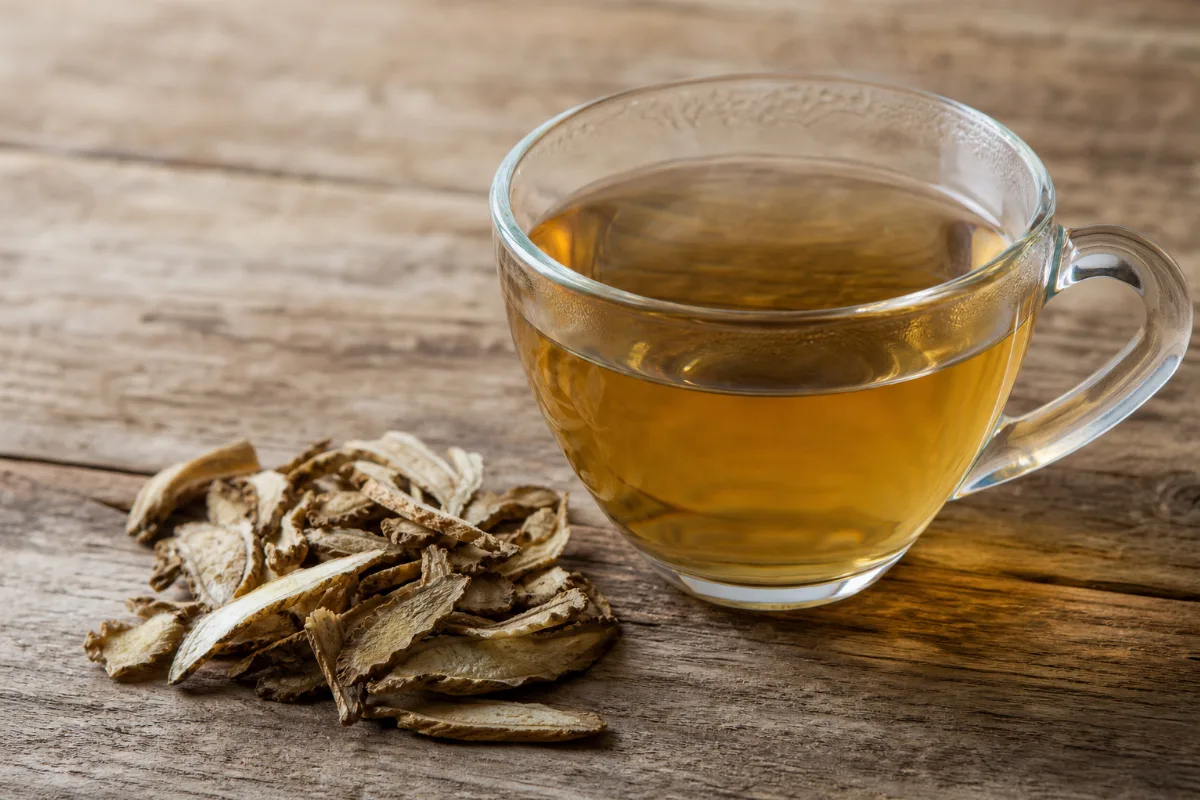
Burdock Root Tea
Arctium lappa · also called Burdock tea, greater burdock root tea, gobo tea, niubang tea
Burdock root tea is a drink made from the root of a daisy-family plant that Japan also eats as the vegetable gobo. Two small trials of the tea exist, one in knee osteoarthritis blood markers and one in repeat diverticulitis, and both are weak. The main cautions are daisy-family allergy and past cases of teas contaminated with belladonna.
General information, not medical advice. Last substantive update · Not medically reviewed. A named clinician has not signed off on this page. How this page is made
About Burdock Root Tea
Burdock root tea comes from Arctium lappa, a daisy-family plant. Two small trials of the tea exist, both rated very low certainty. The EU herbal committee accepts the root for traditional use only. Allergy, belladonna contamination of teas in the past, and pregnancy are the main cautions.
What it is
Burdock (Arctium lappa) is a tall biennial plant of the daisy family that grows in Europe, northern Asia and North America. Tea is made from the dried root.
A tea is a water infusion of the root. A root powder, a tincture, a fruit extract or a multi-herb blend is a different product, and research on one does not automatically apply to another.
Traditional use, with care
The EU assessment report says burdock has been widely used in folk medicine, with the root called a 'blood purifier' and used for rheumatism and skin complaints. The EU monograph accepts the root for minor urinary complaints, temporary loss of appetite and seborrhoeic skin conditions on the basis of long use only.
In Japan a cultivated form is eaten as a vegetable called gobo. In Chinese medicine the part traditionally used is the fruit, which has different compounds from the root. Spain has sold root as tea since 1973, according to the EU report.
What is in it
The dry root is about 45% inulin, a fibre, according to a handbook figure quoted by the EU report. It also holds phenolic acids such as chlorogenic acid and caffeic acid, and sesquiterpene lactones, the likely cause of allergy.
The much-studied lignans arctiin and arctigenin are mainly in the fruit. Lab work on them does not show what root tea does. We found no source that states whether the tea contains caffeine.
What the research shows
Two small trials tested burdock tea. In 36 people with knee osteoarthritis, blood markers of inflammation and oxidative stress improved against plain water over six weeks, and pain was not reported in the abstract. In an open-label Japanese trial, repeat diverticulitis attacks were fewer with tea, but not repeat bleeding.
The EU committee found no controlled clinical studies of root preparations. We cannot say burdock tea treats any condition.
At a glance
Traditional uses history, not proof
- European folk medicine used the root as a 'blood purifier' and for rheumatism and skin complaints. The EU herbal committee accepts the root for minor urinary complaints, temporary loss of appetite and seborrhoeic skin conditions, based only on long use.
- In Japan a cultivated form of the root is eaten as a vegetable called gobo. In Chinese medicine the fruit, not the root, is the part traditionally used.
Studied for research
- Knee osteoarthritis blood markers, very low certainty (one small trial of the tea)
- Return of diverticulitis, very low certainty (one open-label trial)
- Urine flow, appetite and seborrhoeic skin, traditional use only (insufficient)
- Blood sugar, blood fats, liver and 'detox', insufficient (no human trial of the tea)
Main compounds
- Inulin-type fibre, a large part of the dry root
- Chlorogenic and caffeic acids, antioxidants in lab tests
- Sesquiterpene lactones, the likely cause of allergy
- Lignans such as arctiin are mainly in the fruit, not the root
Common forms
- Dried cut root tea (infusion), the usual form
- Decoction (the root simmered) and roasted root tea
- Tea bags and multi-herb 'detox' blends, read the ingredient list
- Powders, tinctures and extracts are different products; results for them do not carry over to tea
Research links: Burdock root tea and knee osteoarthritis markers (Maghsoumi-Norouzabad 2016) · Burdock tea and diverticulitis recurrence (Mizuki 2019) · Contamination of herbal teas by tropane alkaloids (Chan 2017) · EU herbal monograph on burdock root (2010) · Research Library · Genes & Biomarkers Library
What it is and its history
- Accepted scientific name
- Arctium lappa L.
- Naming authority
- L.; Sp. Pl.: 816 (1753) (GBIF). NCBI lists 'L., 1753'.
- Synonyms
- Arctium edule Beger; Arctium lappa Willd., 1803; Arctium lappa var. lappa; Lappa bardana var. major Celak.; Lappa vulgare (Hill) Evans; Lappa vulgaris subsp. vulgaris; Lappa vulgaris var. vulgaris
- Common names
- Greater burdock (English); Great burdock (English); Burdock (English); Bardana (Italian and Portuguese (GBIF)); Grande bardane (French); Bardane commune (French); Grosse Klette (German); Bardana maggiore (Italian); Grote klit (Dutch); Gobo (Japanese (the cultivated root vegetable, per the EU assessment report))
- Family or group
- Asteraceae (daisy family, also called Compositae); it also holds chamomile, arnica, echinacea, dandelion, ragweed and chicory.
- Classification
- Plantae > Tracheophyta > Magnoliopsida > Asterales > Asteraceae > Arctium > Arctium lappa
- Native range
- Native in Europe, Northern Asia and North America according to the EU assessment report (citing Wichtl 1994). Not checked against a primary botanical flora.
- Habitat
- Not verified from a primary botanical source.
- What it looks like
- Roots: The medicinal part. The EU report says it is collected in the autumn of the first year or the spring of the second year; the roots have large amounts of inulin.; Stems: A biennial plant that can reach 1.5 metres (EU report).; Leaves: Large heart-shaped leaves; the EU report says leaves are collected from one-year-old plants and dried for leaf uses, but the EU monograph covers the root only.; Flowers: Purple flowers from July to September; round flower head 3 to 4 cm across with rough hairs (EU report).; Fruit: The burr heads stick to clothing and fur because of tiny hooks. The dried ripe fruit (Arctii Fructus) is a different herbal part with different compounds and is used in Chinese medicine (a systematic review of the fruit).
- Cultivation
- Not verified in detail. The EU report says a cultivated form is eaten as a vegetable, mainly in Japan.
- Harvest and processing
- Root harvested in autumn of year one or spring of year two (EU report); how tea root is cut, dried or roasted was not found in the sources read.
- Look-alikes and adulterants
- Name: Arctium minus (Hill) Bernh. (lesser burdock) and Arctium tomentosum Mill. (woolly burdock); Note: Separate accepted species in GBIF (keys 5393103 and 5393080). The German drug standard cited by the EU report allows A. lappa, A. minus, A. tomentosum, related species and hybrids or mixtures.; Name: Atropa belladonna L. (deadly nightshade) root; Note: A nightshade (Solanaceae, GBIF key 3802655) that contains atropine-type alkaloids. Burdock root tea has been contaminated with it; the EU report says older roots or roots that turn blue with iodine may point to belladonna.; Name: Symphytum officinale L. (comfrey) and Rumex obtusifolius L. (broad-leaved dock); Note: Named by the EU report as roots that may be substituted for burdock. Dock is in the knotweed family (Polygonaceae, GBIF key 2889011).; Name: Burdock fruit (Arctii Fructus) versus root; Note: Different parts, different compounds: the fruit is rich in lignans (arctiin, arctigenin), the root in inulin and phenolic acids. Studies on one part do not apply to the other.
- Sustainability and conservation
- Not verified. Burdock is a widespread weedy plant; no IUCN assessment was retrieved.
Photographs
Traditional use and history history, not clinical proof
| Tradition or era | Documented use | Source |
|---|---|---|
| Folk medicine across Europe and Asia | The EU assessment report says burdock has been widely used in folk medicine. The root is described in handbooks as a 'blood purifier' and used for rheumatism, gout and skin complaints. These are handbook statements, not checked against old texts. | s-ema-ar-burdock-root |
| Japan (food) | The EU report says a cultivated form of burdock is eaten as a vegetable, mainly in Japan, where it is called gobo. We found no source for how long this has been done. | s-ema-ar-burdock-root |
| Traditional Chinese medicine (fruit) | The dried ripe fruit (Arctii Fructus) is traditionally used to 'dispel wind-heat', ease sore throat and cough and help eruptions to come out (systematic review of the fruit). This is a different part of the plant from the root used for tea. | p36781057 |
| Spain (market) | The EU report says powdered or cut root has been on the market as tea in Spain since 1973. | s-ema-ar-burdock-root |
| European Union herbal committee (2010) | Accepted burdock root as a traditional herbal medicine for minor urinary complaints, temporary loss of appetite and seborrhoeic skin conditions, based on long use and not on clinical trials. | s-ema-hmpc-burdock-monograph |
| Tea blends such as Essiac | The EU report mentions herbal teas that contain burdock with other herbs and are used by some cancer patients; it gives no dose details. This is not evidence of benefit. | s-ema-ar-burdock-root |
Traditional use shows how it was used. It does not show that it works or is safe today.
What is inside, and how it may work
What it contains and how those compounds act in cells and animals. Laboratory and animal mechanisms are not proven effects in people.
Main compounds
| Compound | Family | Where it is concentrated | Activity studied | Level of evidence |
|---|---|---|---|---|
| Inulin (inulin-type fructans) | fibre carbohydrate (fructan) | Root About 45% of the dry root, with total carbohydrates up to 70% (EU report, citing Blaschek 1998). | Prebiotic fibre that feeds gut bacteria in lab tests; reviews note burdock as a source. 5 16 | Laboratory research |
| Chlorogenic acid PubChem 1794427 | phenolic acid | Root (and leaf) Fresh root has 1.9 to 3.65% total polyphenols including chlorogenic acid, isochlorogenic acid and caffeic acid (EU report). | Antioxidant in lab tests. 5 16 19 | Laboratory research |
| Caffeic acid PubChem 689043 | phenolic acid | Root Present (EU report); amount not given separately. | Antioxidant in lab tests. 5 19 | Laboratory research |
| Quercetin PubChem 5280343 | flavonoid | Root (per review) Not given in the abstract. | Antioxidant in lab tests. 16 19 | Laboratory research |
| Dehydrocostus lactone PubChem 73174 | sesquiterpene lactone | Root (essential oil) Not given. | Sesquiterpene lactones of this kind are the likely cause of allergic reactions to daisy-family plants (EU report). 5 19 | Authoritative guidance |
| Arctiopicrin PubChem 5281423 | sesquiterpene lactone | Not stated Not given. | Named by the EU report as a weak sensitizer. 5 19 | Authoritative guidance |
| Arctiin and arctigenin (fruit lignans) PubChem 64981 | lignans | Fruit (main); less in root Not given for root tea. | Most anti-inflammatory lab work is on arctigenin; a review says it is extensively broken down and attached to sugars in the liver, gut and blood, which may limit effects after swallowing. Lab results on these do not apply to root tea. 10 12 19 | Laboratory research |
| Atropine (a contaminant, not a burdock compound) PubChem 174174 | tropane alkaloid from nightshade plants | Not in burdock; found in contaminated teas | Blocks acetylcholine receptors; causes dry mouth, fast heartbeat, confusion. 20 3 5 19 | Human data |
Mechanisms, receptors and pathways
| Target or pathway | Gene or receptor | What was found | Level |
|---|---|---|---|
| Inflammatory signalling (NF-kB, iNOS) | NFKB1 / NOS2 | Arctigenin lowers inducible nitric oxide synthase and several inflammatory cytokines in cells and animals. Reviews list NF-kB, JAK/STAT and NLRP3 effects in skin models. 10 25 | Laboratory research |
| Insulin signalling and glucose uptake (AMPK, GLUT4) | PRKAA1 / SLC2A4 | Reviews describe AMPK activation and more GLUT4 movement in cell and animal studies of burdock extracts and compounds. 24 1 | Animal research |
| Gut bacteria and prebiotic fibre | Gut microbiome | Inulin from burdock root stimulated growth of beneficial bacteria in lab tests (EU report, citing Li 2008); human gut bacteria convert arctiin to arctigenin and enterolactone. 5 16 | Laboratory research |
| Antioxidant systems (SOD, catalase, TAC) | SOD / CAT | Root tea and root powder raised SOD, catalase or total antioxidant capacity in two small human trials, alongside lower MDA. 14 23 | Human data |
Absorption, metabolism and elimination
- Absorption
- No human study of burdock root tea was found. In rats, arctiin is split in the gut to arctigenin (EU report).
- Distribution
- Not established for burdock compounds in people.
- Metabolism
- Gut bacteria convert arctiin to arctigenin and other products; arctigenin is extensively conjugated in the liver, gut and blood (review).
- Elimination
- Not established in people.
- Bioavailability
- Unknown for root tea.
Isolated compounds versus whole extracts
Most lab research is on arctigenin or arctiin, which are mainly in the fruit. Tea is made from the root, which is rich in inulin-type fibre and phenolic acids. A tea, a root powder, a fruit extract and a multi-herb product are different things, so results for one cannot be assumed for another. Whole-root products also carry the risks of the whole plant, such as allergy and contamination.
Nutritional composition
Burdock root is eaten as a vegetable (gobo) in Japan. The EU report quotes about 45% inulin and up to 70% total carbohydrate in the dry root (from a handbook). A full nutrient table was not checked and does not apply to a tea.
4 very low certainty4 not enough evidence
What was looked at
The 8 benefits and uses checked for Burdock Root Tea, each with how strong the evidence is. Tap one to open it.
- Knee osteoarthritis: inflammation and oxidative stress markersVery low certainty
- Return of diverticulitis (inflamed pouches in the colon)Very low certainty
- Traditional EU uses: urine flow, appetite and seborrhoeic skinNot enough evidence
- Blood fats (cholesterol and triglycerides) and artery stiffnessNot enough evidence
- Blood sugar and type 2 diabetesNot enough evidence
- Polycystic ovary syndrome (root powder, not tea)Very low certainty
- Helicobacter pylori (a four-ingredient 'burdock complex', not tea)Very low certainty
- 'Detox', 'blood purifier' and liver claimsNot enough evidence
Lab markers tracked in the studies
C-reactive protein (hs-CRP)Interleukin-6 (IL-6)Malondialdehyde (MDA)Total antioxidant capacity (TAC) and superoxide dismutase (SOD)
What is Burdock Root Tea good for?
The main studied uses and how strong the human evidence is for each. 'Very low' means one small or weak trial. 'Insufficient' means not enough to judge. Results come from specific products and may not apply to every tea.
Benefits, one by one
Each card is a research question, not a promise. Tap a goal to filter. Open a card to see the studies, doses and limits.
Knee osteoarthritis: inflammation and oxidative stress markers
Very low certaintyOne small Iranian trial gave people with knee osteoarthritis burdock root tea every day for six weeks. Their blood markers of inflammation went down and antioxidant markers went up, compared with people who drank plain hot water. The abstract does not report pain, stiffness or walking, so we do not know if people felt better.
2 studiesRoot tea (infusion) in that trial. This page gives no amounts; ask a …
Studies, doses and limits
What the trials found
Burdock root tea (Arctium lappa) compared with plain boiled water for 42 days in 36 adults aged 50 to 70 with knee osteoarthritis (Maghsoumi-Norouzabad 2016). Everyone in both groups also took acetaminophen and glucosamine. Blood hs-CRP, IL-6 and malondialdehyde fell, and total antioxidant capacity and SOD rose in the tea group. Another antioxidant enzyme, GPX, rose but not significantly. Pain and function are not in the abstract. No other osteoarthritis trial of burdock was found.
Results
Lower blood inflammation and oxidative stress markers in one small trial; no result on pain or movement was found in the abstract.
Effect sizes as reported
IL-6 P = 0.002; hs-CRP P = 0.003; MDA P < 0.001; TAC P < 0.001; SOD P = 0.009. Group means and confidence intervals are not in the abstract.
Why this rating
Our own reading: a single 36-person trial of six weeks, blood markers only, background medicines for everyone, blinding not described in the abstract, and no second trial to confirm it.
Form and dose studied
Root tea (infusion) in that trial. This page gives no amounts; ask a doctor or pharmacist.
Who was studied
Adults 50 to 70 with knee osteoarthritis in Tabriz, Iran (10 men, 26 women).
Limits
Very small; short; markers rather than symptoms; one centre; added to existing medicines; no confirming trial.
Why researchers looked
Burdock root is a traditional 'blood purifier' and has been used in folk medicine for rheumatism, as the EU herbal committee records.
Traditional use
The EU assessment report lists root preparations used for rheumatism and gout in folk medicine (handbook statements, not checked against old texts). This is tradition, not proof.
Proposed mechanism Preliminary mechanism
In cells and animals, a compound mostly found in the fruit, arctigenin, lowers inflammatory signals. The root contains little of it, and it is not known whether anything like this happens at useful levels in people who drink the tea.
A proposed mechanism does not show that the effect happens in people.
No side effects are reported in the abstract. See the Safety tab for allergy and contamination warnings.
Return of diverticulitis (inflamed pouches in the colon)
Very low certaintyIn a Japanese trial, people who had just had a first attack of diverticulitis and drank burdock tea had fewer repeat attacks than people given nothing. The trial was not blinded and its numbers do not fully add up, so it is a hint, not proof. Burdock tea did not reduce repeat bleeding from the colon pouches.
1 studiesBurdock tea; the part of the plant is not stated in the abstract. No …
Studies, doses and limits
What the trials found
Open-label randomized trial in Japan (Mizuki 2019): people with a first diagnosis of colonic diverticular bleeding (91) or acute diverticulitis (70) were randomly given burdock tea or no treatment. Follow-up was a median of about 22 months (bleeding group) and 30 months (diverticulitis group). Diverticulitis came back in 5 of 47 (10.6%) on tea versus 14 of 44 (31.8%) with no treatment, and the time free of recurrence was longer (log-rank P = 0.012). Bleeding recurrence was not significantly different.
Results
Fewer repeat diverticulitis attacks with burdock tea; no benefit for repeat bleeding.
Effect sizes as reported
Recurrence 10.6% versus 31.8%; recurrence-free time 59.3 months (95% CI 54.0 to 64.7) versus 45.1 months (37.1 to 53.0).
Why this rating
Our own reading: one open-label trial (no placebo, so people knew their group), the group sizes in the abstract (47 and 44, adding to 91) do not match the 70 diverticulitis patients stated, the plant part is not named, and there is no second trial.
Form and dose studied
Burdock tea; the part of the plant is not stated in the abstract. No amounts are given here.
Who was studied
Japanese adults, newly diagnosed.
Limits
Open label; count mismatch in the abstract; one country; the abstract names no tea maker or plant part.
Why researchers looked
Diverticulitis and diverticular bleeding often come back, and doctors look for ways to prevent that.
Traditional use
Not a traditional use recorded by the EU committee, which lists urine flow, appetite and skin uses only.
Proposed mechanism Theory
Not established. The authors' abstract does not claim a mechanism. Burdock root contains inulin-type fibre and phenolic compounds, which reviews describe in lab tests only.
A proposed mechanism does not show that the effect happens in people.
People with diverticulitis symptoms (fever, belly pain) need a doctor, not a tea. No harms are described in the abstract.
Traditional EU uses: urine flow, appetite and seborrhoeic skin
Not enough evidenceThe European herbal committee accepts burdock root, as a herbal tea among other forms, as a traditional medicine for a few minor complaints. It says plainly that this rests on long use, and that no controlled clinical studies of root preparations were found.
2 studiesThe EU lists comminuted root as a herbal tea and also powders, extrac…
Studies, doses and limits
Results
Accepted as traditional use only. Not shown to work in trials.
Why this rating
No controlled human studies exist for these uses (EU assessment, 2011).
Form and dose studied
The EU lists comminuted root as a herbal tea and also powders, extracts and tinctures; this page gives no amounts.
Who was studied
Adults only. Not established under 18.
Limits
The documents are from 2010-2011; newer research may exist.
Why researchers looked
Long folk use in Europe and Asia.
Traditional use
The final EU monograph (adopted 16 September 2010) lists three traditional uses: to increase urine flow as an adjuvant in minor urinary tract complaints, for temporary loss of appetite, and for seborrhoeic skin conditions. Spain has sold powdered or cut root as tea since 1973 (EU report).
Proposed mechanism Traditional use
None established. Handbooks cited by the EU report call the root a diuretic and 'blood purifier'.
A proposed mechanism does not show that the effect happens in people.
The EU monograph advises against using it with synthetic diuretics. See the Safety tab.
Blood fats (cholesterol and triglycerides) and artery stiffness
Not enough evidenceA Korean study of 40 older women tested water exercise and 'burdock intake' for 12 weeks. Blood fats fell in the exercise groups, and the abstract does not show a clear change for burdock alone. We cannot tell whether the burdock was tea.
2 studies'Burdock extract' per the abstract's wording; not necessarily tea.
Studies, doses and limits
What the trials found
Randomized trial of 40 women aged 70 to 80 (Ha 2018): control (8), water exercise (11), exercise plus burdock (11), burdock only (10), for 12 weeks. Total cholesterol, triglycerides, HDL and LDL fell within the exercise group and the exercise-plus-burdock group. Artery stiffness (pulse wave velocity) did not change in any group. The abstract does not report a significant change for burdock alone, and does not say what form of burdock was used.
Results
No clear effect of burdock alone shown; exercise could explain the changes.
Effect sizes as reported
p < 0.05 to p < 0.001 within the two exercise groups; no significant change in pulse wave velocity.
Why this rating
Our own reading: tiny groups, product and form not stated, and no burdock-only effect reported.
Form and dose studied
'Burdock extract' per the abstract's wording; not necessarily tea.
Who was studied
Korean women aged 70 to 80.
Limits
Very small groups; exercise is a confounder; the authors' wording is stronger than the data in the abstract.
Why researchers looked
Reviews describe lower blood fats in animal studies of burdock root.
Proposed mechanism Animal research
Not established. Reviews describe fat-lowering effects in animals and lab tests.
A proposed mechanism does not show that the effect happens in people.
None specific to this use.
Blood sugar and type 2 diabetes
Not enough evidenceCell and animal work suggests burdock compounds may affect blood sugar. Two reviews say no human diabetes trial exists. The EU report even records a mouse study in which a leaf decoction made high blood sugar worse. So there is no sound basis to use burdock tea for diabetes.
3 studiesMost animal work used extracts or isolated compounds, not tea.
Studies, doses and limits
Results
Nothing shown in people.
Why this rating
No human studies; animal findings are mixed (EU report).
Form and dose studied
Most animal work used extracts or isolated compounds, not tea.
Limits
Lab and animal results often do not carry over to people.
Why researchers looked
Traditional reputation and lab results on glucose uptake.
Traditional use
The EU report notes that the root caused low blood sugar in rats while a mouse study with a leaf preparation found the opposite.
Proposed mechanism Animal research
Reviews describe activation of AMPK and more GLUT4 movement in cells and animals.
A proposed mechanism does not show that the effect happens in people.
Do not replace diabetes medicine with burdock tea. People on diabetes medicines should ask a pharmacist.
Polycystic ovary syndrome (root powder, not tea)
Very low certaintyA small Iranian trial gave women with PCOS burdock root powder for 12 weeks. Blood antioxidant and inflammation markers improved and ovary size was smaller than with placebo. This was a powder, not a tea, so it does not show that tea does the same.
1 studiesRoot powder, not tea. No amounts given here.
Studies, doses and limits
What the trials found
Double-blind placebo-controlled trial of 60 women with PCOS for 12 weeks (Taheri 2026): SOD and catalase rose, MDA and CRP fell, and both ovaries were smaller than with placebo. Hirsutism score and menstrual frequency results are not given in the abstract.
Results
Marker and ultrasound changes in one small trial of a different form (powder).
Effect sizes as reported
SOD, catalase, MDA, CRP all P < 0.001; right ovary volume P = 0.02, left P = 0.01.
Why this rating
Our own reading: 60 women, one centre, markers rather than symptoms or pregnancy, and a form other than tea.
Form and dose studied
Root powder, not tea. No amounts given here.
Who was studied
Women with PCOS in Arak, Iran.
Limits
Small; short; one centre; powder.
Why researchers looked
PCOS involves chronic low-grade inflammation and oxidative stress.
Proposed mechanism Theory
Not established.
A proposed mechanism does not show that the effect happens in people.
No harms reported in the abstract.
Helicobacter pylori (a four-ingredient 'burdock complex', not tea)
Very low certaintyA small Taiwanese trial tested a product that combines burdock with angelica, gromwell and sesame oil. Breath-test values and inflammation markers improved against placebo. The product is a mix, so burdock cannot be credited, and it is not tea.
1 studiesA manufactured 'complex', not burdock tea.
Studies, doses and limits
What the trials found
Double-blind placebo-controlled trial in 36 people with H. pylori and no symptoms (19 on the complex, 17 on placebo) for 8 weeks (Yen 2018). The urea breath test value and inflammation markers fell versus placebo; the abstract also says the ulcer wound healed.
Results
Improved markers in a very small trial of a multi-herb product.
Effect sizes as reported
P < 0.05 for the breath test and markers; means not in the abstract.
Why this rating
Our own reading: 36 people, a four-ingredient product, and no confirmation.
Form and dose studied
A manufactured 'complex', not burdock tea.
Who was studied
Adults with H. pylori and no symptoms.
Limits
Very small; the effect cannot be assigned to burdock.
Why researchers looked
The combination is used in traditional Chinese medicine.
Traditional use
Traditional Chinese medicine, per the paper's abstract.
Proposed mechanism Cell study
The paper reports reduced H. pylori sticking to stomach cells in a dish.
A proposed mechanism does not show that the effect happens in people.
H. pylori needs medical treatment; do not use a tea instead.
'Detox', 'blood purifier' and liver claims
Not enough evidenceBurdock is widely marketed for 'detox'. We found no human study showing this. A published case report goes the other way: liver injury after a multi-herb 'detox' tea that contained burdock root, though burdock could not be singled out.
2 studiesMulti-herb detox teas; the body already clears waste through the live…
Studies, doses and limits
Results
No benefit shown; one possible harm in a blend.
Why this rating
No human trials for detox or liver protection.
Form and dose studied
Multi-herb detox teas; the body already clears waste through the liver and kidneys.
Limits
A case report cannot say which ingredient caused the injury or how often it happens.
Why researchers looked
Popular marketing, and animal studies of liver protection.
Traditional use
The EU assessment report records the root as a 'blood purifier' in handbooks (De Smet 1993); the monograph does not list this as a use.
Proposed mechanism Traditional use
None shown in people.
A proposed mechanism does not show that the effect happens in people.
See the Safety tab for liver warning signs.
Connections to the rest of health
How Burdock Root Tea connects to the rest of our health knowledge graph. Every link says what kind of connection it is. A safety link (for example to the liver) is a warning, not a benefit. A study that merely mentions a topic never creates a benefit link.
Explore every connection: goals, body systems, organs, symptoms, genes
A. Wellness goals
| Connected to | Kind of connection | Evidence status | Context | Studies |
|---|---|---|---|---|
| Joint Support | Potential benefit | Very low certainty | Knee osteoarthritis: inflammation and oxidative stress markers: One small Iranian trial gave people with knee osteoarthritis burdock root tea every day for six weeks. Their blood markers of inflammation went down and antioxidant markers went up, compared with people who drank plain hot water. The abstract does not report pain, stiffness or walking, so we do not know if people felt better. | 14 5 |
| Inflammation Balance | Potential benefit | Very low certainty | Knee osteoarthritis: inflammation and oxidative stress markers: One small Iranian trial gave people with knee osteoarthritis burdock root tea every day for six weeks. Their blood markers of inflammation went down and antioxidant markers went up, compared with people who drank plain hot water. The abstract does not report pain, stiffness or walking, so we do not know if people felt better. | 14 5 |
| Gut Health | Potential benefit | Very low certainty | Return of diverticulitis (inflamed pouches in the colon): In a Japanese trial, people who had just had a first attack of diverticulitis and drank burdock tea had fewer repeat attacks than people given nothing. The trial was not blinded and its numbers do not fully add up, so it is a hint, not proof. Burdock tea did not reduce repeat bleeding from the colon pouches. Helicobacter pylori (a four-ingredient 'burdock complex', not tea): A small Taiwanese trial tested a product that combines burdock with angelica, gromwell and sesame oil. Breath-test values and inflammation markers improved against placebo. The product is a mix, so burdock cannot be credited, and it is not tea. | 15 26 |
| Digestive Support | Potential benefit | Very low certainty | Return of diverticulitis (inflamed pouches in the colon): In a Japanese trial, people who had just had a first attack of diverticulitis and drank burdock tea had fewer repeat attacks than people given nothing. The trial was not blinded and its numbers do not fully add up, so it is a hint, not proof. Burdock tea did not reduce repeat bleeding from the colon pouches. Helicobacter pylori (a four-ingredient 'burdock complex', not tea): A small Taiwanese trial tested a product that combines burdock with angelica, gromwell and sesame oil. Breath-test values and inflammation markers improved against placebo. The product is a mix, so burdock cannot be credited, and it is not tea. | 15 26 |
| Detoxification Support | Traditional use | Not enough evidence | Traditional EU uses: urine flow, appetite and seborrhoeic skin: The European herbal committee accepts burdock root, as a herbal tea among other forms, as a traditional medicine for a few minor complaints. It says plainly that this rests on long use, and that no controlled clinical studies of root preparations were found. 'Detox', 'blood purifier' and liver claims: Burdock is widely marketed for 'detox'. We found no human study showing this. A published case report goes the other way: liver injury after a multi-herb 'detox' tea that contained burdock root, though burdock could not be singled out. | 4 5 18 |
| Cholesterol Balance | Potential benefit | Not enough evidence | Blood fats (cholesterol and triglycerides) and artery stiffness: A Korean study of 40 older women tested water exercise and 'burdock intake' for 12 weeks. Blood fats fell in the exercise groups, and the abstract does not show a clear change for burdock alone. We cannot tell whether the burdock was tea. | 11 16 |
| Blood Sugar Balance | Not enough evidence | Blood sugar and type 2 diabetes: Cell and animal work suggests burdock compounds may affect blood sugar. Two reviews say no human diabetes trial exists. The EU report even records a mouse study in which a leaf decoction made high blood sugar worse. So there is no sound basis to use burdock tea for diabetes. | 1 24 5 | |
| Womens Wellness | Potential benefit | Very low certainty | Polycystic ovary syndrome (root powder, not tea): A small Iranian trial gave women with PCOS burdock root powder for 12 weeks. Blood antioxidant and inflammation markers improved and ovary size was smaller than with placebo. This was a powder, not a tea, so it does not show that tea does the same. | 23 |
| Hormone Balance | Potential benefit | Very low certainty | Polycystic ovary syndrome (root powder, not tea): A small Iranian trial gave women with PCOS burdock root powder for 12 weeks. Blood antioxidant and inflammation markers improved and ovary size was smaller than with placebo. This was a powder, not a tea, so it does not show that tea does the same. | 23 |
| Liver Support | Traditional use | Not enough evidence | 'Detox', 'blood purifier' and liver claims: Burdock is widely marketed for 'detox'. We found no human study showing this. A published case report goes the other way: liver injury after a multi-herb 'detox' tea that contained burdock root, though burdock could not be singled out. | 18 5 |
B. Body systems
| Connected to | Kind of connection | Evidence status | Context | Studies |
|---|---|---|---|---|
| Nervous system | Adverse effect or risk | Very low certainty | Anticholinergic poisoning reports from contaminated tea; atropine is not a burdock compound. Preparation or compound: Burdock root tea contaminated with nightshade alkaloids |
20 3 5 |
| Immune system | Adverse effect or risk | Very low certainty | One reported anaphylaxis after boiled burdock root; daisy-family cross-reaction assumed; one report of very low platelets after a burdock and yellow dock tea. Preparation or compound: Burdock root eaten as food or tea |
22 13 5 |
| Musculoskeletal System | Biological association | Very low certainty | Studied for: Knee osteoarthritis: inflammation and oxidative stress markers | 14 5 |
| Immune System | Biological association | Very low certainty | Studied for: Knee osteoarthritis: inflammation and oxidative stress markers | 14 5 |
| Digestive System | Biological association | Very low certainty | Studied for: Return of diverticulitis (inflamed pouches in the colon) Studied for: Traditional EU uses: urine flow, appetite and seborrhoeic skin | 15 4 5 26 |
| Urinary System | Biological association | Not enough evidence | Studied for: Traditional EU uses: urine flow, appetite and seborrhoeic skin | 4 5 |
| Integumentary System | Biological association | Not enough evidence | Studied for: Traditional EU uses: urine flow, appetite and seborrhoeic skin | 4 5 |
| Cardiovascular System | Biological association | Not enough evidence | Studied for: Blood fats (cholesterol and triglycerides) and artery stiffness | 11 16 |
| Endocrine System | Biological association | Not enough evidence | Studied for: Blood sugar and type 2 diabetes | 1 24 5 |
| Reproductive System | Biological association | Very low certainty | Studied for: Polycystic ovary syndrome (root powder, not tea) | 23 |
| Hepatic System | Biological association | Not enough evidence | Studied for: 'Detox', 'blood purifier' and liver claims | 18 5 |
C. Body parts and organs
E. Health conditions
| Connected to | Kind of connection | Evidence status | Context | Studies |
|---|---|---|---|---|
| Pregnancy and breastfeeding | Contraindication | Not enough evidence | Not recommended due to lack of safety data (EU). Preparation or compound: Burdock root |
4 5 |
| Pregnancy | Contraindication | Not enough evidence | Not recommended for lack of safety data (EU). Preparation or compound: Burdock root tea |
4 |
| Knee osteoarthritis | Potential benefit | Very low certainty | One small trial improved blood markers; pain not reported in the abstract. Preparation or compound: Burdock root tea |
14 |
I. Biomarkers
| Connected to | Kind of connection | Evidence status | Context | Studies |
|---|---|---|---|---|
| C-reactive protein (hs-CRP) | Biological association | Very low certainty | Measured in trials: lowered. A lab change is not the same as a health benefit. | 14 |
| Interleukin-6 (IL-6) | Biological association | Very low certainty | Measured in trials: lowered. A lab change is not the same as a health benefit. | 14 |
| Malondialdehyde (MDA) | Biological association | Very low certainty | Measured in trials: lowered. A lab change is not the same as a health benefit. | 14 |
| Total antioxidant capacity (TAC) and superoxide dismutase (SOD) | Biological association | Very low certainty | Measured in trials: raised. A lab change is not the same as a health benefit. | 14 |
L. Active compounds
| Connected to | Kind of connection | Evidence status | Context | Studies |
|---|---|---|---|---|
| Inulin (inulin-type fructans) | Biological association | In vitro | Prebiotic fibre that feeds gut bacteria in lab tests; reviews note burdock as a source. Preparation or compound: Root |
5 16 |
| Chlorogenic acid | Biological association | In vitro | Antioxidant in lab tests. Preparation or compound: Root (and leaf) |
5 16 19 |
| Caffeic acid | Biological association | In vitro | Antioxidant in lab tests. Preparation or compound: Root |
5 19 |
| Quercetin | Biological association | In vitro | Antioxidant in lab tests. Preparation or compound: Root (per review) |
16 19 |
| Dehydrocostus lactone | Biological association | Authoritative guidance | Sesquiterpene lactones of this kind are the likely cause of allergic reactions to daisy-family plants (EU report). Preparation or compound: Root (essential oil) |
5 19 |
| Arctiopicrin | Biological association | Authoritative guidance | Named by the EU report as a weak sensitizer. | 5 19 |
| Arctiin and arctigenin (fruit lignans) | Biological association | In vitro | Most anti-inflammatory lab work is on arctigenin; a review says it is extensively broken down and attached to sugars in the liver, gut and blood, which may limit effects after swallowing. Lab results on these do not apply to root tea. Preparation or compound: Fruit (main); less in root |
10 12 19 |
| Atropine (a contaminant, not a burdock compound) | Biological association | Human | Blocks acetylcholine receptors; causes dry mouth, fast heartbeat, confusion. Preparation or compound: Not in burdock; found in contaminated teas |
20 3 5 19 |
Each connection is stored with the ingredient, the connected record, the kind of connection, the evidence status, the supporting studies, the preparation or compound involved, and a review date (last reviewed October 25, 2026).
Evidence at a glance: what changed in 4 lab markers
Tap a number to show only those markers. Counts are markers, not people.
The evidence
The research centre for Burdock Root Tea. Every record here was checked against PubMed or the publisher's page; we never list a study we have not verified.
Evidence by outcome
Bars show how many studies we found for each outcome, not how well it works. People are added up across trials only (reviews are not added, to avoid double counting).
How we rate evidence
High certainty
Several well-run trials or reviews agree; further research is unlikely to change the picture much.
Moderate certainty
Good trials point the same way, but some doubt remains.
Low certainty
Small, short or inconsistent trials. The finding could change with better research.
Very low certainty
Very little or very weak human data. Treat as a possibility only.
Mixed findings
Trials or reviews disagree with each other.
Not enough evidence
Not enough human research to say either way.
Evidence against
Good research found no benefit, or found harm.
We take the reviewers' own risk-of-bias and GRADE statements where they exist, and otherwise judge from study size, design, consistency, directness and whether a product matches what is sold. Many publications do not make evidence high. Method note: We searched PubMed for burdock tea and Arctium lappa, checked every cited record by its summary and read the abstracts, and read the final EU monograph and the EU assessment report in full. Case reports without abstracts were checked by title only and their details come from the EU assessment. Not opened: NCCIH, LiverTox, LactMed, Commission E, WHO. Ratings are the compiler's own reading, not formal grades.
Study library: every study we checked 26
| Study | Design | People | Product, dose, length | Result |
|---|---|---|---|---|
| Annunziata 2019 Arctium lappa contributes to the management of type 2 diabetes mellitus by regulating glucose homeostasis and improving oxidative stress: A critical review of in vitro and in vivo animal-based studies Phytother Res · PMID 31232489 · DOI |
Narrative review mixed |
Critical review of in vitro and animal studies of Arctium lappa in type 2 diabetes | Arctium lappa and its compounds various |
Found only lab and animal studies. Its authors state that no clinical studies in people with type 2 diabetes had been conducted. Methods, limits and fundingOutcomes: Blood sugar, insulin resistance, oxidative stress Limitations: Review is from 2019; later human trials were not covered. Read: abstract |
| Bryson 1978 Burdock root tea poisoning. Case report involving a commercial preparation JAMA · PMID 642161 |
Case report |
Burdock root tea poisoning, 'case report involving a commercial preparation' | Commercial burdock root tea root Not read Not read |
Title only was verified; the report's details were not read. Methods, limits and fundingOutcomes: Poisoning after commercial burdock root tea Limitations: Title and journal verified in PubMed; no abstract exists, text not read. The PubMed record has no abstract, so only the title and the EU assessment's summary of the case were read. Read: title-only |
| Chan 2017 Worldwide Occurrence and Investigations of Contamination of Herbal Medicines by Tropane Alkaloids Toxins (Basel) · PMID 28914776 · DOI |
Narrative review |
Worldwide reports 1978-2014 of anticholinergic poisoning from herbal teas and herbs contaminated with tropane alkaloids | Herbal teas and herbs contaminated with Solanaceae plants various |
Almost all reports in 1978-2014 involve herbal teas or one of the prescribed herbs in a mixed formula. Contamination most likely happens during harvest or processing. The alkaloids are fairly heat-stable and can be present in large amounts. WHO good agricultural and collection practices and DNA barcoding are advised. Methods, limits and fundingOutcomes: Occurrence and investigation of tropane alkaloid contamination Limitations: Burdock is not named in the abstract; which burdock cases the review counts was not read. Read: abstract |
| EMA Committee on Herbal Medicinal Products (HMPC) 2010 Community herbal monograph on Arctium lappa L., radix (final, adopted 16 September 2010) EMA/HMPC/246763/2009 · Source |
Authoritative guidance |
Adults; traditional use only | Burdock root (Arctii radix) root |
Final text read on 2026-10-25. Traditional use only: to increase urine flow as an adjuvant in minor urinary tract complaints, for temporary loss of appetite, and for seborrhoeic skin conditions, based only on long-standing use. Comminuted root as a herbal tea is one listed form (amounts not repeated here). Contraindication: hypersensitivity to burdock or to plants of the daisy family (Asteraceae). Not established for under 18. Concomitant synthetic diuretics not recommended. Interactions: none reported. Pregnancy and lactation: not recommended for lack of data. Undesirable effect: anaphylactic shock, frequency not known. No case of overdose reported. Tests on reproductive toxicity, genotoxicity and carcinogenicity have not been performed. Methods, limits and fundingOutcomes: Traditional uses, contraindications, warnings, interactions, pregnancy and lactation, undesirable effects, overdose Limitations: Traditional-use document; it does not show that burdock works. Read: full-text |
| EMA Committee on Herbal Medicinal Products (HMPC) 2011 Assessment report on Arctium lappa L., radix (burdock root) EMA/HMPC/246764/2009 (26 pages, read in full) · Source |
Authoritative guidance |
Adults; traditional use only | Burdock root (Arctii radix) root |
Read again in full on 2026-10-25. Concludes burdock root preparations can only be considered for traditional use because no controlled clinical studies of root preparations were found. Safe under the monograph's conditions, but no list entry because reproductive toxicity, genotoxicity and carcinogenicity tests have not been done on the root. Main risks: allergy (probably sesquiterpene lactones; cross-reaction with other daisy-family plants assumed), one reported anaphylaxis after boiled burdock root (53-year-old man, also allergic to carrot), three contact dermatitis cases from plasters, and a tea contaminated with an herbal source of nightshade alkaloids, possibly belladonna root. Substitution with comfrey or broad-leaved dock is also mentioned. No documented drug interactions; nothing known about an added effect with diuretic drugs. Pregnancy and breastfeeding use not recommended for insufficient data. No overdose reported. The report records that the root is used as a vegetable, mainly in Japan, and that powdered or cut root has been sold as tea in Spain since 1973. Methods, limits and fundingOutcomes: Traditional uses, contraindications, warnings, interactions, pregnancy and lactation, undesirable effects, overdose Limitations: Traditional-use document; it does not prove burdock works. Safety statements rely on handbooks (De Smet 1993, Barnes 2007) and a few case reports. Read: full-text |
| Fletcher 1978 Burdock root tea poisoning JAMA · PMID 691140 · DOI |
Case report |
Burdock root tea poisoning (letter) | Burdock root tea root Not read Not read |
Title only was verified; the letter's details were not read. Methods, limits and fundingOutcomes: Poisoning after burdock root tea Limitations: Title and journal verified in PubMed; no abstract exists, text not read. The PubMed record has no abstract, so only the title and the EU assessment's summary of the case were read. Read: title-only |
| GANDOLFO 1953 [Atropine poisoning by ingestion of decoction of burdock roots] Rend Ist Sup Sanit · PMID 13167508 |
Case report |
Atropine poisoning from a decoction of burdock roots (Italian paper, 1953) | Decoction of burdock roots root Not read Not read |
Title only was verified; the paper's details were not read. Methods, limits and fundingOutcomes: Atropine poisoning Limitations: Title and journal verified in PubMed; no abstract exists, text not read. The PubMed record has no abstract, so only the title and the EU assessment's summary of the case were read. Read: title-only |
| GBIF 2026 GBIF Backbone Taxonomy matches for Arctium minus (5393103), Arctium tomentosum (5393080), Atropa belladonna (3802655, family Solanaceae) and Rumex obtusifolius (2889011, family Polygonaceae) GBIF API, read 2026-10-25 · Source |
Database record |
Plant name records | Arctium minus and Arctium tomentosum are separate accepted species; deadly nightshade (Atropa belladonna) is in the nightshade family Solanaceae, not Asteraceae; broad-leaved dock is Rumex obtusifolius, family Polygonaceae. Methods, limits and fundingOutcomes: Accepted names and families of look-alikes and contaminants Limitations: Name database. Read: full-text | |
| GBIF 2026 GBIF Backbone Taxonomy: Arctium lappa L. (usageKey 7353729) GBIF API, read 2026-10-25 · Source |
Database record |
Plant name record | Accepted species Arctium lappa L., Sp. Pl.: 816 (1753), family Asteraceae, order Asterales; synonyms returned include Arctium edule Beger, Arctium lappa Willd. 1803, Lappa vulgaris and Lappa bardana var. major. Methods, limits and fundingOutcomes: Accepted name, authority, family, synonyms Limitations: Name database, not a clinical source. Read: full-text | |
| Gao 2018 Overview of the anti-inflammatory effects, pharmacokinetic properties and clinical efficacies of arctigenin and arctiin from Arctium lappa L Acta Pharmacol Sin · PMID 29698388 · DOI |
Narrative review mixed |
Overview of arctigenin and arctiin: anti-inflammatory effects, pharmacokinetics and clinical efficacy | Arctigenin and arctiin from Arctium lappa fruit/various |
Arctigenin is more potent than arctiin in most studies. It is extensively glucuronidated and hydrolysed in liver, gut and plasma, which may limit its effect after swallowing. Methods, limits and fundingOutcomes: Anti-inflammatory activity and what the body does with the compounds Limitations: Narrative review. Read: abstract |
| Ha 2018 Effects of aquarobic exercise and burdock intake on serum blood lipids and vascular elasticity in Korean elderly women Exp Gerontol · PMID 29154814 · DOI |
Controlled trial |
40 Women aged 70-80, Korea (control 8, exercise 11, exercise plus burdock 11, burdock only 10) |
Burdock intake ('burdock extract'; exact product and plant part not stated in the abstract) unspecified 12 weeks · vs Control group; a water-exercise group |
Blood lipids fell in the water-exercise group and the exercise-plus-burdock group. The abstract does not report a significant change for burdock alone, and pulse wave velocity did not change significantly in any group. p<0.05 to p<0.001 within the exercise and the exercise-plus-burdock groups; no significant pulse-wave-velocity change in any group. Values not in the abstract. Methods, limits and fundingOutcomes: Blood total cholesterol, triglycerides, HDL-C, LDL-C, and pulse wave velocity (artery stiffness) Limitations: Very small groups (8 to 11), exercise could explain the lipid change, burdock-alone result not reported as significant, product and dose unknown, authors' wording about burdock is stronger than the abstract's data. Read: abstract |
| Jin 2023 A systematic review on botany, ethnopharmacology, quality control, phytochemistry, pharmacology and toxicity of Arctium lappa L. fruit J Ethnopharmacol · PMID 36781057 · DOI |
Systematic review mixed |
Systematic review of Arctium lappa fruit (Arctii Fructus): botany, ethnopharmacology, chemistry, pharmacology and toxicity | Arctii Fructus (fruit) and its lignans fruit |
More than 200 compounds were identified; the fruit extract had no toxicity in the studies reviewed, but arctigenin itself was toxic at a certain dose. The authors say clinical studies show effects on chronic inflammation and ageing, but the abstract gives no details. Methods, limits and fundingOutcomes: Chemistry, pharmacology, toxicity Limitations: Abstract only; clinical claims not checked. Read: abstract |
| Latif 2022 Herbal Teas and Thrombocytopenia: A Curious Case of Yellow Dock and Burdock-Induced Thrombocytopenia Eur J Case Rep Intern Med · PMID 35402325 · DOI |
Case report |
1 A 38-year-old woman with a platelet count of 5 K/microlitre one week after drinking a herbal tea |
Herbal tea containing yellow dock (Rumex crispus) and burdock (Arctium lappa) unspecified About one week before presentation |
Symptomatic thrombocytopenia developed one week after the tea. The authors suggest a link but say the association between these herbs and immune thrombocytopenia needs research. Methods, limits and fundingOutcomes: Immune thrombocytopenia (very low platelets) Limitations: One case, two herbs in the tea, so the cause cannot be pinned on burdock; no frequency can be drawn from a single report. Funding and conflicts: Authors declare no competing interests. Read: abstract |
| Maghsoumi-Norouzabad 2016 Effects of Arctium lappa L. (Burdock) root tea on inflammatory status and oxidative stress in patients with knee osteoarthritis Int J Rheum Dis · PMID 25350500 · DOI |
Controlled trial |
36 Adults aged 50-70 with knee osteoarthritis (10 men, 26 women), Tabriz, Iran |
Burdock root tea (infusion) root Daily cups of tea (amounts not repeated here) 42 days · vs Plain boiled water; everyone in both groups also took acetaminophen and glucosamine |
Burdock tea lowered IL-6, hs-CRP and malondialdehyde and raised total antioxidant capacity and SOD activity versus control. GPX rose but not significantly. Pain, stiffness and function were not reported in the abstract. IL-6 P = 0.002; hs-CRP P = 0.003; MDA P < 0.001; TAC P < 0.001; SOD P = 0.009. Mean values and confidence intervals are not in the abstract. Methods, limits and fundingOutcomes: Blood hs-CRP and IL-6 (inflammation), and oxidative stress markers (TAC, SOD, GPX, MDA) Limitations: Very small trial (36), 6 weeks, blood markers only and no pain or function result in the abstract, background drugs given to everyone, blinding not stated in the abstract, one centre. Read: abstract |
| Mizuki 2019 Effects of Burdock tea on recurrence of colonic diverticulitis and diverticular bleeding: An open-labelled randomized clinical trial Sci Rep · PMID 31043657 · DOI |
Controlled trial |
161 Adults newly diagnosed with colonic diverticular bleeding (n = 91) or acute colonic diverticulitis (n = 70), Japan |
Burdock tea unspecified (the abstract does not say which part) Tea taken daily (amounts not repeated here) Median follow-up about 22 months (bleeding group) and 30 months (diverticulitis group) · vs No treatment |
Diverticulitis came back less often with burdock tea (10.6% versus 31.8%) and the time free of recurrence was longer. Diverticular bleeding recurrence was not significantly different. Diverticulitis recurrence 5/47 (10.6%) versus 14/44 (31.8%); Kaplan-Meier recurrence-free time 59.3 months (95% CI 54.0-64.7) versus 45.1 months (37.1-53.0), log-rank P = 0.012. No significant effect on bleeding recurrence. Methods, limits and fundingOutcomes: Recurrence of diverticular bleeding and of acute diverticulitis Limitations: Open-label (no placebo, patients knew their group), so expectations and other habits may differ. The abstract's diverticulitis group sizes (47 and 44, which add to 91) do not match the stated 70 diverticulitis patients, so the exact counts should be checked in the full paper. Japanese patients only. Funding and conflicts: Authors declare no competing interests. Read: abstract |
| Moro 2021 Burdock (Arctium lappa L) roots as a source of inulin-type fructans and other bioactive compounds: Current knowledge and future perspectives for food and non-food applications Food Res Int · PMID 33641945 · DOI |
Narrative review mixed |
Review of burdock root as a source of inulin-type fructans and other compounds | Burdock root root |
Burdock root is a source of prebiotic fibre, chlorogenic acids, lignans and quercetin; assays show antioxidant, anti-inflammatory and cholesterol-lowering properties (lab). Methods, limits and fundingOutcomes: Chemistry and food uses Limitations: Narrative review; mostly lab work. Read: abstract |
| NCBI 2026 NCBI Taxonomy: Arctium lappa (taxid 4217), great burdock NCBI Taxonomy, read 2026-10-25 · Source |
Database record |
Plant name record | Arctium lappa, authority L., 1753, rank species, GenBank common name 'great burdock'. Methods, limits and fundingOutcomes: Accepted name, common name, rank Limitations: Name database, not a clinical source. Read: full-text | |
| Niazi 2022 Drug-Induced Liver Injury from Herbal Liver Detoxification Tea Case Rep Gastroenterol · PMID 36636365 · DOI |
Case report |
1 A 36-year-old woman with acute liver injury (cholestatic pattern) |
Over-the-counter herbal 'liver detox' tea: burdock root, stinging nettle leaf, cleavers herb, dandelion root, lemon peel and lemon myrtle leaf root+leaf+herb (mixed) |
The authors describe liver injury linked to the six-herb tea and call it the first reported liver harm from any of its ingredients. Methods, limits and fundingOutcomes: Drug-induced liver injury Limitations: One case, six ingredients, so the cause cannot be pinned on burdock; no causality score is in the abstract. Funding and conflicts: Authors declare no conflicts of interest. Read: abstract |
| PubChem (NCBI) 2026 PubChem compound records for arctigenin (CID 64981), arctiin (100528), chlorogenic acid (1794427), caffeic acid (689043), 1,5-dicaffeoylquinic acid (122685), quercetin (5280343), luteolin (5280445), (-)-matairesinol (119205), (-)-trachelogenin (452855), dehydrocostus lactone (73174), arctiopicrin (5281423) and atropine (174174) PubChem PUG REST, read 2026-10-25 · Source |
Database record |
Compound records | CIDs and molecular formulas confirmed by name lookup. Methods, limits and fundingOutcomes: Compound identities and formulas Limitations: Database record, not a clinical source. Inulin returned no single compound record (it is a mixture of chains). Read: full-text | |
| Rhoads 1984 Anticholinergic poisonings associated with commercial burdock root tea J Toxicol Clin Toxicol · PMID 6535850 · DOI |
Case report |
People who drank a commercial burdock root tea (Arizona); a second laboratory-confirmed case had been described before | Commercial burdock root tea root Not repeated here Single exposures |
The tea contained atropine and caused mild anticholinergic symptoms. The authors could not tell whether the atropine came from burdock root itself or from another plant mixed into the product. The authors estimated an atropine-type exposure; the figure is not repeated here. Methods, limits and fundingOutcomes: Anticholinergic poisoning (atropine-type) Limitations: Case report. The PubMed record has no abstract; the summary was read in a university research repository by an earlier check, so this entry is marked summary-only. Read: summary-only |
| Rodriguez 1995 Allergic contact dermatitis due to burdock (Arctium lappa) Contact Dermatitis · PMID 8549139 · DOI |
Case report |
Allergic contact dermatitis due to burdock (Spain) | Burdock (Arctium lappa) by skin contact; plant part not read unspecified Not read Not read |
Title only was verified; details were not read. Methods, limits and fundingOutcomes: Allergic contact dermatitis Limitations: Title and journal verified in PubMed; no abstract exists, text not read. The PubMed record has no abstract, so only the title and the EU assessment's summary of the case were read. Read: title-only |
| Sasaki 2003 Anaphylaxis due to burdock Int J Dermatol · PMID 12786879 · DOI |
Case report |
1 Anaphylaxis due to burdock (letter, Tohoku University, Japan) |
Burdock (food; part not read) unspecified Not read Not read |
Title only was verified; the letter's details were not read. Methods, limits and fundingOutcomes: Anaphylaxis Limitations: Title and journal verified in PubMed; no abstract exists, text not read. The PubMed record has no abstract, so only the title and the EU assessment's summary of the case were read. Read: title-only |
| Taheri 2026 Effects of Arctium lappa L. Root Powder on Some Markers of Oxidative Stress and Inflammation in Women with Polycystic Ovary Syndrome: A Randomized, Double-Blind Controlled Clinical Trial Study JBRA Assist Reprod · PMID 41757842 · DOI |
Controlled trial |
60 Women with polycystic ovary syndrome (PCOS), Arak, Iran, 2023-2024 |
Burdock root powder (capsule form, not tea) root A daily powder amount (not repeated here) 12 weeks · vs Placebo |
Superoxide dismutase and catalase rose, malondialdehyde and C-reactive protein fell, and both ovaries were smaller versus placebo. The abstract does not report results for hirsutism score or menstrual frequency. SOD and catalase up, MDA and CRP down (all P < 0.001); right ovary volume P = 0.02, left P = 0.01. Group means are not in the abstract. Methods, limits and fundingOutcomes: Oxidative stress and inflammation markers, ovary volume, hirsutism score, menstrual frequency Limitations: Small (30 per group), 12 weeks, one centre, convenience sample, blood markers and ultrasound volume rather than symptoms or pregnancy. Hirsutism and menstrual results not given in the abstract. Funding and conflicts: Authors declare no conflicts of interest. Read: abstract |
| Uzbekova 2026 Unveiling the Antihyperglycemic Potential of Arctium lappa L. (Asteraceae): Traditional Application, Phytochemistry, and Molecular Insights Foods · PMID 41750986 · DOI |
Narrative review mixed |
Narrative review (2000-2025) of Arctium lappa and blood sugar | Arctium lappa and its compounds (arctigenin, arctiin, inulin) various |
Antidiabetic effects seen in cells and animals; limited human data are in people without diabetes and look at inflammation. The authors call for randomized trials of blood sugar control in people with diabetes. Methods, limits and fundingOutcomes: Blood sugar mechanisms and safety Limitations: Narrative review. Read: abstract |
| Yang 2025 Immunopharmacological potential of Arctium lappa L. in immune-mediated skin diseases: A critical review of experimental and clinical evidence Front Pharmacol · PMID 41111517 · DOI |
Systematic review mixed |
Experimental and clinical work on Arctium lappa, arctiin and arctigenin in immune-mediated skin diseases (atopic dermatitis, psoriasis, lupus, alopecia, systemic sclerosis, vasculitis); searched to July 2025 | Arctium lappa extracts, arctiin, arctigenin various |
Mostly cell and mouse data on mixed preparations with limited clinical validation. The authors call the evidence preliminary and note there are no robust randomized trials. Methods, limits and fundingOutcomes: Immune and skin effects Limitations: Narrative synthesis of heterogeneous studies; no human-trial result is drawn from it. Read: abstract |
| Yen 2018 Beneficial effect of Burdock complex on asymptomatic Helicobacter pylori-infected subjects: A randomized, double-blind placebo-controlled clinical trial Helicobacter · PMID 29520881 · DOI |
Controlled trial |
36 People with H. pylori and no symptoms (urea breath test above 10%), Taiwan; 19 took the complex and 17 took placebo |
'Burdock complex': burdock (Arctium lappa) with angelica (Angelica sinensis), gromwell (Lithospermum erythrorhizon) and sesame oil. A multi-ingredient product, not tea. mixed Not repeated here 8 weeks (tests at weeks 4, 8 and 10) · vs Placebo |
Versus placebo, the breath-test value and inflammation markers fell, antioxidant capacity rose and the ulcer wound was described as healing. The same paper also had cell-dish tests. P < 0.05 for the breath test and markers; group means are not in the abstract. Methods, limits and fundingOutcomes: Urea breath test, inflammation markers, antioxidant capacity, endoscopy Limitations: Very small (36). The product is a four-ingredient traditional Chinese combination, so burdock cannot be credited. Endoscopy findings are described, not counted, in the abstract. Funding and conflicts: Not stated in the abstract. Read: abstract |
What we do not know yet
- What the evidence supports: two small trials of the tea, each very low certainty, plus traditional EU use.
- What is uncertain: whether the tea relieves pain in osteoarthritis, the plant part used in the diverticulitis trial, and whether the tea contains caffeine.
- Not found or not opened: any blinded trial of burdock tea; NCCIH, LiverTox, LactMed, Commission E, WHO; testing of heavy metals or pesticides in burdock tea products; the details of the 1953 and 1978 poisoning papers (title only).
How new research is added
New studies are found by a saved PubMed search and placed in a review queue. A person checks each one before it is added.
Lab markers
What changed in blood or saliva tests during trials. A changed number is not the same as feeling or being healthier, and we give no "normal ranges".
Inflammatory 2
C-reactive protein (hs-CRP)
Lowered in trials
A blood protein that rises with inflammation.
Very low certaintyResults and what it means
Why it was measured
A common marker of body-wide inflammation.
Statistical vs. clinical meaning
Statistically significant in one small trial; a lower CRP does not by itself mean less pain.
Safety implication
None identified from this measure.
| Study | Result | People | Product |
|---|---|---|---|
| 14 | hs-CRP was significantly lower with burdock root tea than with water (P = 0.003); values are not in the abstract. | 36 adults aged 50 to 70 with knee osteoarthritis | Burdock root tea, daily cups, 42 days |
Interleukin-6 (IL-6)
Lowered in trials
A signalling protein of the immune system that rises in inflammation.
Very low certaintyResults and what it means
Why it was measured
A marker of inflammation.
Statistical vs. clinical meaning
One small trial; a blood marker, not a symptom.
Safety implication
None identified from this measure.
| Study | Result | People | Product |
|---|---|---|---|
| 14 | Serum IL-6 was significantly lower with tea than with water (P = 0.002). | 36 adults aged 50 to 70 with knee osteoarthritis | Burdock root tea, daily cups, 42 days |
Other 2
Malondialdehyde (MDA)
Lowered in trials
A chemical left behind when fats are damaged by oxidation.
Very low certaintyResults and what it means
Why it was measured
A marker of oxidative stress.
Statistical vs. clinical meaning
One small trial; lab markers of oxidative stress are an indirect measure.
Safety implication
None identified from this measure.
| Study | Result | People | Product |
|---|---|---|---|
| 14 | MDA was significantly lower with tea (P < 0.001). | 36 adults aged 50 to 70 with knee osteoarthritis | Burdock root tea, daily cups, 42 days |
Total antioxidant capacity (TAC) and superoxide dismutase (SOD)
Raised in trials
Measures of the body's antioxidant defences.
Very low certaintyResults and what it means
Why it was measured
Markers of antioxidant status.
Statistical vs. clinical meaning
One small trial; higher antioxidant markers have not been shown to mean better health.
Safety implication
None identified from this measure.
| Study | Result | People | Product |
|---|---|---|---|
| 14 | TAC (P < 0.001) and SOD activity (P = 0.009) rose with tea; GPX activity rose but not significantly. | 36 adults aged 50 to 70 with knee osteoarthritis | Burdock root tea, daily cups, 42 days |
Safety
What studies and official sources say about side effects, medicines and who should check first. Each point shows what kind of evidence it comes from.
Main points to know 6
- Contaminated burdock root tea has caused atropine-type poisoning. Burdock root does not contain atropine. But since 1953 doctors have reported people poisoned with atropine-type (anticholinergic) symptoms after drinking burdock root tea, including a commercial tea in the United States in the late 1970s and 1980s. The EU assessment says analysis of one tea showed contamination with a source of nightshade alkaloids, possibly belladonna root. One case report's authors could not tell whether the atropine came from the burdock or from another plant mixed in. This is a quality problem, not a normal effect of burdock, but you cannot see it by looking at a tea bag. A 2017 review says such contamination most likely happens during harvest or processing and that the alkaloids are fairly heat-stable. Case report 20 2 6 7 3 5
- Allergy: burdock is in the daisy family. Burdock belongs to the daisy family (Asteraceae), as do ragweed, chamomile, chicory and dandelion. The EU monograph lists hypersensitivity to burdock or to daisy-family plants as a contraindication. The EU assessment reports one case of anaphylaxis after eating boiled burdock root (a 53-year-old man, who also tested allergic to carrot) and three cases of contact dermatitis from burdock plasters. It names sesquiterpene lactones as the likely cause and assumes cross-reaction with other daisy-family plants. No frequency is known. Authoritative guidance 4 5 22 21
- Pregnancy, breastfeeding and children: not recommended, because there are no safety data. The final EU monograph says use in pregnancy and breastfeeding is not recommended for lack of data, and that use under 18 has not been established. The assessment report cites a handbook that mentions a possible uterine-stimulating action, but the committee found no case reports or studies that support it. So the advice rests on missing evidence, not on proven harm. Authoritative guidance 4 5
- Water pills, diabetes medicines and blood thinners: mostly theory. Burdock has a reputation as a diuretic, and the EU monograph advises against using it with synthetic diuretics, while the assessment report says nothing is known about an added effect. For diabetes medicines, lab and animal work suggests burdock might change blood sugar, but animal findings are mixed and no human interaction has been documented. For blood thinners we found no study. One case report describes very low platelets one week after a tea of burdock and yellow dock, so people with a bleeding problem or low platelets should ask a doctor first. Pharmacological theory 4 5 1 24 13
- Multi-herb teas make the cause of rare reports hard to pin down. A liver injury happened after a six-herb 'detox' tea and very low platelets after a burdock and yellow dock tea. Burdock may or may not have caused either. Single case reports cannot tell how often such things happen. Case report 18 13
- Caffeine: none reported in the sources we read. Burdock is not a tea-plant (Camellia) and none of the sources we read gives a caffeine figure for burdock root tea. We could not find a source that states it is caffeine-free, so check the label, especially for blends that also contain black or green tea. Other 5
Side effects 5
| Effect | How often | Severity and recovery | Evidence |
|---|---|---|---|
| Atropine-type poisoning from contaminated burdock root tea Typical signs of this kind of poisoning are dry mouth, fast heartbeat, flushed skin and confusion; that list is general medical knowledge, not taken from these papers (most have no abstract). The 1984 report found mild symptoms. The cause was contamination or mix-up, not burdock itself. | Not established | serious Not described in the sources read | Case report 20 2 6 7 3 5 |
| Anaphylaxis after eating boiled burdock root One 53-year-old man in Japan, who also tested allergic to carrot. The EU monograph lists anaphylactic shock as an undesirable effect of unknown frequency. | Not established | serious Recovered after emergency treatment, per the EU summary | Case report 22 5 |
| Allergic contact dermatitis from burdock plasters or plant contact Three cases summarised in the EU report; a skin reaction, not from drinking tea. | Not established | moderate Not described in the sources read | Case report 21 5 |
| Immune thrombocytopenia (very low platelets) one week after a burdock and yellow dock tea A single 38-year-old woman; two herbs in the tea, so the cause is uncertain. | Not established | serious Treated like immune thrombocytopenia, per the authors | Case report 13 |
| Acute liver injury (cholestatic pattern) after a herbal liver detox tea Six ingredients including burdock root; burdock cannot be singled out. | Not established | serious Not described in the abstract | Case report 18 |
Liver
We did not read a LiverTox entry for burdock. In people, one case report describes acute cholestatic liver injury after a six-herb detox tea that contained burdock root; the authors say it was the first liver report for any of those ingredients, and the cause could not be assigned to burdock. No trial of burdock tea in liver disease was found. 18
How often. No frequency is known. Not finding reports is not proof that none exist.
Monitoring. No agency monitoring advice was read. Anyone with liver disease, or on medicines that affect the liver, should ask a doctor first.
- . 18
This is a safety connection. It is not evidence that Burdock Root Tea supports liver health.
Medicines and supplements 5
| With | Why it matters | Importance | Evidence | What to do |
|---|---|---|---|---|
| Water pills (synthetic diuretics) prescription | Burdock has a traditional reputation as a diuretic, so a combined water-losing effect is theoretically possible. | The EU monograph does not recommend using burdock with synthetic diuretics; the assessment report says nothing is known about an added effect. | Authoritative guidance Low certainty 4 5 | If you take water pills, ask your doctor or pharmacist before using burdock tea. |
| Diabetes medicines (insulin, metformin, sulfonylureas and others) prescription | Cell and animal studies suggest burdock may alter blood sugar; results in animals are mixed. | No human interaction has been documented; no human trial of burdock on blood sugar was found. | Pharmacological theory Very low certainty 1 24 5 | Do not use burdock tea instead of diabetes medicine. If you use both, tell your care team. |
| Blood thinners and platelet medicines (warfarin, aspirin, clopidogrel and others) prescription | No tested mechanism. One case report links a burdock and yellow dock tea to very low platelets. | No interaction study exists; one case cannot show that burdock caused the low platelets. | Case report Very low certainty 13 | If you take blood thinners, have a bleeding problem or face surgery, ask a doctor first. |
| Medicines with anticholinergic effects (some antihistamines, tricyclic antidepressants, bladder medicines) - only if a tea is contaminated with nightshade alkaloids prescription | A contaminated tea would add to the same effect as these medicines. | Applies to contaminated products, not pure burdock. No interaction case was found. | Pharmacological theory Very low certainty 20 3 5 | Buy only from makers who test for contamination, and get help if you develop dry mouth, racing heart, flushing or confusion. |
| Other medicines in general prescription | The EU monograph reports no interactions; the assessment report finds no concerns about interactions with conventional medicines. | No documented interactions (EU). | Authoritative guidance Low certainty 4 5 | Tell your pharmacist about every herb you take. |
Who should check first 5
| Situation | Advice | Evidence |
|---|---|---|
| Allergy to burdock or to daisy-family plants (ragweed, chamomile, chicory, dandelion, arnica, marigold) | Avoid. The EU monograph lists hypersensitivity to the plant or to Asteraceae as a contraindication. | Authoritative guidance 4 5 |
| Pregnancy and breastfeeding | Not recommended; there are no safety data (EU monograph). We did not read a LactMed entry. | Authoritative guidance 4 5 |
| Children and teenagers under 18 | Use has not been established for lack of data (EU monograph). | Authoritative guidance 4 |
| Bleeding disorders, low platelets or planned surgery | Ask a doctor first. This is precaution from one case report and missing data, not a proven risk. | Case report 13 |
| Taking water pills | Ask a doctor first; the EU monograph does not recommend combining with synthetic diuretics. | Authoritative guidance 4 |
Overdose, product quality and regulators
Summary. The EU committee calls root preparations safe under the monograph's conditions but says tests on reproductive toxicity, genotoxicity and carcinogenicity have not been done on the root. The documented problems are contamination, substitution and allergy.
Animal. The EU report mentions a very old rat study with root in the diet and no tumours reported, which it says does not meet current standards.
Human doses studied. Not repeated here. Trials of tea lasted six weeks and about two years of follow-up; harms were not the focus of either abstract.
High dose or long term signals. No case of overdose has been reported (EU). No long-term safety study of root tea was found beyond the roughly two-year follow-up in one trial.
Toxic or hazardous parts. The root is the standard part. The burr-covered fruit heads have barbed hooks that can injure eyes and skin; this is not relevant to root tea.
The best-documented danger with burdock tea is not the plant but what can be mixed in with it.
Belladonna (atropine) contamination of root tea. Atropine-type poisoning after burdock root tea was reported in 1953 and in the late 1970s and 1980s. The EU assessment says analysis showed one tea was contaminated with an herbal source of nightshade alkaloids, possibly belladonna root, and that atropine is not a constituent of burdock. A 2017 review says herbal-tea poisonings of this kind most likely come from contamination during harvest or processing, and that these alkaloids are fairly heat-stable. 20 2 6 7 3 5
Substitution with other roots. The EU assessment, citing a German handbook, says burdock root may be substituted with comfrey (Symphytum officinale) or broad-leaved dock (Rumex obtusifolius). 5 8
No European Pharmacopoeia standard. The EU assessment notes there is no European Pharmacopoeia monograph for burdock root and says contamination or adulteration with serious health risks is possible and must be excluded by quality control. 5
Heavy metals, pesticides and pyrrolizidine alkaloids. We did not find a study that measured these in burdock root tea products. That is a gap, not proof of safety. 5
| Body | Action | Date |
|---|---|---|
| European Medicines Agency, Committee on Herbal Medicinal Products (HMPC) (European Union) | Final community herbal monograph on burdock root (Arctii radix), adopted 16 September 2010: traditional use only (minor urinary complaints, temporary loss of appetite, seborrhoeic skin conditions). Contraindication: hypersensitivity, including to daisy-family plants. Not established under 18; not recommended in pregnancy or breastfeeding; not recommended with synthetic diuretics. Anaphylactic shock reported, frequency unknown. source | 2010-09-16 |
| European Medicines Agency, HMPC assessment report (European Union) | Concludes root preparations can only be considered for traditional use; 'safe but no list entry'. Main concerns are belladonna contamination, substitution and allergy. source | 2011-04-13 |
When to get medical help
- Trouble breathing, swelling of the face or throat, widespread hives, dizziness or fainting soon after eating or drinking burdock: call emergency services now (possible anaphylaxis).
- Very dry mouth, flushed hot skin, racing heartbeat, wide pupils, confusion, hallucinations or being unable to pass urine after a burdock tea: stop the tea, keep the package and get emergency care (possible atropine-type poisoning from contamination).
- Easy bruising, nosebleeds, bleeding gums, tiny red or purple skin spots or black stools: see a doctor promptly (low platelets).
- Yellow skin or eyes, dark urine, pale stools or severe itching: see a doctor promptly (liver injury).
Stop using the product and contact a clinician or emergency service. In the US, Poison Control is 1-800-222-1222.
General information only, not medical advice. Ask a clinician or pharmacist before use, especially with medicines, in pregnancy or with a health condition. See the Natural Remedy Safety guide.
Frequently asked questions
What is burdock root tea?
Does burdock root tea have health benefits?
Does it help knee osteoarthritis?
One six-week trial of 36 people found lower inflammation and oxidative stress markers than water. The abstract does not report pain or movement, and everyone also took pain medicine. One small trial is not enough.
Does burdock tea stop diverticulitis coming back?
One open-label Japanese trial found fewer repeat attacks (10.6% versus 31.8%) but no benefit for repeat bleeding. People knew their group and the abstract's counts do not fully match. Talk to your doctor about diverticulitis.
Is it a good detox or blood purifier?
Is burdock tea caffeine-free?
None of the sources we read gives a caffeine figure for burdock root, and none states that it is caffeine-free. Burdock is not a Camellia tea plant. Check the label, especially on blends.
Can burdock tea be contaminated?
Yes, in the past. Atropine-type poisonings followed burdock root tea in 1953 and the late 1970s and 1980s. The EU report says one tea was contaminated with a source of nightshade alkaloids, possibly belladonna root. Burdock itself has no atropine. Choose products that name the species and test for contamination.
Can I be allergic to it?
Is it safe in pregnancy or while breastfeeding?
What medicines does it interact with?
Is it the same as burdock fruit or an extract?
Explore by health goal
Gut HealthDigestive SupportDetoxification SupportJoint SupportInflammation BalanceCholesterol BalanceBlood Sugar BalanceWomens WellnessHormone BalanceLiver Support
Editorial transparency
- Written by
- AlternativeMed editorial team. Research compiled with AI assistance, then checked against the original sources.
- Medical review
- None. This page has not been reviewed by a physician or pharmacist.
- First published
- 2026-10-25
- Last substantive update
- 2026-10-25
- How we research
- We searched PubMed for burdock tea and Arctium lappa, checked every cited record by its summary and read the abstracts, and read the final EU monograph and the EU assessment report in full. Case reports without abstracts were checked by title only and their details come from the EU assessment. Not opened: NCCIH, LiverTox, LactMed, Commission E, WHO. Ratings are the compiler's own reading, not formal grades.
- How we rate evidence
- See "How we rate evidence" in the Evidence tab.
- Independence
- No product is promoted on this page. No affiliate links are shown. If one is added later it will be labelled and kept apart from the evidence.
Sources 26
Each source was opened and checked. Where we read only the abstract, it says so. The small numbers in the text point here.
- Annunziata G, Barrea L, Ciampaglia R, et al.. Arctium lappa contributes to the management of type 2 diabetes mellitus by regulating glucose homeostasis and improving oxidative stress: A critical review of in vitro and in vivo animal-based studies. Phytother Res. 2019. PMID 31232489. DOI 10.1002/ptr.6416. (abstract)
- Bryson PD, Watanabe AS, Rumack BH, et al.. Burdock root tea poisoning. Case report involving a commercial preparation. JAMA. 1978. PMID 642161. (title-only)
- Chan TYK. Worldwide Occurrence and Investigations of Contamination of Herbal Medicines by Tropane Alkaloids. Toxins (Basel). 2017. PMID 28914776. DOI 10.3390/toxins9090284. (abstract)
- EMA Committee on Herbal Medicinal Products (HMPC). Community herbal monograph on Arctium lappa L., radix (final, adopted 16 September 2010). EMA/HMPC/246763/2009. 2010. (full-text)
- EMA Committee on Herbal Medicinal Products (HMPC). Assessment report on Arctium lappa L., radix (burdock root). EMA/HMPC/246764/2009 (26 pages, read in full). 2011. (full-text)
- Fletcher GF, Cantwell JD. Burdock root tea poisoning. JAMA. 1978. PMID 691140. DOI 10.1001/jama.240.15.1586b. (title-only)
- GANDOLFO N, ACCASCINA G. [Atropine poisoning by ingestion of decoction of burdock roots]. Rend Ist Sup Sanit. 1953. PMID 13167508. (title-only)
- GBIF. GBIF Backbone Taxonomy matches for Arctium minus (5393103), Arctium tomentosum (5393080), Atropa belladonna (3802655, family Solanaceae) and Rumex obtusifolius (2889011, family Polygonaceae). GBIF API, read 2026-10-25. 2026. (full-text)
- GBIF. GBIF Backbone Taxonomy: Arctium lappa L. (usageKey 7353729). GBIF API, read 2026-10-25. 2026. (full-text)
- Gao Q, Yang M, Zuo Z. Overview of the anti-inflammatory effects, pharmacokinetic properties and clinical efficacies of arctigenin and arctiin from Arctium lappa L. Acta Pharmacol Sin. 2018. PMID 29698388. DOI 10.1038/aps.2018.32. (abstract)
- Ha MS, Kim JH, Kim YS, et al.. Effects of aquarobic exercise and burdock intake on serum blood lipids and vascular elasticity in Korean elderly women. Exp Gerontol. 2018. PMID 29154814. DOI 10.1016/j.exger.2017.11.005. (abstract)
- Jin X, Liu S, Chen S, et al.. A systematic review on botany, ethnopharmacology, quality control, phytochemistry, pharmacology and toxicity of Arctium lappa L. fruit. J Ethnopharmacol. 2023. PMID 36781057. DOI 10.1016/j.jep.2023.116223. (abstract)
- Latif A, Fichadiya H, Abid F, et al.. Herbal Teas and Thrombocytopenia: A Curious Case of Yellow Dock and Burdock-Induced Thrombocytopenia. Eur J Case Rep Intern Med. 2022. PMID 35402325. DOI 10.12890/2022_003247. (abstract)
- Maghsoumi-Norouzabad L, Alipoor B, Abed R, et al.. Effects of Arctium lappa L. (Burdock) root tea on inflammatory status and oxidative stress in patients with knee osteoarthritis. Int J Rheum Dis. 2016. PMID 25350500. DOI 10.1111/1756-185X.12477. (abstract)
- Mizuki A, Tatemichi M, Nakazawa A, et al.. Effects of Burdock tea on recurrence of colonic diverticulitis and diverticular bleeding: An open-labelled randomized clinical trial. Sci Rep. 2019. PMID 31043657. DOI 10.1038/s41598-019-43236-0. (abstract)
- Moro TMA, T P S Clerici M. Burdock (Arctium lappa L) roots as a source of inulin-type fructans and other bioactive compounds: Current knowledge and future perspectives for food and non-food applications. Food Res Int. 2021. PMID 33641945. DOI 10.1016/j.foodres.2020.109889. (abstract)
- NCBI. NCBI Taxonomy: Arctium lappa (taxid 4217), great burdock. NCBI Taxonomy, read 2026-10-25. 2026. (full-text)
- Niazi B, Ahmed K, Ahmed M, et al.. Drug-Induced Liver Injury from Herbal Liver Detoxification Tea. Case Rep Gastroenterol. 2022. PMID 36636365. DOI 10.1159/000526311. (abstract)
- PubChem (NCBI). PubChem compound records for arctigenin (CID 64981), arctiin (100528), chlorogenic acid (1794427), caffeic acid (689043), 1,5-dicaffeoylquinic acid (122685), quercetin (5280343), luteolin (5280445), (-)-matairesinol (119205), (-)-trachelogenin (452855), dehydrocostus lactone (73174), arctiopicrin (5281423) and atropine (174174). PubChem PUG REST, read 2026-10-25. 2026. (full-text)
- Rhoads PM, Tong TG, Banner W Jr, et al.. Anticholinergic poisonings associated with commercial burdock root tea. J Toxicol Clin Toxicol. 1984. PMID 6535850. DOI 10.3109/15563658408992587. (summary-only)
- Rodriguez P, Blanco J, Juste S, et al.. Allergic contact dermatitis due to burdock (Arctium lappa). Contact Dermatitis. 1995. PMID 8549139. DOI 10.1111/j.1600-0536.1995.tb00524.x. (title-only)
- Sasaki Y, Kimura Y, Tsunoda T, et al.. Anaphylaxis due to burdock. Int J Dermatol. 2003. PMID 12786879. DOI 10.1046/j.1365-4362.2003.01716_2.x. (title-only)
- Taheri H, Seydi F, Jalali-Mashayekhi F, et al.. Effects of Arctium lappa L. Root Powder on Some Markers of Oxidative Stress and Inflammation in Women with Polycystic Ovary Syndrome: A Randomized, Double-Blind Controlled Clinical Trial Study. JBRA Assist Reprod. 2026. PMID 41757842. DOI 10.5935/1518-0557.20250189. (abstract)
- Uzbekova AA, Kozhanova KK, Kadyrbayeva G, et al.. Unveiling the Antihyperglycemic Potential of Arctium lappa L. (Asteraceae): Traditional Application, Phytochemistry, and Molecular Insights. Foods. 2026. PMID 41750986. DOI 10.3390/foods15040794. (abstract)
- Yang M, Peng G, Abudouwanli A, et al.. Immunopharmacological potential of Arctium lappa L. in immune-mediated skin diseases: A critical review of experimental and clinical evidence. Front Pharmacol. 2025. PMID 41111517. DOI 10.3389/fphar.2025.1660352. (abstract)
- Yen CH, Chiu HF, Huang SY, et al.. Beneficial effect of Burdock complex on asymptomatic Helicobacter pylori-infected subjects: A randomized, double-blind placebo-controlled clinical trial. Helicobacter. 2018. PMID 29520881. DOI 10.1111/hel.12469. (abstract)
Where to buy
Check the label first. Whatever you buy, look for these:
- The herb is the first or only ingredient
- Organic or lab-tested if that matters to you
- Loose leaf or tea bags, and how long they have been stored
- If you take medicines or are pregnant, ask a pharmacist about the herb first
Talk to a pharmacist or doctor before you start any supplement, especially if you take medicines. See the Safety tab for interactions.
Support our free guides: as an Amazon Associate we earn from qualifying purchases. Full disclosure.


