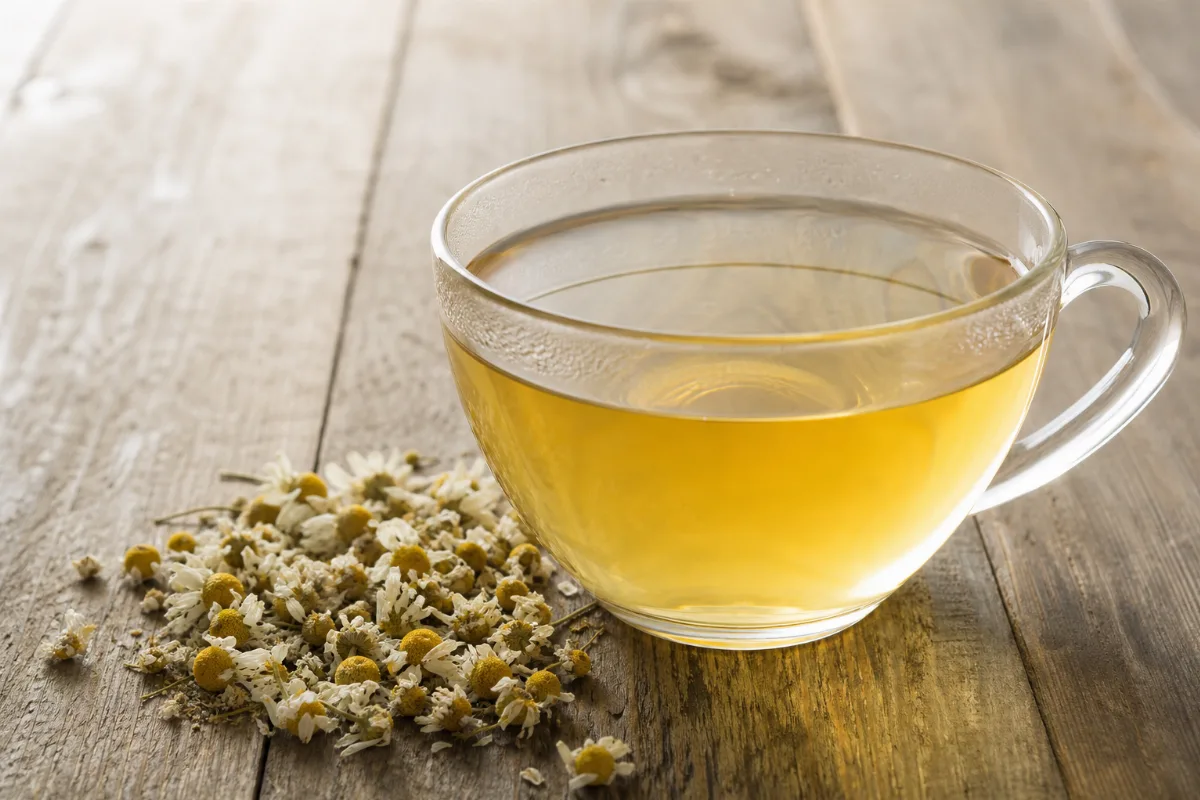
Herbal Teas & Extracts · Herbal tea
Chamomile Tea
Matricaria chamomilla · also called German chamomile tea, camomile tea, chamomile infusion. Not the same as chamomile extract capsules or Roman chamomile.
Chamomile tea is an herbal drink made from the dried flower heads of a daisy-family plant, not from the tea plant, so it is not a source of tea caffeine. People drink it to relax, sleep and settle the stomach. Few trials have tested the tea itself, and most sleep and anxiety results are for extract capsules. The main caution is allergy, which can be severe in people sensitive to ragweed and daisy-family plants; there are also reports with warfarin.
General information, not medical advice. Last substantive update · Not medically reviewed. A named clinician has not signed off on this page. How this page is made
About Chamomile Tea
Chamomile tea is a drink made from the dried flowers of a daisy-family plant. It does not come from the tea plant, and caffeine is not listed among its constituents in the sources read. Research on the tea itself is thin: a small postnatal sleep trial and a small diabetes trial. Most sleep and anxiety results are for extract capsules. NCCIH calls chamomile likely safe in tea amounts, but allergy can be severe in people sensitive to ragweed and daisy-family plants.
What it is
Chamomile tea is made from the dried flower heads of Matricaria chamomilla, a plant of the daisy family (Asteraceae). GBIF accepts this name; Matricaria recutita, the name used by the EU and many papers, is a synonym. Roman chamomile is a different plant.
The flowers contain flavonoids such as apigenin and, in the essential oil, compounds such as alpha-bisabolol and chamazulene. Much of the oil does not end up in a cup of tea. Lab work suggests apigenin binds a calming receptor site in the brain, but that is lab and animal work and a rat study did not find an anxiety-reducing effect. In people, apigenin from the tea was absorbed and its metabolites appeared in urine.
Tea, blend or extract?
A cup of chamomile tea is a water extract of the flowers. Extract capsules are concentrated products, and blends add other herbs such as passionflower or anise. The anxiety and elderly sleep trials used extract capsules. The colic trial used an herbal tea blend, and the diarrhoea trials used a branded pectin-chamomile medicine. Only the postnatal sleep and diabetes trials tested chamomile tea. Do not carry a result from one form to another.
What the research shows
Sleep: one small postnatal trial of the tea found short-lived benefits compared with no extra drink. Two reviews of mixed forms found better sleep-quality scores with very uneven results, and the one insomnia trial found no benefit. Anxiety: small extract trials in generalised anxiety disorder found lower scores, but the larger trial missed its main goal. No trial of plain tea for everyday anxiety was found, and a three-herb blend did no better than placebo tea.
Blood sugar: a single-blind trial of 64 adults with type 2 diabetes found lower HbA1c and insulin markers with the tea than with water, and a small pooled analysis agreed. Colic and children's diarrhoea: the supporting trials used a blend or a branded medicine, and NCCIH says chamomile alone has not been shown to help. For mild stomach complaints, the EU accepts traditional use but says trial data were insufficient.
Regulators and status
The EU herbal committee (HMPC) has a final monograph on chamomile flower (2015), listing herbal tea among accepted traditional herbal medicines. NCCIH has a fact sheet that says evidence is not sufficient to rate usefulness for specific conditions. LactMed was not checked.
At a glance
Traditional uses history, not proof
- NCCIH says chamomile was described in ancient medical writings and was an important medicinal herb in ancient China, Egypt, Greece and Rome.
- Today it is promoted for indigestion, anxiety, insomnia, colic and other complaints (NCCIH).
- The EU herbal committee accepts chamomile flower medicines, including herbal tea, for minor stomach and gut complaints on the basis of traditional use.
Studied for research
- Sleep and mood after childbirth, tea, very low
- Sleep quality (mostly extracts), low
- Generalised anxiety disorder (extract capsules), low
- Blood sugar in type 2 diabetes, low
- Infant colic (herbal tea blend), insufficient
- Insomnia, insufficient
- Everyday calm and short-term anxiety, insufficient
- Stomach and gut complaints (traditional use), insufficient
Main compounds
- Apigenin and its glucoside
- Luteolin and other flavonoids
- Essential-oil components such as alpha-bisabolol and chamazulene (little oil in tea)
Common forms
- Tea from dried flowers, loose or in tea bags
- Blends with other herbs
- Chamomile extract capsules (a different product; separate evidence)
- Essential oil (a different product, separate page)
Research links: NCCIH: Chamomile · EMA: Matricaria flower (public summary) · EU herbal monograph on Matricaria recutita flos (PDF) · Systematic review of chamomile adverse events (abstract) · Chamomile and sleep: 2024 meta-analysis (abstract) · Warfarin interaction case report (CMAJ) · Research Library · Genes & Biomarkers Library
What it is and its history
- Accepted scientific name
- Matricaria chamomilla
- Naming authority
- L.
- Synonyms
- Matricaria recutita L. (a synonym in GBIF; still used by the EMA and in many papers)
- Common names
- German chamomile (English); Chamomile (camomile) (English); Chamomile tea (tea of the dried flower heads) (English)
- Family or group
- Asteraceae (daisy family, also called Compositae)
- Classification
- Plantae > Asterales > Asteraceae > Matricaria > Matricaria chamomilla
- Native range
- Not checked in the sources read.
- Habitat
- Not checked.
- What it looks like
- Stems: Not checked.; Leaves: Not checked.; Flowers: The dried flower head is the part used (EMA: matricaria flower).; Fruit: Not checked.
- Cultivation
- The EMA says the flowers for medicinal use come from cultivated or wild plants.
- Harvest and processing
- Flower heads are dried and either left whole, crumbled into loose tea, or put into tea bags; extracts are separate products.
- Look-alikes and adulterants
- Name: Roman chamomile (Chamaemelum nobile) and other chamomile products; Note: A different plant often sold as chamomile; evidence for one cannot be assumed for the other. Extract capsules and essential oil are also different products from the tea.
- Sustainability and conservation
- Not checked.
Photographs
Traditional use and history history, not clinical proof
| Tradition or era | Documented use | Source |
|---|---|---|
| Ancient medical writing | NCCIH says chamomile was described in ancient medical writings and was an important medicinal herb in ancient China, Egypt, Greece and Rome. | s-nccih-chamomile |
| Folk use for a calming tea | A 1995 paper opens by saying dried flower heads are used in folk medicine to prepare a spasm-relieving and sedative tea. A 2006 review found no clinical trials of the sedative properties of chamomile tea at that time. | p7617761; p16628544 |
| EU herbal monograph | The EU committee accepted chamomile flower medicines, including herbal teas, as traditional herbal medicines for minor stomach and gut complaints and some other uses, based on at least 30 years of use, and said clinical data were insufficient. | s-ema-page-matricariae-flos |
| Other historical claims | Popular accounts repeat many specific stories about origin and ancient use. None was verified here, so they are left out. | NOT verified |
Traditional use shows how it was used. It does not show that it works or is safe today.
What is inside, and how it may work
What it contains and how those compounds act in cells and animals. Laboratory and animal mechanisms are not proven effects in people.
Main compounds
| Compound | Family | Where it is concentrated | Activity studied | Level of evidence |
|---|---|---|---|---|
| Apigenin PubChem 5280443 | flavonoid | Flower | Bound a calming receptor site in lab work; the human tea study found that the glucoside form of apigenin in chamomile tea is absorbed. 38 29 8 | Lab |
| Apigenin 7-O-glucoside PubChem 5280704 | flavonoid glycoside | Flower | The form of apigenin in the tea studied for absorption. 38 8 | Human data |
| Luteolin PubChem 5280445 | flavonoid | Flower | Named as a constituent (McKay 2006); activity not covered. 38 14 | Not established |
| Matricin and chamazulene PubChem 10719 | terpenoid (azulene) | Flower essential oil | Azulenes such as chamazulene are named as components of the essential oil (McKay 2006). CID shown is chamazulene; matricin is CID 92265. Little oil carries over into tea; not measured in these sources. 38 14 | Lab |
| Alpha-bisabolol (levomenol) PubChem 442343 | terpenoid | Flower essential oil | A principal essential-oil component (McKay 2006); the oil is a separate product from the tea. 38 14 | Lab |
Mechanisms, receptors and pathways
| Target or pathway | Gene or receptor | What was found | Level |
|---|---|---|---|
| Benzodiazepine-site receptor binding (lab, mouse) | GABA-A receptor complex | Apigenin competitively inhibited flunitrazepam binding (Ki 4 micromolar) and acted anxiolytic in mice without sedation at the doses tested; a rat study found it reduced movement but not anxiety. 29 5 | Lab and animal; mixed |
| Absorption of apigenin from the tea (human) | n/a | After chamomile tea, the apigenin metabolite peaked at about 2 hours and urinary excretion equalled 34 percent of intake; apigenin itself was poorly absorbed. 8 | Human data |
| Coumarin-like clotting effect (hypothesis) | n/a | The warfarin case authors say the herb is thought to contain a coumarin, and the clotting-test trials were designed to test that idea. Results were mixed. 23 22 12 | Hypothesis |
| Antioxidant, anti-inflammatory, antimicrobial (lab, animal) | n/a | McKay 2006 reports moderate antioxidant and antimicrobial activity, antiplatelet activity in vitro, and potent anti-inflammatory and antispasmodic effects in animal models. Not shown in people drinking tea. 14 | Lab and animal |
Absorption, metabolism and elimination
- Absorption
- Apigenin was poorly absorbed (0.5 percent of intake excreted as metabolites), but after chamomile tea the apigenin glucoside gave a peak metabolite at about 2 hours, suggesting upper gut absorption.
- Distribution
- Not covered.
- Metabolism
- Apigenin-4'-glucuronide, apigenin-7-glucuronide and apigenin-7-sulfate were identified as in vivo metabolites.
- Elimination
- Urinary excretion equalled 34 percent of intake after chamomile tea in healthy men.
- Bioavailability
- Not given as a single figure in the abstract.
Isolated compounds versus whole extracts
Chamomile tea, extract capsules, chamomile blends, pectin-chamomile medicines, essential oil and chamomile lotions are different products. The anxiety and sleep trials mostly used extract capsules; the diabetes and postnatal-sleep trials used tea; the colic and diarrhoea trials used blends or a branded medicine. Do not carry a result from one form to another.
Nutritional composition
Chamomile tea is not a source of essential nutrients in the sources read. It contains flavonoids such as apigenin and, in smaller amounts, oil components. It comes from a daisy-family flower, not the tea plant.
4 low certainty2 very low certainty4 not enough evidence
What was looked at
The 10 benefits and uses checked for Chamomile Tea, each with how strong the evidence is. Tap one to open it.
- Sleep and mood after childbirth (the tea itself)Very low certainty
- Sleep quality (mostly extracts, not tea)Low certainty
- InsomniaNot enough evidence
- Generalised anxiety disorder (extract capsules, not tea)Low certainty
- Everyday calm and short-term anxiety (drinking the tea)Not enough evidence
- Blood sugar in type 2 diabetes (the tea)Low certainty
- Infant colic (a herbal tea blend, not chamomile alone)Not enough evidence
- Diarrhoea in young children (pectin plus chamomile extract, not tea)Low certainty
- Mild stomach and gut complaints (traditional use)Not enough evidence
- Period pain (a chamomile and L-theanine drink)Very low certainty
Lab markers tracked in the studies
Sleep quality score (PSQI)Anxiety rating (HAM-A)Postnatal sleep and depression scalesHbA1cFasting blood glucoseInfant colic score
What is Chamomile Tea good for?
The uses people ask about and how strong the human evidence is for each. Few trials test the tea itself, so each row says which form was studied.
Benefits, one by one
Each card is a research question, not a promise. Tap a goal to filter. Open a card to see the studies, doses and limits.
Sleep and mood after childbirth (the tea itself)
Very low certaintyOne small trial in Taiwan gave postnatal women with poor sleep chamomile tea for two weeks. Their sleep-related physical symptoms and low-mood scores were better than women who had usual care, but the difference was gone by four weeks.
2 studiesChamomile tea (drink). This is the only tea-versus-comparison sleep t…
Studies, doses and limits
What the trials found
Eighty postnatal women with poor sleep quality in Taiwan were assigned to drink chamomile tea for two weeks (40) or to usual care only (40). The tea group had significantly lower scores for physical-symptoms-related sleep inefficiency and depression symptoms. At four weeks all three scales were similar between groups.
Results
Sleep inefficiency scale: t = -2.482, P = 0.015. Depression scale: t = -2.372, P = 0.020. No difference at 4 weeks.
Effect sizes as reported
Small, short-lived difference on two of three scales.
Why this rating
One small trial, no placebo tea (the comparison group drank nothing extra), effect gone by four weeks, self-rated scores.
Form and dose studied
Chamomile tea (drink). This is the only tea-versus-comparison sleep trial found.
Who was studied
Postnatal women with poor sleep in Taiwan.
Limits
No placebo tea, so expectation may explain part of it; one country; short follow-up.
Why researchers looked
New mothers often sleep badly, and chamomile is a folk remedy for sleep.
Traditional use
Chamomile is widely used as a folk remedy for its presumed sedative effect (PMID 26483209 background). NCCIH lists insomnia and anxiety among the reasons it is promoted.
Proposed mechanism Not established
No mechanism was established for chamomile tea in the sources read.
A proposed mechanism does not show that the effect happens in people.
Chamomile tea is a daisy-family flower drink. Allergy (including severe reactions) is the main documented risk, and there are reports with warfarin. See the Safety tab.
Sleep quality (mostly extracts, not tea)
Low certaintyTwo reviews of chamomile trials report better sleep-quality scores, but the studies disagree a lot and most used extract capsules or other forms, not tea. Sleep length and sleep efficiency did not improve in the 2024 review.
6 studiesMixed forms; mostly extract capsules. Not a result for tea.
Studies, doses and limits
What the trials found
A 2019 meta-analysis of 12 trials found better sleep quality with chamomile (SMD -0.73, 95% CI -1.23 to -0.23). A 2024 review of 10 trials (772 adults) found a PSQI fall of 1.88 points across 5 studies, with very large differences between studies (I2 88.4 percent). Awakenings improved in 2 of 3 studies; sleep length, efficiency and daytime functioning did not improve. A 60-person trial in older adults found better sleep quality with chamomile extract capsules than wheat-flour capsules over 28 days.
Results
2019: sleep quality SMD -0.73 (-1.23 to -0.23). 2024: PSQI WMD -1.88 (-3.46 to -0.31), I2 88.4 percent. Elderly extract trial: P < 0.05.
Effect sizes as reported
About 2 PSQI points better on average, with very uneven results.
Why this rating
Very large differences between studies, many forms pooled, self-rated scores, small trials.
Form and dose studied
Mixed forms; mostly extract capsules. Not a result for tea.
Who was studied
Healthy and ill adults, including older adults and postnatal women.
Limits
Few objective sleep measures; only one study checked blinding and product purity.
Why researchers looked
People turn to chamomile hoping for better sleep, so reviewers pooled the trials.
Traditional use
Chamomile is widely used as a folk remedy for its presumed sedative effect (PMID 26483209 background). NCCIH lists insomnia and anxiety among the reasons it is promoted.
Proposed mechanism Lab only
Apigenin, a flavonoid in chamomile, attached to a calming brain receptor site in lab and mouse work. A rat study did not find an anxiety-reducing effect. This is lab and animal work and not shown in people drinking tea.
A proposed mechanism does not show that the effect happens in people.
Chamomile tea is a daisy-family flower drink. Allergy (including severe reactions) is the main documented risk, and there are reports with warfarin. See the Safety tab.
Insomnia
Not enough evidenceThere is almost no trial evidence for chamomile in insomnia. The one trial in a 2019 review found no benefit, and NCCIH says there is very little information.
3 studiesExtract, not tea.
Studies, doses and limits
What the trials found
The 2019 meta-analysis found only one trial of chamomile in insomnia, with no significant change in the Insomnia Severity Index. NCCIH repeats that finding. A 2006 review noted that trials of the sedative effect of chamomile tea were absent.
Results
One trial: no significant change in insomnia severity (P > 0.05).
Effect sizes as reported
No effect shown.
Why this rating
A single trial, using an extract, with a null result.
Form and dose studied
Extract, not tea.
Who was studied
Adults with insomnia.
Limits
Very little data.
Why researchers looked
Chamomile is promoted for trouble sleeping.
Traditional use
Chamomile is widely used as a folk remedy for its presumed sedative effect (PMID 26483209 background). NCCIH lists insomnia and anxiety among the reasons it is promoted.
Proposed mechanism Not established
No mechanism was established for chamomile tea in the sources read.
A proposed mechanism does not show that the effect happens in people.
Chamomile tea is a daisy-family flower drink. Allergy (including severe reactions) is the main documented risk, and there are reports with warfarin. See the Safety tab.
Generalised anxiety disorder (extract capsules, not tea)
Low certaintySmall trials of a chamomile extract capsule in people diagnosed with generalised anxiety disorder found lower anxiety scores. These were extracts, not tea, and the longer trial did not meet its main goal of preventing relapse.
6 studiesPharmaceutical-grade extract capsules. Not a result for tea.
Studies, doses and limits
What the trials found
In an 8-week placebo-controlled trial of 57 people with mild to moderate GAD, chamomile extract lowered the HAM-A score more than placebo (P = 0.047). A trial of 179 people with moderate-to-severe GAD gave open-label extract for 12 weeks, then randomised 93 responders to continue or switch to placebo: relapse was 15.2 percent versus 25.5 percent, not significant (hazard ratio 0.52, 95% CI 0.20 to 1.33), though symptom scores stayed lower on chamomile (P = 0.0032). The 2019 meta-analysis found HAM-A improvements at 2 and 4 weeks.
Results
HAM-A: P = 0.047 (2009 trial); relapse HR 0.52 (0.20 to 1.33), P = 0.16 (2016 trial); meta-analysis MD -1.43 at 2 weeks and -1.79 at 4 weeks.
Effect sizes as reported
Modest lowering of an anxiety rating scale.
Why this rating
Small trials mostly from one research group, extract capsules, one just-significant result, main outcome of the larger trial not met.
Form and dose studied
Pharmaceutical-grade extract capsules. Not a result for tea.
Who was studied
Adults with diagnosed GAD.
Limits
Small samples; relapse outcome not significant; replication by independent groups is needed.
Why researchers looked
Generalised anxiety disorder is common, and chamomile is a traditional calming herb.
Traditional use
Folk use for calming; NCCIH says some preliminary studies of a chamomile supplement suggest help for generalised anxiety disorder and related depression.
Proposed mechanism Lab only
Apigenin binds a calming brain receptor site in lab work; mouse work showed anxiety-reducing behaviour and a rat study did not. Not shown in people.
A proposed mechanism does not show that the effect happens in people.
Chamomile tea is a daisy-family flower drink. Allergy (including severe reactions) is the main documented risk, and there are reports with warfarin. See the Safety tab.
Everyday calm and short-term anxiety (drinking the tea)
Not enough evidenceNo trial of plain chamomile tea for everyday anxiety in adults was found. A pooled analysis of three trials found no difference for short-term (state) anxiety, and a three-herb tea blend did no better than a placebo tea before surgery.
2 studiesPooled mixed forms; a three-herb tea blend.
Studies, doses and limits
What the trials found
The 2019 meta-analysis of three trials found no difference for state anxiety (SMD -0.15, 95% CI -0.46 to 0.16). In a 210-person trial in Brazil, a calming tea blend (chamomile, passionflower and anise) was compared with a lemon placebo tea before surgery. There was no significant difference in anxiety, though the blend group reported more positive feelings about the operation (P = .0009). Both groups seemed to benefit.
Results
State anxiety SMD -0.15 (-0.46 to 0.16), P = 0.42. Blend vs placebo tea: no significant difference.
Effect sizes as reported
No difference found.
Why this rating
Few trials, mixed products, a blend rather than chamomile alone.
Form and dose studied
Pooled mixed forms; a three-herb tea blend.
Who was studied
Adults, including people awaiting surgery.
Limits
The blend trial cannot say what chamomile alone does.
Why researchers looked
Chamomile tea is a classic bedtime and calming drink.
Traditional use
Folk use for calming and sleep.
Proposed mechanism Not established
No mechanism was established for chamomile tea in the sources read.
A proposed mechanism does not show that the effect happens in people.
Chamomile tea is a daisy-family flower drink. Allergy (including severe reactions) is the main documented risk, and there are reports with warfarin. See the Safety tab.
Blood sugar in type 2 diabetes (the tea)
Low certaintyTwo papers from one research group (apparently the same 64 people) found lower HbA1c and insulin markers after eight weeks of chamomile tea than after water. A small pooled analysis agrees. The evidence is thin, and chamomile tea is not a diabetes treatment.
3 studiesChamomile tea in the trials; the meta-analysis does not say which for…
Studies, doses and limits
What the trials found
A single-blind trial in Tabriz, Iran, gave 64 adults with type 2 diabetes chamomile tea after meals or water for 8 weeks. The tea group had significantly lower HbA1c (P = 0.03), insulin (P < 0.001), insulin resistance index (P < 0.001), total cholesterol (P = 0.001), triglycerides (P < 0.001) and LDL (P = 0.05); HDL did not change. A second paper from the same group reports similar results plus antioxidant markers. A 2024 meta-analysis of 4 human trials found lower fasting glucose (SMD -0.65) and HbA1c (SMD -0.90).
Results
HbA1c P = 0.03 (single trial); meta-analysis SMD -0.90 (95% CI -1.39 to -0.40) for HbA1c and -0.65 (-1.00 to -0.29) for fasting glucose.
Effect sizes as reported
Lower lab markers than a water group; size in real-life terms not clear.
Why this rating
Single-blind, water comparator rather than placebo tea, 8 weeks, one research group, very small, authors say longer and larger trials are needed.
Form and dose studied
Chamomile tea in the trials; the meta-analysis does not say which forms it pooled.
Who was studied
Adults aged 30 to 60 with type 2 diabetes in Iran.
Limits
Lab markers, not complications; the two tea papers are probably one trial.
Why researchers looked
Lab and animal work suggested chamomile might affect blood sugar, so tea was tested in people with type 2 diabetes.
Traditional use
Not described in the sources read.
Proposed mechanism Lab only
No mechanism was established in the sources read for the tea in people. Animal studies of extracts found lower blood glucose.
A proposed mechanism does not show that the effect happens in people.
Chamomile tea has been reported with warfarin and other medicines. People with diabetes who take medicines should ask a pharmacist. See the Safety tab.
Infant colic (a herbal tea blend, not chamomile alone)
Not enough evidenceA 1993 trial gave infants with colic an herbal tea preparation or placebo, and more infants improved on the tea. NCCIH says the products helping colic were herb combinations and chamomile alone has not been shown to help.
4 studiesA herbal tea preparation (herb list not in the abstract).
Studies, doses and limits
What the trials found
In a double-blind trial of 68 infants, the herbal tea eliminated colic in 19 of 33 infants (57 percent) compared with 9 of 35 (26 percent) on placebo (p < 0.01). The abstract does not list the herbs. A 2017 review of herbal medicines for children found evidence for fennel preparations in colic. The EU monograph says oral use of herbal tea for babies under 6 months has not been established.
Results
19/33 vs 9/35 colic eliminated, p < 0.01.
Effect sizes as reported
More improvement than placebo in one trial.
Why this rating
One 1993 trial; ingredients not listed in the abstract; NCCIH says chamomile alone has not been shown to work.
Form and dose studied
A herbal tea preparation (herb list not in the abstract).
Who was studied
Infants with colic.
Limits
Giving herbal tea to young infants is a decision for a pediatrician.
Why researchers looked
Chamomile tea is a traditional remedy for infant colic and gas.
Traditional use
NCCIH lists excessive crying in infants (colic) among the reasons chamomile is promoted.
Proposed mechanism Not established
No mechanism was established for chamomile tea in the sources read.
A proposed mechanism does not show that the effect happens in people.
Do not give chamomile tea to a baby without asking a pediatrician: oral use under 6 months is not established (EU monograph), and tea may carry botulism spores (see Safety).
Diarrhoea in young children (pectin plus chamomile extract, not tea)
Low certaintyTwo trials of a branded medicine that combines apple pectin and chamomile extract found shorter diarrhoea in young children. It is a combination product and not a tea, so it says little about a cup of chamomile.
4 studiesApple pectin plus chamomile extract (a branded medicine).
Studies, doses and limits
What the trials found
In a trial of 79 children aged 6 months to 5.5 years, diarrhoea ended after 3 days in 33 of 39 on the pectin-chamomile product versus 23 of 40 on placebo, and lasted at least 5.2 hours less. A trial of 255 children aged 6 months to 6 years found fewer stools than placebo; the abstract gives no numbers. A 2017 review called the evidence for a compound preparation containing chamomile promising.
Results
33/39 vs 23/40 (p < 0.05); 255-child trial significant, no figures in abstract.
Effect sizes as reported
Shorter diarrhoea than placebo.
Why this rating
Combination product, not chamomile alone and not tea; both trials are of the same product; limited reporting.
Form and dose studied
Apple pectin plus chamomile extract (a branded medicine).
Who was studied
Children aged 6 months to about 6 years with acute diarrhoea.
Limits
Cannot be assigned to chamomile; ask a doctor about diarrhoea in children.
Why researchers looked
Chamomile is traditionally used for stomach and gut complaints.
Traditional use
Traditional digestive use is accepted by the EU herbal committee.
Proposed mechanism Not established
No mechanism was established for chamomile tea in the sources read.
A proposed mechanism does not show that the effect happens in people.
Diarrhoea in young children can cause dehydration. See a doctor; a drink is not a treatment.
Mild stomach and gut complaints (traditional use)
Not enough evidenceEU regulators accept chamomile flower medicines for bloating and minor spasms based on long use, not on trials. They say the clinical evidence was not enough to count.
2 studiesHerbal tea among other forms.
Studies, doses and limits
What the trials found
The EU herbal committee (HMPC) concluded, on the basis of long-standing use, that matricaria flower medicines, including herbal teas, can be used for minor stomach and gut complaints such as bloating and minor spasms. It says clinical studies were insufficient to be used as evidence. The accepted uses are described as plausible and safe over at least 30 years of use.
Results
No trial figures. A regulatory category, not a finding.
Effect sizes as reported
Not measured.
Why this rating
Traditional-use status is not proof of benefit; the committee itself said clinical data were insufficient.
Form and dose studied
Herbal tea among other forms.
Who was studied
Adults and adolescents over 12 (younger children only for some preparations).
Limits
See a doctor if symptoms last more than a week (EMA).
Why researchers looked
This is the oldest and most common reason people drink chamomile tea.
Traditional use
Described in the EU assessment as consistent use in old European herbals for stomach and bowel complaints.
Proposed mechanism Not established
No mechanism was established for chamomile tea in the sources read.
A proposed mechanism does not show that the effect happens in people.
Chamomile tea is a daisy-family flower drink. Allergy (including severe reactions) is the main documented risk, and there are reports with warfarin. See the Safety tab.
Period pain (a chamomile and L-theanine drink)
Very low certaintyOne very small trial of a chamomile plus L-theanine drink in young women with period pain showed lower pain scores than baseline, but the abstract does not compare it directly with the flavoured comparison drink, and the added L-theanine means chamomile alone is not tested.
1 studiesA beverage with chamomile and added L-theanine, not plain tea.
Studies, doses and limits
What the trials found
Thirty young women with primary dysmenorrhea drank a chamomile and L-theanine beverage (15) or a chamomile-flavoured beverage (15) for 5 days around the period. Pain scores fell 57.17 percent (VAS) and 55.46 percent (NRS) from baseline in the active group (p < 0.001). The flavoured-drink group also improved on some measures.
Results
About 55 to 57 percent fall from baseline in pain scores (within-group), p < 0.001.
Effect sizes as reported
Before-and-after change; no direct group comparison in the abstract.
Why this rating
Tiny trial, added L-theanine, before-and-after comparison, flavoured comparison drink.
Form and dose studied
A beverage with chamomile and added L-theanine, not plain tea.
Who was studied
Young women with primary dysmenorrhea.
Limits
Cannot isolate chamomile.
Why researchers looked
Chamomile has been used traditionally for menstrual cramps.
Traditional use
Not described in the sources read.
Proposed mechanism Not established
No mechanism was established for chamomile tea in the sources read.
A proposed mechanism does not show that the effect happens in people.
Chamomile tea is a daisy-family flower drink. Allergy (including severe reactions) is the main documented risk, and there are reports with warfarin. See the Safety tab.
Connections to the rest of health
How Chamomile Tea connects to the rest of our health knowledge graph. Every link says what kind of connection it is. A safety link (for example to the liver) is a warning, not a benefit. A study that merely mentions a topic never creates a benefit link.
Explore every connection: goals, body systems, organs, symptoms, genes
A. Wellness goals
| Connected to | Kind of connection | Evidence status | Context | Studies |
|---|---|---|---|---|
| Better Sleep | Very low certainty | Sleep and mood after childbirth (the tea itself): One small trial in Taiwan gave postnatal women with poor sleep chamomile tea for two weeks. Their sleep-related physical symptoms and low-mood scores were better than women who had usual care, but the difference was gone by four weeks. Sleep quality (mostly extracts, not tea): Two reviews of chamomile trials report better sleep-quality scores, but the studies disagree a lot and most used extract capsules or other forms, not tea. Sleep length and sleep efficiency did not improve in the 2024 review. | 9 37 10 11 1 29 5 | |
| Sleep Quality | Very low certainty | Sleep and mood after childbirth (the tea itself): One small trial in Taiwan gave postnatal women with poor sleep chamomile tea for two weeks. Their sleep-related physical symptoms and low-mood scores were better than women who had usual care, but the difference was gone by four weeks. Sleep quality (mostly extracts, not tea): Two reviews of chamomile trials report better sleep-quality scores, but the studies disagree a lot and most used extract capsules or other forms, not tea. Sleep length and sleep efficiency did not improve in the 2024 review. | 9 37 10 11 1 29 5 | |
| Better Sleep | Not enough evidence | Insomnia: There is almost no trial evidence for chamomile in insomnia. The one trial in a 2019 review found no benefit, and NCCIH says there is very little information. | 10 14 37 | |
| Anxiety Support | Low certainty | Generalised anxiety disorder (extract capsules, not tea): Small trials of a chamomile extract capsule in people diagnosed with generalised anxiety disorder found lower anxiety scores. These were extracts, not tea, and the longer trial did not meet its main goal of preventing relapse. | 3 13 10 29 5 37 | |
| Calm Relaxation | Low certainty | Generalised anxiety disorder (extract capsules, not tea): Small trials of a chamomile extract capsule in people diagnosed with generalised anxiety disorder found lower anxiety scores. These were extracts, not tea, and the longer trial did not meet its main goal of preventing relapse. | 3 13 10 29 5 37 | |
| Calm Relaxation | Not enough evidence | Everyday calm and short-term anxiety (drinking the tea): No trial of plain chamomile tea for everyday anxiety in adults was found. A pooled analysis of three trials found no difference for short-term (state) anxiety, and a three-herb tea blend did no better than a placebo tea before surgery. | 10 32 | |
| Anxiety Support | Not enough evidence | Everyday calm and short-term anxiety (drinking the tea): No trial of plain chamomile tea for everyday anxiety in adults was found. A pooled analysis of three trials found no difference for short-term (state) anxiety, and a three-herb tea blend did no better than a placebo tea before surgery. | 10 32 | |
| Blood Sugar Balance | Low certainty | Blood sugar in type 2 diabetes (the tea): Two papers from one research group (apparently the same 64 people) found lower HbA1c and insulin markers after eight weeks of chamomile tea than after water. A small pooled analysis agrees. The evidence is thin, and chamomile tea is not a diabetes treatment. | 20 33 2 | |
| Digestive Support | Not enough evidence | Infant colic (a herbal tea blend, not chamomile alone): A 1993 trial gave infants with colic an herbal tea preparation or placebo, and more infants improved on the tea. NCCIH says the products helping colic were herb combinations and chamomile alone has not been shown to help. | 31 4 37 35 | |
| Digestive Support | Low certainty | Diarrhoea in young children (pectin plus chamomile extract, not tea): Two trials of a branded medicine that combines apple pectin and chamomile extract found shorter diarrhoea in young children. It is a combination product and not a tea, so it says little about a cup of chamomile. | 34 6 4 37 | |
| Digestive Support | Not enough evidence | Mild stomach and gut complaints (traditional use): EU regulators accept chamomile flower medicines for bloating and minor spasms based on long use, not on trials. They say the clinical evidence was not enough to count. | 36 37 | |
| Womens Wellness | Very low certainty | Period pain (a chamomile and L-theanine drink): One very small trial of a chamomile plus L-theanine drink in young women with period pain showed lower pain scores than baseline, but the abstract does not compare it directly with the flavoured comparison drink, and the added L-theanine means chamomile alone is not tested. | 25 |
B. Body systems
| Connected to | Kind of connection | Evidence status | Context | Studies |
|---|---|---|---|---|
| Sleep Recovery | Biological association | Very low certainty | Studied for: Sleep and mood after childbirth (the tea itself) Studied for: Sleep quality (mostly extracts, not tea) | 9 37 10 11 1 29 5 14 |
| Stress Mood | Biological association | Very low certainty | Studied for: Sleep and mood after childbirth (the tea itself) Studied for: Generalised anxiety disorder (extract capsules, not tea) | 9 37 3 13 10 29 5 32 |
| Blood Sugar Support | Biological association | Low certainty | Studied for: Blood sugar in type 2 diabetes (the tea) | 20 33 2 |
| Digestive System | Biological association | Not enough evidence | Studied for: Infant colic (a herbal tea blend, not chamomile alone) Studied for: Diarrhoea in young children (pectin plus chamomile extract, not tea) | 31 4 37 35 34 6 36 |
| Reproductive Health | Biological association | Very low certainty | Studied for: Period pain (a chamomile and L-theanine drink) | 25 |
E. Health conditions
| Connected to | Kind of connection | Evidence status | Context | Studies |
|---|---|---|---|---|
| Allergy to daisy-family plants | Contraindication | Moderate certainty | Severe allergic reactions reported; contraindicated in Asteraceae allergy. Severe reactions reported; contraindicated in Asteraceae allergy. Preparation or compound: Chamomile tea |
37 35 27 |
| Pregnancy | Contraindication | Very low certainty | Sources differ; little is known. Preparation or compound: Chamomile tea |
37 35 |
| Type 2 diabetes | Low certainty | Lower HbA1c than water in one small trial. Preparation or compound: Chamomile tea |
20 33 2 |
I. Biomarkers
| Connected to | Kind of connection | Evidence status | Context | Studies |
|---|---|---|---|---|
| Sleep quality score (PSQI) | Biological association | Low certainty | Measured in trials: lowered. A lab change is not the same as a health benefit. | 11 1 |
| Anxiety rating (HAM-A) | Biological association | Low certainty | Measured in trials: lowered. A lab change is not the same as a health benefit. | 3 10 13 |
| Postnatal sleep and depression scales | Biological association | Very low certainty | Measured in trials: lowered at 2 weeks only. A lab change is not the same as a health benefit. | 9 |
| HbA1c | Biological association | Low certainty | Measured in trials: lowered. A lab change is not the same as a health benefit. | 20 33 2 |
| Fasting blood glucose | Biological association | Low certainty | Measured in trials: lowered. A lab change is not the same as a health benefit. | 2 |
| Infant colic score | Biological association | Not enough evidence | Measured in trials: lowered. A lab change is not the same as a health benefit. | 31 |
J. Genes, receptors and enzymes
L. Active compounds
| Connected to | Kind of connection | Evidence status | Context | Studies |
|---|---|---|---|---|
| Apigenin | Biological association | Lab | Bound a calming receptor site in lab work; the human tea study found that the glucoside form of apigenin in chamomile tea is absorbed. Preparation or compound: Flower |
38 29 8 |
| Apigenin 7-O-glucoside | Biological association | Human | The form of apigenin in the tea studied for absorption. Preparation or compound: Flower |
38 8 |
| Luteolin | Biological association | Not established | Named as a constituent (McKay 2006); activity not covered. Preparation or compound: Flower |
38 14 |
| Matricin and chamazulene | Biological association | Lab | Azulenes such as chamazulene are named as components of the essential oil (McKay 2006). CID shown is chamazulene; matricin is CID 92265. Little oil carries over into tea; not measured in these sources. Preparation or compound: Flower essential oil |
38 14 |
| Alpha-bisabolol (levomenol) | Biological association | Lab | A principal essential-oil component (McKay 2006); the oil is a separate product from the tea. Preparation or compound: Flower essential oil |
38 14 |
Each connection is stored with the ingredient, the connected record, the kind of connection, the evidence status, the supporting studies, the preparation or compound involved, and a review date (last reviewed October 25, 2026).
The evidence
The research centre for Chamomile Tea. Every record here was checked against PubMed or the publisher's page; we never list a study we have not verified.
Evidence by outcome
Bars show how many studies we found for each outcome, not how well it works. People are added up across trials only (reviews are not added, to avoid double counting).
How we rate evidence
High certainty
Several well-run trials or reviews agree; further research is unlikely to change the picture much.
Moderate certainty
Good trials point the same way, but some doubt remains.
Low certainty
Small, short or inconsistent trials. The finding could change with better research.
Very low certainty
Very little or very weak human data. Treat as a possibility only.
Mixed findings
Trials or reviews disagree with each other.
Not enough evidence
Not enough human research to say either way.
Evidence against
Good research found no benefit, or found harm.
We take the reviewers' own risk-of-bias and GRADE statements where they exist, and otherwise judge from study size, design, consistency, directness and whether a product matches what is sold. Many publications do not make evidence high. Method note: We searched PubMed and read the abstracts of about 30 papers, read the NCCIH page and the EU herbal monograph and public summary in full, and checked the plant name in GBIF and compounds in PubChem. Only abstracts were read for papers. Certainty ratings are the compiler's own reading. Funding statements were rarely in the abstracts, so industry links are not ruled out. No study is cited that we could not verify.
Study library: every study we checked 39
| Study | Design | People | Product, dose, length | Result |
|---|---|---|---|---|
| Adib-Hajbaghery 2017 The effects of chamomile extract on sleep quality among elderly people: A clinical trial Complementary Therapies in Medicine · PMID 29154054 · DOI |
Controlled trial |
60 60 people aged 60 or over in a day-care nursing home in Karaj, Iran |
Chamomile extract capsules flower extract Not given in the abstract 28 days · vs Wheat flour capsules |
After the intervention, sleep quality in the chamomile group was significantly better than the control group (P < 0.05). Better PSQI score (P < 0.05) Methods, limits and fundingOutcomes: Pittsburgh Sleep Quality Index Limitations: Single-blind, 60 people, one site, extract capsules, not tea. Funding and conflicts: Not stated in the abstract Read: abstract |
| Akhgarjand 2024 The effect of chamomile consumption on glycemic markers in humans and animals: a systematic review and meta-analysis Journal of Diabetes and Metabolic Disorders · PMID 38932814 · DOI |
Meta-analysis human and animal |
4 human trials and 8 animal studies | Chamomile (human trials: tea and extracts; animal studies: extracts) flower Varied Varied · vs Varied |
In the 4 human trials, fasting glucose was lower (SMD -0.65, 95% CI -1.00 to -0.29, I2 0 percent) and so was HbA1c (SMD -0.90, 95% CI -1.39 to -0.40, I2 45.4 percent). Animal studies found lower glucose with extracts. The authors say more randomised trials are needed. Lower glucose and HbA1c in 4 small trials (SMD -0.65 and -0.90) Methods, limits and fundingOutcomes: Fasting blood glucose and HbA1c Limitations: Only four human trials; the abstract does not say which trials or forms were pooled. Funding and conflicts: No conflict of interest declared Read: abstract |
| Amsterdam 2009 A randomized, double-blind, placebo-controlled trial of oral Matricaria recutita (chamomile) extract therapy for generalized anxiety disorder Journal of Clinical Psychopharmacology · PMID 19593179 · DOI |
Controlled trial |
57 57 outpatients with mild to moderate generalised anxiety disorder (61 enrolled) |
Chamomile extract (capsule) flower extract Not given in the abstract 8 weeks · vs Placebo |
HAM-A fell more with chamomile than placebo (P = 0.047). Secondary scales moved in the same direction, but the trial was not powered for them. One person in each group stopped because of side effects. The authors say chamomile may have modest anxiolytic activity and the result needs replicating. Modest benefit on the main scale (P = 0.047) Methods, limits and fundingOutcomes: HAM-A total score Limitations: Small; a P value just under 0.05; extract capsule, not tea. Funding and conflicts: Not stated in the abstract Read: abstract |
| Anheyer 2017 Herbal Medicines for Gastrointestinal Disorders in Children and Adolescents: A Systematic Review Pediatrics · PMID 28562281 · DOI |
Systematic review |
1927 14 randomised trials in 1,927 children and adolescents |
Various herbal medicines, including a compound preparation with Matricaria chamomilla various Varied Varied · vs Placebo or medicine |
The review found promising evidence for Potentilla erecta, carob bean juice and an herbal compound preparation including Matricaria chamomilla for diarrhoea, evidence for peppermint oil in functional abdominal pain, and evidence for fennel preparations in infantile colic. No serious adverse events were reported. The authors say few studies exist and results must be read carefully. Promising but limited Methods, limits and fundingOutcomes: Diarrhoea, abdominal pain, colic Limitations: Few studies per herb; compound products; one author reports grants from herbal-medicine companies. Funding and conflicts: One author reports grants from Schwabe Pharma, Steigerwald and Repha Read: abstract |
| Avallone 2000 Pharmacological profile of apigenin, a flavonoid isolated from Matricaria chamomilla Biochemical Pharmacology · PMID 10751547 · DOI |
Laboratory and animal in vitro and rat |
Lab binding assays, cultured cells and rats | Apigenin from a methanol extract of chamomile flower Lab and animal doses |
Apigenin displaced a benzodiazepine-site ligand and reduced GABA-activated currents in cultured cells. In rats it reduced locomotor activity but did not show anxiolytic, muscle-relaxant or anticonvulsant effects, and the authors say the movement effect is not explained by the benzodiazepine receptor. Receptor binding yes; anxiety-reducing effect not shown in rats Methods, limits and fundingOutcomes: Receptor binding; cell currents; rat behaviour Limitations: Lab and rat work; disagrees with the 1995 mouse study on anxiety. Funding and conflicts: Not stated in the abstract Read: abstract |
| Becker 2006 Double-blind, randomized evaluation of clinical efficacy and tolerability of an apple pectin-chamomile extract in children with unspecific diarrhea Arzneimittel-Forschung · PMID 16889120 · DOI |
Controlled trial |
255 255 children aged 6 months to 6 years with acute diarrhoea |
Apple pectin plus chamomile extract (a branded medicine, not tea) flower extract Not given in the abstract · vs Placebo, both with a glucose-electrolyte drink |
The preparation was superior to placebo, with significantly fewer stools in the treatment group; tolerability was similar to placebo. The abstract gives no numbers. Fewer stools with the combination (Significant (no numbers in abstract)) Methods, limits and fundingOutcomes: Combined stool and symptom score; stool frequency Limitations: A pectin-chamomile combination, not chamomile alone; follow-up to a trial of the same product; no figures in the abstract. Funding and conflicts: Not stated in the abstract Read: abstract |
| Bianco 2008 Presence of Clostridium botulinum spores in Matricaria chamomilla (chamomile) and its relationship with infant botulism International Journal of Food Microbiology · PMID 18068252 · DOI |
Laboratory survey plant material |
200 200 commercial chamomile samples (Argentina) |
Dried chamomile, loose (sold by weight) and in tea bags flower |
7.5 percent of the 200 samples had botulinum spores, more often in loose chamomile sold by weight in herbal stores than in tea bags (p = 0.0055). All positive samples held 0.3 to 0.4 spores per gram. The authors say chamomile is a potential carrier of spores and tea given to infants could be a risk for infant botulism. 7.5 percent of samples contaminated (p = 0.0055 (loose vs bags)) Methods, limits and fundingOutcomes: Presence of C. botulinum spores Limitations: One survey in one country; it measured spores in the plant, not illness in infants. Funding and conflicts: Not stated in the abstract Read: abstract |
| Borges 2022 Absorption, distribution, metabolism and excretion of apigenin and its glycosides in healthy male adults Free Radical Biology and Medicine · PMID 35452808 · DOI |
Human pharmacokinetic |
Healthy male adults | Apigenin, a parsley drink, parsley leaves, and chamomile tea containing apigenin-7-O-glucoside flower (tea) Not given in the abstract Single intakes |
Apigenin itself was poorly absorbed (metabolites equal to 0.5 percent of intake in urine over 24 hours). After chamomile tea, the main apigenin metabolite peaked at about 2 hours, suggesting absorption in the upper gut, and urinary excretion equalled 34 percent of intake. Chamomile tea apigenin glucoside is absorbed better than apigenin itself Methods, limits and fundingOutcomes: Apigenin metabolites in blood and urine Limitations: Number of men not in the abstract; measures absorption, not benefit. Funding and conflicts: Not stated in the abstract Registration: NCT03526081 Read: abstract |
| Chang 2016 Effects of an intervention with drinking chamomile tea on sleep quality and depression in sleep disturbed postnatal women: a randomized controlled trial Journal of Advanced Nursing · PMID 26483209 · DOI |
Controlled trial |
80 80 postnatal women in Taiwan with poor sleep quality (PSQS score 16 or more) |
Chamomile tea (drink) flower (tea) Not given in the abstract 2 weeks, follow-up at 4 weeks · vs Regular postpartum care only (no placebo tea) |
Compared with the control group, the tea group had significantly lower scores for physical-symptoms-related sleep inefficiency (t = -2.482, P = 0.015) and for depression symptoms (t = -2.372, P = 0.020). Scores on all three scales were similar in both groups at 4 weeks, so the authors say the effects were limited to the short term. Short-lived difference on two scales; none at 4 weeks (P = 0.015 and P = 0.020 (no intervals in abstract)) Methods, limits and fundingOutcomes: Postpartum sleep quality scale, Edinburgh Postnatal Depression Scale, Postpartum Fatigue Scale Limitations: Women were assigned systematically with a random start; the control group drank nothing extra, so expectation may explain part of the result. Small, one country, short follow-up. Funding and conflicts: Not stated in the abstract Read: abstract |
| Hieu 2019 Therapeutic efficacy and safety of chamomile for state anxiety, generalized anxiety disorder, insomnia, and sleep quality: a systematic review and meta-analysis of randomized trials and quasi-randomized trials Phytotherapy Research · PMID 31006899 · DOI |
Meta-analysis |
12 randomised or quasi-randomised trials of chamomile (mixed preparations) for anxiety and sleep | Chamomile in several forms (mostly not tea) flower Varied Varied · vs Placebo or other |
Three trials showed no difference in state anxiety (SMD -0.15, 95% CI -0.46 to 0.16, P = 0.42). One trial of insomnia found no significant change. For generalised anxiety disorder (HAM-A scale) there was improvement at 2 weeks (MD -1.43, 95% CI -2.47 to -0.39) and 4 weeks (MD -1.79, 95% CI -3.14 to -0.43). Sleep quality improved (SMD -0.73, 95% CI -1.23 to -0.23). Mild adverse events were reported in three trials. Mixed: sleep quality and GAD scores better, state anxiety and insomnia not (See results) Methods, limits and fundingOutcomes: State anxiety, generalised anxiety disorder (HAM-A), insomnia, sleep quality Limitations: Few trials per analysis; many preparations; most are not tea. Funding and conflicts: Not stated in the abstract Read: abstract |
| Kazemi 2024 Effects of chamomile (Matricaria chamomilla L.) on sleep: A systematic review and meta-analysis of clinical trials Complementary Therapies in Medicine · PMID 39106912 · DOI |
Meta-analysis |
772 10 clinical trials (772 adults), healthy or with illness |
Chamomile in several forms flower Varied Varied · vs Varied |
PSQI score fell by 1.88 points (95% CI -3.46 to -0.31, I2 88.4 percent, 5 studies). Sleep onset or ease of getting to sleep improved in 3 of 4 studies; awakenings improved in 2 of 3. Sleep duration, sleep efficiency and daytime functioning did not improve. No adverse events were reported, though only one study actively tracked them. Only one study checked blinding success and product purity. PSQI about 2 points better, with very large differences between studies (WMD -1.88 (-3.46, -0.31)) Methods, limits and fundingOutcomes: Pittsburgh Sleep Quality Index (PSQI), sleep length and other sleep measures Limitations: I2 of 88 percent means the studies disagreed a lot; mixed products; self-reported scores. Funding and conflicts: No competing interests declared Read: abstract |
| Kimura 2024 The Acute Effect of Chamomile Intake on Blood Coagulation Tests in Healthy Volunteers: A Randomized Trial Journal of Applied Laboratory Medicine · PMID 38300838 · DOI |
Controlled trial |
8 8 healthy volunteers |
Single serving of chamomile tea, or a single chamomile extract capsule flower Single serving Blood tested before and 2 and 4 hours after · vs Crossover between tea and capsule (no placebo) |
Tea increased the average maximum PT by 0.7 (0.2) s (P = 0.0078); extract capsules by 0.3 (0.2) s (P = 0.06). Neither met the researchers' own 10 percent threshold for clinical significance. No significant change in secondary outcomes. The authors say the clinical meaning is unclear. Small rise in PT within hours of tea (P = 0.0078 (tea)) Methods, limits and fundingOutcomes: Maximum change in prothrombin time (PT) within 4 hours Limitations: Only 8 people, no placebo arm, single serving, not on warfarin. Funding and conflicts: Not stated in the abstract Registration: NCT05272475 Read: abstract |
| Mao 2016 Long-term chamomile (Matricaria chamomilla L.) treatment for generalized anxiety disorder: A randomized clinical trial Phytomedicine · PMID 27912875 · DOI |
Controlled trial |
179 179 people with moderate-to-severe generalised anxiety disorder; 93 responders were randomised |
Pharmaceutical-grade chamomile extract capsules (open label 12 weeks, then chamomile or placebo) flower extract Not given in the abstract 12 weeks open-label, then 26 weeks · vs Placebo substitution |
Relapse occurred in 7 of 46 (15.2 percent) on chamomile and 12 of 47 (25.5 percent) switched to placebo; hazard ratio 0.52 (95% CI 0.20 to 1.33, P = 0.16), not significant. Chamomile participants kept significantly lower anxiety symptoms than placebo (P = 0.0032). Both groups had similar low adverse-event rates. Primary outcome not met; symptom scores lower on chamomile (HR 0.52 (0.20 to 1.33)) Methods, limits and fundingOutcomes: Time to relapse Limitations: The main outcome (relapse) was not statistically significant; the study was small for that question; extract, not tea. Funding and conflicts: Authors declared no conflict of interest Registration: NCT01072344 Read: abstract |
| McKay 2006 A review of the bioactivity and potential health benefits of chamomile tea (Matricaria recutita L.) Phytotherapy Research · PMID 16628544 · DOI |
Narrative review lab, animal and human |
Review of chamomile tea research up to 2006 | Chamomile tea (dried flower heads) flower (tea) |
Main constituents are phenolic compounds (flavonoids apigenin, quercetin, patuletin, luteolin and their glucosides) and, in the essential oil, alpha-bisabolol and its oxides and azulenes such as chamazulene. In lab and animal work chamomile has moderate antioxidant and antimicrobial activity, significant antiplatelet activity in vitro, and potent anti-inflammatory, antispasmodic and anxiolytic effects. Human studies are limited and clinical trials of the sedative properties of the tea were absent. Adverse reactions have been reported in people allergic to other daisy-family plants. Mostly lab and animal findings Methods, limits and fundingOutcomes: Constituents and bioactivity Limitations: Dates from 2006; narrative review. Funding and conflicts: Not stated in the abstract Read: abstract |
| Moussally 2012 Exposure to specific herbal products during pregnancy and the risk of low birth weight Alternative Therapies in Health and Medicine · PMID 22516883 |
Case control |
3183 3,183 women in the Quebec Pregnancy Registry (424 had a low birth weight baby) |
Herbal products in the last two trimesters, including chamomile (named in the paper as Anthemis nobilis, which is Roman chamomile), flax, peppermint, green tea various Last 2 trimesters · vs Women not using them |
After adjustment, no statistically significant link was found between use of any herbal product, or of chamomile, flax, peppermint or green tea, and low birth weight. No significant link to low birth weight Methods, limits and fundingOutcomes: Low birth weight (under 2,500 g) Limitations: Only 38.5 percent returned the questionnaire; self-reported use; the chamomile named is Roman chamomile, not German; looks only at birth weight. Funding and conflicts: Not stated in the abstract Read: abstract |
| Nowack 2005 Herbal teas interfere with cyclosporin levels in renal transplant patients Nephrology Dialysis Transplantation · PMID 16046518 · DOI |
Case report |
Kidney transplant patients (details not available) | Herbal teas (the PubMed record has no abstract) various |
Only the title is available in PubMed. It says herbal teas interfere with cyclosporin levels in kidney transplant patients; the title does not name chamomile alone. Title only Methods, limits and fundingOutcomes: Cyclosporin blood levels Limitations: Title only; not specific to chamomile. Funding and conflicts: Not applicable Read: title-only |
| Ostovar 2025 Chamomile: A systematic review of adverse events Complementary Therapies in Medicine · PMID 40374153 · DOI |
Systematic review |
2896 72 trials and 11 case reports of chamomile (Matricaria chamomilla; combinations with other herbs and other species excluded) |
Chamomile in many forms flower and others Varied Varied · vs Varied |
In the trials, 2,896 patients received chamomile and 65 adverse events were reported across 10 trials. The most common were gastrointestinal complaints and drowsiness, self-limiting and non-serious. No allergic events were reported in the trials, but of 11 case reports, six described allergic reactions, three of them anaphylaxis. Reporting was incomplete: 28 trials gave no adverse-event data. Data on pregnancy and breastfeeding were insufficient. Generally mild events; allergy documented in case reports Methods, limits and fundingOutcomes: Adverse events Limitations: English-language only, searched to February 2024, incomplete reporting, mixed forms (not only tea). Funding and conflicts: No competing interests declared Read: abstract |
| Pallares 2019 Occurrence of Mycotoxins in Botanical Dietary Supplement Infusion Beverages Journal of Natural Products · PMID 30688071 · DOI |
Laboratory survey plant material |
52 52 commercial herbal tea beverages, including chamomile, chamomile with anise and chamomile with honey |
Brewed herbal tea beverages various |
Some mould toxins were detected (aflatoxins in some samples; others rarely). Pennyroyal mint and thyme had the highest levels. A risk assessment found the mycotoxins did not pose a risk from drinking the herbal teas. Low levels; no risk found by the authors Methods, limits and fundingOutcomes: Mycotoxins (mould toxins) Limitations: Chamomile not separated in the abstract. Funding and conflicts: Not stated in the abstract Read: abstract |
| Paulsen 2002 Contact sensitization from Compositae-containing herbal remedies and cosmetics Contact Dermatitis · PMID 12492516 · DOI |
Narrative review |
Literature on skin allergy to daisy-family (Compositae/Asteraceae) herbal products | Compositae herbal remedies and cosmetics, including German chamomile various |
The review says sensitisation occurs relatively often with a few species such as arnica and elecampane and rarely with the majority, especially the widely used German chamomile. Sesquiterpene lactones are the most important allergens. Skin sensitisation to German chamomile is rare Methods, limits and fundingOutcomes: Contact sensitisation Limitations: Skin contact allergy, not allergy to drinking the tea. Funding and conflicts: Not stated in the abstract Read: abstract |
| Rafraf 2015 Effectiveness of chamomile tea on glycemic control and serum lipid profile in patients with type 2 diabetes Journal of Endocrinological Investigation · PMID 25194428 · DOI |
Controlled trial |
64 64 adults aged 30 to 60 with type 2 diabetes, Tabriz, Iran |
Chamomile tea (drink, after meals) flower (tea) Not given in the abstract 8 weeks · vs Water |
Single-blind trial. Chamomile tea significantly lowered HbA1c (P = 0.03), insulin (P < 0.001), HOMA-IR (P < 0.001), total cholesterol (P = 0.001), triglyceride (P < 0.001) and LDL cholesterol (P = 0.05) compared with the water group. HDL cholesterol did not change significantly. Lower lab markers than a water group (P-values only in abstract) Methods, limits and fundingOutcomes: HbA1c, insulin, insulin resistance index (HOMA-IR), cholesterol and triglycerides Limitations: Single-blind with a water comparator (no placebo tea). Small. Same group published a second paper (PMID 26437613) on what looks like the same 64 people, so the two should not be counted as separate trials. Funding and conflicts: Not stated in the abstract Read: abstract |
| Schulz 2015 Detection of pyrrolizidine alkaloids in German licensed herbal medicinal teas Phytomedicine · PMID 26055130 · DOI |
Laboratory survey plant material |
169 169 licensed medicinal teas in Germany, including 14 chamomile teas |
Medicinal teas (single herbs and mixtures) various |
Thirty percent of single-ingredient teas and 56.9 percent of mixtures had pyrrolizidine alkaloids above the quantification limit. In 11 teas, contents above 300 micrograms per kilogram exceeded the German risk institute (BfR) recommendation. Single-ingredient teas generally had much less than mixtures. The abstract does not give a separate chamomile result. PAs found in some medicinal teas; chamomile not separated Methods, limits and fundingOutcomes: Pyrrolizidine alkaloid content Limitations: Chamomile result not separated in the abstract. Funding and conflicts: Not stated in the abstract Read: abstract |
| Schwartz 2023 Effect of chamomile intake on blood coagulation tests in healthy volunteers: a randomized, placebo-controlled, crossover trial Perioperative Medicine (London) · PMID 37730613 · DOI |
Controlled trial |
12 12 healthy volunteers (not taking warfarin) |
Chamomile tea (drink), chamomile extract capsule, or placebo capsule flower Very high daily tea intake in the tea arm (see paper) 7 days per arm, 7-day washouts · vs Placebo capsule |
All 12 completed. PT change was similar across tea (-0.2 +/- 0.4 s), extract capsule (-0.2 +/- 0.4 s) and placebo (0.1 +/- 0.5 s), p = 0.34. INR change was 0 s (p = 0.07) for each. Other clotting tests did not change significantly. Authors conclude chamomile by tea or capsule does not prolong PT in people not taking warfarin. No change in clotting tests (p = 0.34 (PT)) Methods, limits and fundingOutcomes: Prothrombin time (PT) change; INR, aPTT, thrombin time, reptilase time, fibrinogen Limitations: Very small; healthy volunteers who were not on warfarin, so it cannot answer the warfarin question. Funding and conflicts: No competing interests declared Registration: NCT05006378 Read: abstract |
| Segal 2006 Warfarin interaction with Matricaria chamomilla CMAJ · PMID 16636327 · DOI |
Case report |
1 A 70-year-old woman treated with warfarin |
Chamomile tea and a chamomile body lotion flower |
The authors write that no cases had been reported before and that there is a theoretical risk because the herb is thought to contain a coumarin. The woman was admitted with multiple internal hemorrhages after using chamomile products (tea and body lotion) for cold symptoms. One case, cause not proven Methods, limits and fundingOutcomes: Bleeding while on warfarin Limitations: A single case; other causes were not ruled out in the abstract. It shows a possible signal, not a rate. Funding and conflicts: Not applicable Read: abstract |
| Shimshoni 2015 Pyrrolizidine and tropane alkaloids in teas and the herbal teas peppermint, rooibos and chamomile in the Israeli market Food Additives and Contaminants Part A · PMID 26365752 · DOI |
Laboratory survey plant material |
70 70 pre-packed tea bag products sold in Israeli supermarkets |
Tea bags of herbal and non-herbal teas various |
Chamomile, peppermint and rooibos teas contained high pyrrolizidine alkaloid levels in almost all samples; totals for those three teas ranged from 20 to 1,729 micrograms per kilogram. The patterns suggested contamination by weeds during harvest or production. Tropane alkaloid levels per bag were below the acute reference dose. The authors call for routine quality control and legal limits. Pyrrolizidine alkaloids found in almost all chamomile samples Methods, limits and fundingOutcomes: Pyrrolizidine alkaloids (plant toxins that can harm the liver and cause cancer) and tropane alkaloids Limitations: The range is for three teas combined, not chamomile alone; this is contamination found, not harm measured in drinkers. Funding and conflicts: Not stated in the abstract Read: abstract |
| Soh 2025 Effects of chamomile and L-theanine beverage on menstrual pain, menstrual symptoms, mood, and sleep quality in young women experiencing primary dysmenorrhea: A randomized, double-blind, placebo-controlled study Journal of Food and Drug Analysis · PMID 41525193 · DOI |
Controlled trial |
30 30 young women with primary dysmenorrhea (15 per group) |
A chamomile plus L-theanine beverage flower and added amino acid Not given in the abstract 5 days around the period · vs A chamomile-flavoured beverage |
Compared with their own baseline, the chamomile-theanine group had pain scores down by 57.17 percent (VAS) and 55.46 percent (NRS), p < 0.001, plus lower severity of several symptoms. The flavoured-drink group also improved on some measures. The abstract does not compare the two groups directly. Both groups improved; no direct group comparison reported (p < 0.001 versus baseline) Methods, limits and fundingOutcomes: Pain scores, symptoms, mood, sleep Limitations: Only 30 women; the drink has added L-theanine, so chamomile is not tested alone; before-and-after changes are not a group comparison. Funding and conflicts: Authors declare no conflict; funder had no role Read: abstract |
| Sridharan 2009 Premature constriction of the fetal ductus arteriosus following the maternal consumption of camomile herbal tea Ultrasound in Obstetrics and Gynecology · PMID 19705407 · DOI |
Case report |
1 One pregnancy (details not available in the PubMed record) |
Camomile herbal tea flower (tea) |
Only the title and citation are available in PubMed (a letter without an abstract). The title reports premature constriction of the fetal ductus arteriosus after the mother drank camomile herbal tea. No details, outcome or cause was read. One reported case; details not read Methods, limits and fundingOutcomes: Fetal heart vessel (ductus arteriosus) constriction Limitations: Title only. Not enough to judge cause. Funding and conflicts: Not applicable Read: title-only |
| Subiza 1989 Anaphylactic reaction after the ingestion of chamomile tea: a study of cross-reactivity with other composite pollens Journal of Allergy and Clinical Immunology · PMID 2674263 · DOI |
Case report |
1 An 8-year-old boy with hay fever and asthma to several pollens (grass, olive, mugwort), Madrid |
Chamomile tea (infusion) flower (tea) First ingestion |
A severe anaphylactic reaction followed his first chamomile tea. Skin tests and IgE tests were positive to chamomile tea extract, and lab tests showed cross-reactivity between chamomile pollen, giant ragweed pollen and mugwort pollen. The authors suggest he was already sensitised to mugwort pollen. One severe case with cross-reaction to ragweed and mugwort Methods, limits and fundingOutcomes: Allergic reaction and IgE tests Limitations: A single case; shows a mechanism, not how common it is. Funding and conflicts: Not applicable Read: abstract |
| Subiza 1990 Allergic conjunctivitis to chamomile tea Annals of Allergy · PMID 2382873 |
Case series |
7 Seven hay fever patients with conjunctivitis after eye washing with chamomile tea (plus 100 hay fever controls), Madrid |
Chamomile tea used as an eye wash; oral challenge with the infusion flower (tea) Single challenges · vs Hay fever controls |
All seven reacted in the eye to chamomile tea extract and had IgE to chamomile tea and to Matricaria and Artemisia pollen. Two also had eyelid swelling. No symptoms followed oral challenges with the infusion in these patients. Of 100 hay fever controls, 5 reacted on skin testing to chamomile tea. Eye wash with chamomile tea can cause allergic conjunctivitis Methods, limits and fundingOutcomes: Allergic eye reaction; skin tests; IgE Limitations: Small series, tea used on the eye (not drunk). Funding and conflicts: Not stated in the abstract Read: abstract |
| Viola 1995 Apigenin, a component of Matricaria recutita flowers, is a central benzodiazepine receptors-ligand with anxiolytic effects Planta Medica · PMID 7617761 · DOI |
Laboratory and animal in vitro and mouse |
Lab binding assays and mice | Apigenin isolated from an aqueous chamomile extract flower Lab and animal doses |
Apigenin competitively blocked flunitrazepam binding at the central benzodiazepine receptor (Ki 4 micromolar) and had anxiolytic activity in mice without sedation at the doses tested. A tenfold higher dose gave a mild sedative effect. Receptor binding and mouse behaviour Methods, limits and fundingOutcomes: Receptor binding; mouse anxiety test Limitations: Lab and mouse work; does not show an effect in people drinking tea. Funding and conflicts: Not stated in the abstract Read: abstract |
| Wahl 2018 [Anaphylactic reaction to camomile tea] Der Hautarzt · PMID 29737365 · DOI |
Case report |
1 A man in Vienna with type I (immediate) allergy |
Camomile tea flower (tea) About 30 minutes before symptoms |
About 30 minutes after drinking the tea he was hospitalised with itchy palms, swelling of eyelids, upper lip and nose lining, and a feeling of narrow throat. Hereditary angioedema was excluded and a skin prick test confirmed type I allergy to camomile tea. One case of immediate allergy Methods, limits and fundingOutcomes: Allergic reaction Limitations: A single case, article in German (abstract read in English). Funding and conflicts: Not applicable Read: abstract |
| Weizman 1993 Efficacy of herbal tea preparation in infantile colic The Journal of Pediatrics · PMID 8463920 · DOI |
Controlled trial |
68 Infants with colic (33 given tea, 35 given placebo) |
An herbal tea preparation (the PubMed abstract does not list its herbs; NCCIH says products tested for colic were combinations that included chamomile) mixed herbs Not given in the abstract · vs Placebo |
Tea eliminated colic in 19 of 33 infants (57 percent) versus 9 of 35 (26 percent) on placebo (p < 0.01). The mean colic score improved significantly with tea. Night wakings did not differ. More infants improved on the tea blend than on placebo (p < 0.01) Methods, limits and fundingOutcomes: Colic eliminated; colic score; night wakings Limitations: A 1993 trial of a multi-herb tea; chamomile alone was not tested; small; the EU monograph says oral use of herbal tea under 6 months of age has not been established. Funding and conflicts: Not stated in the abstract Read: abstract |
| Zampieri 2025 Exploring the Effects of a Calming Herbal Tea Blend on Perioperative Anxiety: A Randomized Clinical Trial Journal of Medicinal Food · PMID 39514279 · DOI |
Controlled trial |
210 210 adults awaiting elective surgery in Brazil |
Herbal tea blend of Matricaria recutita, Passiflora incarnata and Pimpinella anisum flower, aerial part, fruit Not given in the abstract Before surgery · vs Placebo tea infused with lemon |
No significant difference in anxiety between the calming tea and the placebo tea. The calming tea group reported more positive feelings about the surgery (P = .0009). Both teas were seen as safe and pleasant ways to reduce preoperative fasting. No difference in anxiety between blend and placebo tea (P = .0009 for positive sentiments only) Methods, limits and fundingOutcomes: Anxiety on the DASS-21 questionnaire Limitations: A three-herb blend (passionflower and anise too), so chamomile alone is not tested; anxiety was measured after surgery. Funding and conflicts: Not stated in the abstract Read: abstract |
| Zemestani 2016 Chamomile tea improves glycemic indices and antioxidants status in patients with type 2 diabetes mellitus Nutrition · PMID 26437613 · DOI |
Controlled trial |
64 64 adults aged 30 to 60 with type 2 diabetes (same design and size as PMID 25194428) |
Chamomile tea (drink, after meals) flower (tea) Not given in the abstract 8 weeks · vs Water |
Single-blind trial. Chamomile tea significantly lowered glycosylated hemoglobin, insulin, HOMA-IR and malondialdehyde and raised antioxidant enzyme activities compared with the water group (all P < 0.05). The authors say a larger sample and longer trial may be needed to show clinically important improvements. Lower HbA1c and insulin markers than a water group (P < 0.05 (no intervals in abstract)) Methods, limits and fundingOutcomes: HbA1c, insulin, HOMA-IR, antioxidant markers Limitations: Appears to report the same 64 people as PMID 25194428. Single-blind, water comparator, 8 weeks. Funding and conflicts: Not stated in the abstract Read: abstract |
| de la Motte 1997 [Double-blind comparison of an apple pectin-chamomile extract preparation with placebo in children with diarrhea] Arzneimittel-Forschung · PMID 9463302 |
Controlled trial |
79 79 children aged 6 months to 5.5 years with acute diarrhoea |
Apple pectin plus chamomile extract (a branded medicine, not tea) flower extract Not given in the abstract 3 days · vs Placebo, both with rehydration |
After 3 days diarrhoea had ended in 33 of 39 on pectin-chamomile versus 23 of 40 on placebo (p < 0.05), and duration was shorter by at least 5.2 hours. Shorter diarrhoea with the combination (p < 0.05) Methods, limits and fundingOutcomes: Diarrhoea ended; duration Limitations: A pectin-chamomile combination, so chamomile alone is not tested; article in German; small. Funding and conflicts: Not stated in the abstract Read: abstract |
| n/a 2015 EU herbal monograph on Matricaria recutita L., flos (EMA/HMPC/55843/2011), final, 7 July 2015 n/a · Source |
Authoritative guidance n/a |
n/a | n/a |
Oral use of the herbal tea in children below 6 months of age has not been established, due to general considerations of nutrition and fluid intake. Interactions: for patients after kidney transplantation taking high amounts for longer periods (about two months), interactions based on effects on CYP450 have been reported. Pregnancy and lactation: for the herbal tea preparation (listed first) safety has been established; for the other preparations safety has not been established and use is not recommended in the absence of sufficient data. No fertility data. Undesirable effects: hypersensitivity reactions including severe allergic reaction (breathlessness, Quincke oedema, vascular collapse, anaphylactic shock) after mucosal contact with liquid chamomile preparations; frequency not known. Methods, limits and fundingOutcomes: Warnings, interactions, pregnancy, undesirable effects Limitations: Full PDF text read 2026-10-25. The monograph also lists amounts for authorised products; none are reproduced here. Read: full-text |
| n/a 2015 European Medicines Agency: Matricaria flower, herbal medicine (summary for the public) n/a · Source |
Authoritative guidance n/a |
n/a | n/a |
The HMPC concluded, on the basis of long-standing use, that matricaria flower medicines can be used for minor stomach and gut complaints such as bloating and minor spasms, for common cold symptoms, minor mouth and throat inflammation, and some skin uses. It says clinical studies were insufficient as evidence. Herbal teas are among the forms. Allergic reactions, sometimes severe, have been reported when liquid chamomile touched the lining of the mouth; the frequency is not known. Not to be used by anyone allergic to matricaria flowers or other Asteraceae (Compositae) plants. Usually for adults and adolescents over 12; only some preparations are recommended for younger children. Methods, limits and fundingOutcomes: Uses, evidence and risks accepted for traditional herbal medicines Limitations: Traditional-use status is not proof from trials. Web page read 2026-10-25. Read: full-text |
| n/a 2024 NCCIH (NIH): Chamomile: Usefulness and Safety n/a · Source |
Authoritative guidance n/a |
n/a | n/a |
States that studies of chamomile for specific conditions have not produced sufficient reliable evidence to rate clinical usefulness, and that some studies use chamomile plus other herbs. Some preliminary studies suggest a chamomile dietary supplement might help generalised anxiety disorder and associated depression. Products with certain herb combinations including chamomile may help diarrhoea in children and infant colic, but chamomile alone has not been shown to help. A 2019 review found one study on insomnia with no benefit. Likely safe orally in amounts found in teas and foods. Side effects are uncommon: nausea, dizziness and allergic reactions including severe hypersensitivity and anaphylaxis. People allergic to ragweed, chrysanthemums, marigolds or daisies are more likely to react. Chamomile might have some estrogen-like effects and preliminary studies suggest it might reduce the effect of birth control pills. Interactions with some drugs processed by the liver and with warfarin have been reported; sedative interactions are theoretical. Little is known about pregnancy or breastfeeding. Methods, limits and fundingOutcomes: Background, evidence, safety Limitations: A fact sheet, not a trial. The copy read shows no single clear date; the page cites a 2019 review and carries other NIH update notes from 2021 and 2022. Read: full-text |
| n/a 2026 PubChem compound records: apigenin (5280443), apigenin 7-O-glucoside (5280704), luteolin (5280445), matricin (92265), chamazulene (10719), levomenol (442343) n/a · Source |
Database record n/a |
n/a | n/a |
CIDs and formulas checked in the PubChem API on 2026-10-25: apigenin C15H10O5; apigenin 7-O-glucoside C21H20O10; luteolin C15H10O6; matricin C17H22O5; chamazulene C14H16; levomenol (alpha-bisabolol) C15H26O. Methods, limits and fundingOutcomes: Compound identity Limitations: Chemical database record; says nothing about amounts in tea. Read: full-text |
| n/a 2026 GBIF Backbone Taxonomy: Matricaria chamomilla L. (usage key 8370958) n/a · Source |
Database record n/a |
n/a | n/a |
Matricaria chamomilla L. is an ACCEPTED species, family Asteraceae, order Asterales, genus Matricaria. A GBIF name match for Matricaria recutita L. returns a SYNONYM that points to accepted key 8370958. Methods, limits and fundingOutcomes: Accepted name and family Limitations: Taxonomic database record via the GBIF API, retrieved 2026-10-25. Read: full-text |
What we do not know yet
- What the evidence supports: low-certainty results for blood sugar and for sleep quality (mostly extracts); the tea itself has two small trials.
- No placebo-controlled trial of plain chamomile tea for sleep or anxiety in healthy adults was found.
- No trial of chamomile tea in people taking warfarin; clotting tests used healthy volunteers.
- No pregnancy trials of the tea; a heart-vessel case report was read by title only.
- LactMed and LiverTox were not searched; caffeine content was not measured in the sources read.
How new research is added
New studies are found by a saved PubMed search and are placed in a review queue. A person reads each one before it changes any evidence rating or safety wording. New publications never change ratings automatically.
Lab markers
What changed in blood or saliva tests during trials. A changed number is not the same as feeling or being healthier, and we give no "normal ranges".
Metabolic 1
HbA1c
Lowered in trials
A blood test showing average blood sugar over about the last three months.
Low certaintyResults and what it means
Why it was measured
The main marker of blood sugar control in the diabetes trials.
Statistical vs. clinical meaning
A lab number, not a diabetes outcome; small trials.
Safety implication
None from the numbers; see the Safety tab for allergy and medicine cautions.
Other 5
Sleep quality score (PSQI)
Lowered in trials
A questionnaire where a lower score means better self-rated sleep over the past month.
Low certaintyResults and what it means
Why it was measured
To see whether chamomile changes how people rate their sleep.
Statistical vs. clinical meaning
Lowered by about 2 points on average, with very uneven results; a self-rating, not a sleep recording.
Safety implication
None from the numbers; see the Safety tab for allergy and medicine cautions.
Anxiety rating (HAM-A)
Lowered in trials
A clinician-rated scale of anxiety symptoms; lower means fewer symptoms.
Low certaintyResults and what it means
Why it was measured
The main outcome in trials of generalised anxiety disorder.
Statistical vs. clinical meaning
A modest fall on a rating scale; extracts, not tea.
Safety implication
None from the numbers; see the Safety tab for allergy and medicine cautions.
Postnatal sleep and depression scales
Lowered at 2 weeks only in trials
Questionnaires for sleep problems and low mood after childbirth.
Very low certaintyResults and what it means
Why it was measured
The outcomes of the one tea trial in postnatal women.
Statistical vs. clinical meaning
Short-lived and compared with no drink at all.
Safety implication
None from the numbers; see the Safety tab for allergy and medicine cautions.
| Study | Result | People | Product |
|---|---|---|---|
| 9 | Lower sleep-inefficiency symptoms (P = 0.015) and depression symptoms (P = 0.020) at 2 weeks; similar by 4 weeks | 80 postnatal women in Taiwan | Chamomile tea vs usual care |
Fasting blood glucose
Lowered in trials
Blood sugar measured after not eating overnight.
Low certaintyResults and what it means
Why it was measured
A basic sugar marker in the pooled analysis.
Statistical vs. clinical meaning
Based on four small trials.
Safety implication
None from the numbers; see the Safety tab for allergy and medicine cautions.
| Study | Result | People | Product |
|---|---|---|---|
| 2 | SMD -0.65 (95% CI -1.00 to -0.29), I2 0 percent | 4 human trials pooled | Chamomile consumption |
Infant colic score
Lowered in trials
A rating of how severe an infant's colic is.
Not enough evidenceResults and what it means
Why it was measured
The outcome in the colic trial.
Statistical vs. clinical meaning
One 1993 trial of a blend.
Safety implication
None from the numbers; see the Safety tab for allergy and medicine cautions.
| Study | Result | People | Product |
|---|---|---|---|
| 31 | Colic eliminated in 19 of 33 vs 9 of 35 on placebo (p < 0.01) | 68 infants with colic | Herbal tea preparation (herbs not listed in the abstract) |
Safety
What studies and official sources say about side effects, medicines and who should check first. Each point shows what kind of evidence it comes from.
Main points to know 7
- Allergy, including anaphylaxis, in people sensitive to ragweed and daisy-family plants. Chamomile belongs to the daisy family (Asteraceae). NCCIH says people allergic to ragweed, chrysanthemums, marigolds or daisies are more likely to react to chamomile, and that severe reactions including anaphylaxis can occur. The EU monograph says it must not be used by anyone allergic to chamomile or other Asteraceae plants. Case reports describe anaphylaxis after drinking the tea: an 8-year-old boy with hay fever (his lab tests showed cross-reaction with ragweed and mugwort pollen) and a man with swelling of the lips and eyelids and a tight throat 30 minutes after a cup. A review of adverse events found 11 case reports, six allergic, three of them anaphylaxis; no allergic events were seen in the trials. Call emergency services for trouble breathing or swelling of the lips or throat. Authoritative guidance 37 35 27 30 17
- Warfarin and other blood thinners. NCCIH says interactions between chamomile and warfarin have been reported. A 2006 case report describes a 70-year-old woman on warfarin admitted with multiple internal bleeds after using chamomile tea and a chamomile lotion; one case cannot prove cause. Two small trials in healthy people not taking warfarin disagree slightly: after a week of very high tea intake clotting tests did not change, but after a single serving the clotting time (PT) rose by 0.7 seconds, below the researchers' threshold for clinical importance. If you take warfarin, tell your prescriber before making chamomile tea a regular habit. Case report 37 23 22 12
- Other medicines: liver-processed drugs, sedatives, birth control pills, transplant drugs. NCCIH reports interactions with some drugs processed by the liver, suspects interactions with sedatives (theoretical), and says preliminary studies suggest chamomile might reduce the effect of birth control pills. The EU monograph notes reports of CYP450-based interactions after kidney transplant with high amounts for about two months. None of these were tested in trials of a normal cup of tea in people taking the medicine. Ask a pharmacist. Authoritative guidance 37 35 16
- Pregnancy and breastfeeding. NCCIH says little is known about safety in pregnancy and breastfeeding. The EU monograph says safety has been established for the plain herbal tea preparation but not for other preparations, for which use is not recommended; no fertility data exist. A letter reports a case of premature constriction of the baby's heart vessel (ductus arteriosus) after the mother drank camomile tea (only the title was read). A Quebec study of 3,183 women found no significant link between chamomile and low birth weight (the chamomile named there is Roman chamomile). The sources do not agree in tone, so ask your midwife or doctor. Authoritative guidance 37 35 26 15 17
- Babies under 6 months and infant botulism spores. The EU monograph says oral use of chamomile tea for children below 6 months has not been established, because of nutrition and fluid-intake concerns. In a survey of 200 chamomile samples, 7.5 percent held Clostridium botulinum spores, more often in loose chamomile sold by weight than in tea bags; the authors say tea given to infants could be a risk for infant botulism. Ask a pediatrician before giving any herbal tea to a baby. Authoritative guidance 35 7
- No caffeine source, but not a harmless drink for everyone. Chamomile tea is made from a daisy-family flower and not from the tea plant (Camellia sinensis), the source of caffeine in black and green tea. Caffeine is not listed among chamomile constituents in the reviews and regulator pages read. Even so, the reports above show it is not safe for everyone. Mild stomach upset, nausea, dizziness and drowsiness are the usual side effects. Authoritative guidance 14 37 17 36
- Contamination found in tea samples. Lab surveys found pyrrolizidine alkaloids (plant toxins that can harm the liver) in almost all chamomile, peppermint and rooibos tea bags tested in Israel, with authors calling for routine quality checks. A German survey of licensed medicinal teas found them in some products, mostly mixtures. Mould toxins were low in a Spanish survey of tea beverages. Quality varies; this is contamination found, not illness measured. Food analysis 24 21 18
Side effects 4
| Effect | How often | Severity and recovery | Evidence |
|---|---|---|---|
| Allergic reactions: hives, swelling, breathing trouble, anaphylaxis More likely in people allergic to ragweed, daisies, chrysanthemums or marigolds. | Not established. Reported in case reports; none in the clinical trials in one review. | mild to life-threatening Depends on treatment; anaphylaxis is an emergency | Case report 27 30 17 37 |
| Nausea, dizziness, stomach upset, drowsiness Mostly from trials of extracts and other forms, not only tea. | In 72 trials, 65 adverse events were reported across 10 trials; many trials reported none or did not say. | mild Self-limiting in the review | Systematic review 17 37 |
| Eye irritation or allergic conjunctivitis when used as an eye wash Eye washing is not drinking; NCCIH also warns of eye irritation near the eyes. | Seven hay fever patients in one series | mild to moderate Not described | Case series 28 37 |
| Skin allergy from touching chamomile products Skin contact allergy; a challenge trial with chamomile tea capsules found no systemic skin reaction (p32087031). | Described as rare for German chamomile | mild Not described | Narrative review 19 |
Liver
No reports of liver injury from chamomile tea were found in the sources read. A separate concern is pyrrolizidine alkaloids, plant toxins that can harm the liver, found as contaminants in some tea samples. LiverTox was not searched in this round. 24 21
How often. Not established.
Monitoring. Not described.
This is a safety connection. It is not evidence that Chamomile Tea supports liver health.
Medicines and supplements 4
| With | Why it matters | Importance | Evidence | What to do |
|---|---|---|---|---|
| Warfarin (blood thinner) prescription | The herb is thought to contain a coumarin-like substance; the clotting-test trials tested that idea. | A 2006 case report: multiple internal bleeds in a woman on warfarin who used chamomile tea and lotion. Healthy-volunteer trials did not show a clinically important rise in clotting time. | Case report Very low certainty 37 23 22 12 | Tell your prescriber about regular chamomile tea so your INR can be watched. |
| Drugs processed by liver enzymes (CYP450) and cyclosporin after kidney transplant prescription | Effects on CYP450 enzymes (EU monograph). | The EU monograph reports interactions in kidney transplant patients taking high amounts for about two months. A 2005 report (title only) says herbal teas interfere with cyclosporin levels. | Case report Very low certainty 37 35 16 | Transplant patients and anyone on narrow-margin drugs should ask their transplant team or pharmacist first. |
| Sedatives and sleep medicines prescription | Theoretical: chamomile compounds act on calming receptors in lab work. | NCCIH calls this a theoretical concern; no trial of the tea with sedatives was found. | Theoretical Very low certainty 37 29 | Ask a pharmacist if you take sedatives. |
| Birth control pills and estrogen-sensitive conditions prescription | NCCIH says chamomile might have some of the same effects as estrogen. | Preliminary studies suggest chamomile might lessen the effect of birth control pills; it might worsen conditions sensitive to estrogen such as breast or uterine cancer. | Authoritative guidance Very low certainty 37 | Ask your doctor, especially with a hormone-sensitive condition. |
Who should check first 7
| Situation | Advice | Evidence |
|---|---|---|
| Allergy to chamomile or other daisy-family plants | Avoid. The EU monograph lists this as a reason not to use it. | Authoritative guidance 35 36 37 |
| Taking warfarin | Talk to your prescriber first. | Case report 37 23 |
| Pregnancy | Sources differ: the EU monograph says safety is established for the plain tea; NCCIH says little is known. Ask a clinician. | Authoritative guidance 37 35 17 |
| Breastfeeding | NCCIH says little is known; the EU monograph covers the plain tea only. No breastfeeding database was checked (LactMed not read). | Authoritative guidance 37 35 |
| Babies under 6 months | Oral use of the tea has not been established; do not give without a pediatrician. | Authoritative guidance 35 7 |
| Children 6 months to 12 years | The EU monograph gives separate directions for authorised products only; ask a pediatrician before giving tea. | Authoritative guidance 35 36 |
| Kidney transplant | Ask the transplant team: CYP450-based interactions were reported with high amounts. | Authoritative guidance 35 |
Overdose, product quality and regulators
Summary. Chamomile tea in ordinary drinking amounts is described by NCCIH as likely safe orally. Allergic reactions are the main documented risk.
Animal. Not covered in the sources read.
Human doses studied. Not covered here.
High dose or long term signals. The EU monograph reports CYP450-based interactions in kidney transplant patients taking high amounts for about two months.
Overdose response. Not described in the sources read.
Genotoxicity. Not read.
Toxic or hazardous parts. The flower head is the part used. Look-alike plants were not assessed in the sources read.
Three lab surveys looked at contaminants in chamomile-containing teas.
Pyrrolizidine alkaloids. Found in almost all chamomile, peppermint and rooibos tea bags in an Israeli survey of 70 products (20 to 1,729 micrograms per kilogram across those three teas). In a German survey of 169 licensed medicinal teas, 30 percent of single-ingredient teas had measurable levels, mostly lower than in mixtures. 24 21
Botulinum spores. 7.5 percent of 200 chamomile samples held spores, more often in loose chamomile than in tea bags. 7
Mould toxins. Low levels in 52 herbal tea beverages including chamomile; the authors' risk assessment found no risk. 18
| Body | Action | Date |
|---|---|---|
| NCCIH (NIH) (United States) | Fact sheet: chamomile likely safe orally in amounts found in teas and foods; side effects uncommon; allergy, warfarin and other interaction cautions; little known in pregnancy and breastfeeding; evidence not sufficient to rate usefulness. source | Not shown on the copy read |
| EMA / HMPC (European Union) | Final EU herbal monograph on Matricaria recutita L., flos (EMA/HMPC/55843/2011): traditional herbal medicine for minor stomach and gut complaints and other uses based on long use; contraindicated in allergy to Asteraceae; tea not established under 6 months; CYP450 interaction reports after kidney transplant; pregnancy safety established for the plain tea only. source | 2015-07-07 |
| EMA / HMPC (public summary) (European Union) | Summary says the uses rest on traditional use because clinical studies were insufficient; allergic reactions sometimes severe after liquid chamomile touched the lining of the mouth. source | 2015 |
When to get medical help
- Swelling of lips, tongue or throat, hives, trouble breathing, or fainting after chamomile: call emergency services (in the US, 911).
- Unusual bruising, black stools or bleeding if you take warfarin and drink chamomile tea: contact your prescriber or emergency services.
- A baby who becomes unwell after being given herbal tea: seek medical care at once.
- Diarrhoea in a young child with signs of dehydration: see a doctor, not a drink.
Stop using the product and contact a clinician or emergency service. In the US, Poison Control is 1-800-222-1222.
General information only, not medical advice. Ask a clinician or pharmacist before use, especially with medicines, in pregnancy or with a health condition. See the Natural Remedy Safety guide.
Frequently asked questions
What is chamomile tea?
Does chamomile tea help you sleep?
Maybe slightly, but the proof is thin for the tea itself. One small trial of postnatal women found better sleep-related symptoms after two weeks, gone by four weeks, with no placebo tea. Reviews that found better sleep quality mostly pooled extract capsules and other forms, with very uneven results.
Does chamomile tea help anxiety?
Is chamomile tea the same as chamomile extract?
Can chamomile tea cause an allergic reaction?
Is chamomile tea safe with warfarin?
Can I drink chamomile tea when pregnant or breastfeeding?
Is chamomile tea safe for babies and children?
Does chamomile tea help blood sugar in diabetes?
Does chamomile tea help colic or an upset stomach?
Are there contaminants in chamomile tea?
Explore by health goal
Better SleepDigestive SupportSleep QualityAnxiety SupportCalm RelaxationBlood Sugar BalanceWomens Wellness
Editorial transparency
- Written by
- AlternativeMed editorial team. Research compiled with AI assistance, then checked against PubMed records.
- Medical review
- None. This page has not been reviewed by a physician or pharmacist.
- First published
- 2026-10-25
- Last substantive update
- 2026-10-25
- How we research
- We searched PubMed and read the abstracts of about 30 papers, read the NCCIH page and the EU herbal monograph and public summary in full, and checked the plant name in GBIF and compounds in PubChem. Only abstracts were read for papers. Certainty ratings are the compiler's own reading. Funding statements were rarely in the abstracts, so industry links are not ruled out. No study is cited that we could not verify.
- How we rate evidence
- See "How we rate evidence" in the Evidence tab.
- Independence
- No product is promoted on this page. No affiliate links are shown. This page is information, not a recommendation to drink or take anything.
Sources 39
Each source was opened and checked. Where we read only the abstract, it says so. The small numbers in the text point here.
- Adib-Hajbaghery M, Mousavi SN. The effects of chamomile extract on sleep quality among elderly people: A clinical trial. Complementary Therapies in Medicine. 2017. PMID 29154054. DOI 10.1016/j.ctim.2017.09.010. (abstract)
- Akhgarjand C, Moludi J, Ebrahimi-Mousavi S, et al. The effect of chamomile consumption on glycemic markers in humans and animals: a systematic review and meta-analysis. Journal of Diabetes and Metabolic Disorders. 2024. PMID 38932814. DOI 10.1007/s40200-023-01345-8. (abstract)
- Amsterdam JD, Li Y, Soeller I, et al. A randomized, double-blind, placebo-controlled trial of oral Matricaria recutita (chamomile) extract therapy for generalized anxiety disorder. Journal of Clinical Psychopharmacology. 2009. PMID 19593179. DOI 10.1097/JCP.0b013e3181ac935c. (abstract)
- Anheyer D, Frawley J, Koch AK, et al. Herbal Medicines for Gastrointestinal Disorders in Children and Adolescents: A Systematic Review. Pediatrics. 2017. PMID 28562281. DOI 10.1542/peds.2017-0062. (abstract)
- Avallone R, Zanoli P, Puia G, et al. Pharmacological profile of apigenin, a flavonoid isolated from Matricaria chamomilla. Biochemical Pharmacology. 2000. PMID 10751547. DOI 10.1016/s0006-2952(00)00264-1. (abstract)
- Becker B, Kuhn U, Hardewig-Budny B. Double-blind, randomized evaluation of clinical efficacy and tolerability of an apple pectin-chamomile extract in children with unspecific diarrhea. Arzneimittel-Forschung. 2006. PMID 16889120. DOI 10.1055/s-0031-1296739. (abstract)
- Bianco MI, Luquez C, de Jong LI, Fernandez RA. Presence of Clostridium botulinum spores in Matricaria chamomilla (chamomile) and its relationship with infant botulism. International Journal of Food Microbiology. 2008. PMID 18068252. DOI 10.1016/j.ijfoodmicro.2007.11.008. (abstract)
- Borges G, Fong RY, Ensunsa JL, et al. Absorption, distribution, metabolism and excretion of apigenin and its glycosides in healthy male adults. Free Radical Biology and Medicine. 2022. PMID 35452808. DOI 10.1016/j.freeradbiomed.2022.04.007. (abstract)
- Chang SM, Chen CH. Effects of an intervention with drinking chamomile tea on sleep quality and depression in sleep disturbed postnatal women: a randomized controlled trial. Journal of Advanced Nursing. 2016. PMID 26483209. DOI 10.1111/jan.12836. (abstract)
- Hieu TH, Dibas M, Surya Dila KA, et al. Therapeutic efficacy and safety of chamomile for state anxiety, generalized anxiety disorder, insomnia, and sleep quality: a systematic review and meta-analysis of randomized trials and quasi-randomized trials. Phytotherapy Research. 2019. PMID 31006899. DOI 10.1002/ptr.6349. (abstract)
- Kazemi A, Shojaei-Zarghani S, Eskandarzadeh P, et al. Effects of chamomile (Matricaria chamomilla L.) on sleep: A systematic review and meta-analysis of clinical trials. Complementary Therapies in Medicine. 2024. PMID 39106912. DOI 10.1016/j.ctim.2024.103071. (abstract)
- Kimura R, Schwartz JA, Romeiser JL, et al. The Acute Effect of Chamomile Intake on Blood Coagulation Tests in Healthy Volunteers: A Randomized Trial. Journal of Applied Laboratory Medicine. 2024. PMID 38300838. DOI 10.1093/jalm/jfad120. (abstract)
- Mao JJ, Xie SX, Keefe JR, et al. Long-term chamomile (Matricaria chamomilla L.) treatment for generalized anxiety disorder: A randomized clinical trial. Phytomedicine. 2016. PMID 27912875. DOI 10.1016/j.phymed.2016.10.012. (abstract)
- McKay DL, Blumberg JB. A review of the bioactivity and potential health benefits of chamomile tea (Matricaria recutita L.). Phytotherapy Research. 2006. PMID 16628544. DOI 10.1002/ptr.1900. (abstract)
- Moussally K, Berard A. Exposure to specific herbal products during pregnancy and the risk of low birth weight. Alternative Therapies in Health and Medicine. 2012. PMID 22516883. (abstract)
- Nowack R, Nowak B. Herbal teas interfere with cyclosporin levels in renal transplant patients. Nephrology Dialysis Transplantation. 2005. PMID 16046518. DOI 10.1093/ndt/gfi003. (title-only)
- Ostovar M, Rezaee Z, Najibi SM, et al. Chamomile: A systematic review of adverse events. Complementary Therapies in Medicine. 2025. PMID 40374153. DOI 10.1016/j.ctim.2025.103192. (abstract)
- Pallares N, Tolosa J, Manes J, Ferrer E. Occurrence of Mycotoxins in Botanical Dietary Supplement Infusion Beverages. Journal of Natural Products. 2019. PMID 30688071. DOI 10.1021/acs.jnatprod.8b00283. (abstract)
- Paulsen E. Contact sensitization from Compositae-containing herbal remedies and cosmetics. Contact Dermatitis. 2002. PMID 12492516. DOI 10.1034/j.1600-0536.2002.470401.x. (abstract)
- Rafraf M, Zemestani M, Asghari-Jafarabadi M. Effectiveness of chamomile tea on glycemic control and serum lipid profile in patients with type 2 diabetes. Journal of Endocrinological Investigation. 2015. PMID 25194428. DOI 10.1007/s40618-014-0170-x. (abstract)
- Schulz M, Meins J, Diemert S, et al. Detection of pyrrolizidine alkaloids in German licensed herbal medicinal teas. Phytomedicine. 2015. PMID 26055130. DOI 10.1016/j.phymed.2015.03.020. (abstract)
- Schwartz JA, Romeiser JL, Kimura R, et al. Effect of chamomile intake on blood coagulation tests in healthy volunteers: a randomized, placebo-controlled, crossover trial. Perioperative Medicine (London). 2023. PMID 37730613. DOI 10.1186/s13741-023-00339-7. (abstract)
- Segal R, Pilote L. Warfarin interaction with Matricaria chamomilla. CMAJ. 2006. PMID 16636327. DOI 10.1503/cmaj.051191. (abstract)
- Shimshoni JA, Duebecke A, Mulder PP, et al. Pyrrolizidine and tropane alkaloids in teas and the herbal teas peppermint, rooibos and chamomile in the Israeli market. Food Additives and Contaminants Part A. 2015. PMID 26365752. DOI 10.1080/19440049.2015.1087651. (abstract)
- Soh Z, Tan SC, Wong TH, et al. Effects of chamomile and L-theanine beverage on menstrual pain, menstrual symptoms, mood, and sleep quality in young women experiencing primary dysmenorrhea: A randomized, double-blind, placebo-controlled study. Journal of Food and Drug Analysis. 2025. PMID 41525193. DOI 10.38212/2224-6614.3565. (abstract)
- Sridharan S, Archer N, Manning N. Premature constriction of the fetal ductus arteriosus following the maternal consumption of camomile herbal tea. Ultrasound in Obstetrics and Gynecology. 2009. PMID 19705407. DOI 10.1002/uog.6453. (title-only)
- Subiza J, Subiza JL, Hinojosa M, et al. Anaphylactic reaction after the ingestion of chamomile tea: a study of cross-reactivity with other composite pollens. Journal of Allergy and Clinical Immunology. 1989. PMID 2674263. DOI 10.1016/0091-6749(89)90420-x. (abstract)
- Subiza J, Subiza JL, Alonso M, et al. Allergic conjunctivitis to chamomile tea. Annals of Allergy. 1990. PMID 2382873. (abstract)
- Viola H, Wasowski C, Levi de Stein M, et al. Apigenin, a component of Matricaria recutita flowers, is a central benzodiazepine receptors-ligand with anxiolytic effects. Planta Medica. 1995. PMID 7617761. DOI 10.1055/s-2006-958058. (abstract)
- Wahl S, Sator PG. [Anaphylactic reaction to camomile tea]. Der Hautarzt. 2018. PMID 29737365. DOI 10.1007/s00105-018-4166-x. (abstract)
- Weizman Z, Alkrinawi S, Goldfarb D, Bitran C. Efficacy of herbal tea preparation in infantile colic. The Journal of Pediatrics. 1993. PMID 8463920. DOI 10.1016/s0022-3476(05)83557-7. (abstract)
- Zampieri VC, Goncalves IL, Lira AL, et al. Exploring the Effects of a Calming Herbal Tea Blend on Perioperative Anxiety: A Randomized Clinical Trial. Journal of Medicinal Food. 2025. PMID 39514279. DOI 10.1089/jmf.2024.0170. (abstract)
- Zemestani M, Rafraf M, Asghari-Jafarabadi M. Chamomile tea improves glycemic indices and antioxidants status in patients with type 2 diabetes mellitus. Nutrition. 2016. PMID 26437613. DOI 10.1016/j.nut.2015.07.011. (abstract)
- de la Motte S, Bose-O'Reilly S, Heinisch M, Harrison F. [Double-blind comparison of an apple pectin-chamomile extract preparation with placebo in children with diarrhea]. Arzneimittel-Forschung. 1997. PMID 9463302. (abstract)
- n/a. EU herbal monograph on Matricaria recutita L., flos (EMA/HMPC/55843/2011), final, 7 July 2015. n/a. 2015. (full-text)
- n/a. European Medicines Agency: Matricaria flower, herbal medicine (summary for the public). n/a. 2015. (full-text)
- n/a. NCCIH (NIH): Chamomile: Usefulness and Safety. n/a. 2024. (full-text)
- n/a. PubChem compound records: apigenin (5280443), apigenin 7-O-glucoside (5280704), luteolin (5280445), matricin (92265), chamazulene (10719), levomenol (442343). n/a. 2026. (full-text)
- n/a. GBIF Backbone Taxonomy: Matricaria chamomilla L. (usage key 8370958). n/a. 2026. (full-text)
Where to buy
Check the label first. Whatever you buy, look for these:
- The herb is the first or only ingredient
- Organic or lab-tested if that matters to you
- Loose leaf or tea bags, and how long they have been stored
- If you take medicines or are pregnant, ask a pharmacist about the herb first
Talk to a pharmacist or doctor before you start any supplement, especially if you take medicines. See the Safety tab for interactions.
Support our free guides: as an Amazon Associate we earn from qualifying purchases. Full disclosure.


