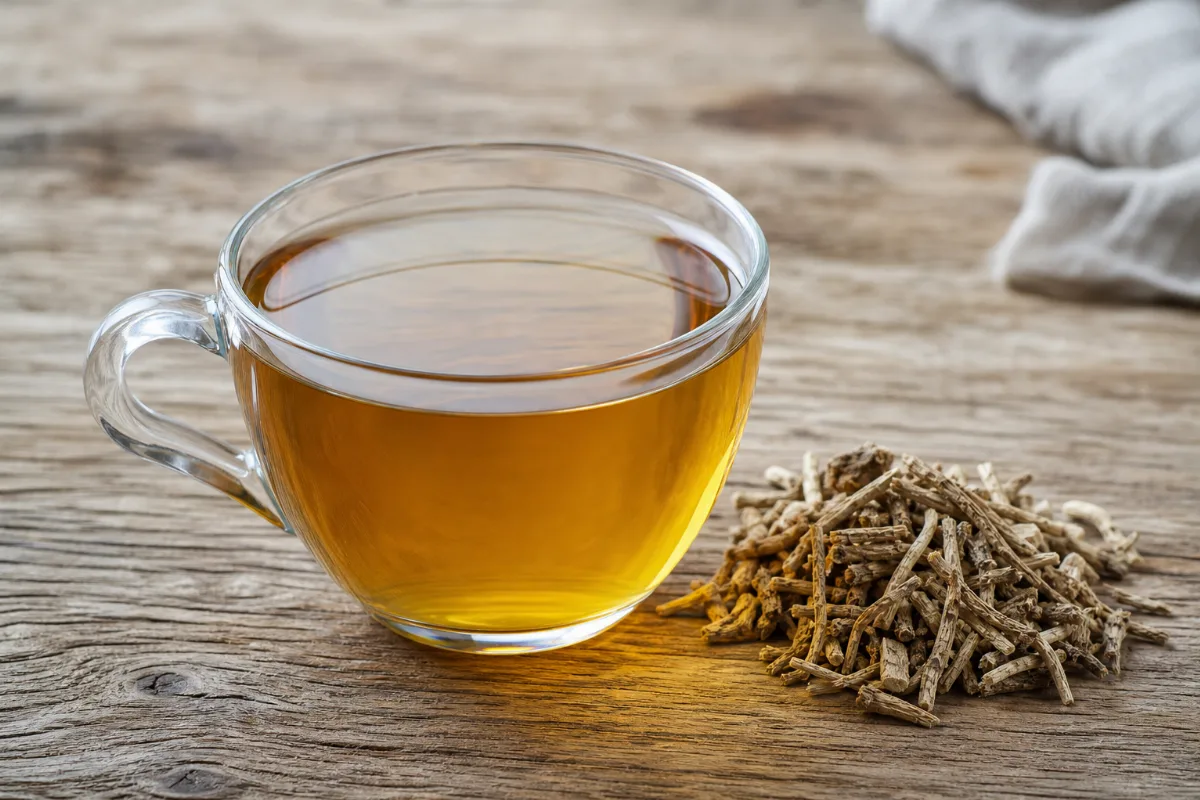
Herbal Teas & Extracts · Herbal tea
Valerian Tea
Valeriana officinalis L. · also called Valerian root tea, common valerian, garden valerian, all-heal, valeriana (Spanish), Echter Baldrian (German), valeriane officinale (French).
Valerian tea is a caffeine-free drink made by steeping the dried root of valerian, a European plant. It is used for nervousness and poor sleep, and its root has a strong, unpleasant smell. The sleep trials tested extracts, capsules and tablets, not tea, and reviews disagree on whether they work. The main cautions are added sleepiness with alcohol and sedatives, driving, pregnancy, and rare liver reports.
General information, not medical advice. Last substantive update · Not medically reviewed. A named clinician has not signed off on this page. How this page is made
About Valerian Tea
Valerian tea is a caffeine-free infusion of the dried root of Valeriana officinalis. People drink it for nervousness and to help them sleep. Research is mixed: the sleep trials used extracts, capsules and tablets, not tea, reviews disagree on whether they help, and no trial has tested the tea for sleep. The main cautions are added sleepiness with alcohol and sedatives, driving, pregnancy and breastfeeding, children under 12, and rare liver reports.
What it is
Valerian (Valeriana officinalis) is a tall European and Asian perennial. The part used is the root and rhizome, the underground part. Steeped in hot water it makes valerian tea, an old preparation: European herbals also describe a cold-water soak of the root left overnight, and the EU assessment records an infusion among the traditional forms. The European pharmacopoeia treats the 'cut drug for tea' as a recognised form of the herbal drug.
Valerian is not from the tea plant (Camellia sinensis), so it does not carry tea caffeine. A lab analysis of 33 non-Camellia herbal teas found no caffeine, theobromine or theophylline in any, but its abstract does not name valerian, so for valerian this is indirect.
Tea, extract, tincture and capsule are not the same thing
Valerian tea is dried root steeped in water. Extracts, capsules and tablets are concentrated products, tinctures are made with alcohol, and valerian essential oil is a separate oil. Water and alcohol pull out different compounds. Valerenic acid, a compound studied for calming effects, barely dissolves in water in a lab test, and in a cell study water-like extracts did not boost the GABA receptor while non-water extracts did. That is lab work, not proof about a cup of tea, and no chemical analysis of valerian tea was found.
Almost every sleep, menopause and period trial on this page used a dry root extract, capsule or tablet. The only human study of valerian tea measured heart rate in 12 people after one cup. So results from extract trials cannot be assumed for tea. Safety findings carry the same warning in reverse: tea has not been tested for safety either. Products also differ a lot from one another in their content.
Why the root smells so strong
Dried valerian root has a strong, unpleasant smell. The EU assessment ties it partly to isovaleric acid, formed as the root dries and its valepotriates break down. A historian of medicine says the odour and taste of valerian preparations made them unlikely ever to be popular in widespread use, and a formulation paper describes covering the unpleasant odour of valerian oil. Fresh flowers are sweetly scented; the smell is in the root.
Cats are drawn to it. In one study of 100 domestic cats, about half responded to dried valerian root, so keep the tea and the root away from pets.
What it is used for and what the research found
Traditional uses are for nervousness and trouble sleeping. In trials of extracts, reviews disagree on sleep: pooled results favour valerian on yes/no sleep-quality questions, but not on timed sleep or lab-measured sleep, and a 2024 review of reviews found no evidence it treats insomnia. Small Iranian trials found better sleep, fewer hot flashes and less period pain in women, at low certainty. For anxiety there is too little evidence, and for restless legs a 2025 guideline suggests against valerian.
The only tea study found measured heart rate and blood pressure in 12 healthy volunteers after one cup, with water as the comparison. Heart rate fell over 30 minutes. That does not show a health benefit.
How strong is the research?
Mixed and mostly small. The best reviews disagree, and the newest, most careful sleep trials were often null. Many positive trials are small, from a few groups, use different extracts, and some are linked to the makers of valerian-hops products. No sleep trial lasted much beyond 8 weeks. The EU regulator rates dry extract as 'well-established use' for mild nervous tension and sleep disorders and dried root as 'traditional use' only, meaning it rests on long use, not proof from modern trials.
At a glance
Traditional uses history, not proof
- Root infusions and cold-water soaks for nervousness and sleeplessness in European herbal medicine (EMA assessment report).
- The EU lists valerian root as a traditional herbal medicine for mild mental stress and to help sleep.
- Older European records also use it for cramps, colic and period pain; use for epilepsy was common from the 1500s but is history, not proof.
Studied for research
- Sleep, mixed (reviews disagree; trials used extracts and capsules, none used tea)
- Falling asleep with valerian-hops combinations, low certainty
- Sleep problems and hot flashes around menopause, low certainty (small Iranian trials)
- Period pain, low certainty (small trials; pooled results very uneven)
- Anxiety and stress, insufficient evidence
- Restless legs, evidence against (a 2025 guideline suggests against it)
- Heart rate after one cup of tea: one 12-person study, very low certainty
Main compounds
- Valerenic acid and related acids, the markers studied most for calming effects in lab work
- Valepotriates, unstable compounds in fresh root that break down in storage
- Isovaleric acid, formed as the root dries and a source of its strong smell
- Essential oil, rich in bornyl acetate
- Lignans, flavonoids and a little free GABA in the root
Common forms
- Dried root steeped in hot water as a tea (the tea itself)
- Traditional cold-water soak of the root
- Dry extracts, capsules and tablets (concentrated; used in almost all trials)
- Alcohol tinctures and liquid extracts
- Valerian-hops and other herb combinations
- Valerian essential oil (a different product; not a tea)
Research links: EMA herbal monograph on valerian root (Valeriana officinalis L., radix), 2016 · NCCIH: Valerian, usefulness and safety · NIH LiverTox record for valerian, PubMed Bookshelf · Umbrella review of valerian for insomnia (2024), PubMed record · Research Library · Genes & Biomarkers Library
What it is and its history
- Accepted scientific name
- Valeriana officinalis L.
- Naming authority
- L. (Linnaeus), published in Species Plantarum, page 31 (1753) (GBIF; NCBI Taxonomy gives 'L., 1753')
- Synonyms
- Valeriana exaltata J.C.Mikan; Valeriana nipponica Nakai; Valeriana nipponica Nakai ex Kitag.; Valeriana officinalis subsp. exaltata (J.C.Mikan) Soo; Valeriana officinalis subsp. sarkayi (Soo) A.Love & D.Love; Valeriana officinalis var. angustifolia Miq.; Valeriana officinalis var. latifolia Briq.; Valeriana officinalis var. officinalis; Valeriana officinalis var. sarkayi Soo, 1973; Valeriana officinalis var. simplicifolia Ledeb.; Valeriana sambucifolia Eichw.; Veronica officinalis var. altissima W.D.J.Koch, 1836
- Common names
- Valerian (English); Common valerian (English); Garden valerian (English); Garden heliotrope (English); All-heal (English); Cat's valerian (English); Valeriana (Spanish); Valeriane officinale; herbe aux chats (French); Echter Baldrian; Arznei-Baldrian (German); Valeriana comune; erba dei gatti (Italian); Valeriana-das-boticas; erva-de-gato (Portuguese); Echte valeriaan (Dutch); Kozlek lekarski (Polish); Vendelort (Swedish); Lage-baldrian (Danish)
- Family or group
- Caprifoliaceae (honeysuckle family, order Dipsacales). Older papers, including several cited here (for example p15921820), still call it Valerianaceae, because valerians were once placed in their own family; current databases (GBIF, NCBI) place the genus in Caprifoliaceae.
- Classification
- Plantae > Tracheophyta > Magnoliopsida > Dipsacales > Caprifoliaceae > Valeriana > Valeriana officinalis
- Native range
- Europe and temperate Asia: stated by Wikipedia (secondary) as from Iceland south to Portugal, north to central Scandinavia, east to European Russia and south-east to Iran. It has spread beyond this range and is listed as a plant of concern or invasive in places such as Connecticut (USA) and New Brunswick (Canada), per the same source. Not yet checked against Plants of the World Online.
- Habitat
- Wet and dry meadows, wet woodland and marshes; chalk-grassland forms are sometimes classed as subsp. collina (Wikipedia, secondary).
- What it looks like
- Roots: The underground parts (rhizome with roots and stolons) are the part used; the dried drug has a strong, unpleasant smell partly due to isovaleric acid formed when valepotriates break down (s-ema-ar-valerian-2016).; Stems: Erect, usually unbranched, perennial herb up to about 1.5 m, rarely 2 m (Wikipedia).; Leaves: Pinnately divided, up to about 20 cm long, leaflets toothed or nearly entire (Wikipedia).; Flowers: Small, 2.5-5 mm across, five-lobed, pale pink or occasionally white, sweetly scented, in compound clusters; flowering June to August (Wikipedia).; Fruit: Not described in the sources read.
- Cultivation
- Both cultivated and wild-gathered root are studied: p11449465 grew several Valeriana species under identical conditions; p29121679 sampled 260 wild-gathered European plants. No growing guidance or acreage figures were verified.
- Harvest and processing
- The European Pharmacopoeia defines the herbal drug as dried, whole or fragmented underground parts (rhizome surrounded by the roots, and stolons) of Valeriana officinalis L. s.l., with a minimum of 4 ml/kg essential oil and 0.17% sesquiterpenic acids (as valerenic acid) in the whole drug; the cut drug for tea has minimums of 3 ml/kg and 0.10% (s-ema-ar-valerian-2016). Fresh-root juice, tinctures (1:5, 60-80% ethanol), water extracts and hydro-alcoholic extracts, and the steam-distilled essential oil are other documented preparations. Harvest timing and drying practice were not verified.
- Look-alikes and adulterants
- Name: Valeriana officinalis is an 'aggregate' (s.l.) of related forms; Note: Pharmacopoeia language is 'V. officinalis L. s.l.'. In Central Europe the aggregate includes di-, tetra- and octoploid forms, and the octoploid form was the richest in sesquiterpenoid acids in a 260-plant study (p29121679). Valerenic acid has been called a species-specific marker, but EMA notes it has also been found outside the aggregate, so a single compound does not prove identity.; Name: Valeriana jatamansi / V. wallichii (Indian valerian); Note: A separate Asian species that is used for similar purposes and is named in papers with valepotriates as its characteristic chemistry (p30663144, p23195845). A review notes botanical naming errors and reproducibility problems in the literature on it, so results on 'valerian' can be from the wrong species. Some effects often attributed to valerian were found in V. wallichii (for example 6-methylapigenin, p12895671).; Name: Valeriana edulis ssp. procera (Mexican valerian, V. mexicana); Note: Another species used medicinally in the Americas and tested alongside V. officinalis (p23195845).; Name: Valeriana phu and 'phu' of the ancients; Note: Wikipedia lists V. phu as another plant called garden valerian. EMA states that Dioscorides' 'phu' or 'wild nard' is not doubtlessly identified as V. officinalis, so ancient texts cannot be assumed to describe this plant.; Name: Red valerian (Valeriana rubra, Centranthus ruber); Note: A garden ornamental that is a different plant; listed by Wikipedia as often grown in gardens. Not used as a medicinal valerian.; Name: Chemical variability within the true species; Note: Valerenic acid derivatives ranged 12.34 to 3.01 mg/g between individual plants of one commercial V. officinalis cultivar, and 11.65 to 0.15 mg/g across Valeriana species and varieties (p11449465). Commercial products also vary widely against their labels (p15367385).
- Sustainability and conservation
- Not verified. No IUCN assessment was retrieved. Part of the medicinal supply is wild-gathered (p29121679), but wild-harvest pressure is not documented in the sources read.
Photographs
Traditional use and history history, not clinical proof
| Tradition or era | Documented use | Source |
|---|---|---|
| Ancient Greece and Rome (about 50-70 AD, Dioscorides) | A valerian-like herb called 'phu' or 'wild nard' (not doubtlessly identified as Valeriana officinalis) was used as dried root or decoction for warming, as a urinary tract remedy, for menstrual cramps and for liver diseases, according to the EMA review citing Madaus (1976). Sleep is not listed among these uses. | s-ema-ar-valerian-2016 |
| Europe from 1592 to the early 1800s | Valerian root was recommended for epilepsy from 1592, and by the late 1700s and early 1800s it was often regarded as the best available treatment for it, according to a historical review. The review concludes that uncertain chemical content, odour and taste made valerian preparations unlikely to prove satisfactory in widespread use. This is history, not evidence that valerian treats epilepsy. | p15509234 |
| Europe, late 1700s to early 1900s | The EMA review lists valerian root as an antispasmodic and nerve remedy for cramps, nervous ailments, hysteria, nervous fever and sleeplessness. Preparations included powdered root, ethanol extract, a water infusion, and the essential oil. | s-ema-ar-valerian-2016 |
| Europe and Britain, 1900s | Named uses include nervous sleeplessness, nervous palpitations, excitability, migraine, cramps, intestinal colic and period pain. Preparations included an infusion, a cold-water soak of the root overnight for sleeplessness (as recorded by Madaus in the EMA review), tinctures and liquid extracts. | s-ema-ar-valerian-2016 |
| Germany, 1985 onward (Commission E) | Official indication: relief of nervousness and sleep disorders, with an infusion of the root listed among the forms alongside tinctures, extracts and a bath additive (per the EMA review; the original monograph was not read). | s-ema-ar-valerian-2016 |
| Modern European regulation (EMA/HMPC, 2016) | Valerian root has long traditional use in Europe, with registered herbal products on the market in several countries since the 1970s and 1980s, for relief of nervousness and sleep disorders. The pharmacopoeia sets a lower minimum of key compounds for 'cut drug for tea' than for the whole drug, so tea is a recognised form of the herbal drug. | s-ema-ar-valerian-2016 |
| Antiquity and England (NOT verified) | Wikipedia says Hippocrates described valerian and Galen prescribed it for insomnia, and that Gerard (1597) and Culpeper used it for other ailments. These claims were not confirmed in a primary source and the EMA report is more cautious about identification, so treat them as unverified. | s-wikipedia-valeriana-officinalis |
Traditional use shows how it was used. It does not show that it works or is safe today.
What is inside, and how it may work
What it contains and how those compounds act in cells and animals. Laboratory and animal mechanisms are not proven effects in people.
Main compounds
| Compound | Family | Where it is concentrated | Activity studied | Level of evidence |
|---|---|---|---|---|
| Valerenic acid PubChem 6440940 | sesquiterpenoid (valerenane-type) carboxylic acid | Root and rhizome Pharmacopoeia counts total sesquiterpenic acids as valerenic acid: at least 0.17% of the whole dried drug, 0.10% for cut tea drug (s-ema-ar-valerian-2016). Blood levels of valerenic acid after a single oral dose of valerian were very low, 0.9-2.3 ng/mL (p16220575). Water barely dissolves it: about 1 microgram per mL at pH 6.8 in a lab test (p14531459), so a water infusion is expected to carry less of it than an alcohol or other non-water extract, but this was not measured in tea. | Subunit-selective positive modulator of GABA-A receptors (needs beta2 or beta3 subunit; beta3 N265 region) in cells; positive allosteric modulator at adenosine A1 receptors (cells); binds 5-HT5a (IC50 17.2 microM); activates TRPV1 channels (cells); anxiolytic-like in mice when given without acetoxyvalerenic acid. Crosses an in-vitro brain-barrier model slowly. 92 100 21 2 48 93 68 49 8 57 81 70 | Laboratory research |
| Acetoxyvalerenic acid PubChem 91864465 | sesquiterpenoid acid | Root and rhizome Counted within total sesquiterpenic acids; amounts vary widely between products (p15367385). | Weaker or opposing to valerenic acid in the one mouse study: adding it abolished valerenic acid's anxiolytic effect; also reduces GABA-A currents at 100 microM and above in oocytes. Is partly converted to hydroxyvalerenic acid by liver cells (EMA, citing Simmen 2005). 8 48 55 103 | Animal research |
| Hydroxyvalerenic acid PubChem 6537505 | sesquiterpenoid acid | Root and rhizome; also formed from acetoxyvalerenic acid More water-soluble than valerenic acid (26 vs 1 microg/mL at pH 6.8, p14531459). | Little direct activity data in this file; listed as a marker and a metabolite; modest neuroprotection in one cell model (p42884000). 92 68 70 55 | Laboratory research |
| Valtrate PubChem 442436 | valepotriate (iridoid triester; diene type) | Fresh root Total valepotriates 0.1-2% of the dried root (Wichtl via EMA); 0.03-1.81 mg/g across species and 0.92-3.67 mg/g across plants of one V. officinalis cultivar (p11449465). Break down on storage. | Toxic to cancer cells in the test tube (IC50 1-6 microM); mutagenic in some bacteria only after liver-enzyme activation; very unstable, poor oral bioavailability (per EMA, citing Wagner and Jurcic 1980). Valtrate's anticancer cell work (not about sleep) is in later papers not used here. 14 107 30 103 | Laboratory research |
| Baldrinal PubChem 159846 | valepotriate breakdown product | Appears in stored root and tinctures Present only in small amounts in valerian extracts (EMA). | 10-30 times less cytotoxic than parent valepotriates in cells. 14 103 | Laboratory research |
| Isovaleric acid PubChem 10430 | short-chain fatty acid; valepotriate breakdown product | Dried, stored root Gives dried valerian its unpleasant 'old socks' smell (EMA, citing Haensel 1999). | Odour marker; it gives the root its strong smell. No sleep activity is claimed here. 103 | Insufficient |
| Bornyl acetate PubChem 93009 | monoterpene ester (main essential-oil component) | Essential oil of root Predominant component of the oil, composition varies by origin (EMA). | No activity data verified here. 103 | Insufficient |
| Gamma-aminobutyric acid (GABA) PubChem 119 | amino-acid neurotransmitter | Root (free amino acids) Listed by EMA among free amino acids with arginine, alanine and glutamine; no content figure. Whether swallowed GABA reaches the brain is doubtful and was not tested here. | Present as a constituent; not shown to explain valerian's effects. 103 | Insufficient |
| Adenosine PubChem 60961 | purine nucleoside | Extract Ze 911 0.05% of the extract Ze 911 (one specific extract, p40509231). | Detected in the extract; supports direct activation of adenosine A1 receptors in cells. 81 | Laboratory research |
Mechanisms, receptors and pathways
| Target or pathway | Gene or receptor | What was found | Level |
|---|---|---|---|
| GABA-A receptor (valerenic acid) | GABRB2 / GABRB3 (beta2 and beta3 subunits) | In frog-egg cells valerenic acid increased GABA-driven chloride current only in receptors with beta2 or beta3 subunits (stimulation seen from about 30 microM), through a site that needs beta3 N265 near the etomidate/propofol region; it was not blocked by flumazenil. Extracts rich in valerenic acid (non-polar extracts) did the same, polar extracts did not. In mice, valerenic acid showed anxiolytic-like effects, but adding acetoxyvalerenic acid cancelled it. Concentrations used are micromolar; human blood levels after a single oral dose of valerian were 0.9-2.3 ng/mL (a much lower figure), and valerenic acid crossed an in-vitro brain-barrier model only slowly. Not shown in humans. 48 57 93 8 2 68 | Laboratory research |
| Water extract versus non-water extract (what tea might carry) | GABA-A | In frog-egg cells, non-polar valerian extracts boosted GABA-driven current while polar (water-like) extracts did not, and removing the sesquiterpenic acids removed the effect. The EU assessment notes that water and water-alcohol extracts bind GABA-A receptors 50 to 1000 times more weakly than GABA itself, and that an aqueous root extract released GABA in rat brain-cell preparations. These are lab results and none was run on tea as people drink it, so they suggest that tea and alcohol extracts differ, not how tea acts in a person. 93 103 92 | Laboratory research |
| GABA-A receptor in brain tissue (extract) | GABA-A (not subunit-resolved) | Valerian extract and valerenic acid reduced firing of newborn-rat brainstem neurons in a way blocked by bicuculline (valerenic acid IC50 23 microM). EMA notes that aqueous and aqueous-ethanol extracts bind GABA-A with 50-1000 times lower affinity than GABA itself. 100 103 | Animal research |
| Benzodiazepine binding site | GABA-A benzodiazepine site | Results conflict: valerian extracts first enhanced and then inhibited flunitrazepam binding in rat brain tissue, while another group found no extract affinity for benzodiazepine sites and a valerenic acid action not blocked by flumazenil. Overall: unresolved, so valerian should not be described as 'working like a benzodiazepine'. 71 8 48 | Mixed |
| GABA release, uptake and synthesis | GABA transporter (GAT); glutamic acid decarboxylase (GAD) | An aqueous root extract increased GABA release and blocked uptake in rat synaptosomes by reversing the GABA carrier (not seen with an ethanol extract per EMA); valerian extract raised GAD activity by over 40% at 1 mg/mL in a brain-homogenate assay. Test-tube level only. 76 71 5 103 | Laboratory research |
| Adenosine A1 receptor | ADORA1 | Valerian extracts bound adenosine A1 receptors and acted as partial agonists in cell membranes. An olivil-type lignan from the root was a partial agonist at low micromolar levels; valerenic acid and pinoresinol worked as positive allosteric modulators and the extract Ze 911 contained 0.05% adenosine itself (authors all employed by the extract maker). In 16 people per group, a valerian-hop combination reduced caffeine-induced EEG arousal at 2 tablets and blocked it at 6, which fits competition at adenosine receptors but is an indirect, combination-product result. 64 79 81 77 | Laboratory research |
| Overall caution | n/a | Cell and animal results point toward GABA, adenosine and serotonin systems, but extracts differ in solvent and content, concentrations used are far above blood levels, and sleep benefit in people is judged uncertain: an umbrella review of 8 systematic reviews found no evidence of efficacy for insomnia by objective measures, a possible subjective improvement, and good safety. 94 2 | Insufficient |
Absorption, metabolism and elimination
- Absorption
- No absorption study of valerian tea was found. Valerenic acid is the only constituent followed in blood. After one oral dose of valerian in six healthy adults it peaked at 1-2 h (0.9-2.3 ng/mL in five of six) and its half-life was about 1.1 h (p16220575). Valerenic acid barely dissolves in water (1 microgram per mL at pH 6.8, versus 26 for hydroxyvalerenic acid), and tablet release differs a lot between products (p14531459).
- Distribution
- No human tissue-distribution data found.
- Metabolism
- Not studied for tea. In perfused rat livers valerenic acid was almost fully extracted and turned into glucuronide conjugates.
- Elimination
- Human valerenic acid half-life about 1 hour (p16220575).
- Bioavailability
- Not established in humans for any valerian product, and not studied for tea.
Isolated compounds versus whole extracts
Valerian tea, a tincture, a dry extract and a capsule of root powder are four different products. Water pulls out different compounds, in different amounts, than alcohol: in a cell study the non-polar extracts rich in valerenic acid boosted the GABA receptor while polar extracts did not (p18095218), valerenic acid barely dissolves in water (p14531459), and valepotriates are unstable and poorly absorbed (EMA). No chemical analysis of valerian tea was found, so how much of each compound ends up in a cup is not known. Products also vary widely in content against their labels (p11817170, p15367385). Practical point: results from an extract trial cannot be assumed for tea, and the reverse is true for safety.
Nutritional composition
A nutrient table is not meaningful for valerian tea: it is drunk for its plant compounds, not as a food, and a cup of water extract is nearly all water. The root itself contains starch, sugars, free amino acids and fatty acids (EMA, quoting Wichtl), but no vitamin or mineral content was verified for the tea and none is claimed here.
1 mixed findings5 low certainty4 very low certainty3 not enough evidence1 evidence against
What was looked at
The 14 benefits and uses checked for Valerian Tea, each with how strong the evidence is. Tap one to open it.
- Sleep quality and insomnia (valerian root extracts and capsules, not tea)Mixed findings
- Valerian tea itself for sleepNot enough evidence
- Valerian and hops combinations for falling asleep (extracts)Low certainty
- Sleep problems around menopause (extracts and combinations)Low certainty
- Anxiety (valerian extracts)Not enough evidence
- Everyday stress and tension (valerian alone and in mixes)Not enough evidence
- Sleep and anxiety in medical situations (surgery, dialysis, HIV treatment)Very low certainty
- Thinking and memoryVery low certainty
- No next-morning grogginess in small lab studies (a safety finding)Low certainty
- Restless legs syndromeEvidence against
- Menopausal hot flashes (valerian root extracts, a fennel-valerian mix)Low certainty
- Period pain (primary dysmenorrhea; valerian extracts)Low certainty
- Premenstrual syndrome (valerian root extract)Very low certainty
- Heart rate after one cup of valerian tea (the only tea study found)Very low certainty
Lab markers tracked in the studies
Pittsburgh Sleep Quality Index (PSQI)Time to fall asleep (sleep latency)Sleep duration and sleep efficiencyInsomnia Severity Index (ISI)Anxiety scores (HAM-A, STAI, BAI)Mini Mental State Examination (MMSE)Reaction time and psychomotor performanceRestless legs severity score (IRLS)Hot flash severity score (Kupperman index)Menstrual pain (visual analog scale)
What is Valerian Tea good for?
The main studied uses and how strong the human evidence is for each. "Low" is the best rating found for any benefit, and several are lower. Almost every trial used a dry root extract, capsule or tablet. Each row says whether tea was involved. Valerian tea is not a replacement for medicine.
Benefits, one by one
Each card is a research question, not a promise. Tap a goal to filter. Open a card to see the studies, doses and limits.
Sleep quality and insomnia (valerian root extracts and capsules, not tea)
Mixed findingsValerian is mostly taken to sleep better. Reviews disagree: pooled results favour valerian on yes/no 'did you sleep better' questions, but not on timed or lab-measured sleep. No trial tested valerian tea for sleep.
10 studiesAlmost all trials used dry root extracts, capsules or tablets, not te…
Studies, doses and limits
What the trials found
Bent 2006 (16 trials, 1,093 people): a yes/no sleep-quality outcome favoured valerian (relative risk 1.8, 95% CI 1.2 to 2.9) but there was publication bias and most studies were weak. Fernandez-San-Martin 2010 (18 trials): the yes/no outcome favoured valerian (relative risk 1.37, CI 1.05 to 1.78) but a sleep-quality scale did not (standardised difference -0.02) and time to fall asleep did not change (0.70 minutes, CI -3.44 to 4.83). Taibi 2007 (37 studies): most found no difference from placebo and the newest, most rigorous ones found none. Leach 2015 (14 trials of herbal products for insomnia, including valerian): no significant difference from placebo on any of 13 measures. The 2024 umbrella review of 8 reviews: no evidence of efficacy for insomnia, possible benefit for how sleep feels, good safety. Shinjyo 2020 (60 studies) was more positive and suggests extract quality may explain mixed results. Single trials: Chandra Shekhar 2024 (80 adults, 8 weeks, a standardised root extract) found better sleep scores than placebo; Taibi 2009 (16 older women, crossover, lab-measured sleep) found no benefit; Barton 2011 (227 people in cancer treatment) found no difference on the main sleep score; Ziegler 2002 (202 adults) found a valerian extract as good as oxazepam but had no placebo group.
Results
Mixed. Benefit on self-rated sleep in several reviews; little or none on measured sleep. Several rigorous trials were null.
Effect sizes as reported
Bent: relative risk of improved sleep 1.8 (CI 1.2 to 2.9). Fernandez-San-Martin: relative risk 1.37 (CI 1.05 to 1.78); sleep-quality scale -0.02; time to fall asleep +0.70 min (CI -3.44 to 4.83).
Why this rating
Reviewers reach different conclusions, trial quality is often weak, products and extracts differ, and the clearest effect is on self-rated sleep. No trial used tea.
Form and dose studied
Almost all trials used dry root extracts, capsules or tablets, not tea. No amounts are repeated here.
Who was studied
Adults with insomnia or sleep complaints, including older women and people in cancer treatment.
Limits
Different extracts, mostly short trials, much of the positive evidence is self-rated, and none of it is from tea.
Why researchers looked
Valerian root is one of the best-known herbal sleep aids, so sleep is the main reason it is studied.
Traditional use
Used in Europe for centuries for nervousness and poor sleep, often as a root infusion or cold-water soak (EMA assessment report).
Proposed mechanism Preliminary mechanism
Valerian root compounds, mainly valerenic acid, are thought to strengthen GABA, the brain's main calming signal, in lab and animal work. This has not been shown in people drinking tea. Water extracts did not do this in the one cell study that compared them with non-water extracts.
A proposed mechanism does not show that the effect happens in people.
Short-term use looked well tolerated in these trials, but valerian can add to alcohol and sedatives. See the Safety tab. Not for pregnancy or children under 12 without a doctor.
Valerian tea itself for sleep
Not enough evidenceWe found no trial of valerian tea for sleep. Every sleep trial used a dry root extract, capsule or tablet. A cup of tea cannot be assumed to do the same.
3 studiesTea was not tested for sleep.
Studies, doses and limits
What the trials found
No trial of valerian tea for sleep was found. The only human study of a valerian tea we found measured heart rate in 12 healthy people after a single cup, not sleep (see the Body tab).
Results
No evidence from tea.
Why this rating
No trial of the tea for this use.
Form and dose studied
Tea was not tested for sleep.
Why researchers looked
Many people drink valerian tea at night, so the question is natural.
Traditional use
Root infusions and cold-water soaks are old preparations (EMA assessment report).
Proposed mechanism Laboratory research
Valerenic acid, one of the leading suspects, barely dissolves in water (about 1 microgram per mL in a lab test), and in a cell study water-like (polar) valerian extracts did not boost the GABA receptor while non-polar extracts did. This is lab work and does not prove tea is weak or strong in people.
A proposed mechanism does not show that the effect happens in people.
Short-term use looked well tolerated in these trials, but valerian can add to alcohol and sedatives. See the Safety tab. Not for pregnancy or children under 12 without a doctor.
Valerian and hops combinations for falling asleep (extracts)
Low certaintyValerian-and-hops products have a few positive small trials. In one, valerian alone did not work while the combination did, so the effect may come from hops or the pairing.
4 studiesAlmost all trials used dry root extracts, capsules or tablets, not te…
Studies, doses and limits
What the trials found
Koetter 2007: a fixed valerian-hops extract shortened time to fall asleep versus placebo over 4 weeks in people who took 30 minutes or longer to fall asleep, while the valerian extract alone did not beat placebo. Morin 2005 (184 adults with mild insomnia, 28 days, valerian-hops tablets): modest gains in self-rated sleep, few comparisons with placebo reached significance, and lab-measured sleep showed no group difference. Dimpfel 2008 (42 poor sleepers, one night, a liquid extract): more time asleep and in deeper sleep on EEG. Schicktanz 2025 (40 people, 21 days): the combination added about 22 minutes of tracker-measured sleep a day versus placebo with no change in daytime thinking tests; a feasibility study.
Results
Positive on some measures in four small trials; modest gains.
Effect sizes as reported
Sleep +21.7 min/day, p=0.019 (Schicktanz 2025); other trials report p-values only.
Why this rating
Small trials, combination products from a few makers, modest effects, and one trial where valerian alone failed. The authors of the mechanism work and some trials are linked to the extract maker.
Form and dose studied
Almost all trials used dry root extracts, capsules or tablets, not tea. No amounts are repeated here.
Who was studied
Adults with mild or occasional sleep trouble.
Limits
Combination extracts; not tea; not interchangeable with a cup of valerian tea.
Why researchers looked
Valerian and hops are sold together as traditional sleep herbs.
Traditional use
Both herbs are used in European herbal medicine for restlessness and poor sleep.
Proposed mechanism Pharmacological theory
Both herbs are thought to have mild calming effects through GABA and adenosine systems. This is a theory from lab work, not shown in people.
A proposed mechanism does not show that the effect happens in people.
Short-term use looked well tolerated in these trials, but valerian can add to alcohol and sedatives. See the Safety tab. Not for pregnancy or children under 12 without a doctor.
Sleep problems around menopause (extracts and combinations)
Low certaintyThree small Iranian trials in postmenopausal women found better sleep scores on valerian or a valerian combination. All used a questionnaire and two used combination products.
3 studiesAlmost all trials used dry root extracts, capsules or tablets, not te…
Studies, doses and limits
What the trials found
Taavoni 2011 (100 women aged 50 to 60 with insomnia, 4 weeks): sleep quality improved more than on placebo (P<0.001); 30% improved on valerian versus 4% on placebo. Taavoni 2013 (100 women, valerian plus lemon balm): lower sleep-disorder scores than placebo. Jenabi 2023 (76 women, fennel-valerian extract, 8 weeks): lower sleep scores than placebo at 2 months (P=0.030) and fewer hot flashes, but fennel is a second active ingredient.
Results
All three were positive on the PSQI sleep questionnaire.
Effect sizes as reported
30% vs 4% improved (P<0.001, Taavoni 2011); P=0.030 (Jenabi 2023).
Why this rating
Three small trials from related settings, self-rated outcome, two combination products, no independent replication found.
Form and dose studied
Almost all trials used dry root extracts, capsules or tablets, not tea. No amounts are repeated here.
Who was studied
Postmenopausal women in Iran.
Limits
Same region and overlapping authors; short; questionnaire only; not tea.
Why researchers looked
About half of postmenopausal women report sleep problems and many look for non-hormonal options.
Proposed mechanism Preliminary mechanism
Valerian root compounds, mainly valerenic acid, are thought to strengthen GABA, the brain's main calming signal, in lab and animal work. This has not been shown in people drinking tea. Water extracts did not do this in the one cell study that compared them with non-water extracts.
A proposed mechanism does not show that the effect happens in people.
Short-term use looked well tolerated in these trials, but valerian can add to alcohol and sedatives. See the Safety tab. Not for pregnancy or children under 12 without a doctor.
Anxiety (valerian extracts)
Not enough evidenceValerian is sold as calming, but the one small trial in diagnosed anxiety showed no clear difference from placebo, and the Cochrane review judged the evidence too thin to say.
5 studiesAlmost all trials used dry root extracts, capsules or tablets, not te…
Studies, doses and limits
What the trials found
Cochrane review (Miyasaka 2006): only one trial qualified, 36 people with generalised anxiety disorder; no significant difference between valerian, placebo or diazepam on the main anxiety scale, so the evidence was judged insufficient. Jacobs 2005 (online trial, 391 people with anxiety and insomnia) tested kava and valerian and did not report valerian's effect on anxiety in the abstract. Shinjyo 2020 pooled 8 studies (535 people) but the abstract gives no pooled number. Roh 2019 (64 stressed volunteers, 4 weeks): both groups improved with no difference.
Results
Insufficient evidence in diagnosed anxiety disorders.
Effect sizes as reported
No significant difference on the Hamilton anxiety scale (Cochrane 2006).
Why this rating
One tiny trial in diagnosed anxiety; later trials in people with sleep or medical problems are mixed.
Form and dose studied
Almost all trials used dry root extracts, capsules or tablets, not tea. No amounts are repeated here.
Who was studied
Adults with generalised anxiety disorder; volunteers with stress.
Limits
Very few trials; not tea.
Why researchers looked
Valerian is traditionally used for nervousness.
Traditional use
Used in European folk medicine for nervous tension.
Proposed mechanism Preliminary mechanism
Valerian root compounds, mainly valerenic acid, are thought to strengthen GABA, the brain's main calming signal, in lab and animal work. This has not been shown in people drinking tea. Water extracts did not do this in the one cell study that compared them with non-water extracts.
A proposed mechanism does not show that the effect happens in people.
Short-term use looked well tolerated in these trials, but valerian can add to alcohol and sedatives. See the Safety tab. Not for pregnancy or children under 12 without a doctor.
Everyday stress and tension (valerian alone and in mixes)
Not enough evidenceNo good trial shows valerian alone lowers everyday stress. The one trial in stressed volunteers found both groups improved with no difference. A multi-herb product with valerian lowered some stress-response measures, but valerian cannot be singled out.
2 studiesAlmost all trials used dry root extracts, capsules or tablets, not te…
Studies, doses and limits
What the trials found
Roh 2019 (64 volunteers with psychological stress, 4 weeks): both valerian extract and placebo improved with no significant difference. Dodd 2022 (31 healthy adults, crossover, 14 days) tested Euphytose, which contains valerian, passionflower, hawthorn and ballota: less tension-anxiety and smaller stress-response signs to a lab stressor, but the effect cannot be assigned to valerian.
Results
No valerian-only evidence of benefit; combination evidence cannot be attributed to valerian.
Effect sizes as reported
Not available as numbers in the abstracts read.
Why this rating
One null valerian-only trial and a combination trial that cannot isolate valerian.
Form and dose studied
Almost all trials used dry root extracts, capsules or tablets, not tea. No amounts are repeated here.
Who was studied
Stressed or healthy adults.
Limits
Few trials; combination products; not tea.
Why researchers looked
Valerian is sold for stress and relaxation.
Proposed mechanism Preliminary mechanism
Valerian root compounds, mainly valerenic acid, are thought to strengthen GABA, the brain's main calming signal, in lab and animal work. This has not been shown in people drinking tea. Water extracts did not do this in the one cell study that compared them with non-water extracts.
A proposed mechanism does not show that the effect happens in people.
Short-term use looked well tolerated in these trials, but valerian can add to alcohol and sedatives. See the Safety tab. Not for pregnancy or children under 12 without a doctor.
Sleep and anxiety in medical situations (surgery, dialysis, HIV treatment)
Very low certaintySmall trials in hospital and clinic settings, mostly in Iran, report better sleep or less anxiety on valerian extract, for example after heart surgery. They are small and need confirming. A trial in cancer treatment showed no sleep benefit.
4 studiesAlmost all trials used dry root extracts, capsules or tablets, not te…
Studies, doses and limits
What the trials found
Zare Elmi 2021 (72 patients after bypass surgery, 30 nights): better sleep scores than placebo over time. Ahmadi 2017 (51 HIV patients starting efavirenz, 4 weeks): sleep and anxiety improved more than on placebo. Barton 2011 (227 people in cancer treatment) found no sleep benefit. Taibi 2009b (15 people with arthritis) was a feasibility study.
Results
Mixed: small positive trials and a larger null one.
Effect sizes as reported
Not available as numbers in the abstracts read.
Why this rating
Small single-setting trials, some without a placebo, mixed results.
Form and dose studied
Almost all trials used dry root extracts, capsules or tablets, not tea. No amounts are repeated here.
Who was studied
Patients after heart surgery, on HIV treatment, in cancer treatment, with arthritis.
Limits
Small, short, self-rated, not tea.
Why researchers looked
People in hospital or on strong medicines often sleep badly and feel anxious.
Proposed mechanism Preliminary mechanism
Valerian root compounds, mainly valerenic acid, are thought to strengthen GABA, the brain's main calming signal, in lab and animal work. This has not been shown in people drinking tea. Water extracts did not do this in the one cell study that compared them with non-water extracts.
A proposed mechanism does not show that the effect happens in people.
Short-term use looked well tolerated in these trials, but valerian can add to alcohol and sedatives. See the Safety tab. Not for pregnancy or children under 12 without a doctor.
Thinking and memory
Very low certaintyValerian is not a memory herb. Two small Iranian trials in patients (after heart surgery and on dialysis) report better scores on a quick screening test. Nothing has been shown in healthy people.
3 studiesAlmost all trials used dry root extracts, capsules or tablets, not te…
Studies, doses and limits
What the trials found
Hassani 2015 (61 bypass-surgery patients, 8 weeks): on a screening test (MMSE) scores fell on placebo from 27.37 to 24 at day 10 and from 27.03 to 26.52 on valerian; valerian reduced the odds of cognitive dysfunction (odds ratio 0.108, CI 0.022 to 0.545). Samaei 2018 (39 dialysis patients, crossover): the test score rose on valerian; brain-wave recordings did not change. Schicktanz 2025 (valerian-hops, 40 people) found no change in daytime thinking tests.
Results
Positive in two small patient trials; no effect in a trial in people with occasional sleep problems.
Effect sizes as reported
Odds ratio 0.108 (CI 0.022 to 0.545) for cognitive dysfunction after surgery.
Why this rating
Two small trials from one region using a crude test, with a very wide confidence interval; no replication.
Form and dose studied
Almost all trials used dry root extracts, capsules or tablets, not tea. No amounts are repeated here.
Who was studied
Bypass surgery and dialysis patients.
Limits
MMSE is a screening test; small samples; not tea.
Why researchers looked
Researchers asked whether valerian protects the brain in sick patients.
Proposed mechanism Preliminary mechanism
The heart-surgery authors suggest effects on serotonin receptors and inflammation. That is their hypothesis, not shown.
A proposed mechanism does not show that the effect happens in people.
Short-term use looked well tolerated in these trials, but valerian can add to alcohol and sedatives. See the Safety tab. Not for pregnancy or children under 12 without a doctor.
No next-morning grogginess in small lab studies (a safety finding)
Low certaintyIn several small lab studies, valerian did not slow reaction times or impair a driving simulator the way sleeping pills did. This does not prove it is safe to drive.
4 studiesAlmost all trials used dry root extracts, capsules or tablets, not te…
Studies, doses and limits
What the trials found
Kuhlmann 1999 (102 volunteers, a root extract): no relevant effect on reaction time, alertness or concentration the morning after a single dose or after 2 weeks. Hallam 2003 (9 volunteers): no effect on thinking tests, while triazolam impaired two. Glass 2003 (14 healthy older adults): no difference from placebo on sedation or movement tests. Thomas 2016 (single dose, crossover): no differences in reaction, sleepiness, sobriety tests or driving simulator, though possibly underpowered.
Results
No impairment found in four small studies in healthy volunteers.
Effect sizes as reported
Not available as numbers.
Why this rating
Consistent null findings in four studies, but all small, in healthy people, single or short dosing.
Form and dose studied
Almost all trials used dry root extracts, capsules or tablets, not tea. No amounts are repeated here.
Who was studied
Healthy adults and older adults.
Limits
Healthy volunteers only; says nothing about long-term use or combining with alcohol or sedatives.
Why researchers looked
Sleep medicines can leave people groggy, so researchers tested whether valerian does the same.
Proposed mechanism Pharmacological theory
Not applicable; this is an absence-of-effect finding.
A proposed mechanism does not show that the effect happens in people.
The EU monograph still warns valerian may impair driving. Do not drive if you feel drowsy.
Restless legs syndrome
Evidence againstThe 2025 sleep-medicine guideline suggests against valerian for restless legs. The few small trials are not strong enough to support it.
4 studiesAlmost all trials used dry root extracts, capsules or tablets, not te…
Studies, doses and limits
What the trials found
AASM guideline 2025: suggests against valerian for adults with restless legs (conditional recommendation, very low certainty of evidence). Cuellar 2009 (37 people, 8 weeks): both valerian and placebo groups improved; the positive result was a within-group analysis in sleepy participants. Hajizadeh 2023 (40 dialysis patients, crossover): gabapentin lowered the score more than valerian; sleep quality was equal. A 2024 review of supplements said valerian improved restless legs and sleep but not significantly.
Results
Not supported. A guideline suggests against it.
Effect sizes as reported
No between-group effect size in the abstracts.
Why this rating
The guideline rated the evidence very low certainty and made a conditional recommendation against; direct trials are small and show no clear benefit over placebo or gabapentin.
Form and dose studied
Almost all trials used dry root extracts, capsules or tablets, not tea. No amounts are repeated here.
Who was studied
People with restless legs, including dialysis patients.
Limits
Tiny trials; one without placebo.
Why researchers looked
Restless legs ruin sleep and valerian is a sleep herb.
Proposed mechanism Pharmacological theory
No mechanism for restless legs has been shown for valerian.
A proposed mechanism does not show that the effect happens in people.
Nothing specific.
Menopausal hot flashes (valerian root extracts, a fennel-valerian mix)
Low certaintyThree small Iranian trials found fewer or milder hot flashes with valerian (or a fennel-valerian mix) than with placebo over about 8 weeks. They are small and give no effect sizes, so this is early, low-certainty evidence.
3 studiesAlmost all trials used dry root extracts, capsules or tablets, not te…
Studies, doses and limits
What the trials found
2018 trial (60 postmenopausal women, 2 months, valerian extract versus starch placebo): hot flash severity (Kupperman index) was lower with valerian at 1 month (p=.048) and 2 months (p=.020); frequency was lower at 2 months (p=.033). 2013 trial (68 menopausal women, 8 weeks): severity and frequency fell with valerian root (p<0.001) and not with placebo. 2023 trial (76 postmenopausal women, 8 weeks): a fennel-valerian extract lowered frequency and severity versus placebo; because fennel was in the mix, valerian's part cannot be separated.
Results
Fewer and milder hot flashes than placebo in all three small trials.
Effect sizes as reported
Only p-values are reported in the abstracts.
Why this rating
All trials are small (60 to 76 women), short, self-rated, from Iran, partly from one group; one used a mixed product. No pooled analysis found.
Form and dose studied
Almost all trials used dry root extracts, capsules or tablets, not tea. No amounts are repeated here.
Who was studied
Postmenopausal women in Iran.
Limits
Hot flash scores are subjective and placebo effects are strong in this field; not tea.
Why researchers looked
Hot flashes are a common reason women look for alternatives to hormone therapy.
Traditional use
Use for hot flashes is a modern question, not an established traditional use.
Proposed mechanism Pharmacological theory
One trial's authors call valerian phytoestrogenic, but the abstracts do not show how it might act on hot flashes.
A proposed mechanism does not show that the effect happens in people.
Short-term use looked well tolerated in these trials, but valerian can add to alcohol and sedatives. See the Safety tab. Not for pregnancy or children under 12 without a doctor.
Period pain (primary dysmenorrhea; valerian extracts)
Low certaintySmall trials and a 2025 pooled analysis of 5 trials found less period pain with valerian than with control. The pooled result is promising but very uneven between trials, so the true effect is uncertain.
2 studiesAlmost all trials used dry root extracts, capsules or tablets, not te…
Studies, doses and limits
What the trials found
2011 double-blind trial (100 students, 2 cycles): pain scores fell in both groups but more with valerian (between groups P<0.05). 2025 meta-analysis of 5 controlled trials (201 valerian, 207 control participants; comparators placebo or NSAIDs): pooled standardised difference -1.03 (95% CI -1.74 to -0.33; I2 90.4%). The authors call valerian promising but warn of high heterogeneity and few trials.
Results
Less period pain than control in the trial and in the pooled analysis.
Effect sizes as reported
Standardised mean difference -1.03 (CI -1.74 to -0.33), I2 90.4%.
Why this rating
Pooled result is significant but heterogeneity is very high, only 5 small trials, mixed comparators. Rating is the compiler's.
Form and dose studied
Almost all trials used dry root extracts, capsules or tablets, not tea. No amounts are repeated here.
Who was studied
Young women, mostly students, in Iran.
Limits
Short trials, mostly one region, self-reported pain; not tea.
Why researchers looked
Valerian is said to relax smooth muscle, and period cramps involve uterine muscle.
Traditional use
Valerian root has a long European use as a calming, antispasmodic herb.
Proposed mechanism Pharmacological theory
Authors suggest a muscle-relaxing (antispasmodic) effect. This is a suggestion, not shown in the women studied.
A proposed mechanism does not show that the effect happens in people.
Short-term use looked well tolerated in these trials, but valerian can add to alcohol and sedatives. See the Safety tab. Not for pregnancy or children under 12 without a doctor.
Premenstrual syndrome (valerian root extract)
Very low certaintyOne small trial of 100 students found PMS symptoms fell with valerian extract, but the abstract does not report a direct comparison with placebo. Too little to conclude.
1 studiesAlmost all trials used dry root extracts, capsules or tablets, not te…
Studies, doses and limits
What the trials found
2016 double-blind trial (100 female students with PMS, 3 cycles): emotional, behavioural and physical symptom scores fell within the valerian group (P<0.001) but not within the placebo group. The abstract does not report a direct valerian-versus-placebo test.
Results
Symptoms fell in the valerian group only; no direct comparison in the abstract.
Effect sizes as reported
No effect sizes in the abstract.
Why this rating
A single small trial comparing before with after in each group.
Form and dose studied
Almost all trials used dry root extracts, capsules or tablets, not tea. No amounts are repeated here.
Who was studied
Female students with PMS, Iran.
Limits
One trial, students only, self-reported; not tea.
Why researchers looked
PMS includes mood and physical symptoms and valerian is a calming herb.
Proposed mechanism Pharmacological theory
No mechanism is shown in the abstract.
A proposed mechanism does not show that the effect happens in people.
Short-term use looked well tolerated in these trials, but valerian can add to alcohol and sedatives. See the Safety tab. Not for pregnancy or children under 12 without a doctor.
Heart rate after one cup of valerian tea (the only tea study found)
Very low certaintyThe one human study of valerian tea itself measured heart rate in 12 healthy people. Heart rate fell over 30 minutes after a cup. It had no placebo tea, so it is a small first look, not proof.
1 studiesValerian tea; preparation details not in the abstract.
Studies, doses and limits
What the trials found
Hosseini 2025 (12 healthy volunteers, a single occasion): after plain water first, then valerian tea, average heart rate fell across five recording steps from 65.4 to 60.9 beats per minute (p<0.05) and average systolic blood pressure from 119.4 to 114 mmHg. The comparison was plain water given before the tea in the same people, not a placebo tea.
Results
Heart rate fell after a single cup in 12 healthy people.
Effect sizes as reported
Heart rate 65.4 to 60.9 per minute across the steps (p<0.05).
Why this rating
Twelve people, one session, fixed order, no placebo tea, no blinding stated.
Form and dose studied
Valerian tea; preparation details not in the abstract.
Who was studied
12 healthy volunteers.
Limits
The study does not show any health benefit; heart rate changes can come from resting quietly. No long-term data.
Why researchers looked
Valerian is called calming, and researchers asked whether a cup of the tea changes heart rate and the nervous system balance behind it.
Traditional use
Valerian has long been drunk as an infusion.
Proposed mechanism Preliminary mechanism
The authors suggest less sympathetic (alert) and more parasympathetic (rest) nervous activity. This is their interpretation of heart rate variability, not proven.
A proposed mechanism does not show that the effect happens in people.
Short-term use looked well tolerated in these trials, but valerian can add to alcohol and sedatives. See the Safety tab. Not for pregnancy or children under 12 without a doctor.
Connections to the rest of health
How Valerian Tea connects to the rest of our health knowledge graph. Every link says what kind of connection it is. A safety link (for example to the liver) is a warning, not a benefit. A study that merely mentions a topic never creates a benefit link.
Explore every connection: goals, body systems, organs, symptoms, genes
A. Wellness goals
| Connected to | Kind of connection | Evidence status | Context | Studies |
|---|---|---|---|---|
| Better Sleep | Potential benefit | Mixed findings | Sleep quality and insomnia (valerian root extracts and capsules, not tea): Valerian is mostly taken to sleep better. Reviews disagree: pooled results favour valerian on yes/no 'did you sleep better' questions, but not on timed or lab-measured sleep. No trial tested valerian tea for sleep. Valerian and hops combinations for falling asleep (extracts): Valerian-and-hops products have a few positive small trials. In one, valerian alone did not work while the combination did, so the effect may come from hops or the pairing. | 10 27 88 54 94 82 17 89 7 102 51 63 22 78 86 87 43 101 1 90 96 18 37 33 |
| Sleep Quality | Potential benefit | Mixed findings | Sleep quality and insomnia (valerian root extracts and capsules, not tea): Valerian is mostly taken to sleep better. Reviews disagree: pooled results favour valerian on yes/no 'did you sleep better' questions, but not on timed or lab-measured sleep. No trial tested valerian tea for sleep. Valerian and hops combinations for falling asleep (extracts): Valerian-and-hops products have a few positive small trials. In one, valerian alone did not work while the combination did, so the effect may come from hops or the pairing. | 10 27 88 54 94 82 17 89 7 102 51 63 22 78 96 18 37 33 |
| Calm Relaxation | Potential benefit | Mixed findings | Sleep quality and insomnia (valerian root extracts and capsules, not tea): Valerian is mostly taken to sleep better. Reviews disagree: pooled results favour valerian on yes/no 'did you sleep better' questions, but not on timed or lab-measured sleep. No trial tested valerian tea for sleep. Anxiety (valerian extracts): Valerian is sold as calming, but the one small trial in diagnosed anxiety showed no clear difference from placebo, and the Cochrane review judged the evidence too thin to say. | 10 27 88 54 94 82 17 89 7 102 62 3 74 41 23 101 1 90 |
| Better Sleep | Traditional use | Not enough evidence | Valerian tea itself for sleep: We found no trial of valerian tea for sleep. Every sleep trial used a dry root extract, capsule or tablet. A cup of tea cannot be assumed to do the same. | 92 93 40 |
| Calm Relaxation | Traditional use | Not enough evidence | Valerian tea itself for sleep: We found no trial of valerian tea for sleep. Every sleep trial used a dry root extract, capsule or tablet. A cup of tea cannot be assumed to do the same. | 92 93 40 |
| Menopause Support | Potential benefit | Low certainty | Sleep problems around menopause (extracts and combinations): Three small Iranian trials in postmenopausal women found better sleep scores on valerian or a valerian combination. All used a questionnaire and two used combination products. Menopausal hot flashes (valerian root extracts, a fennel-valerian mix): Three small Iranian trials found fewer or milder hot flashes with valerian (or a fennel-valerian mix) than with placebo over about 8 weeks. They are small and give no effect sizes, so this is early, low-certainty evidence. | 86 87 43 42 61 |
| Womens Wellness | Potential benefit | Low certainty | Sleep problems around menopause (extracts and combinations): Three small Iranian trials in postmenopausal women found better sleep scores on valerian or a valerian combination. All used a questionnaire and two used combination products. Menopausal hot flashes (valerian root extracts, a fennel-valerian mix): Three small Iranian trials found fewer or milder hot flashes with valerian (or a fennel-valerian mix) than with placebo over about 8 weeks. They are small and give no effect sizes, so this is early, low-certainty evidence. | 86 87 43 42 61 60 73 9 |
| Anxiety Support | Potential benefit | Not enough evidence | Anxiety (valerian extracts): Valerian is sold as calming, but the one small trial in diagnosed anxiety showed no clear difference from placebo, and the Cochrane review judged the evidence too thin to say. Sleep and anxiety in medical situations (surgery, dialysis, HIV treatment): Small trials in hospital and clinic settings, mostly in Iran, report better sleep or less anxiety on valerian extract, for example after heart surgery. They are small and need confirming. A trial in cancer treatment showed no sleep benefit. | 62 3 74 41 82 101 1 7 90 |
| Stress Reduction | Potential benefit | Not enough evidence | Everyday stress and tension (valerian alone and in mixes): No good trial shows valerian alone lowers everyday stress. The one trial in stressed volunteers found both groups improved with no difference. A multi-herb product with valerian lowered some stress-response measures, but valerian cannot be singled out. | 74 23 |
| Cognitive Performance | Potential benefit | Very low certainty | Thinking and memory: Valerian is not a memory herb. Two small Iranian trials in patients (after heart surgery and on dialysis) report better scores on a quick screening test. Nothing has been shown in healthy people. | 39 75 78 |
| Brain Health | Potential benefit | Very low certainty | Thinking and memory: Valerian is not a memory herb. Two small Iranian trials in patients (after heart surgery and on dialysis) report better scores on a quick screening test. Nothing has been shown in healthy people. | 39 75 78 |
| Memory Support | Potential benefit | Very low certainty | Thinking and memory: Valerian is not a memory herb. Two small Iranian trials in patients (after heart surgery and on dialysis) report better scores on a quick screening test. Nothing has been shown in healthy people. | 39 75 78 |
| Calm Relaxation | Biological association | Low certainty | No next-morning grogginess in small lab studies (a safety finding): In several small lab studies, valerian did not slow reaction times or impair a driving simulator the way sleeping pills did. This does not prove it is safe to drive. Heart rate after one cup of valerian tea (the only tea study found): The one human study of valerian tea itself measured heart rate in 12 healthy people. Heart rate fell over 30 minutes after a cup. It had no placebo tea, so it is a small first look, not proof. | 52 38 32 91 40 |
| Mental Clarity | Biological association | Low certainty | No next-morning grogginess in small lab studies (a safety finding): In several small lab studies, valerian did not slow reaction times or impair a driving simulator the way sleeping pills did. This does not prove it is safe to drive. | 52 38 32 91 |
| Hormone Balance | Potential benefit | Low certainty | Period pain (primary dysmenorrhea; valerian extracts): Small trials and a 2025 pooled analysis of 5 trials found less period pain with valerian than with control. The pooled result is promising but very uneven between trials, so the true effect is uncertain. | 60 73 |
| Mood Balance | Potential benefit | Very low certainty | Premenstrual syndrome (valerian root extract): One small trial of 100 students found PMS symptoms fell with valerian extract, but the abstract does not report a direct comparison with placebo. Too little to conclude. | 9 |
| Heart Health | Biological association | Very low certainty | Heart rate after one cup of valerian tea (the only tea study found): The one human study of valerian tea itself measured heart rate in 12 healthy people. Heart rate fell over 30 minutes after a cup. It had no placebo tea, so it is a small first look, not proof. | 40 |
B. Body systems
| Connected to | Kind of connection | Evidence status | Context | Studies |
|---|---|---|---|---|
| Nervous system | Drug or supplement interaction | Very low certainty | May add to alcohol, sedatives and anaesthetics. The EU monograph warns it may impair driving. Preparation or compound: Valerian root products; tea not tested |
67 26 4 |
| Reproductive system | Contraindication | Very low certainty | Pregnancy and breastfeeding: not recommended because safety has not been established. Preparation or compound: Valerian root products |
26 53 |
| Sleep and recovery | Potential benefit | Mixed findings | Reviews disagree: a possible gain in how sleep feels, little on measured sleep. Preparation or compound: Root extracts and capsules; tea not tested |
10 27 94 |
| Sleep Recovery | Biological association | Mixed findings | Studied for: Sleep quality and insomnia (valerian root extracts and capsules, not tea) Studied for: Valerian tea itself for sleep | 10 27 88 54 94 82 17 89 7 102 92 93 40 51 63 22 78 86 87 43 101 1 90 52 38 32 91 96 18 37 33 |
| Nervous System | Biological association | Mixed findings | Studied for: Sleep quality and insomnia (valerian root extracts and capsules, not tea) Studied for: Valerian tea itself for sleep | 10 27 88 54 94 82 17 89 7 102 92 93 40 51 63 22 78 62 3 74 41 23 39 75 52 38 32 91 96 18 37 33 9 |
| Reproductive System | Biological association | Low certainty | Studied for: Sleep problems around menopause (extracts and combinations) Studied for: Menopausal hot flashes (valerian root extracts, a fennel-valerian mix) | 86 87 43 42 61 60 73 9 |
| Stress Mood | Biological association | Not enough evidence | Studied for: Anxiety (valerian extracts) Studied for: Everyday stress and tension (valerian alone and in mixes) | 62 3 74 41 82 23 101 1 7 90 |
| Endocrine System | Biological association | Low certainty | Studied for: Menopausal hot flashes (valerian root extracts, a fennel-valerian mix) | 42 61 43 |
| Musculoskeletal System | Biological association | Low certainty | Studied for: Period pain (primary dysmenorrhea; valerian extracts) | 60 73 |
| Cardiovascular System | Biological association | Very low certainty | Studied for: Heart rate after one cup of valerian tea (the only tea study found) | 40 |
C. Body parts and organs
| Connected to | Kind of connection | Evidence status | Context | Studies |
|---|---|---|---|---|
| Liver | Adverse effect or risk | Very low certainty | Rare, case-report-level liver injury described by LiverTox and NCCIH. A safety relationship, not a benefit. Frequency is unknown. Rare case reports of liver injury (LiverTox, NCCIH). A safety relationship, not a benefit. Frequency is unknown. Preparation or compound: Mostly multi-ingredient products; plant part and extract not stated in most cases |
56 67 50 |
I. Biomarkers
| Connected to | Kind of connection | Evidence status | Context | Studies |
|---|---|---|---|---|
| Pittsburgh Sleep Quality Index (PSQI) | Biological association | Mixed findings | Measured in trials: mixed. A lab change is not the same as a health benefit. | 17 86 101 43 7 |
| Time to fall asleep (sleep latency) | Biological association | Low certainty | Measured in trials: mixed. A lab change is not the same as a health benefit. | 27 17 51 89 |
| Sleep duration and sleep efficiency | Biological association | Low certainty | Measured in trials: mixed. A lab change is not the same as a health benefit. | 78 17 89 63 |
| Insomnia Severity Index (ISI) | Biological association | Low certainty | Measured in trials: no-change. A lab change is not the same as a health benefit. | 41 |
| Anxiety scores (HAM-A, STAI, BAI) | Biological association | Not enough evidence | Measured in trials: mixed. A lab change is not the same as a health benefit. | 62 3 17 1 74 |
| Mini Mental State Examination (MMSE) | Biological association | Very low certainty | Measured in trials: raised. A lab change is not the same as a health benefit. | 39 75 |
| Reaction time and psychomotor performance | Biological association | Low certainty | Measured in trials: no-change. A lab change is not the same as a health benefit. | 52 38 32 91 |
| Restless legs severity score (IRLS) | Biological association | Evidence against | Measured in trials: mixed. A lab change is not the same as a health benefit. | 18 37 96 |
| Hot flash severity score (Kupperman index) | Biological association | Low certainty | Measured in trials: lowered. A lab change is not the same as a health benefit. | 42 61 43 |
| Menstrual pain (visual analog scale) | Biological association | Low certainty | Measured in trials: lowered. A lab change is not the same as a health benefit. | 60 73 |
J. Genes, receptors and enzymes
| Connected to | Kind of connection | Evidence status | Context | Studies |
|---|---|---|---|---|
| GABRB2 / GABRB3 (GABA-A receptor beta2 and beta3 subunits) | Preliminary mechanism | In vitro | Valerenic acid enhances GABA currents only in channels with beta2 or beta3; beta3 N265 region is part of the proposed binding pocket | 48 57 49 |
| GABA-A receptor (chloride channel) | Preliminary mechanism | In vitro | Positive allosteric modulation by valerenic acid and valerenic-rich non-polar extracts; flumazenil does not block it | 48 93 100 |
| ADORA1 (adenosine A1 receptor) | Preliminary mechanism | In vitro | Partial agonism by extracts and an olivil lignan; positive allosteric modulation by valerenic acid and pinoresinol; EEG caffeine competition with a valerian-hop combination in people | 64 79 81 77 |
| HTR5A (serotonin 5-HT5a receptor) | Preliminary mechanism | In vitro | Extract and valerenic acid bind; partial agonism inferred from a GTP shift | 21 |
| HTR1A (serotonin 5-HT1A receptor) | Preliminary mechanism | Animal | Predicted target of caryophyllene in valerian essential oil in insomnia rats; hydroxypinoresinol binding reported in EMA review | 95 103 |
| GAD (glutamic acid decarboxylase) | Preliminary mechanism | In vitro | Valerian extract raised GAD activity by over 40% at 1 mg/mL in rat brain homogenate | 5 |
| SLC6A1 and related GABA transporters (GAT) | Preliminary mechanism | Animal | Aqueous extract inhibited GABA uptake and increased release by reversing the GABA carrier in rat synaptosomes; transporter gene not tested directly | 76 71 |
| TRPV1 | Preliminary mechanism | In vitro | Valerenic acid activated TRPV1 and potentiated capsaicin responses in CHO cells | 70 |
L. Active compounds
| Connected to | Kind of connection | Evidence status | Context | Studies |
|---|---|---|---|---|
| Valerenic acid | Biological association | In vitro | Subunit-selective positive modulator of GABA-A receptors (needs beta2 or beta3 subunit; beta3 N265 region) in cells; positive allosteric modulator at adenosine A1 receptors (cells); binds 5-HT5a (IC50 17.2 microM); activates TRPV1 channels (cells); anxiolytic-like in mice when given without acetoxyvalerenic acid. Crosses an in-vitro brain-barrier model slowly. Preparation or compound: Root and rhizome |
92 100 21 2 48 93 68 49 8 57 81 70 |
| Acetoxyvalerenic acid | Biological association | Animal | Weaker or opposing to valerenic acid in the one mouse study: adding it abolished valerenic acid's anxiolytic effect; also reduces GABA-A currents at 100 microM and above in oocytes. Is partly converted to hydroxyvalerenic acid by liver cells (EMA, citing Simmen 2005). Preparation or compound: Root and rhizome |
8 48 55 103 |
| Hydroxyvalerenic acid | Biological association | In vitro | Little direct activity data in this file; listed as a marker and a metabolite; modest neuroprotection in one cell model (p42884000). Preparation or compound: Root and rhizome; also formed from acetoxyvalerenic acid |
92 68 70 55 |
| Valtrate | Biological association | In vitro | Toxic to cancer cells in the test tube (IC50 1-6 microM); mutagenic in some bacteria only after liver-enzyme activation; very unstable, poor oral bioavailability (per EMA, citing Wagner and Jurcic 1980). Valtrate's anticancer cell work (not about sleep) is in later papers not used here. Preparation or compound: Fresh root |
14 107 30 103 |
| Baldrinal | Biological association | In vitro | 10-30 times less cytotoxic than parent valepotriates in cells. Preparation or compound: Appears in stored root and tinctures |
14 103 |
| Isovaleric acid | Biological association | Not enough evidence | Odour marker; it gives the root its strong smell. No sleep activity is claimed here. Preparation or compound: Dried, stored root |
103 |
| Bornyl acetate | Biological association | Not enough evidence | No activity data verified here. Preparation or compound: Essential oil of root |
103 |
| Gamma-aminobutyric acid (GABA) | Biological association | Not enough evidence | Present as a constituent; not shown to explain valerian's effects. Preparation or compound: Root (free amino acids) |
103 |
| Adenosine | Biological association | In vitro | Detected in the extract; supports direct activation of adenosine A1 receptors in cells. Preparation or compound: Extract Ze 911 |
81 |
Each connection is stored with the ingredient, the connected record, the kind of connection, the evidence status, the supporting studies, the preparation or compound involved, and a review date (last reviewed October 25, 2026).
Evidence at a glance: what changed in 10 lab markers
Tap a number to show only those markers. Counts are markers, not people.
The evidence
The research centre for Valerian Tea. Every record here was checked against PubMed or the publisher's page; we never list a study we have not verified.
Evidence by outcome
Bars show how many studies we found for each outcome, not how well it works. People are added up across trials only (reviews are not added, to avoid double counting).
How we rate evidence
High certainty
Several well-run trials or reviews agree; further research is unlikely to change the picture much.
Moderate certainty
Good trials point the same way, but some doubt remains.
Low certainty
Small, short or inconsistent trials. The finding could change with better research.
Very low certainty
Very little or very weak human data. Treat as a possibility only.
Mixed findings
Trials or reviews disagree with each other.
Not enough evidence
Not enough human research to say either way.
Evidence against
Good research found no benefit, or found harm.
We take the reviewers' own risk-of-bias and GRADE statements where they exist, and otherwise judge from study size, design, consistency, directness and whether a product matches what is sold. Many publications do not make evidence high. Method note: We built this page from our valerian herb profile and re-checked every PubMed record used against PubMed (title, authors, year, abstract) on 2026-10-25, then searched for tea-specific studies. We found one human study of valerian tea. The EMA herbal monograph and assessment report were read in full for the herb profile. NCCIH was read in full. LiverTox and LactMed were read through their PubMed Bookshelf records only. The WHO and German Commission E monographs were not read and are marked not verified. Certainty ratings are the compiler's own reading, not formal grades, unless a review's own conclusion is quoted.
Study library: every study we checked 107
| Study | Design | People | Product, dose, length | Result |
|---|---|---|---|---|
| Ahmadi 2017 Effect of Valerian in Preventing Neuropsychiatric Adverse Effects of Efavirenz in HIV-Positive Patients: A Pilot Randomized, Placebo-Controlled Clinical Trial. Ann Pharmacother · PMID 28478716 · DOI |
Controlled trial |
51 HIV-positive patients starting efavirenz |
Valerian unspecified Not shown here; see the study. 4 weeks · vs Placebo |
Sleep (P≤0.001) and anxiety (P=0.001) improved more than placebo. Dizziness and nausea were common in both groups. Sleep P≤0.001; anxiety P=0.001 Methods, limits and fundingOutcomes: Sleep, anxiety, depression, suicidal thought, psychosis questionnaires Limitations: Pilot trial. Read: abstract |
| Anderson 2005 Pharmacokinetics of valerenic acid after administration of valerian in healthy subjects Phytother Res · PMID 16220575 · DOI |
Single dose pharmacokinetic study |
6 6 healthy adults aged 22-61 (5 men, 1 woman) |
Valerian (product not specified in abstract) unspecified single oral dose, morning 8 h blood sampling |
Peak serum valerenic acid in 5 of 6 subjects at 1-2 h, range 0.9-2.3 ng/mL; measurable for at least 5 h; half-life 1.1 +/- 0.6 h; AUC 4.80 +/- 2.96 (units as printed in abstract: microg/mL.h); AUC not related to age or weight. Methods, limits and fundingOutcomes: Serum valerenic acid (LC/MS/MS) Limitations: Six people only; no control; one subject had a second peak at 5 h; AUC units look inconsistent with the ng/mL concentrations in the abstract. Read: abstract |
| Andreatini 2002 Effect of valepotriates (valerian extract) in generalized anxiety disorder: a randomized placebo-controlled pilot study. Phytother Res · PMID 12410546 · DOI |
Controlled trial |
36 Outpatients with generalised anxiety disorder |
Valepotriates (valerian extract) unspecified Not shown here; see the study. 4 weeks · vs Placebo and diazepam |
No significant difference among the three groups on HAM-A change from baseline. All three groups improved. Only diazepam and valepotriates showed a significant fall in the HAM-A psychic factor. Authors call the result preliminary because groups were only 12 people. No significant between-group difference Methods, limits and fundingOutcomes: Hamilton Anxiety Scale (HAM-A); STAI-Trait Limitations: 12 per group; valepotriates are one fraction of valerian and not a typical supplement. Read: abstract |
| Ang-Lee 2001 Herbal medicines and perioperative care. JAMA · PMID 11448284 · DOI |
Systematic review |
Narrative literature review of 8 commonly used herbal medicines in the perioperative period | Valerian (among echinacea, ephedra, garlic, ginkgo, ginseng, kava, St John's wort) root |
Authors state valerian and kava may potentiate the sedative effect of anaesthetics (a pharmacodynamic herb-drug interaction). They advise physicians to ask about and document herbal medicine use before surgery. Methods, limits and fundingOutcomes: Perioperative safety Limitations: Search to December 2000; the abstract gives no valerian-specific numbers; basis is pharmacology and case reports rather than trials. Funding and conflicts: Not stated in abstract Read: abstract |
| Awad 2007 Effects of traditionally used anxiolytic botanicals on enzymes of the gamma-aminobutyric acid (GABA) system Can J Physiol Pharmacol · PMID 18066140 · DOI |
In vitro enzyme screen in-vitro |
rat brain homogenate | Aqueous and ethanolic extracts of anxiolytic plants including valerian root up to 1 mg/mL |
Valerian extract stimulated glutamic acid decarboxylase (GAD) activity by more than 40% at 1 mg/mL; roughly 70% of all plant extracts tested had little effect on these enzymes. Methods, limits and fundingOutcomes: GAD and GABA-transaminase activity Limitations: Test-tube result only. Read: abstract |
| Bao 2024 Safety evaluation of aqueous extract from Valeriana officinalis L. roots: Genotoxicity, acute, subchronic and teratology toxicity. J Ethnopharmacol · PMID 39128798 · DOI |
Animal research animal |
Mice and Sprague-Dawley rats; bacterial and cell assays | Aqueous extract of valerian root root Not shown here; see the study. 14 days acute; 90 days subchronic; pregnancy teratology · vs Vehicle |
No genotoxicity in bacterial reverse mutation, mouse micronucleus and in vitro chromosome aberration tests. No deaths or abnormal behaviour at the highest test dose in mice. In 90-day rat study no dose-related effects on clinical observation, body and organ weight, haematology, serum biochemistry or urinalysis. No significant teratogenic changes. no adverse effect level reported. no adverse effect level reported (rats) Methods, limits and fundingOutcomes: Genotoxicity, acute and subchronic toxicity, teratogenicity Limitations: Animal data for one aqueous extract; the aim was to support valerian as a new food resource in some regions. Funding and conflicts: No conflicts declared Read: abstract |
| Barton 2011 The use of Valeriana officinalis (Valerian) in improving sleep in patients who are undergoing treatment for cancer: a phase III randomized, placebo-controlled, double-blind study (NCCTG Trial, N01C5). J Support Oncol · PMID 21399726 · DOI |
Controlled trial |
227 People with cancer undergoing treatment and sleep problems; 119 evaluable for the main outcome |
Valerian officinalis supplement unspecified Not shown here; see the study. 8 weeks · vs Placebo |
Primary outcome not different: AUC 51.4 (SD 16) on valerian vs 49.7 (SD 15) on placebo, p=0.6957. Exploratory secondary analyses showed less fatigue and less drowsiness on valerian. No important difference in toxicity. AUC 51.4 vs 49.7, p=0.6957 Methods, limits and fundingOutcomes: Area under the curve of the PSQI (primary); fatigue and mood scales (secondary) Limitations: Only 119 of 227 evaluable for the main outcome; secondary fatigue results were exploratory. Read: abstract |
| Becker 2014 The anxiolytic effects of a Valerian extract is based on valerenic acid BMC Complement Altern Med · PMID 25066015 · DOI |
Mouse behaviour plus binding animal |
male mice; rat cortex tissue | Valerenic acid, acetoxyvalerenic acid, valerian extract root oral doses (values not in abstract) acute · vs valerenic acid alone |
Adding acetoxyvalerenic acid abolished the anxiolytic effect of valerenic acid in mice; extract showed no affinity for benzodiazepine binding sites. Methods, limits and fundingOutcomes: Elevated plus maze anxiety; body temperature; 3H-GABA binding Limitations: Mouse model; shows that two natural constituents can work against each other. Funding and conflicts: Authors include Zeller employees (affiliation noted; funding not checked) Read: abstract |
| Behboodi Moghadam 2016 The effect of Valerian root extract on the severity of pre menstrual syndrome symptoms. J Tradit Complement Med · PMID 27419099 · DOI |
Controlled trial |
100 Female students with premenstrual syndrome, Iran, 2013 |
Valerian root extract root Not shown here; see the study. 3 menstrual cycles · vs Placebo |
Symptom severity fell in the valerian group before versus after (P<0.001); the difference was not significant in the control group. Within-group improvement in valerian group only; the abstract reports no direct between-group test Methods, limits and fundingOutcomes: Emotional, behavioral and physical PMS symptom severity (daily symptom questionnaire) Limitations: Abstract does not report a direct valerian-versus-placebo comparison; students only; self-reported; small. Read: abstract |
| Bent 2006 Valerian for sleep: a systematic review and meta-analysis. Am J Med · PMID 17145239 · DOI |
Meta-analysis |
1093 16 placebo-controlled trials of valerian for sleep quality |
Valerian (various doses and preparations) unspecified · vs Placebo |
Six studies reporting a yes/no sleep-quality outcome showed a statistically significant benefit, but with evidence of publication bias. Authors say valerian might improve sleep quality without side effects; most studies had significant methodologic problems. Relative risk of improved sleep 1.8 (1.2 to 2.9) Methods, limits and fundingOutcomes: Sleep quality (improved or not, dichotomous) Limitations: Abstract only; funding and risk of bias not verified. Evidence of publication bias; doses and preparations varied widely. Read: abstract |
| Bi 2016 Investigation of free amino acid, total phenolics, antioxidant activity and purine alkaloids to assess the health properties of non-Camellia tea. Acta Pharm Sin B · PMID 27006902 · DOI |
Other (laboratory analysis) n/a |
33 33 frequently used non-Camellia herbal teas (plants other than the tea plant) |
Water preparations of non-Camellia herbs mixed · vs Camellia teas (green, pu-erh, black) |
Purine alkaloids (caffeine, theobromine and theophylline) were not detected in the non-Camellia teas. Methods, limits and fundingOutcomes: Free amino acids, polyphenols, antioxidant activity, purine alkaloids (caffeine, theobromine, theophylline) Limitations: The abstract does not name valerian, so for valerian this is indirect support. The authors list their own set of herbs; check the paper for which herbs were included. Read: abstract |
| Bilia 2021 Medicinal plants and their preparations in the European market: Why has the harmonization failed? The cases of St. John's wort, valerian, ginkgo, ginseng, and green tea. Phytomedicine · PMID 33291029 · DOI |
Narrative review |
Regulatory and market survey, European Union | Valerian and four other botanicals as sold in the EU root (valerian) |
The same botanical product can be sold as a registered medicine, a traditional herbal medicine or a food supplement depending on the country, and the authors call for harmonisation. Methods, limits and fundingOutcomes: How the same botanical is classified (medicine, food supplement, medical device, cosmetic) across EU countries Limitations: A regulatory review, not a clinical study; abstract only. Read: abstract |
| Bol 2017 Responsiveness of cats (Felidae) to silver vine (Actinidia polygama), Tatarian honeysuckle (Lonicera tatarica), valerian (Valeriana officinalis) and catnip (Nepeta cataria). BMC Vet Res · PMID 28302120 · DOI |
Other (behaviour study in cats) cat |
100 100 domestic cats |
Dried valerian root offered to smell and play with, with catnip, silver vine and Tatarian honeysuckle root · vs Control material |
About 50% of the domestic cats responded to valerian root, and also to Tatarian honeysuckle. About 80% responded to silver vine. Methods, limits and fundingOutcomes: Cat responses to the plant materials Limitations: A cat behaviour study, not about people or tea; abstract only. Read: abstract |
| Bos 1998 Cytotoxic potential of valerian constituents and valerian tinctures. Phytomedicine · PMID 23195845 · DOI |
Laboratory research in-vitro |
Human cancer cell lines (GLC4 lung, COLO 320 colon) and tinctures of three Valeriana species | Isolated valerian constituents and tinctures root |
Diene valepotriates (valtrate, isovaltrate, acevaltrate) were the most cytotoxic (IC50 1-6 micromolar). Baldrinal and homobaldrinal were 10- to 30-fold less toxic. Valerenic acids had low toxicity (IC50 100-200 micromolar). Freshly prepared tinctures were toxic in proportion to valepotriate content; on storage valepotriates decomposed and toxicity fell significantly. Methods, limits and fundingOutcomes: Cell toxicity (MTT assay) Limitations: Cell-line test, not a human toxicity study; says nothing about doses reaching human tissues. Funding and conflicts: Not stated in abstract Read: abstract |
| Carvalho 2021 Valerian treatment during the postpartum period alters breast milk composition and impairs long-term memory in female rat offspring. Braz J Med Biol Res · PMID 34586325 · DOI |
Animal research animal |
Postpartum Wistar rats and their offspring | Valerian root Not shown here; see the study. Postpartum period · vs Vehicle |
Maternal toxicity and care behaviour unchanged. The higher doses reduced milk protein; 2000 raised lactose. Long-term memory was impaired in adult female offspring at the highest dose. Authors conclude high doses are not safe for breastfeeding rat mothers. Methods, limits and fundingOutcomes: Maternal toxicity, milk composition, offspring development and memory Limitations: Rat study at high doses; direct human relevance unknown. Funding and conflicts: Not stated in abstract Read: abstract |
| Chan 1995 Poisoning due to an over-the-counter hypnotic, Sleep-Qik (hyoscine, cyproheptadine, valerian). Postgrad Med J · PMID 7784284 · DOI |
Case series |
23 23 patients treated in a Hong Kong hospital 1988-1991 after taking the over-the-counter hypnotic Sleep-Qik |
Sleep-Qik tablets: valerian dry extract , hyoscine hydrobromide , cyproheptadine hydrochloride unspecified Not shown here; see the study. Single acute ingestion (overdose) |
Main problems were central nervous system depression and anticholinergic poisoning. No clinical evidence of acute hepatitis in the 23 patients. No evidence of subclinical liver damage in 12 patients who had liver function tests about 6-12 hours after ingestion; delayed severe liver damage excluded in 10 patients followed by telephone. Subclinical dysfunction between 12-24 hours and after discharge could not be excluded. Authors say a much larger study with serial liver tests is needed. No clinical hepatitis in 23 acute overdoses Methods, limits and fundingOutcomes: Clinical features; liver injury Limitations: Multi-ingredient product with two other drugs that explain the CNS and anticholinergic effects; short follow-up; small numbers. Does not address long-term use. Read: abstract |
| Chandra Shekhar 2024 Standardized Extract of Valeriana officinalis Improves Overall Sleep Quality in Human Subjects with Sleep Complaints: A Randomized, Double-Blind, Placebo-Controlled, Clinical Study. Adv Ther · PMID 37899385 · DOI |
Controlled trial |
80 Adults with sleep complaints (young adults with mild insomnia symptoms); 72 completed |
Standardised Valeriana officinalis extract (brand not named in abstract) unspecified 8 weeks · vs Placebo |
PSQI total score lower than placebo at days 14, 28 and 56 (p<0.05). Actigraphy showed better sleep latency and sleep time and efficiency. Anxiety (BAI) and daytime drowsiness (ESS) were lower and waking up refreshed higher. Polysomnography (20 per group) showed better total sleep time, latency and efficiency at day 56. No safety concerns. p<0.05 on all endpoints listed; actual score differences not in abstract Methods, limits and fundingOutcomes: PSQI; actigraphy sleep latency, sleep time and efficiency; BAI anxiety; Epworth sleepiness; polysomnography in a subset of 40 Limitations: Small; one product; abstract does not give effect sizes; funding not stated in abstract. Registration: CTRI (Clinical Trials Registry of India); number truncated in abstract Read: abstract |
| Cuellar 2009 Does valerian improve sleepiness and symptom severity in people with restless legs syndrome? Altern Ther Health Med · PMID 19284179 |
Controlled trial |
37 People with restless legs syndrome |
Valerian unspecified Not shown here; see the study. 8 weeks · vs Placebo |
Both groups improved in RLS severity and sleep. A subgroup analysis of sleepy people on valerian (n=17) showed changes in sleepiness (P=.01) and RLS symptoms (P=.02) before and after, not a comparison with placebo. Both groups improved; no clear between-group difference reported Methods, limits and fundingOutcomes: PSQI, Epworth sleepiness, IRLS symptom score Limitations: Small; the positive finding is a nested within-group analysis. Read: abstract |
| Dalla Corte 2008 Potentially adverse interactions between haloperidol and valerian. Food Chem Toxicol · PMID 18474410 · DOI |
Animal research animal |
Rats | Valerian with or without haloperidol root · vs Haloperidol alone; valerian alone |
Valerian alone did not affect oxidative stress parameters in liver or kidney. With haloperidol, lipid peroxidation and reactive species rose in liver tissue and ALT was higher than control (also higher with haloperidol alone). AST unchanged. Authors suggest adverse interactions between haloperidol and valerian. Methods, limits and fundingOutcomes: Liver and kidney oxidative stress markers, serum AST/ALT Limitations: Rat study, one drug combination; the haloperidol-alone group also had higher ALT, so the contribution of valerian is not clear from the abstract. Funding and conflicts: Not stated in abstract Read: abstract |
| Diaper 2004 A double-blind, placebo-controlled investigation of the effects of two doses of a valerian preparation on the sleep, cognitive and psychomotor function of sleep-disturbed older adults. Phytother Res · PMID 15551388 · DOI |
Controlled trial |
16 16 sleep-disturbed adults aged 50-64; placebo-controlled three-way crossover in a sleep laboratory |
Valerian preparation Li 156 root Not shown here; see the study. Single night each, 6-day washout · vs Placebo |
No significant difference between two amounts of valerian or placebo on any EEG parameter or psychometric measure the morning after. No difference from placebo Methods, limits and fundingOutcomes: Sleep EEG and morning psychometric and psychomotor tests Limitations: Small; single doses; the study tested efficacy and next-morning function. Funding and conflicts: Not stated in abstract Read: abstract |
| Dietz 2005 Valerian extract and valerenic acid are partial agonists of the 5-HT5a receptor in vitro Brain Res Mol Brain Res · PMID 15921820 · DOI |
In vitro receptor binding in-vitro |
human 5-HT5a receptor binding assays | Valerian extracts (methanol, dichloromethane, petroleum ether) and valerenic acid root Not shown here; see the study. acute |
Petroleum ether and dichloromethane extracts bound the 5-HT5a receptor strongly (86% and 51% displacement at 50 microg/mL); valerenic acid IC50 17.2 microM; GTP shift taken to indicate partial agonism. Binding to melatonin, glutamate and GABA-A sites was not the focus after screening. Methods, limits and fundingOutcomes: Radioligand displacement, GTP shift Limitations: Binding in cell membranes, not sleep or behaviour; the role of 5-HT5a in human sleep is not established here. Read: abstract |
| Dimpfel 2008 Sleep improving effects of a single dose administration of a valerian/hops fluid extract - a double blind, randomized, placebo-controlled sleep-EEG study in a parallel design using electrohypnograms. Eur J Med Res · PMID 18559301 |
Controlled trial |
42 Poor sleepers (20 valerian/hops, 22 placebo) |
Valerian/hops liquid extract, single dose unspecified Not shown here; see the study. 1 night · vs Placebo |
More time spent in sleep and in deeper sleep in the verum group on the medication night (p<0.01); the deeper-sleep change correlated with subjective sleep quality (r=0.48). p<0.01 Methods, limits and fundingOutcomes: Sleep EEG (electrohypnogram) time in sleep and deeper sleep Limitations: Single night; combination product; small. Read: abstract |
| Dodd 2022 The chronic effects of a combination of herbal extracts (Euphytose(®)) on psychological mood state and response to a laboratory stressor: A randomised, placebo-controlled, double blind study in healthy humans. J Psychopharmacol · PMID 35875924 · DOI |
Controlled trial |
31 Healthy adults (aged 19-58) |
Euphytose multi-herb extract (valerian, passionflower, hawthorn, ballota) unspecified 14 days (crossover) · vs Placebo |
Less tension-anxiety (p=0.038); lower skin conductance (p=0.004) and salivary alpha-amylase (p=0.041) responses to the stressor. Tension-anxiety p=0.038 Methods, limits and fundingOutcomes: State-Trait Anxiety Inventory, mood, heart rate, skin conductance, salivary alpha-amylase and cortisol during a lab stressor Limitations: Four-herb combination, so valerian's own role is unknown. Cortisol result not given as significant in the abstract. Registration: NCT03909906 Read: abstract |
| Donovan 2004 Multiple night-time doses of valerian (Valeriana officinalis) had minimal effects on CYP3A4 activity and no effect on CYP2D6 activity in healthy volunteers. Drug Metab Dispos · PMID 15328251 · DOI |
Other |
12 Healthy volunteers |
Valerian extract, tablets nightly (valerenic acid per tablet) root Not shown here; see the study. 14 days · vs Own baseline (before/after) |
Dextromethorphan metabolic ratio 0.214 (baseline) vs 0.254 after valerian (p>0.05). Alprazolam Cmax rose from 25 +/- 7 to 31 +/- 8 ng/ml (p<0.05); AUC (471 vs 539 h*ng/ml), half-life and Tmax were not significantly different. Authors conclude typical doses are unlikely to produce clinically significant effects on drugs dependent on CYP2D6 or CYP3A4. Alprazolam Cmax +6 ng/ml; other measures unchanged Methods, limits and fundingOutcomes: Probe drugs: dextromethorphan (CYP2D6) and alprazolam (CYP3A4) Limitations: Open-label before/after design in 12 people; one product; short exposure. Funding and conflicts: Not stated in abstract Read: abstract |
| Eadie 2004 Could valerian have been the first anticonvulsant? Epilepsia · PMID 15509234 · DOI |
Narrative review (history) n/a |
Historical literature | Valerian root preparations root |
Valerian root was recommended for epilepsy from 1592 and was often regarded as the best available treatment in the late 18th and early 19th centuries. The author says valerian preparations yield isovaleric acid, and concludes that uncertain composition, odour and taste made them unlikely to ever prove satisfactory in widespread use. Methods, limits and fundingOutcomes: Historical belief that valerian treated epilepsy Limitations: A historical review; it does not show that valerian prevents seizures in people today. Abstract only. Read: abstract |
| European Medicines Agency 2016 European Union herbal monograph on Valeriana officinalis L., radix (EMA/HMPC/150848/2015, Corr.1) EMA monograph, adopted 2 February 2016 · Source |
Authoritative guidance |
Valeriana officinalis root root |
Read in full (9 pages). Well-established use: relief of mild nervous tension and sleep disorders (dry extract, for adolescents, adults and the elderly). Traditional use: relief of mild mental stress and aid to sleep. Contraindication: hypersensitivity (full baths also contraindicated with open wounds, large skin injuries, acute skin disease, high fever, severe infections, severe circulatory disturbance or cardiac insufficiency). Not recommended under 12 years (lack of data). Pregnancy and lactation: safety not established, use not recommended; no fertility data. May impair ability to drive and use machines. Interactions: none reported. Undesirable effects: gastrointestinal symptoms (nausea, abdominal cramps), frequency not known. Overdose: a large amount of root caused fatigue, abdominal cramp, chest tightness, light-headedness, hand tremor and dilated pupils, resolving within 24 hours; treatment supportive. Preclinical: low toxicity of ethanol extracts in rodents (acute, and repeated dose over 4-8 weeks); Ames tests gave no reason for concern; reproductive toxicity and carcinogenicity tests had not been performed. Methods, limits and fundingOutcomes: Regulatory safety statements Limitations: A 2016 regulatory summary; later studies are not included. Statement 'none reported' for interactions reflects the data available in 2016. Read: full-text | |
| Fernández-San-Martín 2010 Effectiveness of Valerian on insomnia: a meta-analysis of randomized placebo-controlled trials. Sleep Med · PMID 20347389 · DOI |
Meta-analysis |
18 RCTs of valerian versus placebo for insomnia | Valerian preparations (various) unspecified · vs Placebo |
Yes/no sleep-quality improvement favoured valerian. No difference on the visual sleep-quality scale or on minutes to fall asleep. Authors conclude valerian may help subjective insomnia but benefit was not shown on quantitative or objective measures. Sleep latency mean difference 0.70 min; visual-scale SMD -0.02; relative risk of improved sleep quality 1.37 (Latency -3.44 to 4.83 min; SMD -0.35 to 0.31; RR 1.05 to 1.78) Methods, limits and fundingOutcomes: Sleep-quality improvement (yes/no), sleep quality on visual scales, minutes to fall asleep Limitations: Abstract only; funding and risk of bias not verified. Heterogeneity in all three analyses; total participants not stated in abstract. Read: abstract |
| Francis 2002 Effect of valerian, Valeriana edulis, on sleep difficulties in children with intellectual deficits: randomised trial. Phytomedicine · PMID 12120807 · DOI |
Controlled trial |
5 5 children with intellectual deficits and sleep problems; double-blind placebo-controlled randomised design |
Valeriana edulis (a different Valeriana species) 'valerian' root 8 weeks monitoring · vs Placebo |
Sleep latency and night waking fell and total sleep time rose compared with baseline and placebo. Authors call it preliminary. A table in a later review states no significant adverse effects. Methods, limits and fundingOutcomes: Sleep diaries Limitations: Five children; species is V. edulis, not V. officinalis; efficacy study, safety only incidentally. Funding and conflicts: Not stated in abstract Read: abstract |
| Freitas 2021 An Alternative Cause of Encephalopathy: Valerian Root Overdose. Cureus · PMID 34659971 · DOI |
Case report |
1 Patient with encephalopathy |
Valerian root plus a natural 'GABA supplement' root |
Authors present an unusual case of encephalopathy attributed to the combination of valerian root and a natural gamma-aminobutyric acid (GABA) supplement, and highlight asking about alternative therapies when assessing encephalopathy. Dose, outcome and other contributors are not stated in the abstract. Methods, limits and fundingOutcomes: Clinical course Limitations: Combination exposure; causality for valerian alone cannot be separated; details not in abstract. Funding and conflicts: No competing interests declared Read: abstract |
| Gao 2000 Valerenic acid derivatives and valepotriates among individuals, varieties and species of Valeriana Fitoterapia · PMID 11449465 · DOI |
HPLC chemical comparison plant-analysis |
cultivated Valeriana plants of several species and varieties | Rhizomes and roots root |
Species/varieties ranged 11.65-0.15 mg/g valerenic acid derivatives and 1.81-0.03 mg/g valepotriates; within one commercial V. officinalis cultivar 12.34-3.01 mg/g and 3.67-0.92 mg/g; micropropagated plants varied less. Methods, limits and fundingOutcomes: Valerenic acid derivatives and valepotriates (mg/g) Limitations: Grown under the same conditions, so differences are genetic - wild plants may differ more. Read: abstract |
| German Commission 1985 German Commission E monograph: Valerianae radix (Valerian root), Bundesanzeiger No. 90, 1985 Bundesanzeiger (as summarised in Mielczarek 2026, p42739461) · Source |
Authoritative guidance |
Valeriana officinalis root root |
NOT READ directly. A 2026 review states the Commission E monograph does not mention adverse effects of valerian root. Methods, limits and fundingOutcomes: Safety statements Limitations: Secondary summary only; unverified against the original. The indications and wording of the original were not read. Read: summary-only | |
| Glass 2003 Acute pharmacological effects of temazepam, diphenhydramine, and valerian in healthy elderly subjects. J Clin Psychopharmacol · PMID 12826988 · DOI |
Controlled trial |
14 Healthy older adults (mean age 71.6) |
Valerian unspecified Not shown here; see the study. Single doses · vs Placebo, temazepam, diphenhydramine |
Valerian did not differ from placebo on any measure of sedation or psychomotor performance. No difference from placebo Methods, limits and fundingOutcomes: Subjective sedation, mood, psychomotor tests Limitations: Single doses in healthy people; says nothing about nightly use in insomnia. Read: abstract |
| González-Parejo 2024 Effects of Dietary Supplementation in Patients with Restless Legs Syndrome: A Systematic Review. Nutrients · PMID 39064758 · DOI |
Systematic review |
482 10 RCTs of dietary supplements for restless legs syndrome (valerian one of several) |
Supplements including valerian unspecified · vs Placebo |
For valerian, the review says it improved RLS and sleep but without a statistically significant improvement. Half the studies had high risk of bias. Not given for valerian Methods, limits and fundingOutcomes: RLS symptom severity, sleep quality, sleepiness Limitations: Abstract only; funding and risk of bias not verified. Valerian is a small part of the review. Read: abstract |
| Gurley 2005 In vivo effects of goldenseal, kava kava, black cohosh, and valerian on human cytochrome P450 1A2, 2D6, 2E1, and 3A4/5 phenotypes. Clin Pharmacol Ther · PMID 15900287 · DOI |
Other |
12 12 healthy volunteers (6 women), randomly assigned order of supplements with 30-day washouts |
Valerian extract (also tested: goldenseal, black cohosh, kava) root 28 days · vs Own baseline |
No significant changes in phenotypic ratios were observed for valerian. Goldenseal inhibited CYP2D6 and CYP3A4/5 by about 40%. Authors conclude valerian appears less likely to produce CYP-mediated herb-drug interactions. No significant change with valerian Methods, limits and fundingOutcomes: CYP1A2, CYP2D6, CYP2E1, CYP3A4/5 activity using probe drugs (midazolam, caffeine, chlorzoxazone, debrisoquine) Limitations: 12 people; single-time-point phenotypic ratios; one product. Funding and conflicts: Not stated in abstract Read: abstract |
| Gutierrez 2004 Assessing subjective and psychomotor effects of the herbal medication valerian in healthy volunteers. Pharmacol Biochem Behav · PMID 15159134 · DOI |
Controlled trial |
10 10 young healthy volunteers |
Valerian extract root Not shown here; see the study. Single doses · vs Placebo and diazepam (positive control) |
Valerian had no significant effects on any measure. Diazepam produced subjective effects and impaired psychomotor/cognitive performance. No measurable acute effect of valerian Methods, limits and fundingOutcomes: Subjective mood and psychomotor/cognitive performance Limitations: Very small; single doses only; healthy young adults. Funding and conflicts: Not stated in abstract Read: abstract |
| Hadley 2003 Valerian. Am Fam Physician · PMID 12725454 |
Narrative review |
Family-physician review of valerian for sleep and anxiety | Valerian root Varied Mostly 1 to 2 weeks nightly |
Authors say valerian improves subjective sleep when taken nightly over one to two weeks, appears a safe sedative/hypnotic choice in mild to moderate insomnia, and that adverse-effect profile and tolerability are excellent, but long-term safety studies are lacking. Methods, limits and fundingOutcomes: Efficacy and safety Limitations: Older (2003) narrative review. Read: abstract |
| Hajizadeh 2023 Comparison the effect of valerian and gabapentin on RLS and sleep quality in hemodialysis patients: A randomized clinical trial. Ther Apher Dial · PMID 37039703 · DOI |
Controlled trial |
40 Haemodialysis patients with restless legs syndrome |
Valerian unspecified 1 month per arm (crossover) · vs Gabapentin |
RLS score was lower on gabapentin; sleep quality did not differ between valerian and gabapentin. Gabapentin better for RLS; sleep quality equal Methods, limits and fundingOutcomes: RLS score; sleep quality score Limitations: No placebo arm; dose not in abstract. Read: abstract |
| Hallam 2003 Comparative cognitive and psychomotor effects of single doses of Valeriana officianalis and triazolam in healthy volunteers. Hum Psychopharmacol · PMID 14696021 · DOI |
Controlled trial |
9 Healthy volunteers |
Valerian unspecified Not shown here; see the study. Single doses · vs Placebo and triazolam |
Valerian had no effect on cognitive or psychomotor performance; triazolam impaired two tests. No difference from placebo Methods, limits and fundingOutcomes: Reaction time, flicker fusion, digit symbol tests, mood scales Limitations: Only 9 people. Read: abstract |
| Hassani 2015 Can Valeriana officinalis root extract prevent early postoperative cognitive dysfunction after CABG surgery? A randomized, double-blind, placebo-controlled trial. Psychopharmacology (Berl) · PMID 25173770 · DOI |
Controlled trial |
61 Adults having elective on-pump bypass surgery |
Valeriana officinalis root extract root Not shown here; see the study. 8 weeks · vs Placebo |
MMSE fell from 27.37 to 24 at day 10 in the placebo group and rose slightly to 24.83 by day 60; in the valerian group it was 27.03 before, 26.52 at day 10 and 27.45 at day 60. Valerian reduced the odds of cognitive dysfunction. OR 0.108 (0.022 to 0.545) Methods, limits and fundingOutcomes: Mini Mental State Examination (MMSE) at 10 days and 2 months Limitations: Small, wide confidence interval, single centre; MMSE is a crude screening test. Read: abstract |
| Hosseini 2025 The effect of Valeriana officinalis tea on sympathovagal tone and cardiac function in healthy volunteers: A semi-experimental study. Avicenna J Phytomed · PMID 40271501 · DOI |
Other (semi experimental, single group) |
12 12 healthy volunteers |
Valerian tea (Valeriana officinalis; diluted 50% with water; how it was prepared is not given in the abstract) unspecified One small serving, same volume and temperature as the water control (see the study). Single occasion, recordings up to 30 minutes · vs Plain water drunk first, in the same people (not a placebo tea) |
Average heart rate fell across the recording steps after the tea, from 65.4 to 60.9 beats per minute (p<0.05). Average systolic blood pressure went from 119.4 to 114 mmHg. The authors conclude a single cup lowered heart rate, possibly through less sympathetic and more parasympathetic activity. Heart rate 65.4, 63.5, 62.7, 61.8, 60.9 per minute at the five steps (p<0.05) Methods, limits and fundingOutcomes: Heart rate variability indices (sympathovagal tone), average heart rate and blood pressure at baseline, after water, and 5, 20 and 30 minutes after the tea Limitations: Twelve people, one session, no placebo tea (plain water was the comparison and was given first, so order and time could explain part of the fall), no blinding stated, the abstract does not say how the tea was made. Whether it matters for health is not shown. Read: abstract |
| Jacobs 2005 An internet-based randomized, placebo-controlled trial of kava and valerian for anxiety and insomnia. Medicine (Baltimore) · PMID 16010204 · DOI |
Controlled trial |
391 Adults with anxiety and insomnia symptoms recruited online (valerian arm n=135) |
Valerian (kava was the other test arm) unspecified 4 weeks of supply · vs Placebo |
Neither valerian nor kava did better than placebo. Placebo group improved by 8.3 points on the ISI; the valerian group had 0.4 points less improvement than placebo. Valerian vs placebo ISI difference 0.4 points in favour of placebo (-1.3 to +2.1) Methods, limits and fundingOutcomes: Insomnia Severity Index; STAI-State anxiety Limitations: Internet-based; dose and extract not given in the abstract; adherence not verified directly. Read: abstract |
| Jenabi 2018 The effect of Valerian on the severity and frequency of hot flashes: A triple-blind randomized clinical trial. Women Health · PMID 28278010 · DOI |
Controlled trial |
60 Postmenopausal women aged 45-55 years, Hamadan, Iran |
Valerian capsule (extract type not stated in abstract) unspecified Not shown here; see the study. 2 months · vs Starch placebo capsule |
Hot flash severity was lower with valerian than placebo at 1 month (p=.048) and 2 months (p=.020). Frequency was lower at 2 months (p=.033). Lower severity and frequency than placebo; effect sizes and confidence intervals not given in the abstract Methods, limits and fundingOutcomes: Hot flash severity and frequency (Kupperman index) at baseline, 1 and 2 months Limitations: Small, single centre; Kupperman index is a self-reported symptom score; no effect size in the abstract; only 2 months. Read: abstract |
| Jenabi 2023 Effect of Fennel-Valerian Extract on Hot Flashes and Sleep Disorders in Postmenopausal Women: A Randomized Trial. J Menopausal Med · PMID 37160299 · DOI |
Controlled trial |
76 Postmenopausal women (Iran) |
Fennel-valerian extract (combination) unspecified Not shown here; see the study. 8 weeks · vs Placebo (starch) |
PSQI lower than placebo 2 months after starting (P=0.030). Hot flash frequency and severity were also lower in the first two months. PSQI P=0.030 Methods, limits and fundingOutcomes: Hot flash frequency and severity; PSQI Limitations: Combination with fennel, so effect cannot be attributed to valerian. Read: abstract |
| Jugran 2019 Valeriana jatamansi: An herbaceous plant with multiple medicinal uses Phytother Res · PMID 30663144 · DOI |
Narrative review review |
Valeriana jatamansi literature | Valeriana jatamansi root/rhizome |
Describes V. jatamansi as a Caprifoliaceae species with valepotriates, flavone glycosides, lignans and other chemistry; notes botanical errors and reproducibility problems in published literature. Methods, limits and fundingOutcomes: Chemistry, uses, botanical errors Limitations: Review of a different species; used to flag look-alike and naming confusion. Read: abstract |
| Jurowski 2021 Ni and Cr impurities profile in Valeriana officinalis L., radix-based herbal medicinal product available in polish pharmacies due to ICH Q3D guideline. Regul Toxicol Pharmacol · PMID 33991634 · DOI |
Other |
Valerian root herbal medicinal product sold in Polish pharmacies | Valeriana officinalis root-based product root |
Authors report the ICH Q3D standards were met for all elemental impurities profiled (Ni and Cr). Methods, limits and fundingOutcomes: Nickel and chromium content versus ICH Q3D limits Limitations: Chemical analysis of products on one market; abstract gives no values. Funding and conflicts: Not stated in abstract Read: abstract |
| Jáudenes-Marrero 2026 Metal Content in Valeriana officinalis L. Root Commercialized in a Spanish Region (Tenerife, Canary Islands). Foods · PMID 41829230 · DOI |
Other |
23 23 samples of commercial valerian root (8 fragmented, 7 crushed, 8 pulverised) from Tenerife, Canary Islands |
Valeriana officinalis root root |
Cadmium exceeded the European Pharmacopoeia limit (0.1 mg/kg) in six samples (0.11 to 0.23 mg/kg: Pinisan, EnRelax pill, EnRelax infuser, Kneipp, Milvus, and one market sample). Authors conclude use at therapeutic doses does not pose a toxicological risk based on estimated daily intake of metals. Methods, limits and fundingOutcomes: Metal content by ICP-OES; estimated daily intake Limitations: One region, 23 samples; calls for product-by-product checking rather than a general claim. Funding and conflicts: No conflicts declared Read: abstract |
| Kelber 2014 Valerian: no evidence for clinically relevant interactions. Evid Based Complement Alternat Med · PMID 25093031 · DOI |
Systematic review |
Review of valerian root interaction data | Valeriana officinalis root preparations root Varied Varied |
Identified 7 in vitro studies on six CYP450 enzymes, P-glycoprotein and two UGT enzymes, judged not suitable for predicting clinically relevant interactions. Clinical studies did not reveal relevant interaction potential for CYP 1A2, 2D6, 2E1 and 3A4. Animal and human pharmacodynamic studies did not verify any interaction potential. Authors conclude the interaction potential is low and that there is no specific evidence questioning safety, also in cancer patients. Methods, limits and fundingOutcomes: Interaction potential Limitations: Authors are affiliated with a working group of herbal-medicine manufacturers (Kooperation Phytopharmaka) and a valerian-product company (Steigerwald); the review is not independent of industry. Funding and conflicts: Industry-linked authors (affiliations stated in the abstract) Read: abstract |
| Khom 2007 Valerenic acid potentiates and inhibits GABA(A) receptors: molecular mechanism and subunit specificity Neuropharmacology · PMID 17585957 · DOI |
In vitro electrophysiology in-vitro |
Xenopus oocytes expressing 13 human GABA-A subunit combinations | Pure valerenic acid Not shown here; see the study. acute |
Valerenic acid enhanced GABA currents only in channels containing beta2 or beta3 subunits; beta1 channels much less sensitive; effect needed the beta2 N265 residue (loreclezole-type site); not blocked by flumazenil; at 100 microM and above valerenic acid and acetoxyvalerenic acid reduced currents. Methods, limits and fundingOutcomes: GABA-evoked chloride current (I-GABA) Limitations: Frog-egg expression system; concentrations are micromolar and far above the ng/mL blood levels seen in people (p16220575). Read: abstract |
| Khom 2010 Valerenic acid derivatives as novel subunit-selective GABAA receptor ligands - in vitro and in vivo characterization Br J Pharmacol · PMID 20718740 · DOI |
In vitro electrophysiology plus mouse behaviour in-vitro |
Xenopus oocytes; mice (elevated plus maze) | Valerenic acid and synthetic derivatives (amide) acute · vs valerenic acid |
The synthetic valerenic acid amide was more than twice as efficacious as valerenic acid (EC50 13.7 +/- 2.3 microM on alpha1beta3) and was the most anxiolytic in mice. Supports beta3-containing GABA-A receptors as the target of this compound family. Methods, limits and fundingOutcomes: GABA-A modulation; anxiety-like behaviour in mice Limitations: Main findings concern lab-made derivatives, not the natural plant compound. Read: abstract |
| Koenig 2021 Acute Liver Injury After Long-Term Herbal "Liver Cleansing" and "Sleep Aid" Supplement Use. J Emerg Med · PMID 33579656 · DOI |
Case report |
1 53-year-old woman with 3 days of jaundice and increased abdominal girth after about one month of a 'liver-cleansing' product plus a nightly herbal 'sleep aid' |
Multi-ingredient: 'Liver Detoxifier and Regenerator' (listed concentrated scute root and turmeric root, among others) plus 'Restful Sleep' (listed valerian, among others) unspecified About 1 month ('long-term' in title) |
Marked hyperbilirubinaemia with enzyme elevations indicating cholestatic jaundice; ultrasound and MRI showed hepatomegaly and steatosis without bile-duct dilation; biopsy consistent with drug-induced liver injury. Liver abnormalities gradually improved after stopping both products and a tapered course of corticosteroids. Improved after stopping products and steroids Methods, limits and fundingOutcomes: Clinical picture, imaging, biopsy, outcome Limitations: Two multi-ingredient products; valerian cannot be singled out as the cause. Funding and conflicts: Not stated in abstract Read: abstract |
| Koetter 2007 A randomized, double blind, placebo-controlled, prospective clinical study to demonstrate clinical efficacy of a fixed valerian hops extract combination (Ze 91019) in patients suffering from non-organic sleep disorder. Phytother Res · PMID 17486686 · DOI |
Controlled trial |
Adults with non-organic insomnia with prolonged sleep latency (30 minutes or more) | Valerian extract Ze 911 alone and valerian + hops (Ze 91019) unspecified Not shown here; see the study. 4 weeks · vs Placebo |
The valerian-hops combination was significantly better than placebo at shortening sleep latency; valerian extract alone was not better than placebo. Not given in abstract Methods, limits and fundingOutcomes: Sleep latency measured by a home recorder Limitations: Participant number not in abstract. Suggests hops, not valerian, may carry the effect in this combination. Read: abstract |
| Kuhlmann 1999 The influence of valerian treatment on "reaction time, alertness and concentration" in volunteers. Pharmacopsychiatry · PMID 10599933 · DOI |
Controlled trial |
102 Healthy volunteers |
Valerian root extract LI 156 root Not shown here; see the study. Single dose, then 2 weeks · vs Placebo; flunitrazepam in the single-dose part |
No relevant impairment of reaction time, alertness or concentration the morning after single or repeated doses; equivalence to placebo shown after 14 days (p=0.4481). Equivalent to placebo Methods, limits and fundingOutcomes: Median reaction time (Vienna Determination Test), alertness, coordination Limitations: Healthy volunteers, not insomnia patients. Read: abstract |
| LactMed (NICHD) 2021 Valerian. Drugs and Lactation Database (LactMed) · PMID 30000874 |
Authoritative guidance |
NIH LactMed drug and lactation record (updated 2021-05-17) | Valerian root root |
Read in full. Says no data exist on safety and efficacy of valerian in nursing mothers or infants. Notes valerian is generally well tolerated, with dizziness, hangover or headache reported occasionally. States valerian is 'generally recognized as safe' (GRAS) for use in food by the FDA. Valerian is often not recommended during lactation because of theoretical concerns about valepotriates and baldrinals, shown to be cytotoxic and mutagenic in vitro; with no published experience in breastfeeding an alternate therapy may be preferred, especially for newborns or preterm infants. Methods, limits and fundingOutcomes: Use in breastfeeding Limitations: No human lactation data; concerns are theoretical (laboratory-based). Read: abstract |
| Leach 2015 Herbal medicine for insomnia: A systematic review and meta-analysis. Sleep Med Rev · PMID 25644982 · DOI |
Meta-analysis |
1602 14 RCTs of herbal monopreparations for insomnia (valerian, chamomile, kava, wuling) |
Herbal monopreparations including valerian unspecified · vs Placebo or active control |
No statistically significant difference between any herbal medicine and placebo or active control on any of the 13 efficacy measures. More adverse events per person were reported with valerian than with placebo (the other herbs had similar or fewer). No significant difference on any efficacy measure Methods, limits and fundingOutcomes: 13 measures of clinical efficacy; adverse events Limitations: Abstract only; funding and risk of bias not verified. Not valerian-specific; valerian results are one part of a pooled herbal analysis. Read: abstract |
| Lefebvre 2004 In vitro activity of commercial valerian root extracts against human cytochrome P450 3A4. J Pharm Pharm Sci · PMID 15367385 |
Laboratory research in-vitro |
14 commercial single-ingredient and blended valerian root products tested in the laboratory | Aqueous, ethanol and acetonitrile extracts of commercial valerian products root |
Extracts showed a marked capacity to inhibit CYP3A4-mediated metabolism and P-glycoprotein transport in vitro. Valerenic acid content varied widely between samples and compared with labels. Authors say valerian may have an initial inhibitory effect with other drugs and that clinical relevance needs study. Methods, limits and fundingOutcomes: CYP3A4 metabolism, P-glycoprotein ATPase assay, valerenic acid content Limitations: Laboratory test; concentrations tested are not related to blood levels; authors say extrapolation to people needs work. Funding and conflicts: Health Canada authors Read: abstract |
| LiverTox (NIDDK) 2020 Valerian. LiverTox record (NCBI Bookshelf) · PMID 31643579 |
Authoritative guidance |
NIDDK LiverTox clinical record (record dated 2020-04-05) | Valerian root root |
Only the opening statement was read (abstract in PubMed): valerian is a botanical extract from the roots of Valeriana officinalis, used for insomnia, anxiety, and digestive and urinary problems, and 'has been linked to rare instances of clinically apparent liver injury.' The full entry (likelihood score, latency, patterns, cases) could not be read because the NCBI Bookshelf page blocked automated access. Methods, limits and fundingOutcomes: Hepatotoxicity classification Limitations: Opening statement only. 'Rare' is LiverTox's wording; no denominator was read. Read: summary-only |
| Luger 2015 Identification of the putative binding pocket of valerenic acid on GABAA receptors using docking studies and site-directed mutagenesis Br J Pharmacol · PMID 26375408 · DOI |
Docking plus mutagenesis in-vitro |
Xenopus oocytes, GABA-A receptor mutants | Valerenic acid acute |
Predicted valerenic acid pocket at the beta+/alpha- interface near the etomidate/propofol site; mutations of beta3 N265, F289, M286, R269 cut or removed the effect. Methods, limits and fundingOutcomes: Binding pocket identification Limitations: Computer prediction confirmed in a cell model only. Read: abstract |
| Marder 2003 6-methylapigenin and hesperidin: new valeriana flavonoids with activity on the CNS Pharmacol Biochem Behav · PMID 12895671 · DOI |
Phytochemistry plus mouse behaviour animal |
mice | Hesperidin and 6-methylapigenin root (genus Valeriana) acute |
Reported 2S(-)-hesperidin in Valeriana for the first time with sedative and sleep-enhancing activity in mice; 6-methylapigenin (isolated from V. wallichii, a different species) is a benzodiazepine-site ligand with anxiolytic effect and potentiated hesperidin. Methods, limits and fundingOutcomes: Sedative, sleep-enhancing, anxiolytic effects Limitations: 6-methylapigenin came from V. wallichii, not V. officinalis. Read: abstract |
| Mielczarek 2026 Neuroprotective and Neuromodulatory Potential of Valeriana officinalis, Passiflora incarnata, and Ginkgo biloba: Efficacy, Safety, and Regulatory Aspects. Plants (Basel) · PMID 42739461 · DOI |
Narrative review |
Narrative review of valerian, passionflower and ginkgo (clinical, toxicology and regulatory data, 2026) | Valeriana officinalis and others root Varied Varied |
Abstract: all three plants had acceptable safety at recommended doses, but significant drug interactions were identified, notably valerian's potentiation of CNS depressants. Full text (read in Europe PMC) summarises WHO, Commission E, EMA and ESCOP statements and national rules: Italy lists valerian root as allowed in supplements; Germany allows valerian root products in food only as flavouring; the Czech Republic sets a daily maximum for dried root in supplements; Belgium and France allow underground parts if free of valepotriates (France also monitors valerenic acid); the EFSA compendium lists it among substances with restrictions in at least one member state. ESCOP-reported trial adverse effects were mild to moderate: headache, dazed feeling in the morning, migraine, gastrointestinal problems and accidents. Methods, limits and fundingOutcomes: Efficacy, safety and regulatory status Limitations: Narrative review; reports regulators second-hand, so each national statement is unverified against the primary documents. Funding and conflicts: No conflicts declared Read: full-text |
| Mirabi 2011 Effects of valerian on the severity and systemic manifestations of dysmenorrhea. Int J Gynaecol Obstet · PMID 21959068 · DOI |
Controlled trial |
100 Female students with menstrual pain (valerian n=49, placebo n=51), Iran |
Valerian (extract type not stated in abstract) unspecified Not shown here; see the study. 2 consecutive menstrual cycles · vs Placebo |
Pain fell in both groups (P<0.001) but fell more with valerian (between-group P<0.05). Total systemic symptom scores did not differ between groups, except fainting (syncope) (P<0.05). Larger pain reduction than placebo; size of difference not given in the abstract Methods, limits and fundingOutcomes: Pain on a visual analog scale; systemic symptoms on a verbal scale Limitations: Students only; short follow-up (2 cycles); abstract gives no effect size; most associated symptoms did not differ. Read: abstract |
| Mirabi 2013 The effects of valerian root on hot flashes in menopausal women. Iran J Pharm Res · PMID 24250592 |
Controlled trial |
68 Menopausal women with hot flashes as the chief complaint, Iran |
Valerian root capsule root Not shown here; see the study. 8 weeks · vs Starch placebo capsule |
Severity fell after valerian (p<0.001) but not in the placebo group; between-group difference in severity after treatment was significant (p<0.001). Frequency fell at 4 and 8 weeks (p<0.001). Lower severity and frequency than placebo; no effect sizes in the abstract Methods, limits and fundingOutcomes: Hot flash severity and frequency by questionnaire, 2 weeks before and 4 and 8 weeks after treatment Limitations: Sampling 'at hand' (convenience); small; self-reported; no numeric effect sizes in the abstract; no DOI listed in PubMed record. Read: abstract |
| Miyasaka 2006 Valerian for anxiety disorders. Cochrane Database Syst Rev · PMID 17054208 · DOI |
Systematic review |
36 Cochrane review of valerian for anxiety disorders: only 1 eligible RCT (36 people with generalised anxiety disorder) |
Valerian extract (valepotriates in the single trial) unspecified 4 weeks (single trial) · vs Placebo and diazepam |
No significant difference between valerian and placebo, or between valerian and diazepam on HAM-A. Authors say the evidence is insufficient to draw any conclusion. HAM-A: no significant difference Methods, limits and fundingOutcomes: Anxiety scores (HAM-A, STAI-Trait) Limitations: Abstract only; funding and risk of bias not verified. Only one small trial; searched to 2006. Read: abstract |
| Morin 2005 Valerian-hops combination and diphenhydramine for treating insomnia: a randomized placebo-controlled clinical trial. Sleep · PMID 16335333 · DOI |
Controlled trial |
184 Adults with mild insomnia |
Valerian-hops combination (valerian extract + hops extract per tablet, 2 tablets nightly); diphenhydramine as active control unspecified 28 days · vs Placebo |
Modest improvements in subjective sleep, but few comparisons with placebo reached significance. No significant group difference on polysomnography sleep continuity. Valerian-hops group rated insomnia severity lower than placebo at day 14 and had better physical quality-of-life at day 28. No rebound insomnia. Modest; few significant Methods, limits and fundingOutcomes: Diary and polysomnography sleep measures, insomnia severity, quality of life Limitations: Combination product: effects cannot be attributed to valerian alone. Read: abstract |
| Müller 2002 Interactions of valerian extracts and a fixed valerian-hop extract combination with adenosine receptors Life Sci · PMID 12175708 · DOI |
In vitro receptor binding and signalling in-vitro |
CHO cells expressing human adenosine A1 receptor | Valerian extracts and fixed valerian-hop extract Ze 91019 root Ki 0.15-0.37 mg/mL acute · vs full A1 agonist CPA |
Valerian extracts bound the adenosine A1 receptor selectively and acted as partial agonists; also reduced cAMP in the cell membranes. Methods, limits and fundingOutcomes: A1/A2A binding, GTP-gamma-S, cAMP Limitations: Cell-line study; extract concentrations are high; includes a commercial combination extract. Funding and conflicts: Authors from industry-linked groups (Zeller combination product); details not checked Read: abstract |
| Müller 2006 A combination of valerian and lemon balm is effective in the treatment of restlessness and dyssomnia in children. Phytomedicine · PMID 16487692 · DOI |
Other |
918 918 children under 12 years with restlessness and sleep problems; open multicentre study |
Combined valerian/lemon balm preparation (Euvegal forte) root Dosed individually |
Tolerability judged good or very good in 96.7%. No study medication-related adverse events occurred. No medication-related adverse events Methods, limits and fundingOutcomes: Efficacy and tolerability Limitations: Open-label, no control group, combination product (not valerian alone); adverse events judged by investigators. Funding and conflicts: Not stated in abstract (single branded product studied) Read: abstract |
| Nascimento 2024 Evaluation of the Effects of Extracts Containing Valeriana officinalis and Piper methysticum on the Activities of Cytochrome P450 3A and P-Glycoprotein. Planta Med · PMID 39013429 · DOI |
Animal research animal |
Male Wistar rats and Caco-2 cells | Commercial phytomedicine containing V. officinalis (valerenic acid per tablet) and kava root Single/short dosing · vs Midazolam alone |
Valerian extract increased midazolam Cmax about 2-fold and AUC from 994.3 +/- 152.3 to 3041 +/- 398 ng*h/mL when midazolam was given orally; intravenous pharmacokinetics unchanged, so the effect was attributed to inhibition of intestinal CYP3A. Valerian increased fexofenadine uptake in Caco-2 cells but not significantly. Midazolam AUC about 3-fold higher in rats Methods, limits and fundingOutcomes: Midazolam pharmacokinetics (oral vs intravenous), fexofenadine uptake Limitations: Rat study with oral dosing at doses not translatable directly to humans; product tested was a valerian-kava mix in separate experiments. Funding and conflicts: No conflicts declared Read: abstract |
| National Center for Complementary and Integrative Health (NIH) 2025 Valerian: Usefulness and Safety (NCCIH Herbs at a Glance) NCCIH web page (last updated May 2025) · Source |
Authoritative guidance |
Valeriana officinalis root root |
Read in full. Says valerian is generally safe for short-term use by most adults, used with apparent safety for up to 6 weeks; long-term safety unknown. Side effects named: headache, stomach upset, mental dullness, excitability, uneasiness, vivid dreams. Withdrawal symptoms (anxiety, irritability, heart disturbances, insomnia, and in rare cases hallucinations) may follow abrupt stopping after chronic use. 'In very rare cases' liver injury was reported, most often in combination with other herbals; long-term liver effect unknown. Should not be taken with alcohol or sedatives (a sleep-inducing effect is possible, though not proven). Little is known about safety in pregnancy or breastfeeding. Notes the American Academy of Sleep Medicine 2017 guideline recommended against valerian for chronic insomnia in adults. Methods, limits and fundingOutcomes: Safety summary Limitations: Consumer fact sheet; does not give numbers or frequencies. 'Rare' and 'very rare' are NCCIH's words and no denominator is cited. Read: full-text | |
| Neuhaus 2008 Transport of a GABAA receptor modulator and its derivatives from Valeriana officinalis L. s. l. across an in vitro cell culture model of the blood-brain barrier Planta Med · PMID 18704879 · DOI |
In vitro blood brain barrier model in-vitro |
human ECV304 cell Transwell model | Valerenic, acetoxyvalerenic and hydroxyvalerenic acid root · vs diazepam |
All three acids crossed much more slowly than diazepam (valerenic acid 1.06 +/- 0.29 micrometre/min, 0.03 of diazepam; hydroxyvalerenic 0.07; acetoxyvalerenic 0.09); the authors suggest an unknown transport system is needed. Methods, limits and fundingOutcomes: Permeability across model barrier Limitations: ECV304 is a simple cell-line model; real brain entry in people has not been measured. Read: abstract |
| Nikzad-Langerodi 2018 Quality Control of Valerianae Radix by Attenuated Total Reflection Fourier Transform Infrared (ATR-FTIR) Spectroscopy Planta Med · PMID 29121679 · DOI |
Chemometric quality control study plant-analysis |
260 260 wild-gathered Central European V. officinalis s.l. plants |
Valerian root (di-, tetra- and octoploid cytotypes) root |
Infrared model predicted acid and oil content well; octoploid plants were the most productive in sesquiterpenoid acids. Methods, limits and fundingOutcomes: Valerenic acid, acetoxyvalerenic acid, essential oil by infrared Limitations: Method study. Read: abstract |
| Orlova 2026 A First Insight into the Biological Activity Profile of Individual Compounds of Valeriana officinalis L Int J Mol Sci · PMID 42884000 · DOI |
Phytochemical isolation plus cell assays in-vitro |
cell models (CHO, neuronal injury model, platelets) | Nine compounds isolated from V. officinalis roots root |
Moderate antioxidant activity for all; 2-oxovalerenic acid (new) showed neuroprotection in an amyloid-beta 25-35 injury model; valerenic acid activated TRPV1 channels and boosted the capsaicin response; some iridoids inhibited and some enhanced thrombin-induced platelet aggregation. Methods, limits and fundingOutcomes: Antioxidant, neuroprotective, platelet, TRPV1 activity Limitations: Very new (Sep 2026) test-tube study. Read: abstract |
| Ortiz 1999 Effects of Valeriana officinalis extracts on [3H]flunitrazepam binding, synaptosomal [3H]GABA uptake, and hippocampal [3H]GABA release Neurochem Res · PMID 10555777 · DOI |
In vitro binding and release study animal |
rat brain tissue | Valerian extracts root acute |
Low concentrations enhanced and high concentrations inhibited benzodiazepine-site binding; extracts potentiated stimulated GABA release and inhibited GABA uptake in a biphasic way. Methods, limits and fundingOutcomes: 3H-flunitrazepam binding; GABA uptake and release Limitations: Contradicts p25066015 on benzodiazepine-site binding (different extracts and methods). Read: abstract |
| Pallares 2019 Occurrence of Mycotoxins in Botanical Dietary Supplement Infusion Beverages. J Nat Prod · PMID 30688071 · DOI |
Other (laboratory survey) |
52 52 commercial herbal-tea beverage samples: chamomile, chamomile with anise, chamomile with honey, linden, pennyroyal mint, thyme, valerian and horsetail |
Prepared herbal tea beverages (valerian among eight types) mixed |
A few mycotoxins were found in some samples; pennyroyal mint and thyme had the highest levels. The authors report that a risk assessment for drinking these herbal teas was negative. The abstract does not give results for valerian on its own. Methods, limits and fundingOutcomes: Mycotoxins (mould toxins) measured by LC-MS/MS Limitations: Abstract only; valerian-only results are not in the abstract; 52 samples across eight herbs; one country. Read: abstract |
| Rabiei 2025 Effect of Valeriana officinalis on Primary Dysmenorrhea: A Systematic Review and Meta-Analysis. Rev Recent Clin Trials · PMID 40965071 · DOI |
Meta-analysis |
408 Women with primary dysmenorrhea; 5 controlled trials (201 valerian, 207 control), searched 2000 to November 2023 |
Valeriana officinalis, various products and doses unspecified Varied between trials (the authors note dosing varied) Varied · vs Placebo or NSAIDs |
Pooled pain reduction favoured valerian; heterogeneity was very high; authors call it promising but needing standardised trials. Valerian described as safe and well tolerated. SMD -1.03 (random effects); the authors read this as about 1.03 points on a 0-10 pain scale (95% CI -1.74 to -0.33; P<0.004; I2 90.4%) Methods, limits and fundingOutcomes: Dysmenorrhea pain reduction Limitations: Very high heterogeneity (I2 90.4%), only 5 trials, mixed comparators (placebo and NSAIDs), varied dosing; the abstract gives no GRADE rating. Read: abstract |
| Roh 2019 Valerian extract alters functional brain connectivity: A randomized double-blind placebo-controlled trial. Phytother Res · PMID 30632220 · DOI |
Controlled trial |
64 Non-clinical volunteers with psychological stress |
Valerian root extract root Not shown here; see the study. 4 weeks · vs Placebo |
Both groups improved significantly on all clinical scales, with no significant difference between them. Valerian showed greater increases in frontal alpha coherence (correlated with anxiolysis) and decreases in theta coherence. No between-group difference on clinical scales Methods, limits and fundingOutcomes: Anxiety and stress scales; EEG coherence Limitations: EEG changes without a clinical difference; small. Read: abstract |
| Samaei 2018 Effect of valerian on cognitive disorders and electroencephalography in hemodialysis patients: a randomized, cross over, double-blind clinical trial. BMC Nephrol · PMID 30591031 · DOI |
Controlled trial |
39 Haemodialysis patients |
Valerian capsules unspecified 1 month per arm (crossover) · vs Placebo |
MMSE scores rose significantly in the valerian group in both periods; EEG showed no significant change. MMSE p=0.003 and p=0.005 (periods 1 and 2) Methods, limits and fundingOutcomes: MMSE cognitive score; EEG Limitations: Small crossover trial; dose not in abstract. Registration: IRCT201606076318N7 Read: abstract |
| Santos 1994 Synaptosomal GABA release as influenced by valerian root extract--involvement of the GABA carrier Arch Int Pharmacodyn Ther · PMID 7979830 |
In vitro synaptosome study animal |
rat cortical synaptosomes | Aqueous valerian root extract root acute |
Extract inhibited GABA uptake and increased GABA release by reversing the GABA carrier (Na+-dependent). The EMA report notes this was not seen with an ethanol extract. Methods, limits and fundingOutcomes: 3H-GABA uptake and release Limitations: 1994 rat tissue study; no concentrations in abstract. Read: abstract |
| Schellenberg 2004 The fixed combination of valerian and hops (Ze91019) acts via a central adenosine mechanism Planta Med · PMID 15254851 · DOI |
Placebo controlled human EEG pharmacodynamic study |
healthy volunteers, 16 in each group (group count not stated in abstract) | Fixed valerian-hop extract Ze 91019 (combination) root (valerian part) Not shown here; see the study. single occasion, EEG every 30 min · vs placebo |
2 tablets reduced and 6 tablets inhibited caffeine arousal from about 60 minutes. Authors read this as competition at central adenosine receptors. Methods, limits and fundingOutcomes: Caffeine-induced EEG arousal Limitations: Combination with hops, not valerian alone; indirect inference about adenosine; 16 per group; total number of groups and randomisation not stated in the abstract. Funding and conflicts: Manufacturer-linked authors (details not checked) Read: abstract |
| Schicktanz 2025 Effects of a Valerian-Hops Extract Combination (Ze 91019) on Sleep Duration and Daytime Cognitive and Psychological Parameters in Occasional Insomnia: A Randomized Controlled Feasibility Trial. Brain Behav · PMID 40462685 · DOI |
Controlled trial |
40 People with occasional sleep problems |
Valerian-hops combination Ze 91019 unspecified 21 days (after 21-day run-in) · vs Placebo |
Sleep duration longer by 21.7 minutes per day than placebo (p=0.019) in an exploratory analysis; shortest night longer by 48.7 minutes; no significant effects on cognition or psychological outcomes. +21.7 min/day sleep duration Methods, limits and fundingOutcomes: Fitbit sleep duration; daily cognitive tests; mood and stress surveys Limitations: Feasibility trial; exploratory analyses; wearable sleep tracker, not lab sleep tests; combination product. Registration: NCT05684523 Read: abstract |
| Schumacher 2002 Lignans isolated from valerian: identification and characterization of a new olivil derivative with partial agonistic activity at A(1) adenosine receptors J Nat Prod · PMID 12398547 · DOI |
Phytochemistry plus in vitro binding in-vitro |
rat and human adenosine A1 receptors | Lignans isolated from valerian root methanol extract root low micromolar to submicromolar acute |
Eight lignans identified, two new natural products; a new olivil derivative was a partial agonist at A1 adenosine receptors (low micromolar to submicromolar). Methods, limits and fundingOutcomes: Lignan identification; receptor binding Limitations: Isolated lignan; lignans are a small share of the root (about 0.2% per EMA). Read: abstract |
| Seither 2024 Synthetic cannabinoid identification in cases associated with blue lotus and valerian root vaping products. J Anal Toxicol · PMID 39082147 · DOI |
Case series |
29 29 seized drug cases (US Army lab, May 2020 to Dec 2023) mentioning 'blue lotus' or 'valerian root'; also 65 toxicology cases mentioning blue lotus |
Vaping products labelled 'valerian root' or 'blue lotus' unspecified |
In 90% of the 29 seized cases at least one exhibit contained one or more synthetic cannabinoids (most often 5F-MDMB-PICA, ADB-BUTINACA, MDMB-4en-PINACA). Authors recommend synthetic-cannabinoid screening when vaping products sold as 'valerian root' or 'blue lotus' are suspected. 90% of 29 seized cases contained at least one synthetic cannabinoid Methods, limits and fundingOutcomes: Detection of synthetic cannabinoids Limitations: Seized-drug cases (not a sample of ordinary valerian capsules, tea or tincture); concerns vaping products only. Funding and conflicts: US government laboratory authors Read: abstract |
| Senn 2025 Valerenic Acid and Pinoresinol as Positive Allosteric Modulators: Unlocking the Sleep-Promoting Potential of Valerian Extract Ze 911 Molecules · PMID 40509231 · DOI |
In vitro receptor pharmacology in-vitro |
cells expressing human adenosine A1 receptor | Valerian extract Ze 911; valerenic acid; pinoresinol root acute · vs adenosine, CPA |
Adenosine detected at 0.05% in the extract; valerenic acid acted as a positive allosteric modulator at A1 receptors (cooperativity 4.79 with adenosine; 23.38 with CPA); pinoresinol weaker (3.42 and 0.79). Methods, limits and fundingOutcomes: A1 receptor activation and allosteric modulation Limitations: Cell study; all authors are employees of the extract maker (Max Zeller Soehne), per the abstract. Funding and conflicts: All authors employees of Max Zeller Soehne (conflict of interest statement in abstract record) Read: abstract |
| Shinjyo 2020 Valerian Root in Treating Sleep Problems and Associated Disorders-A Systematic Review and Meta-Analysis. J Evid Based Integr Med · PMID 33086877 · DOI |
Meta-analysis |
6894 60 studies of valerian for sleep problems and related disorders; meta-analyses on sleep quality (10 studies, n=1,065) and anxiety (8 studies, n=535) |
Valerian preparations (various) unspecified · vs Various |
The authors say valerian could be a safe and effective herb to promote sleep, that inconsistent outcomes were possibly due to variable extract quality, and that more reliable effects could be expected from whole root/rhizome and from combinations with other herbs. No severe adverse events in people aged 7 to 80. Pooled effect sizes not given in the abstract (null) Methods, limits and fundingOutcomes: Subjective sleep quality; anxiety Limitations: Abstract only; funding and risk of bias not verified. Pooled numbers not in abstract. Conclusions are the authors' own and more positive than other reviews; the claim that whole root works better is a post-hoc explanation. Read: abstract |
| Shohet 2001 Valepotriates and valerenic acids in commercial preparations of valerian available in Australia. Pharmazie · PMID 11817170 |
Other |
31 31 commercial valerian preparations sold in Australia (teas, tablets, capsules, liquids) |
Valerian products root |
Valerenic acid and derivatives ranged from below 0.01 to 6.32 mg/g of product; the five products standardised to valerenic acid averaged 3.56 mg/g versus 0.89 mg/g in 26 non-standardised products. Valepotriates were low (below 1.0 mg/g) in some teas and not detected in any finished product. Large product-to-product variation Methods, limits and fundingOutcomes: Valepotriates and valerenic acids by HPLC Limitations: Australian market, 2001 data. Funding and conflicts: Not stated in abstract Read: abstract |
| Si 2013 [Preparation and evaluation of valerian oil-beta-cyclodextrin inclusion complex]. Zhongguo Zhong Yao Za Zhi · PMID 24199561 |
Other (pharmaceutical formulation study) n/a |
Laboratory formulation work | Valerian volatile oil (essential oil) root |
The authors state the aim was to improve stability and cover the unpleasant odor of valerian oil. Methods, limits and fundingOutcomes: Yield and stability of an oil-cyclodextrin complex Limitations: Formulation study of the oil, not of tea; used here only for the description of the odour. Read: abstract |
| Spiess 2023 Transplacental passage of hyperforin, hypericin, and valerenic acid. Front Pharmacol · PMID 37063288 · DOI |
Laboratory research in-vitro |
Term human placentae (ex vivo perfusion) and BeWo b30 cell layer | Valerenic acid (and hyperforin, hypericin) root 4-hour perfusions · vs Antipyrine |
In placental perfusion valerenic acid equilibrated between the maternal and fetal compartments; in the cell-layer (Transwell) model it did not cross. None of the compounds affected placental function in the perfusions. Authors suggest minimal fetal exposure to hypericin and hyperforin but not to valerenic acid. Methods, limits and fundingOutcomes: Transplacental transfer Limitations: Laboratory placental models; one compound only; no pregnancy outcome data. Funding and conflicts: No conflicts declared Read: abstract |
| Taavoni 2011 Effect of valerian on sleep quality in postmenopausal women: a randomized placebo-controlled clinical trial. Menopause · PMID 21775910 · DOI |
Controlled trial |
100 Postmenopausal women aged 50-60 with insomnia |
Concentrated valerian extract unspecified Not shown here; see the study. 4 weeks · vs Placebo |
Sleep quality improved more than placebo (P<0.001); 30% on valerian vs 4% on placebo had improved sleep quality. 30% vs 4% improved Methods, limits and fundingOutcomes: PSQI Limitations: Single-centre, self-reported outcome. Read: abstract |
| Taavoni 2013 Valerian/lemon balm use for sleep disorders during menopause. Complement Ther Clin Pract · PMID 24199972 · DOI |
Controlled trial |
100 Women aged 50-60 with sleep disorders during menopause |
Valerian plus lemon balm combination unspecified · vs Placebo |
Significantly lower sleep-disorder scores than placebo. Numbers not in abstract. Significant; values not in abstract Methods, limits and fundingOutcomes: PSQI Limitations: Combination product; dose and duration not in abstract. Read: abstract |
| Taibi 2007 A systematic review of valerian as a sleep aid: safe but not effective. Sleep Med Rev · PMID 17517355 · DOI |
Systematic review |
36 articles describing 37 studies (29 controlled trials, 8 open-label) of valerian as a sleep aid | Valerian preparations (various) unspecified · vs Placebo or other |
Most studies found no significant difference between valerian and placebo, in healthy people or in people with sleep disturbance or insomnia. None of the most recent, most rigorous studies found significant effects on sleep. Authors judge valerian safe with only rare adverse events but not supported as a sleep aid. Not pooled Methods, limits and fundingOutcomes: Efficacy and safety for sleep Limitations: Abstract only; funding and risk of bias not verified. Search is old (2007), so later trials are not covered. Read: abstract |
| Taibi 2009 A randomized clinical trial of valerian fails to improve self-reported, polysomnographic, and actigraphic sleep in older women with insomnia. Sleep Med · PMID 18482867 · DOI |
Controlled trial |
16 Older women (mean age 69.4) with insomnia |
Concentrated valerian extract unspecified Not shown here; see the study. 2 weeks (crossover) · vs Placebo |
No significant difference from placebo after a single dose or after 2 weeks on sleep latency, wake after sleep onset, sleep efficiency or self-rated quality. Wake after sleep onset rose by 17.7 minutes (SD 25.6, p=.02) from baseline on valerian, not on placebo. No significant difference on any sleep measure Methods, limits and fundingOutcomes: Polysomnography, actigraphy, sleep logs, self-rated sleep quality Limitations: Very small (16), crossover, short. Read: abstract |
| Taibi 2009 A feasibility study of valerian extract for sleep disturbance in person with arthritis. Biol Res Nurs · PMID 19114414 · DOI |
Controlled trial |
15 People with arthritis and mild sleep disturbance |
Valerian unspecified Not shown here; see the study. 5 nights · vs Placebo |
Nonsignificant differences on all sleep outcomes; study was a feasibility pilot. Not significant Methods, limits and fundingOutcomes: Sleep diaries and actigraphy Limitations: Only 15 people, 5 nights. Read: abstract |
| Thomas 2016 Effects of valerian on subjective sedation, field sobriety testing and driving simulator performance. Accid Anal Prev · PMID 27110643 · DOI |
Controlled trial |
Healthy adults | Valerian unspecified Not shown here; see the study. Single dose · vs Placebo |
No significant differences in reaction test, sleepiness, sobriety tests or driving simulator, but the study may have been underpowered. No difference Methods, limits and fundingOutcomes: Reaction test, sleepiness, field sobriety tests, driving simulator Limitations: Possibly underpowered; participant number not in abstract. Read: abstract |
| Torrado 2003 In vitro release of valerenic and hydroxyvalerenic acids from valerian tablets Pharmazie · PMID 14531459 |
In vitro dissolution study in-vitro |
5 tablet formulations | Valerian tablets (one uncoated, four marketed coated) root · vs between formulations |
Solubility at pH 6.8: hydroxyvalerenic acid 26 +/- 5.1 microg/mL, valerenic acid 1 +/- 0.6 microg/mL; release patterns differed widely between tablets. Methods, limits and fundingOutcomes: Release of valerenic and hydroxyvalerenic acid Limitations: Lab dissolution test, not human absorption. Read: abstract |
| Trauner 2008 Modulation of GABAA receptors by valerian extracts is related to the content of valerenic acid Planta Med · PMID 18095218 · DOI |
In vitro electrophysiology plus chemical analysis in-vitro |
Xenopus oocytes (alpha1beta2gamma2S GABA-A) | Valerian extracts of different polarity root acute |
Non-polar extracts enhanced GABA currents; polar (water-like) extracts did not; fractions rich in valerenic acid were most active; removing sesquiterpenic acids removed the effect. Methods, limits and fundingOutcomes: GABA current enhancement vs valerenic acid content Limitations: Shows an extract-solvent effect: water teas and alcohol/less polar extracts may behave differently. Read: abstract |
| Valente 2024 Does valerian work for insomnia? An umbrella review of the evidence. Eur Neuropsychopharmacol · PMID 38359657 · DOI |
Systematic review |
Umbrella review of 8 systematic reviews of valerian for sleep disturbance, focused on insomnia | Valerian (various) unspecified · vs Various |
No evidence of efficacy for treating insomnia; valerian appears effective for subjective sleep quality, but not on quantitative or objective measures. Good safety profile. Authors call the supporting studies scarce, heterogeneous and of low methodological quality. Not pooled Methods, limits and fundingOutcomes: Efficacy for insomnia; safety Limitations: Abstract only; funding and risk of bias not verified. A review of reviews, so it inherits the weaknesses of the reviews it includes. Read: abstract |
| Wang 2022 Valerian essential oil for treating insomnia via the serotonergic synapse pathway Front Nutr · PMID 35990355 · DOI |
Rat study with network pharmacology animal |
rats with chemically induced insomnia (PCPA) | Valerian essential oil root · vs untreated insomnia rats |
Oil lengthened sleep and eased anxiety-like behaviour; authors predict caryophyllene raises 5-HT1A receptor signalling (cAMP/PKA pathway). Methods, limits and fundingOutcomes: Sleep duration; hippocampal 5-HT1A, GABA, cAMP, PKA Limitations: Prediction-based; one chemical model; oil not the usual form taken. Read: abstract |
| Winkelman 2025 Treatment of restless legs syndrome and periodic limb movement disorder: an American Academy of Sleep Medicine clinical practice guideline. J Clin Sleep Med · PMID 39324694 · DOI |
Authoritative guidance |
Adults with restless legs syndrome | Valerian (among many treatments) unspecified |
The American Academy of Sleep Medicine suggests against the use of valerian for restless legs syndrome (conditional recommendation, very low certainty of evidence). Conditional recommendation against Methods, limits and fundingOutcomes: Treatment recommendations Limitations: Abstract read; the recommendation rests on very low certainty evidence, so it is a cautious statement, not proof of harm. Read: abstract |
| Winter 2022 Valerian and postoperative sleep: a retrospective cohort analysis of gynecological, urologic, and general surgical patients. Sleep · PMID 35640263 · DOI |
Other |
21168 All urological, gynaecological and general surgery patients at one German university medical centre 2015-2020 |
Valerian (prescribed for postoperative sleep disturbance) unspecified Hospital stay · vs Other sleep medicines |
Drug-treated sleep disturbance occurred in 15% (n=3,083); valerian was the second most used drug (n=814; 26.4%) after benzodiazepines (n=1,138; 36.9%), mostly as monotherapy. This describes prescribing, not safety or benefit. Methods, limits and fundingOutcomes: Use of sleep-promoting drugs after surgery Limitations: Retrospective prescribing analysis; does not assess adverse events or interaction with anaesthesia. Included here only to show valerian is commonly given around surgery. Funding and conflicts: Not stated in abstract Read: abstract |
| World Health Organization 1999 WHO Monographs on Selected Medicinal Plants, Volume 1: Radix Valerianae (WHO, Geneva, 1999, pp. 267-276) WHO monograph (as summarised in Mielczarek 2026, p42739461) · Source |
Authoritative guidance |
Valeriana officinalis root root |
NOT READ directly. As summarised in a 2026 review: adverse effects of chronic use include headaches, excitability, anxiety and insomnia; large doses may cause bradycardia, heart rhythm disturbances and slower intestinal movement; doses up to 20 times the recommended dose caused mild symptoms that improved over 24 hours; four liver-damage cases were noted, all in people taking multi-ingredient plant products, so the direct cause was hard to determine; no interaction with alcohol was noted but alcohol and synthetic sedatives are not recommended with valerian. Methods, limits and fundingOutcomes: Safety statements Limitations: Secondary summary only; unverified against the original. Read: summary-only | |
| Yao 2007 A developmental toxicity-screening test of valerian. J Ethnopharmacol · PMID 17611059 · DOI |
Animal research animal |
Pregnant and non-pregnant rats; cultured rat embryos | Valerian extract in 45% ethanol (MediHerb) root Not shown here; see the study. Daily on gestation days 1-8 or 8-15 · vs Vehicle |
No maternal toxicity and no adverse effects on fertility or fetal development at up to 65 times the human dose. The extract was toxic to cultured day-10.5 embryos at 6 microlitre/ml. Authors say other preparations rich in valepotriates could have a very different outcome. No adverse reproductive outcome in rats Methods, limits and fundingOutcomes: Fertility, fetal weight and malformations; embryo culture Limitations: Preliminary rat screening; one extract with low pH; not applicable to other preparations or to humans. Funding and conflicts: Not stated in abstract Read: abstract |
| Yuan 2004 The gamma-aminobutyric acidergic effects of valerian and valerenic acid on rat brainstem neuronal activity Anesth Analg · PMID 14742369 · DOI |
In vitro neuronal recording animal |
neonatal rat brainstem preparation | Valerian extract and valerenic acid unspecified extract 3 mg/mL; valerenic acid 100 microM acute · vs muscimol (GABA-A agonist) |
Extract reduced firing by 29.6% (IC50 240 microg/mL) and valerenic acid by 22.2% (IC50 23 microM); both blocked by bicuculline (a GABA-A blocker). Methods, limits and fundingOutcomes: Neuron firing rate Limitations: Newborn rat tissue, high concentrations. Read: abstract |
| Zare Elmi 2021 Efficacy of Valerian Extract on Sleep Quality after Coronary Artery bypass Graft Surgery: A Triple-Blind Randomized Controlled Trial. Chin J Integr Med · PMID 33420602 · DOI |
Controlled trial |
72 Patients after coronary artery bypass surgery |
Valerian root extract root Not shown here; see the study. 30 nights · vs Placebo capsules (wheat flour) |
Sleep quality improved versus placebo over time (total P=0.001; latency P<0.01; duration P=0.020; efficiency P=0.001). No effect on prothrombin time. Significant on PSQI components Methods, limits and fundingOutcomes: PSQI; clotting times Limitations: Single setting; self-reported. Read: abstract |
| Ziegler 2002 Efficacy and tolerability of valerian extract LI 156 compared with oxazepam in the treatment of non-organic insomnia--a randomized, double-blind, comparative clinical study. Eur J Med Res · PMID 12568976 |
Controlled trial |
202 Adults with non-organic insomnia treated in general practice (Germany) |
Valerian extract LI 156 (Sedonium) unspecified Not shown here; see the study. 6 weeks · vs Oxazepam (no placebo) |
Valerian was at least as effective as oxazepam on sleep quality; both improved from baseline (p<0.01). Adverse events 28.4% on valerian vs 36.0% on oxazepam, all mild to moderate. Non-inferior to oxazepam Methods, limits and fundingOutcomes: Sleep Questionnaire B quality score; global assessments; adverse events Limitations: No placebo group, so improvement cannot be separated from placebo effect or time. Read: abstract |
| s-ema-ar-valerian-2016 EMA/HMPC Assessment report on Valeriana officinalis L., radix and Valeriana officinalis L., aetheroleum (EMA/HMPC/150846/2015) · Source |
Authoritative guidance n/a |
Methods, limits and fundingRead: full-text | ||
| s-gbif-valeriana-officinalis GBIF Backbone: Valeriana officinalis L. (usageKey 2888763) · Source |
Reference database n/a |
Methods, limits and fundingRead: full-text | ||
| s-ncbi-taxonomy-19953 NCBI Taxonomy: Valeriana officinalis (taxid 19953) · Source |
Reference database n/a |
Methods, limits and fundingRead: full-text | ||
| s-wikipedia-valeriana-officinalis Wikipedia: Valeriana officinalis · Source |
Reference database n/a |
Methods, limits and fundingRead: summary-only | ||
| von der Hude 1985 In vitro mutagenicity of valepotriates Arch Toxicol · PMID 3994511 · DOI |
In vitro bacterial mutagenicity in-vitro |
Salmonella and E. coli strains | Valtrate/isovaltrate and dihydrovaltrate root Not shown here; see the study. |
Not clearly mutagenic without liver-enzyme mix, but mutagenic in some strains with metabolic activation (S9); bioactivation by esterase suggested. Methods, limits and fundingOutcomes: Mutagenicity Limitations: Bacterial test on isolated compounds; EMA notes valepotriates are not detectable or only very low in valerian root extracts. Read: abstract |
What we do not know yet
- No trial of valerian tea for sleep, anxiety or any other main use was found.
- No chemical analysis of what a cup of valerian tea carries (valerenic acid and other compounds) was found.
- Reviews disagree on whether valerian helps insomnia; measured (lab or tracker) sleep results are mostly null.
- Most positive trials are small, from a few groups, and some are linked to extract makers.
- No sleep trial lasted much beyond 8 weeks.
- The only human tea study has 12 people, one session and no placebo tea.
- No safety study of the tea; safety data come from extracts, capsules and case reports.
- No study measures how often valerian causes liver injury, so no rate can be given.
- The full LiverTox entry and the original WHO and German Commission E monographs were not read.
- No human data on pregnancy outcomes or on breastfed infants.
- No trial of valerian with alcohol or sedatives for impairment.
How new research is added
New studies are found by a saved PubMed search and are placed in a review queue. A person reads each one before it changes any evidence rating or safety wording. New publications never change ratings automatically.
Lab markers
What changed in blood or saliva tests during trials. A changed number is not the same as feeling or being healthier, and we give no "normal ranges".
Other 10
Pittsburgh Sleep Quality Index (PSQI)
Mixed results in trials
A questionnaire where people score their own sleep over the past month. Lower scores mean better sleep.
Mixed findingsResults and what it means
Why it was measured
The most common way to measure self-rated sleep quality in sleep trials.
Statistical vs. clinical meaning
Four trials show improved scores, two show none. A change in a questionnaire is a self-reported feeling and is not an objective measure of sleep.
Safety implication
None.
| Study | Result | People | Product |
|---|---|---|---|
| 17 | PSQI total lower than placebo at days 14, 28 and 56 (p<0.05) | 80 adults with sleep complaints | Standardised valerian extract, 8 weeks |
| 86 | Better sleep quality than placebo (P<0.001); 30% vs 4% improved | 100 postmenopausal women | , 4 weeks |
| 101 | Total sleep quality better than placebo over time (P=0.001) | 72 bypass surgery patients | , 30 nights |
| 43 | PSQI lower than control at 2 months (P=0.030) | 76 postmenopausal women | Fennel-valerian extract |
| 7 | PSQI area under the curve 51.4 valerian vs 49.7 placebo (p=0.6957) | 227 cancer patients (119 evaluable) | , 8 weeks |
Time to fall asleep (sleep latency)
Mixed results in trials
How many minutes it takes to fall asleep, measured by sleep diary, activity watch (actigraphy), a home recorder or a sleep lab.
Low certaintyResults and what it means
Why it was measured
Falling asleep slowly is a main insomnia complaint.
Statistical vs. clinical meaning
The pooled analysis finds no change; one recent trial reports a gain. The valerian-alone arm of the hops trial did not work.
Safety implication
None.
| Study | Result | People | Product |
|---|---|---|---|
| 27 | Pooled difference +0.70 minutes (CI -3.44 to 4.83): no change | Meta-analysis of valerian vs placebo trials | Valerian preparations |
| 17 | Sleep latency improved on actigraphy and polysomnography vs placebo (p<0.05; values not in abstract) | 80 adults with sleep complaints | Standardised valerian extract, 8 weeks |
| 51 | Valerian-hops combination shortened sleep latency vs placebo; valerian alone did not | Adults with non-organic insomnia and latency of 30 min or more | Ze 91019 vs Ze 911, 4 weeks |
| 89 | No significant difference from placebo | 16 older women with insomnia | , 2 weeks |
Sleep duration and sleep efficiency
Mixed results in trials
Total time asleep, and the share of time in bed spent asleep (efficiency), from watches, home recorders or sleep labs.
Low certaintyResults and what it means
Why it was measured
Objective counterpart to how long people think they slept.
Statistical vs. clinical meaning
A gain of about 20 minutes a night is modest, found in an exploratory feasibility trial with a tracker rather than a sleep lab.
Safety implication
None.
| Study | Result | People | Product |
|---|---|---|---|
| 78 | +21.7 minutes of sleep per day vs placebo (p=0.019); shortest night +48.7 min | 40 people with occasional sleep problems | Valerian-hops Ze 91019, 21 days |
| 17 | Better actual sleep time and sleep efficiency on actigraphy; better total sleep time and efficiency on polysomnography at day 56 (p<0.05; values not in abstract) | 80 adults with sleep complaints | Standardised valerian extract, 8 weeks |
| 89 | No significant difference in sleep efficiency or wake after sleep onset; wake after sleep onset rose 17.7 min from baseline on valerian (p=.02) but not placebo | 16 older women with insomnia | , 2 weeks |
| 63 | No significant group difference in polysomnography sleep continuity | 184 adults with mild insomnia | Valerian-hops 28 days vs diphenhydramine vs placebo |
Insomnia Severity Index (ISI)
No clear change in trials
A 7-question score of how bad insomnia is; higher is worse.
Low certaintyResults and what it means
Why it was measured
Standard measure of insomnia severity in trials.
Statistical vs. clinical meaning
No difference from placebo. Only one trial found.
Safety implication
None.
| Study | Result | People | Product |
|---|---|---|---|
| 41 | Placebo group improved 8.3 points; valerian group improved 0.4 points less than placebo (CI -1.3 to +2.1) | 391 online participants with anxiety and insomnia symptoms (135 on valerian) | Valerian, 28 days supply |
Anxiety scores (HAM-A, STAI, BAI)
Mixed results in trials
Rating scales of anxiety symptoms, completed by a clinician (HAM-A) or by the person (STAI, BAI).
Not enough evidenceResults and what it means
Why it was measured
Standard way to judge whether a treatment reduces anxiety.
Statistical vs. clinical meaning
Positive in two trials where anxiety was a secondary finding, null in the three trials aimed at anxiety.
Safety implication
None.
| Study | Result | People | Product |
|---|---|---|---|
| 62 | No significant difference vs placebo on HAM-A (Cochrane, one trial of 36) | Generalised anxiety disorder | Valepotriates, 4 weeks |
| 3 | All groups improved; no significant between-group difference; psychic factor of HAM-A fell on valepotriates and diazepam | 36 outpatients with GAD | Valepotriates, 4 weeks |
| 17 | BAI anxiety lower than placebo on days 14, 28 and 56 (p<0.05) | 80 adults with sleep complaints | Standardised valerian extract |
| 1 | Anxiety improved more than placebo (P=0.001) | 51 HIV patients starting efavirenz | , 4 weeks |
| 74 | Both groups improved; no significant between-group difference | 64 stressed volunteers | , 4 weeks |
Mini Mental State Examination (MMSE)
Raised in trials
A 30-point quick test of memory, attention and orientation; lower means worse.
Very low certaintyResults and what it means
Why it was measured
A simple screening test used to track thinking changes after surgery or illness.
Statistical vs. clinical meaning
A change of a few MMSE points in patients; the test is crude and the trials are small.
Safety implication
None.
Reaction time and psychomotor performance
No clear change in trials
Computer or paper tests of how quickly and accurately people react, track objects and process symbols.
Low certaintyResults and what it means
Why it was measured
Checks whether a sleep aid leaves people slow or unsafe to drive the next day.
Statistical vs. clinical meaning
Consistently no impairment in healthy people, which is a reassuring safety signal rather than a benefit.
Safety implication
Suggests little next-day impairment at these doses; it does not prove driving is safe.
| Study | Result | People | Product |
|---|---|---|---|
| 52 | Equivalent to placebo after 14 days (p=0.4481) | 102 healthy volunteers | LI 156 |
| 38 | No effect; triazolam impaired two tests | 9 healthy volunteers | 500 and |
| 32 | No difference from placebo | 14 healthy older adults | 400 and |
| 91 | No significant differences in reaction, sobriety tests or driving simulator | Healthy adults |
Restless legs severity score (IRLS)
Mixed results in trials
A questionnaire that rates how severe restless legs symptoms are.
Evidence againstResults and what it means
Why it was measured
Measures symptom relief in restless legs trials.
Statistical vs. clinical meaning
No clear benefit over placebo; the AASM guideline suggests against valerian.
Safety implication
None.
Hot flash severity score (Kupperman index)
Lowered in trials
A questionnaire score of menopausal symptoms; the trial used it for hot flash severity and frequency.
Low certaintyResults and what it means
Why it was measured
Gives a number to how bad and how frequent hot flashes are.
Statistical vs. clinical meaning
A self-reported symptom score, not a lab marker. Statistically significant in each trial, but sizes of change are not in the abstracts so clinical importance is unknown.
Safety implication
None reported in the abstracts.
| Study | Result | People | Product |
|---|---|---|---|
| 42 | Lower with valerian than placebo at 1 month (p=.048) and 2 months (p=.020); frequency lower at 2 months (p=.033) | Postmenopausal women 45-55 (n=60) | Valerian, 2 months |
| 61 | Severity and frequency lower with valerian at 4 and 8 weeks (p<0.001), not with placebo | Menopausal women with hot flashes (n=68) | Valerian root, 8 weeks |
| 43 | Frequency and severity lower than control at months 1 and 2 (P<0.050) | Postmenopausal women (n=76) | Fennel-valerian extract, 8 weeks |
Menstrual pain (visual analog scale)
Lowered in trials
A 0-10 line on which a person marks how bad the pain is.
Low certaintyResults and what it means
Why it was measured
The main outcome in period-pain trials.
Statistical vs. clinical meaning
Self-reported pain, not a lab marker. The pooled drop is large on paper but very uneven between trials.
Safety implication
The meta-analysis authors describe valerian as safe and well tolerated.
Safety
What studies and official sources say about side effects, medicines and who should check first. Each point shows what kind of evidence it comes from.
Main points to know 9
- Short-term use looks well tolerated in studies; long-term safety is unknown. NCCIH says valerian is generally safe for short-term use by most adults (it cites apparent safety for up to 6 weeks) and that long-term safety is unknown. A 2020 review of 60 studies (6,894 people, ages 7 to 80) reports no severe adverse events linked to valerian, a 2006 meta-analysis of 16 trials (1,093 people) says it might improve sleep without producing side effects, and a 2024 review of reviews says it has a good safety profile (while finding no evidence it treats insomnia). A 2015 review of herbal sleep trials, however, found more side effects per person on valerian than on placebo. These findings come from short, small trials of extracts, not tea, and cannot rule out uncommon reactions. Most safety data come from root extracts, capsules and tablets. Tea has not been tested for safety. A cup of tea is a weaker preparation in lab measures, but that is not a guarantee of safety. Systematic review 67 82 94 10 54 36
- It may add to alcohol, sedatives, sleeping pills and anaesthetics. NCCIH says valerian should not be taken with alcohol or sedatives, because a sleep-inducing effect is possible (not proven). A 2001 review says valerian and kava may increase the sedative effect of anaesthetics, and a 2026 review states valerian may add to drugs that slow the nervous system. Direct evidence is thin: single-dose lab studies found no measurable sedation or impairment from valerian, while diazepam and temazepam did in the two trials that included them. One case report describes confusion (encephalopathy) in a person taking valerian together with another calming supplement. Pharmacological theory 67 4 59 35 32 91 29
- Driving and machines: the European regulator advises caution. The EU herbal monograph says valerian may impair the ability to drive and use machines and that affected people should not drive or operate machinery. Small single-dose trials in healthy volunteers found no impairment, but they do not cover repeated nightly use, next-morning effects, or people who also take sedatives or alcohol. Wait until you know how you react before you drive. Authoritative guidance 26 35 32 91 20
- Liver injury has been reported in case reports; it is described as rare. NIH's LiverTox says valerian 'has been linked to rare instances of clinically apparent liver injury', and NCCIH says liver injury was reported in very rare cases, most often with other herbals. The best-described case we could read is a 53-year-old woman with cholestatic jaundice after about a month on two multi-ingredient products, one listing valerian and the other scute root and turmeric root; she improved after stopping and a tapered course of steroids. LiverTox's own list of reports includes products believed to contain skullcap and/or valerian. No source we read measures how often it happens, and none is about tea. Stop and get medical care for yellow skin or eyes, dark urine or severe itching. Case report 56 67 50
- Pregnancy and breastfeeding: not recommended because safety has not been established. The EU monograph says safety in pregnancy and breastfeeding has not been established and use is not recommended. NCCIH says little is known. NIH's LactMed finds no data on nursing mothers or infants and says an alternative may be preferred, especially for a newborn or preterm baby. The worry is theoretical: valepotriates (unstable compounds in fresh root) were toxic to cells in lab tests, but were not found in 31 finished products tested in Australia. Rat studies found no harm to fertility or fetal development with two extracts, while one postpartum rat study at high doses found changes in milk and in the offspring's memory. There are no human pregnancy-outcome data, and none for tea. Authoritative guidance 26 67 53 99 6 15 85 83
- Children under 12: not recommended without a doctor. The EU monograph says use under 12 years is not recommended because of a lack of data. An open study of a valerian and lemon balm combination in 918 children under 12 reported good tolerability, but it had no control group and tested a combination product. Authoritative guidance 26 65 28
- Stopping suddenly after long daily use may cause withdrawal-type symptoms. NCCIH says some people have withdrawal symptoms (anxiety, irritability, heart disturbances, insomnia, and in rare cases hallucinations) if valerian is stopped abruptly after long use. If you have taken it daily for a long time, ask a pharmacist or doctor before stopping, and tell the surgical team if you use it before an operation. Authoritative guidance 67 4
- Drug-processing (CYP) interactions: lab and animal results conflict with human probe studies. In two small human studies of 12 volunteers each, valerian over 14 to 28 nights barely changed how the body handled test drugs: a small rise in the peak level of the sedative alprazolam, no significant change in total exposure, and no change in CYP2D6 activity. A review concluded interaction potential is low, and the EU monograph reports no interactions. Yet commercial extracts inhibited CYP3A4 and P-glycoprotein in the lab, and a valerian product raised midazolam exposure about 3-fold in rats. Clinical relevance in people is not shown, and the authors of two of the reviews are linked to valerian-product makers. Systematic review 24 34 47 26 55 66
- Quality varies, and the tea has its own quality questions. Valerenic acid content varied widely between commercial products in two lab surveys, and labels did not always match what was found. In one survey of 23 root samples, six exceeded the European Pharmacopoeia cadmium limit, although the authors judged the estimated intake from use not to be a risk. A survey of 52 commercial herbal tea beverages (valerian among eight types) found a few mould toxins in some samples, highest in pennyroyal mint and thyme, and judged the risk from drinking them negative. Separately, in 29 seized-drug cases mentioning 'blue lotus' or 'valerian root', 90% included a product with synthetic cannabinoids; these were vaping products, not ordinary tea, capsules or tincture. Other 83 55 46 45 72 80
Side effects 9
| Effect | How often | Severity and recovery | Evidence |
|---|---|---|---|
| Headache Listed by NCCIH; LactMed says headache, dizziness or a hangover feeling are reported occasionally. No percentage was in the sources read. | Not established | mild Reversible | Authoritative guidance 67 59 53 |
| Stomach upset, nausea, abdominal cramps The EU monograph states 'frequency not known'. | Not established | mild Reversible | Authoritative guidance 26 67 |
| Mental dullness, morning grogginess, dizziness, drowsiness Named by NCCIH and LactMed. In controlled single-dose trials valerian did not differ from placebo on sedation or movement tests, so the effect is inconsistent. | Not established | mild Reversible | Authoritative guidance 67 53 35 32 91 |
| Excitability, uneasiness, vivid dreams NCCIH lists these; some are the opposite of the expected calming effect. | Not established | mild Reversible | Authoritative guidance 67 |
| Withdrawal-type symptoms after abrupt stopping (anxiety, irritability, heart disturbances, insomnia; hallucinations 'in rare cases') NCCIH's wording. Case reports exist but we could read only their titles, so they are not used. | Not established | moderate Not stated | Authoritative guidance 67 |
| Liver injury (yellow skin or eyes, dark urine, itching) LiverTox: 'rare instances'; NCCIH: 'very rare', most often with other herbals. No measured rate. The best-described case took two multi-ingredient products. | Not established | serious Not stated | Case report 56 67 50 |
| Confusion (encephalopathy) with another calming supplement One case; cause cannot be separated from the other supplement. | Not established | serious Not stated | Case report 29 |
| Overdose with a very large amount of root: fatigue, abdominal cramp, chest tightness, light-headedness, hand tremor, dilated pupils Resolved within 24 hours with supportive care (EU monograph, citing earlier reports). | Not established | moderate Not stated | Authoritative guidance 26 |
| Allergic reaction The EU monograph lists hypersensitivity as a contraindication. No specific case report was found. | Not established | unknown Not stated | Authoritative guidance 26 |
Liver
Valerian is linked to liver injury in a small number of published case reports, and NIH's LiverTox calls these 'rare instances of clinically apparent liver injury'. We read the opening statement and the list of references in the LiverTox record (via its PubMed Bookshelf entry); we did not read the full entry, so its likelihood score is not given. Its references include four women with hepatitis after products 'believed to contain skullcap and/or valerian' (1989) and cases from the 1990s on skullcap-valerian or valerian products. The best-described recent case is a 53-year-old woman with cholestatic jaundice after two multi-ingredient products. Because several herbs were involved, valerian cannot be named as the cause. NCCIH says liver injury was reported 'in very rare cases', most often with other herbals, and that long-term liver effects are unknown. No report we read involves valerian tea. 'Rare' and 'very rare' are the agencies' words; no source counted injuries per user. 56 67 50
How often. No source we read gives the number of liver injuries per valerian user. Do not quote a percentage.
Monitoring. No guideline on routine liver tests for ordinary valerian users was found.
- Koenig 2021 (1 patients). 53-year-old woman, jaundice and swollen abdomen after about a month of two herbal products; cholestatic jaundice, enlarged fatty liver on imaging, biopsy consistent with drug-induced liver injury. Other possible causes: Two multi-ingredient products: a 'liver cleansing' product (listed scute root, turmeric root, among others) and a sleep aid (listed valerian, among others). 50
This is a safety connection. It is not evidence that Valerian Tea supports liver health.
Medicines and supplements 7
| With | Why it matters | Importance | Evidence | What to do |
|---|---|---|---|---|
| Alcohol otc | Both can cause sleepiness. NCCIH says valerian should not be taken with alcohol because a sleep-inducing effect is possible (not proven). | No human alcohol-interaction trial found. Evidence is guidance plus theory. | Authoritative guidance Very low certainty 67 98 | Avoid alcohol with valerian, especially near bedtime or before driving. |
| Benzodiazepines and sleeping pills (for example diazepam, lorazepam, alprazolam, temazepam, zolpidem) and other drugs that slow the nervous system prescription | Possible added sedation (theory). In 12 volunteers, nightly valerian for 2 weeks raised the peak level of alprazolam a little without a significant change in total exposure. | A 2026 review calls valerian's added effect on nervous-system depressants a significant interaction. In single-dose human trials valerian alone did not cause sedation. No trial tested valerian with a sedative for combined impairment. | Pharmacological theory Very low certainty 67 59 24 32 | Do not combine with prescribed sedatives unless the prescriber agrees. Never stop a prescribed sleeping pill on your own because you started valerian. |
| Anaesthetics and surgery prescription | A 2001 review says valerian may add to the sedative effect of anaesthetics. A German hospital analysis found valerian was widely used for sleep after surgery but does not measure safety. | No controlled human data on valerian and anaesthesia were found. | Systematic review Very low certainty 4 97 | Tell the surgeon and anaesthetist you take valerian and ask when to stop; ask how to taper if you take it daily. |
| Drugs broken down by liver enzymes (CYP3A4, CYP2D6 and others) and drugs moved by P-glycoprotein prescription | Human probe-drug studies (12 people each): minimal effect on CYP3A4, none on CYP2D6 after 14 nights; no significant change in four CYP enzymes after 28 days. A 2014 review judged lab studies unsuitable for predicting clinical effects. Against this, commercial extracts inhibited CYP3A4 and P-glycoprotein in the lab, and a valerian product increased midazolam exposure about 3-fold in rats. | Conflicting results across models; the human data are small and from a few products. The EU monograph reports no interactions. | Systematic review Low certainty 24 34 47 55 66 26 | For drugs with a narrow safety margin (for example anti-transplant, anti-clotting or cancer medicines) ask a pharmacist before using valerian. |
| Haloperidol prescription | In rats, combining haloperidol and valerian raised liver stress markers and ALT compared with valerian alone. | Animal study only. | Animal research Very low certainty 19 | If you take haloperidol or other antipsychotics, tell your prescriber about valerian. |
| Other calming supplements, including GABA supplements supplement | One case of confusion was reported in a person taking valerian root with a 'GABA supplement'. No study tested these combinations. | Single case; cause cannot be separated. | Case report Not enough evidence 29 | Try one calming product at a time and show your pharmacist every label. |
| Other herbal or 'liver cleanse' products supplement | NCCIH says liver injury was reported most often in combination with other herbals; the best-described case used two multi-ingredient products. | Cannot say which ingredient was responsible. | Case report Not enough evidence 67 50 | Avoid stacking several herbal products; show your pharmacist every label. |
Who should check first 9
| Situation | Advice | Evidence |
|---|---|---|
| Allergy to valerian | Do not use. The EU monograph lists hypersensitivity as a contraindication. | Authoritative guidance 26 |
| Pregnancy | Not recommended: safety has not been established (EU monograph; NCCIH says little is known). There are no human pregnancy-outcome data, including for tea. | Authoritative guidance 26 67 99 6 85 |
| Breastfeeding | Not recommended (EU monograph). LactMed finds no data on nursing mothers or infants. | Authoritative guidance 26 53 15 |
| Children under 12 | Not recommended without medical advice because of lack of data (EU monograph). | Authoritative guidance 26 65 |
| Driving and operating machinery | The EU monograph warns valerian may impair the ability to drive and use machines. Small single-dose studies found no impairment, so the effect is uncertain. | Authoritative guidance 26 91 35 32 |
| Planned surgery or anaesthesia | Tell the surgical and anaesthesia team. A review warns about added sedation with anaesthetics. | Systematic review 4 |
| Taking sedatives, sleeping pills or anti-anxiety medicines, or drinking alcohol | Avoid unless a prescriber agrees (NCCIH). | Authoritative guidance 67 59 |
| Existing liver disease, unexplained abnormal liver tests, or signs of liver trouble | Ask a clinician first. We found no agency instruction to avoid valerian in liver disease; the caution rests on case reports. Stop at once if jaundice, dark urine or itching appear. | Case report 56 67 50 |
| Long-term daily use | Safety beyond about 6 weeks has not been established (NCCIH); the EU monograph advises seeing a doctor if symptoms continue beyond 2 weeks. Ask before stopping suddenly if used for a long time. | Authoritative guidance 67 26 |
Overdose, product quality and regulators
Summary. Lab and animal tests show low toxicity, and the largest reported overdoses caused short-lived symptoms. These tests do not exclude rare liver injury or effects of long-term use in people. No toxicity study of the tea was found.
Animal. An aqueous valerian root extract showed very low acute toxicity in mice, no dose-related effects in a 90-day rat study, no birth-defect changes in pregnant rats and no genotoxicity in three tests. Ethanol extracts also showed low toxicity in rodents over 4 to 8 weeks, and bacterial mutation tests on root extracts were negative. The EU monograph (2016) notes reproductive toxicity and cancer tests had not been performed on the extracts it reviewed. In cell tests, diene valepotriates were strongly toxic to cancer cells while valerenic acids were far less so; valepotriates break down during storage.
Human doses studied. Amounts are not given on this page.
High dose or long term signals. A very large amount of root caused fatigue, cramp, chest tightness, light-headedness, tremor and dilated pupils that resolved within 24 hours (EU monograph, citing earlier reports). In 23 people who overdosed on a combination drug containing valerian, there was no clinical hepatitis, but blood tests were limited.
Overdose response. Supportive care (EU monograph). For a child or anyone who has swallowed a large amount, call poison control.
Genotoxicity. Bacterial mutation tests on root extracts made with five solvents were negative; valepotriates were mutagenic in some bacteria only after liver-enzyme activation, and were not found in the 31 finished Australian products tested.
Quality varies between products. The documented problems are inconsistent active-compound content, occasional cadmium above a pharmacopoeia limit, a few mould toxins in some herbal-tea beverages, and vaping products sold as 'valerian root' that held synthetic cannabinoids.
Inconsistent active-compound content. In 31 Australian preparations valerenic acids ranged from below 0.01 to 6.32 mg/g; products standardised to valerenic acid averaged 3.56 mg/g versus 0.89 mg/g for non-standardised ones. Another survey of 14 commercial products found content varied between samples and from the label. A 2020 review suggests inconsistent trial results may partly reflect variable extract quality. 83 55 82
Heavy metals. In 23 valerian root samples from Tenerife, cadmium exceeded the European Pharmacopoeia limit of 0.1 mg/kg in six (0.11 to 0.23 mg/kg); the authors judged use not to pose a toxicological risk from estimated daily intake. A valerian root medicinal product sold in Polish pharmacies met limits for nickel and chromium. 46 45
Mould toxins in herbal tea beverages. In 52 commercial herbal-tea beverage samples (chamomile, linden, pennyroyal mint, thyme, valerian, horsetail and others) a few mycotoxins were found in some samples, highest in pennyroyal mint and thyme. The authors' risk assessment for drinking these teas was negative. The abstract does not give valerian-only results. 72
Synthetic cannabinoids in vaping products. Of 29 seized-drug cases mentioning 'blue lotus' or 'valerian root', 90% had at least one product with synthetic cannabinoids. These were vaping products; tea, capsules and tinctures were not tested. 80
Unstable compounds. Valepotriates decompose with storage and are not expected to survive in finished products. 14 83
| Body | Action | Date |
|---|---|---|
| European Medicines Agency, Committee on Herbal Medicinal Products (HMPC) (European Union) | Herbal monograph for Valeriana officinalis root: well-established use for relief of mild nervous tension and sleep disorders (dry extract) and traditional use for mild mental stress and to aid sleep. Contraindicated with hypersensitivity. Not recommended under 12 years or in pregnancy and lactation (safety not established). May impair driving. No interactions reported. Stomach and gut effects, frequency not known. source | 2016-02-02 |
| U.S. Food and Drug Administration / NIH (NCCIH) (United States) | Sold as a dietary supplement, not approved by FDA before sale. LactMed states valerian is 'generally recognized as safe' (GRAS) by FDA for use in food. NCCIH says valerian is generally safe short term, long-term safety unknown, avoid with alcohol or sedatives, and little is known about pregnancy and breastfeeding. NCCIH notes the American Academy of Sleep Medicine 2017 guideline recommended against valerian for chronic insomnia in adults. source | NCCIH page last updated May 2025; LactMed 2021 |
| NIH LiverTox (United States) | Records valerian as linked to 'rare instances of clinically apparent liver injury'. source | 2020-04-05 |
When to get medical help
- Yellow skin or eyes, dark urine, pale stools or severe itching: stop valerian and get medical care the same day.
- Nausea or vomiting with tiredness or pain in the upper right belly: stop and see a doctor promptly.
- Confusion, extreme drowsiness or trouble staying awake, especially with sedatives, other supplements or alcohol: do not drive; seek care if severe.
- Swelling of the lips or face, hives or trouble breathing: call emergency services.
- Very slow or irregular heartbeat, chest tightness or fainting: seek care.
- After stopping valerian you took daily for a long time: new confusion, hallucinations, severe agitation or a racing heartbeat, contact a doctor.
- If a child or anyone has swallowed a large amount: call poison control or emergency services.
Stop using the product and contact a clinician or emergency service. In the US, Poison Control is 1-800-222-1222.
General information only, not medical advice. Ask a clinician or pharmacist before use, especially with medicines, in pregnancy or with a health condition. See the Natural Remedy Safety guide.
Frequently asked questions
Does valerian tea help you sleep?
Nobody has tested the tea for sleep. Trials of valerian root extracts, capsules and tablets give mixed results: pooled reviews favour valerian on yes/no sleep-quality questions, but little or none on timed or lab-measured sleep, and several careful trials found no benefit. A 2024 review of reviews found no evidence it treats insomnia, only a possible benefit in how sleep feels. Trouble sleeping that lasts should be checked by a doctor.
Is valerian tea the same as valerian capsules or extract?
No. Tea is the dried root steeped in water. Capsules and extracts are concentrated and were used in almost every trial; tinctures are made with alcohol; valerian essential oil is a separate product. Water and alcohol pull out different compounds, and valerenic acid barely dissolves in water in a lab test. No chemical analysis of valerian tea was found, so results from extract trials cannot be assumed for tea.
Does valerian tea contain caffeine?
Valerian is not from the tea plant, so it is not a source of tea caffeine. A lab analysis of 33 herbal teas that were not from Camellia found no caffeine in any, but its abstract does not name valerian, so this is indirect. Blends sold as 'bedtime tea' may add other herbs, so read the label.
Why does valerian smell so strong?
Does valerian tea help with anxiety or stress?
The evidence is too thin to say. The Cochrane review found one small trial in 36 people with generalised anxiety disorder, with no clear difference from placebo or diazepam. In 64 stressed volunteers both valerian and placebo groups improved equally. A multi-herb product with valerian lowered some stress measures, but valerian cannot be singled out. No trial used tea.
Can I drive after drinking valerian tea?
The EU monograph warns that valerian may impair the ability to drive and use machines, and says affected people should not drive. Four small studies in healthy volunteers found no impairment, but they used single doses of extracts, not tea, and say nothing about nightly use or mixing with alcohol or sedatives. If you feel drowsy, do not drive.
Can I have alcohol or sleeping pills with valerian tea?
NCCIH says valerian should not be taken with alcohol or sedatives because a sleep-inducing effect is possible, though not proven. A 2001 review says it may add to anaesthetics, and a 2026 review says it may add to drugs that slow the nervous system. Human probe studies found little effect on how the liver processes test drugs, but lab and rat results conflict. Ask a pharmacist, and tell your surgeon before an operation.
Is valerian tea bad for the liver?
Liver injury has been reported in rare case reports. NIH's LiverTox says valerian has been linked to 'rare instances of clinically apparent liver injury', and NCCIH says 'very rare cases', most often with other herbal products. No source we read measures how often it happens, and none involves tea. Stop and get medical care for yellow skin or eyes, dark urine or severe itching.
Is valerian tea safe in pregnancy, breastfeeding or for children?
The EU monograph says safety in pregnancy and breastfeeding has not been established and use is not recommended, and it does not recommend use under 12 years. LactMed finds no data on nursing mothers or infants. Rat studies found no harm with two extracts, but there are no human pregnancy data, and none for tea.
How long can I use it, and can I stop suddenly?
NCCIH describes apparent safety for up to about 6 weeks with extracts and says long-term safety is unknown. The EU monograph advises seeing a doctor if symptoms continue beyond 2 weeks. NCCIH also says stopping suddenly after long daily use may cause withdrawal-type symptoms such as anxiety, irritability and insomnia, so ask a pharmacist or doctor before stopping if you have used it daily for a long time.
Does valerian help menopause symptoms or period pain?
Small Iranian trials of valerian extracts found fewer hot flashes and better sleep in postmenopausal women, and less period pain in young women; a 2025 pooled analysis of 5 trials favoured valerian for period pain but results were very uneven. All are low certainty, none used tea, and some used mixed products.
Is valerian tea the same as valerian oil?
No. Valerian essential oil is a distilled oil of the root, used for aroma, not a drink. Tea is the root steeped in water. Results and safety findings for one do not carry over to the other. See our valerian oil page.
Explore by health goal
Calm RelaxationBetter SleepWomens WellnessSleep QualityMenopause SupportAnxiety SupportStress ReductionCognitive PerformanceBrain HealthMemory SupportMental ClarityHormone BalanceMood BalanceHeart Health
Editorial transparency
- Written by
- AlternativeMed editorial team. Research compiled with AI assistance, then checked against PubMed records.
- Medical review
- None. This page has not been reviewed by a physician or pharmacist.
- First published
- 2026-10-25
- Last substantive update
- 2026-10-25
- How we research
- We built this page from our valerian herb profile and re-checked every PubMed record used against PubMed (title, authors, year, abstract) on 2026-10-25, then searched for tea-specific studies. We found one human study of valerian tea. The EMA herbal monograph and assessment report were read in full for the herb profile. NCCIH was read in full. LiverTox and LactMed were read through their PubMed Bookshelf records only. The WHO and German Commission E monographs were not read and are marked not verified. Certainty ratings are the compiler's own reading, not formal grades, unless a review's own conclusion is quoted.
- How we rate evidence
- See "How we rate evidence" in the Evidence tab.
- Independence
- No product is promoted on this page. No affiliate links are shown. If one is added later it will be labelled and kept apart from the evidence.
Sources 107
Each source was opened and checked. Where we read only the abstract, it says so. The small numbers in the text point here.
- Ahmadi M, Khalili H, Abbasian L, et al.. Effect of Valerian in Preventing Neuropsychiatric Adverse Effects of Efavirenz in HIV-Positive Patients: A Pilot Randomized, Placebo-Controlled Clinical Trial.. Ann Pharmacother. 2017. PMID 28478716. DOI 10.1177/1060028017696105. (abstract)
- Anderson GD, Elmer GW, Kantor ED et al.. Pharmacokinetics of valerenic acid after administration of valerian in healthy subjects. Phytother Res. 2005. PMID 16220575. DOI 10.1002/ptr.1742. (abstract)
- Andreatini R, Sartori VA, Seabra ML, et al.. Effect of valepotriates (valerian extract) in generalized anxiety disorder: a randomized placebo-controlled pilot study.. Phytother Res. 2002. PMID 12410546. DOI 10.1002/ptr.1027. (abstract)
- Ang-Lee MK, Moss J, Yuan CS. Herbal medicines and perioperative care.. JAMA. 2001. PMID 11448284. DOI 10.1001/jama.286.2.208. (abstract)
- Awad R, Levac D, Cybulska P et al.. Effects of traditionally used anxiolytic botanicals on enzymes of the gamma-aminobutyric acid (GABA) system. Can J Physiol Pharmacol. 2007. PMID 18066140. DOI 10.1139/Y07-083. (abstract)
- Bao H, Pan X, Tao Q, et al.. Safety evaluation of aqueous extract from Valeriana officinalis L. roots: Genotoxicity, acute, subchronic and teratology toxicity.. J Ethnopharmacol. 2024. PMID 39128798. DOI 10.1016/j.jep.2024.118687. (abstract)
- Barton DL, Atherton PJ, Bauer BA, et al.. The use of Valeriana officinalis (Valerian) in improving sleep in patients who are undergoing treatment for cancer: a phase III randomized, placebo-controlled, double-blind study (NCCTG Trial, N01C5).. J Support Oncol. 2011. PMID 21399726. DOI 10.1016/j.suponc.2010.12.008. (abstract)
- Becker A, Felgentreff F, Schröder H et al.. The anxiolytic effects of a Valerian extract is based on valerenic acid. BMC Complement Altern Med. 2014. PMID 25066015. DOI 10.1186/1472-6882-14-267. (abstract)
- Behboodi Moghadam Z, Rezaei E, Shirood Gholami R, et al.. The effect of Valerian root extract on the severity of pre menstrual syndrome symptoms.. J Tradit Complement Med. 2016. PMID 27419099. DOI 10.1016/j.jtcme.2015.09.001. (abstract)
- Bent S, Padula A, Moore D, et al.. Valerian for sleep: a systematic review and meta-analysis.. Am J Med. 2006. PMID 17145239. DOI 10.1016/j.amjmed.2006.02.026. (abstract)
- Bi W, He C, Ma Y, Shen J. Investigation of free amino acid, total phenolics, antioxidant activity and purine alkaloids to assess the health properties of non-Camellia tea.. Acta Pharm Sin B. 2016. PMID 27006902. DOI 10.1016/j.apsb.2015.11.003. (abstract)
- Bilia AR, Costa MDC. Medicinal plants and their preparations in the European market: Why has the harmonization failed? The cases of St. John's wort, valerian, ginkgo, ginseng, and green tea.. Phytomedicine. 2021. PMID 33291029. DOI 10.1016/j.phymed.2020.153421. (abstract)
- Bol S, Caspers J, Buckingham L, Anderson-Shelton GD. Responsiveness of cats (Felidae) to silver vine (Actinidia polygama), Tatarian honeysuckle (Lonicera tatarica), valerian (Valeriana officinalis) and catnip (Nepeta cataria).. BMC Vet Res. 2017. PMID 28302120. DOI 10.1186/s12917-017-0987-6. (abstract)
- Bos R, Hendriks H, Scheffer JJ, et al.. Cytotoxic potential of valerian constituents and valerian tinctures.. Phytomedicine. 1998. PMID 23195845. DOI 10.1016/S0944-7113(98)80032-9. (abstract)
- Carvalho DP, Peters VM, Dias AF, et al.. Valerian treatment during the postpartum period alters breast milk composition and impairs long-term memory in female rat offspring.. Braz J Med Biol Res. 2021. PMID 34586325. DOI 10.1590/1414-431X2021e10192. (abstract)
- Chan TY, Tang CH, Critchley JA. Poisoning due to an over-the-counter hypnotic, Sleep-Qik (hyoscine, cyproheptadine, valerian).. Postgrad Med J. 1995. PMID 7784284. DOI 10.1136/pgmj.71.834.227. (abstract)
- Chandra Shekhar H, Joshua L, Thomas JV. Standardized Extract of Valeriana officinalis Improves Overall Sleep Quality in Human Subjects with Sleep Complaints: A Randomized, Double-Blind, Placebo-Controlled, Clinical Study.. Adv Ther. 2024. PMID 37899385. DOI 10.1007/s12325-023-02708-6. (abstract)
- Cuellar NG, Ratcliffe SJ. Does valerian improve sleepiness and symptom severity in people with restless legs syndrome?. Altern Ther Health Med. 2009. PMID 19284179. (abstract)
- Dalla Corte CL, Fachinetto R, Colle D, et al.. Potentially adverse interactions between haloperidol and valerian.. Food Chem Toxicol. 2008. PMID 18474410. DOI 10.1016/j.fct.2008.03.019. (abstract)
- Diaper A, Hindmarch I. A double-blind, placebo-controlled investigation of the effects of two doses of a valerian preparation on the sleep, cognitive and psychomotor function of sleep-disturbed older adults.. Phytother Res. 2004. PMID 15551388. DOI 10.1002/ptr.1574. (abstract)
- Dietz BM, Mahady GB, Pauli GF et al.. Valerian extract and valerenic acid are partial agonists of the 5-HT5a receptor in vitro. Brain Res Mol Brain Res. 2005. PMID 15921820. DOI 10.1016/j.molbrainres.2005.04.009. (abstract)
- Dimpfel W, Suter A. Sleep improving effects of a single dose administration of a valerian/hops fluid extract - a double blind, randomized, placebo-controlled sleep-EEG study in a parallel design using electrohypnograms.. Eur J Med Res. 2008. PMID 18559301. (abstract)
- Dodd F, Kennedy D, Wightman E, et al.. The chronic effects of a combination of herbal extracts (Euphytose(®)) on psychological mood state and response to a laboratory stressor: A randomised, placebo-controlled, double blind study in healthy humans.. J Psychopharmacol. 2022. PMID 35875924. DOI 10.1177/02698811221112933. (abstract)
- Donovan JL, DeVane CL, Chavin KD, et al.. Multiple night-time doses of valerian (Valeriana officinalis) had minimal effects on CYP3A4 activity and no effect on CYP2D6 activity in healthy volunteers.. Drug Metab Dispos. 2004. PMID 15328251. DOI 10.1124/dmd.104.001164. (abstract)
- Eadie MJ. Could valerian have been the first anticonvulsant?. Epilepsia. 2004. PMID 15509234. DOI 10.1111/j.0013-9580.2004.27904.x. (abstract)
- European Medicines Agency, Committee on Herbal Medicinal Products (HMPC). European Union herbal monograph on Valeriana officinalis L., radix (EMA/HMPC/150848/2015, Corr.1). EMA monograph, adopted 2 February 2016. 2016. (full-text)
- Fernández-San-Martín MI, Masa-Font R, Palacios-Soler L, et al.. Effectiveness of Valerian on insomnia: a meta-analysis of randomized placebo-controlled trials.. Sleep Med. 2010. PMID 20347389. DOI 10.1016/j.sleep.2009.12.009. (abstract)
- Francis AJ, Dempster RJ. Effect of valerian, Valeriana edulis, on sleep difficulties in children with intellectual deficits: randomised trial.. Phytomedicine. 2002. PMID 12120807. DOI 10.1078/0944-7113-00110. (abstract)
- Freitas C, Khanal S, Landsberg D, et al.. An Alternative Cause of Encephalopathy: Valerian Root Overdose.. Cureus. 2021. PMID 34659971. DOI 10.7759/cureus.17759. (abstract)
- Gao XQ, Björk L. Valerenic acid derivatives and valepotriates among individuals, varieties and species of Valeriana. Fitoterapia. 2000. PMID 11449465. DOI 10.1016/s0367-326x(99)00094-5. (abstract)
- German Commission E. German Commission E monograph: Valerianae radix (Valerian root), Bundesanzeiger No. 90, 1985. Bundesanzeiger (as summarised in Mielczarek 2026, p42739461). 1985. (summary-only)
- Glass JR, Sproule BA, Herrmann N, et al.. Acute pharmacological effects of temazepam, diphenhydramine, and valerian in healthy elderly subjects.. J Clin Psychopharmacol. 2003. PMID 12826988. DOI 10.1097/01.jcp.0000084033.22282.b6. (abstract)
- González-Parejo P, Martín-Núñez J, Cabrera-Martos I, et al.. Effects of Dietary Supplementation in Patients with Restless Legs Syndrome: A Systematic Review.. Nutrients. 2024. PMID 39064758. DOI 10.3390/nu16142315. (abstract)
- Gurley BJ, Gardner SF, Hubbard MA, et al.. In vivo effects of goldenseal, kava kava, black cohosh, and valerian on human cytochrome P450 1A2, 2D6, 2E1, and 3A4/5 phenotypes.. Clin Pharmacol Ther. 2005. PMID 15900287. DOI 10.1016/j.clpt.2005.01.009. (abstract)
- Gutierrez S, Ang-Lee MK, Walker DJ, et al.. Assessing subjective and psychomotor effects of the herbal medication valerian in healthy volunteers.. Pharmacol Biochem Behav. 2004. PMID 15159134. DOI 10.1016/j.pbb.2004.02.011. (abstract)
- Hadley S, Petry JJ. Valerian.. Am Fam Physician. 2003. PMID 12725454. (abstract)
- Hajizadeh I, Jamshidi M, Kazemi M, et al.. Comparison the effect of valerian and gabapentin on RLS and sleep quality in hemodialysis patients: A randomized clinical trial.. Ther Apher Dial. 2023. PMID 37039703. DOI 10.1111/1744-9987.13987. (abstract)
- Hallam KT, Olver JS, McGrath C, et al.. Comparative cognitive and psychomotor effects of single doses of Valeriana officianalis and triazolam in healthy volunteers.. Hum Psychopharmacol. 2003. PMID 14696021. DOI 10.1002/hup.542. (abstract)
- Hassani S, Alipour A, Darvishi Khezri H, et al.. Can Valeriana officinalis root extract prevent early postoperative cognitive dysfunction after CABG surgery? A randomized, double-blind, placebo-controlled trial.. Psychopharmacology (Berl). 2015. PMID 25173770. DOI 10.1007/s00213-014-3716-x. (abstract)
- Hosseini SM, Zanganeh S, Qaraaty M. The effect of Valeriana officinalis tea on sympathovagal tone and cardiac function in healthy volunteers: A semi-experimental study.. Avicenna J Phytomed. 2025. PMID 40271501. DOI 10.22038/AJP.2024.24974. (abstract)
- Jacobs BP, Bent S, Tice JA, et al.. An internet-based randomized, placebo-controlled trial of kava and valerian for anxiety and insomnia.. Medicine (Baltimore). 2005. PMID 16010204. DOI 10.1097/01.md.0000172299.72364.95. (abstract)
- Jenabi E, Shobeiri F, Hazavehei SMM, et al.. The effect of Valerian on the severity and frequency of hot flashes: A triple-blind randomized clinical trial.. Women Health. 2018. PMID 28278010. DOI 10.1080/03630242.2017.1296058. (abstract)
- Jenabi E, Khazaei S, Aghababaei S, et al.. Effect of Fennel-Valerian Extract on Hot Flashes and Sleep Disorders in Postmenopausal Women: A Randomized Trial.. J Menopausal Med. 2023. PMID 37160299. DOI 10.6118/jmm.22026. (abstract)
- Jugran AK, Rawat S, Bhatt ID et al.. Valeriana jatamansi: An herbaceous plant with multiple medicinal uses. Phytother Res. 2019. PMID 30663144. DOI 10.1002/ptr.6245. (abstract)
- Jurowski K, Fołta M, Tatar B, et al.. Ni and Cr impurities profile in Valeriana officinalis L., radix-based herbal medicinal product available in polish pharmacies due to ICH Q3D guideline.. Regul Toxicol Pharmacol. 2021. PMID 33991634. DOI 10.1016/j.yrtph.2021.104945. (abstract)
- Jáudenes-Marrero JR, Gutiérrez-Fernández Á, Morales-Marrero C, et al.. Metal Content in Valeriana officinalis L. Root Commercialized in a Spanish Region (Tenerife, Canary Islands).. Foods. 2026. PMID 41829230. DOI 10.3390/foods15050958. (abstract)
- Kelber O, Nieber K, Kraft K. Valerian: no evidence for clinically relevant interactions.. Evid Based Complement Alternat Med. 2014. PMID 25093031. DOI 10.1155/2014/879396. (abstract)
- Khom S, Baburin I, Timin E et al.. Valerenic acid potentiates and inhibits GABA(A) receptors: molecular mechanism and subunit specificity. Neuropharmacology. 2007. PMID 17585957. DOI 10.1016/j.neuropharm.2007.04.018. (abstract)
- Khom S, Strommer B, Ramharter J et al.. Valerenic acid derivatives as novel subunit-selective GABAA receptor ligands - in vitro and in vivo characterization. Br J Pharmacol. 2010. PMID 20718740. DOI 10.1111/j.1476-5381.2010.00865.x. (abstract)
- Koenig G, Callipari C, Smereck JA. Acute Liver Injury After Long-Term Herbal "Liver Cleansing" and "Sleep Aid" Supplement Use.. J Emerg Med. 2021. PMID 33579656. DOI 10.1016/j.jemermed.2021.01.004. (abstract)
- Koetter U, Schrader E, Käufeler R, et al.. A randomized, double blind, placebo-controlled, prospective clinical study to demonstrate clinical efficacy of a fixed valerian hops extract combination (Ze 91019) in patients suffering from non-organic sleep disorder.. Phytother Res. 2007. PMID 17486686. DOI 10.1002/ptr.2167. (abstract)
- Kuhlmann J, Berger W, Podzuweit H, et al.. The influence of valerian treatment on "reaction time, alertness and concentration" in volunteers.. Pharmacopsychiatry. 1999. PMID 10599933. DOI 10.1055/s-2007-991100. (abstract)
- LactMed (NICHD). Valerian.. Drugs and Lactation Database (LactMed). 2021. PMID 30000874. (abstract)
- Leach MJ, Page AT. Herbal medicine for insomnia: A systematic review and meta-analysis.. Sleep Med Rev. 2015. PMID 25644982. DOI 10.1016/j.smrv.2014.12.003. (abstract)
- Lefebvre T, Foster BC, Drouin CE, et al.. In vitro activity of commercial valerian root extracts against human cytochrome P450 3A4.. J Pharm Pharm Sci. 2004. PMID 15367385. (abstract)
- LiverTox (NIDDK). Valerian.. LiverTox record (NCBI Bookshelf). 2020. PMID 31643579. (summary-only)
- Luger D, Poli G, Wieder M et al.. Identification of the putative binding pocket of valerenic acid on GABAA receptors using docking studies and site-directed mutagenesis. Br J Pharmacol. 2015. PMID 26375408. DOI 10.1111/bph.13329. (abstract)
- Marder M, Viola H, Wasowski C et al.. 6-methylapigenin and hesperidin: new valeriana flavonoids with activity on the CNS. Pharmacol Biochem Behav. 2003. PMID 12895671. DOI 10.1016/s0091-3057(03)00121-7. (abstract)
- Mielczarek L, Frankowska M, Szurpnicka A, et al.. Neuroprotective and Neuromodulatory Potential of Valeriana officinalis, Passiflora incarnata, and Ginkgo biloba: Efficacy, Safety, and Regulatory Aspects.. Plants (Basel). 2026. PMID 42739461. DOI 10.3390/plants15172694. (full-text)
- Mirabi P, Dolatian M, Mojab F, et al.. Effects of valerian on the severity and systemic manifestations of dysmenorrhea.. Int J Gynaecol Obstet. 2011. PMID 21959068. DOI 10.1016/j.ijgo.2011.06.022. (abstract)
- Mirabi P, Mojab F. The effects of valerian root on hot flashes in menopausal women.. Iran J Pharm Res. 2013. PMID 24250592. (abstract)
- Miyasaka LS, Atallah AN, Soares BG. Valerian for anxiety disorders.. Cochrane Database Syst Rev. 2006. PMID 17054208. DOI 10.1002/14651858.CD004515.pub2. (abstract)
- Morin CM, Koetter U, Bastien C, et al.. Valerian-hops combination and diphenhydramine for treating insomnia: a randomized placebo-controlled clinical trial.. Sleep. 2005. PMID 16335333. DOI 10.1093/sleep/28.11.1465. (abstract)
- Müller CE, Schumacher B, Brattström A et al.. Interactions of valerian extracts and a fixed valerian-hop extract combination with adenosine receptors. Life Sci. 2002. PMID 12175708. DOI 10.1016/s0024-3205(02)01964-1. (abstract)
- Müller SF, Klement S. A combination of valerian and lemon balm is effective in the treatment of restlessness and dyssomnia in children.. Phytomedicine. 2006. PMID 16487692. DOI 10.1016/j.phymed.2006.01.013. (abstract)
- Nascimento ML, do Nascimento SB, Lima ESP, et al.. Evaluation of the Effects of Extracts Containing Valeriana officinalis and Piper methysticum on the Activities of Cytochrome P450 3A and P-Glycoprotein.. Planta Med. 2024. PMID 39013429. DOI 10.1055/a-2360-4808. (abstract)
- National Center for Complementary and Integrative Health (NIH). Valerian: Usefulness and Safety (NCCIH Herbs at a Glance). NCCIH web page (last updated May 2025). 2025. (full-text)
- Neuhaus W, Trauner G, Gruber D et al.. Transport of a GABAA receptor modulator and its derivatives from Valeriana officinalis L. s. l. across an in vitro cell culture model of the blood-brain barrier. Planta Med. 2008. PMID 18704879. DOI 10.1055/s-2008-1081343. (abstract)
- Nikzad-Langerodi R, Arth K, Klatte-Asselmeyer V et al.. Quality Control of Valerianae Radix by Attenuated Total Reflection Fourier Transform Infrared (ATR-FTIR) Spectroscopy. Planta Med. 2018. PMID 29121679. DOI 10.1055/s-0043-122239. (abstract)
- Orlova A, Soboleva A, Whaley AO et al.. A First Insight into the Biological Activity Profile of Individual Compounds of Valeriana officinalis L. Int J Mol Sci. 2026. PMID 42884000. DOI 10.3390/ijms27198756. (abstract)
- Ortiz JG, Nieves-Natal J, Chavez P. Effects of Valeriana officinalis extracts on [3H]flunitrazepam binding, synaptosomal [3H]GABA uptake, and hippocampal [3H]GABA release. Neurochem Res. 1999. PMID 10555777. DOI 10.1023/a:1022576405534. (abstract)
- Pallares N, Tolosa J, Manes J, Ferrer E. Occurrence of Mycotoxins in Botanical Dietary Supplement Infusion Beverages.. J Nat Prod. 2019. PMID 30688071. DOI 10.1021/acs.jnatprod.8b00283. (abstract)
- Rabiei F, Delavar MA, Mirabi P, et al.. Effect of Valeriana officinalis on Primary Dysmenorrhea: A Systematic Review and Meta-Analysis.. Rev Recent Clin Trials. 2025. PMID 40965071. DOI 10.2174/0115748871387235250902123910. (abstract)
- Roh D, Jung JH, Yoon KH, et al.. Valerian extract alters functional brain connectivity: A randomized double-blind placebo-controlled trial.. Phytother Res. 2019. PMID 30632220. DOI 10.1002/ptr.6286. (abstract)
- Samaei A, Nobahar M, Hydarinia-Naieni Z, et al.. Effect of valerian on cognitive disorders and electroencephalography in hemodialysis patients: a randomized, cross over, double-blind clinical trial.. BMC Nephrol. 2018. PMID 30591031. DOI 10.1186/s12882-018-1134-8. (abstract)
- Santos MS, Ferreira F, Cunha AP et al.. Synaptosomal GABA release as influenced by valerian root extract--involvement of the GABA carrier. Arch Int Pharmacodyn Ther. 1994. PMID 7979830. (abstract)
- Schellenberg R, Sauer S, Abourashed EA et al.. The fixed combination of valerian and hops (Ze91019) acts via a central adenosine mechanism. Planta Med. 2004. PMID 15254851. DOI 10.1055/s-2004-827180. (abstract)
- Schicktanz N, Gerhards C, Schlitt T, et al.. Effects of a Valerian-Hops Extract Combination (Ze 91019) on Sleep Duration and Daytime Cognitive and Psychological Parameters in Occasional Insomnia: A Randomized Controlled Feasibility Trial.. Brain Behav. 2025. PMID 40462685. DOI 10.1002/brb3.70600. (abstract)
- Schumacher B, Scholle S, Hölzl J et al.. Lignans isolated from valerian: identification and characterization of a new olivil derivative with partial agonistic activity at A(1) adenosine receptors. J Nat Prod. 2002. PMID 12398547. DOI 10.1021/np010464q. (abstract)
- Seither JZ, Karschner EL, Jackson KR, et al.. Synthetic cannabinoid identification in cases associated with blue lotus and valerian root vaping products.. J Anal Toxicol. 2024. PMID 39082147. DOI 10.1093/jat/bkae065. (abstract)
- Senn R, Schertler L, Bussmann H et al.. Valerenic Acid and Pinoresinol as Positive Allosteric Modulators: Unlocking the Sleep-Promoting Potential of Valerian Extract Ze 911. Molecules. 2025. PMID 40509231. DOI 10.3390/molecules30112344. (abstract)
- Shinjyo N, Waddell G, Green J. Valerian Root in Treating Sleep Problems and Associated Disorders-A Systematic Review and Meta-Analysis.. J Evid Based Integr Med. 2020. PMID 33086877. DOI 10.1177/2515690X20967323. (abstract)
- Shohet D, Wills RB, Stuart DL. Valepotriates and valerenic acids in commercial preparations of valerian available in Australia.. Pharmazie. 2001. PMID 11817170. (abstract)
- Si Q, Wu D, Cao QR, Cui JH. [Preparation and evaluation of valerian oil-beta-cyclodextrin inclusion complex].. Zhongguo Zhong Yao Za Zhi. 2013. PMID 24199561. (abstract)
- Spiess D, Abegg VF, Chauveau A, et al.. Transplacental passage of hyperforin, hypericin, and valerenic acid.. Front Pharmacol. 2023. PMID 37063288. DOI 10.3389/fphar.2023.1123194. (abstract)
- Taavoni S, Ekbatani N, Kashaniyan M, et al.. Effect of valerian on sleep quality in postmenopausal women: a randomized placebo-controlled clinical trial.. Menopause. 2011. PMID 21775910. DOI 10.1097/gme.0b013e31820e9acf. (abstract)
- Taavoni S, Nazem Ekbatani N, Haghani H. Valerian/lemon balm use for sleep disorders during menopause.. Complement Ther Clin Pract. 2013. PMID 24199972. DOI 10.1016/j.ctcp.2013.07.002. (abstract)
- Taibi DM, Landis CA, Petry H, et al.. A systematic review of valerian as a sleep aid: safe but not effective.. Sleep Med Rev. 2007. PMID 17517355. DOI 10.1016/j.smrv.2007.03.002. (abstract)
- Taibi DM, Vitiello MV, Barsness S, et al.. A randomized clinical trial of valerian fails to improve self-reported, polysomnographic, and actigraphic sleep in older women with insomnia.. Sleep Med. 2009. PMID 18482867. DOI 10.1016/j.sleep.2008.02.001. (abstract)
- Taibi DM, Bourguignon C, Gill Taylor A. A feasibility study of valerian extract for sleep disturbance in person with arthritis.. Biol Res Nurs. 2009. PMID 19114414. DOI 10.1177/1099800408324252. (abstract)
- Thomas K, Canedo J, Perry PJ, et al.. Effects of valerian on subjective sedation, field sobriety testing and driving simulator performance.. Accid Anal Prev. 2016. PMID 27110643. DOI 10.1016/j.aap.2016.01.019. (abstract)
- Torrado JJ. In vitro release of valerenic and hydroxyvalerenic acids from valerian tablets. Pharmazie. 2003. PMID 14531459. (abstract)
- Trauner G, Khom S, Baburin I et al.. Modulation of GABAA receptors by valerian extracts is related to the content of valerenic acid. Planta Med. 2008. PMID 18095218. DOI 10.1055/s-2007-993761. (abstract)
- Valente V, Machado D, Jorge S, et al.. Does valerian work for insomnia? An umbrella review of the evidence.. Eur Neuropsychopharmacol. 2024. PMID 38359657. DOI 10.1016/j.euroneuro.2024.01.008. (abstract)
- Wang W, Wang Y, Guo Q et al.. Valerian essential oil for treating insomnia via the serotonergic synapse pathway. Front Nutr. 2022. PMID 35990355. DOI 10.3389/fnut.2022.927434. (abstract)
- Winkelman JW, Berkowski JA, DelRosso LM, et al.. Treatment of restless legs syndrome and periodic limb movement disorder: an American Academy of Sleep Medicine clinical practice guideline.. J Clin Sleep Med. 2025. PMID 39324694. DOI 10.5664/jcsm.11390. (abstract)
- Winter AS, Haverkamp C, Gratzke C, et al.. Valerian and postoperative sleep: a retrospective cohort analysis of gynecological, urologic, and general surgical patients.. Sleep. 2022. PMID 35640263. DOI 10.1093/sleep/zsac122. (abstract)
- World Health Organization. WHO Monographs on Selected Medicinal Plants, Volume 1: Radix Valerianae (WHO, Geneva, 1999, pp. 267-276). WHO monograph (as summarised in Mielczarek 2026, p42739461). 1999. (summary-only)
- Yao M, Ritchie HE, Brown-Woodman PD. A developmental toxicity-screening test of valerian.. J Ethnopharmacol. 2007. PMID 17611059. DOI 10.1016/j.jep.2007.05.028. (abstract)
- Yuan CS, Mehendale S, Xiao Y et al.. The gamma-aminobutyric acidergic effects of valerian and valerenic acid on rat brainstem neuronal activity. Anesth Analg. 2004. PMID 14742369. DOI 10.1213/01.ANE.0000096189.70405.A5. (abstract)
- Zare Elmi HK, Gholami M, Saki M, et al.. Efficacy of Valerian Extract on Sleep Quality after Coronary Artery bypass Graft Surgery: A Triple-Blind Randomized Controlled Trial.. Chin J Integr Med. 2021. PMID 33420602. DOI 10.1007/s11655-020-2727-1. (abstract)
- Ziegler G, Ploch M, Miettinen-Baumann A, et al.. Efficacy and tolerability of valerian extract LI 156 compared with oxazepam in the treatment of non-organic insomnia--a randomized, double-blind, comparative clinical study.. Eur J Med Res. 2002. PMID 12568976. (abstract)
- . EMA/HMPC Assessment report on Valeriana officinalis L., radix and Valeriana officinalis L., aetheroleum (EMA/HMPC/150846/2015). . . (full-text)
- . GBIF Backbone: Valeriana officinalis L. (usageKey 2888763). . . (full-text)
- . NCBI Taxonomy: Valeriana officinalis (taxid 19953). . . (full-text)
- . Wikipedia: Valeriana officinalis. . . (summary-only)
- von der Hude W, Scheutwinkel-Reich M, Braun R et al.. In vitro mutagenicity of valepotriates. Arch Toxicol. 1985. PMID 3994511. DOI 10.1007/BF00295166. (abstract)
Where to buy
Check the label first. Whatever you buy, look for these:
- The herb is the first or only ingredient
- Organic or lab-tested if that matters to you
- Loose leaf or tea bags, and how long they have been stored
- If you take medicines or are pregnant, ask a pharmacist about the herb first
Talk to a pharmacist or doctor before you start any supplement, especially if you take medicines. See the Safety tab for interactions.
Support our free guides: as an Amazon Associate we earn from qualifying purchases. Full disclosure.


