Herbal Teas & Extracts · Herbal tea
Passionflower Tea
Passiflora incarnata L. · also called Passionflower tea, purple passionflower, maypop, pasionaria (Spanish), passiflore rouge (French)
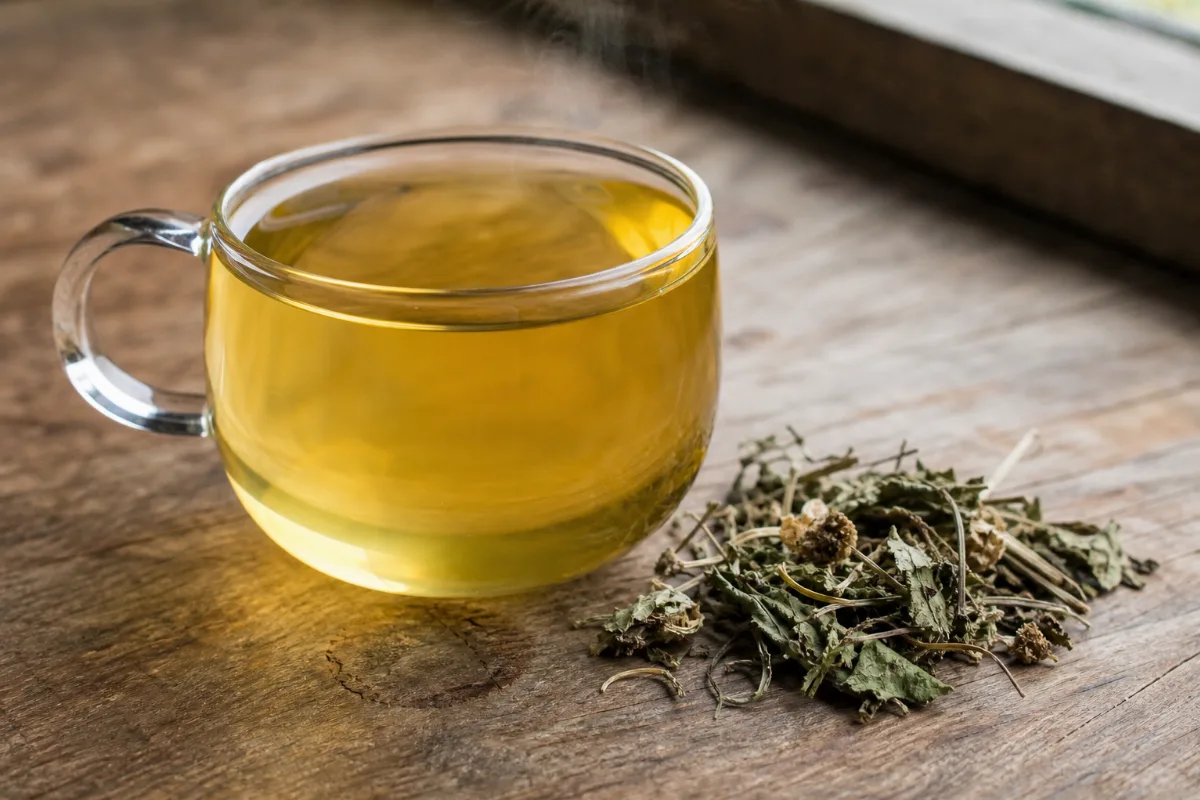
Passionflower tea is an herbal drink made from the dried above-ground parts of a climbing vine, Passiflora incarnata. It is not true tea. People drink it for calm and sleep. Only one small tea trial exists (healthy adults, one week), and most human research used tablets, drops or extracts. The main cautions are drowsiness, mixing with sedatives, and avoiding it in pregnancy.
General information, not medical advice. Last substantive update · Not medically reviewed. A named clinician has not signed off on this page. How this page is made
About Passionflower Tea
Passionflower tea is an herbal drink made from Passiflora incarnata. It is not true tea. One small tea trial found better self-rated sleep quality in healthy adults; most other research used extracts. Drowsiness, sedative interactions, pregnancy and driving are the main cautions.
What it is
Passionflower tea is made by steeping the dried leaves, stems and flowers of Passiflora incarnata L., a climbing vine of the southeastern United States, in water. It is a different plant from true tea (Camellia sinensis) and from the passion fruit grown for juice (Passiflora edulis).
Passionflower is also sold as tinctures, drops, tablets and standardised extracts, and in blends with chamomile, valerian, hops or lemon balm. No source we read gives a measured caffeine content for it, and it is not true tea; blends may contain other herbs or true tea, so check the label.
What the research shows
Tea has barely been tested. One double-blind crossover trial gave 41 healthy adults passionflower tea or placebo tea for a week each: only sleep quality was rated better, and the other five diary measures did not differ. A three-herb tea blend trial in 210 surgical patients in Brazil found no significant difference in anxiety from a placebo tea.
The more encouraging results come from tablets, drops and extracts: a 36-person pilot against oxazepam, several single-dose pre-surgery trials, and two short sleep and stress trials. A Cochrane review in 2007 found too few trials to conclude, and later reviews call the evidence small and short. Nothing is rated above low certainty.
Tea, extract and concentrate
A cup of tea is the herb infused in water. Tinctures, drops and standardised extracts are more concentrated and are what most trials used. A result from an extract should not be assumed for tea, and no study compared their safety. Any amounts are a question for your doctor or pharmacist.
Cautions in short
Passionflower can cause drowsiness, dizziness and confusion, and the EU regulator says people affected should not drive. It should be used with care alongside sedatives, sleeping pills, alcohol and anaesthesia. NCCIH advises against use in pregnancy because of a possible uterine effect; the EU advises against use in pregnancy and breastfeeding. Single cases of an abnormal heart rhythm and of vasculitis have been reported, with cause unproven. See the Safety tab for MAOI and blood-thinner statements.
Where it comes from
Passionflower is native to the southeastern United States. Native American peoples ate the fruit, and Spanish explorers took the plant to Europe, where it entered folk medicine. The EU regulator found written use of the dried herb for mild stress and sleep in handbooks dated 1938 to 2003, and granted traditional-use status. Some historical claims on commercial sites were not verified.
What happens in the body
Lab tests show whole extracts act on GABA-type receptors and uptake sites, and on adenosine and serotonin receptors, but the active compounds are not identified. No human absorption data for passionflower compounds were found. These findings do not show what a cup of tea does.
At a glance
Traditional uses history, not proof
- European herbal medicine: dried above-ground parts used as tea, tincture or liquid extract for mild mental stress and to aid sleep; the EU regulator found written use in handbooks from 1938 to 2003
- Southeastern North America: the fruit was eaten and the root used for skin problems, liver ailments and earaches by Cherokee and neighbouring peoples; sedation is not listed in that source
- A 2013 review lists use as a sedative tea in North America and for opiate dependence in India (no dates or primary sources given)
Studied for research
- Sleep, low (one small tea trial in healthy adults; two short extract trials)
- Anxiety before surgery, low and mixed (a three-herb tea blend trial was null on its main outcome)
- Anxiety disorder, low (a pilot extract trial against a drug; Cochrane found too few trials)
- Everyday stress, low (extracts)
- Opioid withdrawal, benzodiazepine tapering and ADHD in children, very low (extract or tablet studies)
- Blood pressure, blood sugar, pain: no passionflower human trial found
Main compounds
- Flavone C-glycosides such as vitexin, isovitexin, orientin and isoorientin (main plant compounds; no single one explains the effects)
- Chrysin and maltol in small amounts
- Harman-type alkaloids in traces, undetectable in most commercial material according to the EU regulator
- Gynocardin, a cyanide-releasing plant compound in the lab; no poisoning from this species was found
Common forms
- Tea from the dried above-ground parts
- Blends with chamomile, valerian, hops, lemon balm or true tea
- Tinctures and liquid extracts (more concentrated; not the same as tea)
- Tablets, capsules and standardised dry extracts used in most trials
Research links: Passionflower, NCCIH Herbs at a Glance · EU herbal monograph: Passiflorae herba (EMA) · Passionflower herbal tea and sleep quality, placebo-controlled trial (2011) · Calming tea blend and perioperative anxiety trial (2025) · Passiflora for anxiety disorder, Cochrane review (2007) · Research Library · Genes & Biomarkers Library
What it is and its history
- Accepted scientific name
- Passiflora incarnata L.
- Naming authority
- L. (Linnaeus), published in Species Plantarum, page 959 (1753) (GBIF; NCBI Taxonomy gives 'L., 1753')
- Synonyms
- Granadilla incarnata (L.) Medik.; Passiflora edulis var. keri (Spreng.) Mast.; Passiflora incarnata f. alba Waterf.; Passiflora incarnata var. integriloba DC.; Passiflora incarnata var. major Sweet; Passiflora keri Spreng.; Passiflora rigidula J.Jacq.
- Common names
- Passionflower (English); Purple passionflower (English); Maypop (English); Maypop passionflower (English); Apricot-vine (English); Passiflora (Spanish); Pasionaria (Spanish); Passiflore rouge (French); Passionsblume; winterharte Passionsblume (German); Flor-da-paixao (Portuguese); Lakepassionsblomma (Swedish)
- Family or group
- Passifloraceae (the passion-flower family, order Malpighiales), in both GBIF and NCBI Taxonomy. The genus is large: Miroddi 2013 (p24140586) gives about 520 species, most of them vines of Central and South America.
- Classification
- Plantae > Tracheophyta > Magnoliopsida > Malpighiales > Passifloraceae > Passiflora > Passiflora incarnata
- Native range
- Southeastern United States, reaching east Texas in the west (s-ethnobotany-fritz-maypop). NCCIH says native to the southeastern United States and Central and South America (s-nccih-passionflower); the two sources differ, and the Central/South American part was not verified. The plant has spread with people for a very long time: charred seeds appear in many Southeastern archaeological sites, and the essay calls the plant's relationship with people hard to class as 'wild' or 'domesticated' (s-ethnobotany-fritz-maypop, citing Gremillion 1989; not checked against the original).
- Habitat
- Wooded areas, farm fields and gardens in the Southeast, often where people have opened the land (s-ethnobotany-fritz-maypop). No other habitat source was read.
- What it looks like
- Roots: Not described in the sources read. A mouse study found root extracts had practically no anxiolytic effect (p11731118).; Stems: A climbing vine (NCCIH). Other stem details not described in the sources read.; Leaves: Not described in the sources read. Leaf measurements (vein-islet number, stomata) are said to differ from P. edulis, but the values were not given in the abstract (p12639407).; Flowers: White and purple (NCCIH). The essay says the flowers are unlike any other native to the southeastern USA.; Fruit: Eaten by Cherokee people raw or crushed into juice (s-ethnobotany-fritz-maypop). The European Pharmacopoeia says the dried herb 'may contain flowers and fruits' (s-ema-ar-passiflora-2008). Size and colour not described in the sources read.
- Cultivation
- Medicinal supply is cultivated; samples in the chemotype study were grown in Australia (p20522969). No growing guidance, acreage or yields were verified.
- Harvest and processing
- The European Pharmacopoeia, as quoted by the EMA, defines the herb as the dried aerial parts (stem, leaf, flower; may include fruit). Its dry extract is made with 40-90% ethanol, 60% methanol or 40% acetone and must contain at least 2.0% flavonoids calculated as vitexin; the minimum flavonoid content for the plain dried herb was not stated in the report (s-ema-ar-passiflora-2008). Traditional preparations named there are powder, tea (infusion), and liquid extracts or tinctures in 25-70% ethanol; German dry extracts made with 60% methanol have been sold since 1992. Harvest timing and drying practice were not verified. A mouse study suggests roots and flowers dilute the anxiolytic activity of the leaf and stem material, so the authors argue the parts should be separated before standardizing (p11731118; one research group, mice).
- Look-alikes and adulterants
- Name: Passiflora edulis (passion fruit); Note: The most important confusion. P. edulis (GBIF key 2874190) is the passion-fruit species. A 2001 paper says it and P. incarnata were often treated as the same species, from Hooker in 1843 and the Index Kewensis in 1895 onwards, because leaf shape and microscopy look alike, and that this confusion may explain contradictory results in the research (p12639407). Leaf measurements, ash and extractive values and a TLC fingerprint separate them. P. edulis is rarely reported to have strong sedative activity. Older studies therefore need checking for which species was actually used.; Name: Passiflora caerulea (blue passionflower); Note: A separate accepted species (GBIF key 2874199). Its chemical fingerprint differs from P. incarnata (p33076047). Its flowers carry harmala-type alkaloids at 1 to 110 micrograms per kilogram (p37448143); that study is on P. caerulea only, so it says nothing about the amount in P. incarnata.; Name: Passiflora alata (winged-stem passionflower); Note: A separate accepted species (GBIF key 2874181) that was told apart from P. incarnata by chemical fingerprinting (p33076047). Its use as a medicine in Brazil was not verified here, so do not assume results on P. alata apply to P. incarnata.; Name: Other Passiflora species in supplements; Note: One method paper measured the same flavonoids and alkaloids in P. incarnata, P. violacea, P. edulis, P. suberosa, P. morifolia and P. quadrangularis and in supplements 'that claim to contain Passiflora' (p23074901). The abstract does not report what was found in the products, so how often products contain the wrong species is not known from the sources read.; Name: Two chemical types inside P. incarnata itself; Note: Eleven samples grown in Australia split into two chemotypes: one with isovitexin and schaftoside/isoschaftoside (the usual type) and one rich in swertisin (p20522969). The authors recommend making medicines from the usual type until the meaning of the difference is understood.
- Sustainability and conservation
- Not verified. No IUCN or national assessment was retrieved. Status in the wild was not looked up.
Photographs
Traditional use and history history, not clinical proof
| Tradition or era | Documented use | Source |
|---|---|---|
| Southeastern Native American peoples (Cherokee and neighbours), before and during European contact | The fruit was eaten raw or crushed into a juice, and boiled young shoots were eaten. Cherokee people used the pounded root for skin problems, liver ailments and earaches, and to help wean babies (citing Moerman 1998). Sedation is not listed among these uses in this source. Charred seeds in many archaeological sites show long human use of the plant. | s-ethnobotany-fritz-maypop |
| Early 1600s, Virginia (Jamestown colony) | William Strachey, the colony's secretary, reported fields with large amounts of the fruit in 1612; Algonquian people called it 'maracocks' (as cited by the essay, from Major 1849 and Gremillion 1989; the originals were not checked). This is food use, not medicine. | s-ethnobotany-fritz-maypop |
| 16th century, Spanish explorers (naming) | The essay says Spanish explorers gave the genus a name referring to the Passion of Christ (the 'passion' flower), citing Austin 2004. NCCIH adds that 16th-century Spanish explorers in South America learned of passionflower, that it was traditionally used as a sedative, and that it was later brought to Europe, where it was widely cultivated and entered European folk medicine. Several commercial herb websites credit the Spanish physician Nicolas Monardes with writing about it in 1569; this was NOT verified from a primary or scholarly source and is not claimed here. Note too that the NCCIH account describes a plant known from South America, so some early Spanish reports may describe other passionflower species, not P. incarnata. | s-nccih-passionflower |
| Traditional medicine in several countries (as listed in a 2013 review) | Sedative tea in North America; analgesic, antispasmodic, anti-asthmatic and worm remedy in Brazil; sedative and narcotic in Iraq; dysmenorrhoea, epilepsy, insomnia, neurosis and neuralgia in Turkey; hysteria and neurasthenia in Poland; diarrhoea, dysmenorrhoea, neuralgia, burns, haemorrhoids and insomnia in America; opiate dependence in India. The review does not give dates or primary sources for these uses. | p24140586 |
| European phytotherapy, documented 1938 to 2003 | The EMA found continuous written use of the dried aerial parts for 'mild symptoms of mental stress' and 'to aid sleep' in standard handbooks dated 1938 (Madaus), 1958 (Hoppe), 1977 (List and Hoerhammer) and 2003 (ESCOP). Often used with valerian, hops or lemon balm. Preparations: powder, tea, tinctures and liquid extracts; a liquid extract (1:1, 70% ethanol) has been sold in Germany since at least 1978 and methanol-extracted dry extracts since 1992. The EMA judged the required 30 years of use (15 in the EU) as met for the traditional-use category. | s-ema-ar-passiflora-2008 |
| EU regulatory outcome (2008 assessment; monograph 2014) | The HMPC assessed passionflower herb as plausible for traditional use only, because the four small human studies had serious flaws and could not show 'well-established use'. The final EU monograph (EMA/HMPC/669740/2013, March 2014) was found in a search but not read in full here; this entry rests on the 2008 report. | s-ema-ar-passiflora-2008 |
| Late 20th century onward: modern research | A group in India proposed in 2001-2004 that an unnamed 'benzoflavone' compound explains the plant's effects, while European work from the 2000s onward focused on GABA-related actions of whole extracts. The EMA noted the benzoflavone's structure is not known (see mechanisms). | p15261959 |
Traditional use shows how it was used. It does not show that it works or is safe today.
What is inside, and how it may work
What it contains and how those compounds act in cells and animals. Laboratory and animal mechanisms are not proven effects in people.
Main compounds
| Compound | Family | Where it is concentrated | Activity studied | Level of evidence |
|---|---|---|---|---|
| Isovitexin PubChem 162350 | flavone C-glycoside (apigenin-6-C-glucoside) | Aerial parts Not given in the abstracts read. Marker of the usual chemotype (p20522969). | One of the main flavonoids of P. incarnata. In cells, its glucoside form (see below) and isoschaftoside raised Per2 clock-gene mRNA (p28824345). No sedative or anxiolytic action of pure isovitexin on its own was found in the sources read. 55 29 8 51 62 | Laboratory research |
| Vitexin PubChem 5280441 | flavone C-glycoside (apigenin-8-C-glucoside) | Aerial parts Not given in the abstracts read. The Pharmacopoeia expresses total flavonoids 'as vitexin' for the dry extract (2.0% minimum), but the EMA text lists isovitexin, not vitexin, among the main flavonoids; vitexin is a reference unit for the test, not proof it is the main compound. | Blocks the transporters OATP2B1 and OATP1A2 and is itself carried by OATP2B1, in cell lines (p33511622). In rats, pure vitexin lost 94.1% to first-pass in the gut and has low oral bioavailability (p24555505). 29 8 44 56 54 | Laboratory research |
| Isoorientin (homoorientin) PubChem 114776 | flavone C-glycoside (luteolin-6-C-glucoside) | Aerial parts Not given in the abstracts read. | Named as a major flavonoid in the extract used in the flumazenil-reversible mouse anxiolytic study (p19006051); purified homoorientin also raised Per2 mRNA in cells (p28824345). Its own effect on anxiety was not tested. 29 51 48 62 | Laboratory research |
| Orientin PubChem 5281675 | flavone C-glycoside (luteolin-8-C-glucoside) | Aerial parts Found in commercial preparations by HPLC-MS; amounts not read (p33511622). | Blocks OATP2B1 and OATP1A2 and is a substrate of both, in cells (p33511622). Anxiolytic or sedative action not shown for the pure compound in the sources read. 29 8 44 48 | Laboratory research |
| Isovitexin-2''-O-glucoside PubChem 185995 | flavone C-glycoside (glycosylated isovitexin) | Aerial parts Not given in the sources read. The EMA mentions '2''-beta-D-glucosides' of isovitexin and isoorientin as typical. | Purified from the extract, raised Per2 mRNA in cells (p28824345). A rat study found a half-life of about 3.5 h after injection and some compound in brain tissue (p37881073). CID matched by name search; confirm the exact isomer if used in a product label. 51 60 62 | Animal research |
| Schaftoside PubChem 442658 | flavone di-C-glycoside | Aerial parts Marker of the usual chemotype (low in the swertisin type) (p20522969). | No activity data for the pure compound in the sources read. 55 62 | Laboratory research |
| Isoschaftoside PubChem 3084995 | flavone di-C-glycoside | Aerial parts Marker of the usual chemotype (p20522969). | Purified from the extract, raised Per2 mRNA in cells (p28824345). 55 51 62 | Laboratory research |
| Vicenin-2 PubChem 442664 | flavone di-C-glycoside (apigenin-6,8-di-C-glucoside) | Aerial parts Listed by the EMA among typical flavonoids; amounts not given. | No activity data in the sources read. 62 | Laboratory research |
| Swertisin PubChem 124034 | flavone C-glycoside (methylated) | Aerial parts High in the second, swertisin-rich chemotype (p20522969). | No activity data in the sources read. Whether swertisin-type plants work differently is unknown. 55 62 | Laboratory research |
| Chrysin PubChem 5281607 | flavone (free aglycone) | Aerial parts Not shown in the HPLC papers read; chrysin is described in older papers by one group as a passionflower flavone. | Pure chrysin by injection in rats reduced anxiety about as much as midazolam on a maze test, but the effect was smaller and stress hormones did not change (p17966676). Whether passionflower tea or extract contains meaningful chrysin was not verified; modern chemical profiles of the plant mostly list C-glycosides (p19006051, p20522969). 12 46 20 | Animal research |
| Maltol PubChem 8369 | pyranone (small flavouring-type molecule) | Dry extract (a 1974 isolation) Not given. The EMA says maltol may be an artefact formed during processing, not a natural plant compound. | Isolated from a P. incarnata dry extract in 1974 and tested in animals (p4421168; abstract not available). Also tested in mice in 1997, results for maltol alone not given in the abstract (p9234160). Acute toxicity in mice: LD50 820 mg/kg by injection (EMA). Not shown to cause the herb's effects. 4 48 62 | Animal research |
| Harman (harmane) PubChem 5281404 | beta-carboline (harmala-type) alkaloid | Aerial parts Traces only. The EMA says harmala-type alkaloids may be present in traces but are undetectable in most commercial materials. A 1971 Italian paper measured harmane and harmine in an extract (p5143366; amounts not read). | Harmala alkaloids as a group are known to inhibit monoamine oxidase-A, but no test showed this for passionflower itself at the amounts present (see mechanisms). In mice, harman was one of the compounds tested alongside the extract (p9234160; results not in abstract). 9 8 48 62 | Pharmacological theory |
| Harmine PubChem 5280953 | beta-carboline alkaloid | Aerial parts Traces; often undetectable in commercial material (EMA). | Same caveat as harman. Measured with harman in a 1971 extract (p5143366). 9 8 62 | Pharmacological theory |
| Harmaline PubChem 3564 | dihydro-beta-carboline alkaloid | Aerial parts Traces; often undetectable in commercial material (EMA). | Same caveat as harman. Included in the UPLC method that can measure it in plants and supplements (p23074901). 8 62 | Pharmacological theory |
| Harmol PubChem 68094 | beta-carboline alkaloid | Aerial parts Traces (EMA). | Same caveat as harman. 48 8 62 | Pharmacological theory |
| Harmalol PubChem 3565 | beta-carboline alkaloid | Aerial parts Traces (EMA). | Same caveat as harman. 48 8 62 | Pharmacological theory |
| Gamma-aminobutyric acid (GABA) PubChem 119 | amino acid and brain neurotransmitter | Extract (whole plant water extract) Described as 'a prominent ingredient' of one water extract, amount not read (p20382514). | The extract produced GABA-A currents in brain slices, and the effect disappeared when amino acids were removed, so the free GABA in the liquid explained it (p20382514). Whether swallowed GABA reaches the brain is not shown here. 21 | Laboratory research |
| Gynocardin PubChem 13942401 | cyanogenic glycoside | Aerial parts Listed by the EMA as present; amount not given. | A compound that can release cyanide when broken down. No toxicity data for passionflower itself were found in the sources read; the EMA found low acute toxicity of the extracts (oral LD50 above 15 g/kg in mice and rats). Safety detail belongs in the safety file. 62 | Laboratory research |
| Unidentified 'benzoflavone' (BZF) | claimed flavone derivative | Aerial parts Not reported anywhere in the sources read (EMA). | One research group reports an unnamed tri-substituted benzoflavone as the main active compound and proposes it blocks the enzyme aromatase. The EMA says its chemical structure appears not to be known, the amount in the plant is unreported, and no direct aromatase test was found. Treat as unconfirmed. No PubChem entry can be given. 20 18 19 62 | Animal research |
Mechanisms, receptors and pathways
| Target or pathway | Gene or receptor | What was found | Level |
|---|---|---|---|
| GABA-A receptor, GABA binding site (whole extract) | GABA-A (not subunit-resolved) | A commercial dry extract reduced binding of a GABA-site marker to rat brain GABA-A receptors, while the benzodiazepine site and the ethanol site were not affected (p21089181). 5 | Laboratory research |
| GABA-A currents in brain slices | GABA-A (direct currents) | A whole water extract produced dose-dependent GABA-A currents in mouse hippocampal slices, but the currents disappeared when amino acids were removed, so most of the signal was the GABA in the extract rather than a plant compound (p20382514). The expected boosting of the brain's own GABA signals was not seen. 21 | Laboratory research |
| GABA-B receptor | GABBR1 / GABBR2 | The extract acted as a GABA-B antagonist in a cell test (p21089181). A blocker of this receptor is not obviously calming, so the finding does not straightforwardly fit the sedative use. 5 | Laboratory research |
| GABA uptake into nerve endings | GABA transporter (type not identified; GAT1/SLC6A1 is the usual one but was not tested) | The extract blocked [3H]-GABA uptake into rat cortical synaptosomes, with no effect on GABA release or the enzyme GABA transaminase (p21089181). Blocking uptake would leave more GABA in the gap between nerves. 5 | Laboratory research |
| Monoamine uptake, adenosine and serotonin receptors | SLC6A3 / SLC6A2 / SLC6A4 (dopamine, noradrenaline, serotonin transporters); ADORA1, ADORA2A; HTR2A | A standardized extract reduced uptake of dopamine, noradrenaline and serotonin into rat synaptosomes and displaced ligands at adenosine A1, A2A and serotonin 5-HT2A receptors; melatonin MT1 and orexin OX1 receptors were unaffected. Active compounds were not identified (p42462921). Transporter genes are the usual names for these uptake sites; the paper measured uptake, not the genes. 6 | Laboratory research |
| Monoamine oxidase (MAO-A) | MAOA | Harmala alkaloids inhibit MAO-A as a class, and one mouse paper cites this as a background reason for the antidepressant-like effect it saw (p22107833). That paper did not measure MAO. The EMA says these alkaloids are traces and undetectable in most commercial material. A circadian-gene study found extract changed MAO mRNA in mice, but mRNA is not enzyme activity (p28824345). No direct test of passionflower on MAO enzyme activity was found. This is a theory, not a demonstrated mechanism. 46 51 8 62 | Pharmacological theory |
| Brain chemistry after long-term dosing | glutamate and serotonin pathways | Rats given extract in drinking water for 7 weeks had lower hippocampal glutamate and lower cortical serotonin with higher turnover, less anxiety and better water-maze memory (p26814055). Fits GABA-related action in the authors' view, but it is correlation. 32 | Animal research |
| Sleep and melatonin in rodents | GABA receptor mRNA; melatonin | A leaf-and-fruit extract lowered GABA receptor mRNA in rat glioma cells at 6 hours and, in rodents, lengthened immobility and eyelid closure and raised blood melatonin after single and repeated oral doses (p31993179). Human sleep results are in the benefits files. 34 | Animal research |
| Clock genes | PER1, PER2, CRY1, BMAL1, CLOCK; also MAO, COMT, GAD mRNA | An aerial-part extract strengthened daily rhythms of several clock genes in mouse cells and mouse liver and brain. Purified isovitexin-2''-glucoside, isoschaftoside and homoorientin each raised Per2 mRNA. Mice slept sooner and longer, like the GABA-A agonist muscimol (p28824345). Authors work for an extract maker. 51 | Animal research |
| Seizure protection | GABAergic and monoamine pathways (not resolved) | A hydroethanolic extract lowered seizure severity and the low-mood-like immobility after seizures in mice, and kept brain serotonin and noradrenaline from falling (p22107833). In the cell study, two of five extracts protected against seizures while all five raised anxiety, so results depend on how the extract is made (p20382514). 46 21 | Animal research |
| Drug transporters in the gut and liver | SLCO2B1 (OATP2B1), SLCO1A2 (OATP1A2) | Orientin, vitexin and apigenin blocked both transporters in cell lines, and commercial P. incarnata preparations also blocked them (p33511622). These transporters help take up some drugs, so this is a possible but untested route for interactions in people. 44 | Laboratory research |
| Drug-metabolising enzymes and pumps | CYP3A4, CYP2C, ABCB1 (P-glycoprotein), GGT | A P. incarnata infusion raised CYP3A4 mRNA in human liver cells and lowered total glutathione (p36278236). Pure vitexin changed CYP3A and CYP2C activity in rats (p25447838). Not tested in people. 37 54 | Laboratory research |
Absorption, metabolism and elimination
- Absorption
- No human data on how passionflower compounds are absorbed were found in the sources read; the EMA says the same. In rats, pure vitexin lost 94.1% to first-pass in the gut, 31.3% in the stomach and 5.2% in the liver, leaving low oral bioavailability (p24555505). The four flavone C-glucosides of a bamboo-leaf extract (orientin, homoorientin, vitexin, isovitexin, the same compounds that dominate passionflower) were poorly absorbed in rats (p17313710). These are pure compounds or another plant in rats, not passionflower in people.
- Distribution
- No human data. In rats, injected isovitexin-2''-O-glucoside reached the highest levels in liver, kidney and intestine, and some was found in brain tissue, which the authors read as a sign it can cross the blood-brain barrier (p37881073). Whether swallowed passionflower compounds reach the brain in people is not shown.
- Metabolism
- No human data. In rats, flavone C-glucosides from bamboo leaf were partly broken down by losing the sugar and opening the ring into small phenolic acids such as phloroglucinol, hydrocaffeic acid and phloretic acid (p17313710). Pure vitexin altered rat liver CYP3A and CYP2C activity (p25447838). Human metabolism of passionflower flavonoids is not established.
- Elimination
- Not established in humans. Rat data: injected isovitexin-2''-O-glucoside had a half-life of 3.49 +/- 0.99 h and clearance of 54.53 +/- 11.90 mL/kg/h (p37881073). In the bamboo C-glucoside rat study, more than 50% of the compounds was still recovered at 12 h and faeces held 21% at 24 h (p17313710).
- Bioavailability
- Not established in humans and not measured for any passionflower extract in the sources read. Rat data on pure compounds suggest low oral bioavailability for vitexin. Because extraction method changes how much flavonoid ends up in the liquid (hot versus cold gave much more flavonoid, p20382514), the dose a person actually absorbs from a tea or tincture can vary a lot. Quoted rat and cell results should not be turned into human numbers.
Isolated compounds versus whole extracts
Passionflower tea is the dried above-ground parts infused in water. Trials of tea are few (one single-herb tea trial and one three-herb tea blend trial). Most positive human trials used tablets, drops or standardised extracts, and most lab and animal findings used concentrated extracts or single compounds, far stronger than a cup. How the plant is extracted changes what it does in the lab: hot extraction gave more flavonoid than cold, and only two of five extracts of one batch protected against seizures in a cell test. Results from one form should not be assumed for another, and no study compared their safety.
Nutritional composition
Passionflower tea is not a food source of vitamins or minerals and no nutrient values were verified, so none are claimed. The commercial passion fruit is a different species (Passiflora edulis).
4 low certainty3 very low certainty2 not enough evidence
What was looked at
The 9 benefits and uses checked for Passionflower Tea, each with how strong the evidence is. Tap one to open it.
- Sleep qualityLow certainty
- Anxiety (extract trials; no tea trial in anxiety disorder)Low certainty
- Anxiety before surgery and dental workLow certainty
- Everyday stress and nervous restlessnessLow certainty
- Blends with other herbsNot enough evidence
- Sleep behaviour in animals (lab only)Not enough evidence
- Opioid withdrawal symptoms (extract drops; not tea)Very low certainty
- Coming off benzodiazepines (dry extract; not tea)Very low certainty
- ADHD in childrenVery low certainty
Lab markers tracked in the studies
Self-rated sleep qualityTotal sleep time (sleep recording)Anxiety scoresResilience and quality of lifeBenzodiazepine dose reduction
What is Passionflower Tea good for?
The main studied uses of passionflower and how strong the human evidence is for each. 'Low' means a few small studies; 'very low' means one or two weak ones; 'insufficient' means no usable human data. Most trials used tablets, drops or extracts, not tea; this is stated each time.
Benefits, one by one
Each card is a research question, not a promise. Tap a goal to filter. Open a card to see the studies, doses and limits.
Sleep quality
Low certaintyThe one trial of passionflower as a tea (41 healthy adults, one week) found only one of six sleep-diary scores was better than with placebo tea: how well people felt they slept. Two small extract trials in people with insomnia or stress found a little more sleep time. Effects are small and trials are short.
4 studiesTea in one trial; extracts in the other two. Tea strength was not giv…
Studies, doses and limits
What the trials found
Tea trial (Ngan and Conduit 2011): 41 adults aged 18 to 35 with mild everyday sleep changes had passionflower tea for a week and placebo tea for a week, in random order. Of six sleep-diary measures, only sleep quality was better with passionflower (p<0.01). Ten people also had overnight sleep recordings, which the abstract does not report. Extract trials: in 110 adults with insomnia, two weeks of an extract raised total sleep time more than placebo, but only that one of several measures beat placebo (p=0.049). In 65 adults in India with stress and insomnia, a standardised extract of the aerial parts raised total sleep time over 30 days; some authors work for the extract maker.
Results
Better self-rated sleep quality after a week of tea in healthy adults; slightly more total sleep time with extracts in two small trials.
Effect sizes as reported
Tea trial sleep quality t(40)=2.70, p<0.01. Extract trial in insomnia p=0.049 for total sleep time.
Why this rating
One small tea trial in healthy people with one positive measure out of six; two short extract trials, one with industry-linked authors. No long-term data.
Form and dose studied
Tea in one trial; extracts in the other two. Tea strength was not given in the abstract.
Who was studied
Healthy adults (tea); adults with insomnia or stress (extracts).
Limits
Short, small, mostly self-rated. Extract results should not be assumed to apply to tea.
Why researchers looked
Passionflower tea is a traditional bedtime drink, so researchers compared it with a placebo tea.
Traditional use
The EU regulator lists a traditional use of dried aerial parts, including as tea, to aid sleep, based on long use only.
Proposed mechanism Preliminary mechanism
Lab work on extracts points to the brain's GABA system, but the compounds responsible are not identified and nothing shows the same happens from a cup of tea.
A proposed mechanism does not show that the effect happens in people.
No harm signal in these short trials. See the safety tab for sedation and driving cautions.
Anxiety (extract trials; no tea trial in anxiety disorder)
Low certaintyThe best anxiety trial used a liquid extract, not tea: 36 people with generalised anxiety over 4 weeks improved about as much on passionflower as on the drug oxazepam. A Cochrane review found only two such trials and could draw no conclusion.
3 studiesLiquid extract (drops) in the pilot trial. Not tea.
Studies, doses and limits
What the trials found
Pilot trial of 36 outpatients with generalised anxiety disorder: a passionflower liquid extract and oxazepam both worked and did not differ at 4 weeks; oxazepam acted faster and the drug group had more trouble with job performance. There was no placebo-only group. The Cochrane review (2007) found two trials with 198 people in total and concluded there were too few to draw any conclusion; its search ended before 2007. A 2020 systematic review of 9 short trials (1 to 30 days) says most reported less anxiety, with a less clear effect in mild anxiety, and no pooled analysis.
Results
Similar to a benzodiazepine drug in one 18-per-group pilot trial; reviews say the evidence is too thin to conclude.
Effect sizes as reported
Not reported in the abstracts.
Why this rating
One pilot trial against a drug with no placebo group, an old Cochrane review, and a narrative review of short trials.
Form and dose studied
Liquid extract (drops) in the pilot trial. Not tea.
Who was studied
Adults with generalised anxiety disorder.
Limits
Small, 4 weeks, no placebo arm. Tea has not been tested in anxiety disorder.
Why researchers looked
Passionflower is best known as a calming herb.
Traditional use
The EU regulator lists a traditional use for mild symptoms of mental stress.
Proposed mechanism Preliminary mechanism
Whole extracts acted on GABA-type receptors and uptake in lab tests. The active compounds are not known.
A proposed mechanism does not show that the effect happens in people.
See the safety tab.
Anxiety before surgery and dental work
Low certaintySeveral small single-dose trials of tablets or drops gave mixed results: some found less anxiety than placebo, some found it similar to the sedative midazolam, and a tea blend trial of 210 people found no difference from placebo tea on the main outcome.
8 studiesTablets, drops and extracts before procedures; tea only in the blend …
Studies, doses and limits
What the trials found
Placebo-controlled trials found lower anxiety scores with passionflower before outpatient surgery (60 adults) and before spinal anaesthesia (60 adults), and in gum treatment (63 people, fall from 12.09 to 8.47 versus 12.00 to 10.52 on placebo). In wisdom-tooth removal, passionflower was similar to midazolam in two trials (40 and 200 people), and one 54-person trial saw lower anxiety after passionflower and valerian but not placebo. The only tea trial here was a three-herb blend (chamomile, passionflower and aniseed) in 210 surgical patients in Brazil: no significant difference from placebo tea on anxiety, though more positive feelings about the operation. A 2026 systematic review of 8 trials (617 adults) said benzodiazepines lowered anxiety most consistently.
Results
Mixed. Positive in several small tablet or drop trials; null for the one tea blend on the main outcome.
Effect sizes as reported
Gum-treatment trial anxiety score 12.09 to 8.47 (passionflower) versus 12.00 to 10.52 (placebo). Tea blend trial: no significant difference; positive feelings P=0.0009.
Why this rating
Small single-dose trials, mixed results, different products. The tea blend trial was null and contains three herbs.
Form and dose studied
Tablets, drops and extracts before procedures; tea only in the blend trial.
Who was studied
Adults having surgery or dental treatment.
Limits
One-off settings, not long-term anxiety. Several trials lack a placebo arm.
Why researchers looked
A single dose before a stressful procedure is an easy way to test a calming herb.
Proposed mechanism Preliminary mechanism
Not shown in people.
A proposed mechanism does not show that the effect happens in people.
Single doses did not add sedation in two placebo trials. Tell your surgical team about any herbal tea.
Everyday stress and nervous restlessness
Low certaintyA 12-week German study with no comparison group and a 30-day placebo-controlled trial in India (industry-linked) both reported better stress measures with an extract. Neither tested tea.
2 studiesDry extracts, not tea.
Studies, doses and limits
What the trials found
In routine care, adults with nervous restlessness who took a dry ethanolic extract for 12 weeks had resilience scores rise from 52.1 to 67.7 and quality-of-life scores from 47.9 to 75.0; there was no control group and three mild adverse events (tiredness) were reported. In the 65-person Indian trial, perceived stress fell more than with placebo.
Results
Improvement in stress and wellbeing scores in uncontrolled and industry-linked placebo-controlled studies.
Effect sizes as reported
Resilience 52.1 to 67.7; EQ-VAS 47.9 to 75.0 (no control group).
Why this rating
One uncontrolled study and one small industry-linked trial.
Form and dose studied
Dry extracts, not tea.
Who was studied
Adults with nervous restlessness or stress.
Limits
No control group in the German study; sample size not in the abstract.
Why researchers looked
The EU traditional use is for mild mental stress.
Traditional use
EU traditional-use listing.
Proposed mechanism Preliminary mechanism
Not established.
A proposed mechanism does not show that the effect happens in people.
Mild tiredness reported.
Blends with other herbs
Not enough evidenceMany sleep and calming teas and tablets mix passionflower with valerian, hops, hawthorn or others. Some blends beat placebo or matched a sleeping pill, but the effect cannot be given to passionflower alone.
3 studiesTablets; not tea.
Studies, doses and limits
What the trials found
A six-herb tablet in 182 outpatients with anxious mood: 42.9% had a low anxiety score at day 28 versus 25.3% on placebo (P=0.012). A valerian, passionflower and hops tablet matched zolpidem for sleep in 91 adults over two weeks, with no placebo arm.
Results
Positive in two blend trials, with no way to credit passionflower.
Effect sizes as reported
42.9% versus 25.3% low anxiety score at day 28 (six-herb blend).
Why this rating
Several herbs in each product.
Form and dose studied
Tablets; not tea.
Who was studied
Adults with anxious mood or insomnia.
Limits
Combination products; one had no placebo group.
Why researchers looked
Blends are what most shoppers actually buy.
Traditional use
EU handbooks describe passionflower being used with valerian, hops or lemon balm.
Proposed mechanism Preliminary mechanism
Not separable.
A proposed mechanism does not show that the effect happens in people.
Mild drowsiness in the trials.
Sleep behaviour in animals (lab only)
Not enough evidenceA leaf-and-fruit extract made rodents more sleepy and raised melatonin. This is animal and cell work only.
1 studiesA mixed leaf-and-fruit extract, unlike most products.
Studies, doses and limits
Results
Longer immobility and eyelid closure and higher blood melatonin in rodents.
Why this rating
Animal study only.
Form and dose studied
A mixed leaf-and-fruit extract, unlike most products.
Who was studied
Rodents.
Limits
Cannot be applied to people.
Why researchers looked
To look for a reason behind the traditional use.
Proposed mechanism Animal research
Rodent behaviour and cell data only.
A proposed mechanism does not show that the effect happens in people.
Not applicable.
Opioid withdrawal symptoms (extract drops; not tea)
Very low certaintyOne 2-week trial added passionflower drops to the drug clonidine. Physical symptoms improved the same in both groups; mental symptoms were better with passionflower added. Not repeated.
1 studiesLiquid extract drops.
Studies, doses and limits
What the trials found
65 outpatients in Iran in detoxification took clonidine with passionflower drops or with placebo drops. Physical withdrawal scores improved equally; the passionflower group did significantly better on mental symptoms. The abstract gives no numbers.
Results
No extra benefit for physical symptoms; better mental symptoms.
Effect sizes as reported
Not reported in the abstract.
Why this rating
One small 2-week trial, add-on to a drug, never repeated.
Form and dose studied
Liquid extract drops.
Who was studied
Adults with opioid dependence.
Limits
No numbers in the abstract.
Why researchers looked
Traditional use for opiate dependence is listed in India.
Traditional use
Listed in a 2013 review without sources or dates.
Proposed mechanism Preliminary mechanism
Not established.
A proposed mechanism does not show that the effect happens in people.
Not a substitute for medical withdrawal care.
Coming off benzodiazepines (dry extract; not tea)
Very low certaintyIn an Italian clinic, patients who added a passionflower dry extract cut or stopped their benzodiazepine more often than matched patients who did not. It was a look back at records, not a trial.
2 studiesDry extract.
Studies, doses and limits
What the trials found
Retrospective chart review of 186 outpatients (93 per group): more with the add-on cut their dose by half at 1 and 3 months (p<0.001) and more stopped completely at 1 month (p=0.002) and 3 months (p=0.016). A 12-month follow-up reports the benefit held.
Results
More dose reduction and stopping in the add-on group, but not a randomised trial.
Effect sizes as reported
p values only in the abstract.
Why this rating
Not randomised or blinded; one centre.
Form and dose studied
Dry extract.
Who was studied
Outpatients with anxiety or depression in remission.
Limits
Patients were not randomly assigned. Never stop a benzodiazepine on your own.
Why researchers looked
Patients ask for gentle aids during a taper.
Proposed mechanism Preliminary mechanism
Not established.
A proposed mechanism does not show that the effect happens in people.
Taper only with your prescriber.
ADHD in children
Very low certaintyOne small 8-week Iranian trial reported passionflower worked about as well as methylphenidate. Reviews say no recommendation can be made. The original paper is not on PubMed and its details are second-hand.
2 studiesTablets.
Studies, doses and limits
What the trials found
As described in a 2023 review, 34 children and adolescents improved with no clear difference between passionflower tablets and methylphenidate. There was no placebo arm. The review says there are not enough adequate trials to make a recommendation.
Results
Similar to methylphenidate in one small trial, no placebo group.
Effect sizes as reported
Not verified.
Why this rating
One small trial, no placebo, details not verified from the original.
Form and dose studied
Tablets.
Who was studied
Children and adolescents with ADHD.
Limits
Original not read. The EU regulator does not recommend use under 12.
Why researchers looked
Calming herbs have been tried for restlessness.
Proposed mechanism Preliminary mechanism
Not established.
A proposed mechanism does not show that the effect happens in people.
Ask a paediatrician.
Connections to the rest of health
How Passionflower Tea connects to the rest of our health knowledge graph. Every link says what kind of connection it is. A safety link (for example to the liver) is a warning, not a benefit. A study that merely mentions a topic never creates a benefit link.
Explore every connection: goals, body systems, organs, symptoms, genes
A. Wellness goals
| Connected to | Kind of connection | Evidence status | Context | Studies |
|---|---|---|---|---|
| Better Sleep | Potential benefit | Low certainty | Sleep quality: The one trial of passionflower as a tea (41 healthy adults, one week) found only one of six sleep-diary scores was better than with placebo tea: how well people felt they slept. Two small extract trials in people with insomnia or stress found a little more sleep time. Effects are small and trials are short. Blends with other herbs: Many sleep and calming teas and tablets mix passionflower with valerian, hops, hawthorn or others. Some blends beat placebo or matched a sleeping pill, but the effect cannot be given to passionflower alone. | 42 35 30 31 10 36 57 34 |
| Sleep Quality | Potential benefit | Low certainty | Sleep quality: The one trial of passionflower as a tea (41 healthy adults, one week) found only one of six sleep-diary scores was better than with placebo tea: how well people felt they slept. Two small extract trials in people with insomnia or stress found a little more sleep time. Effects are small and trials are short. Sleep behaviour in animals (lab only): A leaf-and-fruit extract made rodents more sleepy and raised melatonin. This is animal and cell work only. | 42 35 30 31 34 |
| Anxiety Support | Potential benefit | Low certainty | Anxiety (extract trials; no tea trial in anxiety disorder): The best anxiety trial used a liquid extract, not tea: 36 people with generalised anxiety over 4 weeks improved about as much on passionflower as on the drug oxazepam. A Cochrane review found only two such trials and could draw no conclusion. Anxiety before surgery and dental work: Several small single-dose trials of tablets or drops gave mixed results: some found less anxiety than placebo, some found it similar to the sedative midazolam, and a tea blend trial of 210 people found no difference from placebo tea on the main outcome. | 1 38 31 39 7 33 17 61 53 57 50 26 30 10 36 2 58 13 |
| Stress Reduction | Potential benefit | Low certainty | Anxiety (extract trials; no tea trial in anxiety disorder): The best anxiety trial used a liquid extract, not tea: 36 people with generalised anxiety over 4 weeks improved about as much on passionflower as on the drug oxazepam. A Cochrane review found only two such trials and could draw no conclusion. Anxiety before surgery and dental work: Several small single-dose trials of tablets or drops gave mixed results: some found less anxiety than placebo, some found it similar to the sedative midazolam, and a tea blend trial of 210 people found no difference from placebo tea on the main outcome. | 1 38 31 39 7 33 17 61 53 57 50 26 30 2 58 13 |
| Better Focus | Potential benefit | Very low certainty | ADHD in children: One small 8-week Iranian trial reported passionflower worked about as well as methylphenidate. Reviews say no recommendation can be made. The original paper is not on PubMed and its details are second-hand. | 3 27 |
B. Body systems
| Connected to | Kind of connection | Evidence status | Context | Studies |
|---|---|---|---|---|
| Nervous system | Adverse effect or risk | Low certainty | Drowsiness, dizziness and confusion are listed by NCCIH. The EU monograph warns about driving. Preparation or compound: Extracts and teas of aerial parts; products vary |
40 22 15 |
| Digestive system | Adverse effect or risk | Very low certainty | Nausea and vomiting in the hospital case and in unproven spontaneous reports. Preparation or compound: Passiflora incarnata products |
24 23 |
| Reproductive system | Contraindication | Not enough evidence | Avoid in pregnancy (NCCIH: may induce uterine contractions; EU: safety not established). No human data seen. Preparation or compound: Oral passionflower |
40 22 |
| Immune system | Contraindication | Very low certainty | Hypersensitivity is an EU contraindication; allergy to a related species (P. alata) documented in a worker. Preparation or compound: Passiflora extracts |
22 25 |
| Nervous system | Potential benefit | Low certainty | Small trials on sleep quality and anxiety; tea evidence is one small trial. Preparation or compound: Passionflower tea (one trial) and extracts |
42 35 |
| Nervous System | Biological association | Low certainty | Studied for: Sleep quality Studied for: Anxiety (extract trials; no tea trial in anxiety disorder) | 42 35 30 31 1 38 39 7 33 17 61 53 57 50 26 10 36 34 2 58 13 3 27 |
C. Body parts and organs
| Connected to | Kind of connection | Evidence status | Context | Studies |
|---|---|---|---|---|
| Brain | Drug or supplement interaction | Very low certainty | Additive sedation theory plus one case report with lorazepam, valerian and passionflower. Preparation or compound: Passiflora incarnata with benzodiazepines, valerian, alcohol |
14 23 |
| Heart | Adverse effect or risk | Very low certainty | One case of prolonged QT and non-sustained ventricular tachycardia; cause unproven. A safety relationship, not a benefit. Preparation or compound: Passiflora incarnata herbal remedy at usual doses |
24 23 |
| Blood vessels | Adverse effect or risk | Very low certainty | One 1993 hypersensitivity vasculitis case; details unread. Preparation or compound: Herbal preparation containing Passiflora extract |
47 23 |
| Liver | Adverse effect or risk | Not enough evidence | No clear liver harm from passionflower alone; the one liver failure involved kava. A safety relationship, not a benefit. Preparation or compound: Mixed kava-plus-passionflower product in the one fatal case |
41 28 |
I. Biomarkers
| Connected to | Kind of connection | Evidence status | Context | Studies |
|---|---|---|---|---|
| Self-rated sleep quality | Biological association | Low certainty | Measured in trials: improved. A lab change is not the same as a health benefit. | 42 |
| Total sleep time (sleep recording) | Biological association | Low certainty | Measured in trials: raised. A lab change is not the same as a health benefit. | 35 |
| Anxiety scores | Biological association | Low certainty | Measured in trials: mixed. A lab change is not the same as a health benefit. | 39 57 10 |
| Resilience and quality of life | Biological association | Very low certainty | Measured in trials: raised. A lab change is not the same as a health benefit. | 26 |
| Benzodiazepine dose reduction | Biological association | Very low certainty | Measured in trials: lowered. A lab change is not the same as a health benefit. | 58 |
J. Genes, receptors and enzymes
| Connected to | Kind of connection | Evidence status | Context | Studies |
|---|---|---|---|---|
| GABA-A receptor (GABRA/GABRB/GABRG subunit genes; subunit not resolved) | Preliminary mechanism | In vitro | Extract reduces binding at the GABA site, not the benzodiazepine site, in rat brain preparations; flumazenil blocks anxiolysis in mice | 5 29 |
| GABA-B receptor (GABBR1, GABBR2) | Preliminary mechanism | In vitro | Extract acted as an antagonist in a GTP-gamma-S assay | 5 |
| ADORA1 and ADORA2A (adenosine A1 and A2A receptors) | Preliminary mechanism | In vitro | Standardized extract displaced binding at both receptors | 6 |
| HTR2A (serotonin 5-HT2A receptor) | Preliminary mechanism | In vitro | Standardized extract displaced binding; melatonin MT1 and orexin OX1 not affected | 6 |
| SLC6A3, SLC6A2, SLC6A4 (dopamine, noradrenaline, serotonin transporters) | Preliminary mechanism | In vitro | Extract inhibited uptake of the three monoamines into rat synaptosomes | 6 |
| HTR1A (serotonin 5-HT1A receptor) | Preliminary mechanism | Animal | Blocking this receptor with WAY-100635 did NOT cancel the extract's anxiolytic effect in mice, so this receptor is not implied | 29 |
| MAOA (monoamine oxidase A) | Preliminary mechanism | Pharmacological theory | Theoretical target of harmala alkaloids; not tested directly on passionflower; extract changed MAO mRNA in mice | 46 51 |
| GAD (glutamate decarboxylase, GAD1/GAD2) and COMT | Preliminary mechanism | Animal | Extract changed their mRNA in mice (enzyme activity not measured) | 51 |
| PER1, PER2, CRY1, BMAL1, CLOCK (circadian clock genes) | Preliminary mechanism | Animal | Extract and three purified flavonoids raised clock-gene mRNA rhythms in mouse cells and tissues | 51 |
| SLCO2B1 (OATP2B1) and SLCO1A2 (OATP1A2) | Preliminary mechanism | In vitro | Orientin, vitexin, apigenin and commercial preparations block these uptake transporters in cell lines | 44 |
| CYP3A4 | Preliminary mechanism | In vitro | Infusion raised CYP3A4 mRNA in human liver cells (HepG2) | 37 |
| CYP19A1 (aromatase) | Preliminary mechanism | Pharmacological theory | Proposed target of an unidentified benzoflavone; no direct test found (EMA) | 20 18 62 |
K. Biological pathways
| Connected to | Kind of connection | Evidence status | Context | Studies |
|---|---|---|---|---|
| GABA uptake (GABA transporters, SLC6A1 and relatives) | Preliminary mechanism | In vitro | Extract blocks GABA uptake into rat cortical nerve endings; transporter type not identified | 5 |
| Glutamate and serotonin turnover in rat hippocampus and cortex | Preliminary mechanism | Animal | Changed after 7 weeks of extract in drinking water | 32 |
| Glutathione and gamma-glutamyl transferase (GGT) | Preliminary mechanism | In vitro | Infusion lowered total glutathione and raised GGT in HepG2 cells | 37 |
L. Active compounds
| Connected to | Kind of connection | Evidence status | Context | Studies |
|---|---|---|---|---|
| Isovitexin | Biological association | In vitro | One of the main flavonoids of P. incarnata. In cells, its glucoside form (see below) and isoschaftoside raised Per2 clock-gene mRNA (p28824345). No sedative or anxiolytic action of pure isovitexin on its own was found in the sources read. Preparation or compound: Aerial parts |
55 29 8 51 62 |
| Vitexin | Biological association | In vitro | Blocks the transporters OATP2B1 and OATP1A2 and is itself carried by OATP2B1, in cell lines (p33511622). In rats, pure vitexin lost 94.1% to first-pass in the gut and has low oral bioavailability (p24555505). Preparation or compound: Aerial parts |
29 8 44 56 54 |
| Isoorientin (homoorientin) | Biological association | In vitro | Named as a major flavonoid in the extract used in the flumazenil-reversible mouse anxiolytic study (p19006051); purified homoorientin also raised Per2 mRNA in cells (p28824345). Its own effect on anxiety was not tested. Preparation or compound: Aerial parts |
29 51 48 62 |
| Orientin | Biological association | In vitro | Blocks OATP2B1 and OATP1A2 and is a substrate of both, in cells (p33511622). Anxiolytic or sedative action not shown for the pure compound in the sources read. Preparation or compound: Aerial parts |
29 8 44 48 |
| Isovitexin-2''-O-glucoside | Biological association | Animal | Purified from the extract, raised Per2 mRNA in cells (p28824345). A rat study found a half-life of about 3.5 h after injection and some compound in brain tissue (p37881073). CID matched by name search; confirm the exact isomer if used in a product label. Preparation or compound: Aerial parts |
51 60 62 |
| Schaftoside | Biological association | In vitro | No activity data for the pure compound in the sources read. Preparation or compound: Aerial parts |
55 62 |
| Isoschaftoside | Biological association | In vitro | Purified from the extract, raised Per2 mRNA in cells (p28824345). Preparation or compound: Aerial parts |
55 51 62 |
| Vicenin-2 | Biological association | In vitro | No activity data in the sources read. Preparation or compound: Aerial parts |
62 |
| Swertisin | Biological association | In vitro | No activity data in the sources read. Whether swertisin-type plants work differently is unknown. Preparation or compound: Aerial parts |
55 62 |
| Chrysin | Biological association | Animal | Pure chrysin by injection in rats reduced anxiety about as much as midazolam on a maze test, but the effect was smaller and stress hormones did not change (p17966676). Whether passionflower tea or extract contains meaningful chrysin was not verified; modern chemical profiles of the plant mostly list C-glycosides (p19006051, p20522969). Preparation or compound: Aerial parts |
12 46 20 |
| Maltol | Biological association | Animal | Isolated from a P. incarnata dry extract in 1974 and tested in animals (p4421168; abstract not available). Also tested in mice in 1997, results for maltol alone not given in the abstract (p9234160). Acute toxicity in mice: LD50 820 mg/kg by injection (EMA). Not shown to cause the herb's effects. Preparation or compound: Dry extract (a 1974 isolation) |
4 48 62 |
| Harman (harmane) | Biological association | Pharmacological theory | Harmala alkaloids as a group are known to inhibit monoamine oxidase-A, but no test showed this for passionflower itself at the amounts present (see mechanisms). In mice, harman was one of the compounds tested alongside the extract (p9234160; results not in abstract). Preparation or compound: Aerial parts |
9 8 48 62 |
| Harmine | Biological association | Pharmacological theory | Same caveat as harman. Measured with harman in a 1971 extract (p5143366). Preparation or compound: Aerial parts |
9 8 62 |
| Harmaline | Biological association | Pharmacological theory | Same caveat as harman. Included in the UPLC method that can measure it in plants and supplements (p23074901). Preparation or compound: Aerial parts |
8 62 |
| Harmol | Biological association | Pharmacological theory | Same caveat as harman. Preparation or compound: Aerial parts |
48 8 62 |
| Harmalol | Biological association | Pharmacological theory | Same caveat as harman. Preparation or compound: Aerial parts |
48 8 62 |
| Gamma-aminobutyric acid (GABA) | Biological association | In vitro | The extract produced GABA-A currents in brain slices, and the effect disappeared when amino acids were removed, so the free GABA in the liquid explained it (p20382514). Whether swallowed GABA reaches the brain is not shown here. Preparation or compound: Extract (whole plant water extract) |
21 |
| Gynocardin | Biological association | In vitro | A compound that can release cyanide when broken down. No toxicity data for passionflower itself were found in the sources read; the EMA found low acute toxicity of the extracts (oral LD50 above 15 g/kg in mice and rats). Safety detail belongs in the safety file. Preparation or compound: Aerial parts |
62 |
| Unidentified 'benzoflavone' (BZF) | Biological association | Animal | One research group reports an unnamed tri-substituted benzoflavone as the main active compound and proposes it blocks the enzyme aromatase. The EMA says its chemical structure appears not to be known, the amount in the plant is unreported, and no direct aromatase test was found. Treat as unconfirmed. No PubChem entry can be given. Preparation or compound: Aerial parts |
20 18 19 62 |
Each connection is stored with the ingredient, the connected record, the kind of connection, the evidence status, the supporting studies, the preparation or compound involved, and a review date (last reviewed October 25, 2026).
Evidence at a glance: what changed in 4 lab markers
Tap a number to show only those markers. Counts are markers, not people.
The evidence
The research centre for Passionflower Tea. Every record here was checked against PubMed or the publisher's page; we never list a study we have not verified.
Evidence by outcome
Bars show how many studies we found for each outcome, not how well it works. People are added up across trials only (reviews are not added, to avoid double counting).
How we rate evidence
High certainty
Several well-run trials or reviews agree; further research is unlikely to change the picture much.
Moderate certainty
Good trials point the same way, but some doubt remains.
Low certainty
Small, short or inconsistent trials. The finding could change with better research.
Very low certainty
Very little or very weak human data. Treat as a possibility only.
Mixed findings
Trials or reviews disagree with each other.
Not enough evidence
Not enough human research to say either way.
Evidence against
Good research found no benefit, or found harm.
We take the reviewers' own risk-of-bias and GRADE statements where they exist, and otherwise judge from study size, design, consistency, directness and whether a product matches what is sold. Many publications do not make evidence high. Method note: We searched PubMed and read abstracts directly. Titles, years and retraction status were checked again through PubMed. The EU monograph and assessment report, NCCIH and the US food-additive listing were read in full; LiverTox could only be seen as a search summary and LactMed had no entry. The ADHD trial was read only second-hand through a review.
Study library: every study we checked 64
| Study | Design | People | Product, dose, length | Result |
|---|---|---|---|---|
| Akhondzadeh 2001 Passionflower in the treatment of generalized anxiety: a pilot double-blind randomized controlled trial with oxazepam. J Clin Pharm Ther · PMID 11679026 · DOI |
Controlled trial |
36 36 outpatients with generalised anxiety disorder (DSM-IV) |
Passiflora incarnata liquid extract (drops) unspecified Amount not shown here 4 weeks · vs Oxazepam 30 mg per day (plus placebo drops) |
Both treatments worked and the groups did not differ at the end of 4 weeks. Oxazepam acted faster. More problems with job performance on oxazepam. No significant difference between groups at 4 weeks (numbers not in abstract) Methods, limits and fundingOutcomes: Anxiety scores Limitations: Pilot study, only 18 per group, no placebo-only arm (the comparison drug was oxazepam), 4 weeks. The product and its strength are not described in the abstract. The authors themselves ask for a large trial. Funding and conflicts: None stated in abstract Read: abstract |
| Akhondzadeh 2001 Passionflower in the treatment of opiates withdrawal: a double-blind randomized controlled trial. J Clin Pharm Ther · PMID 11679027 · DOI |
Controlled trial |
65 65 outpatients with opioid dependence (DSM-IV) in detoxification |
Passiflora incarnata liquid extract (drops) plus clonidine unspecified Amount not shown here 14 days · vs Clonidine plus placebo drops |
Both groups improved equally on physical withdrawal symptoms. The passiflora plus clonidine group did significantly better on mental symptoms. Mental symptoms better with passiflora added; physical symptoms equal (numbers not in abstract) Methods, limits and fundingOutcomes: Short Opiate Withdrawal Scale (SOWS) Limitations: Two weeks, outpatients, no numbers in the abstract, both groups also took clonidine, so passiflora was tested as an add-on, not on its own. Authors ask for larger study. Funding and conflicts: None stated in abstract Read: abstract |
| Akhondzadeh 2005 Passiflora incarnata in the treatment of attention-deficit hyperactivity disorder in children and adolescents Therapy 2005;2:609-614 (reference as printed in Golsorkhi 2023) · Source |
Controlled trial |
34 34 children and adolescents with ADHD in Iran (17 per group, 31 finished) |
Passiflora incarnata tablets unspecified Amount not shown here 8 weeks · vs Methylphenidate 1 mg/kg/day in two doses |
As described by Golsorkhi 2023 (PMC full text): both groups improved clearly, with no significant difference between passionflower and methylphenidate on parent and teacher ratings. Loss of appetite and anxiety or nervousness were more common with methylphenidate. No significant difference between passiflora and methylphenidate (numbers not seen) Methods, limits and fundingOutcomes: Parent and Teacher ADHD Rating Scale at days 0, 14, 28, 42 and 56 Limitations: NOT VERIFIED from the original paper, which is not on PubMed; details are taken from a 2023 review's table and text. No placebo arm, small, 8 weeks. The review notes blinding and randomisation were not well reported in some trials. Read: summary-only |
| Aoyagi 1974 Studies on passiflora incarnata dry extract. I. Isolation of maltol and pharmacological action of maltol and ethyl maltol. Chem Pharm Bull (Tokyo) · PMID 4421168 · DOI |
Isolation and animal pharmacology animal |
Not available | Dry extract; maltol and ethyl maltol unspecified not available not available · vs not available |
Title reports maltol was isolated from a P. incarnata dry extract; no abstract is available on PubMed, so findings were not read. Methods, limits and fundingOutcomes: Not available Limitations: Abstract not available; only the title was seen. The EMA report says maltol may be an artefact of processing. Funding and conflicts: Not available. Read: citation-only |
| Appel 2011 Modulation of the γ-aminobutyric acid (GABA) system by Passiflora incarnata L. Phytother Res · PMID 21089181 · DOI |
Laboratory research in-vitro |
Rat brain cell preparations | Dry extract of Passiflora incarnata (Pascoflair 425 mg) herb Lab experiment |
The extract reduced GABA uptake into nerve endings and bound to GABA-A and GABA-B receptors (acting as a GABA-B blocker). The benzodiazepine and alcohol sites of the GABA-A receptor were not affected. Receptor and uptake effects (lab) Methods, limits and fundingOutcomes: GABA uptake and GABA-A/GABA-B receptor binding Limitations: Laboratory test on rat tissue; says nothing direct about people; the maker's lab. Funding and conflicts: Not stated in abstract Read: abstract |
| Appel 2027 A Passiflora incarnata extract exerts multi-target effects on selected sleep-related receptors. J Ethnopharmacol · PMID 42462921 · DOI |
In vitro receptor binding and uptake in-vitro |
Receptor binding and rat cortical synaptosomes | Standardized P. incarnata extract unspecified acute |
Concentration-dependent displacement at adenosine A1, A2A and serotonin 5-HT2A receptors; no effect at melatonin MT1 or orexin OX1. Uptake of dopamine, norepinephrine and serotonin into synaptosomes was inhibited. The active components were not identified. Methods, limits and fundingOutcomes: Binding at adenosine A1/A2A, 5-HT2A, melatonin MT1, orexin OX1; uptake of dopamine, norepinephrine, serotonin Limitations: Exploratory, test-tube only; journal issue dated January 2027 (online July 2026); extract concentrations not read. Funding and conflicts: Declared none; three of the five authors list Cesra Arzneimittel, a medicines company, as their employer. Read: abstract |
| Aslanargun 2012 Passiflora incarnata Linneaus as an anxiolytic before spinal anesthesia. J Anesth · PMID 22048283 · DOI |
Controlled trial |
60 60 adults aged 25 to 55 about to have spinal anaesthesia |
Passiflora incarnata extract (oral) unspecified Single dose, 30 minutes before spinal anaesthesia · vs Placebo |
Anxiety score rose less before spinal anaesthesia with passiflora than with placebo. No difference in psychomotor function, sedation, blood pressure or side effects. Smaller rise in STAI-S score vs placebo (p-value not given in abstract) Methods, limits and fundingOutcomes: State-Trait Anxiety Inventory (STAI), sedation, psychomotor tests, blood pressure Limitations: Single dose, no numbers in abstract; the benefit is a smaller increase in anxiety rather than a fall from baseline. Funding and conflicts: None stated in abstract Read: abstract |
| Avula 2012 Simultaneous determination of alkaloids and flavonoids from aerial parts of Passiflora species and dietary supplements using UPLC-UV-MS and HPTLC. Nat Prod Commun · PMID 23074901 |
Analytical method paper in-vitro |
Aerial parts of P. incarnata, P. violacea, P. edulis, P. suberosa, P. morifolia, P. quadrangularis; Peganum harmala; supplements | Plant samples and supplements aerial parts |
A validated 8-minute method to measure these nine compounds and to confirm isoschaftoside and schaftoside, usable on plants and supplements. The abstract does not give measured amounts. Methods, limits and fundingOutcomes: Five indole alkaloids (harmalol, harmol, harmane, harmaline, harmine) and four flavonoids (orientin, isoorientin, vitexin, isovitexin) Limitations: Amounts not in the abstract; full text not read. Funding and conflicts: Not stated. Read: abstract |
| Bennati E. 1971 [Quantitative determination of harmane and harmine in the extract of Passiflora incarnata]. Boll Chim Farm · PMID 5143366 |
Chemical analysis (Italian) in-vitro |
P. incarnata extract | Extract unspecified |
Only the title is available (no abstract on PubMed); it shows harmane and harmine were looked for and measured in an extract in 1971, amounts not read. Methods, limits and fundingOutcomes: Harmane and harmine content Limitations: Citation only. Funding and conflicts: Not available. Read: citation-only |
| Bourin 1997 A combination of plant extracts in the treatment of outpatients with adjustment disorder with anxious mood: controlled study versus placebo. Fundam Clin Pharmacol · PMID 9107558 · DOI |
Controlled trial |
182 182 outpatients with adjustment disorder with anxious mood (91 per group) |
Euphytose: a combination of six plant extracts (hawthorn, ballota, passionflower, valerian, cola, paullinia) unspecified Amount not shown here 28 days · vs Placebo |
42.9% had HAM-A below 10 at day 28 with Euphytose versus 25.3% with placebo (P=0.012). Mean HAM-A at day 28 was 12.63 vs 15.2. Difference significant from day 7 to day 28 (P=0.042). HAM-A below 10: 42.9% vs 25.3% (P=0.012); day 28 means 12.63 vs 15.2 Methods, limits and fundingOutcomes: Hamilton Anxiety (HAM-A) score Limitations: Six-ingredient combination (two of them mild stimulants), so the effect cannot be assigned to passionflower; 1997 trial. Funding and conflicts: Not stated in abstract Read: abstract |
| Brouns 2025 Passionflower (Passiflora incarnata): Quality of Food Supplements Versus Registered Herbal Medicinal Products. Planta Med · PMID 40245939 · DOI |
Laboratory research in-vitro |
11 11 European products (6 meeting specification, 5 not) |
Passionflower products aerial parts |
Thin-layer fingerprinting showed five food supplements were not identical to passionflower; one supplement had only hyperoside and lacked other passionflower compounds; five of six supplements failed the identity or flavone-content specification, which the authors say suggests food fraud. All registered herbal medicines conformed. Methods, limits and fundingOutcomes: Product identity and content Limitations: Small sample; which brands not named in the abstract; European market only. Read: abstract |
| Brown 2007 Evaluation of the anxiolytic effects of chrysin, a Passiflora incarnata extract, in the laboratory rat. AANA J · PMID 17966676 |
Animal experiment animal |
44 Male Sprague-Dawley rats |
Chrysin (pure compound) injected into the belly cavity Amount not shown here acute · vs vehicle; midazolam 1.5 mg/kg; flumazenil plus chrysin |
No difference between groups in stress hormones. Midazolam reduced anxiety versus control and versus flumazenil+chrysin; chrysin did not differ from midazolam, suggesting a smaller, similar effect. Methods, limits and fundingOutcomes: Elevated plus maze, corticosterone, catecholamines Limitations: Pure chrysin by injection, not the plant; the paper's own title calls chrysin 'a Passiflora extract', which it is not. Funding and conflicts: Not stated. Read: abstract |
| Carminati 2024 Passiflora incarnata L., herba, in benzodiazepine tapering: long-term safety and efficacy in a real-world setting. Front Psychiatry · PMID 39429529 · DOI |
Observational |
Follow-up (12 months) of the same outpatients who tapered benzodiazepines (number not in abstract) | Dry extract of Passiflora incarnata herba herb 12-month follow-up · vs Matched patients without add-on |
The authors report the benefit held over time, that passiflora could be stopped easily with no rebound, withdrawal or dependence, and that no side effects were seen. Not given in abstract Methods, limits and fundingOutcomes: Benzodiazepine use; rebound, withdrawal and dependence on passiflora; side effects Limitations: Retrospective, follow-up by phone/contact, one centre; personality disorders made tapering harder. No numbers in abstract. Funding and conflicts: Authors declare no conflict of interest Read: abstract |
| Carrasco 2009 Interactions of Valeriana officinalis L. and Passiflora incarnata L. in a patient treated with lorazepam. Phytother Res · PMID 19441067 · DOI |
Case report |
1 Patient with generalised anxiety disorder taking lorazepam |
Valerian plus passionflower self-medication on top of lorazepam unspecified · vs Lorazepam alone before |
Handshaking, dizziness, throbbing and muscular fatigue within the 32 hours before diagnosis. Essential tremor, Parkinson's disease and Wilson's disease were ruled out from history. The authors suspect an additive or synergistic effect on GABA receptors. (EMA says symptoms disappeared after the herbs were stopped while lorazepam continued; the abstract does not say this.) Methods, limits and fundingOutcomes: Interaction symptoms Limitations: One patient; two herbs taken together, so passionflower cannot be singled out; mechanism is the authors' suggestion. Read: abstract |
| Christoffoli 2021 Assessment of Passiflora incarnata L for conscious sedation of patients during the extraction of mandibular third molars: a randomized, split-mouth, double-blind, crossover study. Quintessence Int · PMID 34076379 · DOI |
Controlled trial |
20 20 young adults (mean age 22.5) having both lower wisdom teeth removed |
Passiflora incarnata L. (oral) unspecified Single dose per visit · vs Midazolam (crossover, split-mouth) |
Heart rate was best controlled with passiflora at one time point (P=0.036). Drowsiness, muscle relaxation and dizziness were greater with the benzodiazepine. Heart rate P=0.036 at one time point; other differences at certain times Methods, limits and fundingOutcomes: Heart rate and other body signs at 11 points during surgery; self-report form Limitations: Only 20 patients, no placebo arm, no dose in the abstract; many time points tested so some significant differences may be chance. Funding and conflicts: None stated in abstract Read: abstract |
| Căuș 2026 Efficacy and Safety of Herbal Supplements with Anxiolytic, Antidepressant, and Sedative Action: A Review of Clinical Data and Toxicological Risks. Pharmaceuticals (Basel) · PMID 41901246 · DOI |
Systematic review |
Review of clinical studies of several herbs | Several herbs including Passiflora incarnata unspecified |
Narrative review: for the herbs reviewed as a group, it names liver-enzyme-mediated drug interactions, excess sedation, serotonin syndrome and harms from adulterated products. Passionflower-specific findings were not in the abstract. Methods, limits and fundingOutcomes: Interactions, adverse effects, adulteration Limitations: Narrative review; abstract does not separate passionflower. Read: abstract |
| Dantas 2017 Effects of passiflora incarnata and midazolam for control of anxiety in patients undergoing dental extraction. Med Oral Patol Oral Cir Bucal · PMID 27918731 · DOI |
Controlled trial |
40 40 volunteers having both lower wisdom teeth removed on separate days |
Passiflora incarnata, oral (product not named in abstract) unspecified Amount not shown here Single dose per visit · vs Midazolam 15 mg (crossover) |
No difference in blood pressure, heart rate or oxygen saturation between the two. Over 70% felt quiet or a little anxious in both. With midazolam, 20% reported amnesia; passiflora barely affected memory. Similar anxiety control to midazolam; amnesia in 20% with midazolam, little or none with passiflora Methods, limits and fundingOutcomes: Anxiety questionnaires; heart rate, blood pressure, oxygen saturation; memory Limitations: No placebo arm, so it shows passiflora is similar to midazolam but not that either beat a dummy pill. Single dose; the abstract gives no ages. Funding and conflicts: Authors declare no conflict of interest Read: abstract |
| Dhawan 2003 Attenuation of benzodiazepine dependence in mice by a tri-substituted benzoflavone moiety of Passiflora incarnata Linneaus: a non-habit forming anxiolytic. J Pharm Pharm Sci · PMID 12935433 |
Animal experiment animal |
Mice | BZF moiety plus diazepam aerial parts Amount not shown here 21 days plus 72 h off · vs diazepam alone |
BZF alone did not cause withdrawal signs; with diazepam it dose-dependently prevented diazepam withdrawal behaviour. The aromatase idea is the authors' explanation only. Methods, limits and fundingOutcomes: Ambulatory activity at withdrawal Limitations: Mice; BZF not structurally identified. Funding and conflicts: Not stated. Read: abstract |
| Dhawan 2004 Passiflora: a review update. J Ethnopharmacol · PMID 15261959 · DOI |
Narrative review in-vitro |
Genus Passiflora | n/a |
Reviews the genus; names P. incarnata as the species with significant CNS-depressant properties and discusses the authors' own isolated 'benzoflavone' (BZF). Methods, limits and fundingOutcomes: Morphology, constituents, pharmacology Limitations: Narrative review by the group that proposed BZF; the EMA report notes BZF's structure and amounts have not been reported. Funding and conflicts: Not stated. Read: abstract |
| Dhawan K. 2003 Drug/substance reversal effects of a novel tri-substituted benzoflavone moiety (BZF) isolated from Passiflora incarnata Linn.--a brief perspective. Addict Biol · PMID 14690874 · DOI |
Mini review by the discoverer animal |
Mice and rats (author's earlier work) | BZF moiety from methanol extract aerial parts Amount not shown here various · vs various |
Summarises the author's mouse and rat work; proposes BZF acts by blocking aromatase. The EMA report found no direct aromatase tests and that the structure of BZF is unknown. Methods, limits and fundingOutcomes: Drug-dependence and sexual-function measures Limitations: Single research group; claimed compound not independently identified. Funding and conflicts: Author affiliation is a drugs-control department; funding not stated. Read: abstract |
| Elsas 2010 Passiflora incarnata L. (Passionflower) extracts elicit GABA currents in hippocampal neurons in vitro, and show anxiogenic and anticonvulsant effects in vivo, varying with extraction method. Phytomedicine · PMID 20382514 · DOI |
In vitro electrophysiology plus animal experiment animal |
Mouse hippocampal slices; CF-1 mice | Five extracts of one batch of P. incarnata (hot versus cold extraction methods) unspecified extracts in drinking water 1 week |
Hot extraction gave much more flavonoid than cold. Whole extract produced direct GABA-A currents, but these vanished when amino acids were removed - GABA itself is a main ingredient. Two of five extracts protected against PTZ seizures. All five extracts made mice more anxious (anxiogenic), not less. Methods, limits and fundingOutcomes: GABA-A currents, flavonoid yield (HPLC-DAD), seizure test, elevated plus maze Limitations: Small mouse study; results differ by extraction method. Funding and conflicts: One author is a part-time employee of a botanical extract company that supplied some extracts. Read: abstract |
| European Medicines Agency 2014 Community herbal monograph on Passiflora incarnata L., herba (EMA/HMPC/669740/2013) EMA herbal monograph (final, adopted 25 March 2014) · Source |
Authoritative guidance |
Passiflora incarnata herba aerial parts |
Read in full. Traditional herbal medicine for relief of mild symptoms of mental stress and to aid sleep, based only on long-standing use (not 'well-established use'). Contraindication: hypersensitivity. Not recommended under 12 years (lack of data). Interactions: none reported. Pregnancy and lactation: safety not established, use not recommended. May impair ability to drive and use machines; affected patients should not drive or operate machinery. Undesirable effects: none known. Overdose: no case reported. Tests of reproductive toxicity, genotoxicity and carcinogenicity have not been performed. See a doctor if symptoms last more than 2 weeks. Methods, limits and fundingOutcomes: Traditional-use monograph: indication, contraindications, warnings Limitations: Traditional-use status means efficacy rests on long use, not trial proof. 'None known' reflects the 2014 evidence base. Read: full-text | |
| European Medicines Agency 2014 Assessment report on Passiflora incarnata L., herba (EMA/HMPC/669738/2013) EMA assessment report (final, 25 March 2014) · Source |
Authoritative guidance |
Passiflora incarnata herba aerial parts |
Read in full (sections on constituents, toxicity, safety). Constituents include gynocardin (a cyanogenic glycoside) and, in traces, beta-carboline alkaloids (harman, harmol, harmalol), which are undetectable in most commercial materials (ESCOP 2003). Animal: oral LD50 above 15 g/kg in mice and rats for a dry hydroalcoholic extract; no toxic signs in rats at 600 mg/kg daily for 4 weeks; no genotoxicity in one Aspergillus test; no carcinogenicity, reproductive or developmental studies; Ames test data missing. Clinical trials showed no safety signals. Case reports: one hypersensitivity vasculitis (Smith 1993); one case of nausea, vomiting, drowsiness, long QT and ventricular tachycardia (Fisher 2000; intake equal to 1.5 g and 2 g of crude drug on 2 days; causality cannot be judged); Irish spontaneous reports for unregistered single-herb products included nausea and thrombocytopenia, plus other serious events with other medicines taken (cause not established); no adverse events reported for registered EU products. One possible interaction with valerian in a patient on lorazepam (Carrasco 2009). Combining with synthetic sedatives such as benzodiazepines is not recommended. Methods, limits and fundingOutcomes: Constituents, toxicology, clinical safety, pharmacovigilance Limitations: Regulator summary written in 2014. Spontaneous reports cannot show cause or frequency. Read: full-text | |
| Fisher 2000 Toxicity of Passiflora incarnata L. J Toxicol Clin Toxicol · PMID 10696928 · DOI |
Case report |
1 34-year-old woman |
Passiflora incarnata herbal remedy unspecified therapeutic doses (per abstract) |
Severe nausea, vomiting, drowsiness, prolonged QTc and episodes of nonsustained ventricular tachycardia after self-treating; admitted for cardiac monitoring and intravenous fluids. The link to passionflower was not recognised for several days. (EMA says the intake matched 1.5 g and 2 g of crude drug over 2 days and that causality cannot be judged.) Methods, limits and fundingOutcomes: Adverse effects after use Limitations: One patient; product contents and other causes not described in the abstract. Read: abstract |
| Giavina-Bianchi PF Jr 1997 Occupational respiratory allergic disease induced by Passiflora alata and Rhamnus purshiana. Ann Allergy Asthma Immunol · PMID 9396980 · DOI |
Case report |
1 Pharmacy worker preparing plant extracts by hand |
Passiflora alata (a different species) extract unspecified |
Skin tests, Western blot and bronchial challenge confirmed IgE-mediated allergy to Passiflora alata in a pharmacy worker. Methods, limits and fundingOutcomes: Occupational asthma and rhinitis Limitations: Different species (P. alata, not P. incarnata); one worker; handling exposure, not swallowing. Read: abstract |
| Gibbert 2017 [Improvement of Stress Resistance and Quality of Life of Adults with Nervous Restlessness after Treatment with a Passion Flower Dry Extract]. Complement Med Res · PMID 28407638 · DOI |
Observational |
Adults with 'nervous restlessness' in routine care (number not in abstract) | Dry ethanolic extract of Passiflora incarnata unspecified 12 weeks · vs No comparison group |
Resilience rose from 52.1 to 67.7 and EQ-VAS from 47.9 to 75.0 (both p<0.001). All accompanying symptoms improved. Three mild adverse events (tiredness). RS-13 52.1 to 67.7; EQ-VAS 47.9 to 75.0; BDEPQ 23.0 to 19.3 Methods, limits and fundingOutcomes: Resilience scale (RS-13), quality of life (EQ-5D, EQ-VAS), addiction potential questionnaire (BDEPQ) Limitations: Non-interventional study with no placebo or control group, so natural improvement and the placebo effect cannot be ruled out; sample size not in abstract; article in German. Funding and conflicts: None stated in abstract Read: abstract |
| Golsorkhi 2023 Herbal medicines in the treatment of children and adolescents with attention-deficit/hyperactivity disorder (ADHD): An updated systematic review of clinical trials. Avicenna J Phytomed · PMID 37663386 · DOI |
Systematic review |
15 studies of herbal medicines in children and adolescents with ADHD | Herbal medicines including Passiflora incarnata unspecified · vs Methylphenidate or placebo, varies |
The review says passiflora, saffron and sweet almond had similar efficacy to methylphenidate in the trials found. It also states that, because of a lack of adequate RCT reports, no specific recommendations can be made. None in the abstract Methods, limits and fundingOutcomes: ADHD symptom ratings Limitations: Passiflora result rests on a single small trial (Akhondzadeh 2005). Abstract and PMC text read; original trial not read. Funding and conflicts: No conflict declared Read: abstract |
| Gow 2003 Fatal fulminant hepatic failure induced by a natural therapy containing kava. Med J Aust · PMID 12720510 · DOI |
Case report |
1 One patient who died |
Preparation containing kava and passionflower unspecified |
Acute liver failure and death with a preparation containing kava (Piper methysticum) and passionflower. Kava is the known liver risk; the abstract does not blame passionflower. Methods, limits and fundingOutcomes: Acute liver failure Limitations: One patient; kava is the likely cause. Included only because passionflower was in the product. Read: abstract |
| Grundmann 2008 Anxiolytic activity of a phytochemically characterized Passiflora incarnata extract is mediated via the GABAergic system. Planta Med · PMID 19006051 · DOI |
Animal research animal |
Mice (elevated plus maze) | Commercial Passiflora incarnata extract with orientin, vitexin and related flavonoids herb Amount not shown here Single dose · vs Diazepam 1.5 mg/kg |
The extract had an anxiety-reducing effect comparable to diazepam at 375 mg/kg, with a U-shaped dose response. Flumazenil (a benzodiazepine blocker) cancelled the effect; a serotonin 1A blocker did not. Comparable to diazepam in mice Methods, limits and fundingOutcomes: Anxiety-like behaviour in a maze Limitations: Mouse study; the dose is far above anything given to people; the flumazenil result sits oddly with the in-vitro finding that the benzodiazepine site is not affected. Funding and conflicts: Not stated in abstract Read: abstract |
| Harit 2024 Randomized, Double-Blind, Placebo-Controlled, Clinical Study of Passiflora incarnata in Participants With Stress and Sleep Problems. Cureus · PMID 38646244 · DOI |
Controlled trial |
65 65 adults in India with stress and insomnia |
SIVI, a standardised extract of aerial parts of Passiflora incarnata aerial parts 30 days · vs Placebo |
Passionflower extract lowered perceived stress and raised total sleep time compared with placebo, and improved general psychological health on days 15 and 30. No adverse effects reported. Statistically significant improvement in Perceived Stress Scale and total sleep time vs placebo (numbers not in abstract) Methods, limits and fundingOutcomes: Perceived Stress Scale, General Health Questionnaire (GHQ-12), Insomnia Severity Index Limitations: Small, one month, company staff co-authored the study, no numbers in the abstract. Funding and conflicts: Some authors work for JK Botanicals Private Limited, declared; the abstract does not say who makes the SIVI extract Read: abstract |
| Janda 2020 Passiflora incarnata in Neuropsychiatric Disorders-A Systematic Review. Nutrients · PMID 33352740 · DOI |
Systematic review |
9 clinical trials (one day to 30 days long) in adults, anxiety, insomnia, surgery-related anxiety | Passiflora incarnata preparations (various) unspecified 1 to 30 days · vs Placebo or comparators, varies |
Most trials reported lower anxiety after passiflora, and the effect was less clear in people with only mild anxiety symptoms. No adverse effects such as memory loss or loss of psychometric function were observed. No pooled numbers in the abstract Methods, limits and fundingOutcomes: Anxiety, sleep and other neuropsychiatric symptoms Limitations: Abstract only. Nine small, short, different trials; no pooled analysis or formal certainty rating given in the abstract. Search ended October 2019. Funding and conflicts: No conflict declared Read: abstract |
| Jawna-Zboinska 2016 Passiflora incarnata L. Improves Spatial Memory, Reduces Stress, and Affects Neurotransmission in Rats. Phytother Res · PMID 26814055 · DOI |
Animal experiment animal |
Young male Wistar rats | P. incarnata extract in drinking water unspecified Amount not shown here 7 weeks · vs control group |
Less anxiety and a dose-dependent memory improvement. Hippocampal glutamate and cortical serotonin were lower, with higher metabolite levels and turnover. Methods, limits and fundingOutcomes: Water-maze memory, anxiety, brain amino acids and monoamines (HPLC) Limitations: Rats; group sizes not read. Funding and conflicts: Not stated. Read: abstract |
| Kaviani 2013 The efficacy of passiflora incarnata linnaeus in reducing dental anxiety in patients undergoing periodontal treatment. J Dent (Shiraz) · PMID 24724122 |
Controlled trial |
63 63 people with moderate to severe dental anxiety needing gum (periodontal) treatment |
Passiflora incarnata drops (premedication) unspecified Single dose before treatment · vs Placebo drops; and a no-treatment group |
Mean anxiety fell from 12.09 to 8.47 with passionflower, from 12.00 to 10.52 with placebo and 11.66 to 11.23 with no treatment (p<0.0001 for the passionflower group versus the others). Passionflower 12.09 to 8.47; placebo 12.00 to 10.52; none 11.66 to 11.23; p<0.0001 Methods, limits and fundingOutcomes: Visual analogue scale of anxiety Limitations: Only one side blinded (one-sided blind), a no-treatment group, no dose or product details in the abstract, small groups of 21. Funding and conflicts: None stated in abstract Read: abstract |
| Kim 2020 Sleep-inducing effect of Passiflora incarnata L. extract by single and repeated oral administration in rodent animals. Food Sci Nutr · PMID 31993179 · DOI |
Animal research animal |
Rodents and rat glioma cells | Passiflora incarnata extract (leaves and fruit 8:2) leaf+fruit Amount not shown here Single and repeated dosing |
Sleep-related behaviour (immobility and eye closing) increased and blood melatonin rose in treated animals. Longer immobility time and higher melatonin in rodents Methods, limits and fundingOutcomes: Sleep-inducing behaviour; GABA receptor gene activity; blood melatonin Limitations: Animal and cell study; mixed leaf and fruit extract unlike most products. Funding and conflicts: No conflict declared Read: abstract |
| Lee 2020 Effects of Passiflora incarnata Linnaeus on polysomnographic sleep parameters in subjects with insomnia disorder: a double-blind randomized placebo-controlled study. Int Clin Psychopharmacol · PMID 31714321 · DOI |
Controlled trial |
110 110 adults with insomnia disorder (DSM-5), mean age about 40 |
Passiflora incarnata extract (product not named in abstract) unspecified 2 weeks · vs Placebo |
Total sleep time rose more with passionflower than placebo. Sleep efficiency and time awake after falling asleep improved within the passionflower group but not versus placebo. Total sleep time change 23.05 +/- 54.26 vs -0.16 +/- 53.12 (passionflower vs placebo), P=0.049; units not stated in the abstract Methods, limits and fundingOutcomes: Overnight sleep recording (total sleep time, efficiency, wake after sleep onset), sleep diary, ISI, PSQI Limitations: Borderline p-value (0.049); only one of several measures was better than placebo; two weeks only; questionnaire results (ISI, PSQI) are not reported in the abstract. Funding and conflicts: None stated in abstract Read: abstract |
| Maroo 2013 Efficacy and safety of a polyherbal sedative-hypnotic formulation NSF-3 in primary insomnia in comparison to zolpidem: a randomized controlled trial. Indian J Pharmacol · PMID 23543804 · DOI |
Controlled trial |
91 91 adults with primary insomnia (39 per group finished) |
NSF-3: a tablet with standardised extracts of valerian, Passiflora incarnata and hops unspecified Amount not shown here 2 weeks · vs Zolpidem 10 mg |
Sleep improved significantly in both groups with no difference between them. 12 side effects with NSF-3 and 16 with zolpidem, mostly mild (drowsiness). Both improved; no significant difference between NSF-3 and zolpidem Methods, limits and fundingOutcomes: Sleep diary (total sleep time, sleep latency, awakenings), Insomnia Severity Index, sleepiness scale Limitations: No placebo arm; combination product; short; about 15% dropped out; passionflower's own contribution unknown. Funding and conflicts: Study drugs donated by Tablets India; authors say the company had no role Read: abstract |
| Mazzari ALDA 2022 In vitro effects of European and Latin-American medicinal plants in CYP3A4 gene expression, glutathione levels, and P-glycoprotein activity. Front Pharmacol · PMID 36278236 · DOI |
In vitro screening in-vitro |
Human liver (HepG2) and gut (Caco-2) cell lines | Plant infusions up to 100 microg/mL (including P. incarnata) unspecified Amount not shown here acute |
P. incarnata infusion significantly increased CYP3A4 mRNA in HepG2 cells, lowered total glutathione and raised GGT activity; it was not among the plants listed as changing P-gp activity. Methods, limits and fundingOutcomes: CYP3A4 mRNA, glutathione, P-glycoprotein, GGT Limitations: One of 19 plants screened; cell lines; mRNA is not enzyme activity in people. Funding and conflicts: No conflict declared. Read: abstract |
| Miyasaka 2007 Passiflora for anxiety disorder. Cochrane Database Syst Rev · PMID 17253512 · DOI |
Systematic review |
198 2 randomised trials of passiflora in anxiety disorders (198 participants in total) |
Passiflora extract (various) unspecified · vs Benzodiazepines (oxazepam in one trial, mexazolam in the other) |
Cochrane review. One study found no difference in effect between a benzodiazepine and passiflora. Dropout was similar. One study suggested better job performance with passiflora and one a lower rate of drowsiness compared with mexazolam, but neither reached statistical significance. Authors concluded there were too few trials to draw any conclusion. No pooled effect size given in the abstract Methods, limits and fundingOutcomes: Anxiety scales such as Hamilton Anxiety; side effects Limitations: Abstract only. Search was last run before 2007, so it misses all later trials. The second trial (against mexazolam) is not named in the abstract and could not be found on PubMed, so it was not checked. Funding and conflicts: Authors report no conflict ('none known') Read: abstract |
| Movafegh 2008 Preoperative oral Passiflora incarnata reduces anxiety in ambulatory surgery patients: a double-blind, placebo-controlled study. Anesth Analg · PMID 18499602 · DOI |
Controlled trial |
60 60 adults having outpatient surgery |
Passiflora incarnata tablet (Passipy) unspecified Amount not shown here Single dose · vs Placebo |
Anxiety scores were lower with passiflora than placebo (P<0.001). Sedation, psychomotor recovery and time to discharge were similar. Lower anxiety (P<0.001); no extra sedation; psychomotor function same Methods, limits and fundingOutcomes: Anxiety and sedation rating scale; psychomotor tests (Trieger dot, digit-symbol); discharge time Limitations: Single dose, one self-rating scale (NRS), outpatient surgery only. Funding and conflicts: None stated in abstract Read: abstract |
| National Center for Complementary and Integrative Health (NIH) 2025 Passionflower: Usefulness and Safety (NCCIH Herbs at a Glance) NCCIH web page (last updated April 2025) · Source |
Authoritative guidance |
Passiflora incarnata aerial parts (not stated) |
Read in full. Says passionflower is likely safe as a food flavouring; may be safe as a tea for up to 7 nights and as a daily extract for up to 8 weeks; possible side effects are drowsiness, dizziness and confusion. Safety on the skin is not known. It might interact with some anesthesia drugs and could slow the nervous system too much alongside anesthesia or other medicines used before and after surgery; talk to your provider if taking it within 2 weeks of surgery. Should not be used in pregnancy because it may induce uterine contractions and possibly lead to other problems. Little is known about breastfeeding. Says research on anxiety and other conditions has not been extensive. Methods, limits and fundingOutcomes: Safety summary Limitations: Consumer fact sheet; gives no numbers, frequencies or study citations for the pregnancy and anesthesia statements. Read: full-text | |
| National Institute of Diabetes and Digestive and Kidney Diseases (NIDDK) 2020 Passionflower (LiverTox, NIDDK/NLM) NCBI Bookshelf LiverTox (entry dated 28 March 2020) · Source |
Authoritative guidance |
Passiflora incarnata flower/aerial parts |
NOT read in full (the page blocks automated access). A web-search summary of the opening of the entry says passionflower has not been linked to serum enzyme elevations or to clinically apparent liver injury. Methods, limits and fundingOutcomes: Liver safety summary Limitations: Second-hand summary of the opening statement only; likelihood score and case list not seen. Read: summary-only | |
| Ngan 2011 A double-blind, placebo-controlled investigation of the effects of Passiflora incarnata (passionflower) herbal tea on subjective sleep quality. Phytother Res · PMID 21294203 · DOI |
Controlled trial |
41 41 healthy adults aged 18 to 35 with mild everyday changes in sleep (10 also had overnight sleep recording) |
Passiflora incarnata herbal tea unspecified Amount not shown here 7 days per tea, with a 1-week washout · vs Placebo tea (crossover) |
Of six sleep-diary measures, only sleep quality was better with passionflower tea than placebo tea. Sleep quality rating better than placebo, t(40)=2.70, p<0.01 Methods, limits and fundingOutcomes: Sleep diary (6 measures), state-trait anxiety, sleep recording in 10 people Limitations: Healthy volunteers with no sleep disorder, one week, subjective diary; the sleep recording in only 10 people is not reported in the abstract; the other five diary measures did not differ. Funding and conflicts: None stated in abstract Read: abstract |
| Not verified (see journal page) 2014 Passiflora incarnata treatment during gestation and lactation: toxicological and antioxidant evaluation in Wistar dams Brazilian Journal of Pharmaceutical Sciences · Source |
Animal research animal |
Passiflora incarnata extract unspecified |
Summary-only (search-result description, not read). Rats given the extract by gavage at 30 or 300 mg/kg through pregnancy and lactation showed no effect on the mothers' body weight, reproductive outcomes or liver markers. Methods, limits and fundingOutcomes: Pregnancy and lactation exposure in rats Limitations: Rat study, summary-only; author list taken from memory of the journal listing and not checked; does not show human pregnancy safety. Read: summary-only | |
| Schafer 2022 Constituents of Passiflora incarnata, but Not of Valeriana officinalis, Interact with the Organic Anion Transporting Polypeptides (OATP)2B1 and OATP1A2. Planta Med · PMID 33511622 · DOI |
In vitro transporter study in-vitro |
Dog kidney (MDCK) cells made to carry OATP2B1 or OATP1A2 | Apigenin, orientin, vitexin; commercial P. incarnata preparations unspecified acute · vs valerenic acid (valerian) |
Apigenin, orientin and vitexin blocked both transporters; orientin is a substrate of both, vitexin of OATP2B1, apigenin of OATP1A2. Commercial P. incarnata preparations blocked estrone 3-sulfate uptake, and orientin and vitexin were found in them by HPLC-MS. Methods, limits and fundingOutcomes: Uptake of sulfated steroids (estrone 3-sulfate, etc.) through OATP2B1/OATP1A2 Limitations: Cell model; no human data. Funding and conflicts: No conflict declared. Read: abstract |
| Seigler 2002 Cyanogenic allosides and glucosides from Passiflora edulis and Carica papaya. Phytochemistry · PMID 12150815 · DOI |
Laboratory research in-vitro |
Plant chemistry | Passiflora edulis (passion fruit; a different species) leaf, stem, fruit |
Leaf and stem of Passiflora edulis contain new cyanogenic glycosides plus prunasin and sambunigrin; fruit major cyanogens are prunasin and related compounds. Methods, limits and fundingOutcomes: Chemistry Limitations: Different species (P. edulis); chemistry only; no amounts relevant to supplements. Read: abstract |
| Singh 2012 Dual protective effect of Passiflora incarnata in epilepsy and associated post-ictal depression. J Ethnopharmacol · PMID 22107833 · DOI |
Animal experiment animal |
Mice given repeated pentylenetetrazol (PTZ) | Hydroethanolic extract of aerial parts aerial parts Amount not shown here 10 days of extract on a 15-day PTZ schedule · vs vehicle; diazepam 2 mg/kg |
Extract lowered seizure severity and immobility and kept brain serotonin and noradrenaline from falling. The paper states (as background, not as its own finding) that harmala alkaloids are reversible MAO-A inhibitors; MAO activity itself was not measured. Methods, limits and fundingOutcomes: Seizure score, immobility in forced swim, brain serotonin and noradrenaline Limitations: Injection route; mice. Funding and conflicts: Not stated. Read: abstract |
| Smith 1993 Vasculitis associated with herbal preparation containing Passiflora extract. Br J Rheumatol · PMID 8422575 · DOI |
Case report |
1 Not available in PubMed record |
Herbal preparation containing Passiflora extract unspecified |
PubMed lists the title only (no abstract). The EMA assessment report describes it as one case of hypersensitivity vasculitis. Methods, limits and fundingOutcomes: Vasculitis Limitations: Details (product mix, timing, outcome) not read; the preparation contained Passiflora extract, possibly with other ingredients. Read: summary-only |
| Soulimani 1997 Behavioural effects of Passiflora incarnata L. and its indole alkaloid and flavonoid derivatives and maltol in the mouse. J Ethnopharmacol · PMID 9234160 · DOI |
Animal research animal |
Mice | Extracts, harman-type alkaloids, flavonoids and maltol aerial parts |
Anxiolytic-type effect of a hydroalcoholic extract at 400 mg/kg; the aqueous extract increased sleep after a sub-hypnotic dose of pentobarbital. Alkaloids (harman, harmine, harmaline, harmol, harmalol), maltol and flavonoids were also tested. Methods, limits and fundingOutcomes: Behaviour Limitations: Mouse study; alkaloids are not shown to be present in commercial products. Read: abstract |
| Spencer 1984 Gynocardin from passiflora. Planta Med · PMID 17340327 · DOI |
Laboratory research in-vitro |
Plant chemistry | Passiflora species (the abstract does not name which) unspecified |
Gynocardin, a cyanogenic glycoside typical of the Flacourtiaceae family, was isolated for the first time from a Passiflora species. Methods, limits and fundingOutcomes: Chemistry Limitations: Chemistry only; no amounts, no human relevance in the abstract. Read: abstract |
| Stonkutė 2026 Preoperative Anxiolysis in Surgical Care Without Sedation or General Anesthesia: A Systematic Review. Dent J (Basel) · PMID 42345918 · DOI |
Systematic review |
617 8 randomised and quasi-randomised trials (617 adults) of preoperative anxiety treatment in oral surgery under local anaesthesia |
Several interventions; one arm was Passiflora incarnata unspecified · vs Placebo or other drugs |
Benzodiazepines lowered anxiety most consistently. Passiflora incarnata was comparable to midazolam and better than placebo; Erythrina mulungu had no effect. No pooled numbers in the abstract Methods, limits and fundingOutcomes: Anxiety scales (DAS, STAI, VAS-A); vital signs; adverse events Limitations: Abstract only. Narrative synthesis because the trials were too different to pool. Only one passiflora trial included. Funding and conflicts: No conflict declared Registration: PROSPERO CRD420261281592 Read: abstract |
| Toda 2017 Passionflower Extract Induces High-amplitude Rhythms without Phase Shifts in the Expression of Several Circadian Clock Genes in Vitro and in Vivo. Int J Biomed Sci · PMID 28824345 |
Cell and animal experiment animal |
Mouse NIH3T3 cells; mice | Aerial-part extract of P. incarnata (PFE); purified isovitexin 2''-O-glucoside, isoschaftoside, homoorientin aerial parts Amount not shown here 15 days · vs muscimol 0.2 mg/kg |
The extract strengthened daily rhythms of several clock genes; the three purified flavonoids raised Per2 mRNA. Mice slept sooner and longer, similar to muscimol. Dopamine rose at one time point and mRNA of MAO, COMT and GAD changed (enzyme activity not measured). Methods, limits and fundingOutcomes: Clock-gene mRNA, corticosterone, sleep latency/time (pentobarbital test), dopamine, MAO, COMT, GAD mRNA Limitations: Company-run study (employees of a supplement maker); mouse and cell data. Funding and conflicts: Authors are employees of Oryza Oil & Fat Chemical Co., a maker of plant extracts. Read: abstract |
| U.S. Food and Drug Administration (eCFR) 2026 21 CFR 172.510: Natural flavoring substances and natural substances used in conjunction with flavors Electronic Code of Federal Regulations (current) · Source |
Authoritative guidance |
Passion flower (Passiflora incarnata L.) unspecified |
Read the table. 'Passion flower, Passiflora incarnata L' is listed with no limitation among natural flavoring substances that may be safely used in food under the stated conditions (minimum quantity needed, good manufacturing practice). This is a food-additive listing for flavouring, not a safety finding for supplements. Methods, limits and fundingOutcomes: Food-use status Limitations: Covers flavouring use only. Says nothing about supplement doses or medicinal use. Read: full-text | |
| Velasquez 2024 Effects of Passiflora incarnata and Valeriana officinalis in the control of anxiety due to tooth extraction: a randomized controlled clinical trial. Oral Maxillofac Surg · PMID 38743126 · DOI |
Controlled trial |
54 54 patients having two wisdom teeth removed |
Passiflora incarnata (oral); also a valerian arm unspecified Single dose around surgery · vs Placebo (and valerian arm) |
Anxiety scores fell between before and after surgery with passiflora and with valerian but not with placebo. Surgical discomfort did not change. Vital signs were variable. STAI-S fell with passiflora (p<0.05) and not with placebo (p=0.129) Methods, limits and fundingOutcomes: State-Trait Anxiety Inventory (state); discomfort questionnaire; vital signs Limitations: Small groups (about 18 each); the comparison is within each group over time, not a direct head-to-head test against placebo. Funding and conflicts: None stated in abstract Registration: Brazilian clinical trials registry klRBR-6kcxvrc Read: abstract |
| Wang 2015 Effects of vitexin on the pharmacokinetics and mRNA expression of CYP isozymes in rats. Phytother Res · PMID 25447838 · DOI |
Animal drug interaction study animal |
Rats | Pure vitexin injected into a tail vein short or long period |
No effect on CYP1A2; CYP3A1 inhibited; CYP2C11 induced after short and inhibited after long treatment; mRNA matched. Methods, limits and fundingOutcomes: Probe drugs for CYP1A2, 2C11, 3A1 Limitations: Pure vitexin given IV in rats; dose not read. Funding and conflicts: Not stated. Read: abstract |
| Wohlmuth 2010 Pharmacognosy and chemotypes of passionflower (Passiflora incarnata L.). Biol Pharm Bull · PMID 20522969 · DOI |
Chemical analysis (HPLC, LC MS, TLC) in-vitro |
11 Eleven P. incarnata samples grown in Australia |
Dried plant samples unspecified |
Two clear chemotypes: one dominated by isovitexin and schaftoside/isoschaftoside (the usual one in the literature), one with a high level of swertisin and little schaftoside/isoschaftoside. The authors advise making medicines from the isovitexin type until the meaning of the difference is known. Methods, limits and fundingOutcomes: C-glycosyl flavone profile Limitations: Eleven samples from one country. Funding and conflicts: Not stated. Read: abstract |
| Xue 2014 Hepatic, gastric, and intestinal first-pass effects of vitexin in rats. Pharm Biol · PMID 24555505 · DOI |
Animal pharmacokinetics animal |
Rats | Pure vitexin Amount not shown here single dose · vs verapamil in one arm |
First-pass loss was 5.2% in the liver, 31.3% in the stomach and 94.1% in the intestine, so oral bioavailability is low. Verapamil (P-gp/CYP3A blocker) raised exposure only about 1.13-fold. Methods, limits and fundingOutcomes: Plasma vitexin; first-pass loss Limitations: Pure compound in rats, not passionflower tea or extract. Funding and conflicts: Not stated. Read: abstract |
| Zampieri 2025 Exploring the Effects of a Calming Herbal Tea Blend on Perioperative Anxiety: A Randomized Clinical Trial. J Med Food · PMID 39514279 · DOI |
Controlled trial |
210 210 adults waiting for elective surgery in Brazil |
Calming tea blend of chamomile, Passiflora incarnata and aniseed unspecified Tea (quantity not in abstract) Before surgery · vs Placebo tea with lemon |
No significant difference in anxiety between the calming tea and the placebo tea. The herbal tea was linked to more positive feelings about the operation (P=0.0009). Anxiety: no significant difference; positive feelings: P=0.0009 Methods, limits and fundingOutcomes: Anxiety (DASS-21 questionnaire after surgery) Limitations: Null result on the main outcome. Three-herb tea so passionflower's part is unknown. Funding and conflicts: None stated in abstract Read: abstract |
| Zanardi 2023 Add-On Treatment with Passiflora incarnata L., herba, during Benzodiazepine Tapering in Patients with Depression and Anxiety: A Real-World Study. Pharmaceuticals (Basel) · PMID 36986524 · DOI |
Observational |
186 186 outpatients with anxiety or depression in remission, tapering long-term benzodiazepines |
Dry extract of Passiflora incarnata herba added to the taper herb Amount not shown here 3 months · vs Matched patients with no add-on (93 each) |
More patients cut their benzodiazepine dose by half with passiflora than without, at 1 and 3 months (p<0.001). More stopped completely at 1 month (p=0.002) and 3 months (p=0.016). 50% reduction and full stop more common with passiflora Methods, limits and fundingOutcomes: Change in benzodiazepine dose; 50% dose reduction; stopping completely Limitations: Retrospective chart review, not randomised and not blinded; one centre; patients chose or were given the add-on. Funding and conflicts: Authors declare no conflict of interest Read: abstract |
| Zhang 2007 Metabolism of flavone C-glucosides and p-coumaric acid from antioxidant of bamboo leaves (AOB) in rats. Br J Nutr · PMID 17313710 · DOI |
Animal pharmacokinetics animal |
Rats | Bamboo-leaf antioxidant containing orientin, homoorientin, vitexin, isovitexin bamboo leaf (not passionflower) single oral dose (amount not read) 12-24 h |
The four flavone C-glucosides were poorly absorbed; more than 50% recovery was found at 12 h and faeces held 21% at 24 h. Some were broken down (sugar removed, ring opened) to small phenolic acids such as phloroglucinol and hydrocaffeic acid. Methods, limits and fundingOutcomes: Plasma, tissue, faeces Limitations: Same four compounds, but from bamboo, not passionflower. Funding and conflicts: Not stated. Read: abstract |
| Zhao 2023 Pharmacokinetics and Tissue Distribution of Isovitexin-2''-O-beta-D-glucopyranoside (IVG) in Sprague-Dawley Rats. Curr Drug Metab · PMID 37881073 · DOI |
Animal pharmacokinetics animal |
Rats | Pure isovitexin-2''-O-glucoside (IVG) Amount not shown here 12 h sampling |
Half-life 3.49 +/- 0.99 h; clearance 54.53 +/- 11.90 mL/kg/h; highest tissue levels in liver, kidney and intestine; some found in brain. Methods, limits and fundingOutcomes: Plasma and tissue levels Limitations: Injected, not swallowed; single pure compound. Funding and conflicts: Not stated. Read: abstract |
| da Cunha 2021 Herbal medicines as anxiolytics prior to third molar surgical extraction. A randomized controlled clinical trial. Clin Oral Investig · PMID 32951121 · DOI |
Controlled trial |
200 200 volunteers having a lower wisdom tooth removed |
Passiflora incarnata (oral) unspecified Amount not shown here Single dose · vs Placebo; Erythrina mulungu 500 mg; midazolam 15 mg |
Passiflora had a similar effect to midazolam; placebo and mulungu did not control anxiety. No differences in blood pressure, heart rate or oxygen saturation among groups. Passiflora similar to midazolam and different from placebo on anxiety (numbers not in abstract) Methods, limits and fundingOutcomes: Anxiety questionnaires; heart rate, blood pressure, oxygen saturation Limitations: Abstract gives no anxiety scores. Single dose in oral surgery only. Funding and conflicts: None stated in abstract Registration: ClinicalTrials.gov identifier as printed in the abstract: ANSI-388.427 Read: abstract |
| s-ema-ar-passiflora-2008 EMA/HMPC assessment report on Passiflora incarnata L., herba (EMEA/HMPC/230961/2006, 15 Nov 2008; now marked superseded) · Source |
Authoritative guidance n/a |
Methods, limits and fundingRead: full-text | ||
| s-ethnobotany-fritz-maypop Purple Passion Flower / Passiflora incarnata L. (Gayle Fritz), Society for Ethnobotany · Source |
Secondary source (ethnobotany essay) n/a |
Methods, limits and fundingRead: full-text | ||
| s-gbif-passiflora-incarnata GBIF Backbone: Passiflora incarnata L. (usageKey 2874218) · Source |
Reference database n/a |
Methods, limits and fundingRead: full-text |
What we do not know yet
- No trial of passionflower tea in people with an anxiety disorder or insomnia disorder was found; the only single-herb tea trial was in healthy adults for one week.
- The only tea blend trial in surgical patients was null on its main outcome and contains three herbs.
- The tea strength and preparation are not given in the abstracts, so one tea result does not carry over to another product.
- No controlled study of interactions with sedatives, MAOIs or blood thinners exists; these cautions rest on theory and single cases.
- No study tested the safety of passionflower tea versus extract.
- No LactMed entry was found, so breastfeeding guidance is from NCCIH and the EU only.
How new research is added
New studies are found by a saved PubMed search and placed in a review queue. A person checks each one before it is added.
Lab markers
What changed in blood or saliva tests during trials. A changed number is not the same as feeling or being healthier, and we give no "normal ranges".
Other 5
Self-rated sleep quality
Improved in trials
A daily diary score of how well a person felt they slept.
Low certaintyResults and what it means
Why it was measured
Sleep quality is what people notice.
Statistical vs. clinical meaning
One small crossover tea trial in people without a sleep disorder.
Safety implication
None noted.
| Study | Result | People | Product |
|---|---|---|---|
| 42 | Better with passionflower tea than placebo tea (p<0.01); the other five diary measures did not differ | 41 healthy adults | Passionflower tea for one week |
Total sleep time (sleep recording)
Raised in trials
Minutes asleep measured overnight.
Low certaintyResults and what it means
Why it was measured
An objective sleep measure.
Statistical vs. clinical meaning
Borderline result, short trial, extract not tea.
Safety implication
None noted.
| Study | Result | People | Product |
|---|---|---|---|
| 35 | Total sleep time rose more than with placebo (p=0.049); other measures did not beat placebo | 110 adults with insomnia | Passionflower extract for two weeks |
Anxiety scores
Mixed results in trials
Questionnaire scores of anxiety.
Low certaintyResults and what it means
Why it was measured
The main outcome of calming-herb trials.
Statistical vs. clinical meaning
Positive in several small trials, null for the tea blend.
Safety implication
None noted.
| Study | Result | People | Product |
|---|---|---|---|
| 39 | Lower than placebo before outpatient surgery (P<0.001) | 60 adults | Single tablet dose |
| 57 | No significant difference from placebo tea on the anxiety scale | 210 surgical patients | Chamomile, passionflower and aniseed tea blend |
| 10 | Anxiety scale below 10 in 42.9% versus 25.3% on placebo at day 28 | 182 outpatients with anxious mood | Six-herb tablet blend |
Resilience and quality of life
Raised in trials
Questionnaire scores of coping and wellbeing.
Very low certaintyResults and what it means
Why it was measured
Everyday stress outcomes.
Statistical vs. clinical meaning
No comparison group.
Safety implication
Three mild events of tiredness.
| Study | Result | People | Product |
|---|---|---|---|
| 26 | Resilience 52.1 to 67.7 and EQ-VAS 47.9 to 75.0 | Adults with nervous restlessness | Dry ethanolic extract for 12 weeks, no control group |
Benzodiazepine dose reduction
Lowered in trials
Whether a patient cut or stopped their benzodiazepine.
Very low certaintyResults and what it means
Safety
What studies and official sources say about side effects, medicines and who should check first. Each point shows what kind of evidence it comes from.
Main points to know 7
- Passionflower tea is widely drunk, but the safety data are thin. NCCIH says passionflower is likely safe as a food flavouring and may be safe as a tea for up to 7 nights (and as a daily extract for up to 8 weeks). A 2020 systematic review of 9 short trials found no adverse effects. The EU regulator, however, says conventional clinical safety data are virtually absent and that reproductive, genotoxicity and cancer tests were not done. So: few and short trials, no clear harm signal, large gaps. Systematic review 40 31 23 42
- Drowsiness, dizziness and confusion are the expected effects; driving can be affected. NCCIH names drowsiness, dizziness and confusion. The EU monograph warns that passionflower may impair driving and operating machines and says affected people should not drive. Single-dose trials of tablets before surgery did not show worse thinking or movement tests than placebo, so the effect varies by person. This applies to a bedtime cup as well as to extracts. Authoritative guidance 40 22 39 7
- Sedative medicines: do not mix casually. A man on lorazepam who also took valerian and passionflower had shaking, dizziness and muscle fatigue; the authors suspect added effects. The EU assessment advises against combining with benzodiazepines, and NCCIH says passionflower might interact with some anaesthesia drugs. These warnings rest on theory plus one case; no controlled interaction study exists. Case report 14 40 23
- Pregnancy and breastfeeding: avoid. NCCIH says not to use passionflower in pregnancy because it may cause uterine contractions. The EU monograph says safety in pregnancy and breastfeeding has not been established and advises against use. We found no human study of uterine effects; the uterine concern is a caution without cited data in the sources read. Authoritative guidance 40 22
- A few serious reactions were reported, each in single cases. One woman had severe nausea, vomiting, drowsiness, prolonged QT interval and runs of ventricular tachycardia after taking passionflower at normal doses and needed hospital monitoring (2000). One person had hypersensitivity vasculitis linked to a product containing Passiflora extract (1993). The EU regulator could not judge cause for the first case and gives no rate for either. These are signals, not proof of cause or of how often they happen. The reports did not say the product was a tea. Case report 24 47 23
- The liver looks like a small concern. A web summary of the NIH LiverTox entry (full page not readable) says passionflower has not been linked to liver enzyme rises or clinically apparent liver injury. A fatal liver failure was reported with a kava-plus-passionflower product, but kava is the known liver risk. Authoritative guidance 41 28
- Caffeine and what is in the cup. Passionflower is not Camellia sinensis, so it is not true tea. The sources read do not describe caffeine in passionflower, and the EU monograph does not list it; no measured caffeine value was found, so check blends, which often add true tea or other herbs. Other 22
Side effects 9
| Effect | How often | Severity and recovery | Evidence |
|---|---|---|---|
| Drowsiness or sleepiness NCCIH lists drowsiness; the EU monograph says it may impair driving. In the dental trial, drowsiness was more common with midazolam than with passionflower. No percentage for passionflower alone was found. | Not established | mild Reversible (expected to wear off) | Authoritative guidance 40 22 15 |
| Dizziness Listed by NCCIH. Also reported in a patient taking lorazepam plus valerian and passionflower. | Not established | mild Reversible | Authoritative guidance 40 15 14 |
| Confusion Listed by NCCIH as a possible side effect. We found no trial or case report that measured it. | Not established | mild to moderate Not described | Authoritative guidance 40 |
| No adverse effects seen in most short trials A 2020 systematic review of 9 trials (1 to 30 days) found no adverse effects, including memory loss. Single pre-surgery doses did not increase sedation or psychomotor impairment in two placebo-controlled trials. Short, small trials cannot rule out rarer or longer-term reactions. | Not established | not applicable Not applicable | Systematic review 31 30 7 39 13 |
| Nausea and vomiting Severe in the single hospital case. The EU assessment also lists nausea among reports from unregistered single-herb products in Ireland; cause was not established. | Not established | mild to severe Resolved in the one detailed case with fluids | Case report 24 23 |
| Fast or abnormal heart rhythm (prolonged QT, non-sustained ventricular tachycardia) One 34-year-old woman after use at usual doses. The EU regulator says cause cannot be judged because data were incomplete. Tachycardia, arrhythmia and ventricular fibrillation were also listed in Irish reports for products where other medicines were taken; none proven linked. | Not established | serious Not stated in the abstract; patient needed hospital monitoring | Case report 24 23 |
| Inflammation of small blood vessels (hypersensitivity vasculitis) A single 1993 case with a preparation containing Passiflora extract. Only the title was available to us; the EU regulator describes it as one case of hypersensitivity vasculitis. | Not established | serious Not available | Case report 47 23 |
| Allergic reaction The EU assessment says hypersensitivity is possible in very rare cases (taken from ESCOP 2003, not a counted rate). Hypersensitivity is an EU contraindication. A pharmacy worker developed occupational asthma and rhinitis to a different species (Passiflora alata). | Not established | variable Not described | Authoritative guidance 22 23 25 |
| Low platelet count (thrombocytopenia) Reported in Irish spontaneous reports for unregistered single-herb products, as listed in the EU assessment. No details or proof of cause were seen. | Not established | not stated Not stated | Case series 23 |
Liver
We found no confirmed case of liver injury from passionflower alone. A web-search summary of the opening of NIH's LiverTox entry (dated 2020; the full page could not be read because it blocks automated access) says passionflower has not been linked to serum enzyme elevations or clinically apparent liver injury. The only liver case found is a 2003 Australian report of acute liver failure and death with a preparation containing kava and passionflower; kava, not passionflower, is the recognised liver risk, and the abstract does not blame passionflower. The EU assessment mentions 'hepatic function abnormal' among Irish spontaneous reports for single-herb products, but other medicines were being taken and cause was not established. Animal tests (rats, 600 mg/kg daily for 4 weeks) showed no toxic signs. This is a safety question, not a benefit, and the data are thin. 41 28 23
How often. No source we read gives a rate of liver injury for passionflower users. Do not quote a percentage.
Monitoring. No guideline recommending routine liver tests for passionflower users was found.
- Gow 2003 (1 patients). Acute liver failure leading to death. Other possible causes: Preparation contained kava (Piper methysticum), a known cause of serious liver injury, as well as passionflower. 28
- Irish spontaneous reports, via EU assessment report 2014. 'Hepatic function abnormal' listed among events reported for unregistered products with passionflower as the single active ingredient. Other possible causes: Other medicines noted; cause not established; numbers and details not given. 23
This is a safety connection. It is not evidence that Passionflower Tea supports liver health.
Medicines and supplements 7
| With | Why it matters | Importance | Evidence | What to do |
|---|---|---|---|---|
| Benzodiazepines (for example lorazepam, diazepam, alprazolam) prescription | Both can calm the brain through the GABA system, so effects might add up. Lab work suggests passionflower acts on GABA-type receptors, but this is not settled. | One case report: a man on lorazepam who also took valerian and passionflower had hand shaking, dizziness, throbbing and muscle fatigue. Two herbs were involved. The EU assessment says no clinical data exist for passionflower alone but advises against combining with synthetic sedatives. Trials compared passionflower with benzodiazepines but did not give them together, except a real-world tapering report. | Case report Very low certainty 14 23 13 | Tell your prescriber before combining. Do not use it to replace or stop a benzodiazepine on your own; stopping some benzodiazepines suddenly can be dangerous. |
| Other sedating medicines (sleeping pills such as zolpidem, opioid pain medicines, sedating antihistamines, anti-seizure medicines, anti-anxiety medicines) prescription | Added sleepiness (pharmacological theory). | No study of passionflower with these medicines was found. The advice rests on the herb's sedating effect and on the benzodiazepine case. | Pharmacological theory Very low certainty 40 22 23 | Ask your pharmacist or prescriber. Take extra care with driving and with alcohol. |
| Anesthesia and medicines used around surgery prescription | May deepen sedation or slow the nervous system (NCCIH). No mechanism study was found. | NCCIH says passionflower might interact with some anesthesia drugs and advises talking to your provider if taking it within 2 weeks of surgery. Trials of a single pre-surgery dose (60 people each) saw no extra sedation or psychomotor impairment, but they did not test full anesthesia drug regimens. | Authoritative guidance Low certainty 40 39 7 | Tell your surgeon and anesthetist about passionflower, including teas and blends, well before any operation. They may ask you to stop it ahead of time. |
| Alcohol otc | Both can cause drowsiness (theory). | No alcohol interaction study was found. Many liquid extracts and tinctures also contain alcohol. | Pharmacological theory Very low certainty 22 40 | Avoid combining, especially before driving or at bedtime. People who avoid alcohol should check whether a liquid extract contains it (the EU monograph requires ethanol labelling). |
| Other sedating herbs (valerian, kava, hops, lemon balm, chamomile blends) supplement | Added sedation (theory); kava carries its own liver warning. | Many products mix passionflower with other herbs. The lorazepam case involved valerian. A fatal liver failure was reported with a kava-plus-passionflower product, but kava is the recognised liver risk and the report does not blame passionflower. | Case report Very low certainty 14 28 23 | Read labels on sleep blends and avoid stacking several sedating herbs. Avoid kava-containing products unless a doctor agrees. |
| MAO inhibitor antidepressants (for example phenelzine, tranylcypromine) and other serotonin-raising medicines prescription | Passionflower contains harman-type (beta-carboline) alkaloids in traces. Such alkaloids can block the enzyme MAO in lab tests, so a theory exists. But the EU assessment says these alkaloids are undetectable in most commercial materials, and a 1997 mouse study only tested isolated alkaloids and extracts for behaviour. | No human report or study of a passionflower and MAOI interaction was found. This is theory only. A 2026 narrative review lists serotonin syndrome as a risk for herbal supplements as a group; it does not give a passionflower case. | Pharmacological theory Not enough evidence 23 48 16 | If you take an MAOI or several antidepressants, ask your prescriber before using passionflower. Do not assume it is dangerous or harmless: the evidence is missing. |
| Blood thinners (warfarin and similar) and antiplatelet medicines prescription | Some interaction lists raise a theoretical effect on clotting. We could not verify any mechanism for passionflower. | No case report or study of passionflower with warfarin was found, and the EU monograph says no interactions have been reported. One EU assessment source lists thrombocytopenia (low platelets) in unproven spontaneous reports and one vasculitis case, which is a separate issue. | Pharmacological theory Not enough evidence 22 23 | If you take a blood thinner, mention passionflower to your prescriber. Report unusual bruising or bleeding. |
Who should check first 10
| Situation | Advice | Evidence |
|---|---|---|
| Allergy to passionflower | Do not use. The EU monograph lists hypersensitivity to the active substance as the only contraindication. | Authoritative guidance 22 |
| Pregnancy | Avoid. NCCIH says passionflower should not be used in pregnancy because it may cause uterine contractions and possibly other problems. The EU monograph says safety in pregnancy has not been established and use is not recommended. We found no human study of uterine effects and no reports of harm in the EU assessment. The uterine-stimulant concern is a caution without data in the sources we read. A rat study (summary only) found no change in mothers' weight, reproduction or liver markers at 30 or 300 mg/kg, which does not settle human safety. | Authoritative guidance 40 22 23 43 |
| Breastfeeding | Avoid unless a clinician agrees. NCCIH says little is known; the EU monograph does not recommend use. We could not find a drugs-and-lactation database (LactMed) entry for passionflower. | Authoritative guidance 40 22 |
| Children under 12 | Not recommended without medical advice because adequate data are lacking (EU monograph). | Authoritative guidance 22 |
| Driving, machinery and other tasks needing alertness | The EU monograph says passionflower may impair the ability to drive and use machines and that affected patients should not drive. Single-dose surgical trials found no psychomotor impairment, but the label advice remains. Wait to see how you react before driving. | Authoritative guidance 22 23 39 7 |
| Upcoming surgery or anesthesia | Tell the surgical team. NCCIH advises talking to a provider if you take it within 2 weeks of surgery and says to avoid using it before surgery unless a provider recommends it. | Authoritative guidance 40 |
| Taking benzodiazepines, other sedatives or MAOI antidepressants | Ask your prescriber first (see the interactions list). | Case report 14 23 |
| Heart rhythm problems, long QT, or medicines that prolong QT | Take extra care and ask a doctor. This is a precaution from one case report of prolonged QT and ventricular tachycardia; cause was not proven and no study tested it. | Case report 24 23 |
| History of vasculitis or unexplained rash, bruising or fever with a herbal product | Avoid and ask a doctor, because of one vasculitis case linked to a product containing Passiflora extract. | Case report 47 23 |
| Symptoms lasting more than 2 weeks | See a doctor or qualified practitioner if stress or sleep problems last longer than 2 weeks of use or get worse (EU monograph). | Authoritative guidance 22 |
Overdose, product quality and regulators
Summary. Lab and animal tests show low acute toxicity, and no overdose has been reported. These tests do not cover pregnancy, cancer or long-term use in people.
Animal. EU assessment: a dry hydroalcoholic extract had an oral LD50 above 15 g/kg in mice and rats. No genotoxicity in one fungus-based test. No carcinogenicity, reproductive or developmental studies exist, and standard Ames test data are missing.
Human doses studied. NCCIH describes tea for up to 7 nights and a daily extract for up to 8 weeks as possibly safe. Amounts are not given here; ask a pharmacist or doctor.
High dose or long term signals. The EU monograph says no case of overdose has been reported, but the EU assessment says excessive doses may cause sedation (citing a handbook). No long-term (beyond 8 weeks) safety trial was found.
Overdose response. No overdose cases were found. If someone is very drowsy, hard to wake, has a racing or irregular heartbeat, or has fainted after taking a lot, seek urgent medical help.
Genotoxicity. Only one old test in a fungus (Aspergillus nidulans) was negative, per the EU assessment. EU regulators say standard bacterial (Ames) mutation tests are missing.
Quality is the main contamination issue. A 2025 analysis found many supplements did not match passionflower in identity or content. Natural compounds of concern are traces of a cyanogenic glycoside (gynocardin) and of harman-type alkaloids, but the EU regulator says the alkaloids are undetectable in most commercial materials. No large survey of metals or pesticides in passionflower products was found.
Wrong or weak material in supplements. In 11 European products, five food supplements failed identity checks (fingerprinting), one contained only hyperoside and lacked other passionflower compounds, and five of six supplements did not meet the specified flavone content, which the authors say suggests food fraud. All five registered herbal medicines met the specification. 11
Tea bags and blends. We found no analysis of passionflower tea bags specifically. Many passionflower teas are blends (for example with chamomile, valerian or true tea), so the label matters.
Cyanogenic glycosides (cyanide-releasing plant compounds). Gynocardin, a cyanogenic glycoside, is listed by the EU assessment as a constituent of Passiflora incarnata, and was first isolated from a Passiflora species in 1984. Other Passiflora species such as passion fruit (P. edulis) contain cyanogens including prunasin in leaf, stem and fruit. We found no poisoning report from P. incarnata products or amounts at which it matters. Do not use home-made preparations from other Passiflora species or large amounts of fresh leaves and stems. 23 49 45
Harman-type (beta-carboline) alkaloids. Harman, harmol and harmalol may be present in traces but are undetectable in most commercial materials (EU assessment, citing ESCOP 2003). A 1997 mouse study tested the isolated alkaloids alongside extracts. The significance for MAOI interactions is unknown. 23 48
Look-alike species. Many Passiflora species exist. The authentic medicinal plant is Passiflora incarnata (maypop). Other species have different chemistry (for example cyanogens in P. edulis), and a P. alata allergy case exists. We found no study measuring how often products are mislabelled by species. 45 25
Metals, pesticides, microbes. No data found for passionflower products specifically.
| Body | Action | Date |
|---|---|---|
| European Medicines Agency, Committee on Herbal Medicinal Products (HMPC) (European Union) | Traditional-use herbal monograph for Passiflora incarnata herba: relief of mild symptoms of mental stress and to aid sleep, based on long use only. Contraindicated in hypersensitivity. Not recommended under 12 and in pregnancy and lactation. May impair driving. No interactions or undesirable effects reported; no overdose cases. Reproductive, genotoxicity and carcinogenicity tests not done. See a doctor if symptoms last over 2 weeks. source | 2014-03-25 |
| NIH National Center for Complementary and Integrative Health (NCCIH) (United States) | Herbs at a Glance: likely safe as a food flavouring; possibly safe as tea up to 7 nights and as extract up to 8 weeks; side effects drowsiness, dizziness, confusion; possible interaction with anesthesia drugs; do not use in pregnancy; little known in breastfeeding. source | 2025-04 |
| U.S. Food and Drug Administration (21 CFR 172.510) (United States) | Passion flower (Passiflora incarnata L) appears in the list of natural flavoring substances that may be safely used in food, with no stated limitation. This is a food-flavouring listing. Passionflower supplements are sold as dietary supplements, which the FDA does not approve before sale. We did not find an FDA GRAS notice for passionflower; this was not searched exhaustively. source |
When to get medical help
- Fast, pounding or irregular heartbeat, fainting, or chest pain after taking passionflower: stop it and seek emergency care.
- Severe or repeated vomiting with marked drowsiness: stop and get medical care the same day (this combination, with heart rhythm problems, was reported in one hospital case).
- Purple or red spots on the skin, a spreading rash with fever, joint pain or blood in the urine: stop and see a doctor promptly (possible vasculitis reaction, reported once).
- Swelling of the face or throat, wheezing, hives or trouble breathing: emergency care for a possible allergic reaction.
- Very hard to wake, confused, or unable to stay awake after combining passionflower with sedatives, sleeping pills or alcohol: seek urgent help.
- Yellow skin or eyes, dark urine or pale stools: stop and get medical care the same day, especially with kava-containing products.
- If you are or might be pregnant, stop and ask your midwife or doctor; call urgently for cramps, bleeding or contractions.
Stop using the product and contact a clinician or emergency service. In the US, Poison Control is 1-800-222-1222.
General information only, not medical advice. Ask a clinician or pharmacist before use, especially with medicines, in pregnancy or with a health condition. See the Natural Remedy Safety guide.
Frequently asked questions
What is passionflower tea?
Does passionflower tea help sleep?
Possibly a little. In one small trial of 41 healthy adults, a week of tea improved self-rated sleep quality, but five other diary measures did not change. This is low-certainty evidence.
Does it help anxiety?
Is passionflower tea caffeine-free?
Is passionflower tea the same as an extract or tincture?
Can it make me drowsy or affect driving?
Can I drink it with sedatives, sleeping pills or alcohol?
What about antidepressants (MAOIs) or blood thinners?
Is it safe in pregnancy or while breastfeeding?
Can it harm the liver or heart?
Is it safe for children?
The EU monograph does not recommend it under 12 without medical advice because data are lacking.
Do products vary in quality?
Yes. A 2025 test of 11 European products found five of six food supplements failed identity or content checks, while registered herbal medicines passed. No test of tea bags specifically was found.
Explore by health goal
Anxiety SupportStress ReductionBetter SleepSleep QualityBetter Focus
Editorial transparency
- Written by
- AlternativeMed editorial team. Research compiled with AI assistance, then checked against the original sources.
- Medical review
- None. This page has not been reviewed by a physician or pharmacist.
- First published
- 2026-10-25
- Last substantive update
- 2026-10-25
- How we research
- We searched PubMed and read abstracts directly. Titles, years and retraction status were checked again through PubMed. The EU monograph and assessment report, NCCIH and the US food-additive listing were read in full; LiverTox could only be seen as a search summary and LactMed had no entry. The ADHD trial was read only second-hand through a review.
- How we rate evidence
- See "How we rate evidence" in the Evidence tab.
- Independence
- No product is promoted on this page. No affiliate links are shown. One sleep and stress trial has authors who work for the extract maker.
Sources 64
Each source was opened and checked. Where we read only the abstract, it says so. The small numbers in the text point here.
- Akhondzadeh S, Naghavi HR, Vazirian M, et al.. Passionflower in the treatment of generalized anxiety: a pilot double-blind randomized controlled trial with oxazepam.. J Clin Pharm Ther. 2001. PMID 11679026. DOI 10.1046/j.1365-2710.2001.00367.x. (abstract)
- Akhondzadeh S, Kashani L, Mobaseri M, et al.. Passionflower in the treatment of opiates withdrawal: a double-blind randomized controlled trial.. J Clin Pharm Ther. 2001. PMID 11679027. DOI 10.1046/j.1365-2710.2001.00366.x. (abstract)
- Akhondzadeh S, Mohammadi MR, Momeni F. Passiflora incarnata in the treatment of attention-deficit hyperactivity disorder in children and adolescents. Therapy 2005;2:609-614 (reference as printed in Golsorkhi 2023). 2005. (summary-only)
- Aoyagi N, Kimura R, Murata T.. Studies on passiflora incarnata dry extract. I. Isolation of maltol and pharmacological action of maltol and ethyl maltol.. Chem Pharm Bull (Tokyo). 1974. PMID 4421168. DOI 10.1248/cpb.22.1008. (citation-only)
- Appel K, Rose T, Fiebich B, et al.. Modulation of the γ-aminobutyric acid (GABA) system by Passiflora incarnata L.. Phytother Res. 2011. PMID 21089181. DOI 10.1002/ptr.3352. (abstract)
- Appel K, Schwarzensteiner I, Zimmermann C et al.. A Passiflora incarnata extract exerts multi-target effects on selected sleep-related receptors.. J Ethnopharmacol. 2027. PMID 42462921. DOI 10.1016/j.jep.2026.122198. (abstract)
- Aslanargun P, Cuvas O, Dikmen B, et al.. Passiflora incarnata Linneaus as an anxiolytic before spinal anesthesia.. J Anesth. 2012. PMID 22048283. DOI 10.1007/s00540-011-1265-6. (abstract)
- Avula B, Wang YH, Rumalla CS et al.. Simultaneous determination of alkaloids and flavonoids from aerial parts of Passiflora species and dietary supplements using UPLC-UV-MS and HPTLC.. Nat Prod Commun. 2012. PMID 23074901. (abstract)
- Bennati E.. [Quantitative determination of harmane and harmine in the extract of Passiflora incarnata].. Boll Chim Farm. 1971. PMID 5143366. (citation-only)
- Bourin M, Bougerol T, Guitton B, et al.. A combination of plant extracts in the treatment of outpatients with adjustment disorder with anxious mood: controlled study versus placebo.. Fundam Clin Pharmacol. 1997. PMID 9107558. DOI 10.1111/j.1472-8206.1997.tb00179.x. (abstract)
- Brouns A, Lechtenberg M, Hensel A. Passionflower (Passiflora incarnata): Quality of Food Supplements Versus Registered Herbal Medicinal Products.. Planta Med. 2025. PMID 40245939. DOI 10.1055/a-2591-3765. (abstract)
- Brown E, Hurd NS, McCall S et al.. Evaluation of the anxiolytic effects of chrysin, a Passiflora incarnata extract, in the laboratory rat.. AANA J. 2007. PMID 17966676. (abstract)
- Carminati M, Tondello M, Zanardi R. Passiflora incarnata L., herba, in benzodiazepine tapering: long-term safety and efficacy in a real-world setting.. Front Psychiatry. 2024. PMID 39429529. DOI 10.3389/fpsyt.2024.1471083. (abstract)
- Carrasco MC, Vallejo JR, Pardo-de-Santayana M, et al.. Interactions of Valeriana officinalis L. and Passiflora incarnata L. in a patient treated with lorazepam.. Phytother Res. 2009. PMID 19441067. DOI 10.1002/ptr.2847. (abstract)
- Christoffoli MT, Bachesk AB, Farah GJ, et al.. Assessment of Passiflora incarnata L for conscious sedation of patients during the extraction of mandibular third molars: a randomized, split-mouth, double-blind, crossover study.. Quintessence Int. 2021. PMID 34076379. DOI 10.3290/j.qi.b1492199. (abstract)
- Căuș MN, Lupoae M, Chițescu CL. Efficacy and Safety of Herbal Supplements with Anxiolytic, Antidepressant, and Sedative Action: A Review of Clinical Data and Toxicological Risks.. Pharmaceuticals (Basel). 2026. PMID 41901246. DOI 10.3390/ph19030399. (abstract)
- Dantas LP, de Oliveira-Ribeiro A, de Almeida-Souza LM, et al.. Effects of passiflora incarnata and midazolam for control of anxiety in patients undergoing dental extraction.. Med Oral Patol Oral Cir Bucal. 2017. PMID 27918731. DOI 10.4317/medoral.21140. (abstract)
- Dhawan K, Dhawan S, Chhabra S.. Attenuation of benzodiazepine dependence in mice by a tri-substituted benzoflavone moiety of Passiflora incarnata Linneaus: a non-habit forming anxiolytic.. J Pharm Pharm Sci. 2003. PMID 12935433. (abstract)
- Dhawan K, Dhawan S, Sharma A.. Passiflora: a review update.. J Ethnopharmacol. 2004. PMID 15261959. DOI 10.1016/j.jep.2004.02.023. (abstract)
- Dhawan K.. Drug/substance reversal effects of a novel tri-substituted benzoflavone moiety (BZF) isolated from Passiflora incarnata Linn.--a brief perspective.. Addict Biol. 2003. PMID 14690874. DOI 10.1080/13556210310001646385. (abstract)
- Elsas SM, Rossi DJ, Raber J et al.. Passiflora incarnata L. (Passionflower) extracts elicit GABA currents in hippocampal neurons in vitro, and show anxiogenic and anticonvulsant effects in vivo, varying with extraction method.. Phytomedicine. 2010. PMID 20382514. DOI 10.1016/j.phymed.2010.03.002. (abstract)
- European Medicines Agency, Committee on Herbal Medicinal Products (HMPC). Community herbal monograph on Passiflora incarnata L., herba (EMA/HMPC/669740/2013). EMA herbal monograph (final, adopted 25 March 2014). 2014. (full-text)
- European Medicines Agency, Committee on Herbal Medicinal Products (HMPC). Assessment report on Passiflora incarnata L., herba (EMA/HMPC/669738/2013). EMA assessment report (final, 25 March 2014). 2014. (full-text)
- Fisher AA, Purcell P, Le Couteur DG. Toxicity of Passiflora incarnata L.. J Toxicol Clin Toxicol. 2000. PMID 10696928. DOI 10.1081/clt-100100919. (abstract)
- Giavina-Bianchi PF Jr, Castro FF, Machado ML, et al.. Occupational respiratory allergic disease induced by Passiflora alata and Rhamnus purshiana.. Ann Allergy Asthma Immunol. 1997. PMID 9396980. DOI 10.1016/S1081-1206(10)63042-6. (abstract)
- Gibbert J, Kreimendahl F, Lebert J, et al.. [Improvement of Stress Resistance and Quality of Life of Adults with Nervous Restlessness after Treatment with a Passion Flower Dry Extract].. Complement Med Res. 2017. PMID 28407638. DOI 10.1159/000464342. (abstract)
- Golsorkhi H, Qorbani M, Sabbaghzadegan S, et al.. Herbal medicines in the treatment of children and adolescents with attention-deficit/hyperactivity disorder (ADHD): An updated systematic review of clinical trials.. Avicenna J Phytomed. 2023. PMID 37663386. DOI 10.22038/AJP.2022.21115. (abstract)
- Gow PJ, Connelly NJ, Hill RL, et al.. Fatal fulminant hepatic failure induced by a natural therapy containing kava.. Med J Aust. 2003. PMID 12720510. DOI 10.5694/j.1326-5377.2003.tb05286.x. (abstract)
- Grundmann O, Wang J, McGregor GP, et al.. Anxiolytic activity of a phytochemically characterized Passiflora incarnata extract is mediated via the GABAergic system.. Planta Med. 2008. PMID 19006051. DOI 10.1055/s-0028-1088322. (abstract)
- Harit MK, Mundhe N, Tamoli S Sr, et al.. Randomized, Double-Blind, Placebo-Controlled, Clinical Study of Passiflora incarnata in Participants With Stress and Sleep Problems.. Cureus. 2024. PMID 38646244. DOI 10.7759/cureus.56530. (abstract)
- Janda K, Wojtkowska K, Jakubczyk K, et al.. Passiflora incarnata in Neuropsychiatric Disorders-A Systematic Review.. Nutrients. 2020. PMID 33352740. DOI 10.3390/nu12123894. (abstract)
- Jawna-Zboinska K, Blecharz-Klin K, Joniec-Maciejak I et al.. Passiflora incarnata L. Improves Spatial Memory, Reduces Stress, and Affects Neurotransmission in Rats.. Phytother Res. 2016. PMID 26814055. DOI 10.1002/ptr.5578. (abstract)
- Kaviani N, Tavakoli M, Tabanmehr M, et al.. The efficacy of passiflora incarnata linnaeus in reducing dental anxiety in patients undergoing periodontal treatment.. J Dent (Shiraz). 2013. PMID 24724122. (abstract)
- Kim GH, Kim Y, Yoon S, et al.. Sleep-inducing effect of Passiflora incarnata L. extract by single and repeated oral administration in rodent animals.. Food Sci Nutr. 2020. PMID 31993179. DOI 10.1002/fsn3.1341. (abstract)
- Lee J, Jung HY, Lee SI, et al.. Effects of Passiflora incarnata Linnaeus on polysomnographic sleep parameters in subjects with insomnia disorder: a double-blind randomized placebo-controlled study.. Int Clin Psychopharmacol. 2020. PMID 31714321. DOI 10.1097/YIC.0000000000000291. (abstract)
- Maroo N, Hazra A, Das T. Efficacy and safety of a polyherbal sedative-hypnotic formulation NSF-3 in primary insomnia in comparison to zolpidem: a randomized controlled trial.. Indian J Pharmacol. 2013. PMID 23543804. DOI 10.4103/0253-7613.106432. (abstract)
- Mazzari ALDA, Lacerda MG, Milton FA et al.. In vitro effects of European and Latin-American medicinal plants in CYP3A4 gene expression, glutathione levels, and P-glycoprotein activity.. Front Pharmacol. 2022. PMID 36278236. DOI 10.3389/fphar.2022.826395. (abstract)
- Miyasaka LS, Atallah AN, Soares BG. Passiflora for anxiety disorder.. Cochrane Database Syst Rev. 2007. PMID 17253512. DOI 10.1002/14651858.CD004518.pub2. (abstract)
- Movafegh A, Alizadeh R, Hajimohamadi F, et al.. Preoperative oral Passiflora incarnata reduces anxiety in ambulatory surgery patients: a double-blind, placebo-controlled study.. Anesth Analg. 2008. PMID 18499602. DOI 10.1213/ane.0b013e318172c3f9. (abstract)
- National Center for Complementary and Integrative Health (NIH). Passionflower: Usefulness and Safety (NCCIH Herbs at a Glance). NCCIH web page (last updated April 2025). 2025. (full-text)
- National Institute of Diabetes and Digestive and Kidney Diseases (NIDDK), LiverTox. Passionflower (LiverTox, NIDDK/NLM). NCBI Bookshelf LiverTox (entry dated 28 March 2020). 2020. (summary-only)
- Ngan A, Conduit R. A double-blind, placebo-controlled investigation of the effects of Passiflora incarnata (passionflower) herbal tea on subjective sleep quality.. Phytother Res. 2011. PMID 21294203. DOI 10.1002/ptr.3400. (abstract)
- Not verified (see journal page). Passiflora incarnata treatment during gestation and lactation: toxicological and antioxidant evaluation in Wistar dams. Brazilian Journal of Pharmaceutical Sciences. 2014. (summary-only)
- Schafer AM, Gilgen PM, Spirgi C et al.. Constituents of Passiflora incarnata, but Not of Valeriana officinalis, Interact with the Organic Anion Transporting Polypeptides (OATP)2B1 and OATP1A2.. Planta Med. 2022. PMID 33511622. DOI 10.1055/a-1305-3936. (abstract)
- Seigler DS, Pauli GF, Nahrstedt A, et al.. Cyanogenic allosides and glucosides from Passiflora edulis and Carica papaya.. Phytochemistry. 2002. PMID 12150815. DOI 10.1016/s0031-9422(02)00170-x. (abstract)
- Singh B, Singh D, Goel RK.. Dual protective effect of Passiflora incarnata in epilepsy and associated post-ictal depression.. J Ethnopharmacol. 2012. PMID 22107833. DOI 10.1016/j.jep.2011.11.011. (abstract)
- Smith GW, Chalmers TM, Nuki G. Vasculitis associated with herbal preparation containing Passiflora extract.. Br J Rheumatol. 1993. PMID 8422575. DOI 10.1093/rheumatology/32.1.87-a. (summary-only)
- Soulimani R, Younos C, Jarmouni S, et al.. Behavioural effects of Passiflora incarnata L. and its indole alkaloid and flavonoid derivatives and maltol in the mouse.. J Ethnopharmacol. 1997. PMID 9234160. DOI 10.1016/s0378-8741(97)00042-1. (abstract)
- Spencer KC, Seigler DS. Gynocardin from passiflora.. Planta Med. 1984. PMID 17340327. DOI 10.1055/s-2007-969732. (abstract)
- Stonkutė I, Afanasjevas D, Janovskienė A, et al.. Preoperative Anxiolysis in Surgical Care Without Sedation or General Anesthesia: A Systematic Review.. Dent J (Basel). 2026. PMID 42345918. DOI 10.3390/dj14060327. (abstract)
- Toda K, Hitoe S, Takeda S et al.. Passionflower Extract Induces High-amplitude Rhythms without Phase Shifts in the Expression of Several Circadian Clock Genes in Vitro and in Vivo.. Int J Biomed Sci. 2017. PMID 28824345. (abstract)
- U.S. Food and Drug Administration (eCFR). 21 CFR 172.510: Natural flavoring substances and natural substances used in conjunction with flavors. Electronic Code of Federal Regulations (current). 2026. (full-text)
- Velasquez ACA, Tsuji M, Dos Santos Cordeiro L, et al.. Effects of Passiflora incarnata and Valeriana officinalis in the control of anxiety due to tooth extraction: a randomized controlled clinical trial.. Oral Maxillofac Surg. 2024. PMID 38743126. DOI 10.1007/s10006-024-01259-6. (abstract)
- Wang XS, Hu XC, Chen GL et al.. Effects of vitexin on the pharmacokinetics and mRNA expression of CYP isozymes in rats.. Phytother Res. 2015. PMID 25447838. DOI 10.1002/ptr.5260. (abstract)
- Wohlmuth H, Penman KG, Pearson T et al.. Pharmacognosy and chemotypes of passionflower (Passiflora incarnata L.).. Biol Pharm Bull. 2010. PMID 20522969. DOI 10.1248/bpb.33.1015. (abstract)
- Xue HF, Ying ZM, Zhang WJ et al.. Hepatic, gastric, and intestinal first-pass effects of vitexin in rats.. Pharm Biol. 2014. PMID 24555505. DOI 10.3109/13880209.2013.874464. (abstract)
- Zampieri VC, Gonçalves IL, Lira AL, et al.. Exploring the Effects of a Calming Herbal Tea Blend on Perioperative Anxiety: A Randomized Clinical Trial.. J Med Food. 2025. PMID 39514279. DOI 10.1089/jmf.2024.0170. (abstract)
- Zanardi R, Carminati M, Fazio V, et al.. Add-On Treatment with Passiflora incarnata L., herba, during Benzodiazepine Tapering in Patients with Depression and Anxiety: A Real-World Study.. Pharmaceuticals (Basel). 2023. PMID 36986524. DOI 10.3390/ph16030426. (abstract)
- Zhang Y, Tie X, Bao B et al.. Metabolism of flavone C-glucosides and p-coumaric acid from antioxidant of bamboo leaves (AOB) in rats.. Br J Nutr. 2007. PMID 17313710. DOI 10.1017/S0007114507336830. (abstract)
- Zhao X, Fang L, Yang T et al.. Pharmacokinetics and Tissue Distribution of Isovitexin-2''-O-beta-D-glucopyranoside (IVG) in Sprague-Dawley Rats.. Curr Drug Metab. 2023. PMID 37881073. DOI 10.2174/0113892002263771230920092659. (abstract)
- da Cunha RS, Amorim KS, Gercina AC, et al.. Herbal medicines as anxiolytics prior to third molar surgical extraction. A randomized controlled clinical trial.. Clin Oral Investig. 2021. PMID 32951121. DOI 10.1007/s00784-020-03468-1. (abstract)
- . EMA/HMPC assessment report on Passiflora incarnata L., herba (EMEA/HMPC/230961/2006, 15 Nov 2008; now marked superseded). . . (full-text)
- . Purple Passion Flower / Passiflora incarnata L. (Gayle Fritz), Society for Ethnobotany. . . (full-text)
- . GBIF Backbone: Passiflora incarnata L. (usageKey 2874218). . . (full-text)
Where to buy
Check the label first. Whatever you buy, look for these:
- The herb is the first or only ingredient
- Organic or lab-tested if that matters to you
- Loose leaf or tea bags, and how long they have been stored
- If you take medicines or are pregnant, ask a pharmacist about the herb first
Talk to a pharmacist or doctor before you start any supplement, especially if you take medicines. See the Safety tab for interactions.
Support our free guides: as an Amazon Associate we earn from qualifying purchases. Full disclosure.


